History of the Theme Park Kings Island
Kings Island’s history begins, interestingly enough, with that of another amusement park, Cincinnati’s Coney Island, which was badly damaged by a flood in 1964. Since the future expansion areas were also limited, the idea of relocating the park to a new site was considered early on.
Things really got rolling in 1969 when the park was taken over by the locally based Taft Broadcasting Corporation, which saw Coney Island as an excellent opportunity to raise the profile of its television programmes, especially the Hanna Barbera cartoons. Gary Wachs, the son of the owner of the park at the time, was given the role of building the park on a 1600 acre site northeast of Cincinnati.
America’s finest Amusement Park moved and became part of a much larger project. With Disneyland in Anaheim and the two Six Flags parks in Texas and Georgia, there was admittedly still very little competition, but the trend towards new theme parks was there and they planned big from the outset. The four themed areas Happy Land of Hanna-Barbera, Rivertown, Oktoberfest and Coney Island, all starting from International Street with its dominant replica of the Eiffel Tower, were to shape the park in the future. Interestingly, it was the latter area that was King Island’s unique selling point, since it was here that roller coasters, amusement arcades and classic rides were built.
Tour of Kings Island
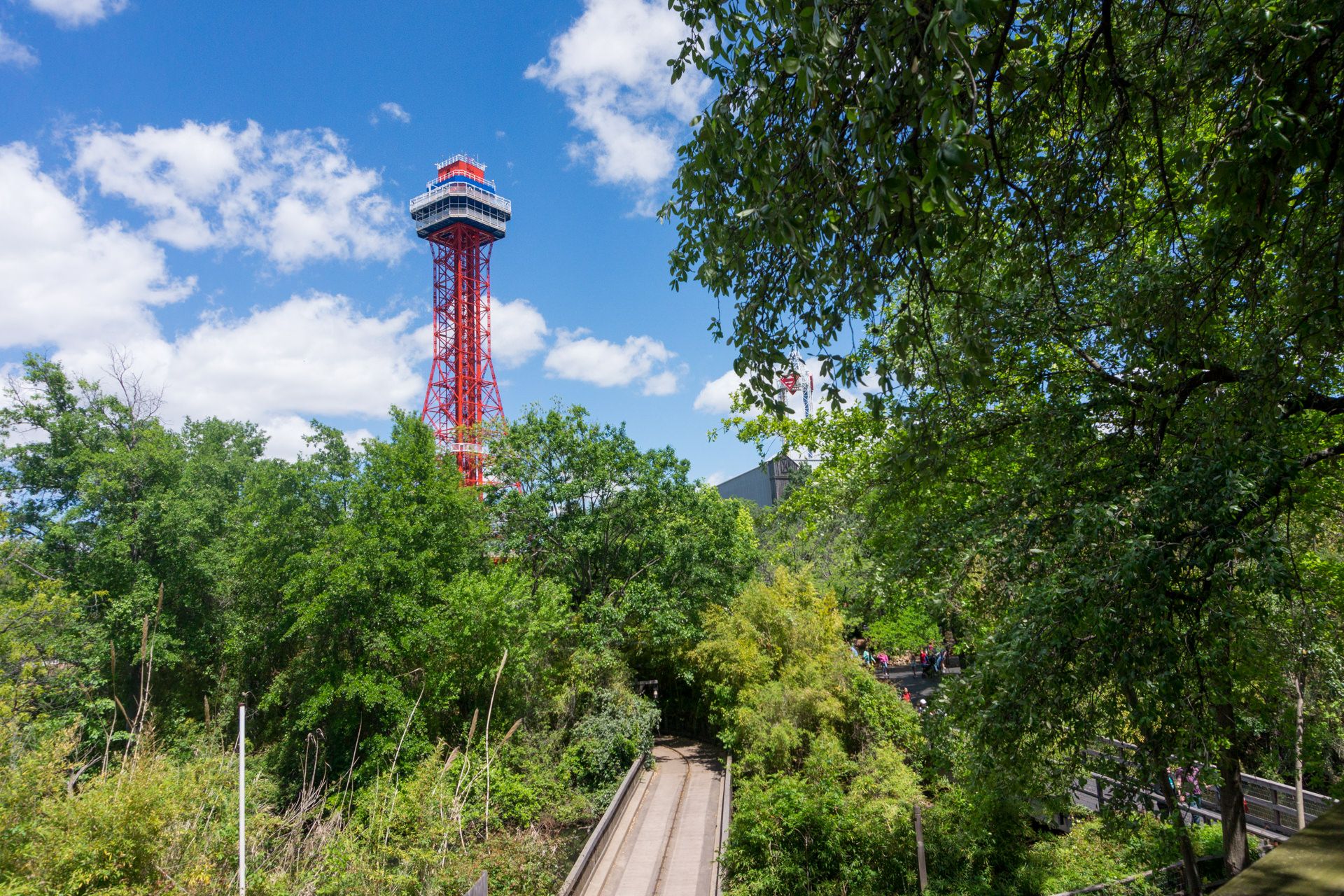
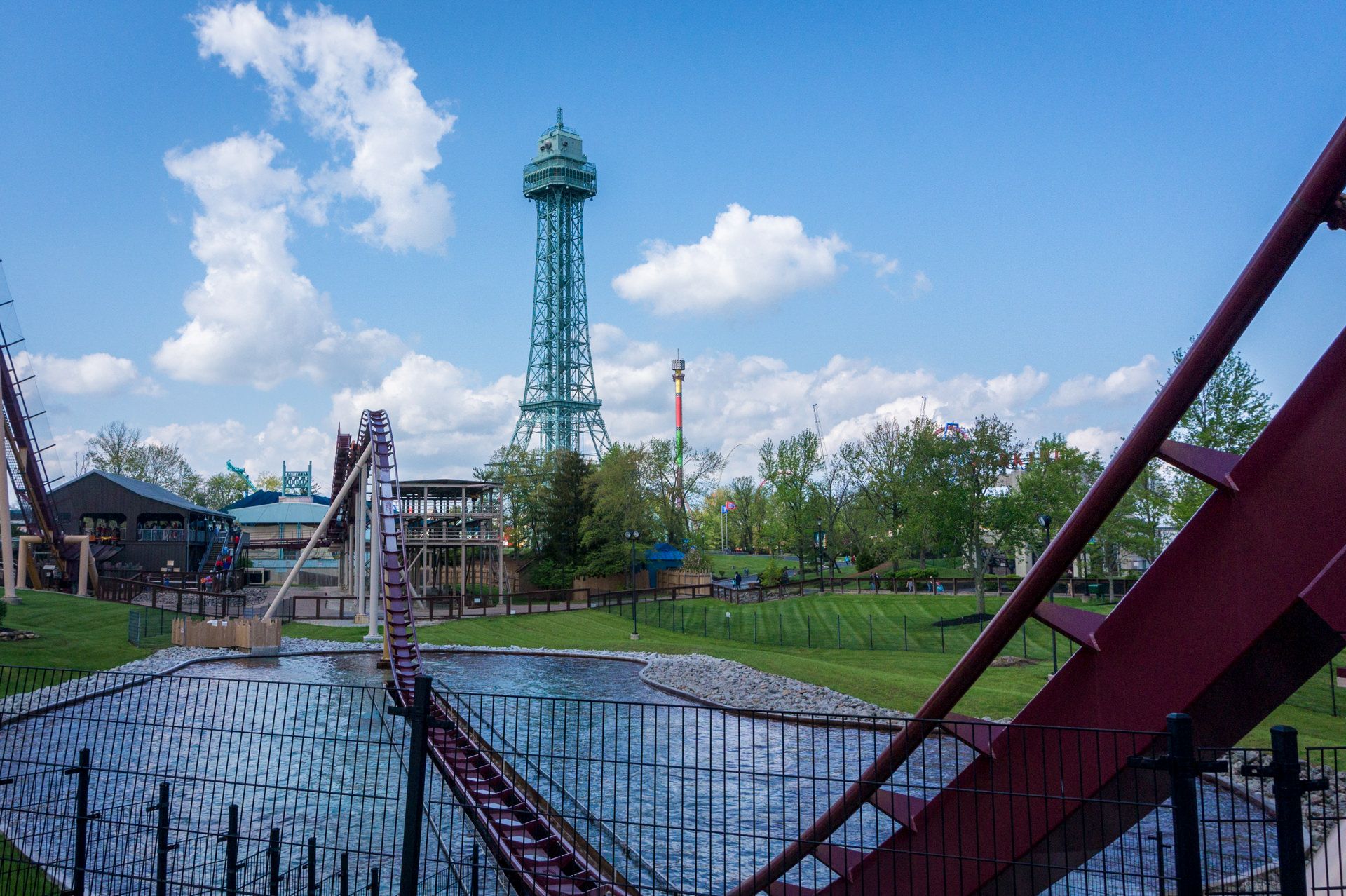
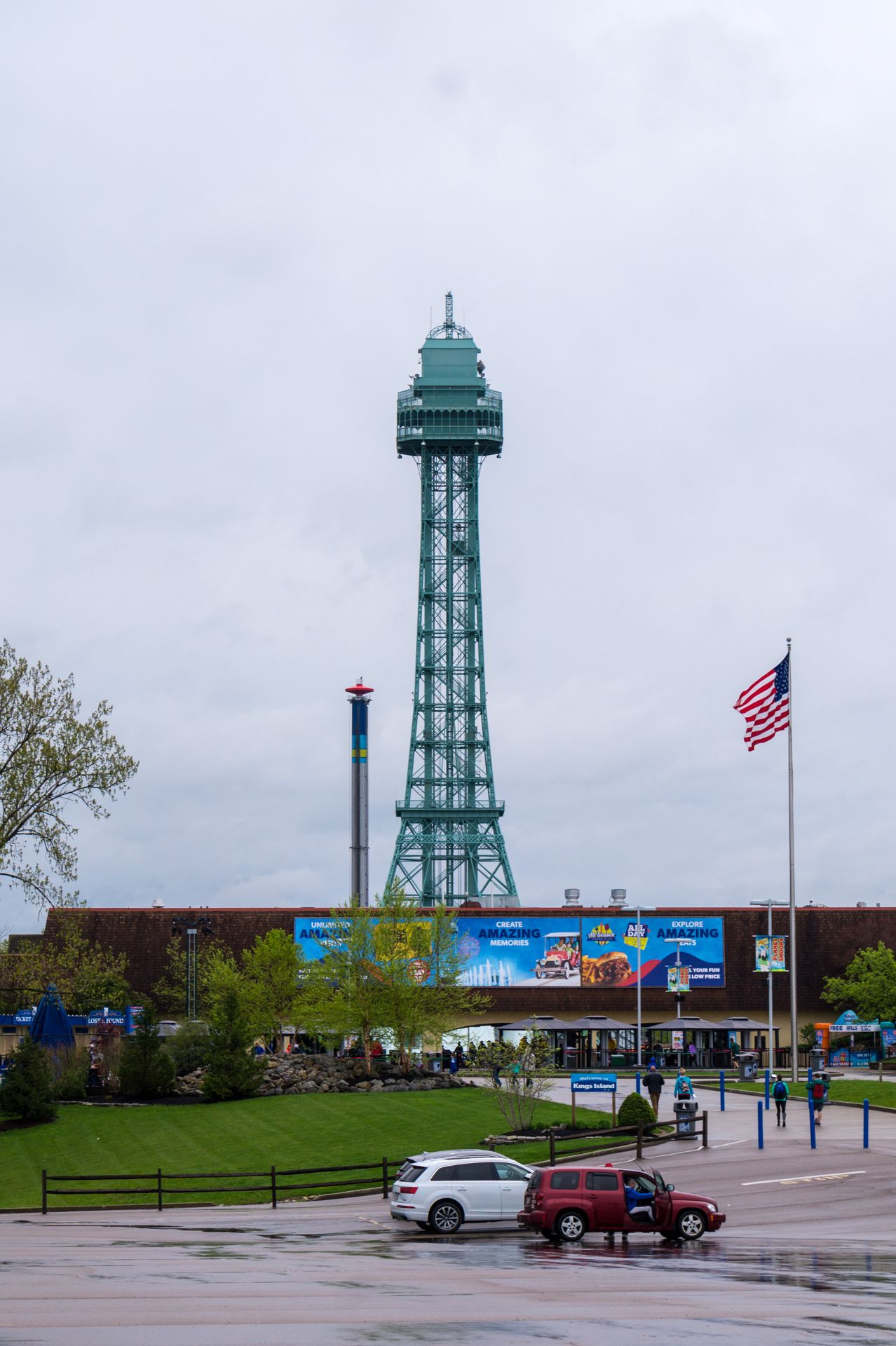
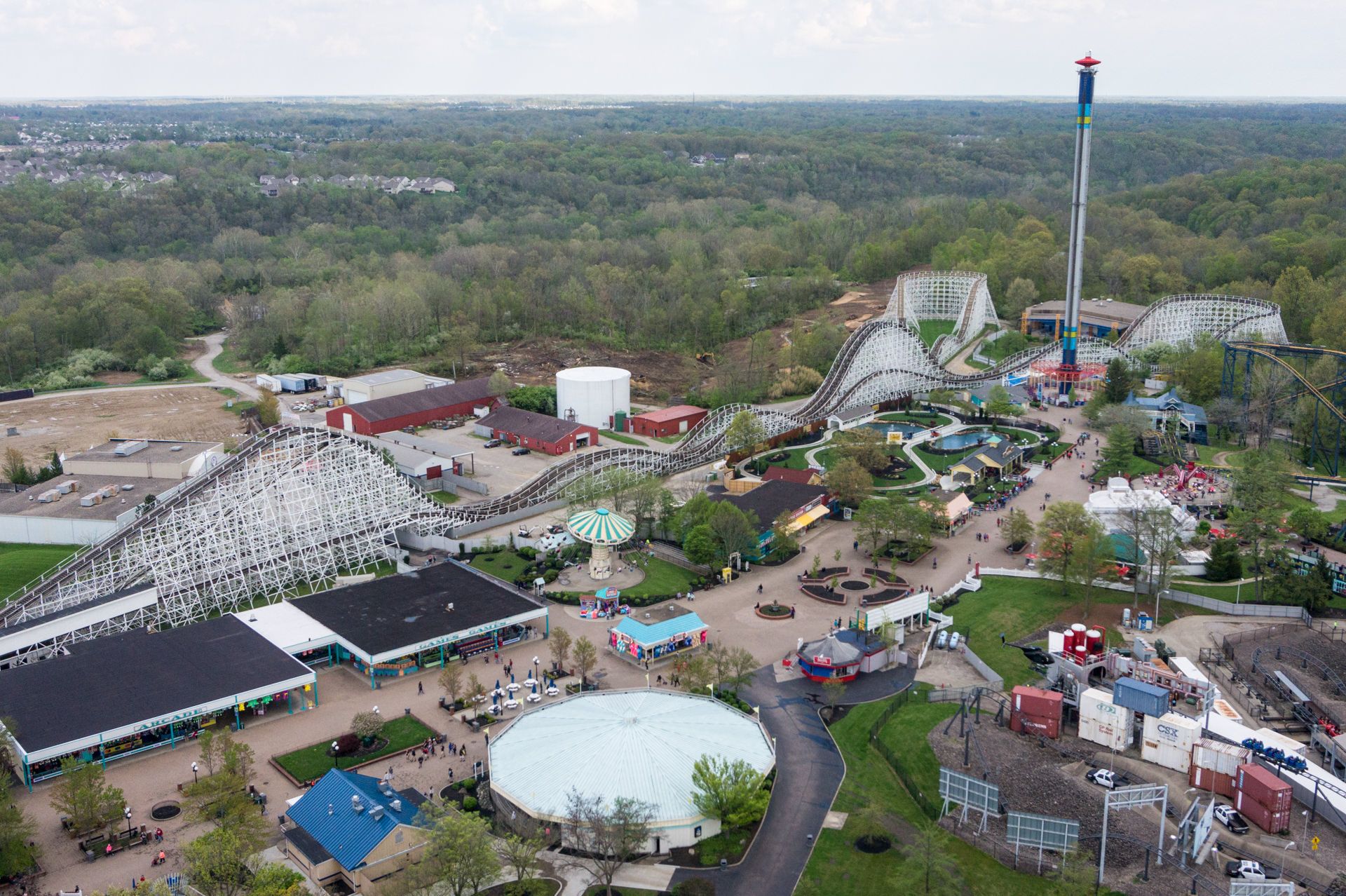
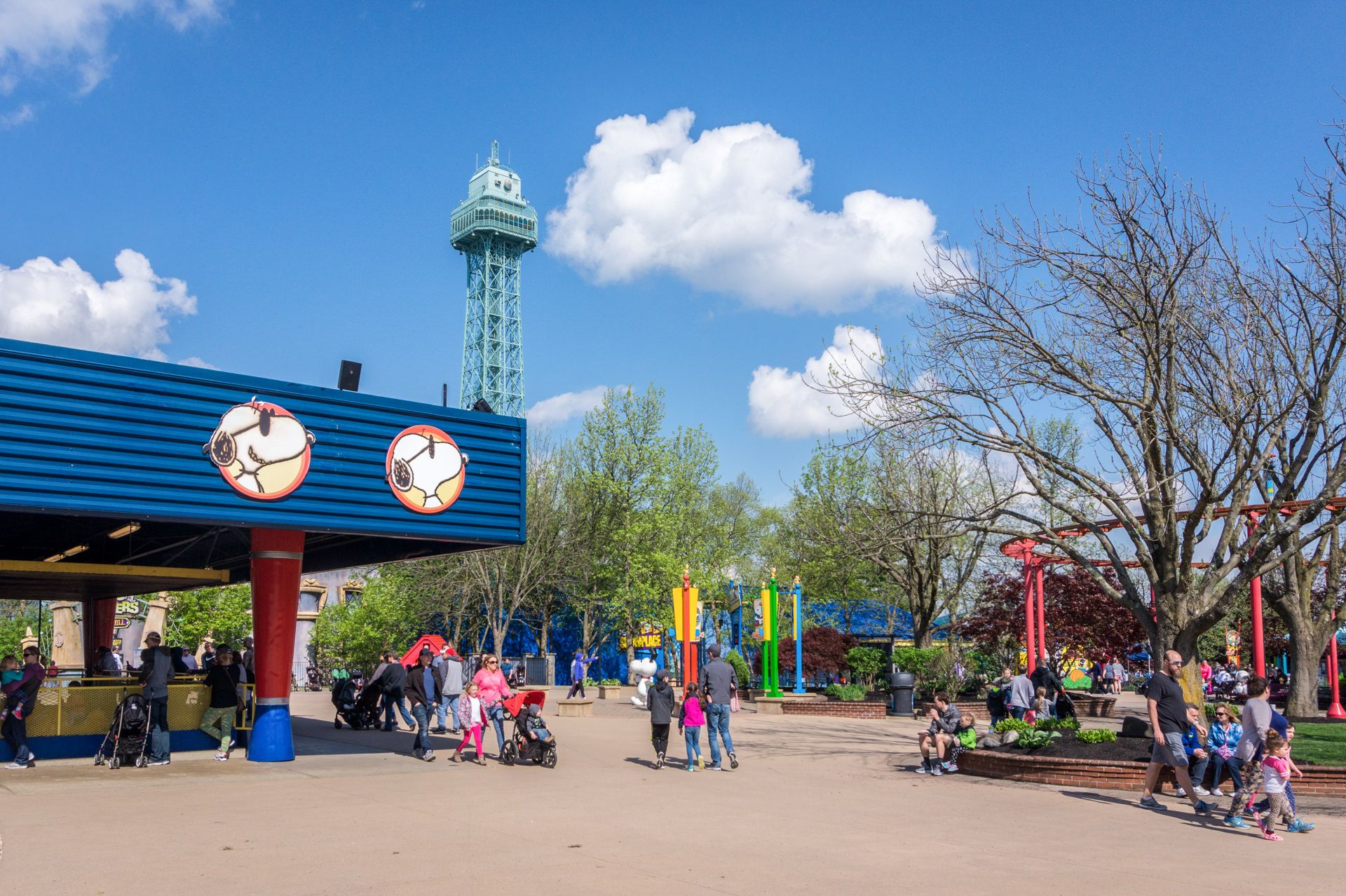
When you enter the park, you immediately find yourself on International Street with its large fountain in front of the Eiffel Tower. To the right and left of the fountain, a number of shops and cafés invite you to take a stroll. All around are the entrances to the individual areas, as well as to the large theatres and the park catering. The Eiffel Tower, designed by Intamin, towers over everything and offers a wonderful view of the entire park.
Invertigo
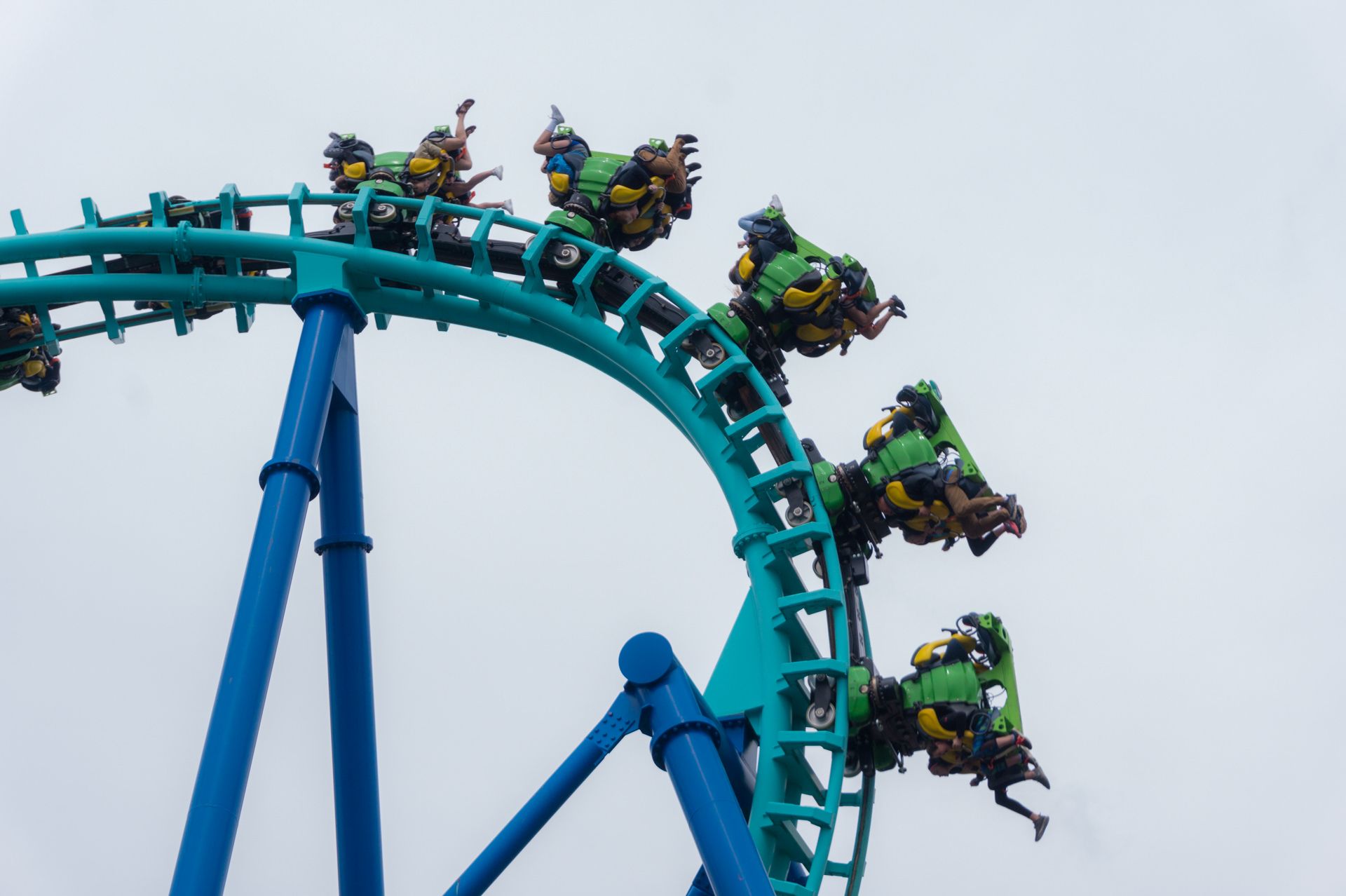
You can currently ride a total of 14 roller coasters at Kings Island. I would like to start with the roller coaster that was themed to Nicolas Cage’s film Face/Off back in the Paramount days, but now only bears the manufacturer’s roller coaster model name: Invertigo.
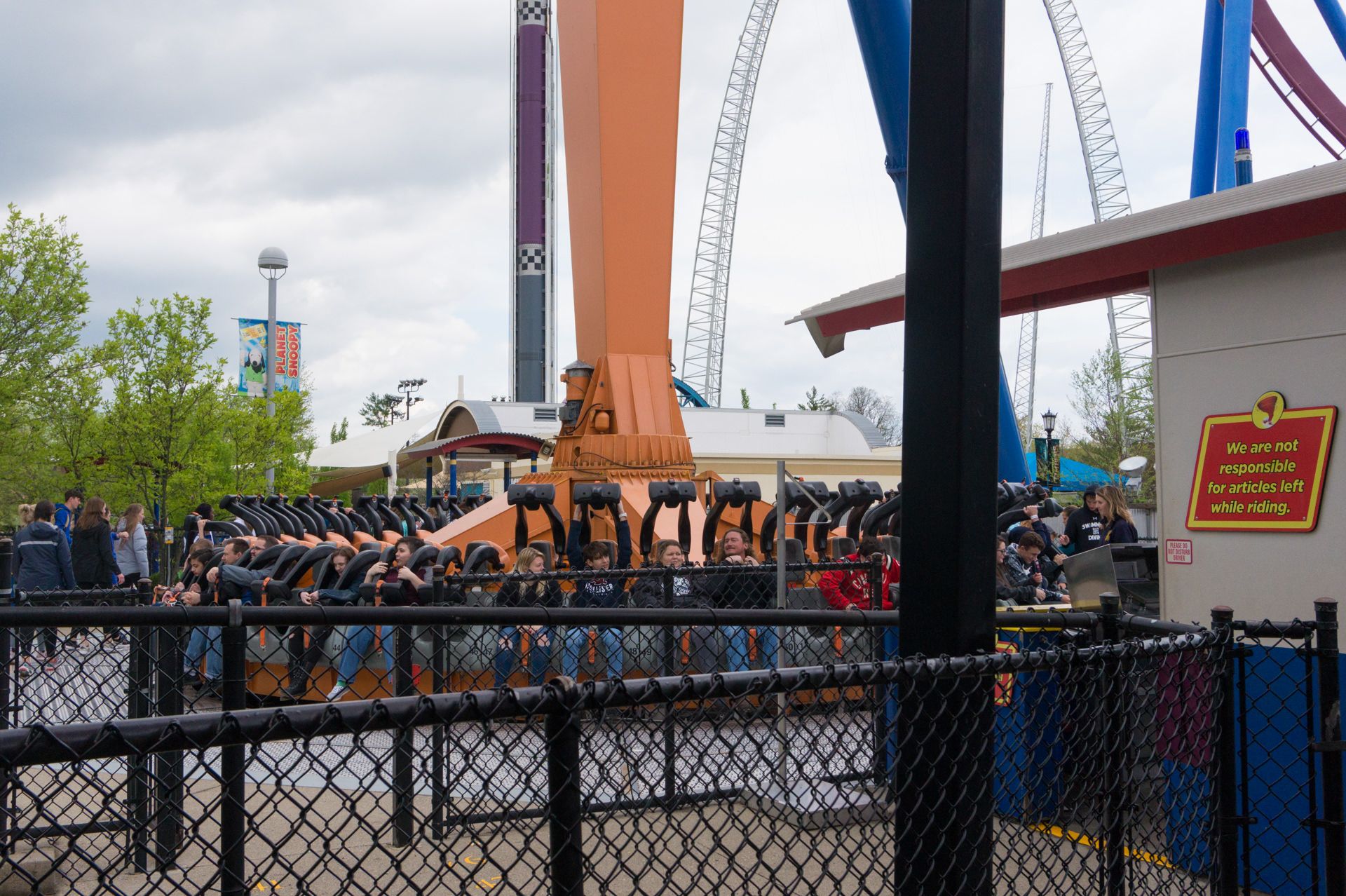
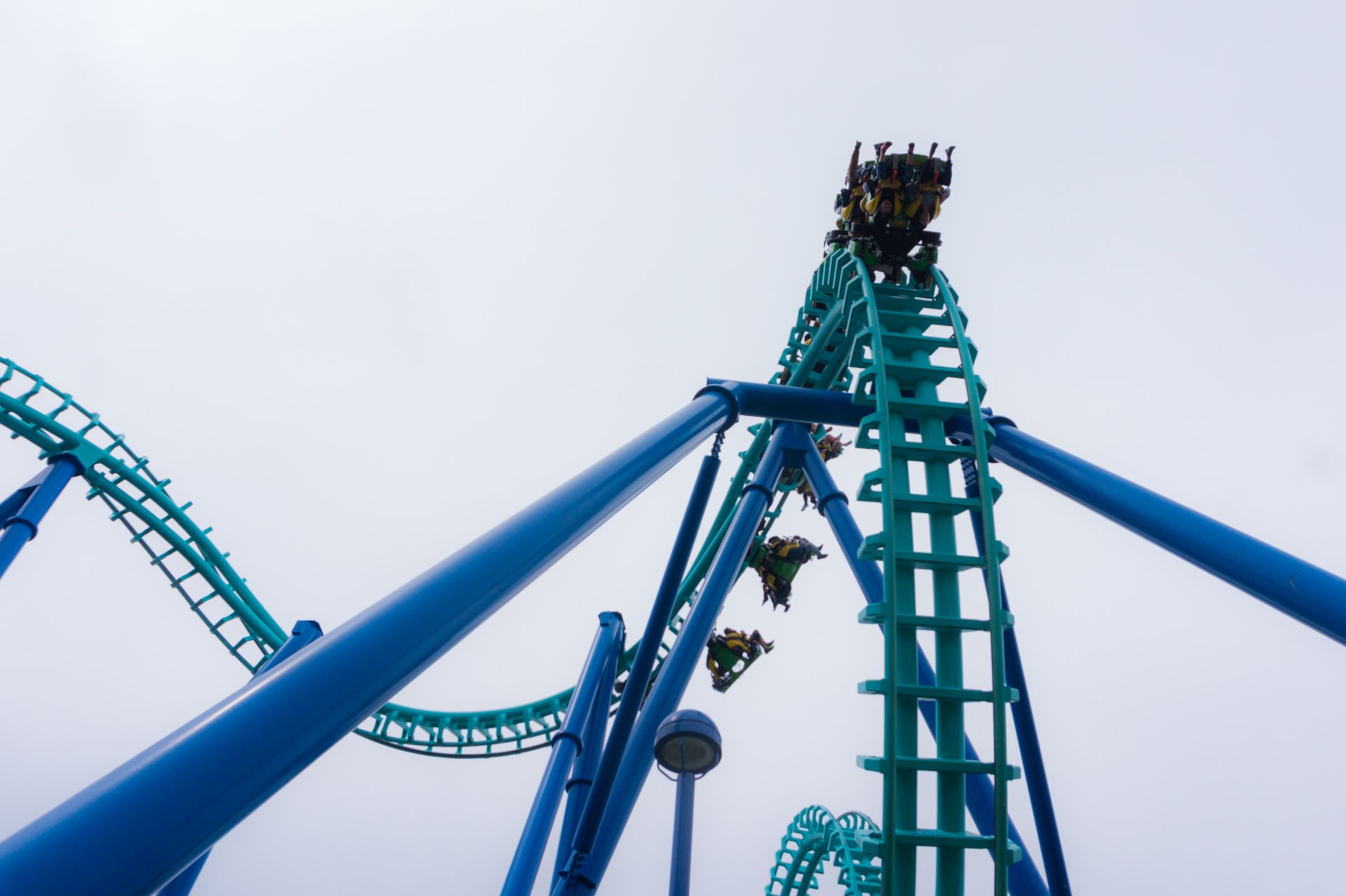
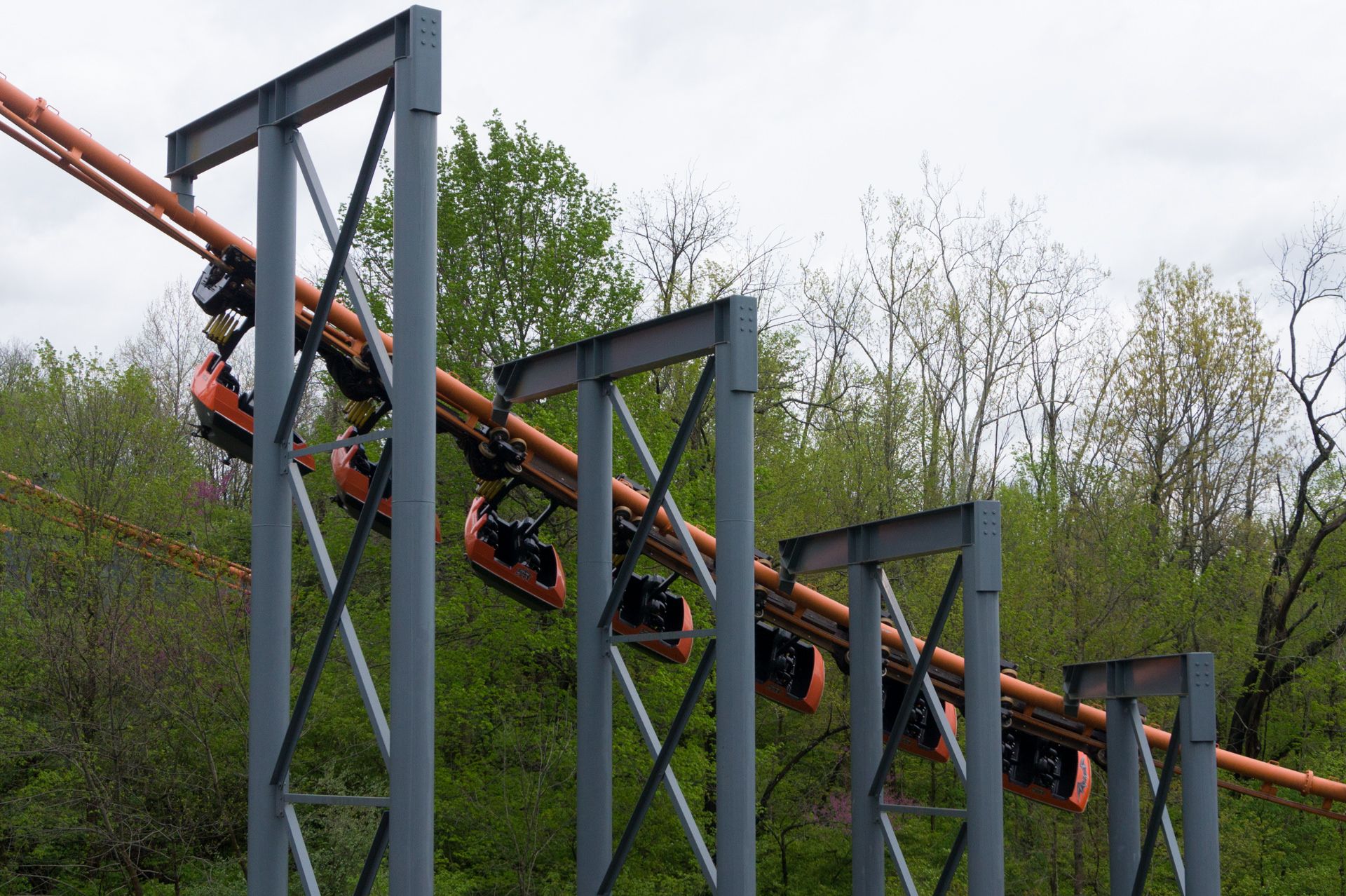
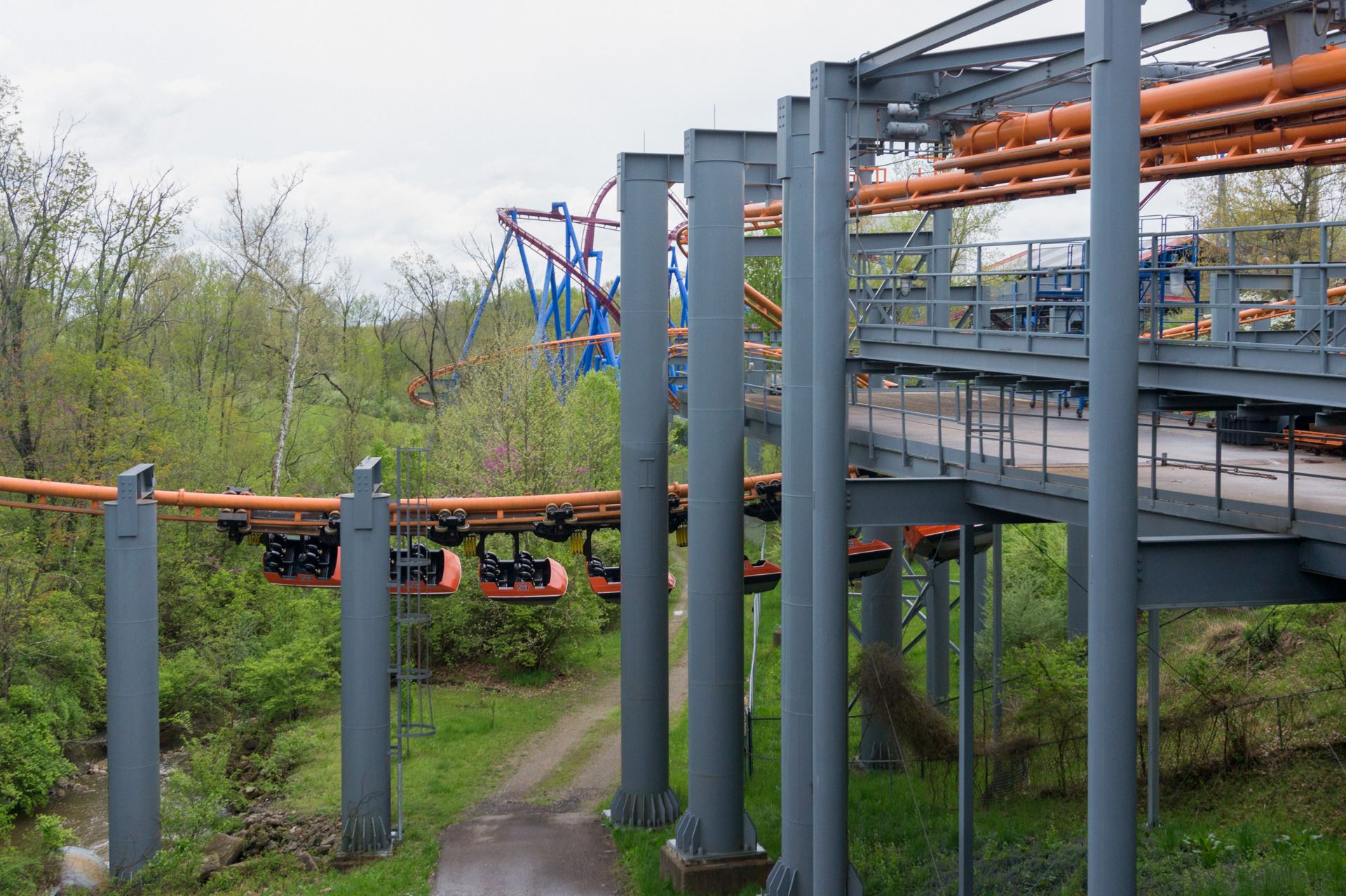
A total of five examples of this roller coaster were built, but currently only four of them are still in operation. This is basically the suspended version of a timeless roller coaster classic – the Vekoma Boomerang – but Invertigos wouldn’t be Invertigos if they didn’t have even more special features. First of all, the seating arrangement allows you to reverse the proven experience in its order, and you can also watch your fellow riders while doing so.
The ride through Cobra Roll and Looping is, as usual, extremely intense and absolutely brilliant. As with Tornado from the former Danish amusement park Sommerland Syd and Diabolik Invertigo from the Italian Movieland Park, the ride characteristics are quite impressive. Basically everything is smooth and even small bumps are only present to a very small extent, which is why at least for me the ride was a lot of fun again and therefore offers a high repetition factor. Especially with a waiting time of 0 minutes, this is an absolutely worthwhile experience.
Congo Falls
When the Action Zone theme area was launched in 1999, no effort was made to integrate the Spillwater Congo Falls, built in 1988, into the theme. So it continues to shine in all its glory, while the rest of the area resembles computer graphics from around the turn of the millennium and in the meantime doesn’t quite want to fit into the park in its colorful appearance. Unfortunately, Congo Falls also joined the list of water attractions still closed in April, which is why I sadly had to forgo a ride with a heavy heart.
Drop Tower
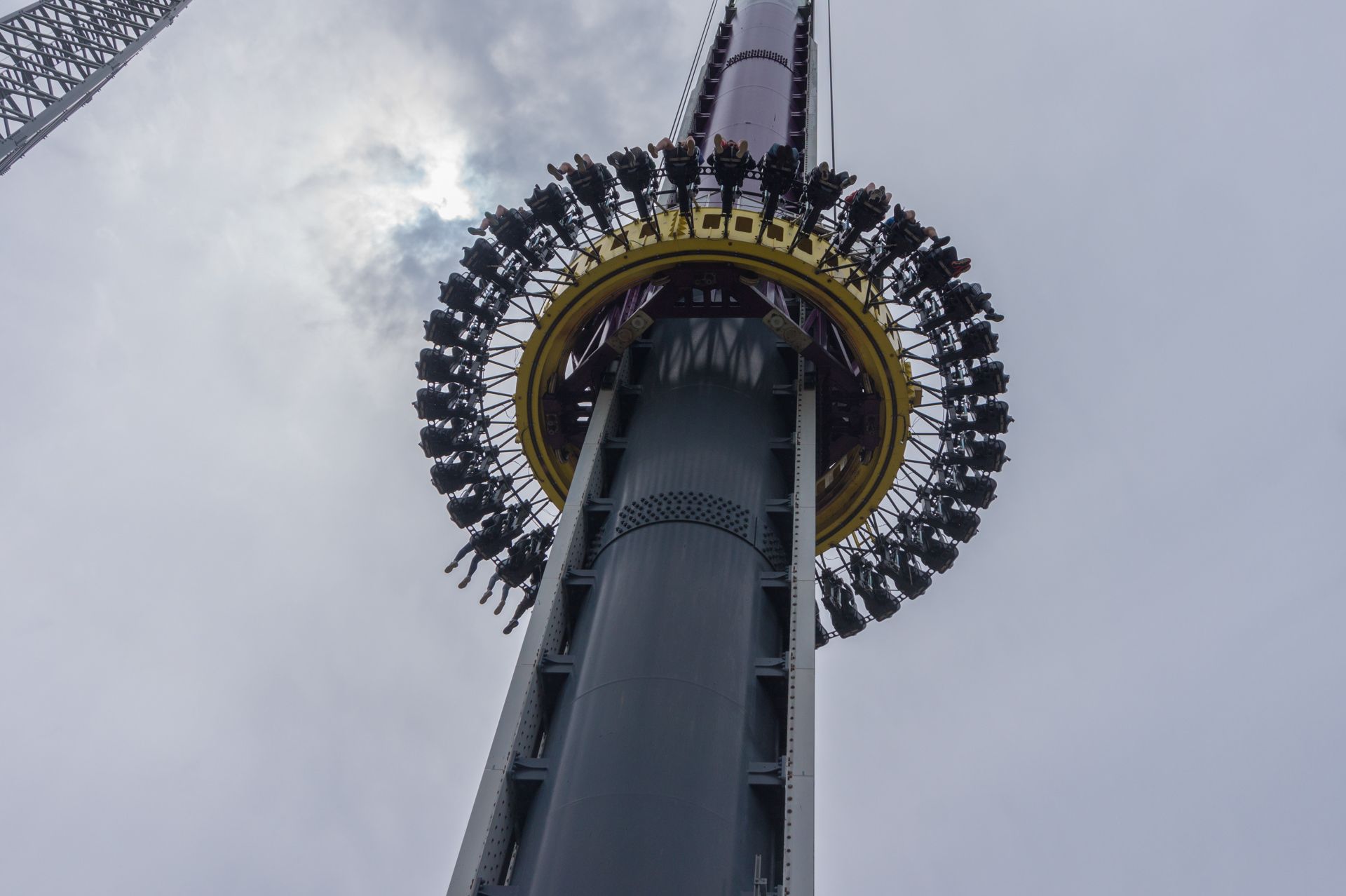
Fortunately, however, right next to it is the Drop Tower, which is the highest gyro drop tower in the world. Wait a minute, we know that slogan from the Lüneburg Heath, don’t we? That’s right, because Scream from Heide Park Soltau still uses it all too often. In fact, the ride length of the 7m smaller tower in Kings Island is a good 9m longer at 80m than the 103m tower in Lower Saxony. Of course, this is no comparison to the much taller Highlander from Hansa Park, which premiered just on the day of my visit; but the tower, as we all know, is not a Gyro Drop, but just a competing product. The Drop Tower at least is absolutely, 100% good – height record or not.
The Bat
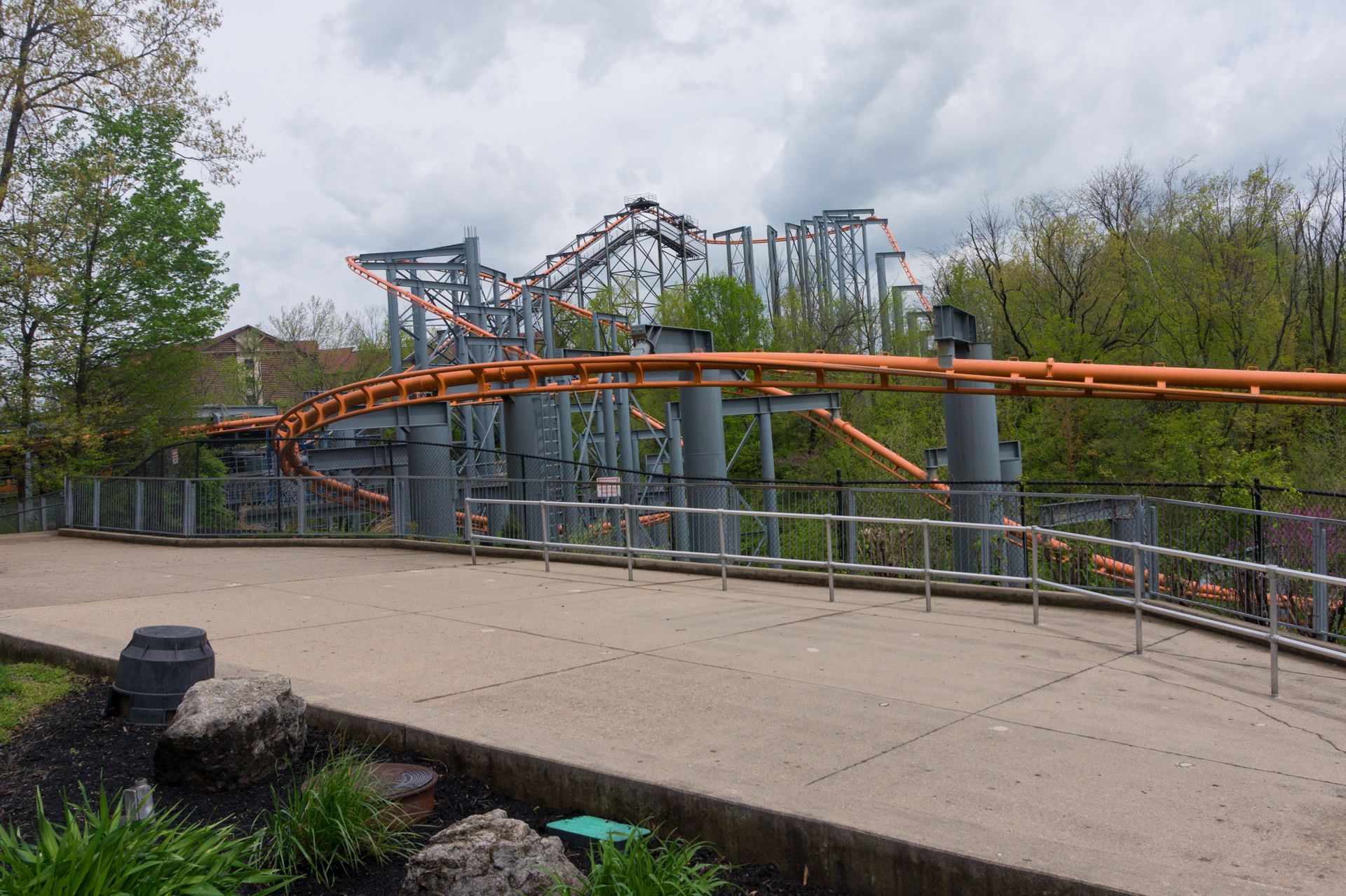
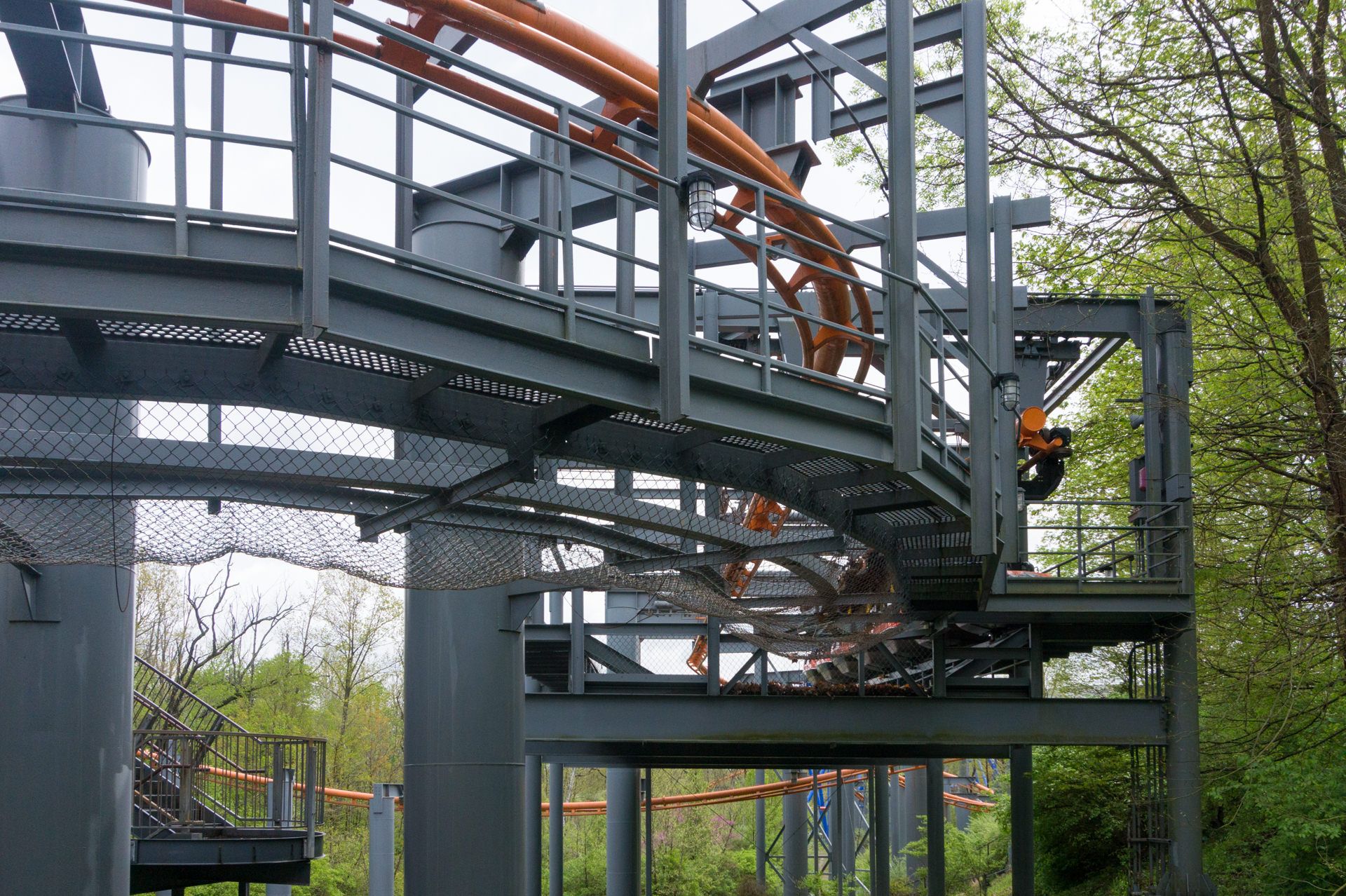
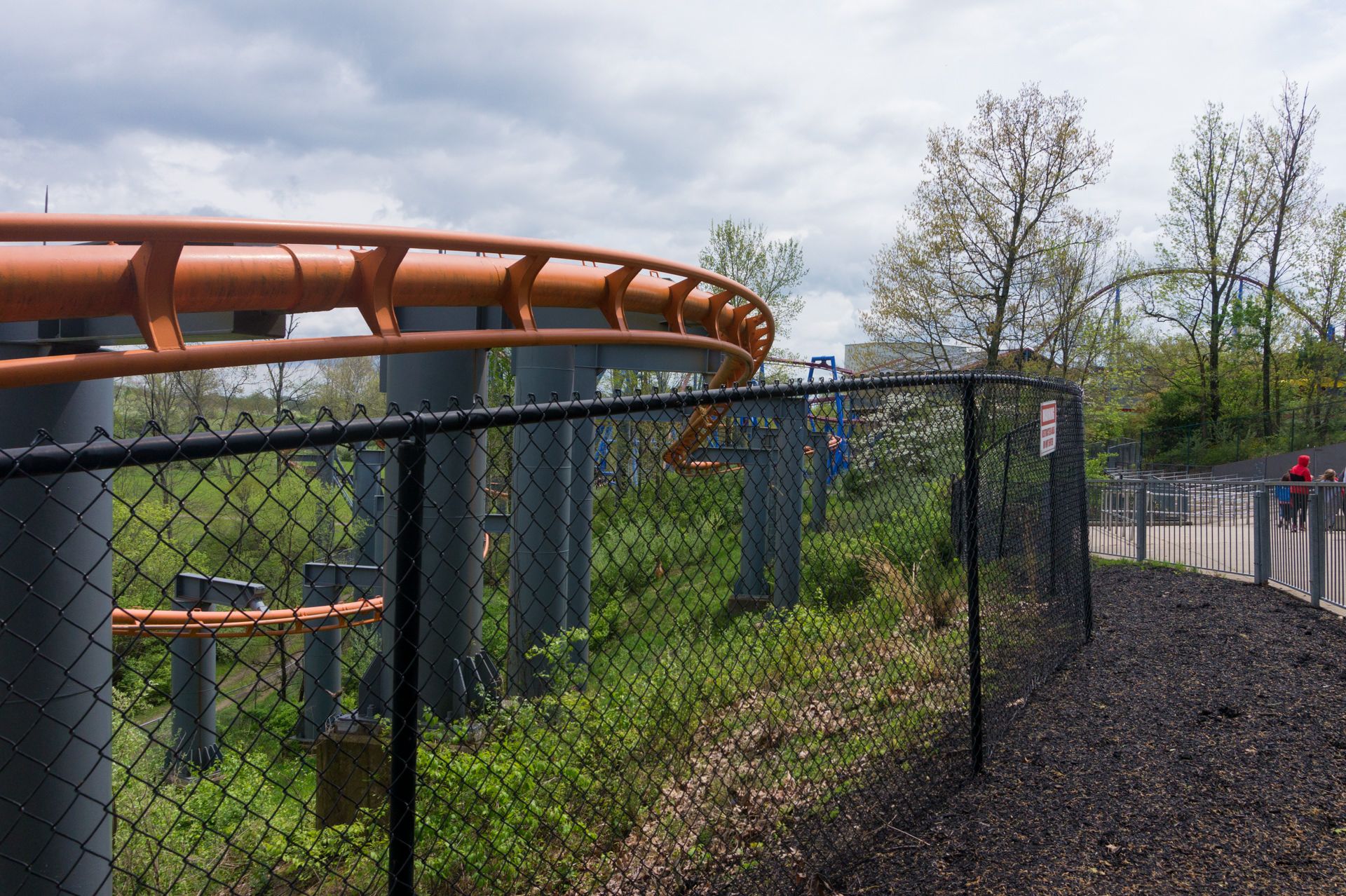
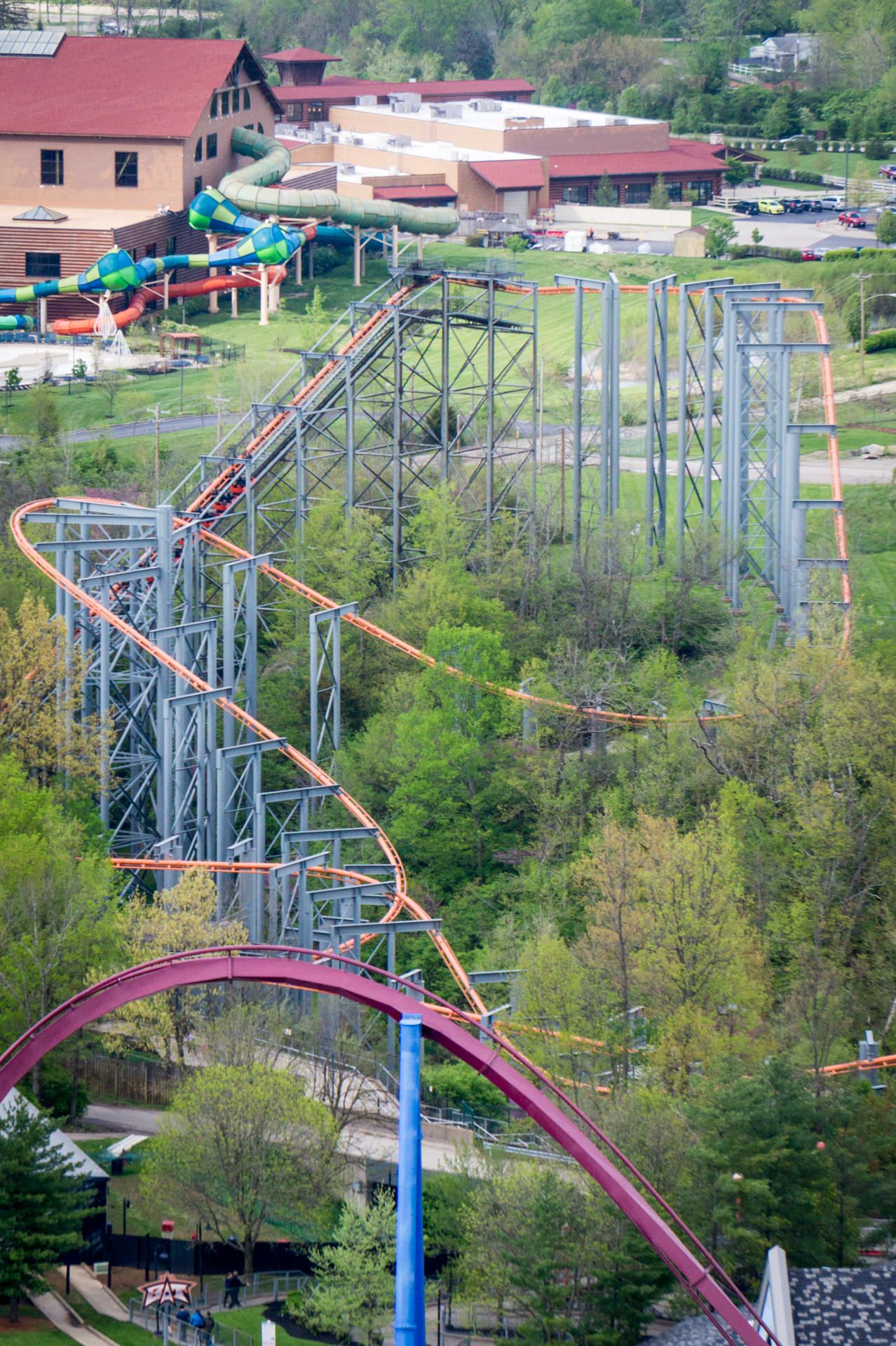
Somewhat inconspicuously hidden in the farthest corner of the park is the suspended coaster The Bat. The name is a tribute to the very first suspended coaster in the world, which stood at another location in Kings Island – but more about that later. Opened in Paramount days as Top Gun, the coaster was renamed Afterburn for the Cedar Fair takeover. The aircraft carrier theming fits quite well with the Arrow Coaster’s elevated station and the far too long queue, yet The Bat really needs a little bit of theming right now. A few gravestones, a forest, maybe a crypt with an organ playing animatronic and it would be perfect.
Instead of boarding the Vampire roller coaster at Chessington World of Adventures, however, we find ourselves in Mason, Ohio and, after some delay, finally board the classic suspended coaster train.
The ride on The Bat begins immediately with the entrance to the lifthill. We make our way up through an aisle and enjoy the view of the neighboring Great Wolf Lodge resort for a brief moment. Once at the top, a banked turn awaits us at lofty heights before we plunge down a straight-line drop. Just above the bottom, this then transitions into a right turn, whereupon lateral forces push us beautifully outward. Shortly after, we change direction in a climb and are neatly transversed in the subsequent turning maneuver before we plummet to the ground another time. Close to the ground, we now steadily change direction at a fast pace before we come across a downhill helix in a wide clearing. With a lot of momentum we now tackle the way back. Over hill and dale we make several detours back to the station. It seems that the rhythm of the directional changes has increased once again. After a last detour, we reach the braking section, where we swing out cheerfully for the time being. Shortly afterwards, we reach the station again.
I like suspended coasters, but The Bat fell short of my expectations. Although the ride is incredibly fast and the swings are remarkable, the ride is ultimately a bit too predictable for me. Here, a repeat ride in the late afternoon would probably have made sense to be able to give a final verdict, but unfortunately it didn’t come to that. Nevertheless, The Bat offers the proven suspended coaster fun and thus submits itself to the list of ultimate family coasters. It’s a wonder that there are so few examples of this type of coaster.
Banshee
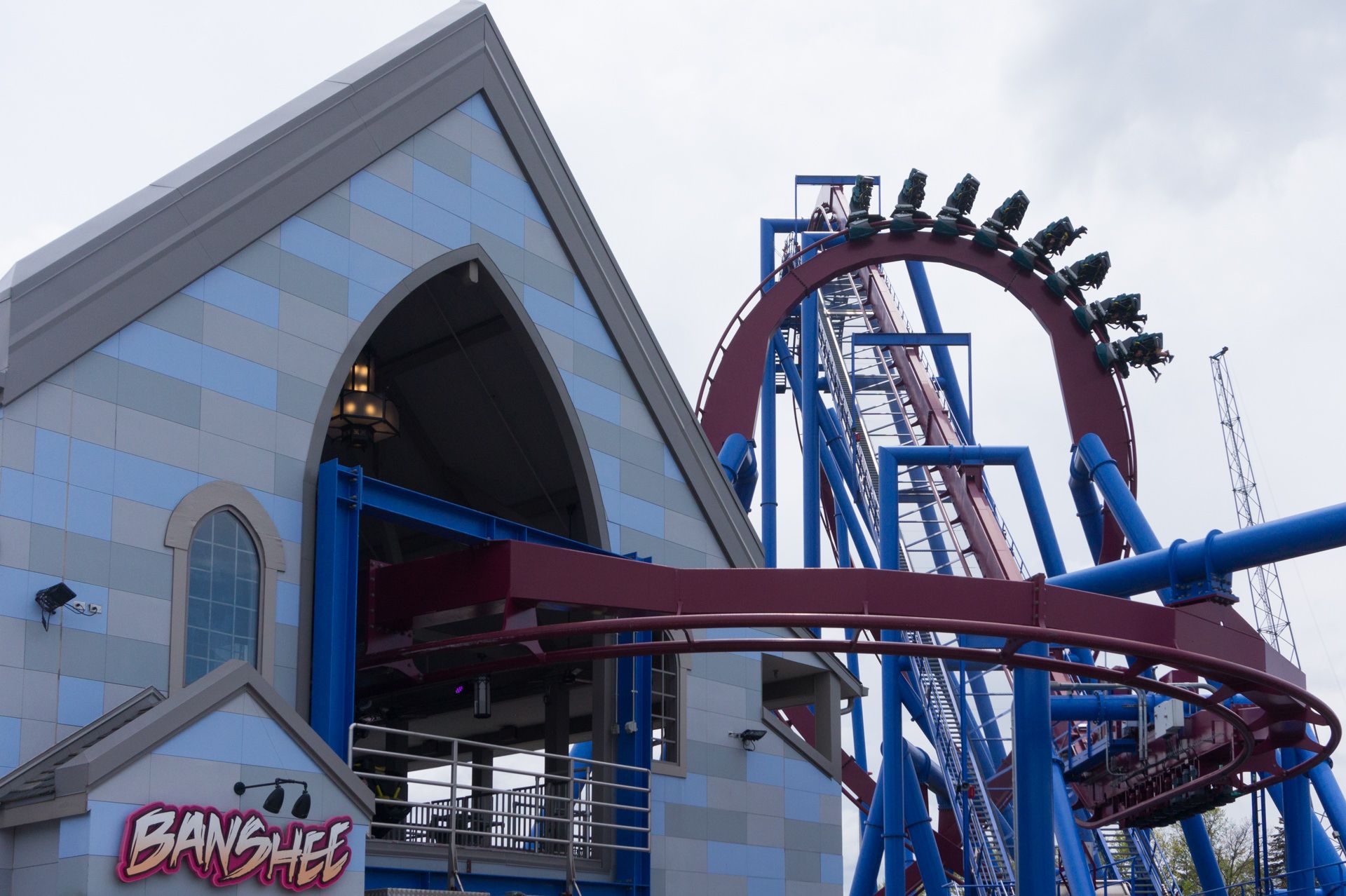
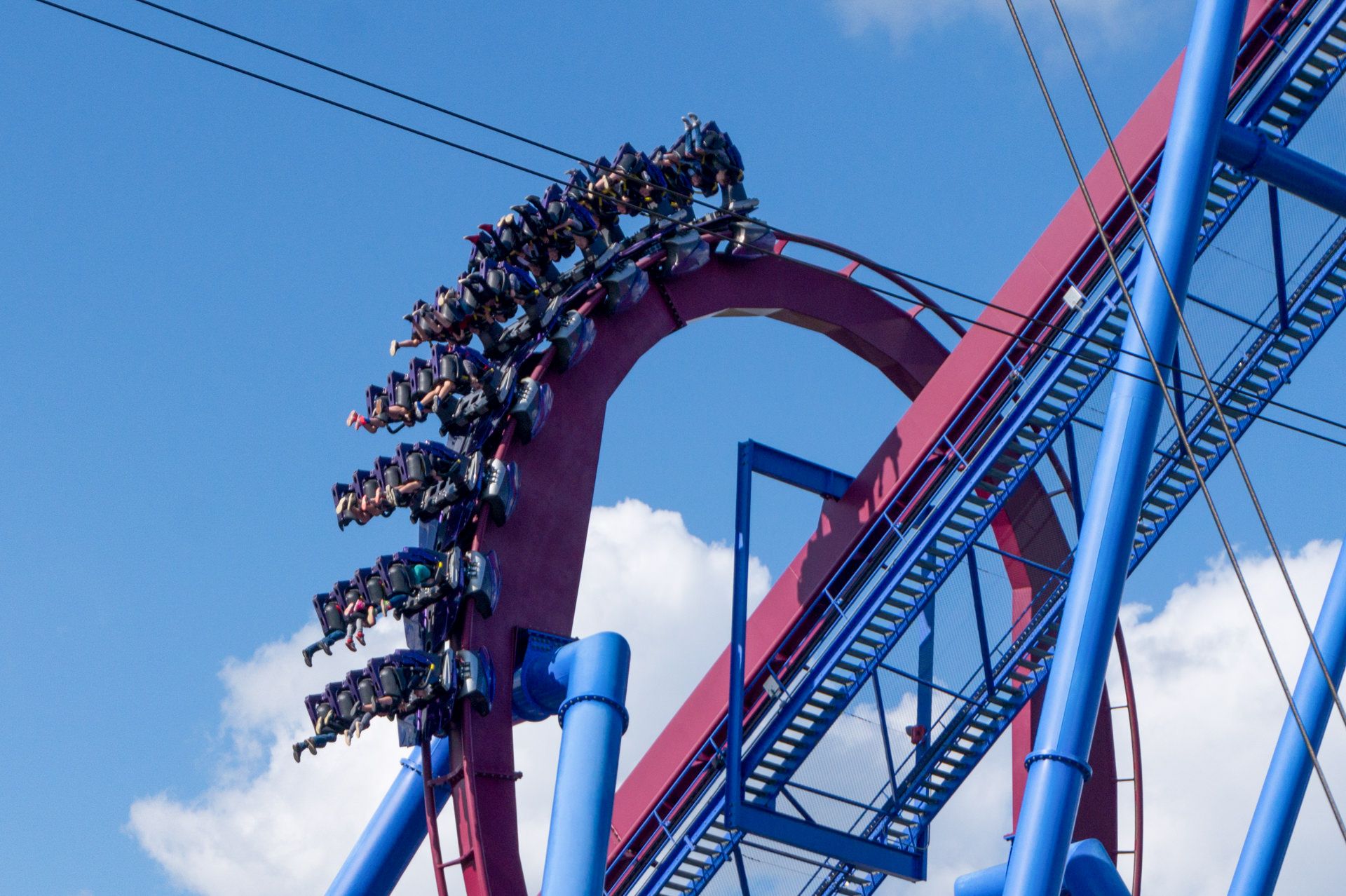
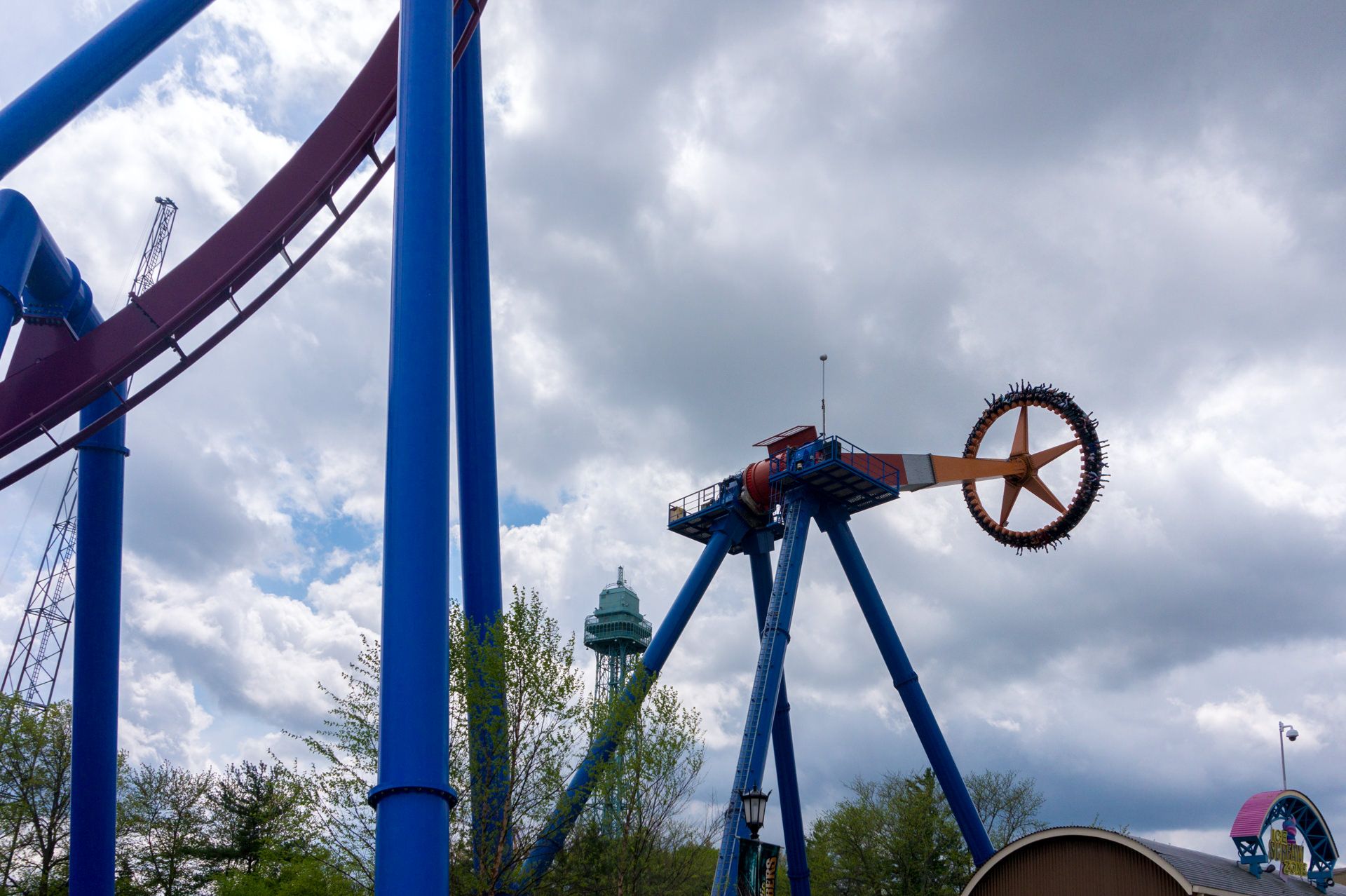
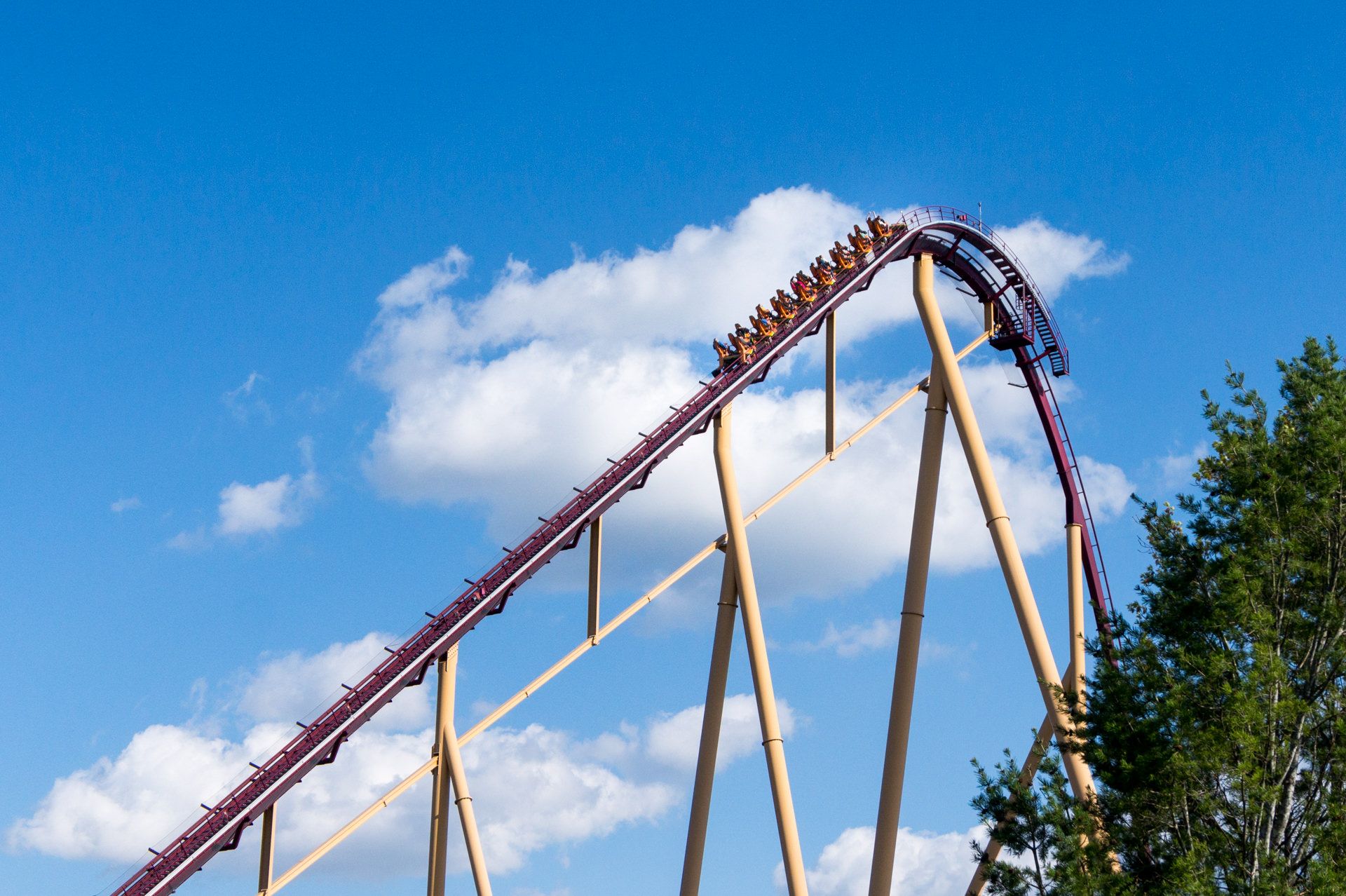
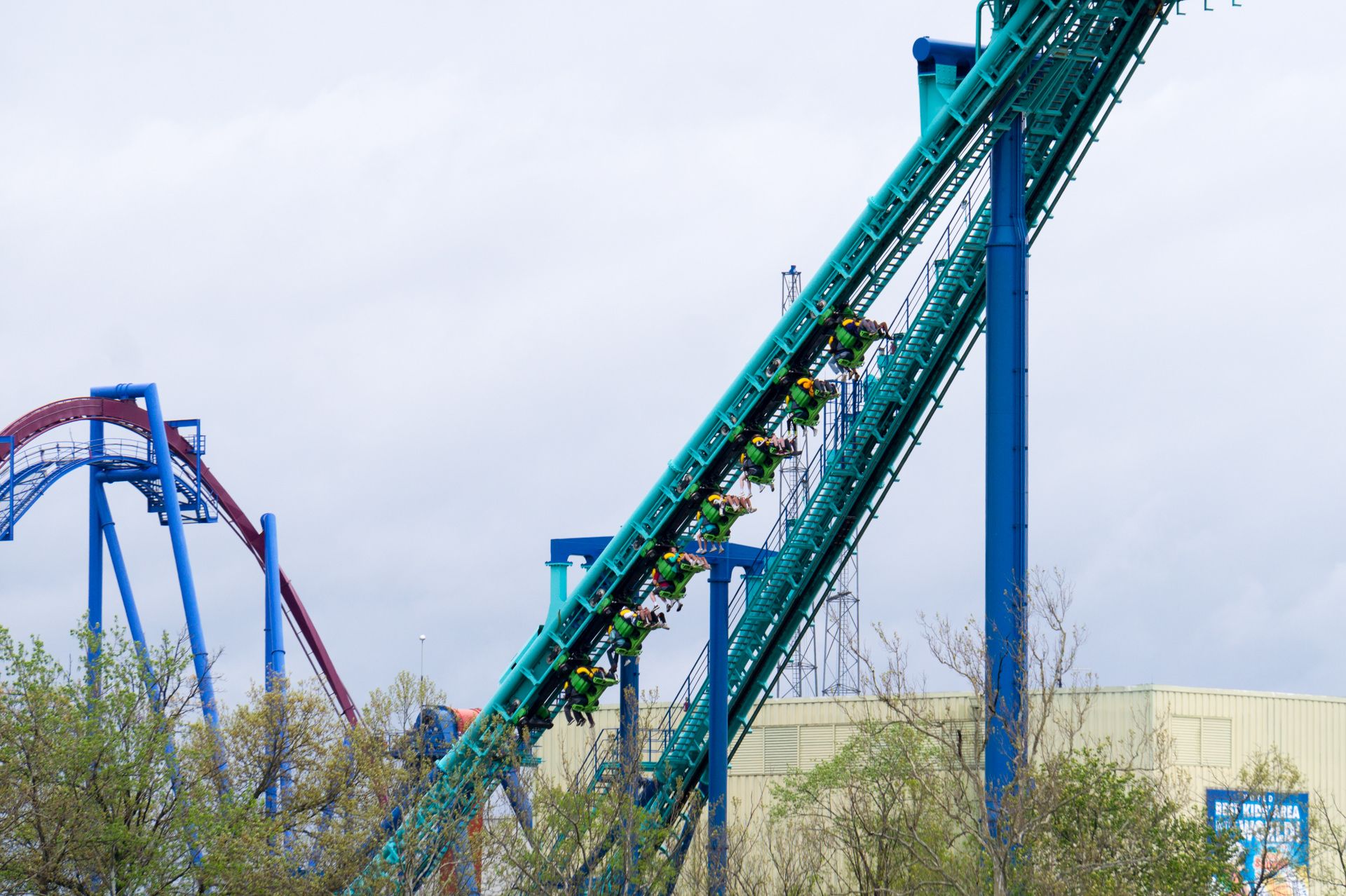
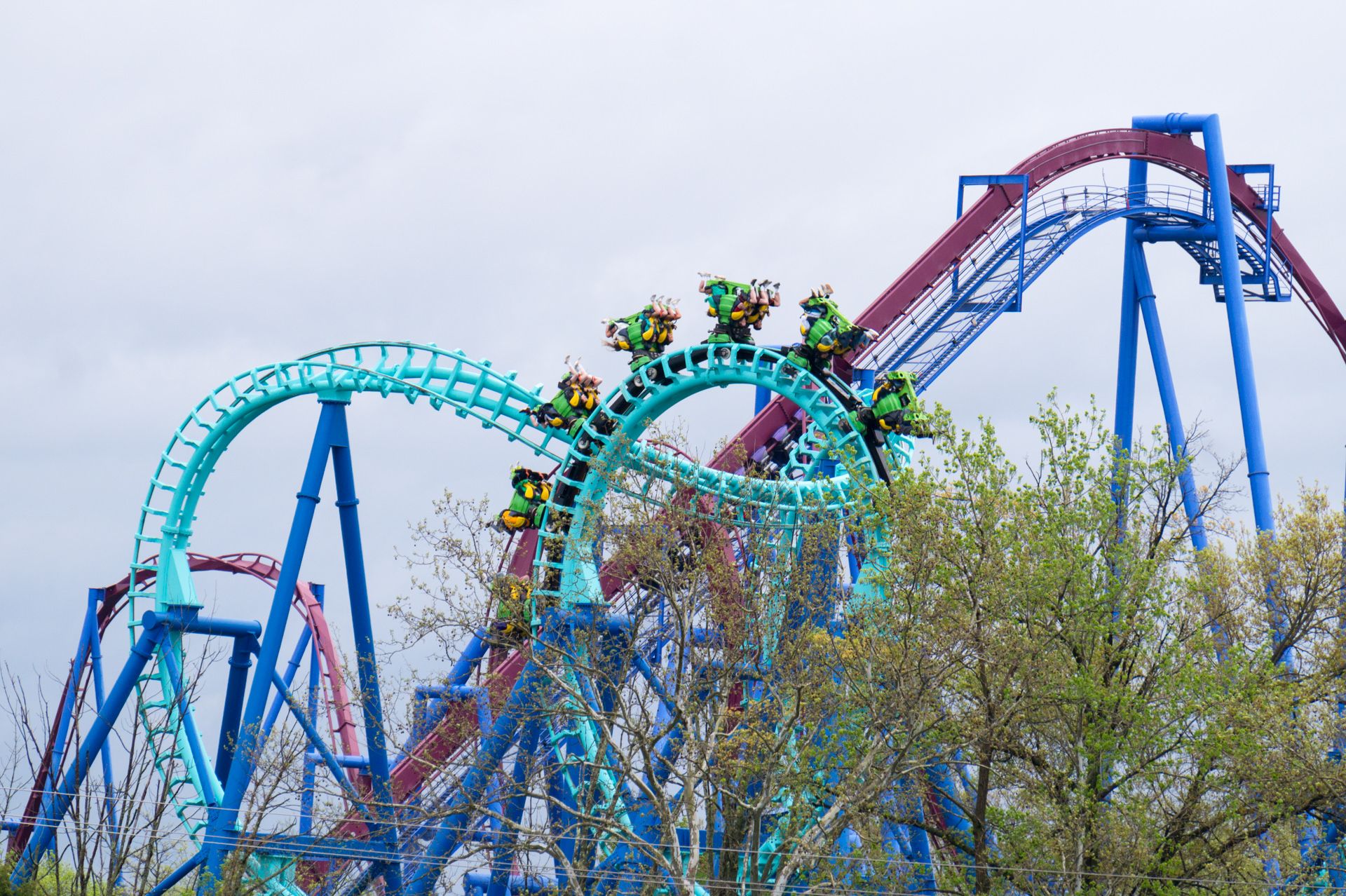
Right next door is Banshee, the latest inverted coaster from B&M. Built in 2014, the ride scores points mainly for its height and length – less popular, however, is the ride’s restraint system, which, similar to the Wing Coaster from the same company, relies on a belt system instead of rigid restraints.
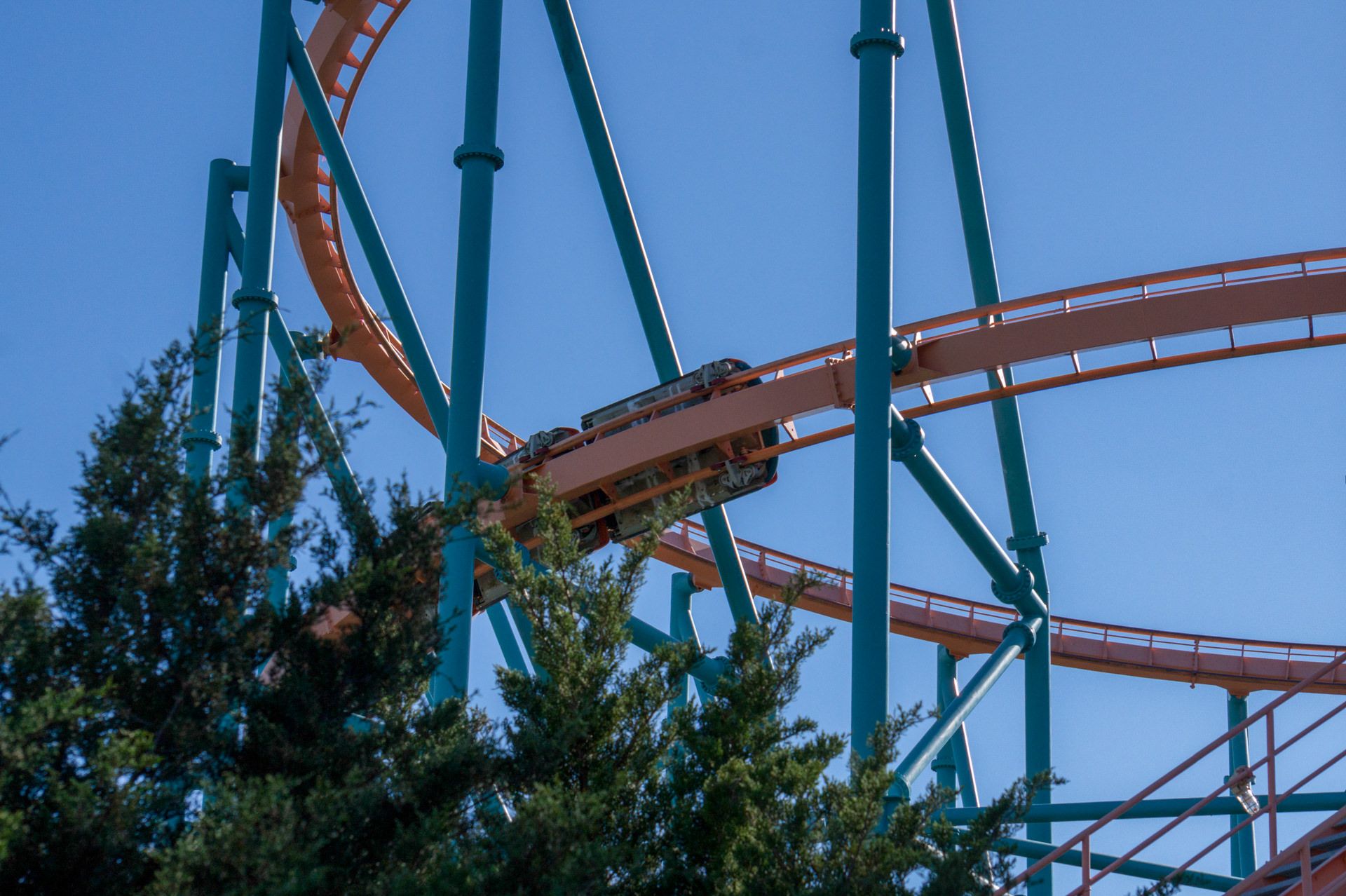
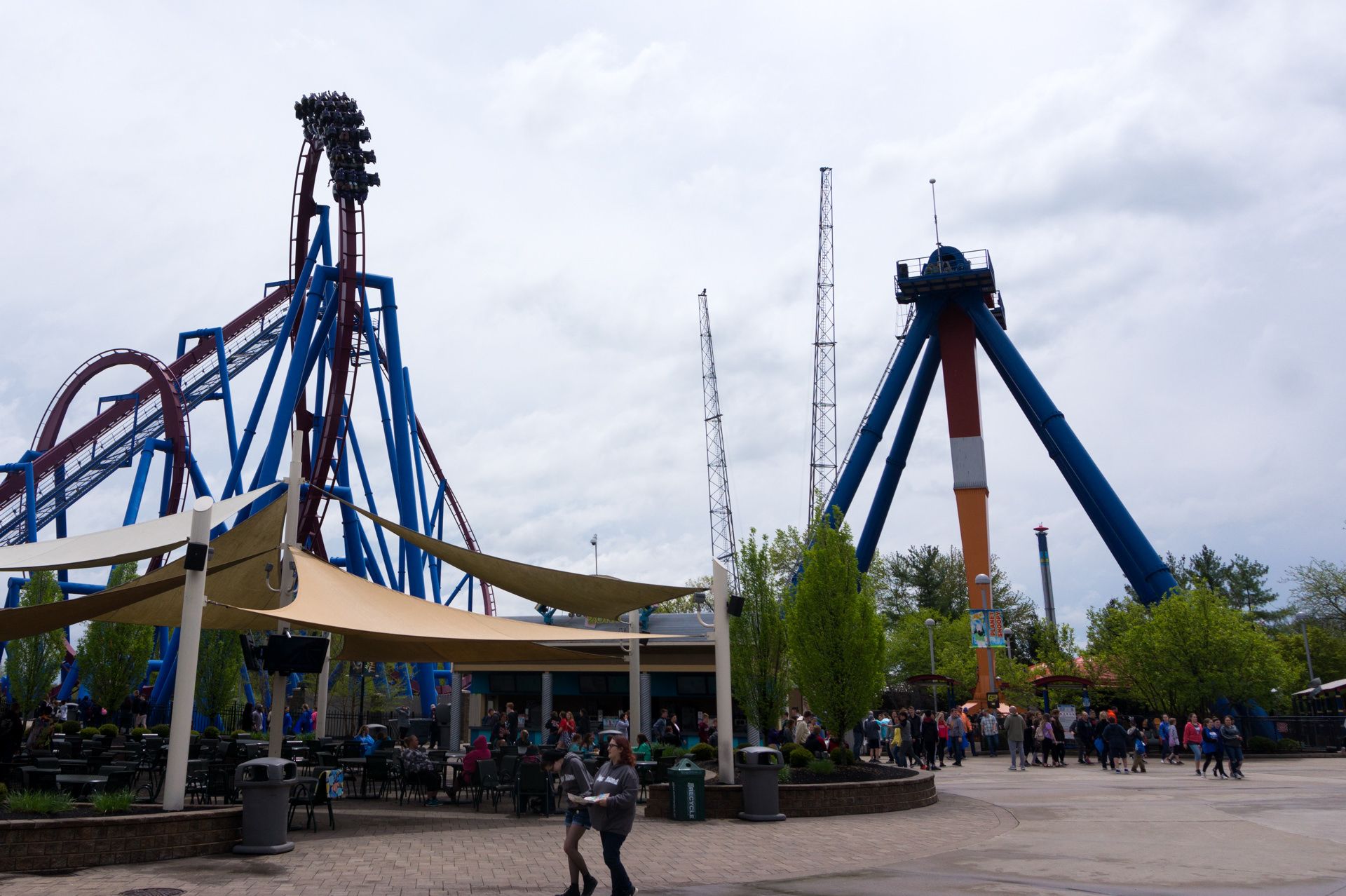
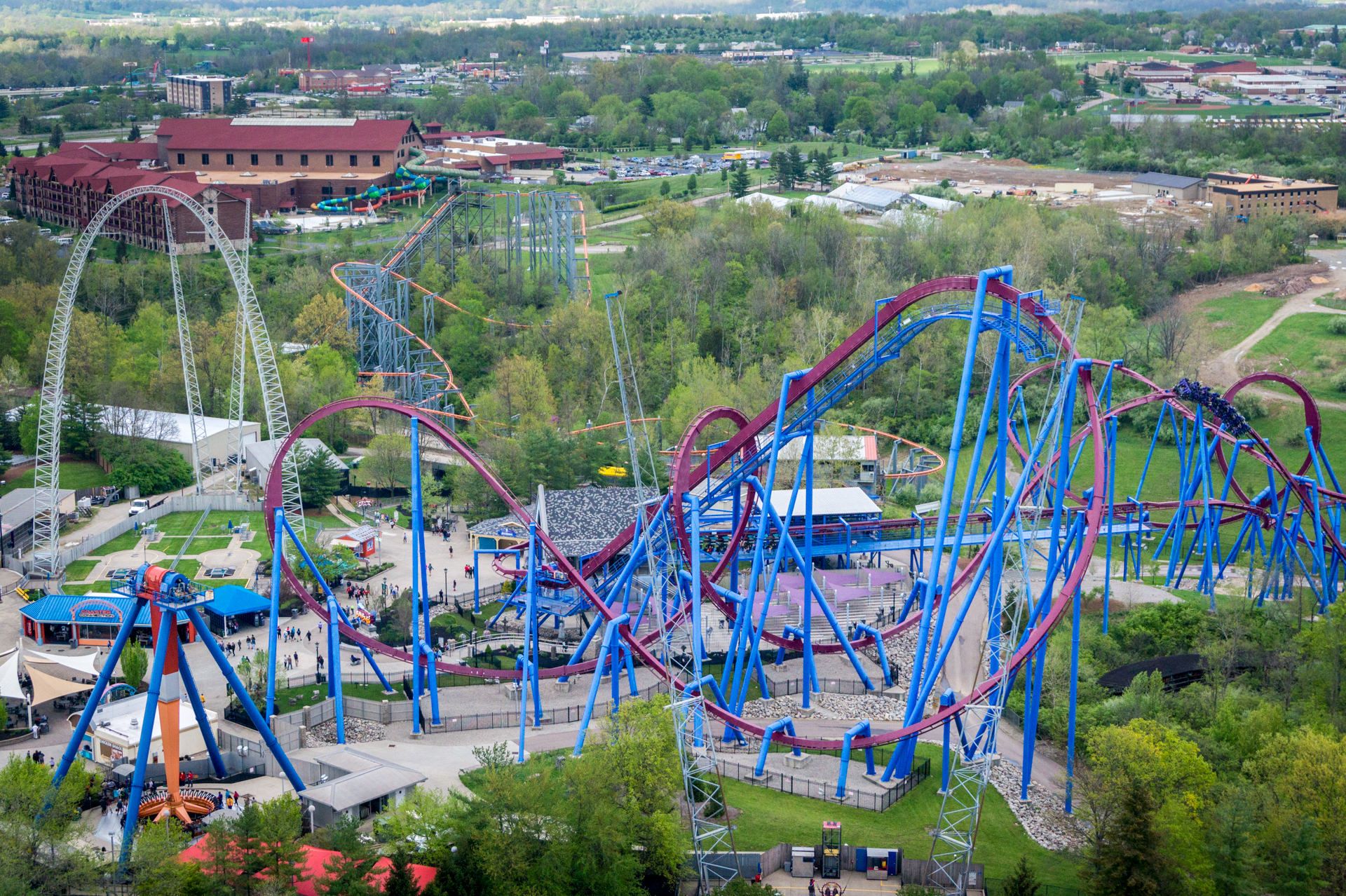
The ride on Banshee begins with a short left turn, after which we already climb the ride’s lift. We pass through the ride’s first loop before arriving at the starting height of 167ft and immediately entering a steep turn. We approach the ground without any consideration for losses and then cross the first valley with a lot of pressure. In an oversized dive loop we slowly turn upside down before we plunge down a half loop. Now we enter the equally oversized loop with a lot of pressure. A long zero-G roll skillfully turns us once around our own axis, whereupon the transition to the next element is immediately initiated. In the world’s only Pretzel Knot we follow the course of an oversized pretzel and see the world upside down twice. This is followed by loop no.2, which is a lot more intense than the first one due to its much smaller proportions. Afterwards we spiral upwards in a steep turn, at the end of which we immediately enter an in-line twist. Here we turn once around the axis of the track, refusing to follow the heart line. Then we enter a downward helix very smoothly. With a little pressure on our feet, we then say goodbye into a right turn, whereupon the braking section of the ride is already waiting for us.
Banshee is a quite nice inverted coaster with great pacing and an exceedingly solid ride track. Unfortunately, ride element follows ride element, so that bigger surprises fall a little by the wayside. The ride itself is fun, and especially convinces in the evening hours.
Delirium and Viking Fury
Fans of large swings will get their money’s worth with the HUSS Giant Frisbee Delirium and the nearby Viking Fury boat swing. While the HUSS ride does what all swings of this size do, the Intamin Bounty Viking Fury scores especially with its location and the rather long swinging phase. It’s just a shame that the operator here has to do half a climb each time before the swing can be set in motion.
Adventure Express
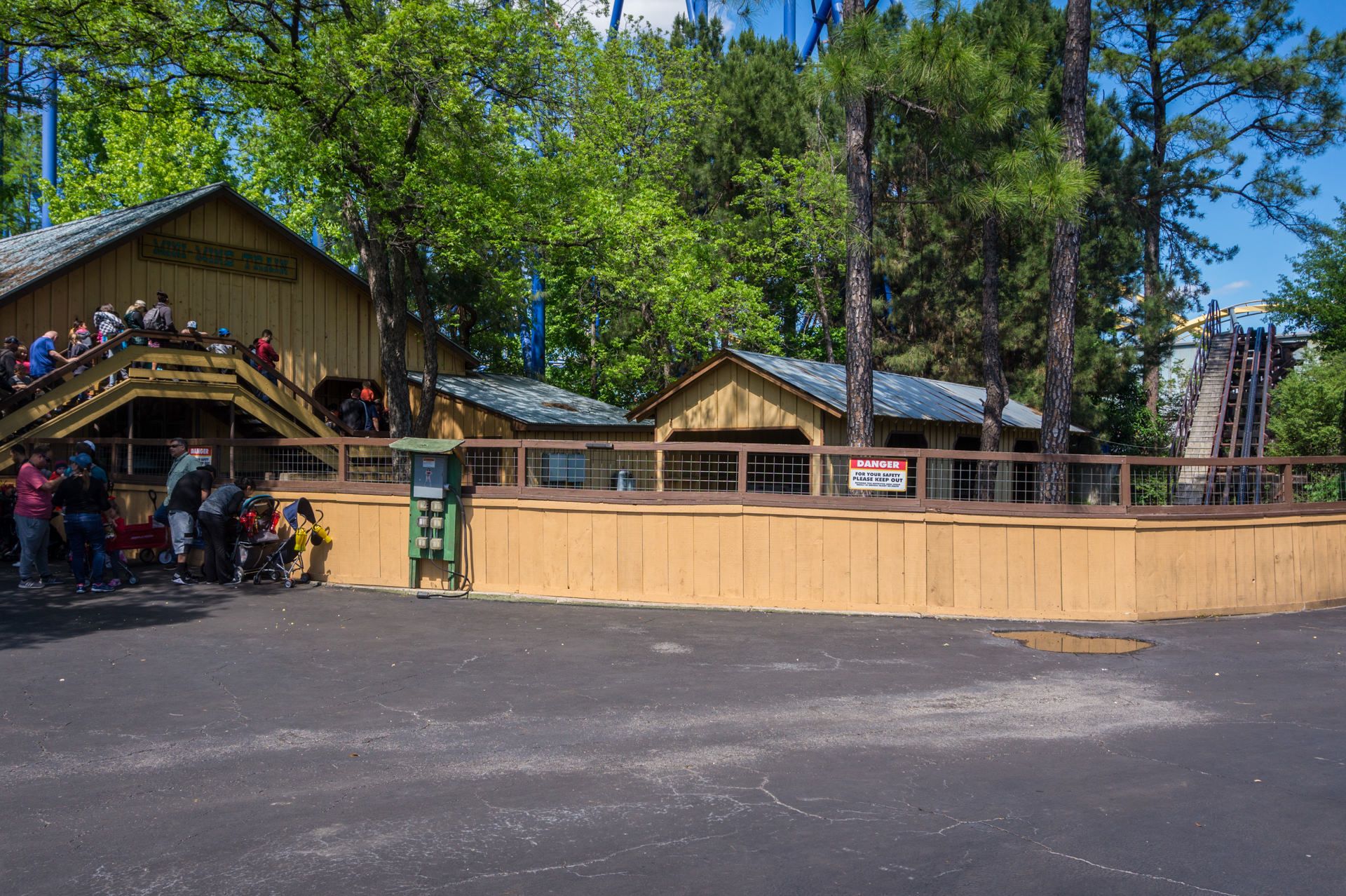
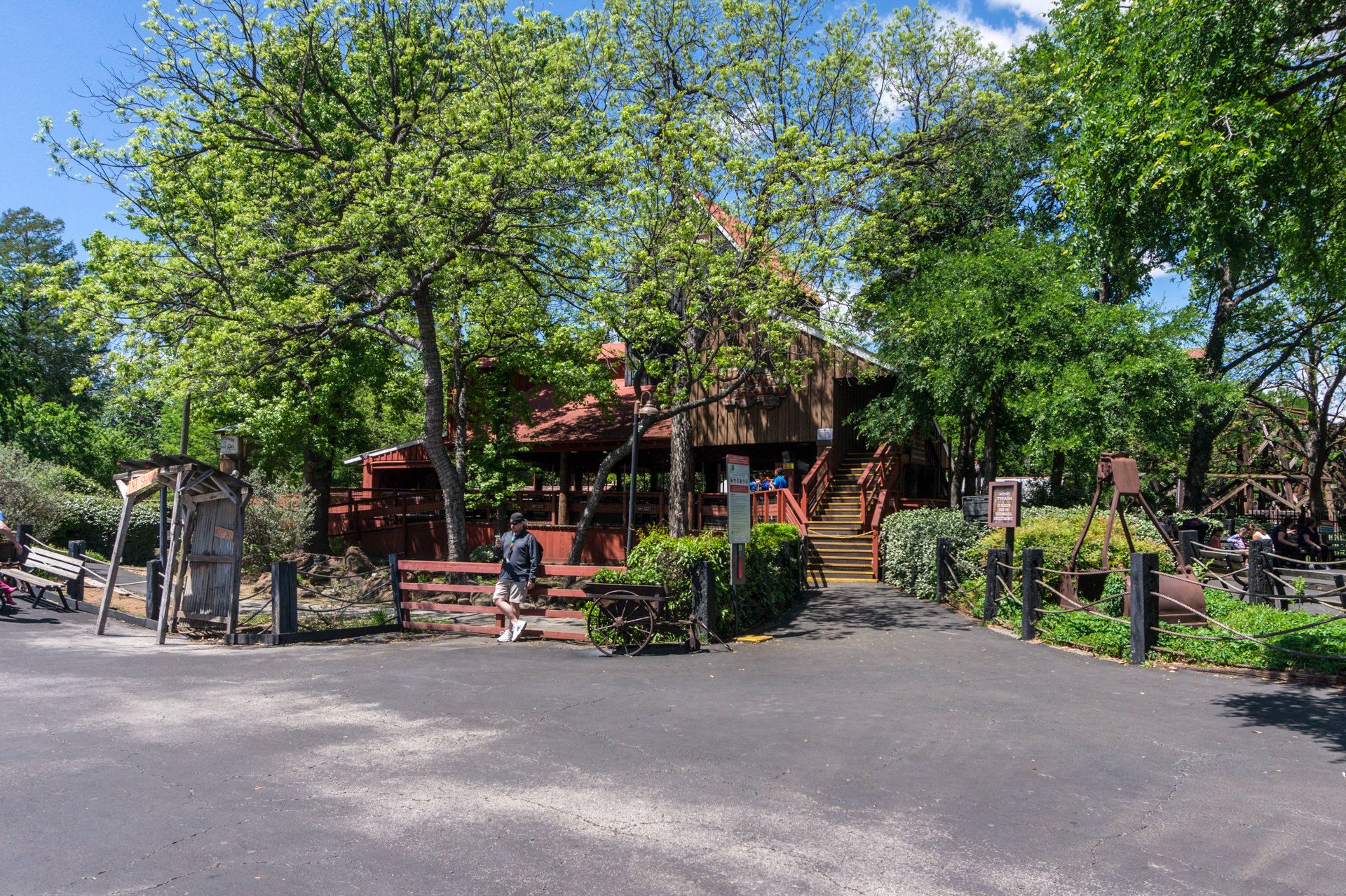
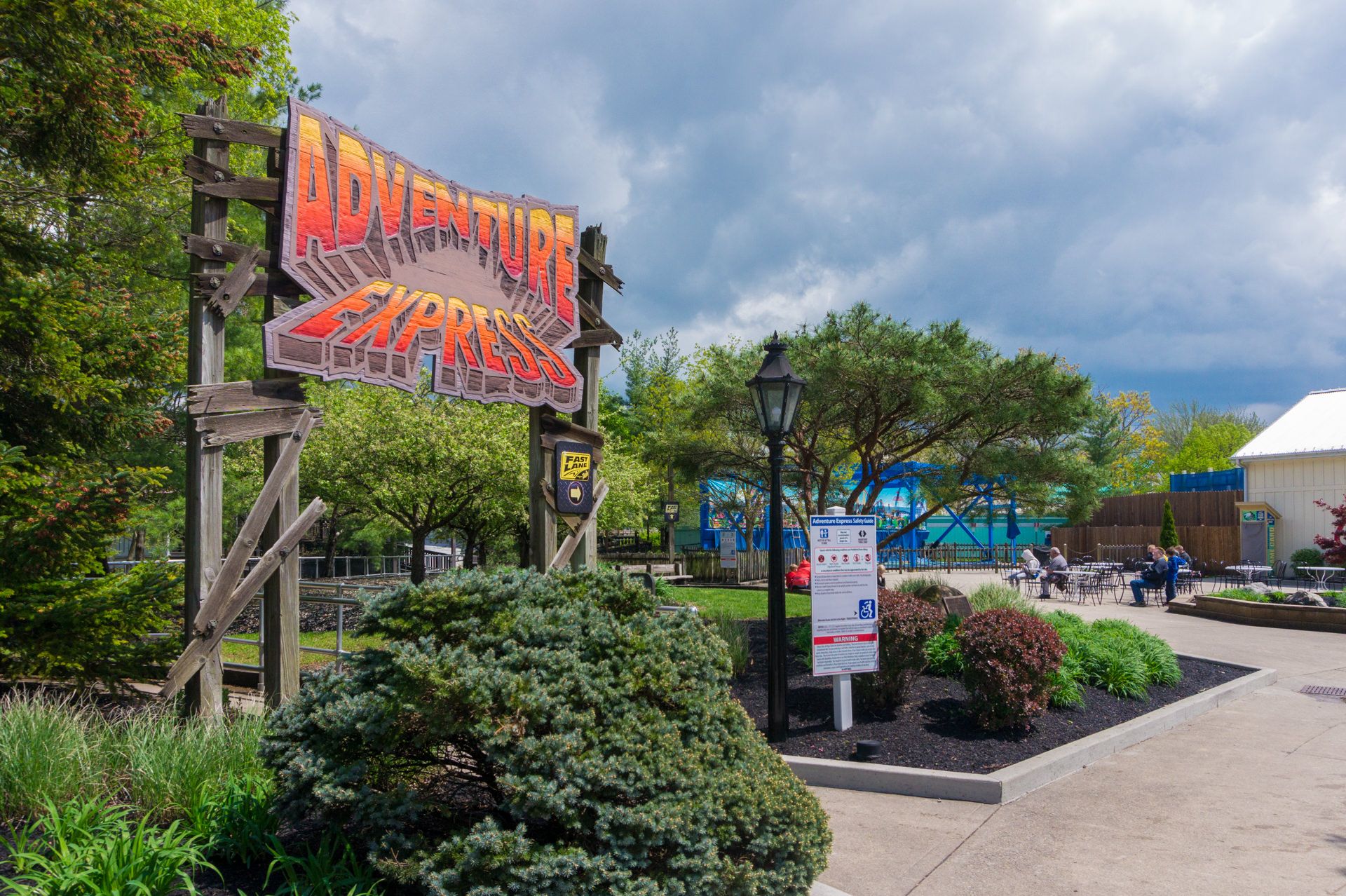
With the best view of the Banshee roller coaster, the Adventure Express makes its way through the dense undergrowth in Mason, Ohio. Kings Islands Mine Train is one of the last examples of the manufacturer Arrow Dynamics and promises, like Thunderation from the amusement park Silver Dollar City the day before, an extremely exciting and family-friendly ride.
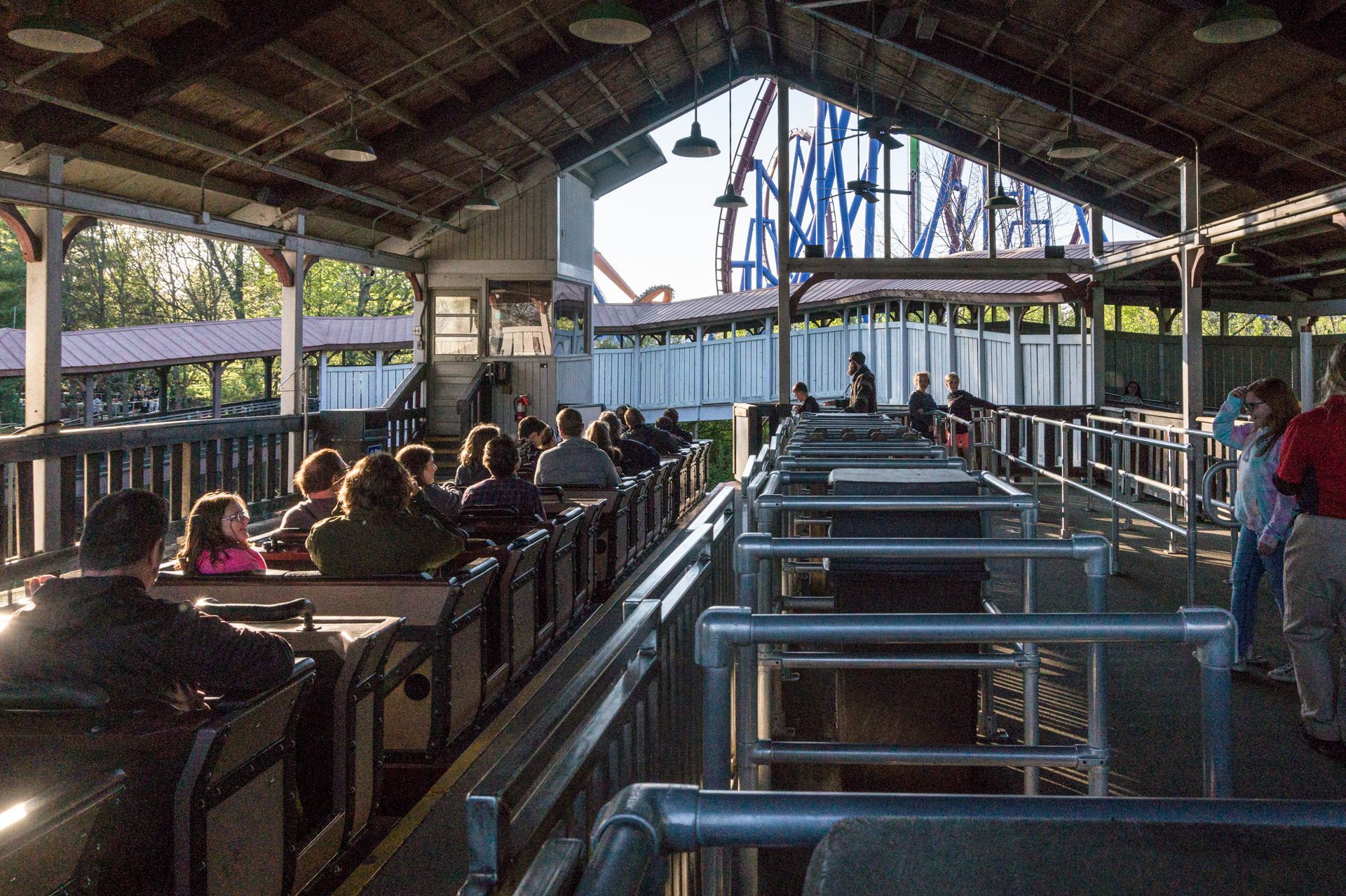
This also starts immediately with a series of right and left turns, which lead us out of the station in the direction of the lift. The whole thing is underpinned by a small drop, as well as several straights and two short tunnels, both of which are quite nicely themed. The first lift is characterized by several slanted archways, but otherwise the theming is discreet. At the top, we quickly pick up speed in a downhill right turn before we cut a building in a left turn and gain some altitude. A classic Bavarian curve follows, followed by an extremely crisp helix just before we enter a tunnel. Here we change direction once before we leave it again in a right-hand bend. Back in daylight, we take a left turn through a valley and gain momentum for a small climb. At the end of it a kind of temple ruin awaits us. Inside we meet the second lift of the ride, accompanied by music and rhythmically drumming animatronics. After this design highlight, the end of the ride awaits us after a short right turn.
Even though the Adventure Express is a bit anticlimactic in its storytelling, the ride on the two-stage Mine Train is simply great entertainment. The ride is extremely fast and has some really nice passages, which are also nicely staged by the existing design elements. Sure, the ending with its “Now you will pay!” announcement is a bit silly, the Terrain Coaster at least is not.
The Racer
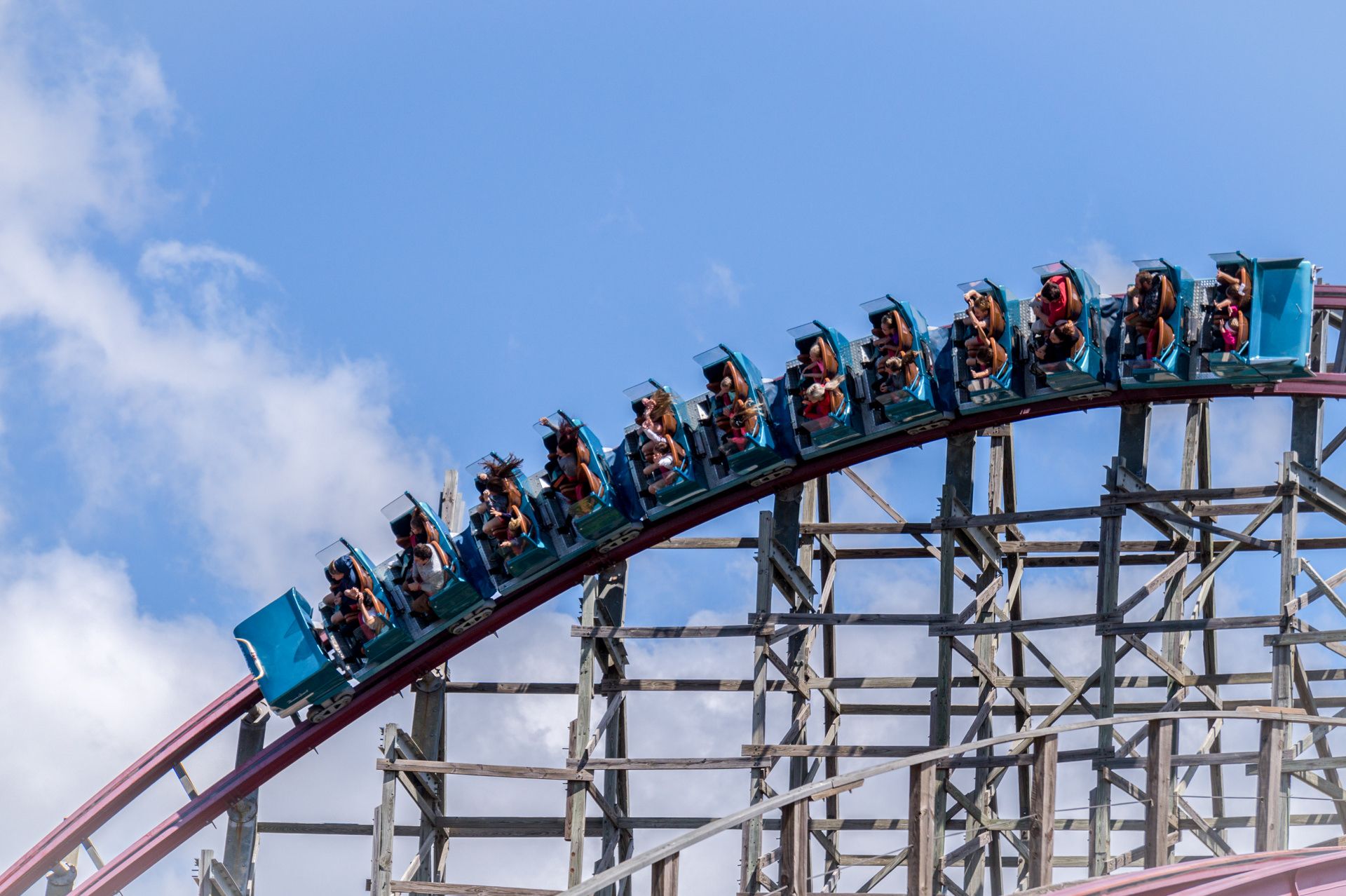
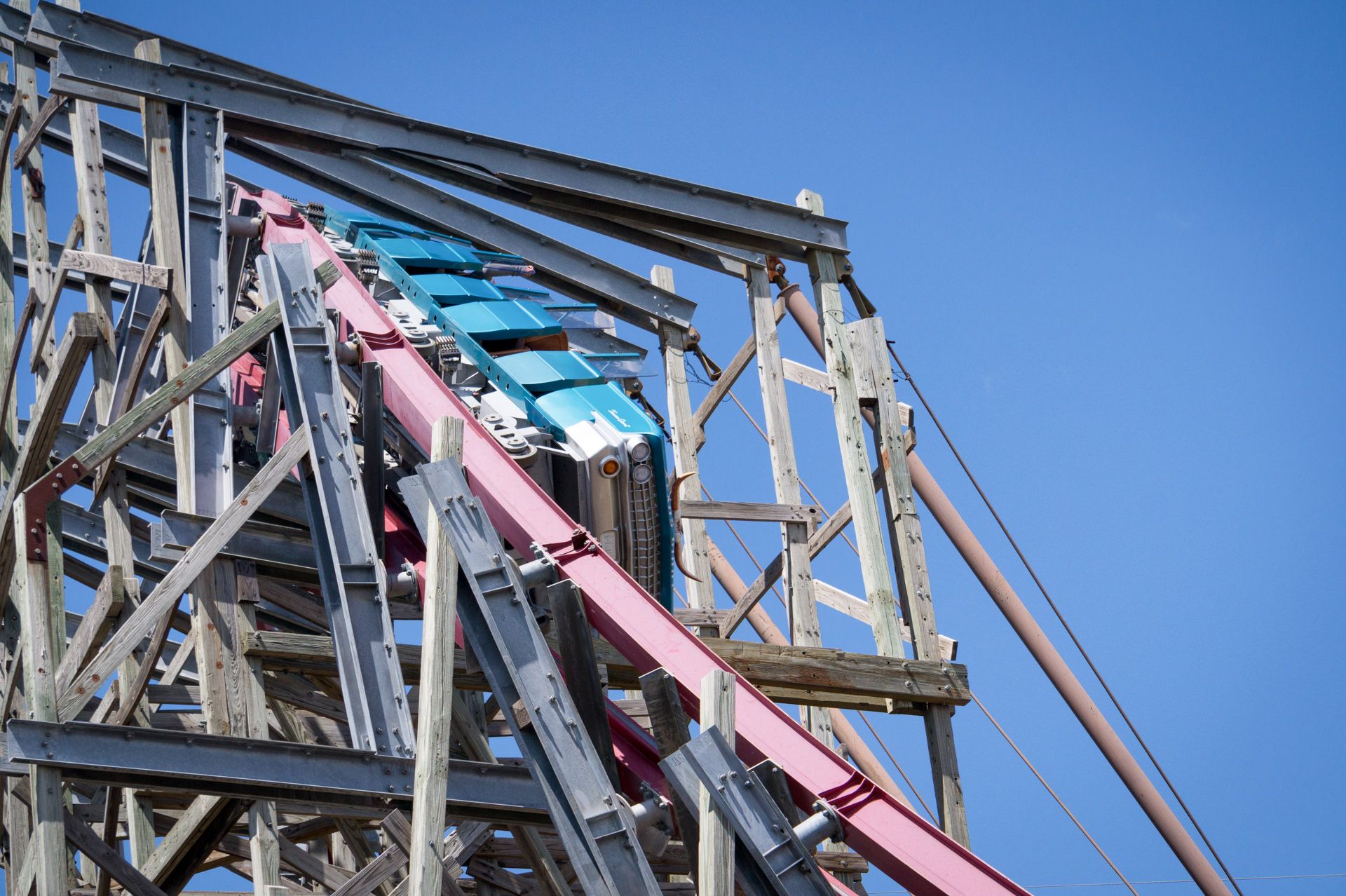
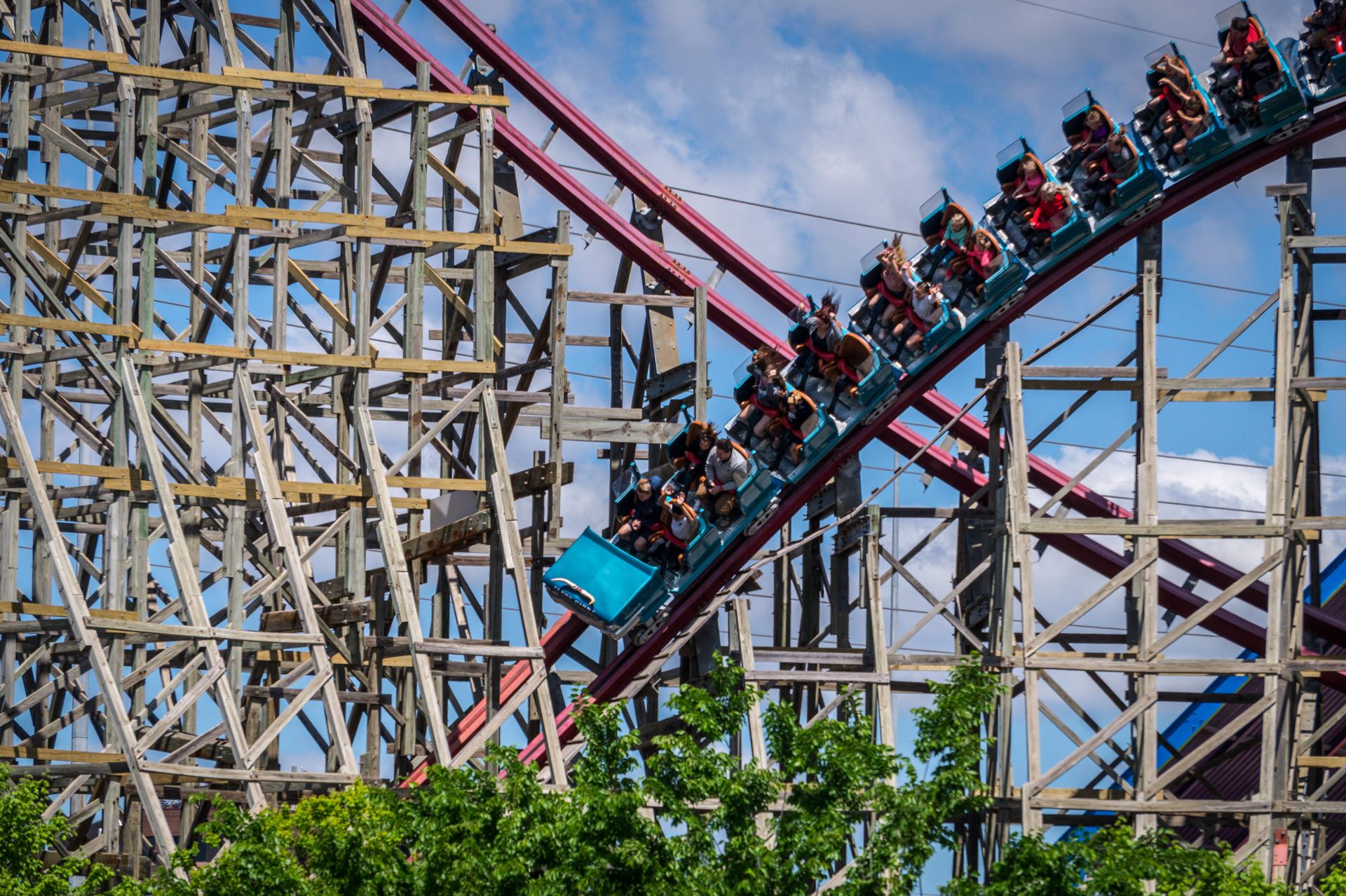
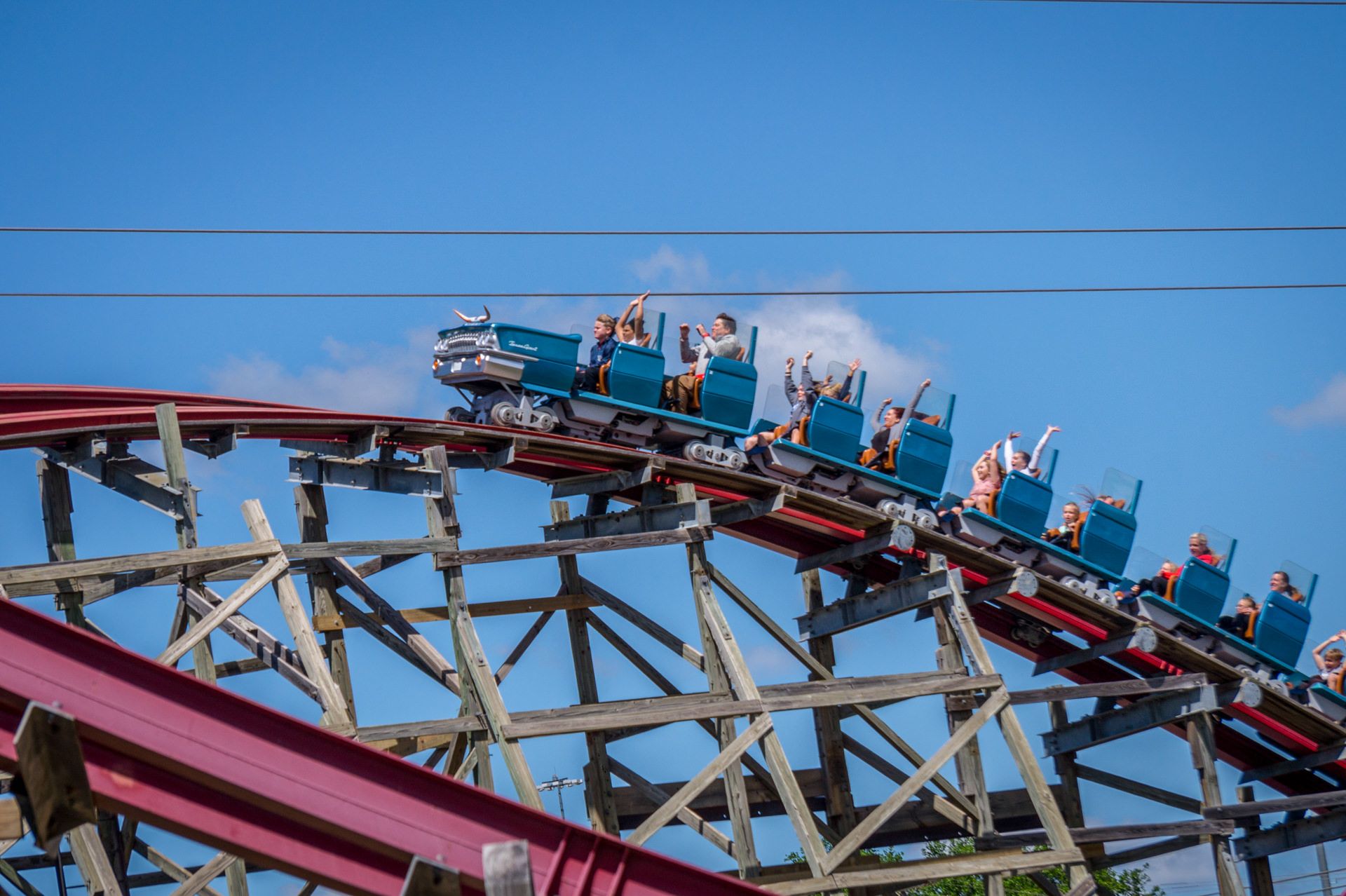
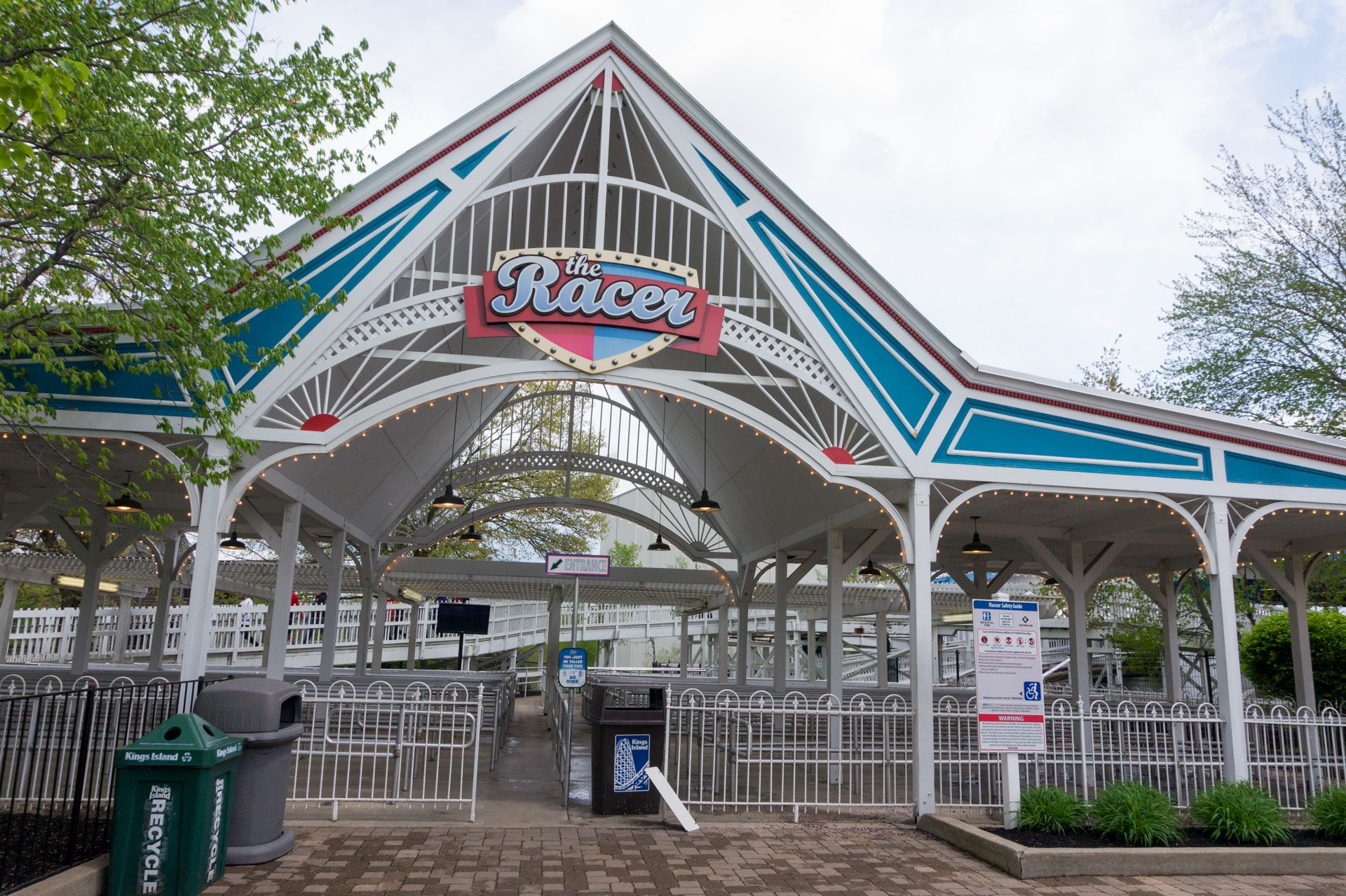
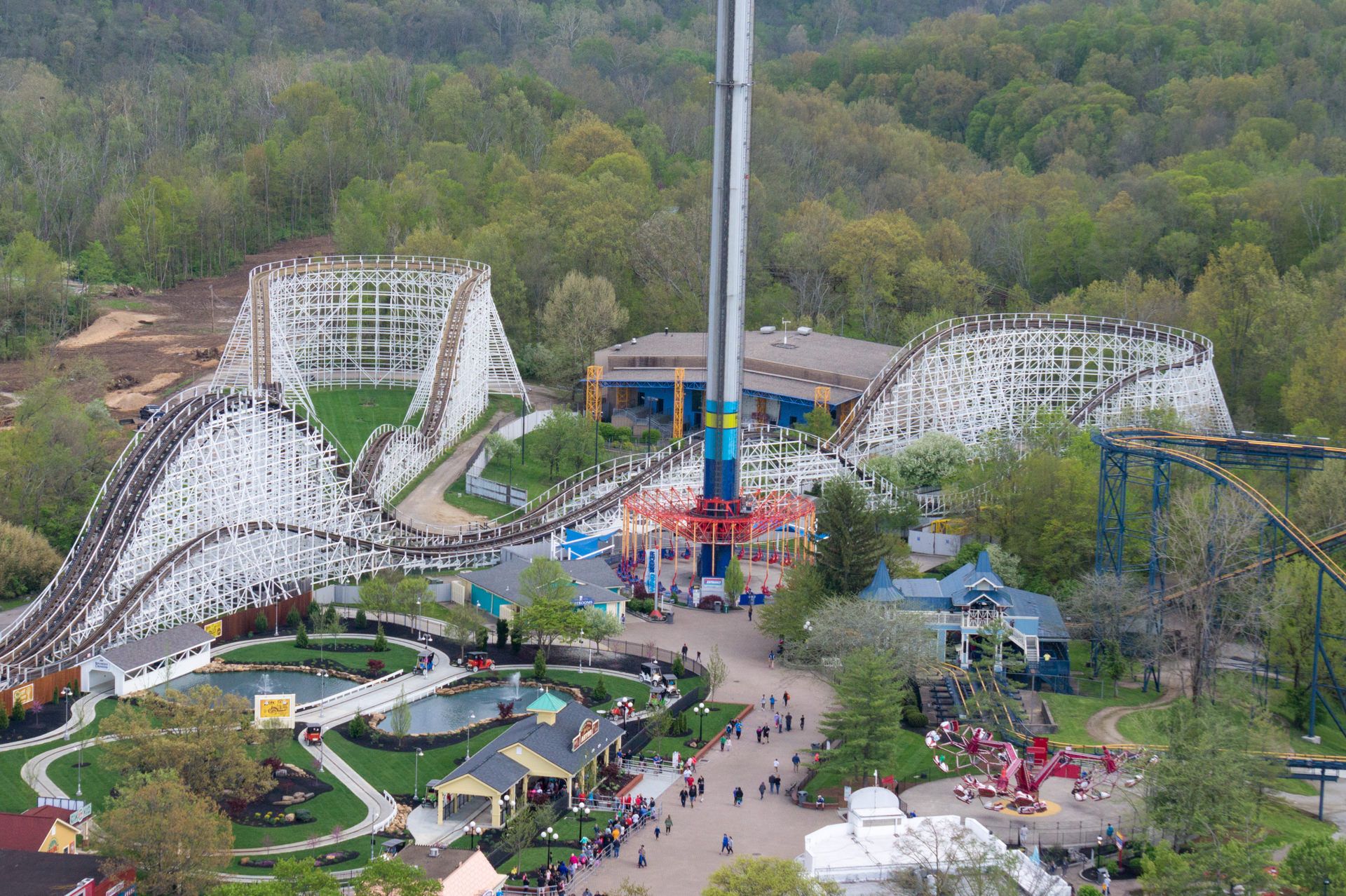
When Kings Island opened, the double wooden roller coaster The Racer was the star of the theme park, after all, the roller coaster was the longest, highest and fastest roller coaster in the world at the time. The industry was also amazed at the time when Kings Island staked all its cards on a new roller coaster. The success in turn proved the theme park right and led to a renaissance of roller coasters – now everyone wanted to have the fastest, highest and longest roller coaster in their park.
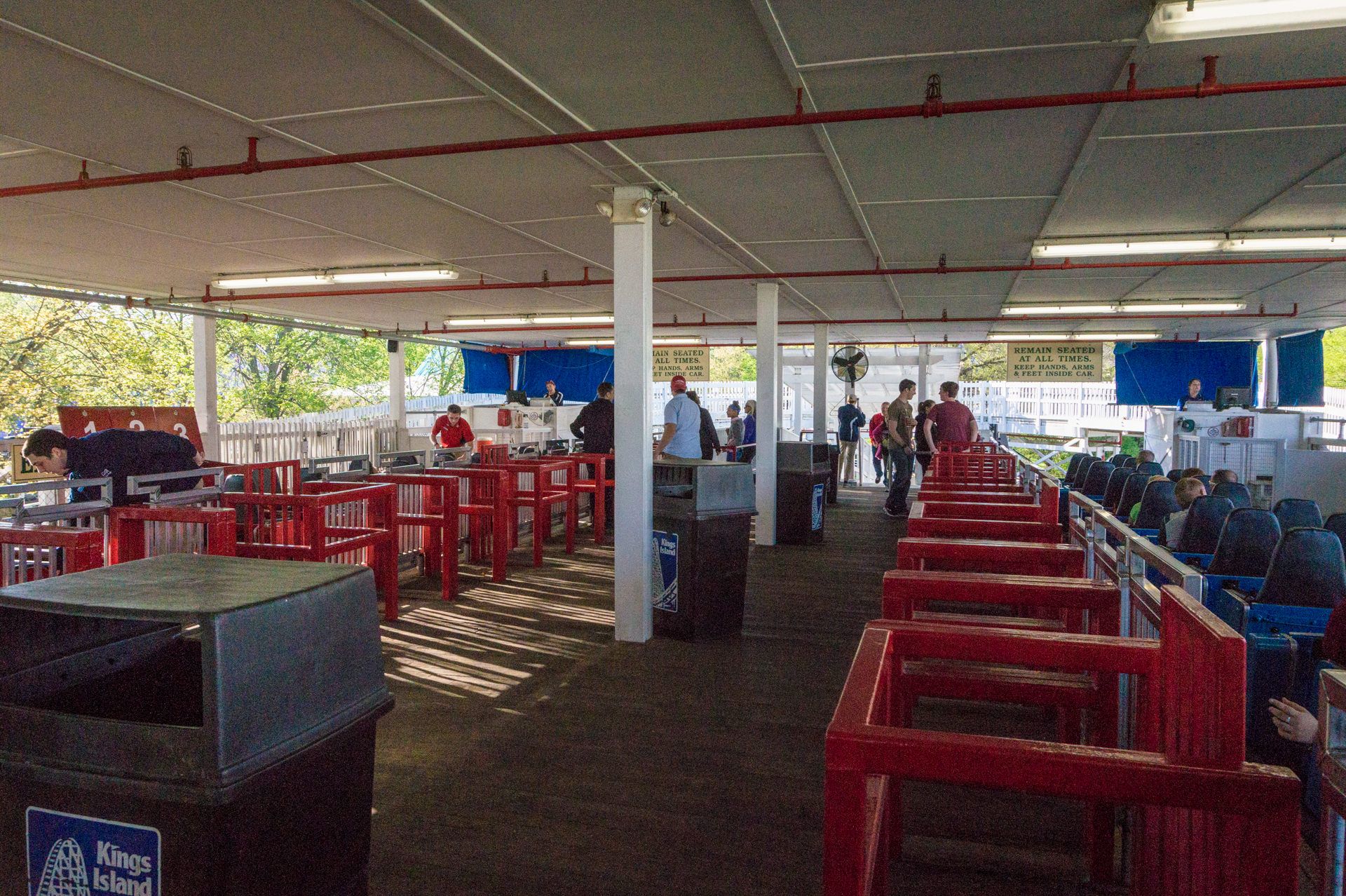
The ride on the two lanes of The Racer roller coaster begins immediately with the front turn, whereupon both lanes meet after a few meters and climb the lift hill together. During this time, the passengers have enough time to spur each other on, which also strengthens the team spirit in their own train; after all, they want to win together. As it usually happens, the first train plunges into the abyss, while the second has just reached the crest. After a powerful valley, both tracks lead over a rather low hill with a subsequent bunny hop before they separate from each other on the crest of the following hill. While one side now continues to the left, the other side now bends to the right. With momentum and all kinds of airtime we now go through another valley including a hill, at the end of which the rear turn awaits us. Where we managed to follow the other train quite easily so far, it now becomes a bit more difficult on the return to the station. After another downhill and a great airtime hill we come across the already completed track. Now we race parallel to it over a series of smaller airtime hills before we finally disappear into the woods at the height of the First Drop and are even confronted with a white tunnel on the braking section. Shortly after that we enter the station again.
The Racer is addictive. The ride on the racing coaster with its many airtime hills and the out and back design is simply great fun, which is why, thanks to the low crowds and the use of both tracks, I made it my mission to ride the roller coaster until I would eventually win. A lot of bad luck led to seven rides in a short time, after which I gave up the action; after all, the rest of the park still wanted to be explored.
Coney Mall
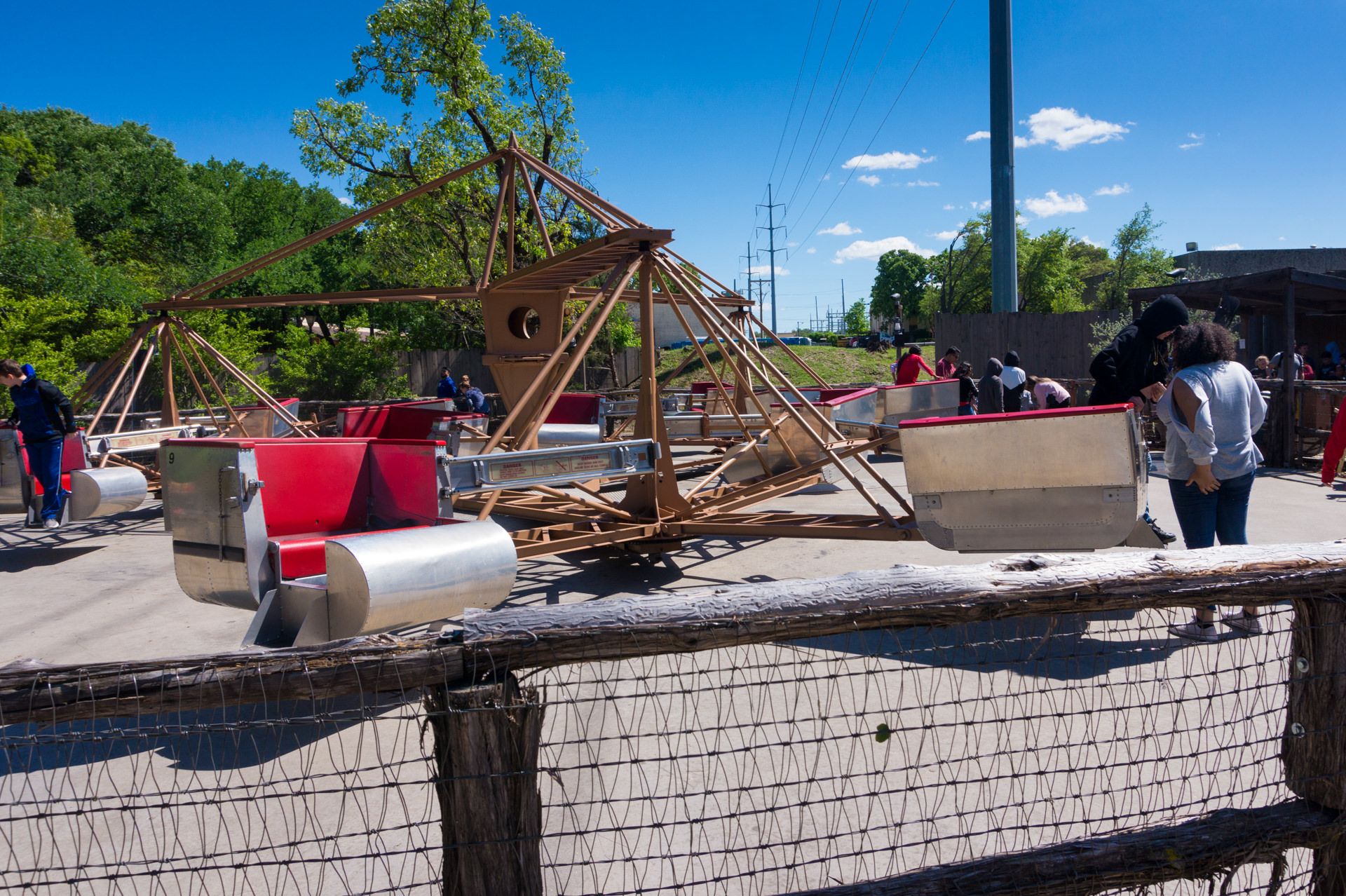
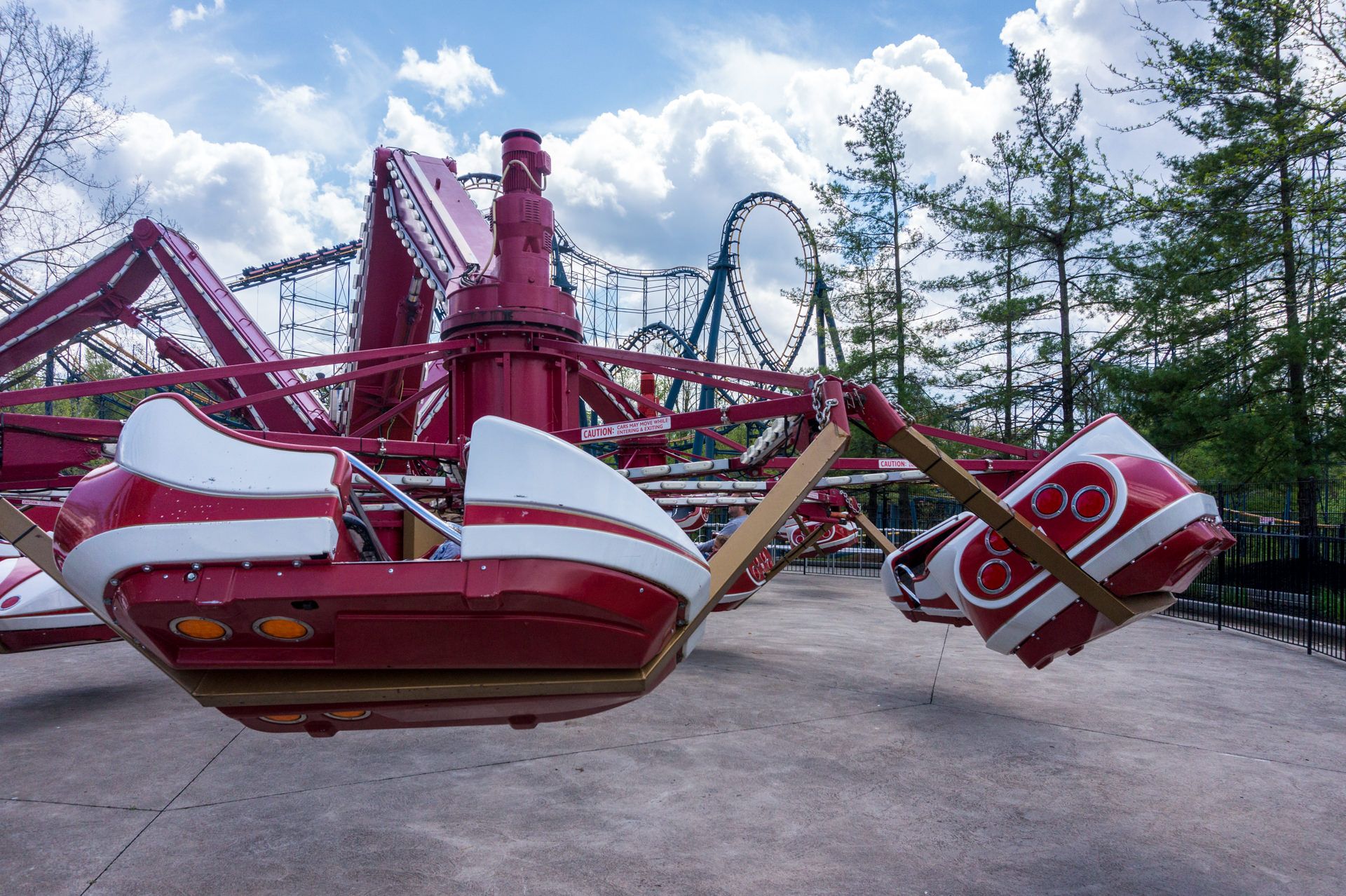
In the Coney Mall area in Kings Island you can still find some treasures from the Coney Island time. In addition to the well-known US classic Scrambler, you can also ride a Monster from the Eyerly Aircraft Co. Here the ride is similar to a Schwarzkopf Monster, except that the eccentric cannot be lowered and therefore only two gondola arms can be loaded at the same time. Due to the construction, this quickly leads to longer waiting times, but this can easily be topped by the loading process itself. The nacelles are too high during loading. However, there is a remedy, because the front part of the gondola can be folded down and then serves as a staircase, which makes it easy to get in and out. Once folded up and secured, however, the seating position in the gondola is not quite as comfortable, as you sit relatively flat on the ground. The ride cycle itself is then also a bit too short and not very revvy, which is why I can only recommend a ride when the crowds are low. It is at least nice to see that Kings Island cares so much about their older rides.
Flight of Fear
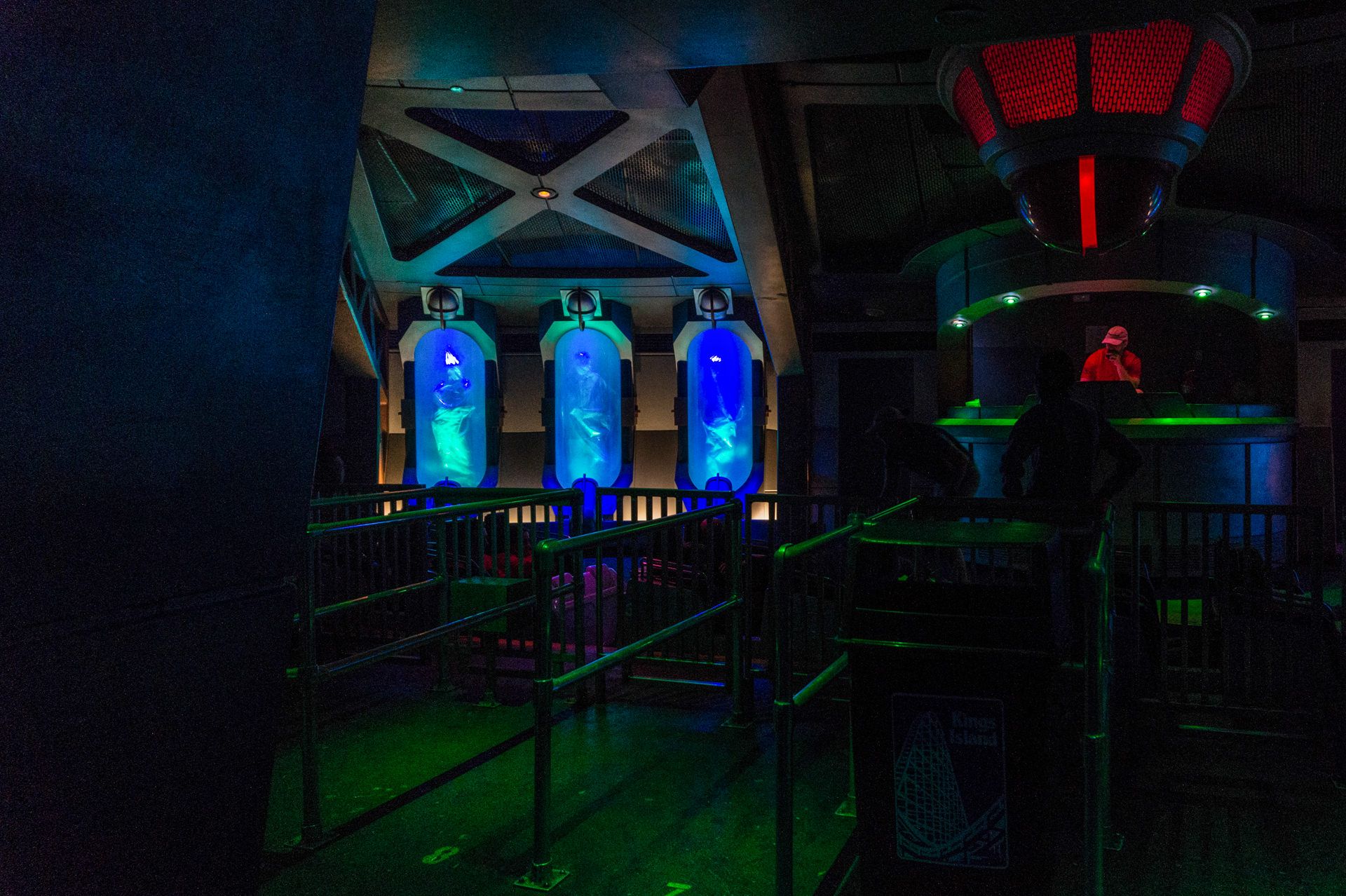
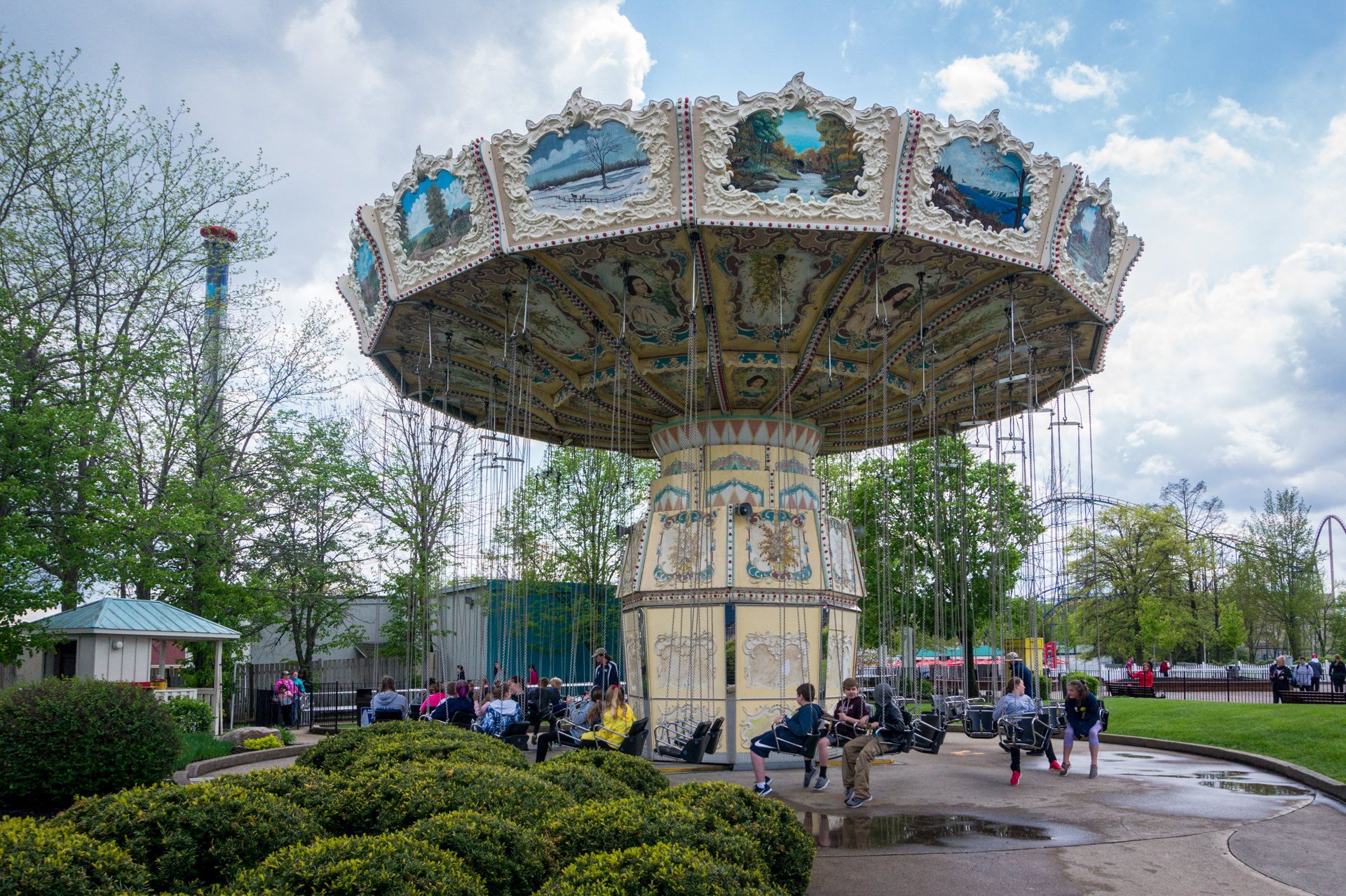
Passing the wave swinger Zephyr, we now head to the indoor roller coaster Flight of Fear. After having just missed the spaghetti coaster at Six Flags Fiesta Texas, I was even more excited about the indoor version of this ride, which played a major role in the use of LIM modules on roller coasters. The queue at least puts you in the right mood for the subsequent space flight, which I was able to spend as a single rider in the front row thanks to a closed seat next to me.
Unlike the Rock ‘n’ Roller Coaster from Walt Disney Studios Park, the launch takes place directly out of the station. With full speed, we immediately enter the extremely pressurized Cobra Roll, before we whiz across the hall floor after two headstands. After a pressure-packed valley, we immediately go up a Sidewinder before cruising a bit through the upper part of the ride. After several swerves, we are then slowed down a bit in a block brake before heading into the lower part of the ride. In a constant up and down motion we spiral down continuously before we change direction after a wide left turn. Quite swiftly we now approach the hall floor once more, whereupon we make another change of direction. After two more steep turns close to the ground, we find ourselves upside down for the fourth time in a corkscrew, whereupon we reach the braking section and soon find ourselves in the exit station of the ride.
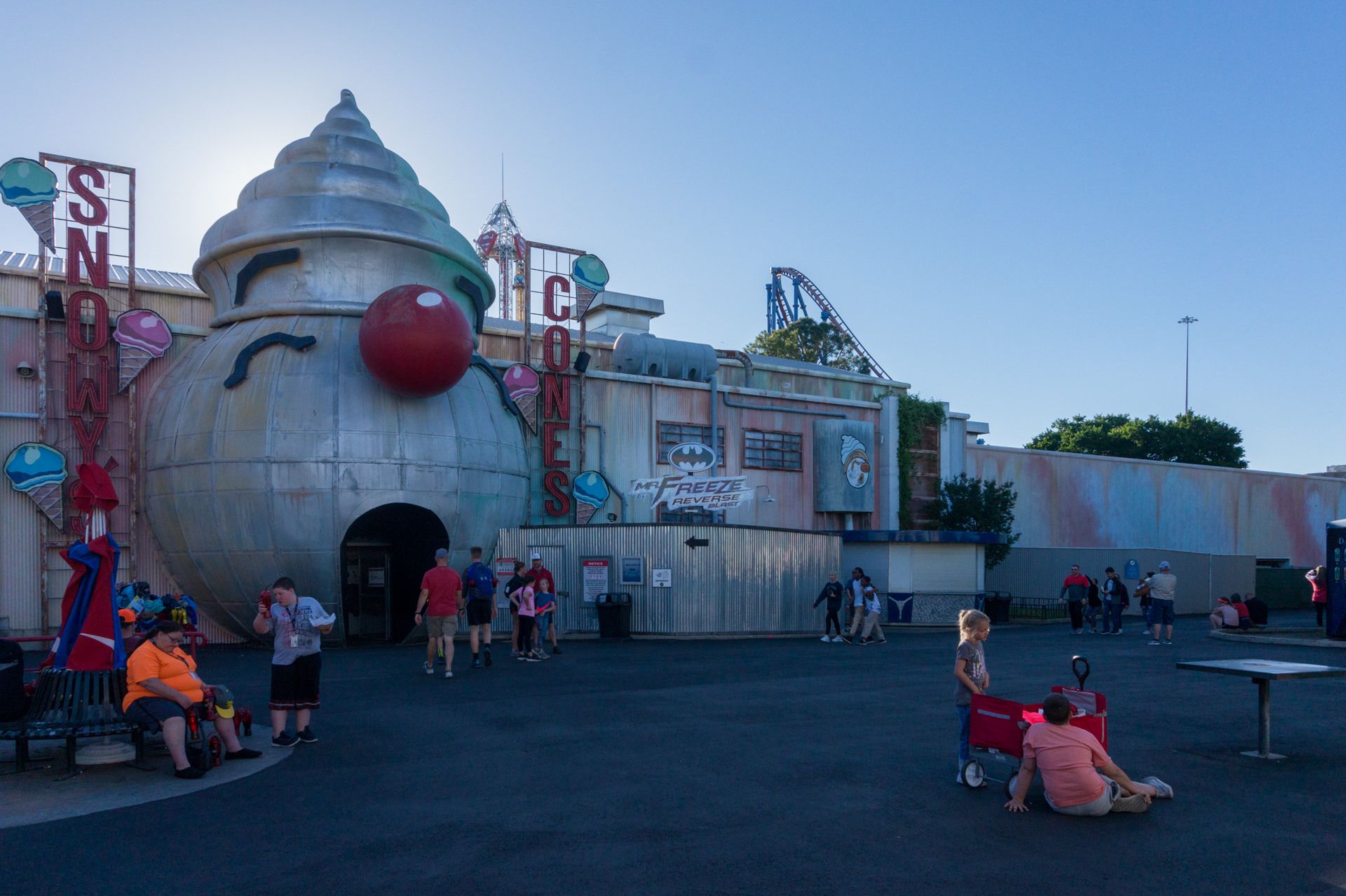
Flight of Fear is a very solid roller coaster with a nice track design and a great setting; it’s just a pity that the hall was a bit bright thanks to the incoming light and the ride has no other effects except for the darkness. In addition, the ride is a bit jerky, just like Mr. Freeze Reverse Blast from the theme park Six Flags Over Texas, which is why you can only be very happy to have experienced it without the originally installed shoulder restraints. A ride in the evening would certainly have been beneficial here, but the waiting time at this roller coaster was a bit too long for me for a second ride.
Kings Mills Antique Cars and Wind Seeker
The nearby vintage car ride Kings Mills Antique Cars could show the longest queue on my visit day, after all, it was also the novelty from this year. The ride was built in the spirit of the 70s – so it resembles the original vintage ride Les Taxis with its internal combustion engine.
At the rear turn of The Racer roller coaster, a true monster towers into the sky. The Windseeker is a Mondial Rides ride that gives you a similar view as a Funtime Star Flyer, but with rigid bars instead of filigree chains. The result of this is probably that the ride always stops immediately in stronger winds due to undesirable ride characteristics, as it did on the day I visited. Interestingly, however, the Windseeker opened again shortly before closing time, but I didn’t take the chance, because I didn’t want to miss a night ride on a legendary roller coaster, but more about that later.
Vortex
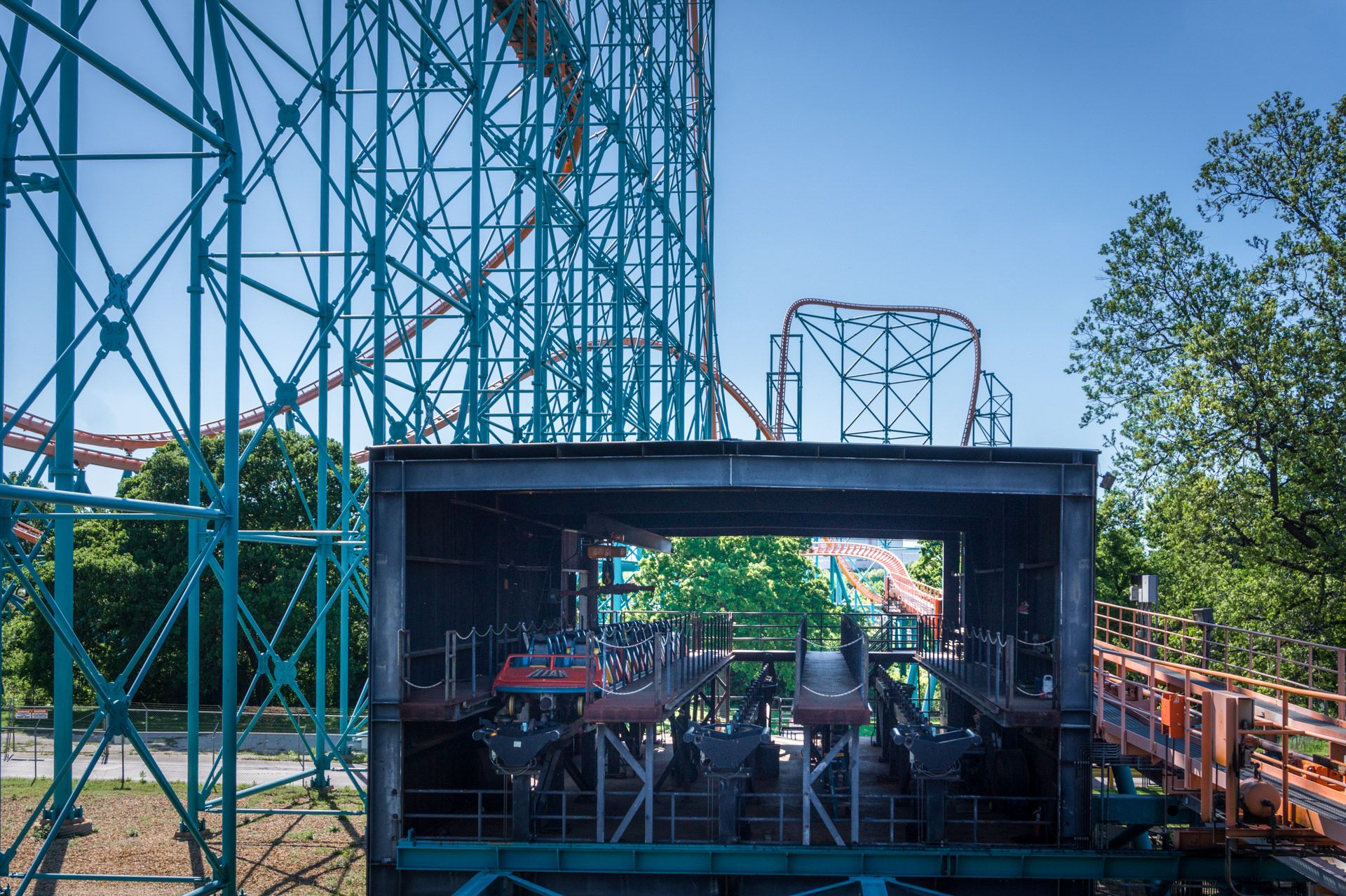
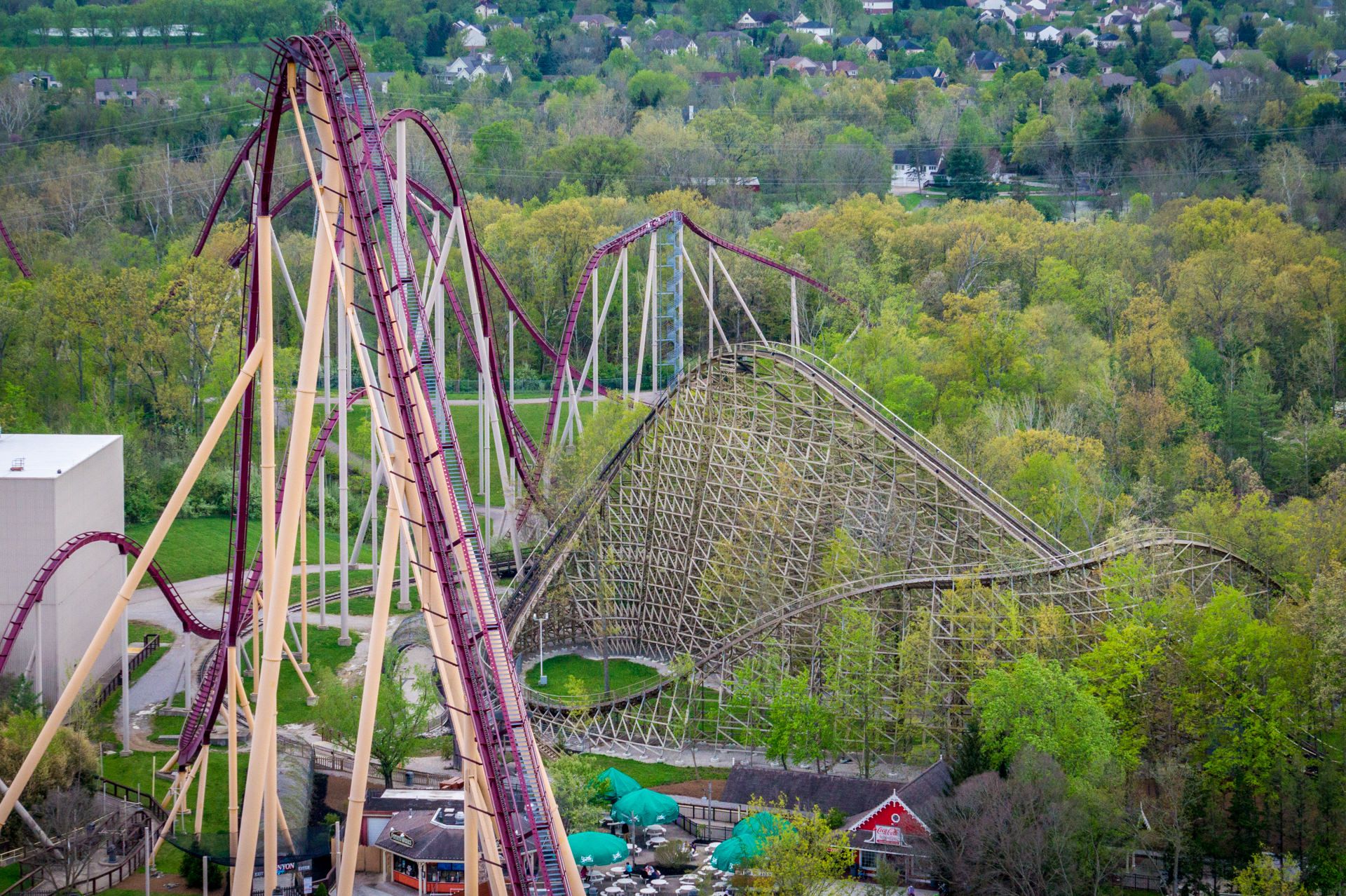
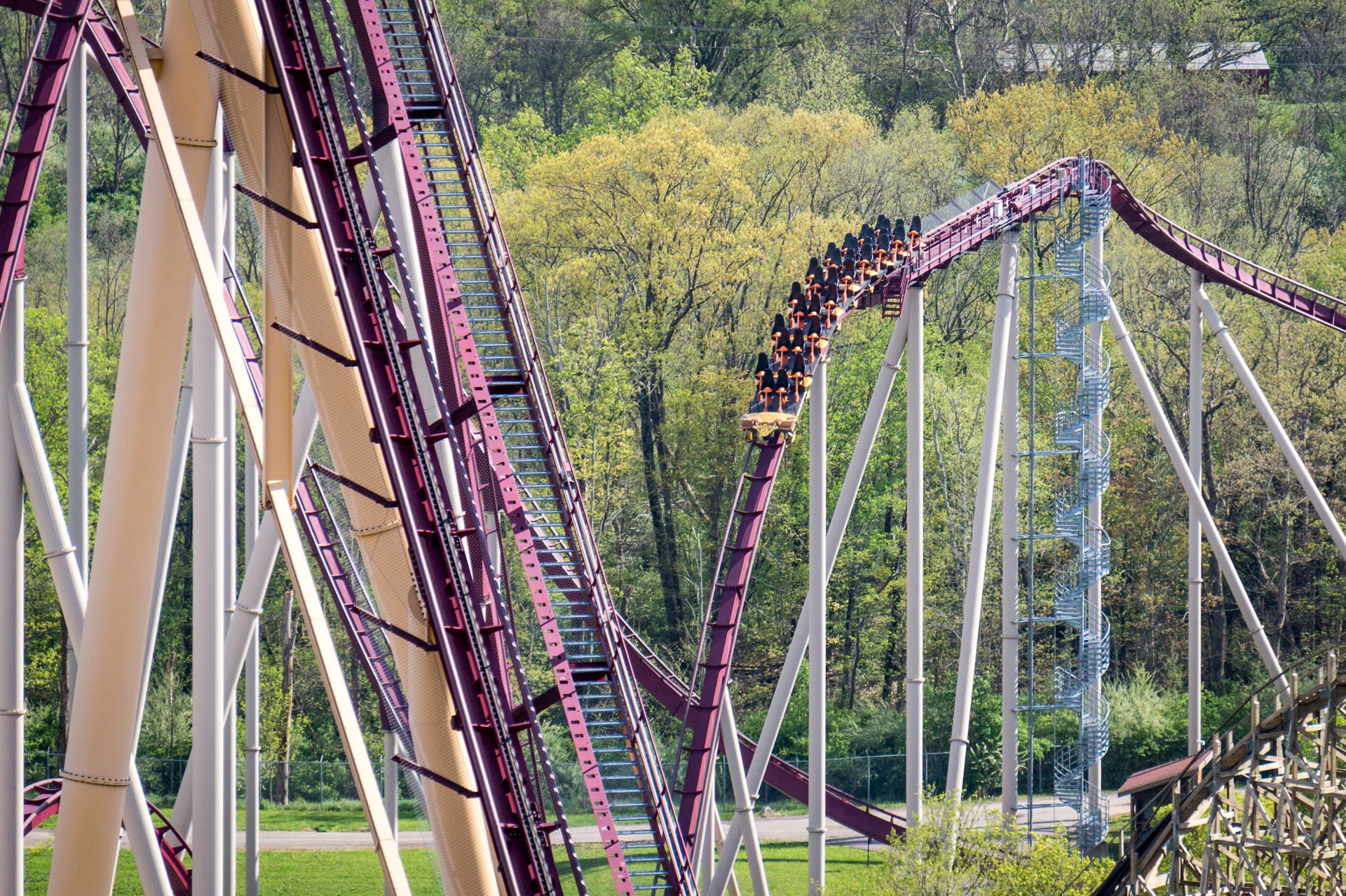
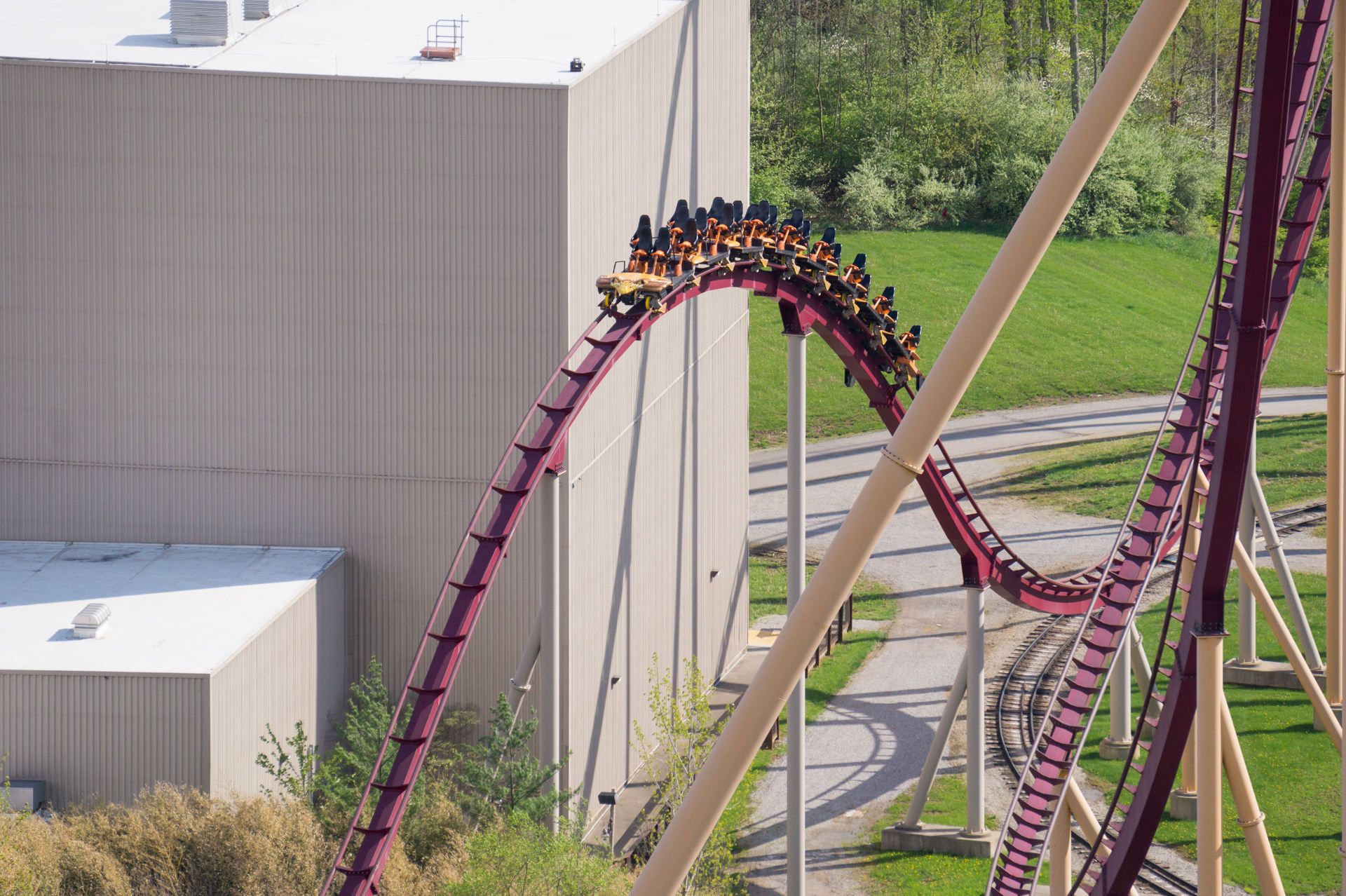
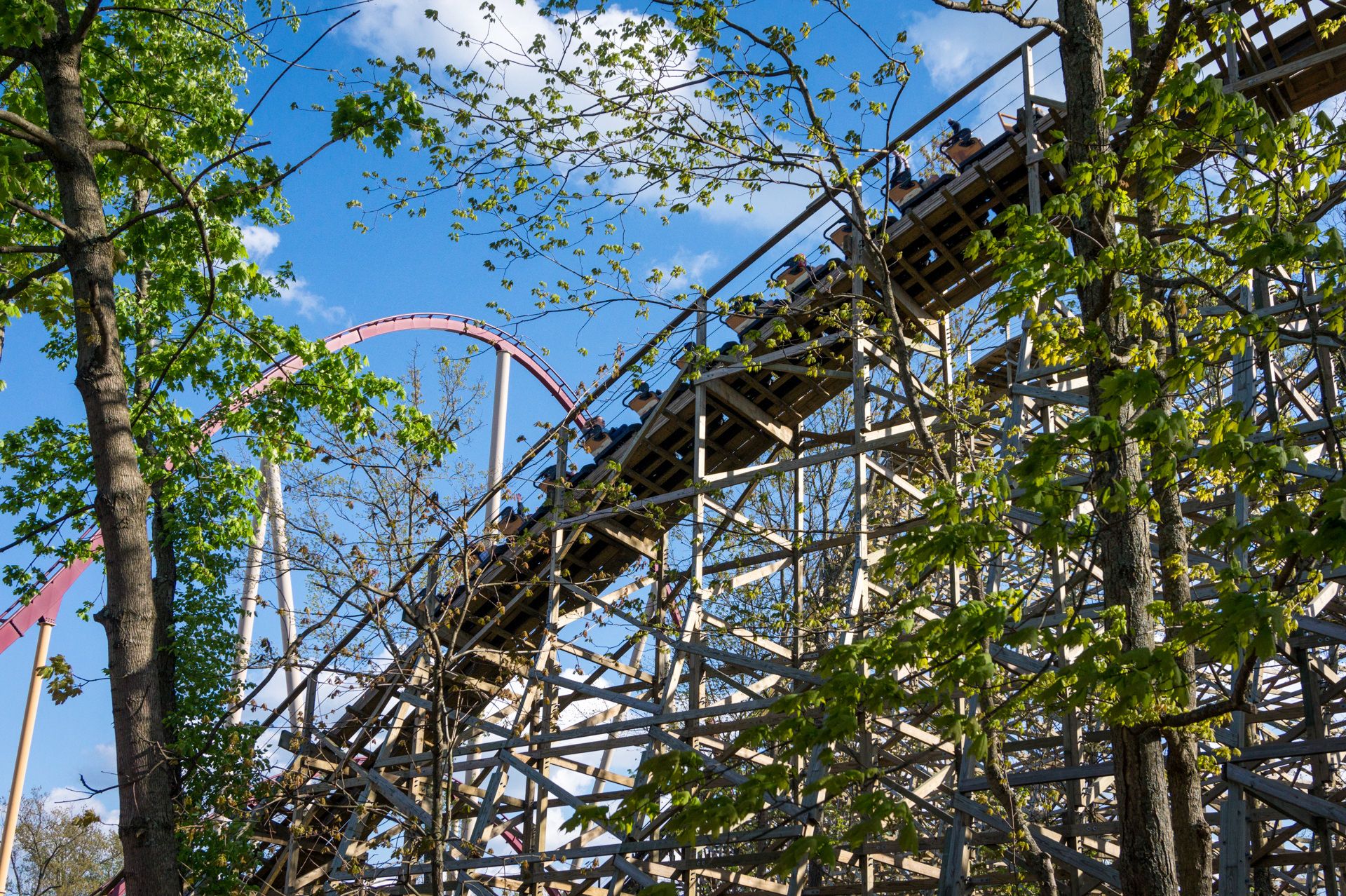
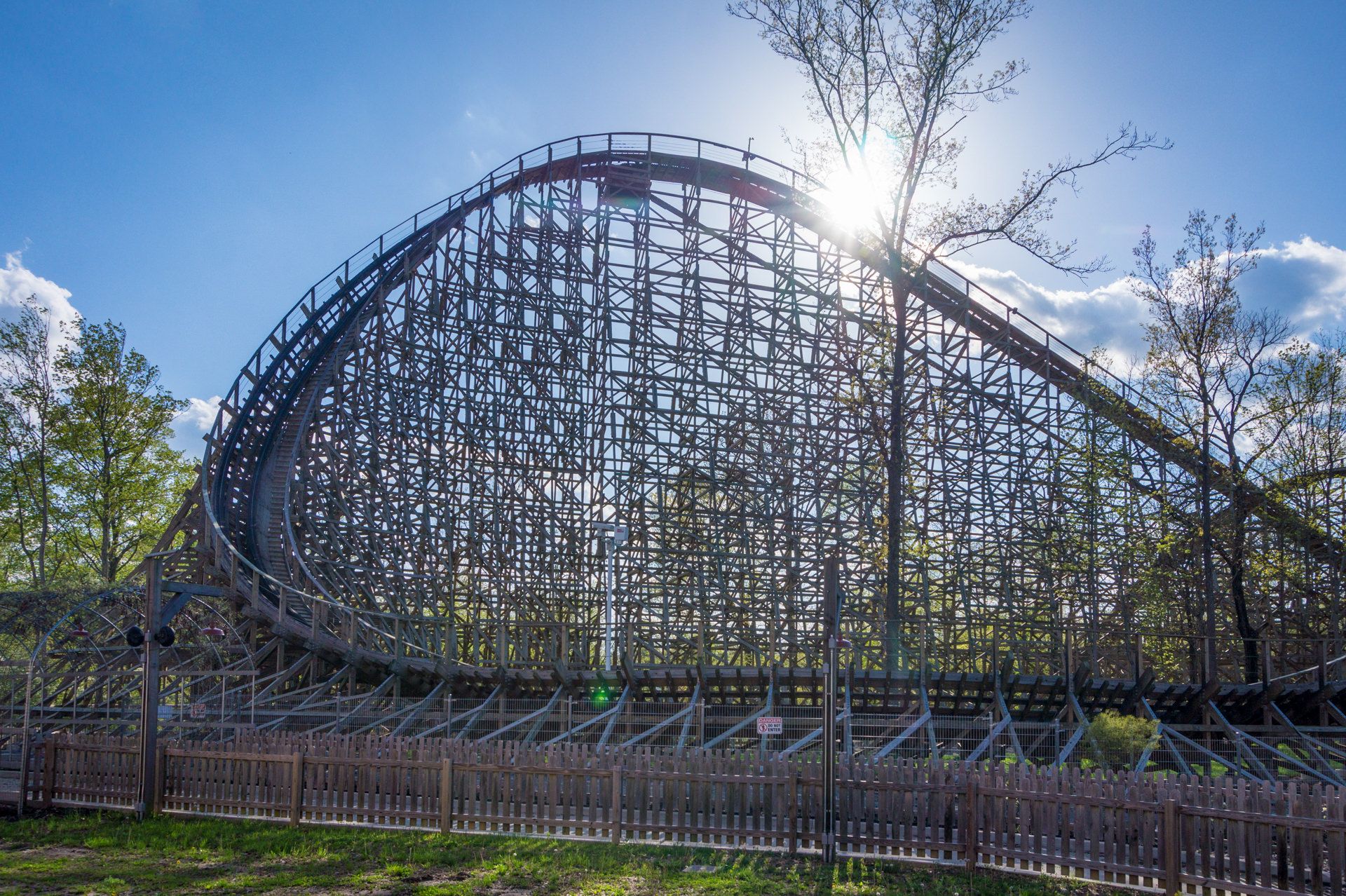
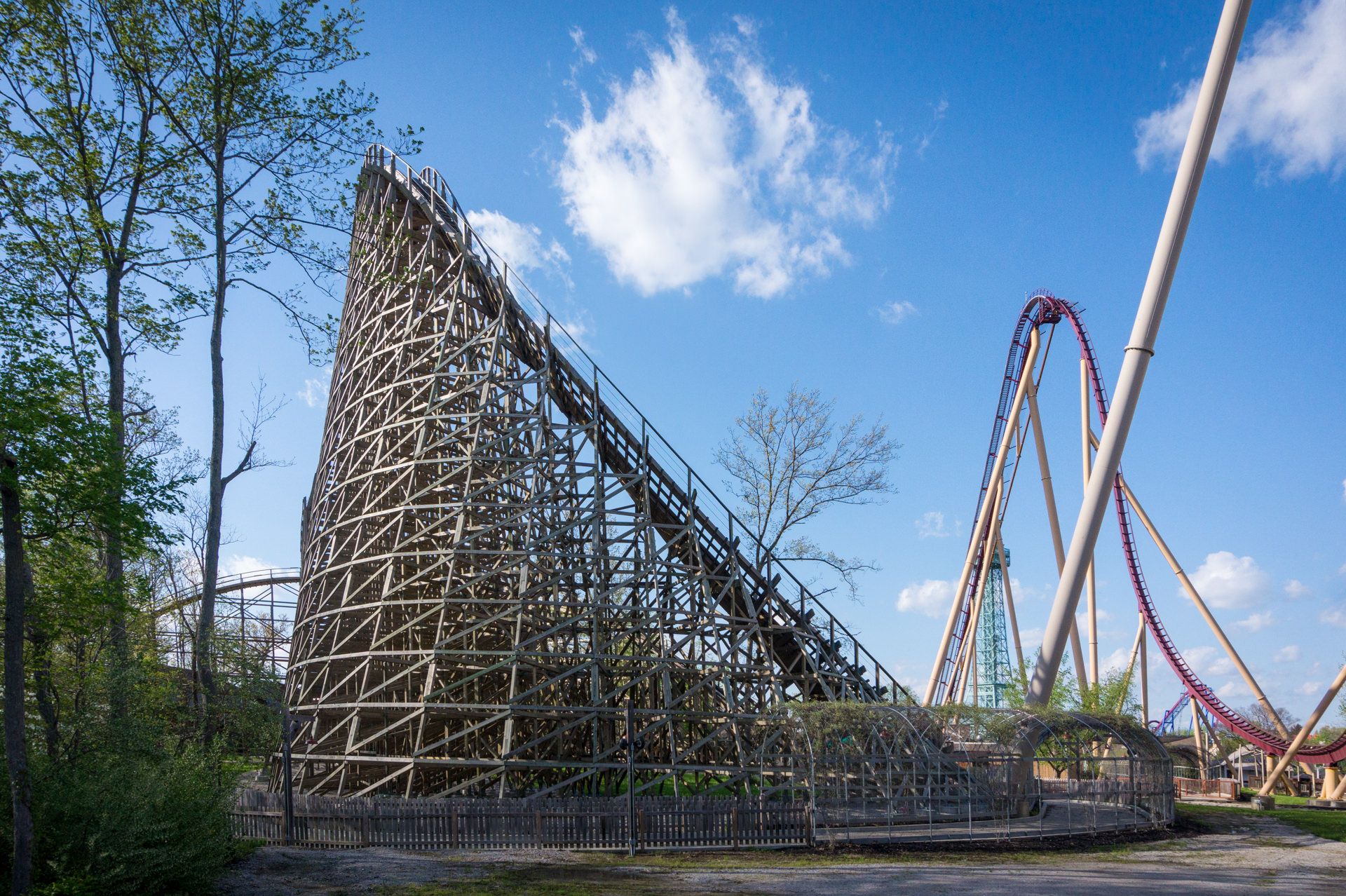
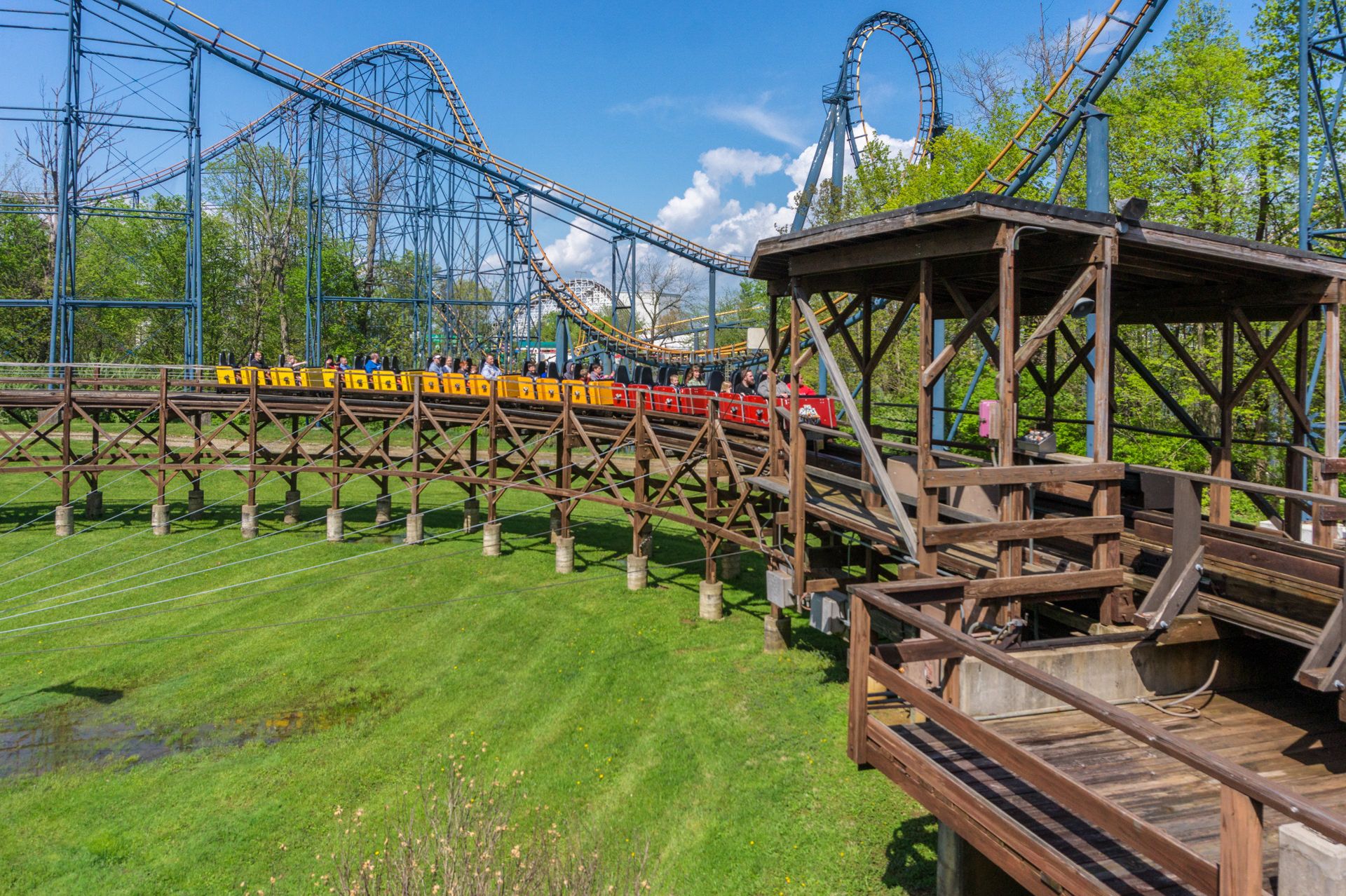
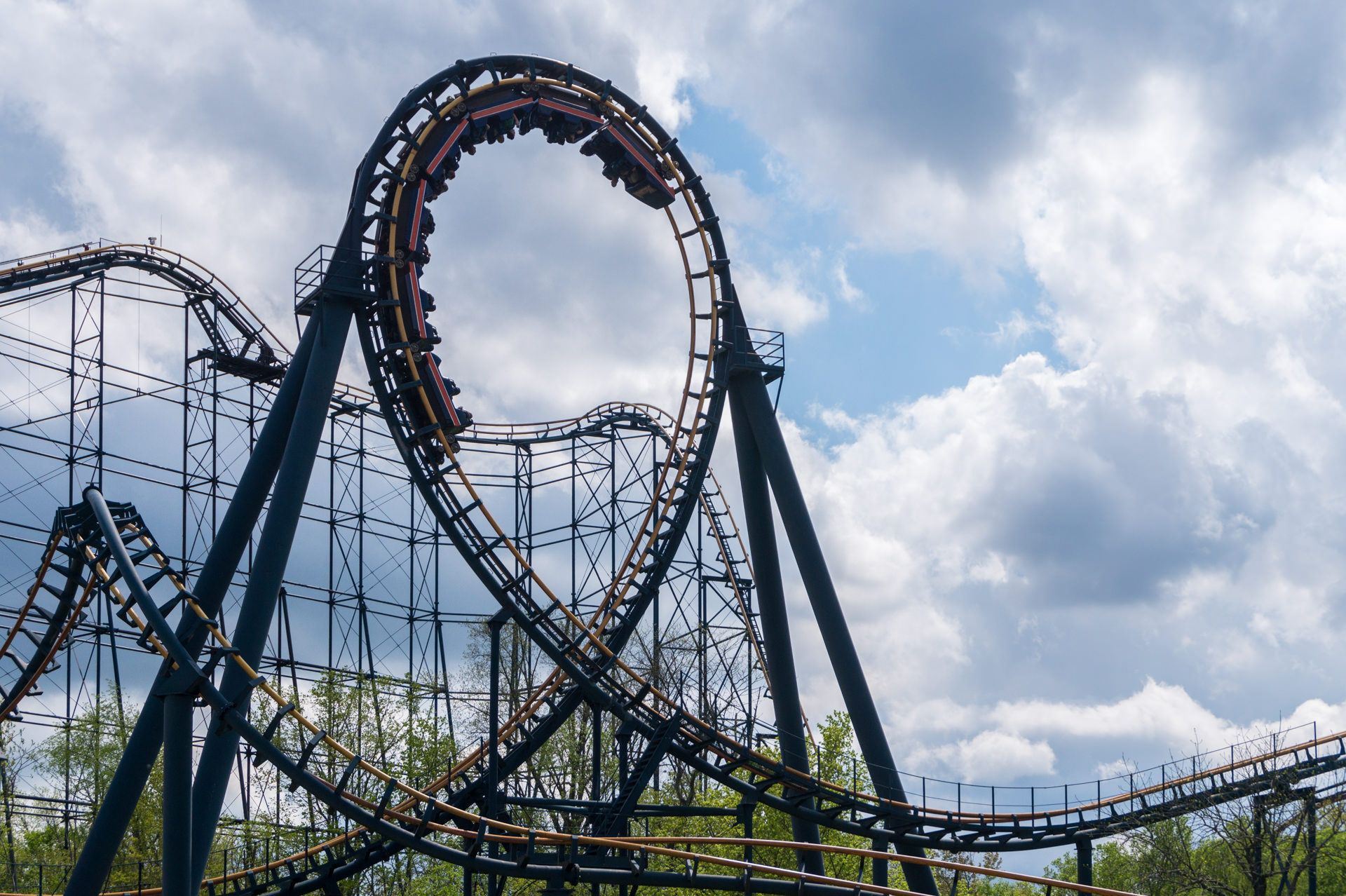
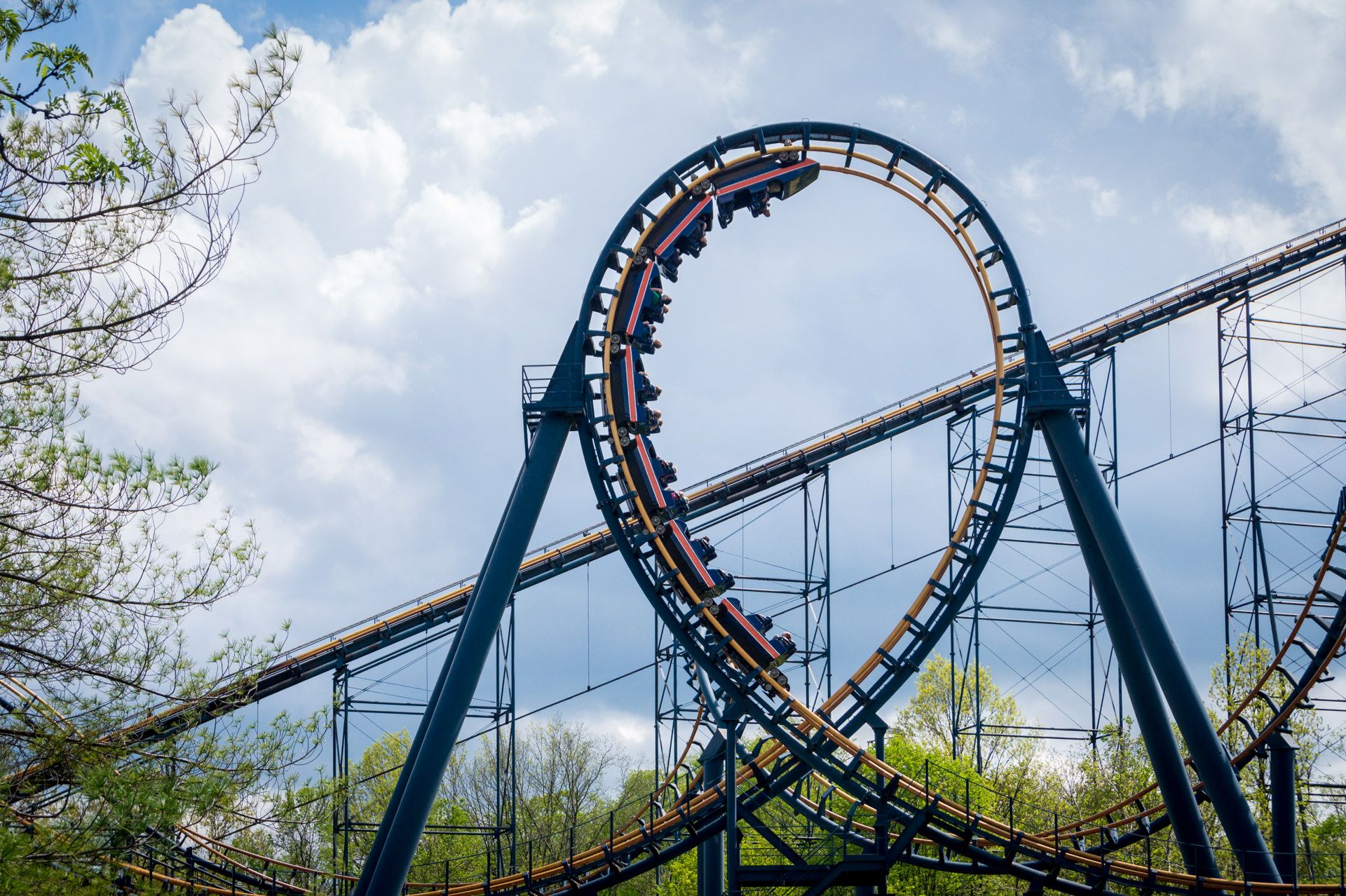
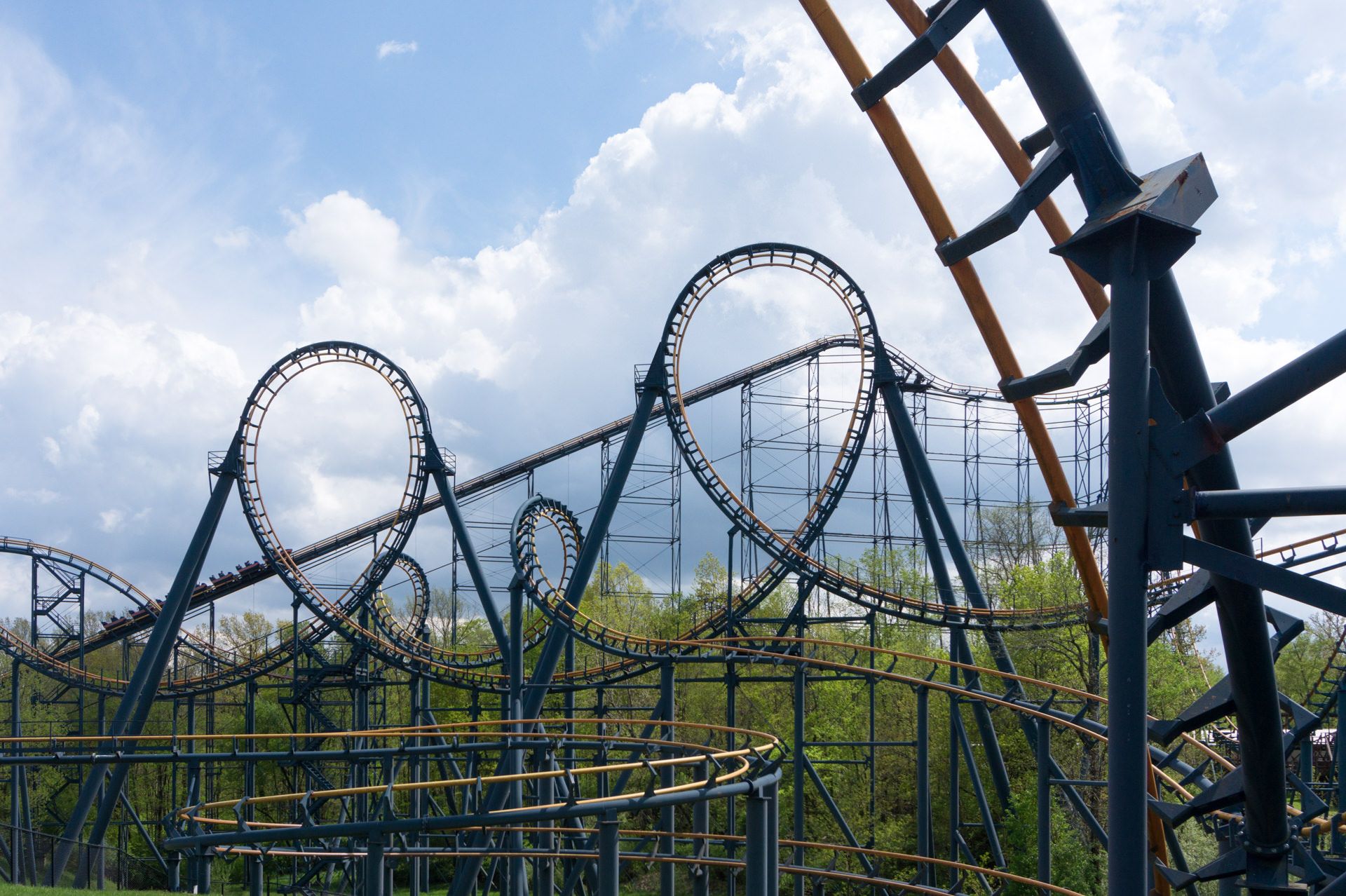
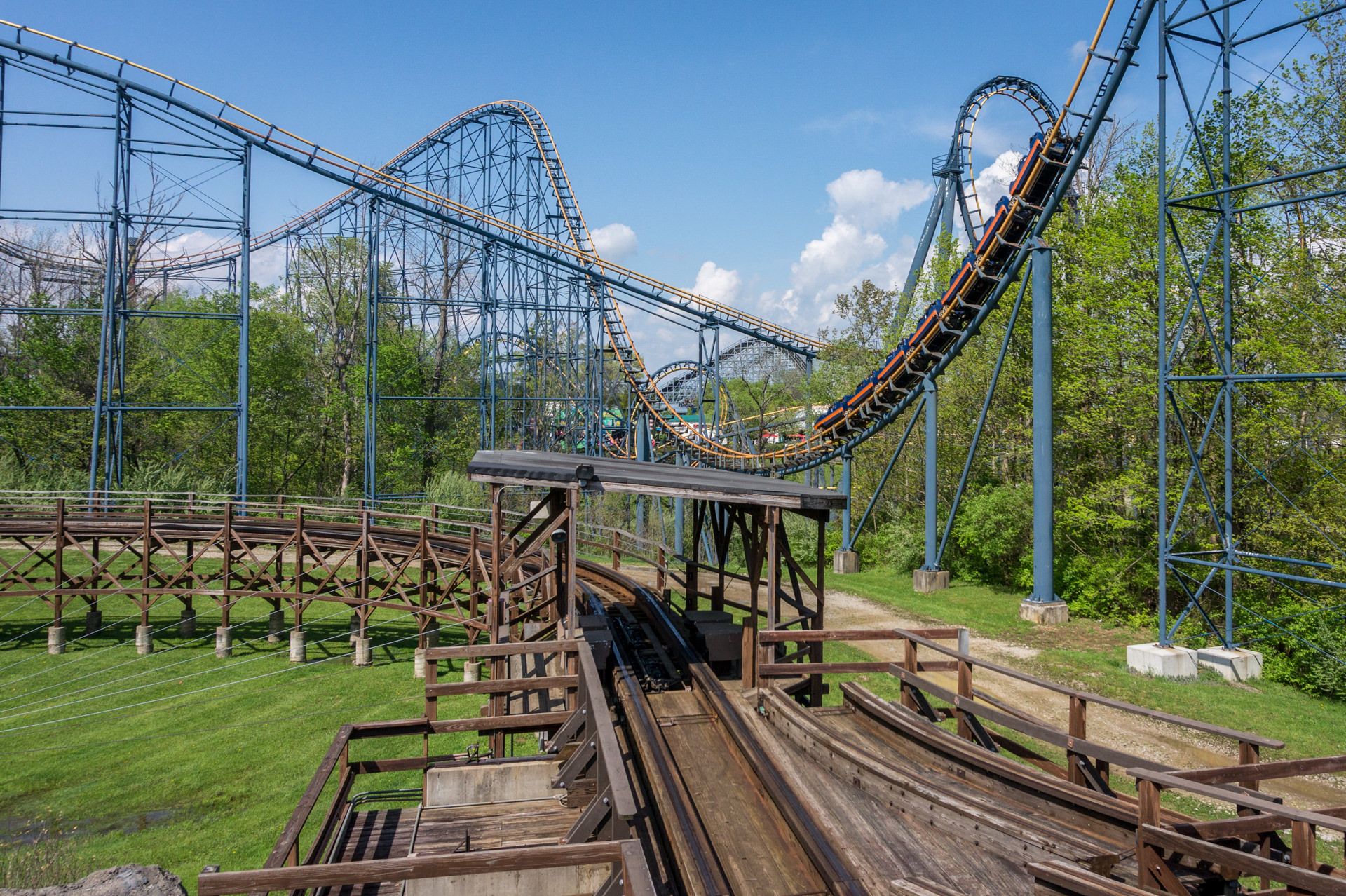
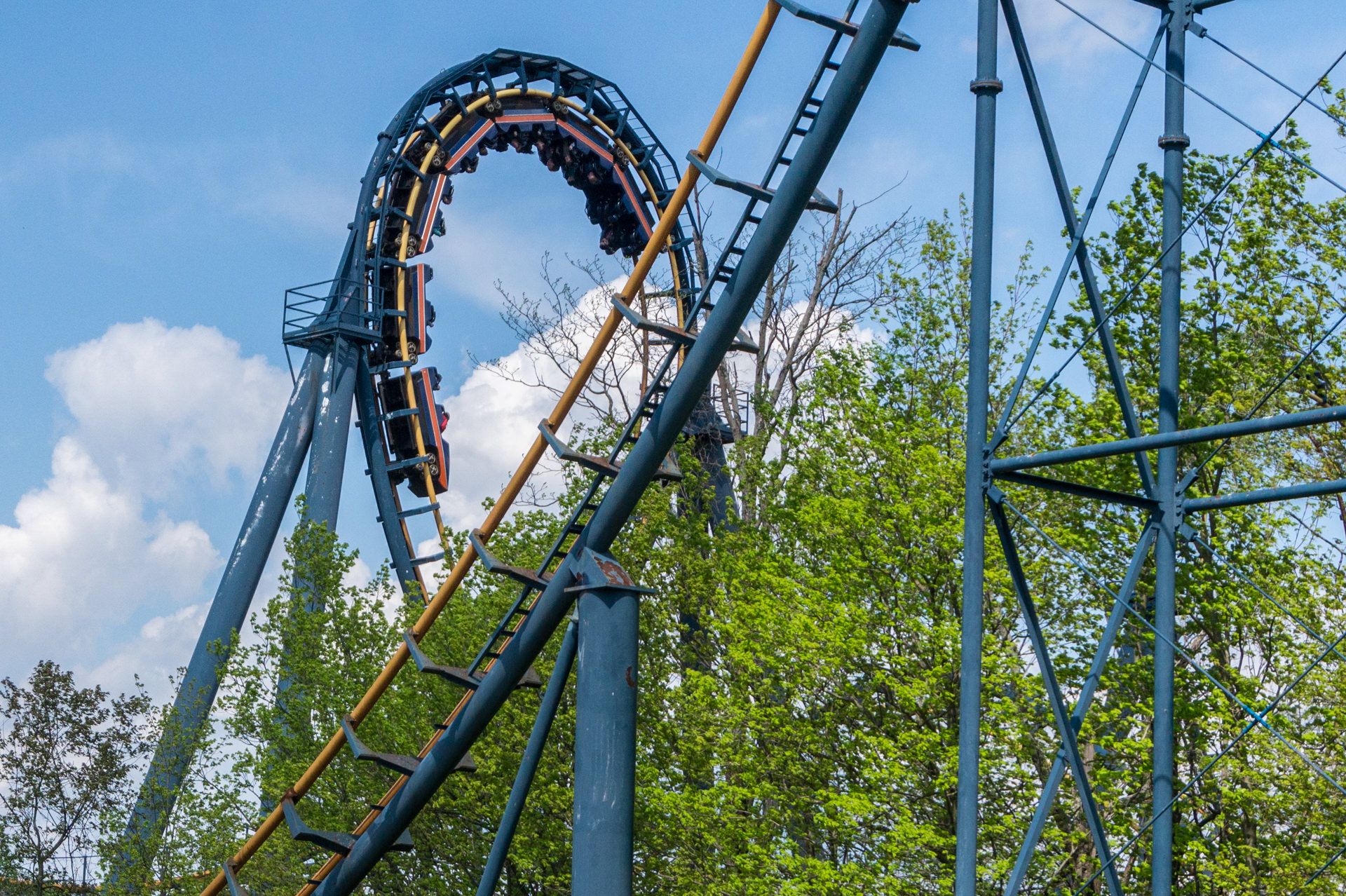
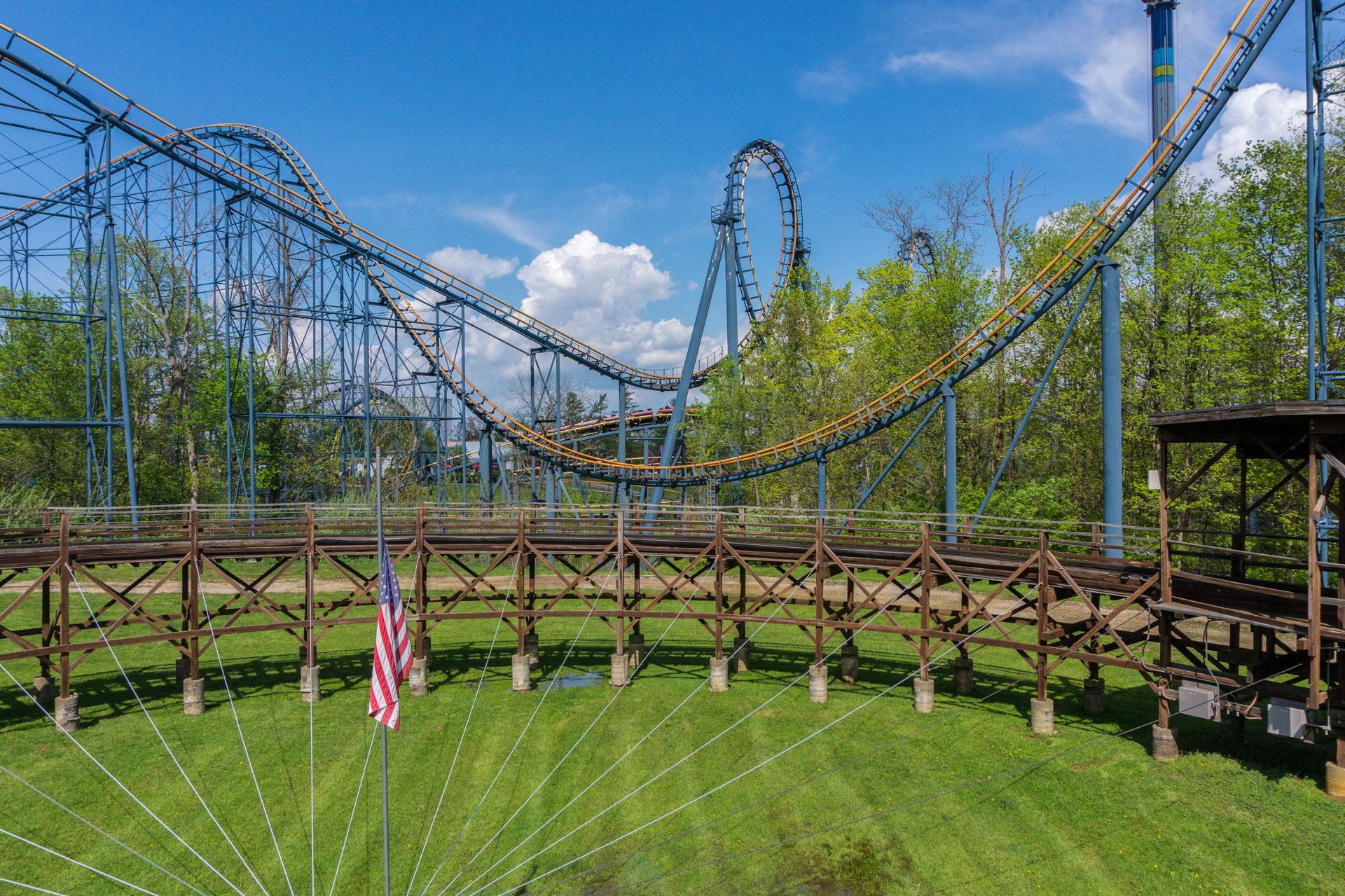
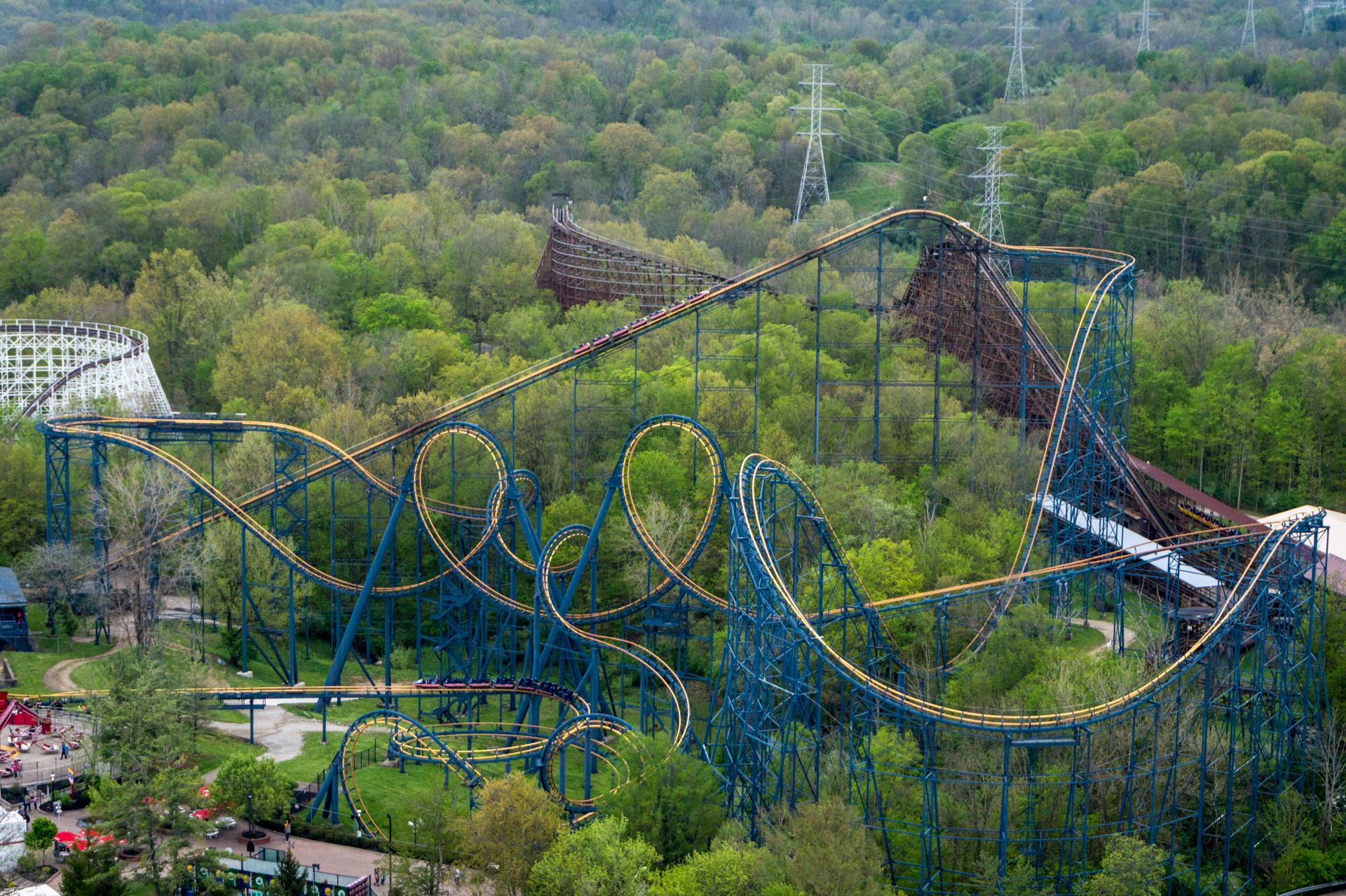
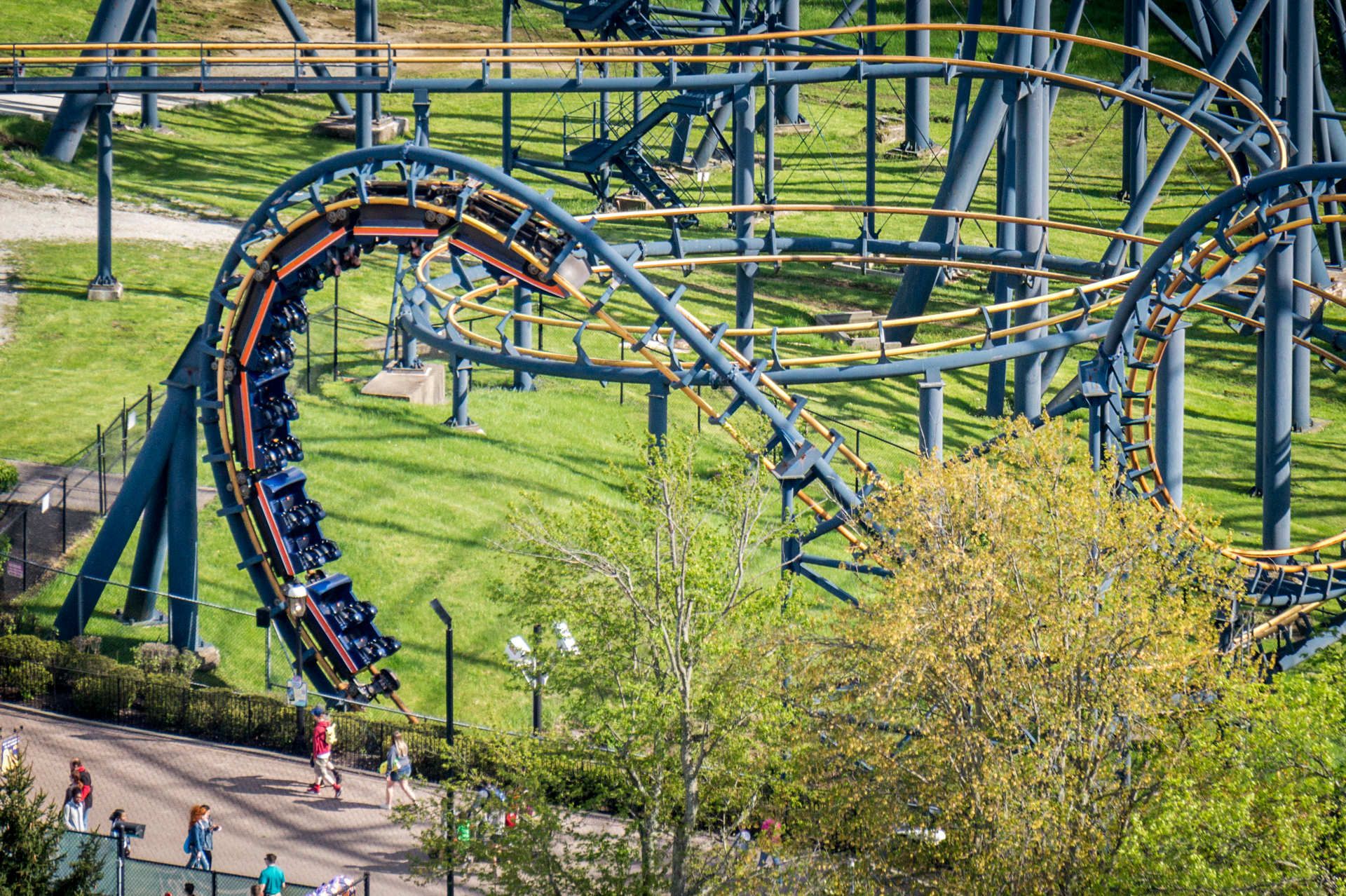
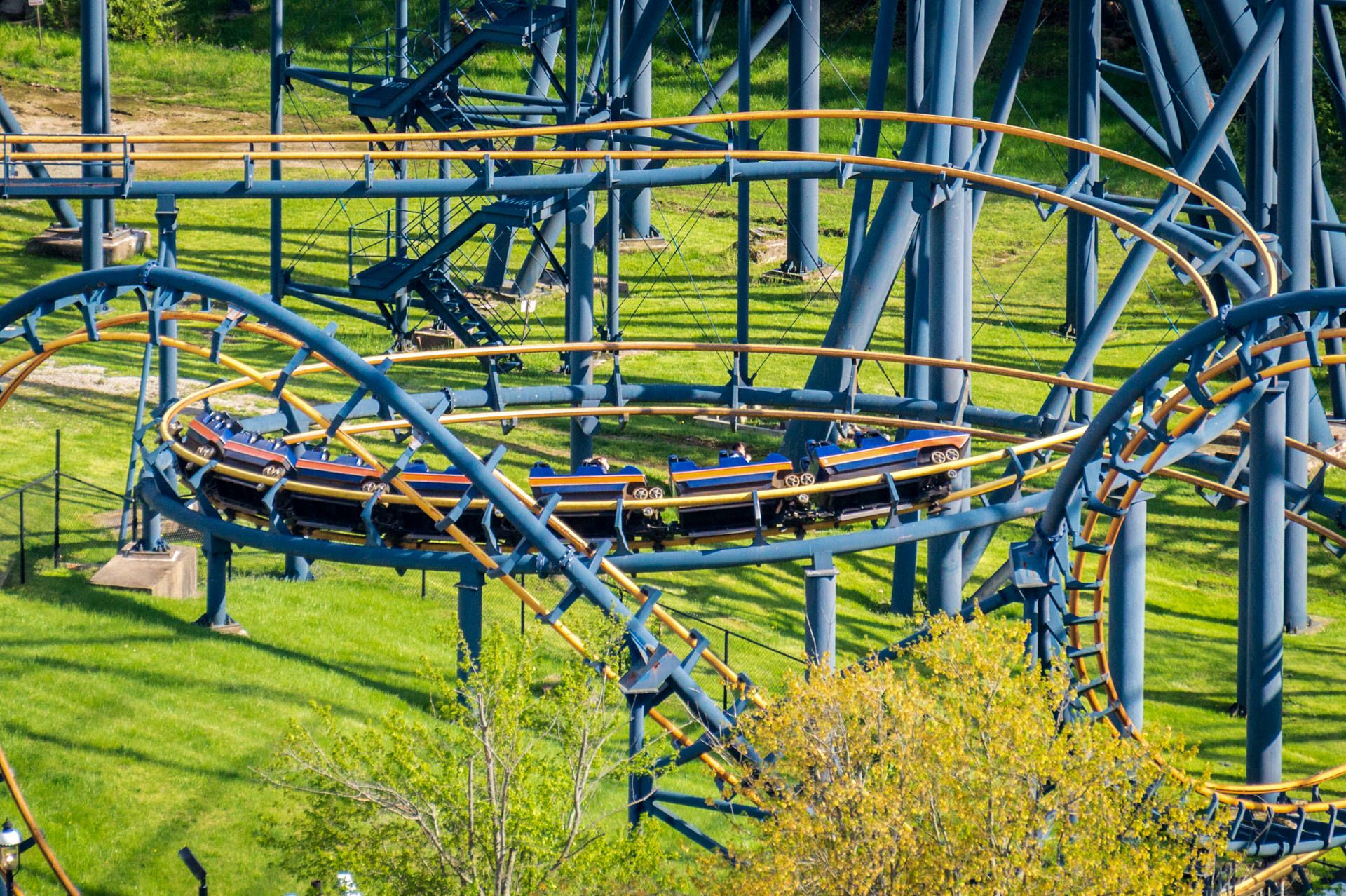
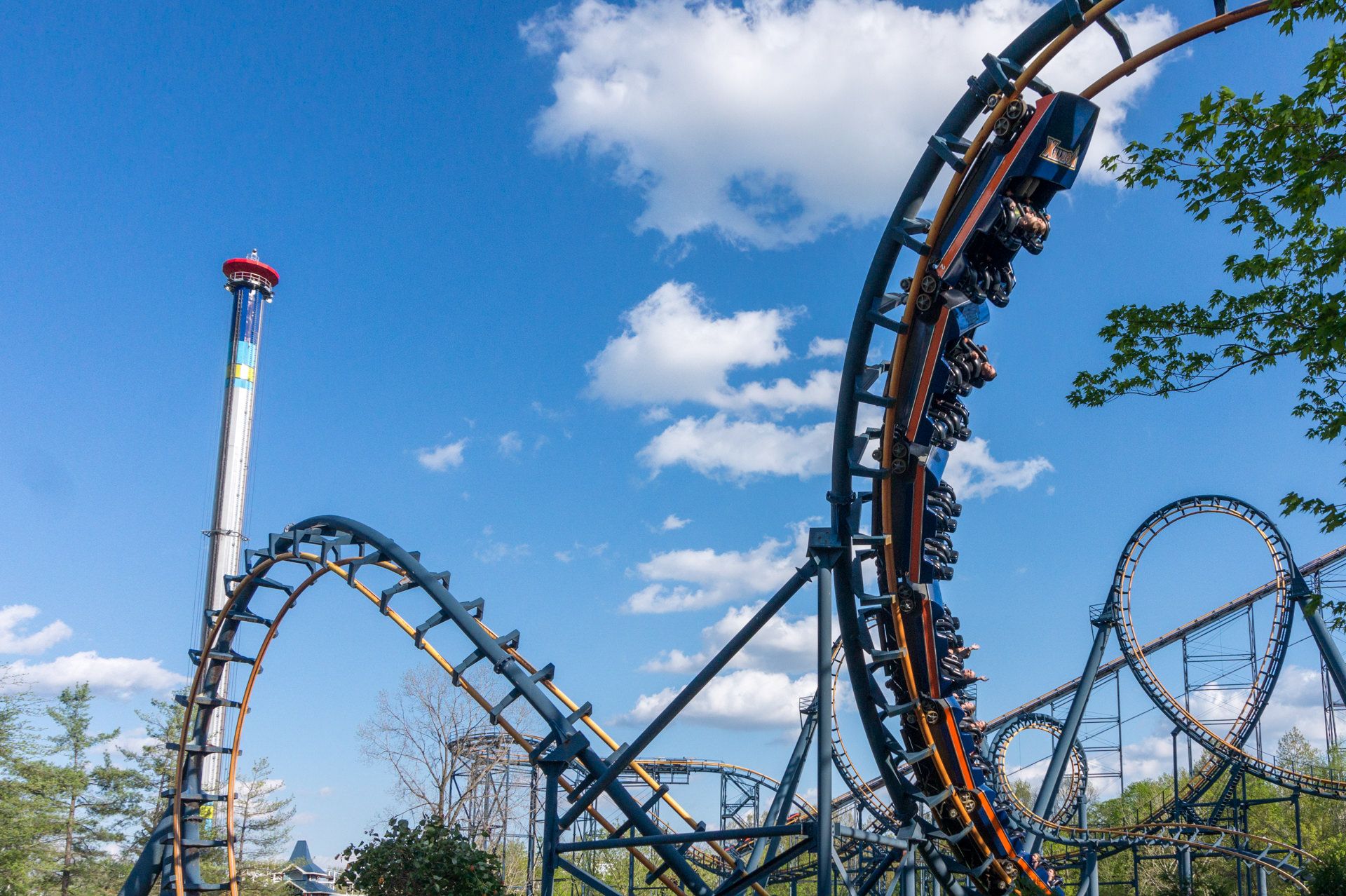
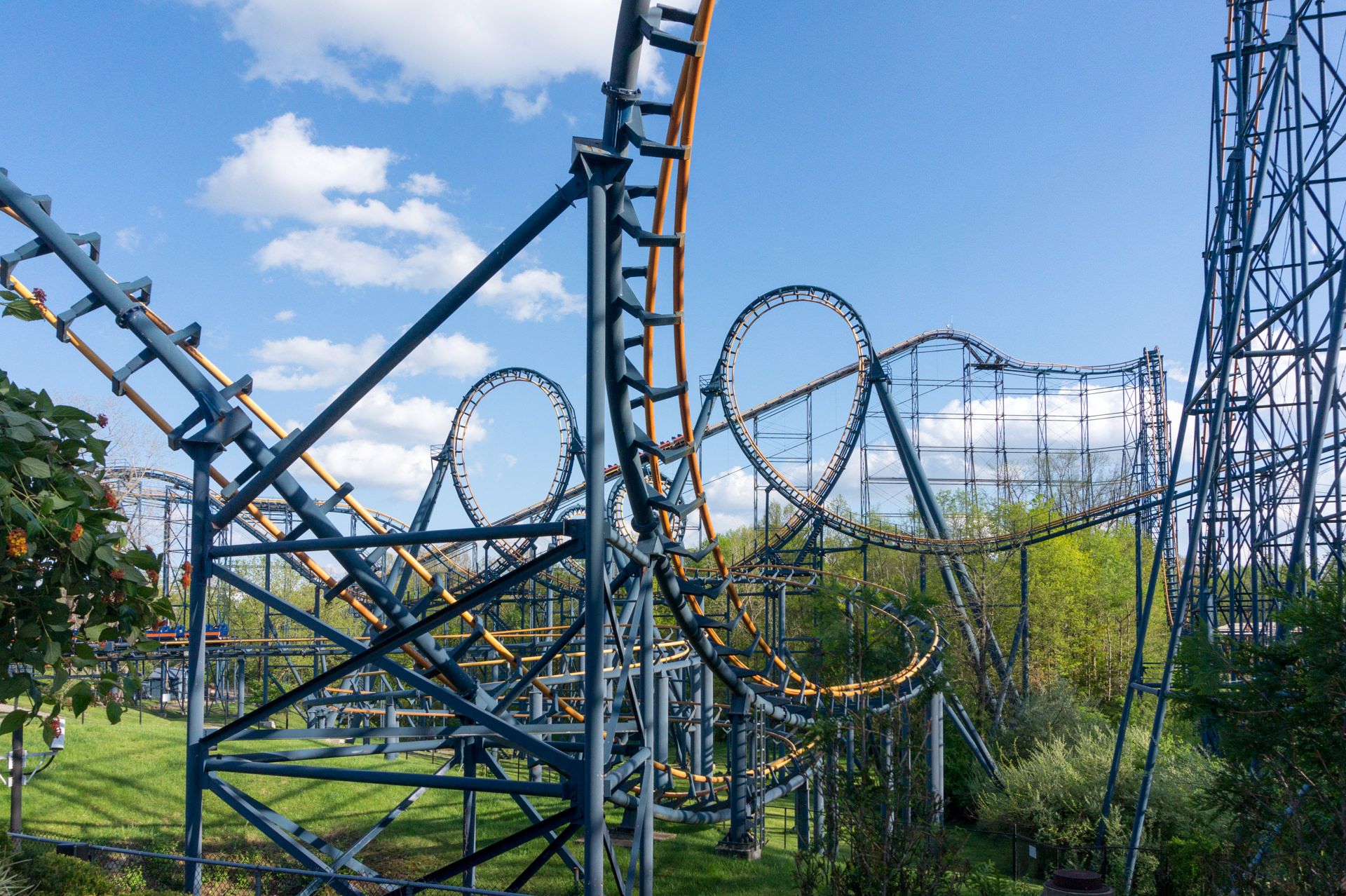
Before that, however, we turn our attention to the also very legendary Arrow coaster Vortex, which unfortunately had its last season this year. It was the first roller coaster with six rollovers and at the time of its opening it was the highest roller coaster in the world – two records that went hand in hand for a long time. Without the extremely maintenance-prone suspended roller coaster prototype The Bat, on the other hand, it would probably never have come into existence.
When The Bat first swung its wings at Kings Island in 1981, none of the people in charge at the time probably expected that just six years later the next roller coaster would be standing in its place. The swinging bat rocked without mercy through the minimally inclined curves, which in turn led to problems at the welding seams. Shock absorbers on the carriages reduced the swing; but this was again accompanied by very high wear and tear. Last but not least, the brake mechanism, thanks to its decoupling from the rail, was also decisive for the premature end of the ride, as the swing of the cars led once again to increased wear.
All the problems of The Bat roller coaster were taken into account in the design of the XLR-8 roller coaster from the Six Flags AstroWorld theme park and Big Bad Wolf from Busch Gardens Europe. However, a rebuild of the complete track was rejected for cost reasons.
Instead, a large part of the existing infrastructure was used for the Vortex roller coaster. The already existing station house including sidings, as well as the already existing foundations shaped the new roller coaster.
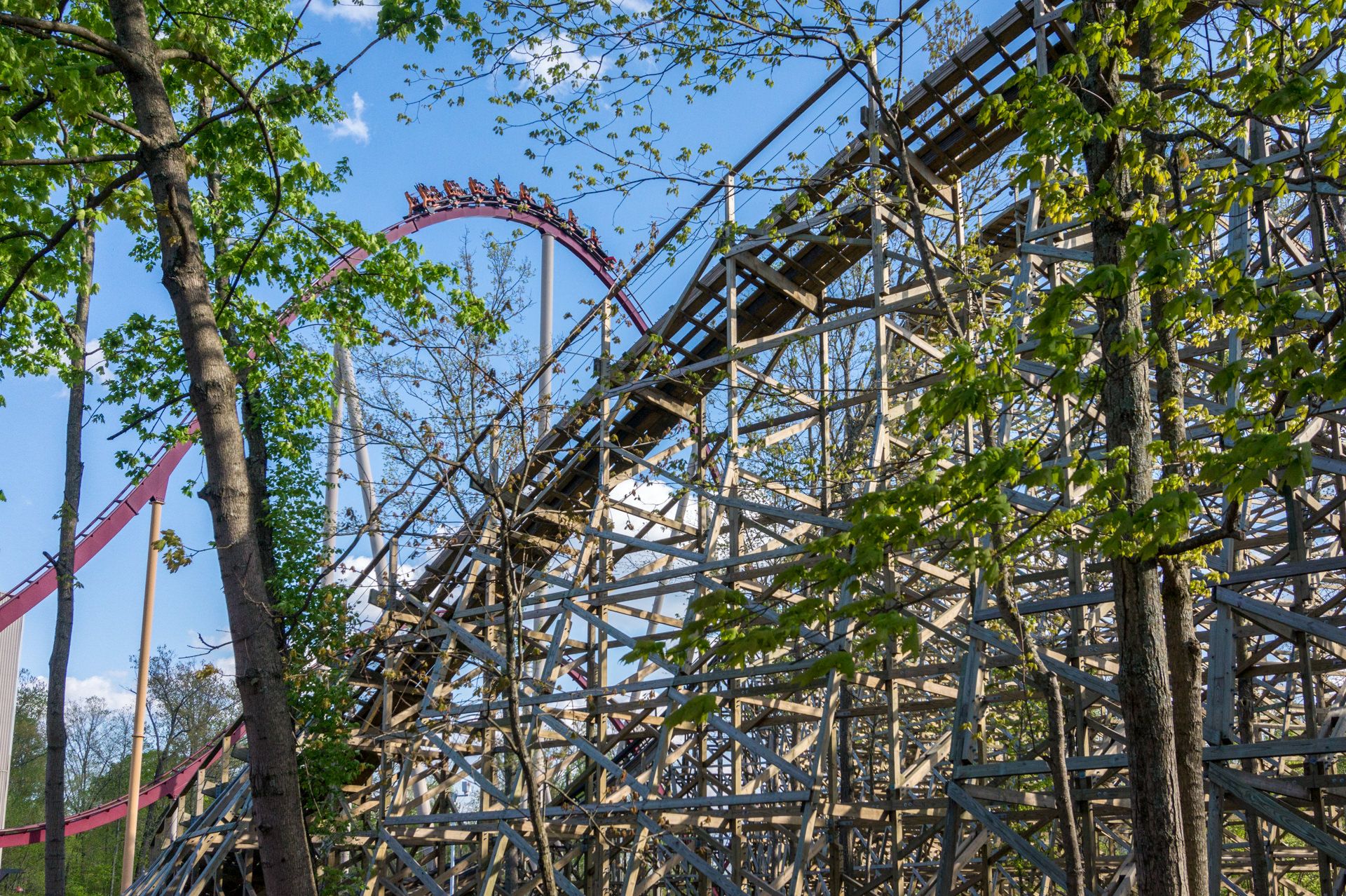
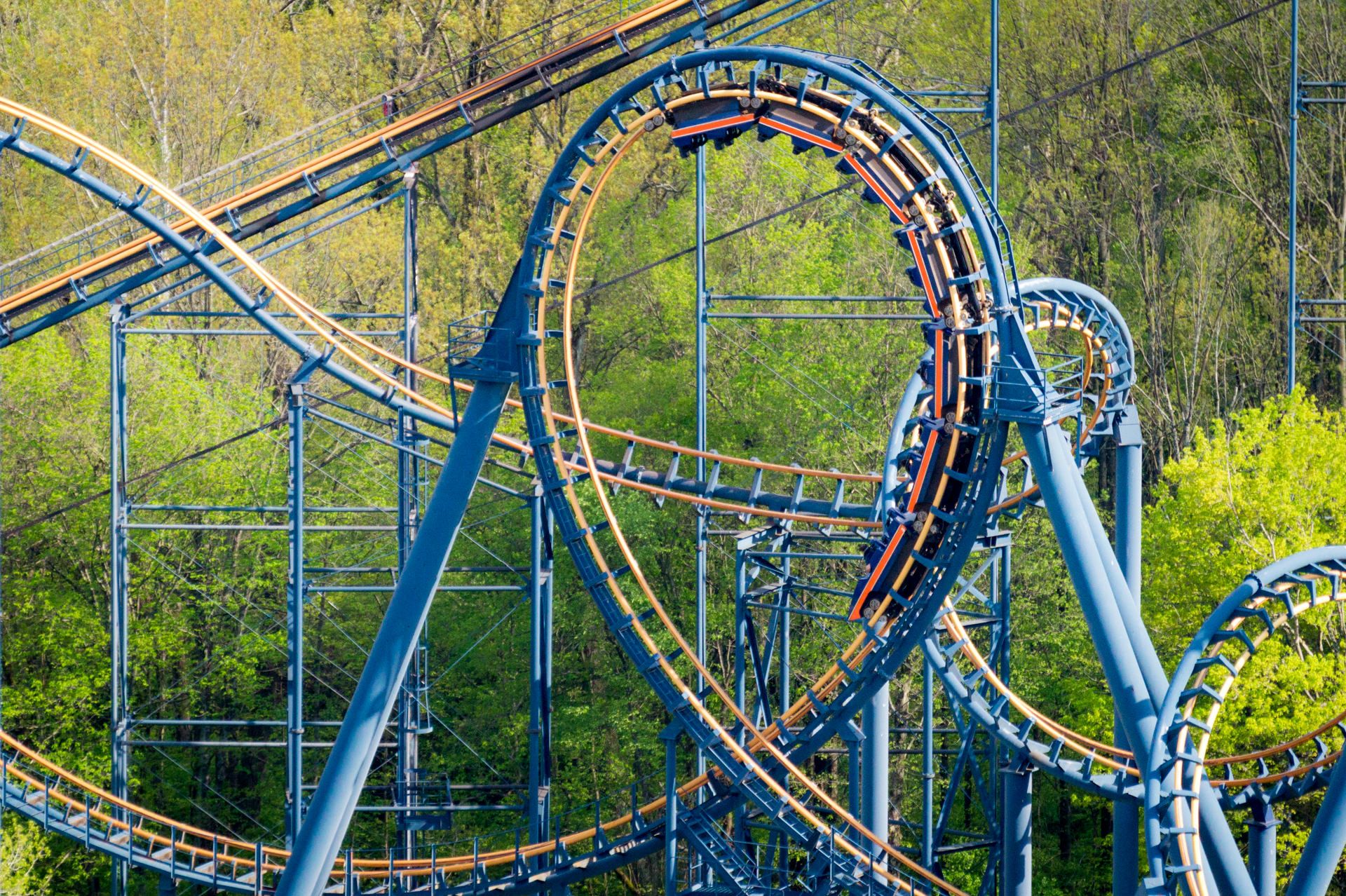
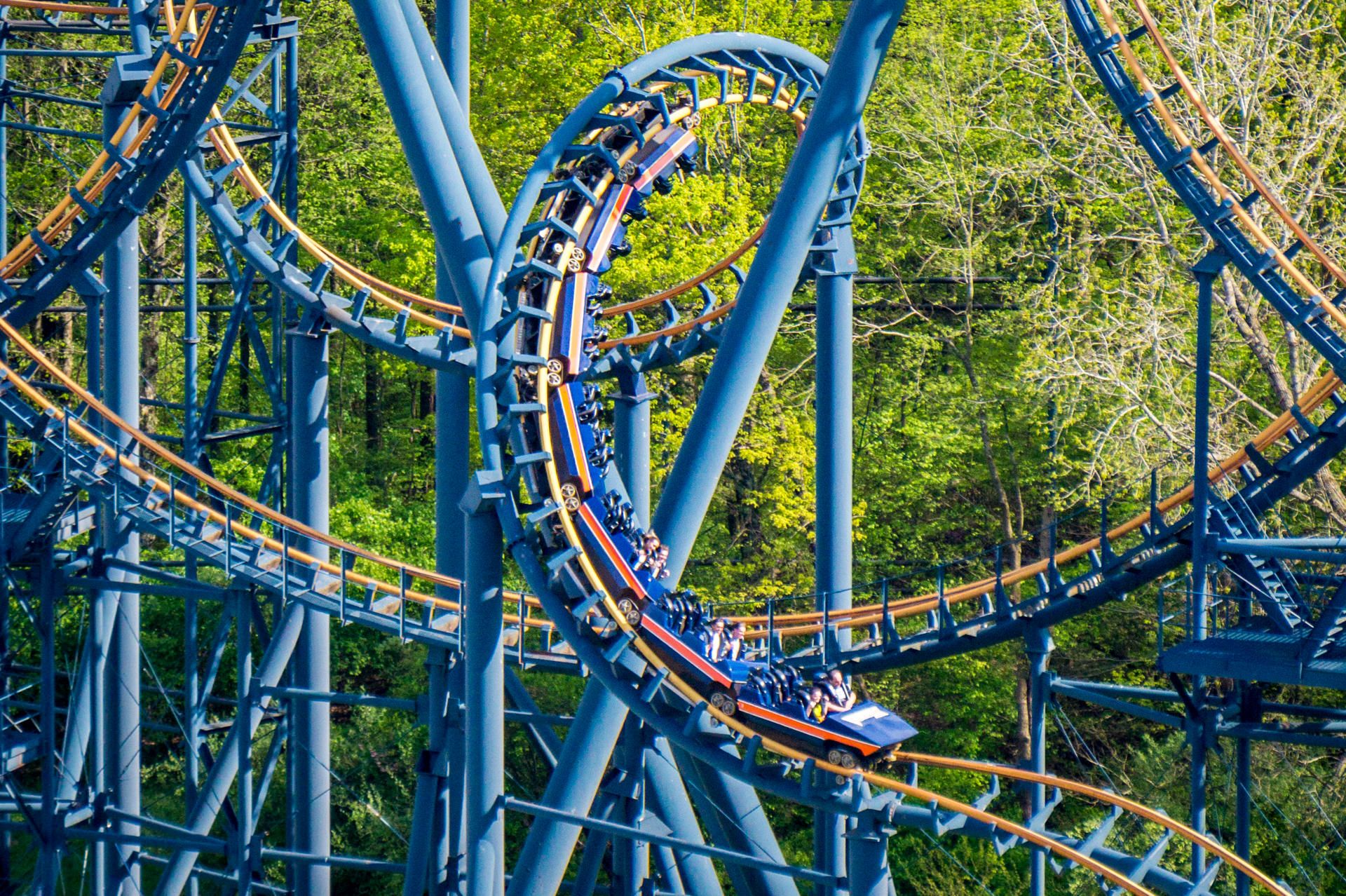
The ride begins with a short right turn in the direction of the lift. This then transports you to the starting height of 148 feet. At the top, you can enjoy the view of the Diamondback and Mystic Timbers roller coasters for a short moment before you plunge into the abyss after a right turn. With about 55 mph we now shoot through the first valley. Far above the park visitors we then complete a rather wide turn, which also leads us quite elegantly through a dip. On a longer, sloping straight we now take a run-up for the two loops of the ride, which are driven through intensively as usual. Interestingly, these have been set very high. After a short uphill and a tight right turn we find ourselves in the first braking area of the ride. Here we reduce our speed to a minimum before we plunge towards the ground once more. In an exceedingly bizarre way, we now enter the first corkscrew, which awaits us in a curve with a very strong lateral inclination. Now we see the world upside down two more times as we make our way between the two loops. In a wide right turn we then glide over into the Batwing – an inversion element where first a half corkscrew turns into a half loop and vice versa. Thanks to the clever use of the terrain, the Batwing is a real eye-catcher, which adds to the already incredibly aesthetic look of Vortex. After a long left turn, an upward helix awaits us before the ride soon ends in the brakes. Here we have to wait for some time, because interestingly enough Kings Island operates the ride with all three trains despite the low crowds.
Vortex was an extremely good roller coaster that still ran very well even in its final year. The brilliant start, the unusual inversion sequence and the special aesthetics of the ride spoke for themselves. I am very glad that I was able to ride it in its final year of operation and would have been very happy if it had been kept for a few more years. Nevertheless, I am already looking forward to its successor. The area is large and Kings Island will certainly make good use of it.
Shake, Rattle & Roll and Backlot Stunt Coaster
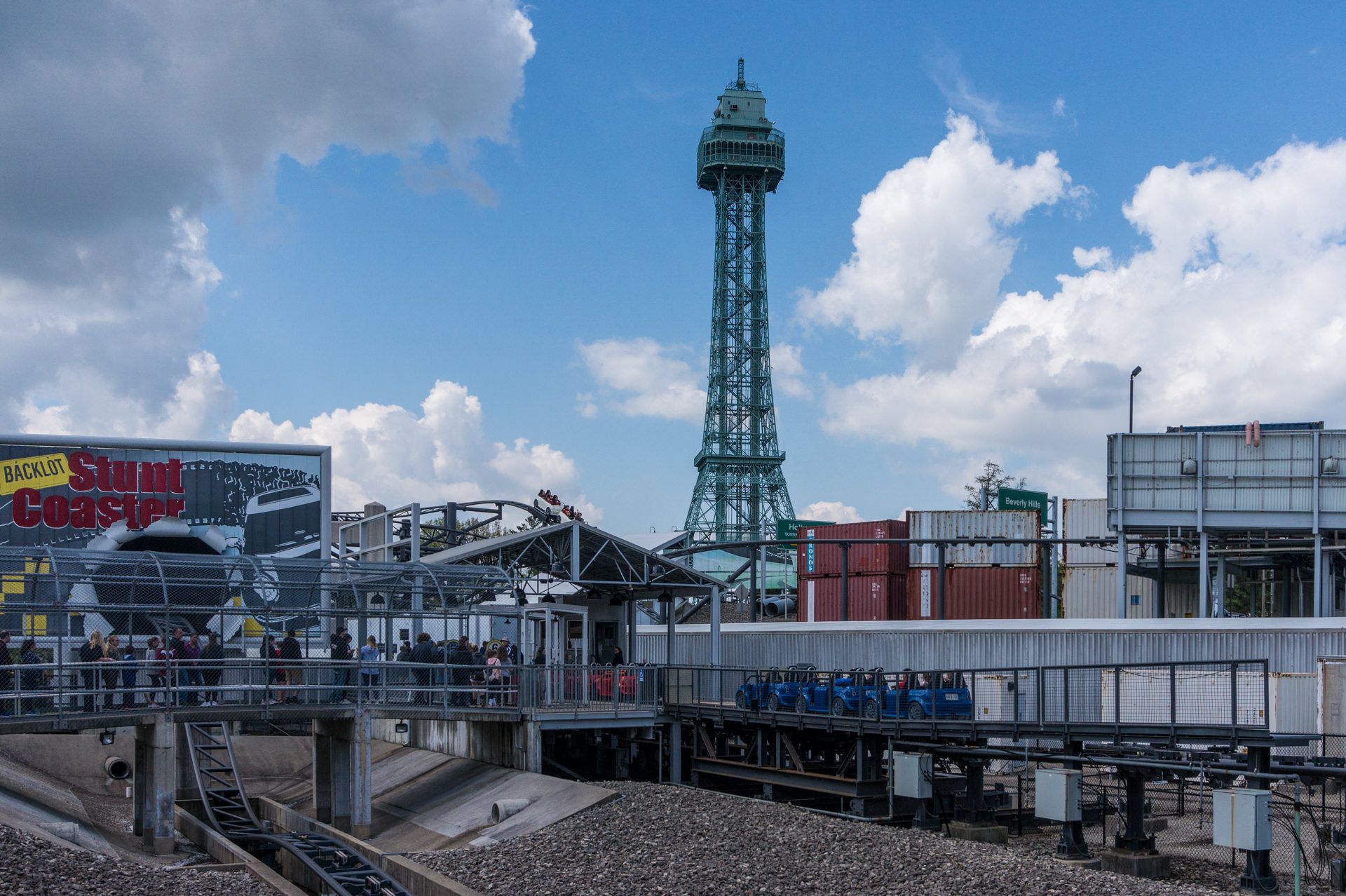
Past Shake, Rattle & Roll – a HUSS Troika from 1975 – I was drawn to the Backlot Stunt Coaster. The coaster opened under Paramount times as Italian Job: Stunt Track is a special effects coaster from Premier Rides and can, as the name suggests, fall back on some special effects. At the same time, the compact layout also offers some other moments of surprise.
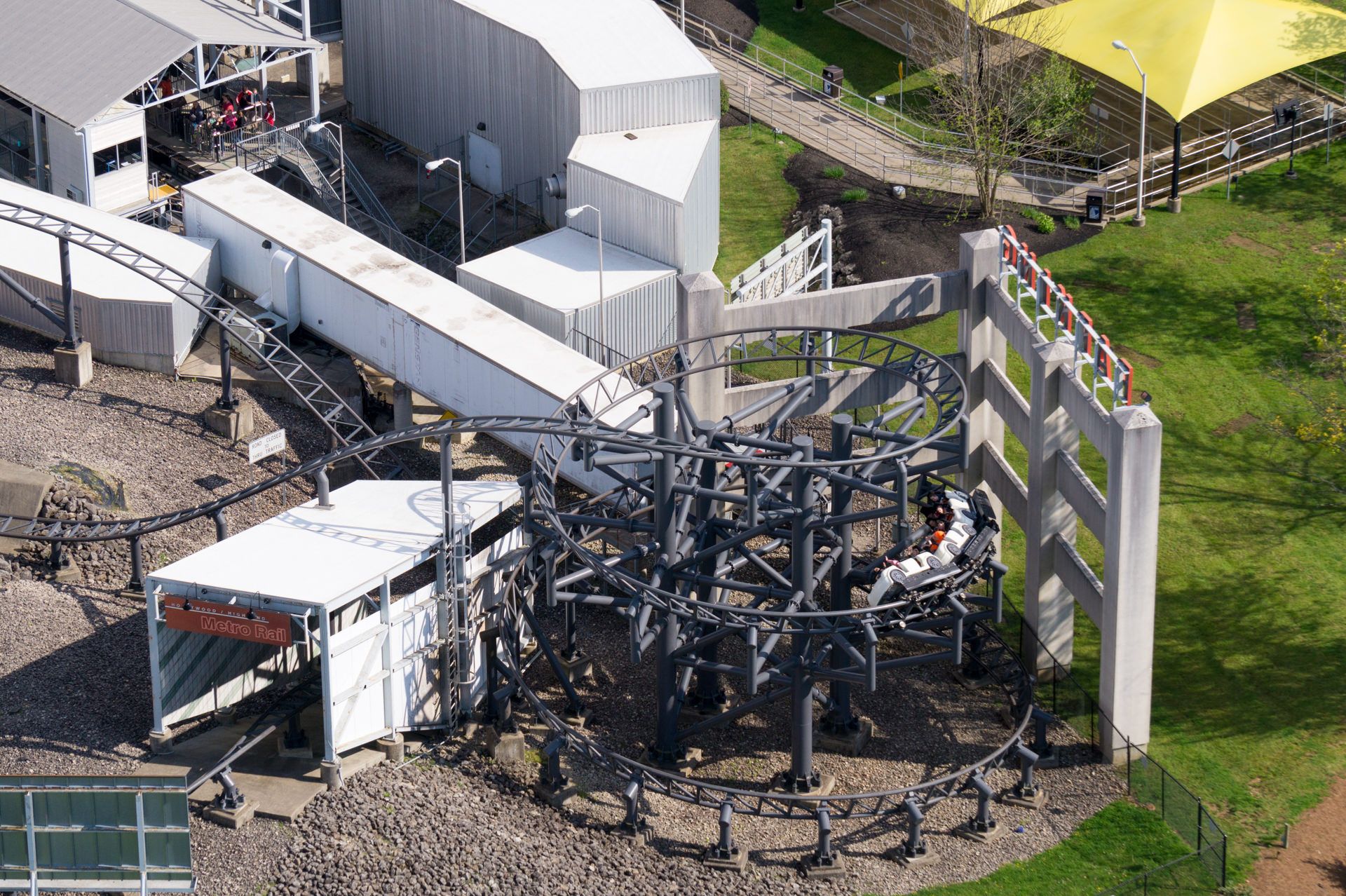
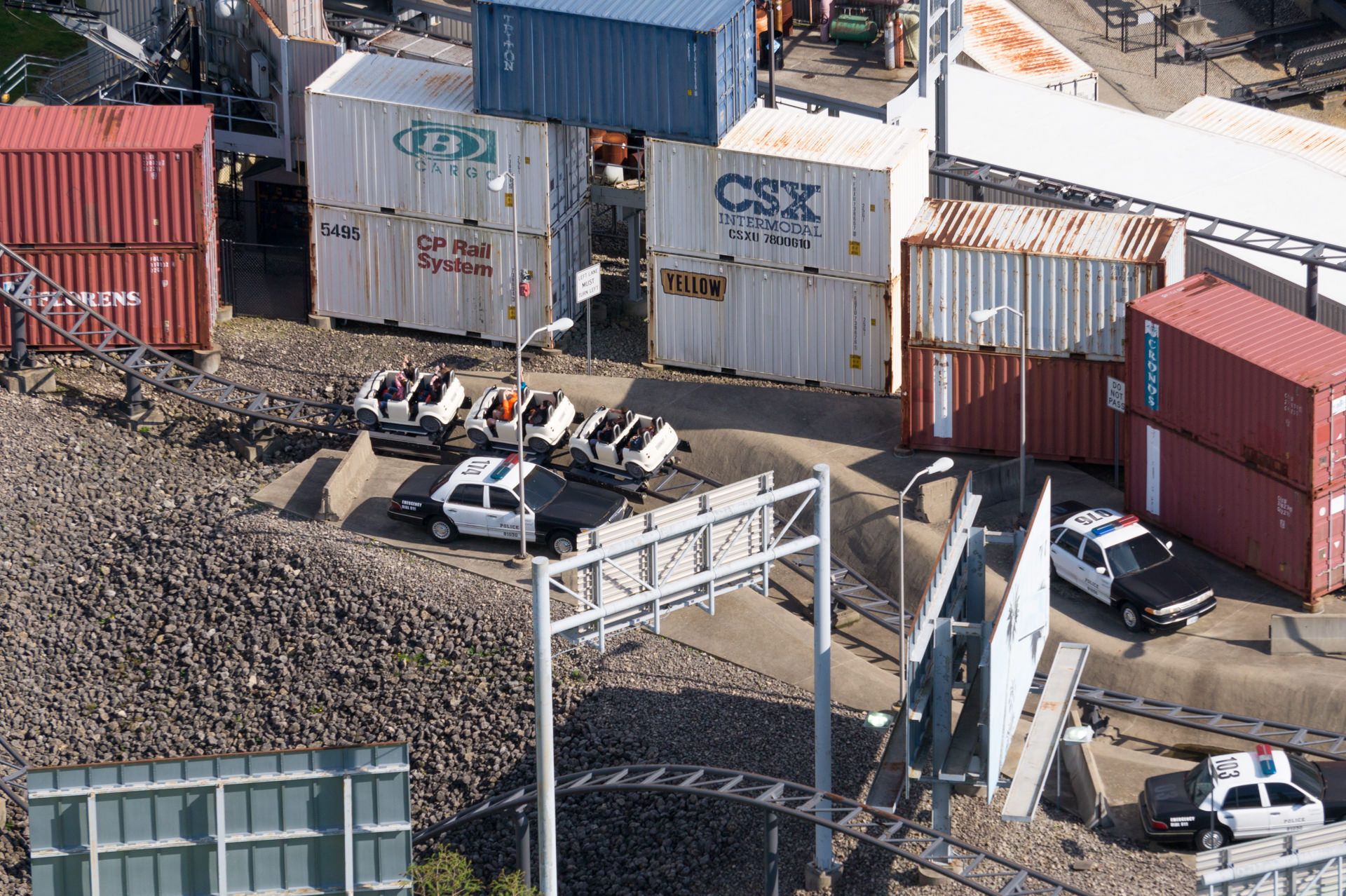
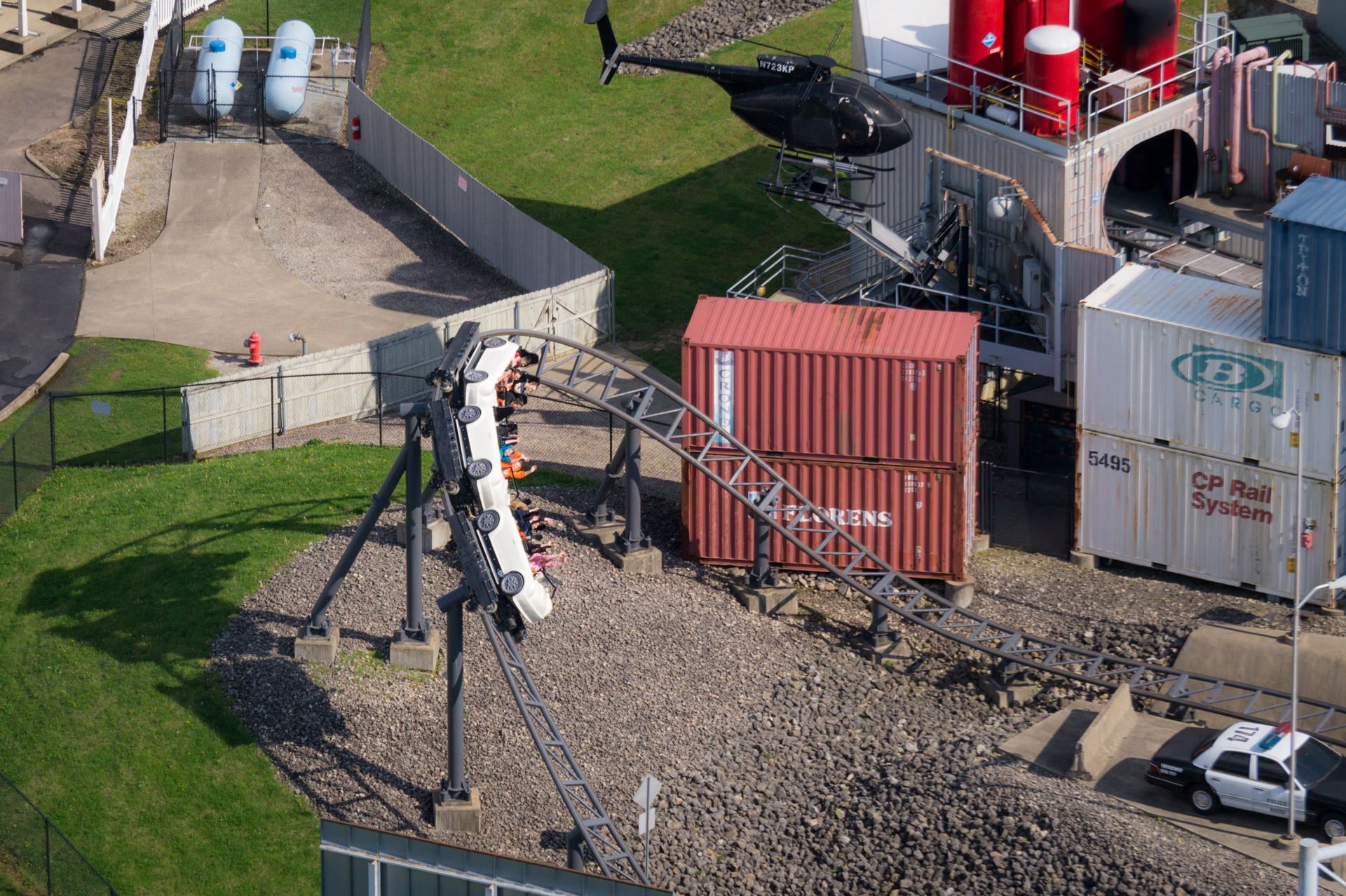
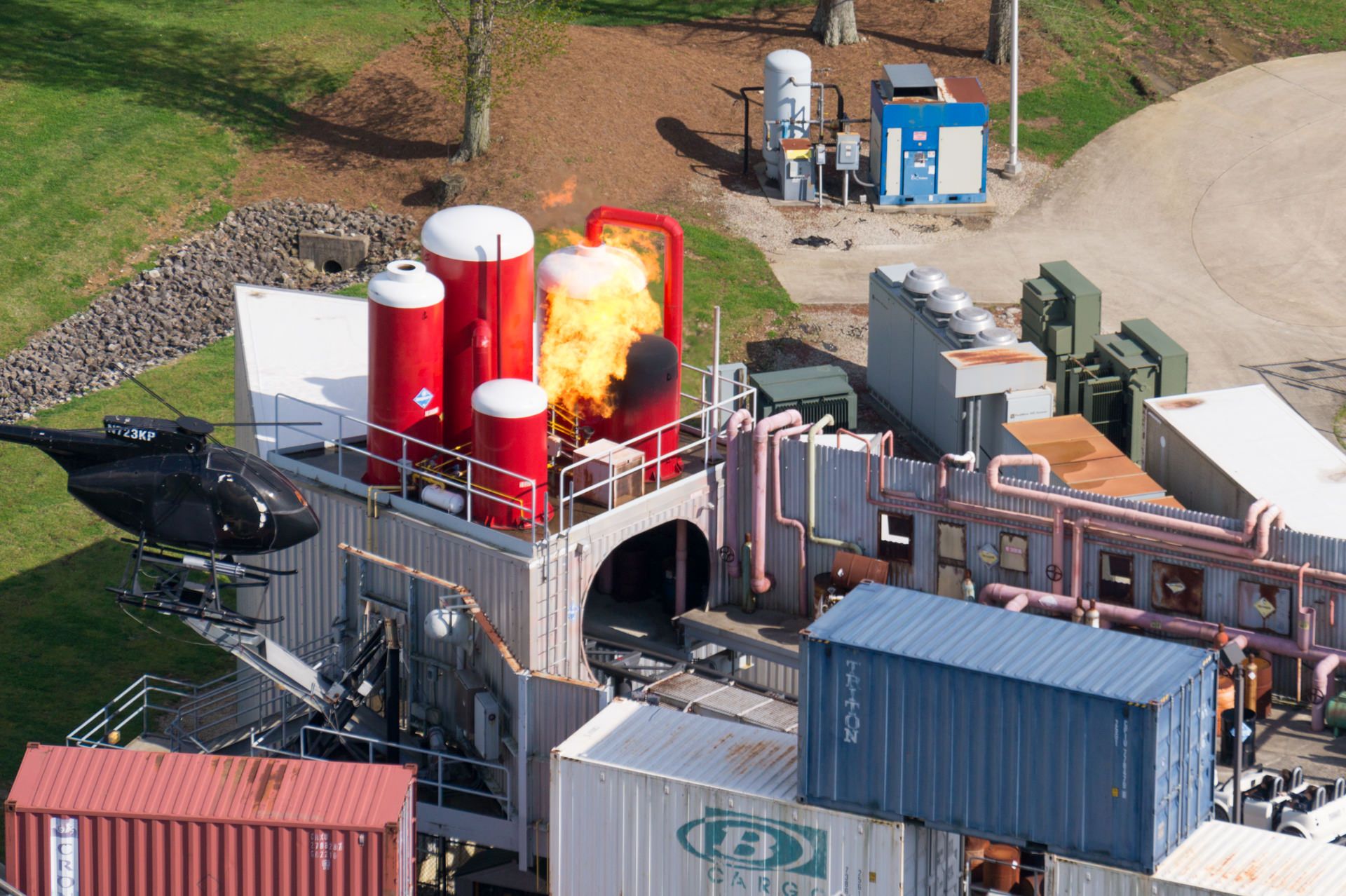
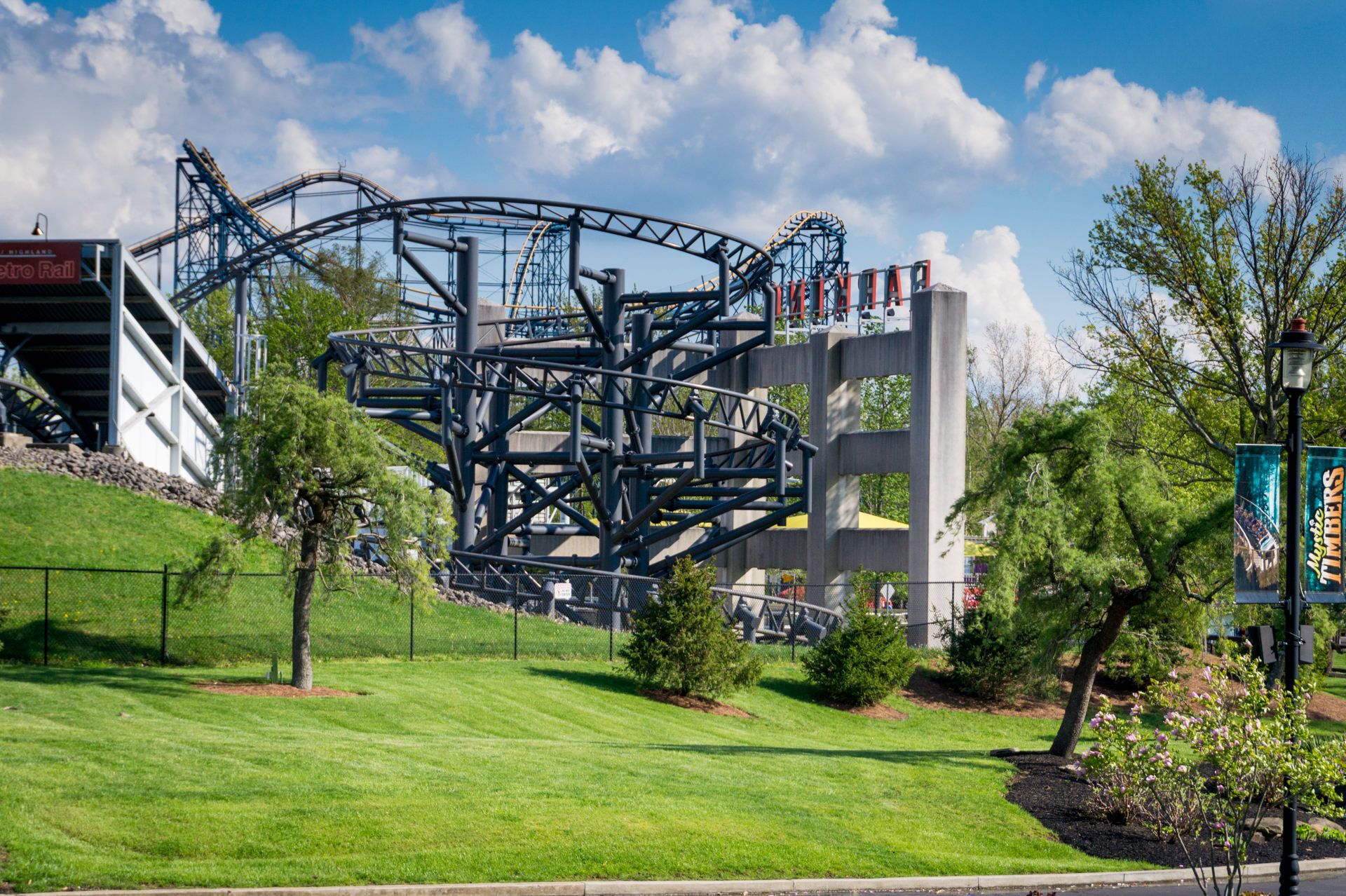
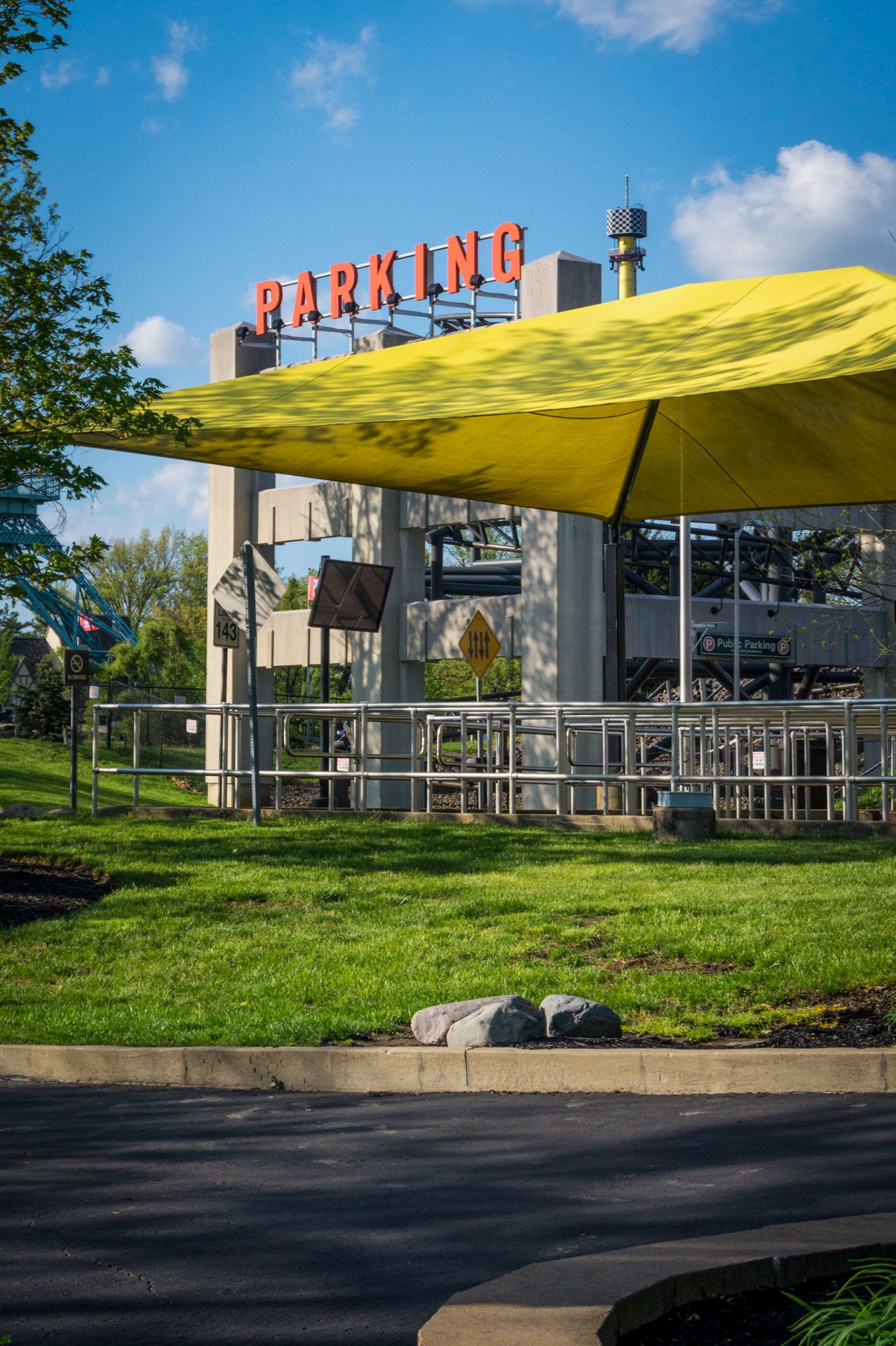
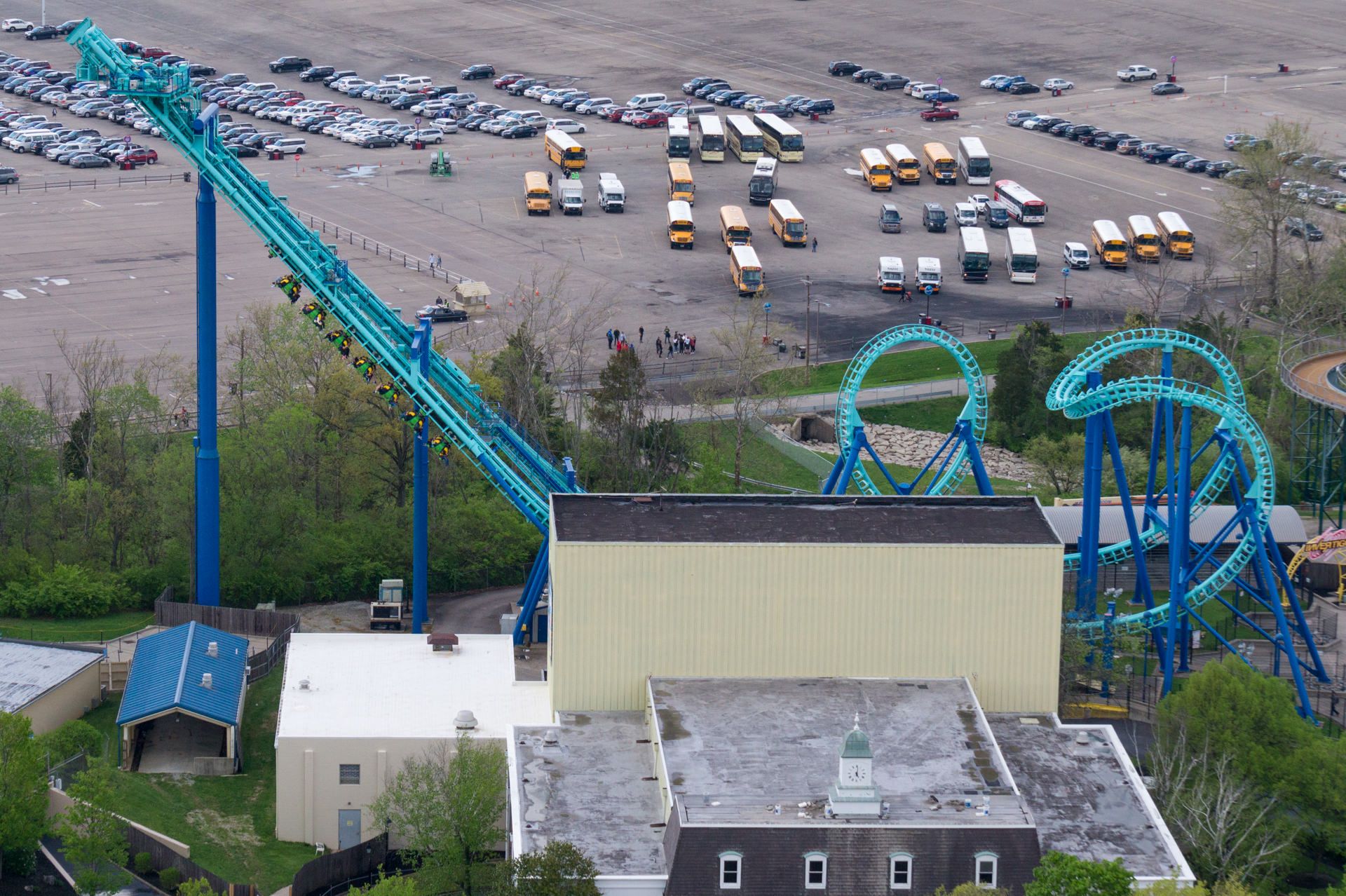
The first one follows right at the beginning of the ride. The launch in the direction of the parking garage, where you then spiral upward in an increasingly narrow helix, is a brilliant and, above all, breathtaking start. So far, I have never been pressed into the seat as hard as I was here. After the 900° helix, you only have a short time to catch your breath, as the downhill run immediately starts at a high gradient. In the valley, we now pass police cars, billboards and containers in small, barely inclined swerves. At the end of the passage we change direction in an Immelmann turn before climbing up a hill. After a short right turn swerve, we plunge into a valley once more in a wide left turn. Shortly after, we climb the track to the big special effects scene. With much fanfare, a helicopter attacks and a fire effect triggers. Shortly after, we are accelerated into a tunnel. A steep curve, leading to the right, follows before we make our way to the light at the end of the tunnel after a change of direction. The ride through the drained water basin follows, after which the end of the ride also awaits us after another curve.
The Backlot Stunt Coaster is an extremely worth experiencing roller coaster with nice ride elements and effects. The ride is extremely fast and also surprisingly intense due to the launch into the triple helix. In any case, the former blockbuster coaster is quite a big deal at Kings Island!
Planet Snoopy
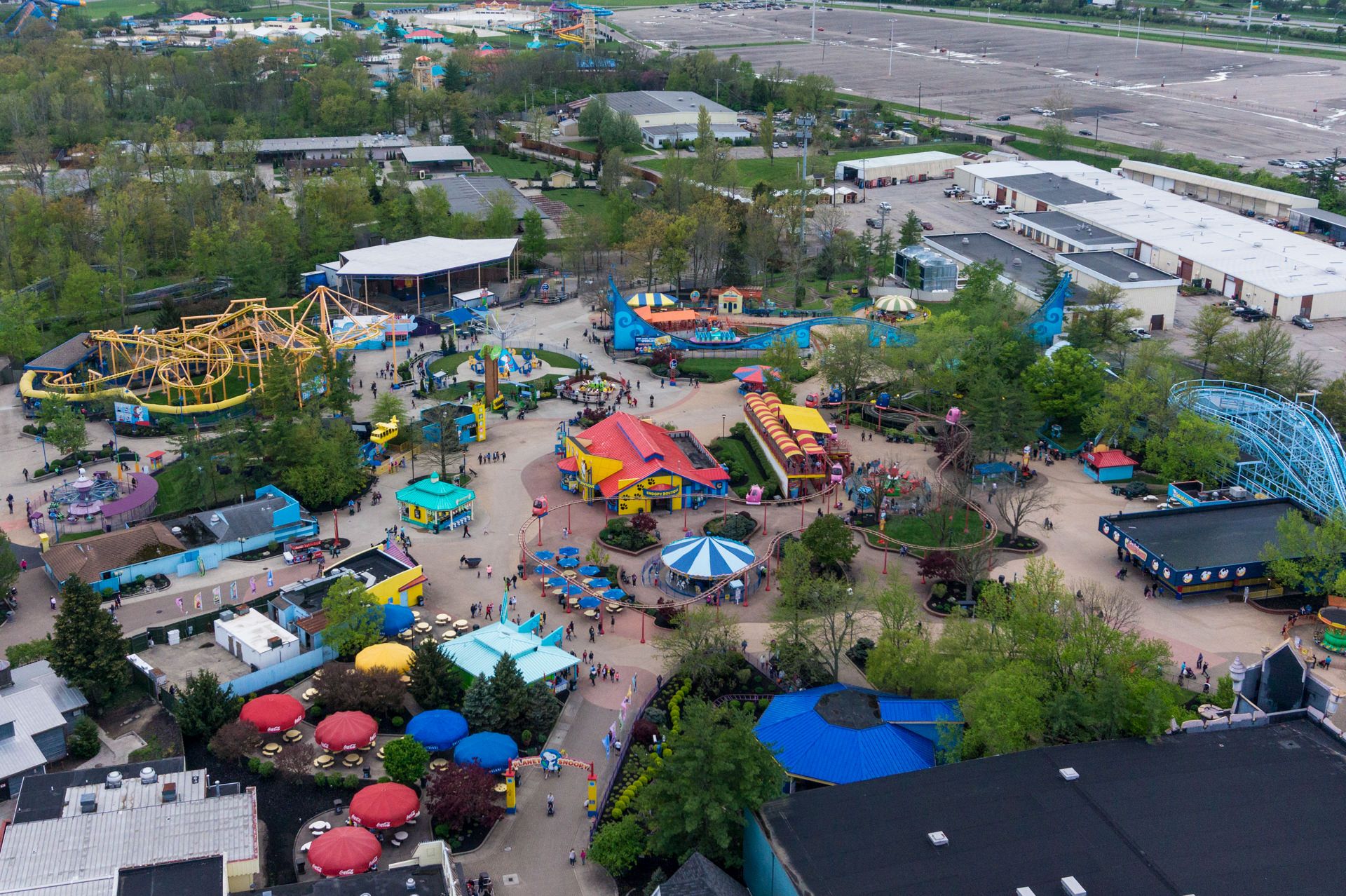
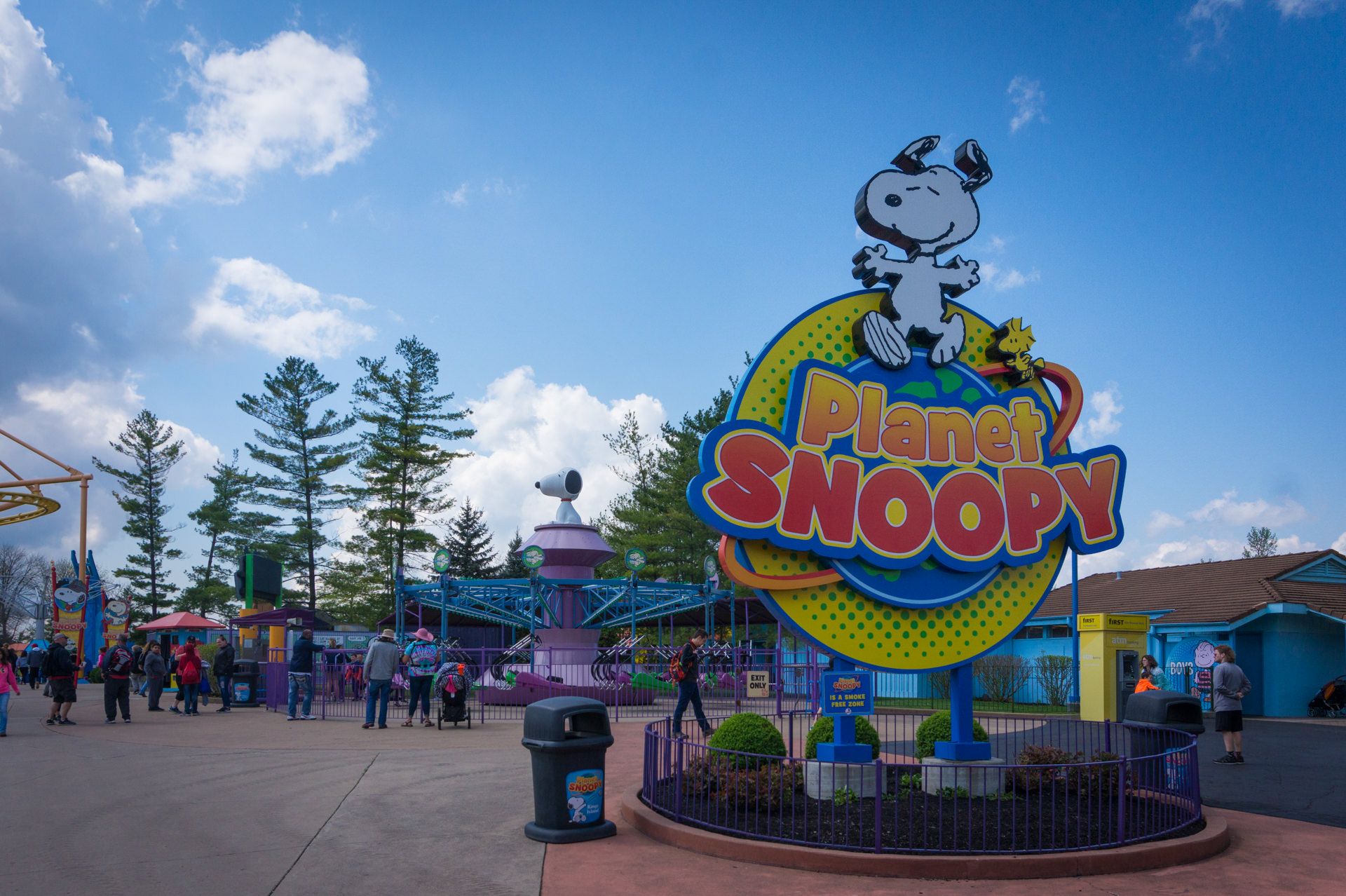
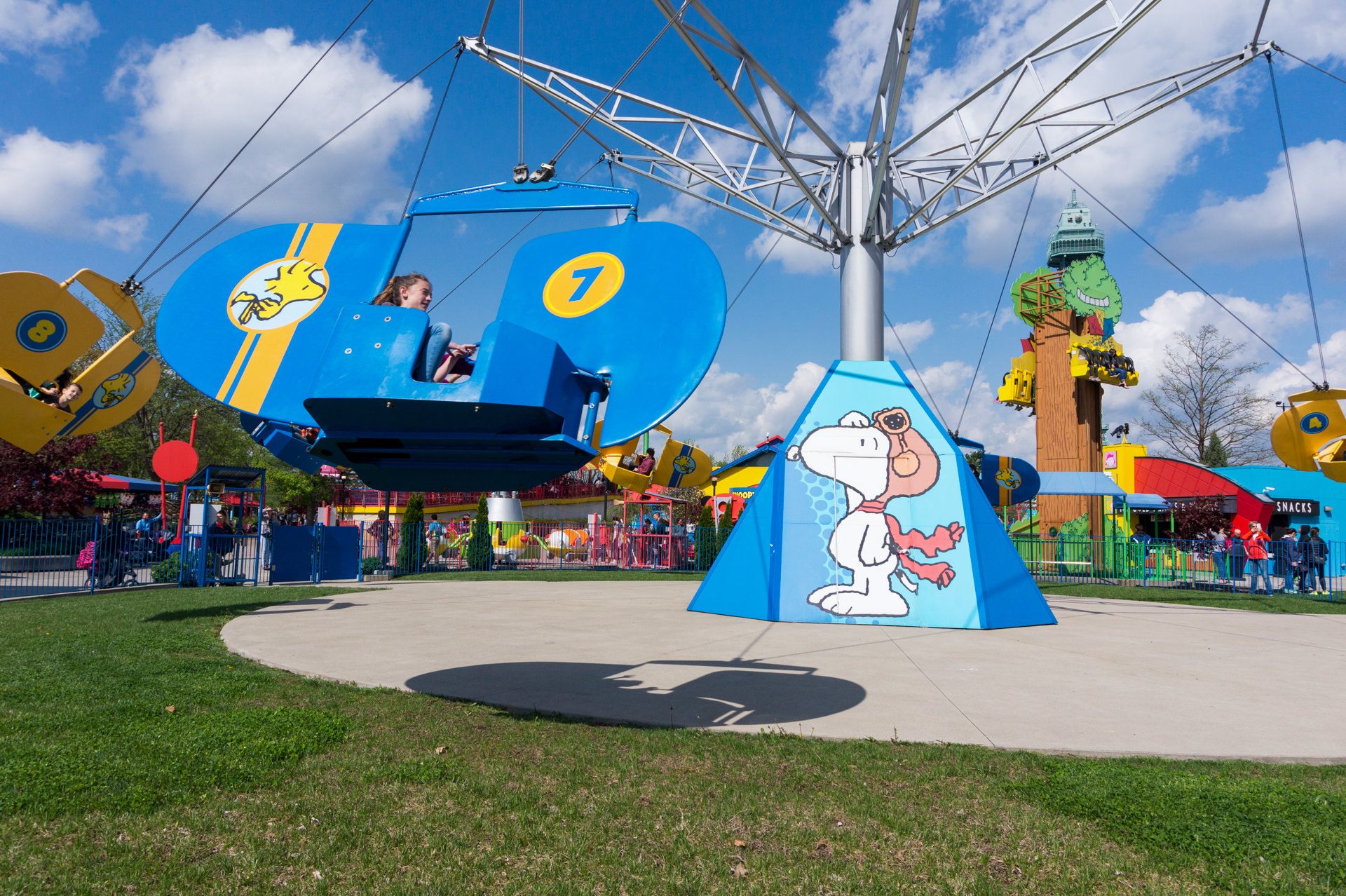
Planet Snoopy is, without much exaggeration, probably the most remarkable children’s land in a theme park far and wide. Originally opened as Happy Land of Hanna-Barbera, this area has been skillfully entertaining its target audience since the 1970s. Over time, this area was expanded again and again before Paramount claimed large parts of the themed area for itself with the children’s channel Nickelodeon. In the year of the takeover by Cedar Fair, the remaining Hanna-Barbera rides were also redesigned, so that from then on there was only one huge children’s area with Nickelodeon Central. When the license agreement with Nickelodeon expired in 2010, it was decided to focus on the well-known Peanuts characters, just like in the other parks of the group.
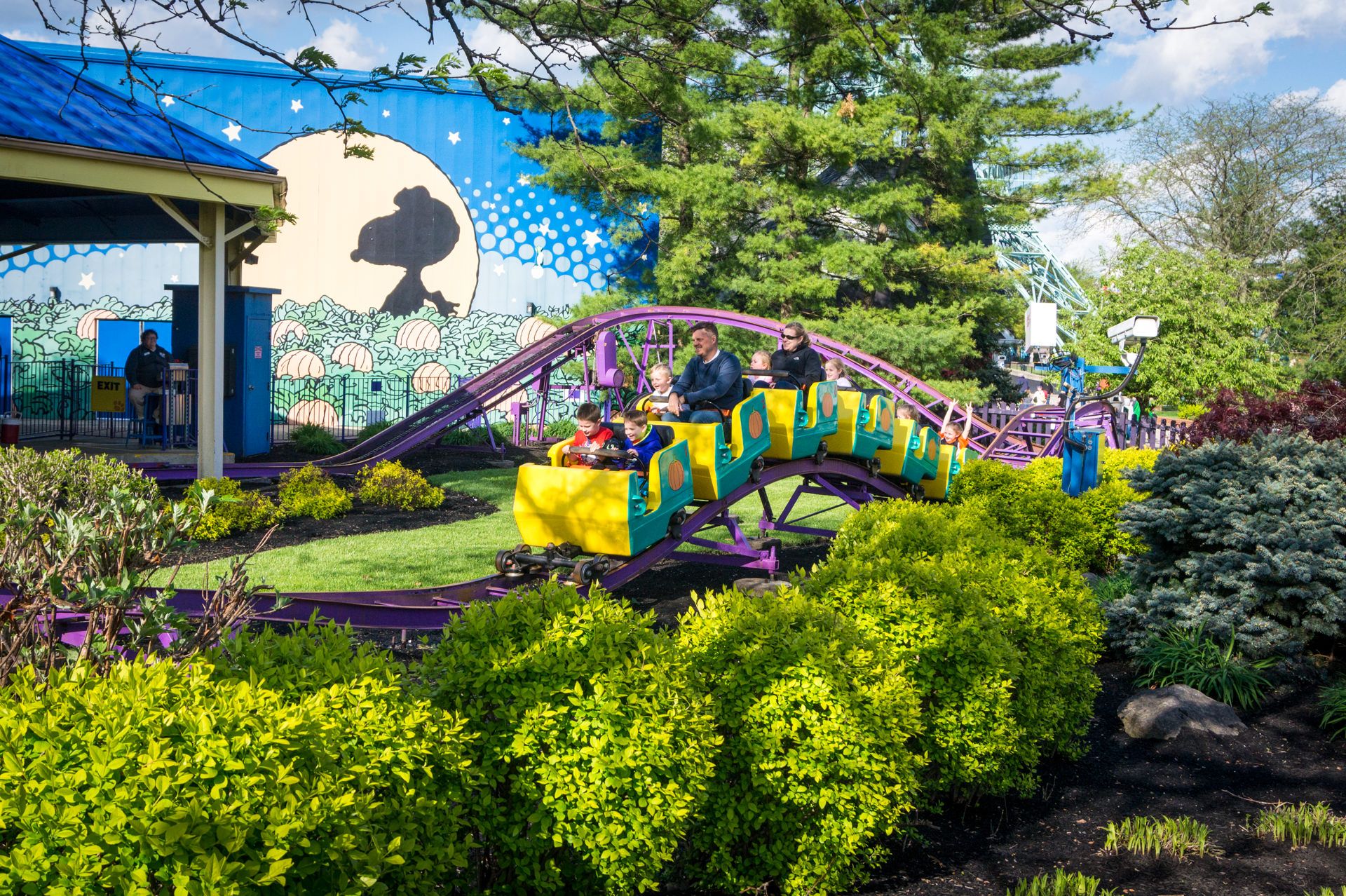
Great Pumpkin Coaster
As soon as you enter the themed area, you come across the Great Pumpkin Coaster. This is a small family coaster from E&F Miler Industries from 1992, which has a quite compact layout and may only be used by families with smaller children. Because of this and a generally somewhat longer waiting time, I decided against a ride.
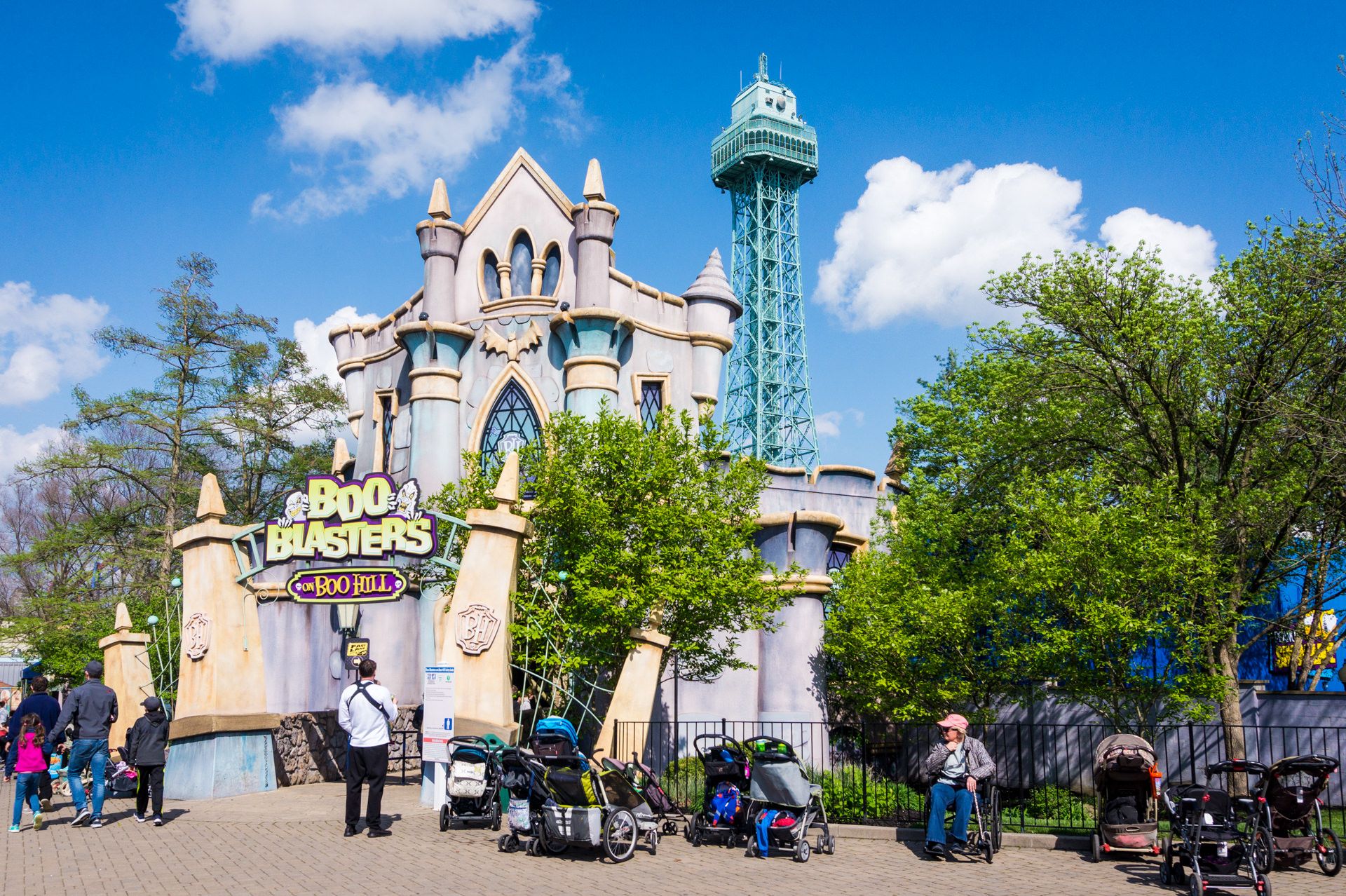
Boo Blasters on Boo Hill
The interactive dark ride Boo Blasters on Boo Hill originally opened as Scooby-Doo! and the Haunted Castle in 2003. At the time, the Mystery Machine ride followed two-dimensional scenes featuring characters from the popular Hanna-Barbera series, where you could trigger your own effects and even unmask the villain at the end. Now, however, there are only ghosts. This continues to be exceedingly cheesy and nicely done, but the spirit of the original attraction is unfortunately not captured by Boo Blasters on Boo Hill. Kids won’t care much, but for the adults with nostalgic feelings, I recommend a visit to the Spanish theme park Parque Warner, where you can still experience the original concept of the dark ride today.
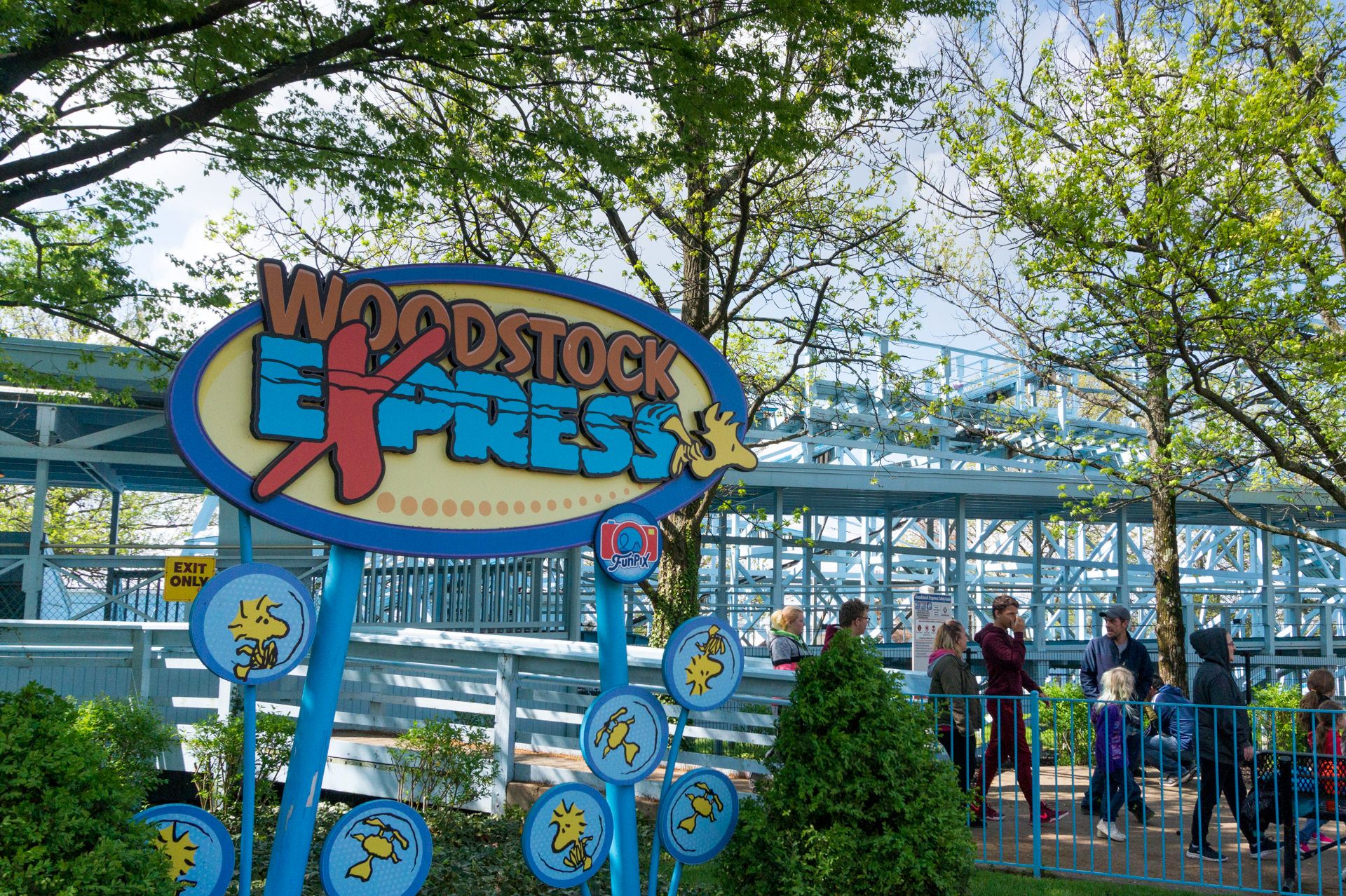
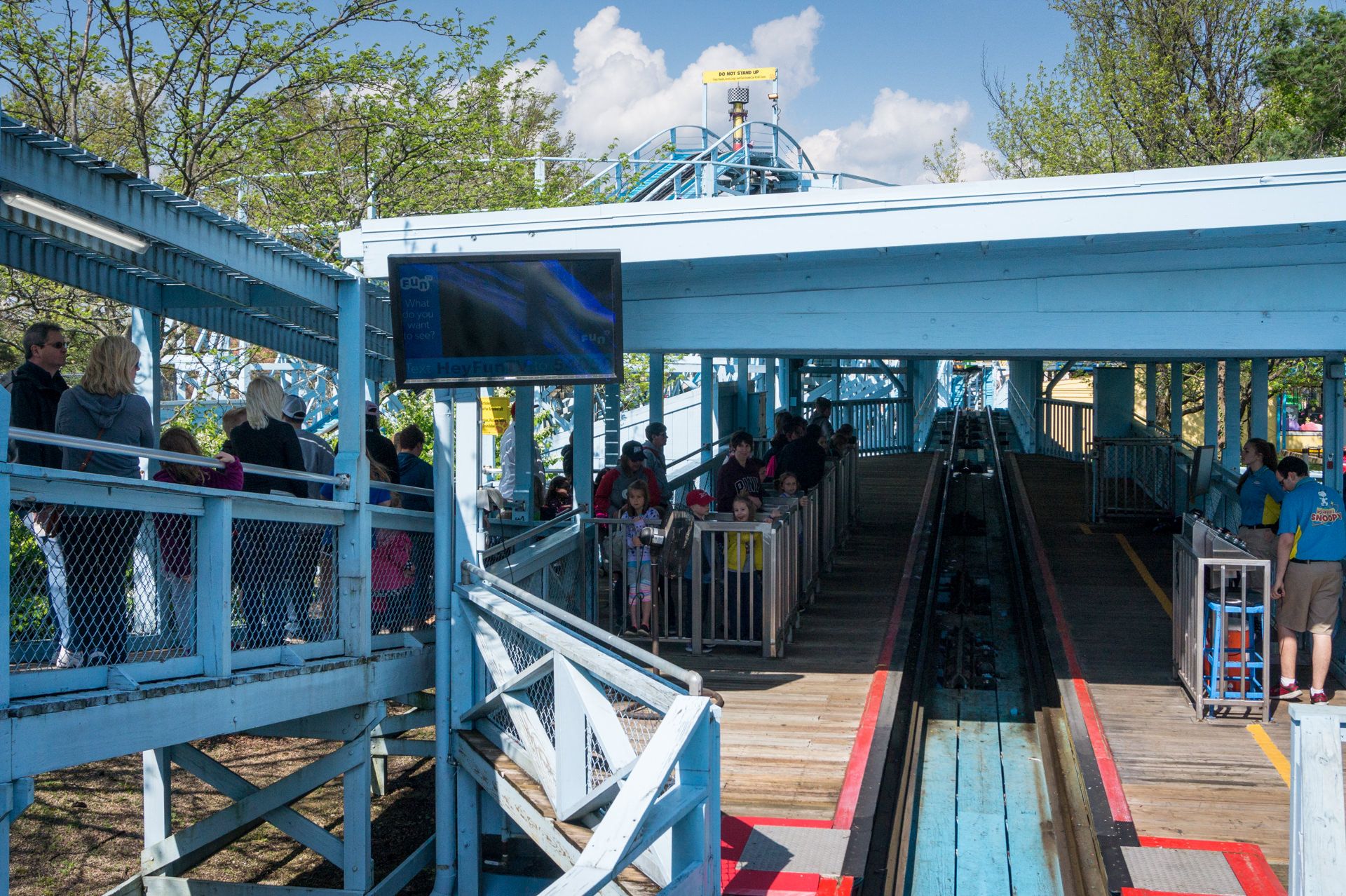
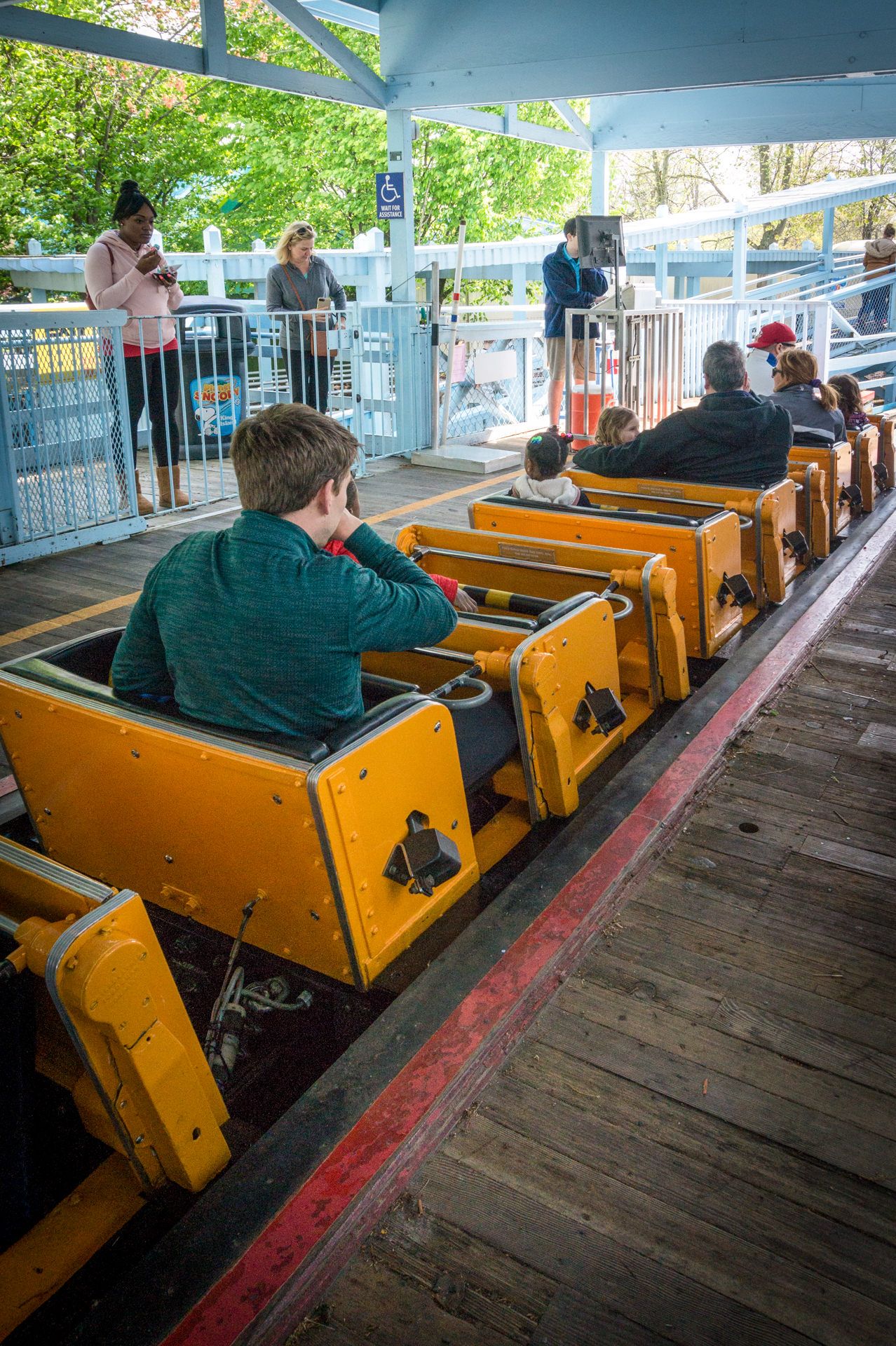
Woodstock Express
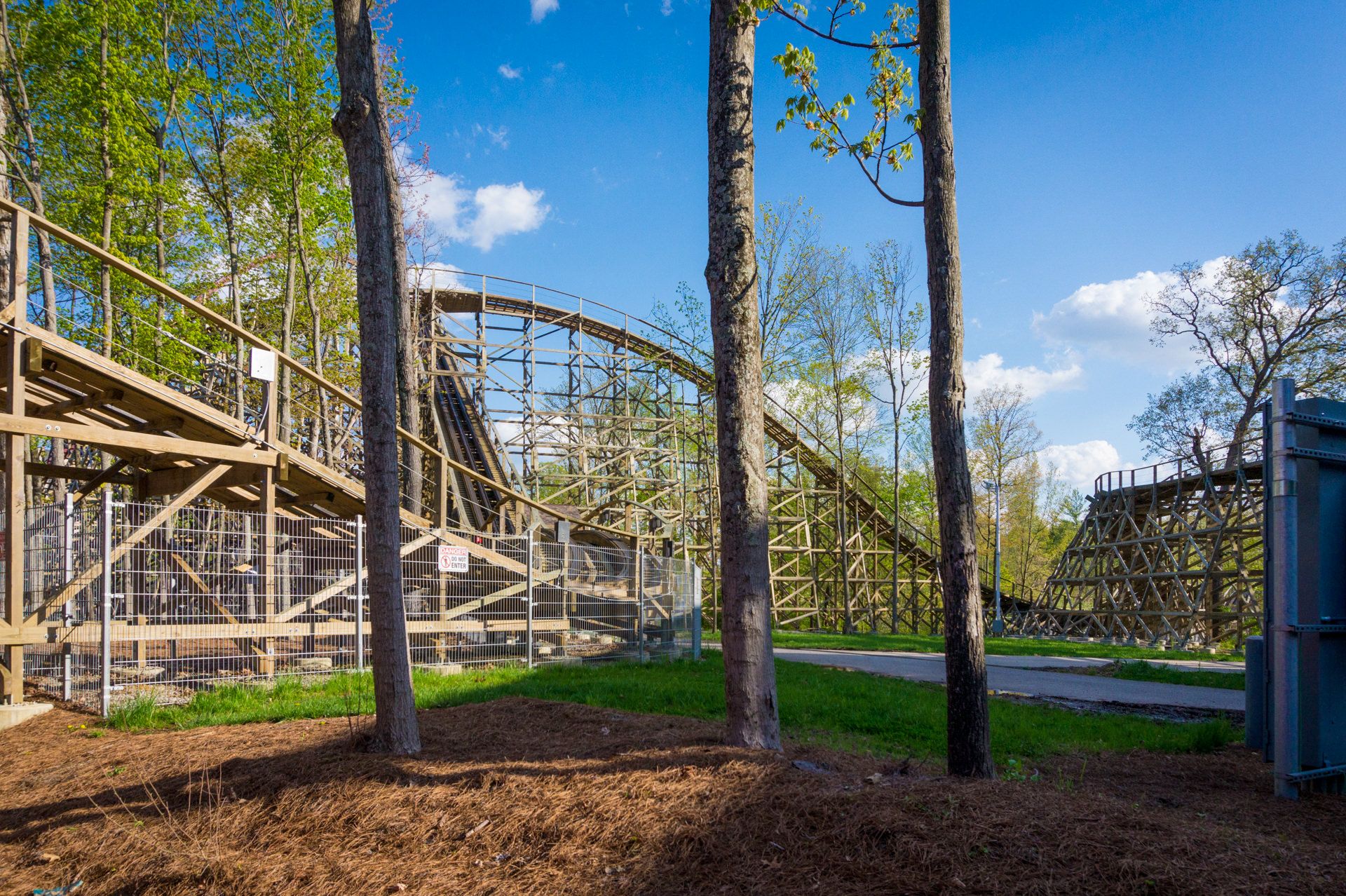
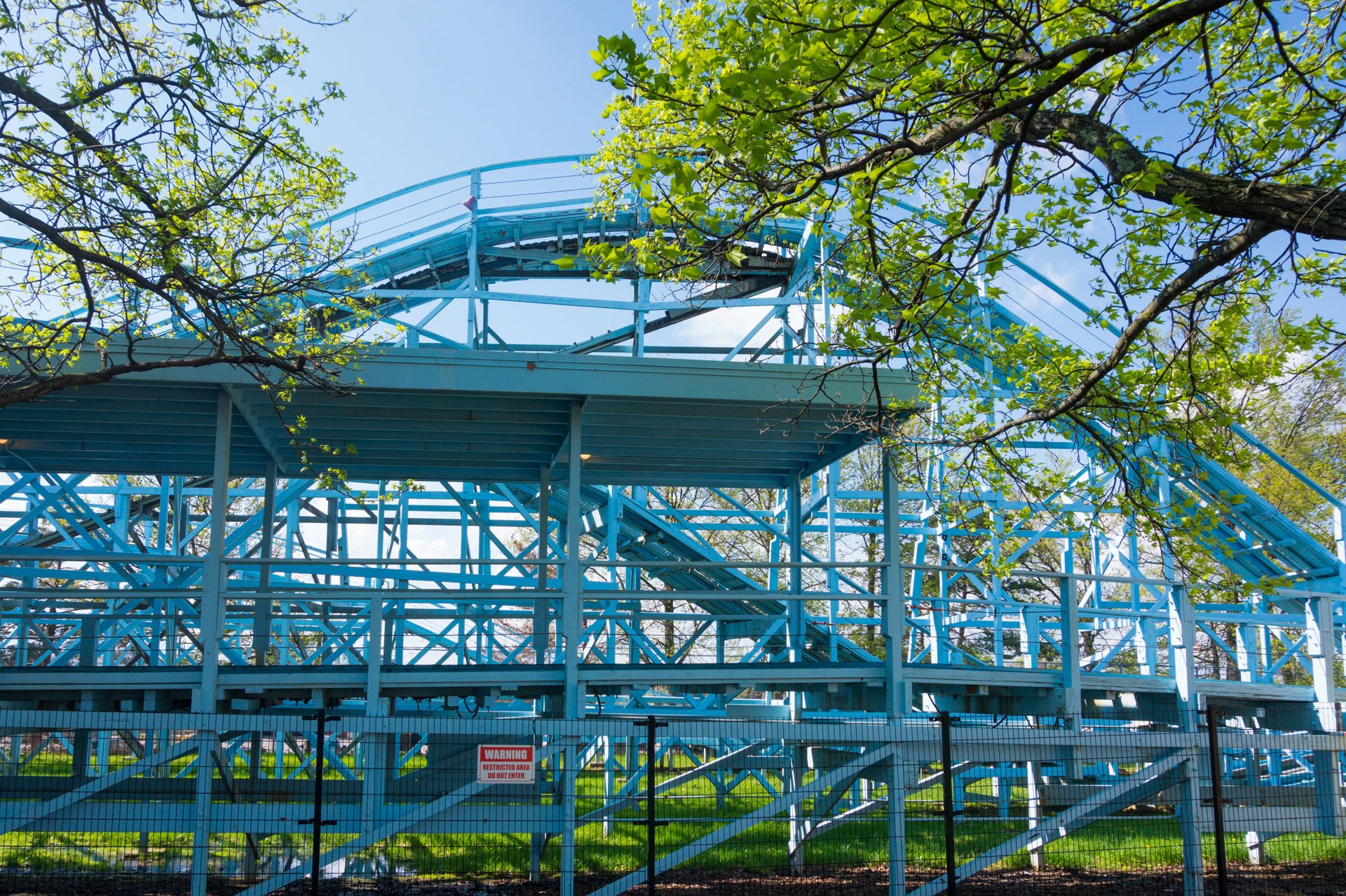
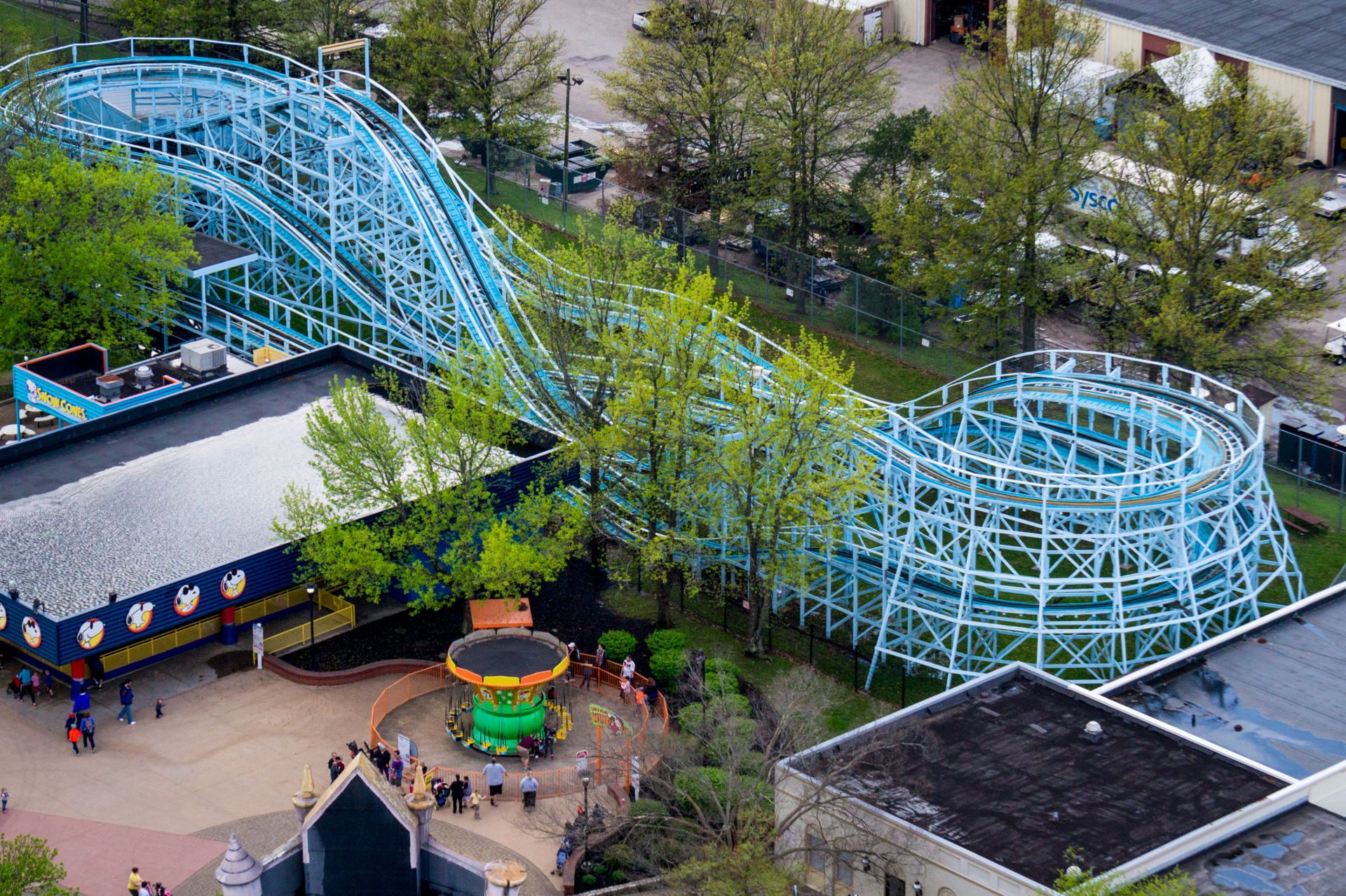
Right next door is the Woodstock Express, the smallest of the four wooden roller coasters at Kings Island. The ride through the compact layout of the roller coaster, which is completely painted in blue, begins after a short right turn with the ascent of the lift hill. Once at the top, the ride immediately descends the first drop. With a speed of about 35 mph, we pass through the first valley, whereupon a turning curve awaits us at a lofty height. After another downhill we whiz over a small speed bump before we cross the wooden structure and enter another turn on the other side of the ride. Now we race a bit over hill and dale before we dive into the wooden structure below the first turn and follow the course of it. Back in the open air, we dive into a small dip, whereupon we find ourselves already on the braking section of the roller coaster and the extremely fun wooden roller coaster ride soon comes to an end.
Surf Dog and Flying Ace Aerial Chase
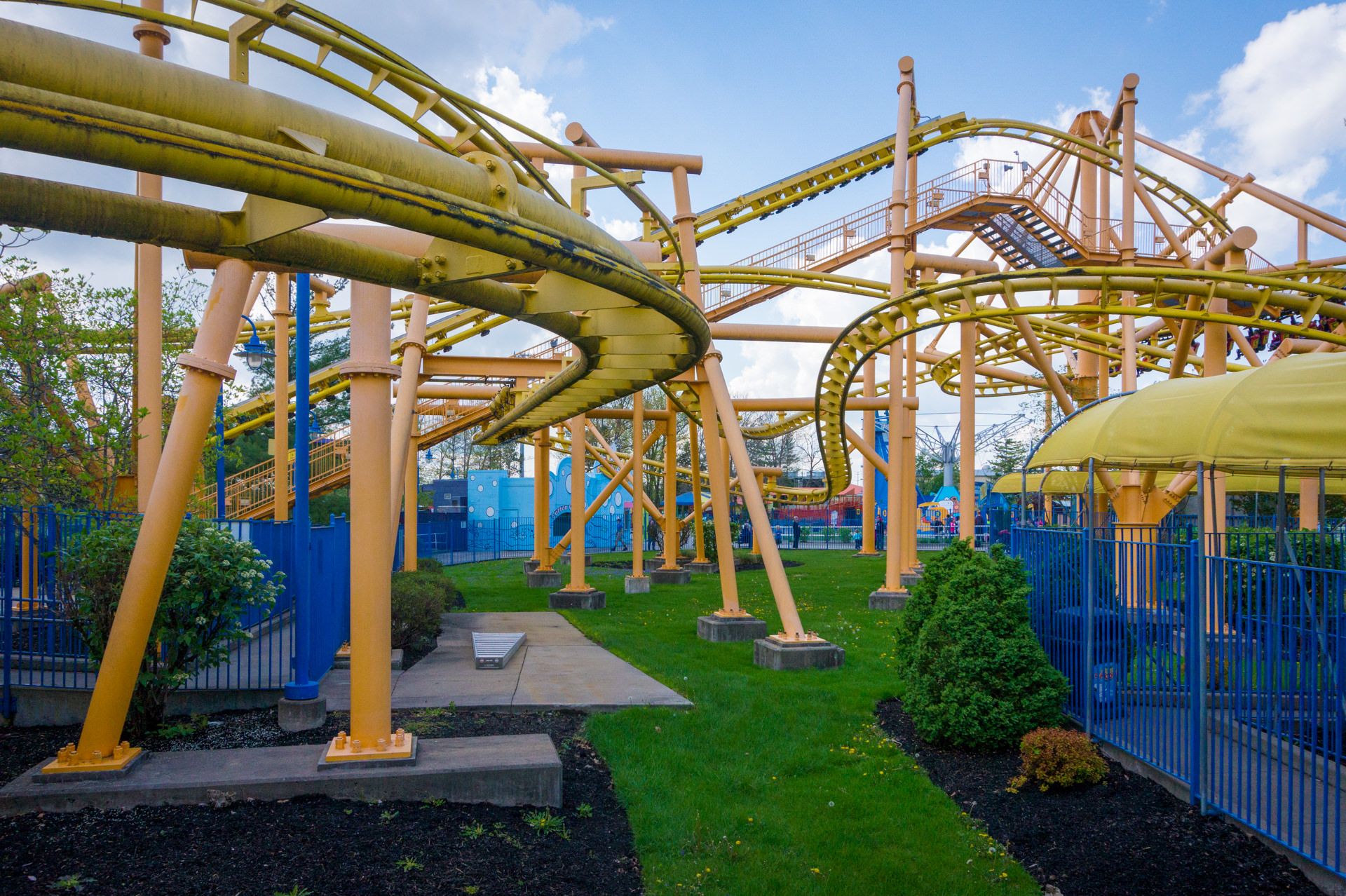
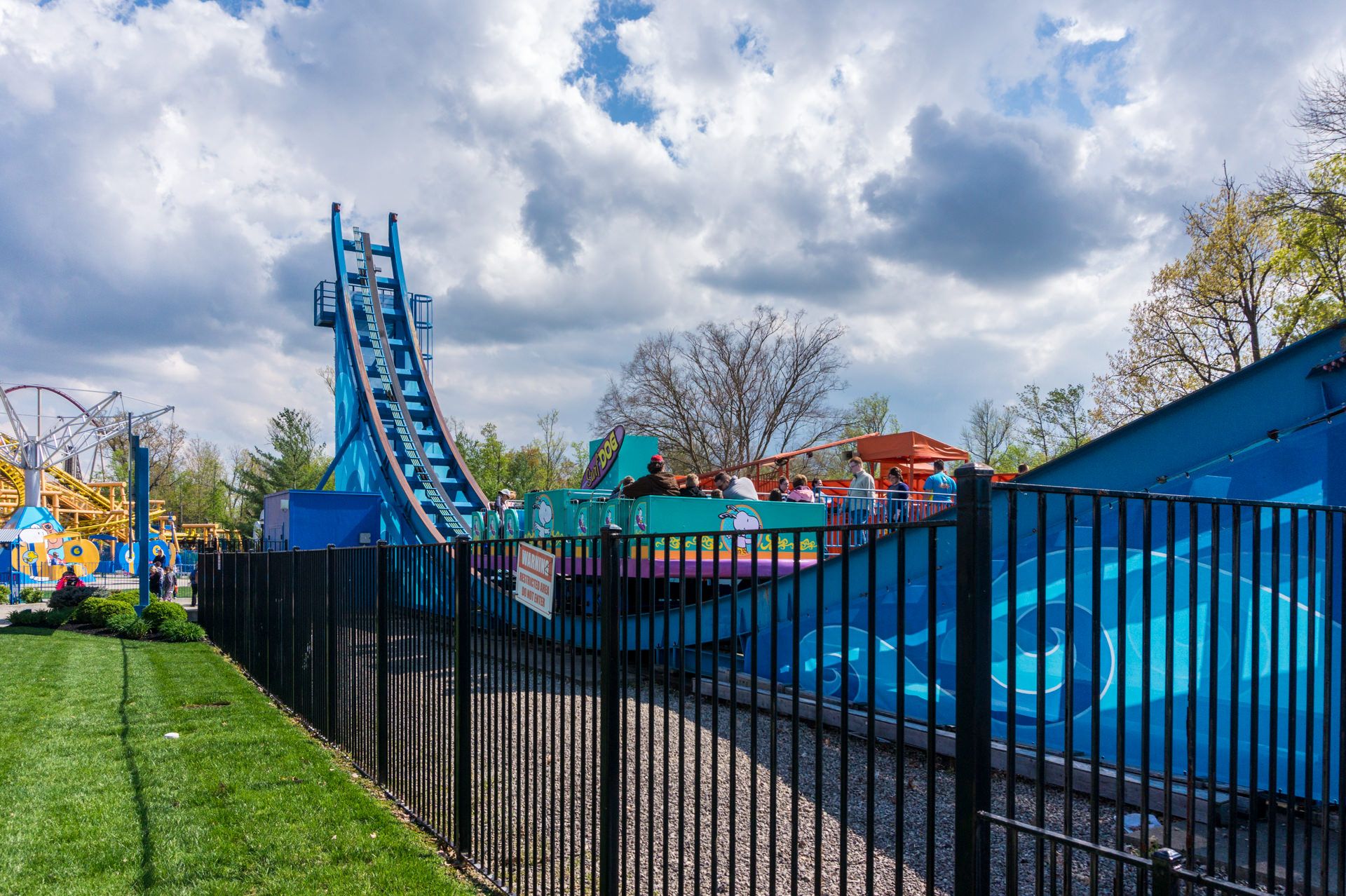
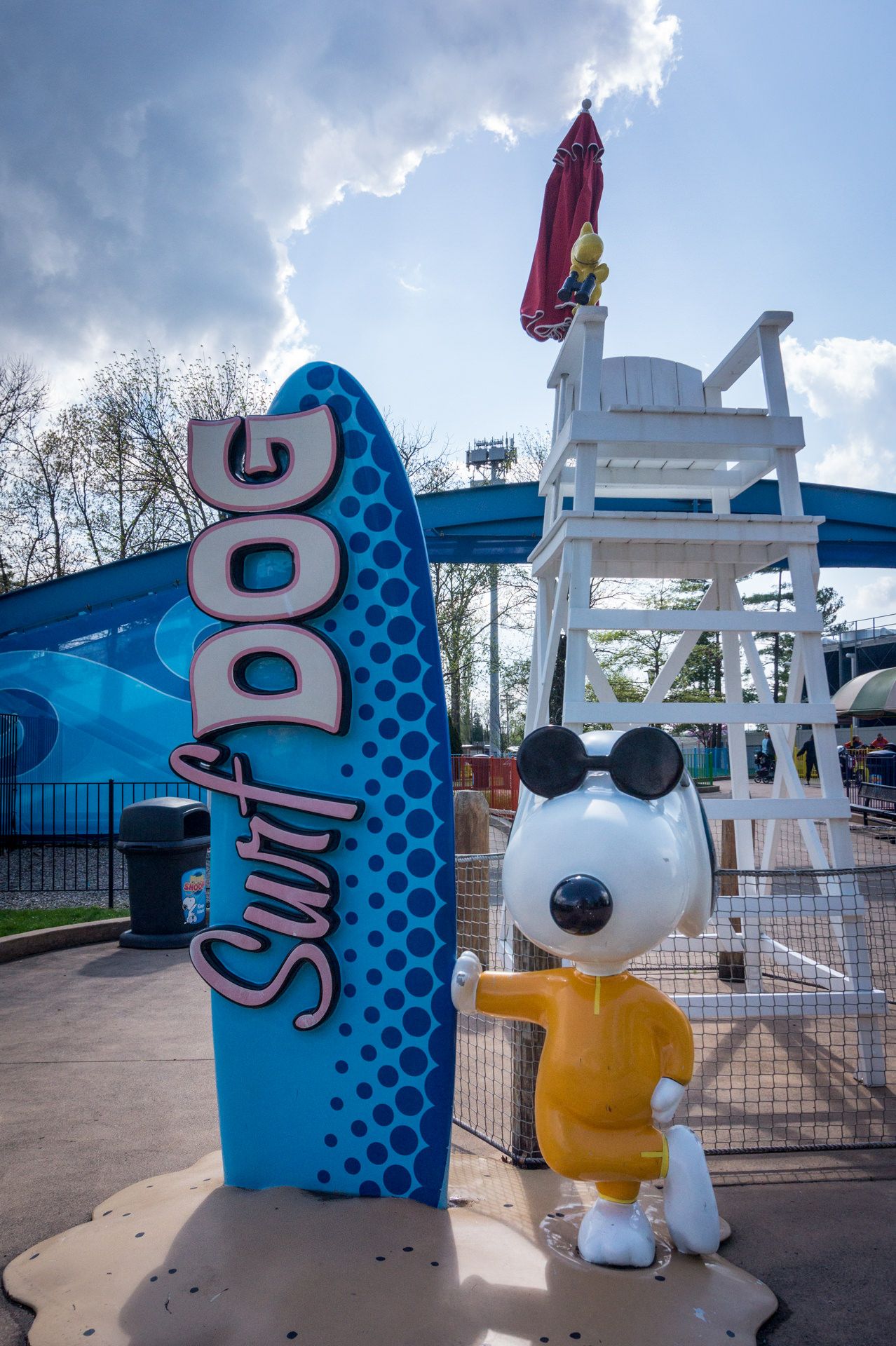
Past Surf Dog – a rare Zamperla Skater Coaster – we now head to the suspended family coaster Flying Ace Aerial Chase. Funnily enough, the layout is a tried and tested classic from Vekoma, but this time with free dangling feet. Accordingly, the ride starts with a short turn out of the station, whereupon the lift hill is already waiting. Immediately we complete a left-leading steep turn with subsequent upward helix, cross a short valley and a wide right turn near the station. Over a hill we cross the course we have just covered, whereupon we lose some altitude in another helix. A left turn follows, whereupon the braking section is already waiting and the quite pleasant ride comes to an end – for children, at least, the ride is first class.
Race for your Life Charlie Brown
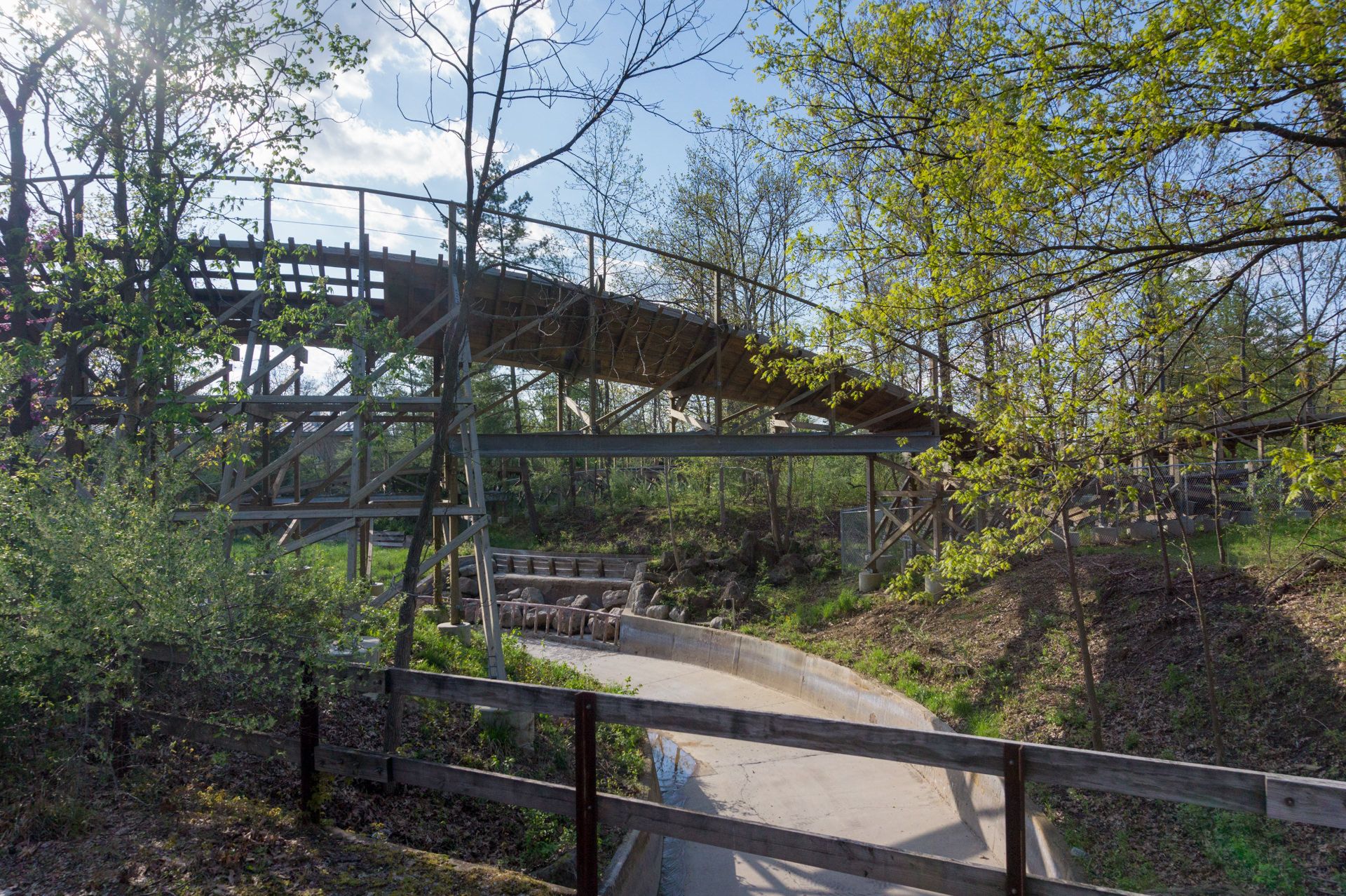
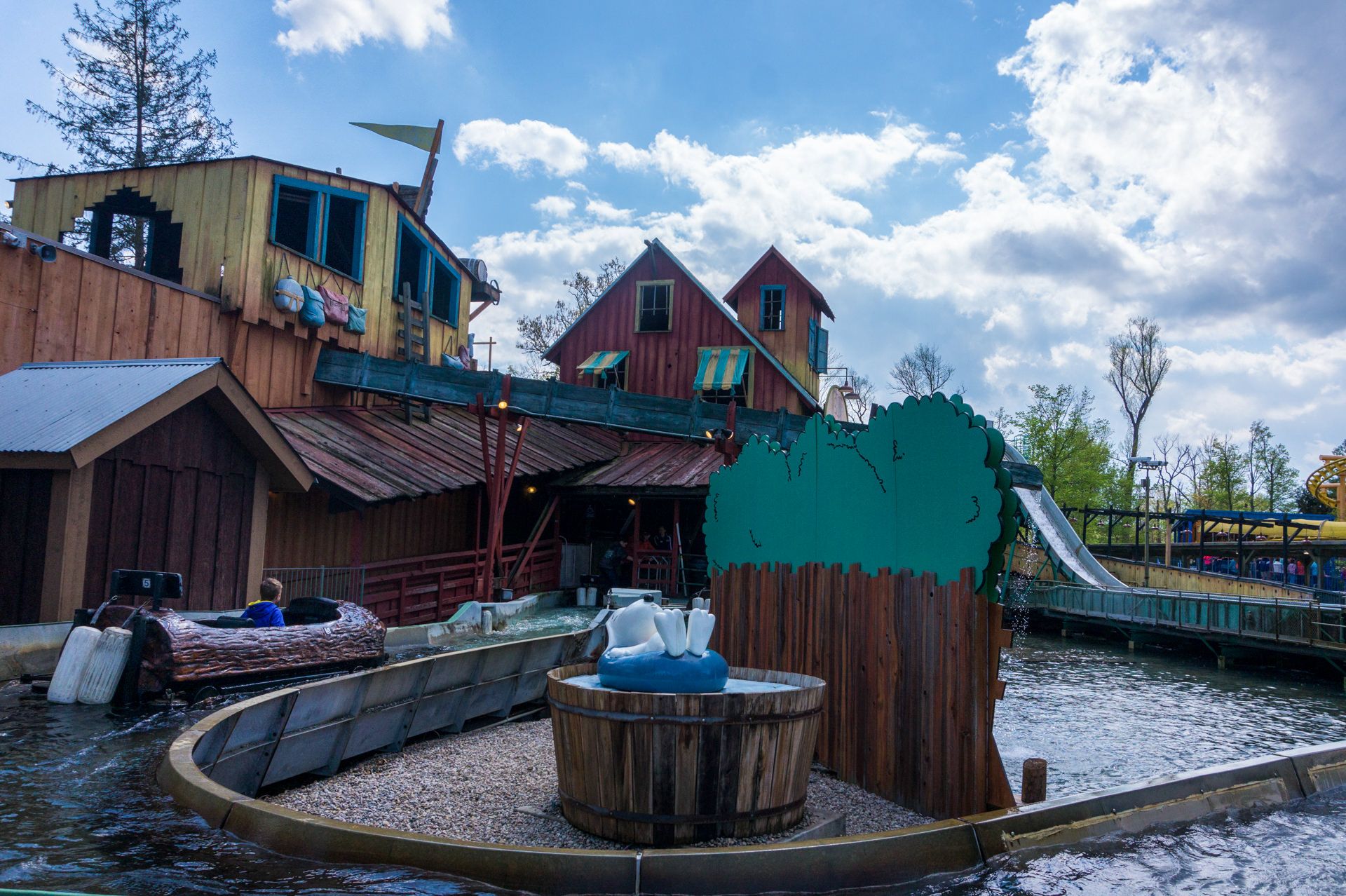
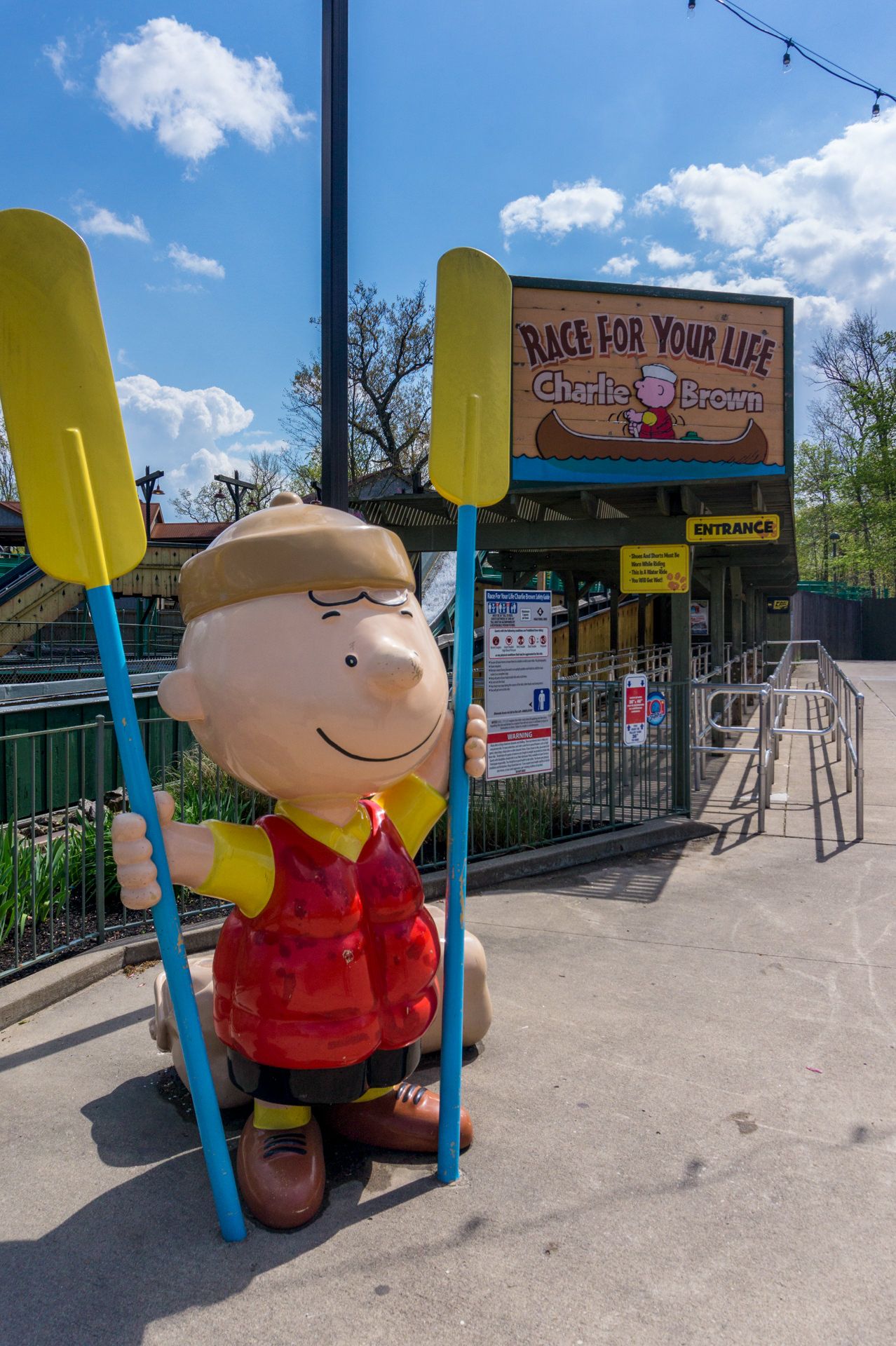
The same applies to the ride on the neighboring log flume Race for your Life Charlie Brown. Although it only has one descent, the rest of the ride is all the more convincing with its fast whitewater passages. Here, at least, you don’t bob around in the canal for minutes on end, but rather whizz through it very smoothly. At the end, an all-drenching shoot awaits you whereupon you can step out of the boat very happily. Superb!
Mystic Timbers
The newest wooden coaster at Kings Island to date is Mystic Timbers, which became famous thanks to its advertising campaign and the question “What’s in the Shed?”. Unfortunately, however, the mystery surrounding the shed has led to a certain hype, which in turn could not be fulfilled according to first reviews, because roller coaster fans worldwide expect a naturally breathtaking world novelty after an Alton Towers-esque announcement and just not a showroom.
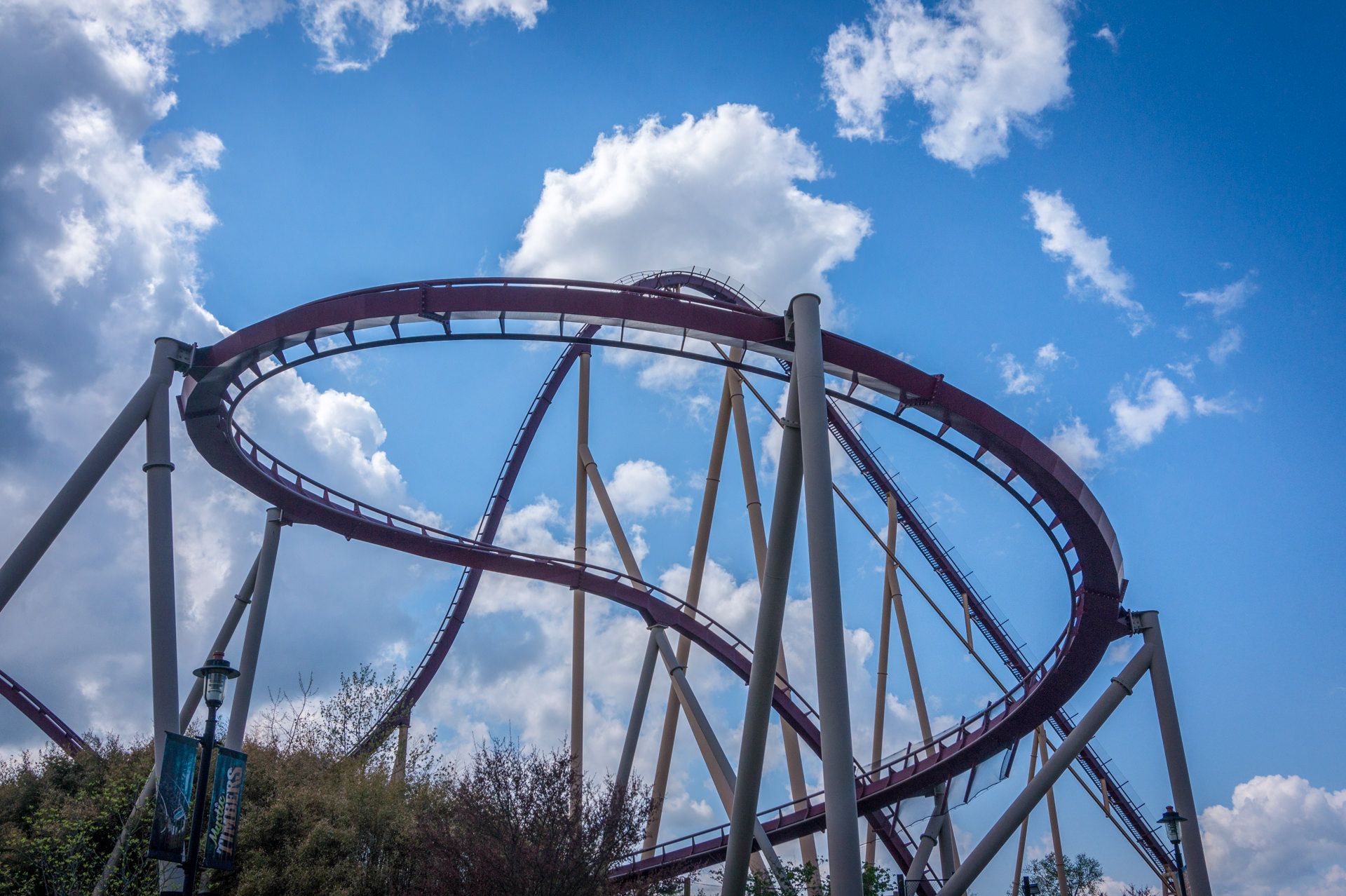
The ride on Mystic Timbers starts with a short right turn, whereupon after two smaller dips the lift hill of the ride awaits us. Having reached a height of 109 ft, we immediately descend a steep curve. With a speed of now 53 mph we race through the first valley, whereupon we climb a rather high hill. After a left turn, we then plunge to the ground another time. Close to it, we now race over a series of bunny hops and even cross the park’s rapid river. At a fast pace, we now go over hill and dale in constant changes of turns, while being lifted out of our seats in the most delightful way. Interestingly, the descents and ascents are now getting higher and higher before we set off for the turning curve, diving into a tunnel in the process. The ride now continues with some momentum through a longer valley, whereupon we start the return journey to the station. Still close to the ground and with fast pacing, we go over the rapid river once more, whereby the frequency of the airtime hills increases more and more. For the finale, the track bends a bit to the left and to the right before a larger climb leads us directly into the shed. Here we find the maintenance house and afterwards the aforementioned showroom with projection mapping and numerous effects. After the station has been released, we enter it and the ride comes to an end.
Mystic Timbers is a really good GCI woody with fantastic pacing and breathtaking airtime moments. The ride is simply outstanding until the end. Compared to all of the manufacturer’s European wooden roller coasters, Mystic Timbers goes one step further, so it hardly bothers that they meant it a little too well with the ride in terms of marketing; although the secret of the shed is actually a pretty nice feature. Mystic Timbers, at least, is my new favorite GCI.
K.I. & Miami Valley Railroad and White Water Canyon
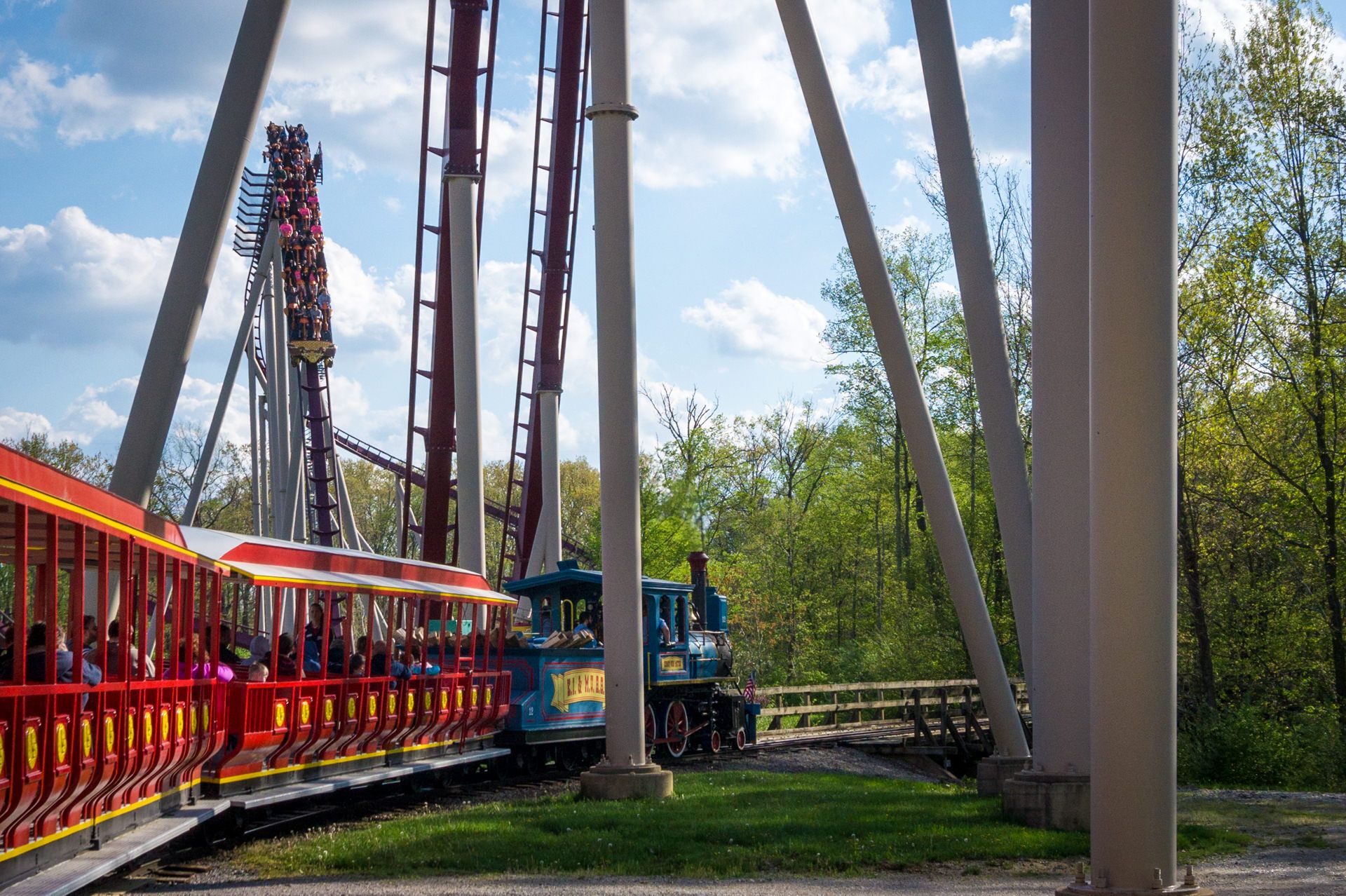
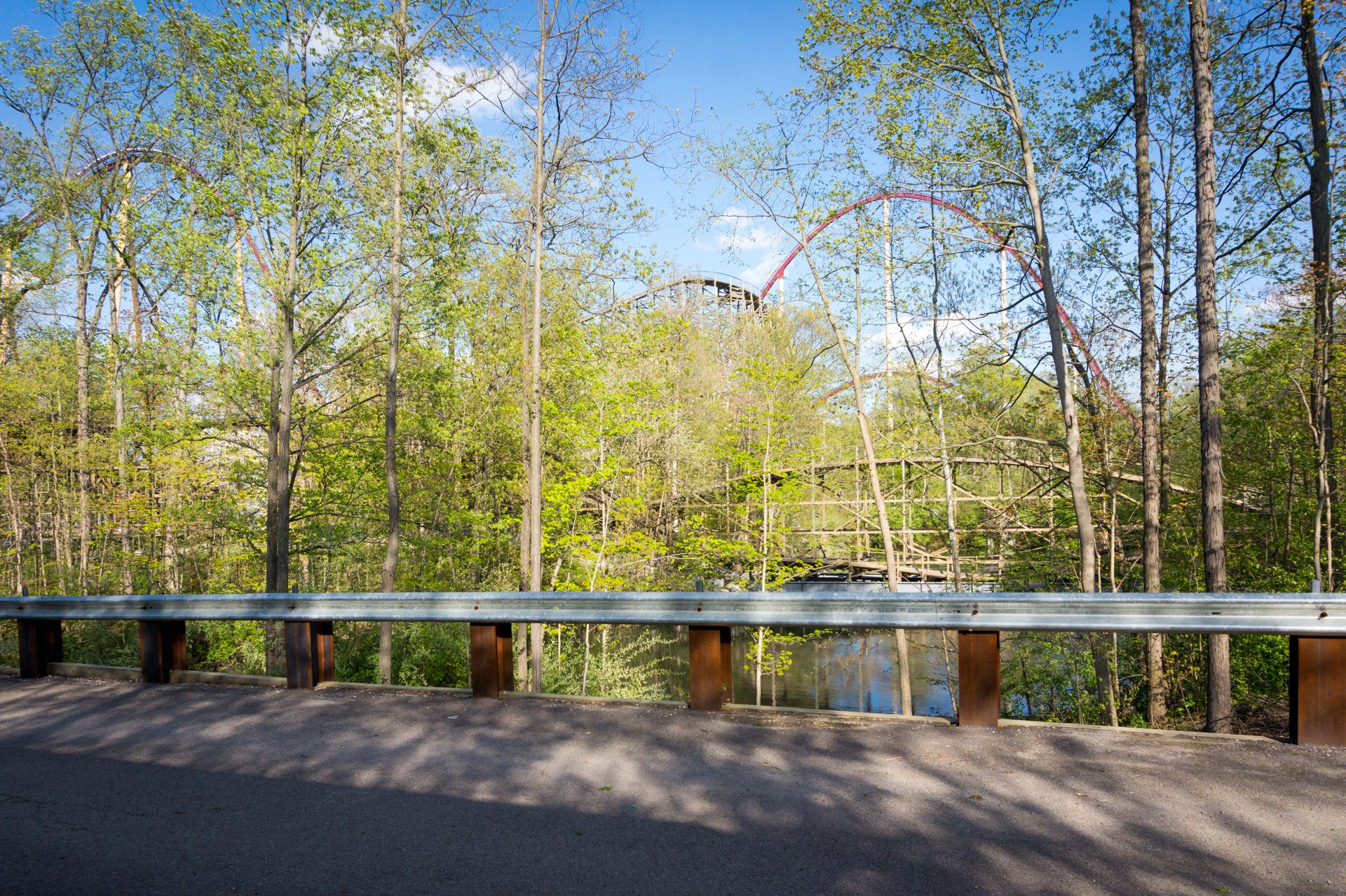
Much of the K.I. & Miami Valley Railroad’s route runs through the woods at the back of the park. While riding the steam train, you have an outstanding view of the wooden roller coaster Mystic Timbers and the Rapids Ride White Water Canyon, which was unfortunately closed during our visit. In between, the train stops at the Soak City water park, which also serves as a connection between the water park and the amusement park; however, you can also reach it on foot along the huge Picnic Grove picnic area.
Diamondback
Kings Island has been home to the B&M Hyper Coaster Diamondback since 2009. It is the first hyper coaster with a water splash as the brilliant finale of the ride.
Shortly after leaving the station, we climb the 70m high lift hill of the ride. With the best view of the showbuilding of the former HUSS Giant Top Spins The Crypt (Tomb Raider: The Ride) and the wooden roller coaster Mystic Timbers we immediately plunge to the ground. With a lot of pressure we cross the first valley, whereupon we climb a193 ft tall camelback. With good airtime we cross the crest and immediately plunge towards the ground again. Here we turn left and race over another airtime hill. Immediately we make a turn at a dizzy height. This is followed by another airtime hill. Very close to the ground, we then enter a powerful upward helix, at the end of which the block section awaits us.
Parallel to the first hill, we plunge to the ground another time and immediately glide over two more hills. In a very compact helix we increasingly gain altitude before we enter the splash finale of the ride. After a short climb, we immediately find ourselves in the final braking section of the ride.
Diamondback is a fantastic hyper coaster. The ride characteristics are terrific and the airtime is insanely good. There is absolutely nothing to complain about here; it’s simply a great ride!
The Beast
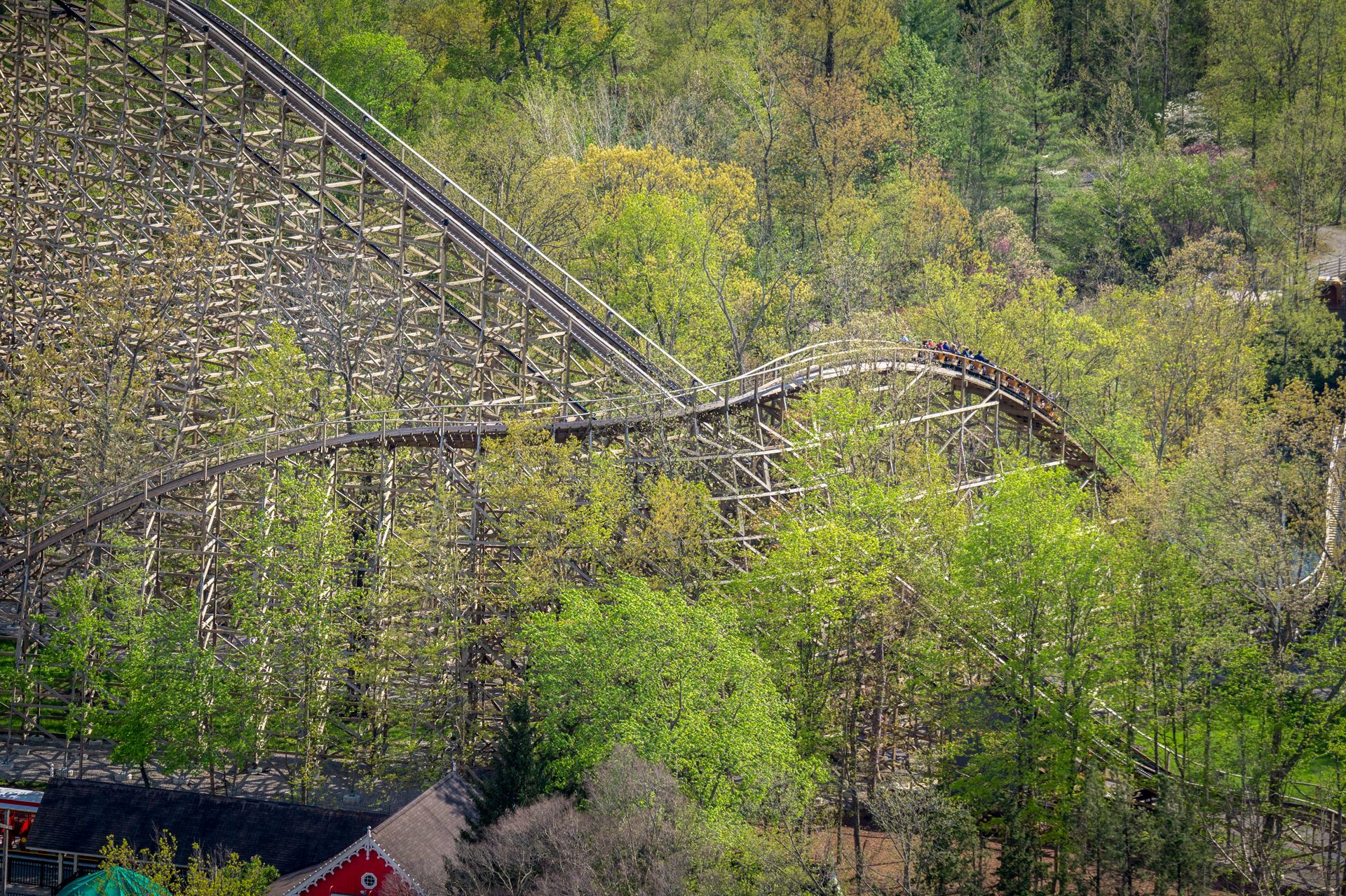
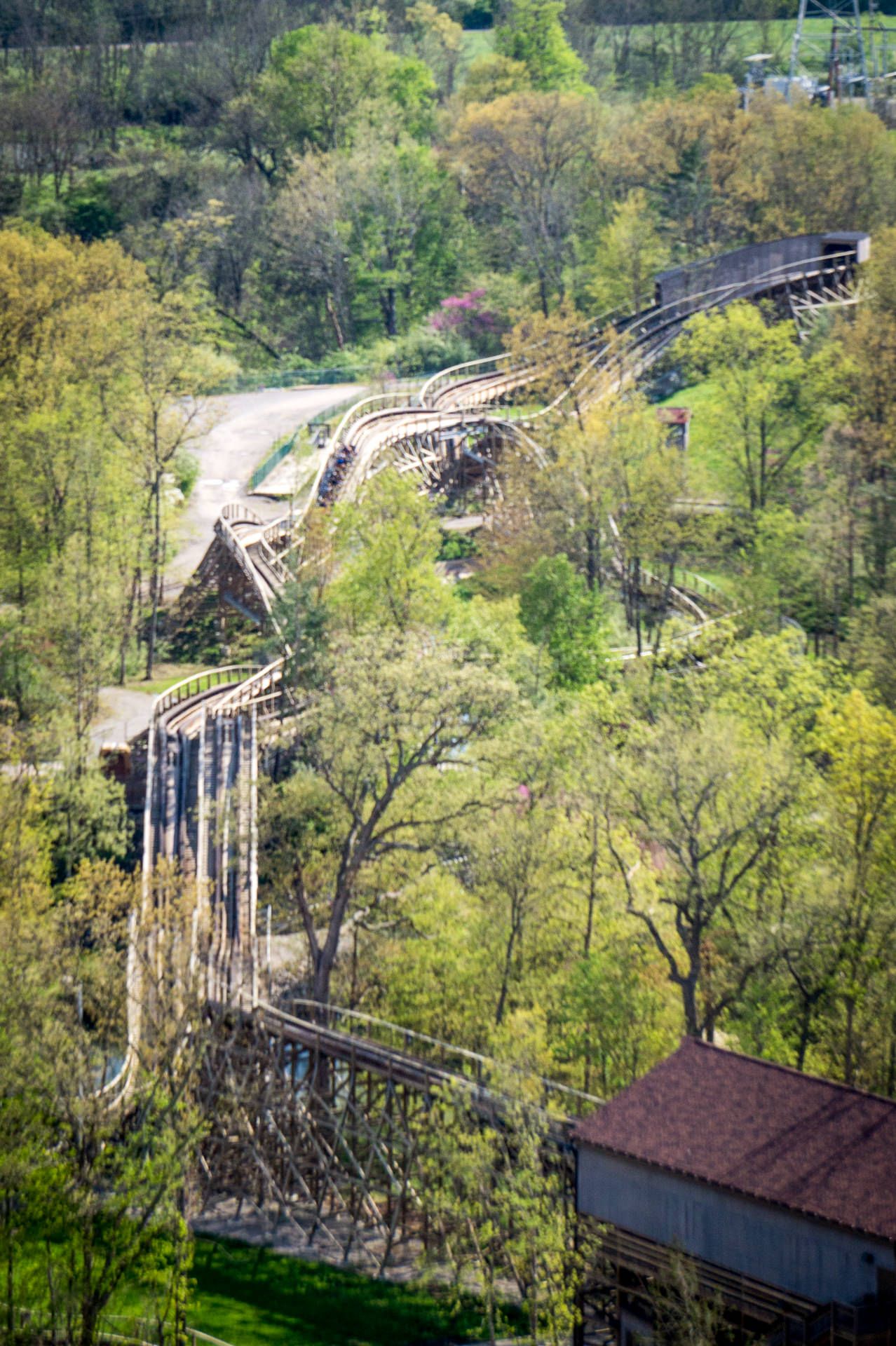
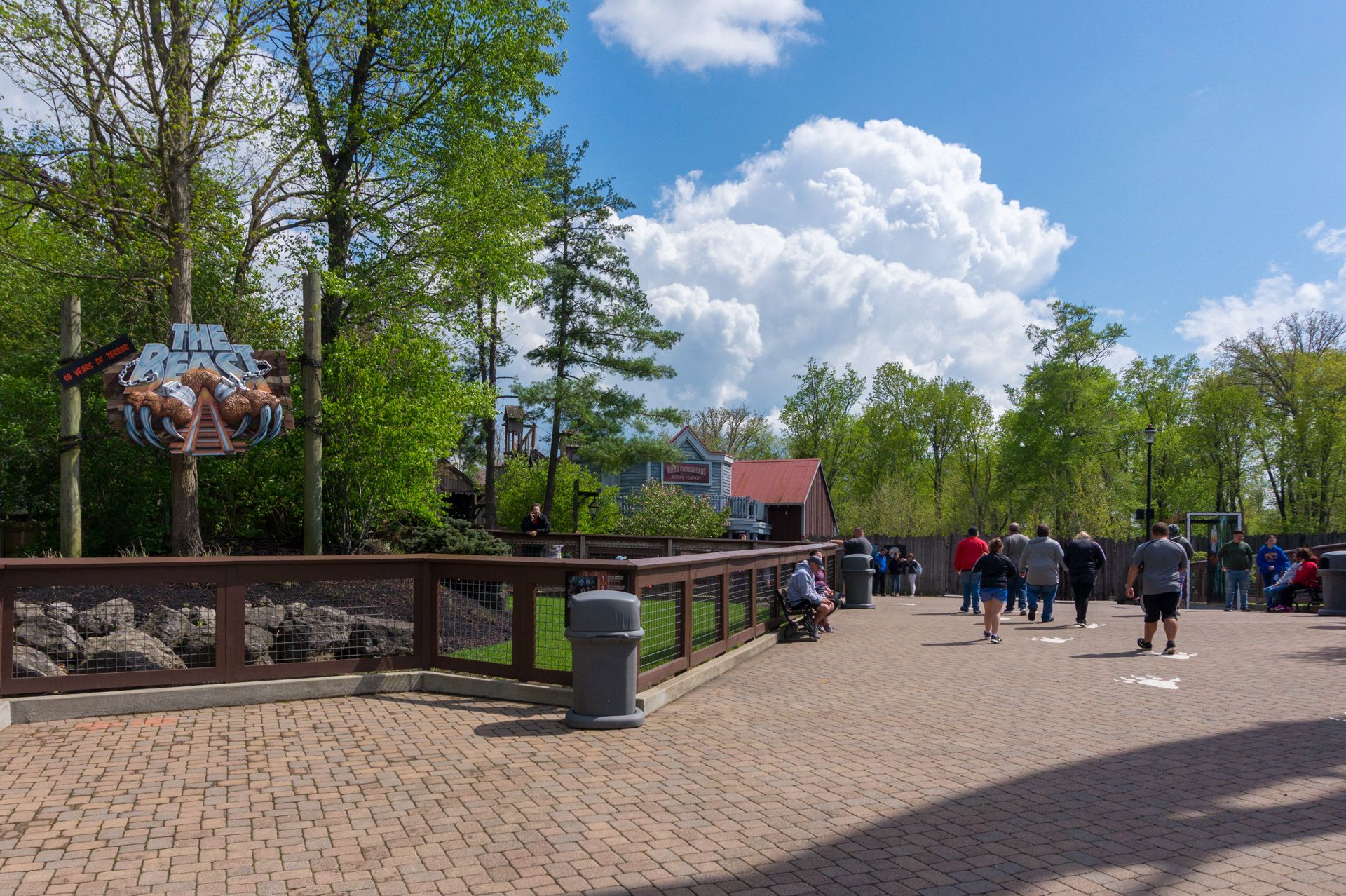
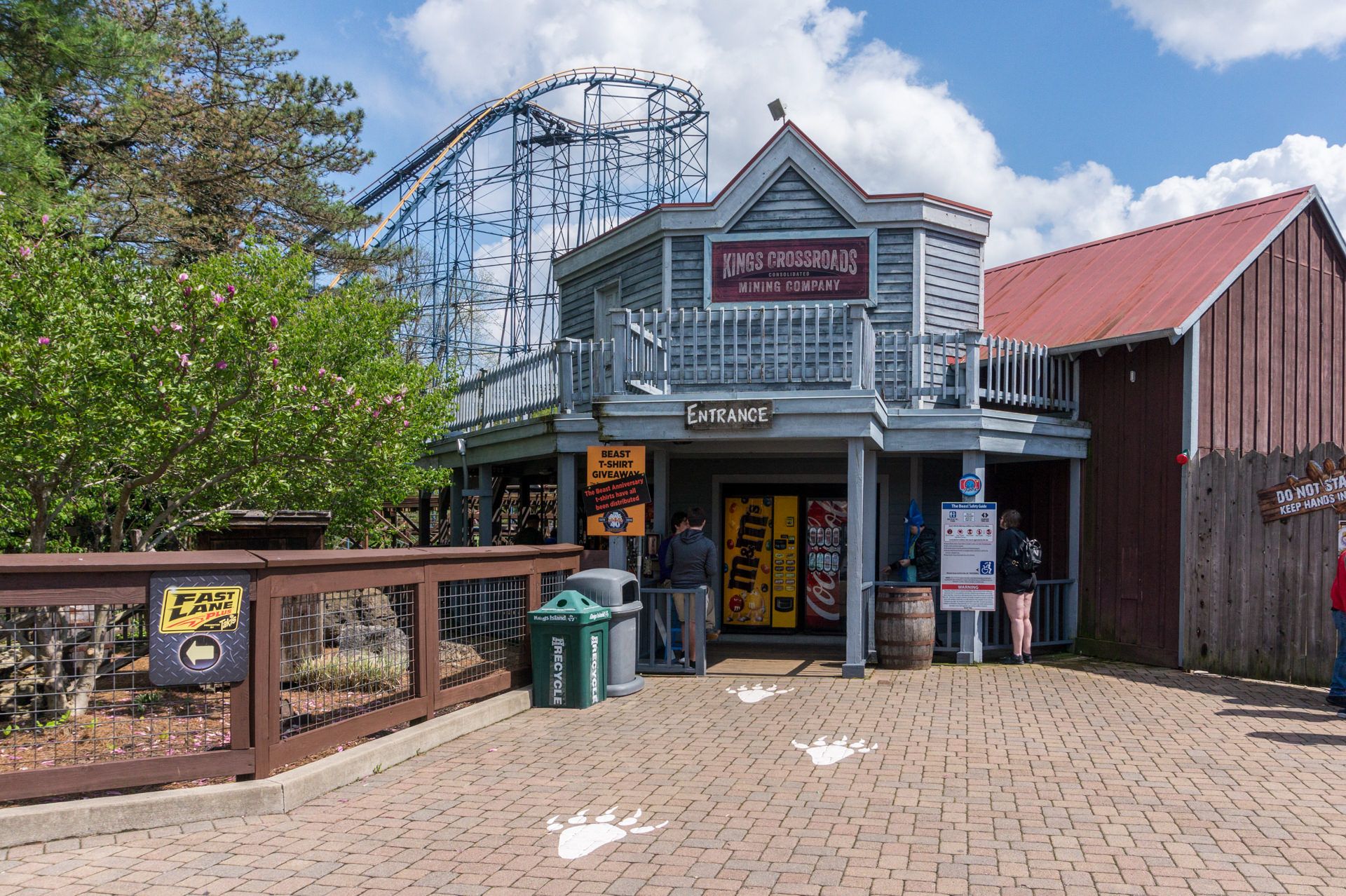
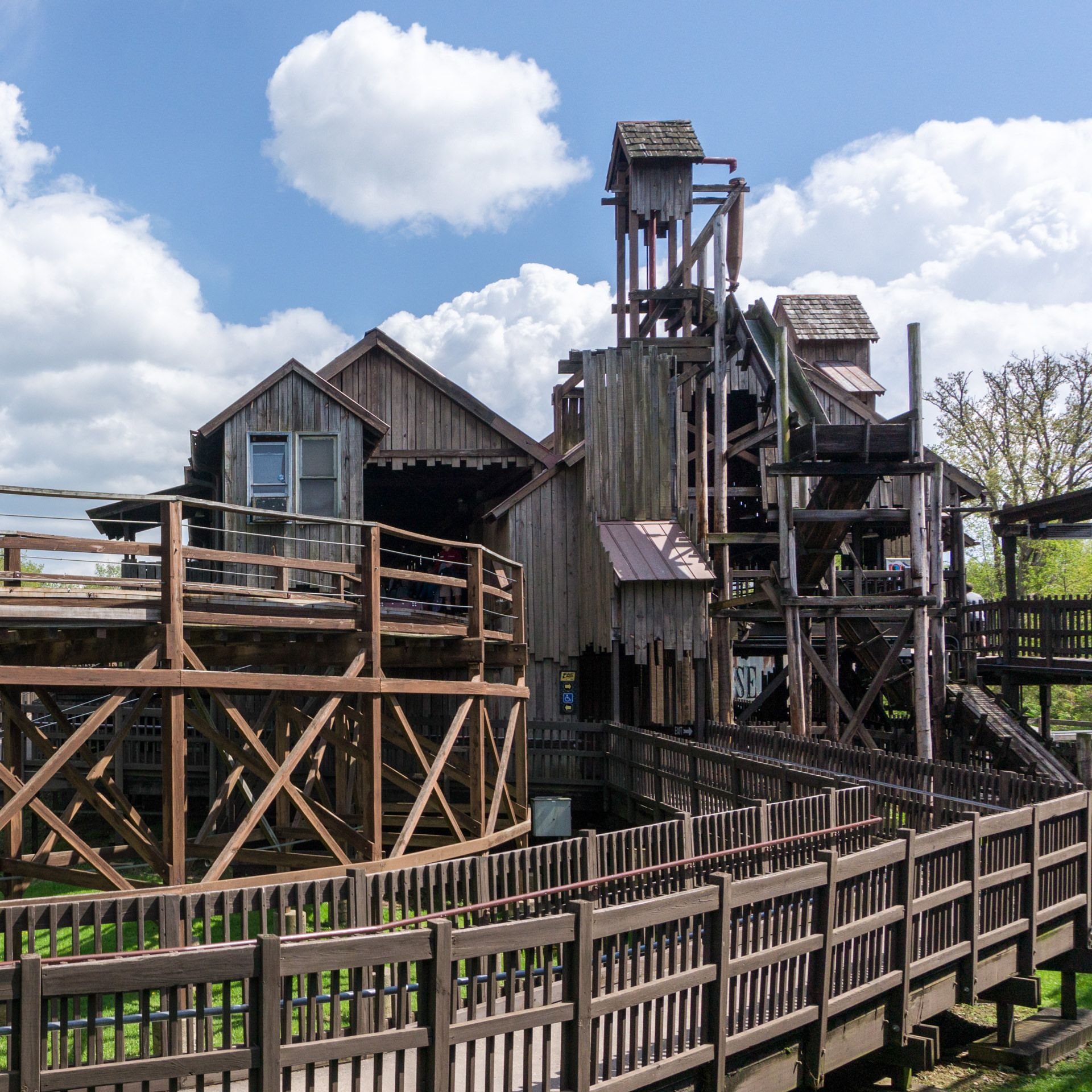
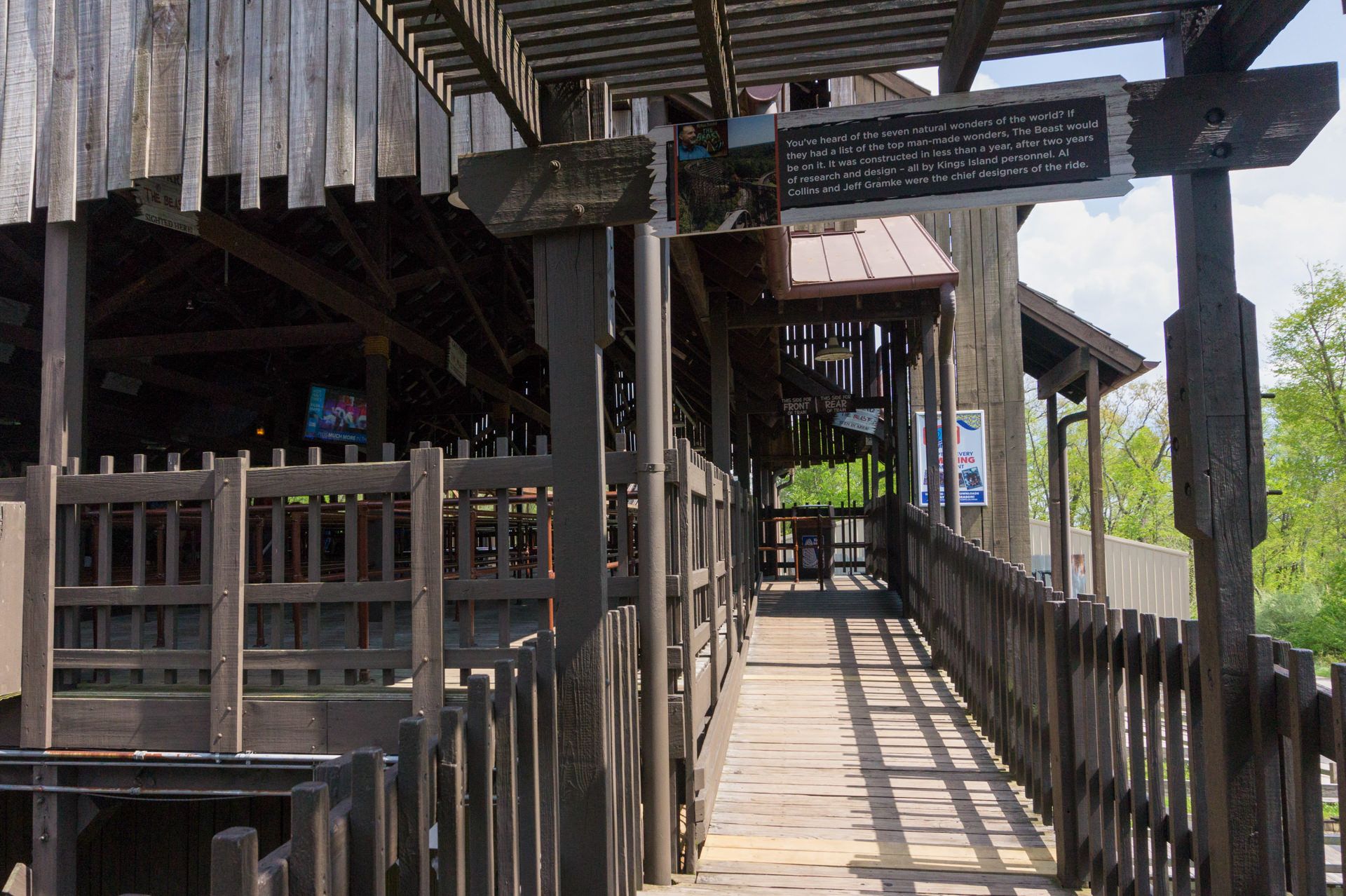
The fourth and final wooden roller coaster in Kings Island is The Beast. The longest and probably most legendary wooden roller coaster in the world has been the reason to visit Kings Island since 1979 – after all, the ride, which was designed and built entirely in-house, broke all records in the roller coaster world. It was the longest, fastest, highest and above all most breathtaking roller coaster far and wide.
It begins relatively harmlessly with a wide turning curve. Shortly after, we reach the lift hill. Once at the top, we immediately plunge down into the first tunnel of the ride. With a slight lateral inclination, a left turn close to the ground follows before we dive far into the forest after a camelback. Following a short climb, we head towards a wide right-hand bend. On a longer straight we then gain more and more speed before this is immediately taken away from us again by a trim brake. However, the descent on the ramp is not yet over and so we quickly pick up speed. In a left turn we then drive into a longer tunnel. Always close to the ground, we then continue through a very wide right-hand bend and continue to pick up speed. A short climb then leads us to the second lift hill of the ride.
Once at the top, we can enjoy the panorama for a bit before we increasingly gain speed on a ramp with a gradient of only 18°. With rising speed, the lateral inclination also becomes greater, which becomes necessary for the spectacular double helix finale of the ride. In the transverse 540° helix we now go through two tunnels at breakneck speed before we start our way back. Parallel to the first drop, we then approach the long braking section of the ride and soon the station.
The Beast is without question an interesting and good roller coaster. In fact, it is perhaps a bit too long and it is not really exhilarating compared to today’s wooden roller coasters. Nevertheless, it is and remains a fan favorite and that has one main reason: When it gets dark, the predictable beast falls into a breathtaking frenzy of the senses. With no sight of anything, the ride travels through the forest at breakneck speed with a mighty thud – an extremely breathtaking experience.
Pictures Kings Island






















Conclusion Kings Island
Imagine visiting a theme park with 14 roller coasters and all of them tested are good. Then imagine yourself in a beautifully designed park landscape with numerous nice looking areas. Add to that an exceedingly low crowding with the simultaneous use of all rolling stock. Cedar Fair, you got me! Kings Island has done it to me and I am completely thrilled.
What is your opinion about the theme park Kings Island? Just write it in the comment field below the report!
Click here for the next report of the Texas Round-Up Tour
Click here to get to the overview page of Kings Island