Astérix est là!

Parc Astérix

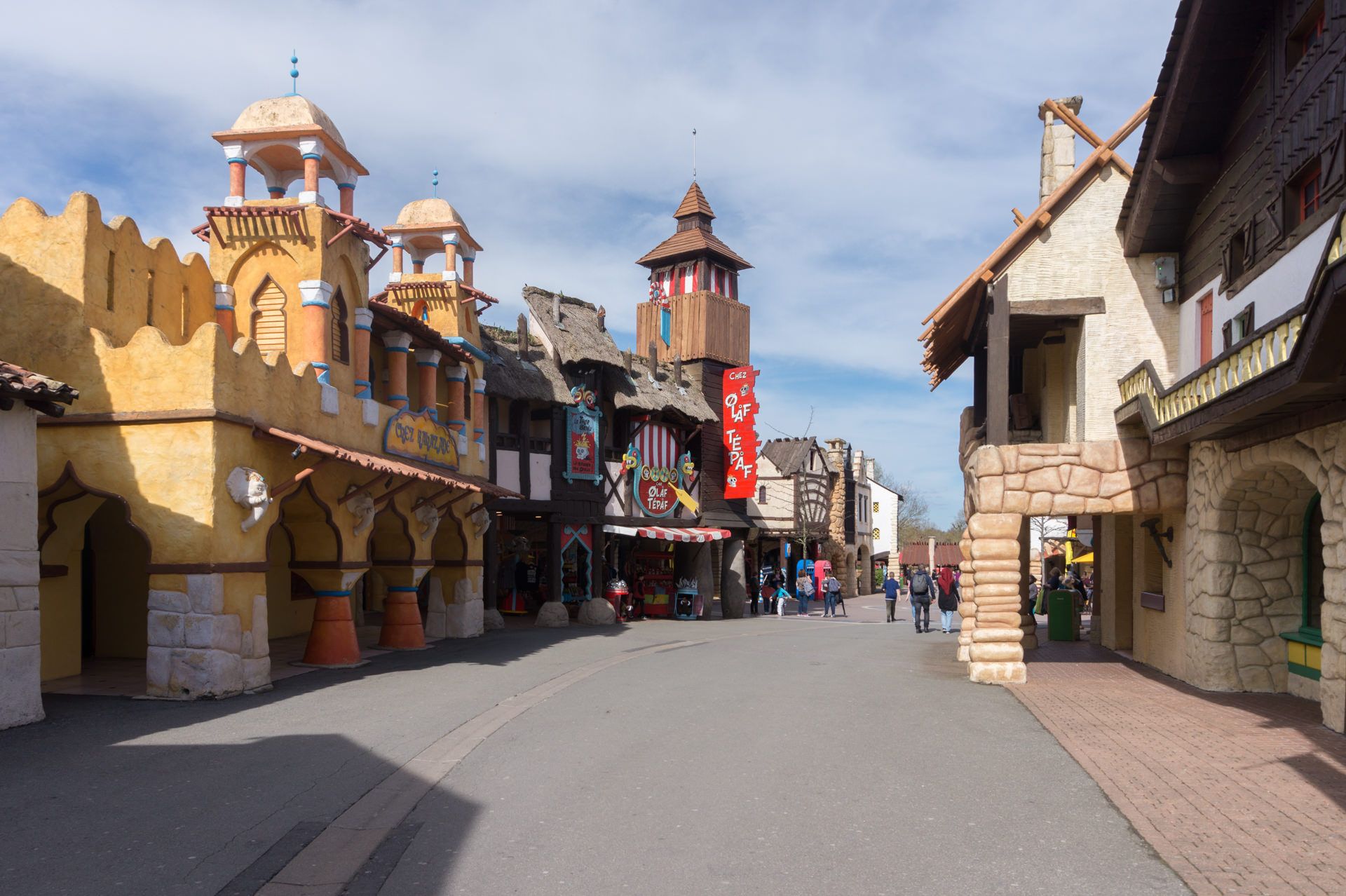
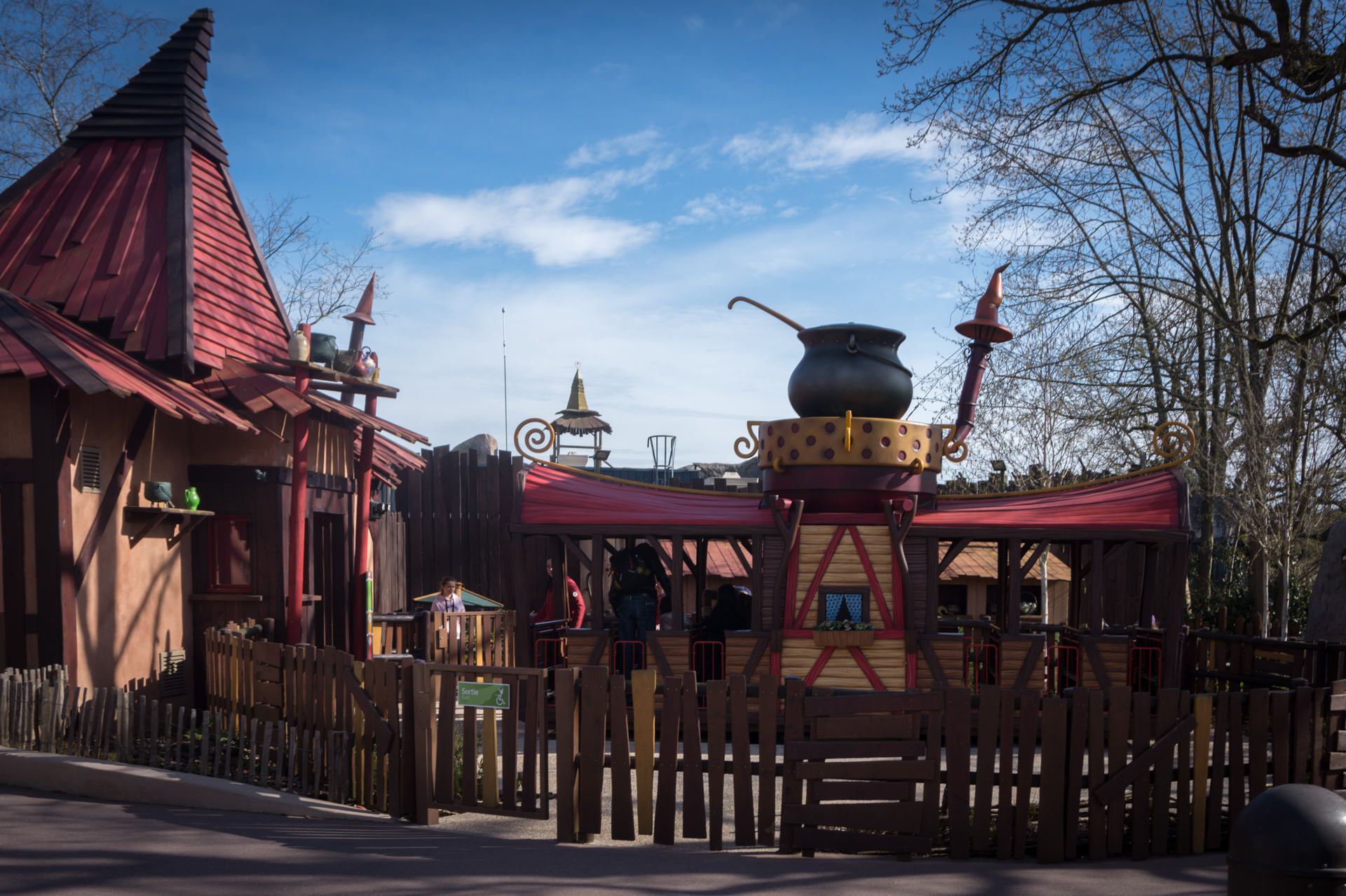
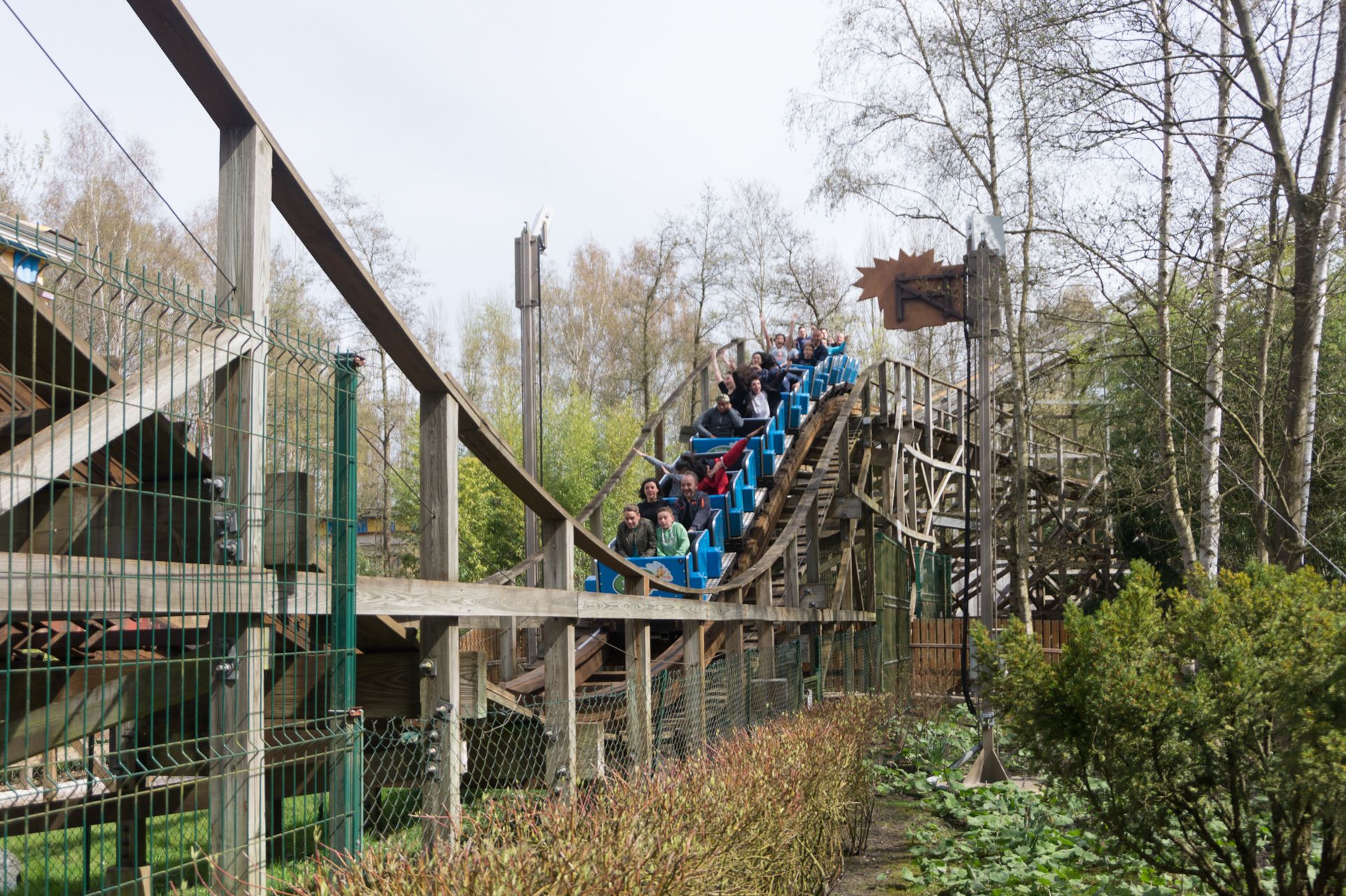
Parc Astérix is available either in full or closed. Up to now I could always fully sign this statement, because every time I went for a roller coaster ride near Paris, the park was closed. It is in the nature of things that there are many other conditions besides this logical expression. However, it is also a fact that the amusement park, which opened in 1989, is one of the most famous European amusement parks and is therefore quite well visited. Astérix is also a very successful brand.

As a collector of the French hardcover books, I was very much looking forward to the visit to the Parc Astérix. After the second night in Champagne, I left for Paris after a short chat with the owner of the holiday home. But as the motorways were all overloaded, I reached the theme park via numerous national roads much later than originally planned. Actually, I had already wanted to buy the pass Saison Découverte online (reduced-price annual ticket with exclusion days), as it is cheaper than a two-day ticket, but thanks to shipping, the ticket would probably have arrived after my visit at home. So I had to pay the parking fee of 10€ at least once. As the queue at the annual ticket office was too slow for me, I bought a normal day ticket, which I later converted in Parc Astérix. Thanks to the data already entered online, this was also done in no time.

Le Défi de César

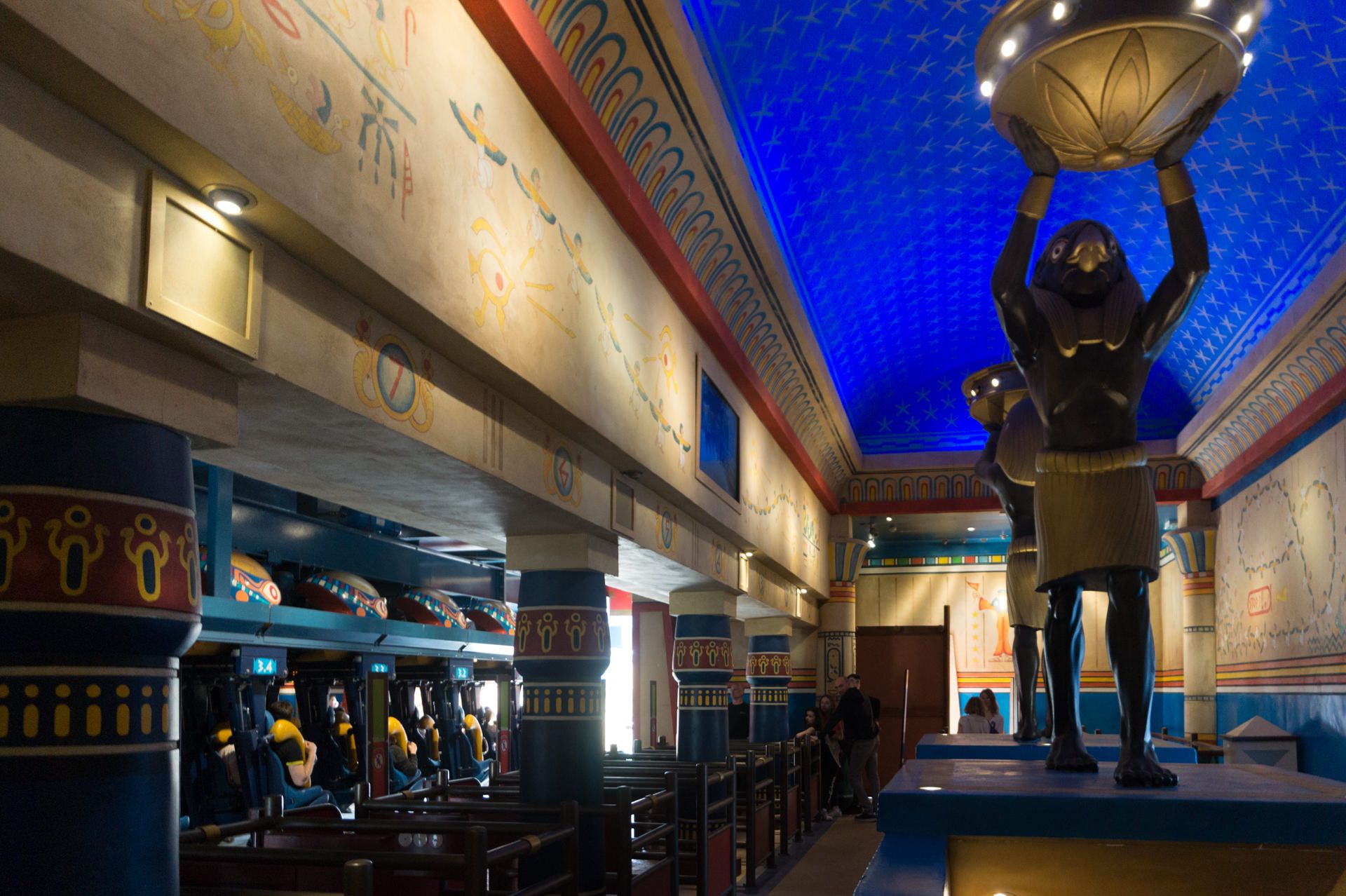
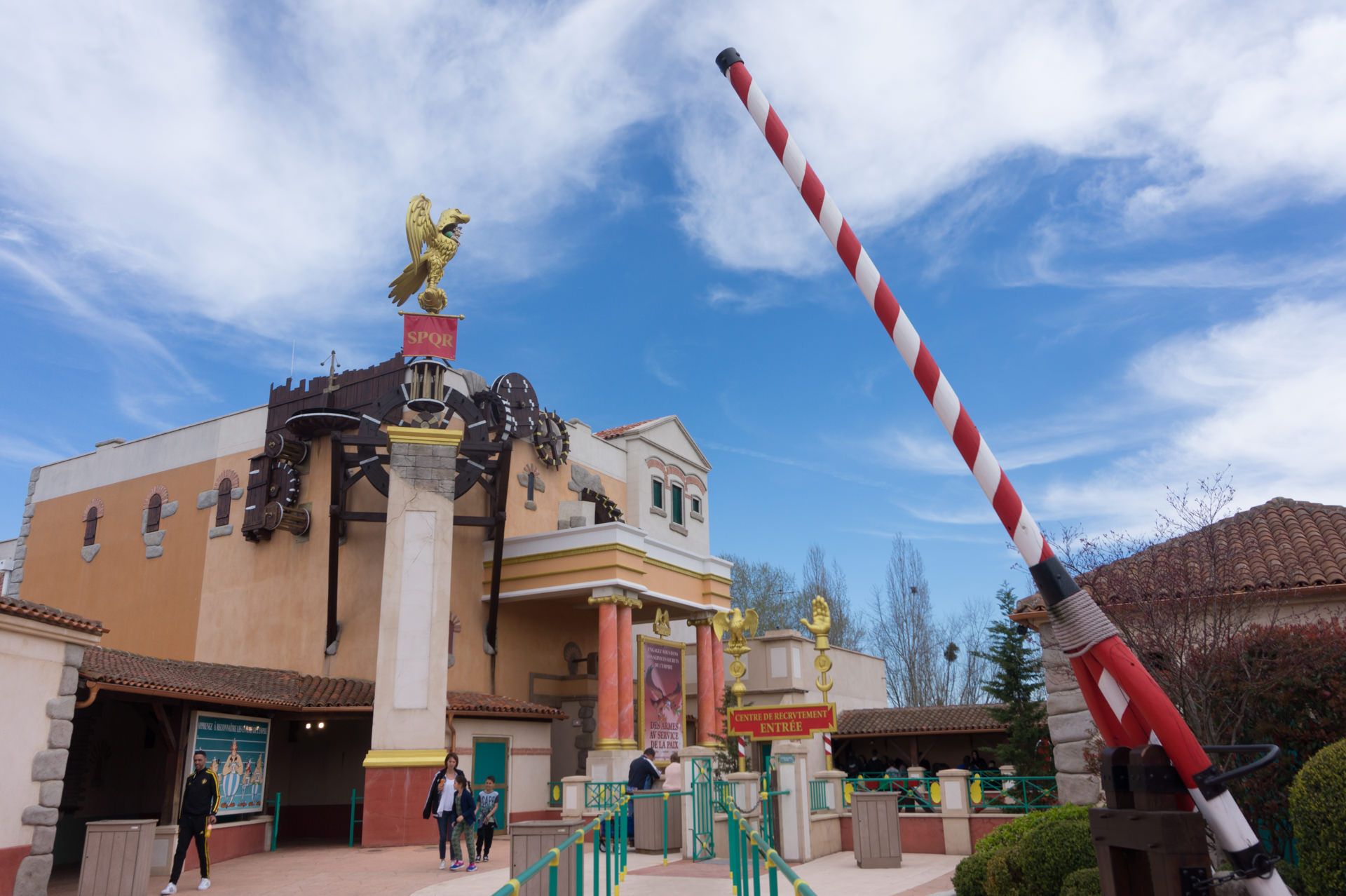
The first part of my three-day tour of the park is the Le Défi de César mad house. As candidates for the Roman intelligence service, we are to infiltrate the stubborn Gaul. All of Gaul? No, actually only the village of Astérix and Obélix. In order to prepare ourselves for this mission, Julius Caesar has set us several tasks.

In three pre-show rooms we are now guided through the attraction before the actual Mad House awaits us. In the first challenge we learn how important it is to wear the future work clothes – beards and Gallic braids – with dignity. The second challenge focuses on Gallic humour, before we turn to the magic of Gallic women and the musical arts of the bard Troubadix in the third challenge. This is exactly what happens in a Roman bath, which, to the song of Troubadix, no longer has control of its water masses and almost collapses. The final challenge is the crossing to Gaul. During this crossing we meet Astérix and Obélix in person, who noticeably enjoy turning the ship around its horizontal axis for a few laps. Shortly afterwards the ship sinks and an octopus attacks. We barely escape the beast and then give up.

The Mad House of the manufacturer Mack Rides scores above all by the inclusion of the well-known characters and by the inclusion of the future secret agents. Unfortunately, the experience gets very long, especially towards the end, so that repeat rides are not really recommended. As a unique happening, Le Défi de César should not be missed.

Romus et Rapidus

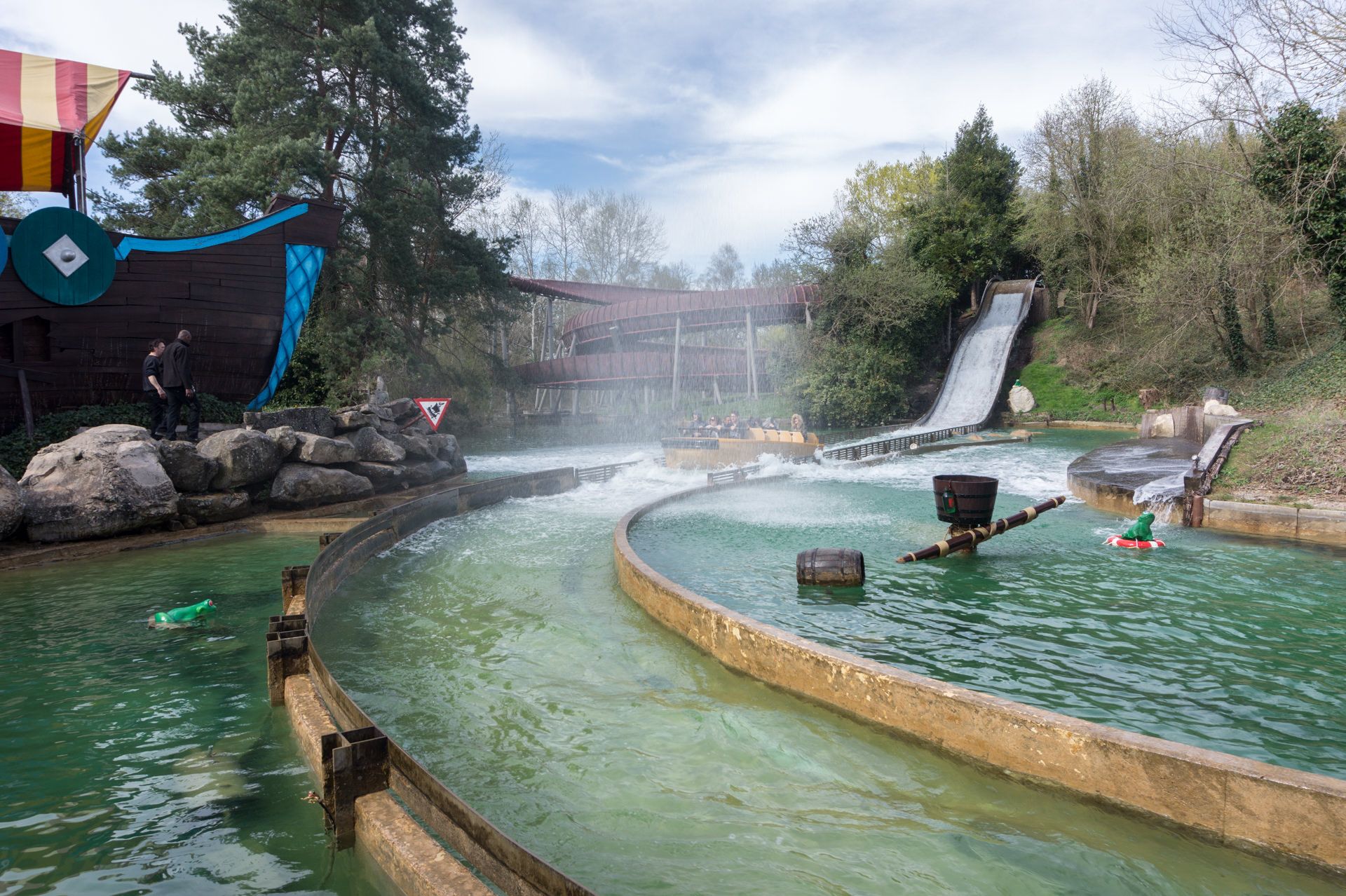
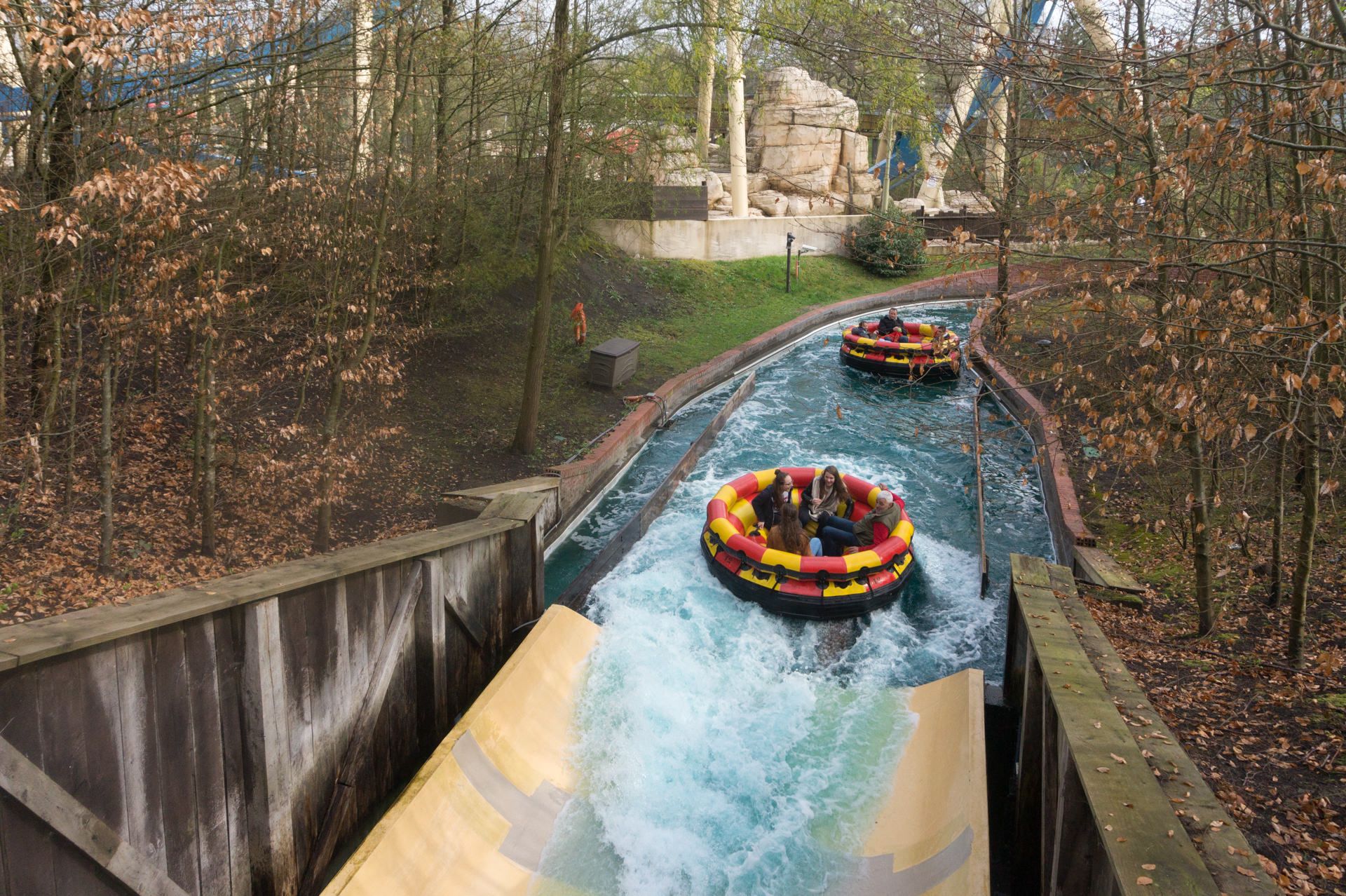
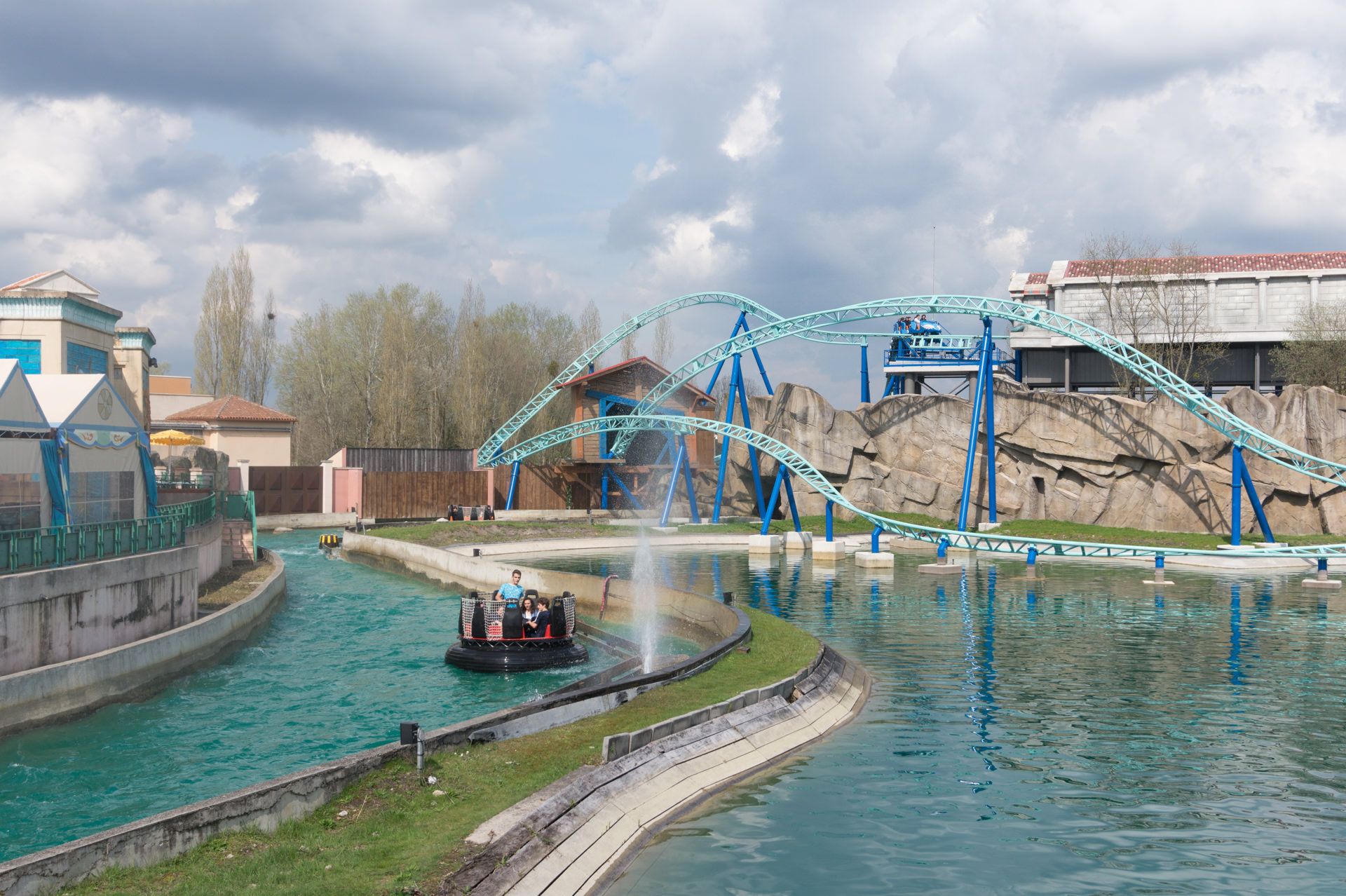
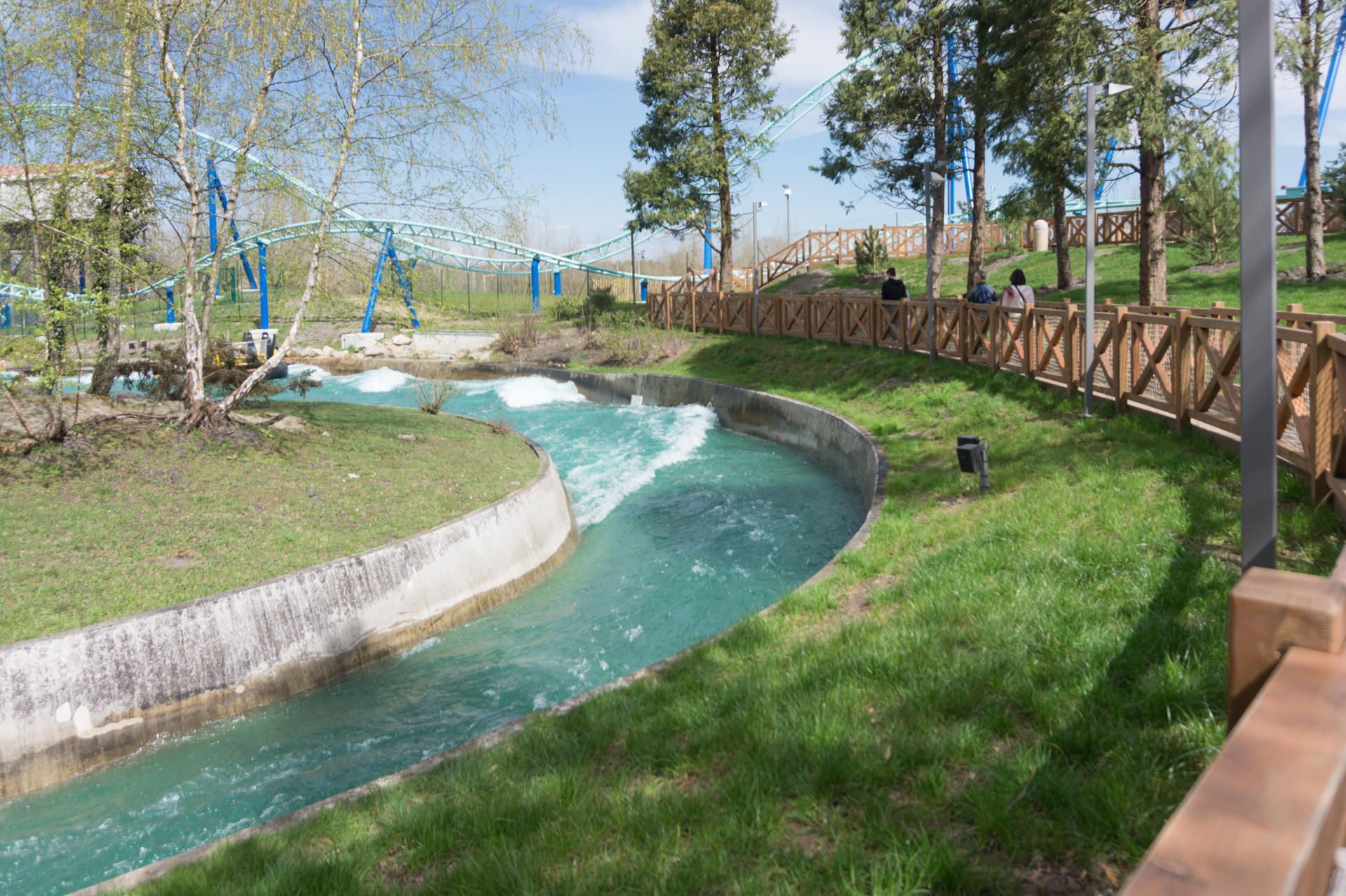
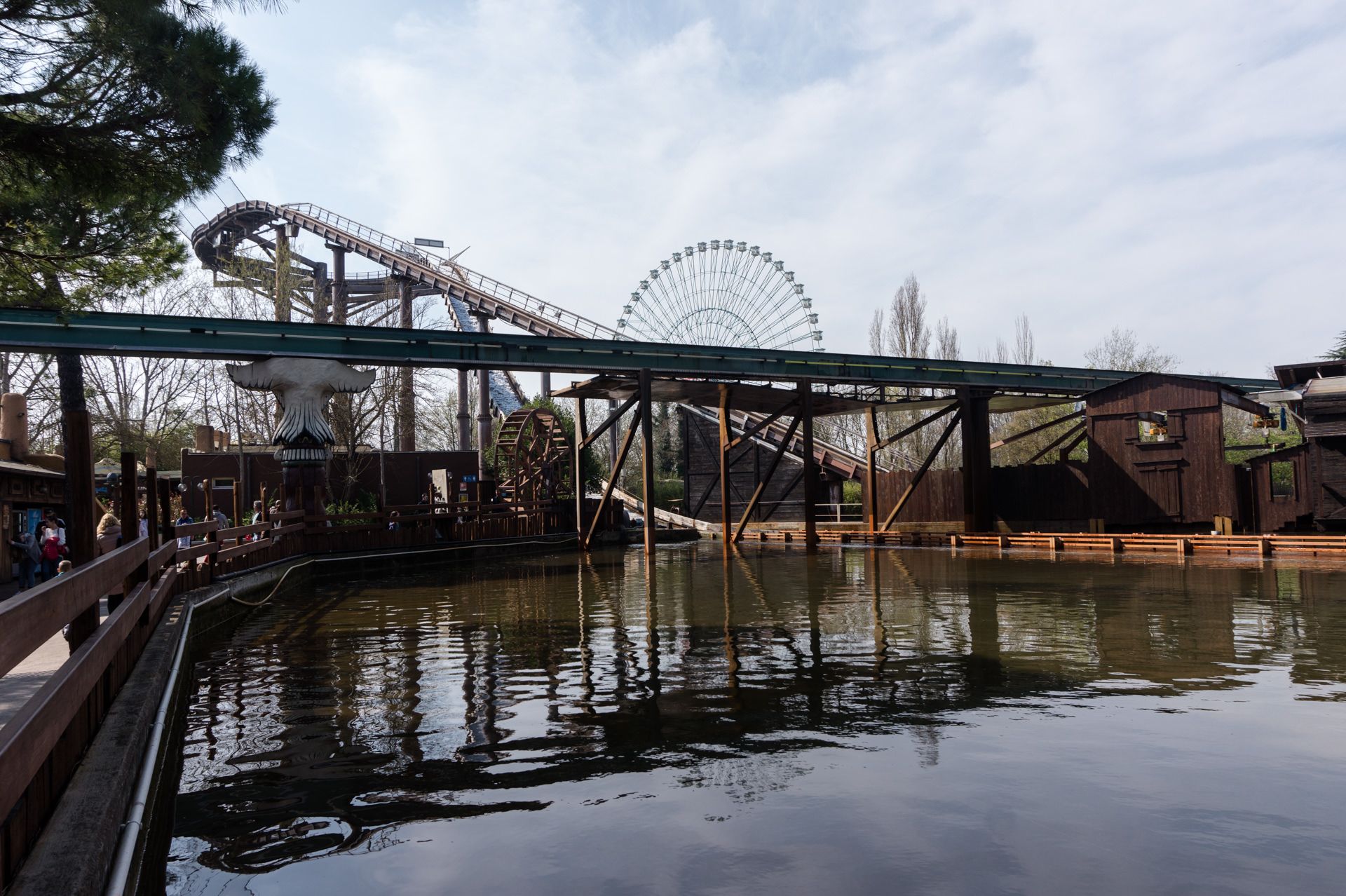
Only a few metres further on is the entrance to the Romus et Rapidus Intamin Rapids Ride. Once known as Descente du Styx, the rapid river has been entertaining park visitors since the opening year of the theme park. After an incident in 2006, when a boy fell out of a boat, the safety features were massively extended, giving it its current appearance. Since then, the boats have been much less free-flowing, but this is by no means a renunciation of the wild river ride. Romus et Rapidus offers a wild rafting trip with a large number of rapids and other obstacles, where water is always sloshing into the boat. A very splashing adventure.

Théâtre de Poséidon

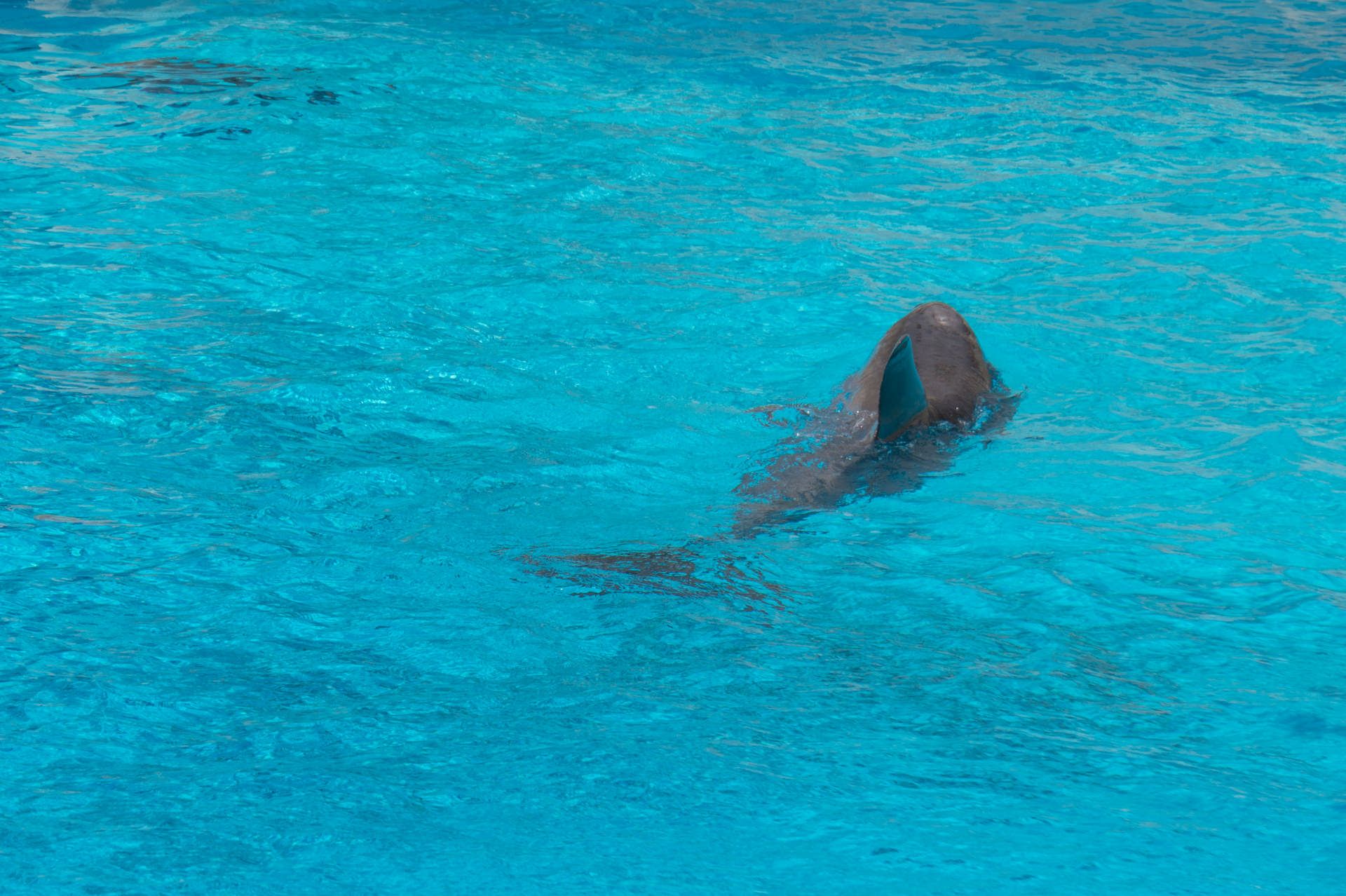
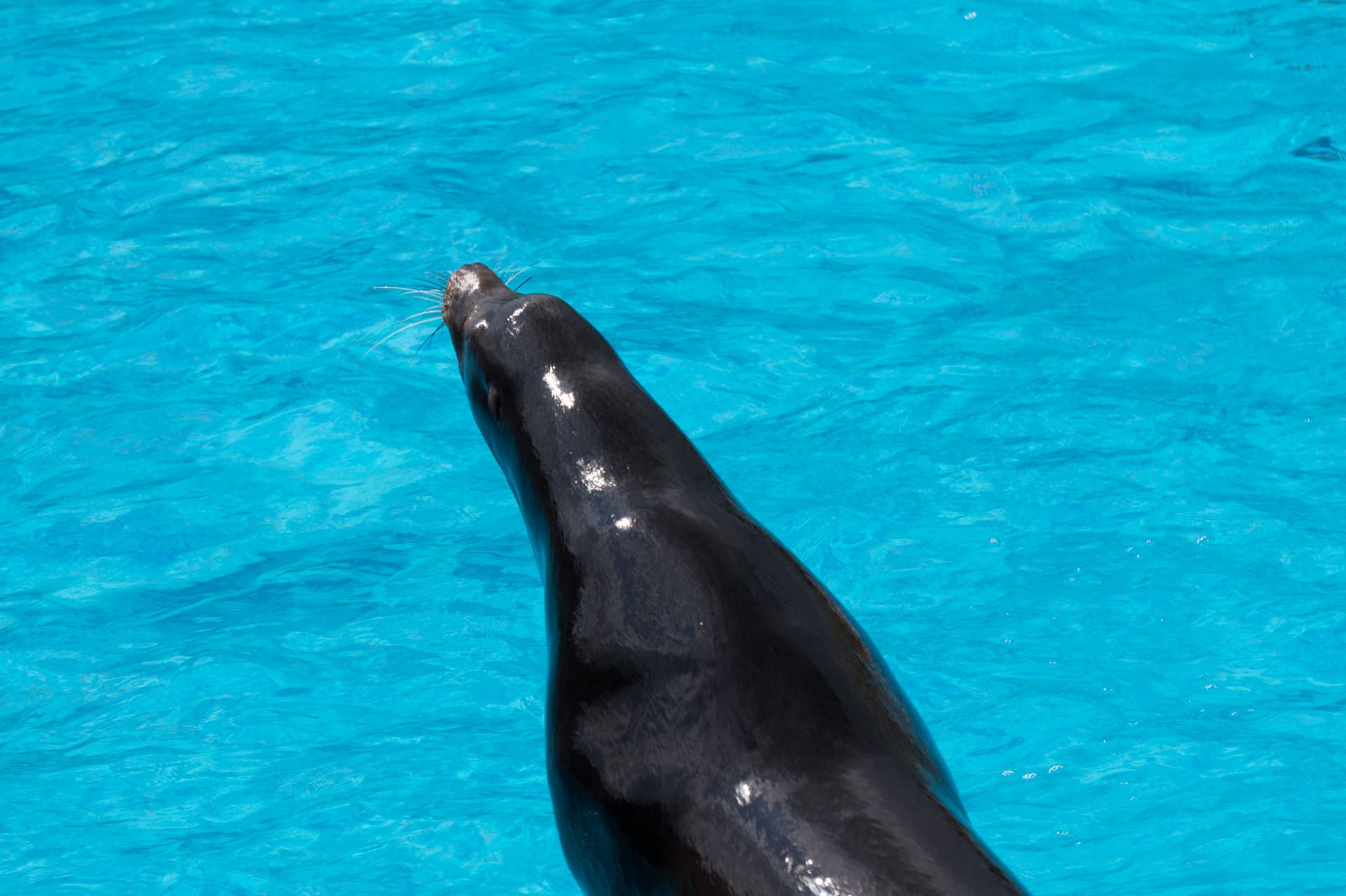
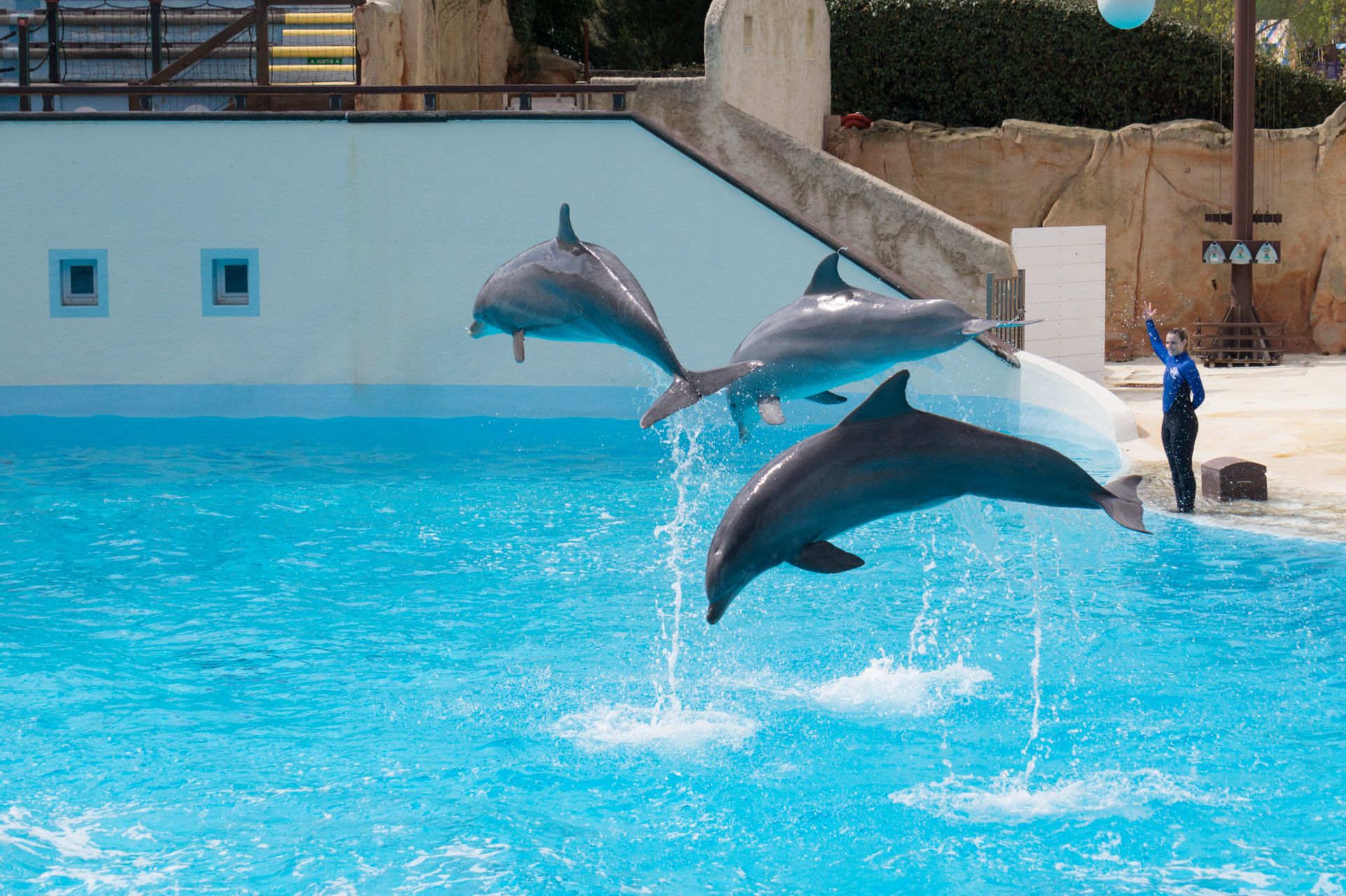
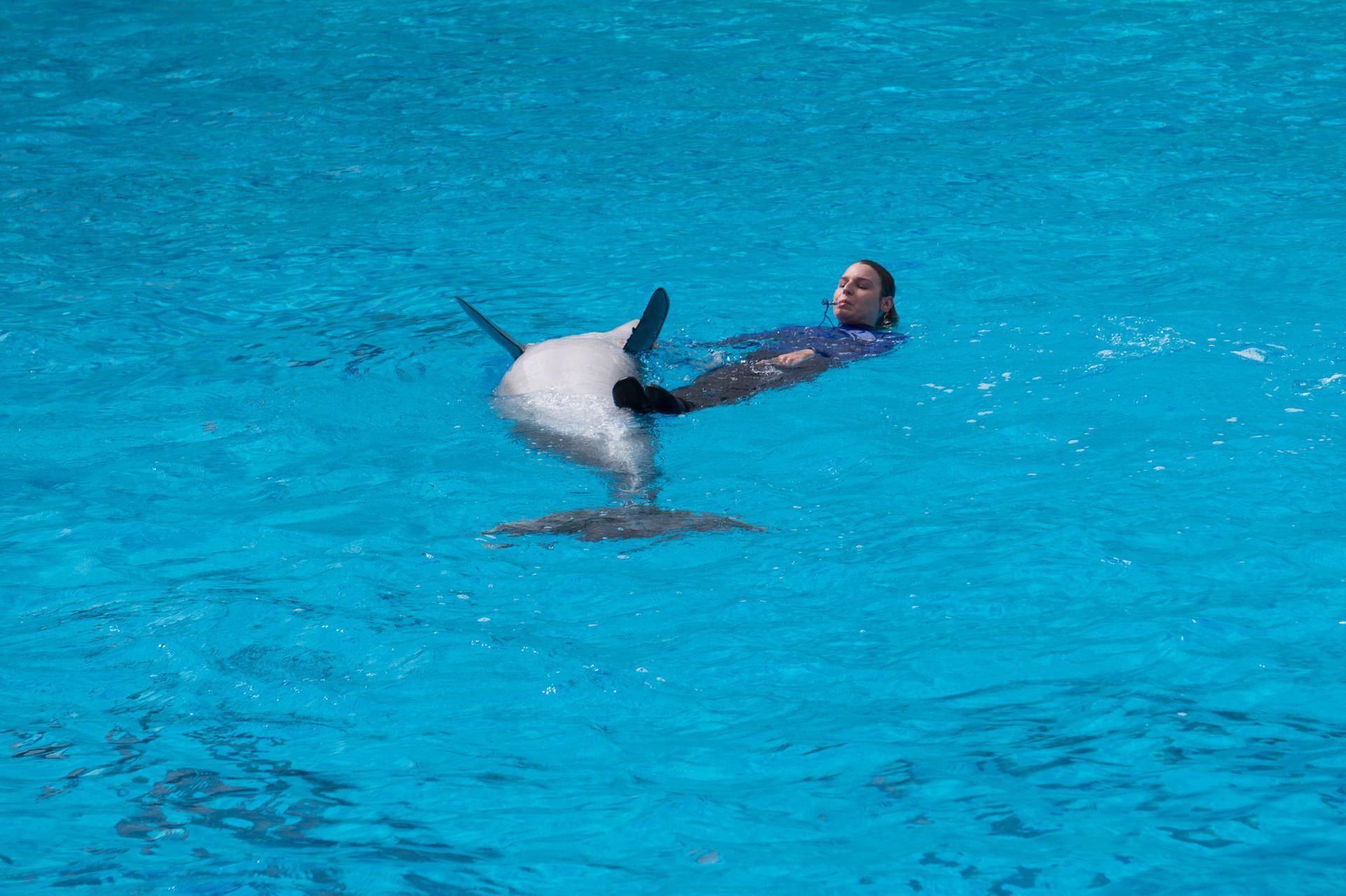
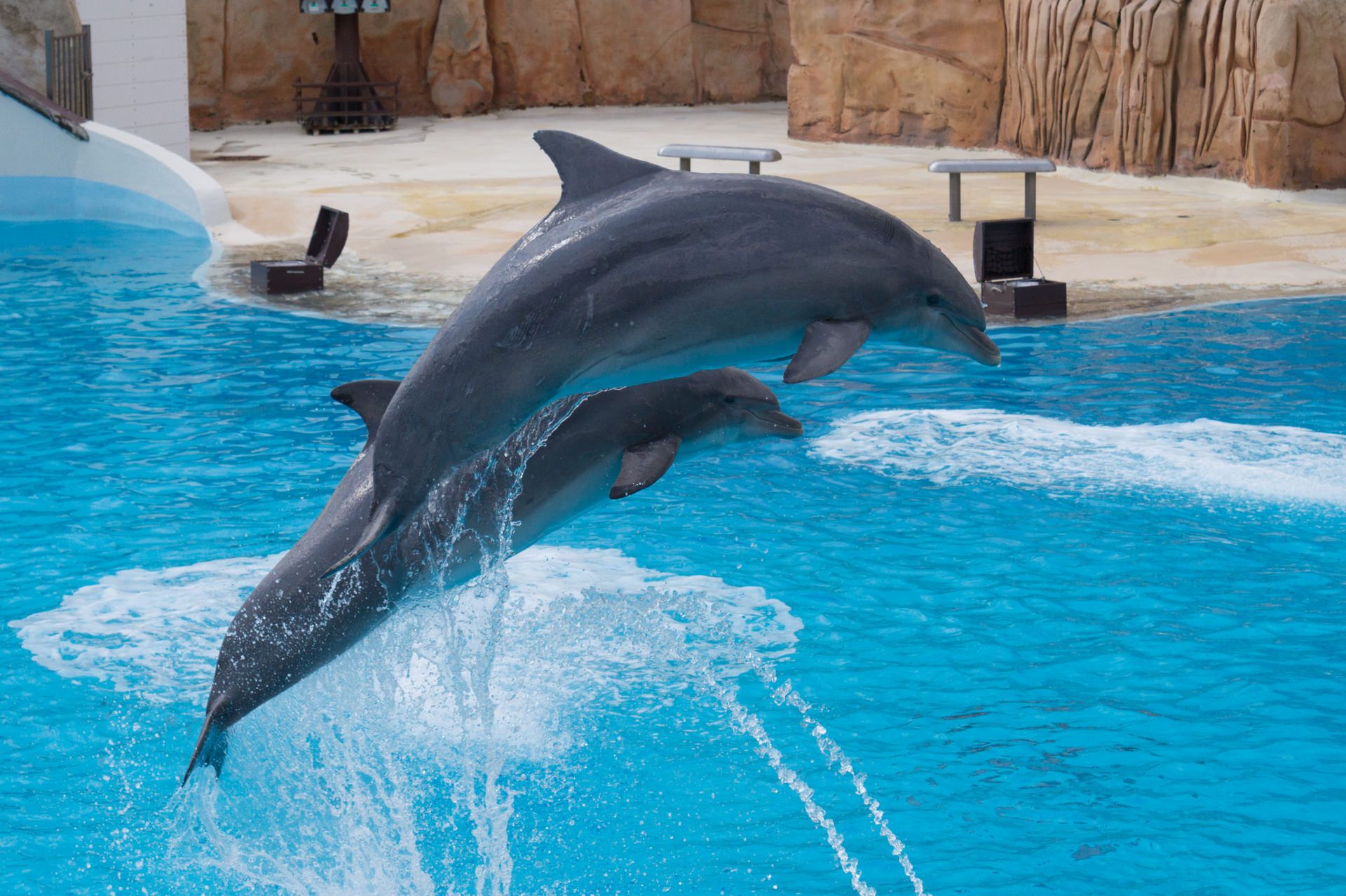
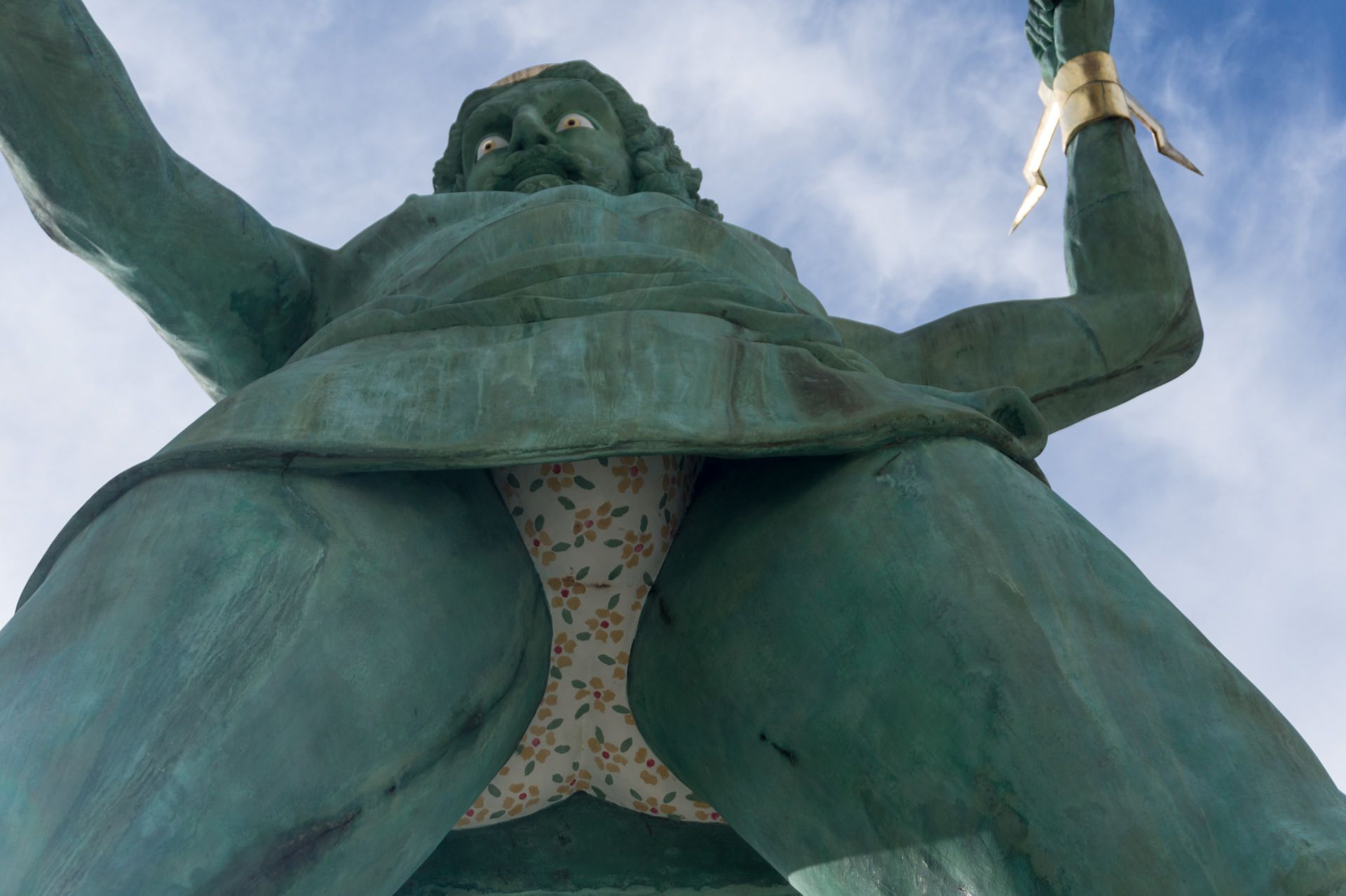
The same could be said of the Parc Astérix dolphin show at the great Théâtre de Poséidon. But instead of Gaulish humour, a dull dolphin and sea lion show awaits us here, where the relationship between trainer and animal, as well as education about the animals, takes centre stage. If you are honest, the whole spectacle is like a journey to a time long gone and that’s exactly where we leave it.

Cheval de Troie

We experience a far more positive journey through time on Cheval de Troie, a flying carpet from Zierer. Although the ride on the Cheval de Troie is extremely short, it’s a real thrill – after all, the gondola has to accelerate accordingly to reach the peak of the ride in the shortest possible time. It’ s like a special kind of quickie.

Pégase Express

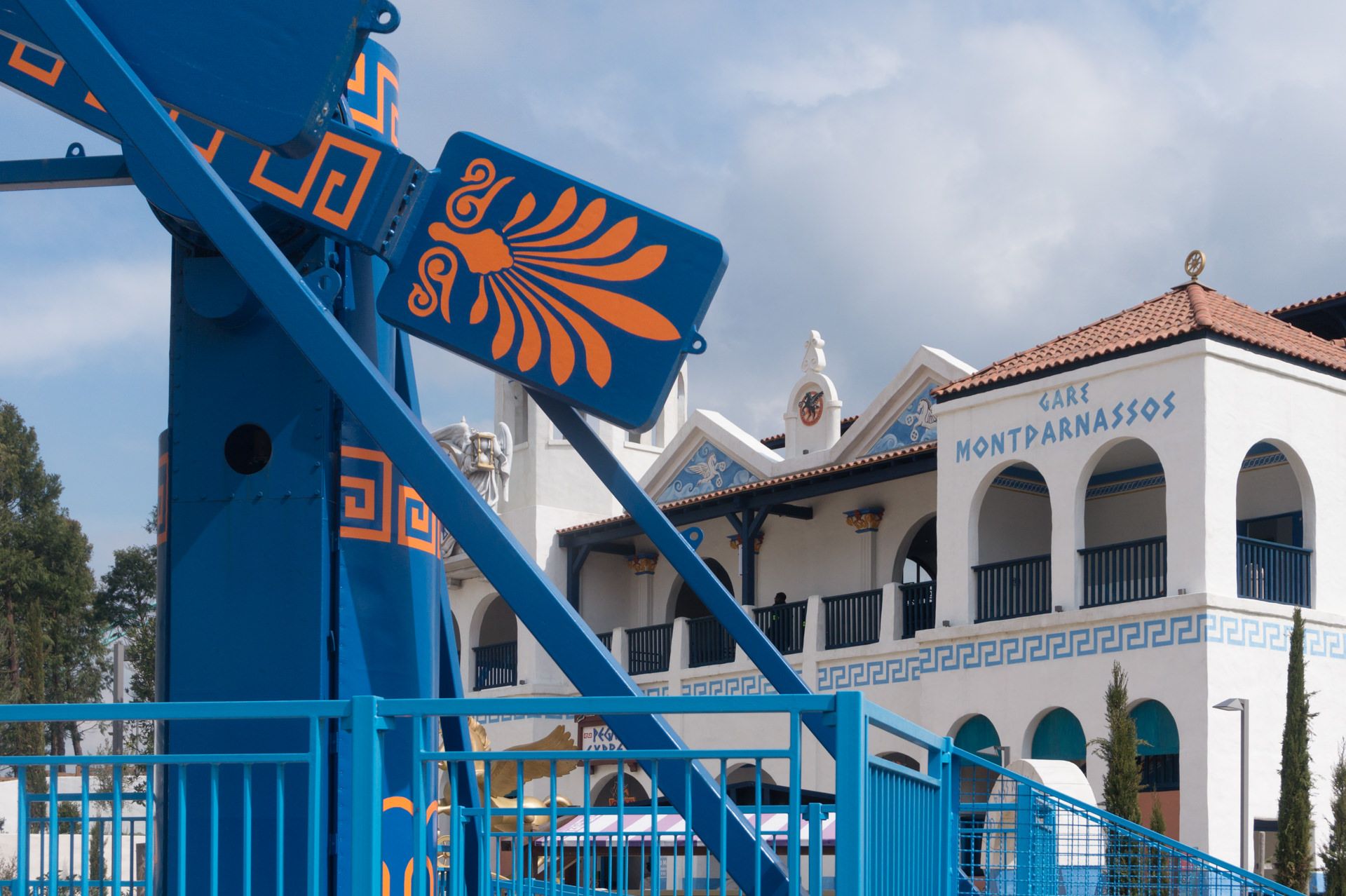
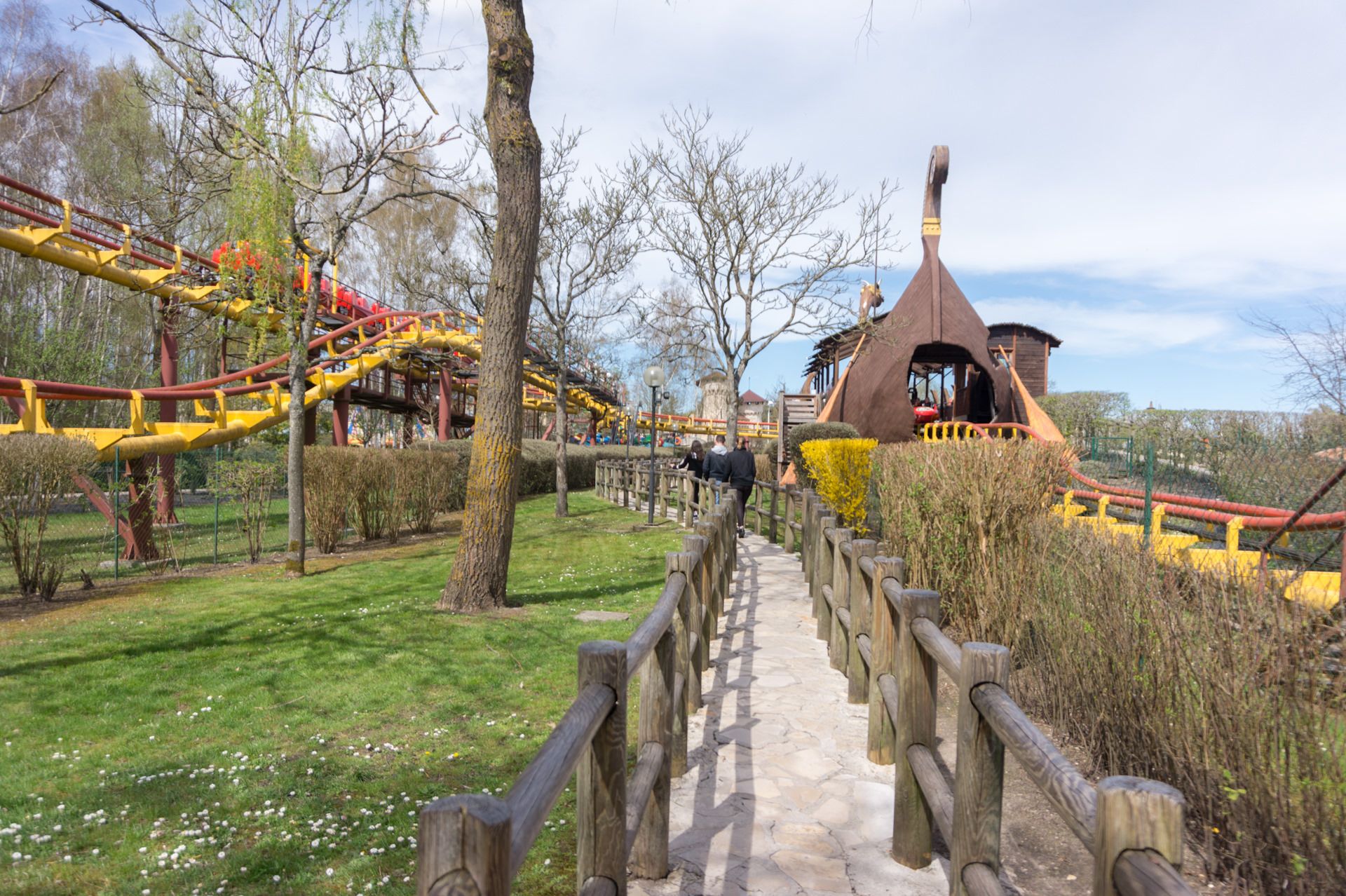
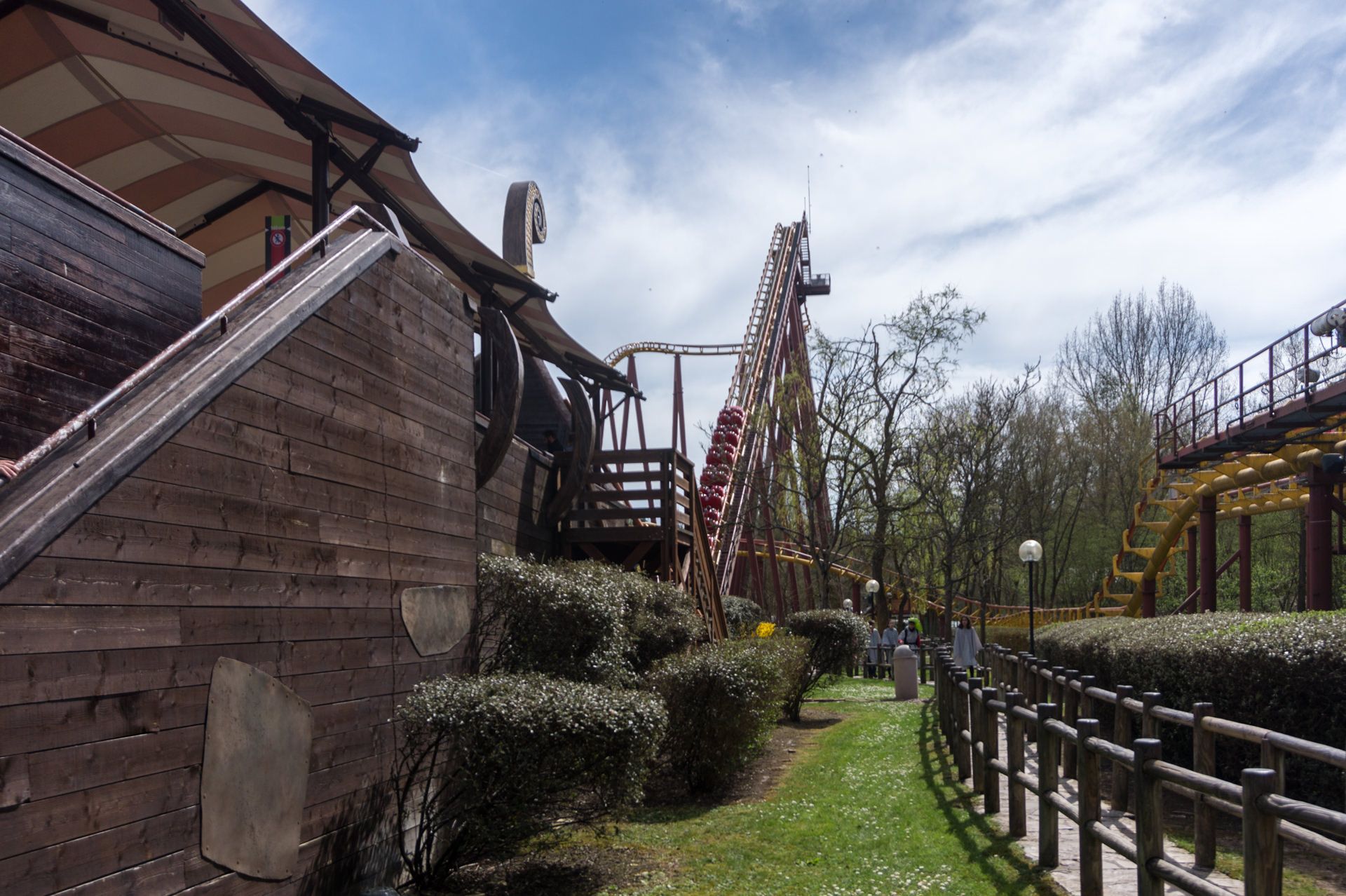
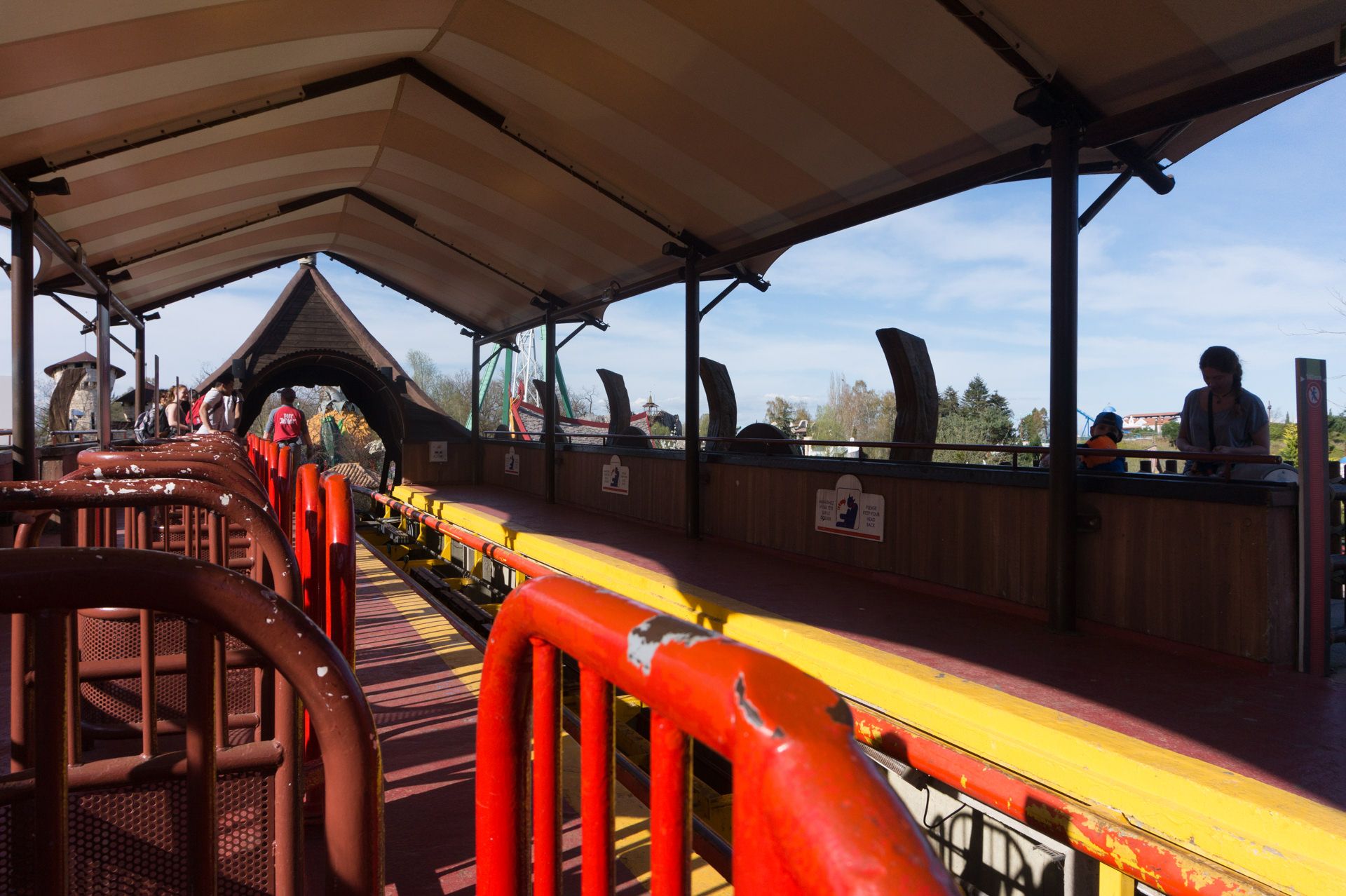
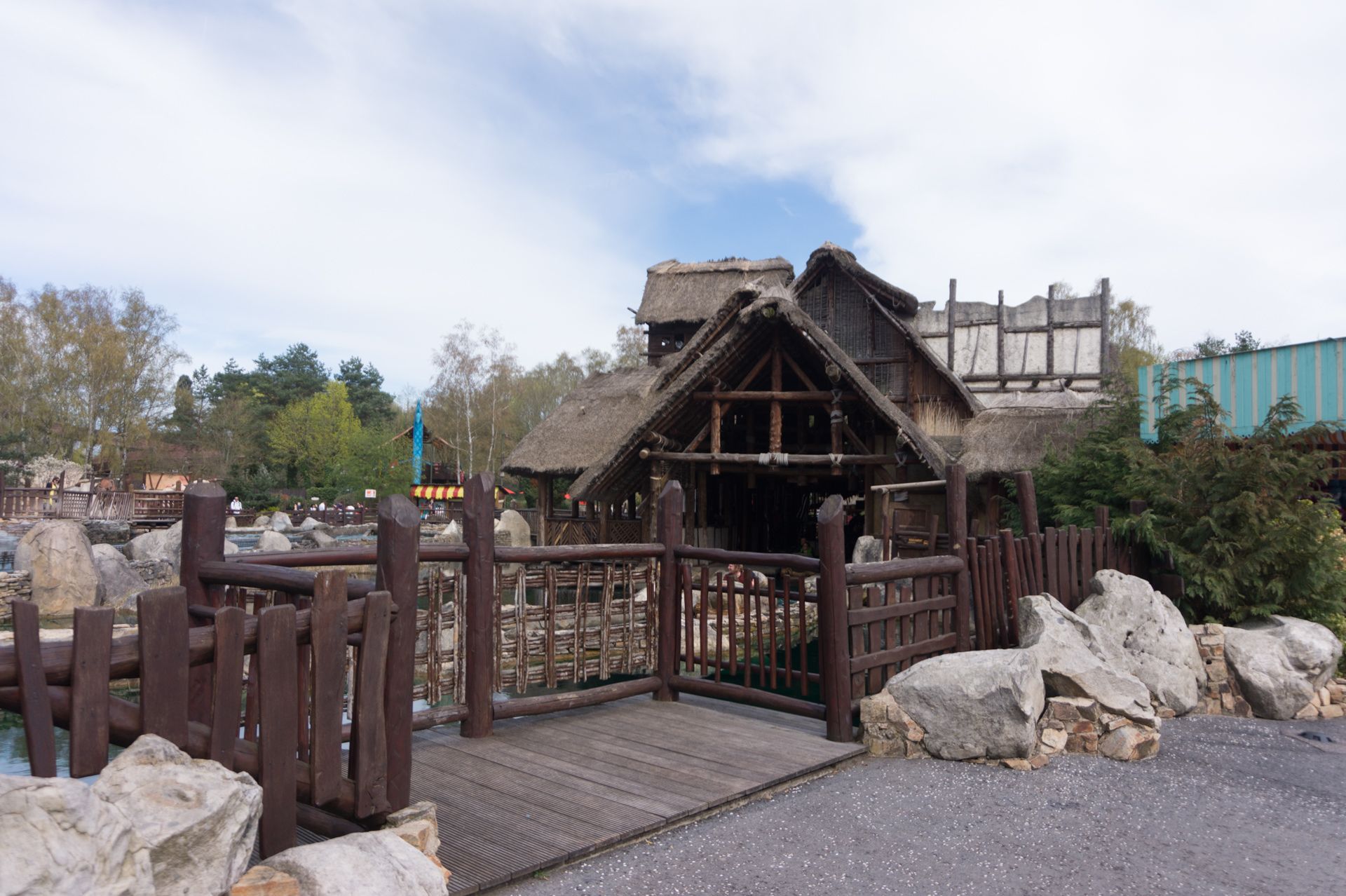
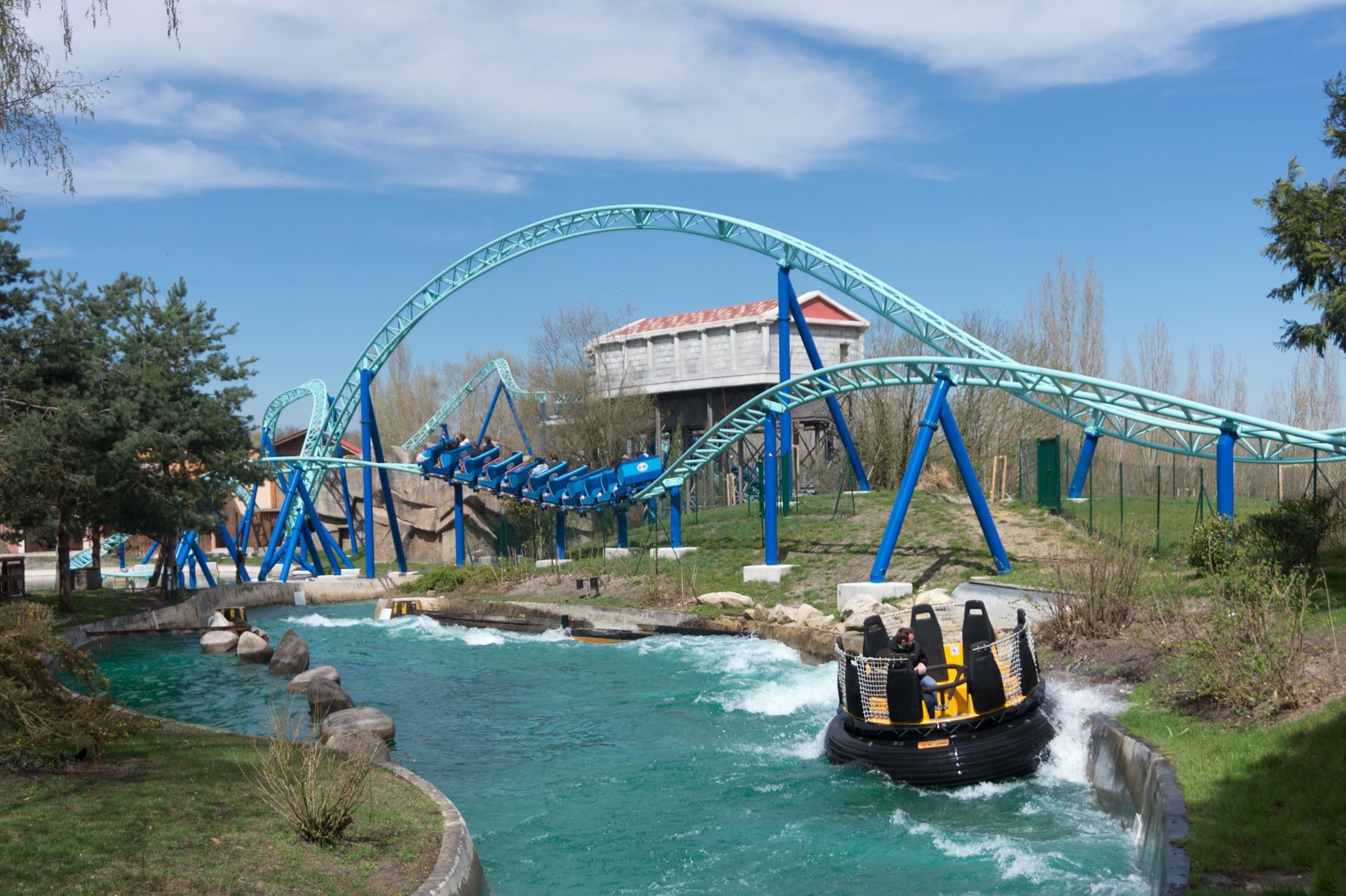
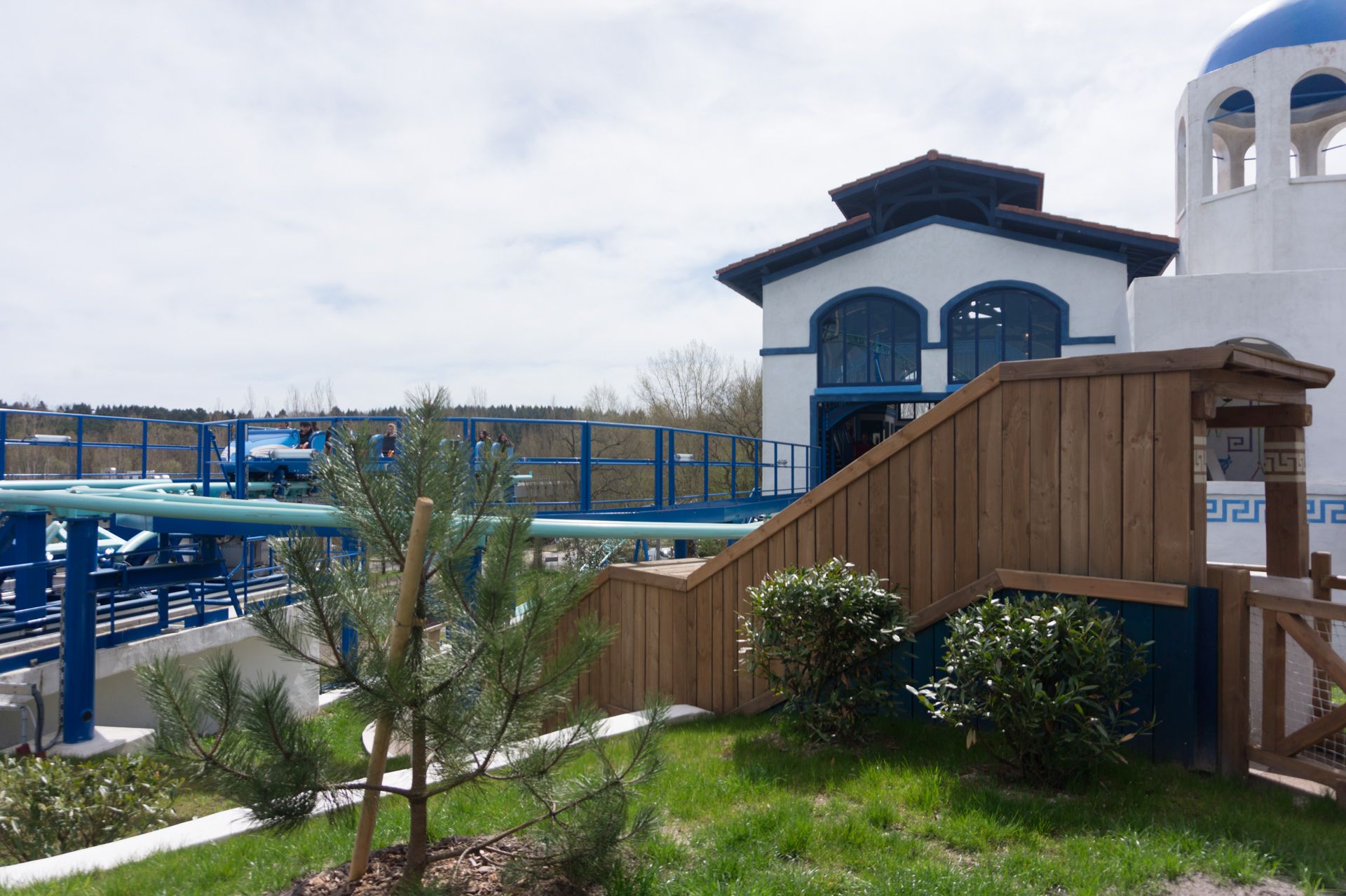
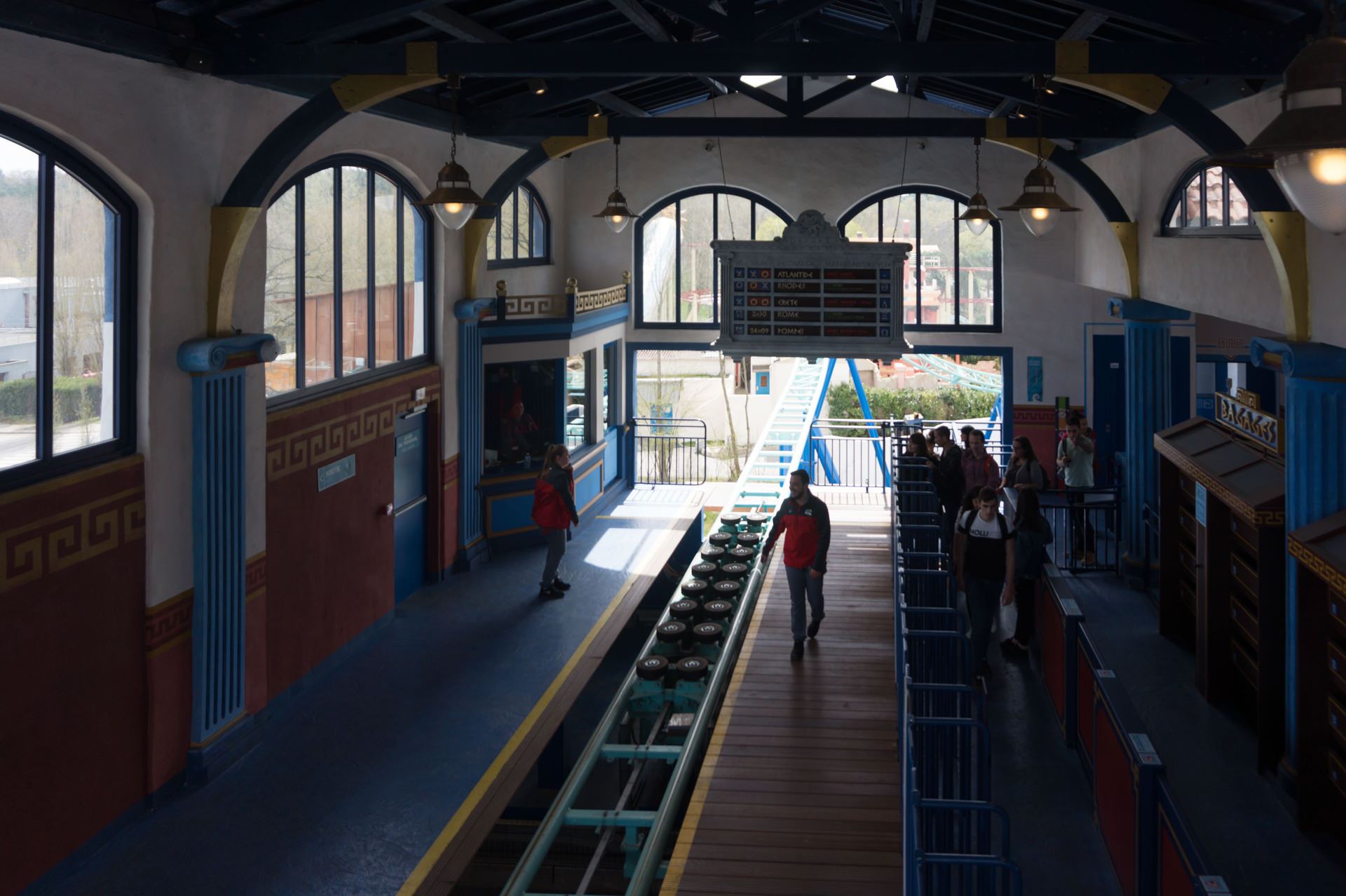
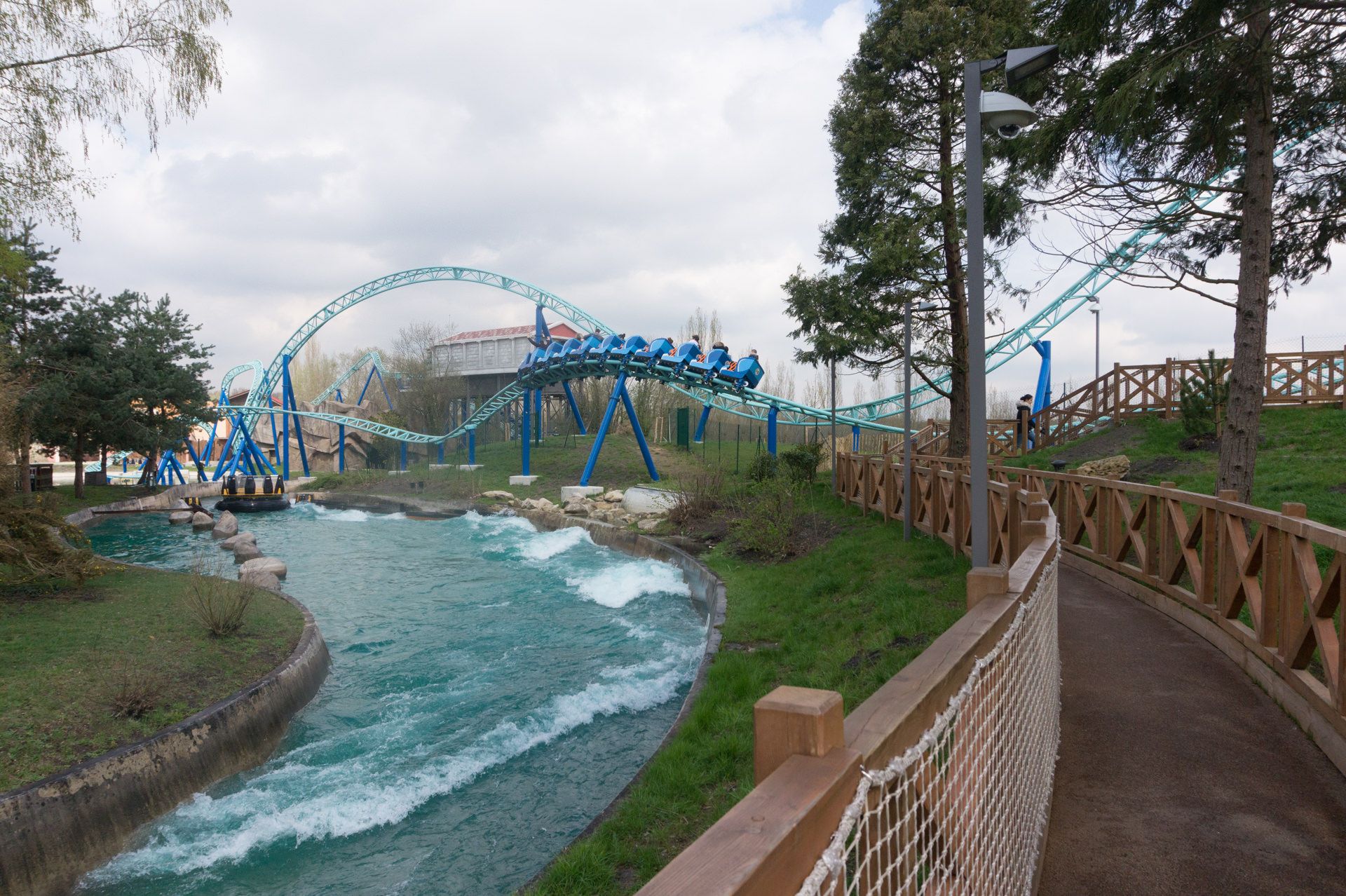
The queue at the Pégase Express turns out to be much longer. After a few steps in the station building of the Gare Montparnassos (hihihi), you can quickly get out into the fresh air again and walk over the dike of the Romus et Rapidus rapid river, from where you can catch a great view of the soon to follow trip, before returning into the building. Here you have to climb a lot more steps before you reach the station of the roller coaster. Theoretically, you will be let into an area in front of the roller coaster, where you can deposit your belongings – but if there is not much traffic, this step is not necessary and you have to take them with you on the ride.

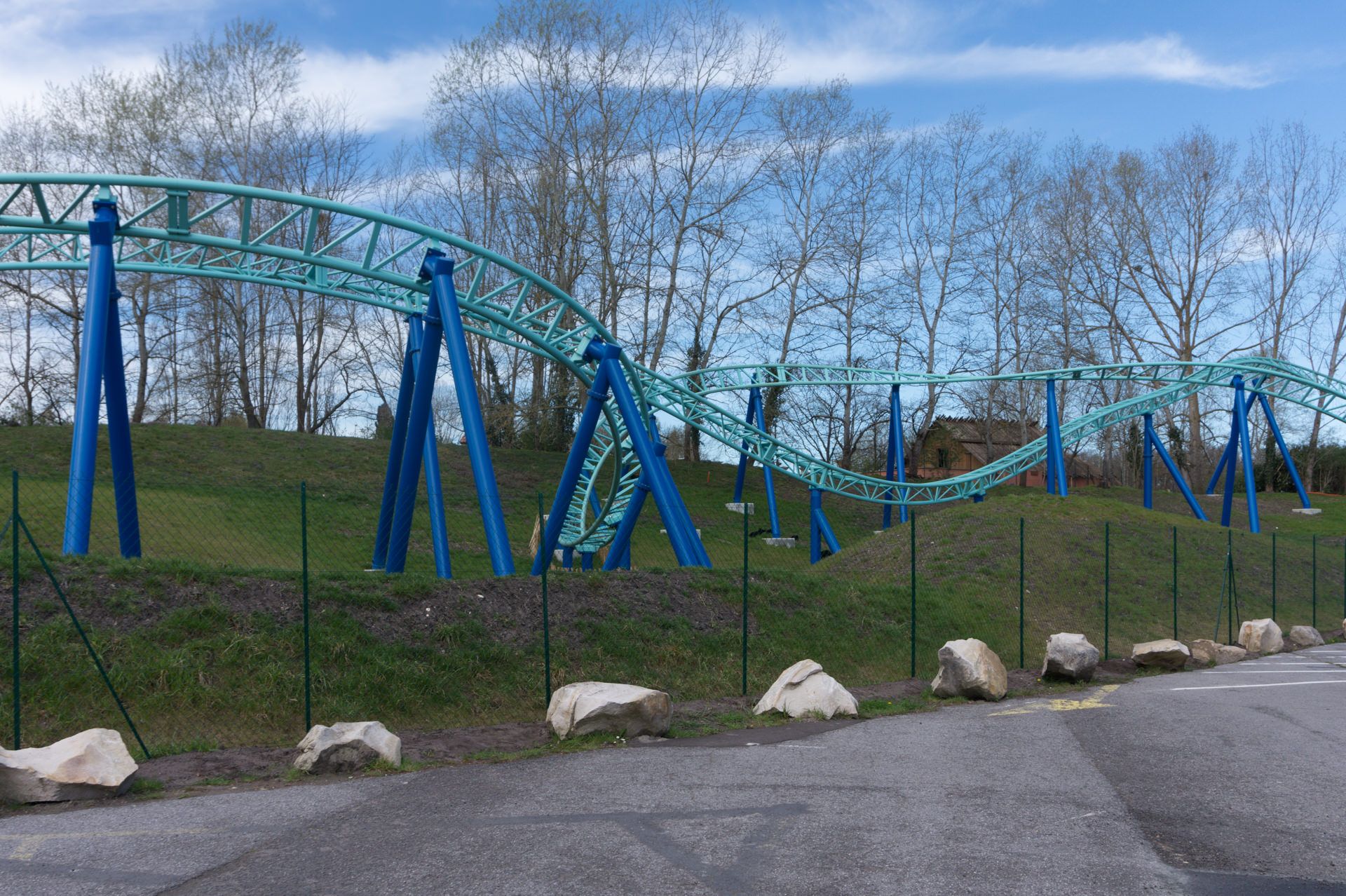
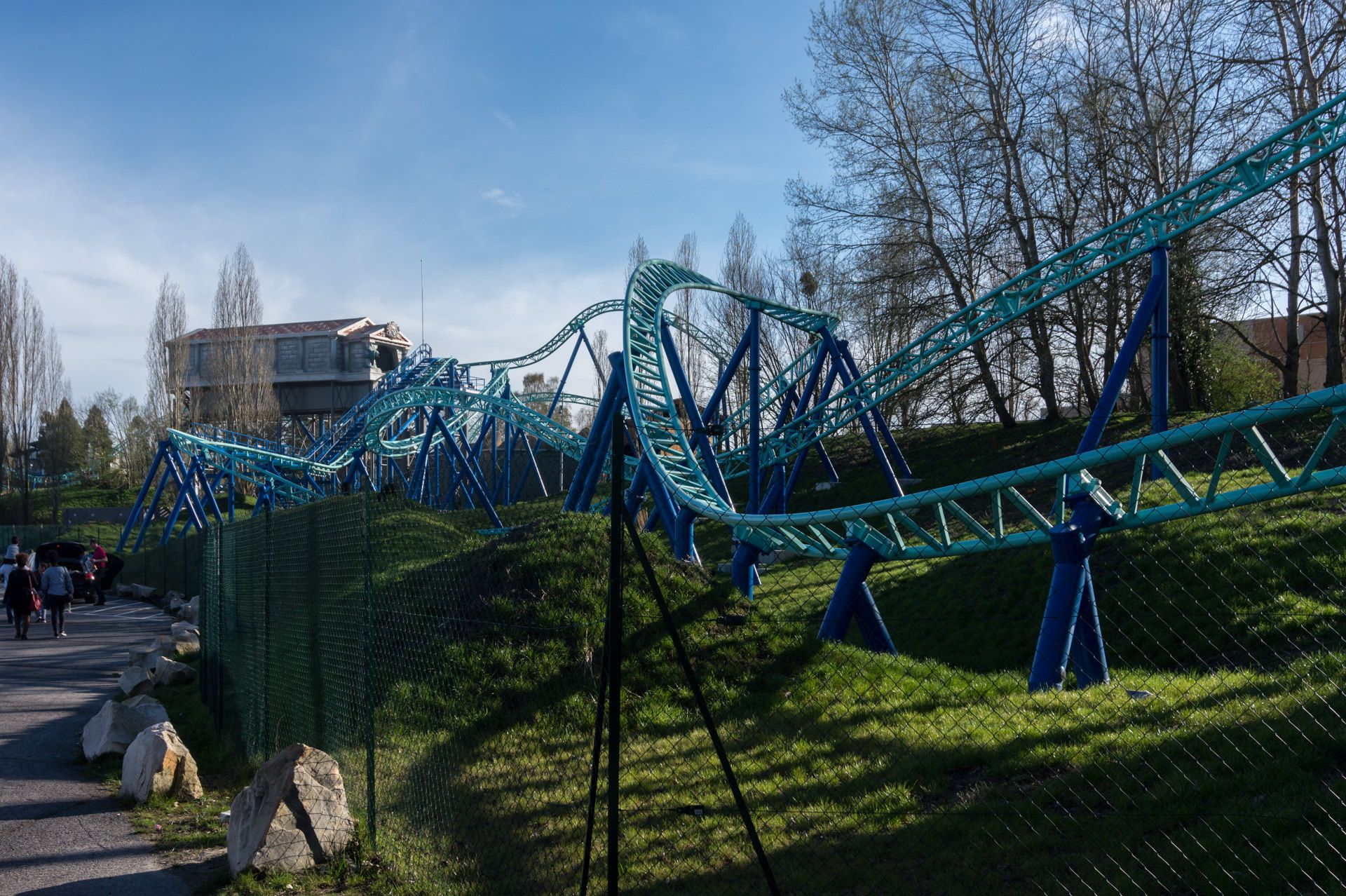
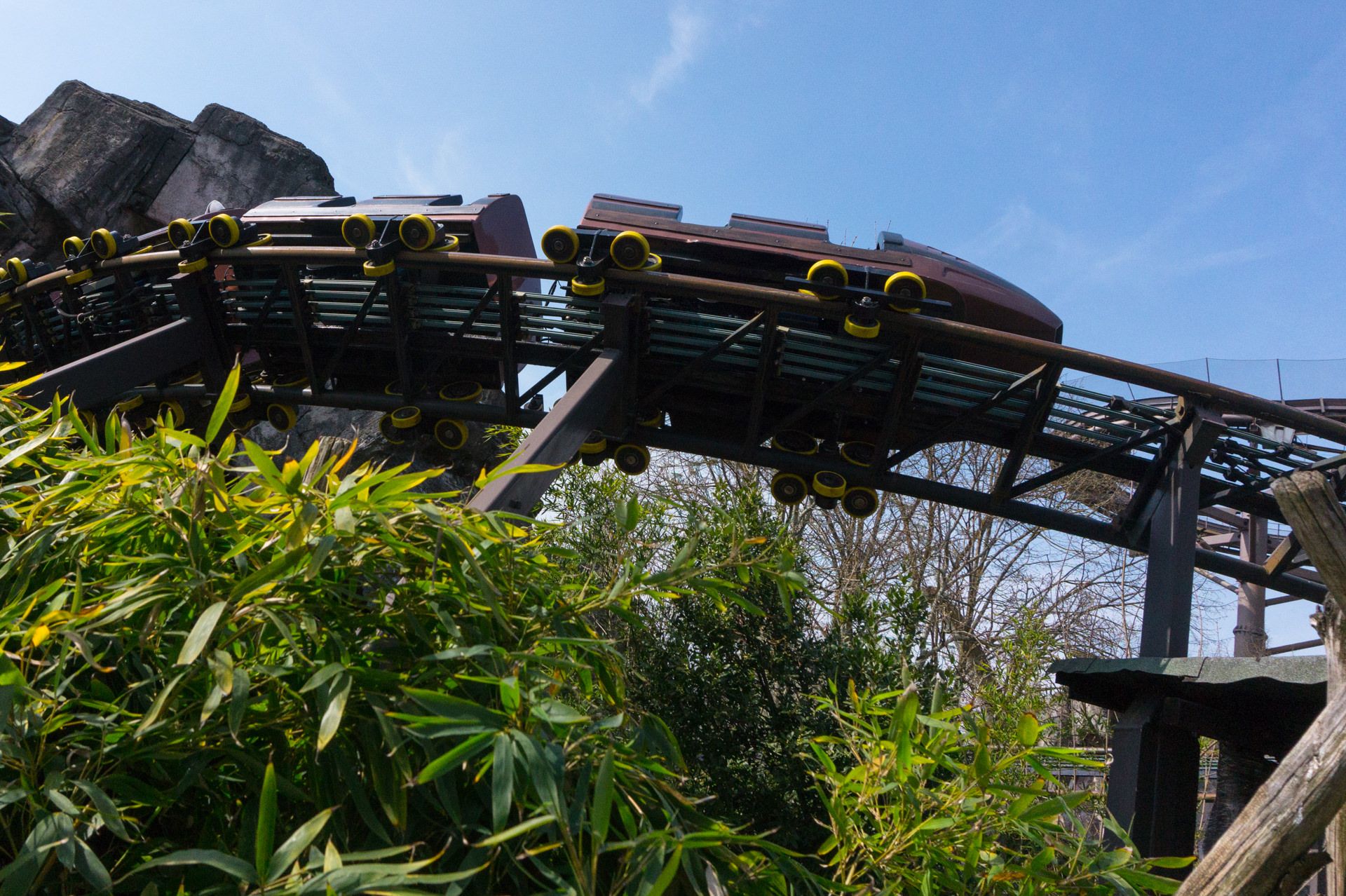
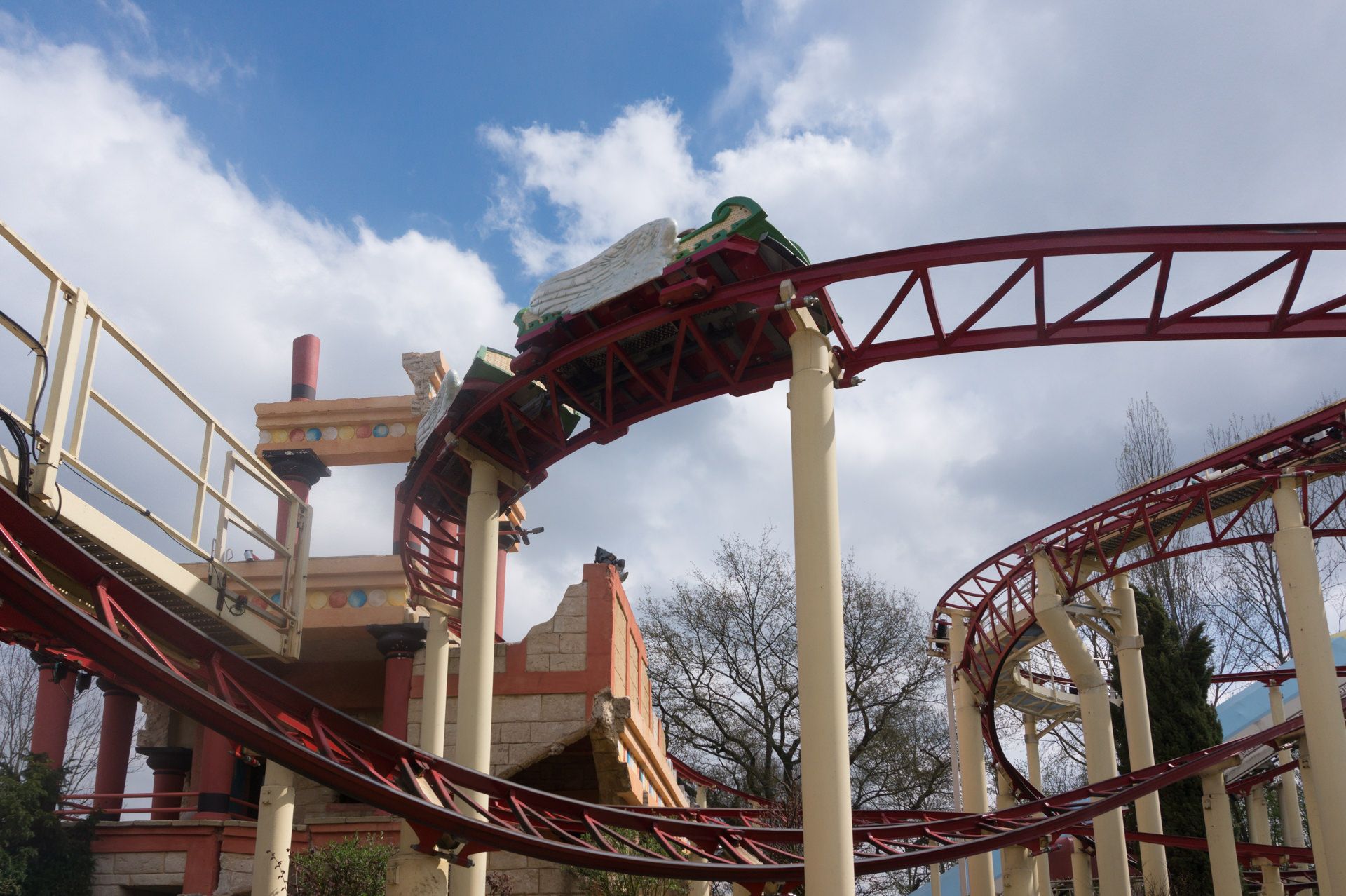
From the station, we start with a small friction wheel lunch. The speed built up by this is, however, already reduced to a minimum on the following hill before it goes rapidly towards the first lift hill in a downhill leading Bayernkurve and a strongly inclined left curve. Quickly we reach the top of the first lift hill. In a curve we enjoy the view for a short time before the train plunges to the ground. With a bit of airtime we now whiz over a camelback and a total of three turns, before we approach the highlight of the ride via a kind of double-up. With a lot of speed we break through an advertisement in a beautiful steep turn, before we make another series of turns towards the second lift hill. Once arrived, we are quickly transported up the hill and then pushed into a raised temple hut.

The show programme for setting the course seems a little unimaginative and not very threatening; fortunately, however, we are quickly released from it by a friction wheel launch. Once again a short hill follows, which uses up all the momentum before we fall to the ground in a long curve. Backwards we go over hill and dale, or rather a rather wild ride with all sorts of hills close to the ground, small S-curves and tiny turns past the rapid river, back to the station building. Parallel to the first lift hill of the ride we reach the braking track after a short time. Here you roll back far enough before another switch can be set, which will let you go back to the station for the last few metres.

The Pégase Express is an extremely dynamic family roller coaster with some truly amazing ride manoeuvres and moments. The ride in Parc Astérix has a lot of momentum and in some parts is not very gentle with its passengers. Nevertheless, the ride remains family-friendly at its core, which is why Maman et Papa shouldn’t be completely overwhelmed, while the children are cheering with joy for the whole ride. Nevertheless, I left it at only a few rides – when there is no rush, the queue here is simply far too long.

Vol d’Icare

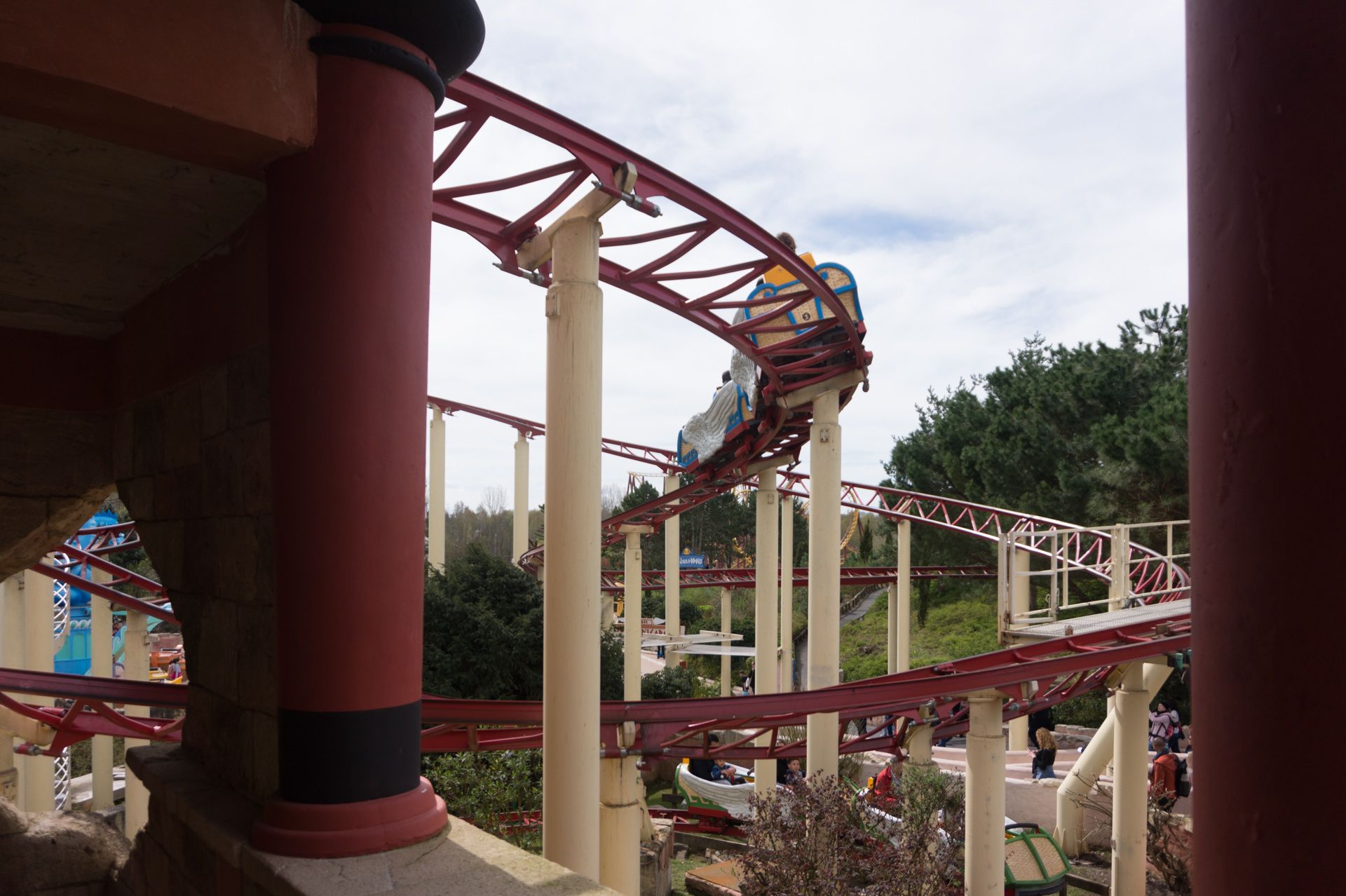
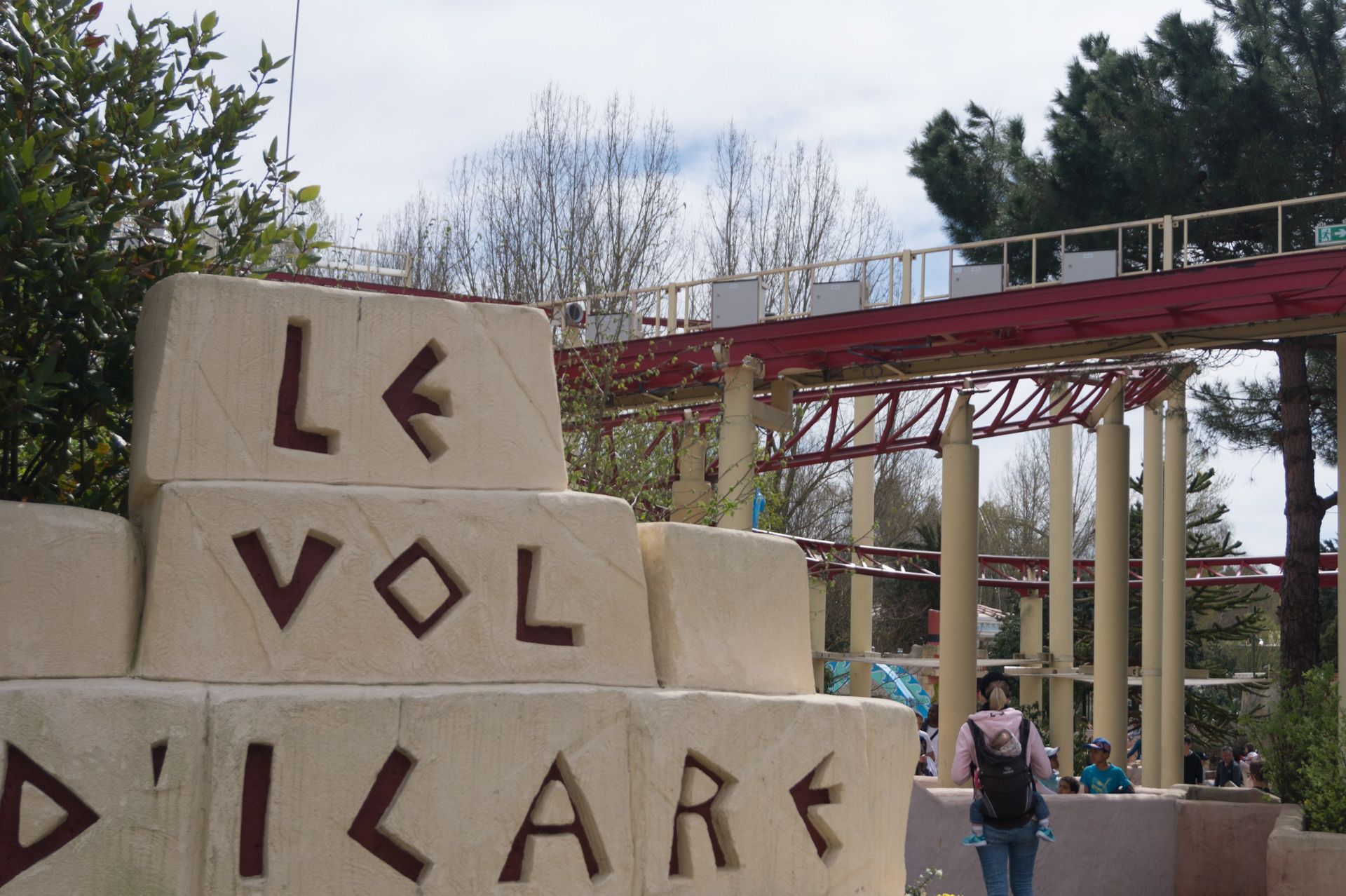
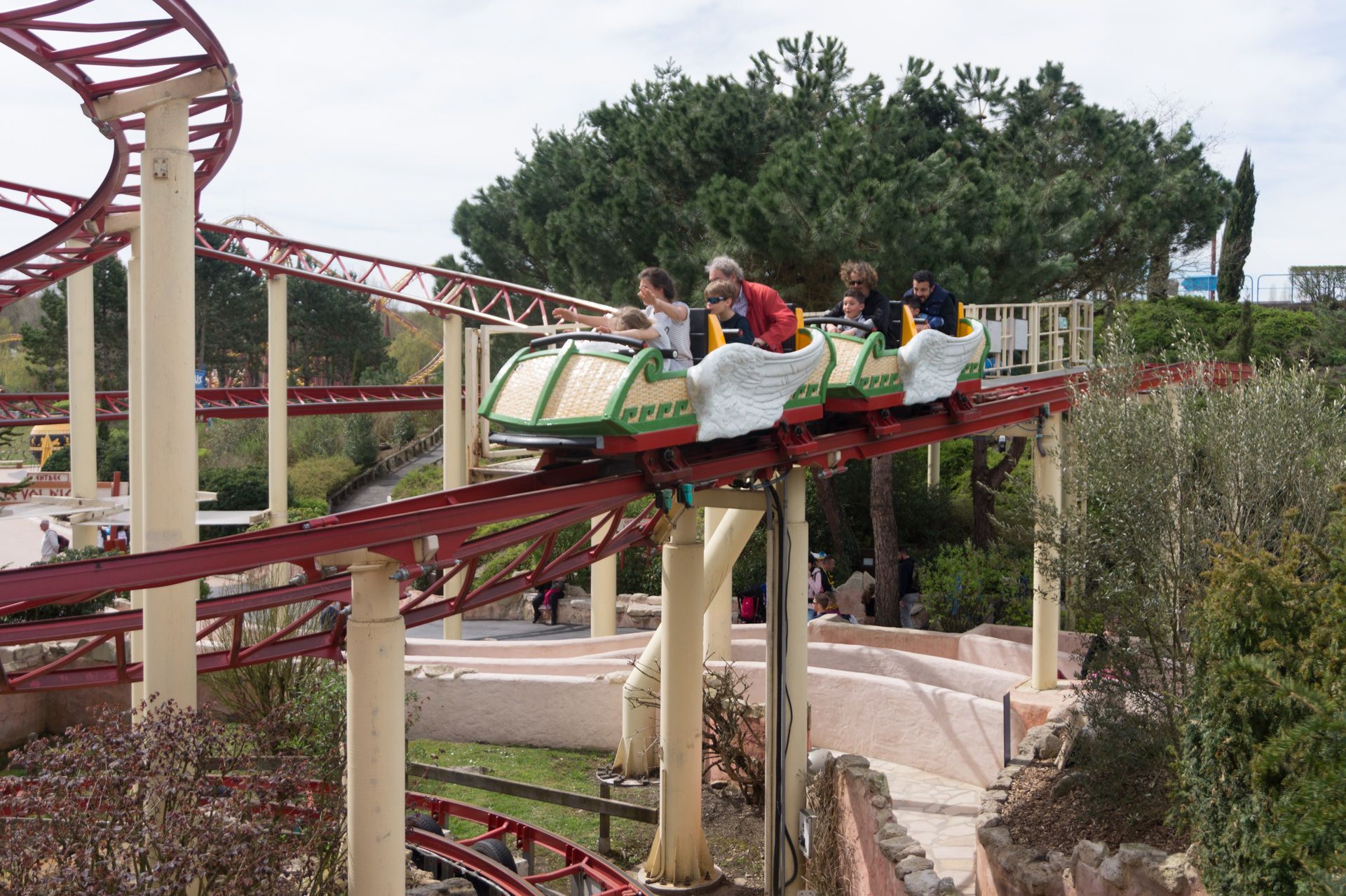
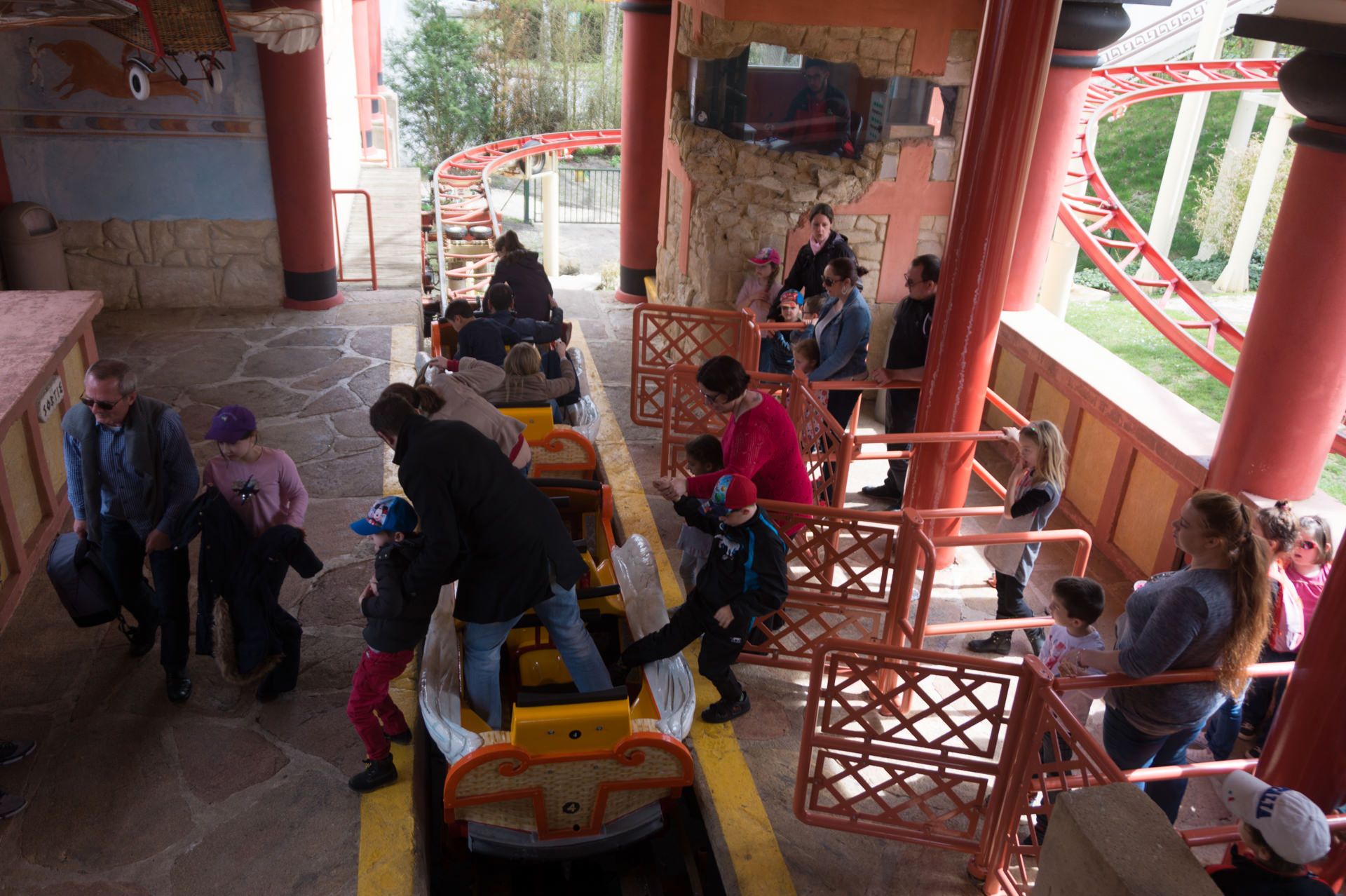
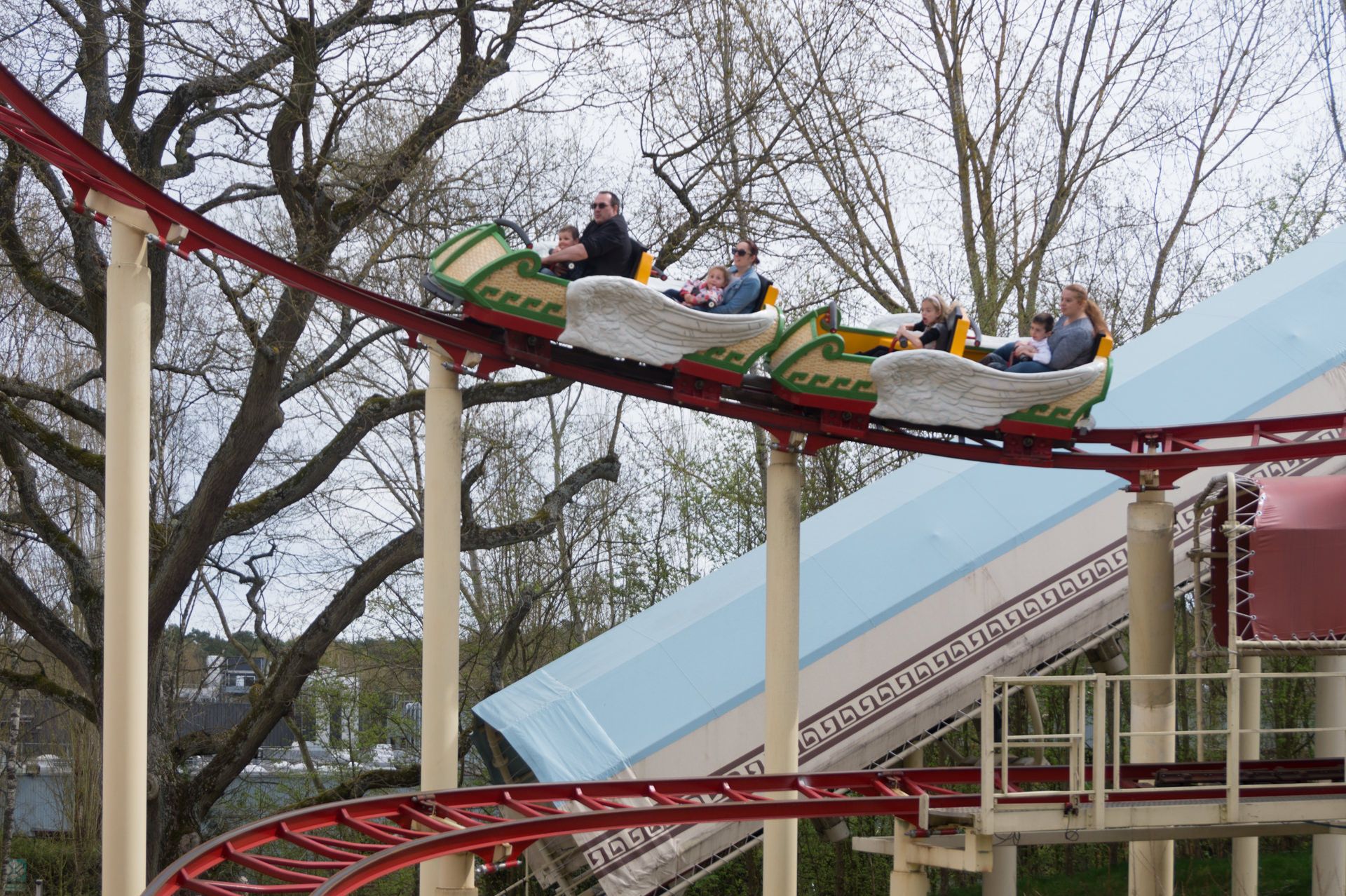
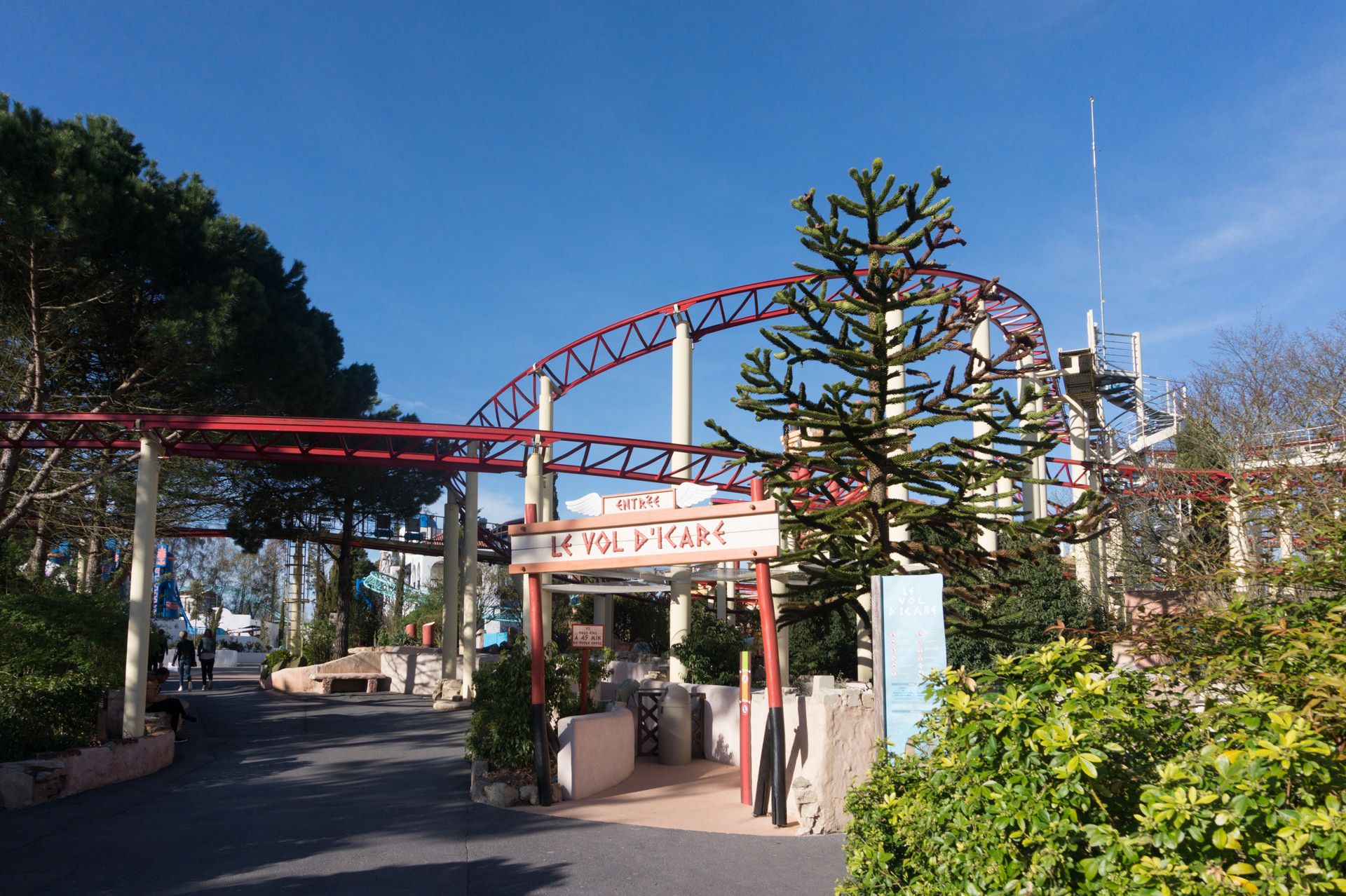
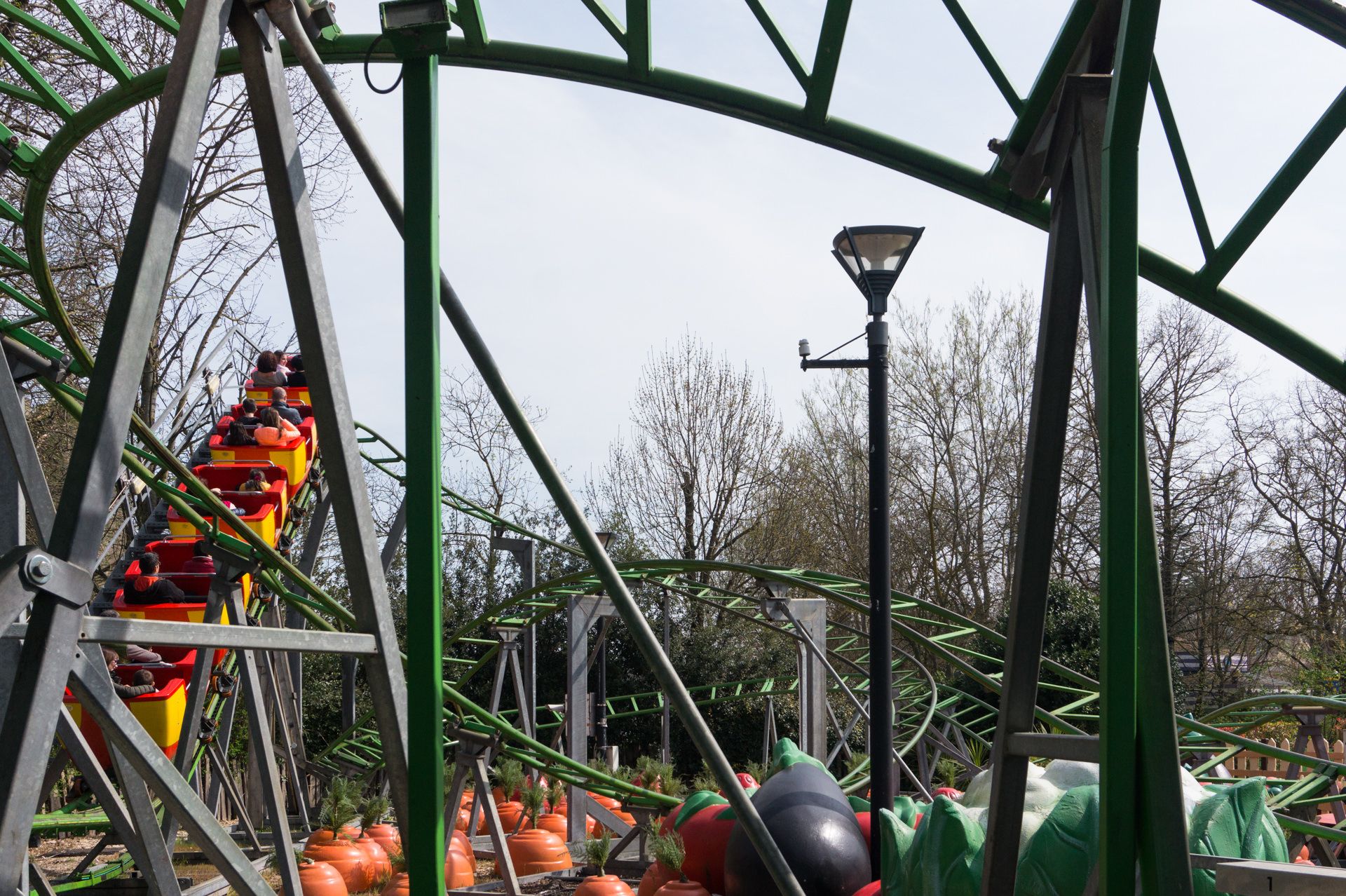
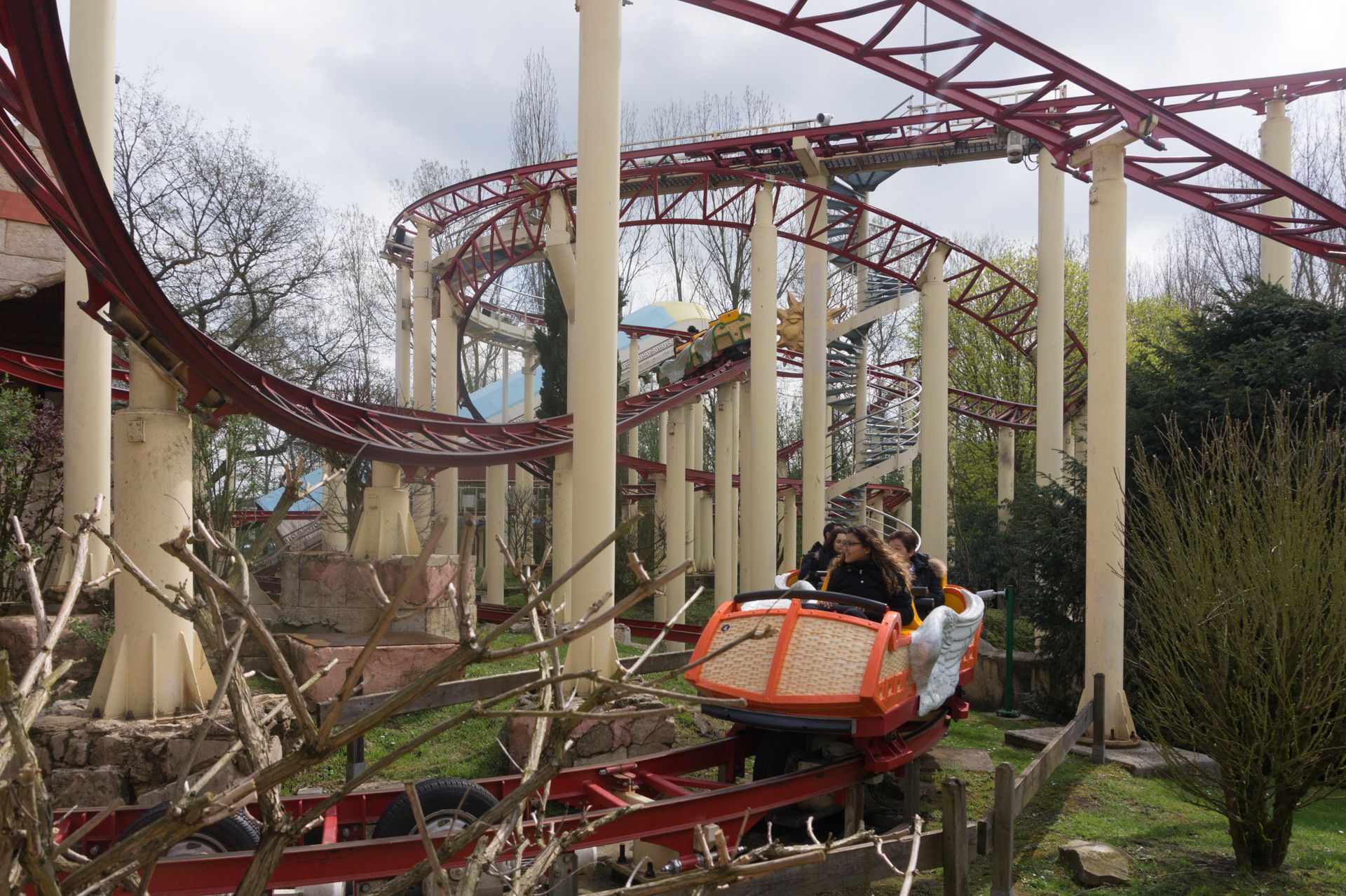
Before the Pégase Express was built, the largest family roller coaster in the Parc Astérix was the Vol d’Icare. Based on the layout of the (former) roller coaster Comets from the Danish amusement park Tivoli Gardens, the roller coaster impresses with a variety of enjoyable curve manoeuvres. But instead of a theoretical capacity of 1200 people per hour, the ride usually has a much lower passenger flow due to a modified train design. Here, instead of two people next to each other, a maximum of two people can sit behind each other per row. Although the staff visibly tries to fill up the trains quickly and send them on their way, you should always expect a longer waiting time.

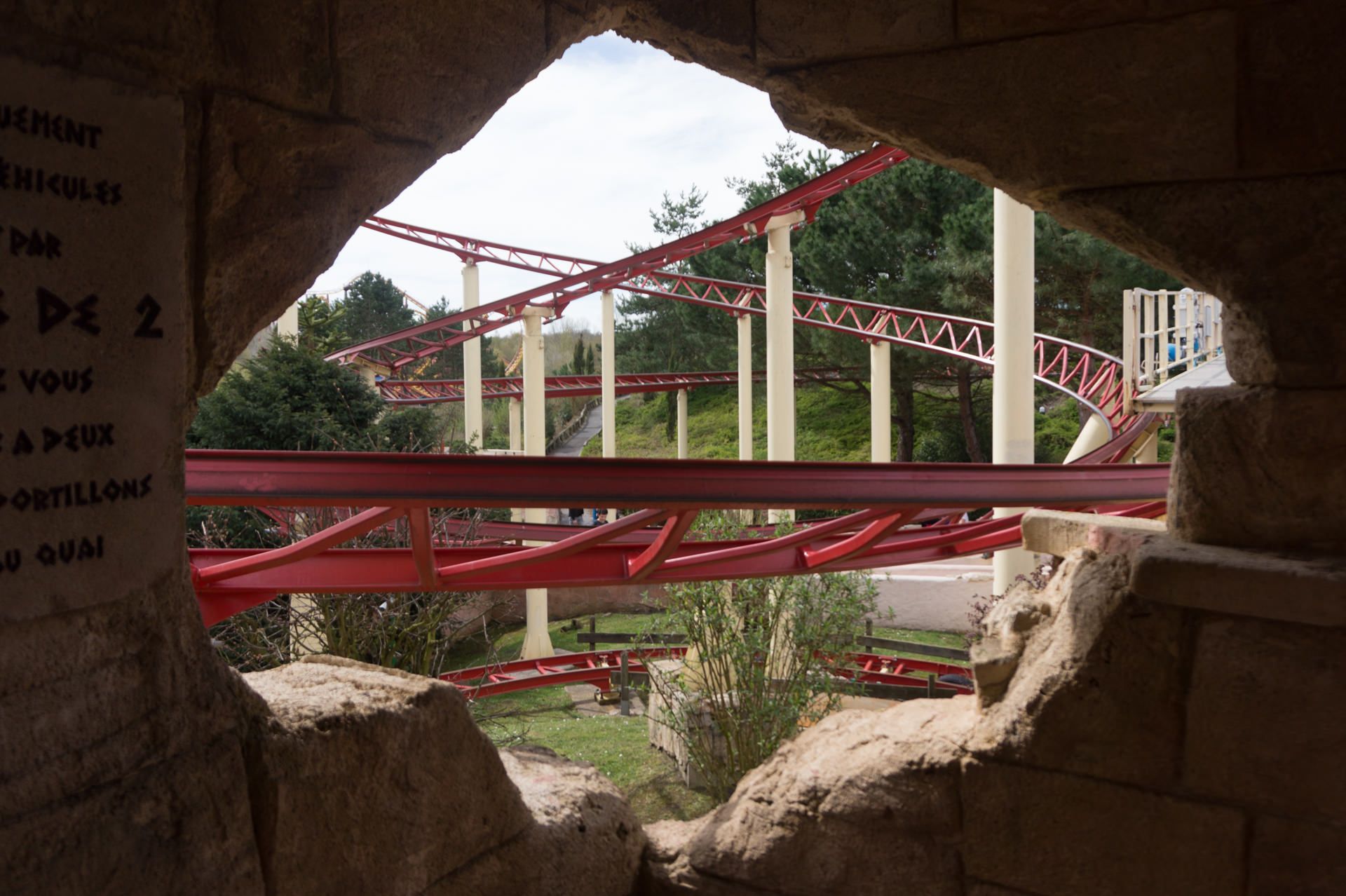
If you could get a seat in the train after some waiting time, you just pull the bar – which can be adjusted by a rail in the centre console – towards you before you can start your journey.  After a short right-hand bend, the lift of the ride is already reached, which takes you up to a height of 10,7m. But there is no time to enjoy the view and so we soon fall down a steep curve. Due to the extremely compact construction of the ride, a very narrow and therefore very pressure-laden valley awaits us before we climb up the hill and down the valley in an equally narrow Bayernkurve. Immediately the first block brake is crossed.

In a rather wide right turn we now increase our speed constantly before we make our way to the second block brake after a rapid left turn. We then leave the second block brake in a left-hand bend, followed by a wide right-hand bend. With a good momentum we slam into another block brake and are slowed down almost to a standstill. Especially on the first ride this brake comes as a surprise, especially since we still haven’t reached the end of the ride. Very slowly we make another combination of right and left turn, whereupon another block brake is waiting for us. We reach the actual braking section of the ride after a short dip on this one. After a turn-around we reach the station building of the roller coaster.

Even if the Vol d’Icare sounds like a collection of block brakes with little track in between, the roller coaster is extremely entertaining, especially because of the first two sections. The ride is fun and encourages you to repeat rides if there are not many people queuing for it. It is a pity that there are so few examples of this type of roller coaster.

Hydre de Lerne

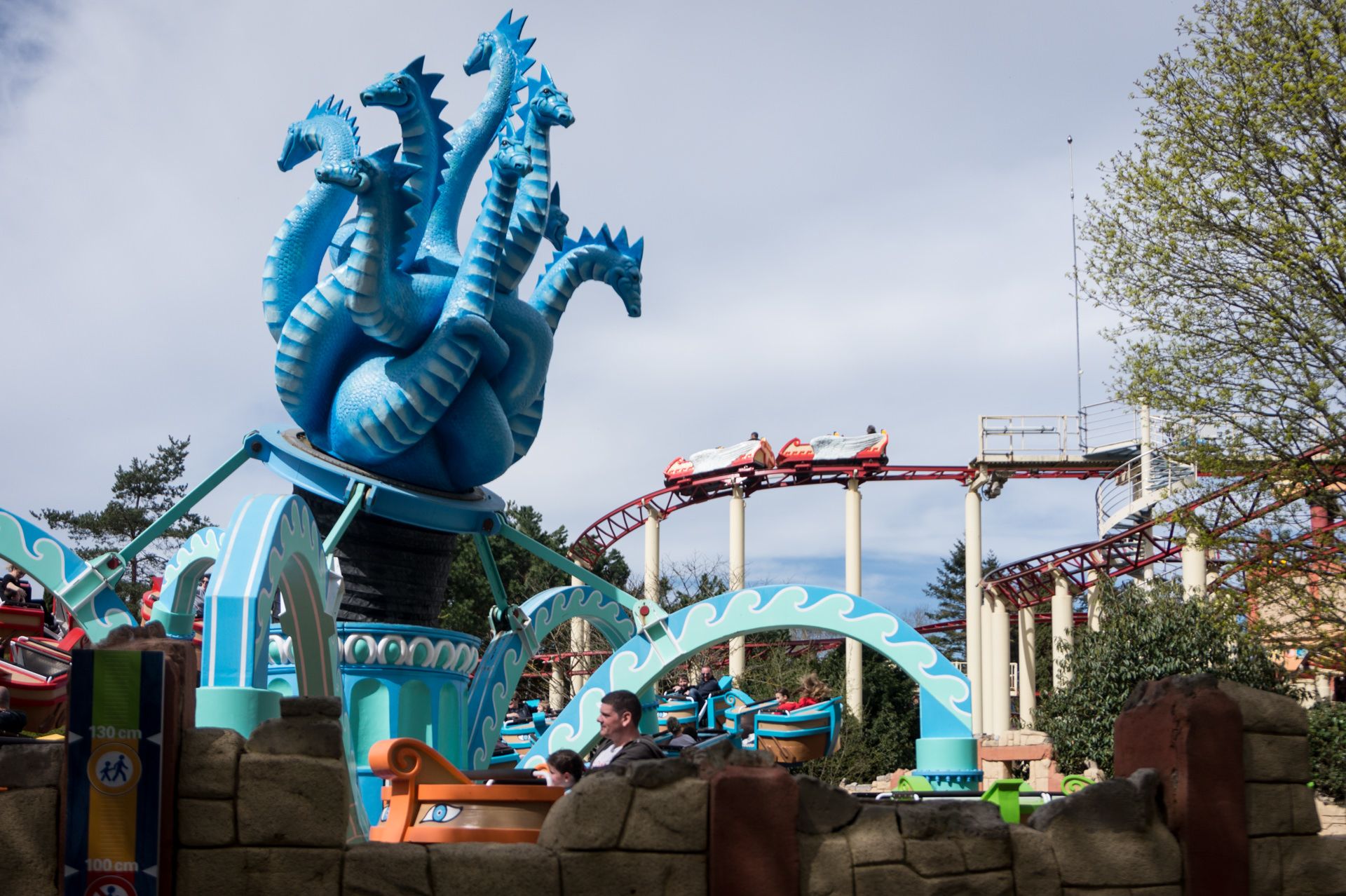
With the Hydre de Lerne another classic flat ride awaits us that should not be missed. This nicely designed monster, produced in Münsterhausen, offers an extremely fast and by no means short ride. Furthermore, the Polyp is one of the first rides made by Gerstlauer Amusement Rides.

Rivière d’Elis and Discobélix

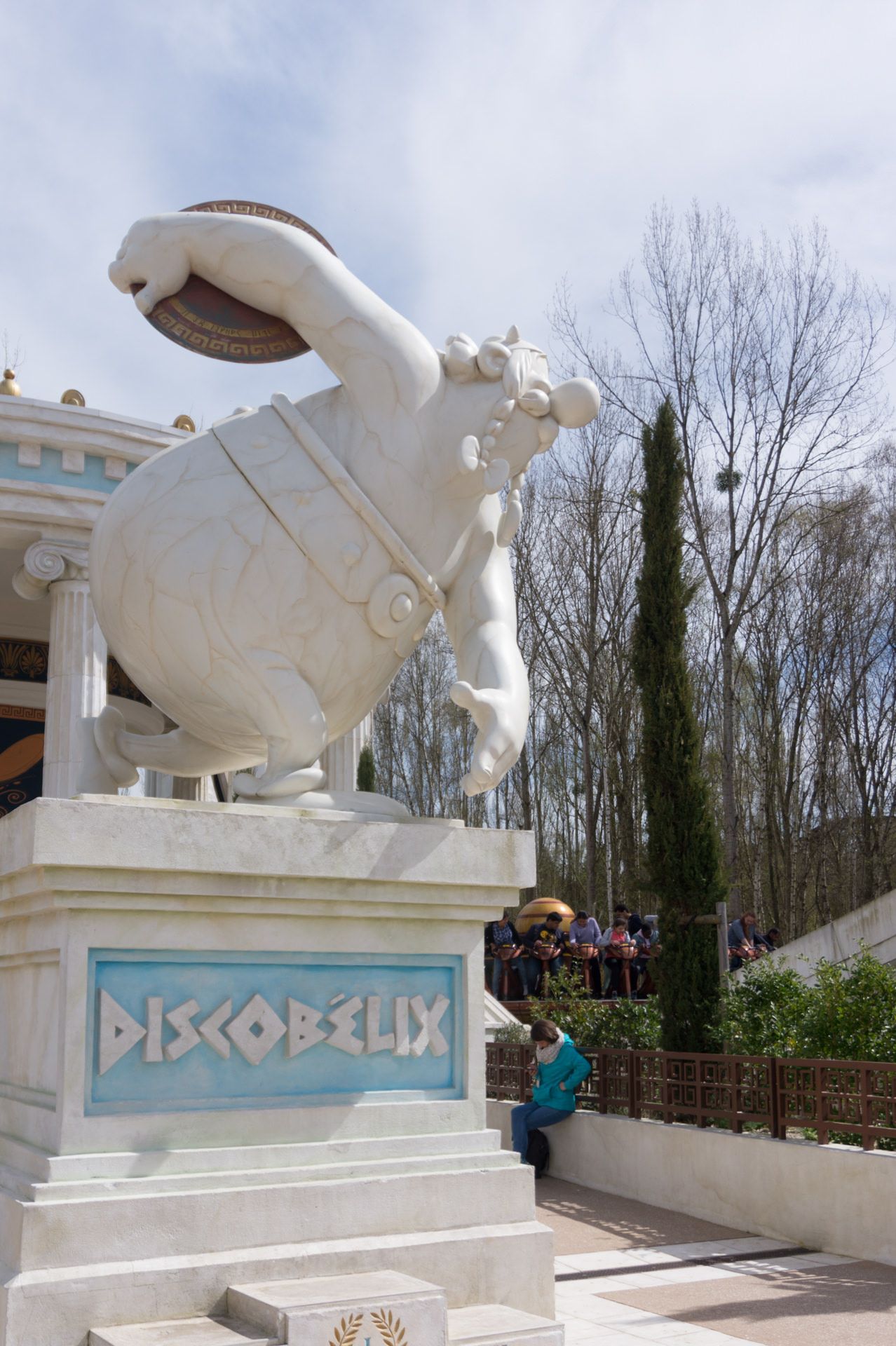
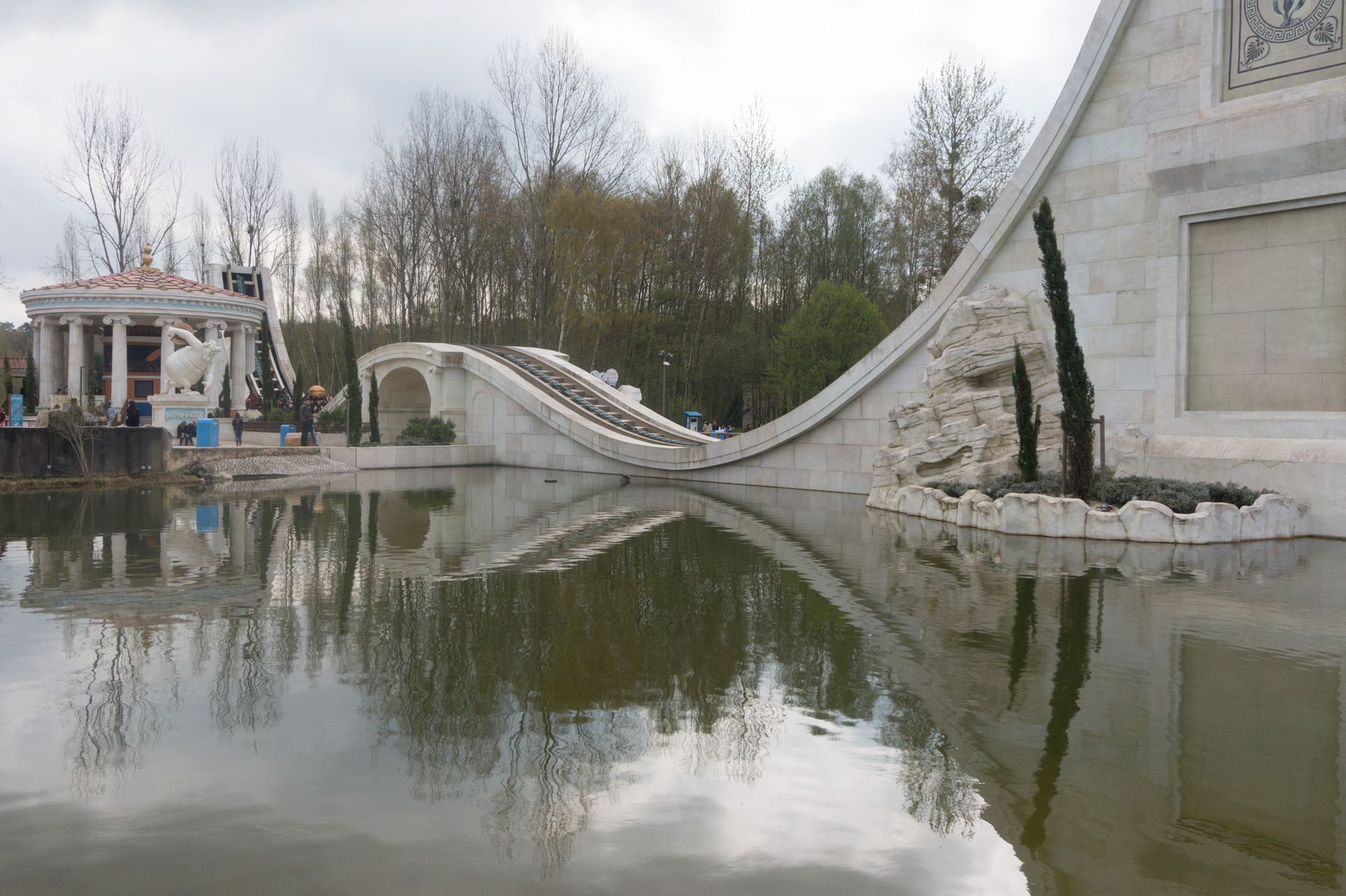
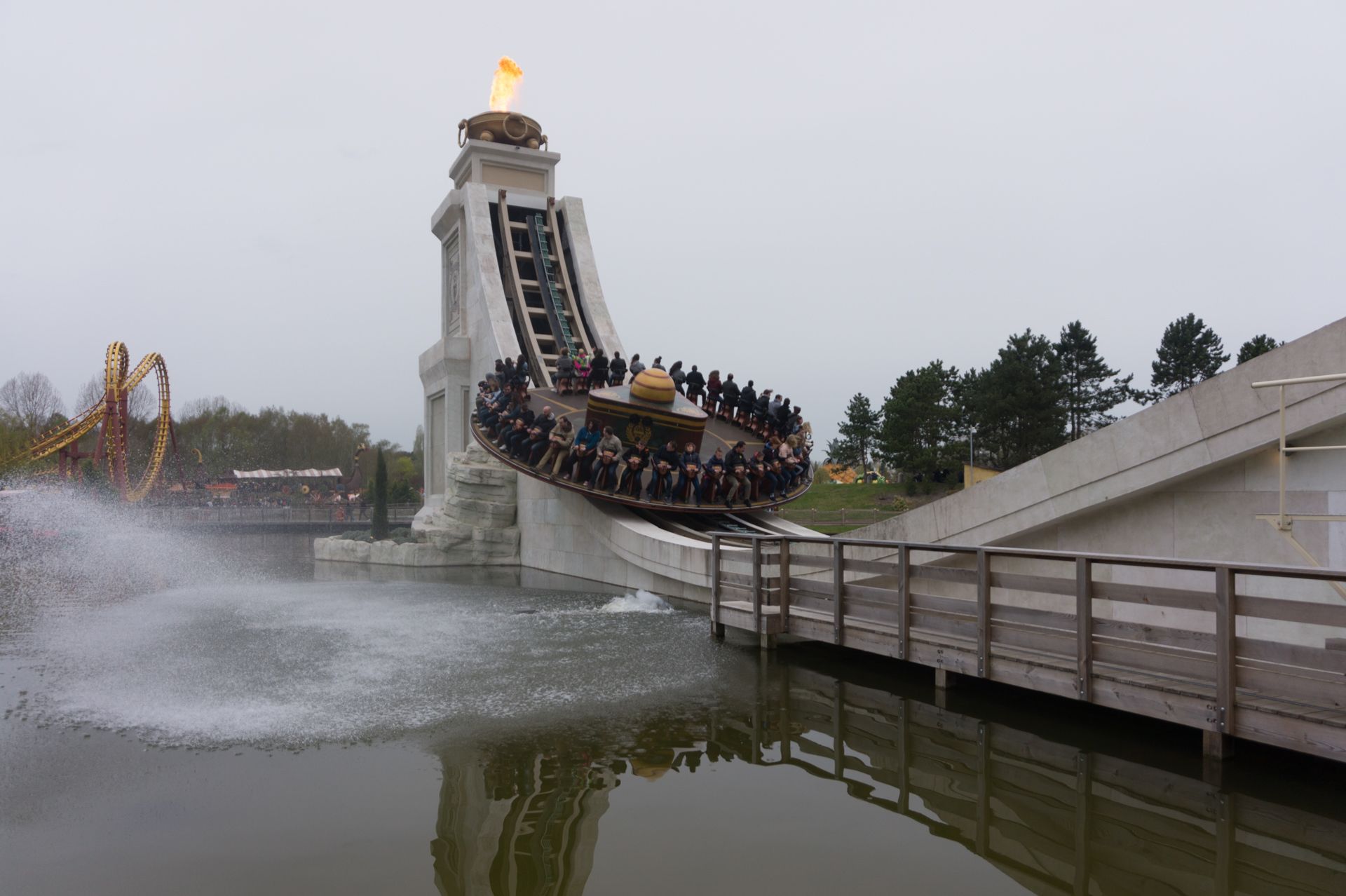
Past the leisurely boat trip Rivière d’Elis we are now drawn to Discobélix, a Disk’o Coaster from Zamperla. Larded with fire and water effects, the ride convinces especially from the outside. For the passengers themselves, it is unfortunately a little monotonous. Admittedly, the ride is certainly chic and the ride across the water is an extremely nice feature.

Tonnerre de Zeus

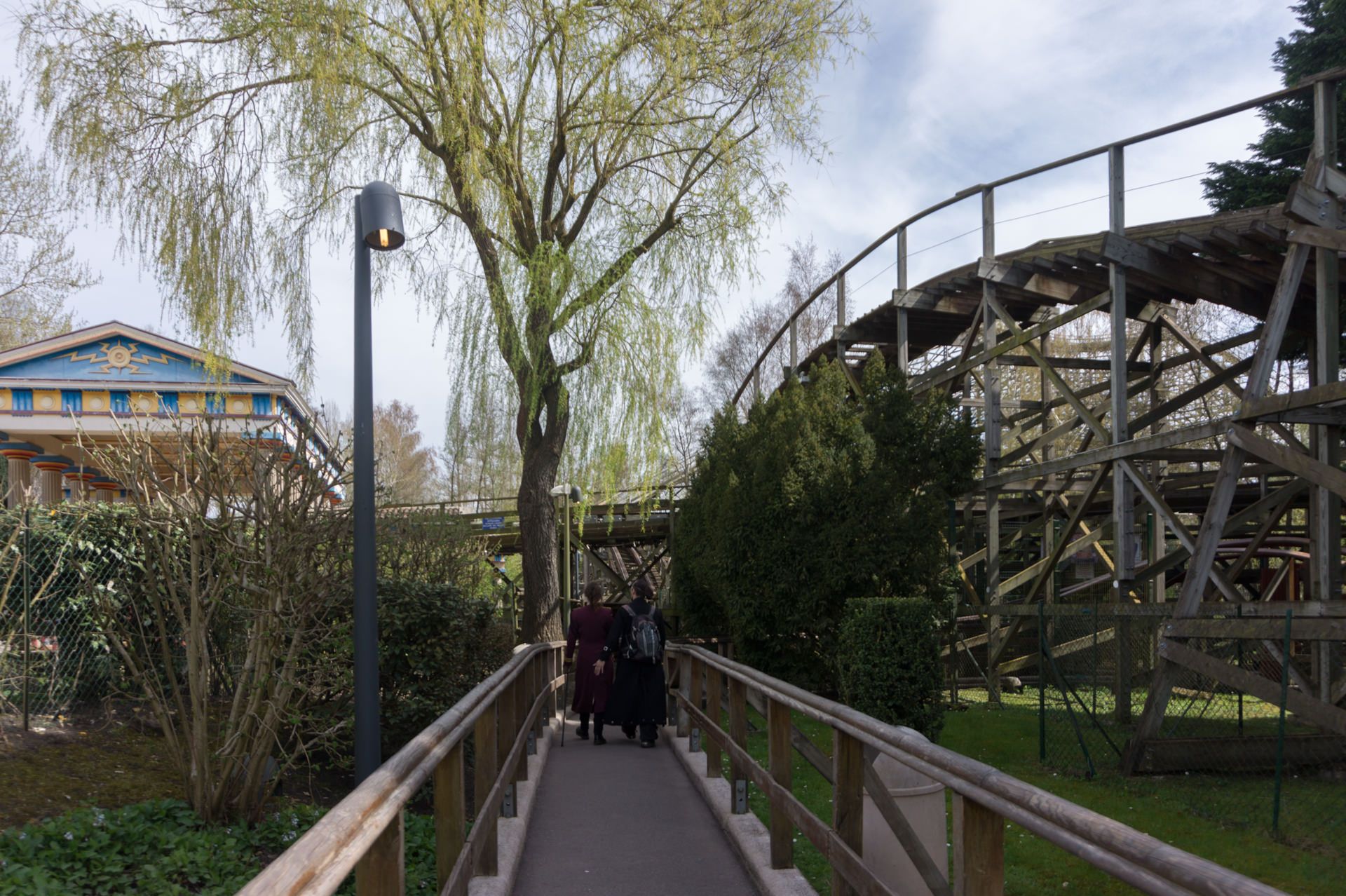
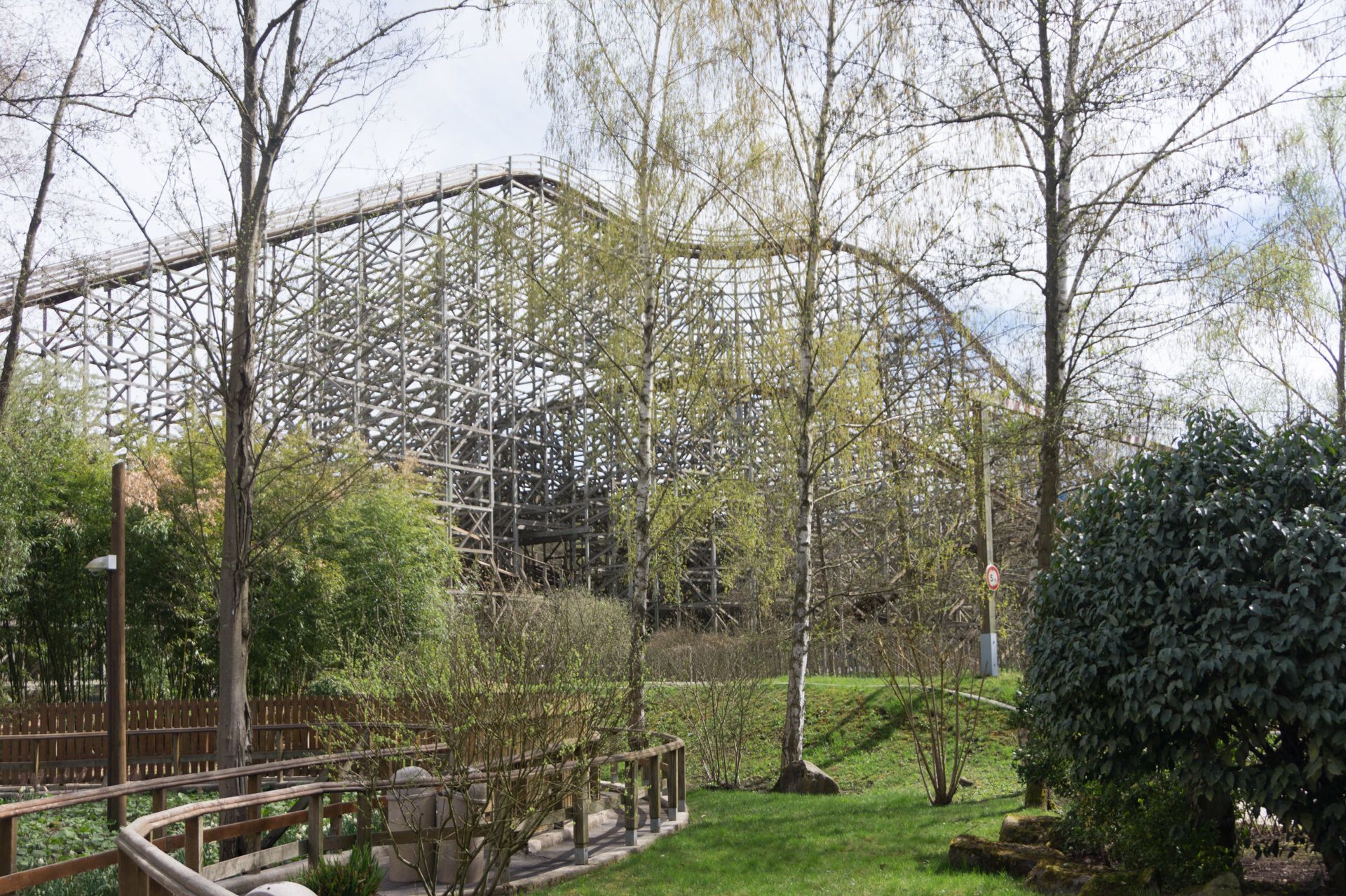
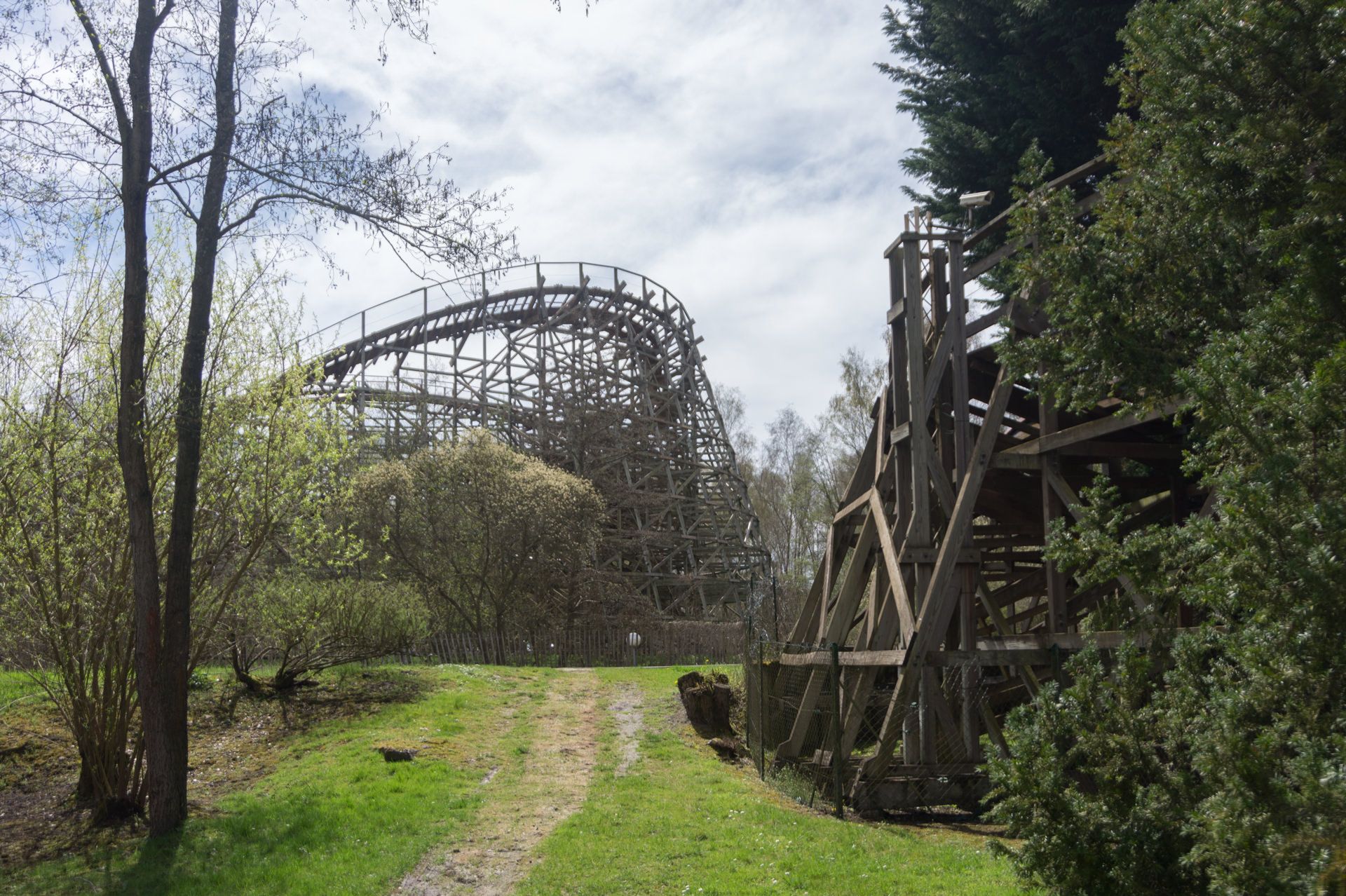
Now we come to the wooden roller coaster Tonnerre de Zeus. The camera-shy Woody, who is remembered by many fans mainly because of his entrance gimmick, has made it to the top of my list of favourites without much effort. How? Let’s take a closer look right now.

The journey begins with a short right turn out of the station. We immediately reach the lift hill and a little later the starting height of 30m. After another bend at a lofty height the train rushes over a CCI typical and much too narrow hilltop towards its fate. Exposed to light airtime we do the same and race mercilessly towards a tunnel that is much too narrow. With a lot of pressure and shake, rattle and roll we cross the first valley. Thereupon we shoot up a hill, which at the same time initiates a change in the layout. We quickly sink down before we are torn out of our seats again and get closer to the ground. Over a camelback we then cross the lift structure of the wooden roller coaster and approach the main element of the roller coaster, a 572° helix.

Here we will spend some time together over hill and dale. There is a constant up and down, sometimes the track is very steep and runs through its own structure. An awesome part! It suits quite well that a number of small hills are waiting for the passengers, which of course transport them out of their seats. Once again a turn follows with an included dip, which once again skillfully pushes us into the side of the car. With momentum we also leave this curve manoeuvre over a brisk Airtime hill, which is also followed by others. Inside the helix we now cross another turning curve before we slowly make our way back to the station. Over a right turn the track slowly nestles up the lift hill. But shortly before reaching the station the train roars over a hill and disappears into a forest after a left turn. Here we make a lap in a 256° helix, whereupon the braking section is reached and soon the wild ride ends.

Tonnerre de Zeus is awesome! The ride offers a great pacing, peppered with some really great airtime moments, which are not as crazy as with the sibling Megafobia in the Welsh Oakwood Theme Park, yet they appear more often. Furthermore the ride is hardly lacking in lateral forces, which especially in the insanely constructed helix in the middle part of the ride cause a broad grin on the passengers’ faces. The great first drop into the narrow tunnel, as well as the extremely long ride duration are further points why you simply have to love this ride. A terrific thing and a must-do for every roller coaster lover.

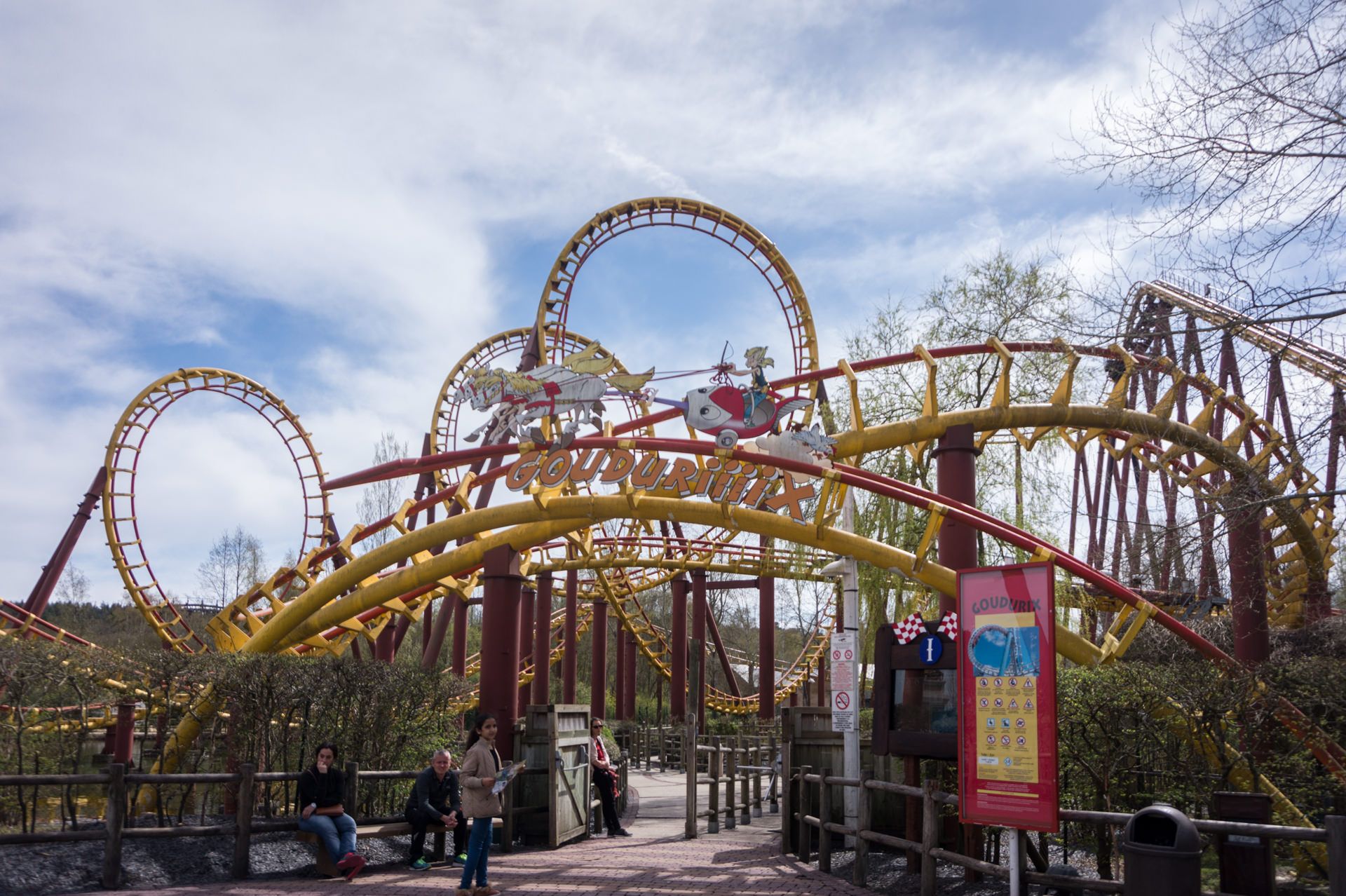
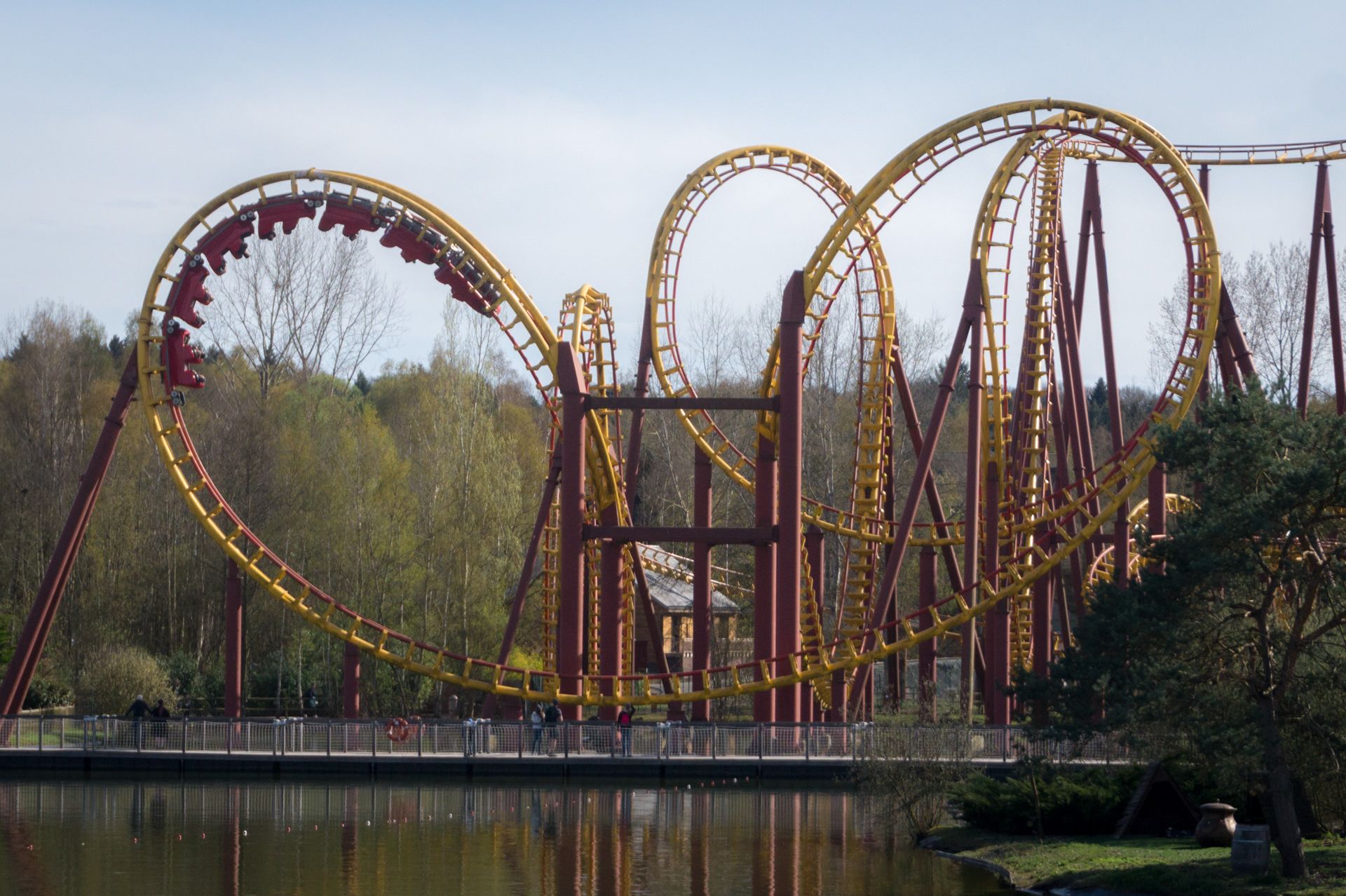
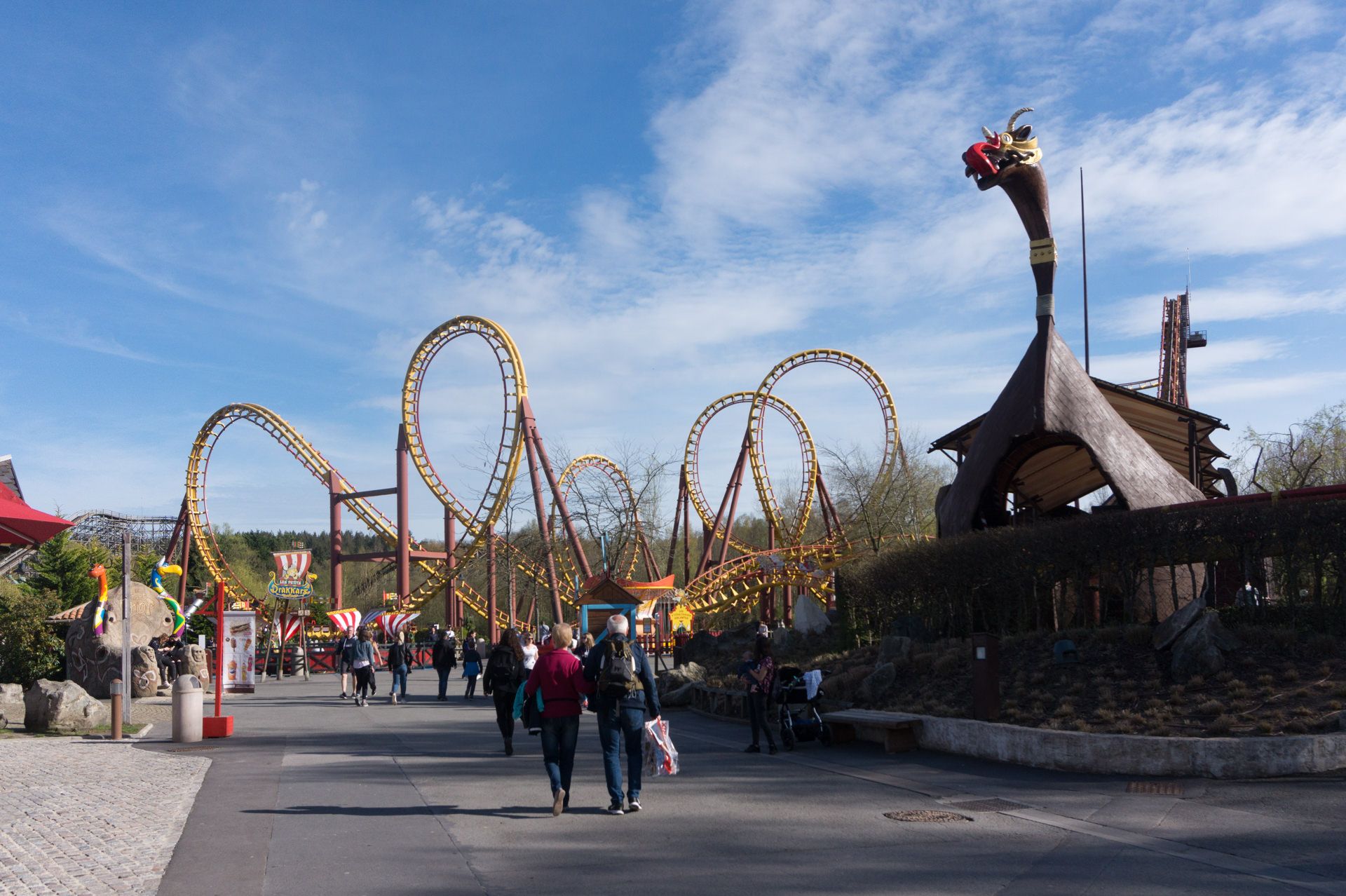
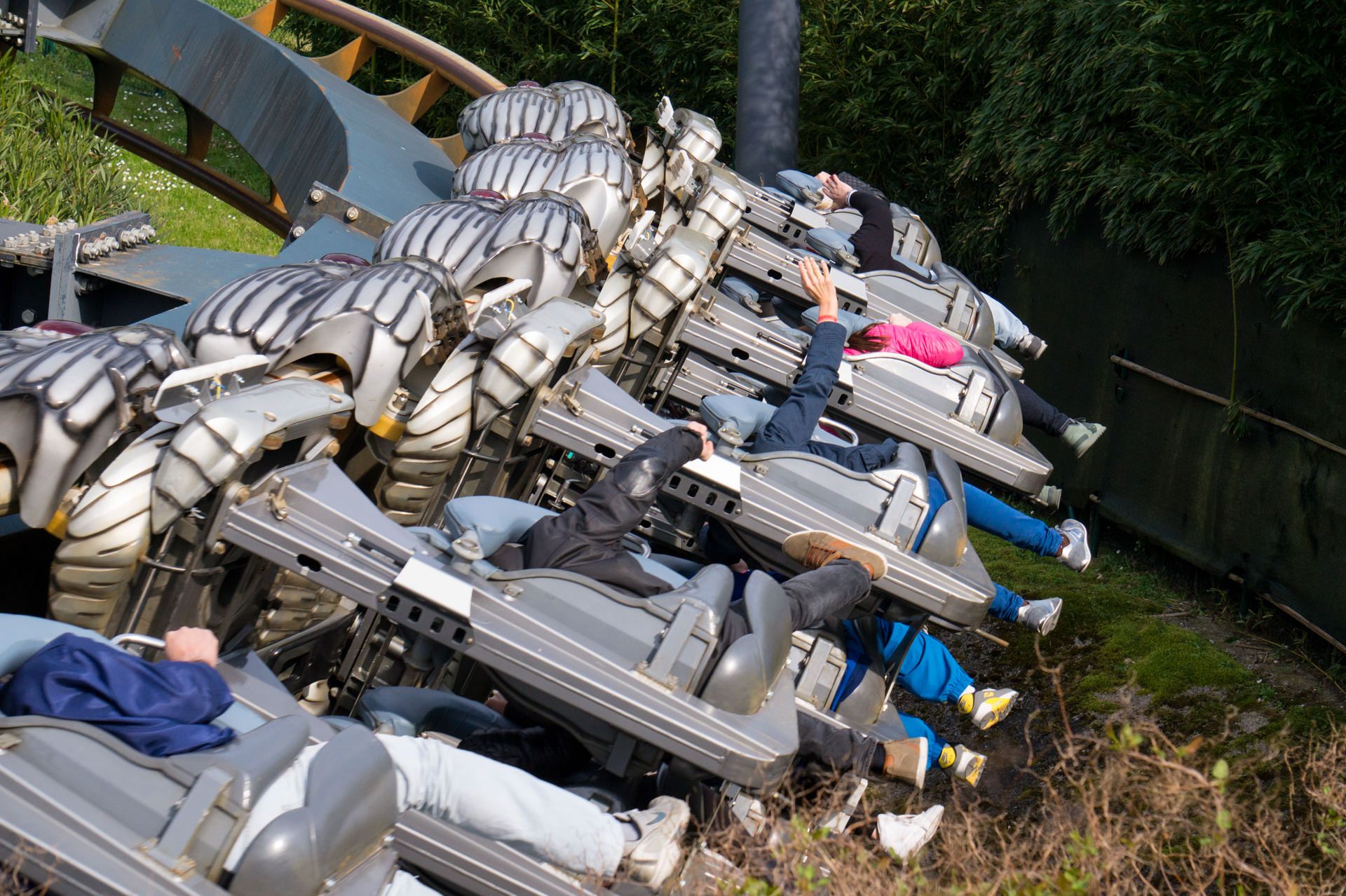
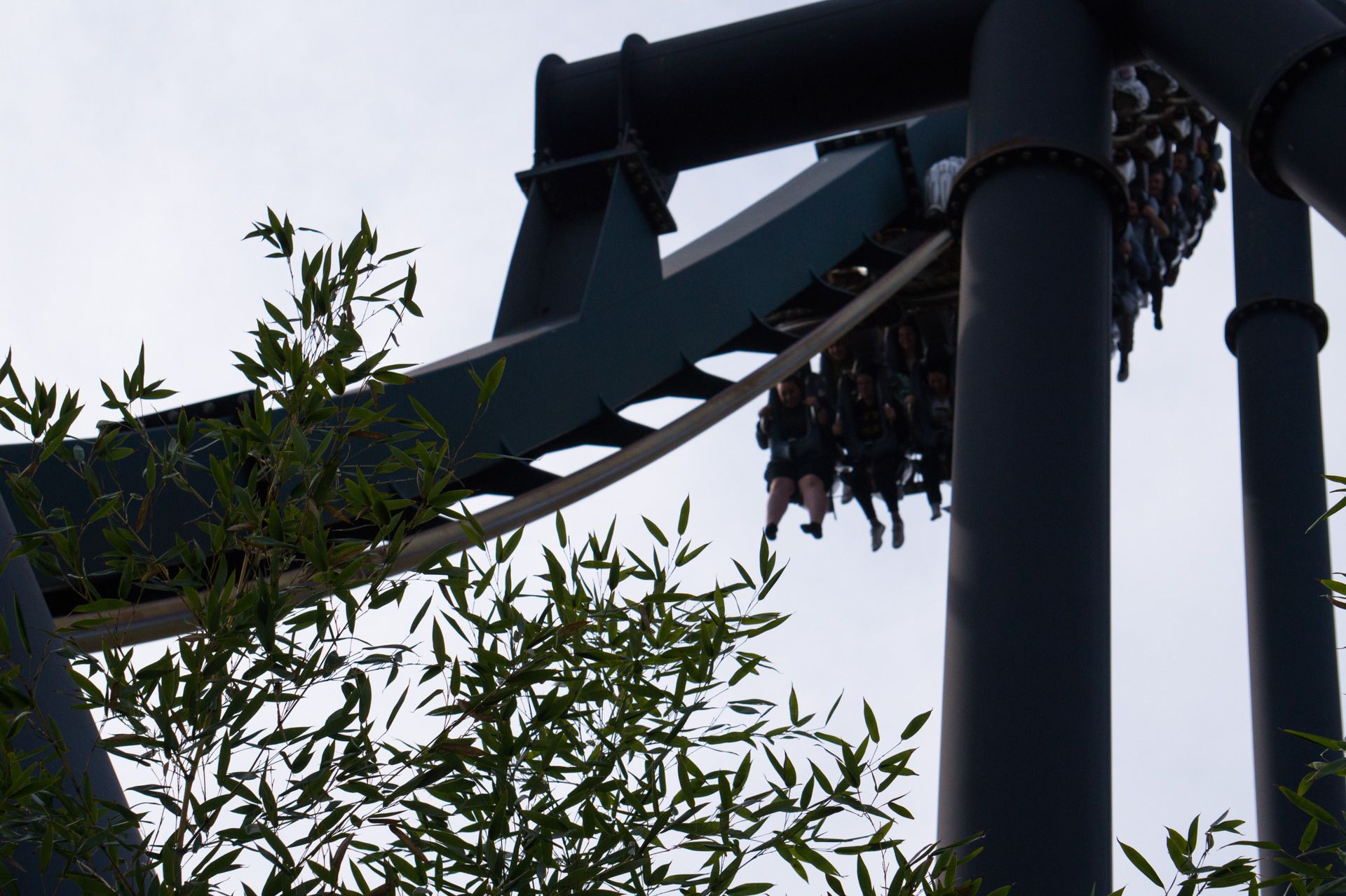
Goudurix

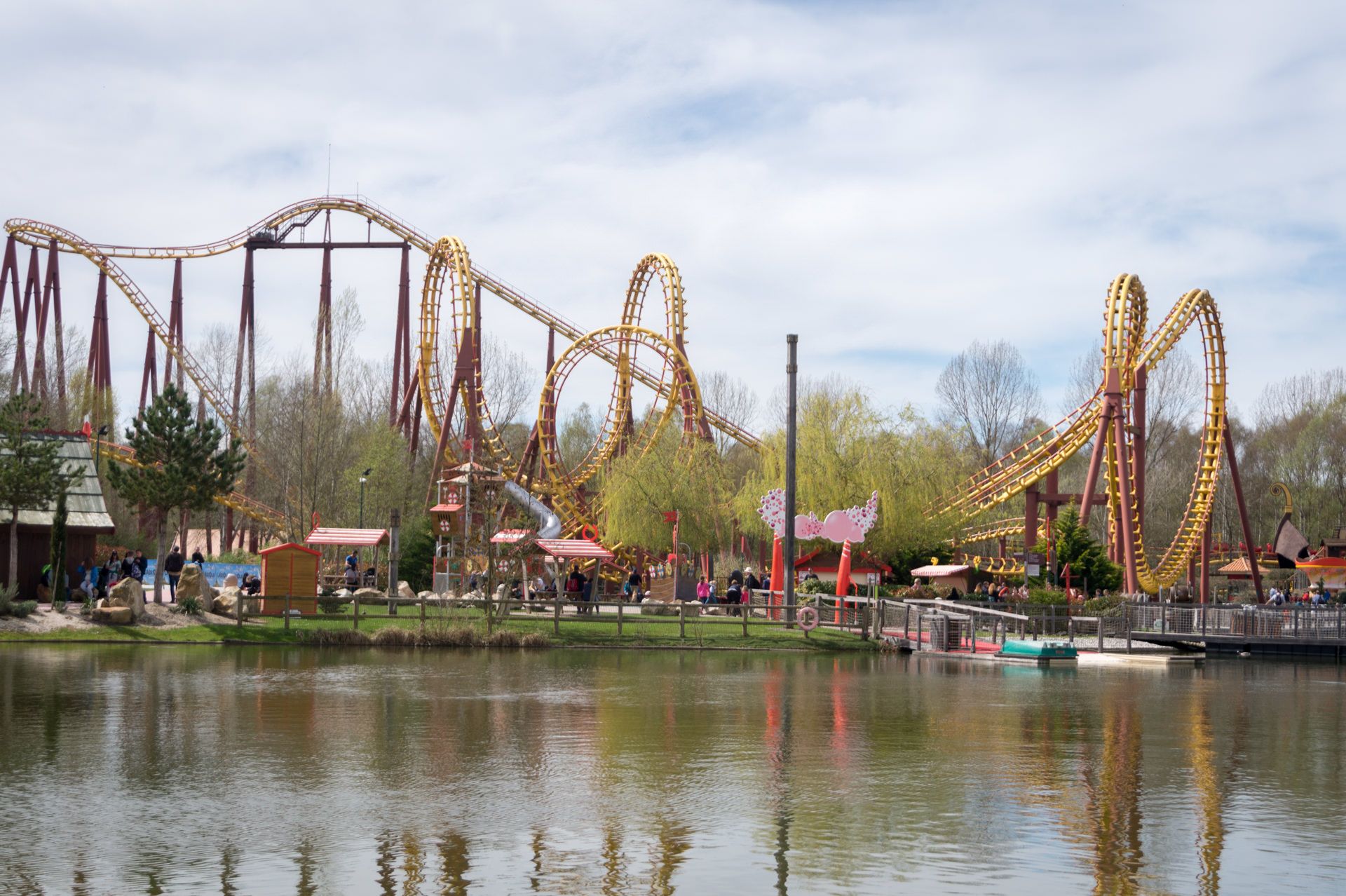
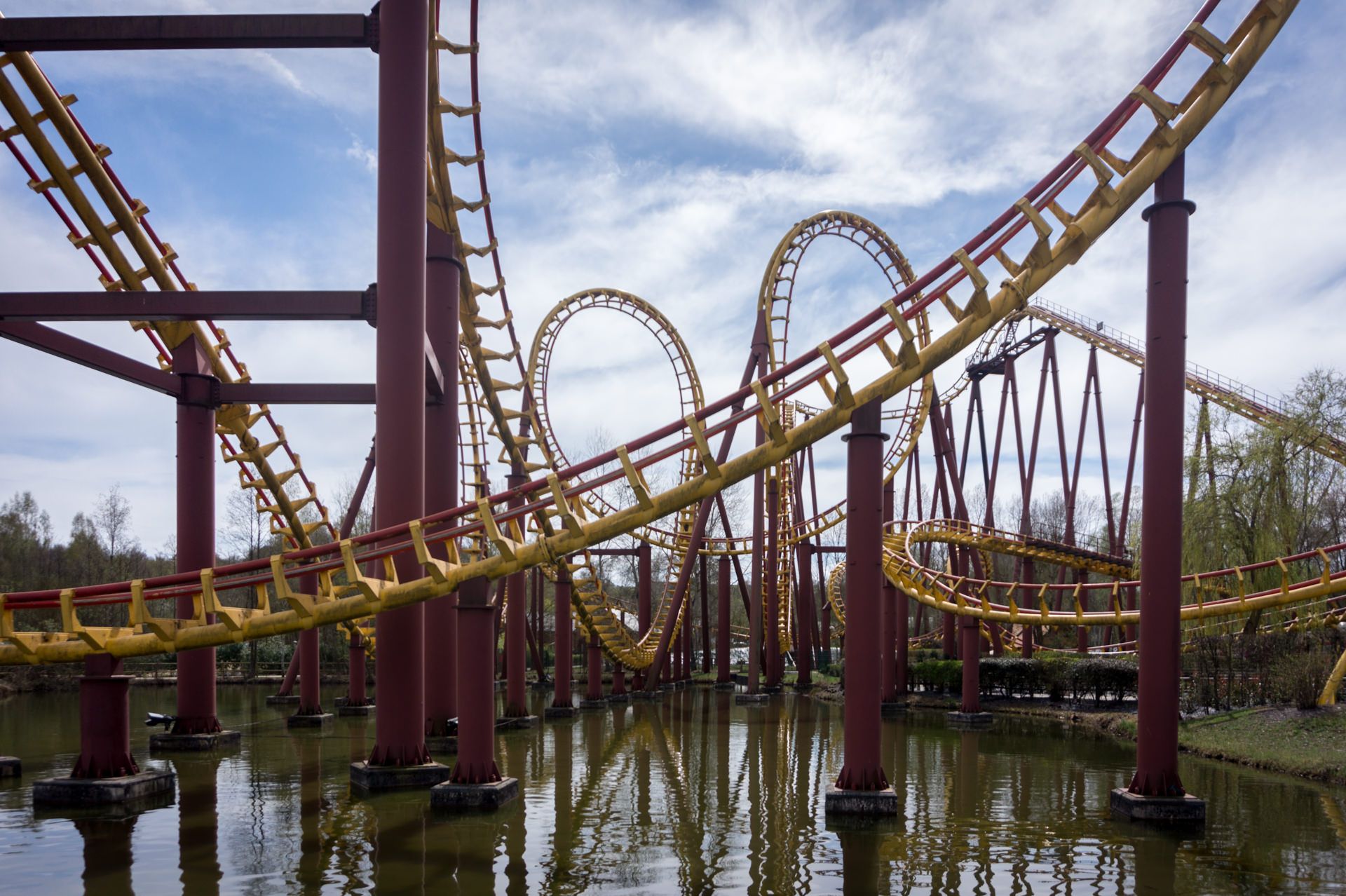
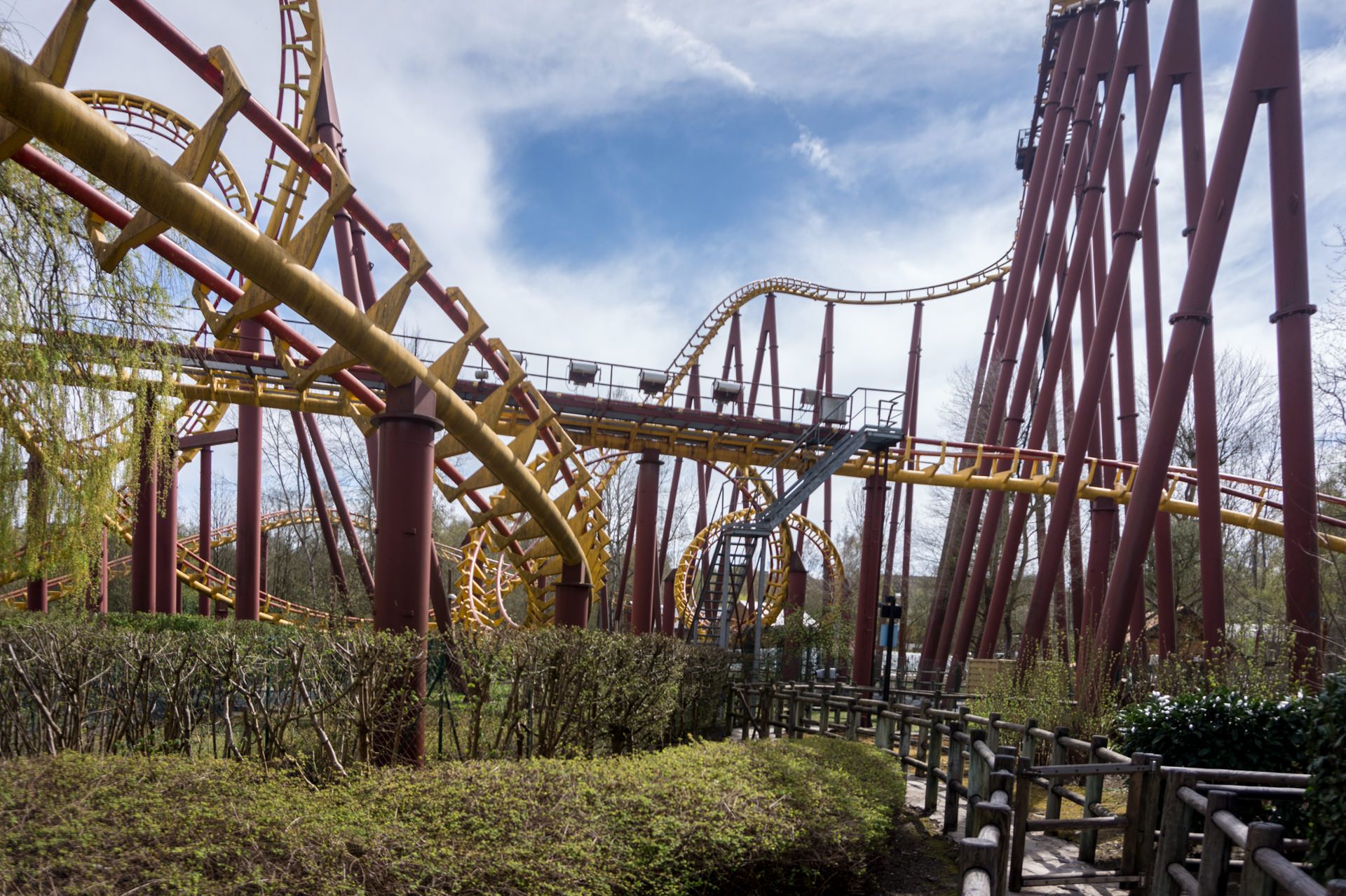
We will now find out if this statement can be applied to the looping roller coaster Goudurix. The former inversion record holder has been smiling at us from far away for quite a while. The ride built by Vekoma is indeed quite an ordeal for many people – especially for those who are a bit taller – and they experience it as an unparalleled torture. Parc Astérix is well aware of this, which is why the ride has already been redesigned. However, that was several years ago and you didn’t read many opinions during this time, so I was very excited about the trip.

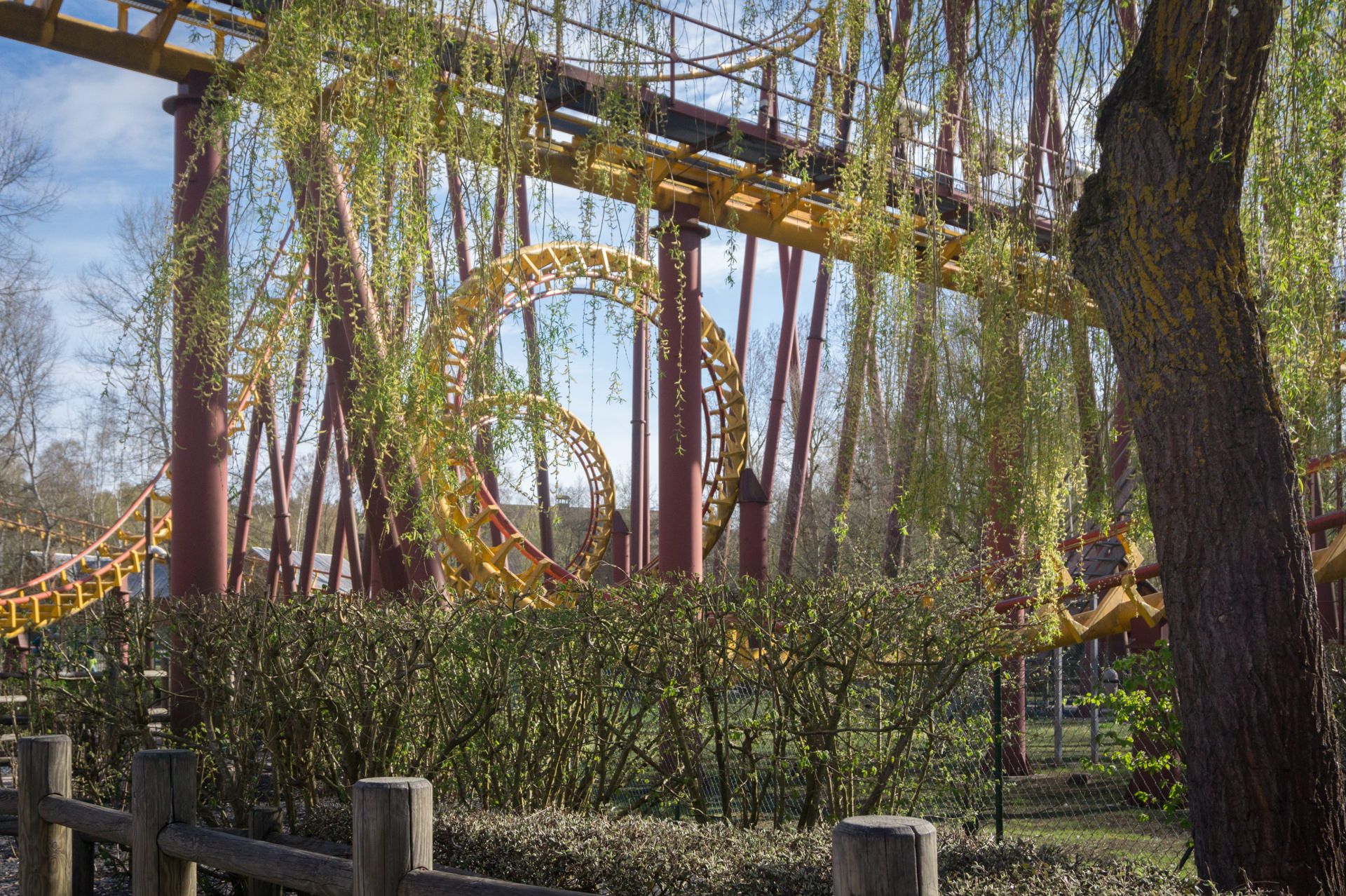
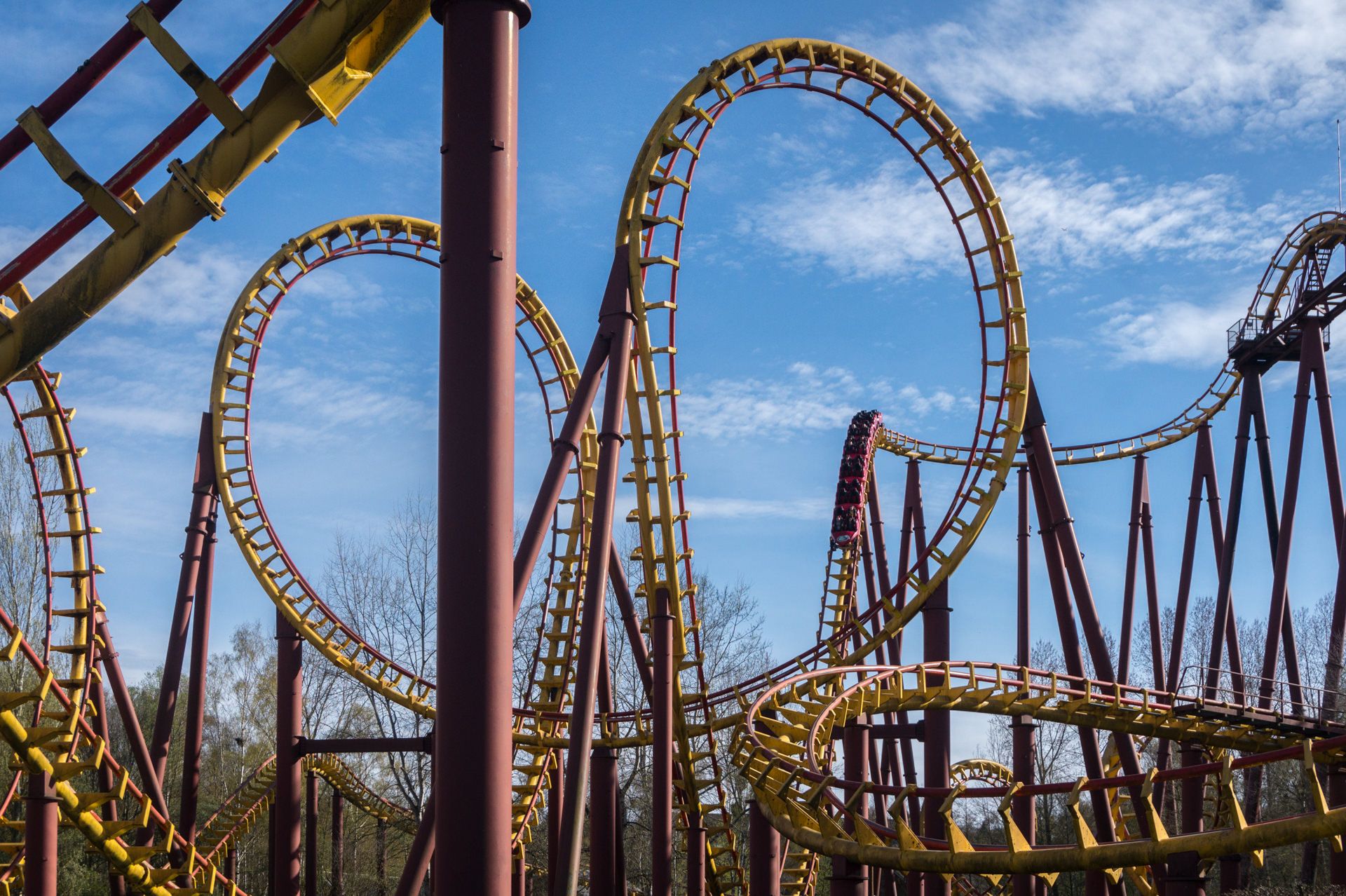
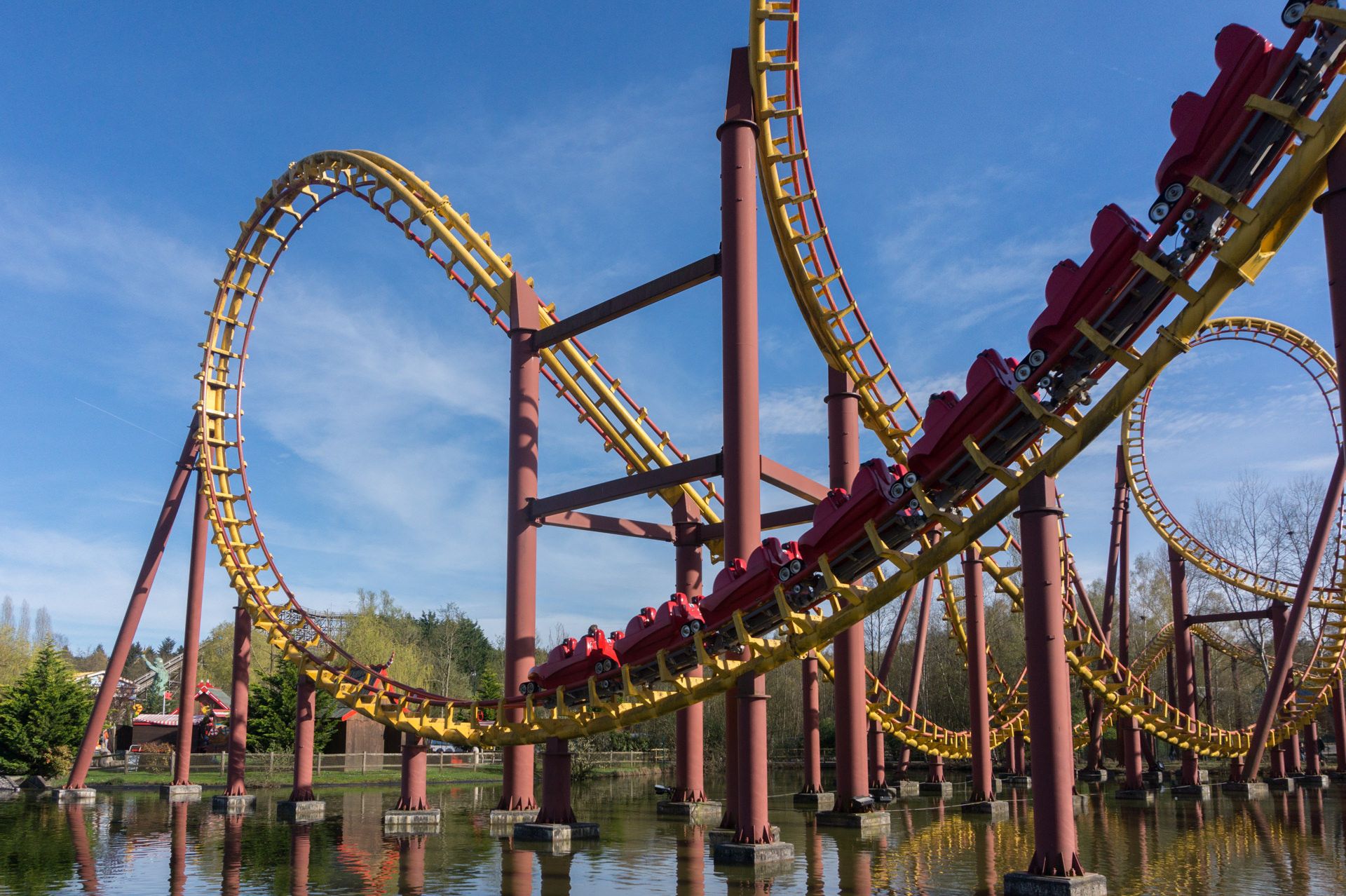
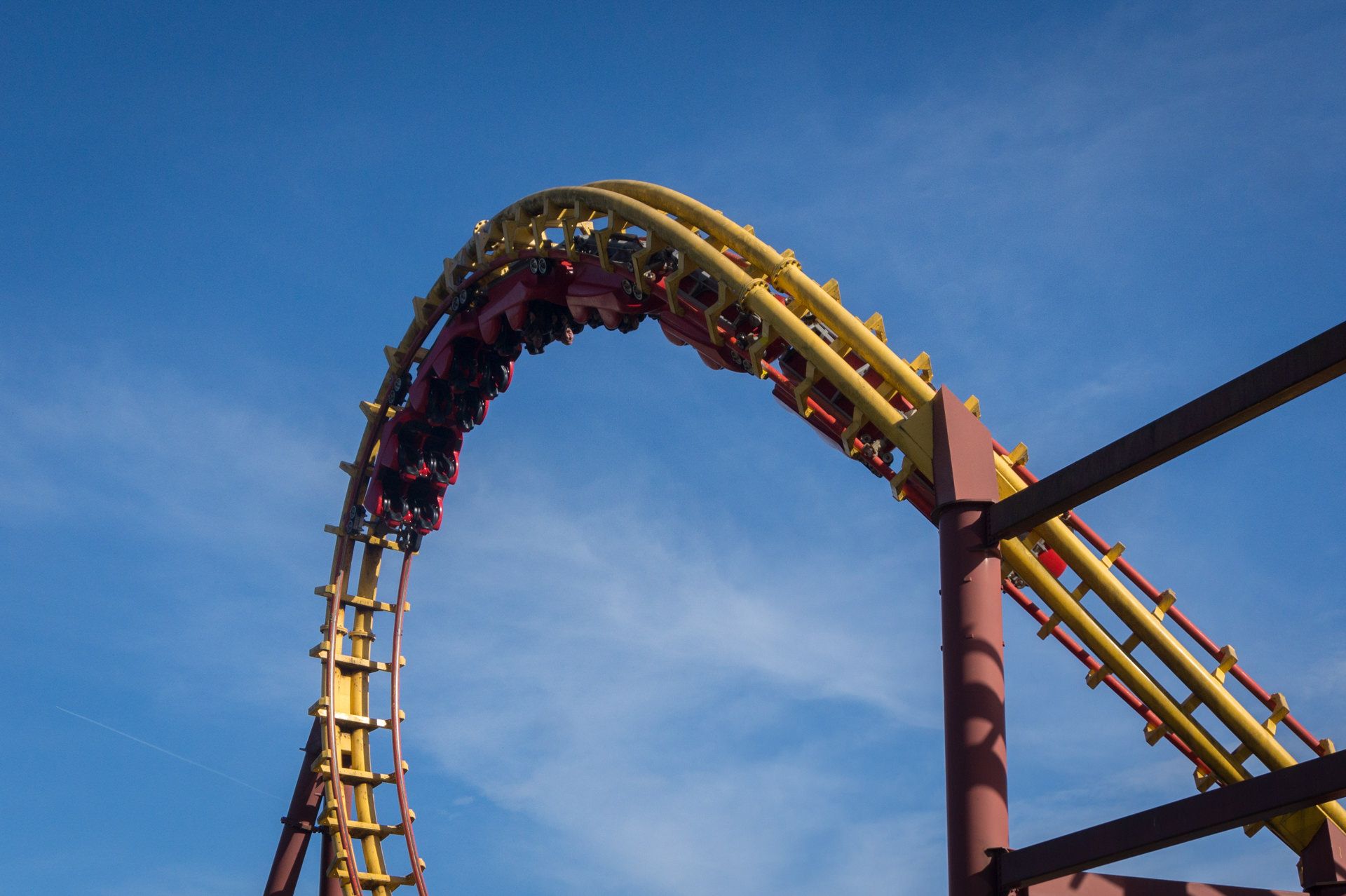
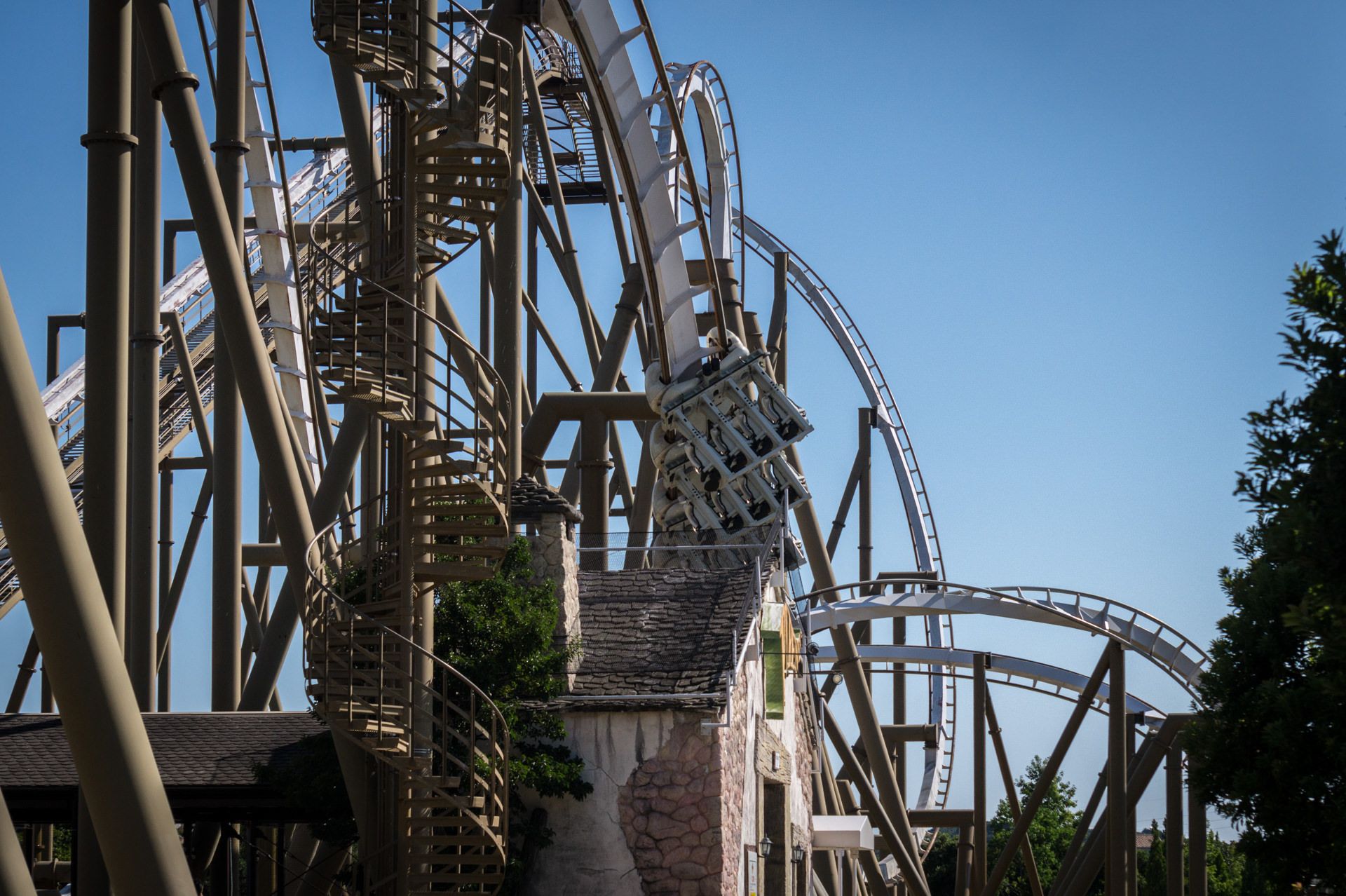
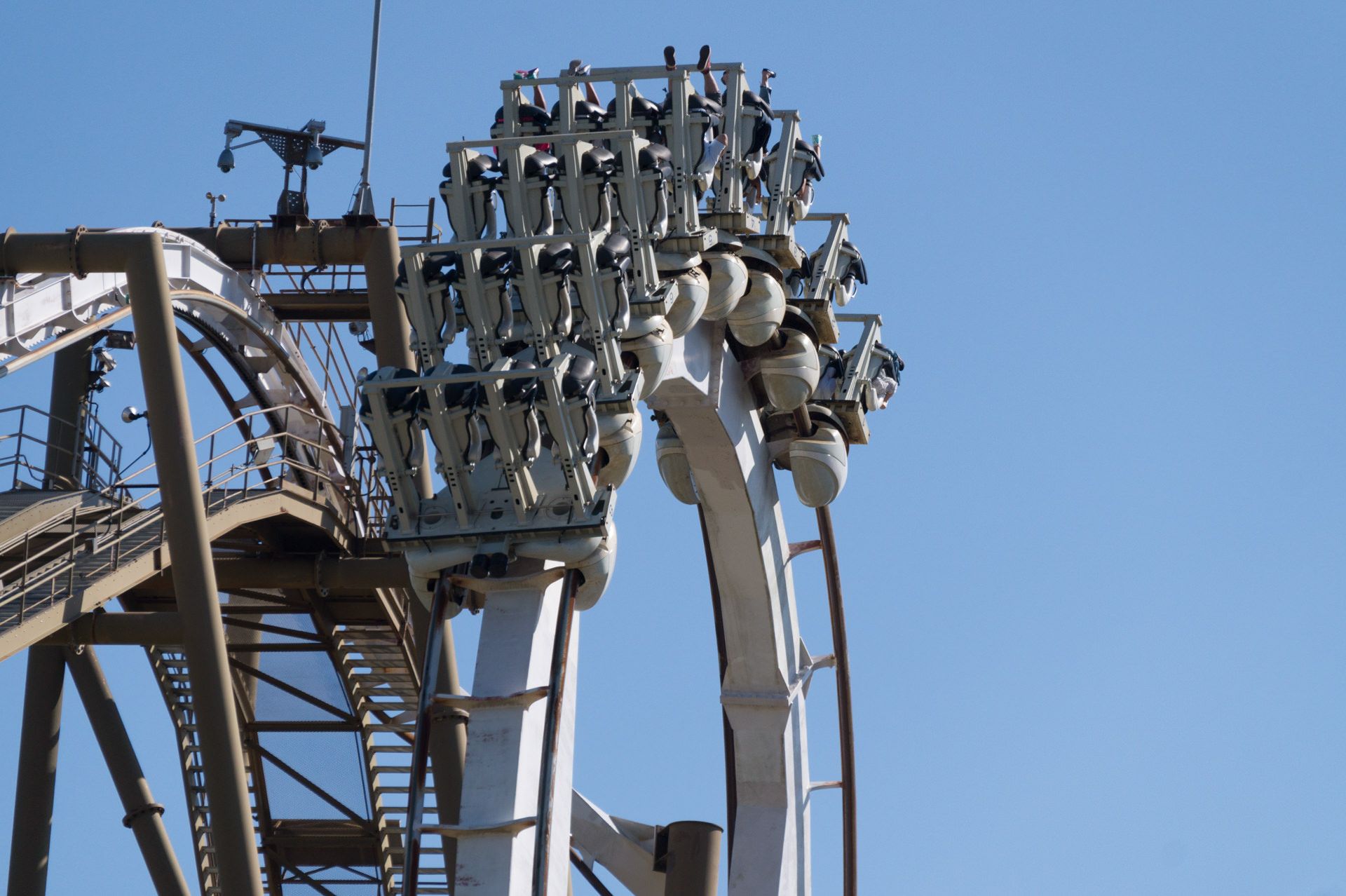
After a short dip out of the station we soon reach the lift hill, which takes us up to a worrying 36m. At the top we quickly cross a hilltop, followed by a wide left turn. With increasing speed we approach the actual first drop and fall directly towards the ground without any mercy. With full force we are pressed into the car in the following valley before we shoot up the first inversion figure. In the Butterfly we see the world upside down twice, while we have to endure quite strange rail inclinations. In between, the element is also amazingly powerful, offering the passenger an interesting interplay of forces. Also in the following valley the G-forces do not get weaker, just good that we are already on the ramp to the next inversion figure.

Quite quickly we turn to the right and find ourselves once again upside down. Without compassion we once again rush towards the ground and continue to be under pressure. What we have just experienced follows in reverse order and after the fourth headstand we find ourselves on a ramp leading downhill. With momentum we approach the only real loop of the ride, which is a bit shallower than expected. On the following hill we can now take a deep breath for the first time. In a long curve we take another turn, only to experience the world in a corkscrew two more times overhead. In the flow of the corkscrew a classic Bayernkurve is added, whereupon we soon reach the braking section of the ride. Interestingly enough, there is a small gradient, followed by a longer straight line past the storage track of the ride. A small gradient later we find ourselves in the brake track which is parallel to the station. A short turning curve later the ride is over again.

Wow, what a ride! Goudurix is certainly not gentle with his passengers, but unfortunately I didn’t get to experience the much-vaunted blows and strong vibrations. Even after several rides in a row the enthusiasm about the powerful inversion slingshot from Vekoma prevailed. I am well aware that Goudurix is not to everyone’s taste, but just for the butterfly element right at the beginning of the ride it is worth to experience the roller coaster at least once.

La Galére and Transdemonium

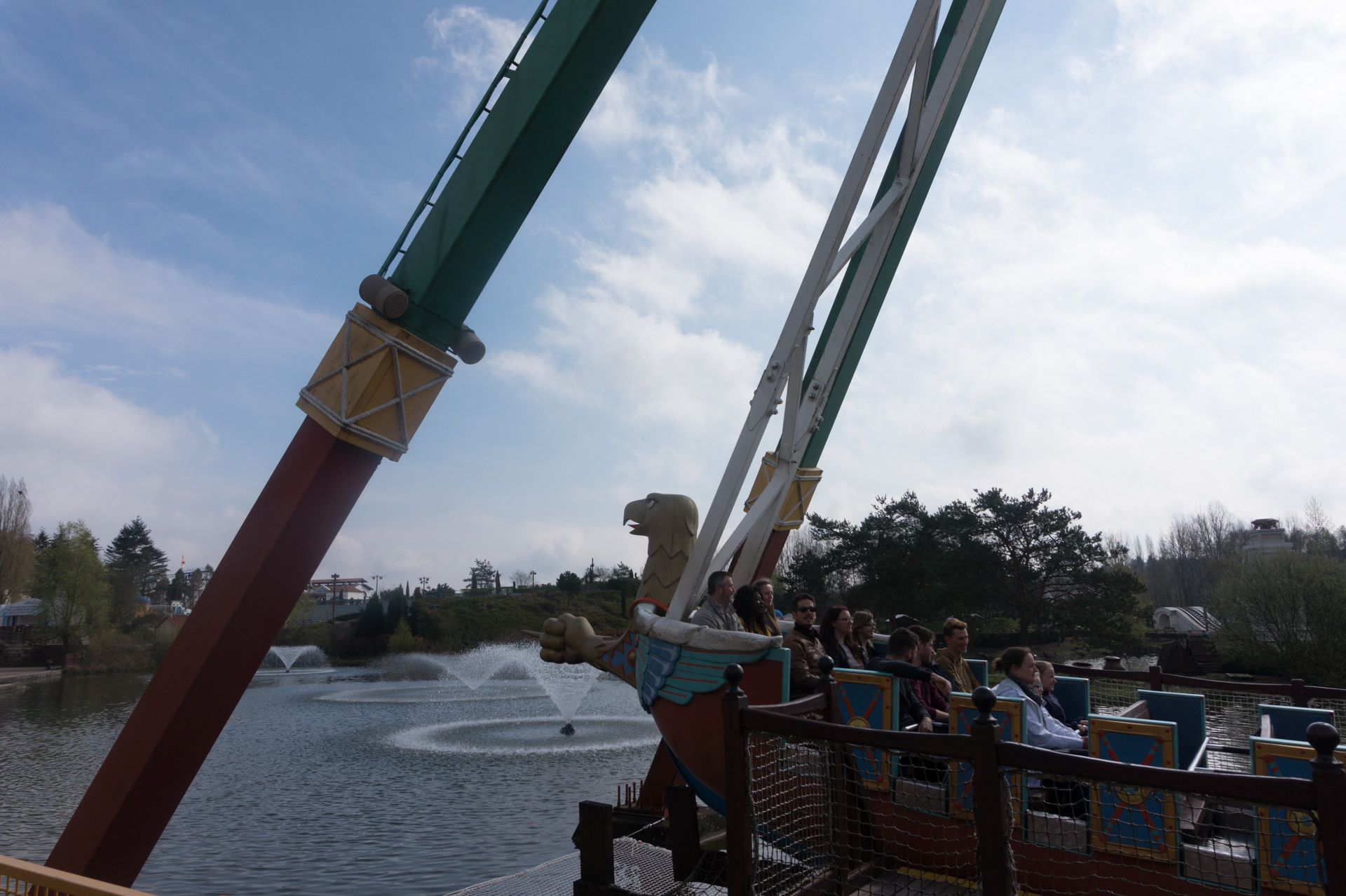
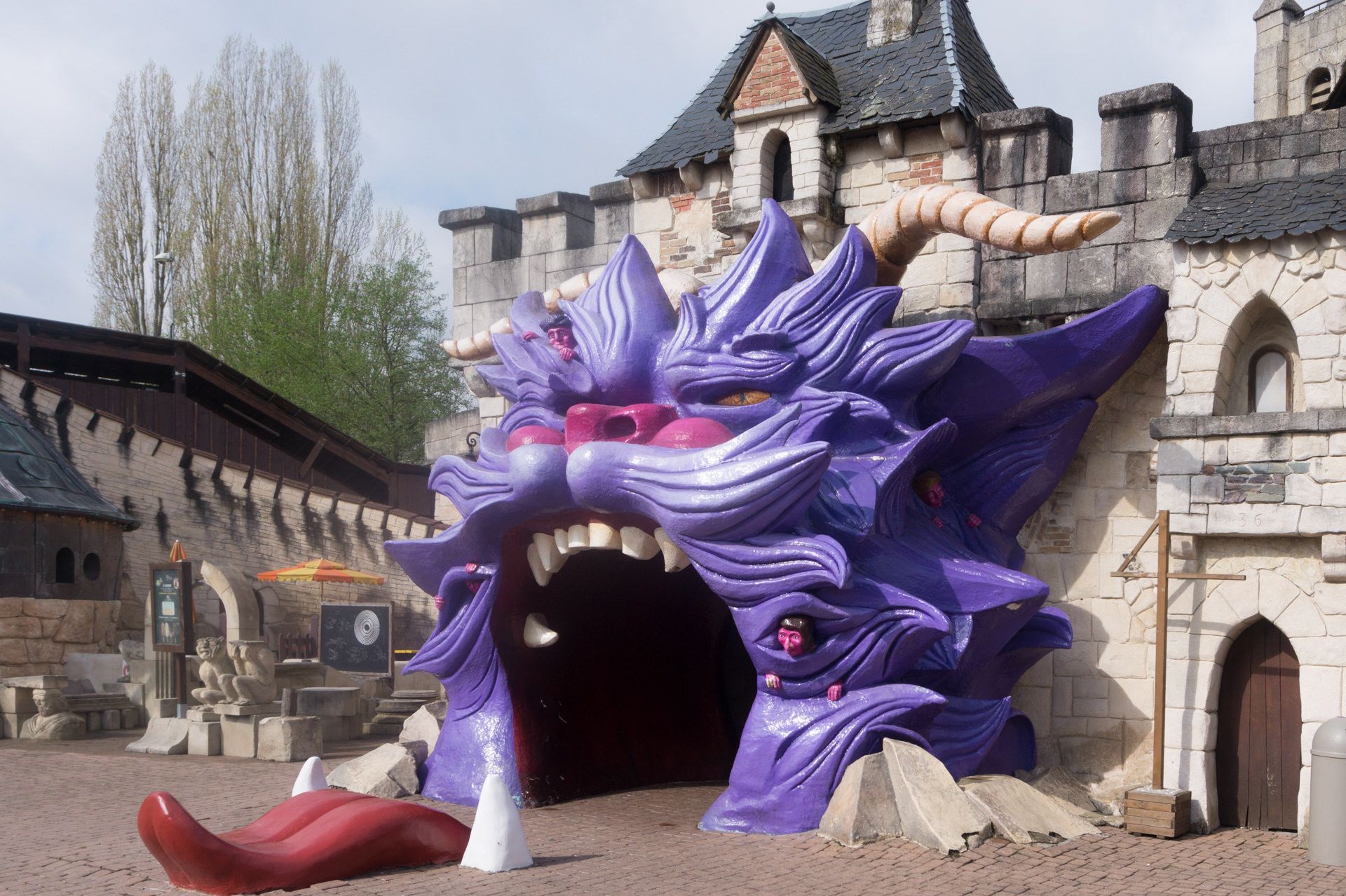
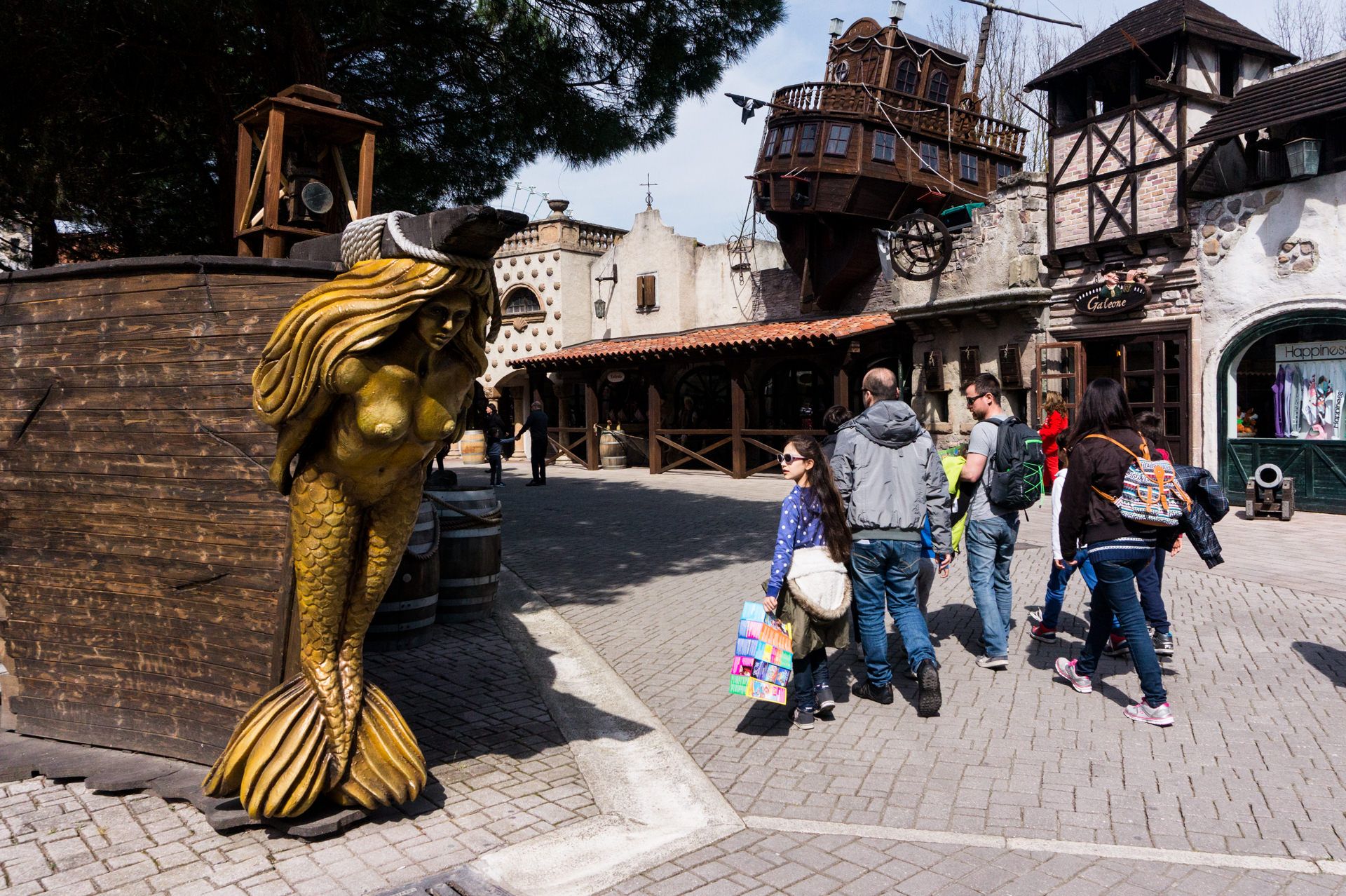
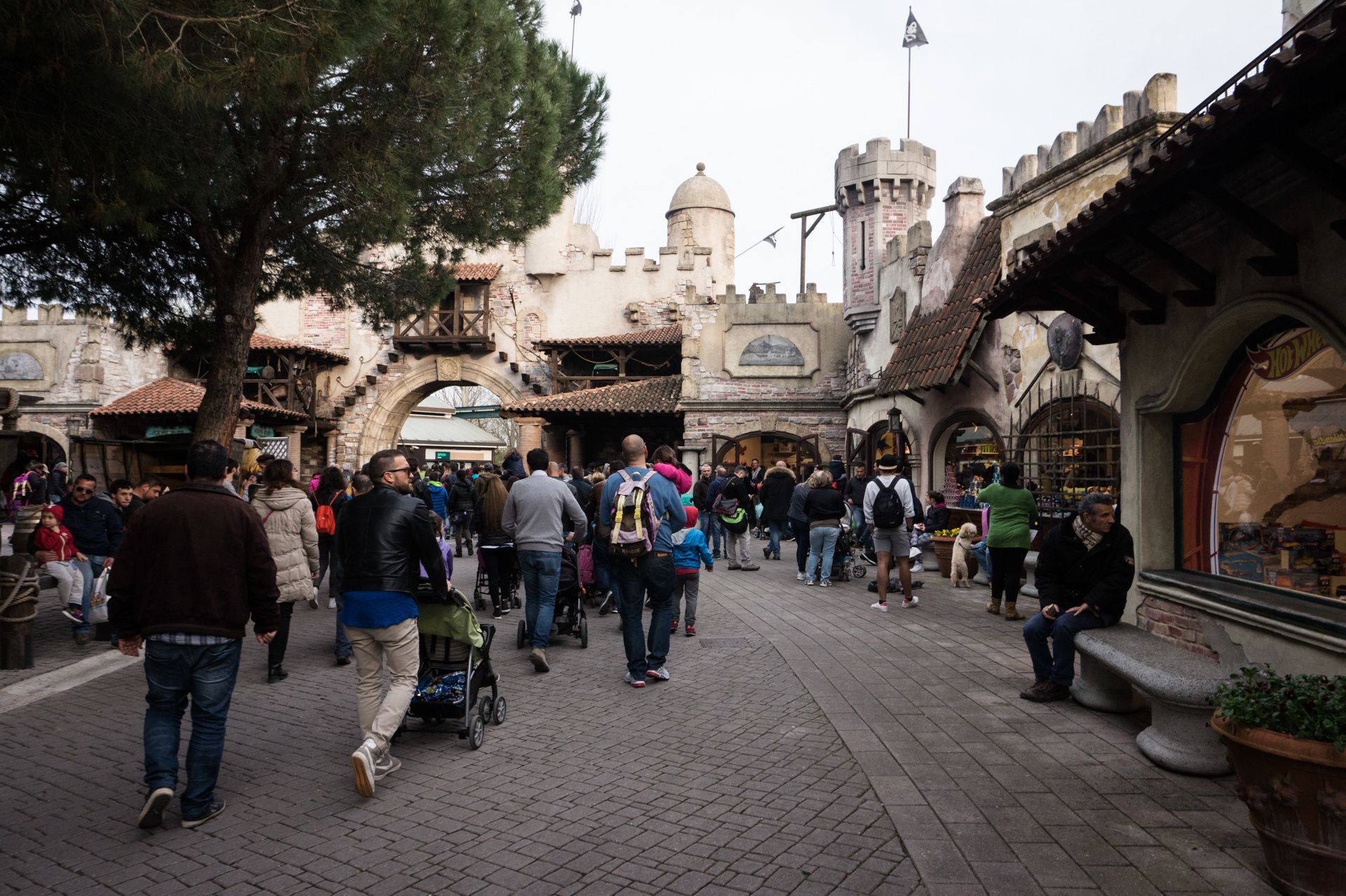
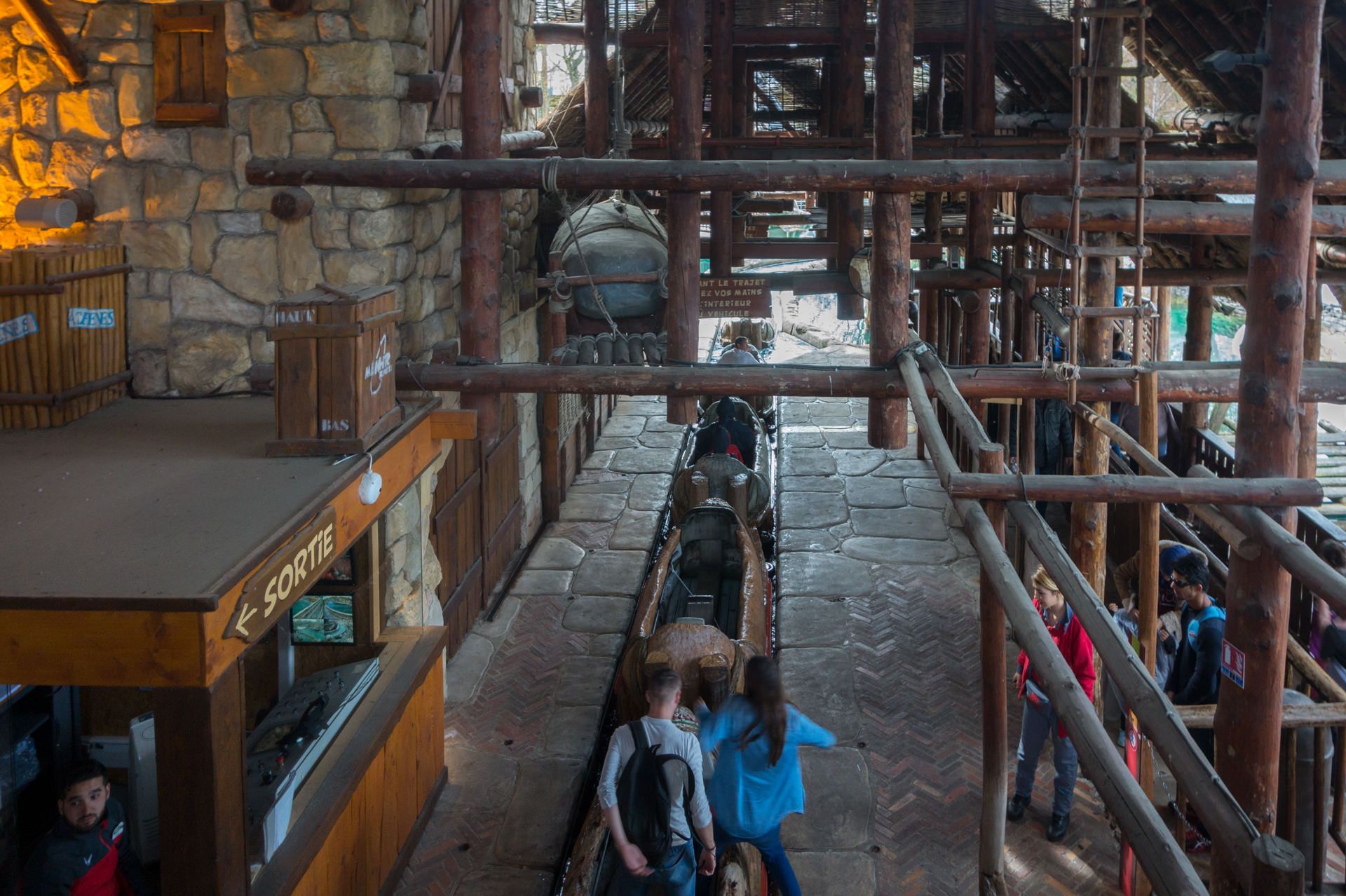
We end our tour of the lake with a ride on the La Galére boat swing, which is typically French and very atmospheric, before turning to the medieval theme area of the Parc Astérix. Here, we are immediately greeted by the eerily beautiful dark ride Transdemonium, whose entrance, in contrast to the dominant exit portal, is somewhat inconspicuous.

The morbid puppet theatre should not be omitted in any case, because the atmospheric mixture of surreal scenes, appropriate sound system and variable ride dynamics is convincing all along the line. It is a beautiful ride that is able to capture the spirit of historical ghost trains. That alone is a great art. Combined with some great scenes, above all the horse skeleton carousel, the Transdemonium has quite a high show value. The end of the ride reminds me of the former and also great ghost train Over the Hill from the English amusement park Adventure Island and therefore did not really come as a surprise to me. Nevertheless, a great ghost train, which you should not miss.

Les Cheveaux de Roi

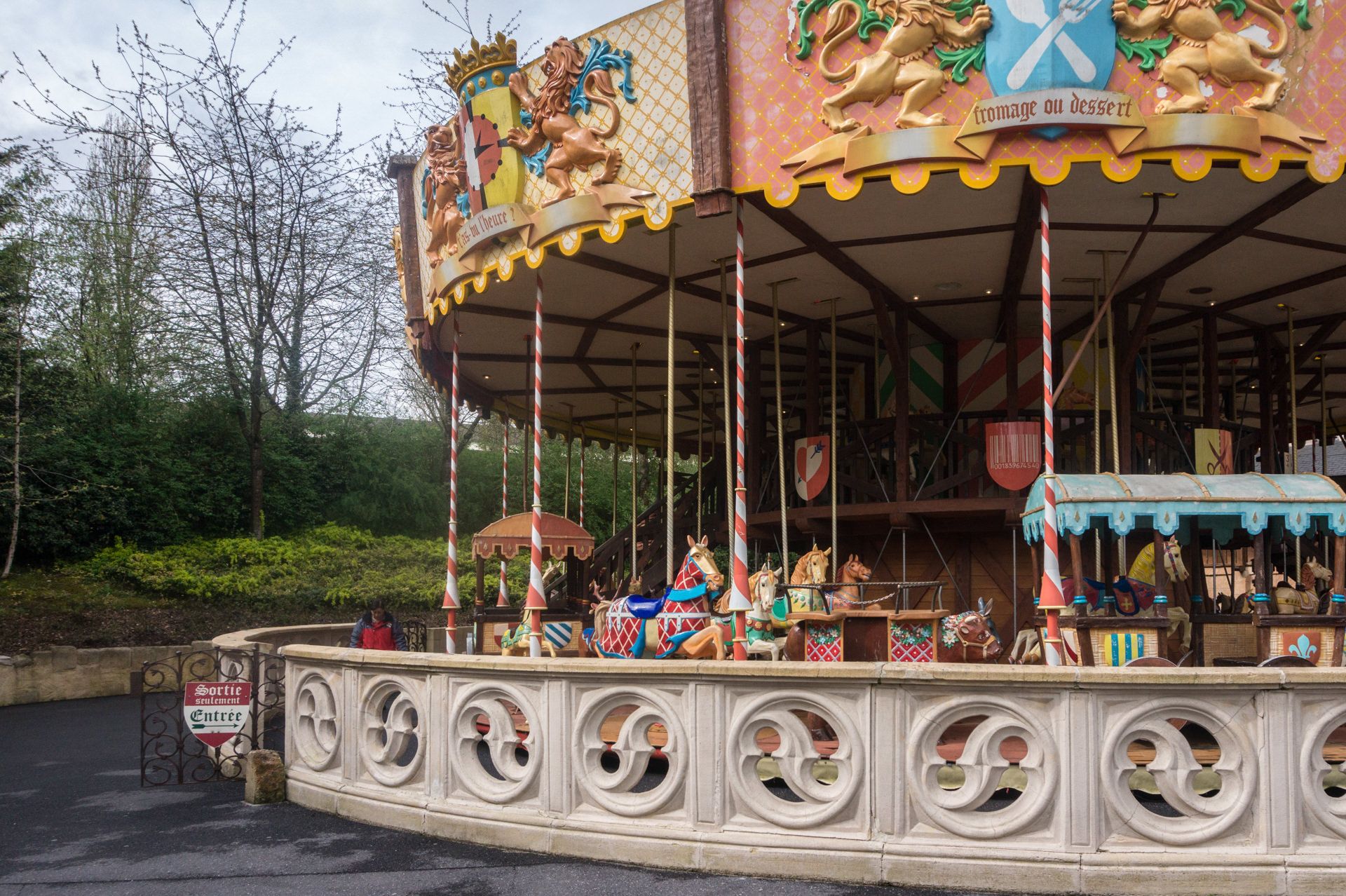
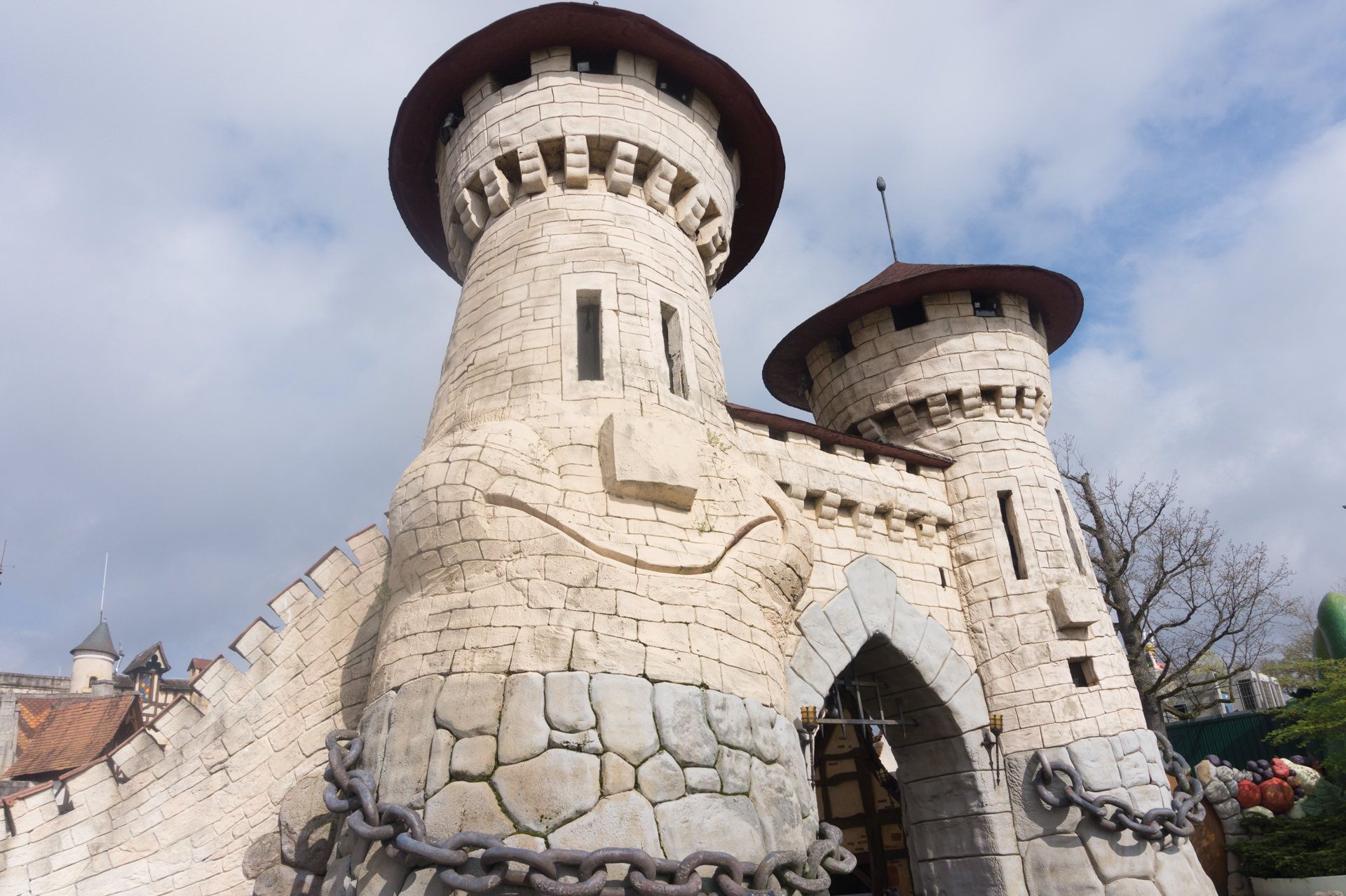
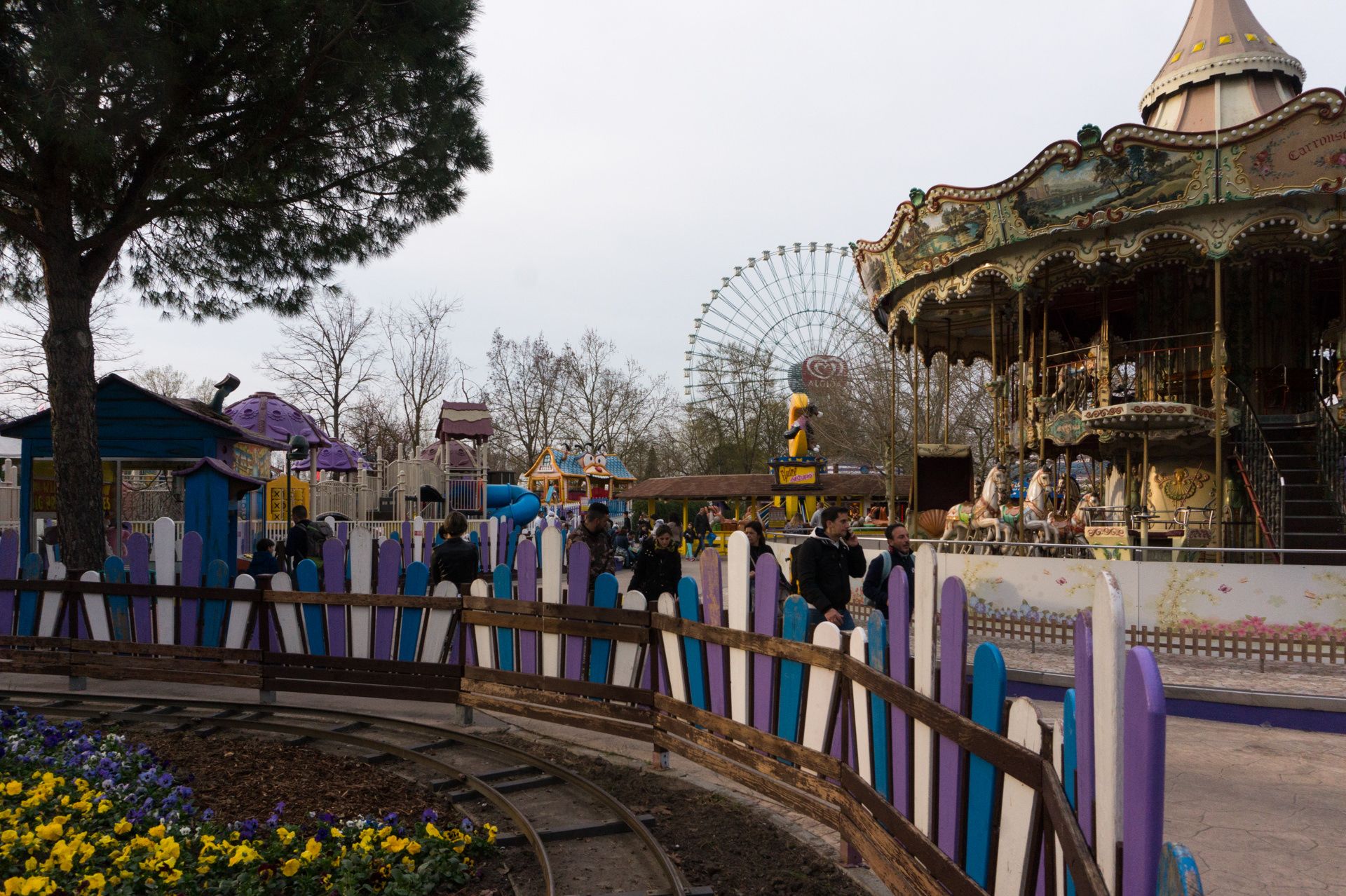
Passing a burger stand and a small café, we are now drawn into the courtyard of the castle, where we take a ride on the horse carousel Les Cheveaux de Roi before changing to the French themed area. In another hall, two dioramas reflecting life in Paris in the 17th and 18th centuries will be performed. During my visit, I was unable to understand why there is an unused queue in the middle of the hall. In general, the area looked neglected, which could also be due to the fact that the large show arena next door is not used during the low season. As I was able to research, the aforementioned queue is, however, even then only used for the Maison de la Peur during the Halloween season.

Oxygénarium

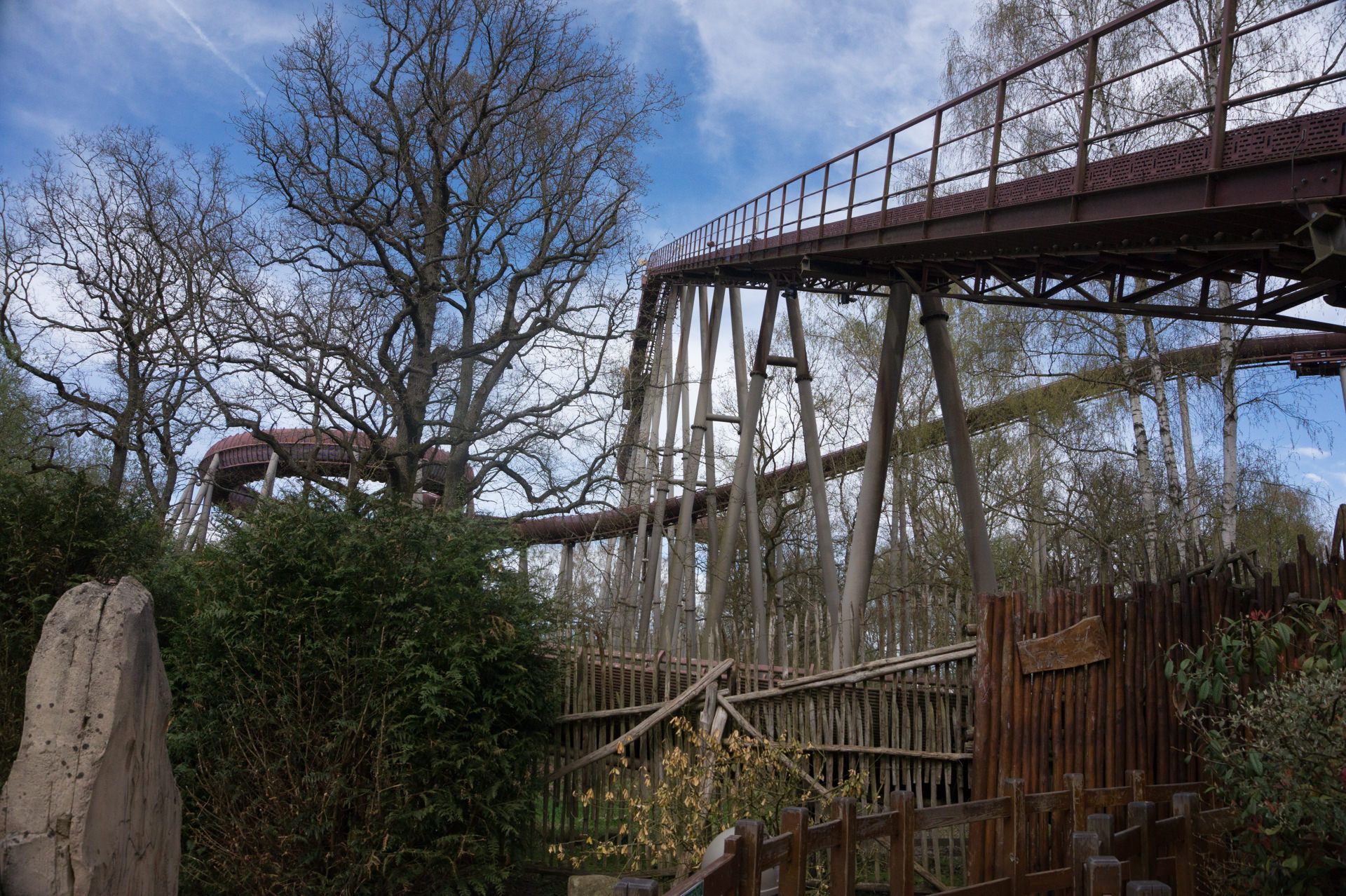
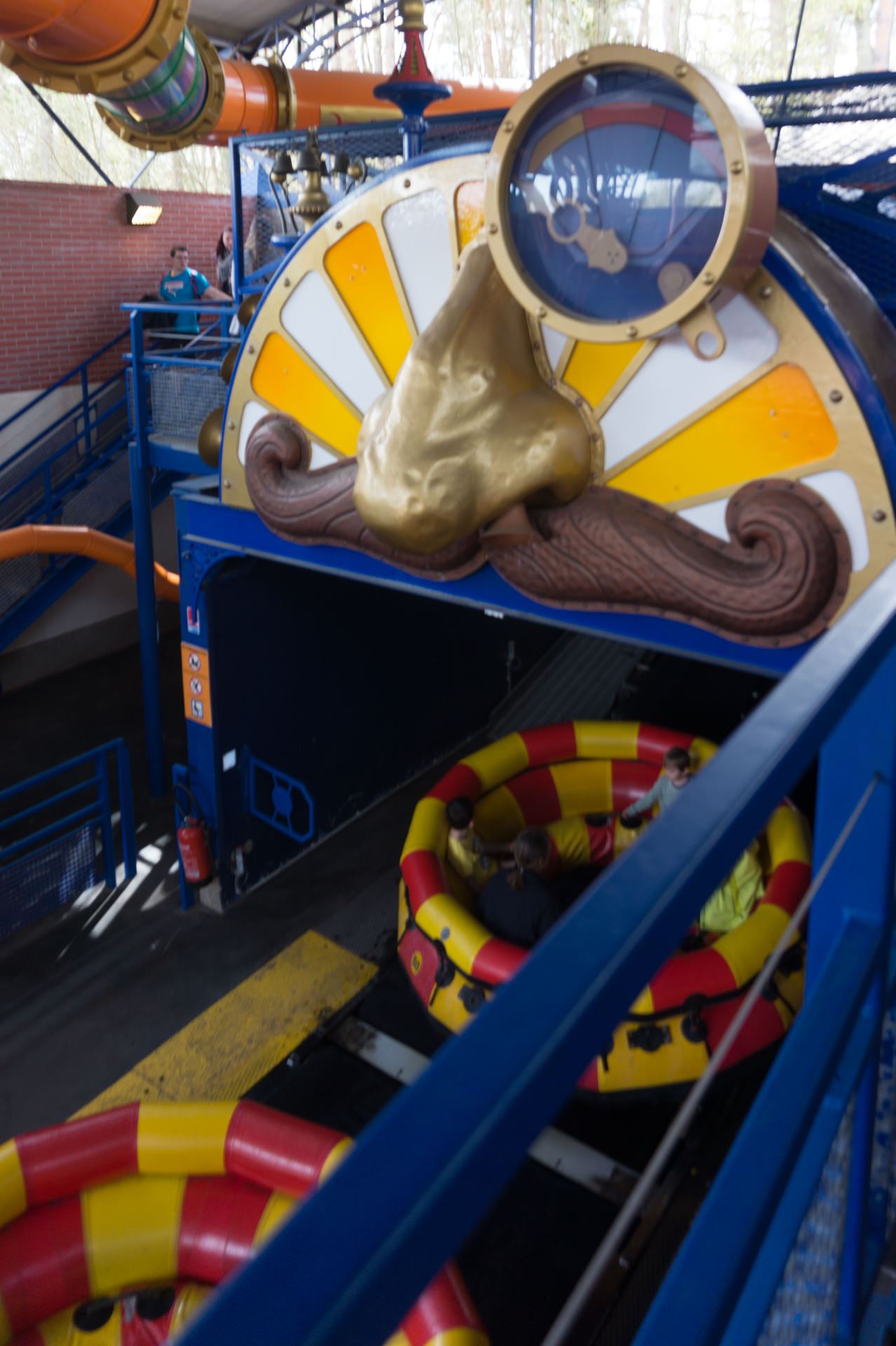
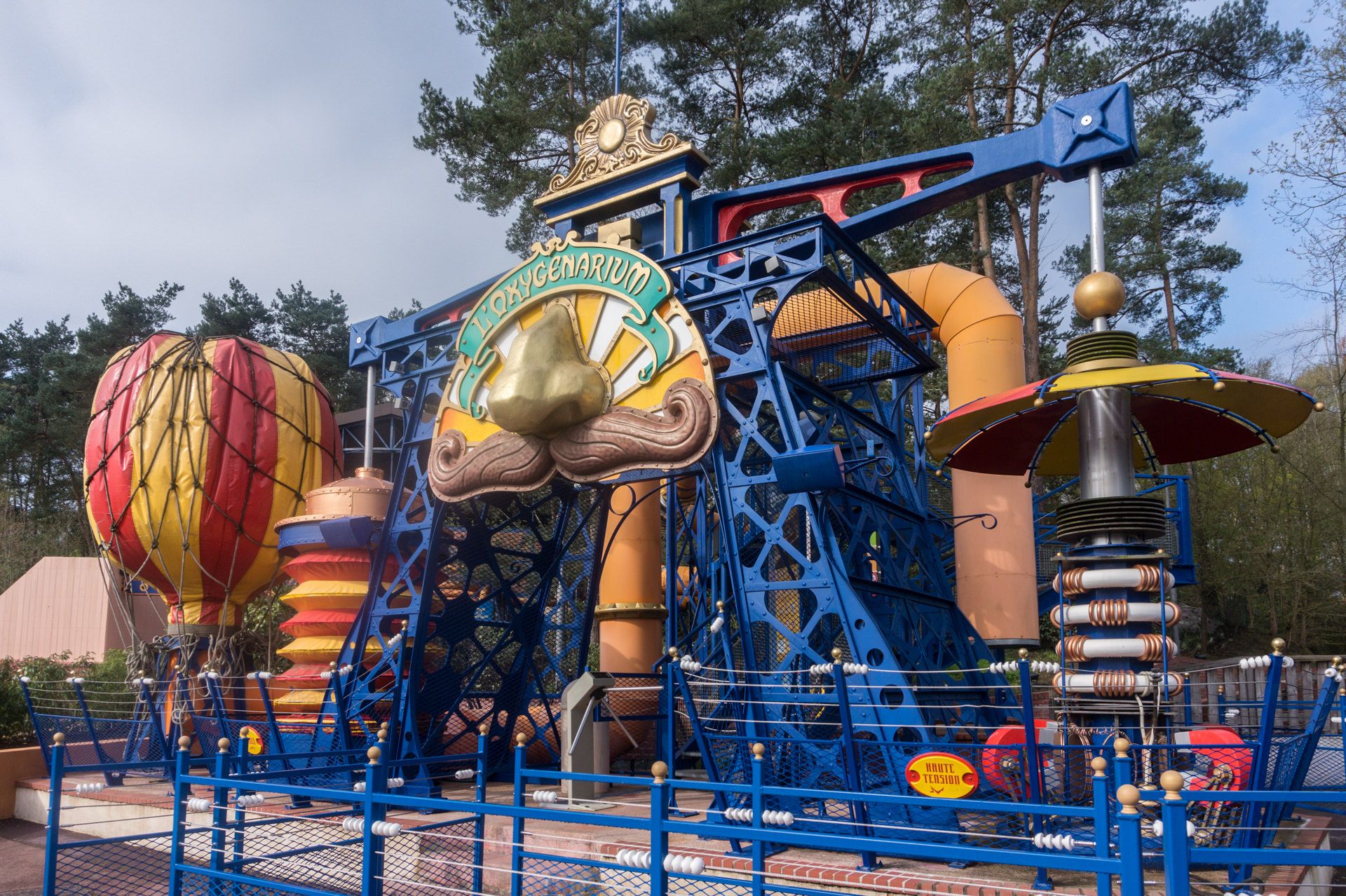
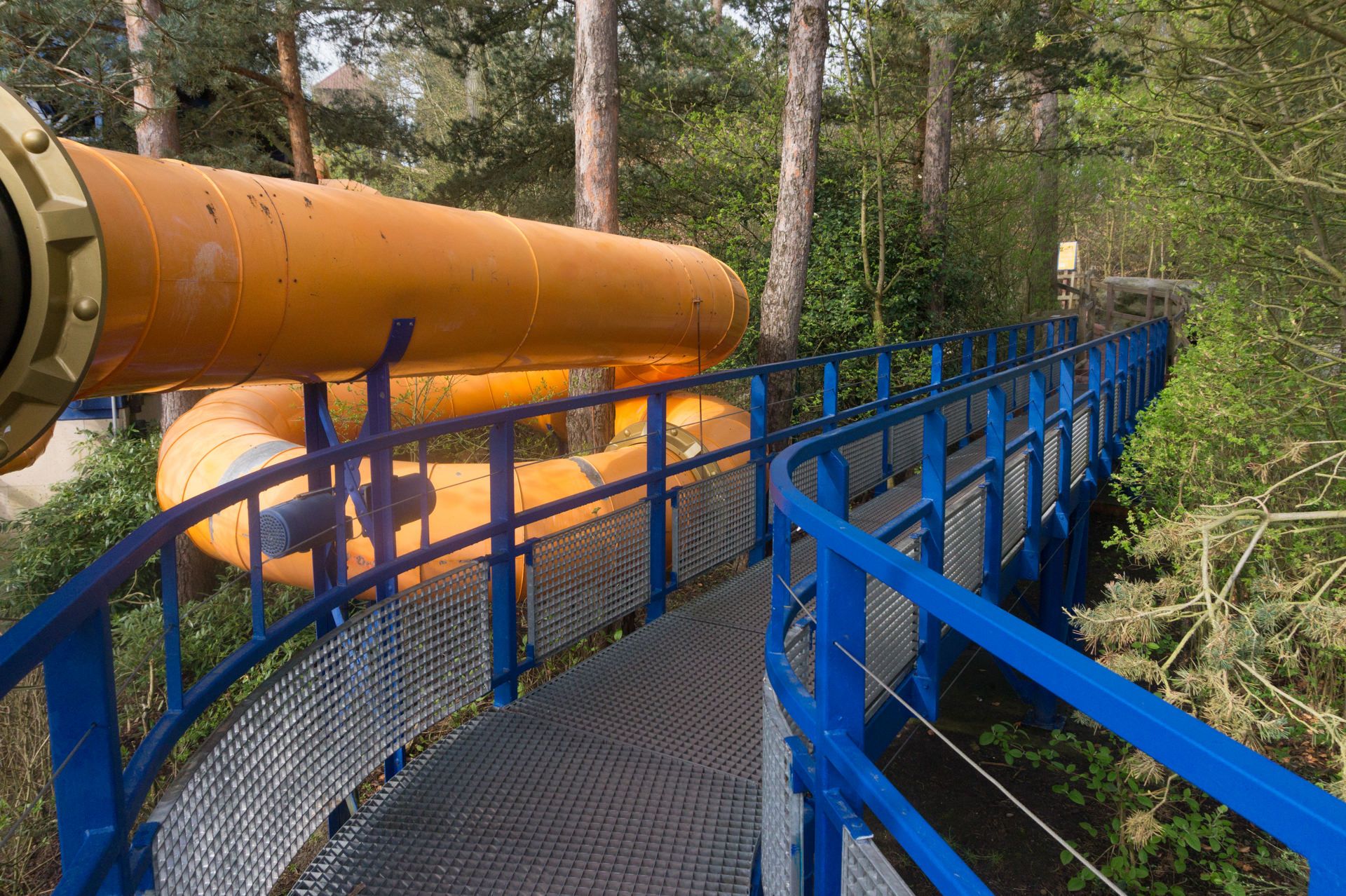
Back in the daylight, we immediately devote ourselves to the air cure on the Oxygénarium round boat slide. This Spinning Rapids Ride from Whitewater West has been providing a good spin and an occasional shower since 1999. If you know Störtebekers Kaperfahrt in Hansa Park, you will also enjoy Oxygénarium, although the track has far fewer curves. The design of the ride is just as convincing as its integration into the surroundings, as even from the queue it is hardly possible to see the track. Above that the queue offers an excellent view of the roller coaster OzIris, which we will get to later. Accordingly, an absolute must-do for every amusement park fan at Parc Astérix.

Chaises Volantes and Nationale 7 

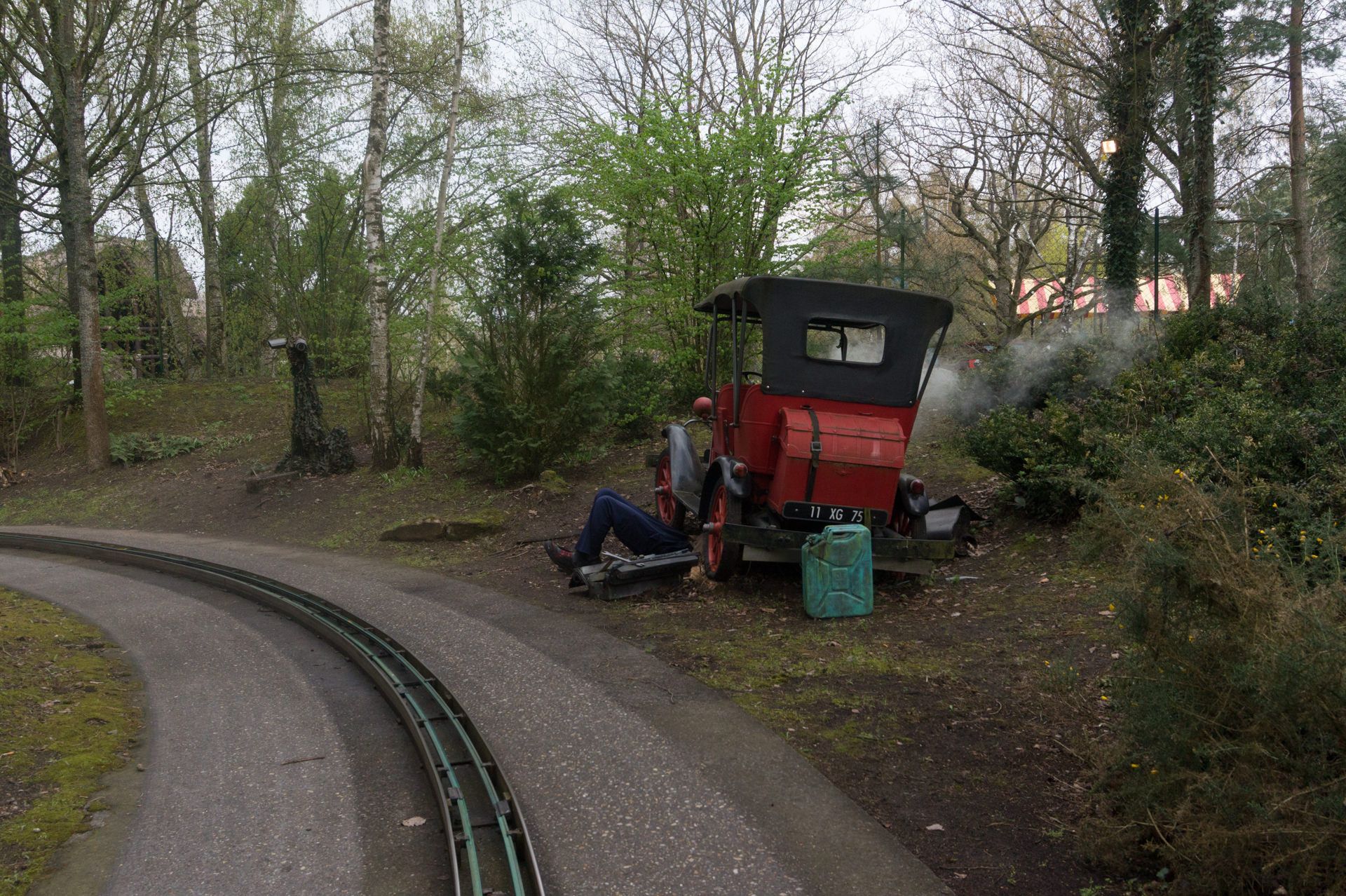
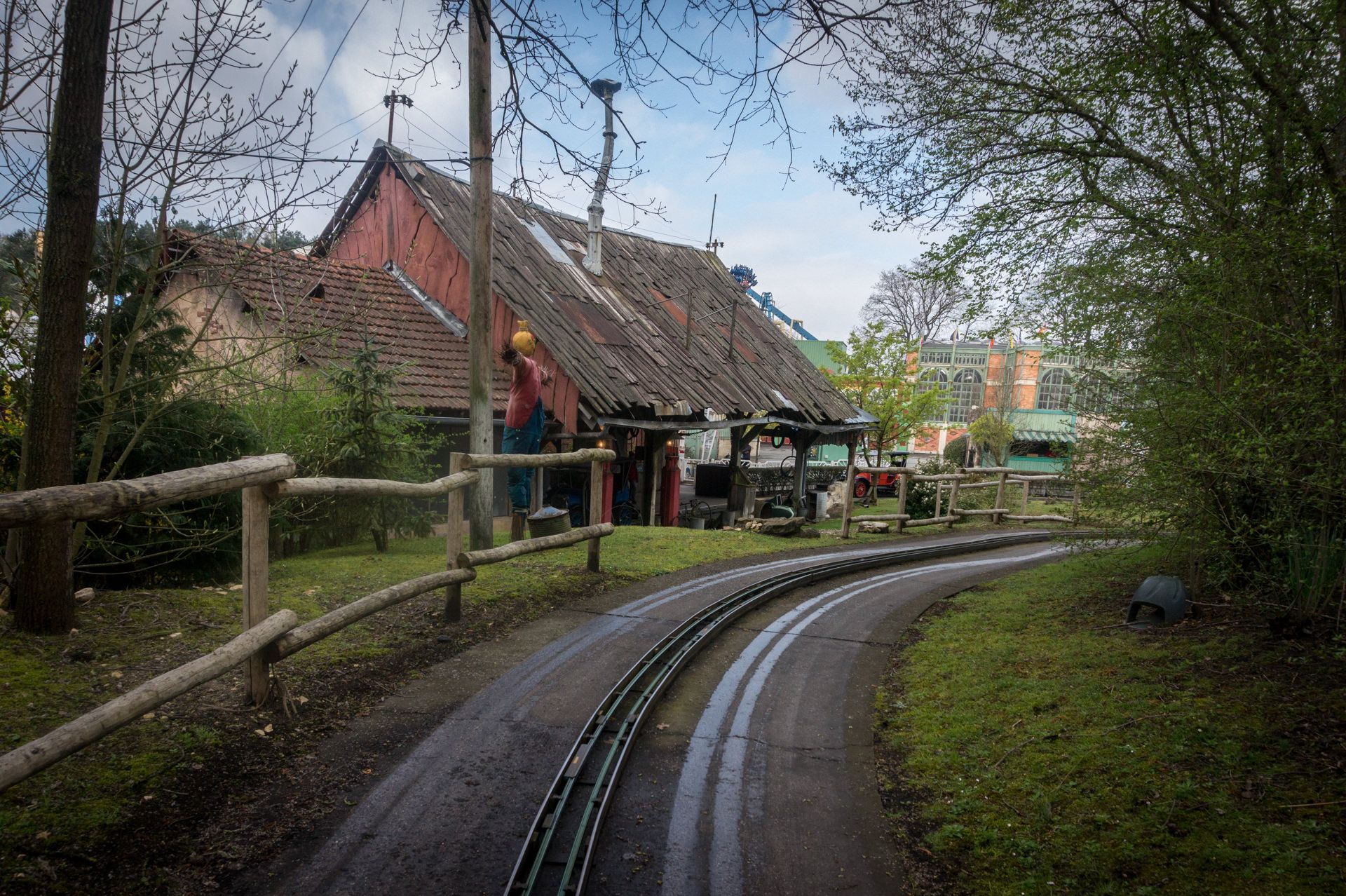
After a ride on the Attraction à Sensation in this area – the wave swinger Chaises Volantes – we dedicate ourselves to the French national road. The vintage car ride Nationale 7 takes us on a rather long stretch of road past several lovingly and humorously designed scenes. Thanks to its location, it is quite possible to overlook the ride.

Menhir Express

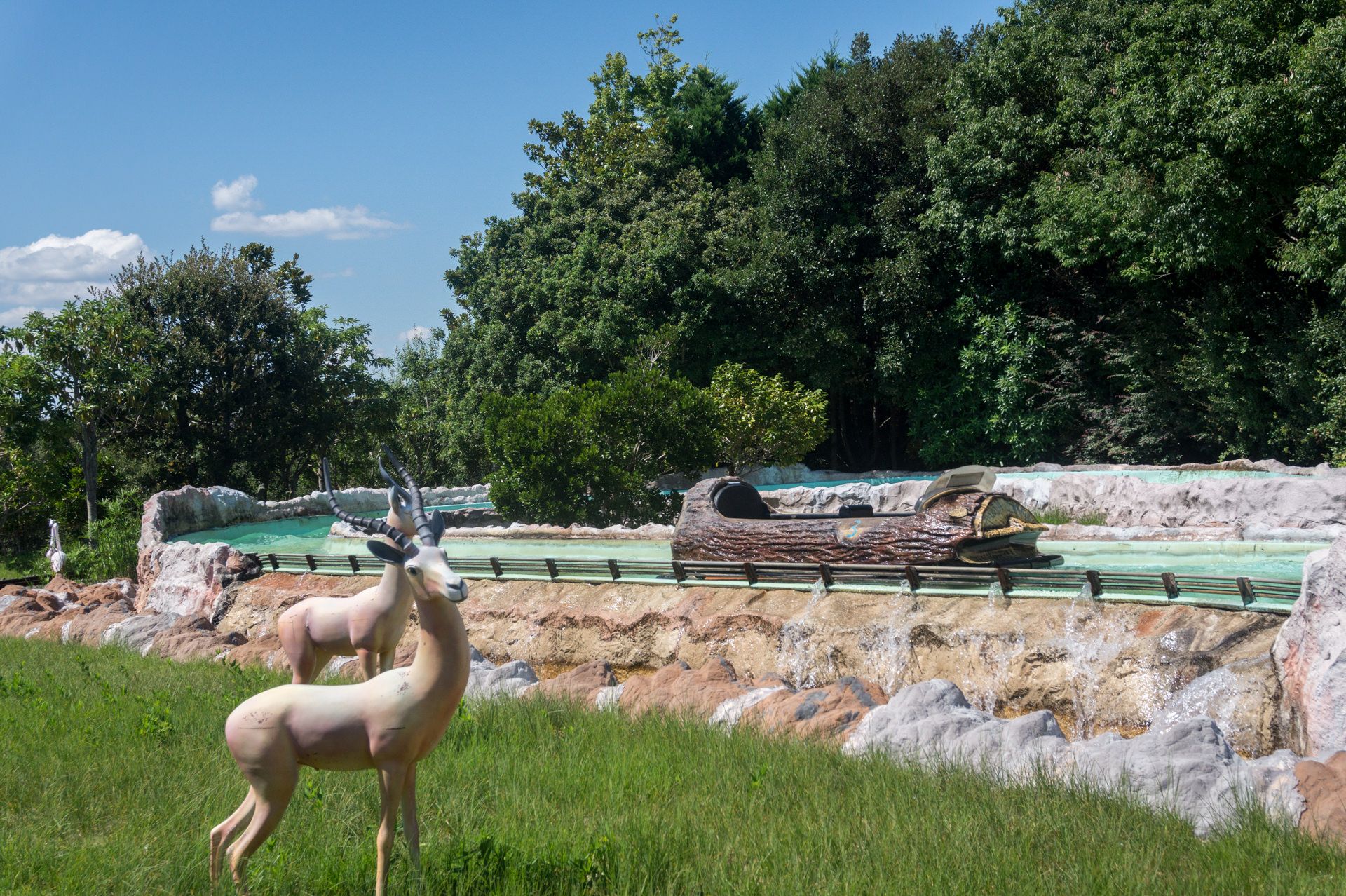
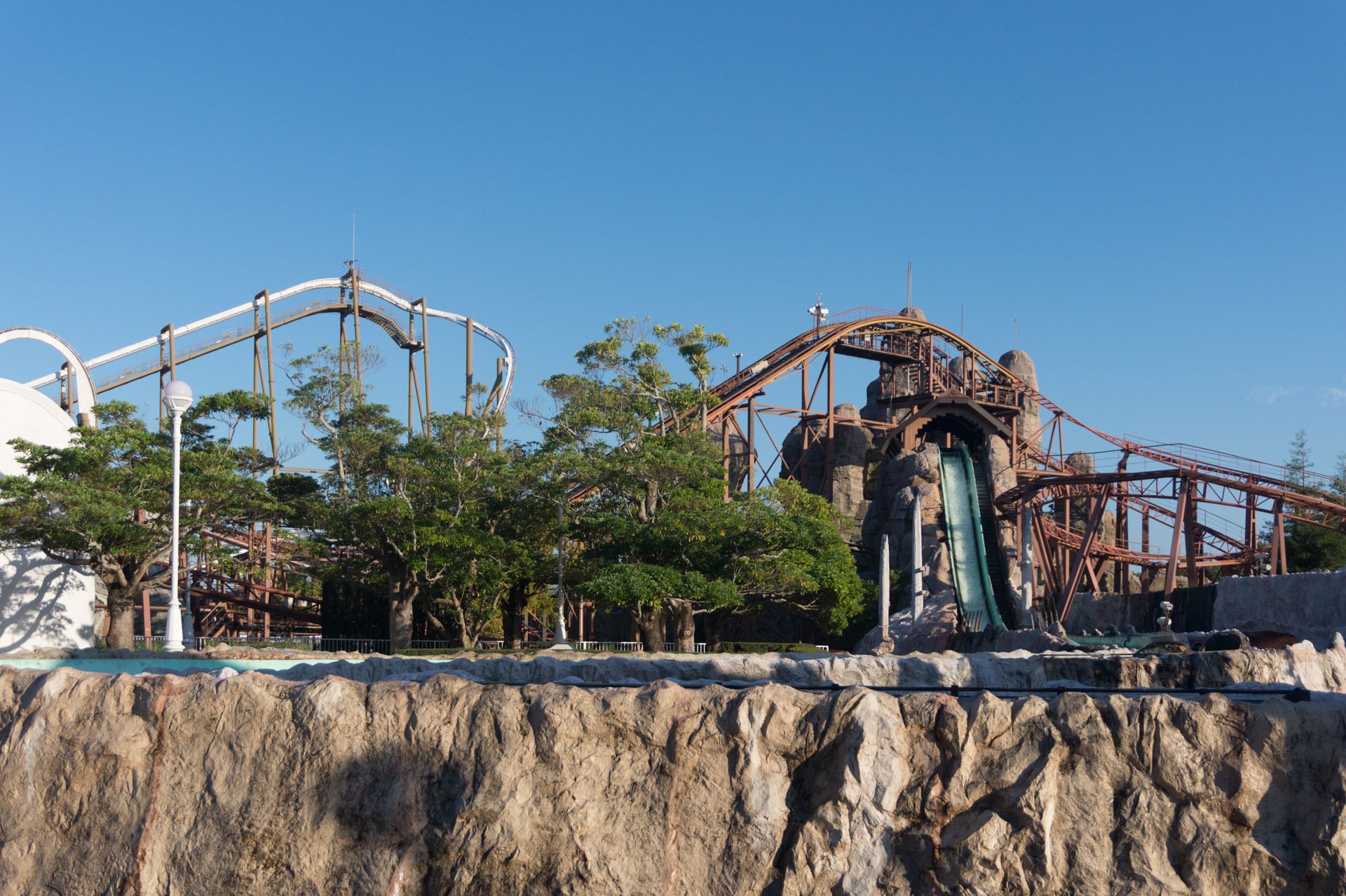
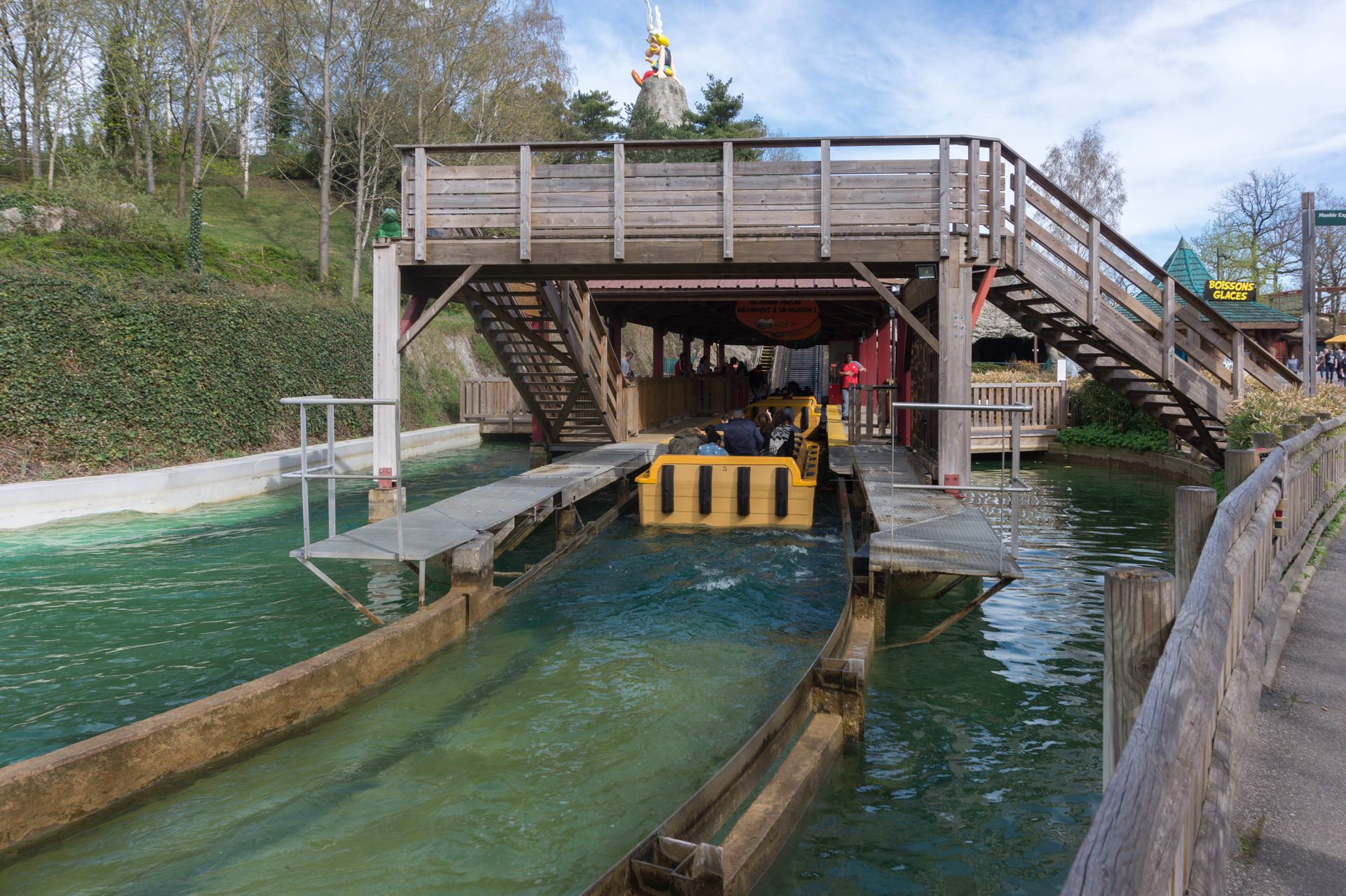
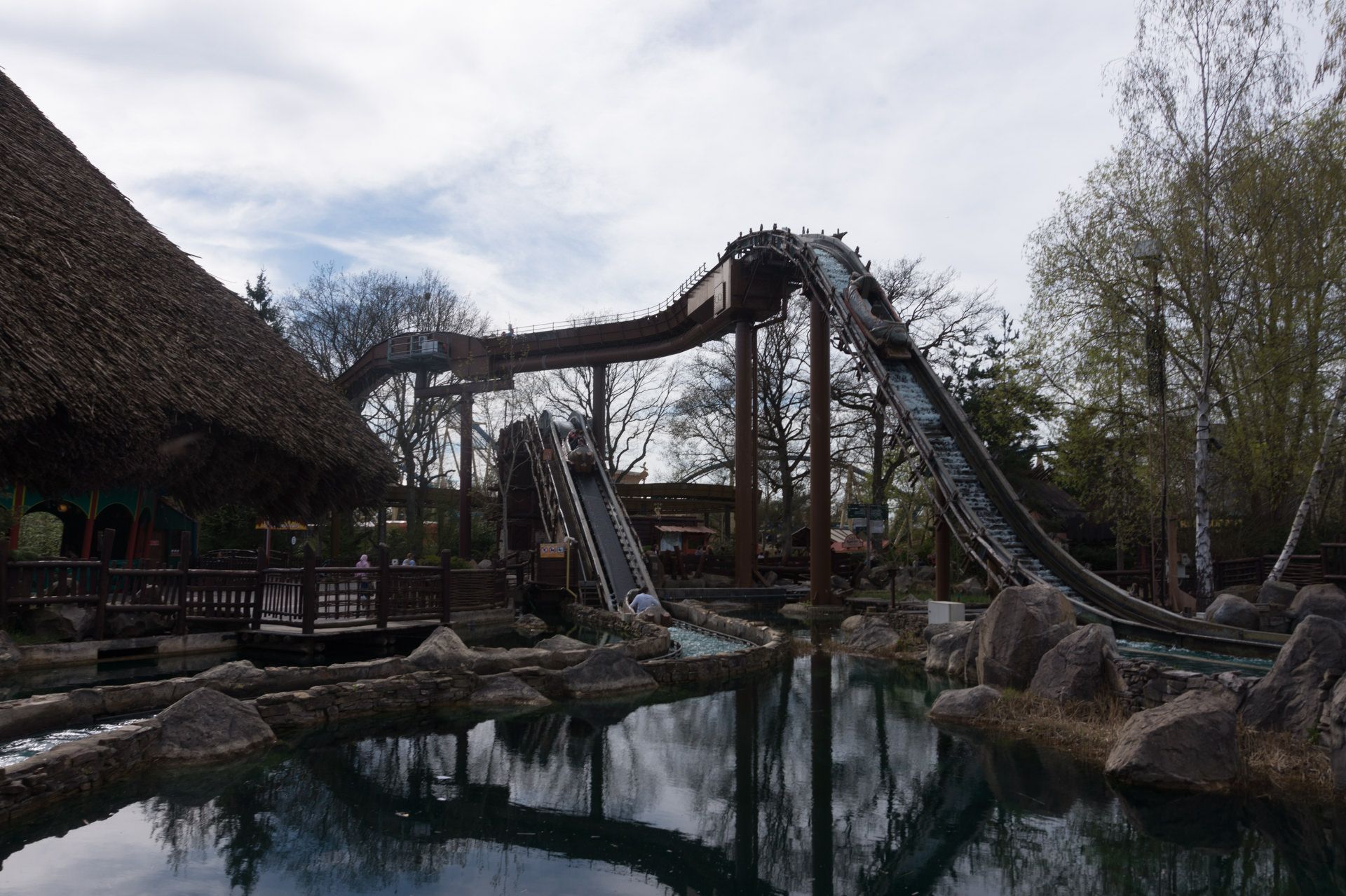
Far more dominant in this respect is the log flume Menhir Express. Passing the tea cup ride Les Chaudrons and the cog ride La petite Tempête, the route takes us once around the entire ride before we reach the entrance of this ride from O.D. Hopkins. As a fan of the manufacturer’s Shoot the Chutes rides, I have been looking forward to experiencing a log flume from this company in Europe for some time. But it almost never came to that. In the report on Walibi Rhône-Alpes I already explained the single rider policy of the Compagnie des Alpes, but this was the first time that they wanted to deny me a ride completely. Especially in the Parc Astérix – where I was always put in the boat with other people – I was very surprised. There was no sign at the entrance of the attraction. In the end I was able to join the following family, but unfortunately also only after further inquiry. As I said, at all other water attractions of the CdA the whole thing went much less problematic.

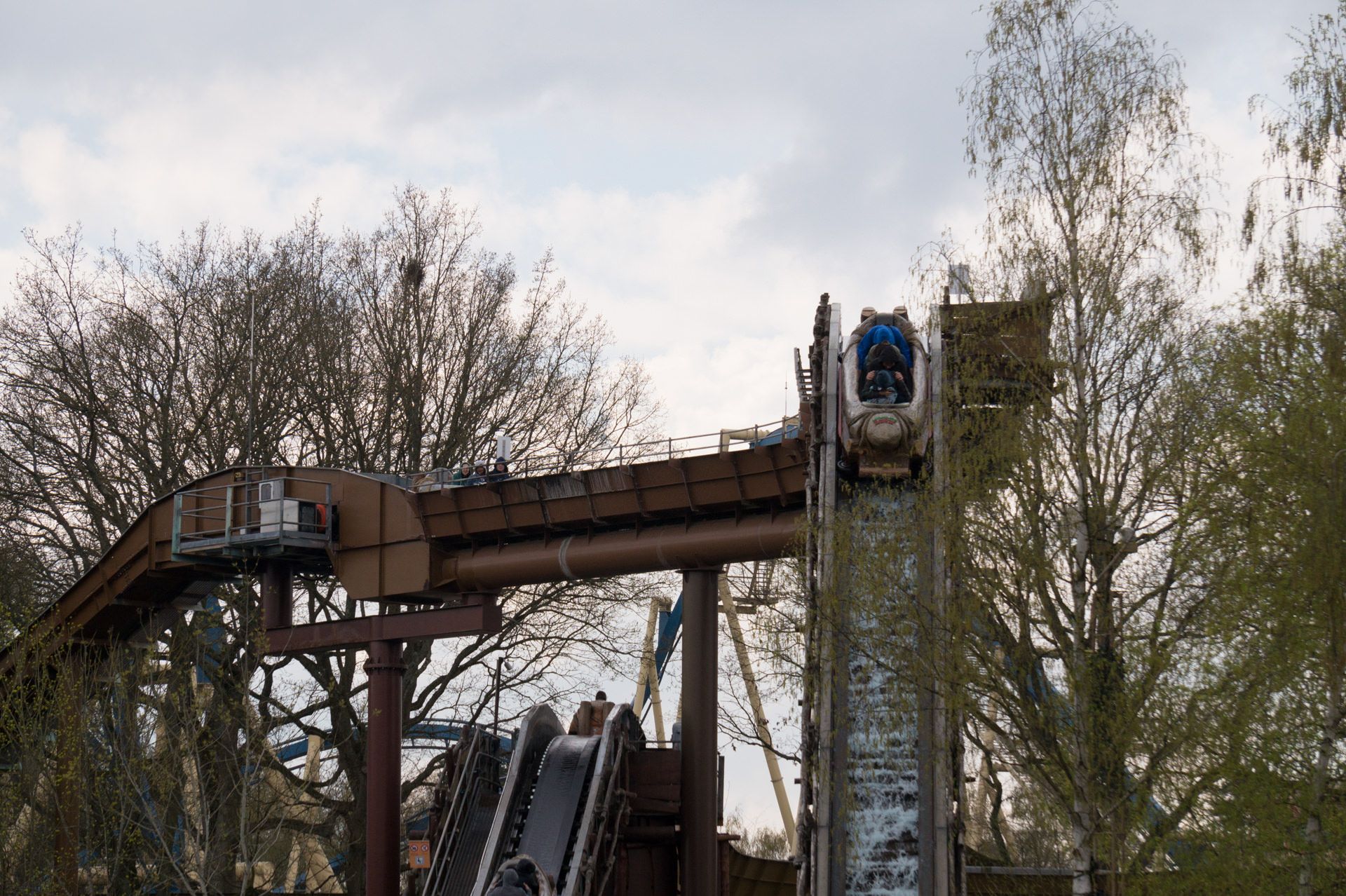
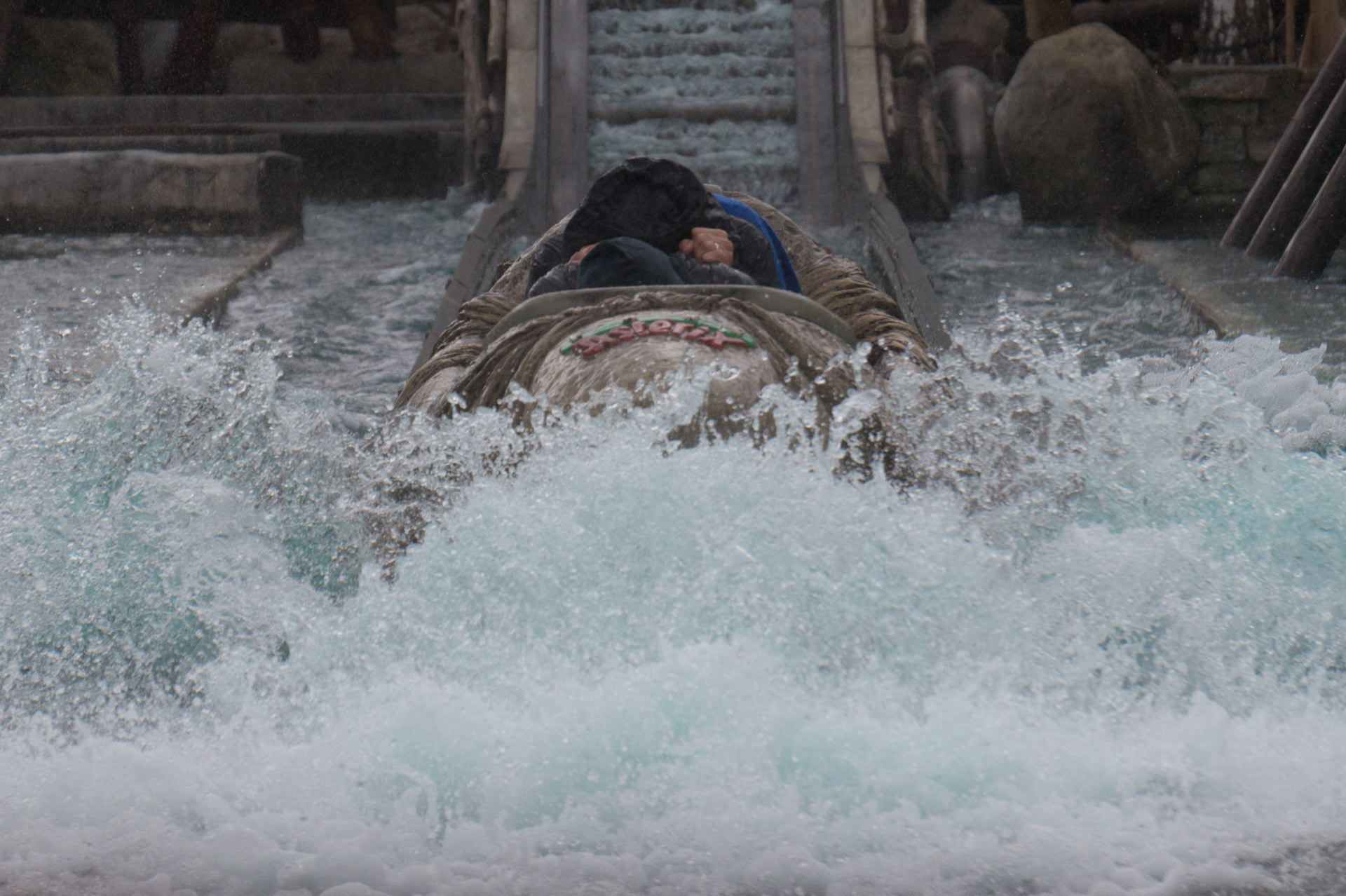
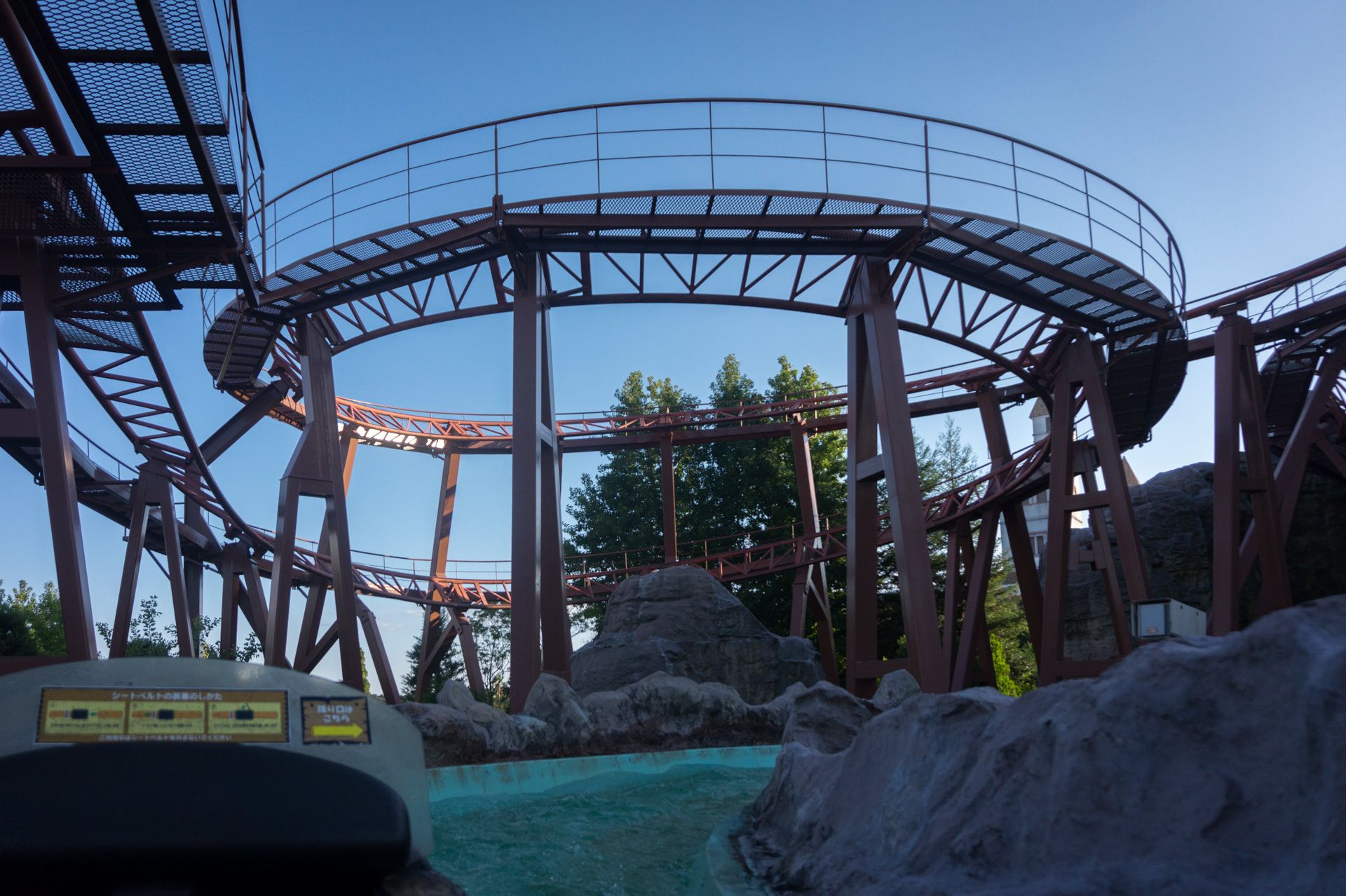
After all the unnecessary stress, the cooling down came at just the right time. After the menhir has left the station, you bump a little in an S-curve towards the first lift. At the top there is a faster passage consisting of several right and left turns, before you slow down a bit and rush through real white water. After several bends you reach a tunnel, where the first shot of the ride is hidden. With momentum you go down immediately and up again just as fast. After a camelback you reach the exit section, whereupon a larger amount of water pours over the passengers. On the way to the next lift the rapids predominate and water is constantly splashing into the boat, before a cave is reached at some point. This leads one through a seemingly switched off revolving tunnel, as well as a water fountain tunnel similar to the one of the Gruffalo River Ride Adventures in the English amusement park Chessington World of Adventures.  Back in the fresh air, the second lift hill of the ride awaits us. In lofty heights, we will now dawdle through the canal for a few more metres before the second ride awaits us. Although the smaller downhill run is usually the wetter one, you will also have a good shower on the big one. Completely soaked, we return to the station.

The Menhir Express is a log flume that really lives up to its type designation. The ride is fast, very lively and absolutely wild due to the rapids. The two shots are almost superfluous if they weren’t also absolutely brilliant. The degree of wetness is, as is typical of O.D. Hopkins, extremely high and yet I would have loved to go on one lap after the other. It is a real pity that there are so few log flumes of this character in Europe. Whitewater West would certainly be happy about new orders.

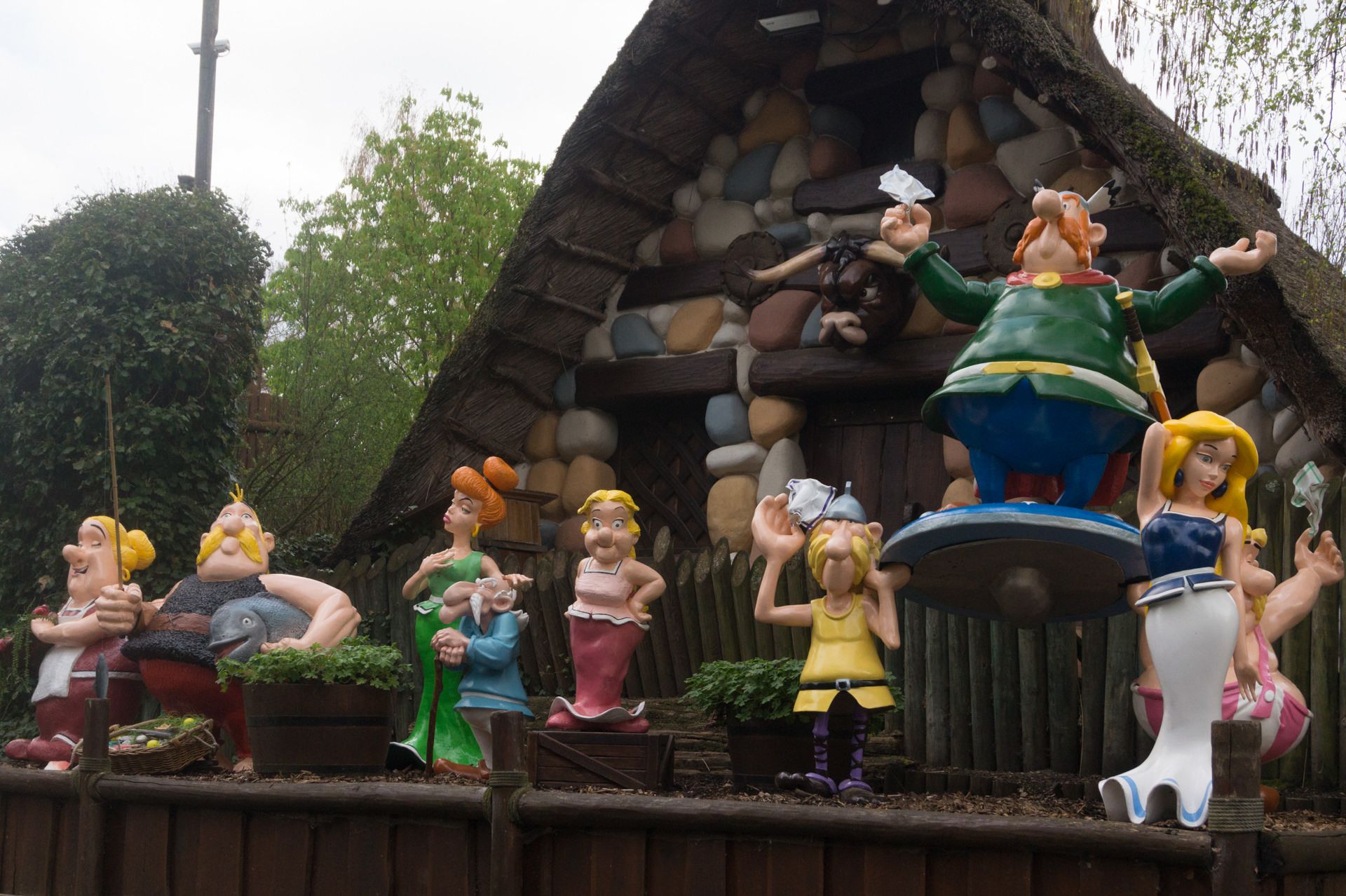
While we just had a view onto the menhirs, we can also slowly take a look at the home village of our favourite Gauls. It is situated in the middle of Parc Astérix and offers the ideal opportunity to get away from the hustle and bustle of the area. There is also a small show arena around the Troubadix tree house, which serves as a stage for a pet show in summer. The animals themselves live in the village and are even more likely to excite the children than the eerie Meet & Greet characters. In this respect there is really room for improvement, because frightened children can be found on every corner.

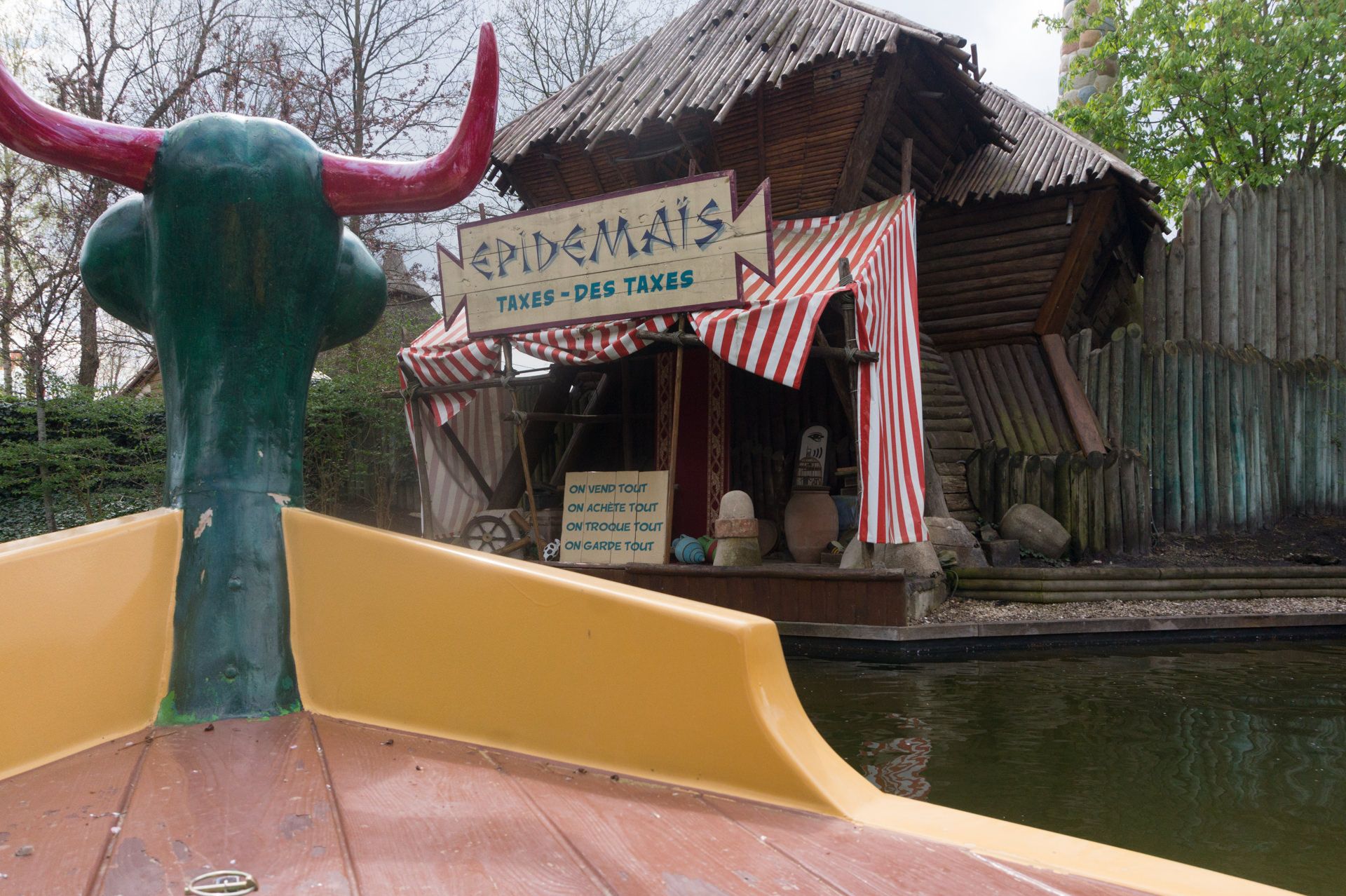
Épidemaïs Croisière

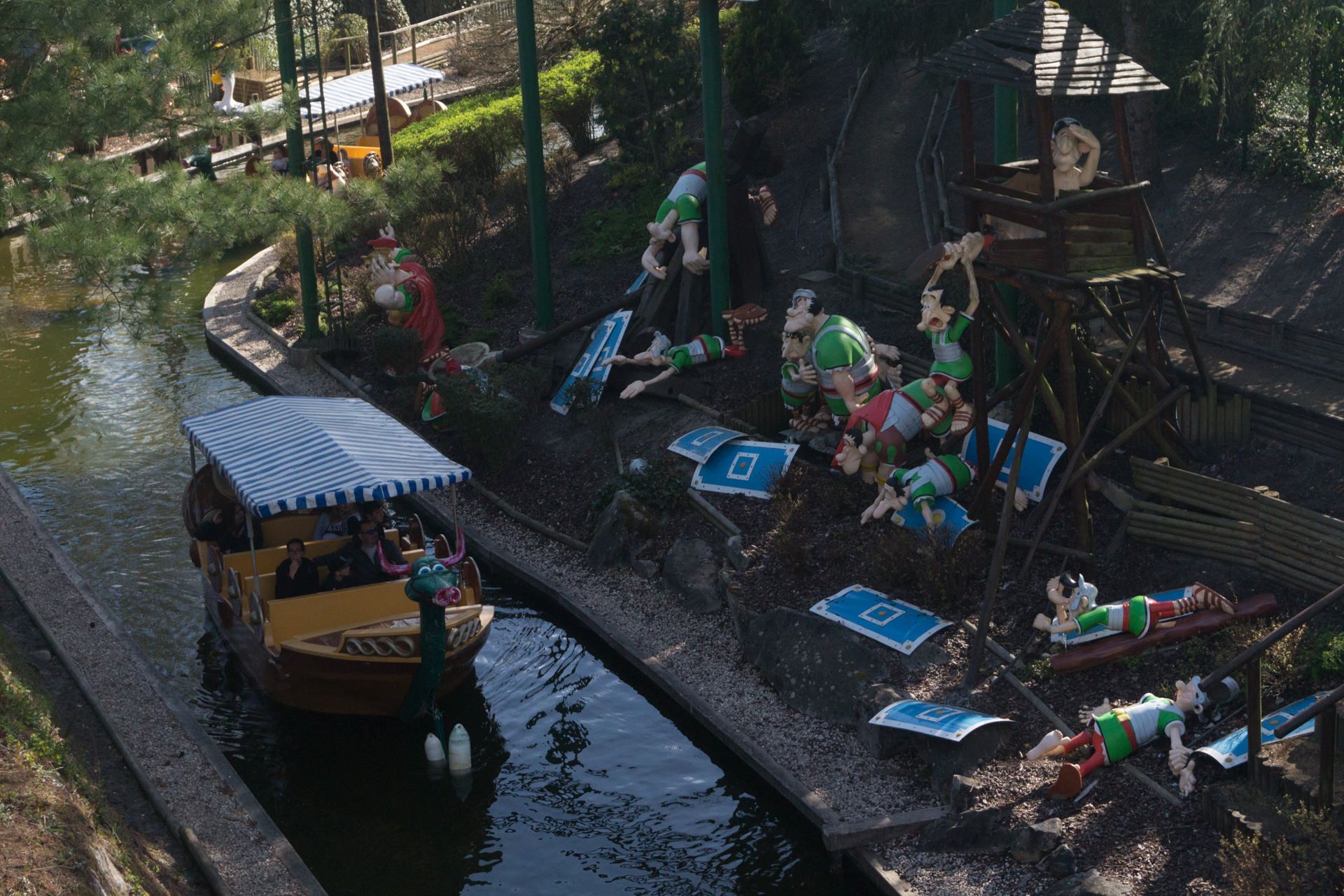
Directly adjacent to the Théâtre du Barde is the dark ride section of the Épidemaïs Croisière boat trip. This leisurely cruise takes us on a journey through the famous comic strips. In the individual scenes we meet a variety of characters, as well as a Roman garrison, which is of course reduced to rubble.

Through the really stylish children’s area La Fôret d’Idéfix, with its beautiful selection of children’s rides, we now move on to the Théatre du Panoramix, which was used for the show of the magician Crypto on at least one of my visiting days. This was unfortunately mystical nonsense and not very entertaining, but it is interesting to see what a variety of shows and a multitude of performances Parc Astérix puts on depending on the crowd. It is also impressive that Parc Astérix has its park plans reprinted every day. Not only are the daily shows and performance times in the plan, but also information about the weather and other information. Such a service is really not often found.

Gaulois-Romains: Le Match

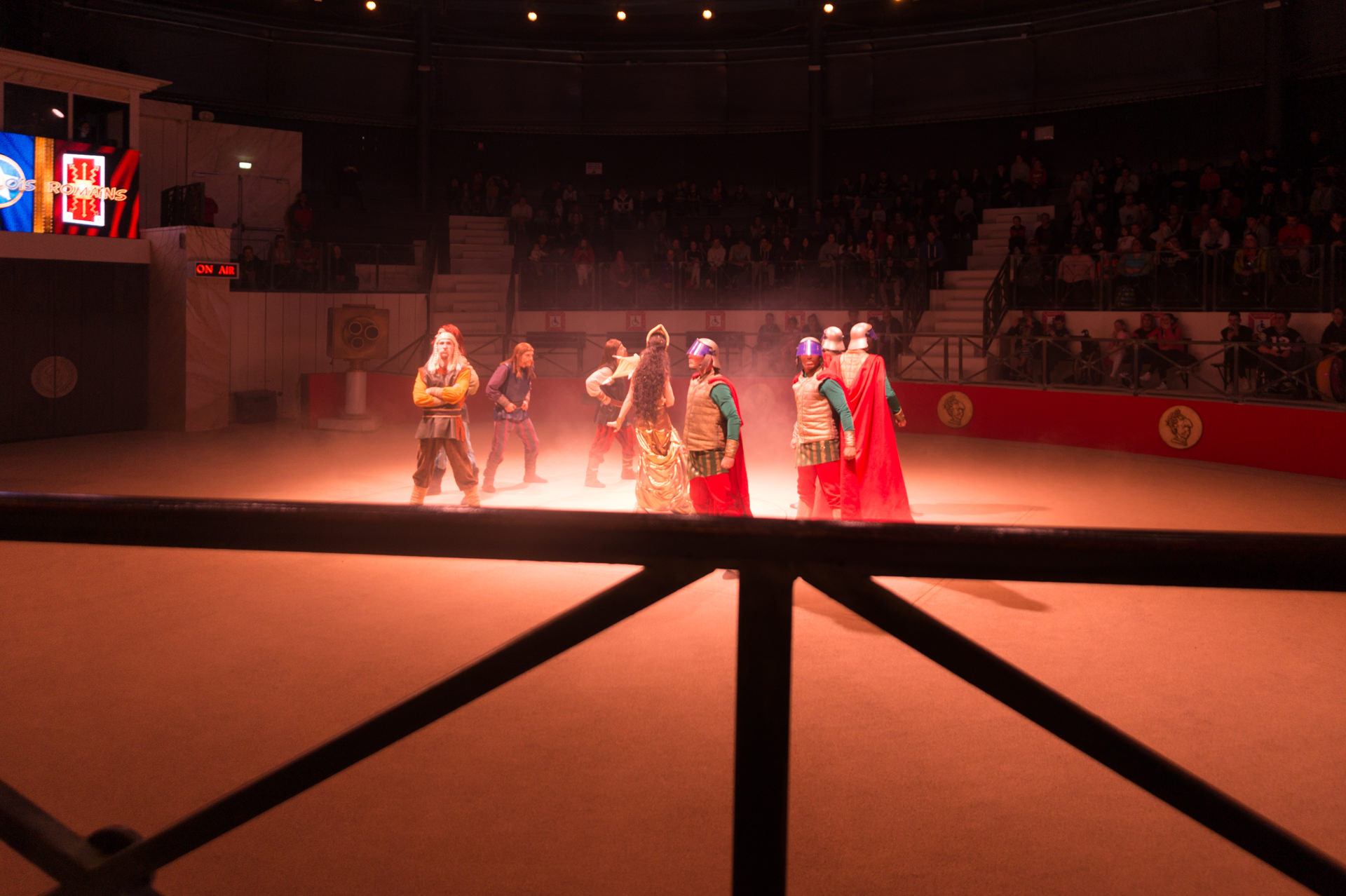
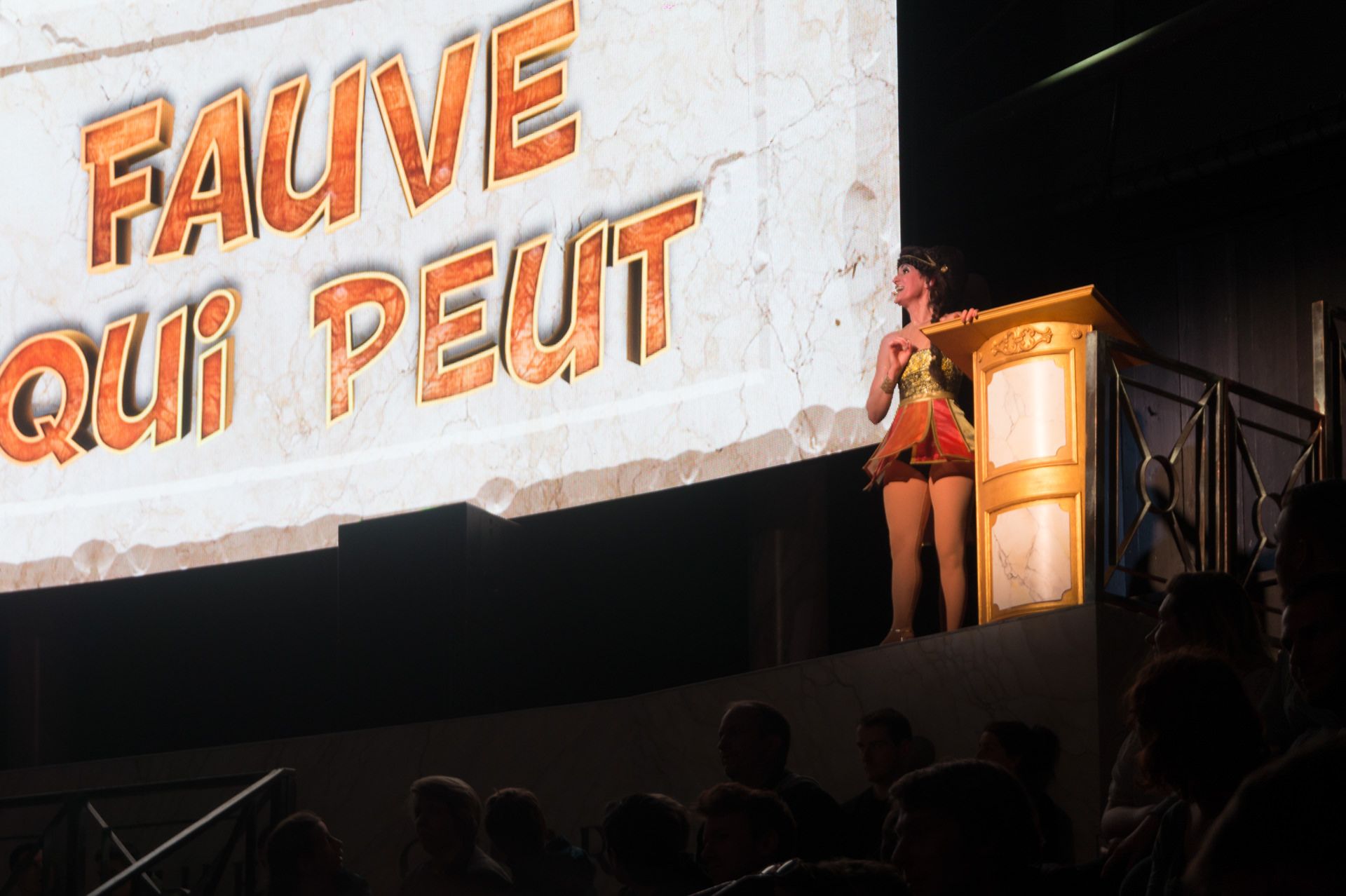
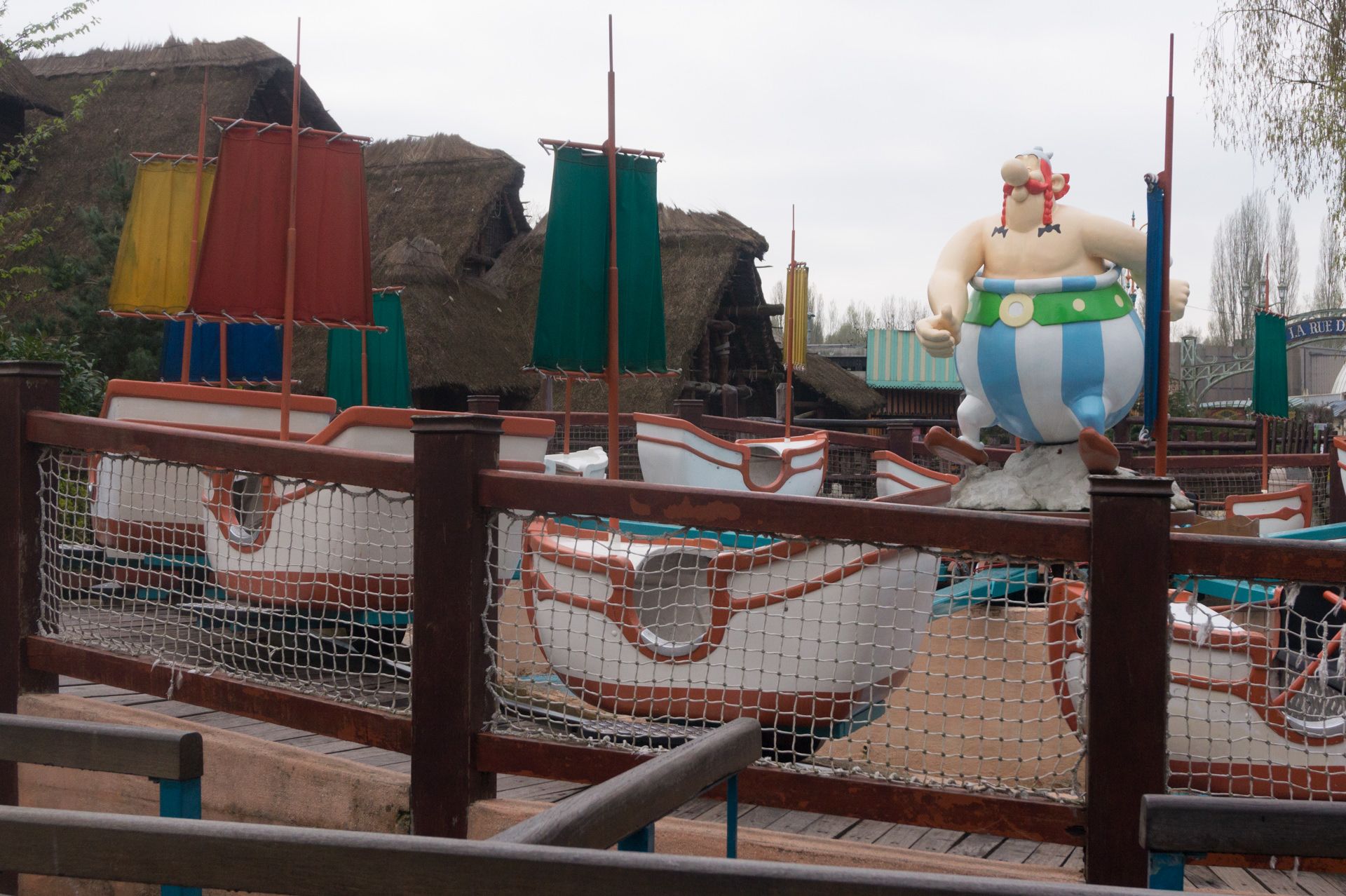
Past the famous carousel Le Carroussel de César, where you can take a seat in the middle of Obélix, we are now drawn to the Roman arena, where Gauls and Romans compete in Gaulois-Romains: Le Match a more or less fair competition. In three rounds of competition, the show is about nothing less than the future of the Gaulish village, and the whole of Rome resorts to unfair means, which can even give the audience a nasty surprise. For example, I was allowed to give an interview to a recorded soundtrack, how wonderful! The whole show is of black humour and the performances of the dancers and acrobats are really breathtaking. In the meantime, there is also a brilliant halftime show with advertising sports, which you will certainly not see anywhere else. But for our Gauls it doesn’t look good at all, only good that towards the end Idéfix gets into the arena with the magic potion and the Romans get a good beating as a result. A great and above all entertaining show that should not be missed.

Also not to be missed is the gastronomy of Parc Astérix. It is really damn good. In addition to the typical theme park dishes, Parc Astérix offers a wide range of wild boar dishes and other delicacies. Personally, I’m really fond of Burger Italy with rocket and pesto, which is why I scheduled the third day in the park only for lunch. The alternative would have been a visit to the nearby amusement park Mer de Sable, but I decided not to do so. But at least the annual ticket was worth a little bit more and the Zierer waltz ride will not run away from me that fast.

Le Grand Splatch

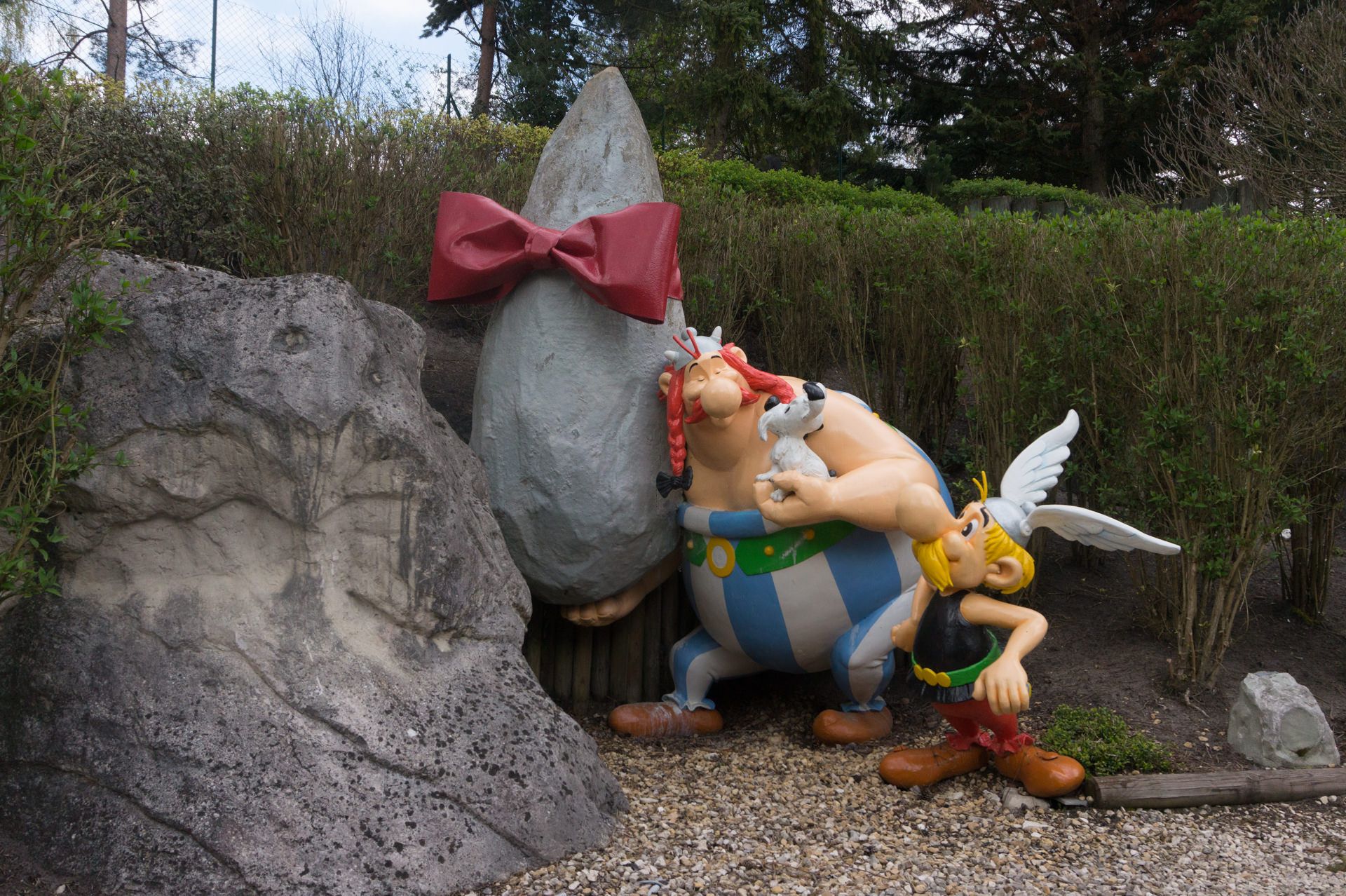
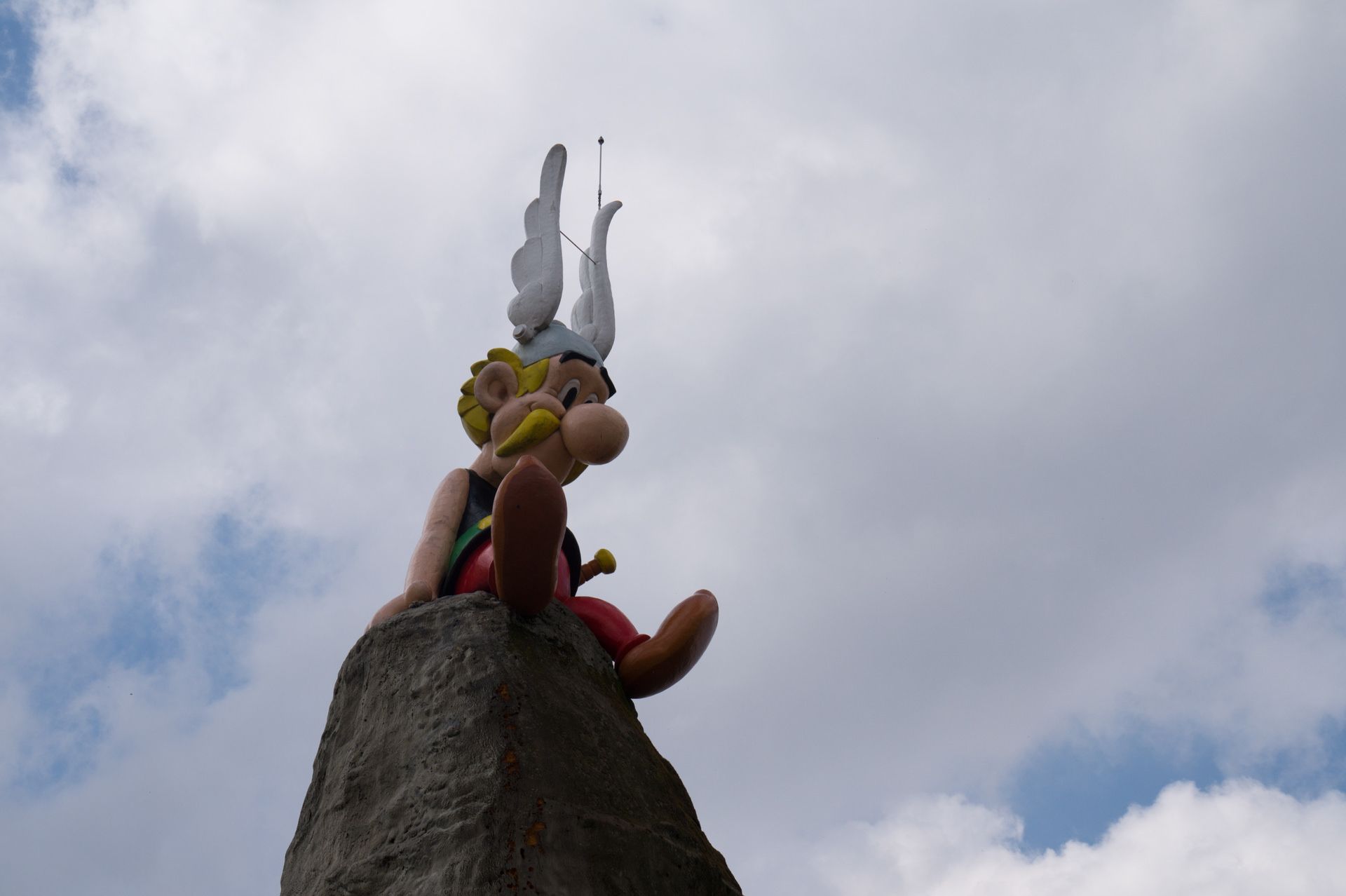
The next attraction on our park tour is the park’s Intamin Spillwater. The entrance to Le Grand Splatch is located below the track of the elevated railway Les Espions de César, which offers a good view of the Gallic village and the children’s area of the Parc Astérix, and is sometimes quite interesting. In fact I walked too far the first time, because I thought the entrance was not at the Astérix rock but rather near the station. So I quickly marched back and through the quite spacious queue to take a seat in the next boat.

The lift takes us quickly up to the top, where we accelerate in a tight curve, which then immediately turns into the first shot of the ride. Slightly moistened, we now bob through a canal for a few minutes and are constantly surprised and entertained by small to large water effects. At some point the second shot of the ride appears in the form of a double drop. Depending on where you sit and how the weight is distributed in the boat you can leave the trip halfway dry or completely soaked. I won’t become a fan of the double drop ride at Intamin Spillwaters – in this respect the single drops are somehow more impressive – but I will always be a fan of Le Grand Splatch. The ride is very unique and entertaining.

La Trace du Hourra

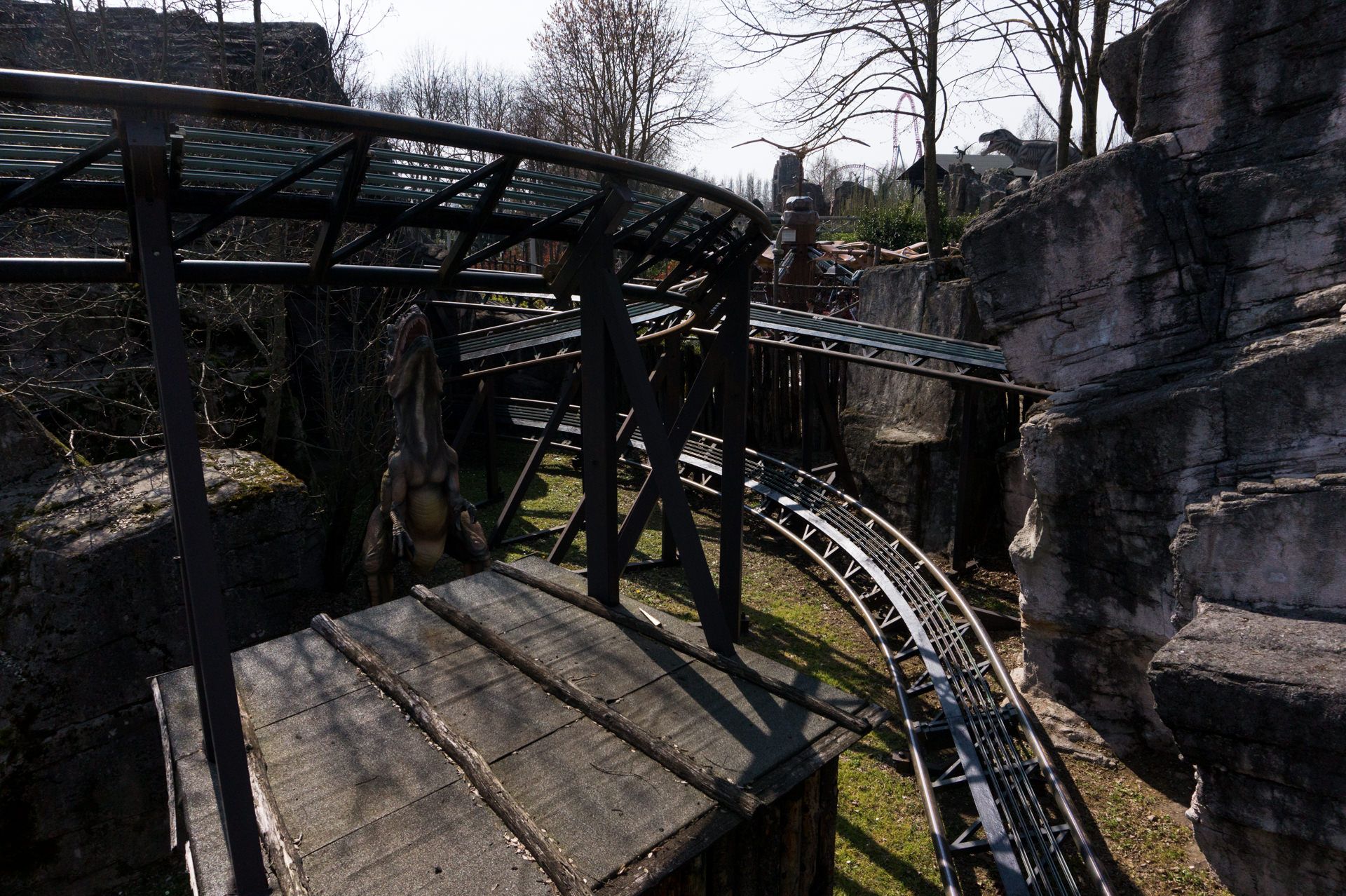
If the layout of a roller coaster gets its own backstory, then Trace du Hourra is the place to be. The story takes place at a time when man has not yet walked on two legs. One day a caveman learns that very thing and screams Hourra loudly to tell his friends about the discovery. The path he took between the mountains is the route of La Trace du Hourra. But before we can have the pleasure of a ride on this bobsleigh run made by the manufacturer Mack Rides, we first have to stand in line for quite a while.

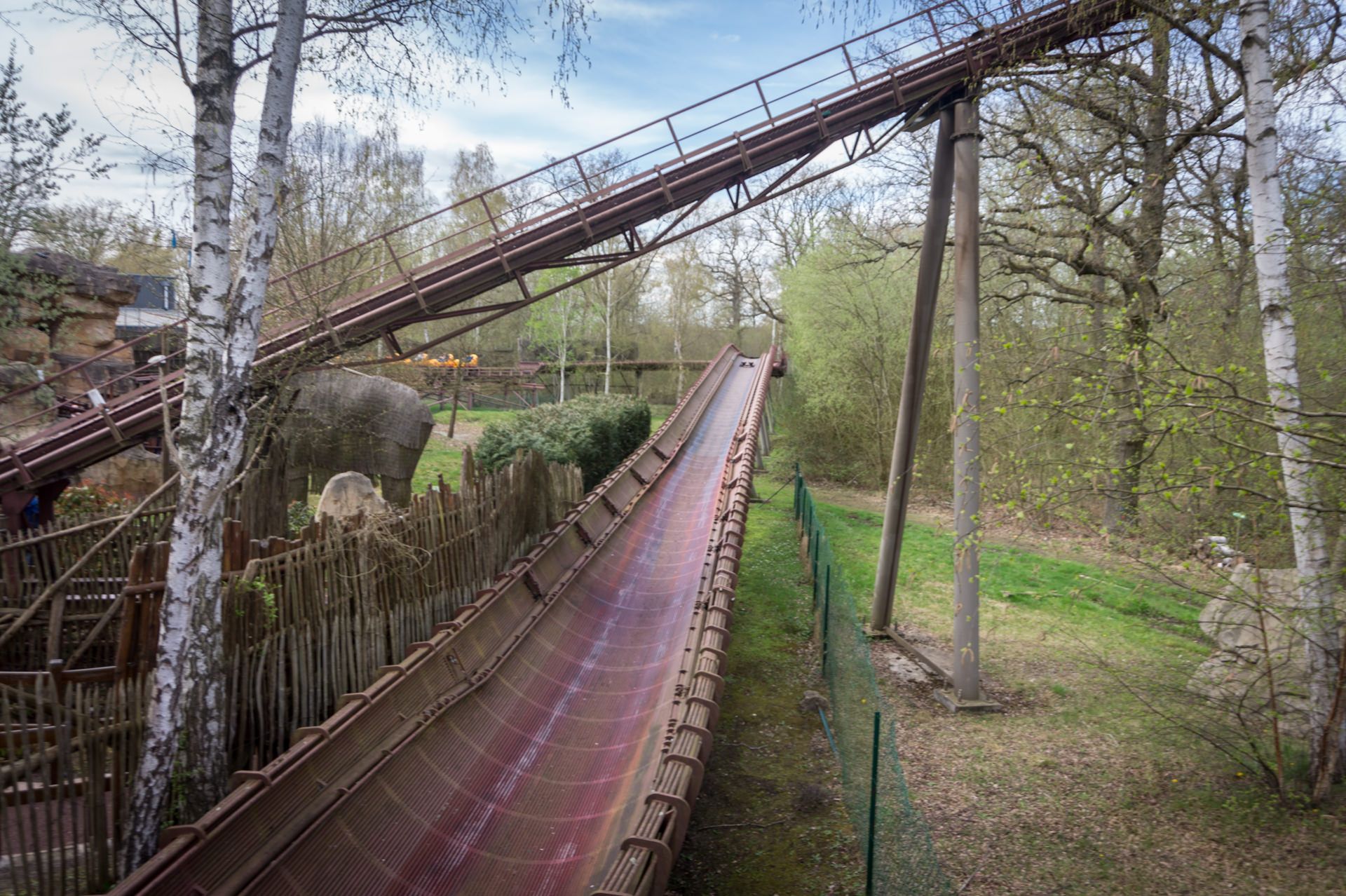
At some point the time has come and the journey can begin. In a left-hand bend we leave the station immediately and soon climb the only lift hill of the ride. After a short straight line at a height of 31m, we immediately descend steeply, whereby the swing of the bobsleigh in the first 270° helix is already very pronounced. Now we make the first change of turn and immediately take a wonderful left curve. This is followed seamlessly by a downward helix to the right. With a shallow rumble we tackle a gradient and then cross the first block brake of the ride. After a narrow left-hand bend, we now swing upwards in an ever-tightening right-hand downward helix. With momentum, we climb another ascending slope. After the second block brake, we now circle a little above the heads of the waiting people in a left-hand bend, before we pass them directly in a 270° helix. After a left-hand bend close to the ground we reach a long ramp, which then leads us into the braking section of the ride. This is followed by the return to the station via several stopping positions.

La Trace du Hourra is a decent bobsleigh run with a beautiful start and an extremely impressive height. The ride is enjoyable, although I personally prefer other bobsleigh runs. However, I have only ridden the ride twice, as the waiting time at the ride was always too long. At Trace du Hourra, a visit is recommended especially in the early hours of the morning, as you can still walk straight through to the station.

S.O.S Numérobis

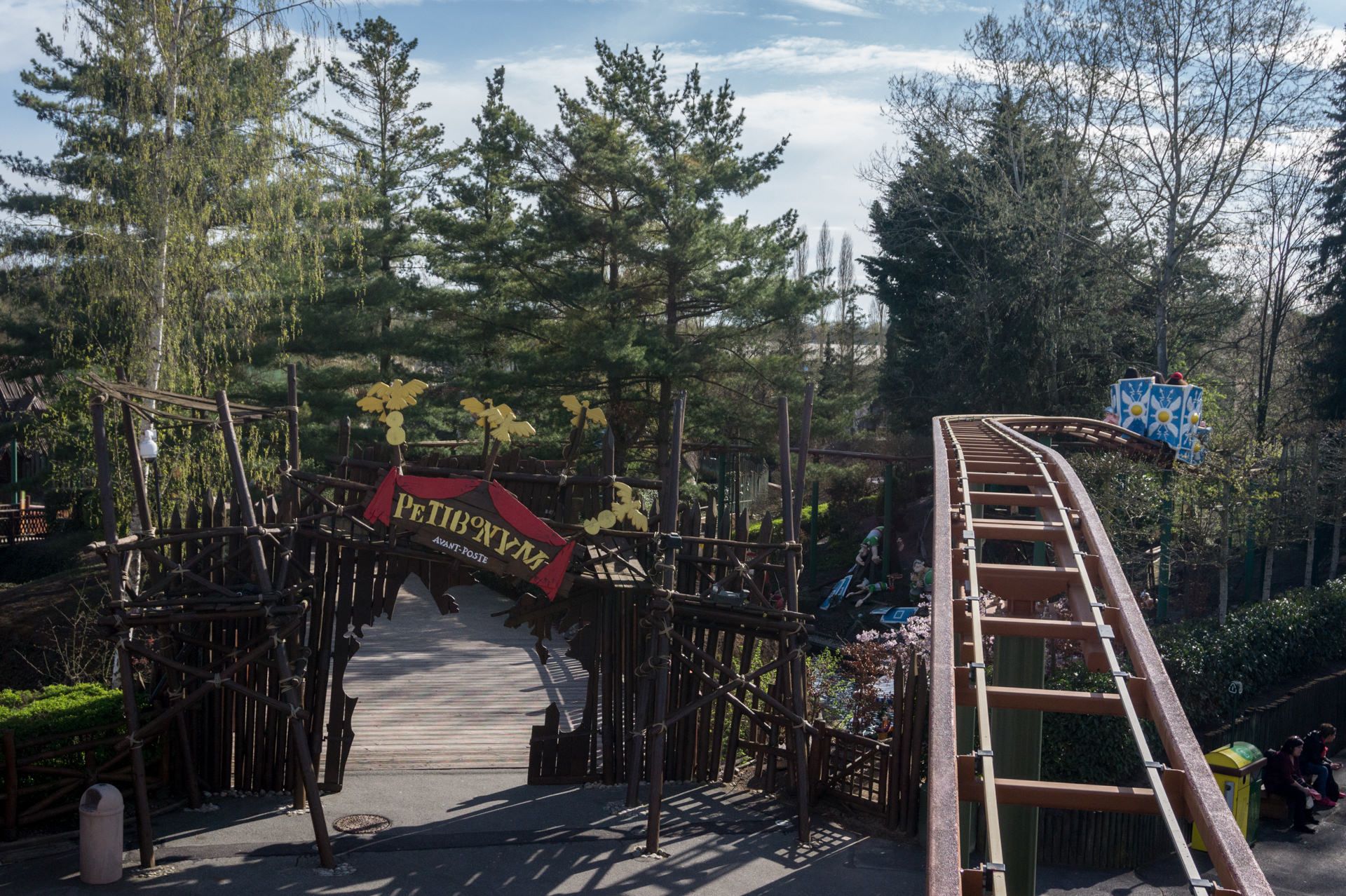
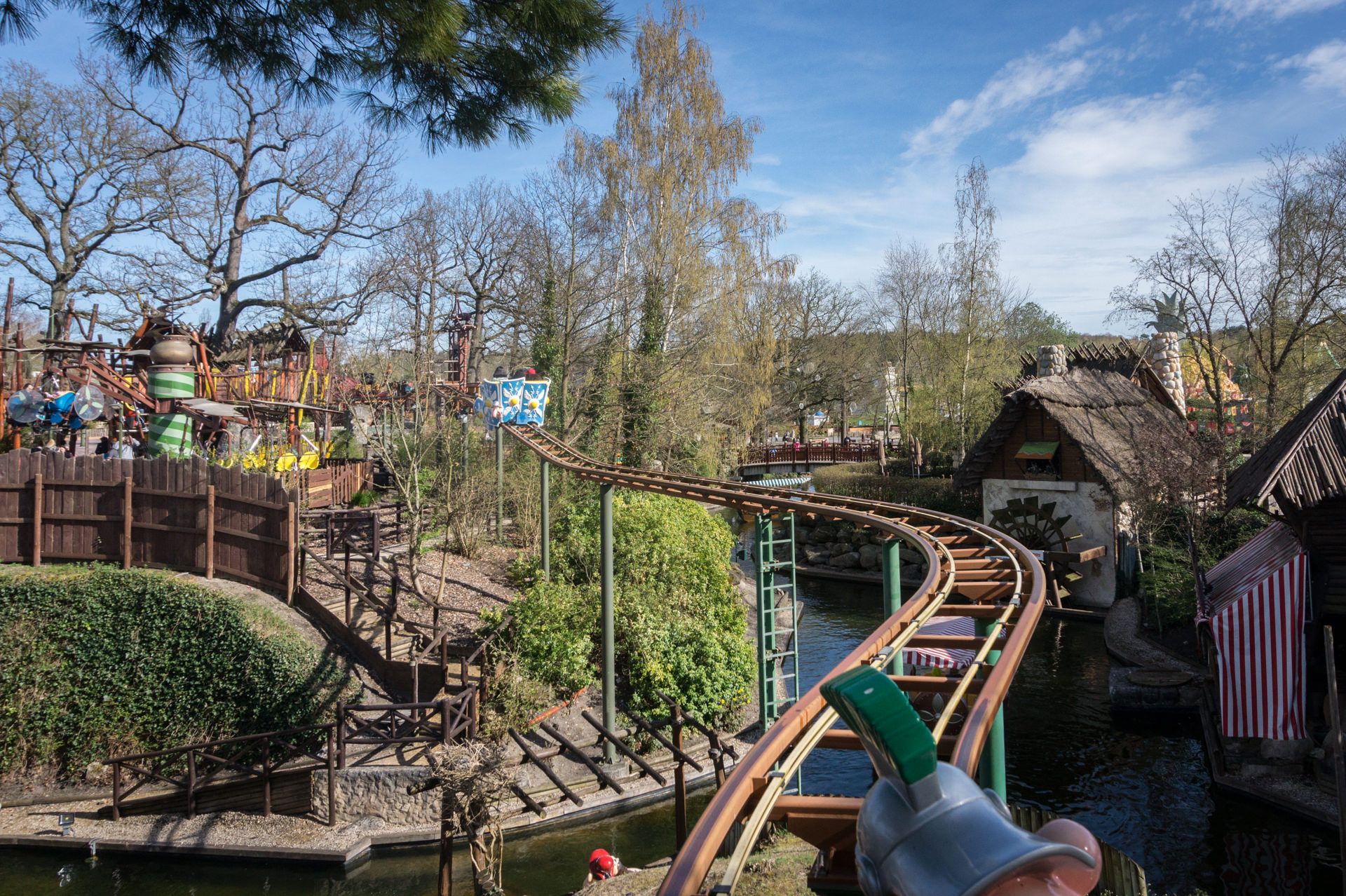
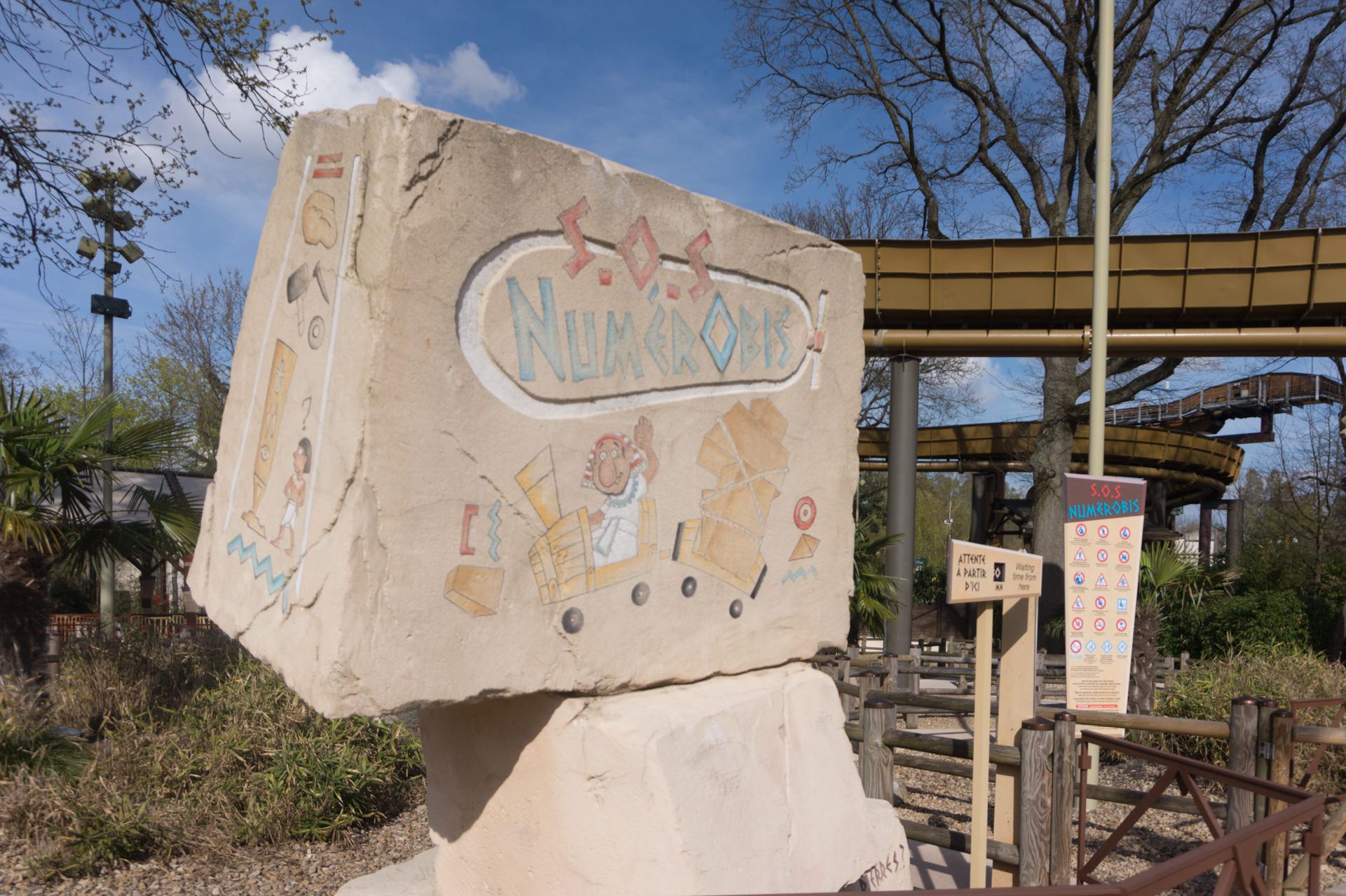
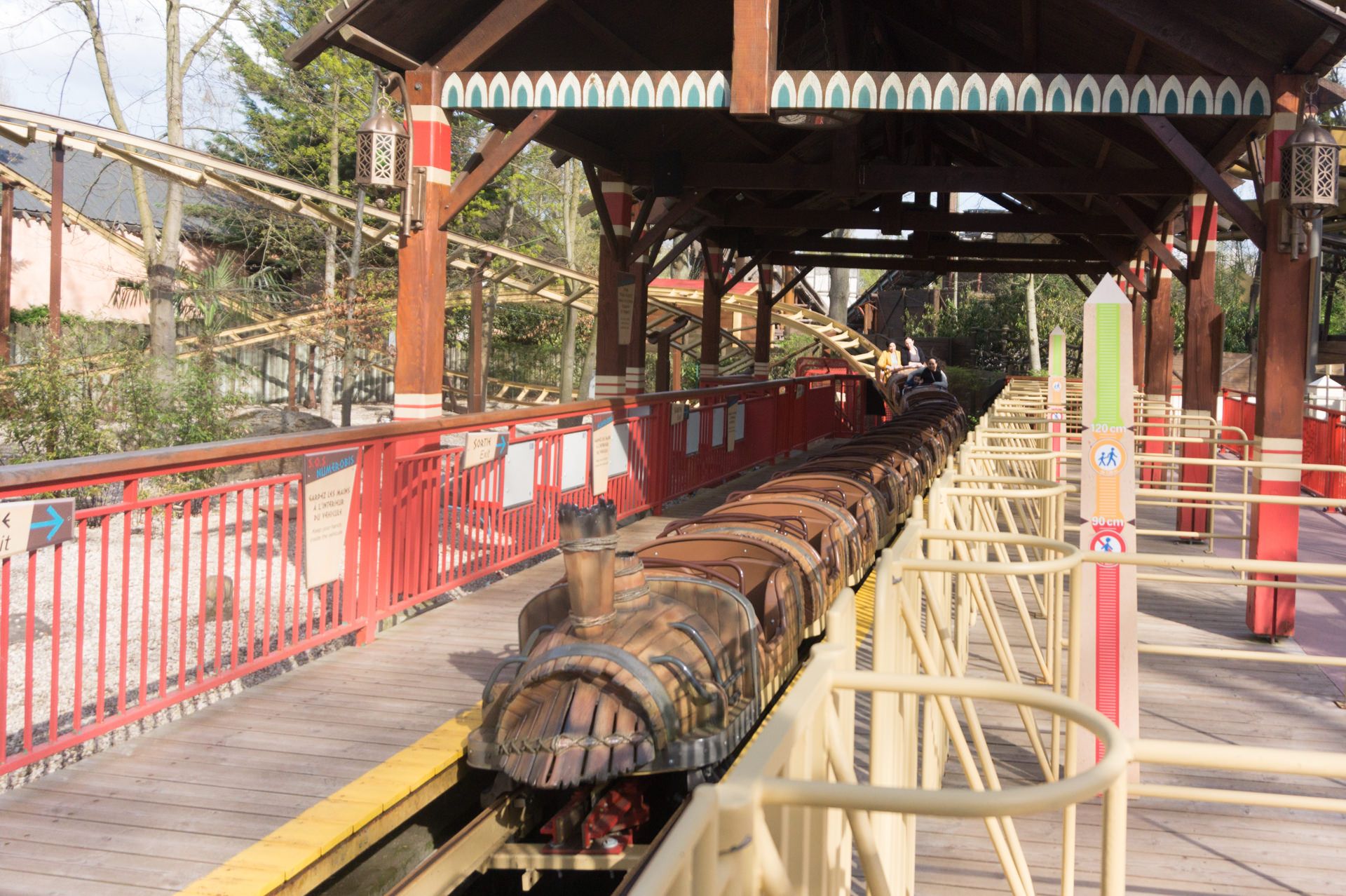
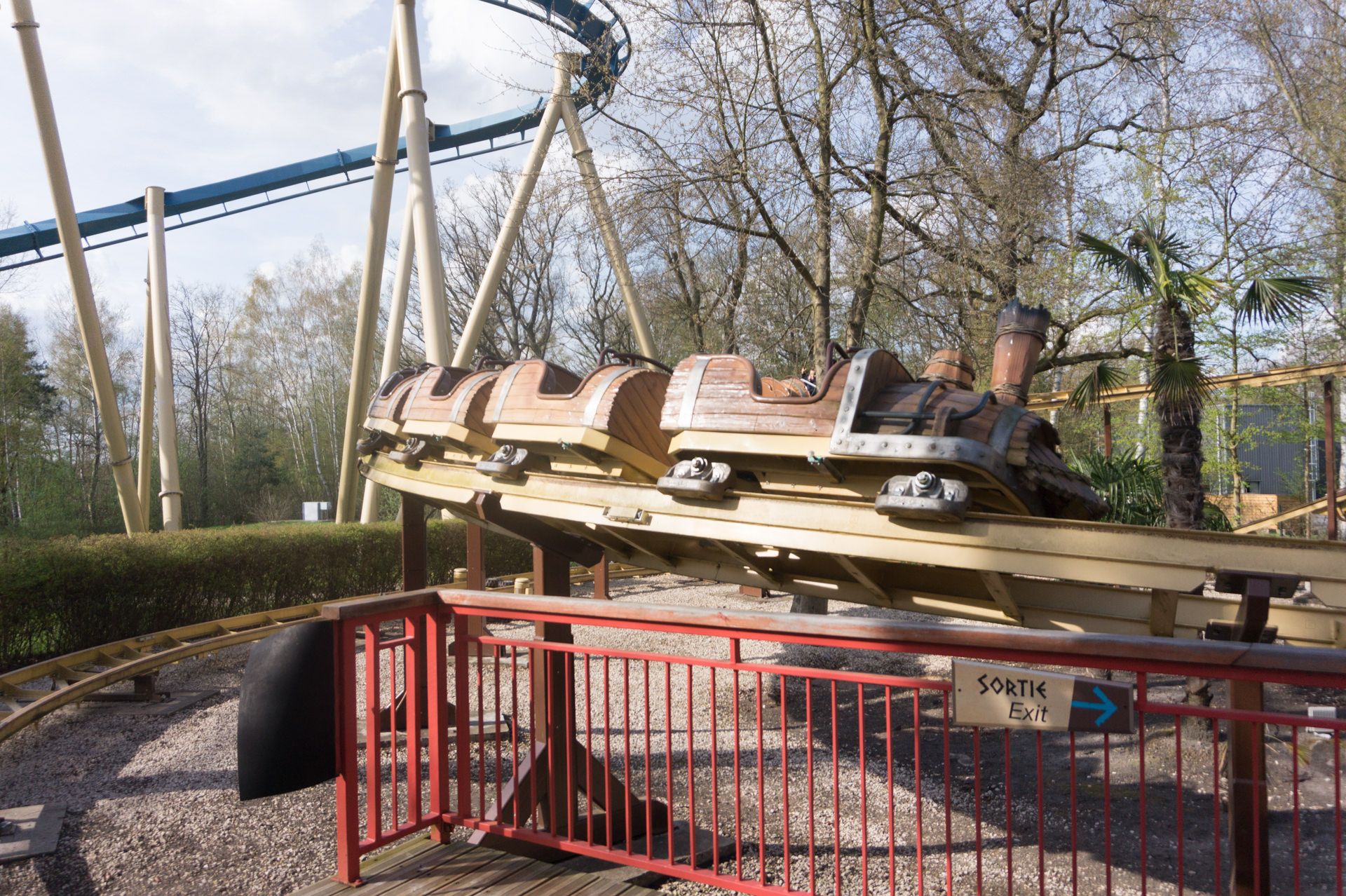
The smallest roller coaster of the Parc Astérix theme park is located in the Egyptian themed area. On S.O.S Numérobis the smallest park guests are offered an exciting ride through a layout in the shape of an eight. Depending on the rush, two or three laps are ridden on this medium-sized Tivoli coaster.

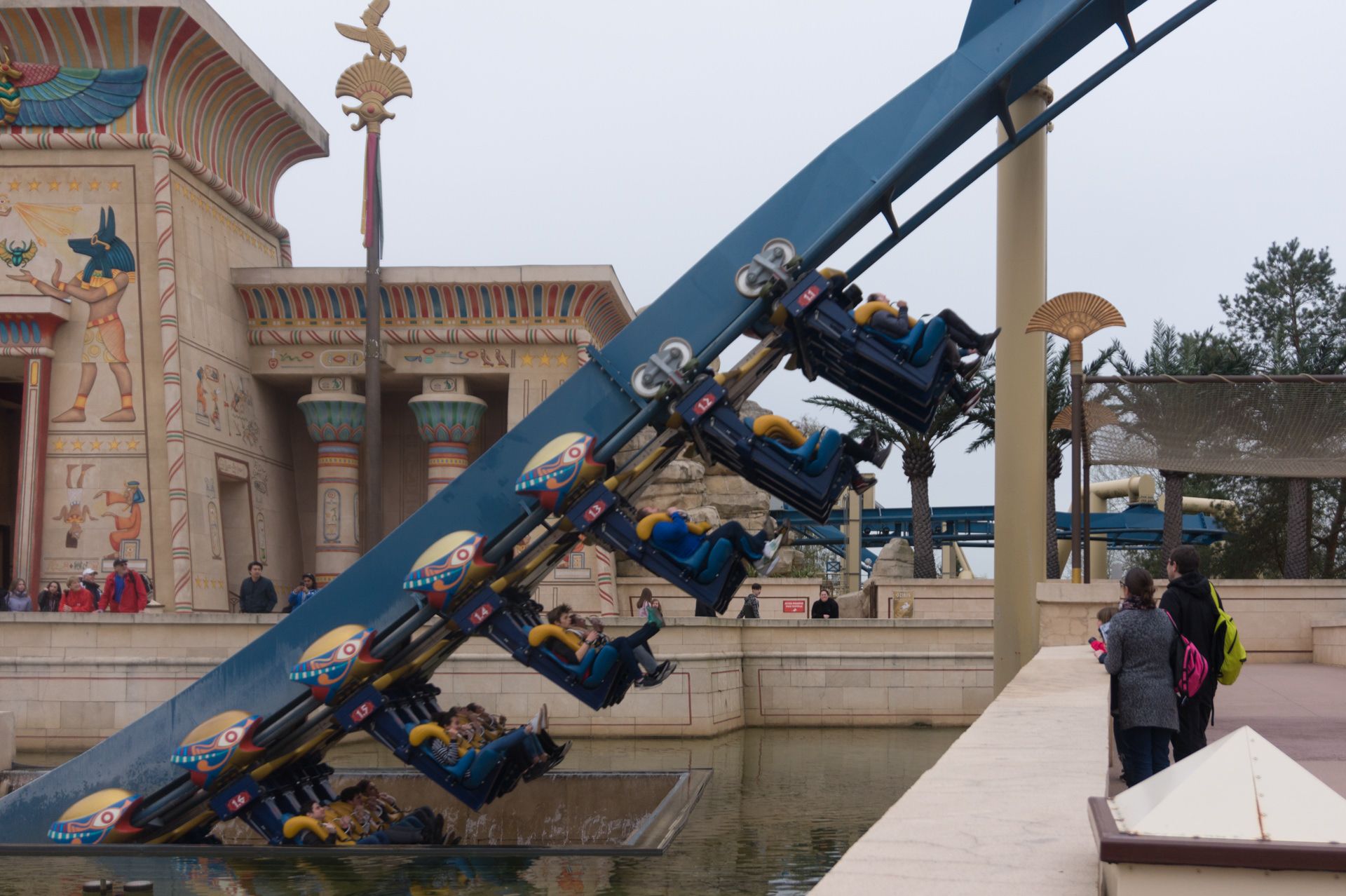
OzIris

By Osiris and by Apis, look at me…

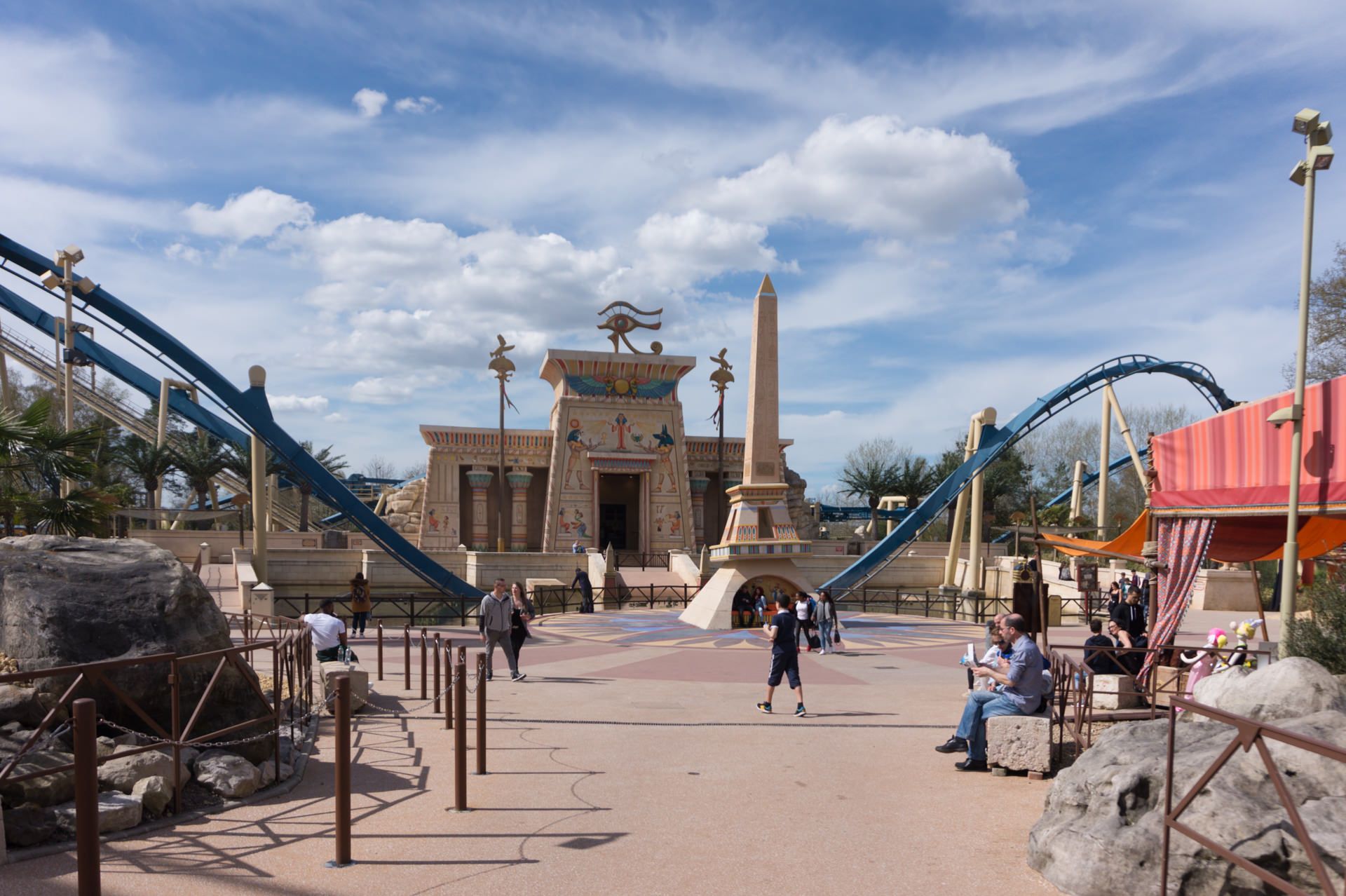
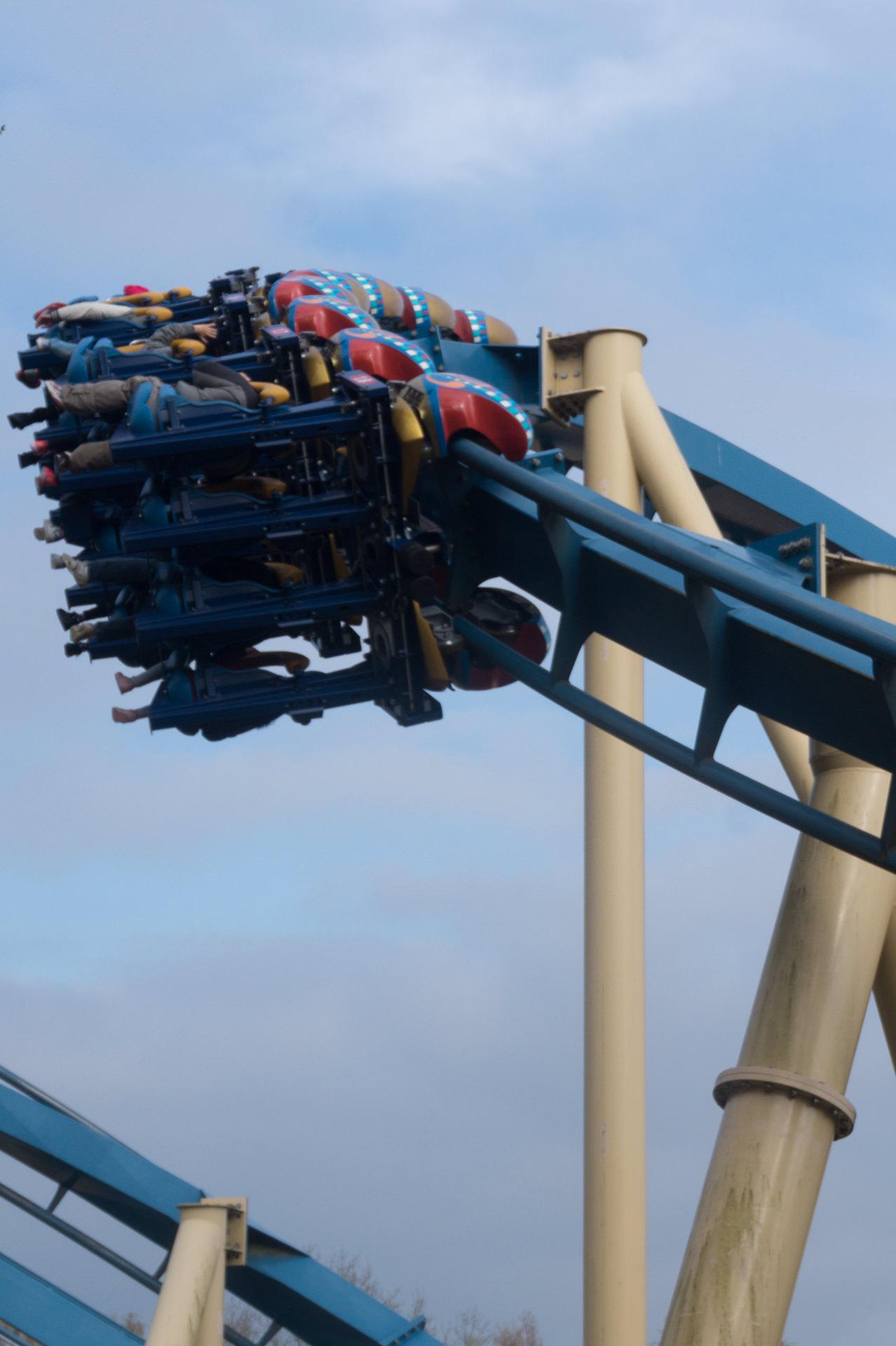
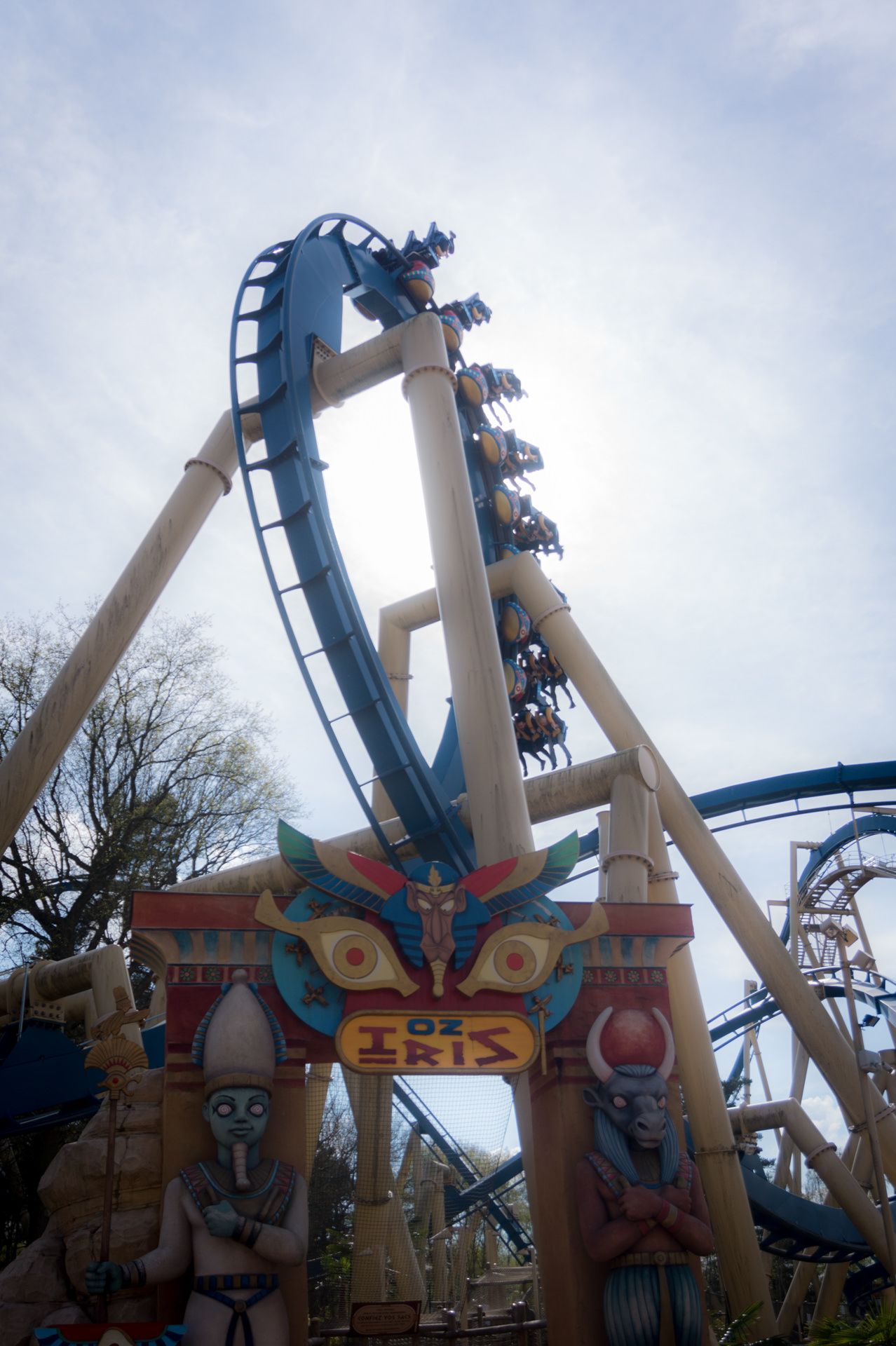
Iris – the hypnotist from the movie The Twelve Tasks of Astérix – invites you to group therapy in Parc Astérix and we are there live on OzIris. Once you have taken your seat, the happening can start immediately. “Par Osiris et par Apis, vous êtes maintenant des oiseaux. Oui, des oiseaux!” sounds from the loudspeakers as we leave the station bird-free and climb up the 35m high lift.

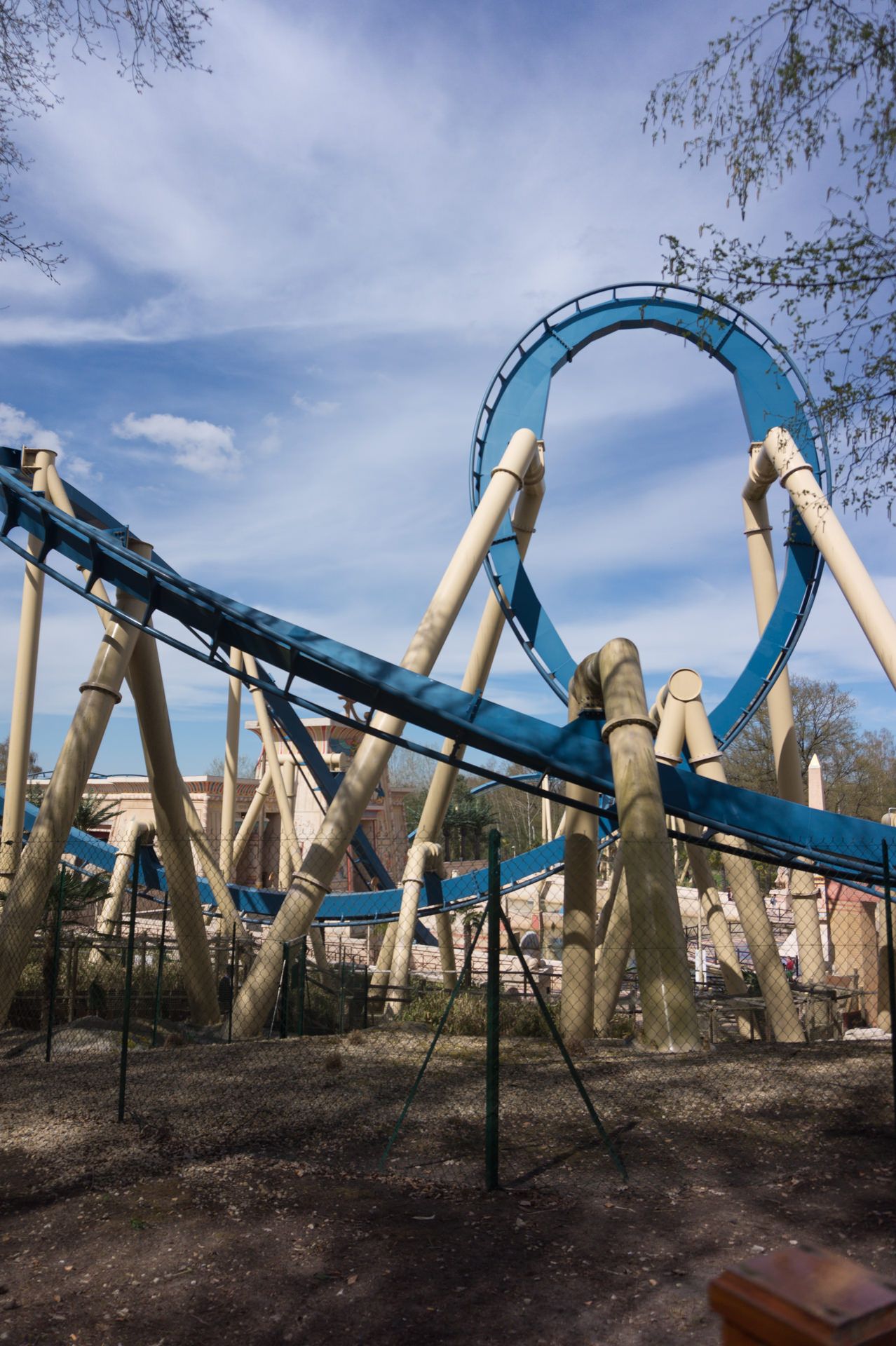
As soon as we reach the top we fall like a bird that has just left its nest, unstoppably and unbelievably steeply towards the ground. With momentum we rush through the first valley before we turn right and climb a dive loop. Once overhead we descend skillfully into a rather narrow valley. With full speed we climb up again to take the path towards the loop in an over-banked turn. Once more our feet stretch towards the sky before we fall into a deeper lying valley and feel a short airtime moment. In a professional way we now turn our direction in an Immelmann. After a second Overbanked Turn we plunge into a fog-flooded underwater tunnel in front of the impressive domicile of our trustworthy hypnotist.

Back in daylight we are immediately rotated once around our axis in a zero-G, whereupon a 270° helix awaits us. After a short moment of catching our breath we fall to the ground once more. Directly behind the temple complex the second Zero-G Roll of the ride awaits us, which this time spins us clockwise. This is followed by an upward helix close to the ground, which pumps the blood into our legs one last time. Below the lift hill we will now once again see the direction of travel, whereupon, after a quick dip and a short ascent, we already face the braking distance of the ride. After another bend we reach the station, whereupon the next passengers are already invited to the session with a spirited “Au suivant”.

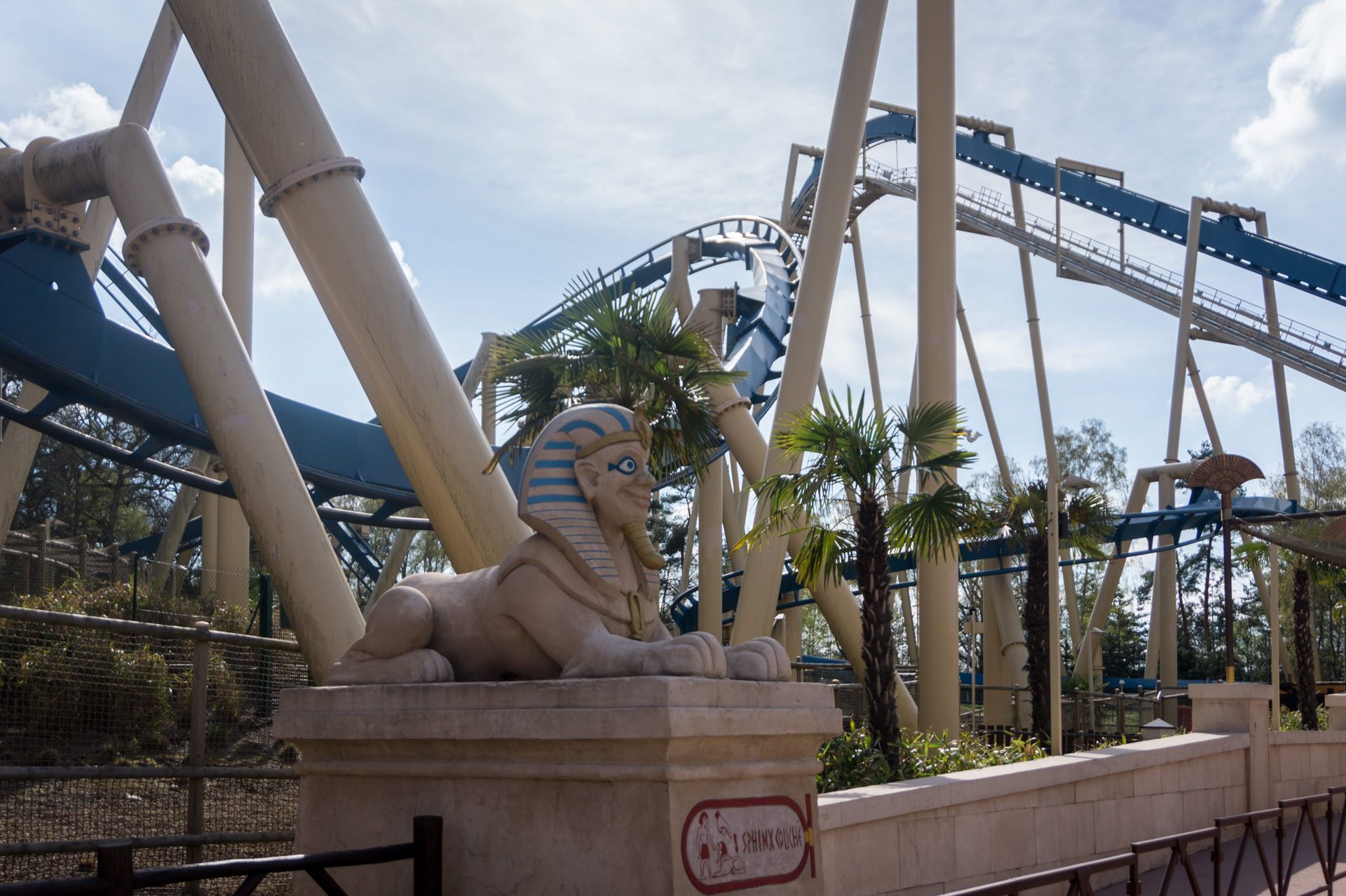
OzIris is without doubt a magnificent roller coaster. The choice of ride elements is as successful as the staging of the ride and the associated theme area. Everything is just right at first glance. One could take a deduction for the location directly at the motorway, but on the other hand this is also an ideal advertisement for the Parc Astérix, which will soon be allowed to have a much higher ride. Nevertheless, OzIris remains a really great ride, which you will quickly learn to appreciate thanks to the single rider entrance on the left side of the temple.

Pictures Parc Astérix

Conclusion Parc Astérix
In addition to all kinds of comic references, lots of black humour and a really chic design, the theme park of the indomitable Gauls offers above all a magnificent portfolio of rides, which is rarely found in such abundance. The roller coasters of Parc Astérix are good to very good because of the bank and the water rides are the crème de la crème in European comparison. The offer is supported by a variety of shows worth seeing, which are shown depending on the rush. I at least felt very well entertained on all three visiting days, even though I had originally planned only two. Thanks to the low crowd, a visit during the Easter holidays is highly recommended.

What are your thoughts about the French theme park Parc Astérix? Just write it here in the comment field below the report or visit our social media channels:


Click here for the next report of the Tron-Tron-Trône Tour

¡Viva España!

The History of Parque España

It is an indisputable fact that the Japanese are always enthusiastic about European culture; places like Rothenburg ob der Tauber, for example, are considered one of the hotspots of any trip to Europe and restaurants from all possible regions of the Occident – in a selection that one would wish for more often in Europe – are extremely popular and sometimes very exquisite. One could therefore make the assumption that the same explains Parque España.

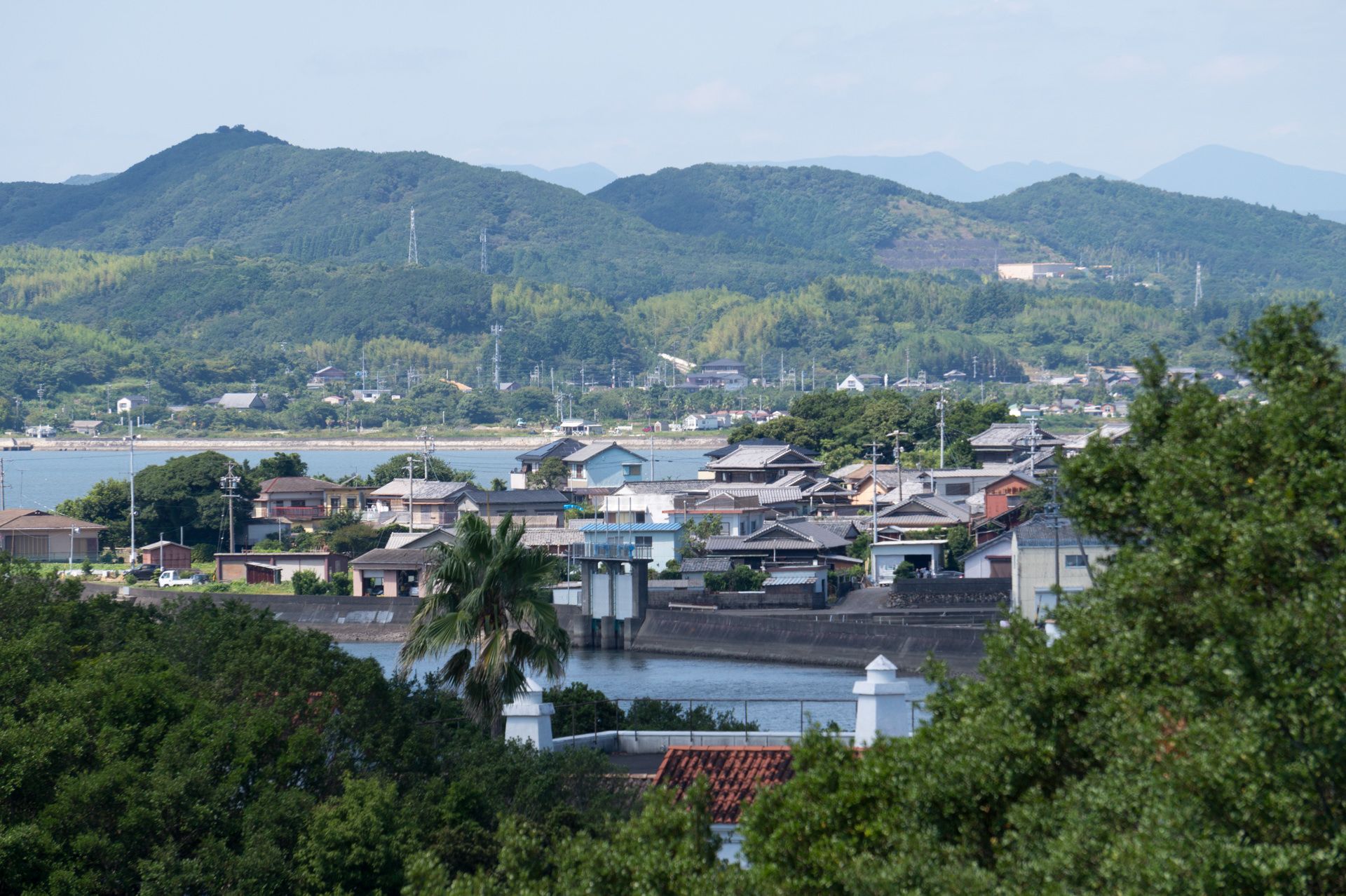
In order to improve the utilisation of its railway line, the railway company Kintetsu planned several resorts along the Shima Line, among which the resort at the terminus was to have its own amusement park to meet the increased needs of tourists – a modern interpretation of a classic trolley park.

It is strange that the amusement park that most closely resembles a typical park in our favourite holiday destination is located in Japan and that there is no similarly themed amusement park in Spain. It is even stranger if the reason for this decision was that the theme of the resort was simply hardly or not at all known to the Japanese at the time of the planning and it was only chosen because of the similar weather conditions. Major media events, such as the Summer Olympics in Barcelona and the 1992 Expo in Seville, then generally suited the park so that it could successfully start its first season in 1994.

After just a few weeks, the park welcomed over one million visitors. By the end of its first season, it had attracted 4.2 million visitors – an unparalleled success, one might think. In fact, things were a little different at Parque España, because its initial success was immediately followed by its decline. Already in its second season, the number of visitors dropped to about 3 million – not unusual in itself, as this is usually followed by a stabilisation of the figures – but in the following year the number of visitors dropped by another 500,000. The opening of the Pyrenees roller coaster and the dark ride Viaje Aventurero de Don Quijote counteracted the trend for a short time, but it could not be stopped. It was not until 2000 that the decline stagnated for the first time for several years at around 1.6 million visitors. In 2005, the numbers for the entire resort once again dropped in the double-digit range, but again they were able to catch up until 2008. Then in 2009 the number of visitors dropped by 13.4%, in 2008 by 7.2% and so on and so forth. It remains to be seen whether Shima Spain Village will be able to maintain its position for much longer and whether the number of visitors will actually stabilise at some point.

Tour of the park

But enough of the doom and gloom, we are going to Spain after all. So bring out the red wine and your best Brandy; you probably already have the tapas to go with it, and if not, I’ll now present you with a few delicacies. However, if you’re short on wine, you can also reach for your favourite cervesa.

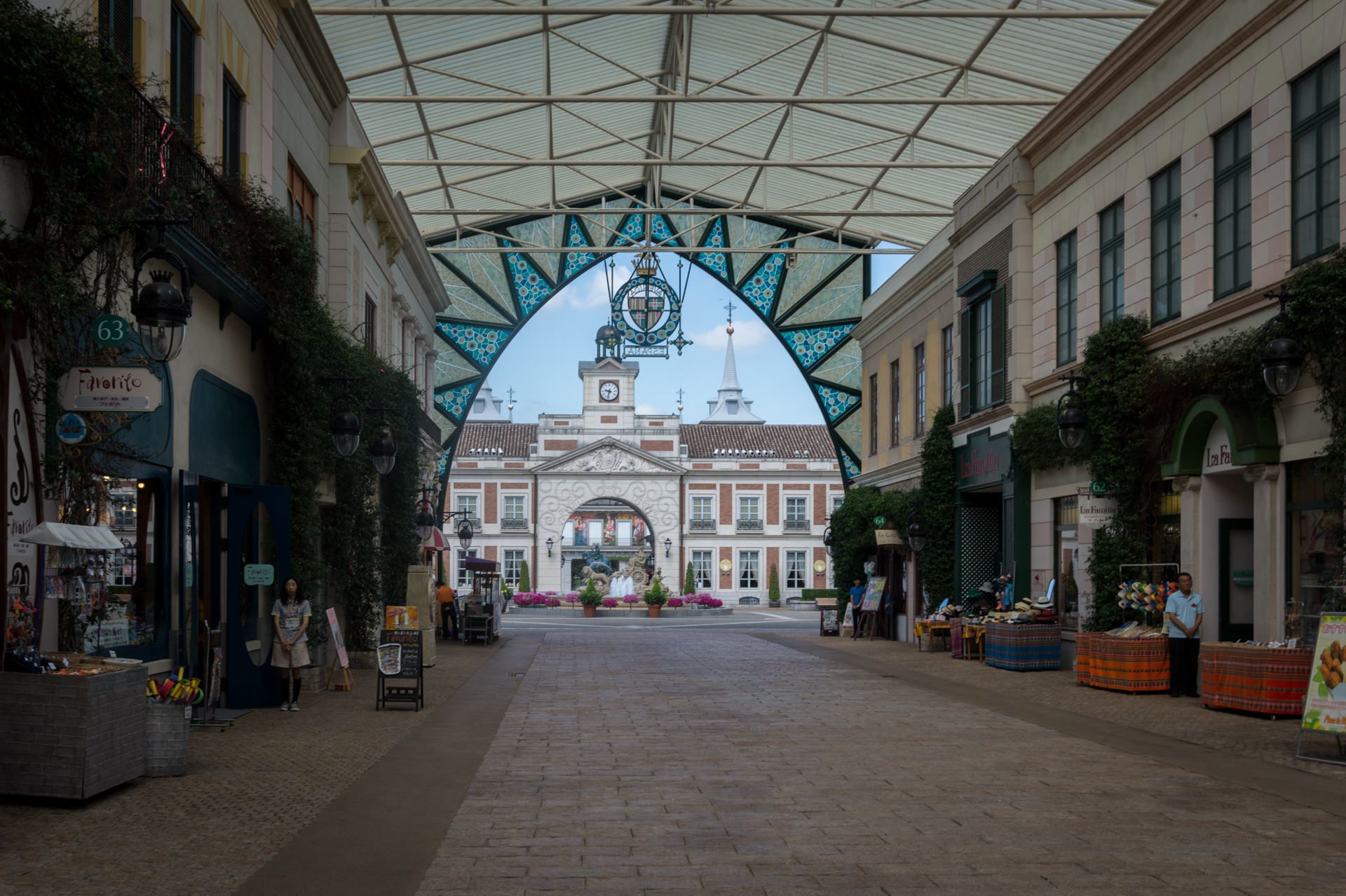
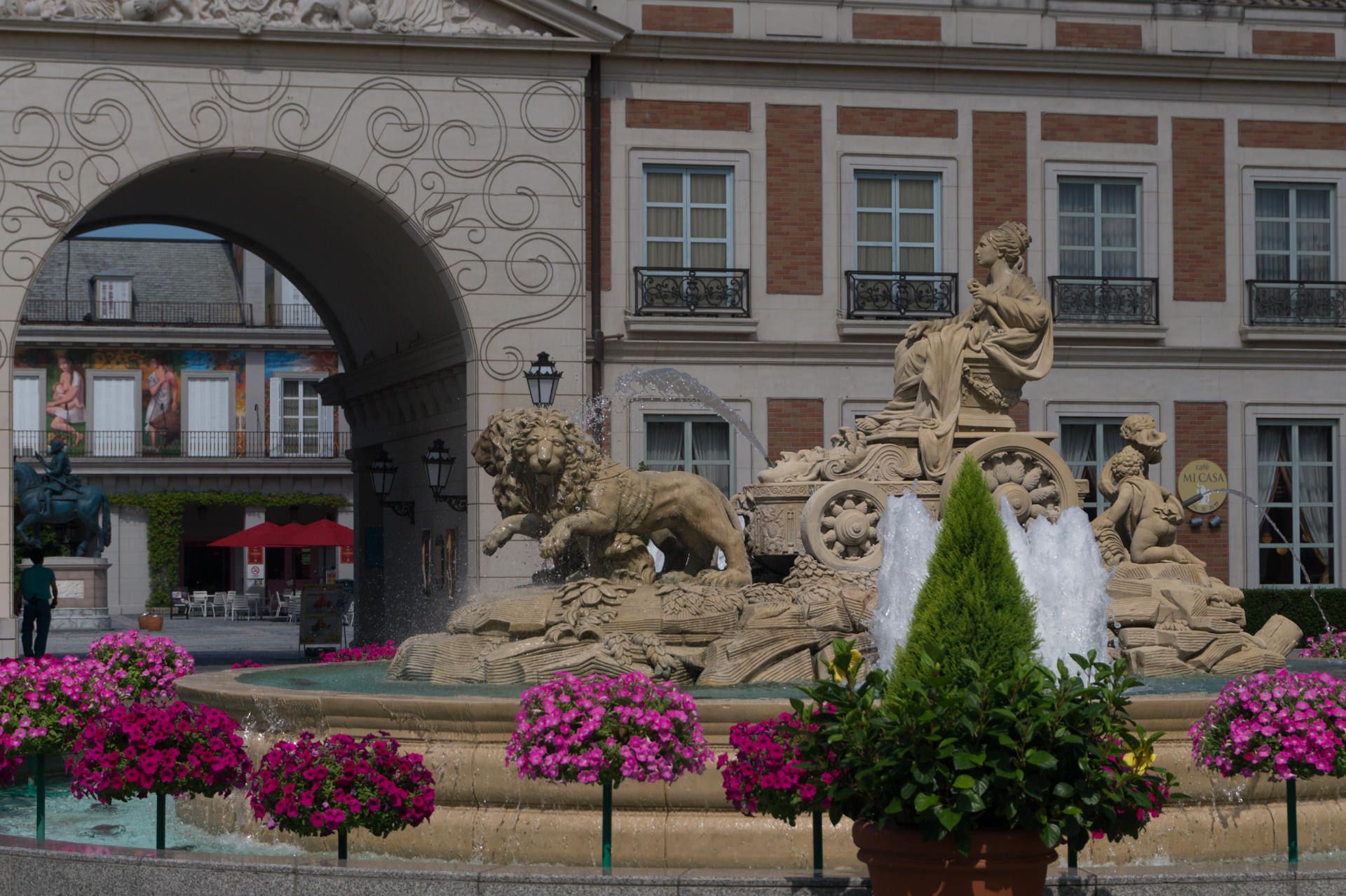
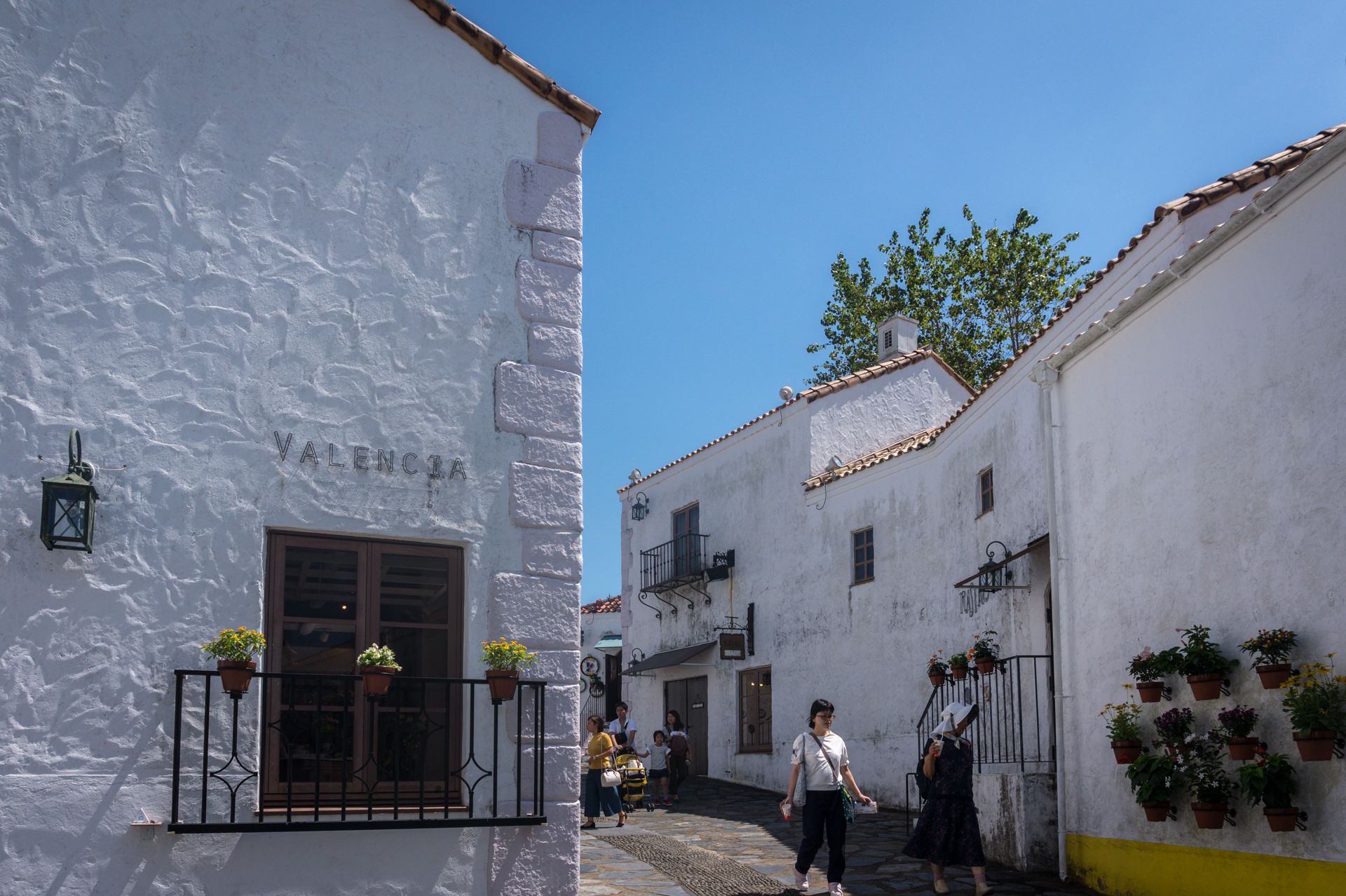
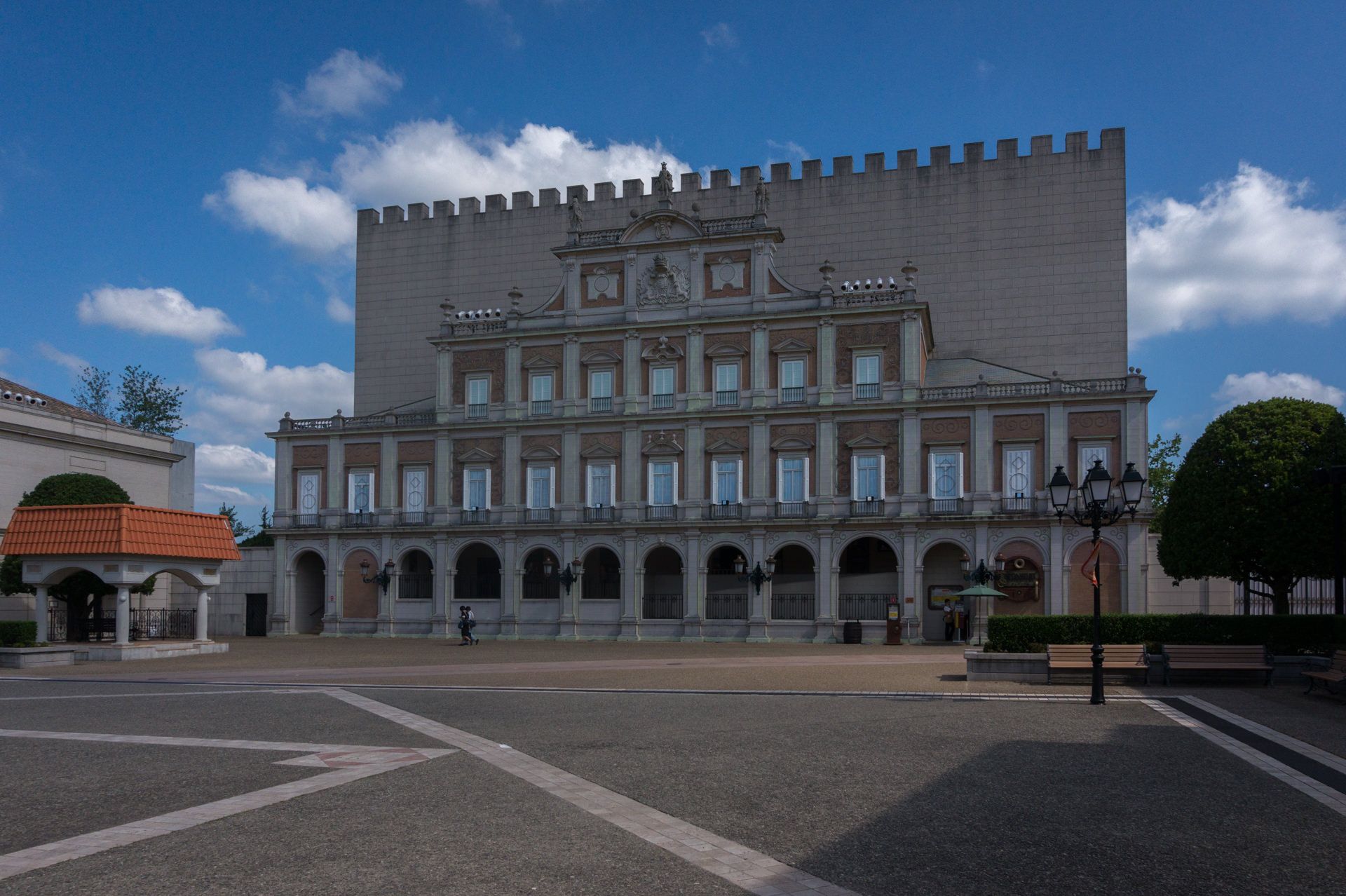
We enter the Parque España via the Avenida de España, the covered main street of the park, and immediately feel like we are on the Iberian peninsula. The effect is intensified on the Plaza de Cibeles, where we immediately see ourselves in the middle of the Spanish capital. Unlike the original, the large square here is not lined by the town hall, but by facades of various Spanish buildings and a bullring.

Steampunk Coaster Iron Bull

Where recently the train was forced into the arena on the Matador bullfight coaster, an iron bull now rolls impressively through a machine hall. The Steampunk Coaster Iron Bull is by no means as memorable as its design. Secured by shoulder restraints, we first ride through a short left turn and immediately climb the ride’s first lift hill. In an increasingly steep left turn, the bull plunges 12 m to the ground and reaches a top speed of 52 km/h. After this, we quickly climb a hill and before we know it, we are in a downward helix, whereupon the track runs close to the ground along the wall of the hall. Continuing in a right-hand bend, we now cross the section of the first slope and plunge towards the hall floor once more. Passing through a backdrop, we then climb another hill, whereupon we reach the show part of the ride.

During the time in the block brake, the steam train is supplied with hot coals for the rest of the ride. A progress scale is displayed and finally we are given the green light, just like a classic accelerator coaster; only the launch is missing. Instead, we move forward a few metres before the brake brings the train to a halt out of the blue. A very slow turn follows, after which the second lift hill is reached. The train also leaves this hill in an increasingly steep curve and immediately reaches the floor of the hall. After the subsequent left turn, the braking section follows and shortly afterwards the station and the ride, which was quite entertaining until the show part, comes to an end.

El Circo Pierrot

Hidden behind one of the other facades is the covered and very nicely designed children’s land El Circo Pierrot, including an interactive dark ride on the hall ceiling, which is not to be missed.

However, if you are drawn to Madrid, you can step through a portal onto the Plaza Mayor. Just as impressive as the original, it is adorned with a multitude of bars, restaurants and shops; of course in a rather high-priced segment. A visit to the Plaza Mayor is perfect for a cervesa or an afternoon siesta.

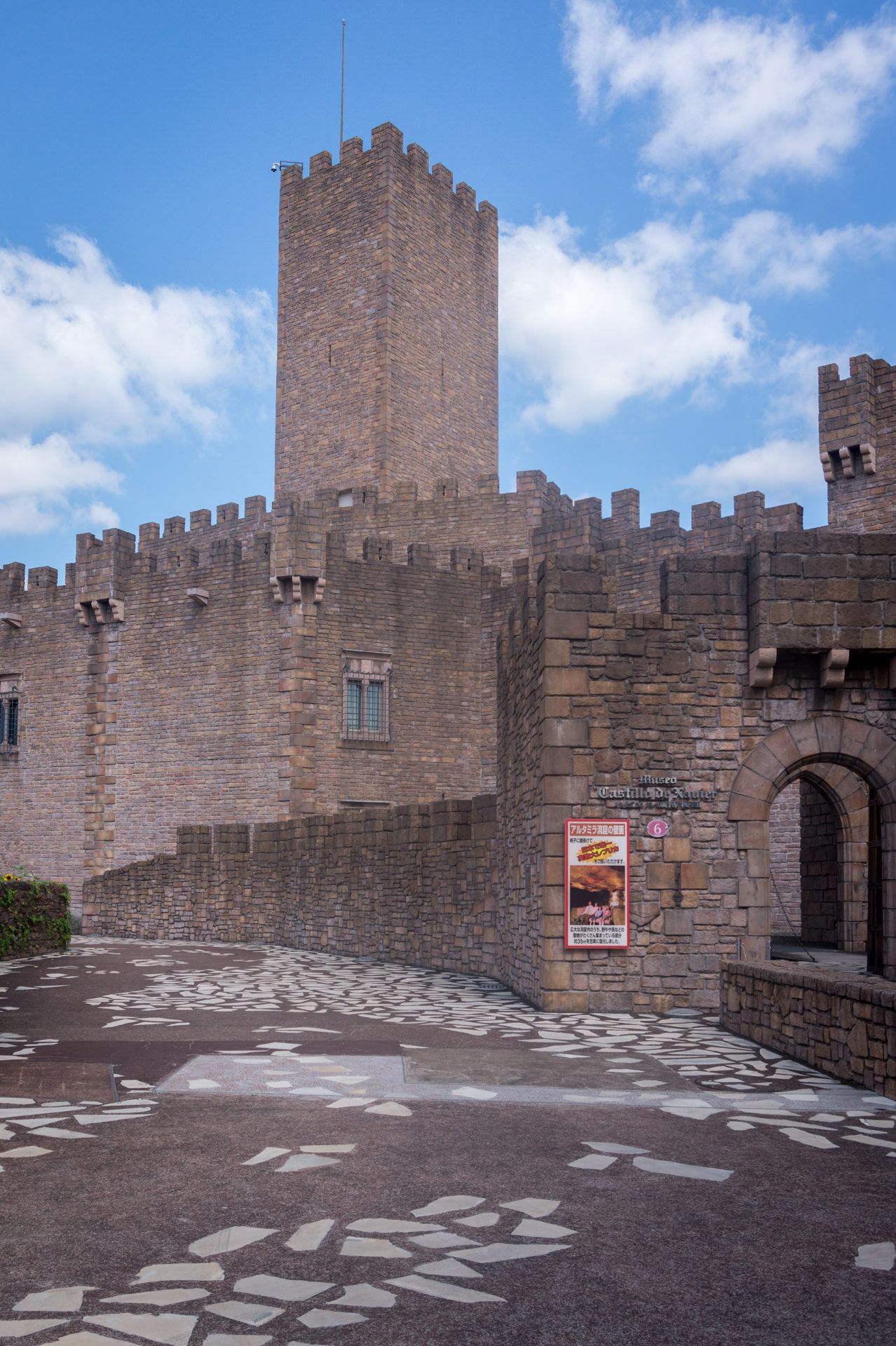
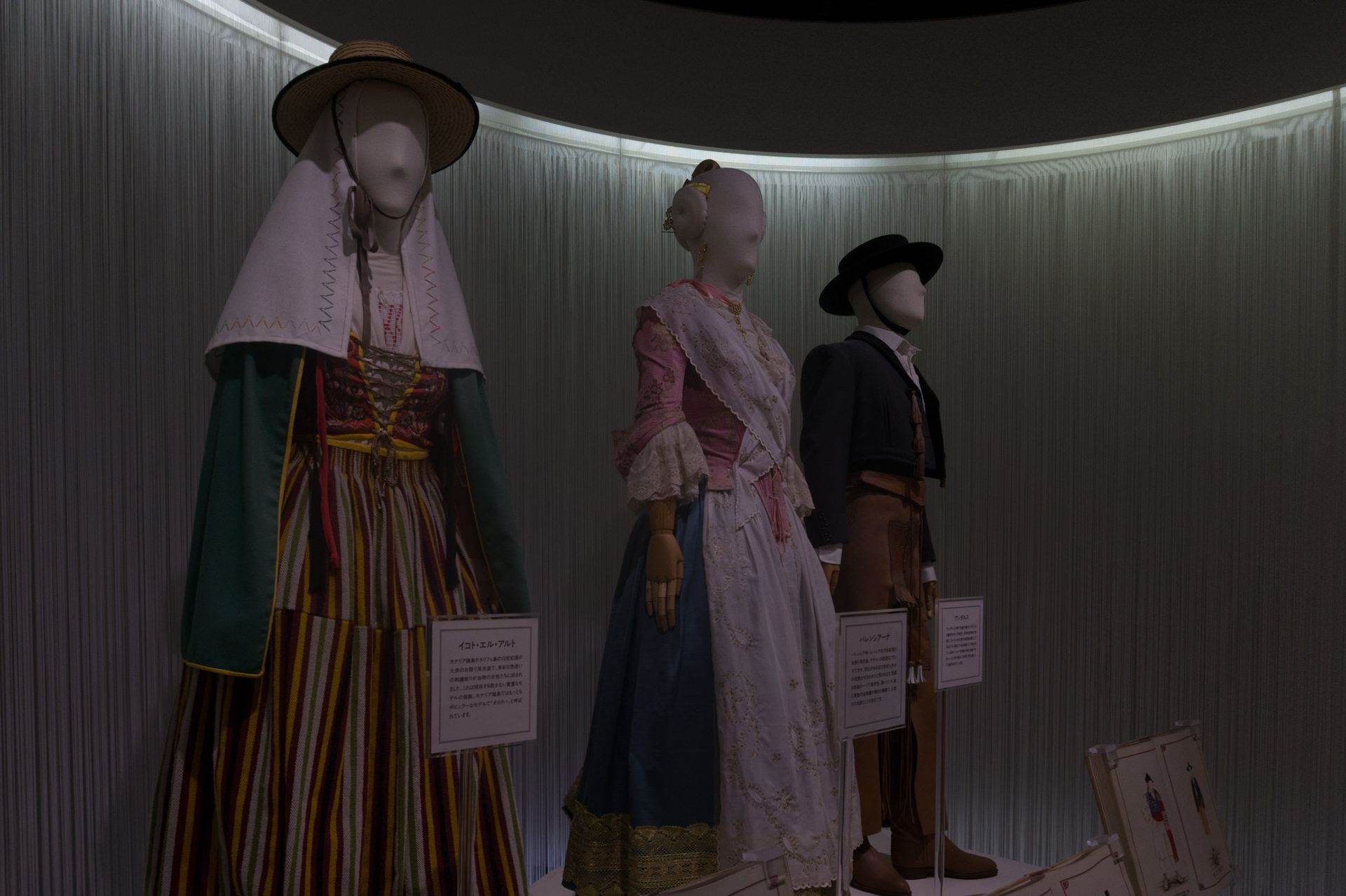
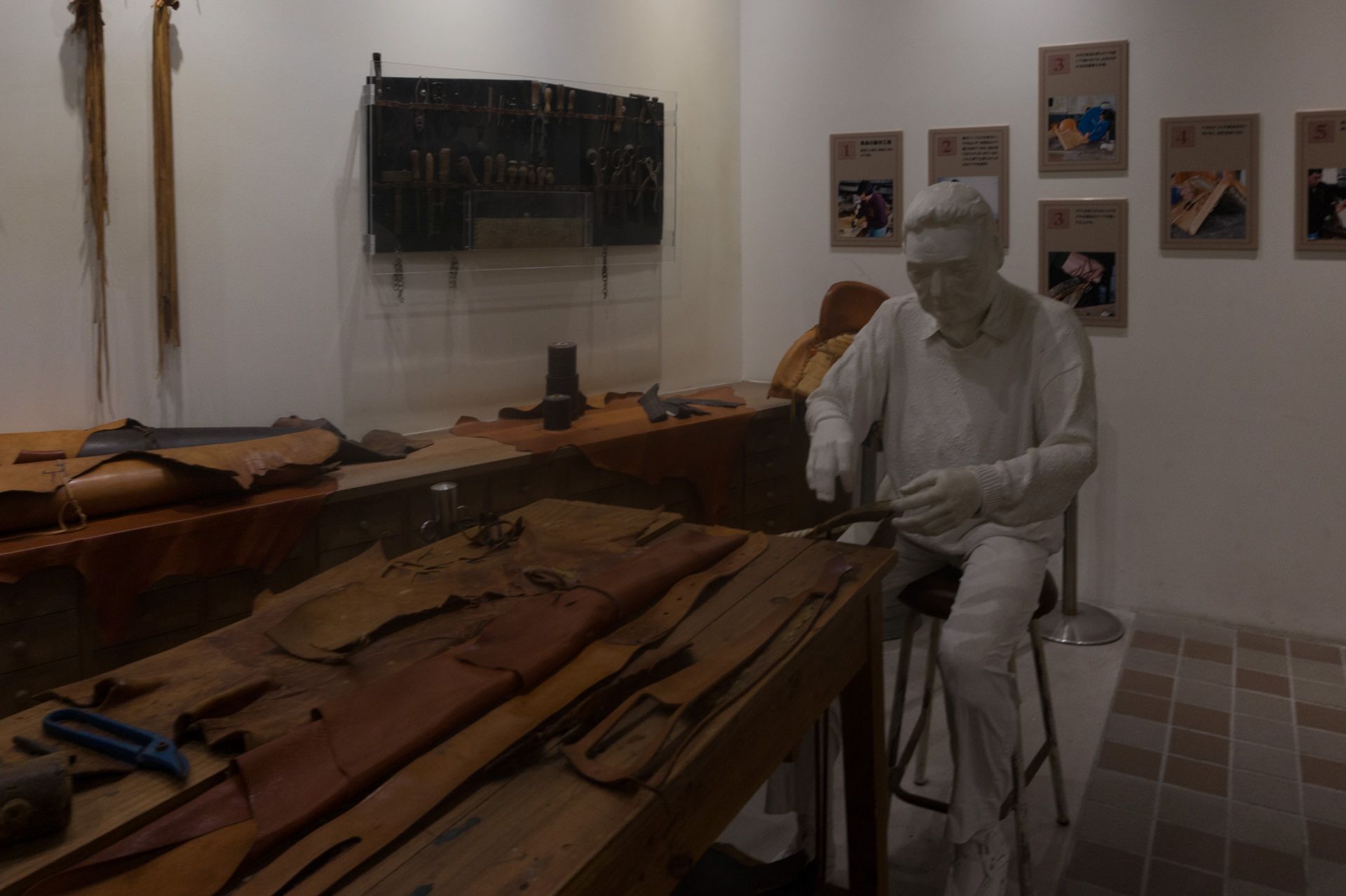
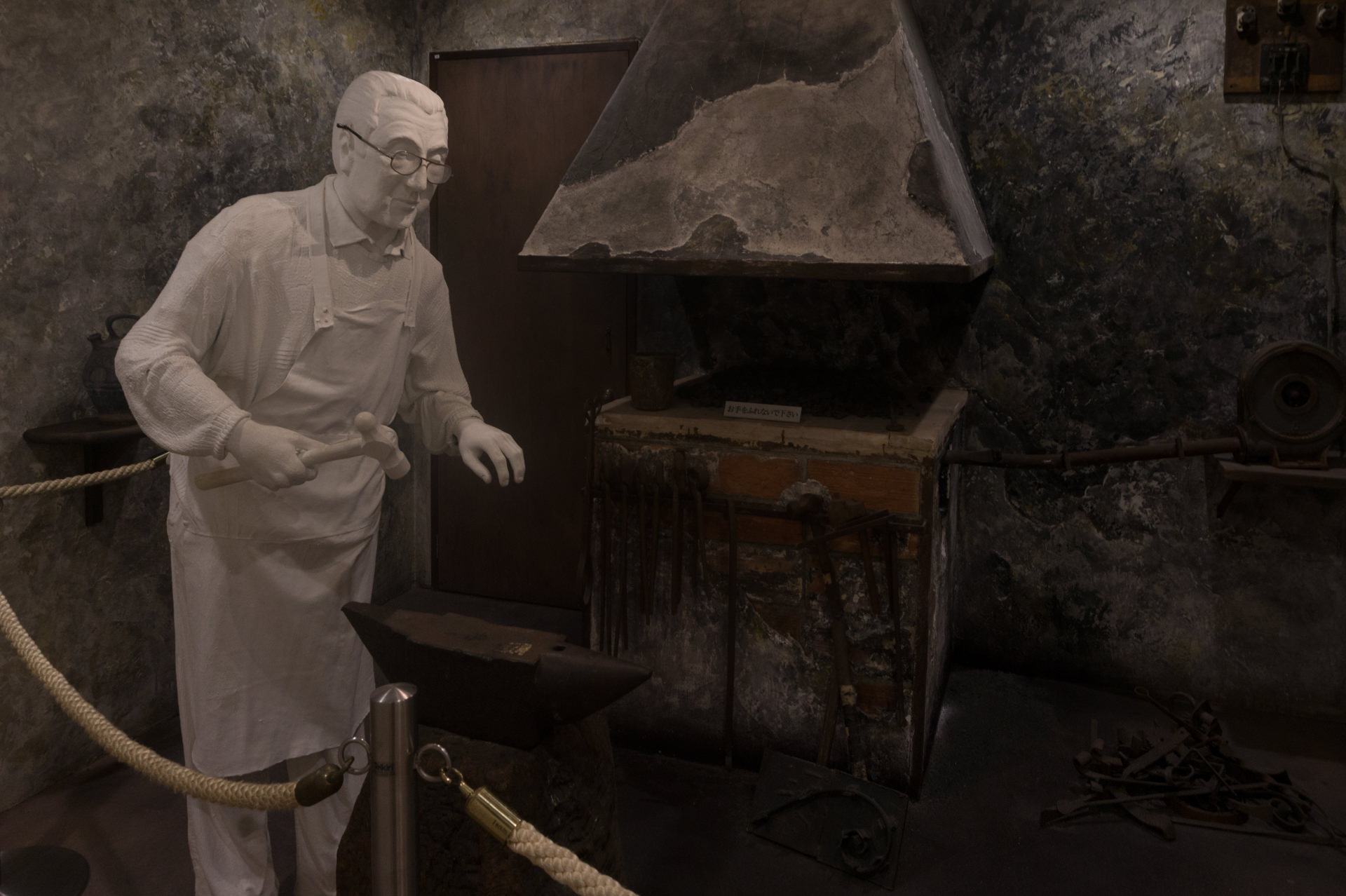
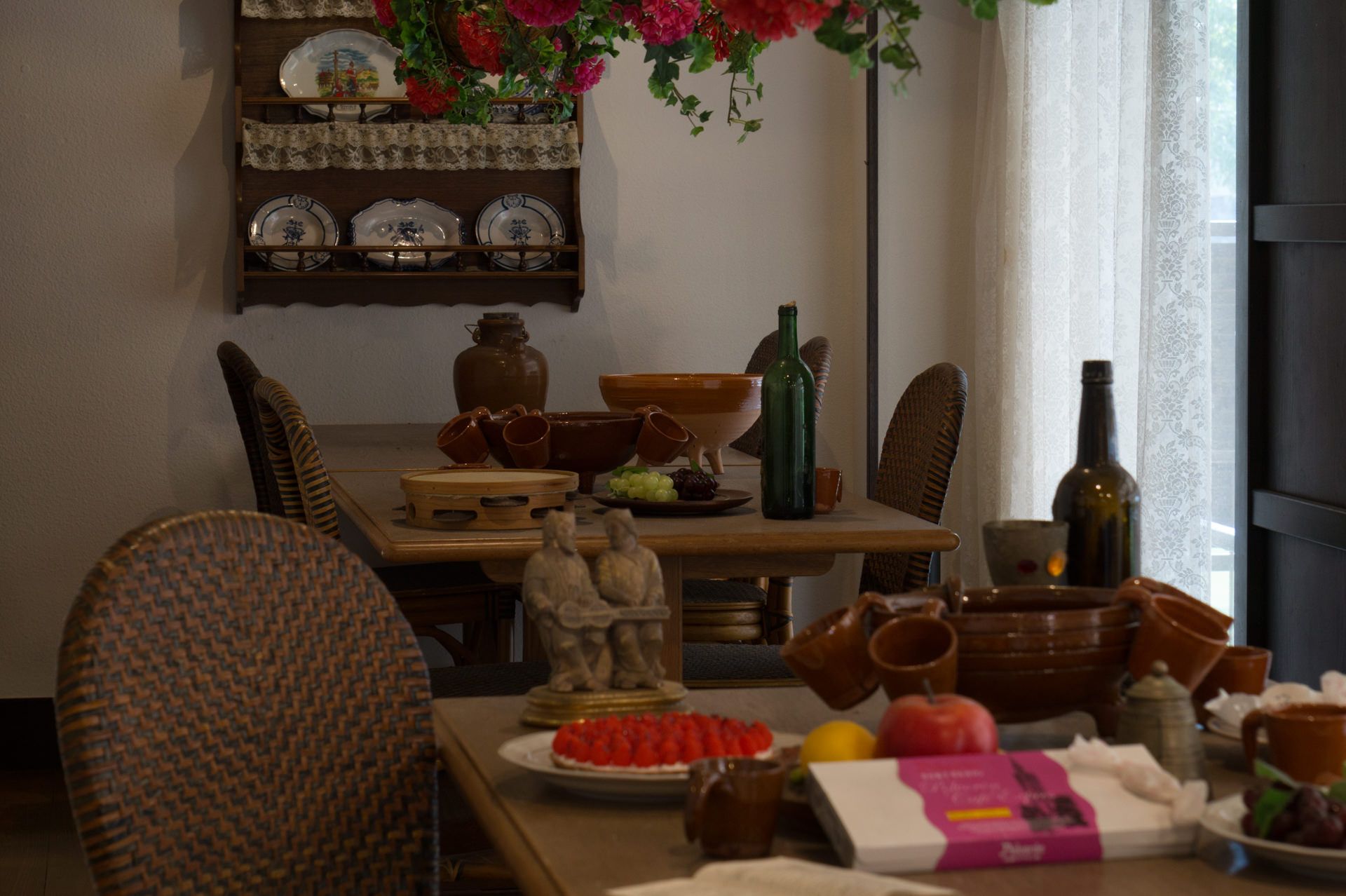
Those who want to find out more about Spain outside the visible architecture can do so in the spacious and extremely worthwhile Castillo de Xavier museum. Here, a tour through Spanish history, art and crafts awaits the interested visitor.

ABCDEspaña

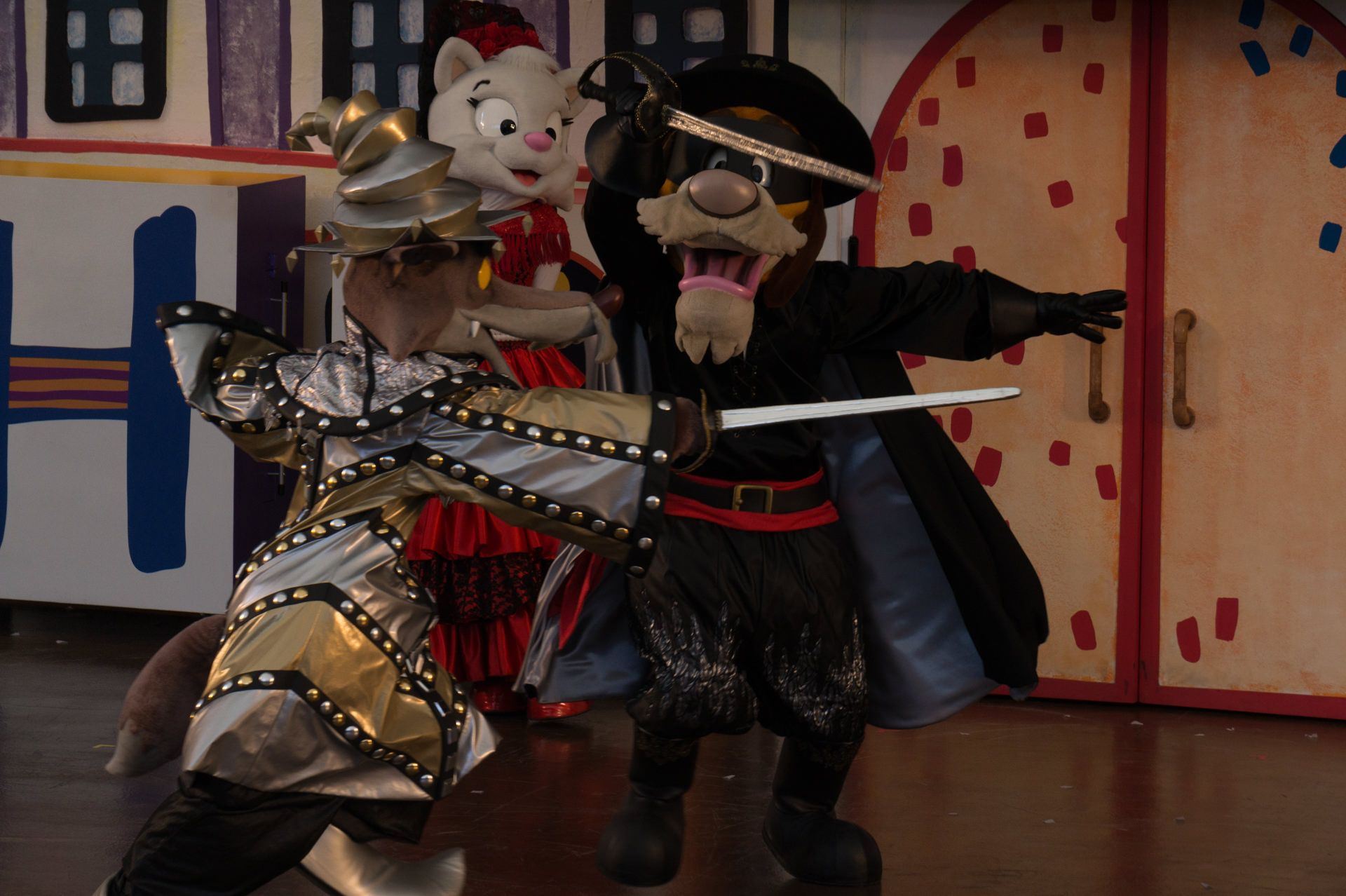
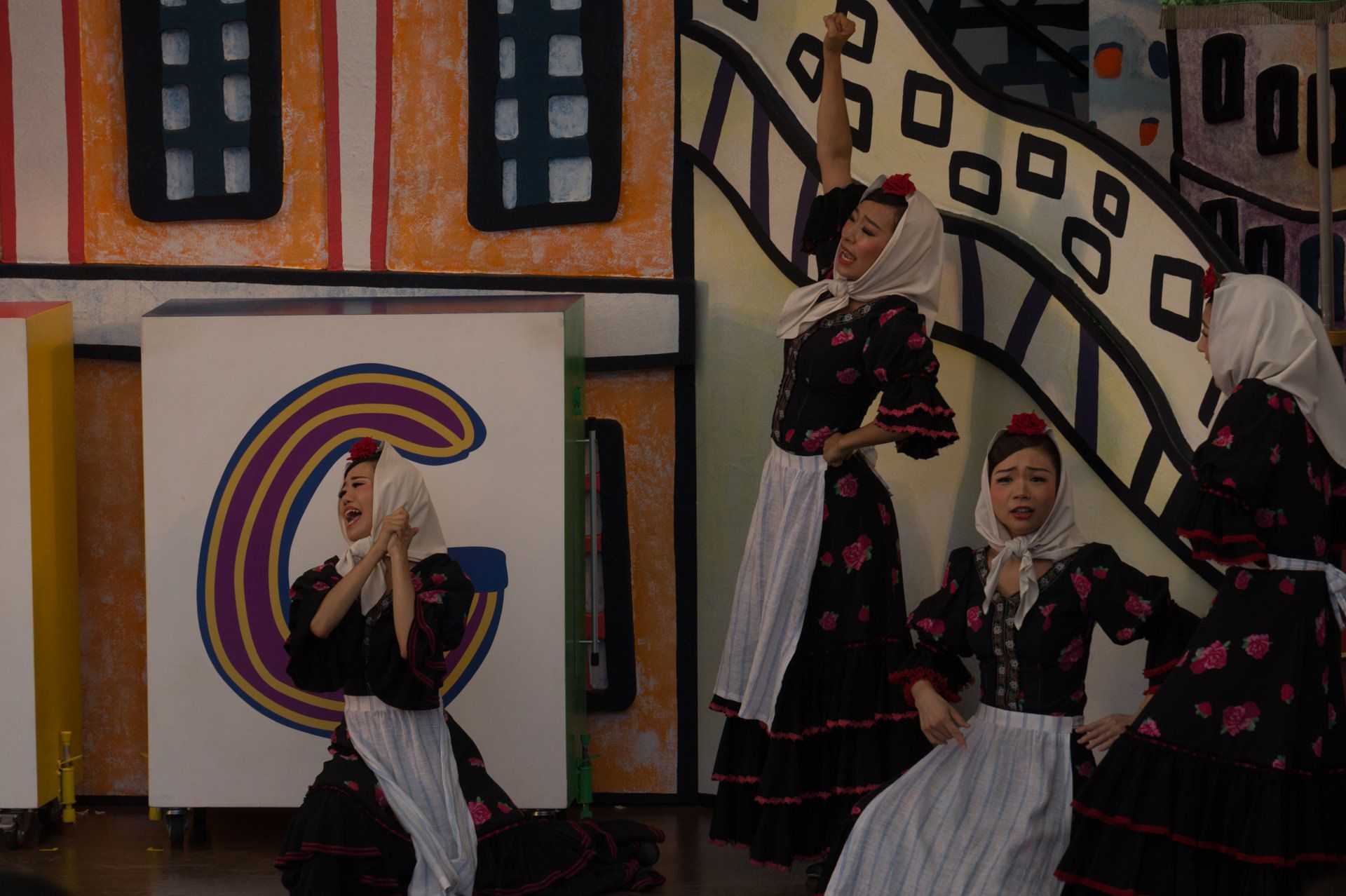
Meanwhile, a completely different image of Spain is conveyed in the musical show ABCDEspaña, in which typical Spanish customs and terms are conveyed by the park mascots using the ABCs. In doing so, they fall back on the Spaniards’ favourite form of entertainment – in my view very authentically – because well-choreographed shows always go down well. All in all, the show is extremely enjoyable, quite entertaining and even the sound was very good.

We leave the upper plateau using (disco) escalators and descend to the Plaza Colón, a beautifully designed area where two dark rides and a short walkthrough await visitors.

Casa Misteriosa de Choquy and Feliz Cruise 

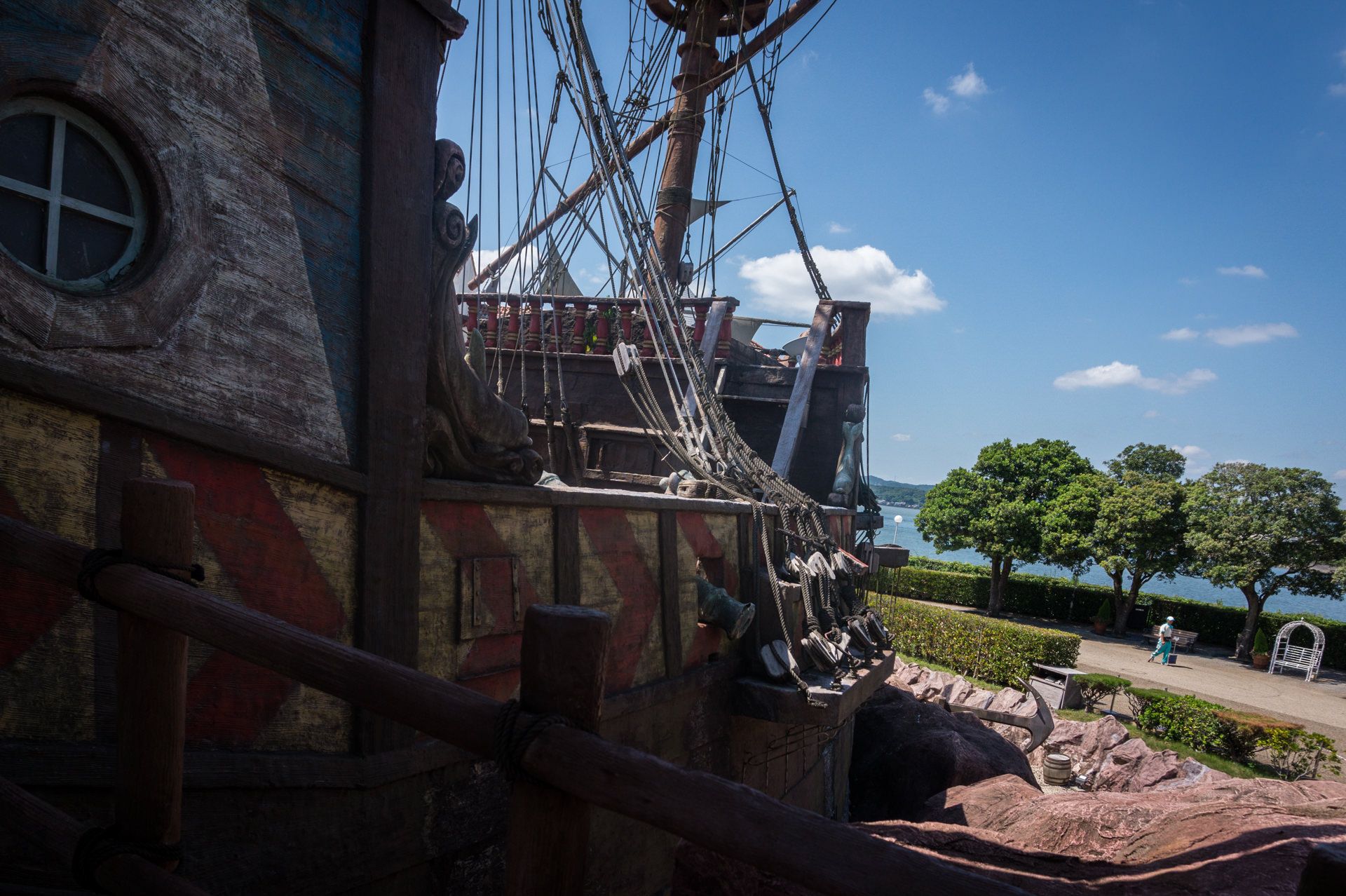
While the Casa Misteriosa de Choquy is a black-light funhouse with the mascot Choquy, the quiet dark ride Feliz Cruise is characterised by the fact that it was once a much more interesting state-of-the-art water ride with a pirate theme called Adventure Lagoon.

It is rather disappointing when an elaborately designed ride with vertical lift, incline and normal lifts is converted into a simple canal ride for cost reasons and the former station is then marketed as an almost independent pirate ship attraction. Although the Feliz Cruise with its dioramas is anything but bad, it leaves a bad aftertaste if the large (dark ride) hall is simply left unused.

Viaje Aventurero de Don Quijote

But anyone who thinks that a visit down here is therefore no longer worthwhile is very much mistaken, because the second of the two dark rides is quite something. On the Viaje Aventurero de Don Quijote, the adventure ride of Don Quixote, guests can expect a fabulous flight through the adventures of the Spanish knight, represented by the mascots of Parque España. The ride system is similar to that of the dark ride Peter Pan’s Flight from Disneyland, but it does one thing better than the other copies: it beats the original by miles! As much as I was amazed by it after my first ride, I liked the subsequent repeat ride just as much; a genuine insider tip.

Bosque de Cuentos

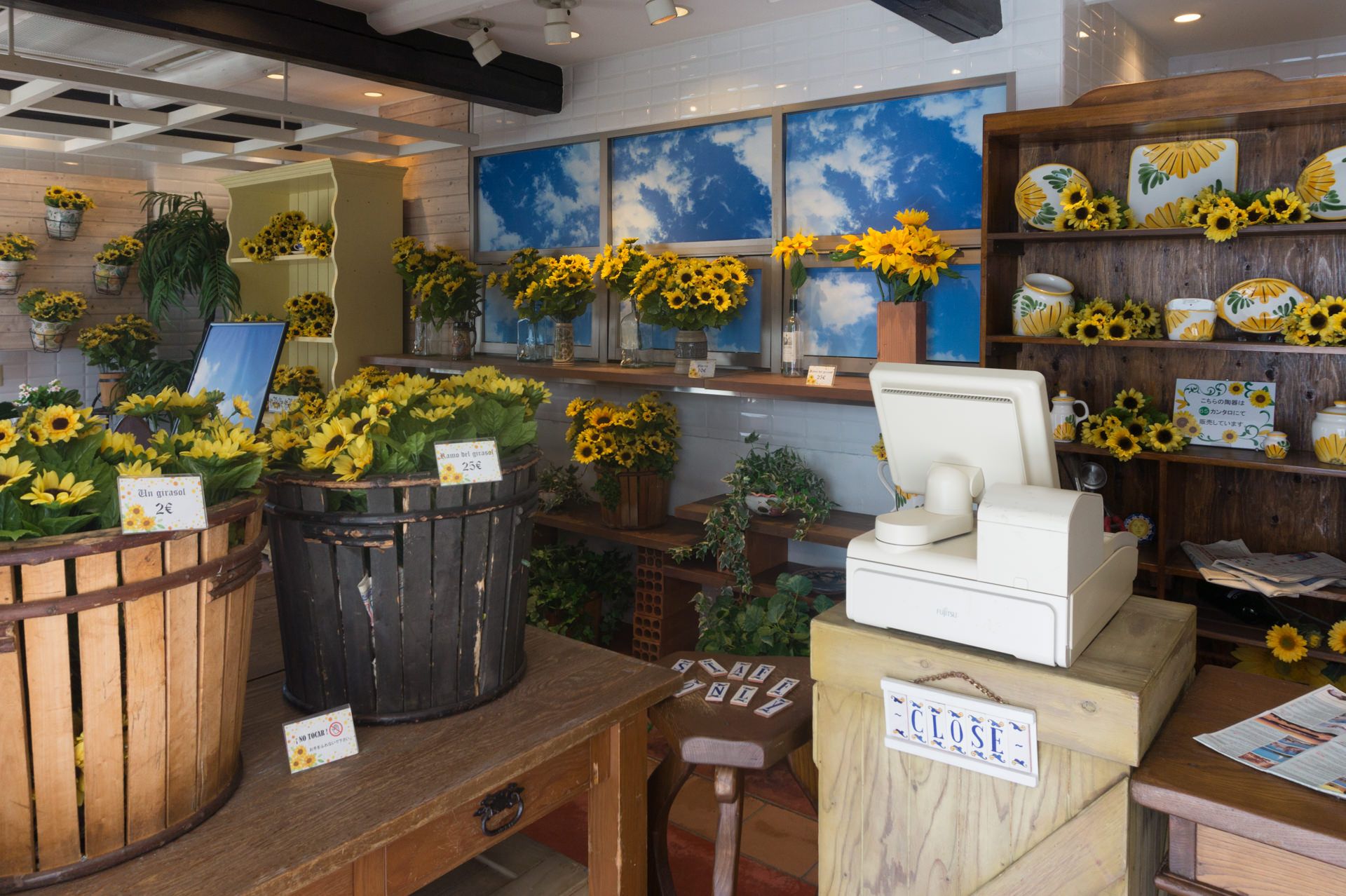
Through the Bosque de Cuentos, a kind of fairy tale path, and the Calle de Santa Cruz, a typical Spanish street with several restaurants, mock shops (including prices in €) and small exhibitions, we ascend to the Avenida de Carmen, where the Carmencita is already performing its predatory game. In fact, this allusion is quite valid, because the Parque España offers a flamenco show, which, however, charges a fee and features cast dancers from Spain. This would be legitimate if the park itself was not already one of the most expensive in the country.

La Suite del Cascanueces

Instead of the show, we dedicate ourselves to the Suite del Cascanueces by the Russian composer Tchaikovsky – instead of ballet, however, an extraordinary dark ride awaits us, in which the story of the Nutcracker is taken up, accompanied by a lot of coloured lights.

Castillo de Hielo and Alice in Wonderland

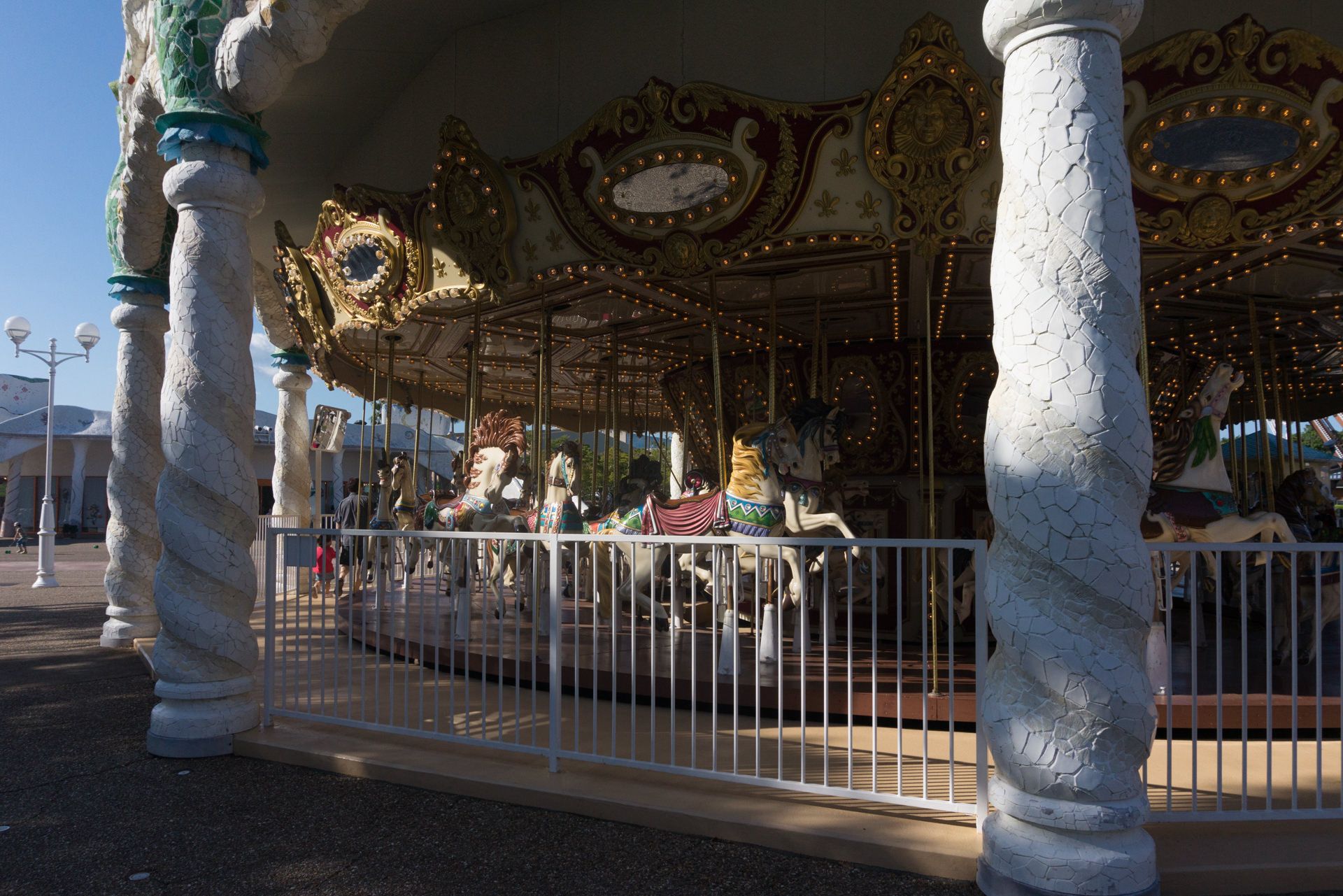
Passing the Castillo de Hielo, one of the typical Japanese freezer walkthroughs, which I have absolutely no memory of, we now head to the Plaza del Fiesta, the main theme park part of the park. Here you can see the Alice in Wonderland interactive walkthrough attraction, a boat swing, a balloon race, tea cups, a carousel, a 360° cinema and the station of the Tren Fiesta.

But you can also marvel at the main attractions of Parque España here. The first is the double ride consisting of Splash and Gran Montserrat, one of the early versions of the popular combination of roller coaster and log flume.

Splash Montserrat

The ride in Splash Montserrat starts with a wide turnaround, which you enter in a short right turn. The lift then takes you up quickly so that, similar in construction to the Europa Park’s Tiroler Wildwasserbahn (Tyrolean log flume), there is a medium-sized shot ride that releases you onto an elaborated level. Here you bob along the channel and the artificial rock massif for a little longer. Always with a good view of the course of the Gran Montserrat roller coaster, the canal zigzags straight ahead until you take a similarly constructed right-hand bend towards the second lift hill. Once you have reached the top, the big of the two shot rides immediately follows. After a final (almost non-existent) splashdown and the return to the station, the far too dry whitewater ride comes to an end.

Gran Montserrat

Five years after the opening of the Eurosat roller coaster, the Mack company was able to open another ride of this roller coaster model, but this time as a classically designed mine train. Gran Montserrat is therefore a very special ride in two respects, which we will now take a closer look at.

The ride begins with a left-hand turn into the first of the two lift hills. After reaching the starting height of 20m, we immediately plunge to the ground in a steeply descending right turn, reaching a speed of 66km/h. With a lot of pressure we cross the first valley, whereupon we gain height on a flat ramp leading to the left along the log flume. In a serpentine fashion, we now make a right and a left turn above the water ride, whereupon we plunge down a flat ramp to the ground and whiz over it in a wide right turn. After a short climb, we immediately reach the second lift hill parallel to the first.

Once again at 20m, we now disengage a little more leisurely and as a result dedicate ourselves to a flat downhill straight with a subsequent 180° helix. We change direction with momentum and reach the ground again after a left-hand bend, which is now quite steep. After another extremely pressurised valley, a relatively tight right turn follows, which takes us far up. High above the log flume, we now pass through a straight and then two downward helices, which are lined up in the shape of a figure eight and are first passed through to the right and then to the left. We then reach the final brake of the ride.

Gran Montserrat is a nice family roller coaster that is extremely fast and punchy in some places. In short, the Mack Rides Mine Train is quite appealing – just don’t make the mistake of comparing it to indoor roller coasters of the same design. The ride characteristics are particularly positive, as they are smooth and hardly distinguishable from modern rides by the manufacturer.

Batalla del Alcázar “Adelante”

In the immediate vicinity of the mine roller coaster is the entrance to the interactive dark ride Batalla del Alcázar “Adelante” by the Japanese manufacturer Senyo. As always with this type of dark ride, you shoot at worm-like animatronics and other enemies, but the highlight of this ride is that the passenger gondolas can additionally be moved transversely to the direction of travel, which has enhanced the already very great ride even more.

Kiddy Montserrat

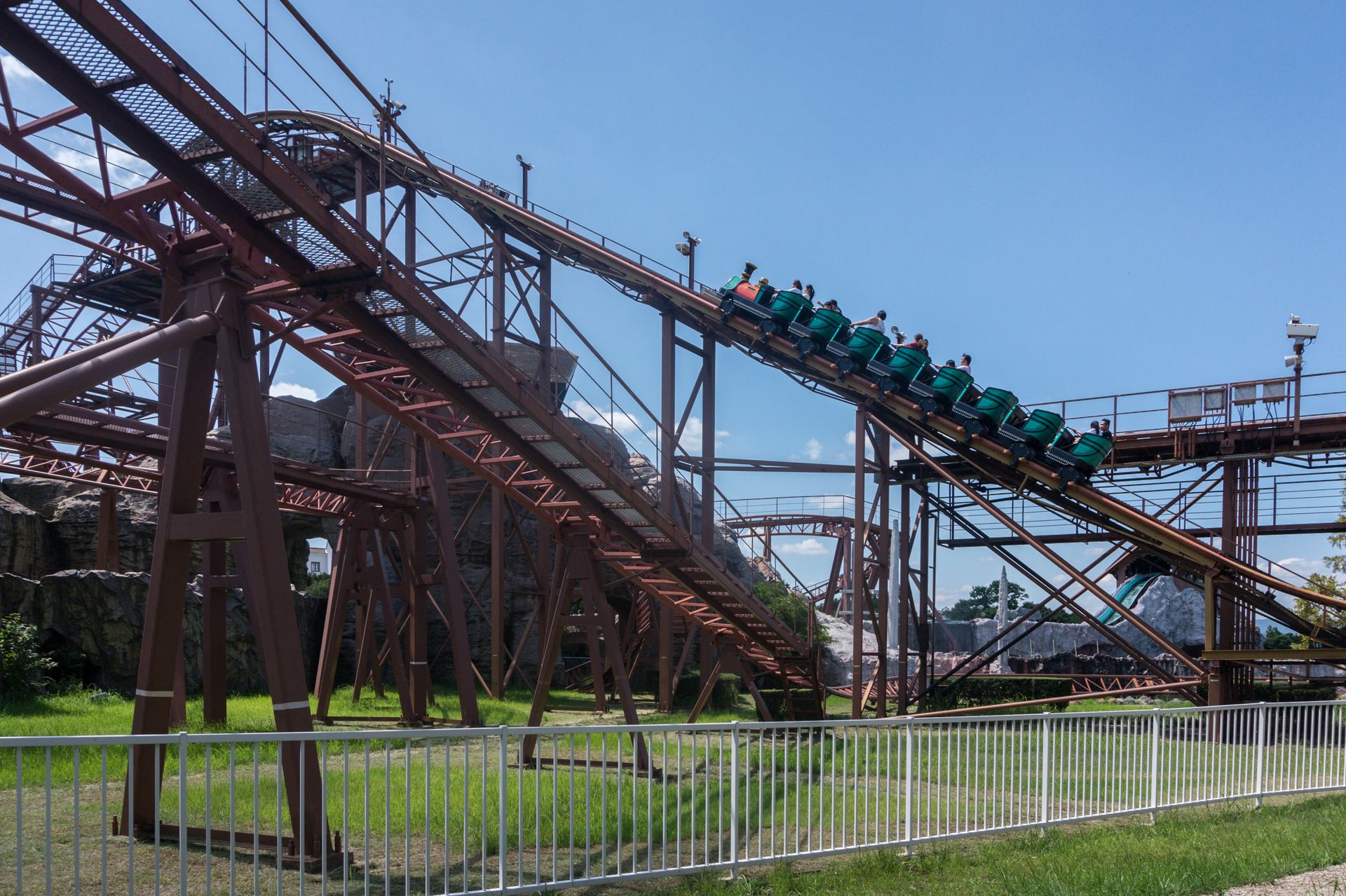
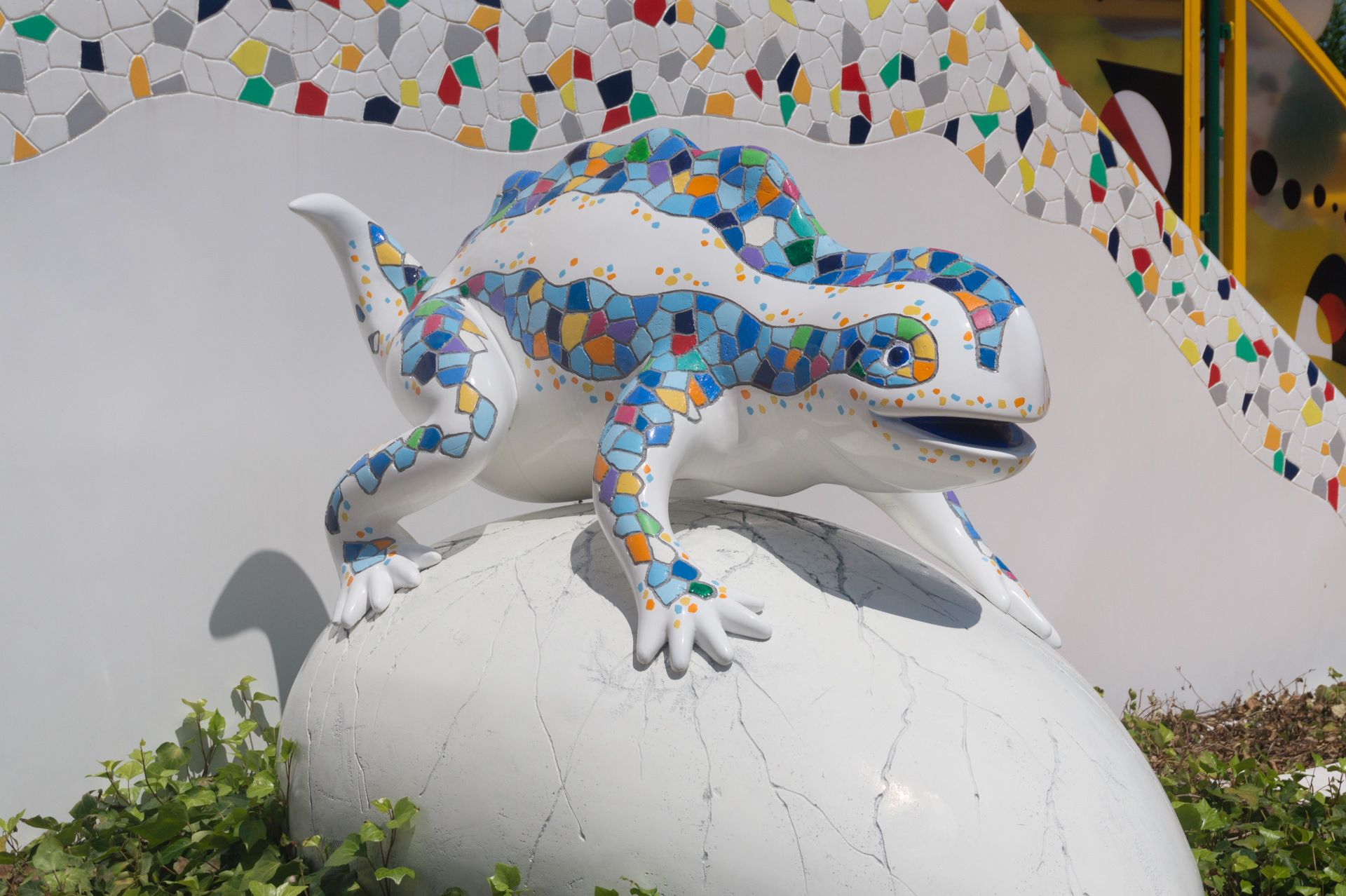
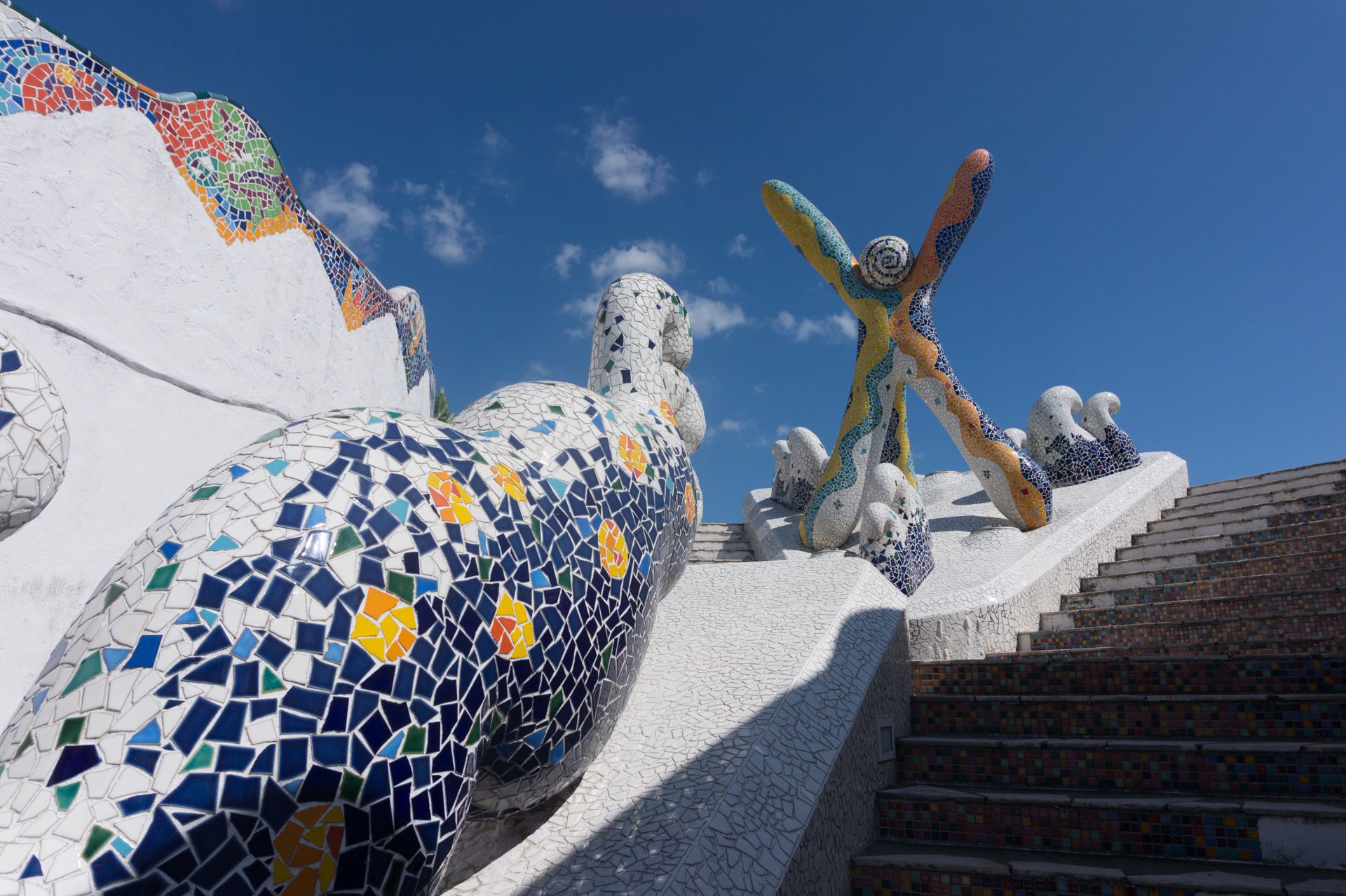
Parque España’s newest roller coaster is the Kiddy Montserrat children’s roller coaster, which, despite its name, does not ride through the artificial Montserrat mountain range. With a height of 8.5m and a length of 216m, the Mosaic Salamander takes you through a shallow left turn after the lift hill, followed by a wide right turn along the station. This is followed by a downward helix with an ever increasing radius before the station is reached again and the rather nice jet coaster ride ends.
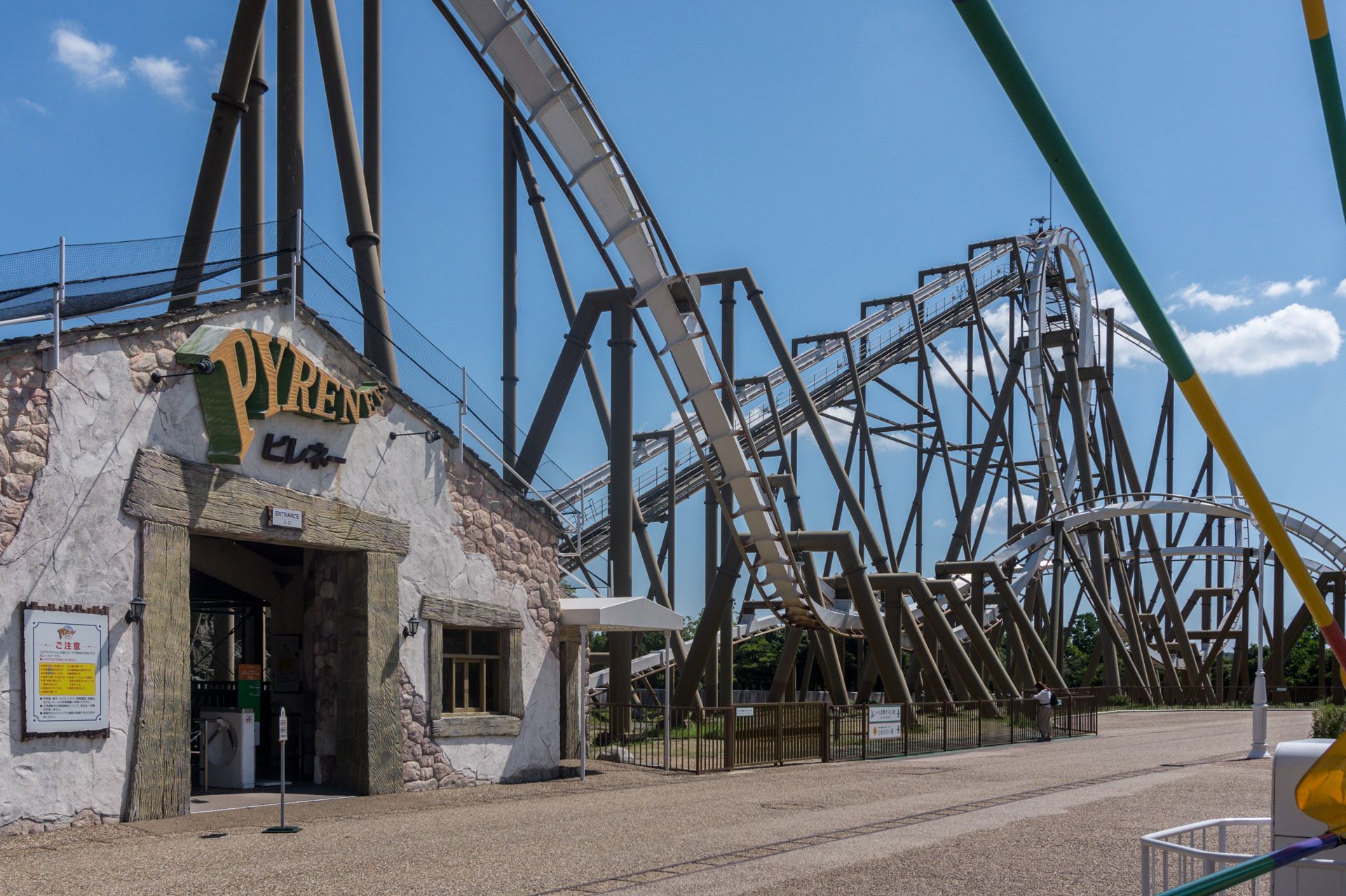
Pyrenees

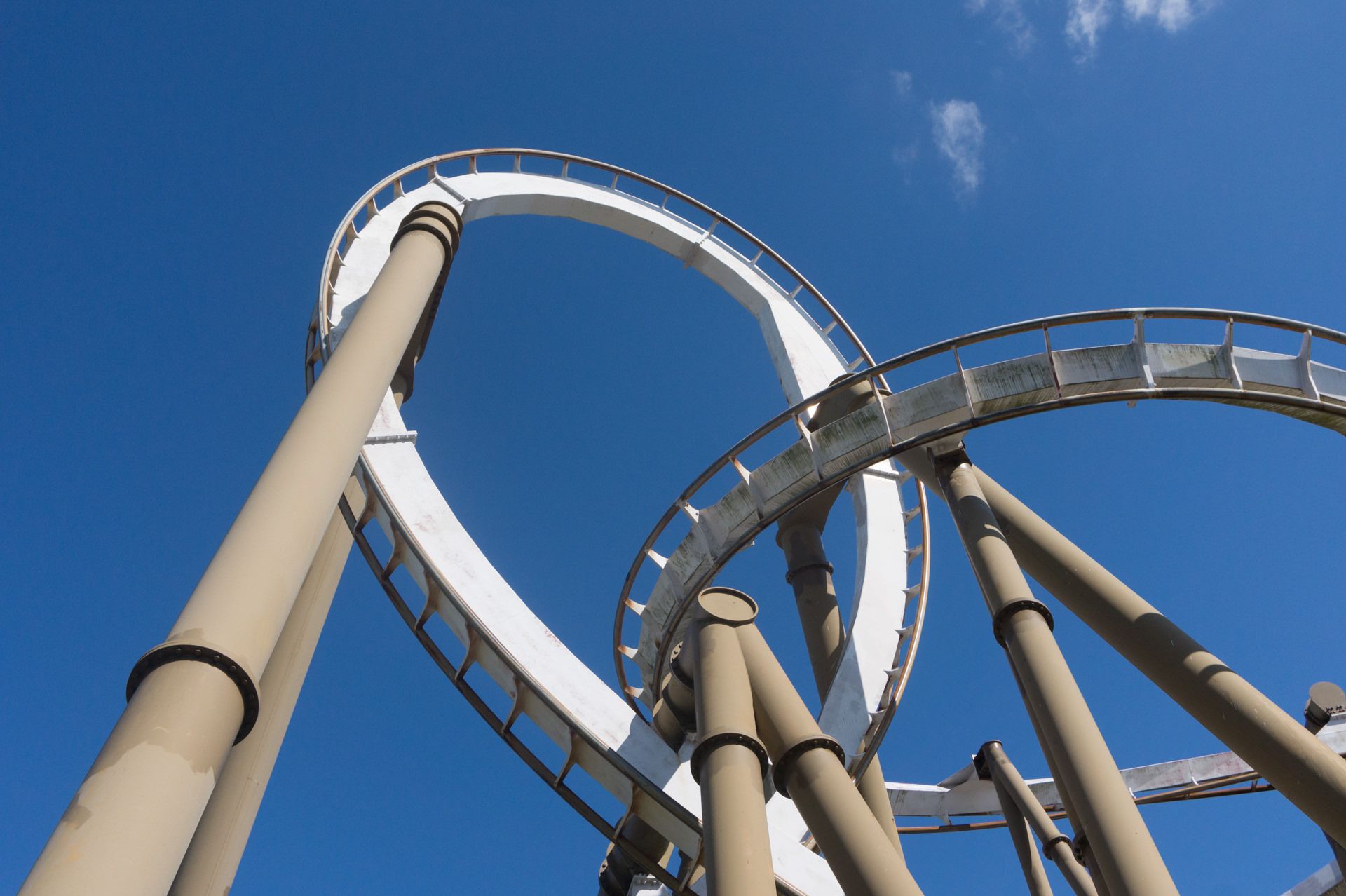
Let’s now turn to the last roller coaster of Parque España, the B&M Inverted Coaster Pyrenees. With a height of 45m and a length of 1234m, the ride is the top dog of the park and a real eye-catcher. But can the elongated inverter live up to the high expectations of the ride?

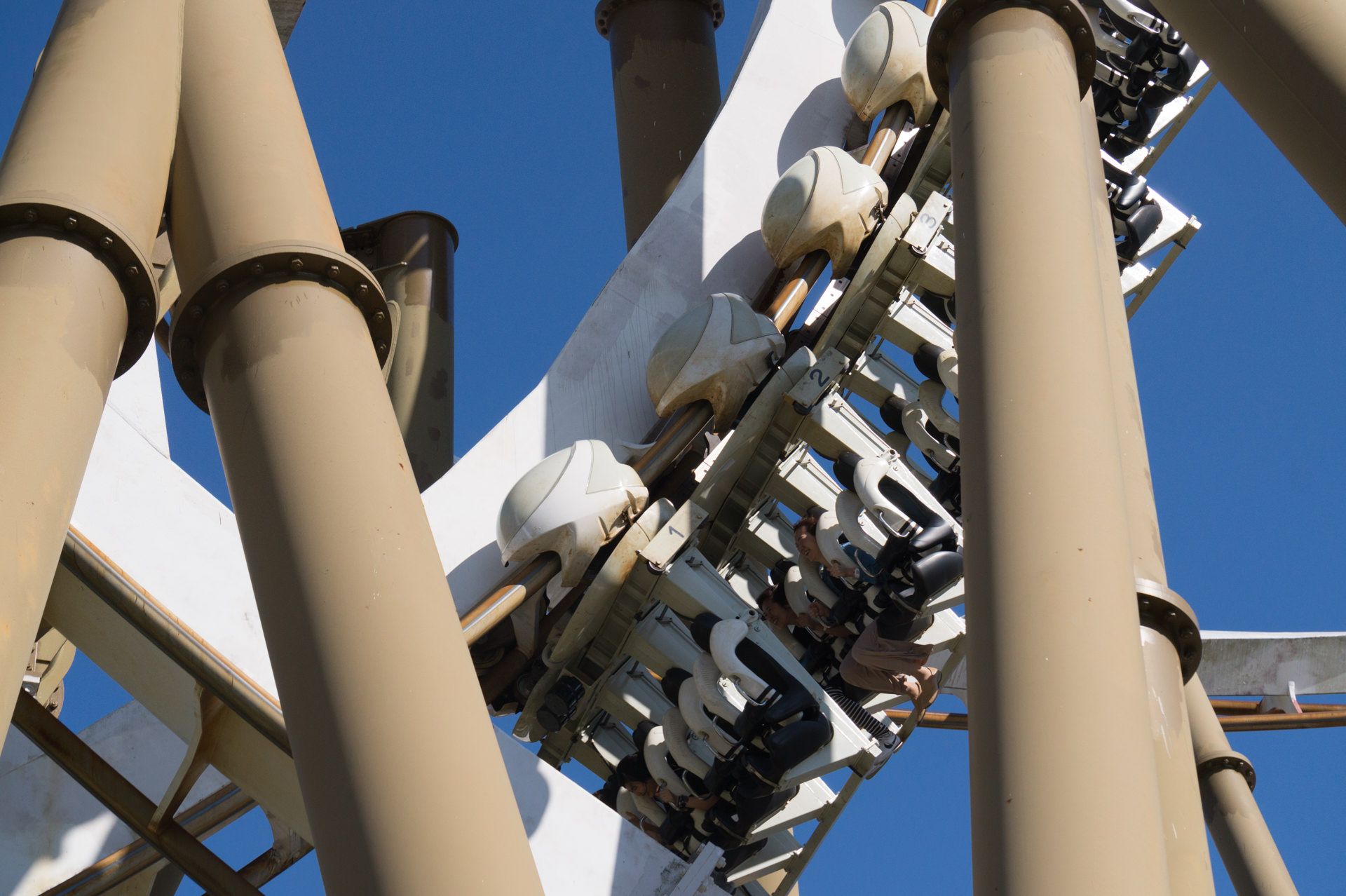
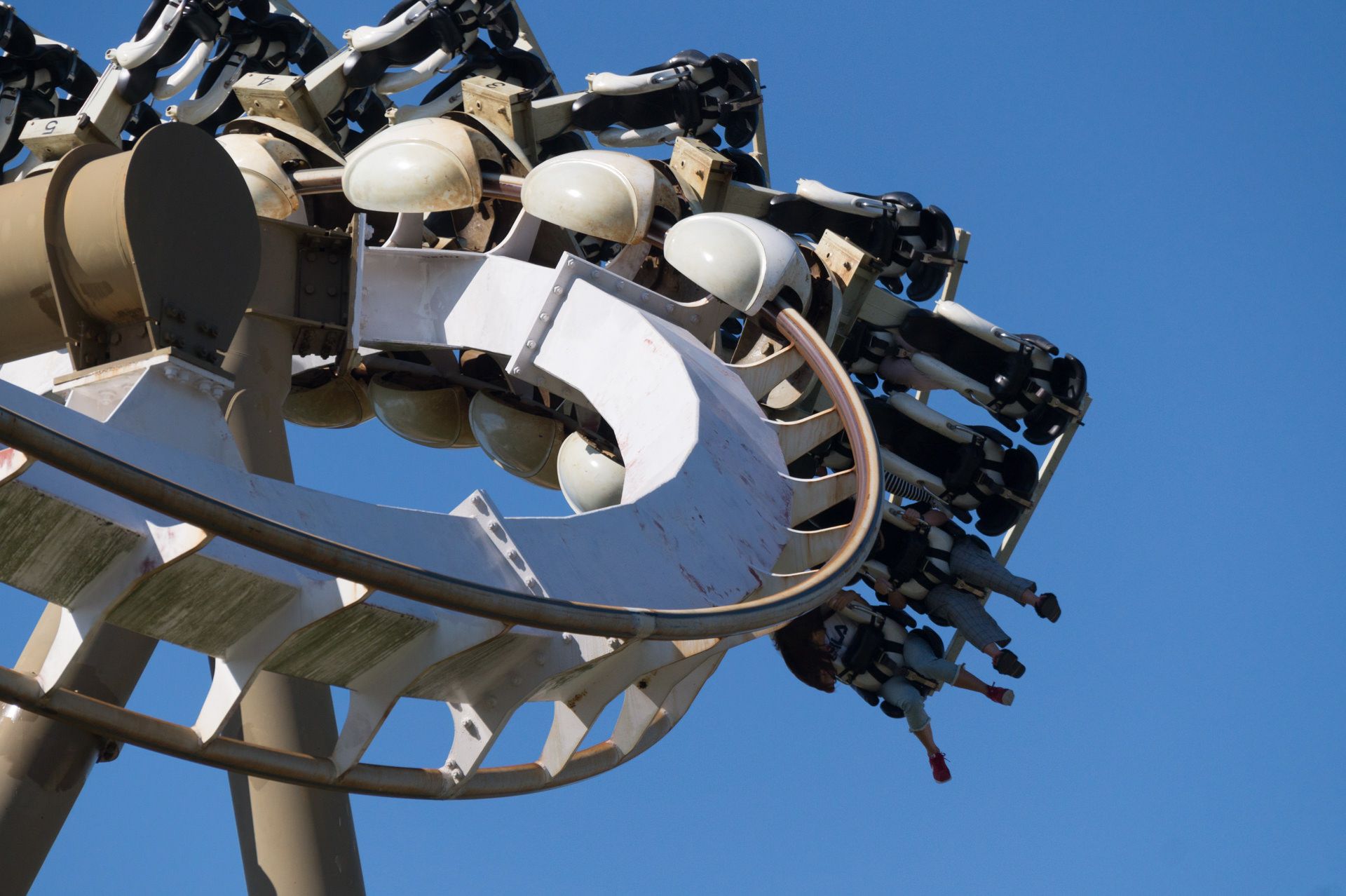
After passing through the deserted queue, we are immediately assigned to one of the front rows. After some time, the gates are opened and the train is quickly processed, so that we meet again in the lift a short time later. We cross the pre-drop with full vigour and immediately plunge towards the ground. What follows is an interplay of extremely pressure-rich valleys and beautiful loops, which are connected in the middle by a relatively tame zero-G roll. This is followed by a very long left turn close to the ground, which then turns into the Cobra Roll. We perform this inversion figure with the best of devotion and are turned upside down twice during the process. We pass through the next valley at high speed and immediately dedicate ourselves to the ascent into the block brake. We go through a long right-hand bend that narrows more and more towards the end and finally wraps around the second loop in an intense helix.

Without reducing the speed in the block brake, it pulls us towards the abyss one more time, whereupon the world is turned upside down for the last time in an exceedingly rapid corkscrew. Now we cross the track of the first drop in a left turn and pick up speed on a very long straight for the return to the station. With a lot of momentum we shoot over the queue and after a tight turning curve we soon find ourselves in the final brake and the station.

Pyrenees is a very nice inverted coaster of larger construction, but unfortunately its peculiarities do not convince me personally. During the ride, there are simply far too many parts of the track that are only meant to stretch the ride, and the long downward ramp before the final hill just seems strange, both visually and in terms of the ride. However, that doesn’t mean that fans of the manufacturer’s big inverted coasters won’t get their money’s worth – the ride is perfectly fine.

Pictures Parque España

Conclusion Parque España

Parque España is a beautifully designed amusement park, but its best years are long behind it. Although the park has some top-class attractions, overall Parque España simply lacks the attractions to justify the high entrance fee and the time-consuming journey to the park. This is a pity, because the idea of running an amusement park with authentic food and appropriate cultural offerings of a country far away from the country in question is quite charming; but perhaps as a European visitor, one simply associates Spain more as a holiday destination and consequently feels a little more in tune with the theme than the Japanese tourists, whom the park is known to miss out on.


What is your opinion about the theme park Parque España?  Just write it in the comment field below the report or visit our social media channels:


Click here for the next report of the Titanic Max Tour
A not so great visit

Preface

After our day’s start in Fiabilandia we reached the car park of the amusement park Mirabilandia at late noon. Although our visiting day fell on Easter Sunday, the general rush of visitors was limited, but not the waiting times and the eagerness of the tourists/residents to jump the queue. Yes, it was not a pleasant visit to Mirabilandia, although the attractions are first class, but more about that later.

The History of Mirabilandia

We start the review with a look at the history of the amusement park, which opened in 1992. The park was founded as a project of a group of investors consisting of Situr-Finbrescia (46%), San Paolo Finance (44%) and Publitalia 80 (10%) who, with the simple formula “tourist resort + amusement park = cash cow”, completely failed in their exaggerated expectations and were unable to attract even a third of the two million visitors they had hoped for. As the operating company was on the verge of bankruptcy in 1996, they sold the park in late autumn of the year to the Löffelhardt-Casoli Group, a joint venture between Phantasialand co-founder Gottlieb Löffelhardt and Giancarlo Casoli, one of the owners of the former Italian amusement ride manufacturer S.D.C., who massively expanded the park in the following years. As a result, the number of visitors also grew to over 1.5 million. After a few years Löffelhardt withdrew from the business and Casoli took over the patronage, before Mirabilandia was sold to the Spanish group Parques Reunidos in 2006.

Tour of the park

After leaving the ticket offices behind, you enter the park over a bridge, similar to the English amusement park Thorpe Park near London. The skyline here is discreetly restrained, but with the perfectly placed Cobra Roll of the inverter Katun to the right of the bridge it is already very impressive. From here there is a path leading into the Far West Valley, which was still largely under construction, and the actual entrance area of Mirabilandia. This turns out to be a pirate’s nest full of details and accommodates some shops, where you can get fast passes, which were almost a necessary treat to be able to ride anything in this park.

To my own confusion, Mirabilandia had arbitrary opening and closing times of the rides, which meant that many attractions didn’t open until noon or even later, or closed much earlier. This in turn resulted in long waiting times throughout the park. On the one hand, I can understand that some smaller parks only gradually put their rides into operation or sometimes even open certain themed areas after a certain time, but I have never seen such a measure in a large amusement park before. It also explains why Gardaland, in return, advertises to close the queue of rides at the end of its opening hours.

Divertical

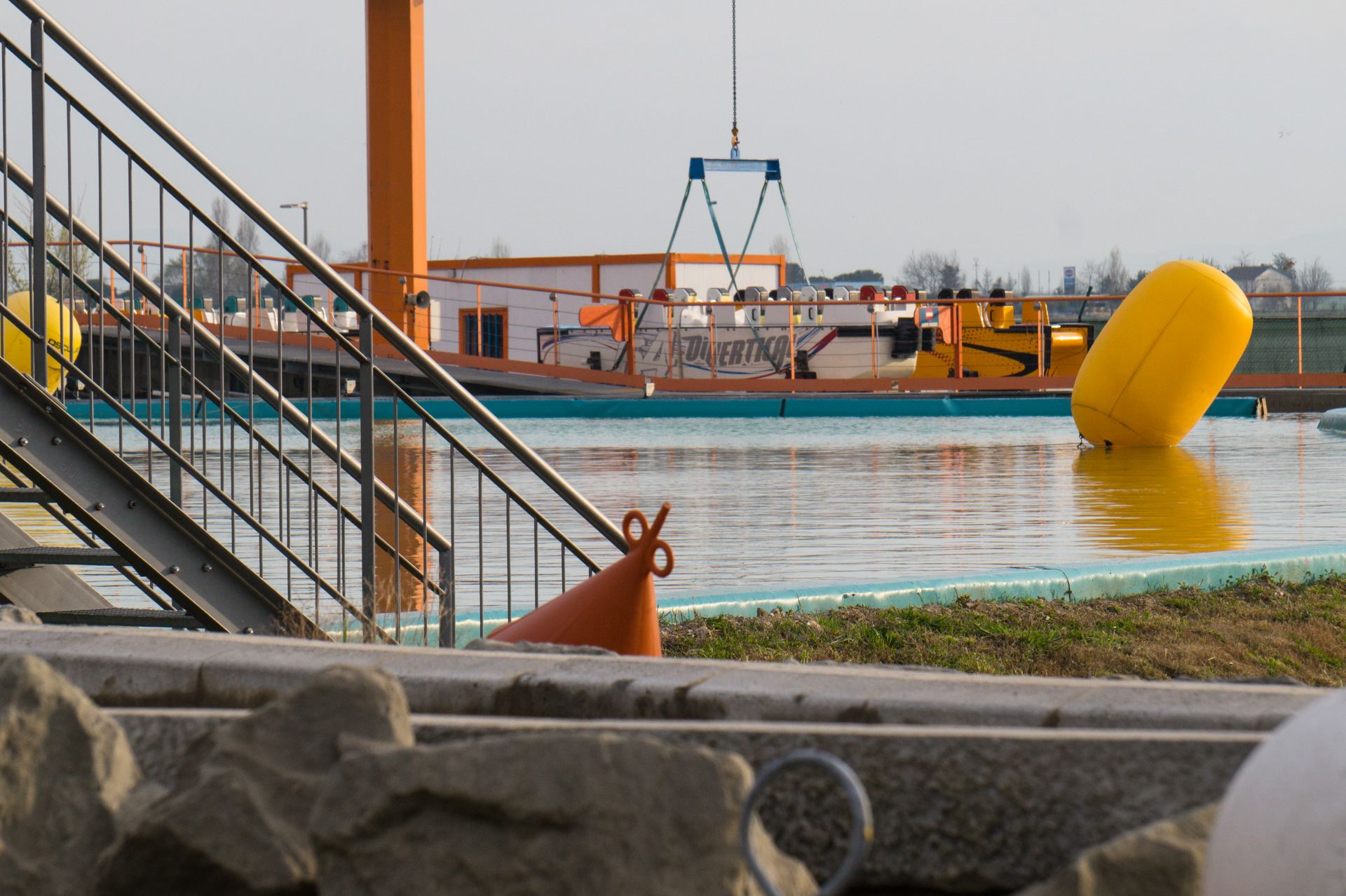
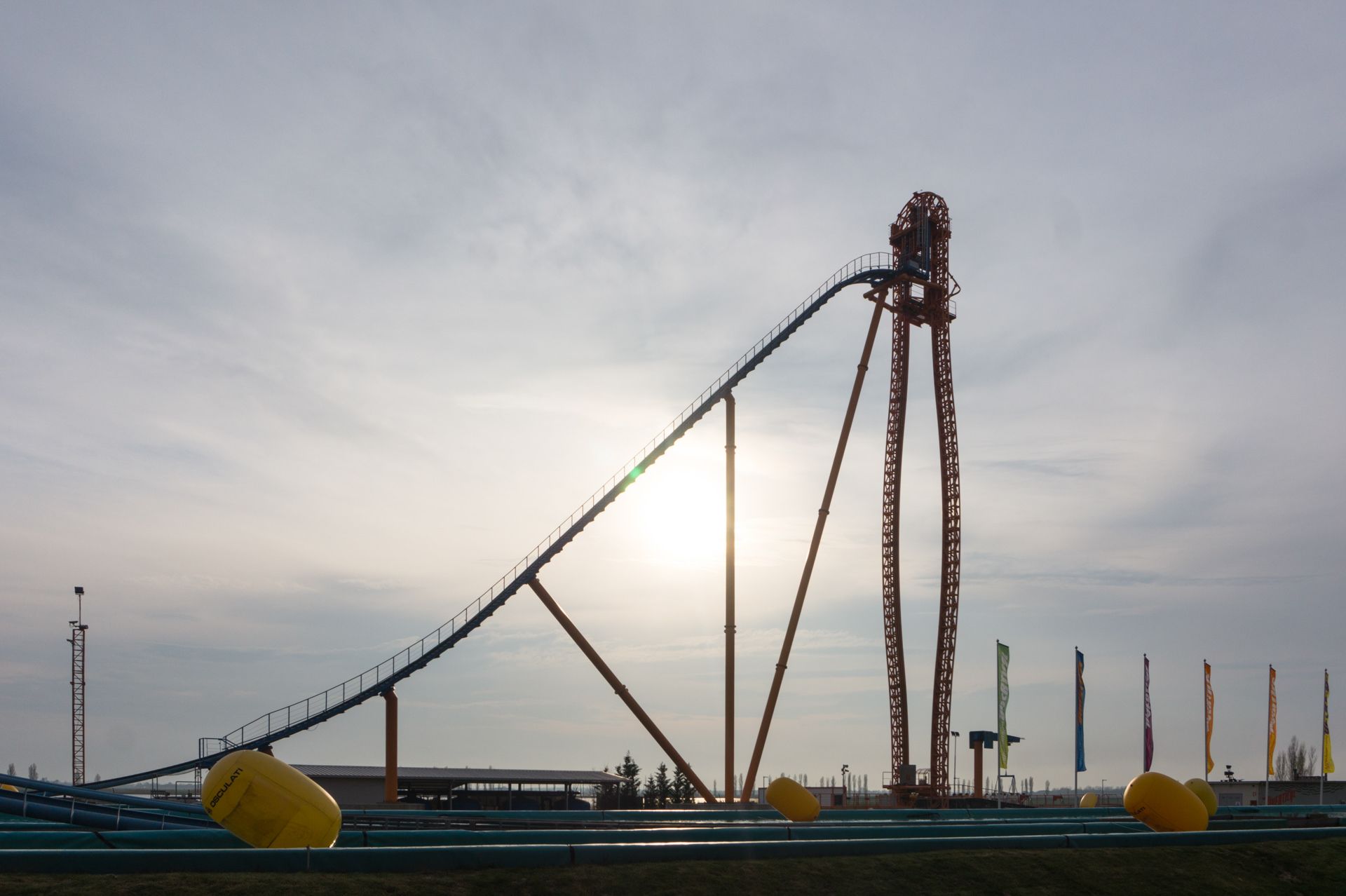
Passing the Pepsi Theatre, where, how could it be otherwise, a magic show is shown, and the musical stage in front of it, we head towards the Divertical water coaster, which already looks very striking from afar. By now at the latest, one becomes aware of how high the ride is and how wasteful it is with the space it has been placed on; however, this does not make the ride look aesthetic at all, which is mainly due to the sparingly placed decoration. On the other hand, the rear part of the ride adorns the insanely long access path to the completely out of place interactive dark ride Reset, which is quite positive and probably attracts more people than ever before to this corner of Mirabilandia.

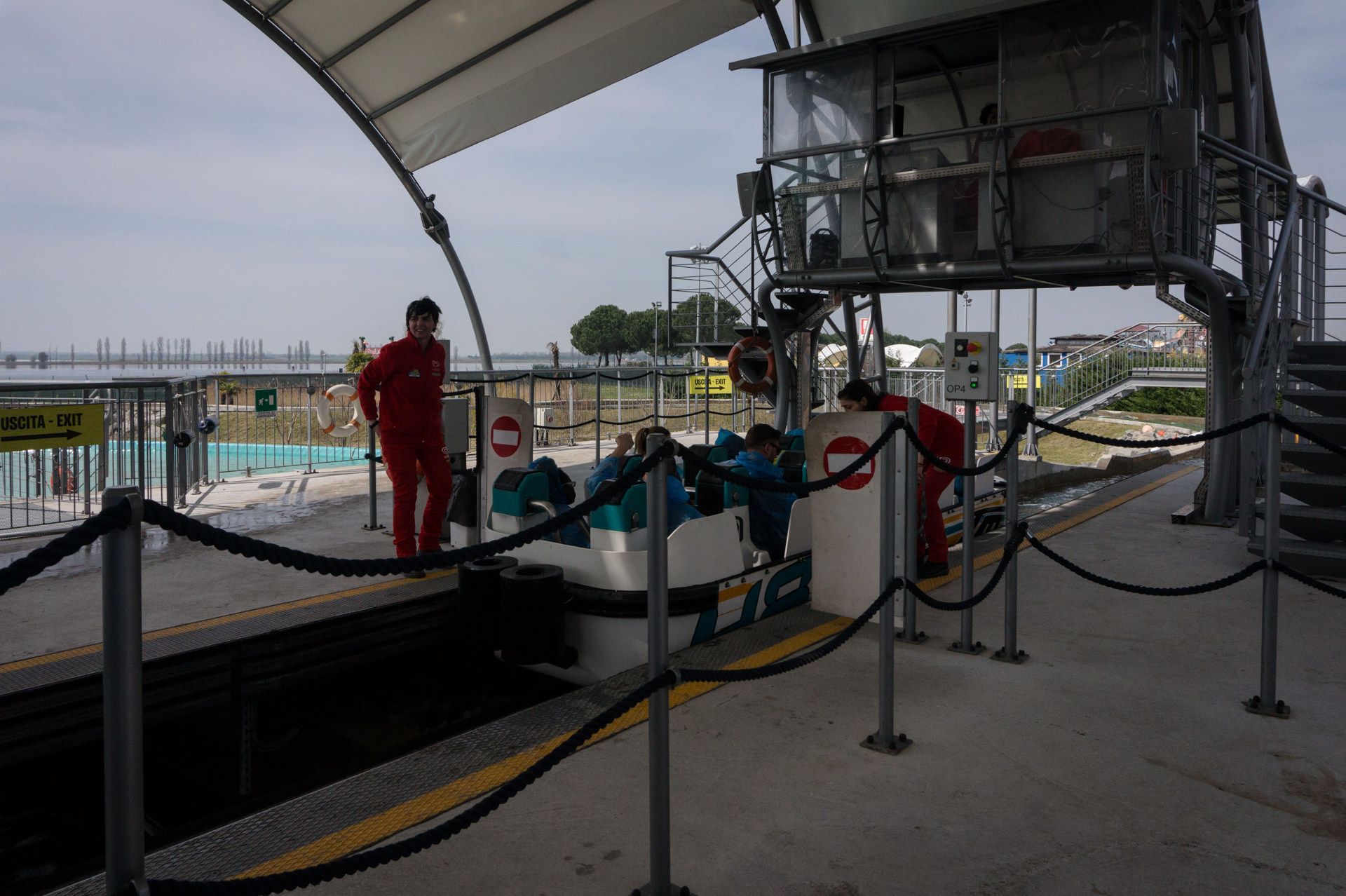
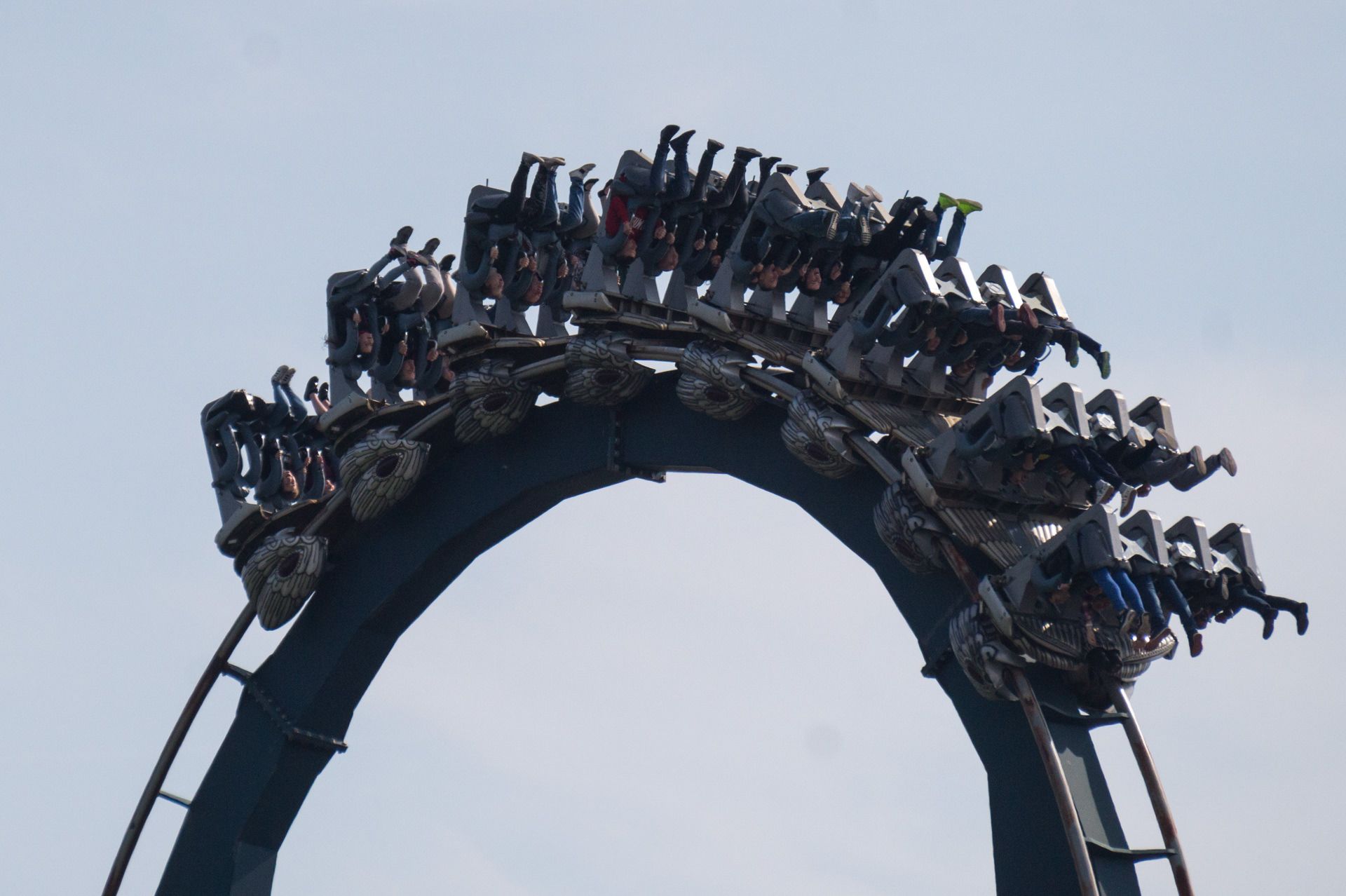
After you have been asked to come up to the station and get into the speedboat, the trip on Divertical can start immediately. As the vertical lift of the ride is still a long way off, you bob a bit through the canal, which interestingly enough creates a good whitewater feeling. After all, the waves almost hit the boat again and again and make you jump away by the whirled up water drops. As soon as the lift is reached, you quickly rise to the starting height of 60m, whereby the curvature of the lift is interestingly hardly noticeable at all. As the view from up here is not very interesting, you are soon pushed over the top of the hill. On the following 45° slope you have enough time to notice how fast this ride actually is. The spray refreshes you and soon after you race through the first pool only to drive over a hill without slowing down. Here you take off a little bit before you throw yourself into a brisk curve. Hoping to slow down a little bit by the following block area, you drive through it without any braking effect and are then released into a right turn. A quick downward helix follows. However, it then goes over into a hill, which initiates the final shot of the ride. Well soaked, you are released back into the channel and reach the station shortly afterwards.
Contrary to my expectations, Divertical is a really awesome water coaster, which gives a feeling of speed like no other ride before. The ride is just fast, which I personally only noticed while crossing the first pool. Considering the starting height of the world’s largest water roller coaster, this is actually in the nature of the ride; at least I have rarely experienced such a speed rush. Moreover, the ride is made with a perfect finish, which means that the friction losses are not really significant, which in turn benefits the speed.

iSpeed

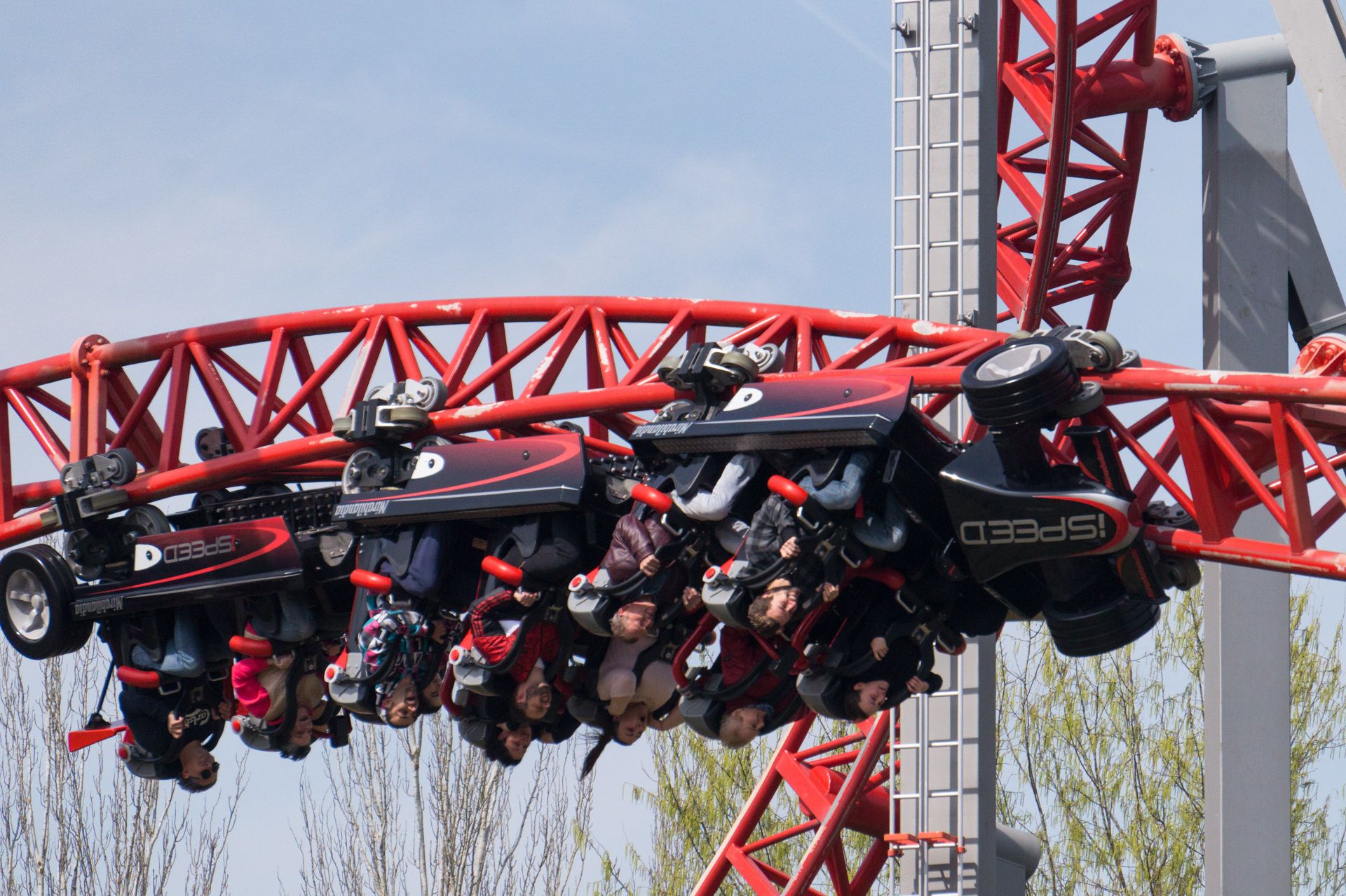
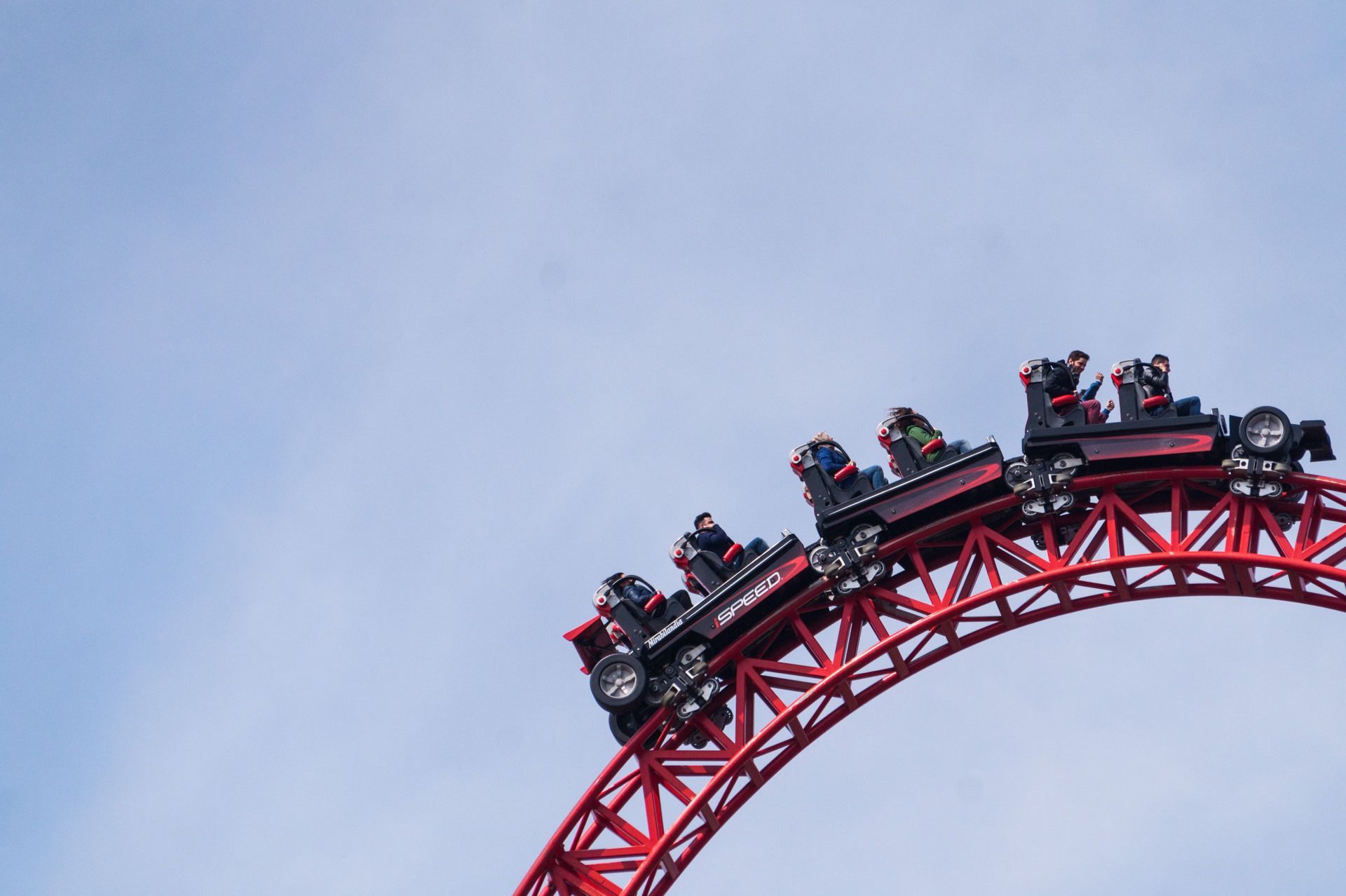
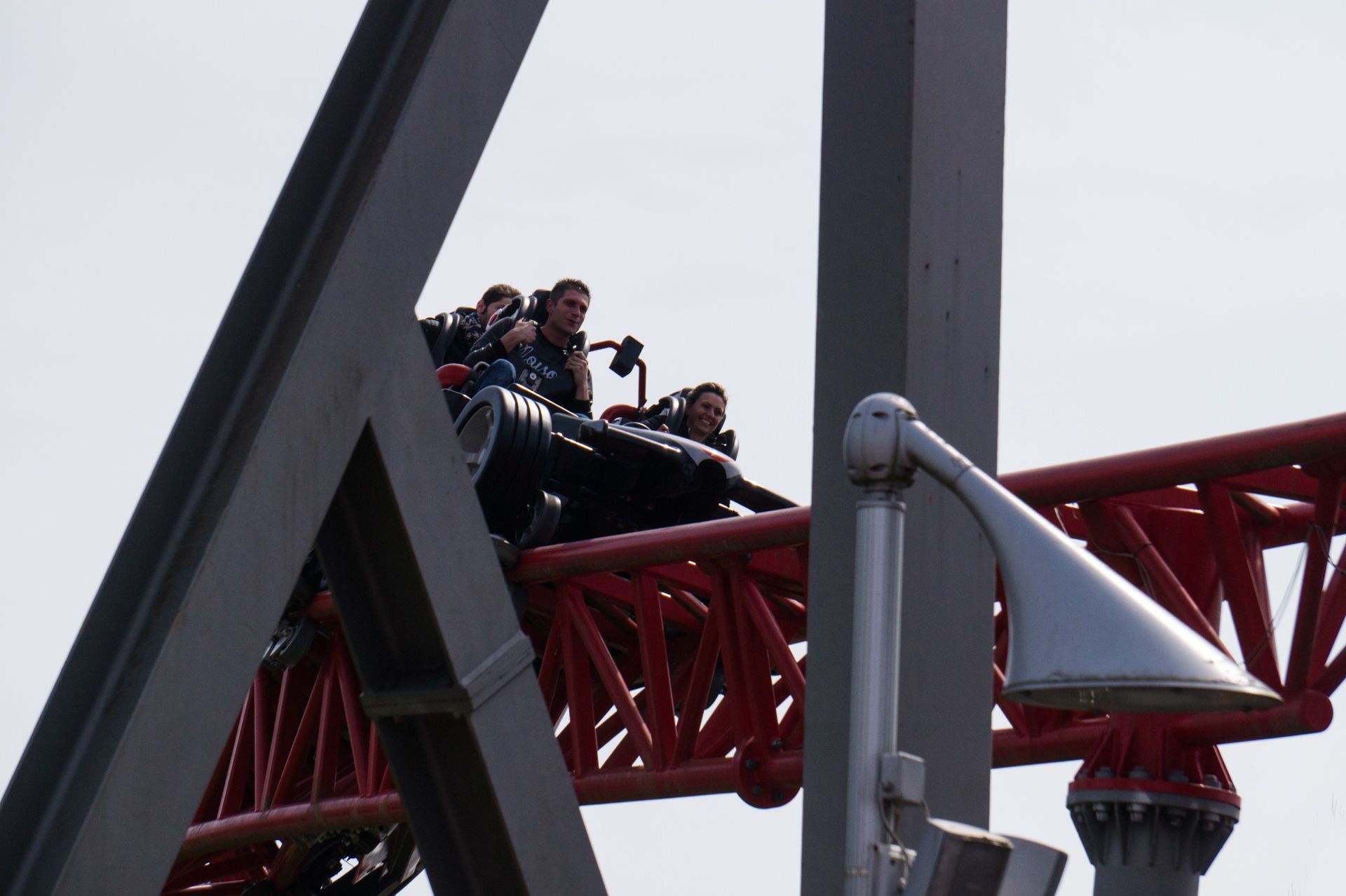
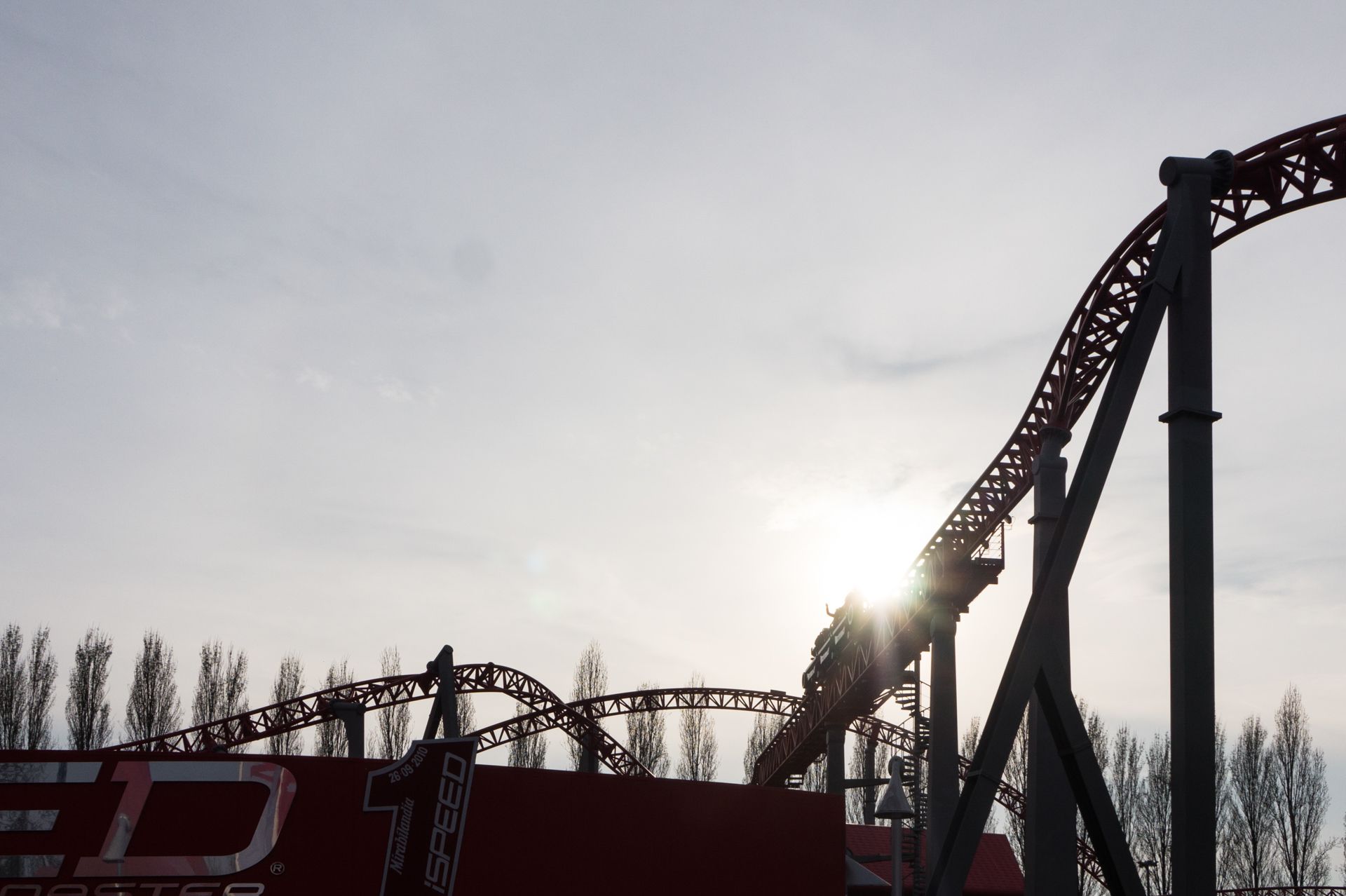
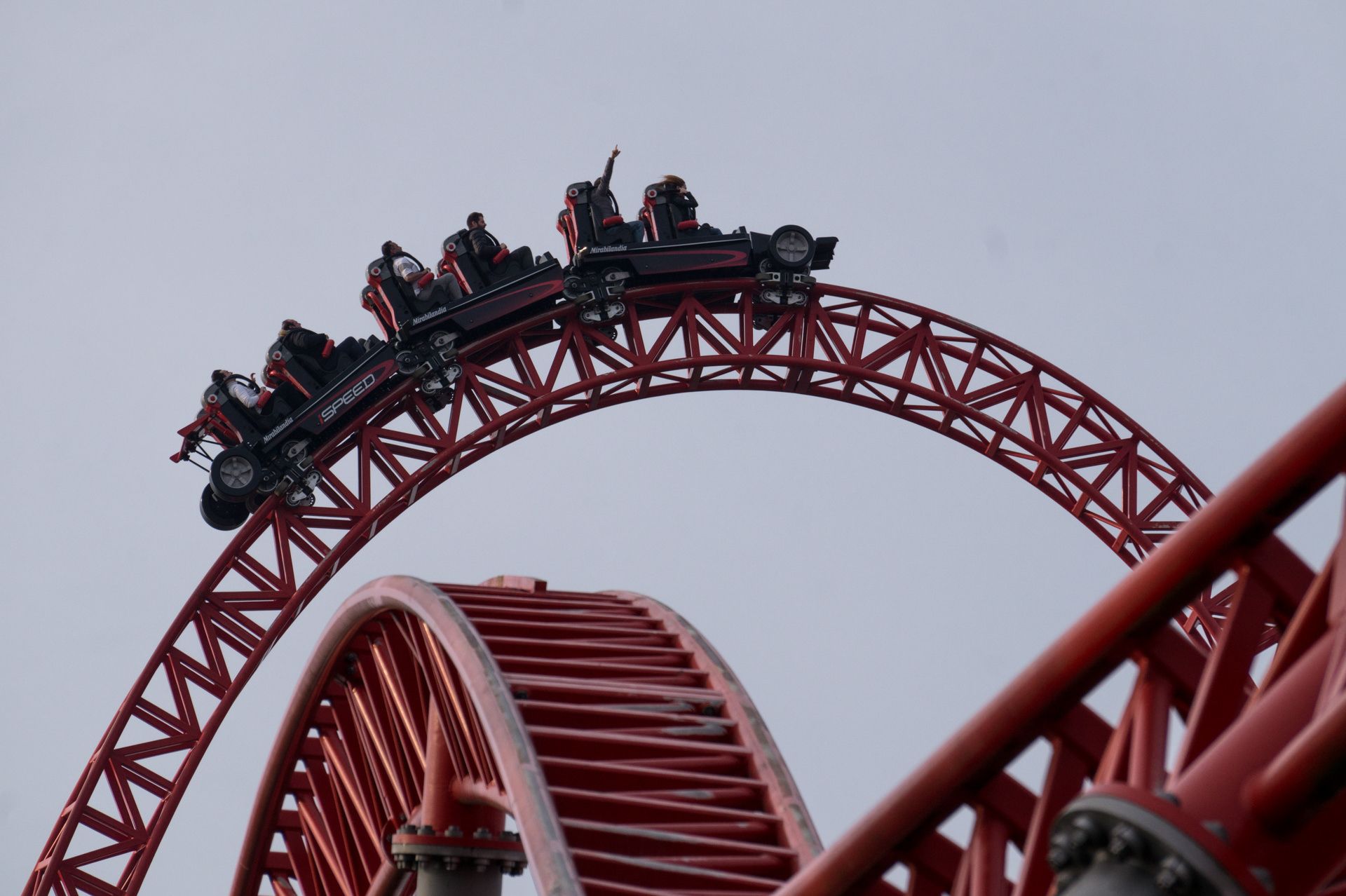
Also addressing the central theme of speed is the Blitz Coaster iSpeed from Intamin, a catapult launch coaster with LSM modules, which replaces the aging wooden coaster Sierra Tonante. The Spanish company’s first project was the self-titled “Il Rollercoaster #1”, a thoroughly fast roller coaster with a more than modest capacity.

Whilst at Divertical we had to queue for a short time, our less wasteful and self-horny lifestyle took revenge by not buying a fast pass. Now we were allowed to wait here for more than an hour in the desolate waiting area of the roller coaster, only to be constantly passed over by some brats of the thoroughly anti-social tourists of the Italian Adriatic. While in the other Italian parks nobody pushed in front of us and even let one of us pass by voluntarily to keep groups together, here it was simply a plague without equal. If you want to be reasonable in Mirabilandia, you better practice becoming a narcissist in advance by creating selfies en masse and treat yourself to a fast pass! In theory it’s not that expensive anyway, especially if you have bought an annual ticket for one of the other Parques Reunidos parks (e.g. Movie Park Germany, Attractiepark Slagharen, …) and didn’t pay any entrance fee anyway; at least you save yourself the wait with the disgustingly anti-social tourists, while in other parks you become a disgustingly anti-social tourist just by buying a fast pass.

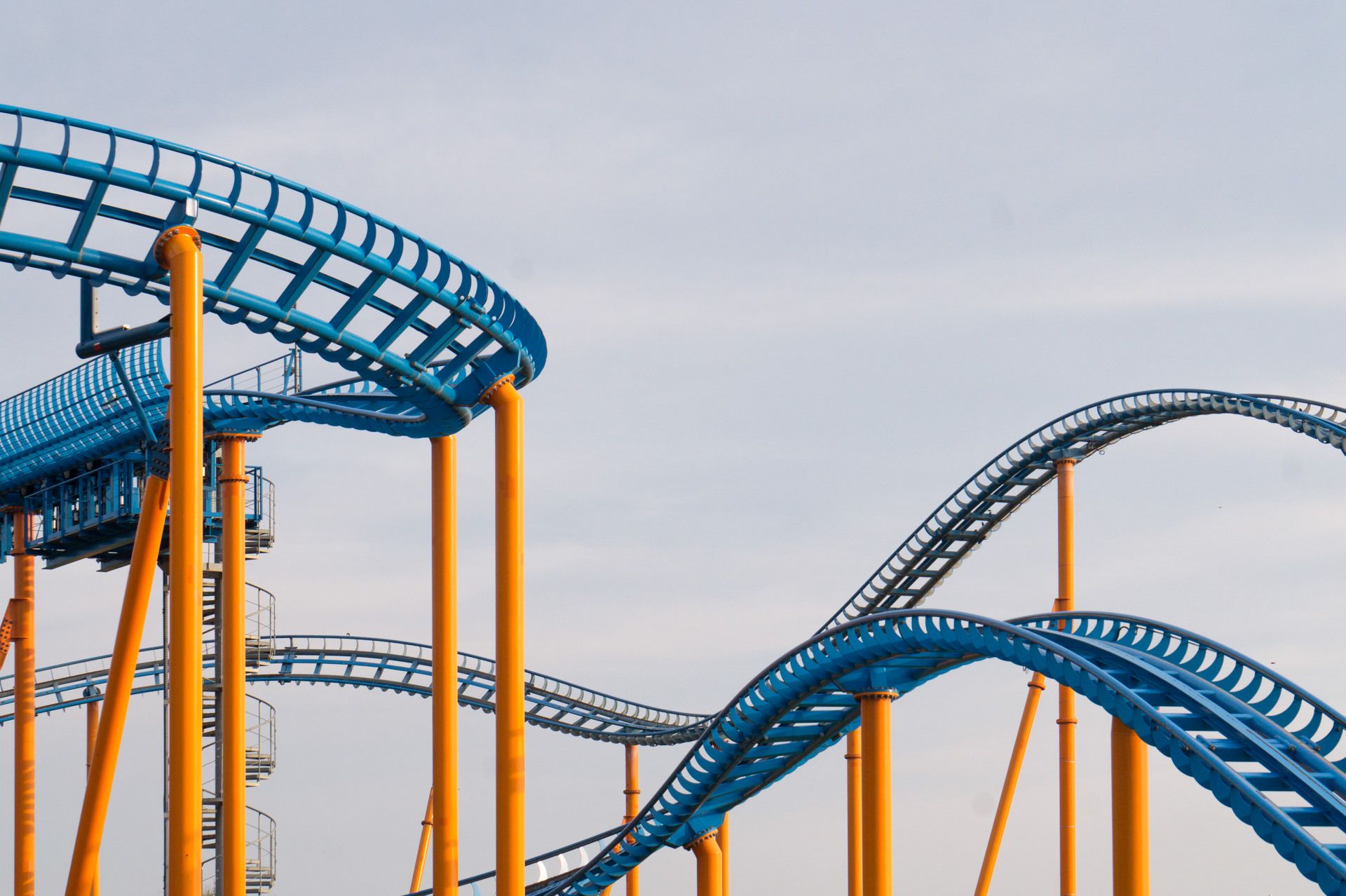
But now let’s get to the ride description of the LSM roller coaster iSpeed, because as soon as you finally reach the stairs to the station it’s going quite fast. Once you sit down in the train and close the safety bars, the train is pushed forward slightly before the impulse is taken up and the train accelerates more and more. Now the train climbs up the top hat vertically before you cross it with a great view of the log flume Autosplash. Now you plunge vertically towards the ground, make a short turn to the right and pass the first valley with a lot of pressure. Parallel to the station you cross a hill, where you are lifted out of your seat. Another S-curve is now made with a lot of momentum, which merges into a tight right turn. On the following hill a leisurely turn follows, which releases you into a slight left turn above the station. All of a sudden a corkscrew is introduced, which throws you around with an incredible intensity. On a further hill you cross the launch track, whereupon you can take a deep breath again in the following steep turn. Rather leisurely the train shoots through a wide right turn, which shortly afterwards changes into the heartline roll, which can be seen from the outside. After another steep turn follows a short block brake. You leave it in an equally steep left turn, followed by a small hill and the final left turn towards the station.

Even though the initial acceleration of the launch is rather lax and hardly comparable to the manufacturer’s hydraulic and friction wheel drives, the ride offers a hodgepodge of exciting elements paired with really high pressure and speed. Especially the corkscrew, which can hardly be seen from the outside, simply surprised me during the ride and also the part of the track after the block brake, which always seemed insignificant on videos, has its moments and fits perfectly into the overall experience of the ride. The roller coaster itself, on the other hand, is unfortunately not as convincing as the actual ride itself, thanks to its lean design and low capacity.
Leprotto Express

Directly opposite, in the children’s land of Bimbopoli, you will find Mirabilandia’s next roller coaster, the Leprotto Express. This is a simple children’s roller coaster by the manufacturer L&T Systems, whose layout describes a simple figure eight in a constant alternation of up and down movements. Due to the crowd, the ride only went one lap.

Rexplorer

Via the island with the Acapulco cliff divers show you reach the Dinoland area, which was redesigned in 2014. Apart from the transformation of existing rides, e.g. the telecombat ride featuring an inclined ride or the popular children’s monorail, a money printing machine, I meaning a children’s driving school, and a Magic Bike by Zamperla also found their way into the themed area. But the most important destination for us was the oldest roller coaster of Mirabilandia, the Powered Coaster Rexplorer.

The journey begins with a wide bend to the left, followed by a leisurely climb past some artificial rocks. At the top, the train goes through a downward helix through the rock formation before climbing up a steeper straight. Now the train goes through a wide downward right-hand bend, passes under the track it has just passed and surrounds the first downward helix in a left-hand bend. With much more momentum you cross the station and complete another lap through the course.

Theoretically, the ride on the Rexplorer would have been quickly dealt with, because unlike many other rides at Mirabilandia, this ride has a slightly higher capacity by nature and the queue itself was manageable. However, Mirabilandia would not be Mirabilandia if they did not mess up this ride as well. The dispatching was a mess and was further protracted by the lack of numerical knowledge of the staff. After waiting until all passengers of the newly arrived train had left the station area, about half of the train was filled with Fast Pass people, but they all had to be counted and checked individually. Of course, the staff constantly miscounted, which was particularly noticeable after a change of staff. Only after each of the Fast Pass owners had taken their seat the normal waiting people were let in. The checking of the restraints and the ride itself, on the other hand, was quickly completed. However, the one-man operation at the ride almost always took 5 or more minutes during loading for one cycle.

El Dorado Falls and Gold Digger

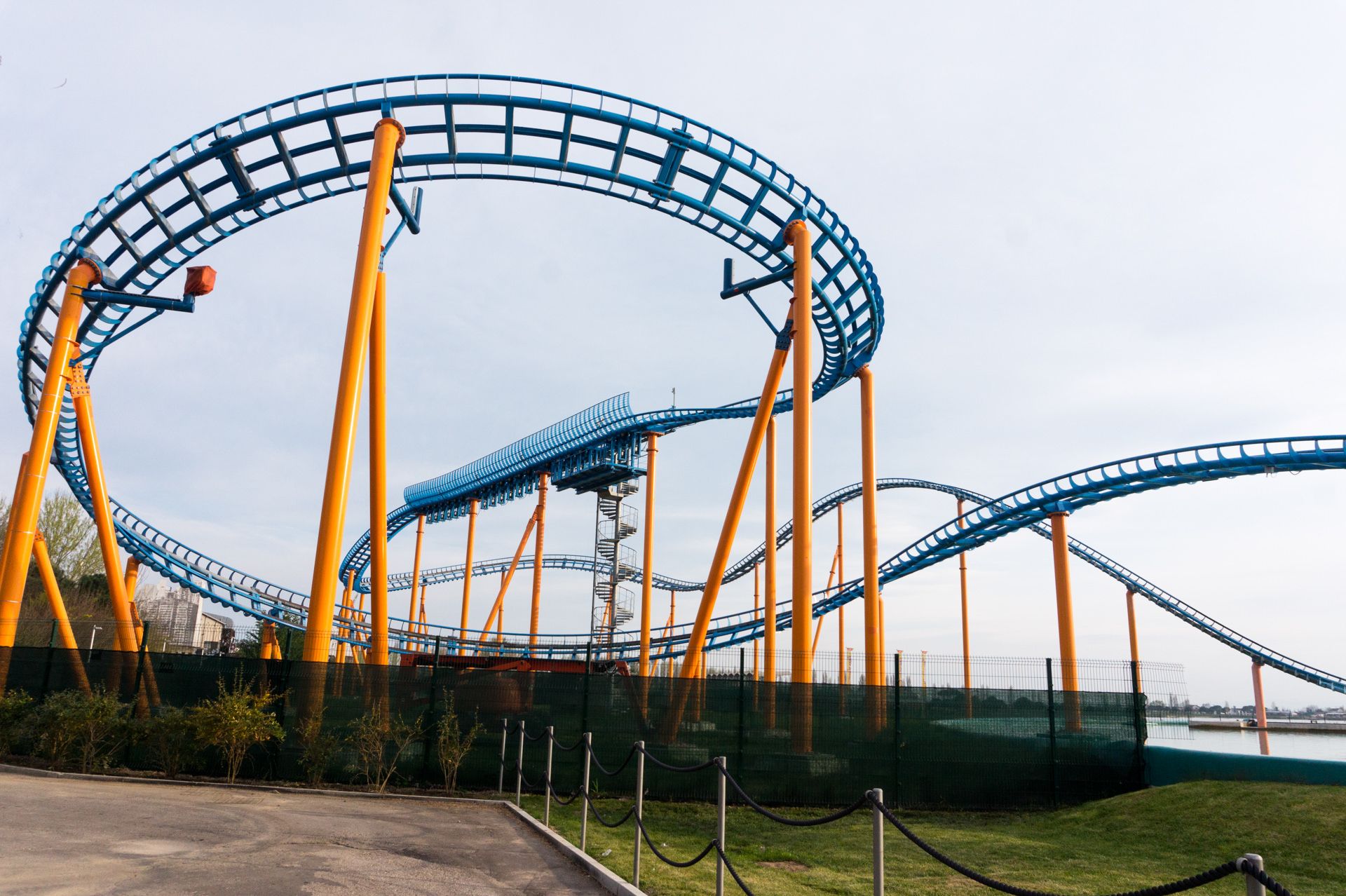
As the construction work in Mirabilandia’s new themed area Far West Valley was still in full swing during the visit, the only remaining attractions in operation were the Spillwater El Dorado Falls of the water rides pioneer O.D. Hopkins – which, however, struggled with constant failures and did not make good form due to the one-boat operation – and the Wild Mouse Gold Digger, formerly known as Pakal. Since 50% of the cars were also equipped with Fast Passers, we unfortunately had enough time to experience every corner of the small, quite desolate, queue and thus invested almost an hour for the Italian-style Wild Mouse.
The ride is actually quite entertaining, because after you have made the hairpin bends in the upper level, seven in all, you go down one level, where a big drop is followed by another serpentine curve. This is also followed by a steeper gradient and a hairpin bend. As is well known, the two successive slopes are the most fun for wild mice and therefore we will not do without them here either. A last narrow bend and a small dip follow before you are led back to the station.

Katun

Through a spacious temple complex you can reach the Inverted Coaster Katun, which has been turning its passengers upside down several times since the millennium. With a height of 50m and a length of 1200m Katun has always been the largest ride of its kind in Europe and is fortunately scary enough to keep the waiting time low despite the one-train operation. Interestingly enough, the second train was actually sent on its way towards the end of the day, but probably only to finish on time.

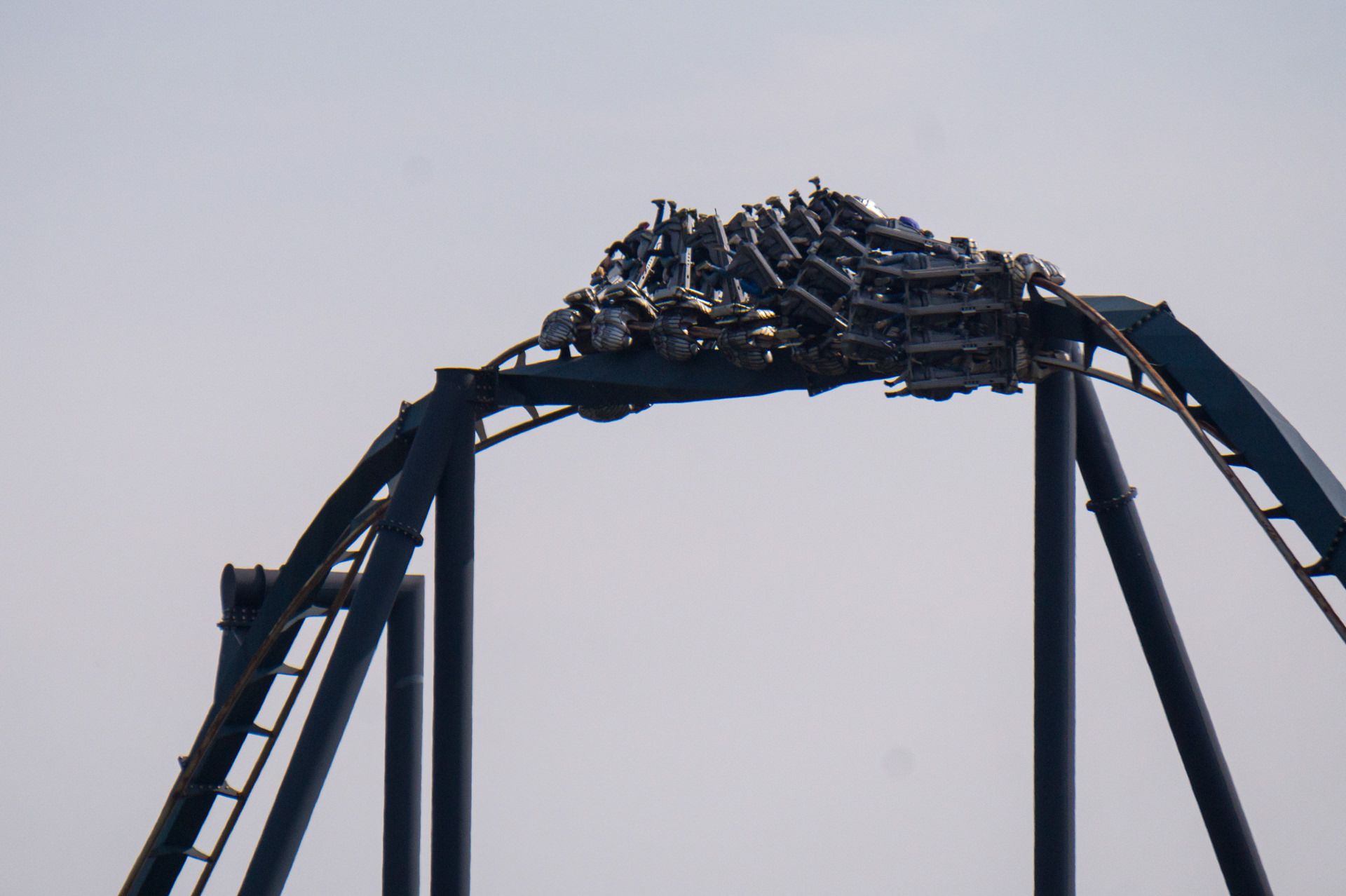
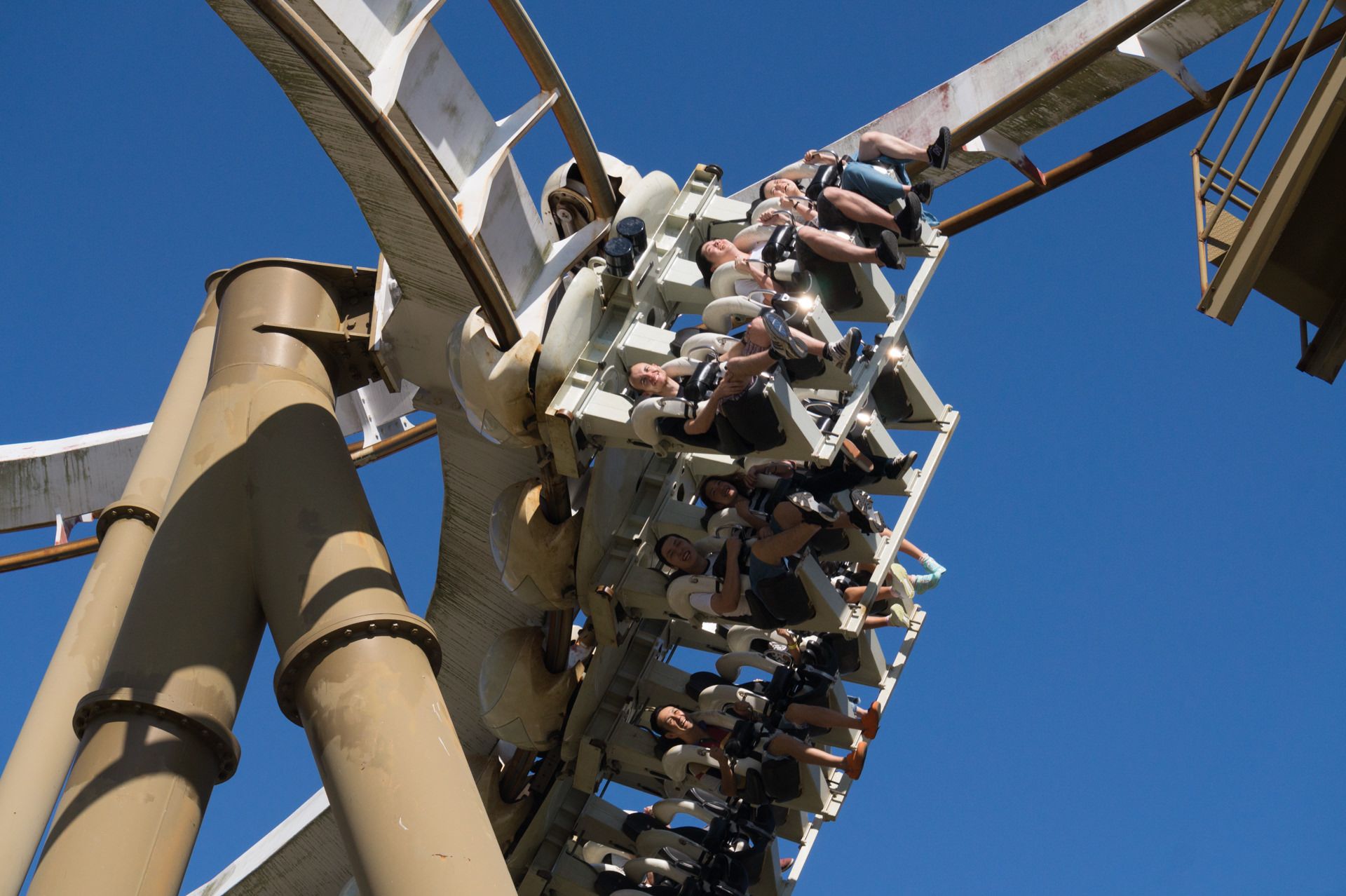
The ride begins with a short left turn out of the station and into the ride’s lift. As soon as the train has reached its initial height, it turns to the left and at the same time makes a rather steep descent. You cross the first valley with a lot of pressure before you are turned upside down for the first time in the huge loop. Once back on ground level, the train shoots up again and turns on its own axis in a zero-g roll. To enable the ingenious placement of the Cobra Roll at the lake on the right side of the entrance, there are now a few meters of track missing, which were solved by a steep curve close to the ground and leading to the right. In the following inversion figure you shoot up half a loop, then turn to the side and do the same again in reverse order. Of course with extremely positive centrifugal forces, which should not be underestimated in the following valley. Also with a lot of pressure one turns a round in a wide upward helix at the end of which the block brake of the ride is reached. This is passed without any reduction of the momentary speed, which leads to an immediate plunge into the abyss. Almost straight ahead the first corkscrew is introduced, which whirls you with full force to the right into a tunnel. You then leave this tunnel into another corkscrew, but this time in the opposite direction. A short hill releases you into the final downward helix of the ride, whereupon the station is reached immediately.

Katun is a great Inverted Coaster of the bigger type, which plays many huge and well coordinated inversion figures in a layout worth experiencing, at a decent speed. The play of forces should not be underestimated yet it is still quite smooth compared to the smaller European versions of this roller coaster type.

Max Adventures Master Thai, Eurowheel and Hot Wheels Stunt Show

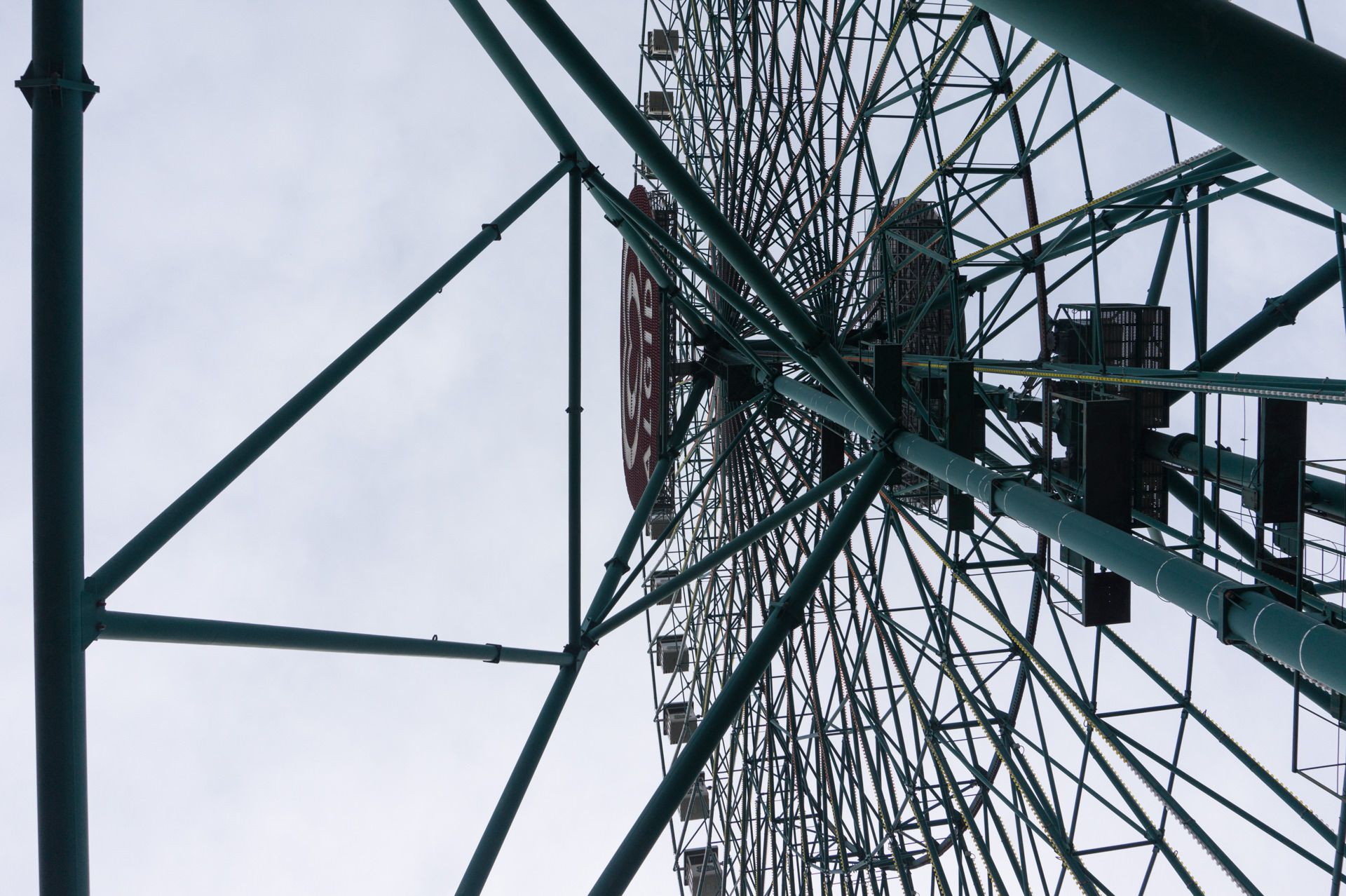
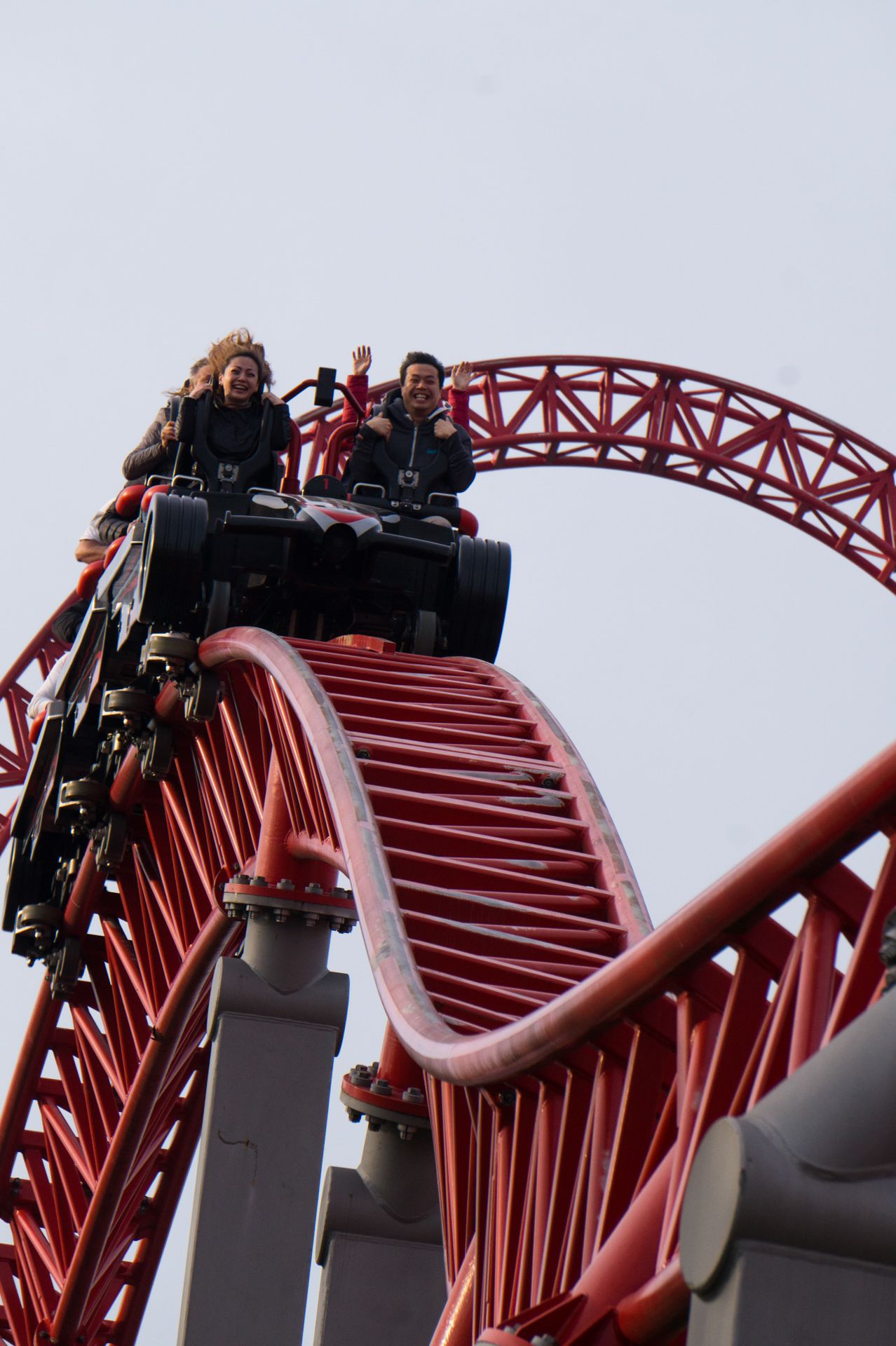
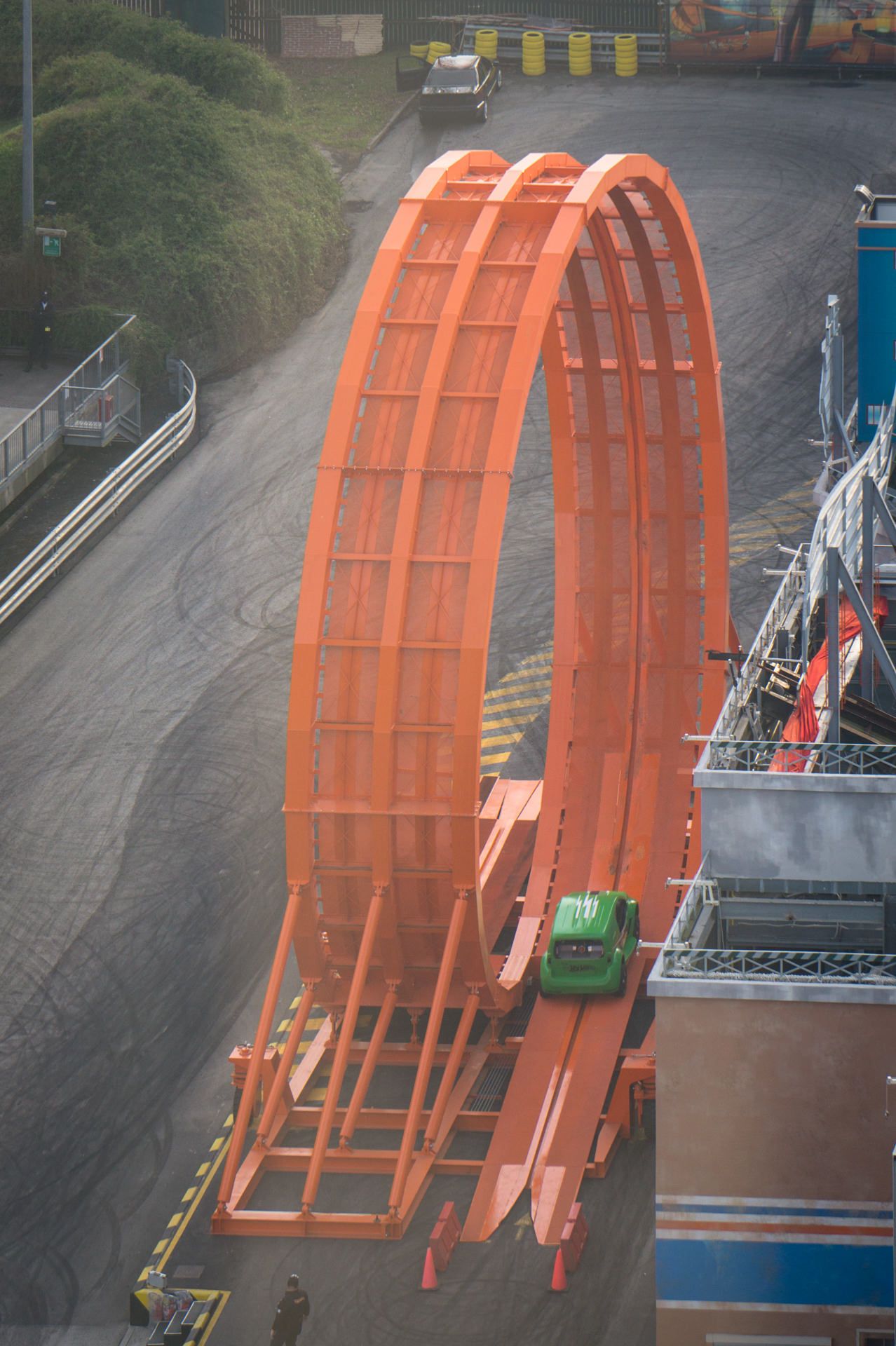
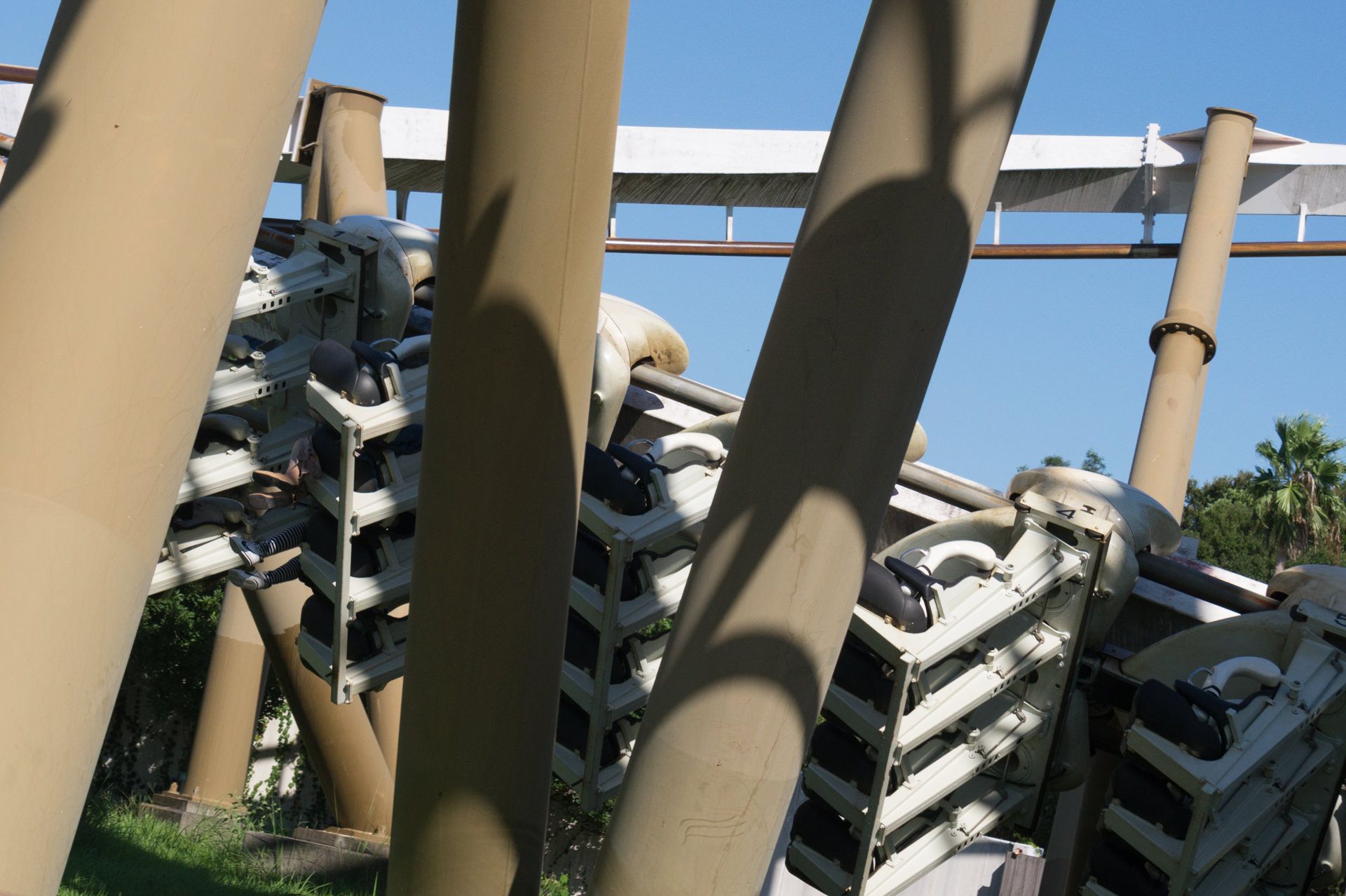
While waiting in the queue of the Katun roller coaster we could already observe that the neighbouring Max Adventures Master Thai roller coaster had a technical defect and was evacuated accordingly. Even one hour later there was no sign of a reopening of the ride, so we headed towards the prominent landmark of Mirabilandia. Also at the 90m high Eurowheel a long and tough queue was waiting for us. But we didn’t want to miss a ride on what used to be the highest Ferris wheel in Europe because we were so tired of waiting somewhere else. As expected, only half of the gondolas of the Ferris Wheel were equipped, which gave us plenty of time to take a closer look at the unconventional supporting structure of the Ferris Wheel. During the ride we could watch the Hot Wheels Stunt Show from above, the finale of which was the passage of a huge looping.
Pictures Mirabilandia

Closing Words

Also from above we could watch some test rides on Max Adventures Master Thai, so we immediately walked back to the ride, only to find the doors closed again. We still had half an hour left, so we decided to go on another ride on Katun. We couldn’t foresee that we wouldn’t be able to go on another ride after that, so we could only ride six of the seven roller coasters and the Ferris wheel. A disgrace beyond compare, which made the actually brilliant amusement park Mirabilandia the last flop. It is obvious why Gardaland is the most successful amusement park in Italy and why Parques Reunidos should reconsider their strategy.


What is your opinion about the theme park Mirabilandia? Just write it here below the report in the comment field or visit our social media channels:


Click here for the next report of the Il Viaggio dei due Runner Tour