Six Flags Great America
Six Flags Great America in Gurnee, Illinois, has its origins in a rather ambitious project by the Marriott Corporation. In the mid-1970s, two major amusement parks were built almost simultaneously, both following largely the same concept. The first Marriott’s Great America opened in Santa Clara, California, in March 1976, followed just over two months later by its counterpart in Gurnee on May 29. A third park in the Washington, D.C. area was also planned, but was never built.
Just how similar the two Great America parks originally were can still be seen today. Themed areas such as Orleans Place, Yukon Territory, County Fair and Hometown Square could be found in both parks, along with numerous almost identical attractions. Even the large Columbia Carousel near the entrance was part of the shared concept.
Their paths began to diverge in the 1980s. Marriott withdrew from the amusement park business in 1984 and sold both properties. While the Californian sister park later passed through Paramount before eventually becoming part of Cedar Fair, the park in Gurnee was taken over by Six Flags.
Orleans Place
We start our tour by heading left into Orleans Place, one of the areas where the shared history of the two Great America parks can still be recognised today. Of course, quite a lot has changed over the decades, and one of the park’s major roller coasters now awaits us here. Unfortunately, Condor was not operating during my visit, so we headed straight for Superman: Ultimate Flight.
Superman: Ultimate Flight
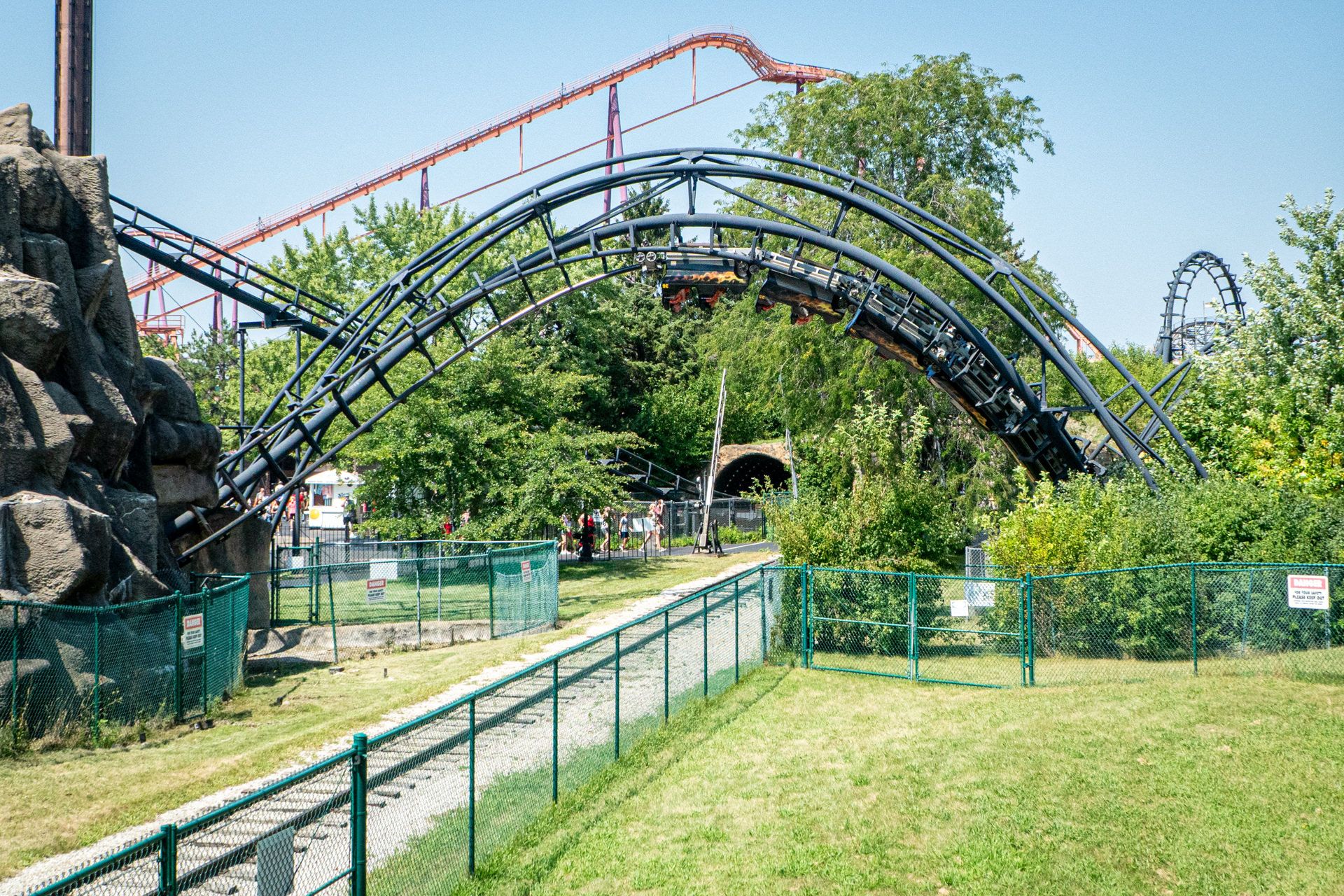
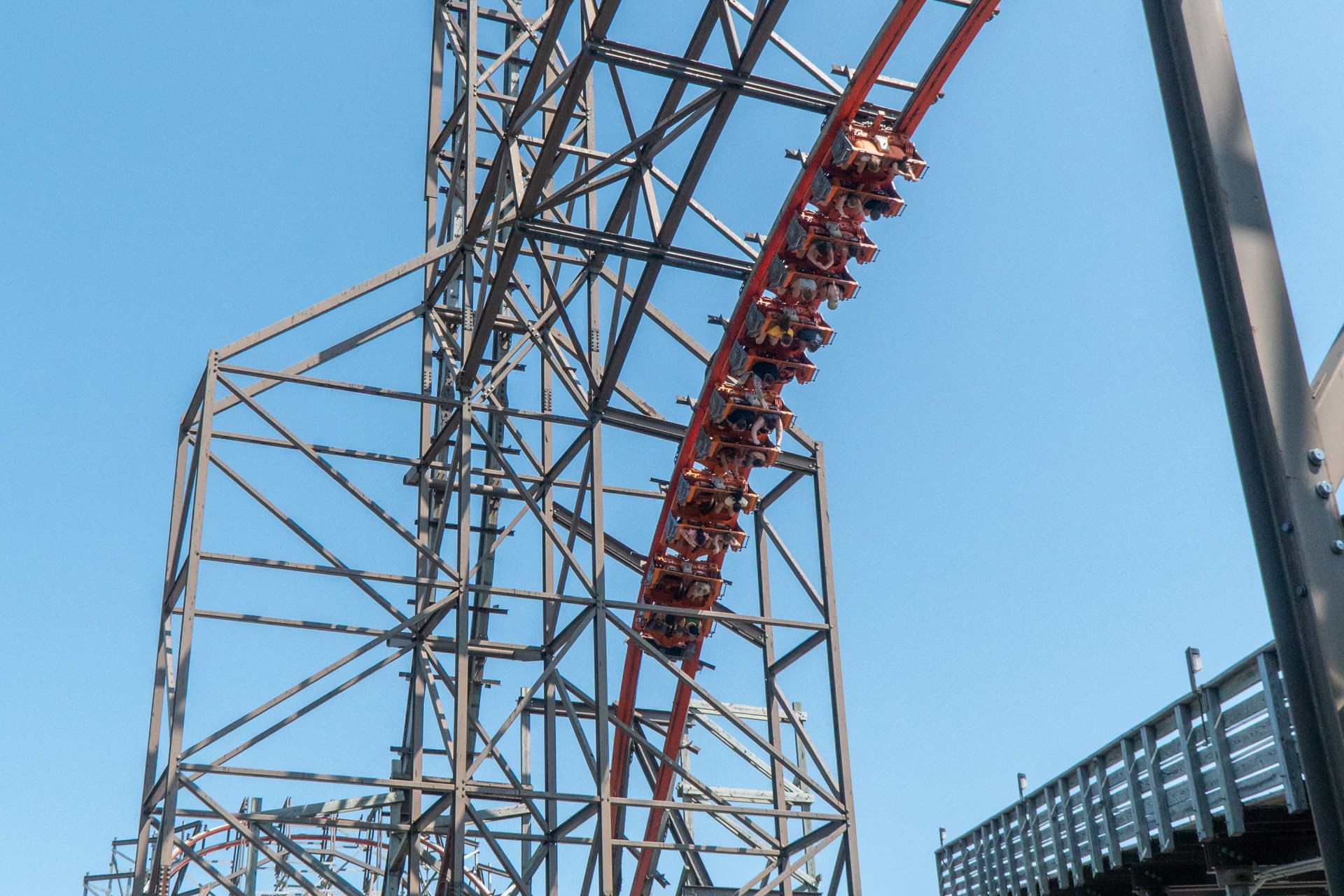
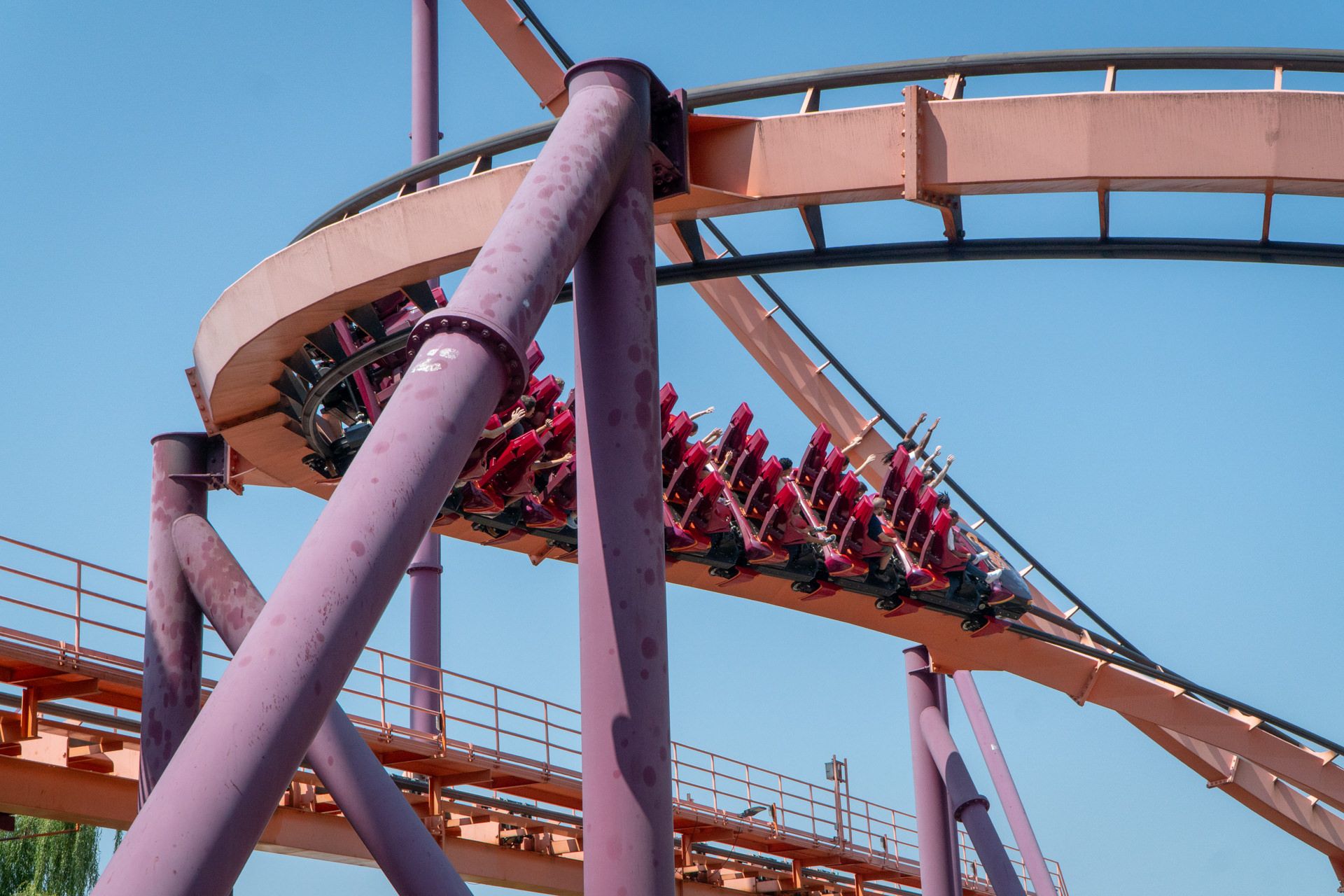
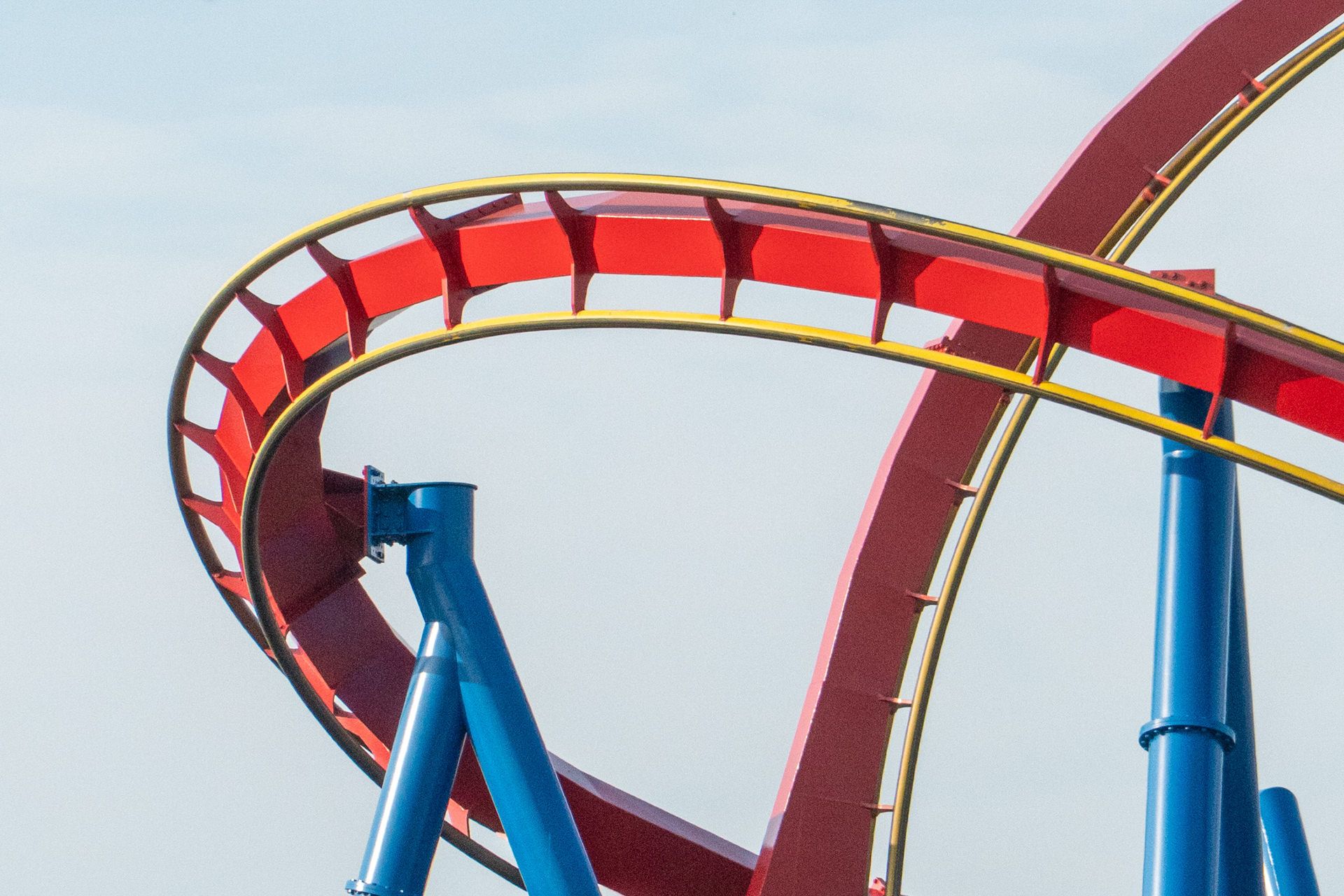
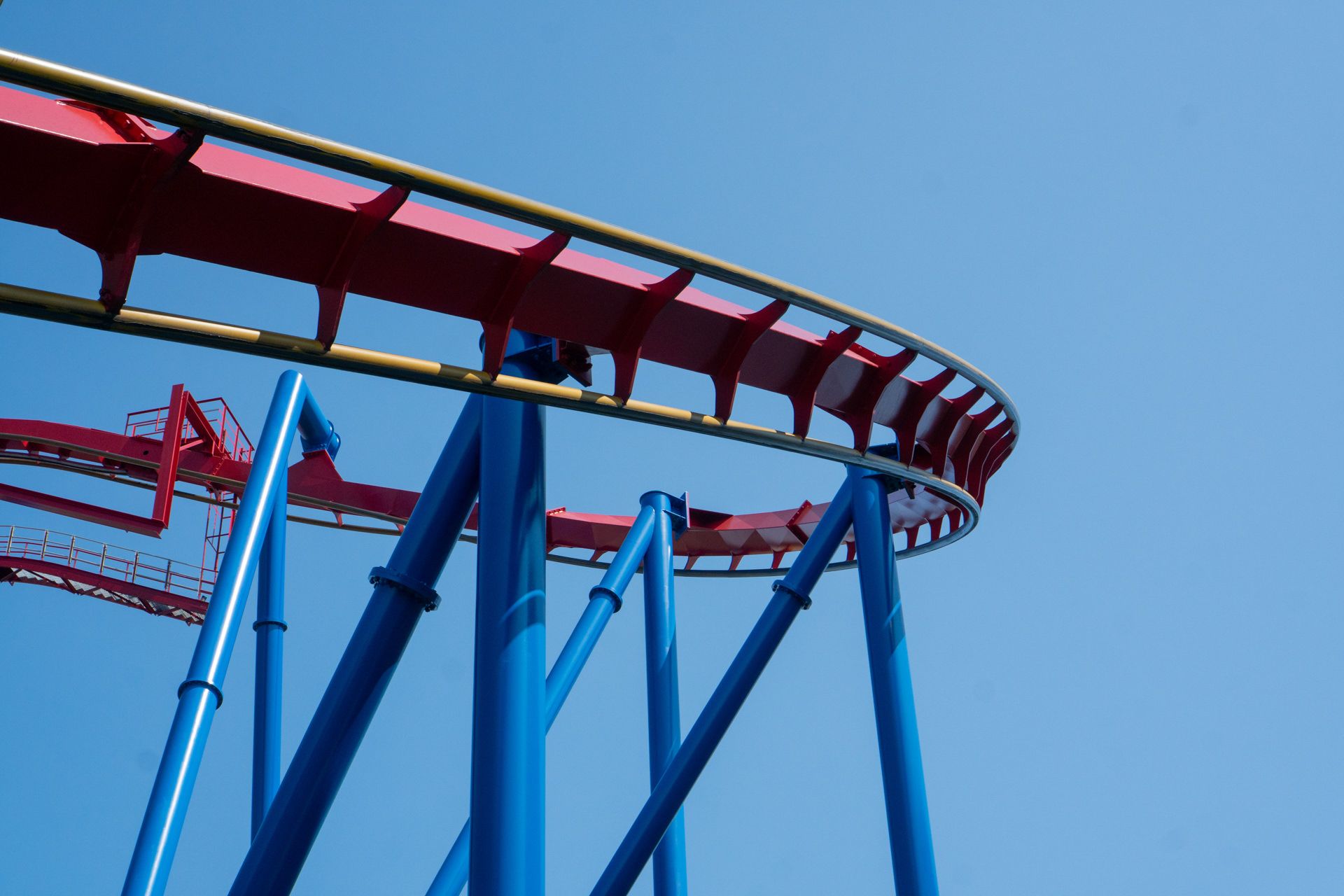
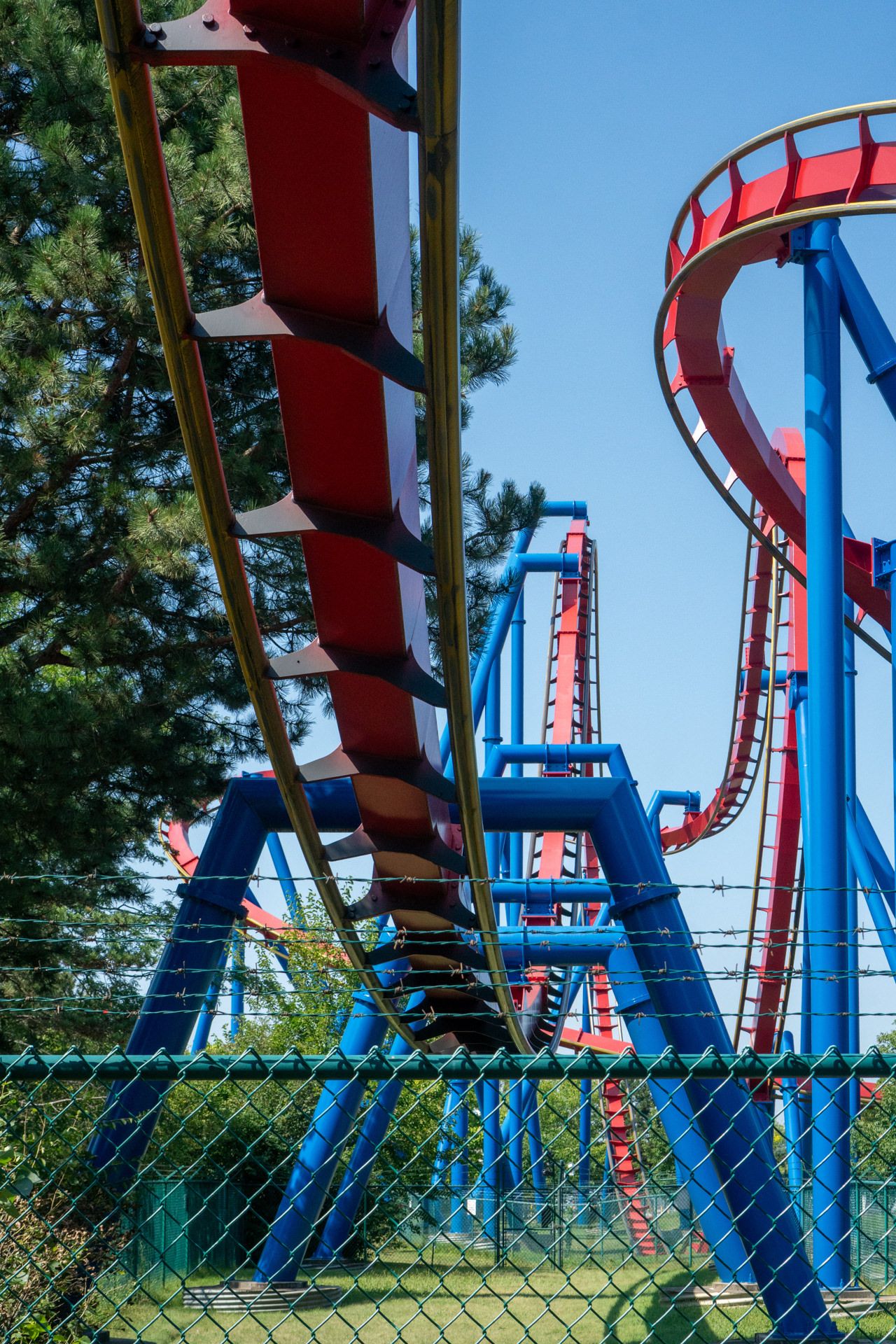
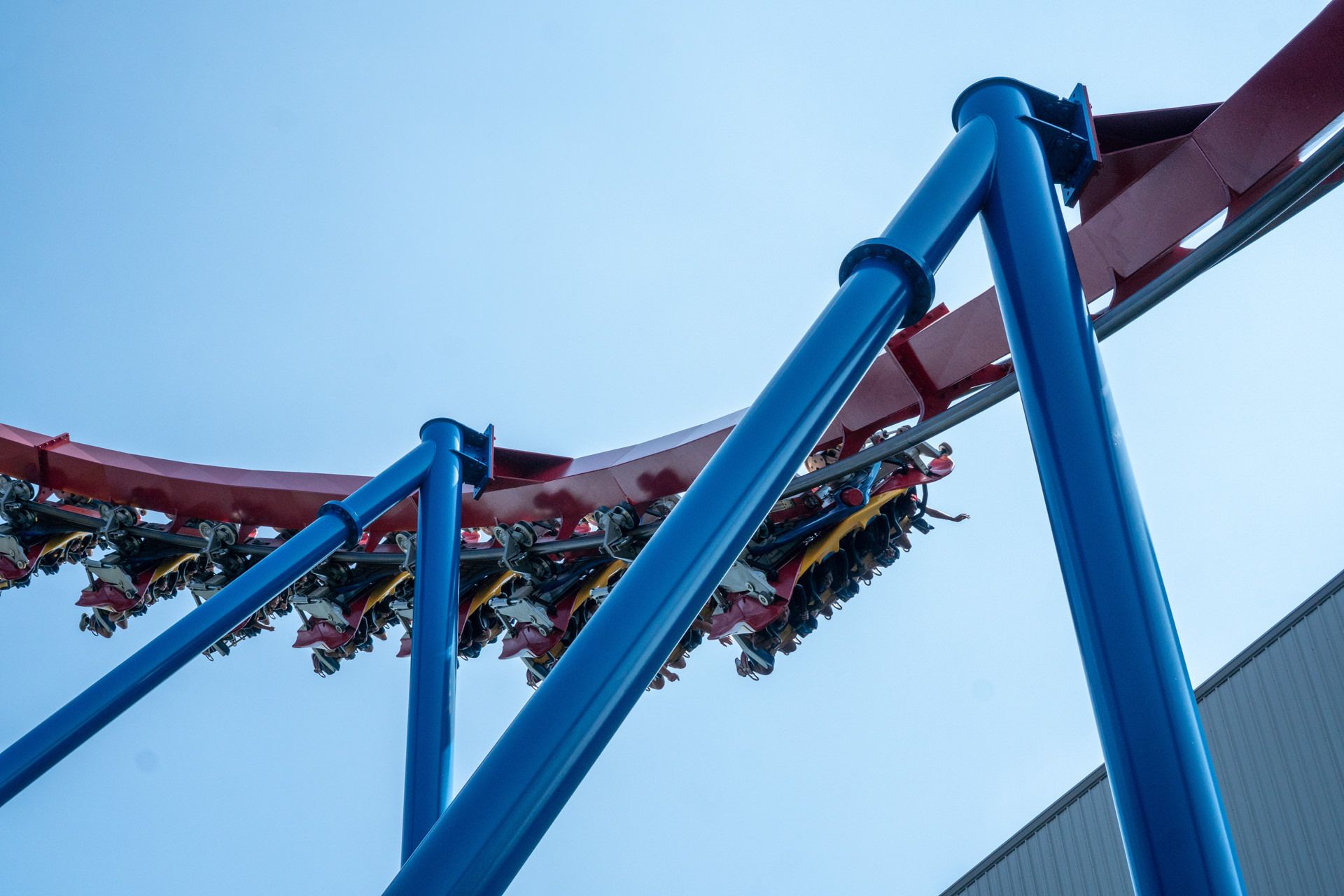
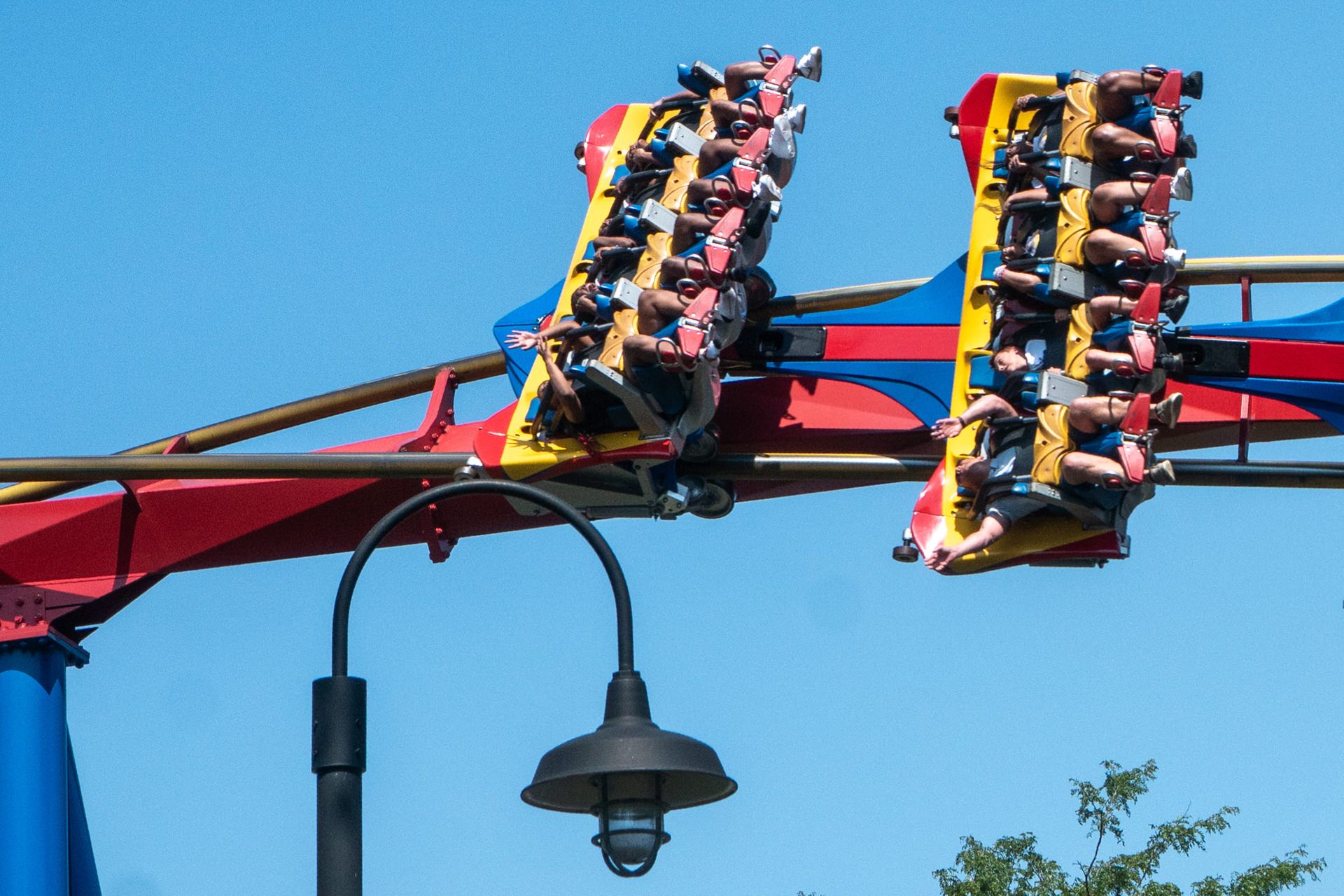
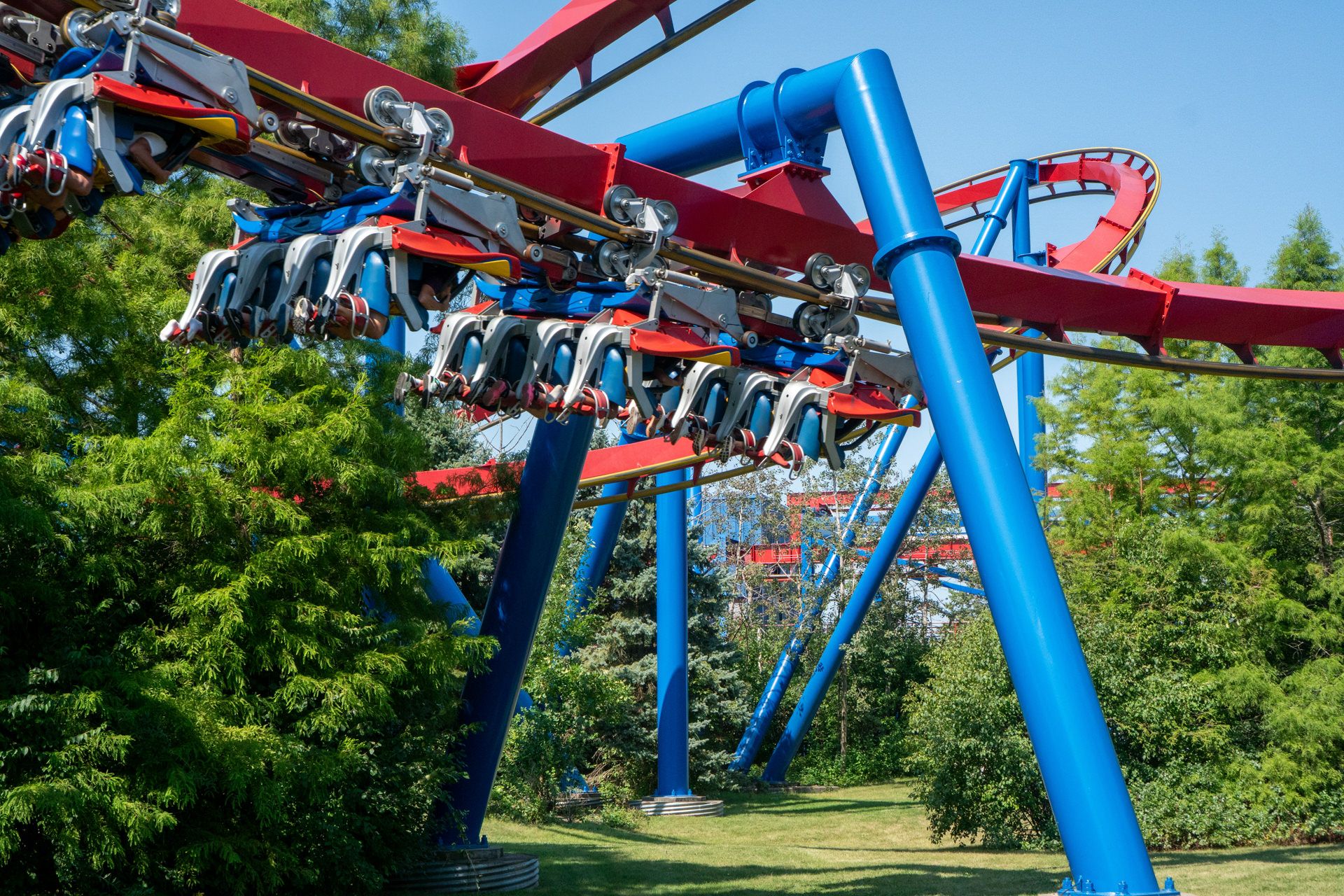
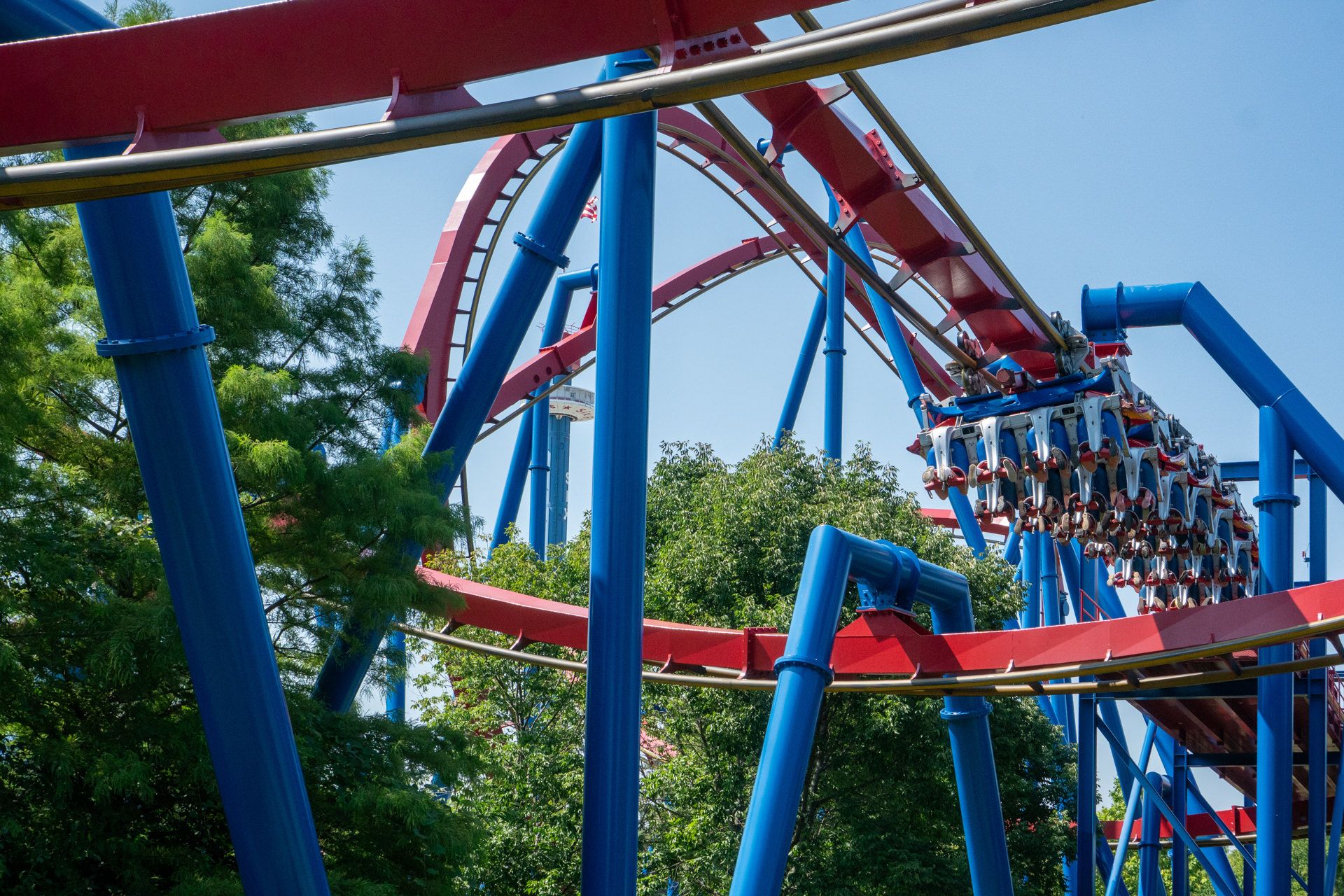
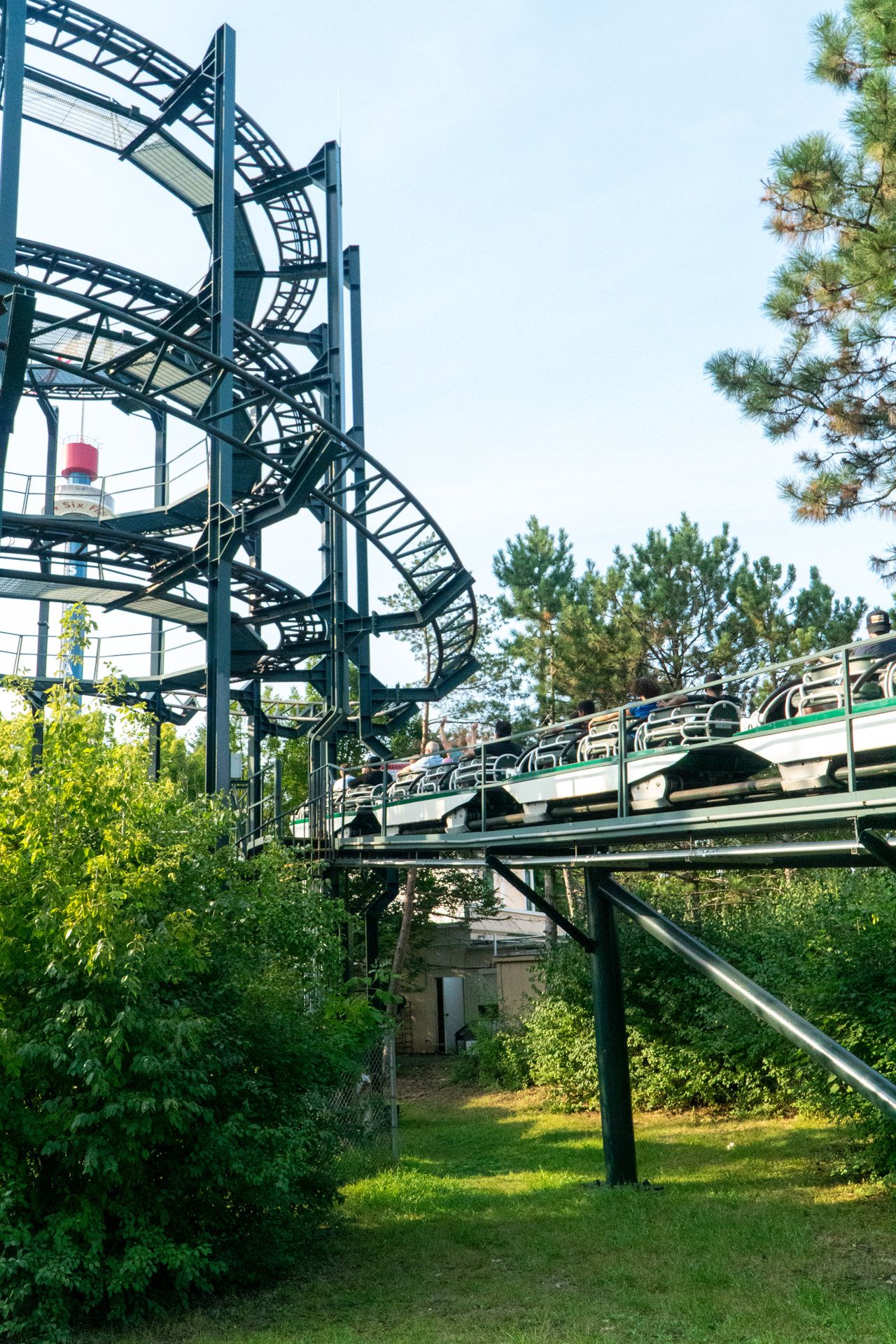
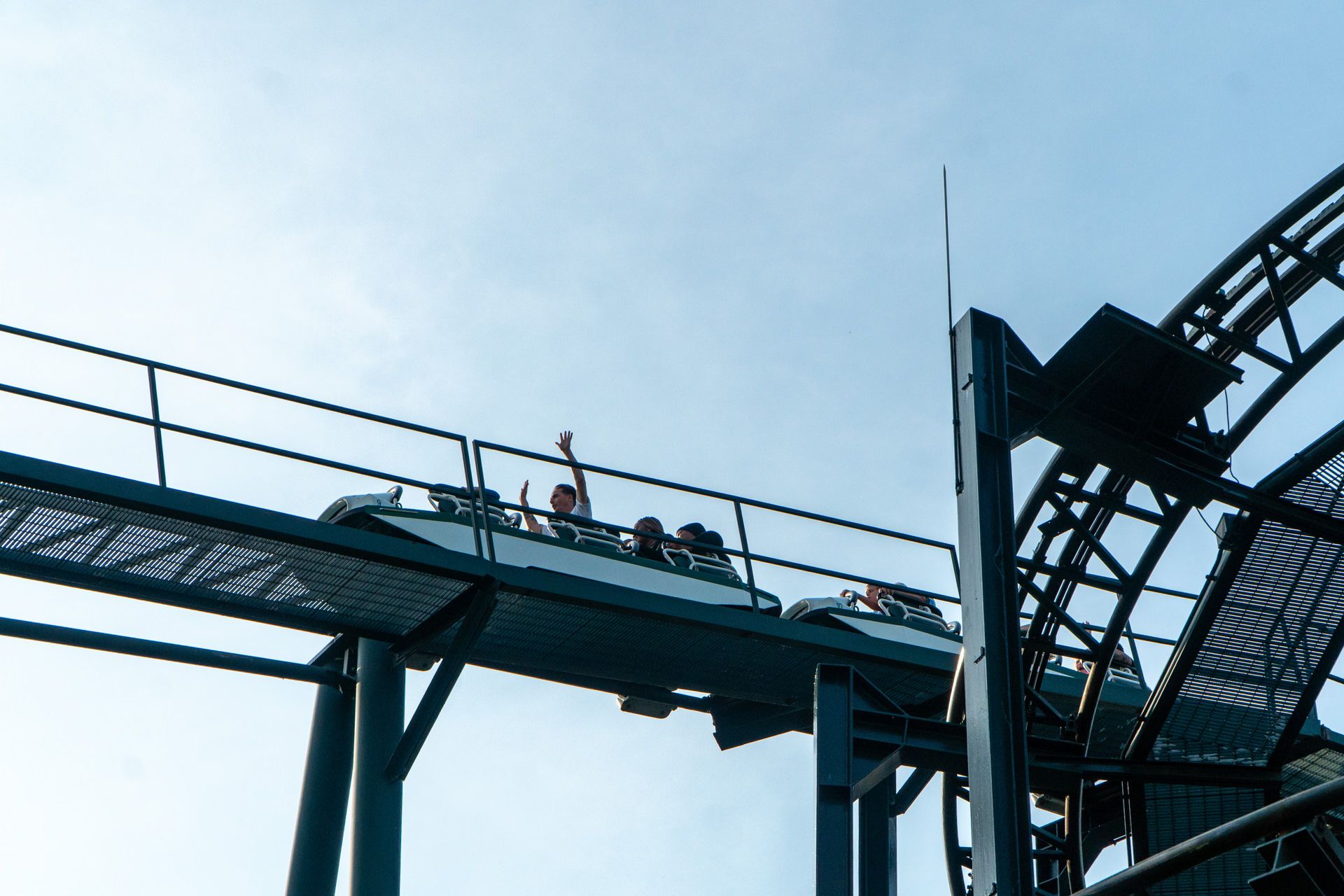
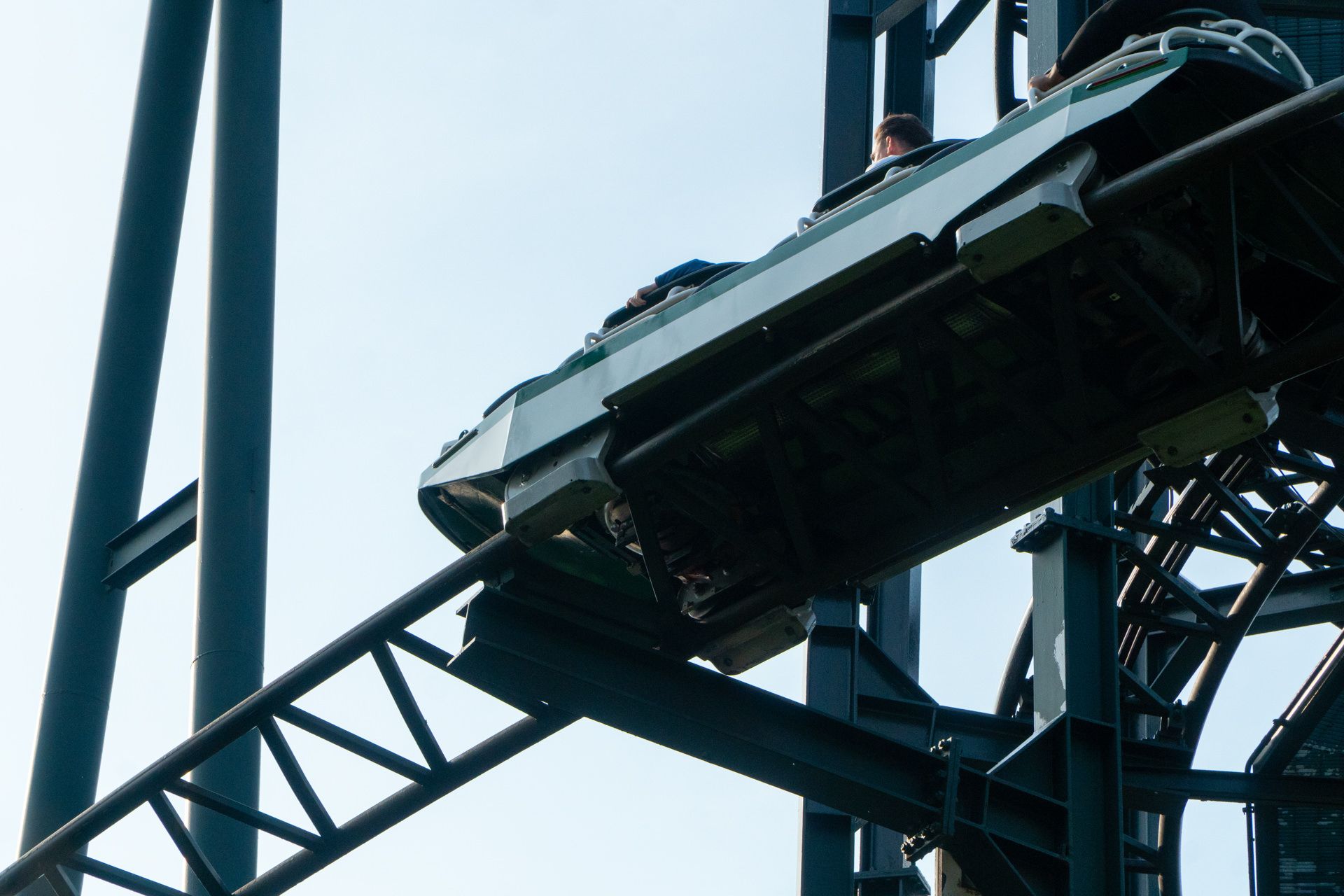
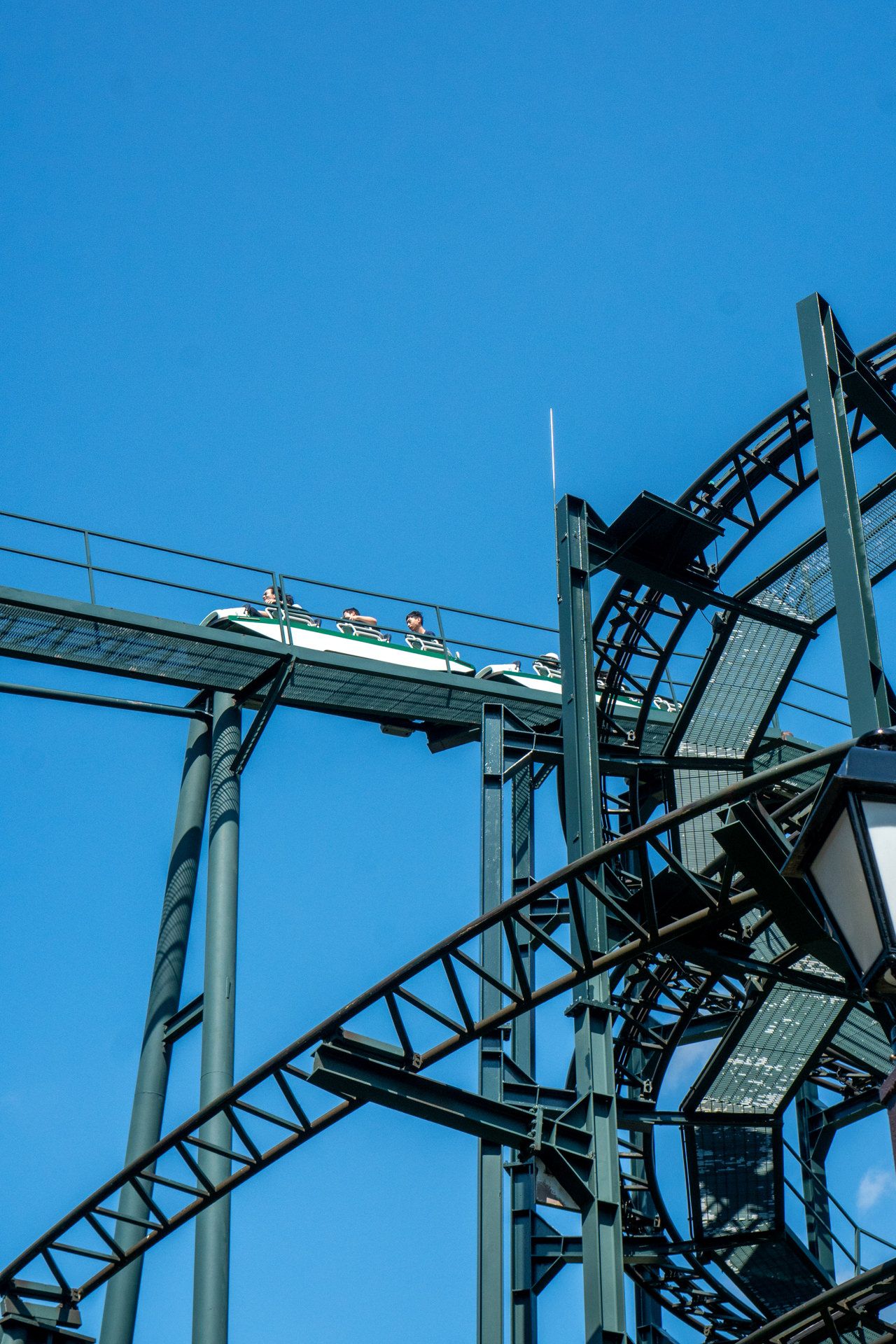
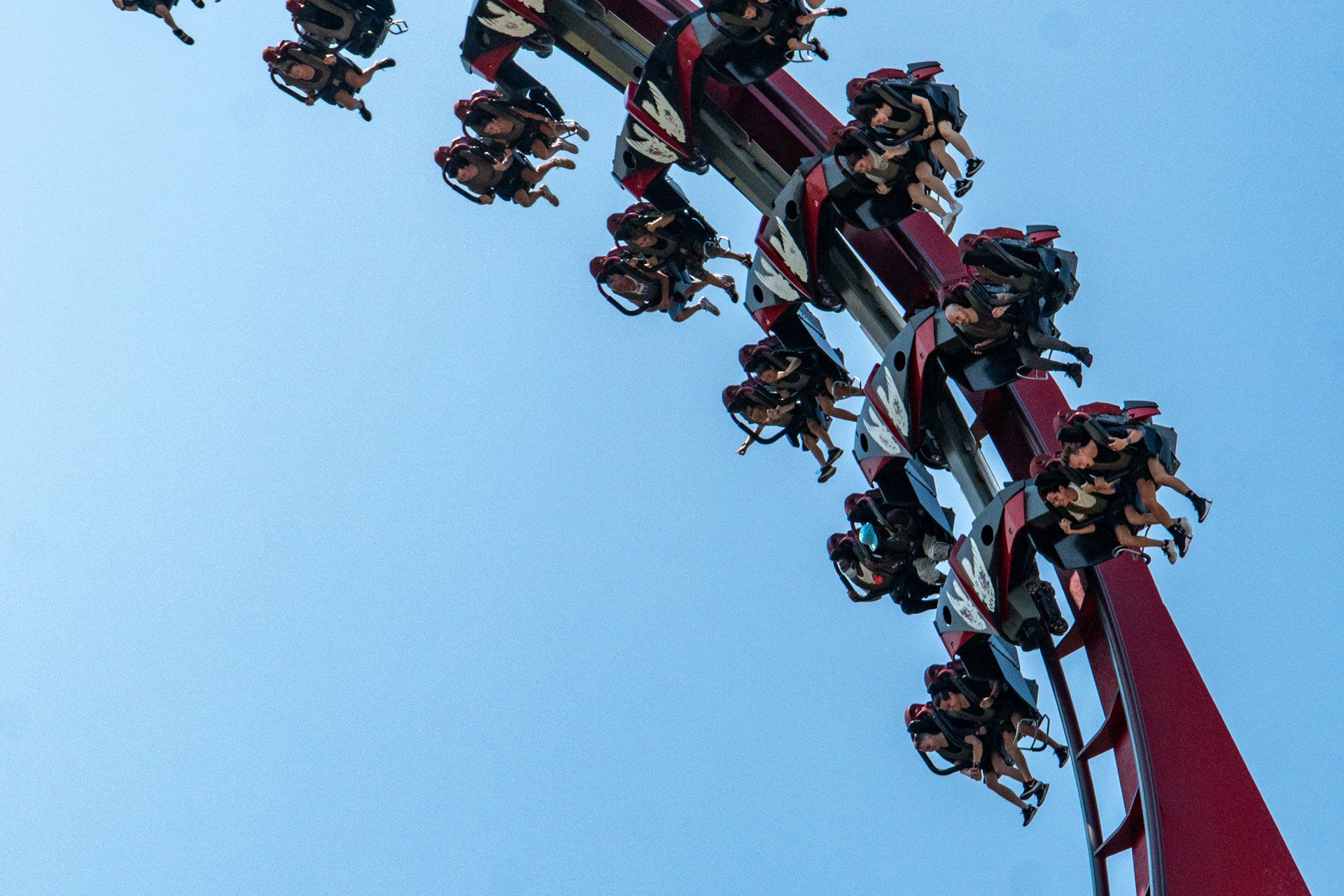
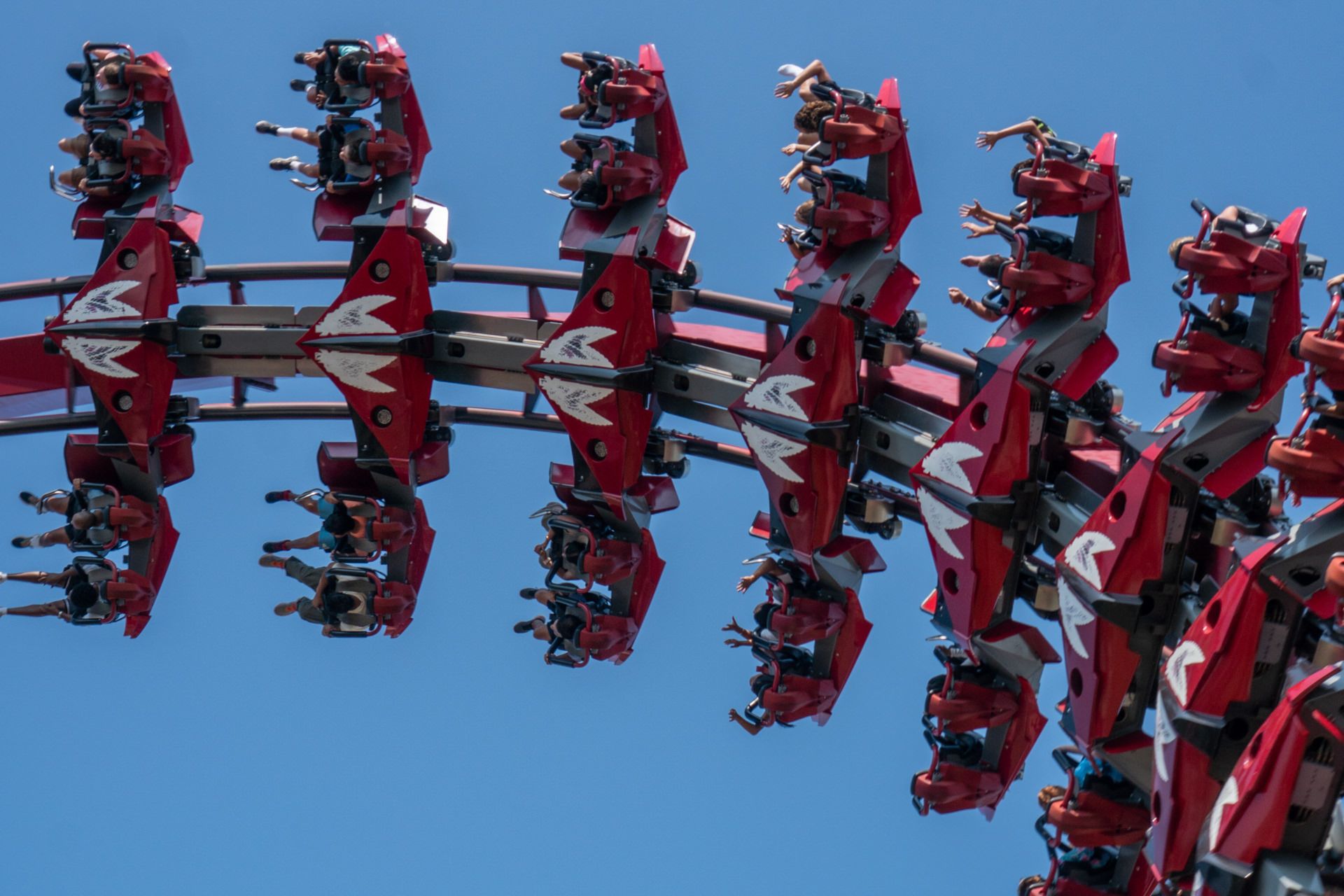
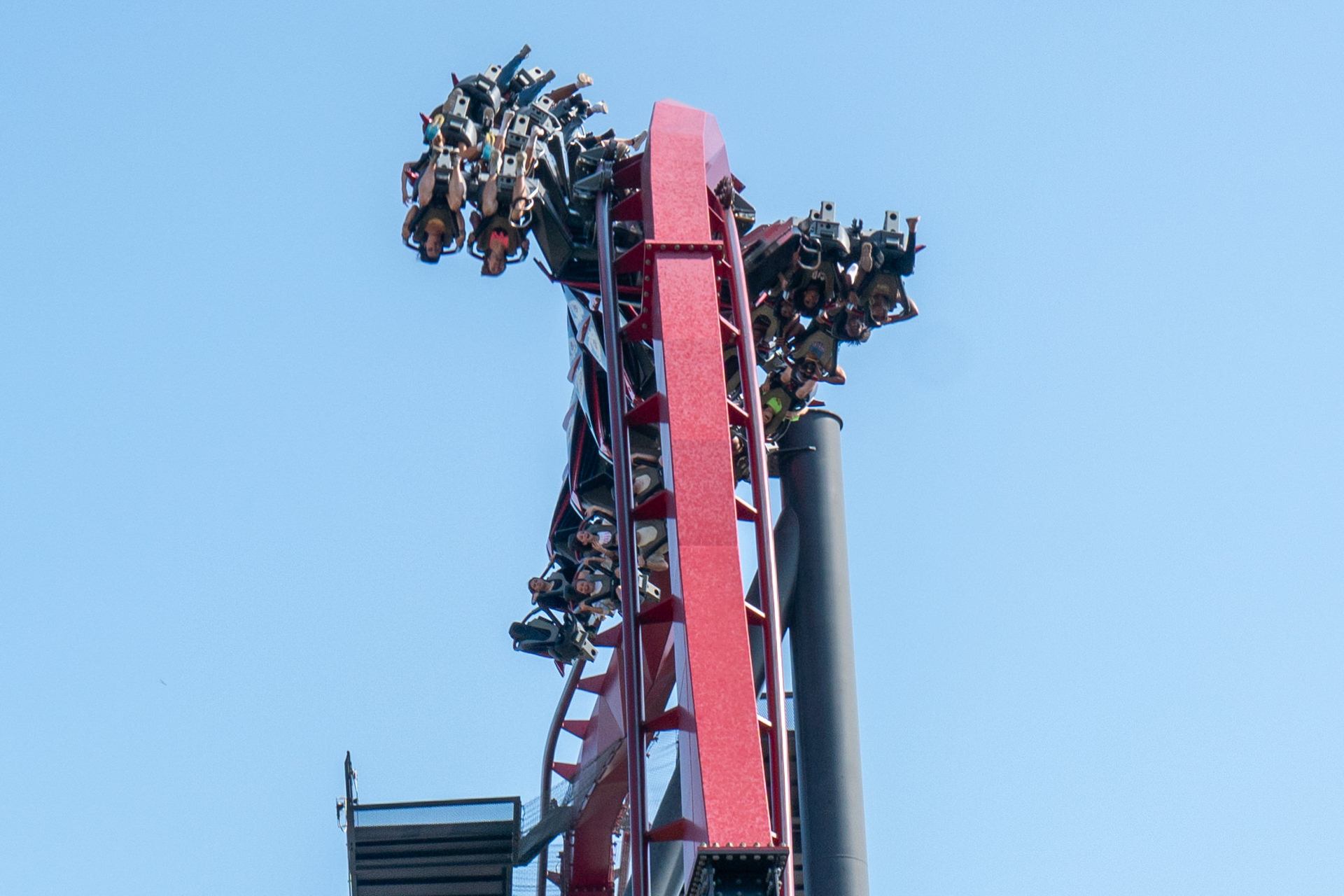
One year after the first Superman: Ultimate Flight opened at Six Flags Over Georgia, two more examples of B&M’s Flying Coaster followed in 2003 – one at Six Flags Great Adventure and one here at Great America.
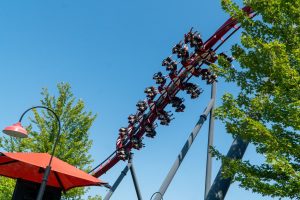
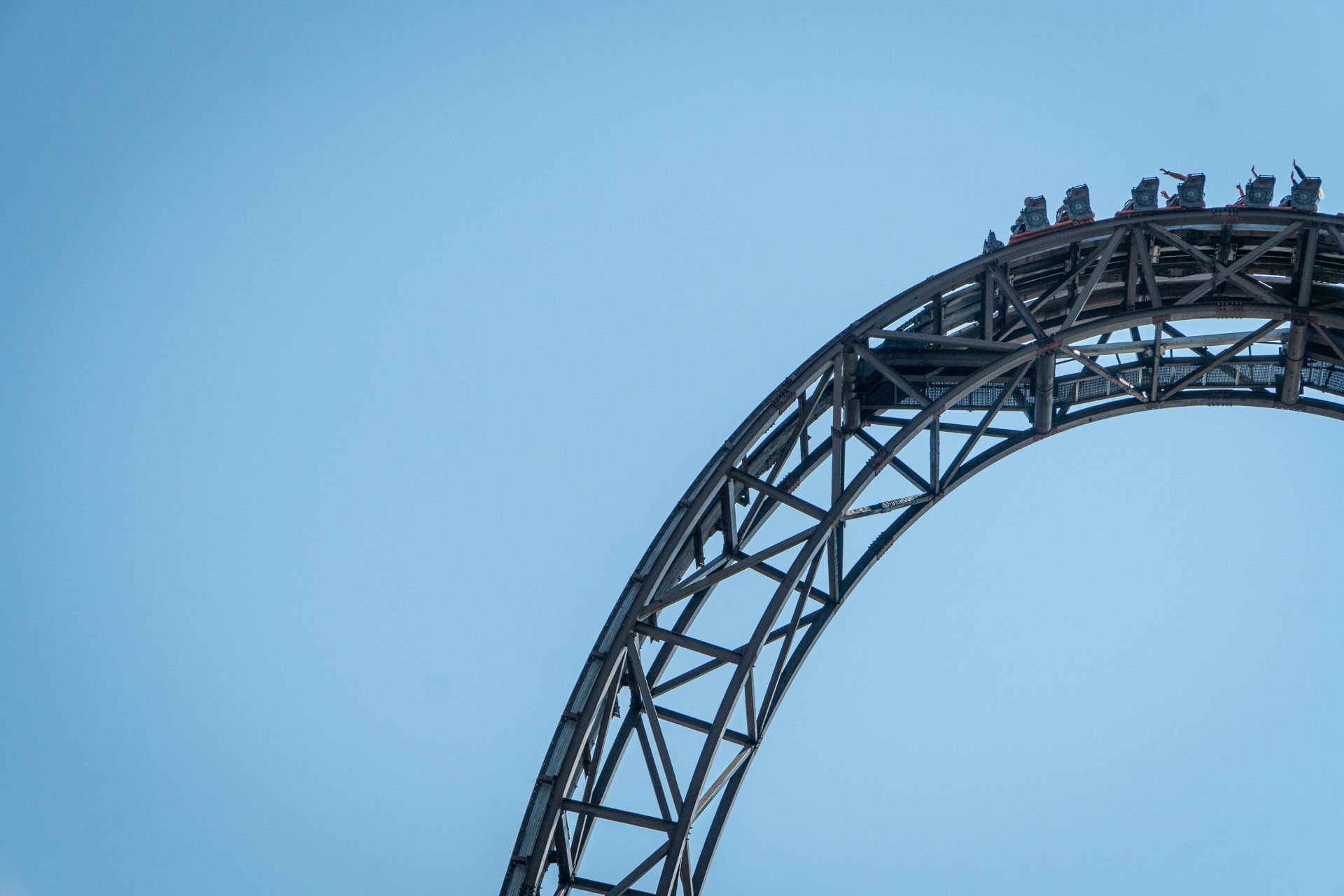
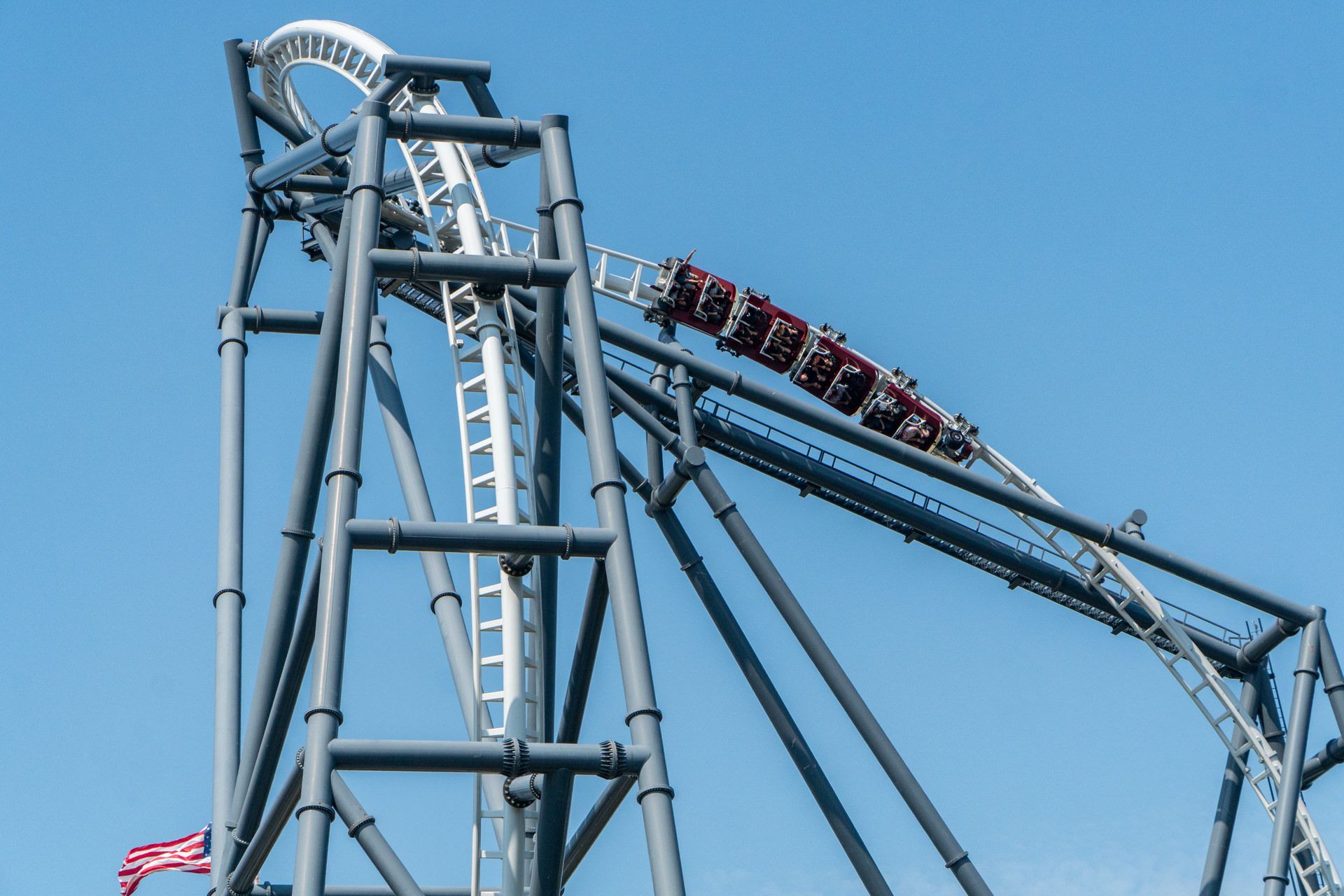
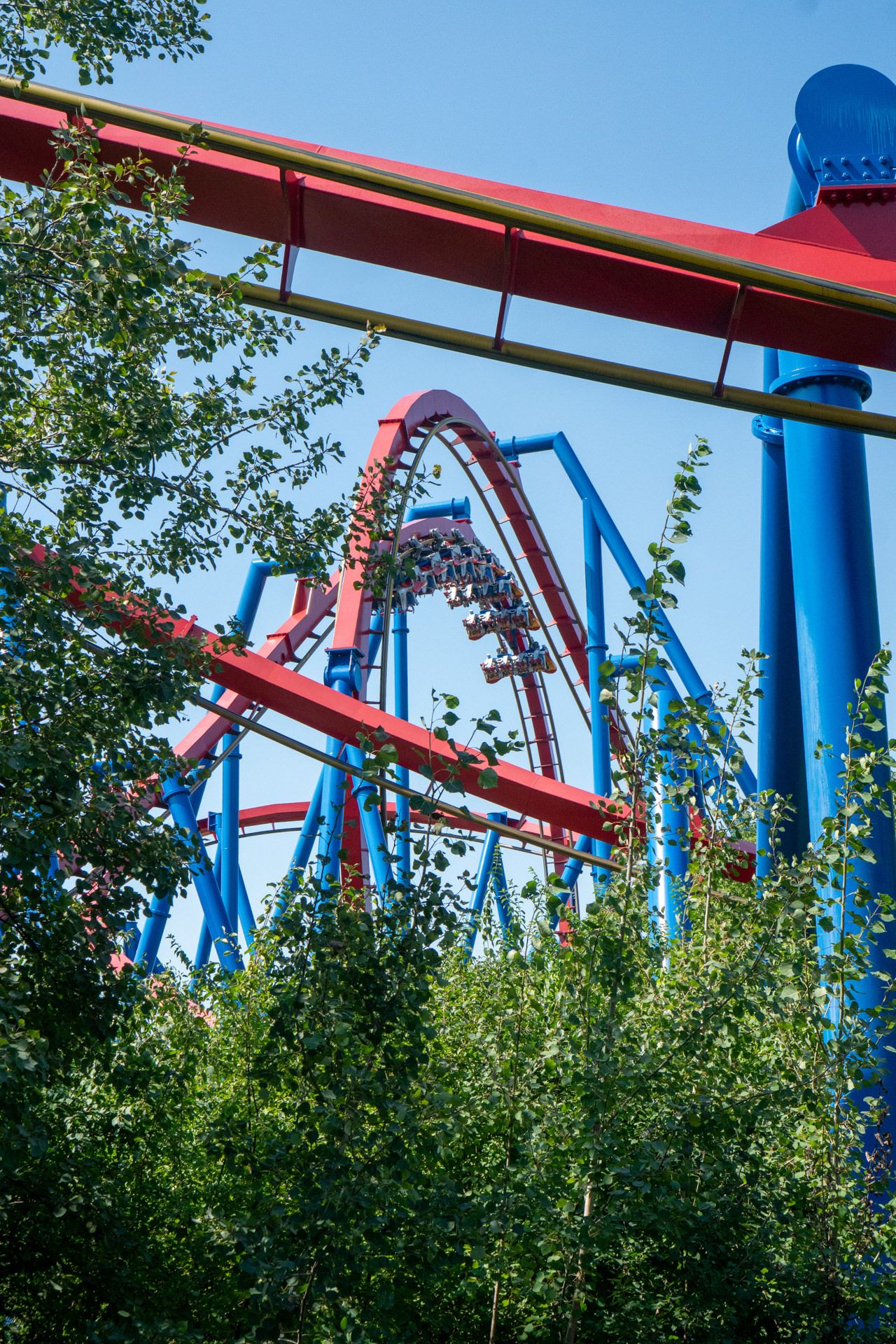
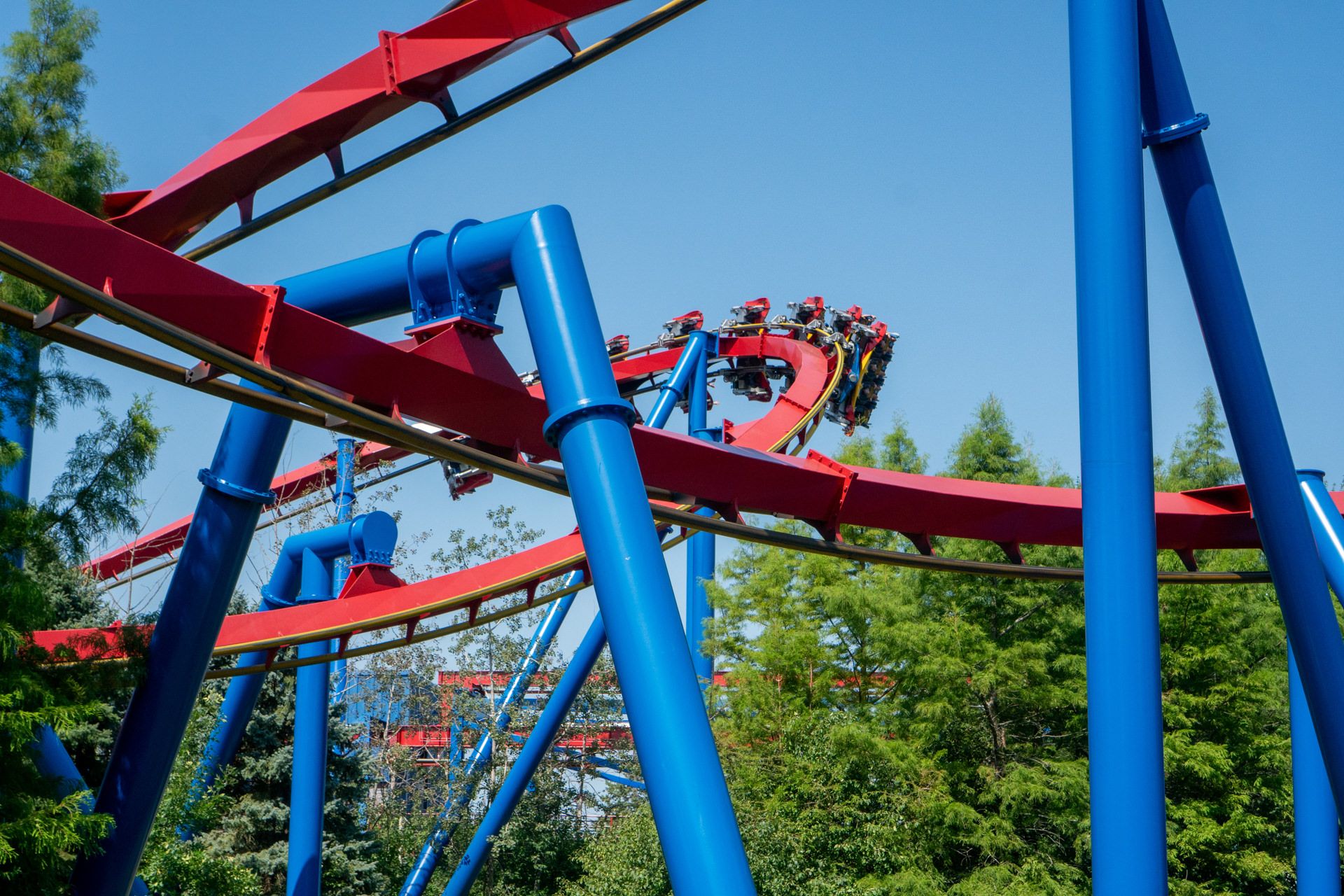
We already know the layout from Six Flags Great Adventure. After the lift hill, a turn leads us into the first drop before we reach the defining element of the ride: the Pretzel Loop. Lying on our backs, we plunge towards the ground and experience some serious forces at the bottom of the element before shooting back upwards on the other side.
Things calm down a little afterwards. Superman winds its way through the compact layout via the Horseshoe and several further turns before an In-Line Twist awaits towards the end and we return to the station.
Even though the ride itself is largely familiar, I much prefer Superman here to the one at Great Adventure. The coaster is integrated far more nicely into its surroundings and simply feels much more at home within the park. The intense Pretzel Loop, however, remains the undisputed highlight of the ride.
The Dark Knight Coaster
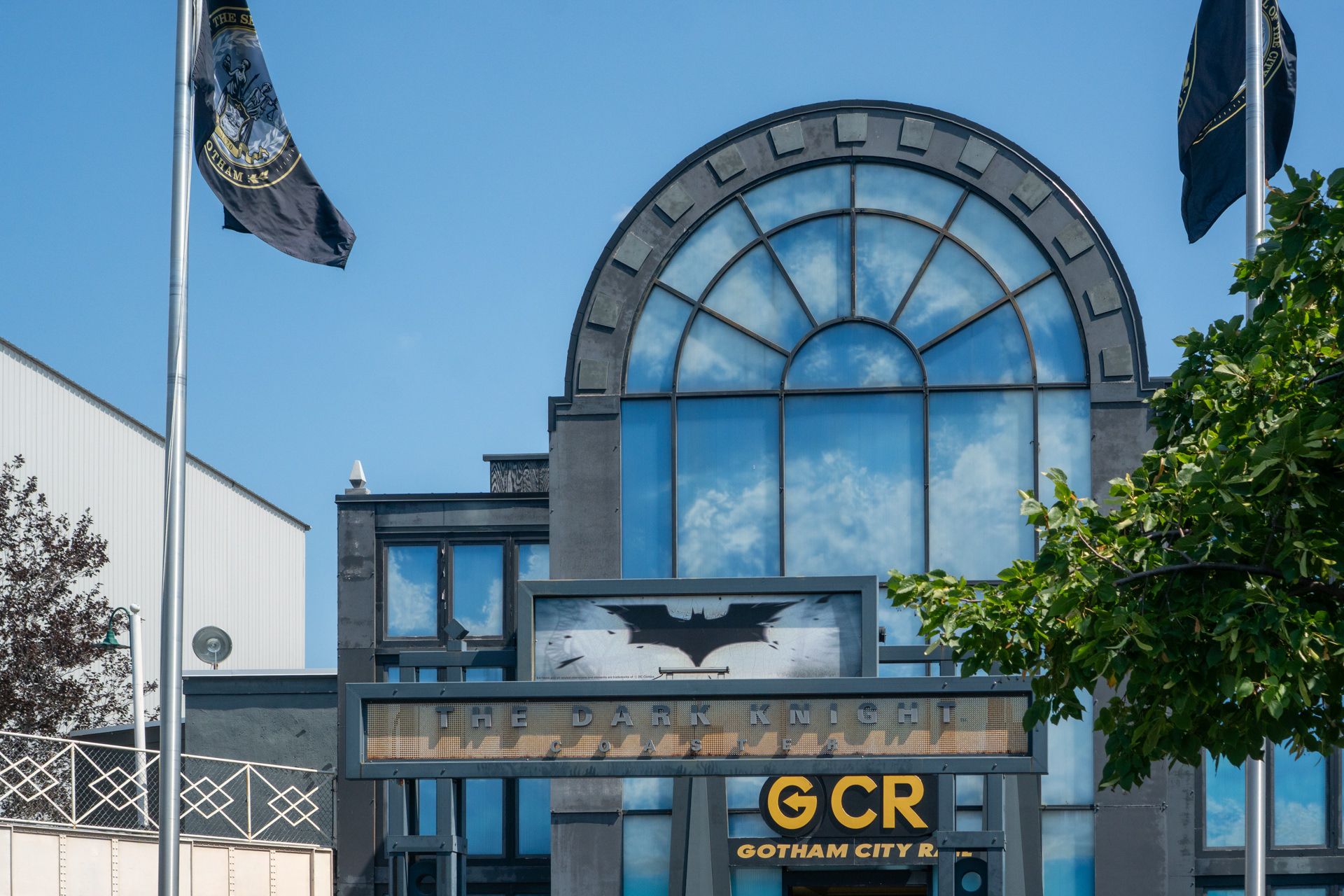
Right next to Superman, The Dark Knight Coaster is another roller coaster we already know from Six Flags Great Adventure. The ride opened in 2008 to coincide with the release of The Dark Knight and was part of a series of almost identical coasters Six Flags had planned for several of its parks. At Great America, the former Theatre Royale was extensively converted and transformed into the Gotham City Rail station.
The story sees us fleeing Gotham City aboard the Gotham City Rail following an attack by the Joker. Behind all the theming lies an indoor Wild Mouse with tight corners, short drops and abrupt changes of direction that we already know from Great Adventure. It is primarily the theming that turns the relatively simple layout into a thoroughly entertaining ride.
Mardi Gras
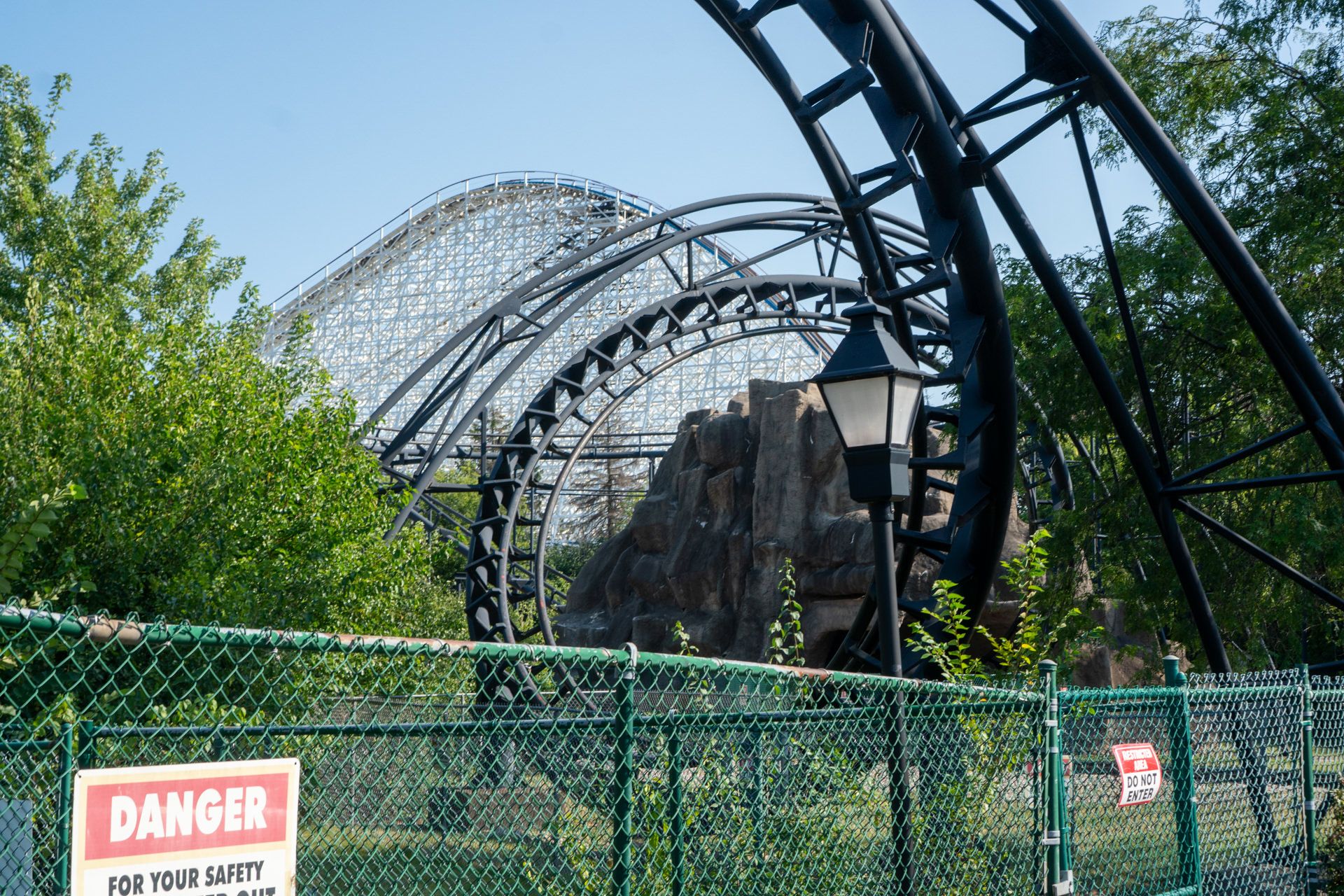
From Orleans Place we continue into the small Mardi Gras area. There was not much to keep us here, however, as Roaring Rapids, the only major attraction remaining in this part of the park, was unfortunately not operating during my visit. So we headed straight into the neighbouring DC Universe.
DC Universe
The Joker
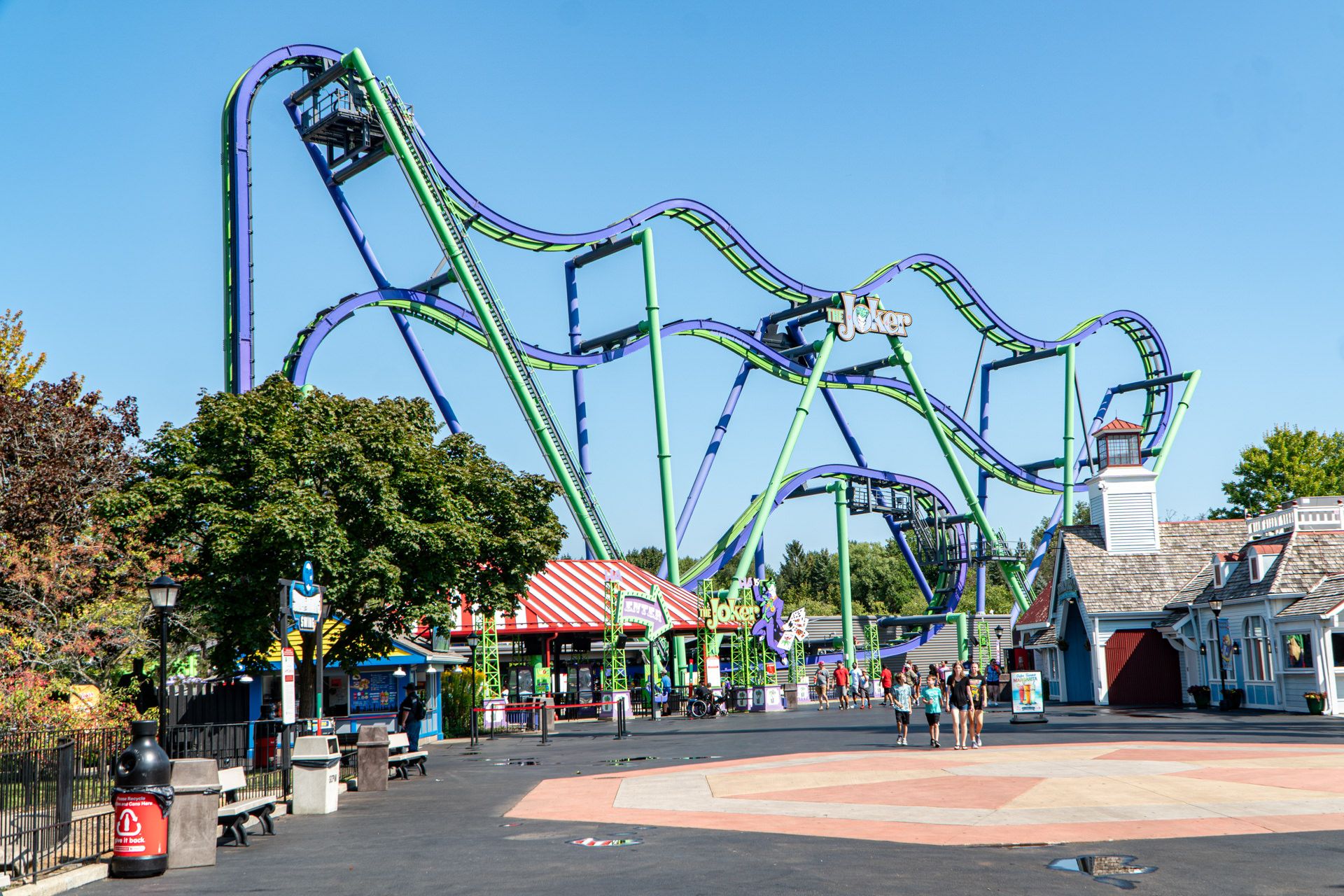
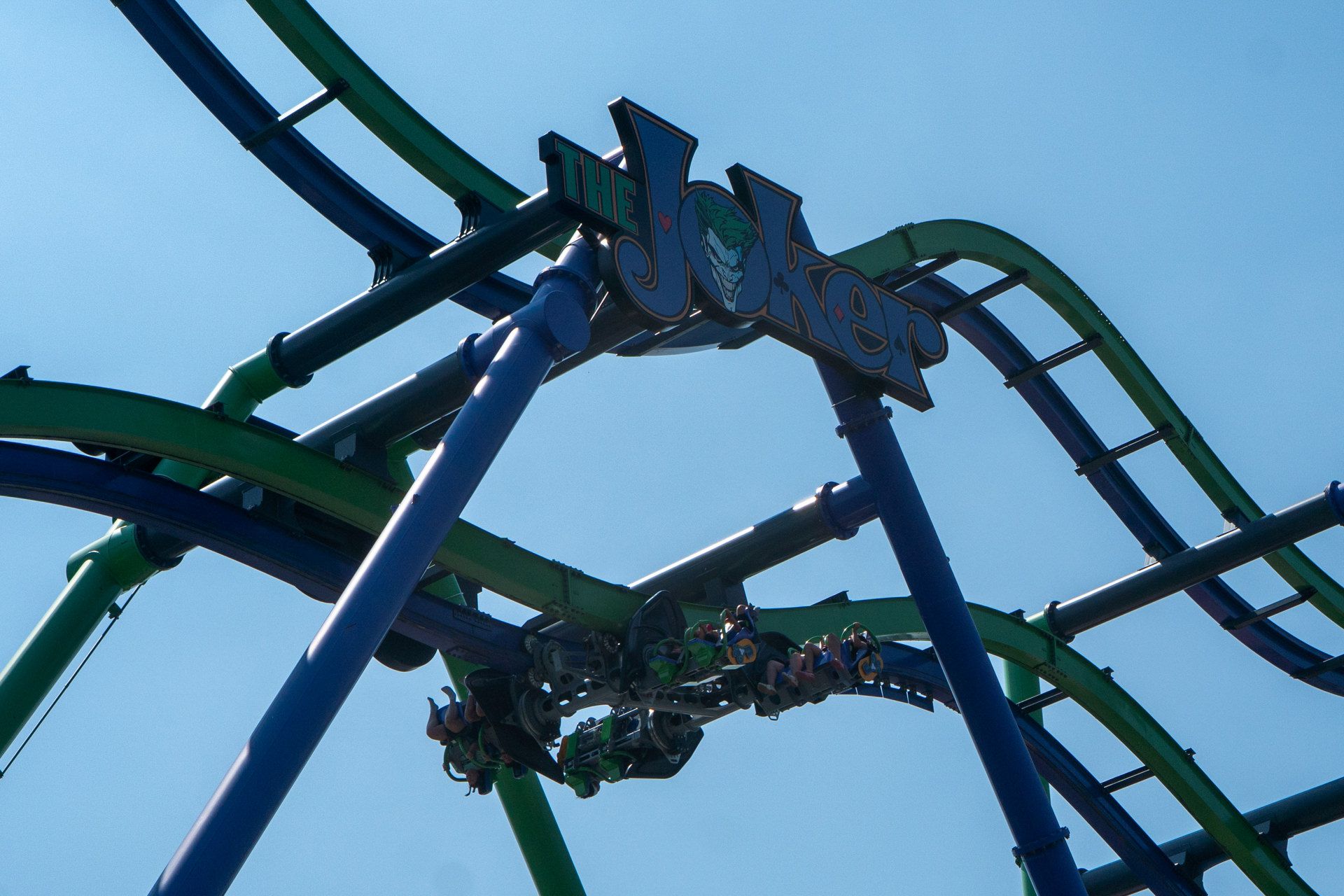
The first coaster awaiting us in DC Universe is The Joker, a ride type we have become very familiar with after visiting all sorts of Six Flags parks. With S&S’s 4D Free Spins, however, the actual fun of the ride always depends somewhat on how often the freely rotating seats decide to flip.
And here we got really lucky. We spent a good part of the ride upside down, resulting in a wonderfully chaotic and surprisingly intense experience.
Batman: The Ride
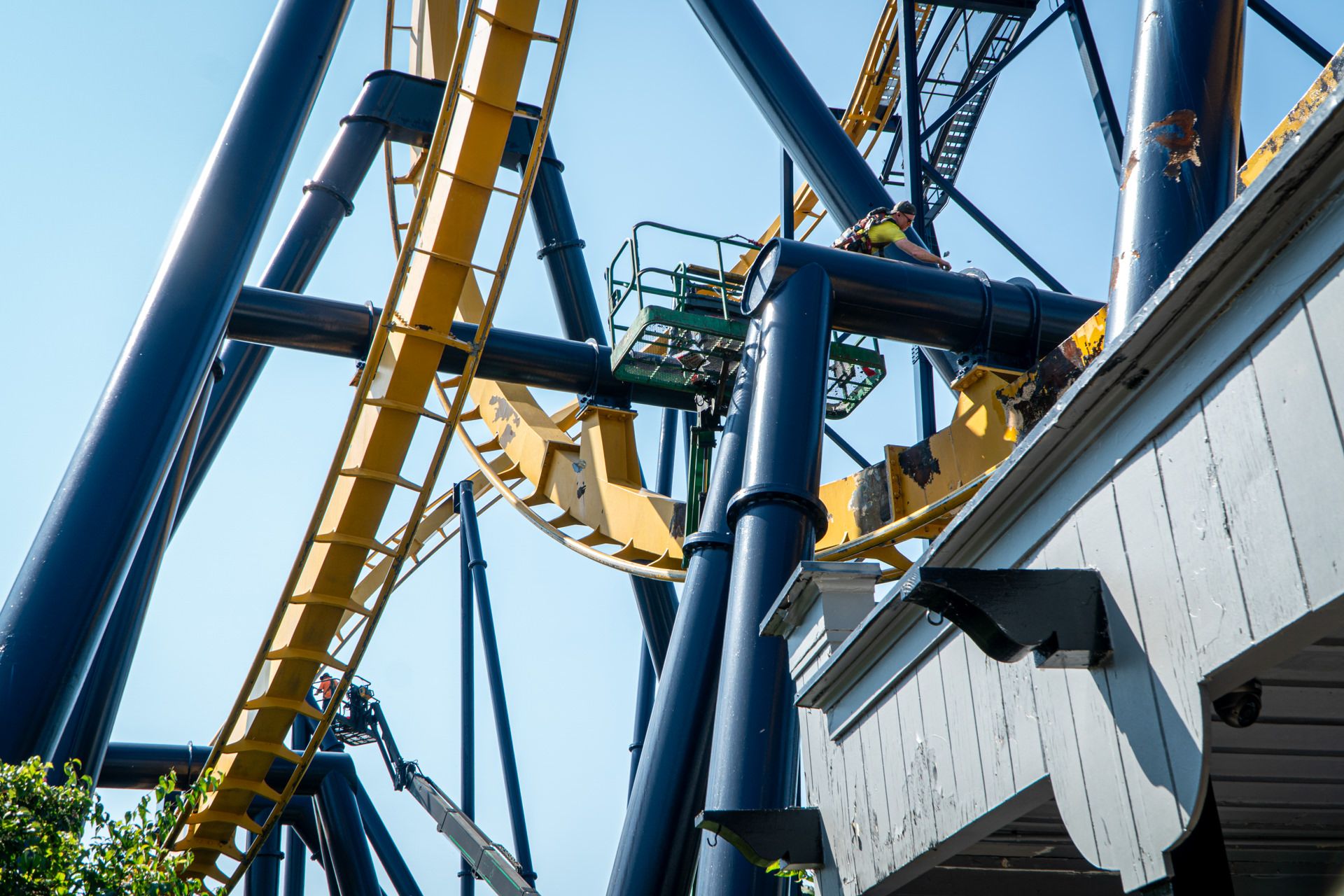
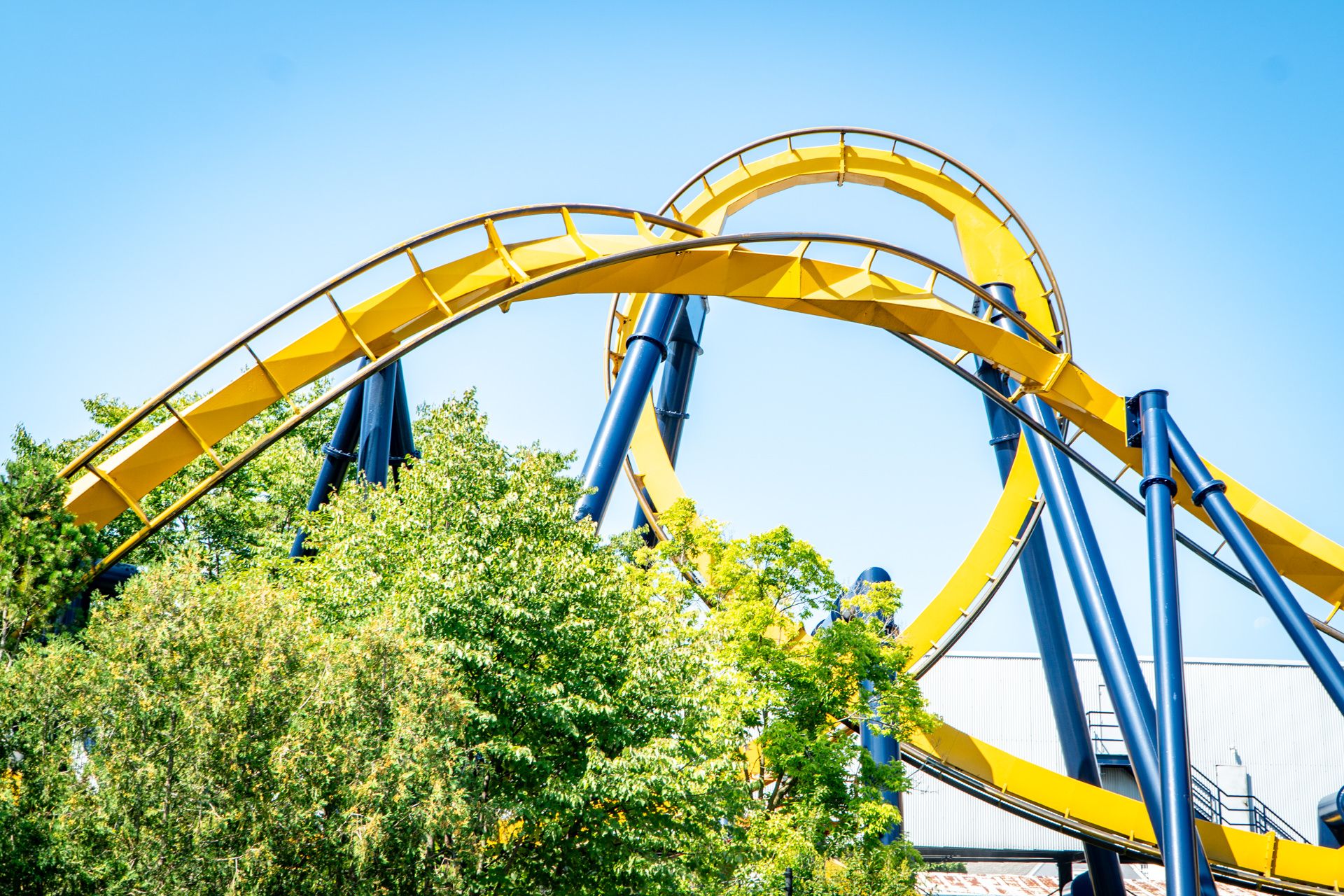
Right next door is Batman: The Ride, one of the most historically significant roller coasters in the park. Unfortunately, the ride was undergoing refurbishment during my visit and remained closed. Nevertheless, it is worth spending a little more time here, because its opening in 1992 marked the beginning of a small revolution.
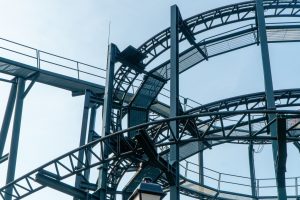
Batman: The Ride was B&M’s first Inverted Coaster. For the first time, riders sat beneath the track with their legs dangling freely below. Combined with its compact and intense layout, this created an entirely new type of roller coaster that would spread rapidly around the world over the following years.
The ride was also closely linked to Time Warner’s involvement with Six Flags at the time. Warner Bros. characters increasingly found their way into the parks, and Batman: The Ride was appropriately presented as a journey through Gotham City. The queue initially led through a well-kept city park before the surroundings gradually became darker and more run-down, eventually revealing the roller coaster itself.
The success of the ride quickly led to further installations at other Six Flags parks. Batman: The Ride at Six Flags Great Adventure followed as early as 1993, and over the years the compact layout became one of B&M’s most recognisable designs. It was therefore rather unfortunate that the original was closed during my visit.
The Flash: Vertical Velocity
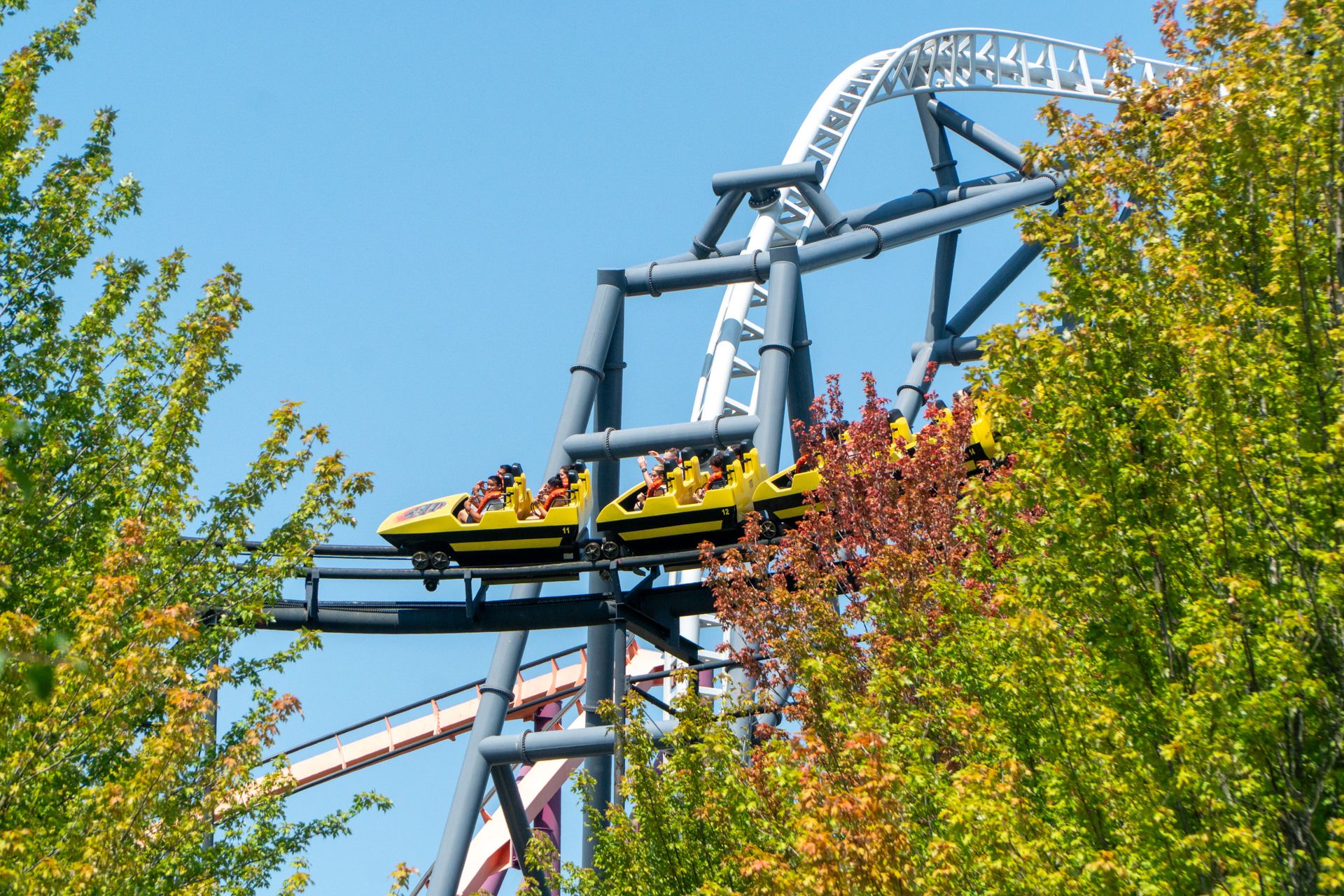
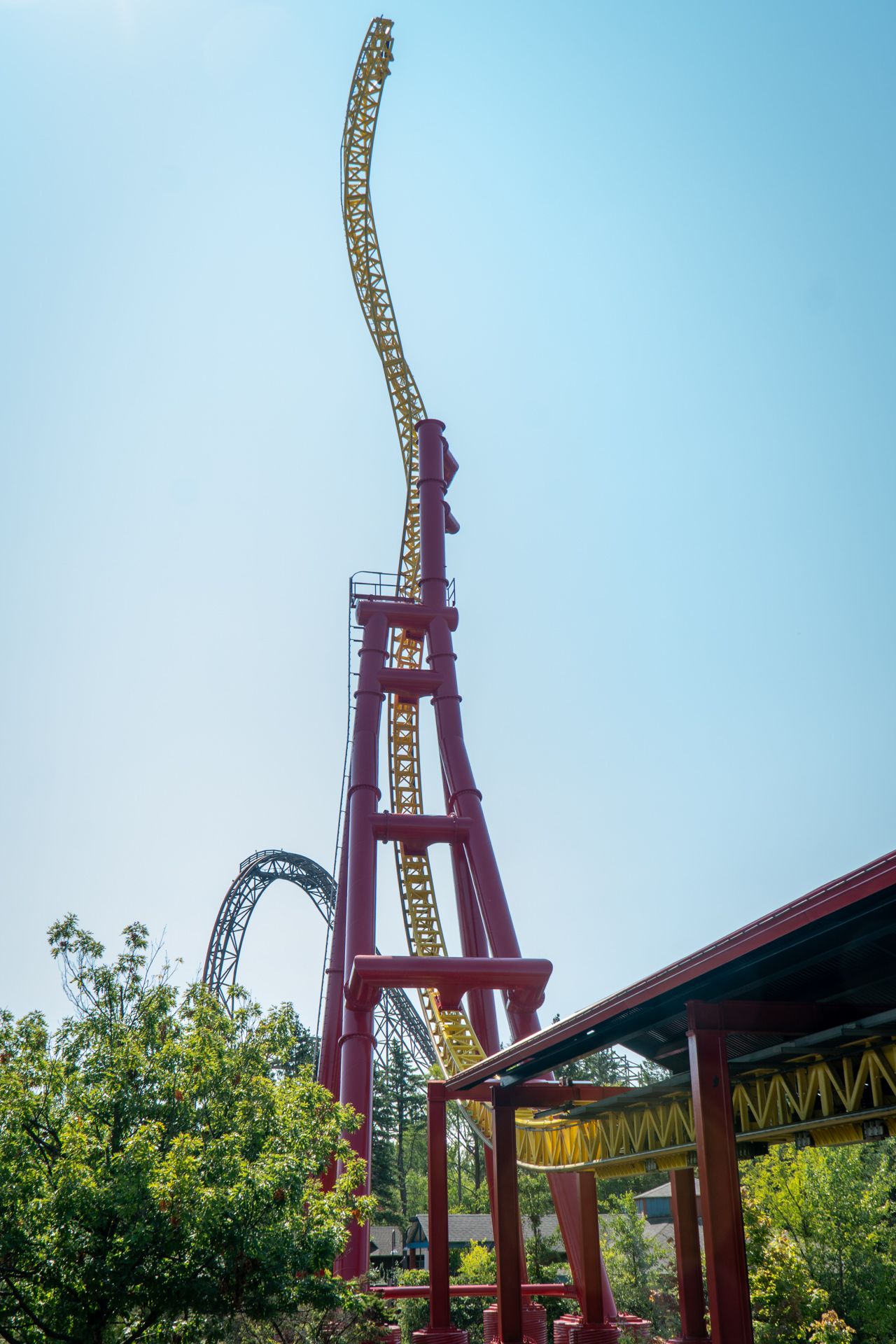
The Flash: Vertical Velocity is the next coaster along our route. We already know the ride concept from Steel Venom at Valleyfair, which we had ridden only a few days earlier. The train is launched back and forth between the two spikes, climbing higher with each pass.
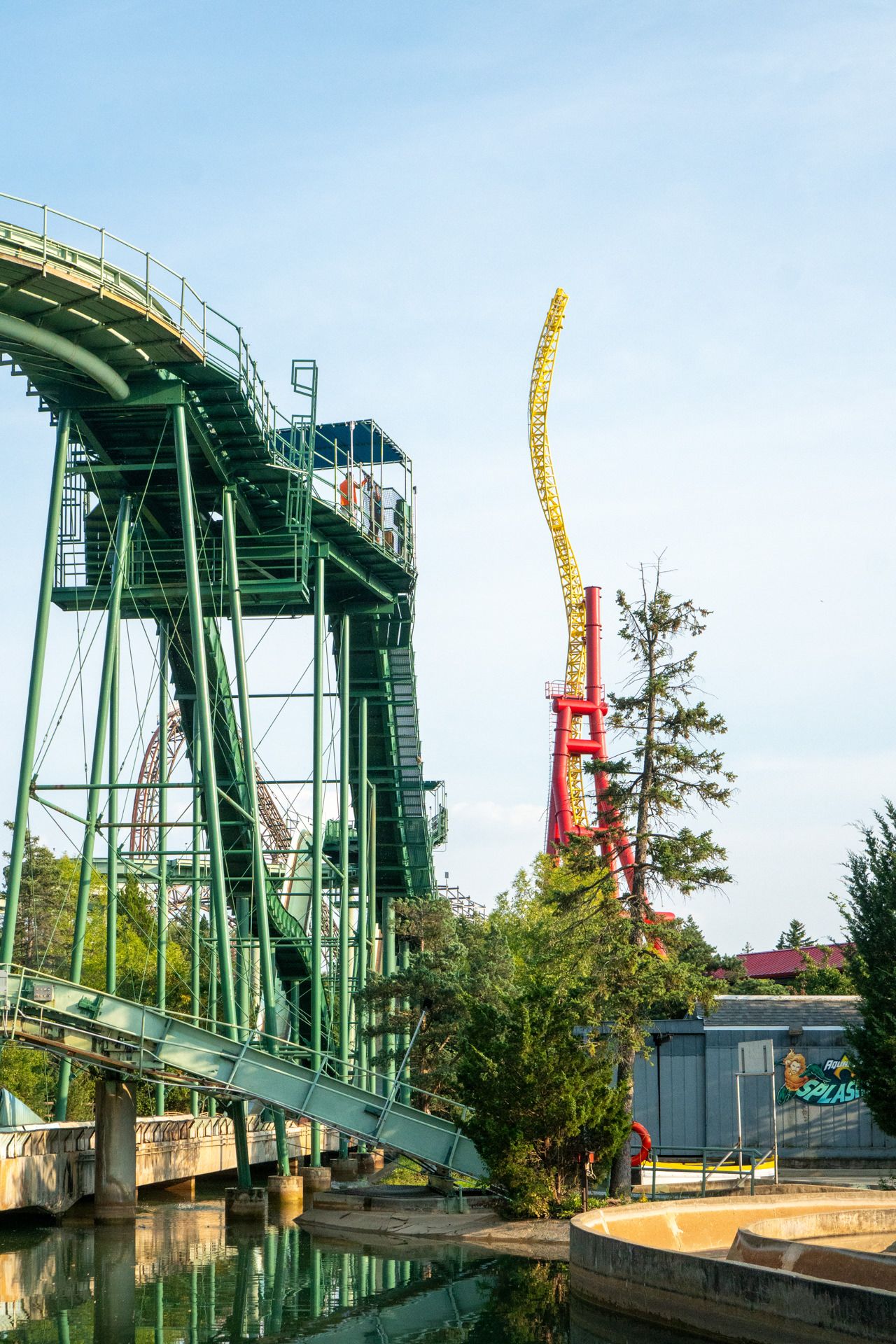
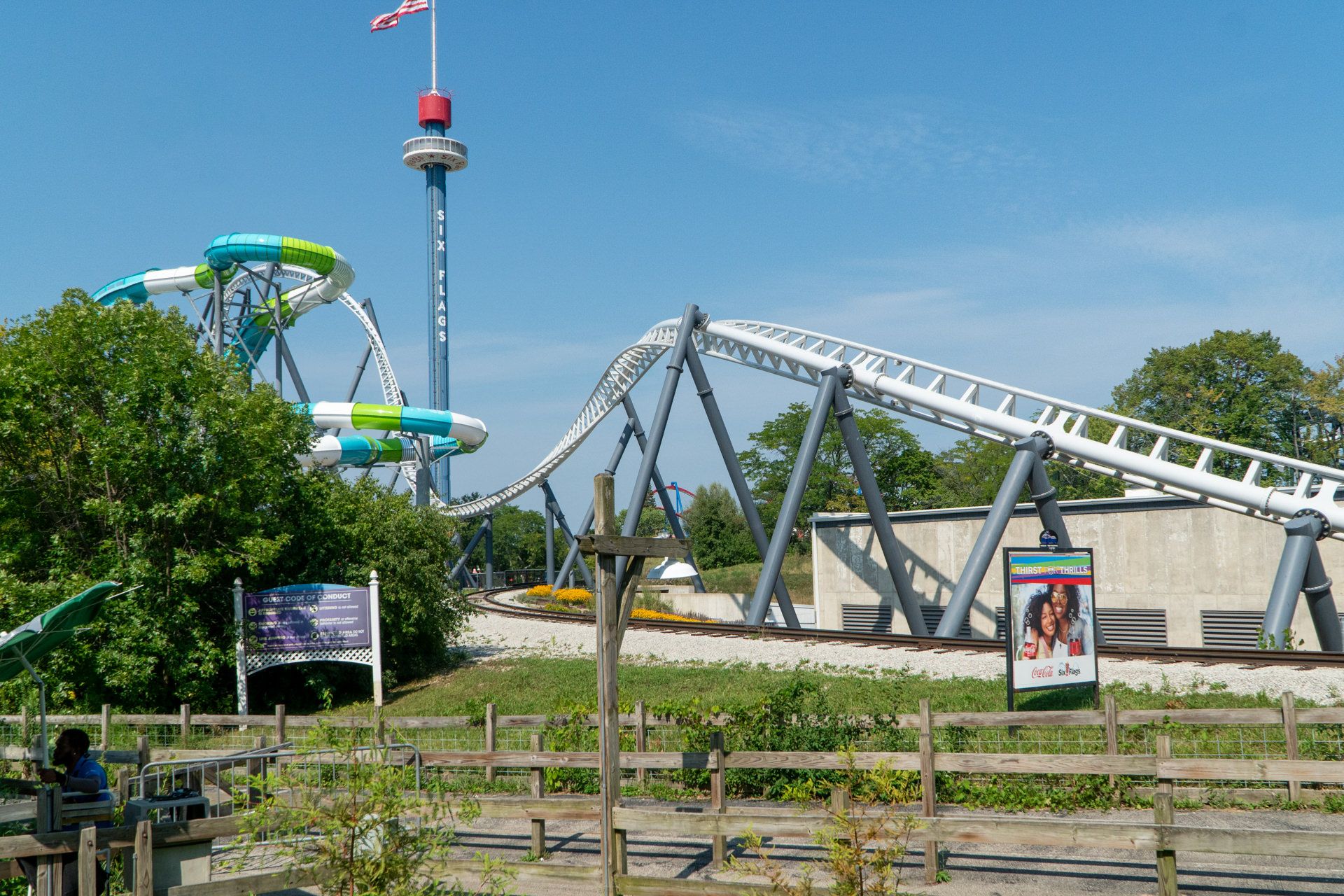
What I particularly like here is the location. The track runs directly above the lake between the two log flumes and is beautifully integrated into this part of the park. Unlike Steel Venom, however, there is no longer a holding brake on the rear spike. That is a bit of a shame, as this particular moment had added quite a lot to the experience at Valleyfair. Overall, though, it is a lovely installation.
Aquaman Splashdown and Logger’s Run
Aquaman Splashdown and Logger’s Run together form a huge and intricately intertwined log flume complex. Both rides begin with a small lift before meandering along a surprisingly long course through numerous bends. It is not always a leisurely cruise either, as the current picks up quite a bit of speed in places.
A second lift then takes us upwards, followed by several turns high above the ground. Unfortunately, some of the walls up here are rather high, meaning there is not all that much to see of the surroundings. Then comes the grand finale: Logger’s Run features a wave-shaped double drop, while Aquaman Splashdown plunges down in one continuous descent. Particularly impressive is the way the drops of the two rides are intertwined.
At the bottom of both rides, a standing wave awaits, which the boats plough through at considerable speed. Staying dry is definitely not an option here, and you step out of the boat wonderfully soaked. Unfortunately, Aquaman Splashdown was not operating during my visit, but Logger’s Run certainly got plenty of attention.
Yukon Territory
Little Dipper
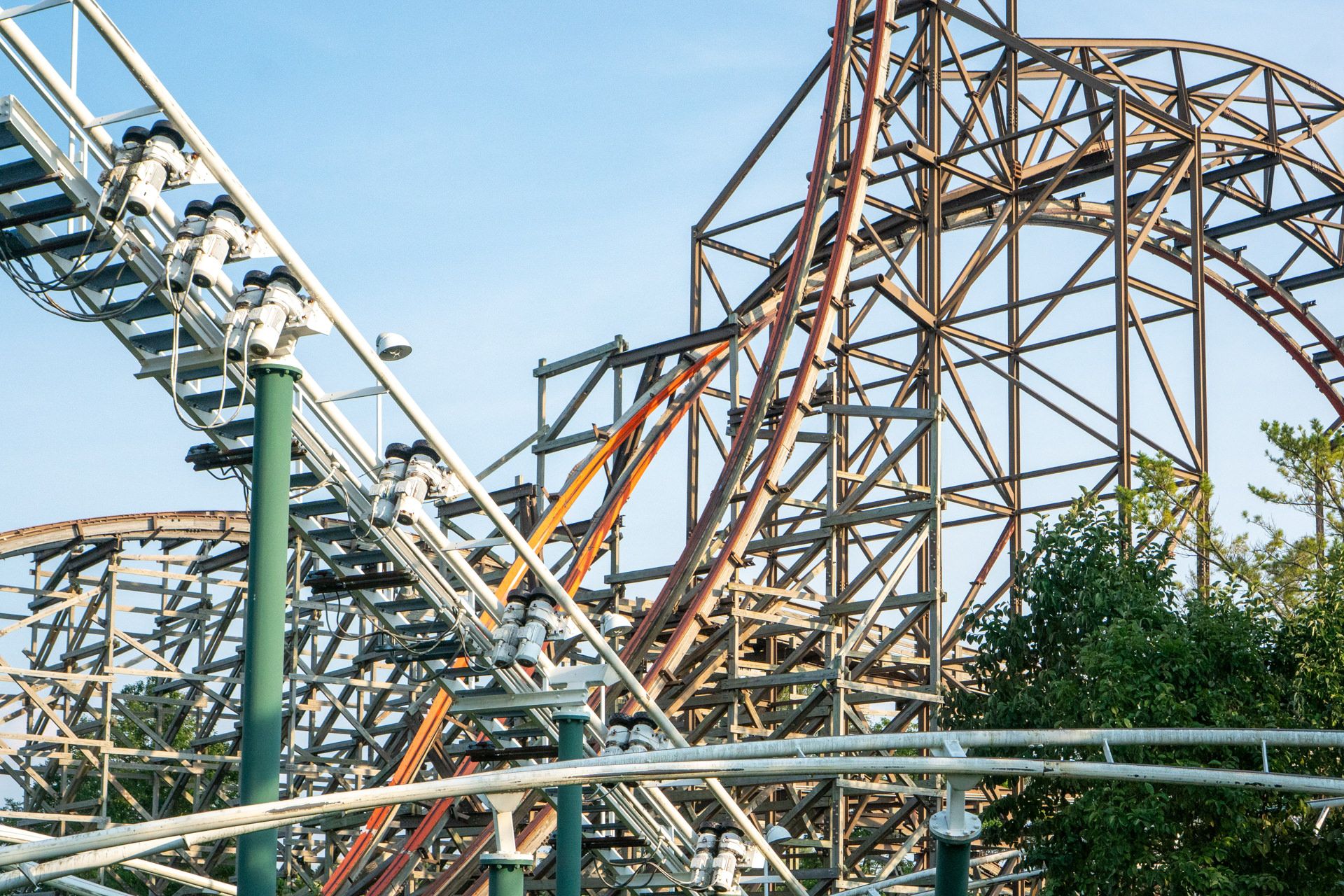
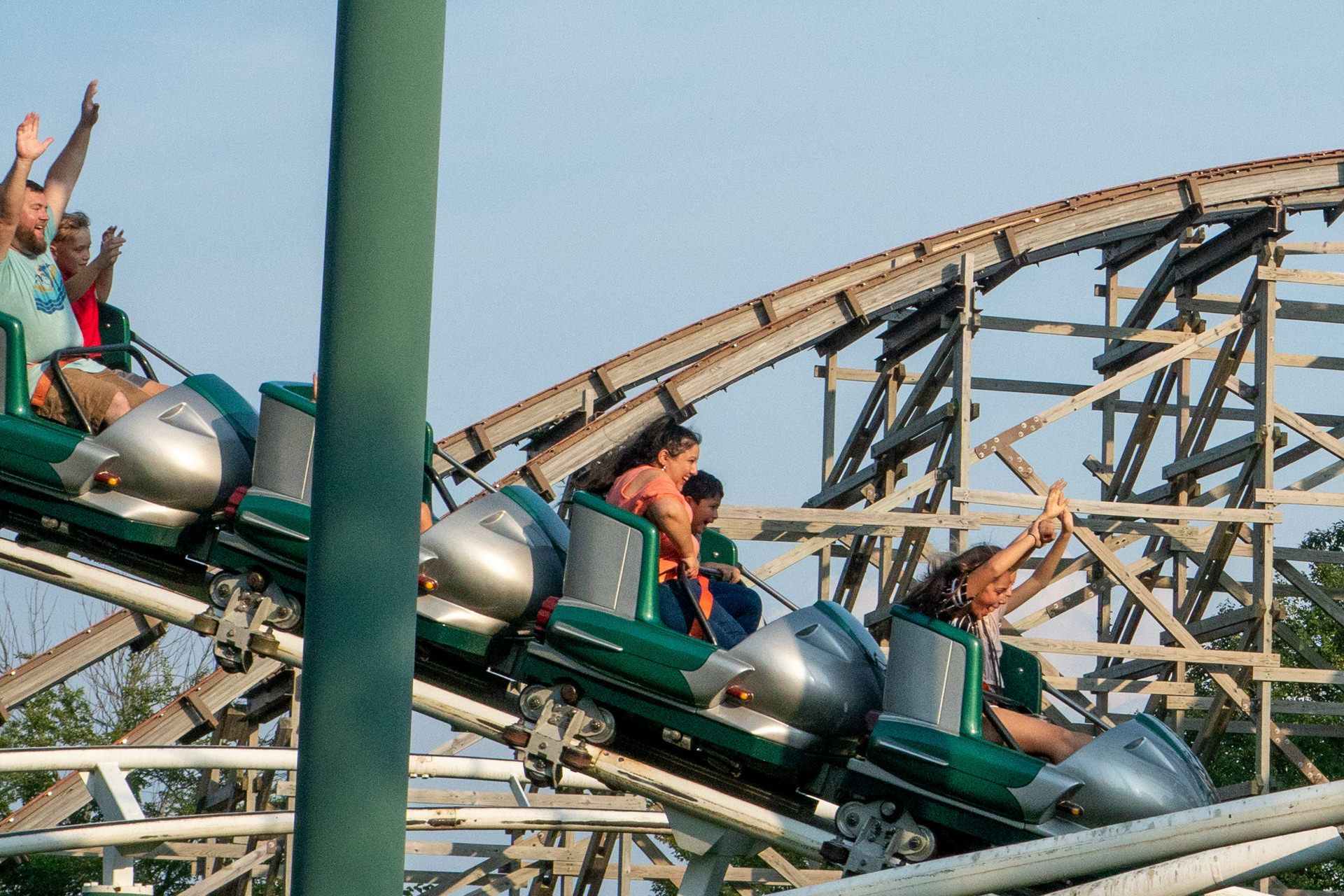
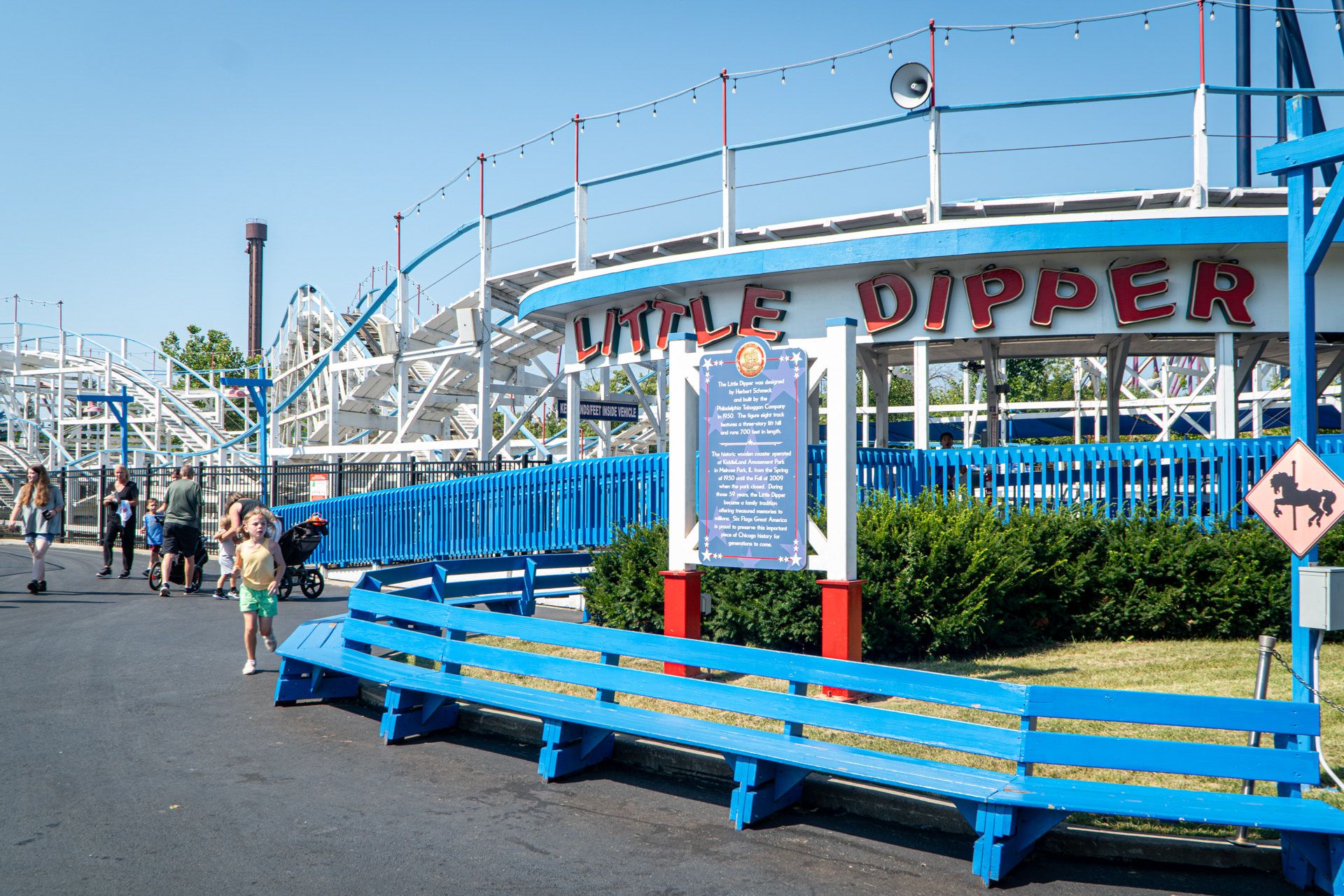
Little Dipper is a small wooden coaster in Yukon Territory with quite an interesting history. It originally opened at Kiddieland Amusement Park in Melrose Park in 1950 and ran there for almost 60 years. Following the park’s closure in 2009, Six Flags acquired Little Dipper, relocated it to Gurnee and reopened it as early as 2010.
The ride itself is naturally fairly modest. A handful of small hills and turns make up the compact layout – a pleasant little wooden coaster whose long history is arguably its most interesting feature.
Sprocket Rockets
The park’s small children’s area is also home to Sprocket Rockets, a Vekoma Roller Skater. The layout offers the usual combination of small drops and sweeping turns typical of this coaster type. Unfortunately, it only completed a single lap, so the fun was over rather quickly.
County Fair
Things get considerably bigger as we enter County Fair. And right near the entrance to the area, Goliath rises above us as one of Six Flags Great America’s largest roller coasters.
Fiddler’s Fling
Before we get to Goliath, Fiddler’s Fling provides us with a small rarity. This is a classic Schwarzkopf Calypso – a ride type that has become extremely difficult to find nowadays.
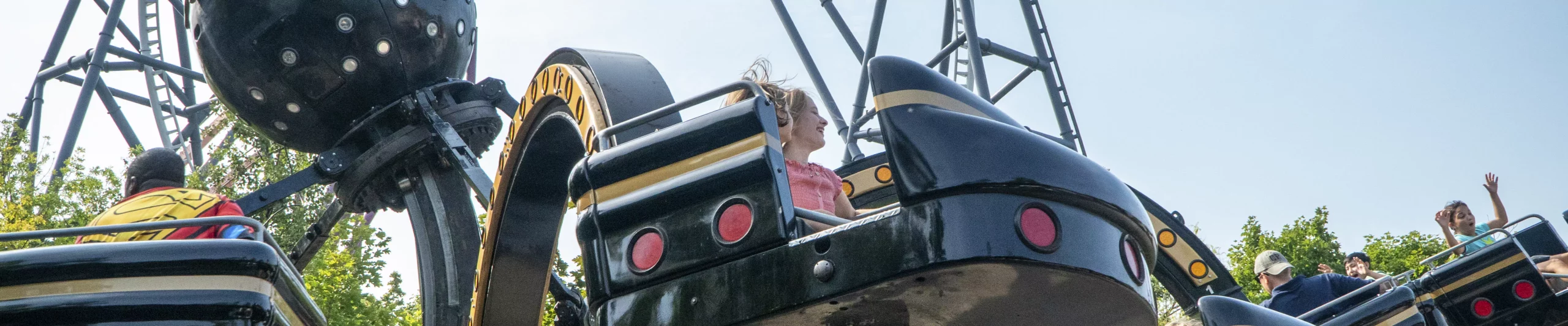
As the large platform rotates, the individual clusters of cars spin around their own axes as well. And the whole thing moves surprisingly quickly, producing some considerable forces along the way. A wonderfully dynamic flat ride, and it is great to see that Fiddler’s Fling has survived as one of the increasingly rare examples of this Schwarzkopf classic.
Goliath
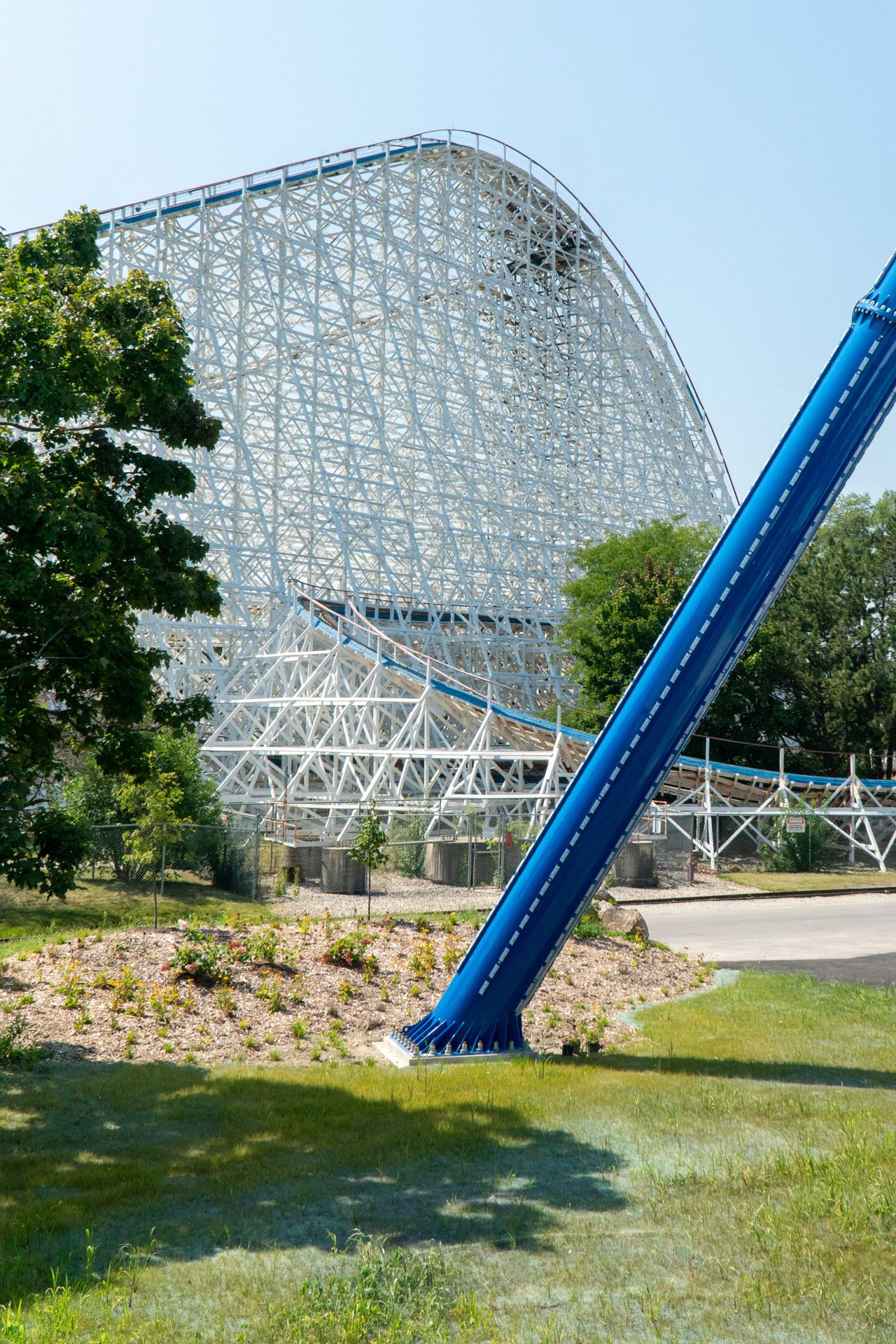
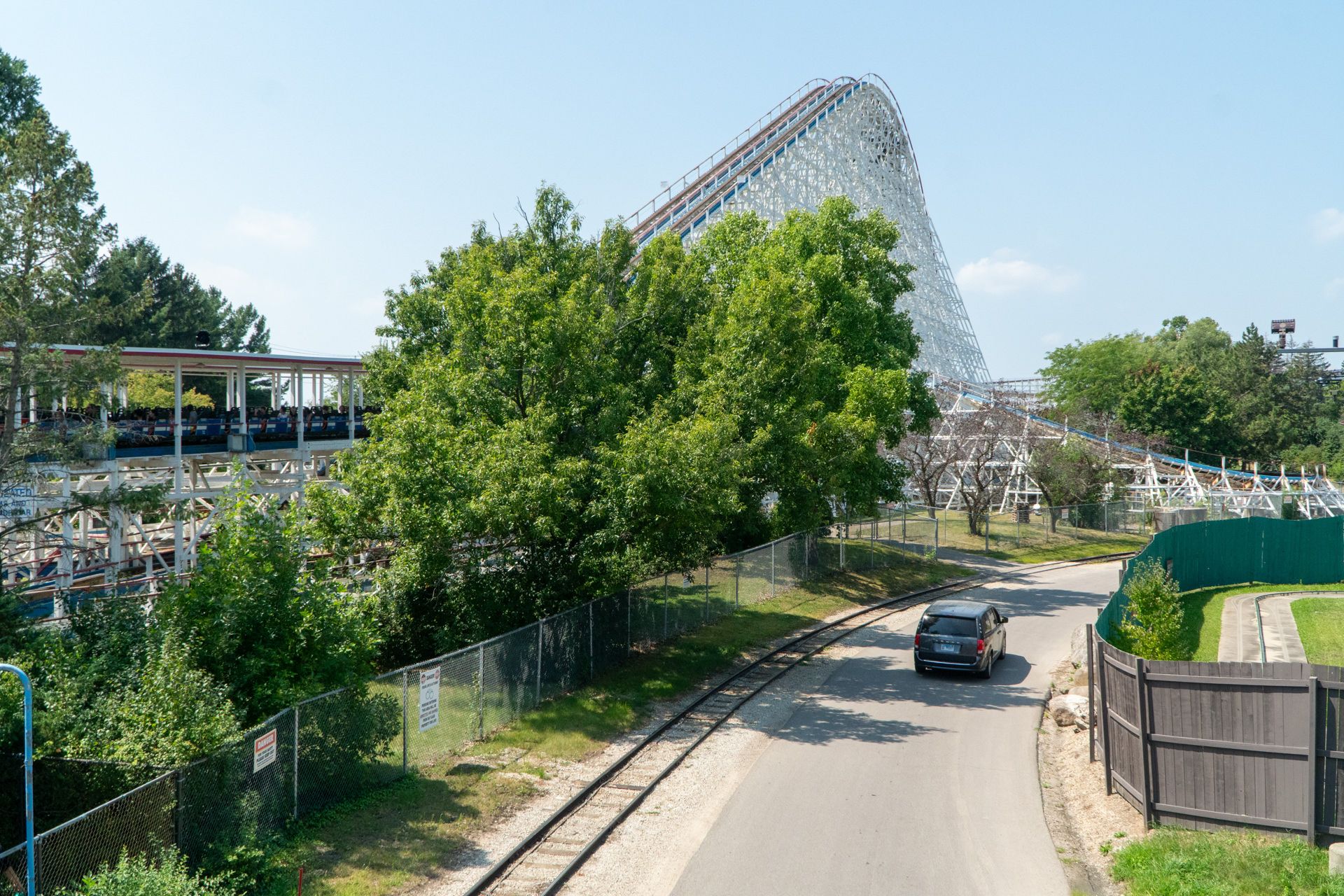
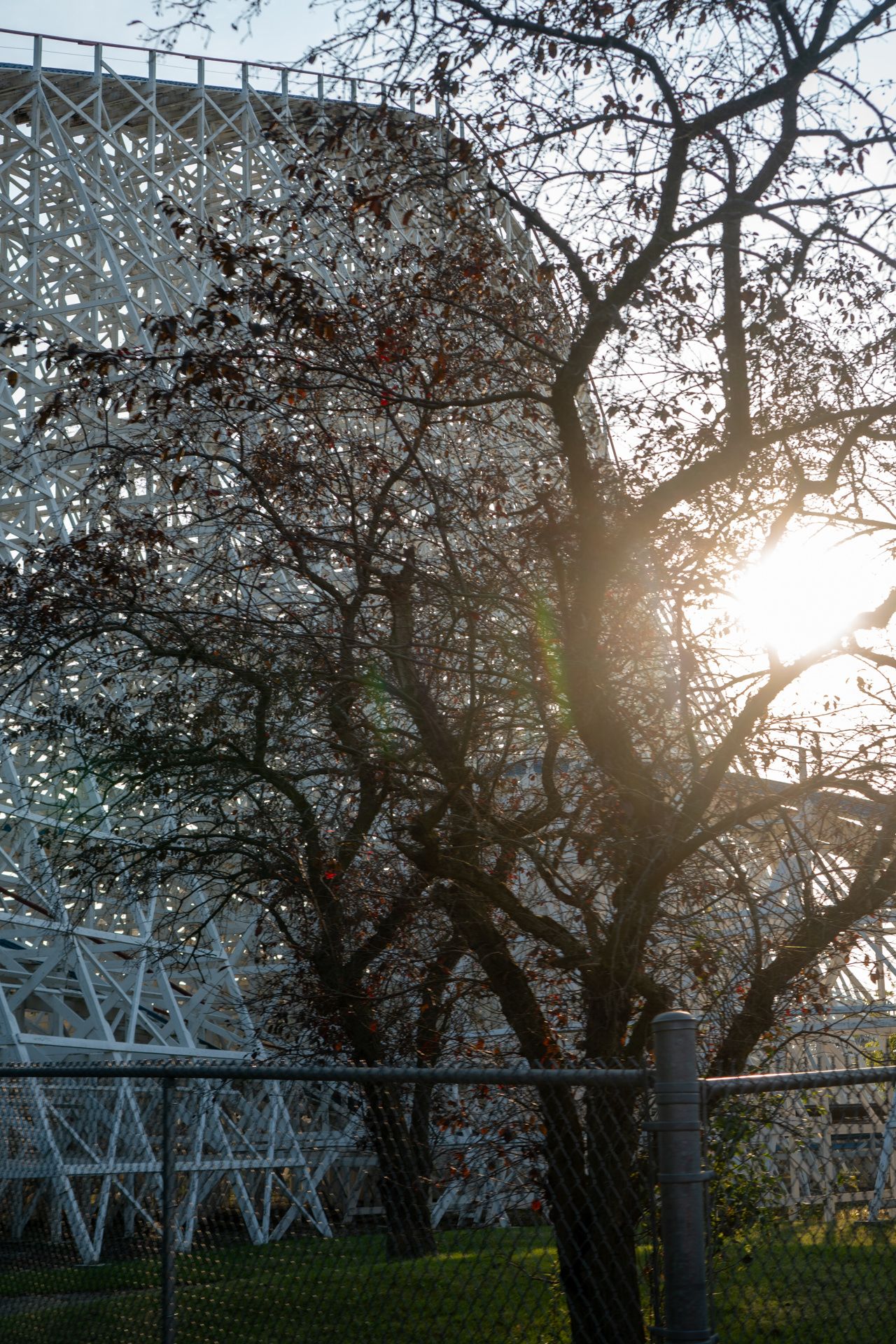
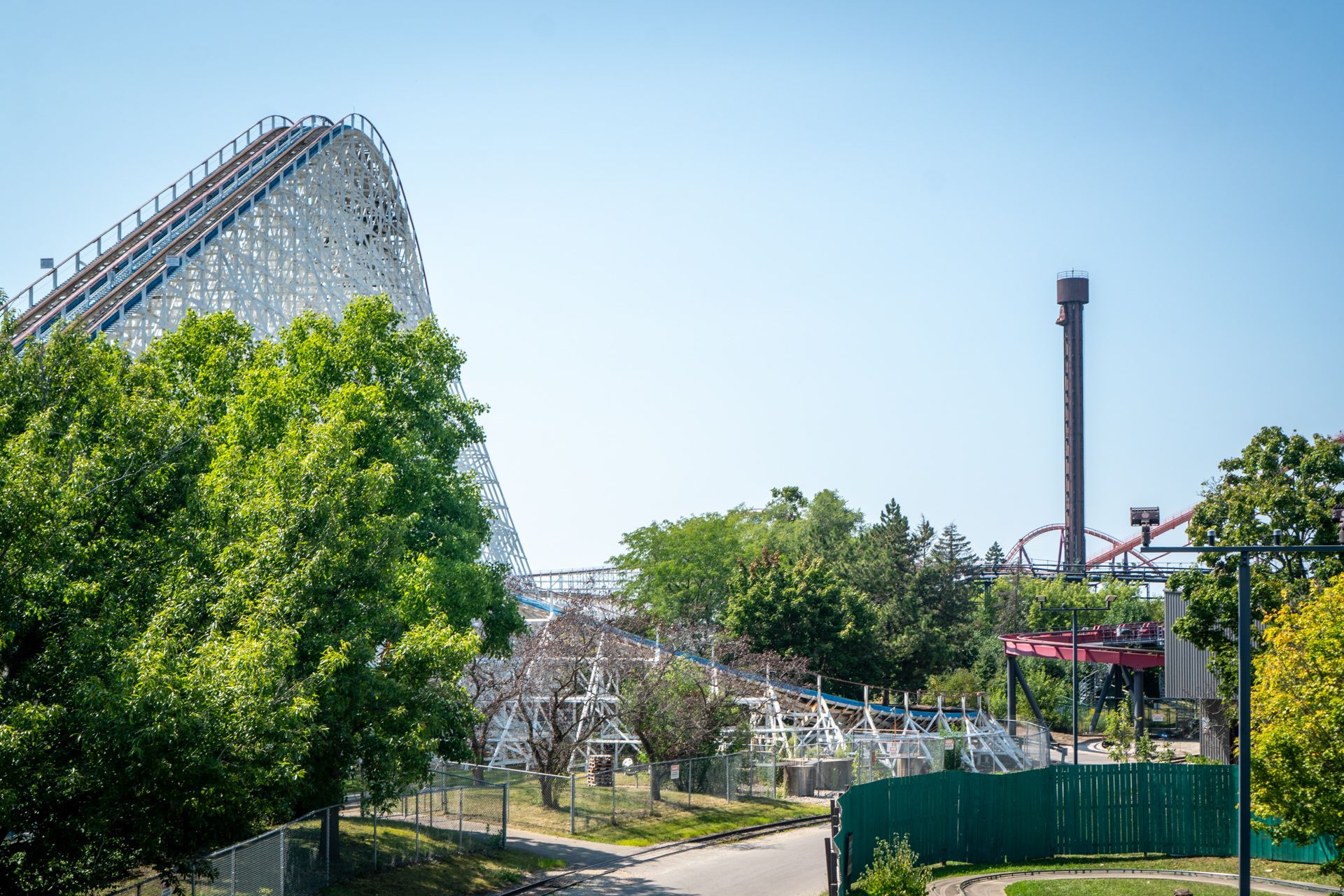
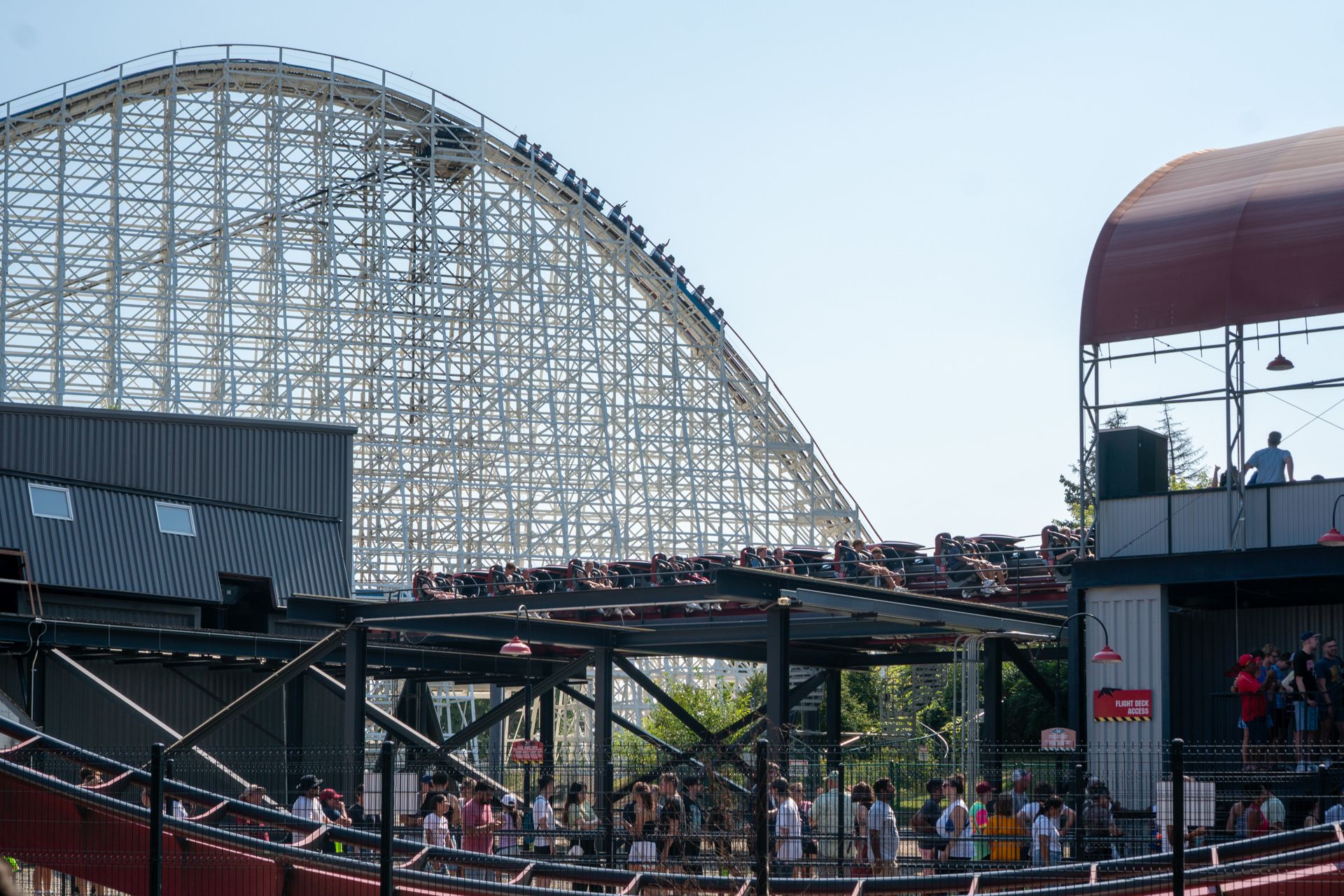
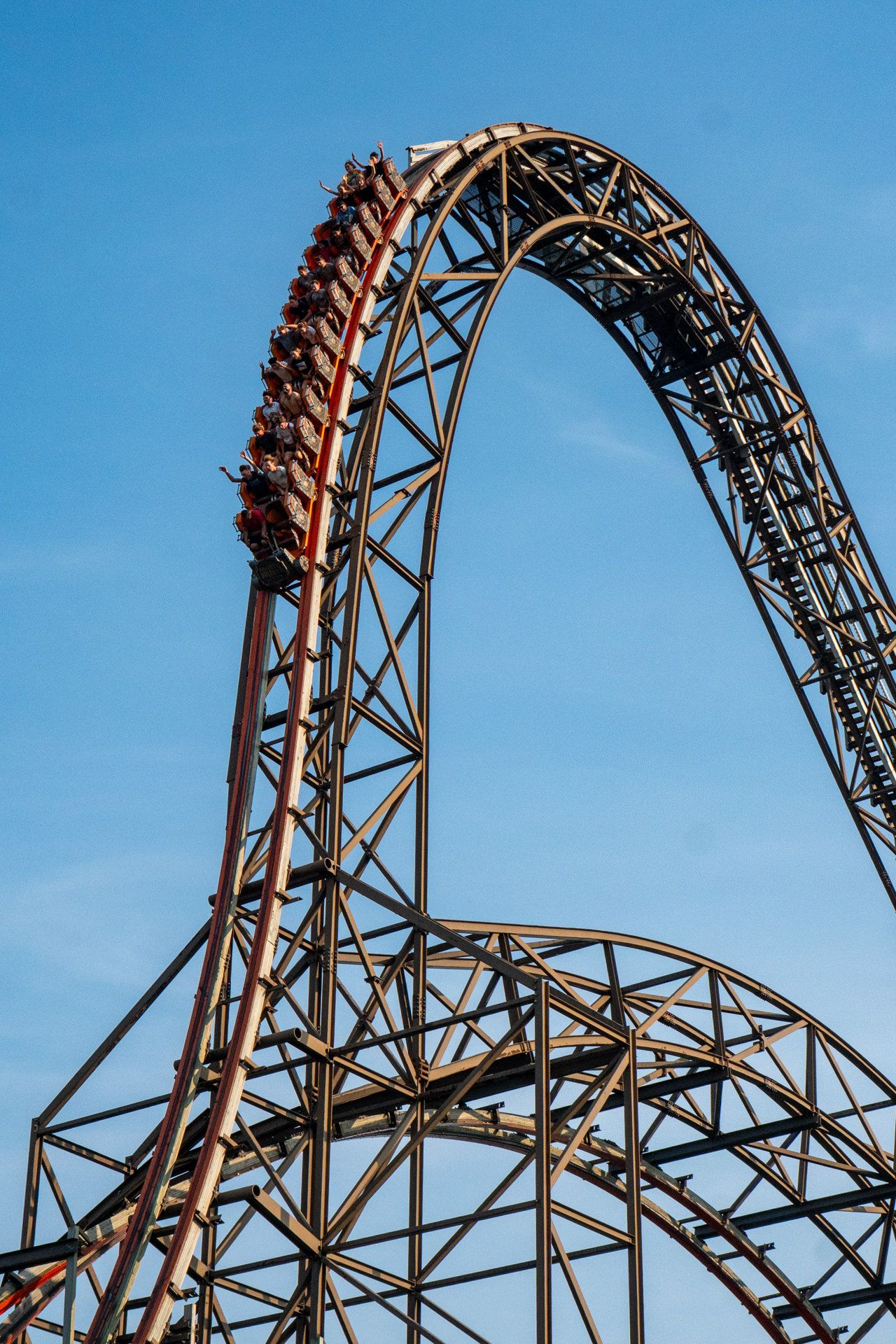
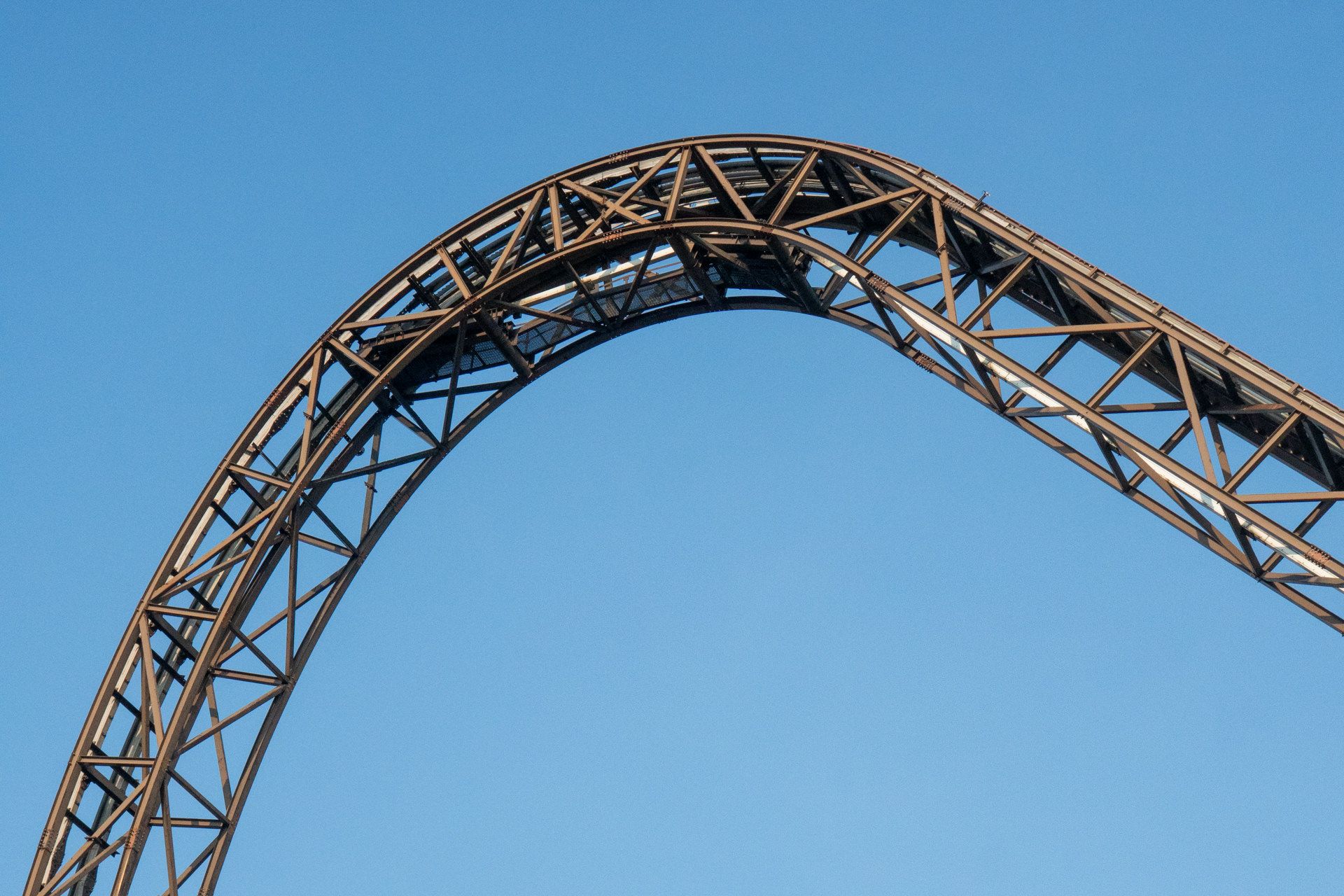
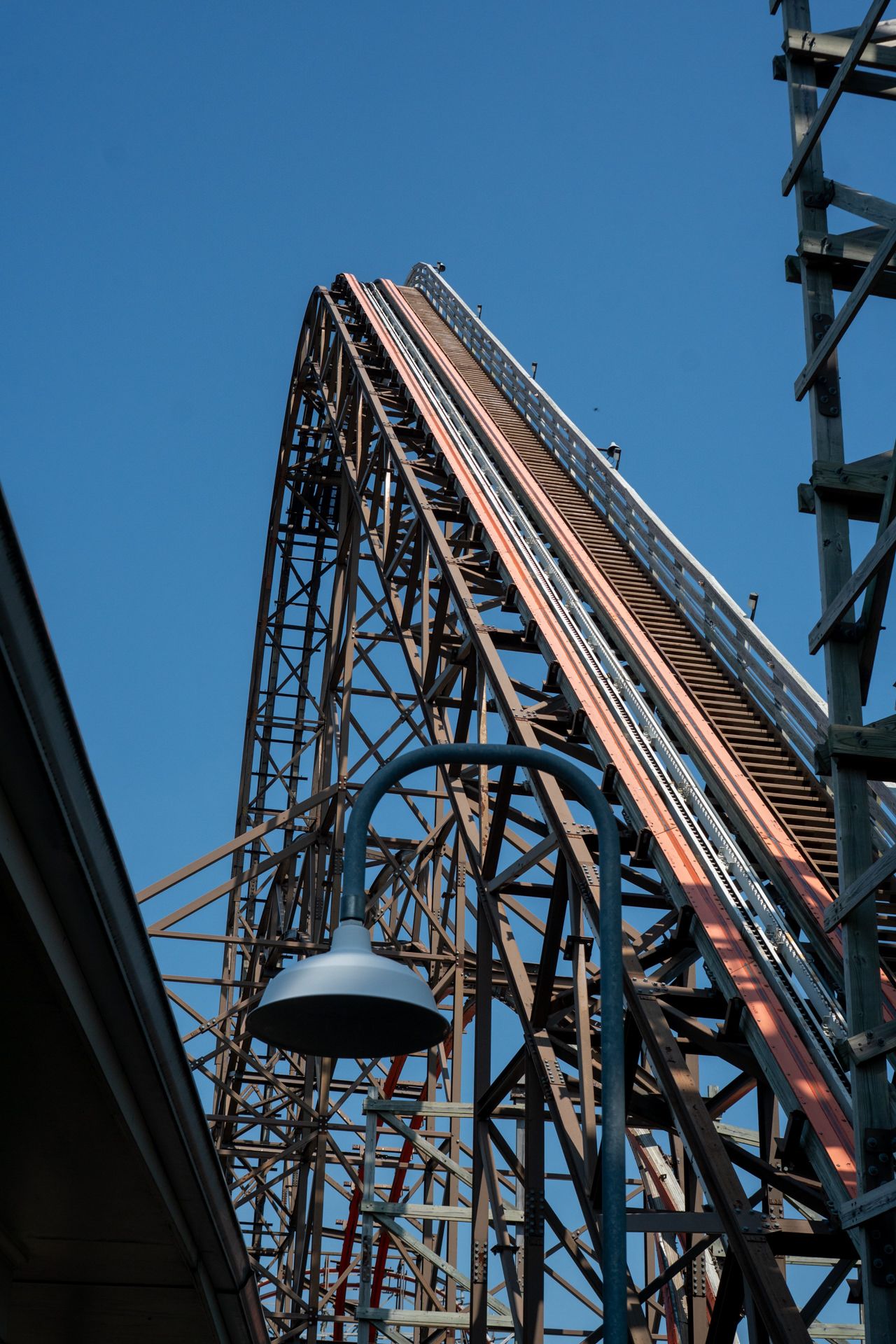
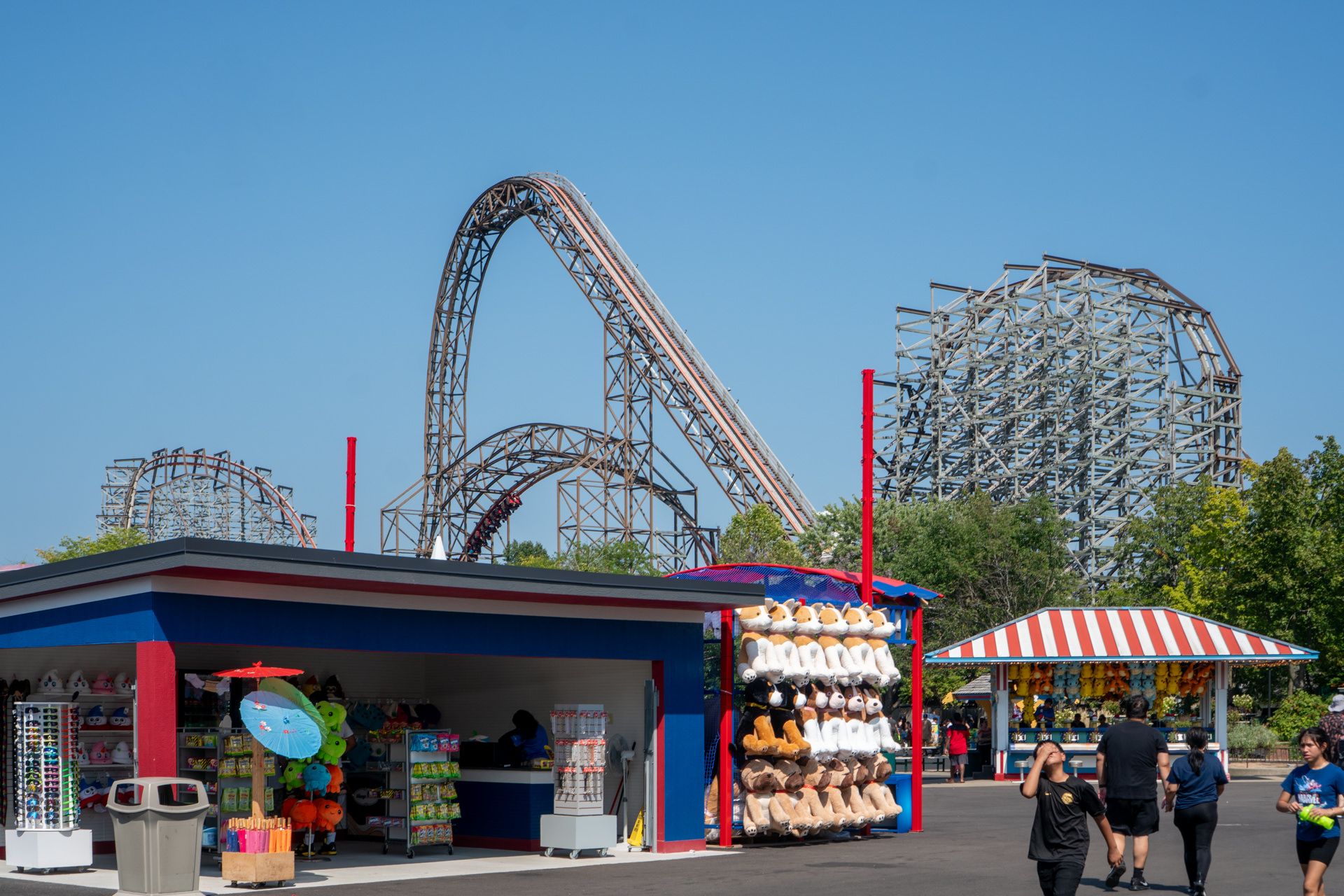
Goliath rises near the entrance to County Fair as one of the largest roller coasters at Six Flags Great America. Its location is interesting in its own right, as this was once the site of Iron Wolf, the very first roller coaster built by B&M. The Stand-Up Coaster opened in 1990 and was removed after the 2011 season, with the site being reused for Goliath only a few years later.
The considerably larger Rocky Mountain Construction coaster opened here in 2014. After the roughly 50-metre-high lift hill, we plunge down the approximately 55-metre-deep, 85-degree first drop. Carrying plenty of speed, the train then shoots up into a high turn before diving back down and racing over the large airtime hill. The Dive Loop follows as the first inversion.
Next comes the Zero-G Stall, where we remain upside down for a surprisingly long time. Goliath then disappears into the tunnel before the final rapid elements take us back towards the station.
Goliath is a genuinely great roller coaster. The powerful airtime, high speed and varied sequence of elements make for an excellent ride. At the same time, it is not quite as brutal as some of RMC’s other creations, which I actually rather enjoyed here. For me, Goliath is definitely one of the best RMCs I have ridden so far – and one I would happily ride several times in a row without interruption.
Sky Striker
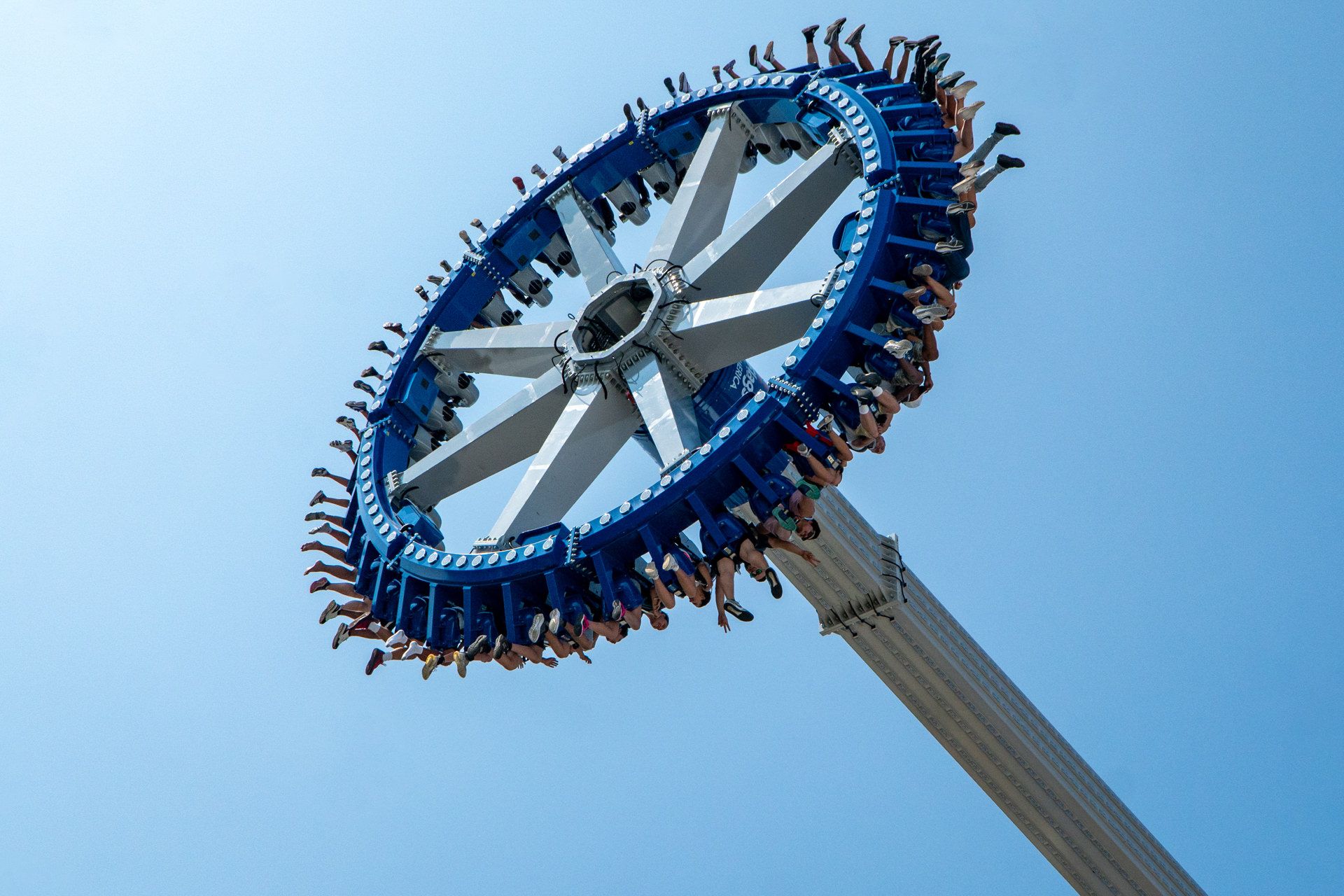
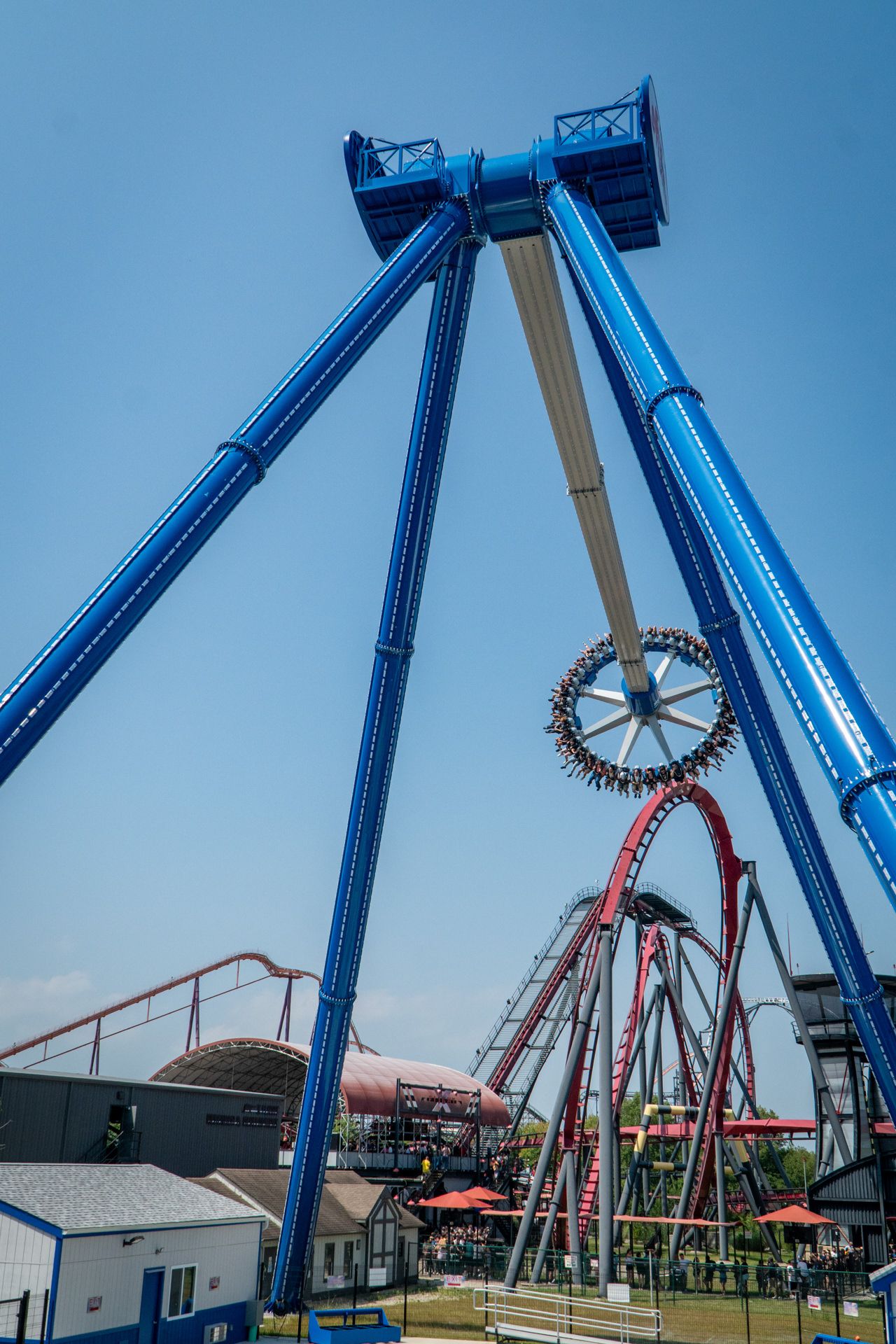
Also in County Fair is Sky Striker, the park’s new attraction for 2024. Zamperla’s largest Giant Discovery is hard to miss from quite some distance thanks to its enormous dimensions.
As the large gondola continuously rotates, it swings higher and higher. There is plenty of airtime around the turning points before the ride picks up speed once again on the way through the bottom of the swing.
I really enjoyed Sky Striker. The combination of height, speed and plenty of airtime makes for a great ride.
American Eagle
Behind Sky Striker lies the entrance to American Eagle – a wooden coaster whose dimensions remain impressive even today. When it opened in 1981, it was the tallest, fastest and longest wooden roller coaster in the world. The manufacturer is equally remarkable: behind this enormous racing wooden coaster was none other than Intamin, who at the time had only just begun to enter the roller coaster business.
After the lift hill, we plunge down the large first drop and race over a whole series of hills. Particularly towards the front of the train, American Eagle produces some absolutely explosive airtime. The ride then enters the enormous double helix, which remains one of its most striking features simply because of its sheer scale. More hills follow on the way back towards the station, where a final helix concludes the ride.
It is a shame that the two sides were not racing during my visit, as this removes an essential part of the original concept. Apart from that, I really enjoyed American Eagle – especially the surprisingly powerful airtime.
X-Flight
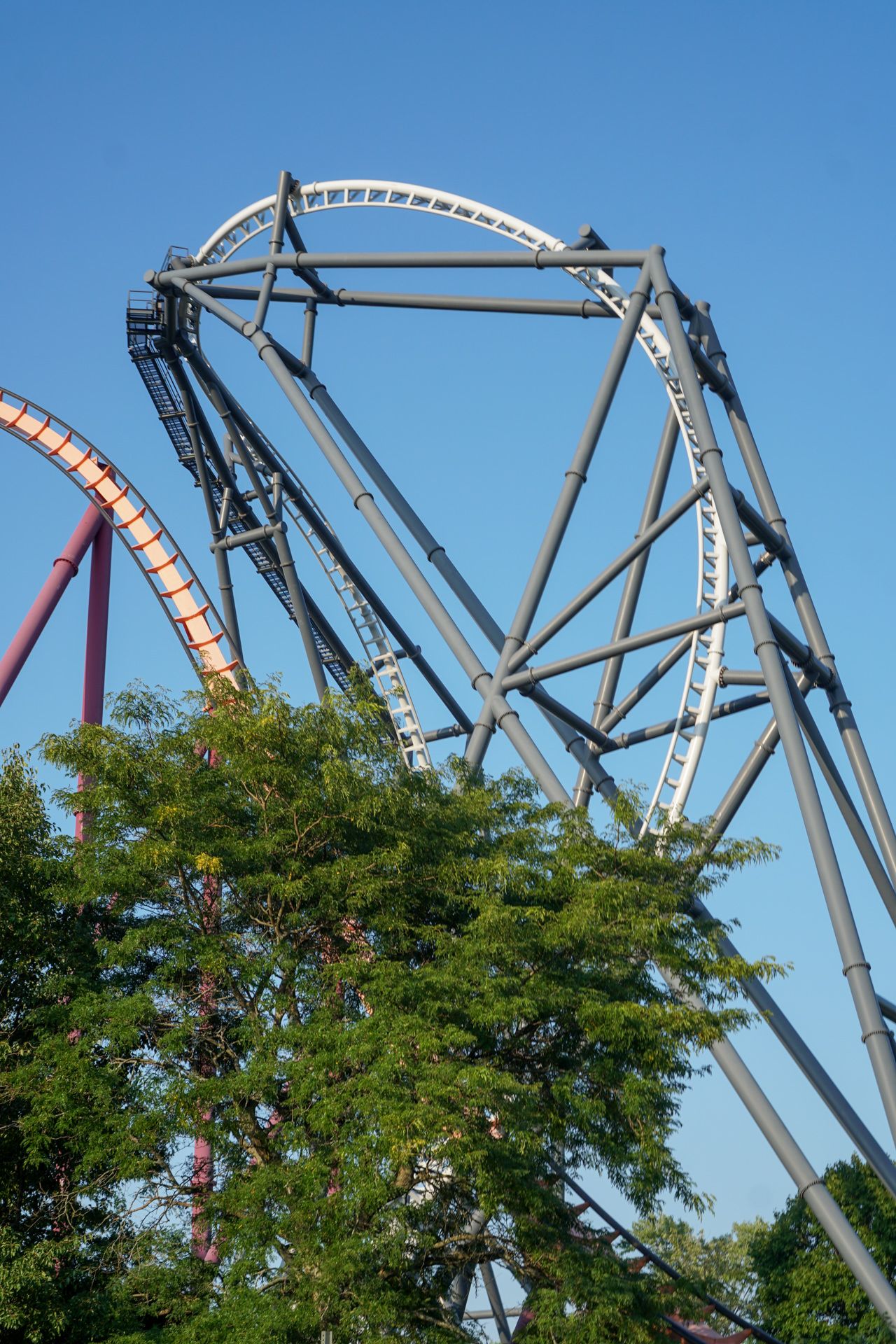
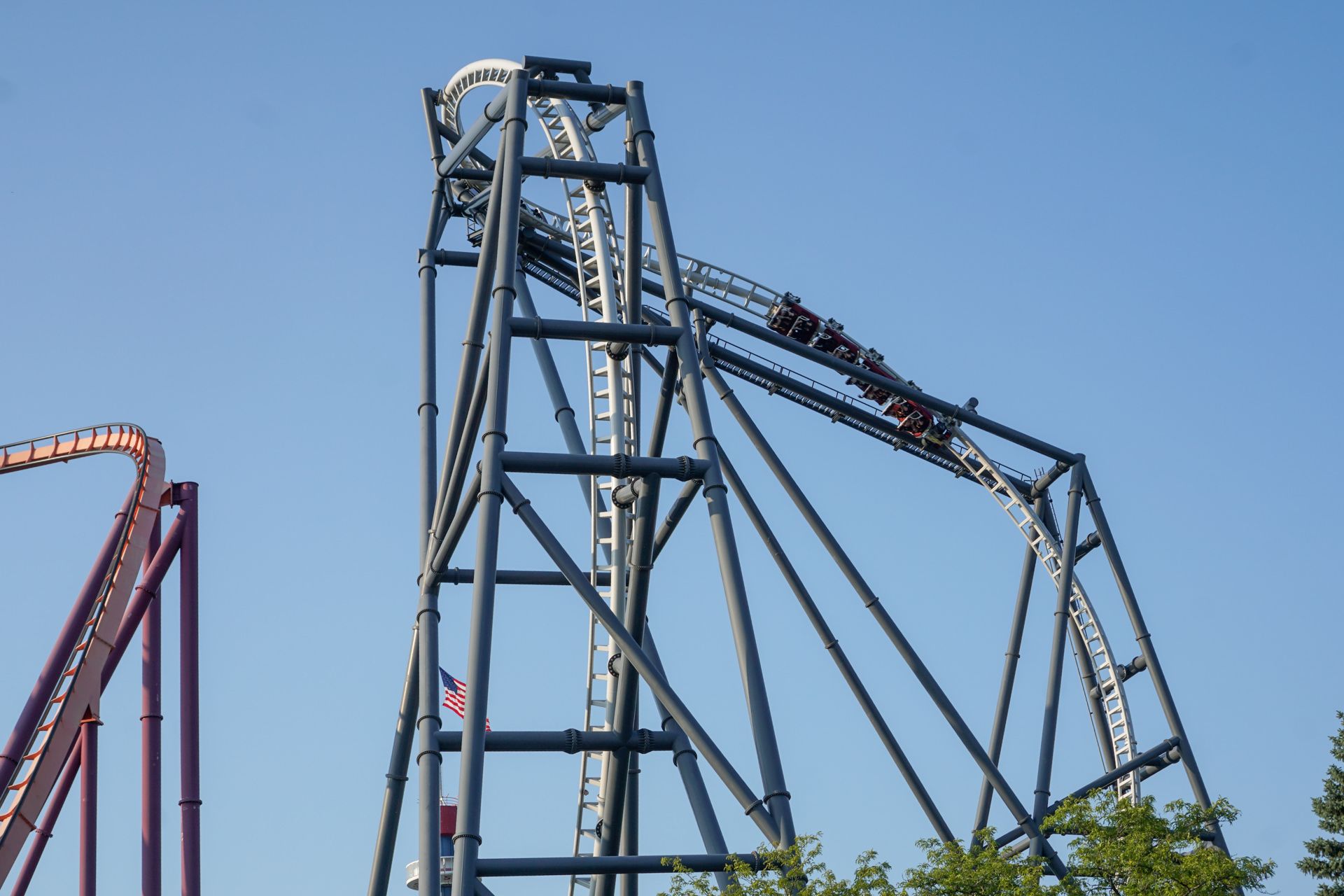
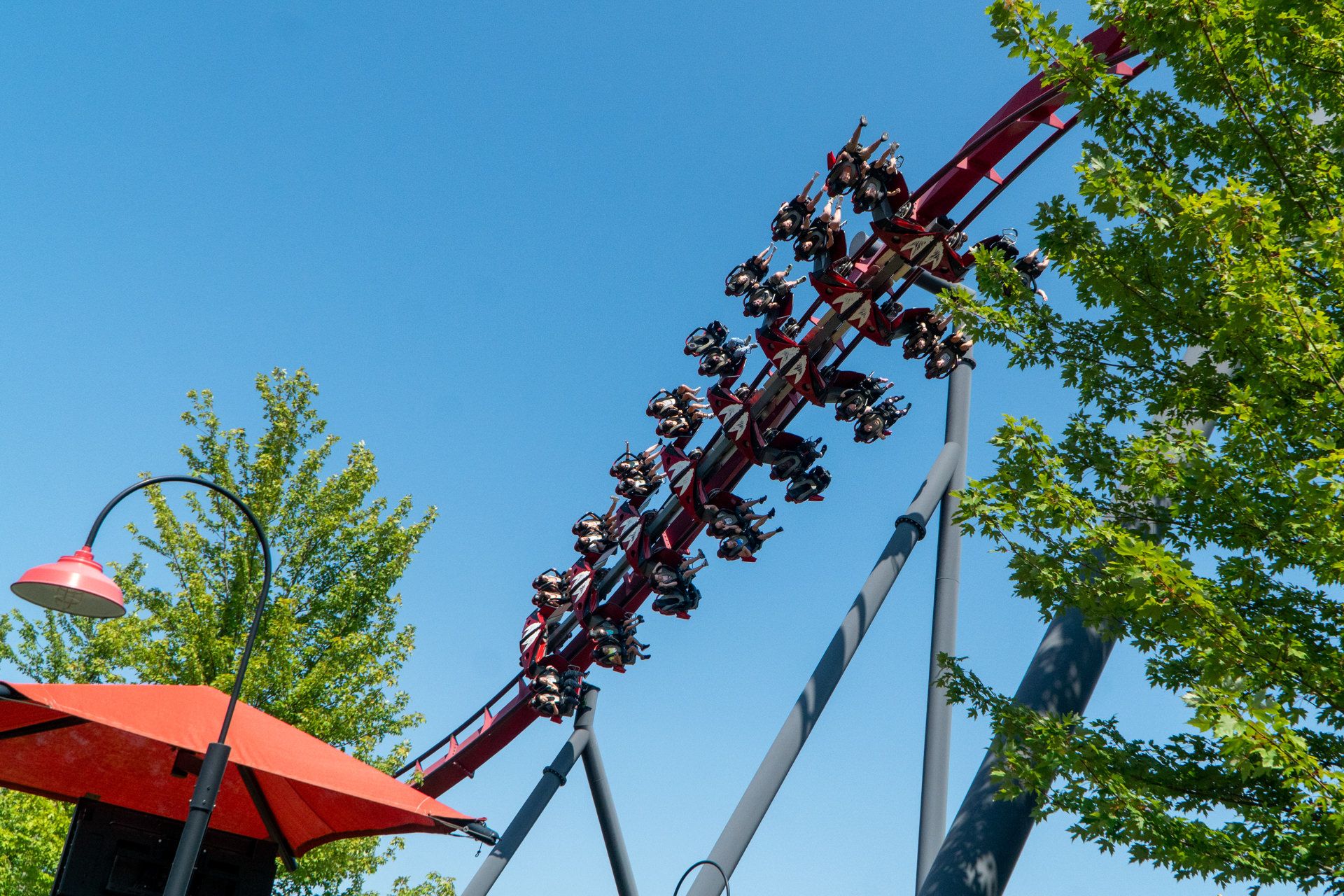
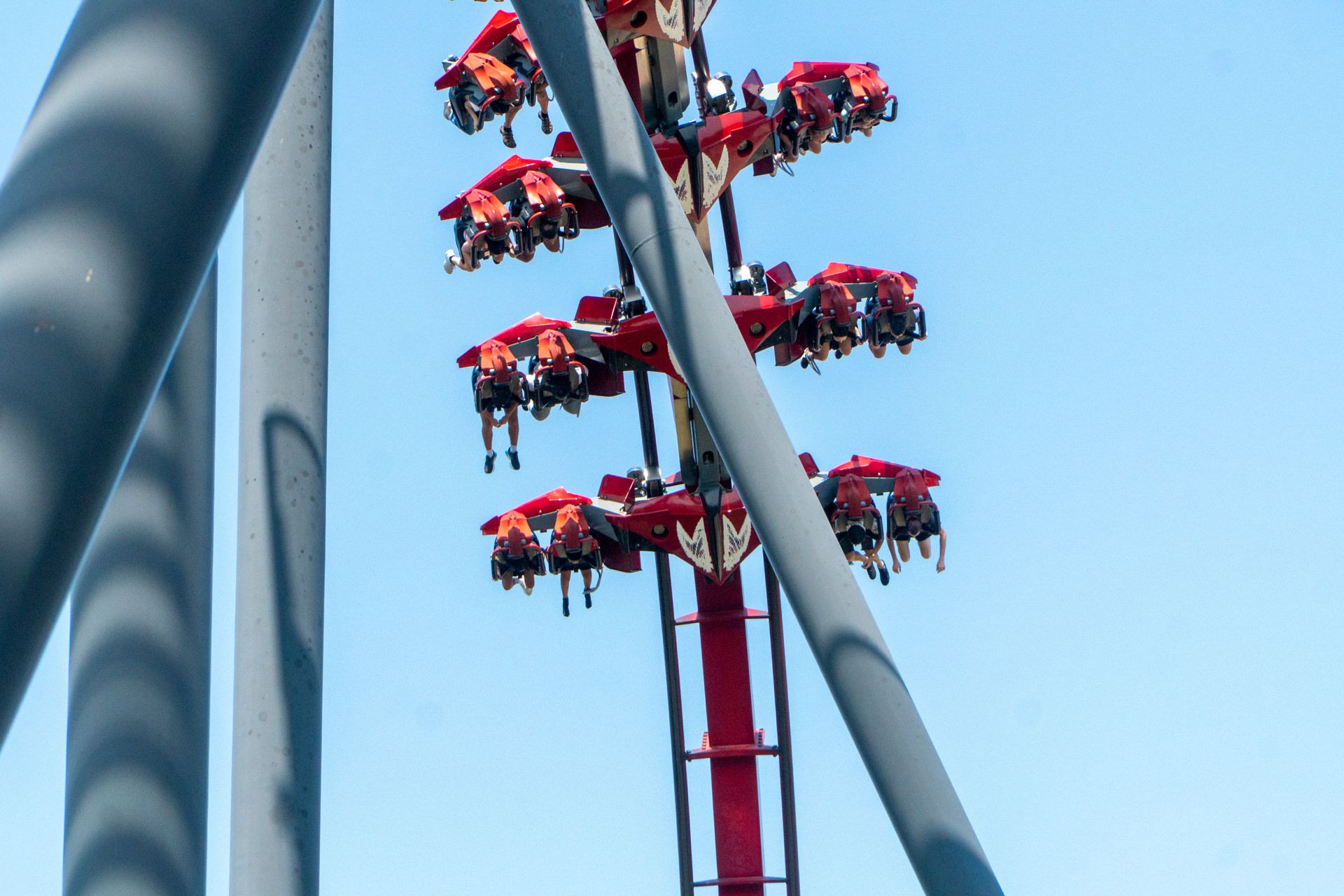
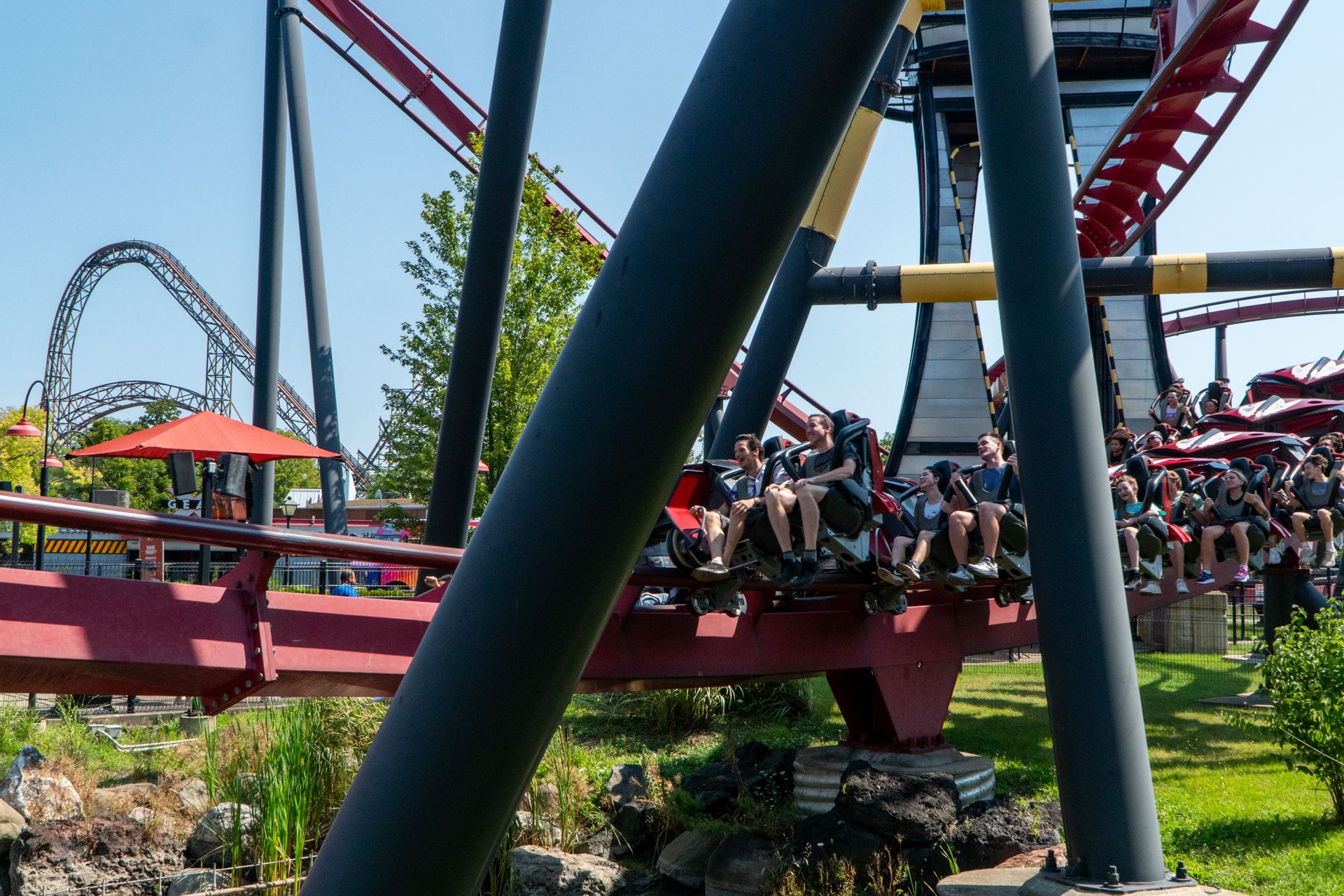
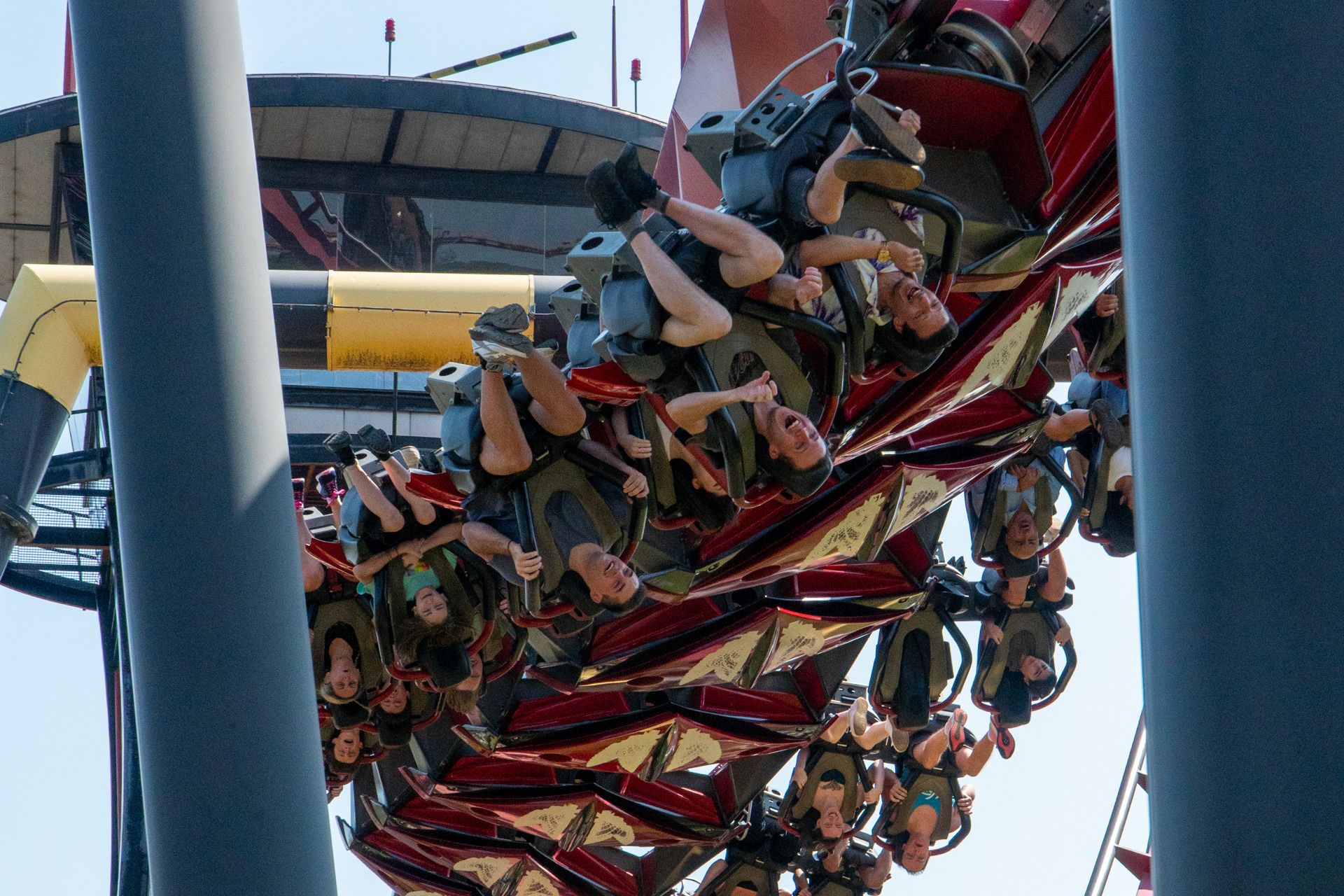
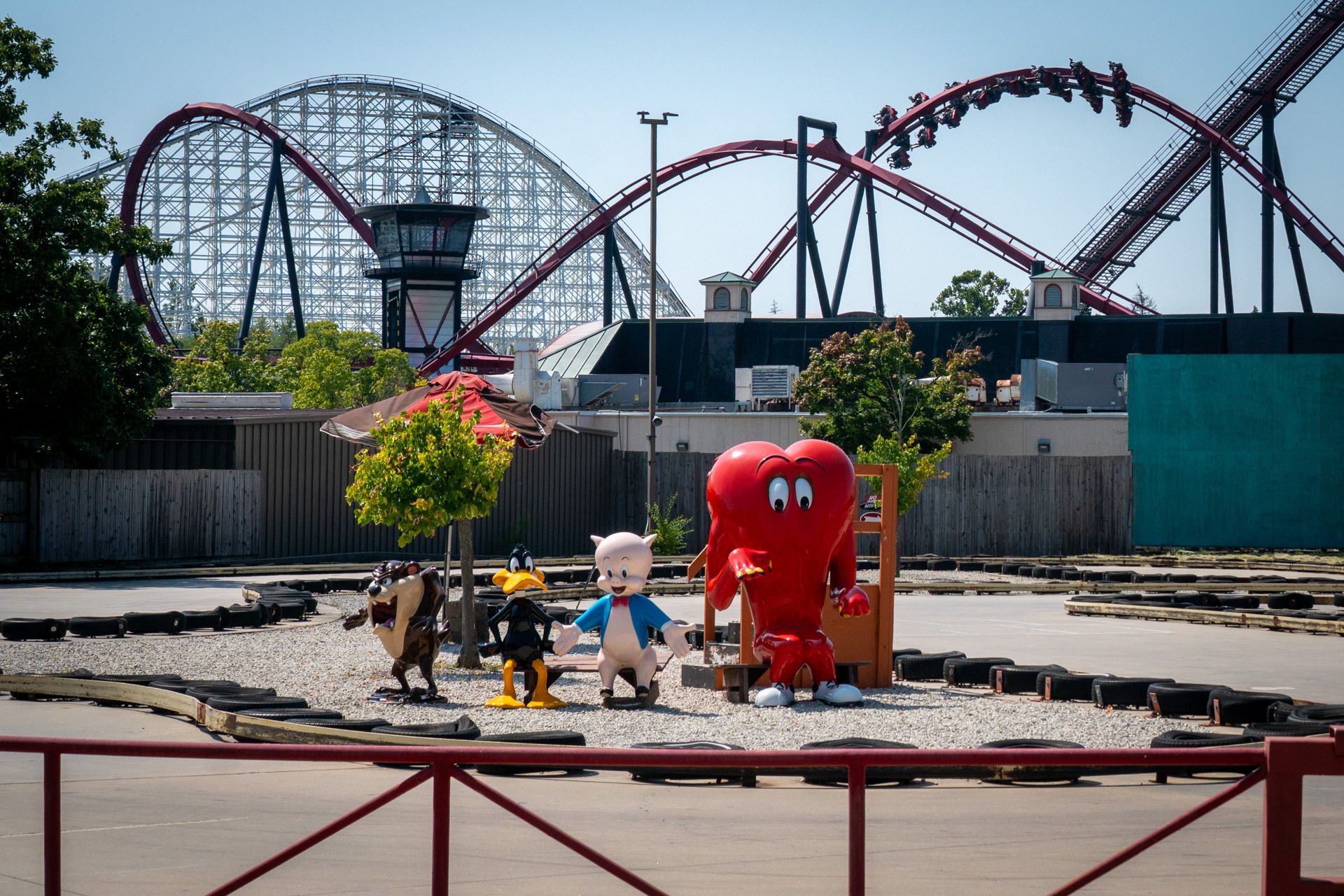
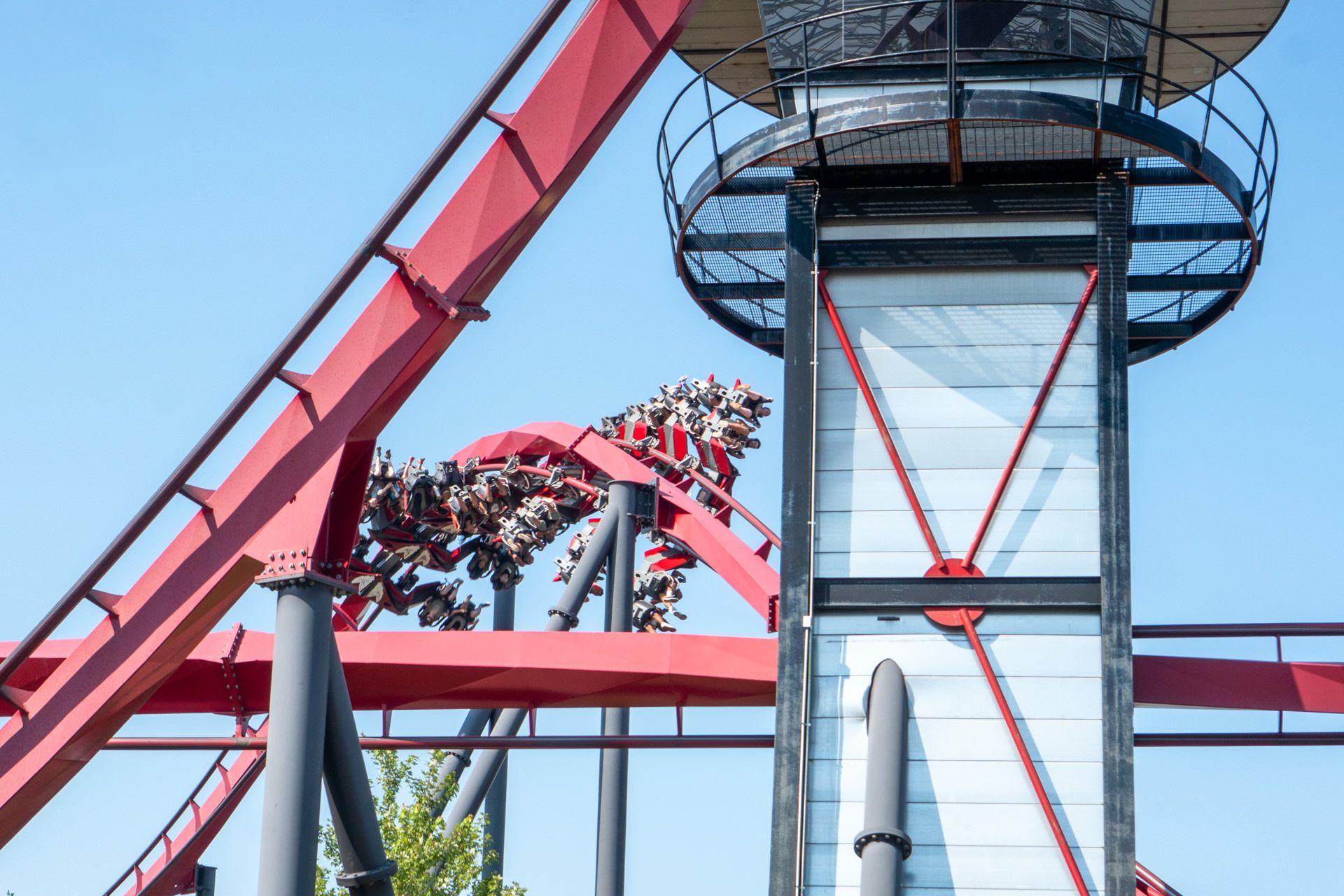
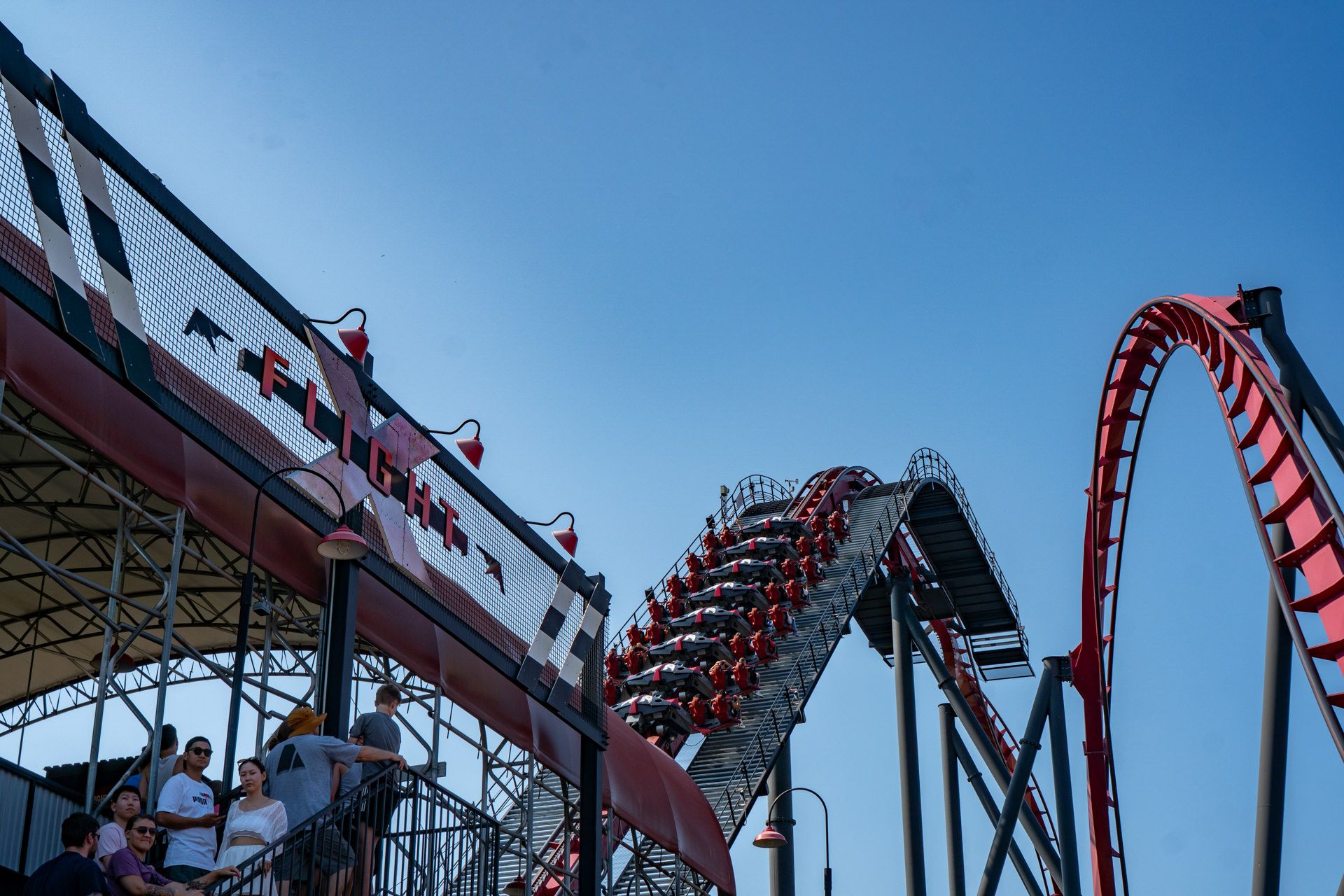
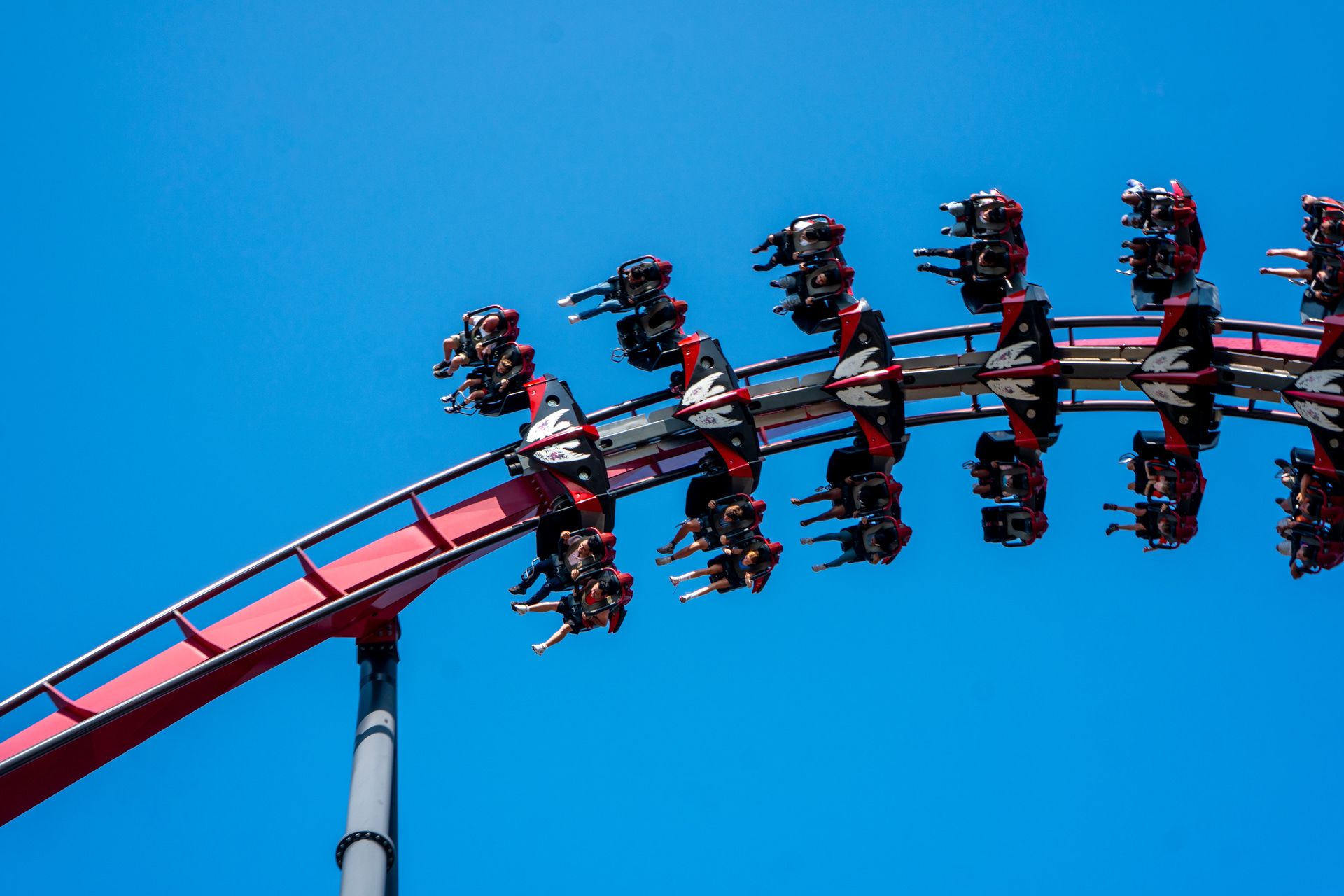
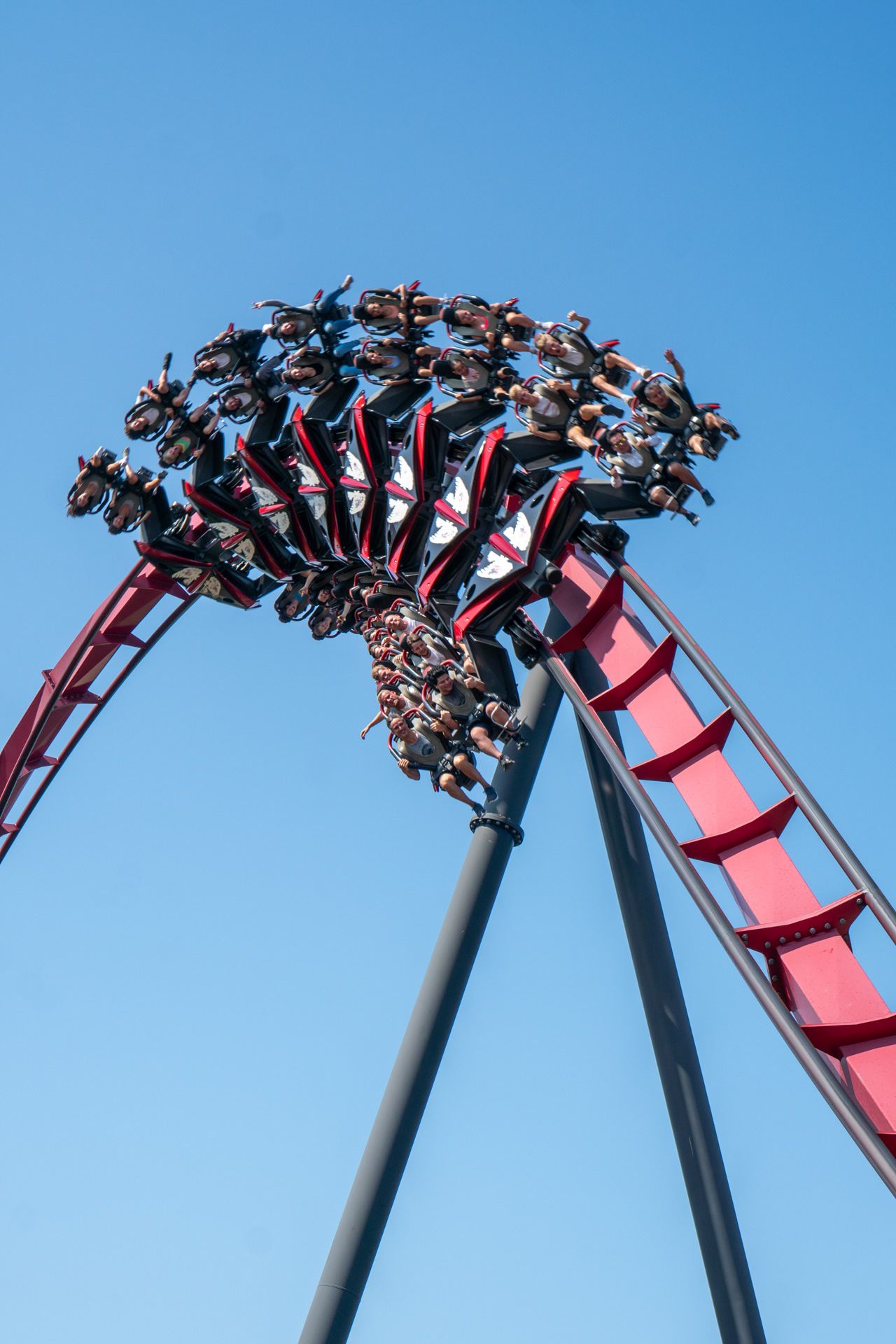
X-Flight is the next major highlight in County Fair. The B&M Wing Coaster from 2012 certainly has some bite.
After the lift hill, we plunge down the twisted first drop typical of this coaster type, turning upside down right at the start. With plenty of speed, we then race through the first Zero-G Roll before the train climbs into the large Immelmann. A fast and beautifully low-to-the-ground turn follows, leading directly into a high turnaround. From there, we head through the second Zero-G Roll and continue at high speed towards the grand finale.
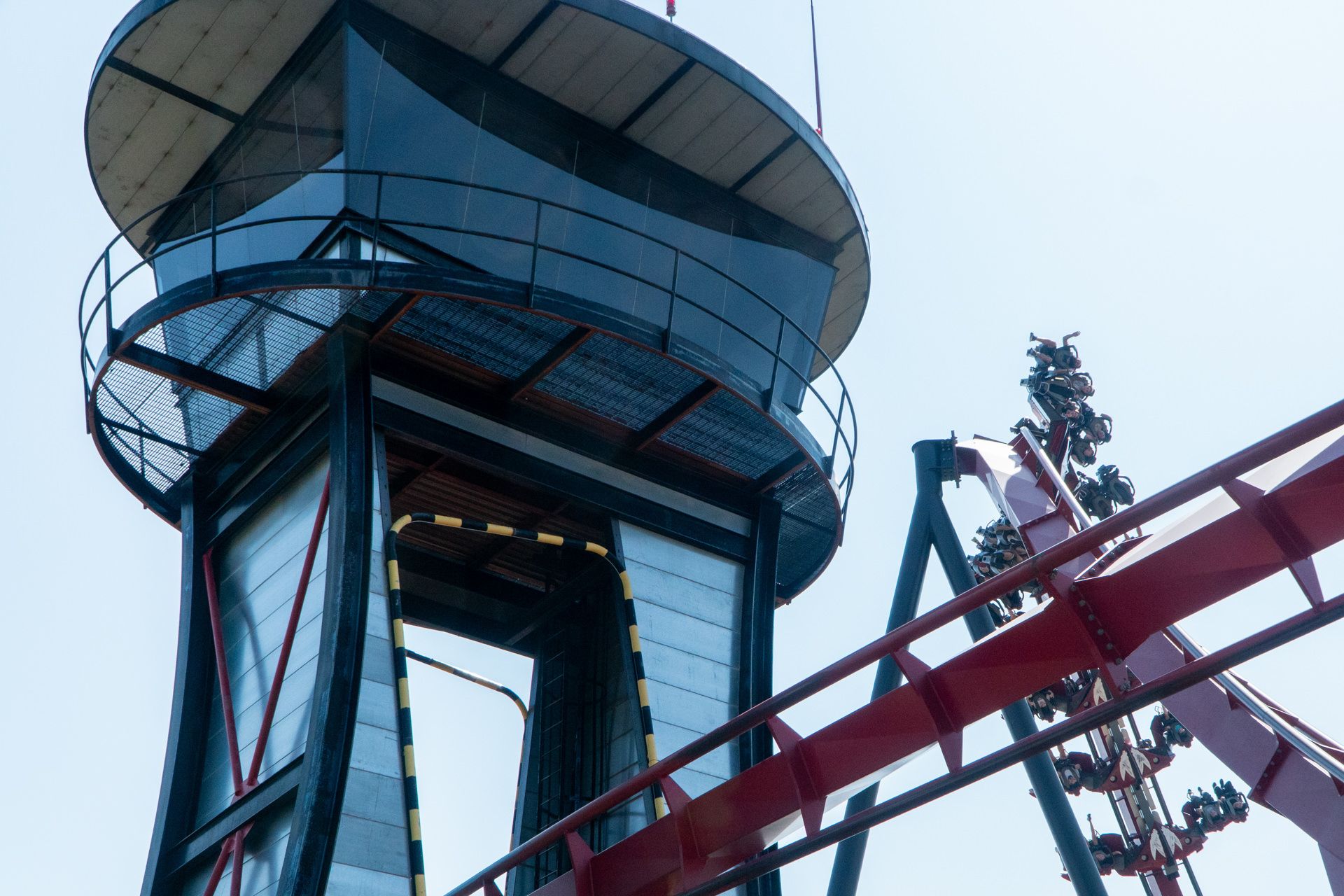
X-Flight now races towards the distinctive control tower. An In-Line Twist takes us straight through the narrow keyhole, with the seats positioned alongside the track creating a wonderfully close near-miss effect. One final helix rounds off the ride before we return to the station.
X-Flight genuinely impressed me. The sequence of elements works extremely well, the low-to-the-ground sections provide plenty of speed and the ride becomes surprisingly intense in places. For me, X-Flight was by far the best Wing Coaster I had ridden up to that point.
And somehow, I even survived the ride wearing open Birkenstocks. With the finest of fingertip control – or perhaps toe-tip control would be more appropriate – I actually managed to keep them on my feet throughout the entire ride. Perhaps not the cleverest choice of footwear for a Wing Coaster, but at least neither of them went flying.
Demon
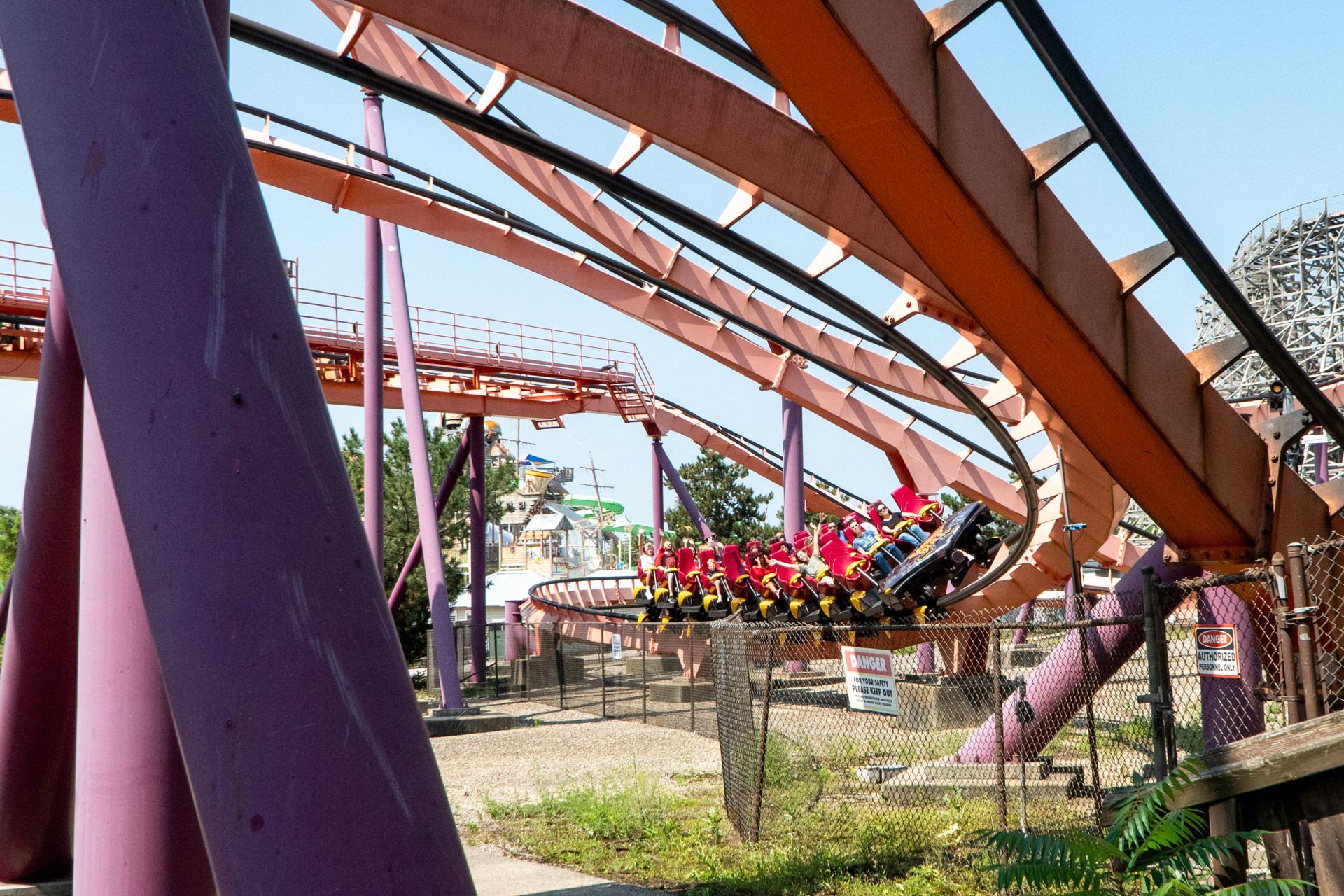
Demon is another genuine classic in County Fair. We already know a very similar coaster from California’s Great America, as both rides opened in 1976 under the name Turn of the Century and originally featured a noticeably different layout. In 1980, the large airtime hills following the first drop were replaced by two loops and, fittingly, both coasters were renamed Demon.
The ride therefore feels very familiar. After the first drop, we head directly through the two consecutive loops before entering the second part of the layout. Several turns follow before we encounter the two corkscrews and eventually return towards the station.
There is one major advantage to the Great America version, however: the wonderfully bizarre Demon soundtrack is still played here – in a loop lasting more than 40 minutes and packed with all sorts of delightfully strange references to the ride and its demon. It fits the slightly dated demonic theming perfectly and gives this old Arrow classic a character all of its own.
Metropolis Plaza
Justice League: Battle for Metropolis
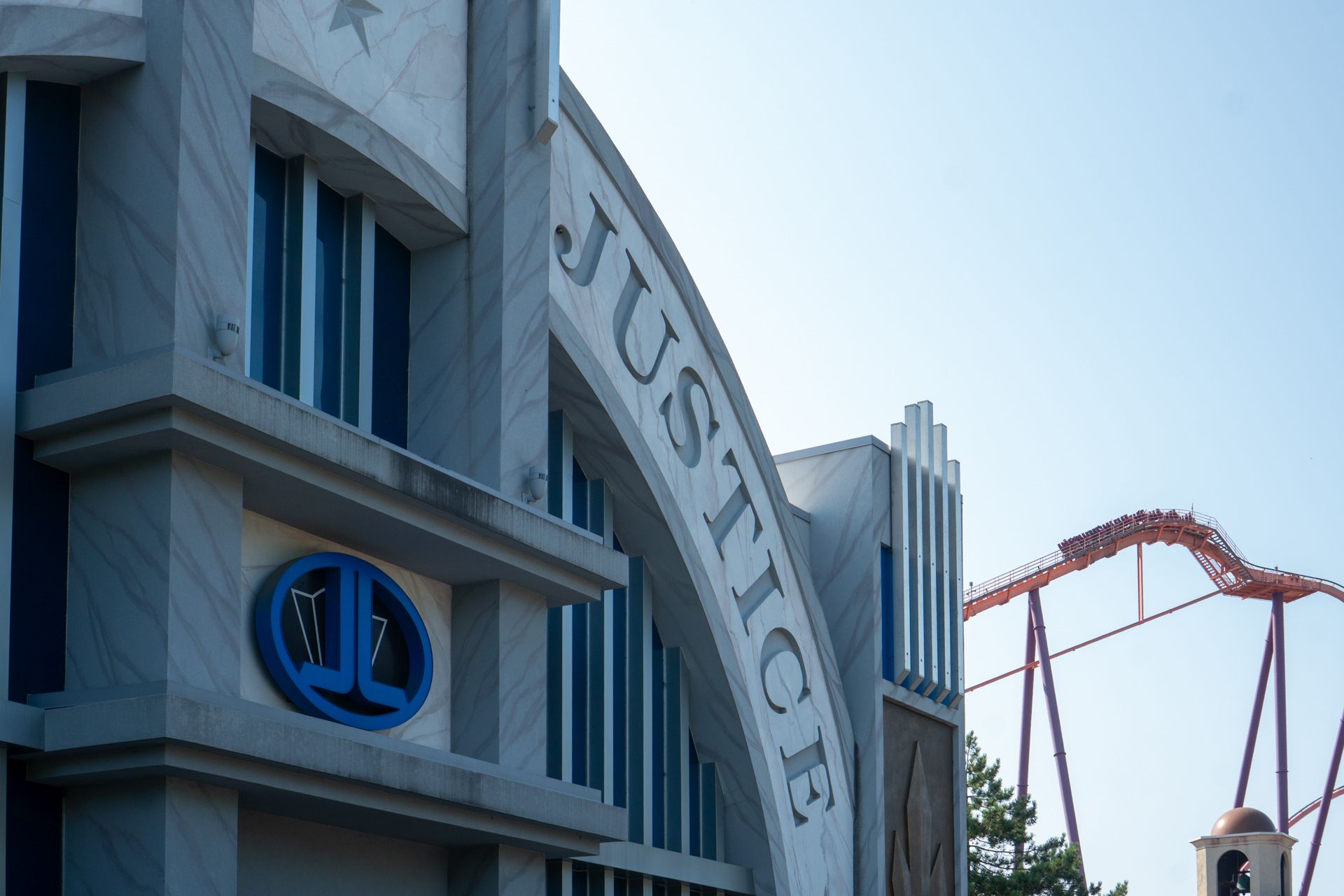
In Metropolis Plaza, Justice League: Battle for Metropolis awaits us, an interactive dark ride we already know from other Six Flags parks. Once again, the combination of large physical sets, projections and interactive elements proved highly entertaining. For me, it remains one of the better dark rides from Sally.
Southwest Territory
Giant Drop
We continue into Southwest Territory, where Giant Drop is the first major attraction awaiting us. The Intamin freefall tower is easy to spot from quite some distance thanks to its considerable height. The gondola slowly makes its way to the top, where there is just enough time to enjoy the view before it releases and plunges back towards the ground in free fall. A classic Intamin freefall tower that still delivers a really good ride today.
Raging Bull
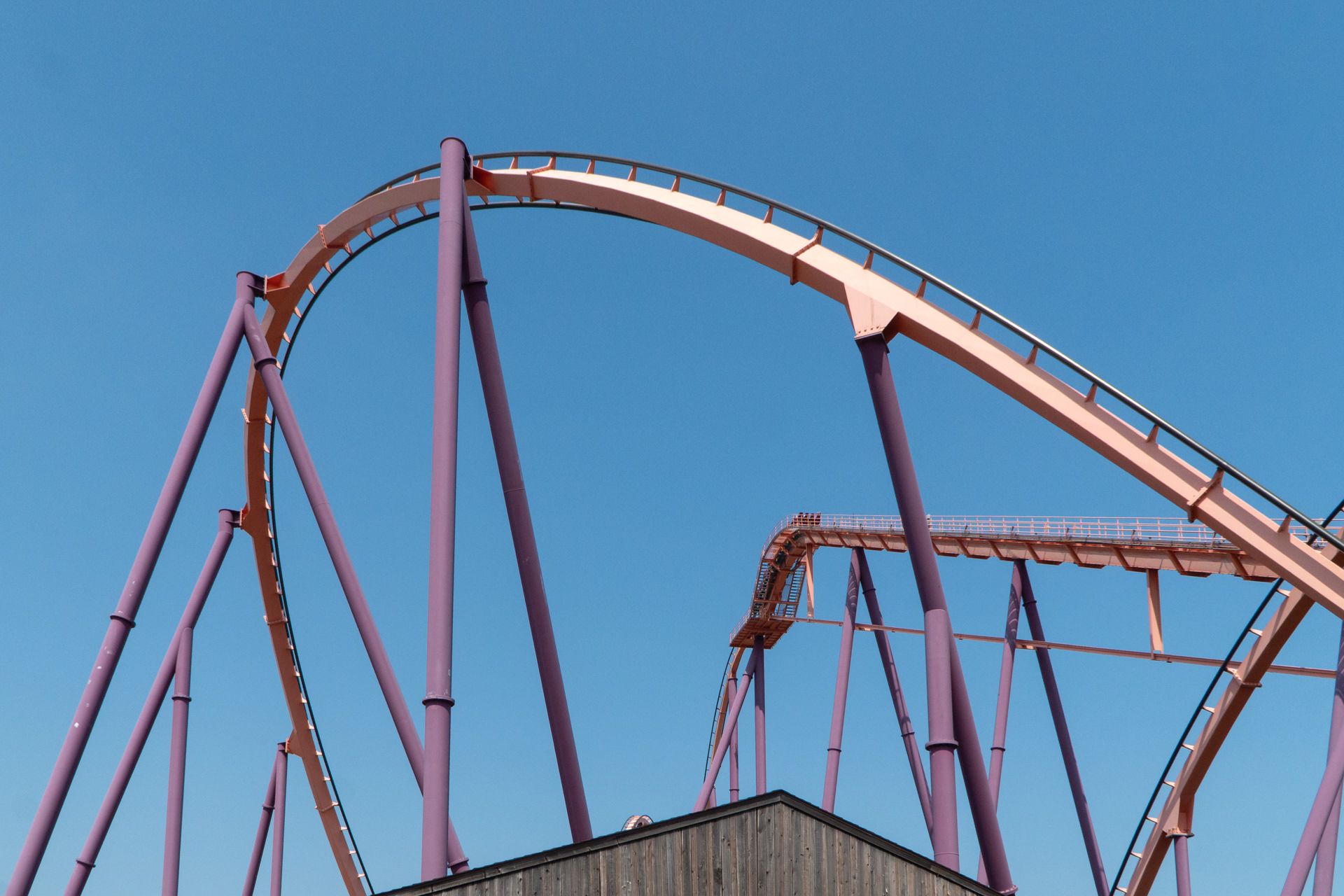
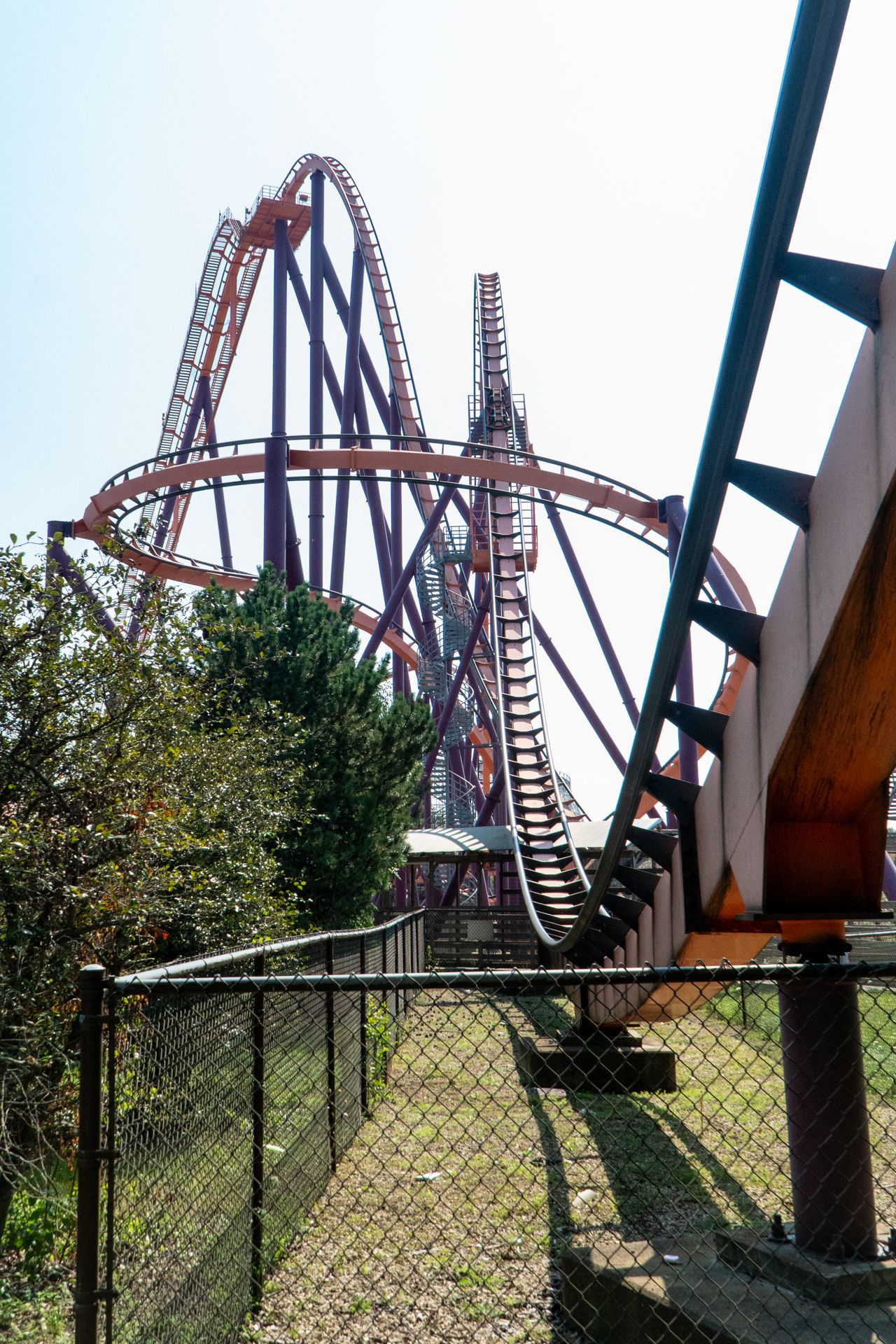
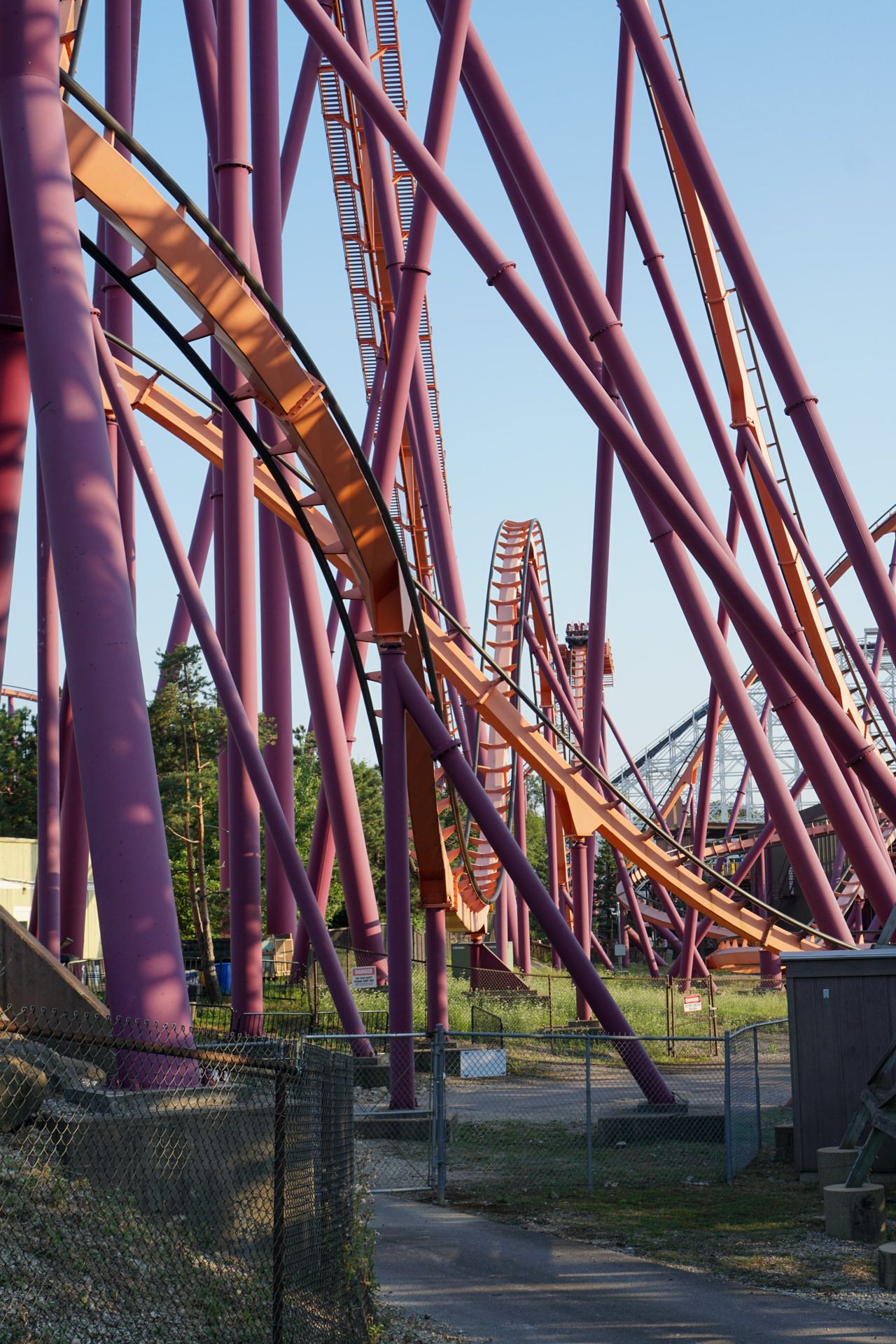
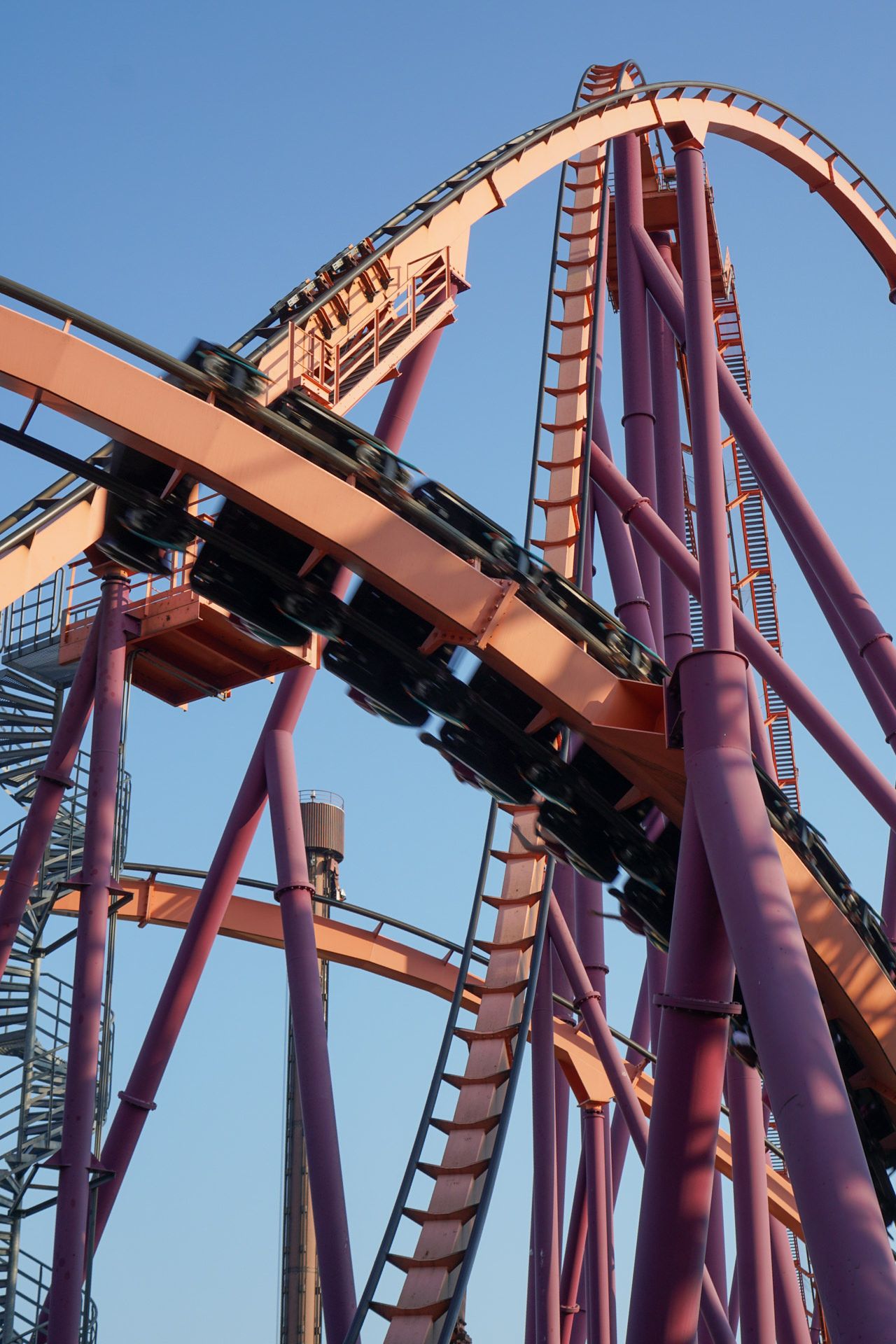
Raging Bull is one of the park’s major highlights. The B&M Hyper Coaster differs noticeably from many other rides of its type. Rather than relying primarily on a long succession of large airtime hills, Raging Bull features a much more twisted layout with numerous fast turns.
After the lift hill, a small pre-drop leads us straight into the action. The huge first drop already delivers some seriously strong airtime and sends us racing directly into a tunnel. The train then shoots back upwards into a sweeping turnaround high above the ground before flying over a classic camelback.
An elevated turn takes us to the left before we pass beneath the lift hill and change direction in another turnaround. A right-hand turn then leads into the block brake, which we pass without any noticeable reduction in speed.
Running parallel to the lift hill, we fly over another camelback before entering a helix around the first drop. For the grand finale, Raging Bull races through a low-to-the-ground figure eight before returning towards the station.
It is this combination of powerful airtime, high speed and numerous turns that makes Raging Bull so good. The coaster feels incredibly fast and varied, and barely loses any momentum right through to the end. Thanks to its exceptionally high capacity, the queues were surprisingly short, allowing me to get several consecutive rides. Definitely one of the park’s major highlights for me. What a ride.
Chubasco and Ricochet
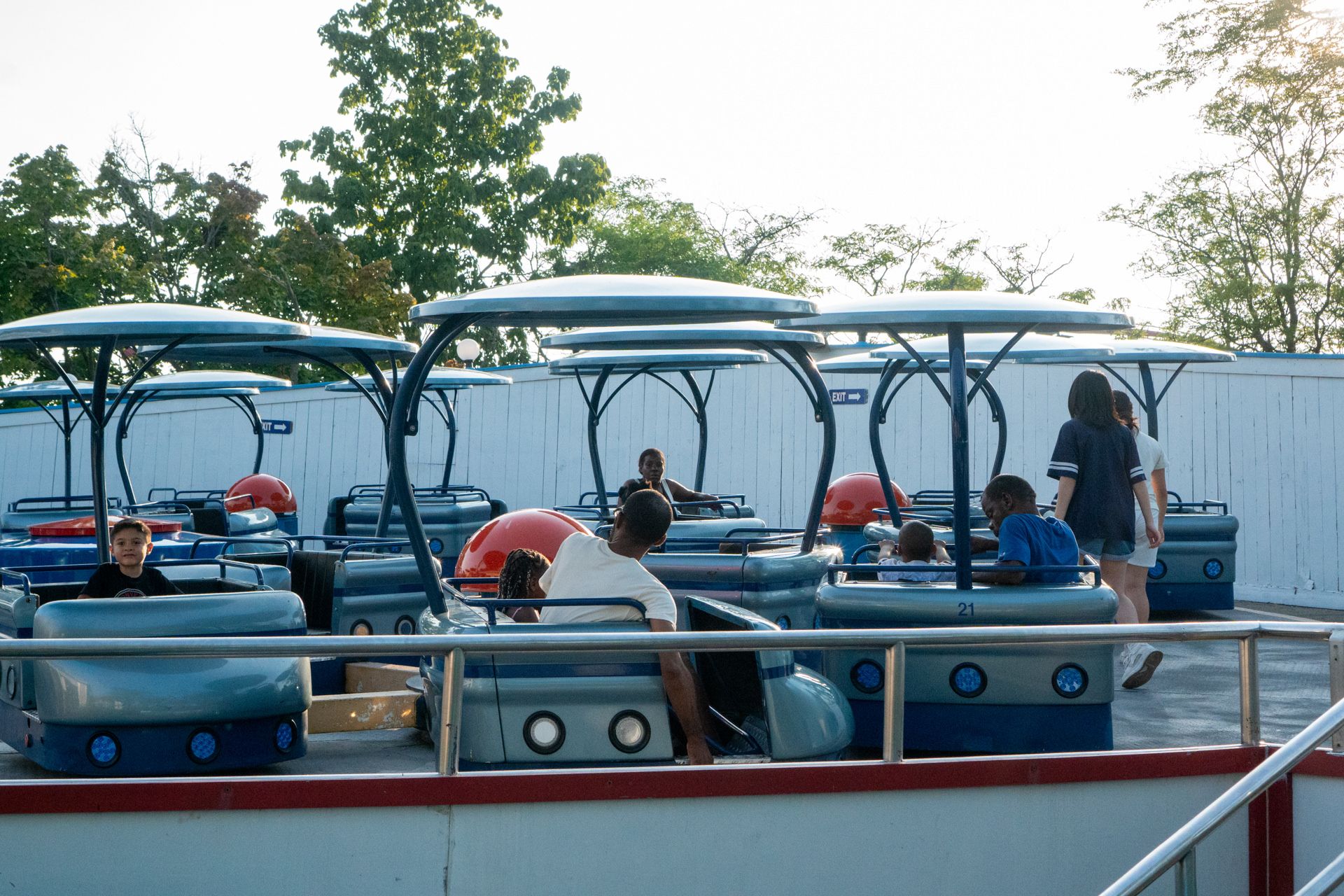
Alongside its major roller coasters, Southwest Territory is also home to some lovely classic flat rides. One of them is Chubasco, an attractively themed teacup ride that naturally had to be taken for a spin.
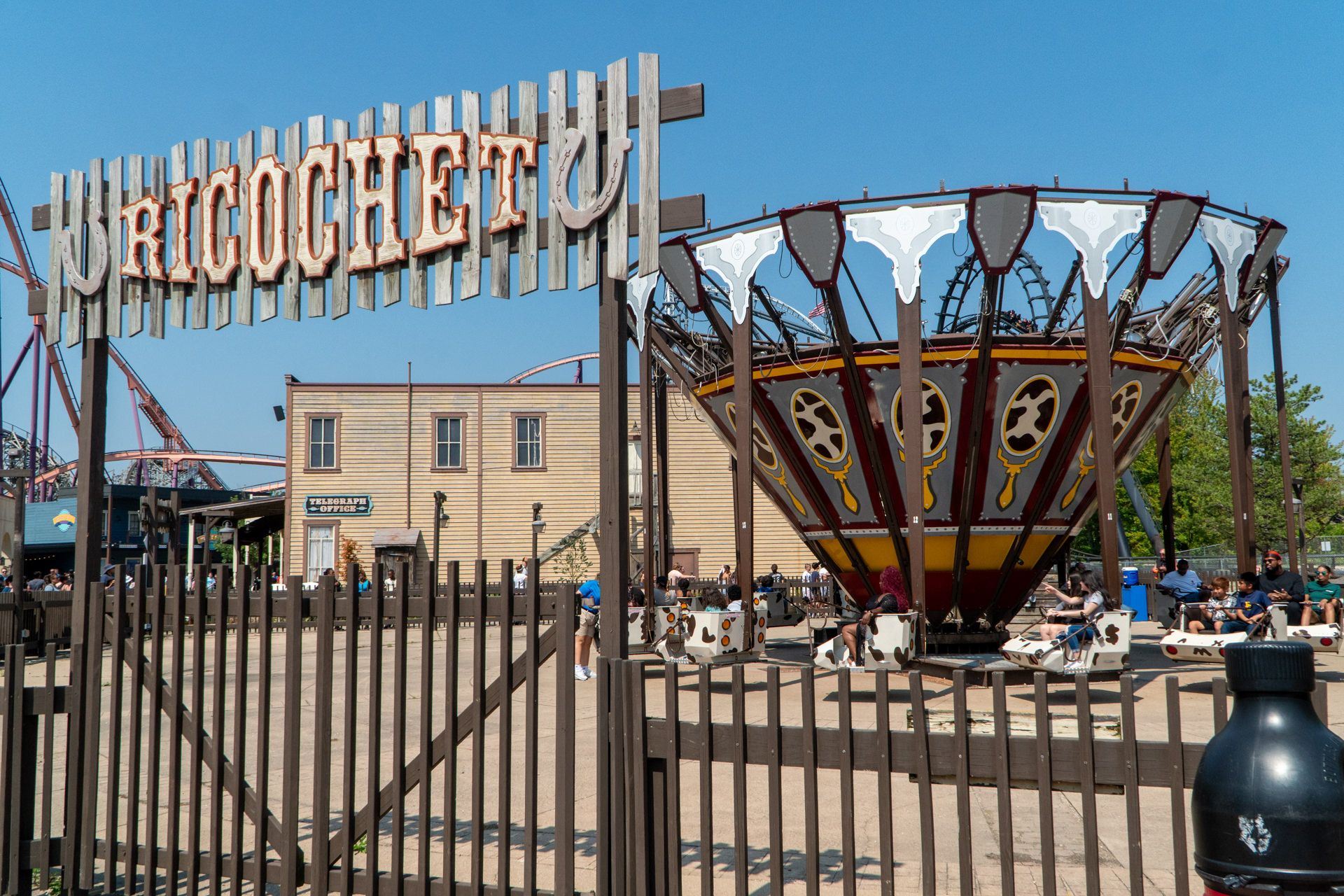
Not far away is Ricochet, a classic HUSS Swing-Up. Naturally, I could not pass this one by either. Rides like these make a nice addition to the park’s already very strong attraction line-up.
Viper
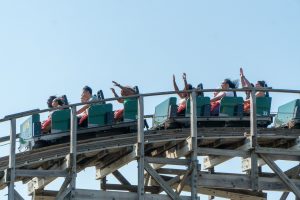
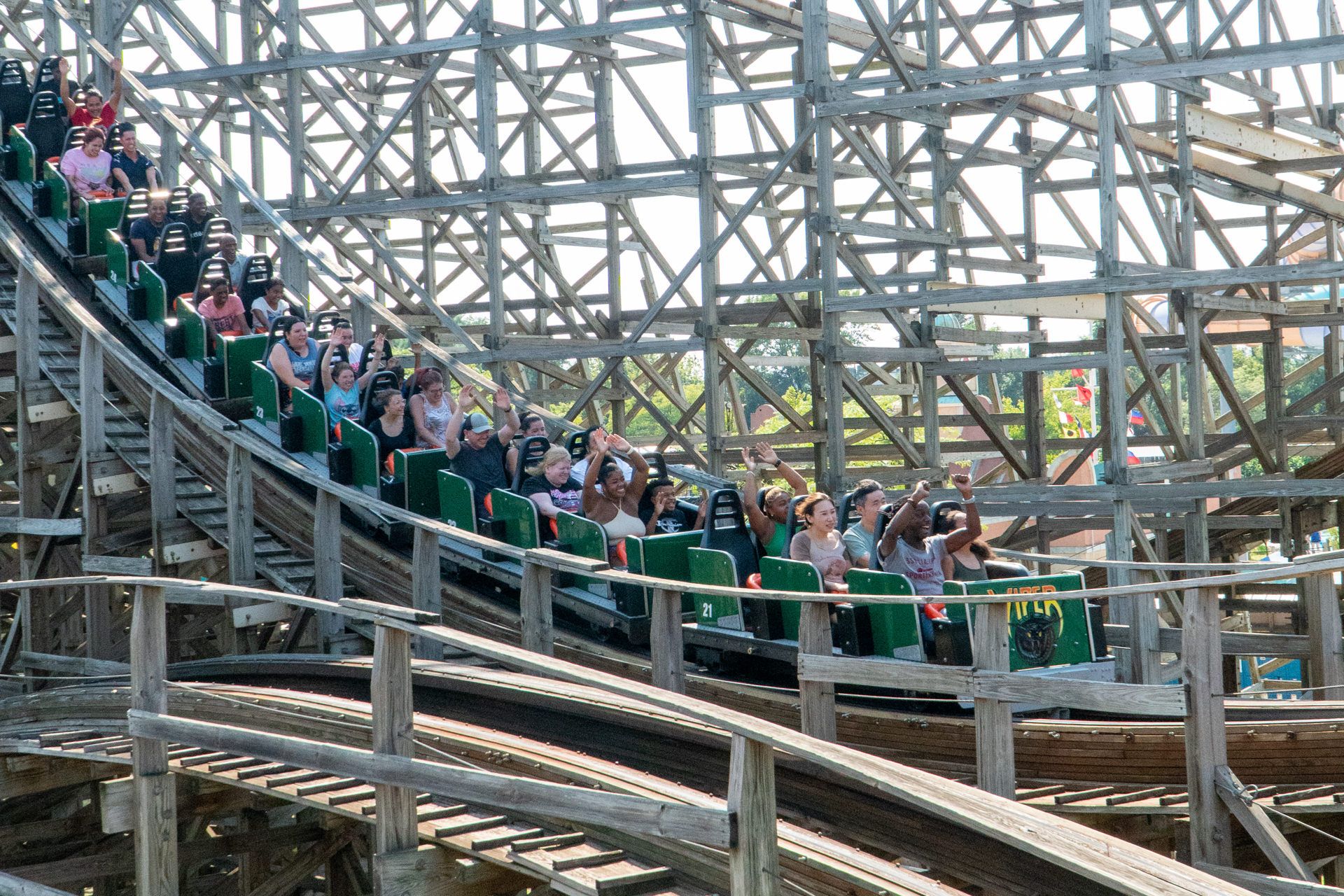
A little more secluded is Viper, the park’s next wooden roller coaster. Even the surprisingly long walk to the station seems to go on for quite some time, but an interesting ride awaits at the end.
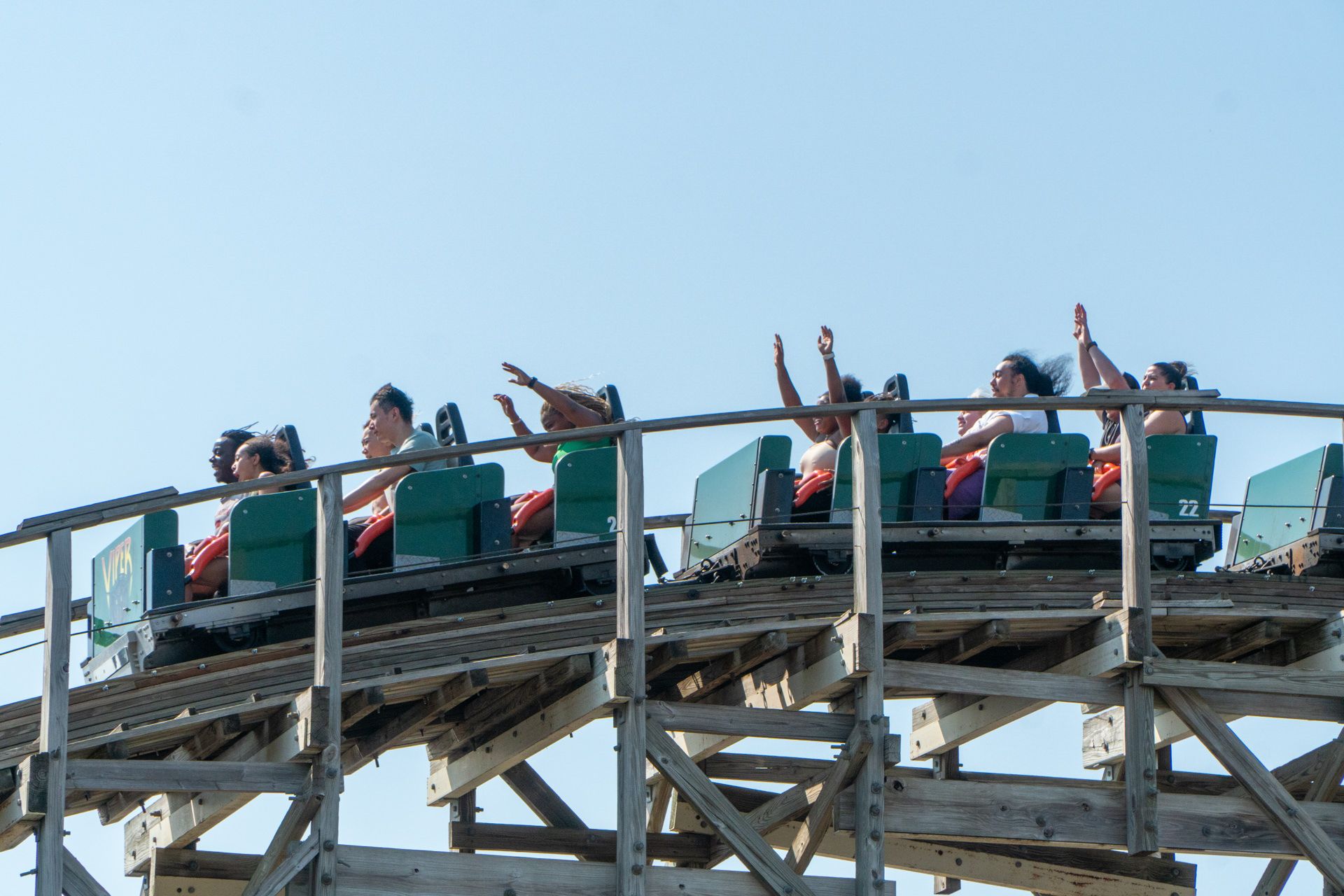
Viper opened in 1995 and is unmistakably inspired by the legendary Coney Island Cyclone in New York. The familiar basic concept was scaled up somewhat here. What is particularly remarkable is that there was no traditional roller coaster manufacturer behind the project: Viper was designed and built by Six Flags Great America itself and remains the only roller coaster the park has constructed in-house.
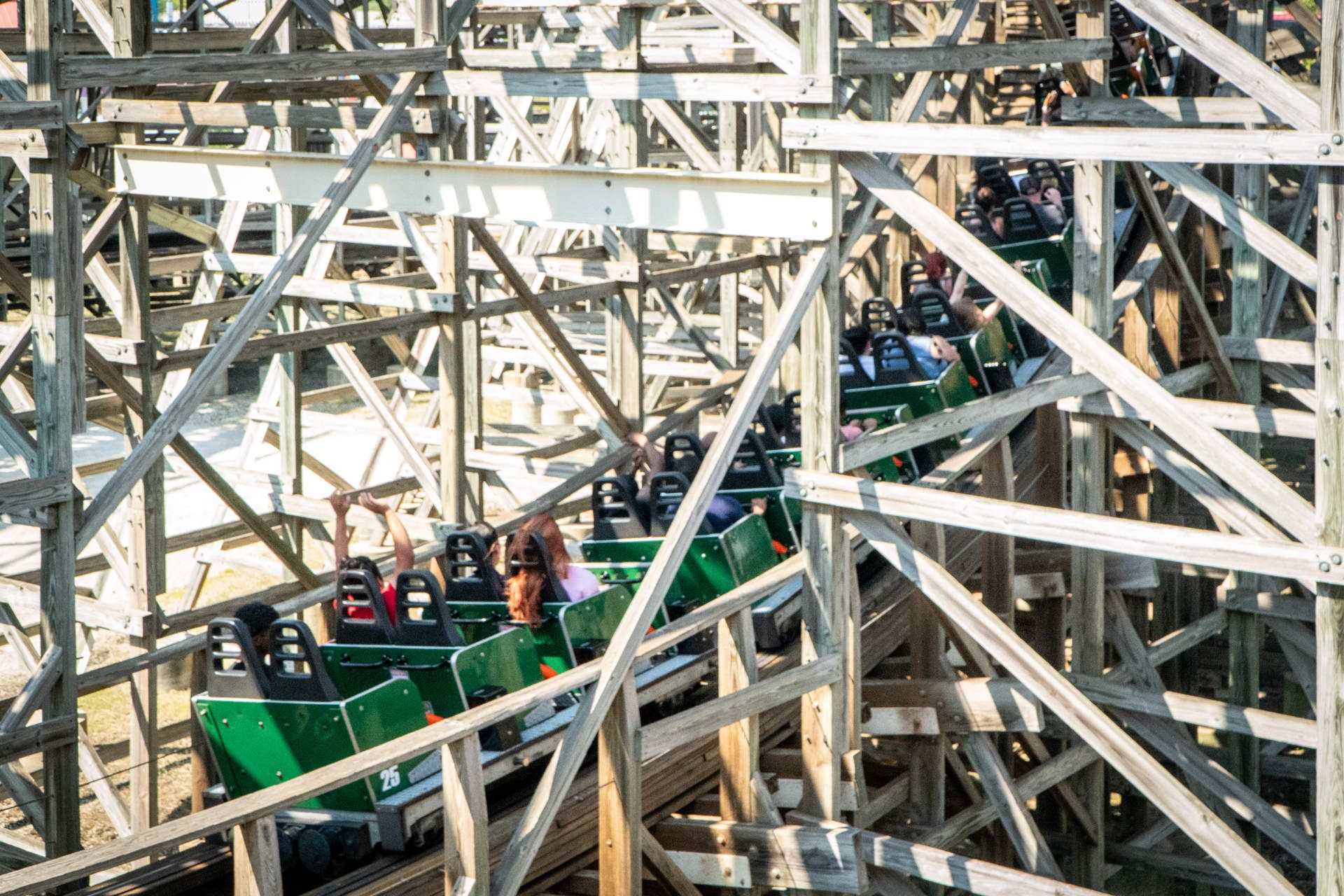
After the lift hill, the first drop takes us straight into the compact layout with its numerous hills and turnarounds. What really defines the experience is the journey through the dense wooden structure. Time and again we shoot straight through the framework, cross other sections of track and almost lose our sense of direction among all those supports. In between, the many smaller hills repeatedly provide some nice airtime. A great coaster with genuinely good ride characteristics.
Hometown Square
After Southwest Territory, we continue into Hometown Square. This area is home to a whole collection of classic rides that fit its character perfectly.
The Lobster
One particularly nice example is The Lobster, a classic Schwarzkopf Monster III. With a little skill, the individual cars can be spun wonderfully. You end up rotating like mad while the ride simultaneously performs its characteristic wave-like motion. Seeing the amazement on the faces of the Americans is always motivation enough for me to make the car spin just a little bit faster.
Triple Play
Not far away is Triple Play, a classic HUSS Troika. As the three clusters of gondolas rotate, the entire structure gradually tilts and the gondolas follow an increasingly pronounced wave-like trajectory. A pleasantly fast ride.
Hometown Fun Machine
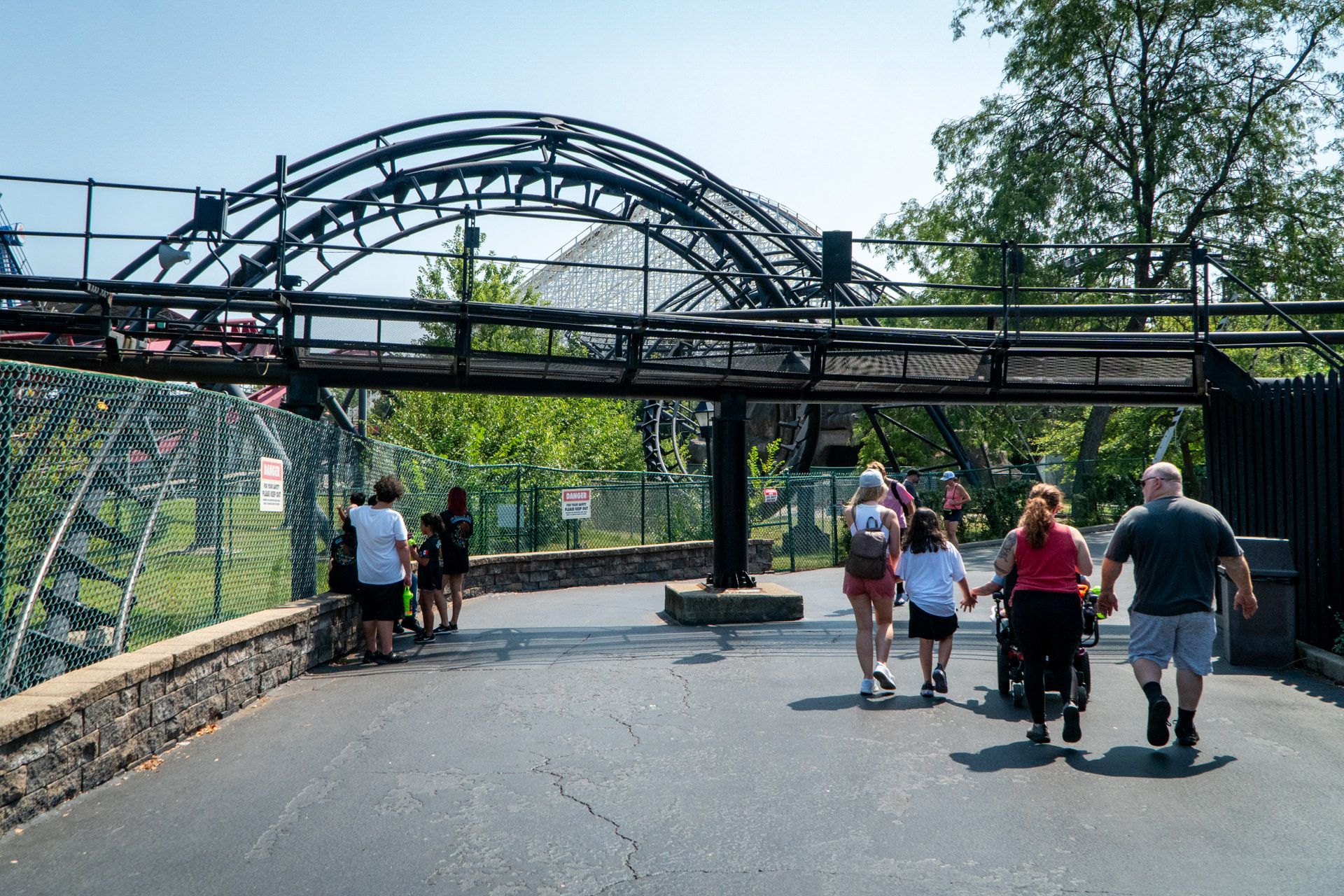
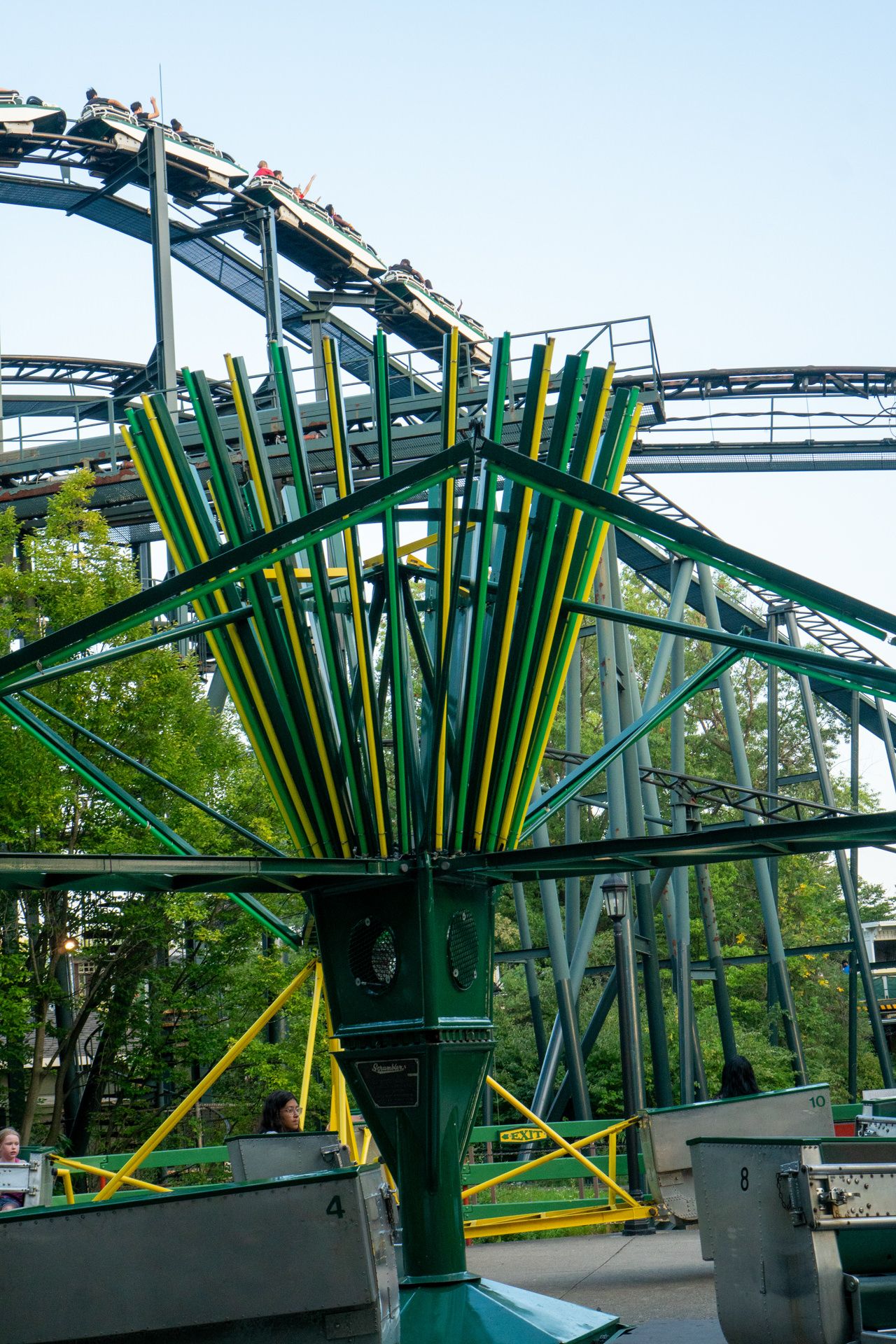
Hometown Fun Machine is somewhat hidden away beside one of Whizzer’s turnarounds. The classic Scrambler can only be reached via a small bridge, making the attraction feel slightly removed from the main path. Once aboard, the opposing rotational movements repeatedly press you firmly to the side.
Whizzer
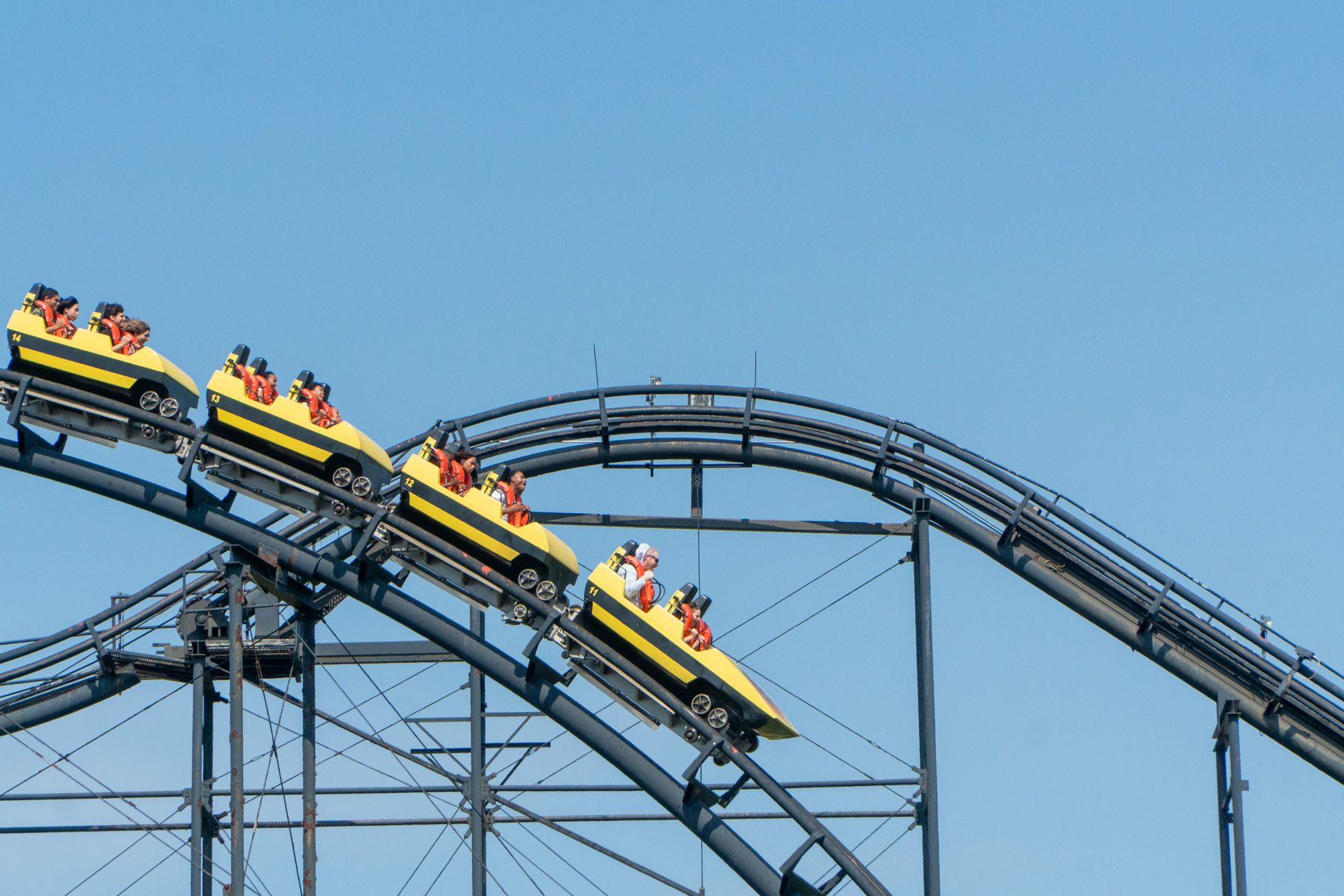
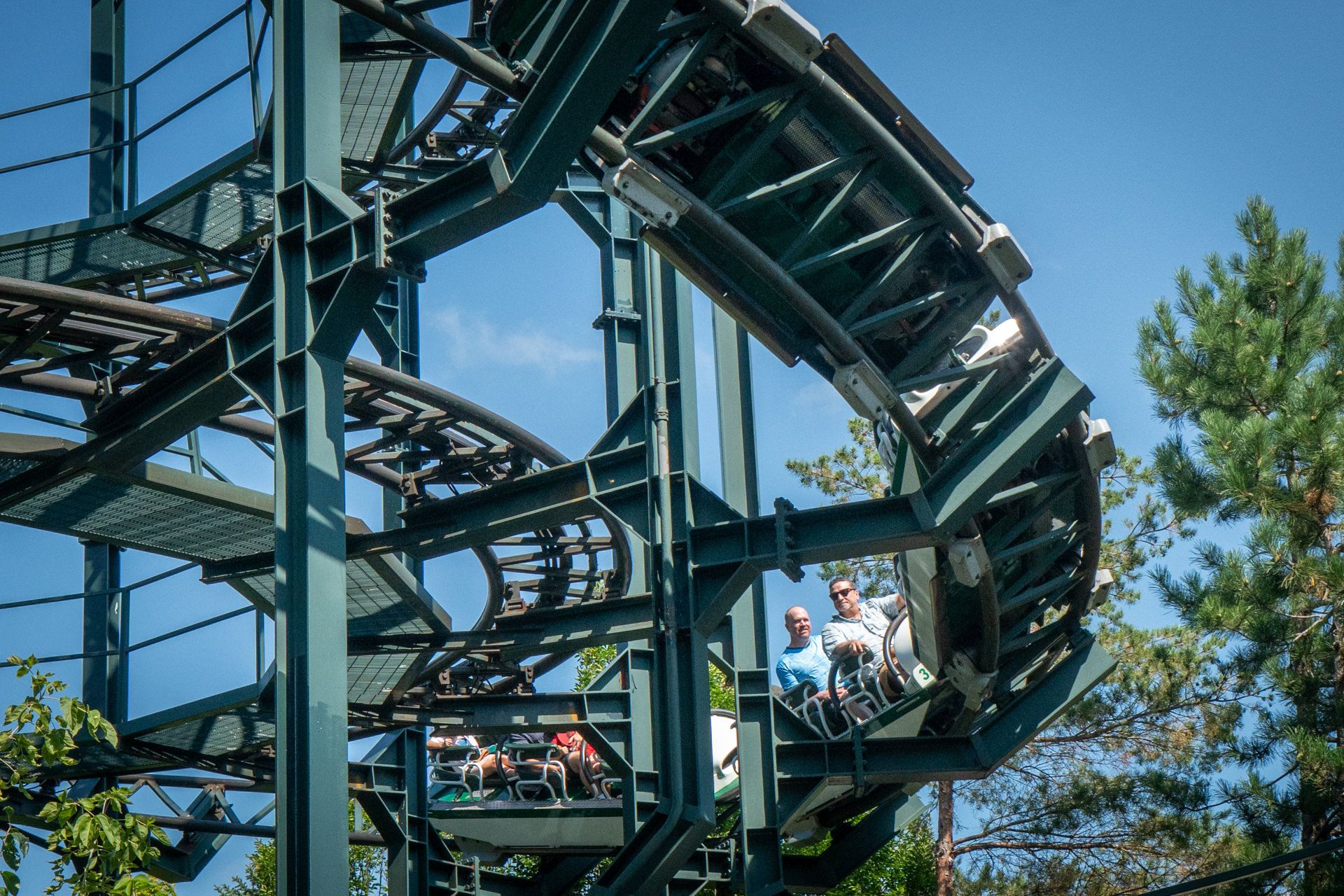
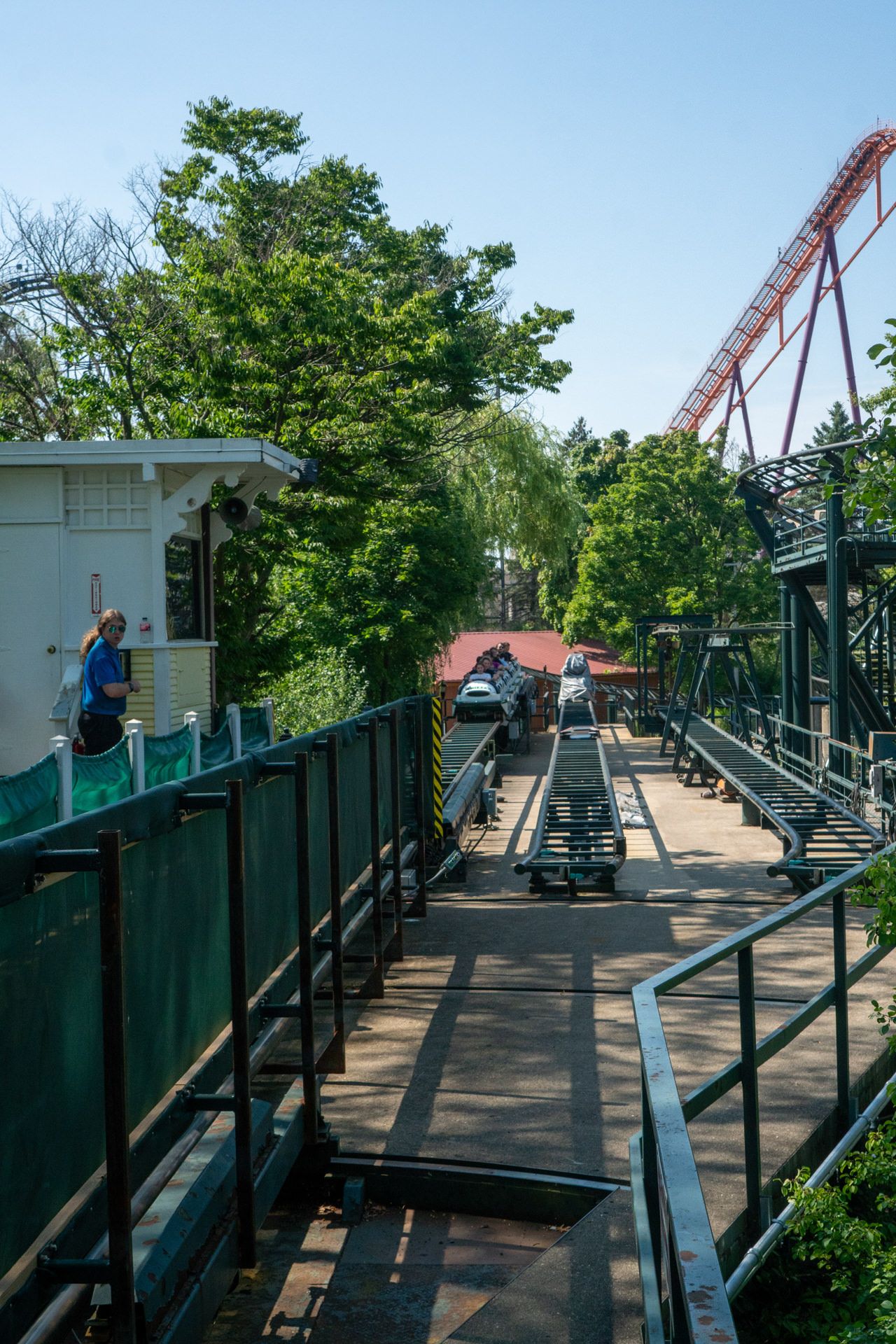
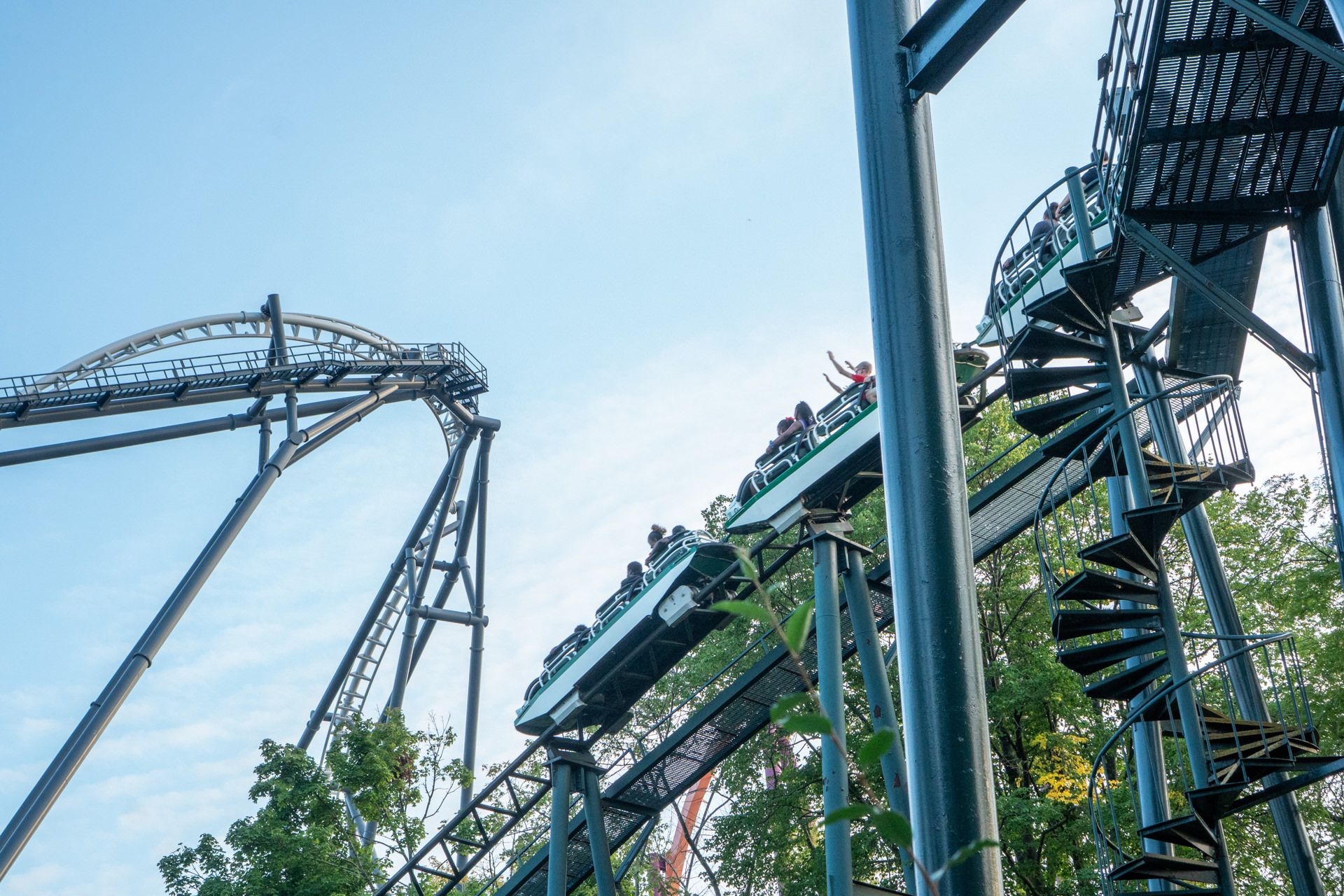
The main attraction in Hometown Square, however, is Whizzer, a Schwarzkopf Speed Racer dating all the way back to the park’s opening year of 1976. Its most distinctive feature is the spiral lift hill, which slowly carries the trains upwards before the actual ride begins.
From the lift hill, a long descent takes us down into a sweeping, low-to-the-ground turn. A lengthy climb then brings us back up before a turn high above the ground sends us sweeping steeply back towards ground level. Another low turn follows, together with a long straight climb, before we circle once around the lift hill. A curving descent and a right-hand turn take us towards the end of the ride, with one final helix leading back into the station.
The ride itself is quite nice, although for me it never quite reaches the aggression of Schwarzkopf’s smaller Jet Star coasters. The waiting times were rather frustrating as well. The large number of Flash Pass users significantly reduced the effective capacity for the regular queue, meaning Whizzer usually had one of the longest lines in the entire park.
Carousel Plaza
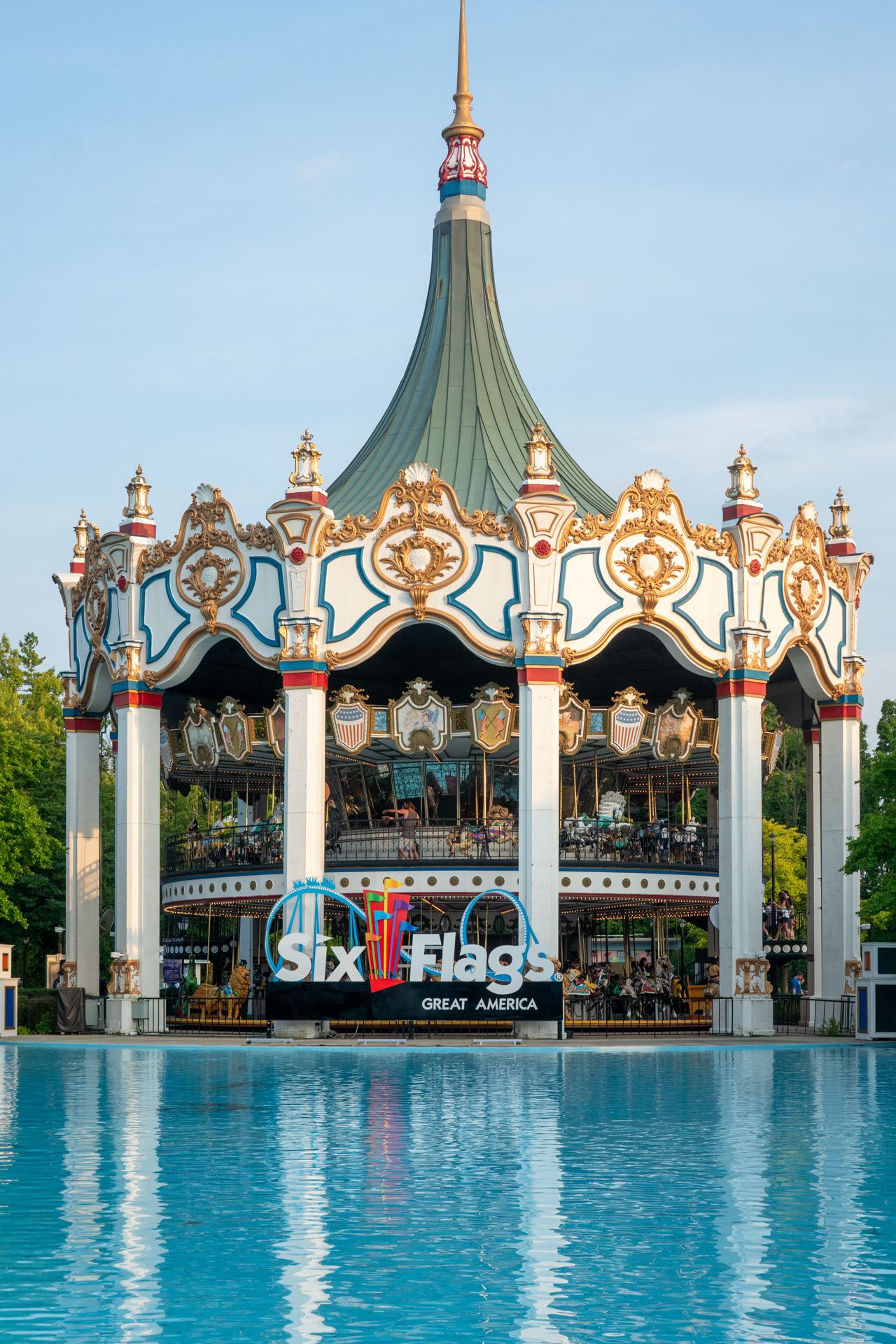
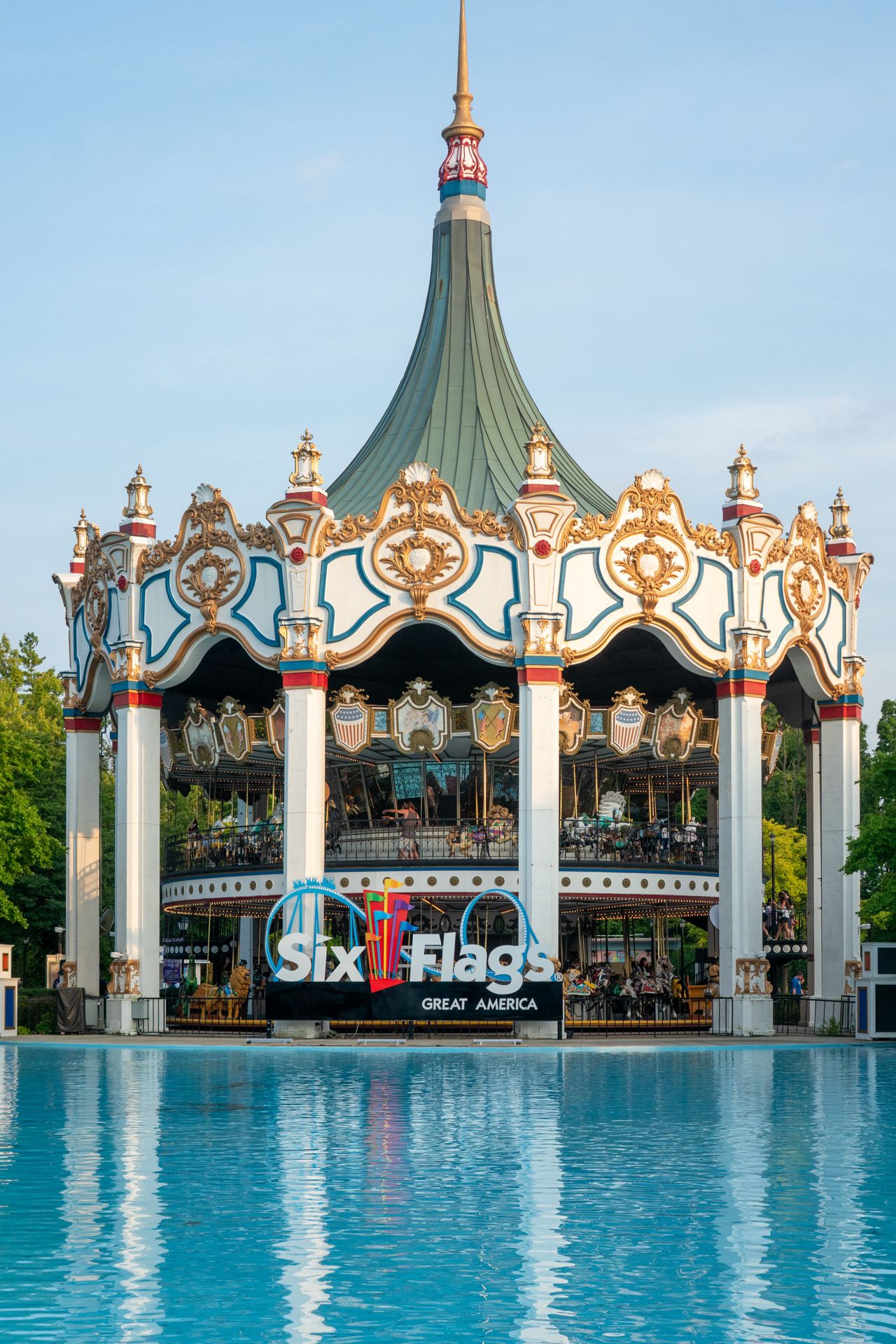
To complete our tour, we return to Carousel Plaza, the park’s grand entrance area. At its centre stands the imposing Columbia Carousel. The roughly 30-metre-high double-decker carousel has been one of the park’s landmarks since opening day in 1976 and has an almost identical counterpart at California’s Great America.
With its numerous horses, animals and carriages, the carousel is an impressive sight. Naturally, there was only one option for my ride: the upper level. If you get the chance to ride a double-decker carousel, you might as well do it properly and sit upstairs.
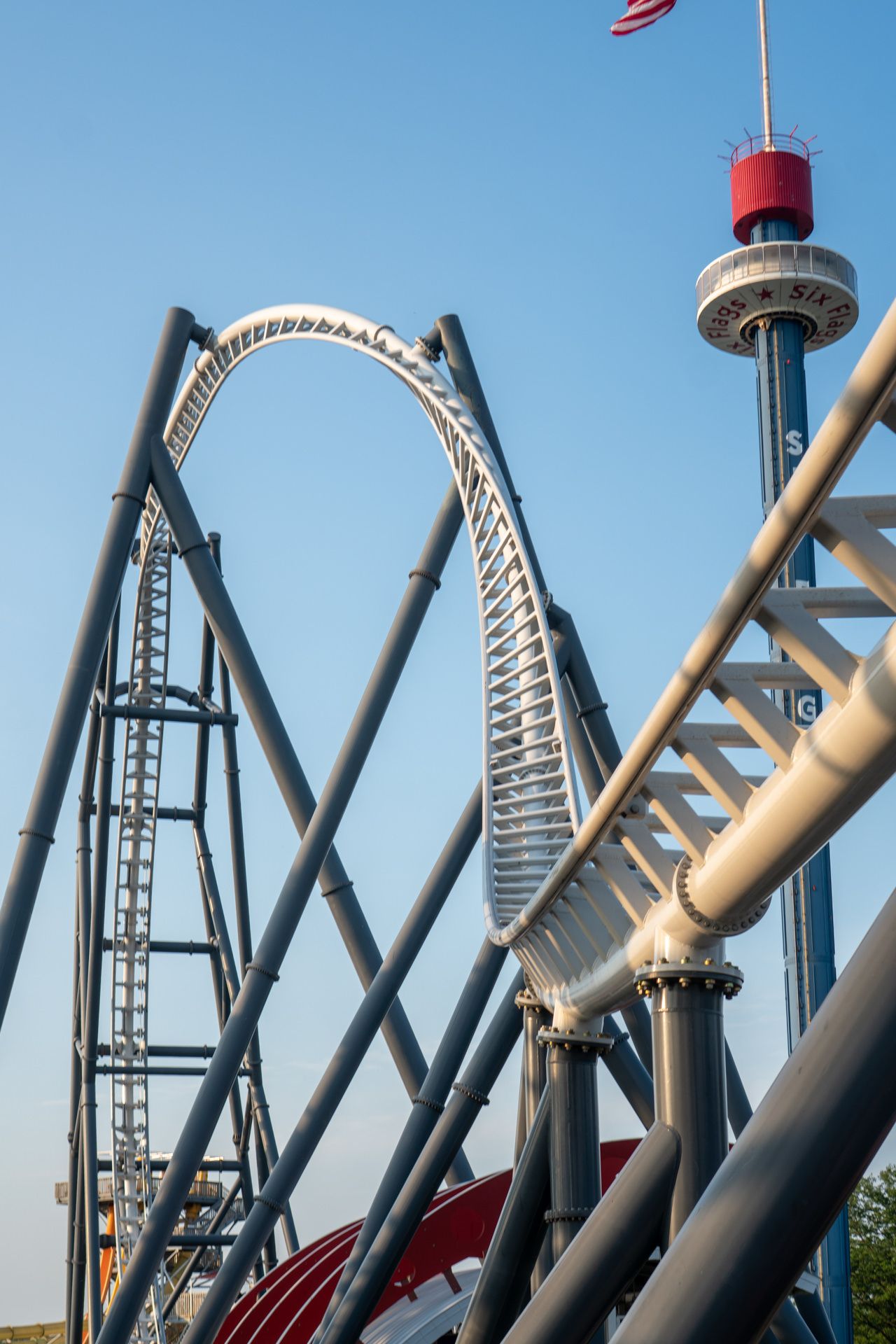
Right next to it, Sky Trek Tower rises roughly 100 metres above the park. The Intamin observation tower was added in 1977 and has shaped the park’s skyline ever since. In suitably clear conditions, the slowly rotating cabin even provides views all the way to the Chicago skyline.
Between these two classics, Maxx Force represents an entirely different era in the park’s history.
Maxx Force
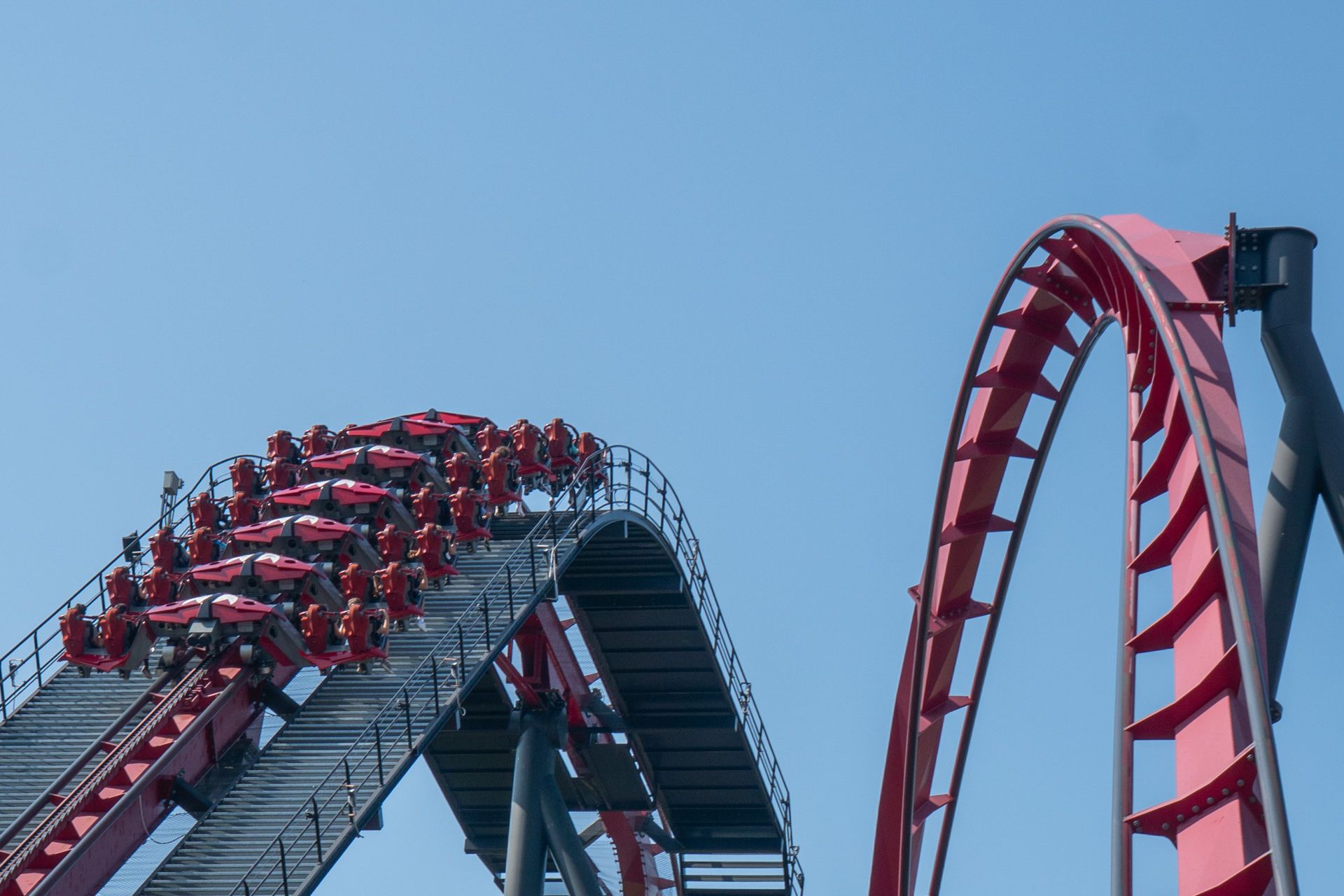
Maxx Force provides one final roller coaster whose defining feature becomes obvious right from the start. The S&S launch coaster uses a pneumatic system to accelerate its trains from 0 to around 125 km/h in less than two seconds. The resulting launch is suitably brutal and catapults us directly into the first huge element.
Rather like a Banana Roll, we twist sideways at the highest point before rapidly diving towards the ground through a roll. What initially appears to be a slowly climbing right-hand turn then reveals itself as a proper roll, which we negotiate at considerable speed. From there, we are already heading towards the somewhat strangely approached Dive Loop, entered almost from the side, which brings the short layout to a close.
Overall, Maxx Force is a very solid roller coaster with excellent ride characteristics. Its relatively low capacity resulted in correspondingly long queues during my visit, however, so I only managed a single ride.
Pictures Six Flags Great America
Conclusion Six Flags Great America
I thoroughly enjoyed Six Flags Great America. Above all, its strong roller coaster line-up offers an enormous amount of variety. Add to that the numerous classic flat rides, which are increasingly difficult to find in such numbers at a major amusement park.
The shared history with California’s Great America can still be recognised in many places and gives the park a character of its own. At the same time, Great America has developed considerably over the decades and does a lovely job of combining its history with modern major attractions.
Overall, Six Flags Great America is a truly great amusement park – and I can hardly wait to fly back to Chicago and take another trip up to Gurnee.
What’s your opinion on Six Flags Great America? Simply write it in the comment field below the report!
Click here to get to the next report of The Great Mid-Western Road Trip.
Click here to get to the overview page of Six Flags Great America.