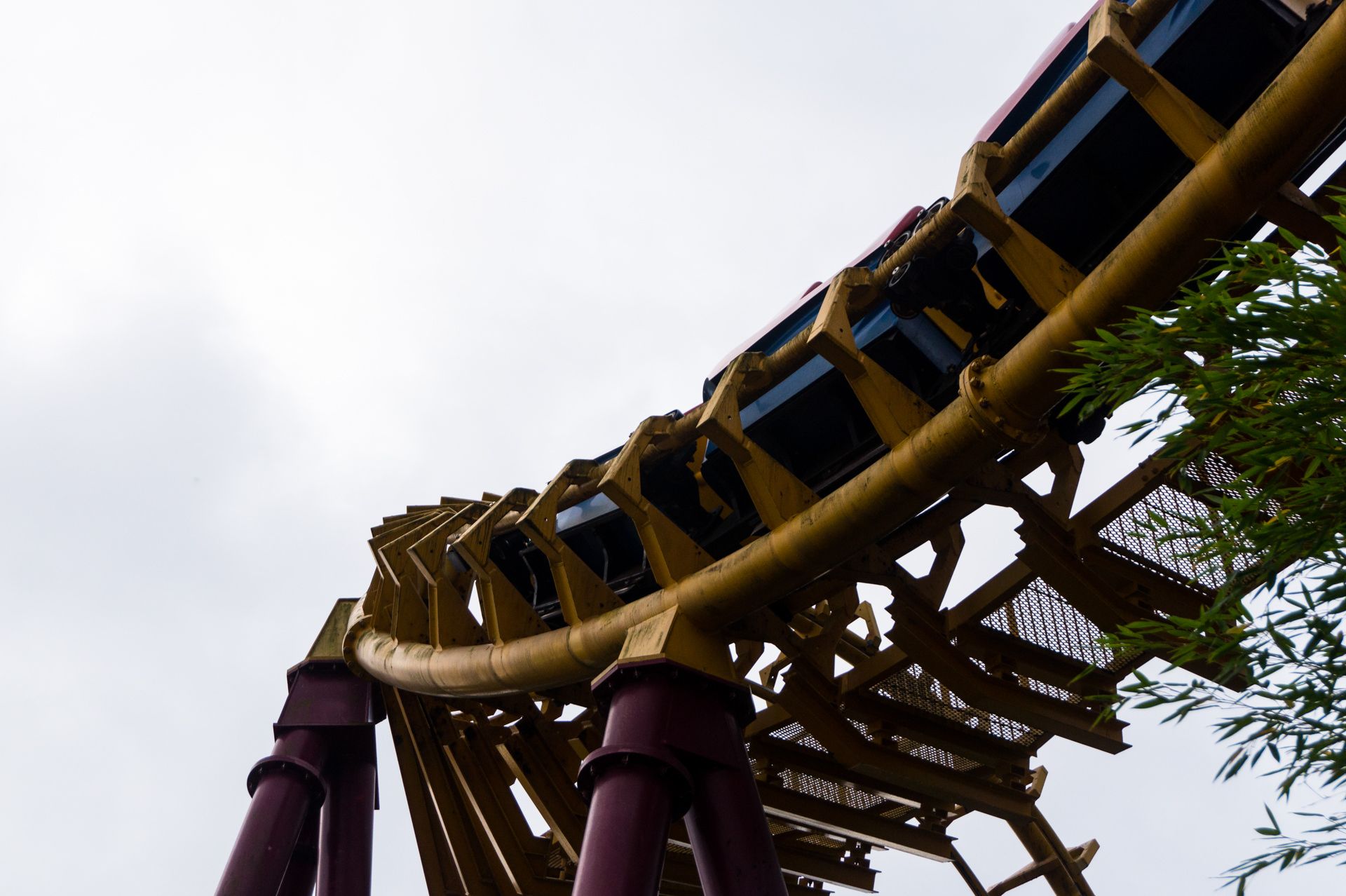
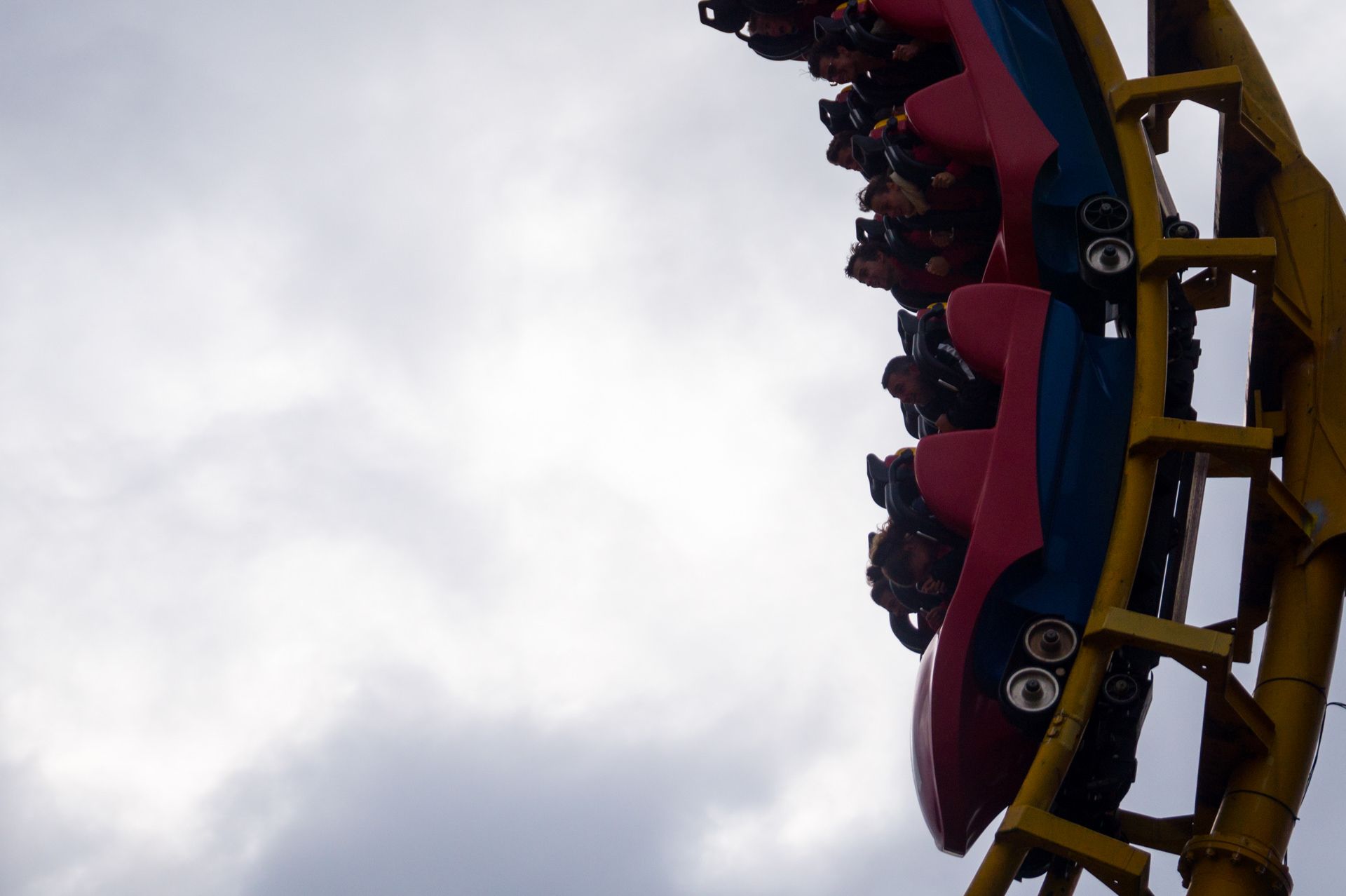
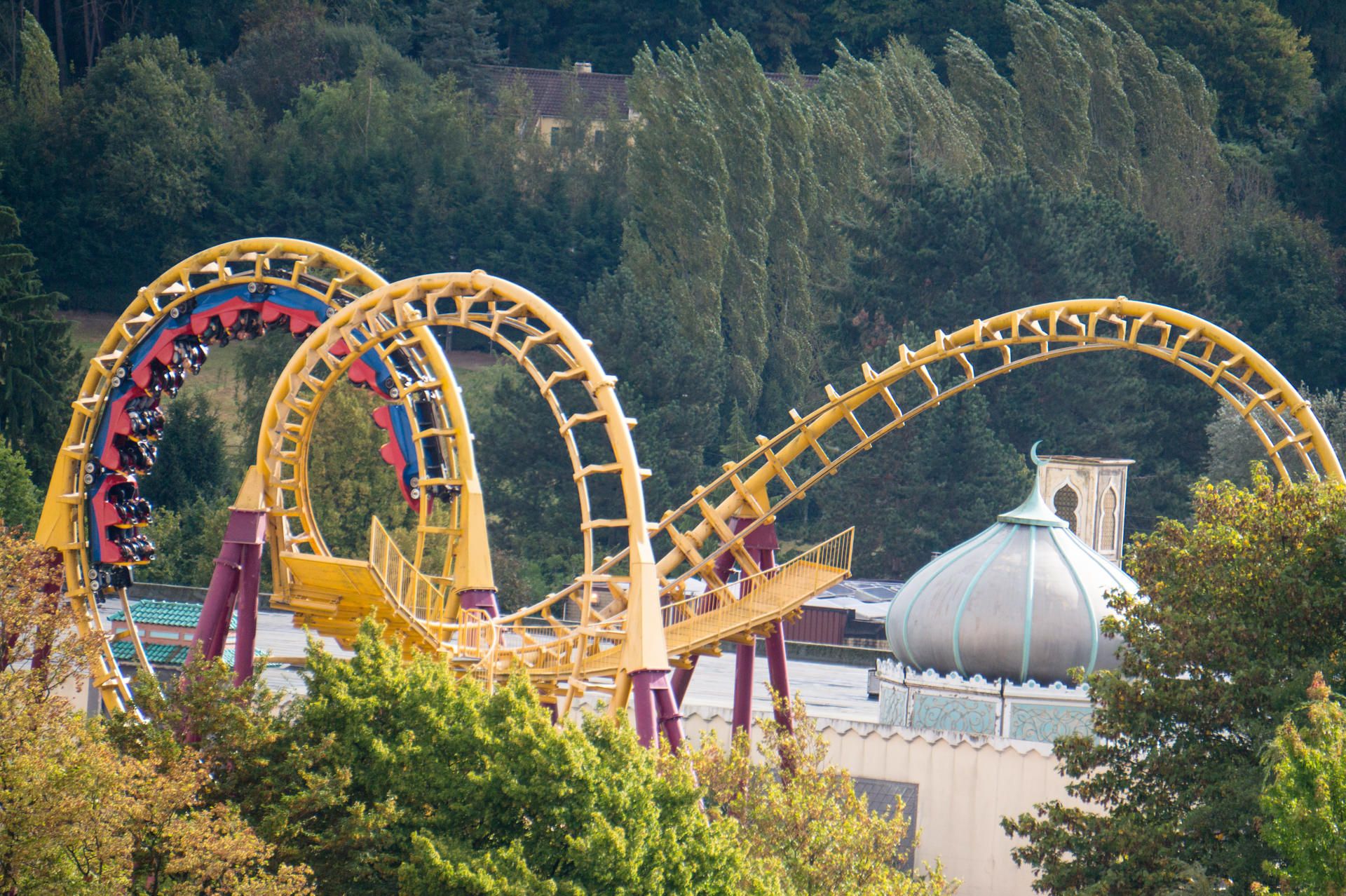
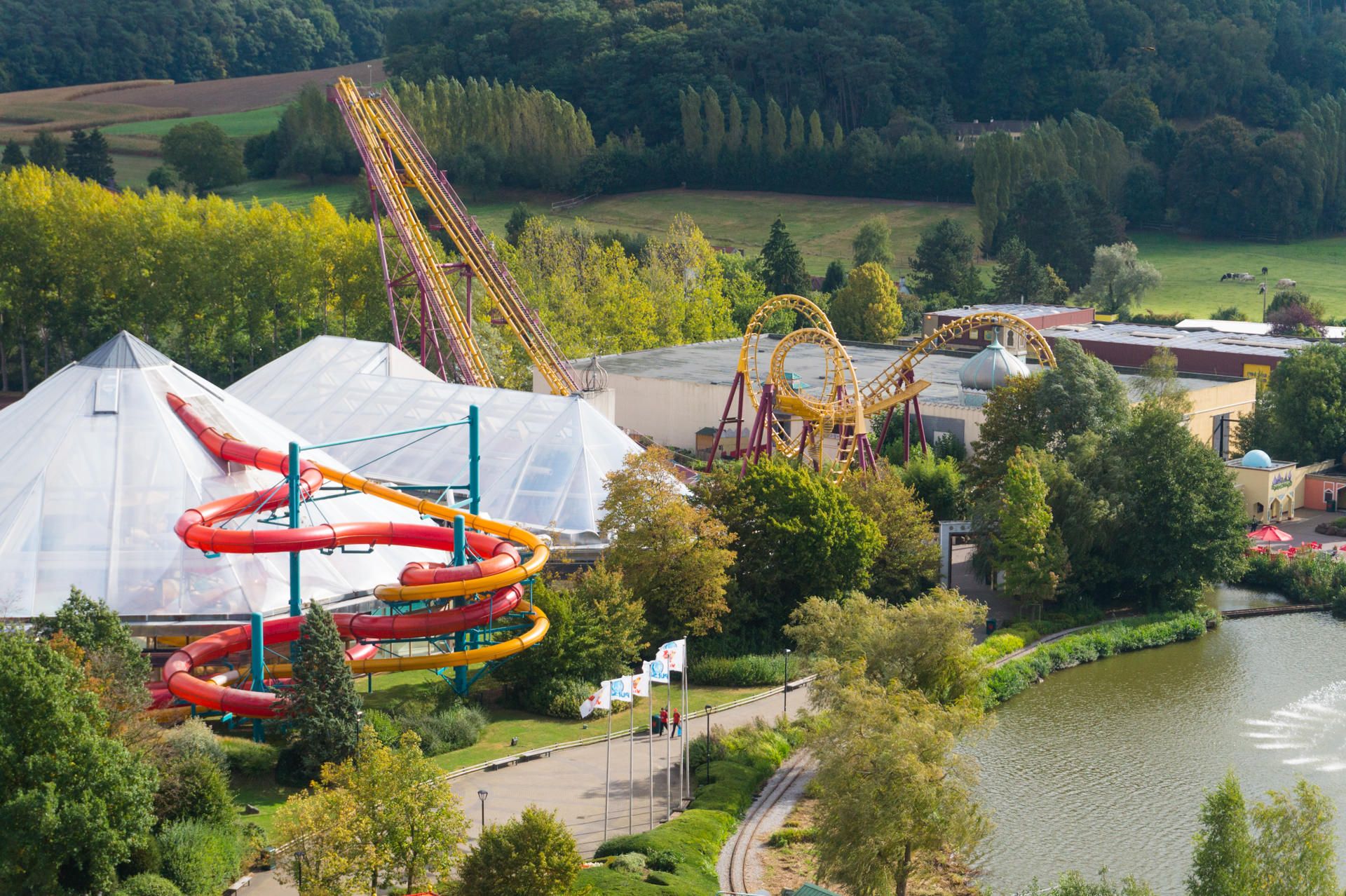
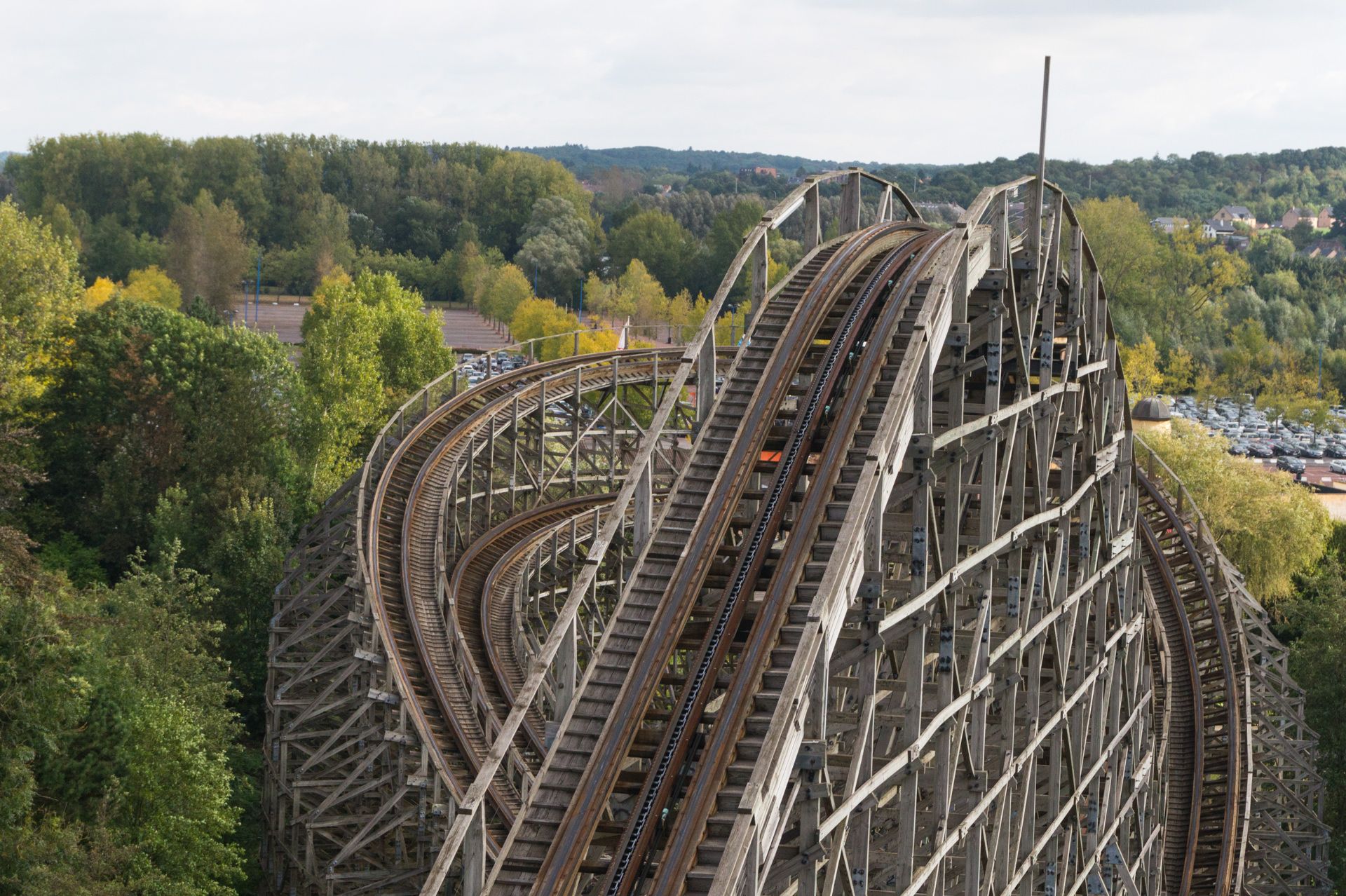
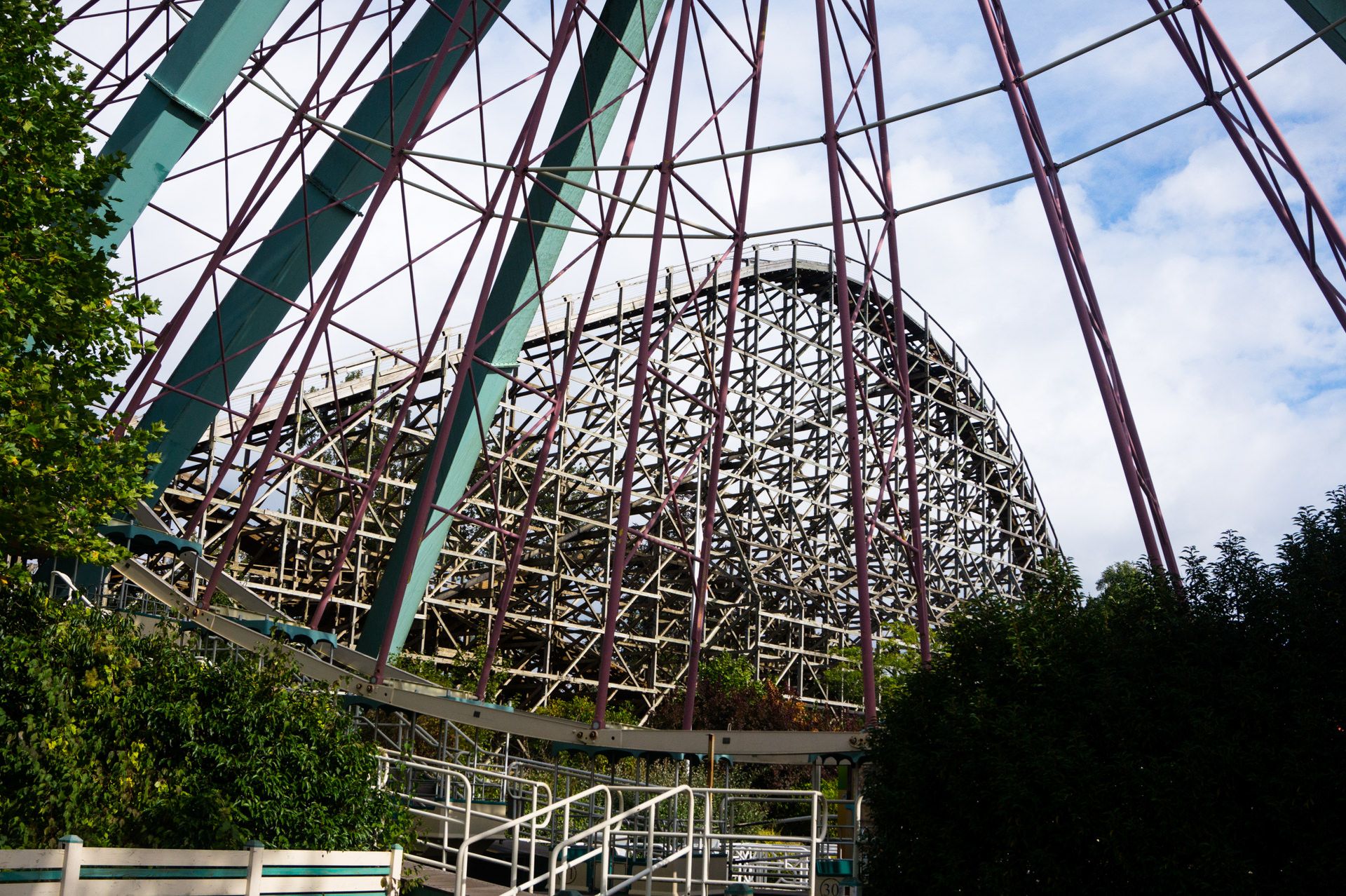
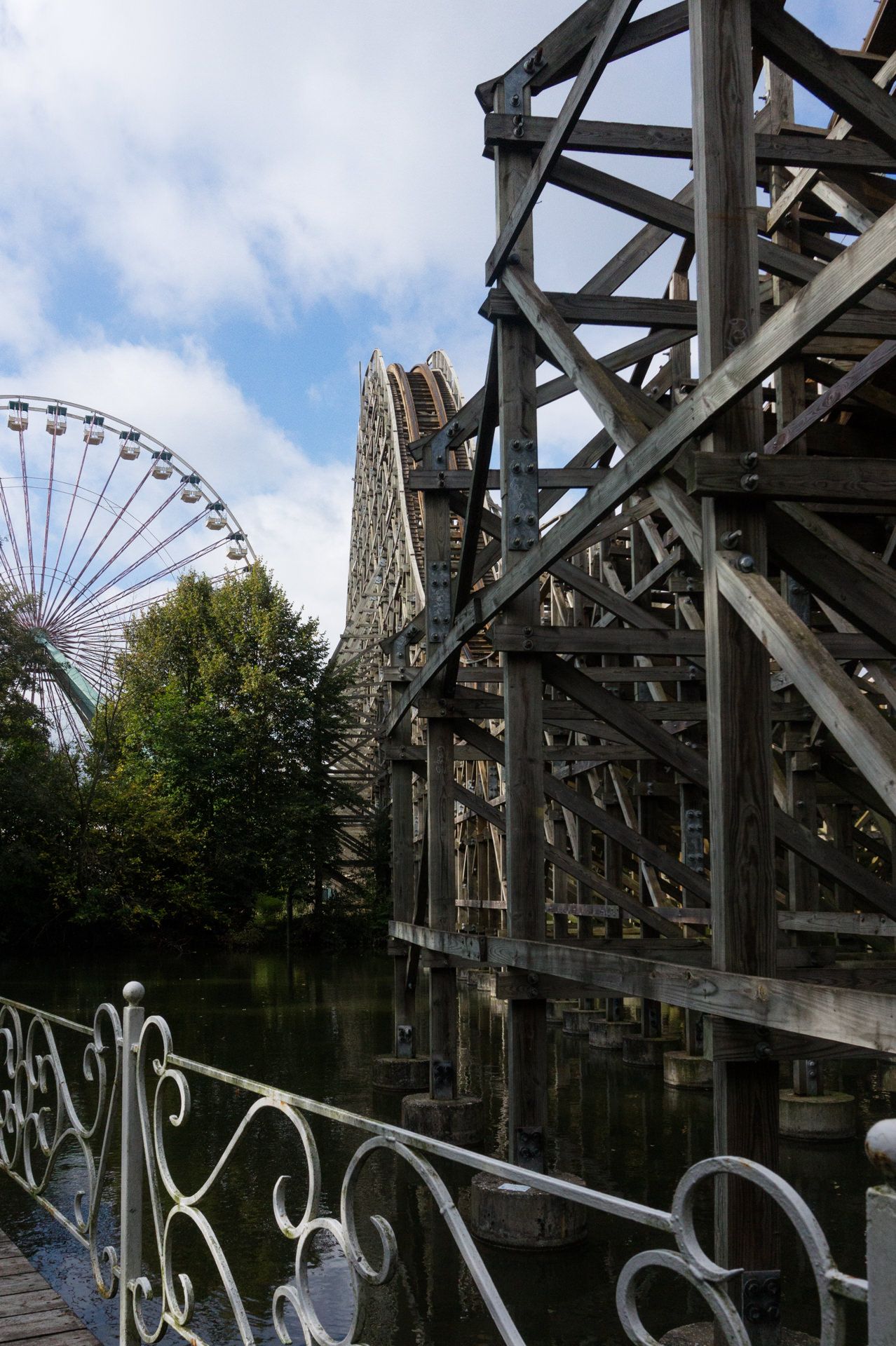
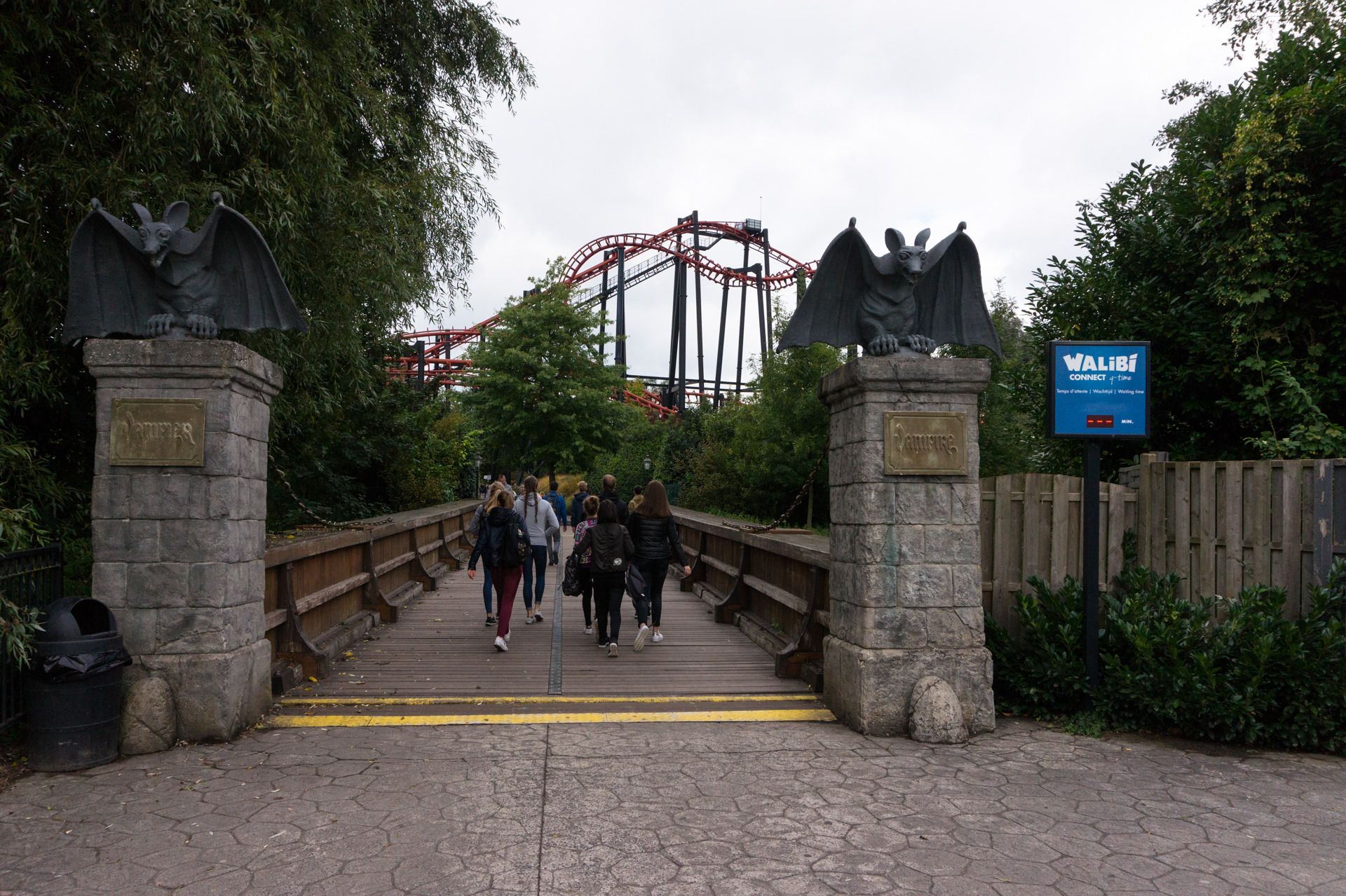
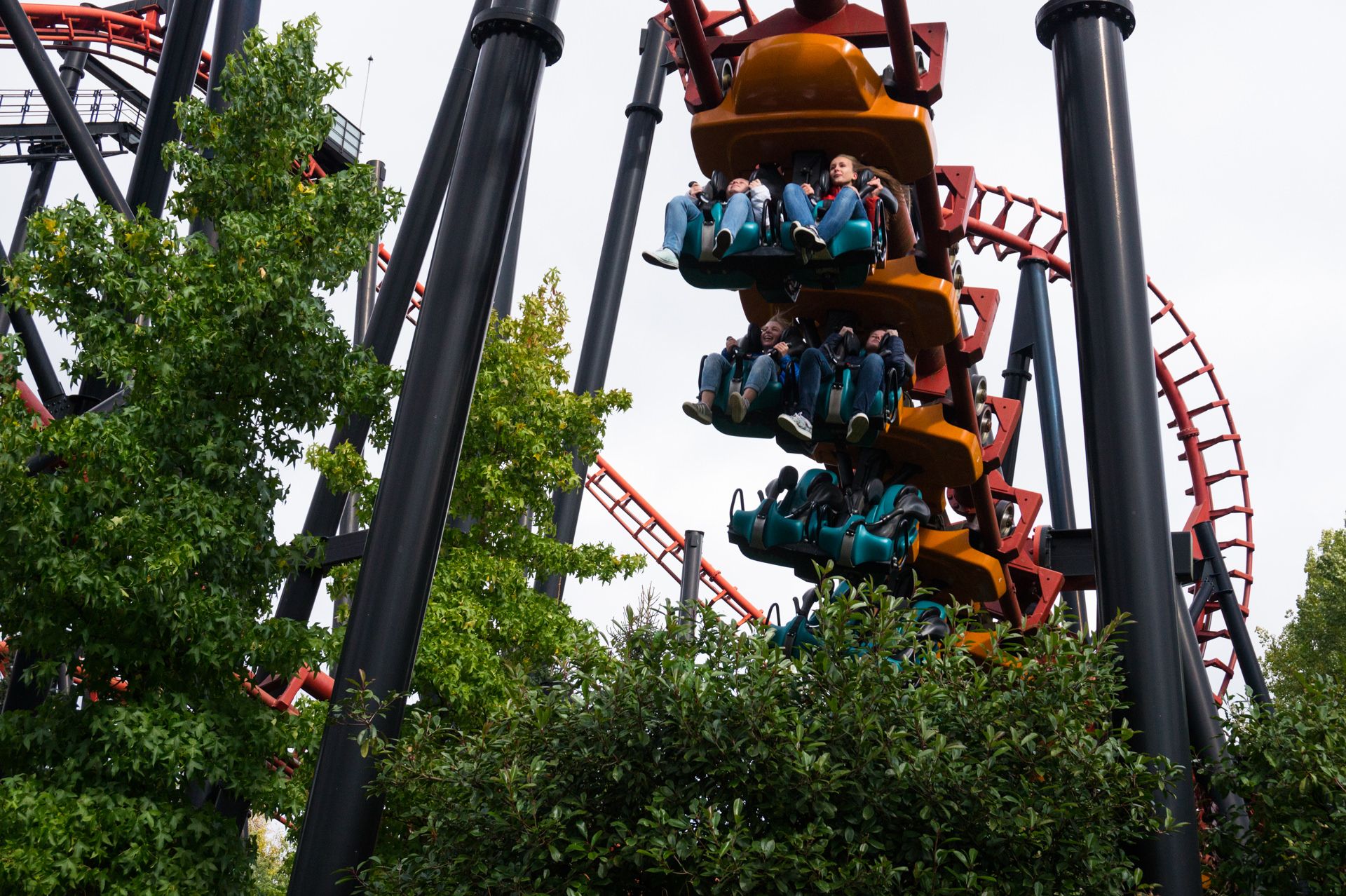
Klugheim’s wild roller coasters

Phantasialand’s Klugheim

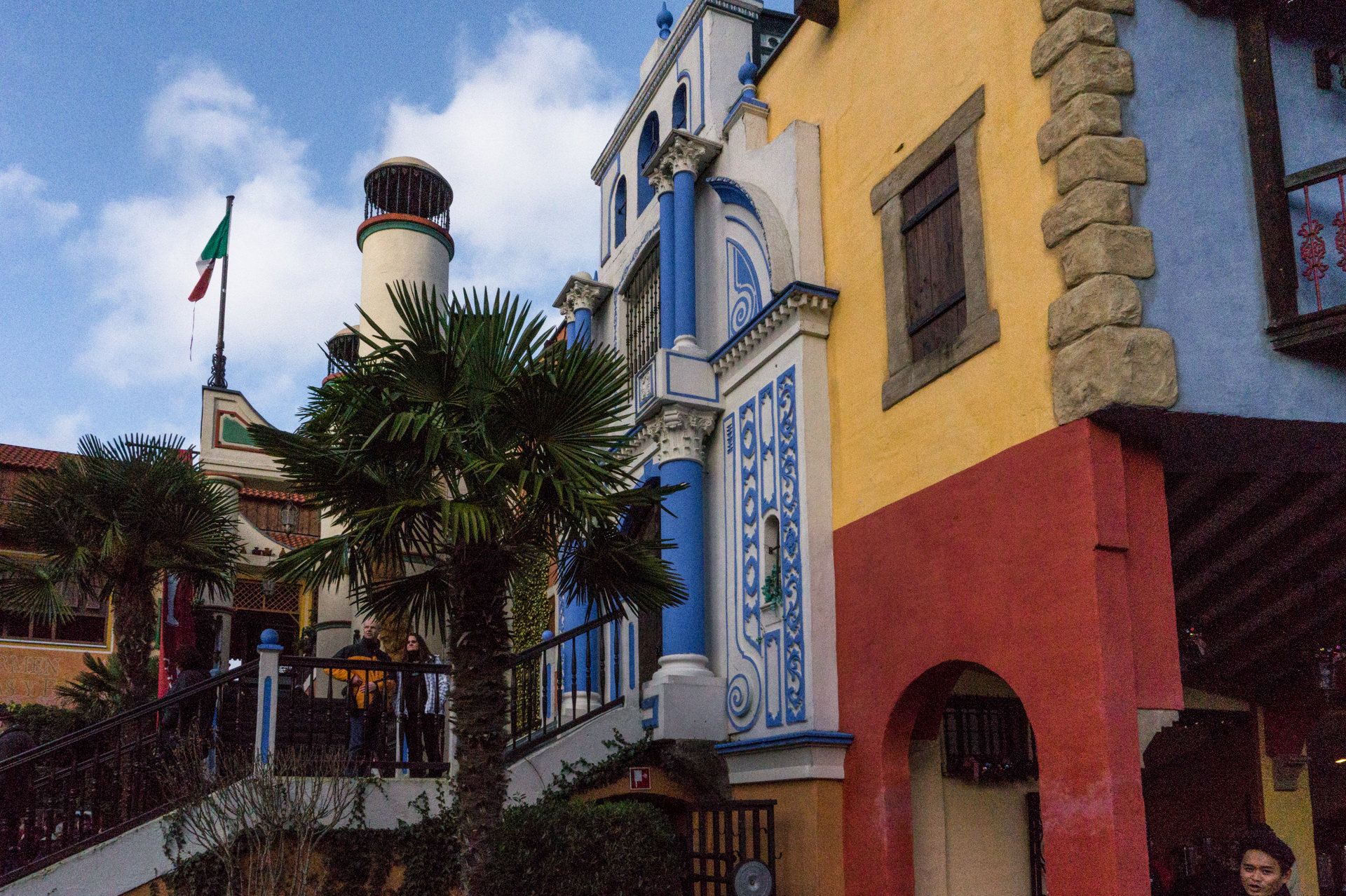
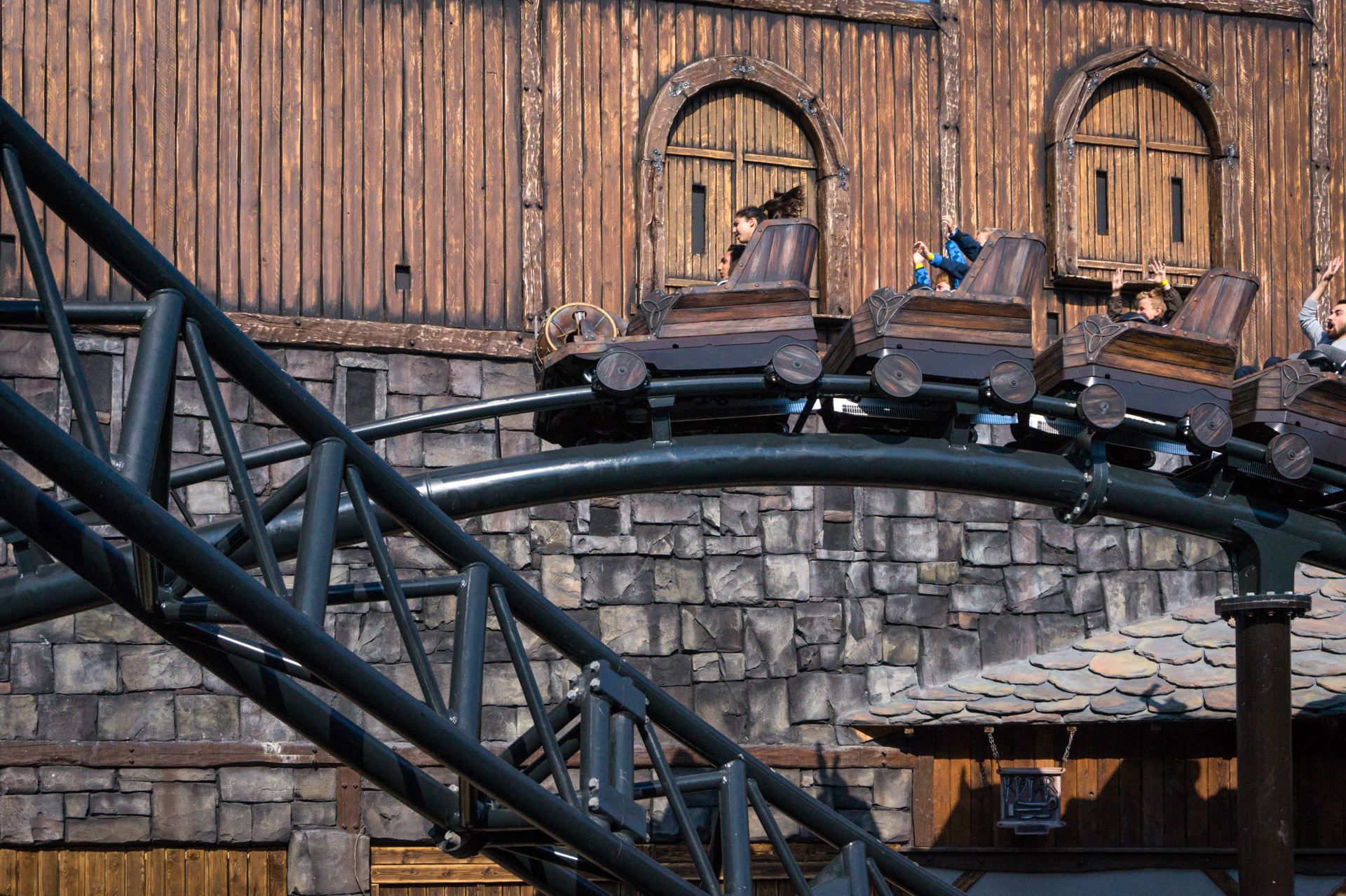
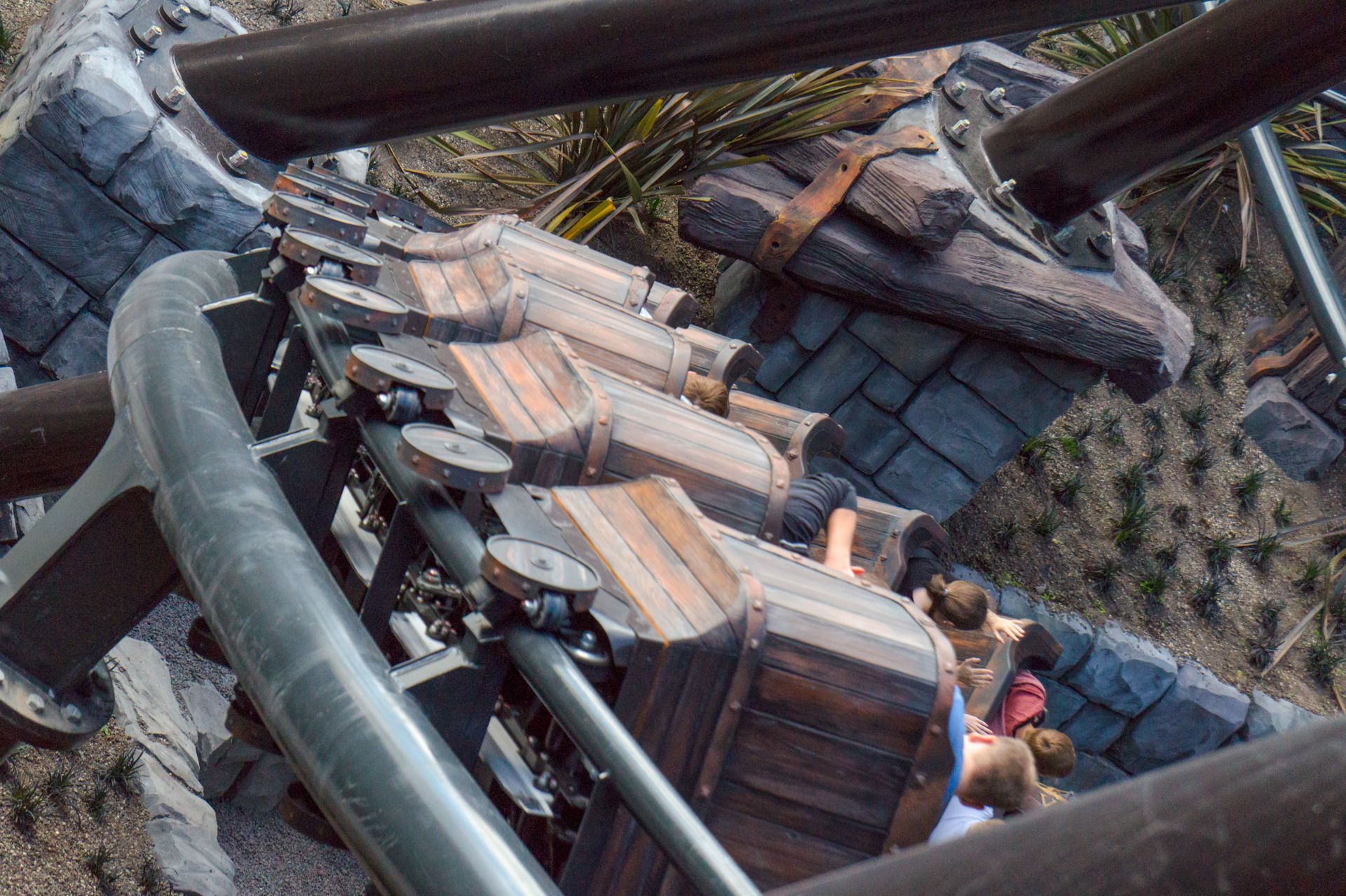
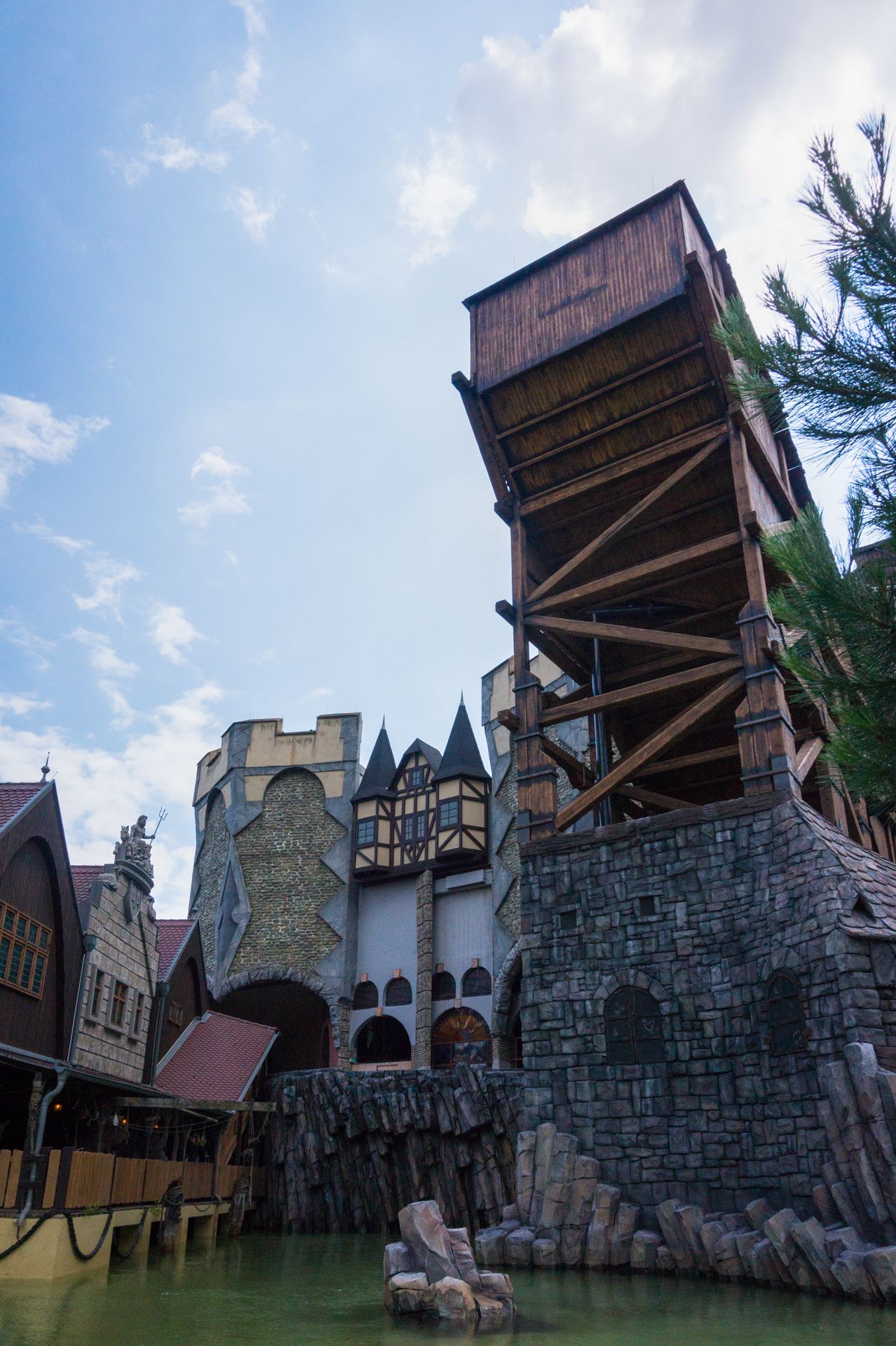
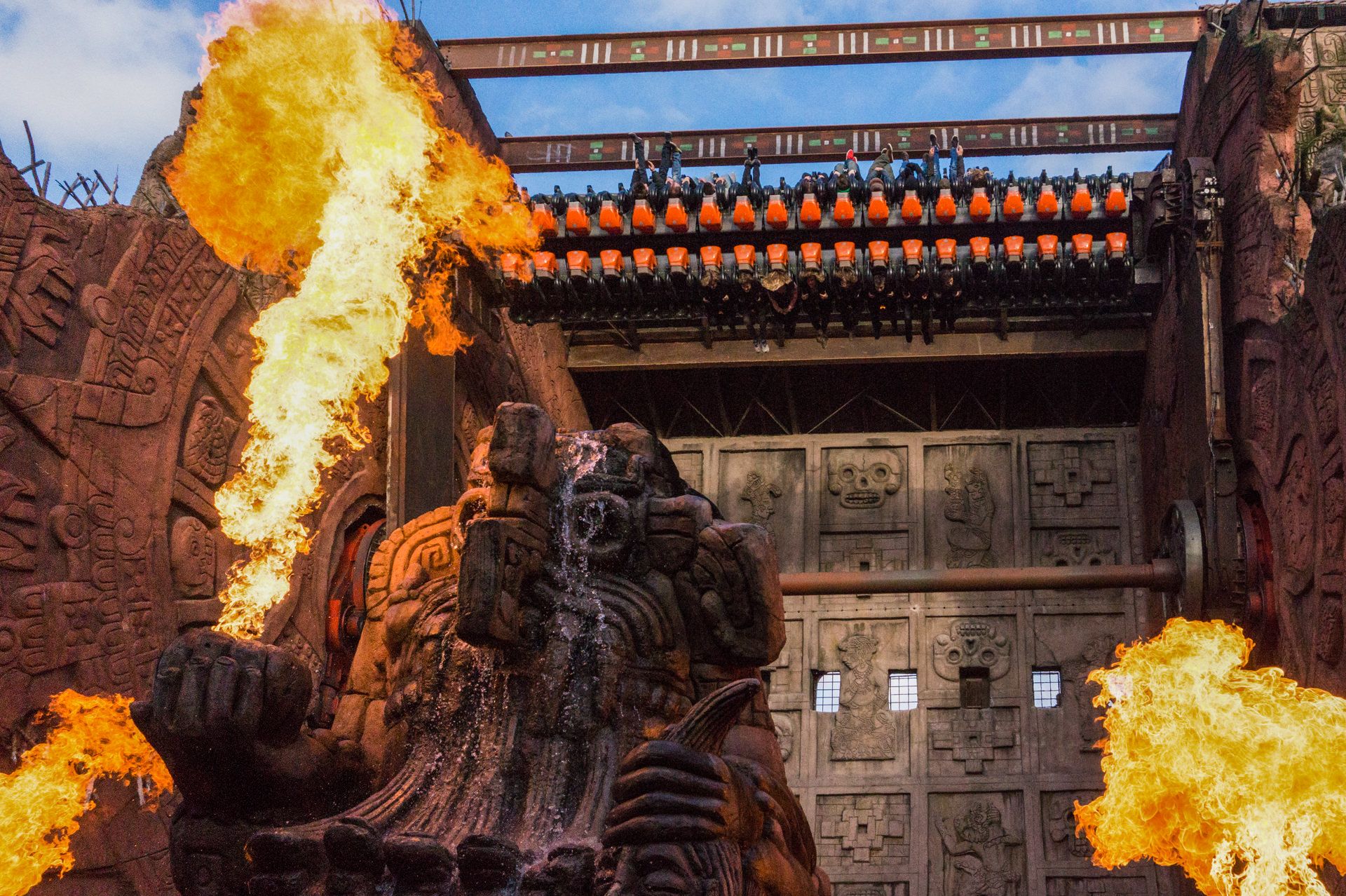
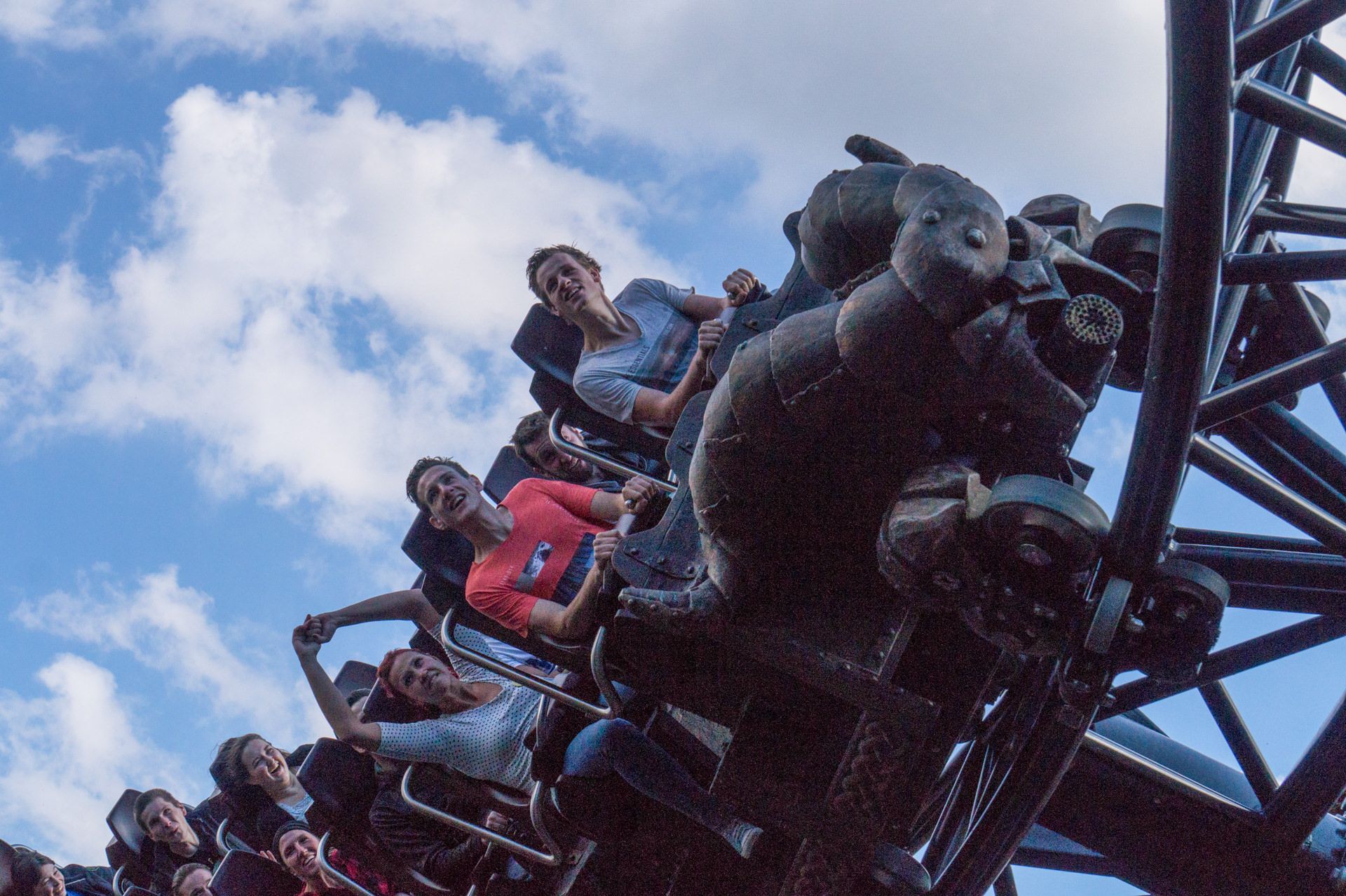
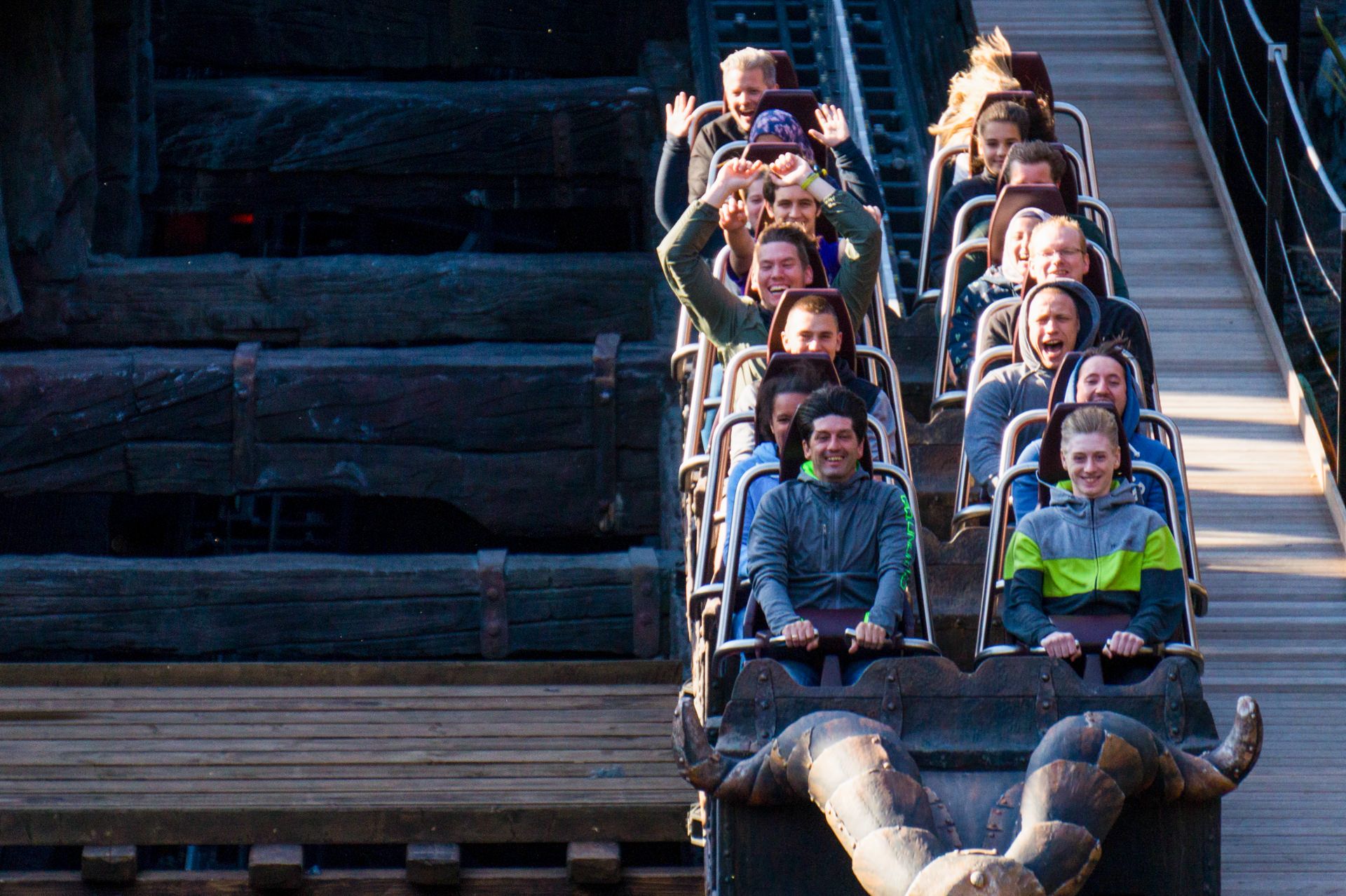
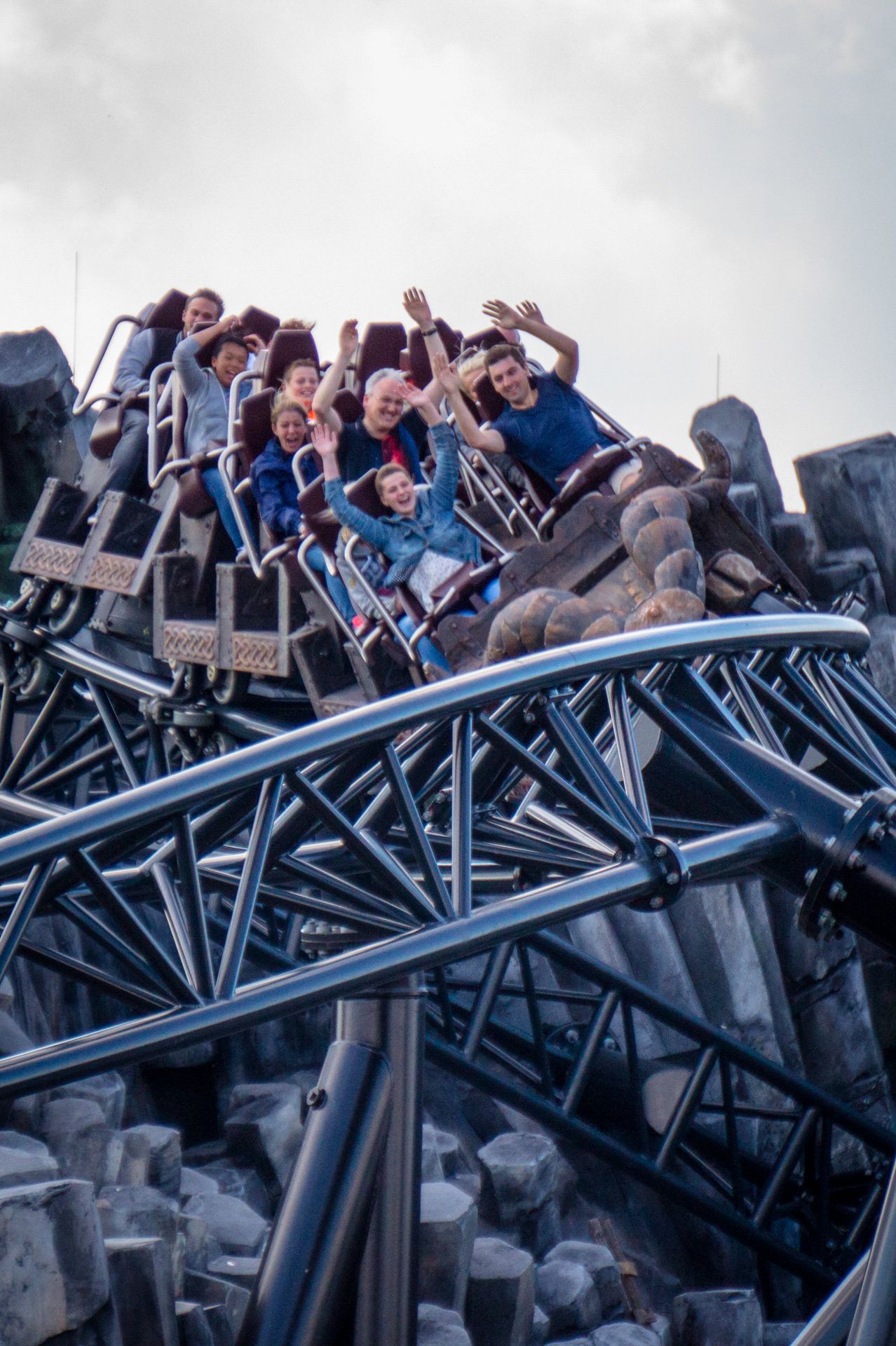
Due to the limited space available, rejuvenating cures are not uncommon in Phantasialand. A complete redesign of a theme area, which was only relevant for visitors with a large nostalgia for the rather boring dark ride Silver Mine, is part of the package. Nevertheless, it seems that the park actually hang on old icons, even if they were completely destroyed by a fire a long time ago. The multi-million euro project Klugheim with the two roller coasters Taron and Raik in an impressive scenery reminds of the former area around the legendary roller coaster Gebirgsbahn and its little sister, the Grand Canyon Bahn.

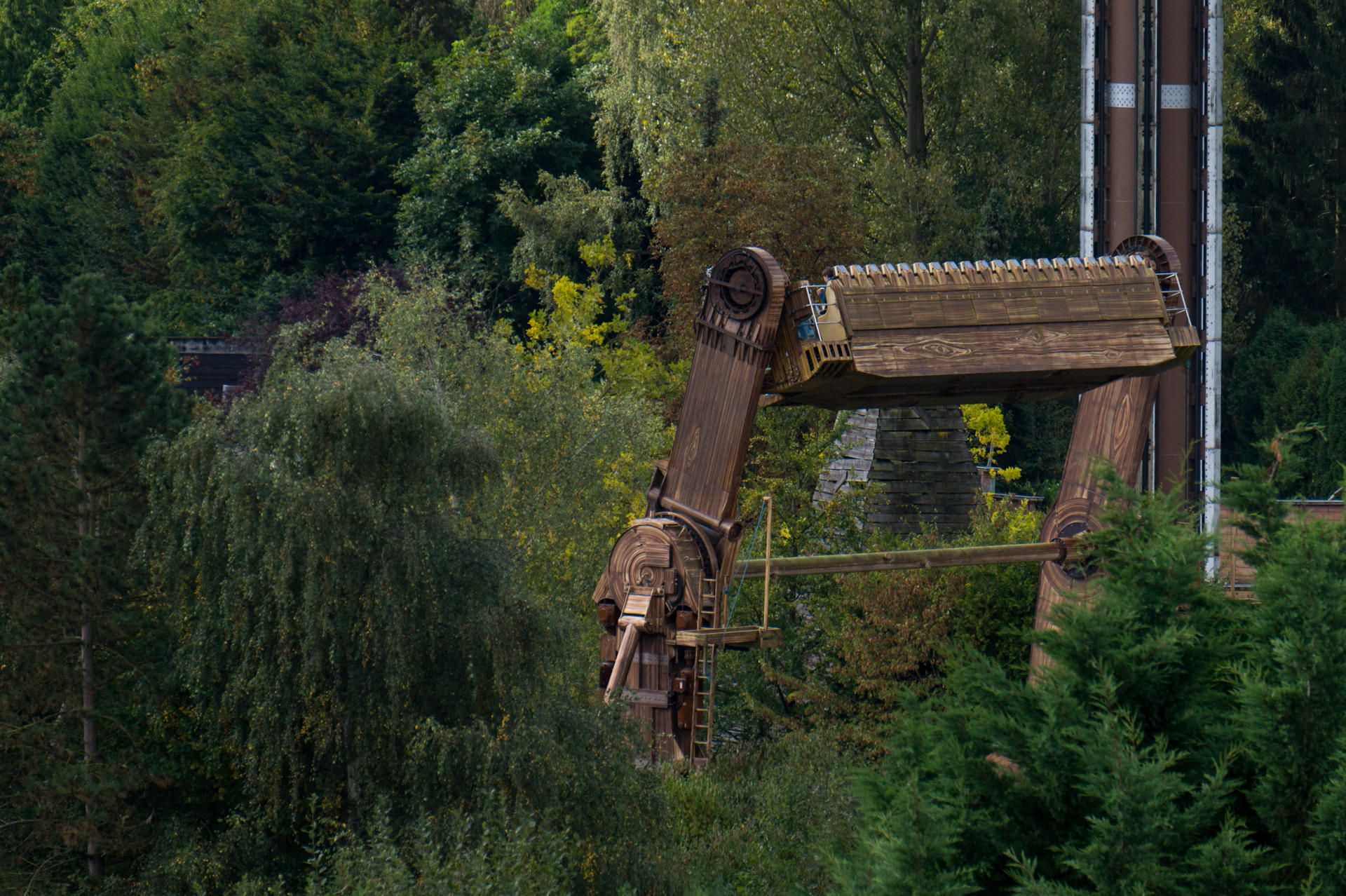
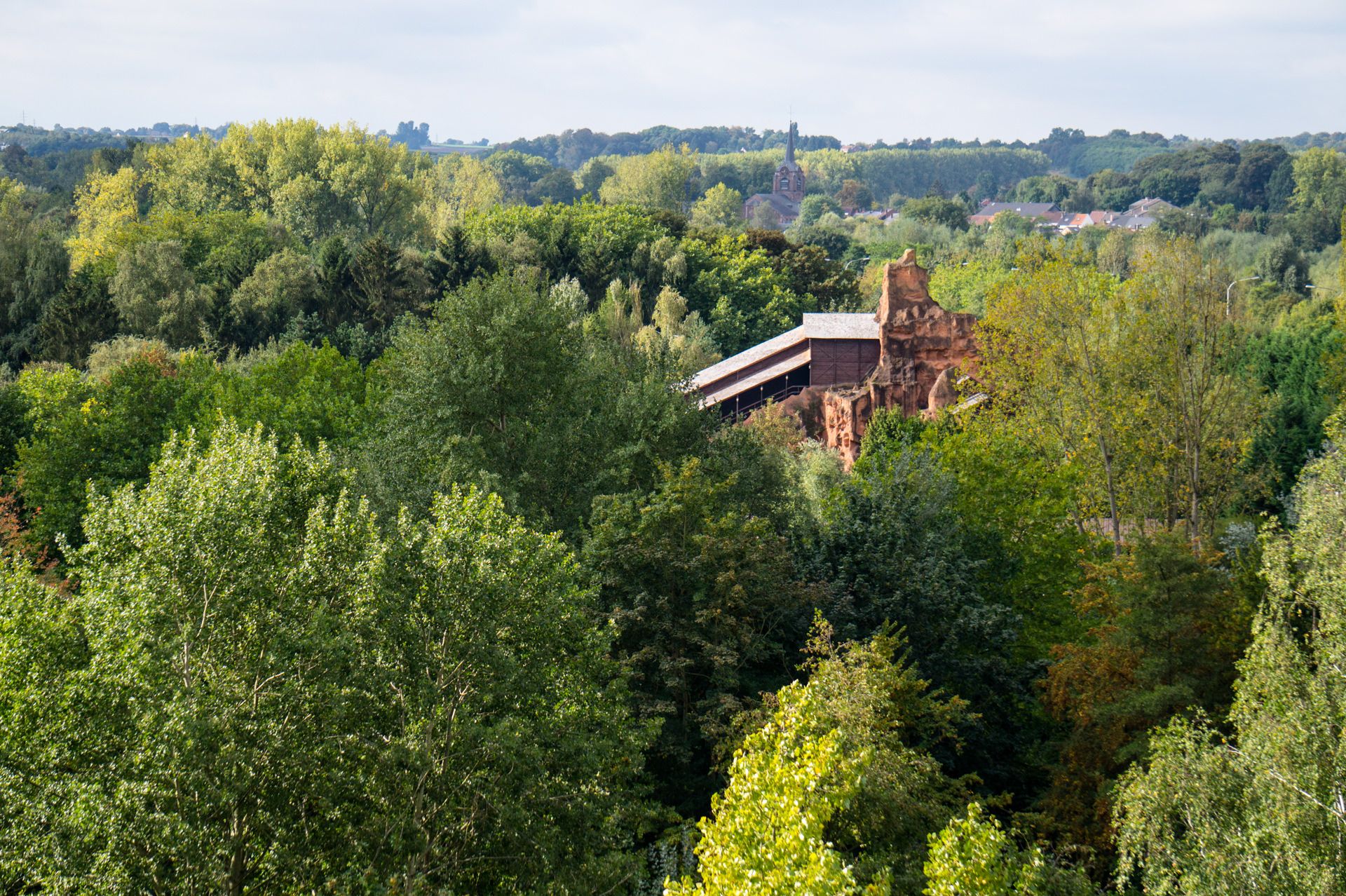
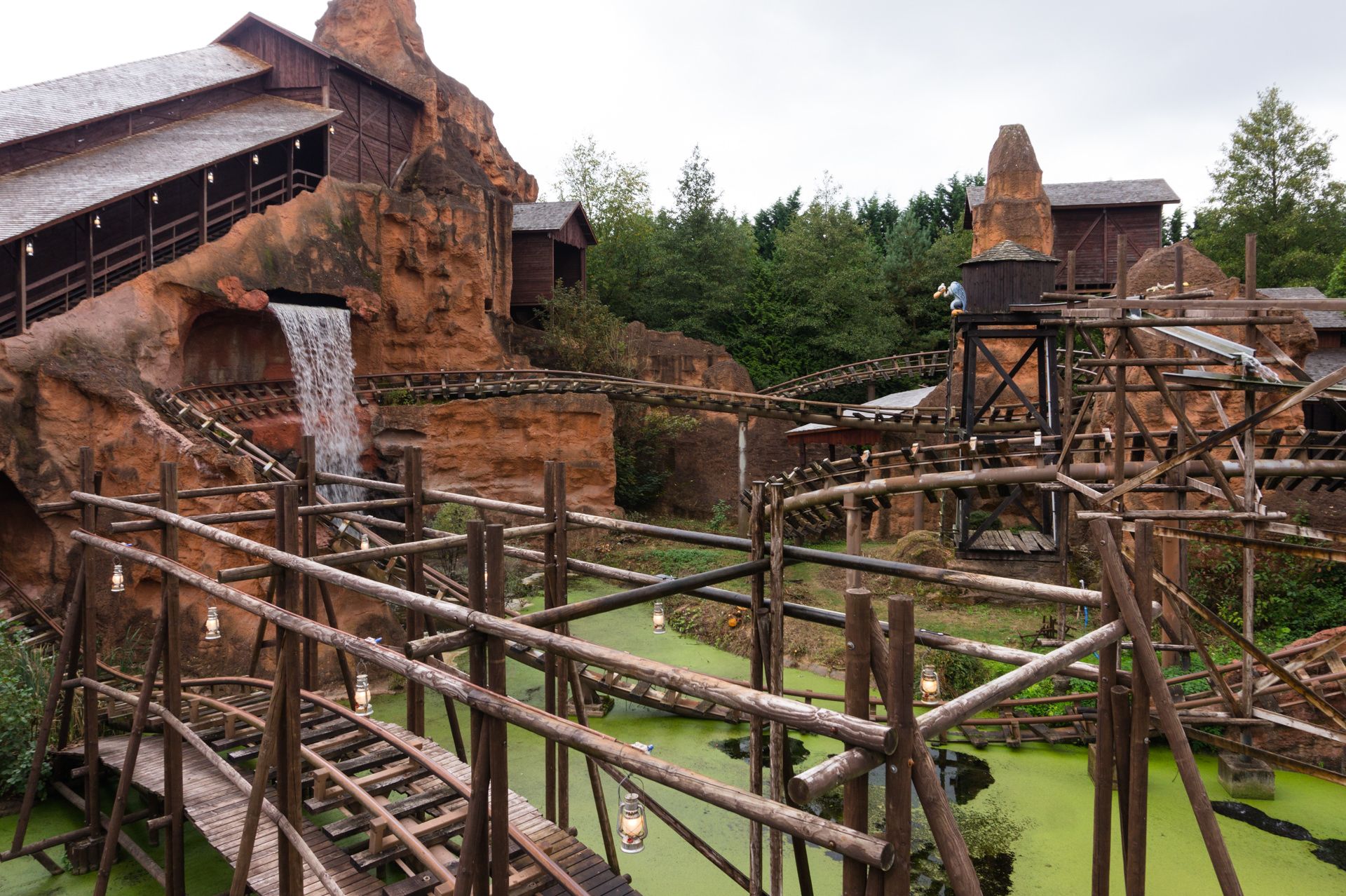
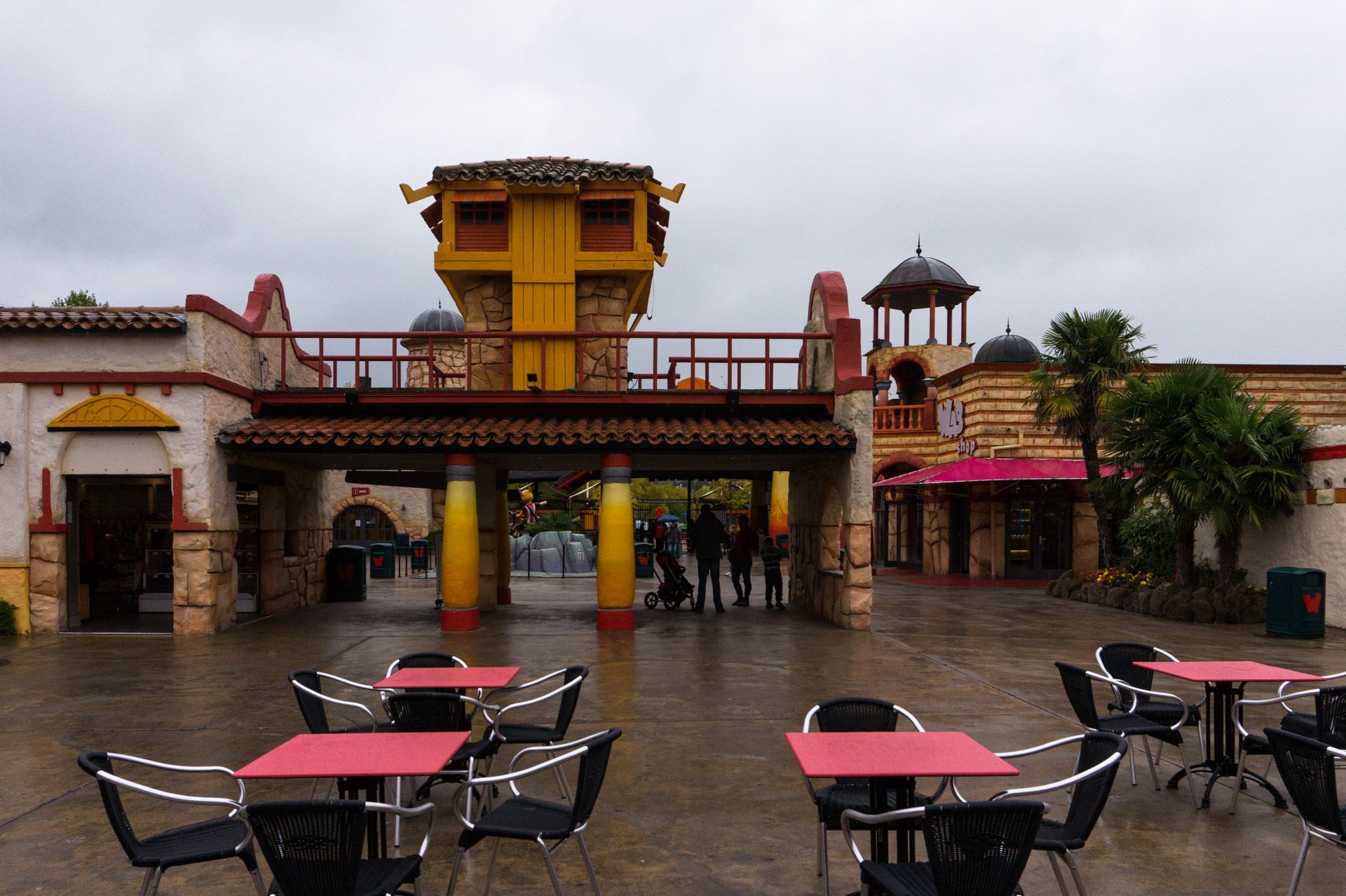
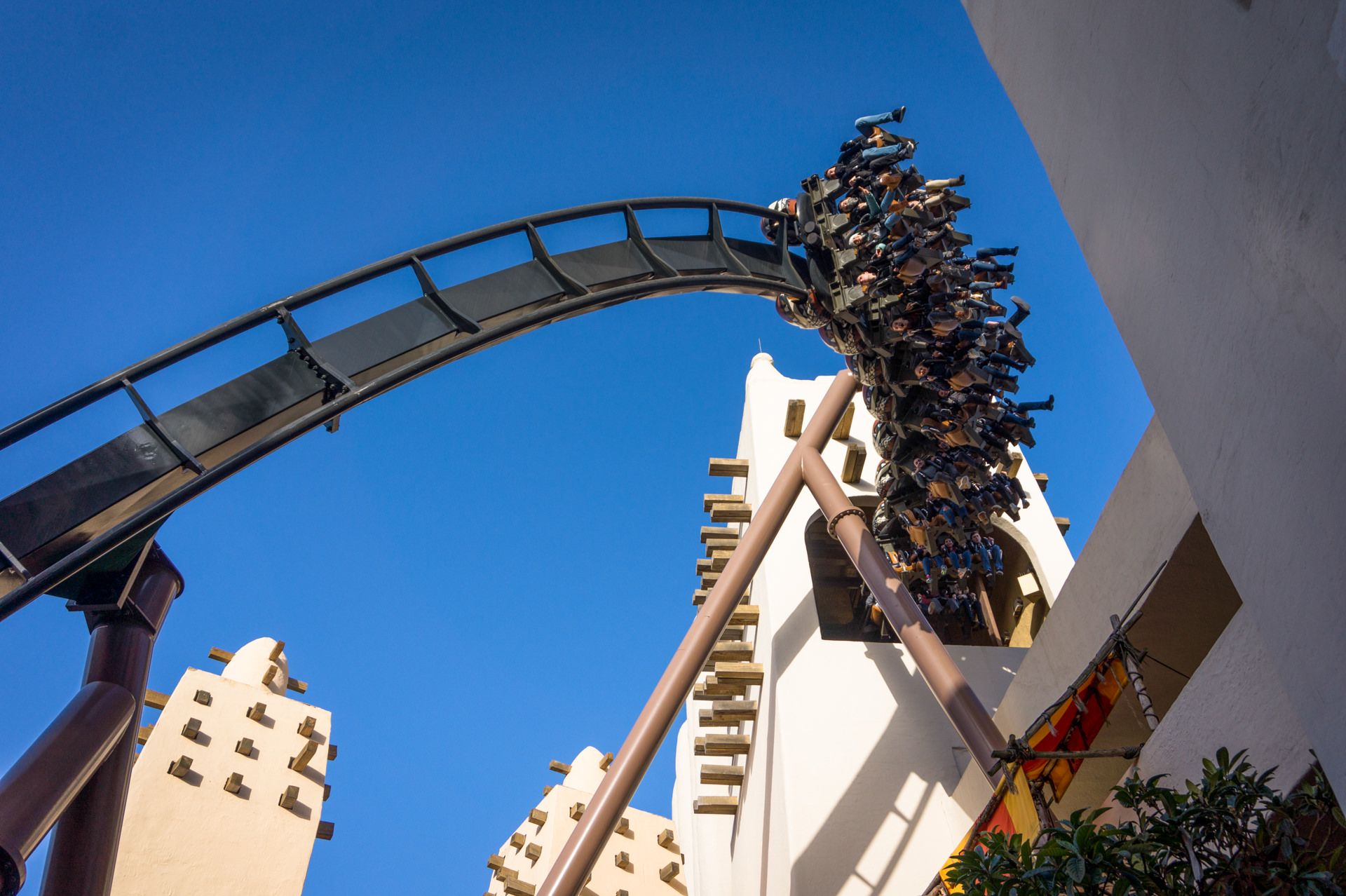
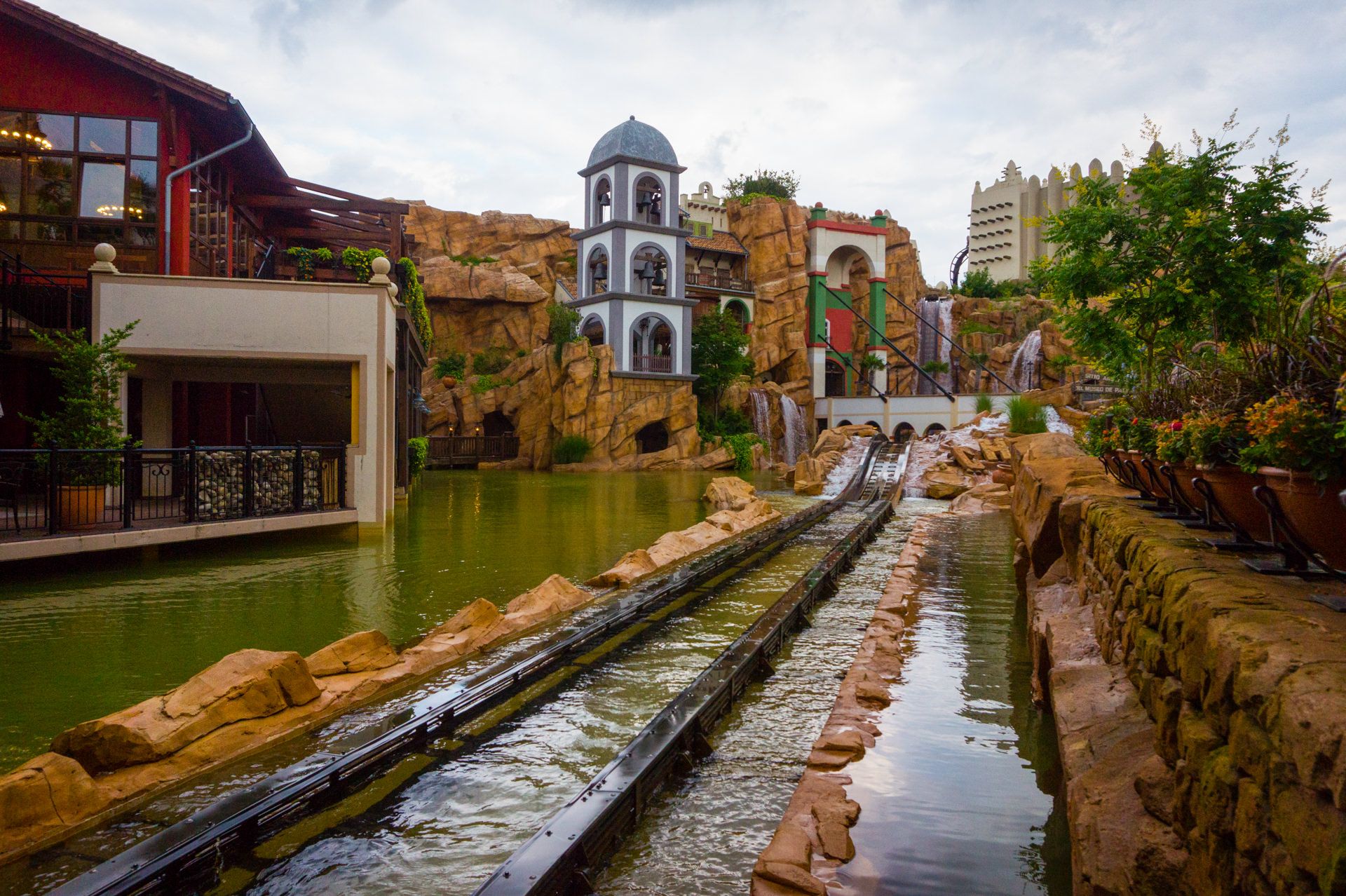
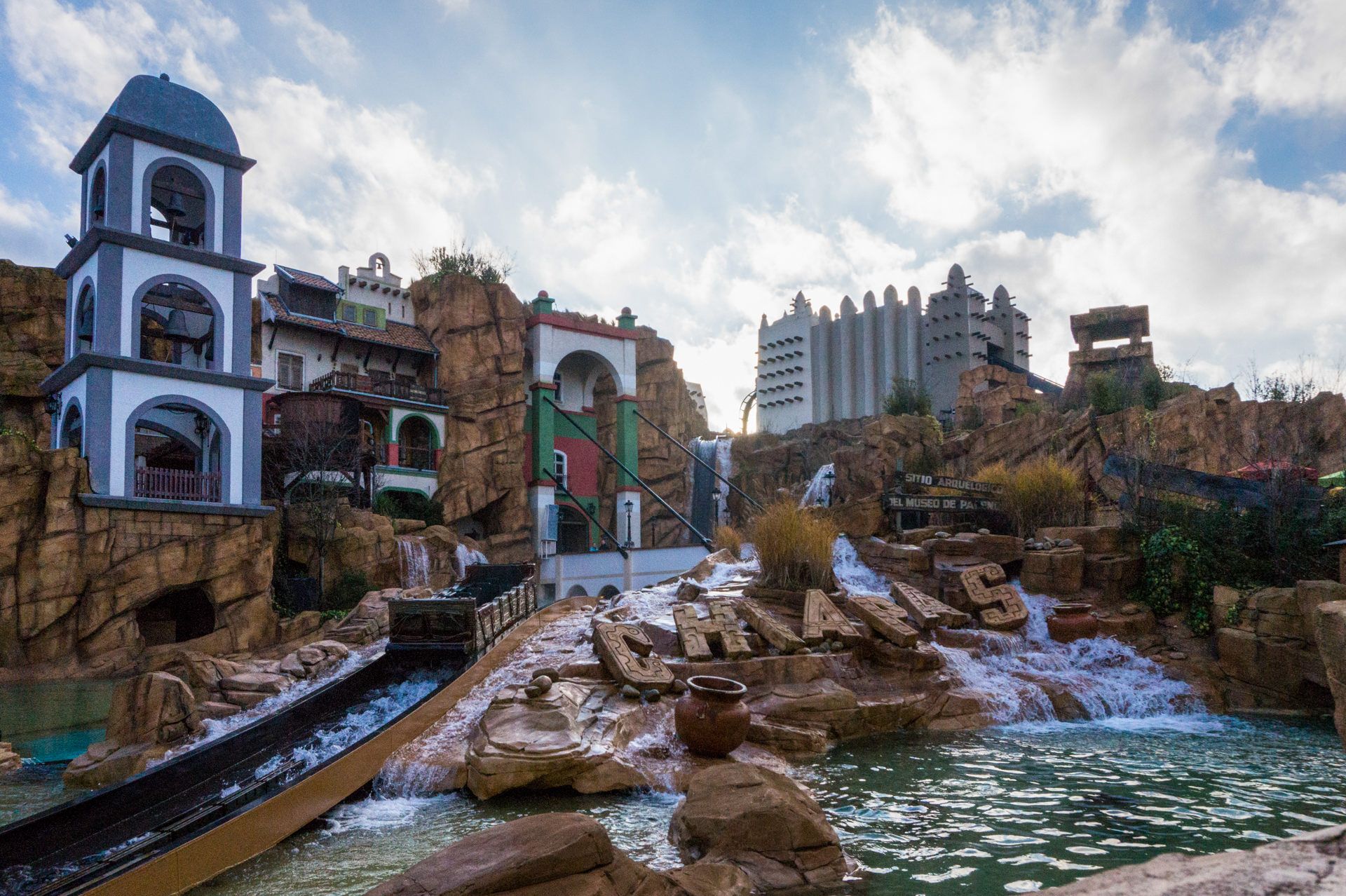
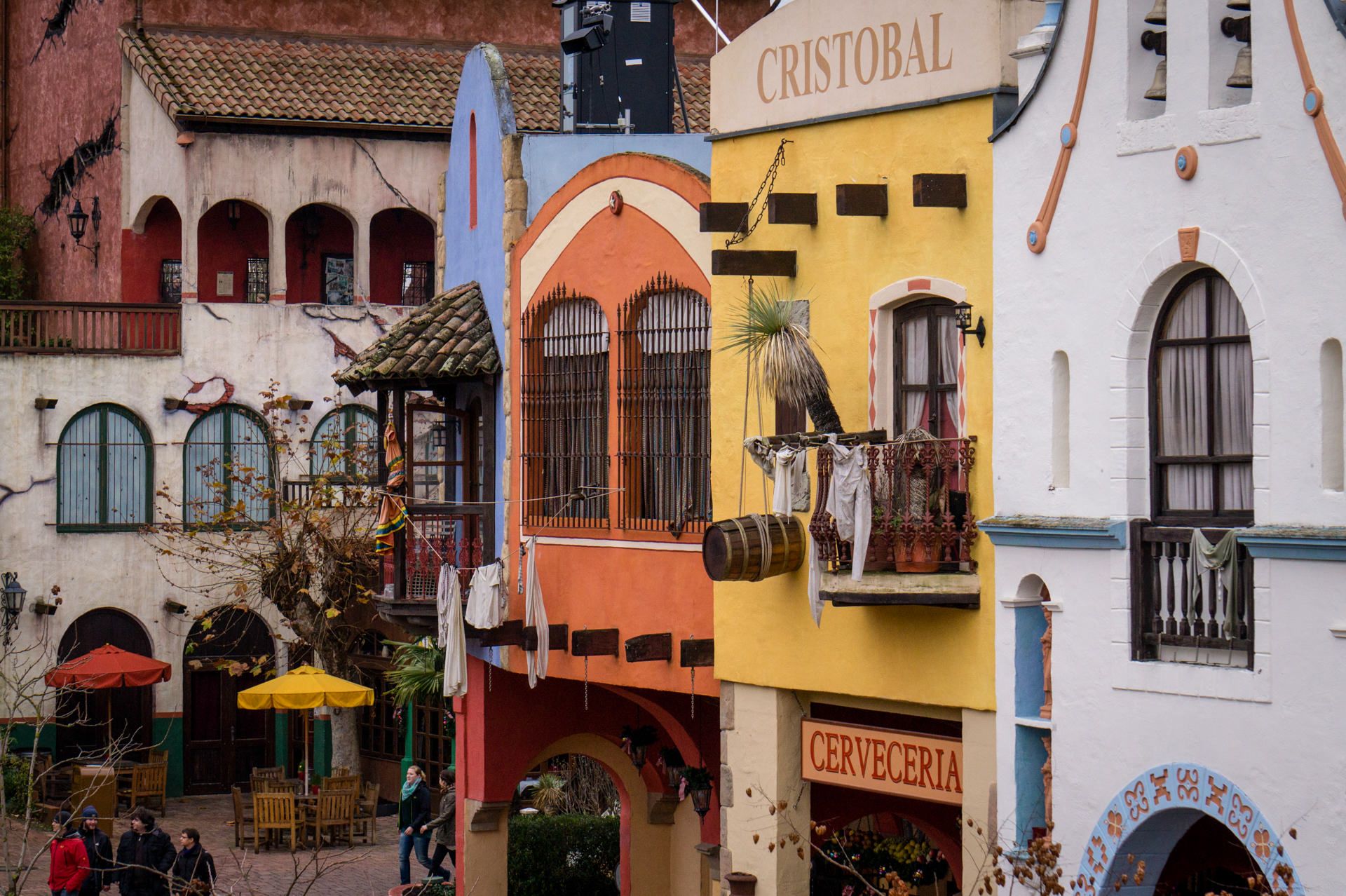
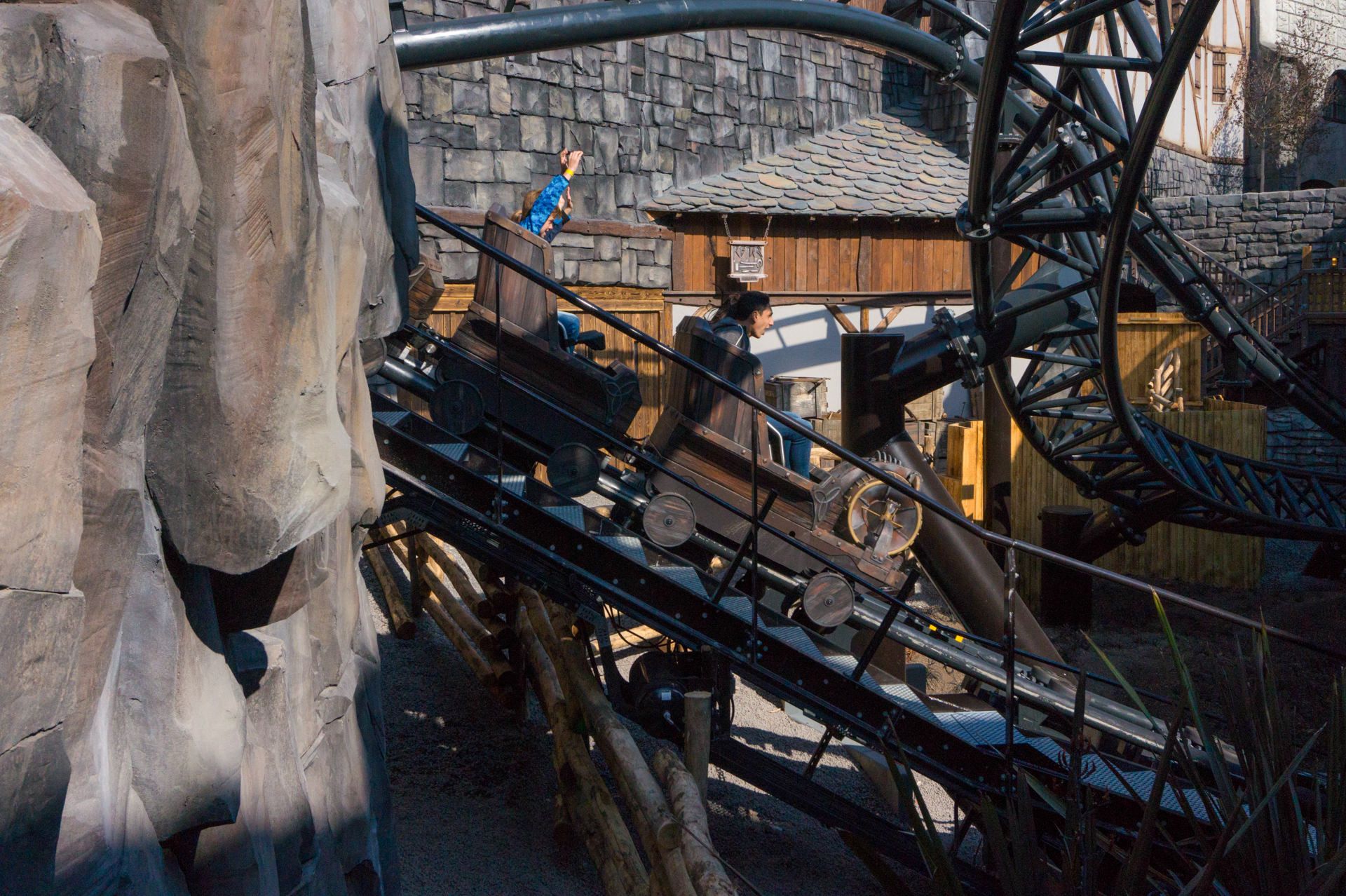
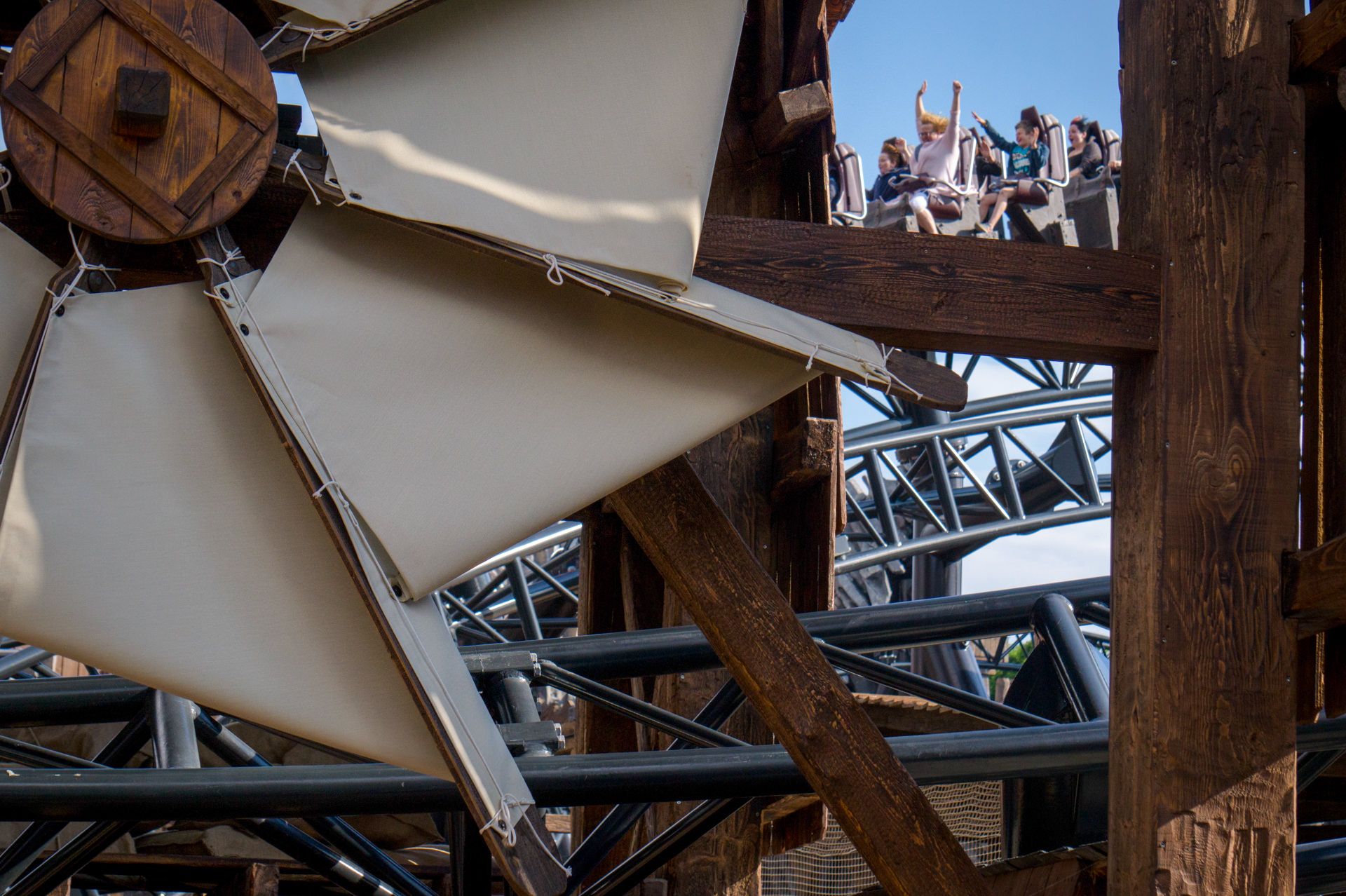
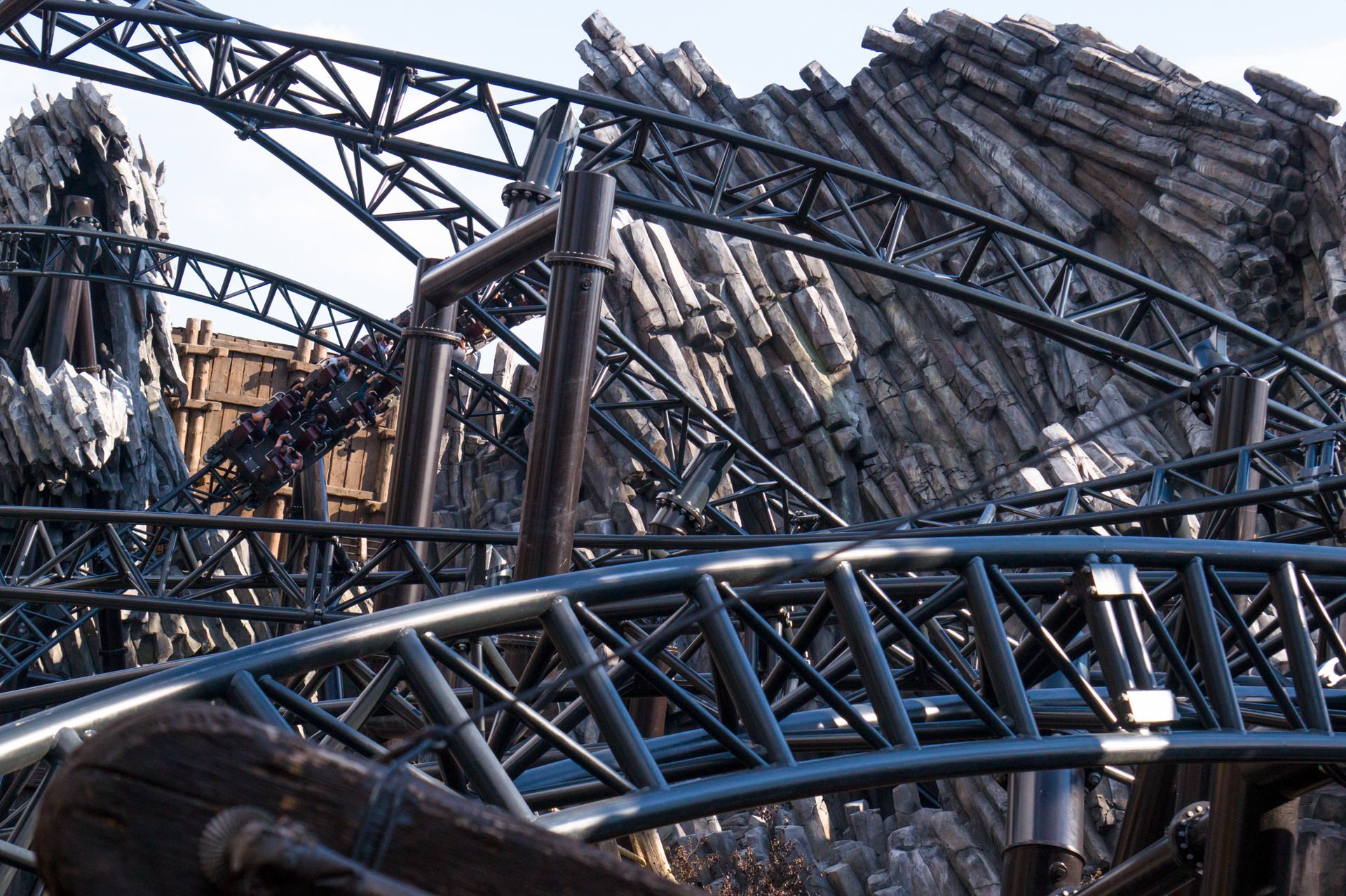
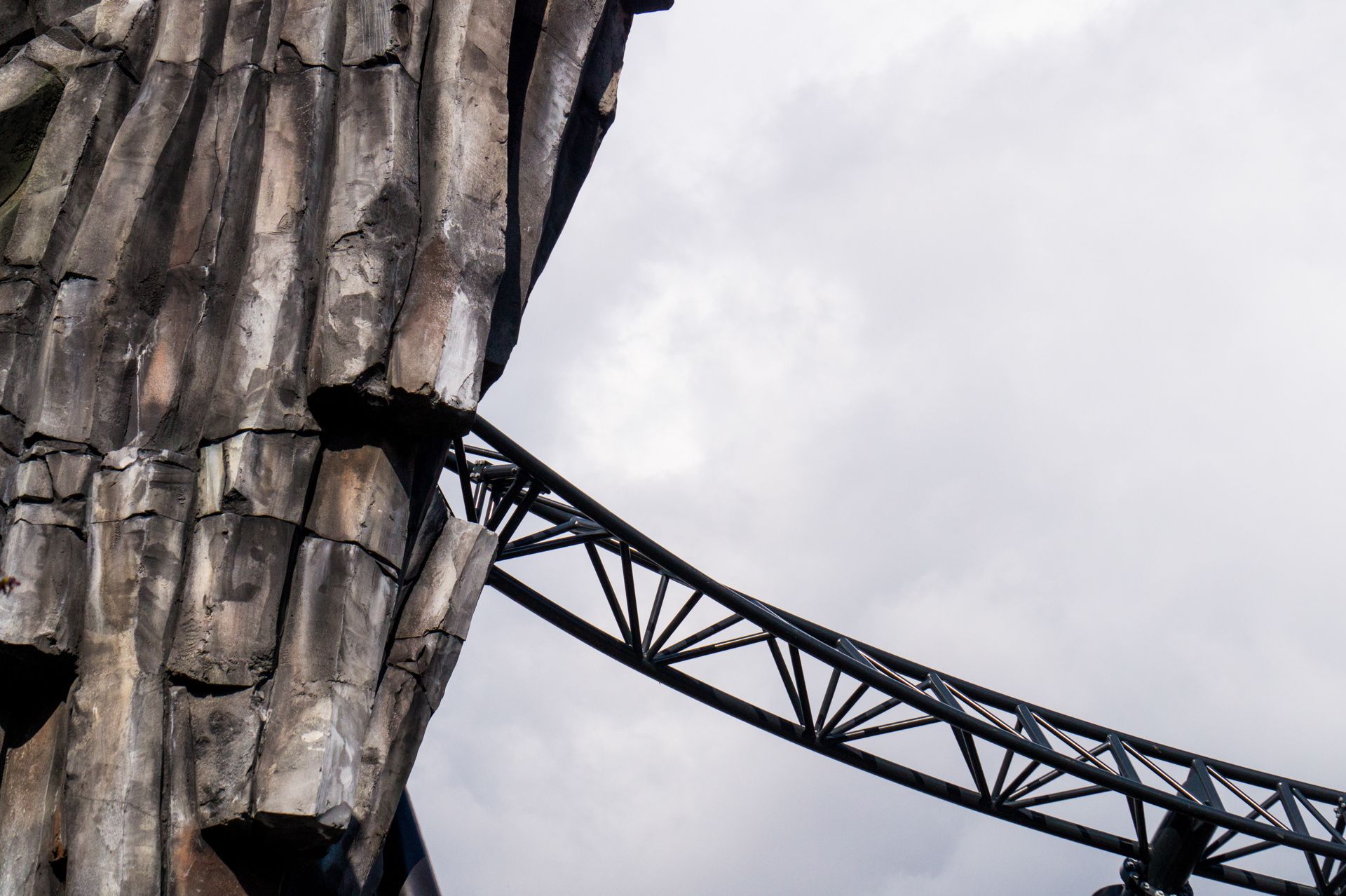
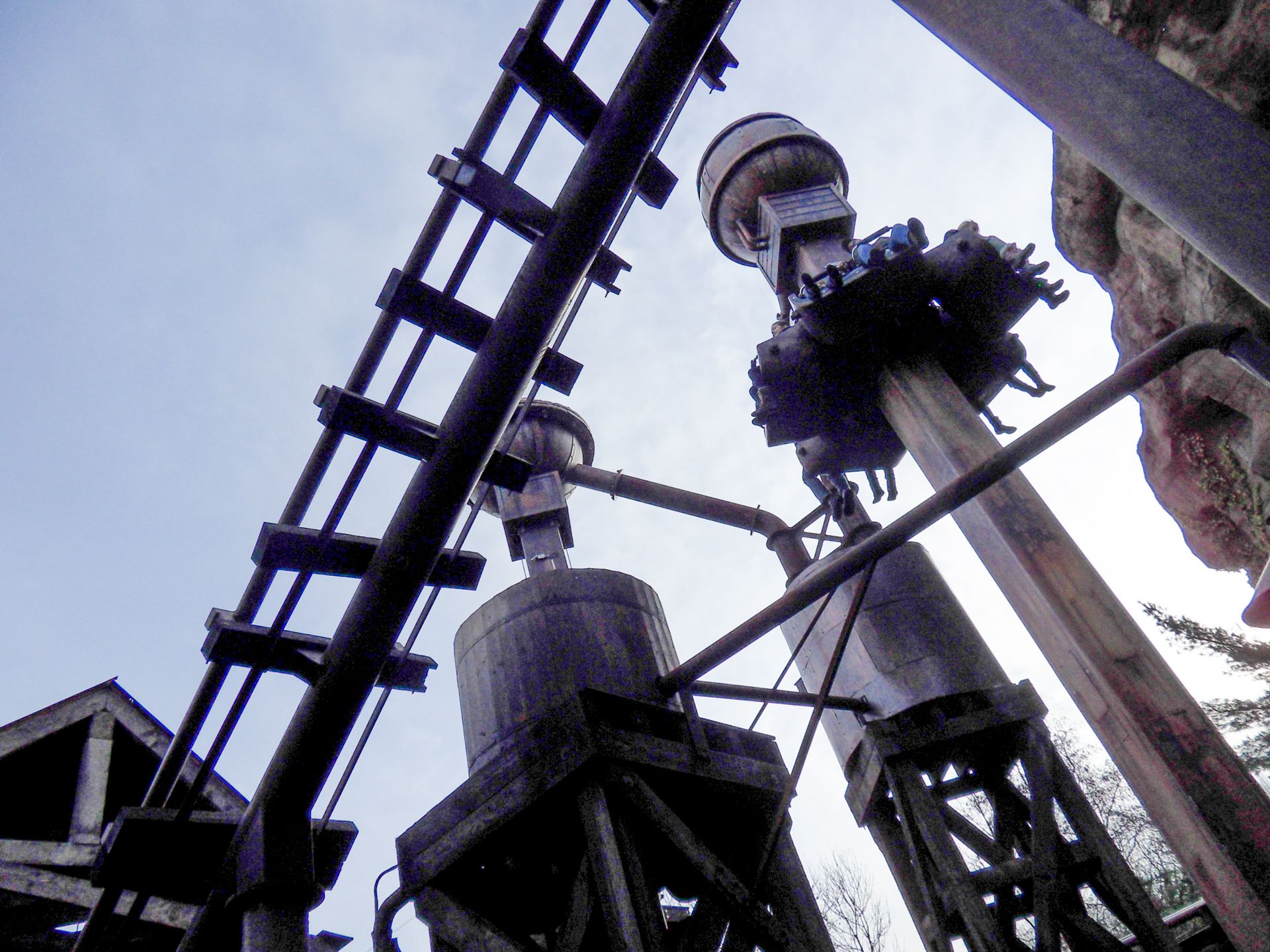
Once you enter one of the numerous entrances to the area and let yourself be overwhelmed by the breathtaking scenery, it is more or less clear that the park did everything right. In Klugheim, you can rave about the basalt rock formations or the numerous wooden buildings where the black tracks of both roller coasters pass by and cross each other. My highlight remains the fantastic food that you can get in Rutmors Taverne, the very nicely designed restaurant of the theme area. For a theme park this is outstanding, even the price is right. As mentioned before, you simply have to fall in love with this area. Actually, there is no need for a roller coaster, but the view to two of them makes the enthusiast’s heart beat loudly.

Raik

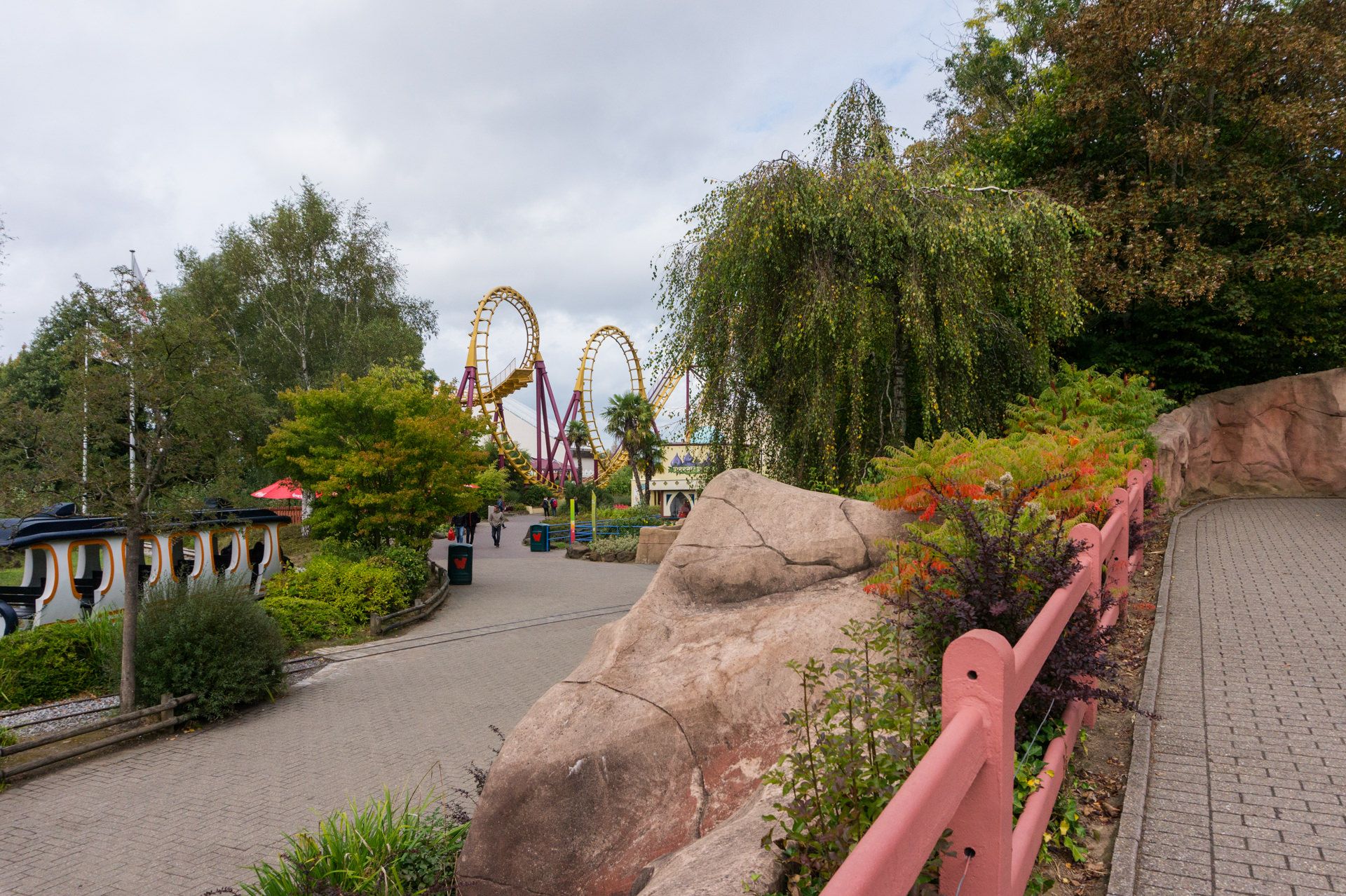
The smaller ride of the two roller coasters is called Raik and is made in the Netherlands by the manufacturer Vekoma. It is a Family Boomerang roller coaster and features an obligatory forward and backward ride; unfortunately, it also has always a rather long queue, which is why a visit is only really worthwhile during the later opening hours, when everyone else has already made his rounds on the roller coaster.

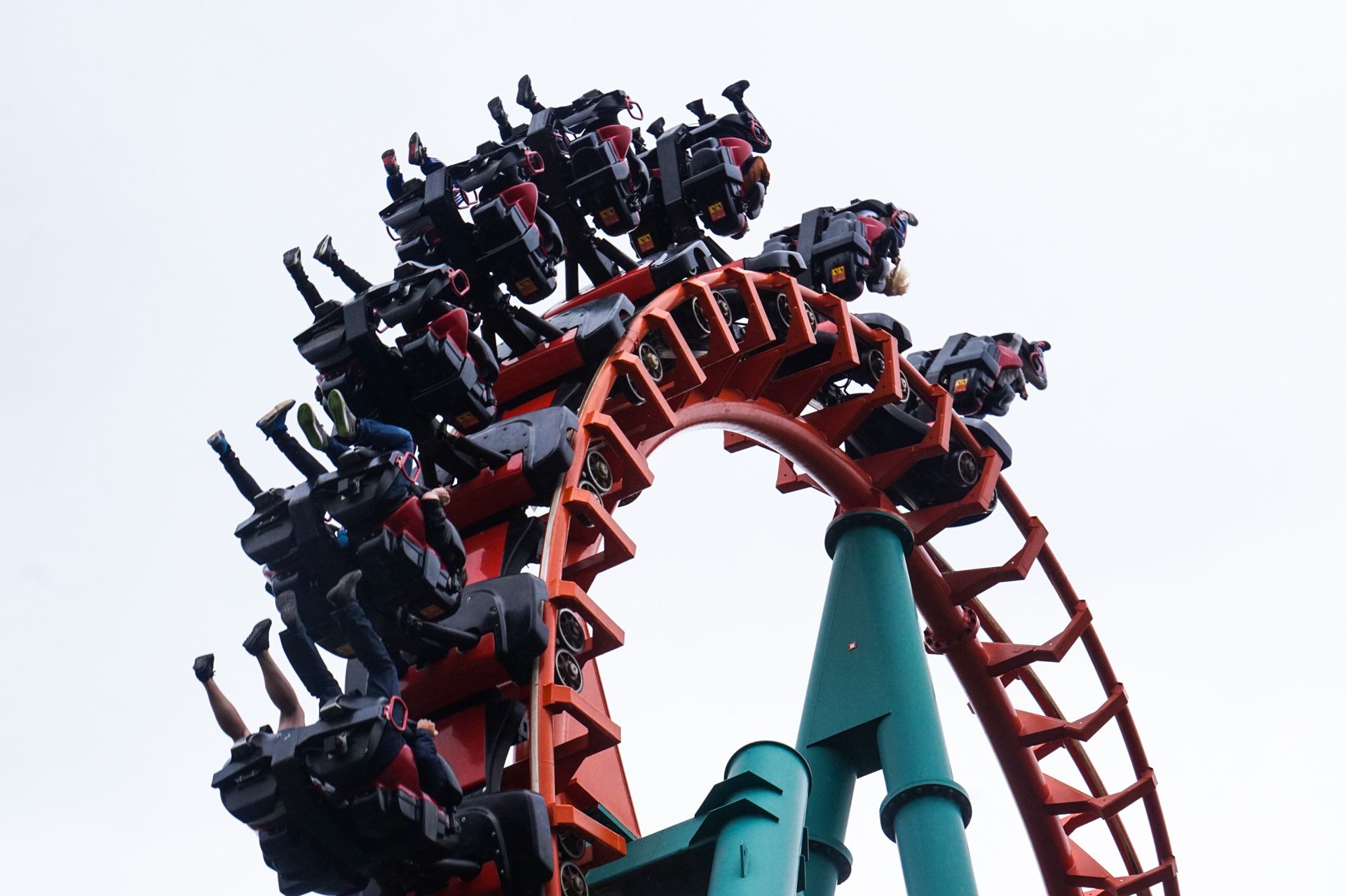
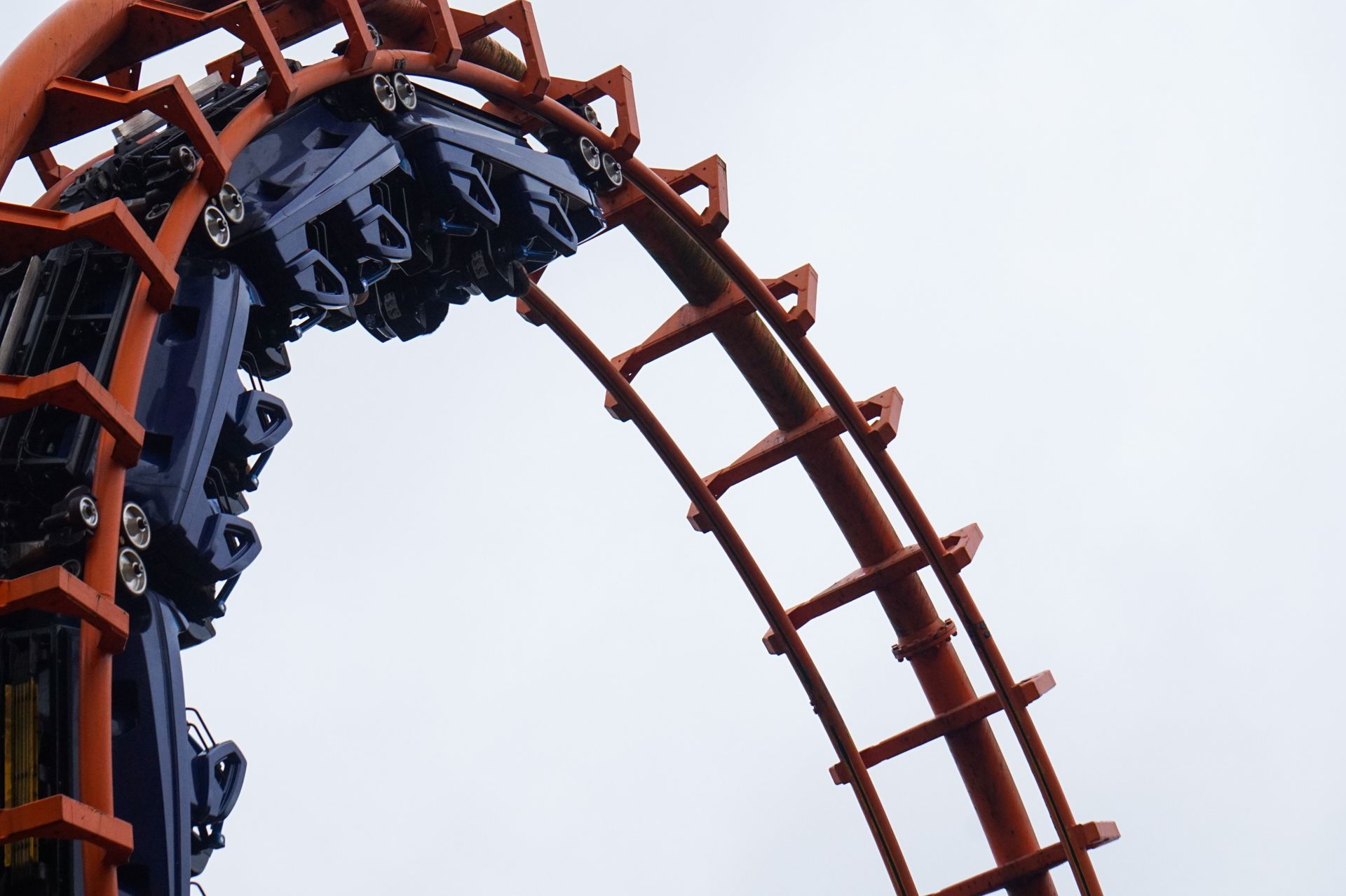
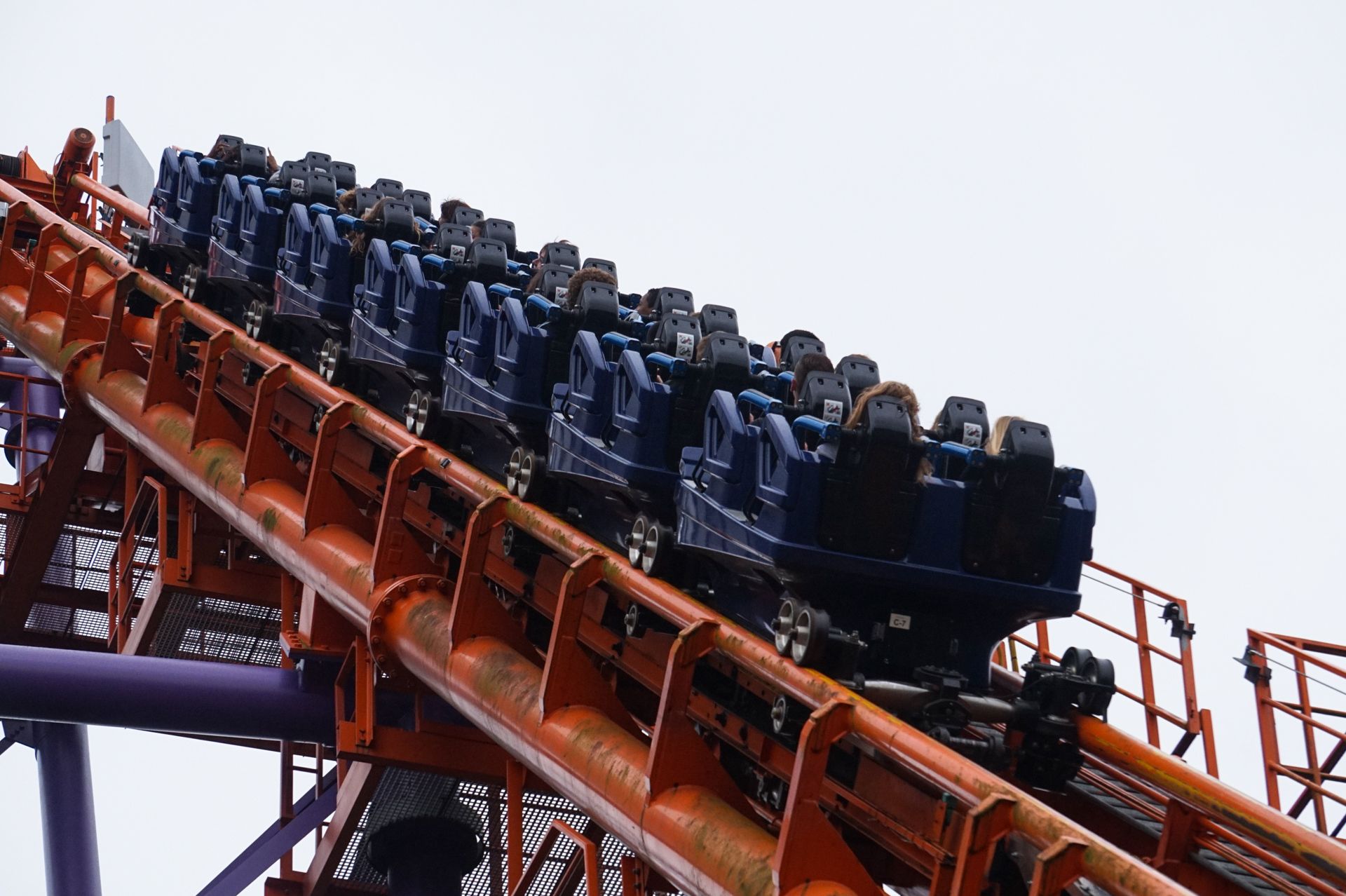
There is hardly anything to complain about the ride and after you have left the queue behind you, the friction wheel lift takes you up the hill. Once you have reached the starting height of 25m, the train is briefly held in place while the friction wheels are mechanically pushed apart. After the release of the train it races down the hill and immediately through the station. After a short hill, which introduces a downward helix, the lowest point of the ride is reached. At 62 km/h the train shoots through the canal, leaving it in a left turn. After a short reversal you approach the lift hill, after which you gain potential energy on the parallel track section – at least in theory – via a second pair of friction wheels. The backward part is now driven through a little slower, which is why the forces are not quite as pronounced as on the outward journey.

Raik is an exceptionally nice family coaster, which despite its two (world) records as the highest and fastest ride of its kind, does not quite match the ride characteristics of the prototype Ben 10 – Ultimate Mission of the English amusement park Drayton Manor Theme Park. Due to its significantly more compact layout and the resulting dynamic ride, it simply convinces a bit more. However, it’s hard to imagine a better roller coaster to get the next generation used to roller coaster riding than Raik.

Taron

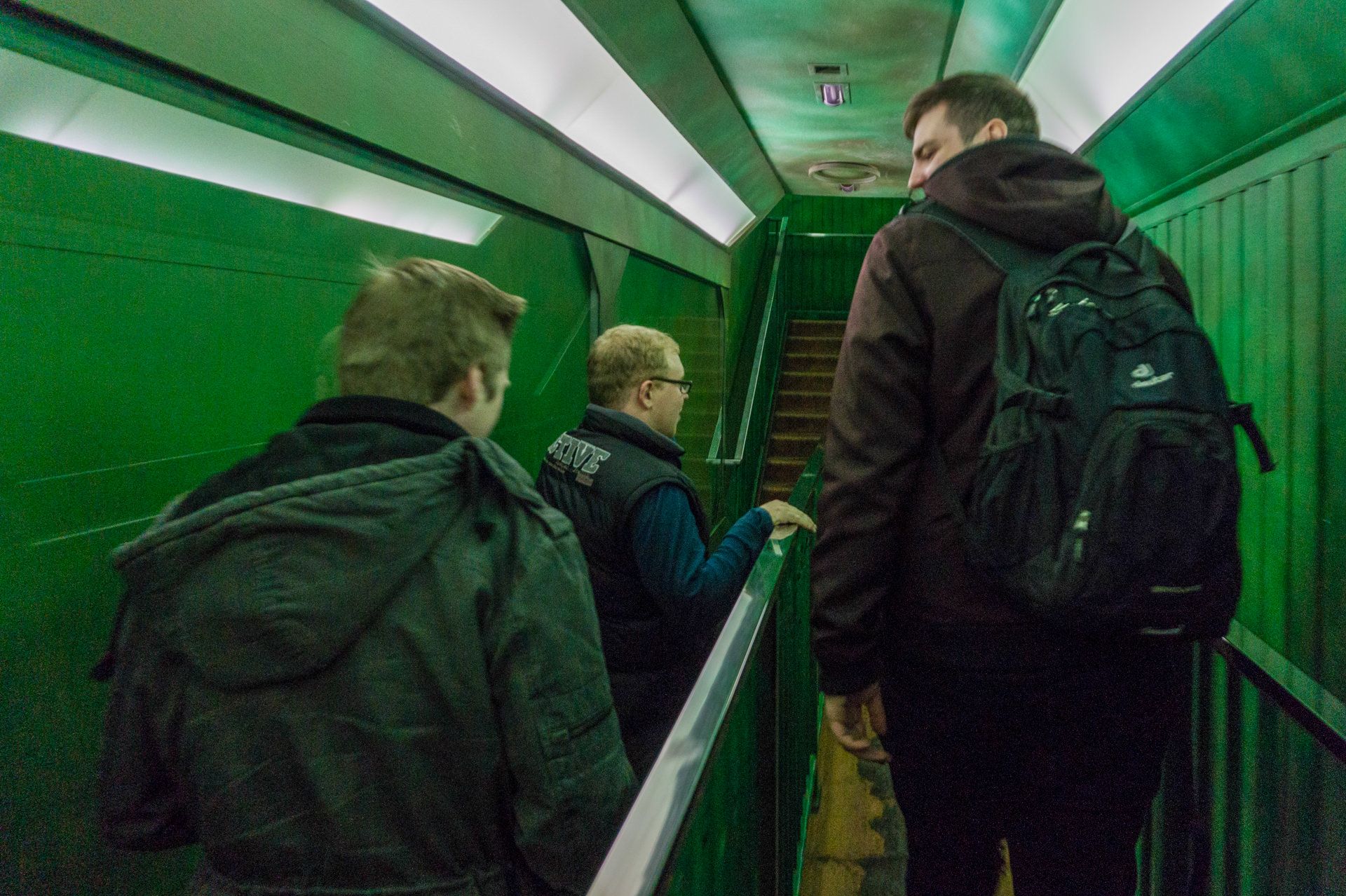
As soon as your kids are old and big enough, nothing stands in their way of riding the second roller coaster in this area. As soon as you have left the beautiful queue and the extremely desolate open-air waiting area behind you and have decided to ride in the back part of the train or in the first row (which other than indicated has mostly a shorter waiting time), your ride on Taron can start immediately.

The ride on Taron

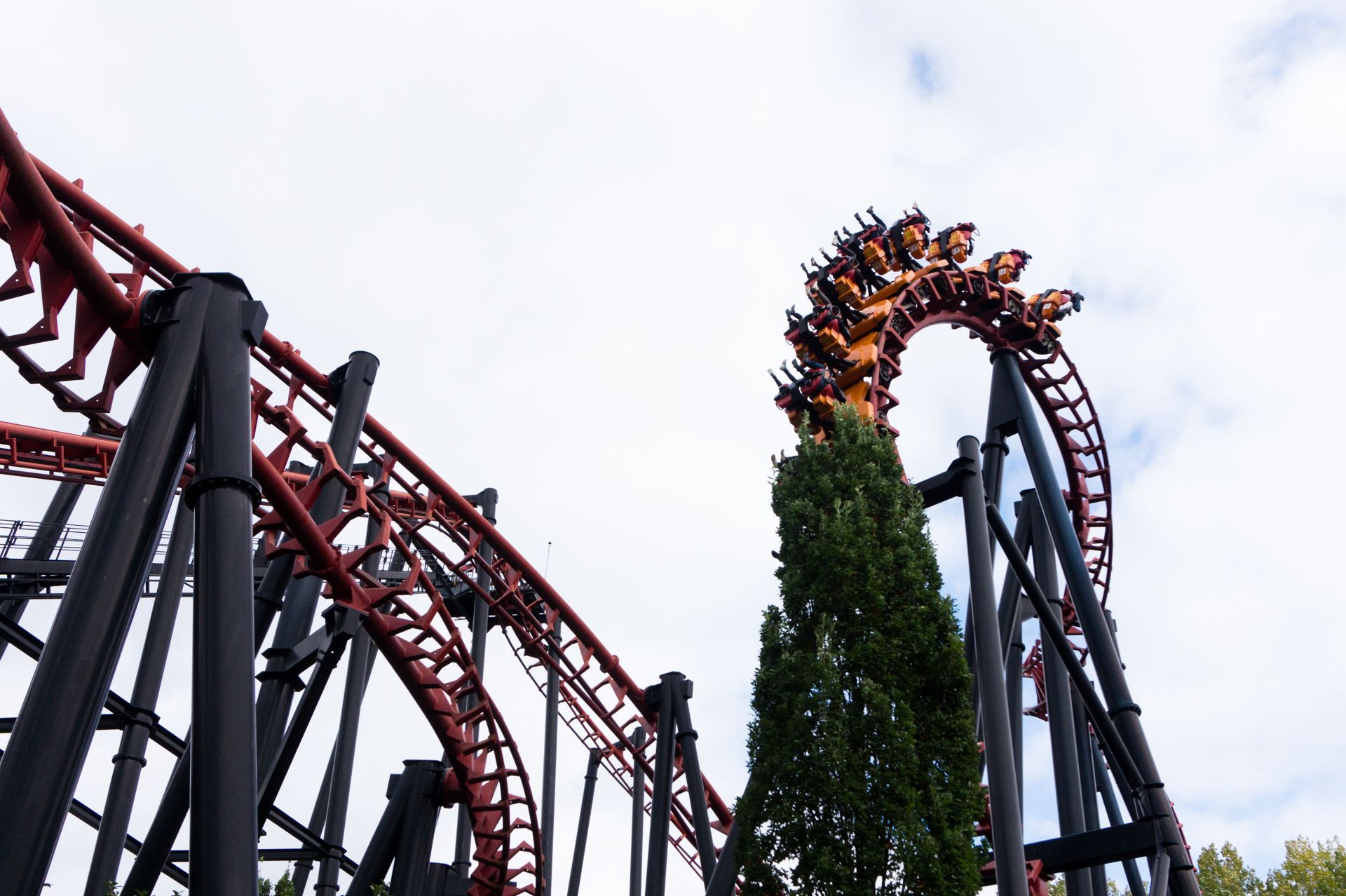
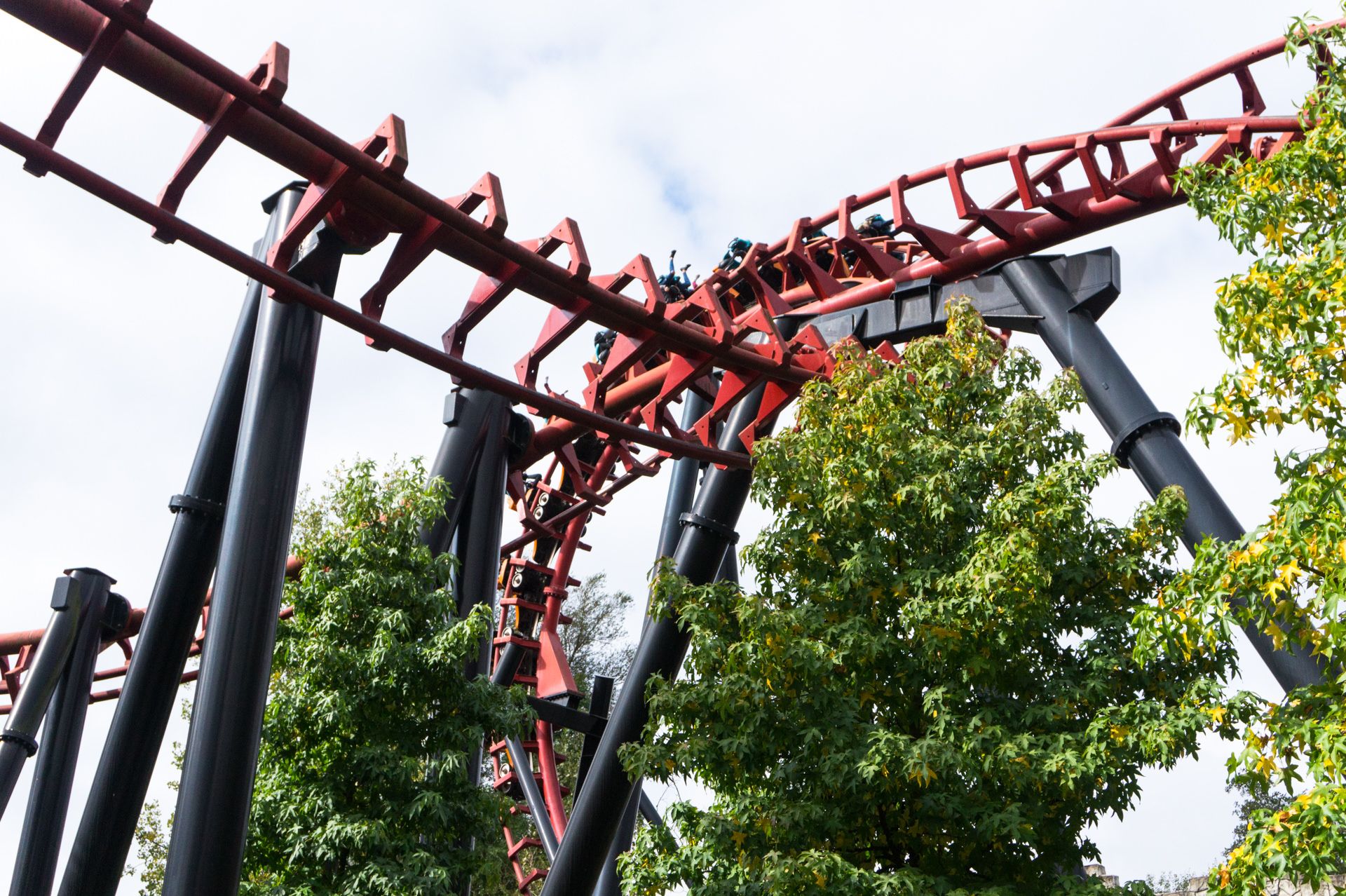
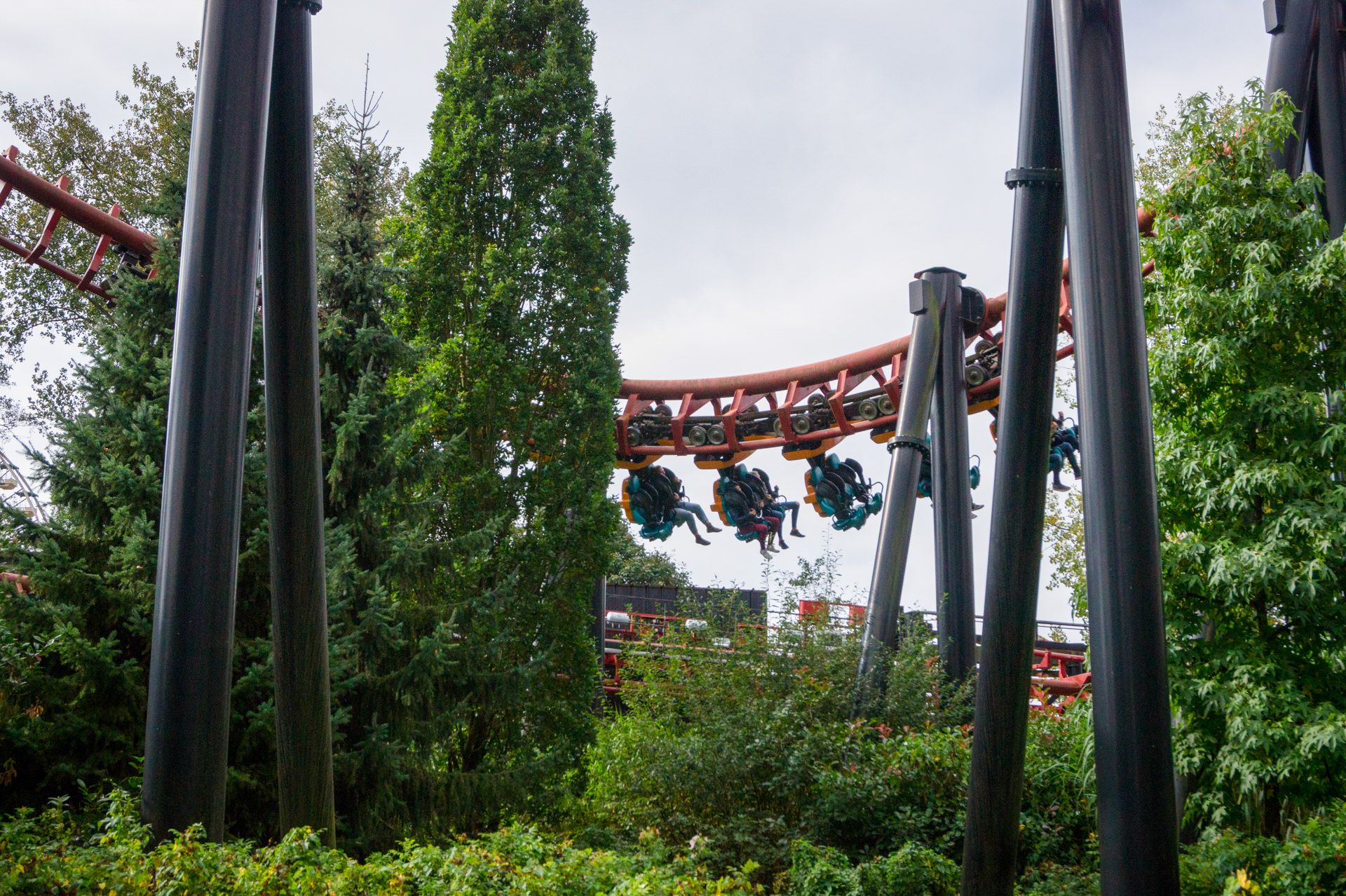
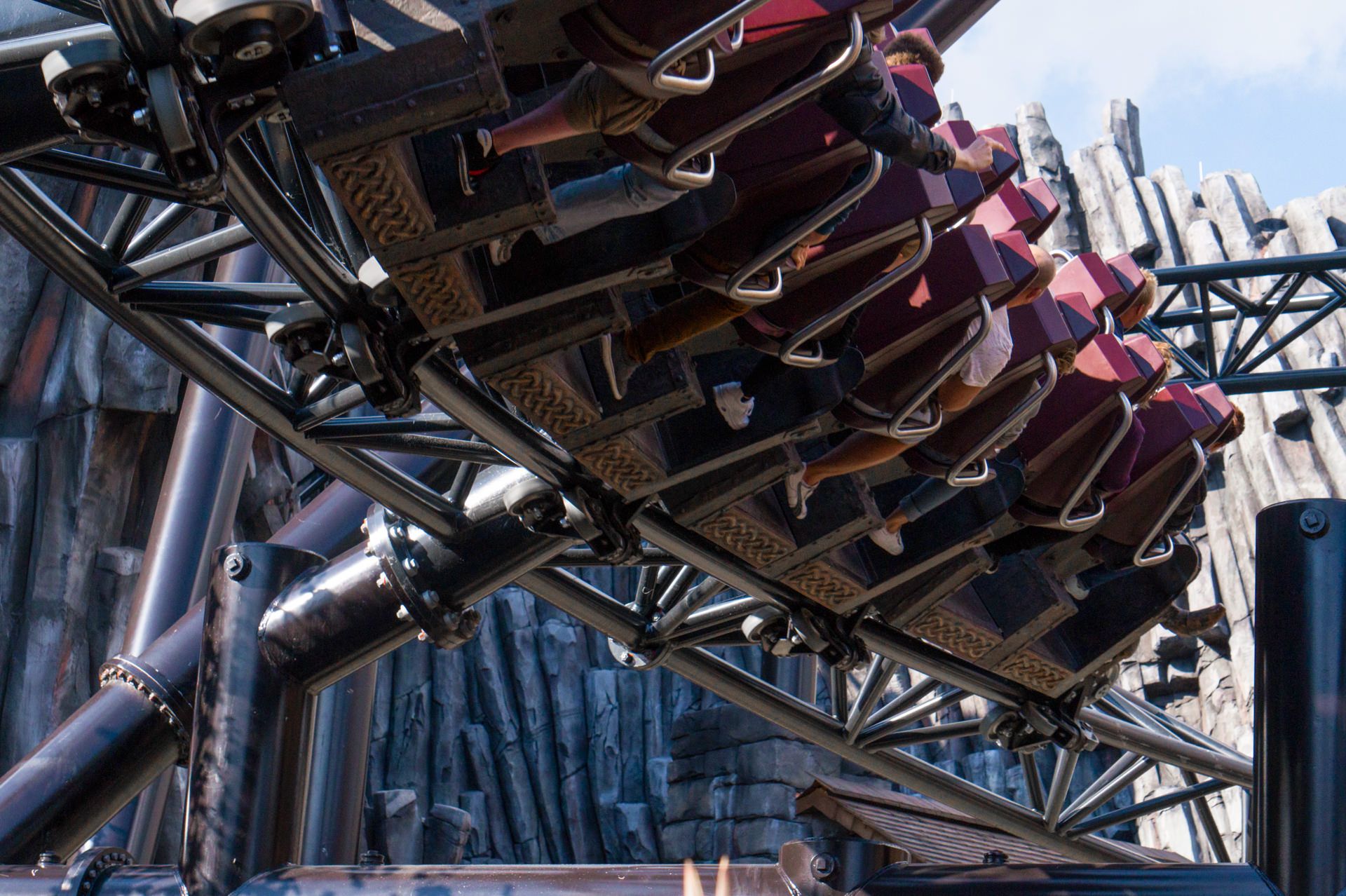
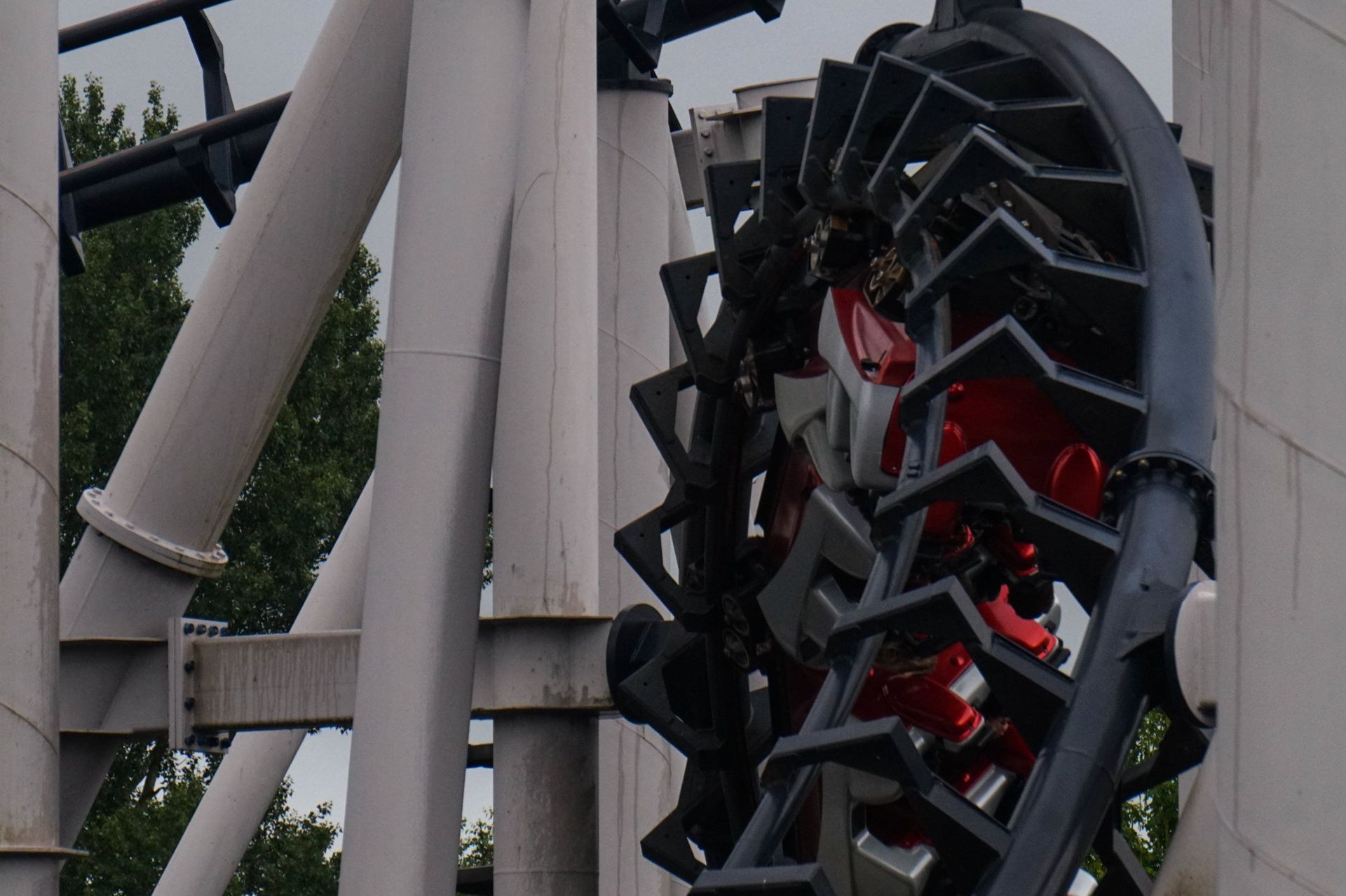
You leave the station in a right-hand bend, whereupon the train enters the waiting position for the upcoming launch. As soon as the track section is cleared, the train accelerates with a lot of pressure and races up a steep right-hand curve. This quickly turns out to be a slightly inclined U-turn, which sends the train at a high altitude in the direction of an exceptionally nice camelback, which pushes you out of your seat with ejector airtime. With a huge grin on your face, the train leads you through a tight left turn, just before the next twist brings a very surprising highlight to the visitors. The young buck tries to kick you sideways out of the train. Quelle surprise exceptionelle! From here the train shoots through a wide right-hand bend and then passes two gentle turns. After the second turn the roller coaster Raik is passed by in a small Bavarian curve. A left-hand bend follows, which leads into a short zigzag section. Another left turn takes the cars down into a pit and ends the first part of the ride.

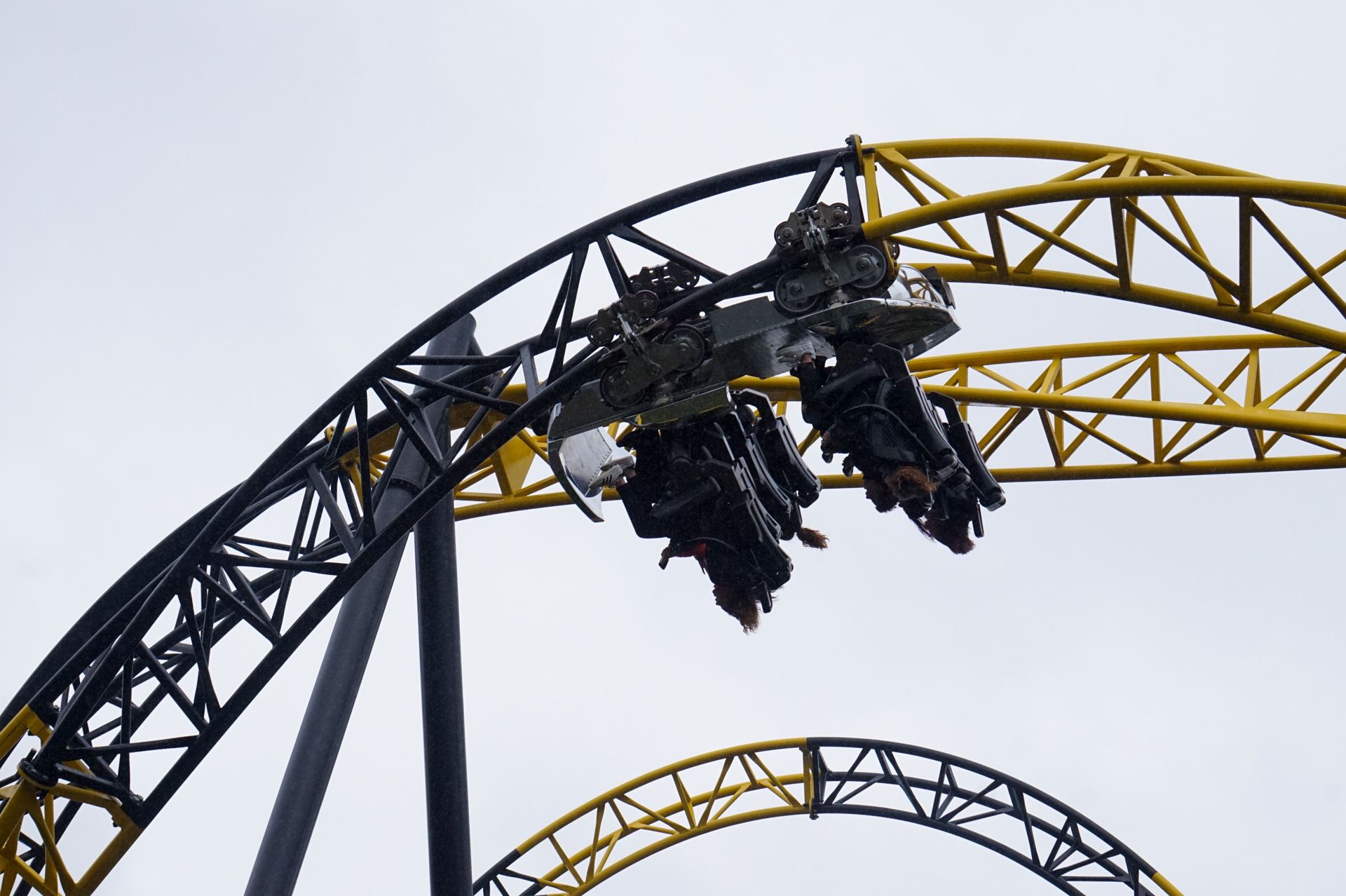
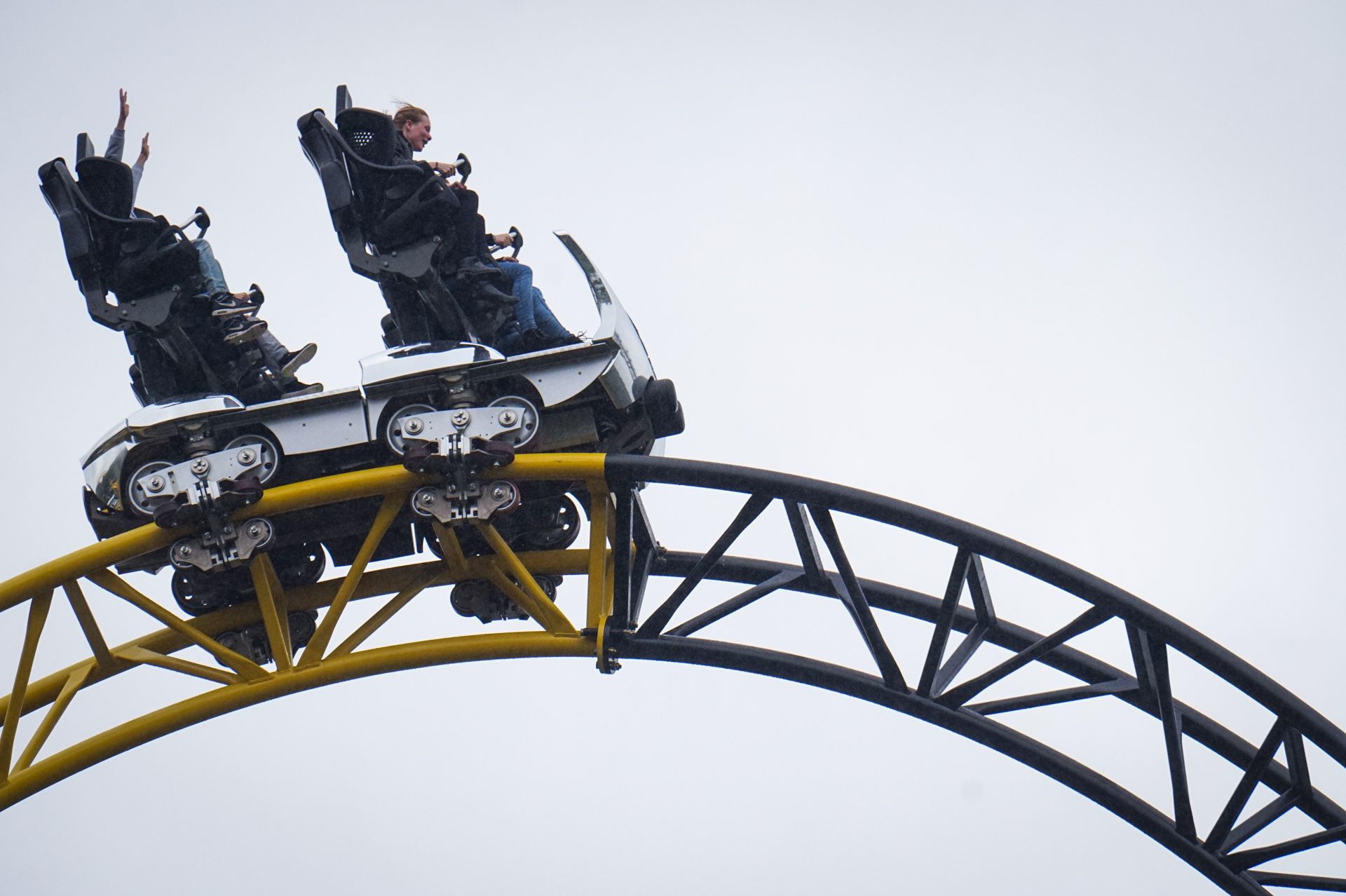
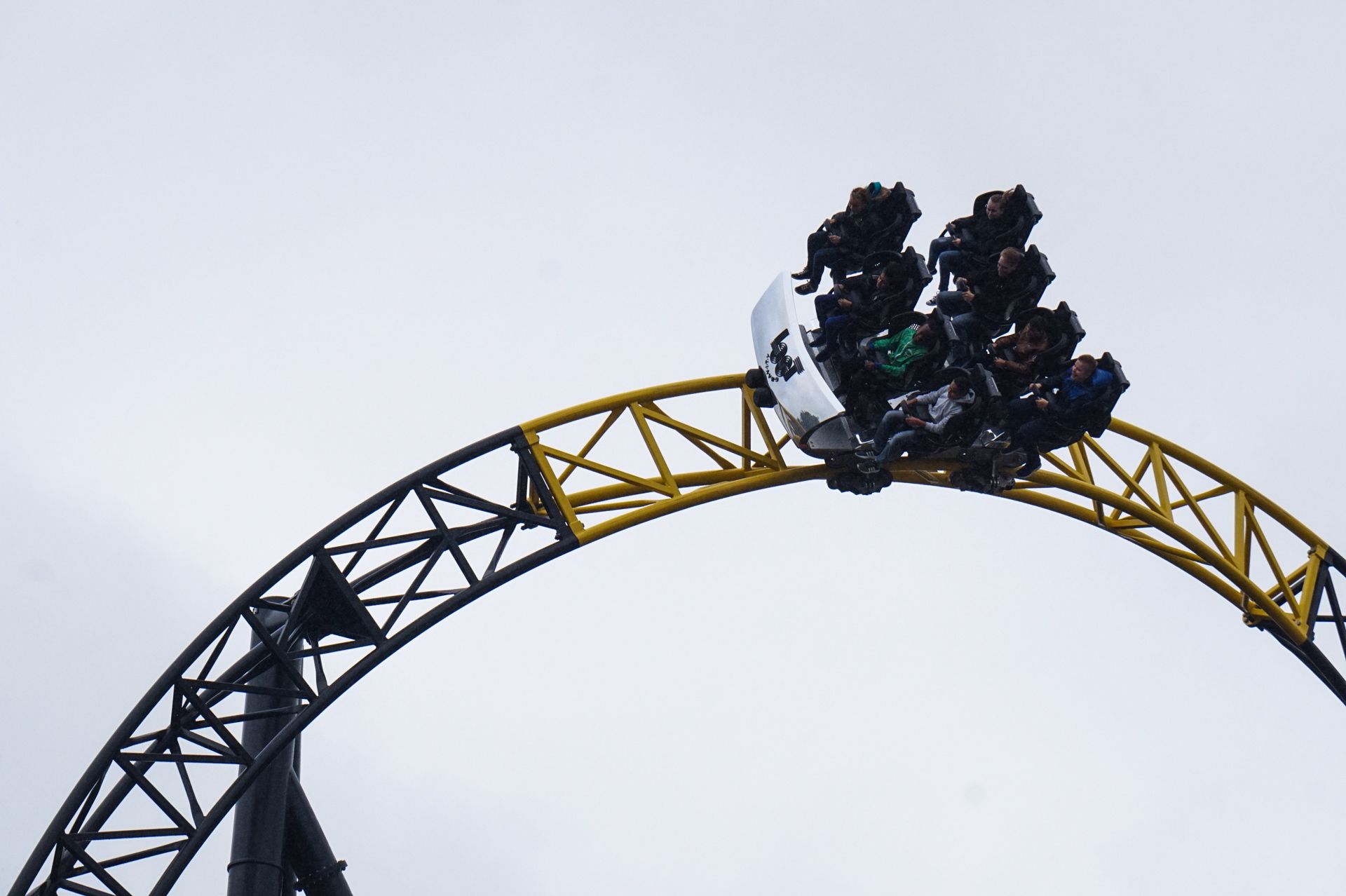
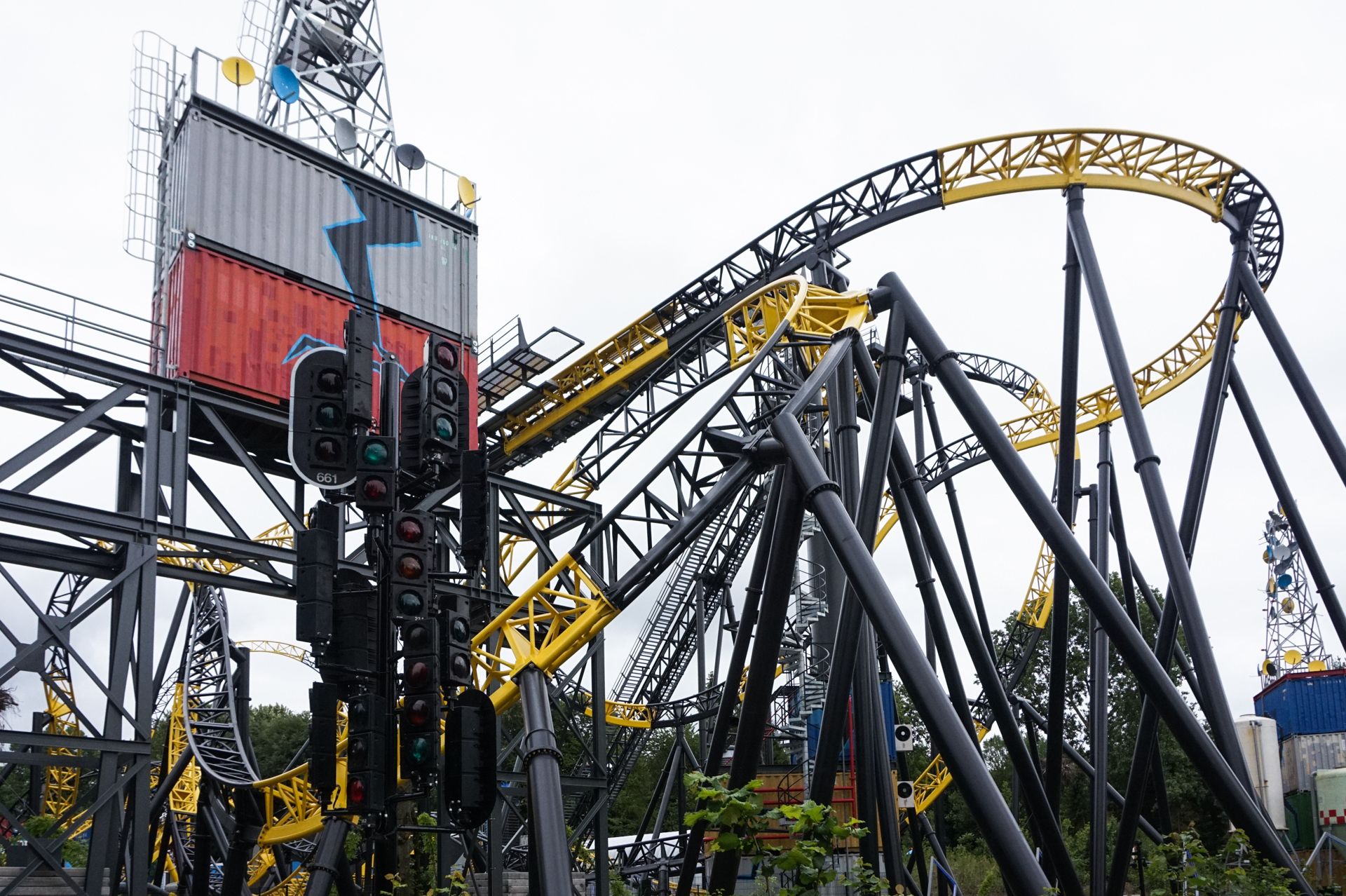
In contrast to the Lost Gravity roller coaster at Walibi Holland, which has a similar division of the ride, the second act of the ride begins with an outstanding highlight, similar to the song “Totale Finsternis” from the musical Tanz der Vampire or “Maskerade” out of Phantom of the Opera. In general, Taron can easily be compared to a good play, only that here we forget about the intermission.

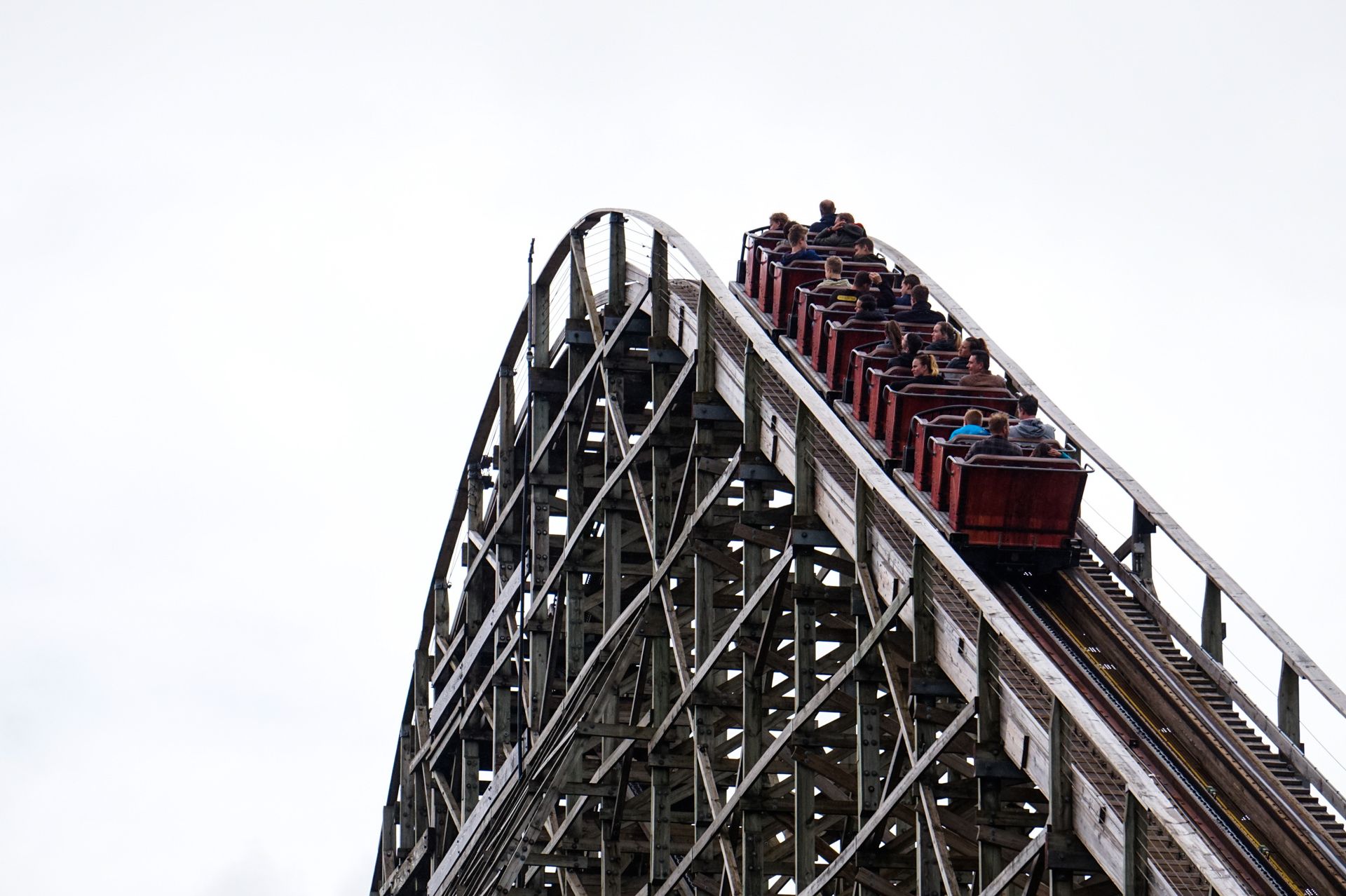
The train is now brought up to its maximum speed of 117 km/h with a tremendous force by a second launch. After that, the train shoots up a very steep left turn. Arrived at the highest point of the layout there is hardly any time to catch your breath, as a curvy shot follows in no time. Several short changes of direction, with constant inclination, lead to a fast descent, before you throw yourself into the abyss at a proper cross slope. On the following hill, the buck tries to throw you off again laterally, but this attempt again fails. All good things come in threes, which is why the following turnaround is just as wild. After that, you cross a relatively moderate right turn, above the heads of the motivated riders within the queue. A gentle twist leads to the final left turn of the ride. On the only straight section, aside from the station, launch and brake tracks, you cross two hills where the speed is reduced quite a bit. The only weak point of the layout is skillfully compensated with the following right turn, whereupon the brakes of the roller coaster Taron are reached.

Conclusion Taron

Taron is a genuinely impressive roller coaster and undoubtedly the best roller coaster in Germany. At the moment it has no competition in Germany, as the wood giant from the Lüneburg Heath is quite weak at the moment and its future is uncertain; otherwise Taron would only be the best steel roller coaster in the country; but who wants to differentiate in small nuances? The company Intamin has once again succeeded in a great coup, which was outstandingly staged by Phantasialand, besides the questionable record marketing. The expectations for upcoming projects have once again been raised by one bar; let’s see how the other parks (apart from the already well-known Star Trek Coaster of Movie Park Germany) will react.

Pictures Phantasialand


What’s your opinion about Klugheim and the roller coaster duo Raik and Taron?  Just write them in the comment field below the report or in our social media channels:


# Hard Gaan

Hard Gaan in Walibi Holland

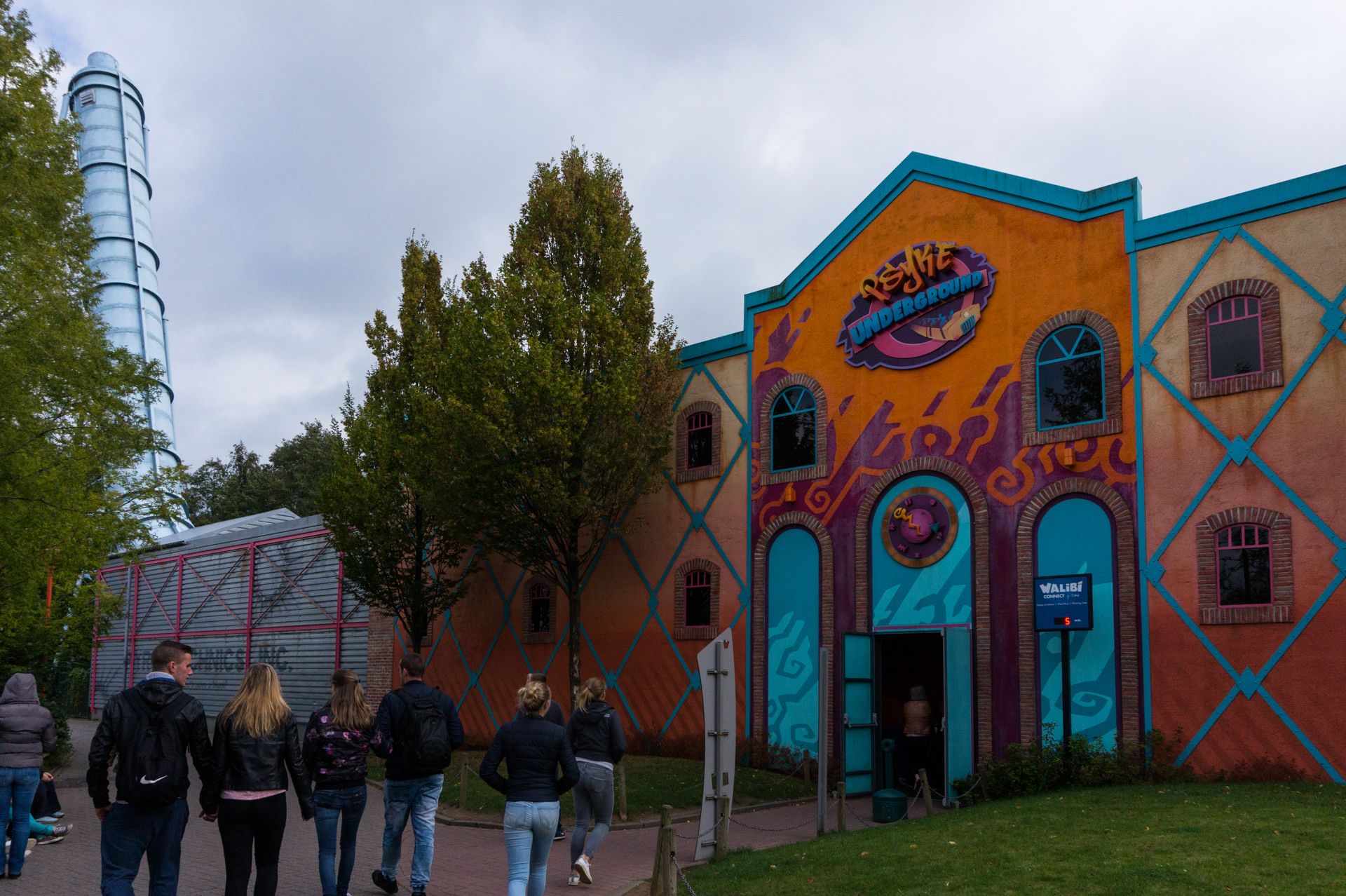
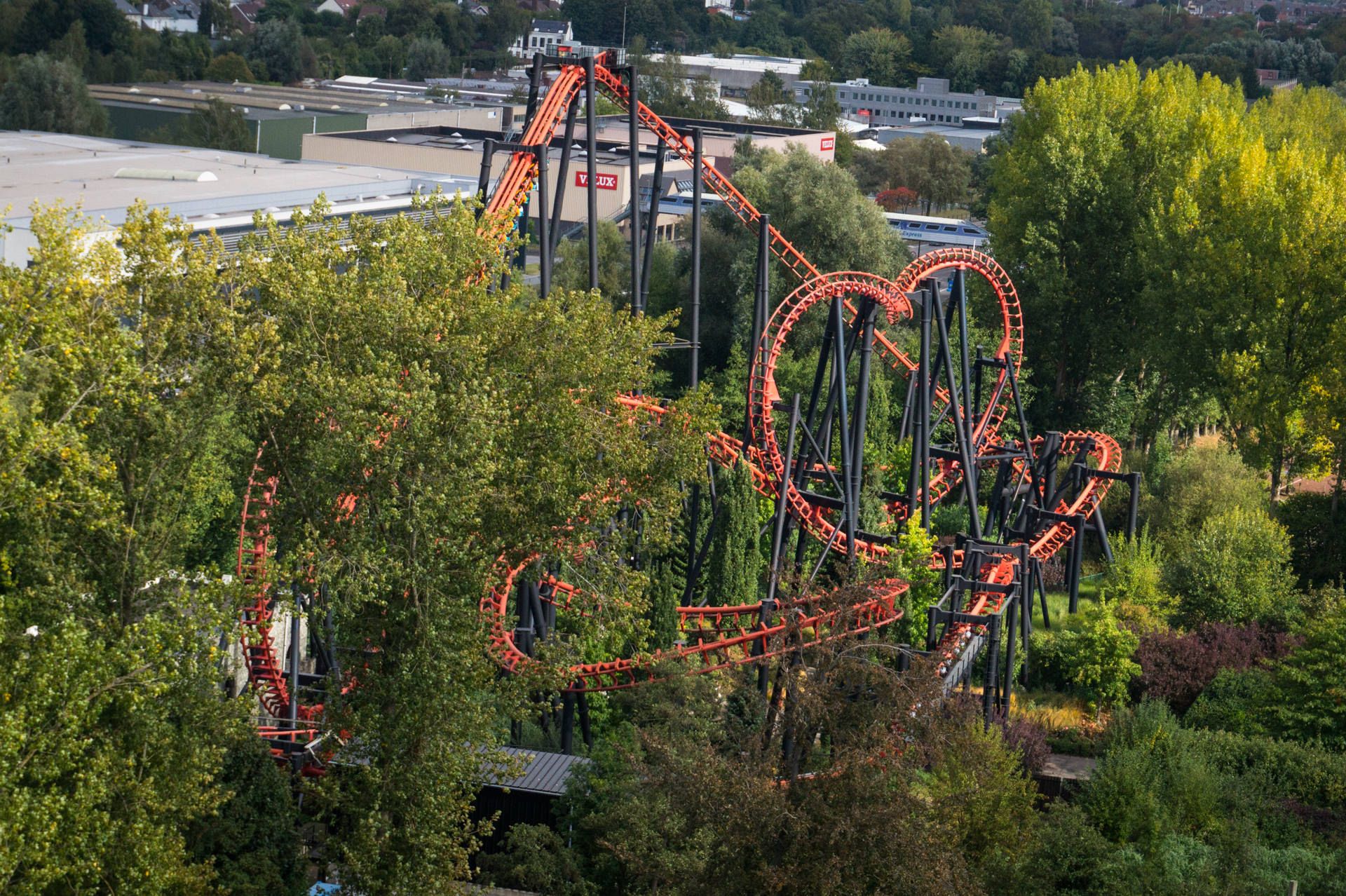
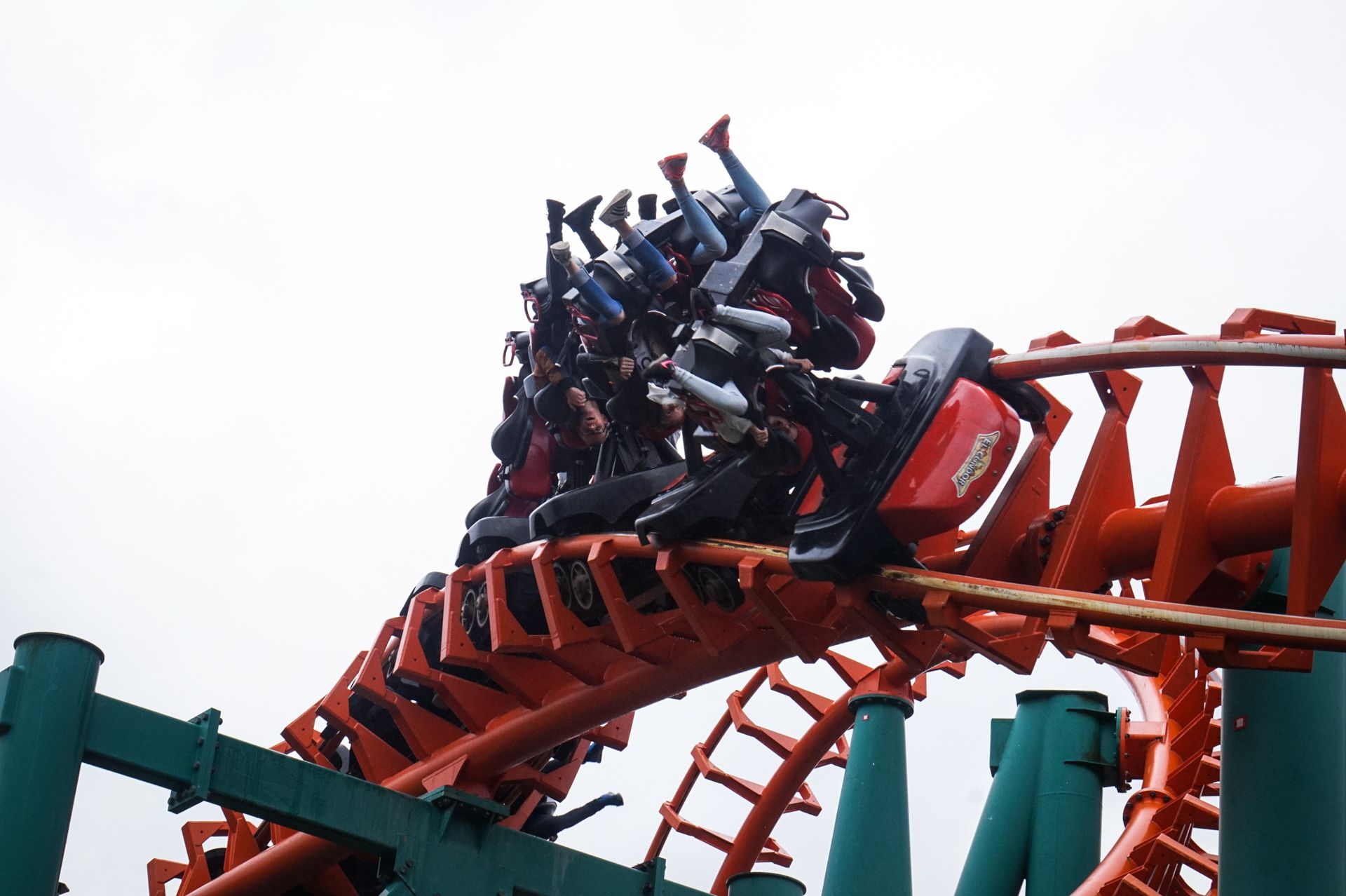
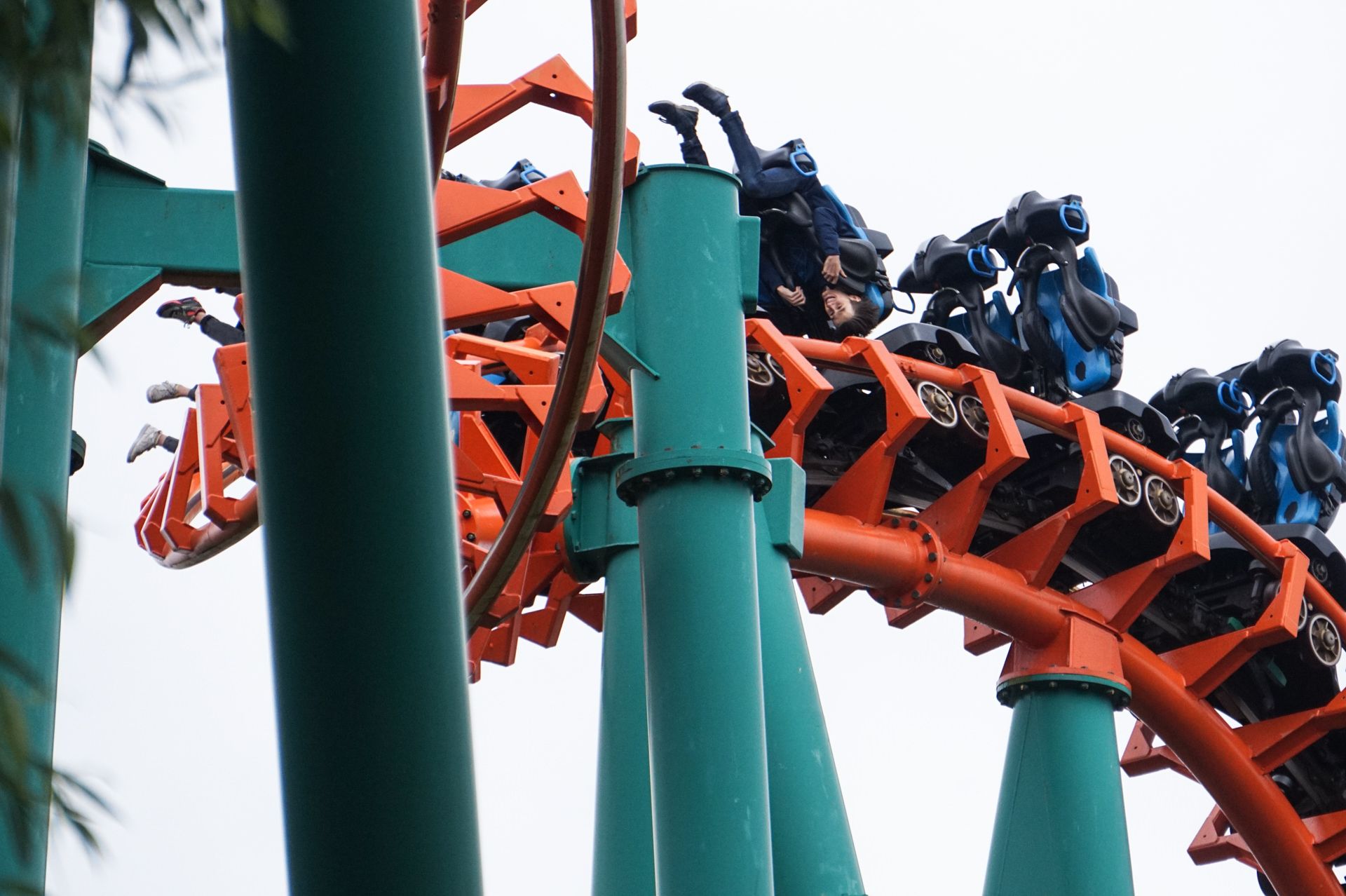
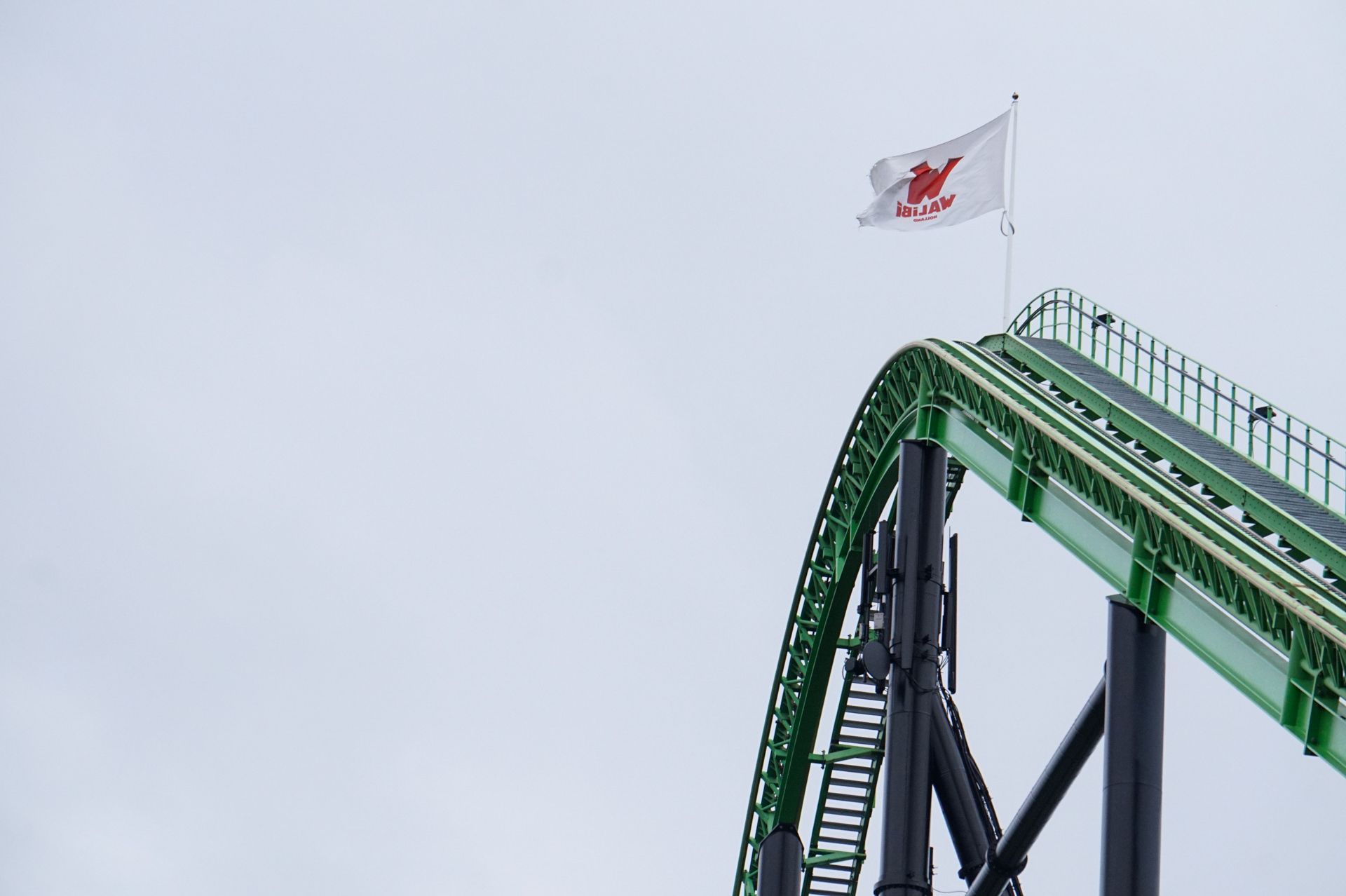
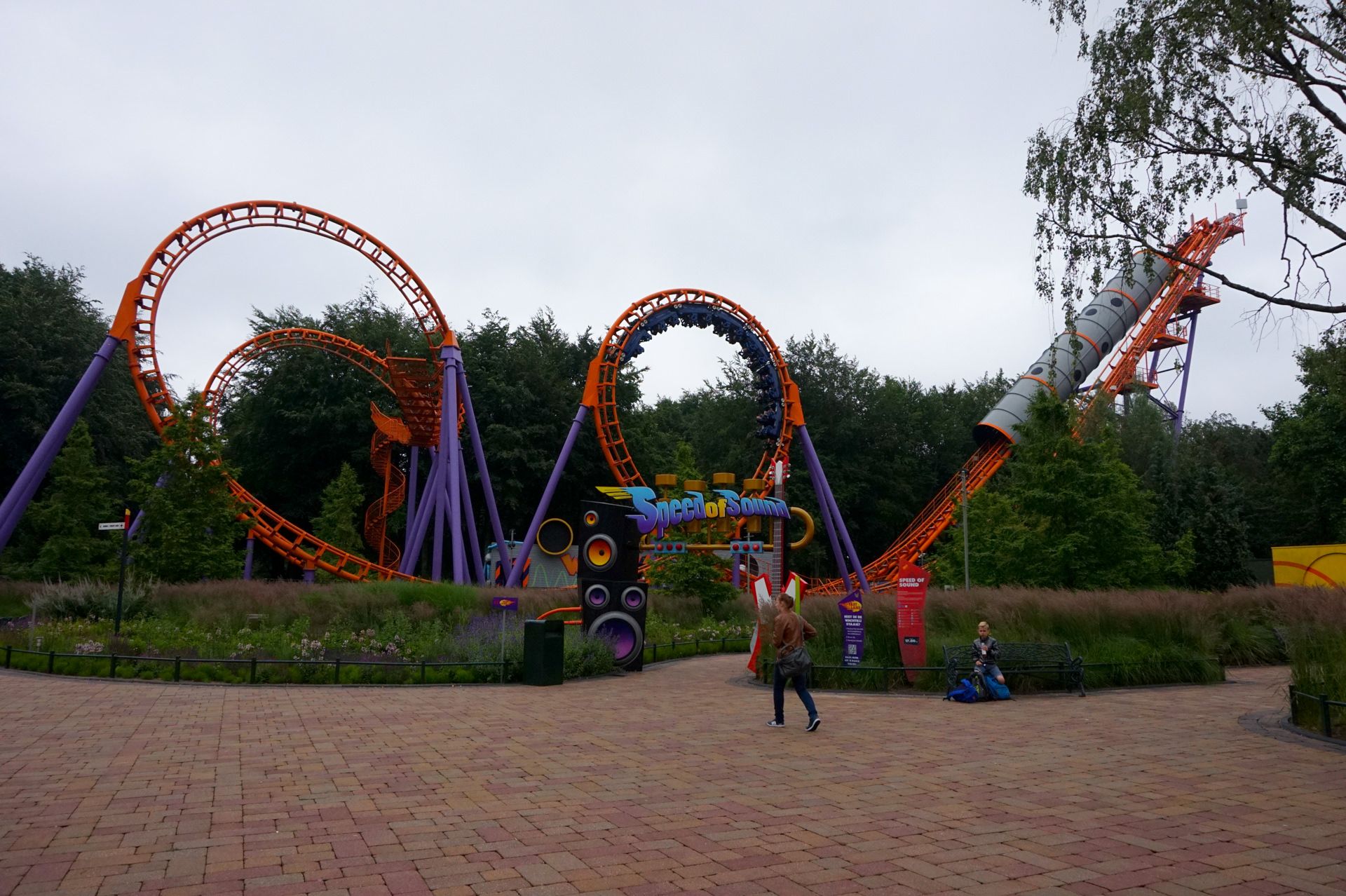
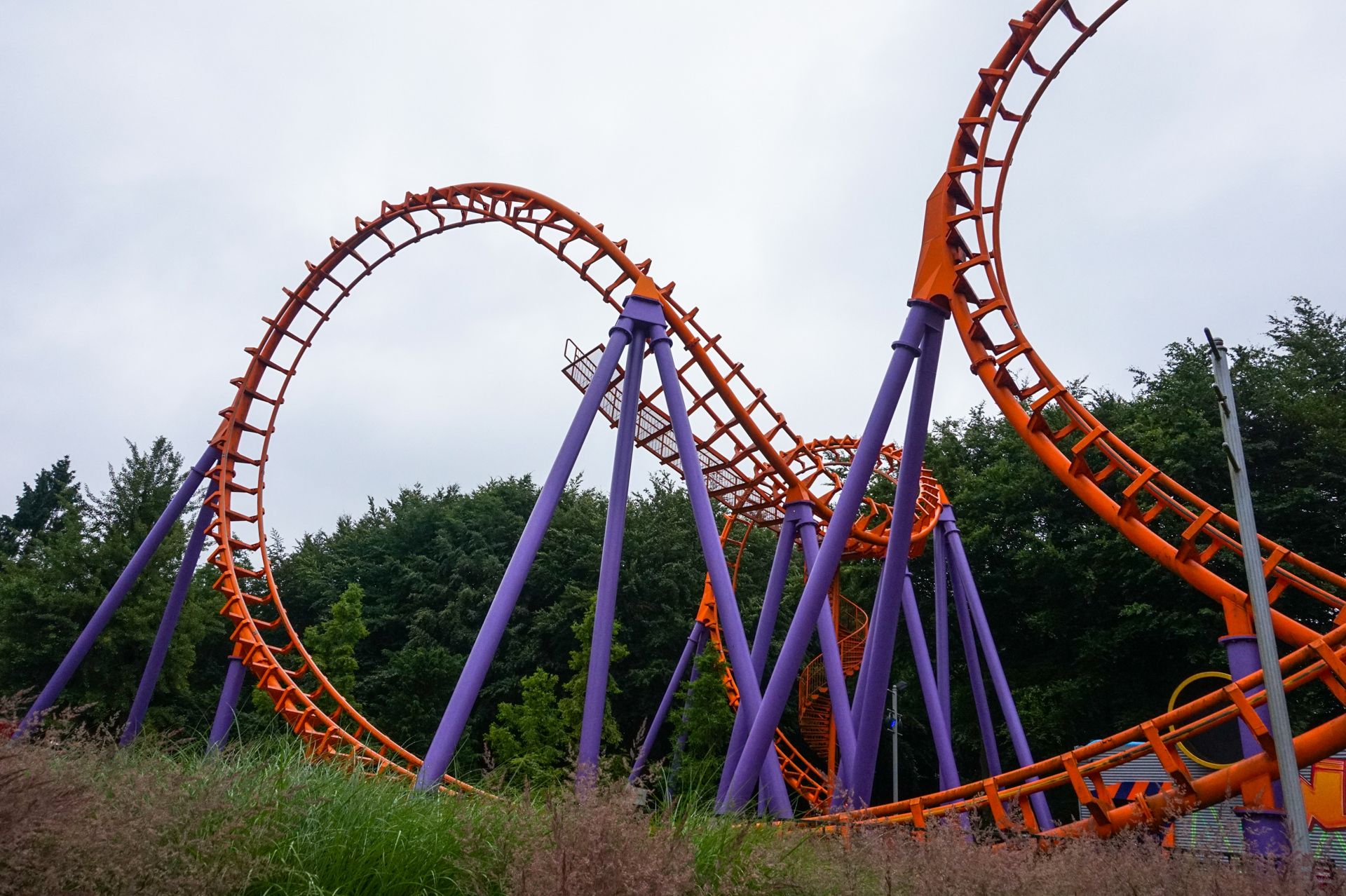
Slowly but surely one can say that Walibi has recovered from the Six Flags era. The re-branding of the brand in 2012 and the changes in the park that went along with it were long enough, but there were no novelties except for the reactivation of the roller coaster Speed of Sound and the truly ingenious design of the launch coaster Xpress: Platform 13. As successful as the restructuring of the park around the fictitious bands W.A.B. and The Skunx is, it seems that people in Holland prefer to go their own way and simply throw a lot of things overboard; because “Hard Gaan” and so on. There’s not much sense in that anymore, especially since they now serve a rather antisocial clientele. But what can you do when the biggest competitor serves all other target groups? As a first step to go fast, according to the literal translation, was to rob Speed of Sound of its soundtrack. Sure, the new track is good, but it takes away its history. The second step was taken this year with the opening of the roller coaster Lost Gravity.

Lost Gravity

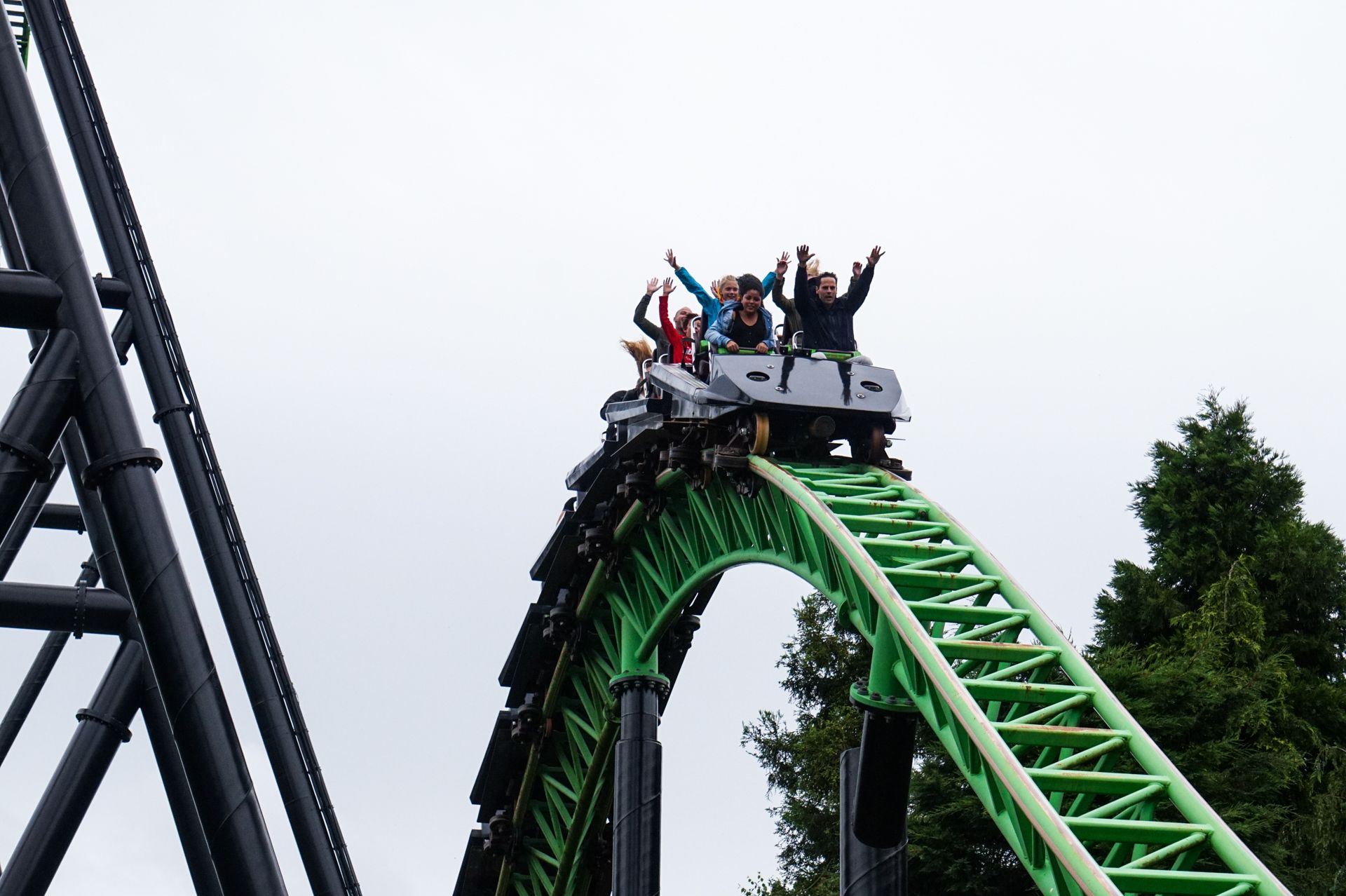
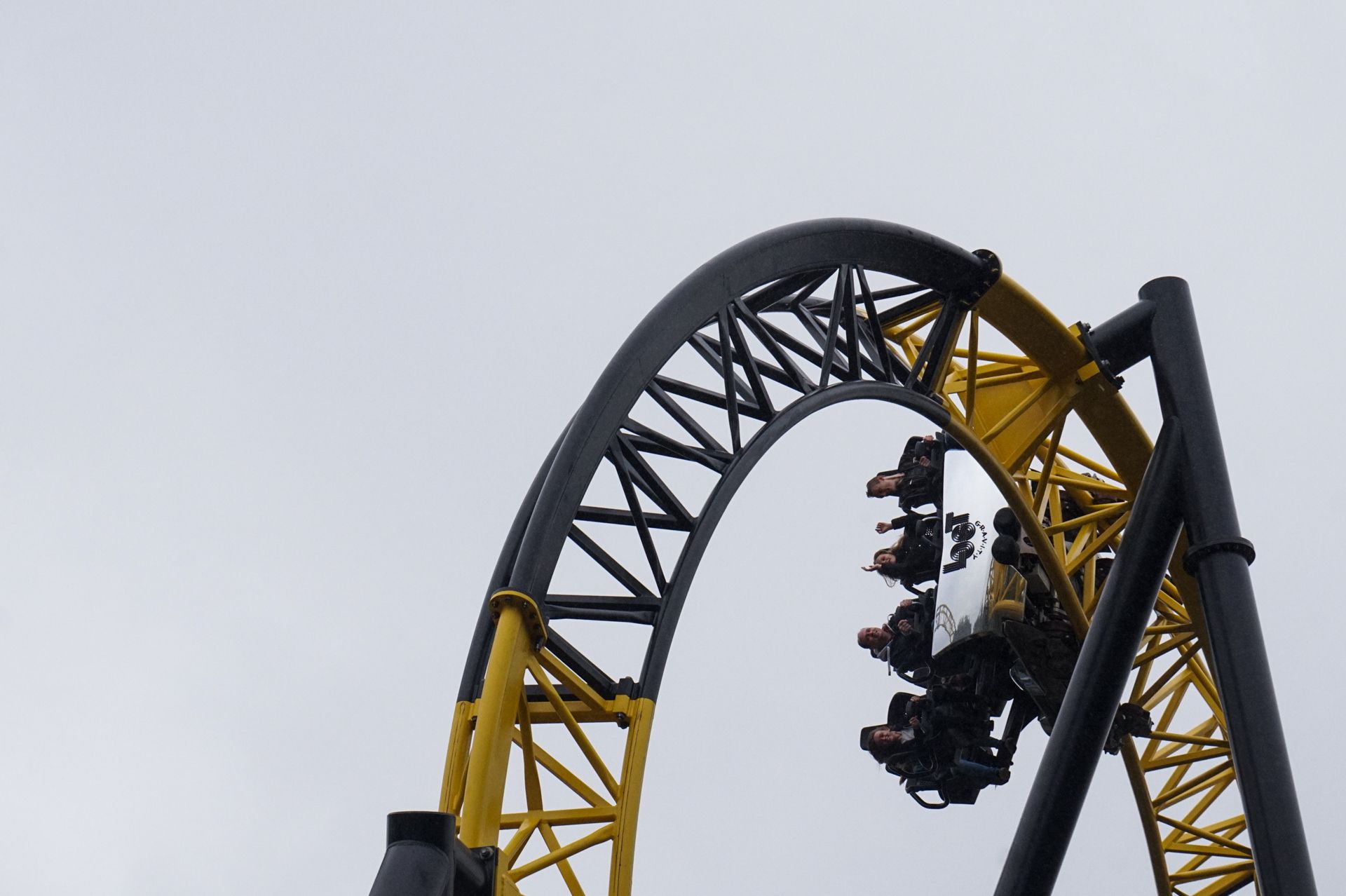
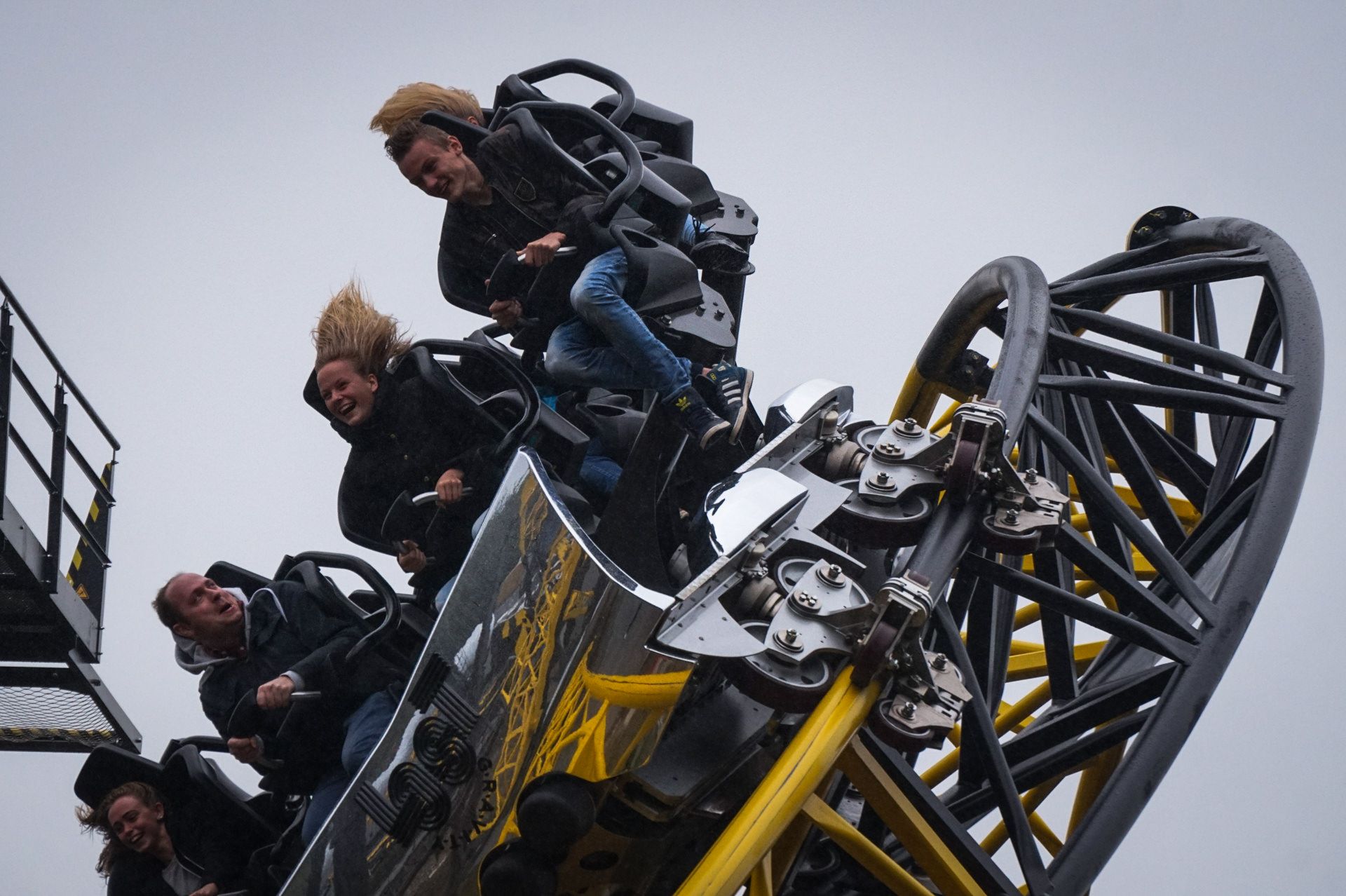
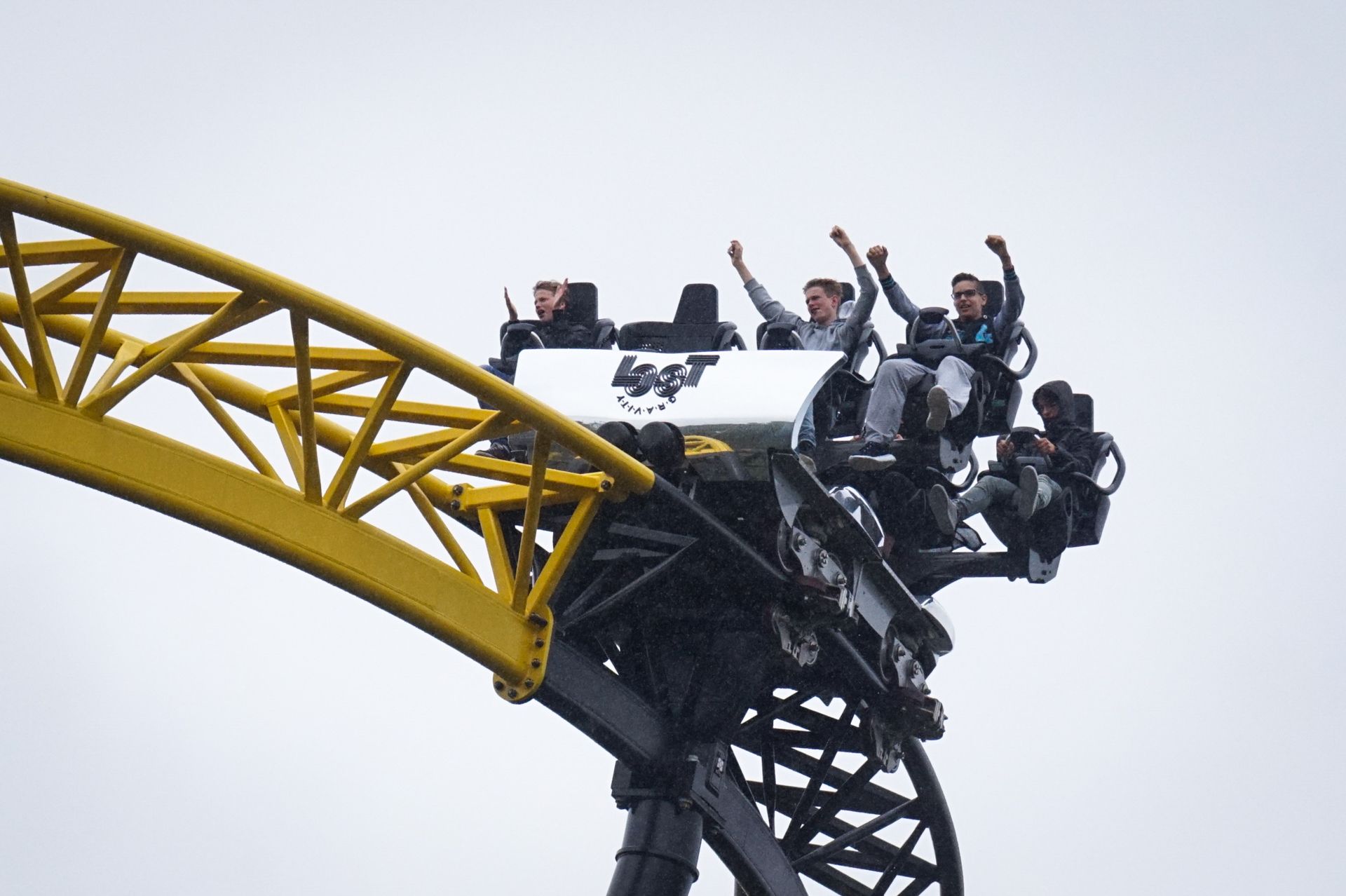
The design of the queue is wacky, but partly very conservative and inevitably reminds of the roller coaster Dizz of the Belgian amusement park Bobbejaanland. A lot more would have been possible here, especially since the custom-made comic universe of Morvan, L’Hermenier and Wuye provided a lot more possibilities. The cars of Lost Gravity, on the other hand, are truly unusual. Similar to the Intamin Wing Coasters, they offer two seats with a corridor and two without, but also have a high front. The seating comfort is great and the design of the cars has very little, or more precisely, a negligible effect on ride comfort.

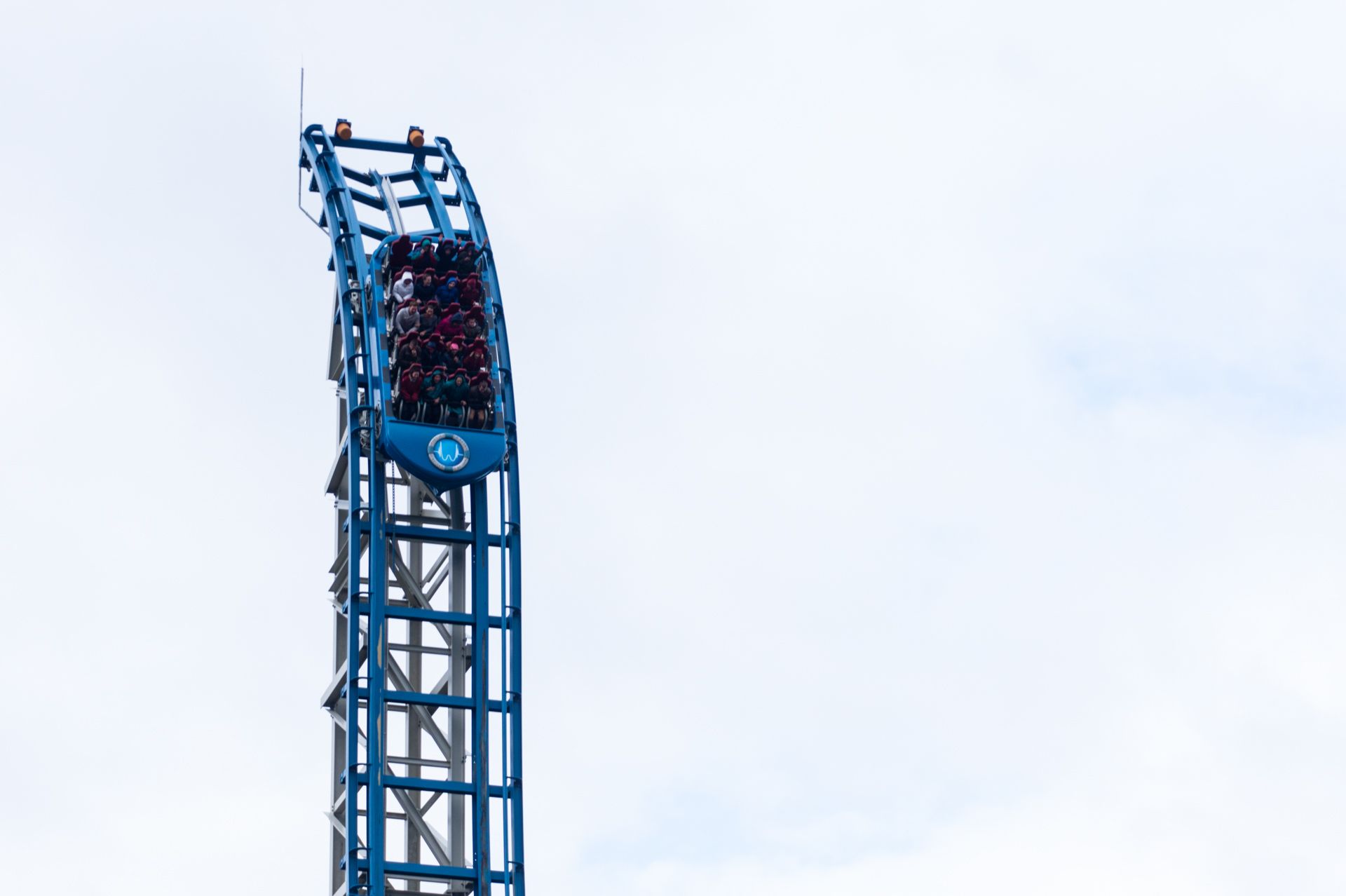
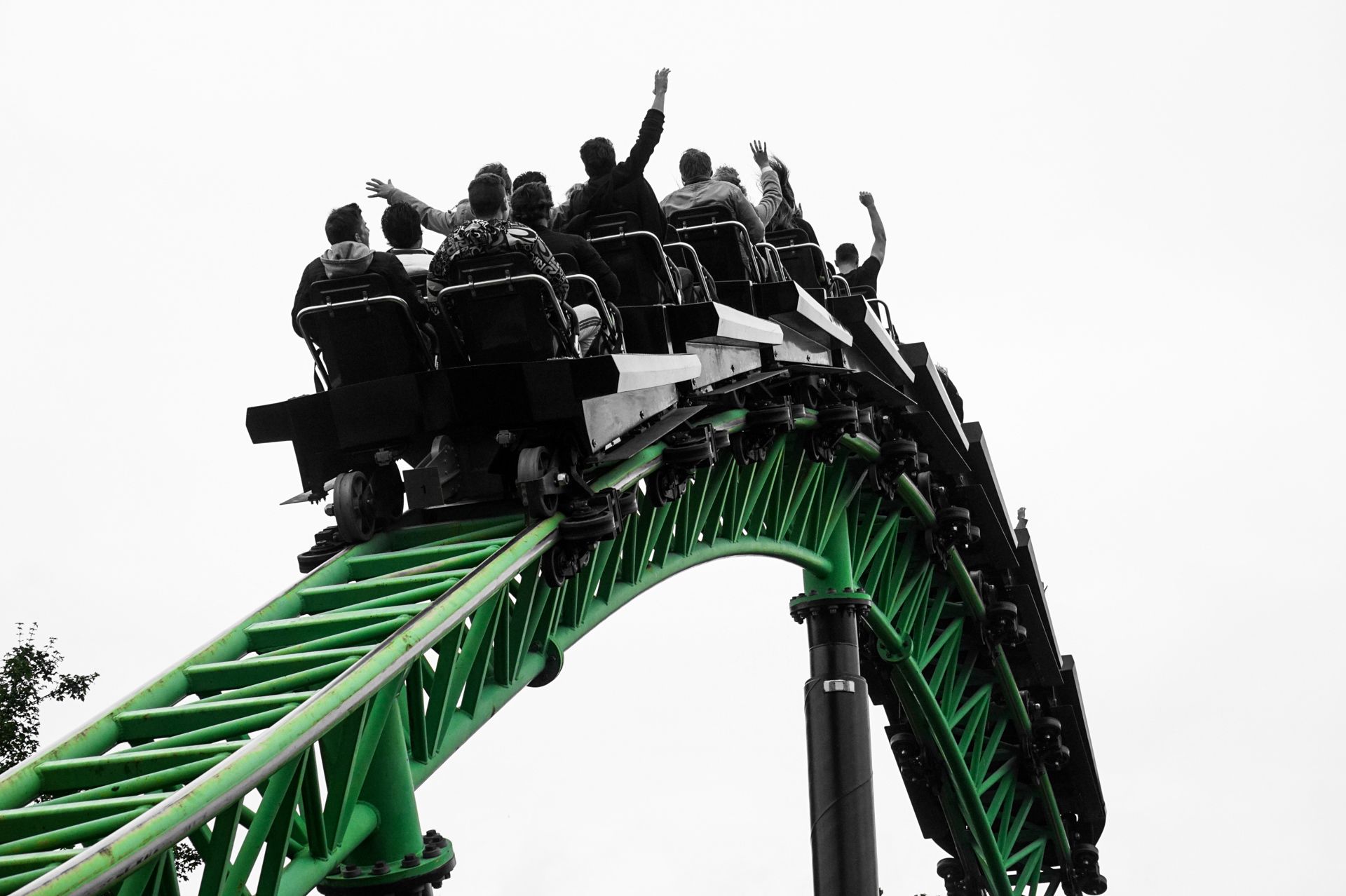
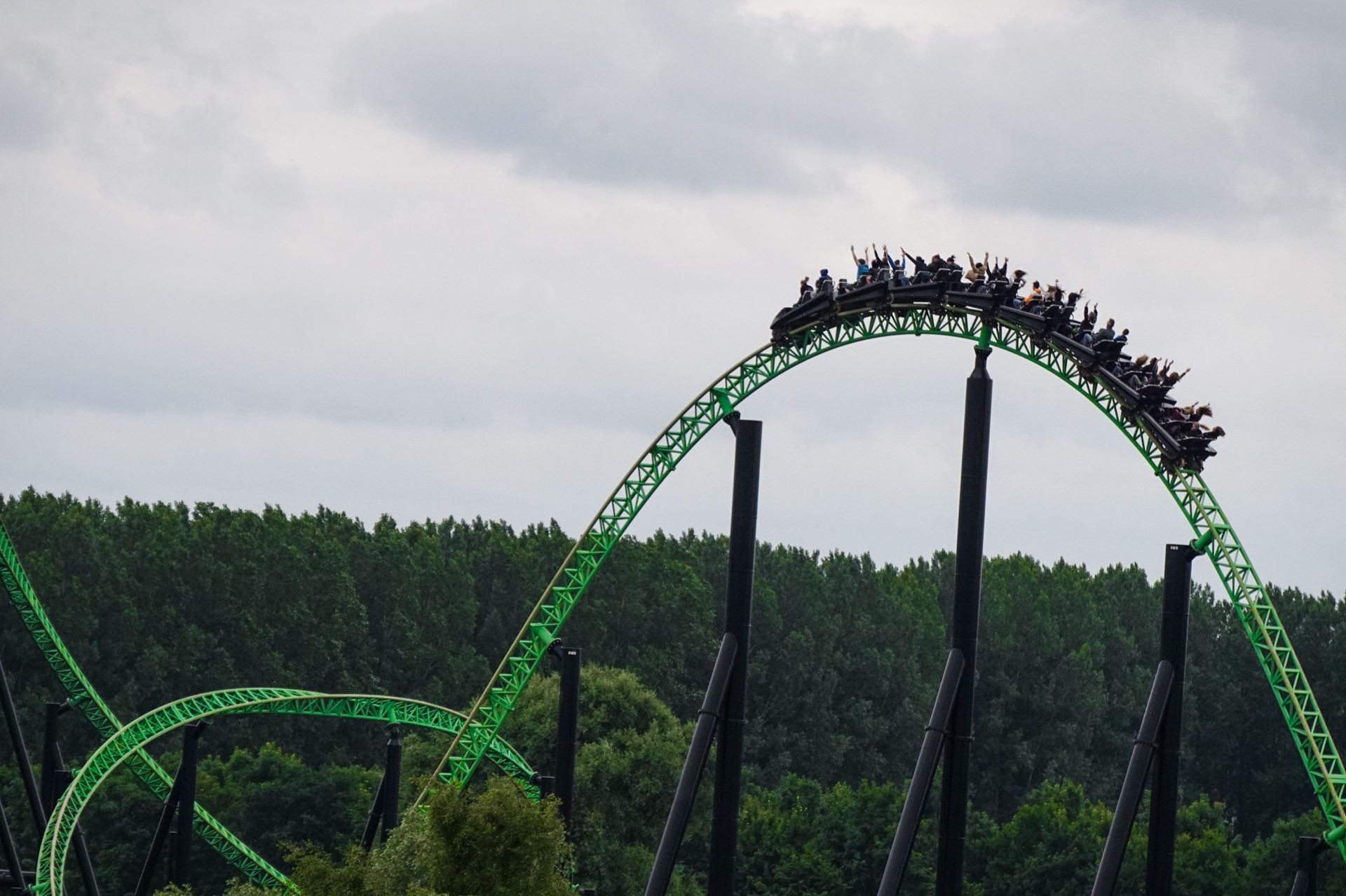
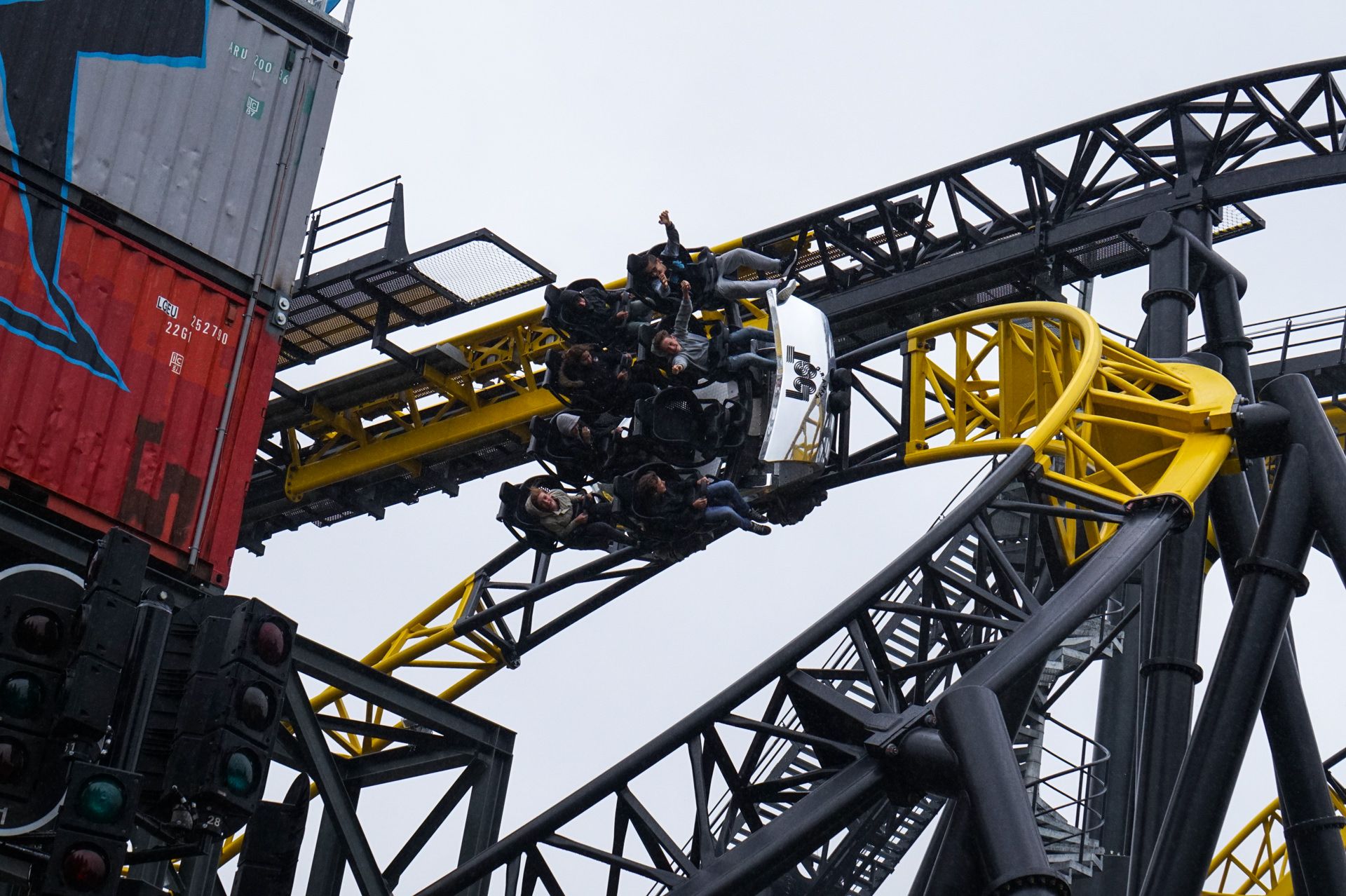
The ride begins with a right turn out of the station before it quickly climbs up via a chain lift. Without any rest the car immediately throws itself down the 32 height meters in an insane way; at least this is the case if one has taken a seat on the left side of the car. The extremely steep and widely twisted gradient is breathtaking without question, but at the right side it is almost boring compared to the left side, the radius is simply too narrow. With a lightning speed you pass over a ground level double-up, over whose hill you literally fly, before you find yourself on a top-hat element that is slightly tilted to the side; which you could also describe as a non-inverted banana roll, if you like. Somewhat contradictory to the previous layout is a huge camelback hill, which takes the passengers out of their seats again. At a breathtaking height, one now races through a wide turning curve, which in addition is also tilted outwards. So far, so good, and if Lost Gravity would end now, it would be a very short roller coaster, but also an extremely ingenious one. But instead of the final braking section there is a block brake followed by the second part of the ride.

After having reduced your speed, you now lean to the side and dive towards the ground again in a dive loop. A tight turn and a Zero-G roll are now carried out in a very tame way. The next turn will also be a turn where at least one of the acceleration vectors is zero. As a result, it is no longer possible to speak of a dynamic ride. You constantly brake and accelerate from new, which is equivalent to the accordion effect known from traffic jams. Over a hill you change direction again, cross another hilltop, pass a last pressure-laden valley, make a last turn and then find yourself in the final brake of the ride.

Lost Gravity is an excellent roller coaster for a little stop along the way, but nothing more. The first rumors were still about a revolving gondola roller coaster, this would have been hardly feasible with the first part of the ride, but ideal for the second. Either way, the first part is absolutely amazing, but the second one is wasted. The last curves are still a lot of fun and let you leave the ride with a little grin on your face, but the premiere of Mack Rides Big Dipper was not as convincing as it should be; at least there is enough potential for further installations.

Pictures Walibi Holland
Closing Words

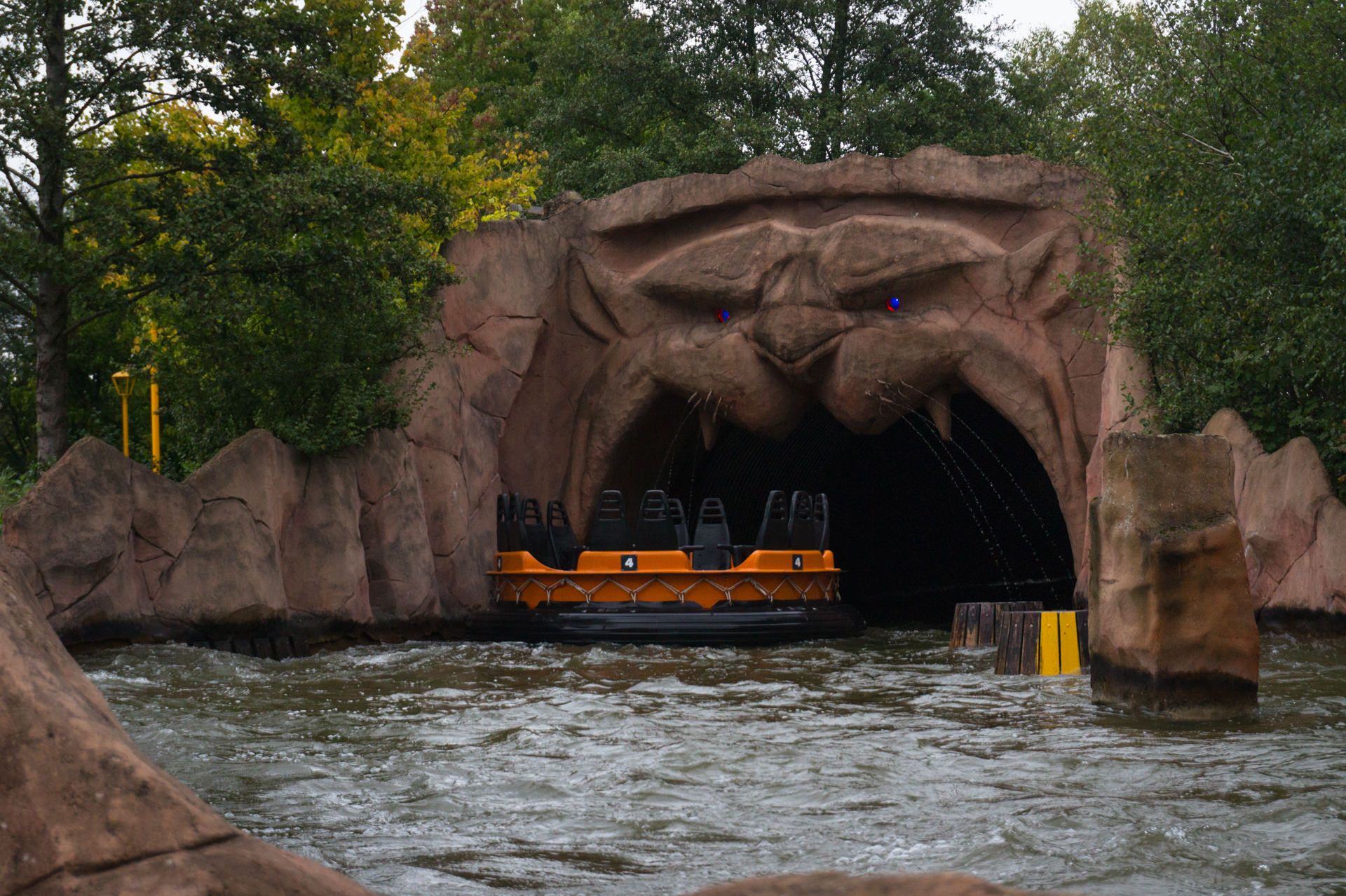
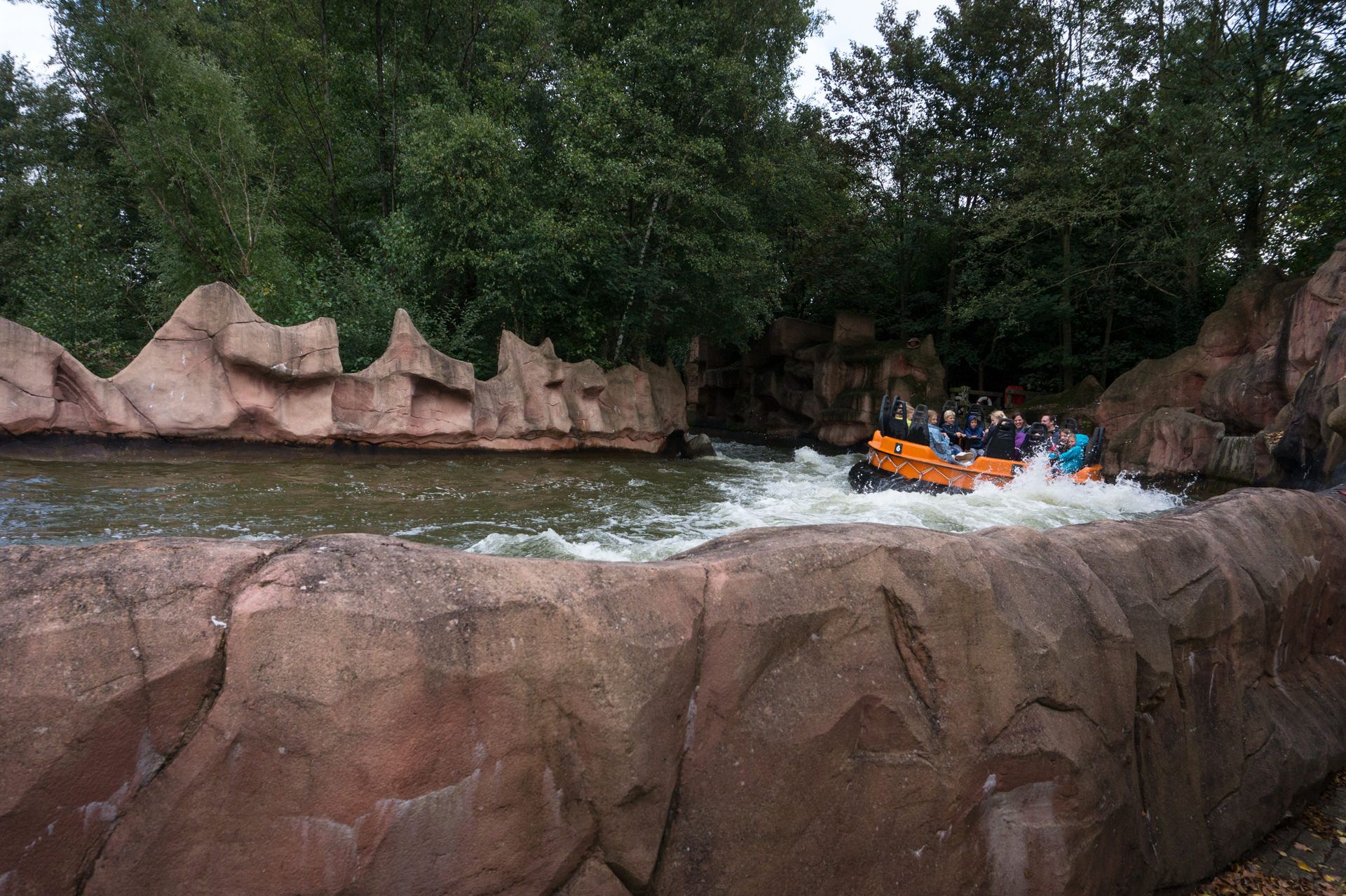
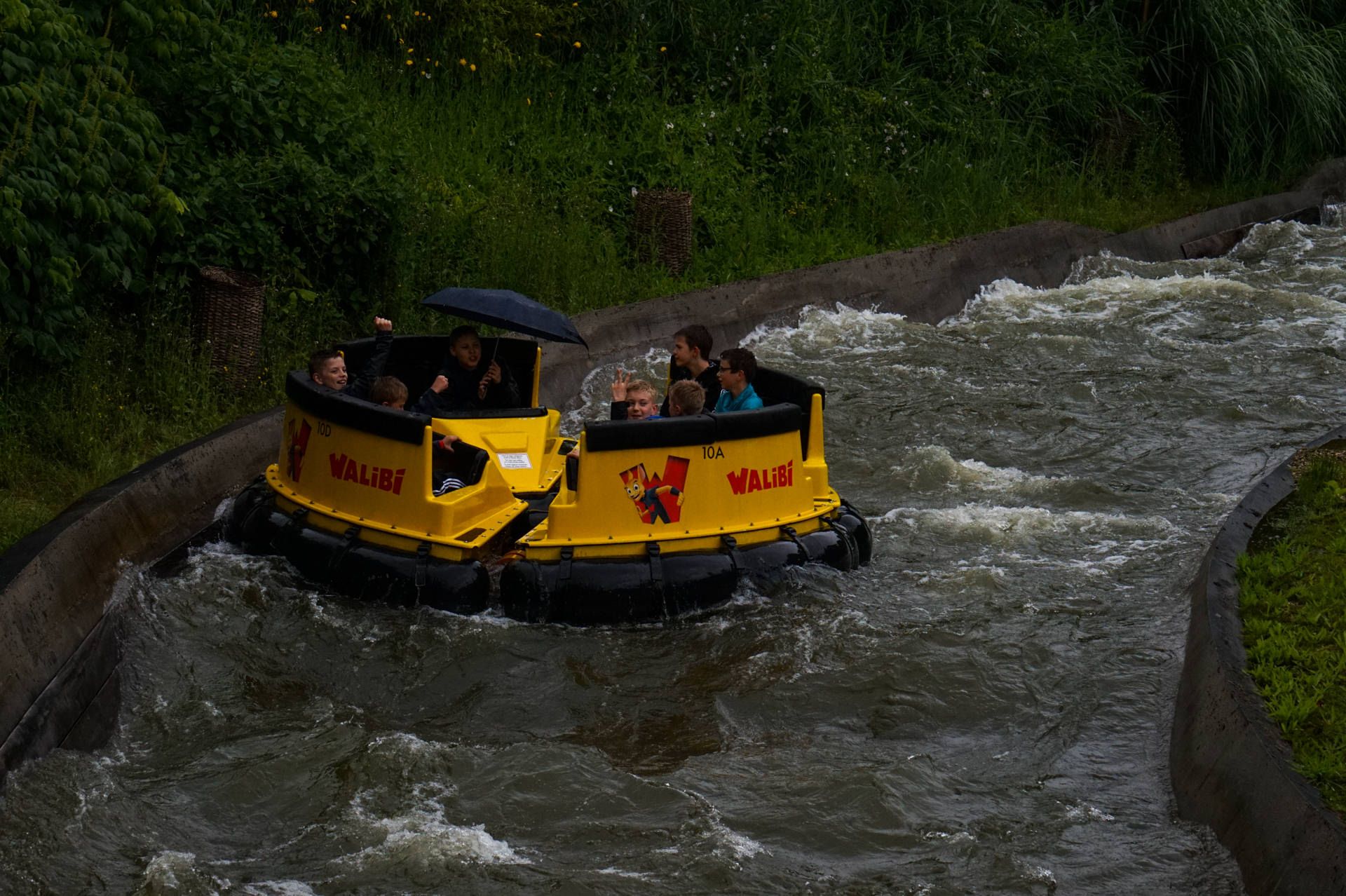
Finally, I would like to appeal to human reason, which Dutch students probably no longer call their own. I assume that the student in question is striving for an equivalent to the German Abitur (as nowadays everyone does) and therefore should not be stupid – but how could one come up with the idea to sit on the seat and hold on loosely in a rafting ride with movable boats, like Rio Grande is? This is dangerous and should normally be rewarded immediately with exclusion from the park for a lifetime. If this boy would have fallen into the water and drowned, I would have neither been shocked nor worried about him; in fact, it was predictable. His buddies were similar, but in the postfactual age, you can’t let something arbitrary like rational rules distract you from your own horniness. Let’s all have a selfie! Yeah!

Walibi, you’d better think about Hard Gaan again, you might not be doing yourself any favours in the end.


What is your opinion about the Lost Gravity roller coaster and #Hard Gaan? Just write them in the comment field below the report or visit our social media channels:


Under Shock in the Rainbow Magicland

Rainbow Magicland

The Rainbow Magicland is once again one of those theme parks designed on the drawing board, where the initially expected visitor numbers cannot be linked to reality and will probably never come together in the future. The operating company Alfa Park probably had similar experiences with Miragica, which opened two years earlier, so that some projects were probably saved from realisation. In 2011 the theme park, which is based on children’s series by the Italian animation studio Rainbow, opened and what looked very promising from the vastness of the Internet already turned out to be untenable by visitor reviews in the second year of operation of the park.

I don’t like to hide the fact that Rainbow Magicland lives up to its bad reputation; after all, we expected nothing less. As soon as we enter the car park, the previously consolidated picture is confirmed, as a large part of it has been taken over by nature in the meantime. But that doesn’t matter, because you can’t expect visitors here anyway, so without hesitation we went into the park to let the playful, meanwhile very run-down decoration take effect on us. While the Cinecittà World has been built with quality in mind right from the start and the park looks as if it had only opened yesterday, Rainbow Magicland looks like a fairytale park opened in 1970; only with the one, but very fundamental difference that in an old fairytale park there is often a very high level of attention to detail.

Shock

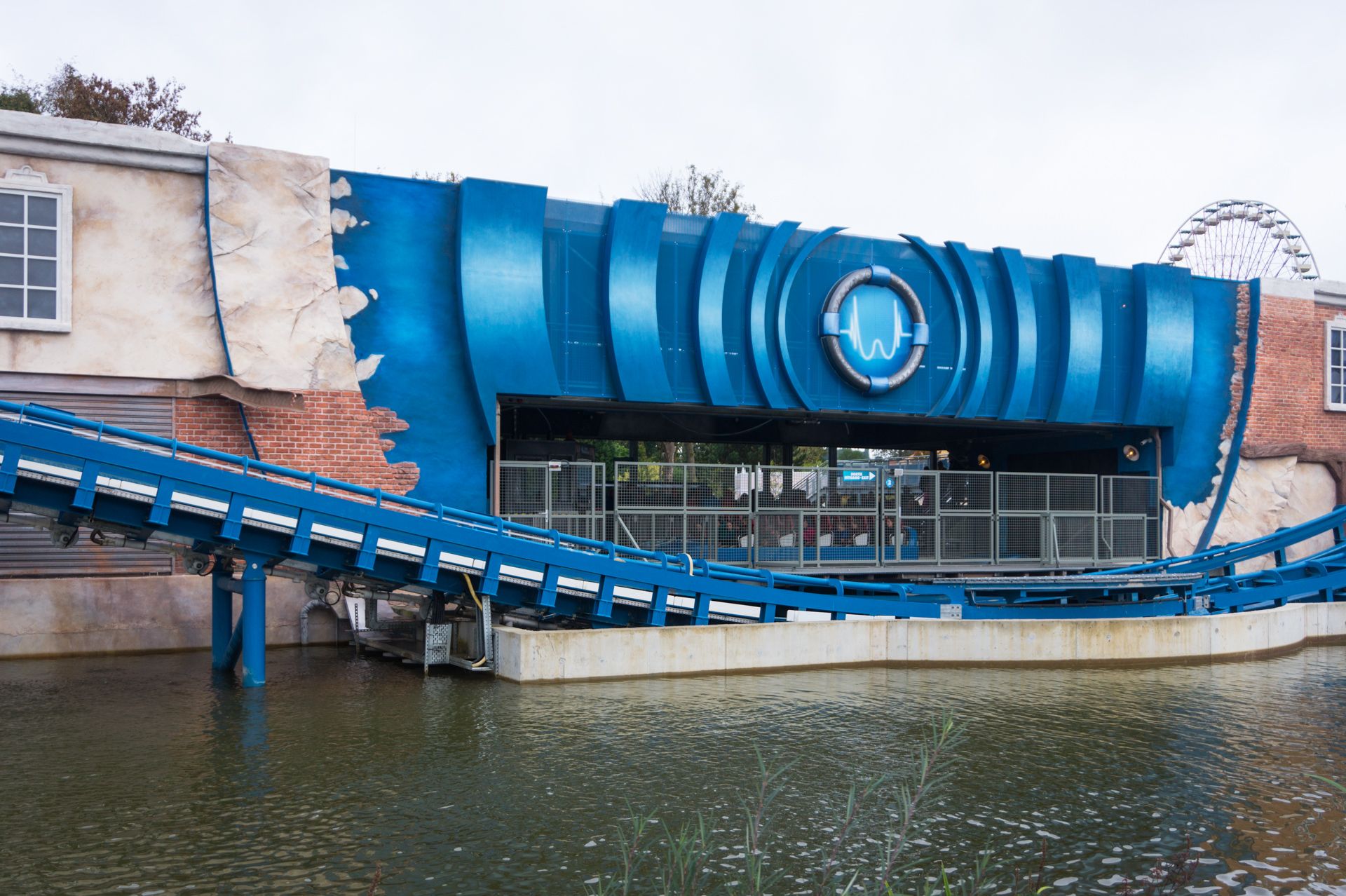
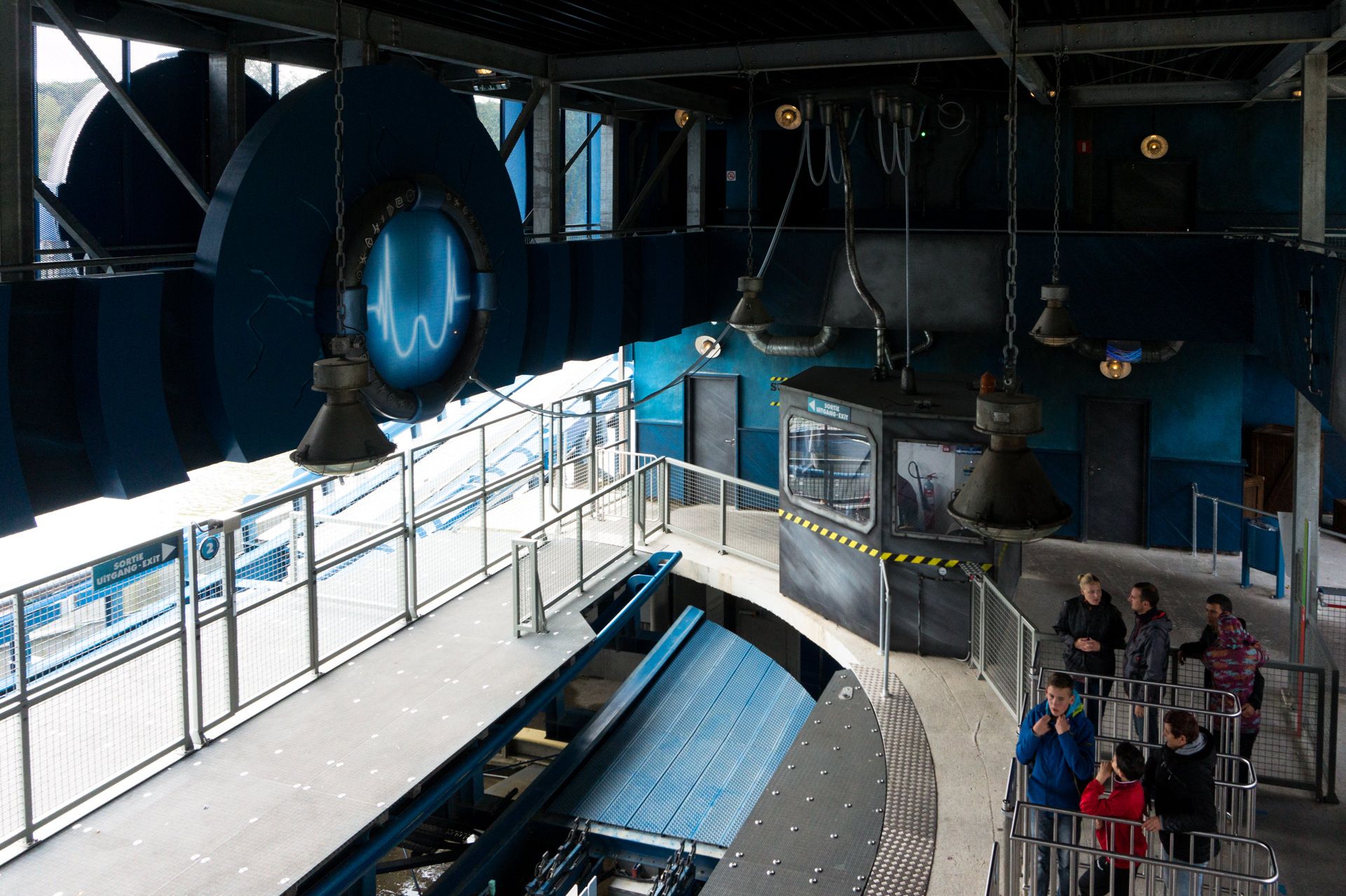
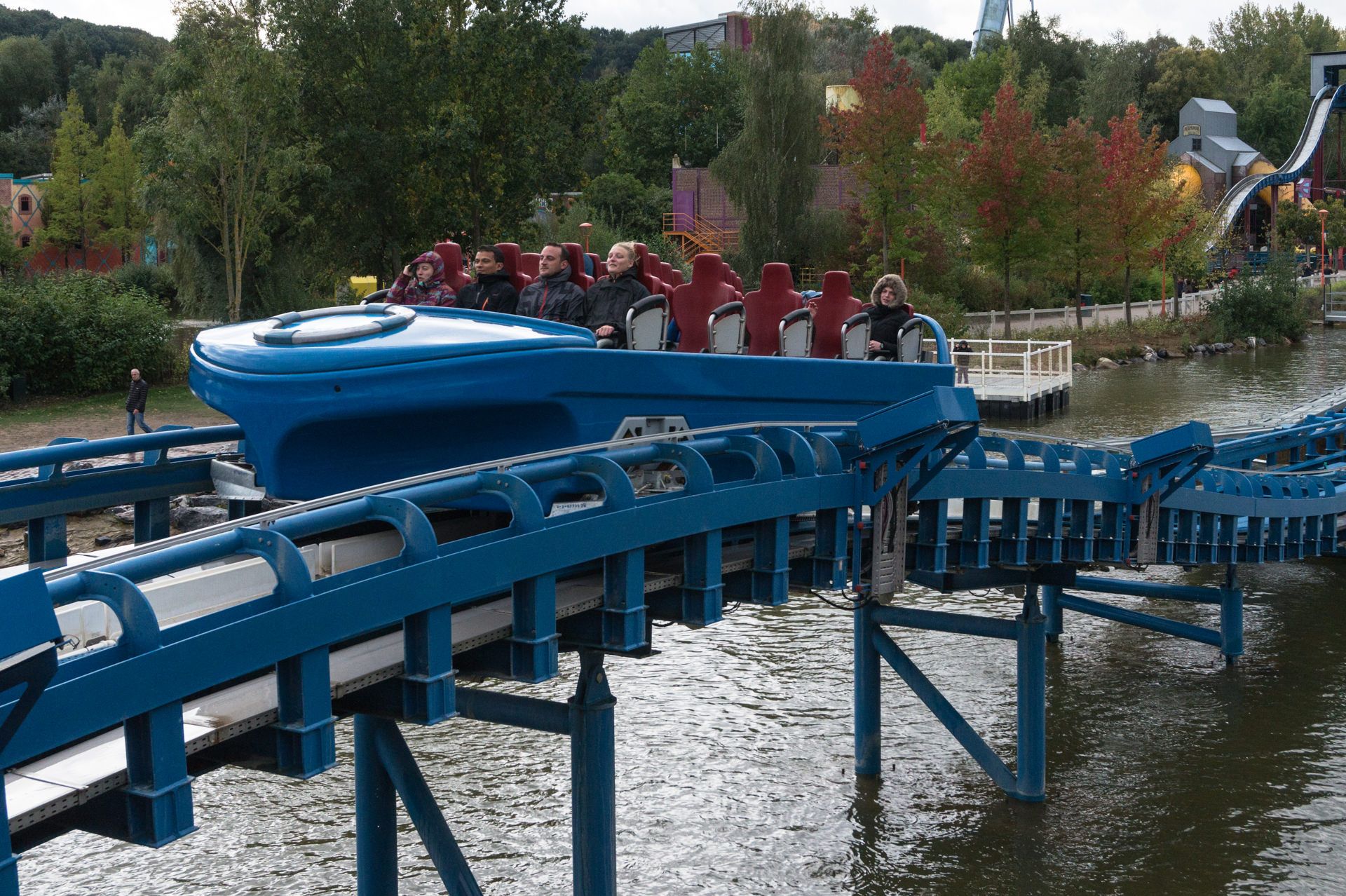
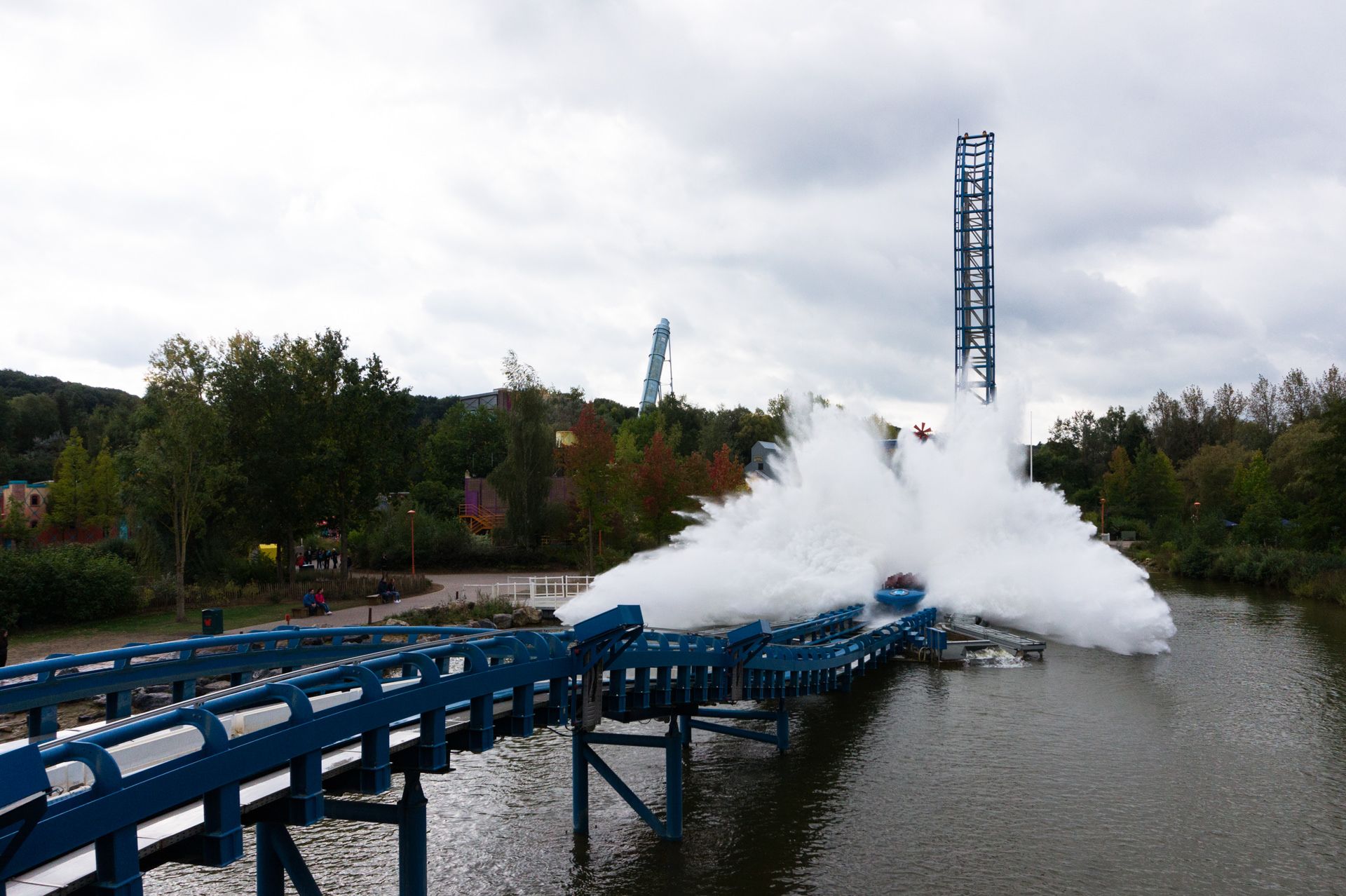
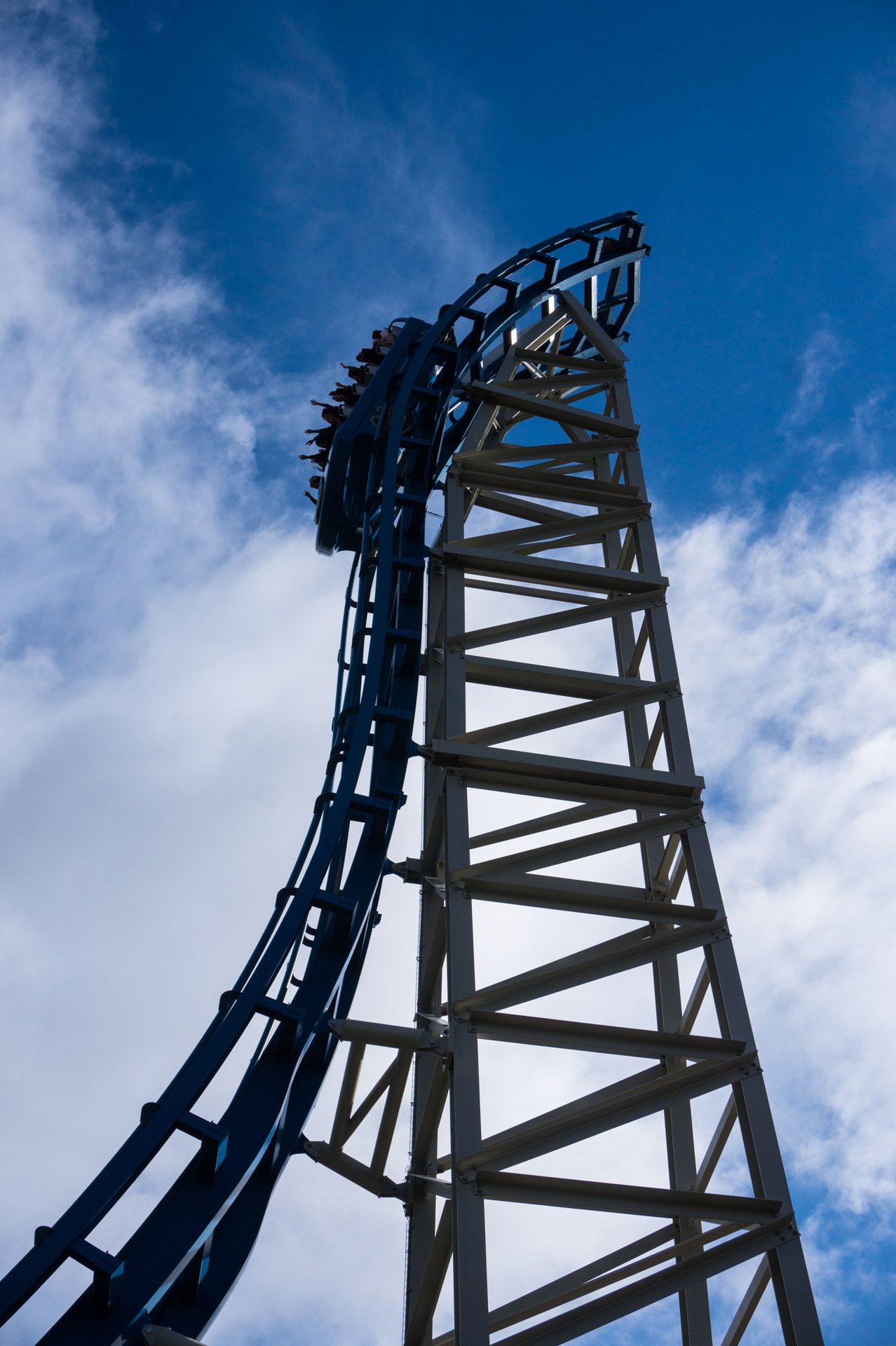
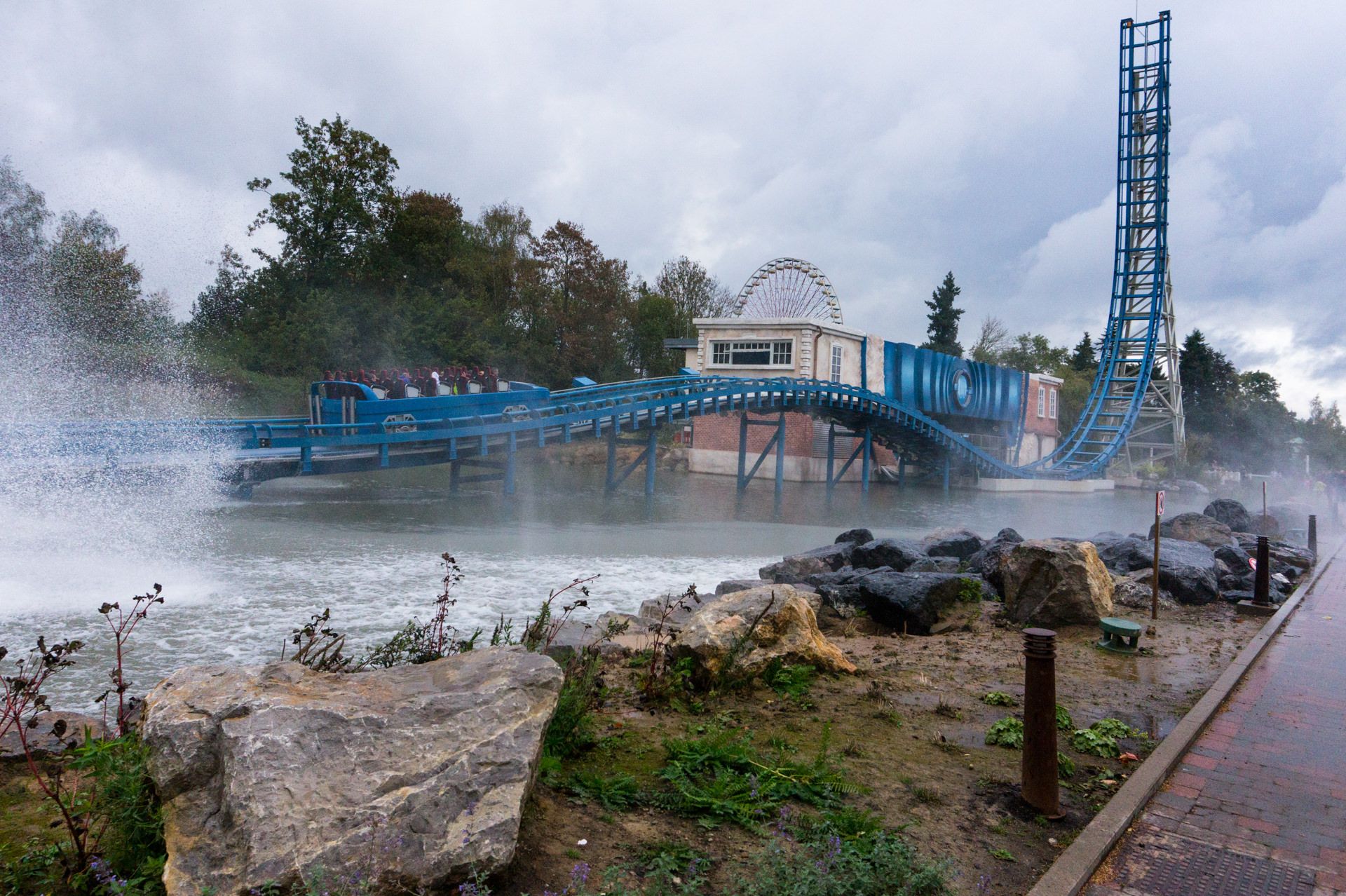
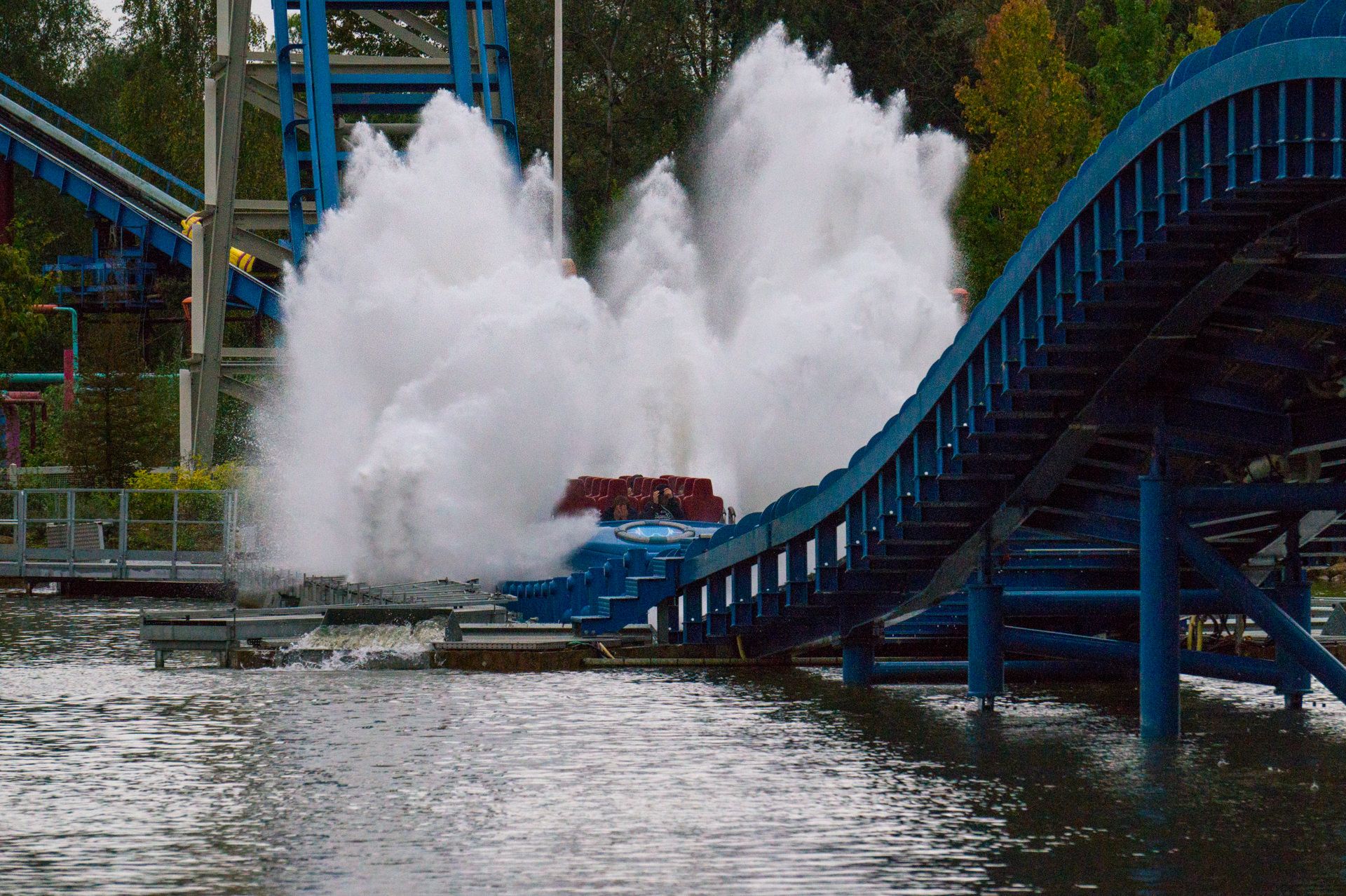
But what the park hardly lacks is an extensive range of rides and so we headed straight for the launch coaster Shock, built by Maurer. With its unparalleled forest of pillars and the very present location directly at the central lake of the Rainbow Magicland, the ride is an extraordinary eye-catcher, which in combination with the very impressive water spectacle forms a harmonious ensemble.

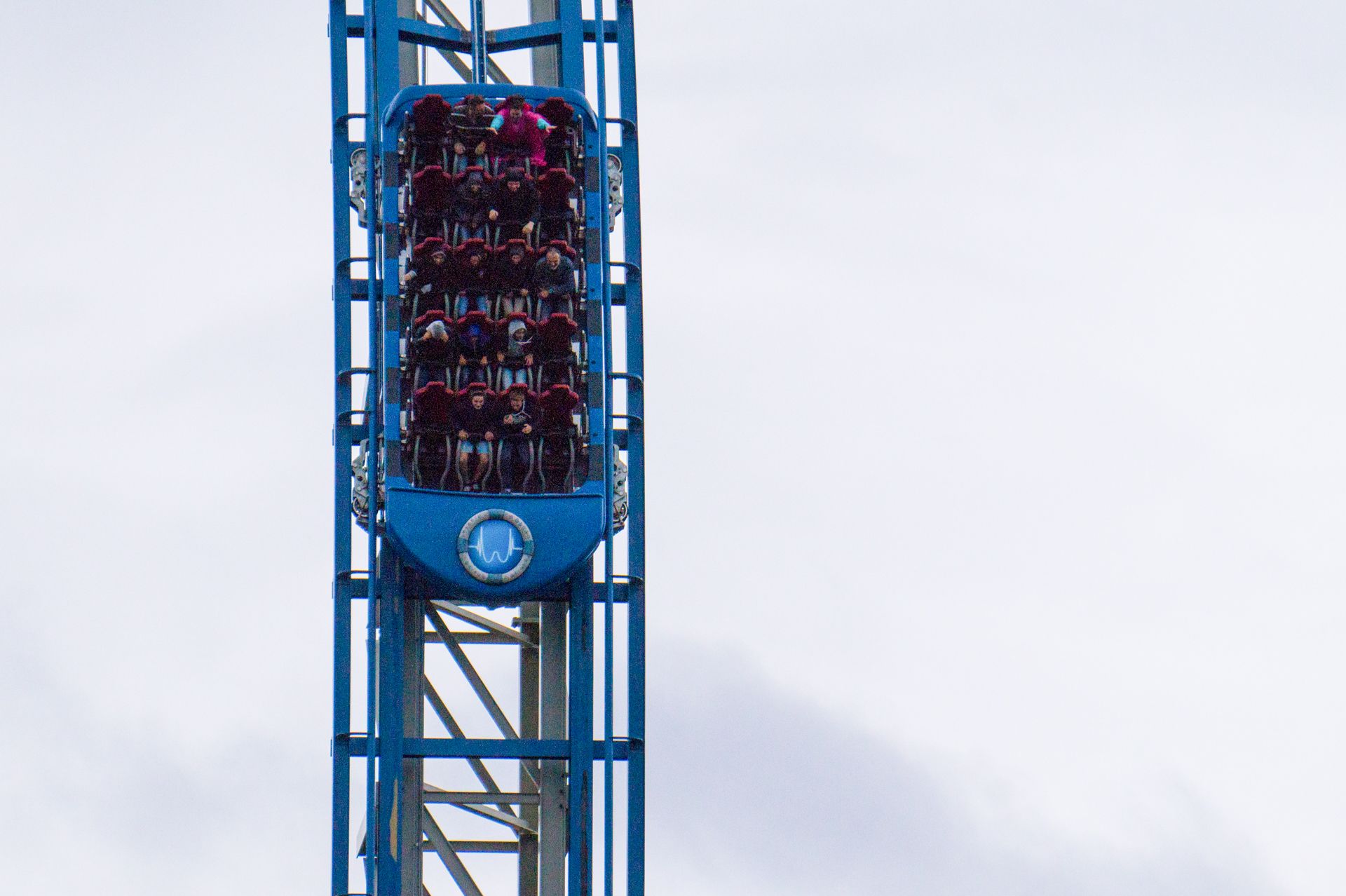
The trip begins with a short dip out of the station. This is followed by several ascents and descents in a slight serpentine movement, which are all interrupted by a short block brake section in between, probably simulating the darkride part of the ride. After having passed this unharmonious curve, the car falls down another slope and is accelerated in the following launch section. The car then goes over a hill in which it takes off quite well before it hits the ground for the first time from a lofty height. Very powerful and with a breakneck speed you cross the following valley. The main element of the ride is the non-inverted loop, where you shoot up a loop, but without standing upside down. On the top of the hill you experience another airtime moment of the very first order, just before the car bends to the left again and plunges into the depths. At the lowest point of the ride you experience once again an exemplary power play, which is soon topped by a brilliant steep curve. After a curvy ascent you reach a block brake and lose some energy, so that the next curvy shot is quite comfortable. In a light Bayernkurve a long corkscrew is introduced, where you are allowed to hang in the bar a little bit before the braking distance is reached.

Shock surprised! Especially in comparison with the other X-Car Coasters the ride is convincing all along the line. Here, the bar does not pull on the body unpleasantly during the ride and exceptionally allows a very free ride without the urge to leave the ride on the fastest way. The curve radii are also very wide, so that the massive car hardly feels the need to bump over the track. The strong forces and distinct airtime make this ride the best roller coaster of Rainbow Magicland and one of the better ones of the country.

Isola Volante

In the immediate vicinity, the Vekoma Sky Shuttle Isola Volante transports its passengers towards the sky, while the view of the park, car park and the nearby designer outlet Valmontone is not very exciting; however, the technology itself is worth experiencing, above all because of the easier implementation compared to the competing product.

Planeta Winx

Rainbow’s most famous children’s series is probably by far the Winx Club, which was primarily designed for little girls and even has its own magazine on the magazine shelves here in Germany. Although the Castello du Alfea, a large building complex with a 4D cinema, is dedicated to the series, halfway to the artificial castle is the dark ride Planeta Winx. Similar to the Disneyland classic Peter Pan, you fly through the series’ sceneries. The ride itself is nicely designed and from time to time you will meet the main actors of the series, who always introduce the scenes from their element.

Bombo

Directly opposite is the roller skater Bombo, part of the series Monster Allergy, a co-production with ZDF, which runs on the Kinderkanal and has no special drawing style; accordingly, the standard model from Vekoma fits in quite well. After a short bend and the following lift hill, you immediately take a steep bend with a subsequent upward helix to the left, complete a short valley and then go through a wide right bend near the station. Over a hill you cross the course of the track that has just been cleared, whereupon you descend a little in another helix. A left turn follows, whereupon the braking section is waiting for you. After one lap the ride is already over. Despite the modern train, the driving characteristics are not the best.

Maison Houdini

If you follow the tour, after a few metres you will come across the Maison Houdini, a modern witches’ swing from Vekoma, which, for whatever reason, was built underground. The main building, as it appears, contains only the preshows of the ride and the lift that takes passengers downstairs. A few meters further on, there is a second building in a similar style, which contains the lift, which transports the passengers back up. In between there is a square with skylights and ventilation shafts, under which the actual ride is located. Since the ride opened quite late we could not test the Mad House; the idea of the underground attraction is great, but the implementation is space consuming and probably also quite cost-intensive, the gained space also defies any logic and aesthetics.

Amerigo

Adjacent to this is the children’s area of Rainbow Magicland, which belongs to the second type of modern children’s paradise in amusement parks. Compared to the nicely designed areas in Gardaland or Port Aventura, everything here stands quite naked on a concrete slab. In doing so, an attractive overall design as well as any vegetation was avoided. Unfortunately, the local Big Apple Amerigo was not supposed to open until late afternoon, so that we had to do without a ride in order not to throw the rest of the day overboard. I don’t really know why this simple children’s roller coaster is the only ride in the park that opens so late.

Mystika

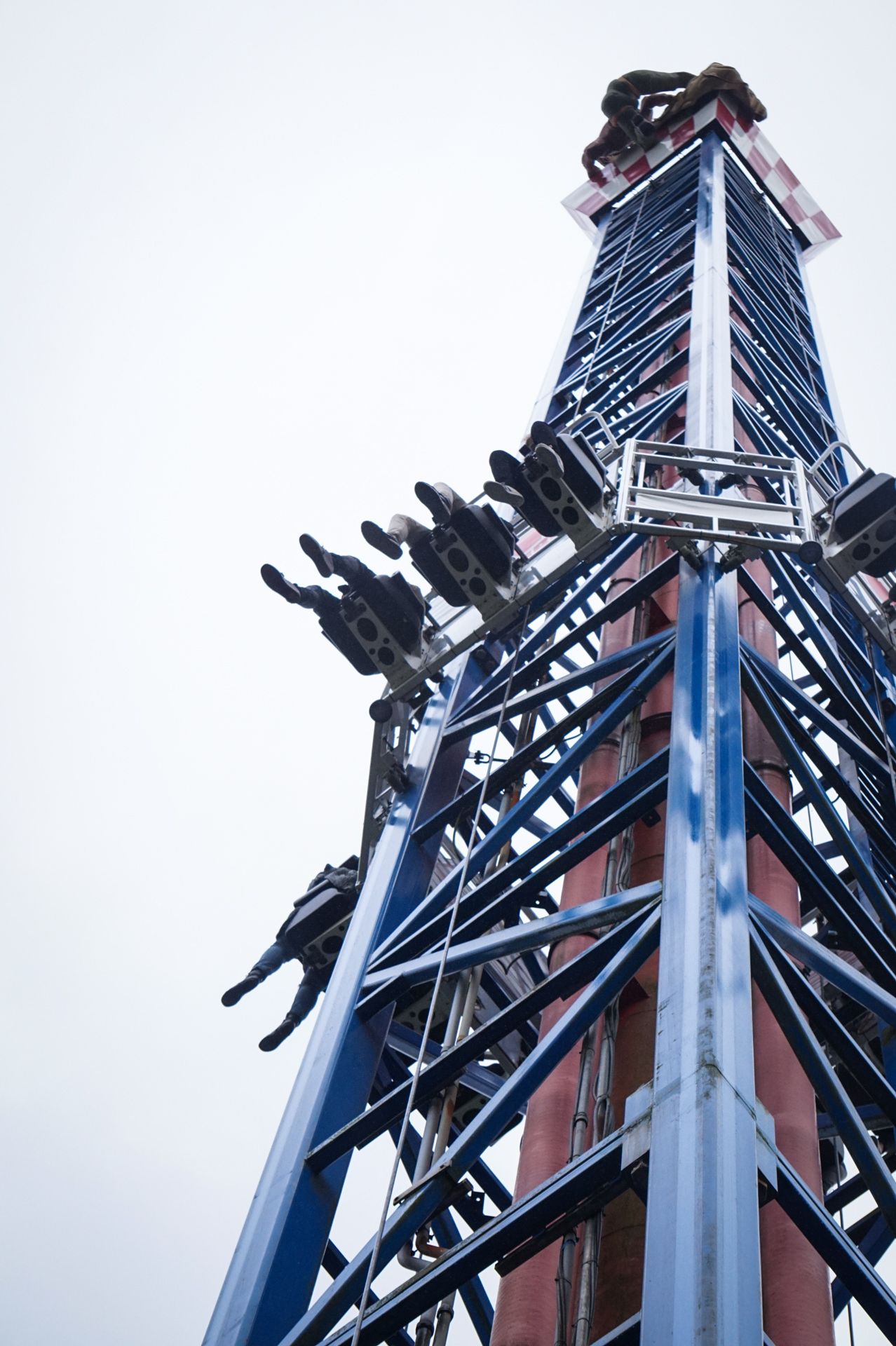
Past the Battaglia Navale, the nicely designed Splash Battle by Preston & Barbieri we went to the freefall tower Mystika by SBF Visa. This Italian manufacturer is known for its toddler roller coasters and lots of junk, which is mostly ordered by park managers without any experience; the best example is the Ankapark (Wonderland Eurasia) currently under construction near the Turkish capital Ankara. Also in Rainbow Magicland they probably wanted to offer a big freefall tower, but at the same moment it was not allowed to cost anything. Otherwise the tower with a total height of 70m, of which at least 50m already serve as braking distance, cannot be explained. The drop itself is bad, in addition there is a very unpleasant restraint system installed.

Cagliostro

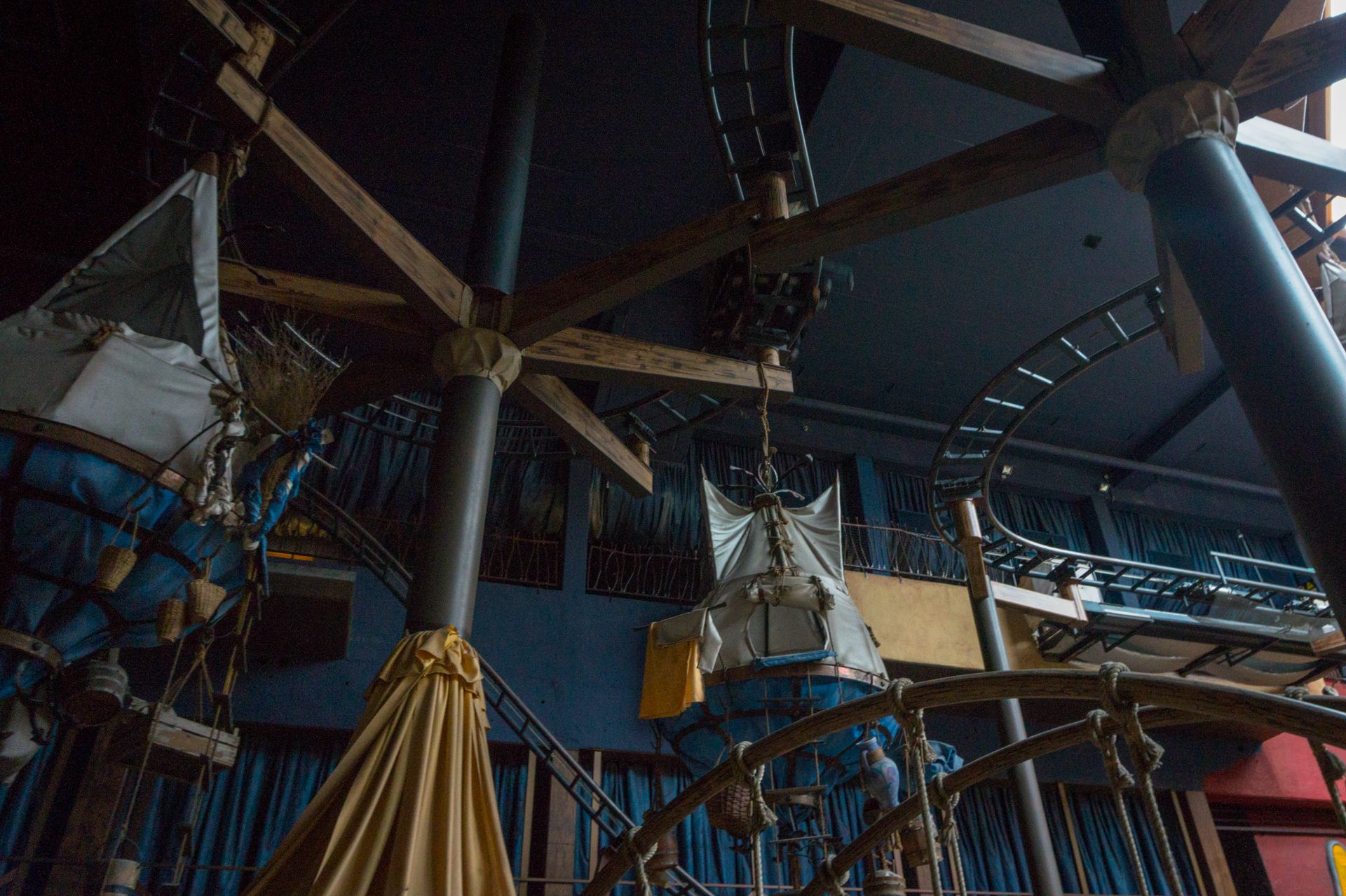
With the right seat you have at least a view of the two neighbouring roller coasters, whereby the entrance to the spinning coaster Cagliostro is closer. Admittedly, you can’t see much from the spinning coaster outside the abstractly designed hall. Inside, too, you’re really only looking at darkness, although all efforts in this respect were ruined by the outside turn.

After the lift hill and the already mentioned detour out into the daylight there is a steep curve towards the hall floor after a gently descending straight section. Hereupon the car shoots up an Immelmann turn, whereupon the following valley and the ascent to the block brake is made in a wonderfully sweeping S-curve. After the block area, however, not much happens. Over wide curves you cross the whole hall and then approach the ground. In pure zigzag manner a straight section is taken, whereupon you are again at the front end of the hall. After another short curve you reach the second and larger lift hill of the ride, which brings you back to the station level.

Cagliostro is a nice spinning coaster, at least in the first part of the ride, but then it loses all inspiration and comes crawling towards the end of the ride like no other coaster of this type. Probably a more elaborate design with larger scenes was intended here, because there is still enough space in the hall, but without all this the ride with this layout is quite senseless and not very exciting.

Huntik 5D

Right next to the Gran Teatro, where the musical Romeo & Juliet by Gérard Presgurvic is shown in a 35-minute performance, is the dark ride Huntik 5D, based on the series of the same name. As seekers, we join the team around Dante, Lok, Sophie and Zhalia to fight against the organisation. For this we use guns to shoot our way through elaborately designed scenes with successful animatronics and well embedded screens through hordes of titans. What is confusing, however, is that our team also uses titans and these appear on the screens at the end. If you are not familiar with this series, this is rather unnecessary, as it spoils the otherwise perfect impression. The series reference is very well done, but you don’t have to know the series to enjoy this great shooting darkride from Alterface. Huntik is definitely the best ride of the Rainbow Magicland and one of the best dark rides of this kind in Europe.

Yucatan and Le Rapide

At least from the outer facade, the Spillwater Yucatan presents itself to its passengers on an equal level. With its two shots, the water ride is one of the driest rides of its kind in Europe; however, there is something for the eyes, especially during the second turn. If you want to get wet, however, you are in good hands at the neighbouring Rapid River Le Rapide. Here too, the design is impressive, which is why the ride is one of the best of its kind in Europe.

L’Olandese Volante

The last remaining roller coaster is the L’Olandese Volante, i.e. the Flying Dutchman; appropriately built by the Dutch roller coaster specialists Vekoma. The ghost ship flies noticeably and now even with VR glasses over the track of the standard model based on the prototype Calamity Mine of the Belgian amusement park Walibi Belgium.

The ride begins with a right turn and the following lift hill, which unfortunately takes you up in a very straight line, just like in Gardaland; nothing remains of the accentuated cross slopes of the original in this version. At the top, the train immediately throws itself into a left helix and alternately into three 180° curves before reaching the first intermediate brake and the second lift hill. This hill is also passed just as trivially as the first one. At the highest point of the track you cross a short hill and immediately approach the ground again in a wide right helix. In a left-hand helix you build up again in metres of altitude before you take it down again in another downhill helix. After a further left turn, you immediately reach the braking distance and shortly after that the station.

When Rainbow Magicland and Vekoma were looking for a way to square the circle on this ride, they succeeded. There is simply no other way to explain this bumpiness – unusual even for the manufacturer – which the train reproduces to its passengers over the entire track length. Well, even Mammut in Gardaland was not really smooth, but L’Olandese Volante simply tops everything in this respect. I have rarely ridden such an unpleasant roller coaster, which is why I really have to advise against a ride on this coaster.

Pictures Rainbow Magicland
Conclusion Rainbow Magicland

The Rainbow Magicland blinds like no other park with its opulent, but already quite disintegrating facades, but it can also show some rays of hope. Apart from the dark ride Huntik 5D and the roller coaster Shock, Rainbow Magicland lacks some highlights that encourage you to take more than one ride. With the extremely ugly children’s land and the Big Apple, which was closed until late afternoon, the park also offered a low light par excellence. It is no wonder that the park is the way it is.

What are your thoughts about the theme park Rainbow Magicland? Just write it here below the report in the comment field or visit our social media channels:


Click here for the next report of the Il Viaggio dei due Runner Tour