Under Shock in the Rainbow Magicland

Rainbow Magicland

The Rainbow Magicland is once again one of those theme parks designed on the drawing board, where the initially expected visitor numbers cannot be linked to reality and will probably never come together in the future. The operating company Alfa Park probably had similar experiences with Miragica, which opened two years earlier, so that some projects were probably saved from realisation. In 2011 the theme park, which is based on children’s series by the Italian animation studio Rainbow, opened and what looked very promising from the vastness of the Internet already turned out to be untenable by visitor reviews in the second year of operation of the park.

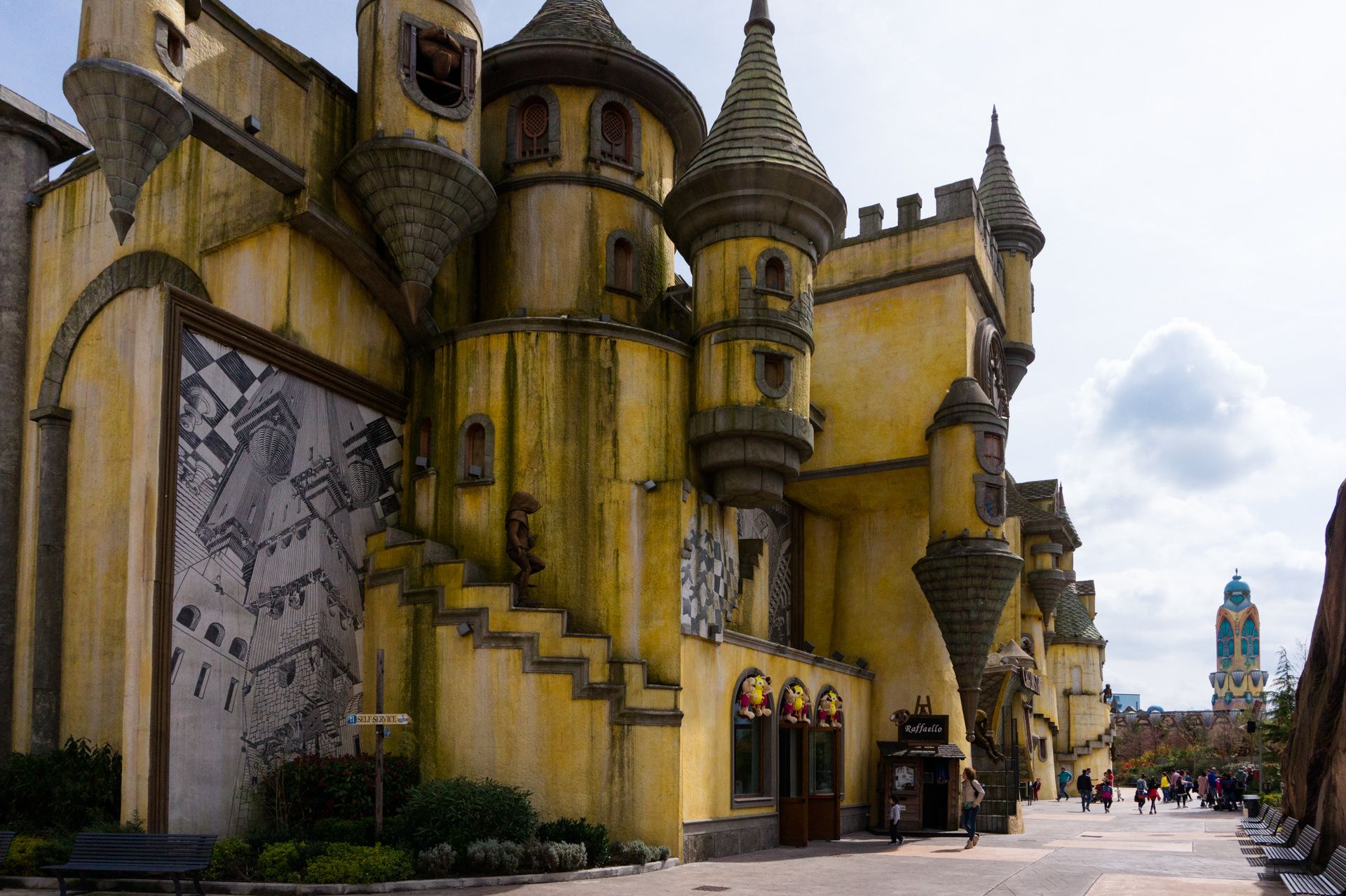
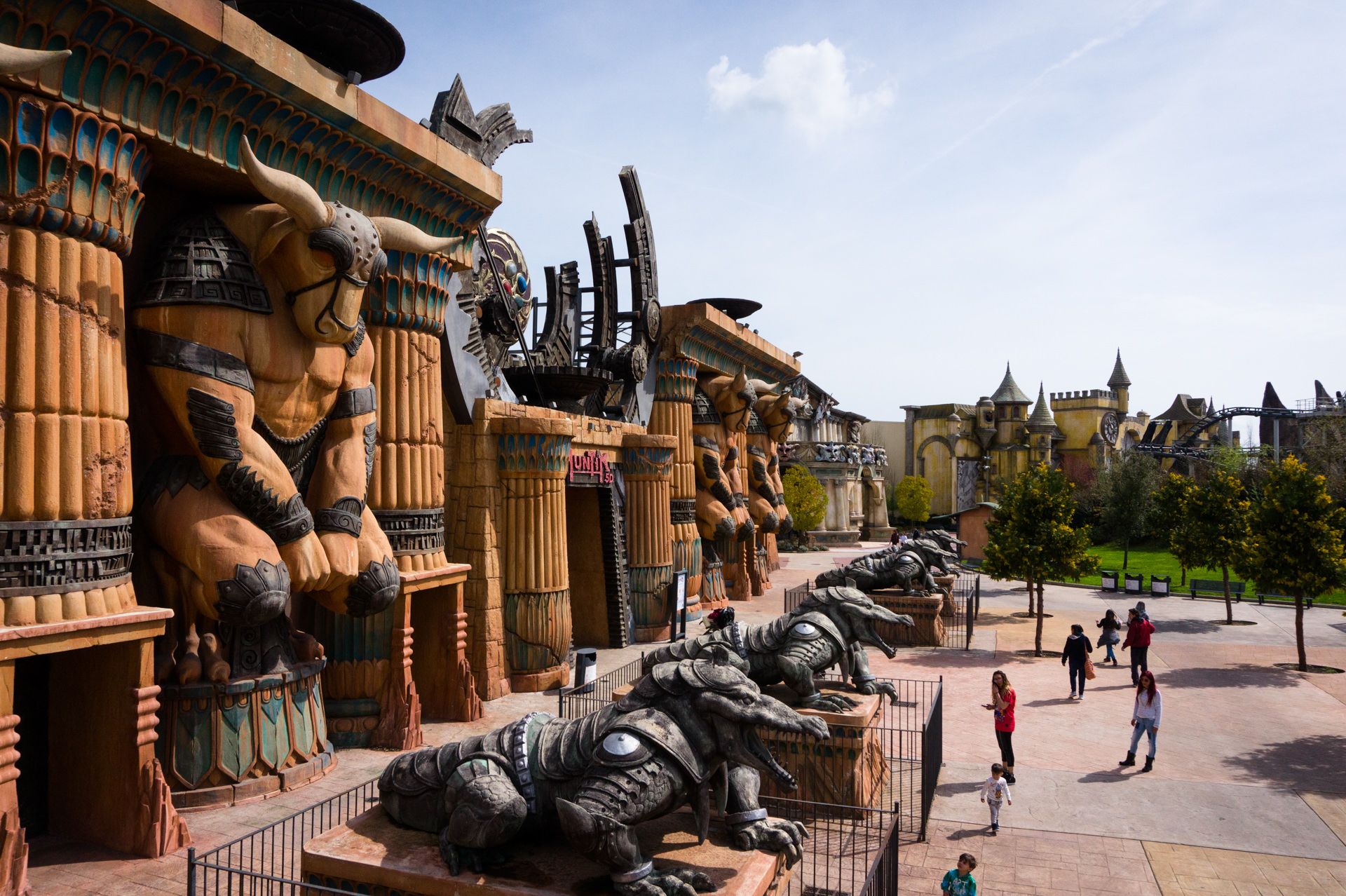
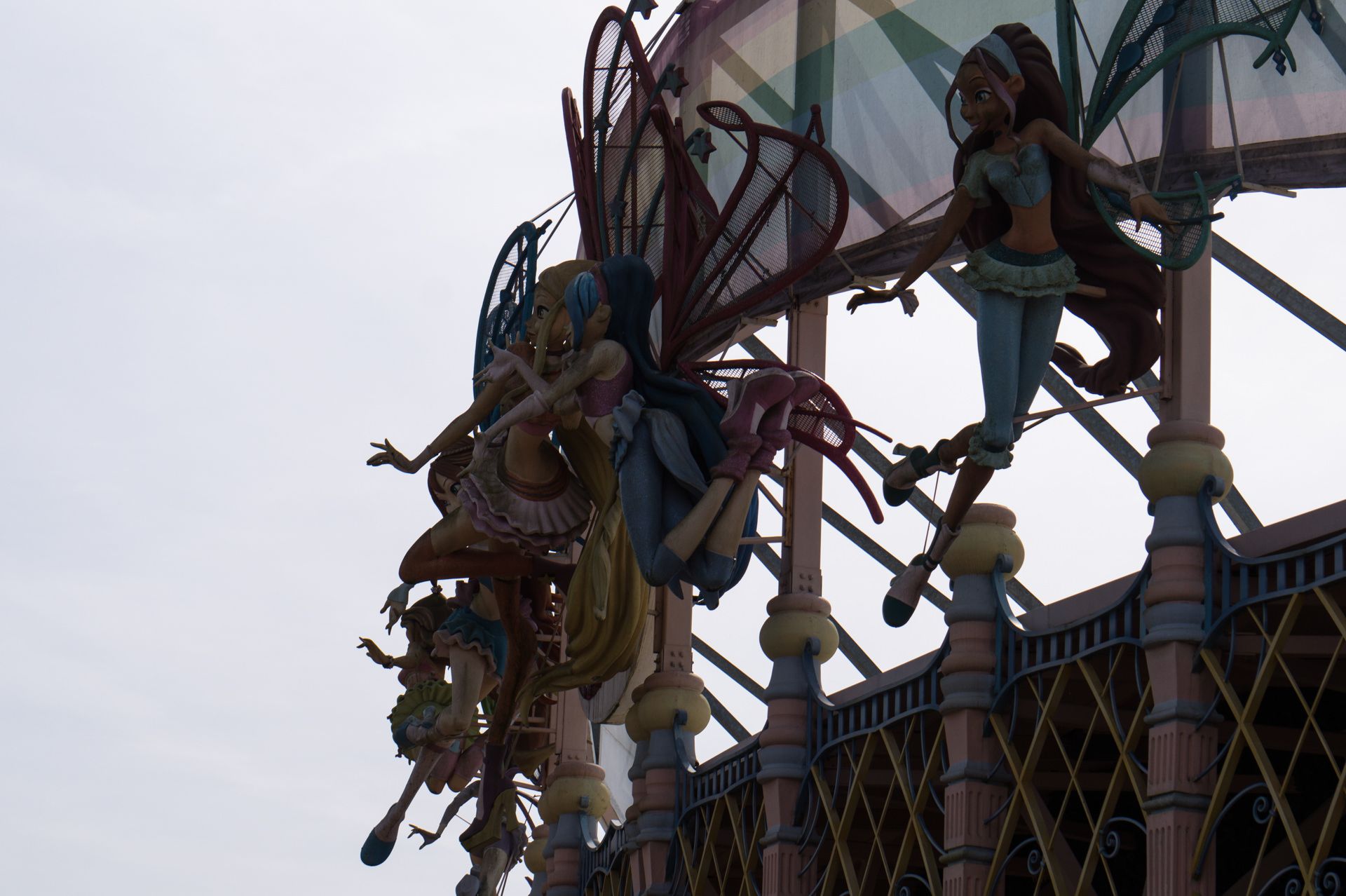
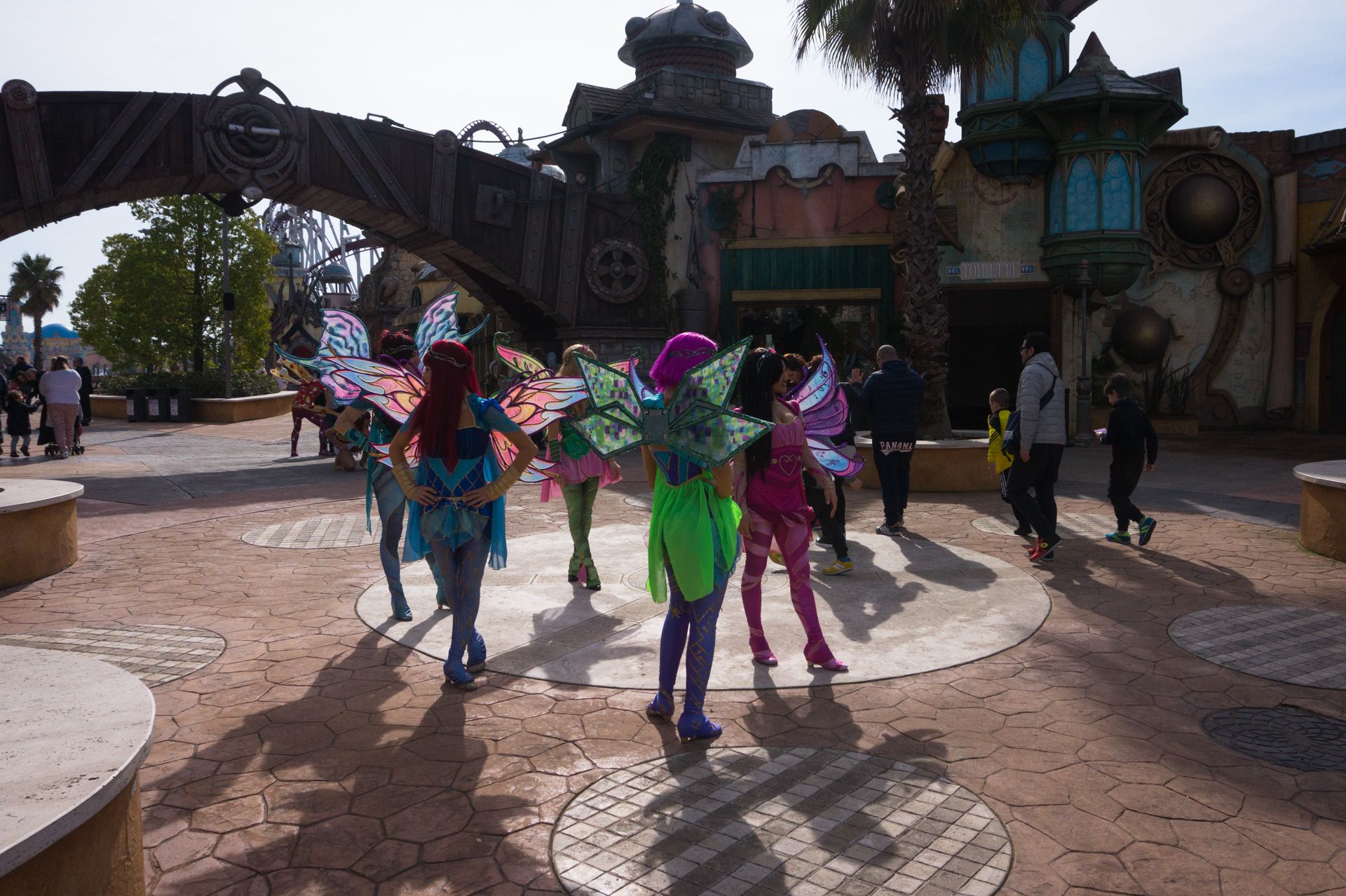
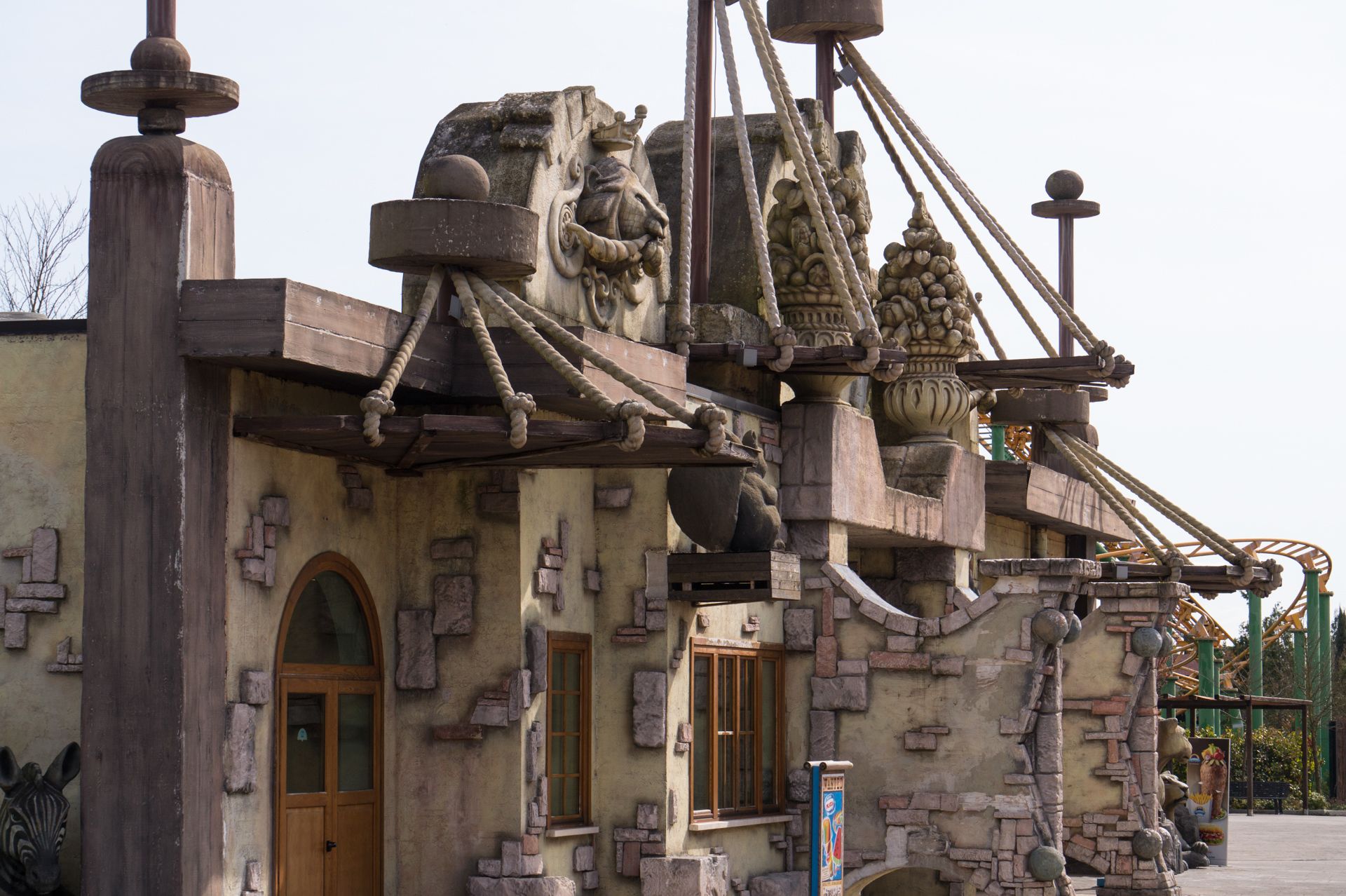
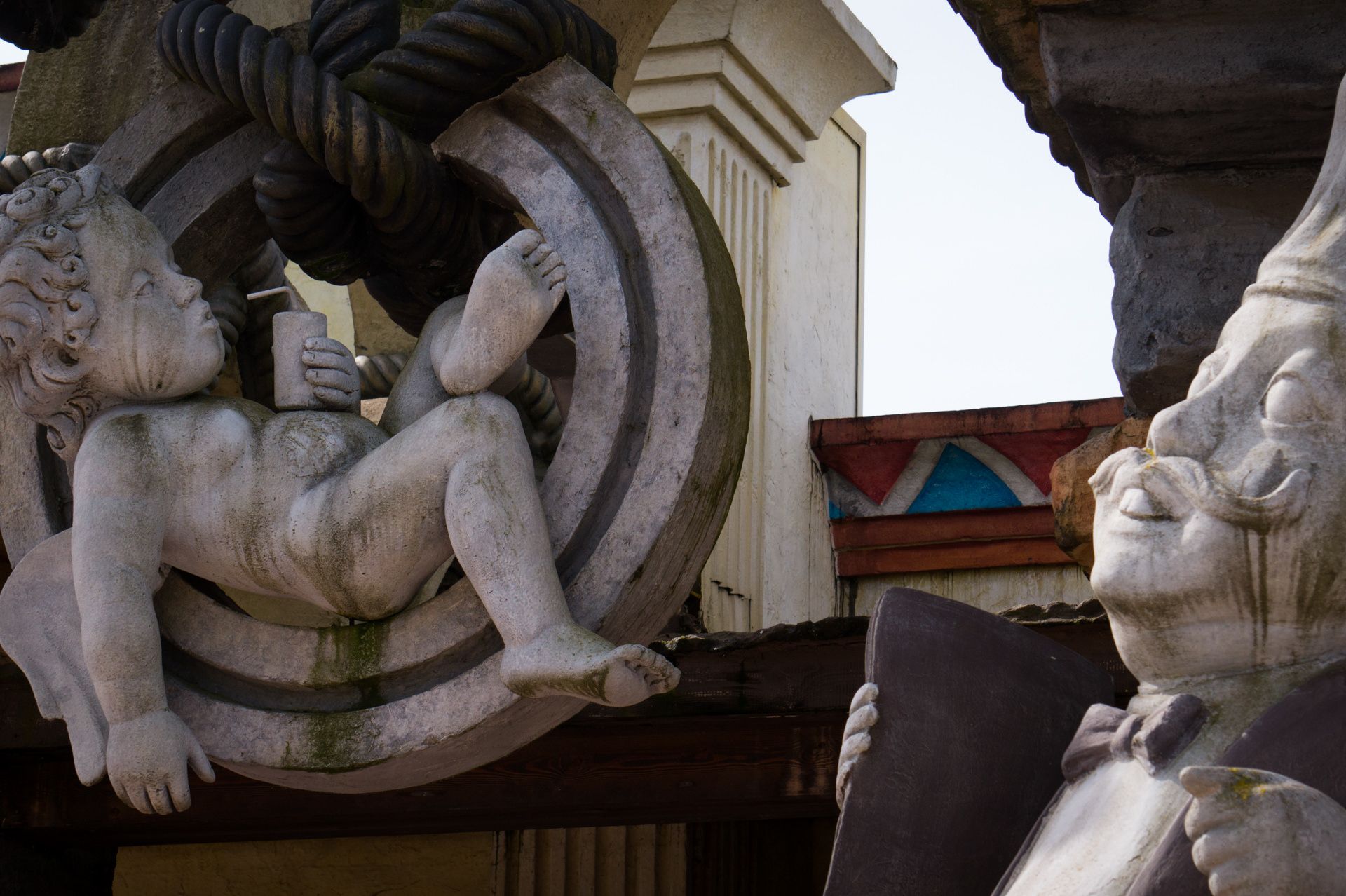
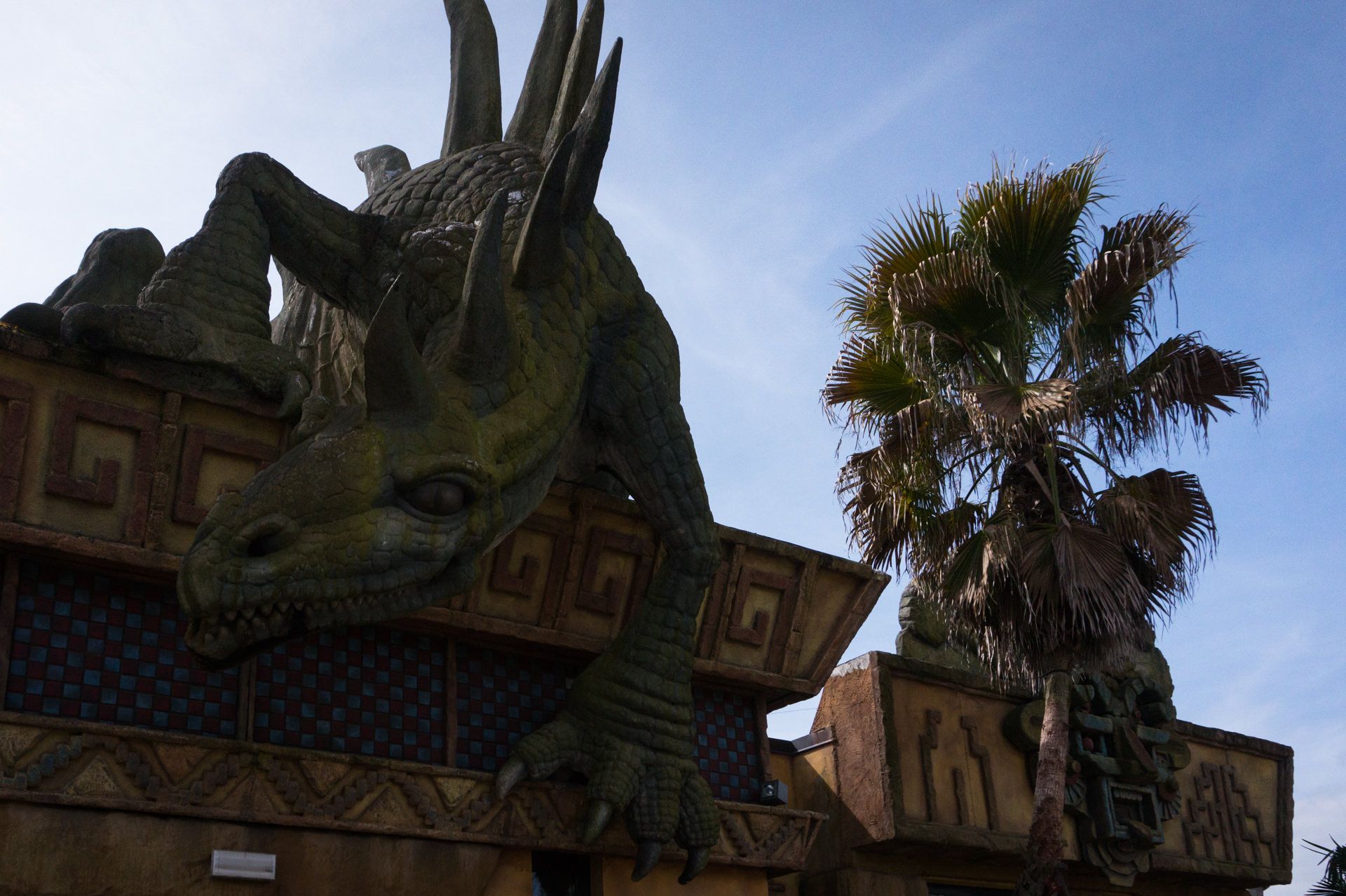
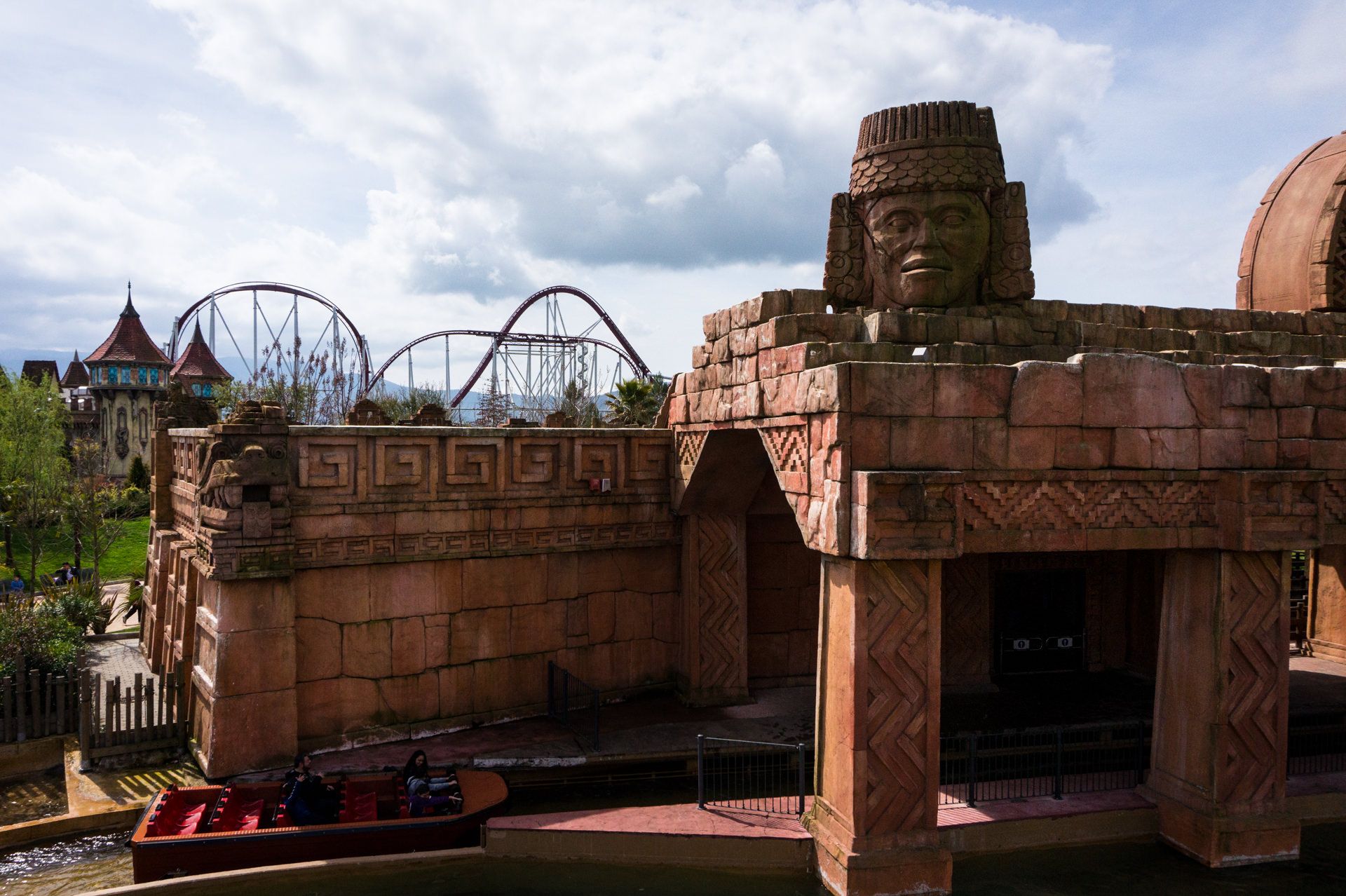
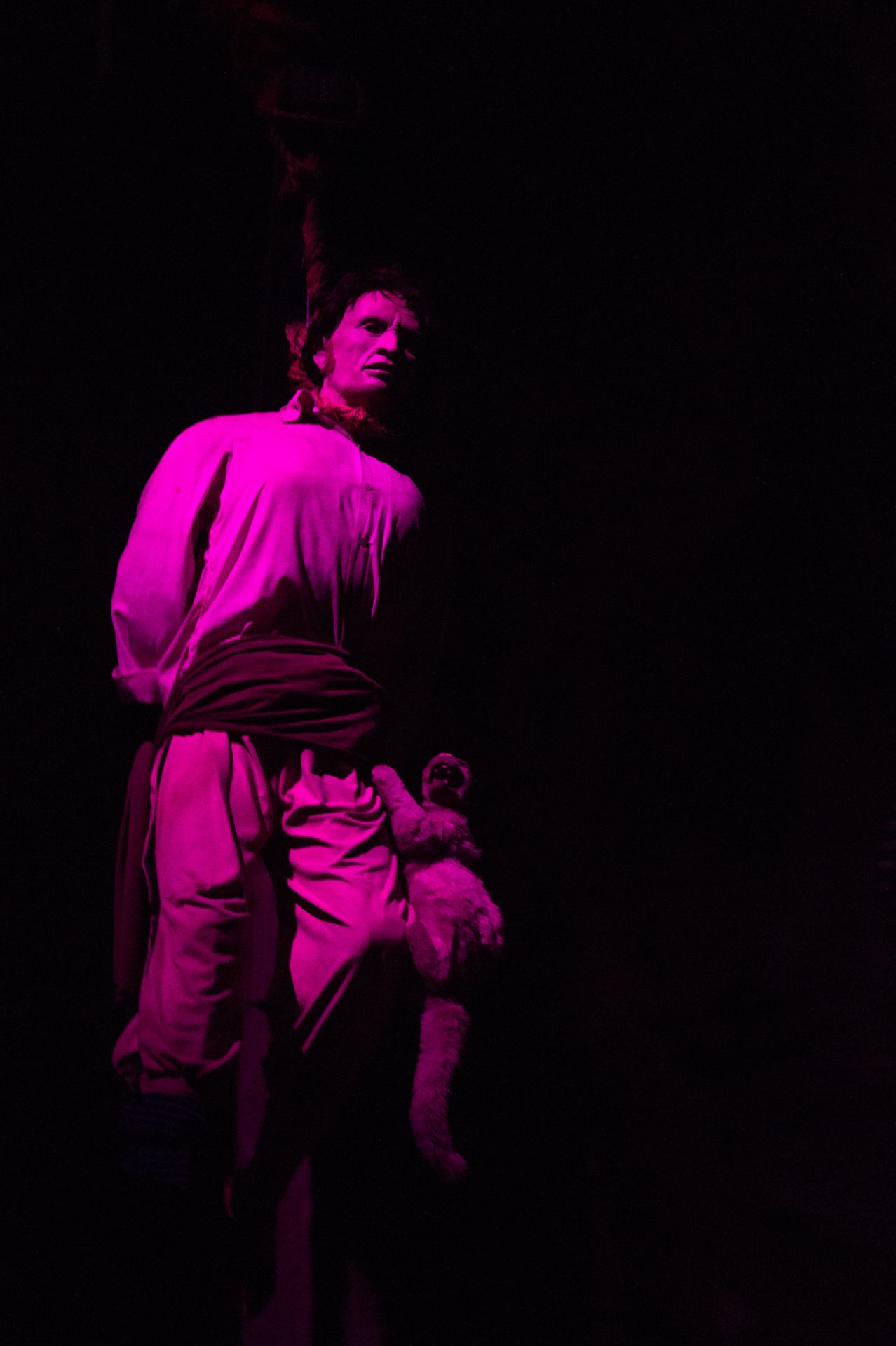
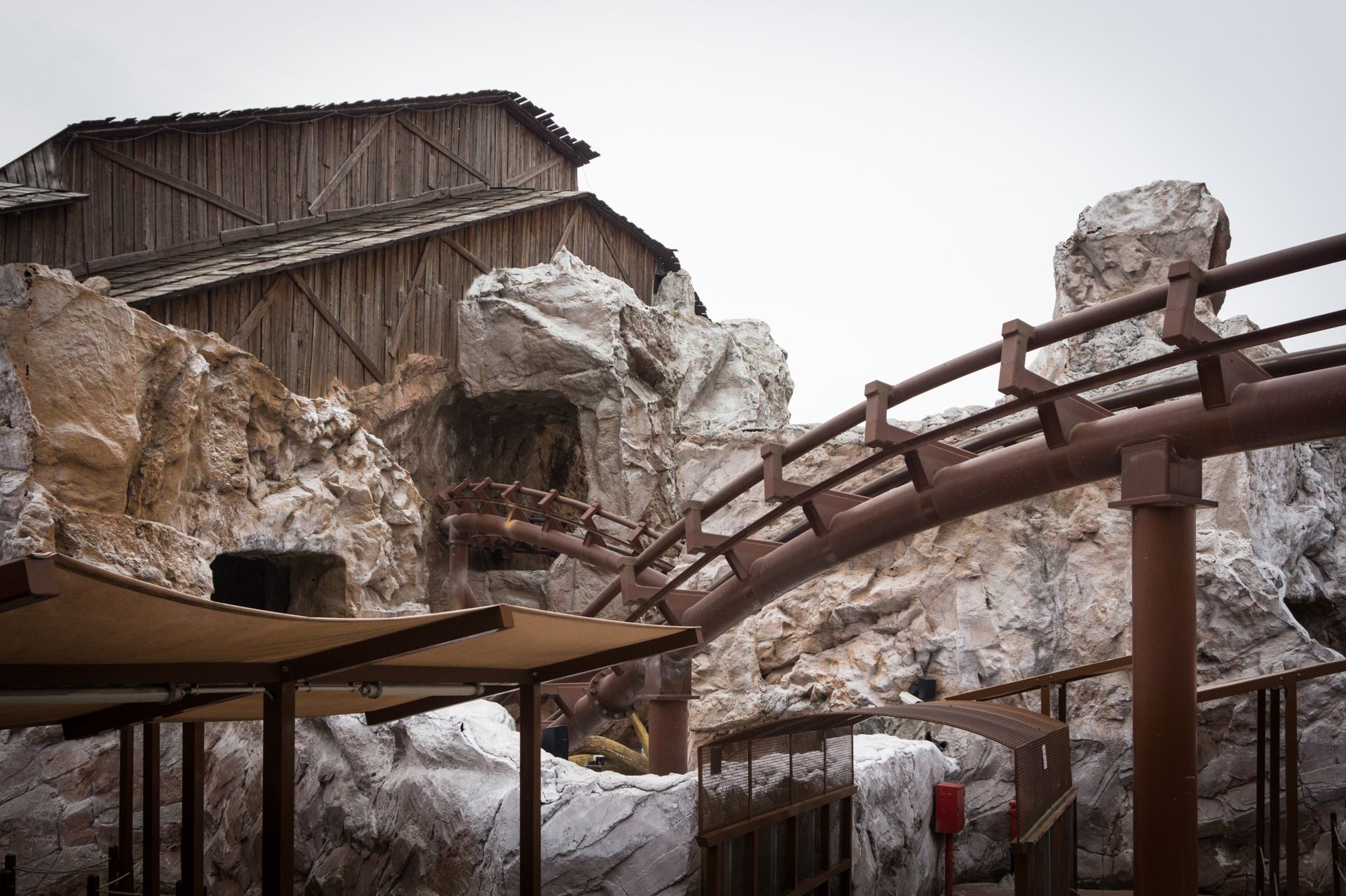
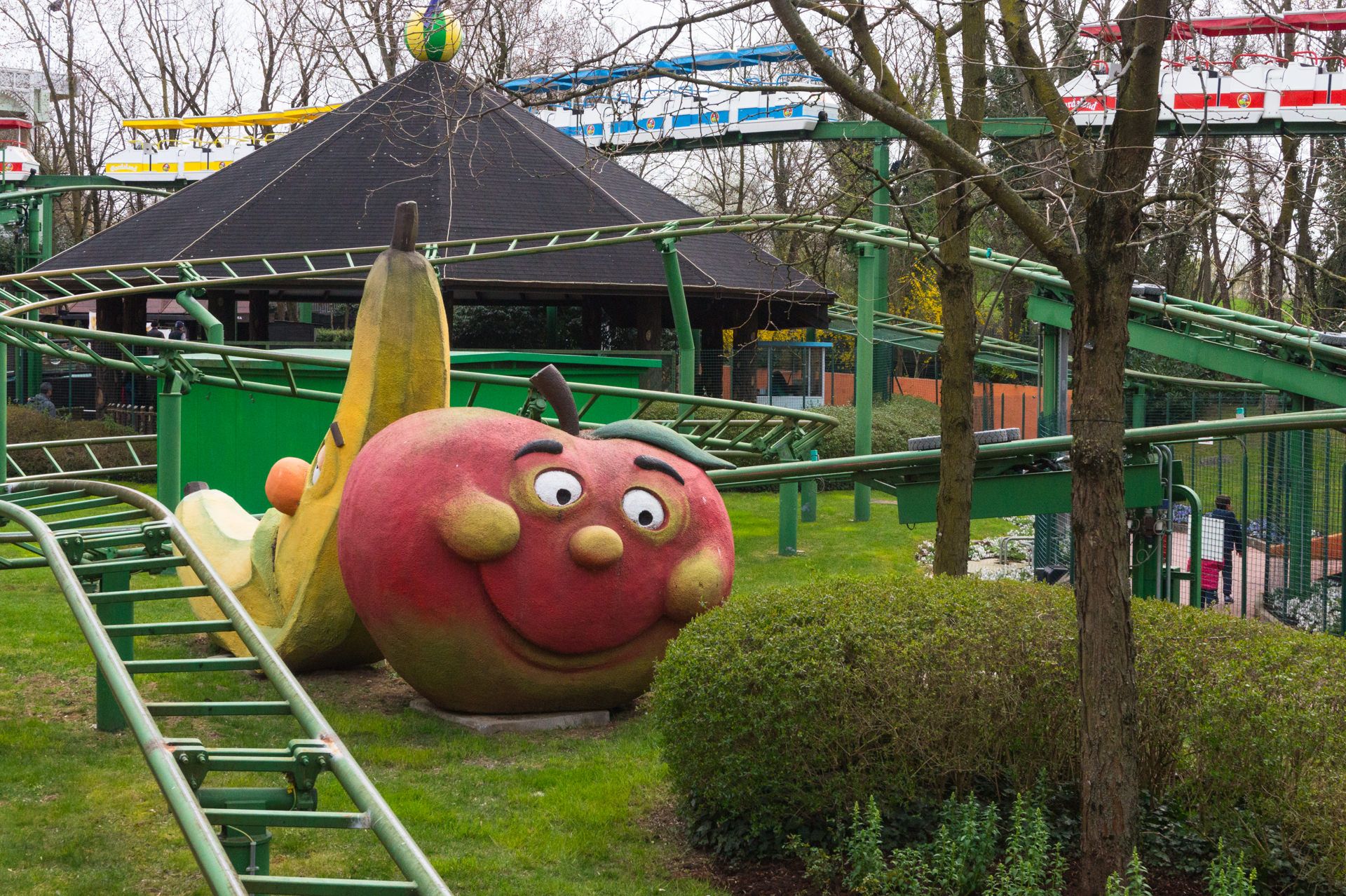
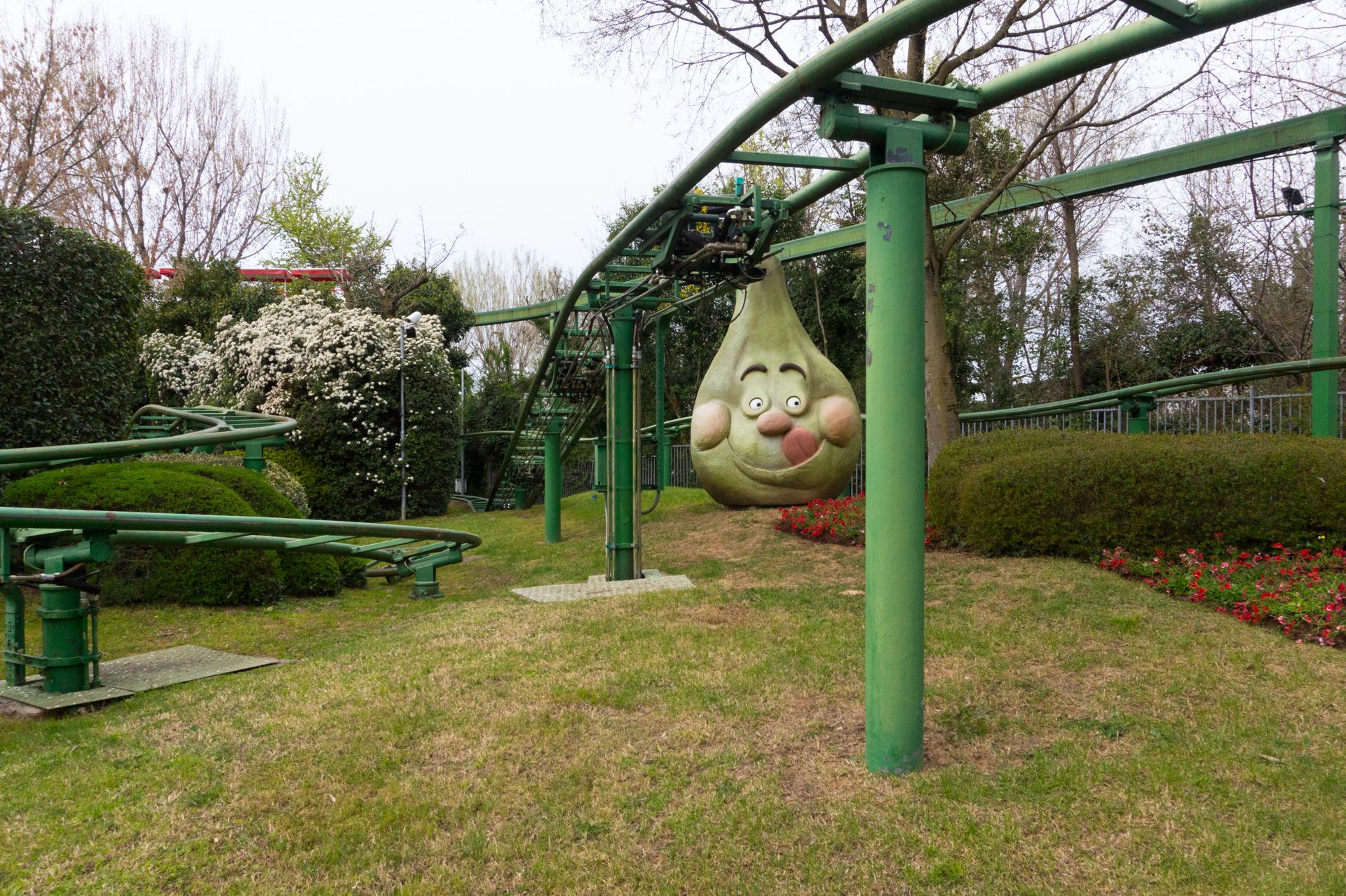
I don’t like to hide the fact that Rainbow Magicland lives up to its bad reputation; after all, we expected nothing less. As soon as we enter the car park, the previously consolidated picture is confirmed, as a large part of it has been taken over by nature in the meantime. But that doesn’t matter, because you can’t expect visitors here anyway, so without hesitation we went into the park to let the playful, meanwhile very run-down decoration take effect on us. While the Cinecittà World has been built with quality in mind right from the start and the park looks as if it had only opened yesterday, Rainbow Magicland looks like a fairytale park opened in 1970; only with the one, but very fundamental difference that in an old fairytale park there is often a very high level of attention to detail.

Shock

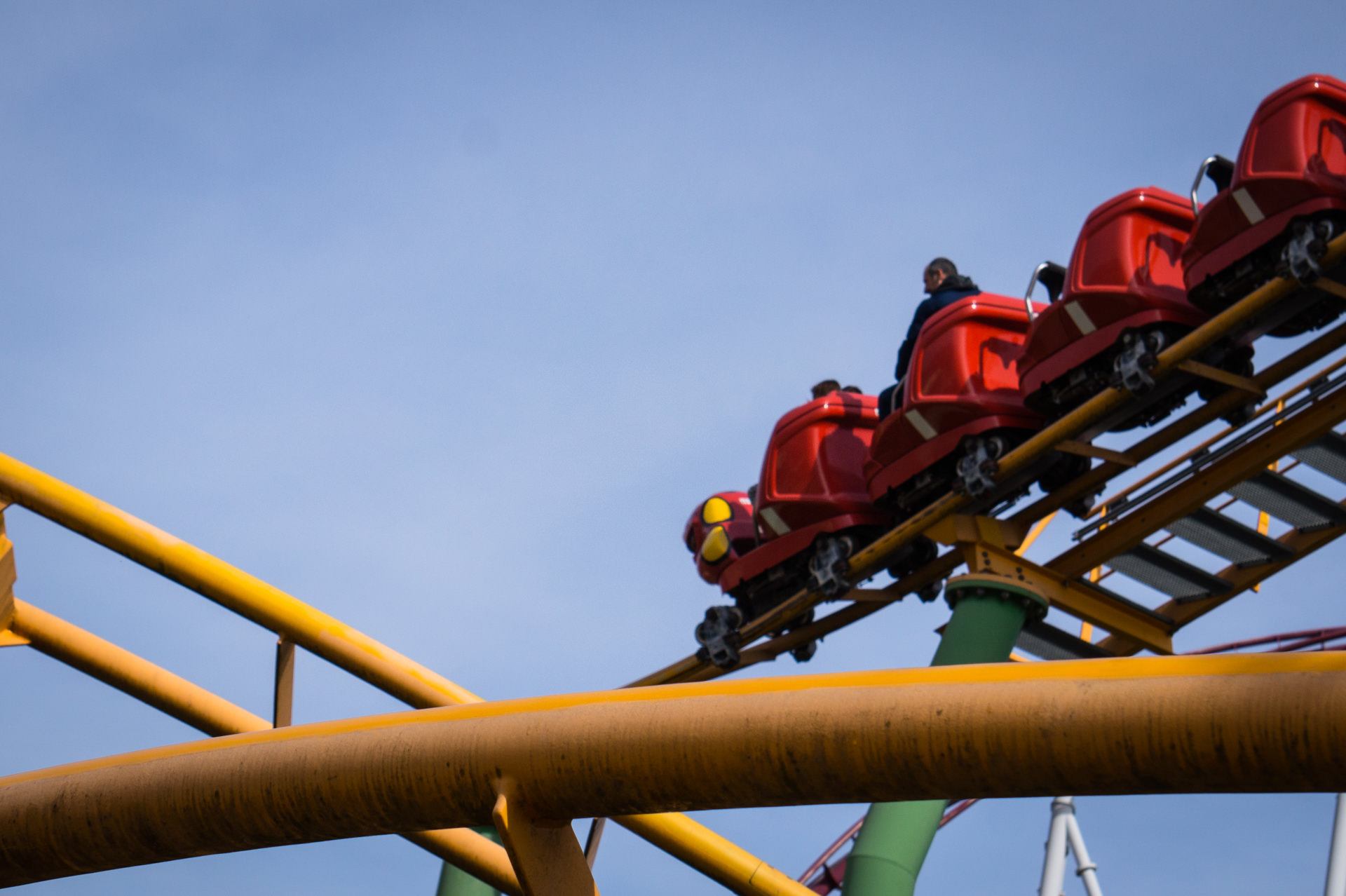
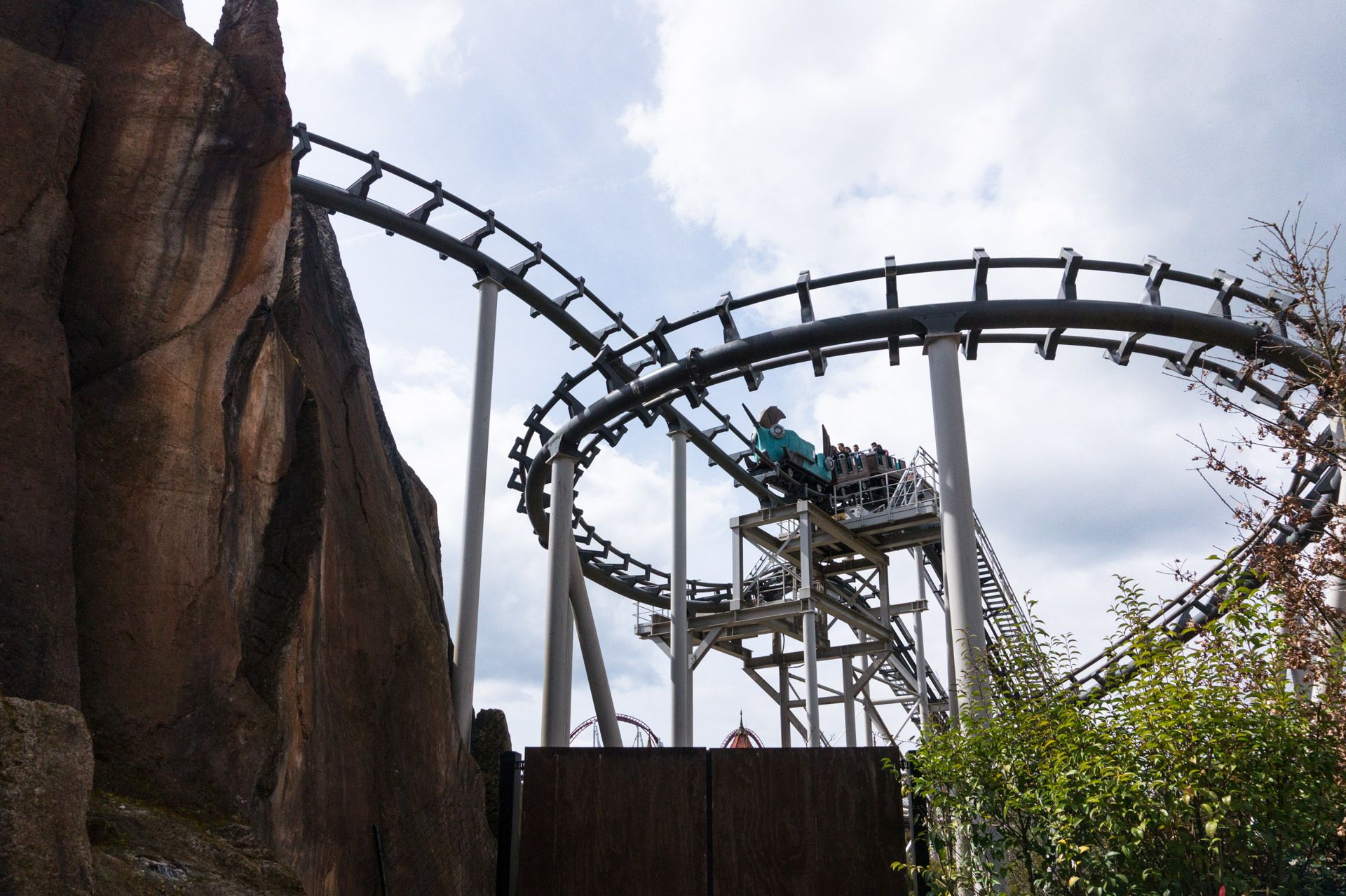
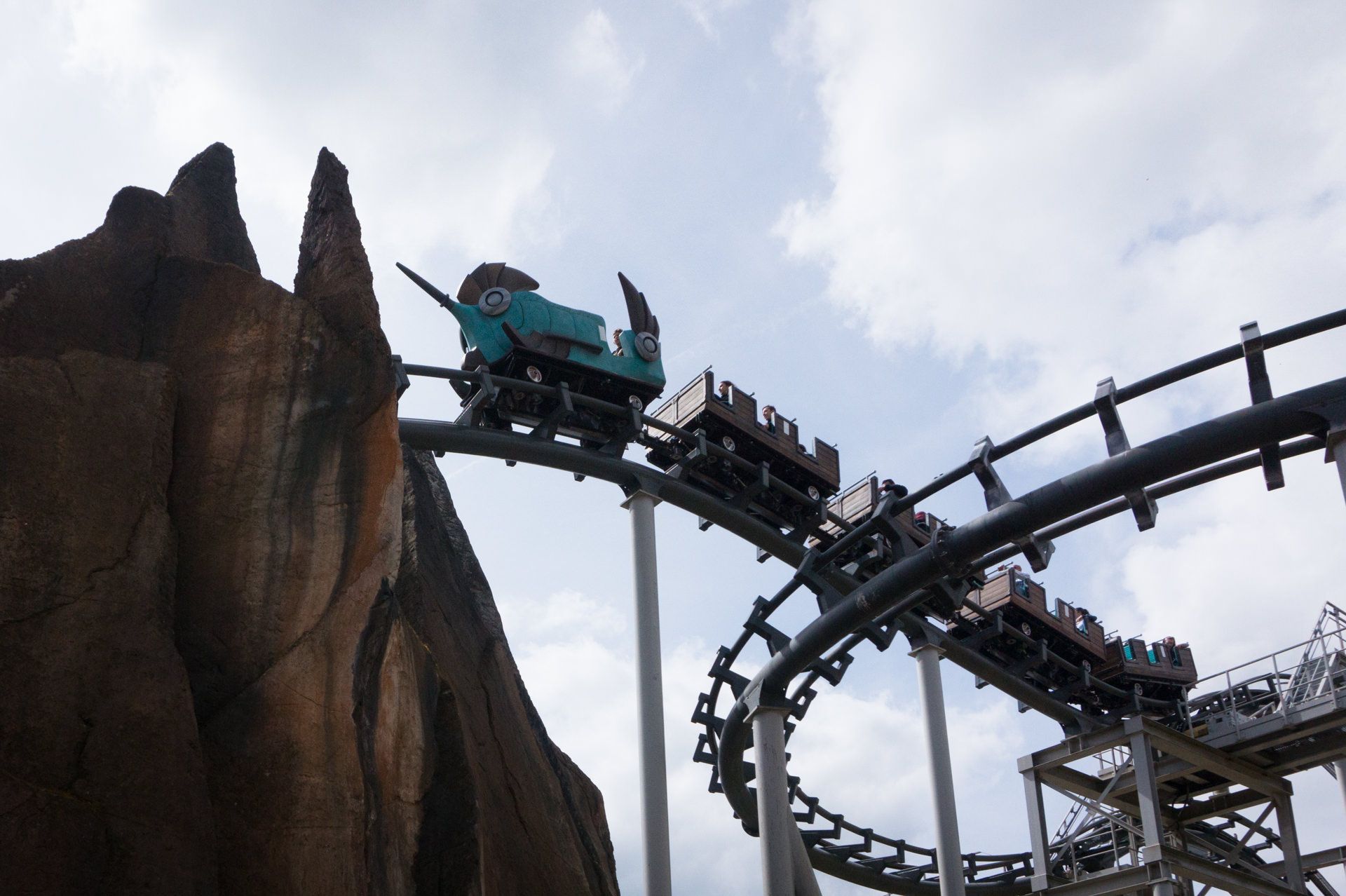
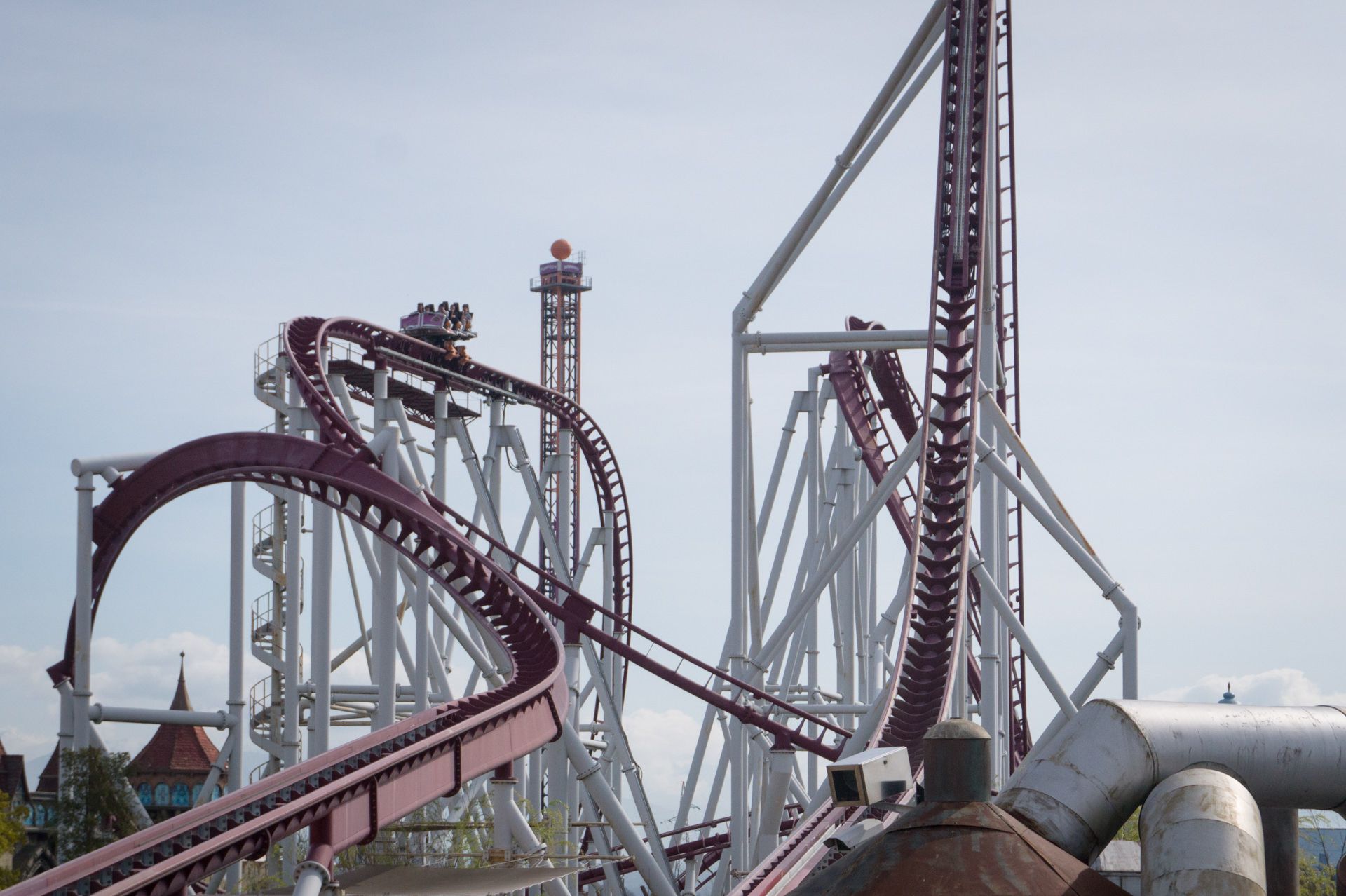
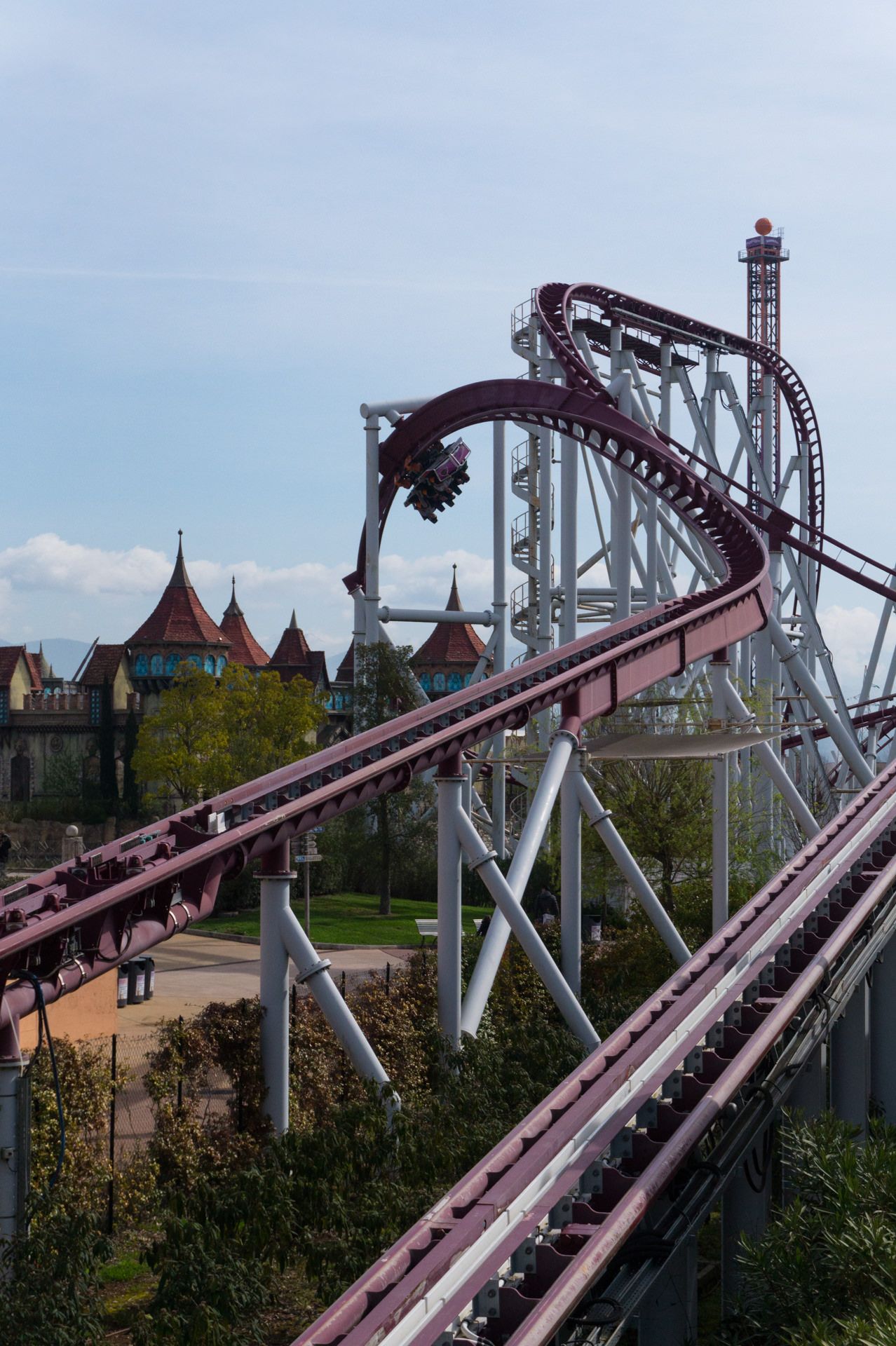
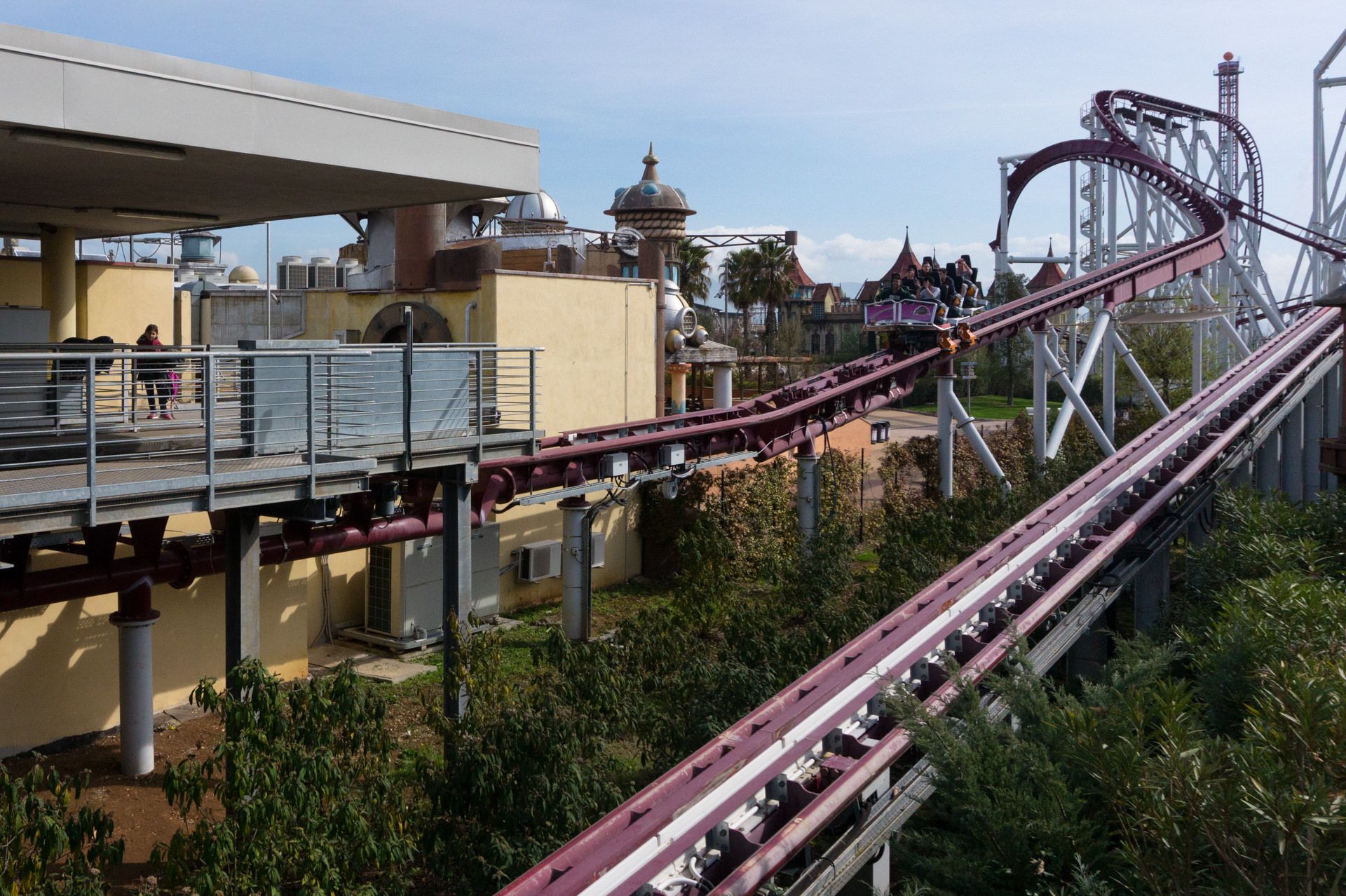
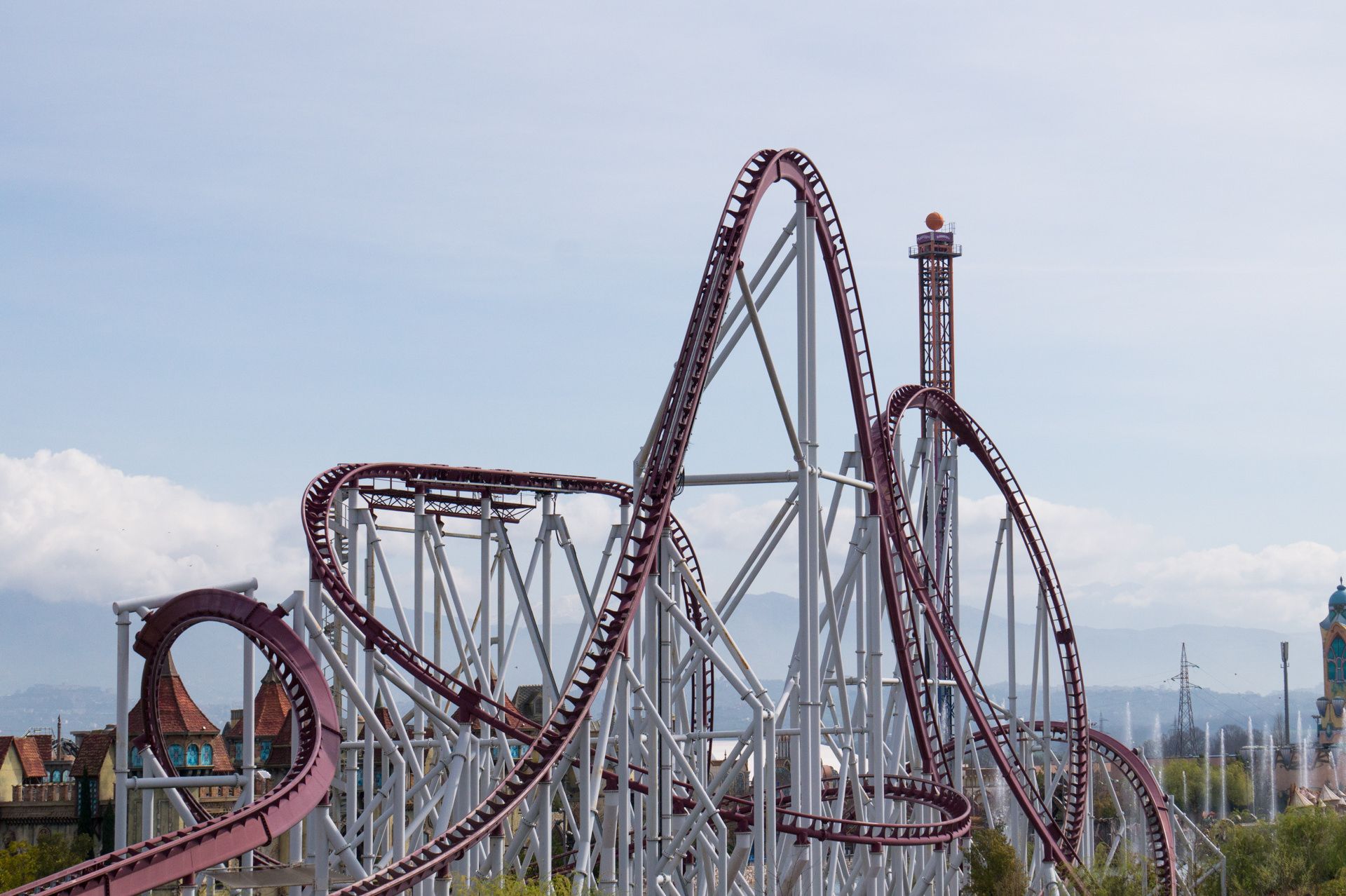
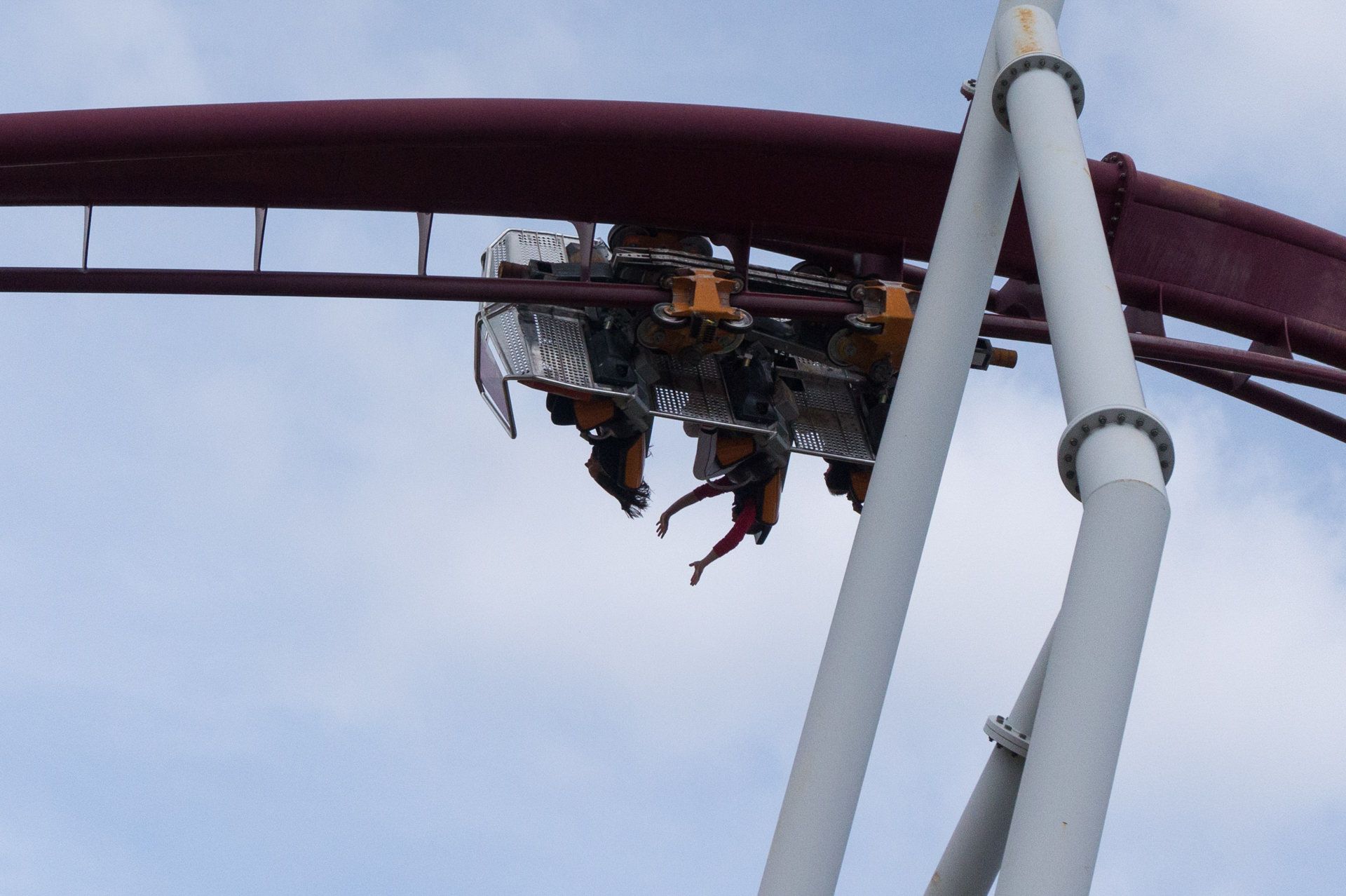
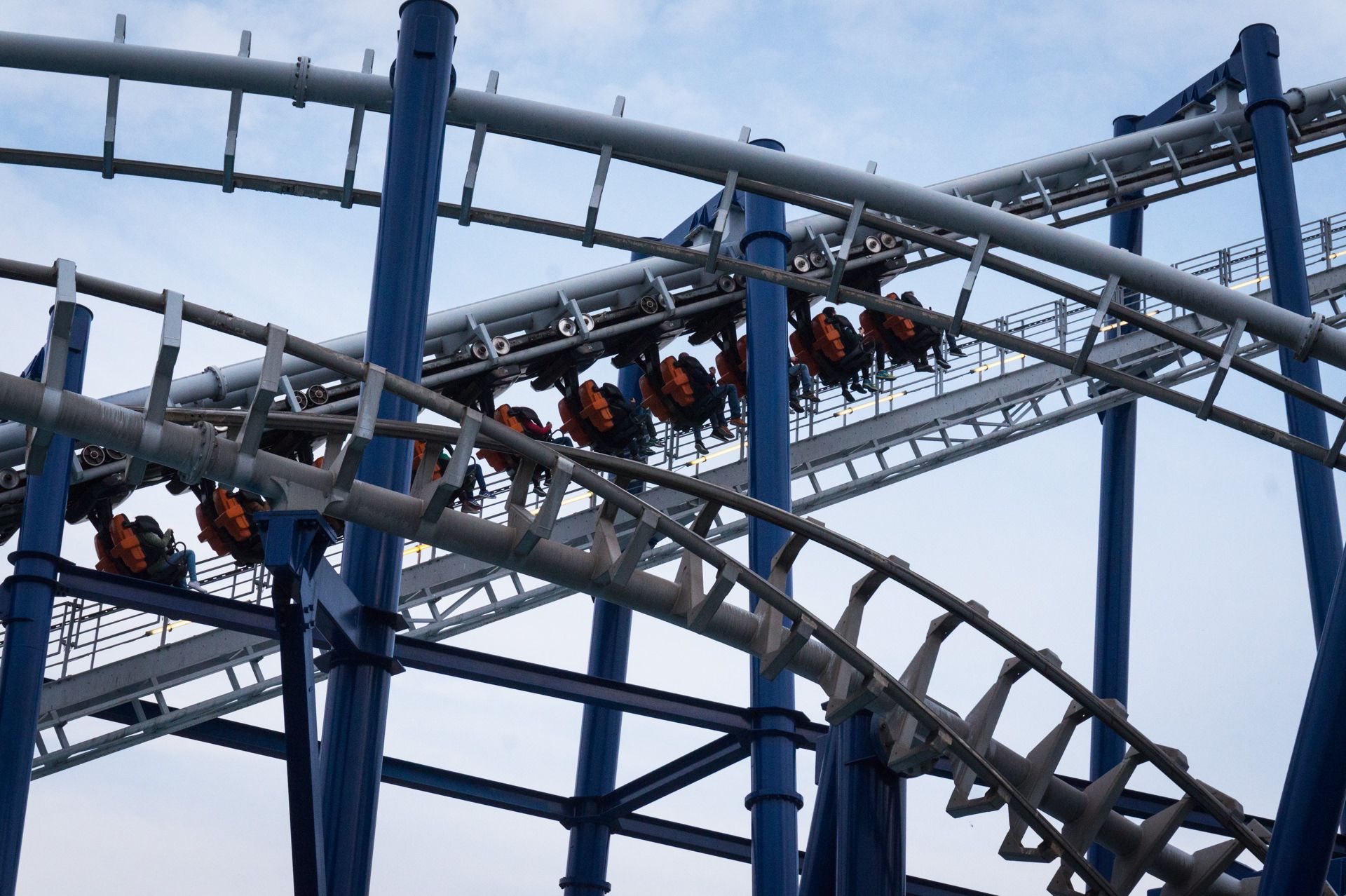
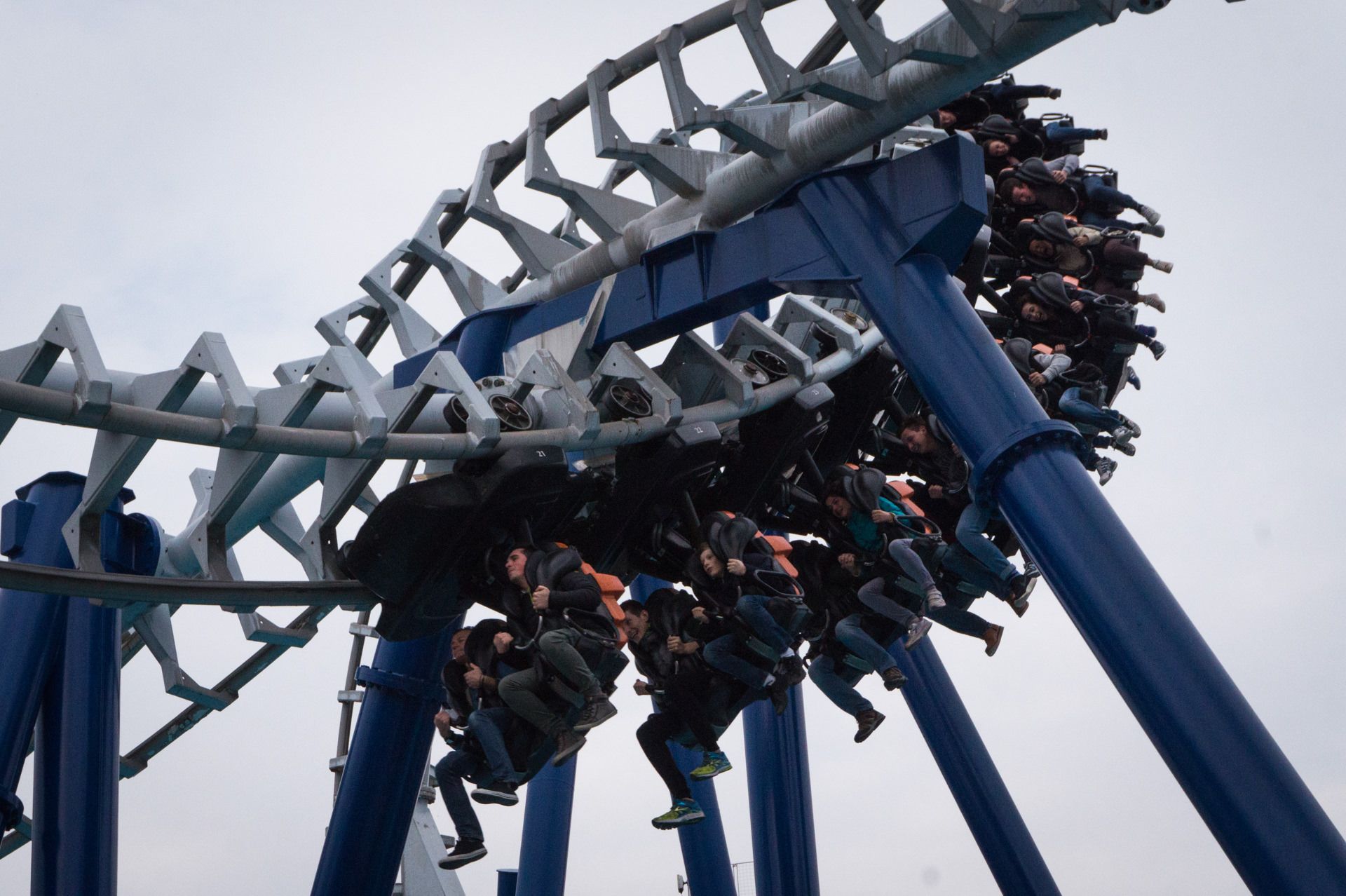
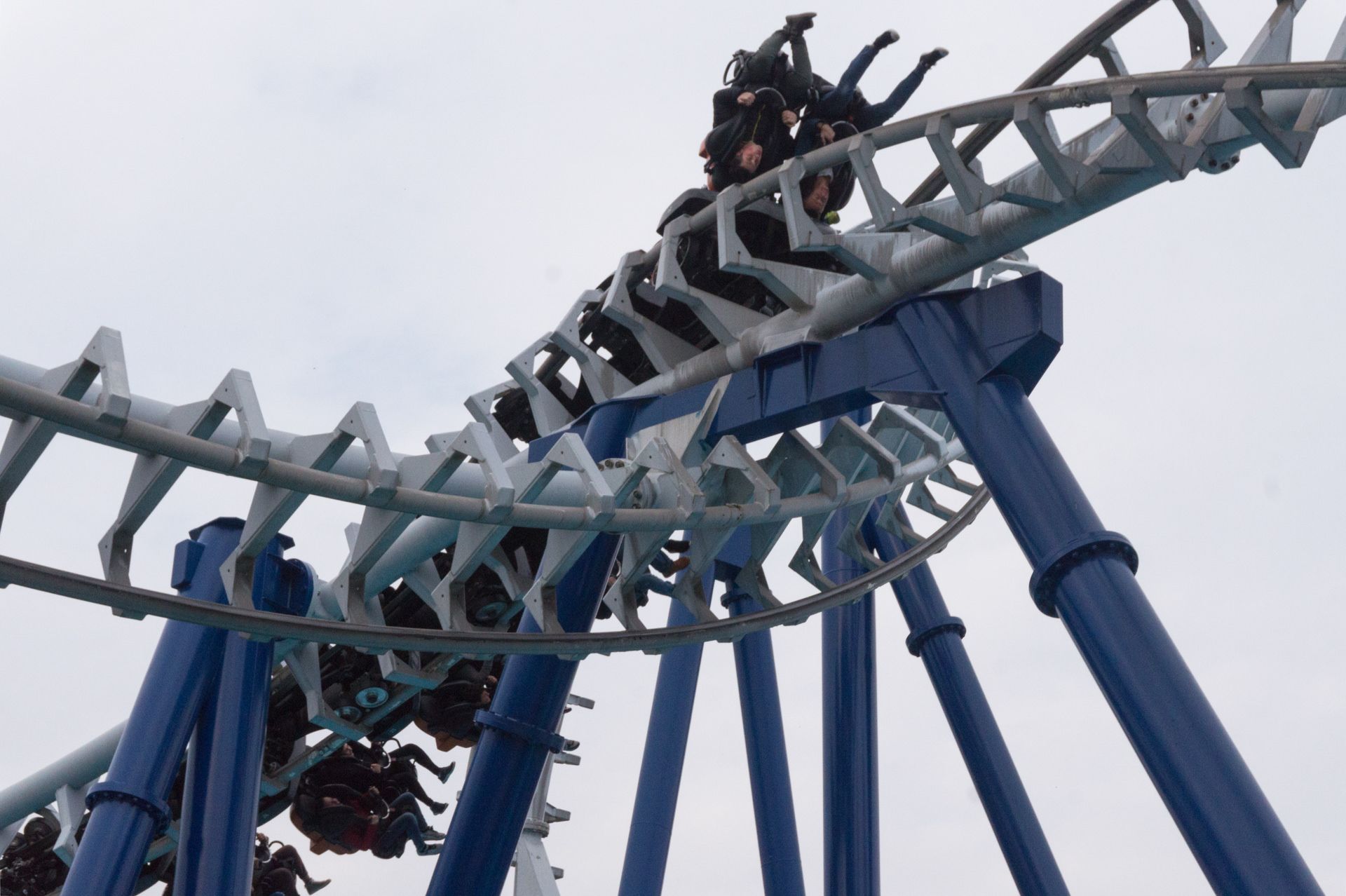
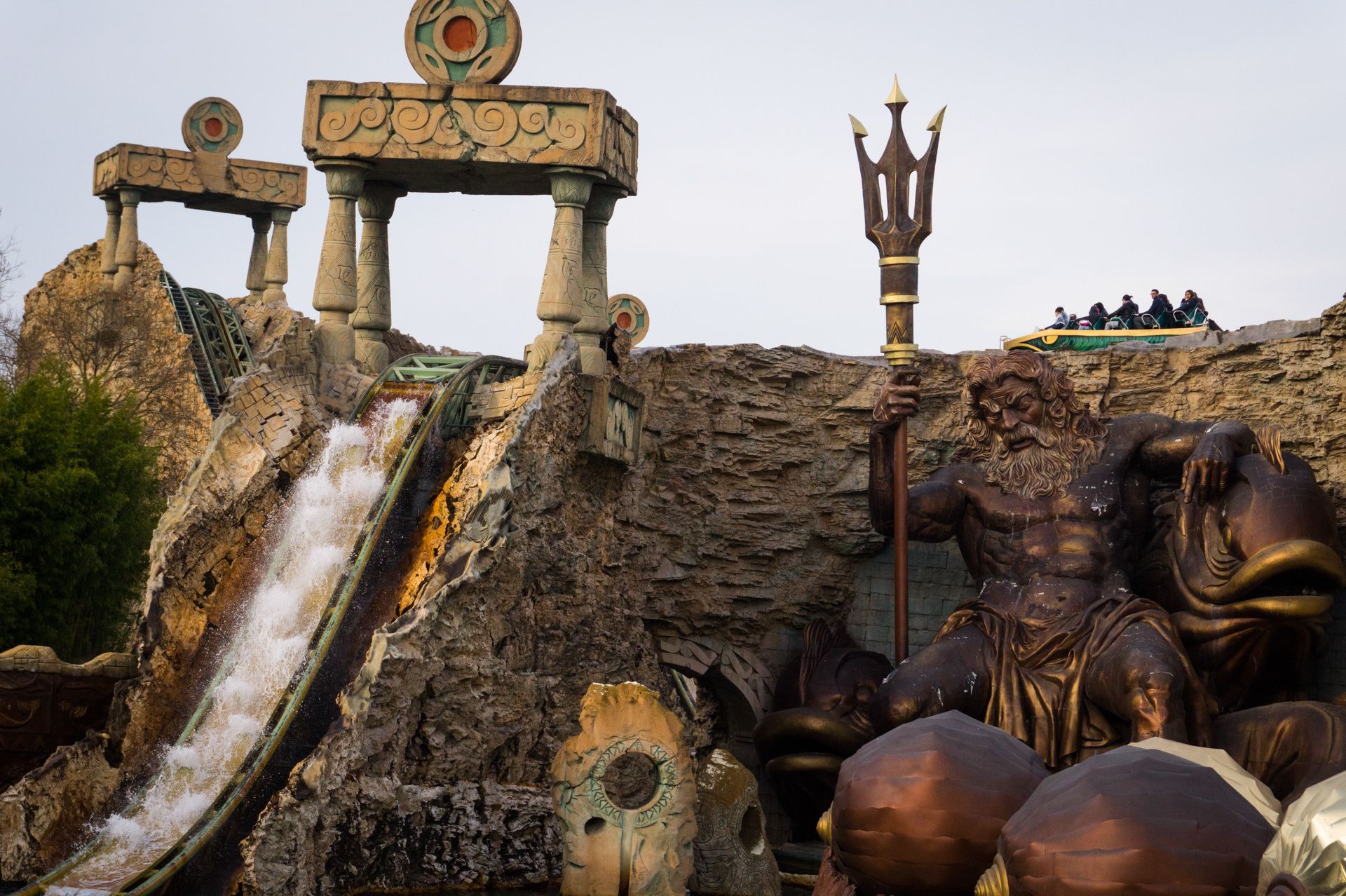
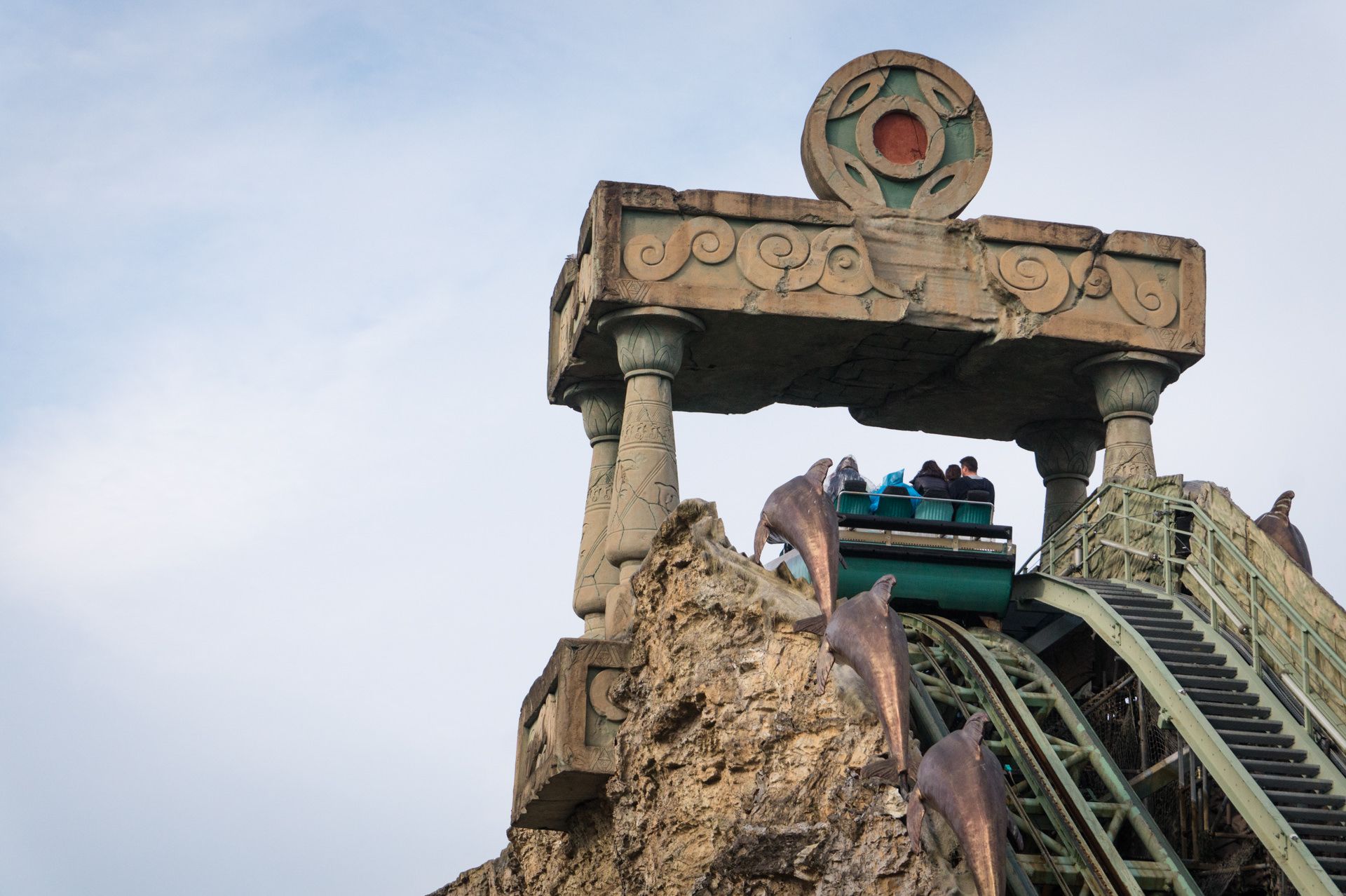
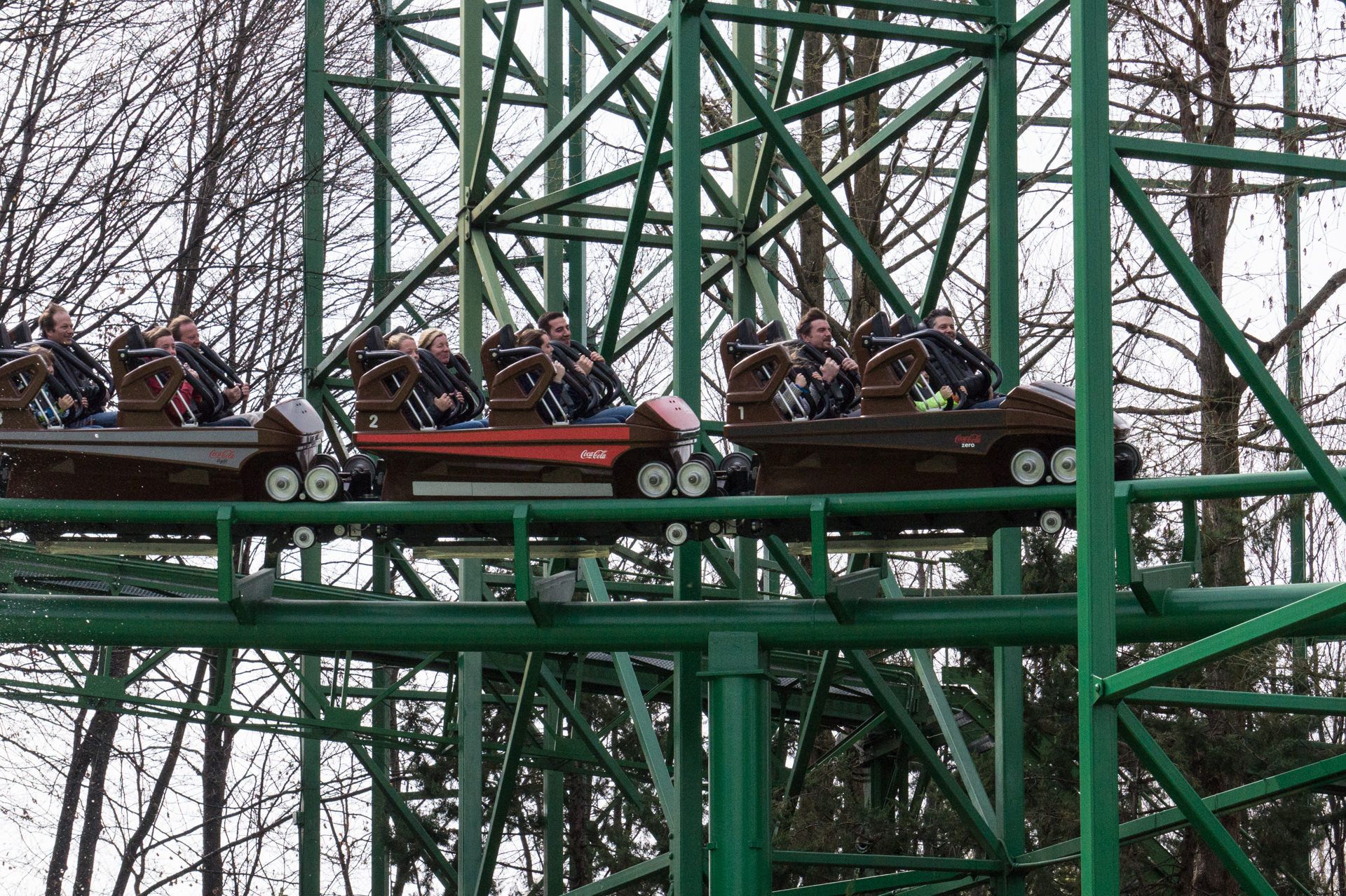
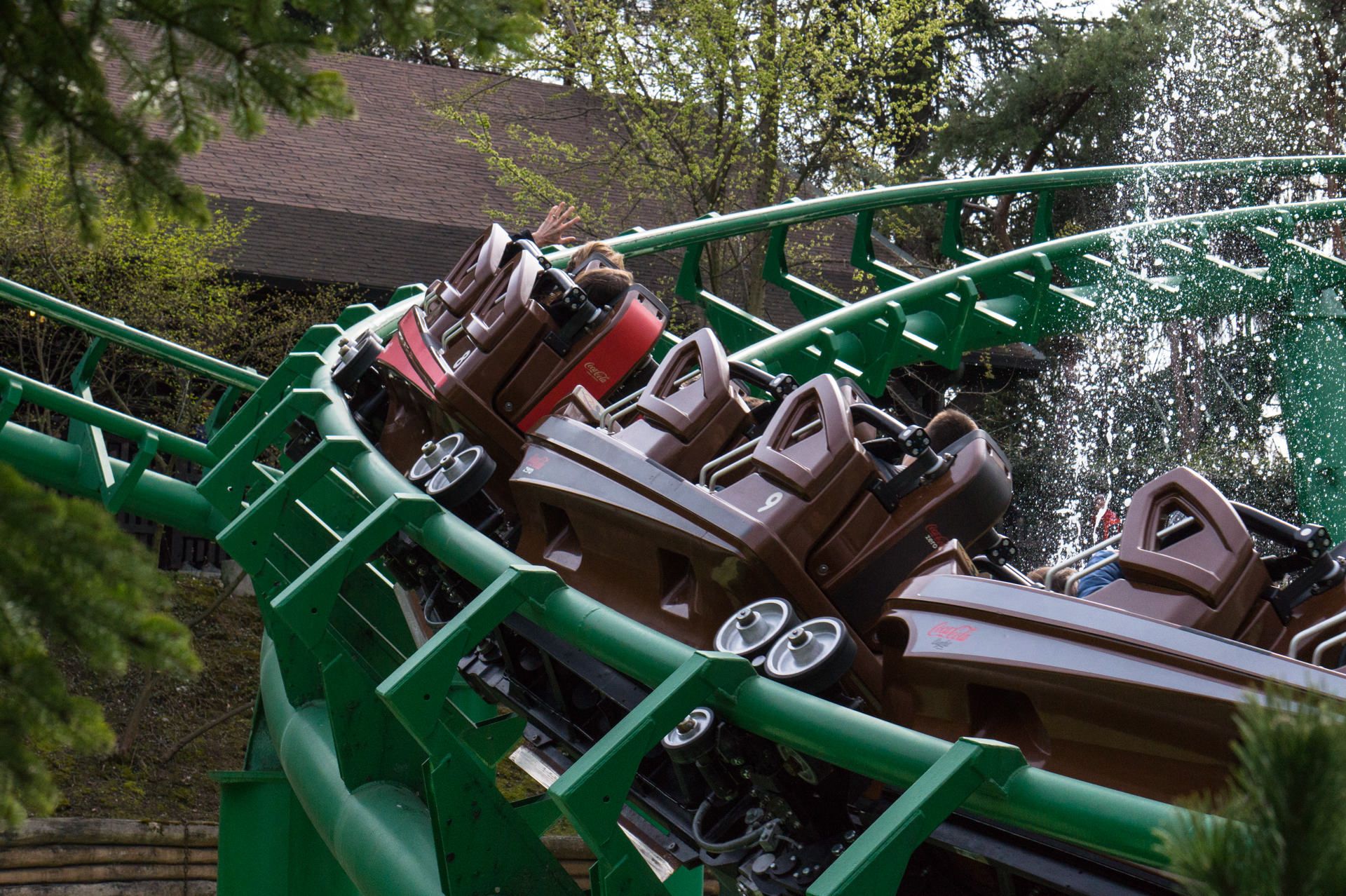
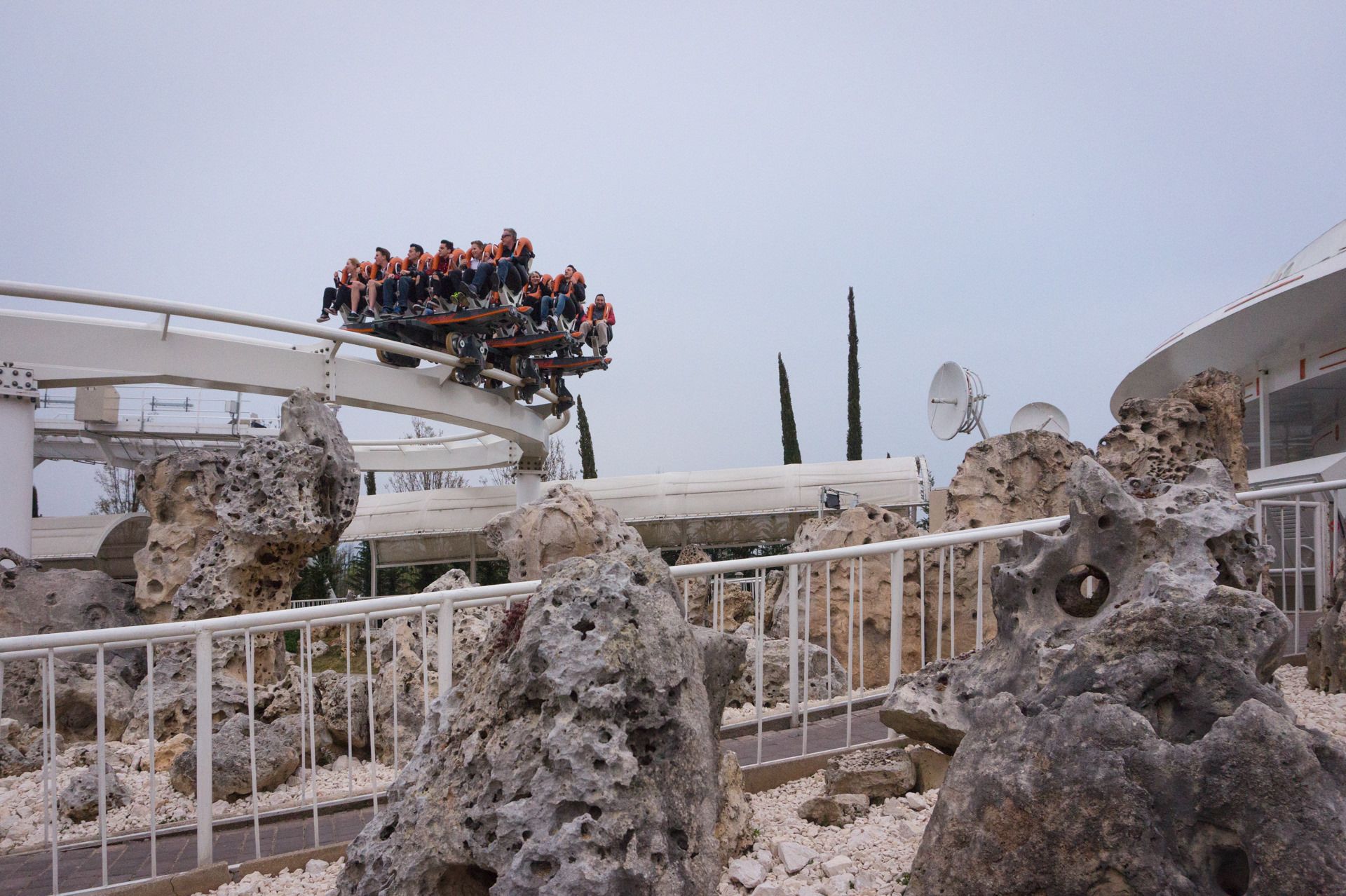
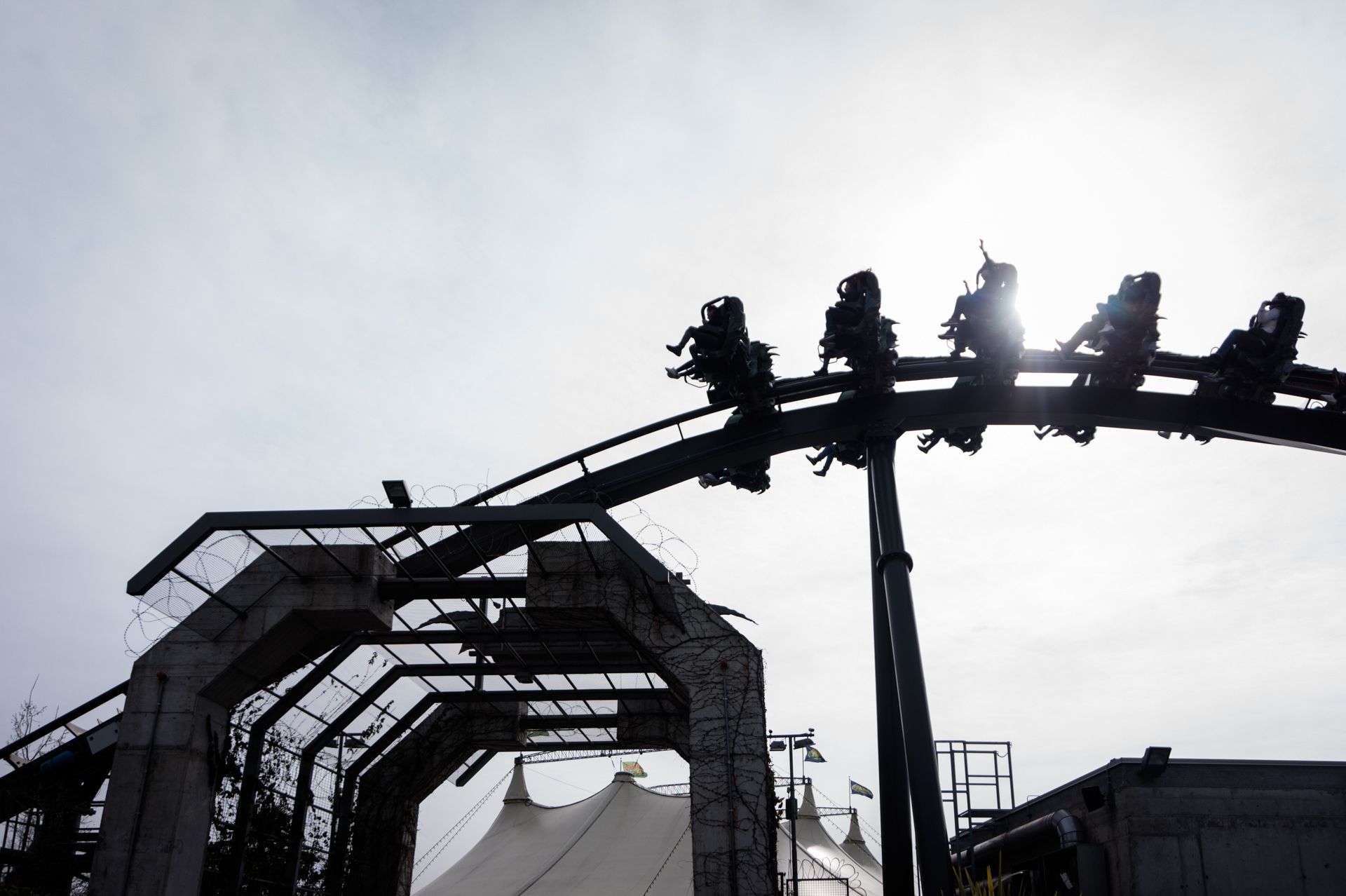
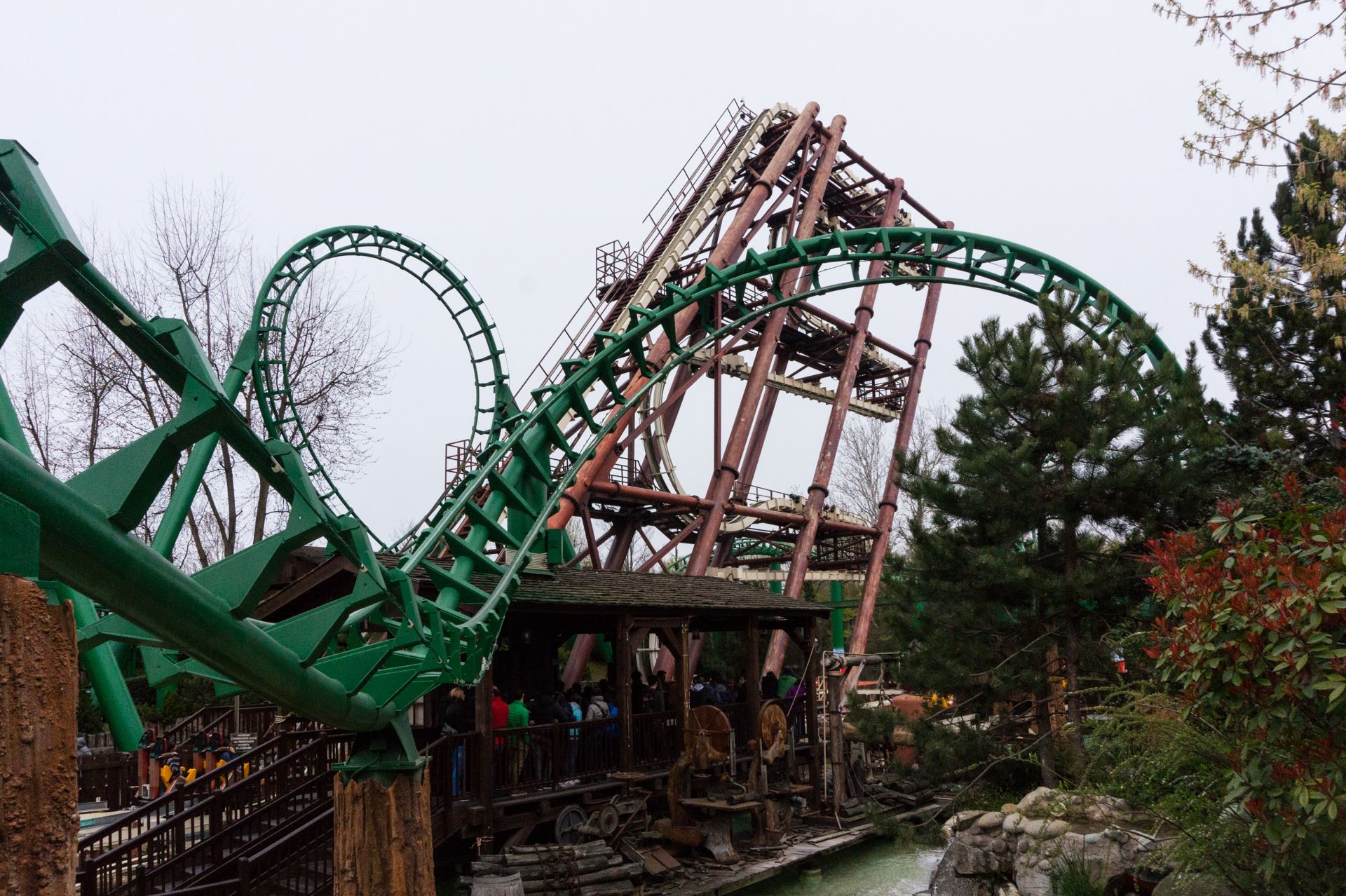
But what the park hardly lacks is an extensive range of rides and so we headed straight for the launch coaster Shock, built by Maurer. With its unparalleled forest of pillars and the very present location directly at the central lake of the Rainbow Magicland, the ride is an extraordinary eye-catcher, which in combination with the very impressive water spectacle forms a harmonious ensemble.

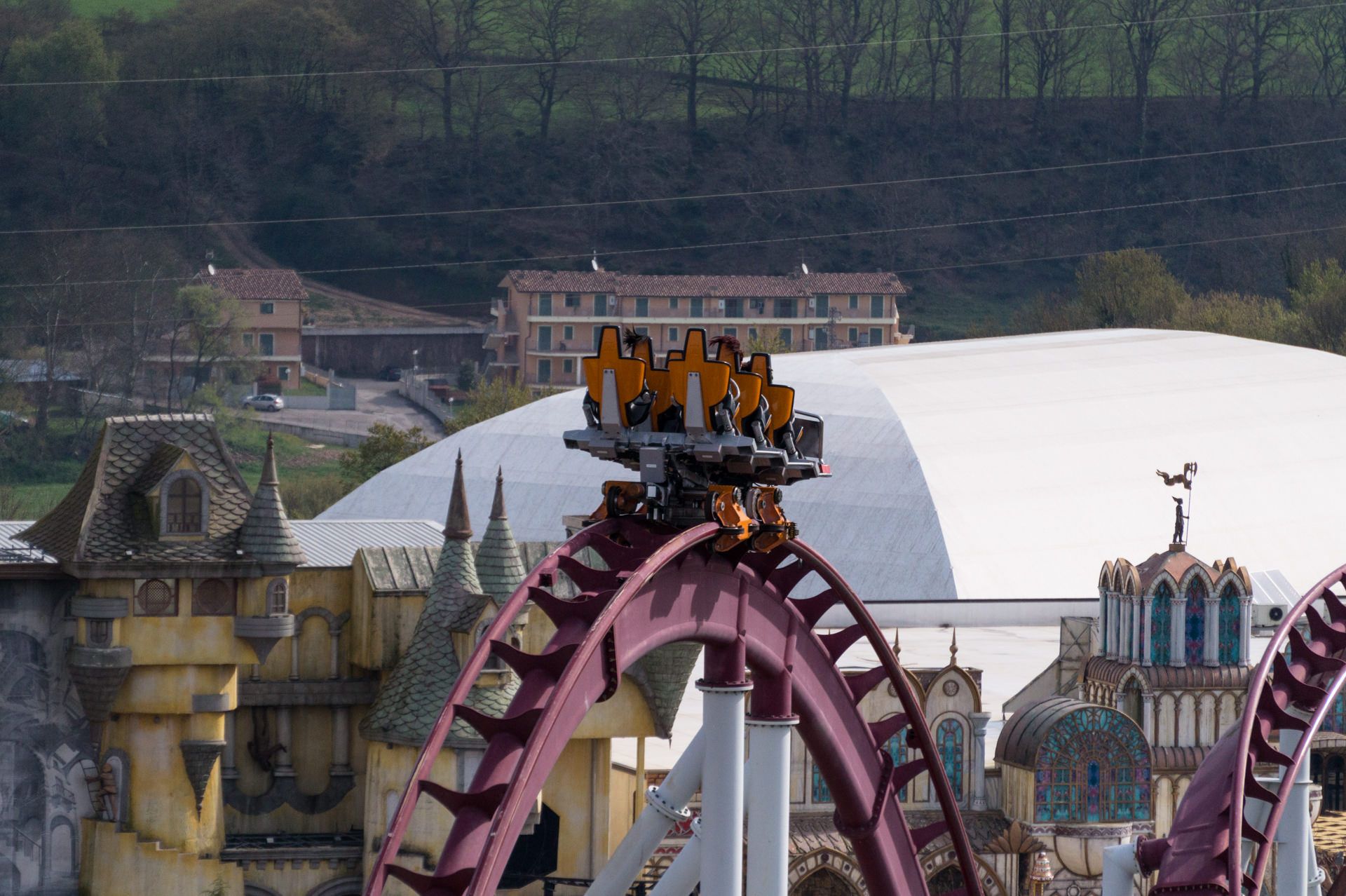
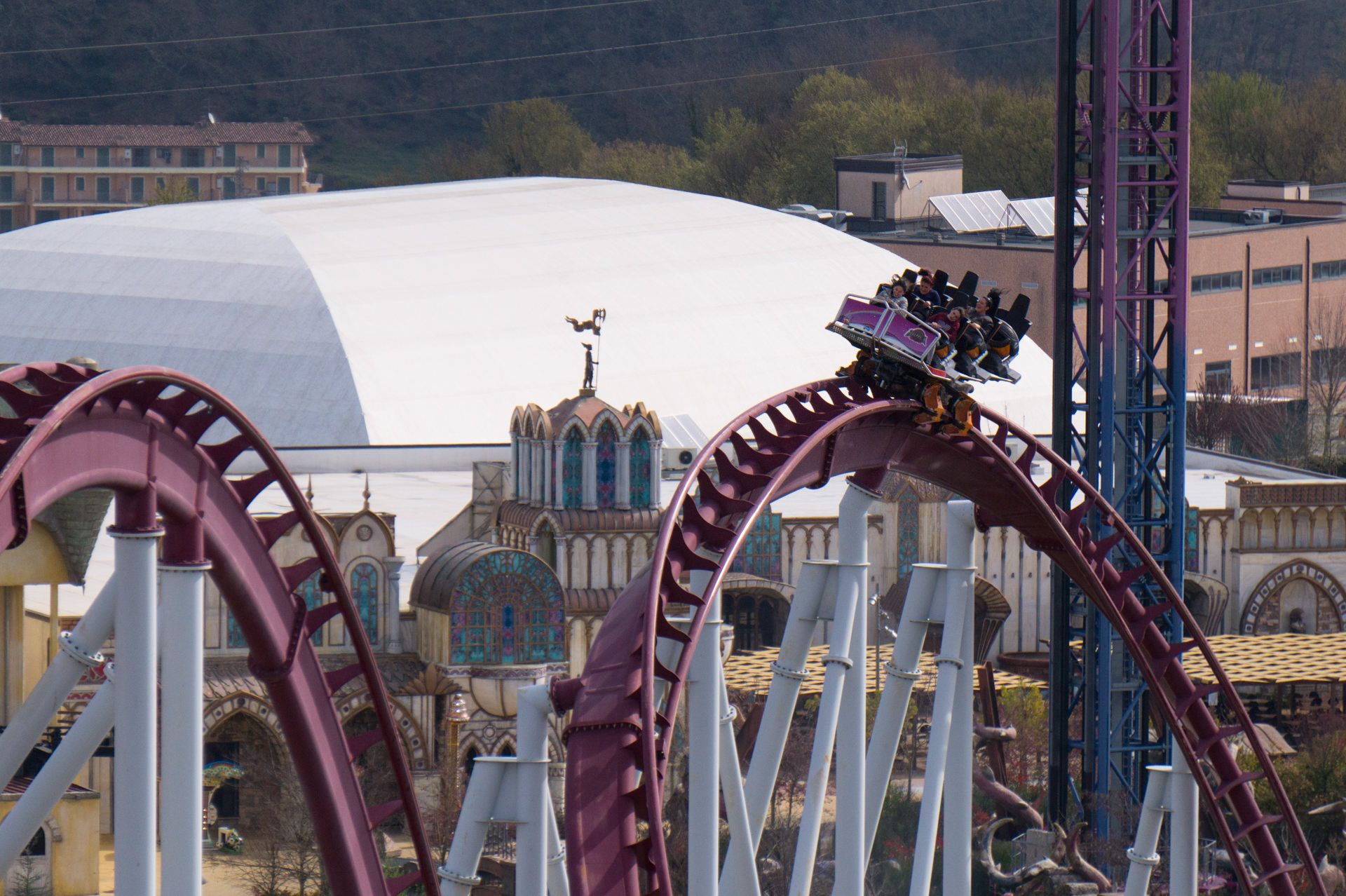
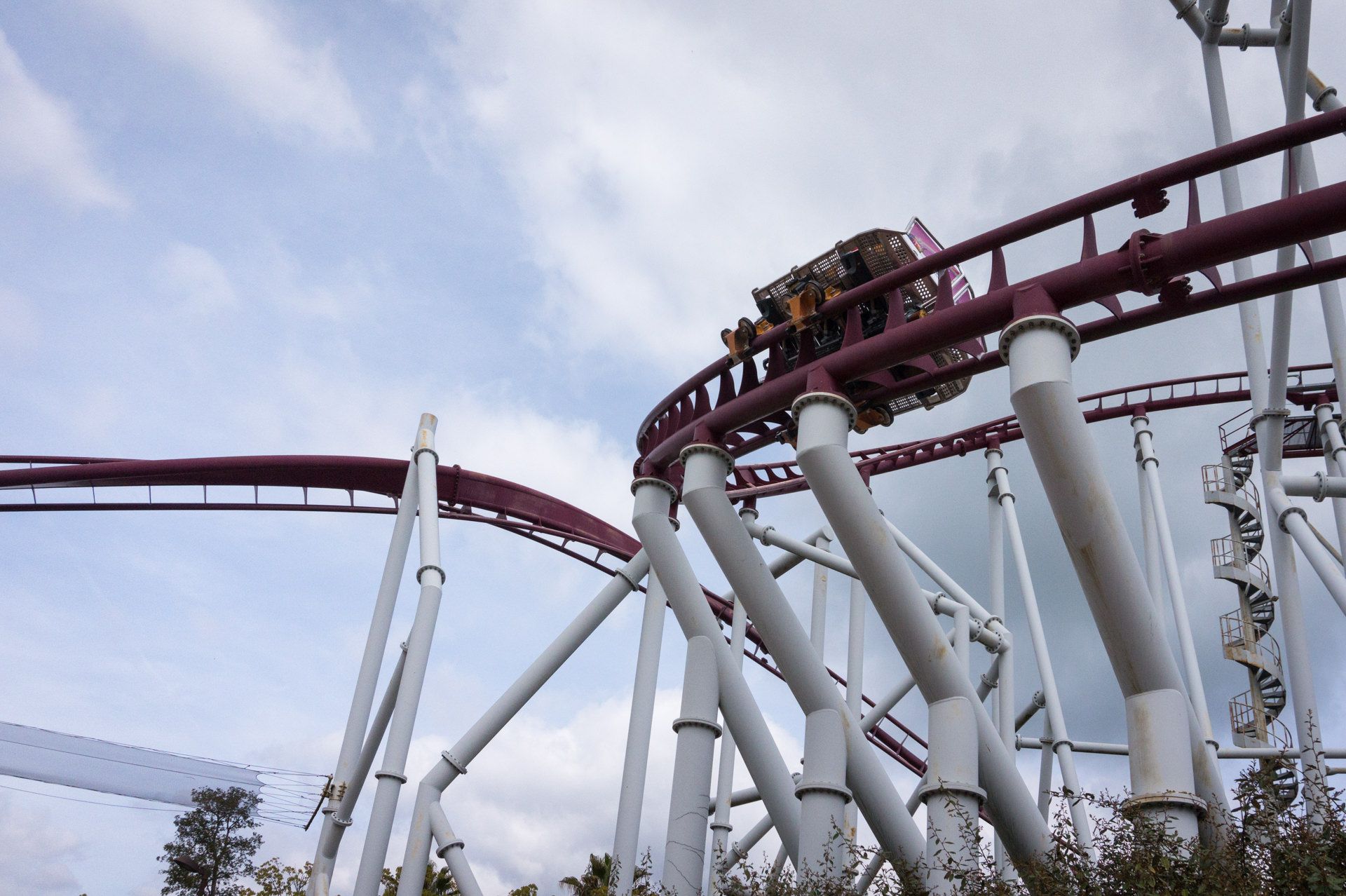
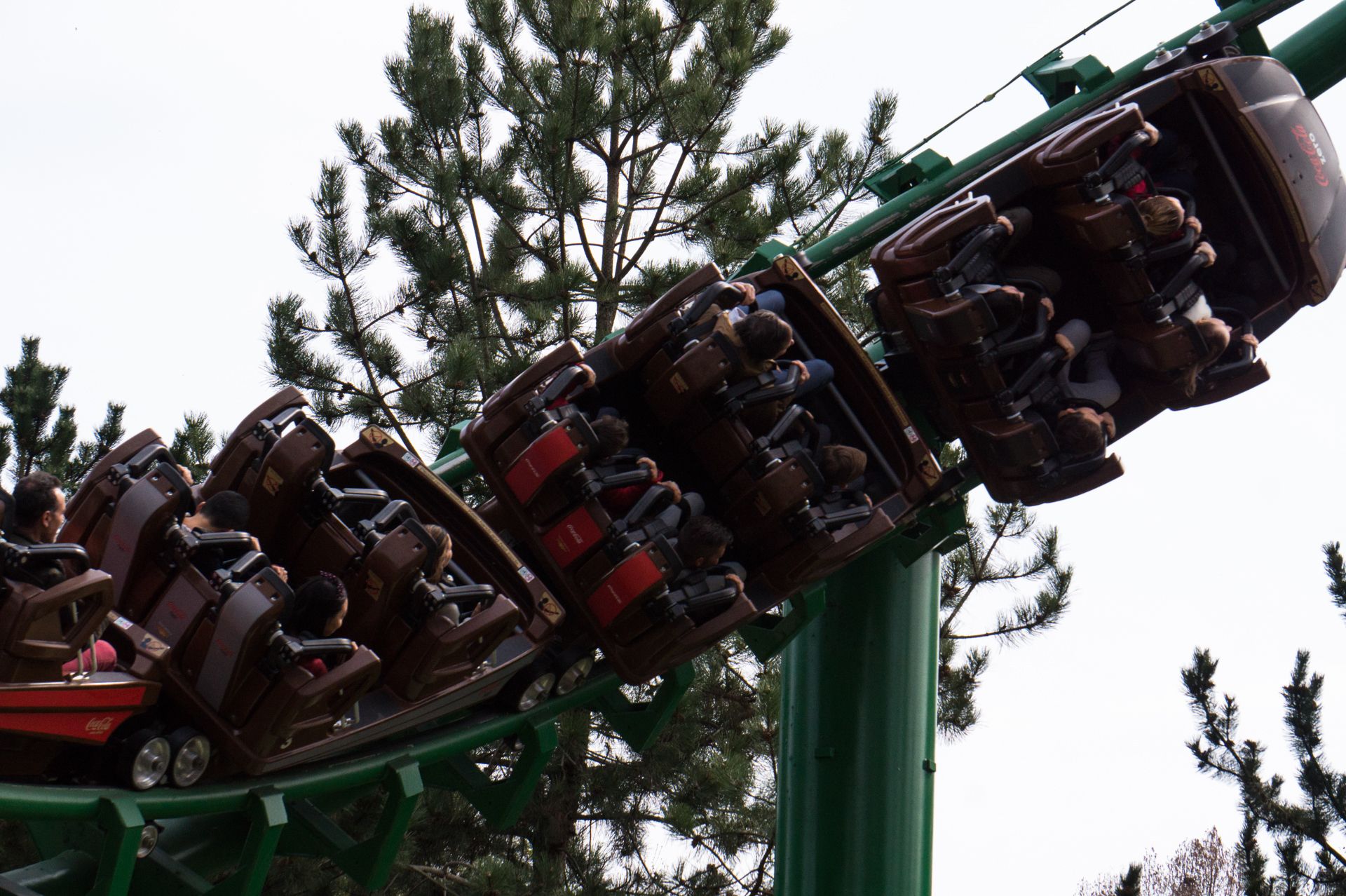
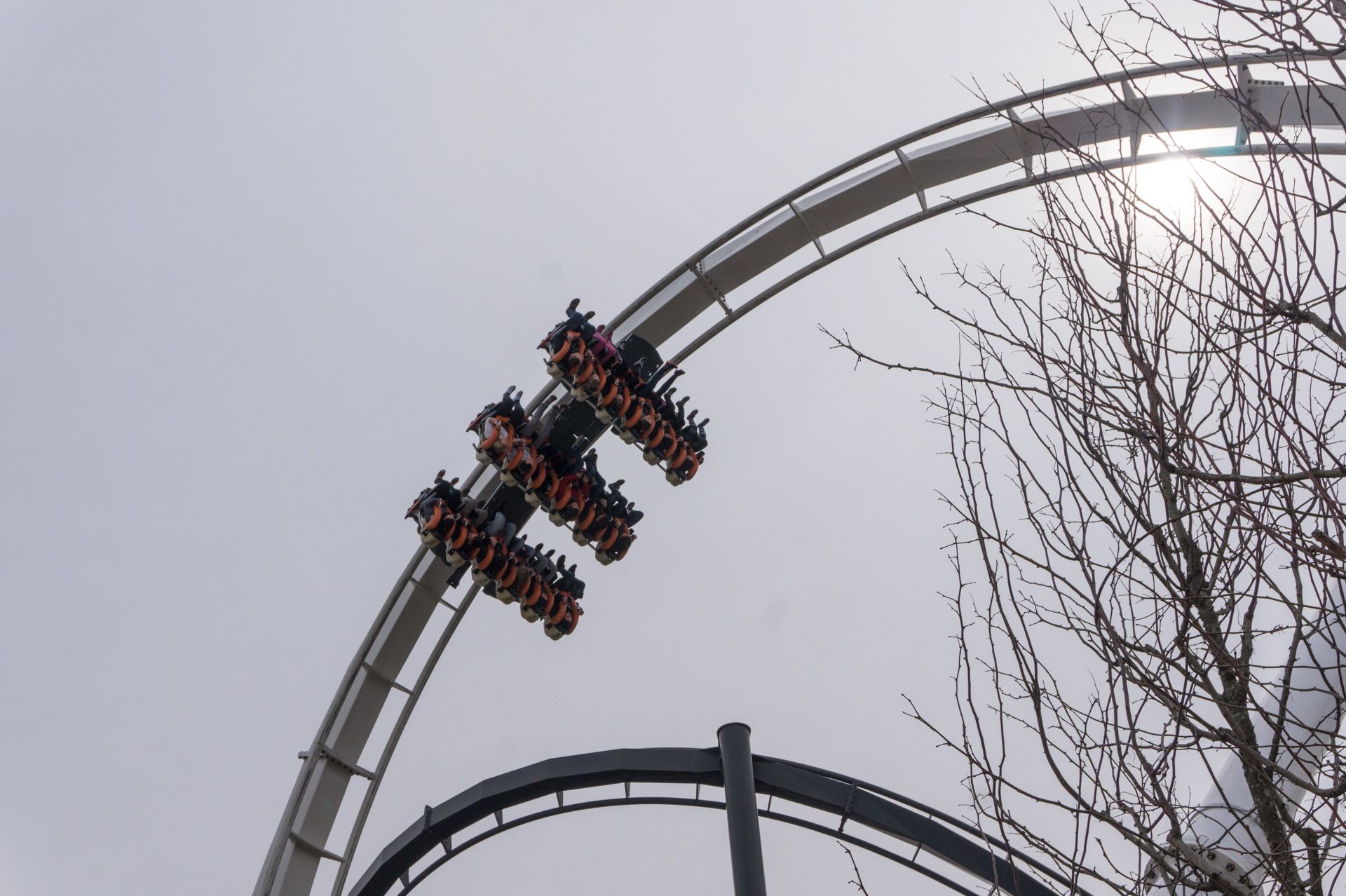
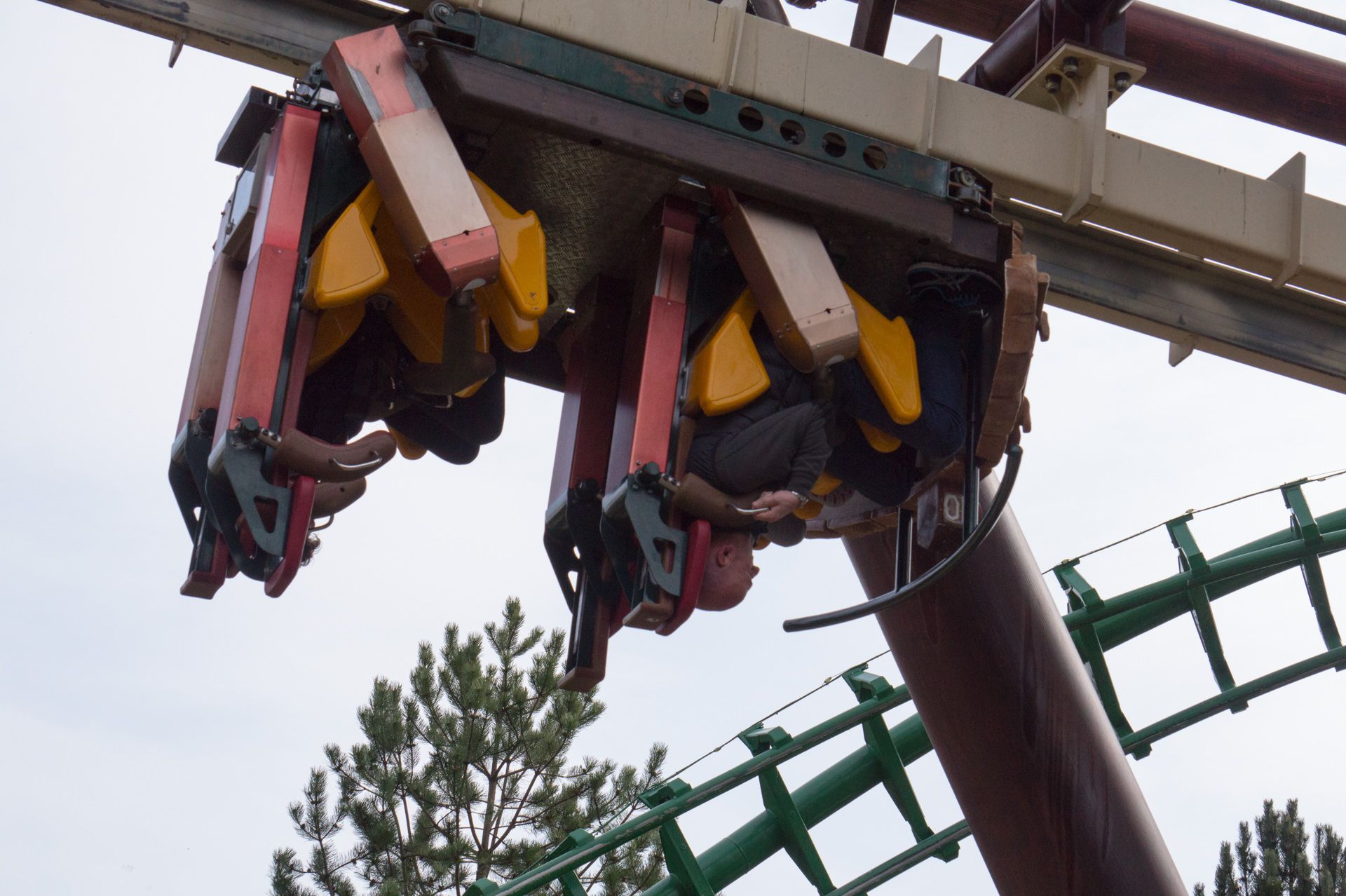
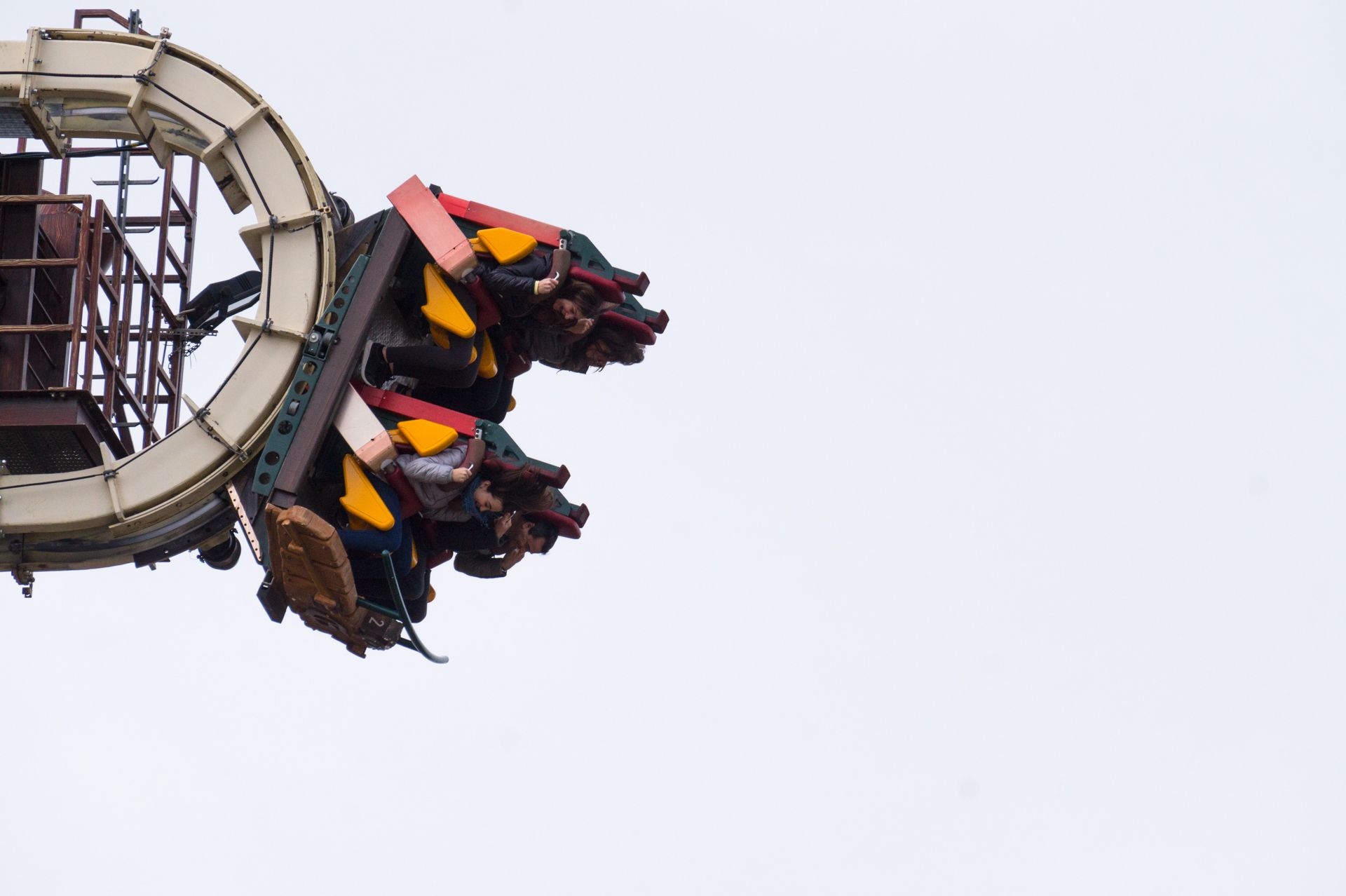
The trip begins with a short dip out of the station. This is followed by several ascents and descents in a slight serpentine movement, which are all interrupted by a short block brake section in between, probably simulating the darkride part of the ride. After having passed this unharmonious curve, the car falls down another slope and is accelerated in the following launch section. The car then goes over a hill in which it takes off quite well before it hits the ground for the first time from a lofty height. Very powerful and with a breakneck speed you cross the following valley. The main element of the ride is the non-inverted loop, where you shoot up a loop, but without standing upside down. On the top of the hill you experience another airtime moment of the very first order, just before the car bends to the left again and plunges into the depths. At the lowest point of the ride you experience once again an exemplary power play, which is soon topped by a brilliant steep curve. After a curvy ascent you reach a block brake and lose some energy, so that the next curvy shot is quite comfortable. In a light Bayernkurve a long corkscrew is introduced, where you are allowed to hang in the bar a little bit before the braking distance is reached.

Shock surprised! Especially in comparison with the other X-Car Coasters the ride is convincing all along the line. Here, the bar does not pull on the body unpleasantly during the ride and exceptionally allows a very free ride without the urge to leave the ride on the fastest way. The curve radii are also very wide, so that the massive car hardly feels the need to bump over the track. The strong forces and distinct airtime make this ride the best roller coaster of Rainbow Magicland and one of the better ones of the country.

Isola Volante

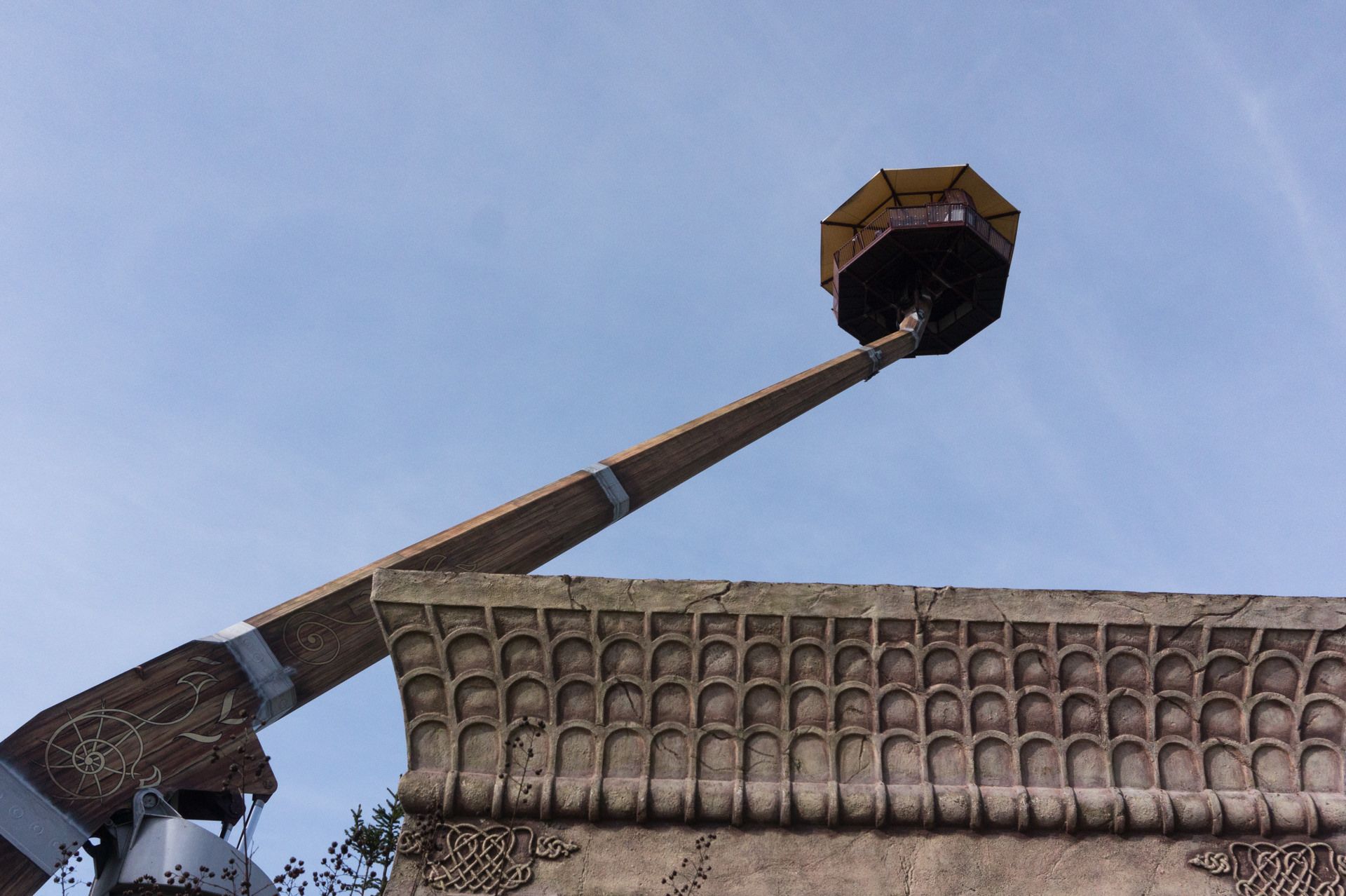
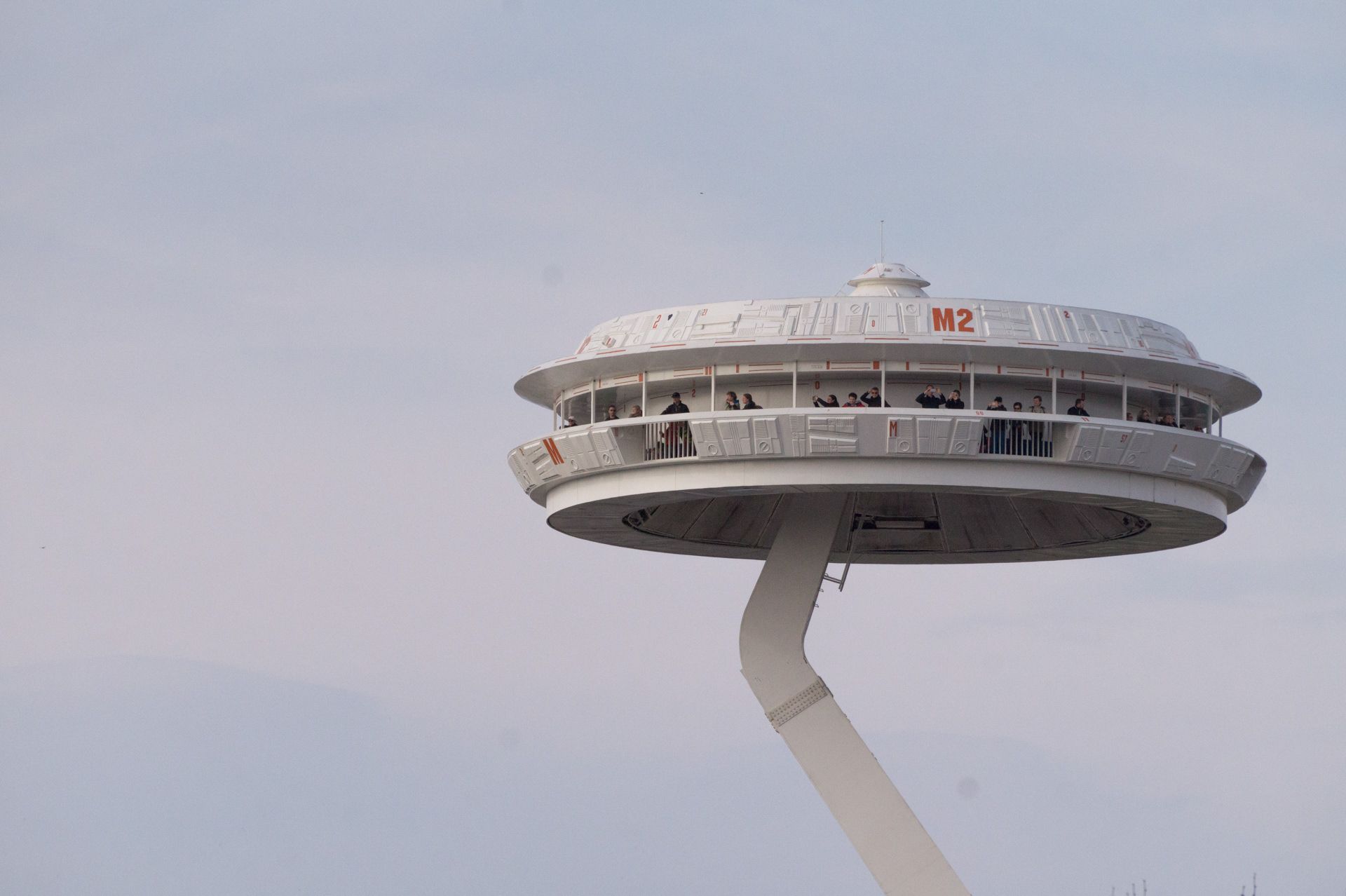
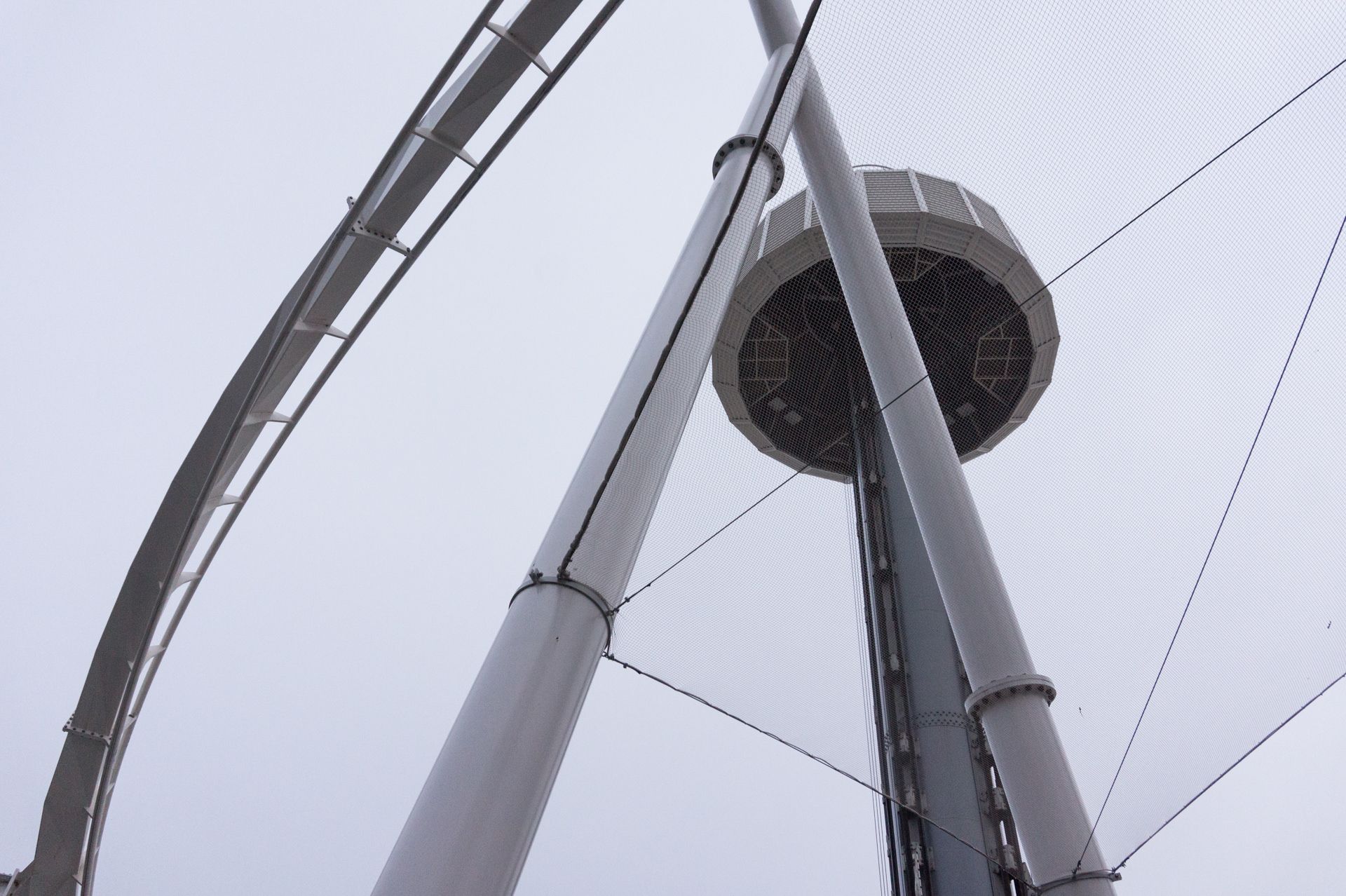
In the immediate vicinity, the Vekoma Sky Shuttle Isola Volante transports its passengers towards the sky, while the view of the park, car park and the nearby designer outlet Valmontone is not very exciting; however, the technology itself is worth experiencing, above all because of the easier implementation compared to the competing product.

Planeta Winx

Rainbow’s most famous children’s series is probably by far the Winx Club, which was primarily designed for little girls and even has its own magazine on the magazine shelves here in Germany. Although the Castello du Alfea, a large building complex with a 4D cinema, is dedicated to the series, halfway to the artificial castle is the dark ride Planeta Winx. Similar to the Disneyland classic Peter Pan, you fly through the series’ sceneries. The ride itself is nicely designed and from time to time you will meet the main actors of the series, who always introduce the scenes from their element.

Bombo

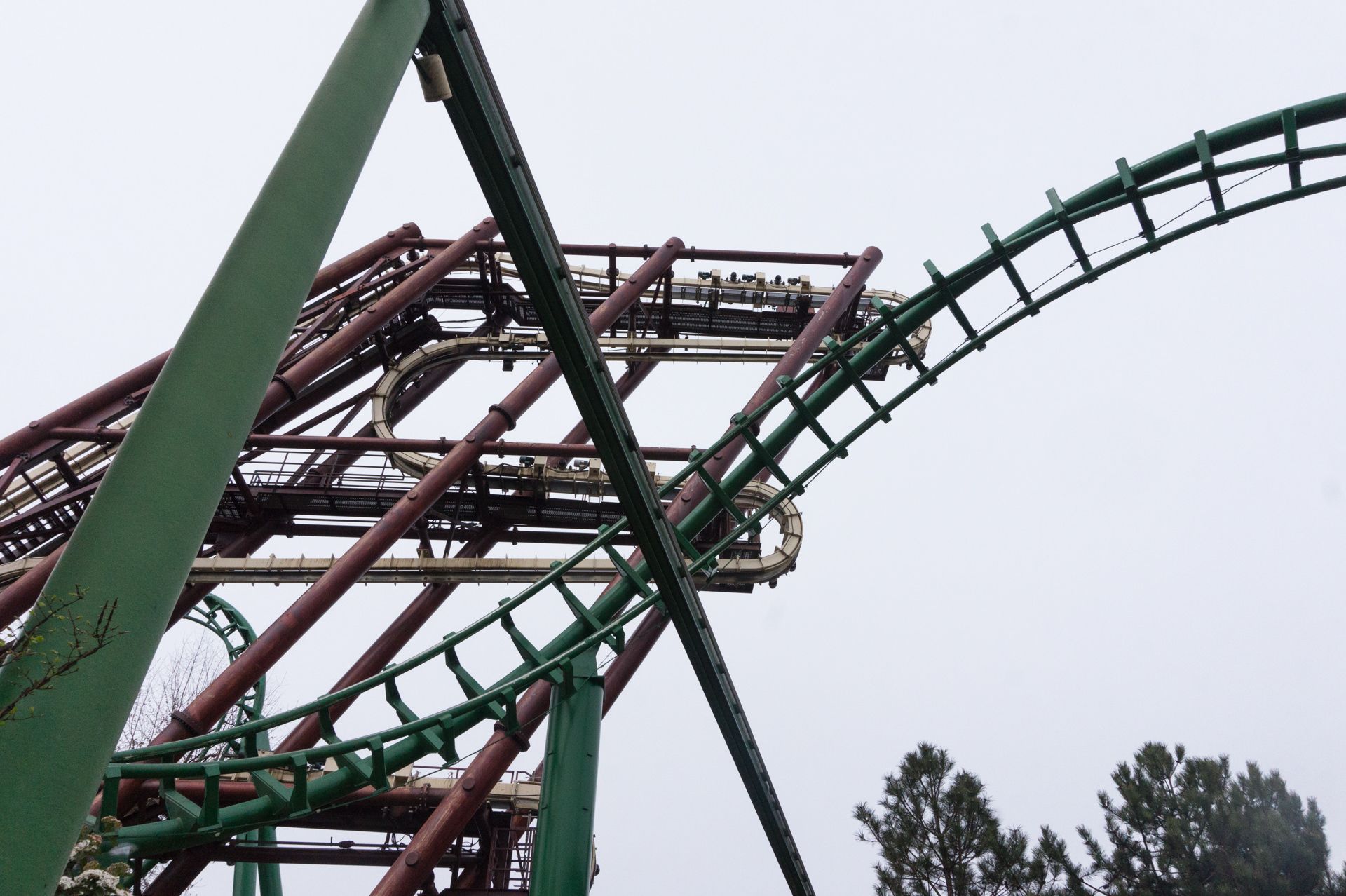
Directly opposite is the roller skater Bombo, part of the series Monster Allergy, a co-production with ZDF, which runs on the Kinderkanal and has no special drawing style; accordingly, the standard model from Vekoma fits in quite well. After a short bend and the following lift hill, you immediately take a steep bend with a subsequent upward helix to the left, complete a short valley and then go through a wide right bend near the station. Over a hill you cross the course of the track that has just been cleared, whereupon you descend a little in another helix. A left turn follows, whereupon the braking section is waiting for you. After one lap the ride is already over. Despite the modern train, the driving characteristics are not the best.

Maison Houdini

If you follow the tour, after a few metres you will come across the Maison Houdini, a modern witches’ swing from Vekoma, which, for whatever reason, was built underground. The main building, as it appears, contains only the preshows of the ride and the lift that takes passengers downstairs. A few meters further on, there is a second building in a similar style, which contains the lift, which transports the passengers back up. In between there is a square with skylights and ventilation shafts, under which the actual ride is located. Since the ride opened quite late we could not test the Mad House; the idea of the underground attraction is great, but the implementation is space consuming and probably also quite cost-intensive, the gained space also defies any logic and aesthetics.

Amerigo

Adjacent to this is the children’s area of Rainbow Magicland, which belongs to the second type of modern children’s paradise in amusement parks. Compared to the nicely designed areas in Gardaland or Port Aventura, everything here stands quite naked on a concrete slab. In doing so, an attractive overall design as well as any vegetation was avoided. Unfortunately, the local Big Apple Amerigo was not supposed to open until late afternoon, so that we had to do without a ride in order not to throw the rest of the day overboard. I don’t really know why this simple children’s roller coaster is the only ride in the park that opens so late.

Mystika

Past the Battaglia Navale, the nicely designed Splash Battle by Preston & Barbieri we went to the freefall tower Mystika by SBF Visa. This Italian manufacturer is known for its toddler roller coasters and lots of junk, which is mostly ordered by park managers without any experience; the best example is the Ankapark (Wonderland Eurasia) currently under construction near the Turkish capital Ankara. Also in Rainbow Magicland they probably wanted to offer a big freefall tower, but at the same moment it was not allowed to cost anything. Otherwise the tower with a total height of 70m, of which at least 50m already serve as braking distance, cannot be explained. The drop itself is bad, in addition there is a very unpleasant restraint system installed.

Cagliostro

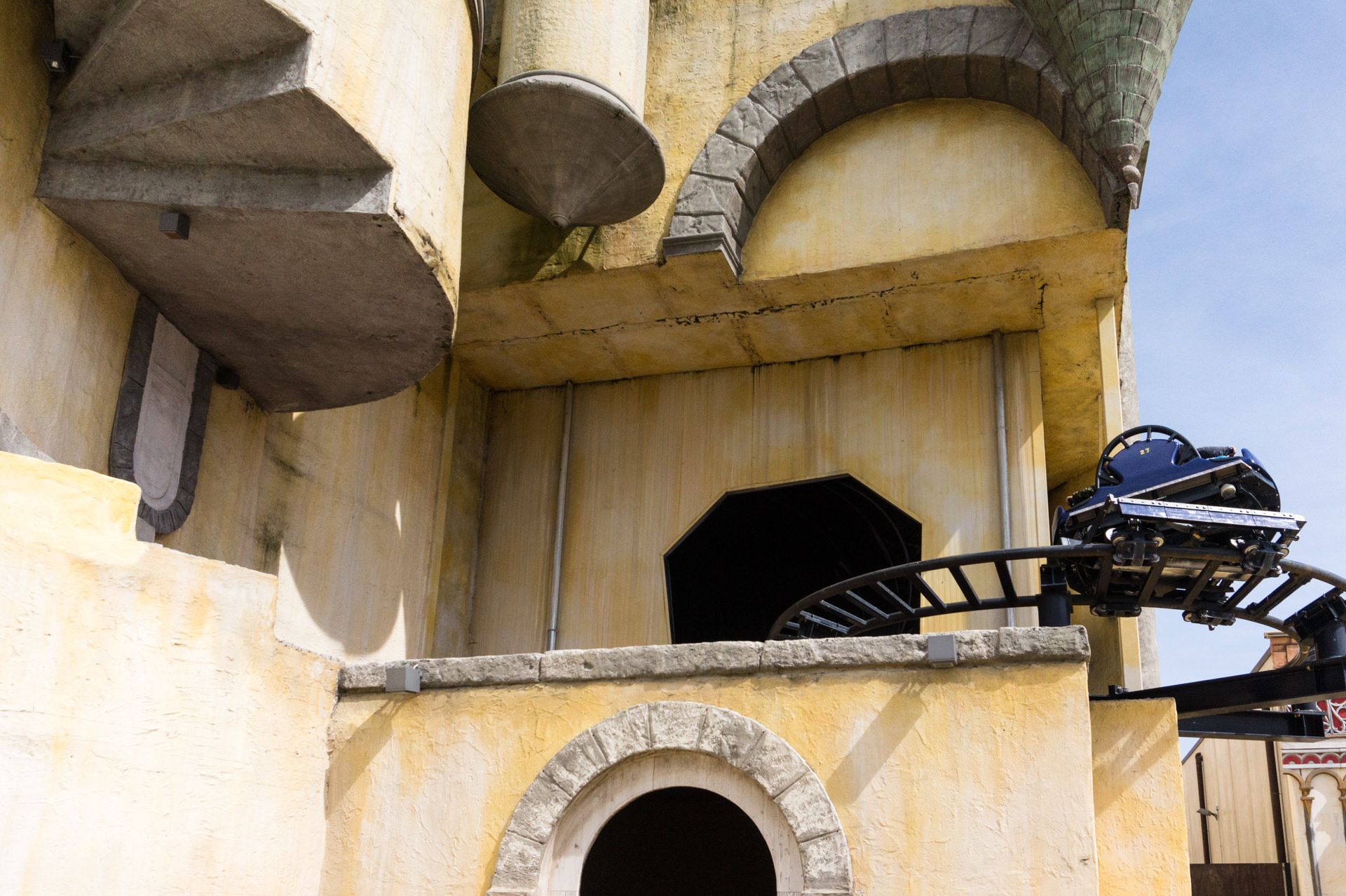
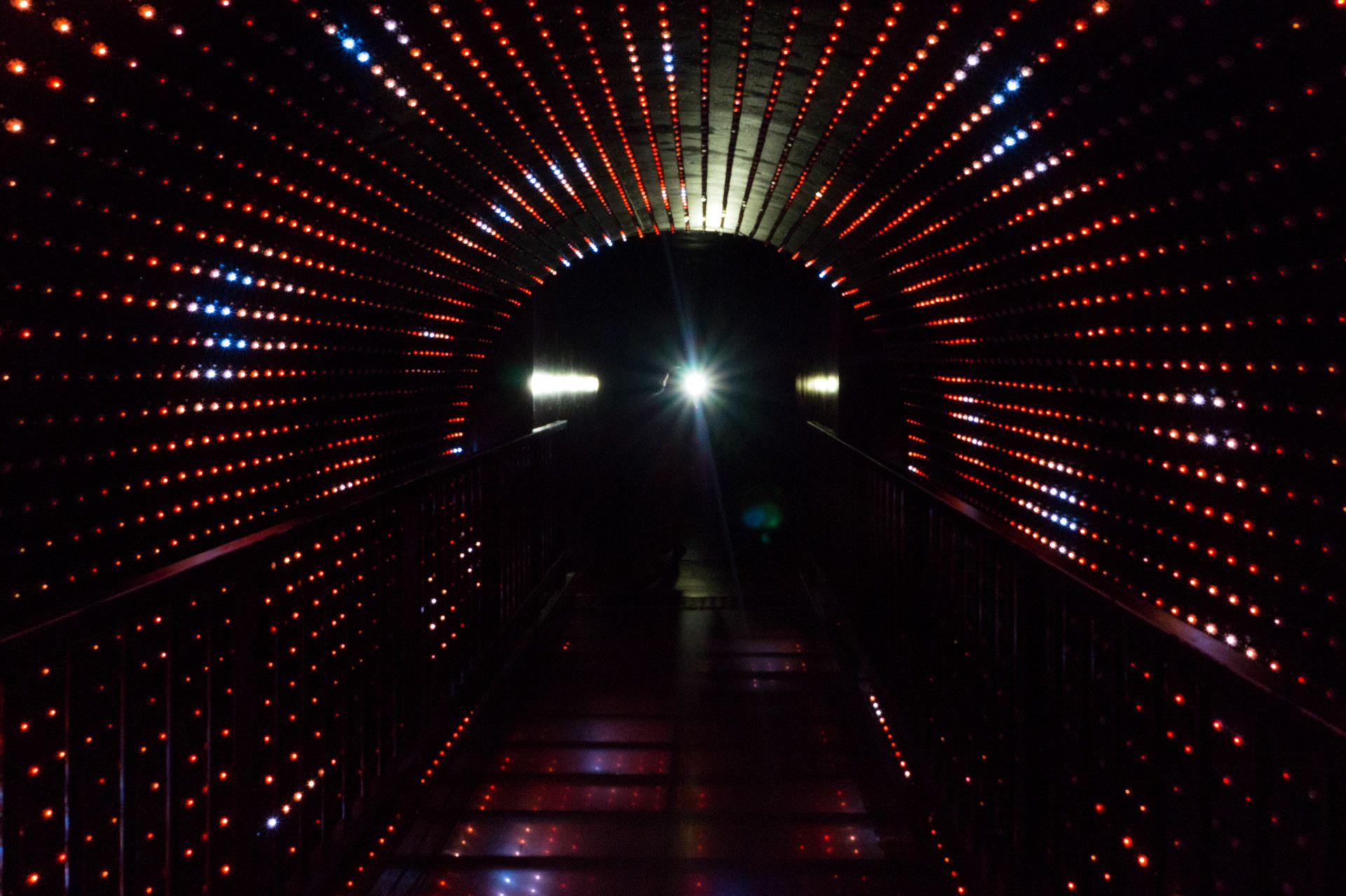
With the right seat you have at least a view of the two neighbouring roller coasters, whereby the entrance to the spinning coaster Cagliostro is closer. Admittedly, you can’t see much from the spinning coaster outside the abstractly designed hall. Inside, too, you’re really only looking at darkness, although all efforts in this respect were ruined by the outside turn.

After the lift hill and the already mentioned detour out into the daylight there is a steep curve towards the hall floor after a gently descending straight section. Hereupon the car shoots up an Immelmann turn, whereupon the following valley and the ascent to the block brake is made in a wonderfully sweeping S-curve. After the block area, however, not much happens. Over wide curves you cross the whole hall and then approach the ground. In pure zigzag manner a straight section is taken, whereupon you are again at the front end of the hall. After another short curve you reach the second and larger lift hill of the ride, which brings you back to the station level.

Cagliostro is a nice spinning coaster, at least in the first part of the ride, but then it loses all inspiration and comes crawling towards the end of the ride like no other coaster of this type. Probably a more elaborate design with larger scenes was intended here, because there is still enough space in the hall, but without all this the ride with this layout is quite senseless and not very exciting.

Huntik 5D

Right next to the Gran Teatro, where the musical Romeo & Juliet by Gérard Presgurvic is shown in a 35-minute performance, is the dark ride Huntik 5D, based on the series of the same name. As seekers, we join the team around Dante, Lok, Sophie and Zhalia to fight against the organisation. For this we use guns to shoot our way through elaborately designed scenes with successful animatronics and well embedded screens through hordes of titans. What is confusing, however, is that our team also uses titans and these appear on the screens at the end. If you are not familiar with this series, this is rather unnecessary, as it spoils the otherwise perfect impression. The series reference is very well done, but you don’t have to know the series to enjoy this great shooting darkride from Alterface. Huntik is definitely the best ride of the Rainbow Magicland and one of the best dark rides of this kind in Europe.

Yucatan and Le Rapide

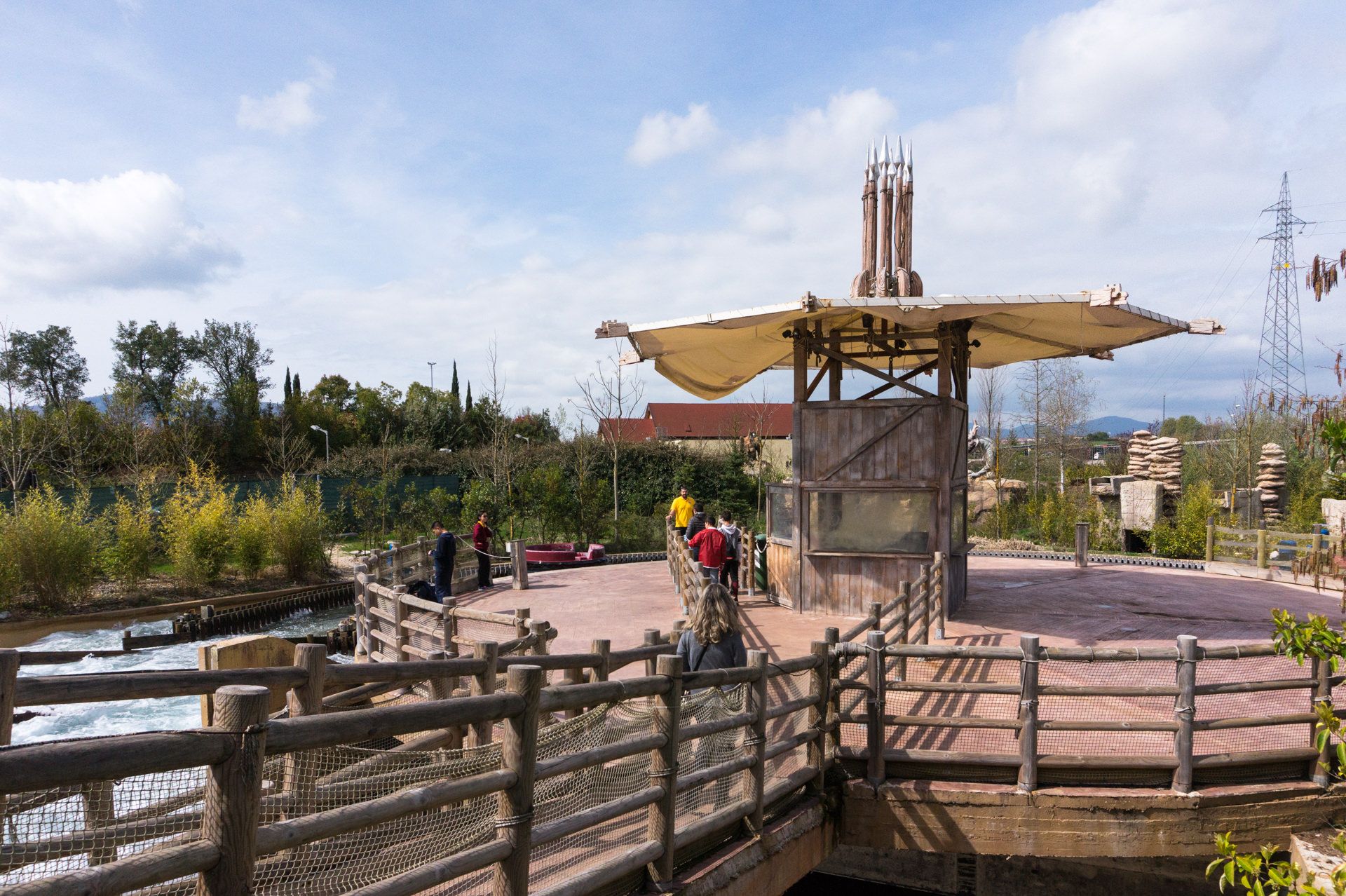
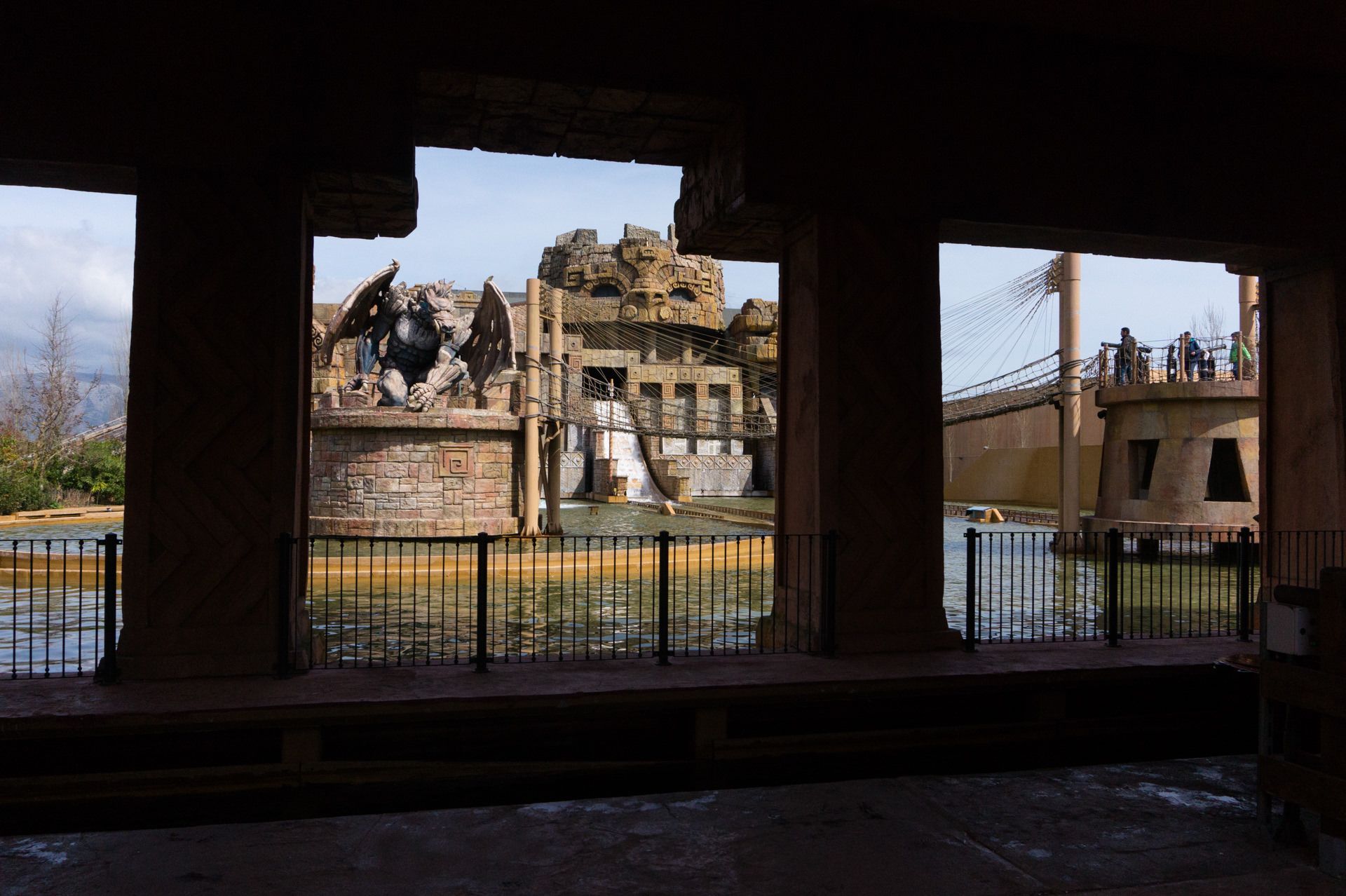
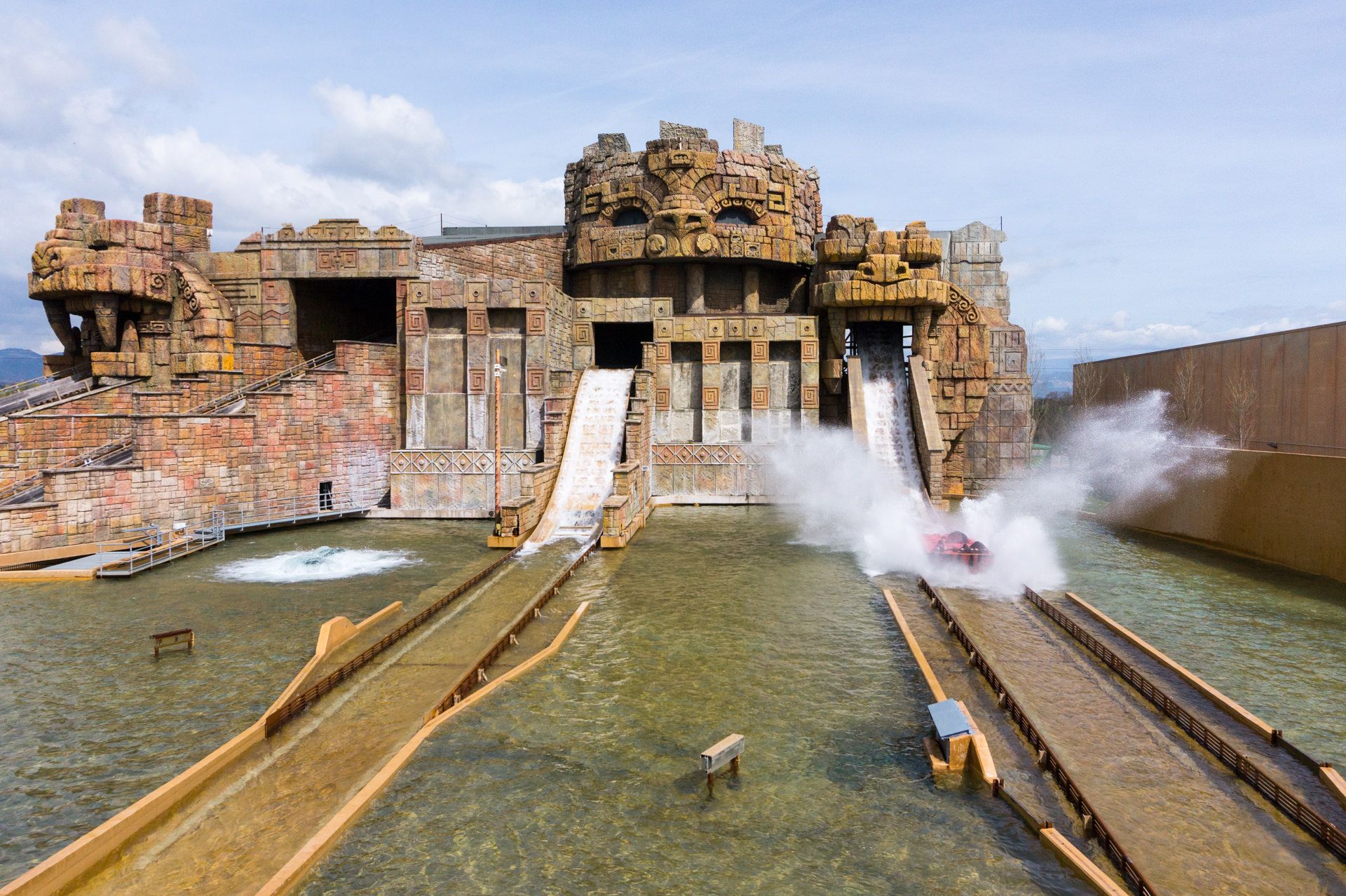
At least from the outer facade, the Spillwater Yucatan presents itself to its passengers on an equal level. With its two shots, the water ride is one of the driest rides of its kind in Europe; however, there is something for the eyes, especially during the second turn. If you want to get wet, however, you are in good hands at the neighbouring Rapid River Le Rapide. Here too, the design is impressive, which is why the ride is one of the best of its kind in Europe.

L’Olandese Volante

The last remaining roller coaster is the L’Olandese Volante, i.e. the Flying Dutchman; appropriately built by the Dutch roller coaster specialists Vekoma. The ghost ship flies noticeably and now even with VR glasses over the track of the standard model based on the prototype Calamity Mine of the Belgian amusement park Walibi Belgium.

The ride begins with a right turn and the following lift hill, which unfortunately takes you up in a very straight line, just like in Gardaland; nothing remains of the accentuated cross slopes of the original in this version. At the top, the train immediately throws itself into a left helix and alternately into three 180° curves before reaching the first intermediate brake and the second lift hill. This hill is also passed just as trivially as the first one. At the highest point of the track you cross a short hill and immediately approach the ground again in a wide right helix. In a left-hand helix you build up again in metres of altitude before you take it down again in another downhill helix. After a further left turn, you immediately reach the braking distance and shortly after that the station.

When Rainbow Magicland and Vekoma were looking for a way to square the circle on this ride, they succeeded. There is simply no other way to explain this bumpiness – unusual even for the manufacturer – which the train reproduces to its passengers over the entire track length. Well, even Mammut in Gardaland was not really smooth, but L’Olandese Volante simply tops everything in this respect. I have rarely ridden such an unpleasant roller coaster, which is why I really have to advise against a ride on this coaster.

Pictures Rainbow Magicland

Conclusion Rainbow Magicland

The Rainbow Magicland blinds like no other park with its opulent, but already quite disintegrating facades, but it can also show some rays of hope. Apart from the dark ride Huntik 5D and the roller coaster Shock, Rainbow Magicland lacks some highlights that encourage you to take more than one ride. With the extremely ugly children’s land and the Big Apple, which was closed until late afternoon, the park also offered a low light par excellence. It is no wonder that the park is the way it is.


What are your thoughts about the theme park Rainbow Magicland? Just write it here below the report in the comment field or visit our social media channels:


Click here for the next report of the Il Viaggio dei due Runner Tour

Oh, oh, oh Gardaland

Gardaland

After a visit to Disneyland in Anaheim, California in the early 70s, businessman Livio Furini decided to create his own park. At that time no place seemed more suitable than an area within sight of Lake Garda, after all this is the first lake of its size that tourists, coming from the Brenner motorway, have been occupying since the late fifties and have not given it away since then; finest Mediterranean feeling without the Mediterranean Sea, of course. With the help of some local entrepreneurs, Gardaland opened its doors for the first time in 1975 and has been growing steadily ever since. In 2006 the British Merlin Entertainments Group bought the park for 550 million euros. Two hotels a few kilometres away complete the offer.

Arriving at the car park, the crowd of people promised a pleasant day’s visit, but this was not necessarily reflected at the cash desks and at the entrance. Really stupid German park guests in their teens, who had probably never been to an international amusement park before, also delayed the ticket purchase immensely by explicitly asking for two Eintrittskarten. It’s very easy to do so, if you order the tickets in English, put down your Merlin 2:1 voucher and pay the money. Afterwards they wish you a wonderful day in finest German. With the tickets in hand, we went straight into the park, where I had to wait for Dominik, as he hadn’t been able to close the gap behind an Italian family. In general, the access area to Gardaland is somewhat disadvantageously built.

Fantasy Kingdom

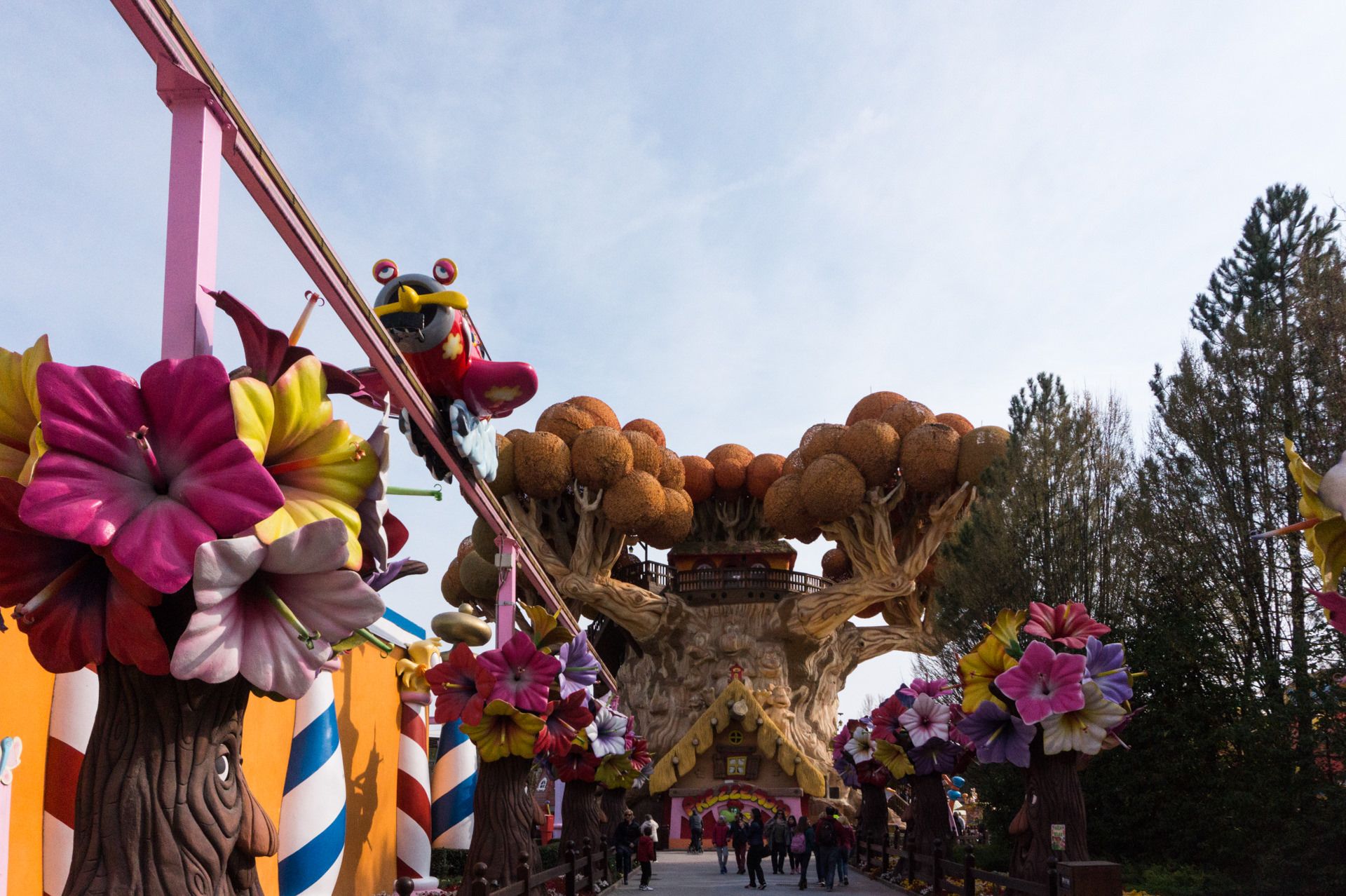
Right at the beginning you are spoilt for choice by walking through two children’s areas. You can choose between the medieval area of Gardaland, where there is a horse carousel and several playground equipment, and the Fantasy Kingdom, where you can find Prezzemolo and his friends, the park mascots. They are cult in Italy and in 2002 they even got their own TV series, incidentally one of the early projects of the Rainbow studio (Winx Club, Huntik and some more, whose licence is now used in Rainbow Magicland close to Rome), with 26 episodes in total. Prezzemolo, which translates as parsley in English, is a shy dragon who, while eating pizza topped with strawberries, becomes He-Man and helps his friends. The series is actually not bad, although I don’t understand a word of Italian, and it shapes the style of the theme area immensely.

The centrepiece of this is an artificial tree, which, similar to the Cabane des Robinson of the Disneyland Park in Paris, is accessible. Inside there are some rooms inhabited by Prezzemolo and his friends, which are very nicely decorated. Continuing upwards you climb a staircase until you reach the balcony in the artificial treetop. Up here you can have your picture taken with Prezzemolo or simply enjoy the view of Gardaland and nearby Lake Garda. A staircase around the tree leads you down again. It gets quite interesting in the cellar of the tree, where the Magic House is located.

Magic House

After entering the entrance hall to Prezzemolo’s happy home, a magician appears and speaks to the visitors. The room in which you are currently located is extended. Prezzemolo is greeted with great excitement in his living room and explains that the strange voice that is heard from time to time means that there are hardly any visitors left. Suddenly strange things happen and the magician speaks again to the guests of the house. Now the restless ghost explains that this was once his laboratory and he has got used to living in the same house with Prezzemolo a little bit, but now he declares it to be his own. He then invites the visitors to a small illustration of his powers, in which he turns the house upside down. On the way out, Prezzemolo tells his visitors about a strange dream in which his house and a magician played an important role.

It’s kind of cool to stand in front of a huge building and take a lift a few meters down to the basement to visit a completely underground Mad House. Unfortunately the comic look of the drum robs the illusion a little bit, here you could have achieved even more with additional effects. The music is coherent and the Italians listen attentively to the story, which makes it easy to follow the story, at least in theory.

The rest of Fantasy Kingdom looks like the prototype of all the more modern children’s kingdoms. Similar to the younger Sesamo Aventura from the Spanish Port Aventura near Salou, there are other rides, e.g. a quite neatly designed tractor ride, a small monorail and other smaller carousels in an elaborate design.

Raptor

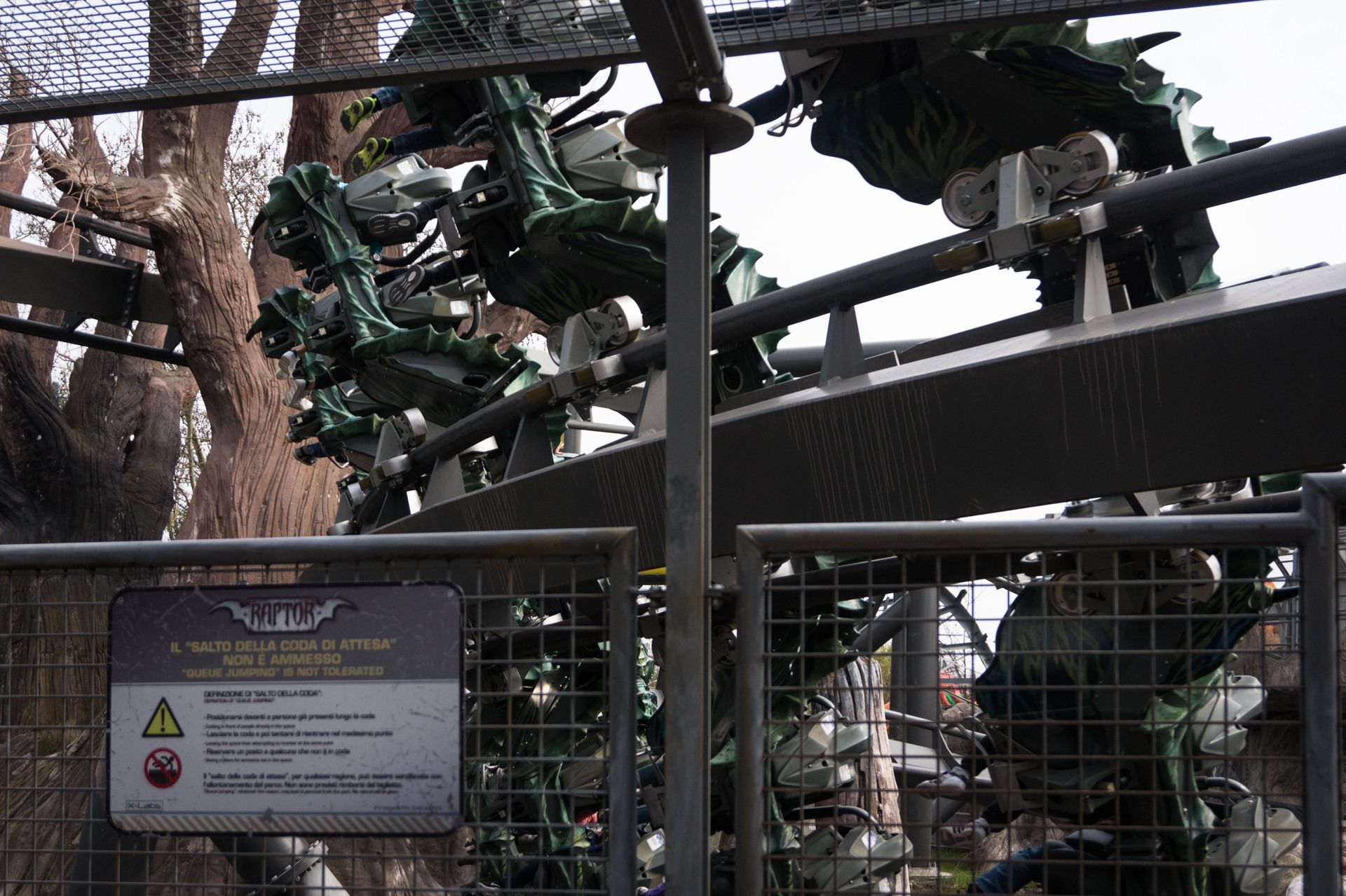
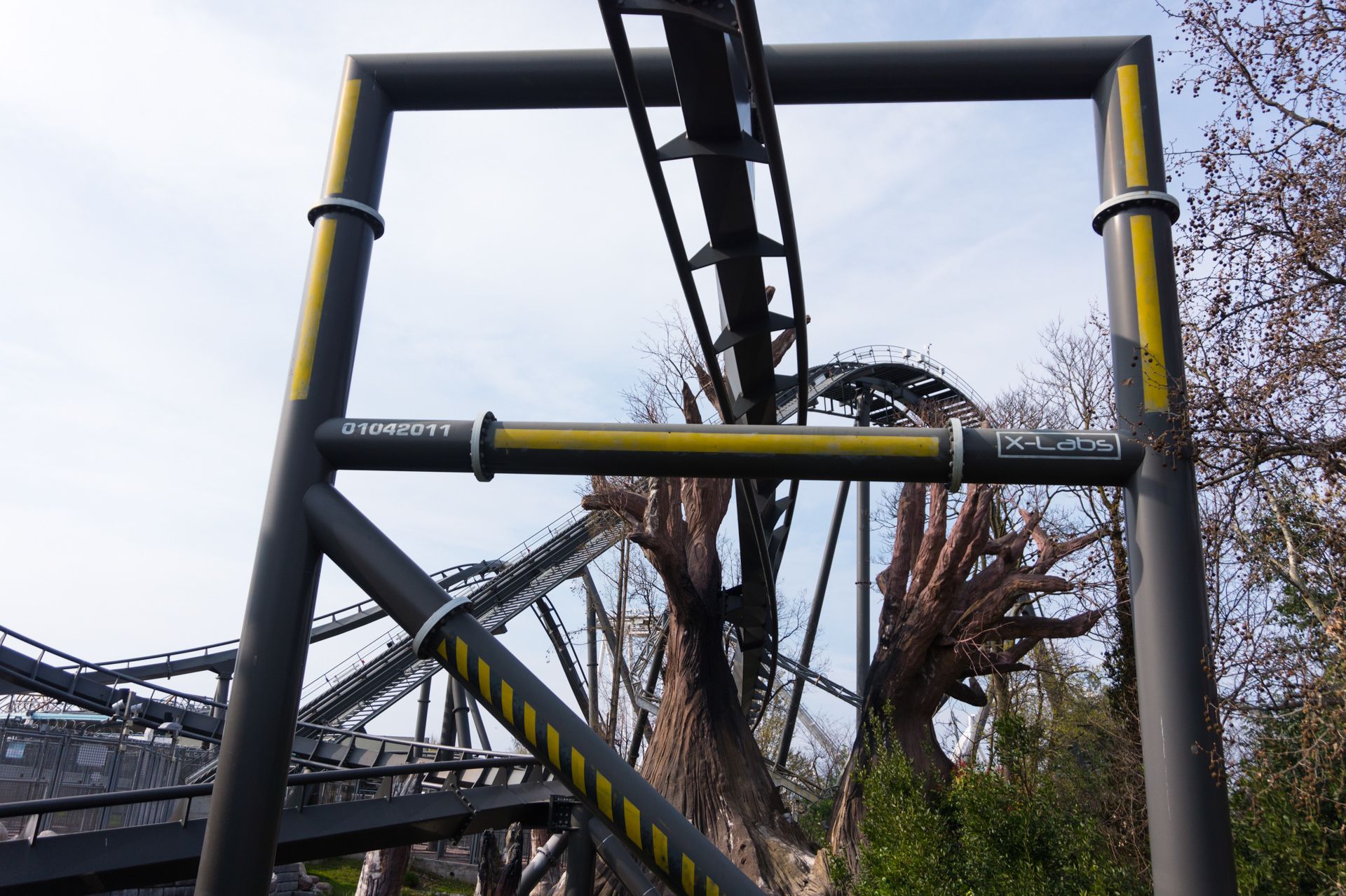
A little above this area is the entrance to Raptor, the prototype of the Wing Coaster from Bolliger & Mabillard. Similar to the notorious roller coaster Nemesis of the English amusement park Alton Towers, this ride presents itself as an alien, which was found by chance during construction work in the park. While Nemesis was tamed into a steel-like structure and has been used as a ride for the towers’ guests ever since, the Genetix Initiative, a paramilitary organisation, tried to tame the found creature in the specially built X-Labs in Gardaland. But all attempts failed and Raptor succeeded in breaking out.

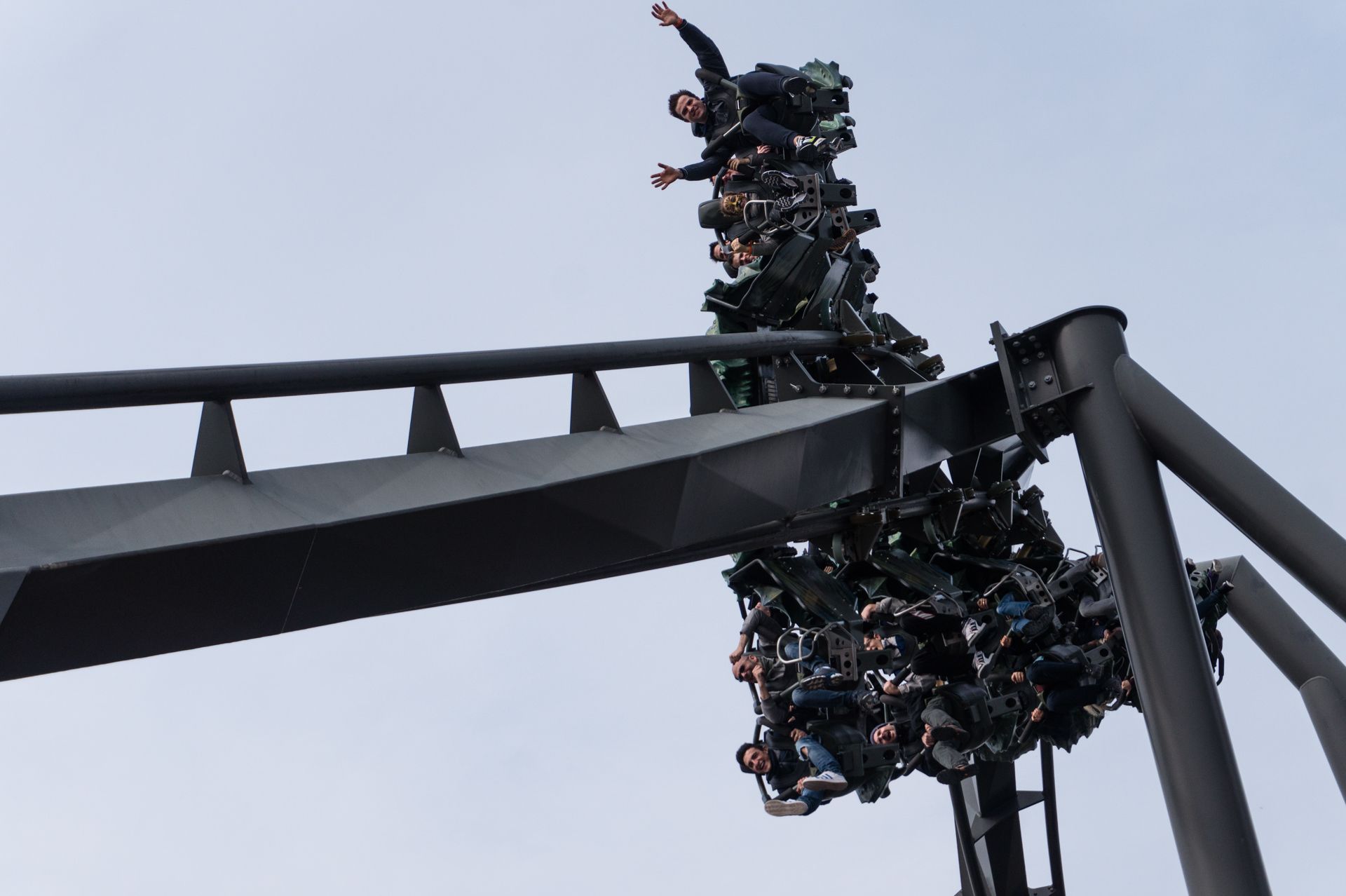
In a short left-hand bend, the train leaves the station and immediately climbs the lift hill. While the newer versions of the ride slowly turn their passengers by 180°, the Raptor plunges into the depth, which leads to unexpected airtime, especially in the back rows. Powerfully the train crosses the first valley and then makes a steep turn to the left. Without any rest, the alien falls to the ground again and doesn’t hesitate to use its power. In a zero-g roll you are now turned upside down for the first time, leaving it in a left turn. Now you cross the entrance portal of the ride on a hill, whereupon the train throws itself into a curve close to the ground, which serves as an introduction into a somewhat elongated corkscrew. A right-hand bend close to the ground, passing the lift hill of the ride, follows, but is immediately replaced by another left-hand bend. This leads into a very long in-line twist, a straight roll, which is equipped with some Near Miss elements. Shortly afterwards we land in the braking section of the track, where we can spend some time in the now tightly fitting restraint waistcoats. Another left turn brings us down to the hangar level again.

Although Raptor is the smallest representative of its kind with a height of 33m and a length of just 770m, the ride is one of the better ones, as long inversions are accompanied by tight curves and forceful valleys. Although the Near Miss elements are negligible, the ride in Gardaland surprises all the more with its rather unconventional first drop (it’s strange that through the whole hipster movement with its unconventional mainstream, something absolutely classic can now be called unconventional, as nobody uses it anymore). Compared to the other European rides, Raptor is clearly ahead due to its more dynamic ride, especially since The Swarm from Thorpe Park, England, has lost all of its driving sophistication again due to the renewed rotation of the two rear cars.

4D-Adventure Cinema

A few meters further on you will find the Spectacular 4D-Adventure Cinema, which contains a simulator with quite long rows made by Intamin. The ride was opened in 1990 under the name Cinema Dinamico as the first of its kind in Europe and showed up to 6 different films per day, including a film showing the wooden roller coaster Colossus from the amusement park Six Flags Magic Mountain. In 2001 the theatre was rebuilt, whereupon 3D films were shown, which were lifted into the fourth dimension by the additional movements. As always with such attractions the quality of the films varies immensely, mostly the movements of the passenger carrier are jerky and moreover asynchronous to the image, which makes them a guarantee for whiplash injuries of any kind and motion sickness.

I Consari

A little quieter, but by no means less spectacular, is the dark ride I Corsari. In defiance of the imminent opening of the Euro Disney Resort in Paris in 1992, Gardaland created the most expensive attraction in the world at the time. And so it is hardly surprising that the already very limited space of Gardaland was optimally utilised by an additional underground hall. Access to the dark ride is on the deck of a huge galleon, in whose hull the queue including the station is located.

Hired as sailors of a huge galleon we immediately try to escape the cruel captain Jason Montague in two nutshells. Our way leads us directly into the jungle, where dangerous animals and dead pirates make us understand the cruel reality of our business. A parrot tries to keep us from our goings-on, but we know that returning to the captain will be no less harmless. In a cave we meet a rotten ship whose restless crew is still among us. We narrowly escape and end up in a supposedly safe environment. The pirates here seem to be nice and friendly, but above all, they like to drink. We are advised to turn left and through a sewer system we end up in a swamp. If this environment was not deadly enough, we are attacked by a sea snake with human appearance in the next moment. But even here we manage to escape and are immediately rewarded with a legendary treasure. Freshly hanged pirates do not bode well and so we are not surprised when a huge galleon sounds the order to attack. It is our old team leader Captain Montague, who not only destroys the fort next to us, but also guides us into the depths of the sea.

I Consari can easily be called the best pirate theme cruise in Europe without devaluating the Disneyland classic Pirates of the Caribbean too much. The ride itself is extremely harmonious and the animatronics used are impressive, as is the entire set design.

Sequoia Adventure

Next to the log flume Colorado Boat, which was built in 1984 and is a rather classic ride with two shots, is the entrance to Sequoia Adventure, a truly special roller coaster made by S&S. The layout of the Screaming Squirrel promises a very exciting ride with three, slightly longer, overhead passages.

Once the manufacturer’s typical airy brackets have been set and locked, the car starts to move and immediately rolls towards the curve, which grips the car over two raised rails under the arms and lets it slide onto the actual track. Here, the trolley couples back to its original rail profile and is immediately transported upwards in the lift. Once at the top, the car completes a short straight line before it is braked and transported very slowly over the hilltop. In the so-called saxophone element, which actually looks a bit like the musical instrument, you drive back the straight line upside down before you are slowly turned around in a turn. The whole game is repeated two more times, whereby after the second saxophone it goes up a little bit to get to the correct starting height for the third saxophone. Towards the end another turn leads the car back to the station.

Sequoia Adventure is a wonderfully wacky roller coaster that celebrates its longer overhead passages virtually by itself. All these passages are quite pleasant, but the turns are unfortunately not without jerks, which is especially noticeable after the second saxophone with its free cut. But the ride itself is fun and with its wonderful different layout it is a real eye-catcher.

Magic Mountain

In 1981 the Dutch amusement park Efteling presented Python, the largest and most exciting roller coaster in Europe. Two years later, Heide Park Soltau introduced Big Loop, a similarly exciting but higher ride, which attracted a lot of attention. Gardaland also recognised this trend and in 1985 offered Magic Mountain, the most exhilarating roller coaster in Italy at the time, also modelled on the Carolina Cyclone of the American amusement park Carowinds.

As with Python, the train leaves the station in Gardaland on a small gradient, followed by a left turn. Shortly afterwards the train hooks up to the lift chain, which takes it to a starting height of 29m. This is followed by a small gradient and another 180° left turn before the train races down the track. The colourful train advertising for Coca Cola now passes through a very powerful valley and immediately passes the first loop and then the second loop of the ride. On a straight line the train gains a bit of height and shortly after that it takes a curve. This brings the train up to the starting height of the corkscrews, which you enter at a remarkable slant. While the wagons are screwed through this, the world is turned upside down two more times. After a small hill, you now complete an upward helix around a fountain, after which the braking section is waiting.

Magic Mountain is a great older type of roller coaster, which doesn’t have to hide from newer rides due to its truly intense dynamics, even though both trains were only half occupied. (One train with three cars, the other with four). The ride itself runs faster than its Dutch counterpart and therefore has a lot of pressure from the beginning, which is transferred to the passengers as well as to the track. Vekoma’s new trains generally enhance the ride, but the strange Coca Cola branding and the even stranger clearance on the day of the visit detracts from it.

Kung Fu Panda Academy

Behind the big looping roller coaster, the Kung Fu Panda Academy in Gardaland is currently under construction, which will feature the Fabbri Spinning Coaster Kung Fu Panda Master, the redesigned tea cup carousel Mr. Ping’s Noodle Suprise and the Kung Fu Panda Chi School.

Ortobruco Tour

In the farthest corner, still behind the entrance to the monorail, the cog ride and the toddler carousel is the entrance to the Ortobruco Tour, probably the world’s largest Big Apple. The ride opened in 1990 with a much shorter layout, but this was extended to its current length in 1993, probably also for capacity reasons. From a technical point of view, the Pinfari roller coaster is quite impressive due to the number of friction wheel lifts, as well as the fully automated trains.

After a right-hand bend, the train goes through a longer straight line, whereupon the first lift hill follows after another right-hand bend. At the top, the train passes a left turn and slowly picks up speed. Over hill and dale or the typical waves of every Big Apple the way to the next curve is now overcome. After the turn, the second lift follows, whereupon a downward right helix is added. This is followed by the third lift above the queue, which merges into a right-hand bend. In its original version, this lift led the train into the station, but in the current version it leads the train into the fourth lift. Now one circles the building of the toddler carousel by about 90°, completing a straight drop and a straight gradient after a slightly bent valley. Immediately you go downhill again in another right helix. You leave this one in a slight incline, which here also merges into a lift. In a helix to the left the train makes the subsequent descent. Here too, the speed of the train is kept alive by additional friction wheels in the following ascent. Now the train goes through a right-hand bend, which is then transferred to a left-hand bend after a slight bend; shortly after that the station appears.

The Ortobruco Tour is a nice children’s roller coaster, which always gives the feeling of sitting in a bigger Zierer Tivoli than in a Big Apple, because the speed and the track length suggest it. The ride is at least good and the decoration, which interestingly comes from the former Gardaland Waterpark near Milan, is quite impressive.

Ramses Il Risveglio

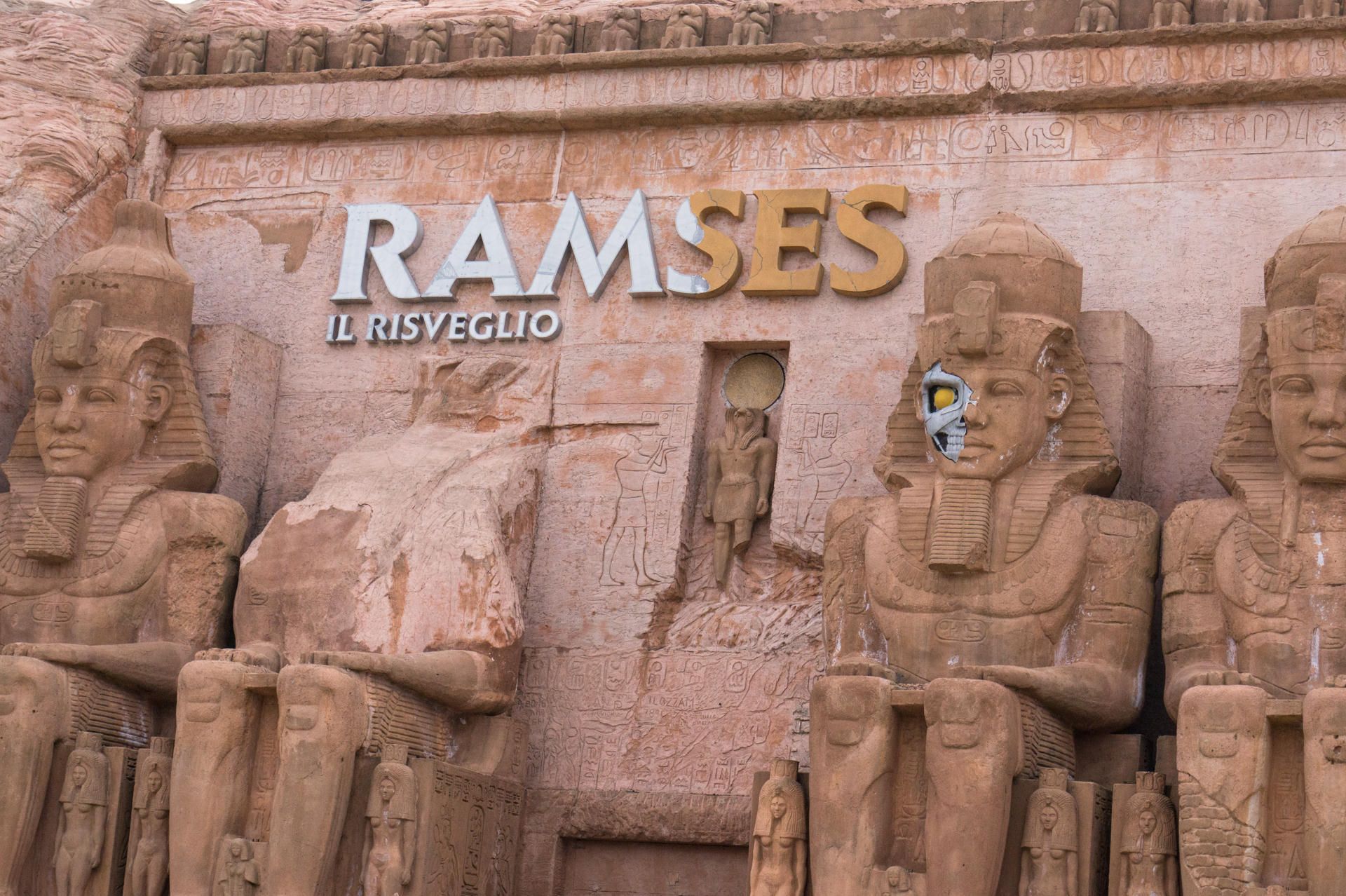
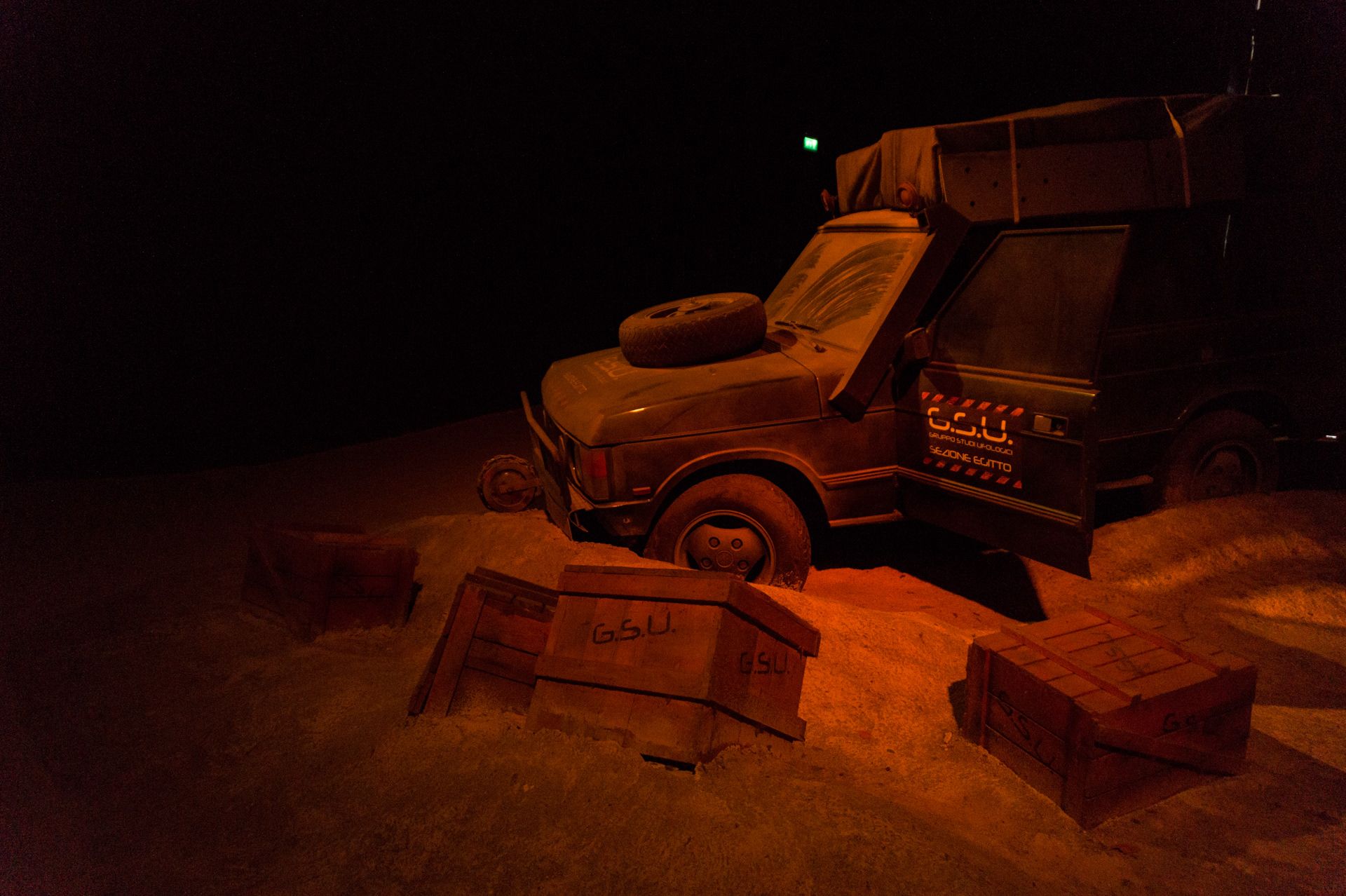
The first major dark ride in Gardaland opened in 1987 with Valle dei Rei, which, due to the seemingly endless popularity of interactive dark rides, was redesigned into Ramses Il Risveglio in 2009. The ride suffered the same fate as Duel from Alton Towers and Tomb Blaster from Chessington World of Adventures.

The story is now about strange phenomena that occurred during restoration work and an evil that wants to subjugate the world. We already had a similar storyline with Raptor, but in contrast there are robot mummies and finest metal sounds. If the typical sound of the guns would not be there, as for example in this year’s redesign of Tomb Blaster, I would really enjoy the ride. All in all, the ride is of course well worth seeing and the ride system by Pinfari is well worth experiencing. The general design is outstanding and the futuristic metal mummies are a pretty cool idea.

Below the Gardaland Theatre is the 4D cinema of Gardaland, where an Ice Age film is currently being shown. Normally this is reason enough to stay away from the cinema, after all the first Ice Age 4D film was a poorly edited version of the otherwise brilliant third cinema adventure around Manny, Sid, Diego and Co., but now the Blue Sky Studios have released a 4D film especially tailored for Scrat and it is really good. Scrat finds a time machine and travels through several eras, of course always in search of his hazelnut. The effects were well used, but the few Italian text passages were not subtitled and are not necessary for the overall understanding of the film.

Space Vertigo

Space – the final frontier. The year is 1998, and these are the voyages of the starship Space Vertigo. Its crew of 16 is on its way for about 30s to investigate basic physical equations. In not quite as many vertical meters as comparable towers, Space Vertigo boldly go where no one has gone before on a freefall tower. Aha hahahaha ha (3x).

Somehow this convoluted nature of the Star Trek intro text fits in well with Gardaland and Space Vertigo, after all the space theme has its origins in the opening year of Gardaland and thus on the European wave of popularity of the series, which was discontinued at the end of the 1960s. The queuing area consists mainly of octagonal corridors in which monitors with outdated visual material are embedded. The station is no less purist, but apart from bulky lamps it has hardly any decorative elements; but that is not what really matters here either. The tower shows, similar to the Funland drop ride on Hayling Island, that height is an extremely negligible parameter for a free-fall tower. This tower rocks tremendously, but the waiting time here was a bit long.

Oblivion – The Black Hole

Just as high as the tower next door, Oblivion – The Black Hole, a dive coaster by Bolliger & Mabillard, freely inspired by Oblivion from its sister park Alton Towers, stretches up into the sky. While Oblivion’s story revolves around the ride itself and the hole to be passed through, the story of Oblivion – The Black Hole concentrates on the black hole in its name, which is to be investigated.

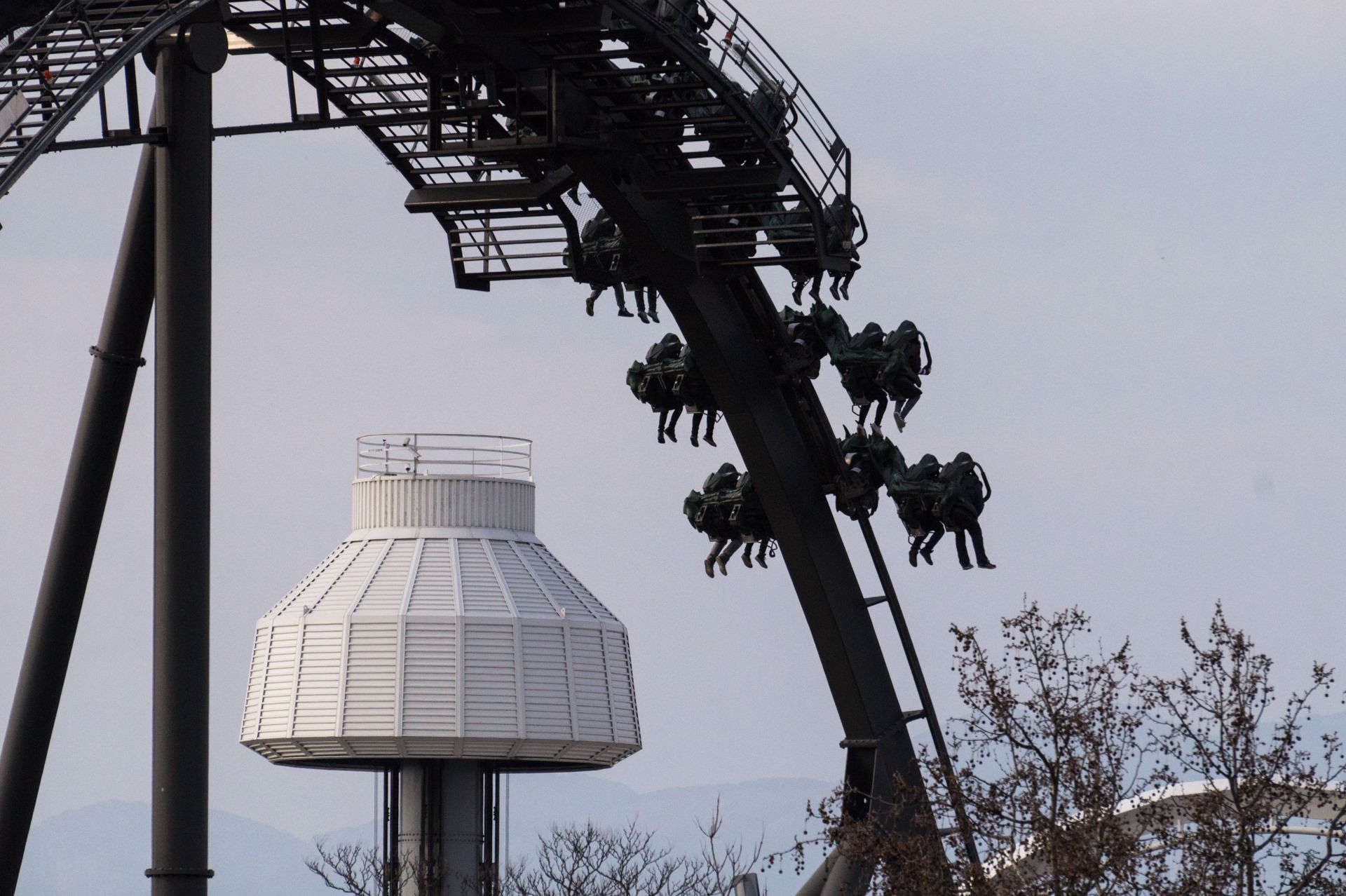
After passing the stylish, partly interactive, queue and boarding the train, the journey begins after a short countdown. Following a small bend, you immediately climb the lift hill, which takes you up to the starting height of 42.5 m. At the top you approach the position of the black hole through a left turn. The track bends downwards, the train follows this movement but is still prevented from falling vertically by a holding brake. A few seconds pass by and the train approaches the black hole at a rapid pace, with the surrounding objects which have been attracted by the hole showing their near miss character more closely than on the Wing Coaster in the same park. The train now makes its way through the adjoining tunnel, which attracts attention through fog and integrated lighting effects. In an Immelmann you skilfully change direction and then approach the ground level. Through a small building you pass another valley before you climb up the camelback, which skillfully takes you out of your seat. This is followed by a 270° downward helix, which releases you into a heartline roll rotating in the same direction. A short climb later you reach the braking section and soon after the station.

Oblivion – The Black Hole is a good roller coaster with an excellent layout, but a little identity problem. In theory, the ride covers almost the same story as Oblivion, only that the whole layout at Alton Towers is simply better. It looks like a half-hearted remake of an indisputably brilliant movie, yet the hardware of the ride is not responsible for this feeling. This and the general layout of the ride ultimately ensure that Baron 1898 from the Dutch amusement park Efteling is the better of the two Dive Coasters that opened in 2015.

Mammut

Passing the Flying Island with the same name and an overall successful design that fits the theme area, the way leads us towards the roller coaster Mammut, which uses the basic layout of the Vekoma Mine Trains and adds a total of 245m track length. The design of the ride is supposed to be an expedition to the North Pole and can convince with its general theming and the presence of a giant mammoth, but things look a bit different when it comes to the ride.

It starts off immediately with a right-hand bend, followed by the first lift hill, which unfortunately takes you up in a very straight line. Once there, you leave the hill in a left helix, where you pick up some speed. Three 180° curves with implied valleys and hills follow each other like in a slalom, the first of these curves running to the right. After a drop below the lifts, and a subsequent uphill left turn, you reach the first brake. This is followed by a left turn and the second lift hill, which again runs in an unorthodox straight line. So far the mother of all Vekoma mine train coasters Calamity Mine from the Belgian amusement park Walibi Belgium is already a lot more entertaining due to its sloping lifts, but there are still some more meters to go to generate a completely different opinion. Slightly higher than after the first lift hill you see daylight again and shortly after that you descend a long righthand helix and get a little closer to the ground. A wide left turn brings you a little bit up the hill again, but this is also followed by a downward helix to the right. Normally a left turn follows into the braking section and straight into the station, but in Gardaland the train now takes you into a left turn and up the third lift hill, because we haven’t discovered the mammoth that gives the ride its name yet. We leave the highest point of the ride, how else could it be, in another helix, this time leading us down to the ground. Passing the mammoth, we make a small turn in lofty heights and immediately make a right turn. After a steeper descent we pass under the first two lifts and make a last 180° turn, whereupon the final braking section awaits us.

Mammut could be a really good Mine Train, if it weren’t for the rather miserable ride characteristics. Compared to almost all other Mine Trains of the same manufacturer, the ride vibrates unpleasantly, so you can’t really talk about having fun after the first two parts of the ride. Only the third part of the ride brings something unexpected out of the standard layout, but unfortunately this does not improve the ride characteristics.

Jungle Rapids and Fuga da Atlantide

Behind the very neatly designed rapid river Jungle Rapids with a good degree of wetness lies the Intamin Super Splash Fuga da Atlantide. With a rather classic spillwater layout, the ride humidifies the passengers with bravura, even though much less than a Shoot the Chute normally does; this may also be due to the (at least for sun-drenched Italians) rather wintry temperature of about 18°C. Interestingly, the descents here run on roller coaster tracks and the lifts were solved by cable lifts. Apart from that, the wonderful design of the ride is inevitable, but the ride itself could be better.

Blue Tornado

As the only attraction visible from afar, mainly due to its elevated position in Gardaland, the suspended looping coaster Blue Tornado stretches upwards. Due to its open design, this toy jet coaster is an unparalleled eye-catcher, which is mainly due to the extraordinary photogenicity of the track profile. The ride is always in motion due to the three-train operation, which theoretically results in lots of photos, if you are not distracted by dancing robots.

As in every standard SLC, the ride begins with the gain of potential energy by a chain lift on a straight line leading upwards. Once there, you cross or rather undercross a hilltop, which immediately releases you into a steep curve. At a decent speed you now cross the following valley before you are turned upside down twice in a roll over. Back at ground level, the train shoots up a sloping hill. Parallel to the station you now reach the lowest point of the ride, which is also flooded with fog. In a sidewinder you now change direction, whereupon a helix is added. You leave the station with two in-line twists. A right turn lets you cross the first slope, but instead of approaching the end in a staggering manner, the train shoots down one last time and passes a helix close to the ground, which is often called bonus helix in the (roller coaster) vernacular. This is followed by the braking section and the return to the station. Surprisingly, the ride is fun and the ride characteristics are good. We even rode it more than once.

Pictures Gardaland

Conclusion Gardaland

Gardaland is a nice and above all good amusement park, which can be relatively easily described as the Italian Alton Towers. The theme areas are mixed and only rarely have a clear line, but the park scores with its exceptionally good rides, especially the dark ride I Consari. In general, there is a visible effort to make the guests have a pleasant day, which is also reflected in the guests of the park. In spite of the popular holiday region, the park guests behave in an exemplary manner, there is no queue jumping at all, groups even let you in and you can easily hang your luggage on the appropriate storage facilities, usually far away from the actual attraction, without the risk of something being stolen. In addition, the park is filled with songs composed especially for the park, so that at the end you have to rave to Oh, Oh, Oh Gardaland in the disco tunnel leading to the car park.


What is your opinion about Gardaland theme park? Just write it here below the report in the comment field or visit our social media channels:


Click here for the next report of the Il Viaggio dei due Runner Tour
The charm of the old amusement park

Bakken

The amusement park Bakken or Dyrehavsbakken is located at Jægersborg Dyrehave on the outskirts of the Danish capital Copenhagen. Similar to Vienna’s Wurstelprater, the amusement park, which is divided into plots and fed by various showmen, makes up only a very small area of the actual park grounds, which mainly function as a wildlife park and thus had its origins as a hunting ground. Historically speaking, the amusement park opened in 1583 is relevant as it is the oldest amusement park in the world. The easiest way to reach the amusement park is by taking the suburban train line C from Copenhagen Central Station to the terminal station Klampenborg, followed by a 10 minute walk.

Once arrived at the park, if you visit Bakken not only because of the numerous rustic restaurants and bars, you should buy a wristband. Most of the times, this is read out by a handheld device but also by stationary scanning stations and allows one 10 rides on each of the numerous attractions in Bakken.

Mine Train Ulven

If you have walked from Klampenborg Station the first attraction you will come across is the Intamin Minetrain called Mine Train Ulven. After the train has left the station with a full jolt due to the friction wheels, which are probably controlled by a trapezoidal trajectory of speed, a small drop is made to enter the lift. Once at the top, the track disappears in front of you and an incredibly steep first drop follows. Just as fast as it’s going down here, the steep curve goes up again and a left leading downward helix is attached. A little more leisurely we go through a constantly tapering Bavarian curve until we pass the station. A right turn above the first track meters leads the train into a downward helix below the lift hill. Parallel to the lift you pass two smaller hills before you enter the last downhill helix after a 270° turn. This is followed by the entry into the brake and the return to the station.

Mine Train Ulven surprises with its very strong start, but gets a little lost in the middle part of the layout until it goes into the fast end of the ride. As one of the few layouts of this kind from the manufacturer, the layout convinces above all by the comparatively intensive riding style, only the curves could have been a little more pronounced and less optimized.

Crazy Theatre

Next to a 5D cinema, or rather exactly above it, there is the Crazy Theatre, an interactive theatre of the manufacturer Alterface in which the film Desperados is shown. Here you sit on a mechanical horse, which moves back and forth, and aim a pistol at various targets. At first, smaller practice scenes are shown, followed by a longer film scene. The interaction of the individual components is quite fun and can convince by the good quality of the film.

Spøgelsestoget

A few metres further on is the ghost train Spøgelsestoget. This is a quite old ghost train. As the inside of the ride is pitch dark, the ride is quite tense. The effects are all shown to their best advantage – also the newer ones fit very well into the ambience – and frighten you several times with bravura. So Spøgelsestoget is a real highlight in Bakken and therefore should not be missed by anyone.

Polyppen and Vikingeskibet Dragen

Less cramped than most other rides in Bakken are the Schwarzkopf Monster Polyppen, which offered a good and balanced ride, and the boat swing Vikingeskibet Dragen made by Zierer. Here you sit, as on the Kalbfleisch-Boat Swings, back to back or in opposite rows to each other, but in comparison you have much more play to the bars and therefore a more exciting ride. Interestingly, the ship is not driven from below but at the side of the saber.

Racing

Since the 80’s the roller coaster Racing is located in Bakken, a Zierer Flitzer, which was previously on the road under the Bremen showman Robrahn at the German fairs during the early 70’s. With its age of 44 years it is the second oldest roller coaster in Bakken and is mostly still in its original condition.

After the obligatory lift ride, you make a series of right-hand bends that are continuously rejuvenating and always ascending and descending in the style of Bavarian curves, until shortly afterwards a major fall occurs and you pass the station at ground level. A bigger right turn leads you into the rear part of the layout and after a narrow turn you make the first change of direction. This is immediately repeated after a downward helix and the last right turn follows.

It is very interesting how much the original gondolas influence the ride, as although the installation is identical in construction to High Explosive of the showman Vorlop, the high gondola walls of the mine cars take a big part of the fun. At least, the little speedsters make the ride very funny, which is why I had the most rides here during my visit.

Taarn Gyset

The Taarn Gyset is a Double Shot Tower from S&S located in Bakken, which is characterized by its low height and the nevertheless extraordinarily pronounced airtime, triggered by the second shot down. The ride is quite funny, but sadly also a rather short one.

Vilde Mus

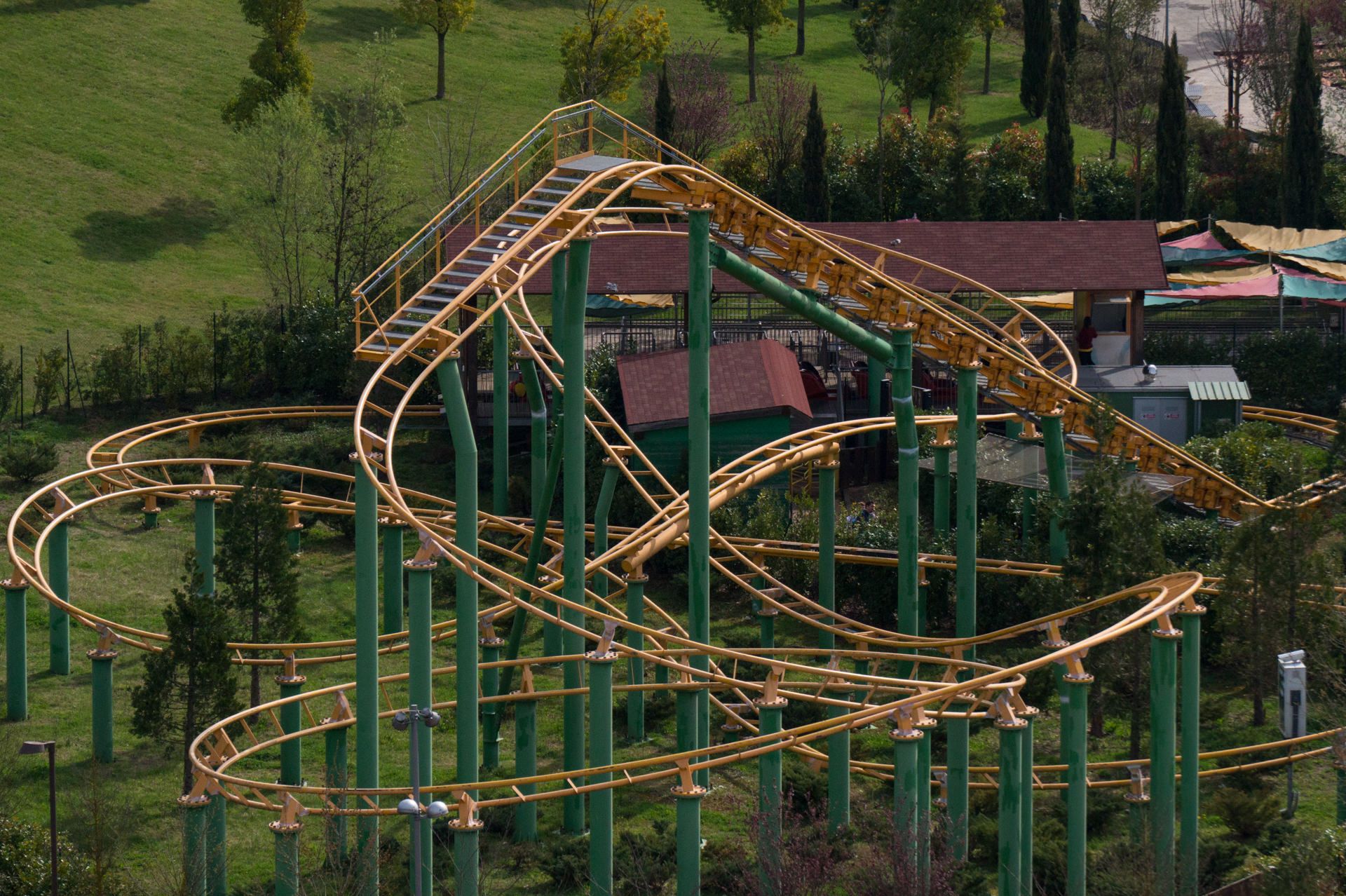
The Vilde Mus roller coaster, which will open in 2012, is, as the name suggests, the newer standard model of the Wild Mouse from Mack Rides. Although there was no actual rush, many children preferred to claim an entire car for themselves, which artificially created the longest queue in the park. Interestingly, the ride itself resembles much older rides like the remaining side of the Speedy Bob from the Belgian Bobbejaanland.

Hurlumhej

With Hurlumhej there is a little treasure in Bakken that is really worth experiencing. In the history of the origin of the complex, obviously, a lot of Hansen Rum was drunk, that is why a giant bottle adorns the front of this amazing walkthrough. In the interior, one then comes across to a perfect symbiosis of the Crooked House and a Fun House, whereby the elements of the Crooked House are more distinctly present. Due to the more than elaborate arrangement in the style of an old ship, one actually gets a little seasick and therefore leaves the amusement complex by staggering a little. If each walkthrough would be like Hurlumhej, then every installation would be worth a visit, as such a perfectly arranged scenerey is something one unfortunately does not find very often. Even bigger installations as the Hotel Tartüff of the theme park Phantasialand do not surprise as much as this one, especially as one really does not oftenly come across to a crooked house nowadays.

Extreme

After I already had the pleasure to do a Speed Flip in the Funland Amusement Park on Hayling Island I was very curious to see how the Moser Rides product would show up here. In contrast to the traveling ride in England, Extreme has a very strange ride program where you basically go full throttle at the beginning of the ride and then slowly reduce the speed until the end. In addition to the modest ride cycle, which does not show the potential of this machine, the ride also offers very minimal restraints onky, which are unfortunately a bit too uncomfortable.

Mariehønen

In a small alley leading to the amusement park’s car park is Mariehønen, a small Tivoli ride from the manufacturer Zierer. The ride on the smallest roller coaster in Bakken is a very solid one, but becomes noteworthy by a break on the lift hill after the second round, as this is where you take a little stop to wave to the outside visitors. After the children have now waved extensively, the friction wheels start to work under full load, which doesn’t sound very nice with regard to the engines, and you now complete the last laps.

Vandrutschebanen

The Vandrutschebanen log flume is an interesting ride with a surprisingly long course with two downhill runs. The entry takes place on a small turntable whereupon the boat is released into the channel. On the way to the lift you spend some time in the current canal before you quickly go up. During the following shot run, which leads to about half of the starting height, one is already well moistened. Now one spends some time bobbing criss-cross through the layout just before it goes down quite fast on a long straight line and after another curve the second lift hill follows. At the top of the hill you will find the narrowest curve ever built into a log flume which could not be ridden without additional equipment. Compared to a Mack Rides installation, where two turntables would be used, the boats of this Reverchon whitewater ride are pushed through the curve by a lateral driver using a turntable. The boat will corner like crazy at the canal before it is pushed into the second shot. When you reach the bottom you will be completely soaked by the spray. If you are not laughed at by a little boy, who is doing a lap on the Svanebanen – a monorail above the water ride – it is a wonderfully refreshing fun in Bakken.

Safari

The Safari interactive dark ride is small, but very attractive. Armed with pistols and in small jeeps, the tour takes you through Bakken’s green hell, past numerous animatronics on two levels. Although you don’t trigger any effects and only try to get the highest possible score, the ride is very nicely arranged.

Rutschebanen

Not quite as old as the roller coaster of the same name from the nearby amusement park Tivoli Gardens, the Rutschebanen presents itself to its passengers at only 83 years of age. The technology and trains, on the other hand, are much younger and were purchased during the modernization, which also made the accompanying brake service personnel redundant. The Dutch company KumbaK did its best to maintain an authentic ride feeling without taking too much care of the wooden structure. They installed brake modules on the track where the brakeman would probably have braked, although I doubt that the train would have sneaked into the station like that. The trains are now similar to the wooden coaster Stampida from the Spanish Port Aventura, but consist of cars for two people each.

After the train has left the station, the route takes a left turn towards the cable lift. Here the train hooks up and is therefore carried up the wonderfully sloping and crooked lift hill very quickly. Once arrived at the top, one can enjoy the view in a small turn until it immediately goes down. Only at a nice speed one drives through the valley and quickly climbs up the other half of the lift. Up here, one passes another turn at a leisurely pace, but then the train rushes over a double shot. With clearly pronounced forces, one completes the following valley. A camelback follows before one makes the next turn at a higher level. Now parallel to the station you repeat the same game again, on the following meters you are not allowed to turn right according to the signs and disappear into the tunnel of a woman. Here you go down once more and over another hill before returning to the station.

Rutschebanen has an absolutely great layout, but unfortunately the wrong trains or better said the wrong restraints for this. Unlike Stampida, where I find the trains quite good, the restraints over here do not sit on the pelvis, but on the stomach. Due to the double shots, the bar is so unpleasantly tightened that one wishes the old trains back. Whereby the ride is actually exactly like Grand National from Pleasure Beach Blackpool, thus quite compatible for a wooden roller coaster of this age.

Tornado

The rotating gondola roller coaster Tornado, however, is not very well tolerated by people with balance problems. For all the others, a ride on the roller coaster  in Bakken might be enough to cause some really serious problems in the first place, because the true madness from the house of Intamin is not infamous for nothing.

It is not for nothing that the ride begins with the advice to press your head against the headrest, because after a curve the car enters the lift slightly turning. Due to the sudden acceleration, the rotation becomes more pronounced before the chain reaches an insane speed on the straight lift top. With full force you are now thrown down the first steep curve, mostly underlaid with a loud crackling of the passengers. Turning wildly, one now completes a harmless turn on the hall floor and leaves the hall in an upward curve. Next, a horseshoe-shaped curve combination and a jagged S-curve combination is completed relatively quickly before the descent gets steep and fast once more. Below the hall ceiling you pass a block brake without a noticeable reduction of speed, after which it goes downhill again in a steep curve. Since there have been enough harmless changes of direction so far, the following one is done much more abruptly, but in return the following curve is not as tight. A last steep turn initiates the return to the station and beats everyone up again with full force. Shortly afterwards the brakes are reached and you can finally take a deep breath.

Tornado is by far the most intense roller coaster in Europe or better said in the whole world, because what you experience here reminds you of bodily harm, it’s even more fun to get your nose broken by a stranger in the Hamburg S-Bahn, because you only notice it afterwards. But Tornado could be a quite good roller coaster, if you had left out the steep turns or if the average speed of the layout hadn’t been set so high from the beginning by the insane lift hill. I spent a total of two rides on this ride and that’s enough for me for the next years, as Tornado is simply the craziest roller coaster I’ve ever ridden so far in my life.

Sky Roller

Also crazy, but in a positive sense, is the Gerstlauer Sky Roller, where you can interactively influence the ride by adjusting the position of the wings on the seats. As often seen on similar machines of the manufacturer, you have to show the audience what you can get out of the machine or in other words how to adjust the wings to create a rollover. In contrast to the Götterflug from the amusement park Belantis you are unfortunately not supported by the wind during the ride and therefore you have a more even ride which does not automatically make the world appear in circles. A positive aspect of the Sky Roller is the much better capacity compared to the supposedly more exciting Sky Fly. Also, the first revision of the ride is now much more sophisticated and technically simpler, but this means that the gondolas no longer run completely over each other.

Pictures Bakken

Conclusion Bakken

The amusement park Bakken is, as also the Prater in Vienna, a great place to have some hours of good fun. Due to the low international share of visitors, the public is much more pleasant than in the Tivoli and generally enjoys themselves away from the rides in the park’s countless restaurants and bars, creating a thoroughly pleasant atmosphere on the grounds.


What is your opinion about Bakken amusement park?  Just write it in the comment field below the report or visit our social media channels: