The History of Parque España
It is an indisputable fact that the Japanese are always enthusiastic about European culture; places like Rothenburg ob der Tauber, for example, are considered one of the hotspots of any trip to Europe and restaurants from all possible regions of the Occident – in a selection that one would wish for more often in Europe – are extremely popular and sometimes very exquisite. One could therefore make the assumption that the same explains Parque España.
In order to improve the utilisation of its railway line, the railway company Kintetsu planned several resorts along the Shima Line, among which the resort at the terminus was to have its own amusement park to meet the increased needs of tourists – a modern interpretation of a classic trolley park.
It is strange that the amusement park that most closely resembles a typical park in our favourite holiday destination is located in Japan and that there is no similarly themed amusement park in Spain. It is even stranger if the reason for this decision was that the theme of the resort was simply hardly or not at all known to the Japanese at the time of the planning and it was only chosen because of the similar weather conditions. Major media events, such as the Summer Olympics in Barcelona and the 1992 Expo in Seville, then generally suited the park so that it could successfully start its first season in 1994.
After just a few weeks, the park welcomed over one million visitors. By the end of its first season, it had attracted 4.2 million visitors – an unparalleled success, one might think. In fact, things were a little different at Parque España, because its initial success was immediately followed by its decline. Already in its second season, the number of visitors dropped to about 3 million – not unusual in itself, as this is usually followed by a stabilisation of the figures – but in the following year the number of visitors dropped by another 500,000. The opening of the Pyrenees roller coaster and the dark ride Viaje Aventurero de Don Quijote counteracted the trend for a short time, but it could not be stopped. It was not until 2000 that the decline stagnated for the first time for several years at around 1.6 million visitors. In 2005, the numbers for the entire resort once again dropped in the double-digit range, but again they were able to catch up until 2008. Then in 2009 the number of visitors dropped by 13.4%, in 2008 by 7.2% and so on and so forth. It remains to be seen whether Shima Spain Village will be able to maintain its position for much longer and whether the number of visitors will actually stabilise at some point.
Tour of the park
But enough of the doom and gloom, we are going to Spain after all. So bring out the red wine and your best Brandy; you probably already have the tapas to go with it, and if not, I’ll now present you with a few delicacies. However, if you’re short on wine, you can also reach for your favourite cervesa.
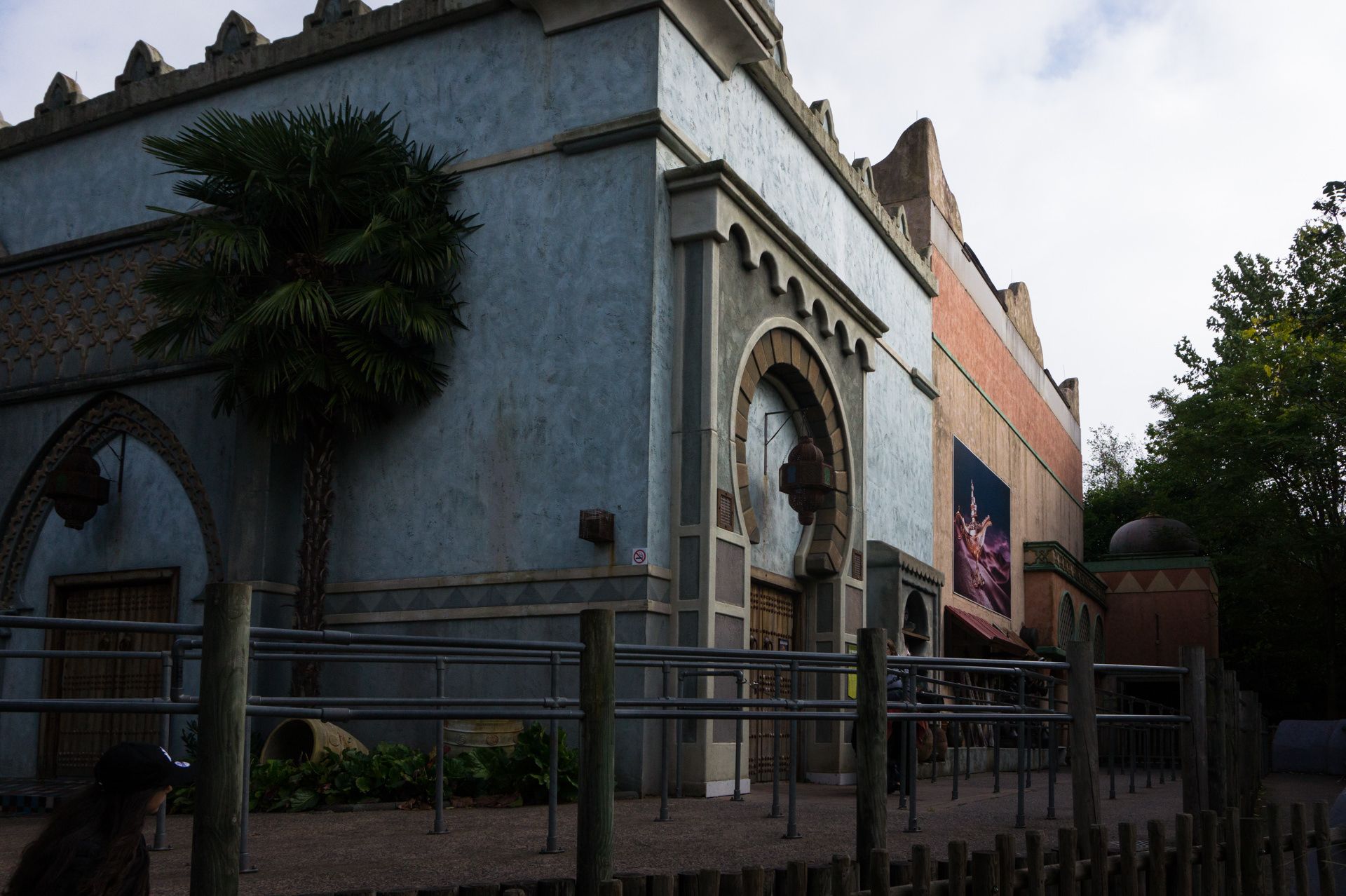
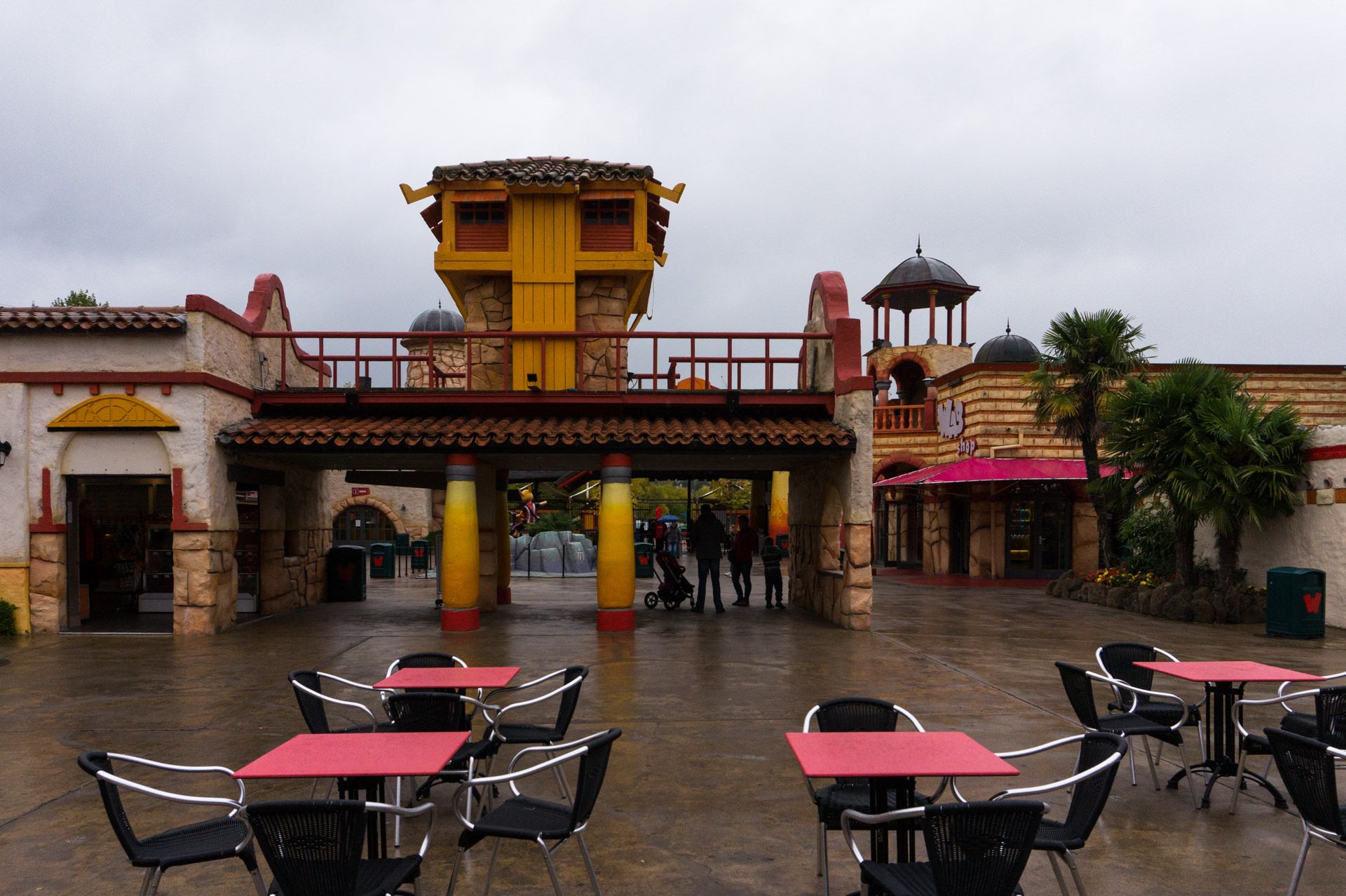
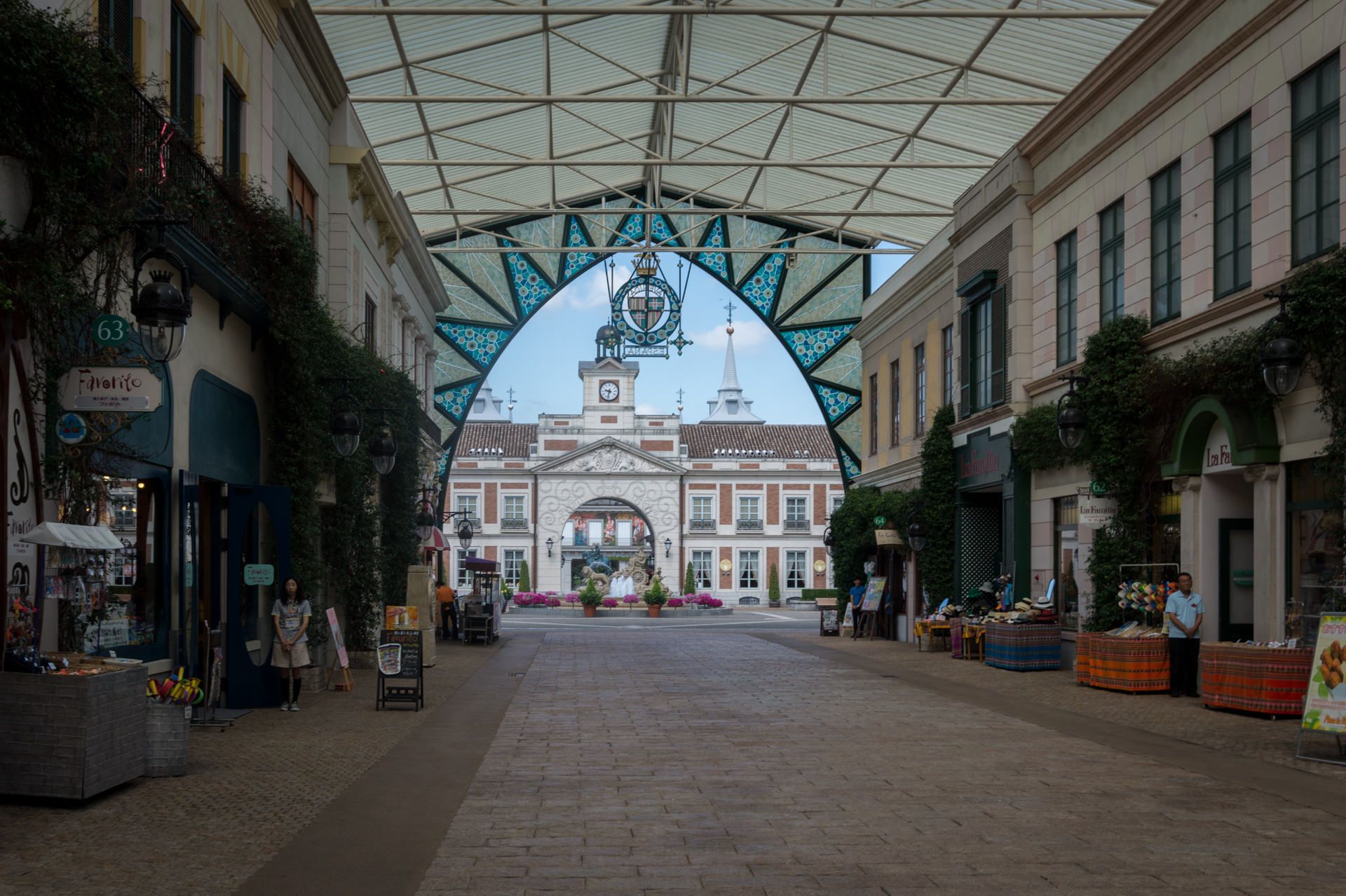
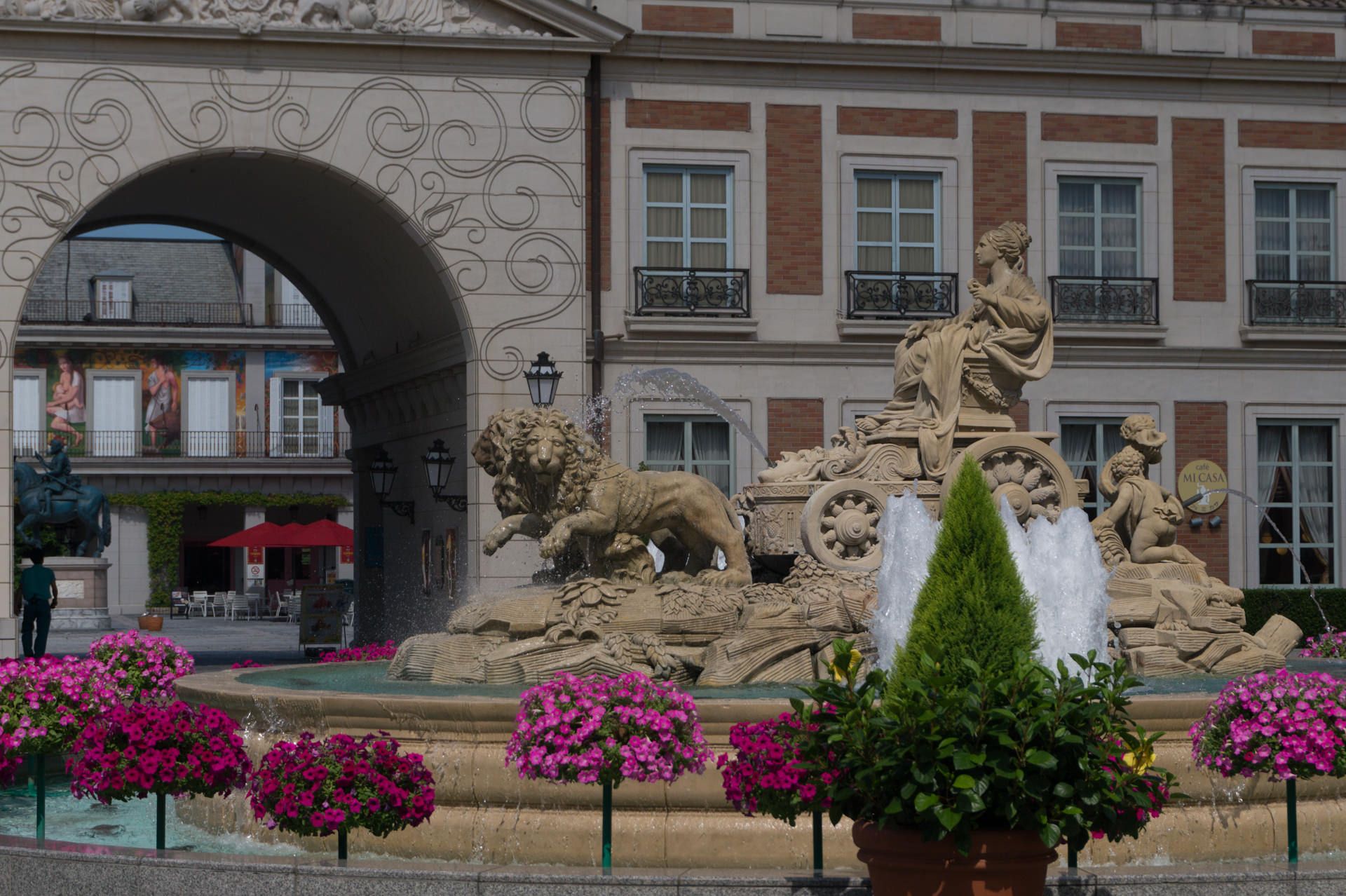
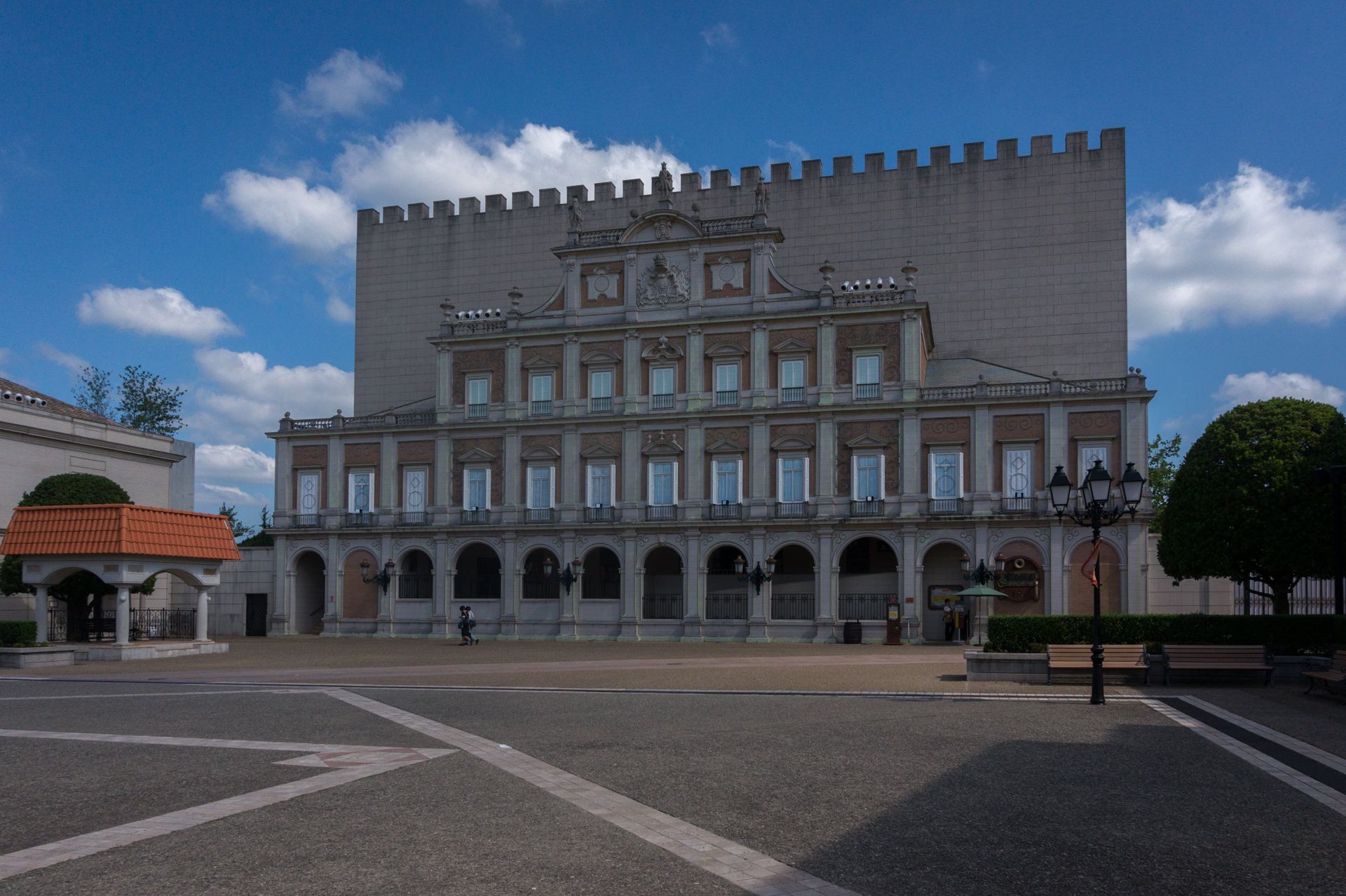
We enter the Parque España via the Avenida de España, the covered main street of the park, and immediately feel like we are on the Iberian peninsula. The effect is intensified on the Plaza de Cibeles, where we immediately see ourselves in the middle of the Spanish capital. Unlike the original, the large square here is not lined by the town hall, but by facades of various Spanish buildings and a bullring.
Steampunk Coaster Iron Bull
Where recently the train was forced into the arena on the Matador bullfight coaster, an iron bull now rolls impressively through a machine hall. The Steampunk Coaster Iron Bull is by no means as memorable as its design. Secured by shoulder restraints, we first ride through a short left turn and immediately climb the ride’s first lift hill. In an increasingly steep left turn, the bull plunges 12 m to the ground and reaches a top speed of 52 km/h. After this, we quickly climb a hill and before we know it, we are in a downward helix, whereupon the track runs close to the ground along the wall of the hall. Continuing in a right-hand bend, we now cross the section of the first slope and plunge towards the hall floor once more. Passing through a backdrop, we then climb another hill, whereupon we reach the show part of the ride.
During the time in the block brake, the steam train is supplied with hot coals for the rest of the ride. A progress scale is displayed and finally we are given the green light, just like a classic accelerator coaster; only the launch is missing. Instead, we move forward a few metres before the brake brings the train to a halt out of the blue. A very slow turn follows, after which the second lift hill is reached. The train also leaves this hill in an increasingly steep curve and immediately reaches the floor of the hall. After the subsequent left turn, the braking section follows and shortly afterwards the station and the ride, which was quite entertaining until the show part, comes to an end.
El Circo Pierrot
Hidden behind one of the other facades is the covered and very nicely designed children’s land El Circo Pierrot, including an interactive dark ride on the hall ceiling, which is not to be missed.
However, if you are drawn to Madrid, you can step through a portal onto the Plaza Mayor. Just as impressive as the original, it is adorned with a multitude of bars, restaurants and shops; of course in a rather high-priced segment. A visit to the Plaza Mayor is perfect for a cervesa or an afternoon siesta.
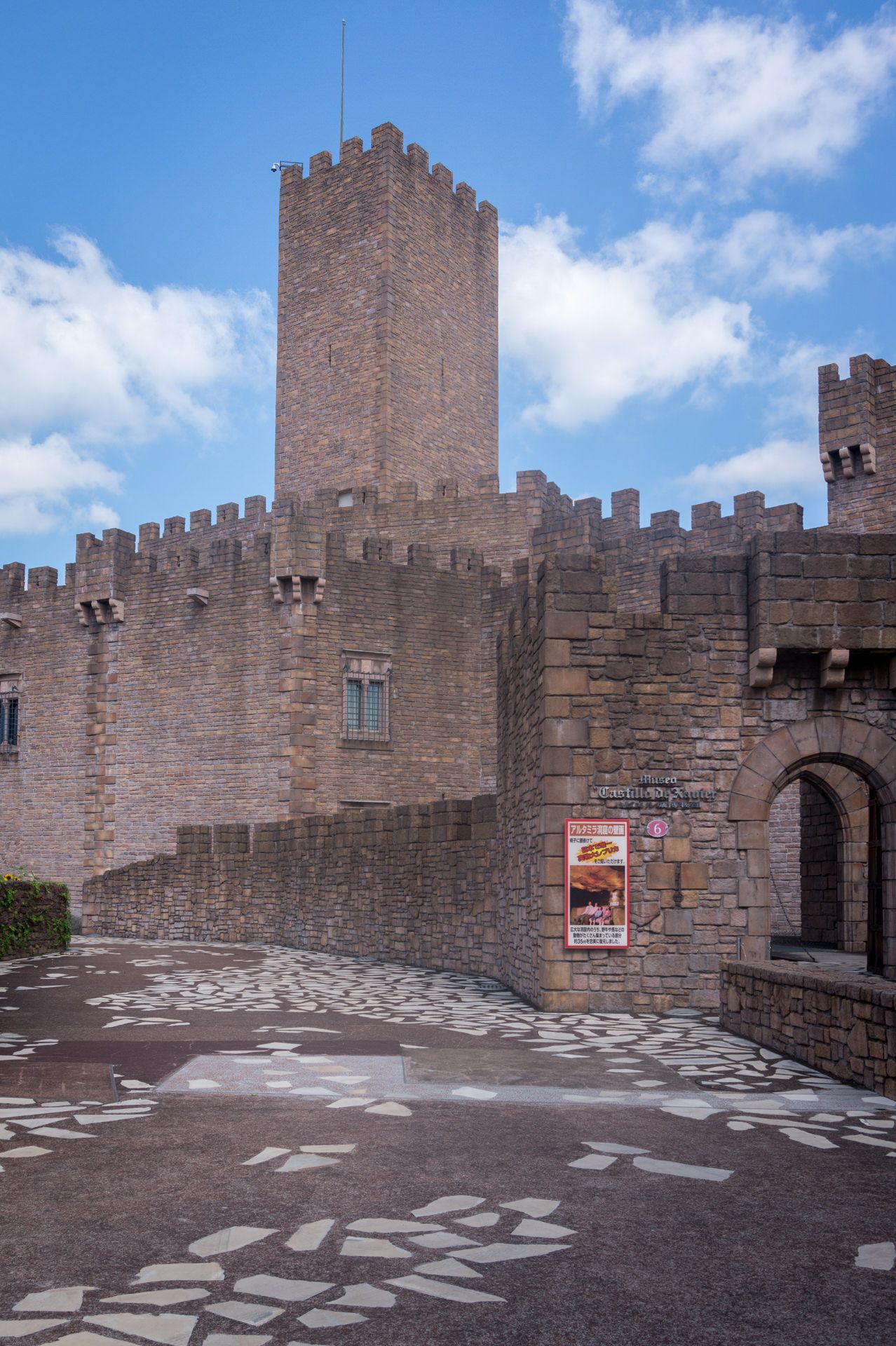
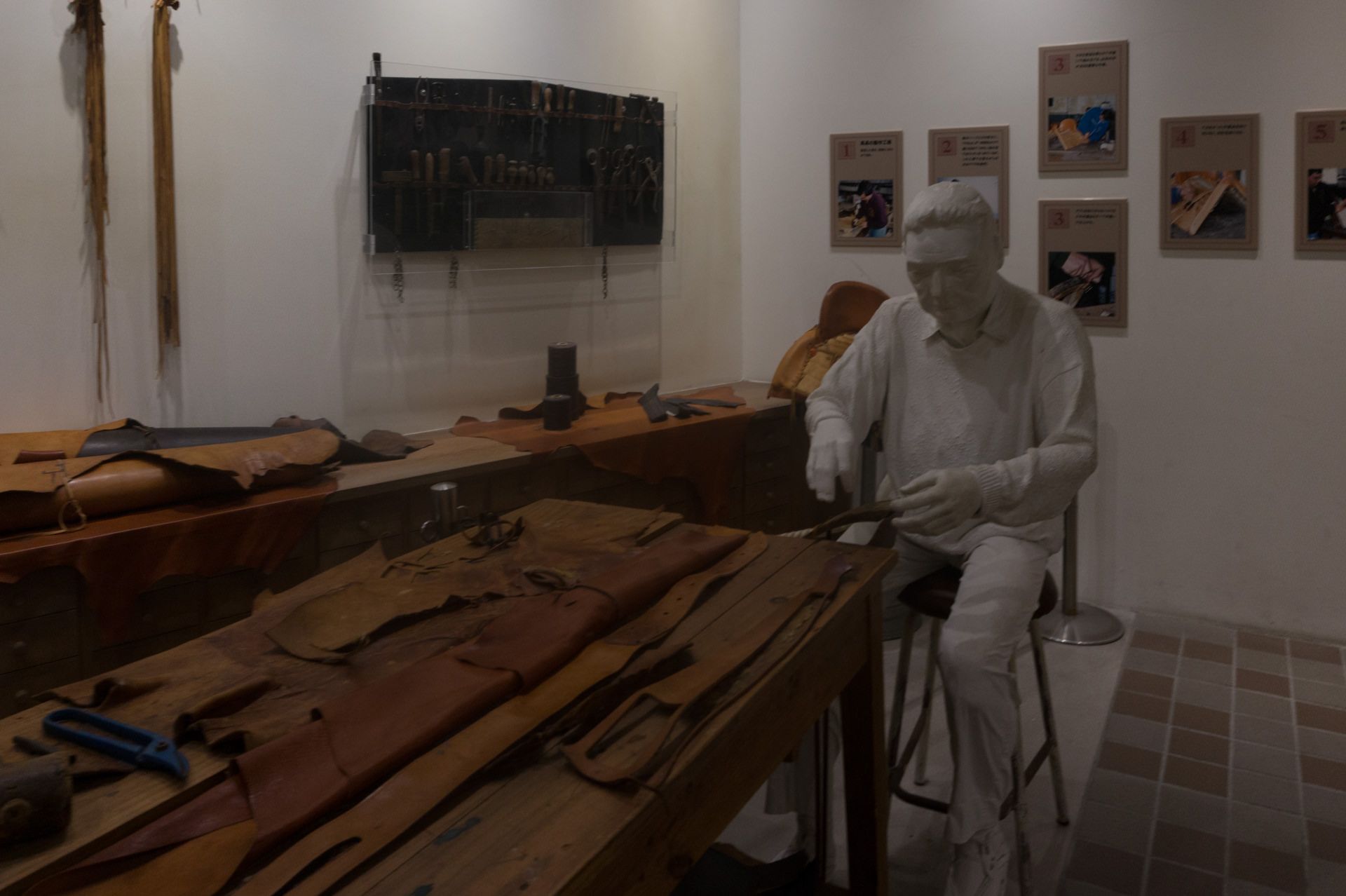
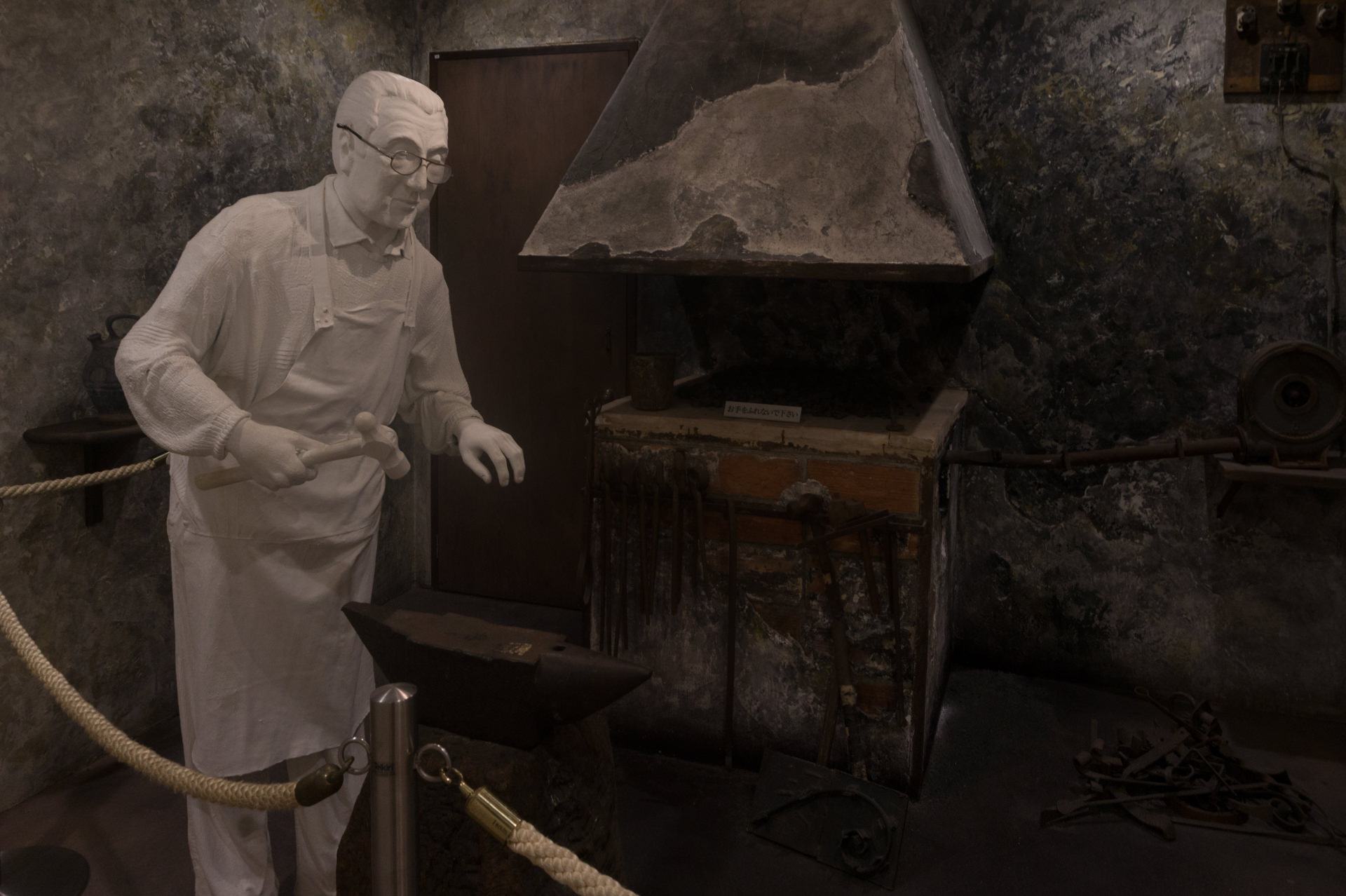
Those who want to find out more about Spain outside the visible architecture can do so in the spacious and extremely worthwhile Castillo de Xavier museum. Here, a tour through Spanish history, art and crafts awaits the interested visitor.
ABCDEspaña
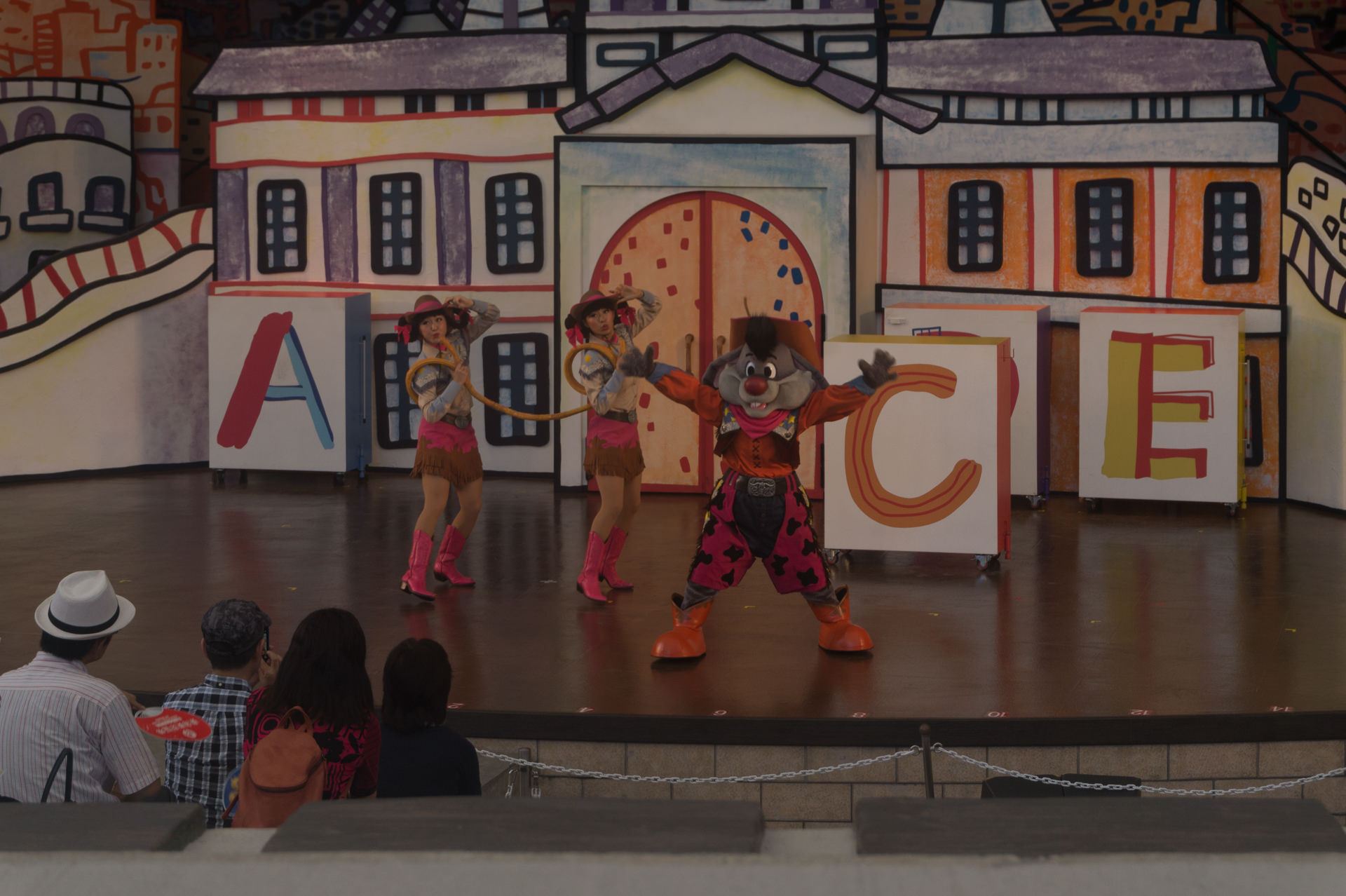
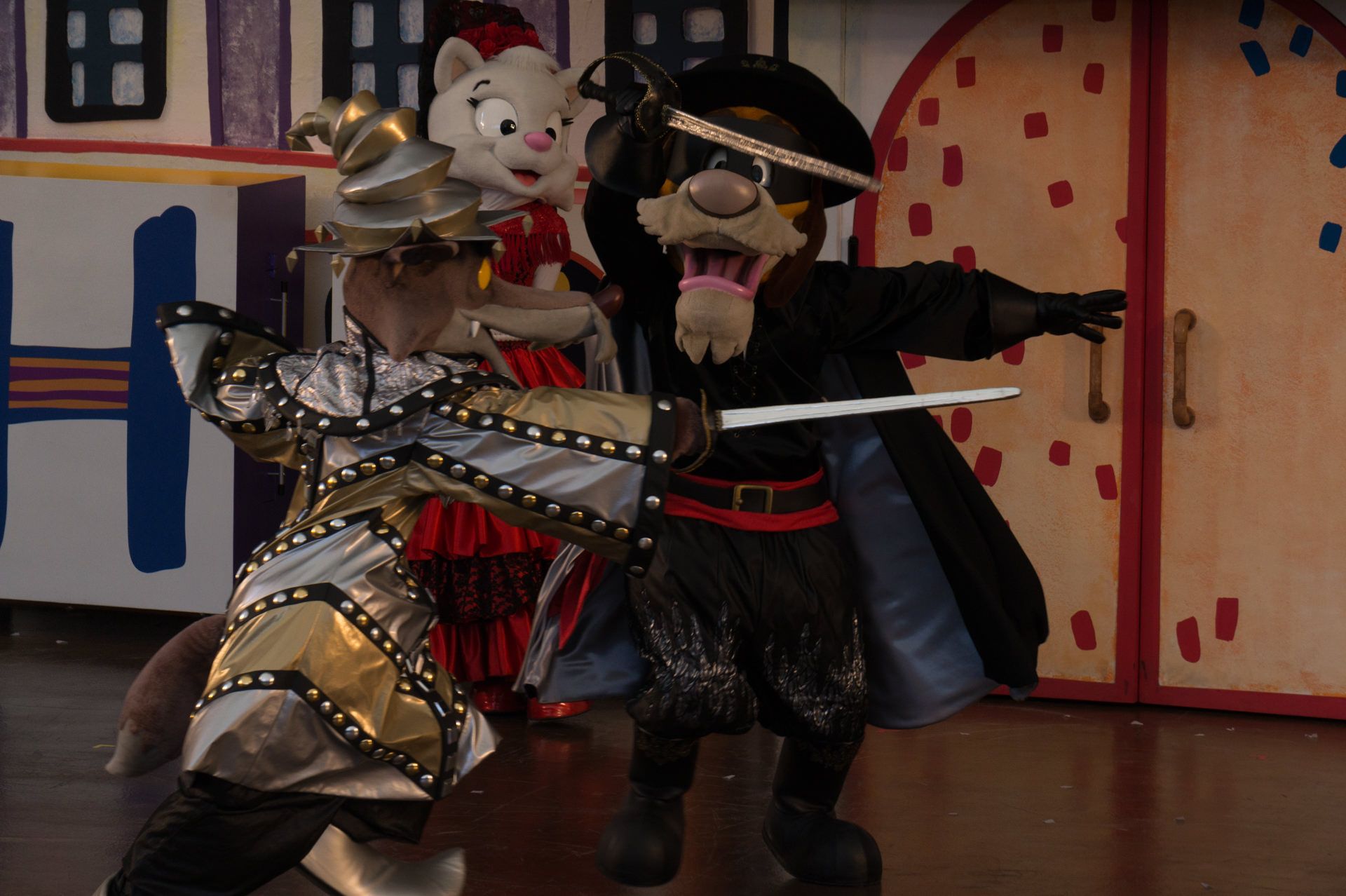
Meanwhile, a completely different image of Spain is conveyed in the musical show ABCDEspaña, in which typical Spanish customs and terms are conveyed by the park mascots using the ABCs. In doing so, they fall back on the Spaniards’ favourite form of entertainment – in my view very authentically – because well-choreographed shows always go down well. All in all, the show is extremely enjoyable, quite entertaining and even the sound was very good.
We leave the upper plateau using (disco) escalators and descend to the Plaza Colón, a beautifully designed area where two dark rides and a short walkthrough await visitors.
Casa Misteriosa de Choquy and Feliz Cruise
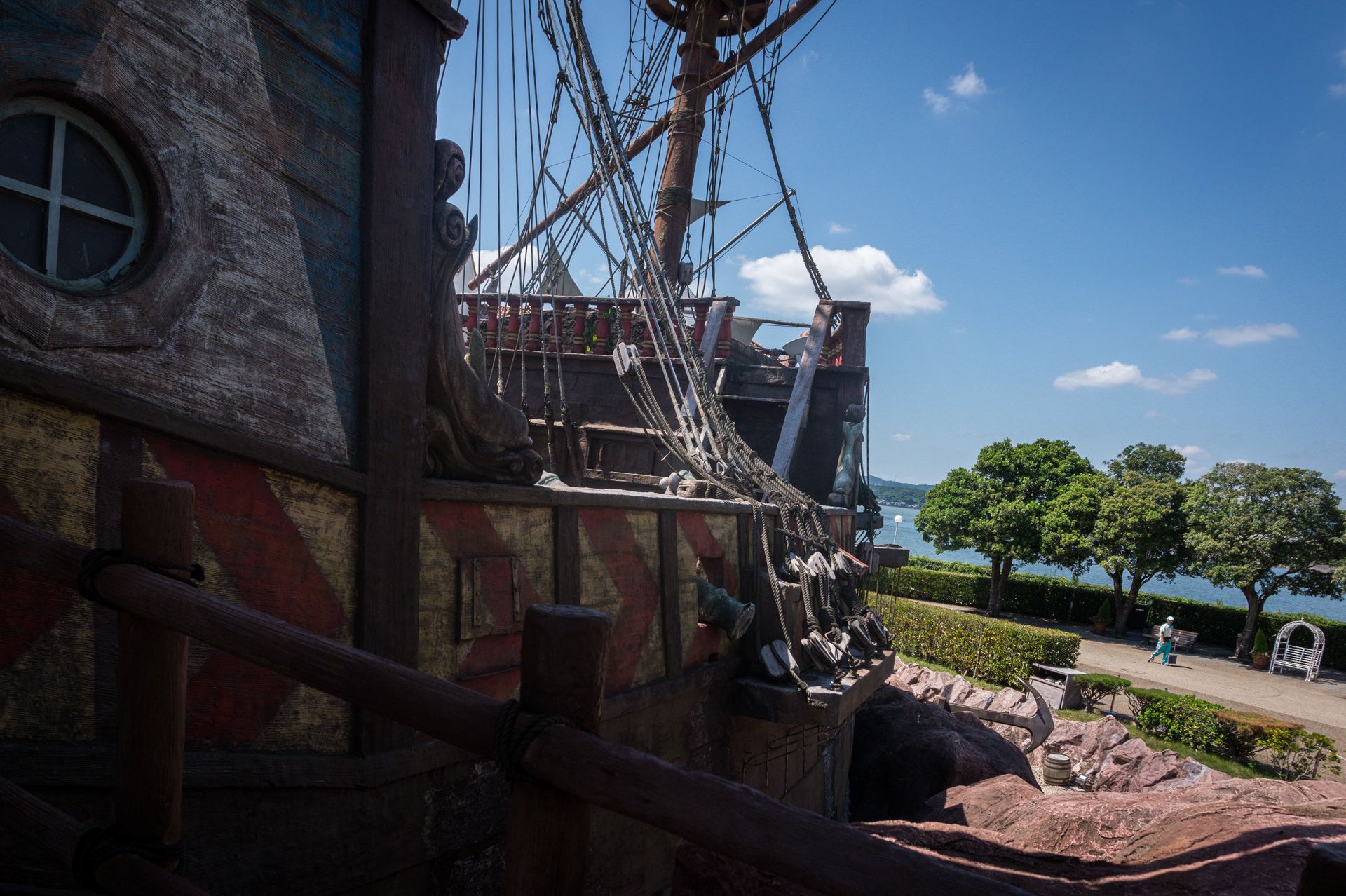
While the Casa Misteriosa de Choquy is a black-light funhouse with the mascot Choquy, the quiet dark ride Feliz Cruise is characterised by the fact that it was once a much more interesting state-of-the-art water ride with a pirate theme called Adventure Lagoon.
It is rather disappointing when an elaborately designed ride with vertical lift, incline and normal lifts is converted into a simple canal ride for cost reasons and the former station is then marketed as an almost independent pirate ship attraction. Although the Feliz Cruise with its dioramas is anything but bad, it leaves a bad aftertaste if the large (dark ride) hall is simply left unused.
Viaje Aventurero de Don Quijote
But anyone who thinks that a visit down here is therefore no longer worthwhile is very much mistaken, because the second of the two dark rides is quite something. On the Viaje Aventurero de Don Quijote, the adventure ride of Don Quixote, guests can expect a fabulous flight through the adventures of the Spanish knight, represented by the mascots of Parque España. The ride system is similar to that of the dark ride Peter Pan’s Flight from Disneyland, but it does one thing better than the other copies: it beats the original by miles! As much as I was amazed by it after my first ride, I liked the subsequent repeat ride just as much; a genuine insider tip.
Bosque de Cuentos
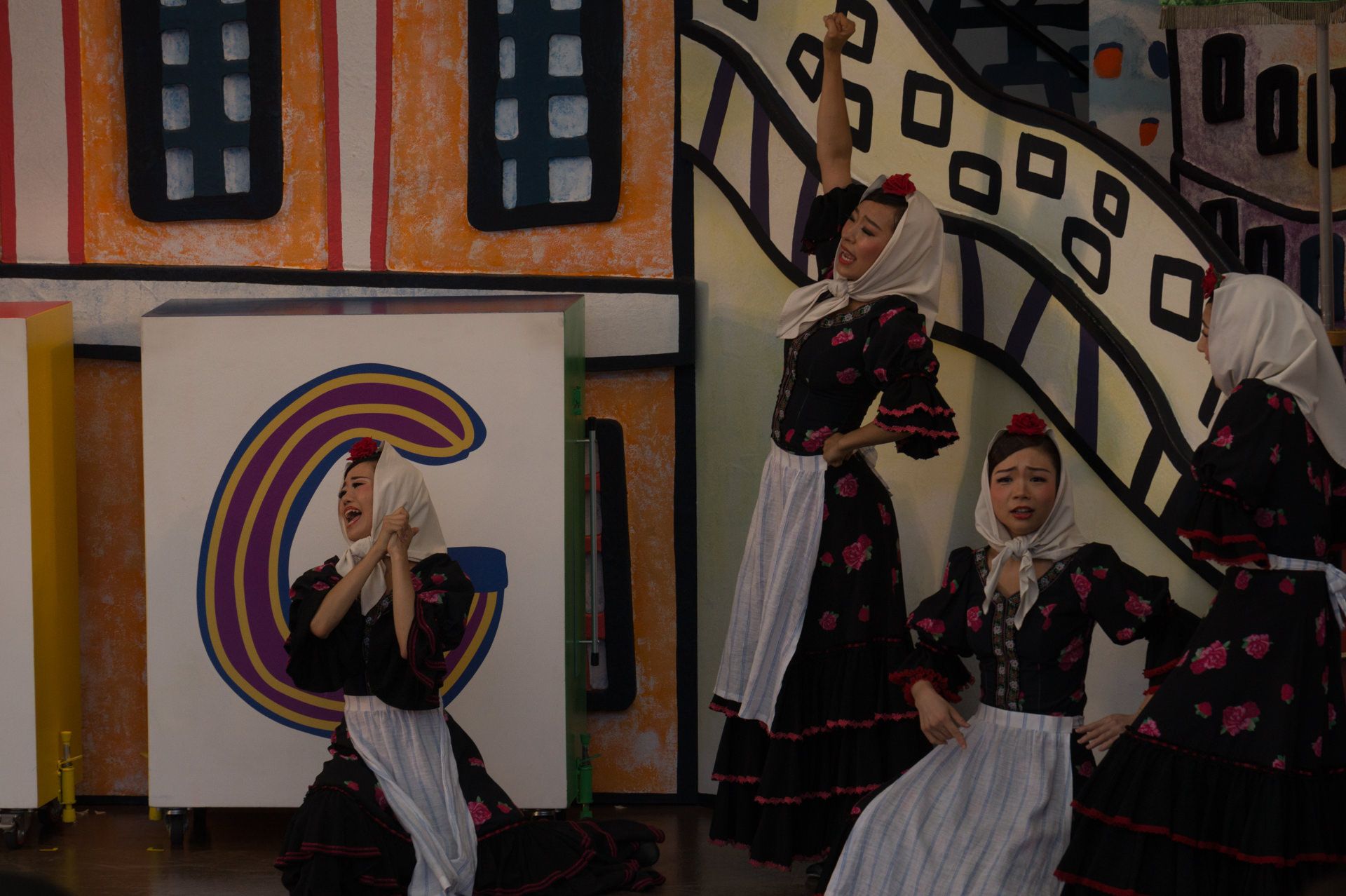
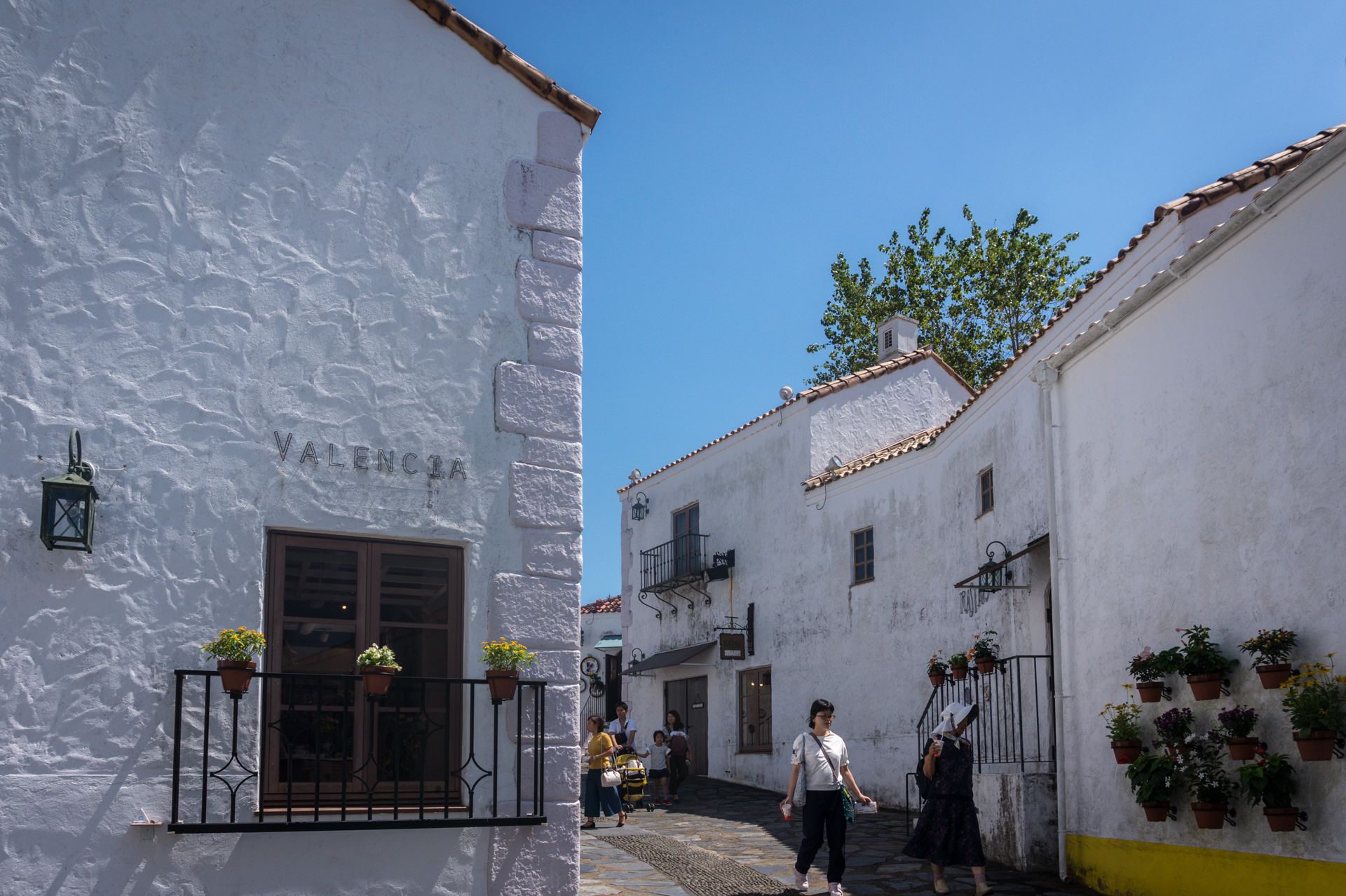
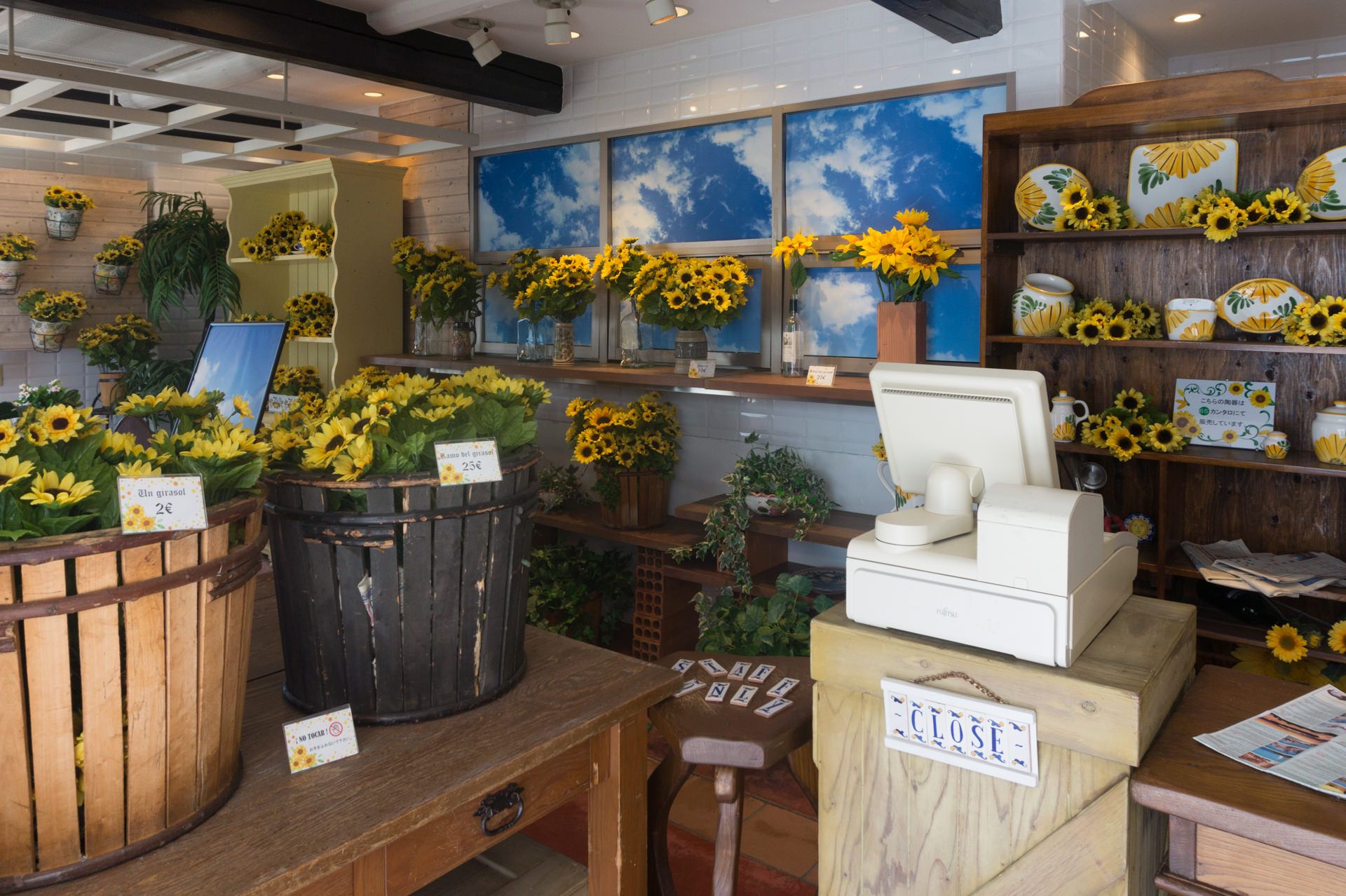
Through the Bosque de Cuentos, a kind of fairy tale path, and the Calle de Santa Cruz, a typical Spanish street with several restaurants, mock shops (including prices in €) and small exhibitions, we ascend to the Avenida de Carmen, where the Carmencita is already performing its predatory game. In fact, this allusion is quite valid, because the Parque España offers a flamenco show, which, however, charges a fee and features cast dancers from Spain. This would be legitimate if the park itself was not already one of the most expensive in the country.
La Suite del Cascanueces
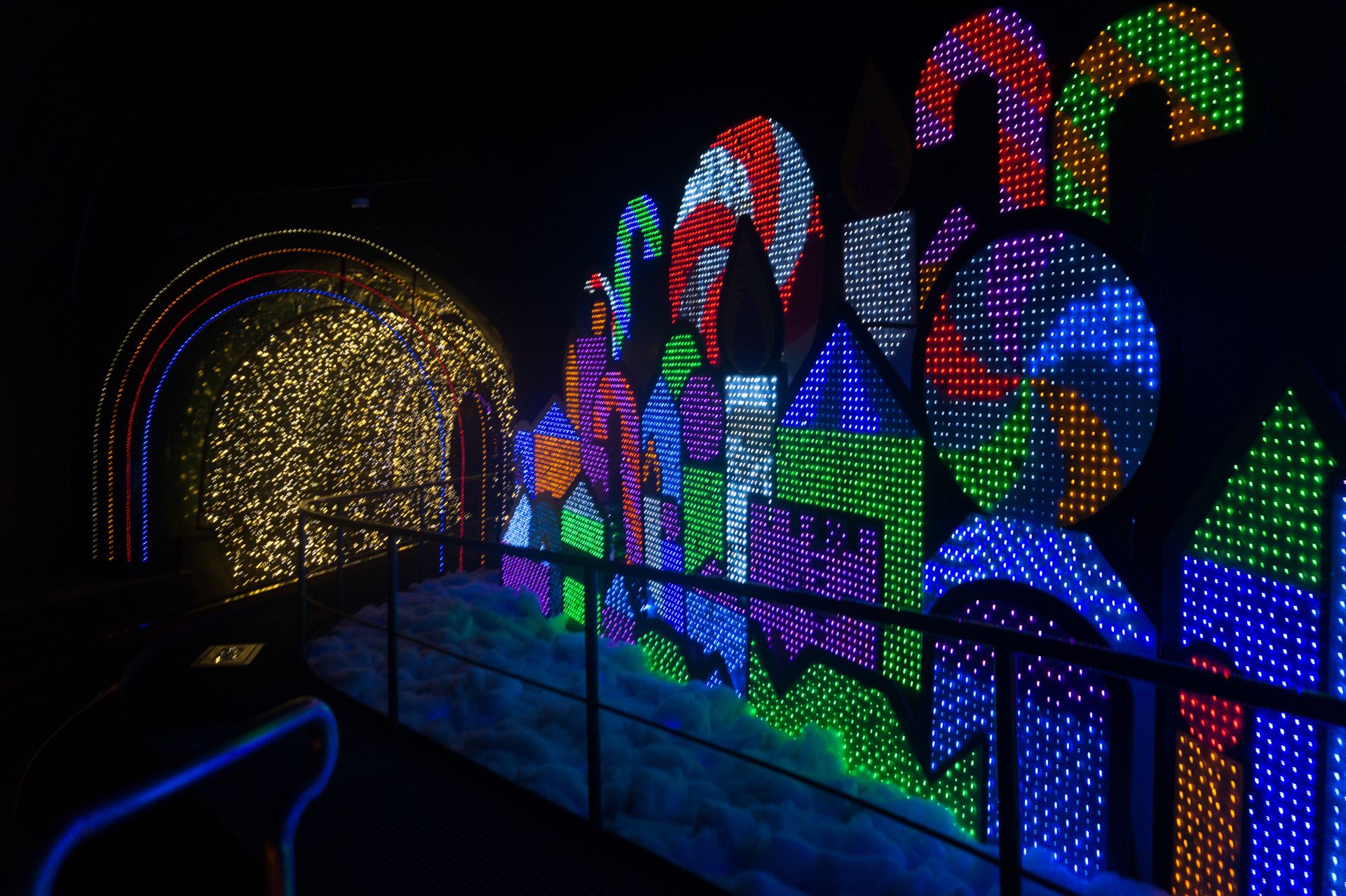
Instead of the show, we dedicate ourselves to the Suite del Cascanueces by the Russian composer Tchaikovsky – instead of ballet, however, an extraordinary dark ride awaits us, in which the story of the Nutcracker is taken up, accompanied by a lot of coloured lights.
Castillo de Hielo and Alice in Wonderland
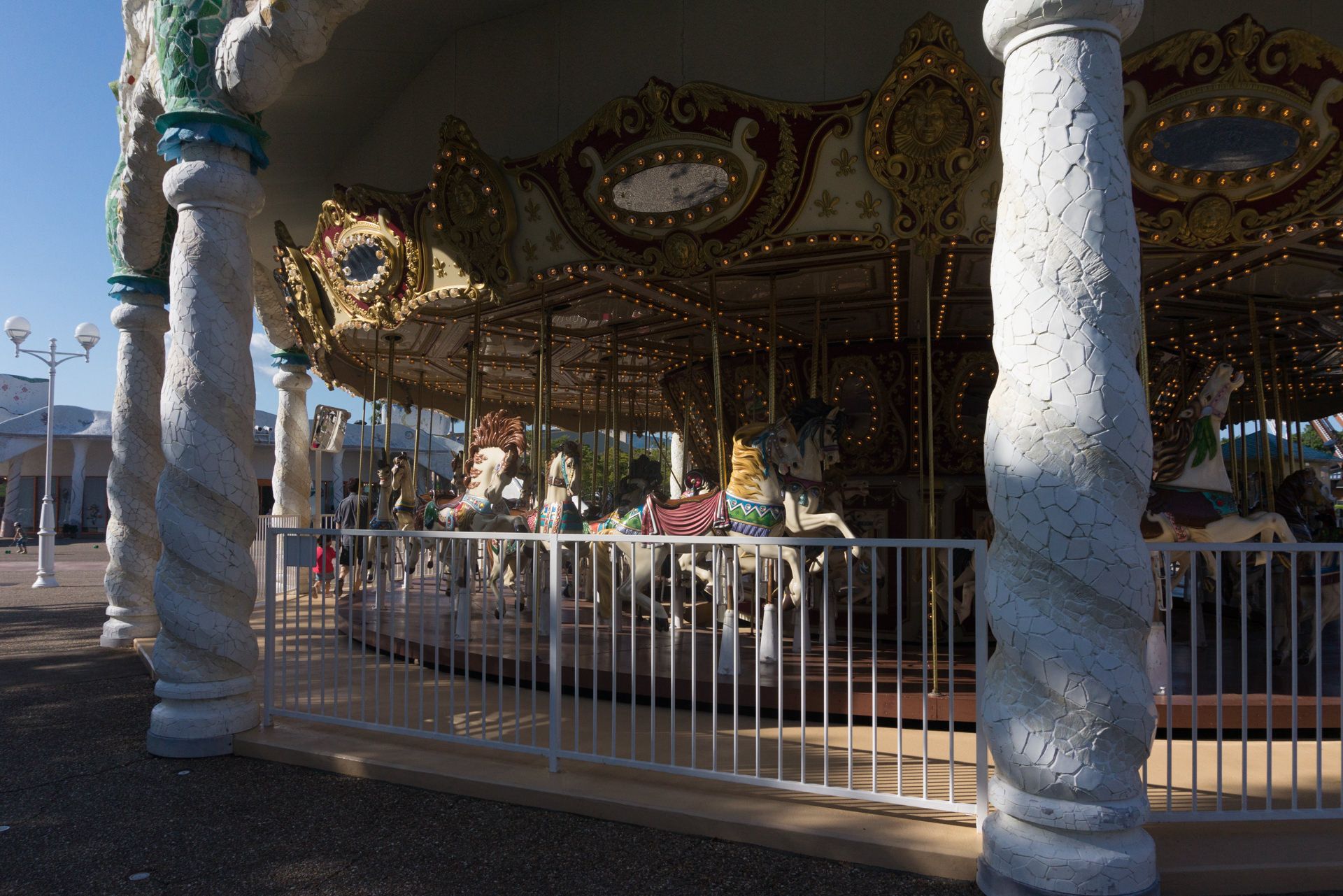
Passing the Castillo de Hielo, one of the typical Japanese freezer walkthroughs, which I have absolutely no memory of, we now head to the Plaza del Fiesta, the main theme park part of the park. Here you can see the Alice in Wonderland interactive walkthrough attraction, a boat swing, a balloon race, tea cups, a carousel, a 360° cinema and the station of the Tren Fiesta.
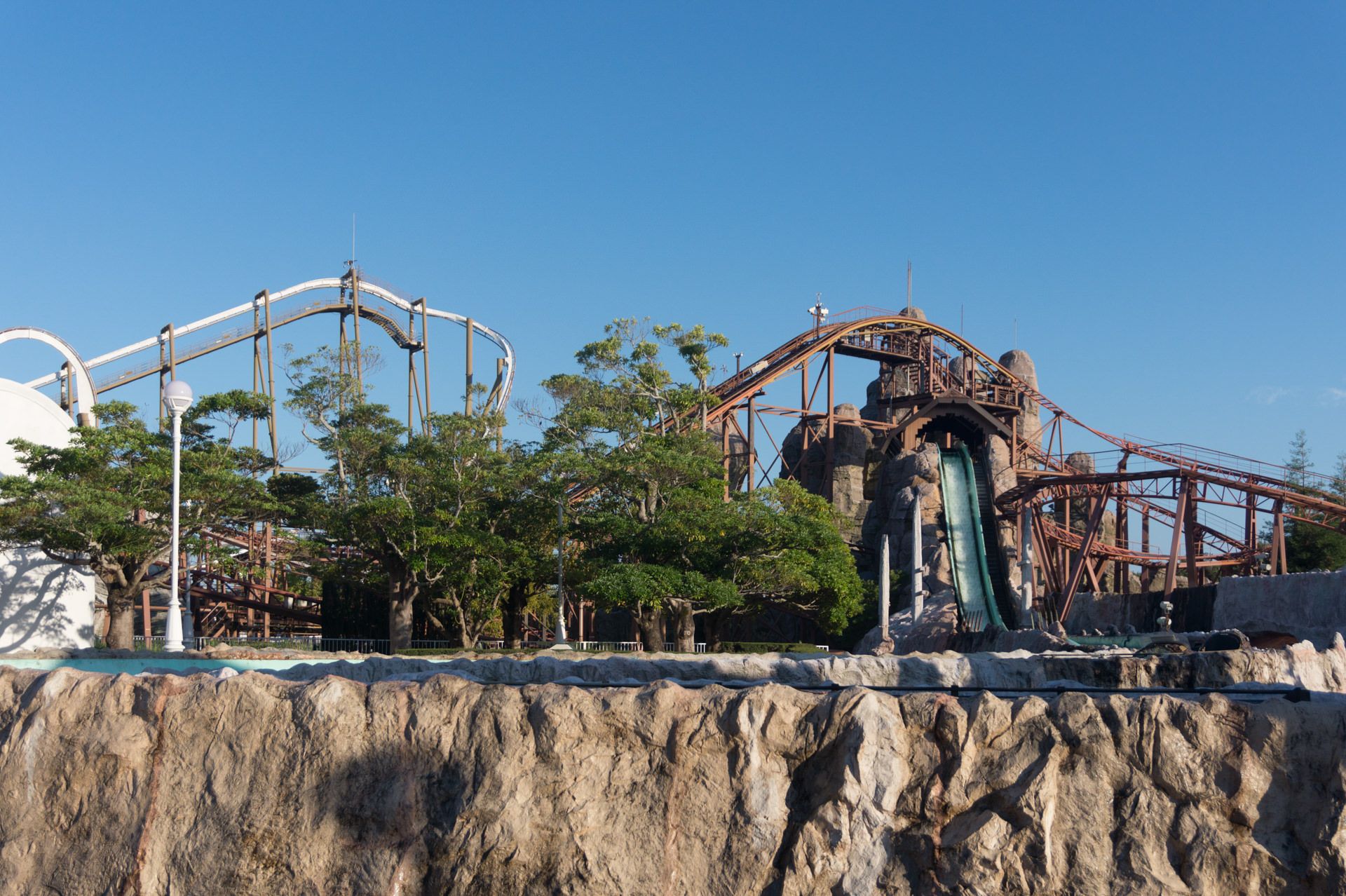
But you can also marvel at the main attractions of Parque España here. The first is the double ride consisting of Splash and Gran Montserrat, one of the early versions of the popular combination of roller coaster and log flume.
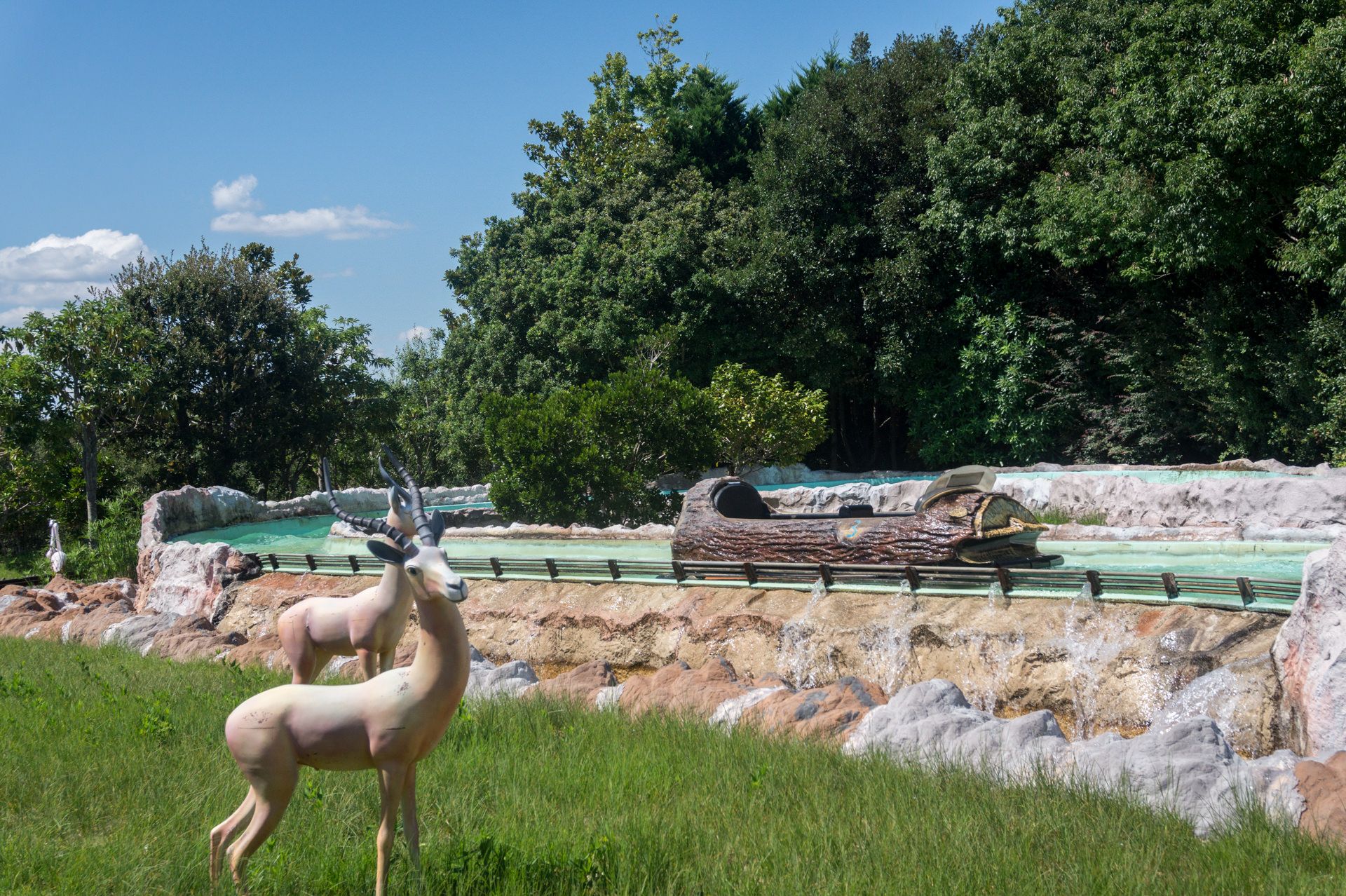
Splash Montserrat
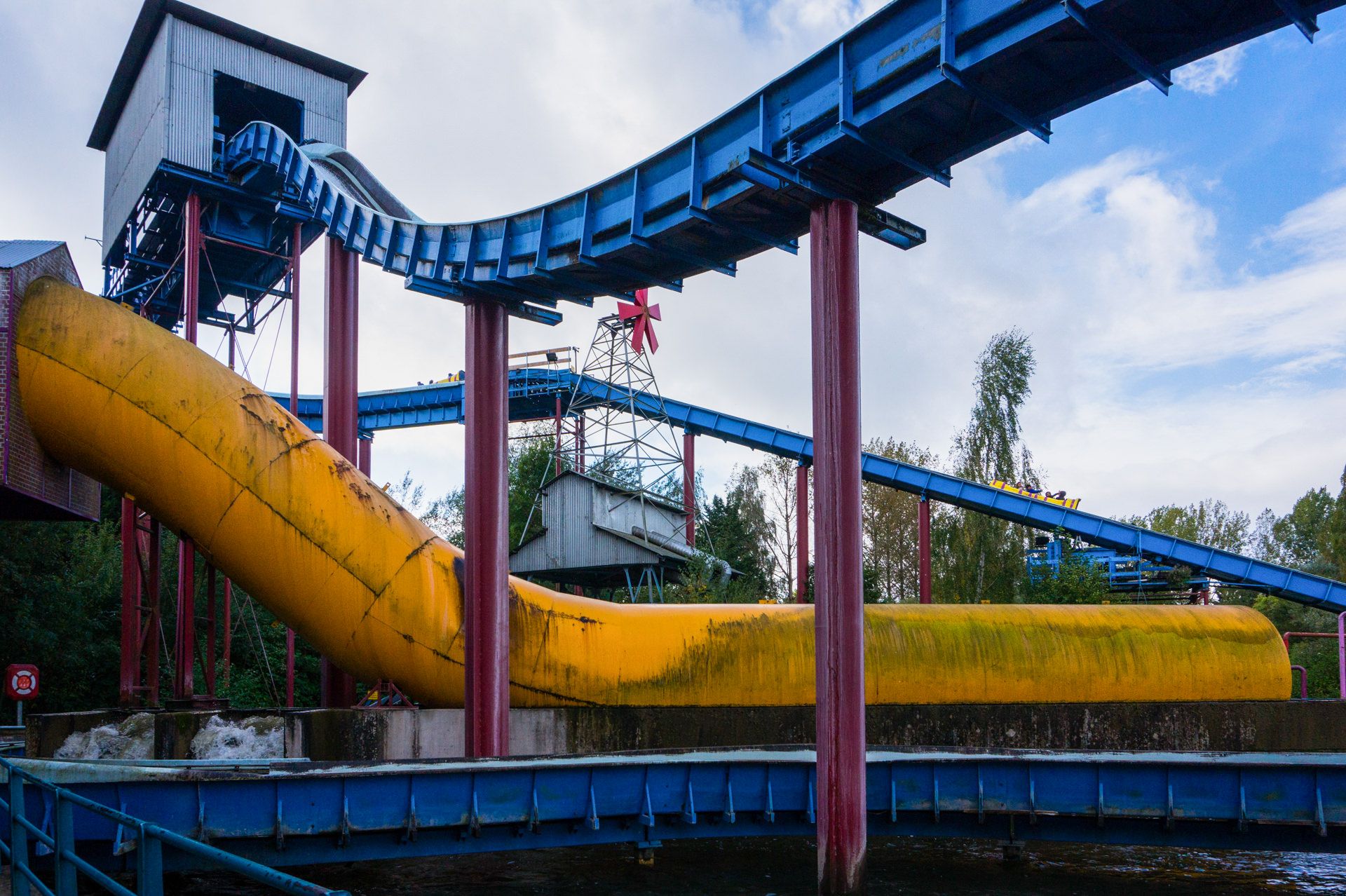
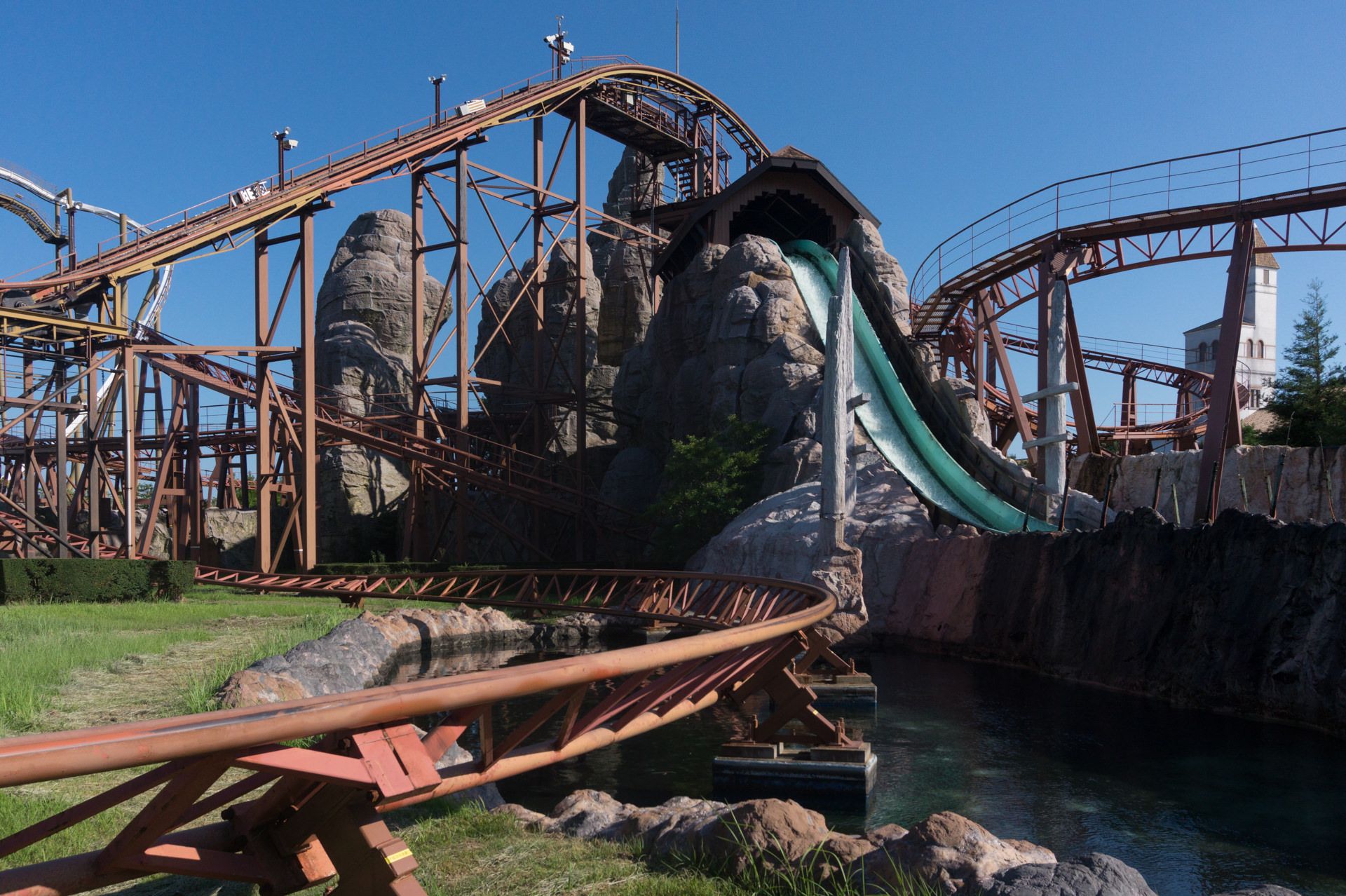
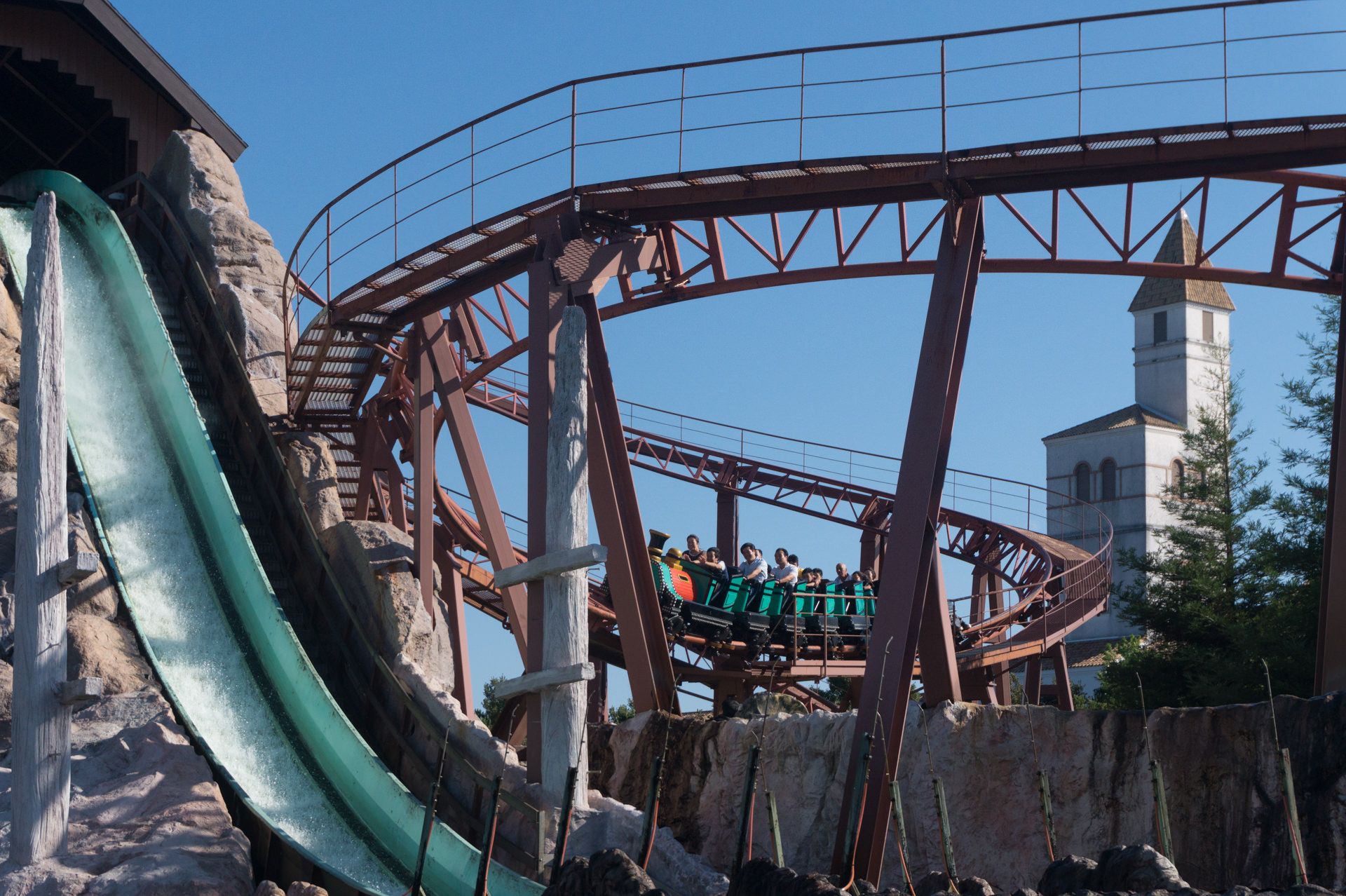
The ride in Splash Montserrat starts with a wide turnaround, which you enter in a short right turn. The lift then takes you up quickly so that, similar in construction to the Europa Park’s Tiroler Wildwasserbahn (Tyrolean log flume), there is a medium-sized shot ride that releases you onto an elaborated level. Here you bob along the channel and the artificial rock massif for a little longer. Always with a good view of the course of the Gran Montserrat roller coaster, the canal zigzags straight ahead until you take a similarly constructed right-hand bend towards the second lift hill. Once you have reached the top, the big of the two shot rides immediately follows. After a final (almost non-existent) splashdown and the return to the station, the far too dry whitewater ride comes to an end.
Gran Montserrat
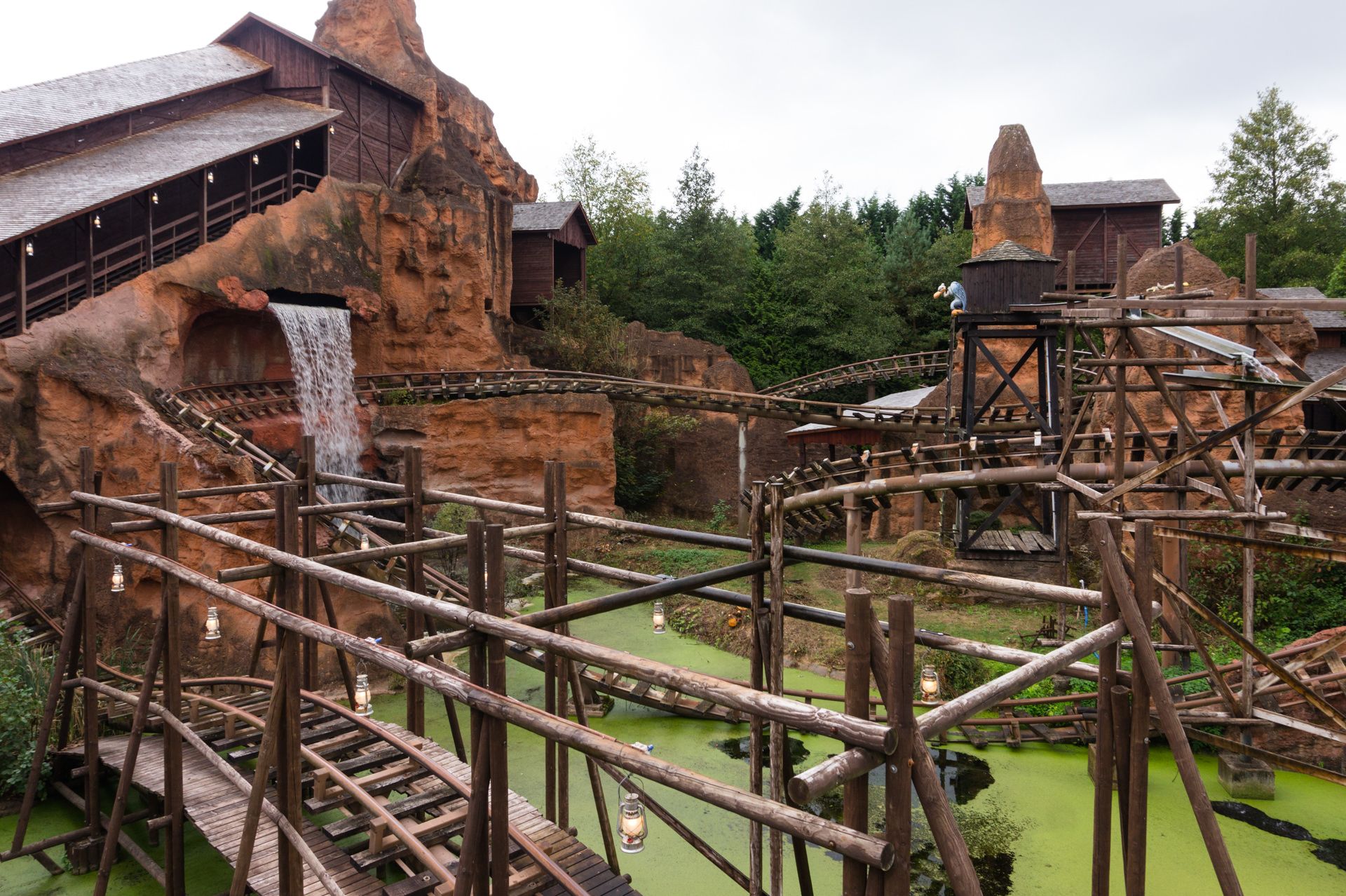
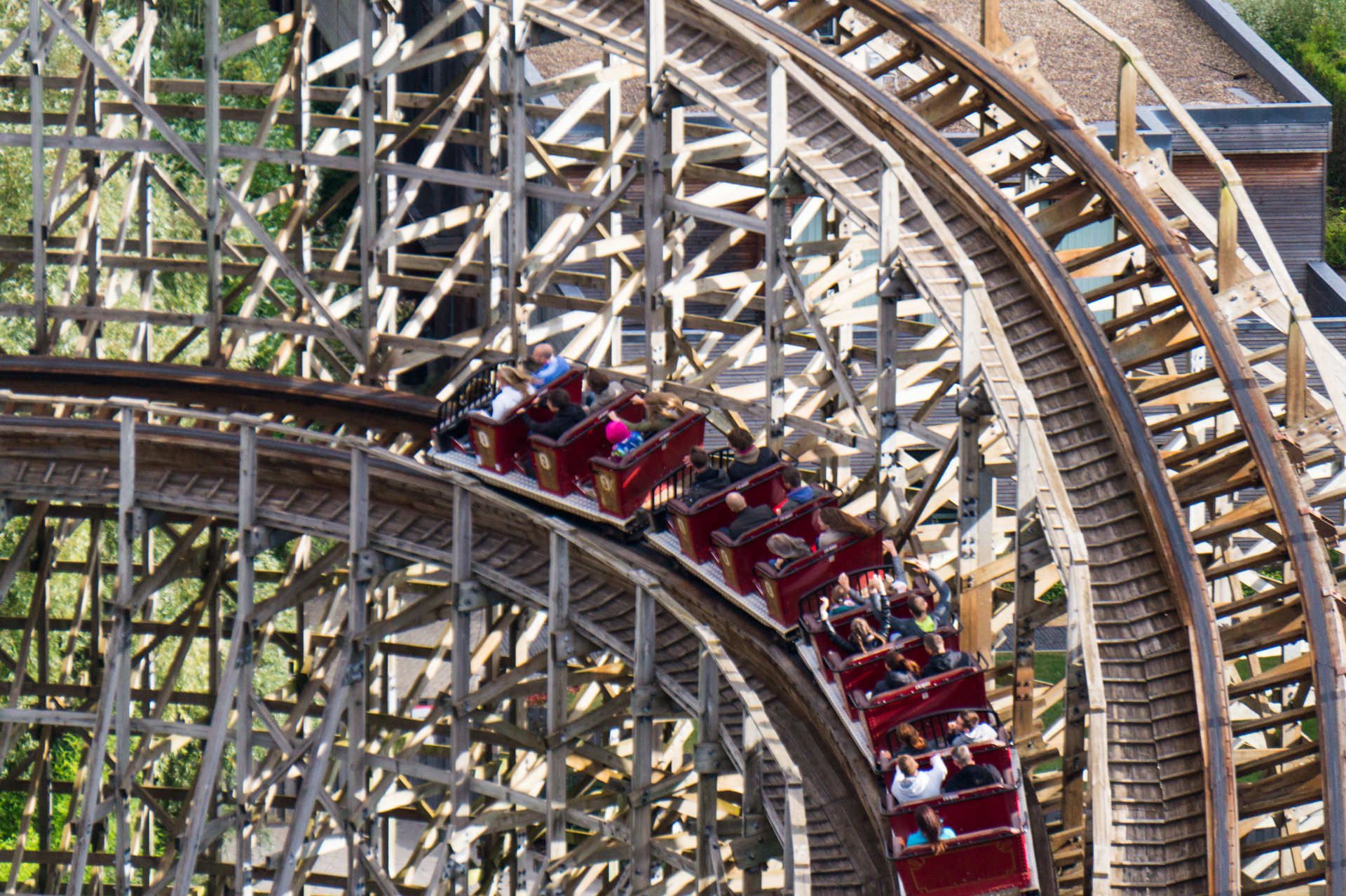
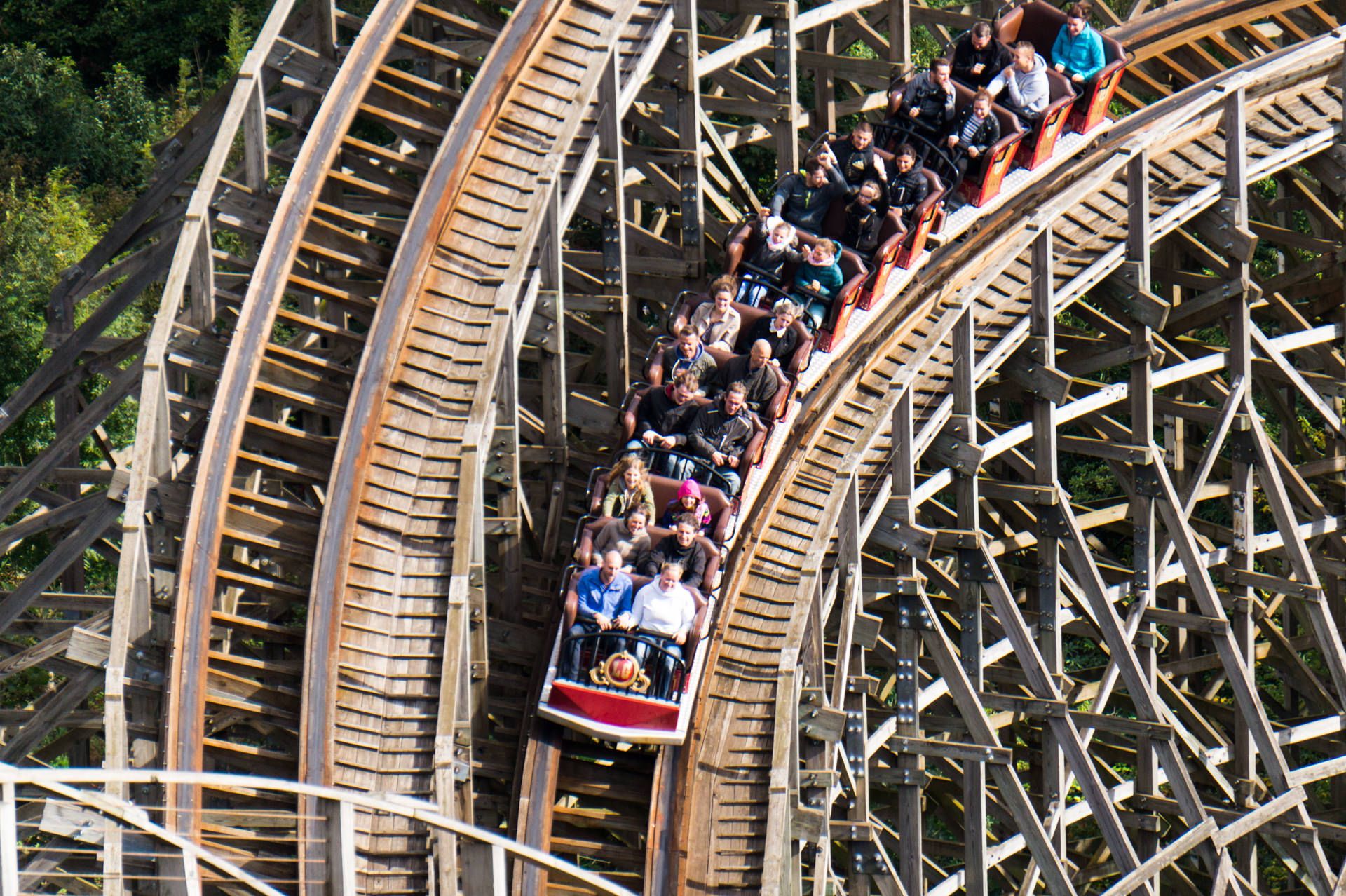
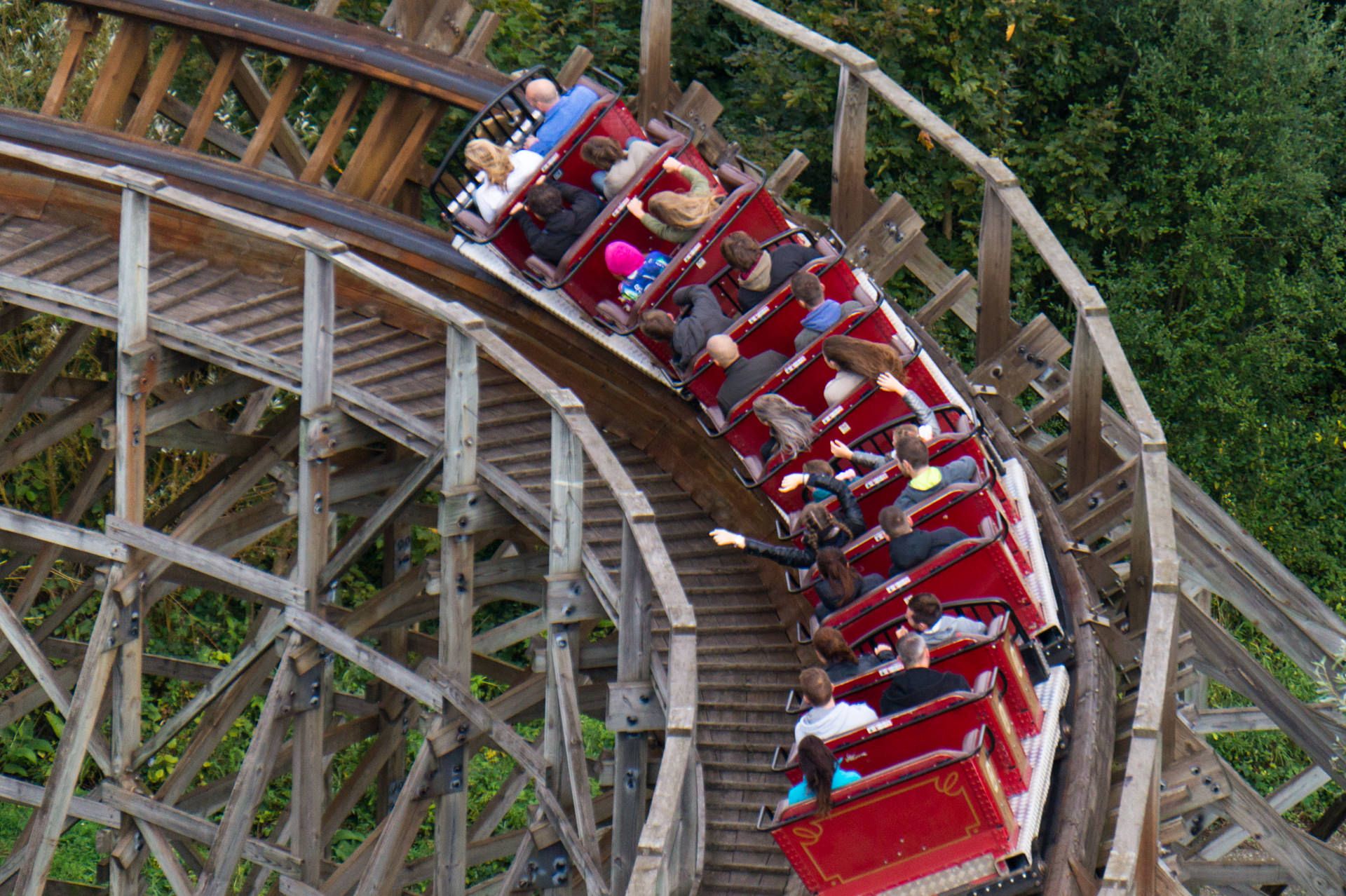
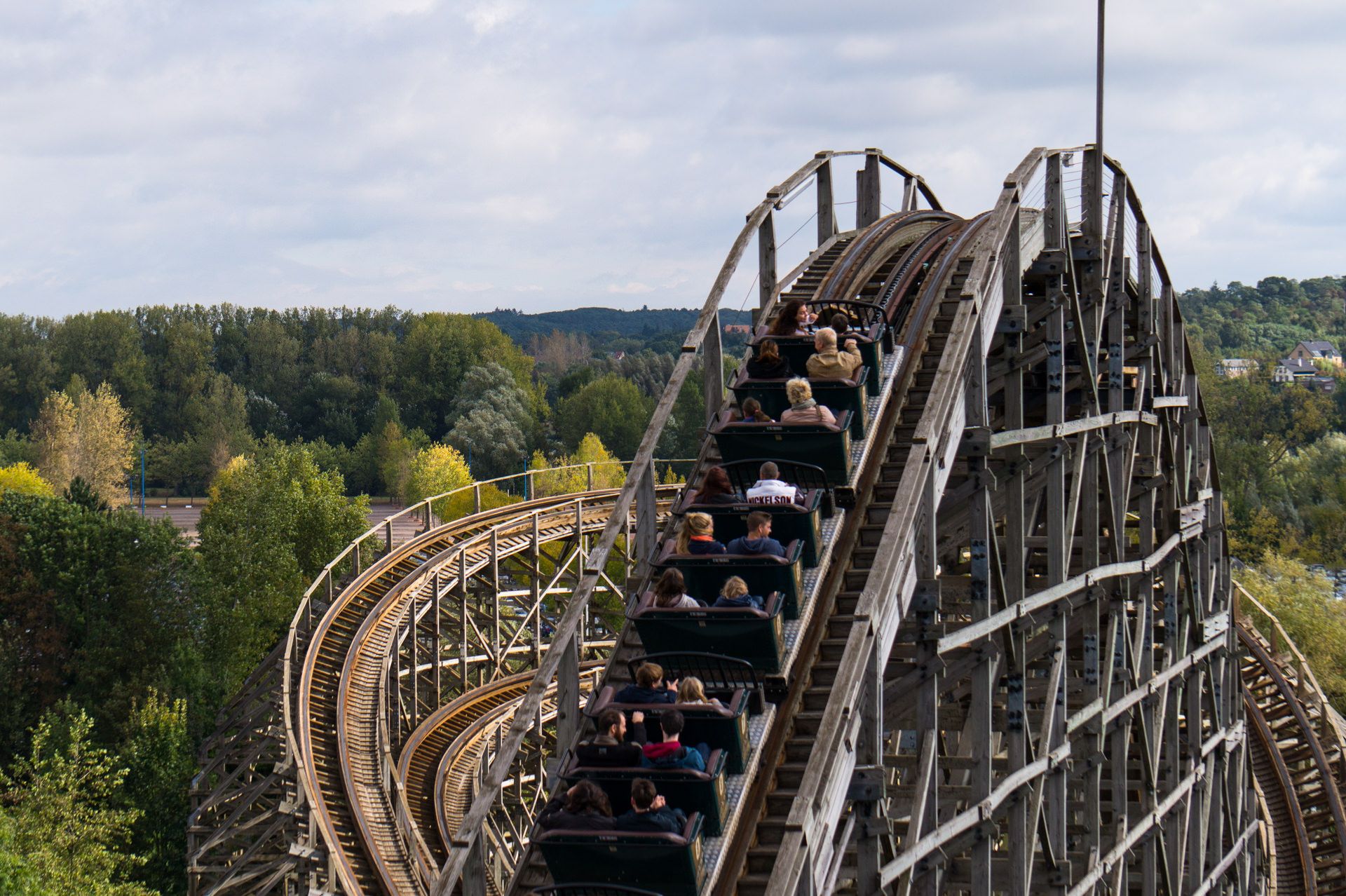
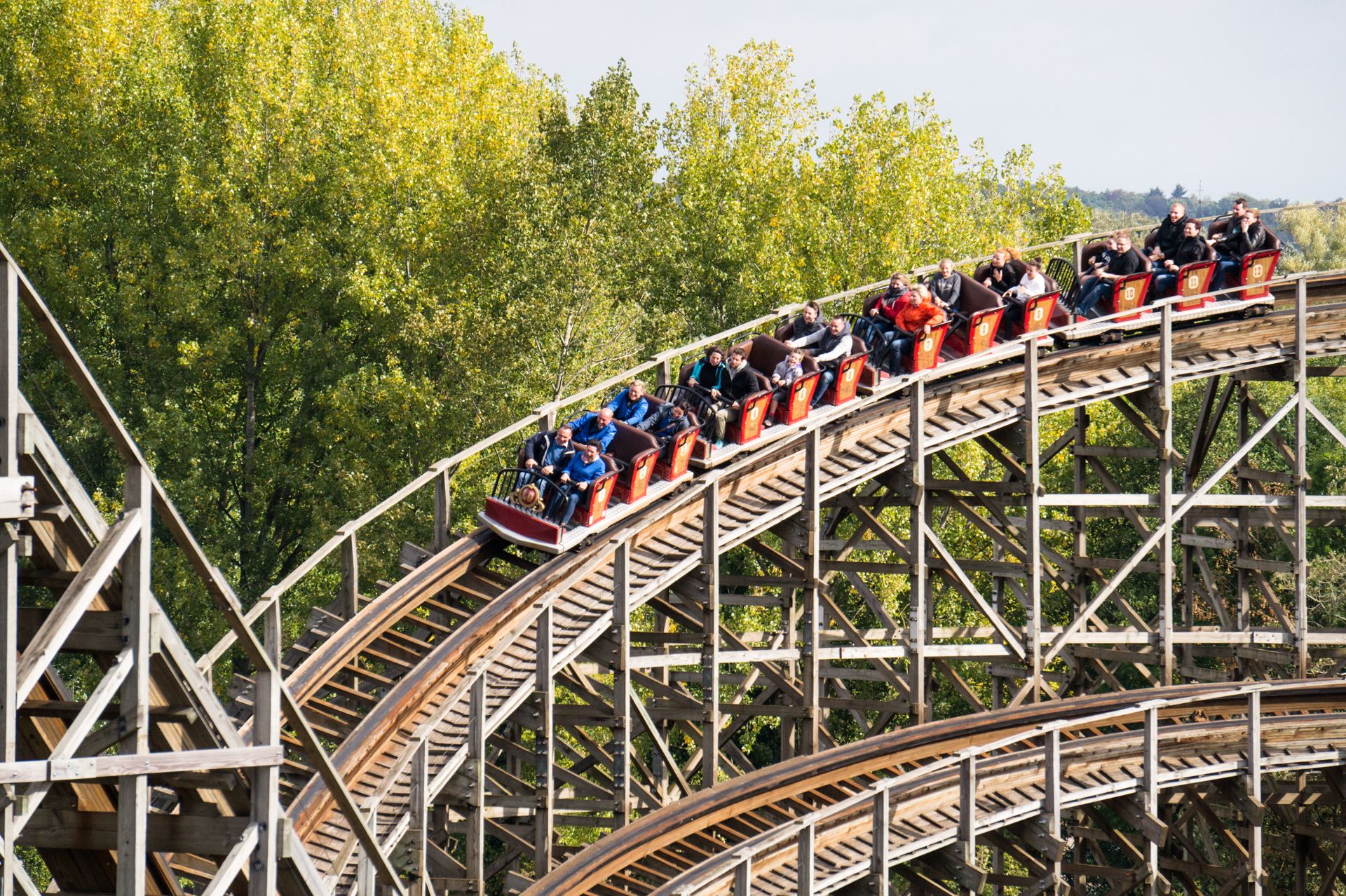
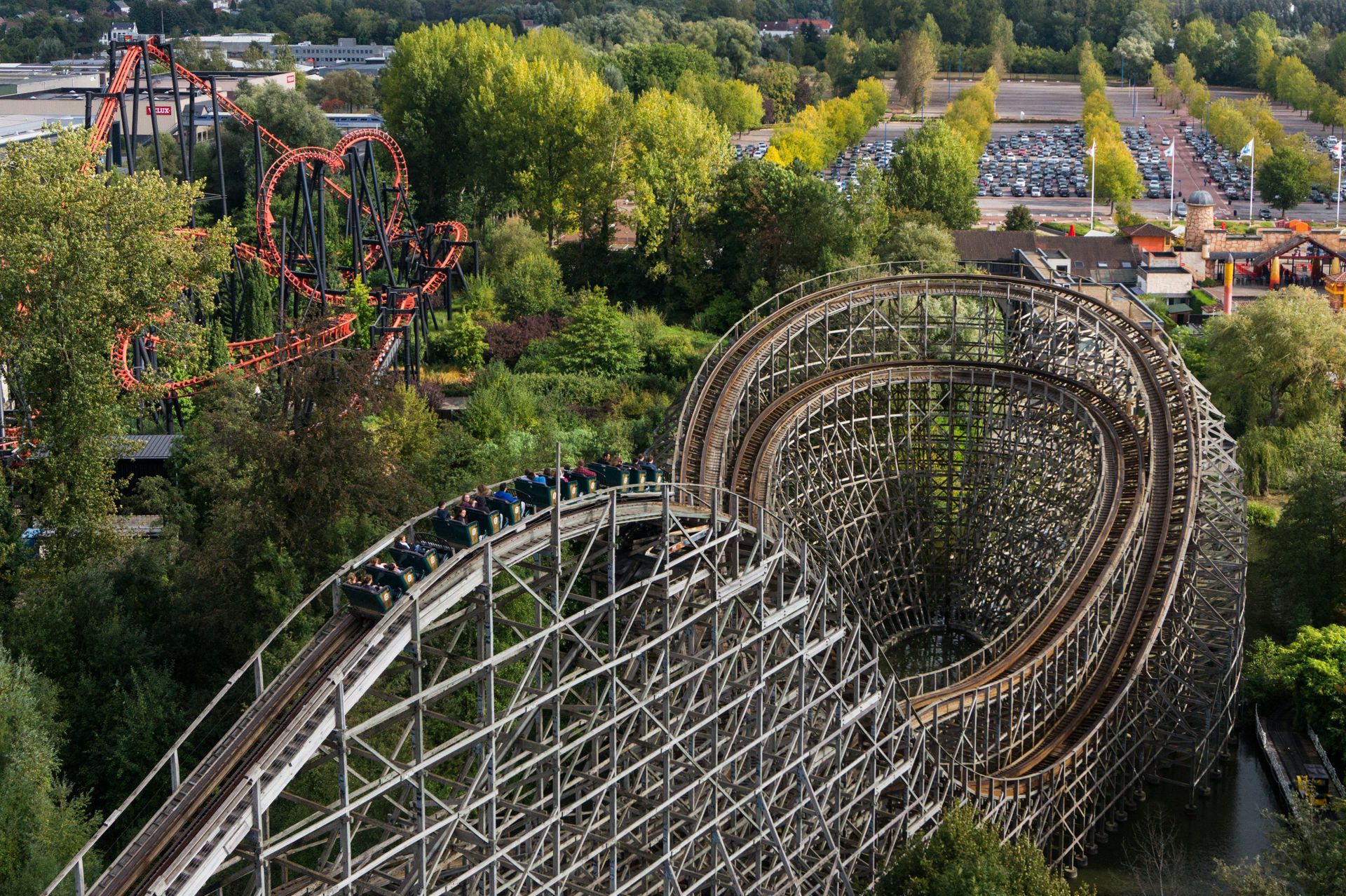
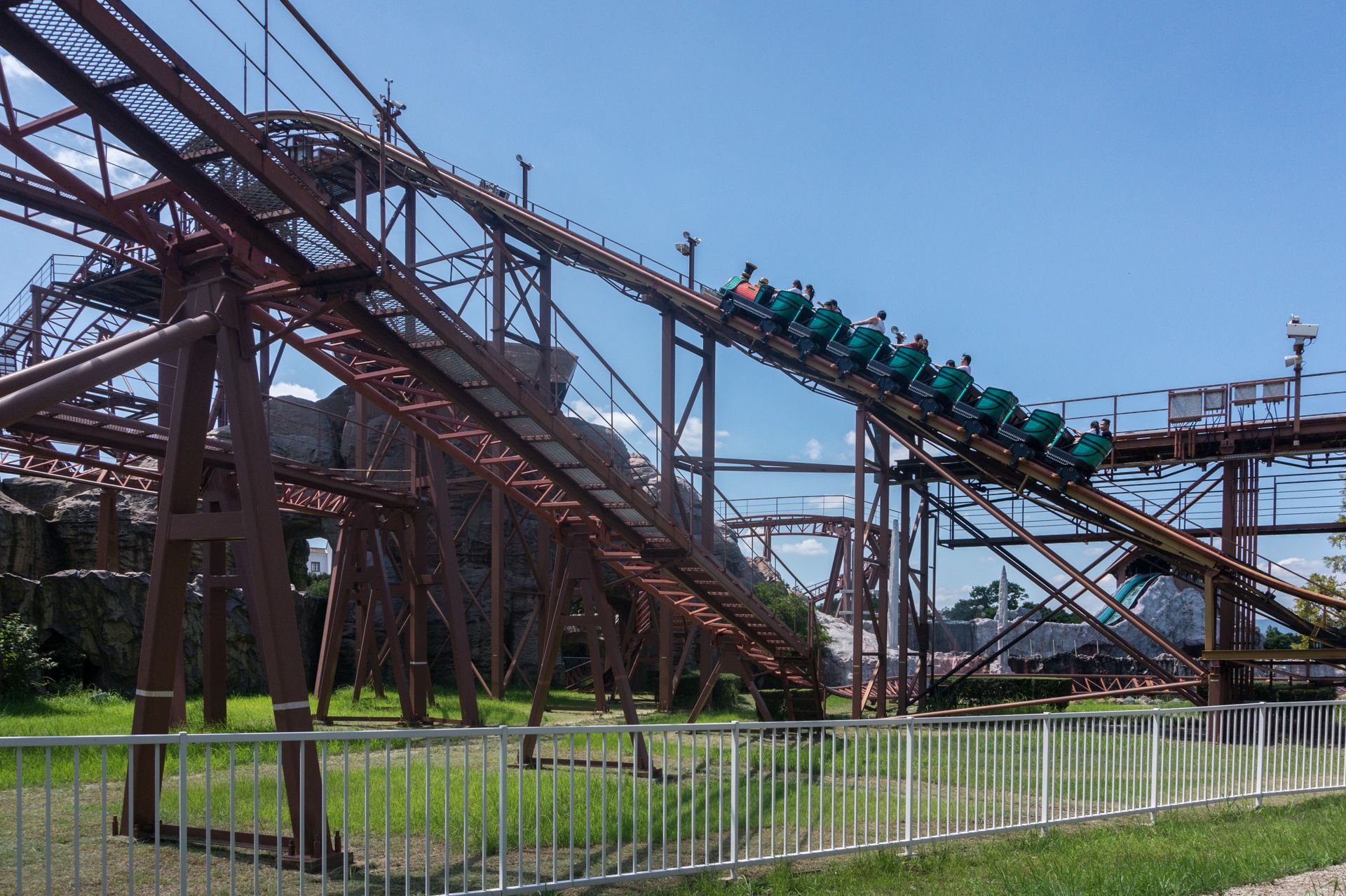
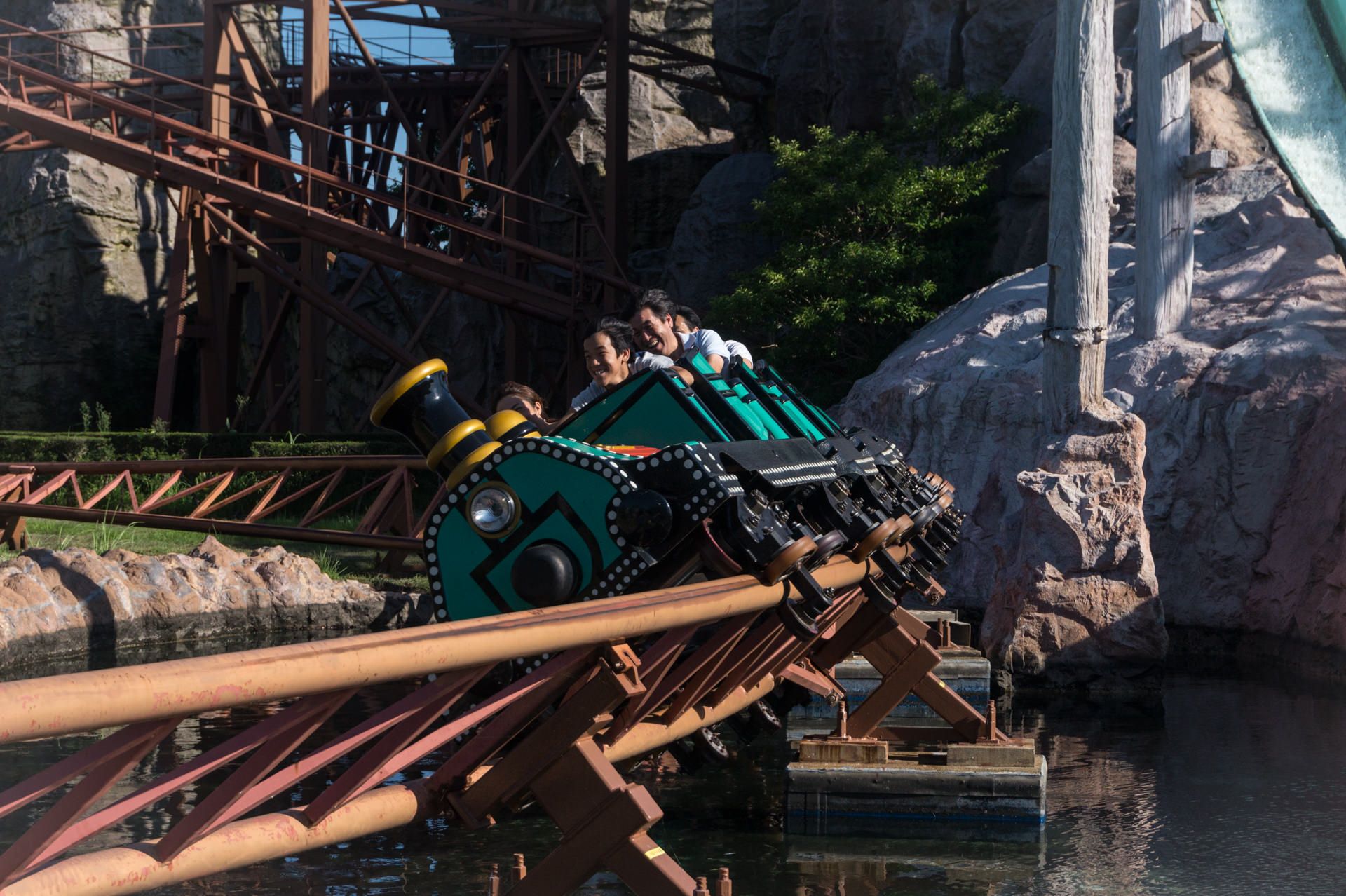
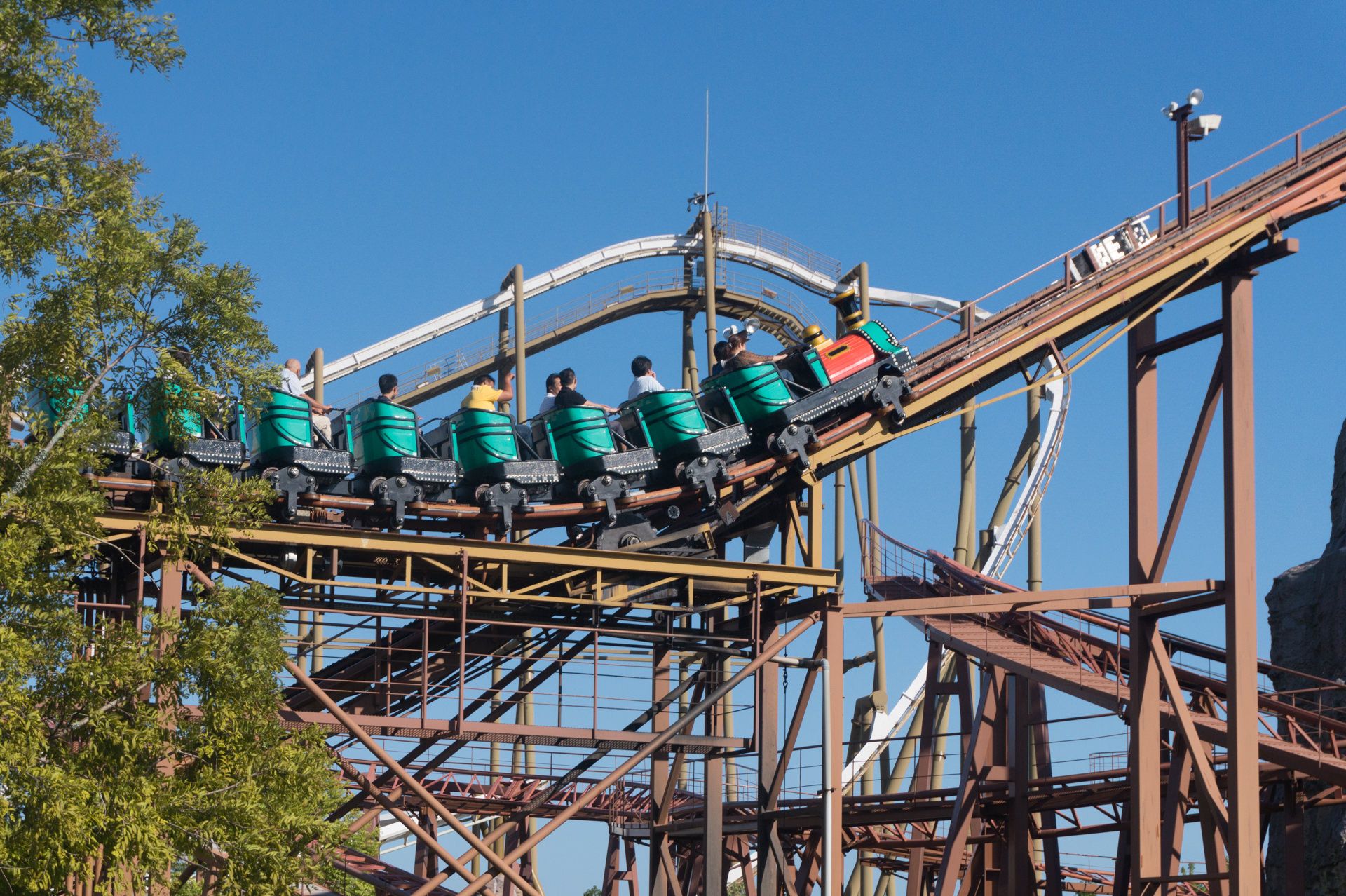
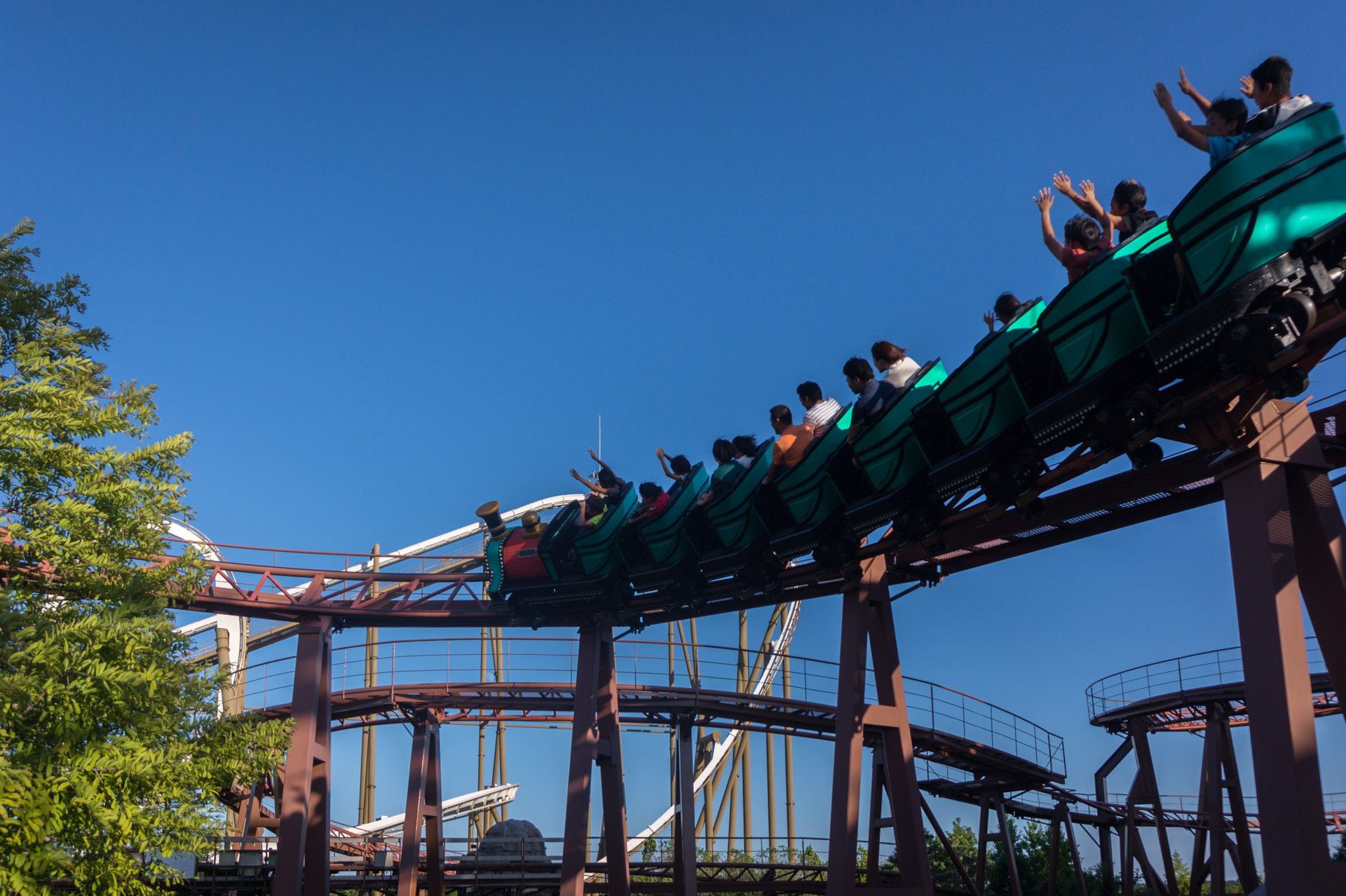
Five years after the opening of the Eurosat roller coaster, the Mack company was able to open another ride of this roller coaster model, but this time as a classically designed mine train. Gran Montserrat is therefore a very special ride in two respects, which we will now take a closer look at.
The ride begins with a left-hand turn into the first of the two lift hills. After reaching the starting height of 20m, we immediately plunge to the ground in a steeply descending right turn, reaching a speed of 66km/h. With a lot of pressure we cross the first valley, whereupon we gain height on a flat ramp leading to the left along the log flume. In a serpentine fashion, we now make a right and a left turn above the water ride, whereupon we plunge down a flat ramp to the ground and whiz over it in a wide right turn. After a short climb, we immediately reach the second lift hill parallel to the first.
Once again at 20m, we now disengage a little more leisurely and as a result dedicate ourselves to a flat downhill straight with a subsequent 180° helix. We change direction with momentum and reach the ground again after a left-hand bend, which is now quite steep. After another extremely pressurised valley, a relatively tight right turn follows, which takes us far up. High above the log flume, we now pass through a straight and then two downward helices, which are lined up in the shape of a figure eight and are first passed through to the right and then to the left. We then reach the final brake of the ride.
Gran Montserrat is a nice family roller coaster that is extremely fast and punchy in some places. In short, the Mack Rides Mine Train is quite appealing – just don’t make the mistake of comparing it to indoor roller coasters of the same design. The ride characteristics are particularly positive, as they are smooth and hardly distinguishable from modern rides by the manufacturer.
Batalla del Alcázar “Adelante”
In the immediate vicinity of the mine roller coaster is the entrance to the interactive dark ride Batalla del Alcázar “Adelante” by the Japanese manufacturer Senyo. As always with this type of dark ride, you shoot at worm-like animatronics and other enemies, but the highlight of this ride is that the passenger gondolas can additionally be moved transversely to the direction of travel, which has enhanced the already very great ride even more.
Kiddy Montserrat
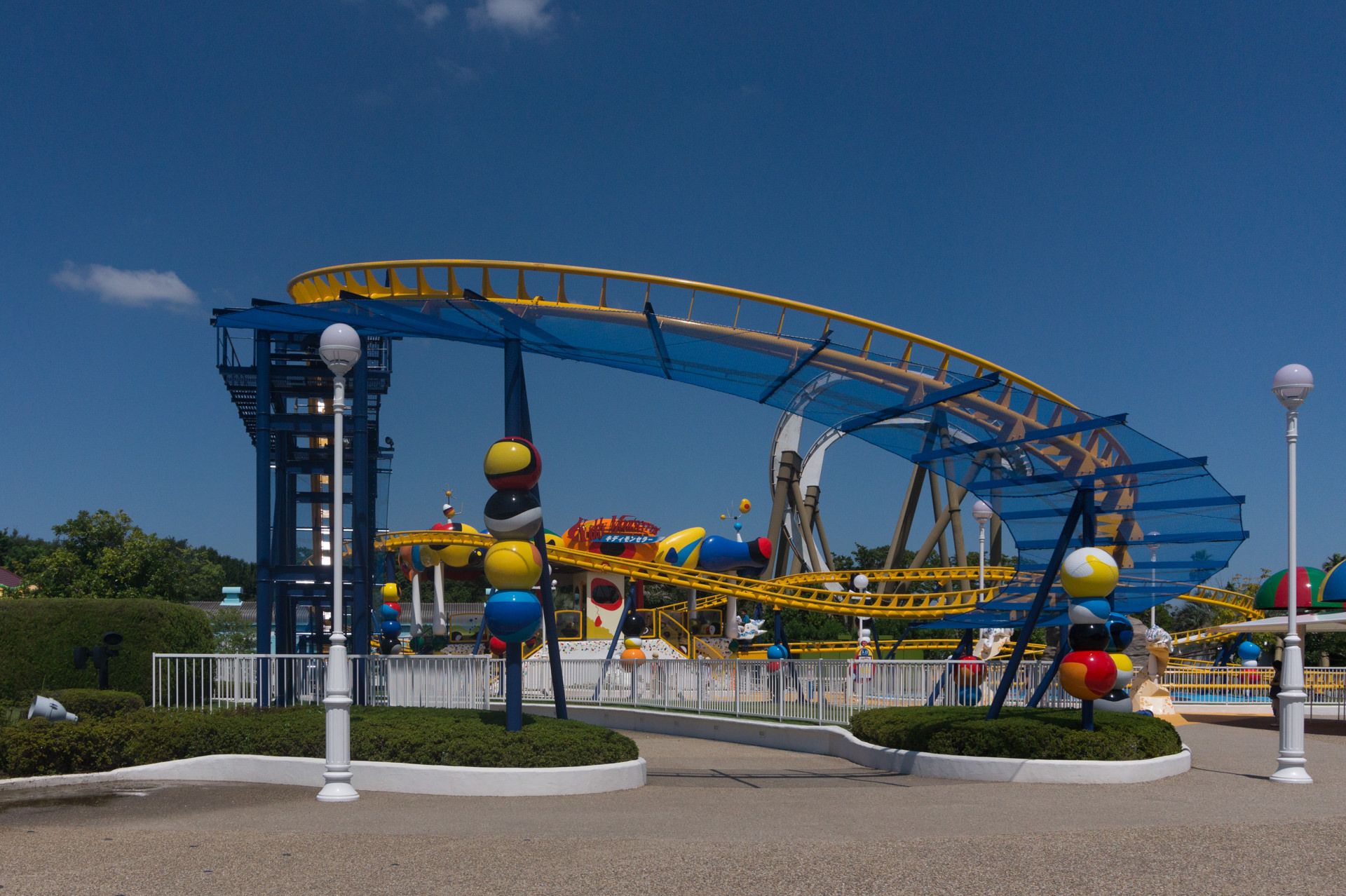
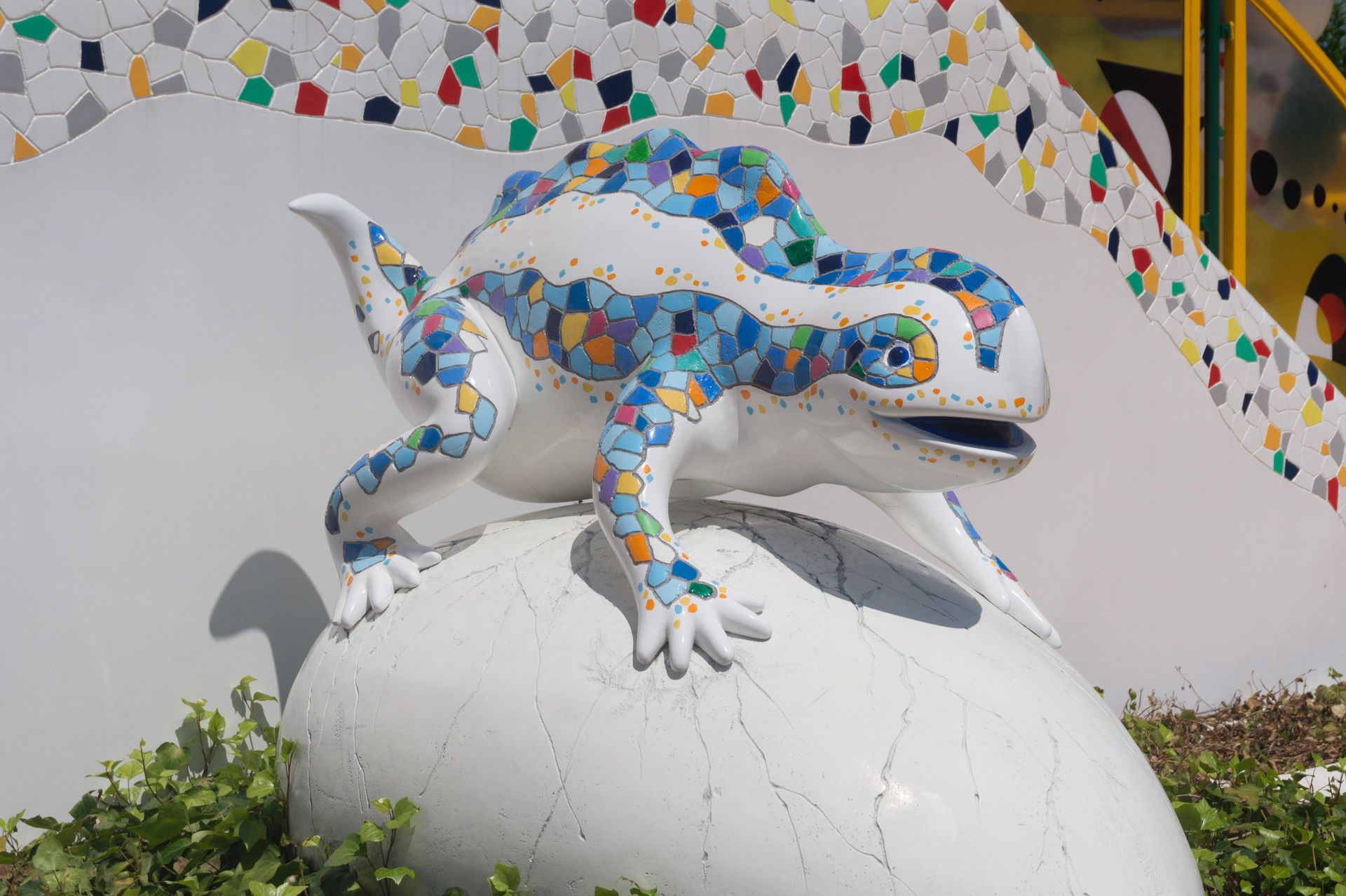
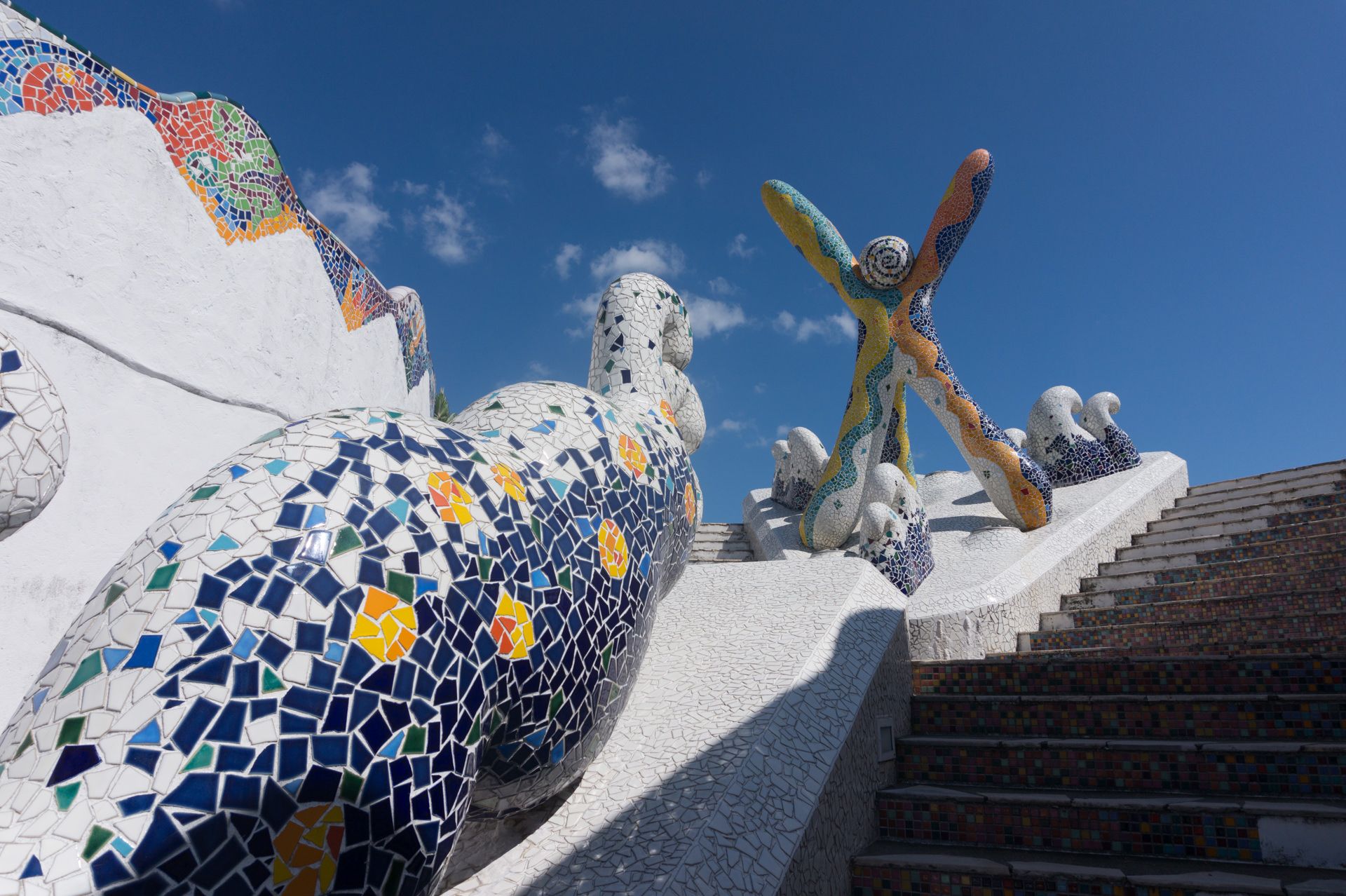
Parque España’s newest roller coaster is the Kiddy Montserrat children’s roller coaster, which, despite its name, does not ride through the artificial Montserrat mountain range. With a height of 8.5m and a length of 216m, the Mosaic Salamander takes you through a shallow left turn after the lift hill, followed by a wide right turn along the station. This is followed by a downward helix with an ever increasing radius before the station is reached again and the rather nice jet coaster ride ends.
Pyrenees
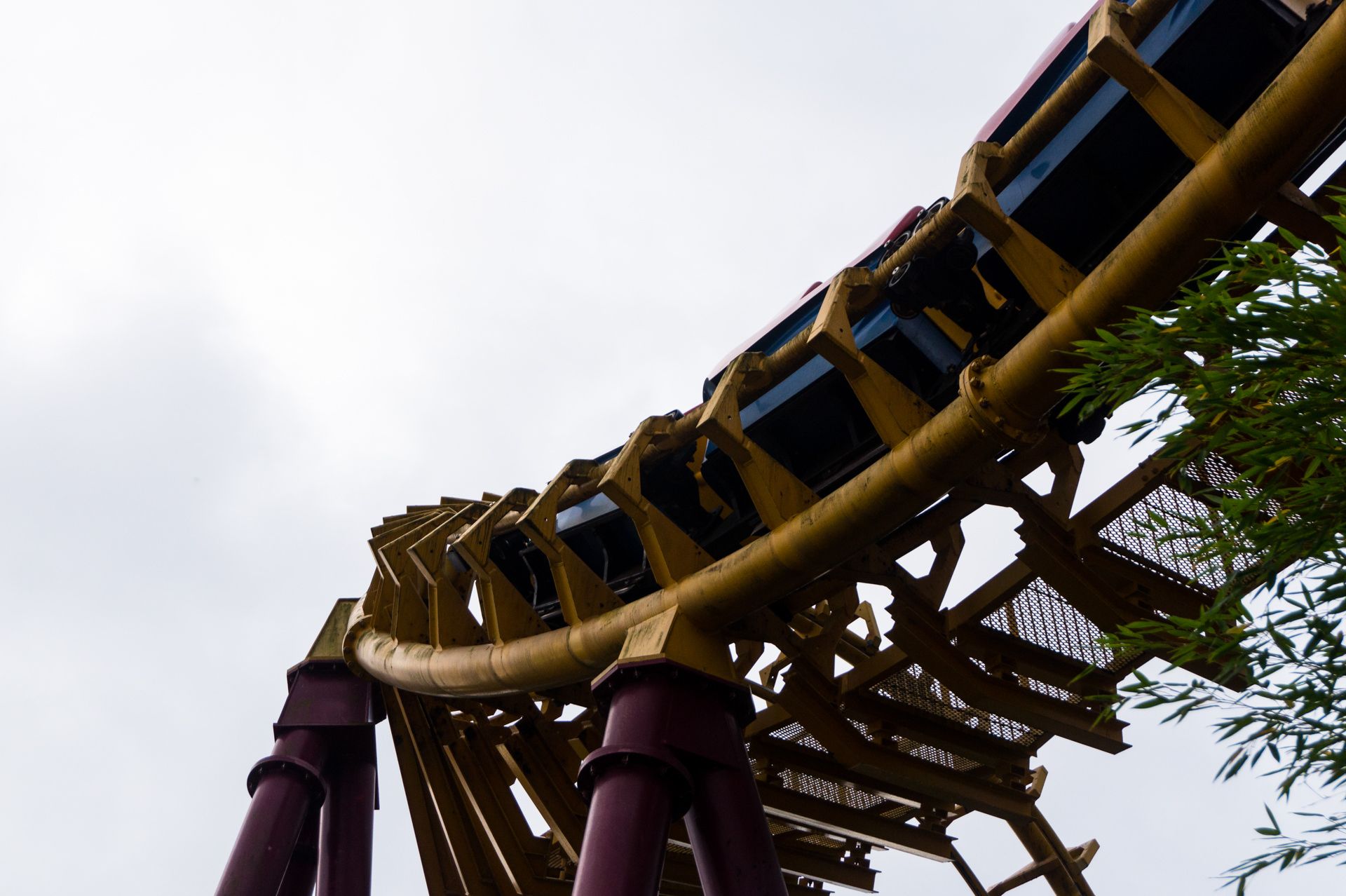
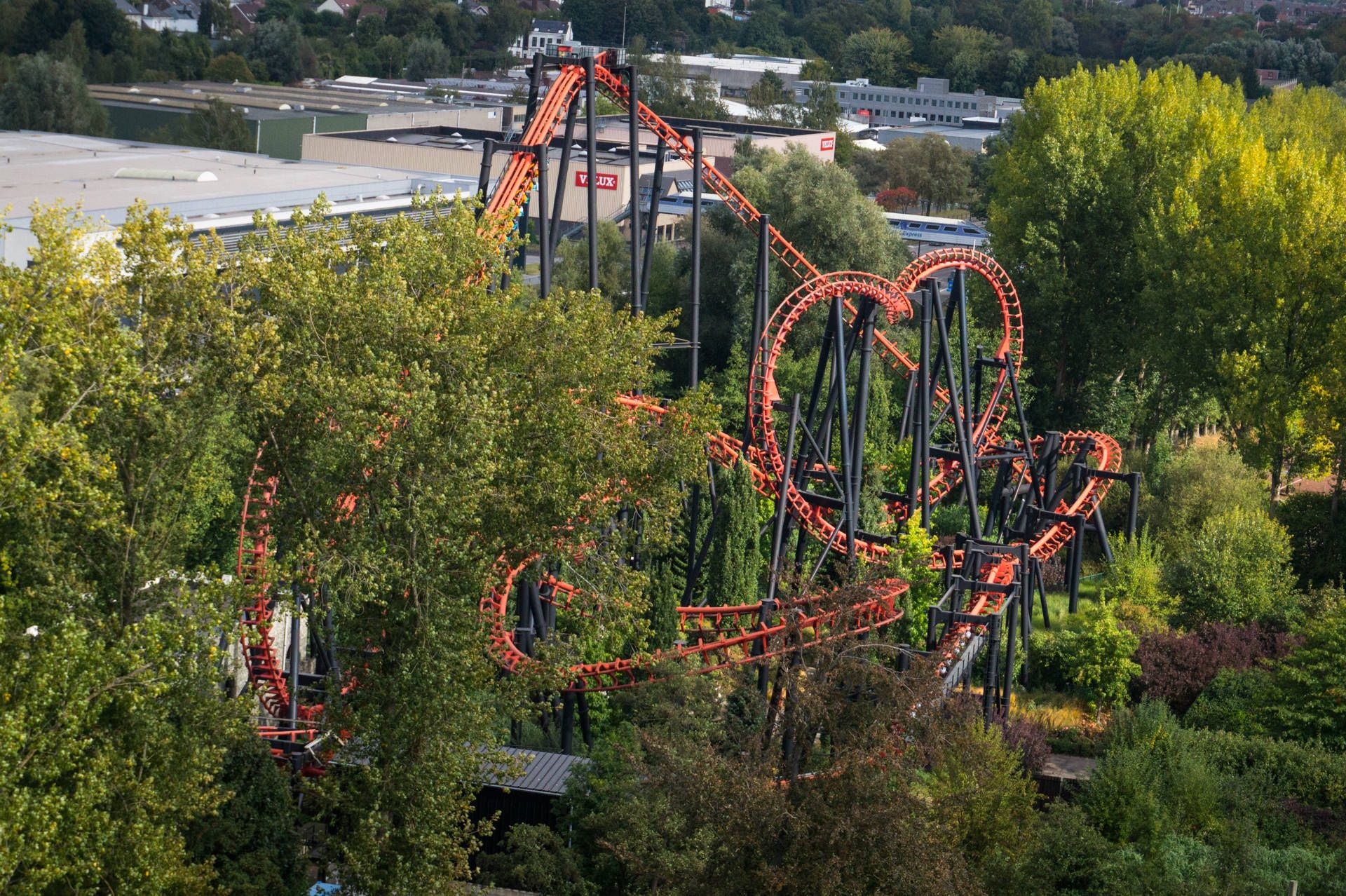
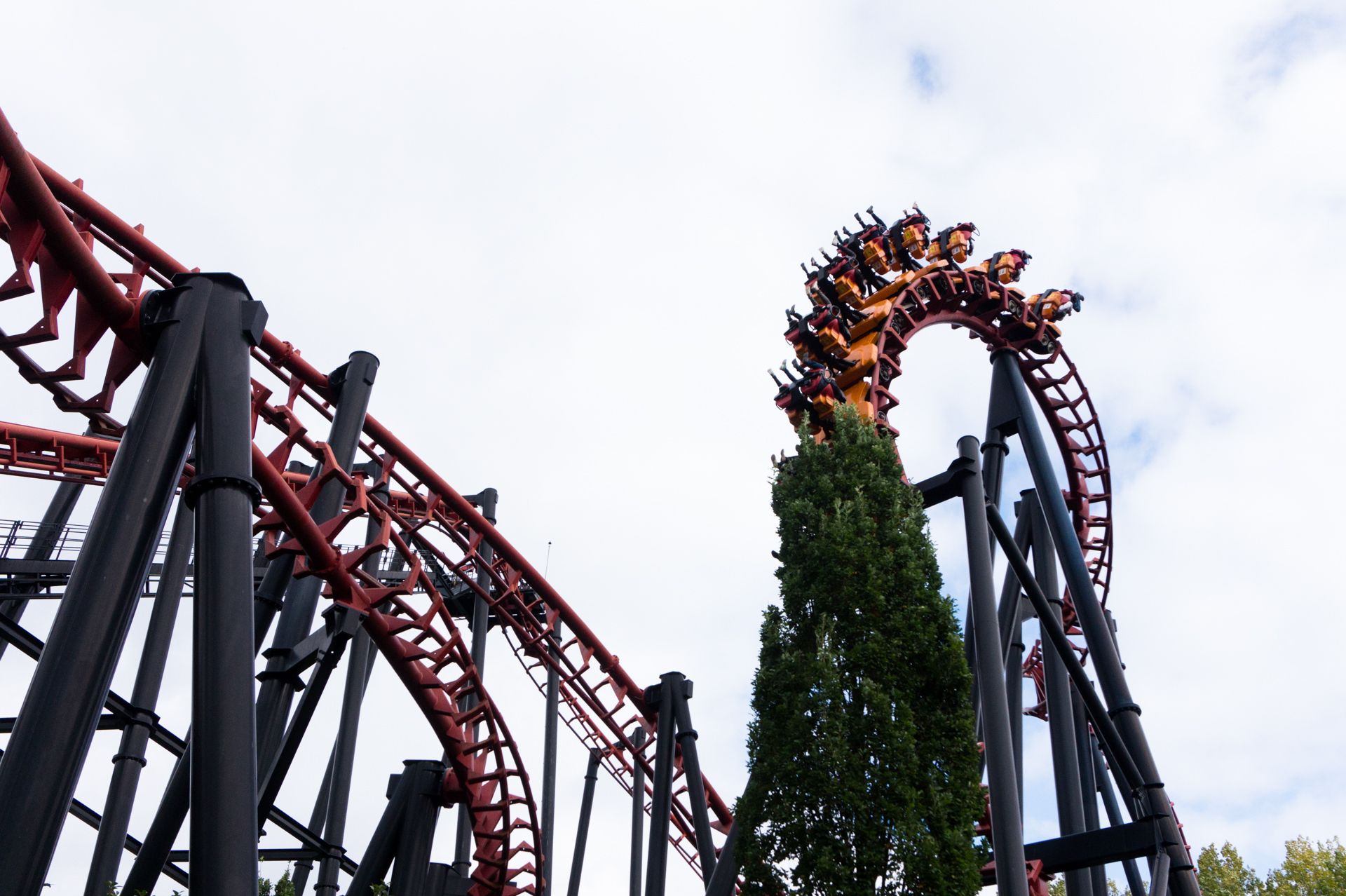
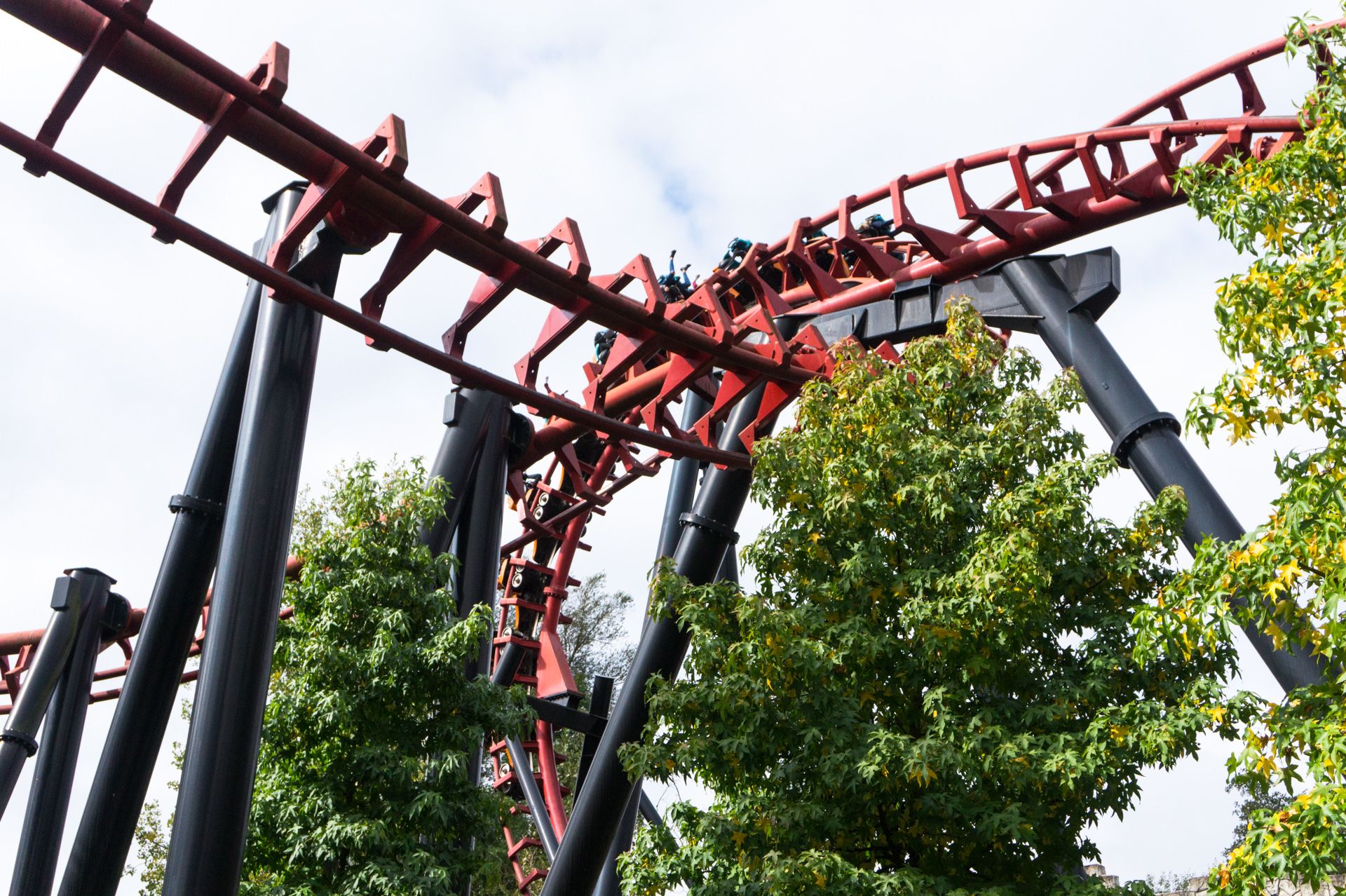
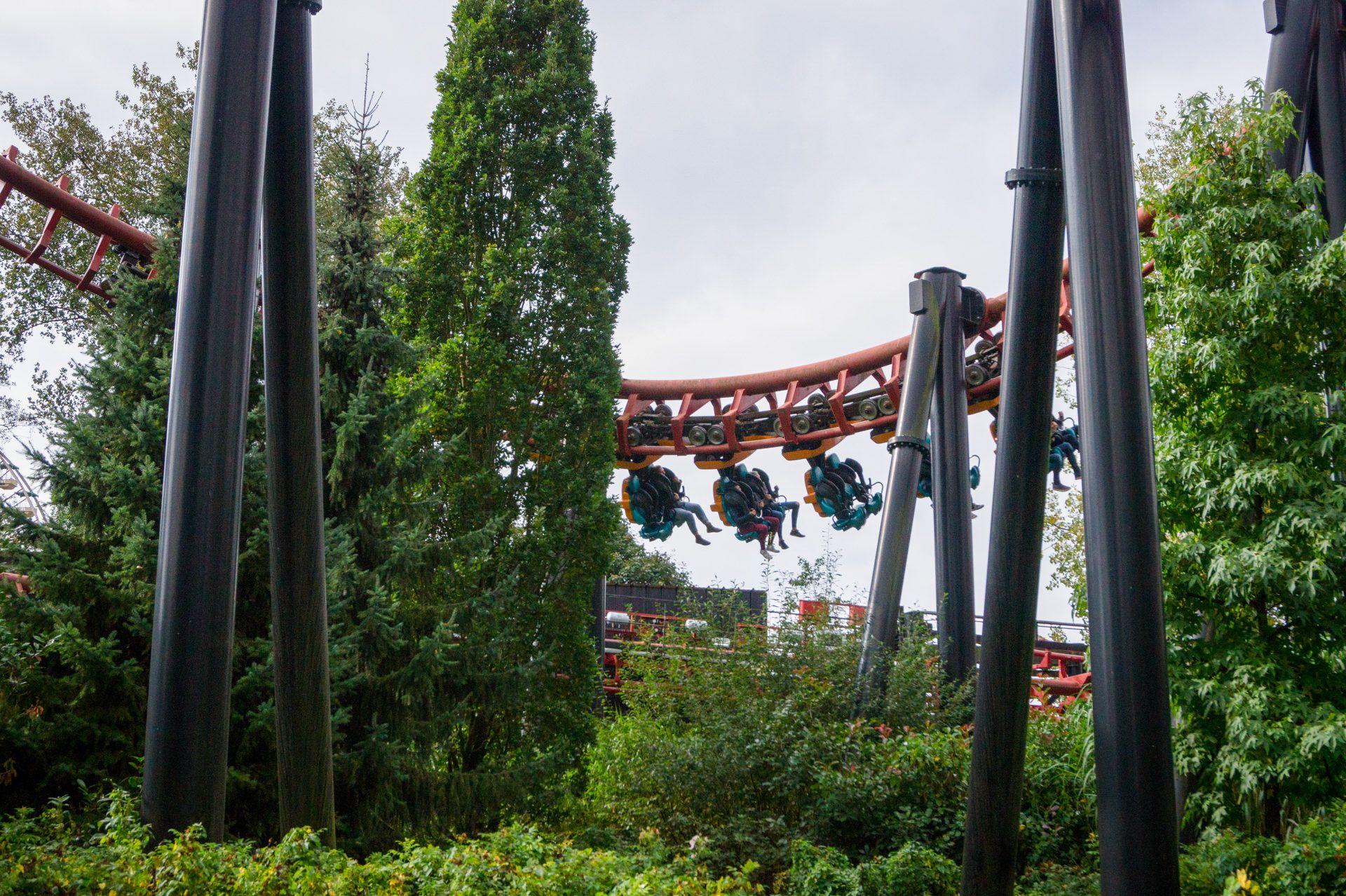
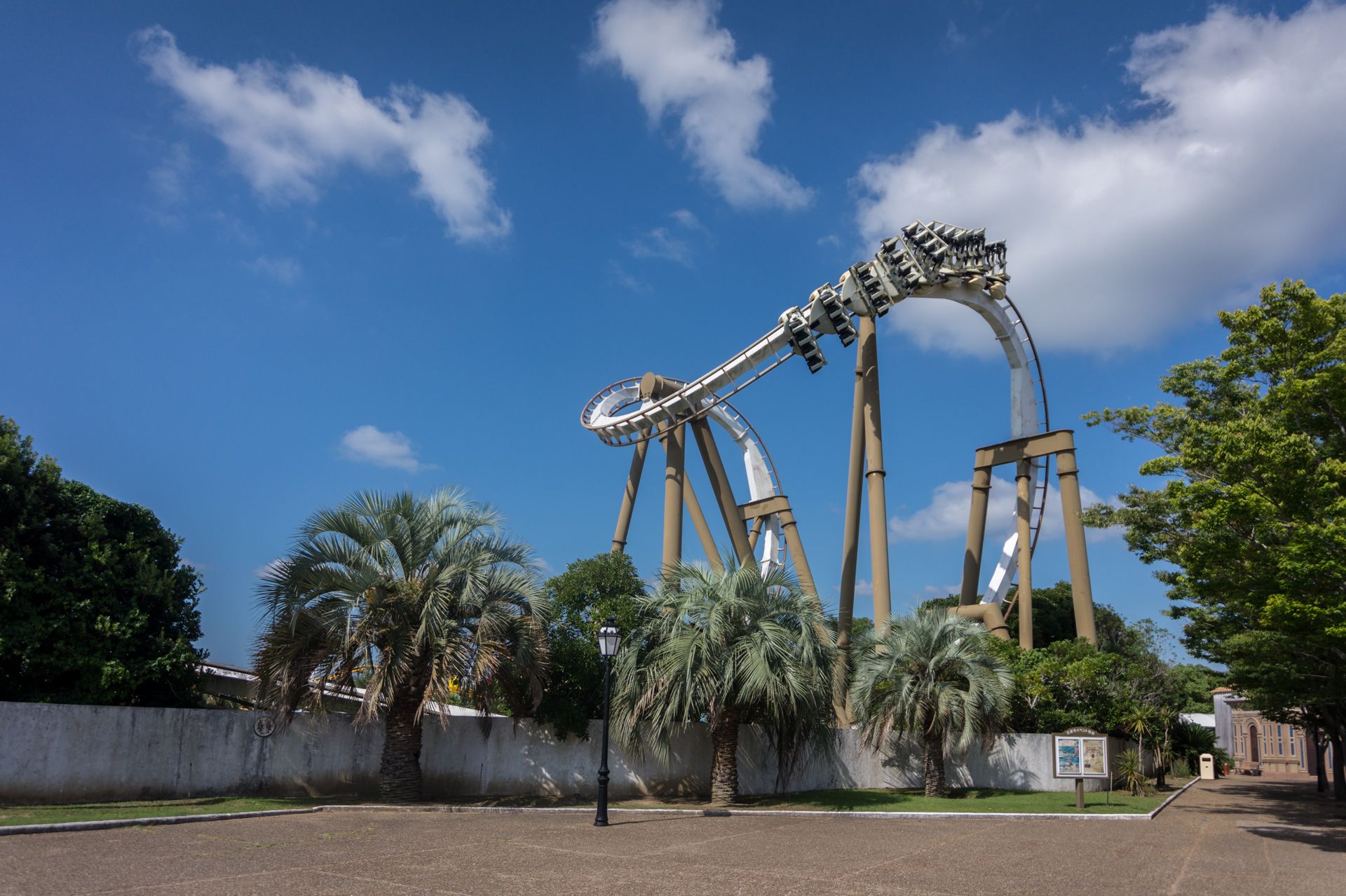
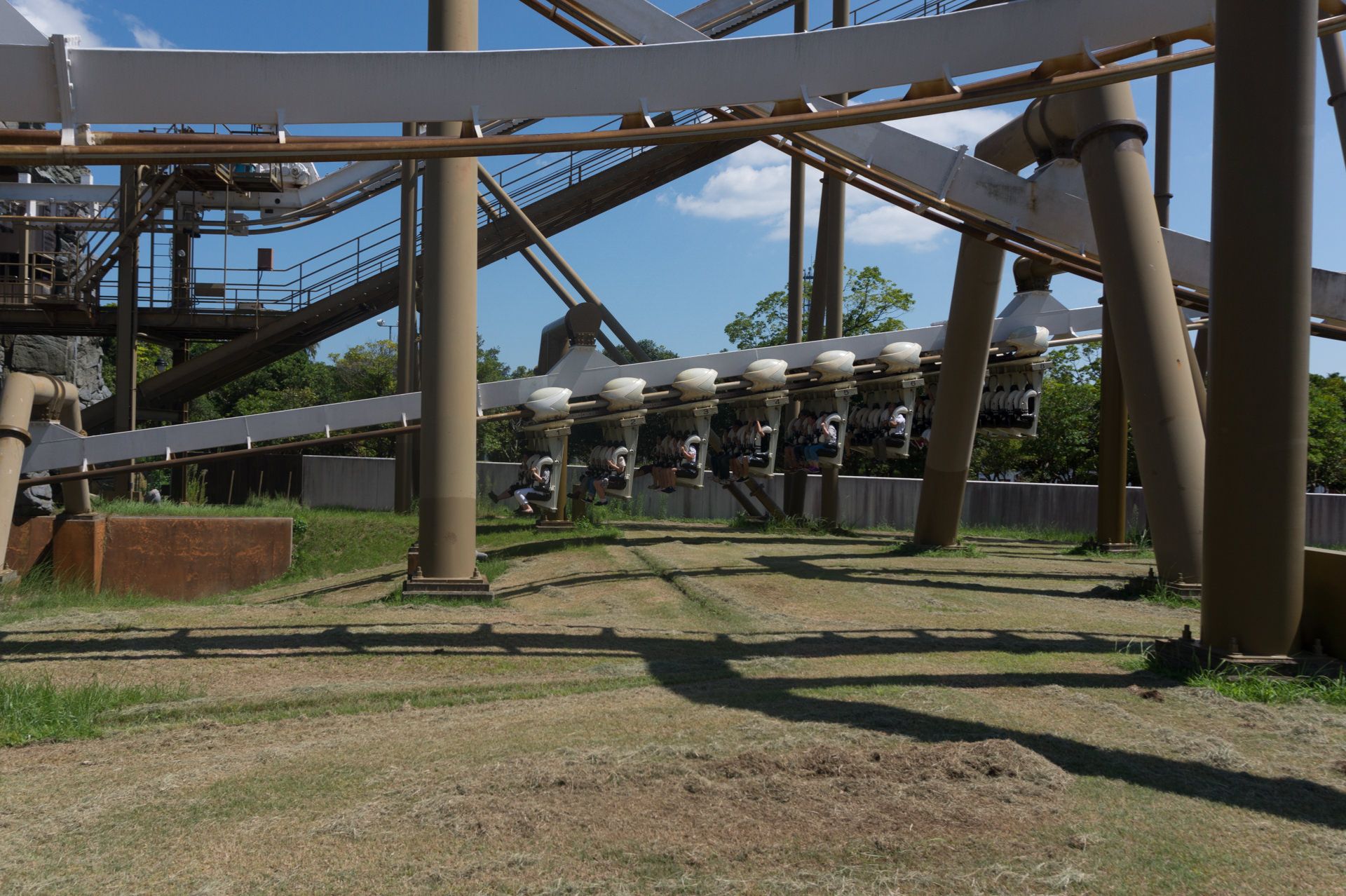
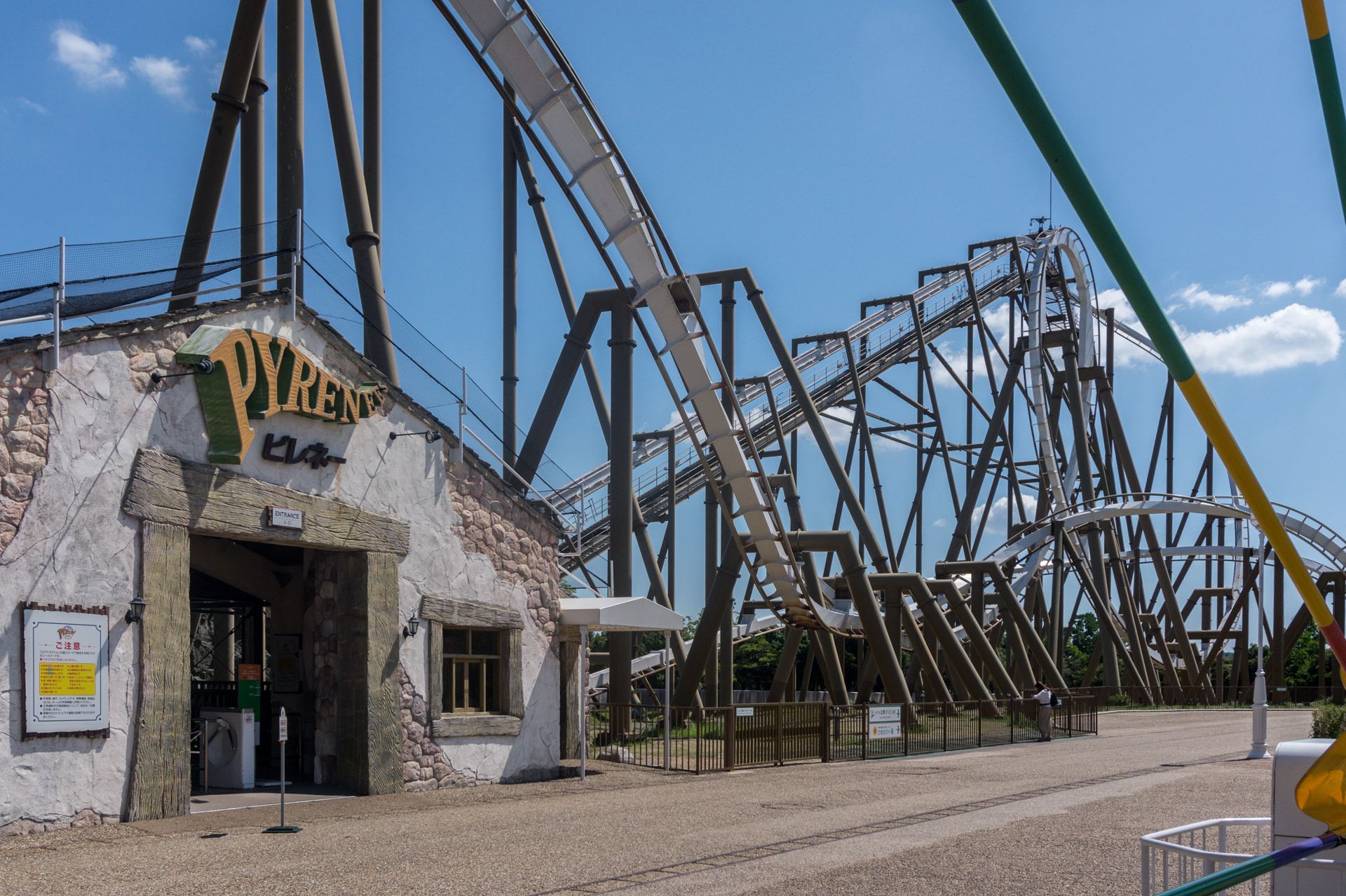
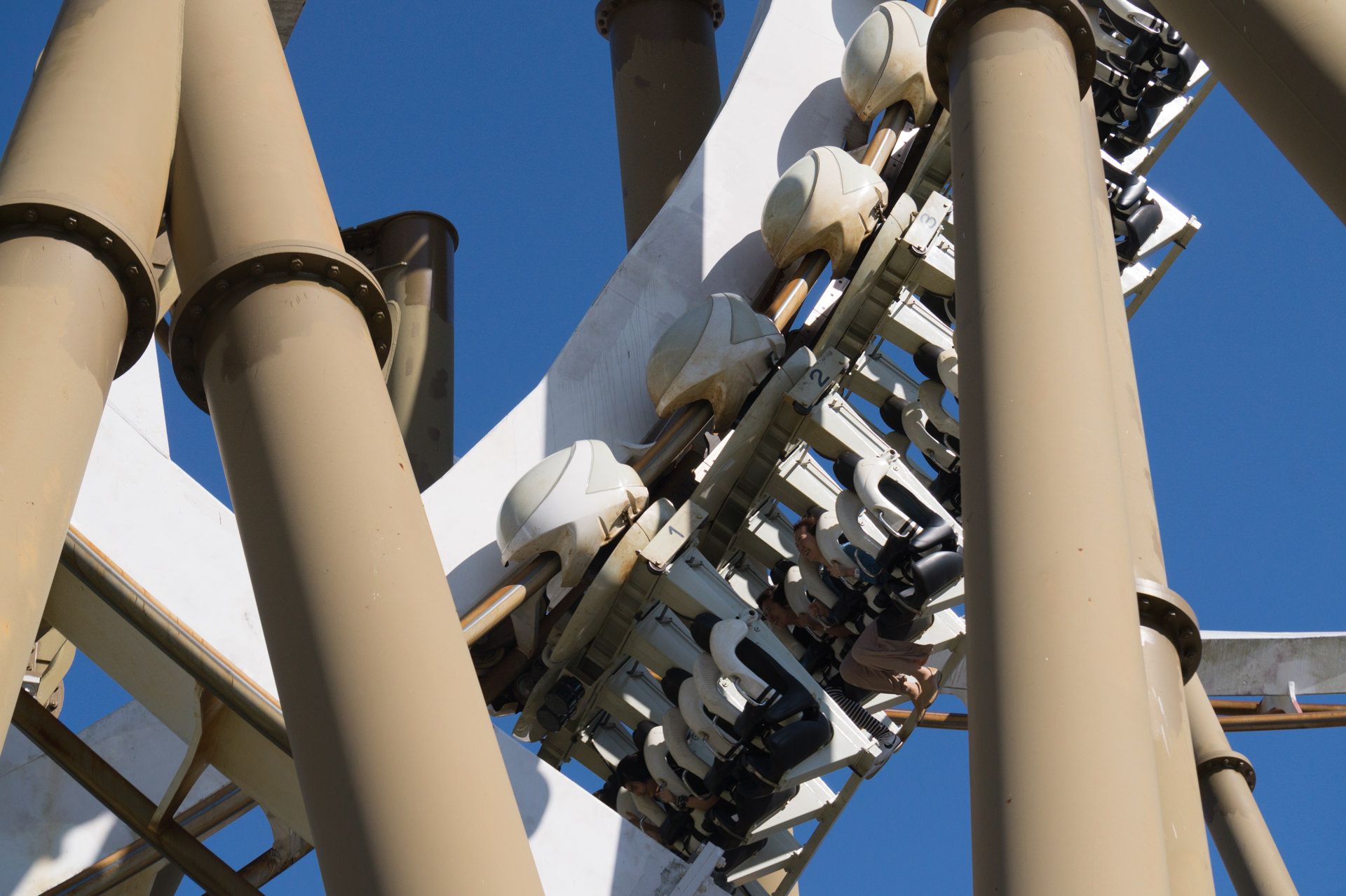
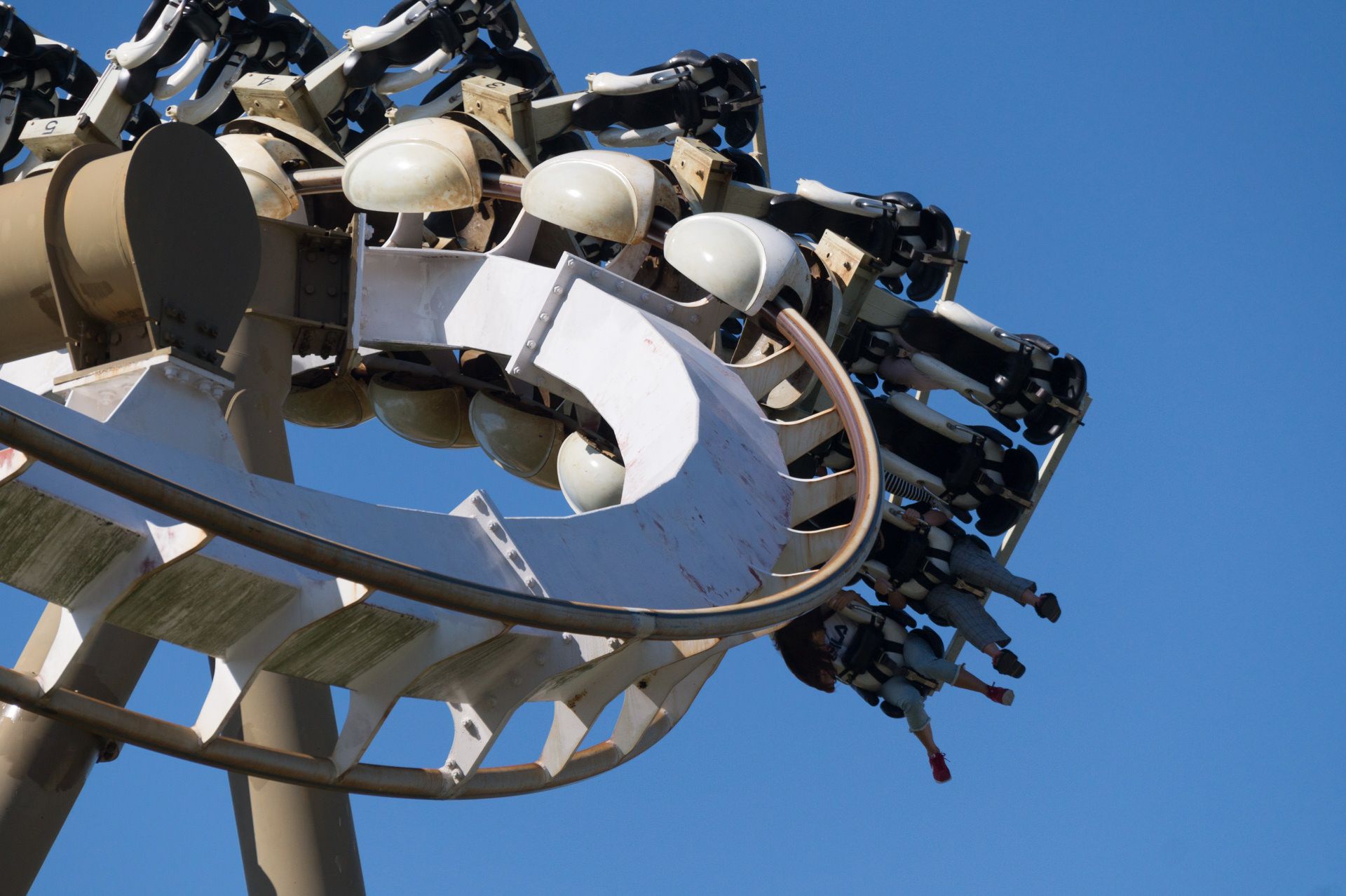
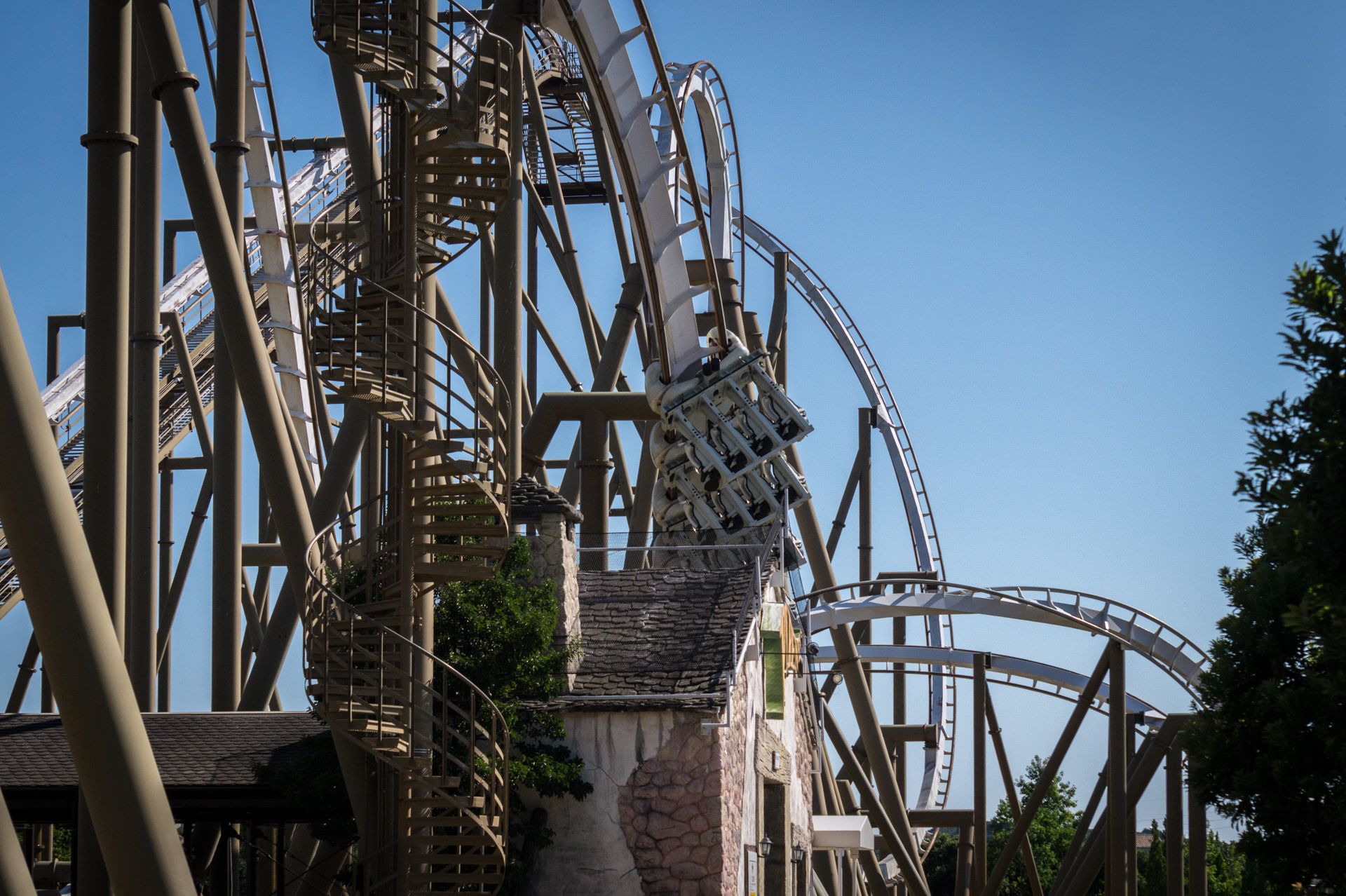
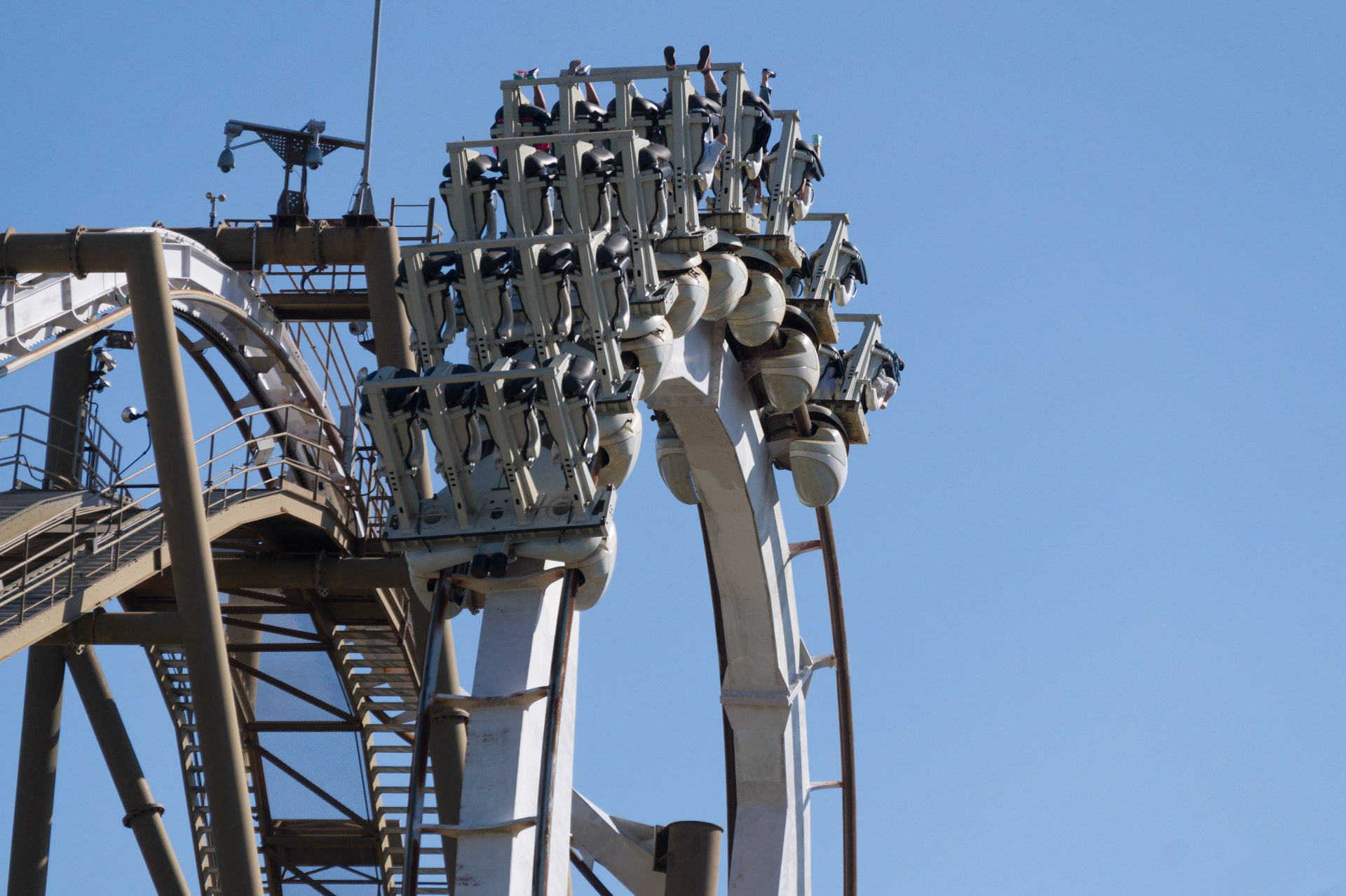
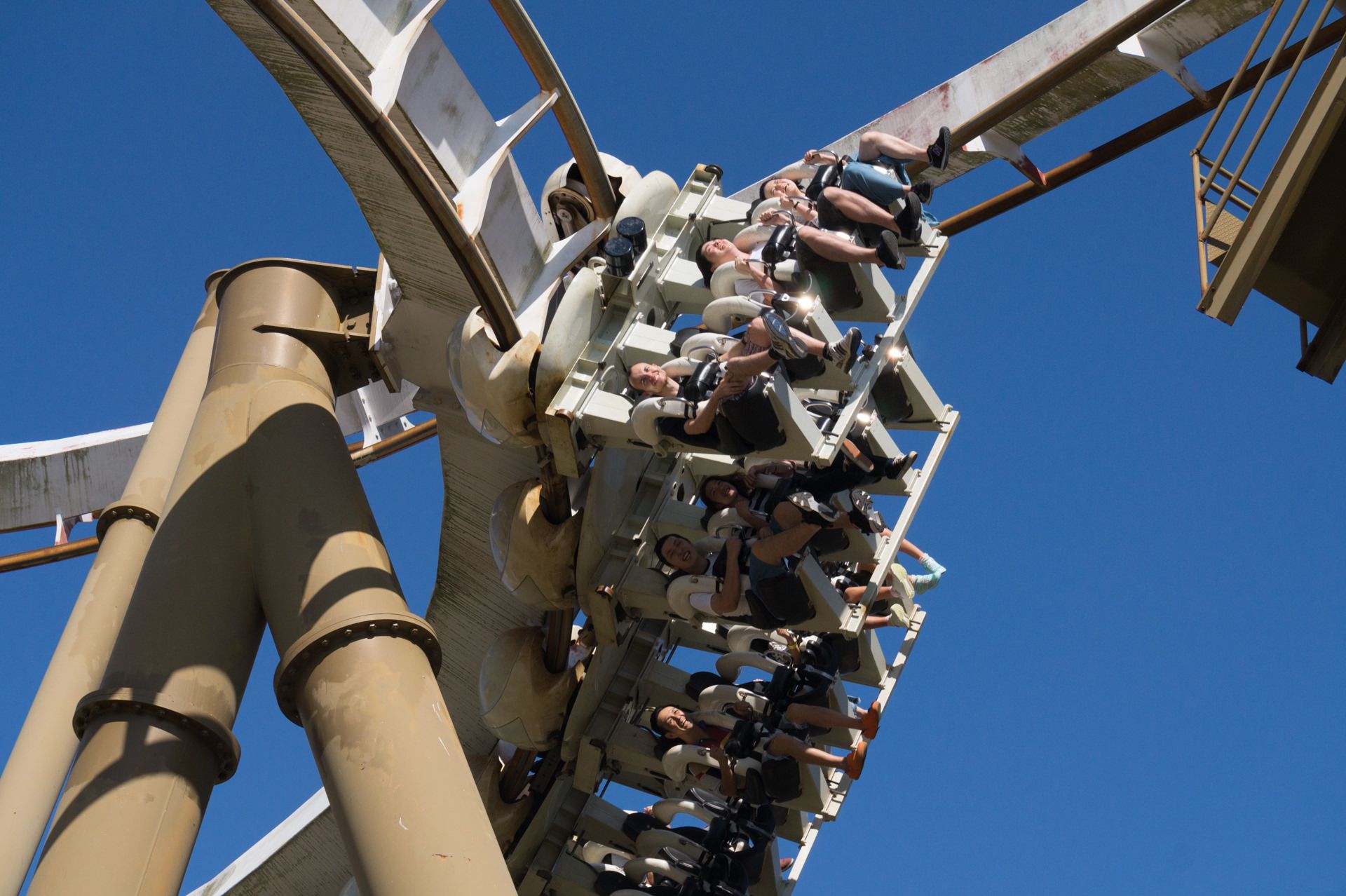
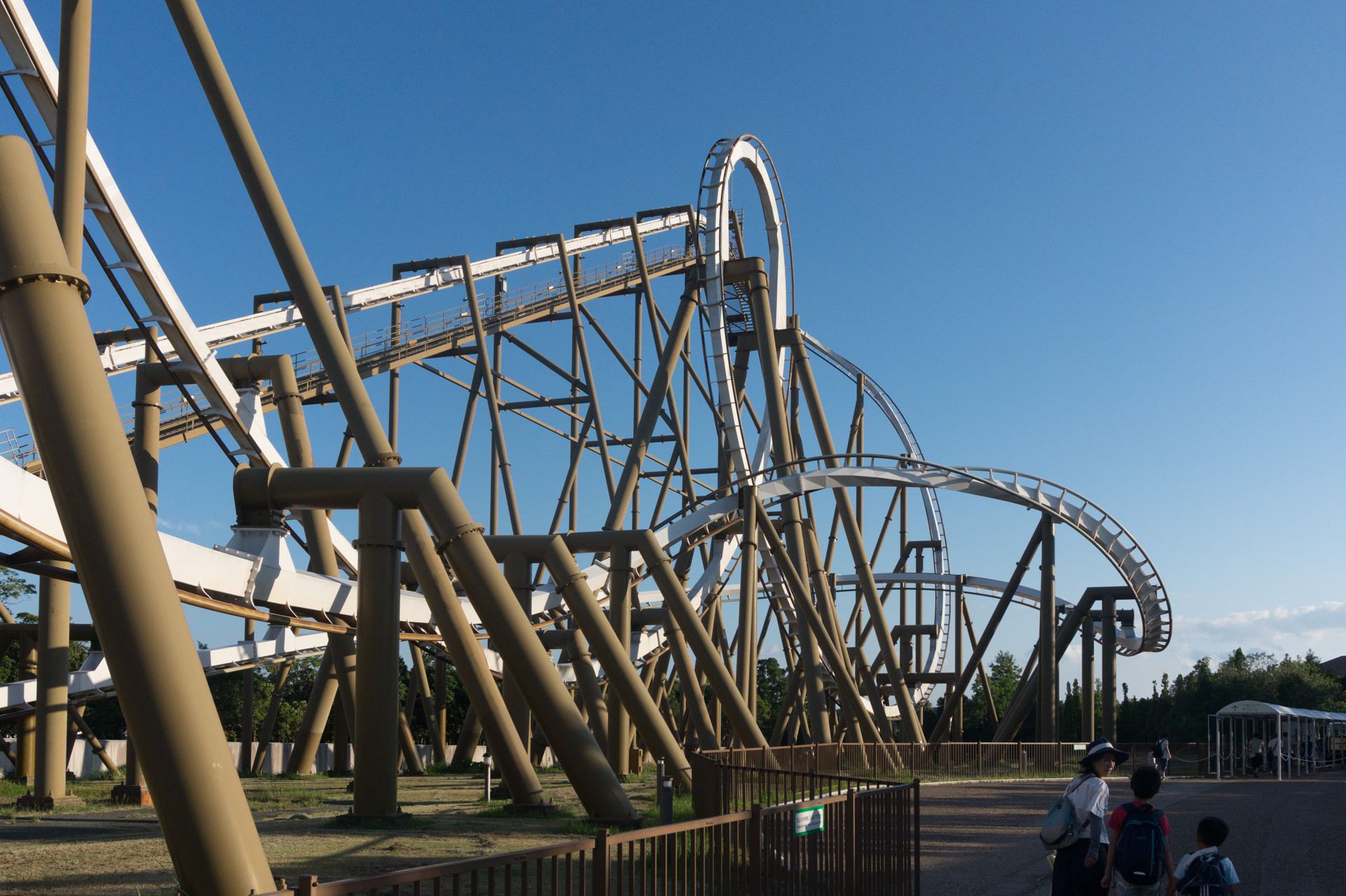
Let’s now turn to the last roller coaster of Parque España, the B&M Inverted Coaster Pyrenees. With a height of 45m and a length of 1234m, the ride is the top dog of the park and a real eye-catcher. But can the elongated inverter live up to the high expectations of the ride?
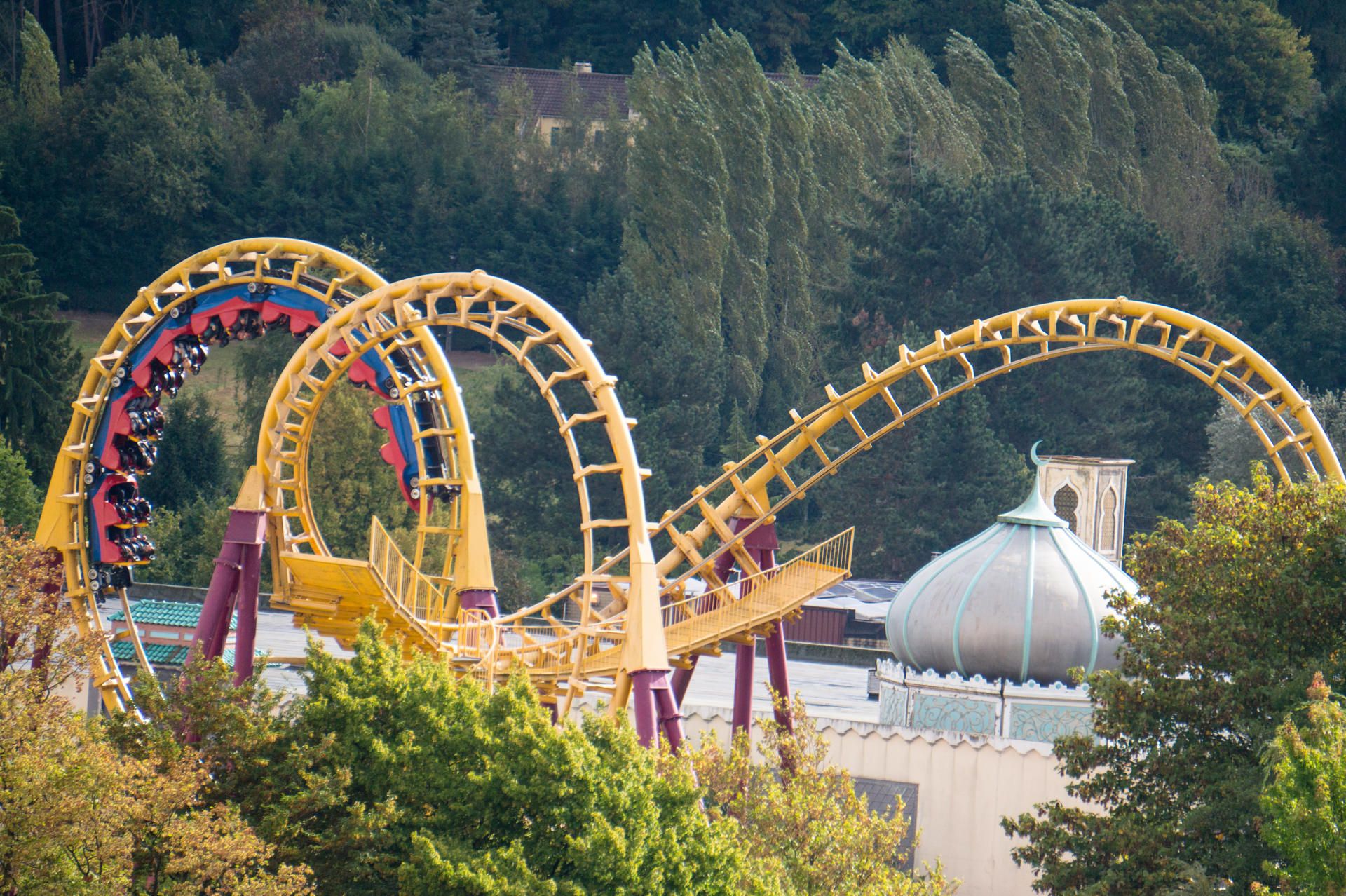
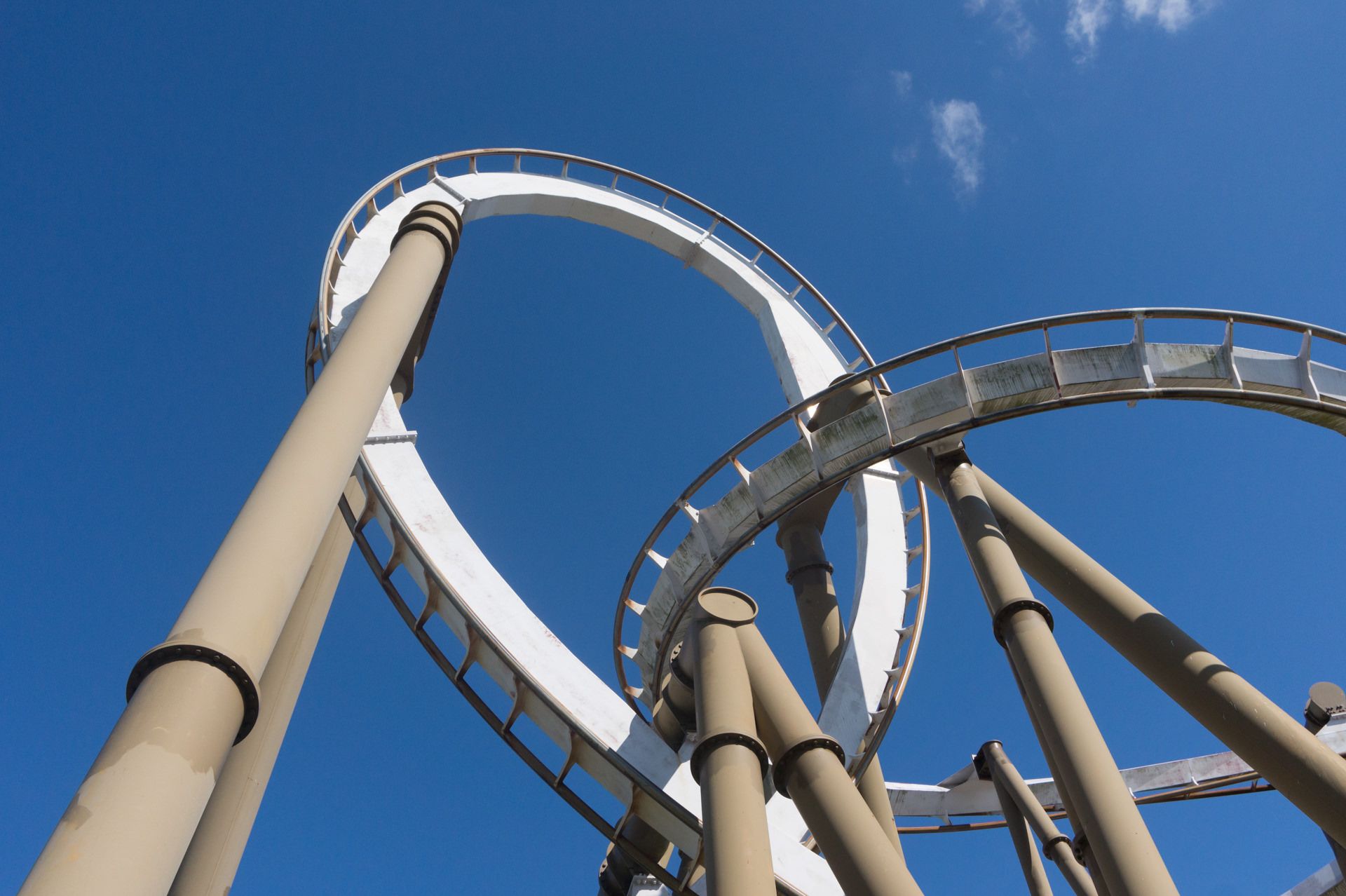
After passing through the deserted queue, we are immediately assigned to one of the front rows. After some time, the gates are opened and the train is quickly processed, so that we meet again in the lift a short time later. We cross the pre-drop with full vigour and immediately plunge towards the ground. What follows is an interplay of extremely pressure-rich valleys and beautiful loops, which are connected in the middle by a relatively tame zero-G roll. This is followed by a very long left turn close to the ground, which then turns into the Cobra Roll. We perform this inversion figure with the best of devotion and are turned upside down twice during the process. We pass through the next valley at high speed and immediately dedicate ourselves to the ascent into the block brake. We go through a long right-hand bend that narrows more and more towards the end and finally wraps around the second loop in an intense helix.
Without reducing the speed in the block brake, it pulls us towards the abyss one more time, whereupon the world is turned upside down for the last time in an exceedingly rapid corkscrew. Now we cross the track of the first drop in a left turn and pick up speed on a very long straight for the return to the station. With a lot of momentum we shoot over the queue and after a tight turning curve we soon find ourselves in the final brake and the station.
Pyrenees is a very nice inverted coaster of larger construction, but unfortunately its peculiarities do not convince me personally. During the ride, there are simply far too many parts of the track that are only meant to stretch the ride, and the long downward ramp before the final hill just seems strange, both visually and in terms of the ride. However, that doesn’t mean that fans of the manufacturer’s big inverted coasters won’t get their money’s worth – the ride is perfectly fine.
Pictures Parque España






Conclusion Parque España
Parque España is a beautifully designed amusement park, but its best years are long behind it. Although the park has some top-class attractions, overall Parque España simply lacks the attractions to justify the high entrance fee and the time-consuming journey to the park. This is a pity, because the idea of running an amusement park with authentic food and appropriate cultural offerings of a country far away from the country in question is quite charming; but perhaps as a European visitor, one simply associates Spain more as a holiday destination and consequently feels a little more in tune with the theme than the Japanese tourists, whom the park is known to miss out on.
What is your opinion about the theme park Parque España? Just write it in the comment field below the report or visit our social media channels:
Click here for the next report of the Titanic Max Tour