A great Afternoon in De Panne

Preface

Years have passed since I first visited Plopsaland De Panne on a very busy Maundy Thursday. The catapult start roller coaster Anubis – The Ride was just four days old, but the amusement park could not convince me at all. With the derailment of their park railway, which back in the days was running through a large animal enclosure, my mood was down and I left the park early.

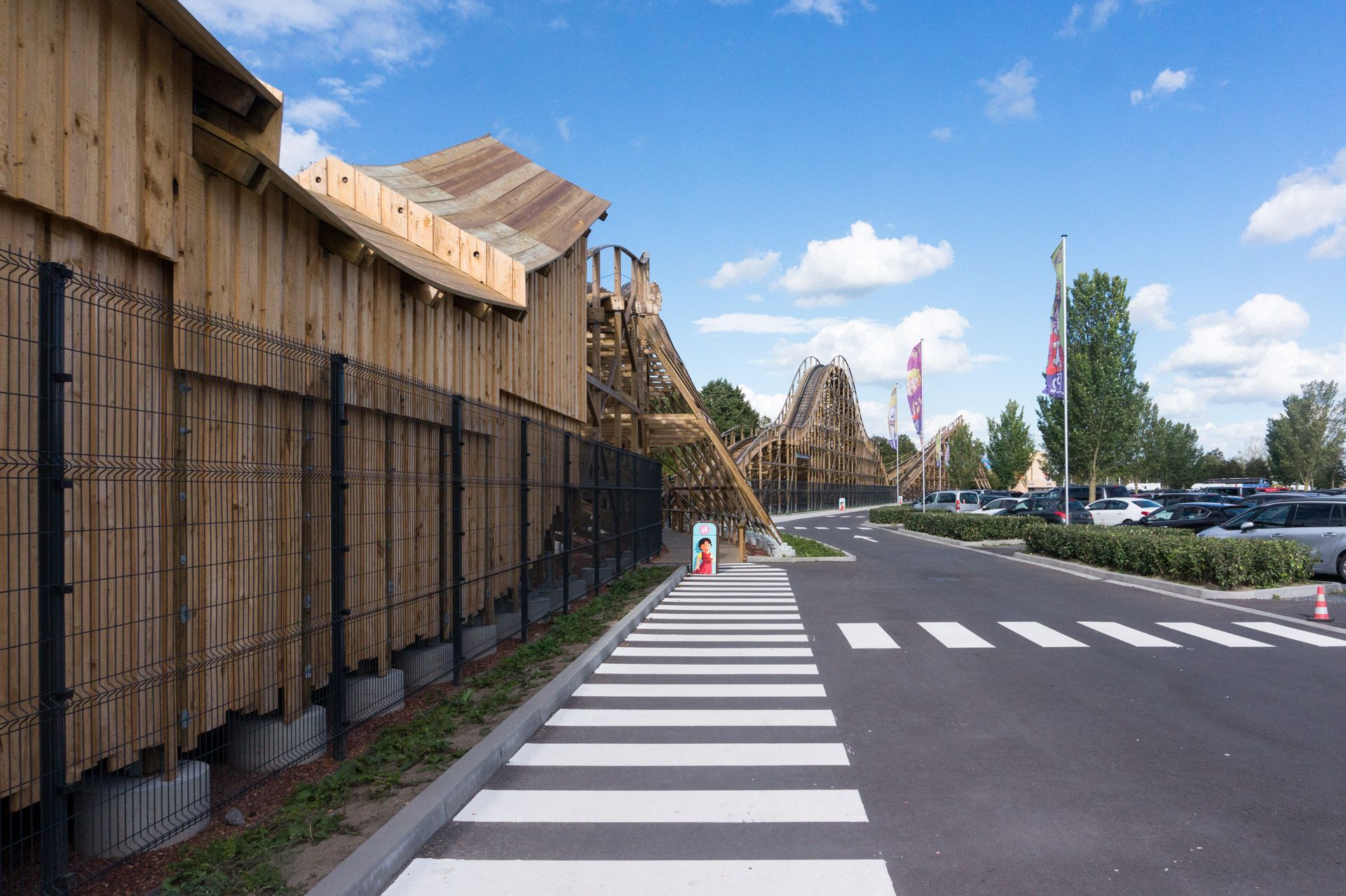
My memories of Plopsaland have been negatively influenced since then, but the constant development in De Panne was always of interest. Theme areas have been restructured or pounded out of the ground, a theatre has been built, as well as a very interesting swimming pool. With the construction of the wooden roller coaster Heidi – The Ride and the planned opening a visit was unavoidable, which is why I bought a Plopsa Funcard with parking pass (very worthwhile, especially regarding the Benelux parking fees) in the Holiday Park at the beginning of the season. Unfortunately, the wooden roller coaster would not open this year due to noise problems.

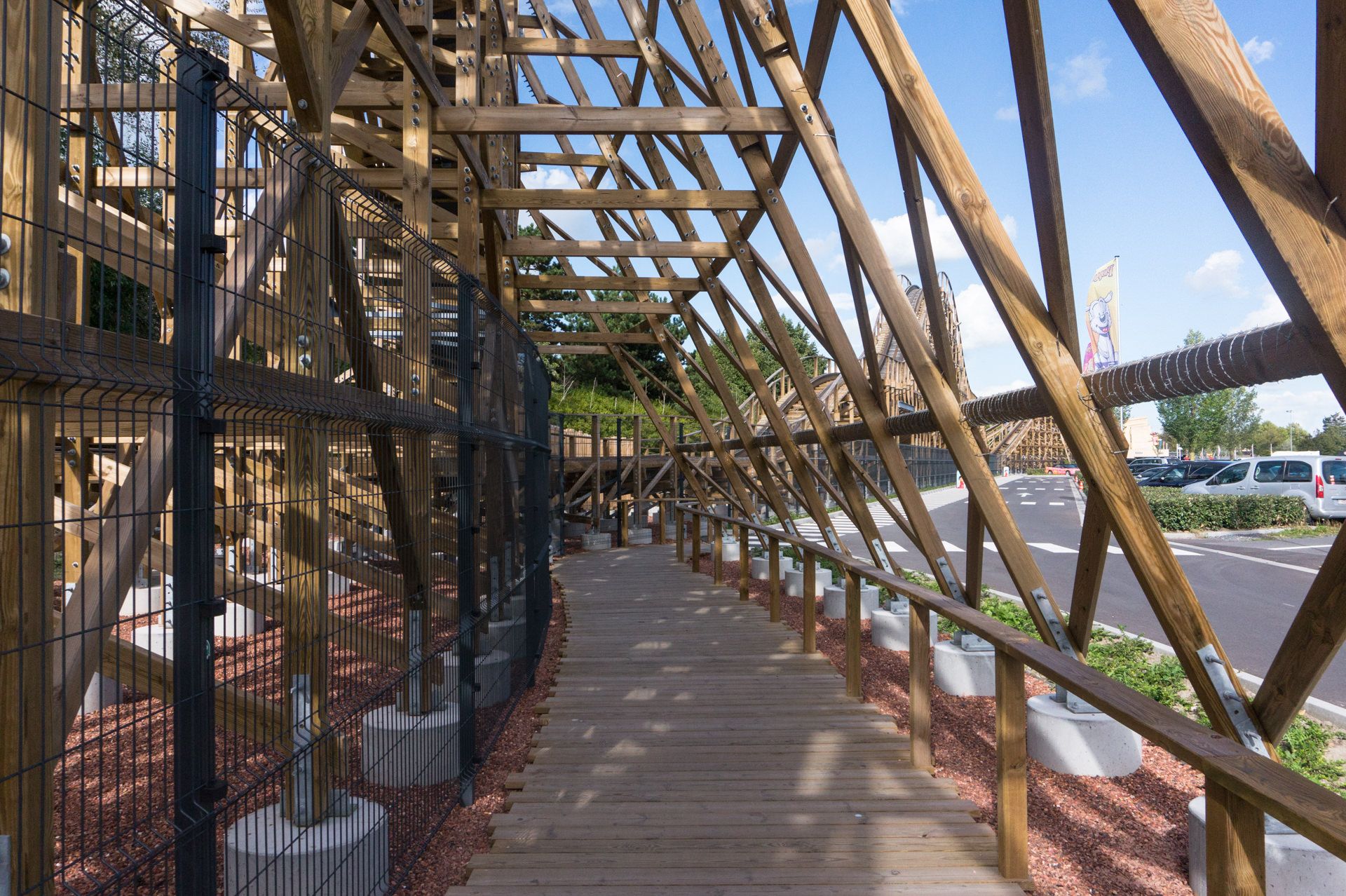
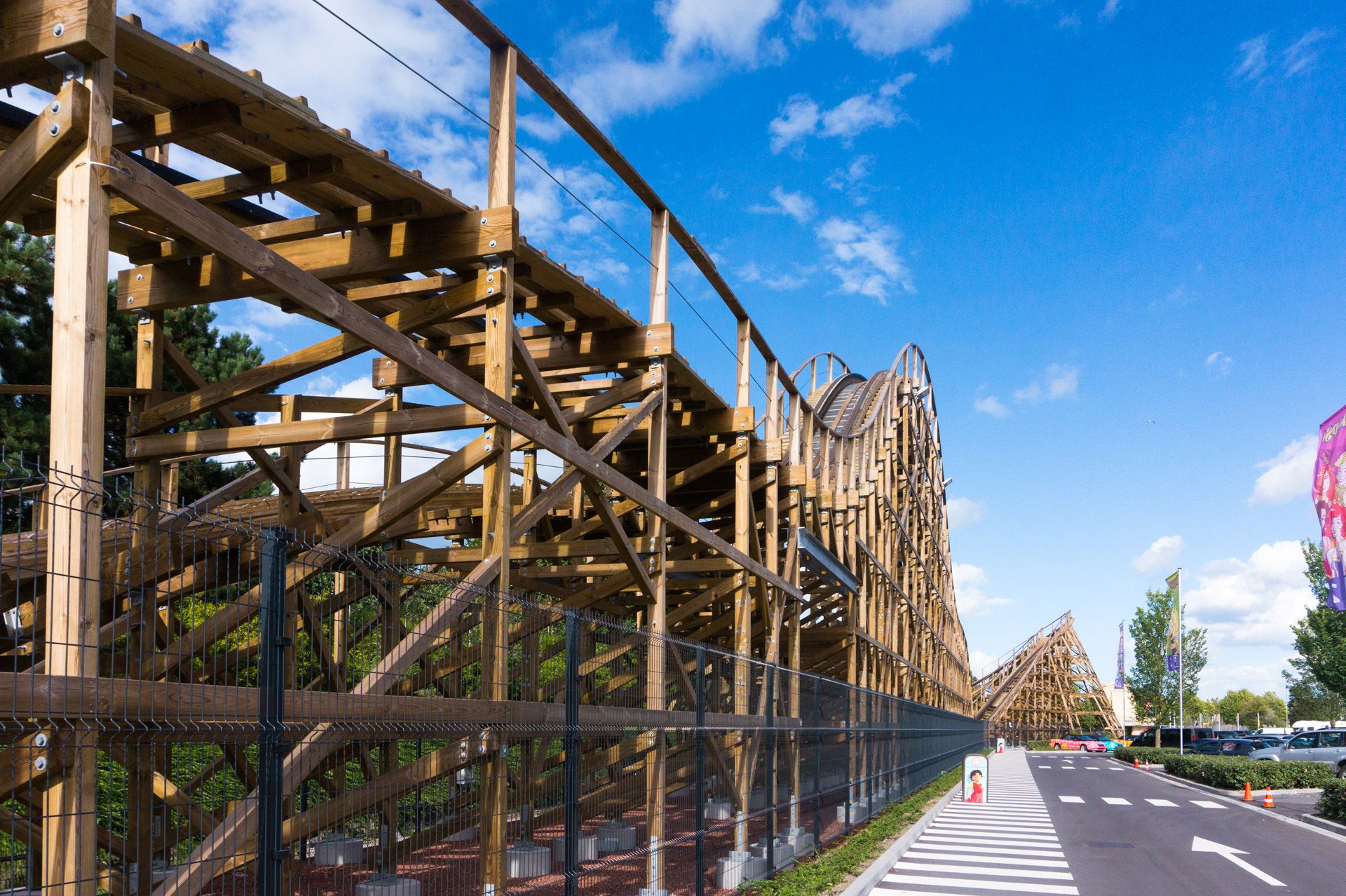
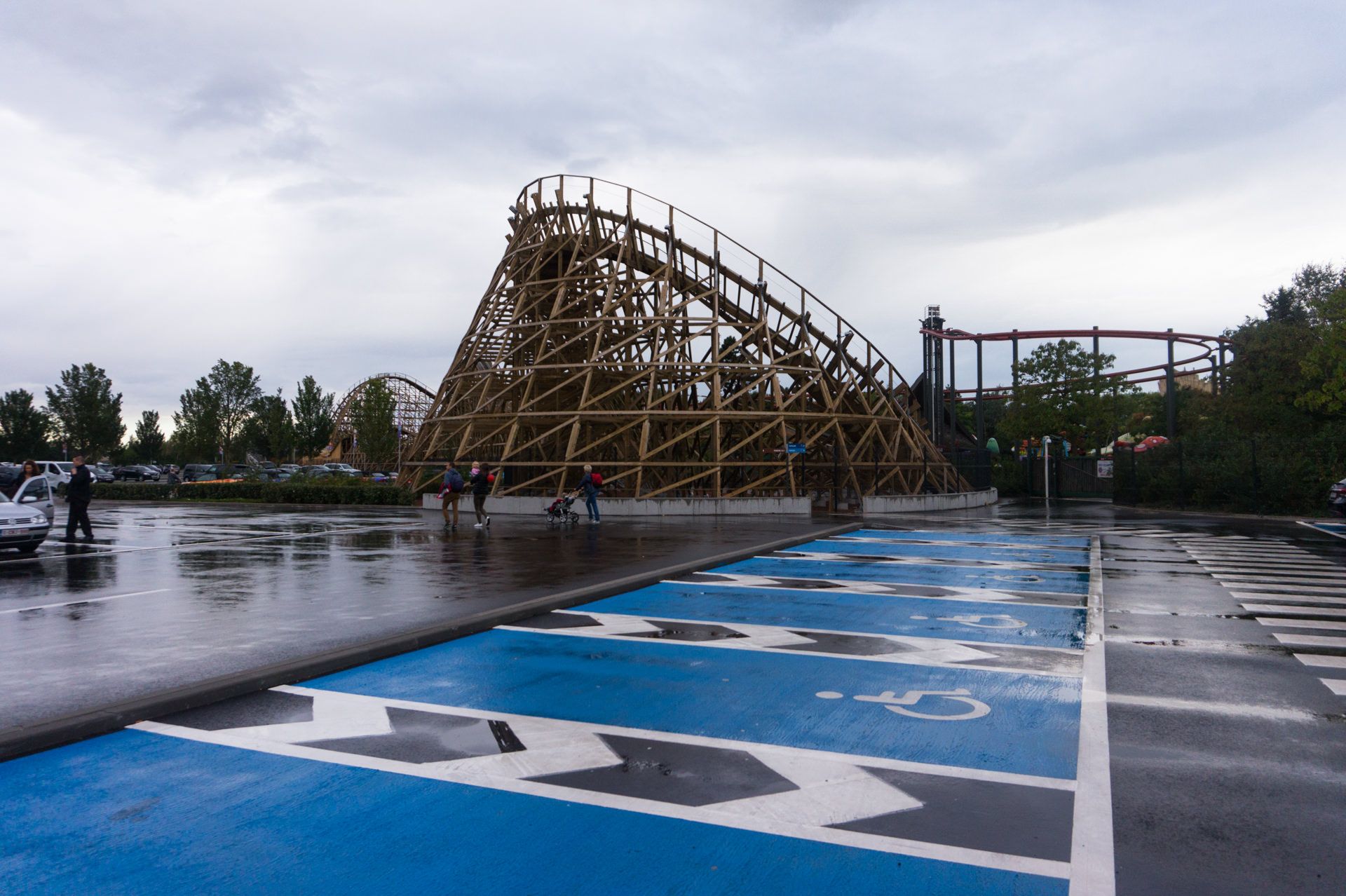
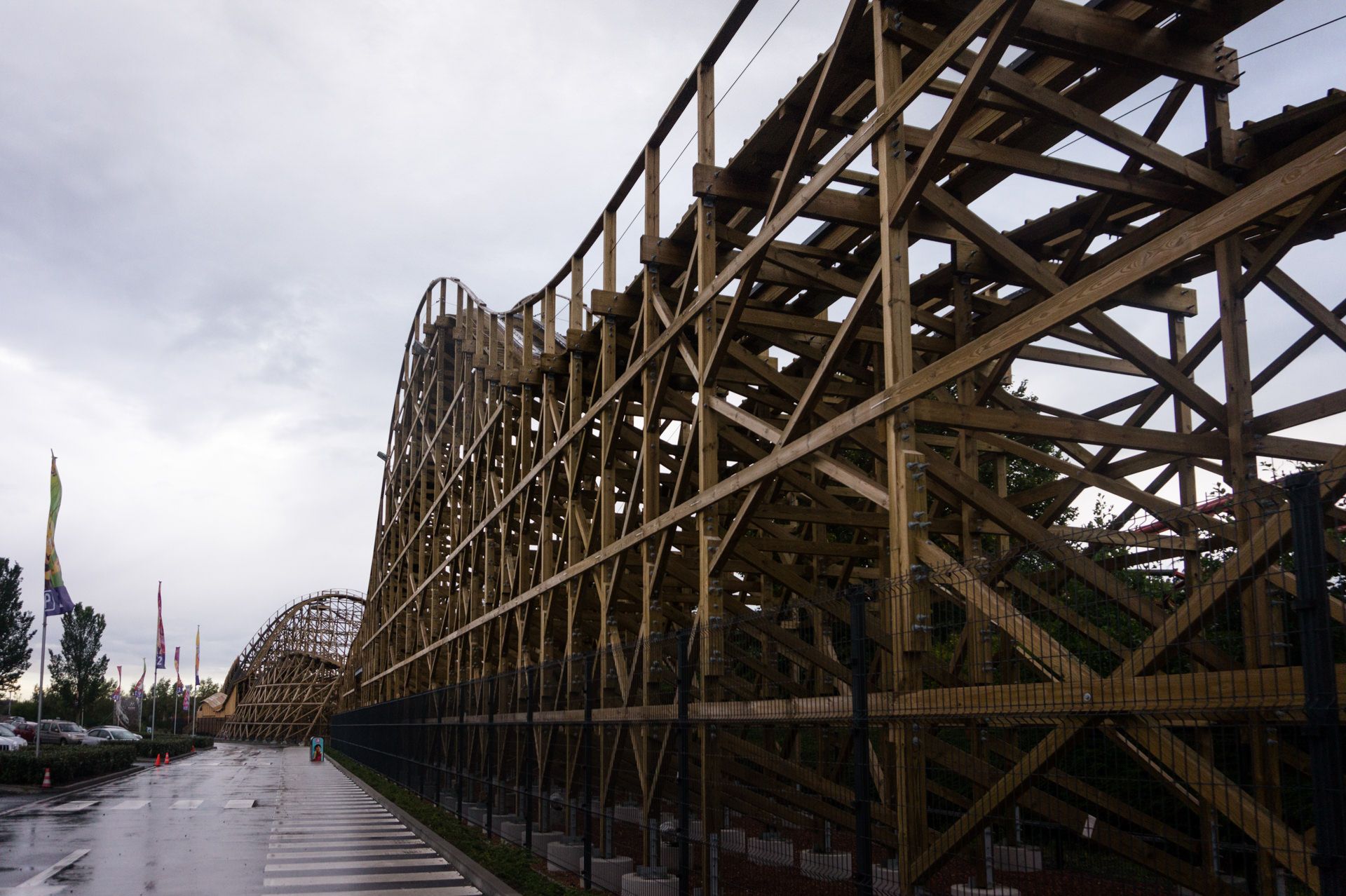
After a short visit to the Plopsa Indoor Coevorden I reached the parking lot around 3pm. From there, under the incredibly well-positioned wooden roller coaster, a path leads to the park’s entrance. Such a crock, not being able to ride this beauty.

History of the Theme Park

The Plopsaland De Panne was opened in 2000, but the origins of the park date back to 1935. The Florizoone family opened Meli Park, the country’s first amusement park right next to their honey empire Meli. Constantly declining visitor numbers in the 90s led to the sale of the amusement park.. The (still quite fresh) Studio 100 brought the park back on the road to success with its own (children’s series) licenses.

Tour of the park

Mayaland

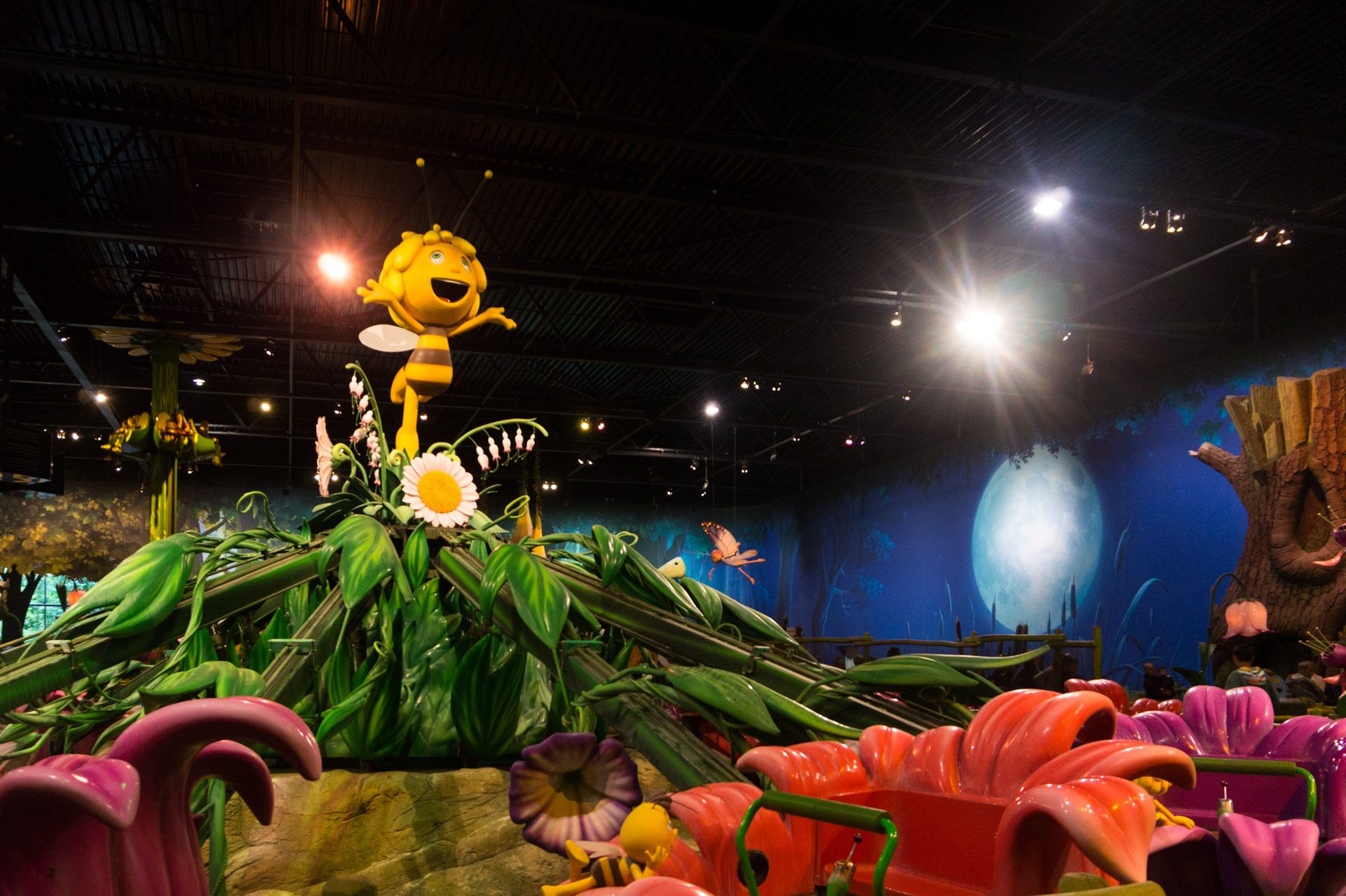
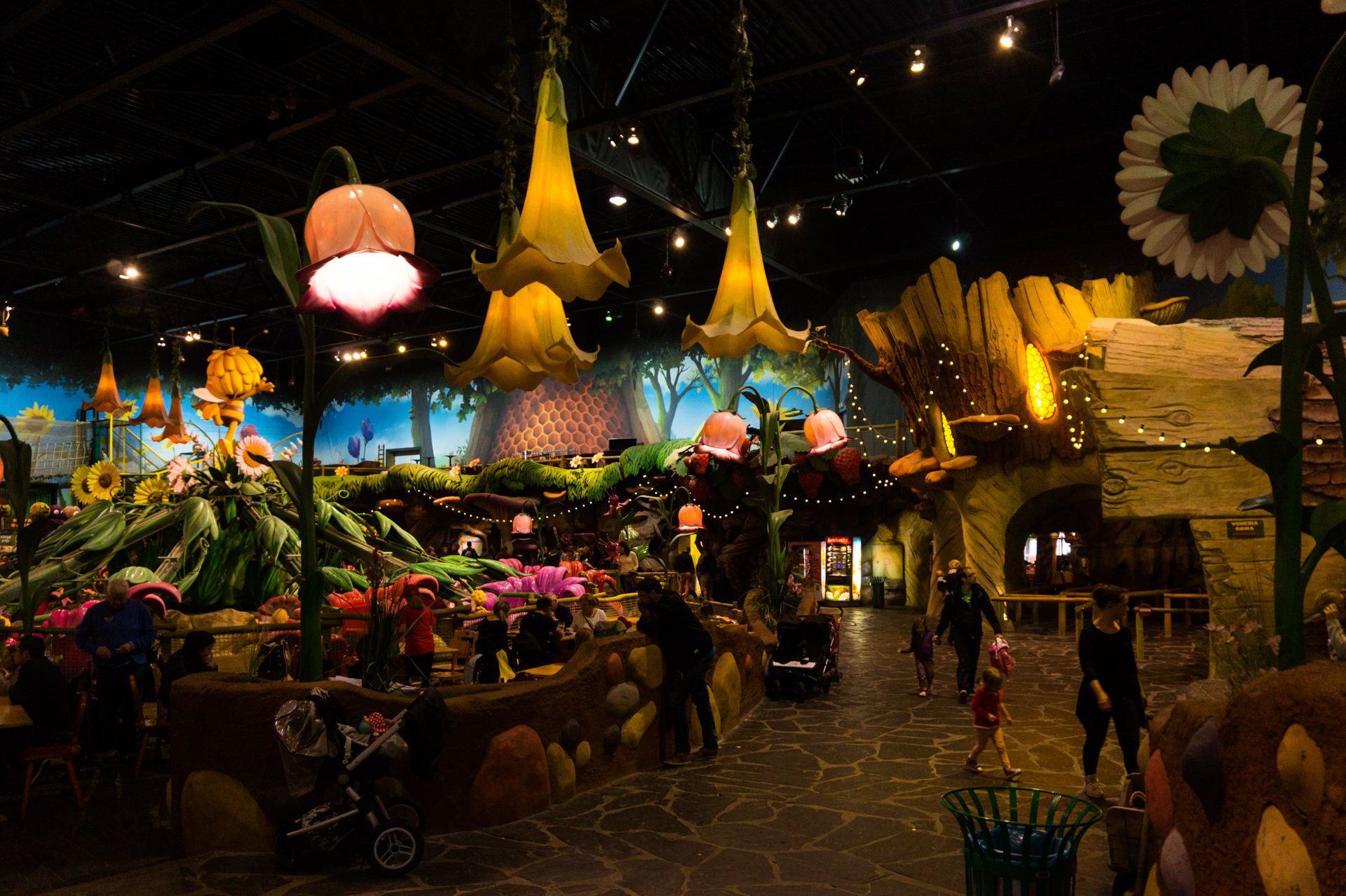
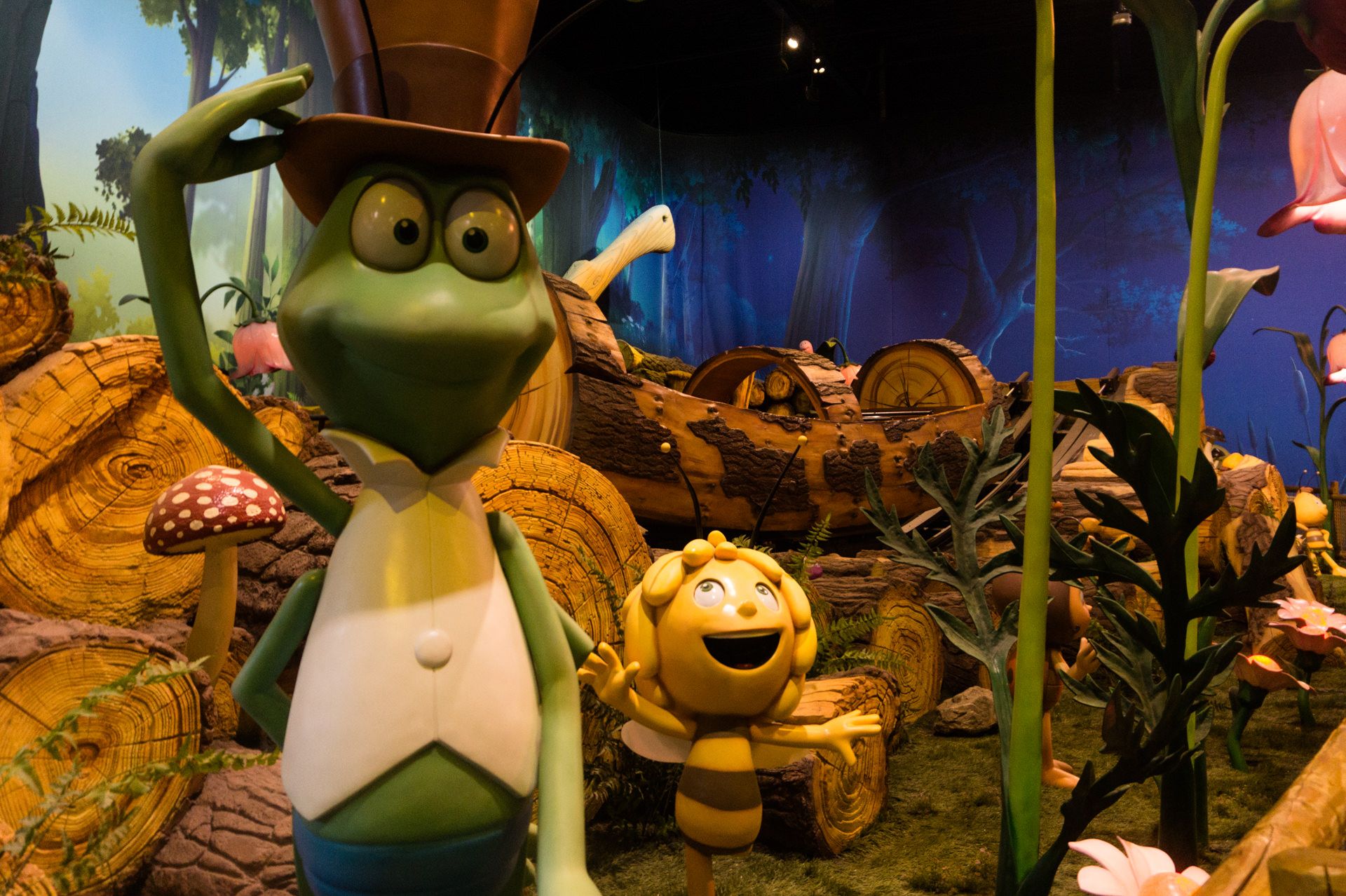
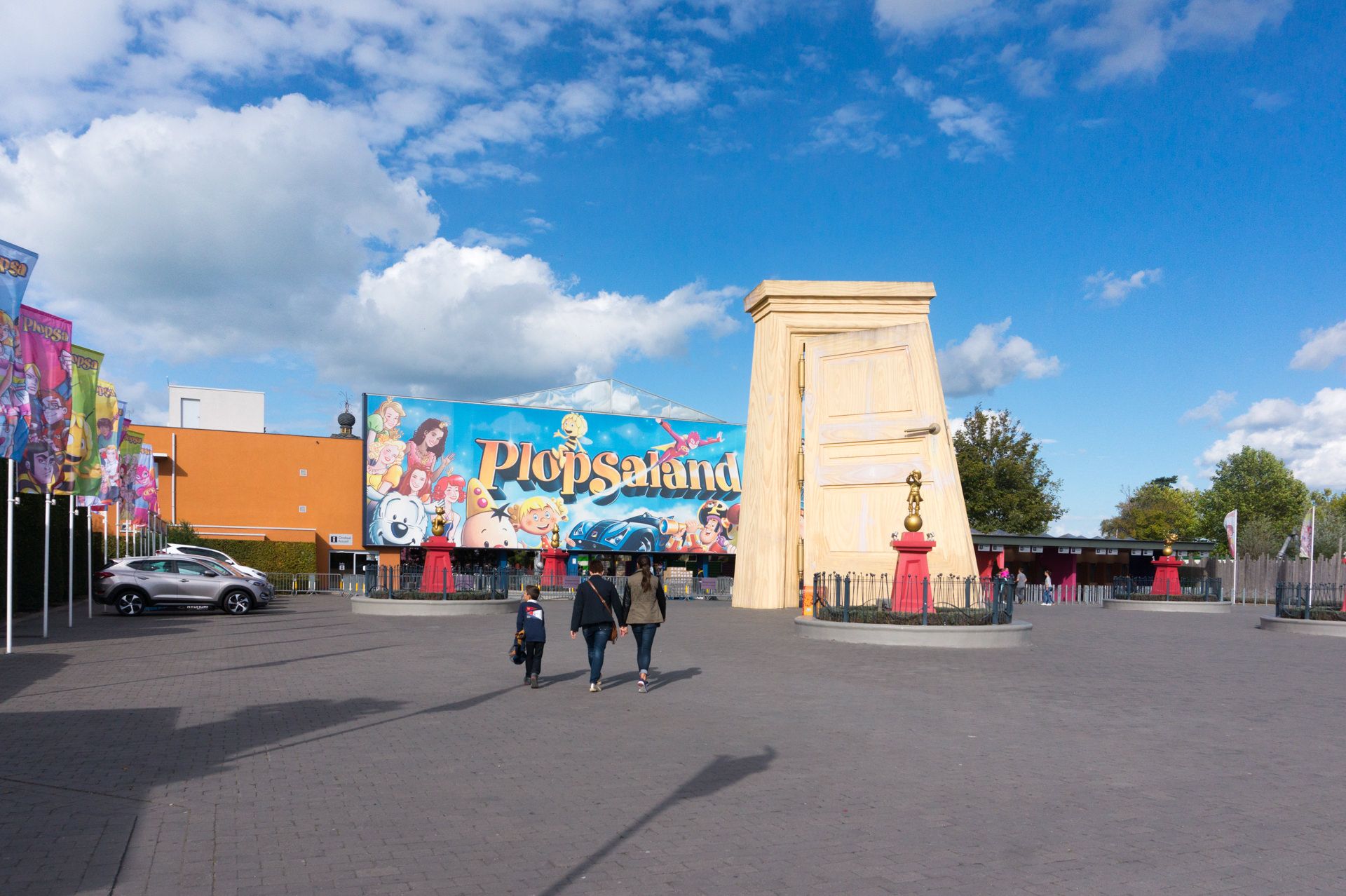
If you enter the park you find yourself on a covered Main Street and shortly thereafter on a huge square with some fountains. There are many paths to choose, but you can also find the entrance to the park’s theatre as well as the entrance to the indoor theme area Mayaland. This is a smaller version of Holiday Park’s children area and offers fun for the whole family with the Kontiki De Swingboom, the Flying Fish De Bloemenmolen, the Demolition Derby De Waterlelies and the Family Freefall Tower De Valtoren. Like the theatre and the adjacent swimming pool, the Mayaland is also used outside the regular parking opening times.

De Vleermuis

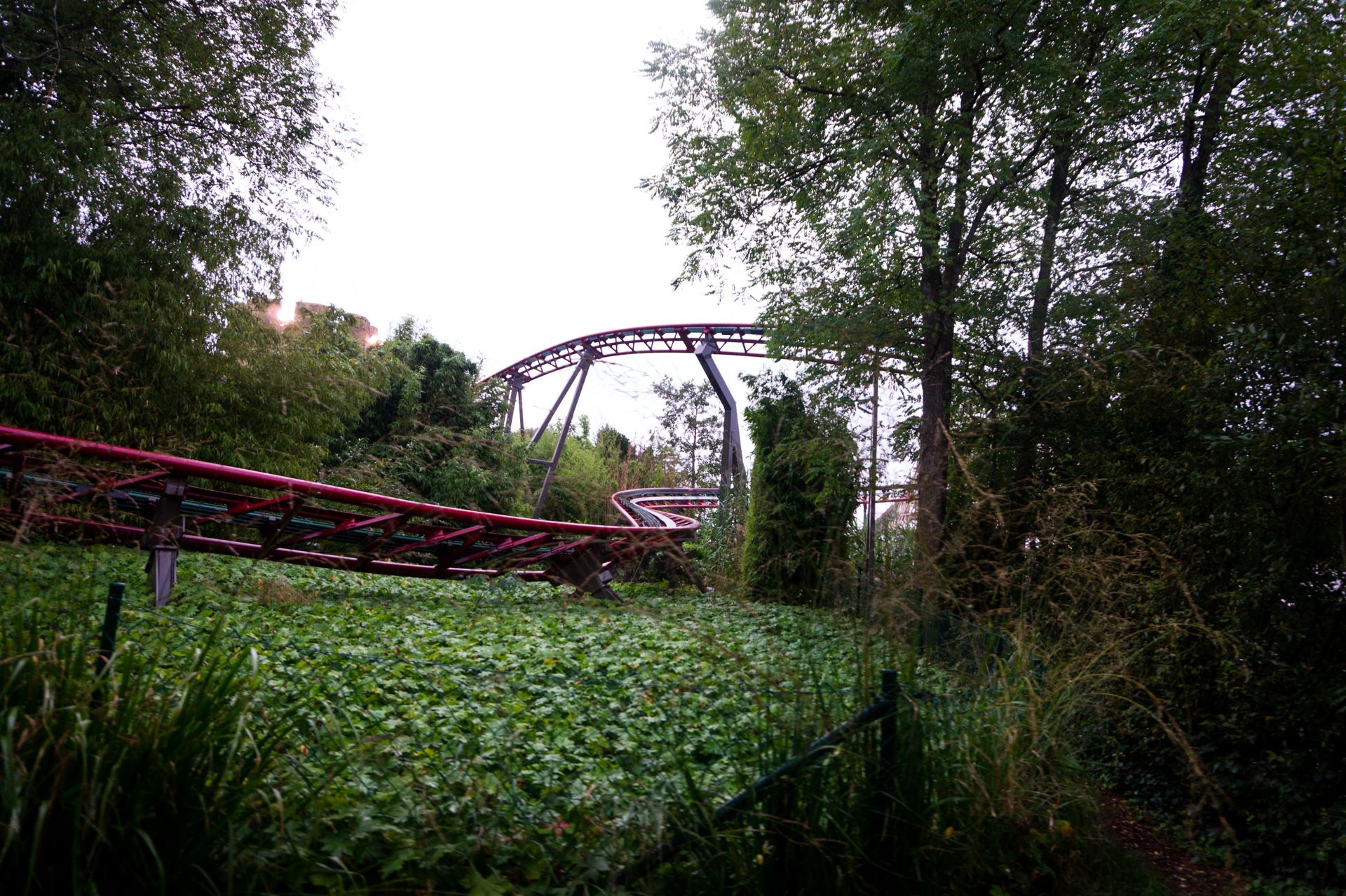
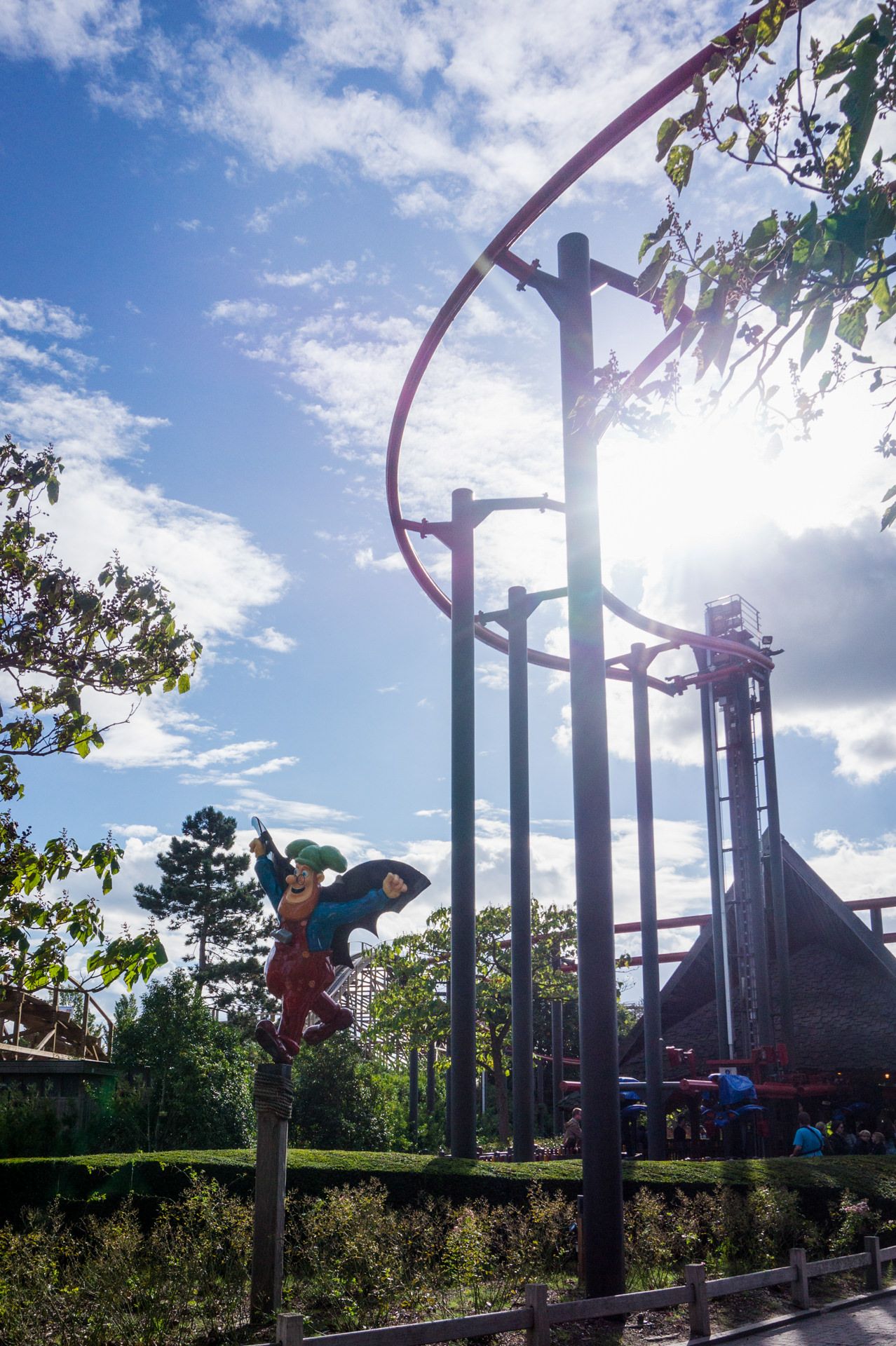
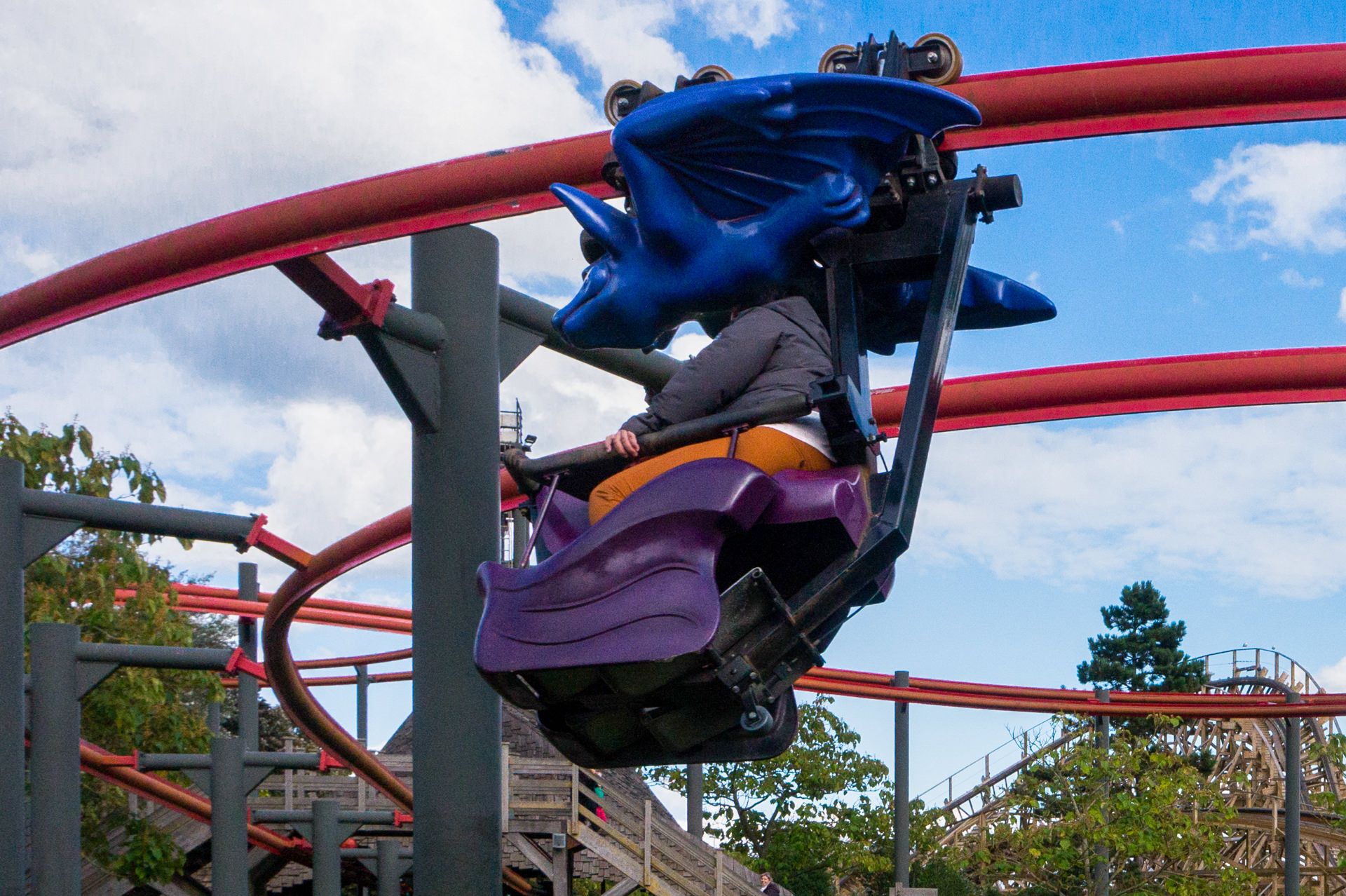
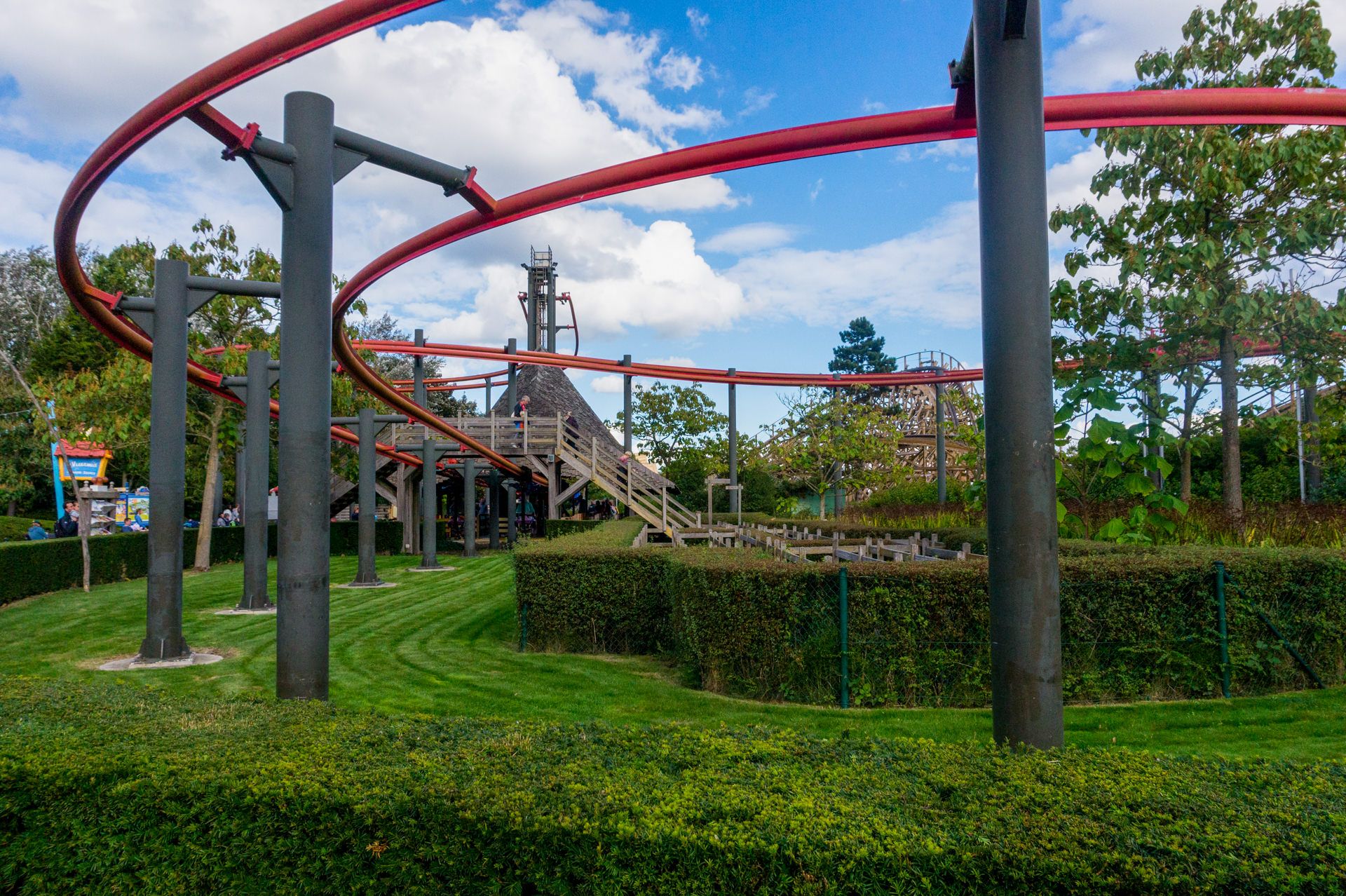
If you follows the course of the park’s railway, which incidentally passes through the hitherto unfinished theme area based around the children’s series Heidi, you quickly encounter the roller coaster De Vleermuis. This is a small coaster with free-swinging gondolas made by the company Caripro, in which both tracks deliver a race on the steadily sloping and rather simple layout in the form of an eight. Basically, only the quite fast vertical lift is notably. But you should hold on tight to prevent nasty surprises. The hard to enter ride vehicles and the rather small capacity do not speak for the ride. The ride is ok for the audience it serves, so mainly small children have some fun.

De Boomstammetjes

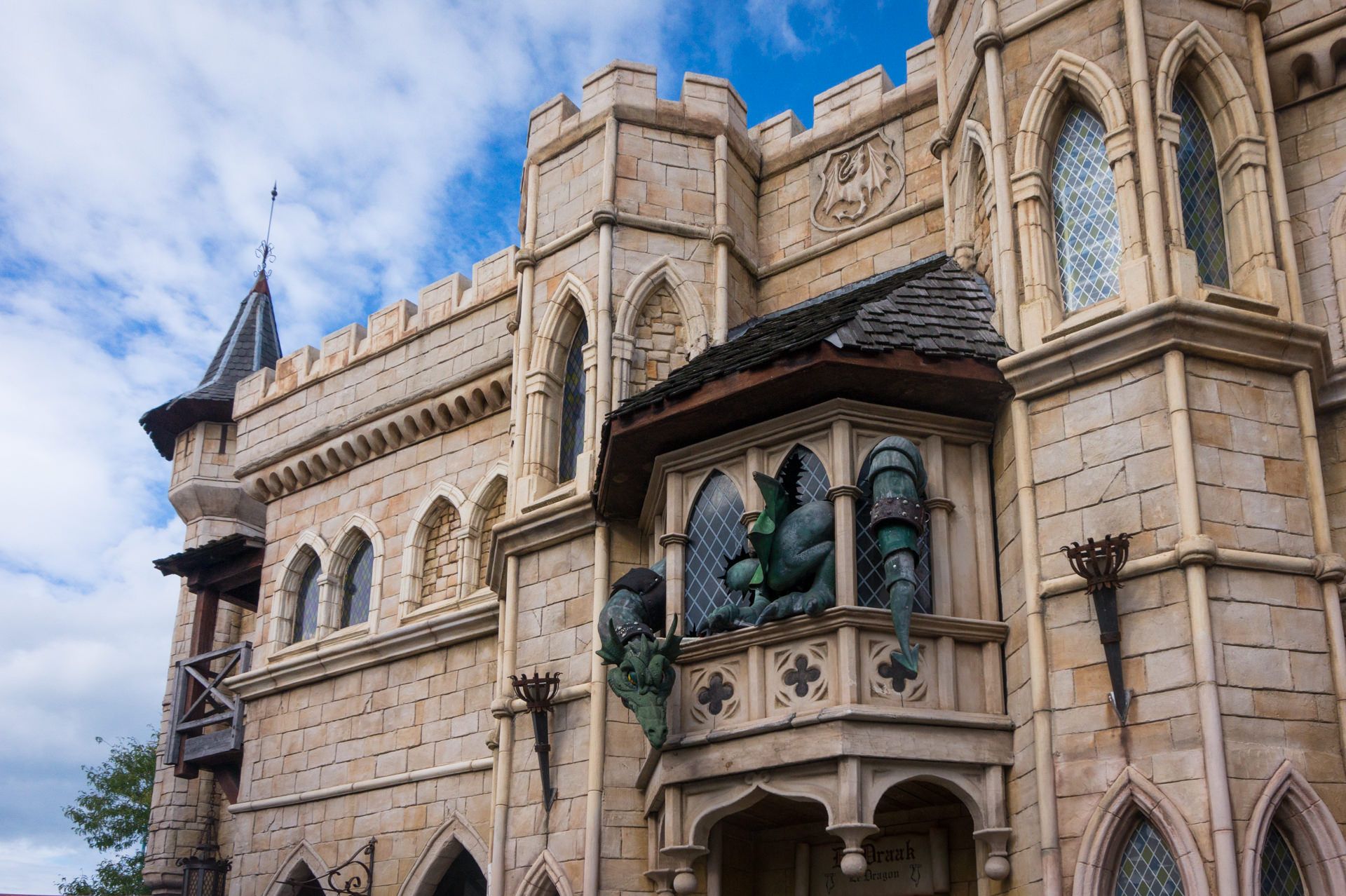
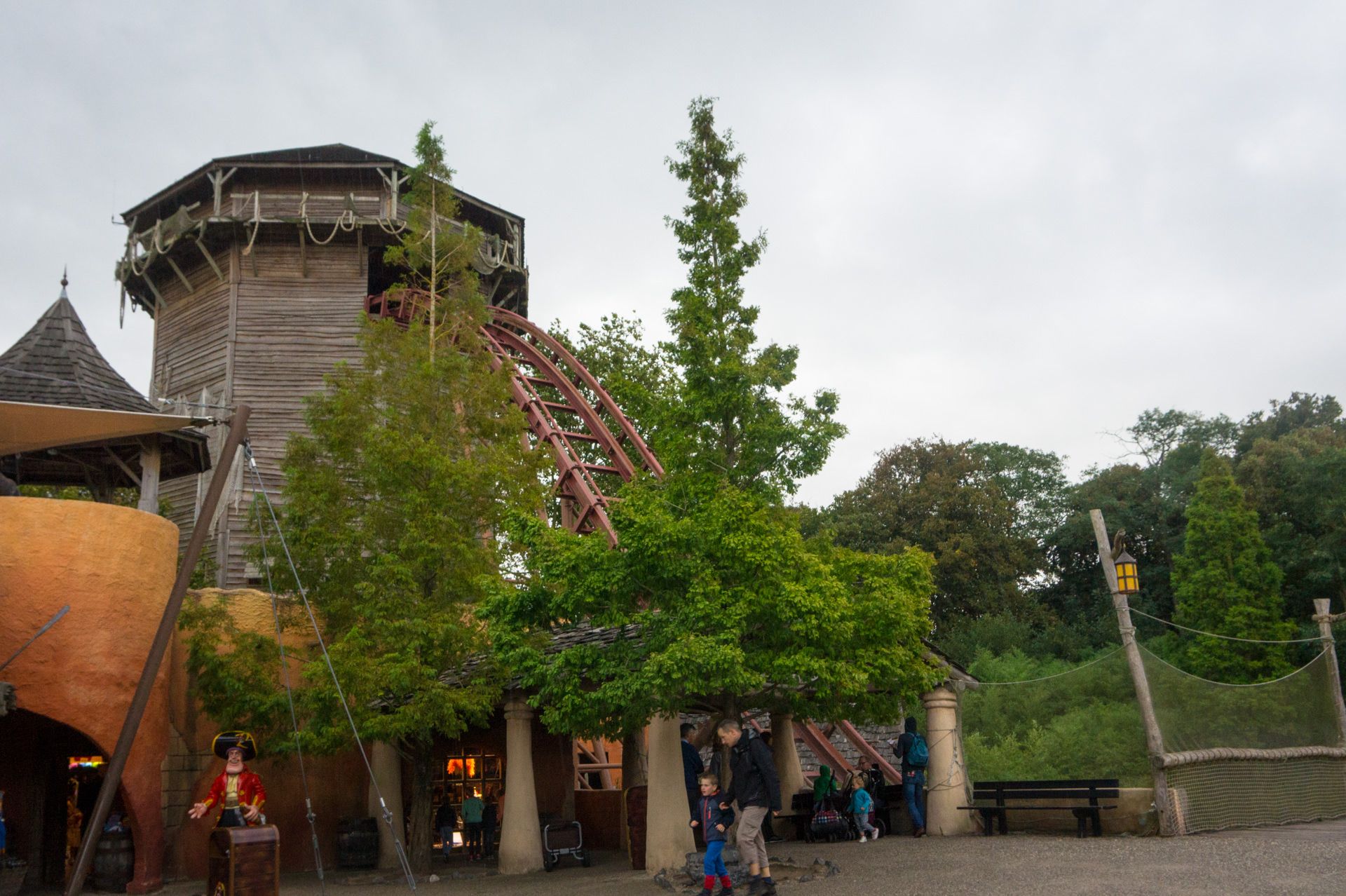
A few meters further on you will come across the beautifully designed medieval theme area, where De Boomstammetjes the park’s log flume and the powered roller coaster De Draak await their passengers. As one of the first of its kind, the log flume opened in 1989 with a double down. The ride is quite long and features two shoots. Unfortunately, the ride was not flooded.

De Draak

Above the log flume, the Draak was on its track. Through the long and beautiful queue you reach the station. The ride starts with a right-hander with some up and down features. A longer straight with some hills is following, but the speed is still missing. In a downhill helix the train takes some speed, but also the upcoming near-ground directional changes above the log flume can not really increase the tension. A right-hand helix leads the train back to lofty heights. In another downward helix you build up some speed again, whereupon the station is quickly passed through and another lap follows.

The ride on the roller coaster De Draak is unfortunately not very exciting nor fast. The course of the coaster is not really bad, it just lacks the speed for the existing elements. Without, the roller coaster is one of the most boring representatives of its kind, which does not bother the existing target group in the park.

Rollerskater

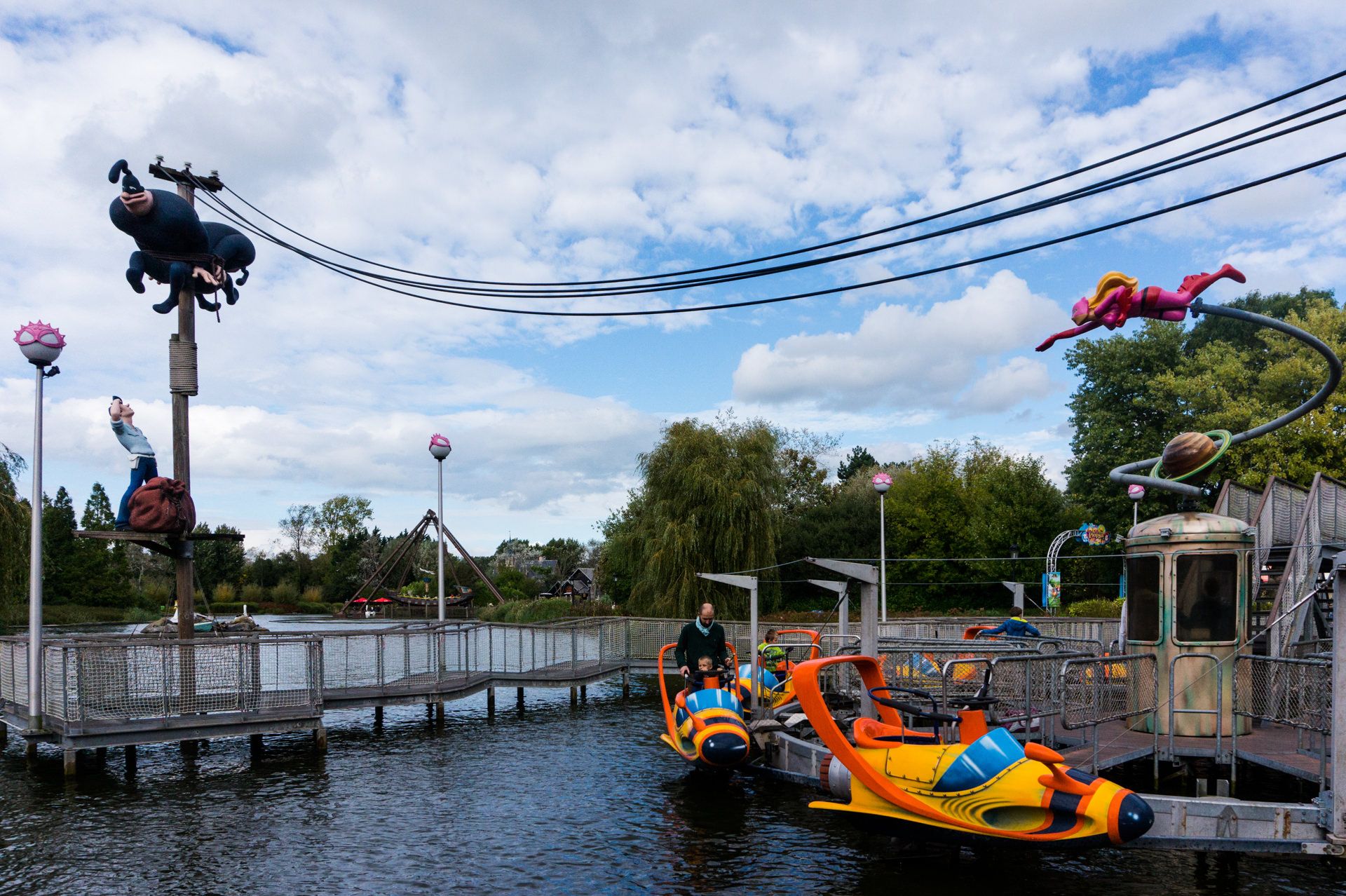
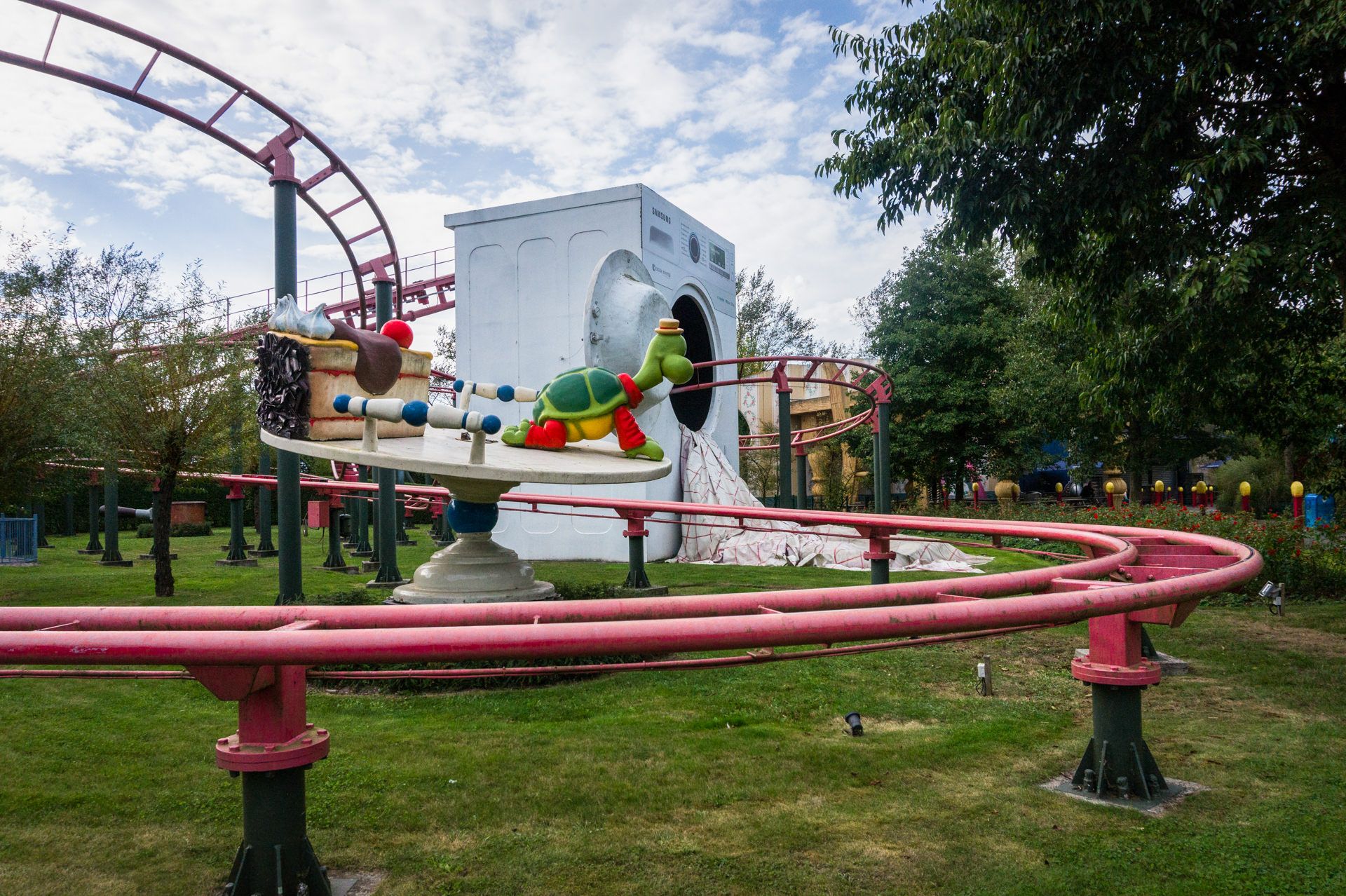
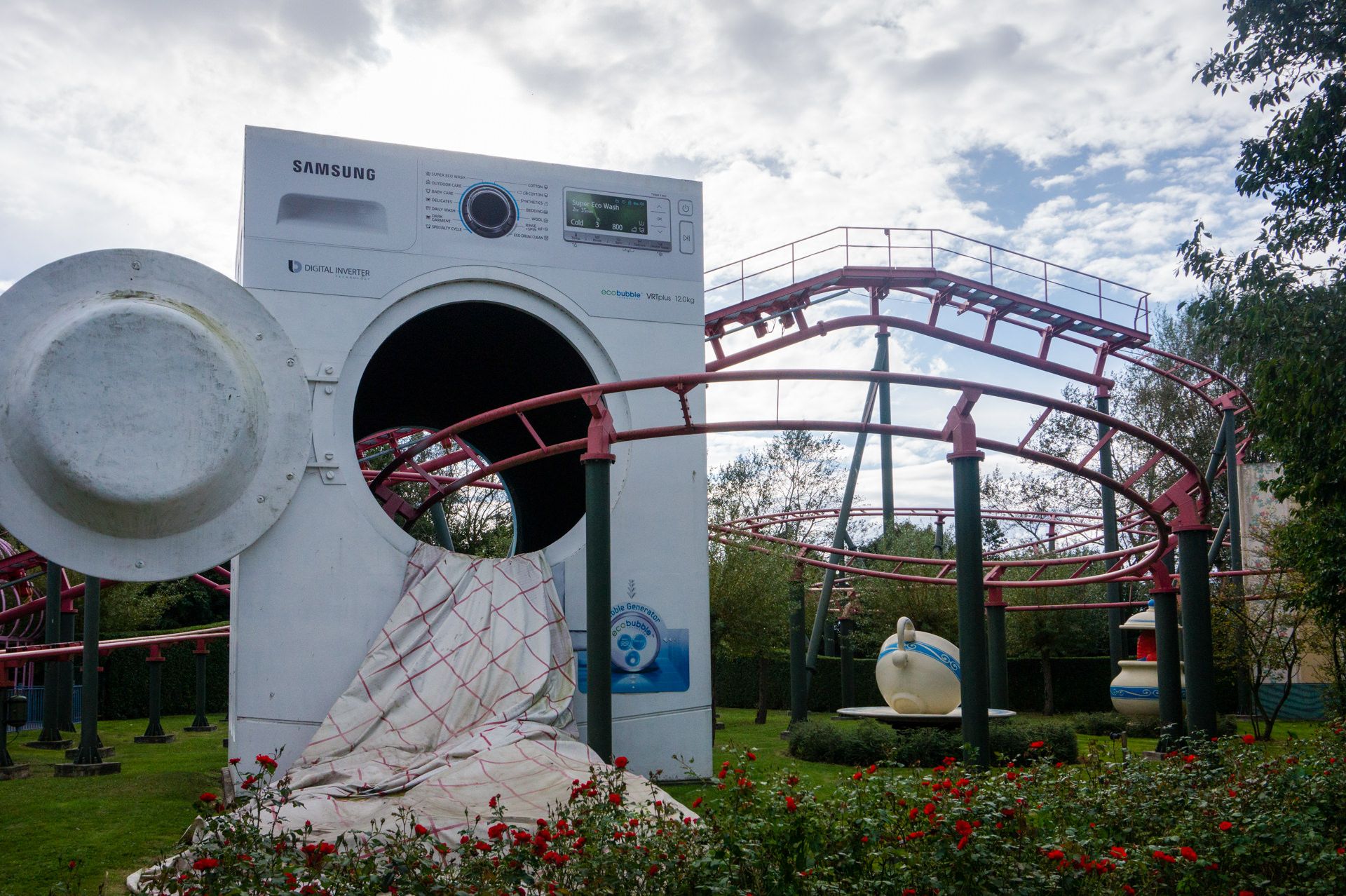
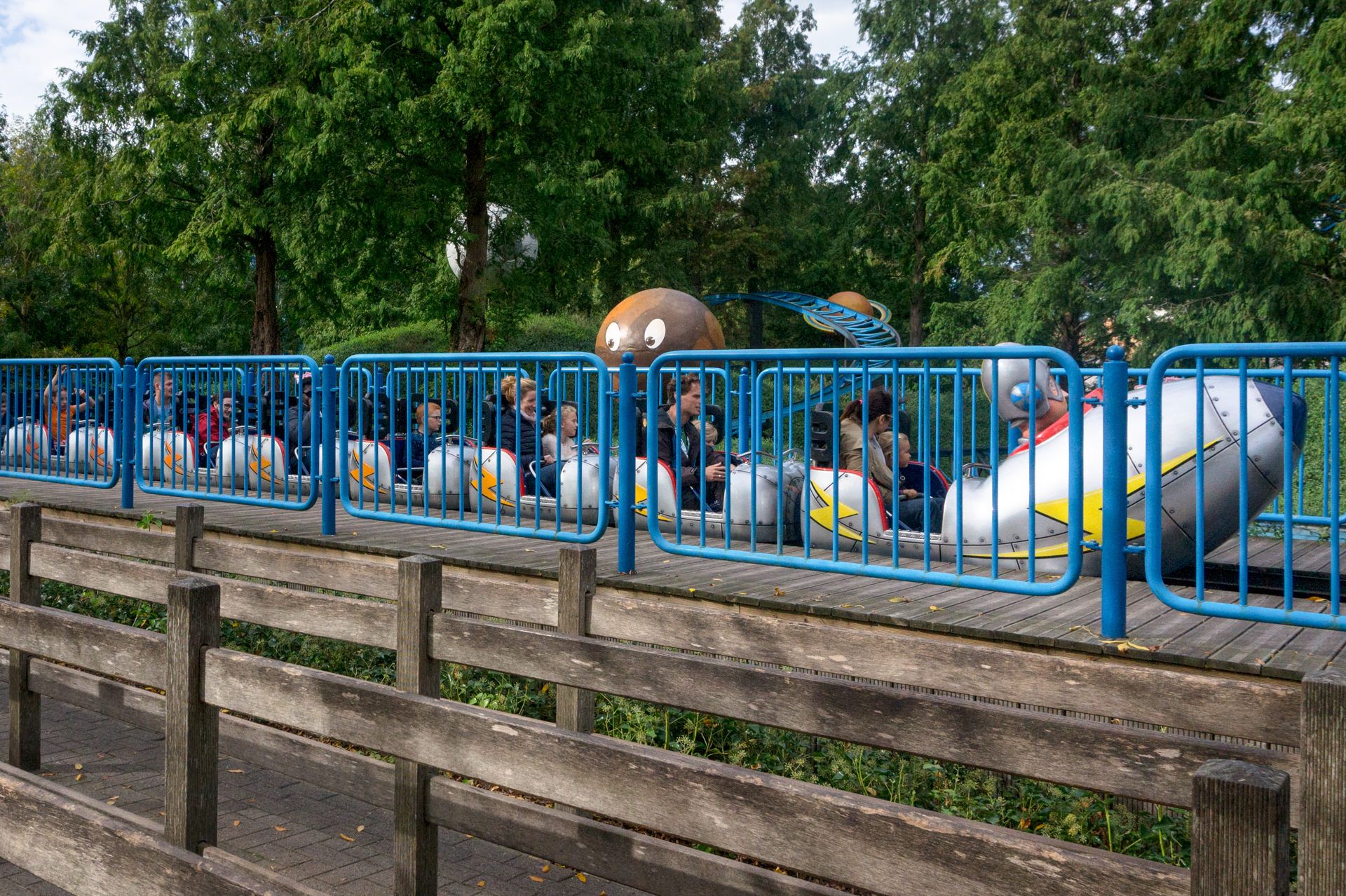
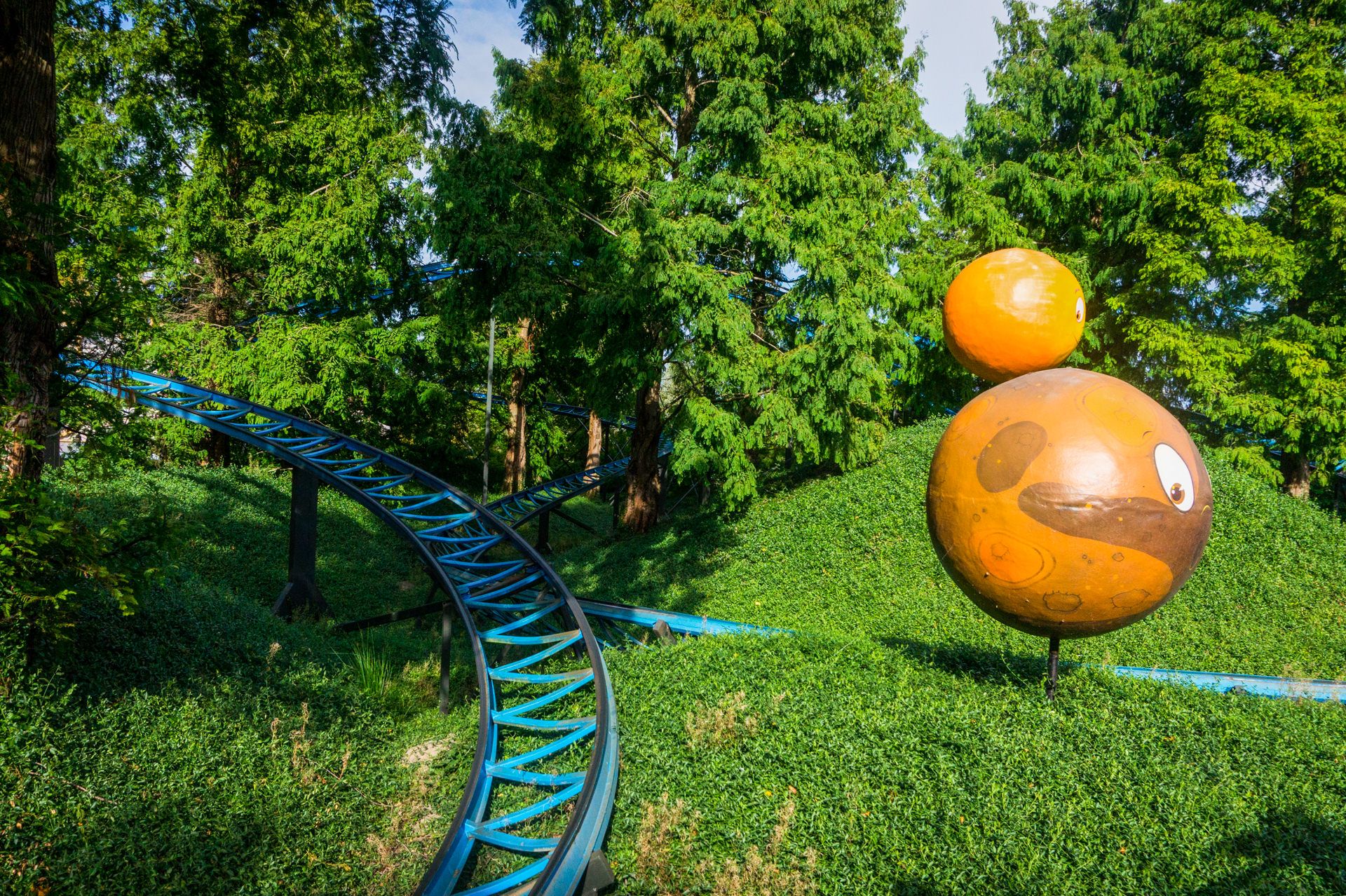
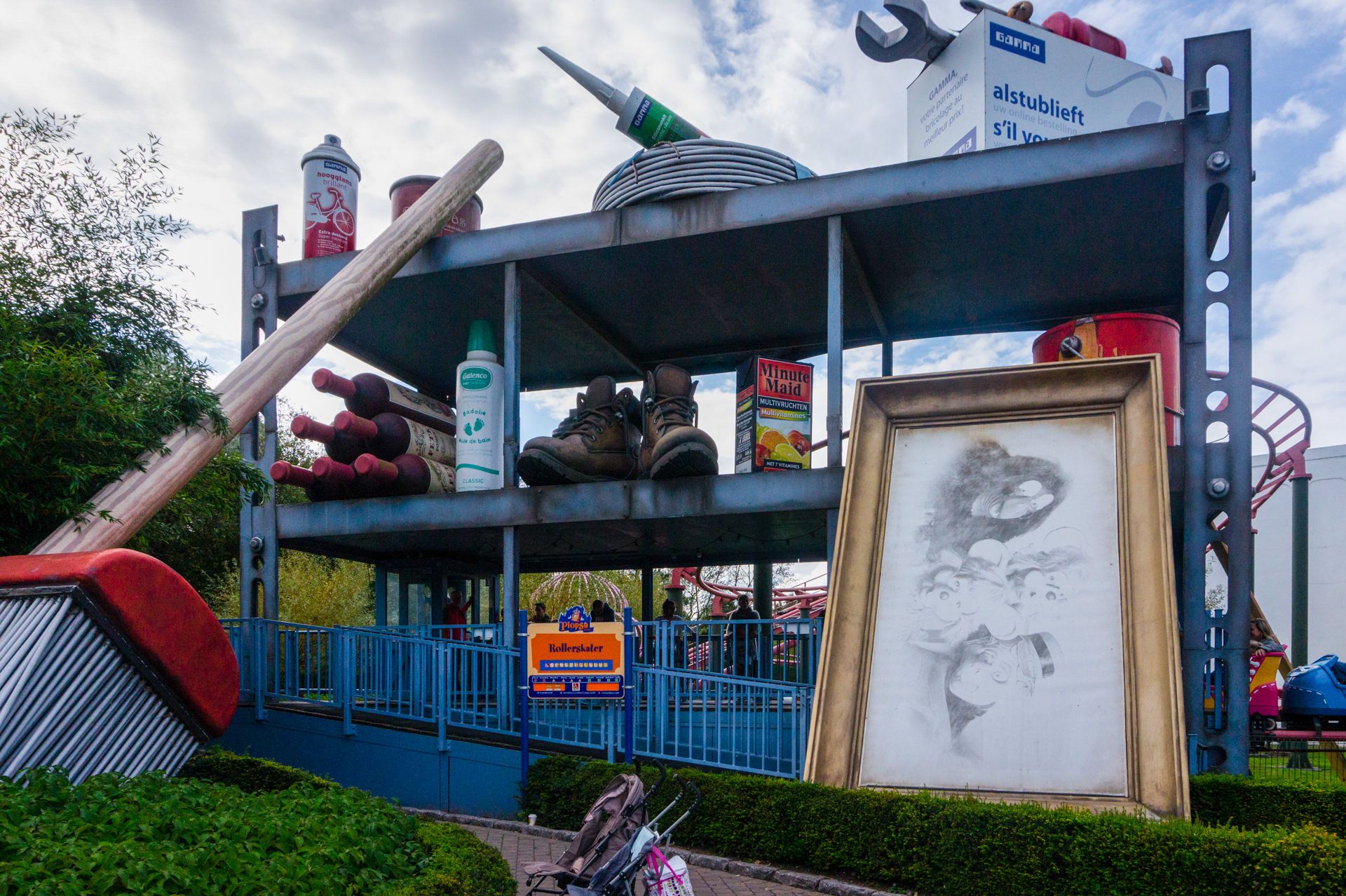
Arriving at the central lake, you immediately meet a Zierer Jet Ski and a magic bike by Zamperla, as well as the first earworm of the park, as both attractions are located in the Mega Mindy Universe and the series’ title song is played over and over again. You can find some peace at the neighbouring Rollerskater, a family coaster of the manufacturer Vekoma, which comes here in a beautiful and somehow oversized design.

Kaatje zoekt Eendje and Viktor’s Race

Next to the boat ride Kaatje zoekt Eendje you can find the family coaster Viktor’s Race. With the introduction of the children’s series “Kaatje van Ketnet”, the roller coaster Dongo’s Race was redesigned and features a new train and new rails; after all, the ride built in 1976 is the park’s oldest roller coaster and one of the most popular within the park. The transformation has a very positive effect on the ride and fits seamlessly into the general concept.

Rox Flyer and Prinssesia

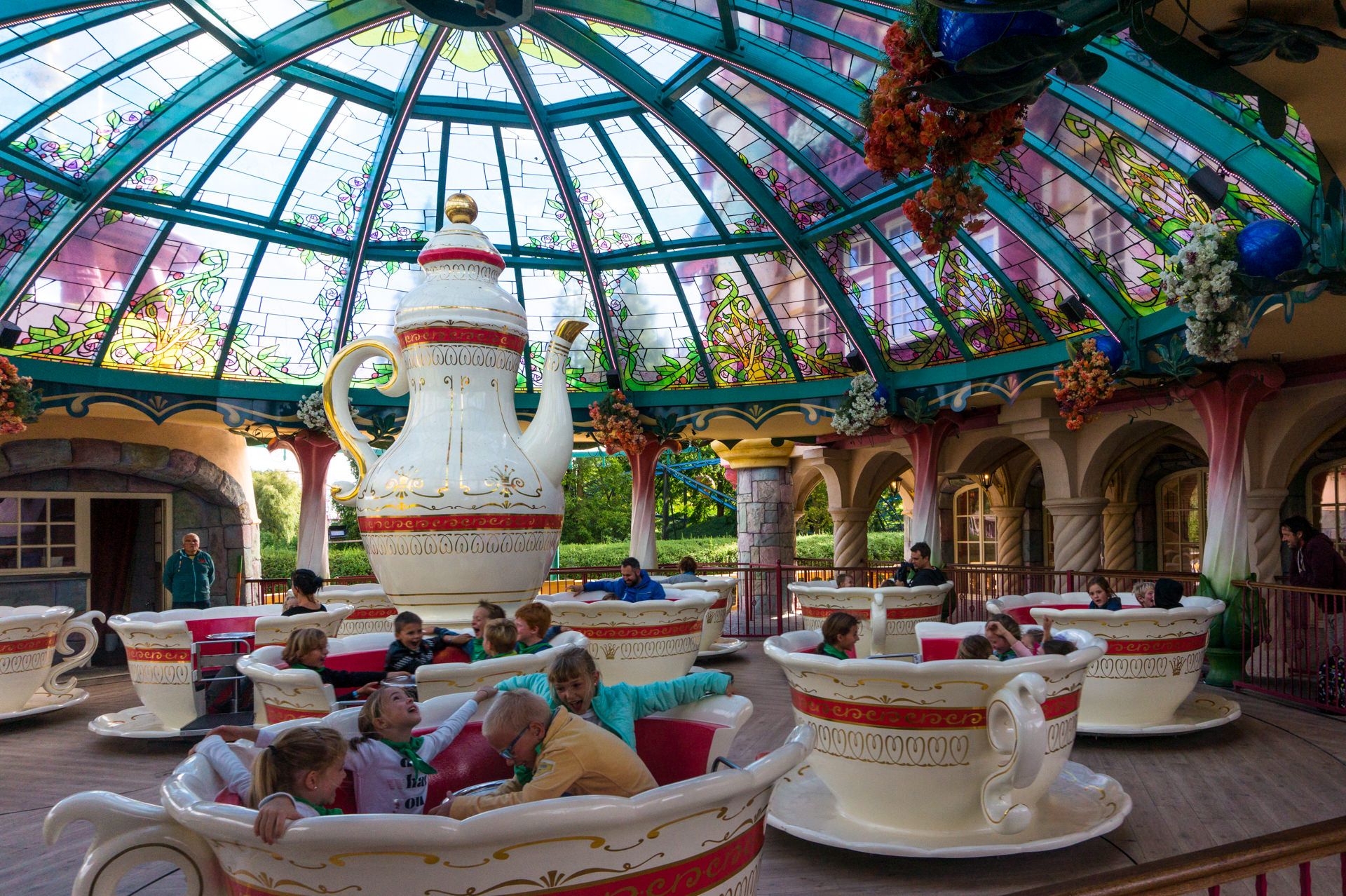
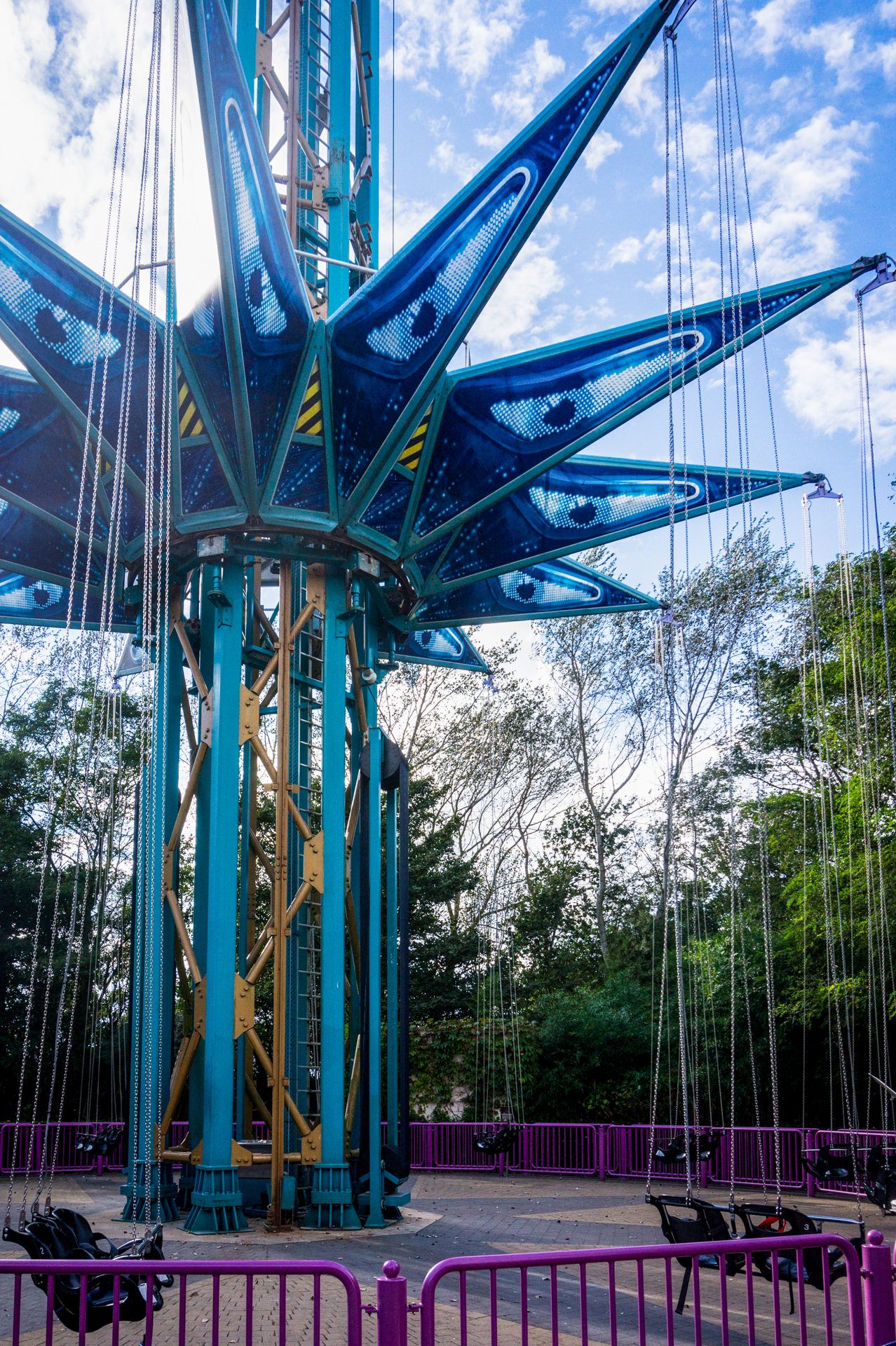
Meanwhile, the Funtime Starflyer Rox Flyer looks like a foreign object in the park. Right next door you can find the park’s upscale restaurant Prinssesia housed in a fairy tale castle. The park’s tea cup is also included in the newly created complex and now features a roof above the ride.

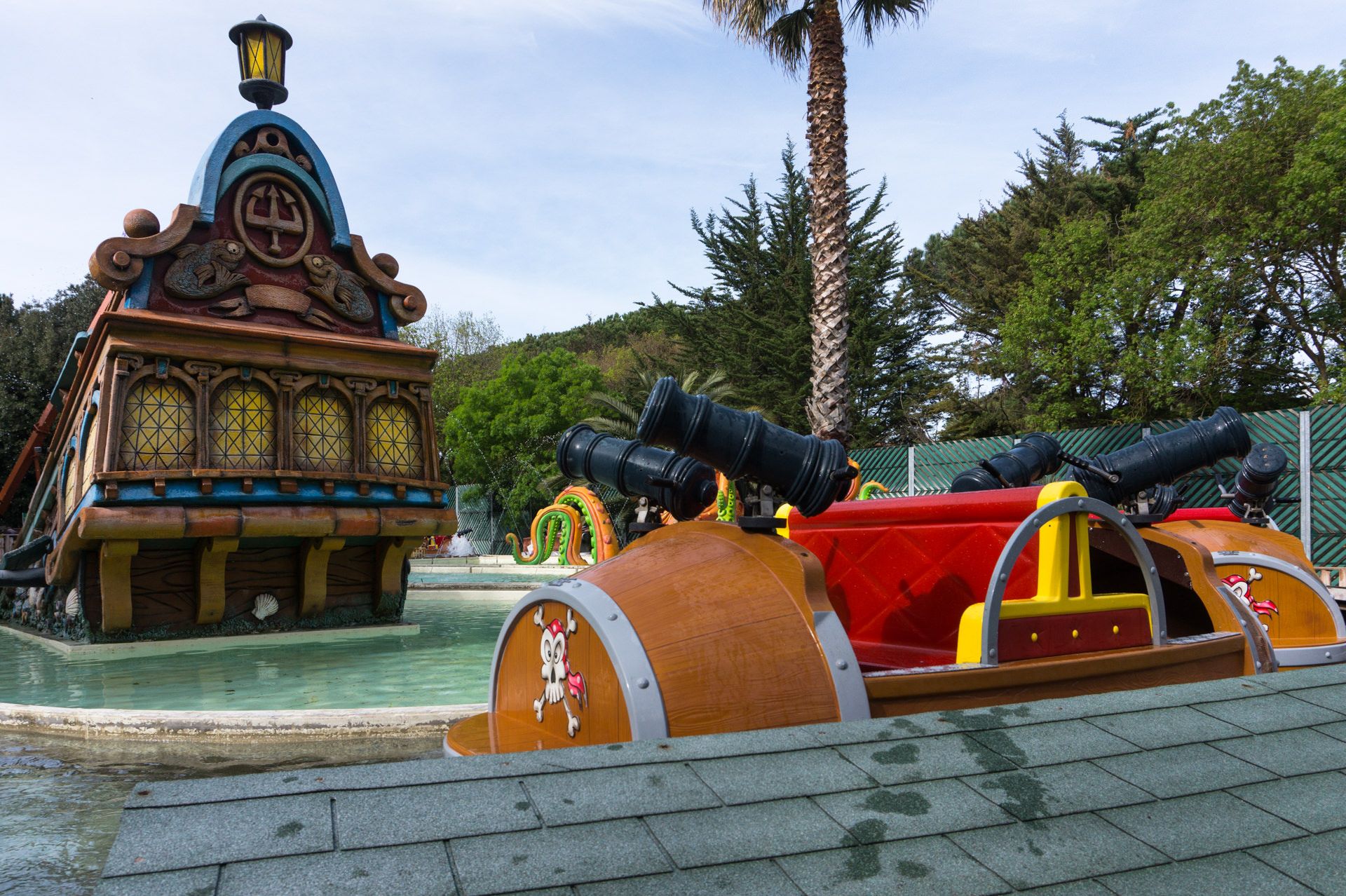
Piratenboot, Storm op Zee and Super Splash

We complete the tour around the lake with the pirate theme area of Piet Piraat. In addition to the HUSS Pirate Piratenboot, which was elegantly placed on the lake, and the Koggenfahrt ride Storm op Zee, this area is dominated by the Mack Rides Super Splash of the same name. From a height of 18m you dive in spacious boats 20m to the ground, passes over a short hill and shortly after splashes into the lake. After that you are on a leisure cruise back to the station. The peculiarity of this ride is the reduction to the essentials, e.g. there is no unnecessary backward part at dizzy heights. The necessary rotation of the boats happens during the climb in the vertical lift. As always, you don’t get soaked on a Super Splash, but you will get wet.

Anubis – The Ride

In 2009, Anubis – The Ride – a roller coaster based around the TV series “Het Huis Anubis”, which was followed by its own German-language production on Nickelodeon shortly after – opened. The Anubis House is a boarding school in which a group of students experience numerous mystical adventures and intrigues; Accordingly, the presentation inside is extremely impressive, especially compared to Holiday Park’s Freefall Tower. The images of the cast were reduced and the soundtrack is not played in a continuous loop anymore.

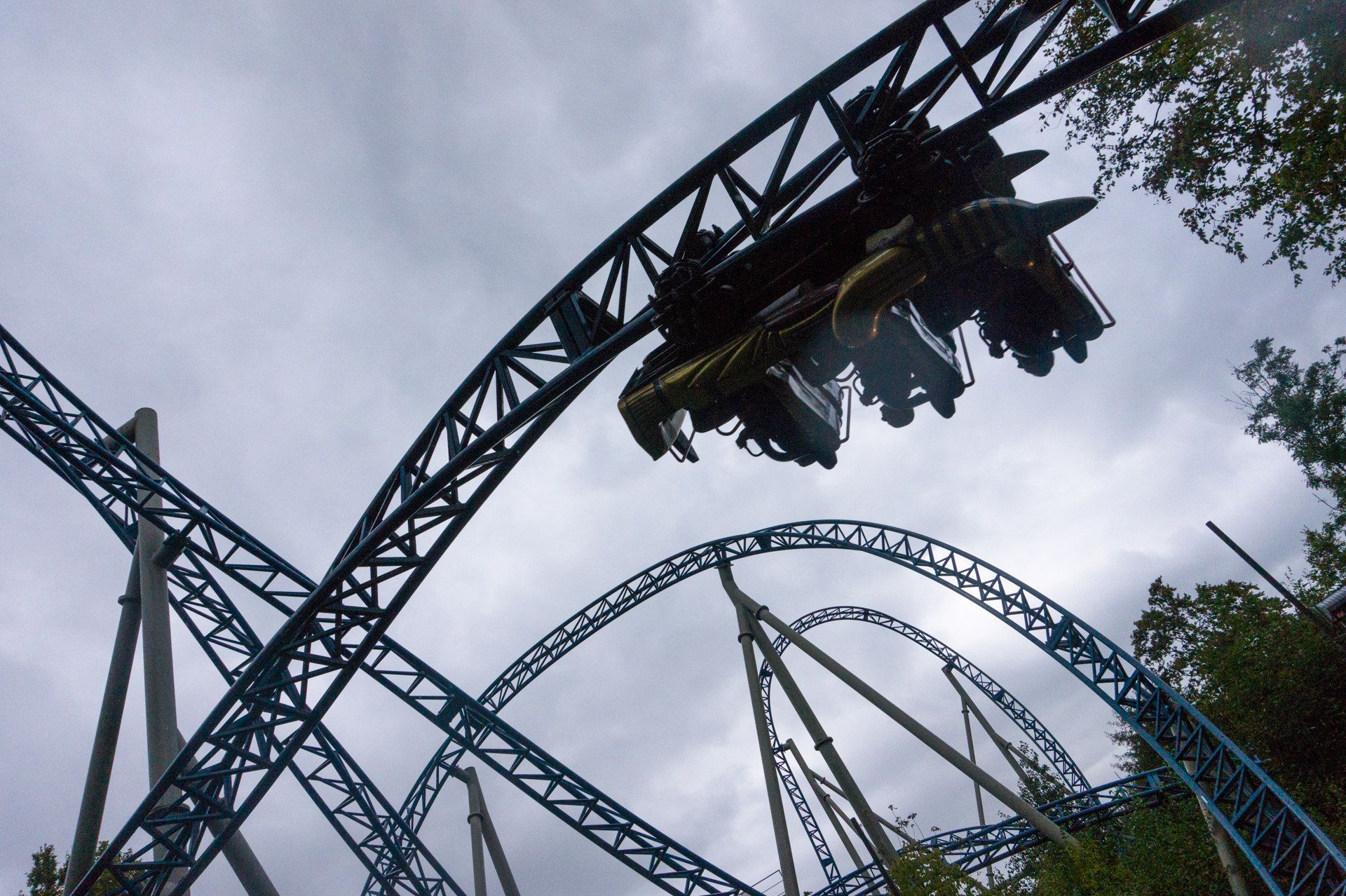
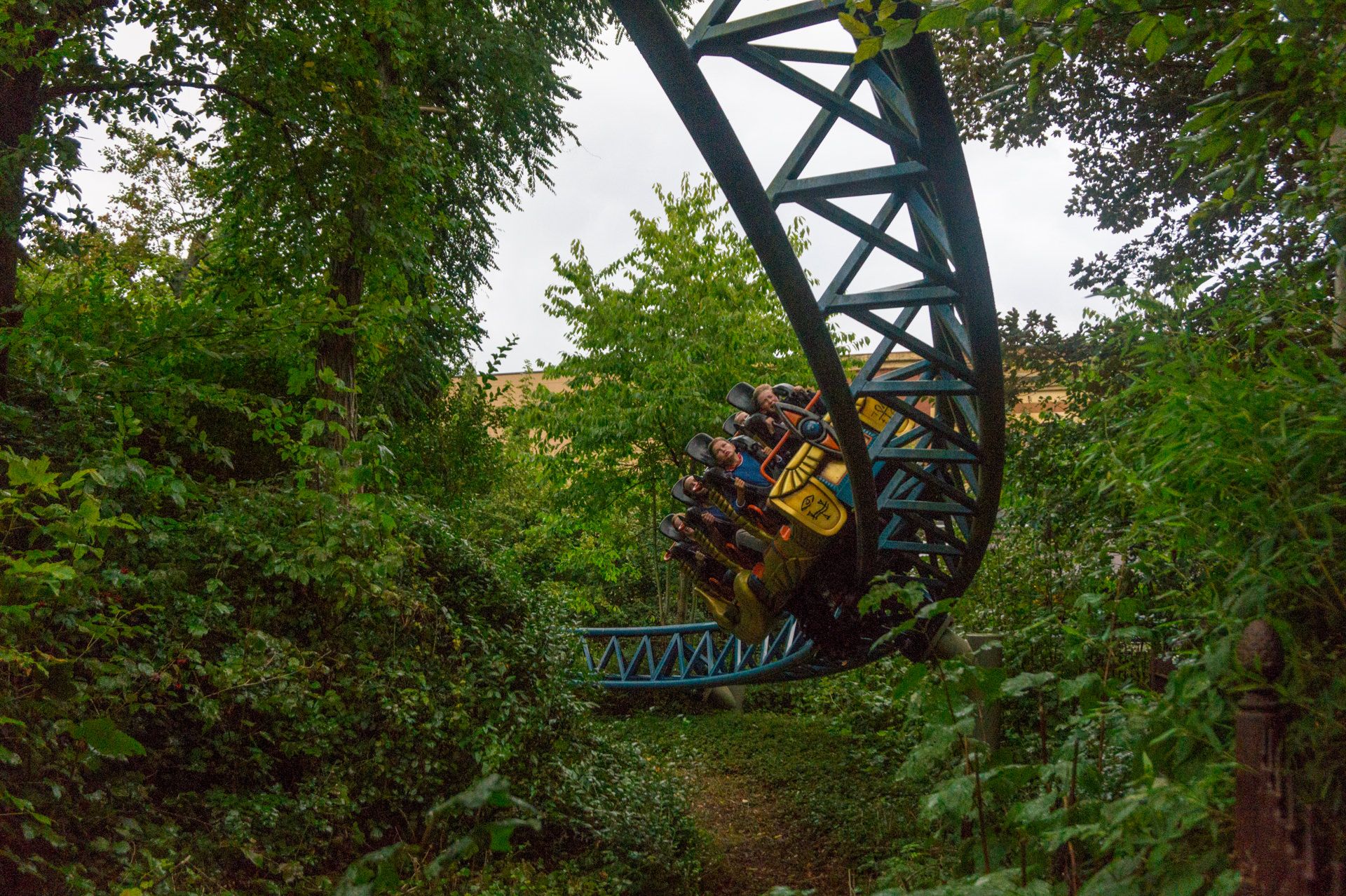
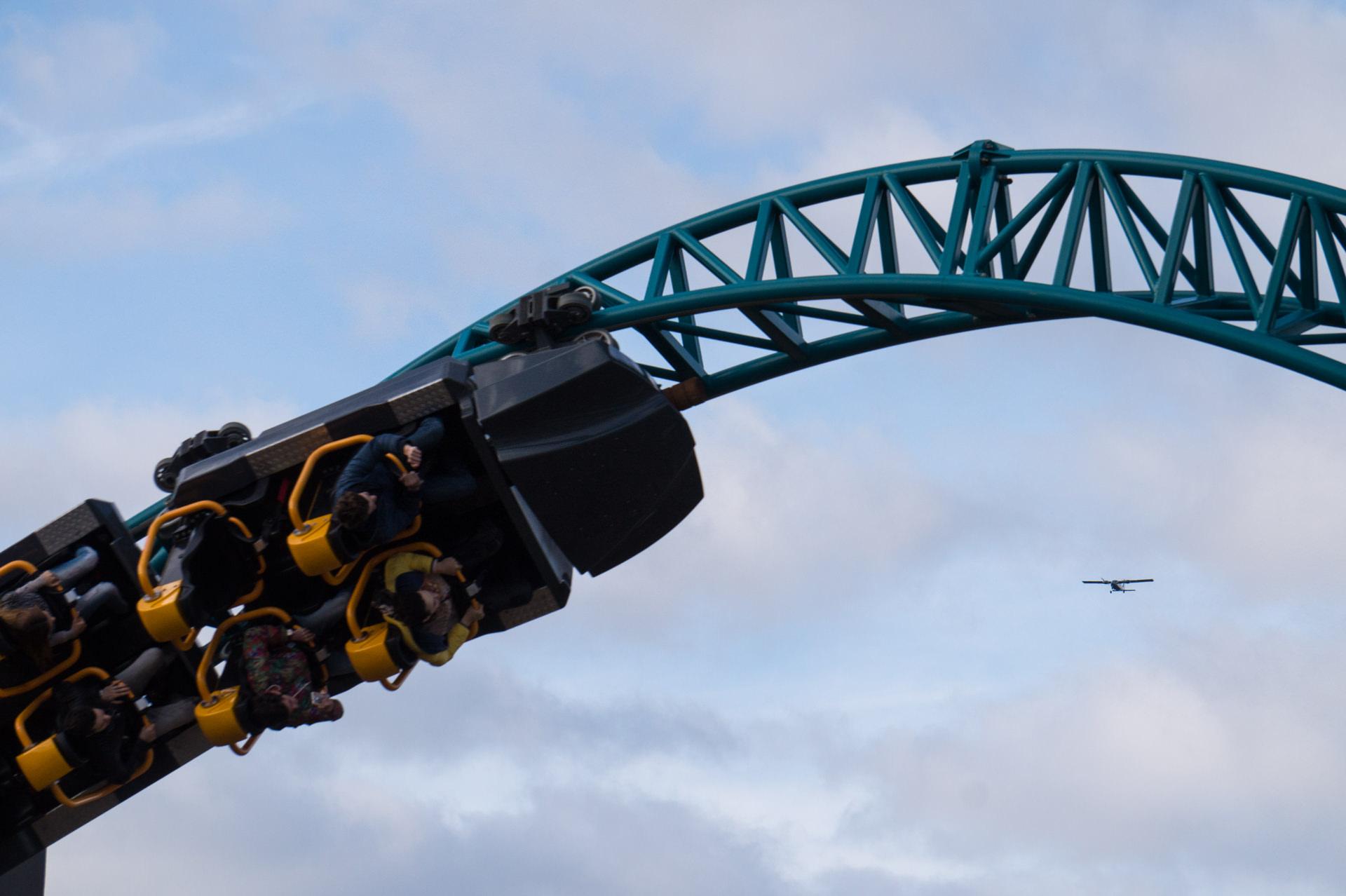
Once seated in the six-seater car, one immediately leaves the station modelled after the Anubis house and takes some momentum in a short right turn. Shortly thereafter, the actuator located on the car dives into the stators located on the track accelerating the train to a speed of 90 km/h. Now you climb a very steep hill, similar to a half-sided Top Hat element. On the top, you quickly rotates sideways and dive down to the ground. Confronted with very high G-Forces you quickly rise up again to dive down within a dive loop. On a hill you experience some air time whilst changing the direction. In an Immelmann you see the world upside down for another time. A steep curve then leads you into the ride’s block brake section. Barely reduced in speed, a left turn leads you to the ground level. After that you run over a small hill and make the final change of direction, before you are swept up in a crisp and beautiful heartlineroll.. Shortly thereafter, you reach the station.

Anubis – The Ride is still pretty damn good. The ride offers some amazing G-Forces, the airtime is pronounced and the inversions are all passed through very quickly. The design of the ride is also done very well and creates a very unique ambience. As a standalone attraction, the ride is fully embedded in the overall concept of the park.

De Grote Golf and Wickie – The Battle

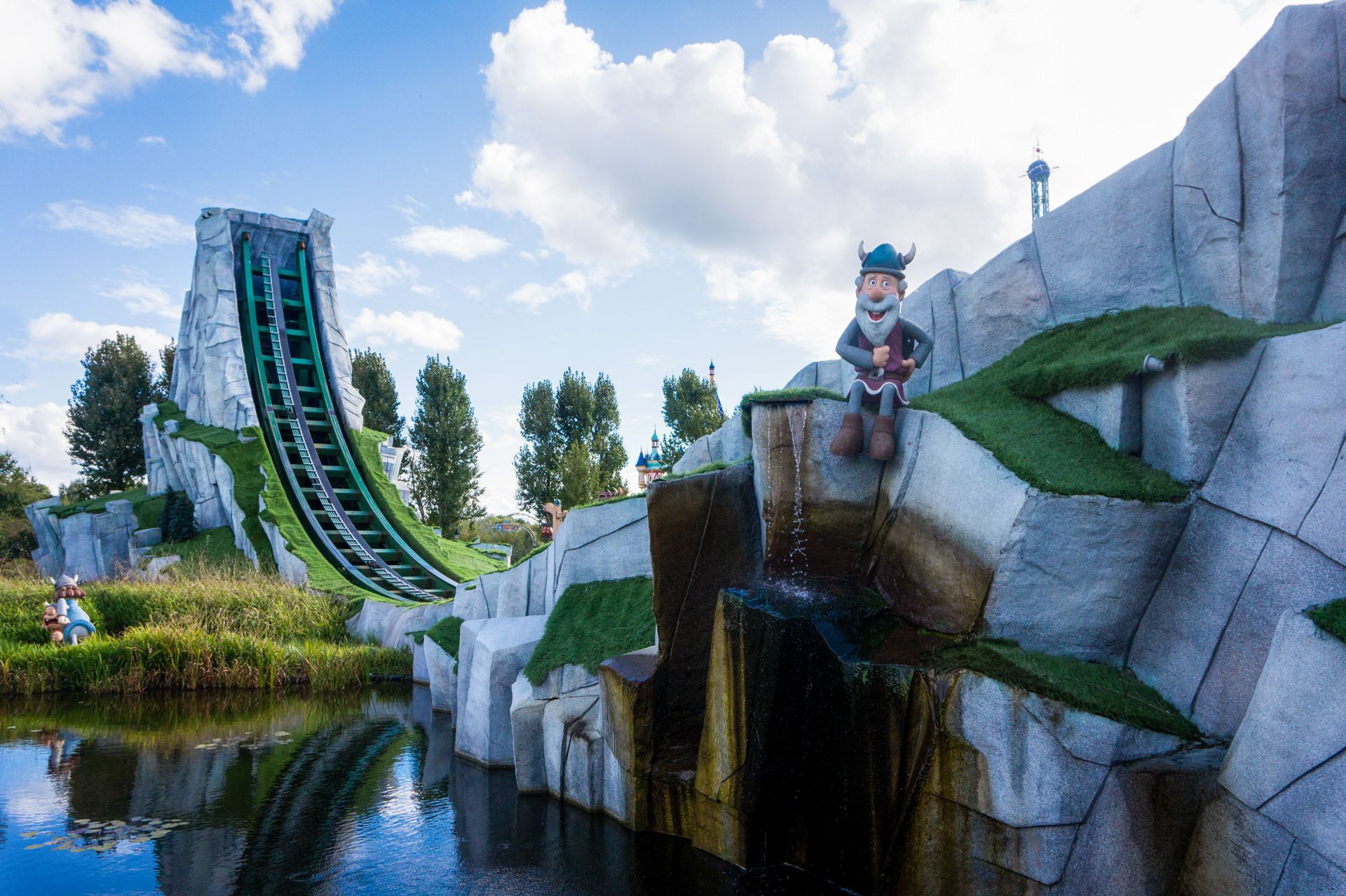
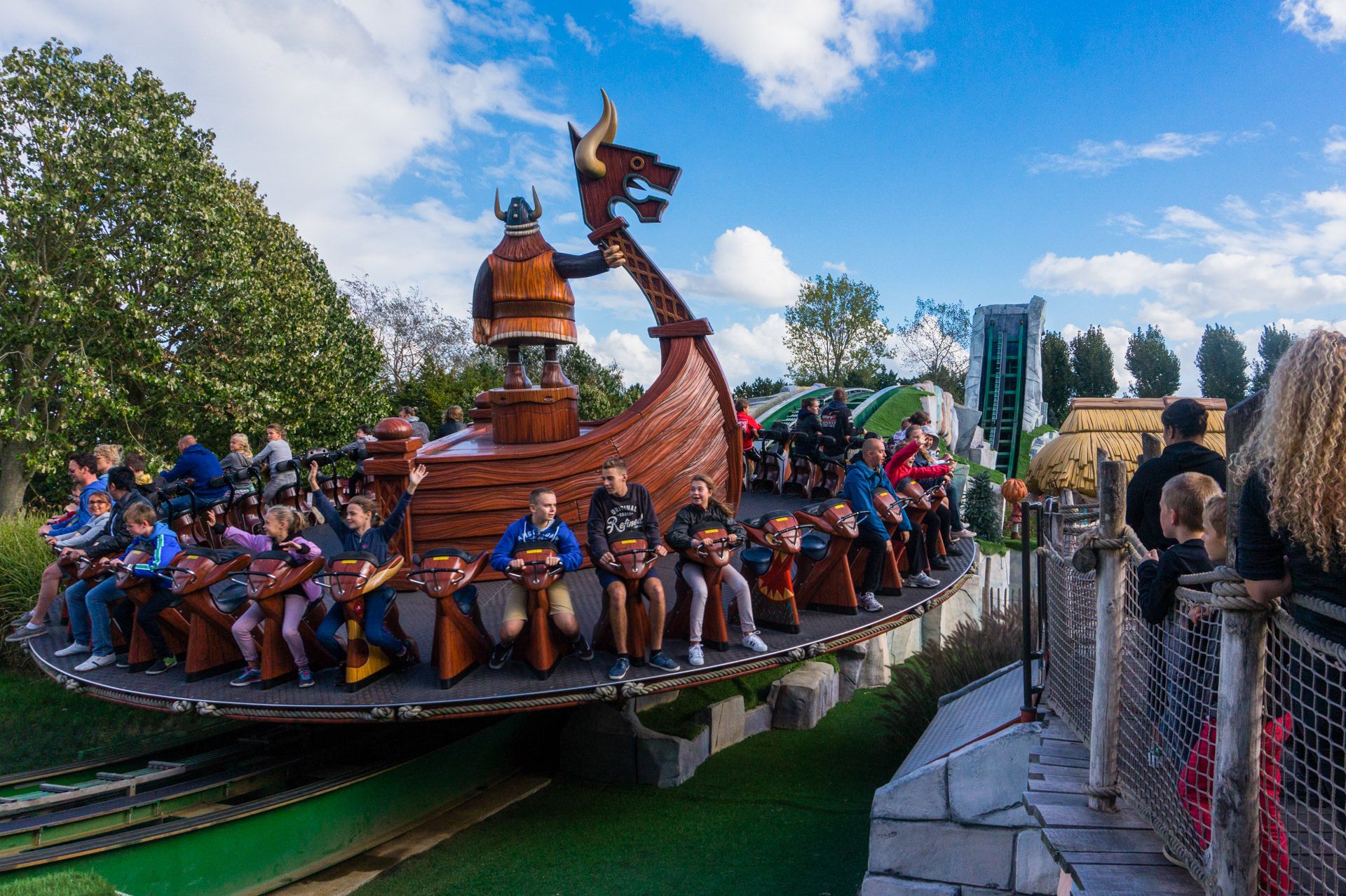
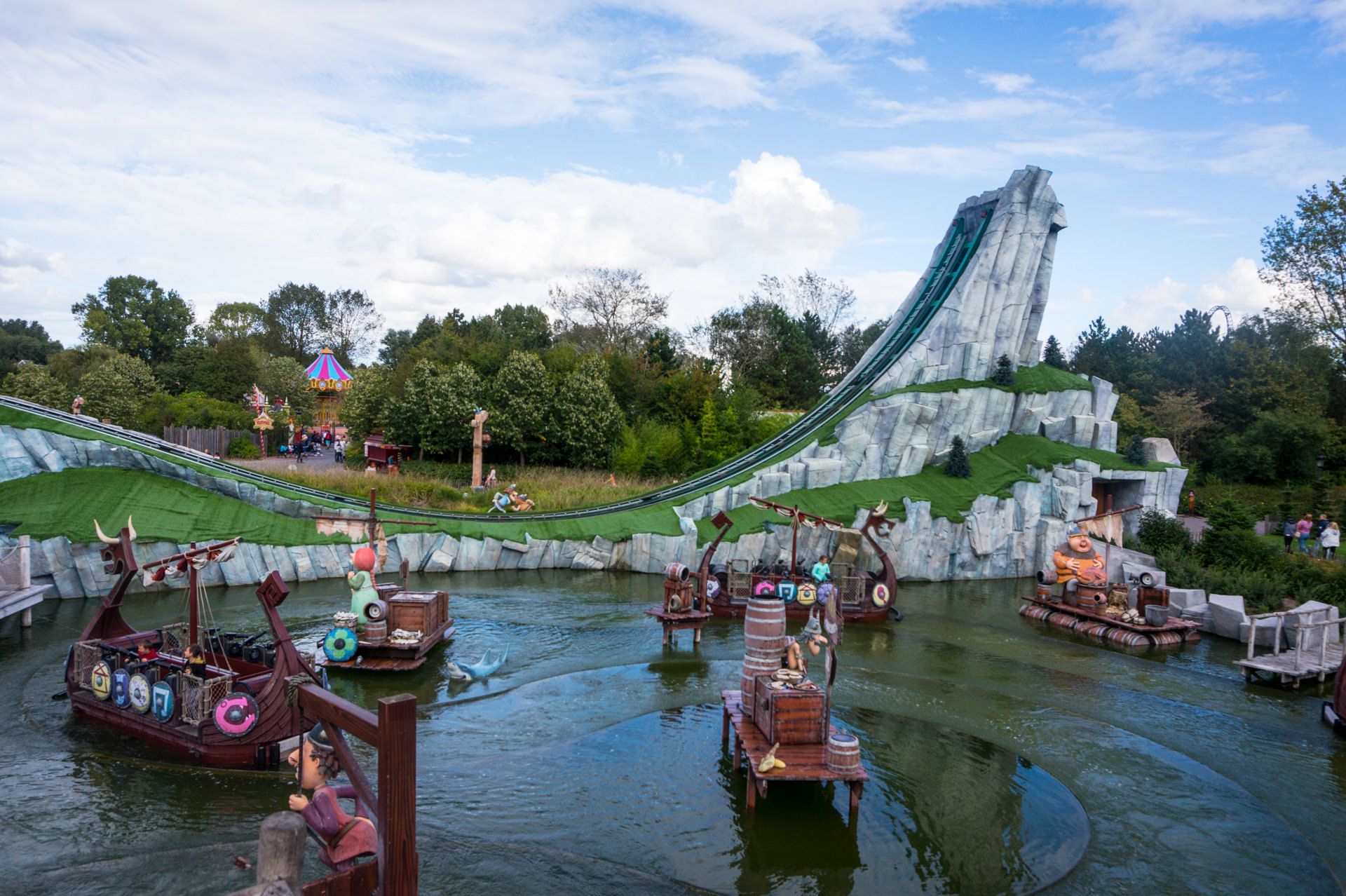
The visually most impressive theme area is the Wickieland built in 2013, where Vicky the Viking and the other vikings found their new home. With the nicely designed Zamperla Disk’o Coaster De Grote Golf and the picturesque Splash Battle Wickie – The Battle by Mack Rides you can find two great rides in a great atmosphere. Unfortunately, it is very noticeable that figures or groups of figures were used more often, so that sometimes the variety is missing. Since these figures can be found in all of the Plopsa Parks, this is very noticeable.

Kirmesplein

Equally well done is the newly arranged theme area Kirmesplein, which no longer looks like a collection of old rides. The wave swinger Wienerwalz was replaced by a newer copy. Likewise, a number of figures from the Samson & Gert universe can now be found in this area.

Het Bos van Plop

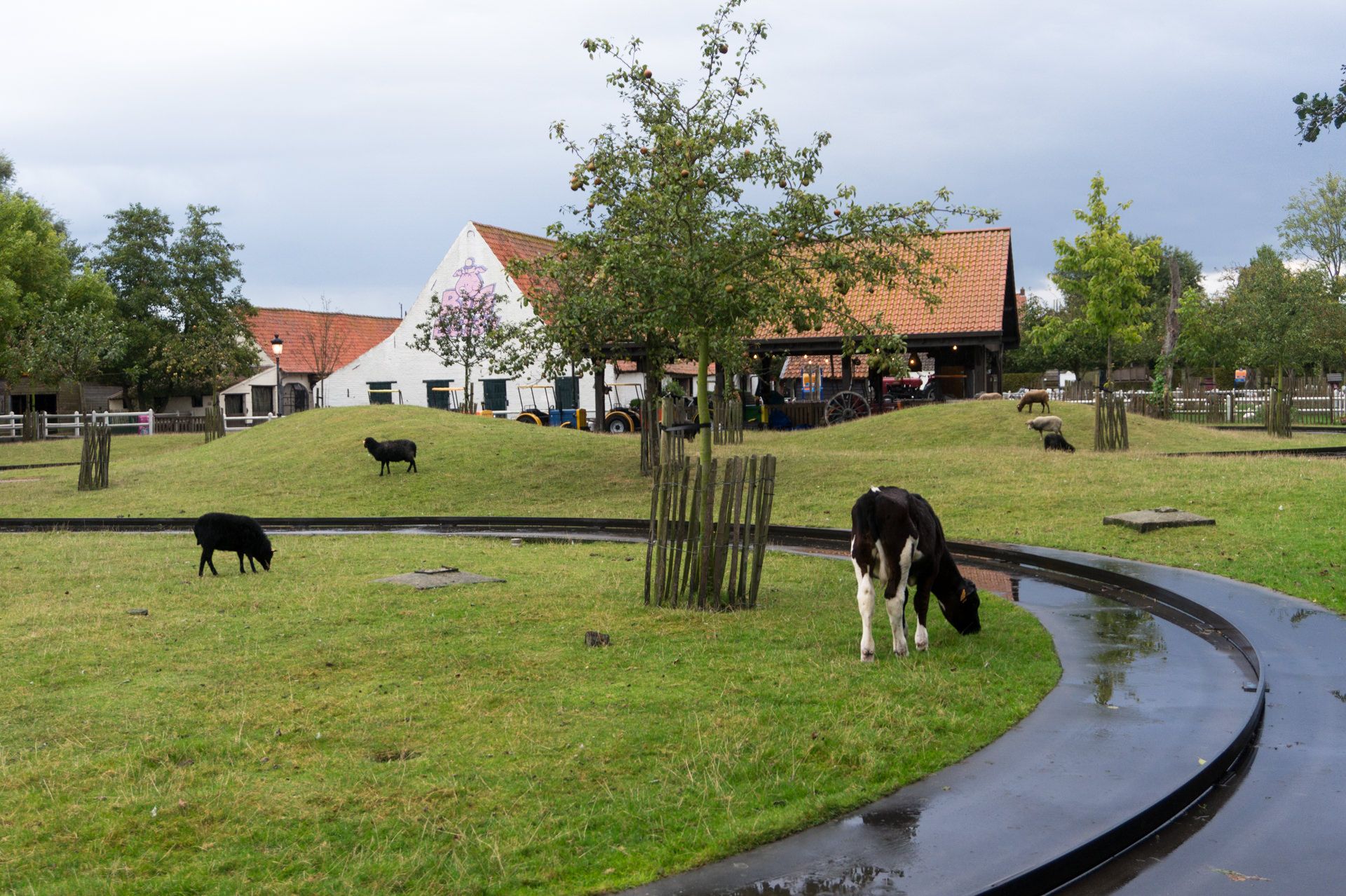
Next to the toddler area themed around the clown Bumba – which you should never show your children, unless they are fans of the teletubbies –, which is very popular in the Benelux countries, you can find the Kabouter Plop, after which Plopsaland De Panne was named, the park’s last remaining area. In addition to a small farm and a tractor ride – of course with free-range livestock – this area particularly captivates by the dark ride Het Bos van Plop, in which one can discover the world of the gnomes on a rather long journey. This is beautifully staged and has (most likely) a very large reference to the television series, which is why usually very long waiting times can be found here.

Pictures Plopsaland De Panne
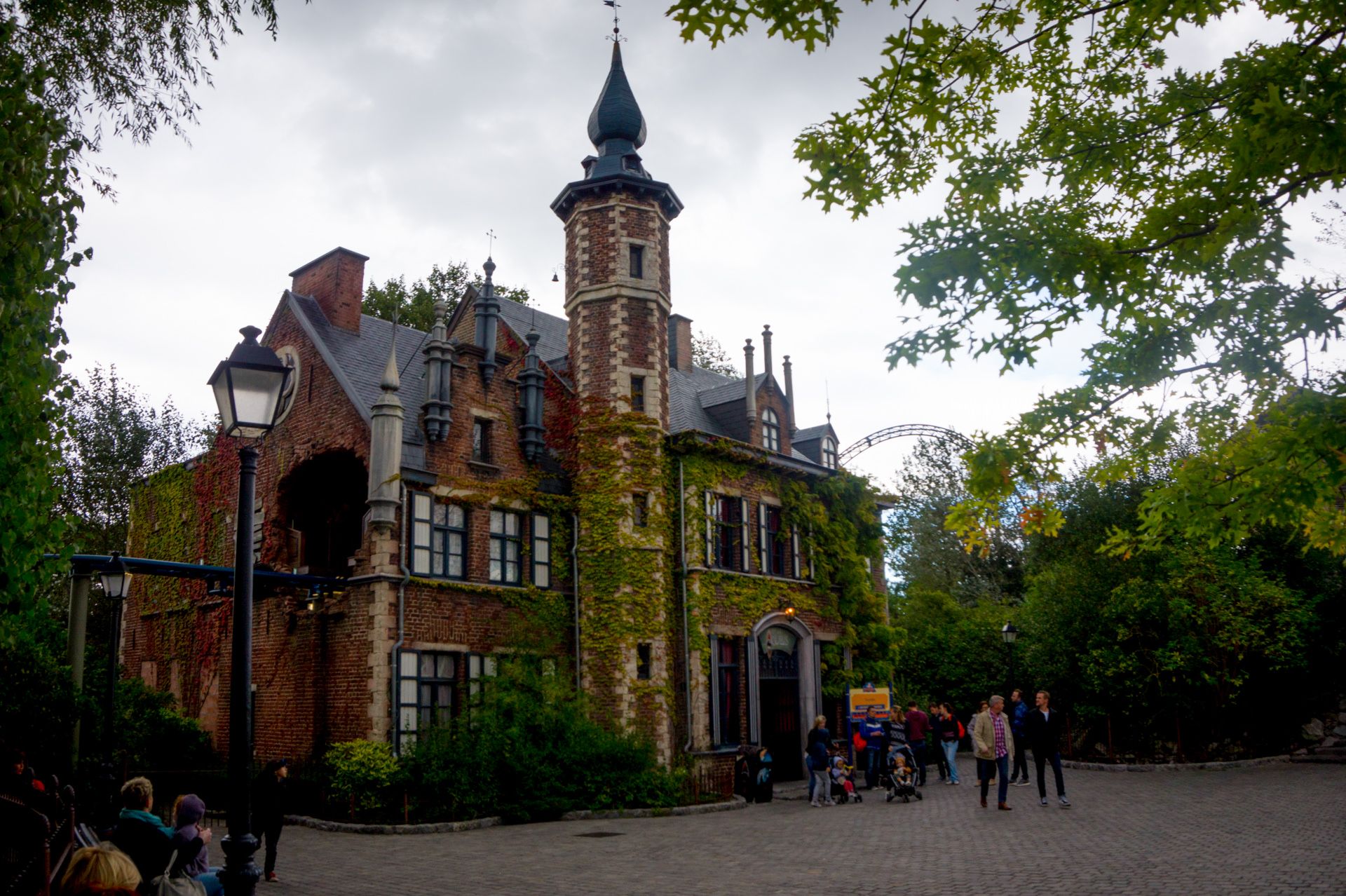
Conclusion Plopsaland De Panne
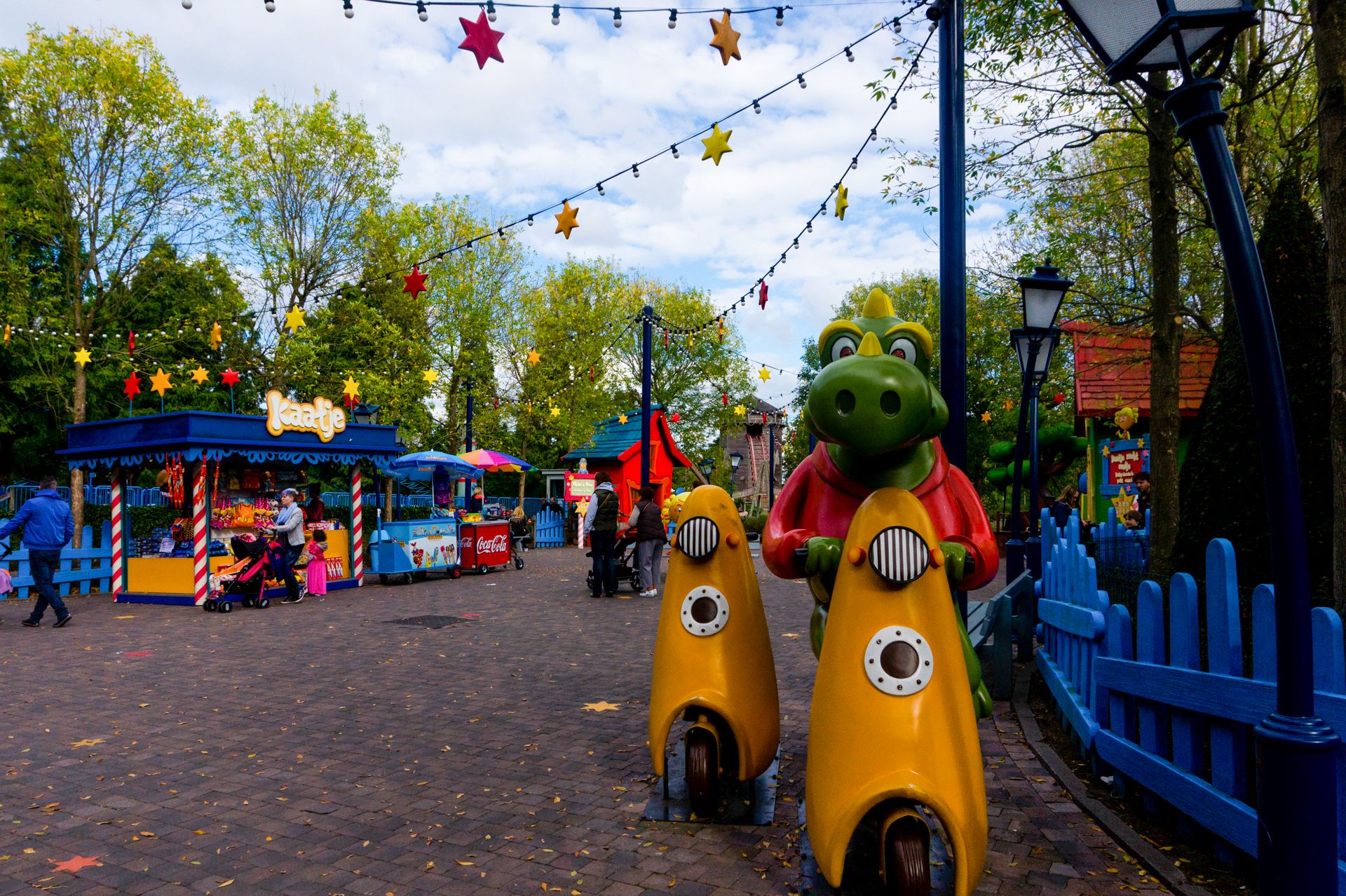
Plopsaland De Panne has rapidly and steadily grown over the past seven years, giving the park a very Efteling-like charm. Everything is well done, which is why you feel really comfortable within the park. The additions and enhancements of the past years show impressively how a park can further develop existing concepts in order to offer an overall better experience. Plopsaland De Panne just became one of the best theme parks to visit in Europe.
 

What is your opinion about the theme park Plopsaland De Panne?  Just write it in the comment field below the report or visit our social media channels:
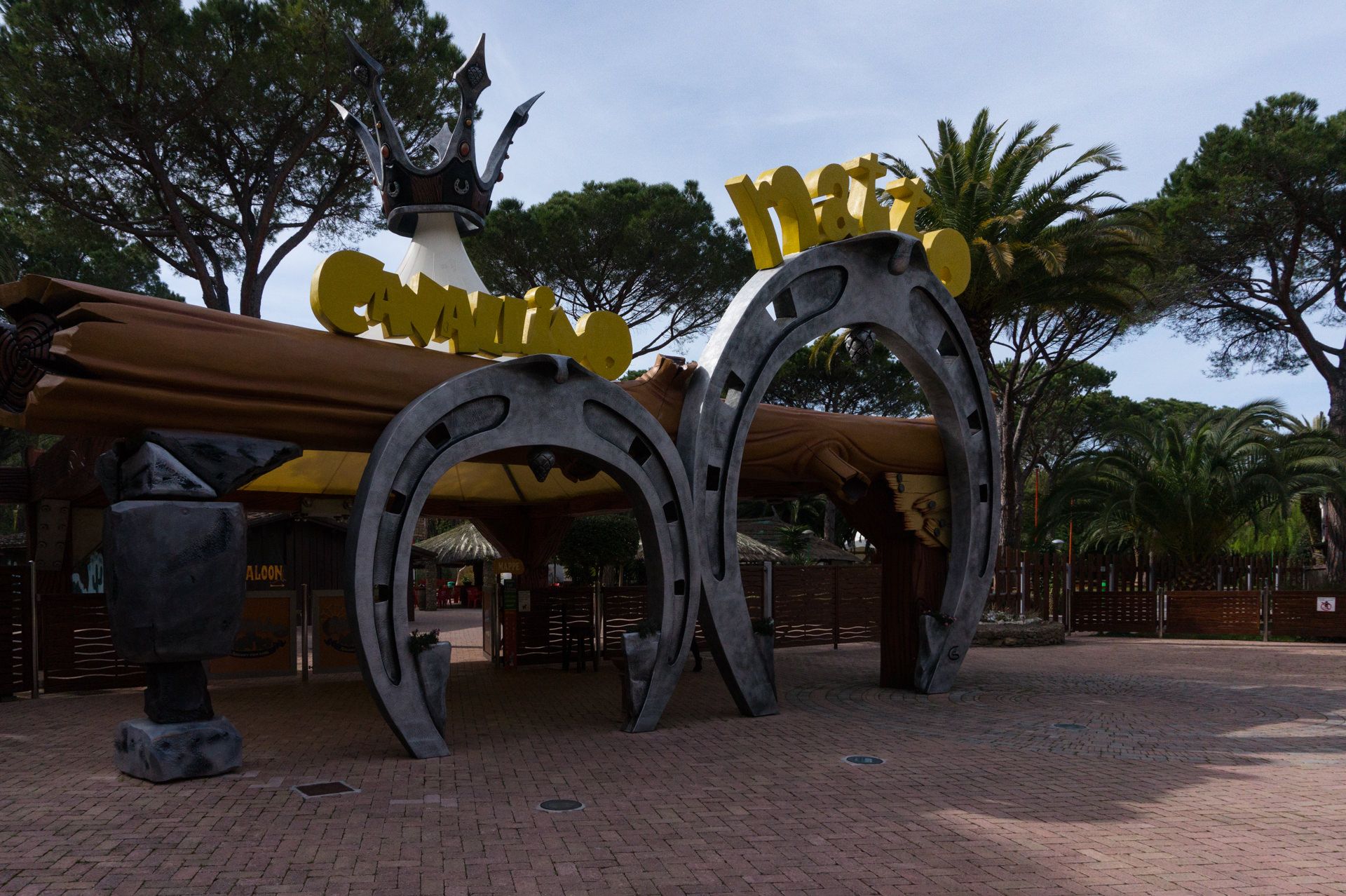


A visit to the Crazy Horse

Cavallino Matto

After staying in Rainbow Magicland near the Italian capital for almost too long, we reached the Tuscan amusement park Cavallino Matto at 4 pm on time. To my own surprise, the visit was a little cheaper thanks to the afternoon ticket and free parking.

In a good mood we went straight to the park of the Manfredi family, who have owned the Crazy Horse, Cavallino Matto, since 2006. However, the park was founded as Parco Gulliver as early as 1967, and was more a playground with pony rides and mini-golf than a leisure park. In the 1990s, more and more larger rides, such as the Colorado Boats log flume, moved into the park. However, the park didn’t gain in attraction until the Manfredi family took over and expanded it.

Rock ‘n’ Roll

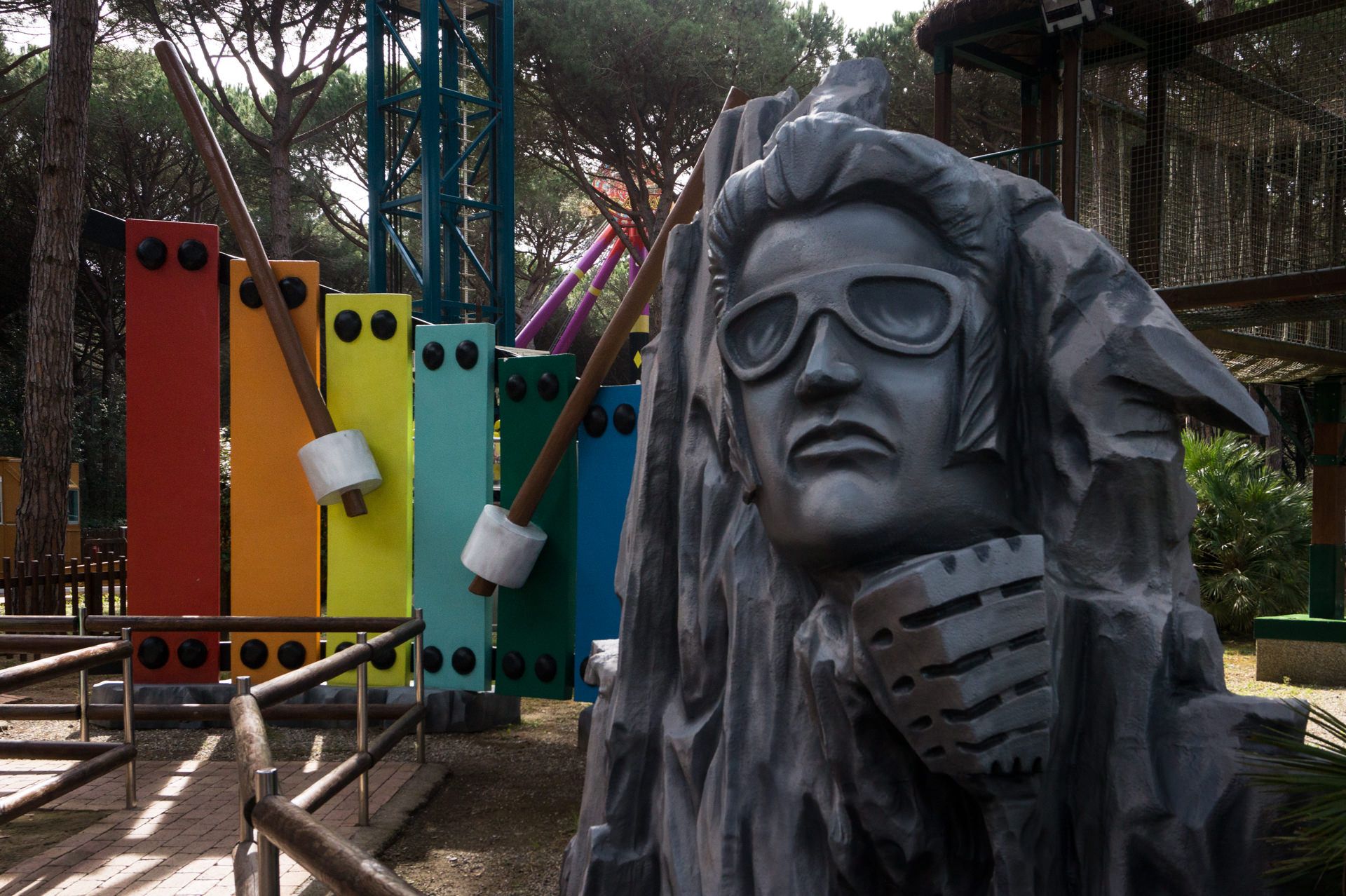
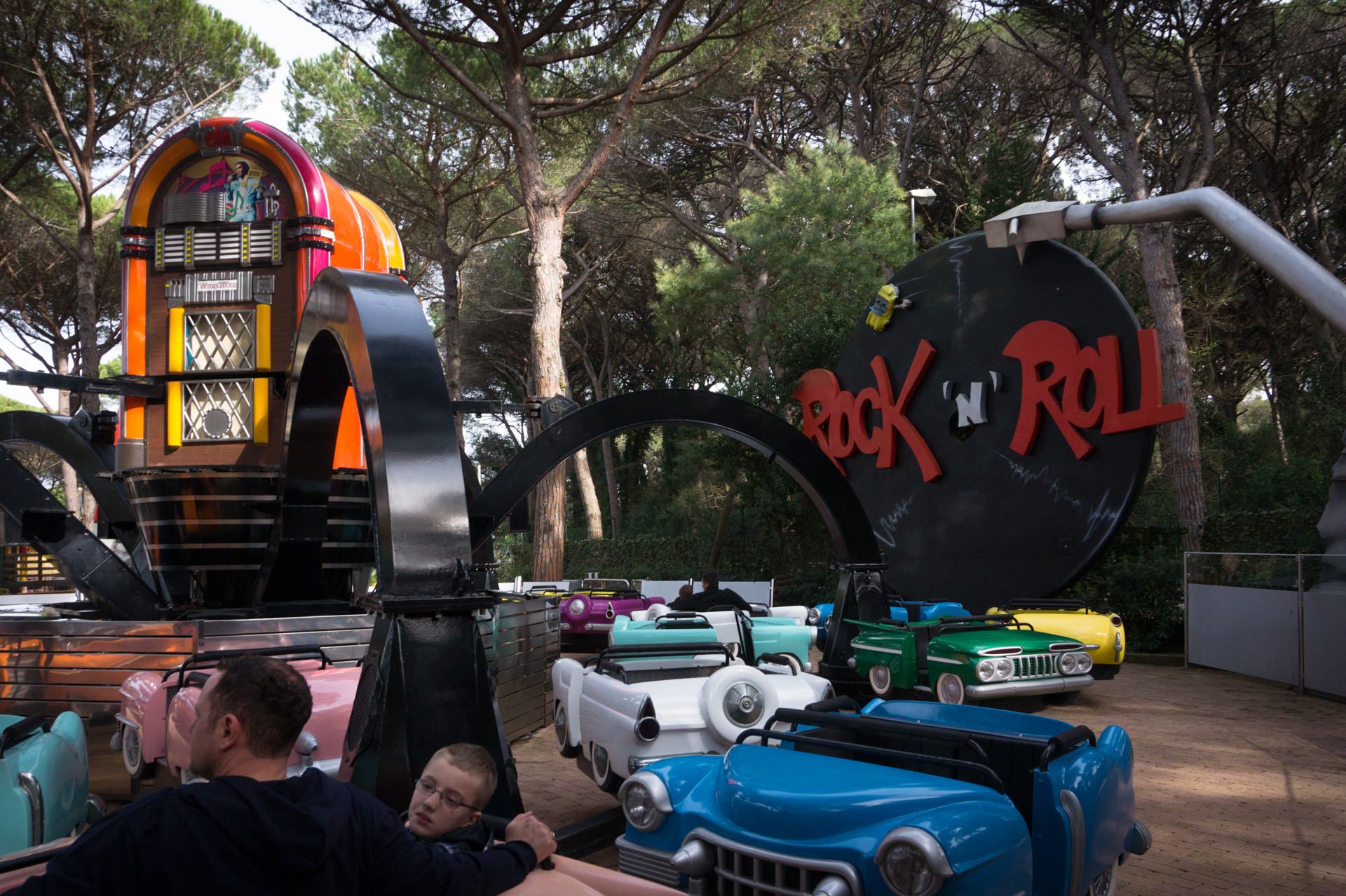
I did not become aware of Cavallino Matto until 2012, and thus certainly earlier than most amusement park fans, when the Swedish amusement park Liseberg had its old Rock ‘n’ Roll monster from Schwarzkopf replaced by a brand new one from Gerstlauer, which in turn moved the old one to Tuscany. Here it was given a new environment, whereby the old theme is still used musically. In contrast to the comparable ride in the French Nigloland, the ride here is also very easy to turn thanks to the lack of partitions between the seats, which in combination with the general duration of the ride made for an all-round successful ride.

Topo Zorro

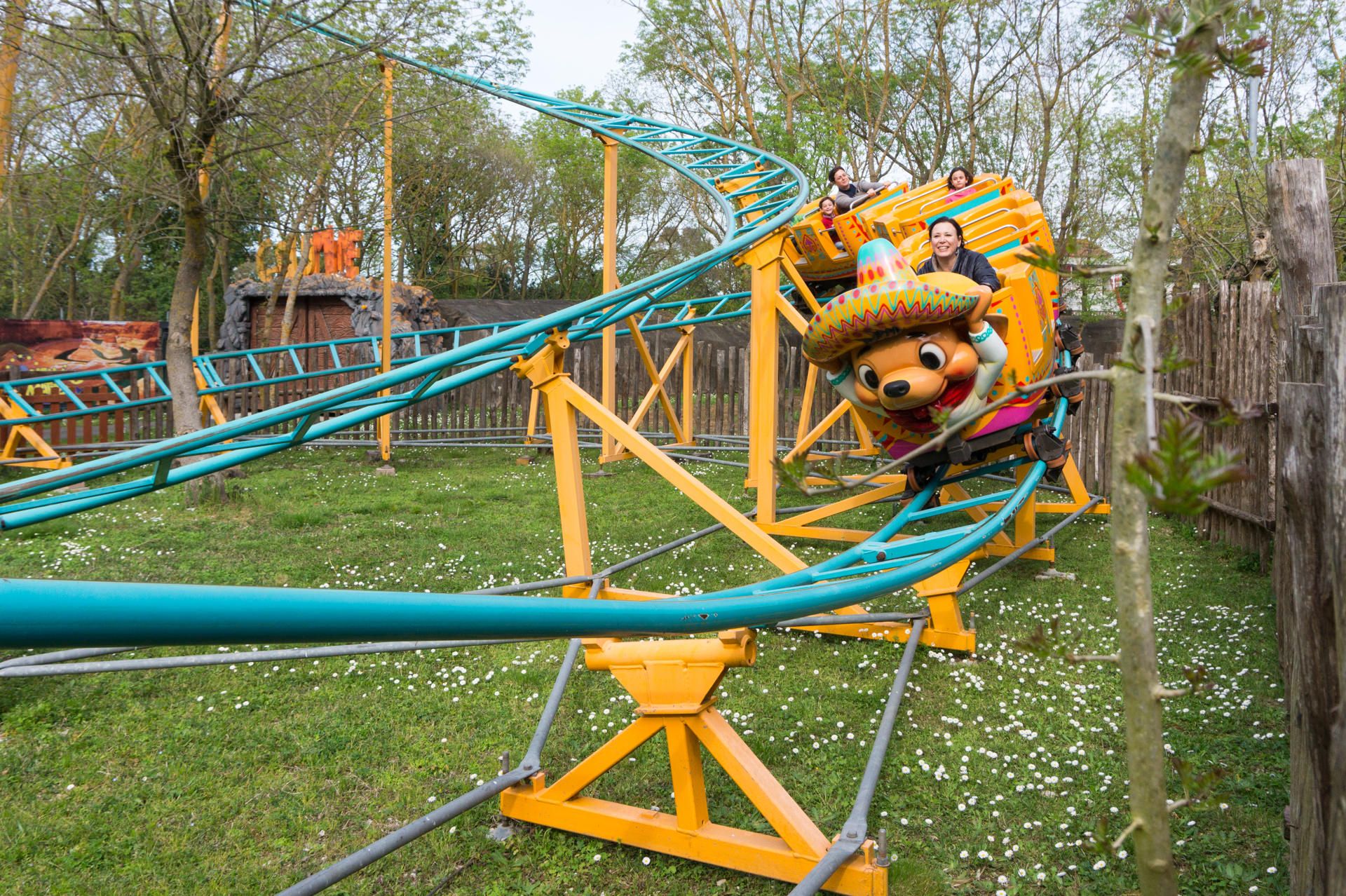
Opposite it is the children’s roller coaster Topo Zorro, a rather rare variation of the Italian long runner Brucomela with a helix instead of a straight downhill run. In contrast to the C&S-built ride Tren de Potosi from the Spanish Isla Magica near Sevilla, the waves in the upper part of the ride are quite round, which unfortunately makes the ride a bit less exciting.

Shocking Tower und Yukatan

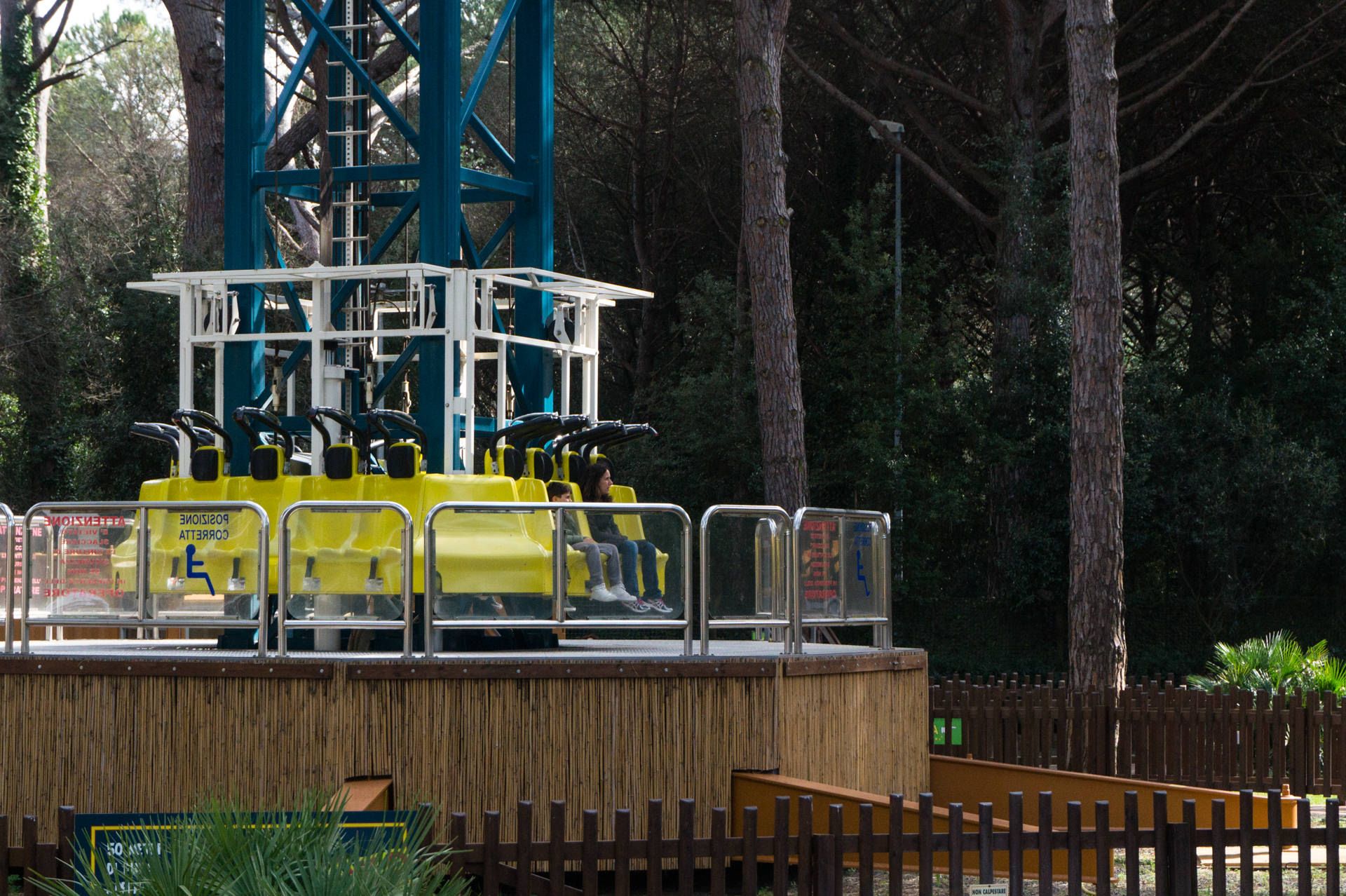
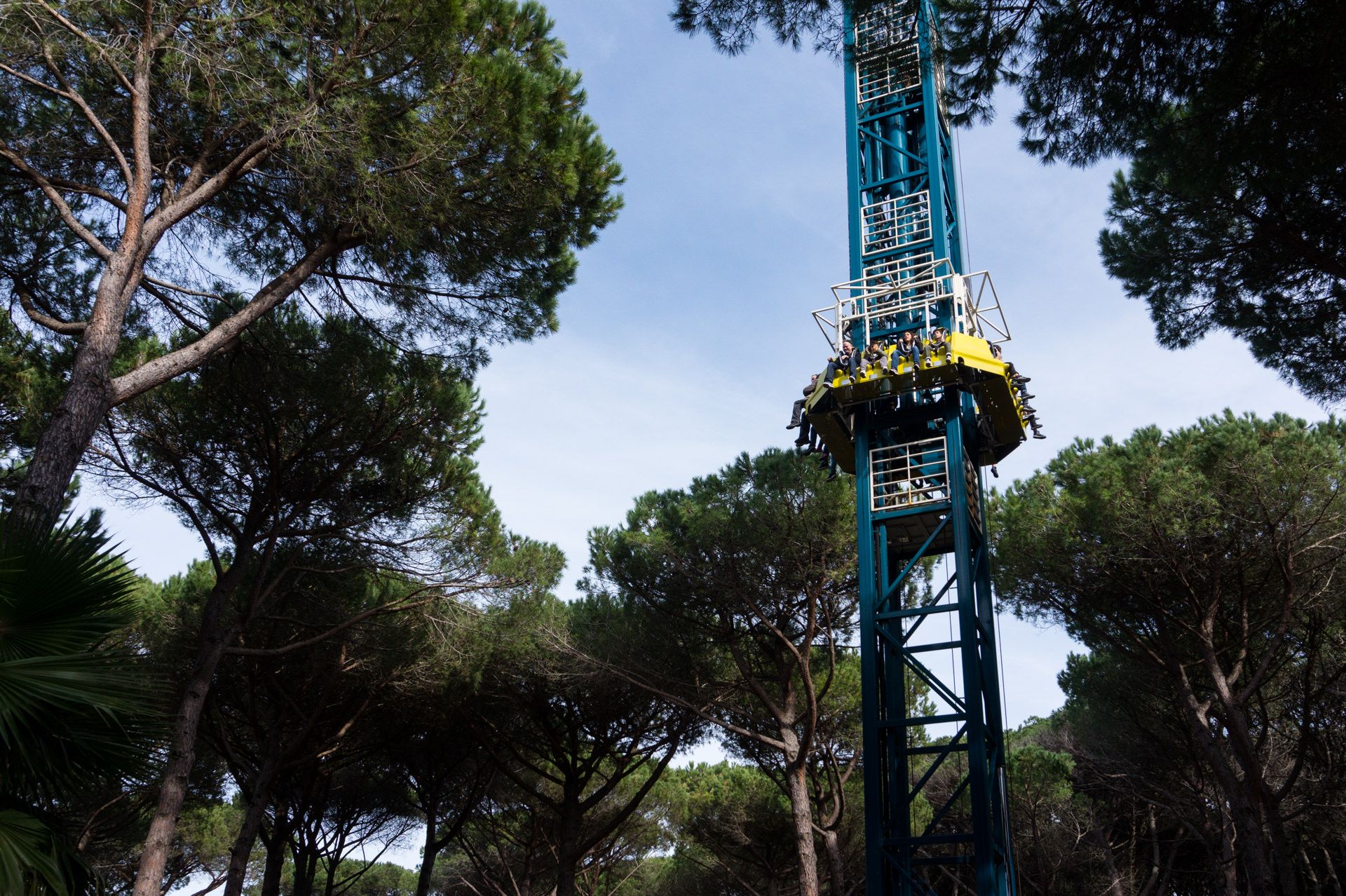
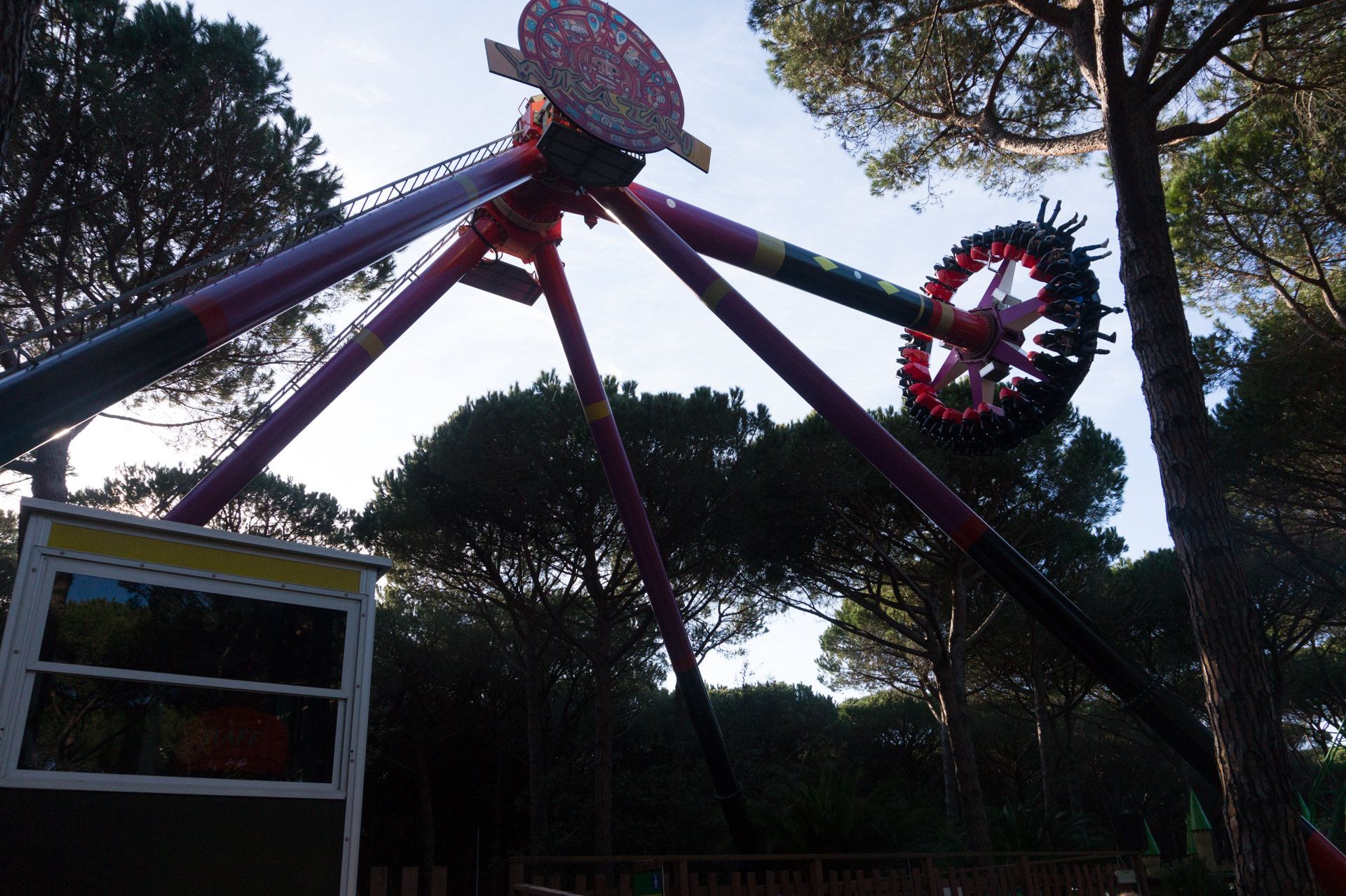
Just a few metres further on, the first end of the Cavallino Matto amusement park is reached, where two rides venture beyond the ever-present treetops in a larger square. While the 55m high Shocking Tower from Soriani & Moser easily manages this, the gondola carrier of the Technical Park Typhoon Yukatan only reaches beyond the treetops in full swing. This makes the otherwise rather tame ride a very exciting experience.

Project 1

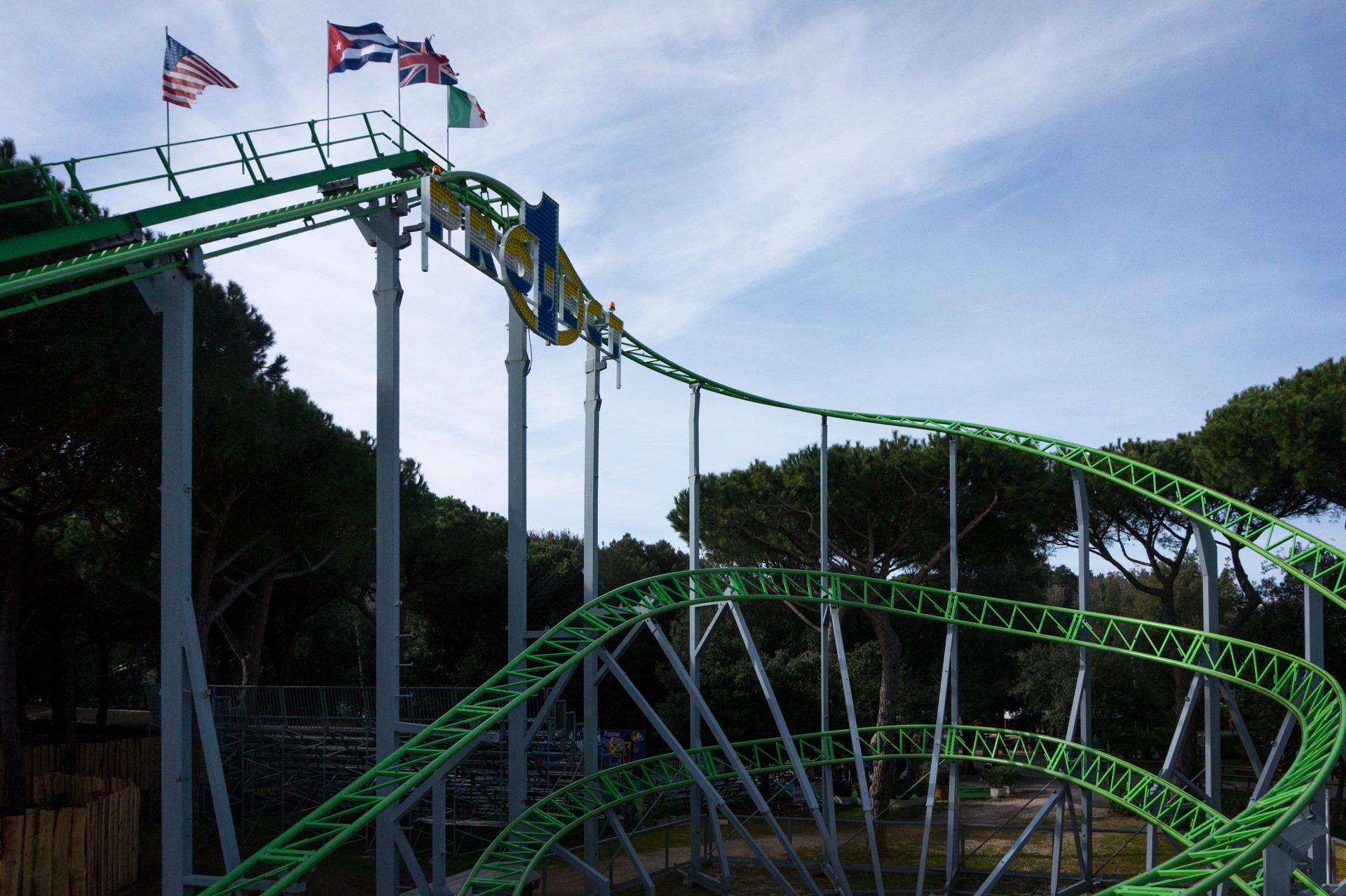
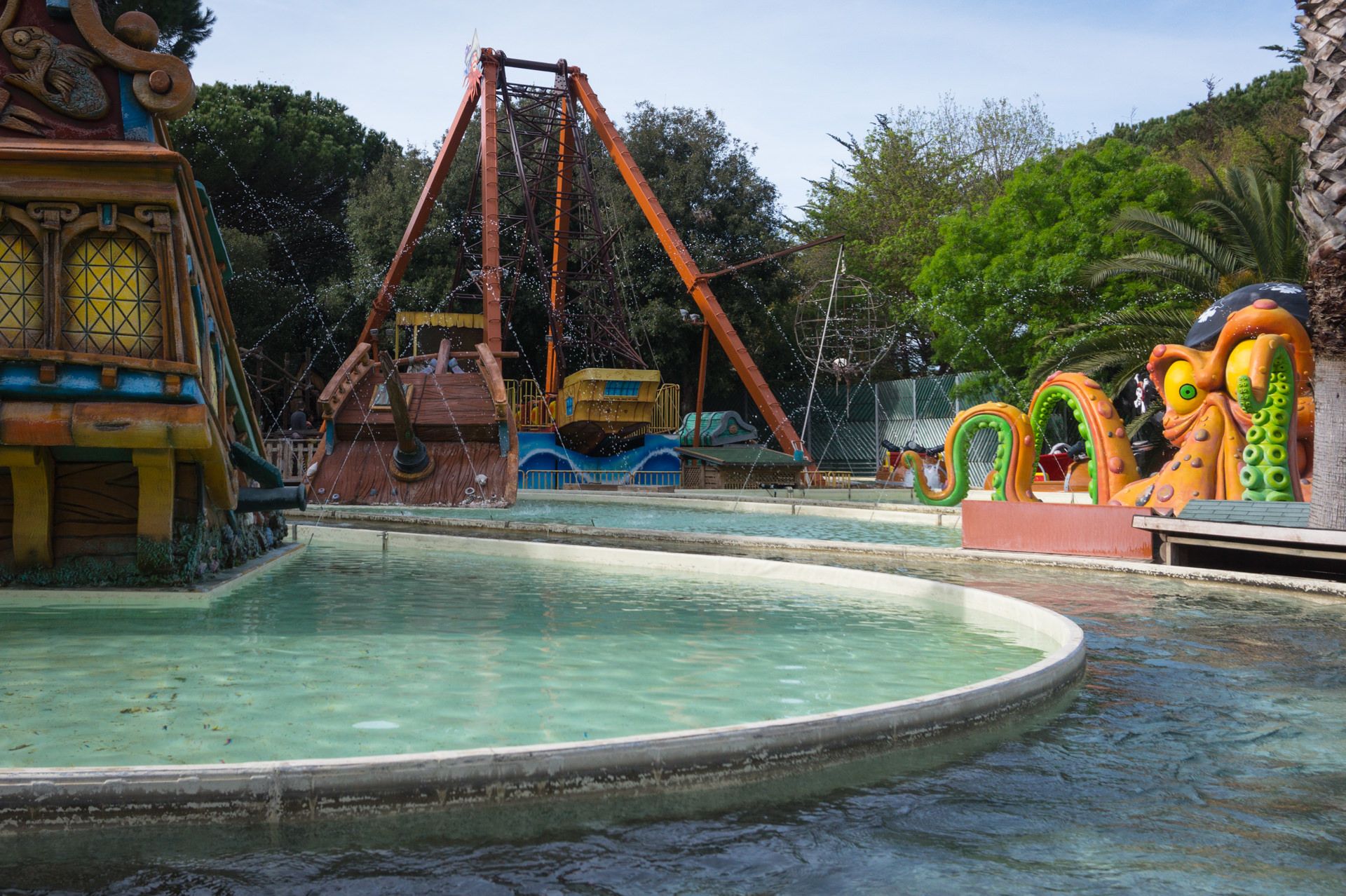
Passing a children’s driving school, as well as the Baia dei Bucanieri – a splash battle of SBF Visa – in whose courtyard the ship swing Nave Pirata is located, we went to the formerly largest roller coaster of the park: the L&T Systems ride Project 1. Here we also came across the exemplary handling of the park for the first time, according to which the train is sent onto the track immediately with enough passengers or after a certain time interval with only a few willing passengers. Especially on empty days this ensures sufficient rides on all relevant rides without having to pay attention to eventual closing and opening times.

The ride begins with a right turn towards the lift hill, which takes you up to the maximum height of 16m at a fairly leisurely pace. In a shallow right turn above the tree tops, you slowly but surely head towards the ground. Here you immediately pass through a long valley, after which you make your way to the sky with a similar gradient as you did on the descent. This also happens in a right turn, but the tree tops can only be seen from below. A smaller slope takes you to the other side of the ride, but there is now an uphill bend to the left. Parallel to the lift hill there is now another drop, whereupon the station is crossed in another left turn. This is followed by the last descent and a final bend, until the nice, but not necessarily exciting, ride in Cavallino Matto ends.

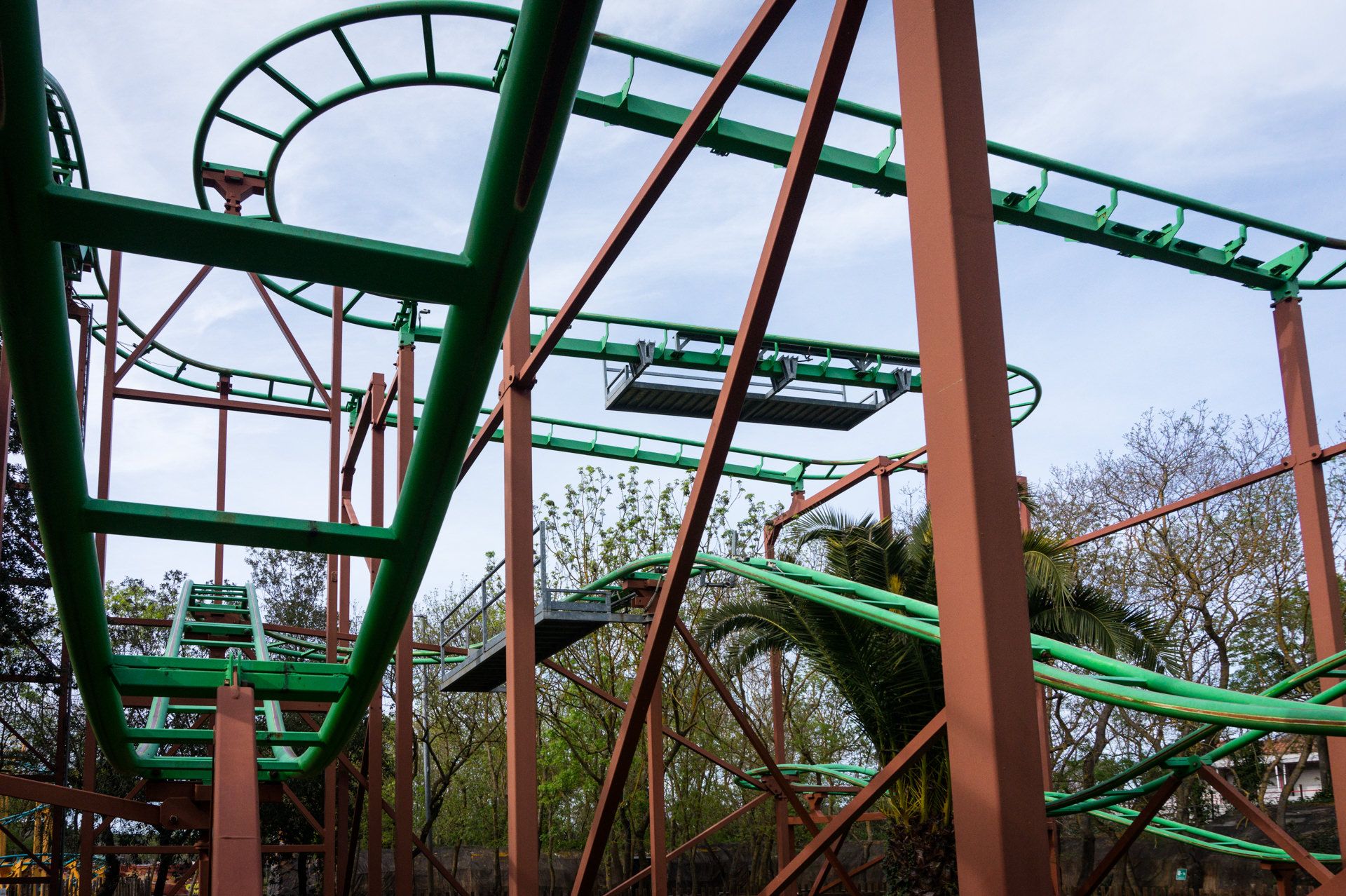
Wild Mine

Also from here it is only a few steps to the next bigger attraction, which for us was not the nicely designed dark ride Safari Adventures, but the wild mouse Wild Mine, also from L&T Systems. The ride is similar to its counterpart from Mirabilandia, but a bit smaller and has two hairpin bends less. Thus, the upper part of the ride goes through only five serpentine curves just before the funny interplay between steeper gradients and further hairpin bends starts one level below. Due to lack of space, the two successive gradients are slightly smaller, but this doesn’t hurt the funny mouse, especially since we didn’t have to wait an hour or rather a second for the ride this time.

Speedy Gonzales

Directly next door is the small roller coaster Speedy Gonzales, which we also knew from Mirabilandia. However, it seemed to be bigger there. Instead of just one lap through the layout of a simple figure of eight, the train set made its guided way over the track twice.

Colorado Boats

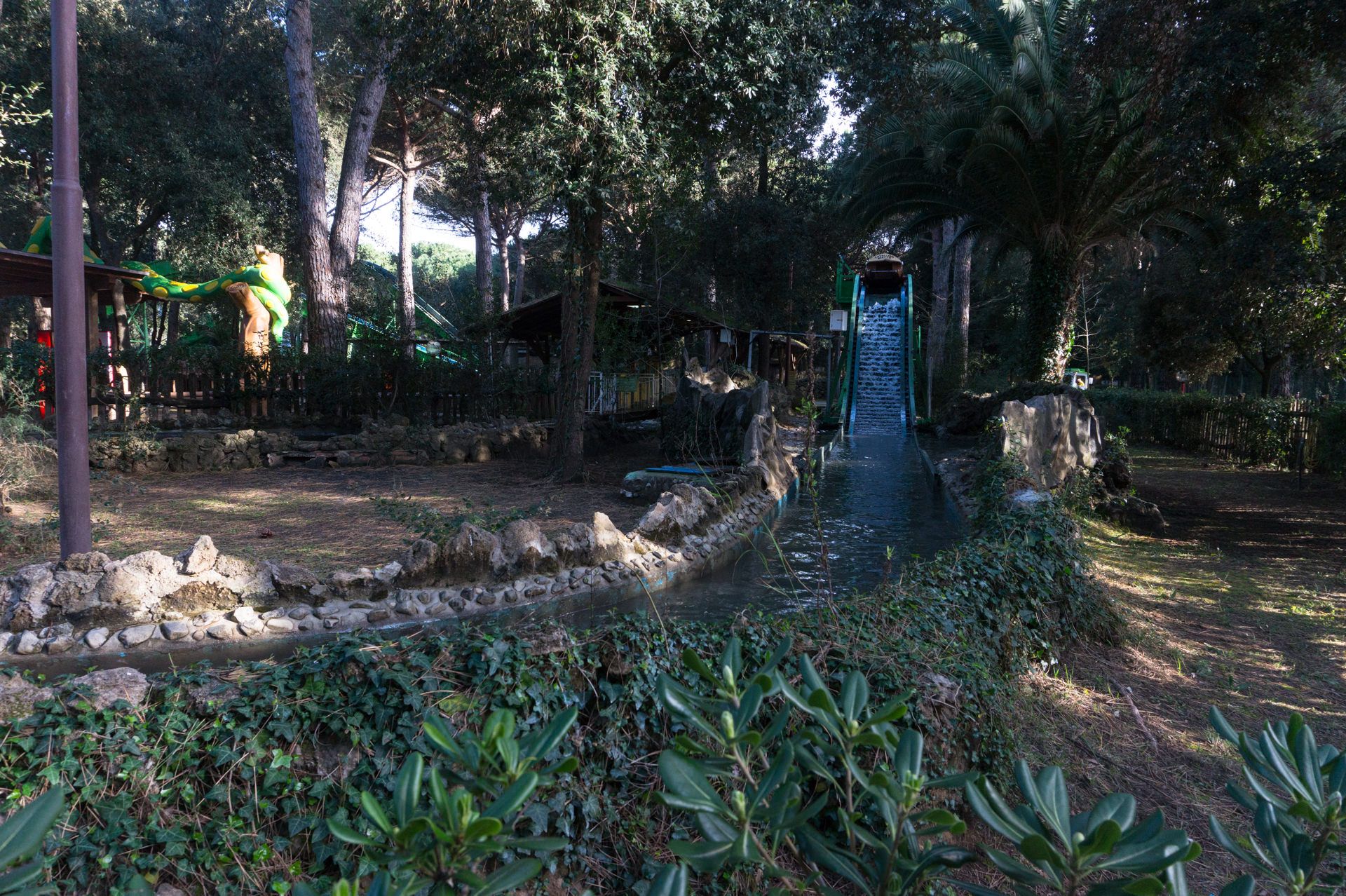
In addition to an electric horse-riding track and a 4D cinema, this area of Cavallino Matto also features the large, apparently home-made, Colorado Boats log flume. After leaving the station, you can take a little boat ride through the canal before you reach the first conveyor belt which takes you up to the top. Shortly after that the first shot is taken, whereupon the contact with the cool water is immediately established. Although the run-out area is very short, the boat glides very smoothly into the next curve whereby the speed is somewhat slow. No wonder that it is forbidden to change the natural speed of the boat. Of course we followed this advice written in German with pleasure and so we bobbed with the boat through the further course of the channel. A short time later we reached the second lift and thus the second and also biggest shot of the ride. Now the return to the station could be done properly moistened, but since no photo of the ride has been taken yet and this should best be taken during a descent, we climbed a hill a third time, but this time a remarkably small one. Fortunately, this hill is quite harmless and the boat trip through the forest ends shortly afterwards with a sufficiently pronounced degree of wetness.

Freestyle

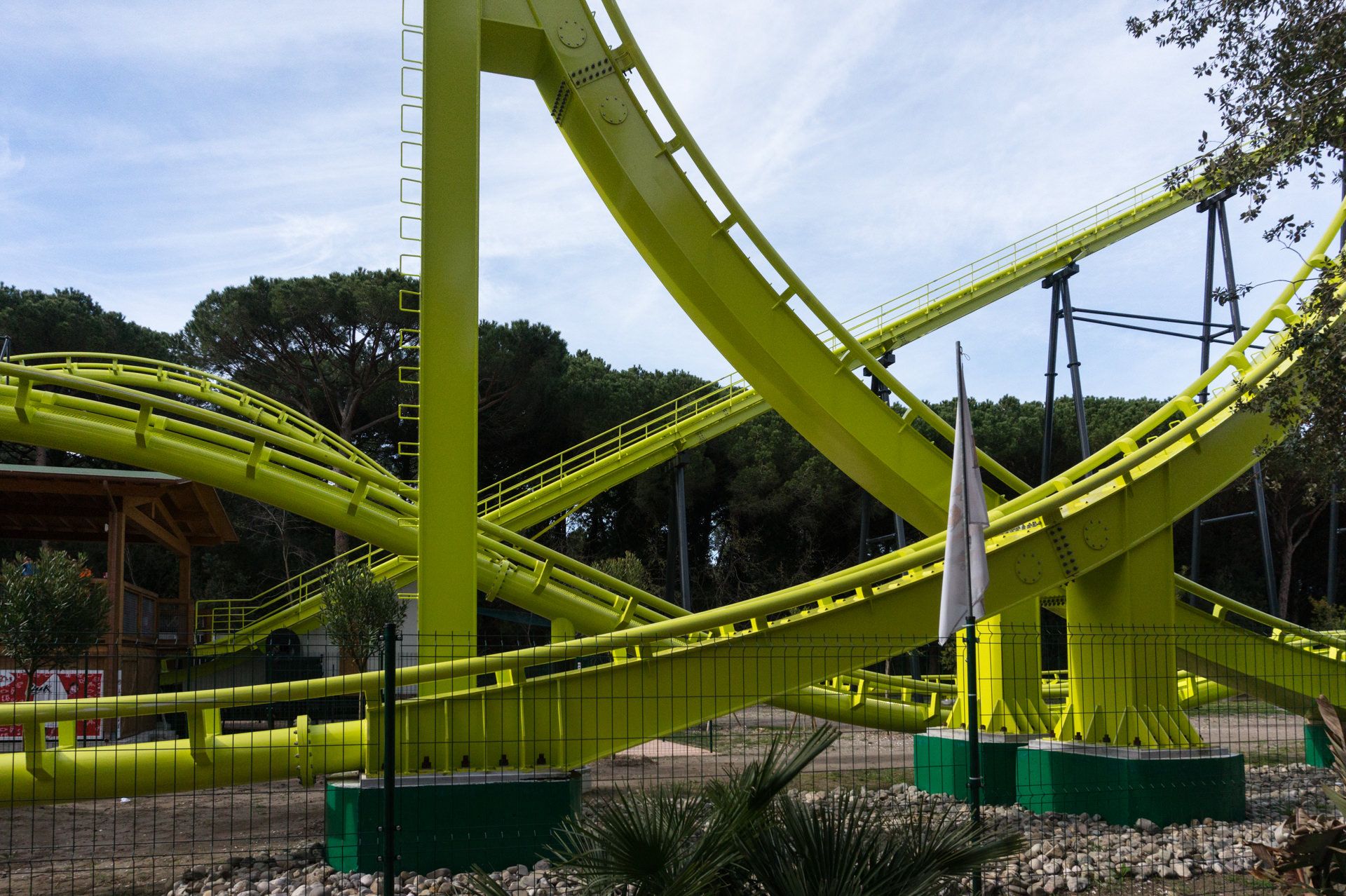
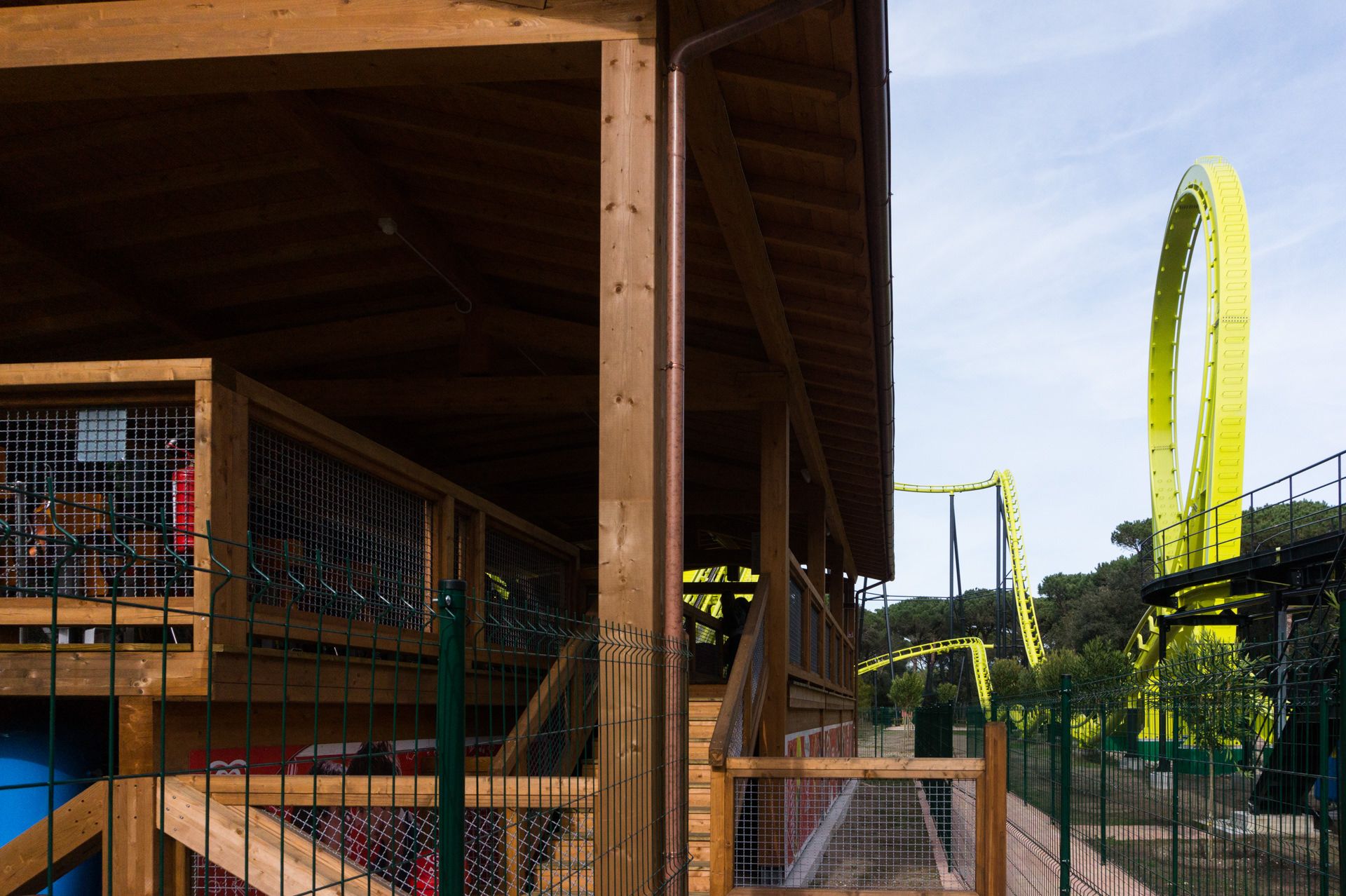
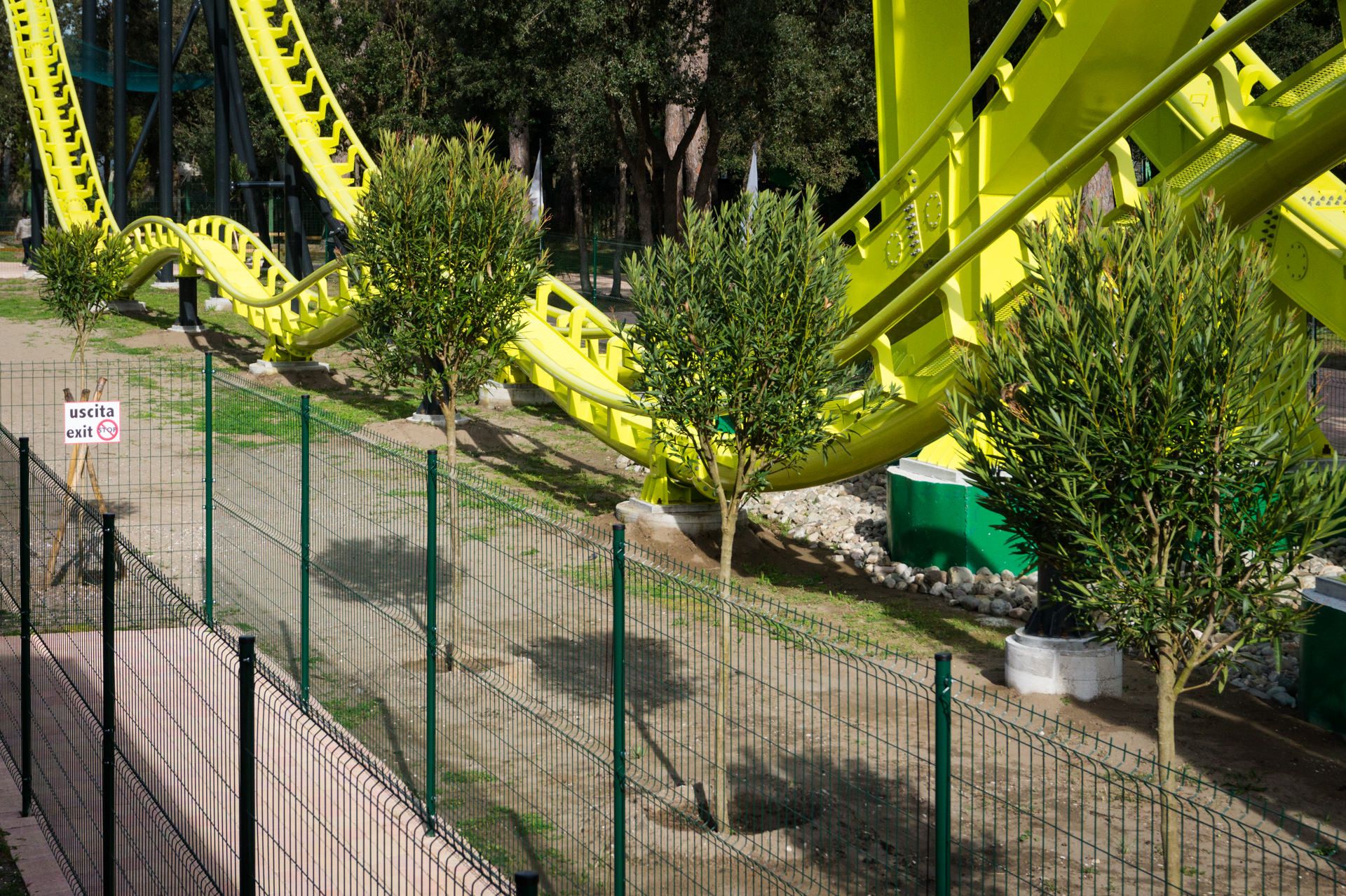
On a brand new site, separated by a small public road, the newest and largest roller coaster of the Cavallino Matto amusement park rises to the sky. Although the Freestyle roller coaster is considerably older than any other ride in the park, the former Sky Rider from Canada’s Wonderland has attracted the park’s attention in all the forums. Almost like in 1985, the construction of the Stand-Up Coaster was eagerly awaited, which is the second ride of this type in Europe next to the Shockwave of the English amusement park Drayton Manor. Moreover, it is the only larger roller coaster of the Japanese manufacturer Togo in Europe, which is all the more reason to make a pilgrimage to the small, friendly amusement park in Tuscany.

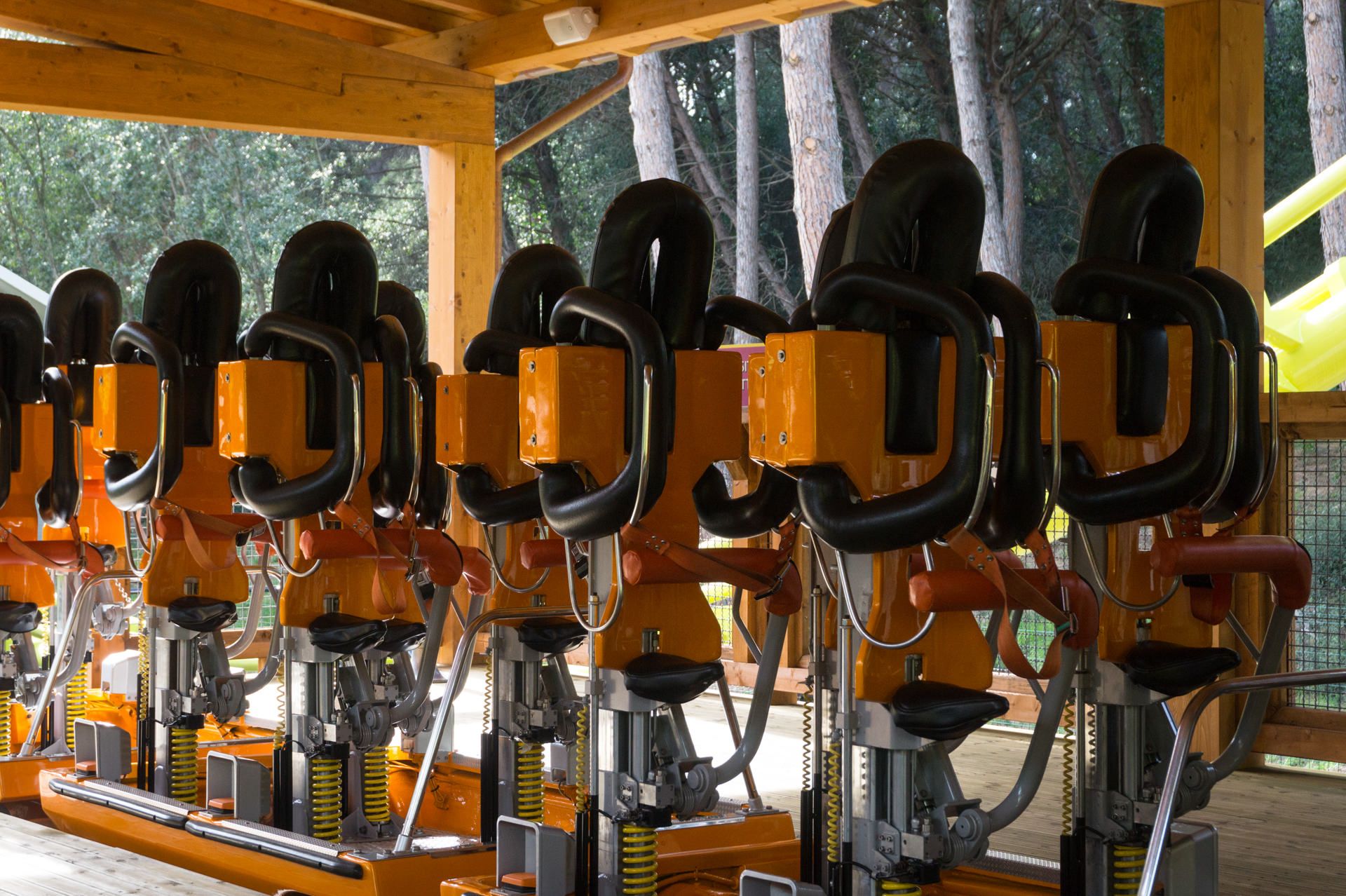
While on most roller coasters the experience starts with the ascent of the lift hill, the access to Freestyle is already quite adventurous. Admittedly I didn’t understand the whole procedure at the first run, especially as the shoulder bar waistcoat couldn’t be opened completely, but this improved steadily from ride to ride. And actually it’s quite simple, because you only have to pull the nipple through the flap and turn the small crank to the top, then you see an arrow and press on it and it opens or closes. Actually you only have to push the loose harness forwards. But hopefully the person to your right doesn’t do the same at the same moment (which is very likely). When the harness is opened, place yourself onto the seat, close the harness and adjust the height of your seat. The seat is then locked in position and if necessary readjusted by the staff. The staff must be praised for their quick reactions and for allowing even a mentally handicapped and partially paralysed boy to ride in the course of the day.

As soon as the train has been cleared, you can take the lift up to a height of 27m at a leisurely pace. Up there, you take a turn above the green of the forest. In a curve you pick up more and more speed before you plunge down to the ground without hesitation. With extraordinary strong pressure you pass the first valley and immediately afterwards in a similar manic way the loop of the ride. After that you pass the following valley without any regard to losses before the train rushes up a camelback. Here you take off the floor in the front part of the train. However, with the best will in the world, the madness is not over, because the train now pushes through a narrow downhill helix, which is equipped with immensely high pressure. The now compressed legs are brought back into shape on the following hill by the negative forces; but the madness still continues. On a supposed straight line the train is now tilted to the left before it uses a right turn as a turning manoeuvre. Two and a half small hills, which get bigger and bigger towards their end, are the finale of this exciting ride. With the last hilltop the braking distance is reached and after another curve also the station, where you immediately feel the urge for another round.

The Stand-Up Coaster Freestyle is certainly one of the most intense roller coasters in Italy and also in Europe. The way the roller coaster stresses you in the helix is insane and almost uncomfortable, but in combination with the airtime moments during the ride it is extremely worth experiencing. If you can thankfully do without taking off on the first drop, then a ride in the front part of the train is recommended. Unfortunately, the ride characteristics are not the best, but the safety bars are almost negligible because they hardly touch your body; that’s why Dominik, who was rather displeased with the excellent Invertigo from Movieland Park, wanted to take one lap after the other, while one or two laps less would have been enough for me. But one can also be infected by such a passion.

Pictures Cavallino Matto

Conclusion Cavallino Matto

Cavallino Matto was the most sympathetic amusement park on the tour, so despite only two hours in the park we really had a lot of fun here. All in all, we had quite a few repeat rides on Freestyle and were able to ride everything without any problems due to the good waiting time management; only the strict approach to the Yucatan swing prevented a final ride on the stand-up coaster, which we had grown to love until then. So the ride just above the tree tops was the crowning glory of the tour through beautiful Italy.


What is your opinion about the theme park Cavallino Matto? Just write it here below the report in the comment field or visit our social media channels:


Click here for the next report of the Il Viaggio dei due Runner Tour

The legacy of Dinocittà

The History of Cinecittà World

The history of Rome as a film location dates back to 1937, when the film city Cinecittà was founded. Equipped with what were then the most modern studios in Europe, a backlot and a copy studio, around 300 films were produced by 1943. Bombed by the Allies and looted by the Nazis, the film production was moved to Venice. After the end of the war, Cinecittà served as a DP camp for two years before the film production site was returned to its original purpose. In the 1950s the Cinecittà Studios experienced a golden age, probably also due to the film funding of the Italian state, and served as the film location for important Hollywood films such as Ben-Hur.

Due to constantly increasing demand and limited studio capacities, the producer Dino de Laurentiis founded Dinocittà, at that time the largest film studio in the world, also in the south of the Italian capital. The studio mainly produced historic and monumental films such as Barabbas (Italy 1961, Richard Fleischer), Waterloo (Italy/USSR 1969, Sergei Bondarchuk) and John Huston’s mammoth work La Bibbia (Italy 1966). However, due to the reduction of subsidies at the beginning of the 1970s, the film studio was not able to survive for long, and so in 1973 the land was sold to the Italian state. From then on Dino de Laurentiis produced in the United States and the Dinocittà remained unused; although not forgotten. Plans in the early 2000s to run the studios under the name Roma Studios were quickly discarded and Cinecittà Holding took over the site.

Originally planned for 2012, the movie park Cinecittà World opened its doors for the first time in the summer of 2014. Unpaid bills and a lack of visitors, despite the surprisingly low target of 1.5 million visitors, quickly left the park in a negative light. Short-notice cancellations of seasonal events and the planned winter opening quickly gave rise to doubts as to whether the park would ever open again. However, after restructuring over the winter months, the park opened punctually at Easter.

Tour of the park

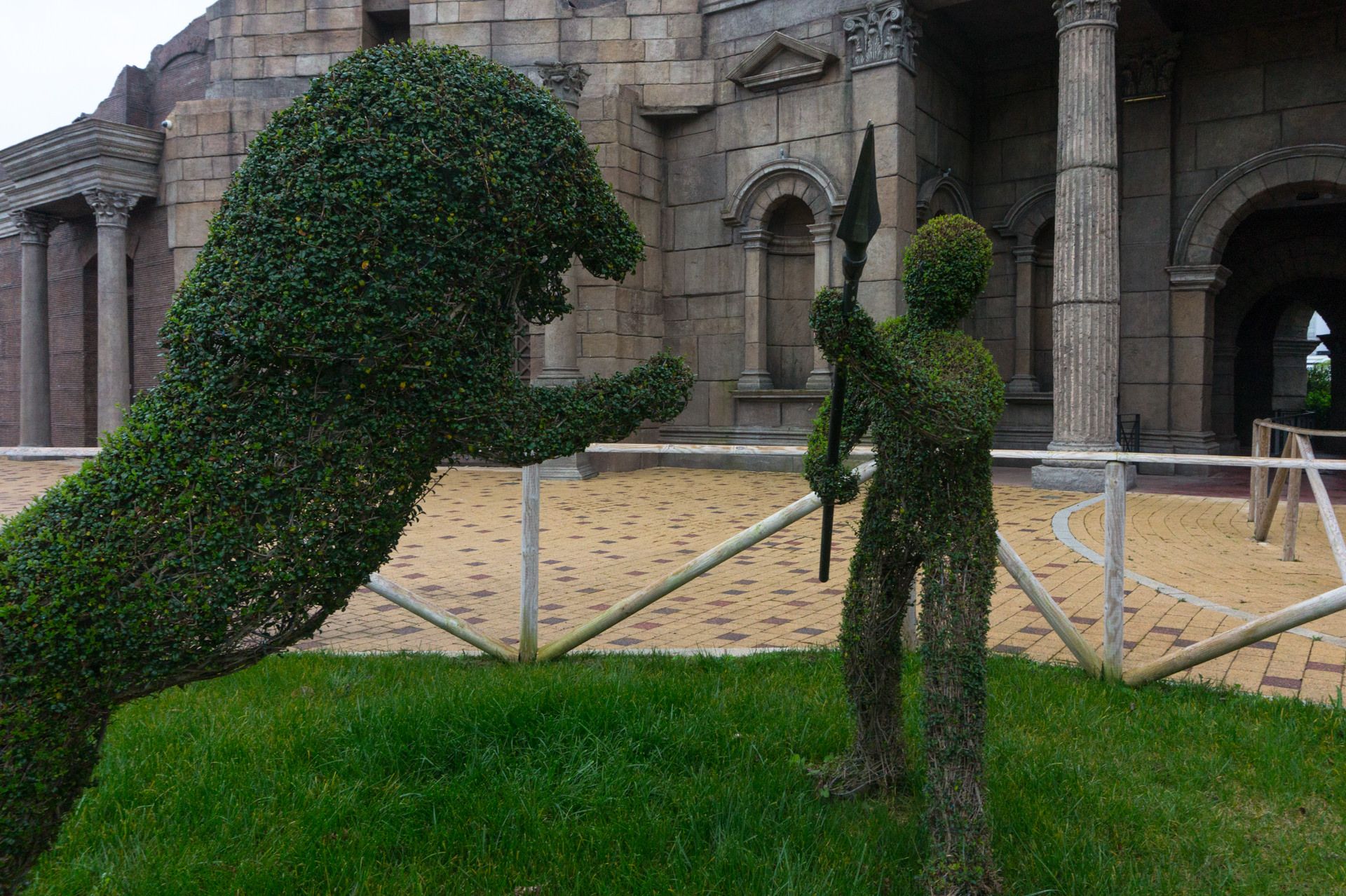
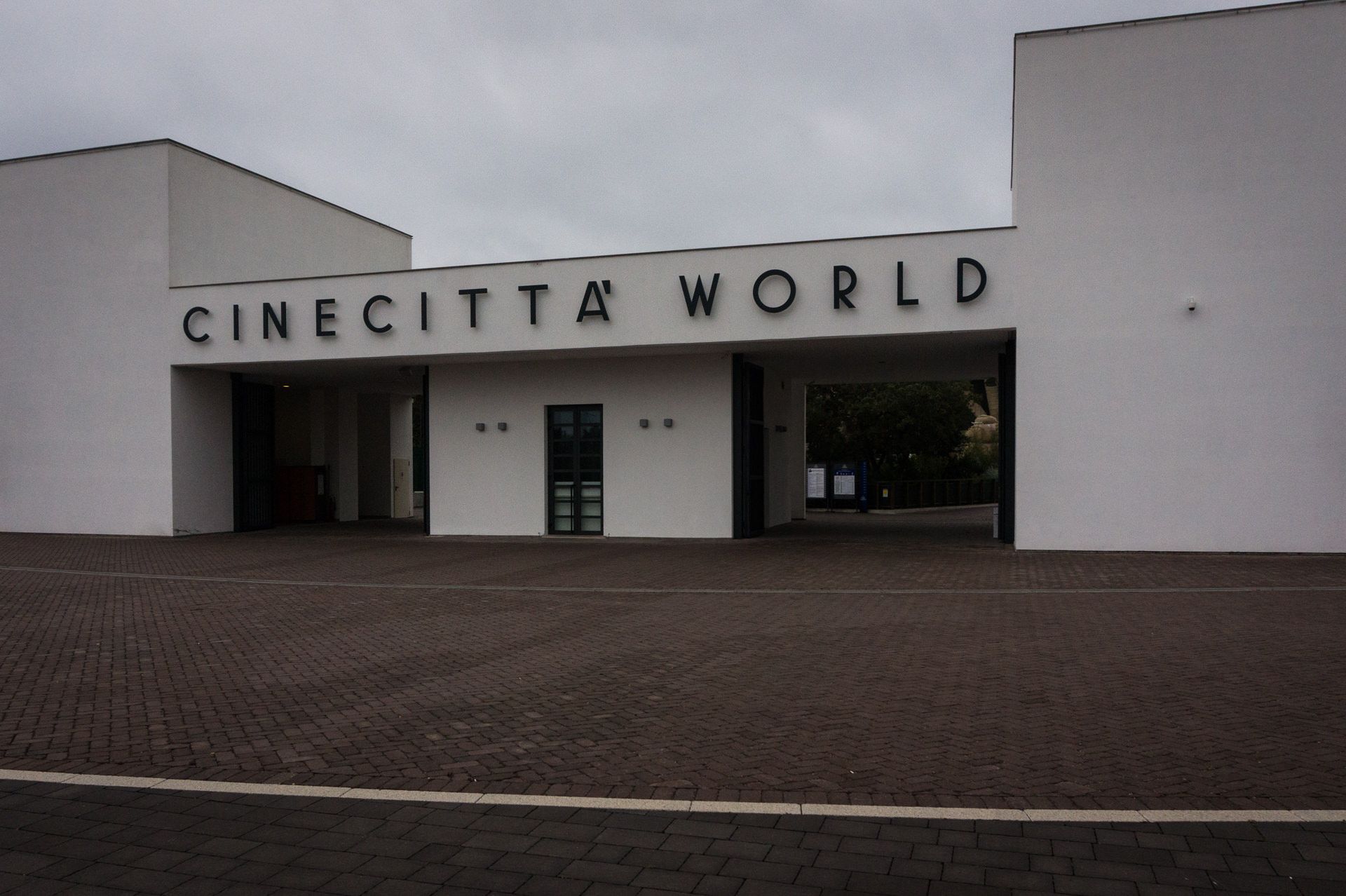
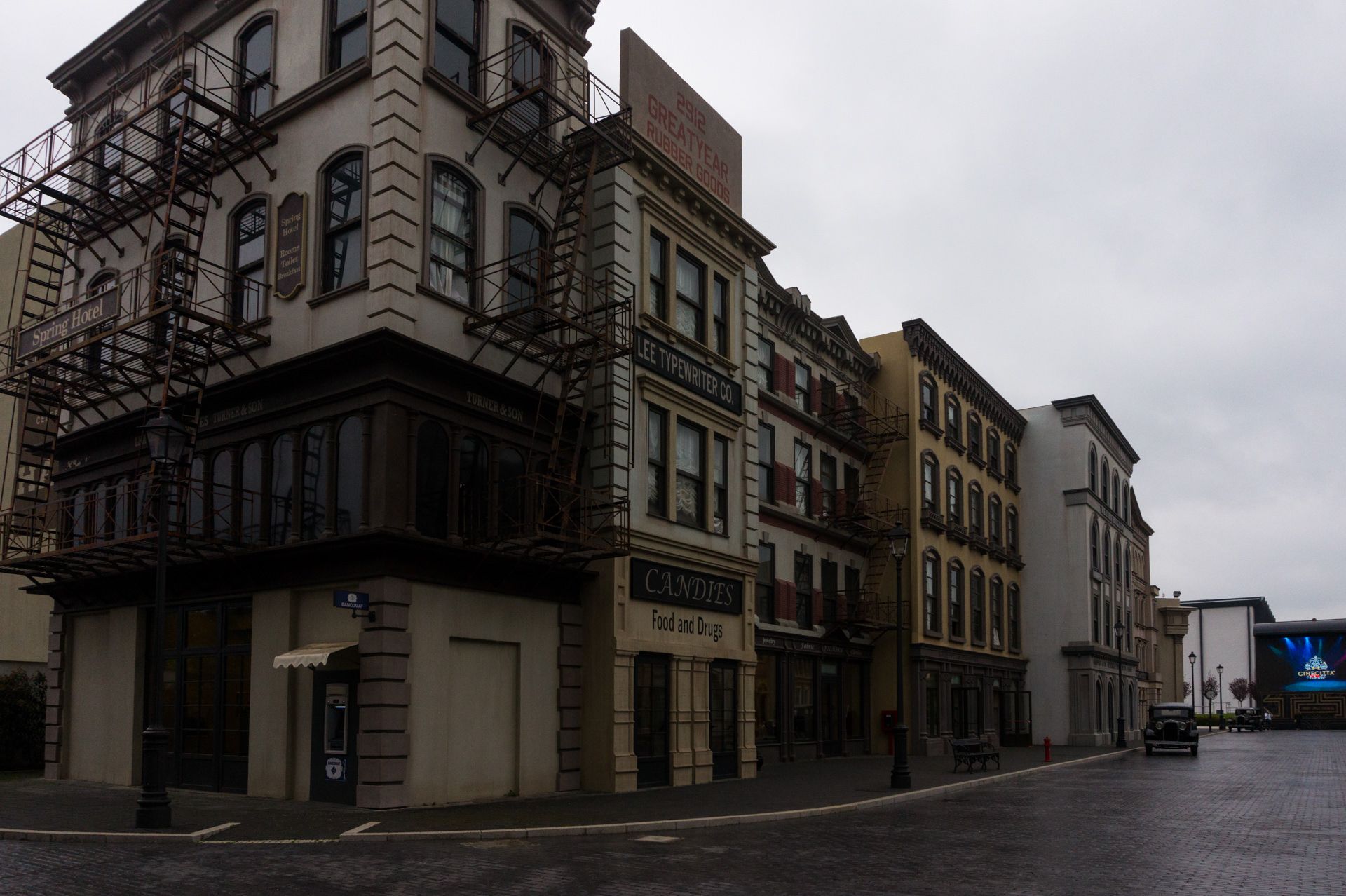
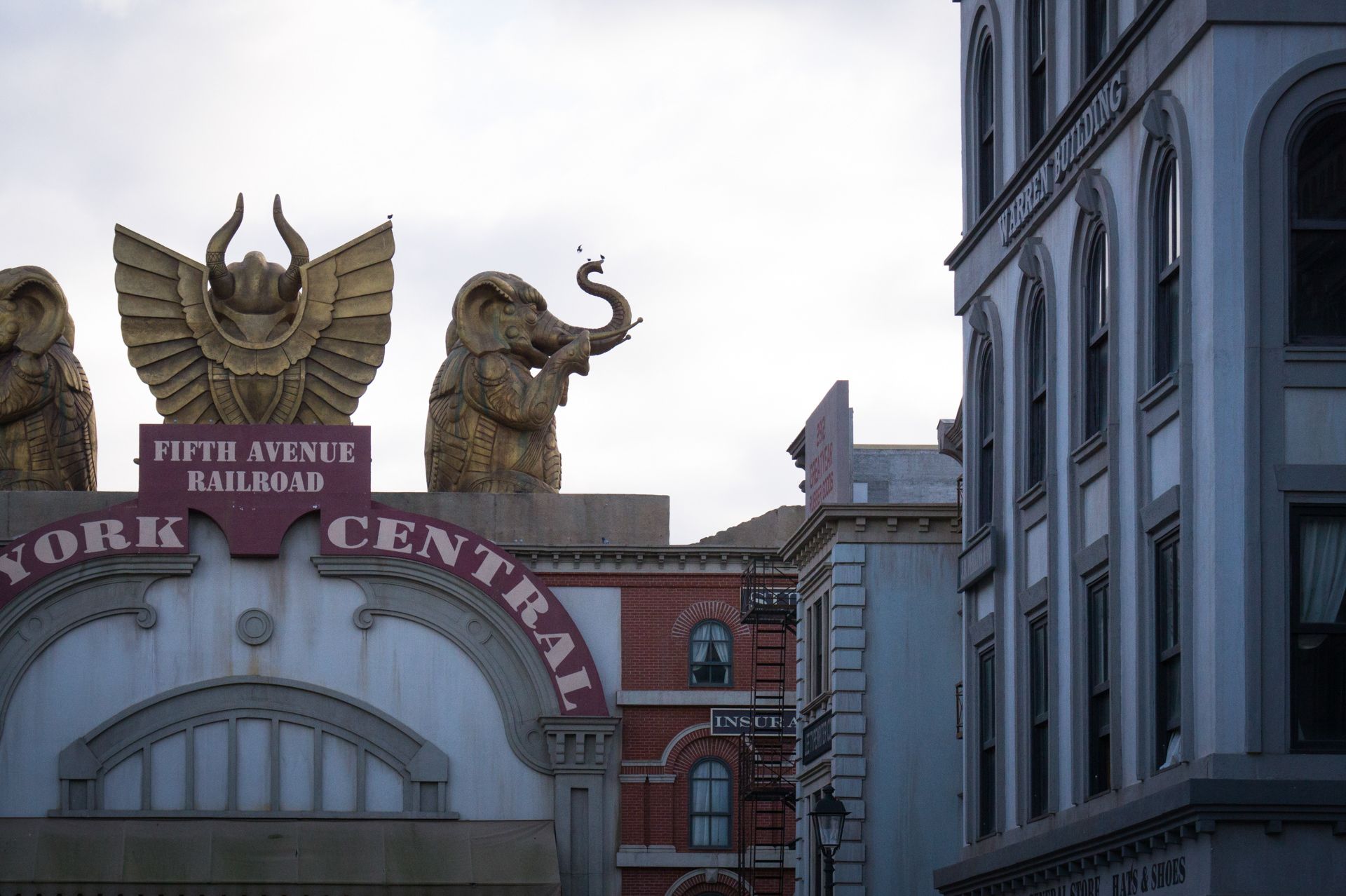
Through an elaborately designed entrance portal, one enters the park directly into Cinecittà Street, the park’s main street, inspired by New York of the 1920s. Although the set is only of generic design, i.e. not based on any film, this area has a lot of charm as long as it does not look like a ghost town due to a lack of visitors. The design is generally of a very high quality and equipped with all kinds of details, so that the first and last impression of the park is inevitably a positive one.

Aktium

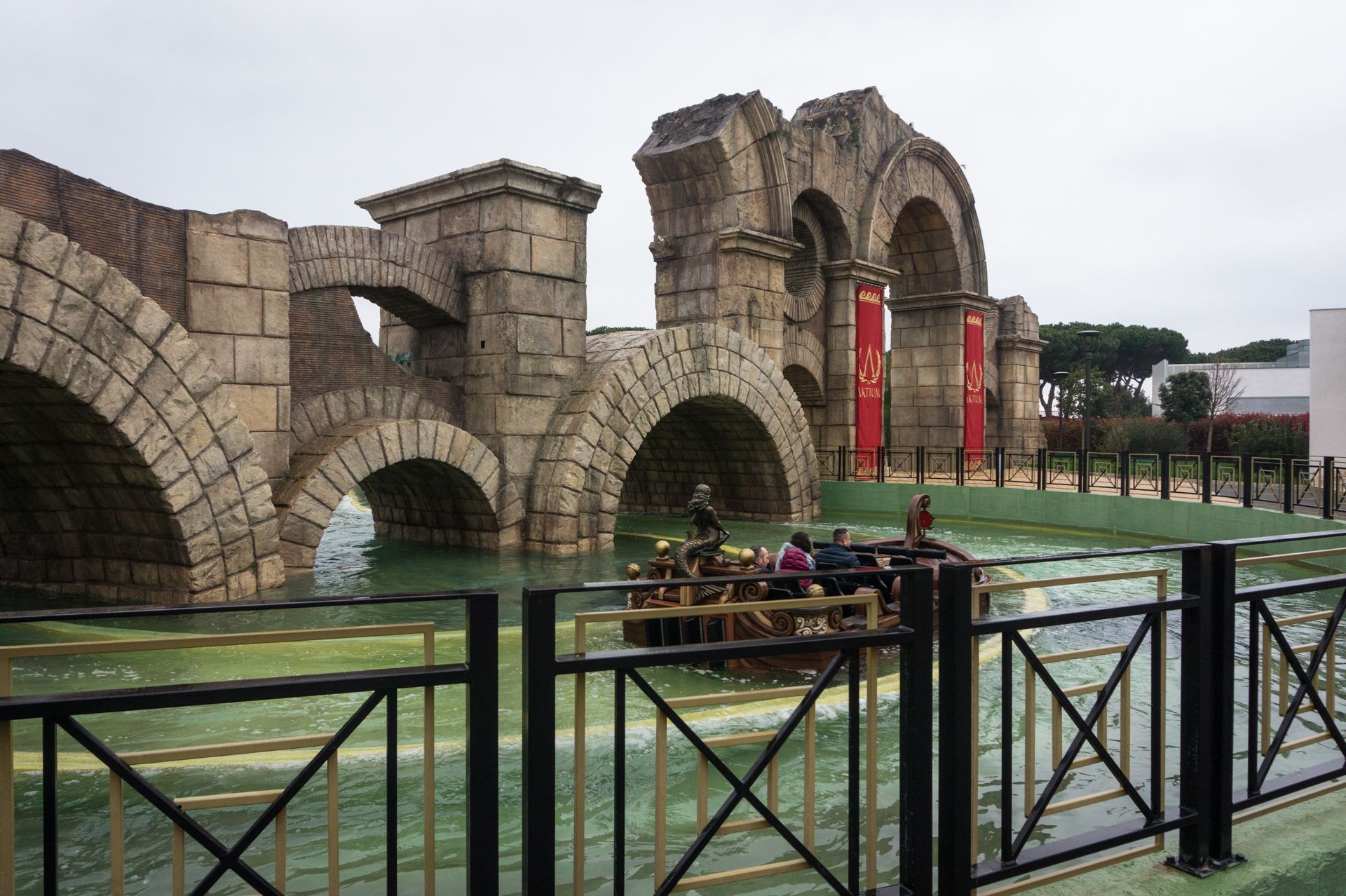
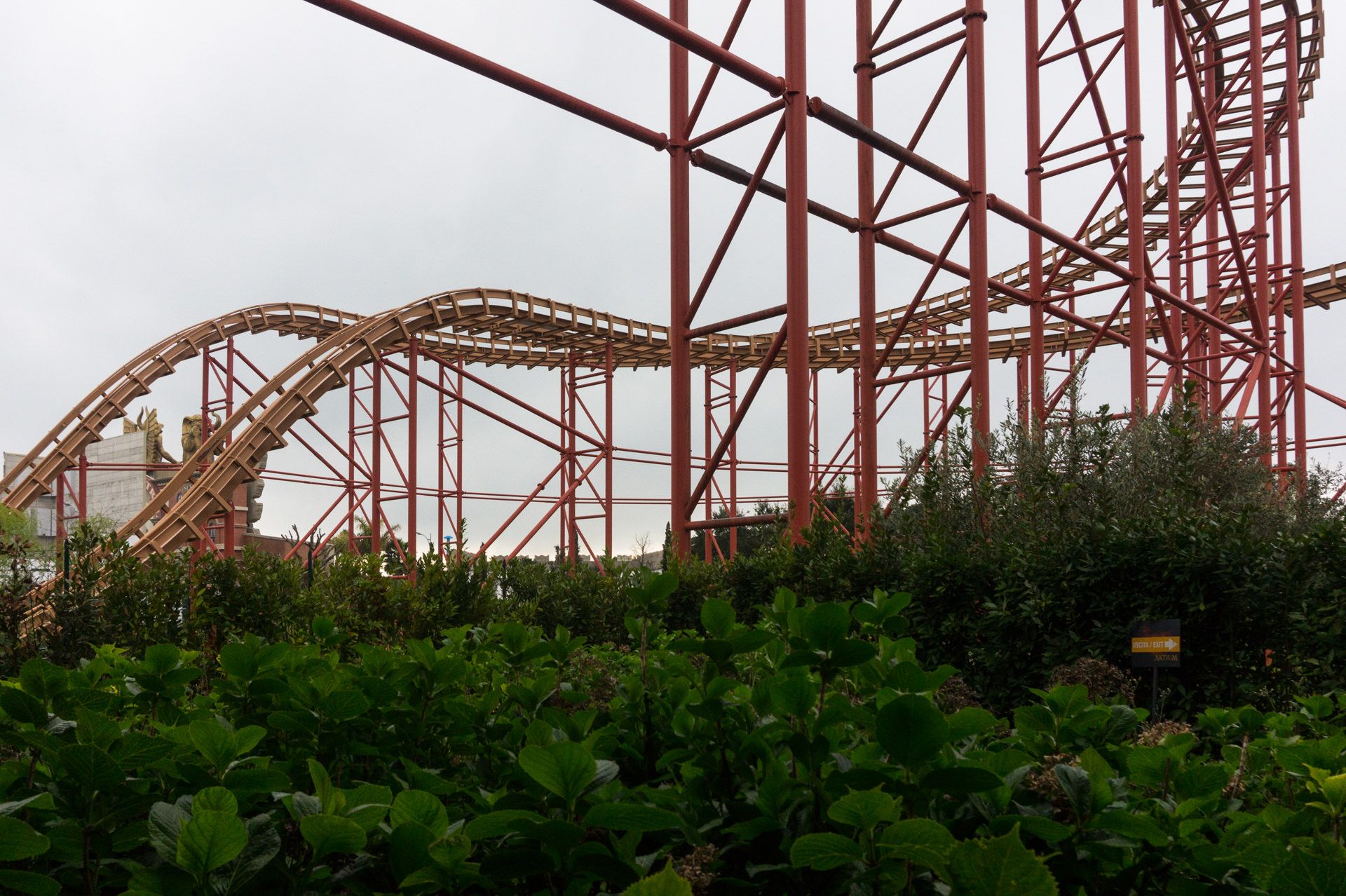
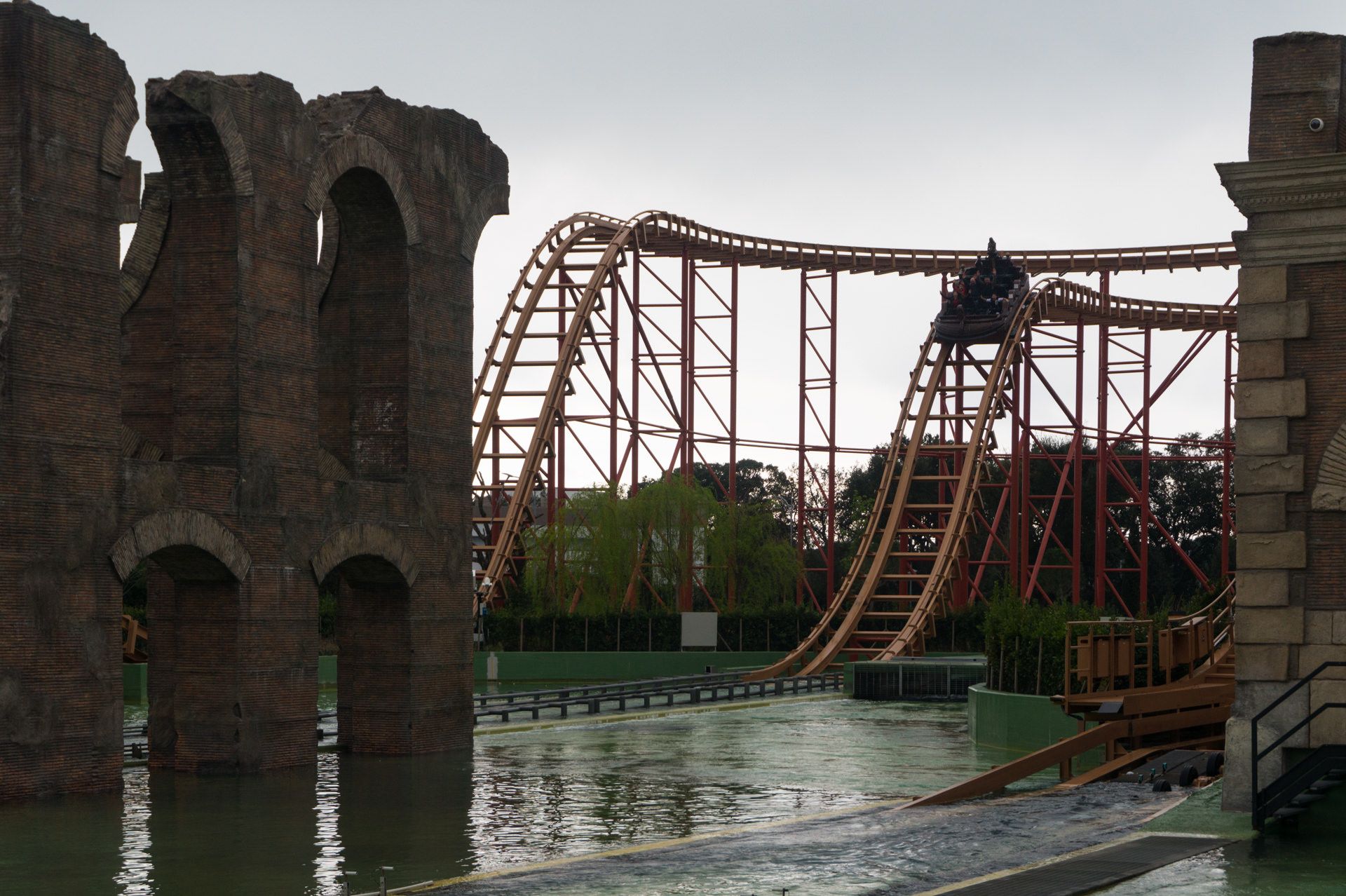
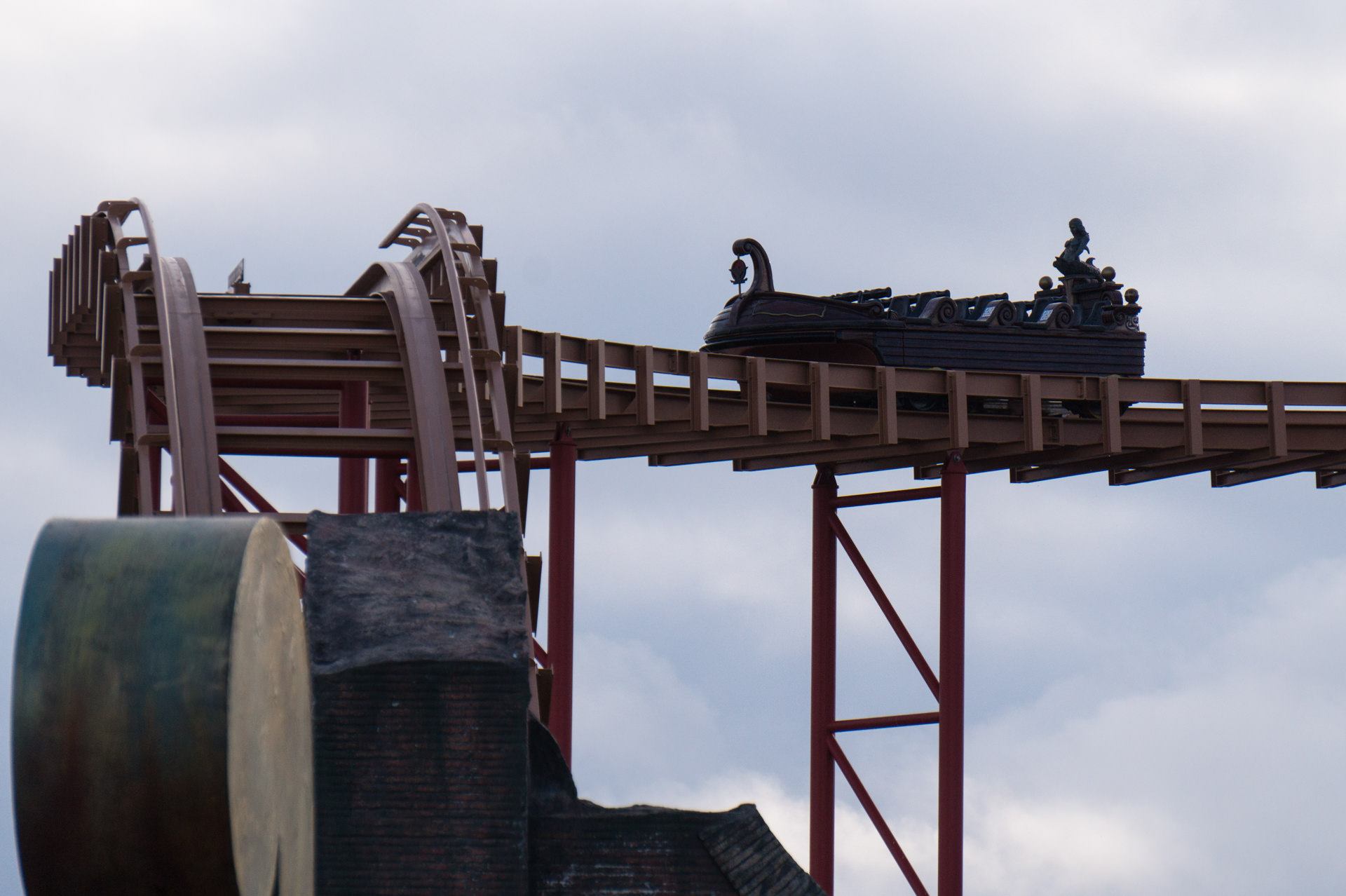
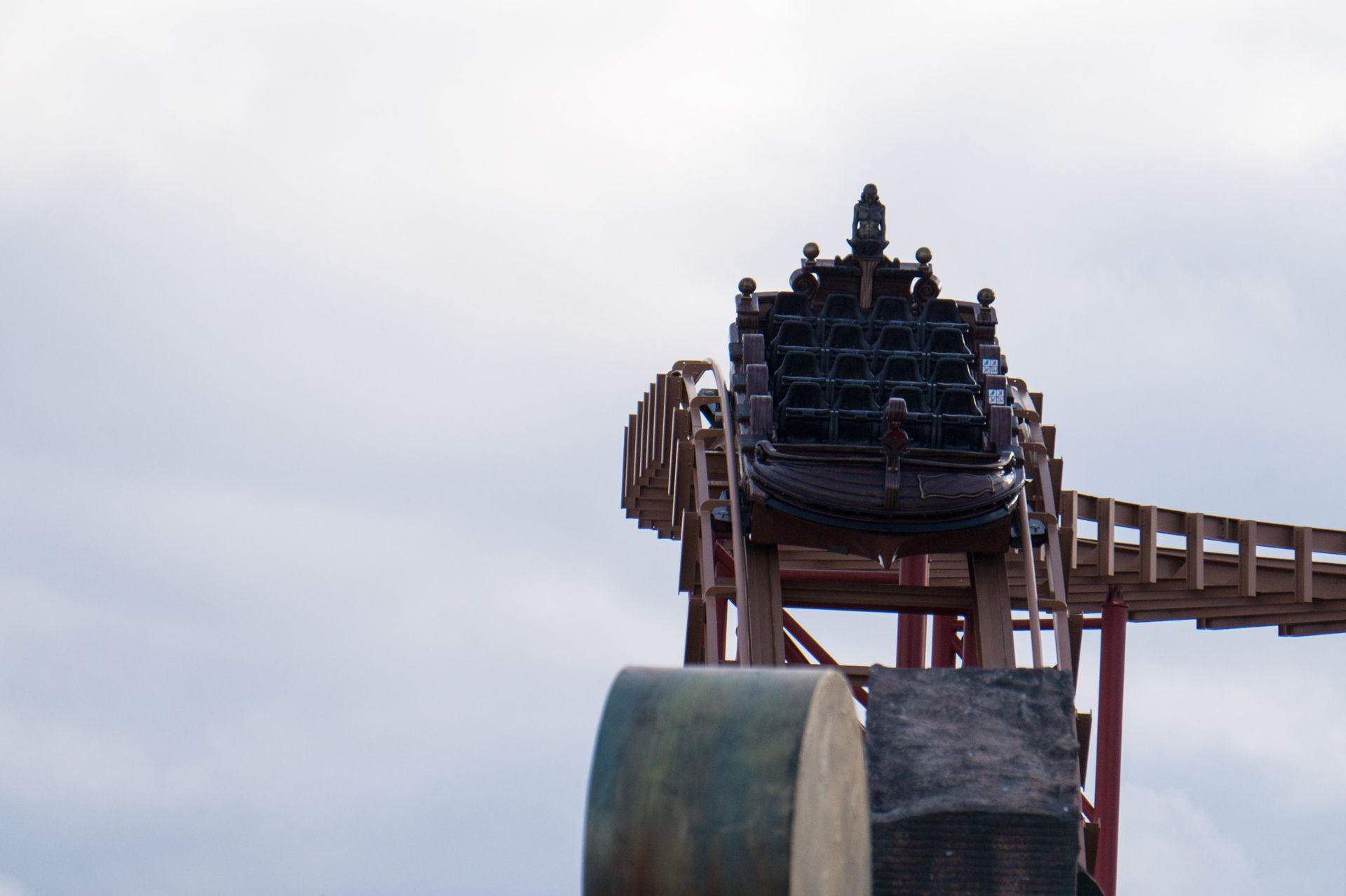
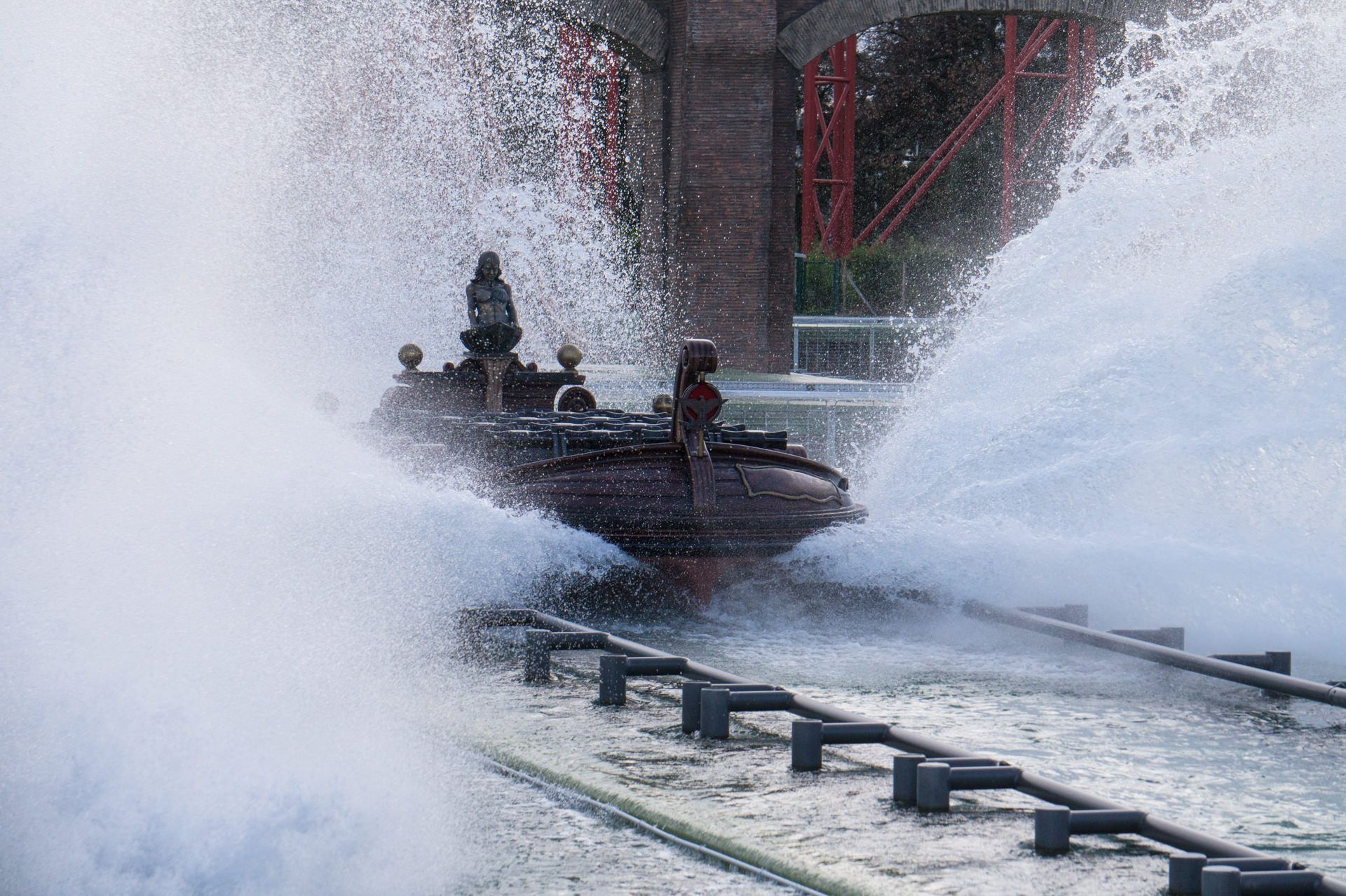
To the left of Main Street the set extends around Aktium, an elaborately designed Super Splash from Mack Rides. It is supposed to depict the naval battle at Actium, in which Octavian, the later Emperor Augustus, asserted himself against Marcus Antonius and the Egyptian Queen Cleopatra VII, thus securing sole rule in the Roman Empire. As violent as the battle was, the area around the ride is just as impressive and once again you can see that the Cinecittà World is a place where quality is the name of the game.

After you have left the spacious queue behind you, the journey can start right away. Without much foreplay, you go directly up the first lift hill, where you approach the first slope in a rough curve. Similar to various larger Spillwateranter installations, this runs directly down into the water without any great gimmicks. One turn later, the boat climbs up again and also makes a rough left turn. Where the ride showed itself to be quite untypical for this type of roller coaster the true character is revealed in the second shot. With a lot of momentum you pass a valley and take off on the adjacent hill before you get in contact with the water. After a little sailing through the canal you soon reach the station and are bid farewell by the staff to thunderous applause.

Aktium is a nice spillwater replacement, but it shows the limits of this roller coaster and reveals the reason why almost all other rides of this type use turntables instead of curves for the turning manoeuvres. Apart from the angular curves the ride runs without any other problems, although the level of wetness could have been a bit higher.

Studio 1

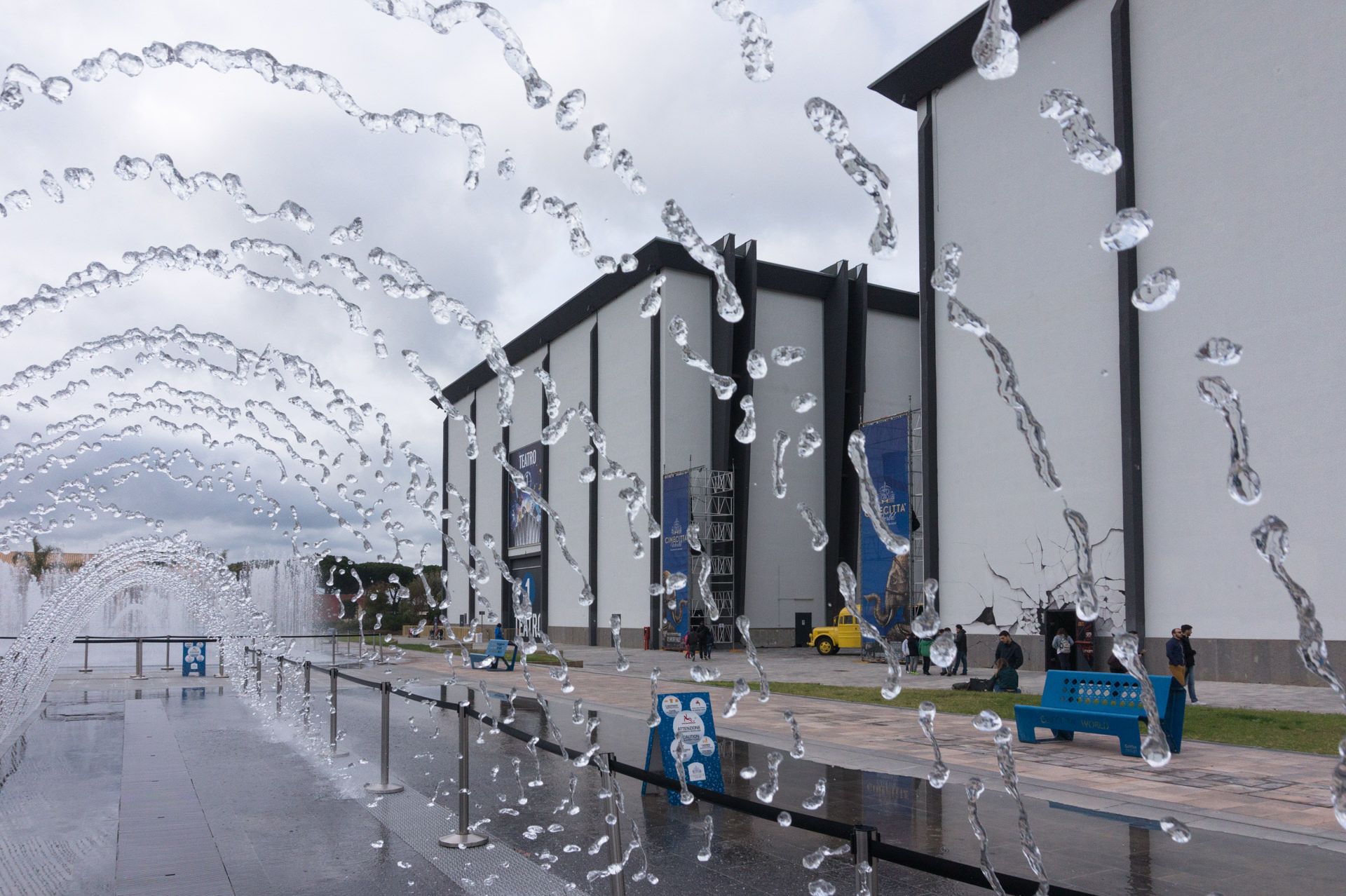
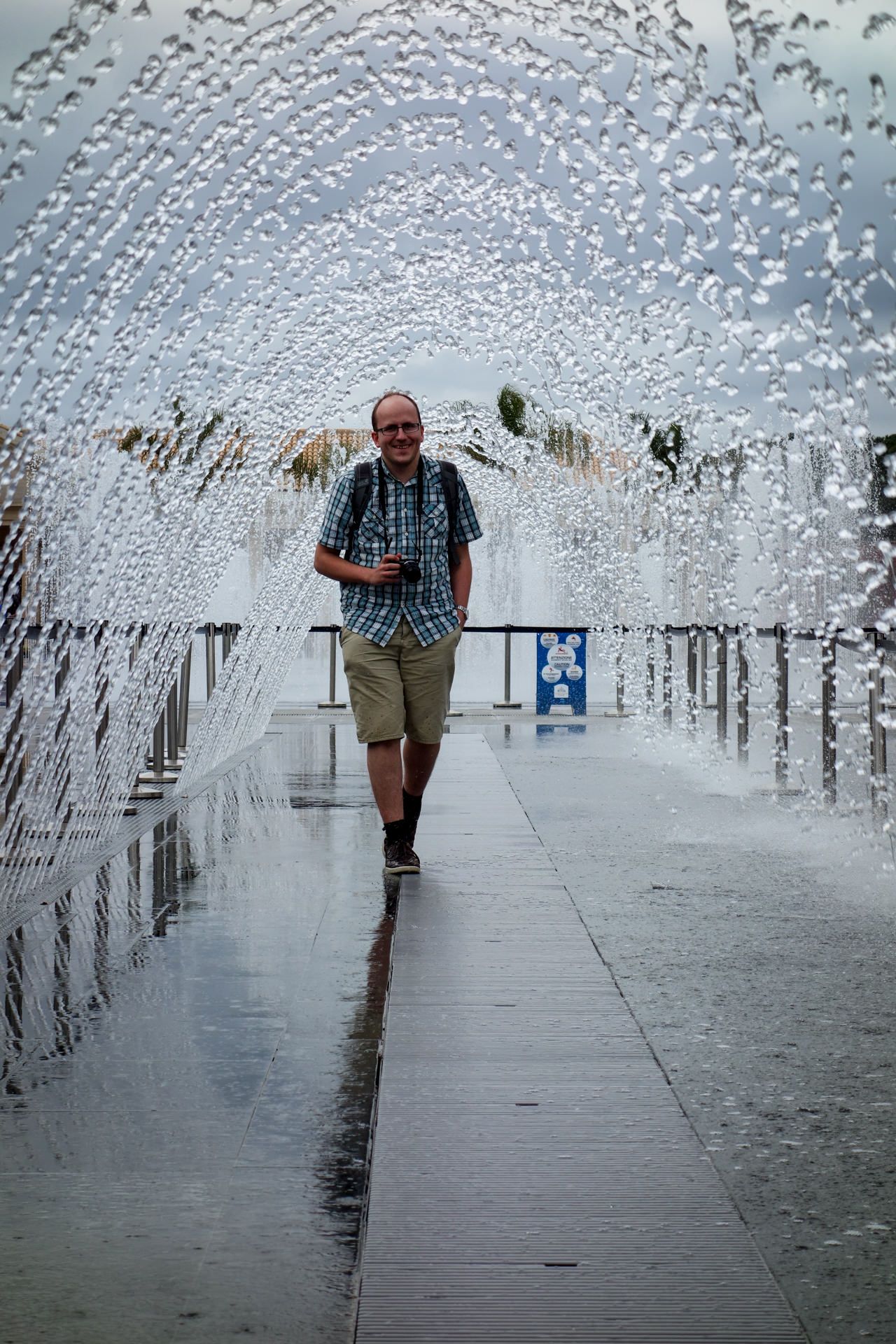
Across the Piazza Dino de Laurentiis with all its fountains and fountains we now enter Studio 1, where a magic show took place. Except for the time-consuming mind-reading number (which was only presented in Italian), the show was very professionally staged, but unfortunately not as worth seeing as the comparable show at Movieland Park.

Altair CCW-0204

Directly behind it is Altair CCW-0204, a roller coaster that many people are probably already familiar with from the English amusement park Thorpe Park near London. Unlike the former record-breaker, however, the ride takes passengers up to the starting height of 33m a little faster and without a failure-prone chain lift. After an exciting start, the passengers are then thrown through the rollover elements in trains without shoulder restraints. A massive spaceship serves as an oversized station building, in which mankind returns to earth after more than four millennia and has to ask the question who is the alien, the creatures that developed here, or we who left them in the 22nd century?

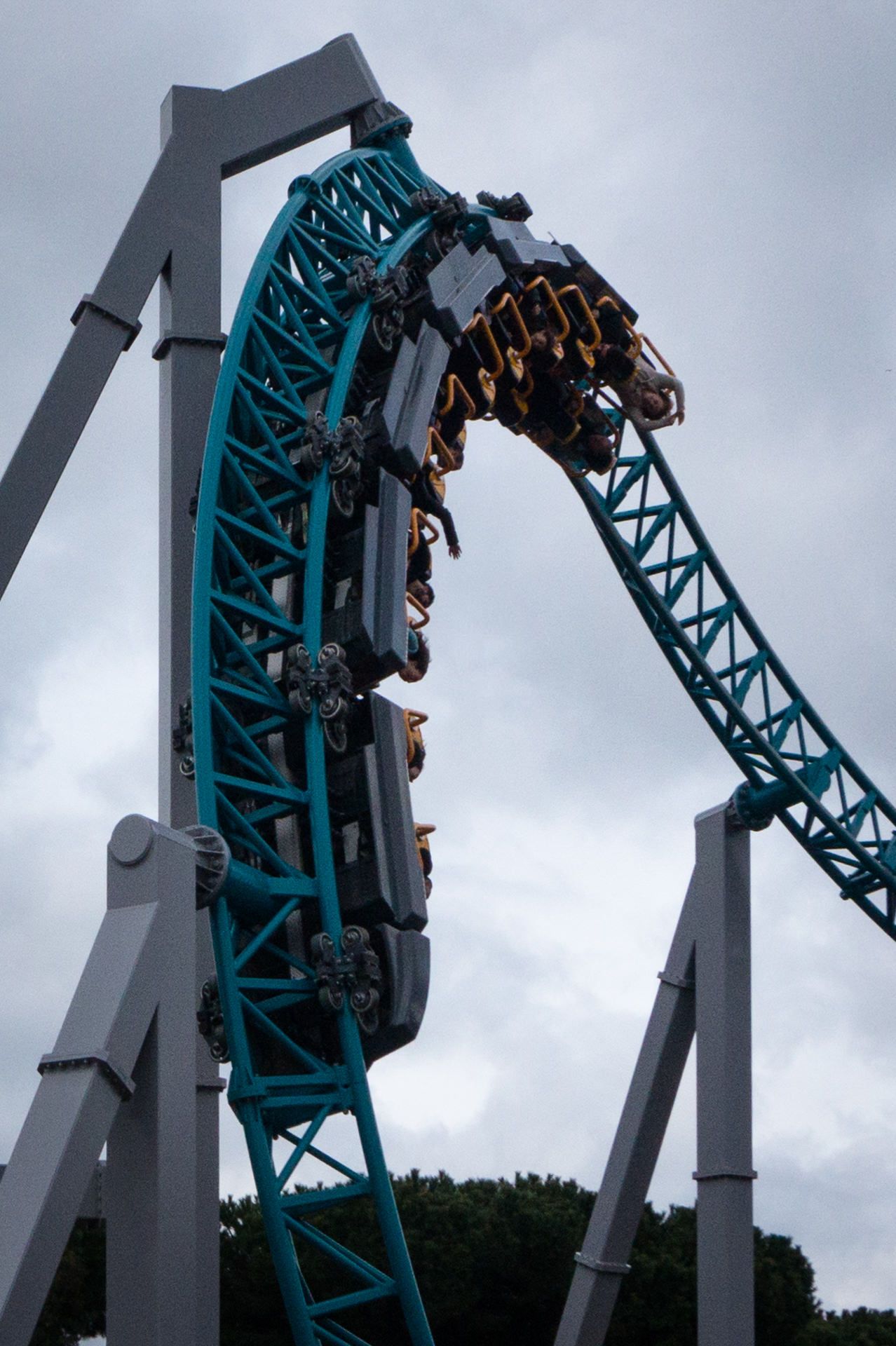
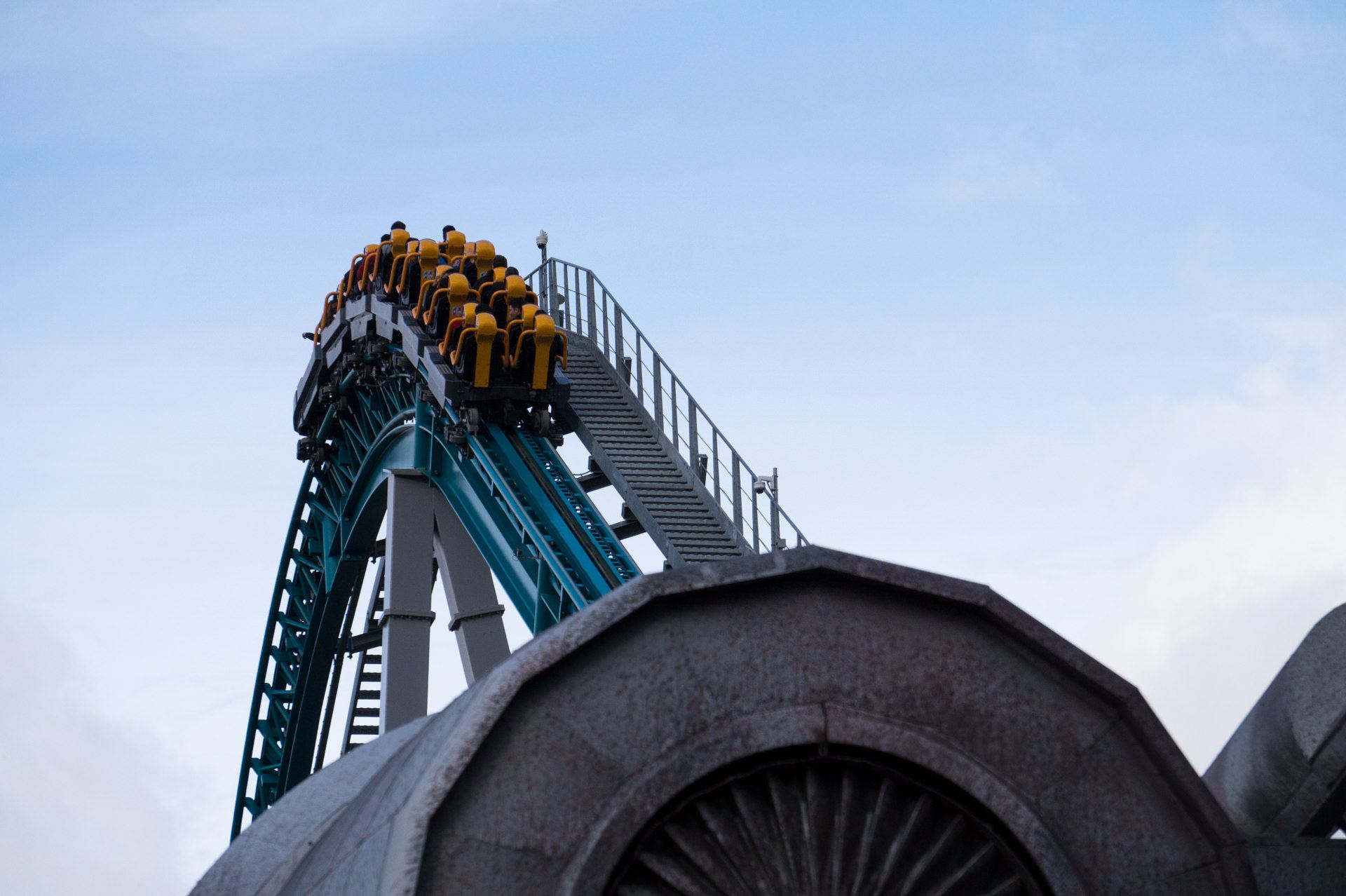
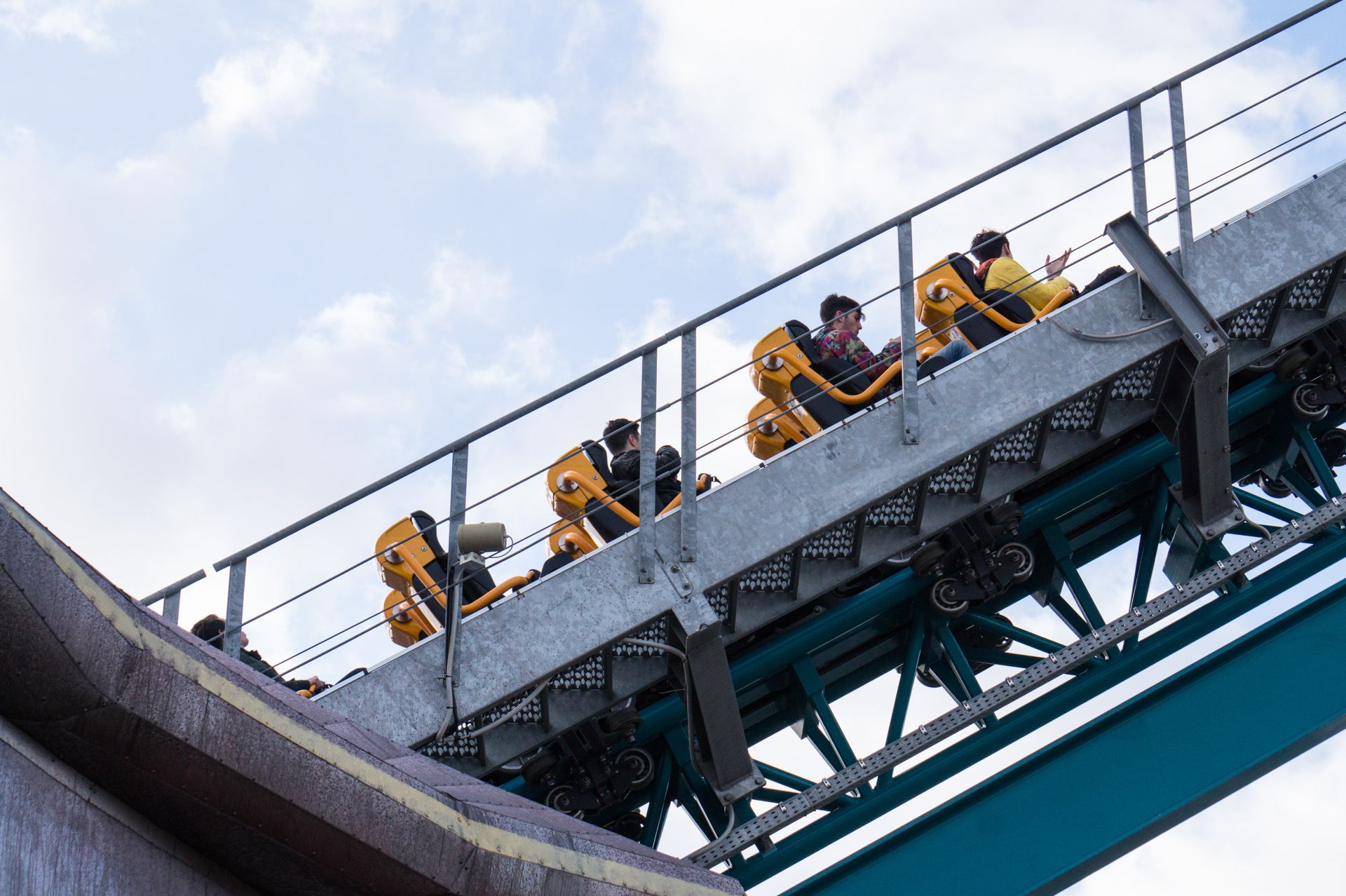
While the background story of Altair offers plenty of room for philosophical discussions, the train, whose restraint system is very similar to that of the Divertical water rollercoaster at Mirabilandia, ascends the lift hill directly. At the top, you pass the top of the hill quite leisurely and immediately drop down to the ground. With a high speed and a high pressure you go through a steep left turn before you shoot up the first inversion, a loop. This is traversed with the usual intensity, followed by a small hill with some airtime. In the valley below, the Cobra Roll is initiated, which is crossed just as confidently. After three rollovers, the half time of the ride is rung in with two corkscrews.  After another left turn above the first downhill run, the quadruple heartline roll in the back of the ride is initiated. Because of the freer sitting position, you can complete this with a slight lateral overhang and thus the feeling of always being able to fall out. The train then passes through a last left turn and then the final inversion, a right leading heartline roll towards the brakes. In contrast to Colossus in Thorpe Park, this roll is a bit disappointing, as it is identical to the previous rolls and therefore offers no more surprises.

Altair is a great roller coaster with excellent ride characteristics and a significantly improved seating position compared to the original. However, Colossus also has its strengths, which are mainly reflected in the grandiose final roll and the better integration into the terrain; it is simply more photogenic, although Altair is by no means photo-shy either. The modified first drop is a great experience and the lack of vibrations in looping and the subsequent cobra roll, as well as the absence of a queue to our visit point, make the ride a guarantee for repeat rides.

Erawan

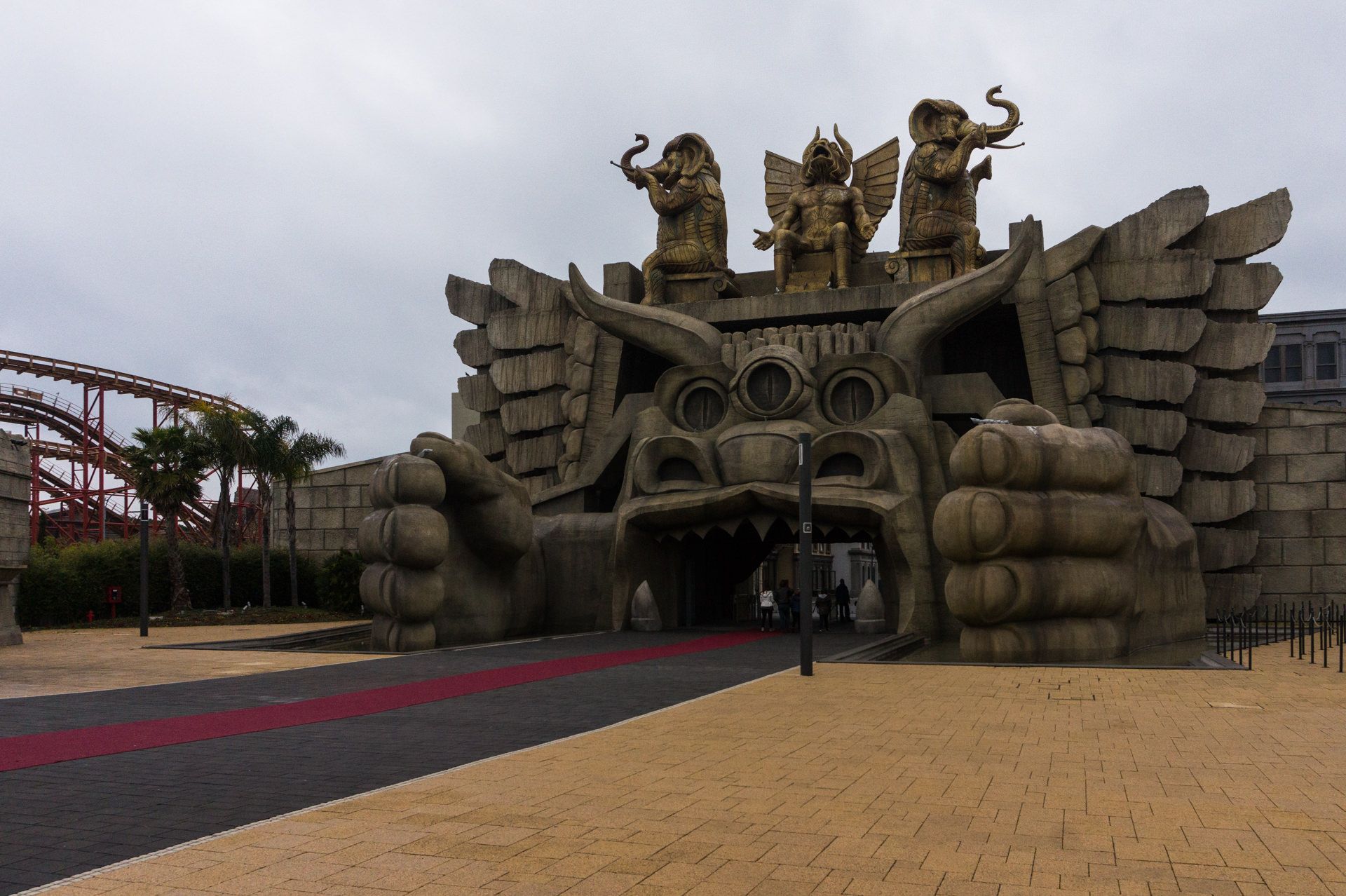
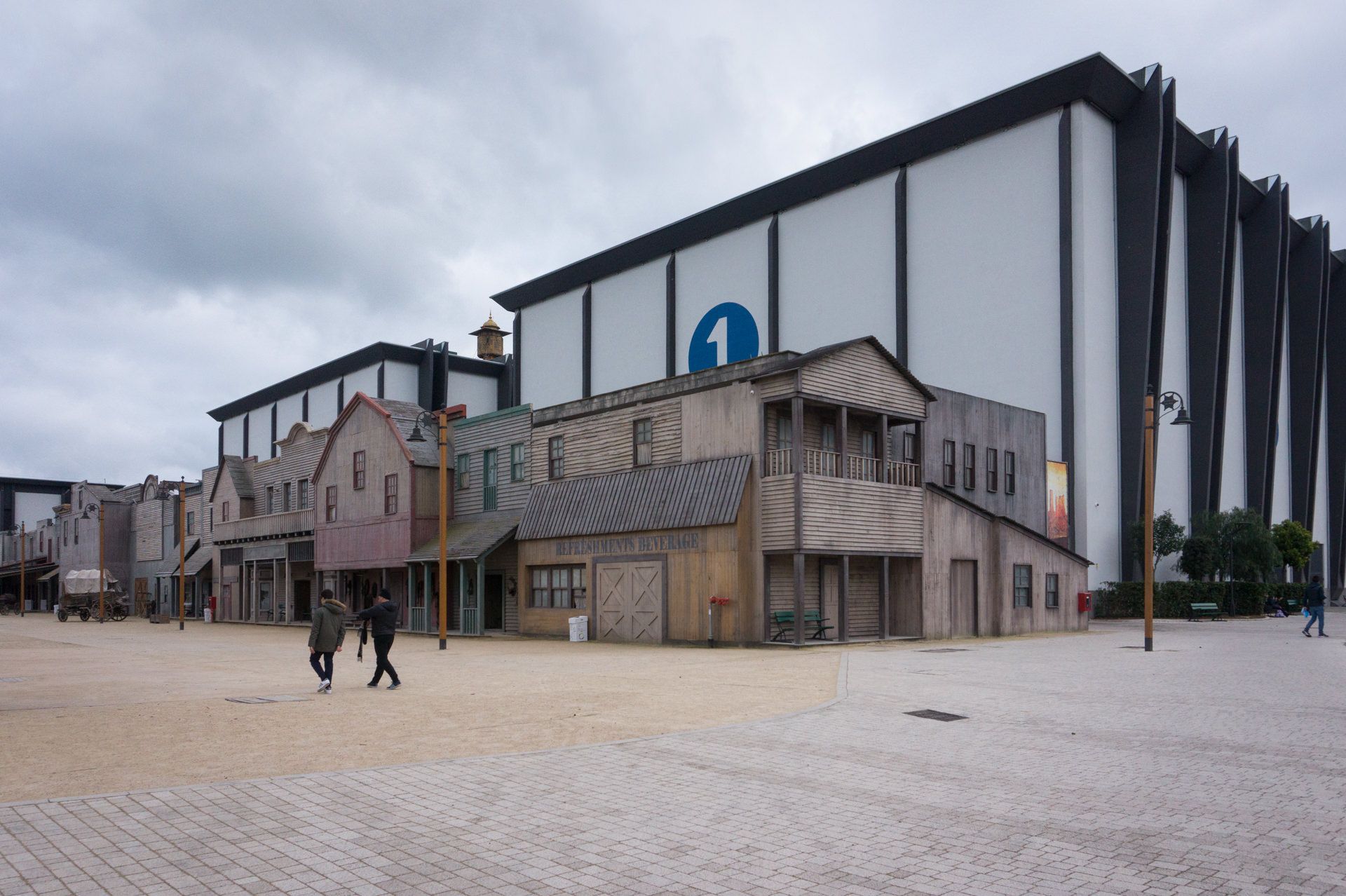
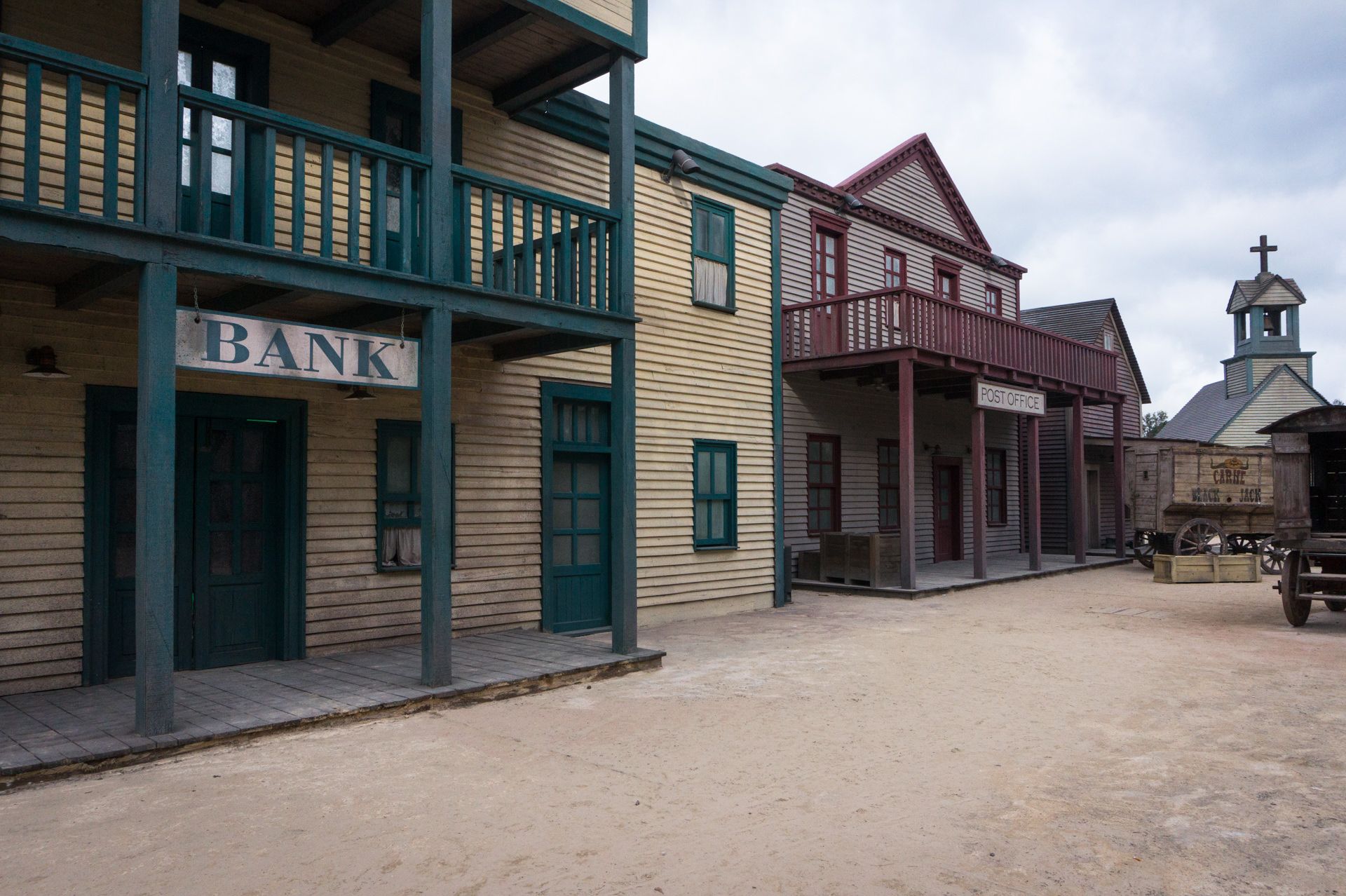
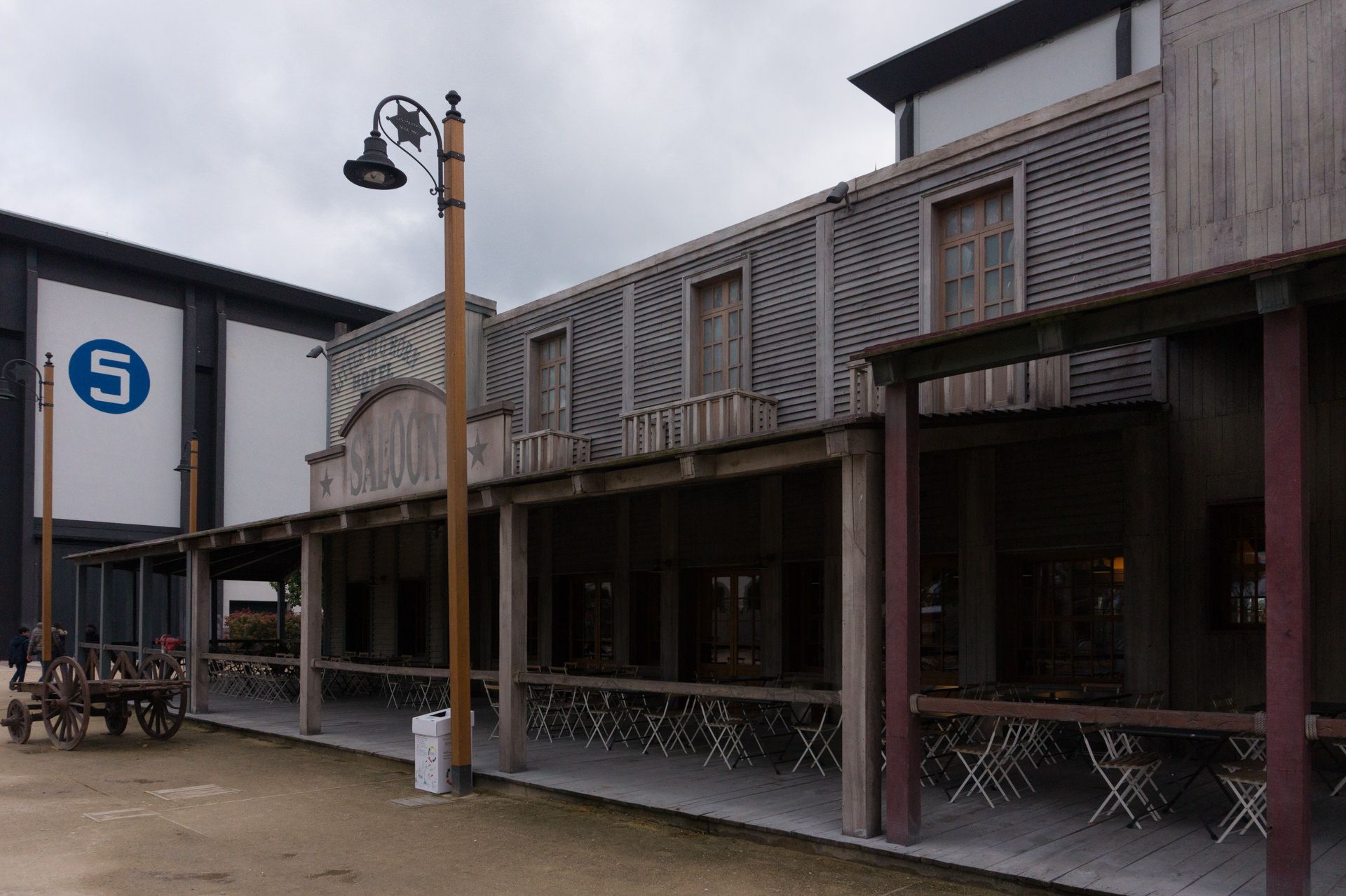
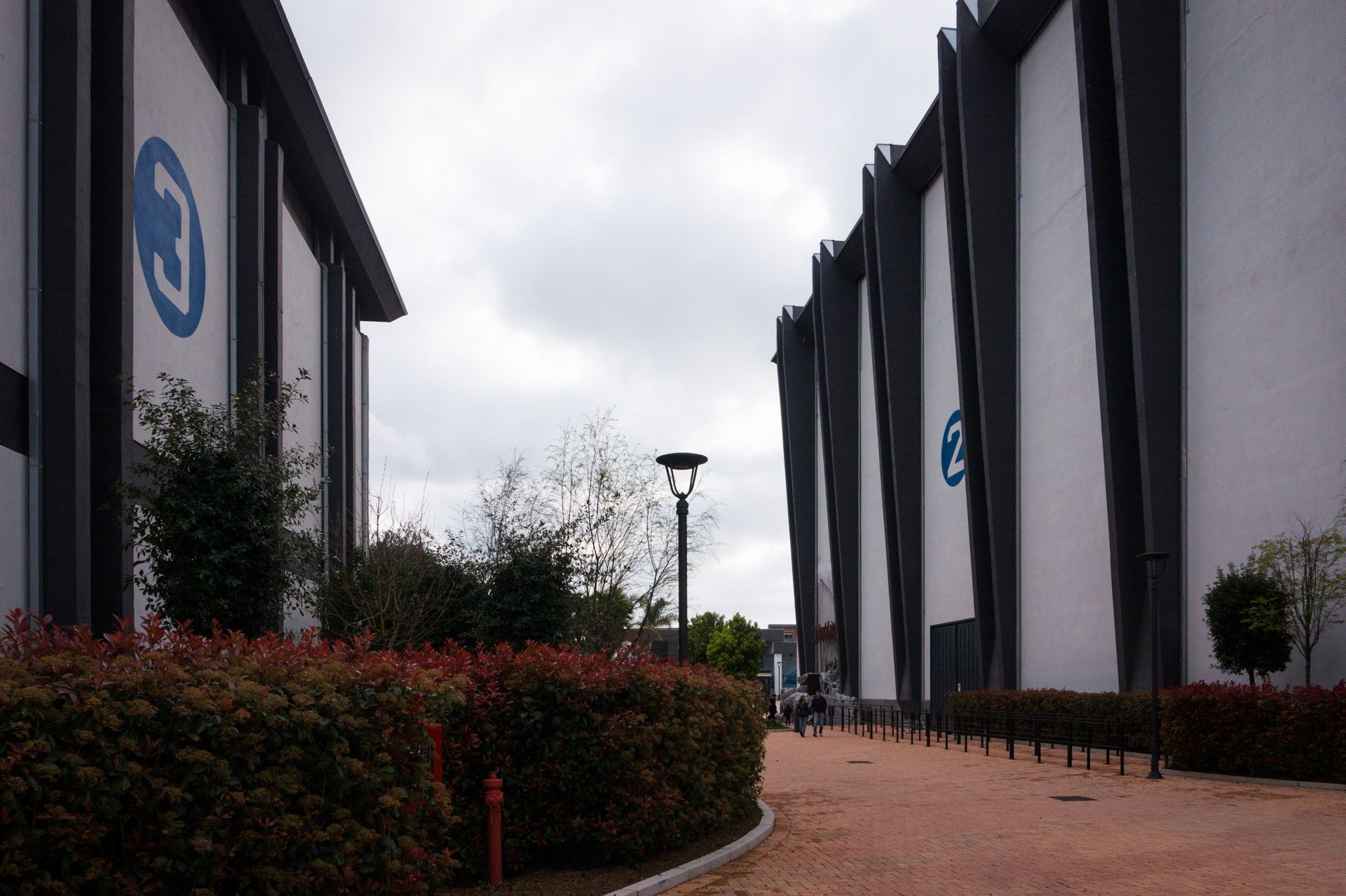
Through the pretty western town of Ennio’s Creek, named after Ennio Morricone, the composer of numerous Italo western scores, where a scary walkthrough is to educate during the season, and past Studios 3,4 and 5 (with a 4D cinema in Studio 4 and a children’s playground in Studio 3), we head towards the most impressive ride in Cinecittà World, the Erawan Freefall Tower. This visual treat includes four lanes, two of which offer pure falling pleasure while standing, while the other two lanes entertain their passengers while seated. All gondolas are tilted forward before the fall, which generally ensures a great and outstanding ride experience. But even apart from the special features Erawan is a magnificent tower. The pure fall reaches similar qualities as Apocalypse from the English amusement park Drayton Manor, which is in my opinion the best freefall tower in Europe. The only difference is that you are one experience poorer due to the absence of the hilarious standing gondola with corridor. Erawan is undoubtedly the best designed giant drop far and wide and also offers a great ride that you should not miss.

Darkmare

Just a few metres from Erawan is the entrance to Darkmare, the family rollercoaster of Cinecittà World featuring a very dark story. Thematically one takes up Dante Alighieri’s Divine Comedy, which was to be filmed in the 50s in Studio Hall 2. However, there were numerous strange accidents and finally a fire, whereupon the shooting was stopped and nothing happened afterwards.

After years of standstill we venture into the hall and experience a wild ride through hell, which begins with a short descent in a right turn, into the lift hill of the lift. You pass a mirror, which is admittedly a really great effect. Passing numerous, artistically valuable projections, all of which make Van Helsing’s Factory from Movie Park Germany look old, you quickly reach the ceiling of the hall, whereupon the train immediately plunges to the ground in a steep left-hand bend. Regardless of losses, the first valley is crossed with outstanding intensity, whereupon the train soon gains altitude. After a curve change, the train passes through a narrow downward helix and winds its way to the other end of the hall in a zigzag curve combination. After a short ascent you reach the freefall segment, where a demon now shows itself and puts its wings around us. Shortly afterwards we are already one level lower and leave the segment very quickly. Now follows a narrow left turn, which is immediately joined by the final turn to the right. Shortly afterwards we reach the station and are once again bid an enthusiastic farewell.

Darkmare is really, really, really damn good! In contrast to the prototype Th13teen of the English amusement park Alton Towers, the ride has no funny backward part after the drop segment, but the rest of the track is much better. In addition, the general design of the ride in its dark comic style is really outstanding and the projections are just perfect. The large and demonically well darkened hall makes the compact ride look three times as big as it actually is and extends the ride in equal measure. The free fall is also quite ok, but can be a bit too much for first-time riders, after all the ride is not lacking in power anyways. But you shouldn’t take such a gloomy view, because Darkmare is definitely the best roller coaster of the park and one of the best roller coasters in the country; so it’s a great ride with a very high repetition urge.

Aquila IV

Opposite Teatro 2 is the submarine Aquila IV, which was used in a German submarine film and a music video by the band Bon Jovi. Of course it is not Das Boot, because it is still located in the Bavaria Filmstadt not far from Munich, but the U-900 from the film of the same name with Atze Schröder in the leading role. Admittedly, the scenery builders did a good job, but we couldn’t explain to ourselves what the meaningless tour was supposed to be in Italian. Without language skills you should avoid Aquila IV and even with language skills you really shouldn’t expect too much, especially since the waiting time is very long. On the other hand, a visit in a real submarine is really recommendable; we at least wished to return to the U-571 of Movieland Studios.

SpacExpress

In addition to the SpacExpress, an immersive tunnel of Simworx, which however was not yet in operation at the time of our visit, the children’s kart track Velocità Luce and the entrance to the children’s land Sognolabio are also located in this area. This area is very colourful and offers some nice rides for children made in Italy, as well as a very annoying soundtrack and a nice splash battle.

Pictures Cinecittà World

Conclusion Cinecittà World

Cinecittà World is a good amusement park that has made quality its top priority; here neither the design nor the rides are of inferior quality. Unfortunately, sometimes the quantity is still missing, because you can only manage a whole day in the park if you actually watch every single show, eat comfortably in one of the restaurants and take multiple rides. The Movieland Park shows how it’s done, but at the Cinecittà World their own professionalism still stands in the way. In no other Italian park you could meet as much staff as here, neither in the shows nor in the attractions. Although this creates a good image, it is known to be somewhat more expensive than the one-person operation of the Mirabilandia. In addition, Cinecittà World is based on something you know and which is also used in numerous film parks or film studios with guided tours, but it is questionable whether they are on the right track; because sometimes they only show larger generic sets without any actual film reference with suitably embedded attractions. A larger reference to own productions would therefore be advisable, but one does not necessarily have to give up the intended concept. I’m curious how the Cinecittà World will develop in the next few years, because the park has potential and already offers a lot of quality; a condition that one would wish for other parks around Rome.


What is your opinion about the movie park Cinecittà World? Just write it here below the report in the comment field or visit our social media channels:


Click here for the next report of the Il Viaggio dei due Runner Tour