Where Coasters Meet Flat Ride Madness

Canada’s Wonderland

Canada’s Wonderland is one of the largest amusement parks in North America. Along with a huge coaster lineup, the park is packed with flat rides, several family areas, and the massive Splash Works water park. Despite its size, though, the park is surprisingly easy to get around. Attractions are often packed closely together, at times almost reminding me of parks like Blackpool Pleasure Beach or Disneyland in Anaheim.

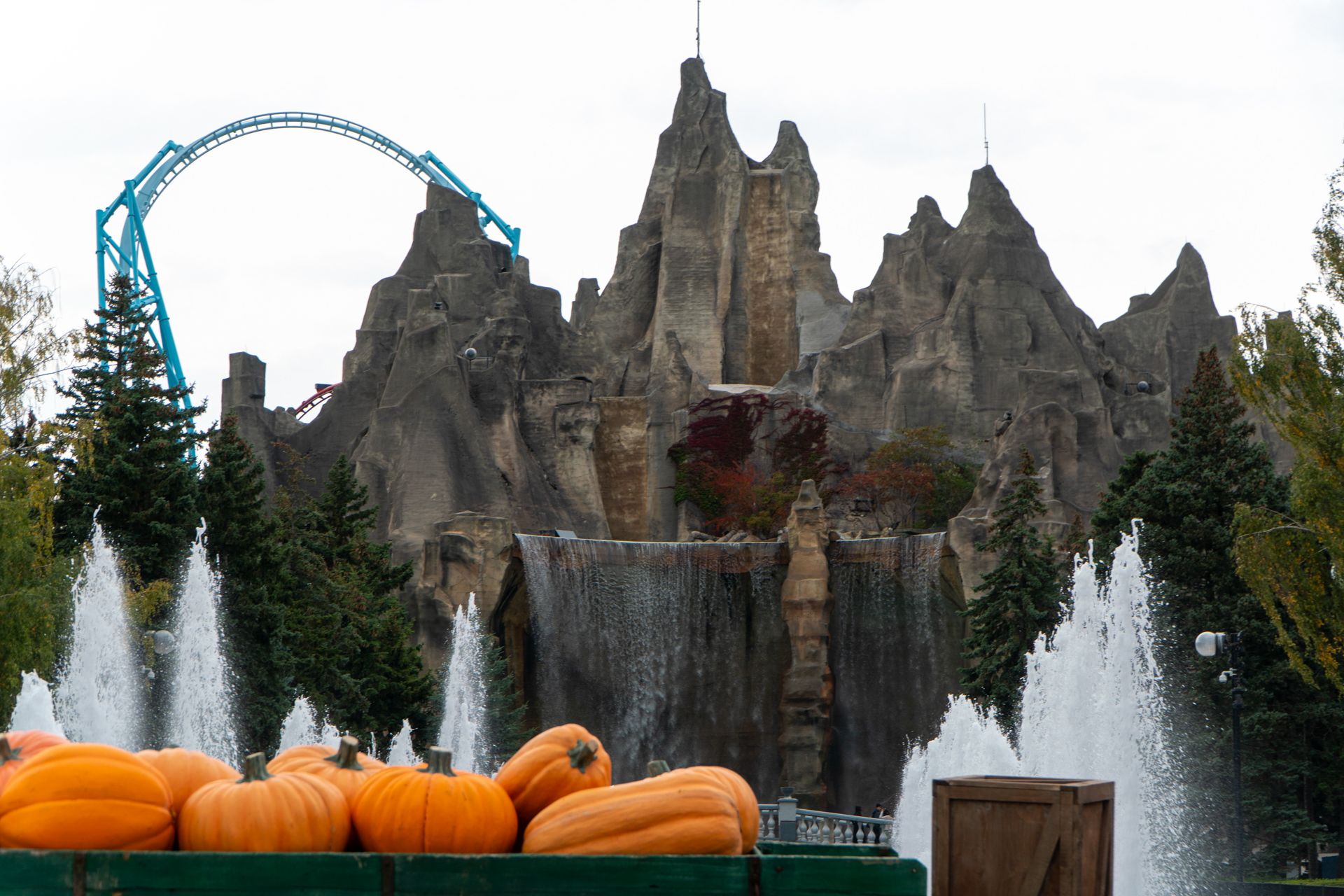
That wasn’t always the case. When Canada’s Wonderland first opened, its layout had much more in common with sister parks Kings Island and Kings Dominion. Instead of an Eiffel Tower, however, the centerpiece here is Wonder Mountain. The artificial mountain was originally a walkthrough attraction, offering views across the park and the largely undeveloped land surrounding it at the time. A cliff-diving show at the waterfall also became an early part of the park’s entertainment lineup.

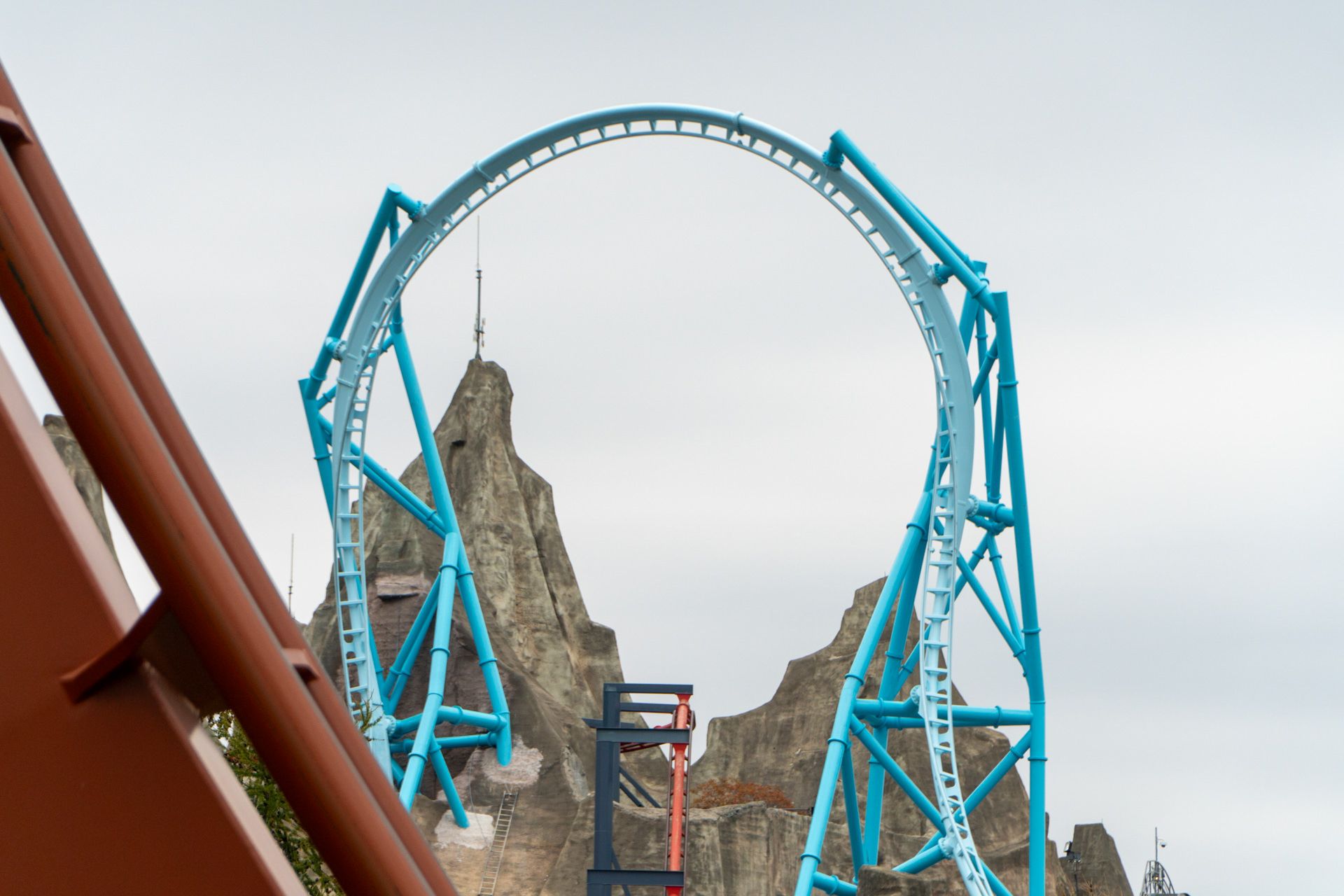
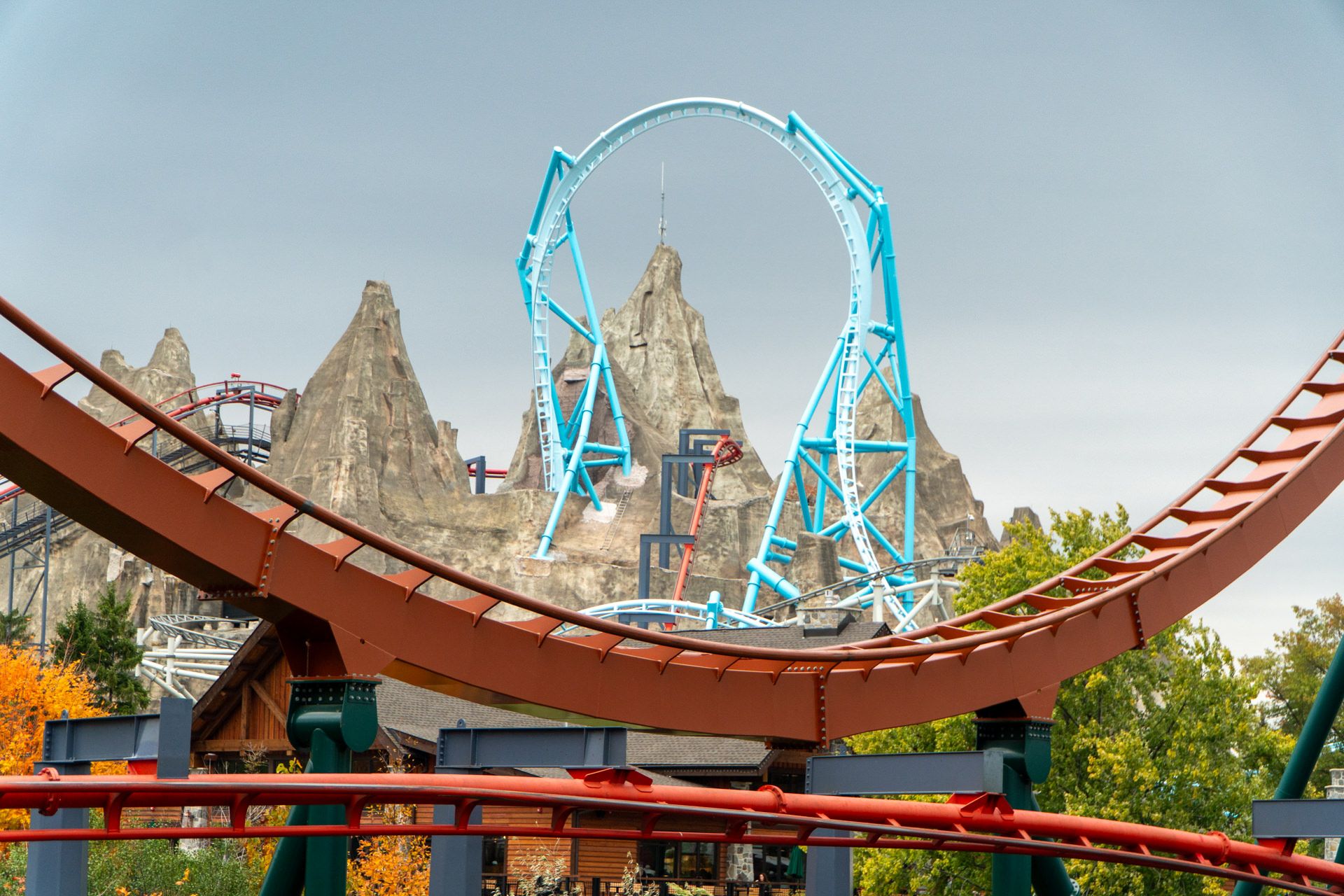
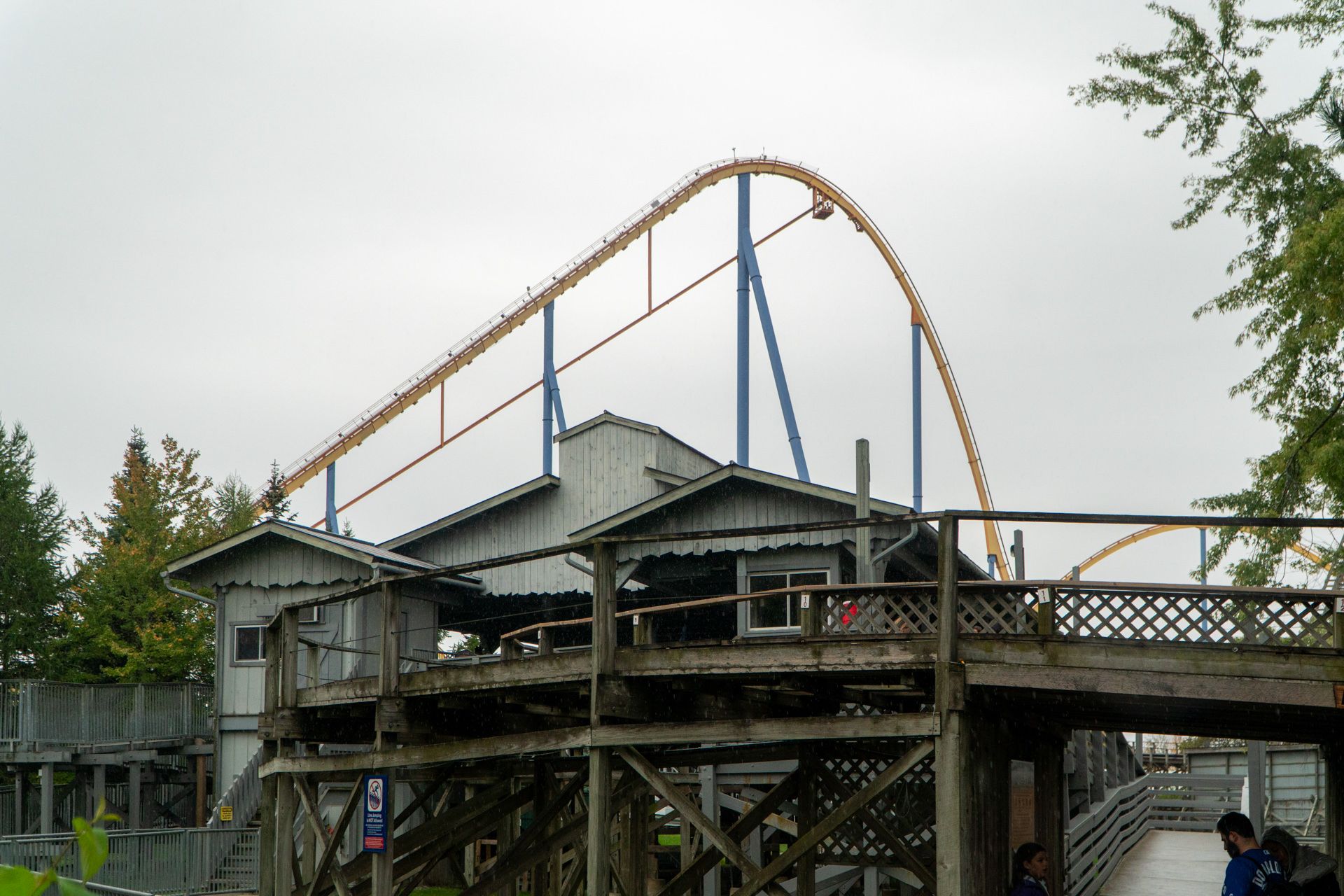
Over the years, Wonder Mountain became increasingly integrated into the rides around it. Just five years after opening, Thunder Run became the first coaster to venture inside the mountain. Vortex followed for the park’s tenth anniversary, diving from the top of Wonder Mountain toward the water below. Wonder Mountain’s Guardian joined the lineup in 2013, and today even Alpen Fury blasts straight through the mountain.

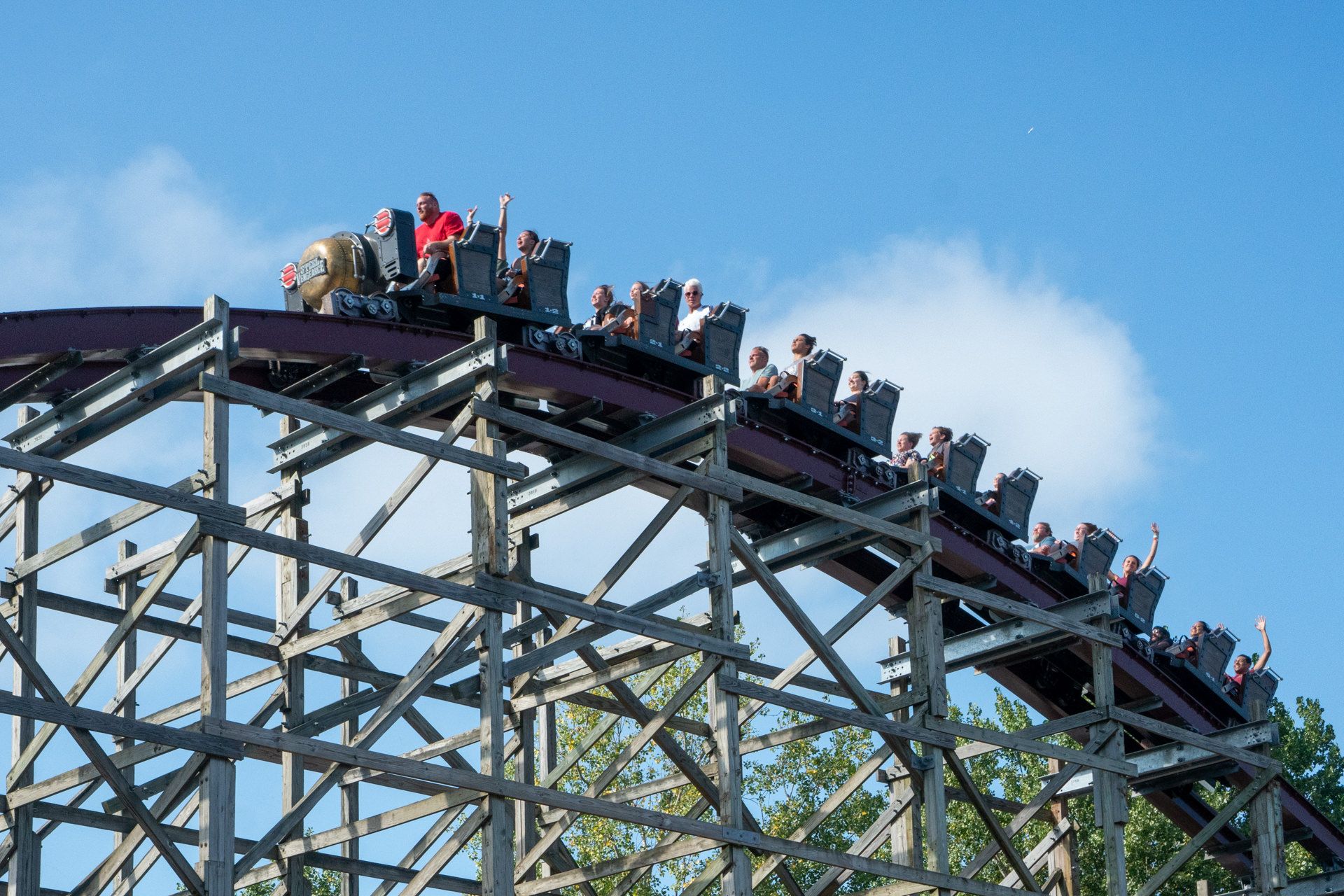
Wonder Mountain’s Guardian

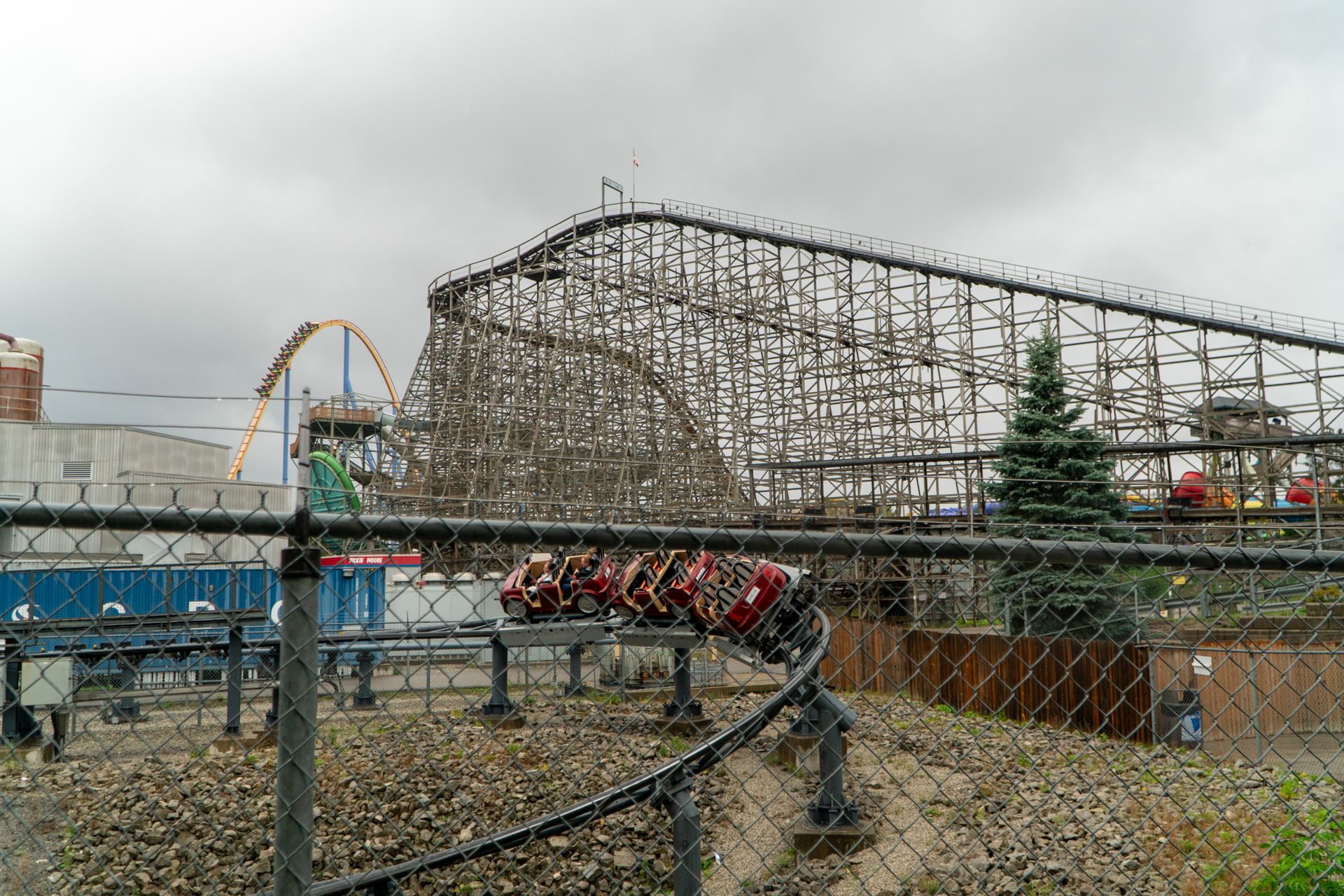
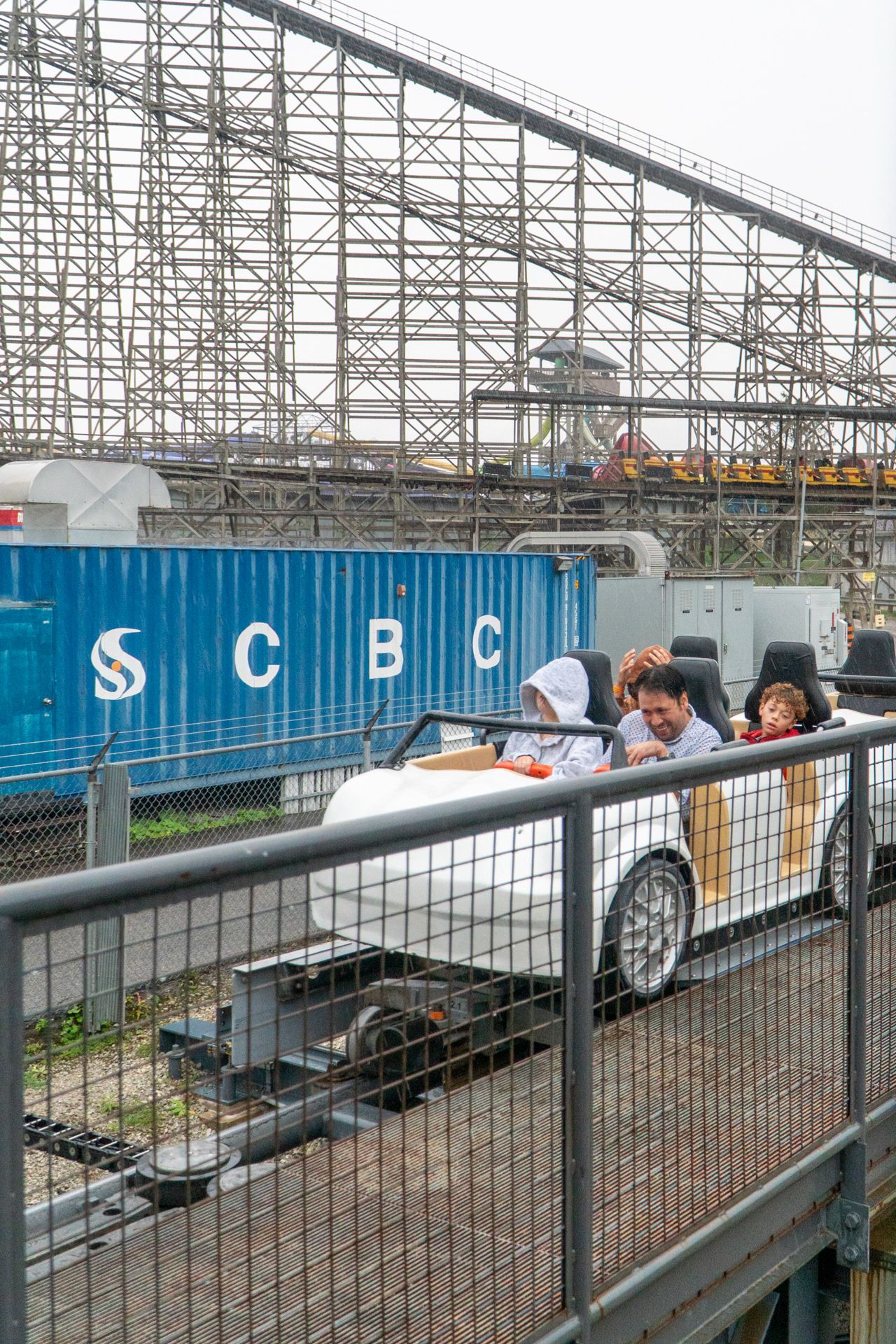
Located inside Wonder Mountain, Wonder Mountain’s Guardian was one of the first major attractions built by ART Engineering. The ride starts with a short outdoor coaster section before heading into the mountain.

Inside, large screens line both sides of the track as we blast away at monsters, collect coins, and eventually take on a dragon. The real surprise, however, comes right at the end, when the entire vehicle suddenly drops several feet in free fall.

It’s certainly an ambitious concept and the ride itself is plenty of fun. A stronger soundtrack would help all the shooting feel a little less random, though. As it stands, Wonder Mountain’s Guardian is still a fun attraction to hop on whenever the line isn’t too long.

Fly

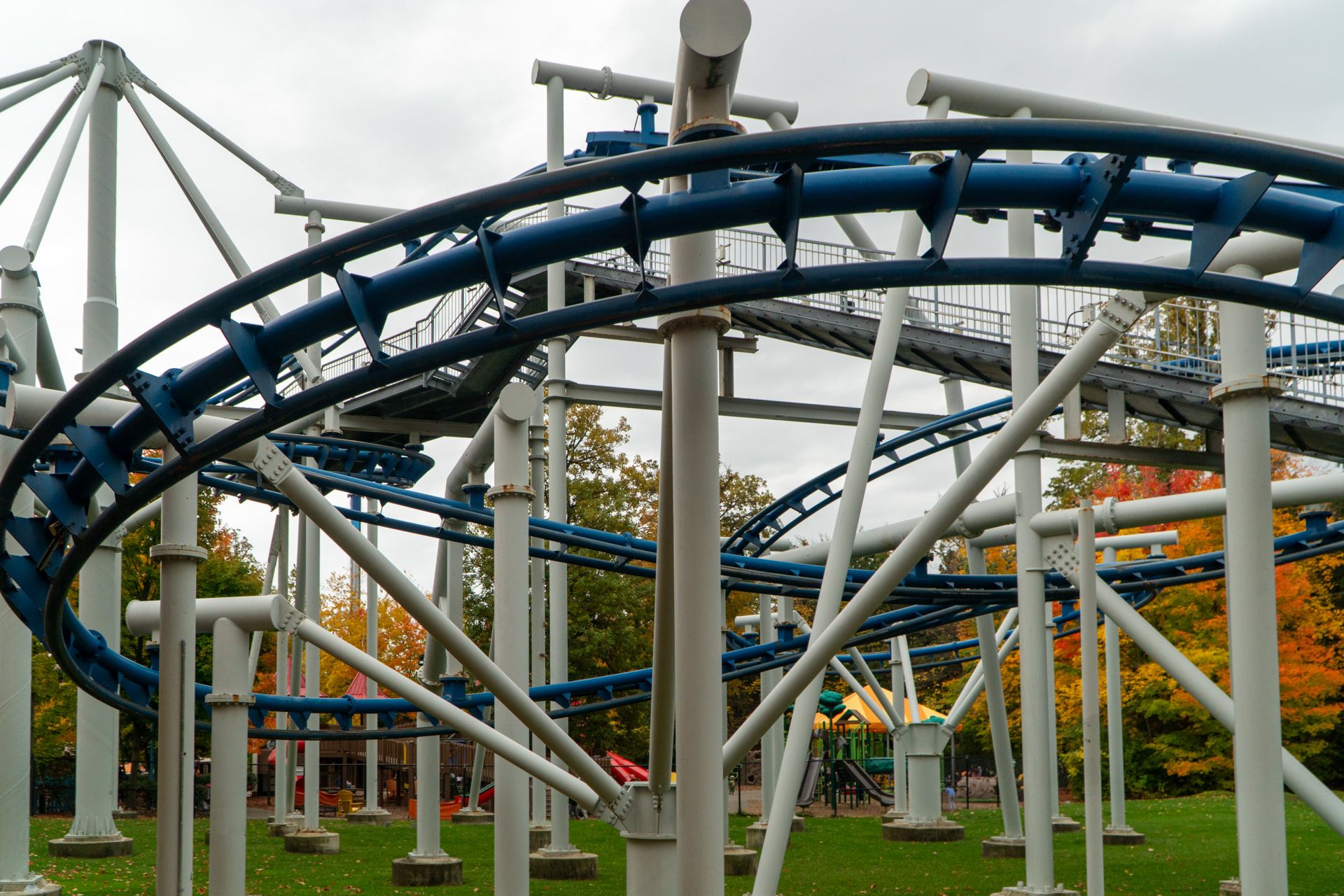
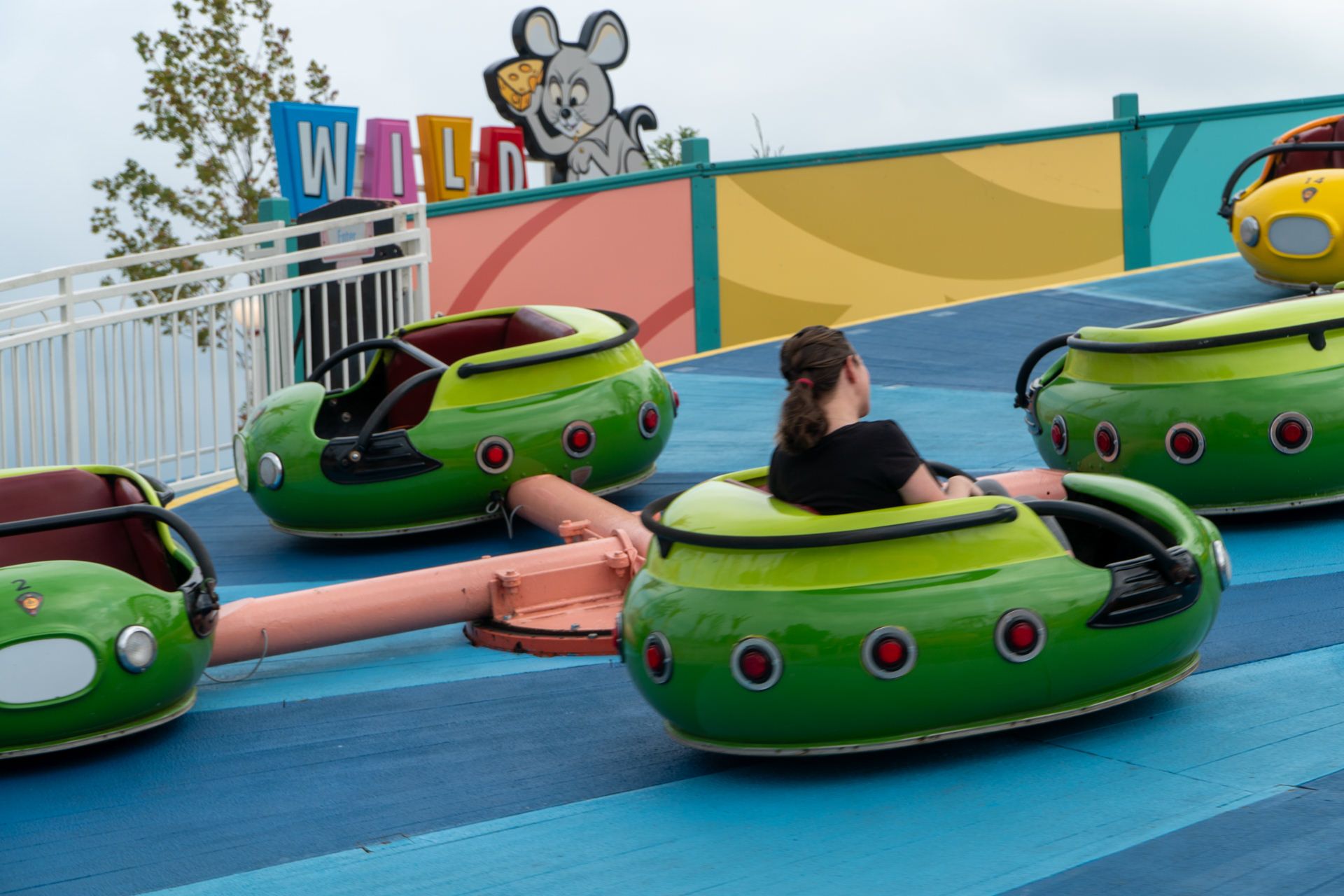
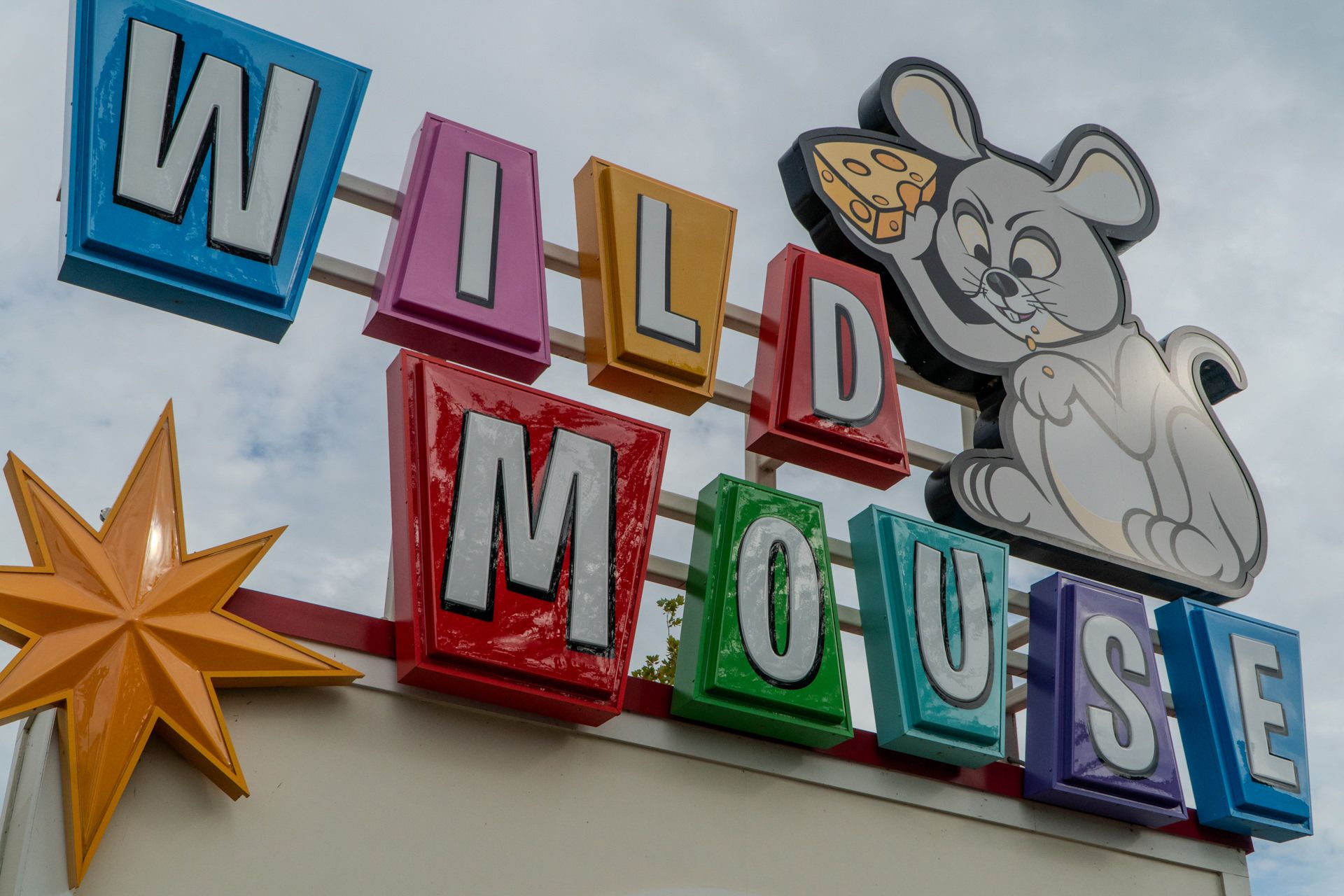
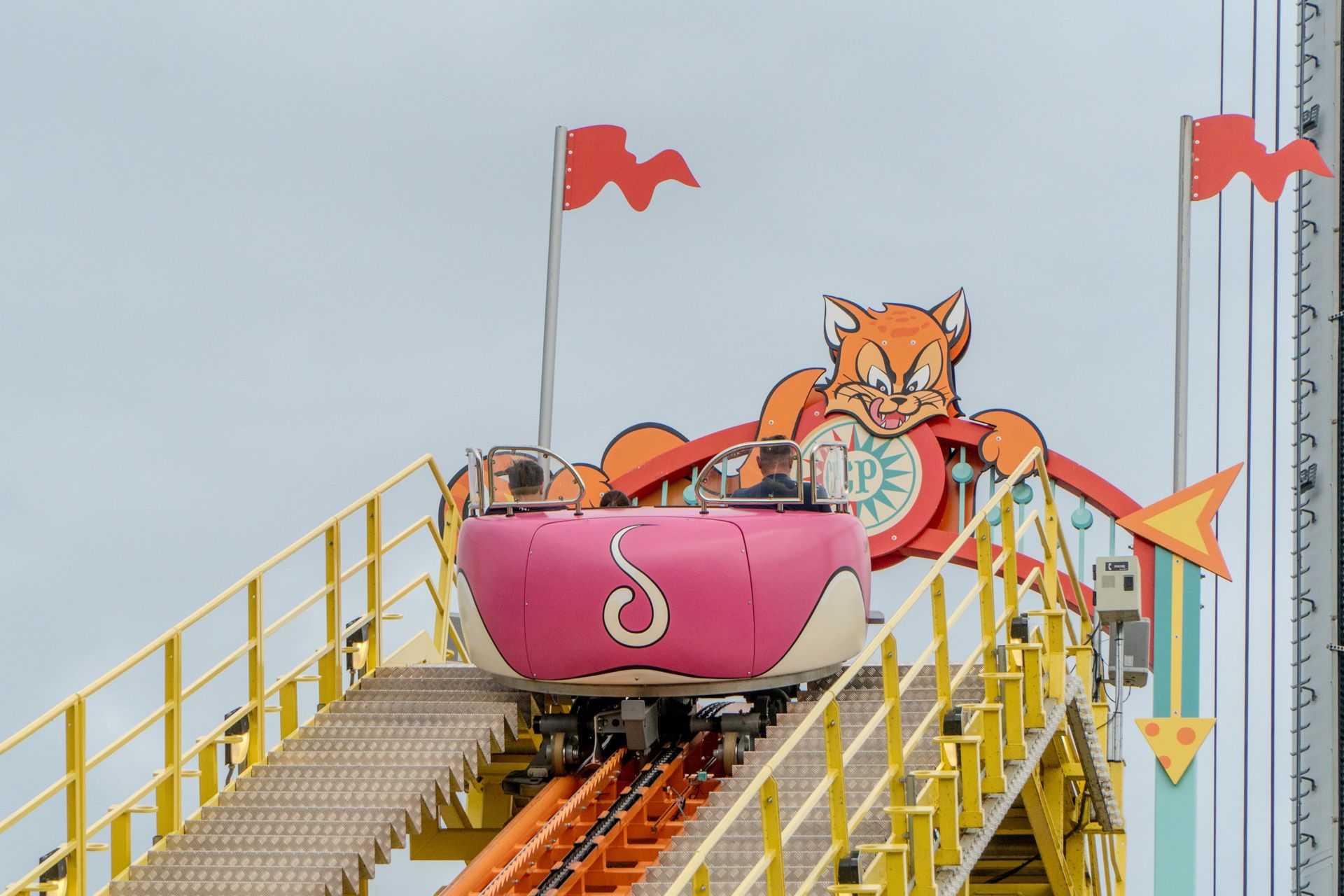
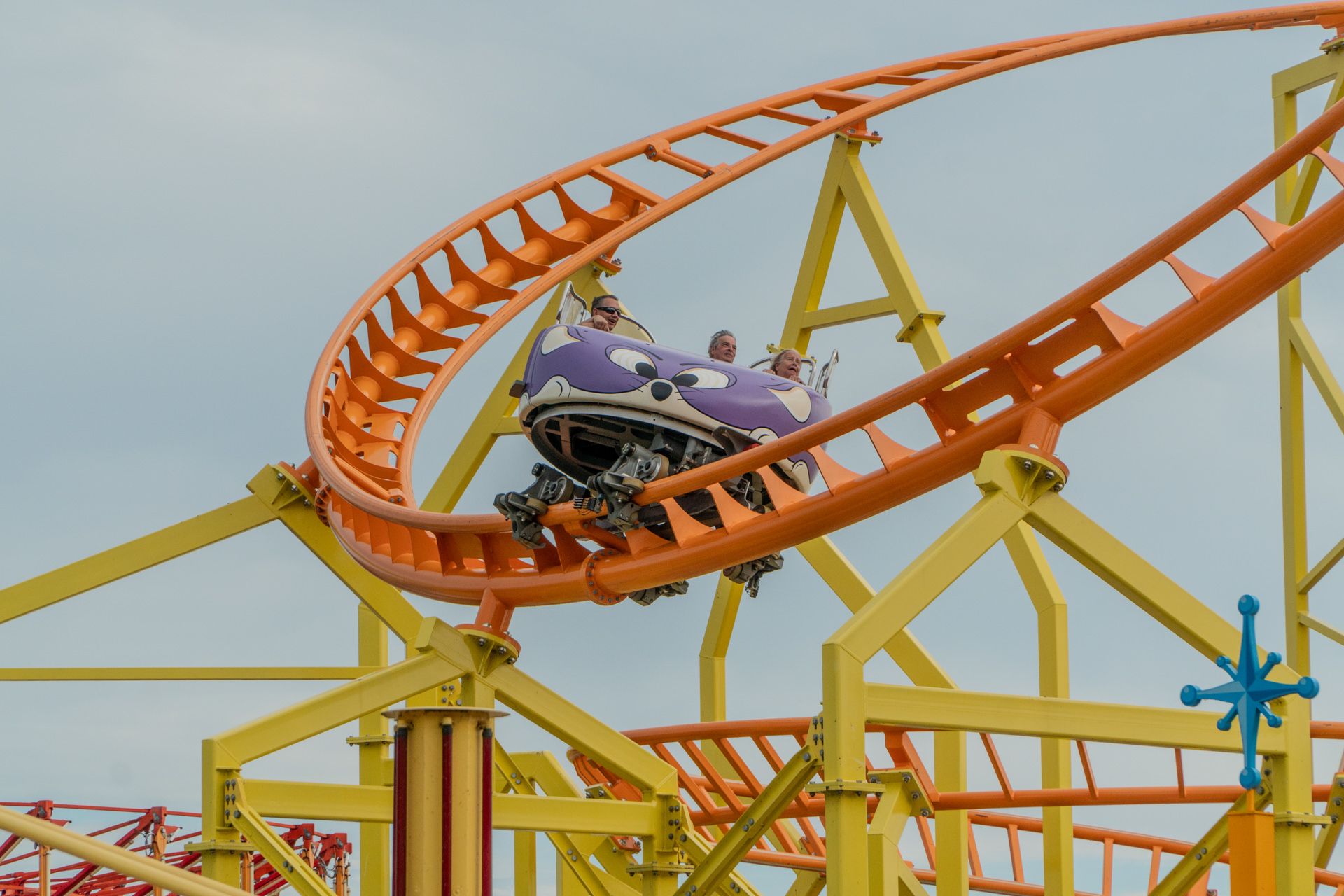
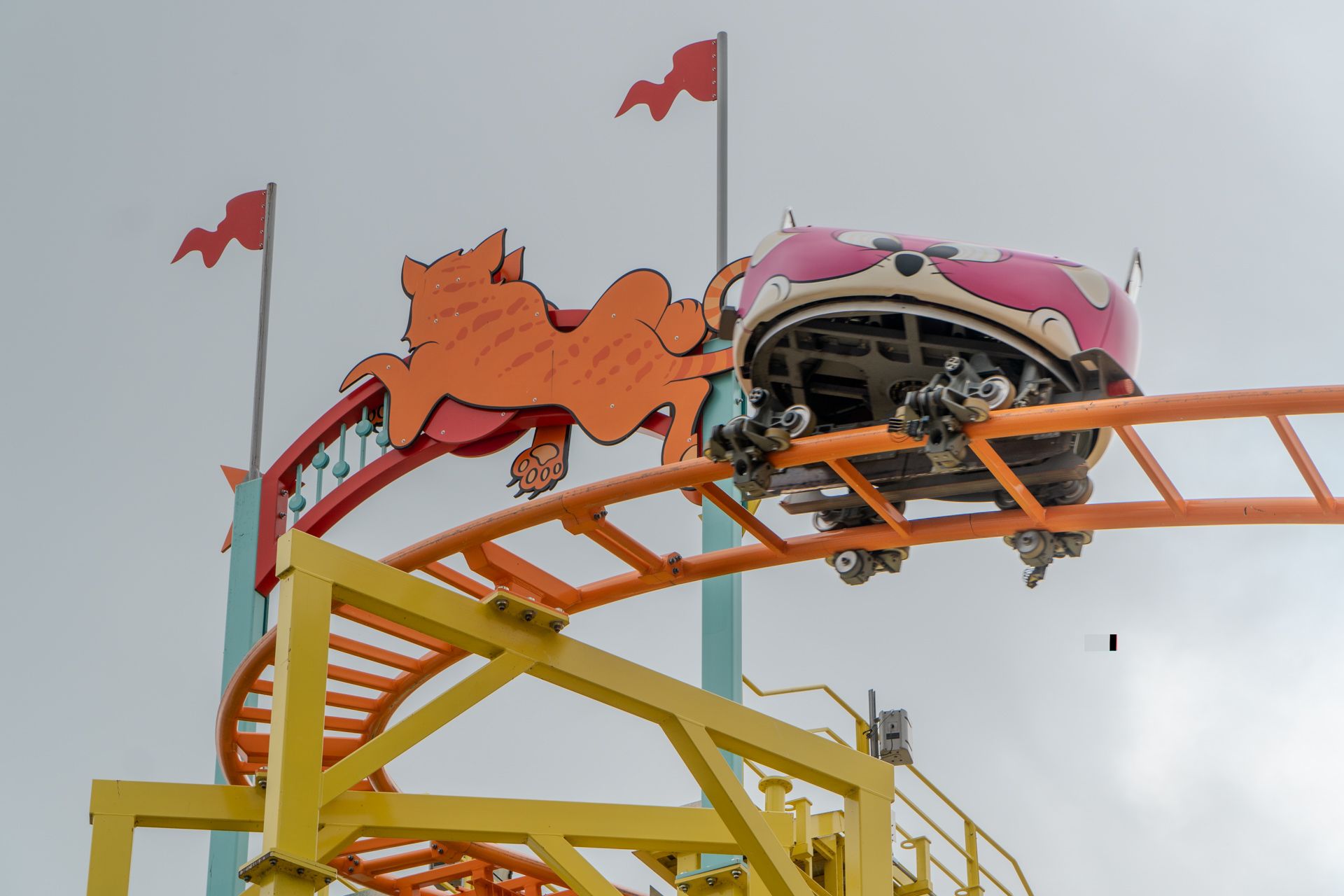
A little farther along, Fly is Canada’s Wonderland’s Wild Mouse. For a larger coaster of this type, it runs surprisingly fast and remains mostly unbraked until very late in the ride. That makes the tight hairpin turns in the first half especially fun, while the second half keeps up a nice pace as well. Overall, Fly is simply a really enjoyable little coaster.

Alpen Fury

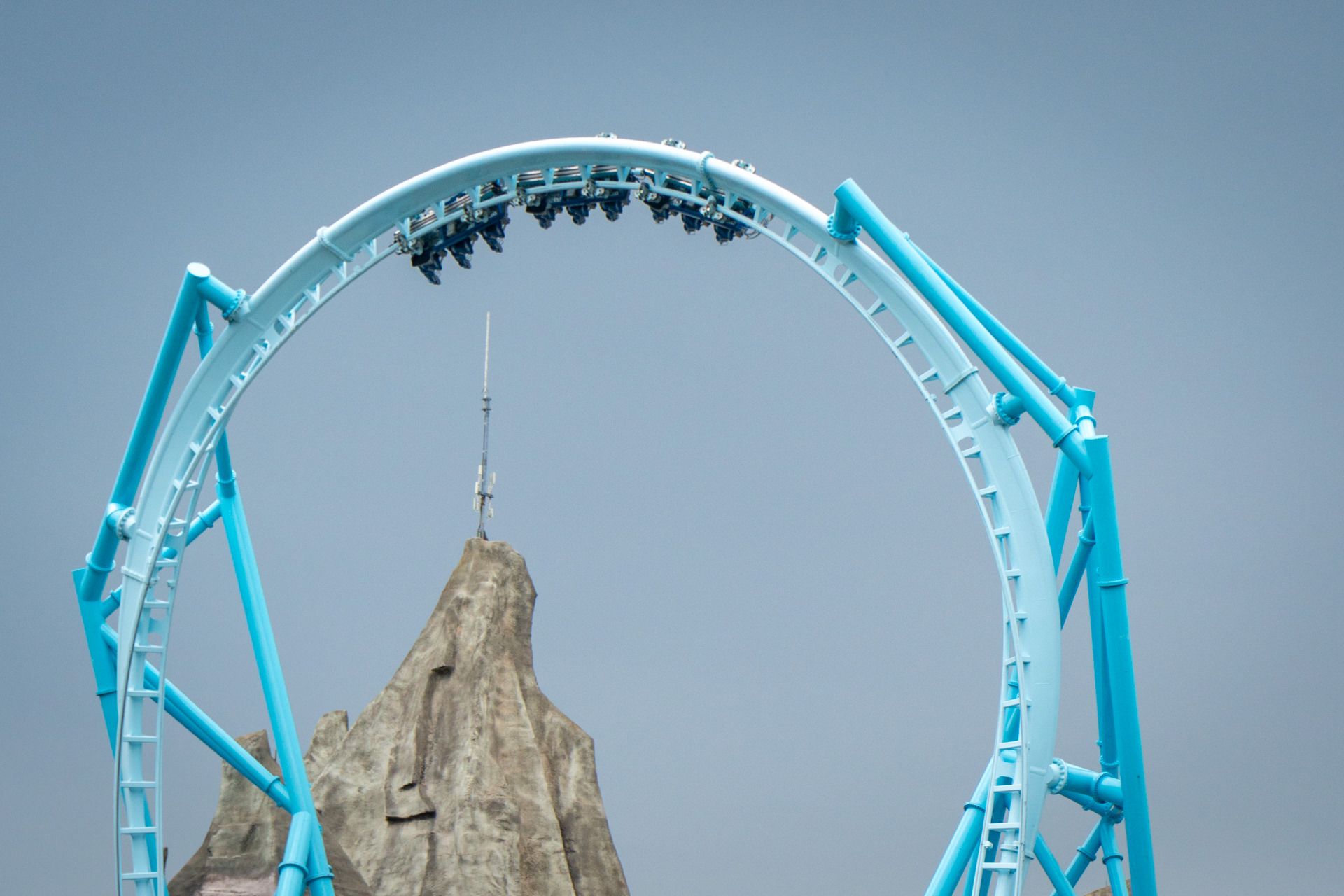
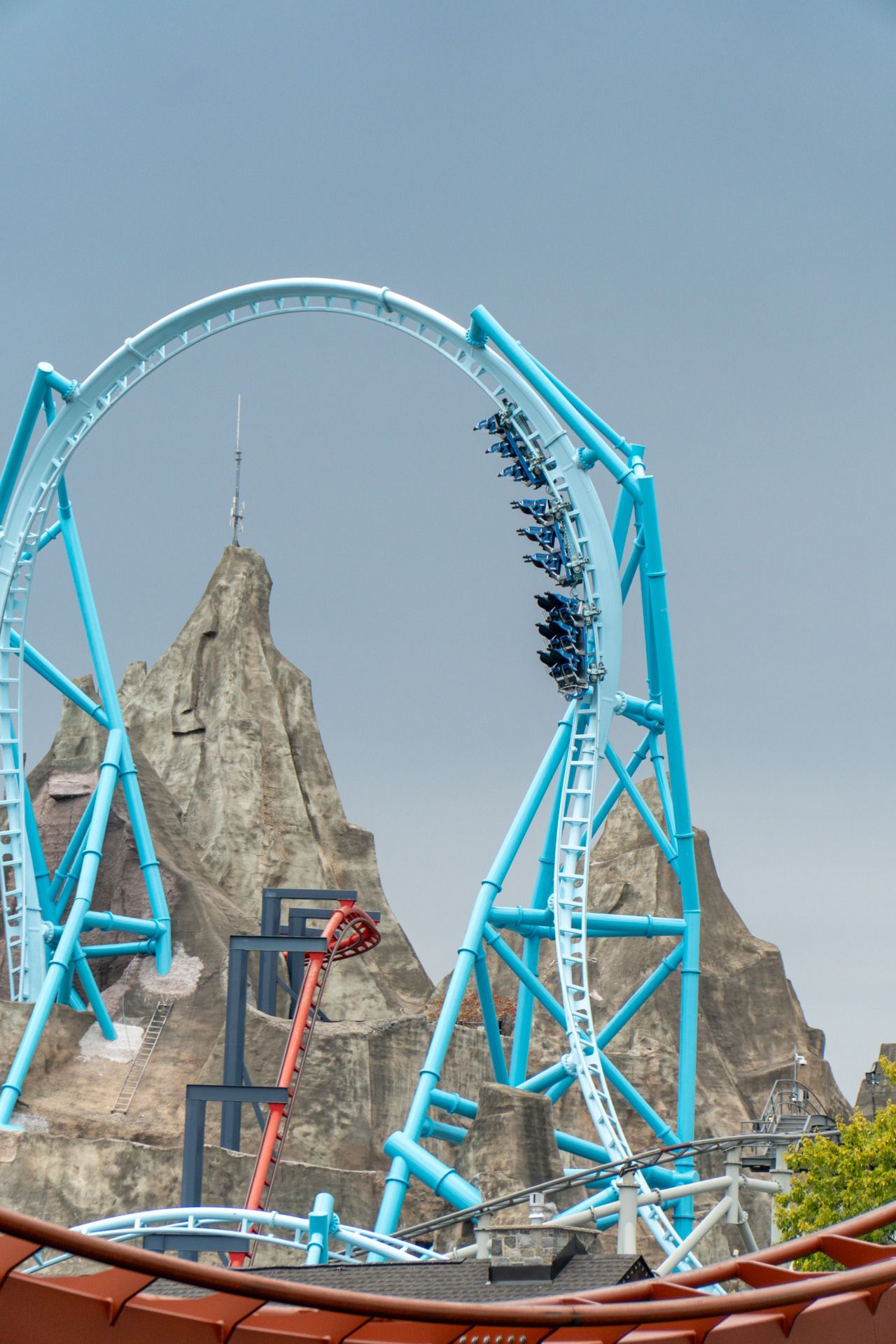
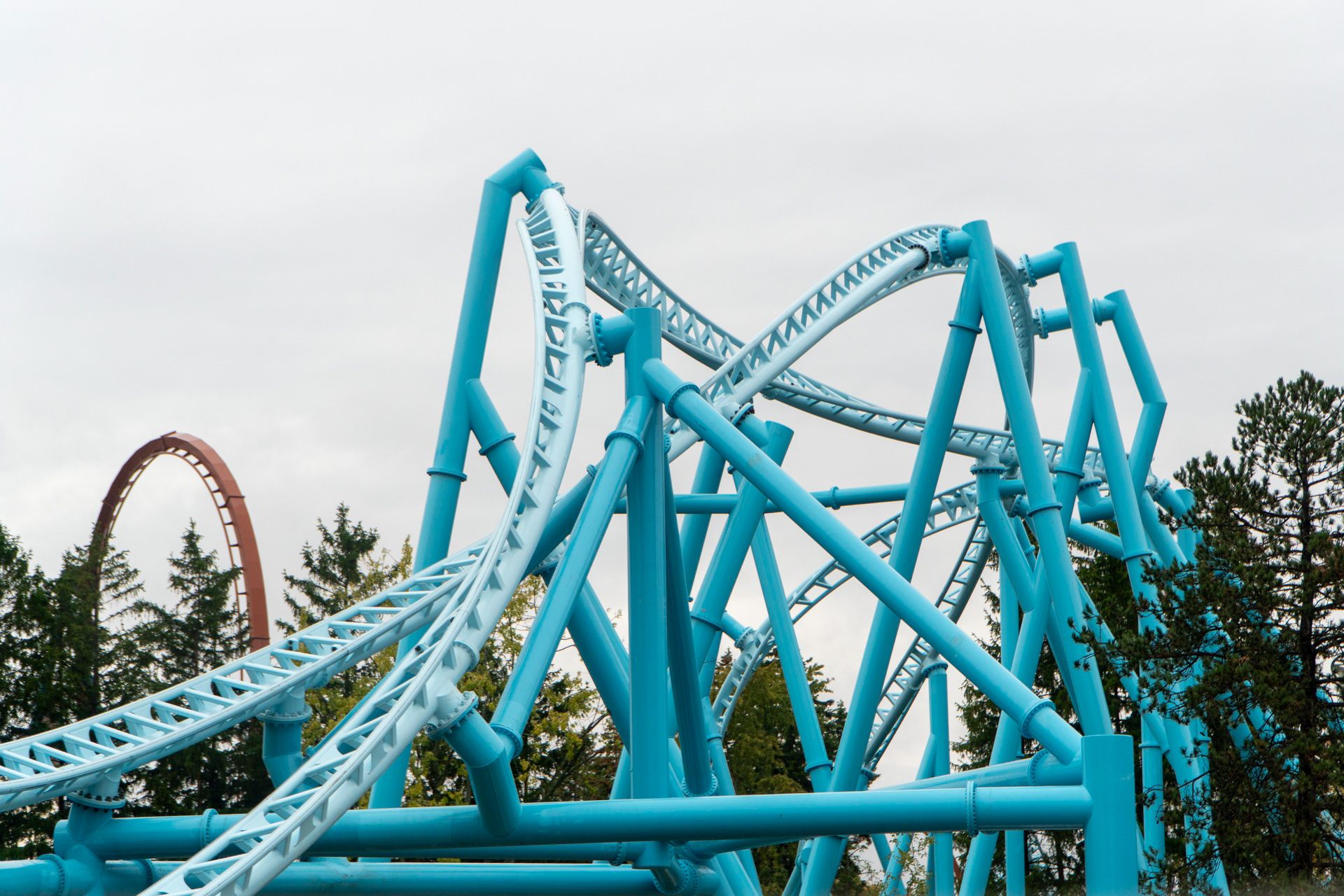
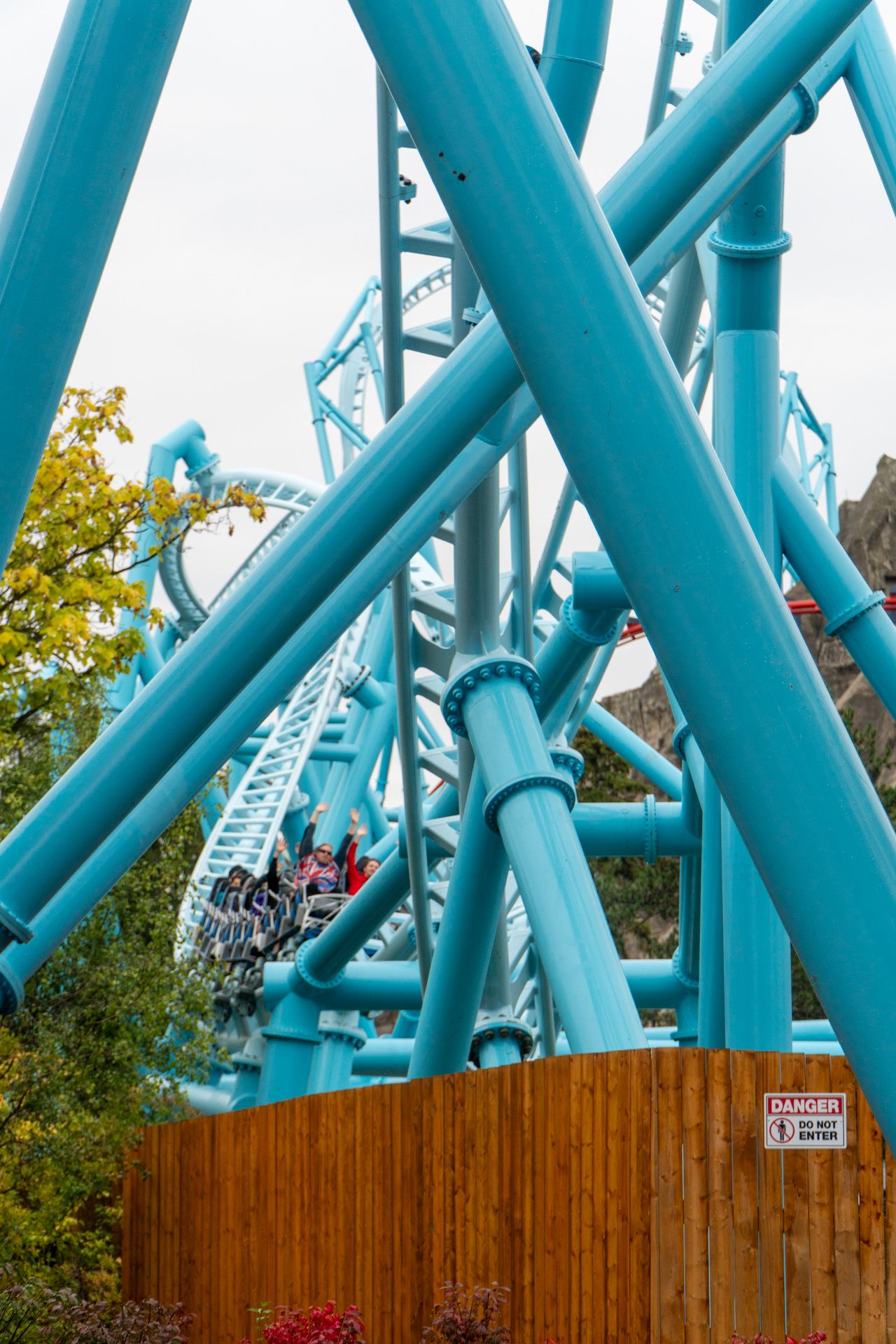
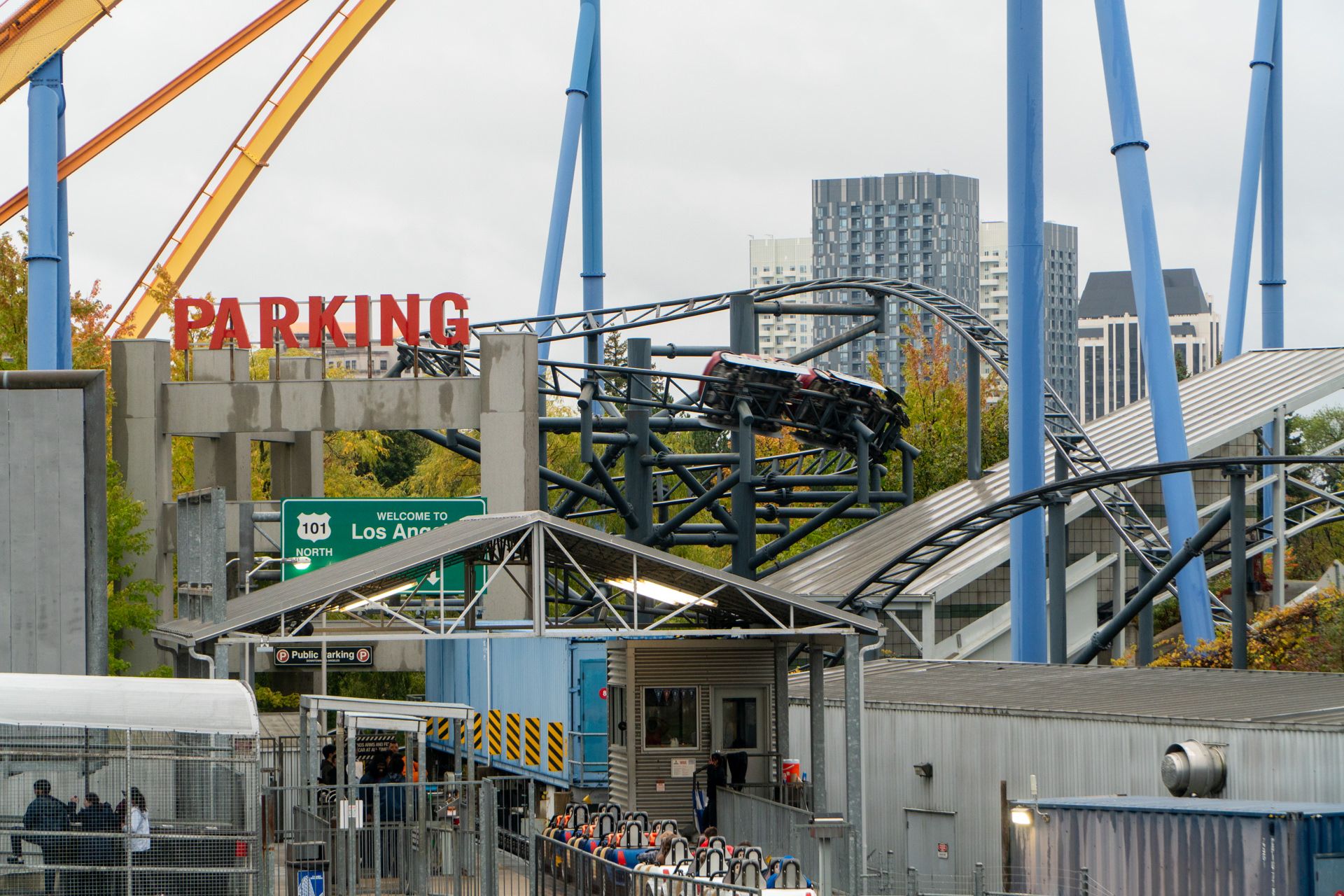
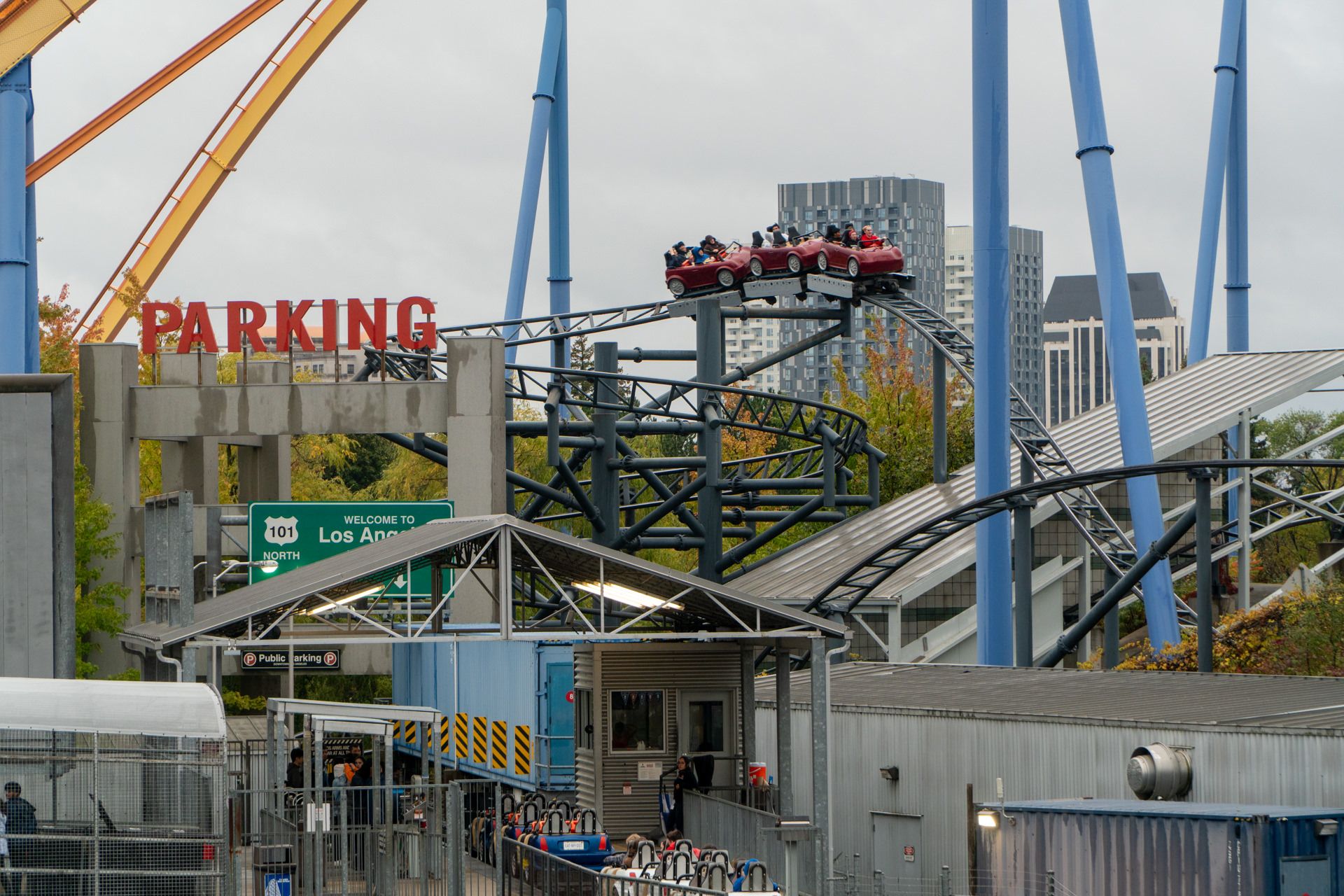
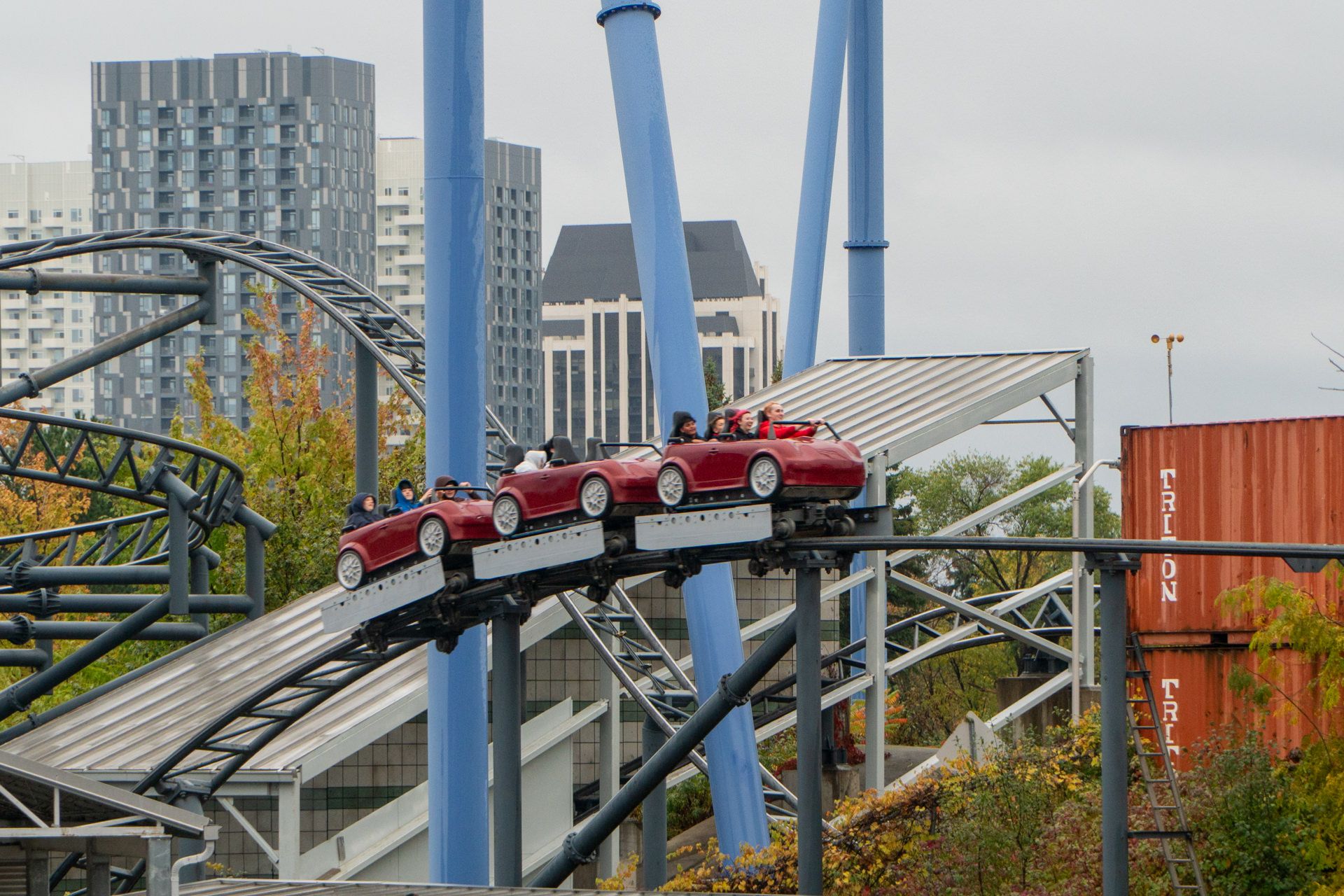
Right next to Fly is Alpen Fury, currently one of the most popular coasters in the park. Premier Rides packed the layout with a wild mix of tightly intertwined inversions, and the ride wastes very little time getting started.

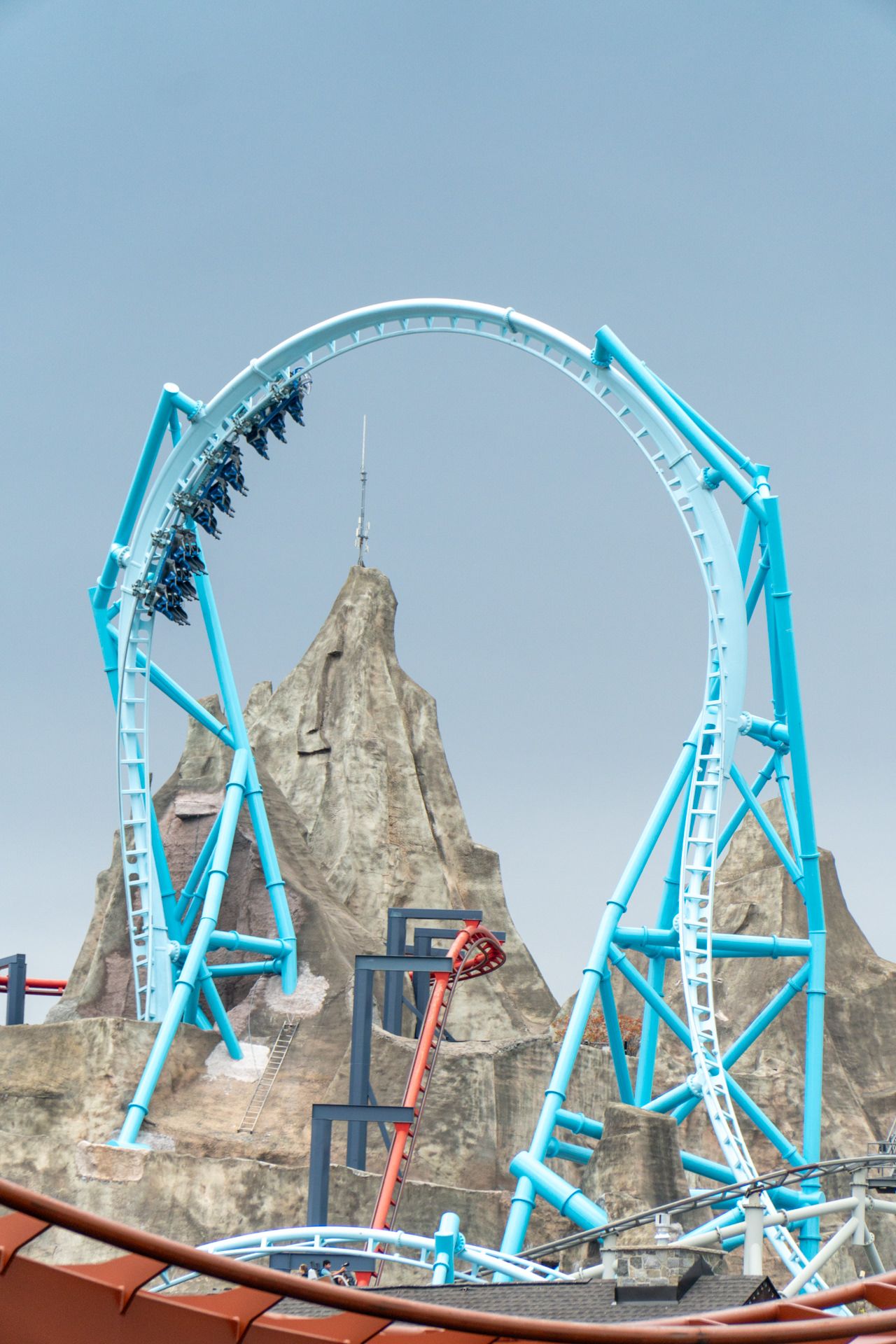
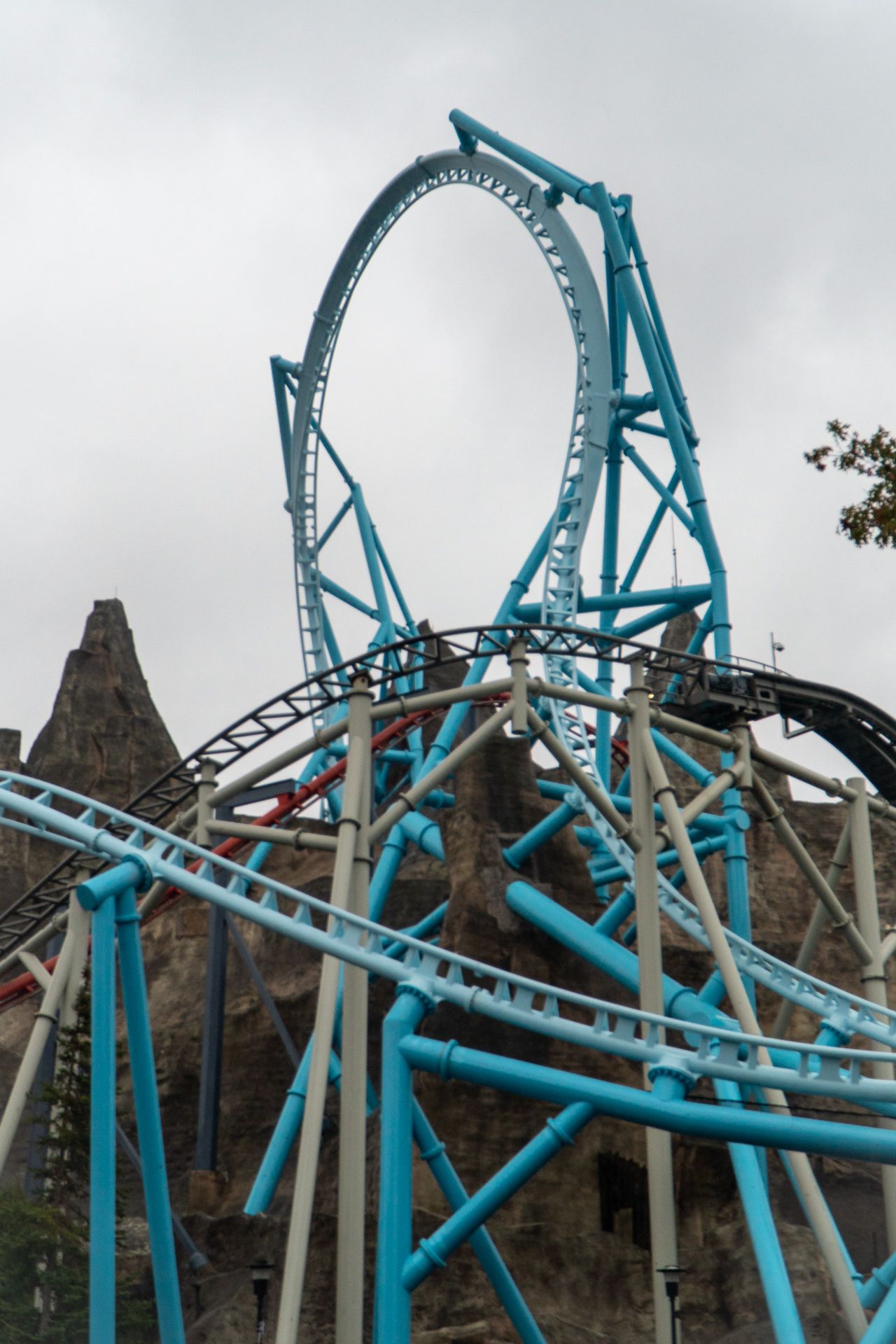
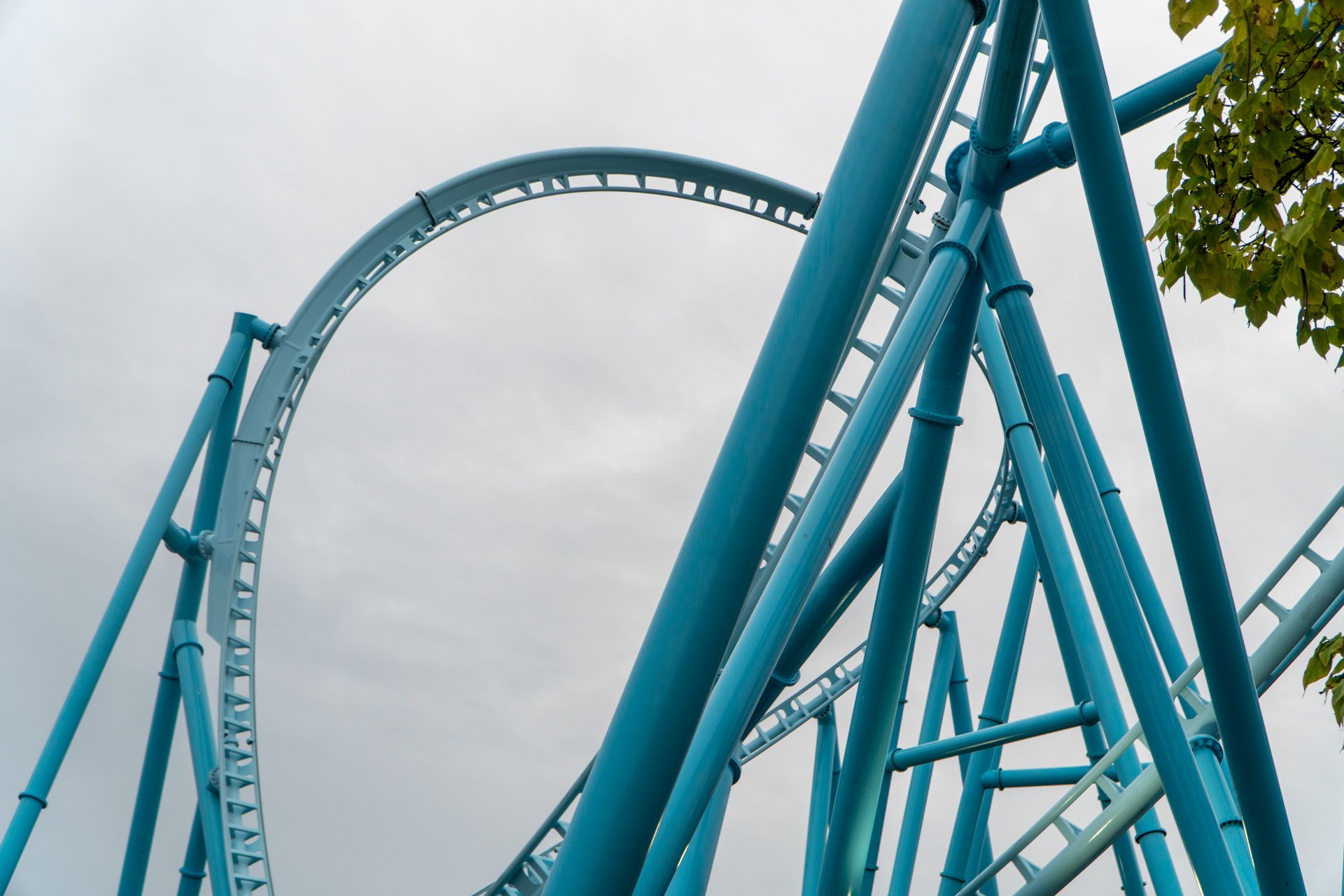
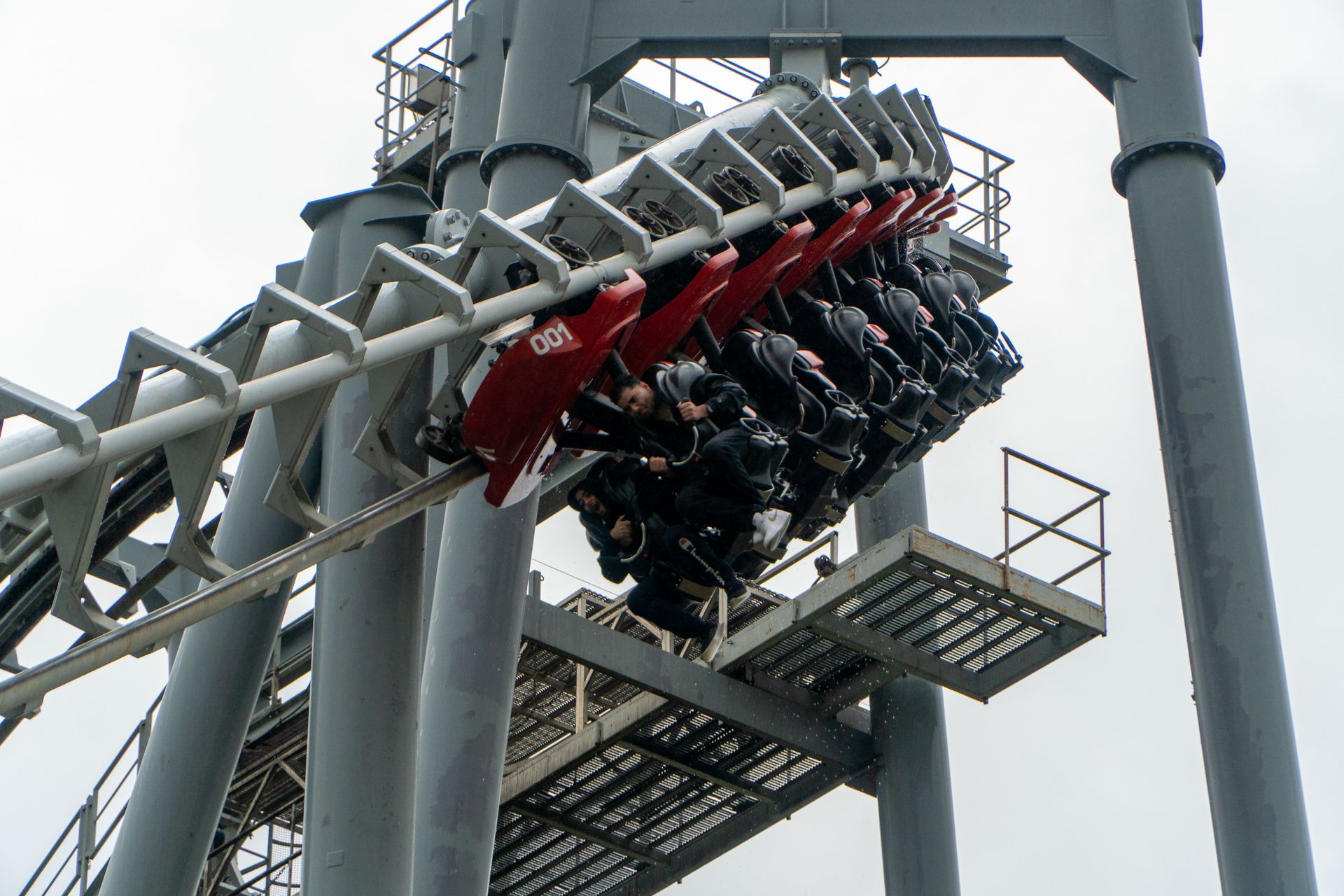
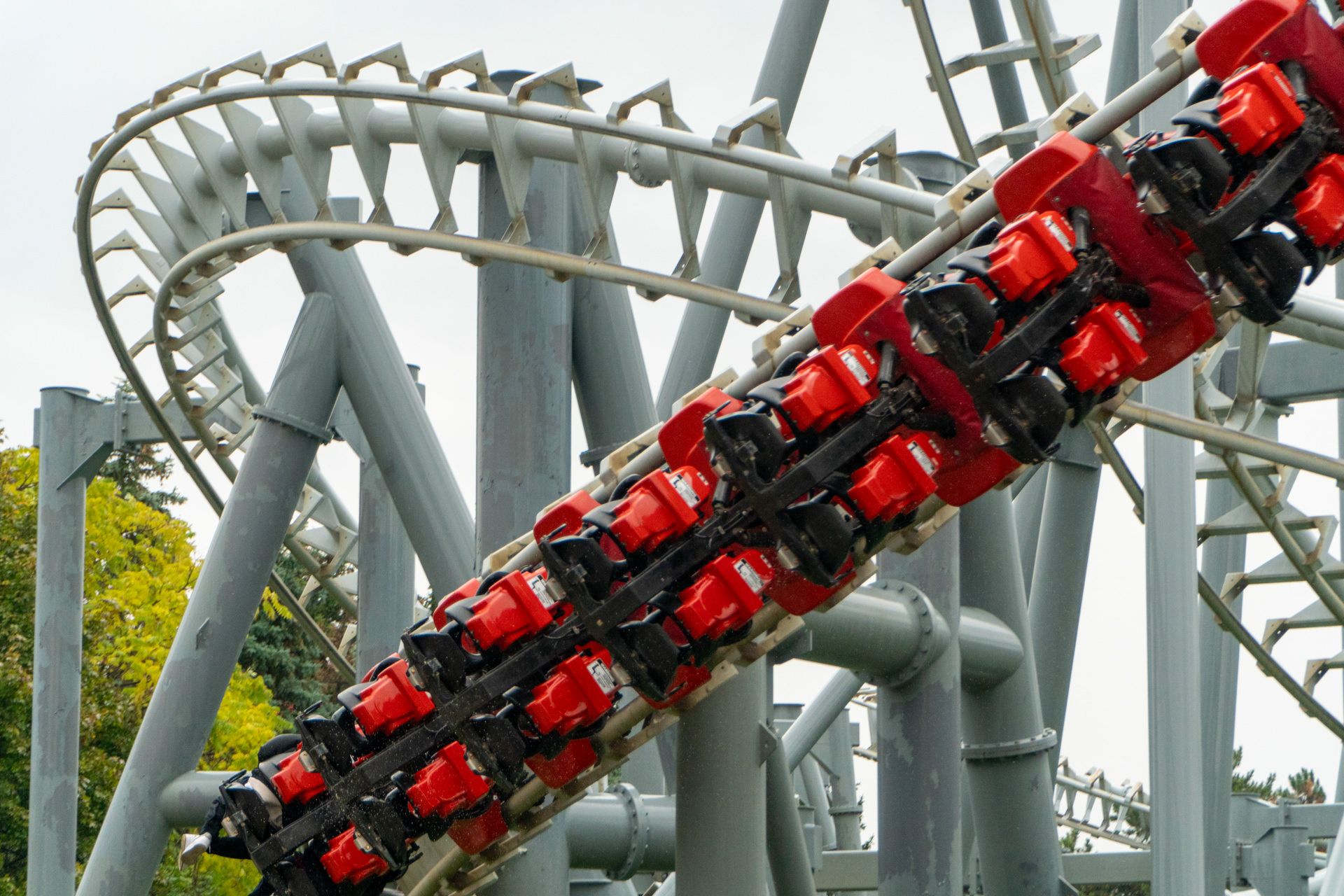
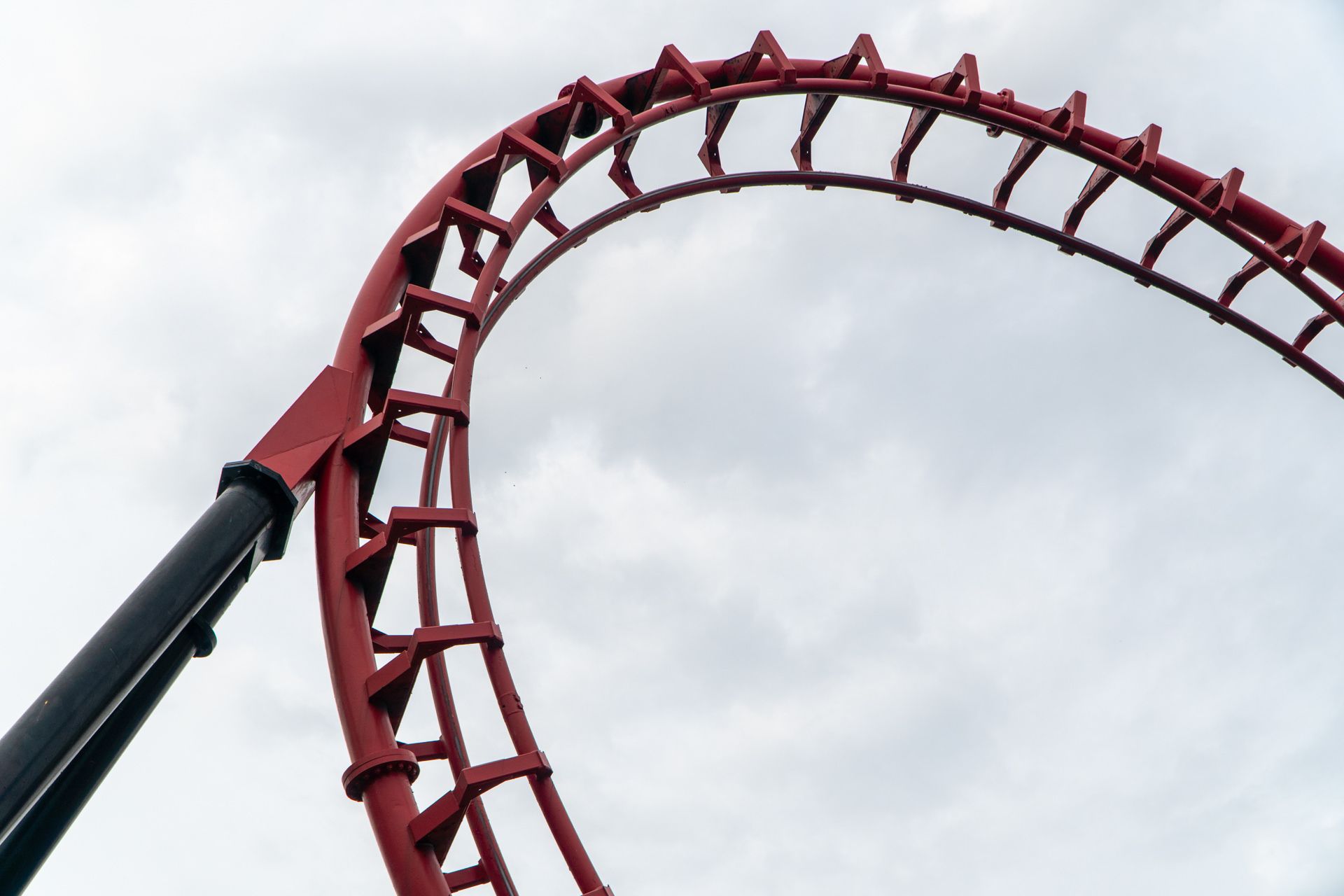
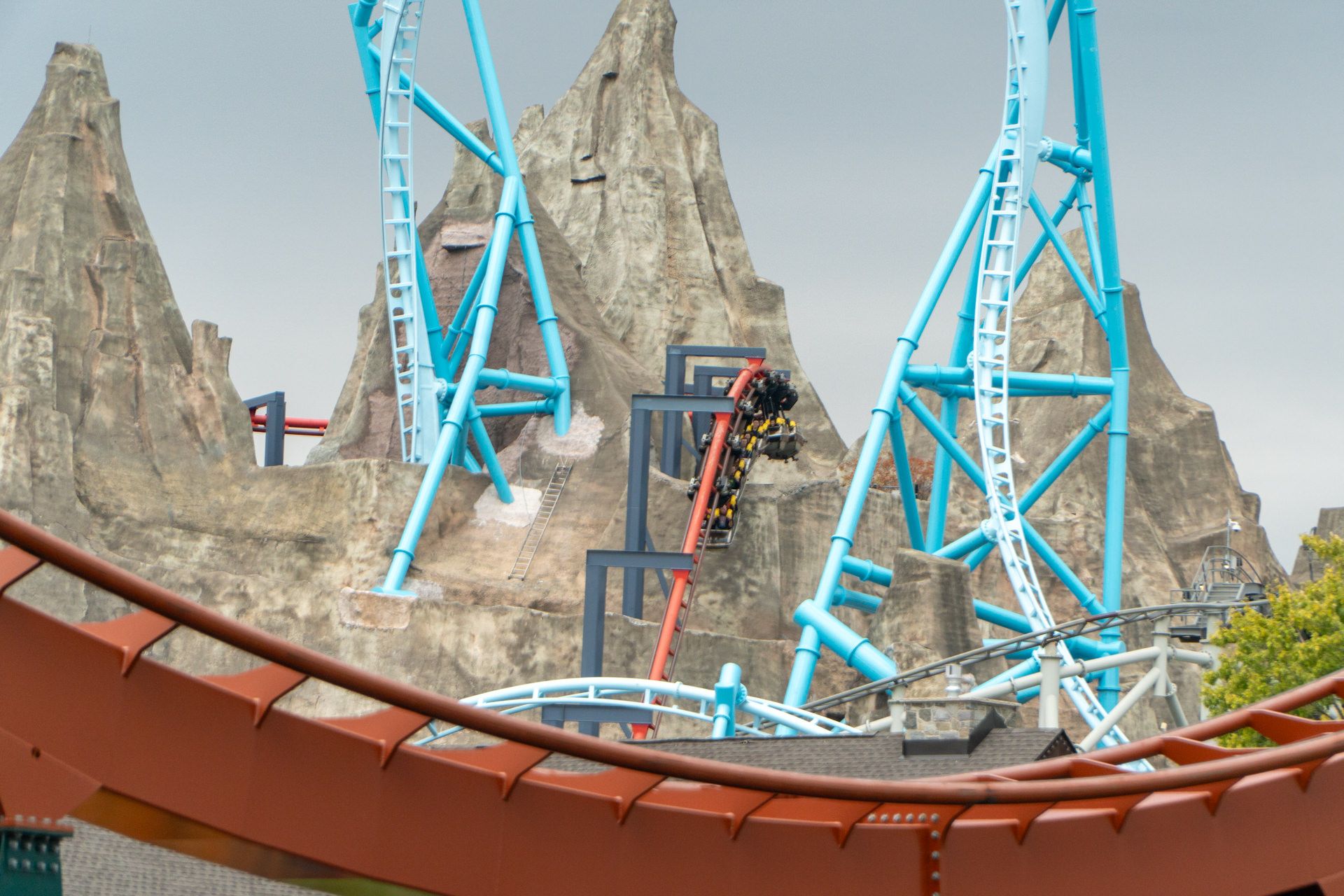
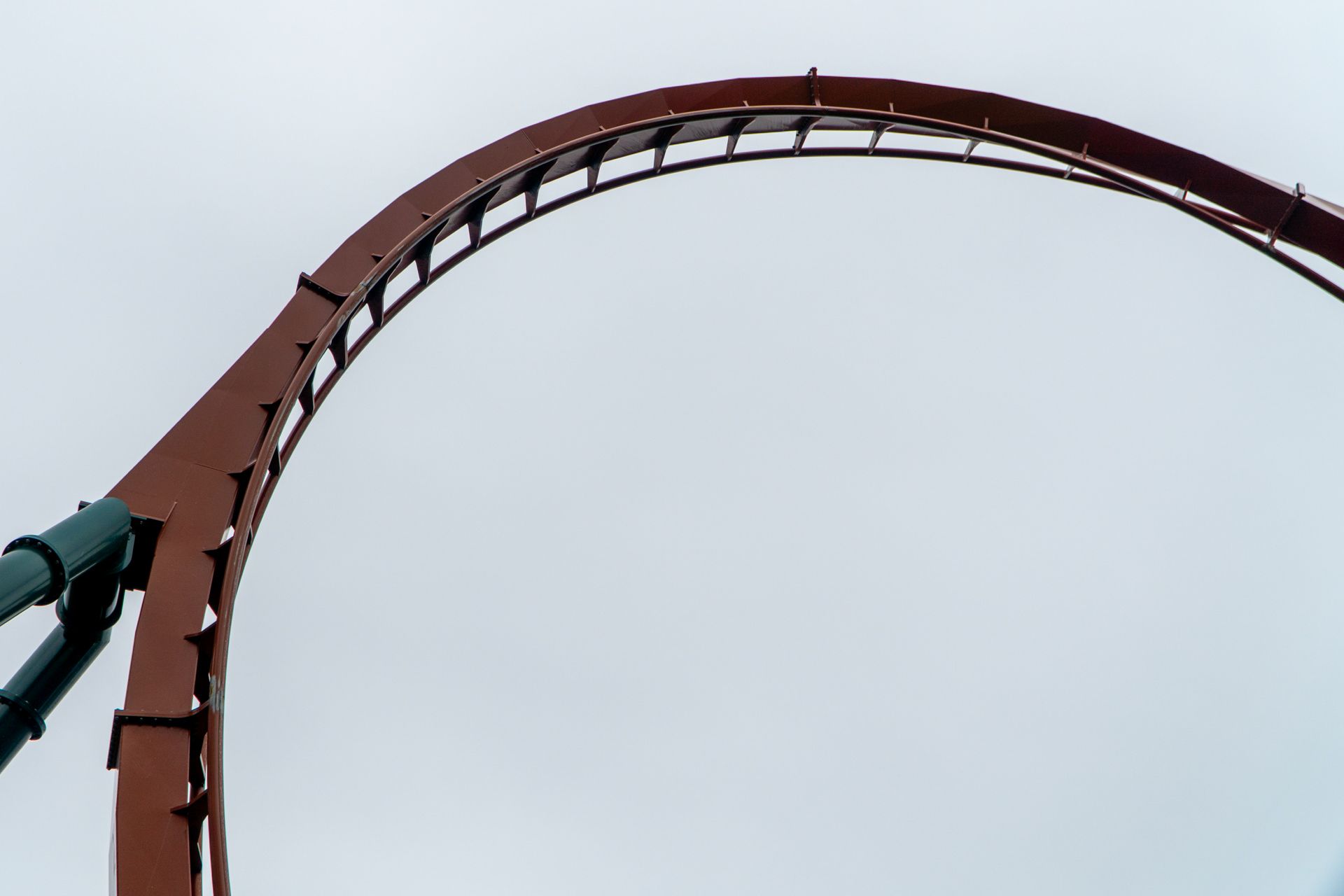
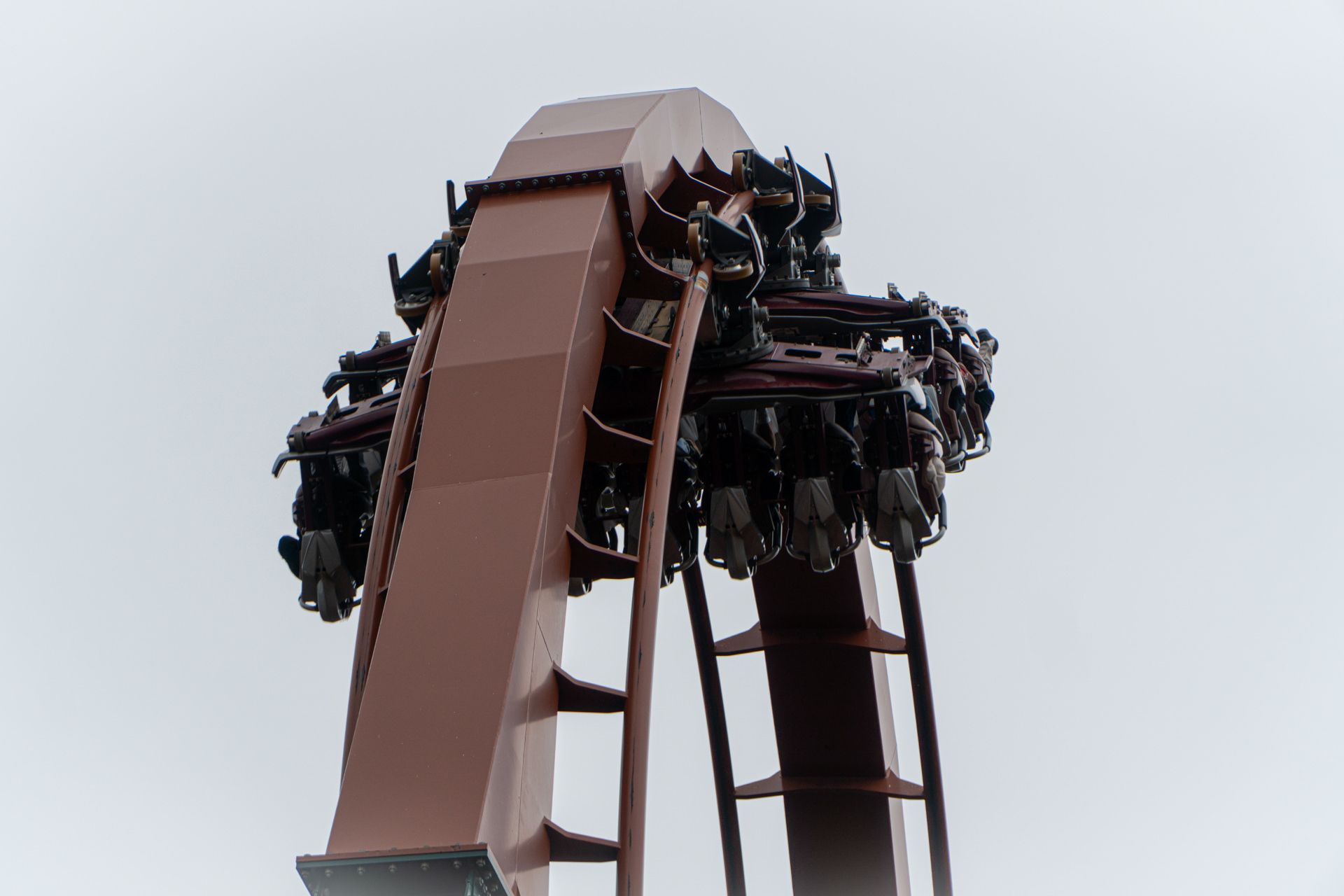
After a short right turn out of the station, we hit the first launch. Moments later, the train dives into Wonder Mountain, races through a nicely themed cave, and gets blasted back outside at serious speed. From there, we head straight into the inverted top hat. A high-speed section carries us across the ride area before we enter a zero-G roll. Next comes a wide right-hand turn that unexpectedly becomes another inversion before dropping us back toward the ground.

One of the more unusual sequences follows. An ascending roll to the left immediately transitions into a descending roll to the right, with barely any pause between the two. Two more rolls follow, then a short hill and one final inversion before a small hop sends us into the brakes.

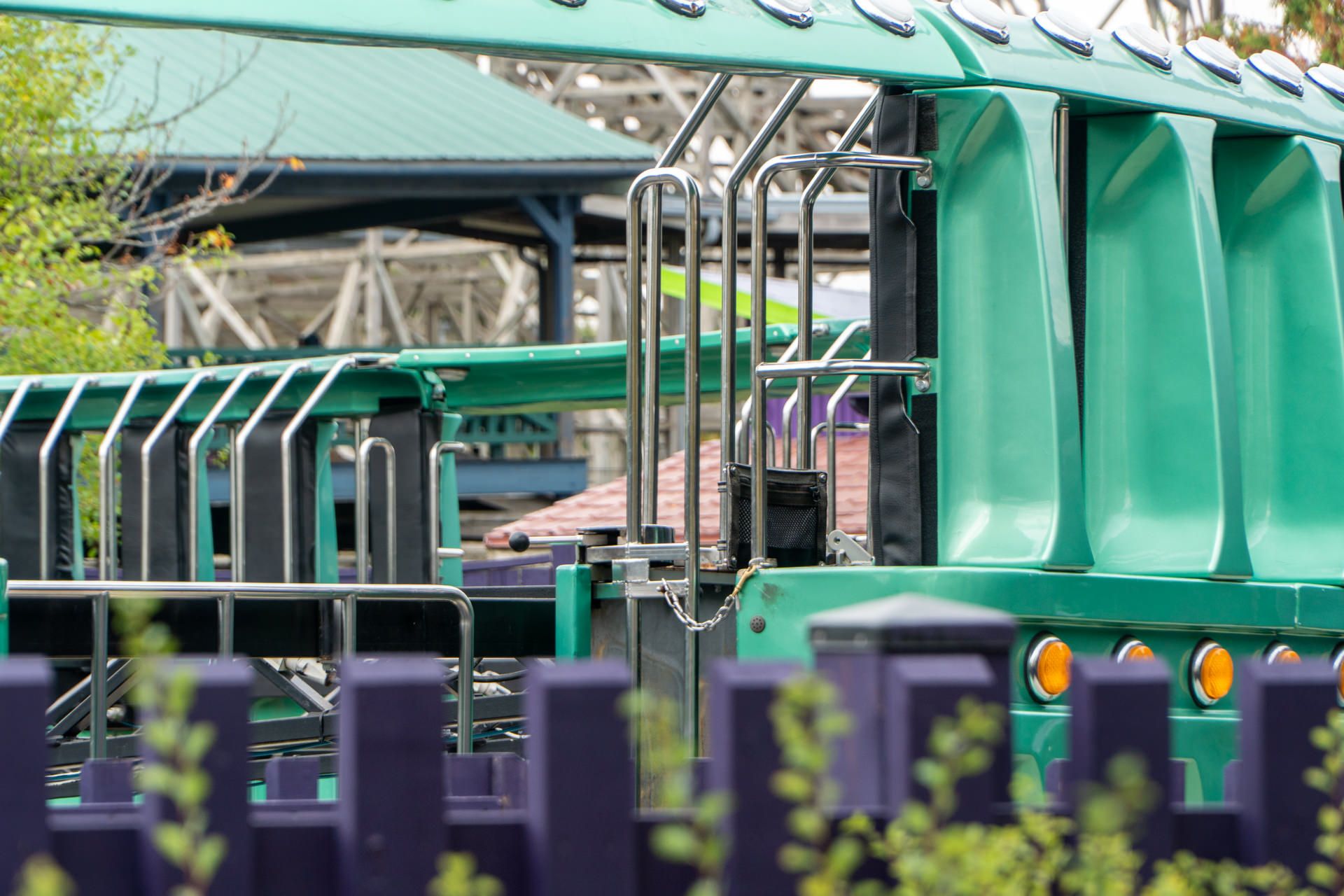
Alpen Fury is a lot of fun. The ride quality is excellent and the layout is full of creative ideas. The biggest weakness is the dispatching. Between the lowering station floor and the very slowly moving bridge used by the ride attendants, loading and unloading takes far too long. With only 18 riders per train, the line can build quickly.

Shockwave

Right next to Alpen Fury is Shockwave, a fairly generic-looking Top Scan that makes up for its appearance with a very good ride cycle. Two direction changes, some strange moments of hangtime, and several inversions keep things moving without making the ride excessively intense. A really fun ride!

Thunder Run

Thunder Run runs straight through the middle of Wonder Mountain and combines ascending and descending helices with some surprisingly wild changes of direction, much of it in almost complete darkness. There is a bit of theming along the way as well, plus a handful of lighting effects to accompany the family coaster. Unfortunately, dispatches can be quite slow, so waits build up quickly.

Klockwerks and Krachenwagen

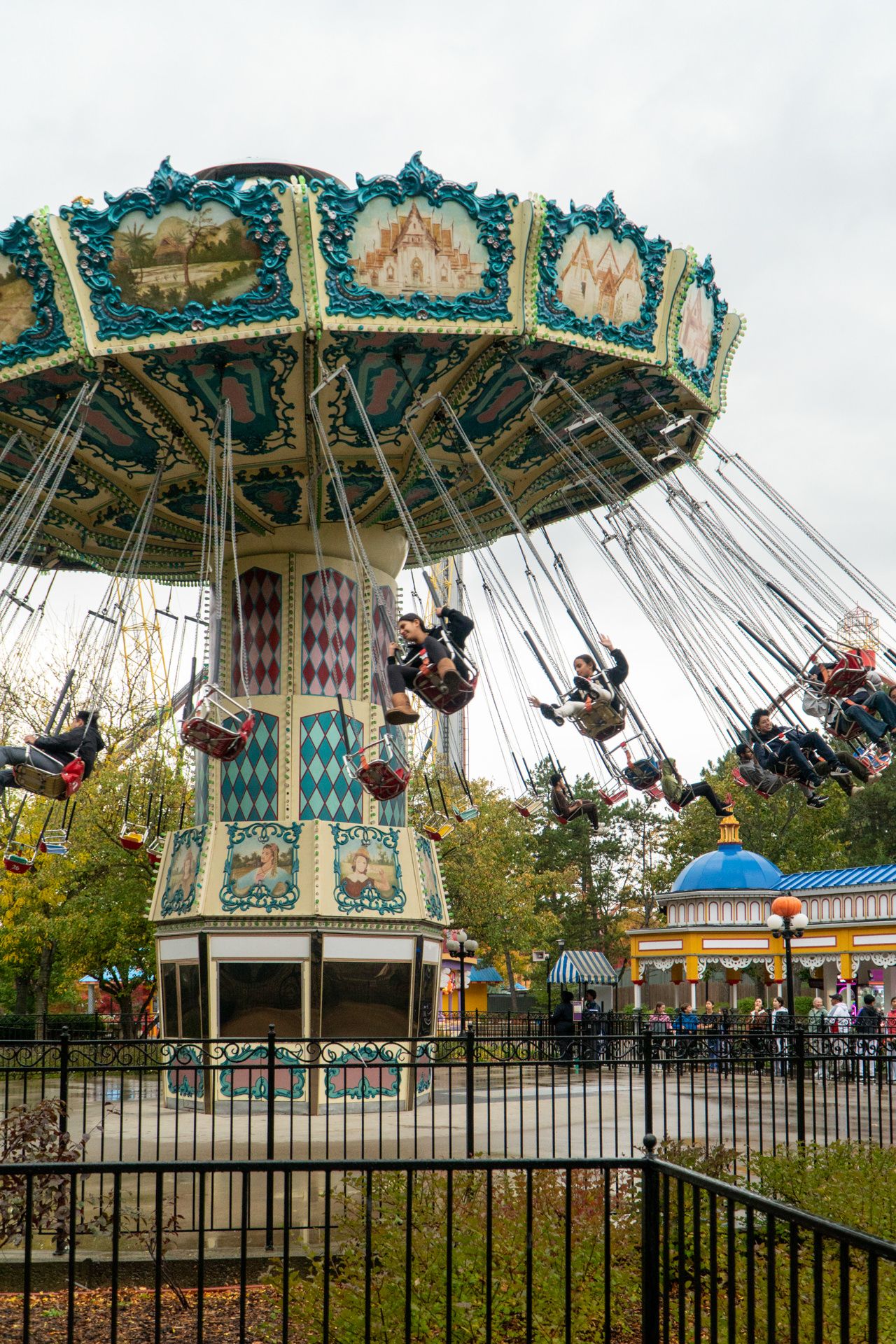
Canada seems to be rather proud of its German heritage as well, because two rides here have decidedly German-sounding names. Krachenwagen is a classic bumper car ride with a circular floor, while Klockwerks is a HUSS Swing-Up whose cars really start swinging once the ride gets going. Both are very fun rides and well worth hopping on when you happen to be passing by.

Planet Snoopy

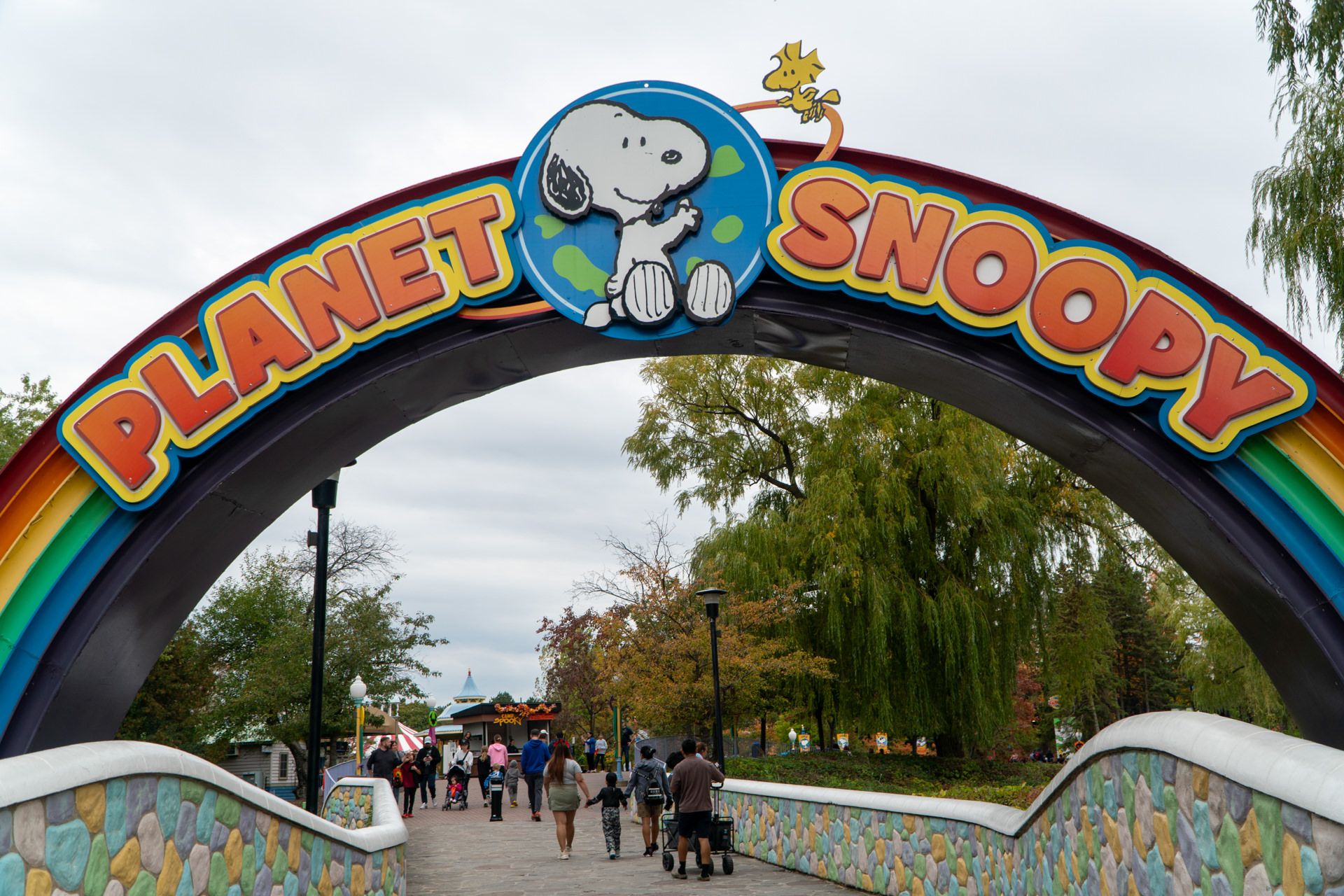
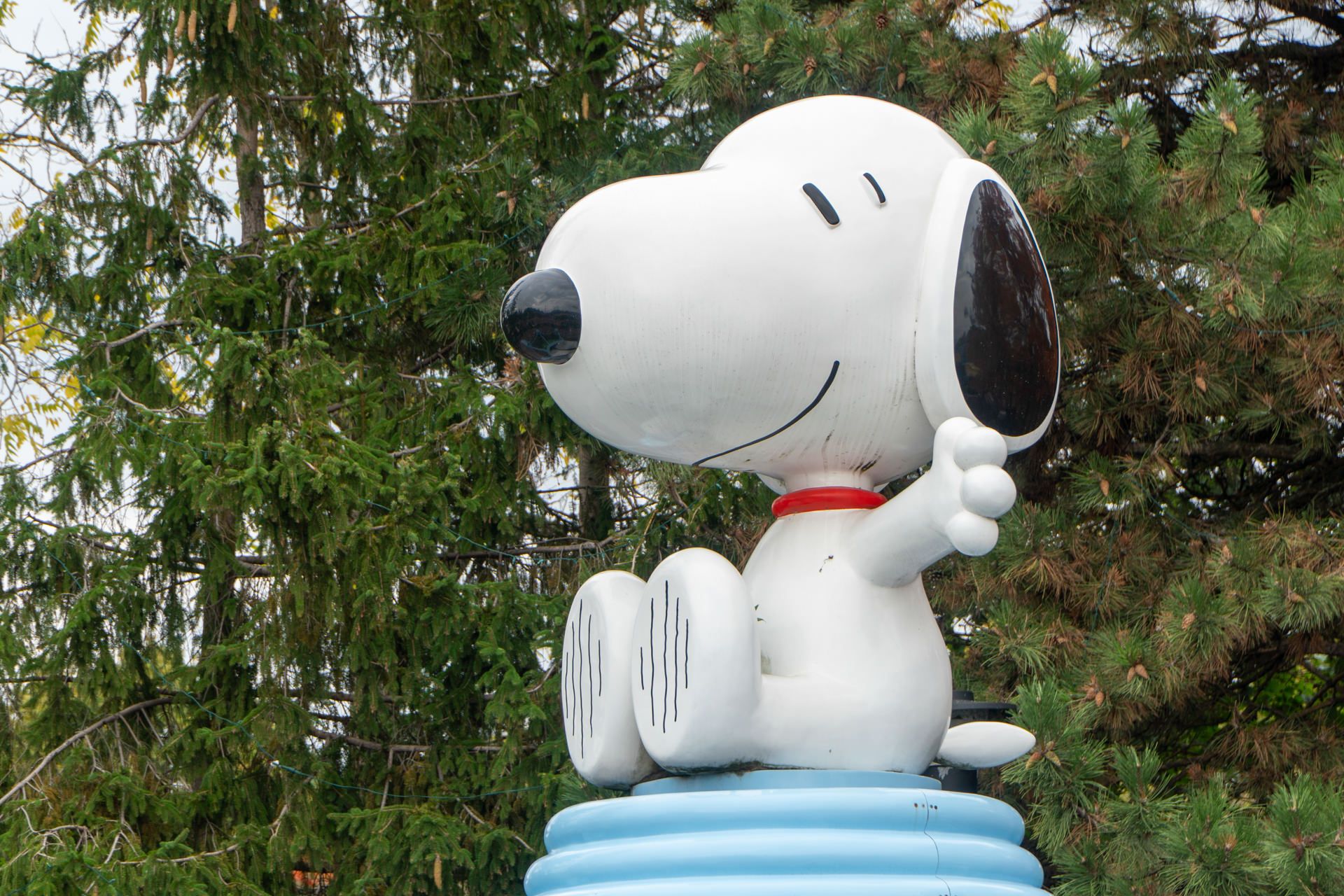
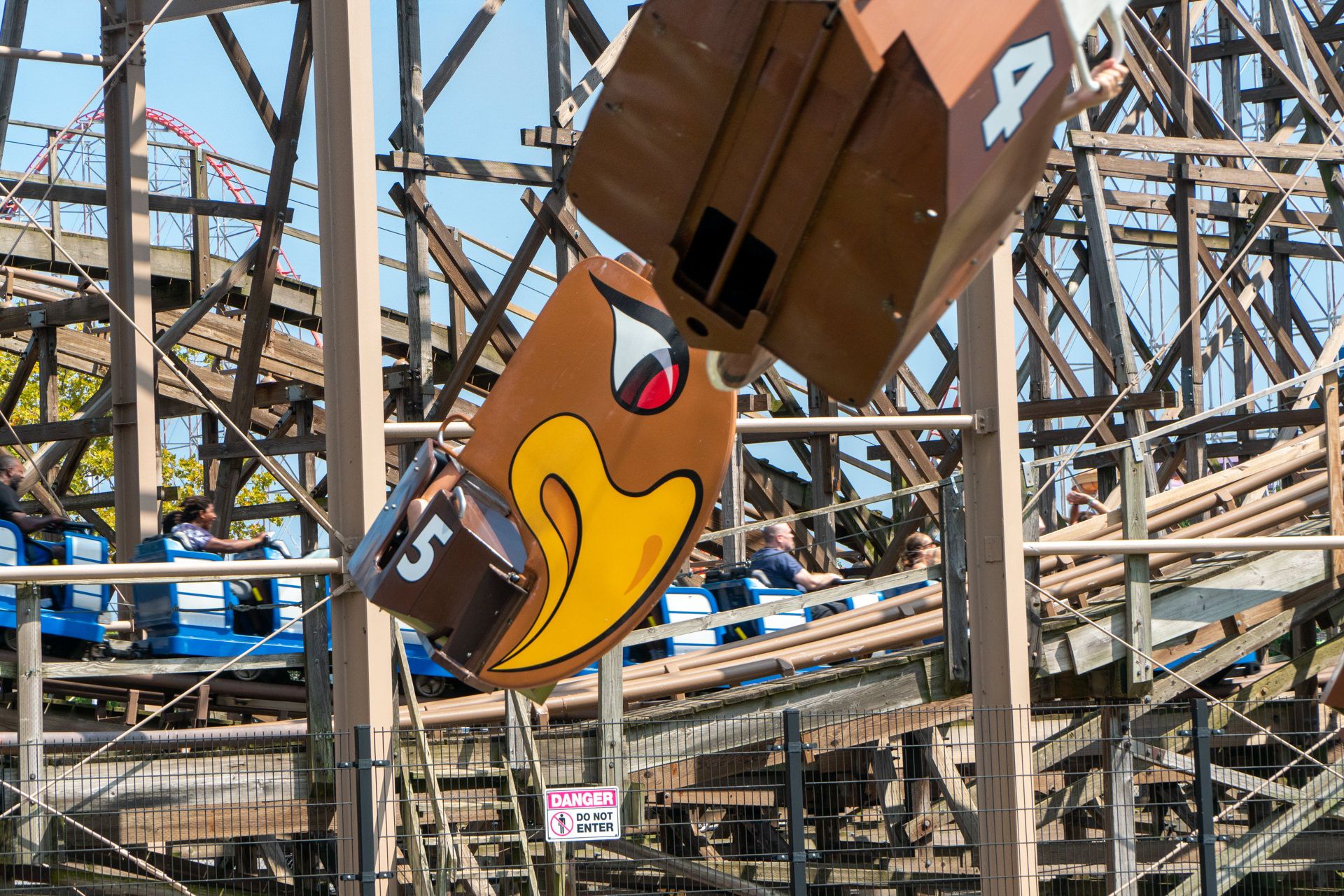
One of the entrances to Planet Snoopy sits between Shockwave and The Bat. Canada’s Wonderland has an impressively large children’s area, with two substantial family coasters, an interactive dark ride, and plenty of smaller rides for younger guests. Everything is nicely presented, and a solid entertainment lineup rounds things out. Just like at sister park Kings Island, kids could easily spend a huge chunk of the day here.

Boo Blasters on Boo Hill

Boo Blasters on Boo Hill is the interactive dark ride inside the children’s area. The attraction originally opened in 2000 as Scooby-Doo’s Haunted Mansion before the familiar characters disappeared several years later.

Today, we shoot our way through a wonderfully cheesy haunted house filled with skeletons, ghosts, and all sorts of other creatures while trying to hit as many targets as possible and rack up points. There is plenty to look at along the way, and even after all these years the ride is still a lot of fun.

Snoopy’s Racing Railway

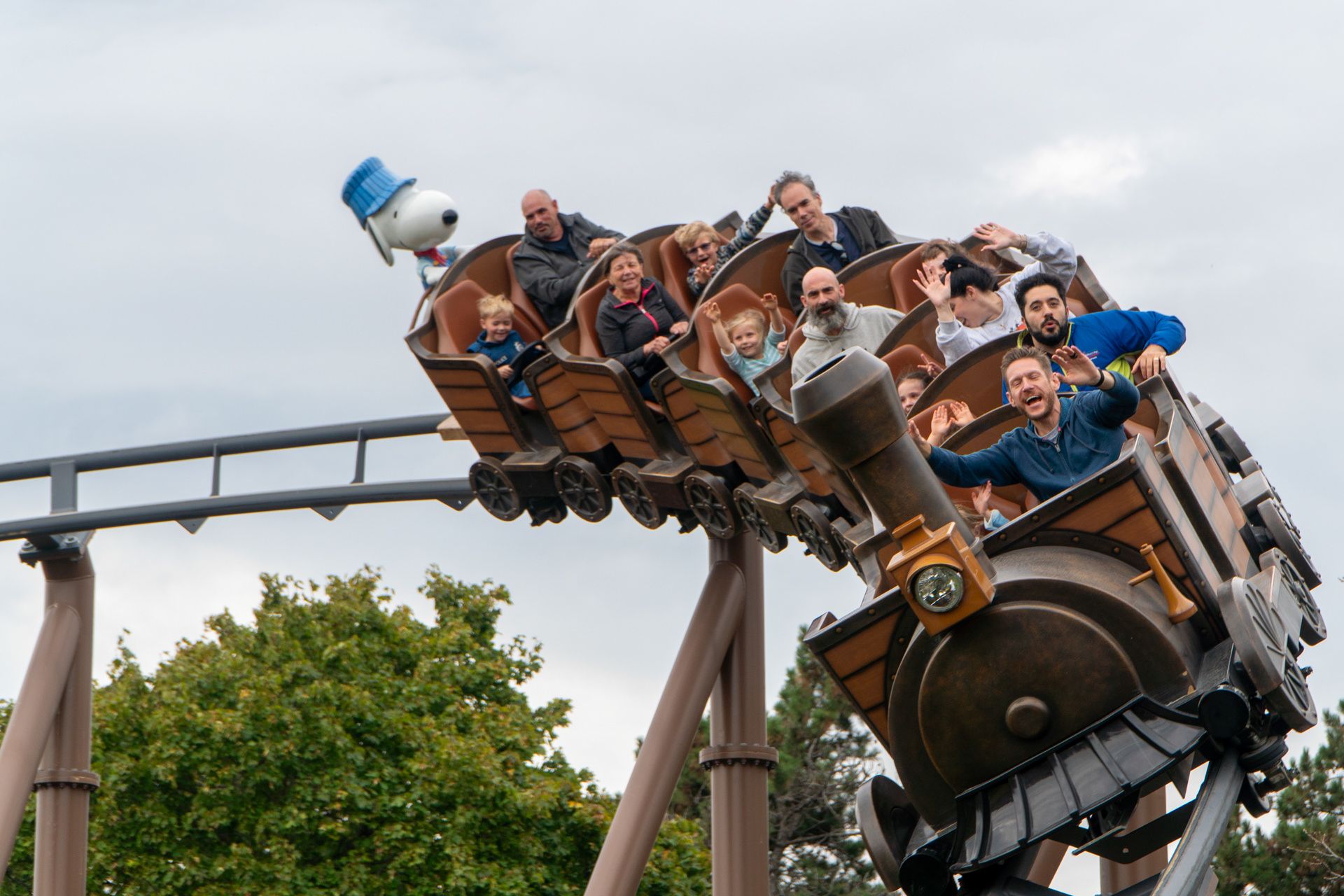
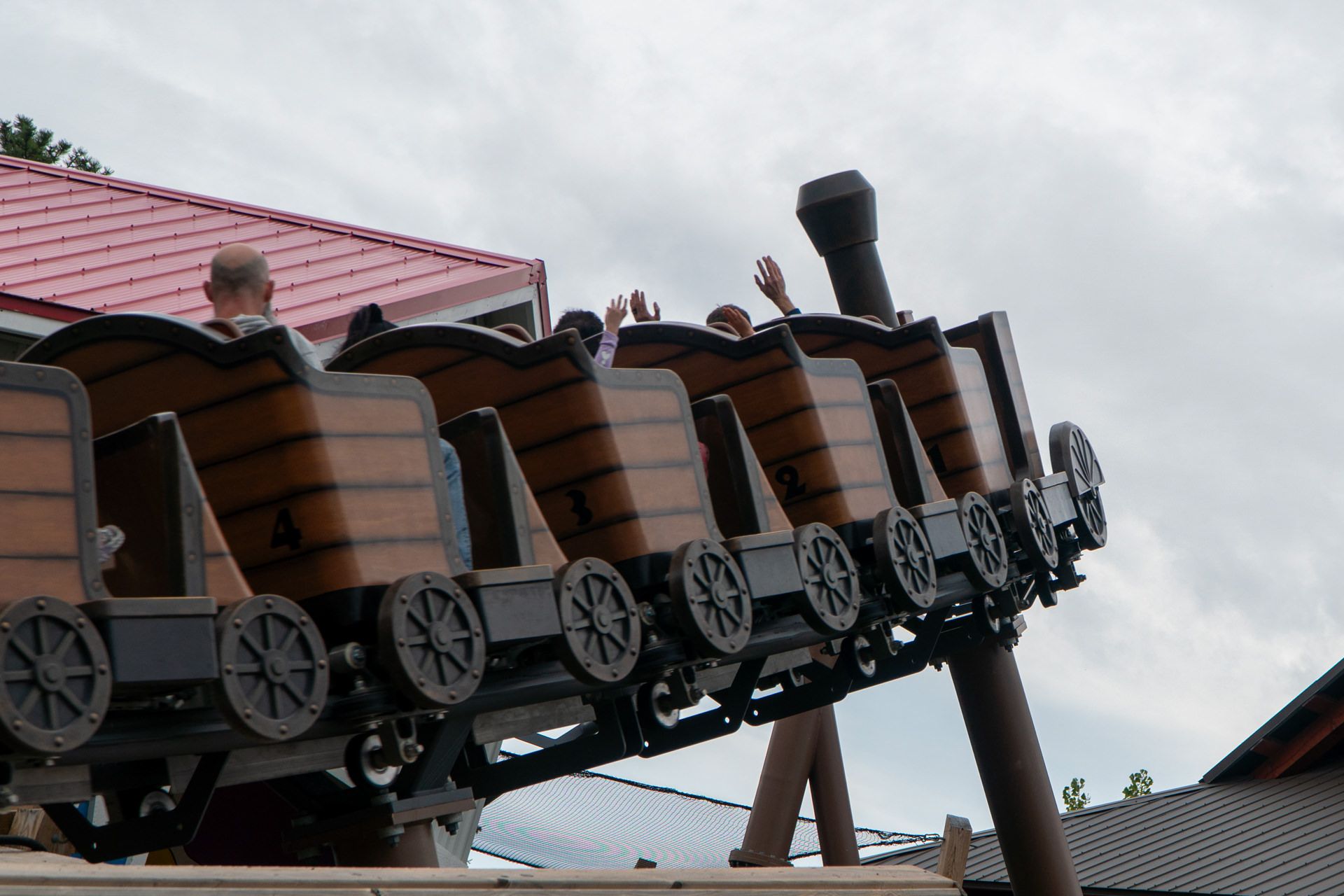
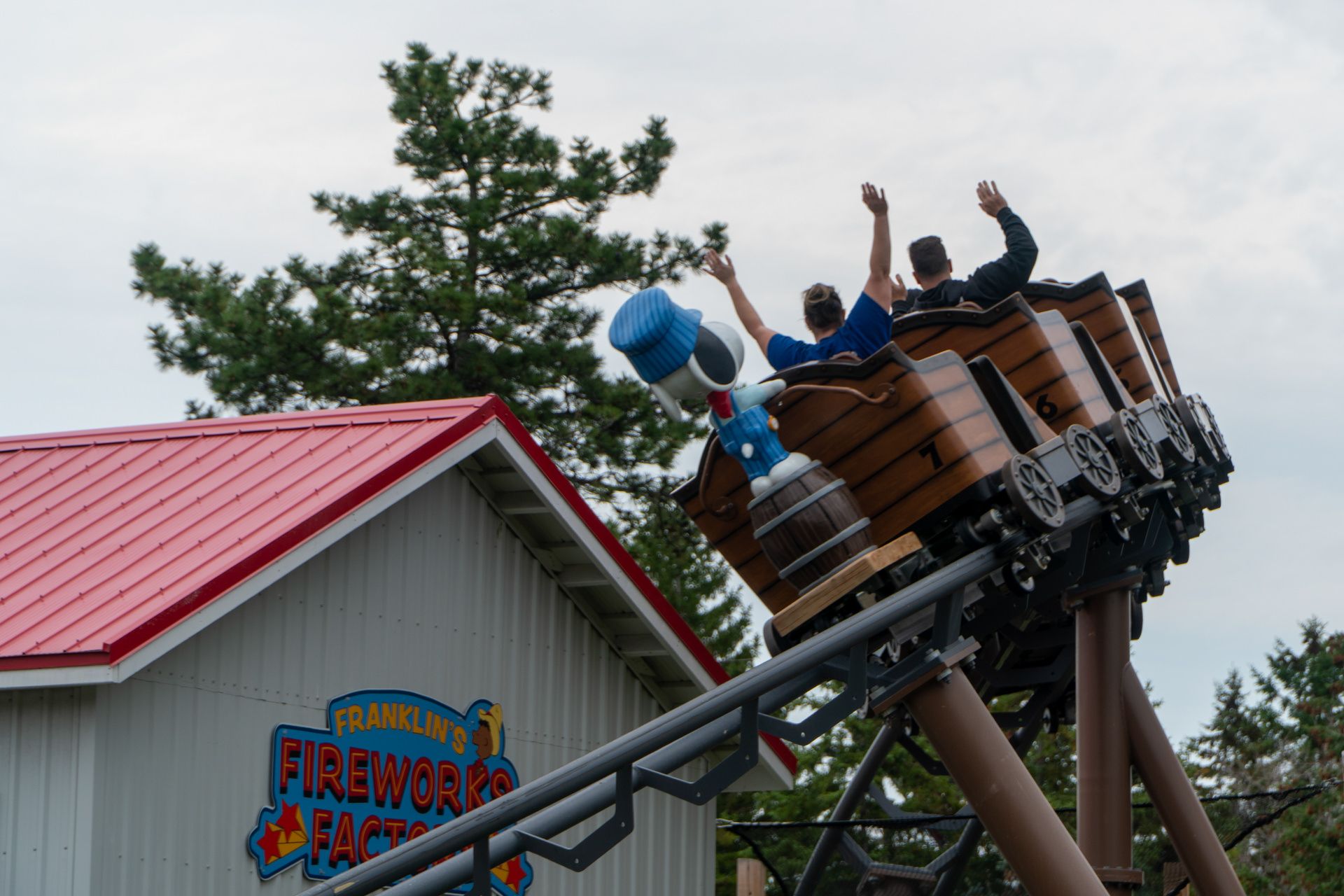
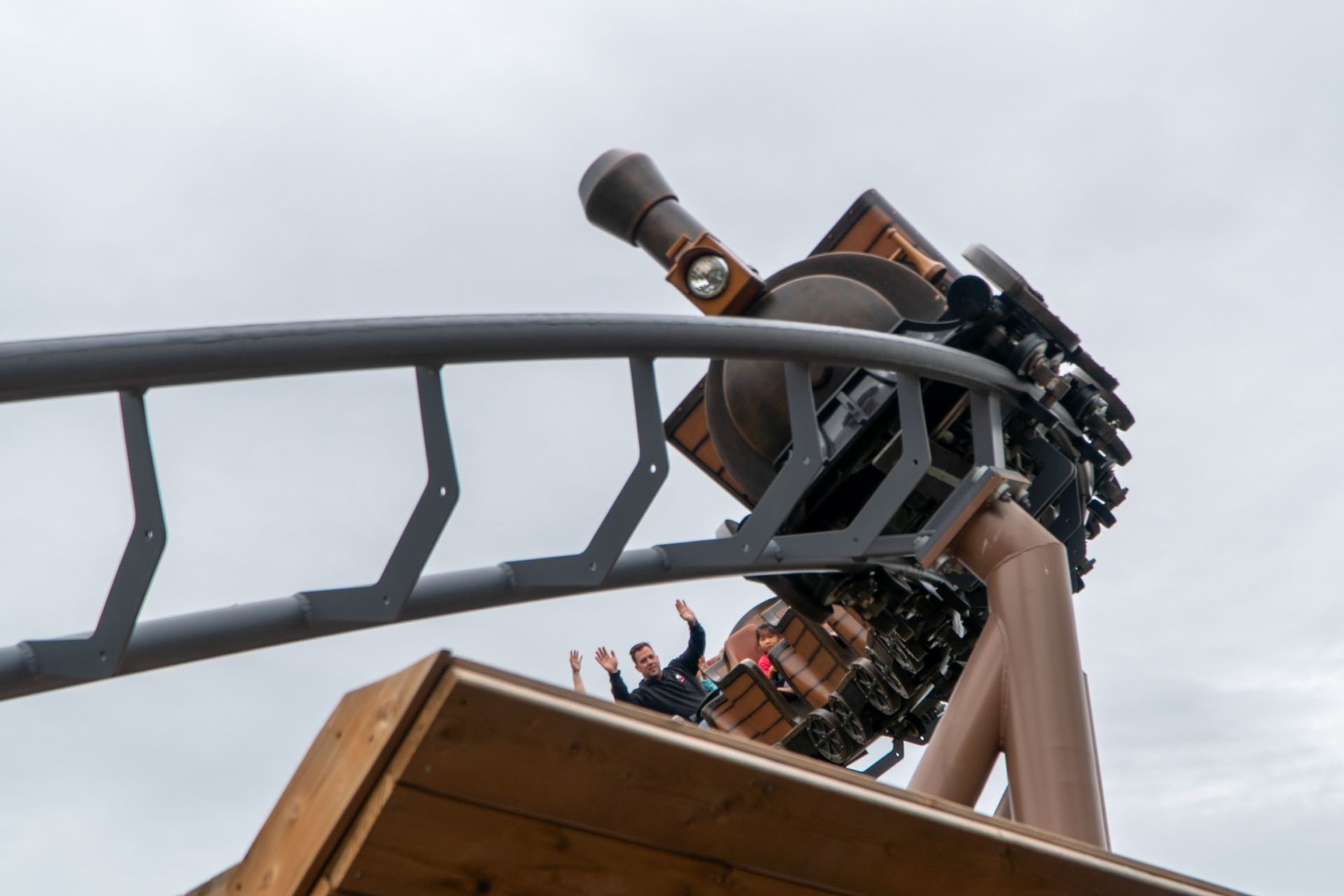
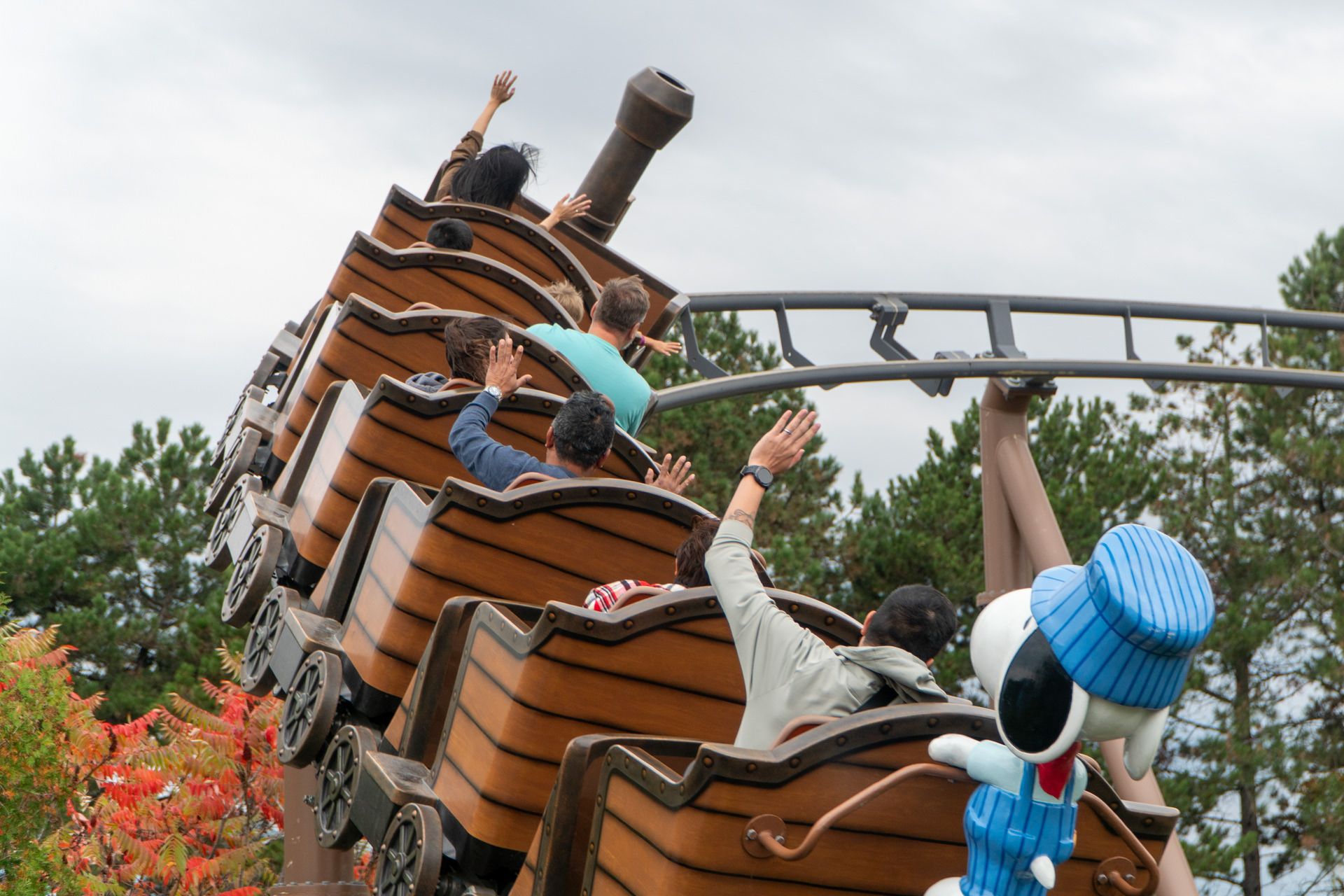
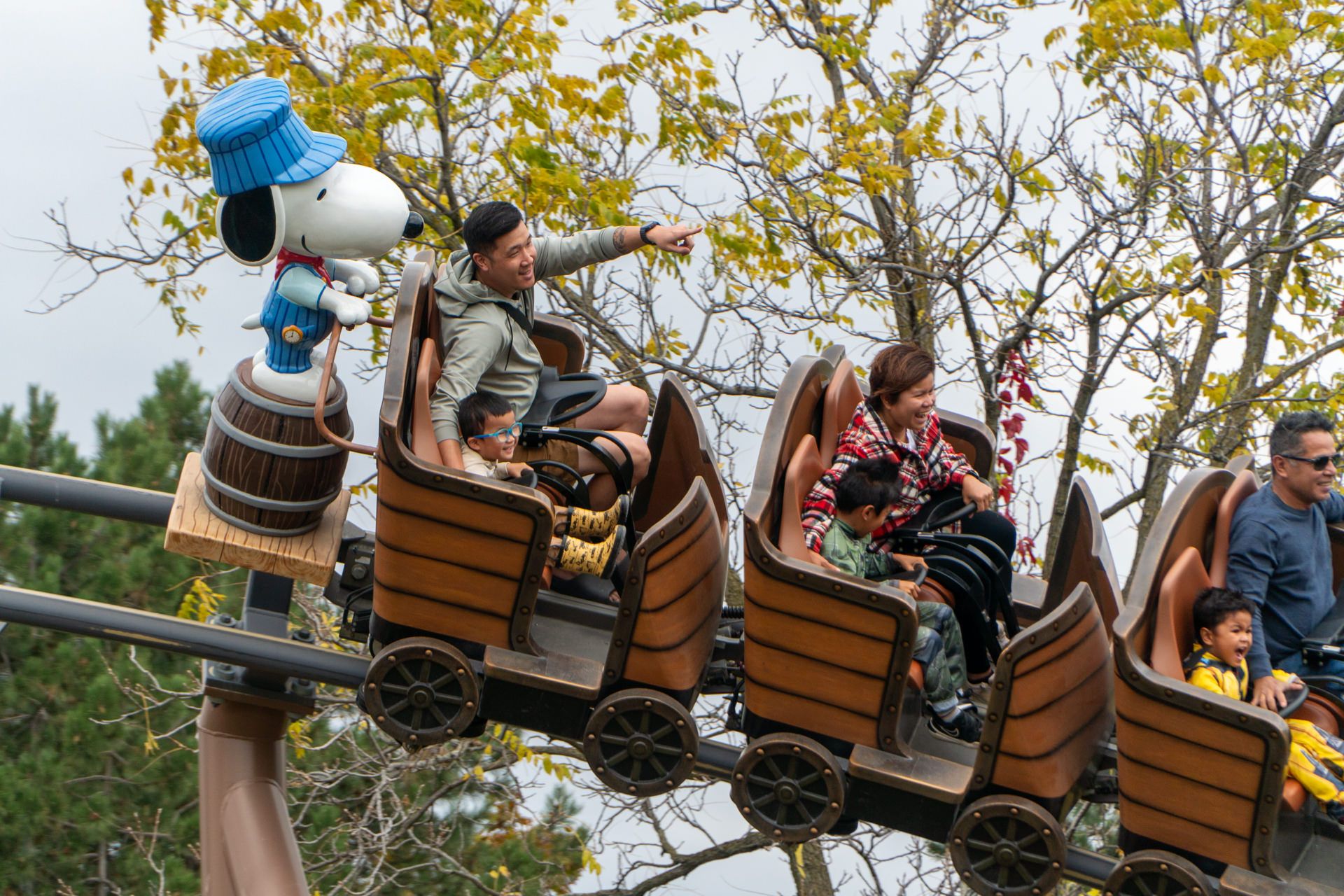
Snoopy’s Racing Railway is the newest coaster at Canada’s Wonderland and one of the most popular family attractions in the park. A friction-wheel launch gets the train moving right away before an elevated right-hand turn leads into a small drop and a quick hop. From there, we head through the Fireworks Factory in a left-hand turn.

A few fast directional changes follow before another left turn sends us into a second building, where the second launch is waiting. With plenty of speed, we climb another hill, transition through a sweeping change of direction, then dive into a valley and enter a helix. From there, we return to the station — only to head straight out for a second lap. Great fun for the whole family.

Ghoster Coaster

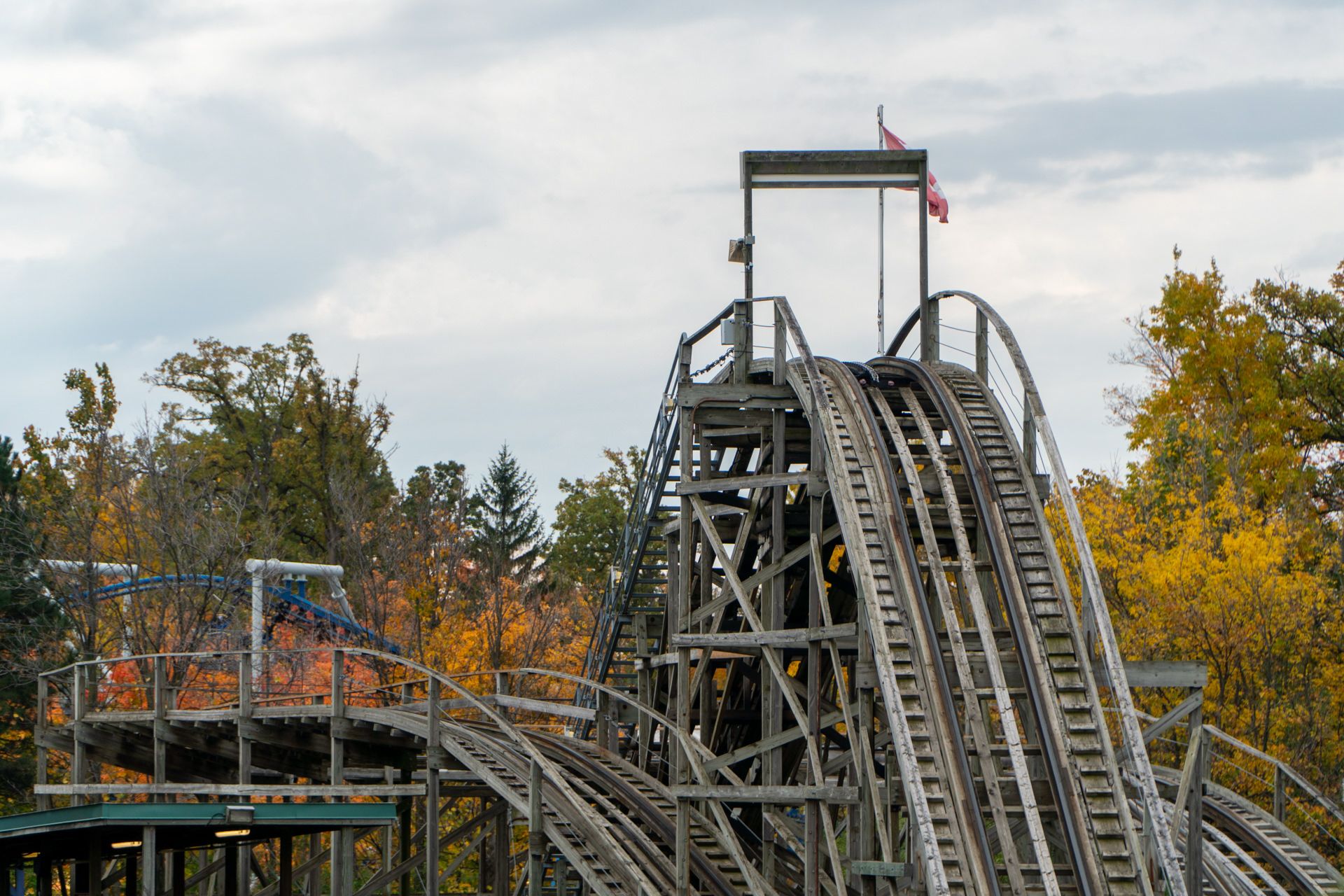
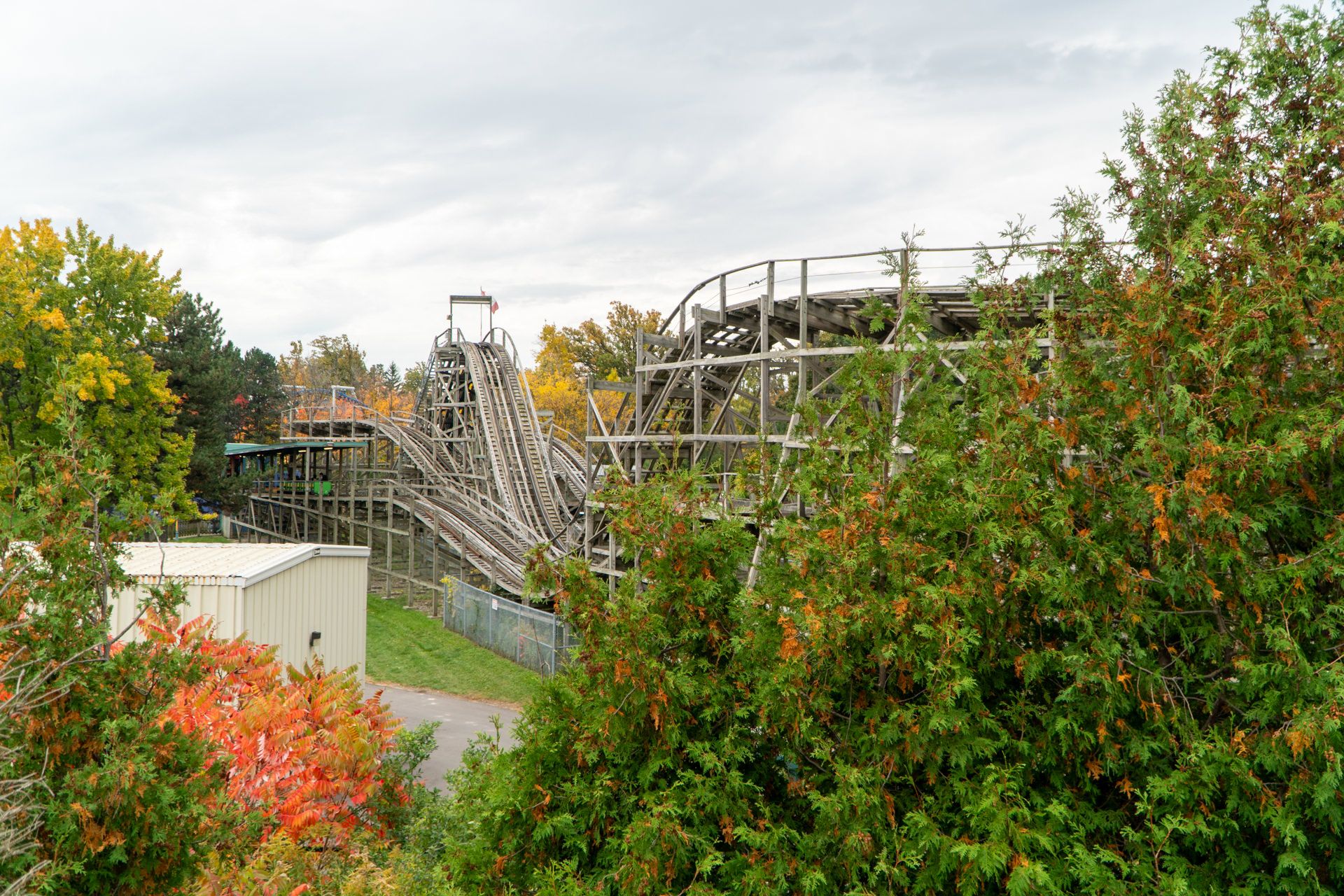
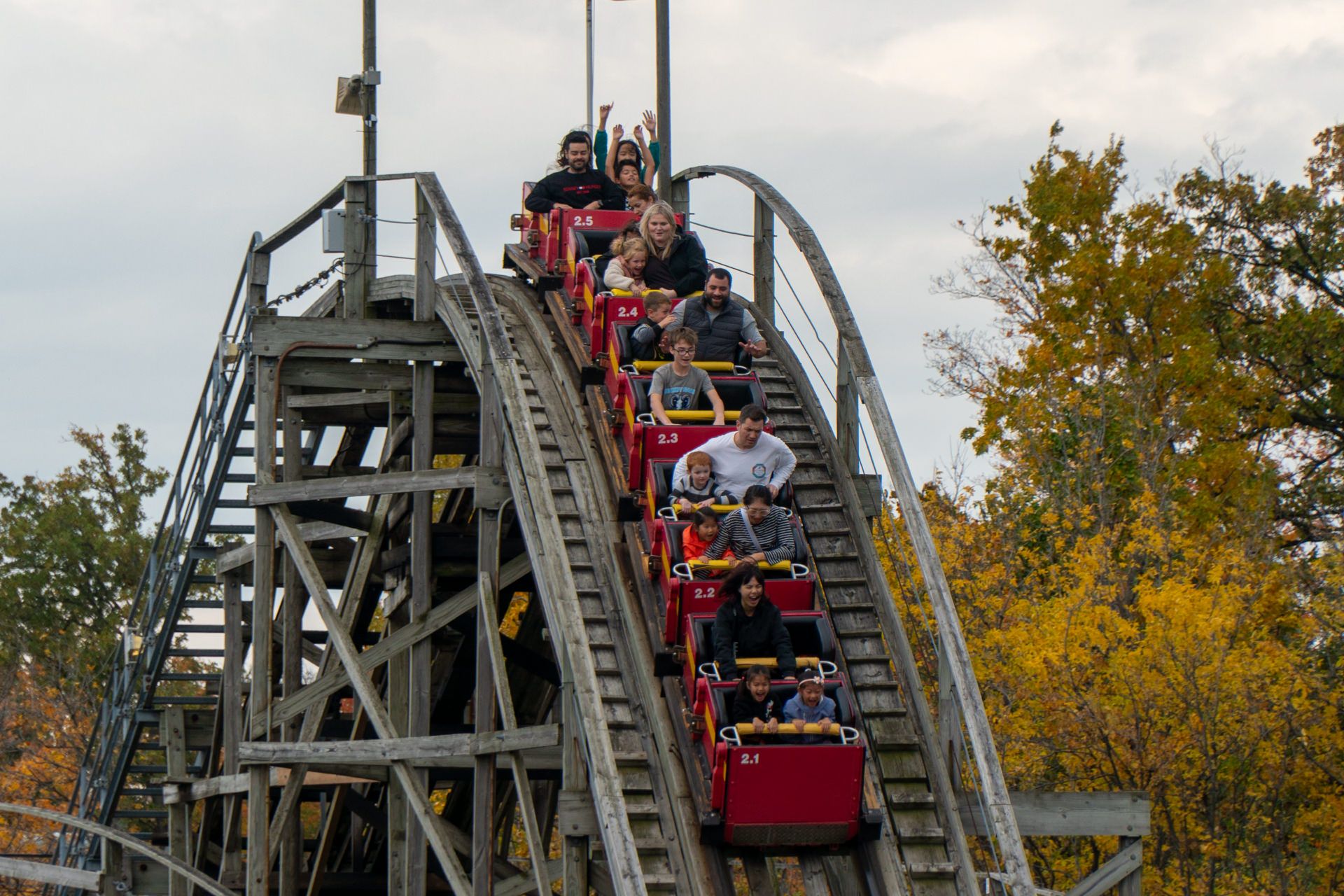
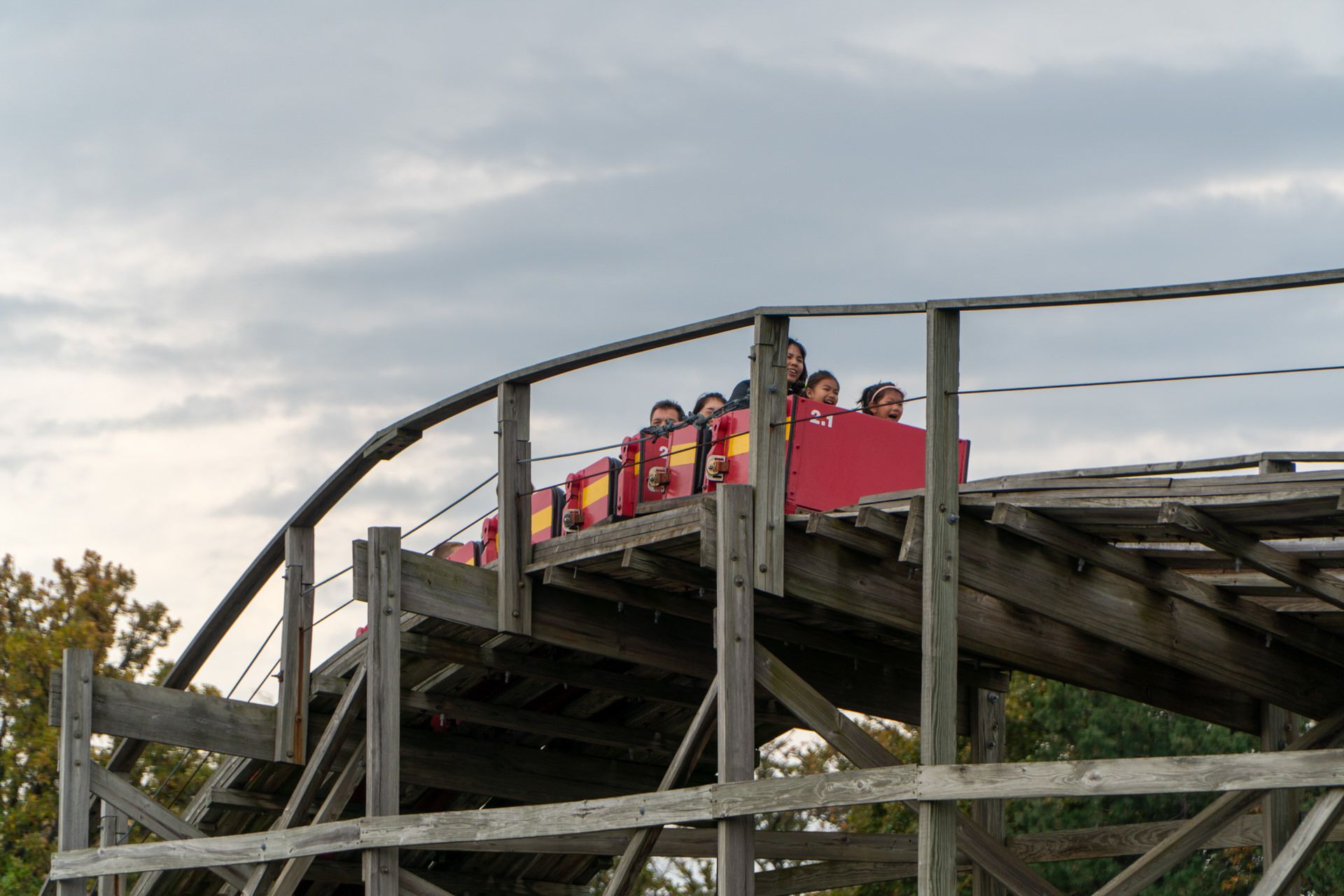
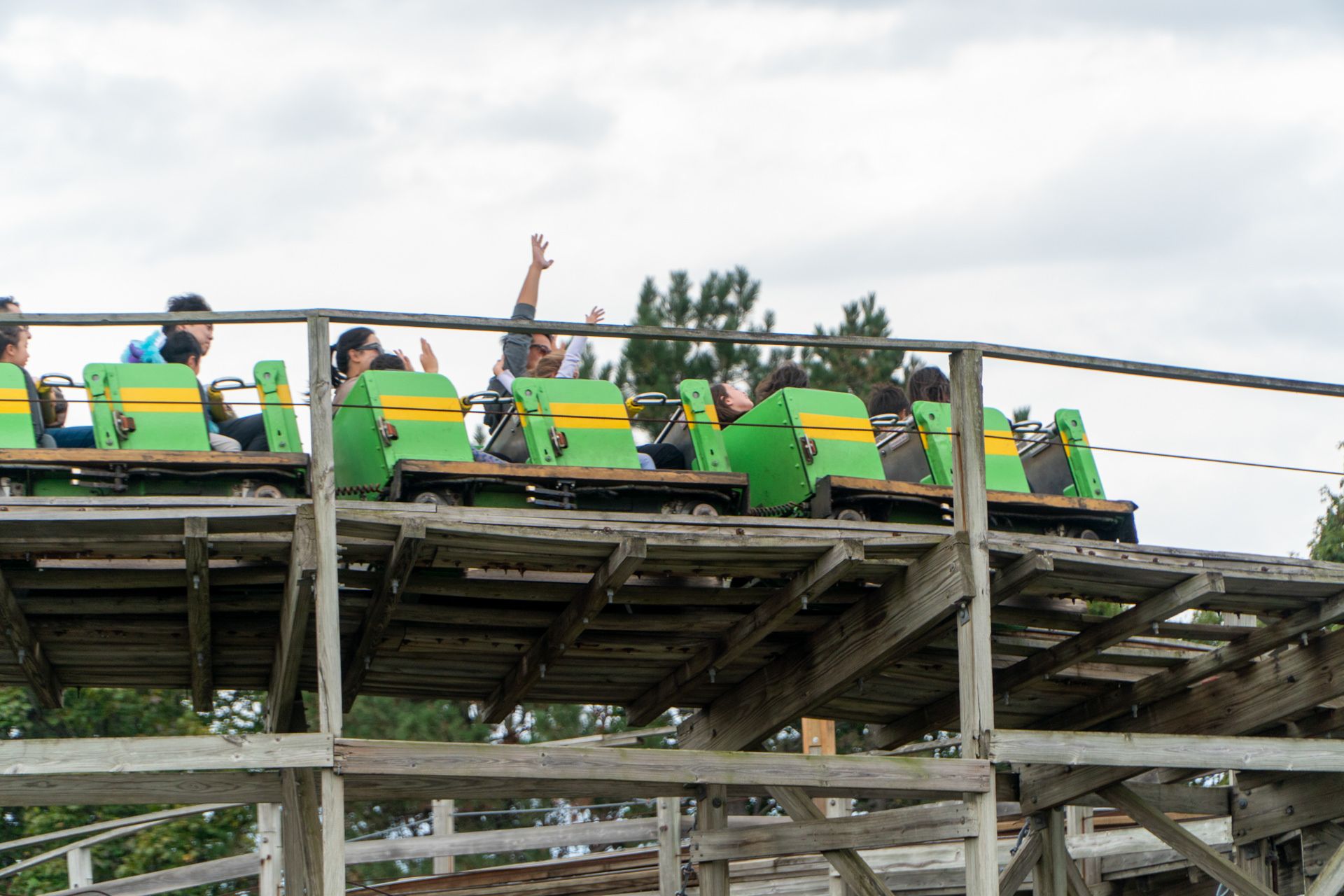
Ghoster Coaster is another classic family woodie inside Planet Snoopy. The layout is very similar to the familiar Woodstock Express design found at parks such as Kings Island, Kings Dominion, and Carowinds.

After a short right-hand turn, the train climbs the lift hill. From the top, we head straight into the first drop and climb into a large turnaround. Another drop leads into a small hill before the track dives through the wooden structure and crosses over to the other side of the ride. After another turnaround, there is a little more up-and-down action before we dive back into the structure and reach the brakes shortly afterward.

Ghoster Coaster is a wonderful little wooden coaster and a perfect introduction to woodies for younger riders.

KidZville

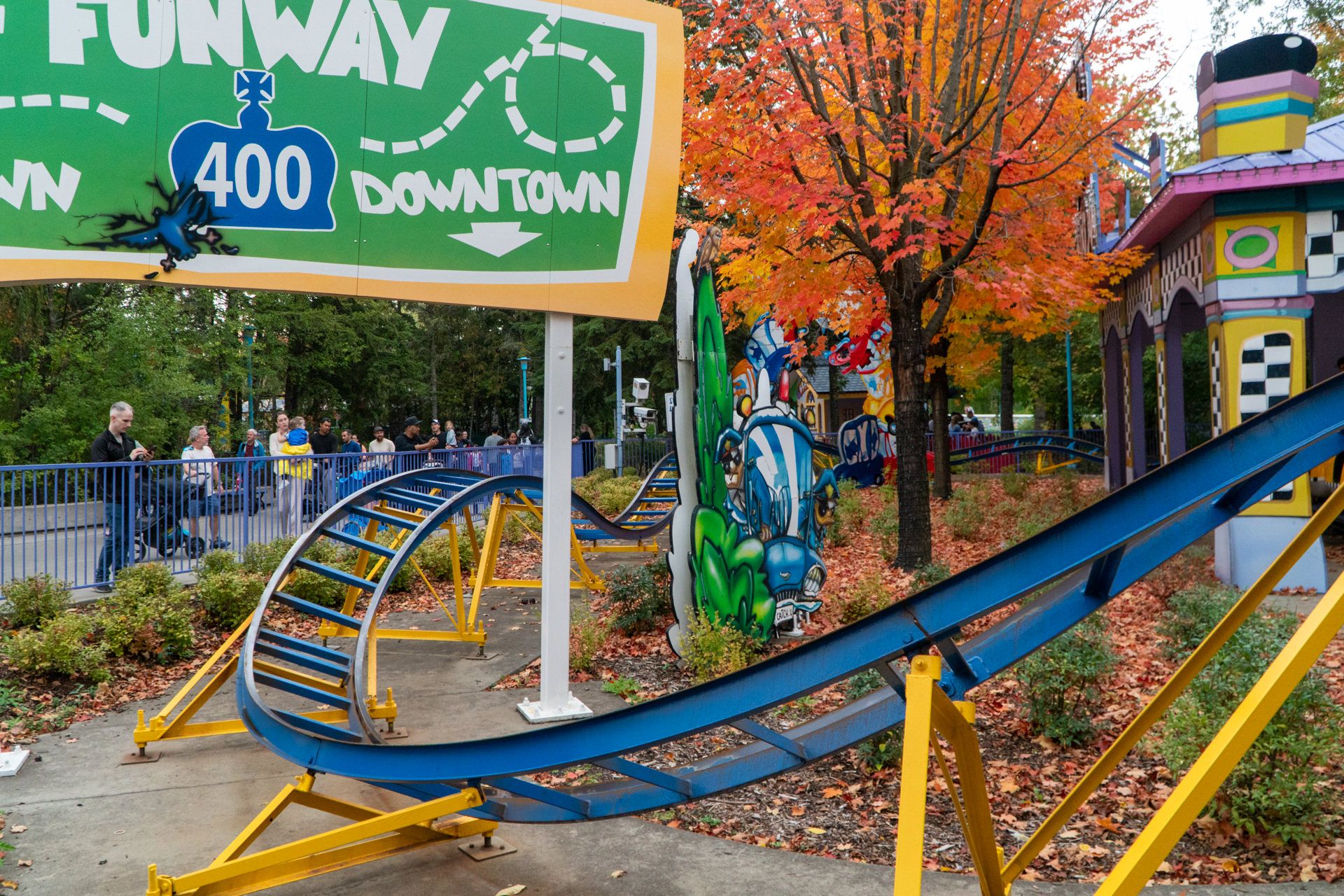
KidZville sits right next to Planet Snoopy and adds another large area aimed at younger guests. Plenty of smaller rides are spread throughout the area, including Flying Eagles, Treetop Adventure, and Frequent Flyers. More importantly, it is also home to two more family coasters: Taxi Jam and Silver Streak.

Taxi Jam

Taxi Jam is a small family coaster from E&F Miler Industries. The layout is basically an oval broken up by a series of small hills, but those hills deliver the kind of surprisingly strong airtime E&F Miler coasters are known for. You really shouldn’t underestimate how much punch such a small coaster can have. Taxi Jam is far more fun than it looks.

Silver Streak

Silver Streak is a Vekoma Suspended Family Coaster, with riders’ legs hanging freely beneath the seats. After a short turn out of the station, the train climbs the lift hill. At the top, a twisting descent leads directly into an upward helix. The main drop follows, sending us into a wide right-hand turn and then into a descending helix. One final left turn leads into the brakes.

It’s a smooth and enjoyable ride, and especially for younger riders Silver Streak is a very nice coaster.

The Bat

Now let’s return to The Bat, which I already mentioned near the entrance to Planet Snoopy. This is a classic Vekoma Boomerang. The train first runs through the cobra roll and loop before climbing the second spike and completing the entire course again in reverse. By the time we’re done, that adds up to six inversions.

I’ve always enjoyed Boomerangs, and The Bat is another good reminder of why. It rides very well, avoids any major hits, and is simply a whole lot of fun.

Wilde Beast

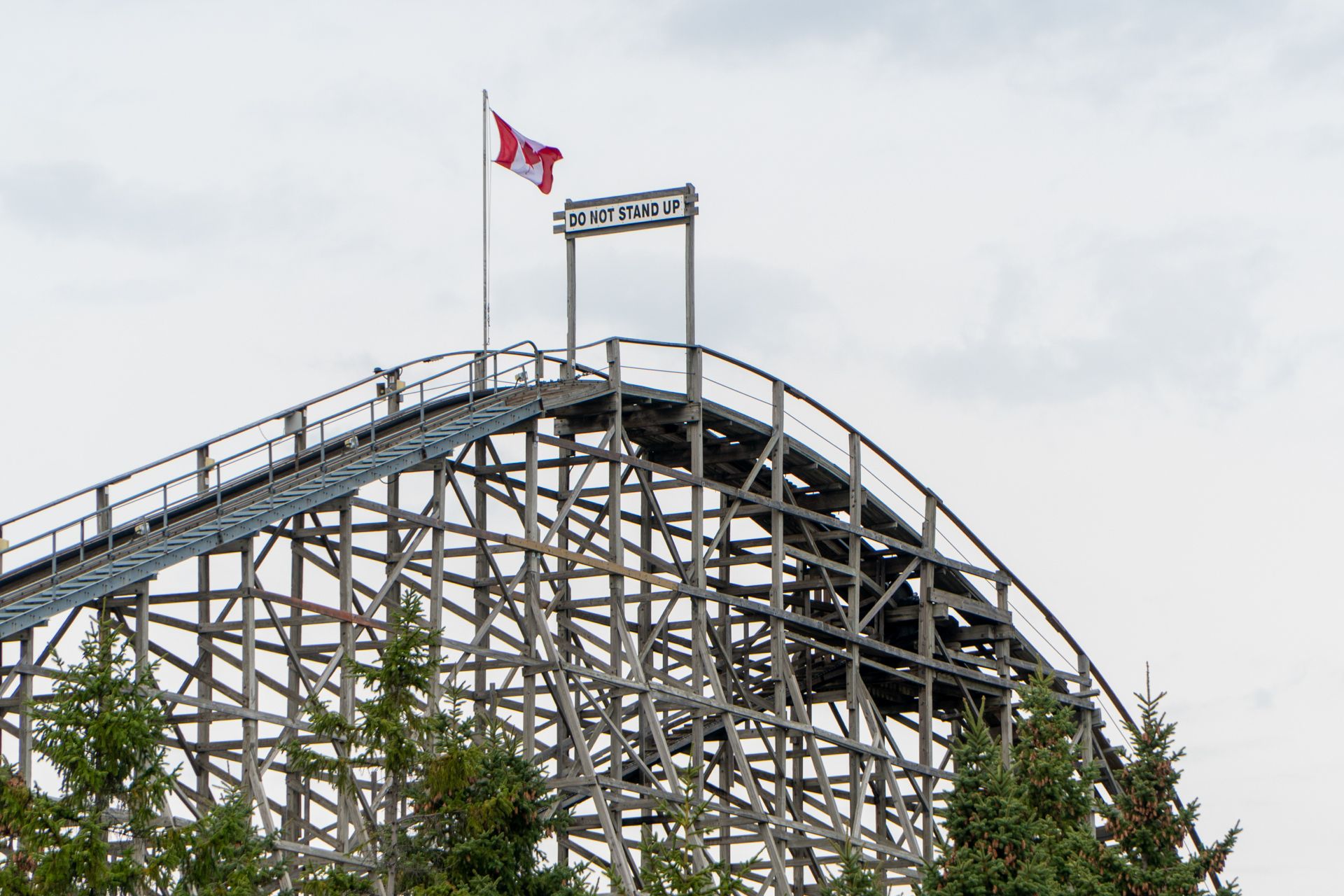
Wilde Beast is the sister coaster to Grizzly at Kings Dominion, and just like that ride, it is a wonderfully wild woodie. It may not have quite the same amount of forest to race through, but the coaster is still surprisingly well hidden within the park.

After a long left-hand turn, we reach the lift hill. The first drop leads directly into a large left-hand turnaround. The second drop sends us toward an airtime hill, followed shortly afterward by another smaller hill. A large turnaround then sends the train back alongside the first half of the ride, with more airtime along the way. Another turn and a series of smaller hills eventually bring us back toward the brakes.

Wilde Beast really does live up to its name. It feels wonderfully wild, slightly out of control, and is an absolute blast to ride.

Wilde Knightmares

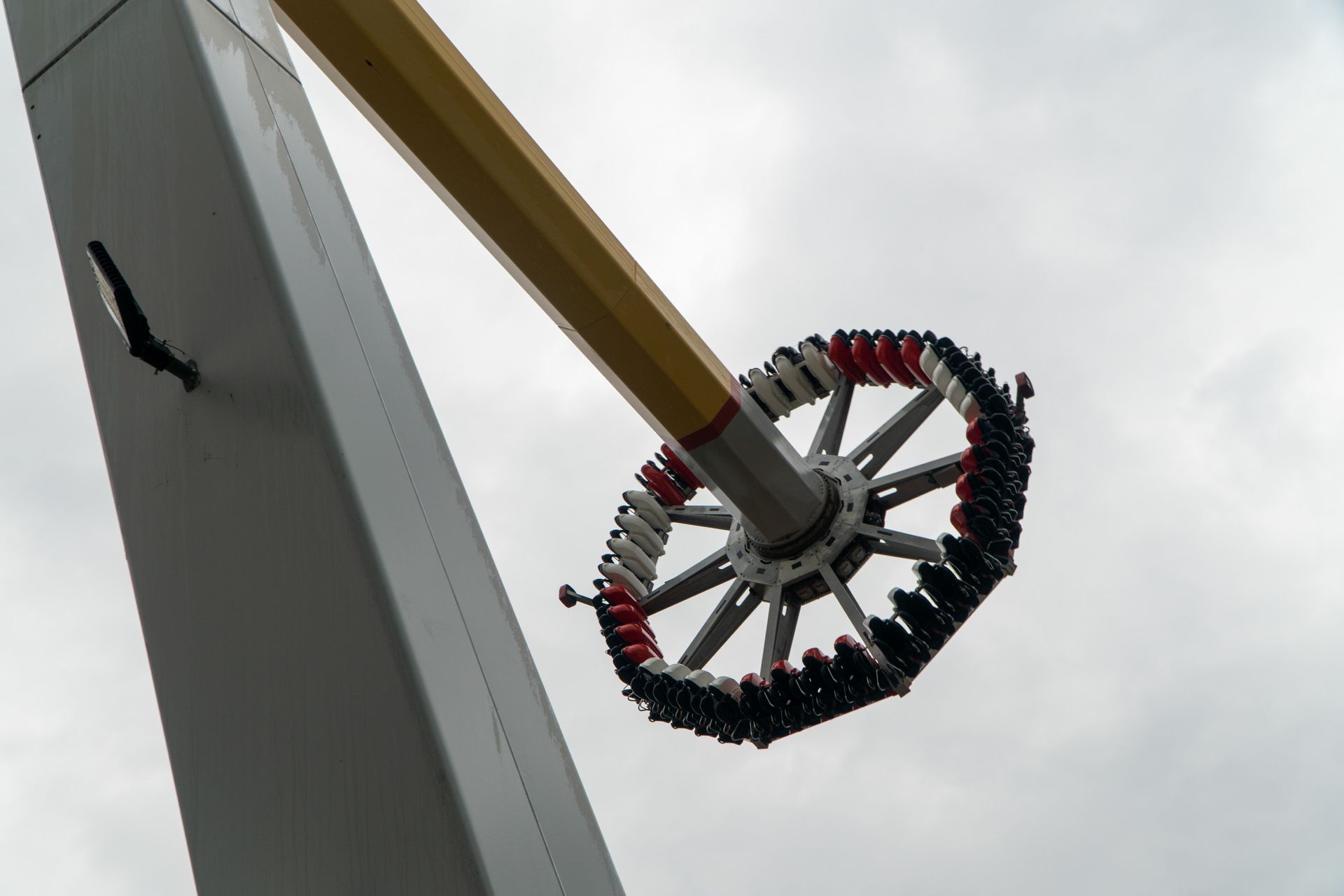
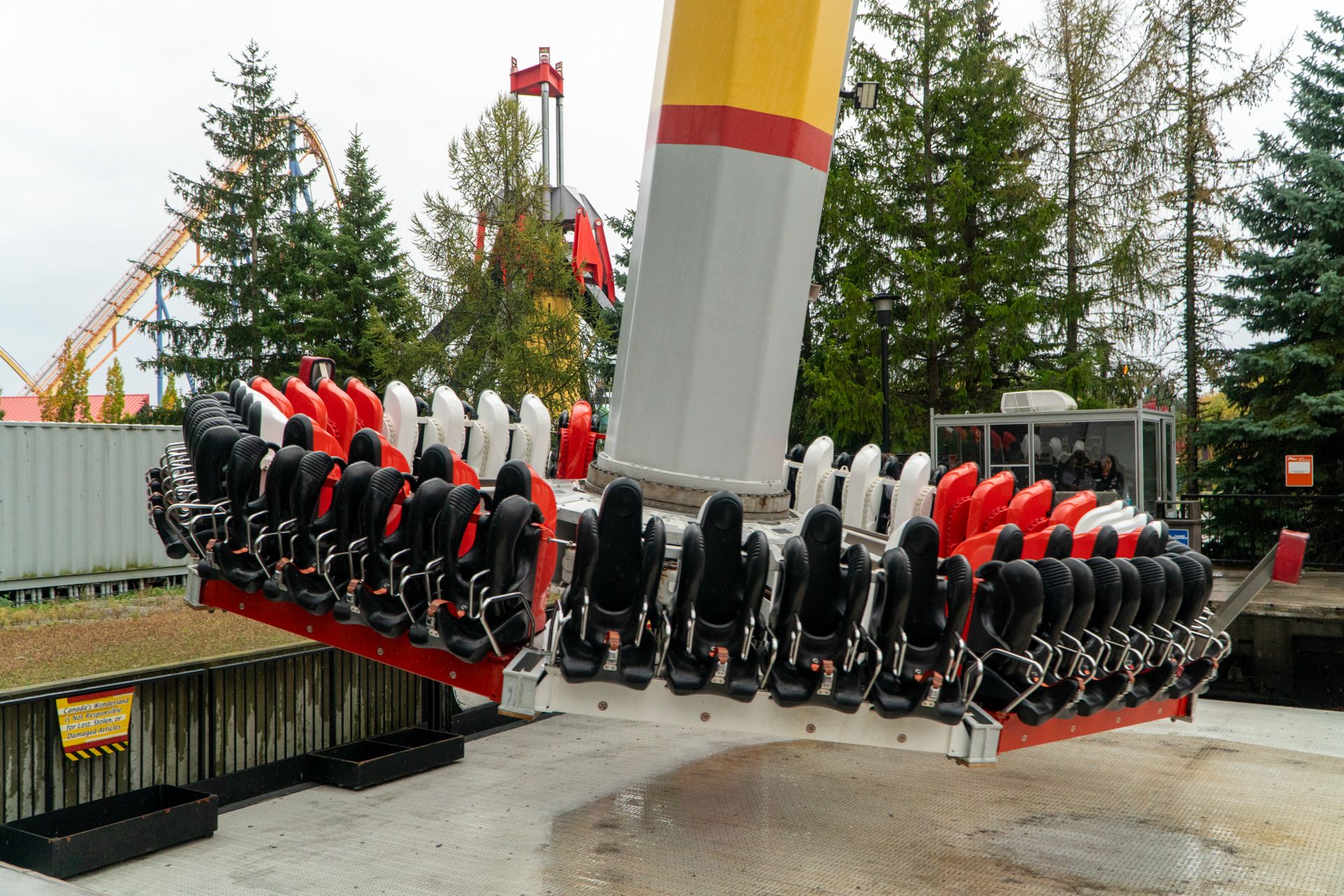
Right next to Wilde Beast is Wilde Knightmares, a HUSS UFO. Centrifugal force first pins riders against the back wall of the cage before the entire wheel begins to rise, gradually bringing everyone closer and closer to a vertical position.

There aren’t many of these rides left, so for me this is almost mandatory whenever I come across one. The cycle may be rather short, but it is still highly entertaining.

Drop Tower

Drop Tower may not fit the surrounding theme particularly well, but this is where Canada’s Wonderland’s Intamin free-fall tower stands. The name says pretty much everything you need to know.

Unfortunately, I skipped it on my first evening in the park and couldn’t make up for it on day two because of the wind. A shame, because I really do like these towers.

Leviathan

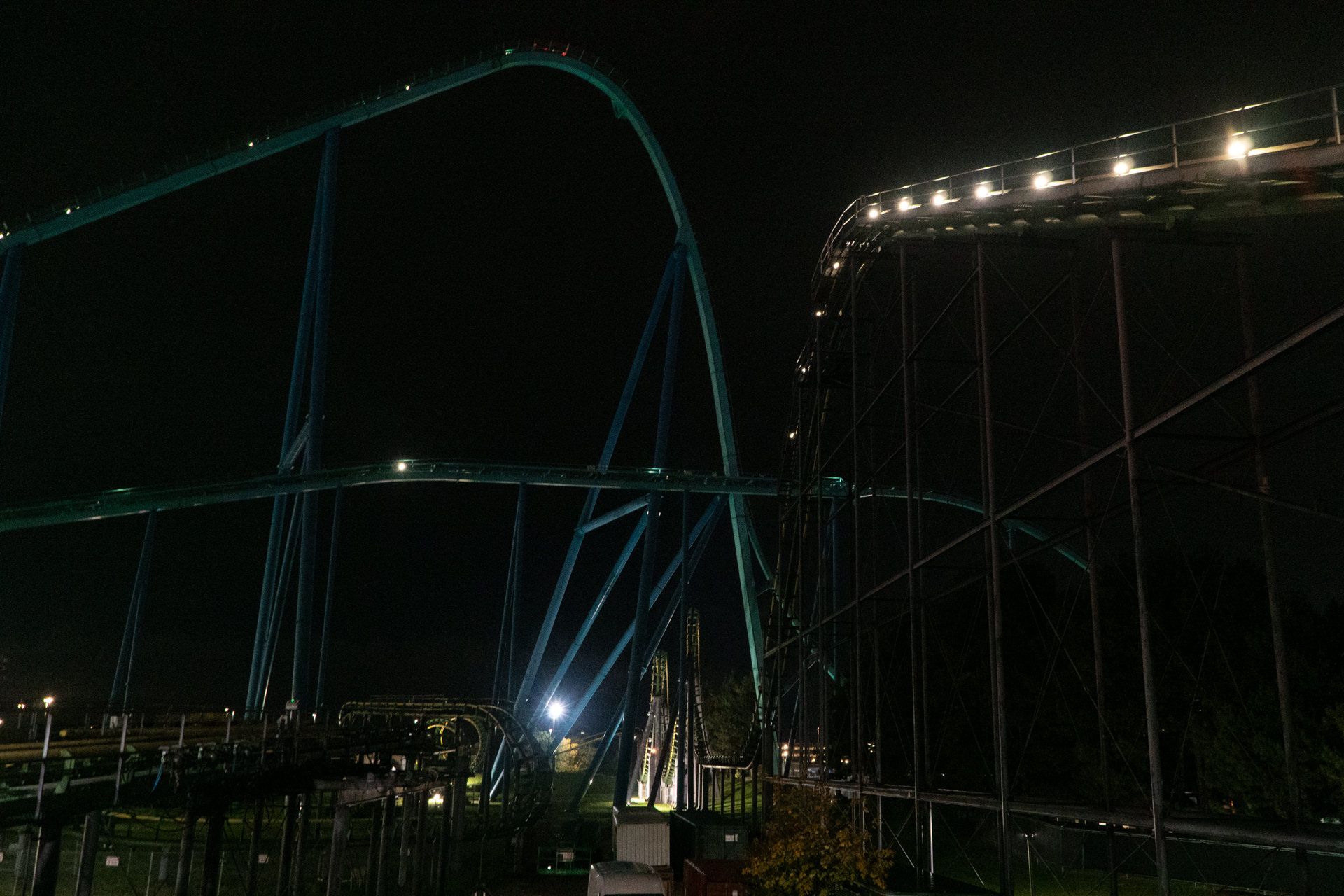
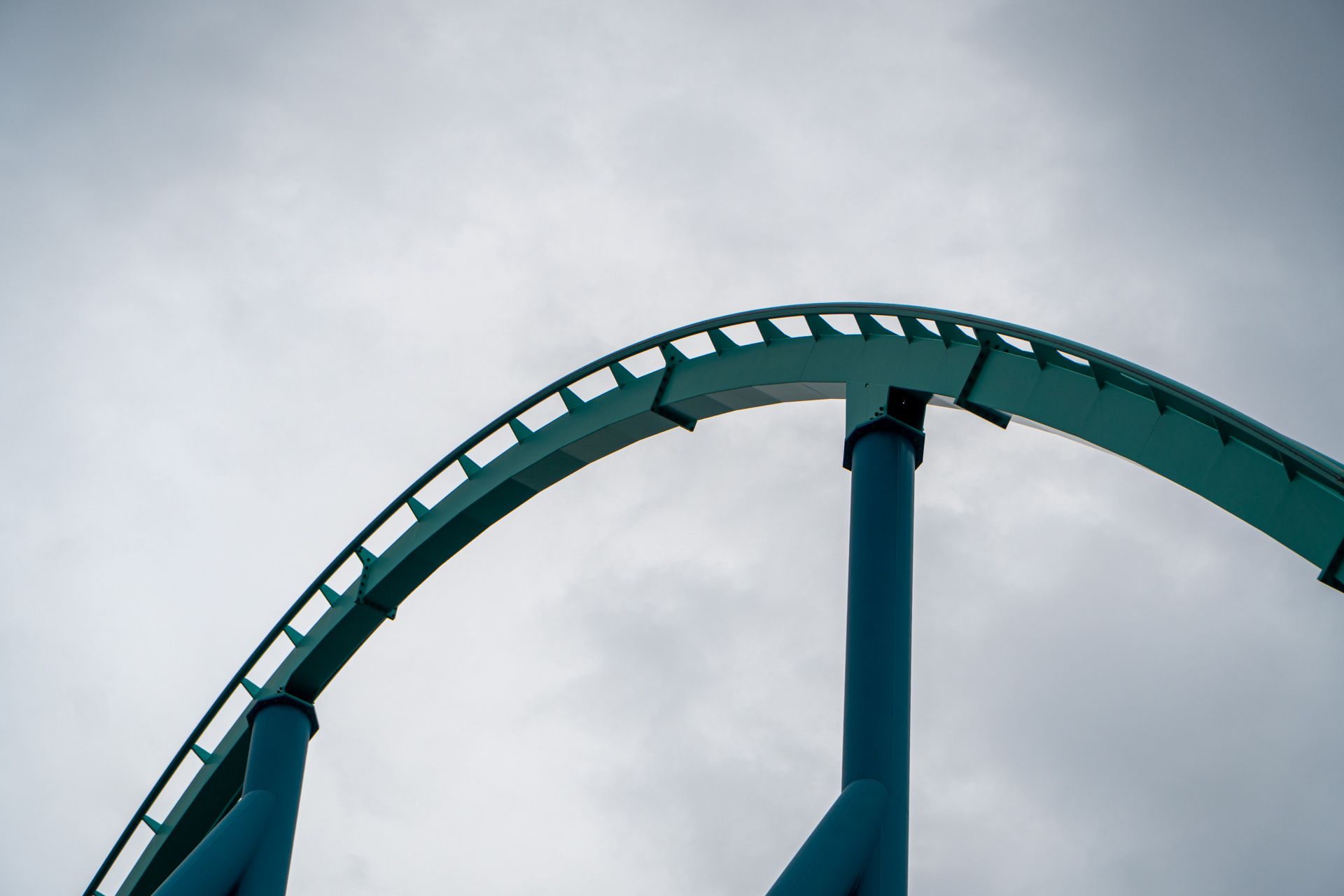
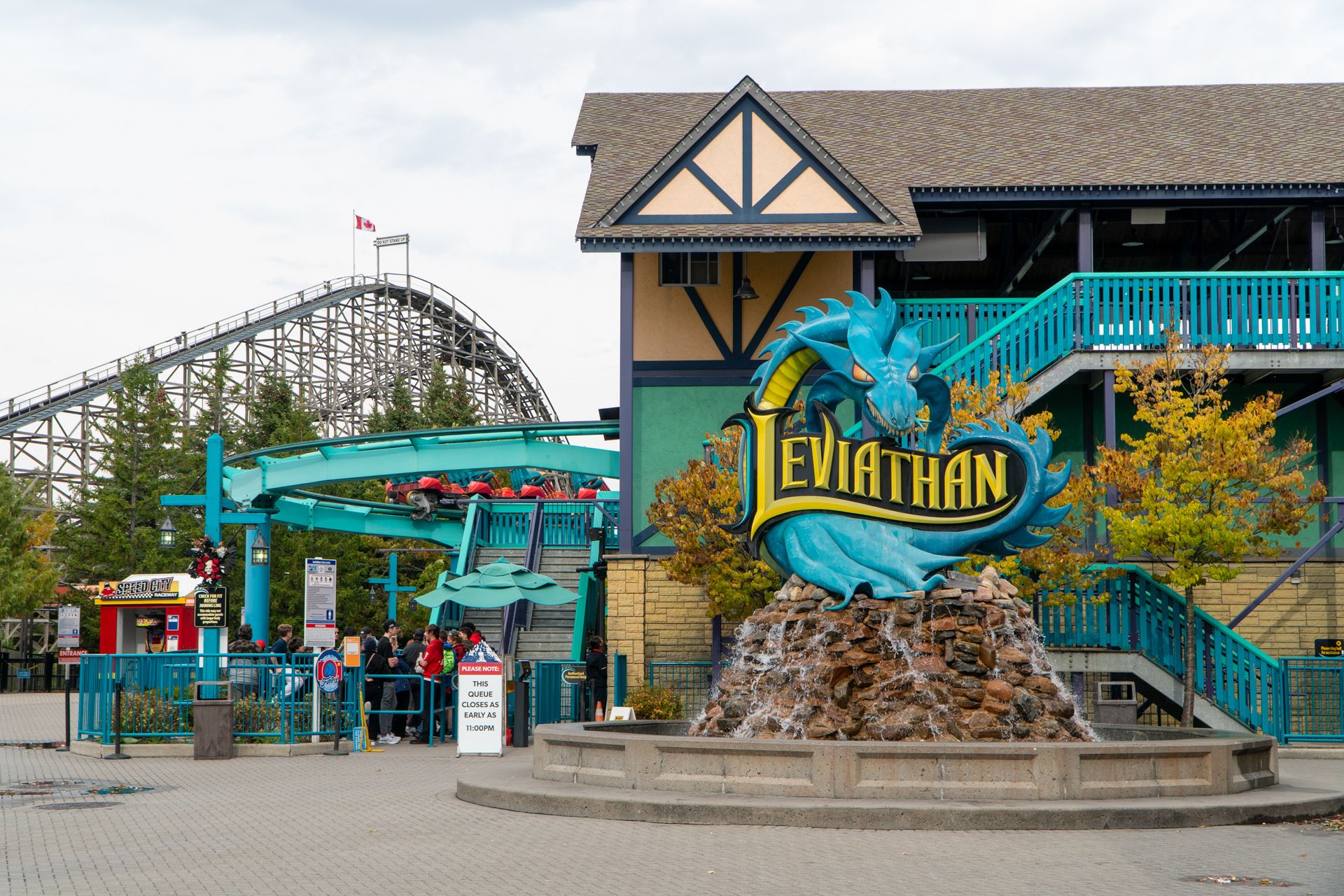
Leviathan proved to be far more tolerant of the wind. Thanks to consistent three-train operations, the B&M hyper coaster also had surprisingly short waits throughout my visit, which naturally led to quite a few rides.

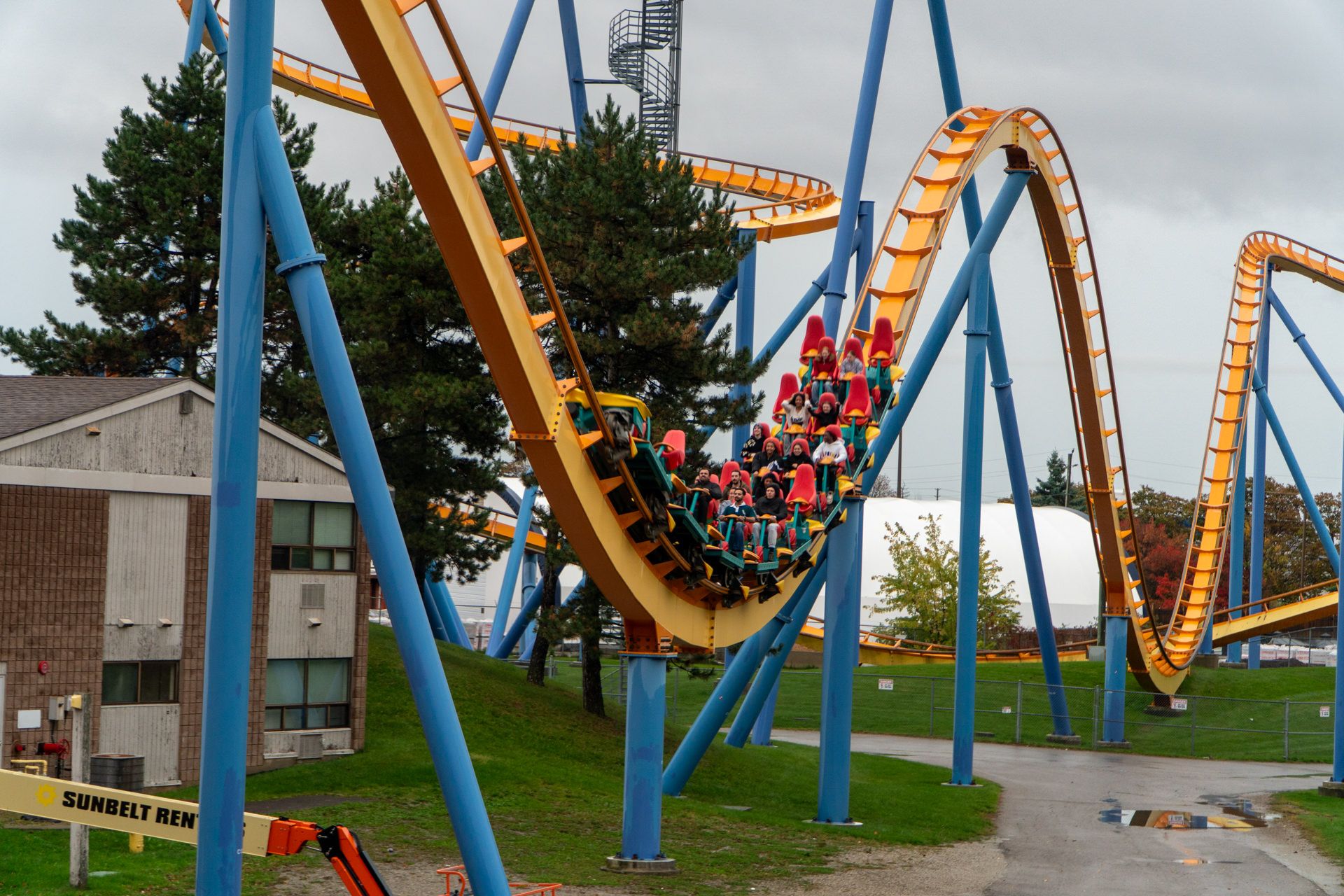
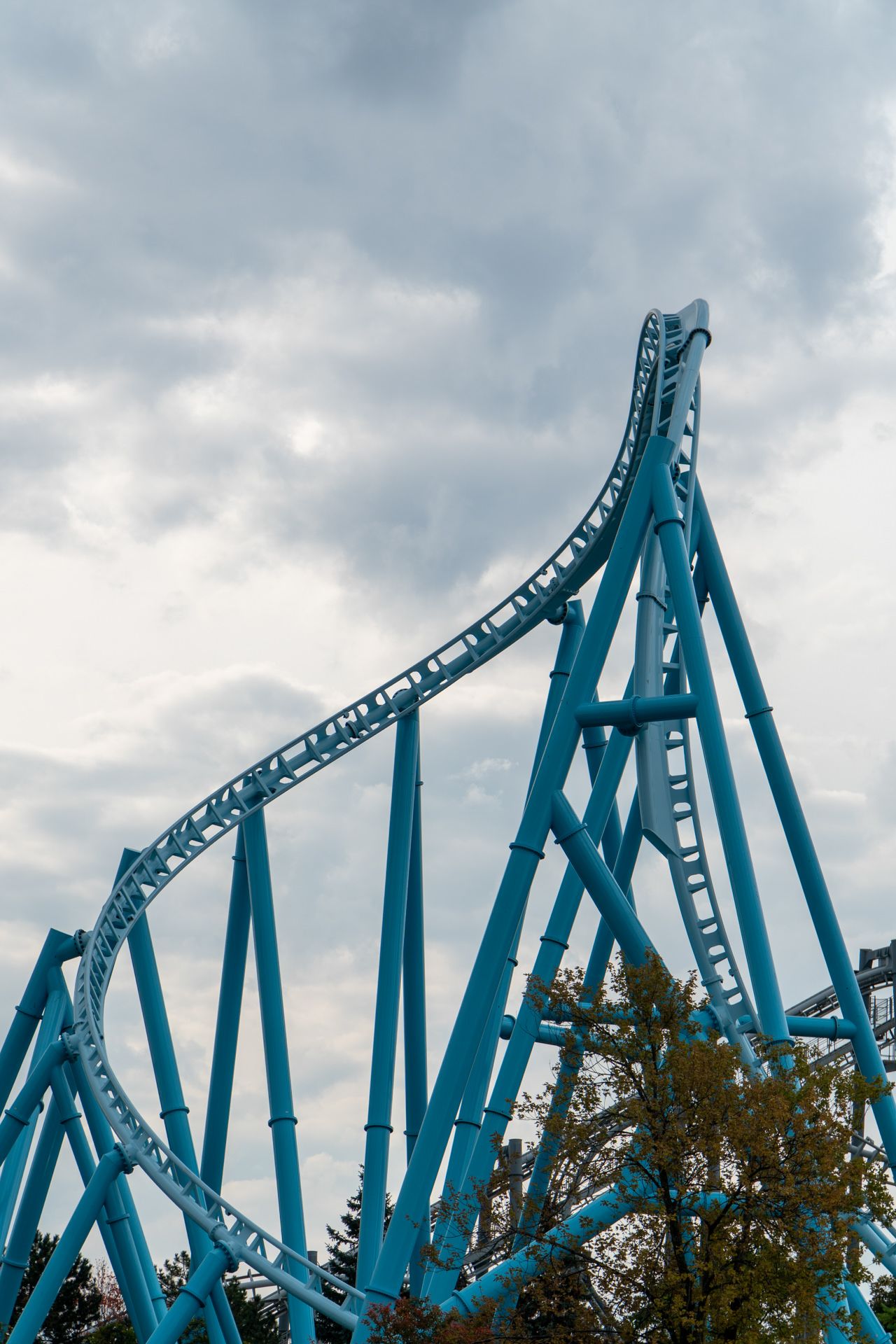
After the very tall lift hill, the train immediately plunges down the huge first drop into a low section containing a metal tunnel. A tall, heavily banked turnaround follows before a forceful valley sends us into a bunny hop that also bends to the left. Next comes a huge camelback, followed by another tall turnaround, a right-hand curve, another camelback, and a high left-hand turnaround. One final massive climb then takes us into the brakes.

For me, Leviathan is close to being the perfect hyper coaster. From the first drop all the way to the block brakes, the ride is just ridiculously fun. The highly dynamic layout, powerful airtime, and excellent ride quality all work together beautifully. There’s a reason Leviathan was easily my favorite coaster at Canada’s Wonderland.

Viking’s Rage, Spinovator and Riptide

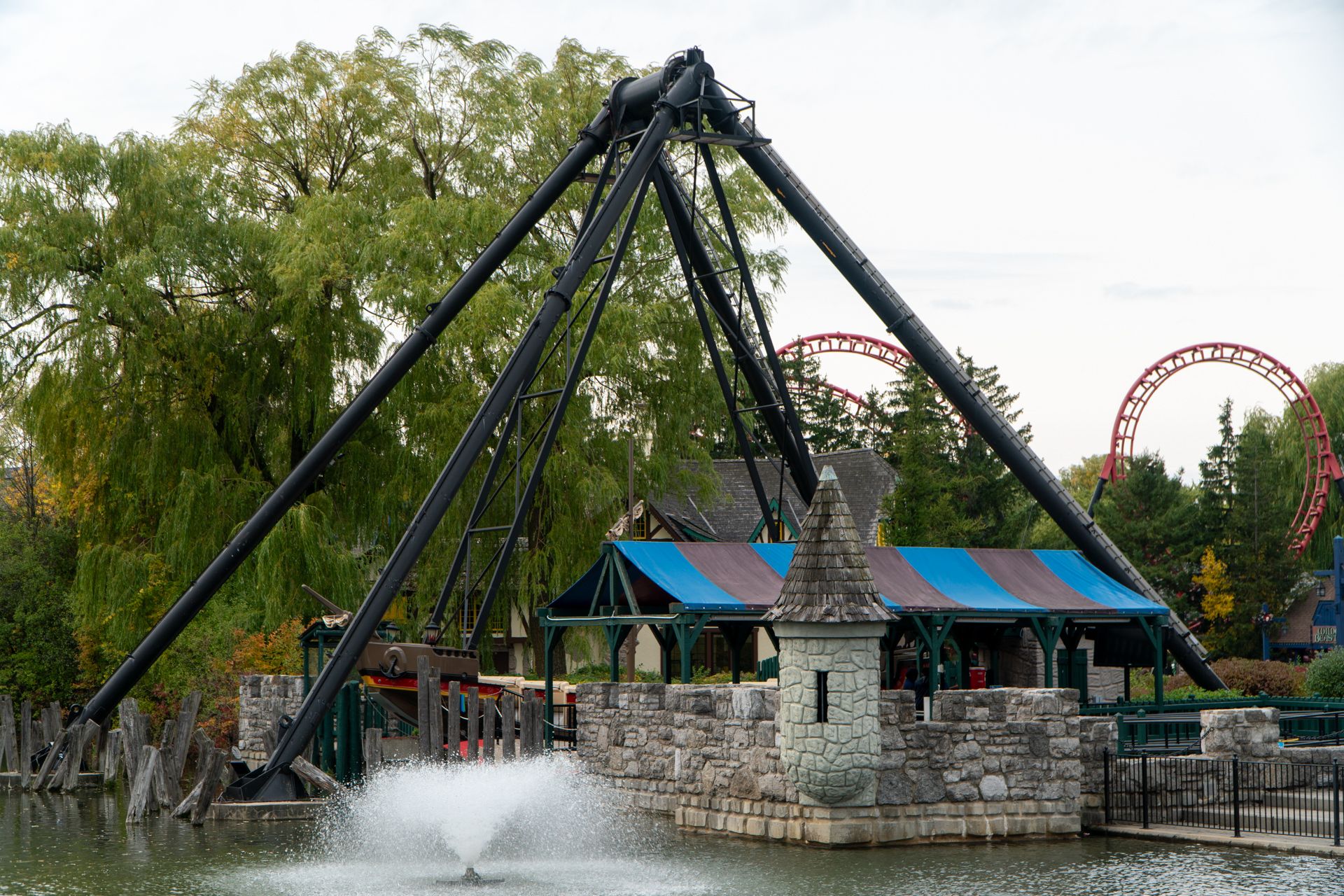
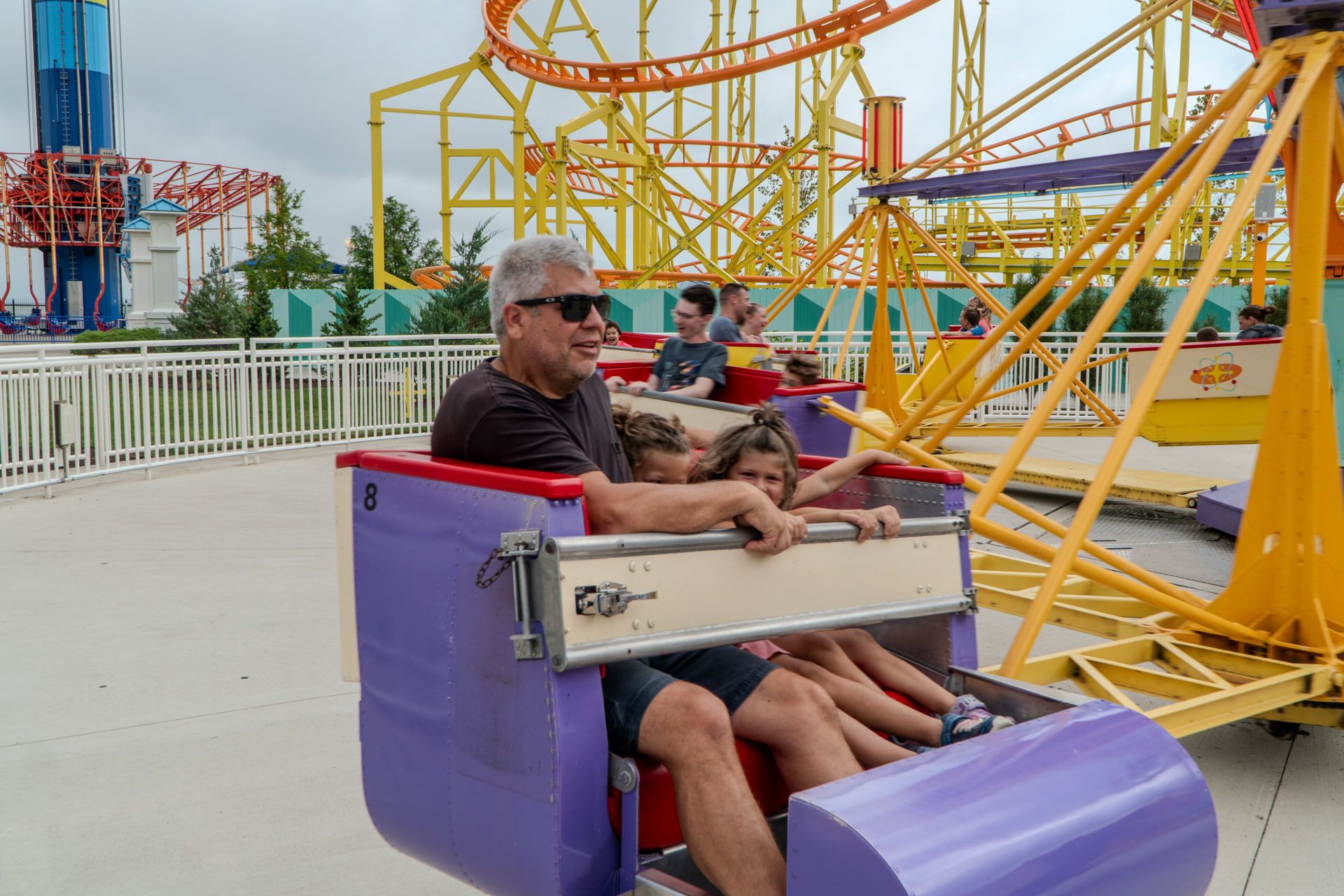
Viking’s Rage is a classic HUSS swinging ship and, naturally, always worth a ride. Not too far away, Spinovator — a Mack Calypso — spins away and delivers another very enjoyable classic flat ride experience.

In front of Dragon Fyre sits Riptide, a rather rare Mondial Splash Over. Unfortunately, the Top Spin variation with guaranteed soaking was closed during my visit, so I only got to admire it from the midway.

Dragon Fyre

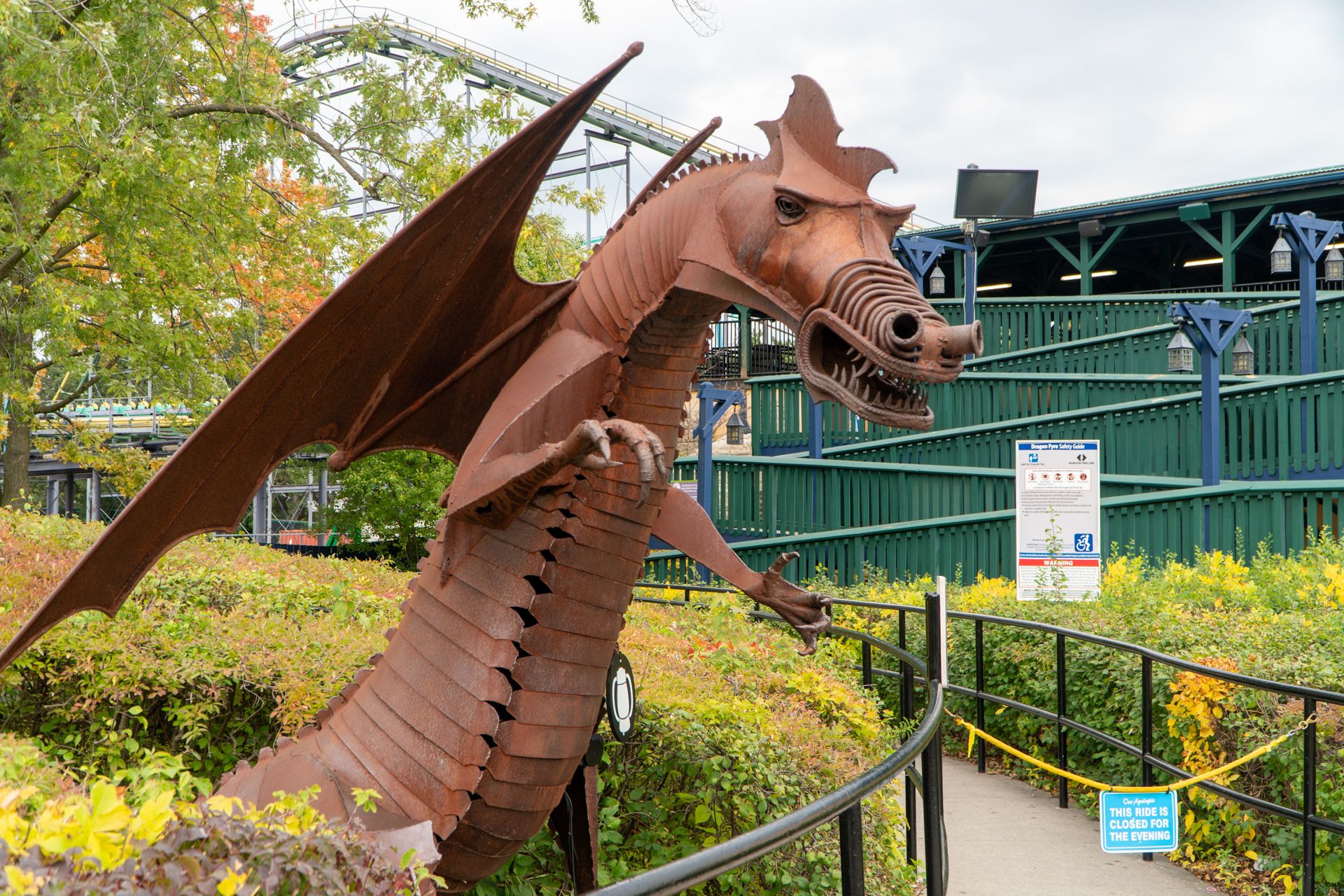
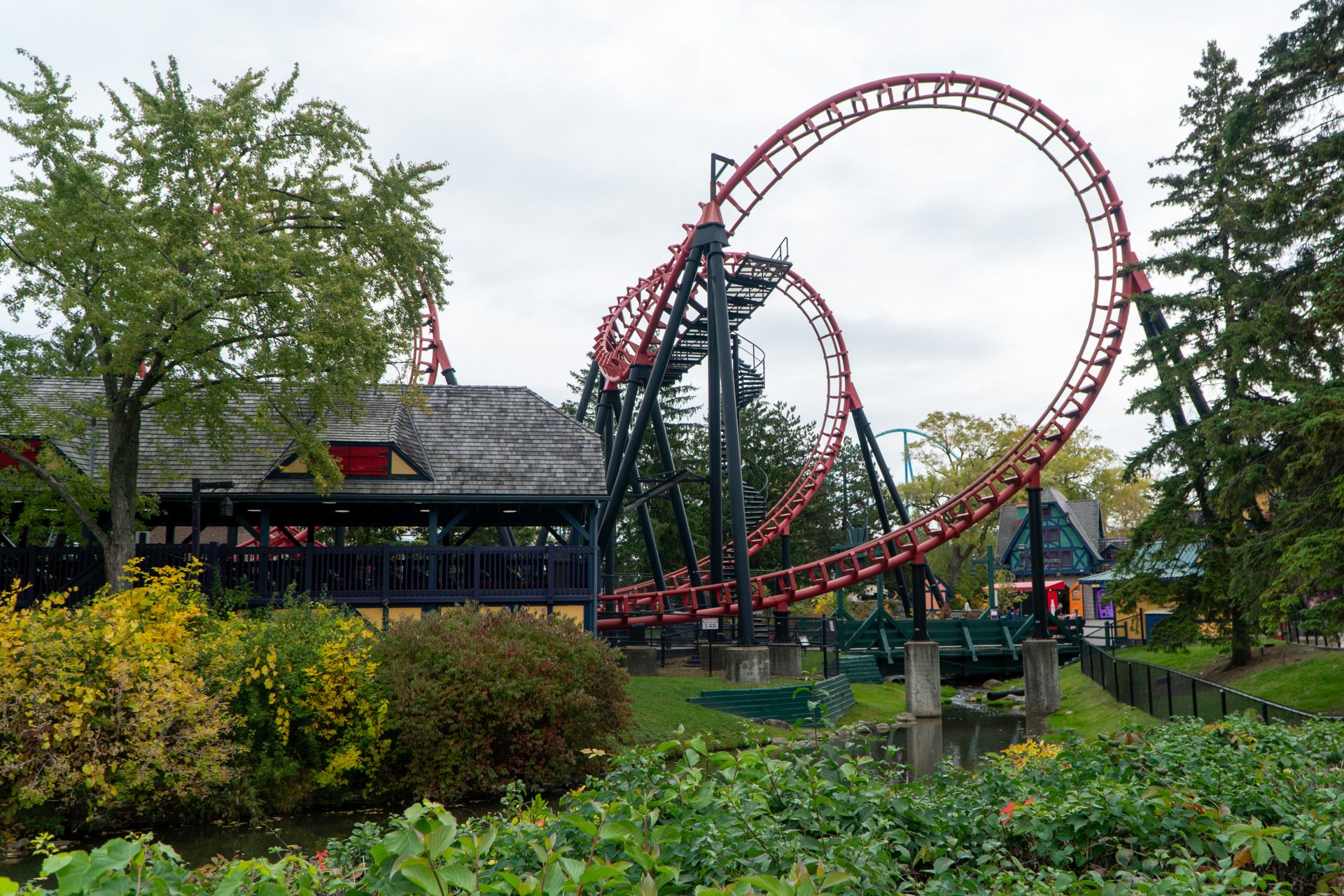
When Canada’s Wonderland opened in 1981, Dragon Fyre was the park’s big looping coaster and one of its headline attractions. Just two years later, a mirrored version opened at Heide Park under the name Big Loop — a coaster I have probably ridden several hundred times by now.

Dragon Fyre’s layout is built around long straight sections, two vertical loops, and a pair of corkscrews. These days, it is probably best approached with a healthy dose of nostalgia. While Big Loop is beautifully integrated into Heide Park, the original here essentially runs out across a big grassy field and then comes back again.

Unfortunately, the ride itself can also be pretty rough. The turnaround in particular requires a bit of preparation if you don’t want to get thrown around too much. That’s a shame, because I still happily ride Big Loop whenever I get the chance.

Flight Deck

On the other side of the Mainstreet, Flight Deck is the park’s Suspended Looping Coaster. Before reaching the station, however, you first have to work your way through an almost absurdly long queue. The path runs through several hangars and past various props, and today the whole thing feels massively oversized. You could easily shorten it and free up a substantial amount of land for something new.

The coaster itself is very fast and, surprisingly, doesn’t have any major track-related hits. Still, there is a good reason to pay attention to the warning at the queue entrance. The hard shoulder restraints can leave you stepping off the ride with some very red ears.

Psyclone

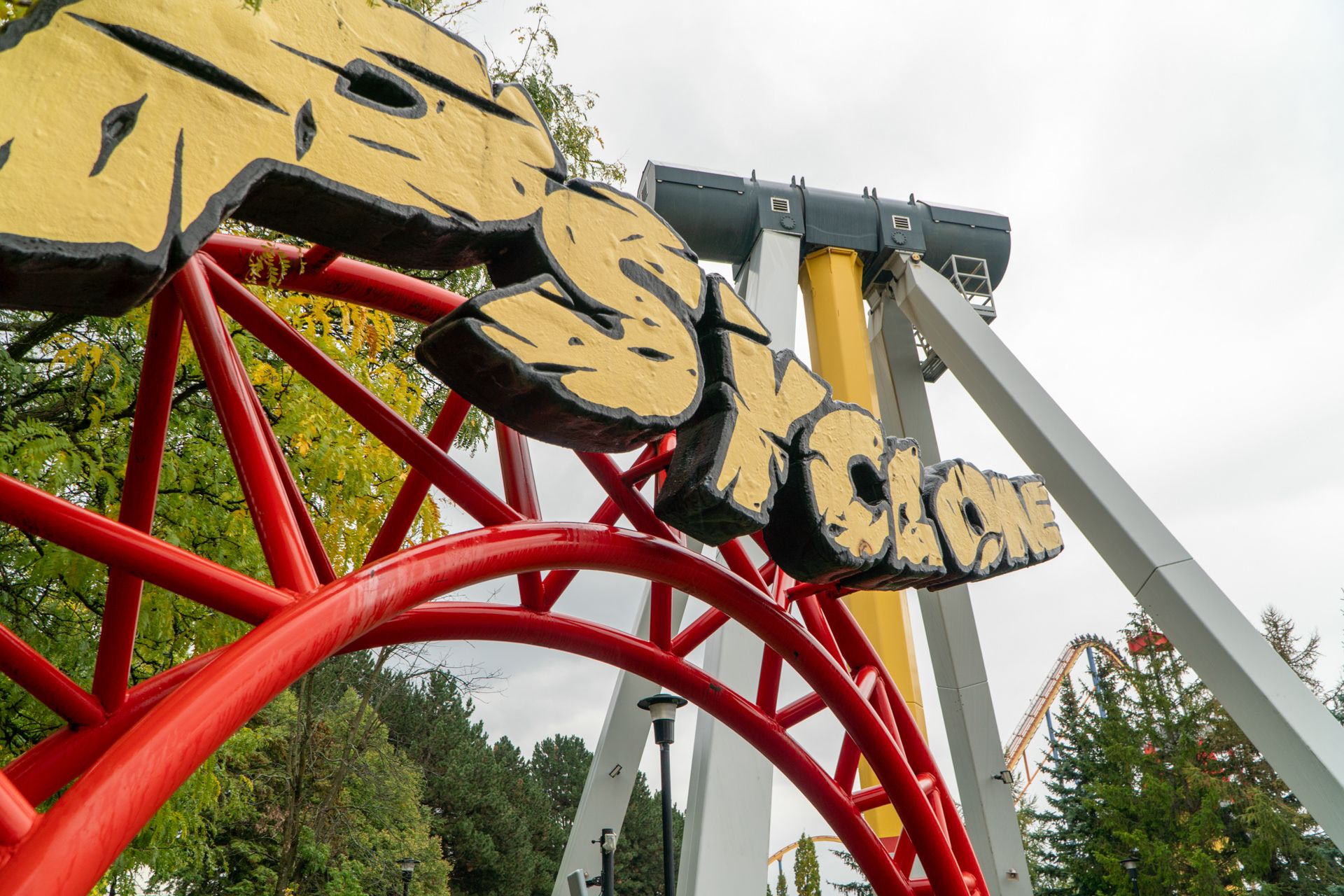
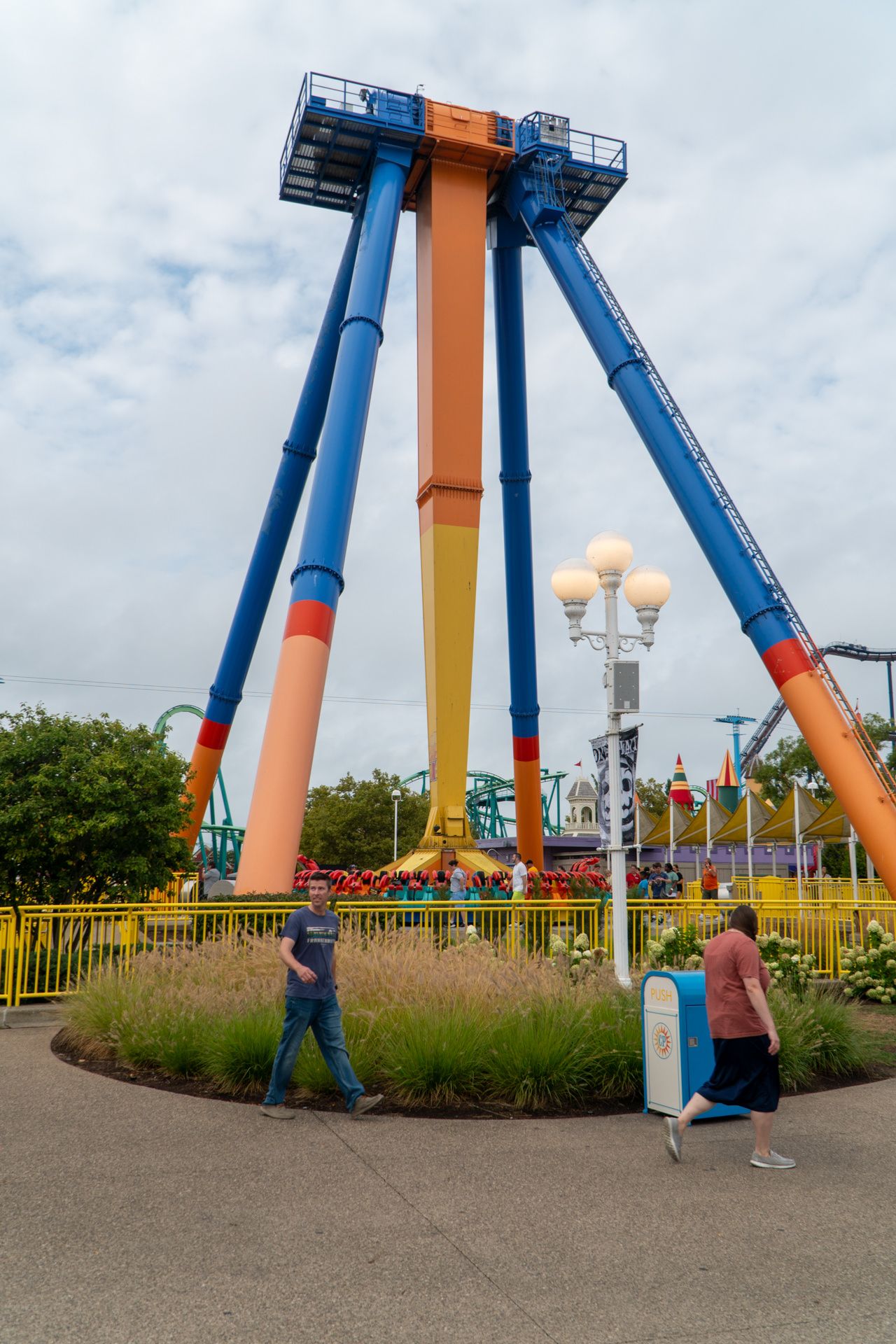
Passing Swing of the Century and the Antique Carousel, we eventually reach Psyclone. This large Mondial pendulum ride packs quite a punch. While the gondola rotates, the pendulum quickly gains height, producing plenty of pressure on the legs along the way. It only takes a few swings to reach the top before the ride immediately begins to wind down again.

Overall, Psyclone is a really great ride.

Sledgehammer

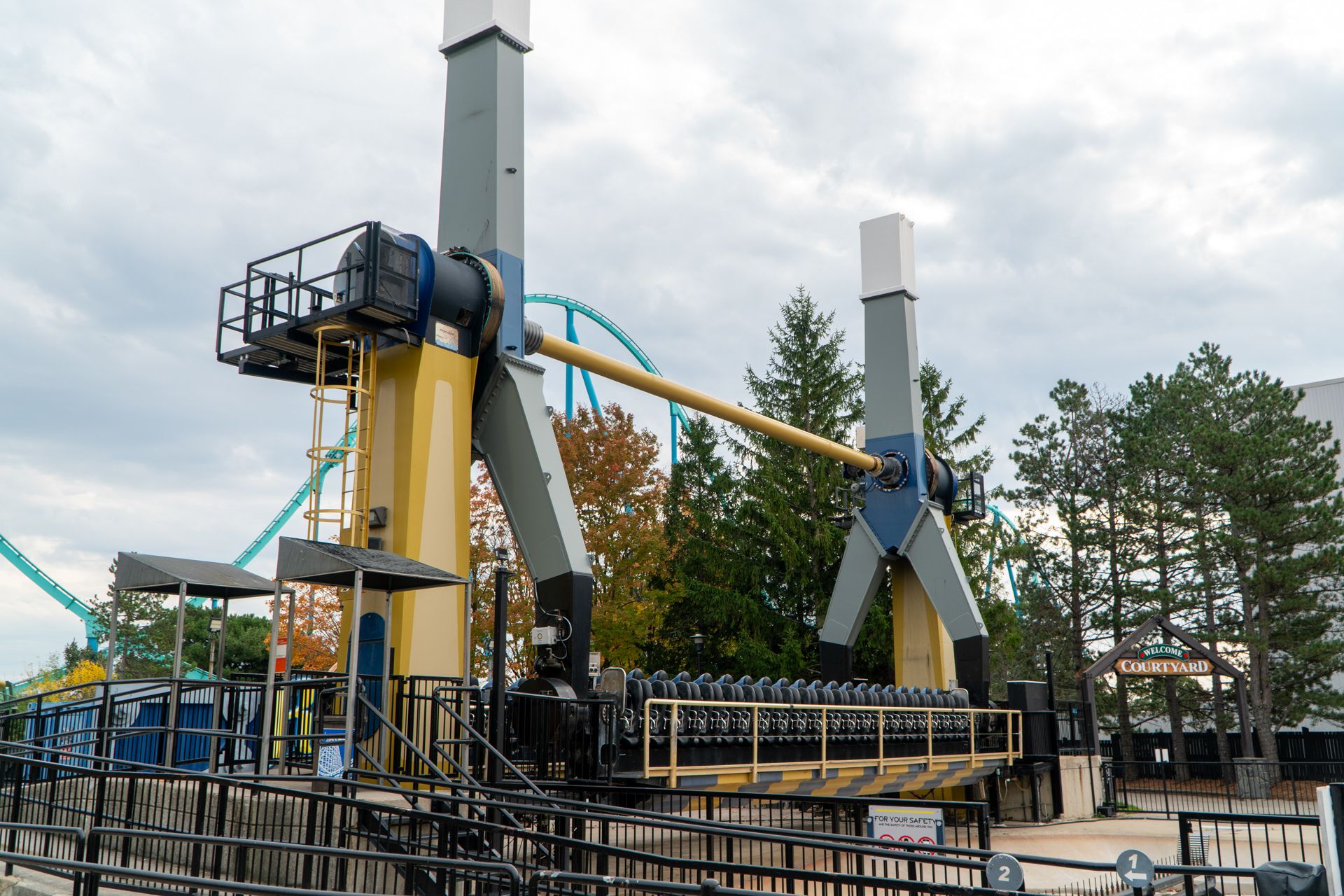
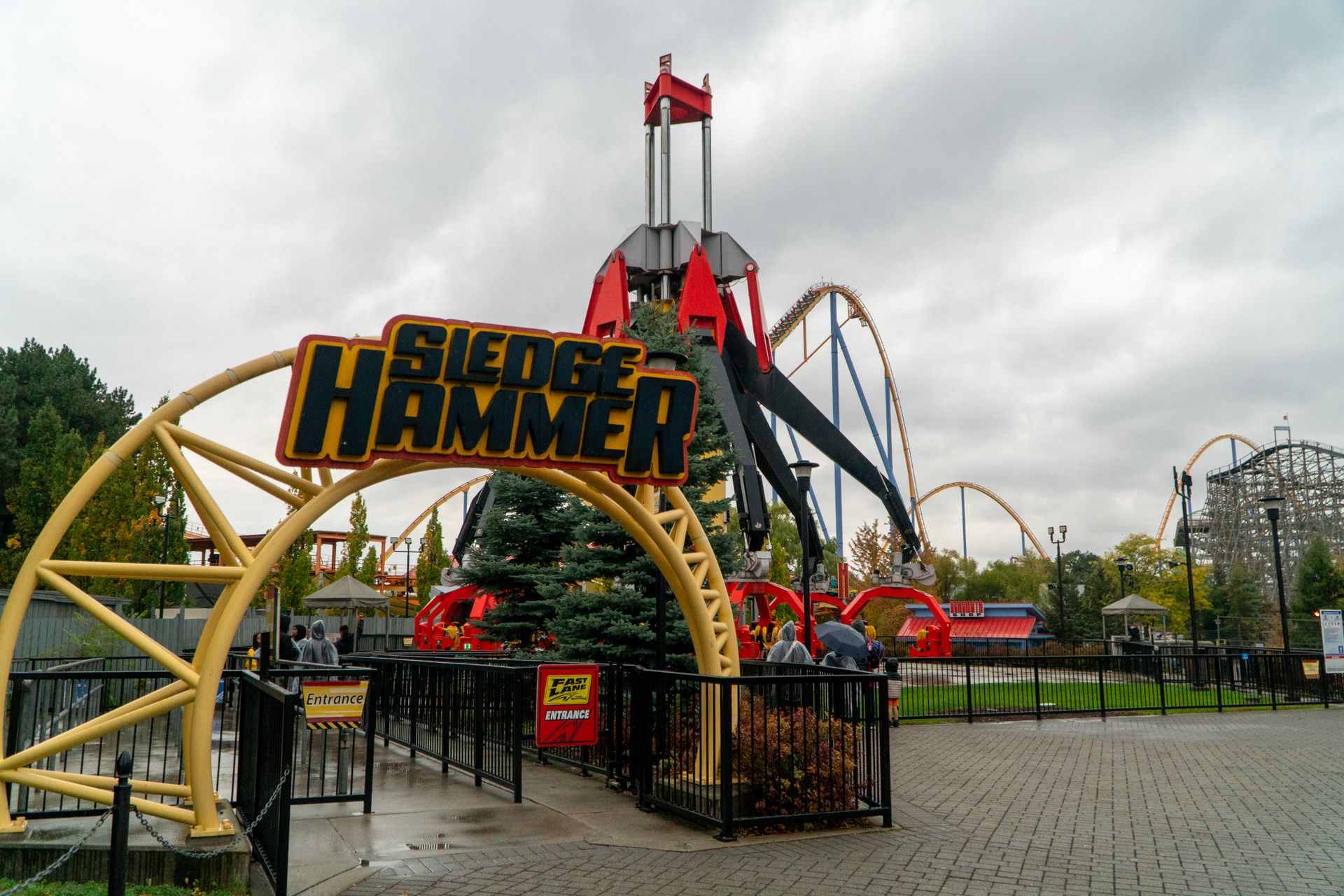
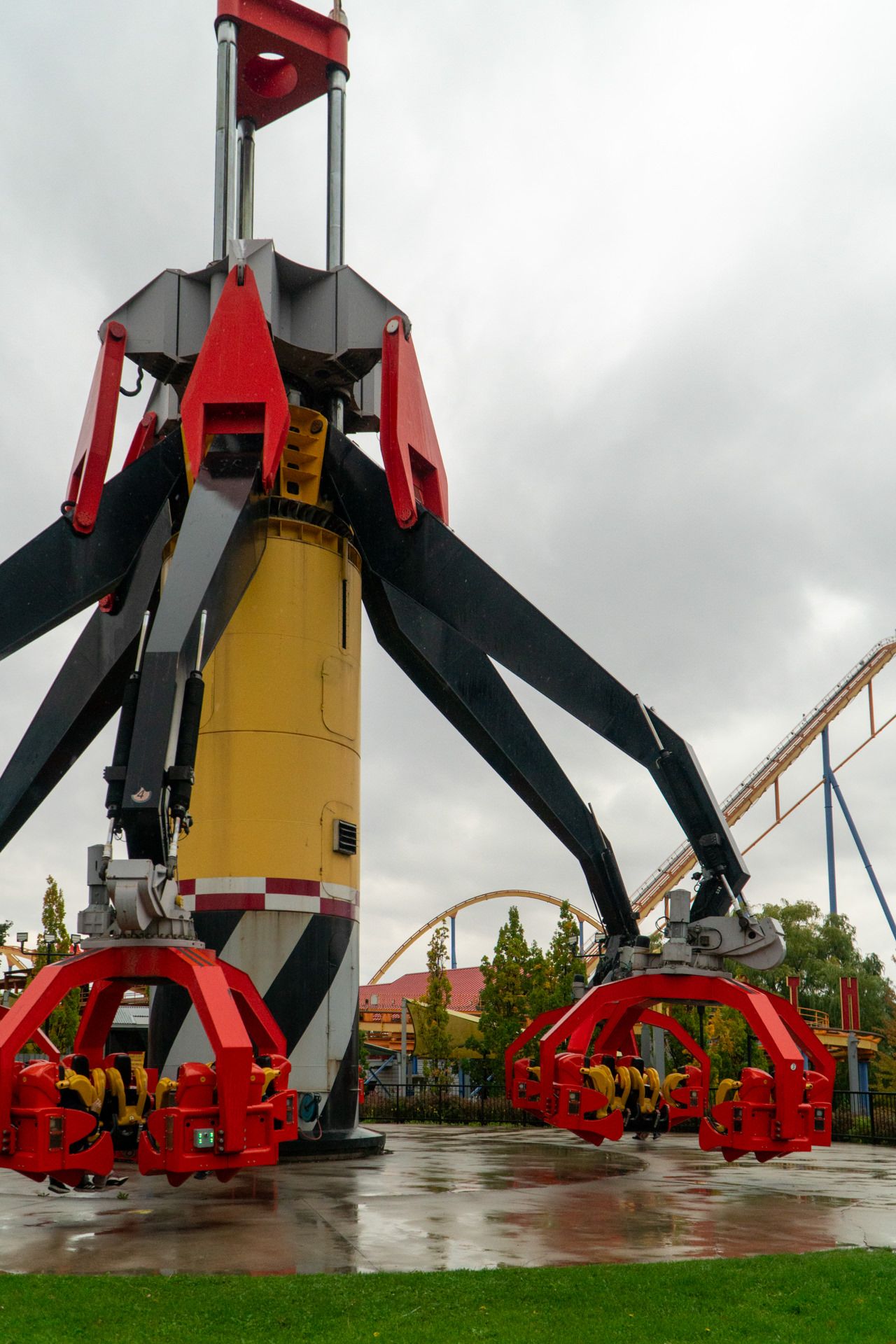
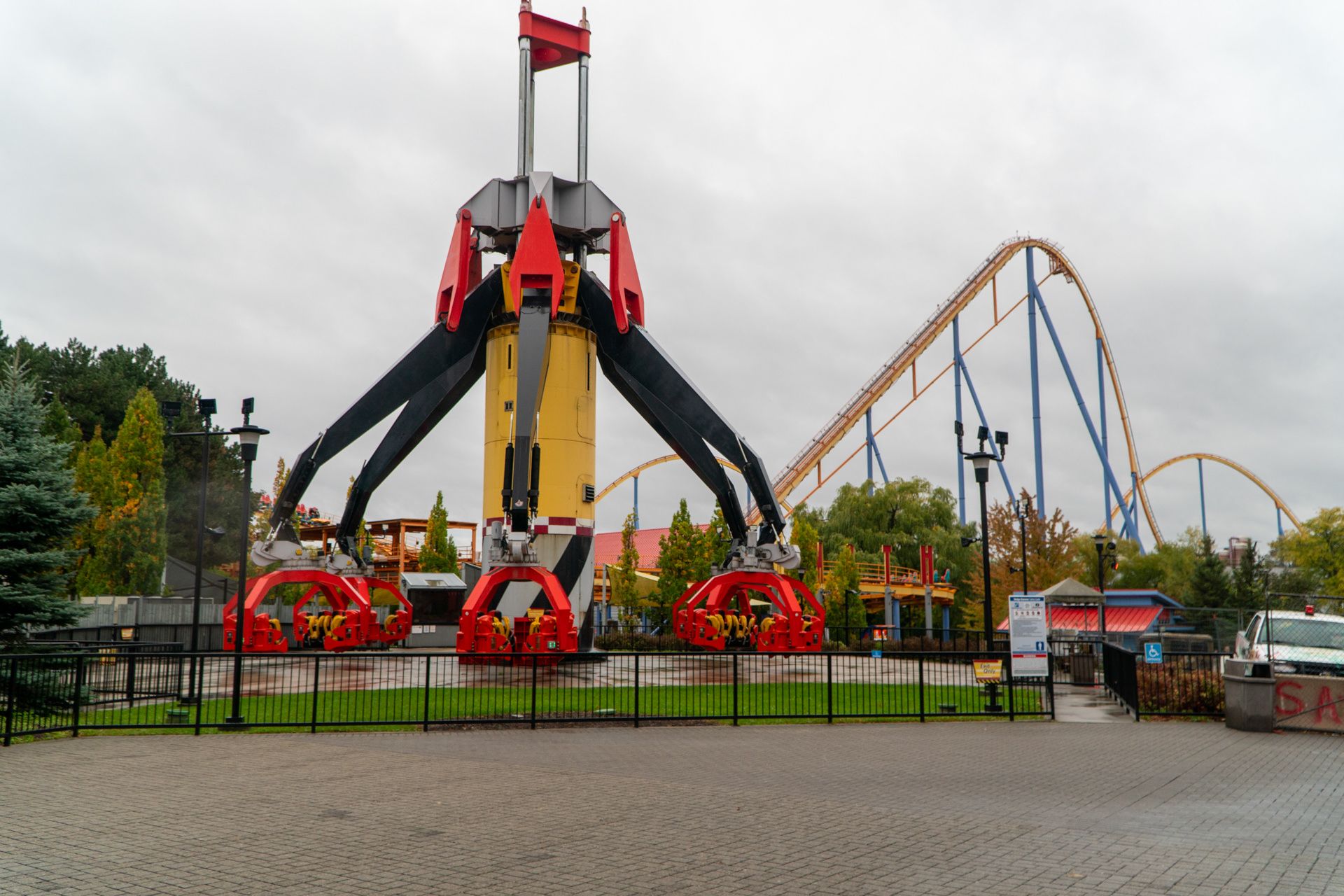
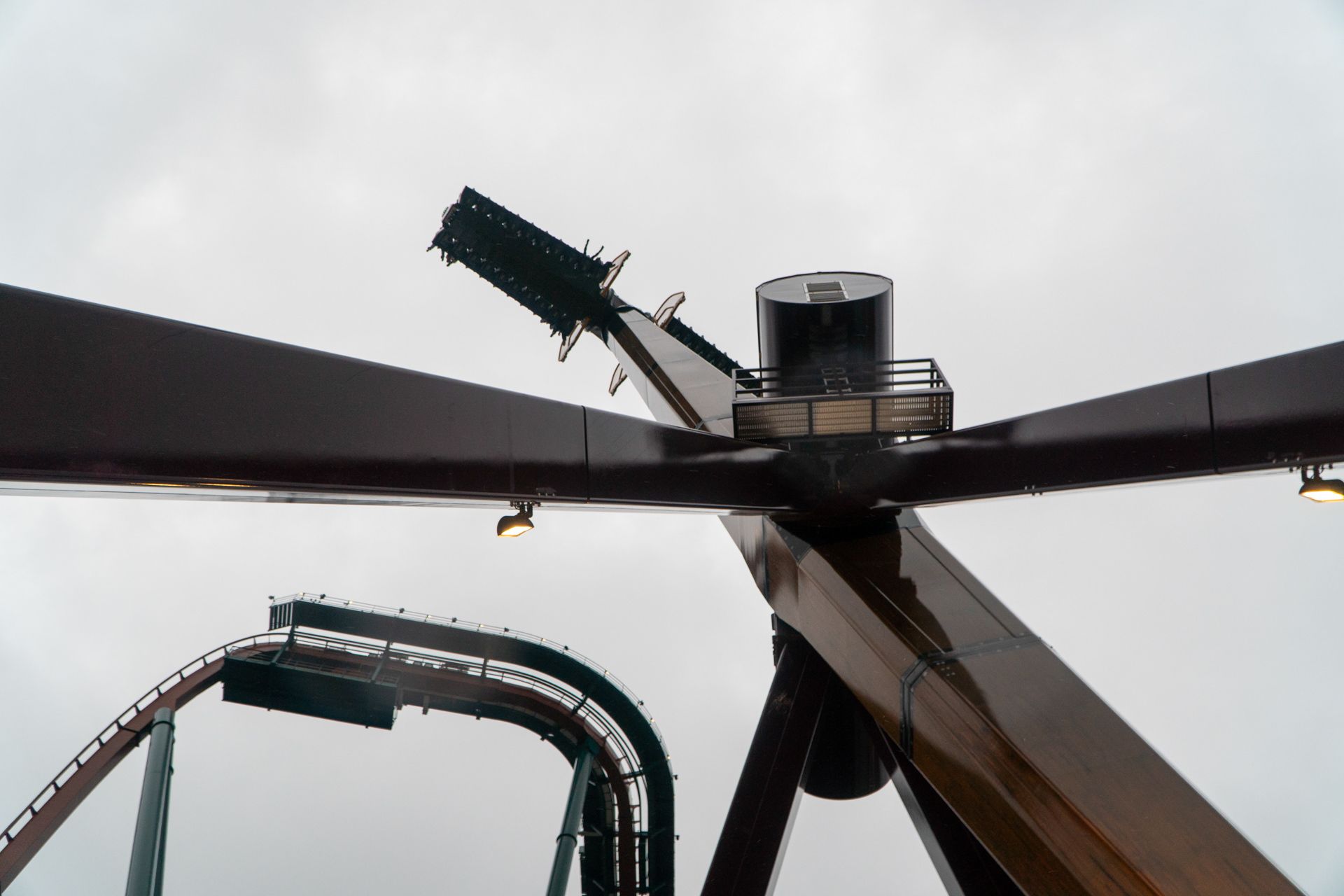
Right next to Psyclone is Sledgehammer, the only HUSS Jump2 ever built. The ride is somewhat similar to the smaller Jump, which could once be found on German fairs as Jumping with the Distel showmen. My last — and only — rides on one of those were at the Hamburg Sommerdom back in 2004. More than 21 years later, I finally made it to Canada’s Wonderland to try its much bigger brother.

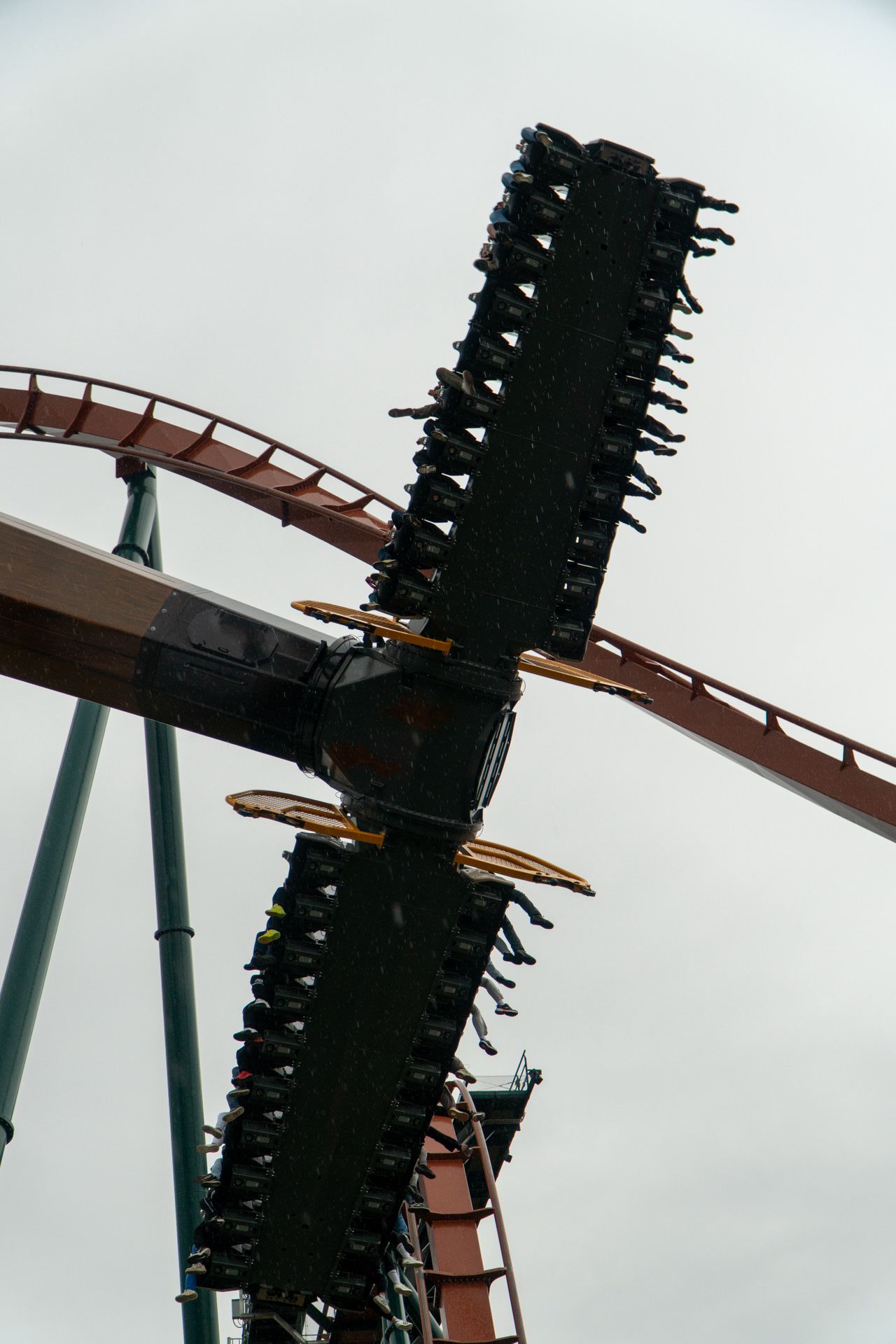
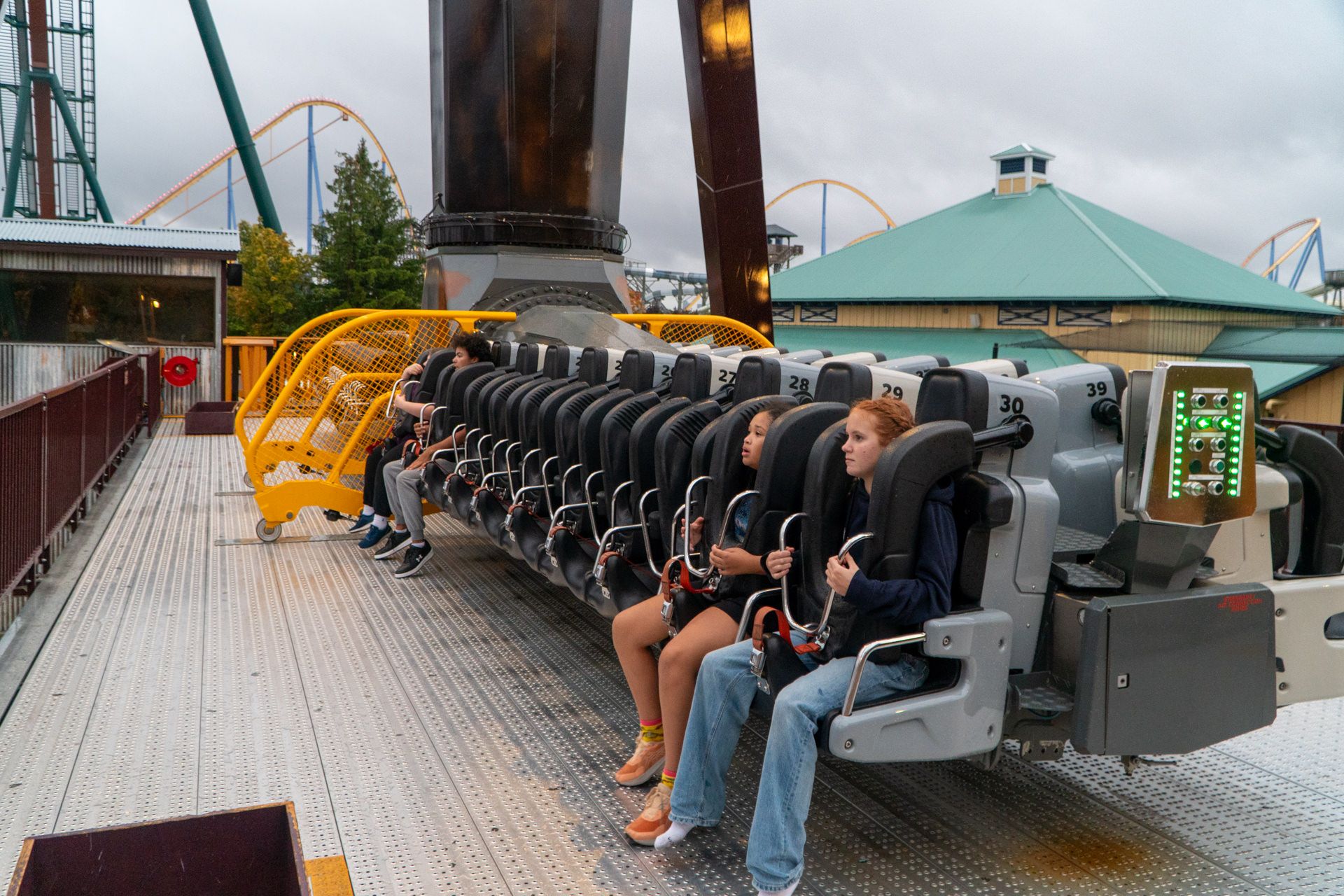
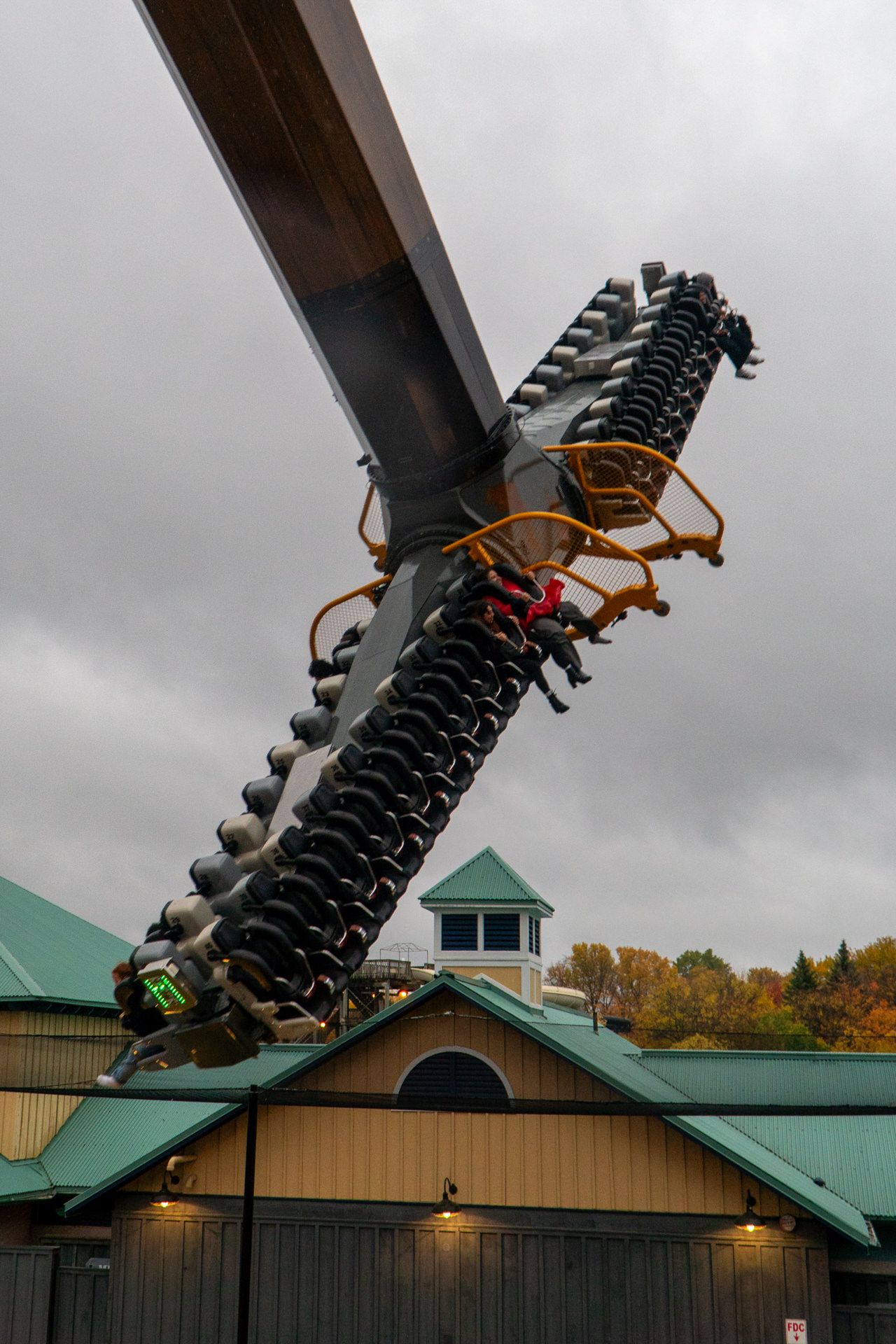
And what a strange, wonderful ride it is. Free-fall moments with great floater airtime mix with fast rotations and all sorts of slightly odd angles. The whole thing is wonderfully unusual, and Sledgehammer completely won me over. An absolutely brilliant ride — it’s just a shame that, apart from the Giant Frisbee, HUSS’s Giant Rides line never really caught on.

Behemoth

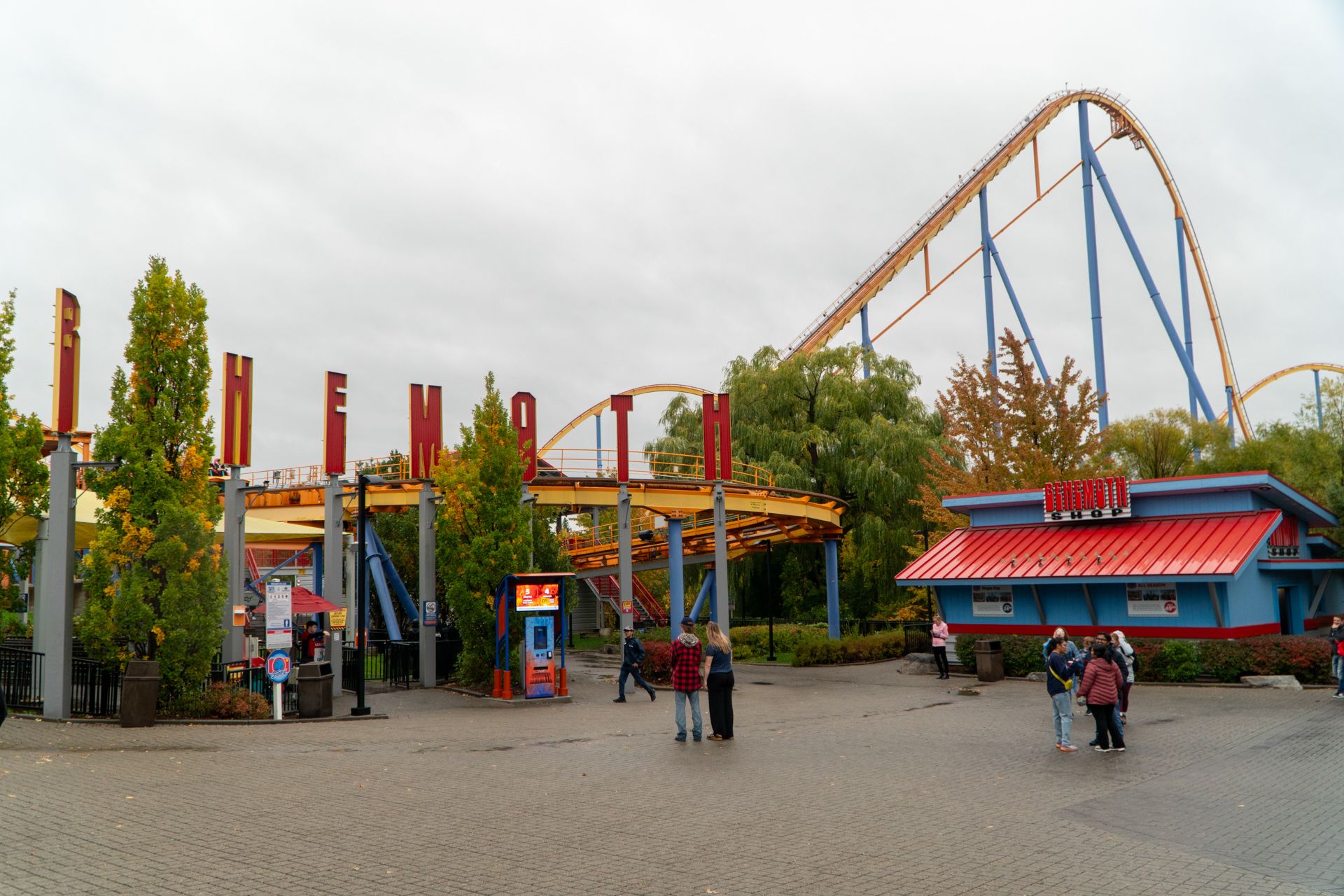
Behemoth sits near the edge of the park, with much of its track running over a large body of water. Compared with Leviathan, this B&M hyper coaster follows a much more traditional formula, with a long sequence of hills arranged in a classic out-and-back layout.

Fundamentally, Behemoth is a very solid coaster. For me, however, it falls into a similar position as Thunder Striker at Carowinds: overshadowed somewhat by its larger sibling. The floater airtime feels fairly restrained, and the trains carry a constant vibration that takes away from the ride a little.

Behemoth is certainly not a bad coaster, but here at Canada’s Wonderland it never quite managed to win me over.

Backlot Stunt Coaster

Backlot Stunt Coaster is already a familiar face from Kings Island and Kings Dominion, and the Premier Rides launch coaster is every bit as much fun here.

Right out of the station, the train launches into an increasingly tight upward helix. A fast descent follows, sending us through a series of quick directional changes past police cars, billboards, and shipping containers before an Immelmann-style turn reverses our direction.

Another hill and several turns bring us to the large helicopter effect scene before a second launch sends the train into the tunnel. A few more fast turns in the dark eventually bring us back outside and into the final brakes.

I ended up riding Backlot Stunt Coaster several times during my visit. Especially in the rain, it was considerably less unpleasant than many of the park’s larger open-air coasters — and, of course, it is still a whole lot of fun.

Mighty Canadian Minebuster

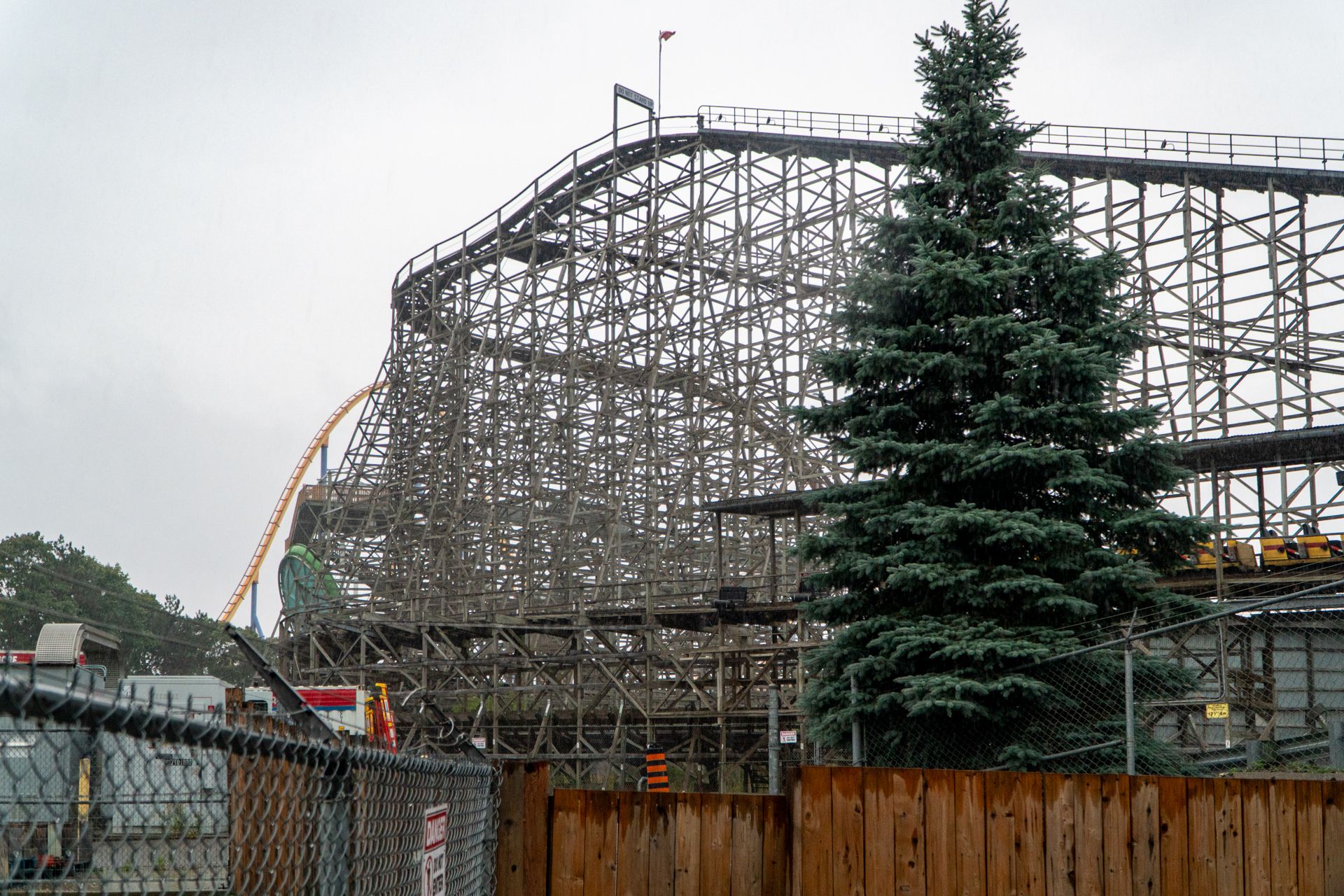
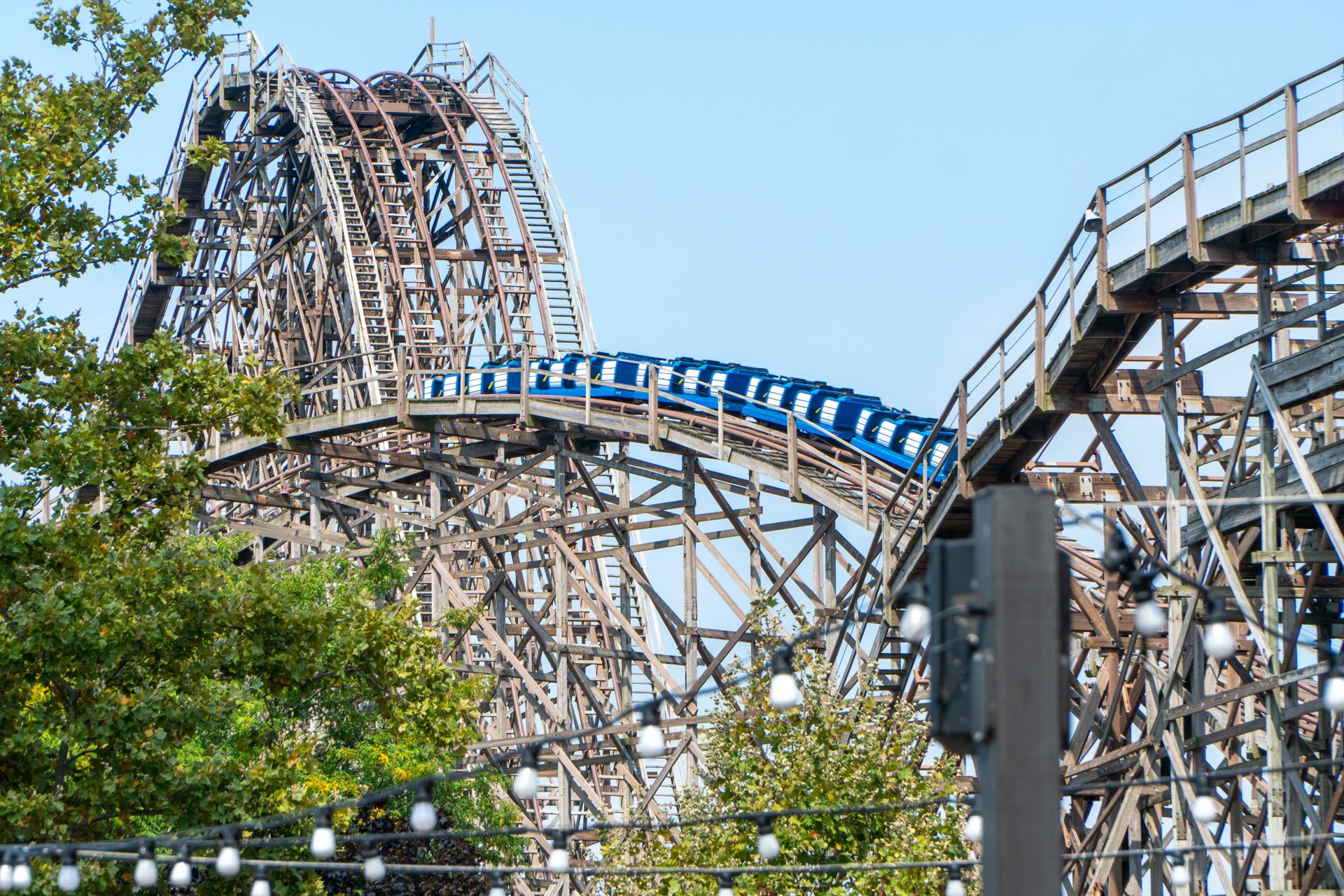
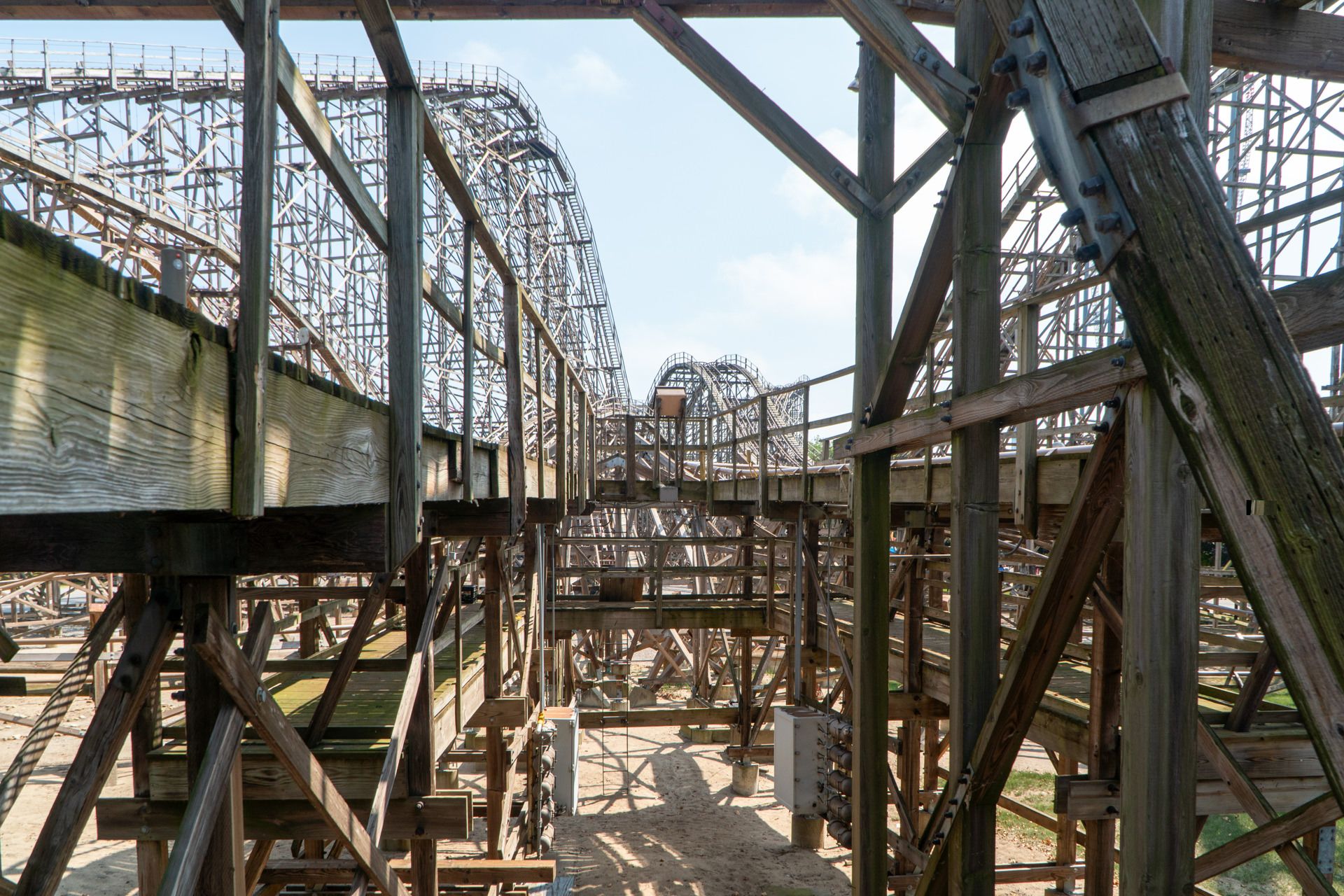
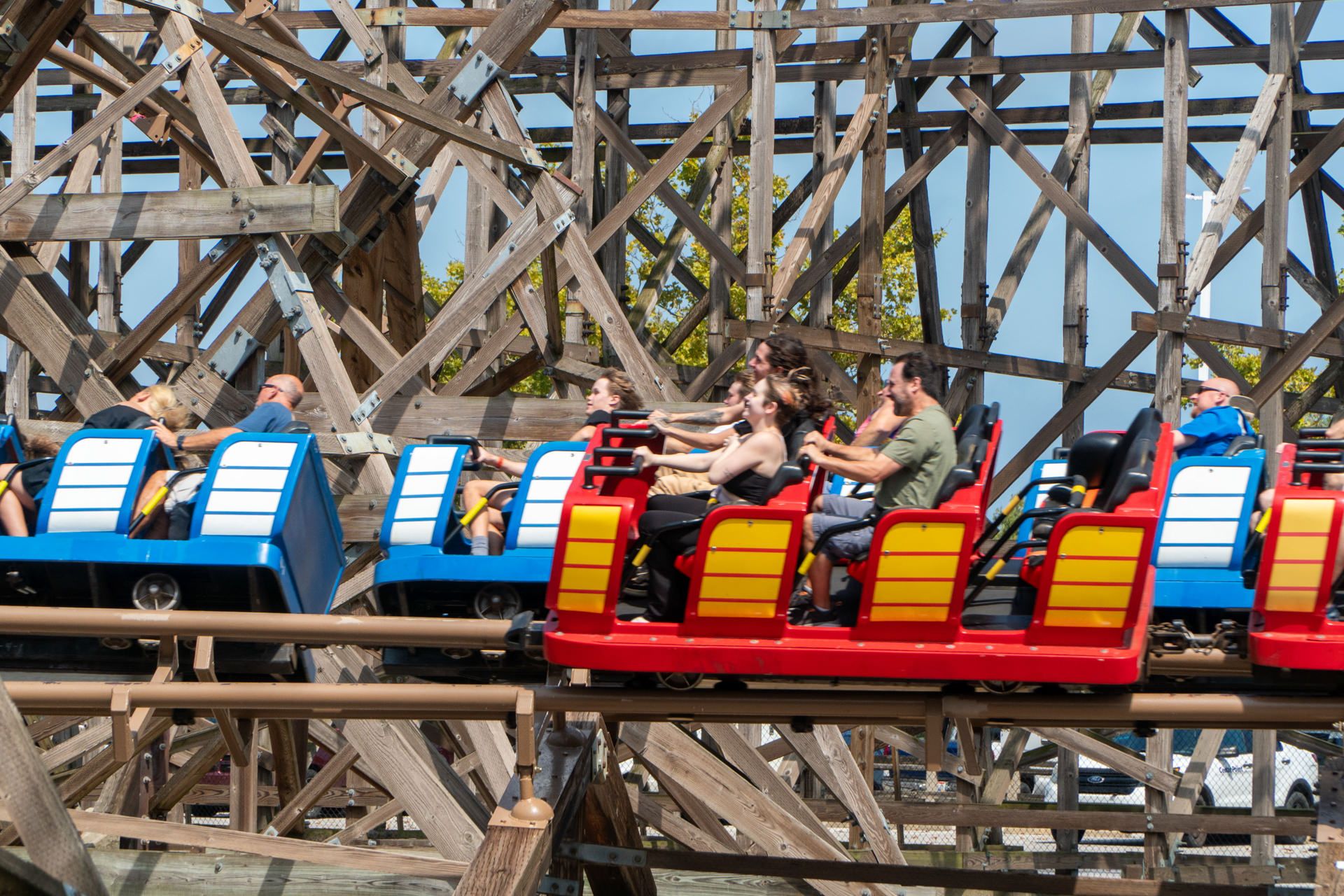
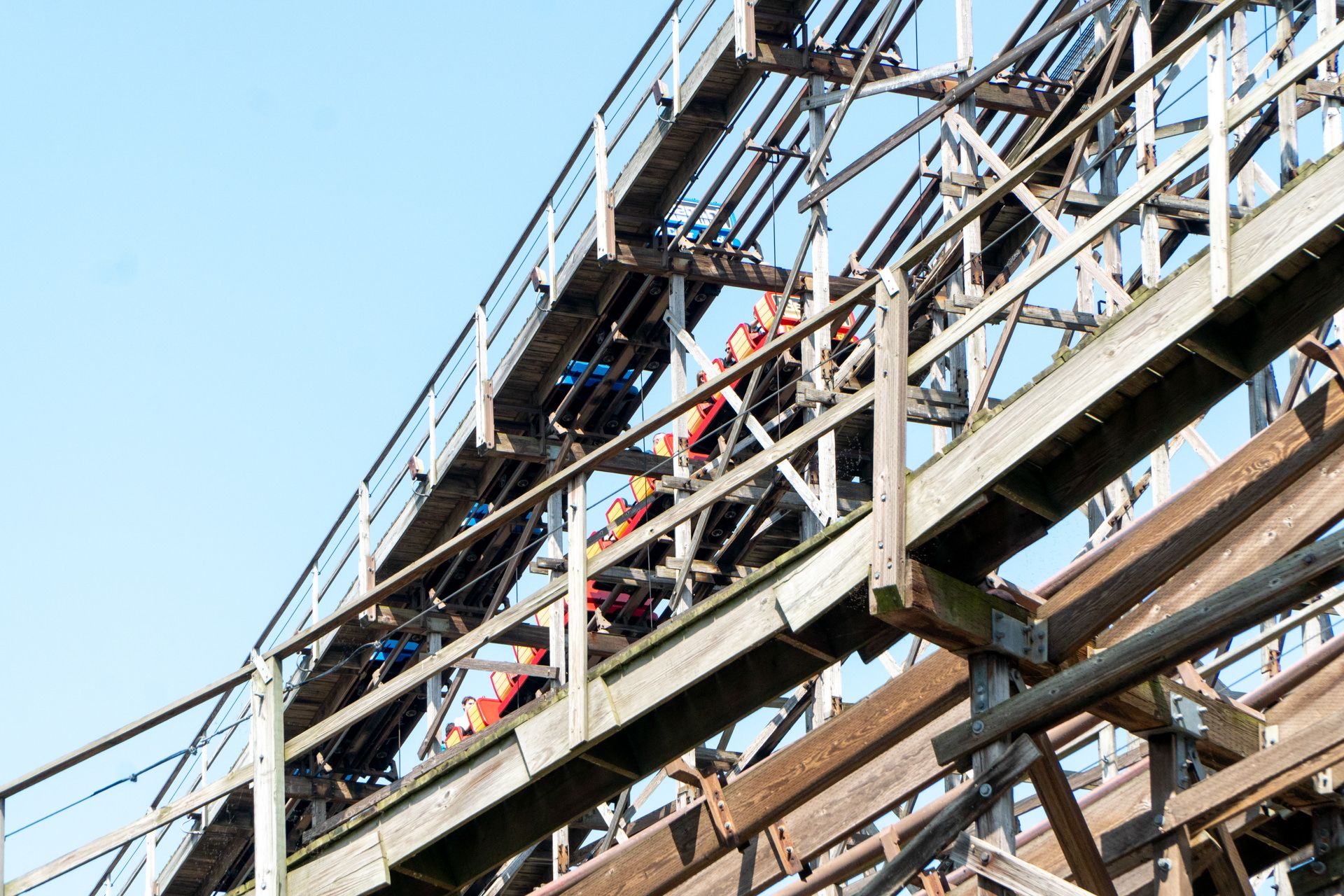
Mighty Canadian Minebuster is another coaster that delivers a lot of fun. The woodie follows a fairly traditional out-and-back layout, with the first half focused heavily on some very good airtime.

Things get much wilder in the second half. We race through a tunnel while the strong lateral forces mercilessly pin us against the side of the train.

It’s an absolutely brilliant wooden coaster, and those strong lateral forces even reminded me a little of the legendary Beast at Kings Island.

WindSeeker and Sky Hawk

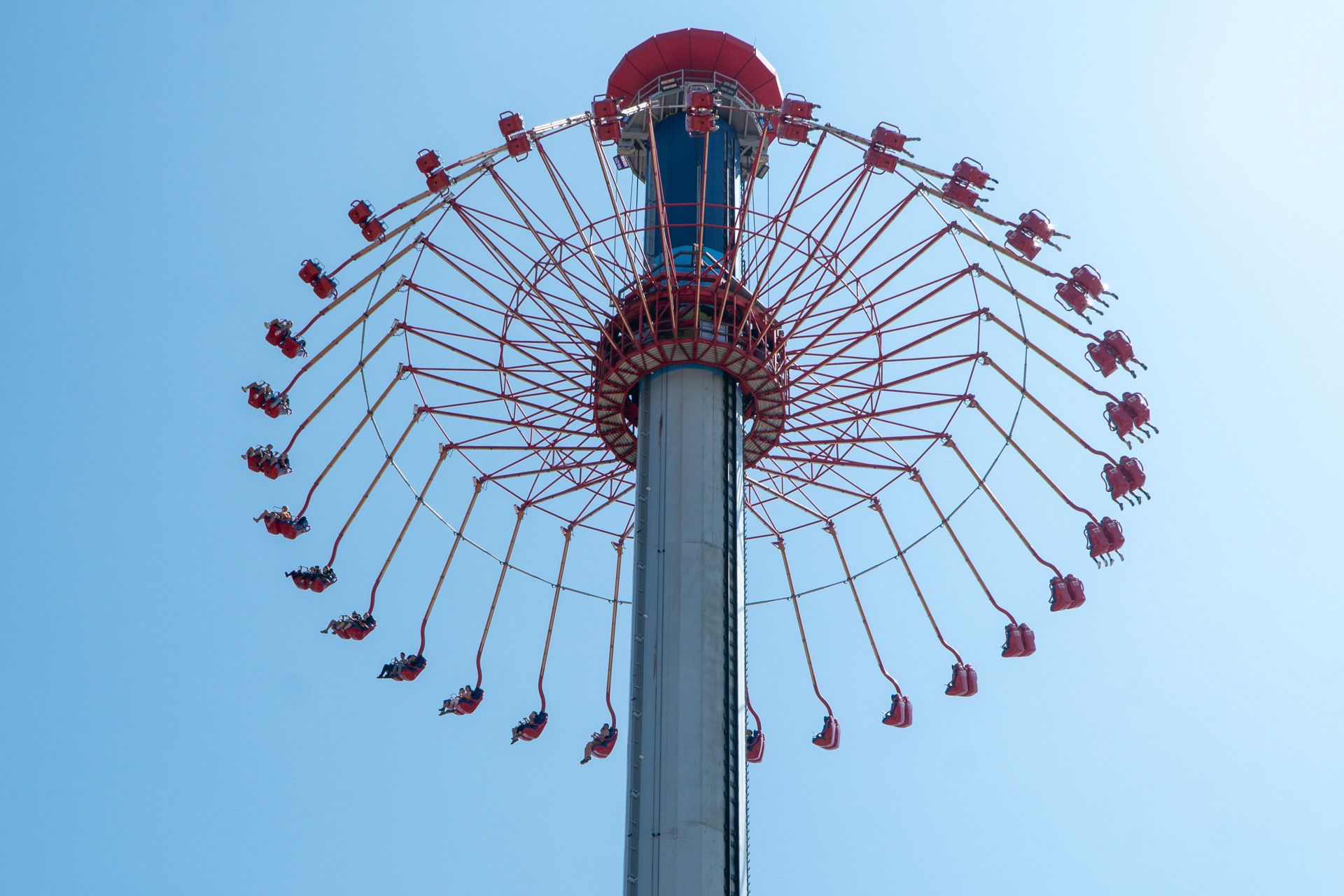
WindSeeker is another familiar Mondial ride that I’m always happy to see. As the ride slowly climbs the tower, the seats swing farther and farther outward. Once at the top, we circle high above the park with a great view across Canada’s Wonderland.

As with the other WindSeekers I’ve ridden, I really enjoy the calm nature of the experience. The combination of height, wind, and the freely swinging seats is simply a lot of fun.

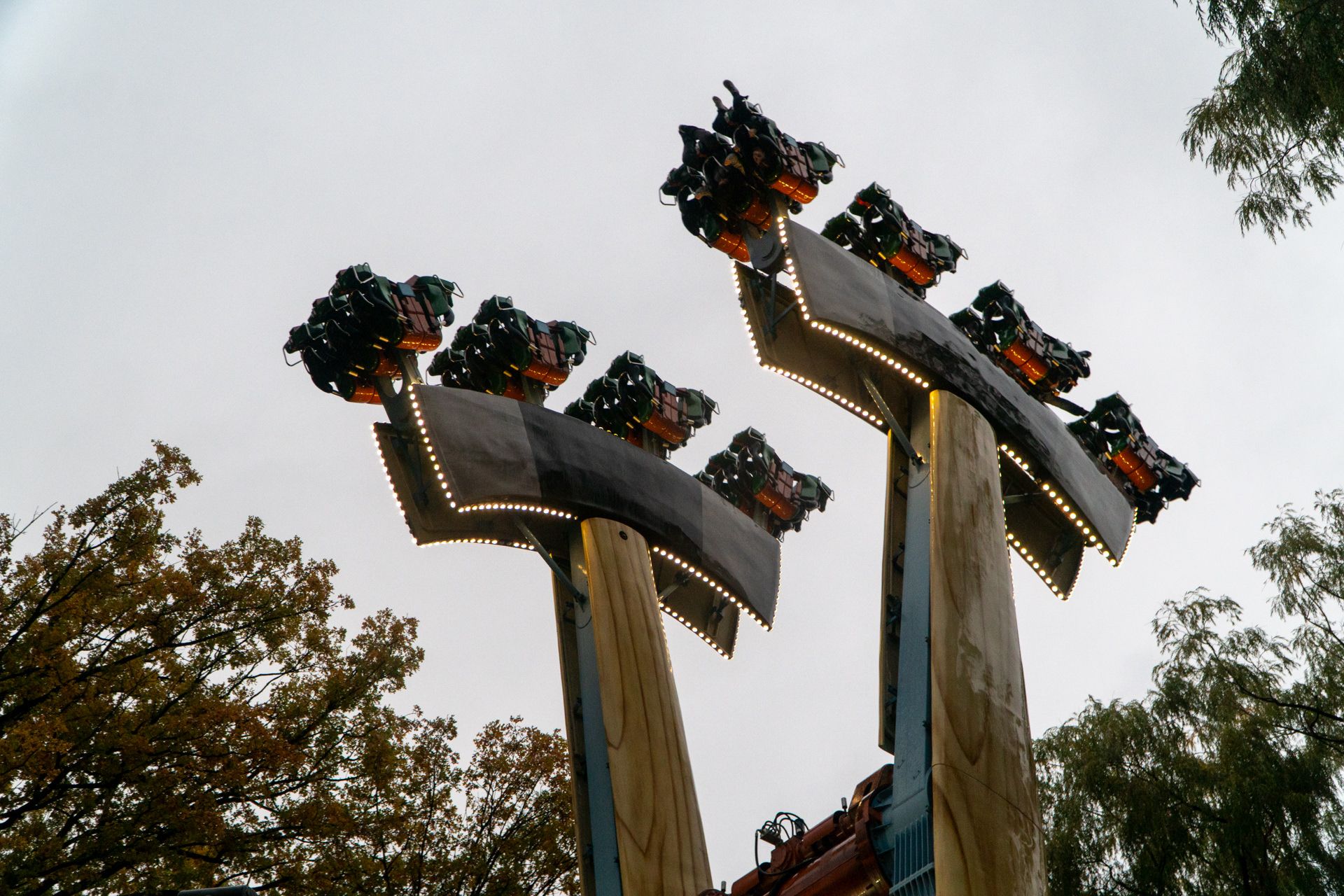
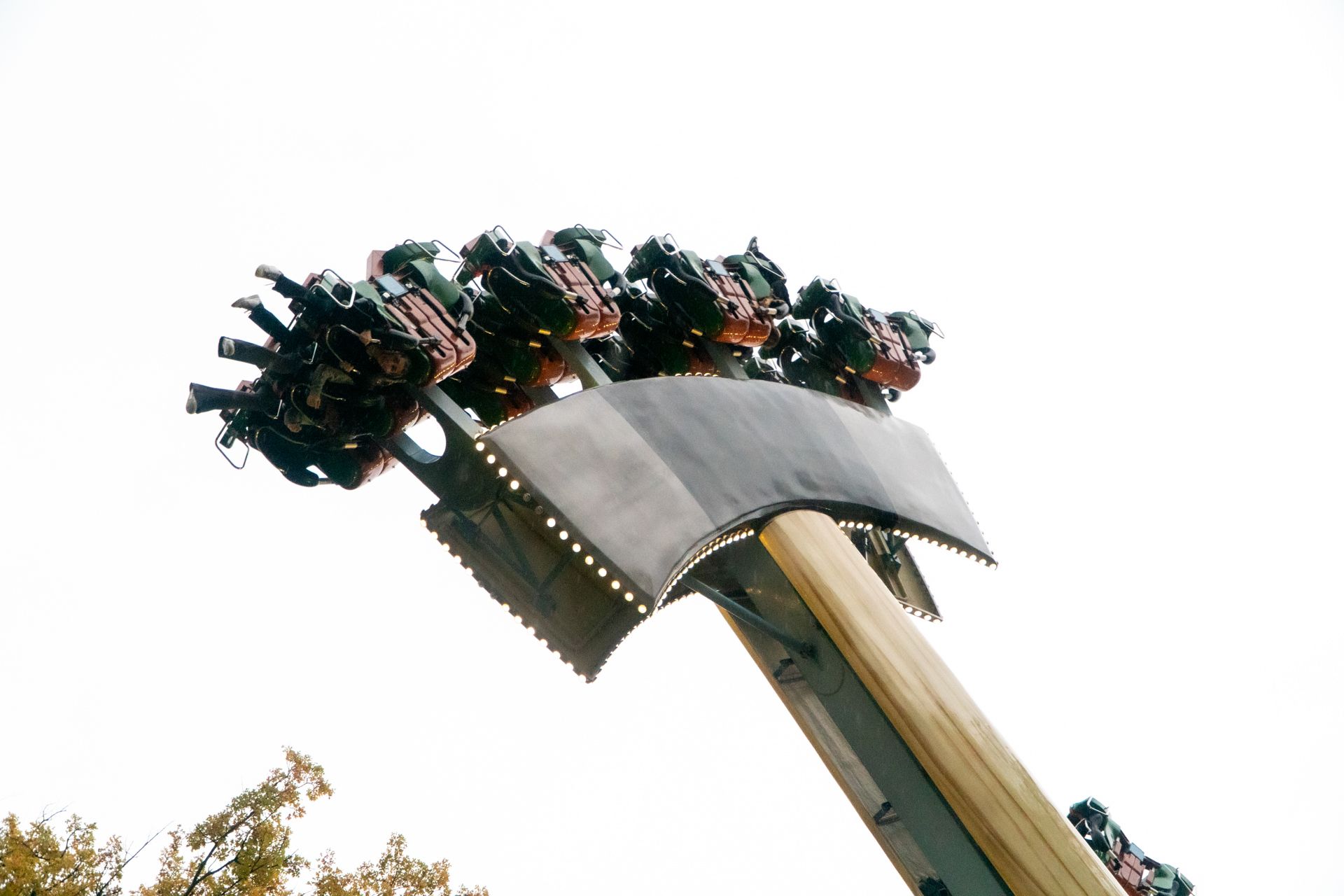
Sky Hawk, on the other hand, lets us decide how wild the ride should be. Gerstlauer’s Sky Roller gives riders the choice between going for as many flips as possible or simply enjoying a relaxed sightseeing flight.

Yukon Striker

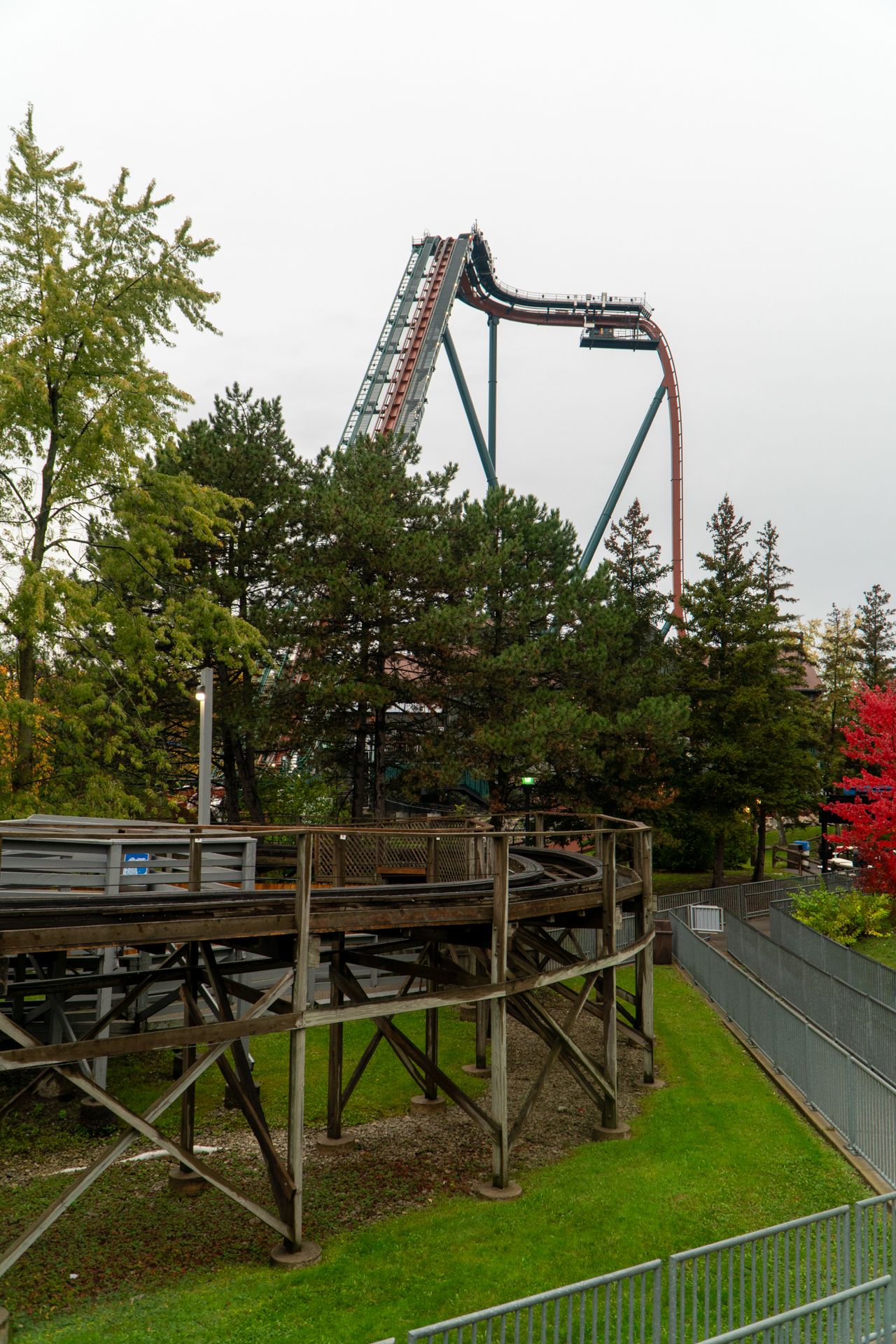
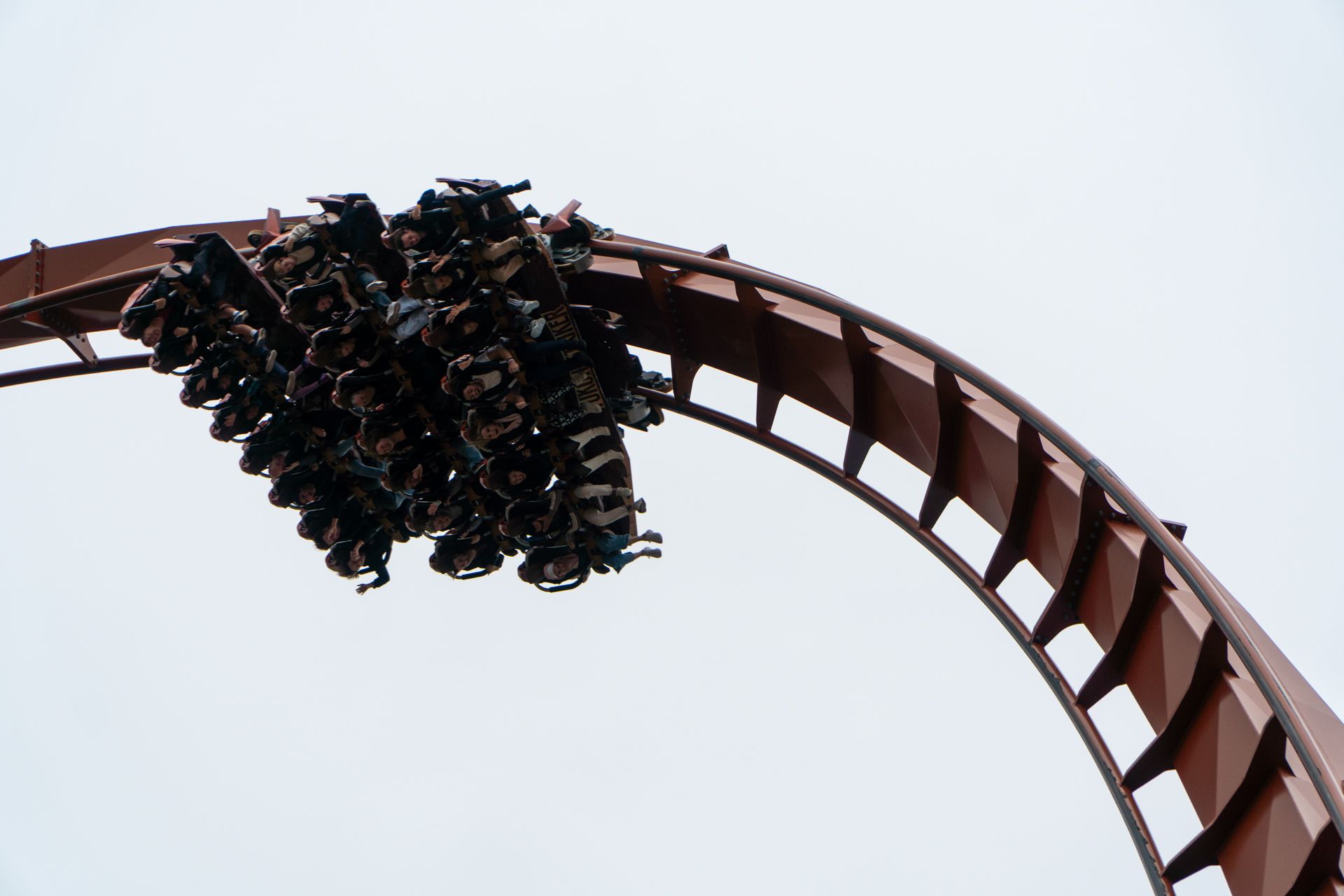
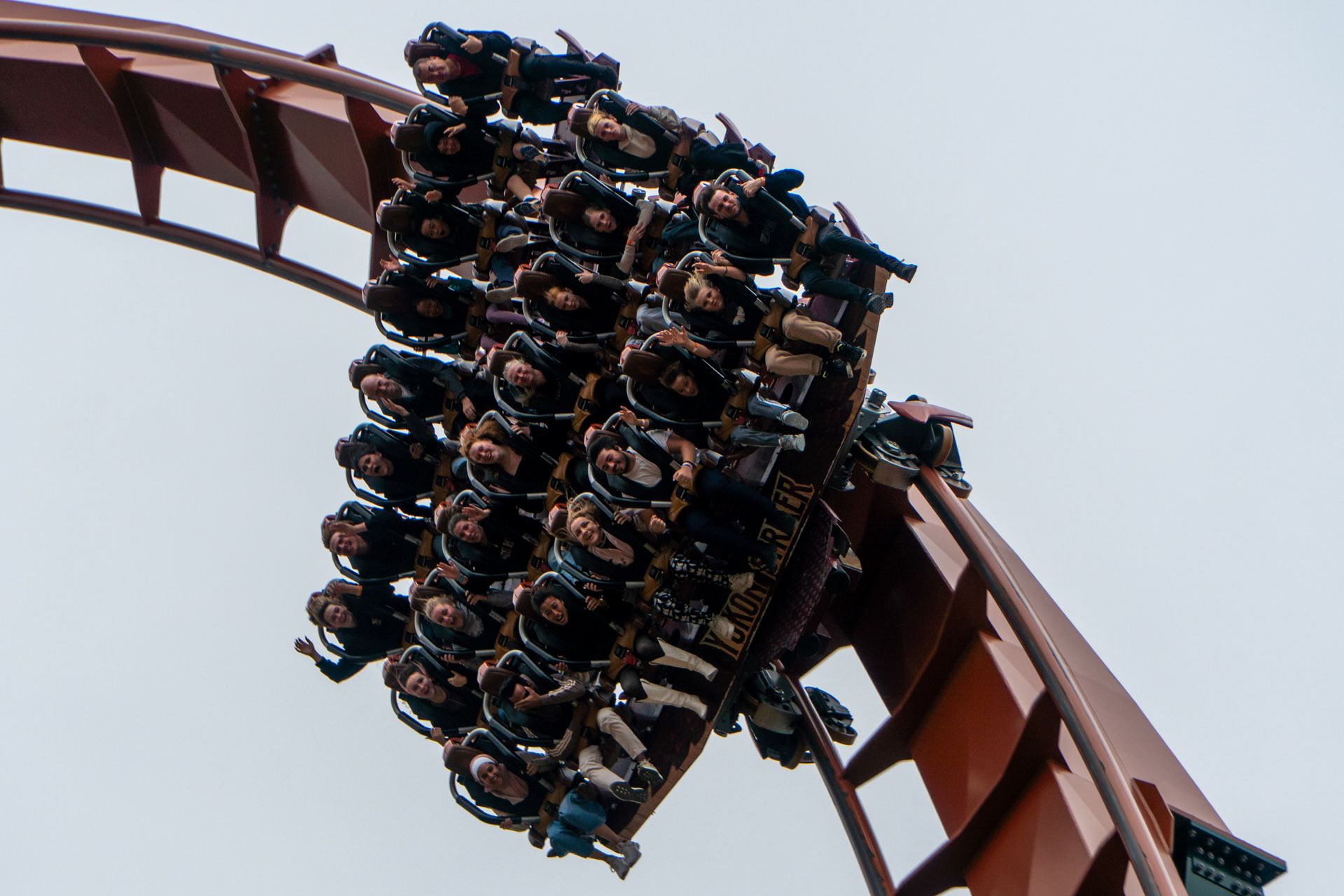
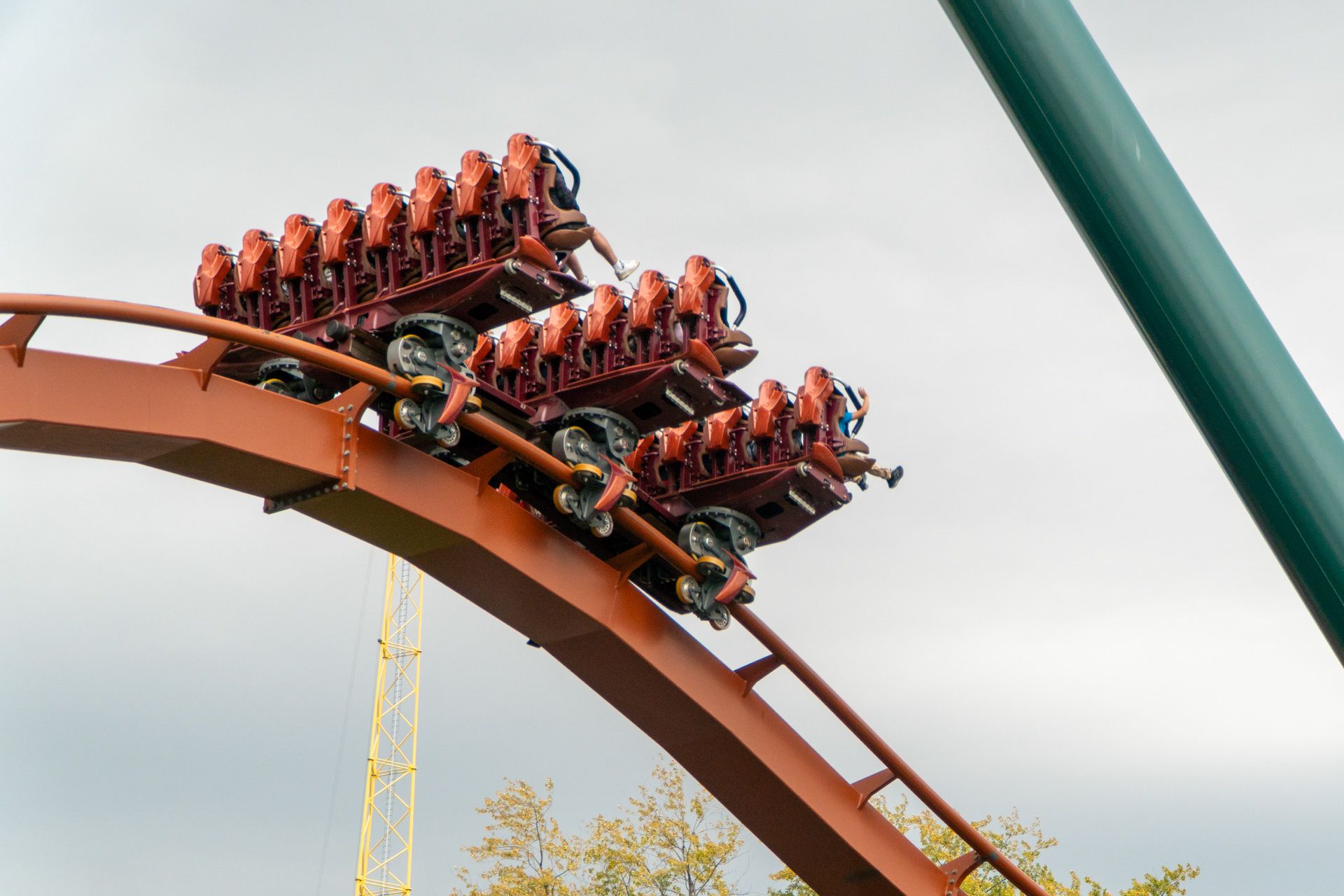
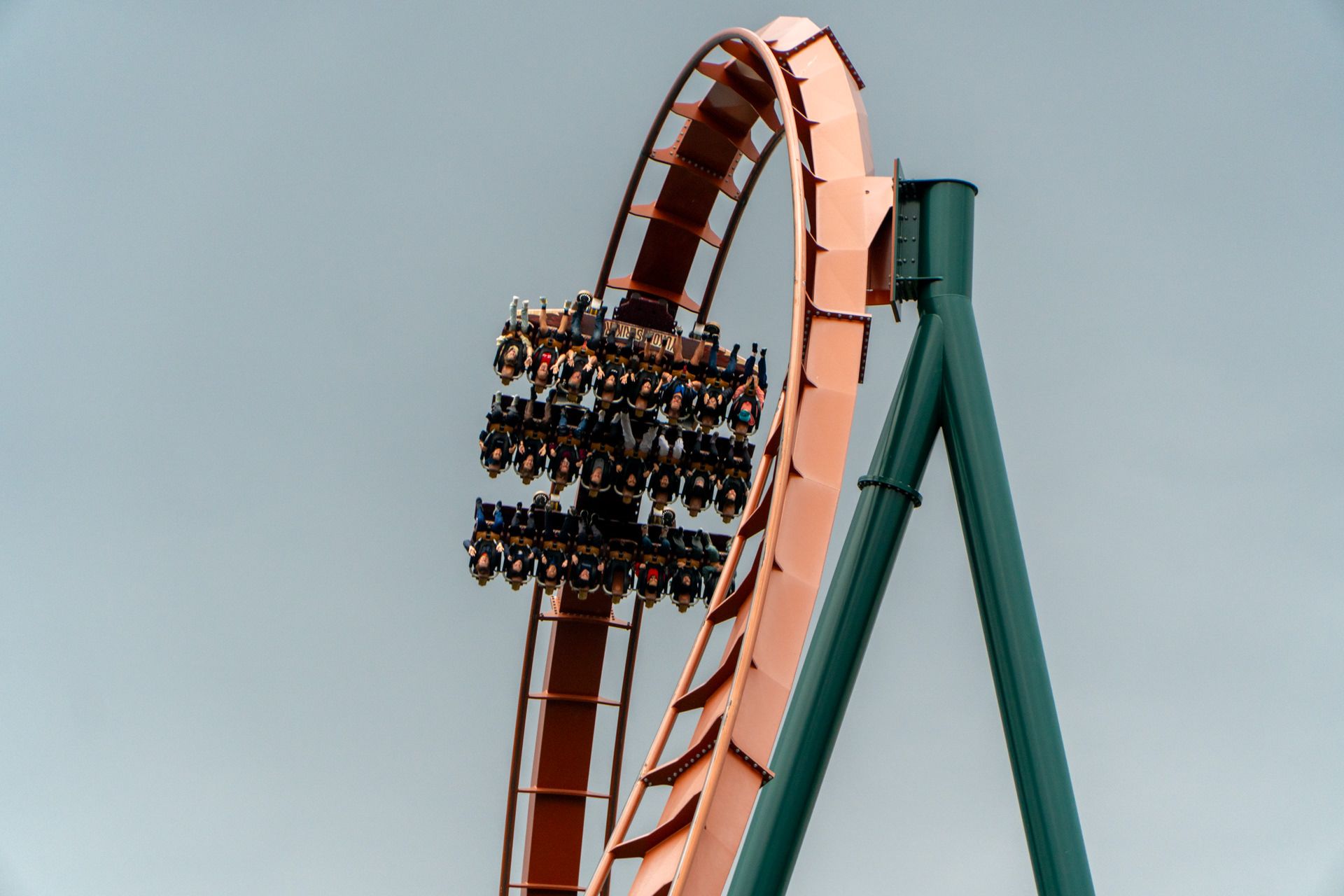
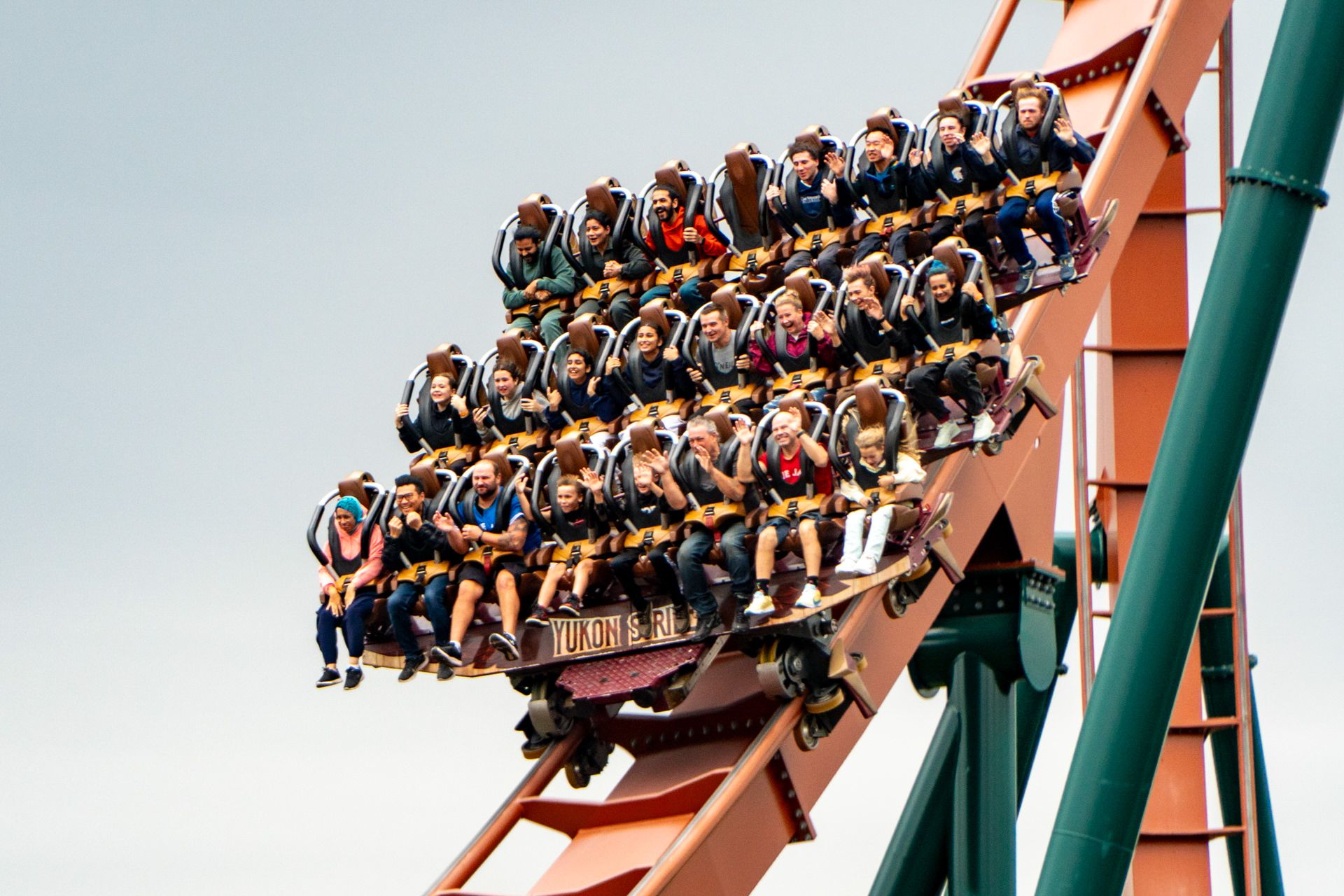
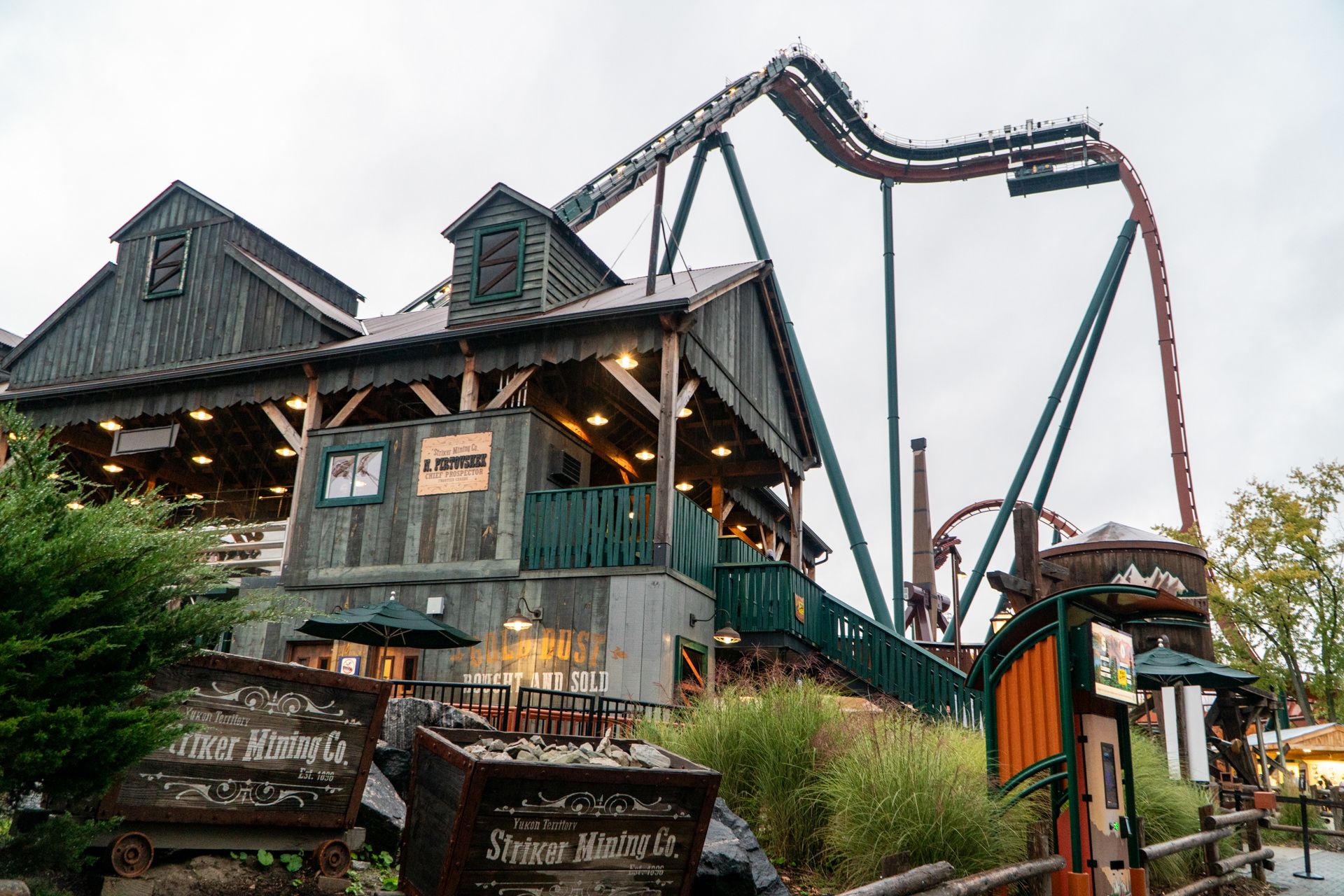
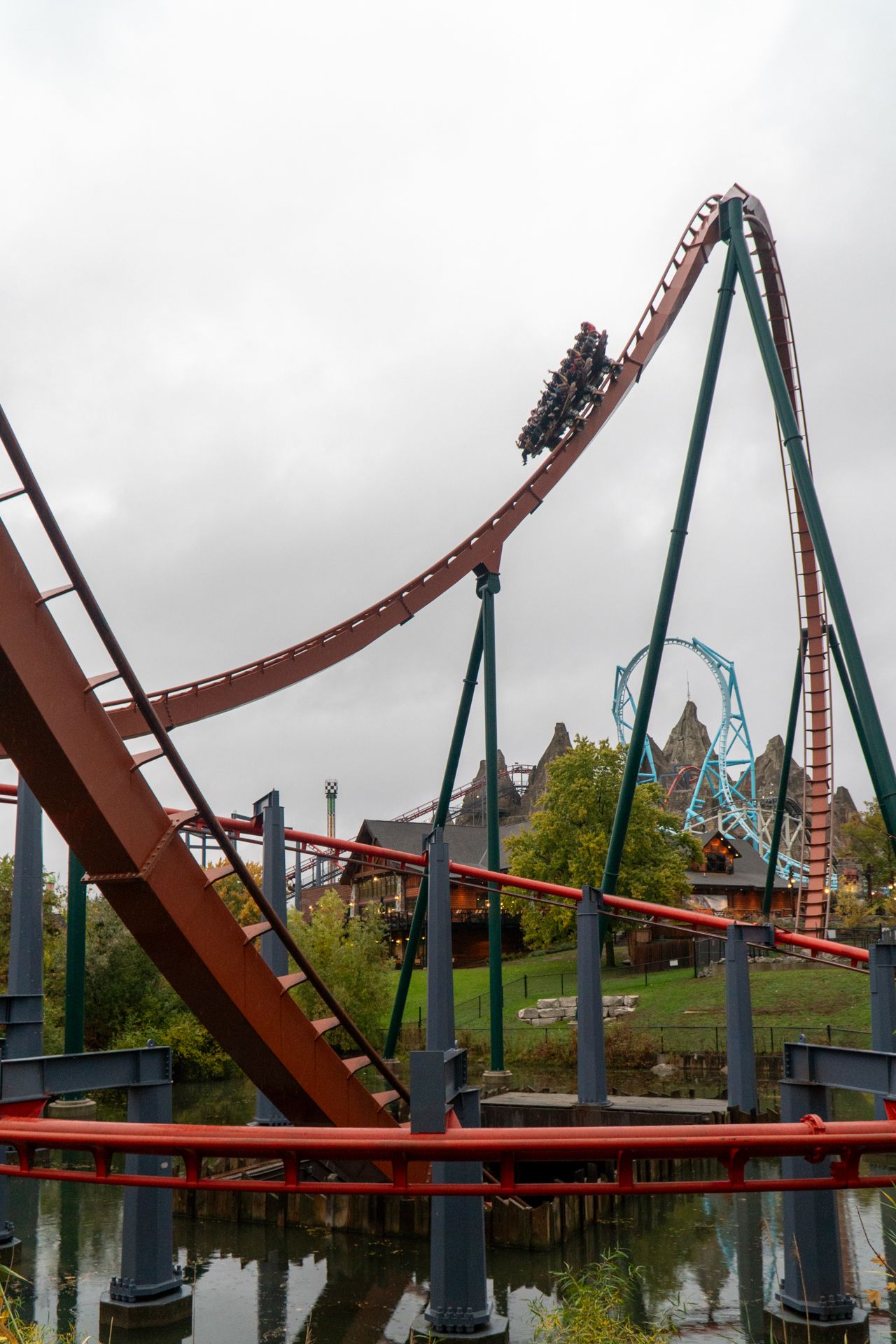
Yukon Striker is a massive B&M Dive Coaster. My first ride happened during heavy rain, which meant I honestly didn’t see much of the actual layout. Thankfully, conditions were dry on my second day, making the experience considerably more enjoyable.

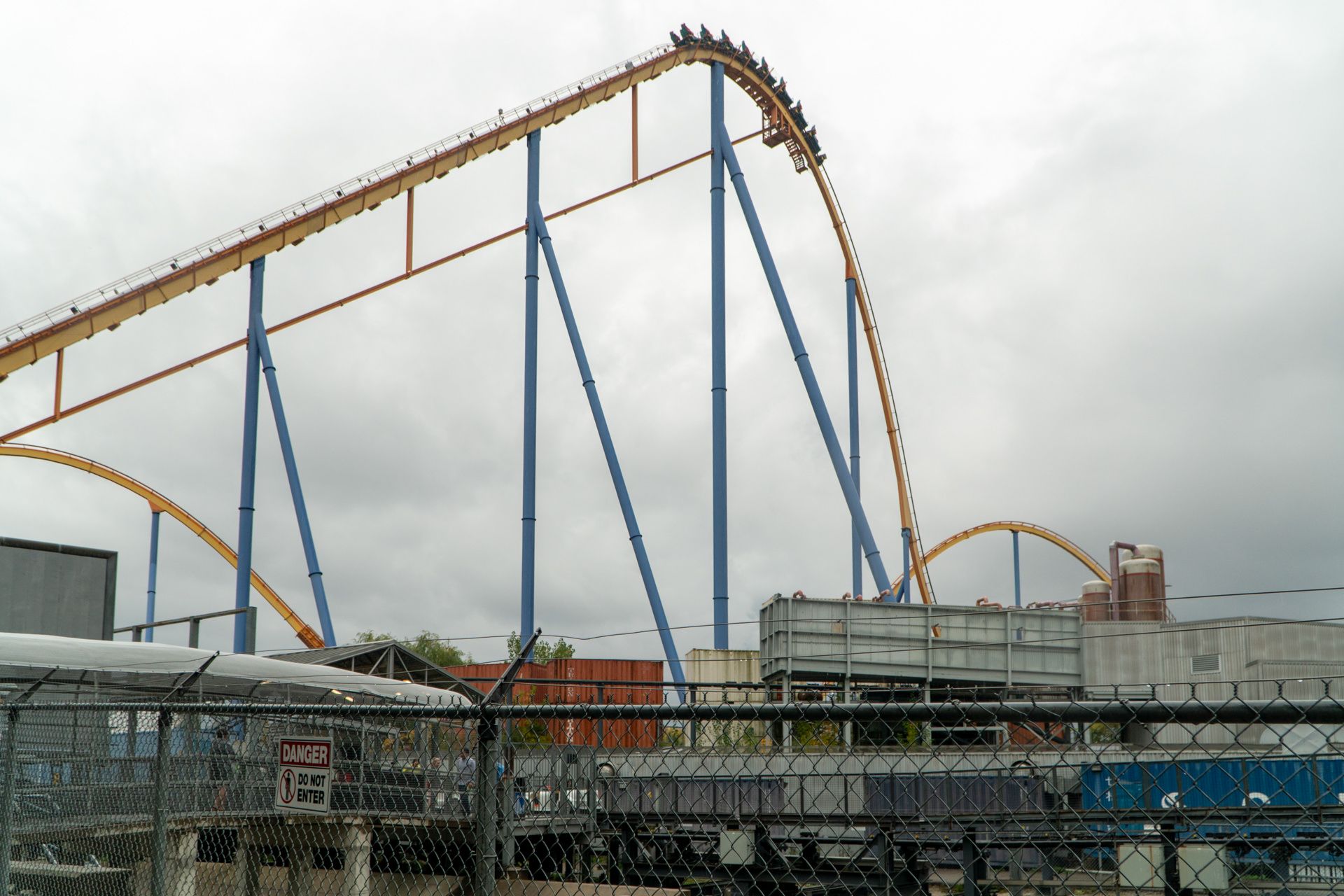
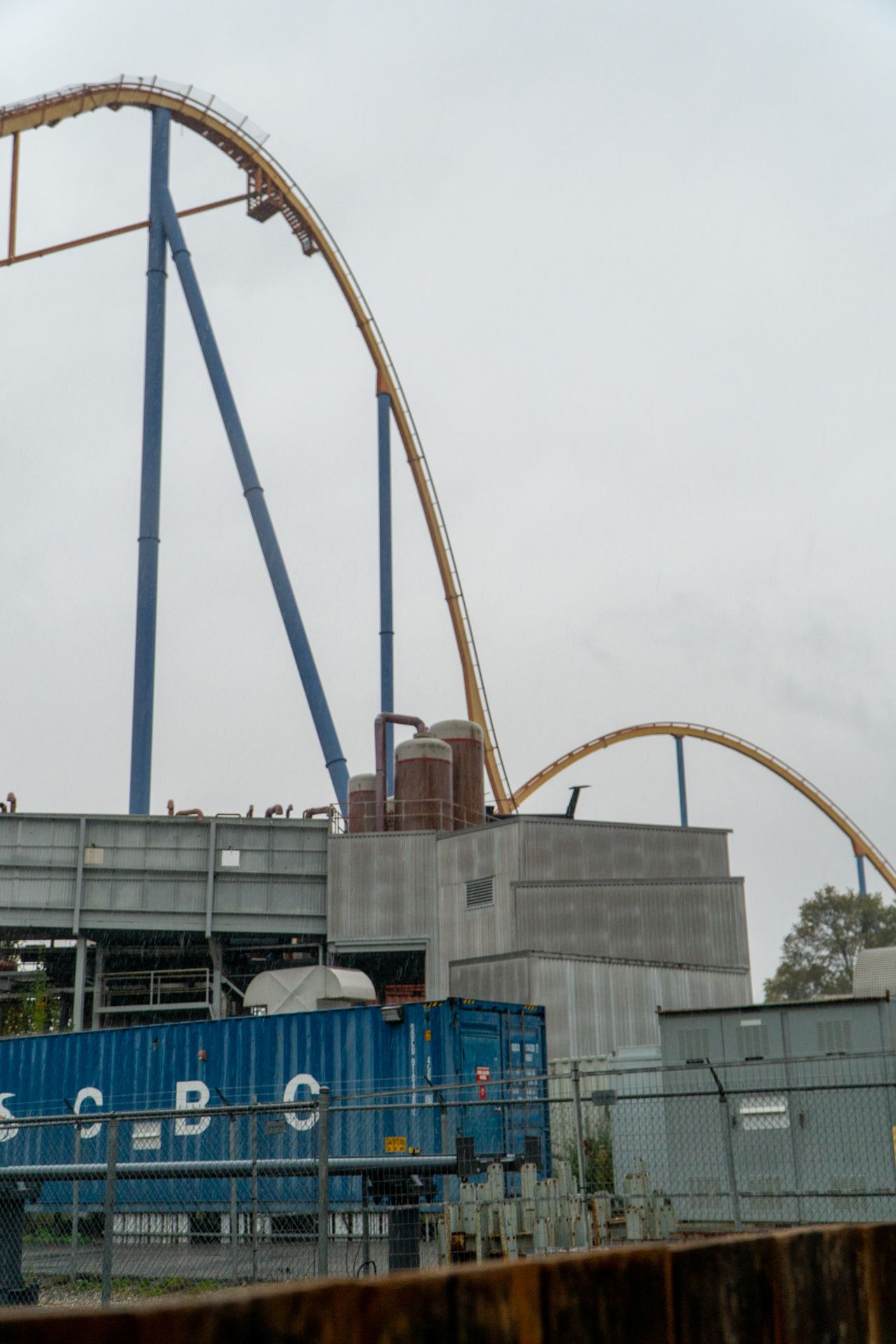
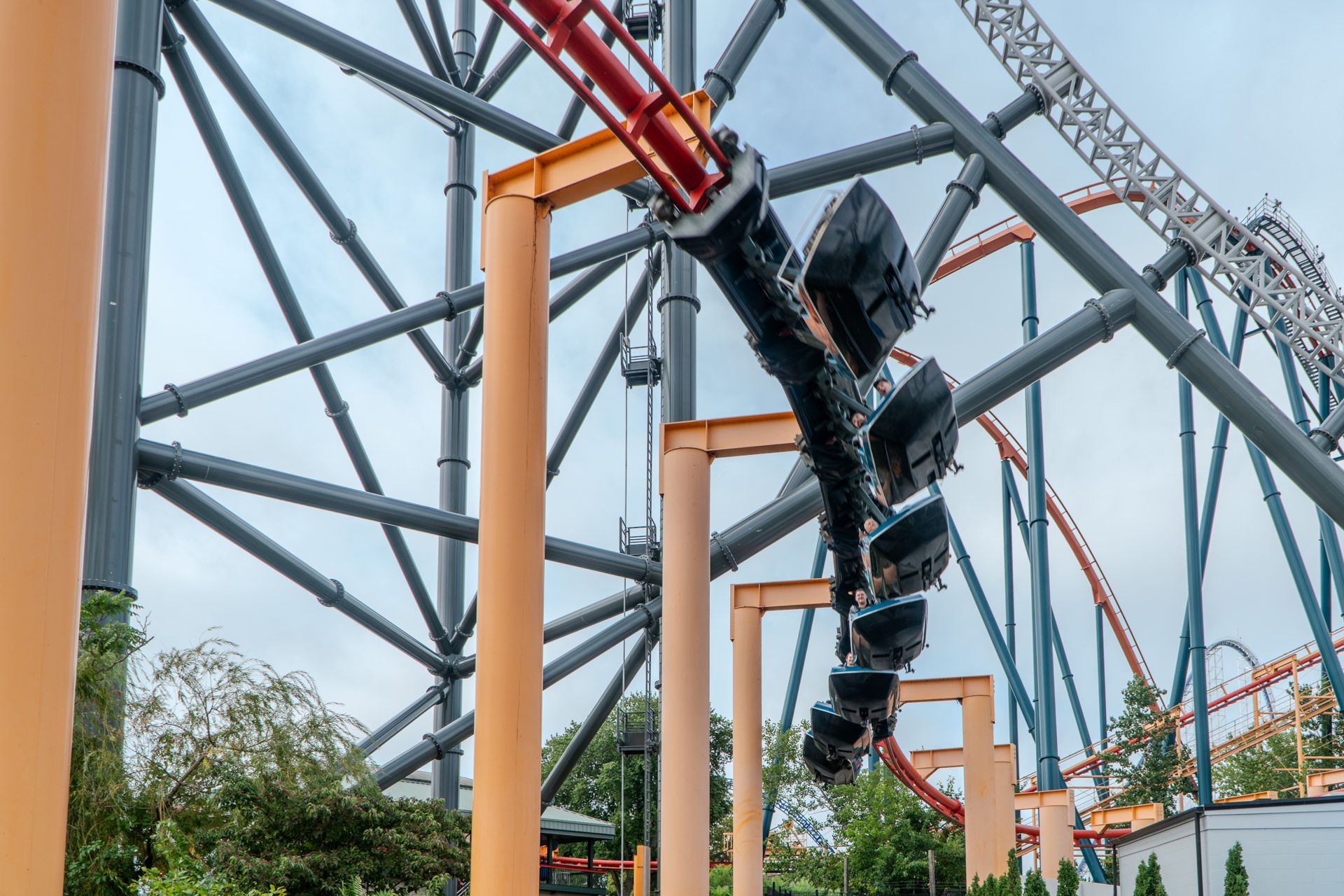
After the lift hill and a short turn, we head straight toward the edge. The holding brake pauses us there for several seconds before releasing the train into the vertical drop and through a tunnel beneath a large body of water. One particularly nice touch is that the drop passes straight through a helix of the coaster Vortex.

The huge Immelmann follows immediately. Next comes the climb into a zero-G winder, which turns us upside down before sending the train off into a sideways descent.

A traditional vertical loop follows — still a rather unusual element for a Dive Coaster. Another Immelmann takes us upward again before a small rise leads into the block brake directly above Timberwolf Falls. After being slowed considerably, we enter a second vertical drop, followed by an airtime hill and a forceful final helix into the brakes.

All things considered, Yukon Striker is a very solid ride.

Tundra Twister

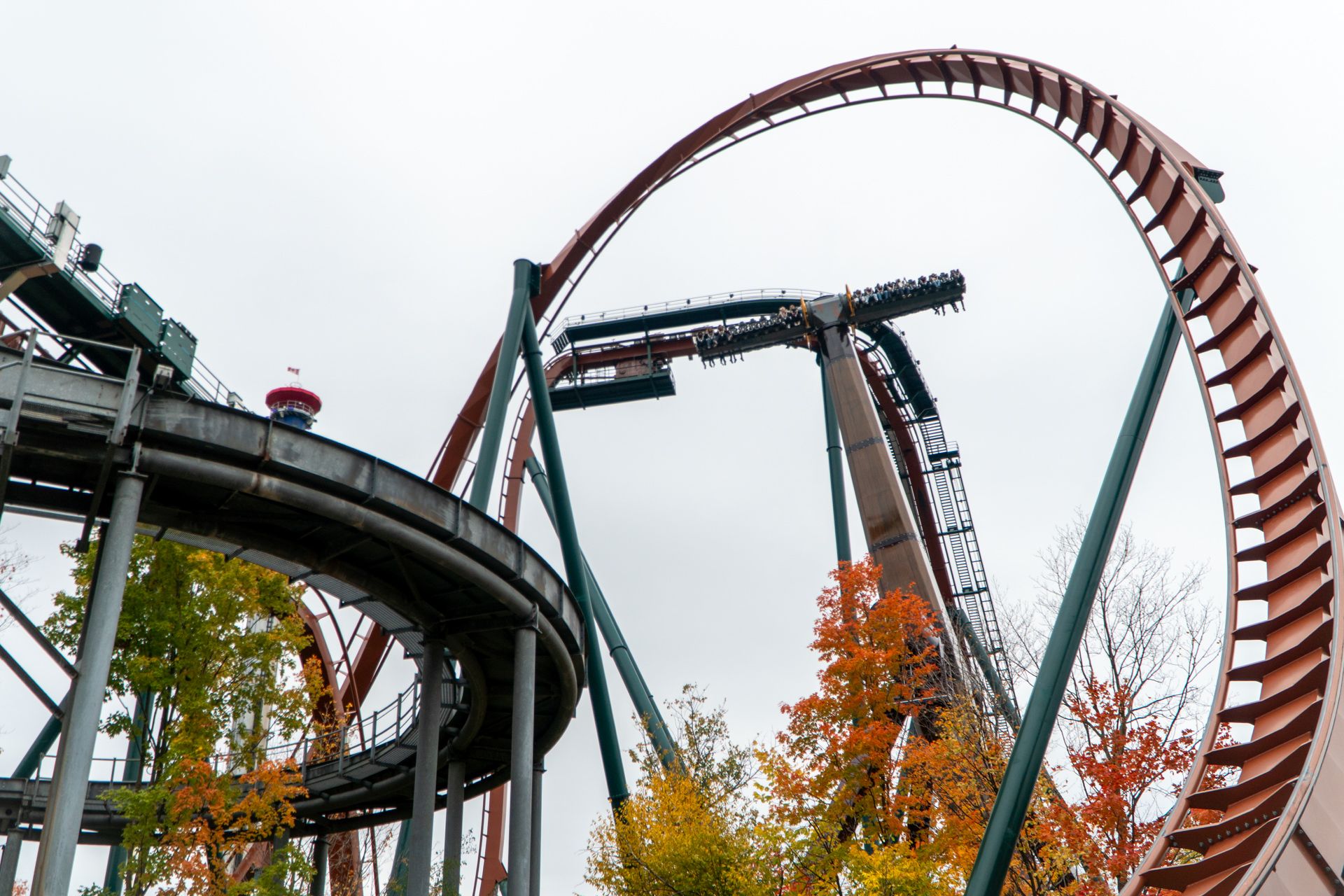
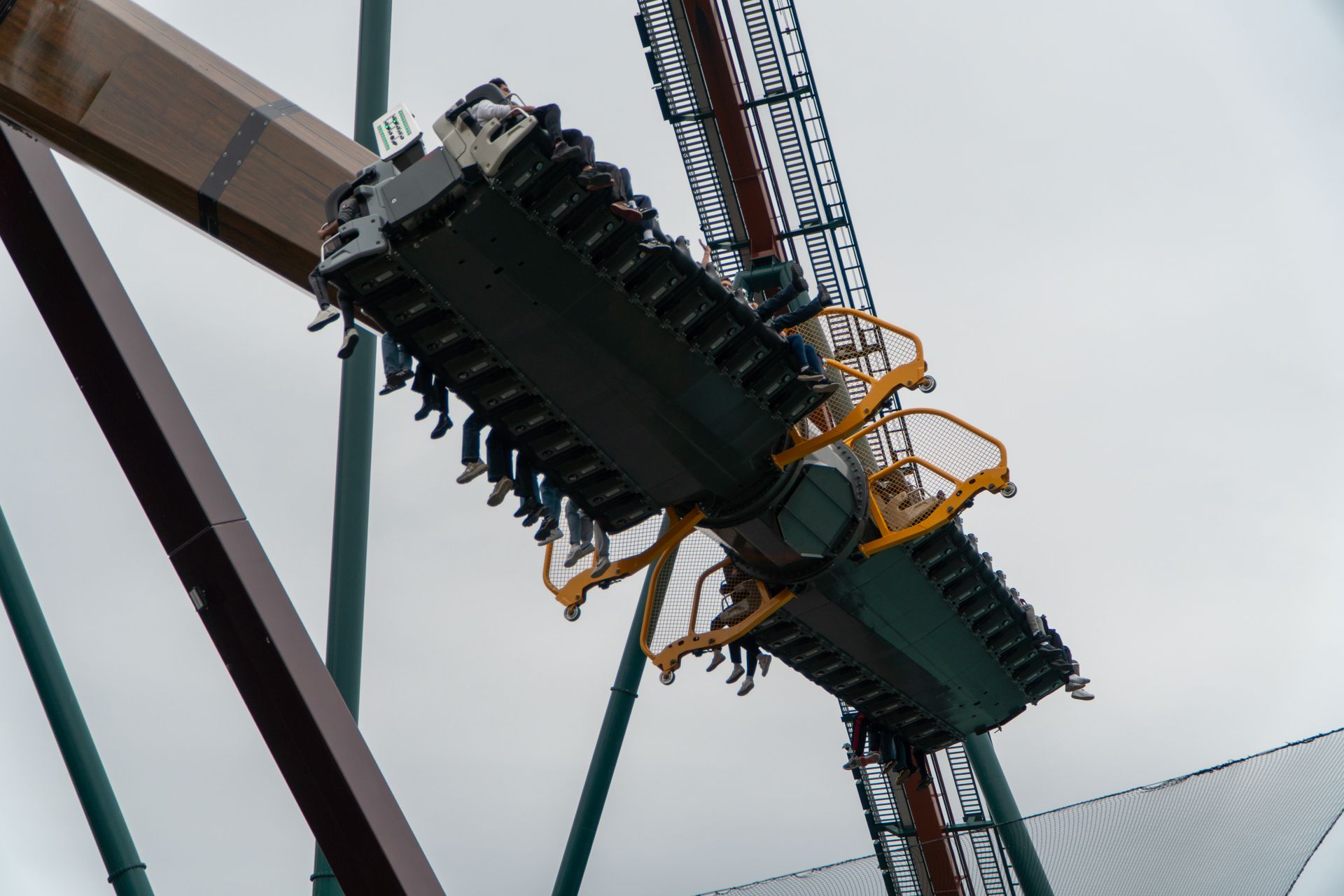
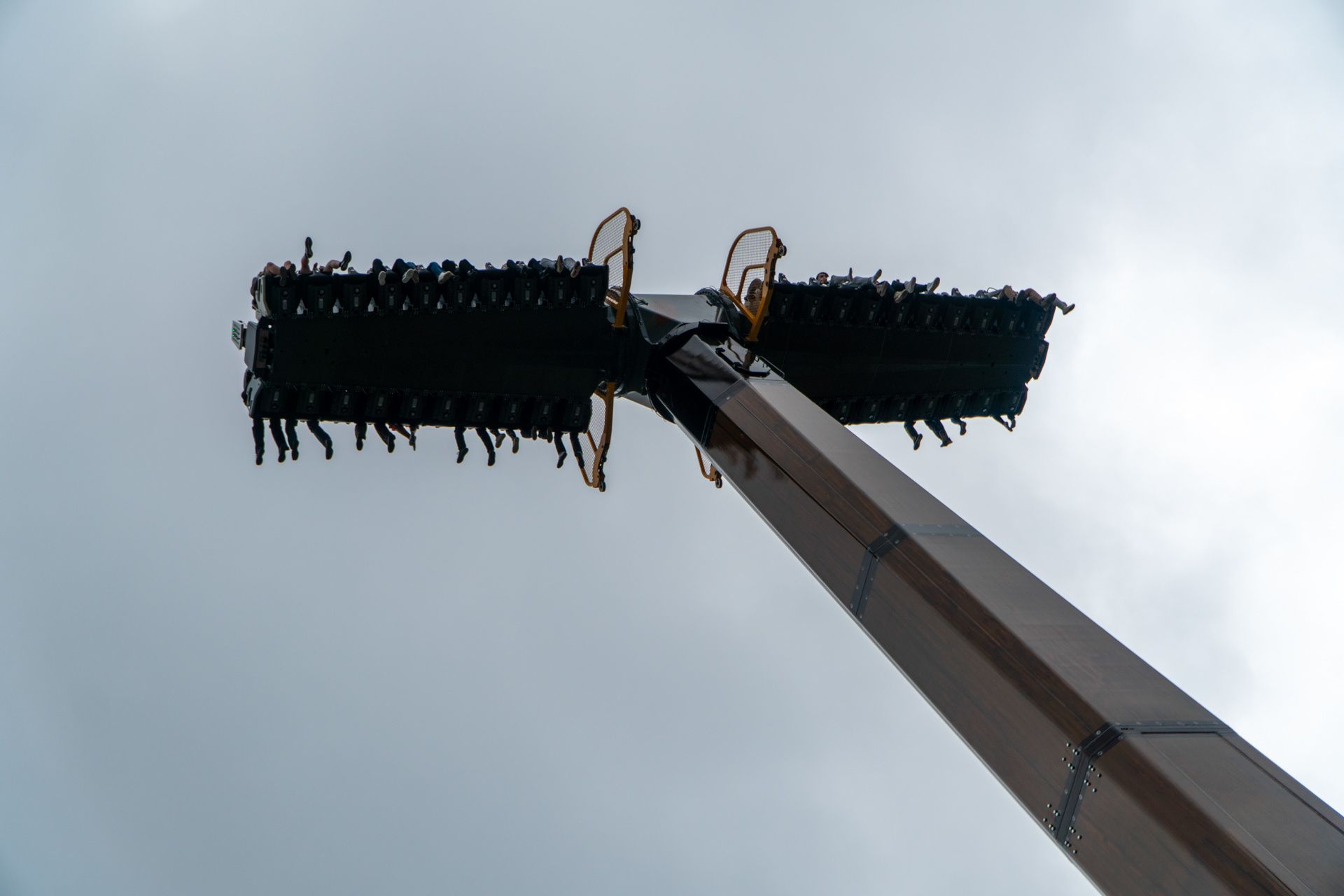
Tundra Twister is currently the only Mondial Avalanche in existence. It is an enormous ride, carrying 40 passengers at a time, and looks impressive even before it starts moving.

Because of the huge moving mass, the ride feels somewhat slower and more deliberate than something like Shockwave, so the rolls and inversions aren’t quite as wild. What it does have, however, is height: Tundra Twister reaches around 157 feet, which turns the ride into a pretty respectable test of courage.

A very cool machine.

Timberwolf Falls and White Water Canyon

Timberwolf Falls and White Water Canyon are the two larger water rides in this part of the park. Unfortunately, both had already entered their well-deserved winter hibernation during my visit.

Timberwolf Falls is a classic Hopkins Shoot the Chutes. The main drop creates a huge wall of water that comes crashing down rather evenly across the riders.

White Water Canyon, meanwhile, is a classic Intamin rapids ride with plenty of obstacles along the course, including several waterfalls.

Shivering Timbers and Lumberjack

Lumberjack is a Zamperla Hawk — essentially an inverting swinging ship with suspended seats. I had already ridden a similar machine at Kennywood, and once again it was a lot of fun.

Right in front of it is Shivering Timbers, a Mondial Inferno. In theory, this should be a wonderfully crazy ride. Unfortunately, the former traveling attraction is operated very cautiously at Canada’s Wonderland. Instead of a wild looping machine, the ride mostly delivers a bit of sideways rocking without any inversions at all.

It hardly ran during my visit anyway, which wasn’t particularly surprising since at least ten riders are required before they can send it.

Vortex

To finish things off, we have Vortex, a classic Arrow Suspended Coaster. The layout may look familiar, as The Bat at sister park Kings Island follows an almost identical course.

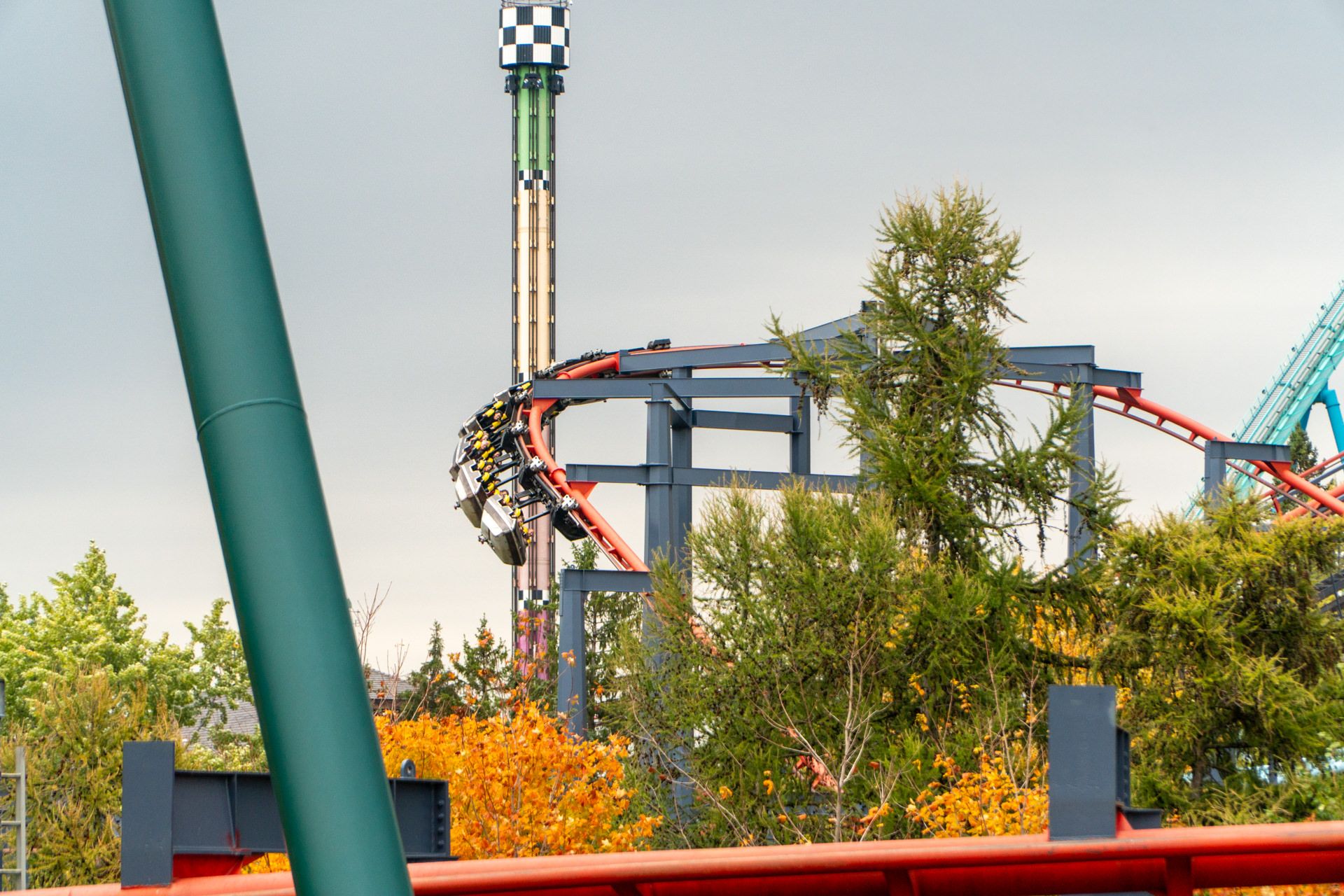
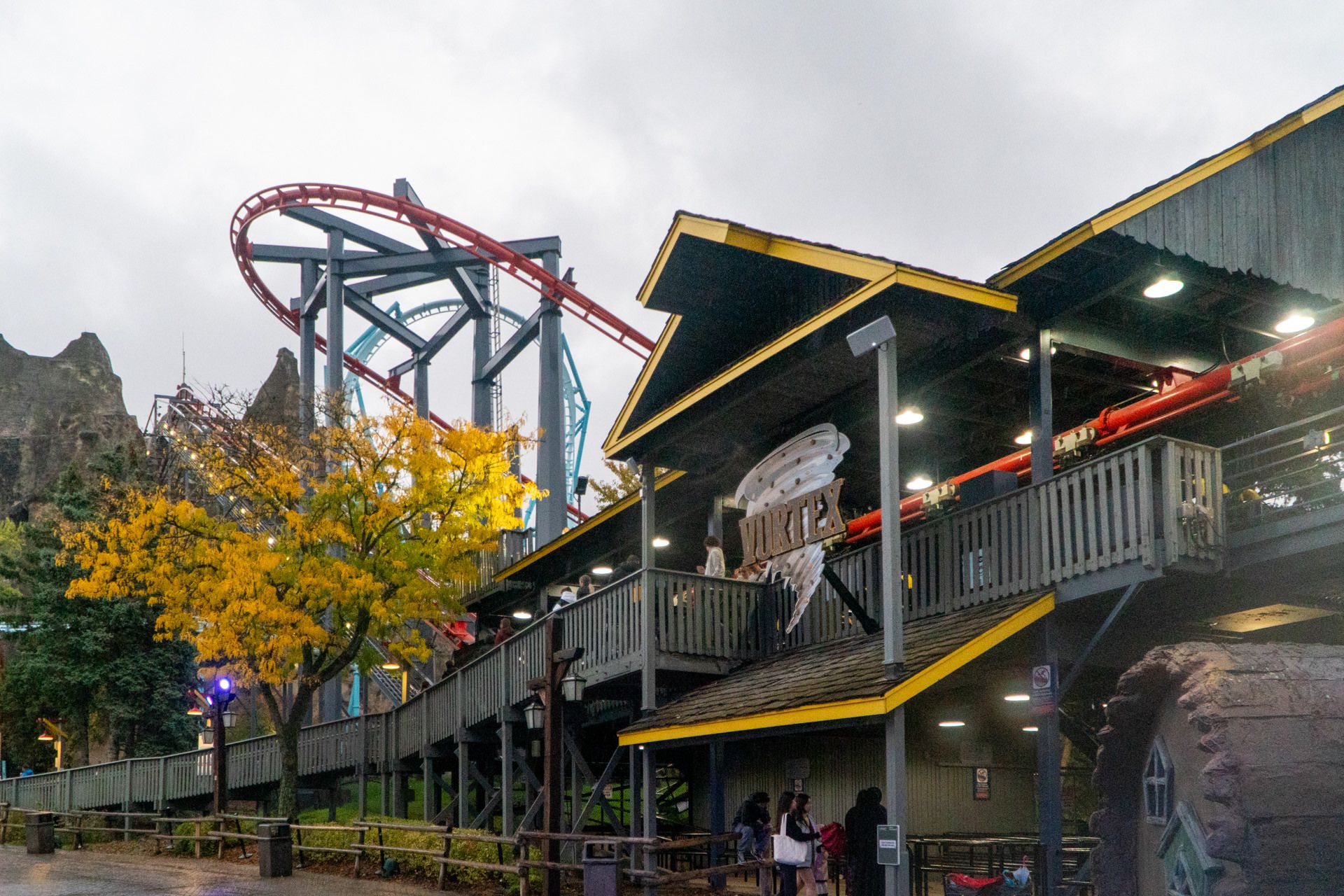
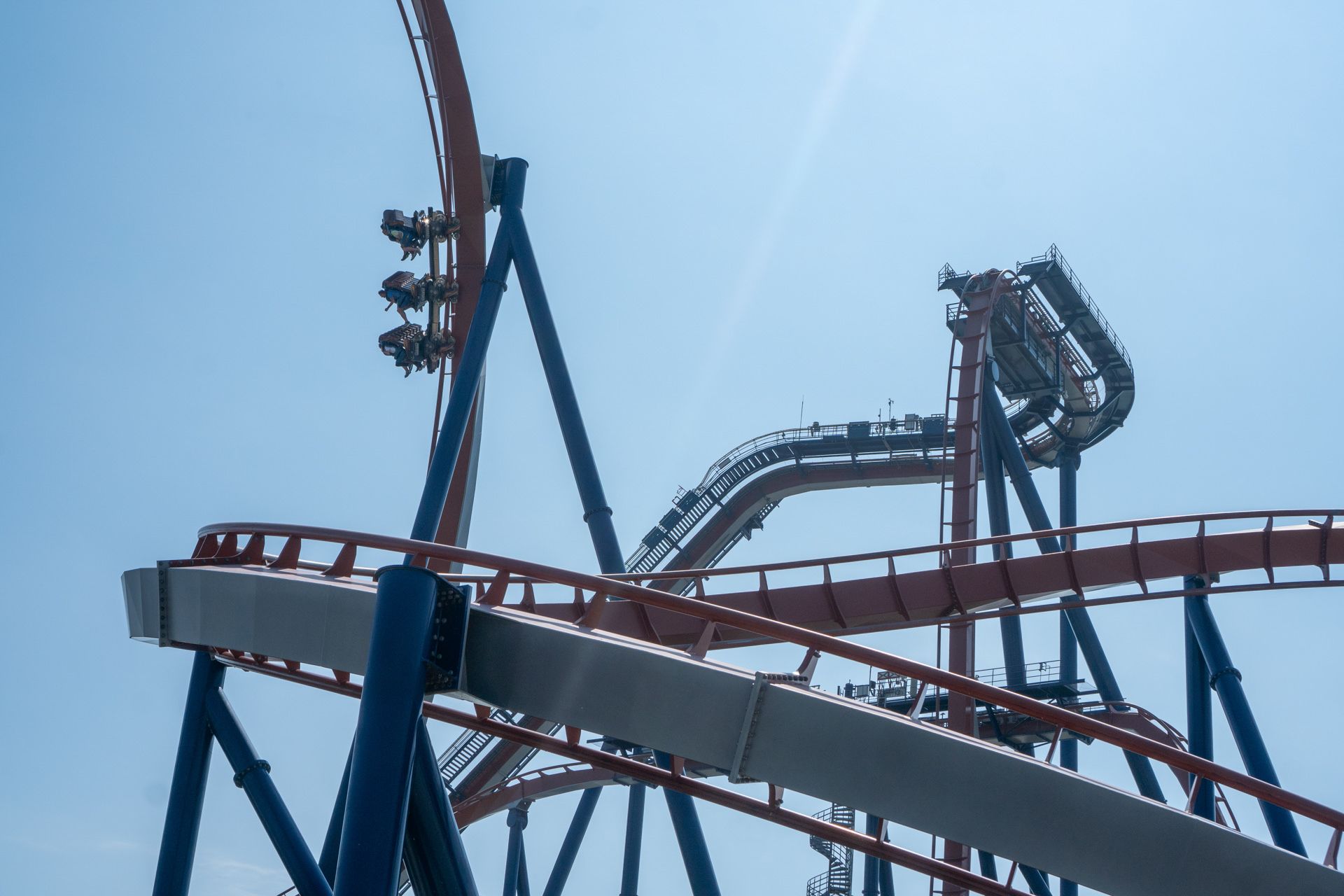
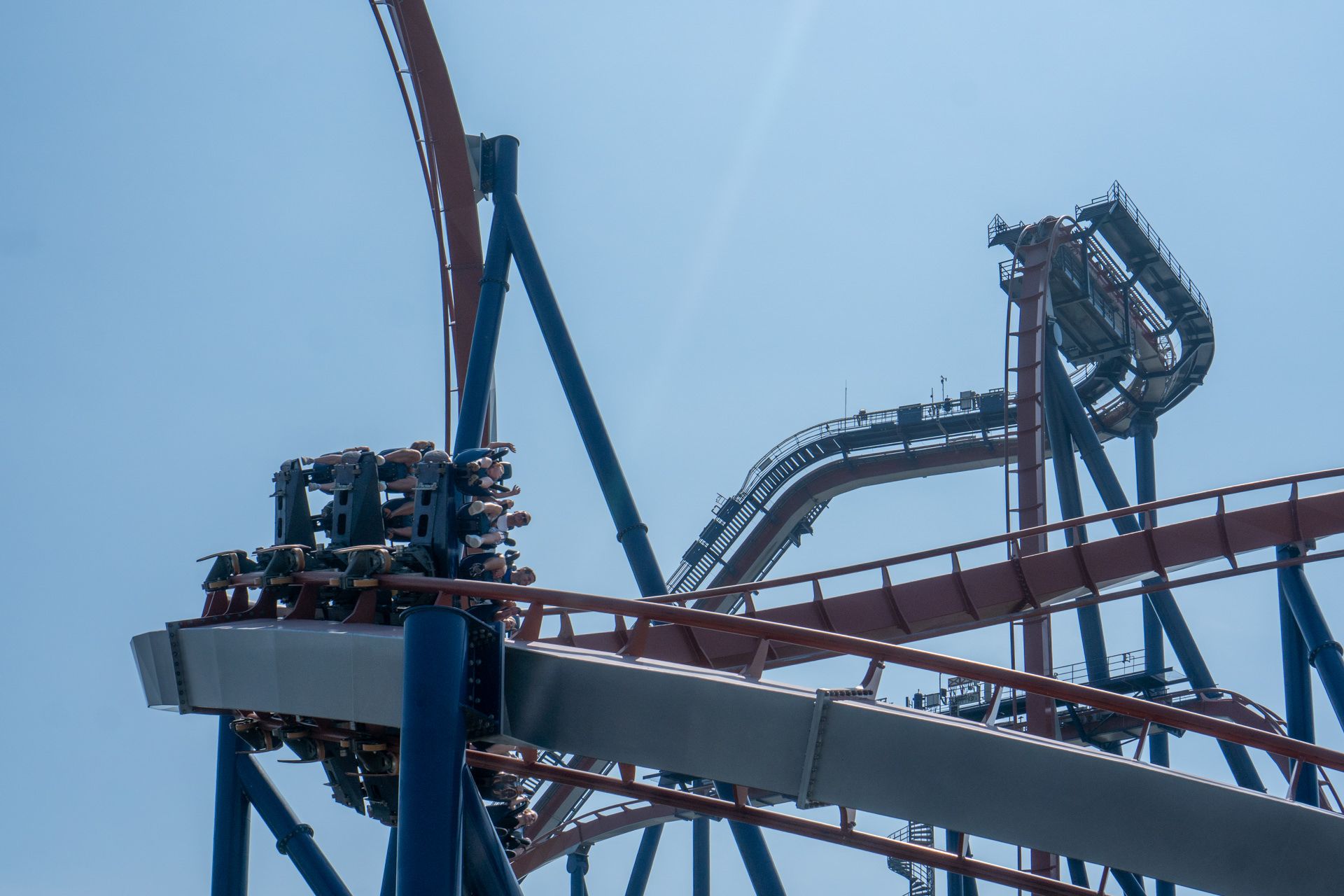
After leaving the station, the train climbs the lift hill all the way up onto Wonder Mountain. A turn at the top sets up the first drop, which sends us diving down the side of the mountain. The cars are already swinging hard by the time we hit the valley and race into a large turnaround.

From there, the ride keeps up plenty of speed as it runs out across the water. Fast directional changes send the cars swinging aggressively from side to side, with the descending helix just above the water being one of the best-looking moments on the entire ride. A few more quick turns eventually bring us back toward the station.

For me, Vortex is about as close as you can get to the ideal family coaster. It is fast and has a great sense of movement thanks to the swinging cars, yet never becomes overly intense.

Pictures Canada’s Wonderland
Conclusion Canada’s Wonderland
I really enjoyed Canada’s Wonderland. Despite its size, the park feels surprisingly compact, yet there is easily enough to keep you busy for two full days. What impressed me most was the combination of major coasters and the enormous variety of flat rides. With attractions such as Sledgehammer, Tundra Twister, and Wilde Knightmares, there are several rides here that you simply don’t come across very often anymore.

Leviathan was easily my favorite coaster in the park, but Alpen Fury and Backlot Stunt Coaster were also a lot of fun. I was especially impressed by the wooden coasters, all of which I thoroughly enjoyed. On the flat-ride side, Sledgehammer and Tundra Twister were the standouts for me. I’m already looking forward to my next visit.


What’s your opinion on Canada’s Wonderland? Simply write it in the comment field below the report!


Click here to get to the overview page of Canada’s Wonderland
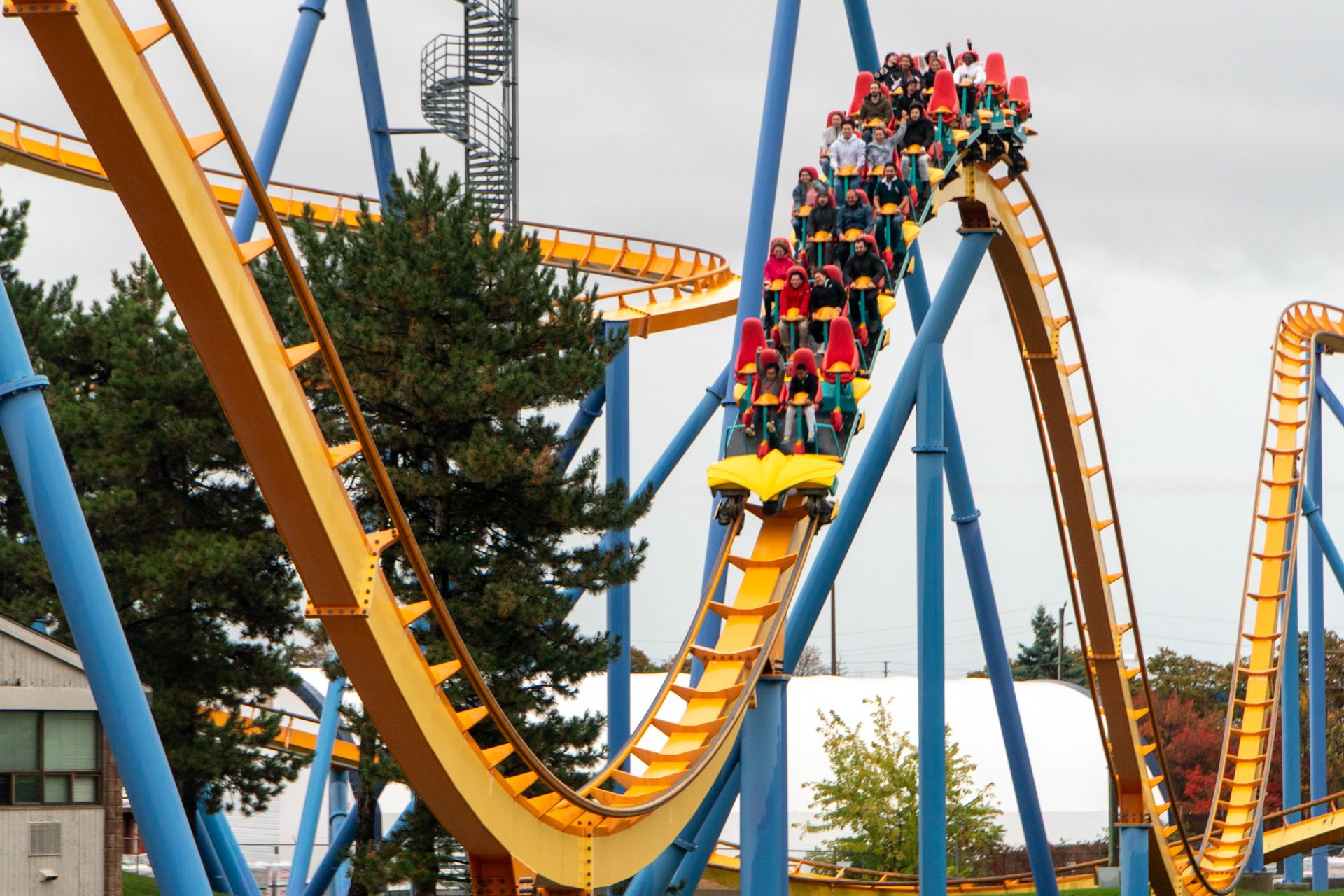
Indiana Beach


Theme Park:Indiana Beach (since 1952)
Ideal Beach (1926 - 1951)
Address:5224 E. Indiana Beach Rd.
47960 Monticello
https://indianabeach.com
Operated by:IB Parks & Entertainment


Indiana Beach in Monticello, Indiana, is one of the Midwest’s classic amusement parks, with a history dating back to 1926. The Spackman family originally opened Ideal Beach as a small lakeside retreat with a swimming beach, bathhouse and concession stand. Over the following decades, it grew into a full-fledged amusement park that remained in family hands until 2008. After several ownership changes and a planned closure in 2020, businessman Gene Staples stepped in and gave Indiana Beach a new lease on life.
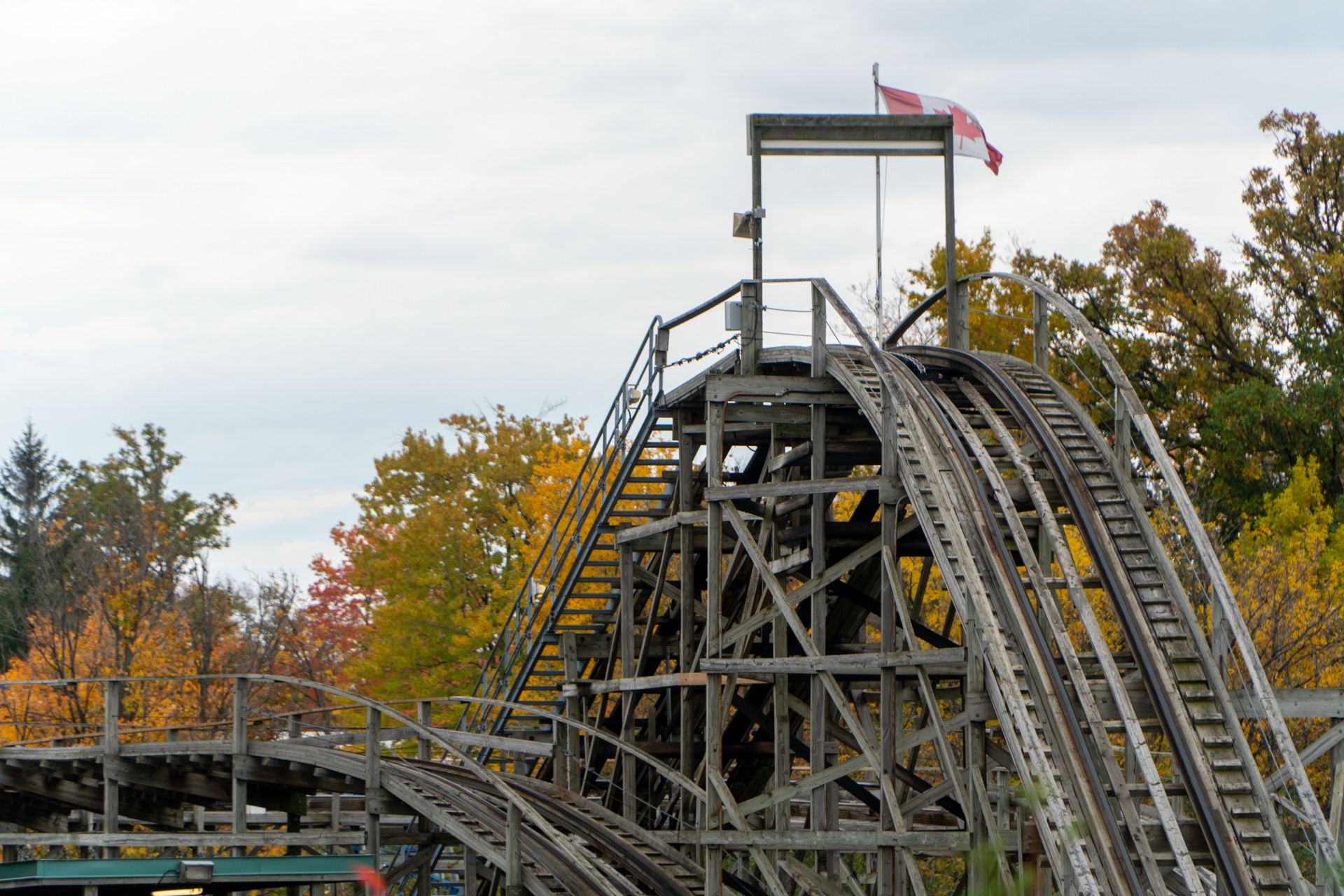
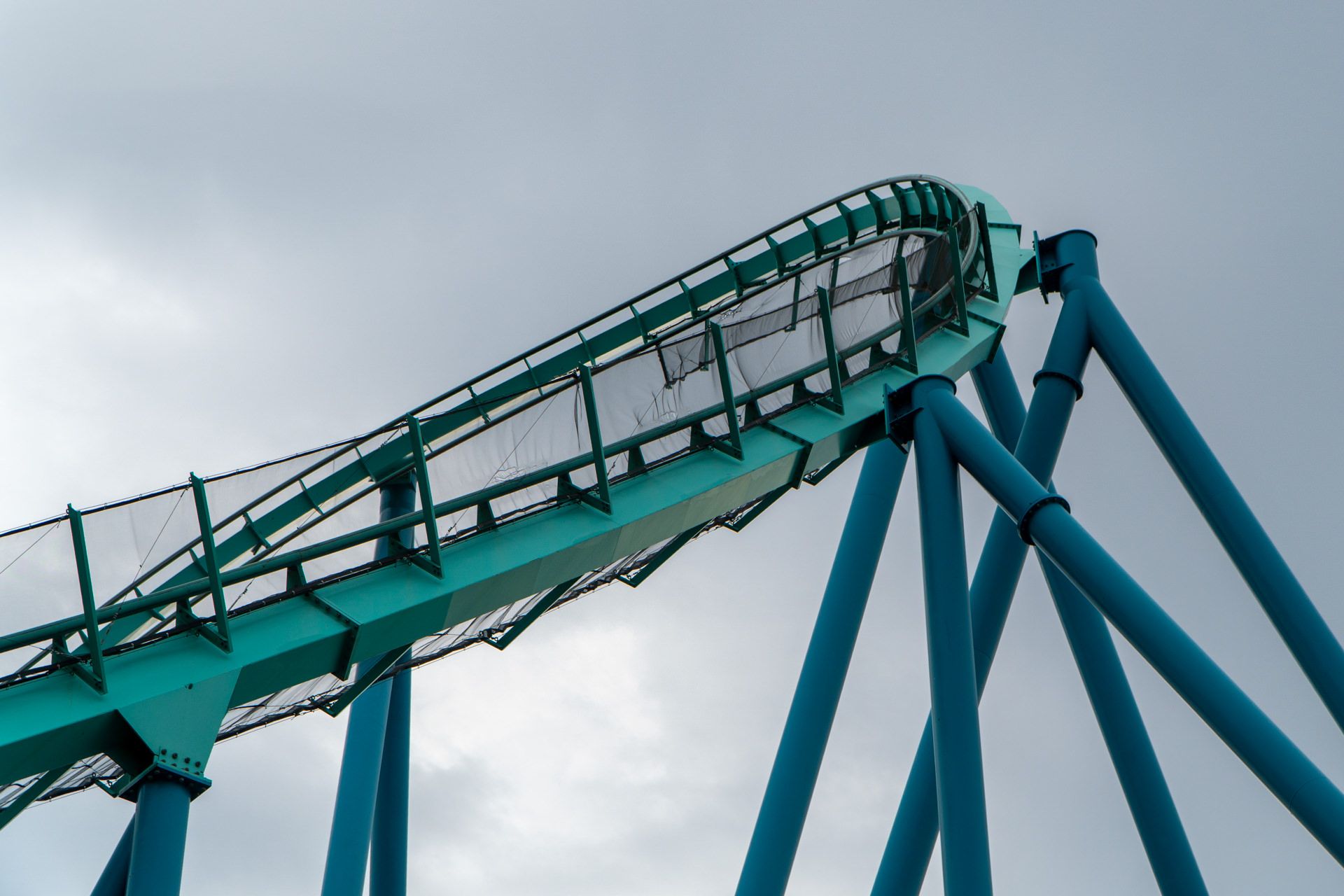
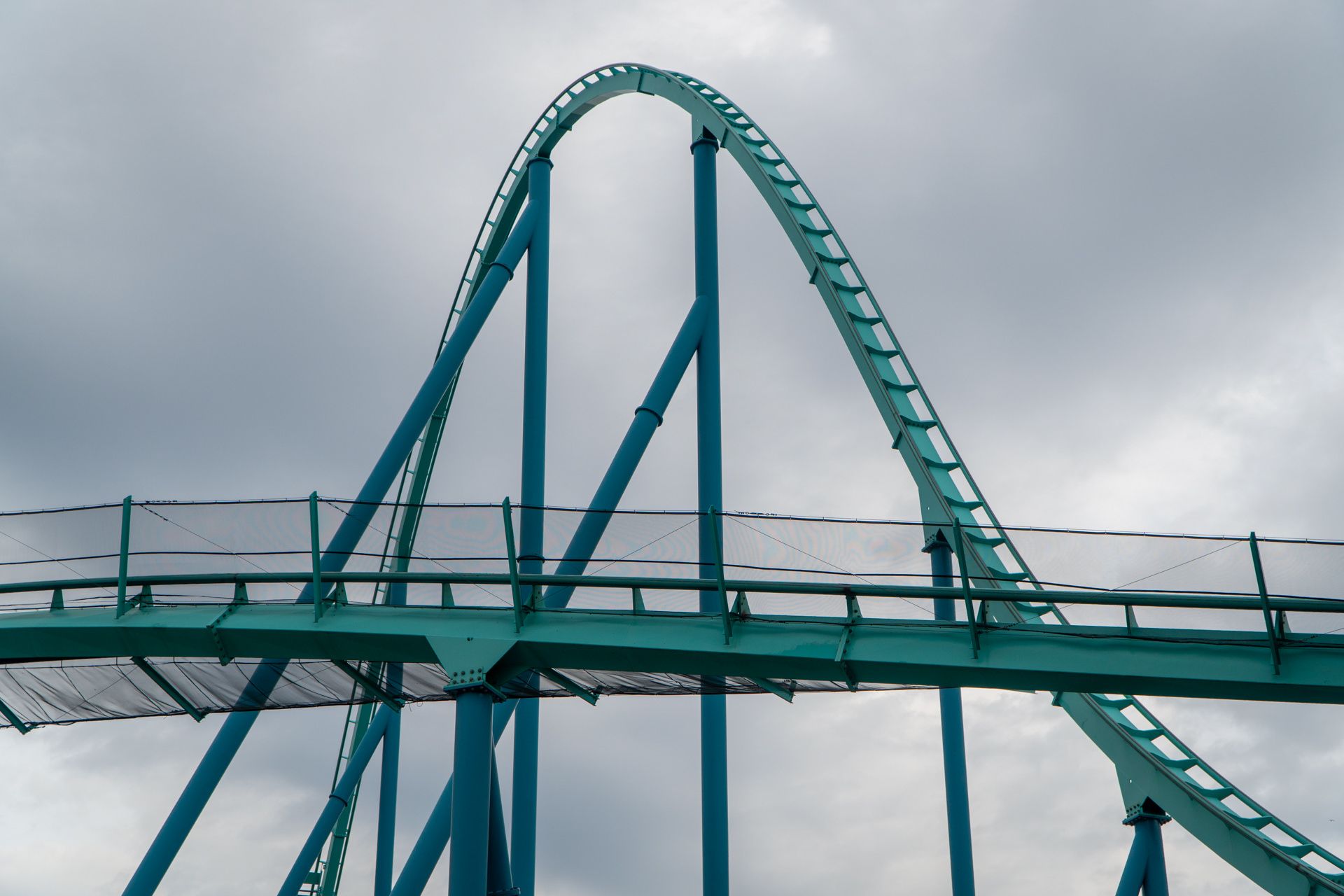
Much of Indiana Beach’s appeal comes from its compact setting along the shores of Lake Shafer. Roller coasters and classic rides are packed closely together, with several attractions extending right along or above the water. Hoosier Hurricane and Cornball Express highlight the park’s wooden coaster collection, while a wide selection of classic flat rides, additional roller coasters and a water park round out the lineup.
With rides squeezed into almost every available space and Lake Shafer always close by, Indiana Beach is simply a fun park to explore. Like many amusement parks with nearly a century of history, it has a charm that has developed over generations and can be felt throughout the park.

 
Reviews

There is more than corn in Indiana


Highlights of the Theme Park


All American Triple Loop

A German classic


Cornball Express

America’s finest CCI


Hoosier Hurricane

The wooden coaster with a view


Lost Coaster of Superstition Mountain

The awesome wooden coaster


Steel Hawg

The first El Loco


Tig’rr Coaster

The Jet Star


America’s Roller Coast

Cedar Point

Cedar Point is one of the oldest amusement parks still operating today. Its history dates back to 1870, when the peninsula on the shores of Lake Erie was initially developed mainly as a leisure destination with a beach. Over time, hotels, restaurants and the first rides were added, and over the decades the original resort gradually evolved into one of the best-known amusement parks in the United States.

One particularly defining era was the time of the so-called Coaster Wars. During the 1990s and 2000s, the major American amusement parks constantly tried to outdo one another with new roller coasters and ever more impressive records. Cedar Point was right in the middle of it, especially in its rivalry with Six Flags Magic Mountain over the largest number of roller coasters. At the same time, the rides kept getting taller: Millennium Force broke the 300-foot mark in 2000, followed only three years later by Top Thrill Dragster, which exceeded 400 feet. Six Flags Great Adventure eventually answered with Kingda Ka and pushed the height record even further. For coaster fans, those were wonderful times, as it felt like another even bigger ride could be announced at any moment.

Cedar Point had already played an important role in roller coaster history long before that, though. Corkscrew made headlines in 1976 with its three inversions, and Magnum XL-200 became the first roller coaster to exceed 200 feet in 1989. Later, major rides such as Maverick and Steel Vengeance were added, while a large number of older roller coasters and classic flat rides have also survived. Walking through Cedar Point today therefore almost feels like tracing several decades of American roller coaster development.

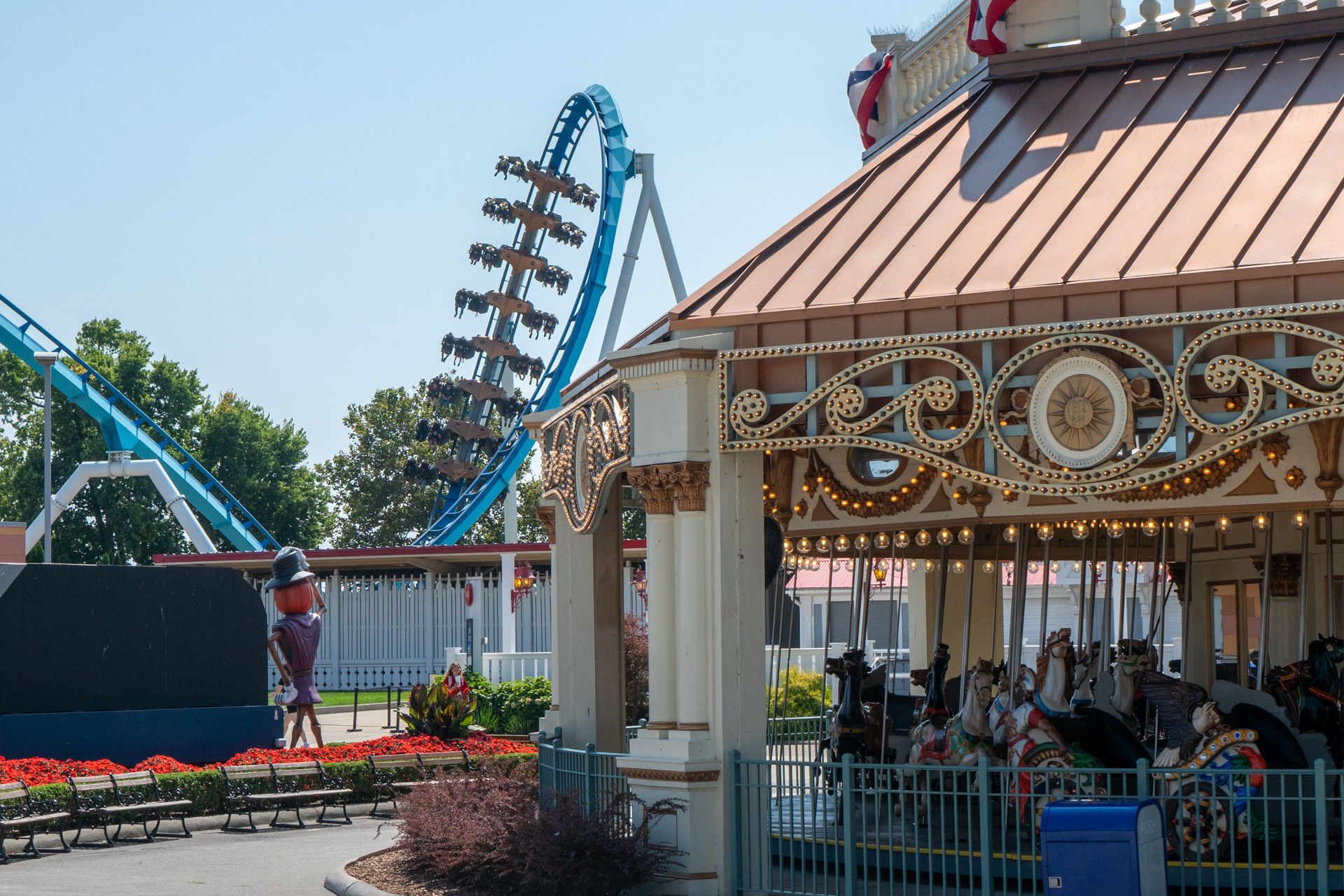
We begin our tour on the Main Midway. Right behind the entrance stands the historic Midway Carousel, while not far away the Ocean Motion swinging ship rises high into the air.

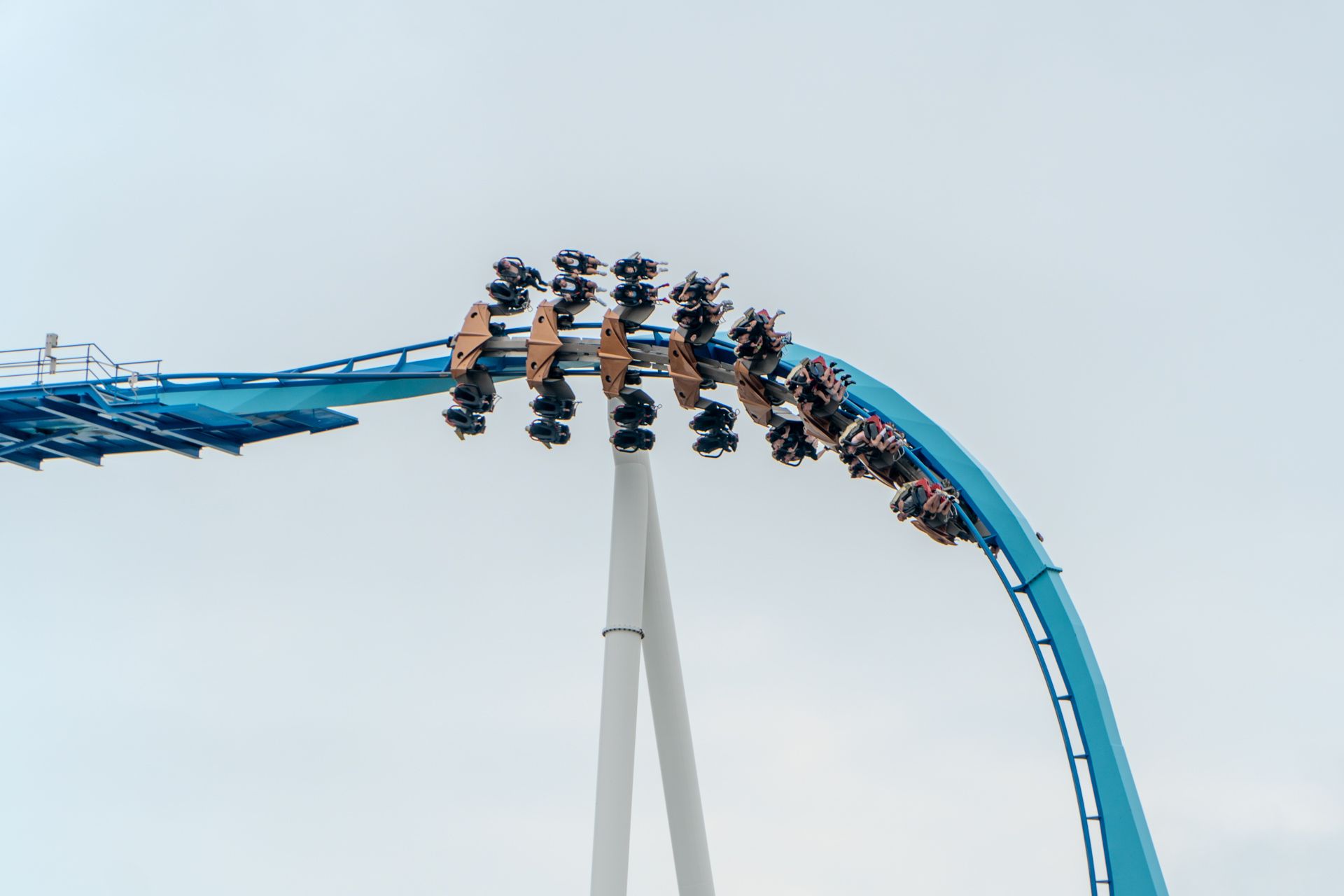
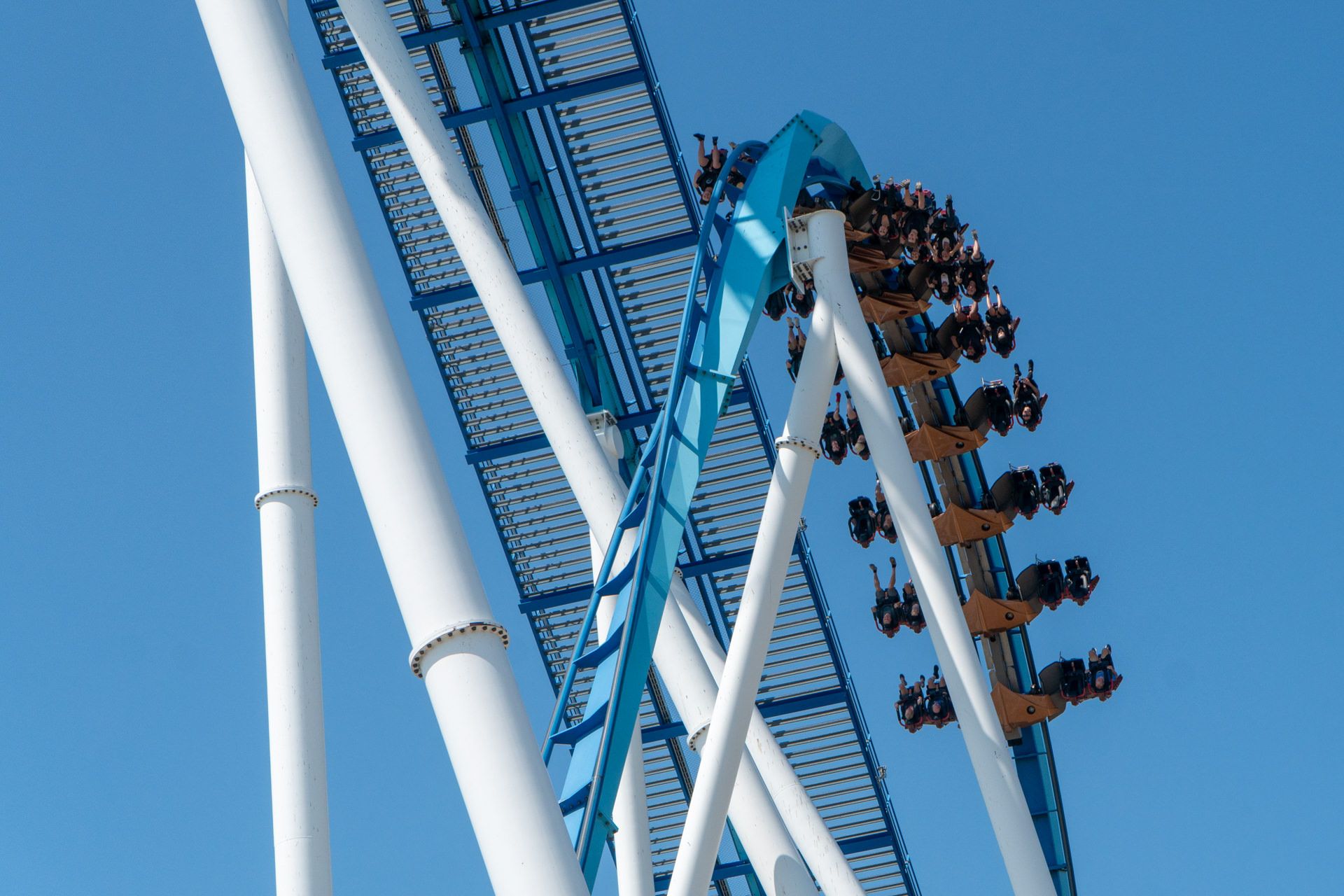
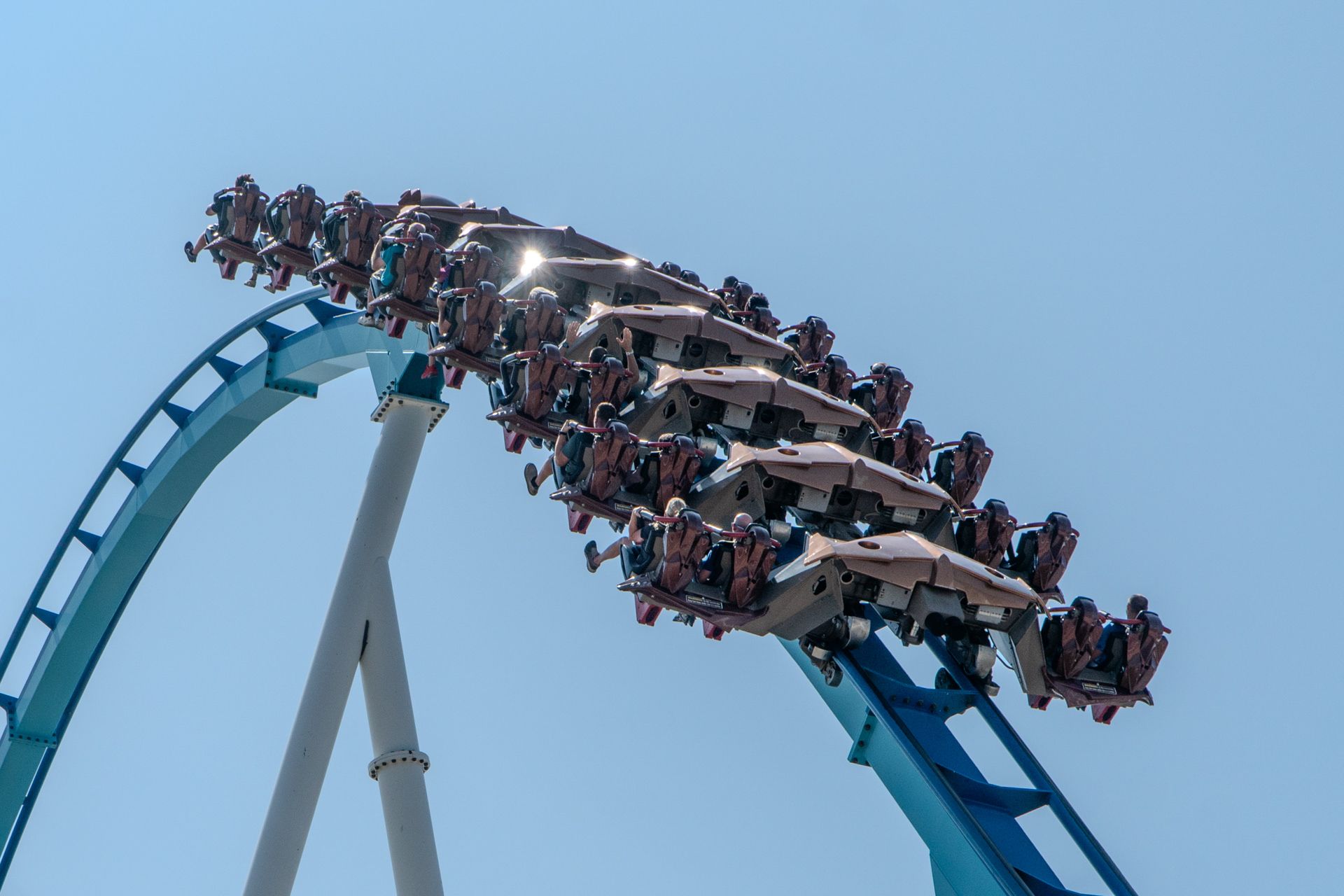
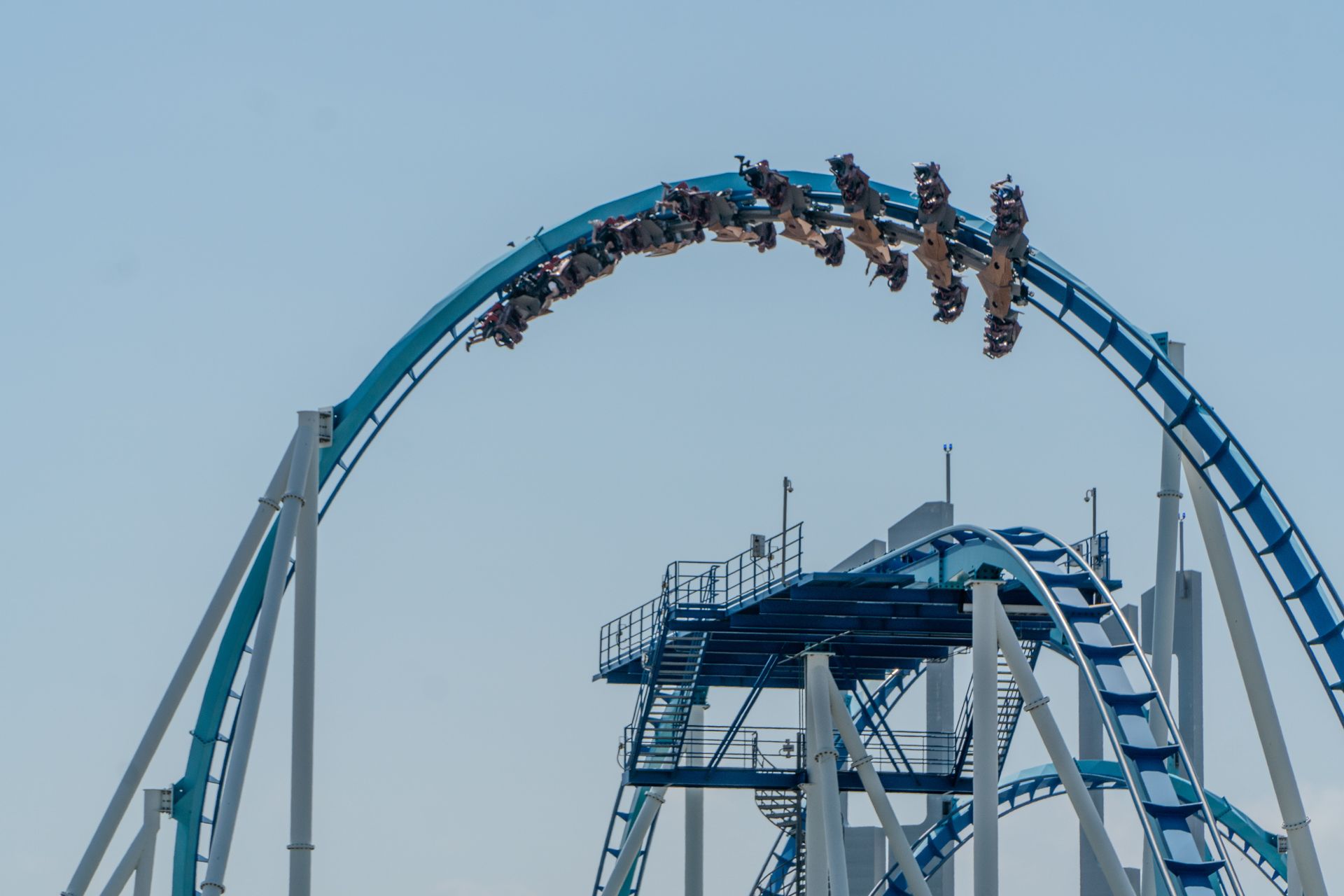
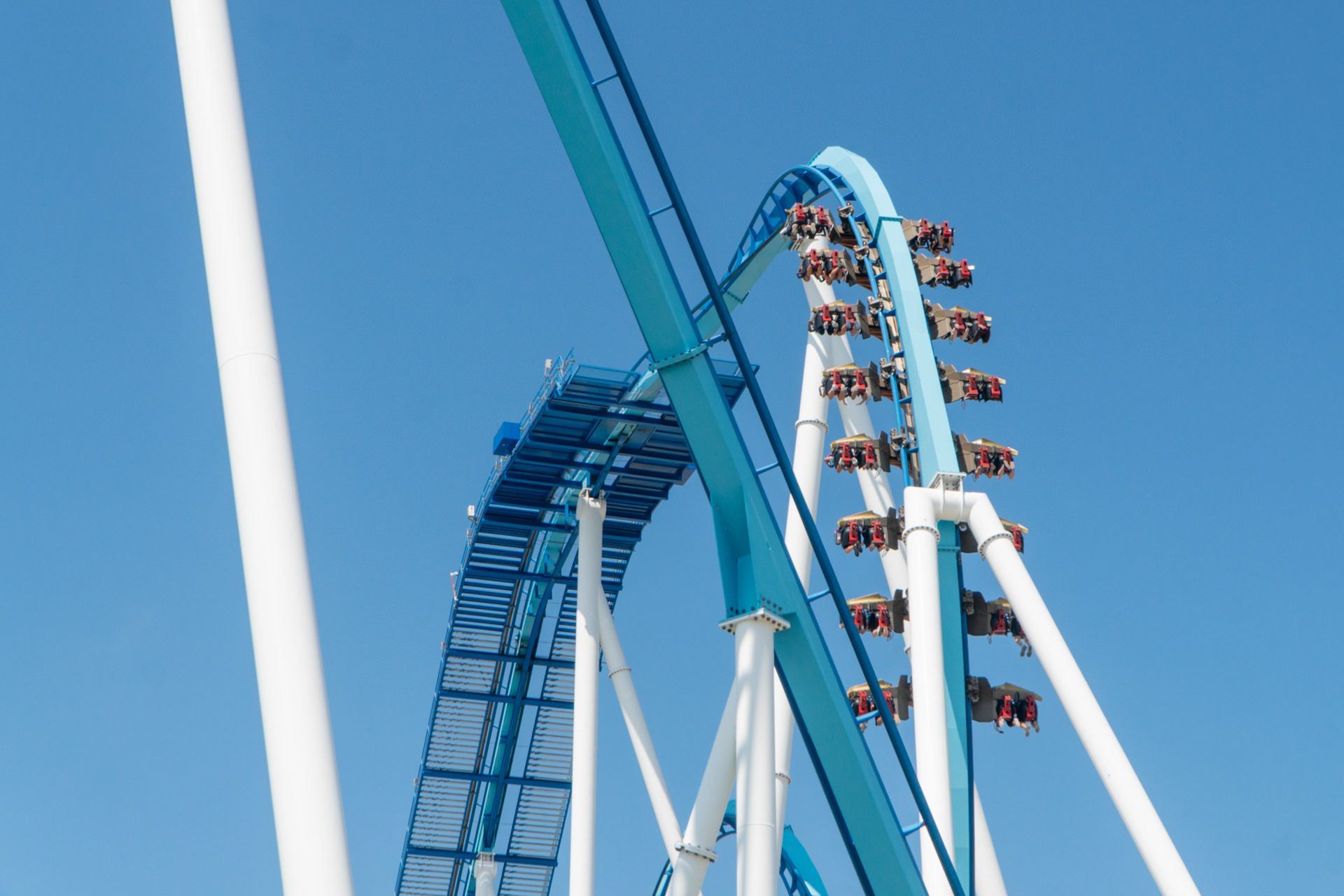
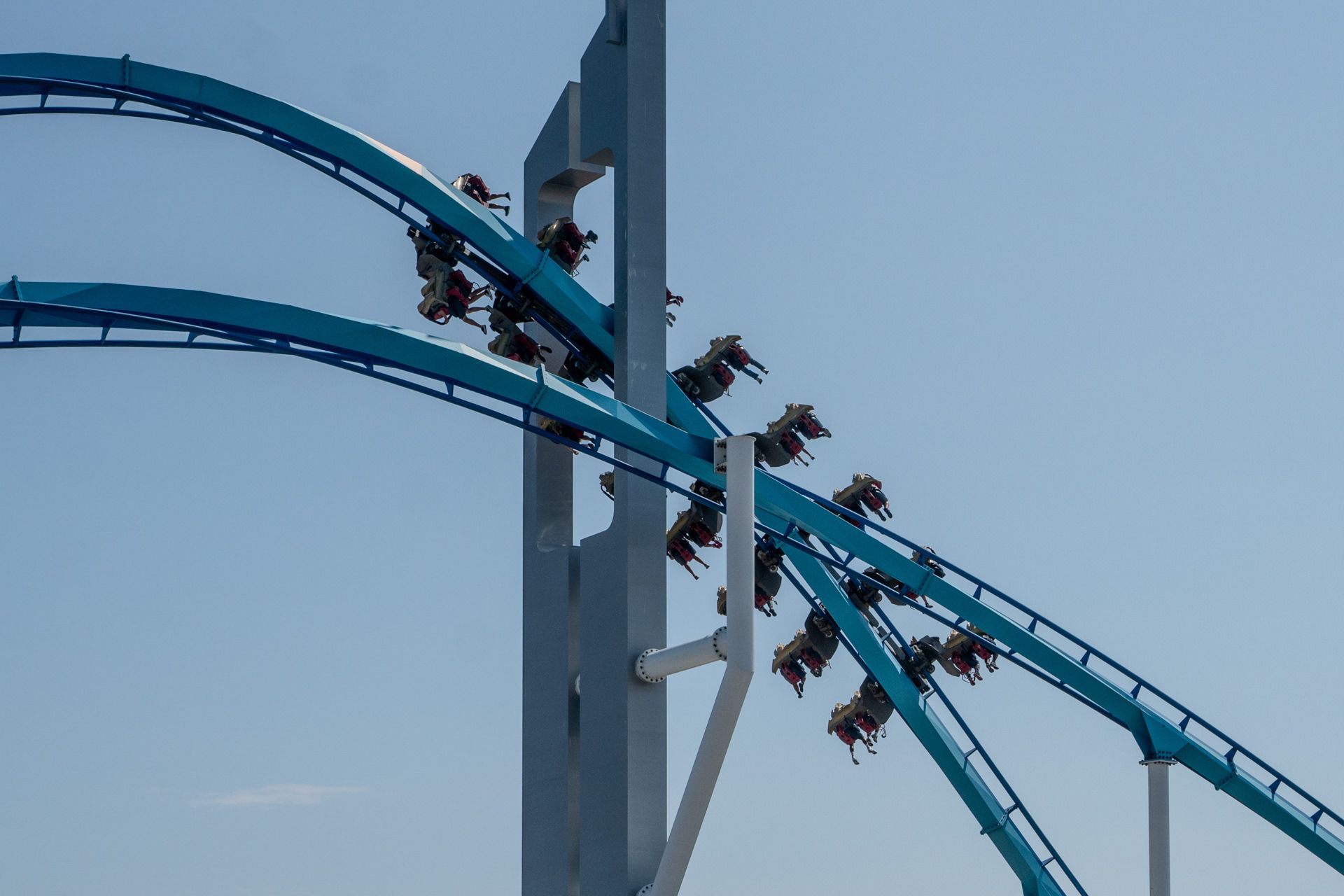
For now, however, we turn right, because the first major roller coaster of the day is already waiting for us: GateKeeper. The B&M Wing Coaster runs directly along the park entrance and even shoots through the two towers of the entrance structure.

GateKeeper

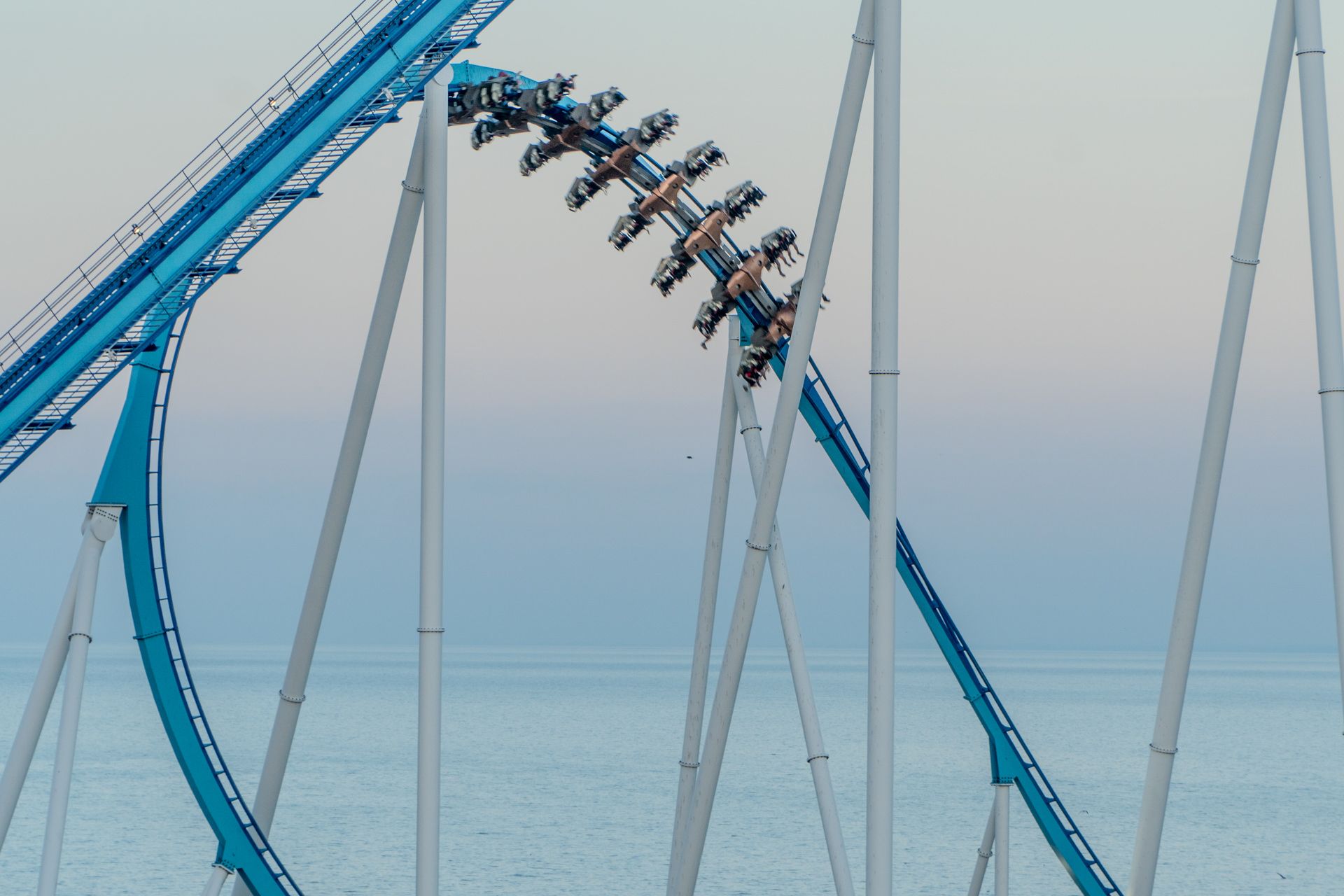
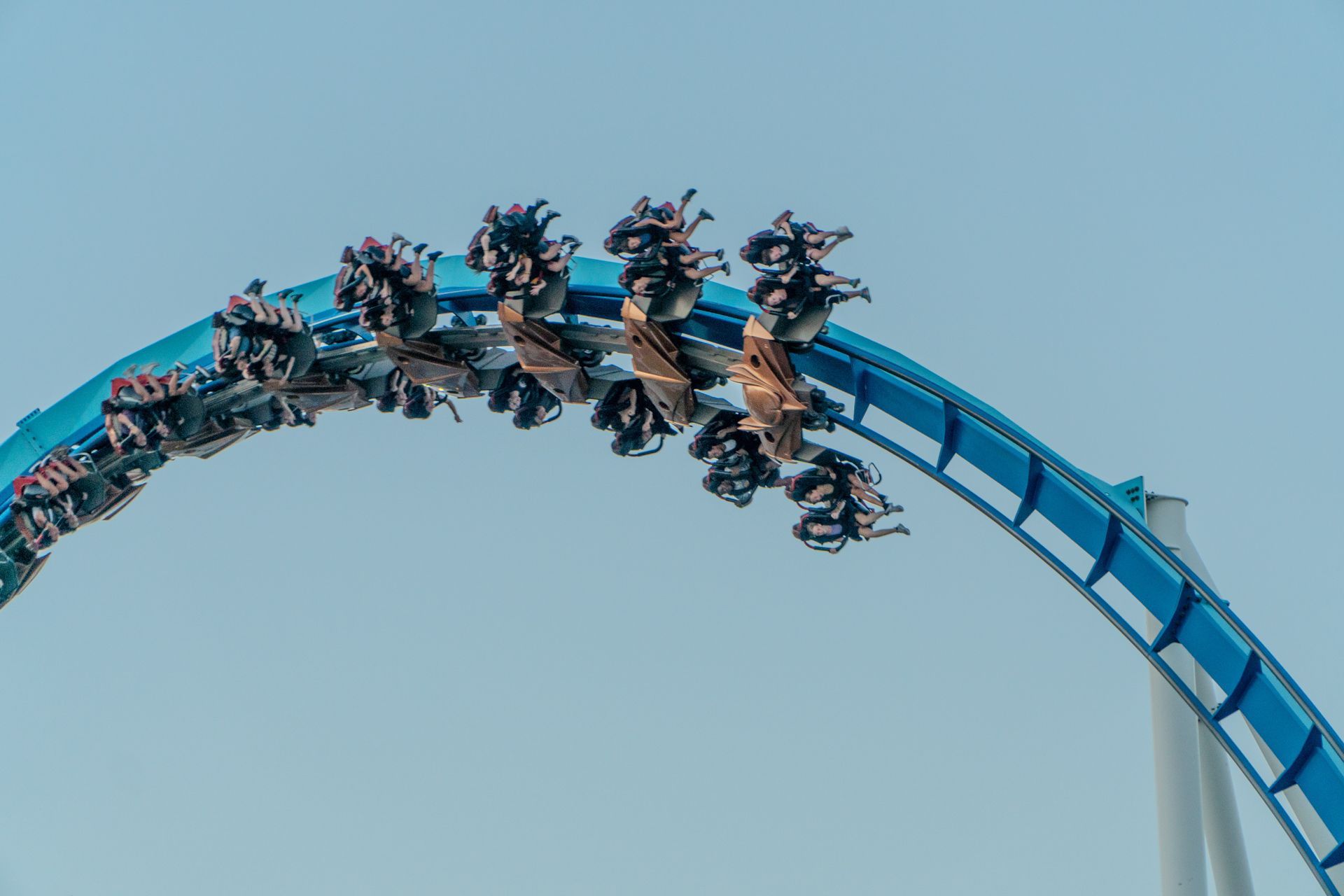
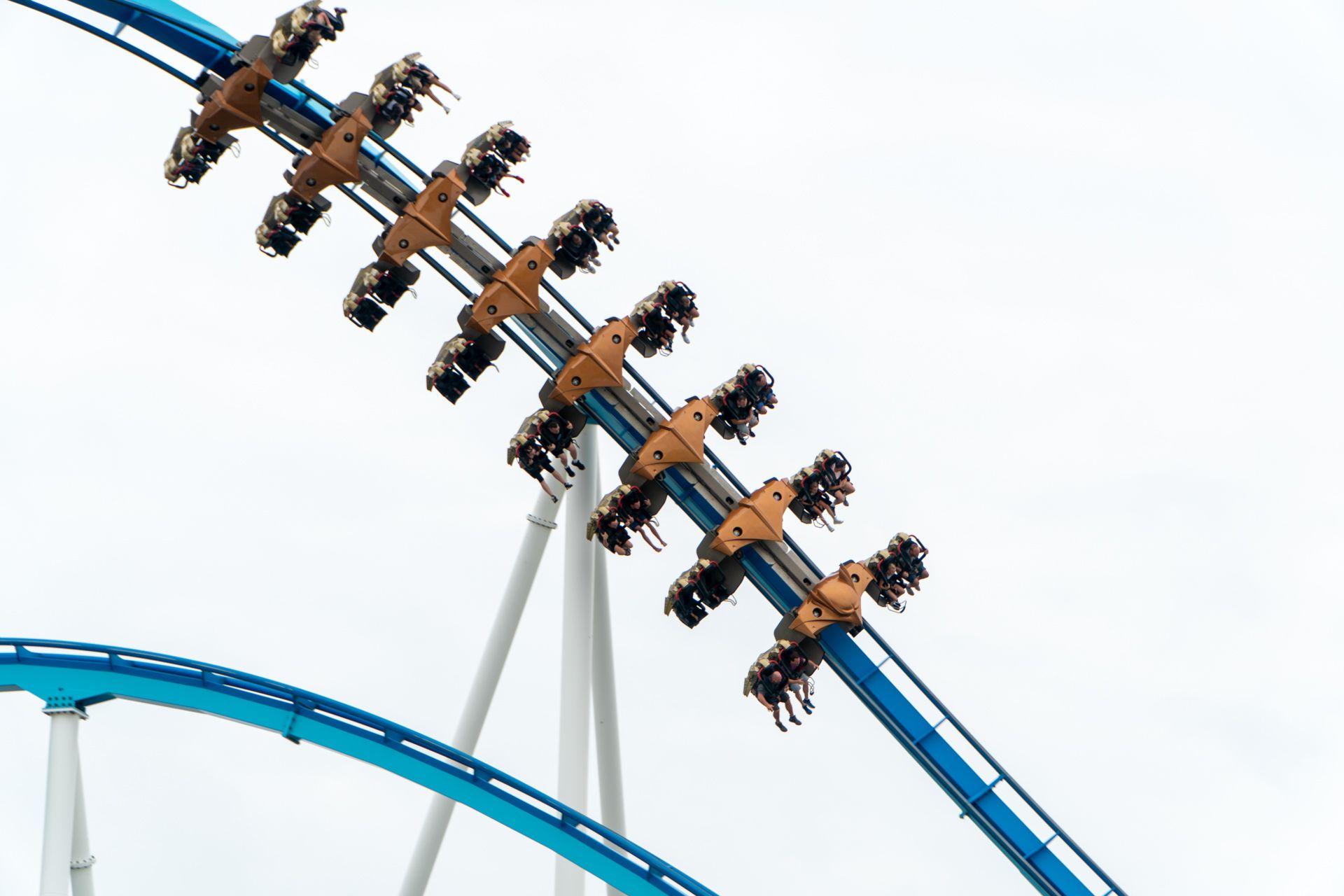
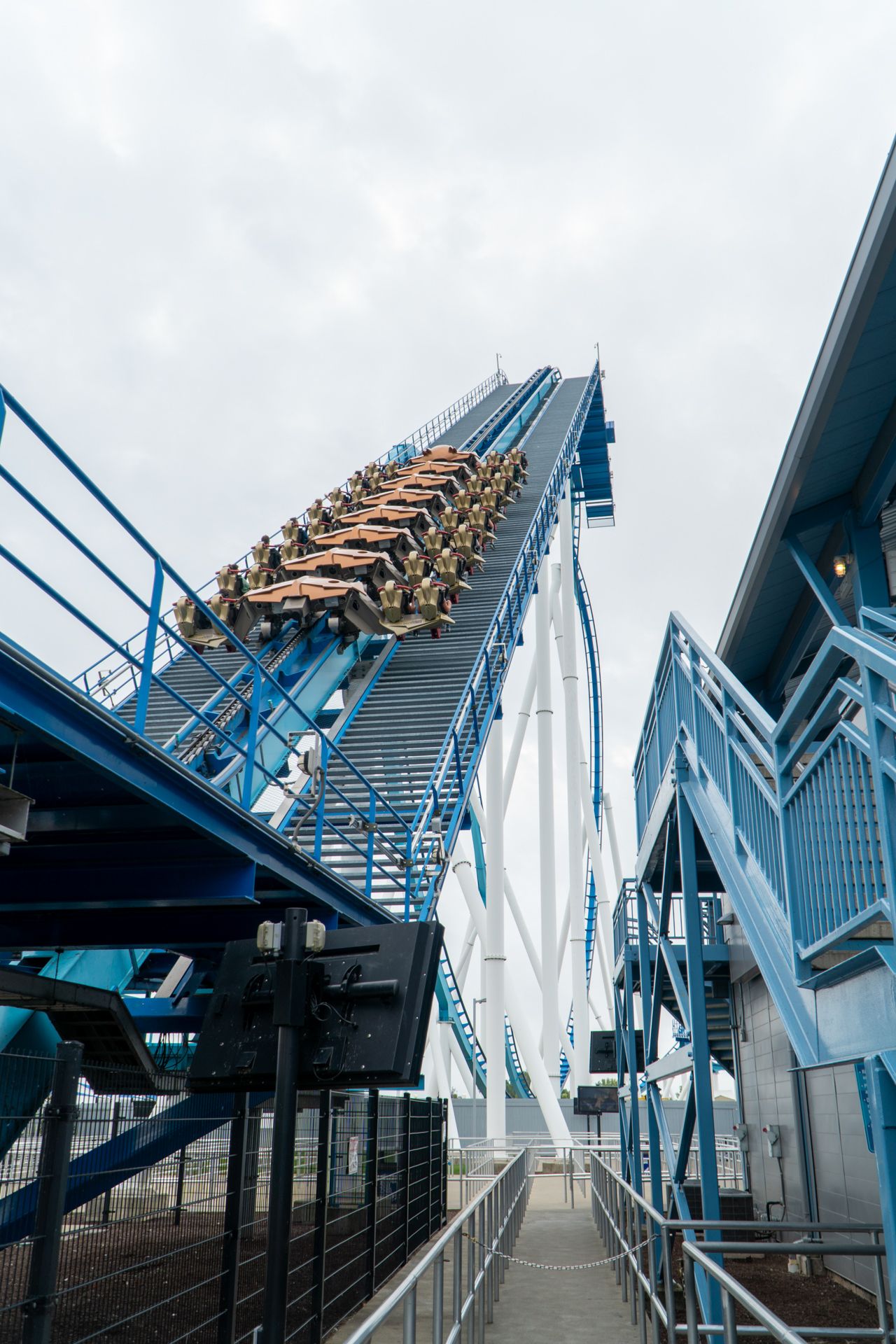
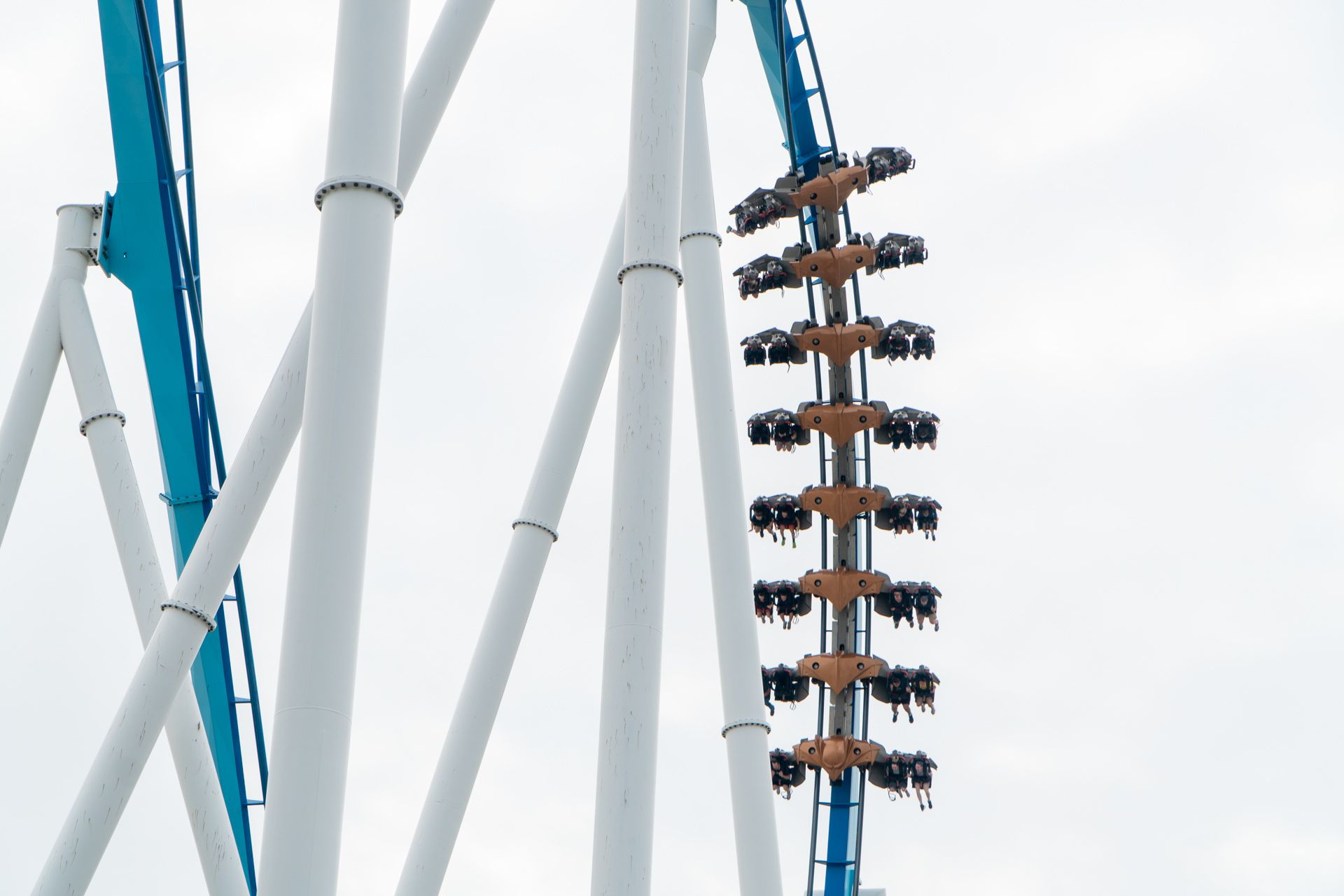
GateKeeper opened in 2013 and, with its roughly 170-foot lift hill, is one of B&M’s larger Wing Coasters. Once at the top, we are slowly turned upside down before plunging towards the ground through the Dive Drop that is so characteristic of this coaster type.

We then carry plenty of speed through the Immelmann and over a large camelback before a huge corkscrew turns us upside down once again. The track then heads back towards the park entrance, where we race through a Zero-G Roll between the two towers. A Dive Loop follows before a long, drawn-out roll slowly rotates us around our own axis once more.

After the block brake, another drop leads into a helix that eventually takes us back towards the station. I really enjoyed GateKeeper. The large elements are taken with a wonderfully elegant flow, and their sheer size makes quite an impression. Add in the excellent ride quality, and you have a genuinely beautiful coaster.

maXair

Back on the Main Midway, we find ourselves directly in front of maXair, a HUSS Giant Frisbee. The huge swing carries its riders higher and higher while the large gondola continuously rotates. There is plenty of airtime around the turning points before we rush back through the bottom of the swing. Great fun.

The Boardwalk

From maXair, we continue along the Midway towards the lake and soon reach the Boardwalk. Alongside Wild Mouse, this area is home to a whole collection of classic rides.

Troika is the first familiar face here, a classic HUSS ride. As the three gondola clusters rotate, the entire structure gradually tilts and the gondolas follow their characteristic wave-like trajectory. A pleasantly lively ride.

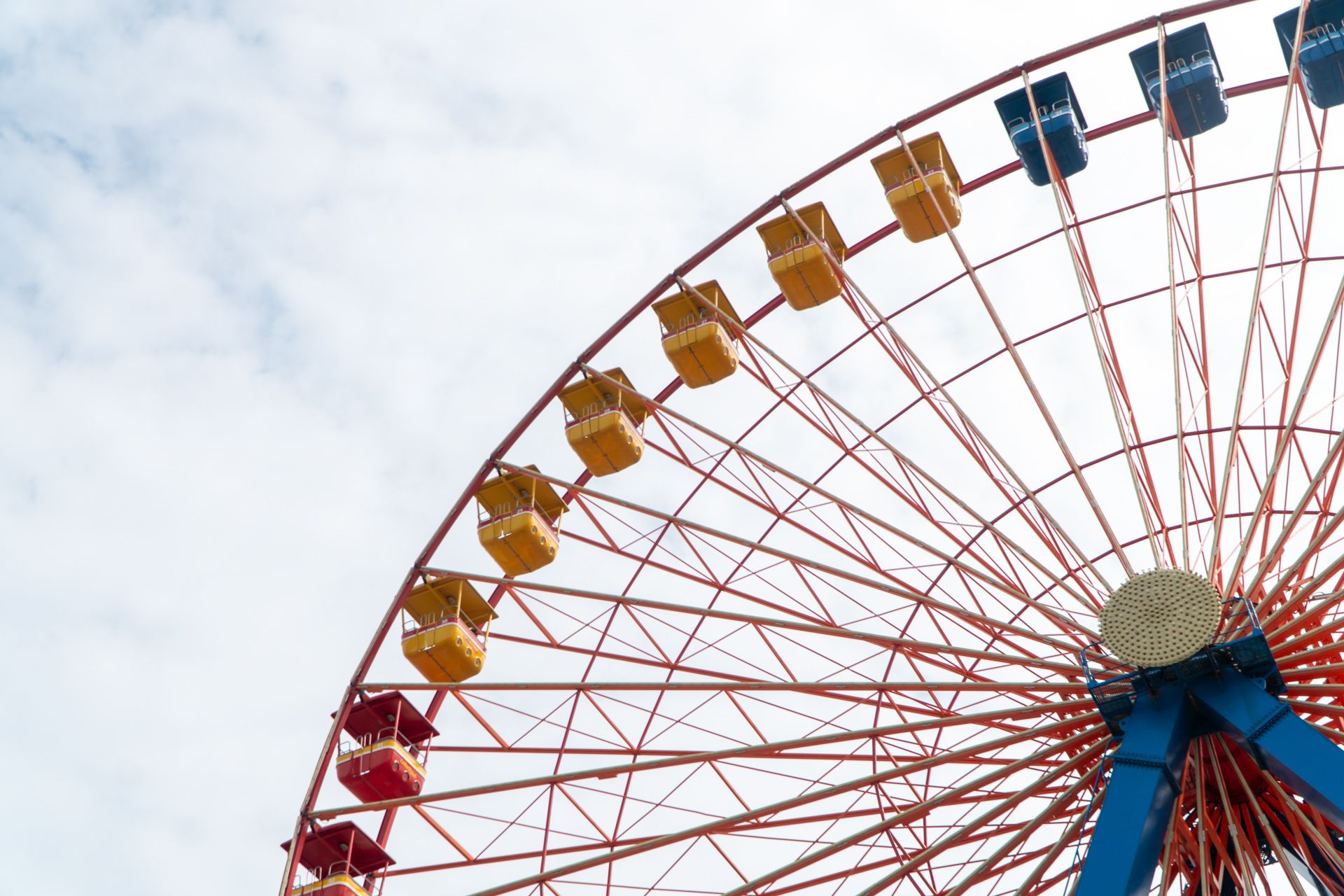
Right on the shores of Lake Erie, the Giant Wheel slowly makes its rounds. The ride itself is naturally secondary on a Ferris wheel, but the view over the park and the lake from the top is excellent.

Calypso and Matterhorn are particularly interesting to me. Both rides were built by Mack Rides and have already been around for several decades. During their long history at Cedar Point, both have even changed locations within the park several times. On Calypso, the individual gondola groups rotate in addition to the main platform, while Matterhorn sends its gondolas at considerable speed over its typical wave-like course. It is great that both classics are still running at Cedar Point today.

Atomic Scrambler adds another classic of American manufacture. Its counter-rotating movements repeatedly push us firmly to the side – a simple ride concept that still works wonderfully after all these years.

Wild Mouse

Wild Mouse is the next roller coaster along our route. The Zamperla ride opened in 2023 and gives the classic Wild Mouse concept a modern twist by combining a compact layout with freely spinning gondolas.

After the lift hill, the ride begins with a wonderfully curving descent. Only after a block brake do we encounter two of the tight hairpin turns typical of a Wild Mouse, before throwing ourselves into a steeply banked curve. Two quick direction changes follow. These elements are somewhat reminiscent of the Immelmann Turns found on Maurer spinning coasters, although they are much milder here and can probably best be described as slightly elevated hairpin turns. Two further half-helix combinations take us into the rear section of the ride, where two curves and a small dip smoothly carry us into the final brake run.

What surprised me most were the ride characteristics. No Zamperla roller coaster I had ridden before had felt this smooth. Combined with the spinning gondolas and the nicely curving layout, Wild Mouse is a lot of fun. Only the ending comes a little sooner than expected – the ride could easily have been a little longer.

WindSeeker

Directly on the shores of Lake Erie, WindSeeker is another familiar ride from Mondial. The roughly 300-foot-high structure slowly climbs into the sky while the gondolas swing further and further outwards. Once at the top, we make our rounds high above the ground and enjoy a great view over Cedar Point and the vast Lake Erie.

As with the other rides of this type, the combination of height, wind and freely swinging seats once again makes for a really good ride – one I am always happy to get back on.

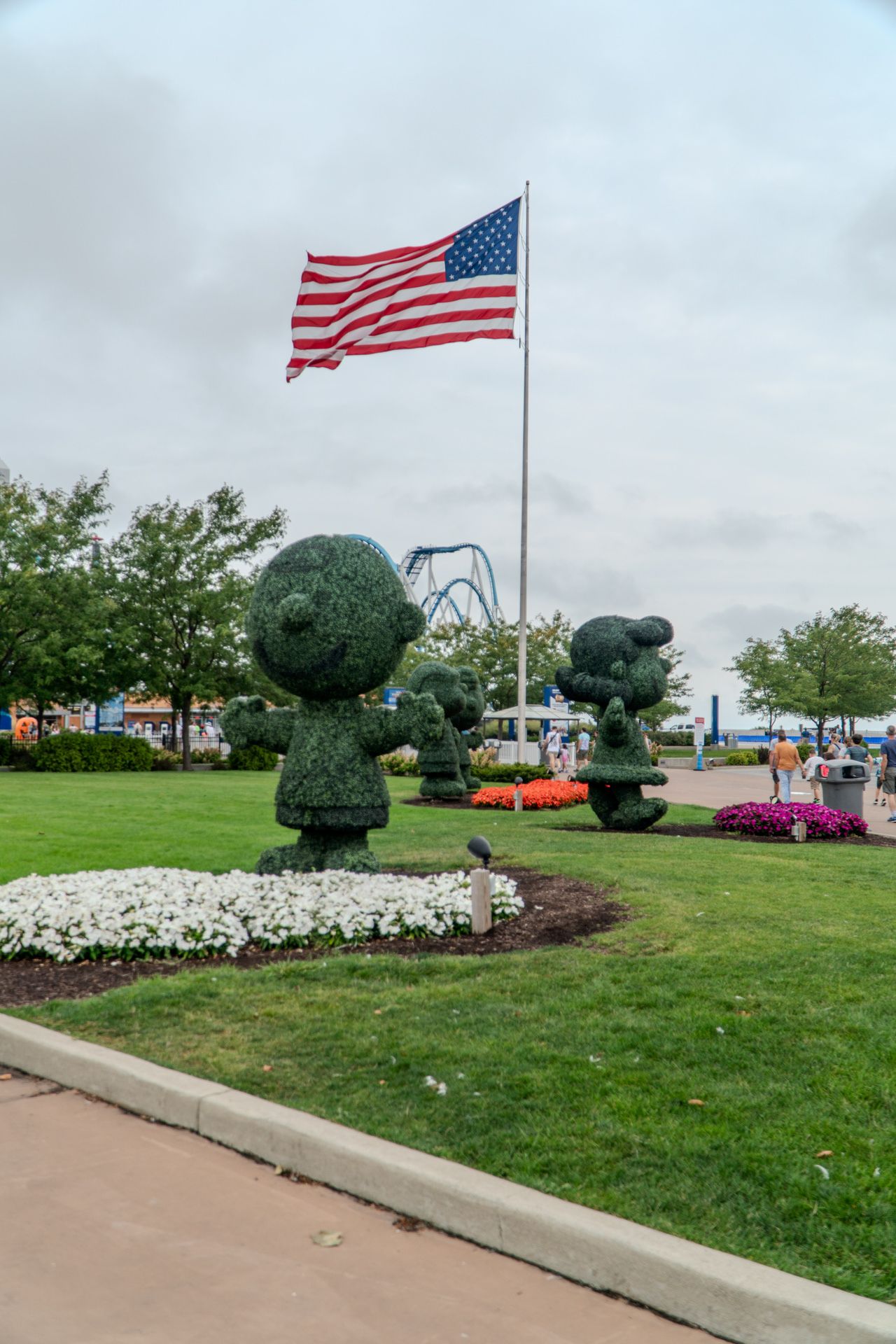
Kiddy Kingdom and Planet Snoopy

On our way back towards the center of the park, we pass two of Cedar Point’s children’s areas: Kiddy Kingdom and Planet Snoopy. Both offer a wide variety of smaller rides for younger guests, with the familiar Peanuts characters naturally setting the tone in Planet Snoopy. We do not spend too much time here and continue towards Iron Dragon.

Iron Dragon

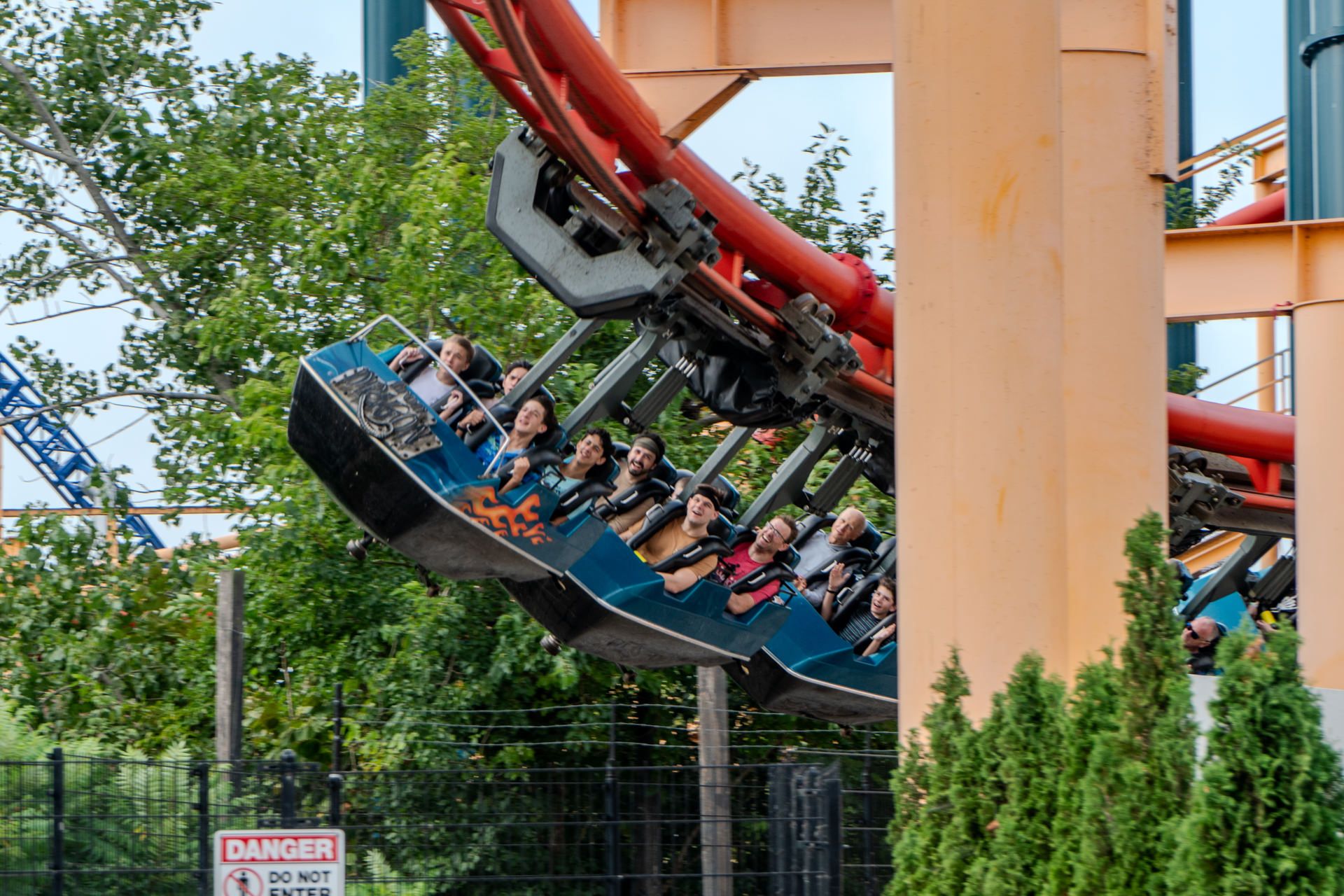
Iron Dragon is a true Cedar Point classic. The Arrow Dynamics Suspended Coaster opened back in 1987. On this coaster type, the individual cars hang below the track on pivoting mounts and are free to swing sideways through the turns.

The first part of the ride takes things relatively easy. After a straight drop, we head through a left and a right turn before a longer straight section bends slightly left and right. Another right-hand turn leads into a descending helix, where we fly fairly close to Top Thrill 2. The intermediate brake and the second lift hill follow.

From here, Iron Dragon becomes noticeably faster. The train picks up plenty of speed and the rapid sequence of direction changes sends the cars swinging strongly from side to side. The finale is particularly nice, with an almost pretzel-shaped sequence of curves that keeps us swinging back and forth before we finally enter the brake run. Even there, the cars continue to sway for a while.

Iron Dragon is simply a really good family coaster and, for me, also a great example of the old Suspended Coaster concept. The second half in particular shows just how much fun such a relatively simple principle can be.

Rougarou

Only a short distance away, we reach Rougarou, another B&M coaster that has actually been standing at Cedar Point far longer than its current name might suggest. The ride originally opened in 1996 as Mantis and was still a Stand-Up Coaster at the time, with riders completing the course while standing. Only for the 2015 season did it receive new Floorless trains and reopen under the name Rougarou.

After the lift hill, a small dip and a beautiful elevated turn lead us into the actual first drop. The following valley already pulls with some force, and the directly following loop raises the intensity even further. After a small kink to the left, we enter a really nice Dive Loop and then pass through a somewhat unusual turnaround.

Next comes one of the rarer elements of the ride: the Inclined Loop. Essentially, it is a tilted loop, and it therefore feels a little different from its more conventional relative. A small bunny hop with a direction change and an upward helix then take us into the block brake.

After another drop, we pass through a corkscrew and enter the rather tangled final section of the ride. A helix, a rapid direction change and another low-to-the-ground helix together form a kind of figure eight. A few final turns later, we reach the brake run.

I particularly like the first half of Rougarou. The loop is nicely forceful, the Dive Loop is great fun and the Inclined Loop is an element you do not come across every day. The second half becomes much more compact and continues twisting around the area for quite a while. Overall, a really enjoyable ride.

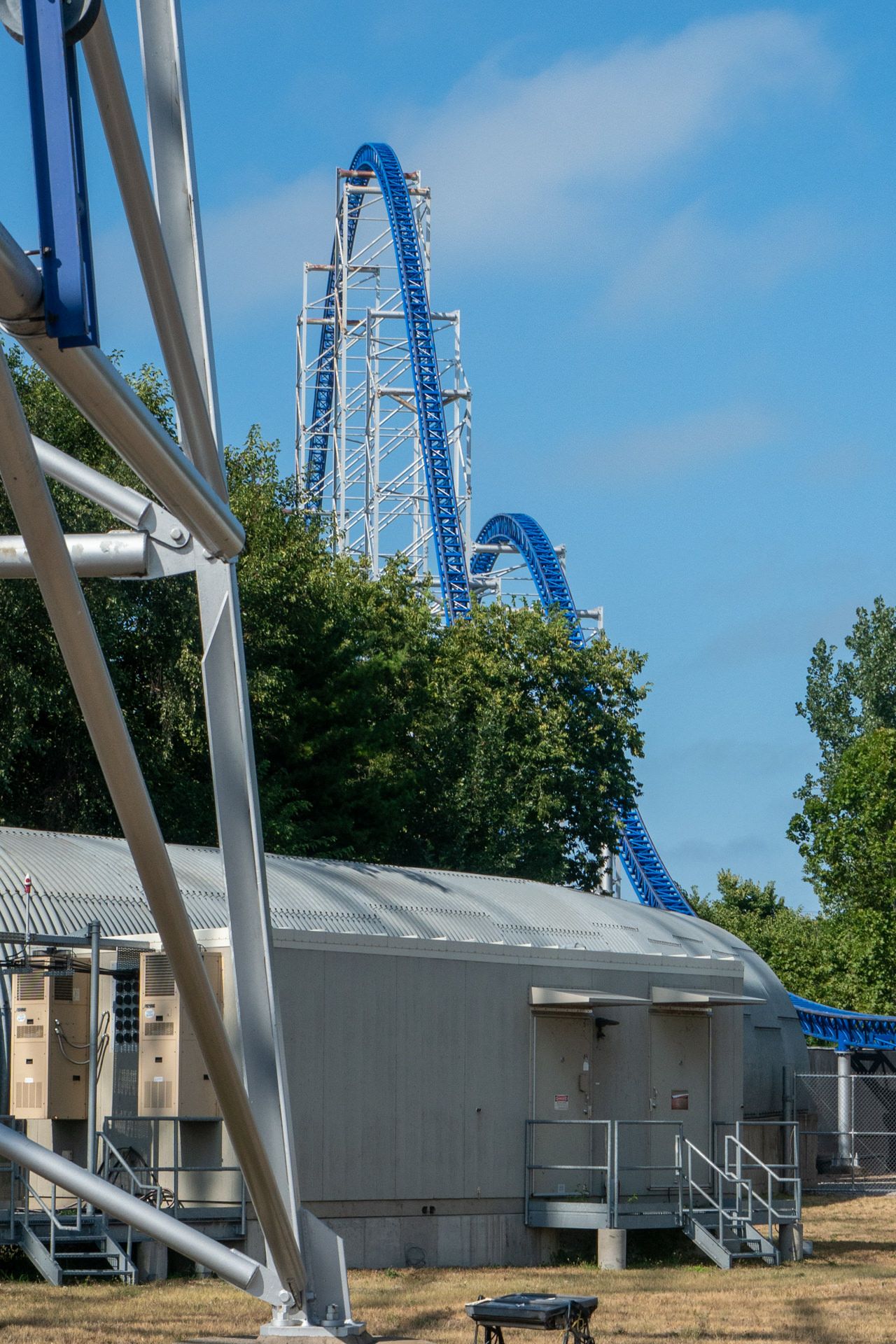
Millennium Force

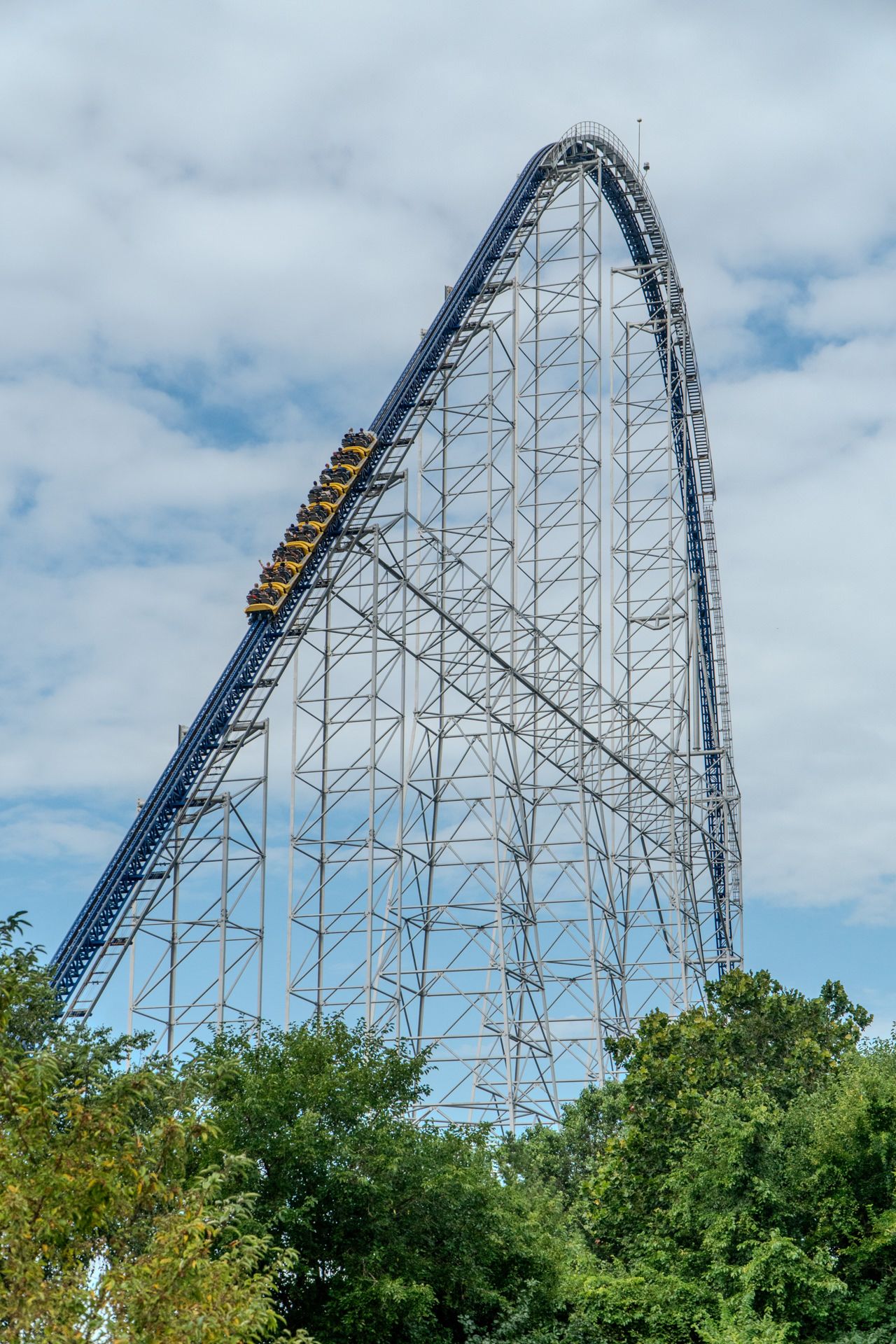
With Millennium Force, we arrive at one of the roller coasters that played a major role in the Coaster Wars of its era. When the Intamin ride opened in 2000, it became the first roller coaster to exceed 300 feet and effectively established the Giga Coaster category.

The fast cable lift quickly carries us to more than 300 feet before we plunge down the fantastic first drop. Despite the enormous height, the following valley is taken at great speed and remains surprisingly smooth, with hardly any vibration at all. We then shoot up into a high turnaround with beautiful banking and continue straight into a huge low-to-the-ground left-hand curve.

The first massive camelback follows and delivers a nice dose of airtime. We then race through a very long right-hand curve before climbing into another turnaround with wonderfully pronounced banking. Back near ground level, a fast right-hand curve leads into the second, slightly smaller camelback running parallel to the first, which once again provides some nice airtime.

A left-hand turn then leads us over a smaller hill directly past the station. Another left turn, a straight section and the final turnaround follow before we reach the brake run.

I really enjoyed Millennium Force. Despite its enormous dimensions, the ride is wonderfully smooth and its large, sweeping elements give a great sense of the tremendous speed. There is also plenty of nice airtime along the way. A really great coaster.

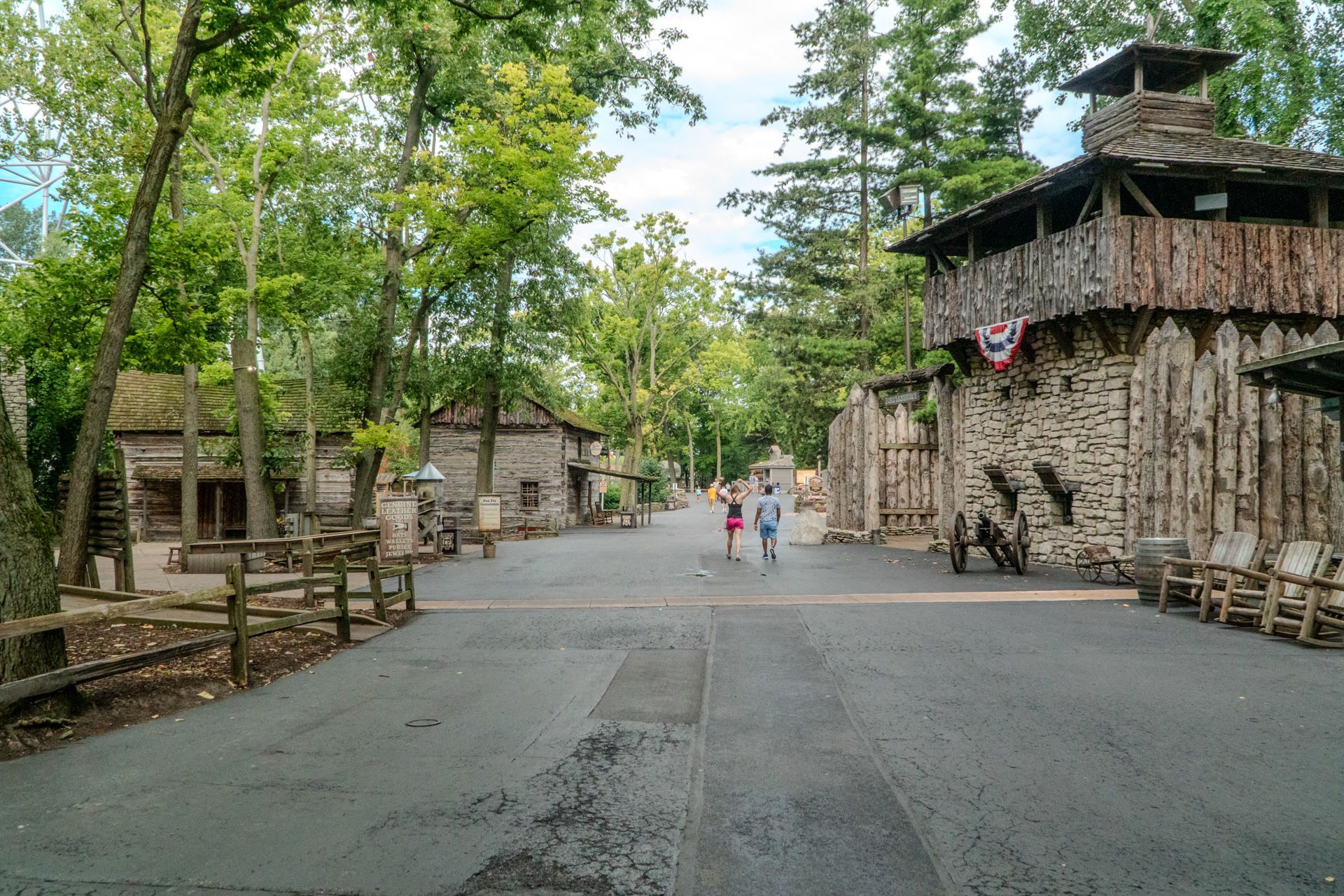
Frontier Trail and FrontierTown

From Millennium Force, we make our way along the longer Frontier Trail towards FrontierTown. On the left, we pass the entrance to Thunder Canyon. Unfortunately, the Intamin Rapids Ride had already closed during my visit.

Once in FrontierTown, the large water ride Snake River Falls awaits us.

Snake River Falls

Snake River Falls opened in 1993 and was a classic Arrow Dynamics Shoot the Chutes. During my visit in 2024, the ride was already in its final season before closing after more than 30 years of operation.

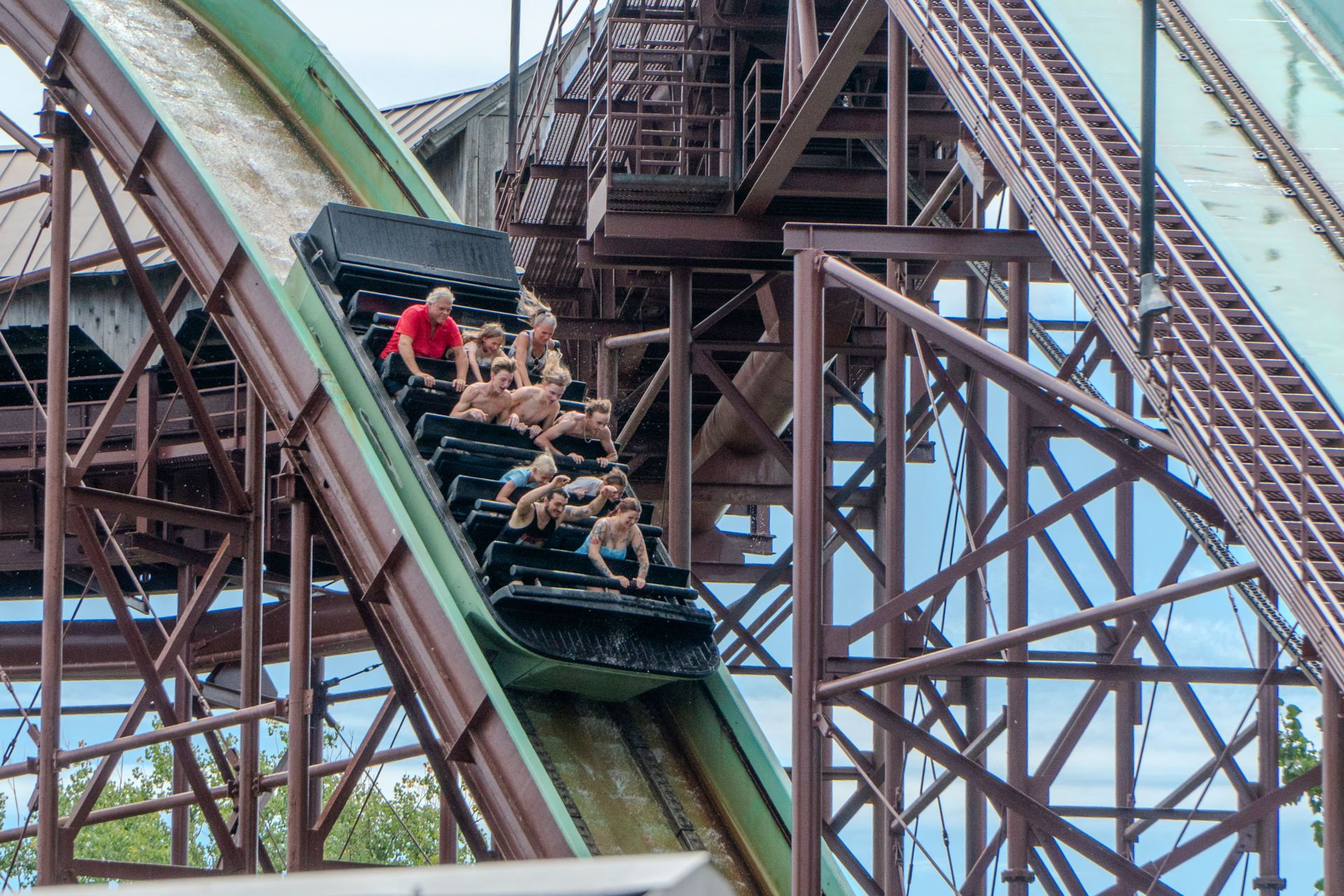
After the lift hill, the boat first travels through a long turnaround. Unlike many comparable rides, the boat actually floats through a channel carrying a substantial amount of water before reaching the main drop. We then rush straight through the structure of the lift hill. The braking during the descent feels a little unusual, but at the bottom we are rewarded with a huge splash and a very generous amount of water.

Overall, I really enjoyed Snake River Falls. The ride is wonderfully simple, but the large drop and especially the massive splash make it a lot of fun. It is a shame that Arrow built so few rides of this type – and even more so that Snake River Falls is now history.

Skyhawk

Directly next to Snake River Falls is Skyhawk, an S&S Screamin’ Swing. The compressed-air-powered swing carries us higher and higher with plenty of momentum and delivers lots of airtime, especially around the turning points. A great ride.

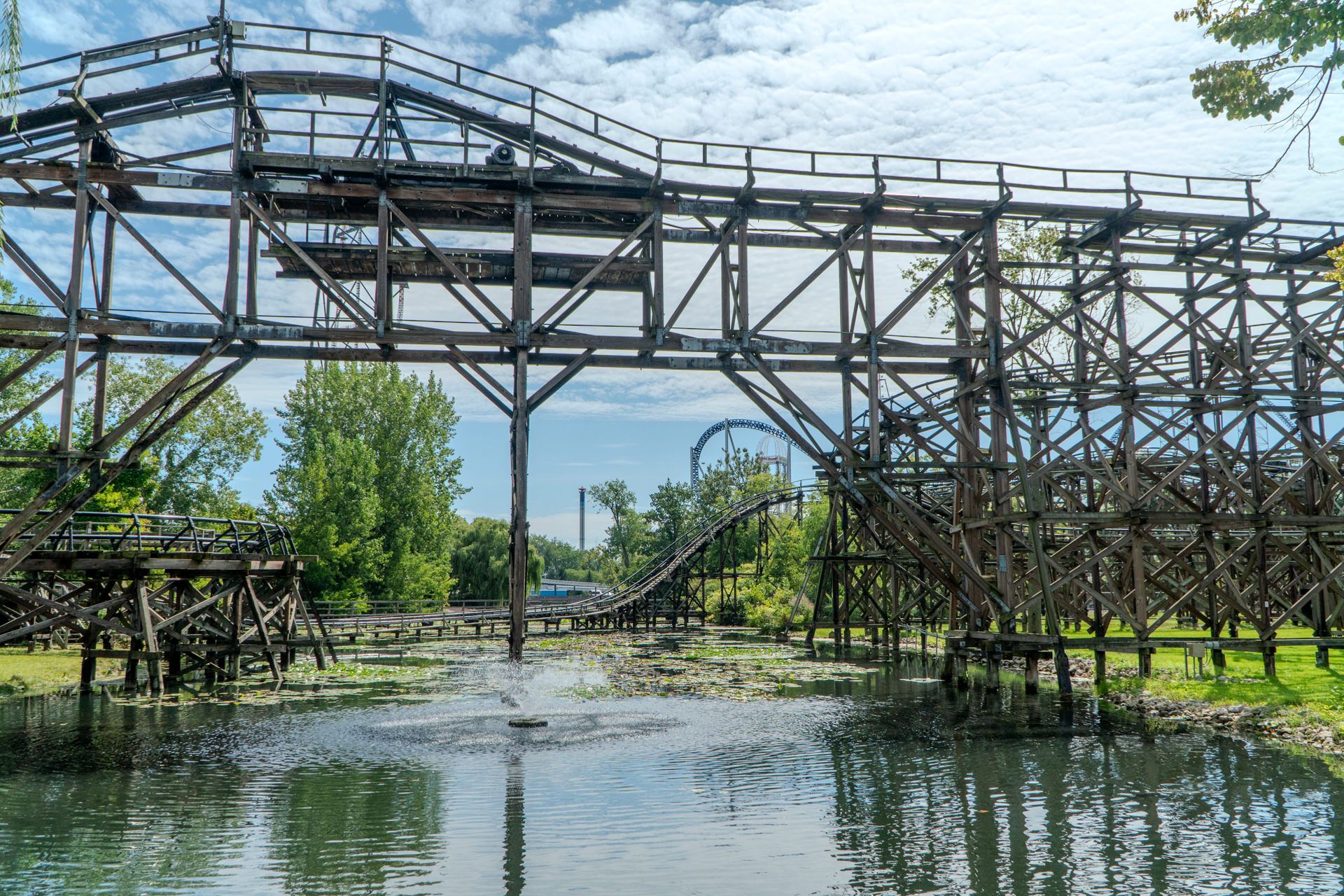
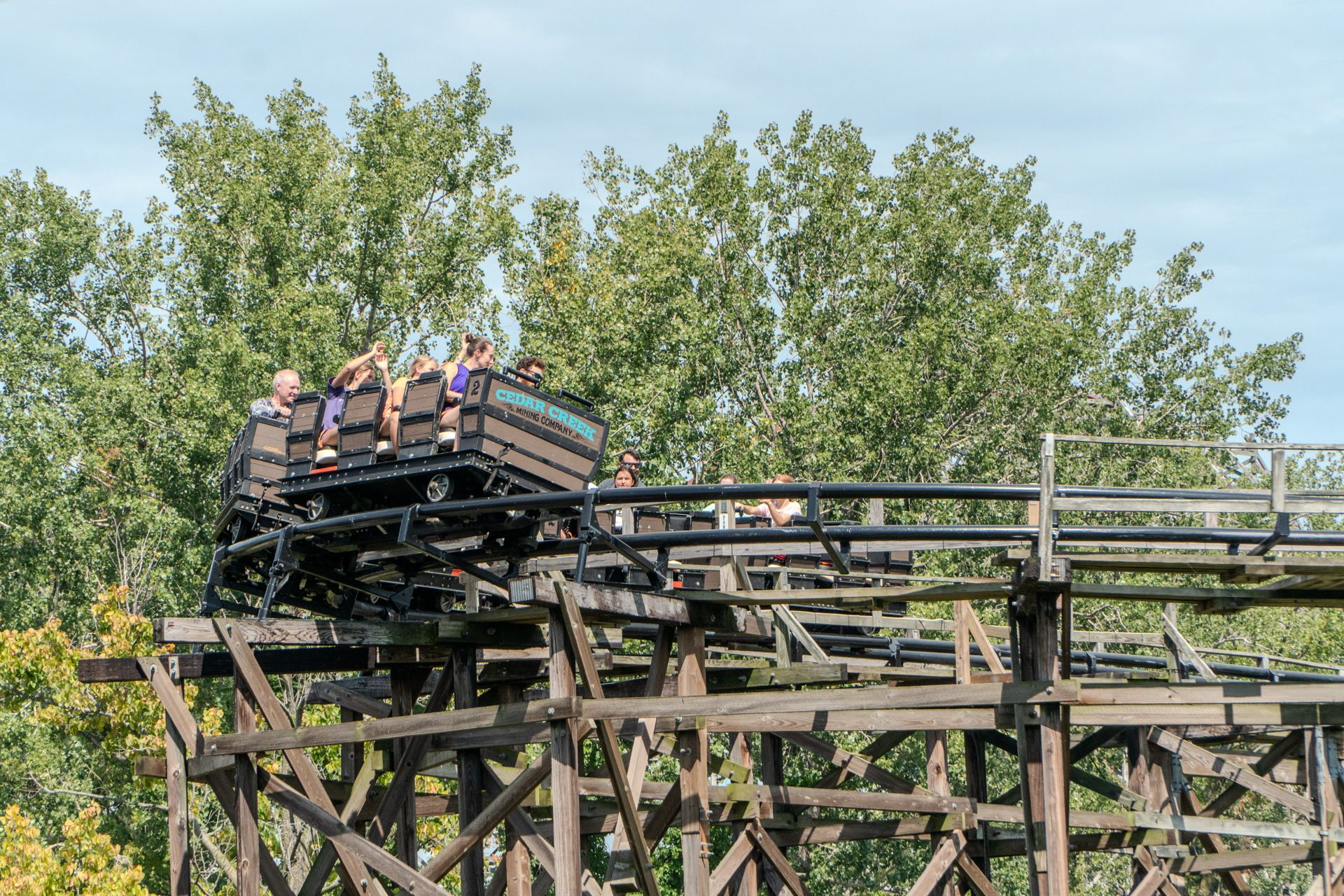
Cedar Creek Mine Ride

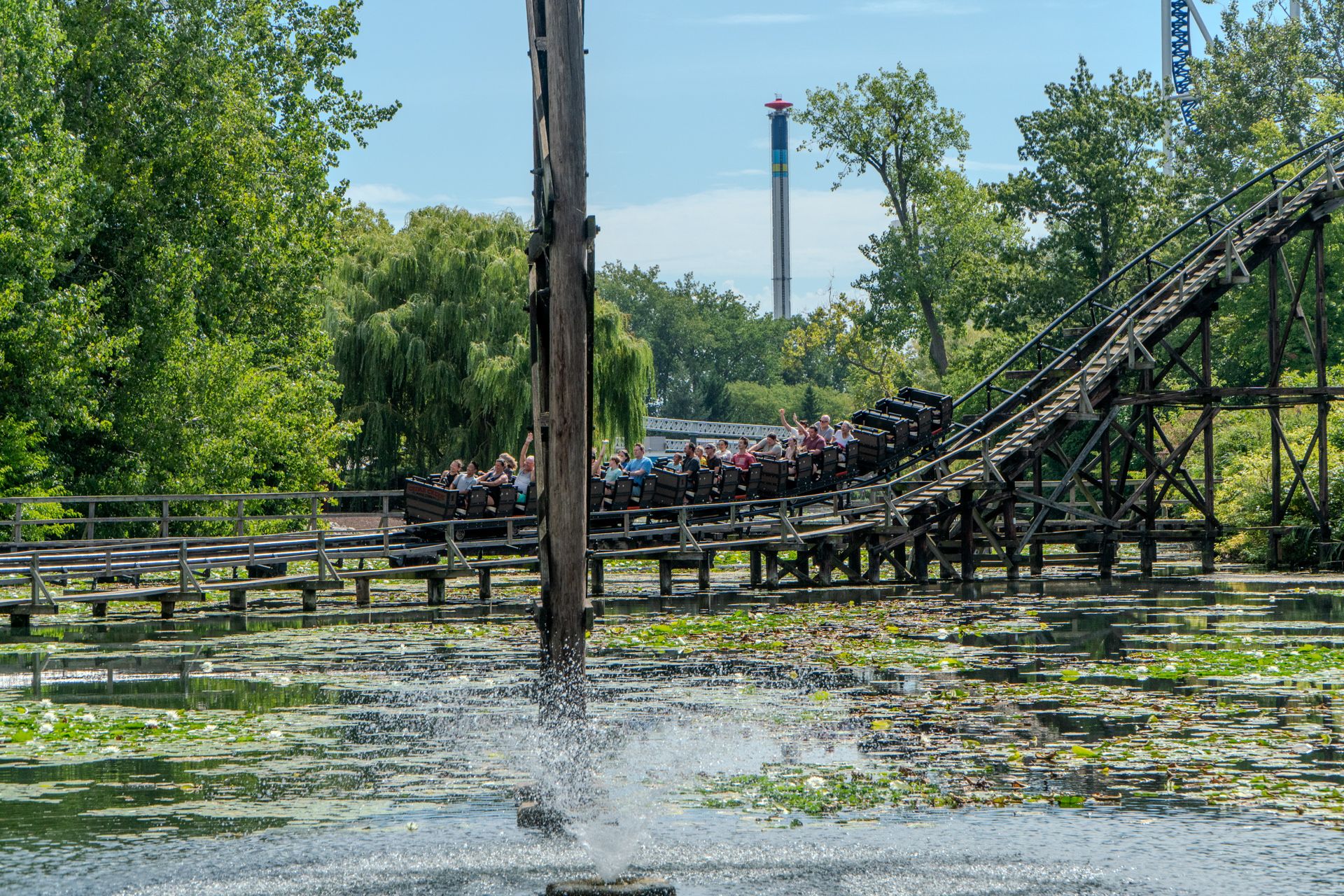
Only a little further along, Cedar Creek Mine Ride is one of Cedar Point’s older roller coasters. The Arrow Mine Train opened in 1969 and runs for large parts of its layout over a lake, giving the already nicely situated ride a very distinct atmosphere.

After the first lift hill, we begin with a straight section before entering a rather unusual helix that constantly rises and falls. A turn then takes us down onto a longer straight directly above the water. Once we reach the opposite shore, another helix follows before the second lift hill carries us back upwards.

At the top, Cedar Creek Mine Ride once again takes things rather calmly. A left-hand turn leads into a descending right turn, followed by a straight section that is taken at a noticeable angle before we enter another right-hand turn. After a longer straight, the large 540-degree helix finally takes us directly into the final brake run.

Cedar Creek Mine Ride is certainly not a wild roller coaster, but its slightly unusual layout and beautiful location over the water still make it enjoyable. A nice old Mine Train of the classic variety.

Maverick

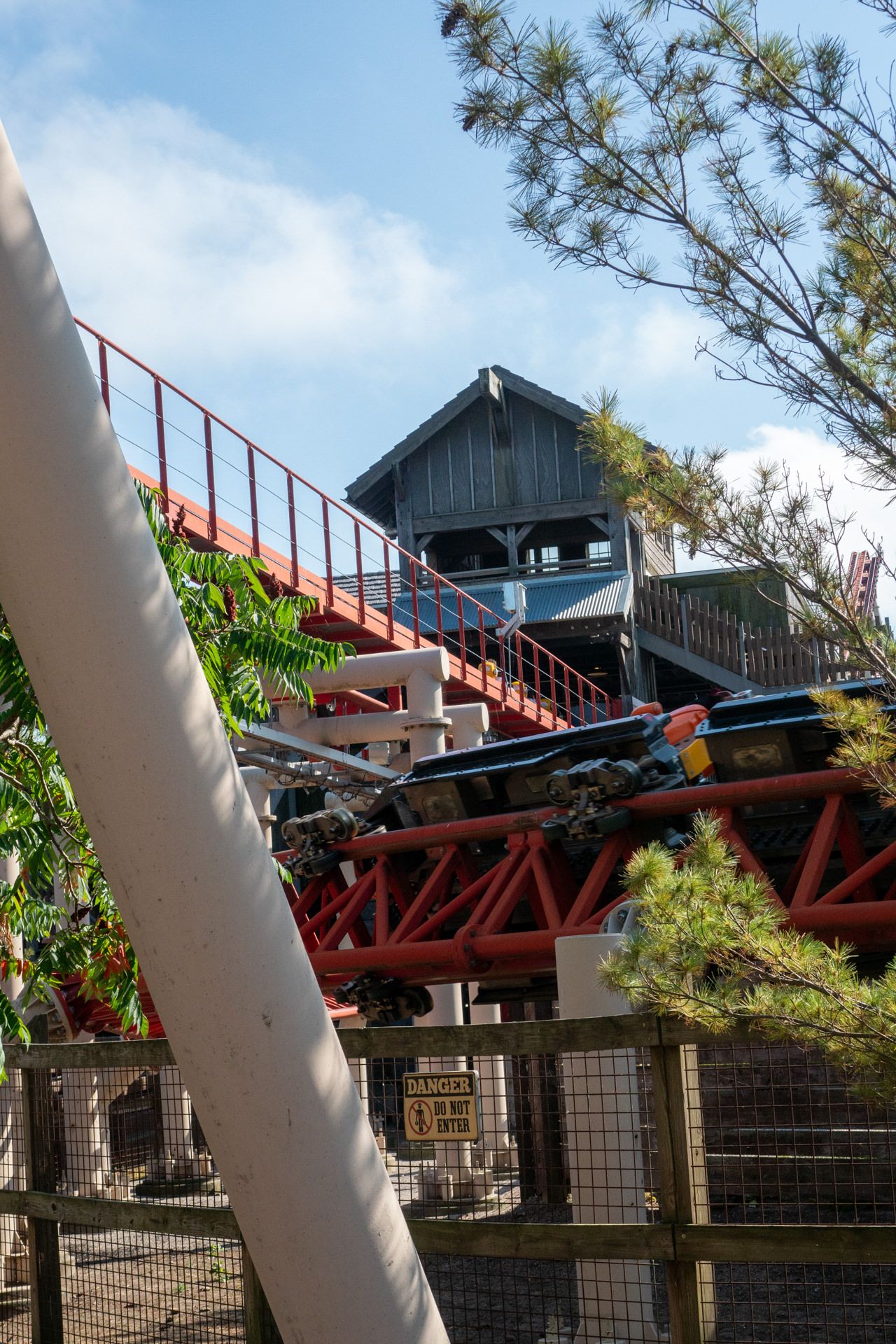
Continuing through FrontierTown, we eventually reach Maverick – and with it one of the best roller coasters out there. The Intamin ride opened in 2007 and does not need enormous dimensions to impress. Instead, it delivers a wonderfully compact layout, rapid direction changes and plenty of airtime.

We are quickly pushed over the lift hill by LSMs and immediately plunge down the beyond-vertical first drop. A tight low-to-the-ground right-hand turn follows, leading directly into a rapid sequence of direction changes. One airtime hill and another right-hand turn later, we are already racing through the two inversions.

After another right-hand turn, the train disappears into a tunnel and almost comes to a stop. In the darkness, a very powerful launch follows before we leave the tunnel through a left-hand turn. A hill leads us down towards the water, where we race through several rather aggressive direction changes at high speed. One final strong airtime hill then sends us into the last turn and up into the brake run.

Maverick is simply a fantastic roller coaster. The high speed, rapid direction changes and powerful airtime create a wonderfully wild ride with hardly any chance to catch your breath. For me, it absolutely deserves its place among the very best roller coasters.

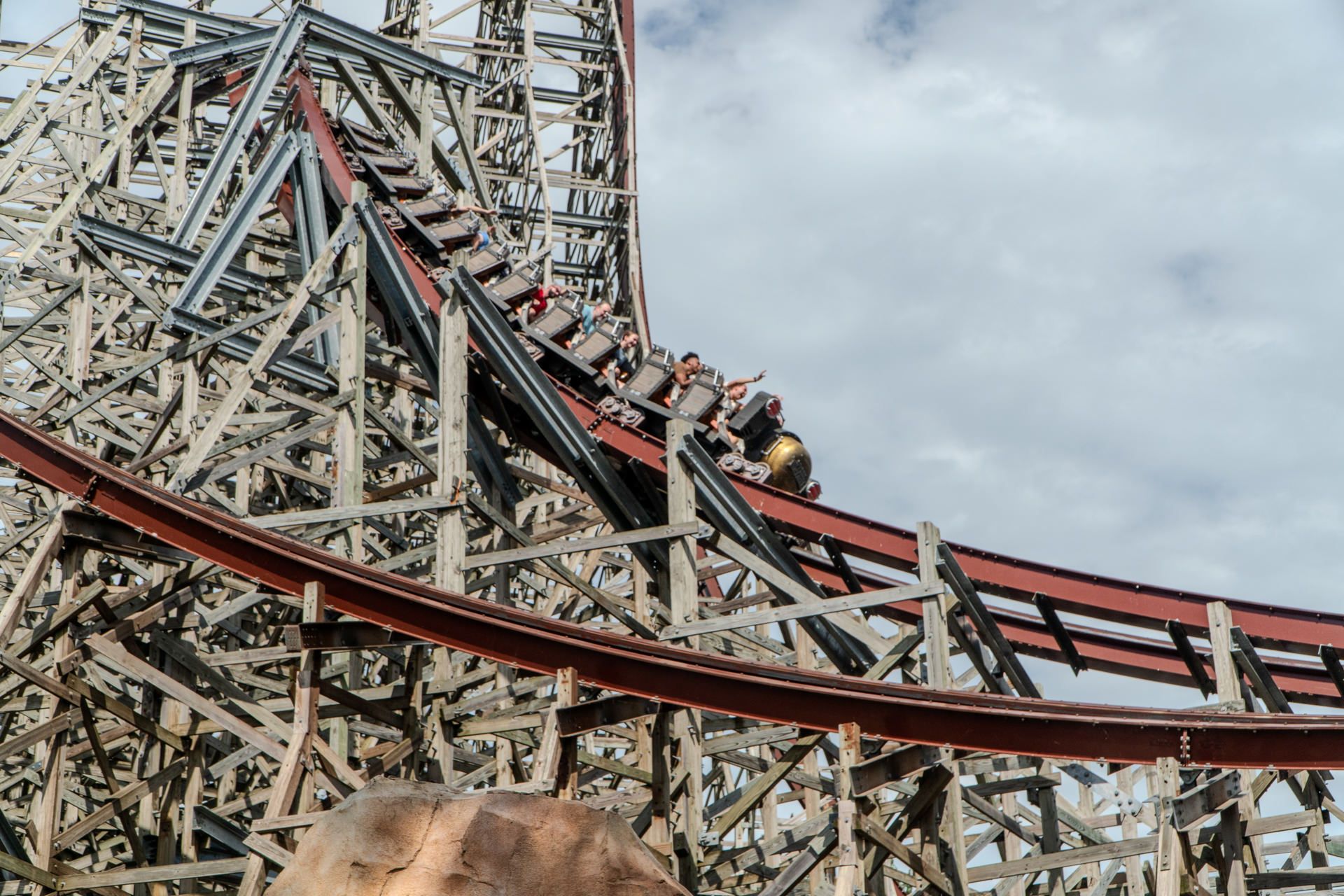
Steel Vengeance

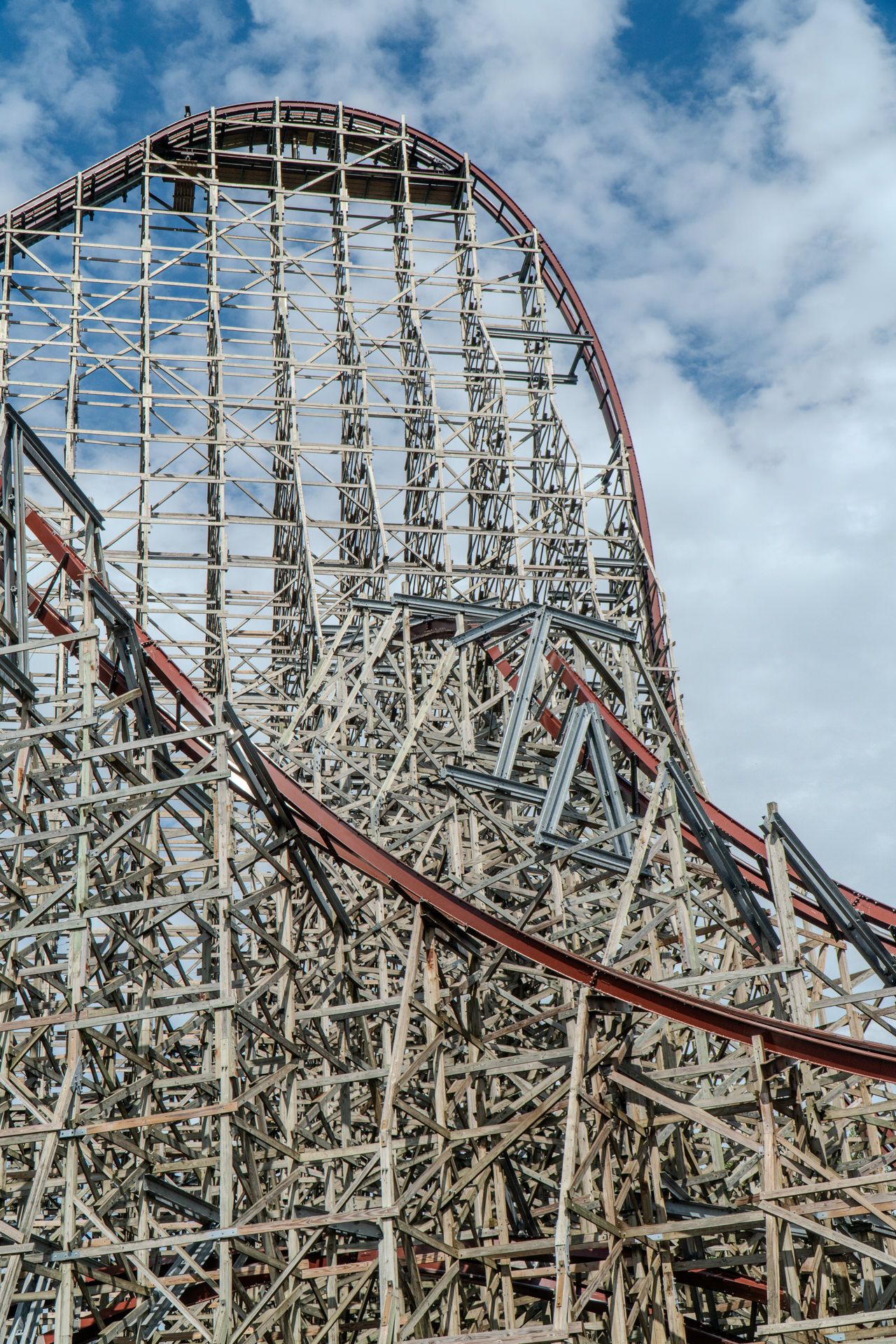
Not far from Maverick stands Steel Vengeance, the next major highlight. Originally, the wooden coaster Mean Streak had been operating here since 1991. At around 160 feet tall and more than a mile long, the ride was a real heavyweight for its time and even opened as the tallest and fastest wooden roller coaster in the world.

Over the years, however, the ride became increasingly rough and finally closed in 2016. The huge wooden structure remained standing and was reused by RMC for Steel Vengeance. Two years later, the new ride opened, using the old timber framework for a wild layout stretching well over a mile.

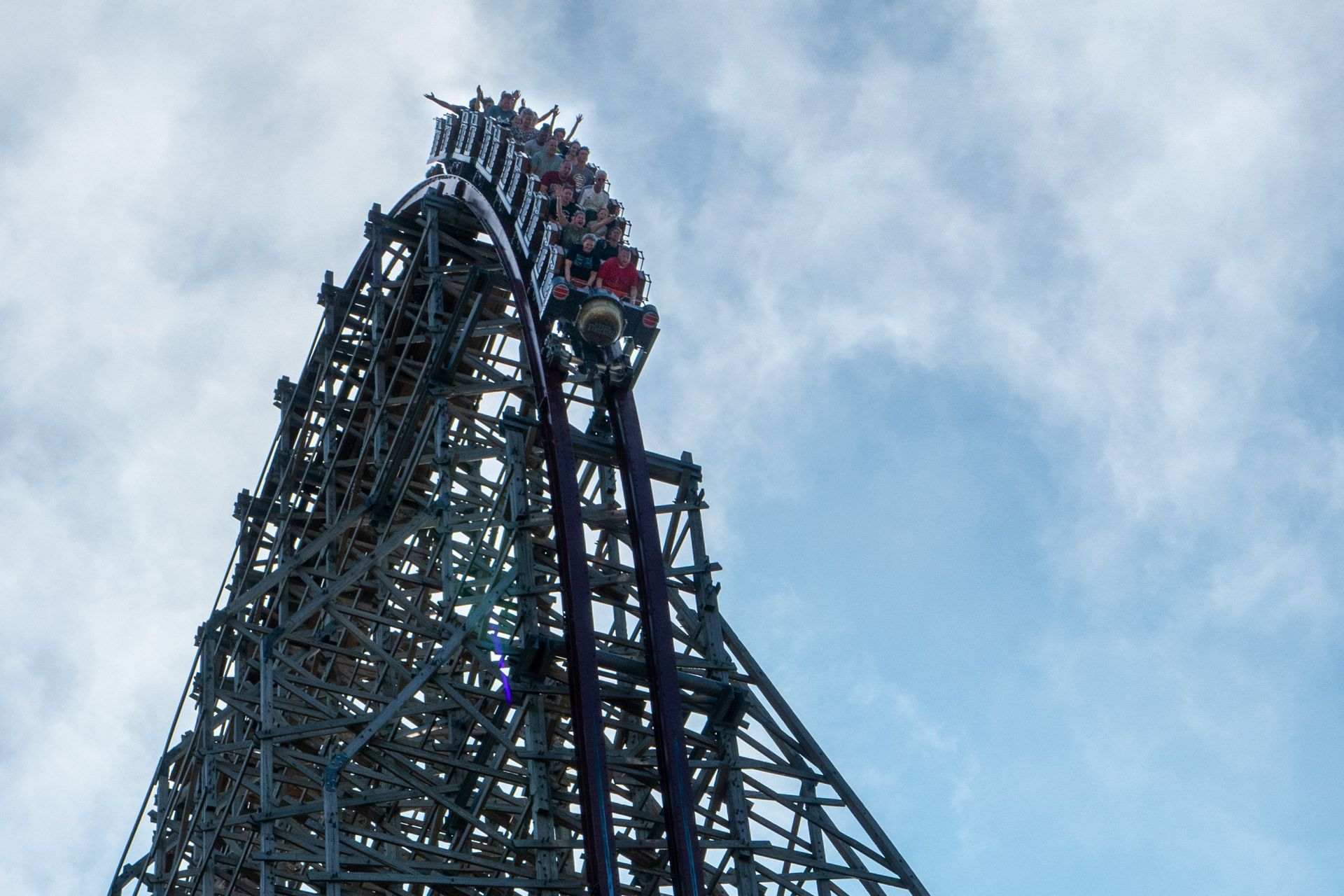
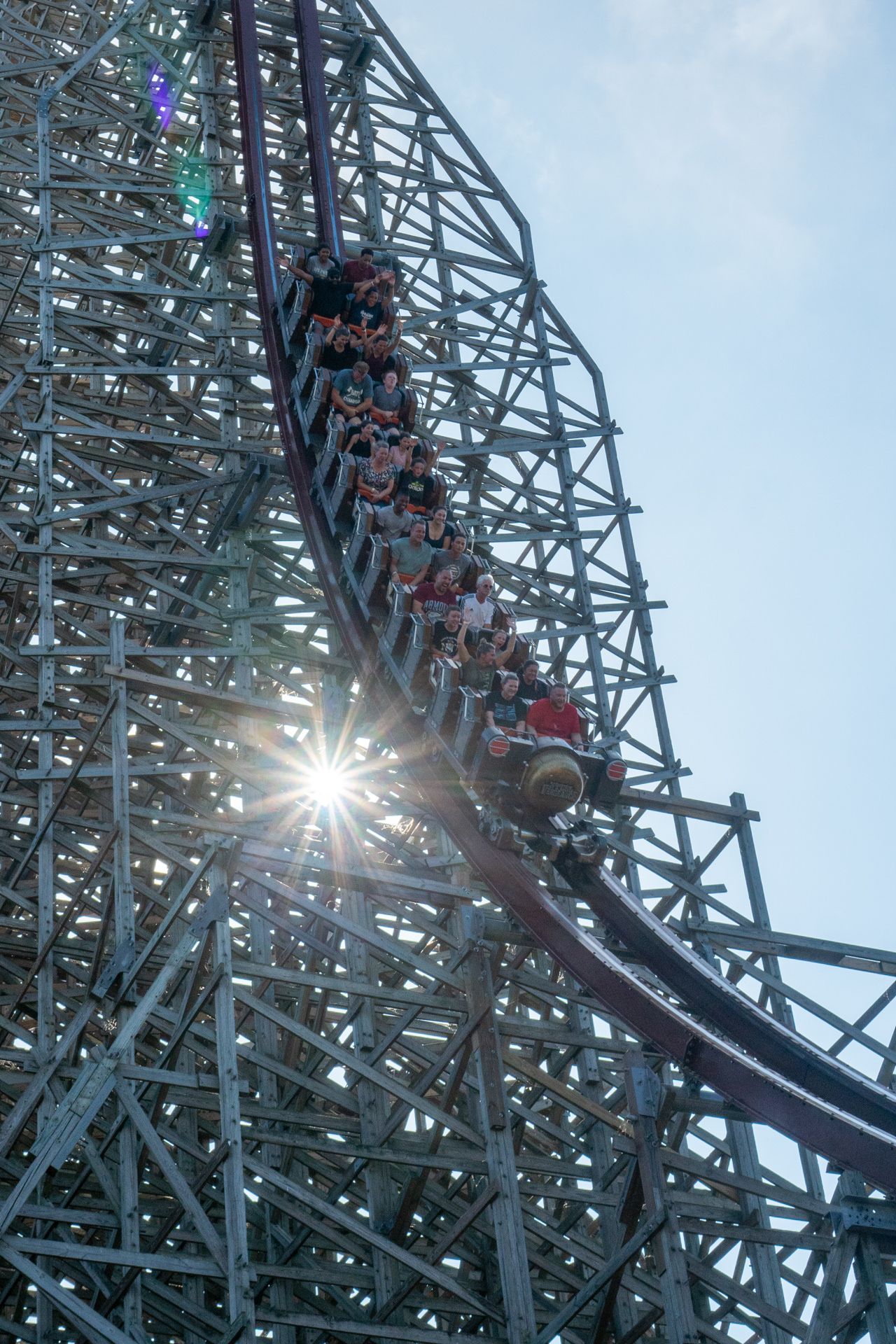
The ride begins with a right-hand turn and a few small low-to-the-ground waves before we reach the lift hill. At the top, we plunge down the huge first drop, fly over a speed bump and immediately over a massive hill. Through the next valley, we climb high again, with the hill twisting us slightly to the side. A Double Up then takes us towards the first inversion.

After the roll, we dive underneath the lift hill and, after another wave, plunge into the Zero-G Stall. A Double Down, another hill and a dip high above the ground follow before we reach the block brake.

Another drop opens the second half of the ride, where a whole series of excellent airtime hills awaits us. After several fast rises and drops, we finally dive into the old wooden structure. The layout becomes increasingly tangled here, racing back and forth between the supports. Another roll turns us upside down before more airtime hills and one final low-to-the-ground roll through the structure follow.

Even then, Steel Vengeance is not finished. For the finale, several small airtime hills are fired off in rapid succession, and they become pretty brutal before we finally reach the brake run.

Steel Vengeance is without question a really good roller coaster. The ride is long, varied and offers an endless amount of airtime. However, I can only partly understand its reputation as one of the very best RMCs ever built. The smaller airtime hills in particular become a little too brutal for my taste. A great coaster – but not quite the ultimate ride it is sometimes made out to be.

Gemini Midway

From FrontierTown, our tour continues onto the Gemini Midway. The area is naturally dominated by the huge wooden structure of its namesake, but there are several other rides here as well.

Gemini

Gemini is one of Cedar Point’s great classic roller coasters. The Arrow ride opened in 1978 and, with its huge wooden structure, initially looks like a traditional wooden coaster, although the trains actually run on steel track.

After the lift hill, both trains plunge down the large first drop and climb into a sweeping turnaround high above the ground. Another drop, a camelback and the climb into the next long turnaround follow. Running parallel to the lift hill, we then head over another drop and hill before climbing into the block brake.

A left-hand turn takes us parallel to the first turnaround. Another drop and several hills follow before the trains are noticeably banked after a trim brake. For the finale, the two tracks split: one train takes its helix to the left while the other turns to the right, before both sides head back towards the station.

The real charm of Gemini naturally lies in the race between the two tracks. For much of the course, the trains run directly alongside each other, sometimes with one side pulling slightly ahead and sometimes the other. That automatically creates a great atmosphere between the two trains and makes every ride a lot of fun. And if your side loses, you simply keep riding until you finally win one.

Lake Erie Eagles, Monster and Pipe Scream

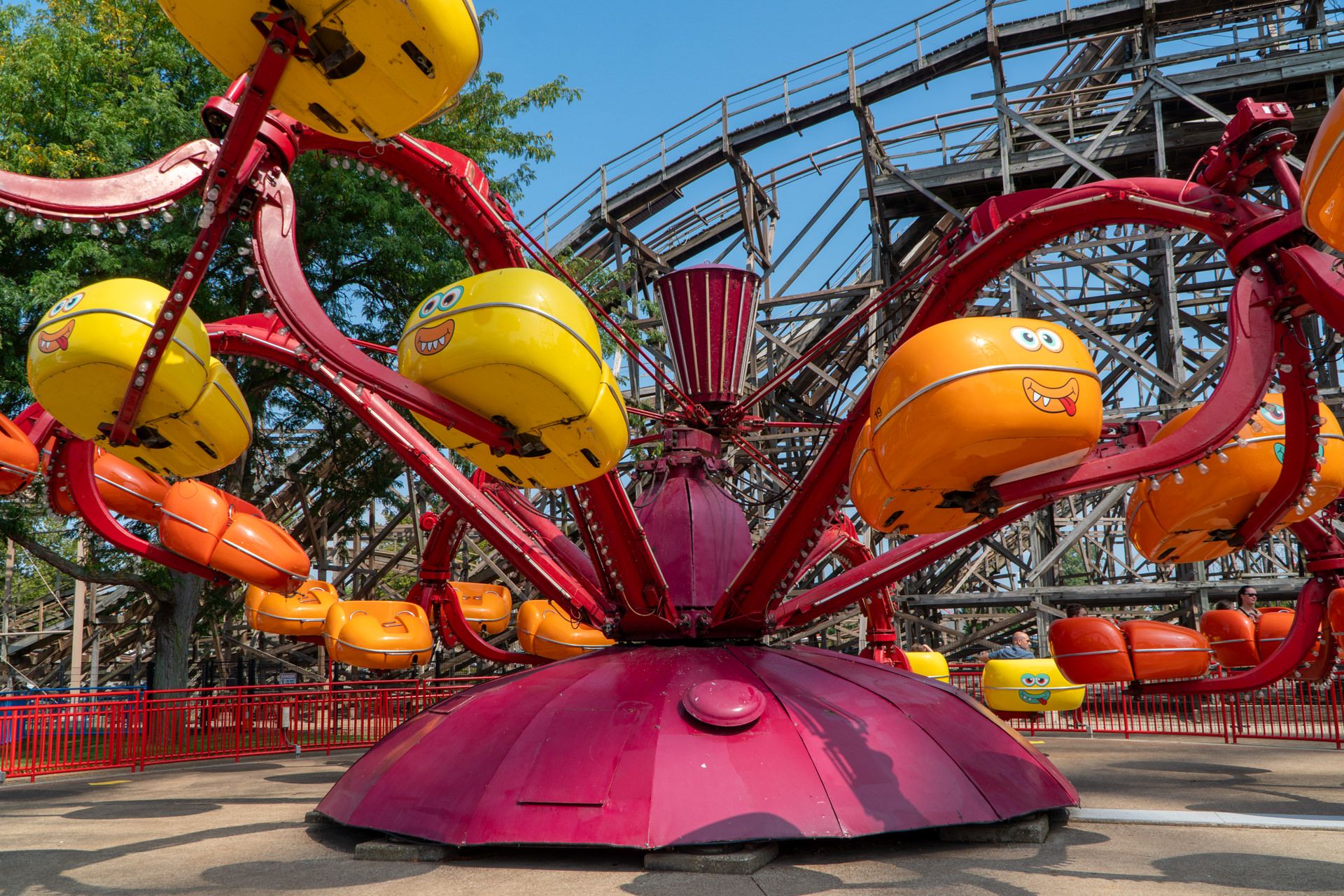
Alongside Gemini, the Midway offers several other rides. On Lake Erie Eagles, the large sails on the gondolas allow riders to influence the movement themselves. With a bit of skill, the cars can be made to swing quite strongly, which makes the ride considerably more interesting.

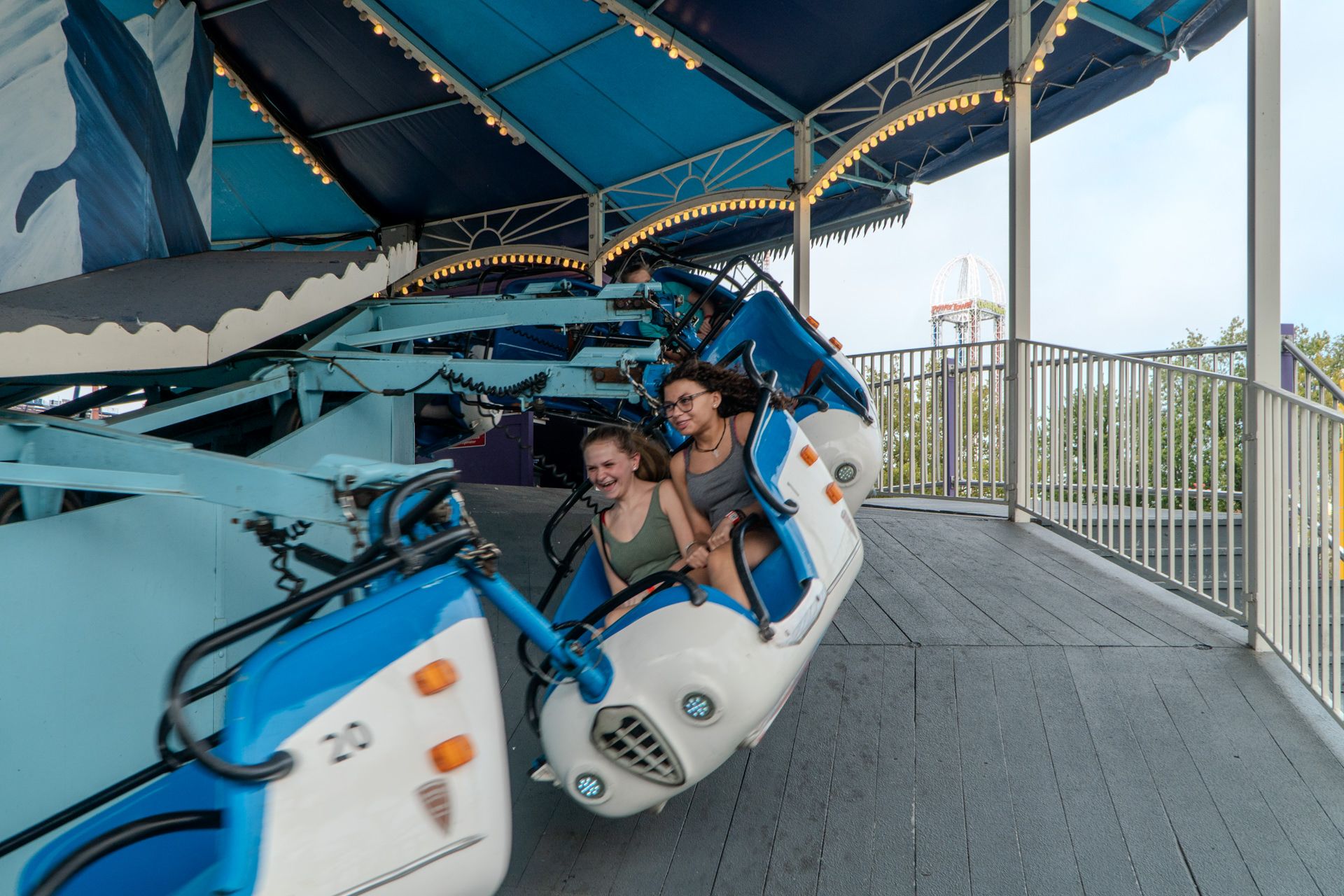
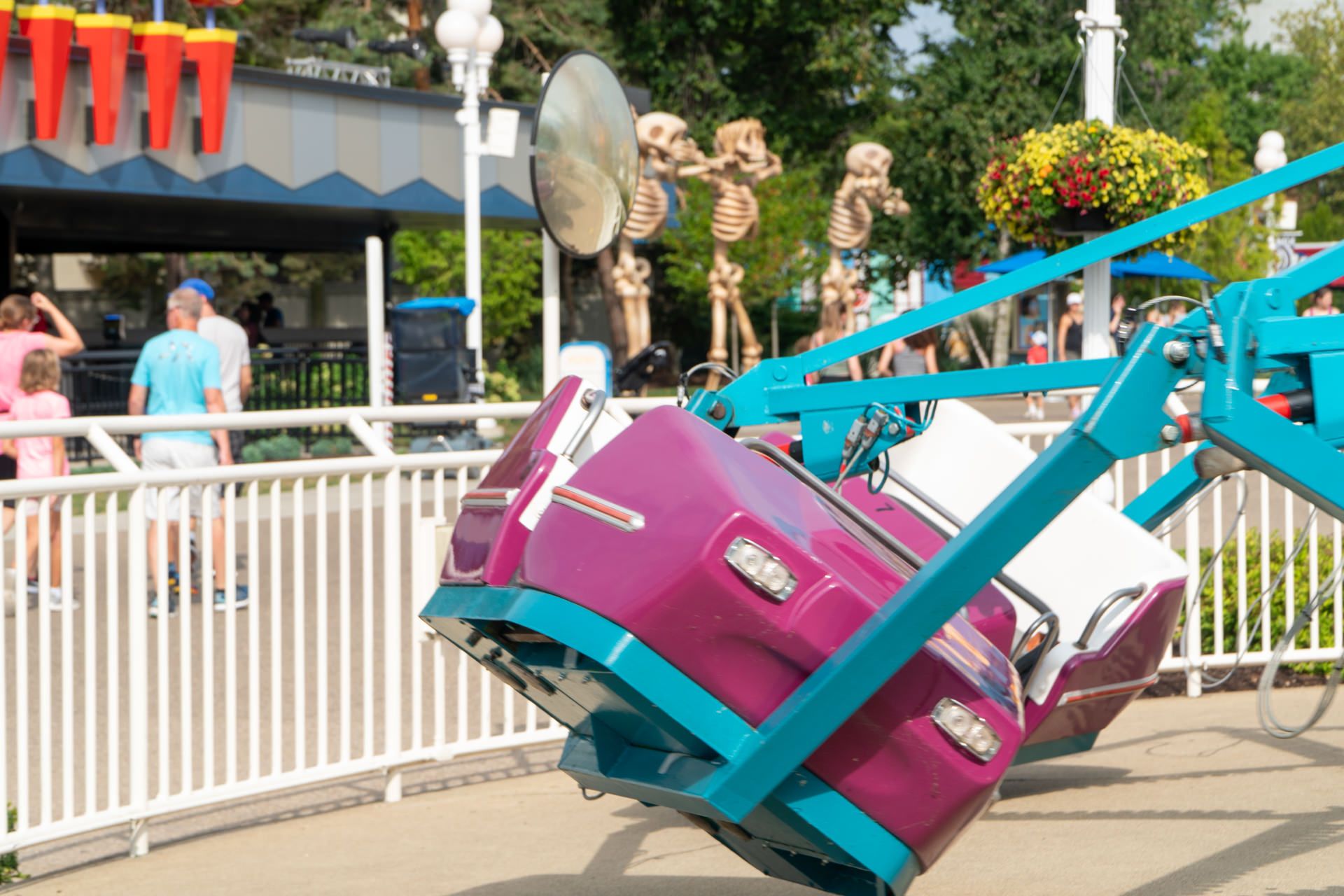
Monster is another ride that should not be missed, a classic Eyerly attraction. By shifting your weight slightly, the individual gondolas can be made to spin very nicely, allowing you to influence just how wild the ride becomes.

Pipe Scream is somewhat more unusual, a Zamperla Skater Coaster. The large gondola resembles an oversized skateboard and travels back and forth along a long, wave-shaped track. At the same time, it can rotate freely, so the direction you face constantly changes. The rises and drops provide some nice airtime along the way. A thoroughly enjoyable ride.

Camp Snoopy

Before continuing, we make a short detour into Camp Snoopy. Among the many children’s rides, there are also two small roller coasters, one of which is historically quite interesting.

Wilderness Run

Wilderness Run opened in 1979 under the name Jr. Gemini and is in fact the very first roller coaster built by Intamin. The small family coaster itself is naturally quite modest, with just a handful of drops and turns, but it marks the beginning of what has since become a rather impressive roller coaster history.

Woodstock Express

Only a short distance away, Woodstock Express is a Vekoma family coaster in the familiar Roller Skater design. The compact layout offers a few gentle drops and sweeping turns and fits perfectly into the children’s area.

We then leave Camp Snoopy again. And the jump in scale to the next roller coaster could hardly be greater: Magnum XL-200.

Magnum XL-200

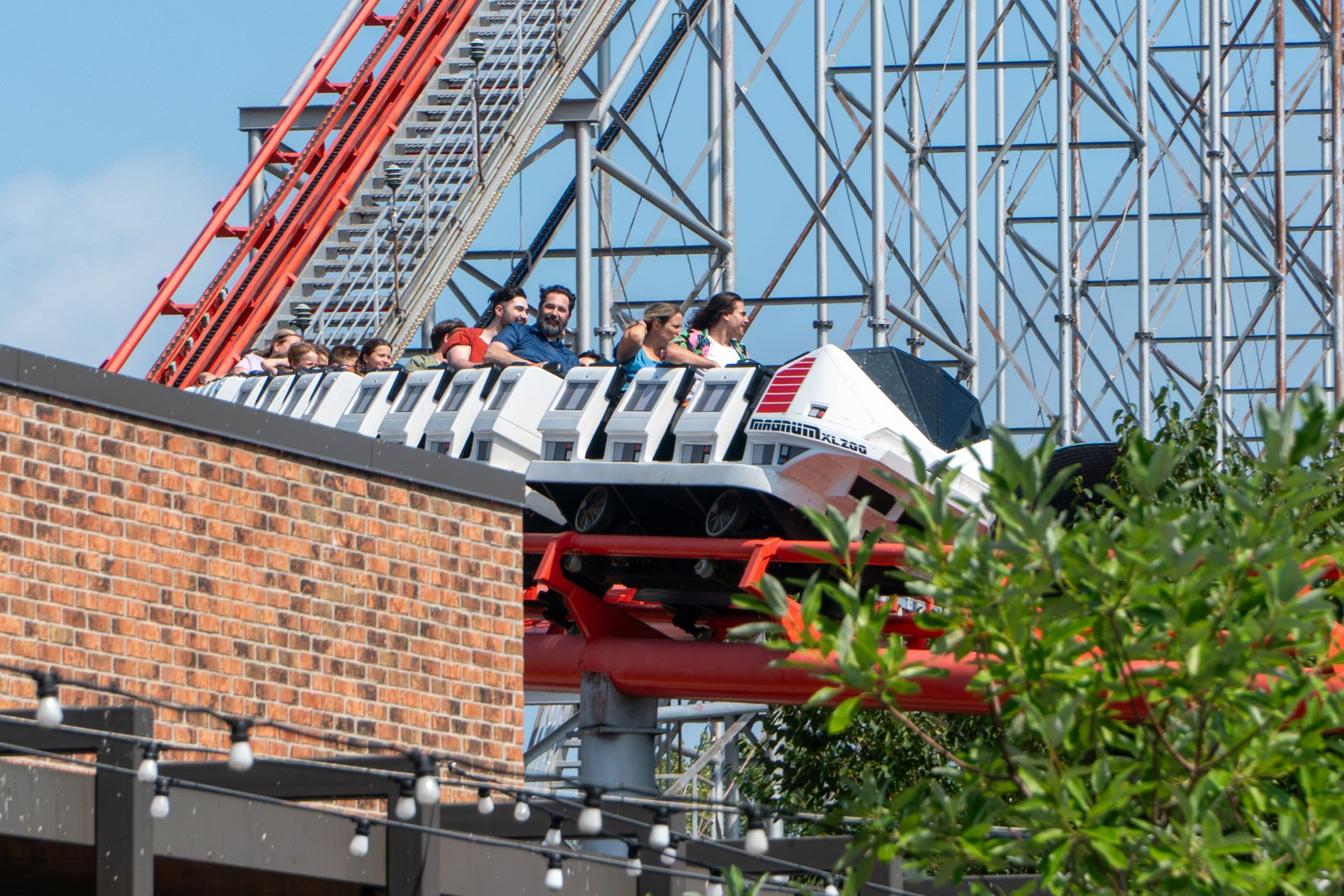
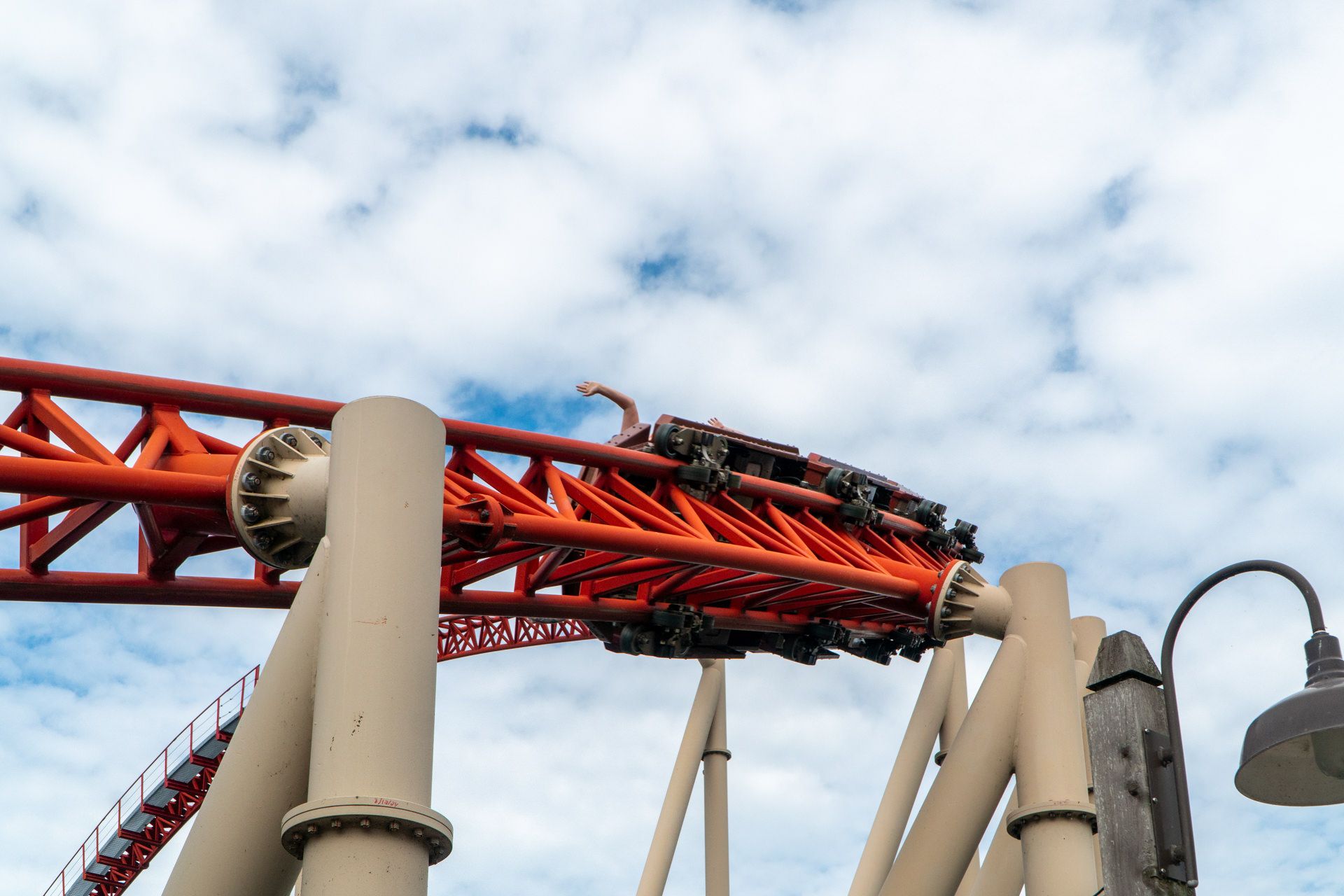
With Magnum XL-200, we arrive at one of the most historically significant roller coasters at Cedar Point. When the Arrow Dynamics ride opened in 1989, it became the first roller coaster to exceed 200 feet. The Hyper Coaster was born, and with it a development that would strongly influence roller coaster design over the following years.

And despite its age, Magnum is far more than just a historical obligation. Quite the opposite: this ride is an absolute blast.

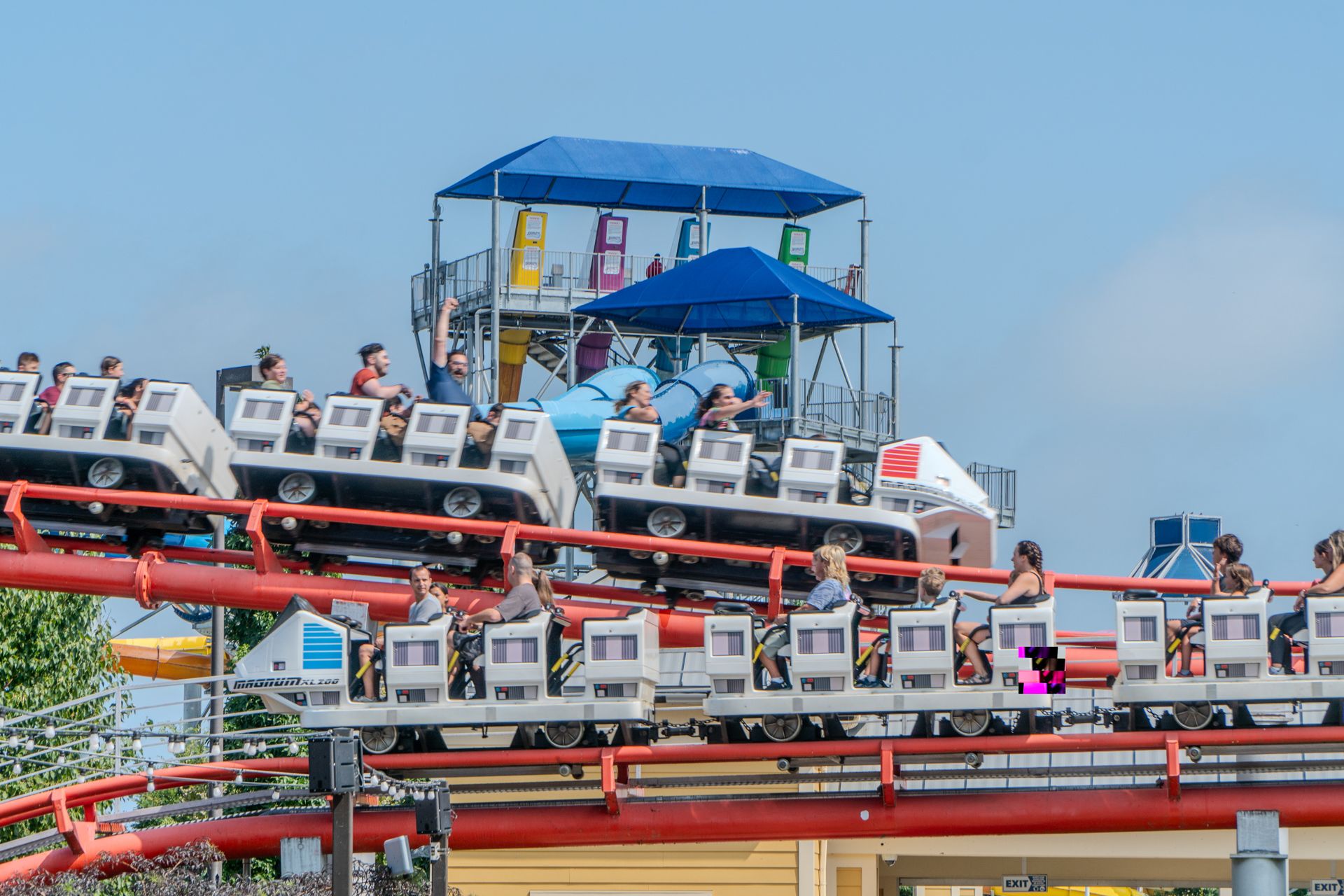
After the huge first drop, we head directly over a massive hill through the water park, already delivering some light airtime. The track then kinks away to the left and drops us into a tunnel before we climb the next large hill. Once again, we are nicely lifted out of our seats before reaching the rather unusual turnaround. It looks a little like a whale fin, while the track banks us in a rather strange way even before entering the actual turn.

After that, Magnum really shows what makes it special. Inside the next tunnel, a small hill delivers absolutely brutal airtime. More airtime hills follow, along with another kink in the track and finally a whole series of them as we make our way back through the water park. One final hill and tunnel then take us into the brake run and back towards the station.

The second half in particular turns Magnum XL-200 into an incredible fun machine. The airtime is gloriously uncompromising in places, and Arrow’s slightly eccentric track design adds plenty of character. The ride may have several decades behind it, but it is still ridiculously good fun.

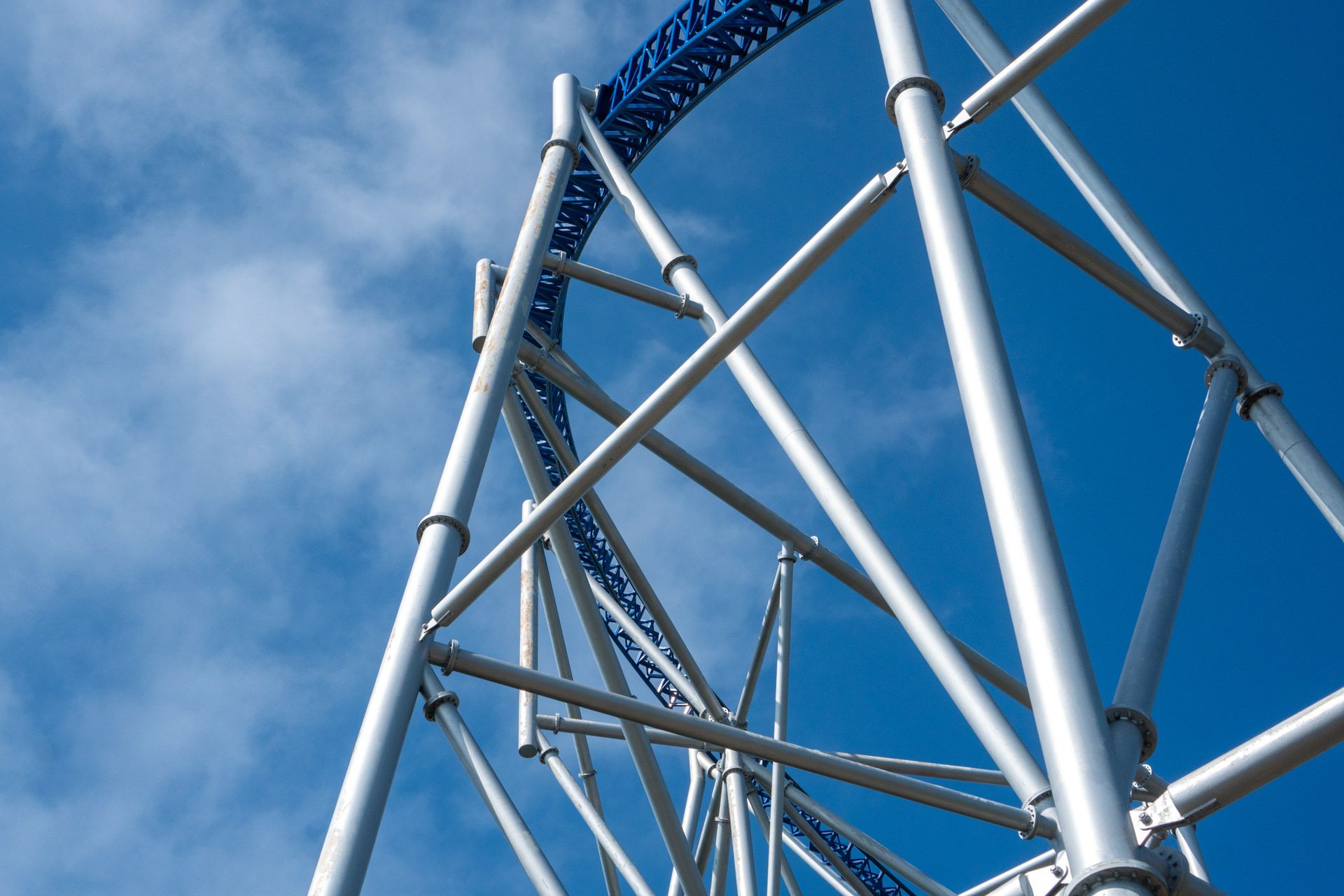
Top Thrill 2

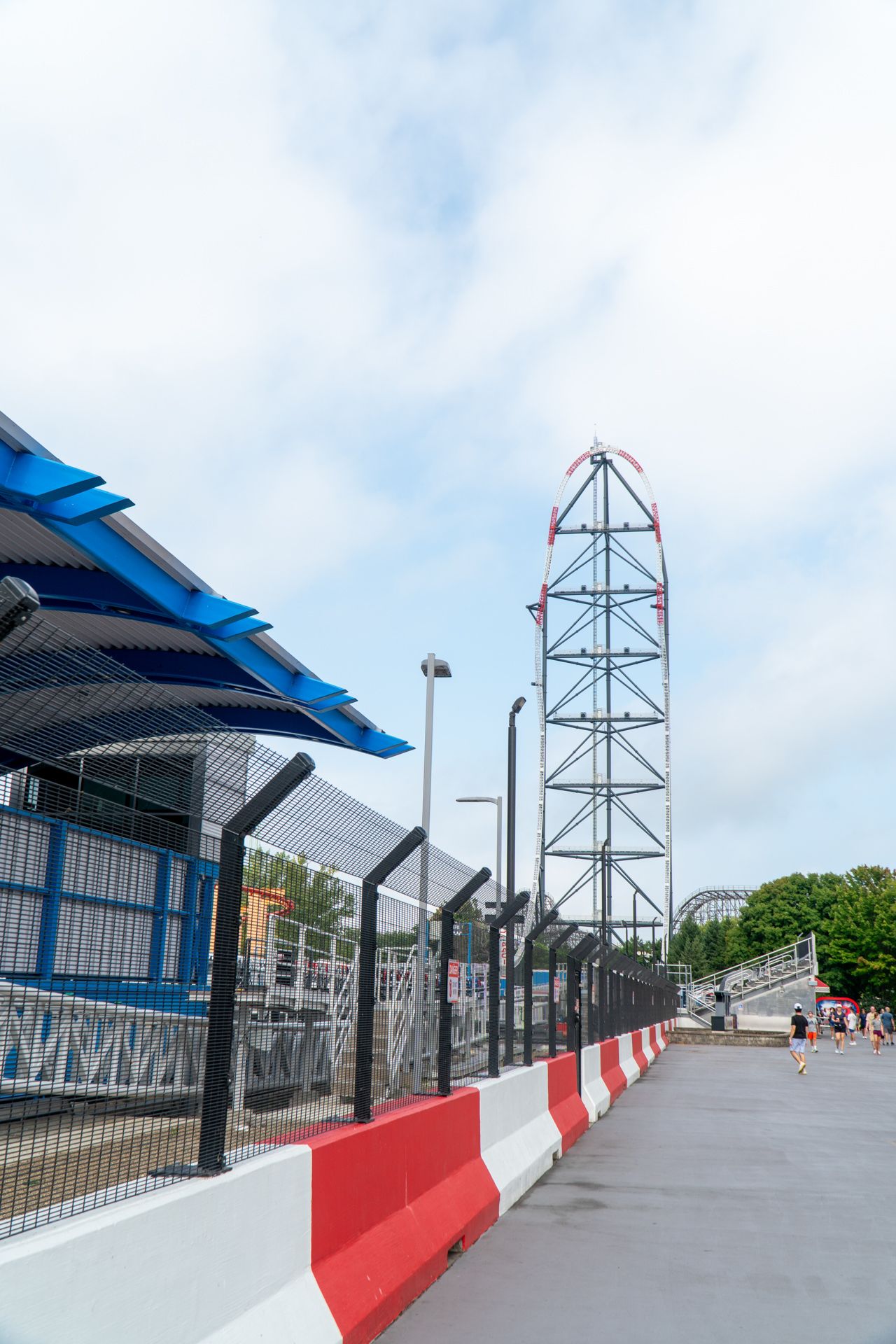
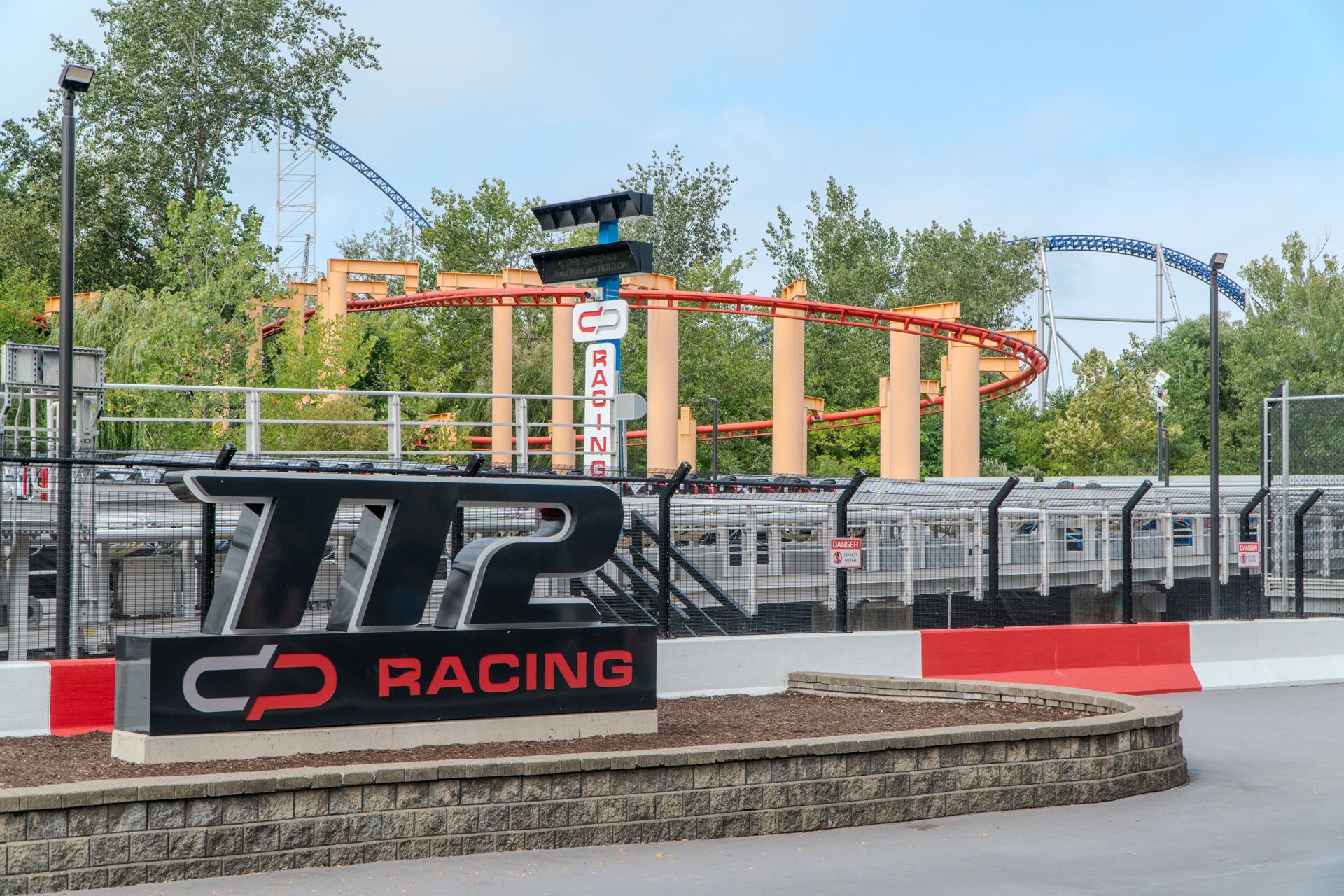
Only a short distance further along stands Top Thrill 2, at least visually one of Cedar Point’s most striking roller coasters. Unfortunately, the ride had already closed again during my 2024 visit, so I was unable to experience the new version myself.

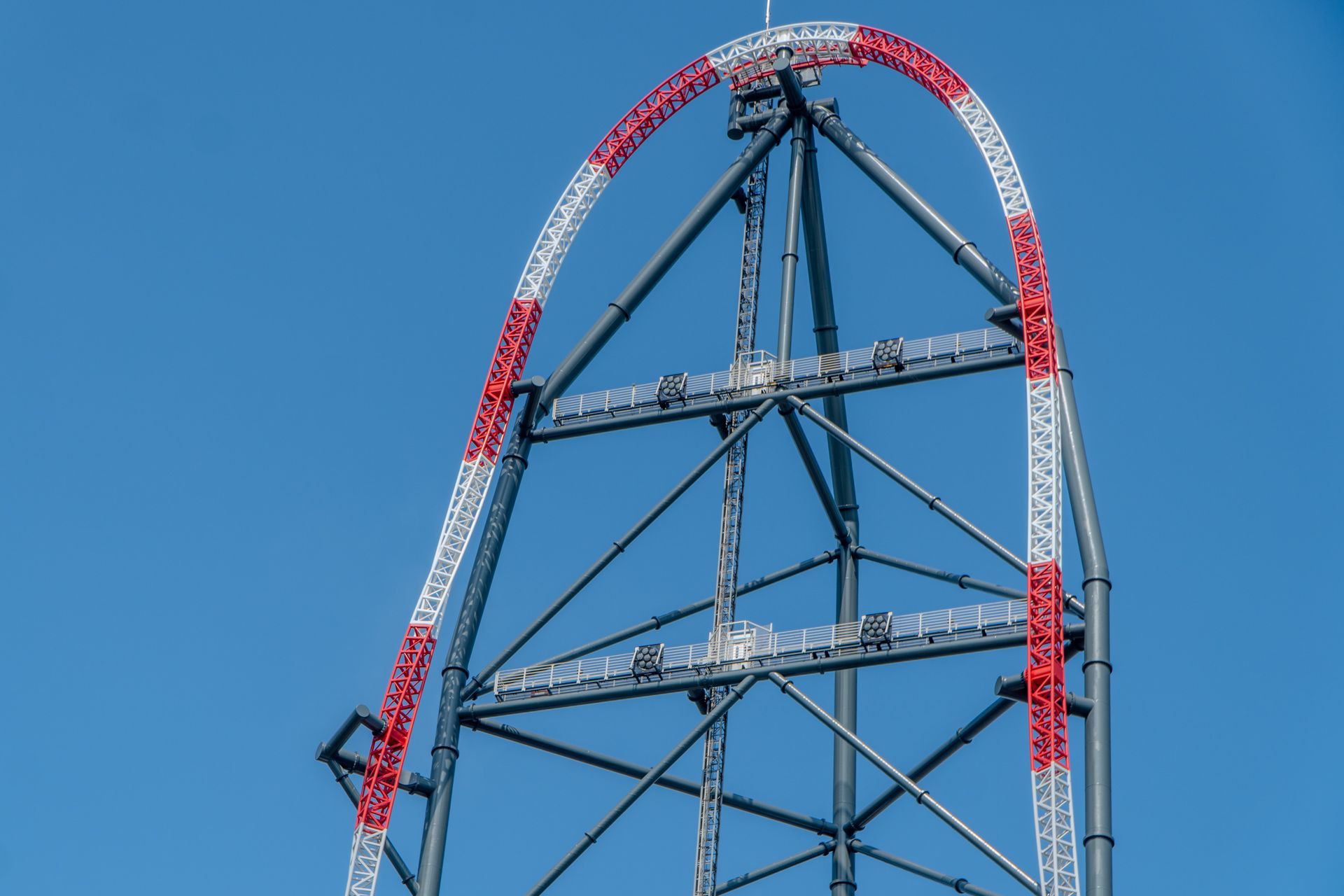
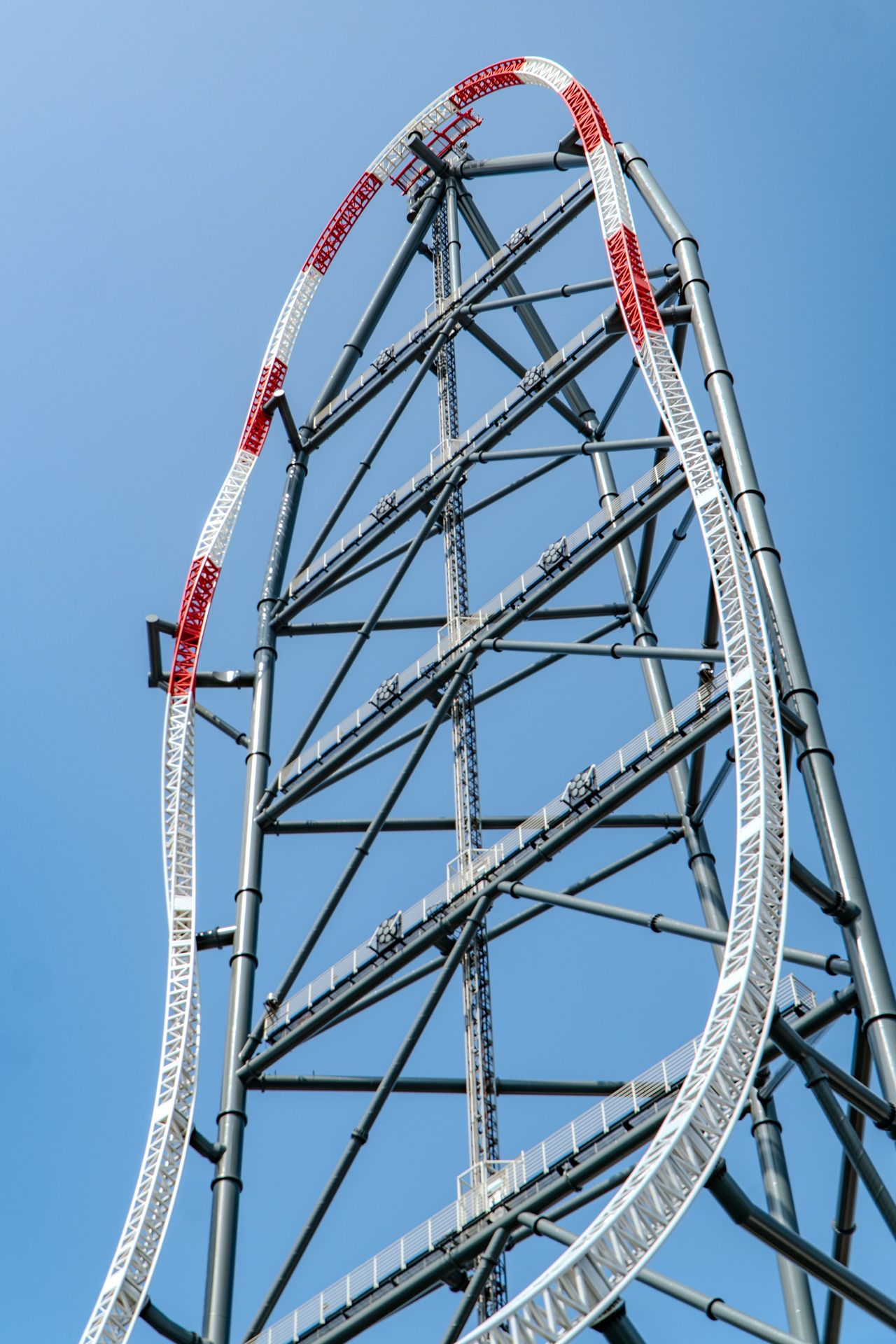
The ride originally opened in 2003 as Top Thrill Dragster and was one of the big statements of the Coaster Wars era. The Intamin Accelerator Coaster launched its trains to around 120 mph within just a few seconds and sent them over a Top Hat more than 400 feet tall. It was a short but brutal ride and the first roller coaster in the world to break the 400-foot mark.

Following a serious accident in 2021, in which a metal component detached from a train and severely injured a guest waiting in line, Top Thrill Dragster was permanently closed. Rather than reopening the ride in its original form, Cedar Point eventually opted for an extensive rebuild.

For the conversion, Cedar Point brought Zamperla on board. Intamin’s original hydraulic launch system was completely removed and replaced with LSM propulsion. Since these do not come close to the acceleration of the old hydraulic launch, a single launch is no longer enough to clear the more than 400-foot-tall Top Hat.

Instead, the train is first accelerated forwards, climbs only partway up the Top Hat and then rolls backwards into a newly built spike around 400 feet tall. From there, it heads forwards again and receives another boost before finally making it over the Top Hat. The short and brutal Top Thrill Dragster was therefore transformed into a noticeably longer ride with a completely different sequence.

And that is exactly why I have always been rather sceptical about the conversion. Top Thrill 2 was Zamperla’s first truly large-scale roller coaster, from a manufacturer that had previously been known mainly for flat rides and smaller coasters. Choosing such a prestigious project as the step into this size category always seemed rather bold to me.

The first season confirmed at least some of my doubts. Only a few days after opening, Top Thrill 2 had to close again, with problems involving the newly developed trains and their interaction with the track playing a major role. The ride therefore remained closed during my visit.

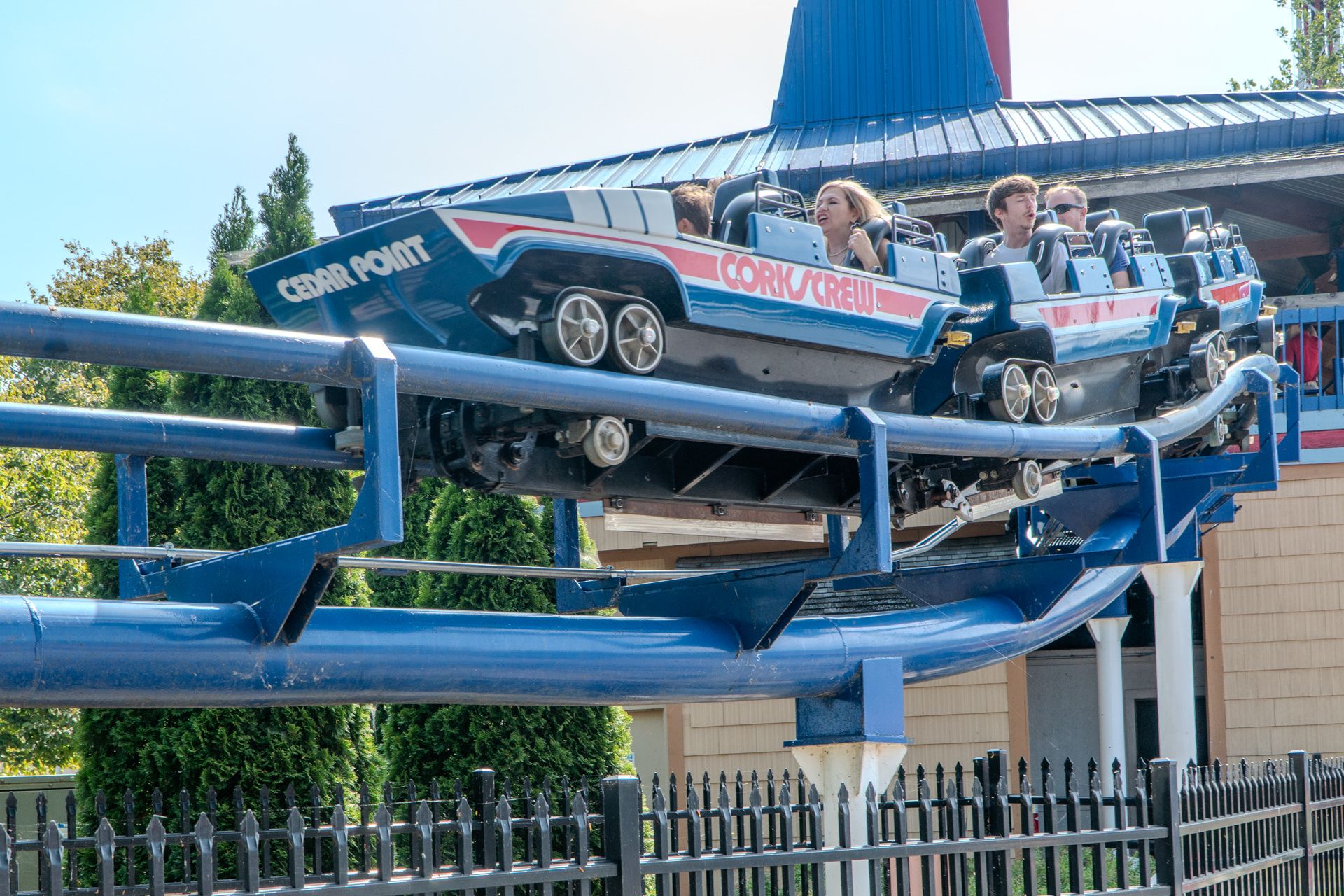
For me, the considerably softer LSM launch also remains a step backwards compared with the old Top Thrill Dragster. With a ride carrying such a history, I would have preferred to see Cedar Point work with Intamin again. Nevertheless, I would of course have loved to try Top Thrill 2 myself – perhaps the ride might have won me over after all.

Corkscrew

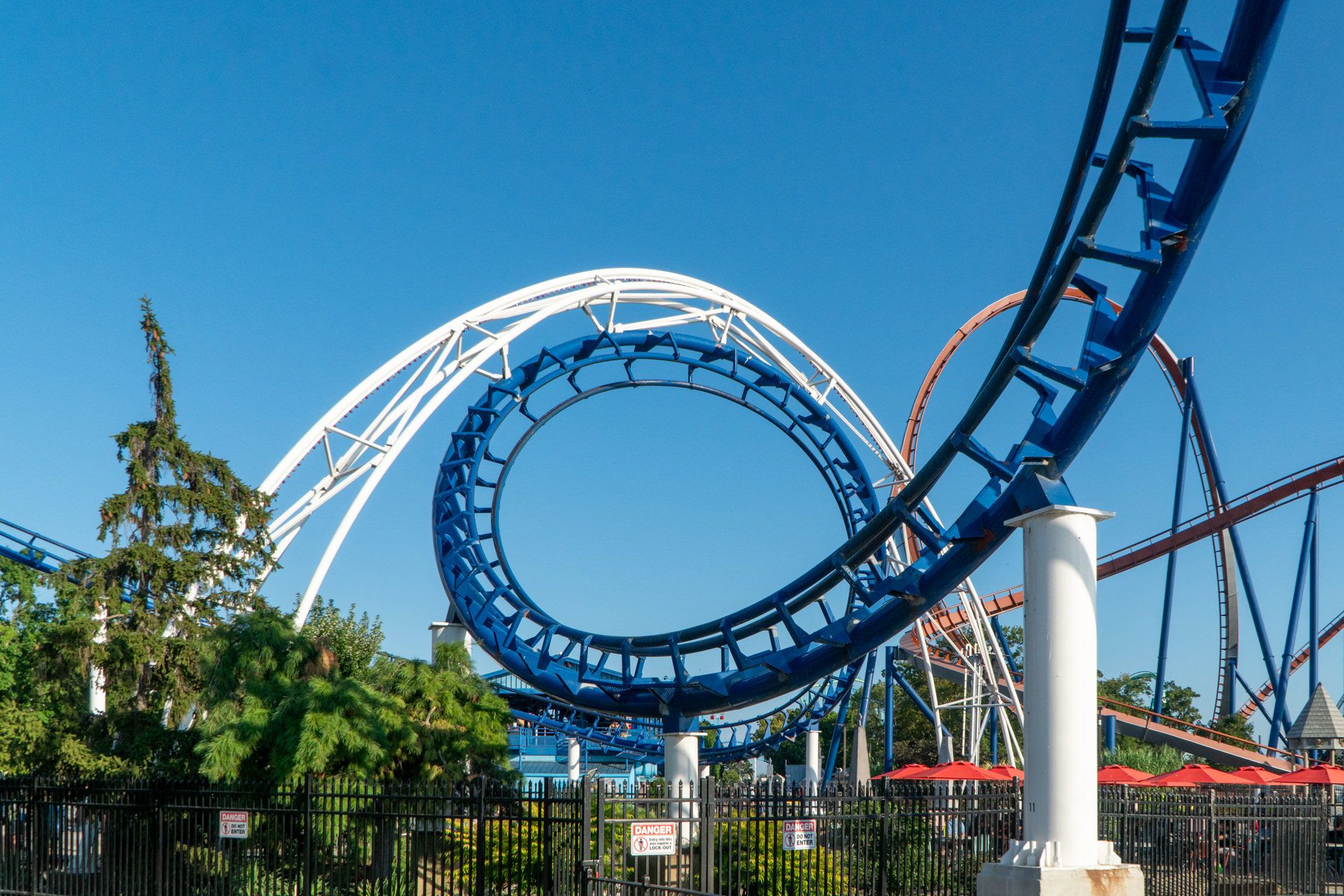
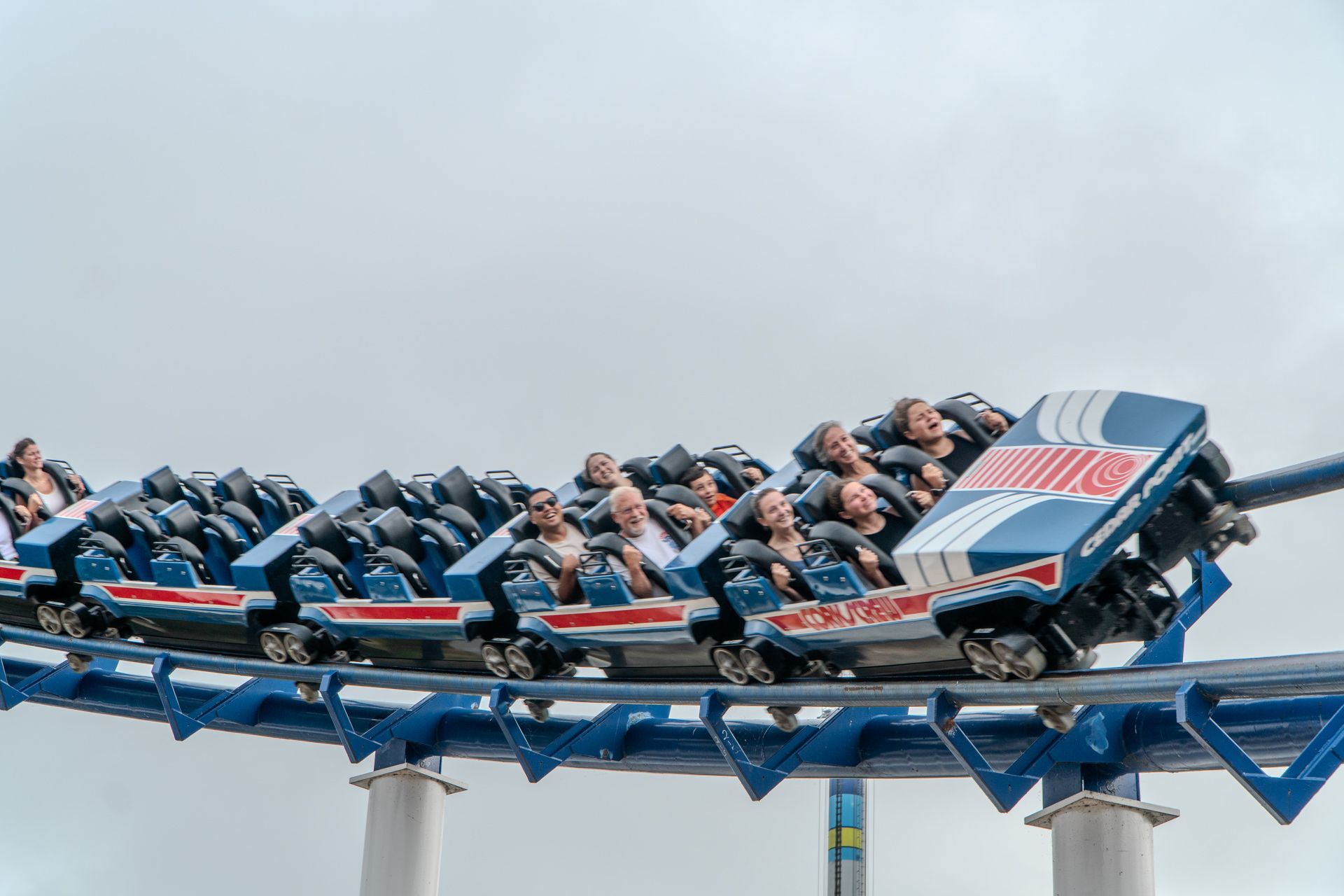
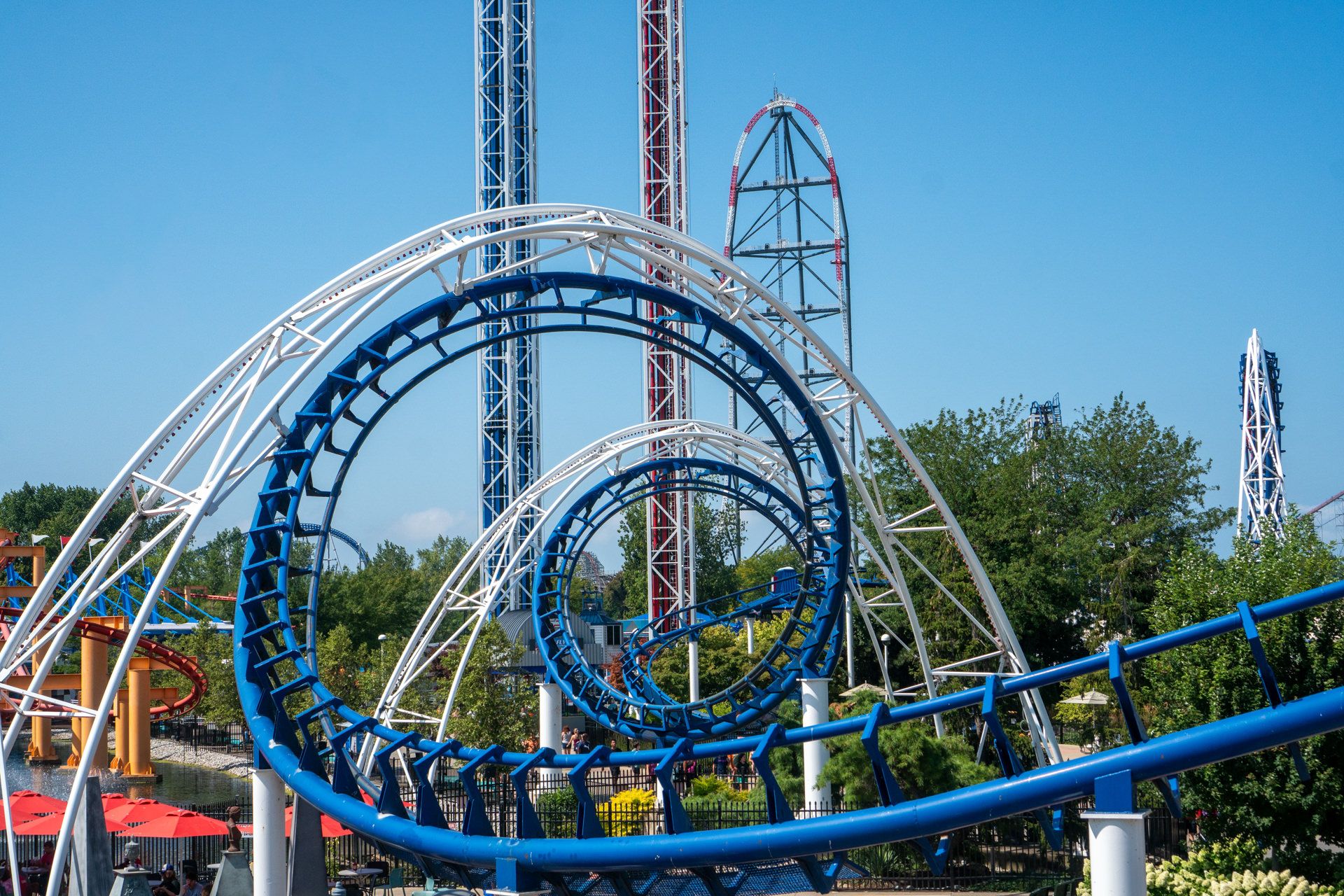
Only a short distance further along, Corkscrew is a genuine piece of roller coaster history. The Arrow ride opened on May 15, 1976, exactly one week after Revolution at Six Flags Magic Mountain, the first modern roller coaster with a vertical loop. Corkscrew immediately went one step further and, with its loop and two namesake corkscrews, became the first roller coaster in the world with three inversions.

After the lift hill, we head down the first drop and over a surprisingly fun camelback that provides some nice airtime. We then pass through the loop with plenty of force before heading towards the two corkscrews. These run directly over the Midway and make for a great sight even when you are not on the ride.

For an Arrow coaster of this age, the ride characteristics are perfectly acceptable. Combined with the enjoyable camelback, the forceful loop and, of course, its historical significance, Corkscrew is still a nice ride today.

Super Himalaya

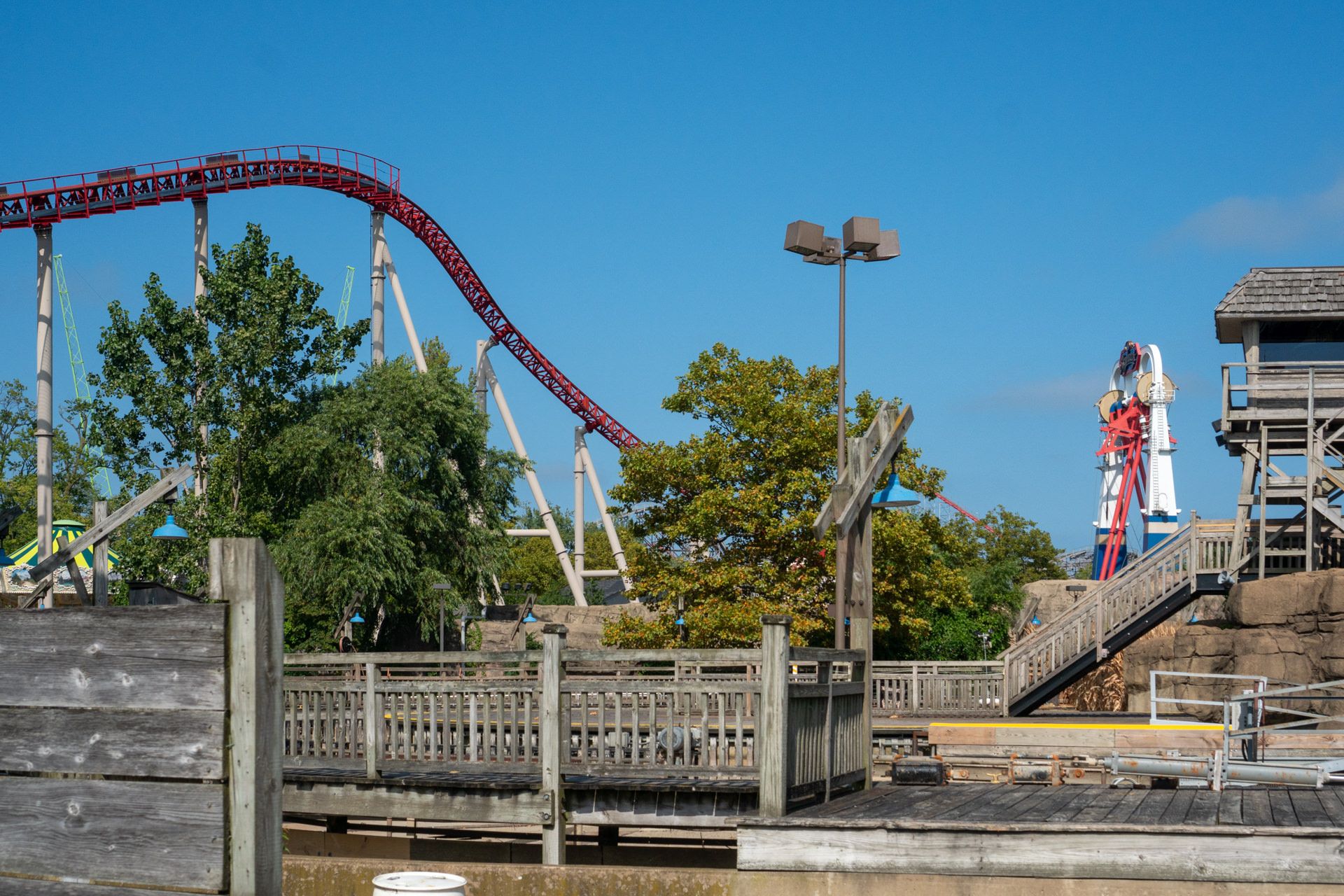
Next up is Super Himalaya, a classic Music Express. Lap after lap, the cars race over the wave-shaped track at a good speed while being pushed nicely outwards. A straightforward classic that is still plenty of fun here.

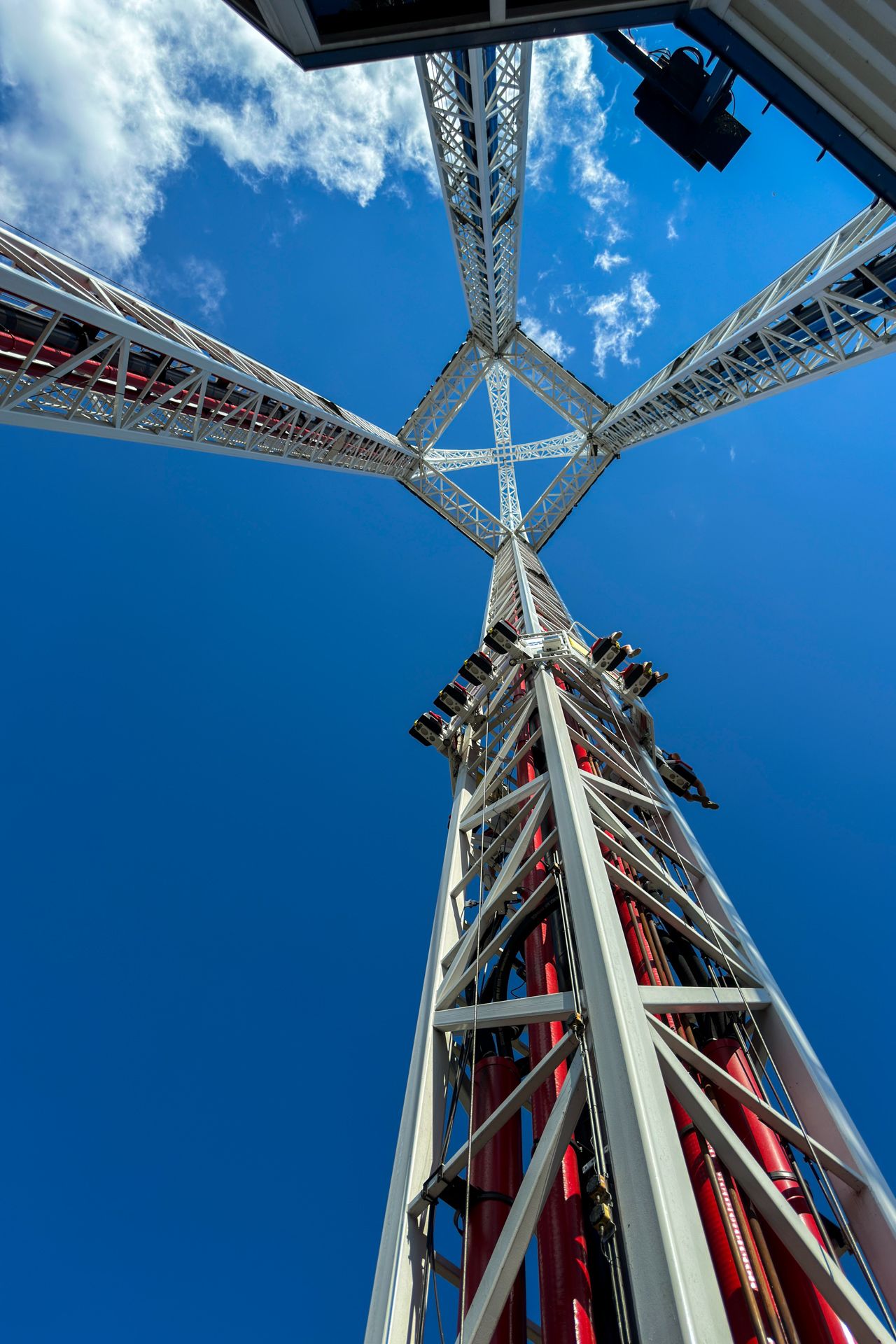
Power Tower

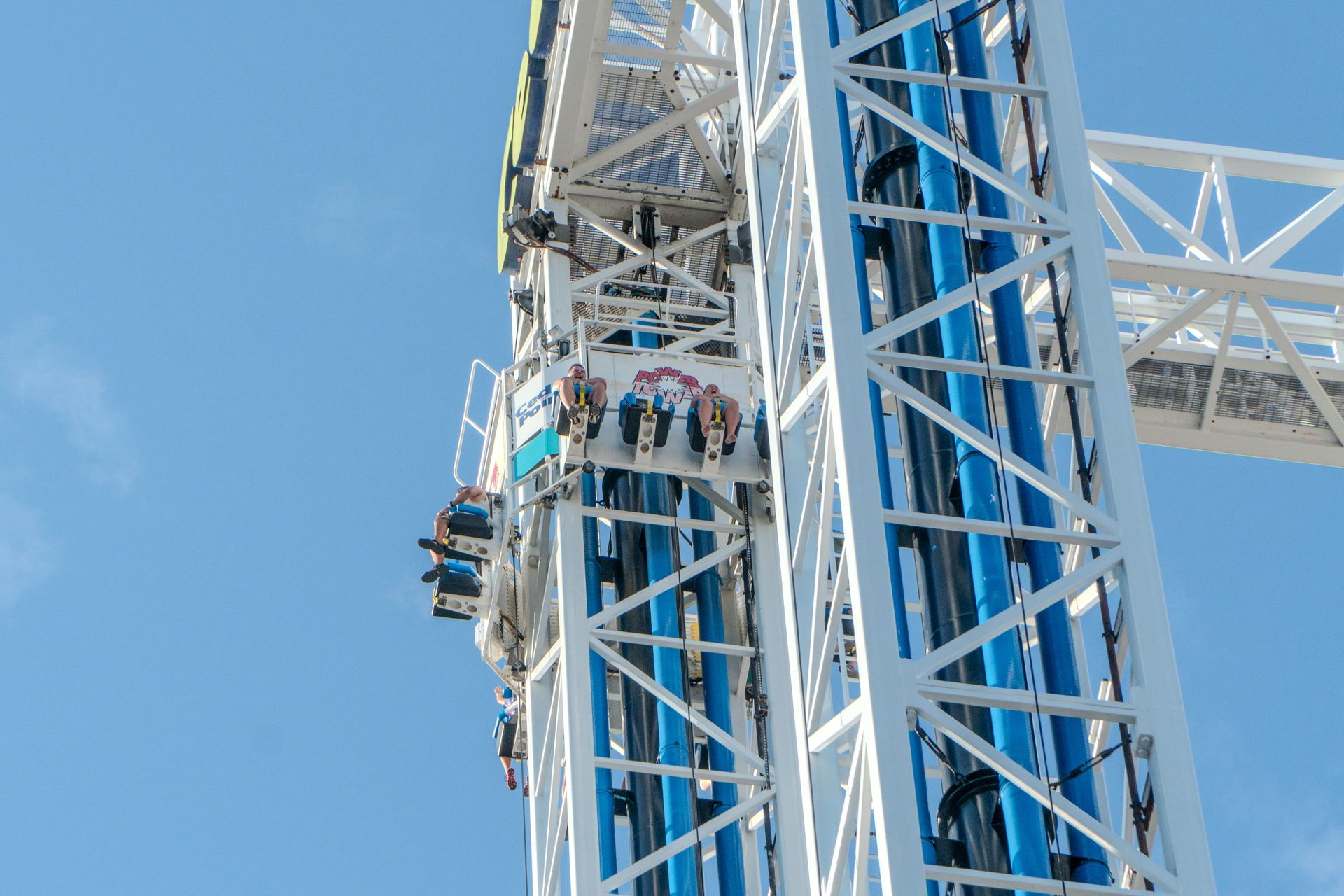
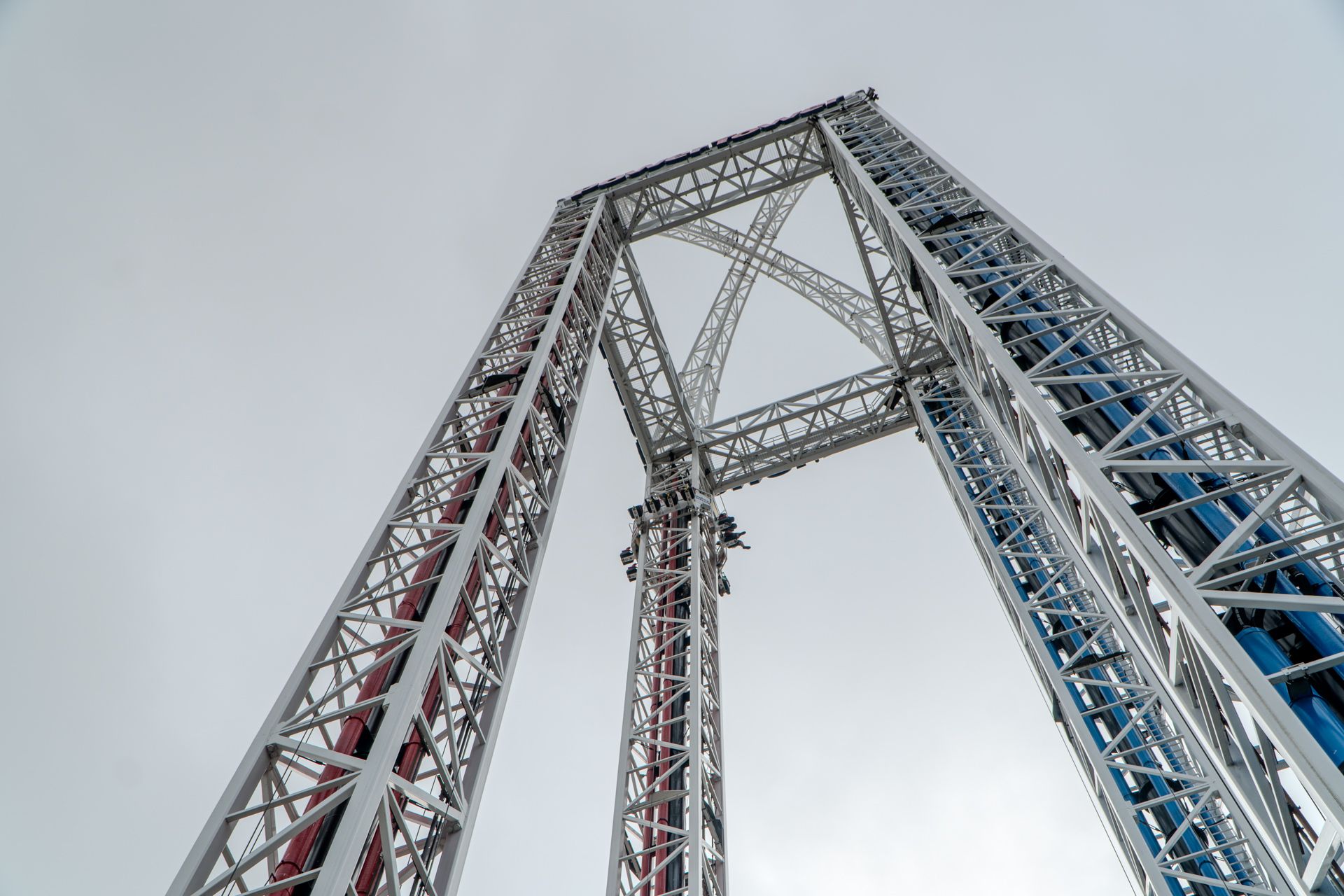
Power Tower is a considerably larger affair. The huge S&S structure consists of four towers and is already impressive to look at from the outside. Two sides operate as Space Shots, launching riders upwards with compressed air, while the other two work as Turbo Drops for the opposite experience.

The ability to choose between being launched upwards or dropped downwards makes Power Tower particularly interesting. Whichever side you pick, a great ride is practically guaranteed.

Main Midway

Back on the Main Midway, we first encounter the Sky Ride, whose gondolas glide calmly above the heads of visitors and offer a nice view along the Midway. Nearby, the Cadillac Cars provide another classic family attraction, offering a relaxed drive around their course in vintage-style cars.

Cedar Downs Racing Derby

Far more unusual is the Cedar Downs Racing Derby. Only three Racing Derby carousels of this type survive worldwide, and the speed alone makes the experience completely different from that of a normal horse carousel.

What makes the ride particularly special is the racing mechanism itself. The horses do not just move up and down; they also move forwards and backwards within their rows, creating an actual little horse race during the ride. Combined with the surprisingly high speed, Cedar Downs is a wonderfully unusual attraction – and definitely something you should not skip at Cedar Point.

Valravn

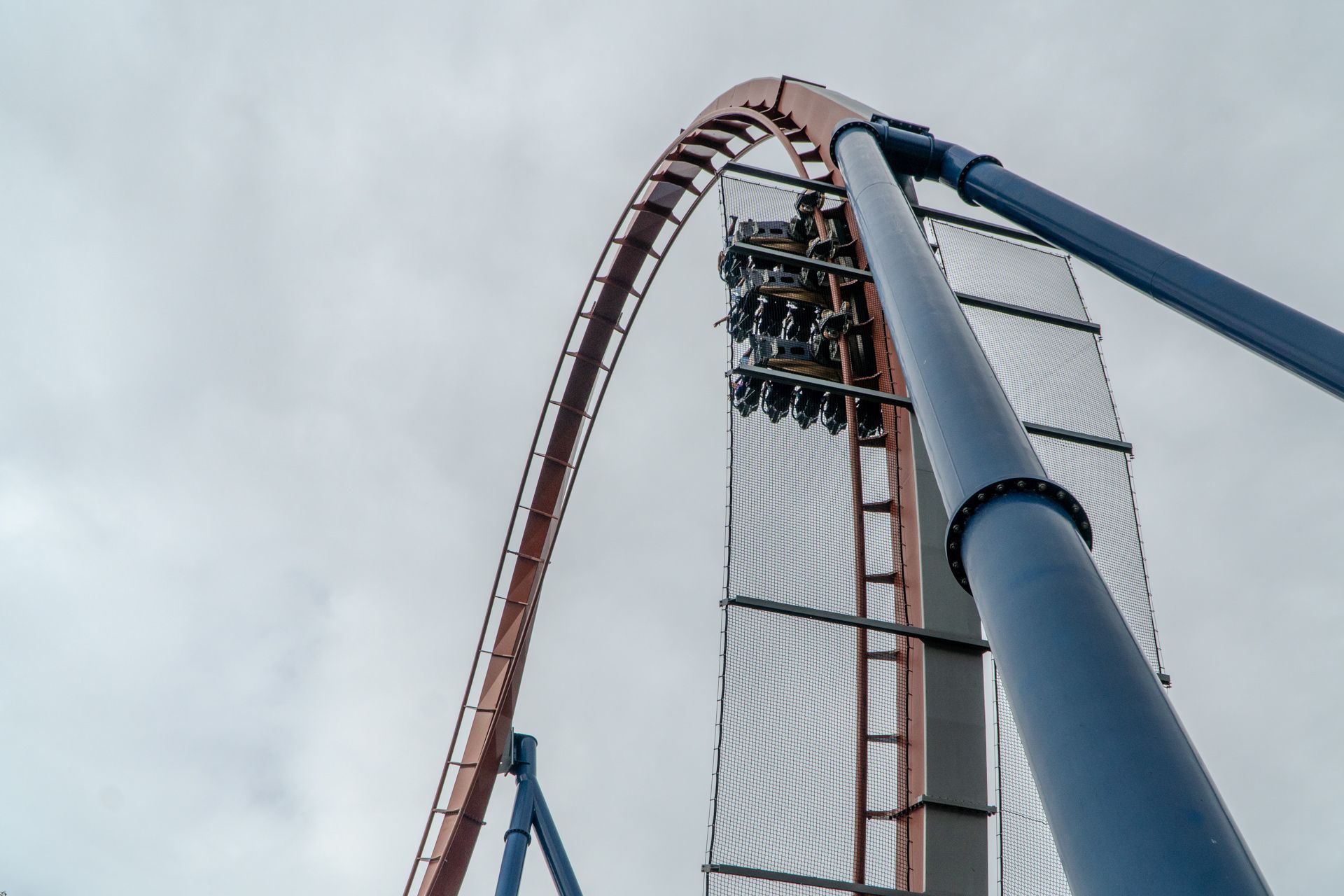
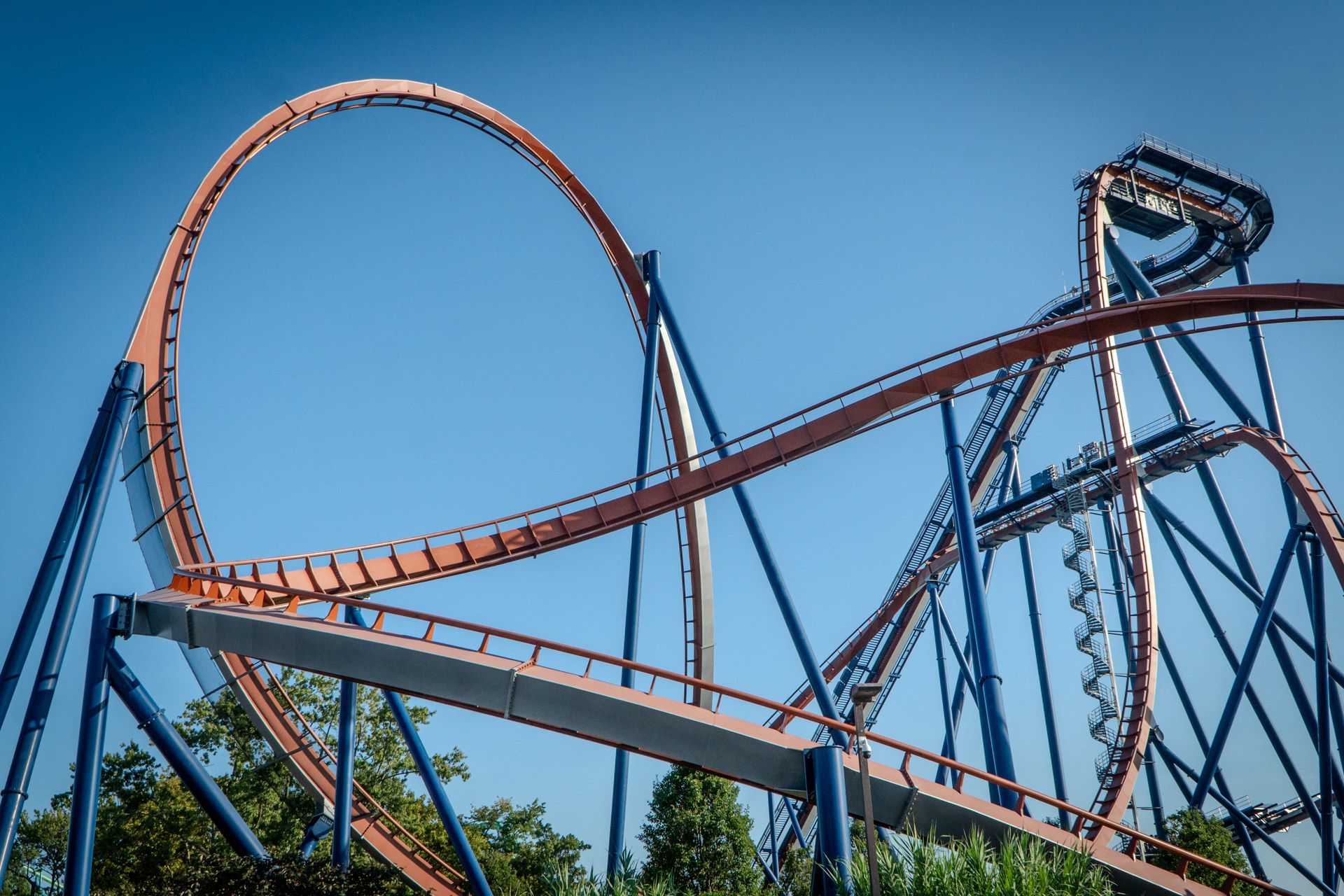
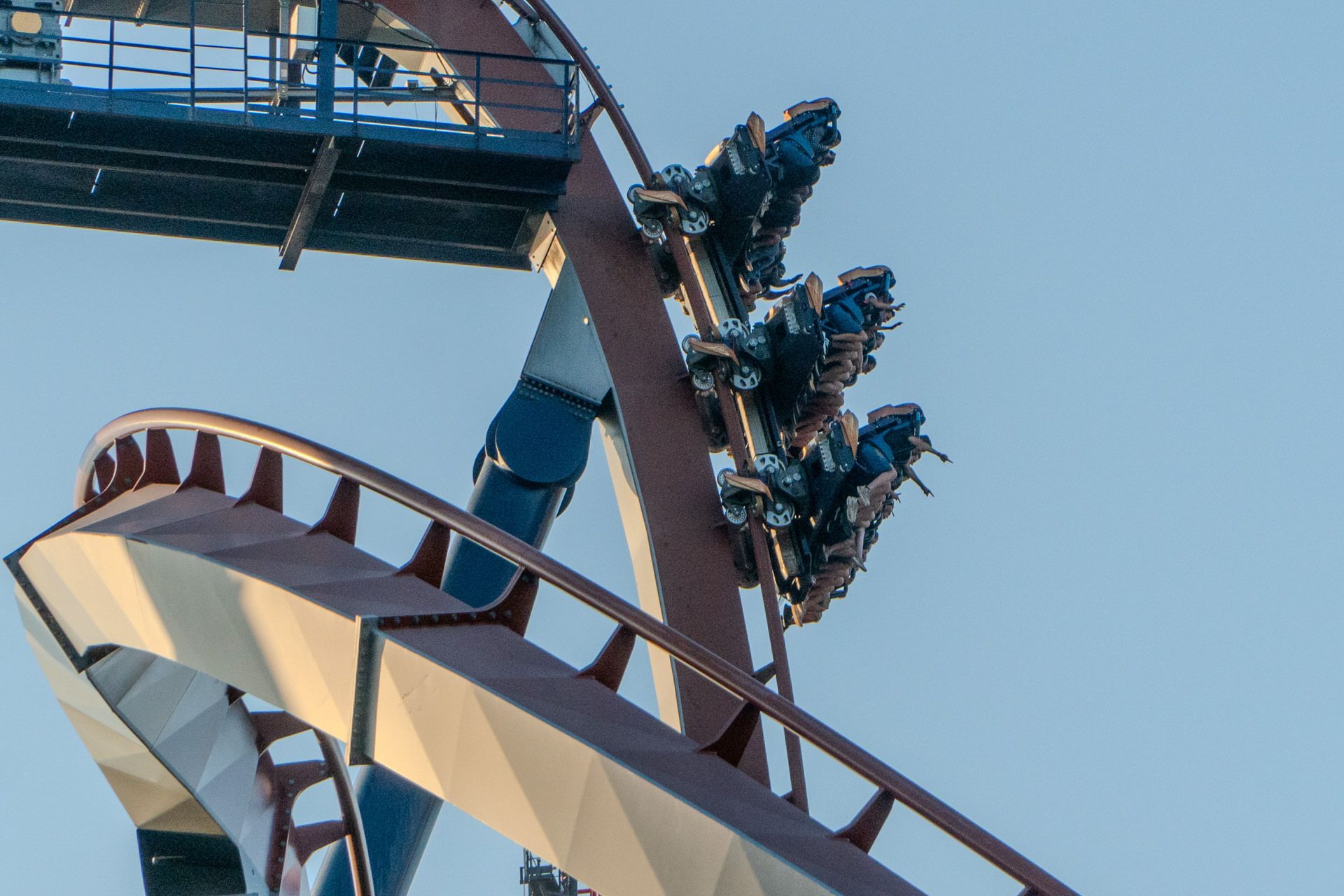
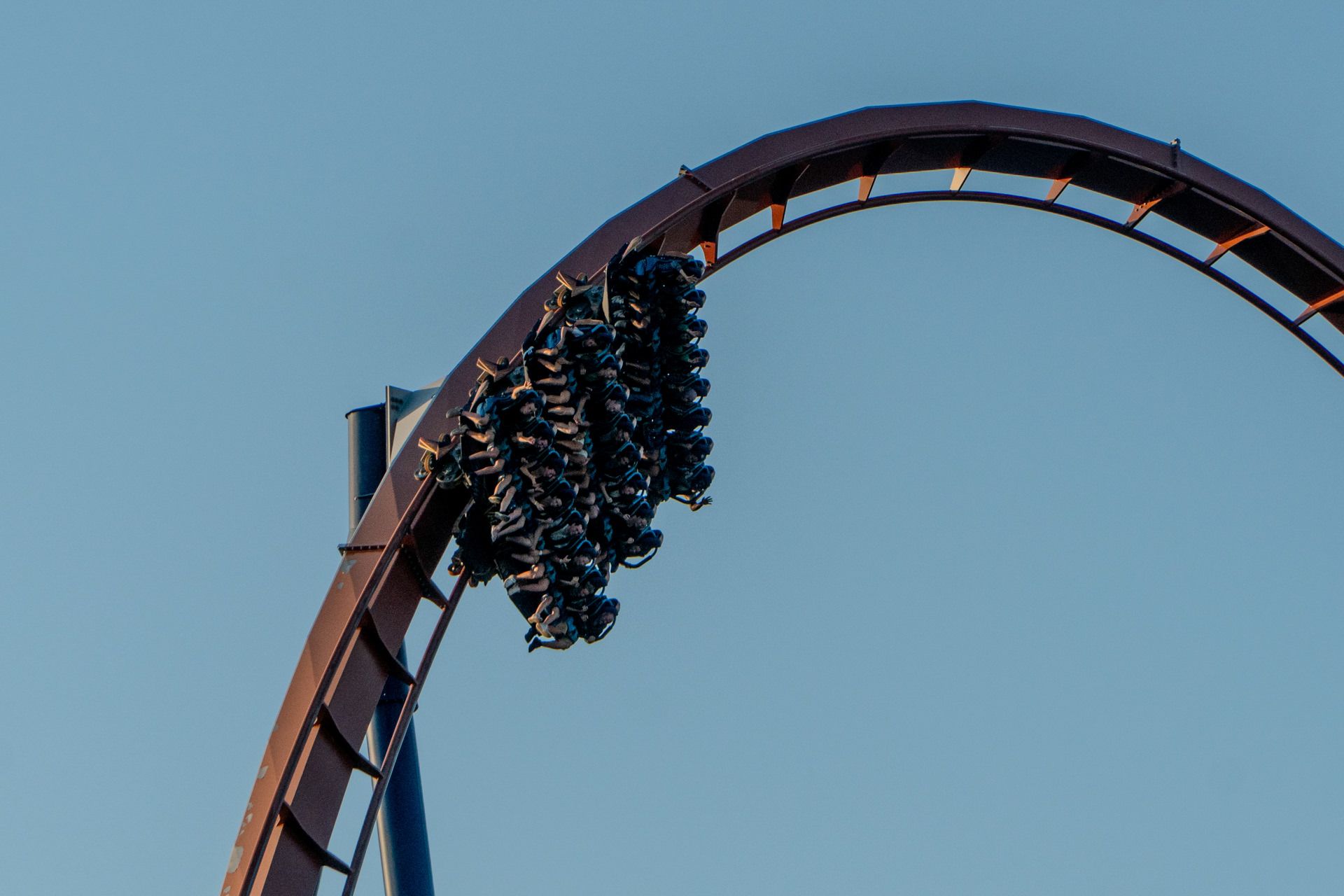
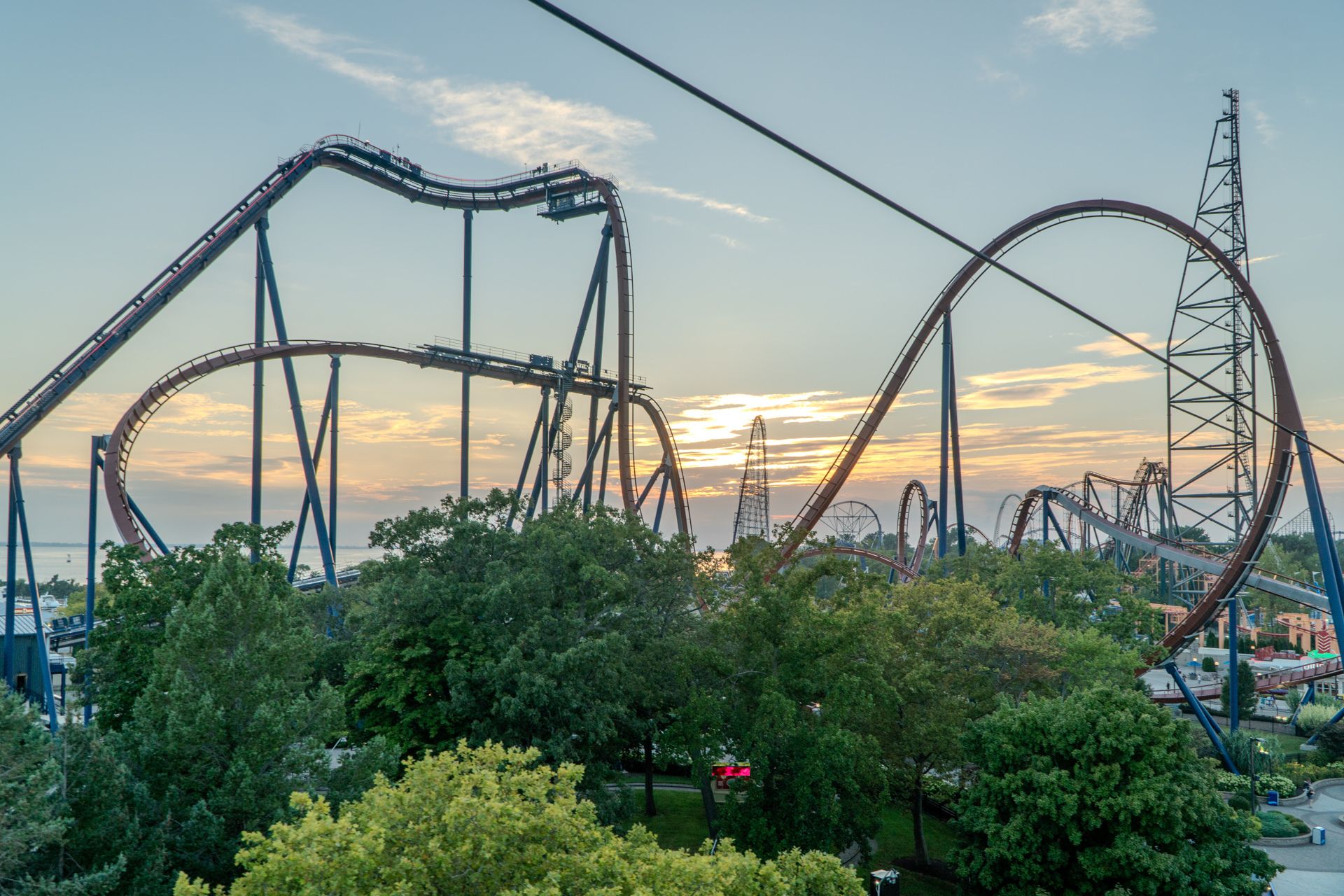
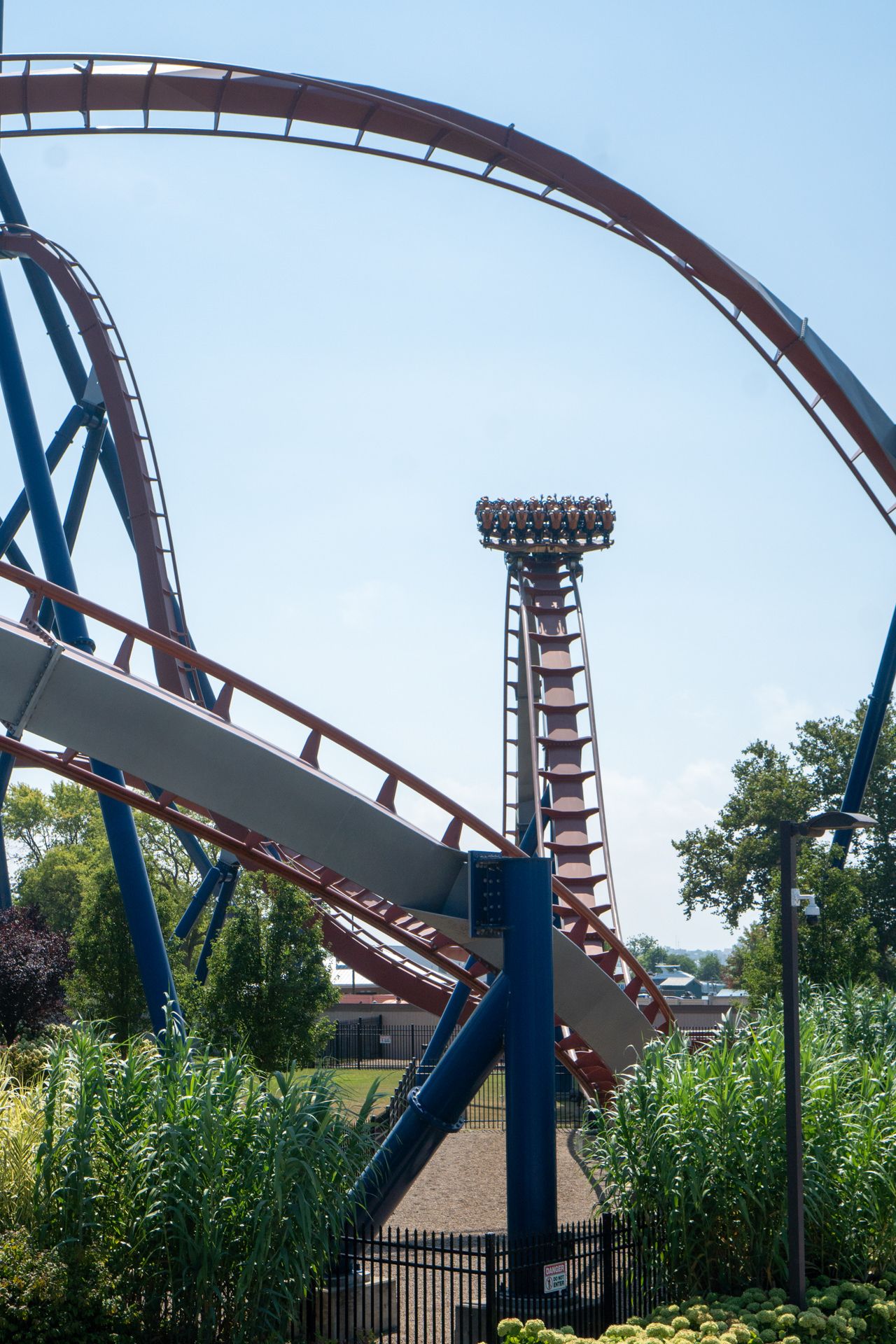
With Valravn, we arrive at one of the park’s major B&M coasters. The Dive Coaster opened in 2016 and first takes us to a height of around 220 feet, where the train is held over the edge for several seconds. Then the brake releases and we plunge almost vertically towards the ground.

We shoot through the first Immelmann with plenty of force before climbing a broad rise into the block brake. From there, we head straight down the second drop and into another Immelmann. A roll follows and flows directly into a curving descent. One more turn and a final camelback then carry us into the brake run.

Valravn is great fun and naturally lives above all from its enormous height. The moment hanging over the edge and the following first drop make a real impression. After that, the ride delivers a nice, forceful experience with large elements and excellent ride characteristics.

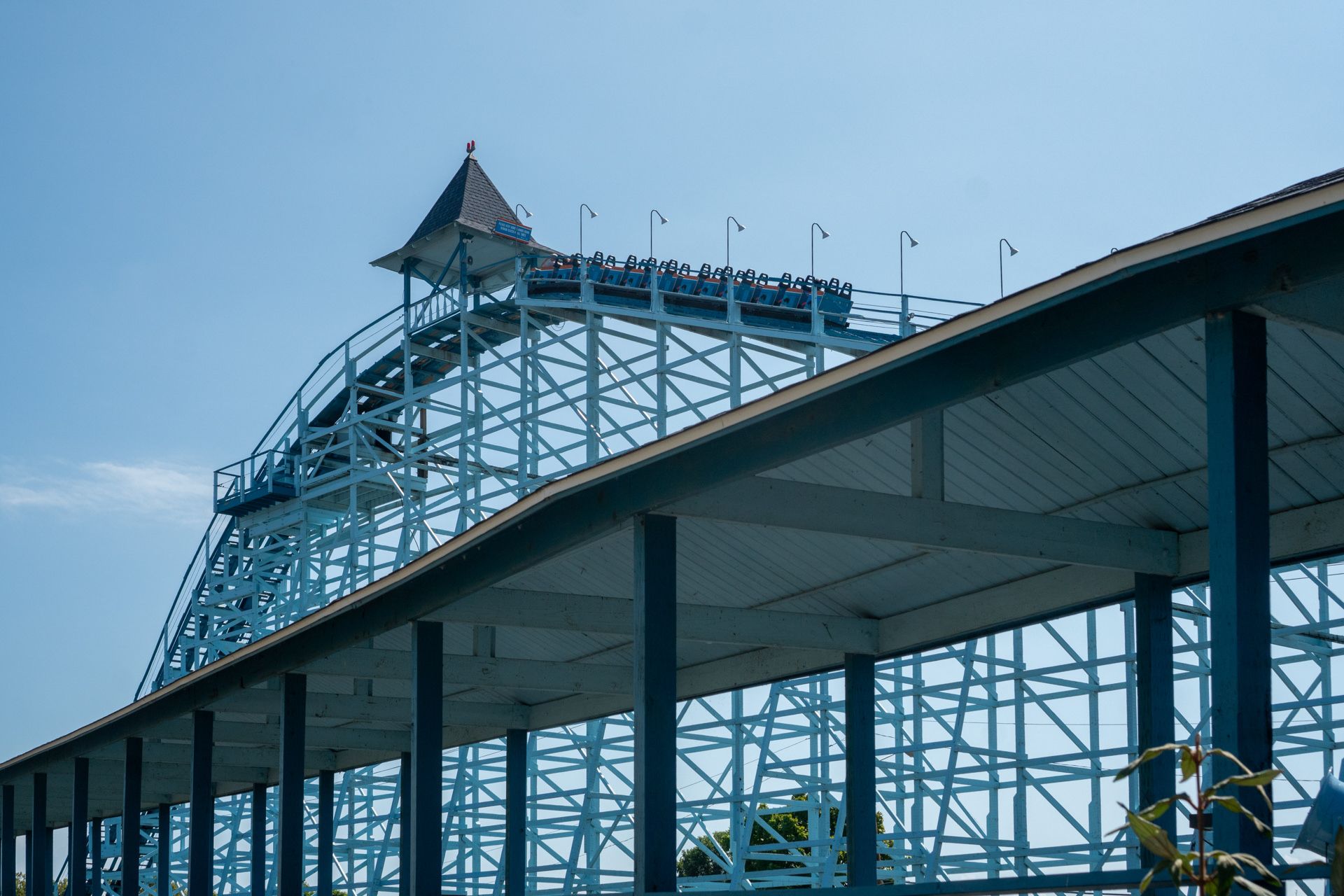
Blue Streak

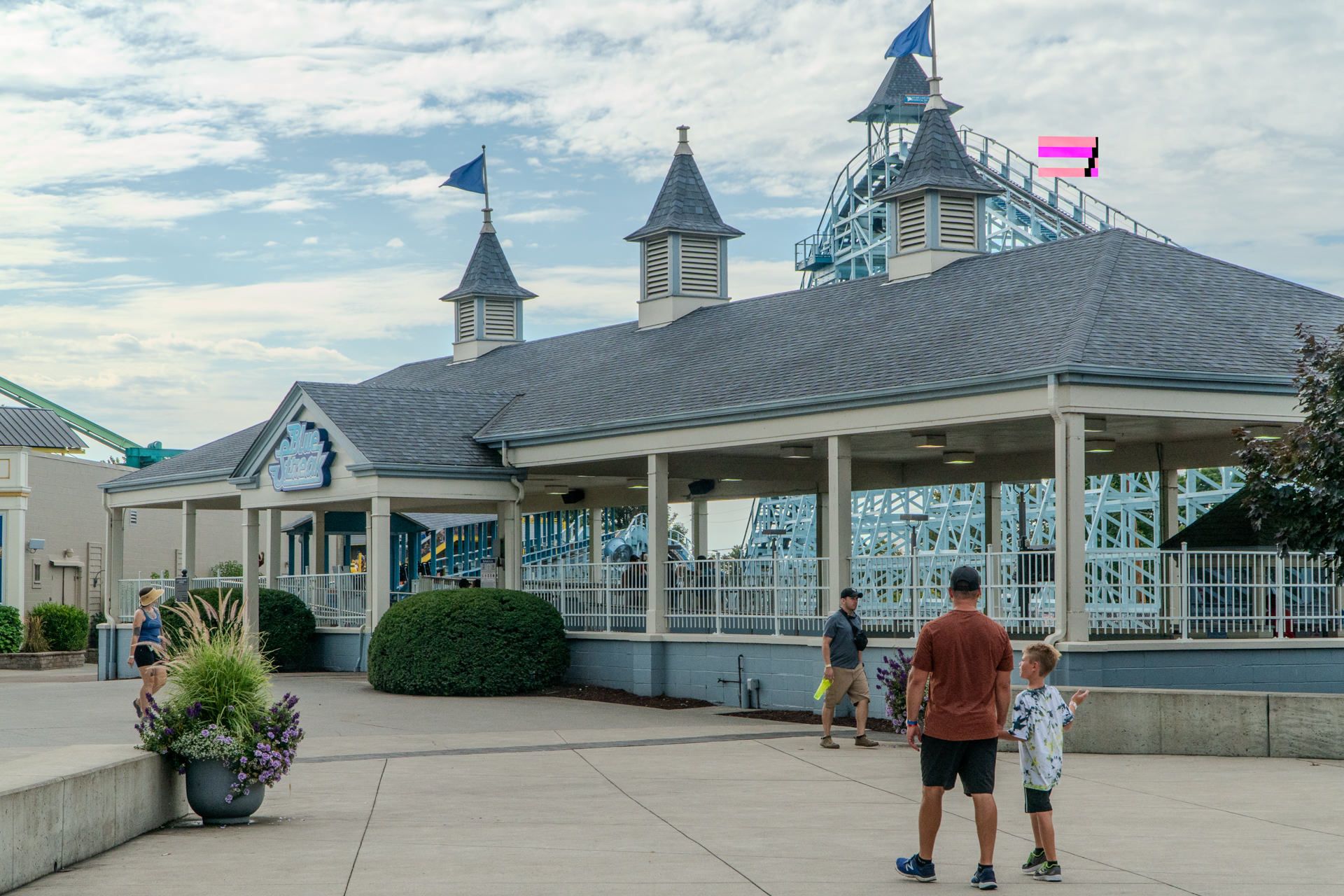
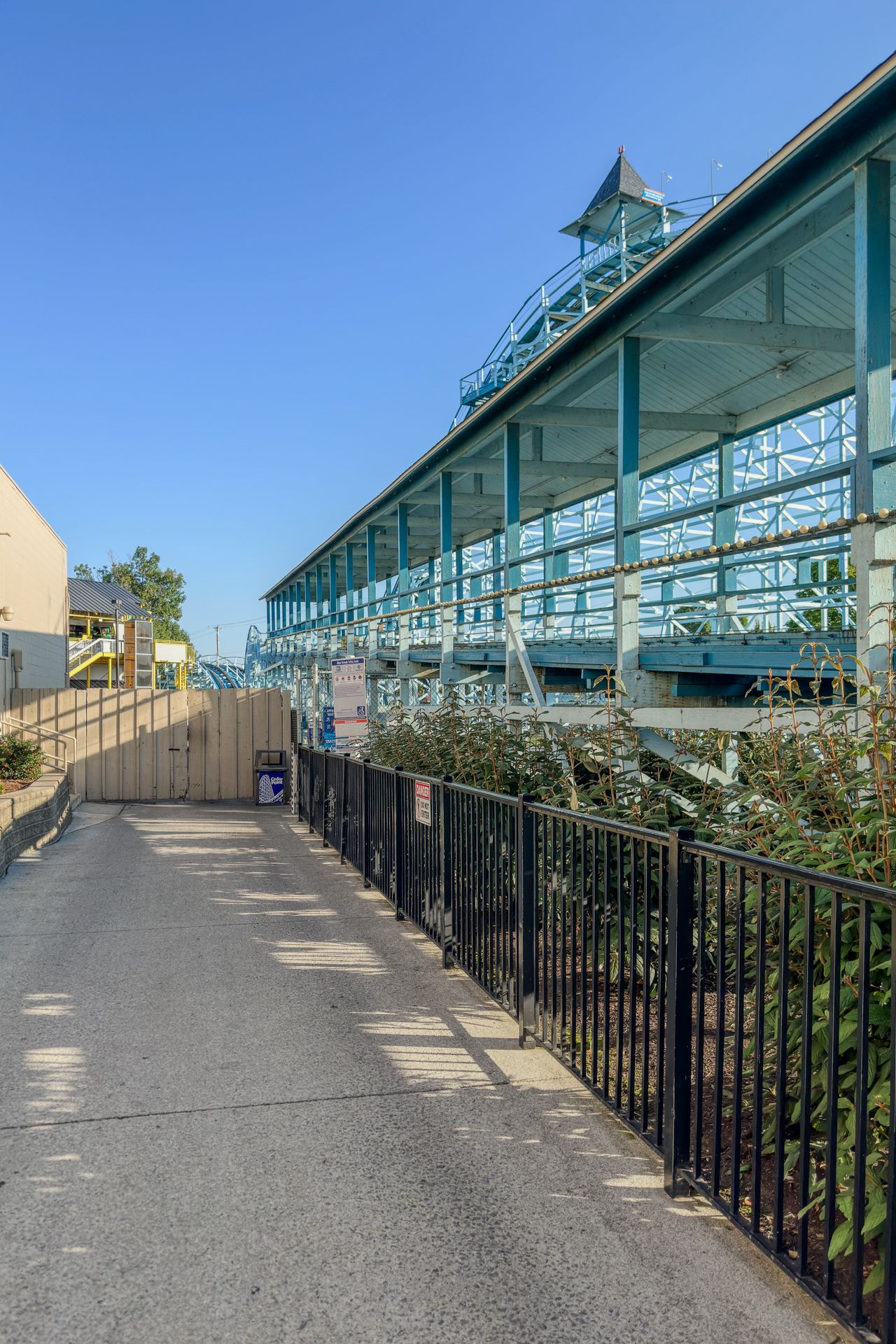
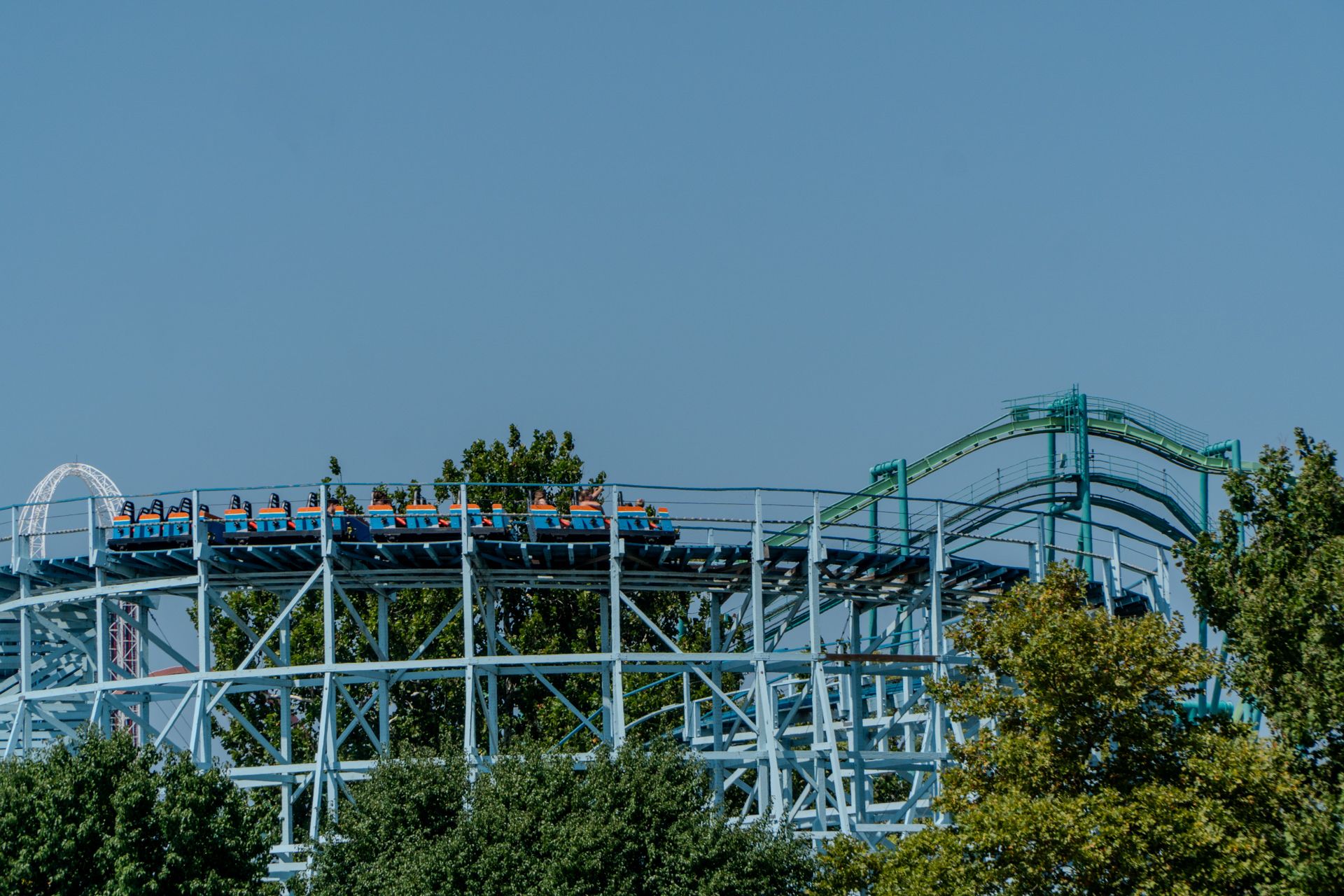
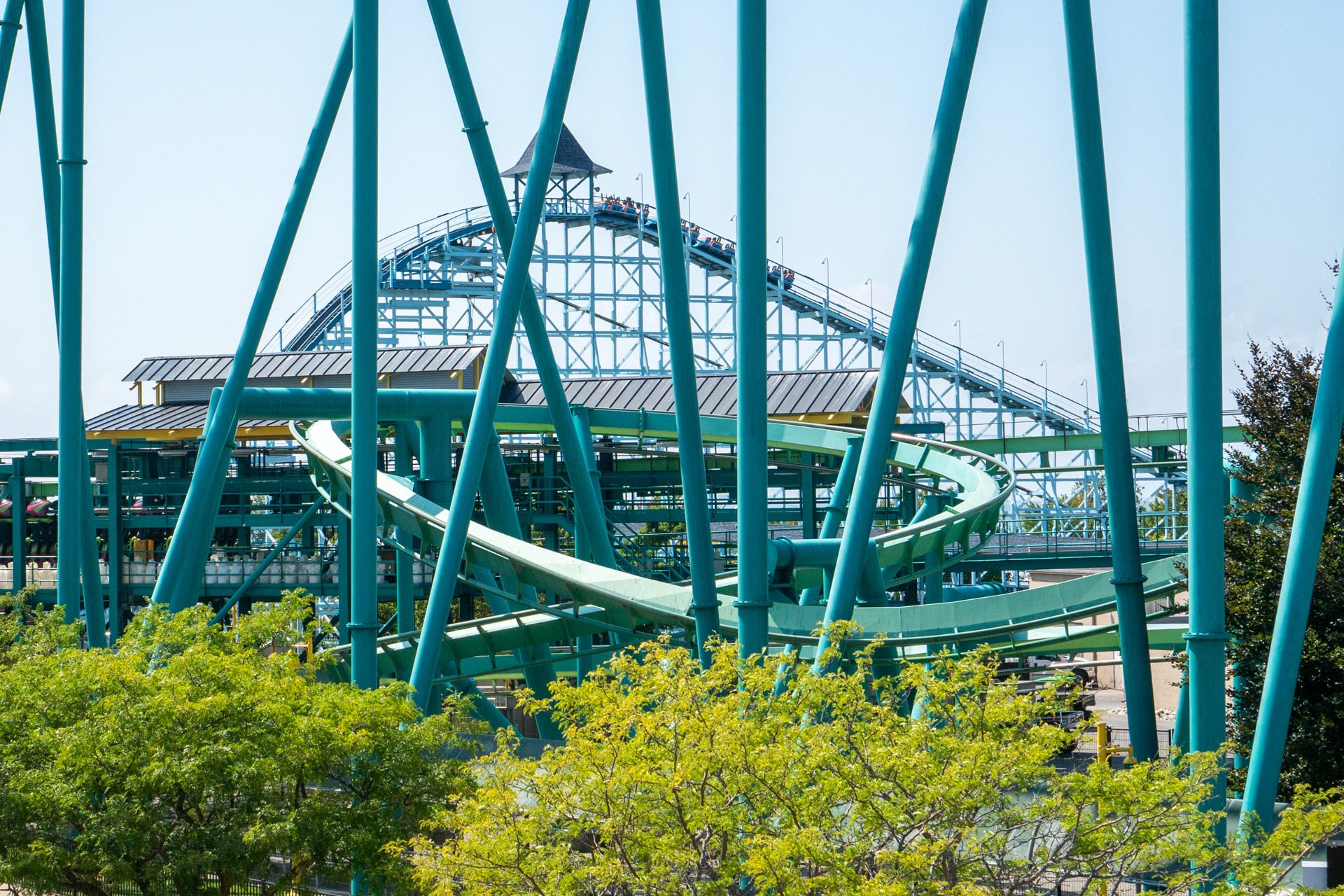
With Blue Streak, we take a sizeable step back in Cedar Point’s history. The classic wooden coaster opened in 1964 and is now the oldest roller coaster still operating in the park. Compared with the giant rides Cedar Point would later become known for, it almost looks modest.

Blue Streak does not need much, though: a lift hill, first drop and then a classic out-and-back layout with a whole series of hills before a turnaround sends the train back towards the station. The numerous camelbacks repeatedly provide some nice airtime.

Overall, it is a lovely old-school wooden coaster that remains fun today thanks to its many hills and pleasant airtime.

Raptor

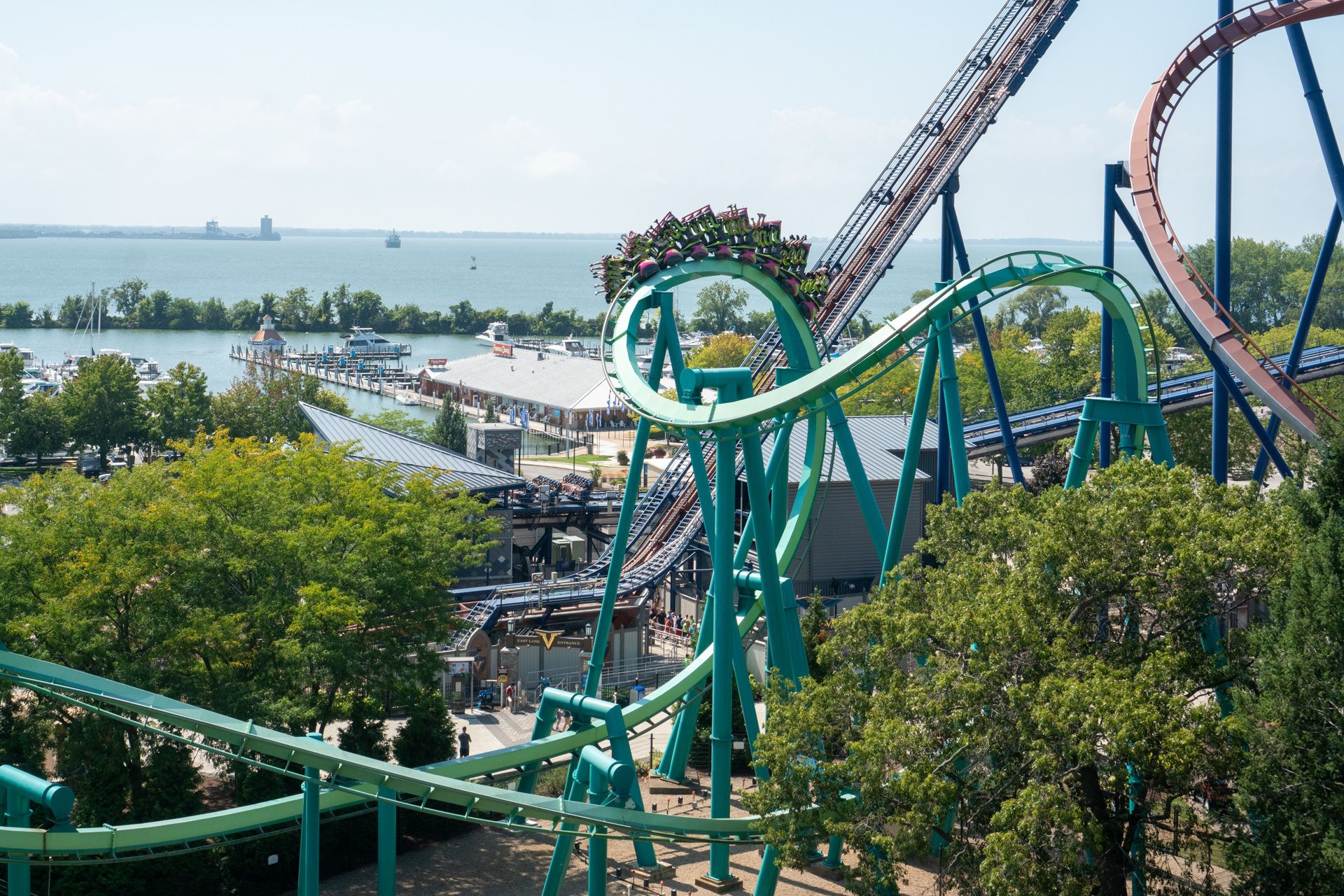
Towards the end of our tour, Raptor gives us another major B&M classic. The Inverted Coaster opened in 1994, at a time when this coaster type was still relatively new. With its considerably larger layout, B&M showed only two years after the first Batman: The Ride just how much more could be done with the concept.

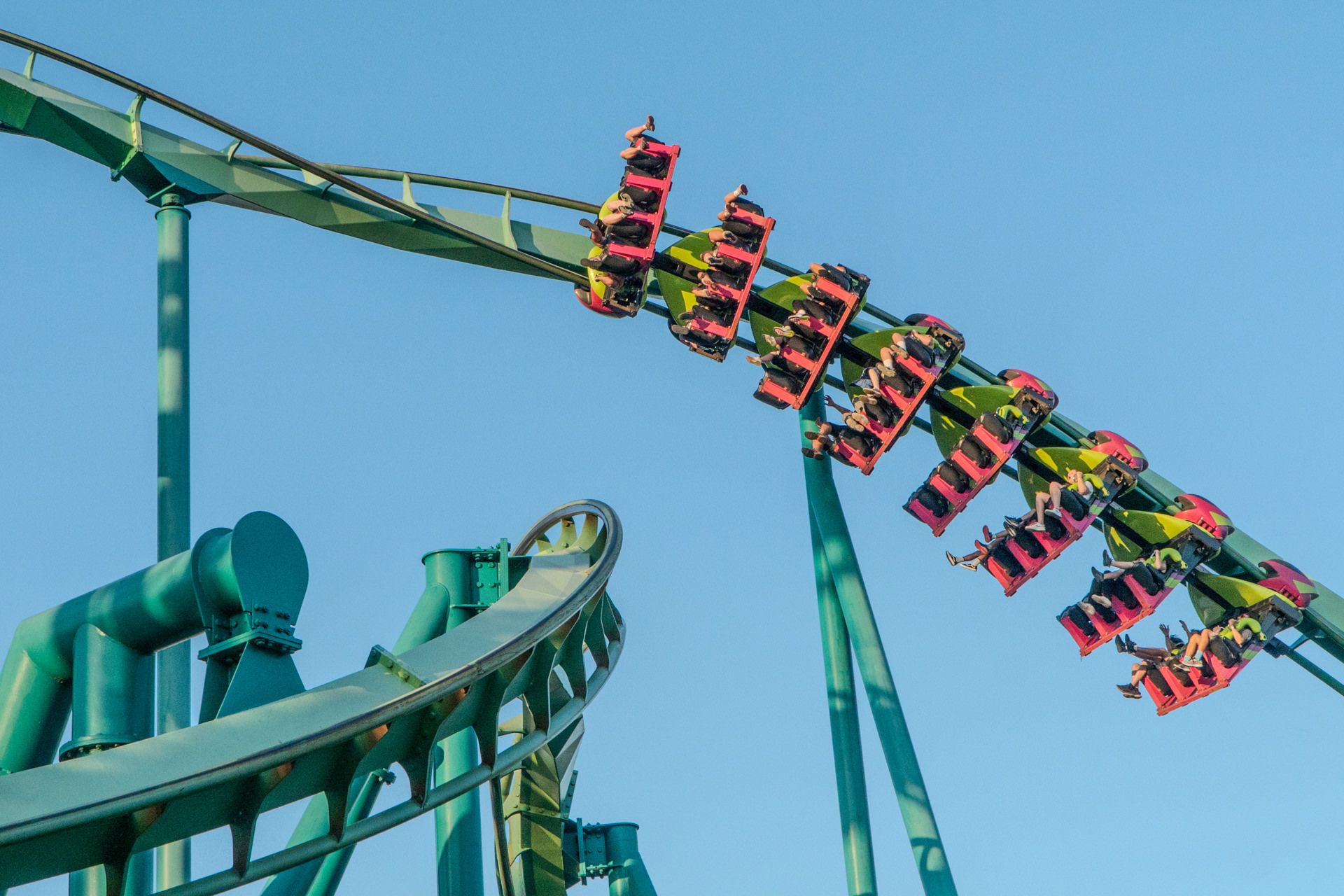
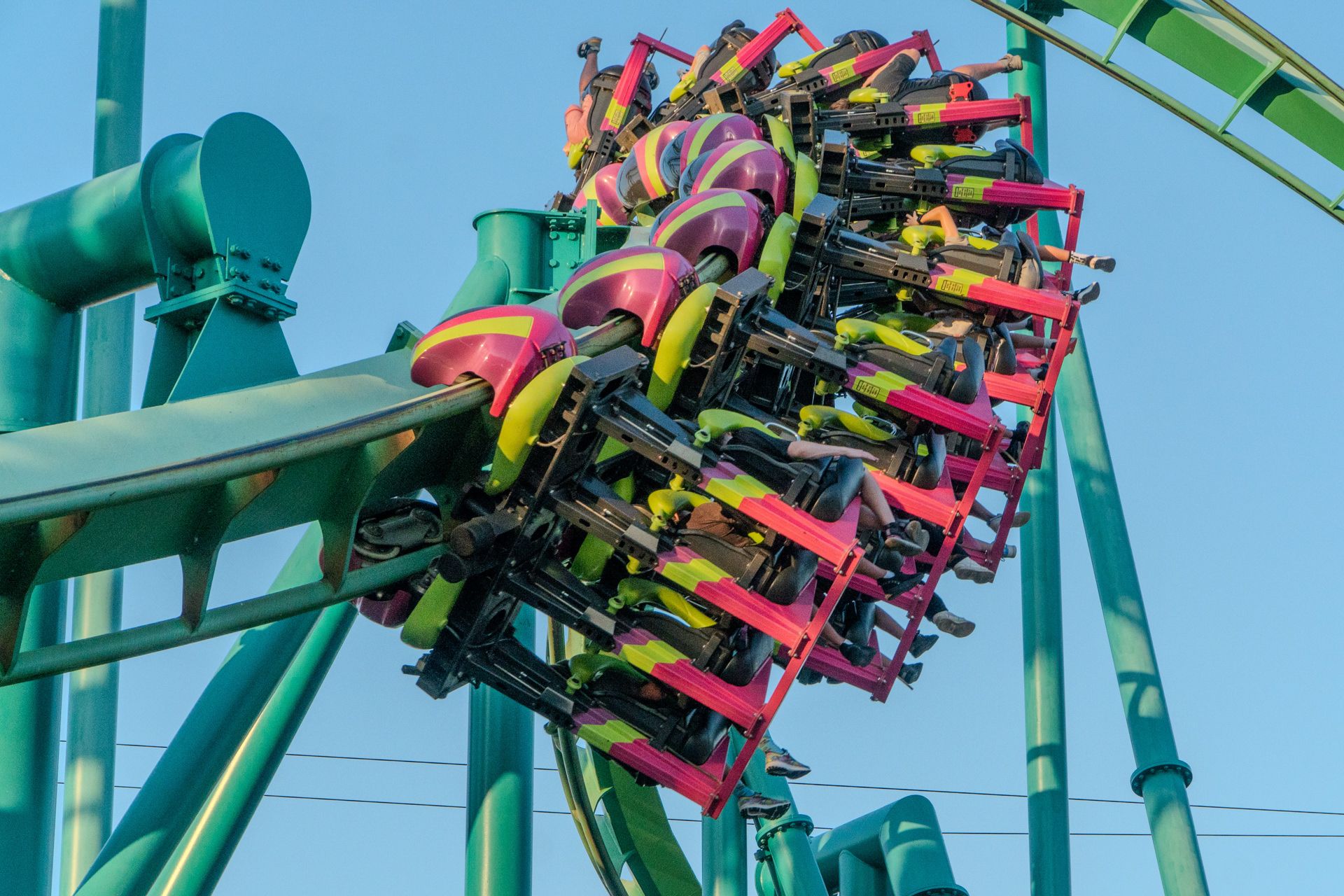
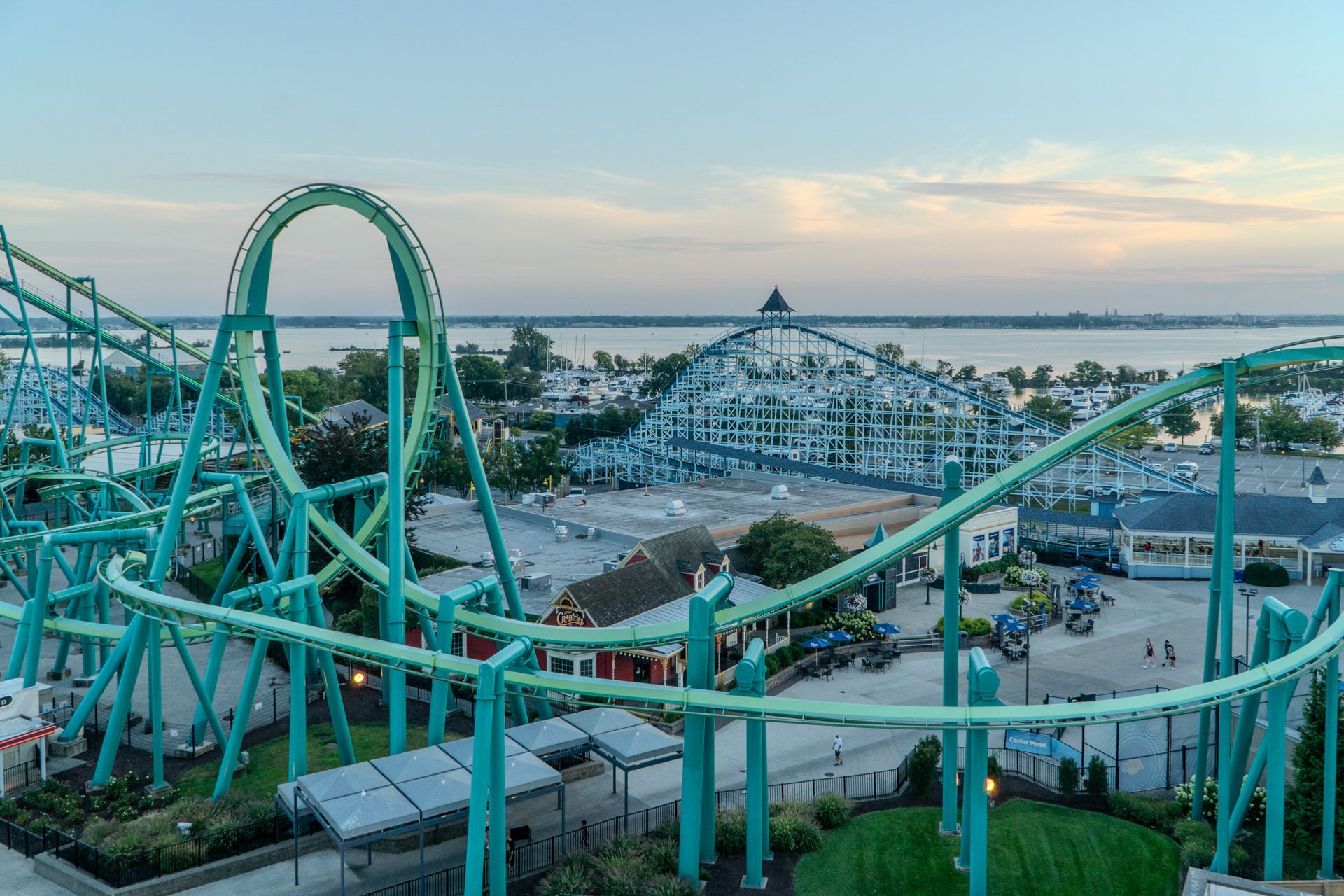
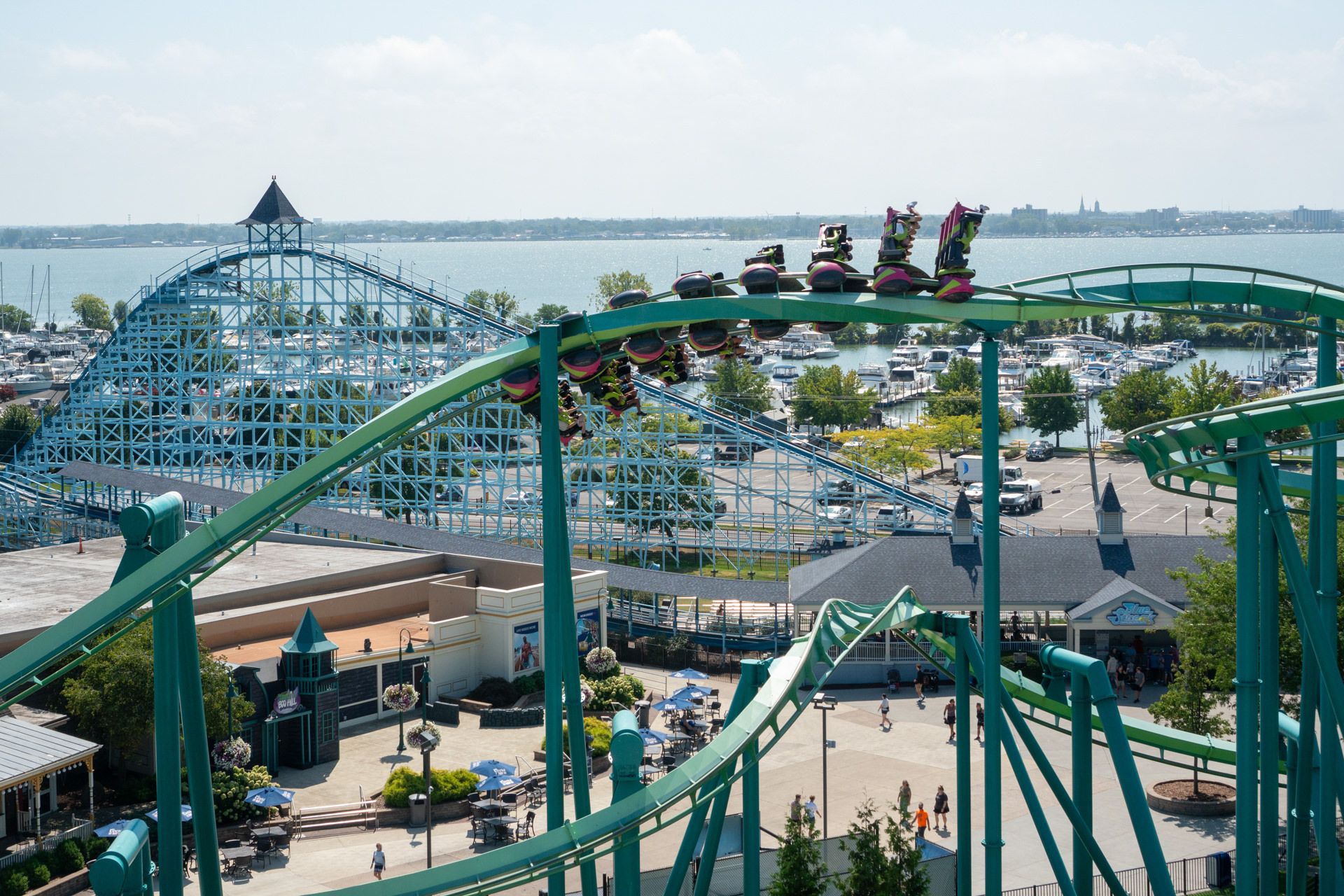
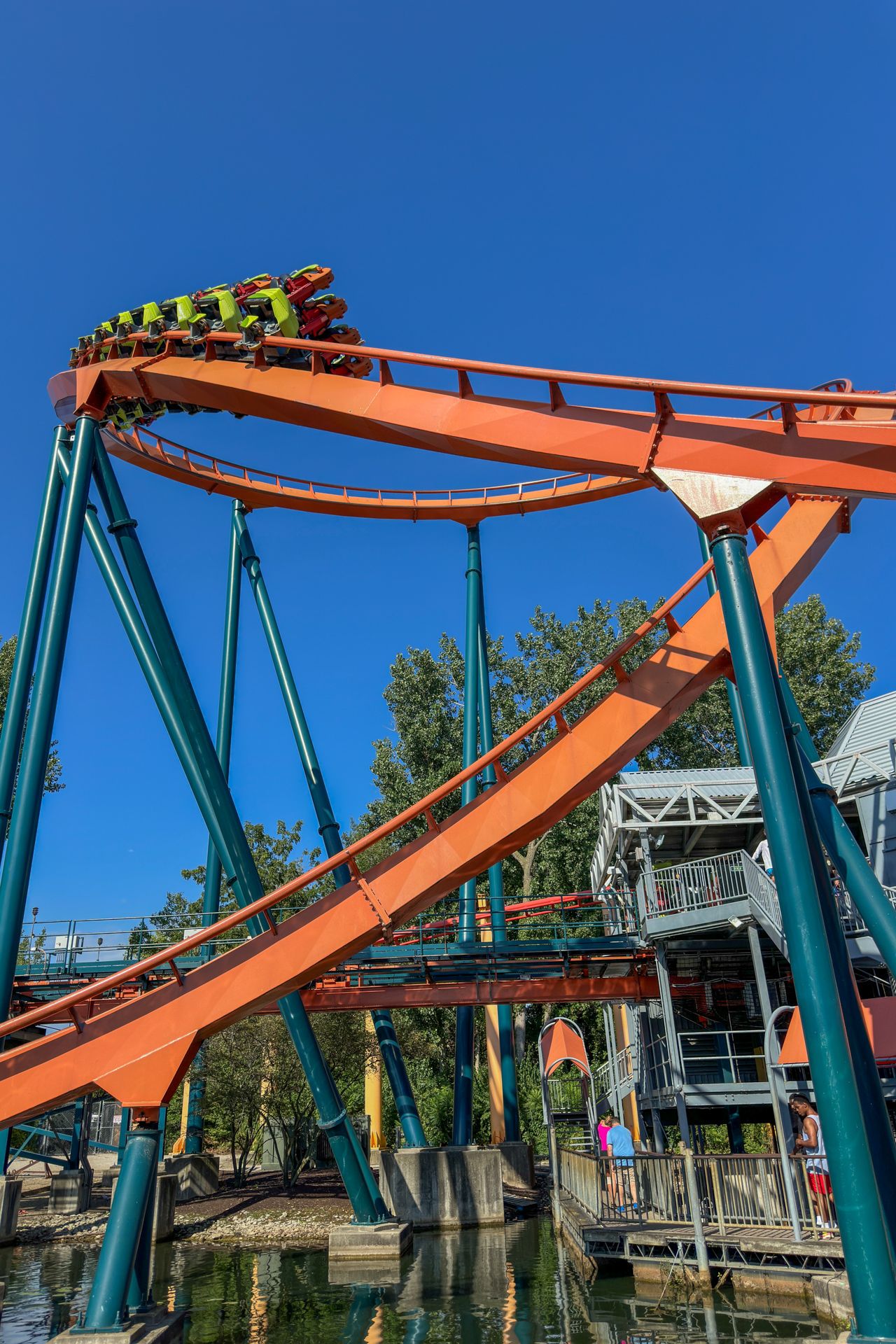
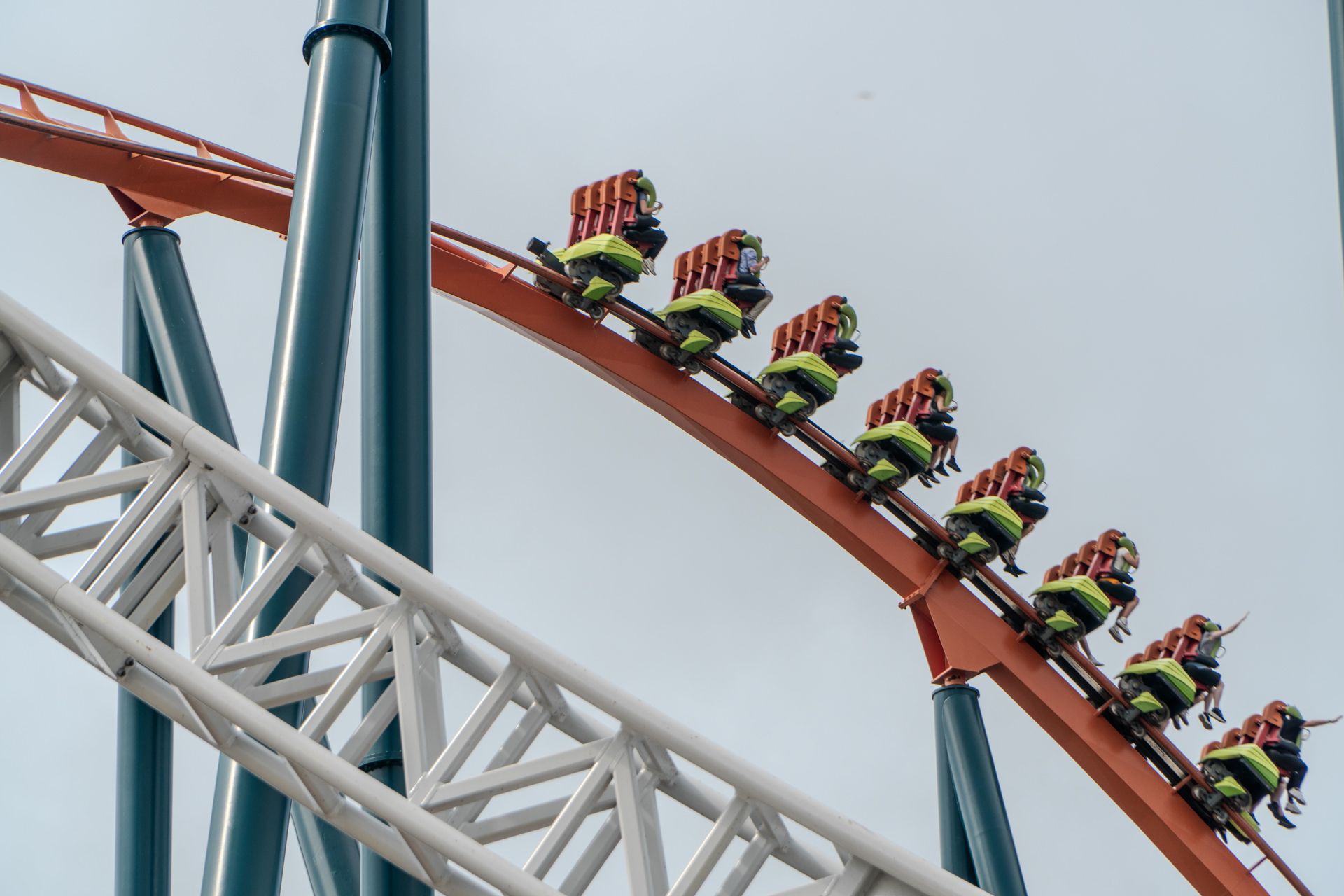
After the lift hill, we pass over a small pre-drop and head directly into the left-turning first drop. We shoot through the valley and the large loop with plenty of force before the Zero-G Roll wonderfully throws us once around our own axis. The large Cobra Roll follows immediately and also serves as the main turnaround.

A slightly right-bending climb then takes us back up into an elevated left-hand helix that wraps around the Zero-G Roll. After the block brake, we dive through a steep right-hand turn directly into the first Flat Spin. A short straight and another kink to the right lead us into the second Flat Spin.

For the finale, Raptor really turns up the intensity once more. The final helix practically sends the blood rushing into your legs before one last left-hand turn takes us into the brake run.

Raptor is still a really great ride today. It gets seriously forceful in places, and the intense finale provides a particularly satisfying ending.

Pictures Cedar Point

Conclusion Cedar Point

Cedar Point absolutely deserves its reputation as one of the world’s great roller coaster parks. Hardly any other park offers such a broad mix of historic classics and modern major attractions. For me, however, it is not necessarily the records that define the park, but rather the enormous variety between the individual rides.

I particularly like the fact that so many old flat rides have survived alongside all the major roller coasters. Add to that the extraordinary location on a peninsula in Lake Erie, which gives Cedar Point an atmosphere all of its own.

Overall, Cedar Point is simply a fantastic amusement park where you can easily spend several days. With a roller coaster lineup ranging from Magnum XL-200 and Millennium Force to Maverick and Steel Vengeance, there is certainly no shortage of things to do – and I am already looking forward to my next visit.


What’s your opinion on Cedar Point? Simply write it in the comment field below the report!


Click here to get to the next report of The Great Mid-Western Road Trip.

Click here to get to the overview page of Cedar Point.