America’s Roller Coast

Cedar Point

Cedar Point is one of the oldest amusement parks still operating today. Its history dates back to 1870, when the peninsula on the shores of Lake Erie was initially developed mainly as a leisure destination with a beach. Over time, hotels, restaurants and the first rides were added, and over the decades the original resort gradually evolved into one of the best-known amusement parks in the United States.

One particularly defining era was the time of the so-called Coaster Wars. During the 1990s and 2000s, the major American amusement parks constantly tried to outdo one another with new roller coasters and ever more impressive records. Cedar Point was right in the middle of it, especially in its rivalry with Six Flags Magic Mountain over the largest number of roller coasters. At the same time, the rides kept getting taller: Millennium Force broke the 300-foot mark in 2000, followed only three years later by Top Thrill Dragster, which exceeded 400 feet. Six Flags Great Adventure eventually answered with Kingda Ka and pushed the height record even further. For coaster fans, those were wonderful times, as it felt like another even bigger ride could be announced at any moment.

Cedar Point had already played an important role in roller coaster history long before that, though. Corkscrew made headlines in 1976 with its three inversions, and Magnum XL-200 became the first roller coaster to exceed 200 feet in 1989. Later, major rides such as Maverick and Steel Vengeance were added, while a large number of older roller coasters and classic flat rides have also survived. Walking through Cedar Point today therefore almost feels like tracing several decades of American roller coaster development.

We begin our tour on the Main Midway. Right behind the entrance stands the historic Midway Carousel, while not far away the Ocean Motion swinging ship rises high into the air.

For now, however, we turn right, because the first major roller coaster of the day is already waiting for us: GateKeeper. The B&M Wing Coaster runs directly along the park entrance and even shoots through the two towers of the entrance structure.

GateKeeper

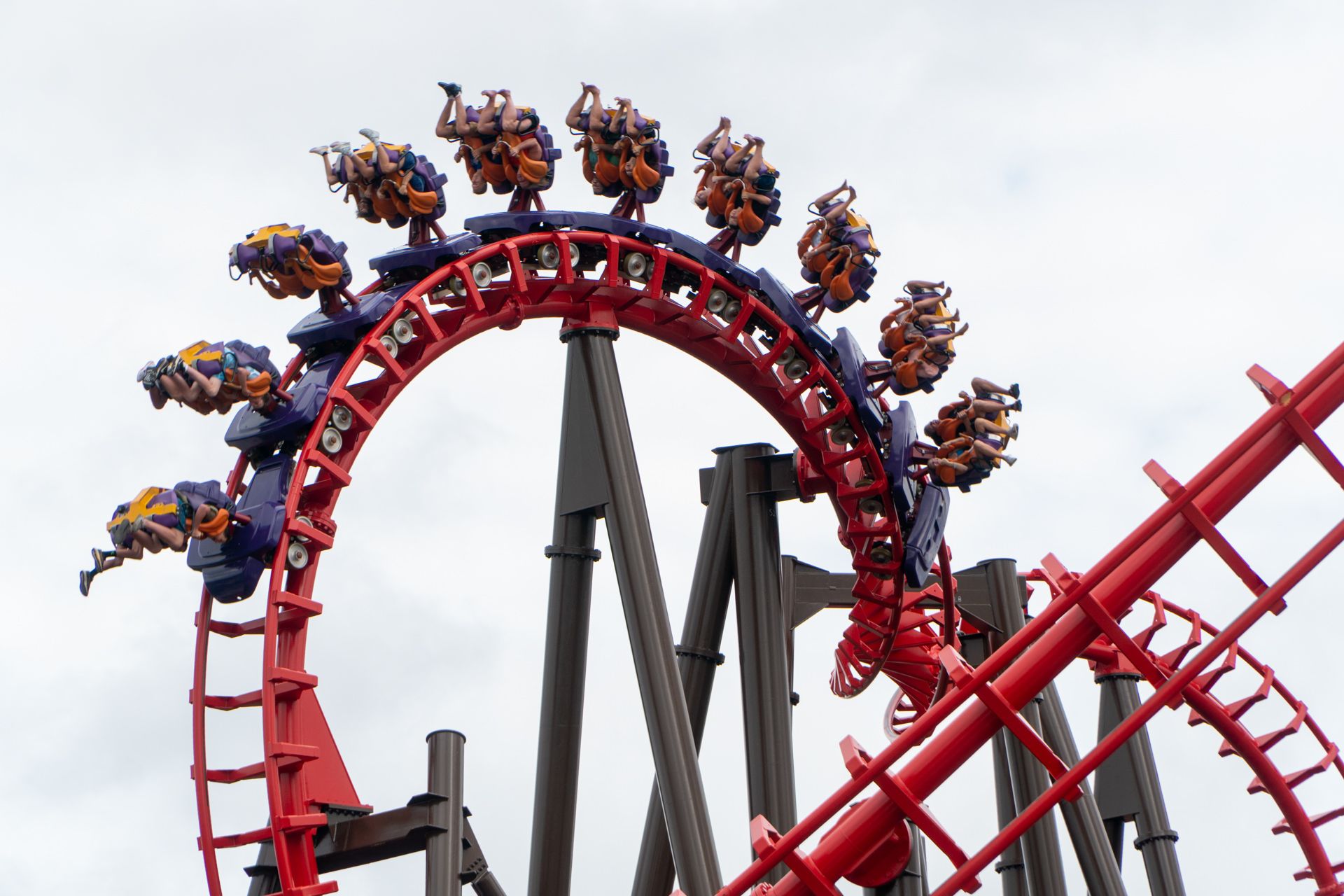
GateKeeper opened in 2013 and, with its roughly 170-foot lift hill, is one of B&M’s larger Wing Coasters. Once at the top, we are slowly turned upside down before plunging towards the ground through the Dive Drop that is so characteristic of this coaster type.

We then carry plenty of speed through the Immelmann and over a large camelback before a huge corkscrew turns us upside down once again. The track then heads back towards the park entrance, where we race through a Zero-G Roll between the two towers. A Dive Loop follows before a long, drawn-out roll slowly rotates us around our own axis once more.

After the block brake, another drop leads into a helix that eventually takes us back towards the station. I really enjoyed GateKeeper. The large elements are taken with a wonderfully elegant flow, and their sheer size makes quite an impression. Add in the excellent ride quality, and you have a genuinely beautiful coaster.

maXair

Back on the Main Midway, we find ourselves directly in front of maXair, a HUSS Giant Frisbee. The huge swing carries its riders higher and higher while the large gondola continuously rotates. There is plenty of airtime around the turning points before we rush back through the bottom of the swing. Great fun.

The Boardwalk

From maXair, we continue along the Midway towards the lake and soon reach the Boardwalk. Alongside Wild Mouse, this area is home to a whole collection of classic rides.

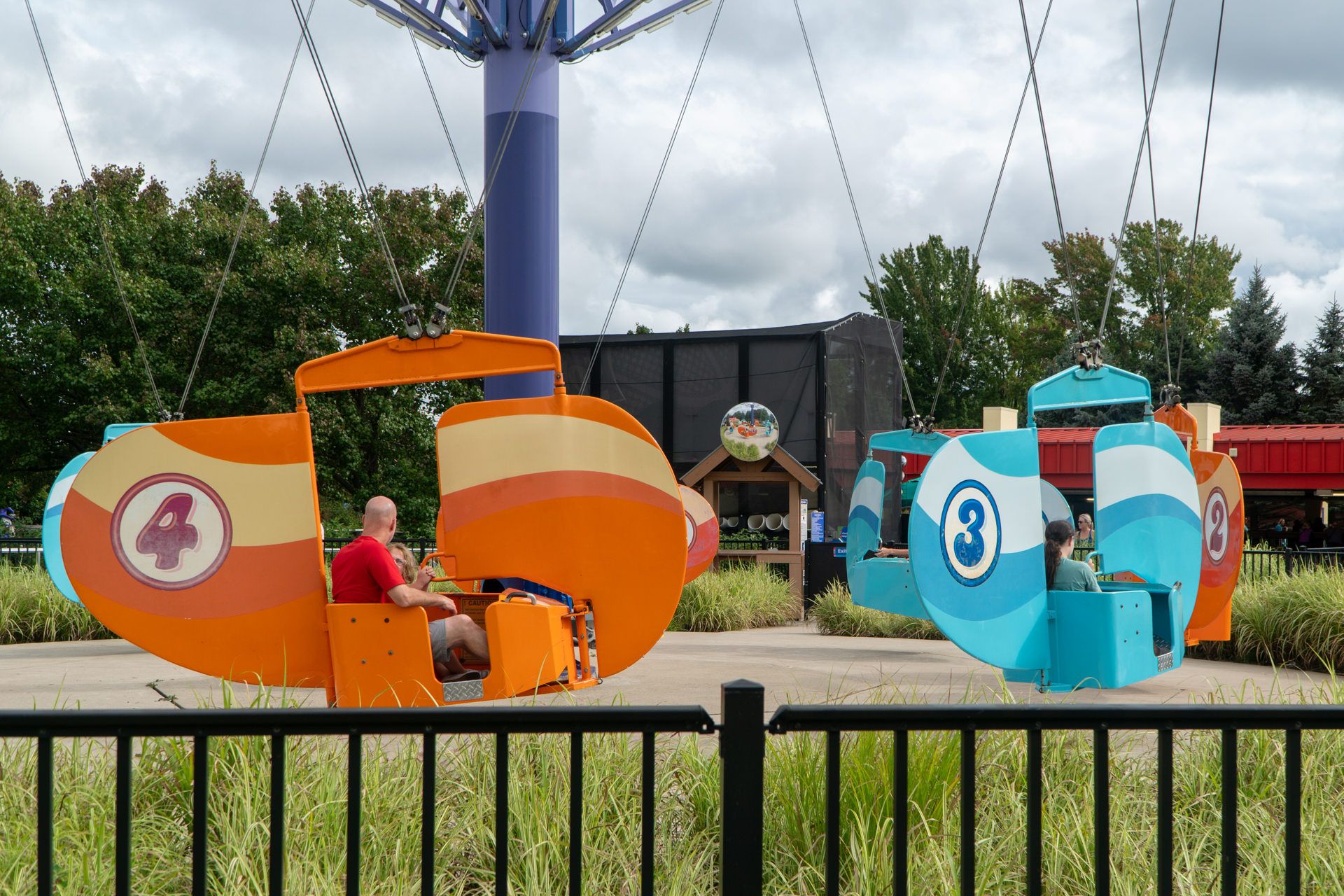
Troika is the first familiar face here, a classic HUSS ride. As the three gondola clusters rotate, the entire structure gradually tilts and the gondolas follow their characteristic wave-like trajectory. A pleasantly lively ride.

Right on the shores of Lake Erie, the Giant Wheel slowly makes its rounds. The ride itself is naturally secondary on a Ferris wheel, but the view over the park and the lake from the top is excellent.

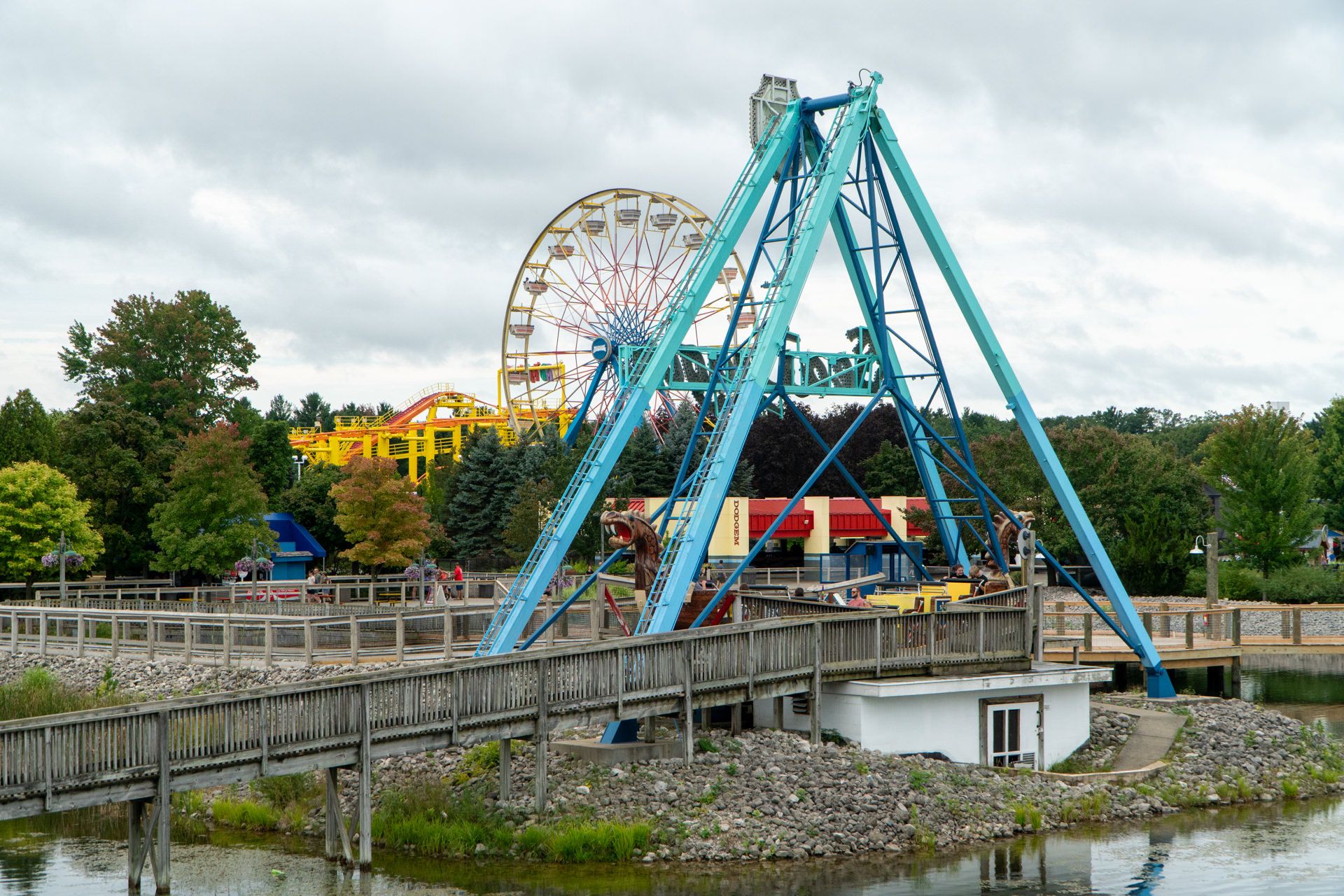
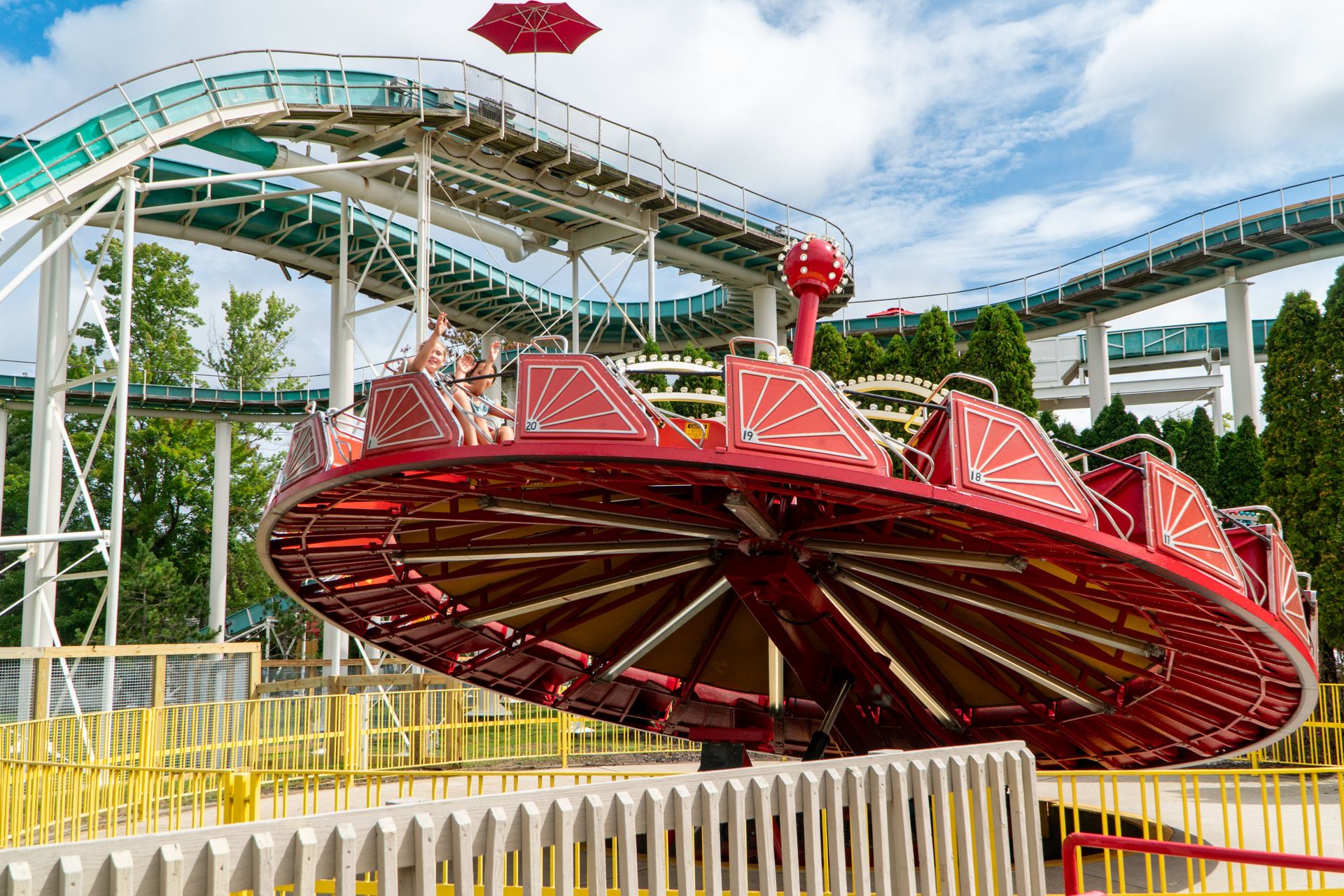
Calypso and Matterhorn are particularly interesting to me. Both rides were built by Mack Rides and have already been around for several decades. During their long history at Cedar Point, both have even changed locations within the park several times. On Calypso, the individual gondola groups rotate in addition to the main platform, while Matterhorn sends its gondolas at considerable speed over its typical wave-like course. It is great that both classics are still running at Cedar Point today.

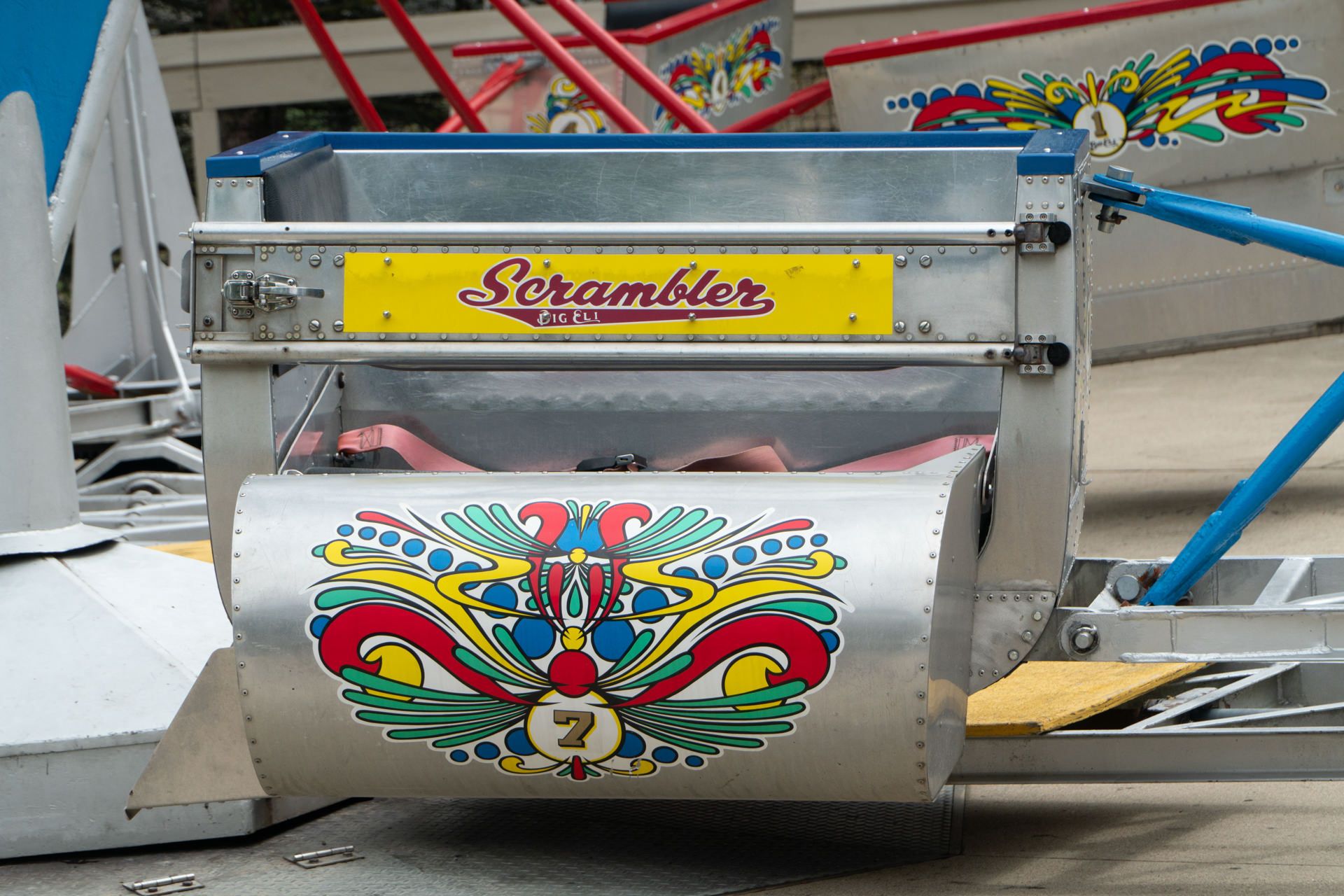
Atomic Scrambler adds another classic of American manufacture. Its counter-rotating movements repeatedly push us firmly to the side – a simple ride concept that still works wonderfully after all these years.

Wild Mouse

Wild Mouse is the next roller coaster along our route. The Zamperla ride opened in 2023 and gives the classic Wild Mouse concept a modern twist by combining a compact layout with freely spinning gondolas.

After the lift hill, the ride begins with a wonderfully curving descent. Only after a block brake do we encounter two of the tight hairpin turns typical of a Wild Mouse, before throwing ourselves into a steeply banked curve. Two quick direction changes follow. These elements are somewhat reminiscent of the Immelmann Turns found on Maurer spinning coasters, although they are much milder here and can probably best be described as slightly elevated hairpin turns. Two further half-helix combinations take us into the rear section of the ride, where two curves and a small dip smoothly carry us into the final brake run.

What surprised me most were the ride characteristics. No Zamperla roller coaster I had ridden before had felt this smooth. Combined with the spinning gondolas and the nicely curving layout, Wild Mouse is a lot of fun. Only the ending comes a little sooner than expected – the ride could easily have been a little longer.

WindSeeker

Directly on the shores of Lake Erie, WindSeeker is another familiar ride from Mondial. The roughly 300-foot-high structure slowly climbs into the sky while the gondolas swing further and further outwards. Once at the top, we make our rounds high above the ground and enjoy a great view over Cedar Point and the vast Lake Erie.

As with the other rides of this type, the combination of height, wind and freely swinging seats once again makes for a really good ride – one I am always happy to get back on.

Kiddy Kingdom and Planet Snoopy

On our way back towards the center of the park, we pass two of Cedar Point’s children’s areas: Kiddy Kingdom and Planet Snoopy. Both offer a wide variety of smaller rides for younger guests, with the familiar Peanuts characters naturally setting the tone in Planet Snoopy. We do not spend too much time here and continue towards Iron Dragon.

Iron Dragon

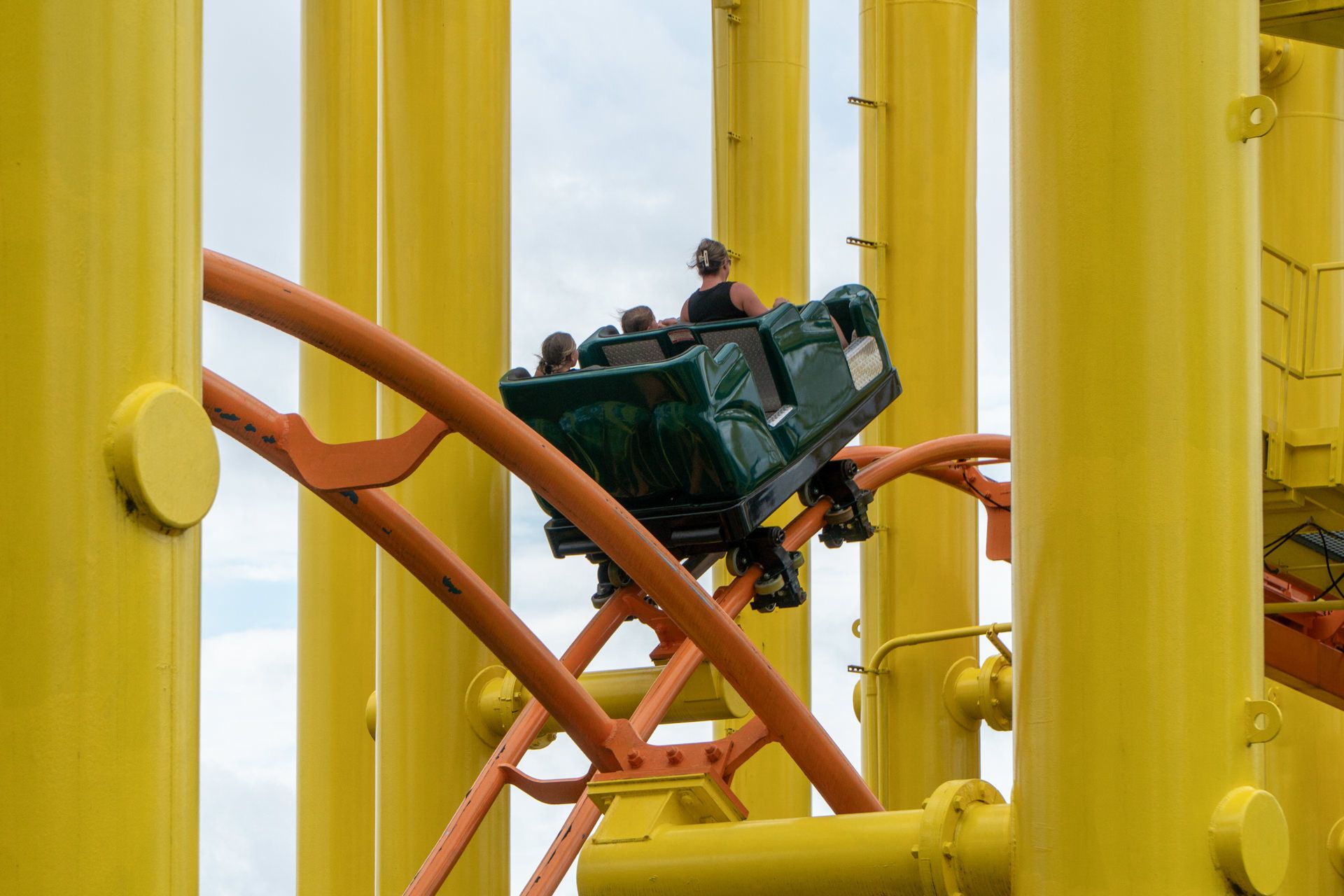
Iron Dragon is a true Cedar Point classic. The Arrow Dynamics Suspended Coaster opened back in 1987. On this coaster type, the individual cars hang below the track on pivoting mounts and are free to swing sideways through the turns.

The first part of the ride takes things relatively easy. After a straight drop, we head through a left and a right turn before a longer straight section bends slightly left and right. Another right-hand turn leads into a descending helix, where we fly fairly close to Top Thrill 2. The intermediate brake and the second lift hill follow.

From here, Iron Dragon becomes noticeably faster. The train picks up plenty of speed and the rapid sequence of direction changes sends the cars swinging strongly from side to side. The finale is particularly nice, with an almost pretzel-shaped sequence of curves that keeps us swinging back and forth before we finally enter the brake run. Even there, the cars continue to sway for a while.

Iron Dragon is simply a really good family coaster and, for me, also a great example of the old Suspended Coaster concept. The second half in particular shows just how much fun such a relatively simple principle can be.

Rougarou

Only a short distance away, we reach Rougarou, another B&M coaster that has actually been standing at Cedar Point far longer than its current name might suggest. The ride originally opened in 1996 as Mantis and was still a Stand-Up Coaster at the time, with riders completing the course while standing. Only for the 2015 season did it receive new Floorless trains and reopen under the name Rougarou.

After the lift hill, a small dip and a beautiful elevated turn lead us into the actual first drop. The following valley already pulls with some force, and the directly following loop raises the intensity even further. After a small kink to the left, we enter a really nice Dive Loop and then pass through a somewhat unusual turnaround.

Next comes one of the rarer elements of the ride: the Inclined Loop. Essentially, it is a tilted loop, and it therefore feels a little different from its more conventional relative. A small bunny hop with a direction change and an upward helix then take us into the block brake.

After another drop, we pass through a corkscrew and enter the rather tangled final section of the ride. A helix, a rapid direction change and another low-to-the-ground helix together form a kind of figure eight. A few final turns later, we reach the brake run.

I particularly like the first half of Rougarou. The loop is nicely forceful, the Dive Loop is great fun and the Inclined Loop is an element you do not come across every day. The second half becomes much more compact and continues twisting around the area for quite a while. Overall, a really enjoyable ride.

Millennium Force

With Millennium Force, we arrive at one of the roller coasters that played a major role in the Coaster Wars of its era. When the Intamin ride opened in 2000, it became the first roller coaster to exceed 300 feet and effectively established the Giga Coaster category.

The fast cable lift quickly carries us to more than 300 feet before we plunge down the fantastic first drop. Despite the enormous height, the following valley is taken at great speed and remains surprisingly smooth, with hardly any vibration at all. We then shoot up into a high turnaround with beautiful banking and continue straight into a huge low-to-the-ground left-hand curve.

The first massive camelback follows and delivers a nice dose of airtime. We then race through a very long right-hand curve before climbing into another turnaround with wonderfully pronounced banking. Back near ground level, a fast right-hand curve leads into the second, slightly smaller camelback running parallel to the first, which once again provides some nice airtime.

A left-hand turn then leads us over a smaller hill directly past the station. Another left turn, a straight section and the final turnaround follow before we reach the brake run.

I really enjoyed Millennium Force. Despite its enormous dimensions, the ride is wonderfully smooth and its large, sweeping elements give a great sense of the tremendous speed. There is also plenty of nice airtime along the way. A really great coaster.

Frontier Trail and FrontierTown

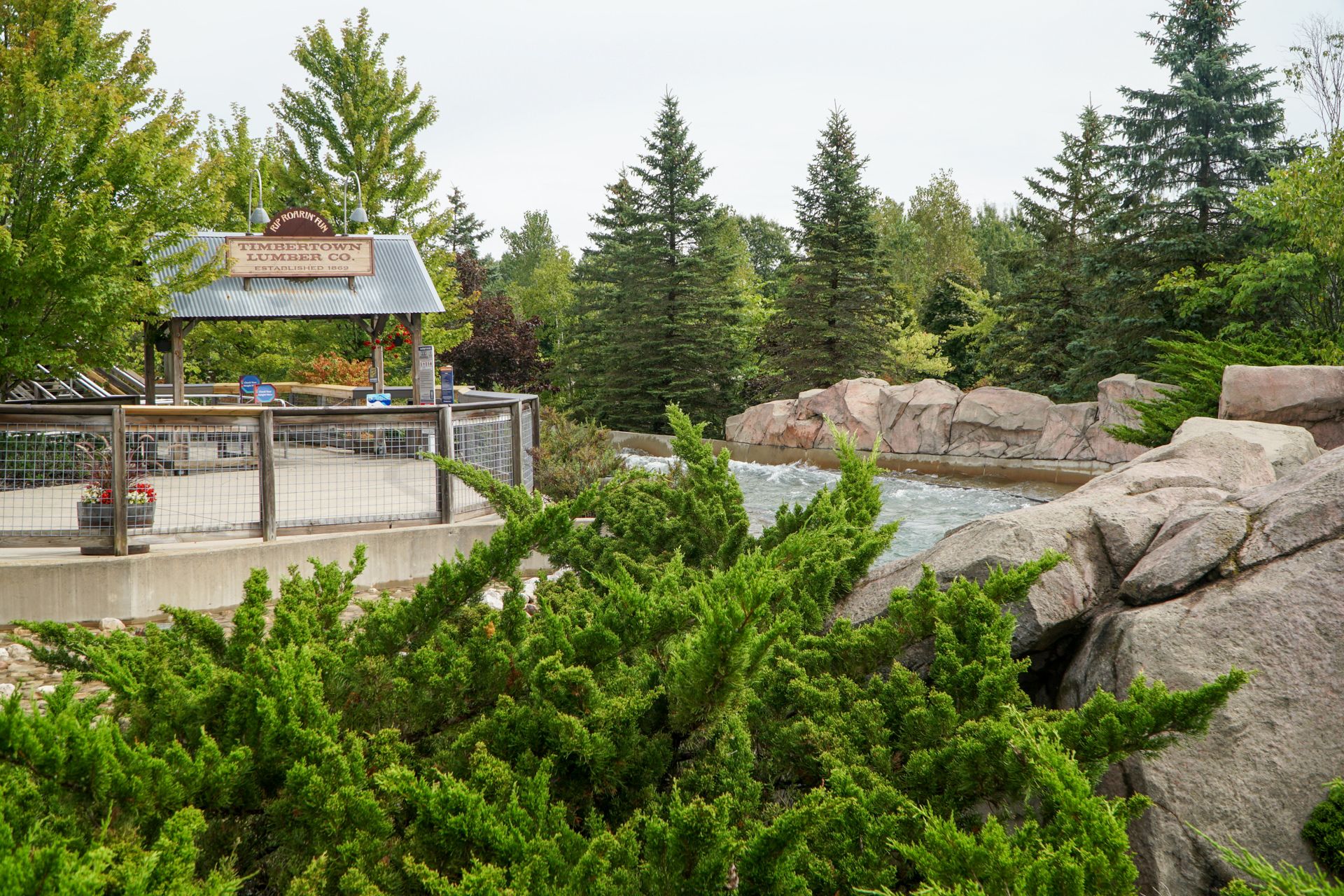
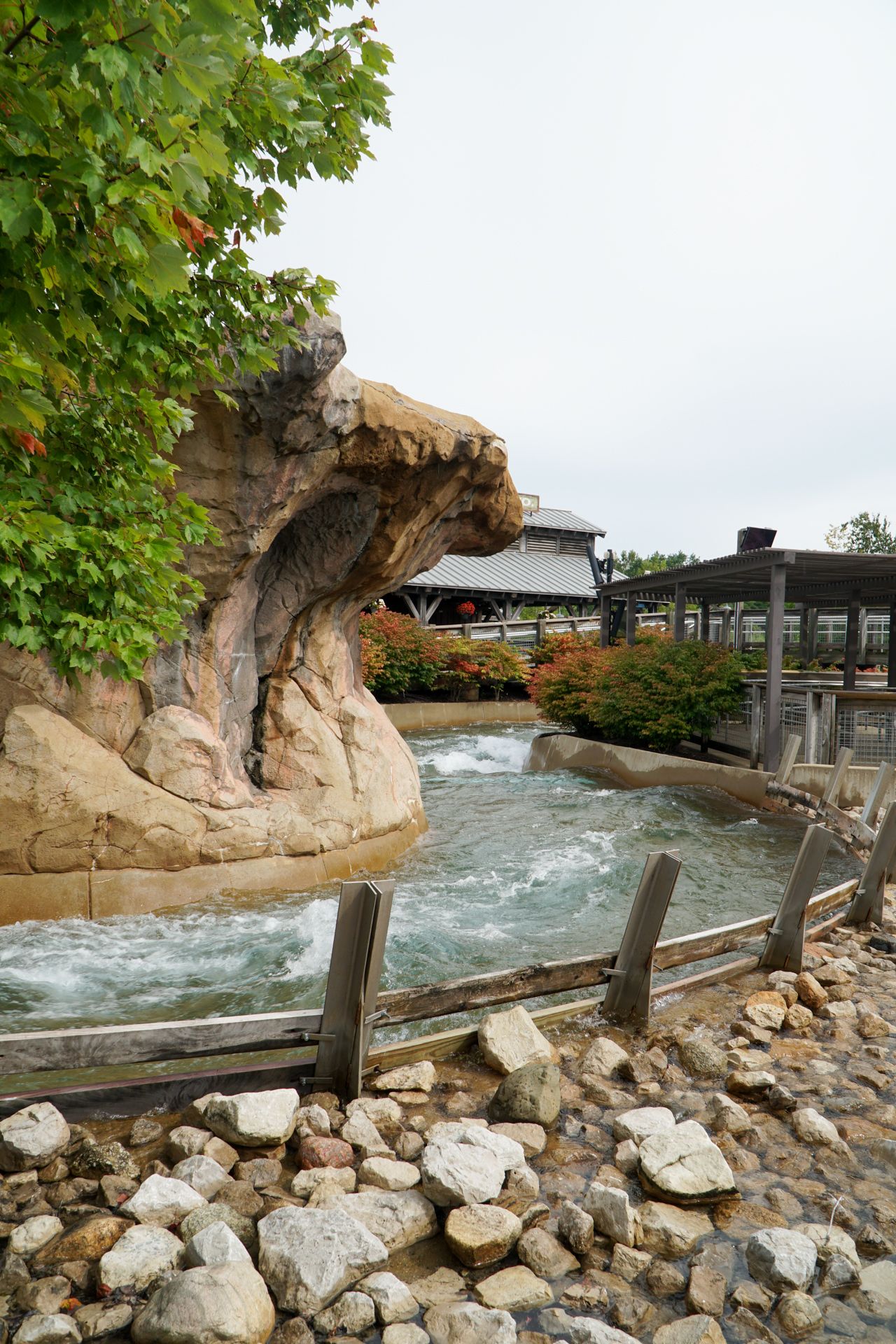
From Millennium Force, we make our way along the longer Frontier Trail towards FrontierTown. On the left, we pass the entrance to Thunder Canyon. Unfortunately, the Intamin Rapids Ride had already closed during my visit.

Once in FrontierTown, the large water ride Snake River Falls awaits us.

Snake River Falls

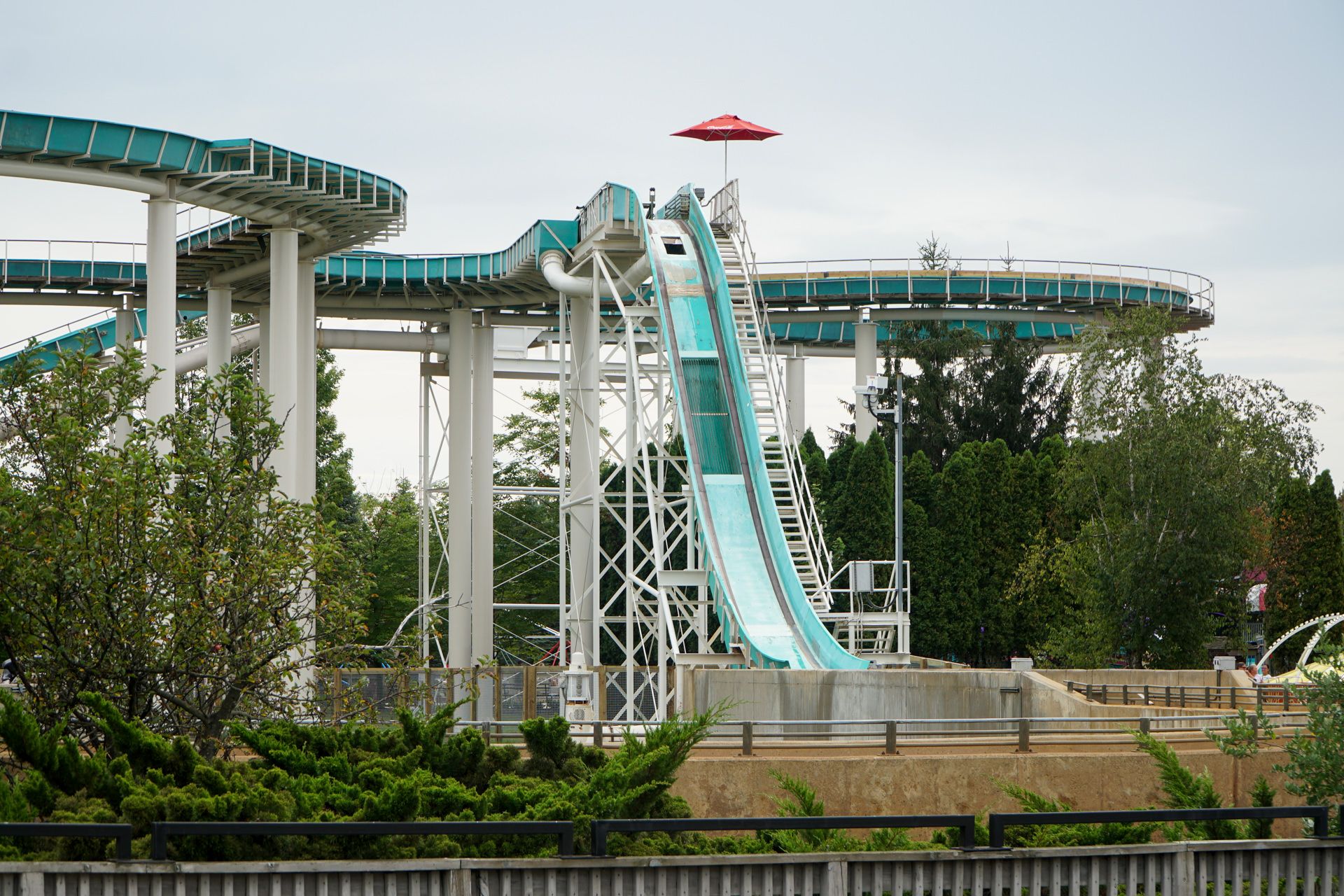
Snake River Falls opened in 1993 and was a classic Arrow Dynamics Shoot the Chutes. During my visit in 2024, the ride was already in its final season before closing after more than 30 years of operation.

After the lift hill, the boat first travels through a long turnaround. Unlike many comparable rides, the boat actually floats through a channel carrying a substantial amount of water before reaching the main drop. We then rush straight through the structure of the lift hill. The braking during the descent feels a little unusual, but at the bottom we are rewarded with a huge splash and a very generous amount of water.

Overall, I really enjoyed Snake River Falls. The ride is wonderfully simple, but the large drop and especially the massive splash make it a lot of fun. It is a shame that Arrow built so few rides of this type – and even more so that Snake River Falls is now history.

Skyhawk

Directly next to Snake River Falls is Skyhawk, an S&S Screamin’ Swing. The compressed-air-powered swing carries us higher and higher with plenty of momentum and delivers lots of airtime, especially around the turning points. A great ride.

Cedar Creek Mine Ride

Only a little further along, Cedar Creek Mine Ride is one of Cedar Point’s older roller coasters. The Arrow Mine Train opened in 1969 and runs for large parts of its layout over a lake, giving the already nicely situated ride a very distinct atmosphere.

After the first lift hill, we begin with a straight section before entering a rather unusual helix that constantly rises and falls. A turn then takes us down onto a longer straight directly above the water. Once we reach the opposite shore, another helix follows before the second lift hill carries us back upwards.

At the top, Cedar Creek Mine Ride once again takes things rather calmly. A left-hand turn leads into a descending right turn, followed by a straight section that is taken at a noticeable angle before we enter another right-hand turn. After a longer straight, the large 540-degree helix finally takes us directly into the final brake run.

Cedar Creek Mine Ride is certainly not a wild roller coaster, but its slightly unusual layout and beautiful location over the water still make it enjoyable. A nice old Mine Train of the classic variety.

Maverick

Continuing through FrontierTown, we eventually reach Maverick – and with it one of the best roller coasters out there. The Intamin ride opened in 2007 and does not need enormous dimensions to impress. Instead, it delivers a wonderfully compact layout, rapid direction changes and plenty of airtime.

We are quickly pushed over the lift hill by LSMs and immediately plunge down the beyond-vertical first drop. A tight low-to-the-ground right-hand turn follows, leading directly into a rapid sequence of direction changes. One airtime hill and another right-hand turn later, we are already racing through the two inversions.

After another right-hand turn, the train disappears into a tunnel and almost comes to a stop. In the darkness, a very powerful launch follows before we leave the tunnel through a left-hand turn. A hill leads us down towards the water, where we race through several rather aggressive direction changes at high speed. One final strong airtime hill then sends us into the last turn and up into the brake run.

Maverick is simply a fantastic roller coaster. The high speed, rapid direction changes and powerful airtime create a wonderfully wild ride with hardly any chance to catch your breath. For me, it absolutely deserves its place among the very best roller coasters.

Steel Vengeance

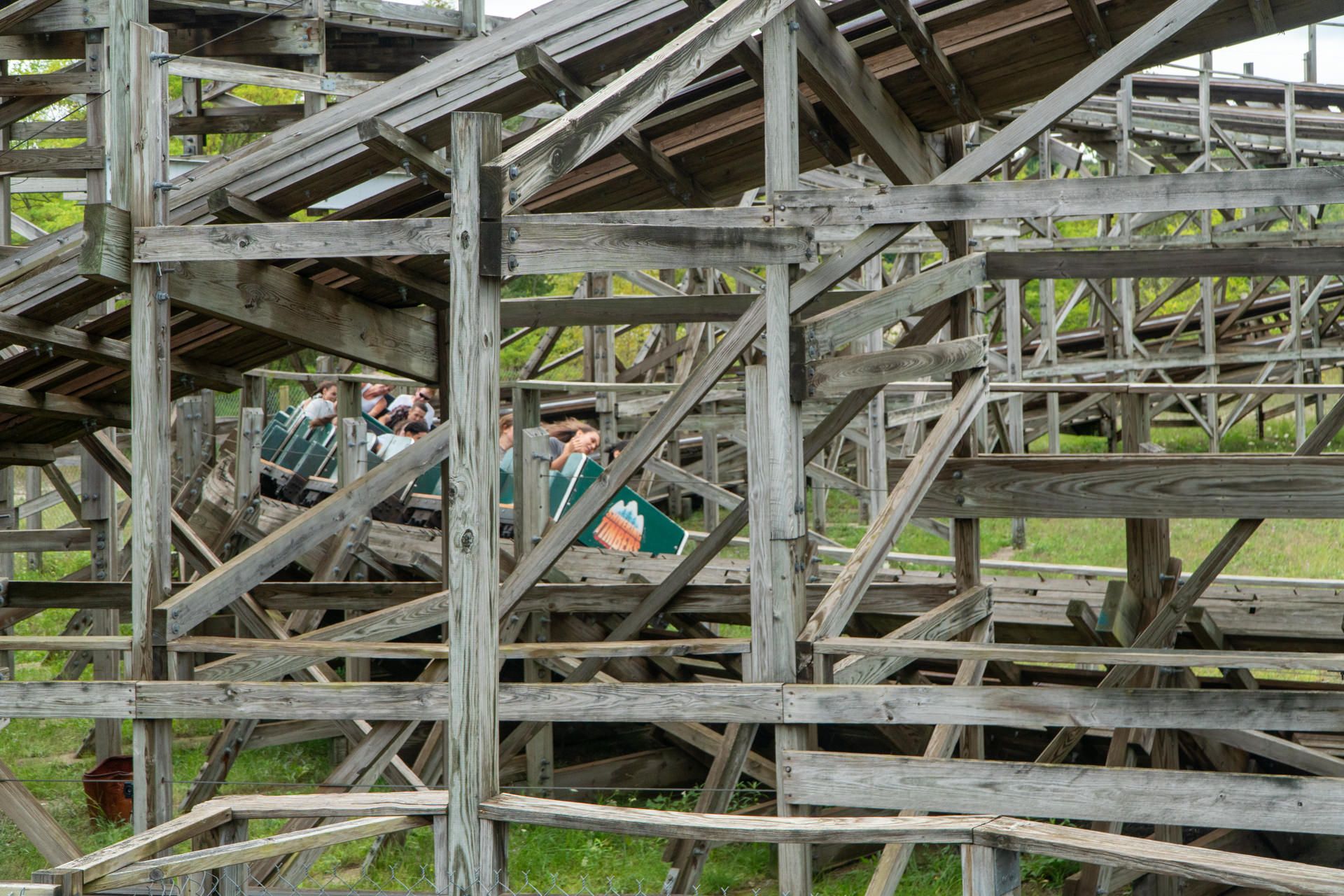
Not far from Maverick stands Steel Vengeance, the next major highlight. Originally, the wooden coaster Mean Streak had been operating here since 1991. At around 160 feet tall and more than a mile long, the ride was a real heavyweight for its time and even opened as the tallest and fastest wooden roller coaster in the world.

Over the years, however, the ride became increasingly rough and finally closed in 2016. The huge wooden structure remained standing and was reused by RMC for Steel Vengeance. Two years later, the new ride opened, using the old timber framework for a wild layout stretching well over a mile.

The ride begins with a right-hand turn and a few small low-to-the-ground waves before we reach the lift hill. At the top, we plunge down the huge first drop, fly over a speed bump and immediately over a massive hill. Through the next valley, we climb high again, with the hill twisting us slightly to the side. A Double Up then takes us towards the first inversion.

After the roll, we dive underneath the lift hill and, after another wave, plunge into the Zero-G Stall. A Double Down, another hill and a dip high above the ground follow before we reach the block brake.

Another drop opens the second half of the ride, where a whole series of excellent airtime hills awaits us. After several fast rises and drops, we finally dive into the old wooden structure. The layout becomes increasingly tangled here, racing back and forth between the supports. Another roll turns us upside down before more airtime hills and one final low-to-the-ground roll through the structure follow.

Even then, Steel Vengeance is not finished. For the finale, several small airtime hills are fired off in rapid succession, and they become pretty brutal before we finally reach the brake run.

Steel Vengeance is without question a really good roller coaster. The ride is long, varied and offers an endless amount of airtime. However, I can only partly understand its reputation as one of the very best RMCs ever built. The smaller airtime hills in particular become a little too brutal for my taste. A great coaster – but not quite the ultimate ride it is sometimes made out to be.

Gemini Midway

From FrontierTown, our tour continues onto the Gemini Midway. The area is naturally dominated by the huge wooden structure of its namesake, but there are several other rides here as well.

Gemini

Gemini is one of Cedar Point’s great classic roller coasters. The Arrow ride opened in 1978 and, with its huge wooden structure, initially looks like a traditional wooden coaster, although the trains actually run on steel track.

After the lift hill, both trains plunge down the large first drop and climb into a sweeping turnaround high above the ground. Another drop, a camelback and the climb into the next long turnaround follow. Running parallel to the lift hill, we then head over another drop and hill before climbing into the block brake.

A left-hand turn takes us parallel to the first turnaround. Another drop and several hills follow before the trains are noticeably banked after a trim brake. For the finale, the two tracks split: one train takes its helix to the left while the other turns to the right, before both sides head back towards the station.

The real charm of Gemini naturally lies in the race between the two tracks. For much of the course, the trains run directly alongside each other, sometimes with one side pulling slightly ahead and sometimes the other. That automatically creates a great atmosphere between the two trains and makes every ride a lot of fun. And if your side loses, you simply keep riding until you finally win one.

Lake Erie Eagles, Monster and Pipe Scream

Alongside Gemini, the Midway offers several other rides. On Lake Erie Eagles, the large sails on the gondolas allow riders to influence the movement themselves. With a bit of skill, the cars can be made to swing quite strongly, which makes the ride considerably more interesting.

Monster is another ride that should not be missed, a classic Eyerly attraction. By shifting your weight slightly, the individual gondolas can be made to spin very nicely, allowing you to influence just how wild the ride becomes.

Pipe Scream is somewhat more unusual, a Zamperla Skater Coaster. The large gondola resembles an oversized skateboard and travels back and forth along a long, wave-shaped track. At the same time, it can rotate freely, so the direction you face constantly changes. The rises and drops provide some nice airtime along the way. A thoroughly enjoyable ride.

Camp Snoopy

Before continuing, we make a short detour into Camp Snoopy. Among the many children’s rides, there are also two small roller coasters, one of which is historically quite interesting.

Wilderness Run

Wilderness Run opened in 1979 under the name Jr. Gemini and is in fact the very first roller coaster built by Intamin. The small family coaster itself is naturally quite modest, with just a handful of drops and turns, but it marks the beginning of what has since become a rather impressive roller coaster history.

Woodstock Express

Only a short distance away, Woodstock Express is a Vekoma family coaster in the familiar Roller Skater design. The compact layout offers a few gentle drops and sweeping turns and fits perfectly into the children’s area.

We then leave Camp Snoopy again. And the jump in scale to the next roller coaster could hardly be greater: Magnum XL-200.

Magnum XL-200

With Magnum XL-200, we arrive at one of the most historically significant roller coasters at Cedar Point. When the Arrow Dynamics ride opened in 1989, it became the first roller coaster to exceed 200 feet. The Hyper Coaster was born, and with it a development that would strongly influence roller coaster design over the following years.

And despite its age, Magnum is far more than just a historical obligation. Quite the opposite: this ride is an absolute blast.

After the huge first drop, we head directly over a massive hill through the water park, already delivering some light airtime. The track then kinks away to the left and drops us into a tunnel before we climb the next large hill. Once again, we are nicely lifted out of our seats before reaching the rather unusual turnaround. It looks a little like a whale fin, while the track banks us in a rather strange way even before entering the actual turn.

After that, Magnum really shows what makes it special. Inside the next tunnel, a small hill delivers absolutely brutal airtime. More airtime hills follow, along with another kink in the track and finally a whole series of them as we make our way back through the water park. One final hill and tunnel then take us into the brake run and back towards the station.

The second half in particular turns Magnum XL-200 into an incredible fun machine. The airtime is gloriously uncompromising in places, and Arrow’s slightly eccentric track design adds plenty of character. The ride may have several decades behind it, but it is still ridiculously good fun.

Top Thrill 2

Only a short distance further along stands Top Thrill 2, at least visually one of Cedar Point’s most striking roller coasters. Unfortunately, the ride had already closed again during my 2024 visit, so I was unable to experience the new version myself.

The ride originally opened in 2003 as Top Thrill Dragster and was one of the big statements of the Coaster Wars era. The Intamin Accelerator Coaster launched its trains to around 120 mph within just a few seconds and sent them over a Top Hat more than 400 feet tall. It was a short but brutal ride and the first roller coaster in the world to break the 400-foot mark.

Following a serious accident in 2021, in which a metal component detached from a train and severely injured a guest waiting in line, Top Thrill Dragster was permanently closed. Rather than reopening the ride in its original form, Cedar Point eventually opted for an extensive rebuild.

For the conversion, Cedar Point brought Zamperla on board. Intamin’s original hydraulic launch system was completely removed and replaced with LSM propulsion. Since these do not come close to the acceleration of the old hydraulic launch, a single launch is no longer enough to clear the more than 400-foot-tall Top Hat.

Instead, the train is first accelerated forwards, climbs only partway up the Top Hat and then rolls backwards into a newly built spike around 400 feet tall. From there, it heads forwards again and receives another boost before finally making it over the Top Hat. The short and brutal Top Thrill Dragster was therefore transformed into a noticeably longer ride with a completely different sequence.

And that is exactly why I have always been rather sceptical about the conversion. Top Thrill 2 was Zamperla’s first truly large-scale roller coaster, from a manufacturer that had previously been known mainly for flat rides and smaller coasters. Choosing such a prestigious project as the step into this size category always seemed rather bold to me.

The first season confirmed at least some of my doubts. Only a few days after opening, Top Thrill 2 had to close again, with problems involving the newly developed trains and their interaction with the track playing a major role. The ride therefore remained closed during my visit.

For me, the considerably softer LSM launch also remains a step backwards compared with the old Top Thrill Dragster. With a ride carrying such a history, I would have preferred to see Cedar Point work with Intamin again. Nevertheless, I would of course have loved to try Top Thrill 2 myself – perhaps the ride might have won me over after all.

Corkscrew

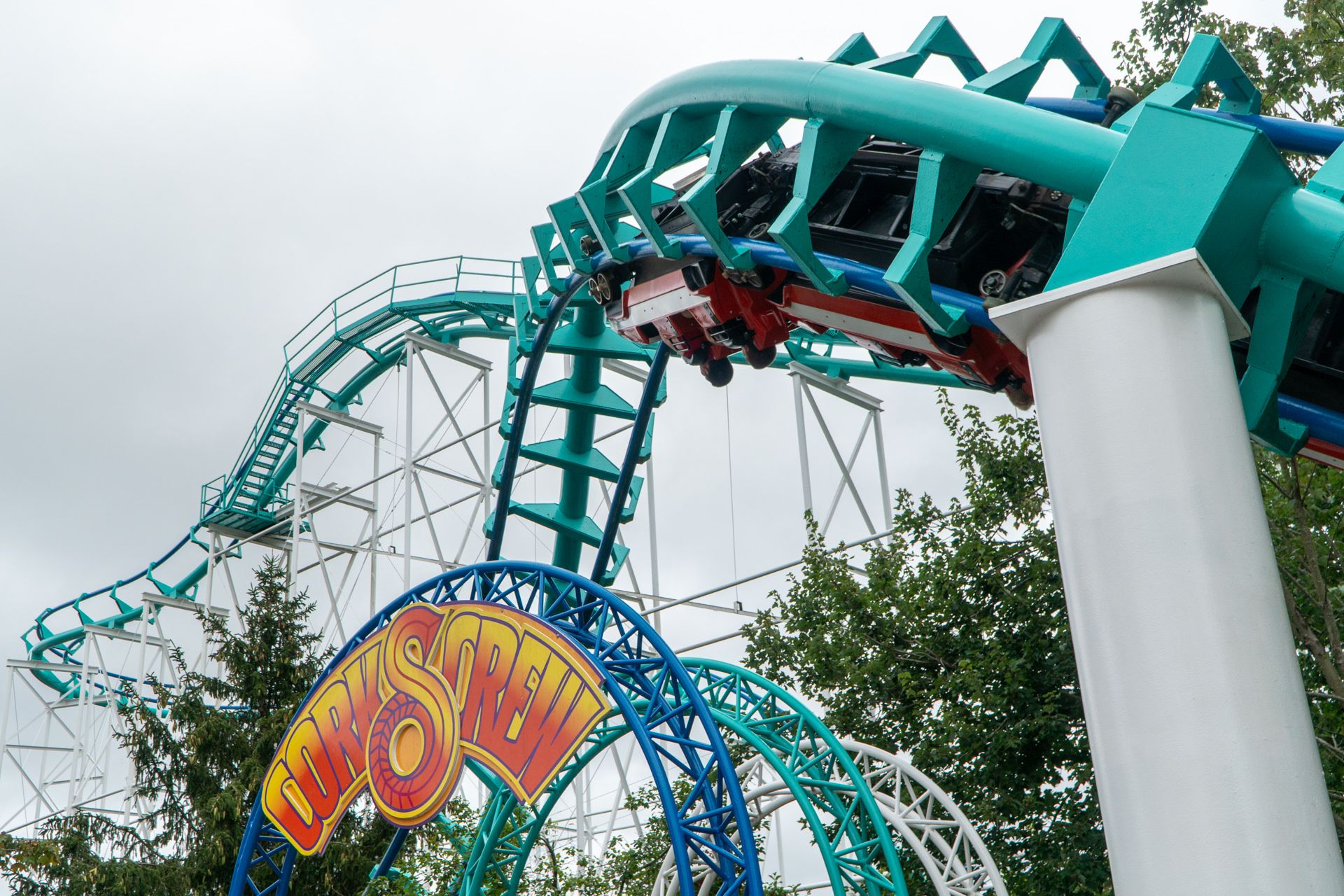
Only a short distance further along, Corkscrew is a genuine piece of roller coaster history. The Arrow ride opened on May 15, 1976, exactly one week after Revolution at Six Flags Magic Mountain, the first modern roller coaster with a vertical loop. Corkscrew immediately went one step further and, with its loop and two namesake corkscrews, became the first roller coaster in the world with three inversions.

After the lift hill, we head down the first drop and over a surprisingly fun camelback that provides some nice airtime. We then pass through the loop with plenty of force before heading towards the two corkscrews. These run directly over the Midway and make for a great sight even when you are not on the ride.

For an Arrow coaster of this age, the ride characteristics are perfectly acceptable. Combined with the enjoyable camelback, the forceful loop and, of course, its historical significance, Corkscrew is still a nice ride today.

Super Himalaya

Next up is Super Himalaya, a classic Music Express. Lap after lap, the cars race over the wave-shaped track at a good speed while being pushed nicely outwards. A straightforward classic that is still plenty of fun here.

Power Tower

Power Tower is a considerably larger affair. The huge S&S structure consists of four towers and is already impressive to look at from the outside. Two sides operate as Space Shots, launching riders upwards with compressed air, while the other two work as Turbo Drops for the opposite experience.

The ability to choose between being launched upwards or dropped downwards makes Power Tower particularly interesting. Whichever side you pick, a great ride is practically guaranteed.

Main Midway

Back on the Main Midway, we first encounter the Sky Ride, whose gondolas glide calmly above the heads of visitors and offer a nice view along the Midway. Nearby, the Cadillac Cars provide another classic family attraction, offering a relaxed drive around their course in vintage-style cars.

Cedar Downs Racing Derby

Far more unusual is the Cedar Downs Racing Derby. Only three Racing Derby carousels of this type survive worldwide, and the speed alone makes the experience completely different from that of a normal horse carousel.

What makes the ride particularly special is the racing mechanism itself. The horses do not just move up and down; they also move forwards and backwards within their rows, creating an actual little horse race during the ride. Combined with the surprisingly high speed, Cedar Downs is a wonderfully unusual attraction – and definitely something you should not skip at Cedar Point.

Valravn

With Valravn, we arrive at one of the park’s major B&M coasters. The Dive Coaster opened in 2016 and first takes us to a height of around 220 feet, where the train is held over the edge for several seconds. Then the brake releases and we plunge almost vertically towards the ground.

We shoot through the first Immelmann with plenty of force before climbing a broad rise into the block brake. From there, we head straight down the second drop and into another Immelmann. A roll follows and flows directly into a curving descent. One more turn and a final camelback then carry us into the brake run.

Valravn is great fun and naturally lives above all from its enormous height. The moment hanging over the edge and the following first drop make a real impression. After that, the ride delivers a nice, forceful experience with large elements and excellent ride characteristics.

Blue Streak

With Blue Streak, we take a sizeable step back in Cedar Point’s history. The classic wooden coaster opened in 1964 and is now the oldest roller coaster still operating in the park. Compared with the giant rides Cedar Point would later become known for, it almost looks modest.

Blue Streak does not need much, though: a lift hill, first drop and then a classic out-and-back layout with a whole series of hills before a turnaround sends the train back towards the station. The numerous camelbacks repeatedly provide some nice airtime.

Overall, it is a lovely old-school wooden coaster that remains fun today thanks to its many hills and pleasant airtime.

Raptor

Towards the end of our tour, Raptor gives us another major B&M classic. The Inverted Coaster opened in 1994, at a time when this coaster type was still relatively new. With its considerably larger layout, B&M showed only two years after the first Batman: The Ride just how much more could be done with the concept.

After the lift hill, we pass over a small pre-drop and head directly into the left-turning first drop. We shoot through the valley and the large loop with plenty of force before the Zero-G Roll wonderfully throws us once around our own axis. The large Cobra Roll follows immediately and also serves as the main turnaround.

A slightly right-bending climb then takes us back up into an elevated left-hand helix that wraps around the Zero-G Roll. After the block brake, we dive through a steep right-hand turn directly into the first Flat Spin. A short straight and another kink to the right lead us into the second Flat Spin.

For the finale, Raptor really turns up the intensity once more. The final helix practically sends the blood rushing into your legs before one last left-hand turn takes us into the brake run.

Raptor is still a really great ride today. It gets seriously forceful in places, and the intense finale provides a particularly satisfying ending.

Pictures Cedar Point

Conclusion Cedar Point

Cedar Point absolutely deserves its reputation as one of the world’s great roller coaster parks. Hardly any other park offers such a broad mix of historic classics and modern major attractions. For me, however, it is not necessarily the records that define the park, but rather the enormous variety between the individual rides.

I particularly like the fact that so many old flat rides have survived alongside all the major roller coasters. Add to that the extraordinary location on a peninsula in Lake Erie, which gives Cedar Point an atmosphere all of its own.

Overall, Cedar Point is simply a fantastic amusement park where you can easily spend several days. With a roller coaster lineup ranging from Magnum XL-200 and Millennium Force to Maverick and Steel Vengeance, there is certainly no shortage of things to do – and I am already looking forward to my next visit.


What’s your opinion on Cedar Point? Simply write it in the comment field below the report!


Click here to get to the overview page of Cedar Point.

A Great Day at Great America

Six Flags Great America

Six Flags Great America in Gurnee, Illinois, has its origins in a rather ambitious project by the Marriott Corporation. In the mid-1970s, two major amusement parks were built almost simultaneously, both following largely the same concept. The first Marriott’s Great America opened in Santa Clara, California, in March 1976, followed just over two months later by its counterpart in Gurnee on May 29. A third park in the Washington, D.C. area was also planned, but was never built.

Just how similar the two Great America parks originally were can still be seen today. Themed areas such as Orleans Place, Yukon Territory, County Fair and Hometown Square could be found in both parks, along with numerous almost identical attractions. Even the large Columbia Carousel near the entrance was part of the shared concept.

Their paths began to diverge in the 1980s. Marriott withdrew from the amusement park business in 1984 and sold both properties. While the Californian sister park later passed through Paramount before eventually becoming part of Cedar Fair, the park in Gurnee was taken over by Six Flags.

Orleans Place

We start our tour by heading left into Orleans Place, one of the areas where the shared history of the two Great America parks can still be recognised today. Of course, quite a lot has changed over the decades, and one of the park’s major roller coasters now awaits us here. Unfortunately, Condor was not operating during my visit, so we headed straight for Superman: Ultimate Flight.

Superman: Ultimate Flight

One year after the first Superman: Ultimate Flight opened at Six Flags Over Georgia, two more examples of B&M’s Flying Coaster followed in 2003 – one at Six Flags Great Adventure and one here at Great America.

We already know the layout from Six Flags Great Adventure. After the lift hill, a turn leads us into the first drop before we reach the defining element of the ride: the Pretzel Loop. Lying on our backs, we plunge towards the ground and experience some serious forces at the bottom of the element before shooting back upwards on the other side.

Things calm down a little afterwards. Superman winds its way through the compact layout via the Horseshoe and several further turns before an In-Line Twist awaits towards the end and we return to the station.

Even though the ride itself is largely familiar, I much prefer Superman here to the one at Great Adventure. The coaster is integrated far more nicely into its surroundings and simply feels much more at home within the park. The intense Pretzel Loop, however, remains the undisputed highlight of the ride.
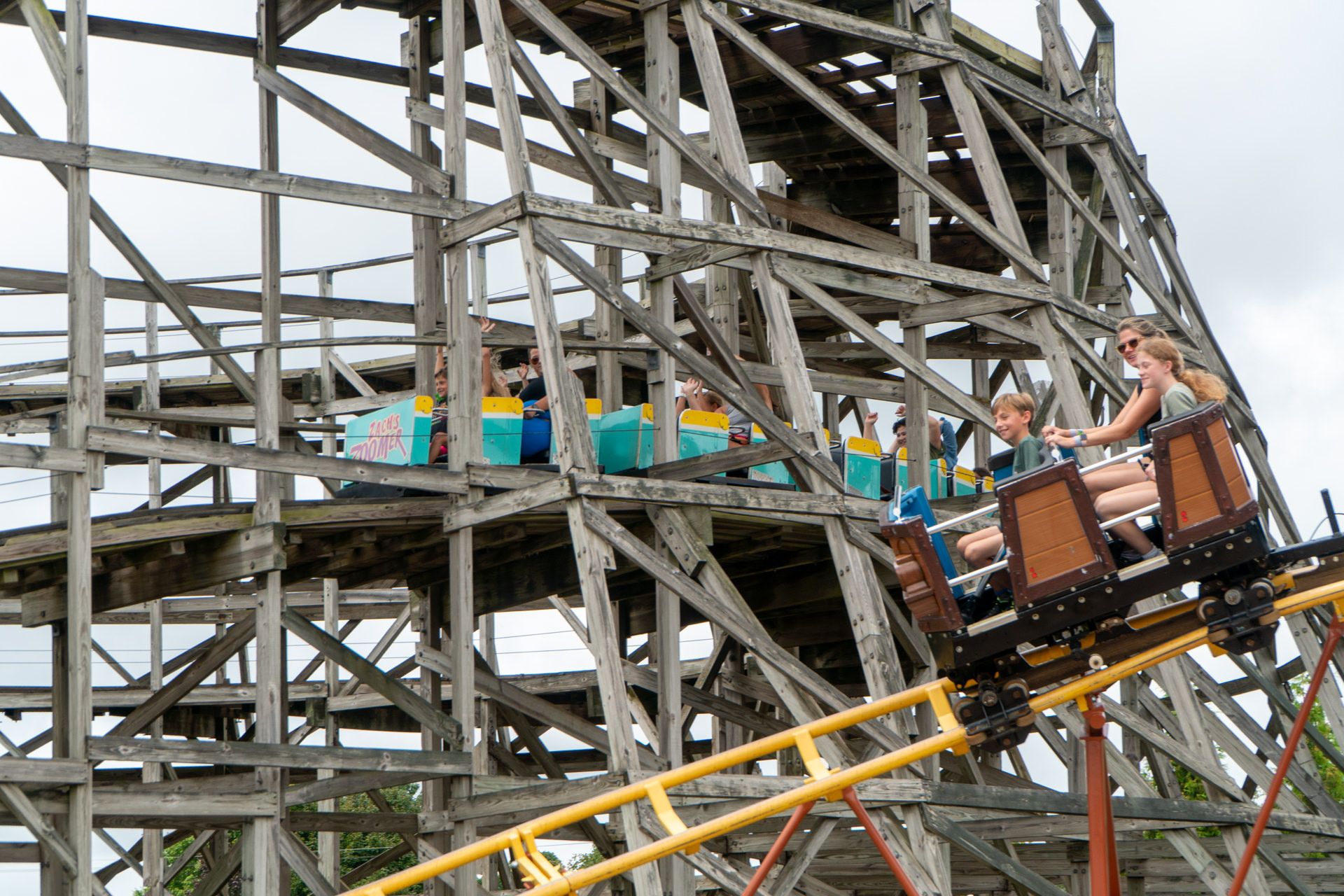
The Dark Knight Coaster

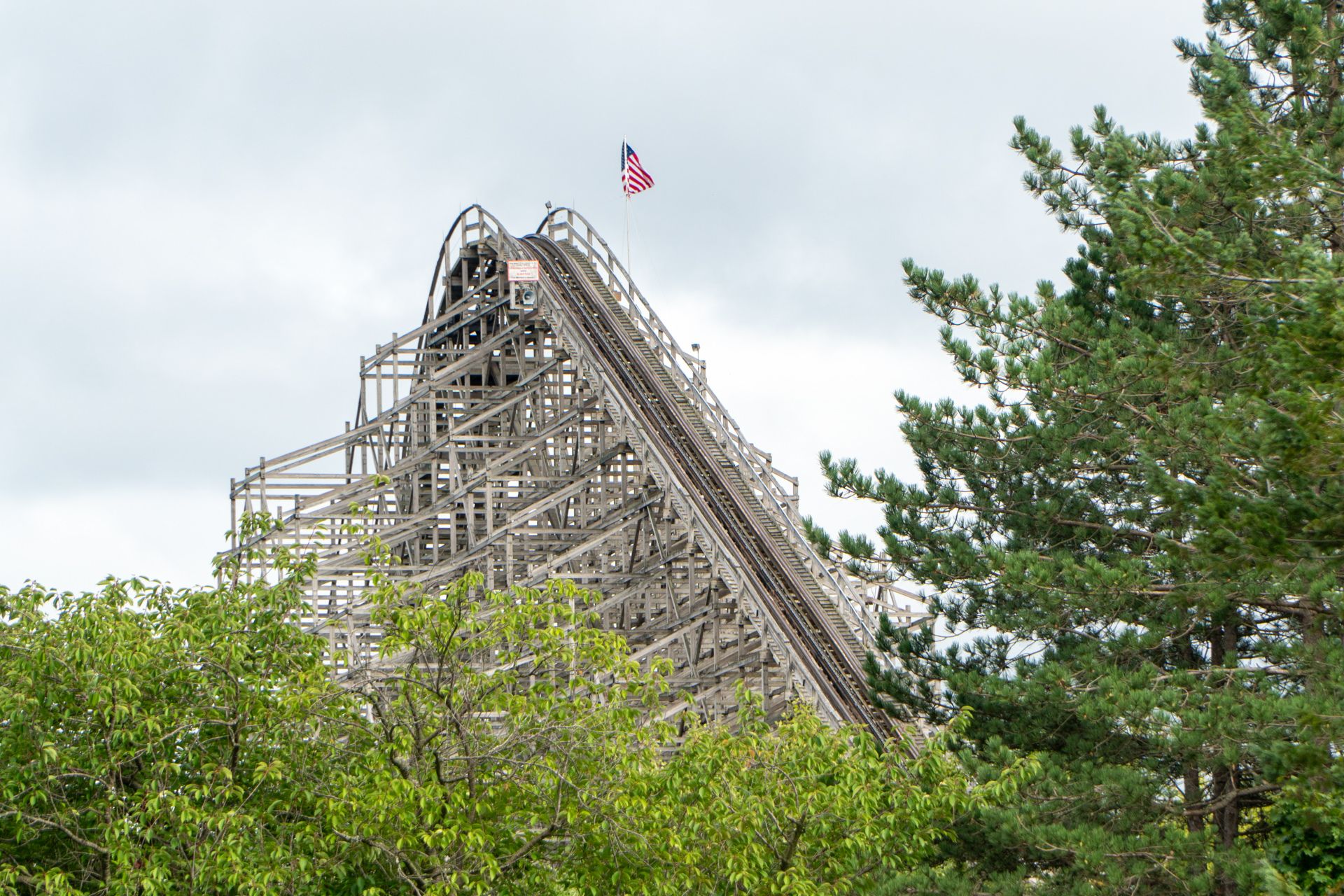
Right next to Superman, The Dark Knight Coaster is another roller coaster we already know from Six Flags Great Adventure. The ride opened in 2008 to coincide with the release of The Dark Knight and was part of a series of almost identical coasters Six Flags had planned for several of its parks. At Great America, the former Theatre Royale was extensively converted and transformed into the Gotham City Rail station.
The story sees us fleeing Gotham City aboard the Gotham City Rail following an attack by the Joker. Behind all the theming lies an indoor Wild Mouse with tight corners, short drops and abrupt changes of direction that we already know from Great Adventure. It is primarily the theming that turns the relatively simple layout into a thoroughly entertaining ride.
Mardi Gras

From Orleans Place we continue into the small Mardi Gras area. There was not much to keep us here, however, as Roaring Rapids, the only major attraction remaining in this part of the park, was unfortunately not operating during my visit. So we headed straight into the neighbouring DC Universe.

DC Universe

The Joker

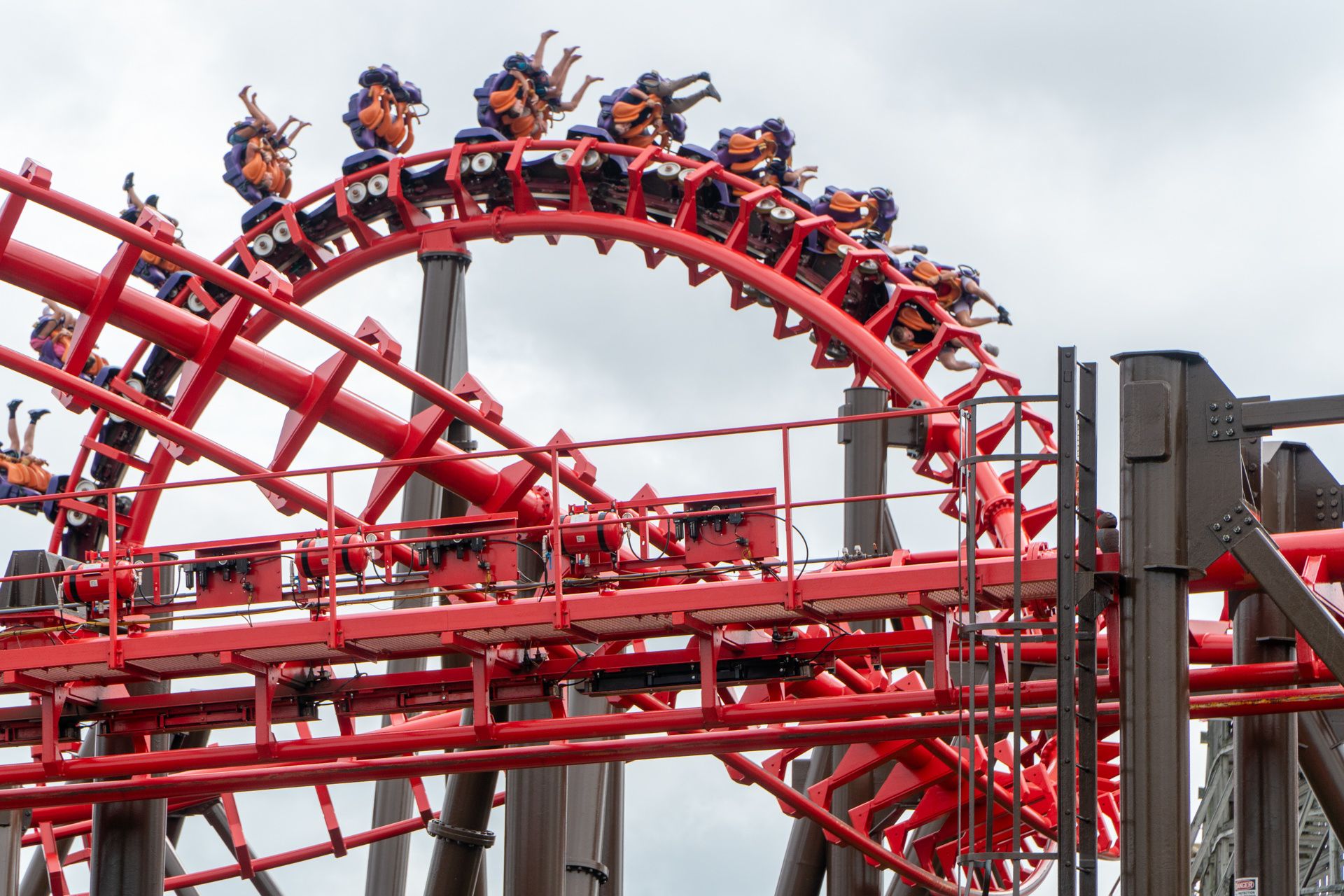
The first coaster awaiting us in DC Universe is The Joker, a ride type we have become very familiar with after visiting all sorts of Six Flags parks. With S&S’s 4D Free Spins, however, the actual fun of the ride always depends somewhat on how often the freely rotating seats decide to flip.

And here we got really lucky. We spent a good part of the ride upside down, resulting in a wonderfully chaotic and surprisingly intense experience.

Batman: The Ride

Right next door is Batman: The Ride, one of the most historically significant roller coasters in the park. Unfortunately, the ride was undergoing refurbishment during my visit and remained closed. Nevertheless, it is worth spending a little more time here, because its opening in 1992 marked the beginning of a small revolution.

Batman: The Ride was B&M’s first Inverted Coaster. For the first time, riders sat beneath the track with their legs dangling freely below. Combined with its compact and intense layout, this created an entirely new type of roller coaster that would spread rapidly around the world over the following years.

The ride was also closely linked to Time Warner’s involvement with Six Flags at the time. Warner Bros. characters increasingly found their way into the parks, and Batman: The Ride was appropriately presented as a journey through Gotham City. The queue initially led through a well-kept city park before the surroundings gradually became darker and more run-down, eventually revealing the roller coaster itself.

The success of the ride quickly led to further installations at other Six Flags parks. Batman: The Ride at Six Flags Great Adventure followed as early as 1993, and over the years the compact layout became one of B&M’s most recognisable designs. It was therefore rather unfortunate that the original was closed during my visit.

The Flash: Vertical Velocity

The Flash: Vertical Velocity is the next coaster along our route. We already know the ride concept from Steel Venom at Valleyfair, which we had ridden only a few days earlier. The train is launched back and forth between the two spikes, climbing higher with each pass.

What I particularly like here is the location. The track runs directly above the lake between the two log flumes and is beautifully integrated into this part of the park. Unlike Steel Venom, however, there is no longer a holding brake on the rear spike. That is a bit of a shame, as this particular moment had added quite a lot to the experience at Valleyfair. Overall, though, it is a lovely installation.

Aquaman Splashdown and Logger’s Run

Aquaman Splashdown and Logger’s Run together form a huge and intricately intertwined log flume complex. Both rides begin with a small lift before meandering along a surprisingly long course through numerous bends. It is not always a leisurely cruise either, as the current picks up quite a bit of speed in places.

A second lift then takes us upwards, followed by several turns high above the ground. Unfortunately, some of the walls up here are rather high, meaning there is not all that much to see of the surroundings. Then comes the grand finale: Logger’s Run features a wave-shaped double drop, while Aquaman Splashdown plunges down in one continuous descent. Particularly impressive is the way the drops of the two rides are intertwined.

At the bottom of both rides, a standing wave awaits, which the boats plough through at considerable speed. Staying dry is definitely not an option here, and you step out of the boat wonderfully soaked. Unfortunately, Aquaman Splashdown was not operating during my visit, but Logger’s Run certainly got plenty of attention.

Yukon Territory

Little Dipper

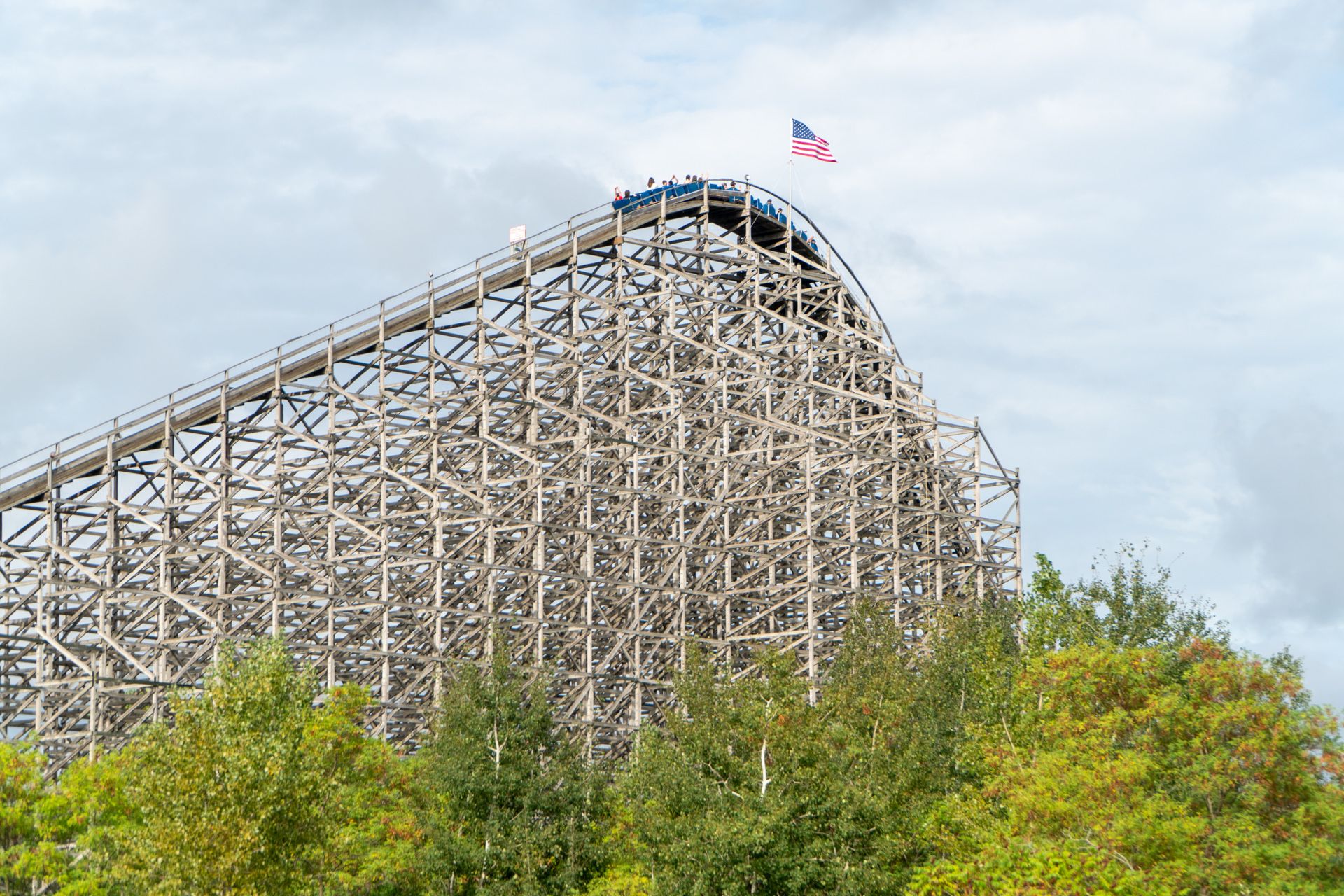
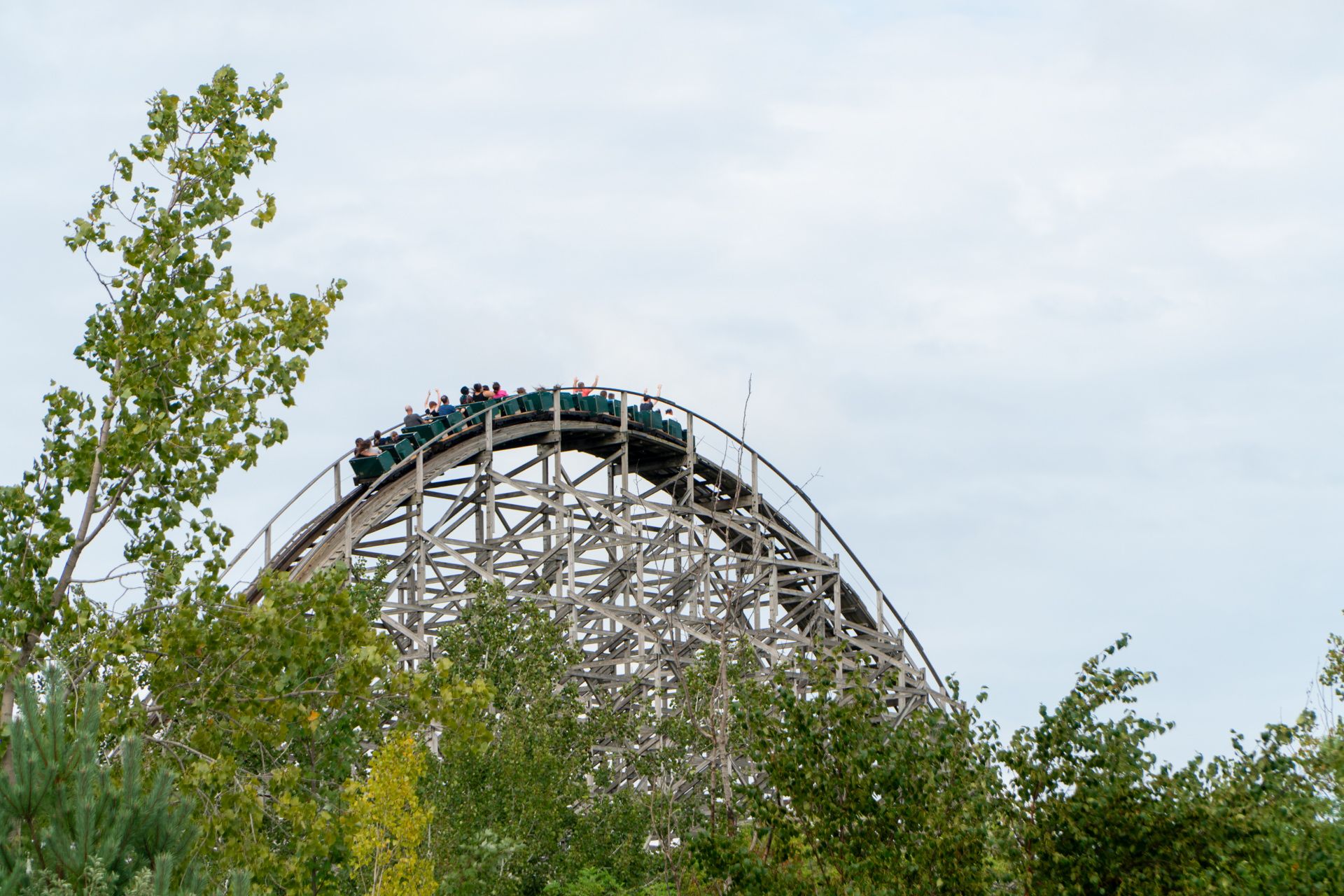
Little Dipper is a small wooden coaster in Yukon Territory with quite an interesting history. It originally opened at Kiddieland Amusement Park in Melrose Park in 1950 and ran there for almost 60 years. Following the park’s closure in 2009, Six Flags acquired Little Dipper, relocated it to Gurnee and reopened it as early as 2010.

The ride itself is naturally fairly modest. A handful of small hills and turns make up the compact layout – a pleasant little wooden coaster whose long history is arguably its most interesting feature.
Sprocket Rockets

The park’s small children’s area is also home to Sprocket Rockets, a Vekoma Roller Skater. The layout offers the usual combination of small drops and sweeping turns typical of this coaster type. Unfortunately, it only completed a single lap, so the fun was over rather quickly.

County Fair

Things get considerably bigger as we enter County Fair. And right near the entrance to the area, Goliath rises above us as one of Six Flags Great America’s largest roller coasters.

Fiddler’s Fling

Before we get to Goliath, Fiddler’s Fling provides us with a small rarity. This is a classic Schwarzkopf Calypso – a ride type that has become extremely difficult to find nowadays.

As the large platform rotates, the individual clusters of cars spin around their own axes as well. And the whole thing moves surprisingly quickly, producing some considerable forces along the way. A wonderfully dynamic flat ride, and it is great to see that Fiddler’s Fling has survived as one of the increasingly rare examples of this Schwarzkopf classic.

Goliath

Goliath rises near the entrance to County Fair as one of the largest roller coasters at Six Flags Great America. Its location is interesting in its own right, as this was once the site of Iron Wolf, the very first roller coaster built by B&M. The Stand-Up Coaster opened in 1990 and was removed after the 2011 season, with the site being reused for Goliath only a few years later.

The considerably larger Rocky Mountain Construction coaster opened here in 2014. After the roughly 50-metre-high lift hill, we plunge down the approximately 55-metre-deep, 85-degree first drop. Carrying plenty of speed, the train then shoots up into a high turn before diving back down and racing over the large airtime hill. The Dive Loop follows as the first inversion.

Next comes the Zero-G Stall, where we remain upside down for a surprisingly long time. Goliath then disappears into the tunnel before the final rapid elements take us back towards the station.

Goliath is a genuinely great roller coaster. The powerful airtime, high speed and varied sequence of elements make for an excellent ride. At the same time, it is not quite as brutal as some of RMC’s other creations, which I actually rather enjoyed here. For me, Goliath is definitely one of the best RMCs I have ridden so far – and one I would happily ride several times in a row without interruption.

Sky Striker

Also in County Fair is Sky Striker, the park’s new attraction for 2024. Zamperla’s largest Giant Discovery is hard to miss from quite some distance thanks to its enormous dimensions.

As the large gondola continuously rotates, it swings higher and higher. There is plenty of airtime around the turning points before the ride picks up speed once again on the way through the bottom of the swing.

I really enjoyed Sky Striker. The combination of height, speed and plenty of airtime makes for a great ride.

American Eagle

Behind Sky Striker lies the entrance to American Eagle – a wooden coaster whose dimensions remain impressive even today. When it opened in 1981, it was the tallest, fastest and longest wooden roller coaster in the world. The manufacturer is equally remarkable: behind this enormous racing wooden coaster was none other than Intamin, who at the time had only just begun to enter the roller coaster business.

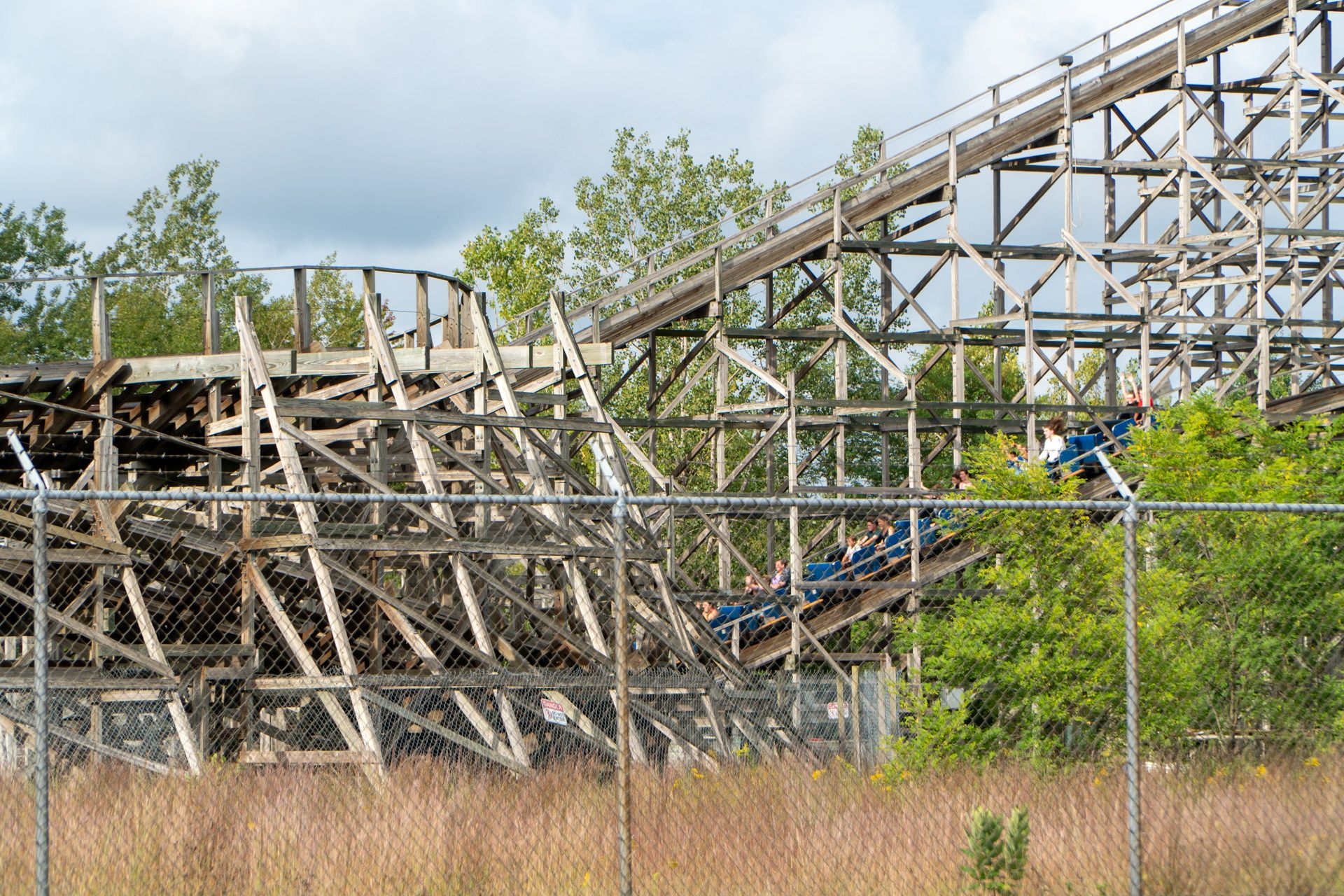
After the lift hill, we plunge down the large first drop and race over a whole series of hills. Particularly towards the front of the train, American Eagle produces some absolutely explosive airtime. The ride then enters the enormous double helix, which remains one of its most striking features simply because of its sheer scale. More hills follow on the way back towards the station, where a final helix concludes the ride.

It is a shame that the two sides were not racing during my visit, as this removes an essential part of the original concept. Apart from that, I really enjoyed American Eagle – especially the surprisingly powerful airtime.

X-Flight

X-Flight is the next major highlight in County Fair. The B&M Wing Coaster from 2012 certainly has some bite.

After the lift hill, we plunge down the twisted first drop typical of this coaster type, turning upside down right at the start. With plenty of speed, we then race through the first Zero-G Roll before the train climbs into the large Immelmann. A fast and beautifully low-to-the-ground turn follows, leading directly into a high turnaround. From there, we head through the second Zero-G Roll and continue at high speed towards the grand finale.

X-Flight now races towards the distinctive control tower. An In-Line Twist takes us straight through the narrow keyhole, with the seats positioned alongside the track creating a wonderfully close near-miss effect. One final helix rounds off the ride before we return to the station.

X-Flight genuinely impressed me. The sequence of elements works extremely well, the low-to-the-ground sections provide plenty of speed and the ride becomes surprisingly intense in places. For me, X-Flight was by far the best Wing Coaster I had ridden up to that point.

And somehow, I even survived the ride wearing open Birkenstocks. With the finest of fingertip control – or perhaps toe-tip control would be more appropriate – I actually managed to keep them on my feet throughout the entire ride. Perhaps not the cleverest choice of footwear for a Wing Coaster, but at least neither of them went flying.

Demon

Demon is another genuine classic in County Fair. We already know a very similar coaster from California’s Great America, as both rides opened in 1976 under the name Turn of the Century and originally featured a noticeably different layout. In 1980, the large airtime hills following the first drop were replaced by two loops and, fittingly, both coasters were renamed Demon.

The ride therefore feels very familiar. After the first drop, we head directly through the two consecutive loops before entering the second part of the layout. Several turns follow before we encounter the two corkscrews and eventually return towards the station.

There is one major advantage to the Great America version, however: the wonderfully bizarre Demon soundtrack is still played here – in a loop lasting more than 40 minutes and packed with all sorts of delightfully strange references to the ride and its demon. It fits the slightly dated demonic theming perfectly and gives this old Arrow classic a character all of its own.

Metropolis Plaza

Justice League: Battle for Metropolis

In Metropolis Plaza, Justice League: Battle for Metropolis awaits us, an interactive dark ride we already know from other Six Flags parks. Once again, the combination of large physical sets, projections and interactive elements proved highly entertaining. For me, it remains one of the better dark rides from Sally.

Southwest Territory

Giant Drop

We continue into Southwest Territory, where Giant Drop is the first major attraction awaiting us. The Intamin freefall tower is easy to spot from quite some distance thanks to its considerable height. The gondola slowly makes its way to the top, where there is just enough time to enjoy the view before it releases and plunges back towards the ground in free fall. A classic Intamin freefall tower that still delivers a really good ride today.

Raging Bull

Raging Bull is one of the park’s major highlights. The B&M Hyper Coaster differs noticeably from many other rides of its type. Rather than relying primarily on a long succession of large airtime hills, Raging Bull features a much more twisted layout with numerous fast turns.

After the lift hill, a small pre-drop leads us straight into the action. The huge first drop already delivers some seriously strong airtime and sends us racing directly into a tunnel. The train then shoots back upwards into a sweeping turnaround high above the ground before flying over a classic camelback.

An elevated turn takes us to the left before we pass beneath the lift hill and change direction in another turnaround. A right-hand turn then leads into the block brake, which we pass without any noticeable reduction in speed.

Running parallel to the lift hill, we fly over another camelback before entering a helix around the first drop. For the grand finale, Raging Bull races through a low-to-the-ground figure eight before returning towards the station.

It is this combination of powerful airtime, high speed and numerous turns that makes Raging Bull so good. The coaster feels incredibly fast and varied, and barely loses any momentum right through to the end. Thanks to its exceptionally high capacity, the queues were surprisingly short, allowing me to get several consecutive rides. Definitely one of the park’s major highlights for me. What a ride.

Chubasco and Ricochet

Alongside its major roller coasters, Southwest Territory is also home to some lovely classic flat rides. One of them is Chubasco, an attractively themed teacup ride that naturally had to be taken for a spin.

Not far away is Ricochet, a classic HUSS Swing-Up. Naturally, I could not pass this one by either. Rides like these make a nice addition to the park’s already very strong attraction line-up.

Viper

A little more secluded is Viper, the park’s next wooden roller coaster. Even the surprisingly long walk to the station seems to go on for quite some time, but an interesting ride awaits at the end.

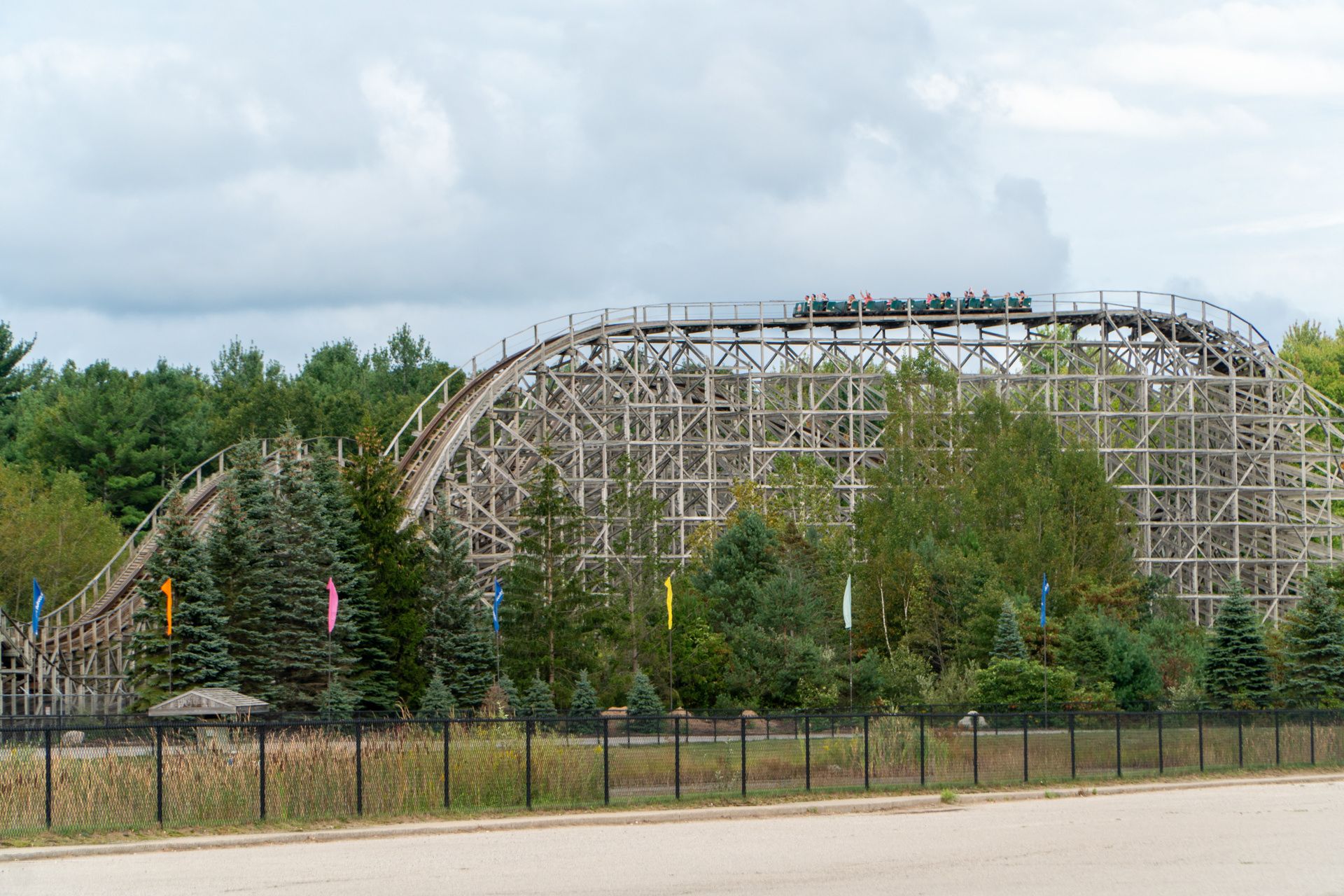
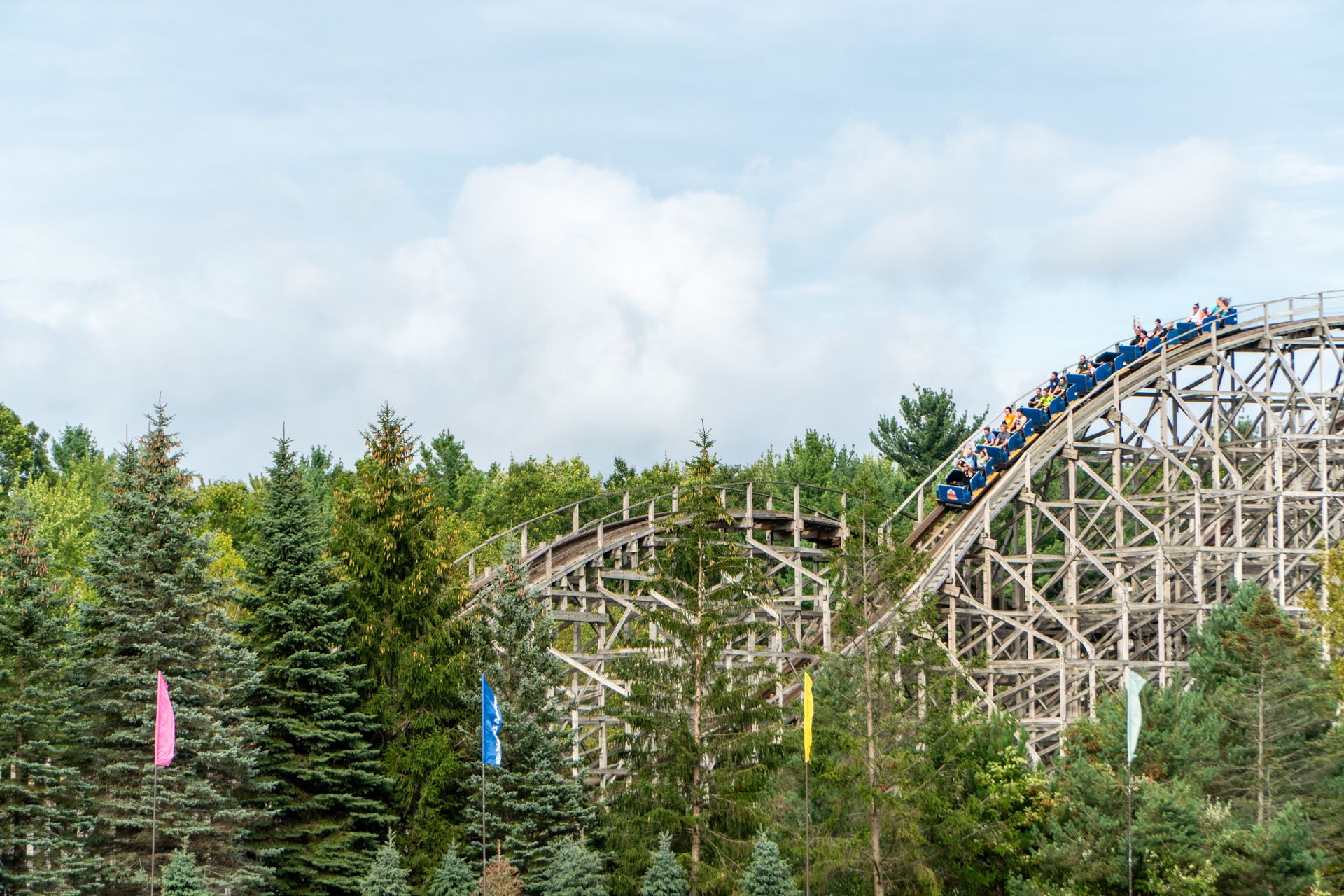
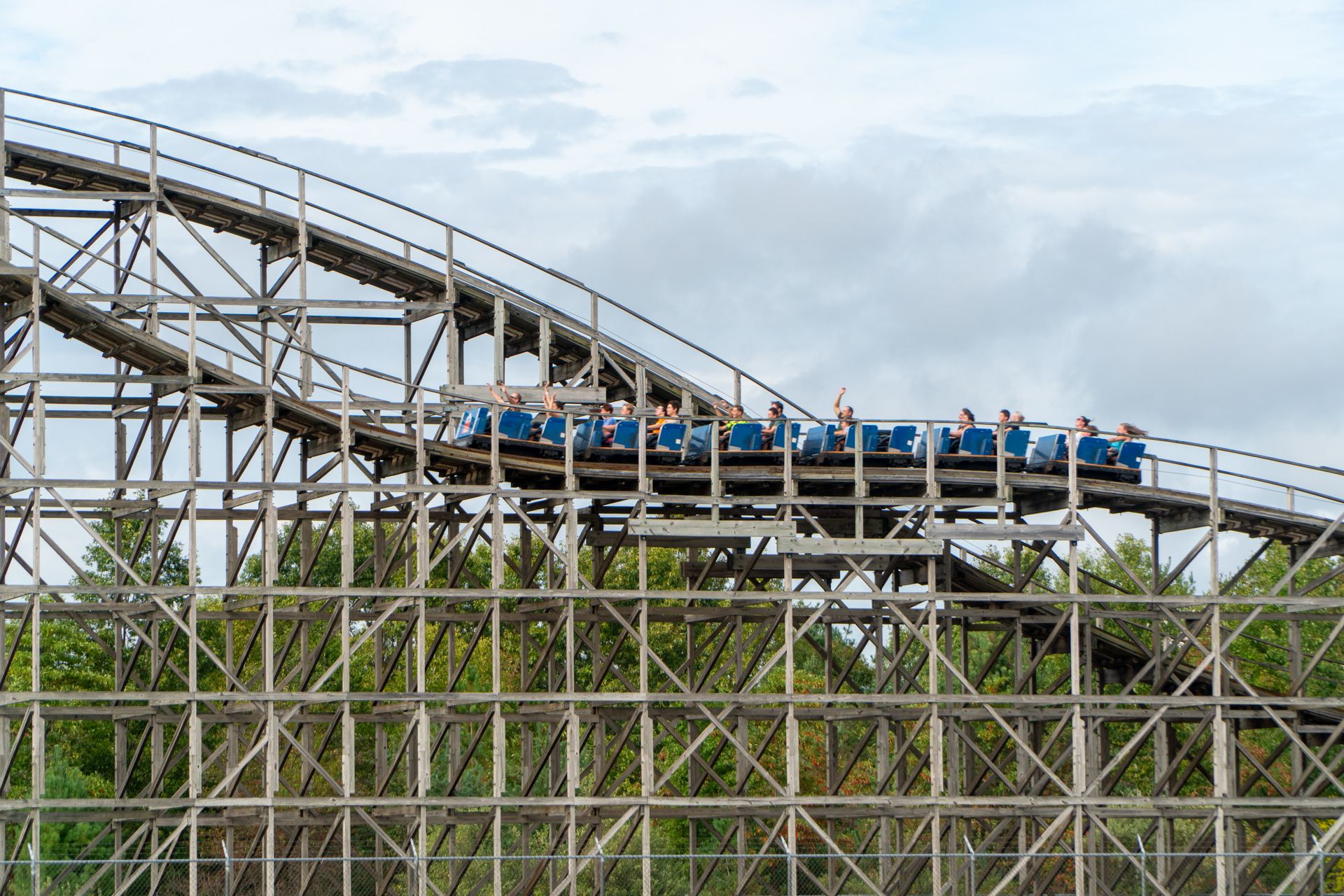
Viper opened in 1995 and is unmistakably inspired by the legendary Coney Island Cyclone in New York. The familiar basic concept was scaled up somewhat here. What is particularly remarkable is that there was no traditional roller coaster manufacturer behind the project: Viper was designed and built by Six Flags Great America itself and remains the only roller coaster the park has constructed in-house.

After the lift hill, the first drop takes us straight into the compact layout with its numerous hills and turnarounds. What really defines the experience is the journey through the dense wooden structure. Time and again we shoot straight through the framework, cross other sections of track and almost lose our sense of direction among all those supports. In between, the many smaller hills repeatedly provide some nice airtime. A great coaster with genuinely good ride characteristics.
Hometown Square

After Southwest Territory, we continue into Hometown Square. This area is home to a whole collection of classic rides that fit its character perfectly.
The Lobster

One particularly nice example is The Lobster, a classic Schwarzkopf Monster III. With a little skill, the individual cars can be spun wonderfully. You end up rotating like mad while the ride simultaneously performs its characteristic wave-like motion. Seeing the amazement on the faces of the Americans is always motivation enough for me to make the car spin just a little bit faster.

Triple Play

Not far away is Triple Play, a classic HUSS Troika. As the three clusters of gondolas rotate, the entire structure gradually tilts and the gondolas follow an increasingly pronounced wave-like trajectory. A pleasantly fast ride.
Hometown Fun Machine

Hometown Fun Machine is somewhat hidden away beside one of Whizzer’s turnarounds. The classic Scrambler can only be reached via a small bridge, making the attraction feel slightly removed from the main path. Once aboard, the opposing rotational movements repeatedly press you firmly to the side.
Whizzer

The main attraction in Hometown Square, however, is Whizzer, a Schwarzkopf Speed Racer dating all the way back to the park’s opening year of 1976. Its most distinctive feature is the spiral lift hill, which slowly carries the trains upwards before the actual ride begins.

From the lift hill, a long descent takes us down into a sweeping, low-to-the-ground turn. A lengthy climb then brings us back up before a turn high above the ground sends us sweeping steeply back towards ground level. Another low turn follows, together with a long straight climb, before we circle once around the lift hill. A curving descent and a right-hand turn take us towards the end of the ride, with one final helix leading back into the station.

The ride itself is quite nice, although for me it never quite reaches the aggression of Schwarzkopf’s smaller Jet Star coasters. The waiting times were rather frustrating as well. The large number of Flash Pass users significantly reduced the effective capacity for the regular queue, meaning Whizzer usually had one of the longest lines in the entire park.

Carousel Plaza

To complete our tour, we return to Carousel Plaza, the park’s grand entrance area. At its centre stands the imposing Columbia Carousel. The roughly 30-metre-high double-decker carousel has been one of the park’s landmarks since opening day in 1976 and has an almost identical counterpart at California’s Great America.

With its numerous horses, animals and carriages, the carousel is an impressive sight. Naturally, there was only one option for my ride: the upper level. If you get the chance to ride a double-decker carousel, you might as well do it properly and sit upstairs.

Right next to it, Sky Trek Tower rises roughly 100 metres above the park. The Intamin observation tower was added in 1977 and has shaped the park’s skyline ever since. In suitably clear conditions, the slowly rotating cabin even provides views all the way to the Chicago skyline.

Between these two classics, Maxx Force represents an entirely different era in the park’s history.

Maxx Force

Maxx Force provides one final roller coaster whose defining feature becomes obvious right from the start. The S&S launch coaster uses a pneumatic system to accelerate its trains from 0 to around 125 km/h in less than two seconds. The resulting launch is suitably brutal and catapults us directly into the first huge element.

Rather like a Banana Roll, we twist sideways at the highest point before rapidly diving towards the ground through a roll. What initially appears to be a slowly climbing right-hand turn then reveals itself as a proper roll, which we negotiate at considerable speed. From there, we are already heading towards the somewhat strangely approached Dive Loop, entered almost from the side, which brings the short layout to a close.

Overall, Maxx Force is a very solid roller coaster with excellent ride characteristics. Its relatively low capacity resulted in correspondingly long queues during my visit, however, so I only managed a single ride.

Pictures Six Flags Great America

Conclusion Six Flags Great America

I thoroughly enjoyed Six Flags Great America. Above all, its strong roller coaster line-up offers an enormous amount of variety. Add to that the numerous classic flat rides, which are increasingly difficult to find in such numbers at a major amusement park.

The shared history with California’s Great America can still be recognised in many places and gives the park a character of its own. At the same time, Great America has developed considerably over the decades and does a lovely job of combining its history with modern major attractions.

Overall, Six Flags Great America is a truly great amusement park – and I can hardly wait to fly back to Chicago and take another trip up to Gurnee.


What’s your opinion on Six Flags Great America? Simply write it in the comment field below the report!


Click here to get to the overview page of Six Flags Great America.

Manitowoc County Fair

Manitowoc County Fair

Sometimes the best stops happen completely by chance. On my way from Green Bay towards Chicago, a fair suddenly appeared on the left side of the highway, with its highly visible Zipper immediately catching my attention. So I took the next exit and, just a few minutes later, found myself at the Manitowoc County Fair.

The classic American county fair took place from August 21 to 25 in 2024. For just $10, admission, parking and all rides on the midway operated by Rainbow Valley Amusements were included.

Besides the rides, there were of course animals, exhibitions, games and plenty of food. I particularly liked the food stands run by public institutions. The food was surprisingly cheap and really good – at prices I have rarely encountered in the United States. At the stands run by carnival operators, comparable offerings sometimes cost several times as much.

Midway

The midway had quite a lot to offer for a county fair. Larger rides included the Zipper, Pharaoh’s Fury, Freak Out, Rock Star, the Vertigo chair swing and Remix. These were joined by Cliff Hanger, Zero Gravity, a Rockin’ Tug and the classic Eli Bridge Ferris wheel.

As some of the lines were fairly long, I limited myself to just a few rides. One of them was the Rock Star by ARM Rides. The experience is very reminiscent of a classic HUSS Rainbow, offering some great lateral forces and plenty of airtime. Unlike on the Rainbow, however, riders are secured by a simple over-the-shoulder restraint.

A ride on the Freak Out was also a must before heading over to the fair’s only roller coaster. The Orient Express by Wisdom Rides is a small traveling kiddie coaster that sends you around its compact oval lap after lap. The ride may not exactly be the smoothest, but the things you do for another coaster count.

Pictures Manitowoc County Fair

Conclusion Manitowoc County Fair

The Manitowoc County Fair turned out to be a really nice accidental find. The atmosphere around the fairgrounds was great, the selection of rides was more than decent and the prices were very fair. All in all, a lovely event and definitely a worthwhile spontaneous stop.