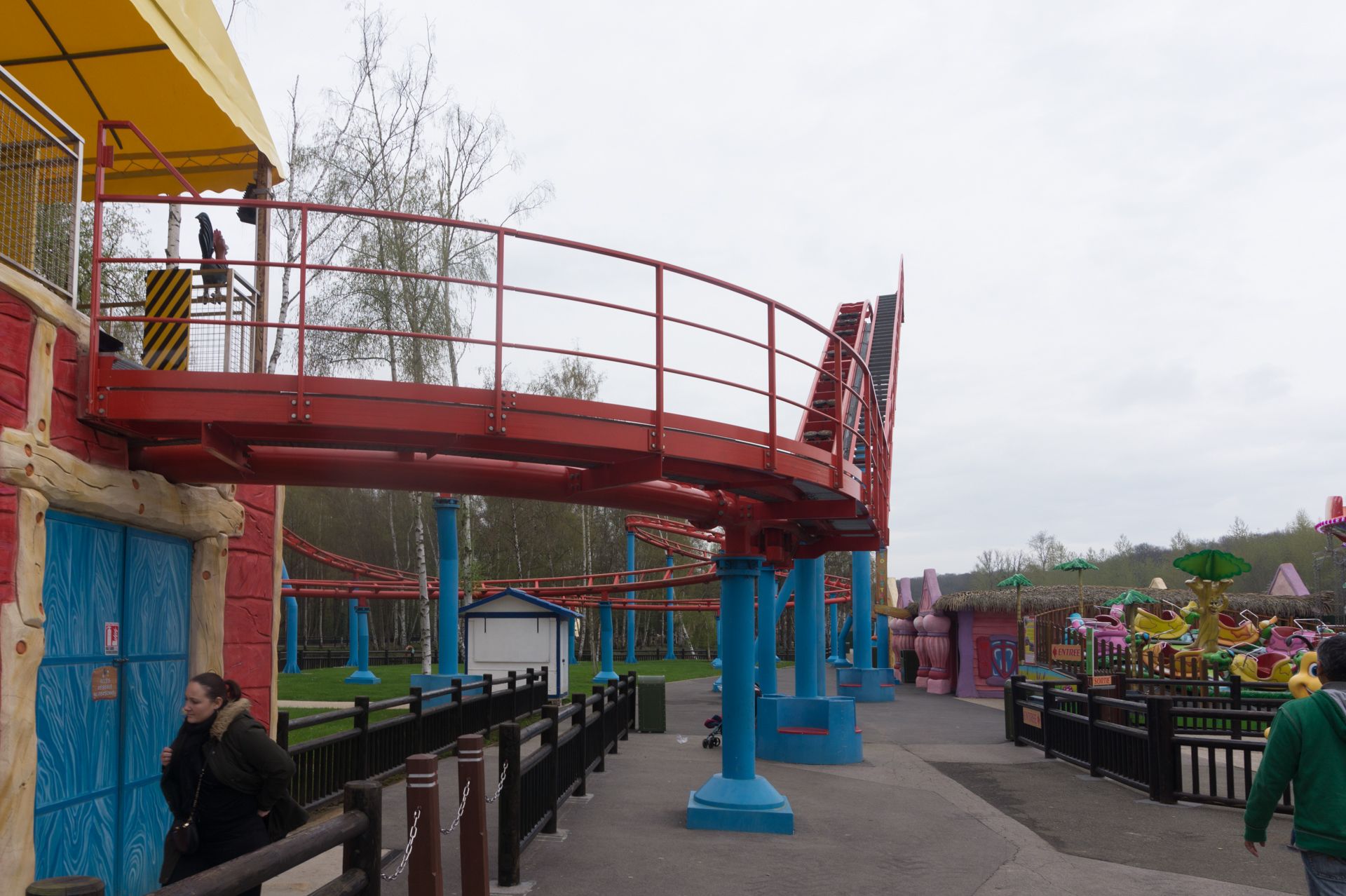
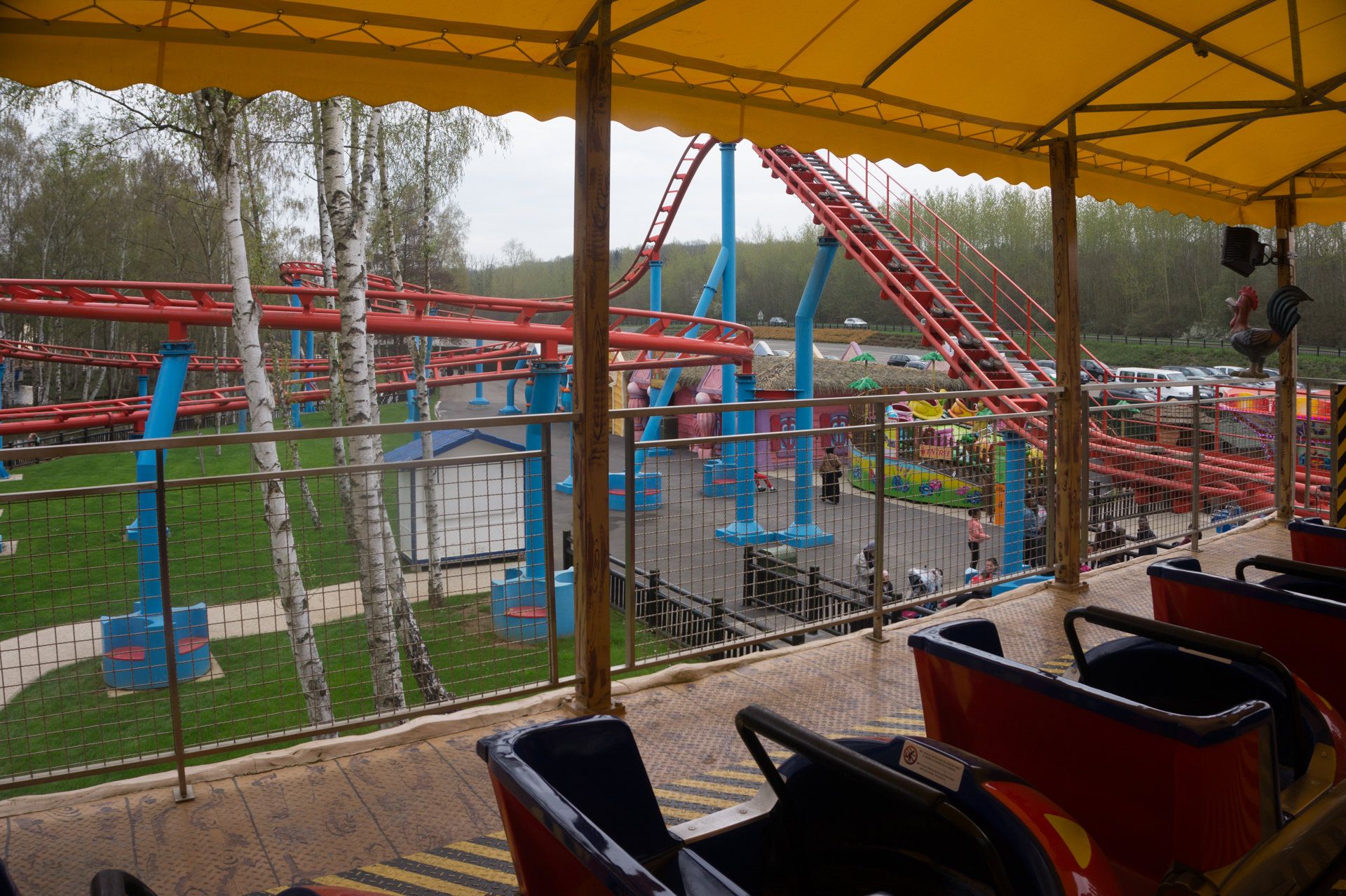
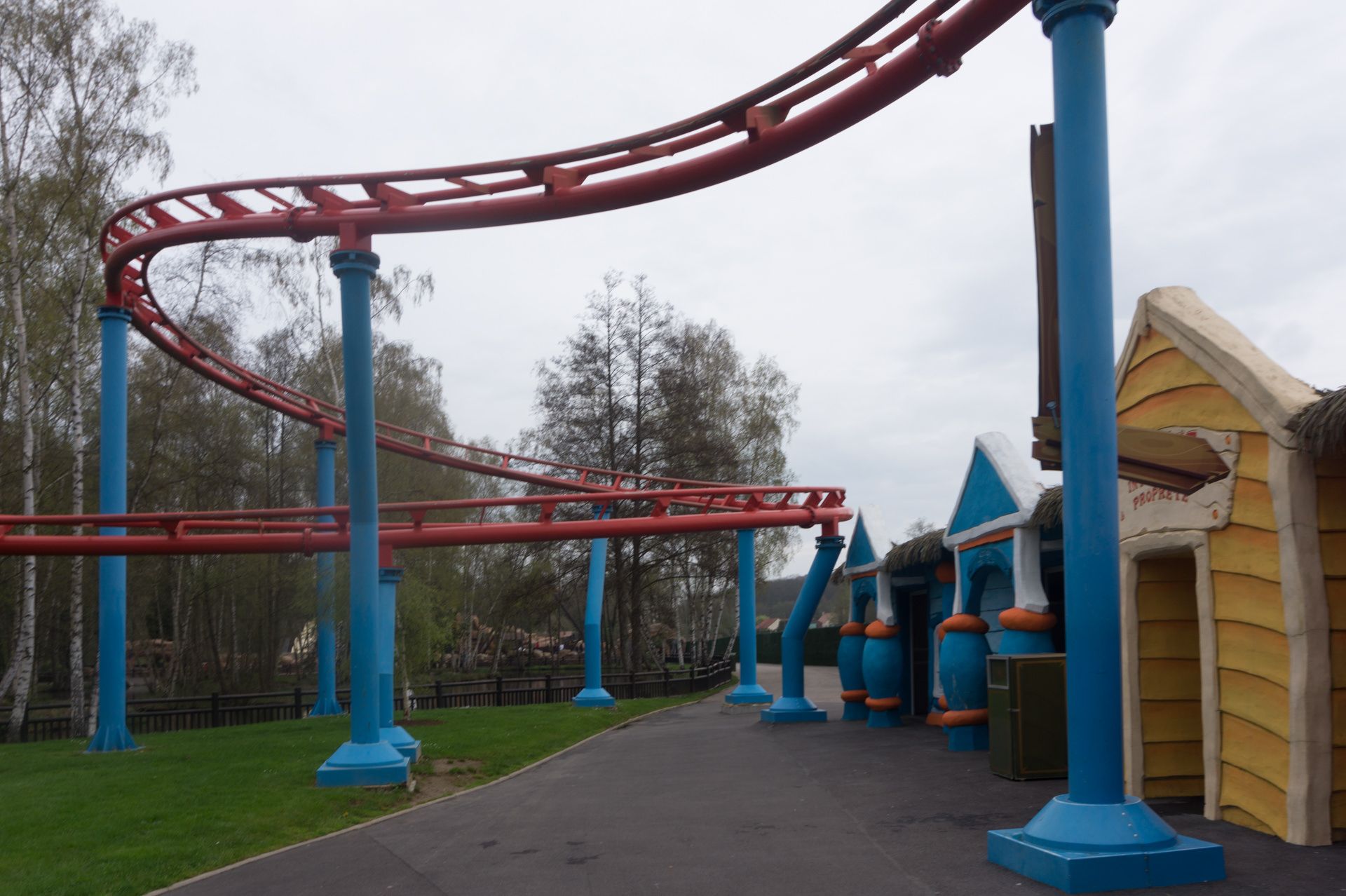
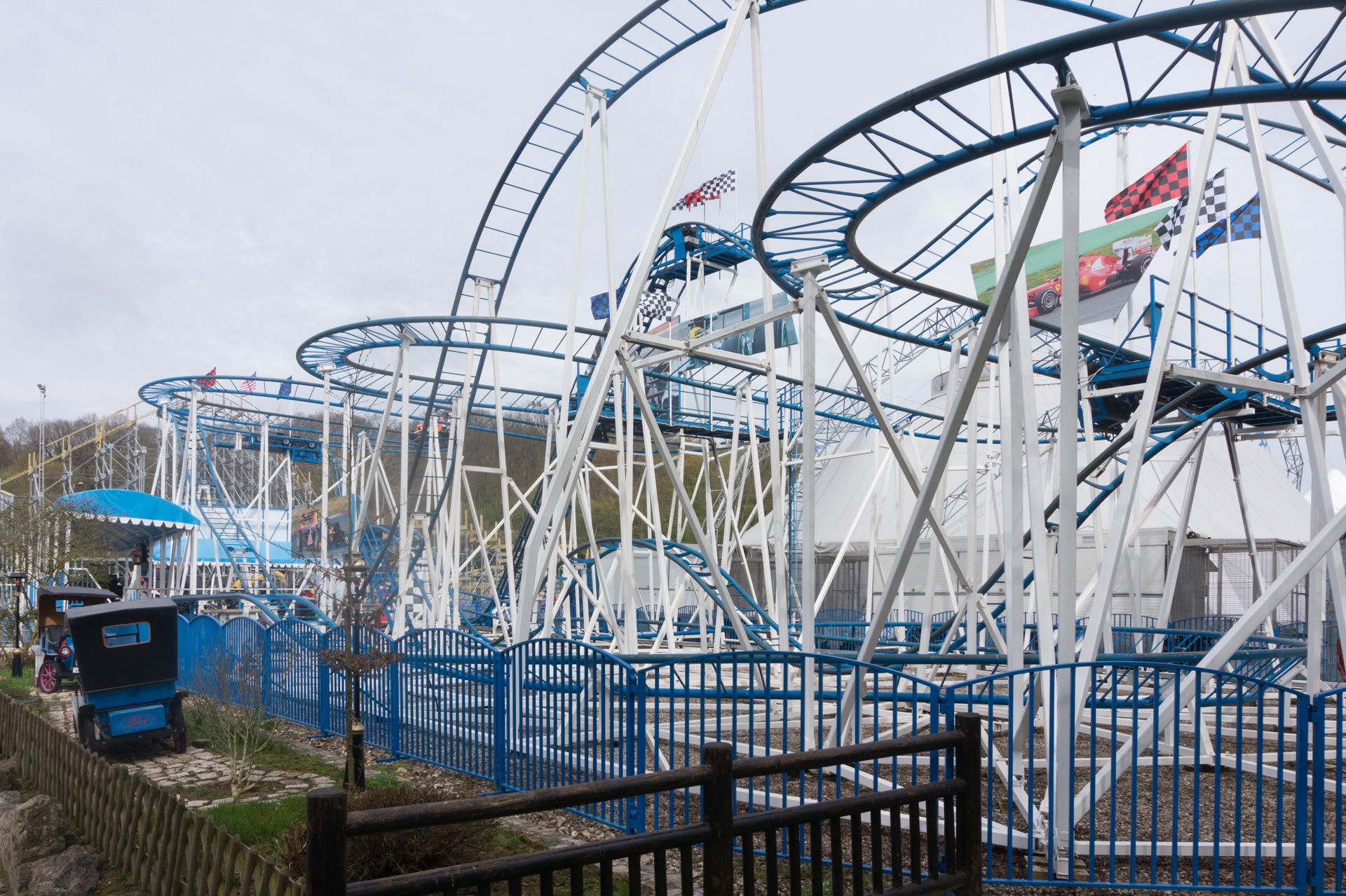
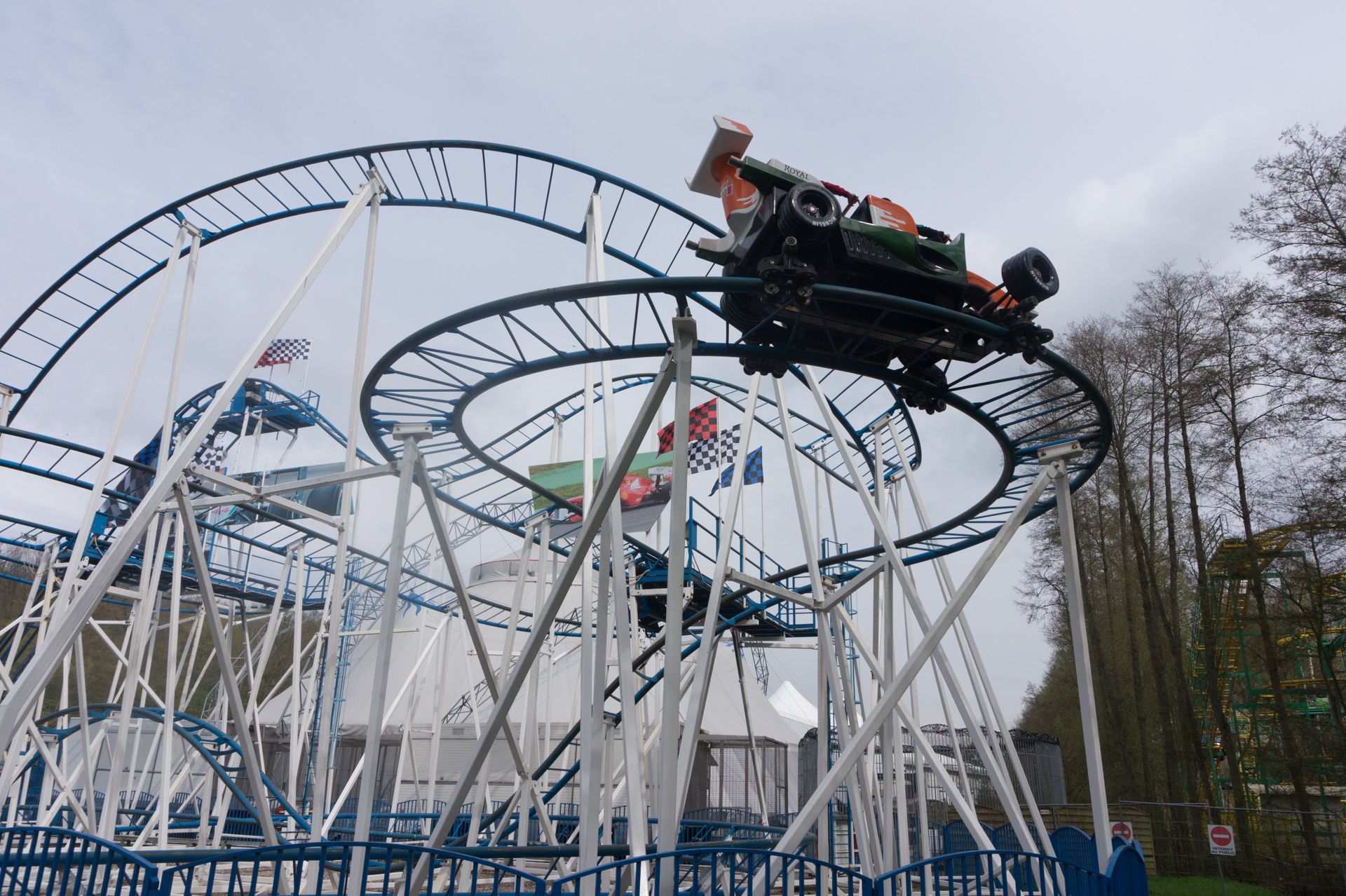
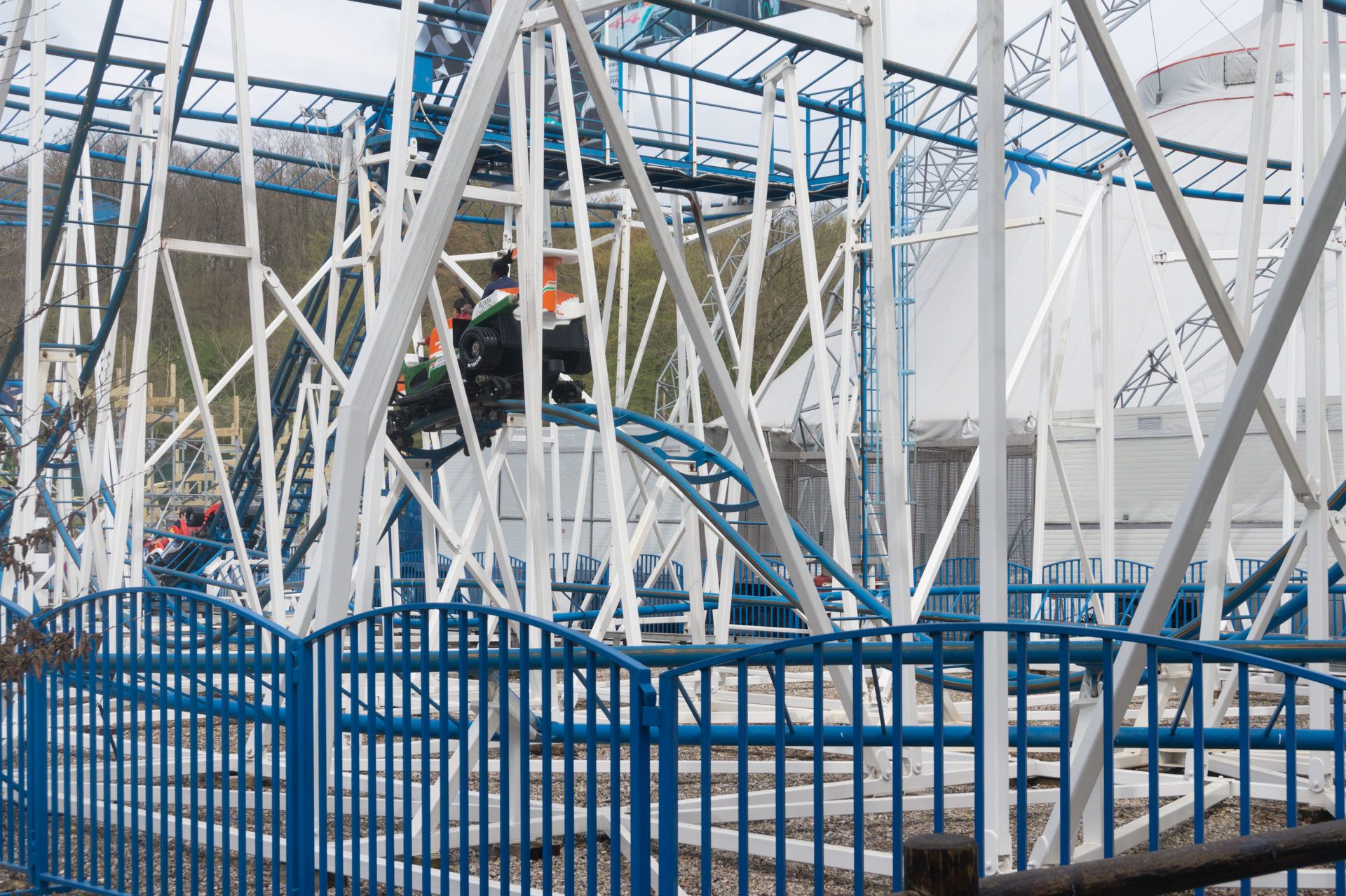
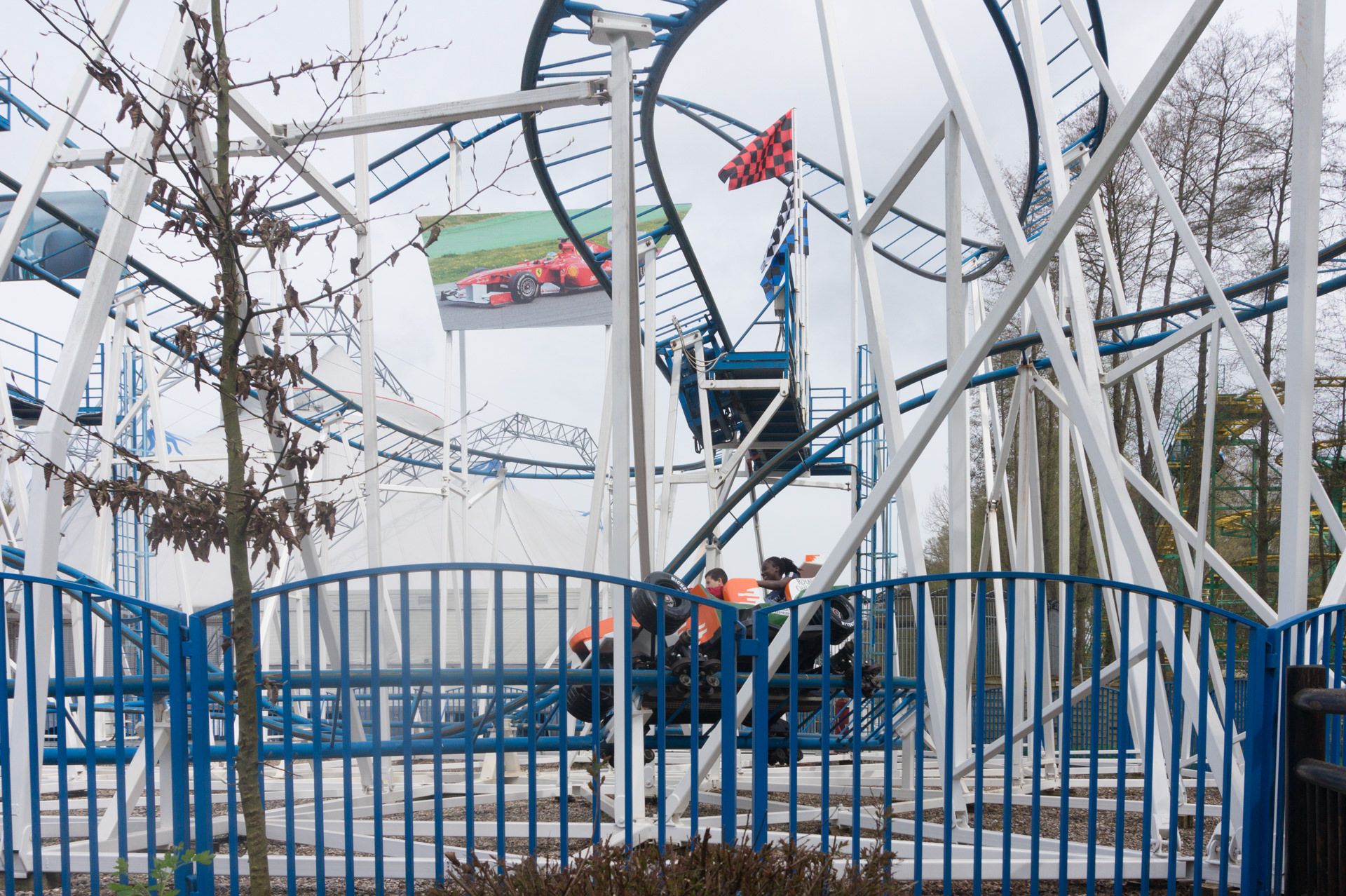
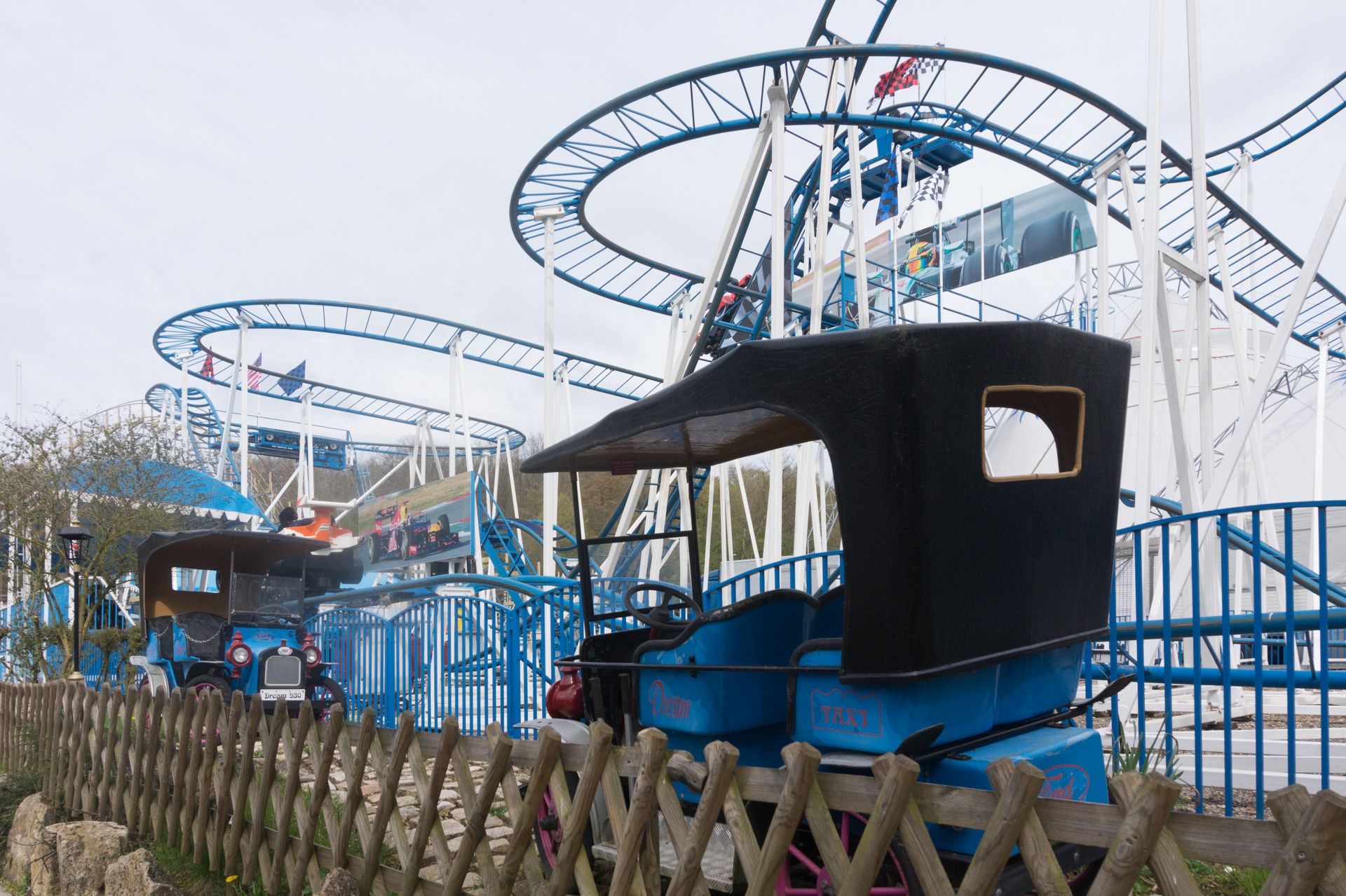
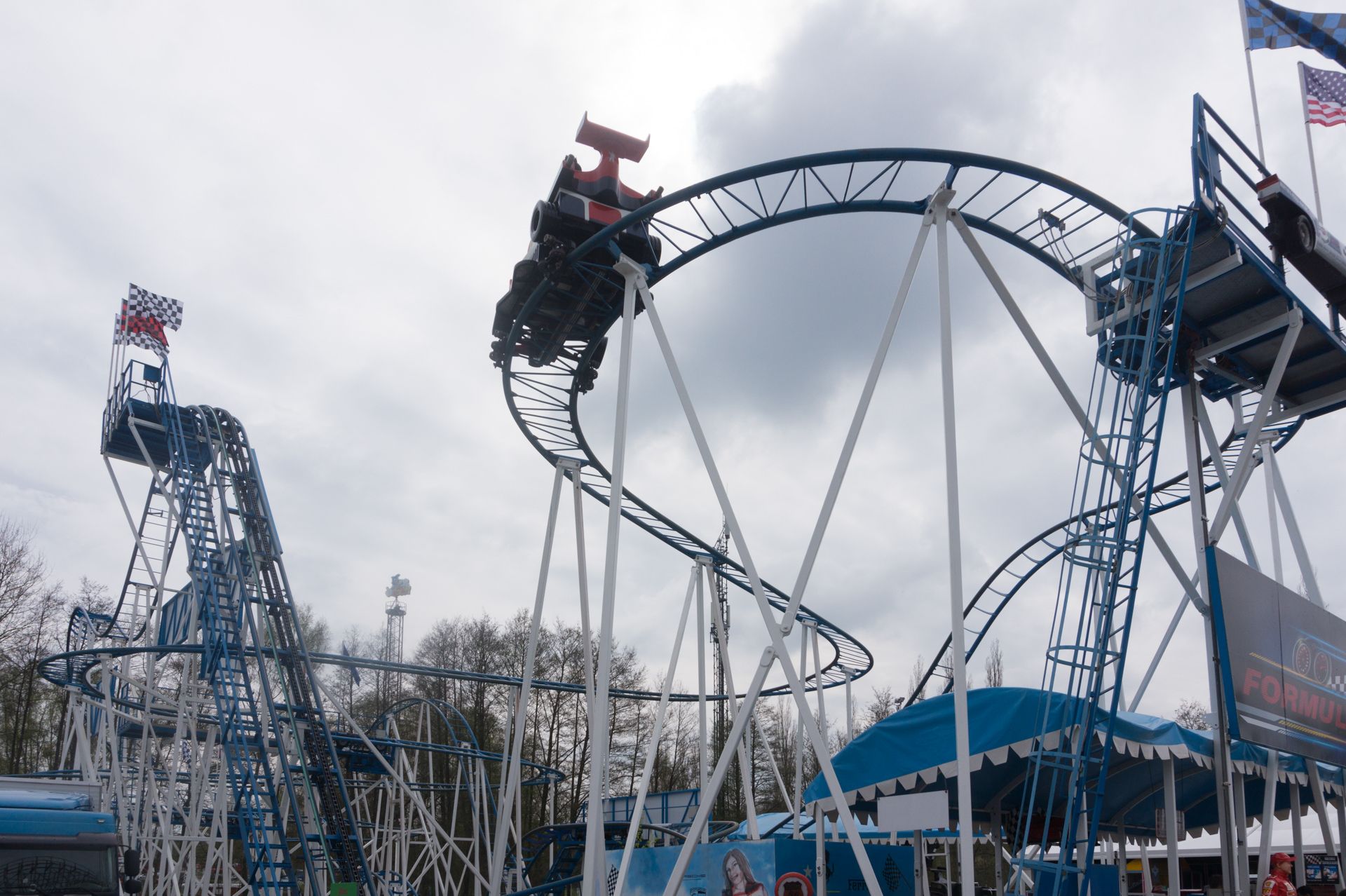
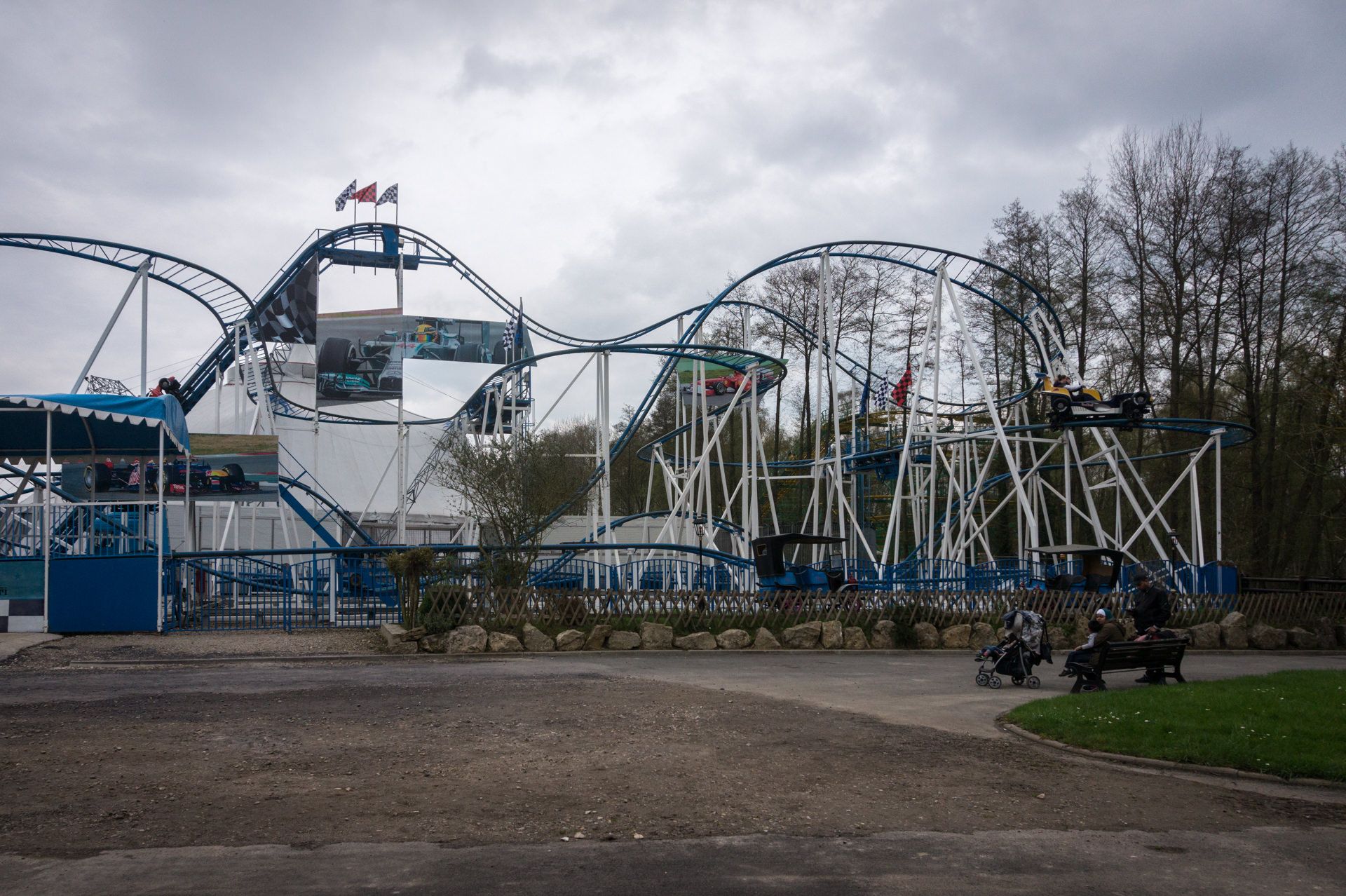
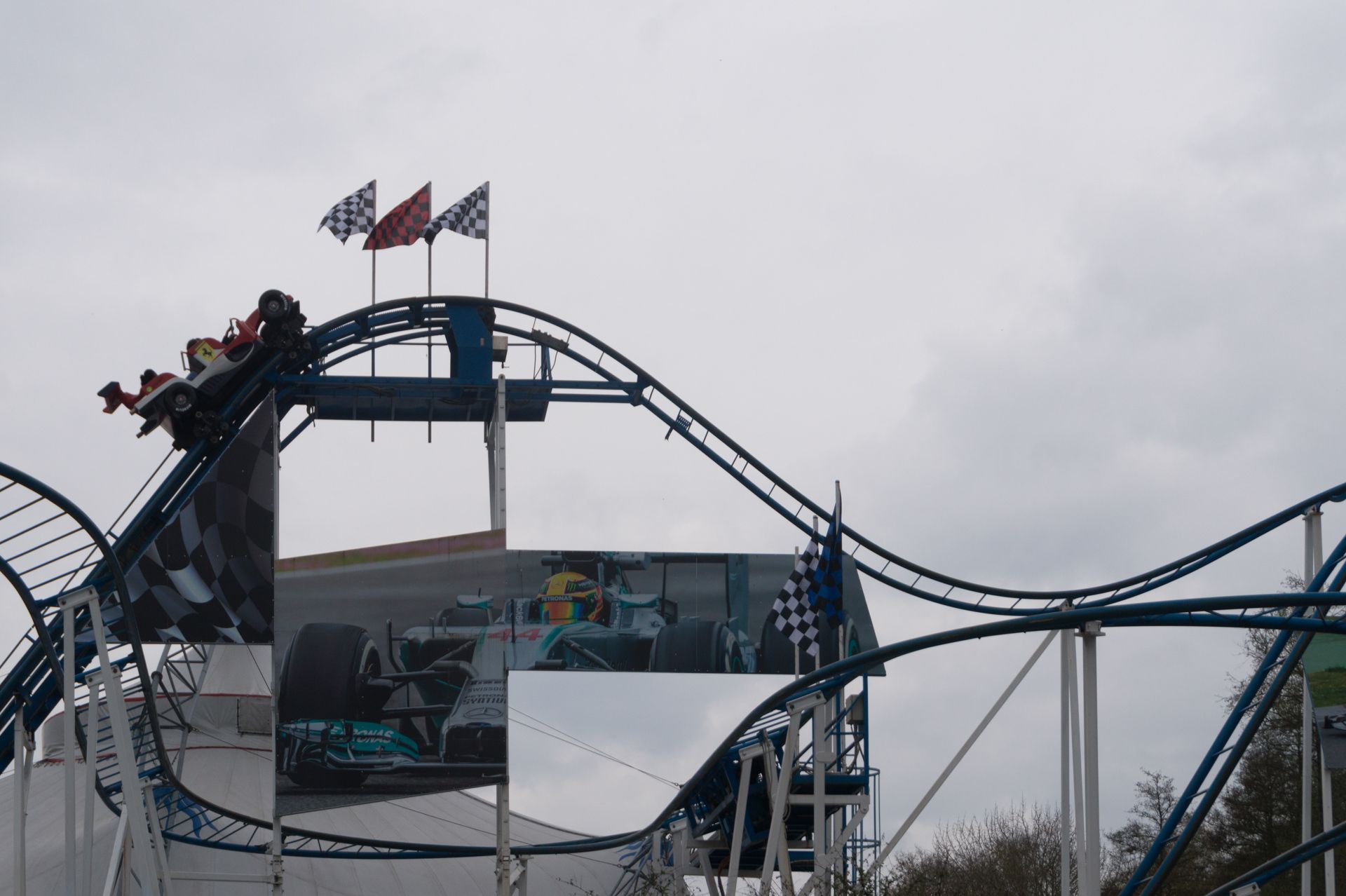
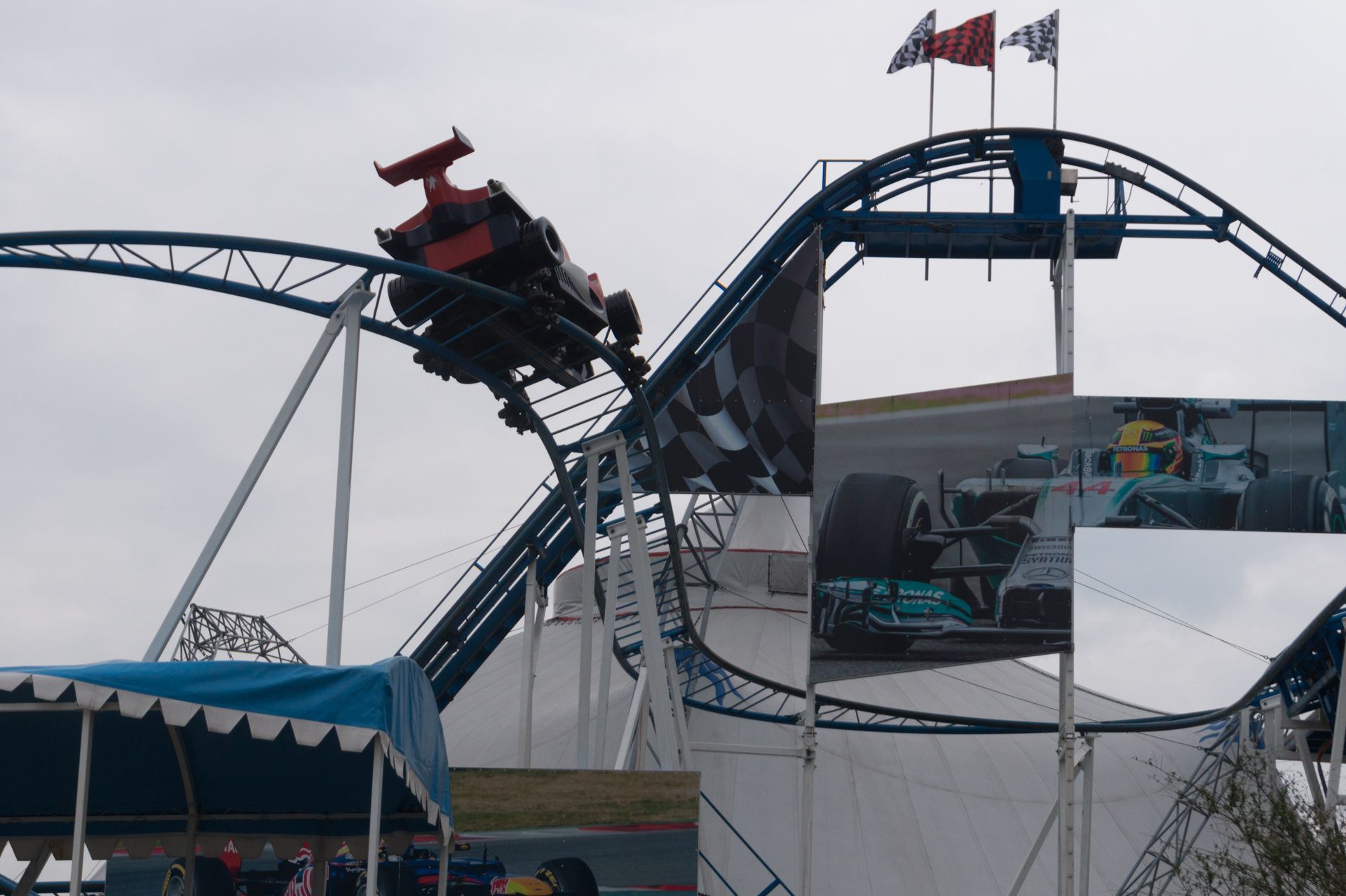
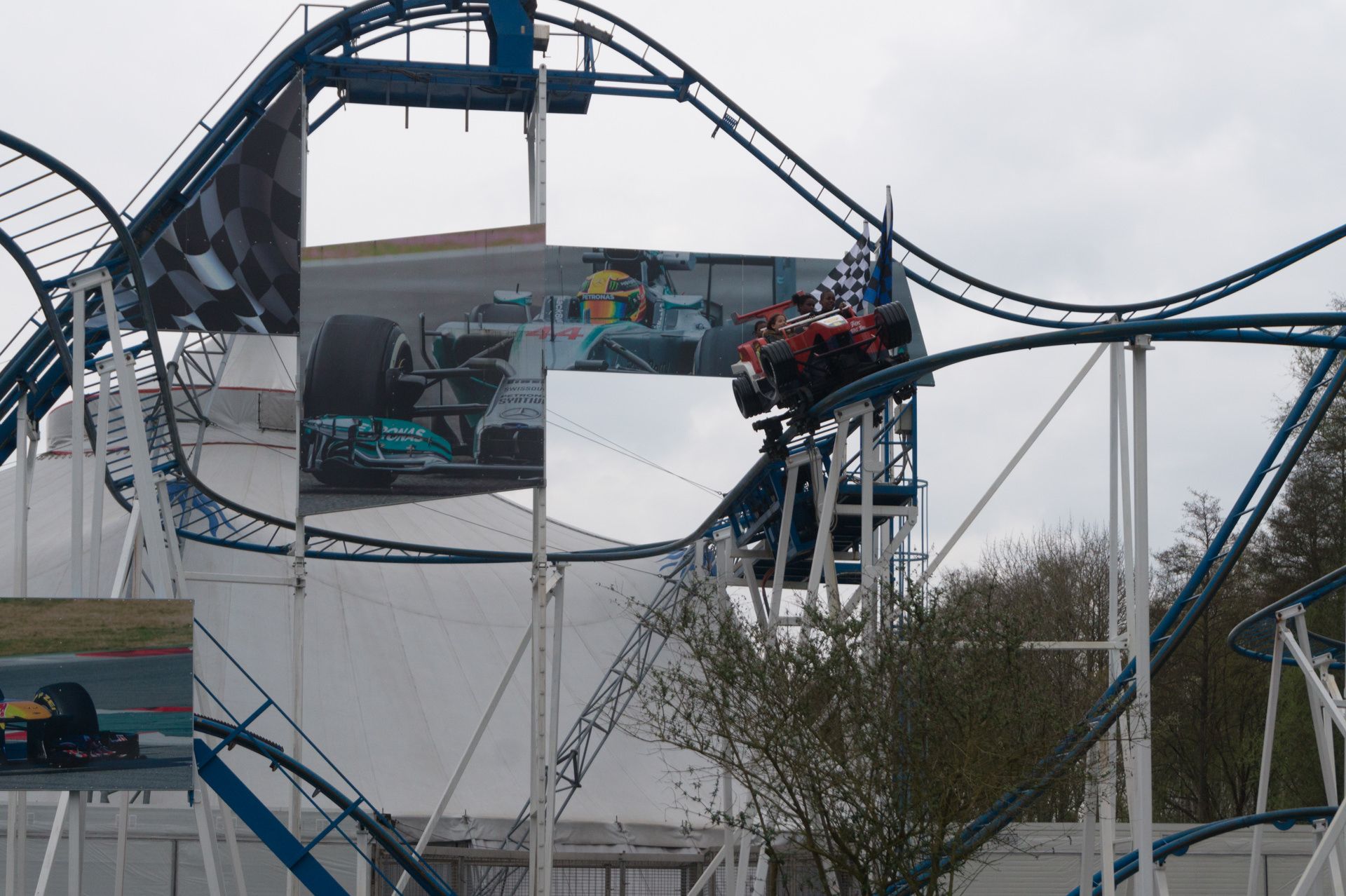
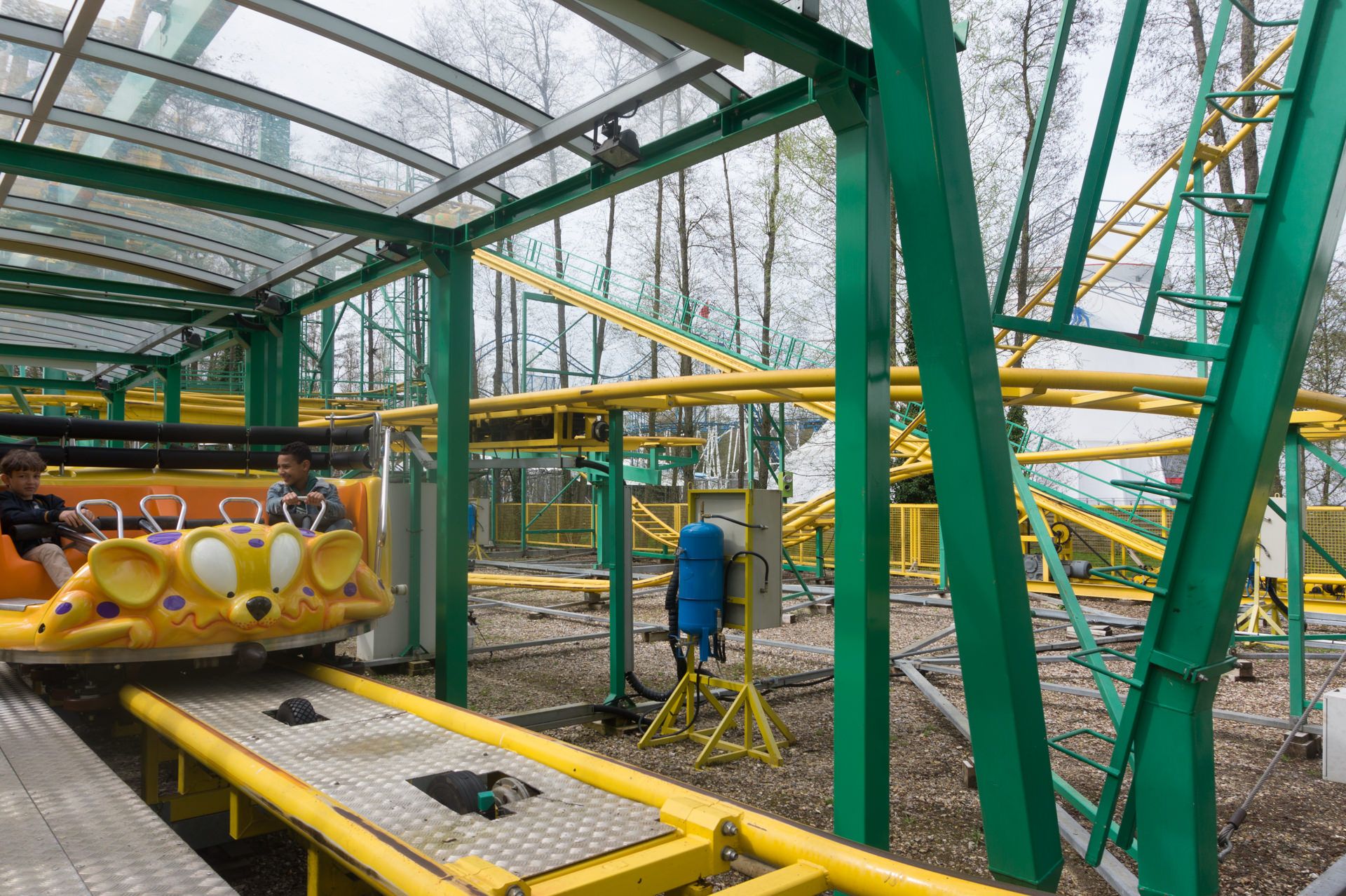
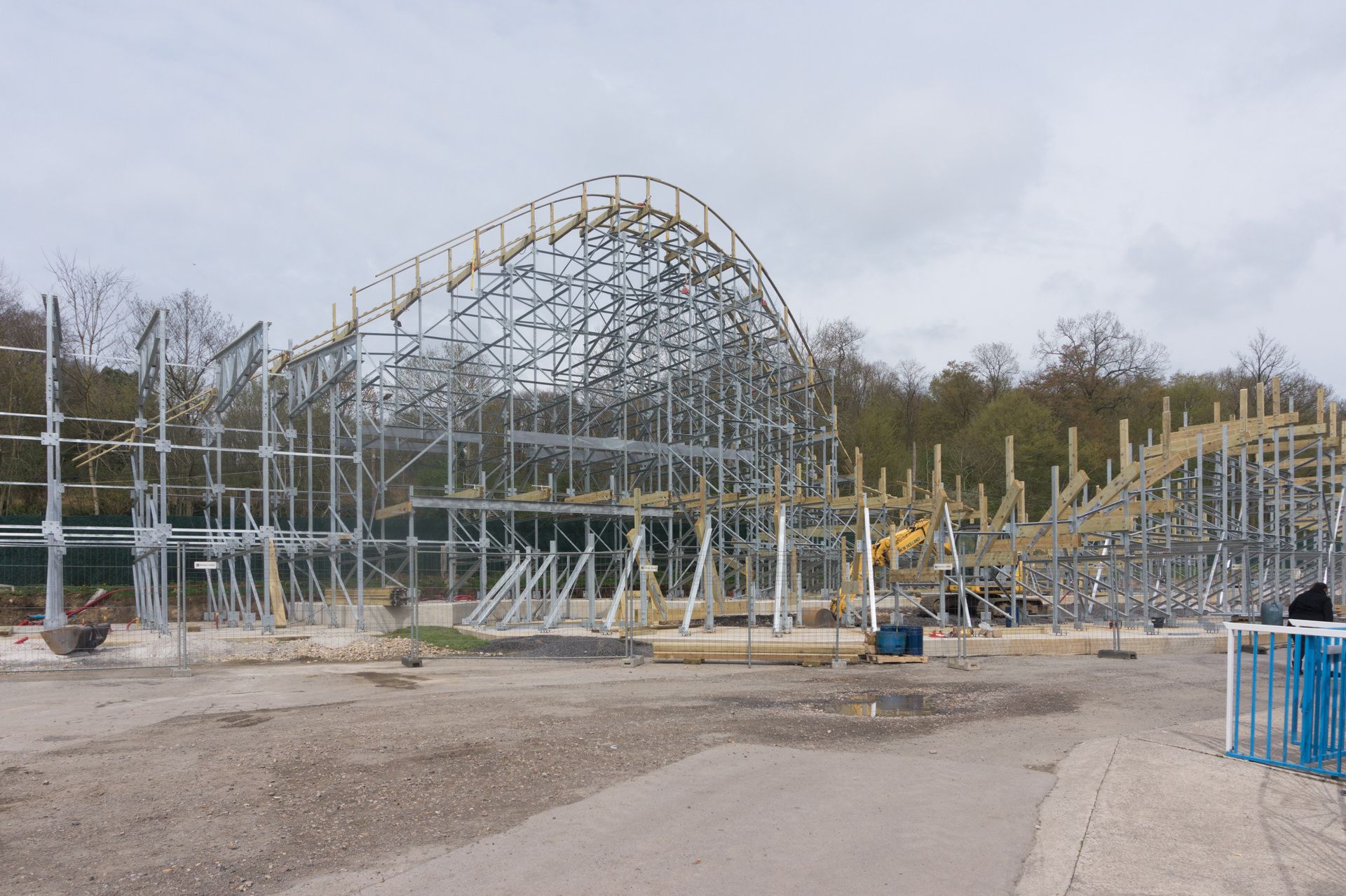
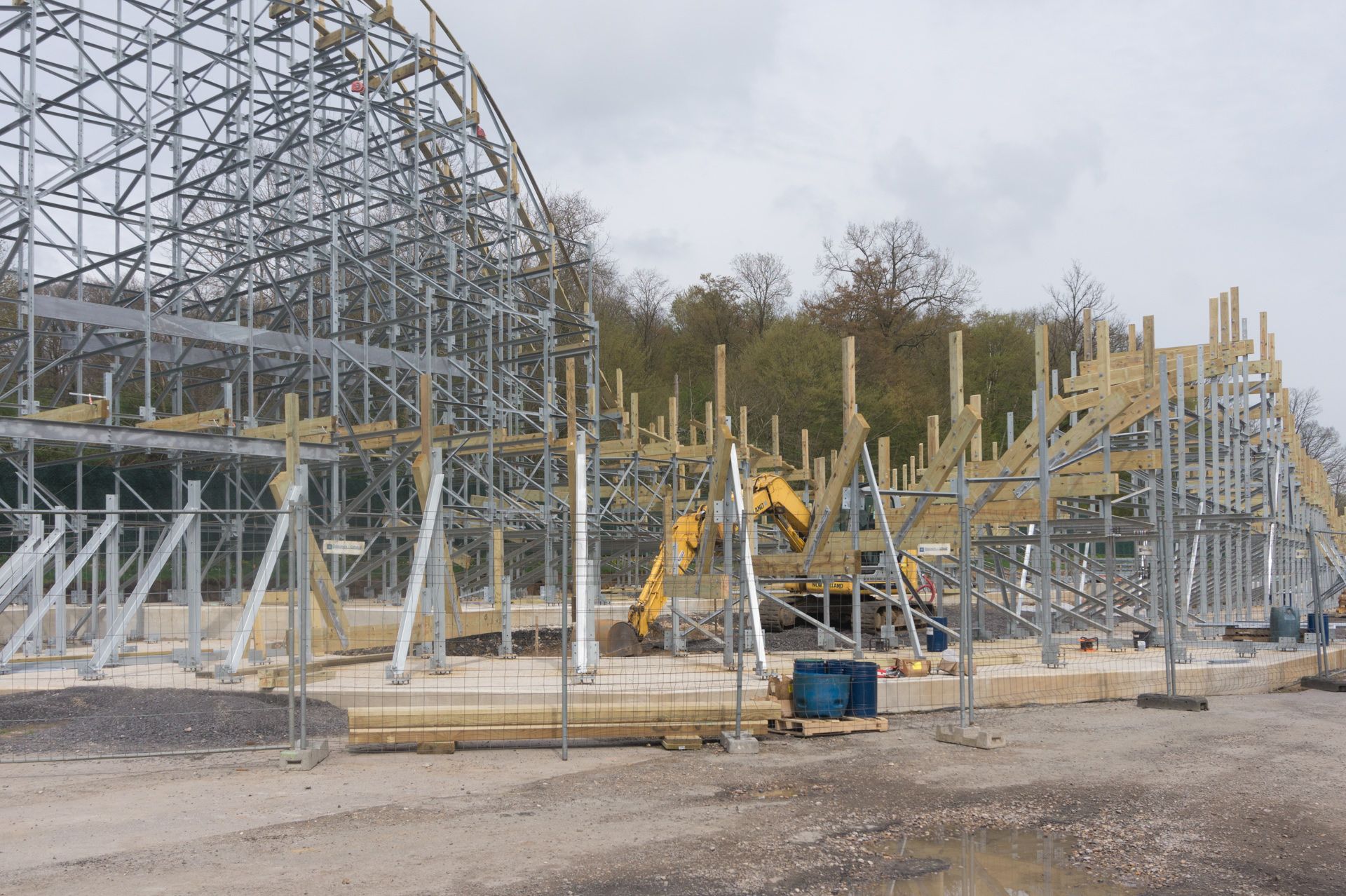
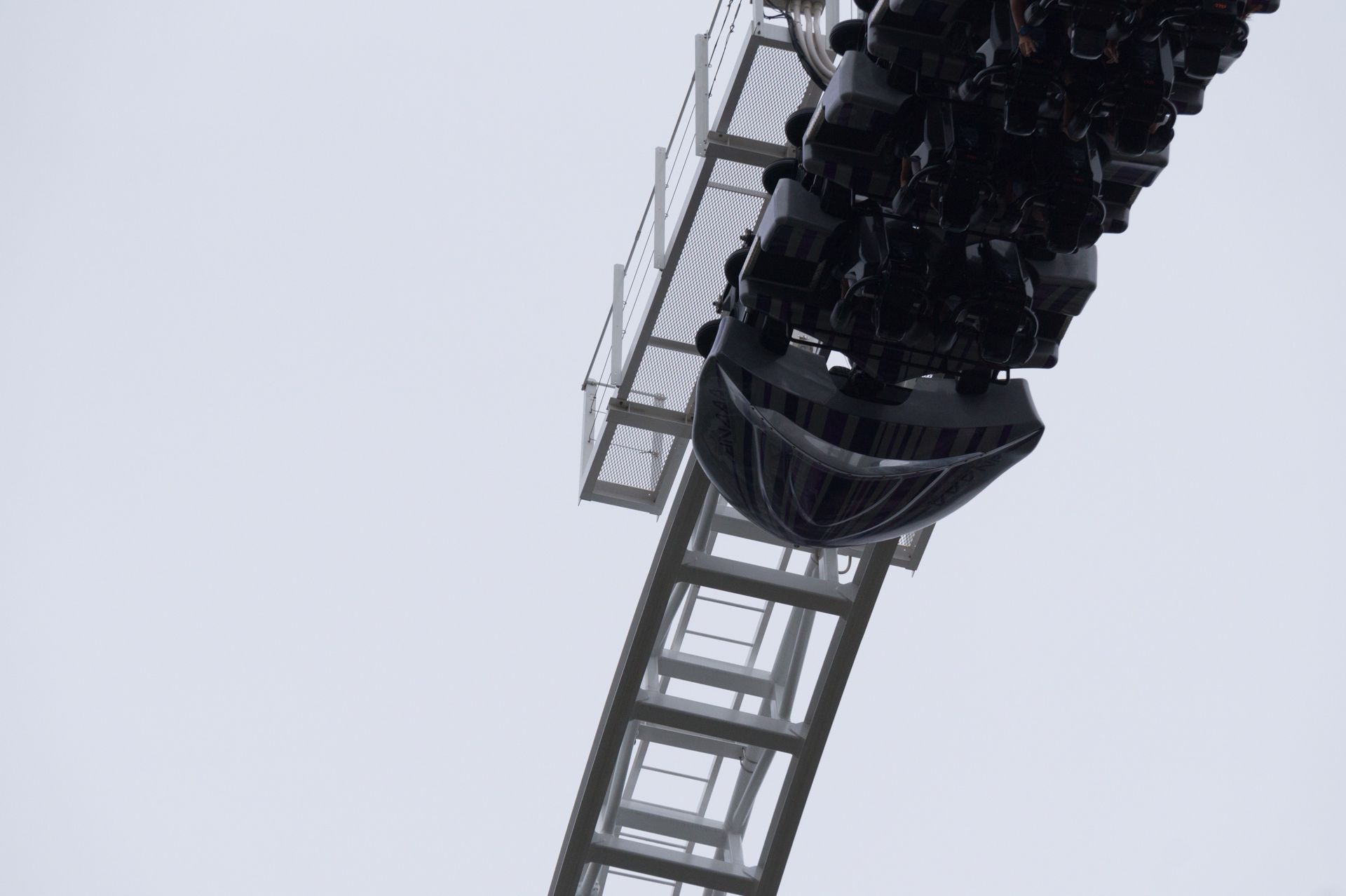
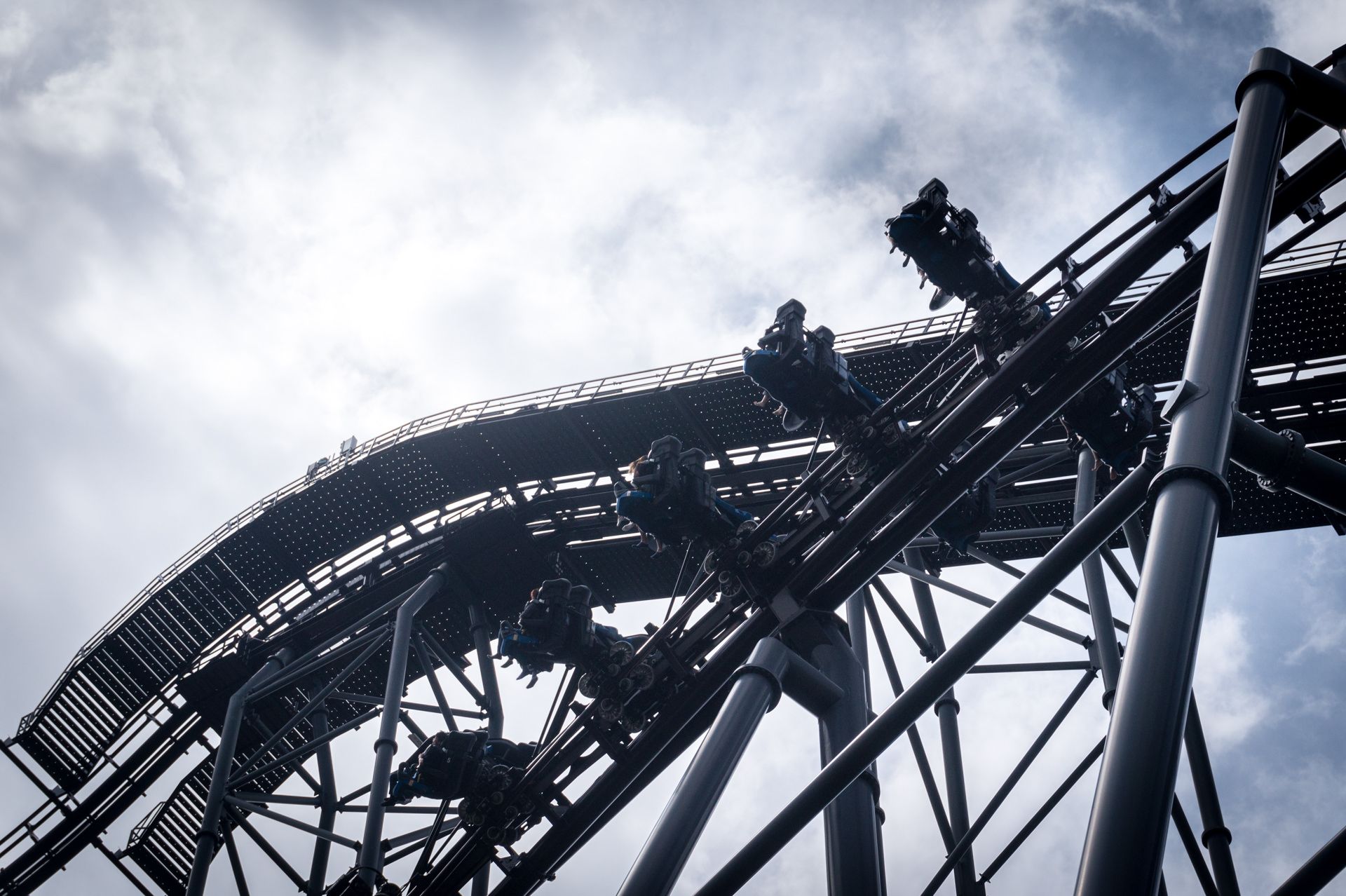
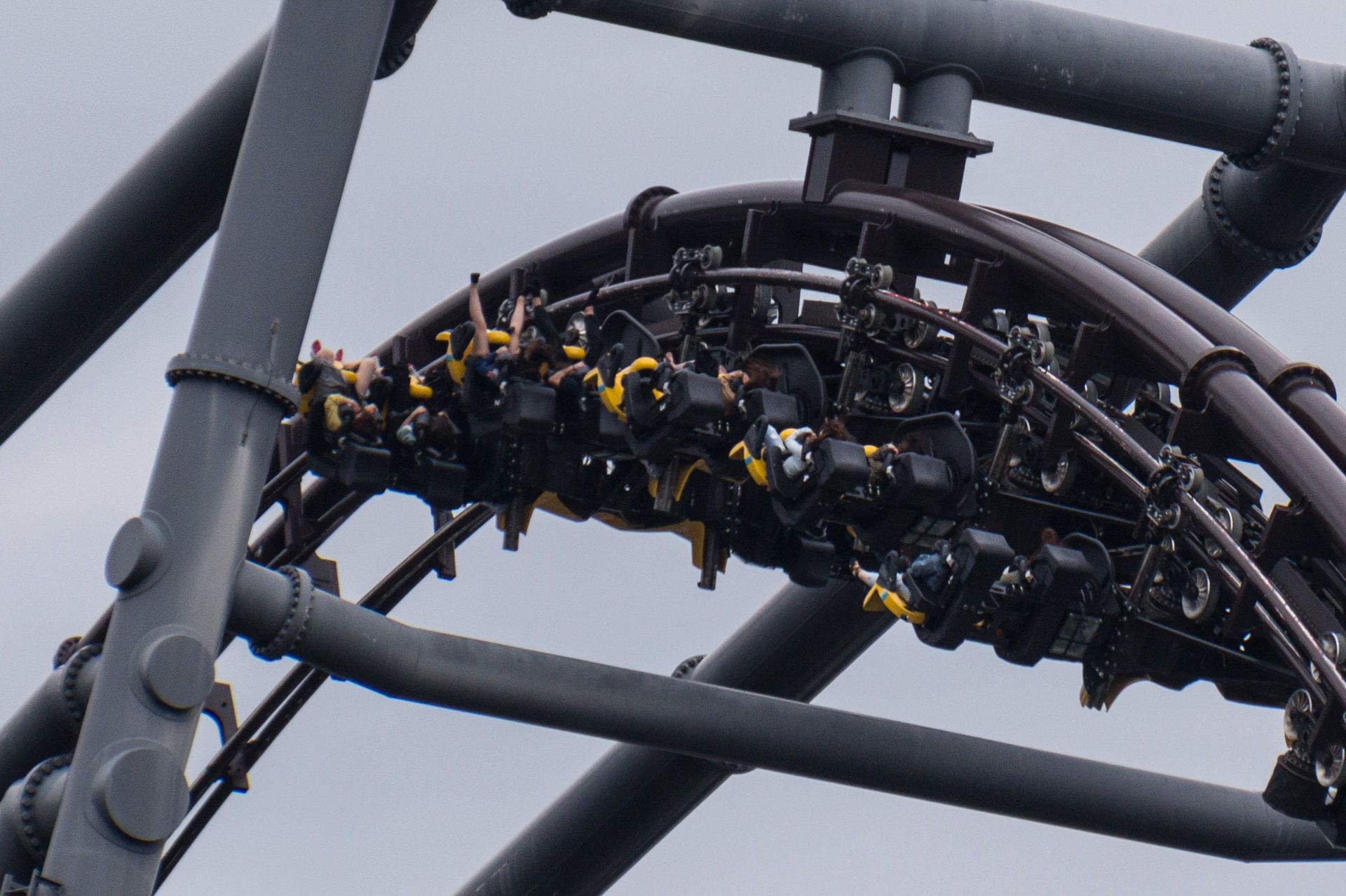
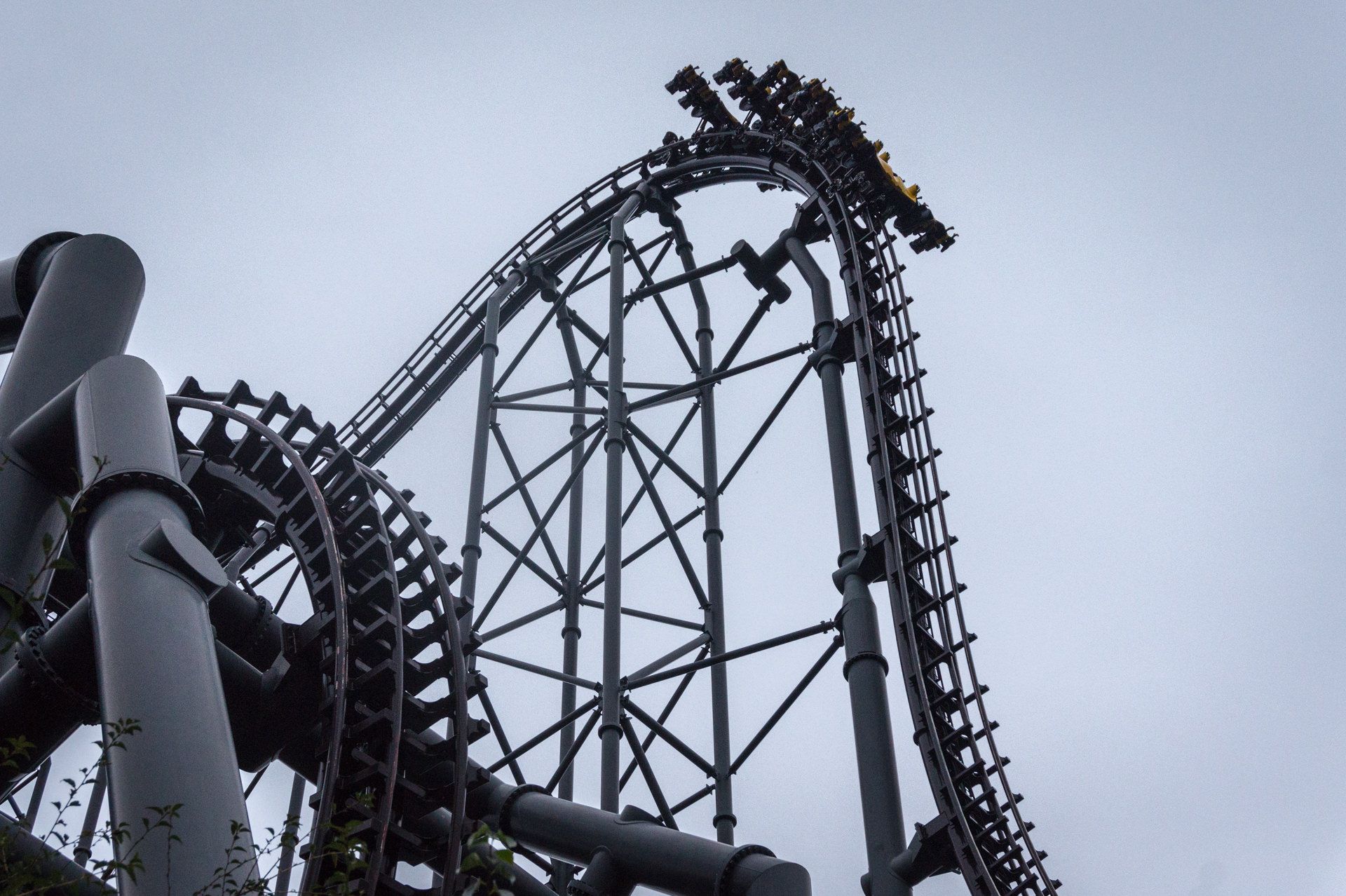
The inclined track of Formule 1

Parc Saint Paul

The origin of the Parc Saint Paul theme park dates back to 1978 when a small excursion destination with pony rides, boat hire and a restaurant was created on the outskirts of the village of Saint-Paul. Five years later the showman André Campion bought the site. He put a good twenty rides in the park and christened it by its now well-known name. In 1999 his son Gilles Campion took over the business. He then developed the park into a theme park. Where previously you could enter the park for free and had to pay for individual attractions, henceforth there was a uniform admission price. In the following year the Wild Train, the park’s first roller coaster, was launched. Since then, the amusement park has been characterised by an interesting selection of rides without neglecting its main target group: families with small children.

On the way to the entrance we already notice a number of children’s carousels and family-friendly rides. Most of these are from the SBF Visa Group and are of recent production. But the real attraction in this area is the staff, who not only control the entrance, but who are also available for photos. In the beginning I thought the staff was on stilts, but I was surprised to meet 2m20 tall people. One of them is Monsieur Brahim Takioullah, with 2m46 the second largest person in the world.

Aérotrain

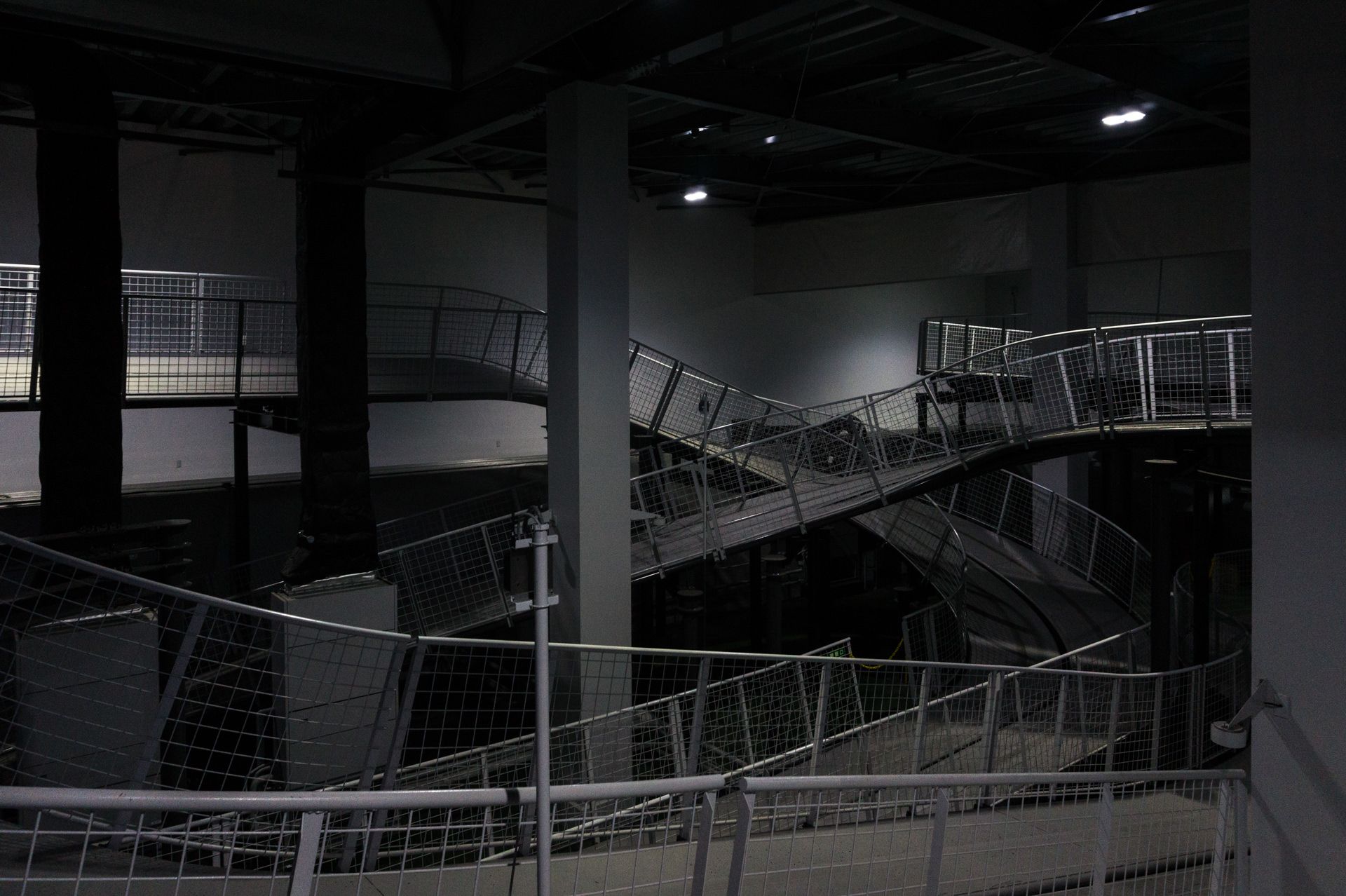
The first roller coaster on our round course is the Aérotrain. This roller coaster from Vekoma was previously located in a shopping centre in Portugal, where it was operated as Montanha Russa until 2013. Thanks to its location and the resulting course above the visitors, the coaster is quite high. Fortunately, Gilles Campion was looking for a kind of monorail for the Parc Saint Paul, so that it could also be viewed from above, when Cedeal Rides presented him with this used ride as a proposal.

The ride on the Aérotrain begins with a short left-hand bend where the friction wheel lift joins the ride. Once you reach a height of 11m, you descend immediately. The short descent immediately changes into a left-hand bend followed by a right-hand helix. Over a very long left-hand bend we slowly increase in height again, before we reduce it again in another helix. After a longer straight line there is only a short left turn before we reach the station again. Another lap follows before the ride ends.

Even if the Aérotrain is not as fast as the air-cushion train that gave it its name, the ride is a thoroughly enjoyable experience. The ride is generally shallower than most roller skaters, making it an ideal entry-level roller coaster for the smallest park guests.

Arche de Noé

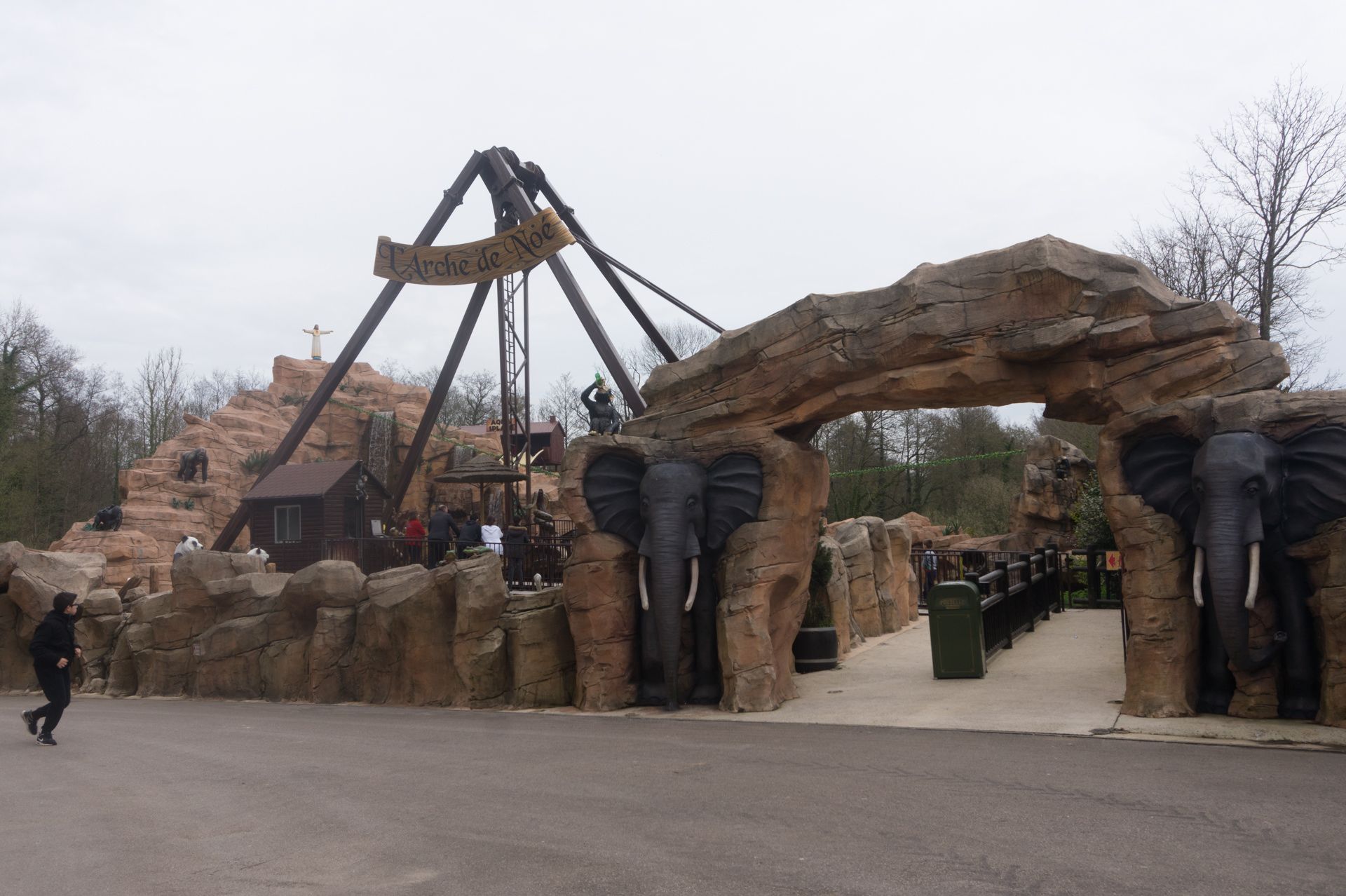
The Arche de Noé, a swing boat made by Metallbau Emmeln, is a little more exciting. This was designed to match the theme, which is why you can discover numerous animal sculptures on and around the ride. The ride itself is also very convincing with its smaller airtime moments.

Aqua Splash

Just as convincing is the Aqua Splash dinghy slide from the same manufacturer right next door. Meanwhile, we follow the path along the large lake, where some of the park’s pedal boats and the Mississippi steamship are located. Passing numerous playgrounds and a trampoline hall we reach the second roller coaster on our loop.

Mini-Mouse Cartoon

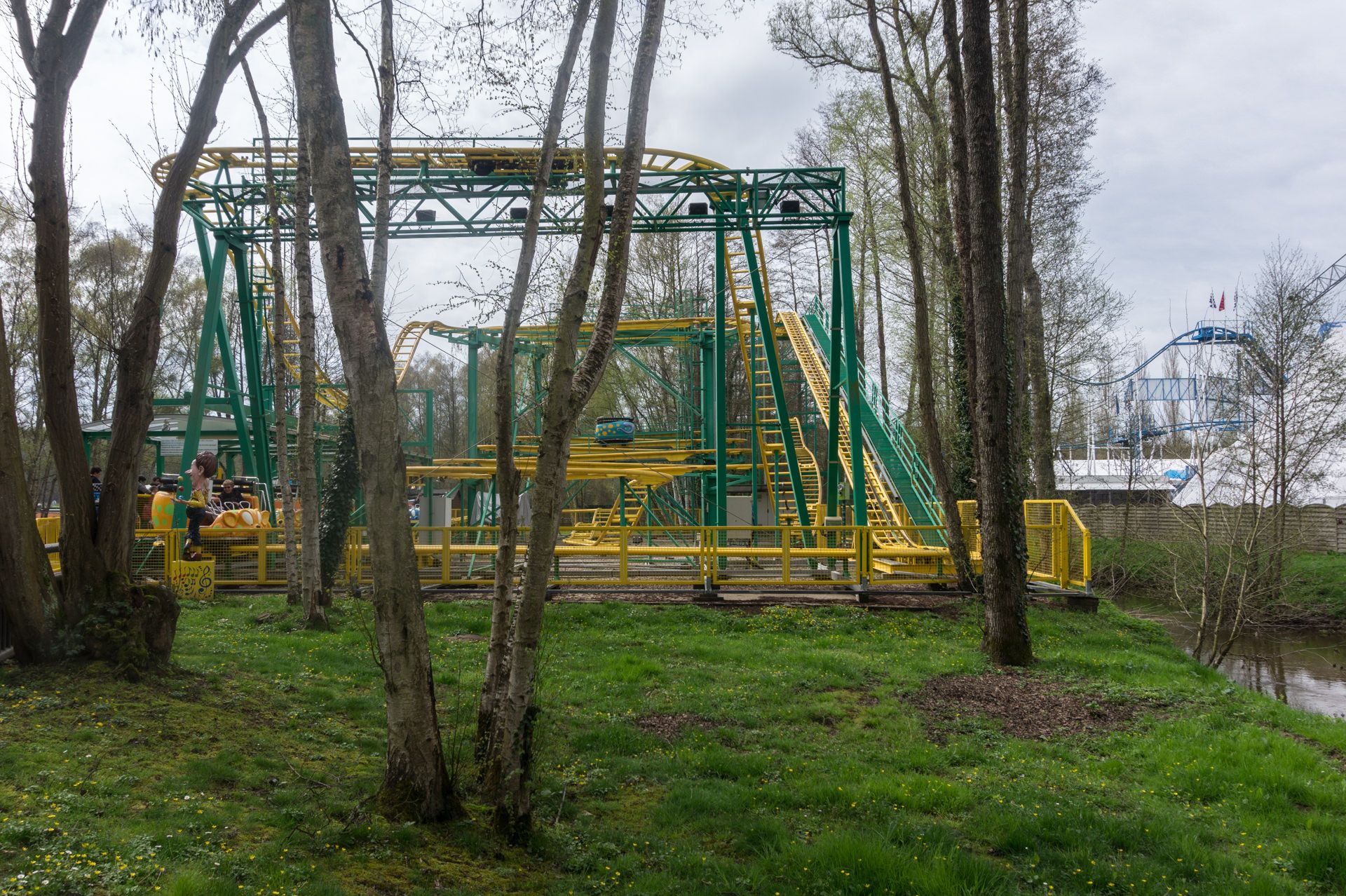
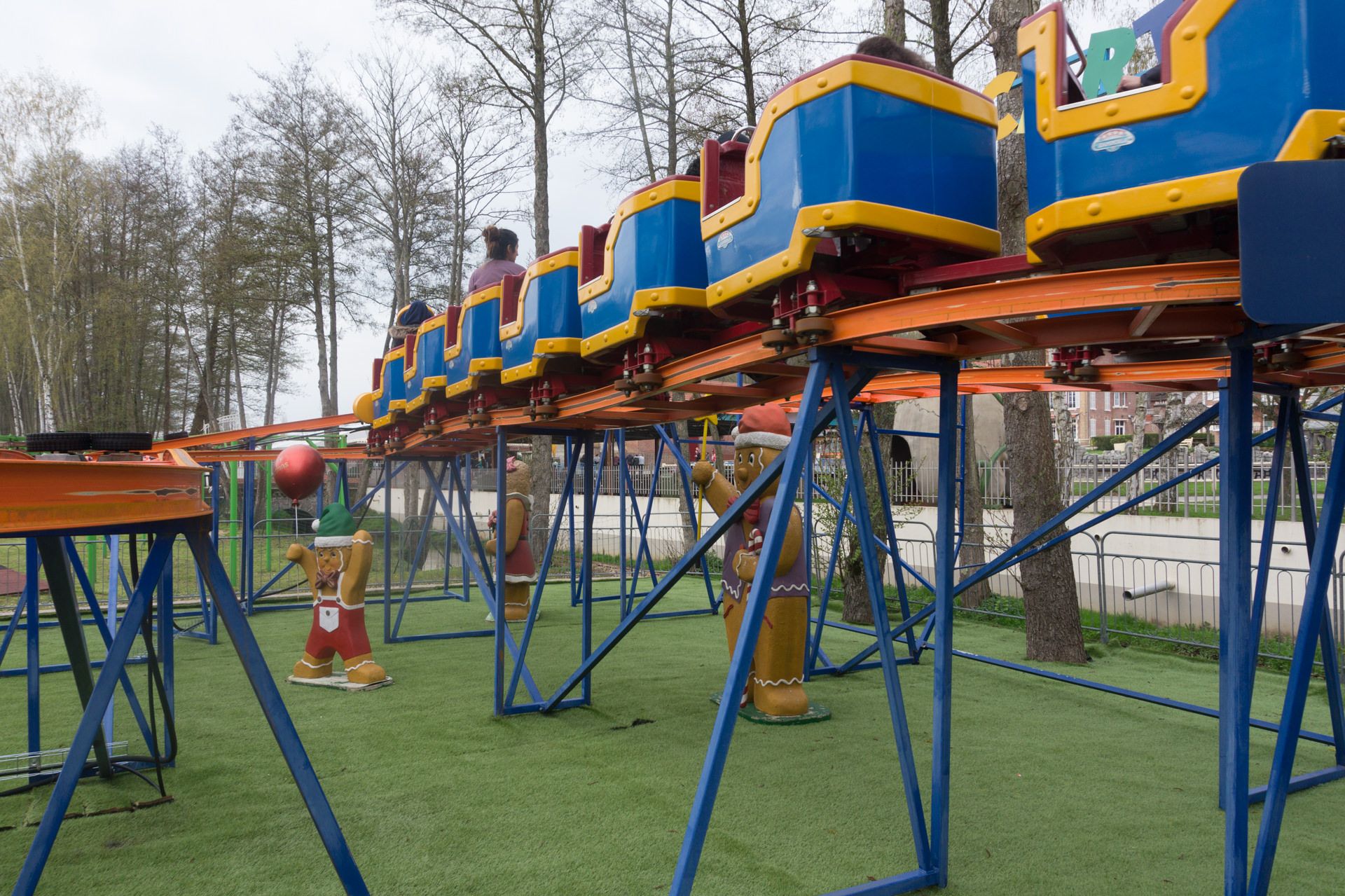
Mini-Mouse Cartoon is a very family-friendly roller coaster where a train is pushed through a series of hairpin curves. On the connecting straights there are also smaller hills, similar to those of a Wacky Worms, which loosen up the ride a bit. The ride itself, however, is very gentle. Depending on the rush you make several laps through the layout.

Téléphérique

Right next door is the Téléphérique, a seemingly harmless rail-guided cable car. But appearances are deceptive, because if you have had the idea of riding the ride with a backpack on your back, the centrifugal forces take over and you have to hold on tightly to avoid falling down. A very interesting play equipment and an even more interesting grey zone count.

Maison Foldingue

After I missed the Crazy House built by Preston & Barbieri in the Japanese amusement park Yomiuriland and in the Italian Mirabilandia due to a lack of language skills, I could finally test this bizarre ride. But the jokes and special effects of the Maison Foldingue are not really worth mentioning, as well as the ride’s sequence. A bizarre idea that will certainly go down well with children.

Souris Verte

Just like the children’s song of the Souris Verte. In the Parc Saint Paul, however, the green mouse embodies a spinning coaster made by Zamperla. Unfortunately, the ride through the familiar layout does not involve a major rotation of the gondola.

Tour Descente Extrême

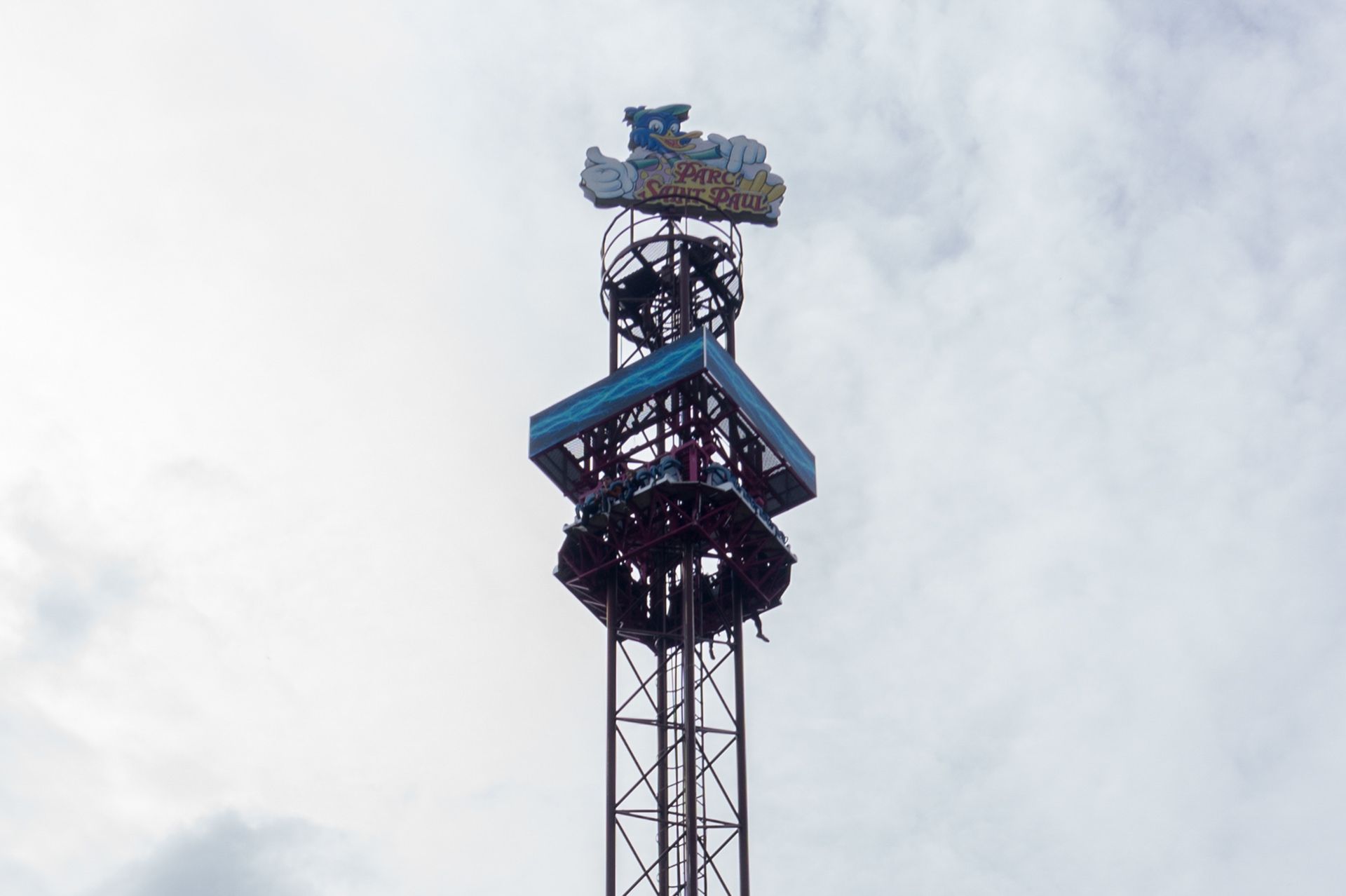
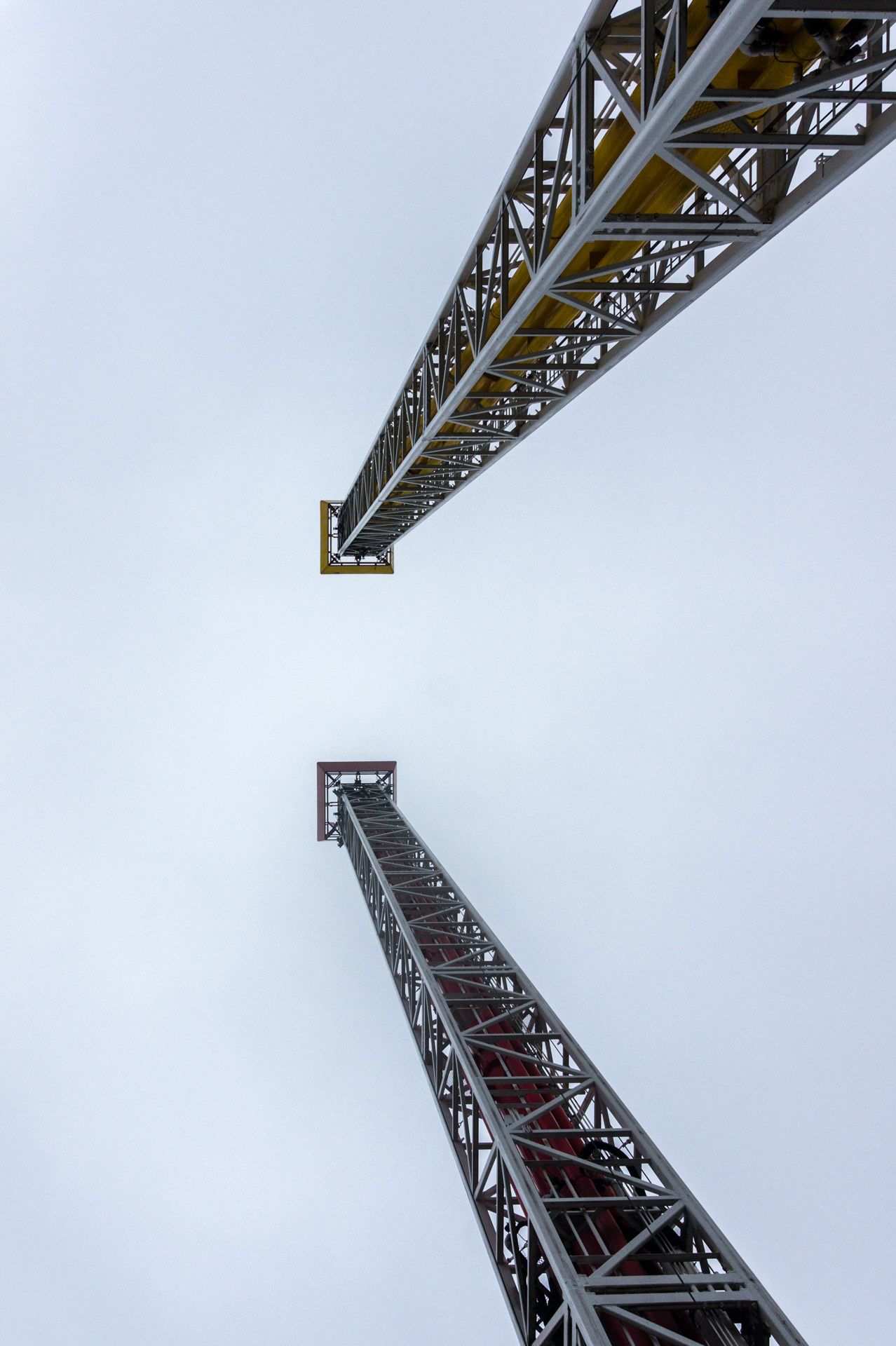
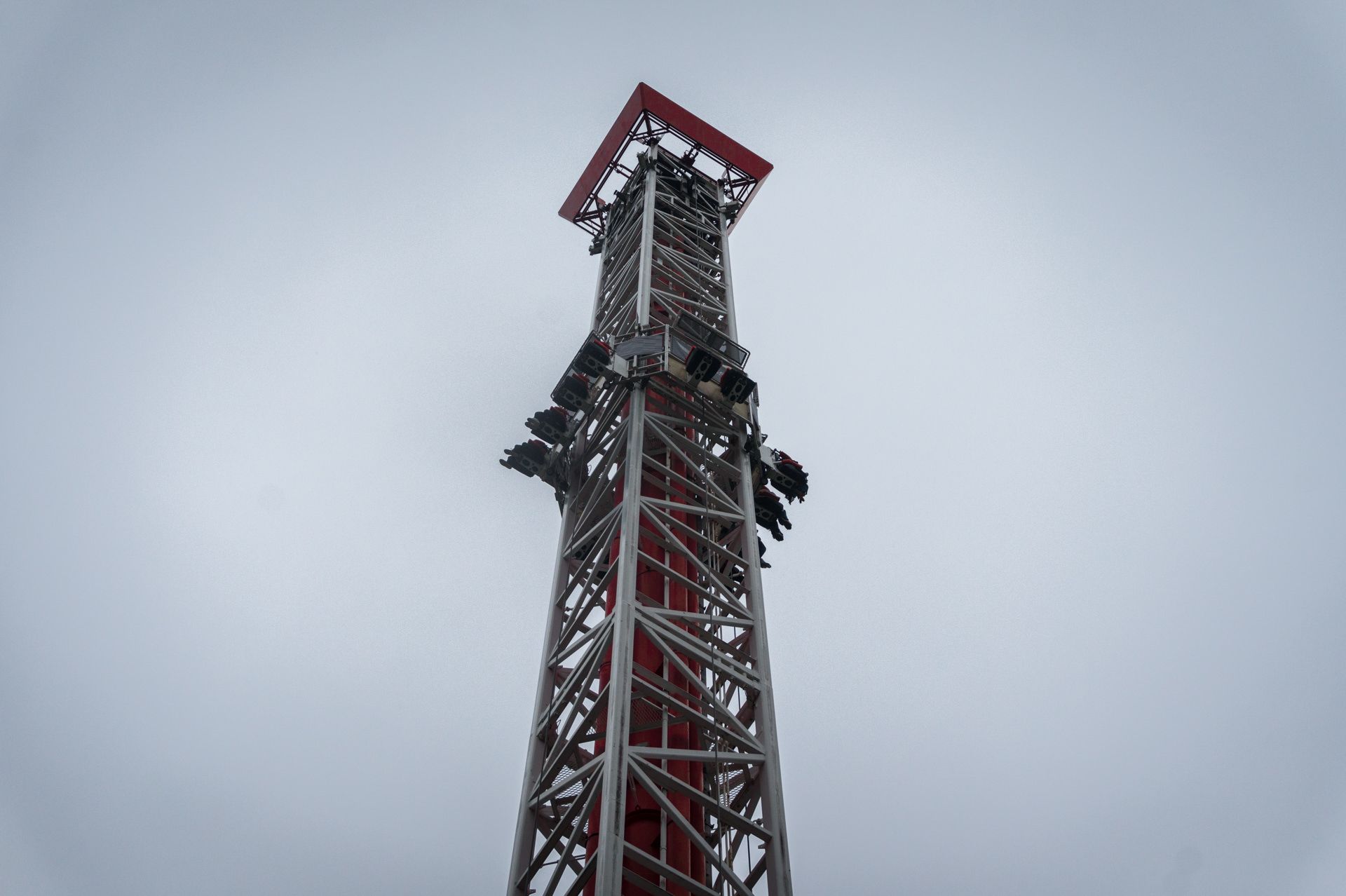
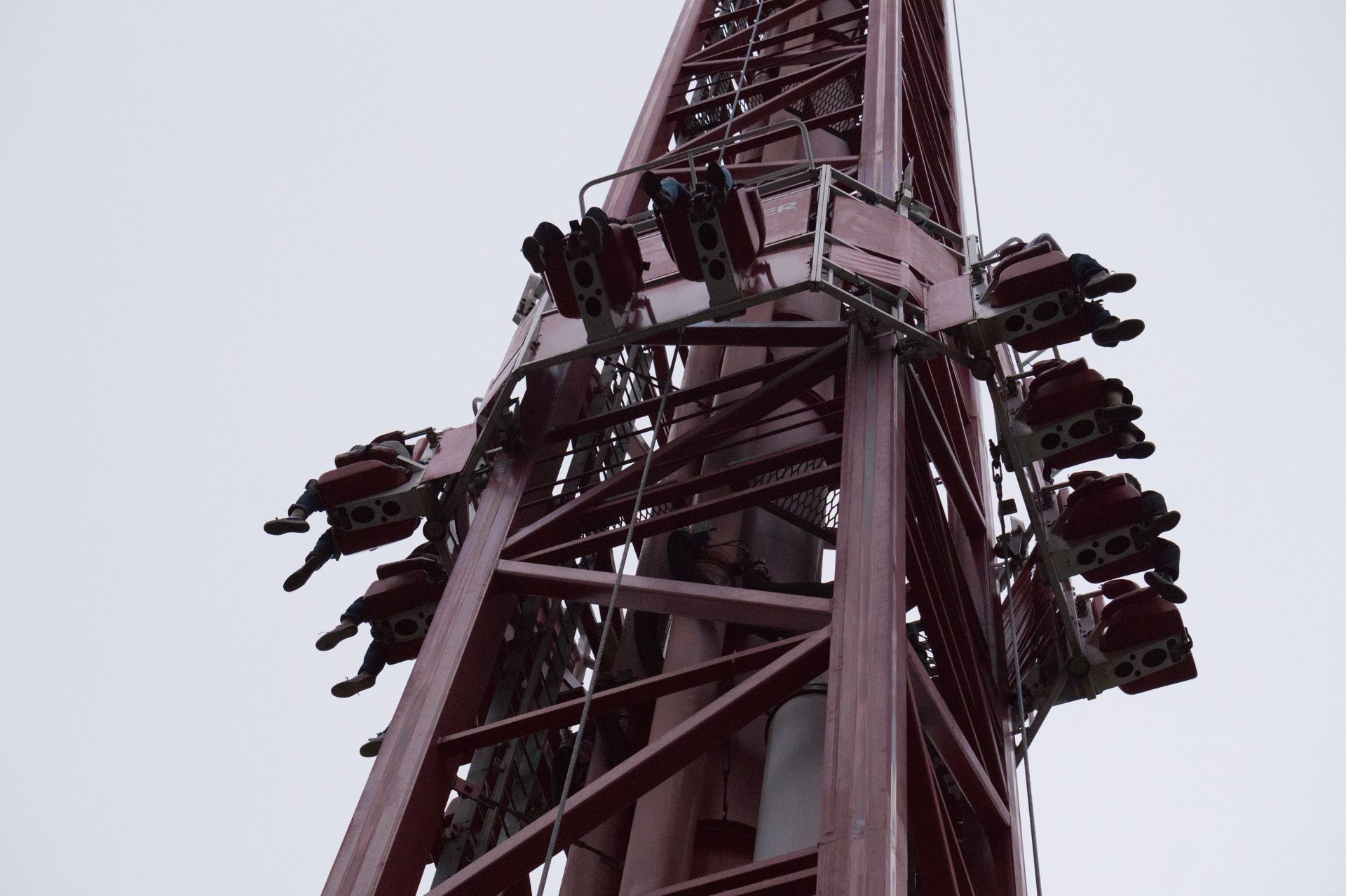
Since the Wild Train roller coaster lacked the train, I unfortunately could not test this roller coaster. But next door there is another product of the former Russian company Pax, the Tour Descente Extrême, which was just waiting to be tested. The 40m high freefall tower offers a very bizarre ride, because before you can fall you are pulled forever through the magnetic brake, which takes up about half of the tower.  Because of this circumstance, the braking is also extremely rough. Ça me plait beaucoup! With the best will in the world I didn’t expect such a fall coming from Pax, it is grandiose. However, the ride itself takes its time, so it’s no wonder that you can’t find so many tower rides made by Pax.

La Pomme

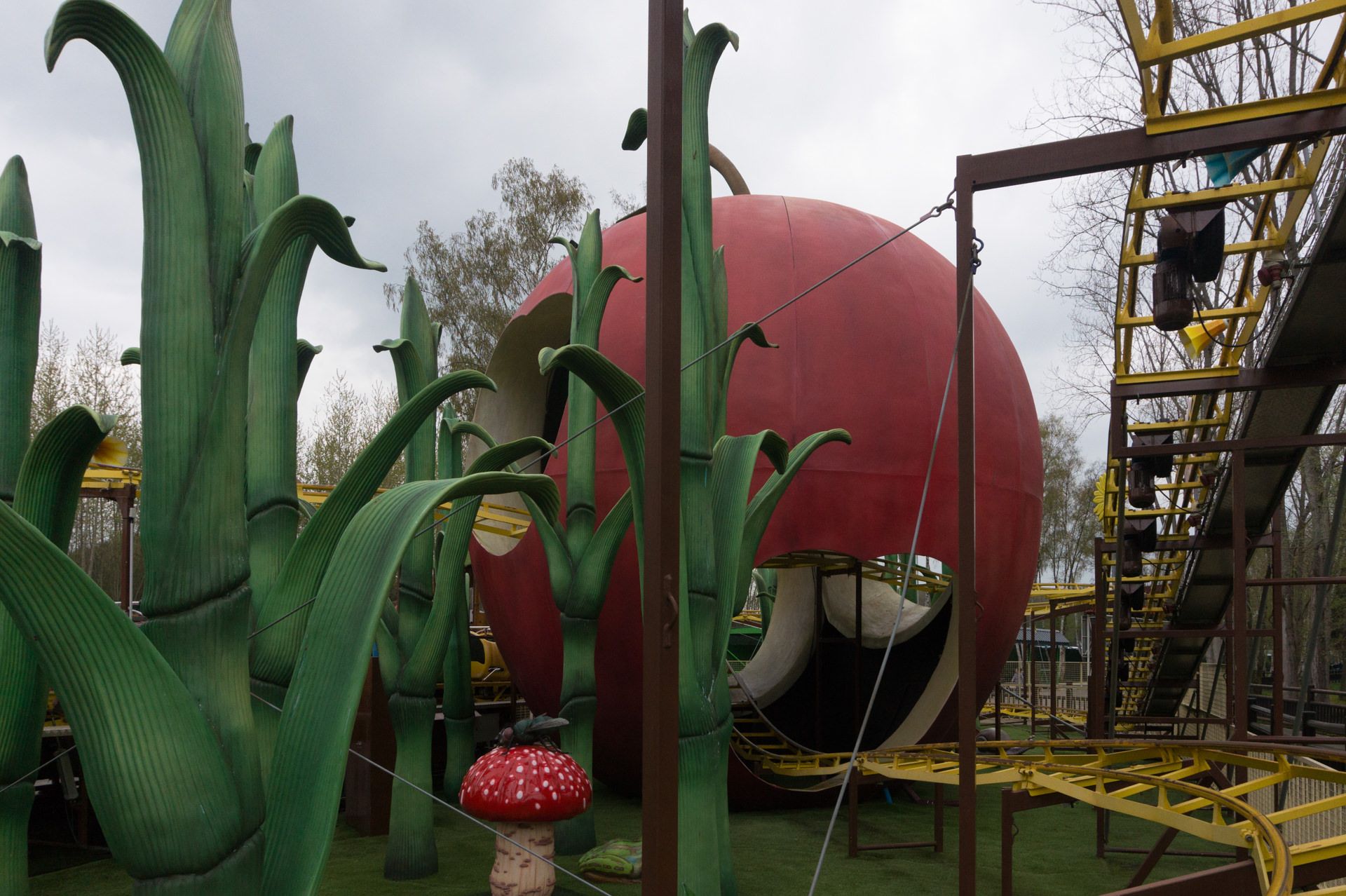
Much more common, however, are roller coasters of the Big Apple type, also known as La Pomme in France. The local one comes from the Turkish company DAL Amusement Rides Company. One of the most striking features of this ride is its very present and inviting decoration, which adds a lot to the ride.

Past the Grande Roue Ferris wheel and the P’tits Lapins, we are now drawn to the rear of the park. In a mansion and its forecourt, we find many shops, the main gastronomy of the Parc Saint Paul, as well as the place of the wave swinger Chaises Aériennes, which was not yet set up at the time of our visit.

Château Hanté, Parcours 3D, Miroirs Magiques and Toi aussi deviens un Géant

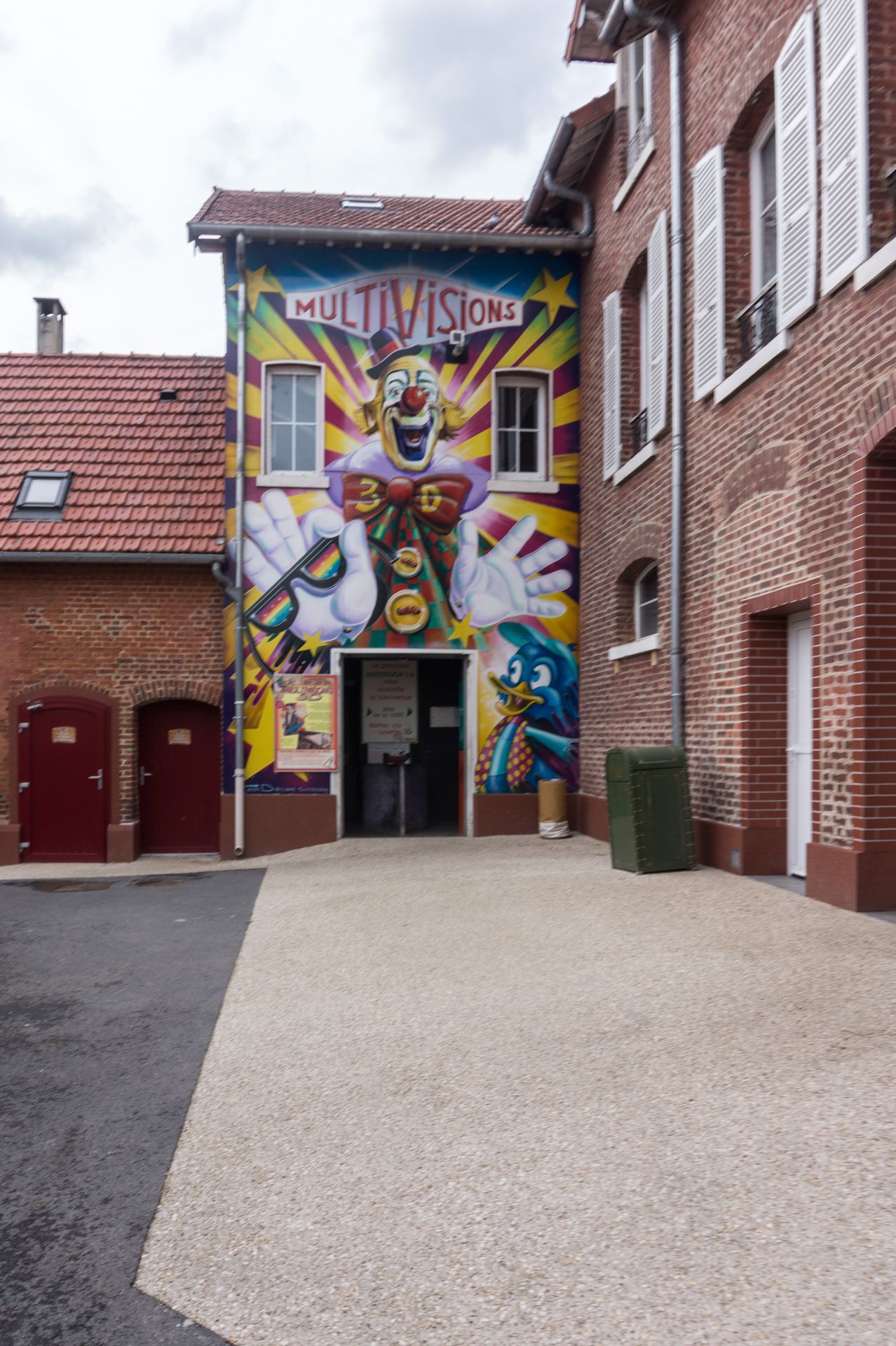
Of the four walkthroughs Château Hanté is the most convincing. With its huge collection of animatronics and absolute darkness it is more frightening than many ghost trains in Germany. The Parcours 3D, on the other hand, is too short to really notice it. The Miroirs Magiques mirror cabinet and the crooked house Toi aussi deviens un Géant complete the offer.

Dino Splash

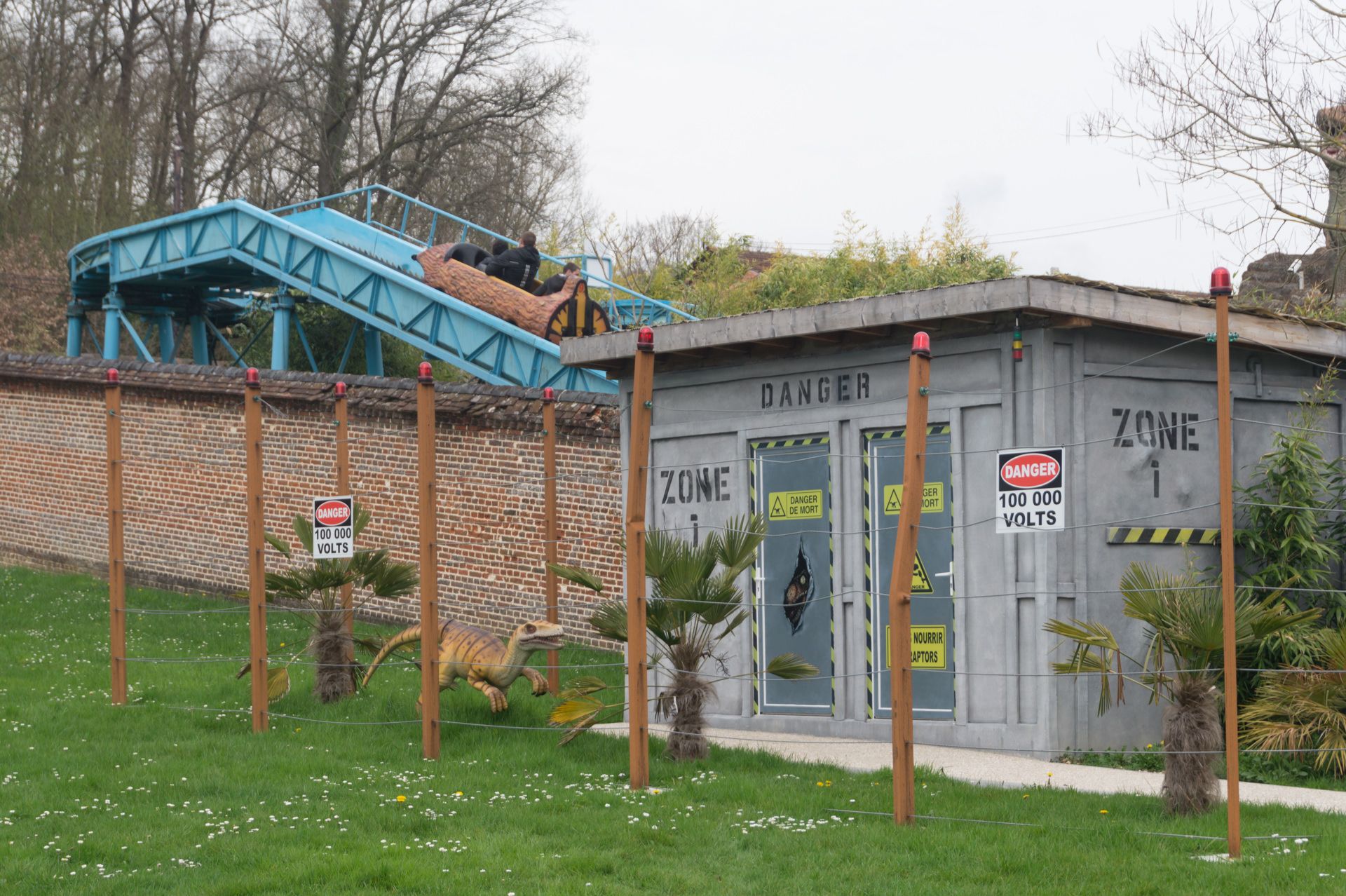
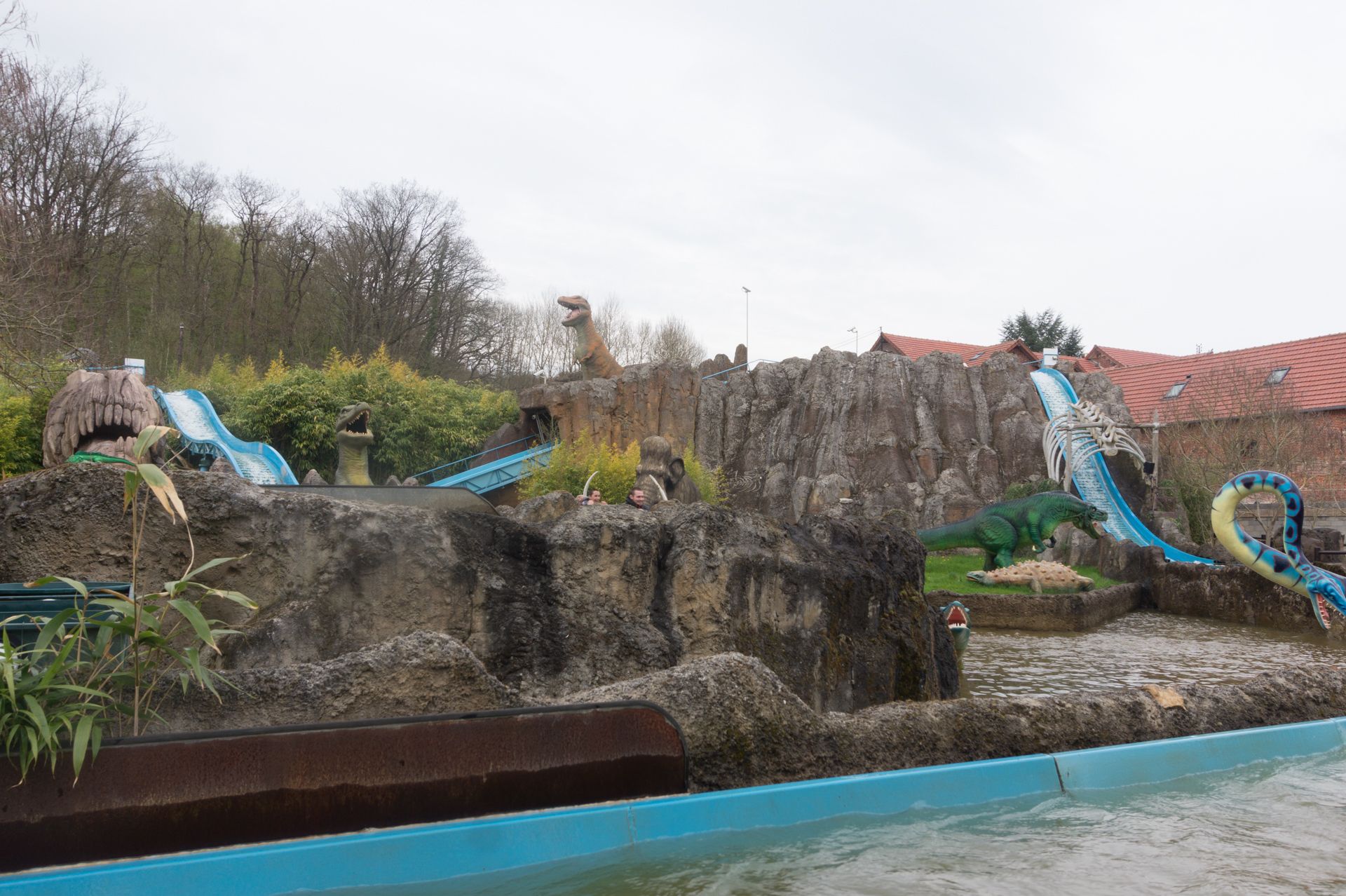
Right next door is the elaborately designed log flume Dino Splash by the manufacturer Interlink. Even the queue of the ride is surprisingly appealing and gives hope for an exciting ride.

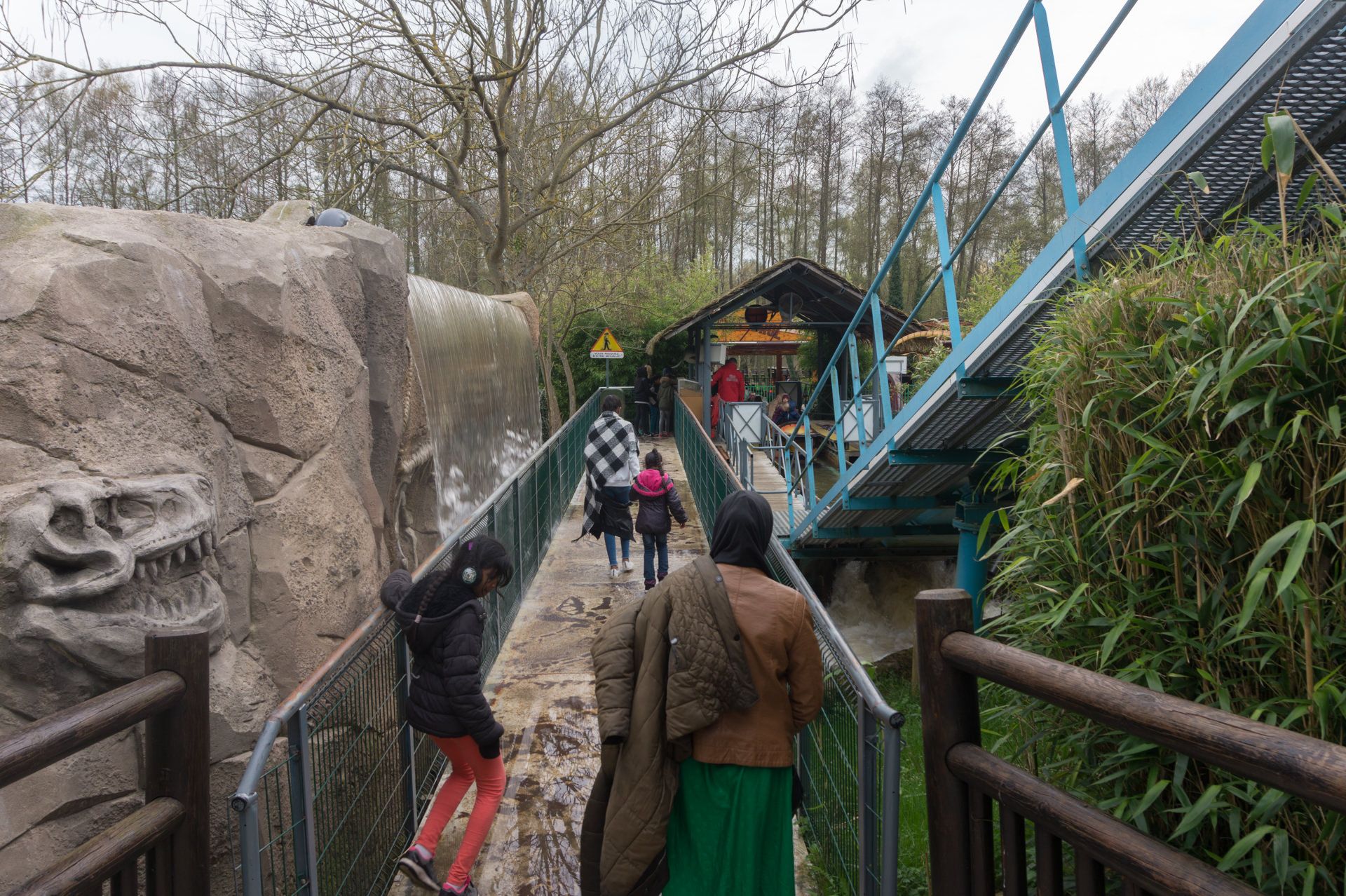
The ride begins quite quickly with the ascent of the first lift hill. At the top we roll through a narrow left turn, before the first shot is already waiting. Over a striking double drop we descend at high speed and with shallow airtime. Well soaked we race through the run-out section before we are braked a little in the following right turn. Over a straight with some white water and a waterfall on the left hand side we are now heading for the second lift. This takes us up to 11m, whereupon a right turn follows. Shortly after that we descend the second shot with its significant dinosaur back wheel. Here we will get a proper shower, whereupon we spend the rest of the ride completely soaked. After a longer straight line past the front we reach the station of the ride and get out of this really great log flume happy and satisfied.

Safari Trip

While wood for the Wood Express roller coaster was stored in the Teen’s Party hall, park guests romped around on bumper cars, a carpet slide and the Music Express Safari Trip. The latter offers a really nice ride due to its forward and backward ride. What’s unpleasant, however, is that the carpet slide seems to be free of fools; here the park audience showed its most unpleasant side. In general, I noticed this rather negatively during the whole day, as especially a Moroccan family and birthday group really misbehaved and had to be constantly rejected by the park staff – who really acted exemplary.

In general, the staff at Parc Saint Paul is very friendly. For example, when I got stuck in the lift of the roller coaster Formule 1, as the ride unexpectedly had an emergency stop, they informed me about every step until the ride was running again. Even after the ride they apologised for the inconvenience and brought me my rucksack, because in this case I had to leave the car in the actual exit area and not in the station.

Formule 1

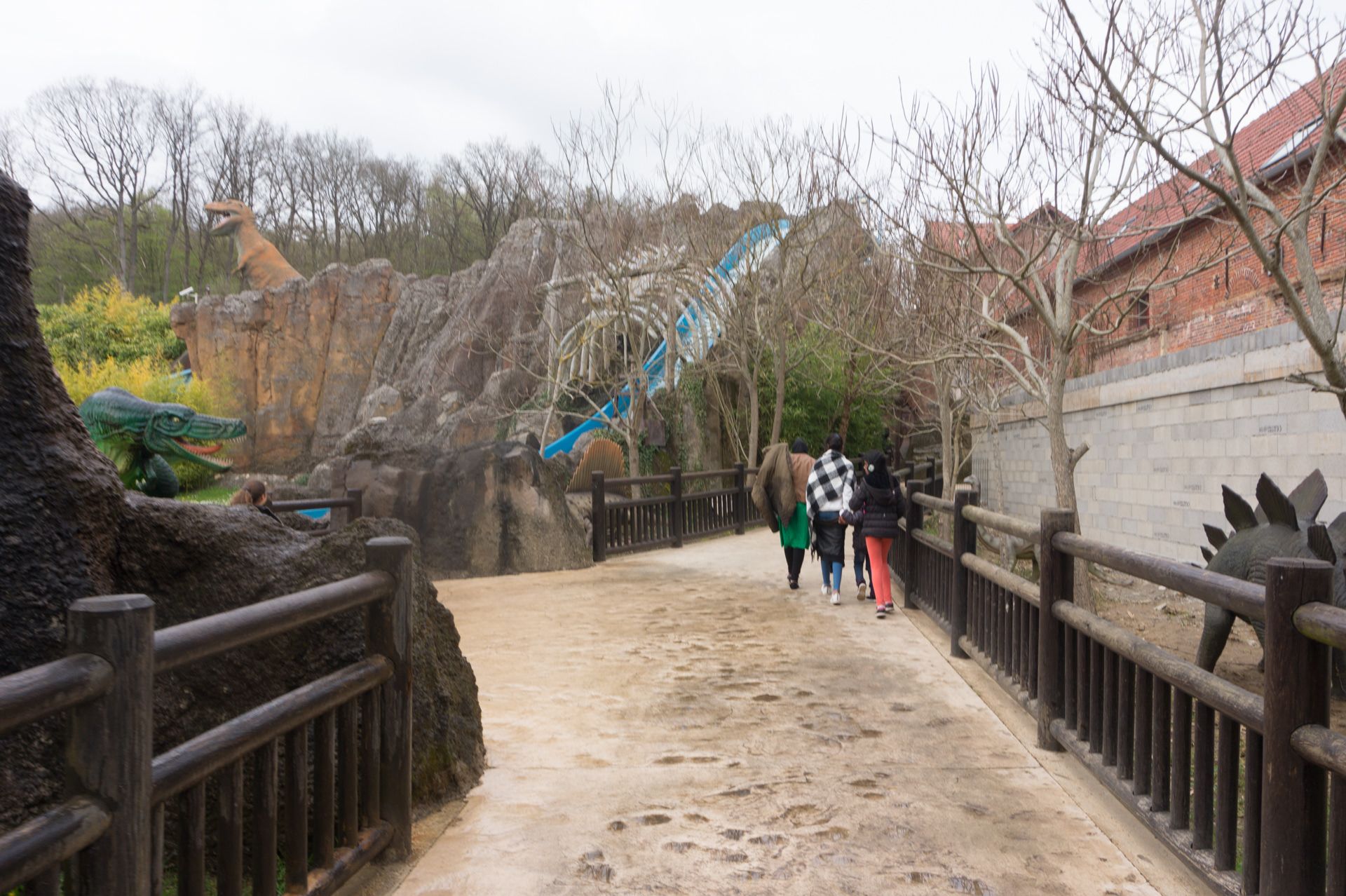
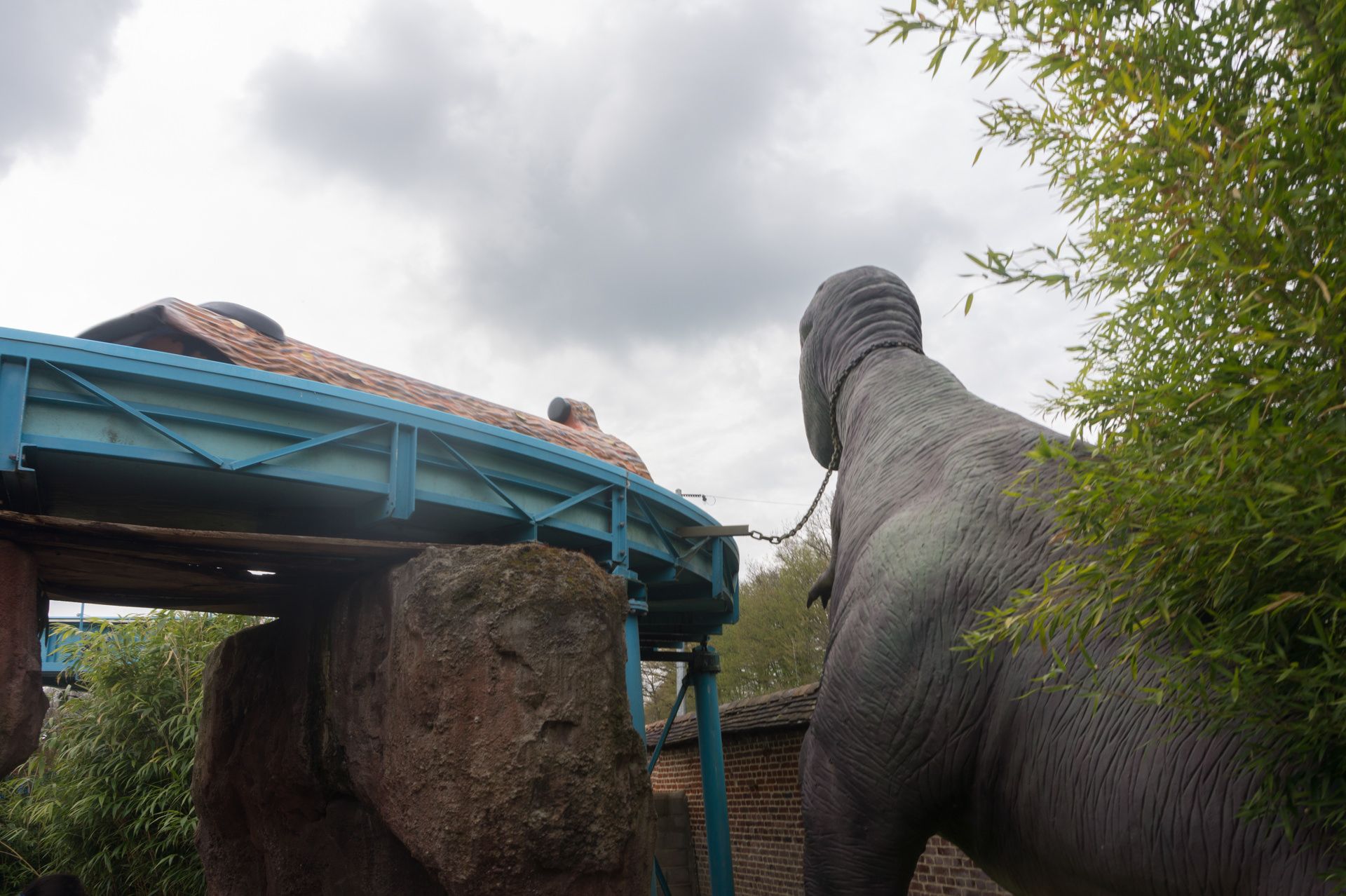
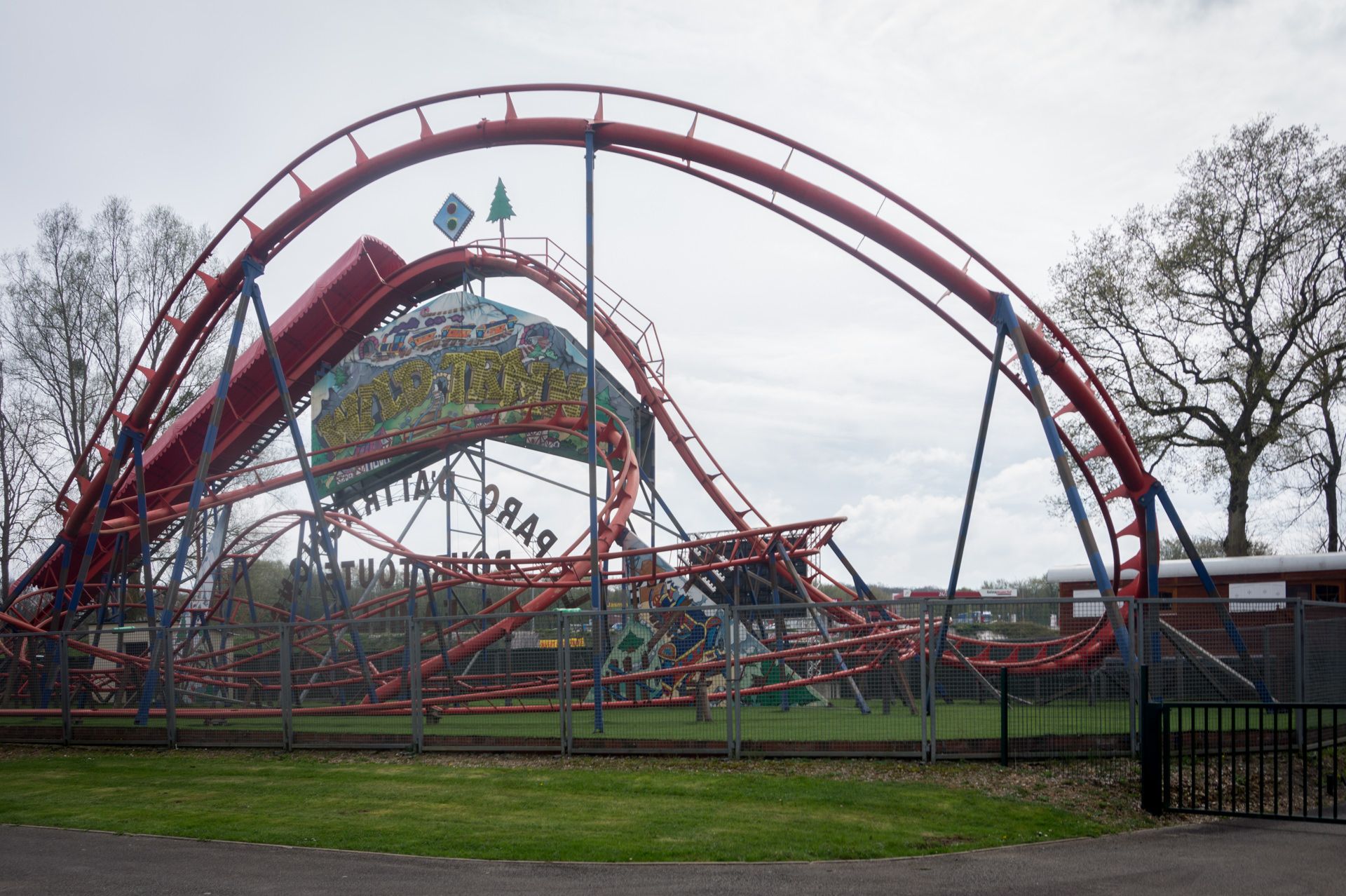
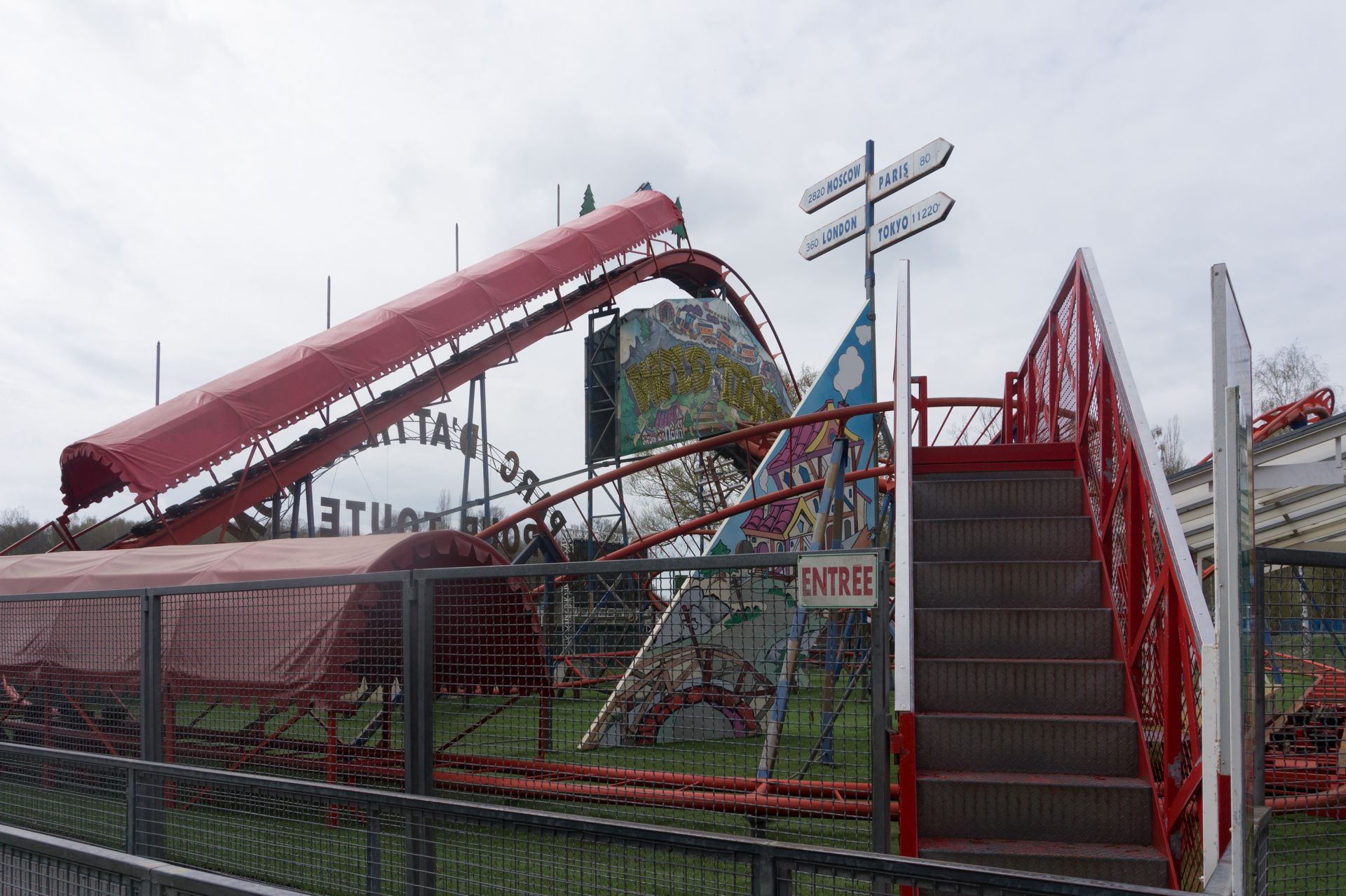
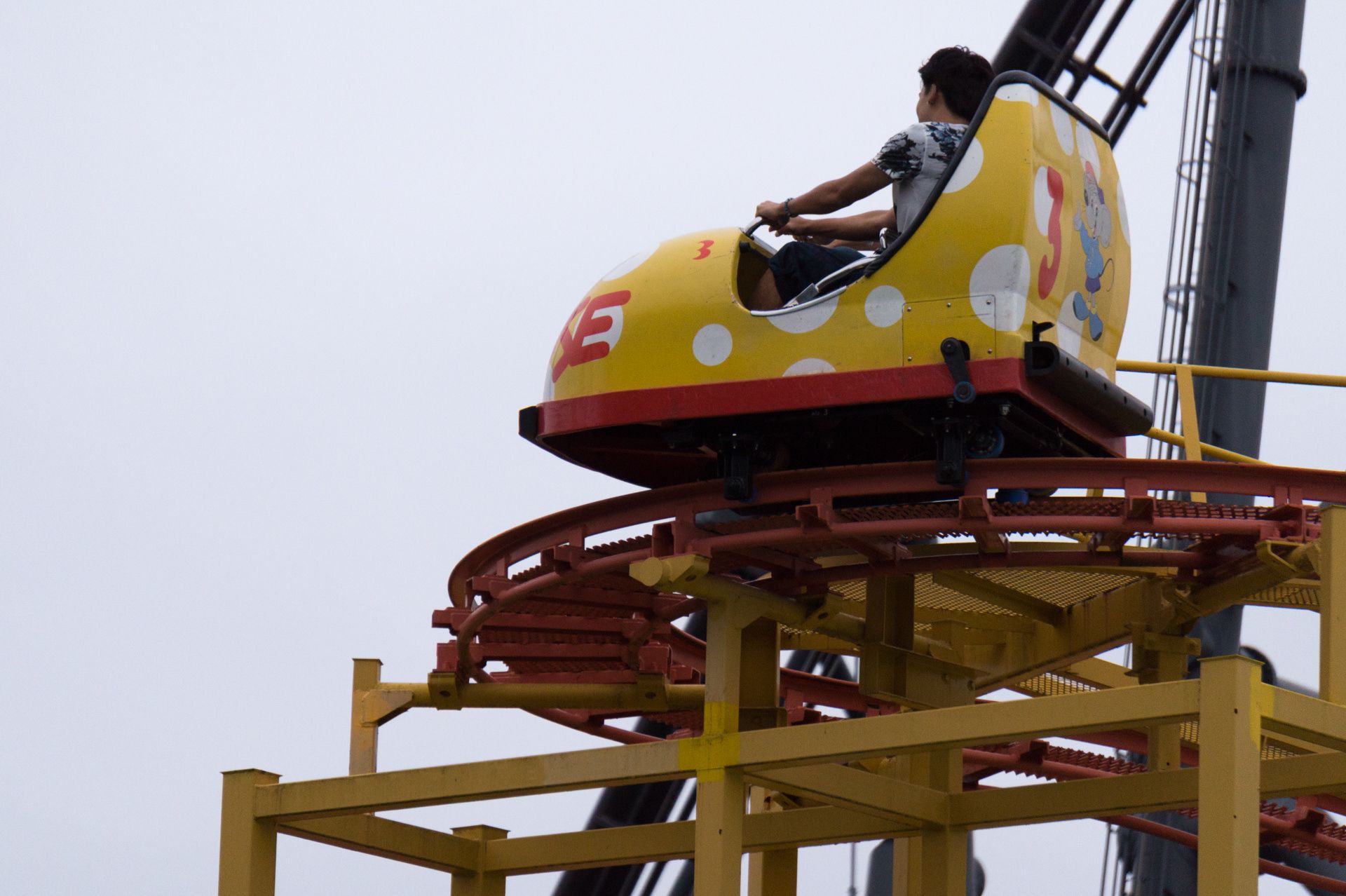
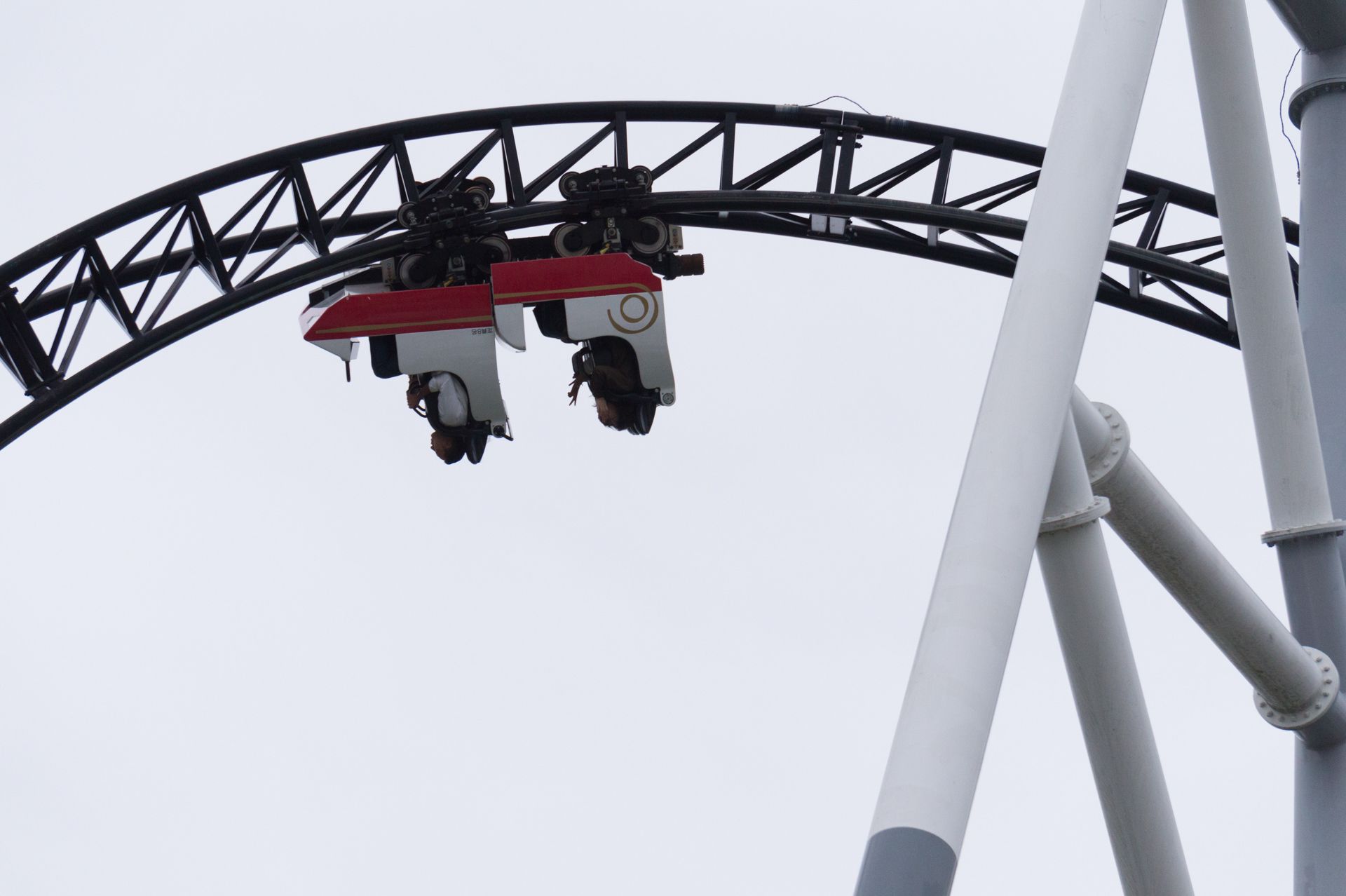
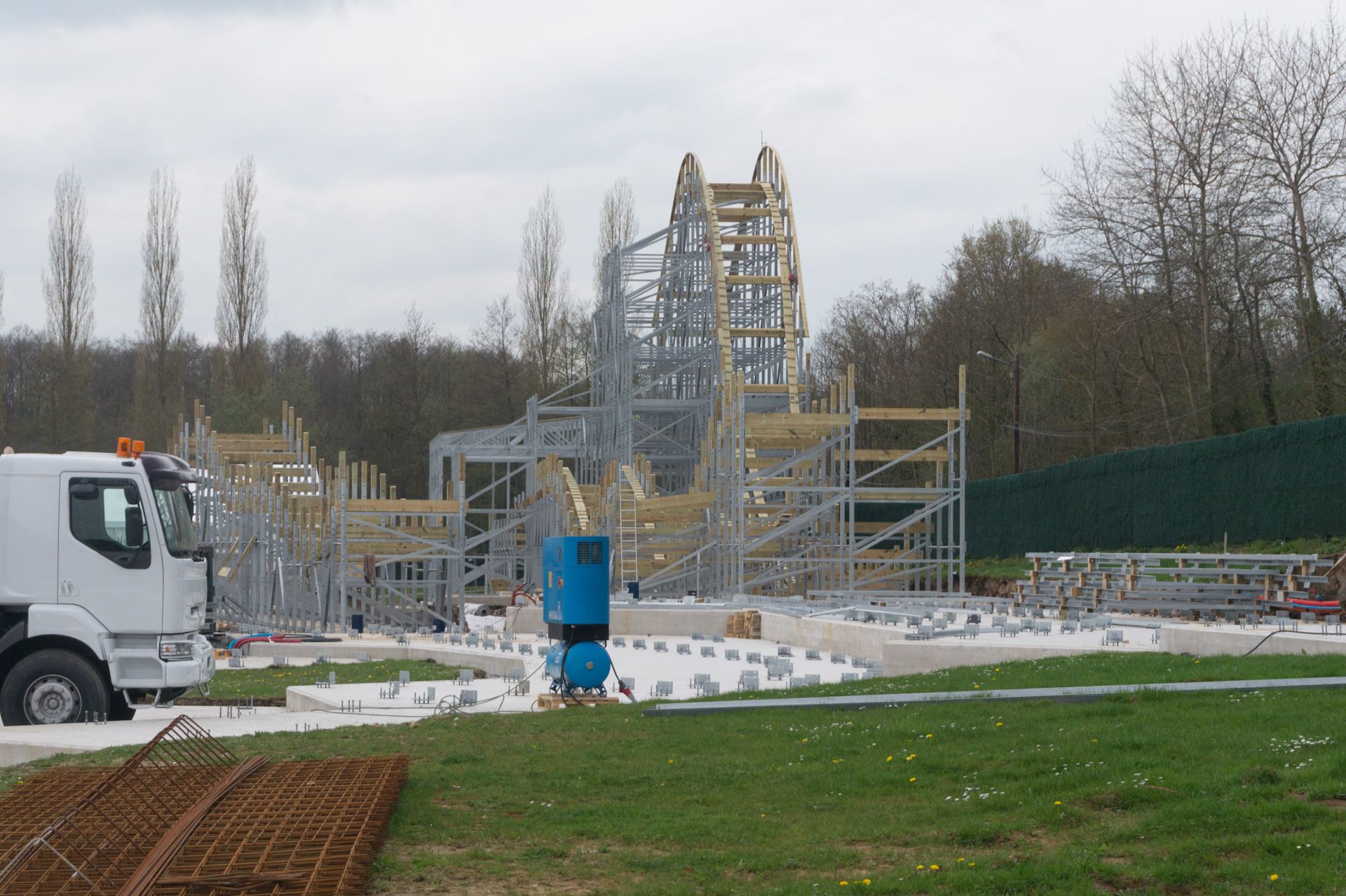
The ride on the somewhat different Wild Mouse Formule 1 from the manufacturer Pax begins with a very, very steep ascent, which is immediately followed by a pronounced pre-drop. Quite quickly we race through a hollow before we start the big shot ride. Over a narrow hilltop we shoot towards the ground and are lifted unexpectedly out of our seats. Over an extremely airy double-up we are then lifted up again. Following a narrow curve, the first block brake is already waiting for us.

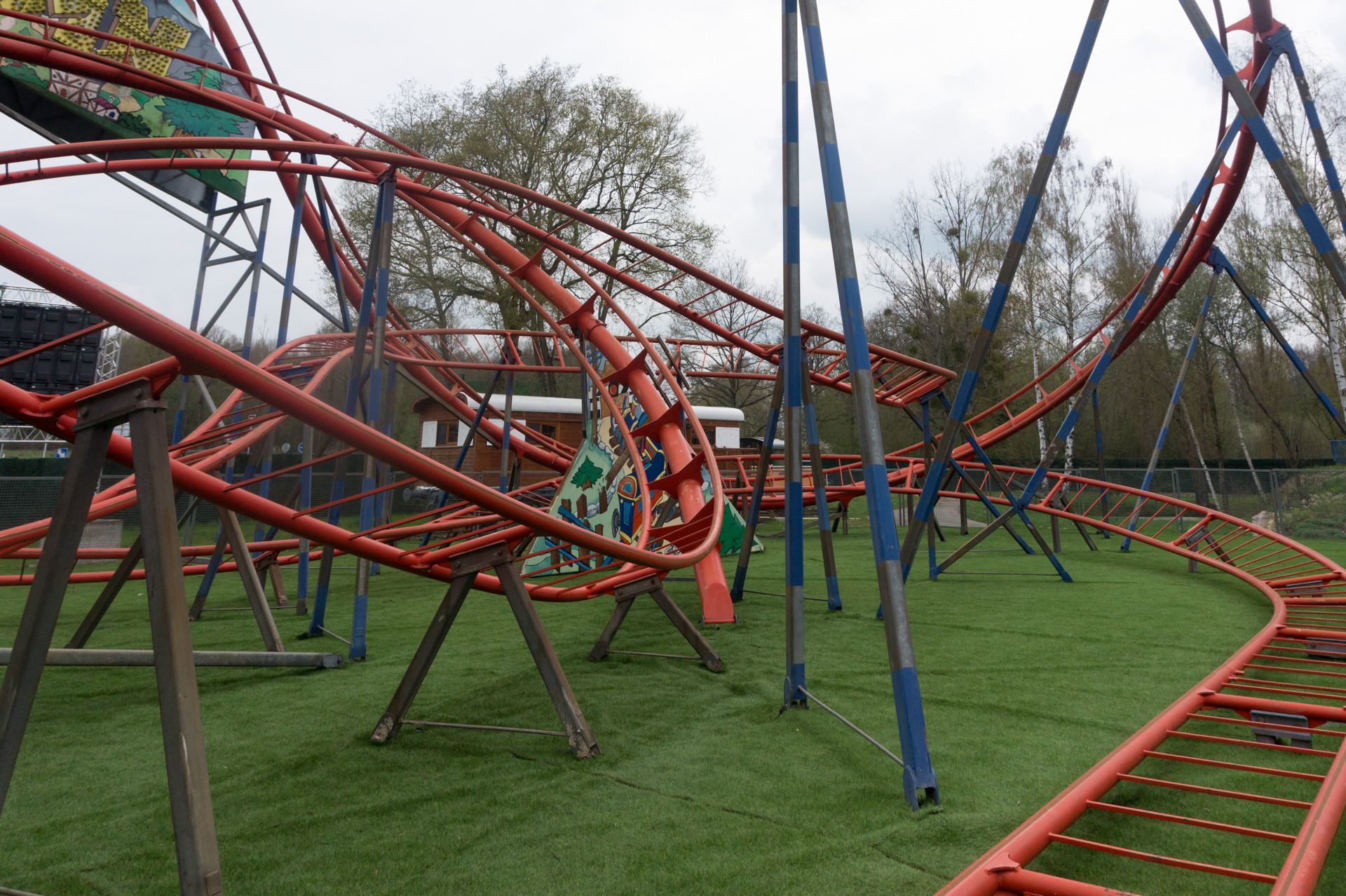
Now the hairpin bends follow. These, however, also have a very special feature to offer. The entrance to these is always inclined outwards, while the exit is inclined inwards. A pretty wacky affair. After a total of five bends this section is over again and we enter (still inclined outwards) a U-turn. This is followed by several ups and downs, which once again lift you out of your seat. After another block area the ride becomes a bit more leisurely and so we drive across the ride with several right/left swivels. After a longer right bend, the ramp then joins the braking section. After passing through the exit area, you will reach the station shortly after and can get off the car.

The ride built by Pax was the reason for me to go to Parc Saint Paul some time ago. As there are rumours that the ride will be closed soon, a visit was unavoidable. I didn’t care if the wooden coaster Wood Express would open sometime during the season. Pax comes first. As expected the ride on Formule 1 is brute, bizarre and superb. The airtime on the ride is unparalleled and the mouse curves are simply brilliant. A really beautiful and interesting ride.

Pictures Parc Saint Paul

Conclusion Parc Saint Paul

Parc Saint Paul is a very strange amusement park. It seems conceptless and gossipy. On the other hand, however, it offers many interesting rides that are not often found in this abundance. Only the rides built by Pax are worth a visit. But I doubt whether I want to go back to the park so quickly. As the only park of my trip, the park could not really convince me. This was mainly due to its rather antisocial audience.


What are your thoughts about the French theme park Parc Saint Paul and its legendary roller coaster Formule 1? Just write it here in the comment field below the report or visit our social media channels:


Click here for the next report of the Tron-Tron-Trône Tour

Good Job at the Theme Park

Yomiuriland

Basically, Yomiuriland can be described as a classic trolley park; after all, the amusement park, which opened in 1964, resembles many other Japanese amusement parks of that era and is thus located not far from a railway station. However, the park was not founded by a railway company, but by the influential Yomiuri Group, Japan’s largest newspaper publisher and owner of the Yomiuri Giants, among other things.

There is not much more to tell about the history of Yomiuriland. Many players of the timeless theme park development game Roller Coaster Tycoon Classic will have already noticed the name of the park in one of the loading screen messages, because Yomiruiland is home to the world’s first stand-up coaster, the Momonga standing and loop coaster. If you’re now thinking “Uiiiii, a stand-up, how great!”, you can also look forward to the former record holder Bandit. You are welcome to leave out the sarcastic undertone while reading, because this is about historically interesting rides that have also left their mark on other important roller coasters. So let’s stay objective and focus on Yomiuriland in its entirety.

At least that’s what we thought, until we noticed at the valley station of the cable car leading up to Yomiuriland that it was not running. Directly at the train station, a staff member pointed out that there was a bus service up to the park all day long. But do you want to take the bus in muggy, foggy weather? Of course not, and so we dared to make the ascent, which in the end turned out to be very short notice.

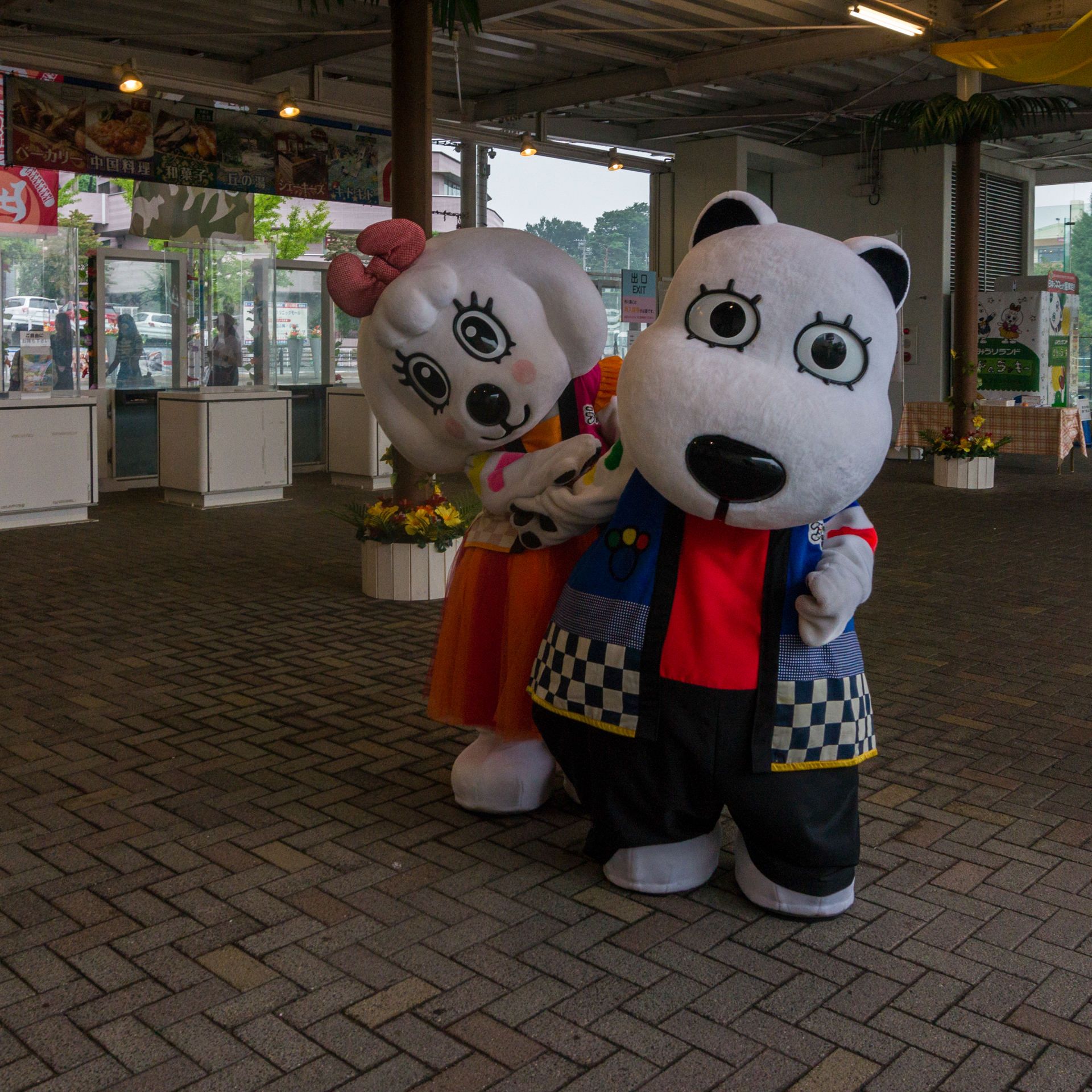
When we arrived at the ticket office, we showed our passports and promptly received a hefty discount. Meanwhile, in the entrance area of the park, the park mascots were playing football. It’s the little things that make a park likeable, and this was one of them. In general, I had a positive first impression, which was also due to the day-care centre at the bottom station of the cable car and other social facilities provided by Yomiuriland. One could almost think that an amusement park is a social employer. Of course, this statement is somewhat different in Japan than in Europe, because thanks to year-round openings, at least the financial basis of the employees is guaranteed. In contrast, the trend here is towards minimum wages and more and more closing days during the season. This certainly makes sense from the point of view of many business graduates; from my point of view, however, it is the wrong way.

Bandit

I also find it stupid when you always try to tick off the highlight first. Where is the arc of suspense, where is the urge to discover something new for oneself in peace? So, fast, fast, fast in the direction of the Bandit roller coaster. Left and right of the path doesn’t matter for the time being. The steel colossus from Togo at least offers a feature that I would like to try out. The splashy dive through the greenery, as my good friend Daniel (Lacront at onride.de) very nicely describes it, offers some tingling water effects during the ride that are not to be missed. Unsure which of the two queues would lead us into the wet and happy adventure, we first queued at the one on the right (at the stairs).

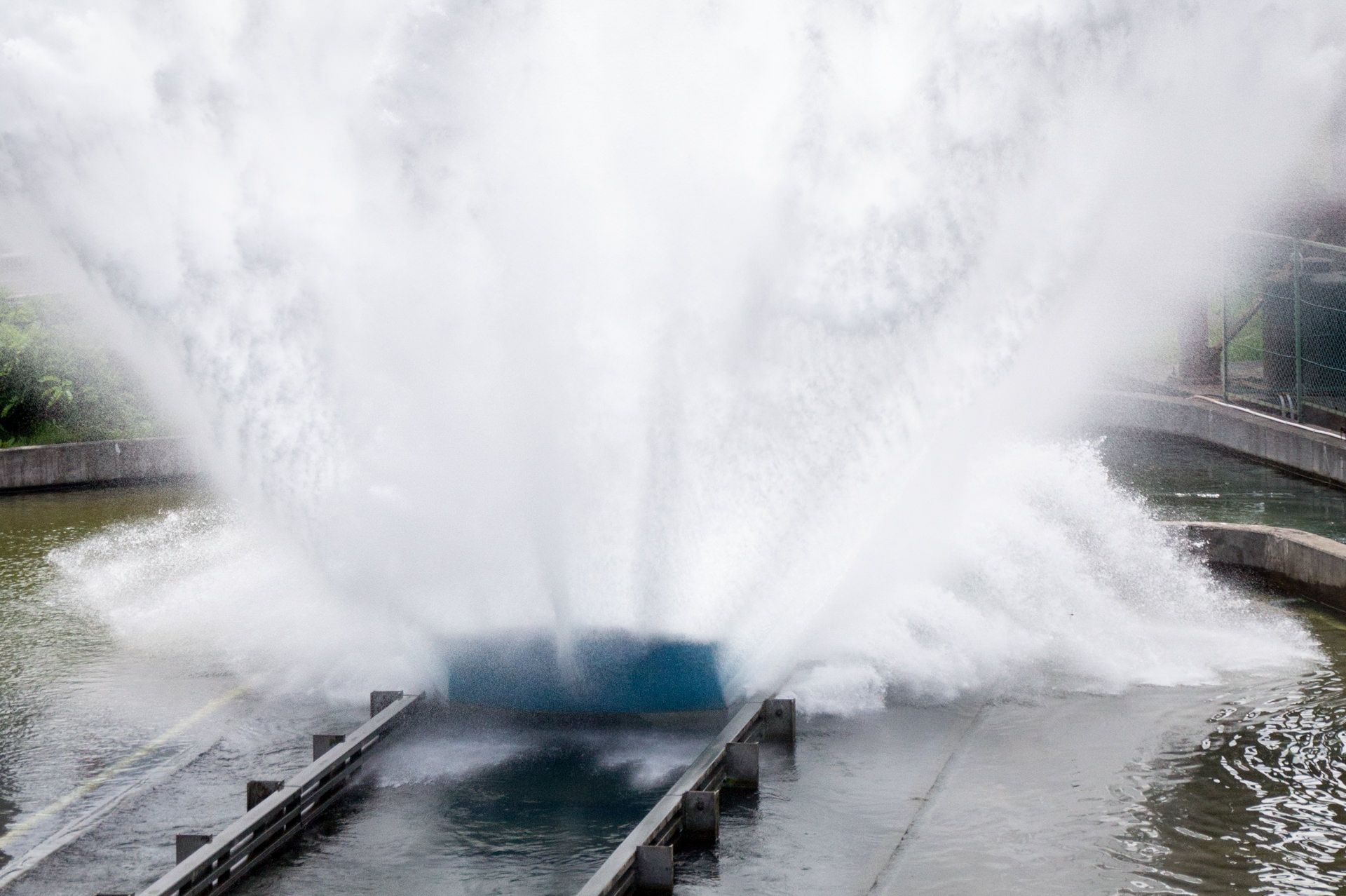
Excited and also a little tense, we forced ourselves and our belongings into the narrow cars, closed the shoulder restraints and waited for the train to be dispatched. A member of staff operated a wheel of fortune on which the words High and Low alternated. The pointer then landed on Low and the train started moving. A short time later, a water fountain shot up and the falling water pelted the front part of the train, where we were of course sitting. Shortly after, we reached the lift hill of the ride and began the ascent to the starting height of 51m. In 1988, the ride in Yomiuriland was quite a calibre, which shortly thereafter ushered in the era of hyper coasters.

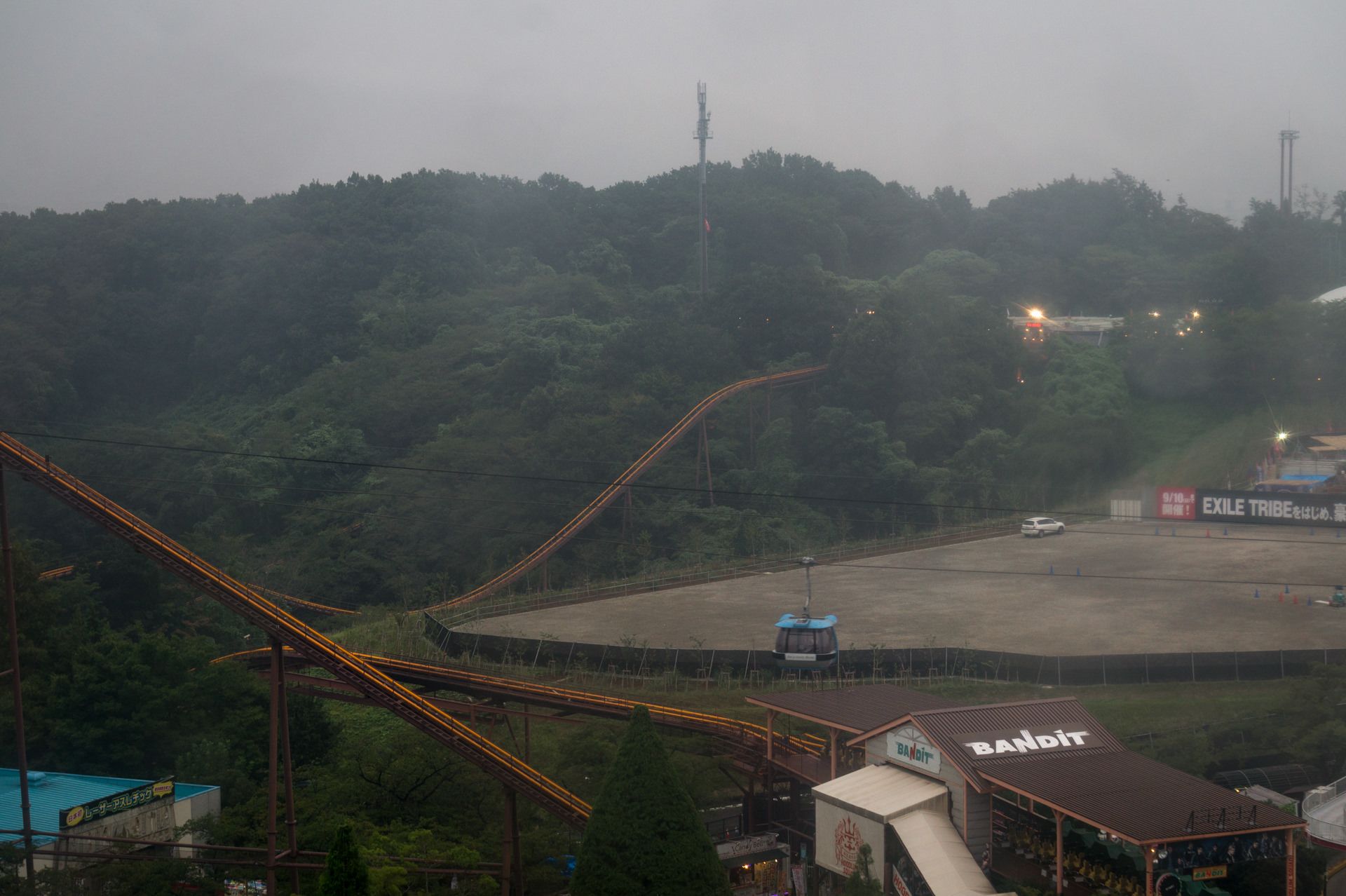
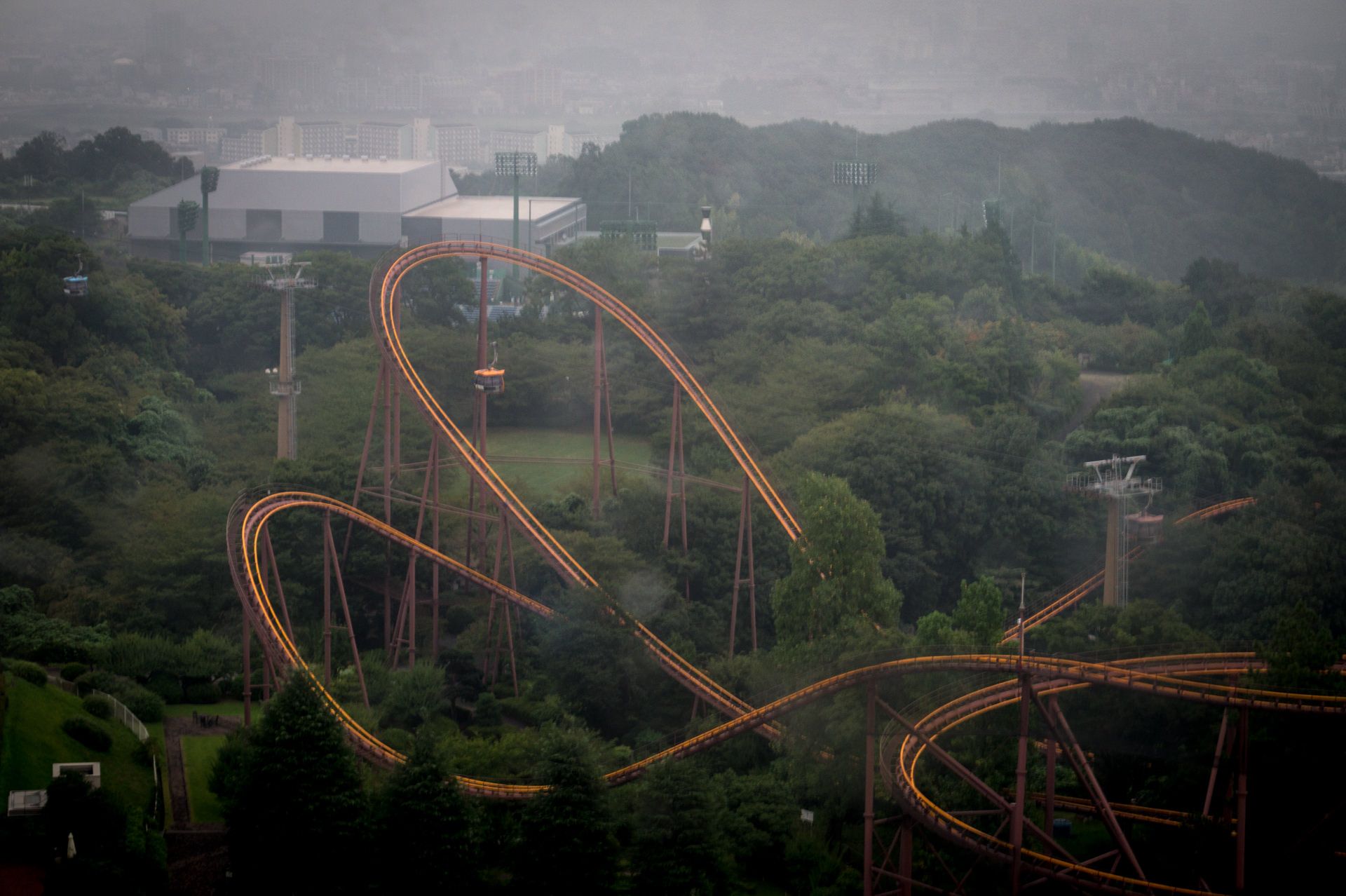
Once at the top, we complete a short straight before the train now turns towards the green hell below. During the descent, we hear the ignition of another water fountain in the distance, which reaches an estimated height of 40m. What goes up, must come down and so we race through the falling water at breakneck speed. In a high 180° bend just above the cable car leading to Yomiuriland, we quickly change direction before venturing into the greenery once more. Without mercy, we now approach an extremely crisp uphill helix, in which we power our way upwards within one and a half laps. A short descent at the top plateau of the ride follows before we plunge into the thicket once more in another high banked curve. Interestingly, we pass a lower point than on the first drop. But the true height difference of the ride only becomes apparent shortly.

With beautiful pacing, we complete a short airtime hill and immediately plunge into a deep valley. We reach the ground level of the ride for the first time. By exploiting the terrain, this results in a height difference of an incredible 78m. We climb steadily up a long ramp and then, at the end of the ascent, take a completely unexpected turn to the right. A few years ago, we could have seen the sister ride of the German Bandit from Movie Park Germany in all its glory. After the short right-hand bend, we make our way through the large valley once more. We then leave this valley via a short airtime hill, whereupon a left turn initiates the return to the station. After a short straight we whiz up a final climb and soon reach the braking section of the ride.

Go, go, Bandit! The fast-paced ride through the greenery impresses with its elongated layout and wide descents, but also with its Japanese peculiarities. For example, such a compact upward helix is unfortunately rarely found in roller coasters of this size even today. The most important gimmick, however, is the upgrade of the ride experience by the water effects used. Once wet, there is hardly any reason to swap the wet and happy ride for a dry one.

Laser Atlethic – Temple of the Sun

Opposite the Bandit roller coaster station is the interactive walkthrough Laser Atlethic – Temple of the Sun, where you can play tomb raider in the best Indiana Jones style on several missions of varying difficulty. As the name suggests, each course offers a mix of different skill games and a laser maze. In the teamwork variant, for example, you first have to pull yourself over a gorge with a roller board, then cross a laser maze and solve an oversized version of a ball maze in the last room. Of course, the whole thing takes place under time pressure and there are penalties for interrupting the light barrier. It’ s a wonderful fun experience that could also be implemented in various smaller amusement parks in Europe.

Animal Rescue – The Invasion of the Mekanchura

Directly below the Maze is the interactive dark ride Animal Rescue – The Invasion of the Mekanchura, which had to be pointed out to us first; after all, who would have the idea of simply following a rather renegade-looking path? Well, the station of the SL Coaster used to stand down here, but otherwise this corner of the park in Yomiuriland has been deserted. Thematically, you chase down poachers during the ride and capture them with nets before you are attacked by spiders yourself at some point and have to shoot your way out. The ride is quite entertaining and enjoyable.

Animal Coaster

If you follow the paths uphill again, you will end up in the family area around the park’s big Ferris Wheel. Here you will find several themed rides, including the snazzy Wanpaku Railway Oliver and the Animal Coaster. The latter is a variant of the historic Tumble Bug ride, which can still be experienced in a similar way in Kennywood Park.

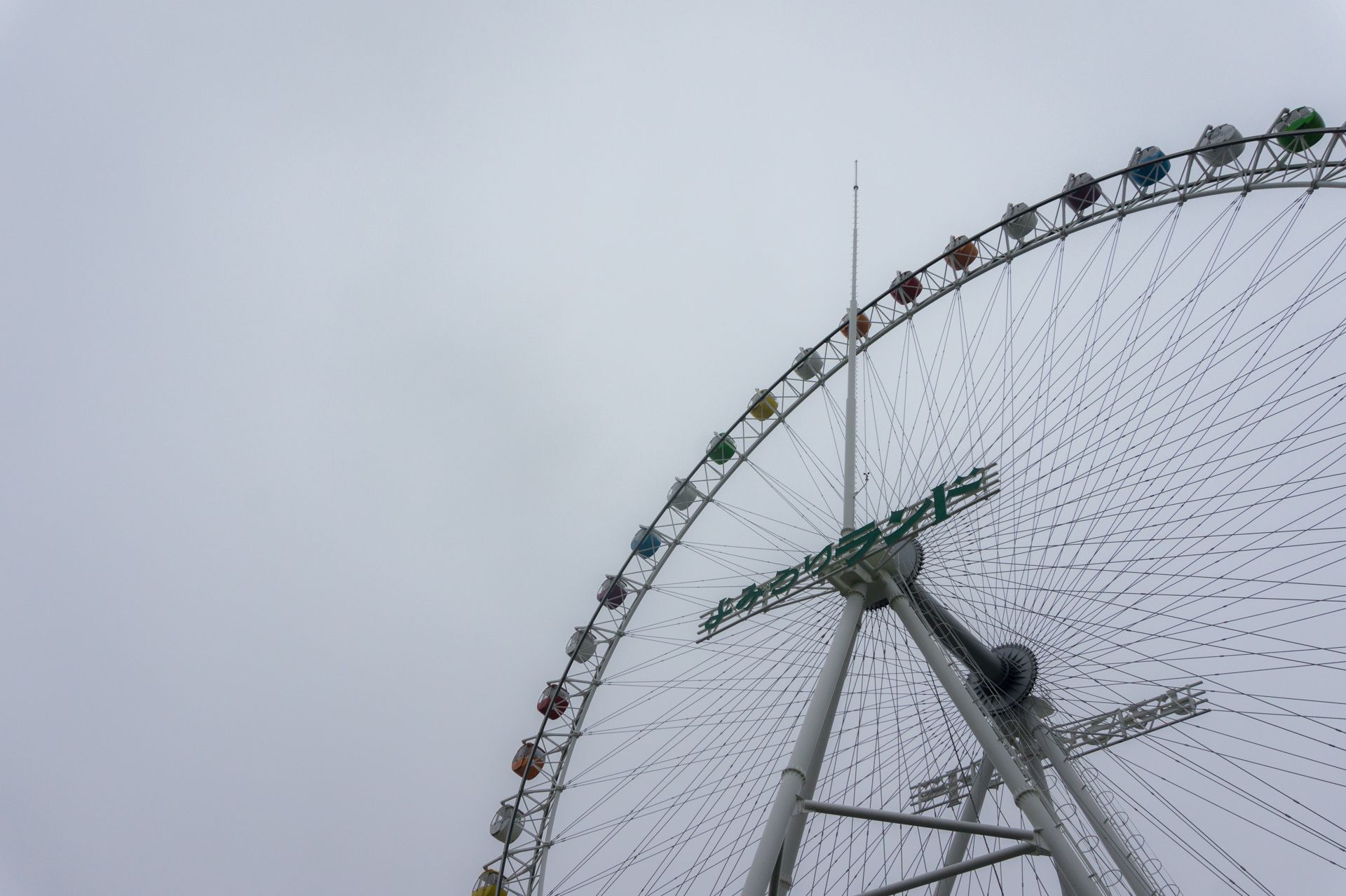
Giant Ferris Wheel

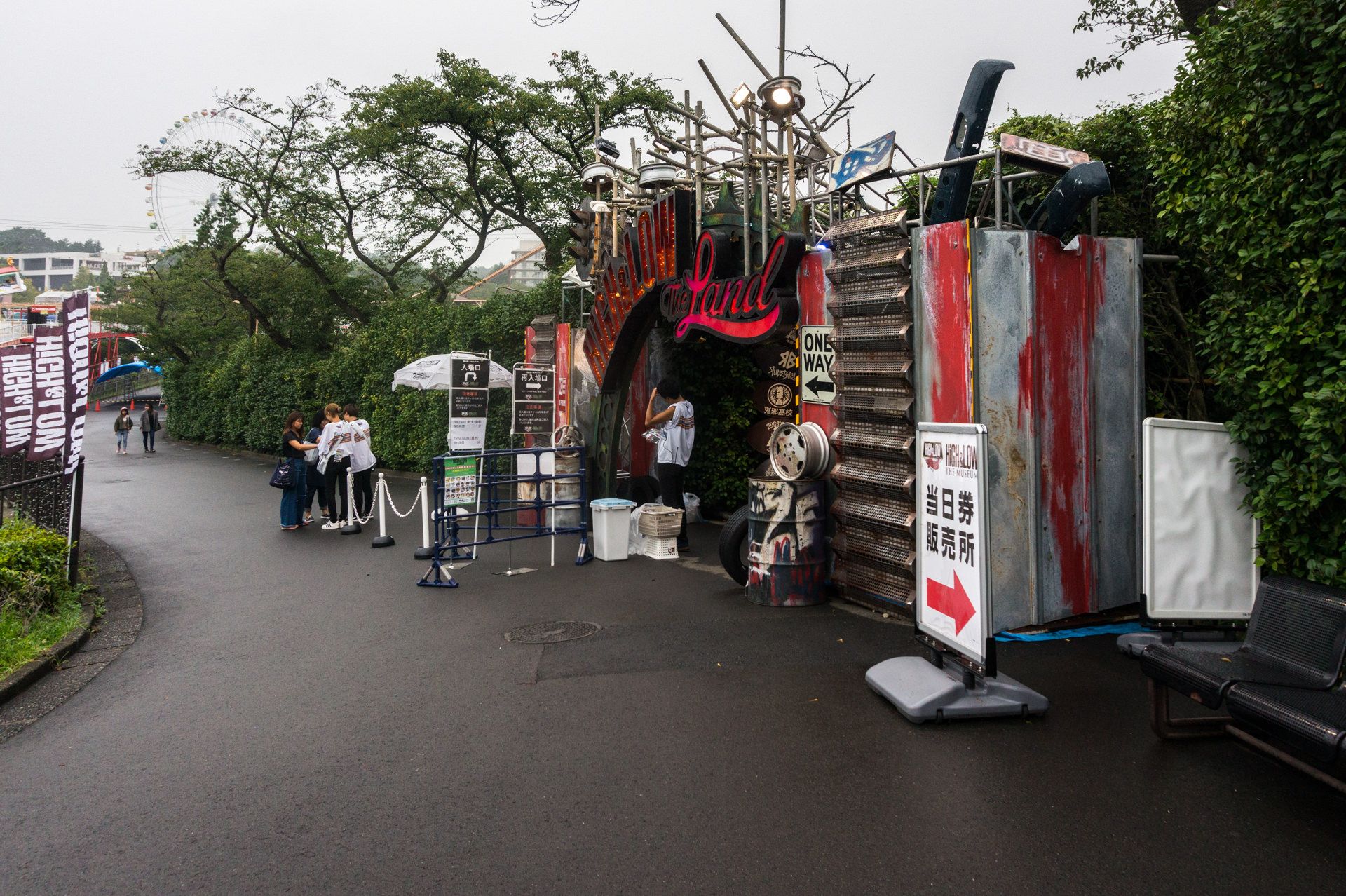
In addition to a theoretically great view of Yomiuriland and the surrounding area, the Ferris wheel has foil-covered themed gondolas in addition to the normal gondolas, complete with matching background music. So you might think that the ubiquitous theme of “High & Low” in Yomiuriland would be about various Japanese metal groups. But in fact, according to the podcast Die Achterbahnreisenden, it is about Japanese gangster groups from various films. The whole thing culminates in High & Low Land, including a museum on an event area in the park.

Flag Street

Passing a children’s train and a carousel, we are now drawn to Midway Flag Street, a somewhat aging area with a variety of iconic rides, walkthroughs and restaurants.

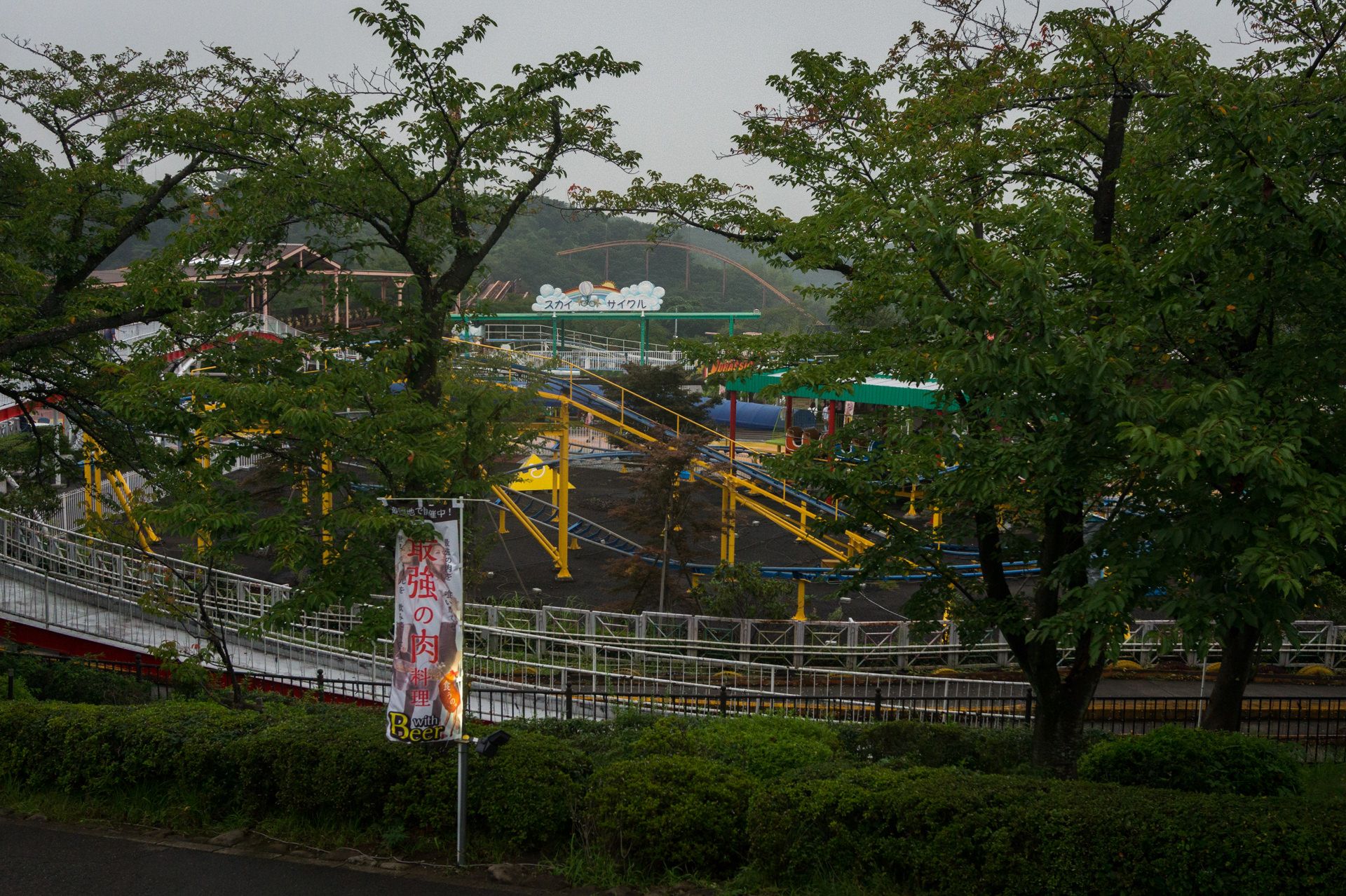
To the left is a double feature consisting of a vintage car ride with a dinosaur theme and a bicycle pedal track running above it. Directly behind it and leading once around the entire area is the first go-kart track of Yomiuriland, which in turn consists of two tracks of different lengths.

Wan Wan Coaster Wandit

On the right side of Flag Street, the children’s roller coaster Wan Wan Coaster Wandit by the manufacturer Hoei Sangyo awaits us. The ride on the small roller coaster begins with a right turn out of the station. This is immediately followed by the lift hill that takes the train to a height of 5.5m. In a steep turn to the left, you quickly approach the bottom and then pass under the lift. In a 180° helix you then gain height metres again and cross the first curve of the ride. On a straight with integrated hills, you now make your way across the ride for a few metres before the return to the station is initiated via another turn. After another lap, the nice ride comes to an end.

Right next door is a Japanese compressed air jet ride with additional water effects, similar to a very primitive version of the Flying Fish from Zierer, where the park guests can aim water cannons at the passengers. Somehow, the Japanese are even crazier than the English when it comes to water, but interestingly enough, they are said to be somewhat afraid of it.

Hero Training Center Mission 8

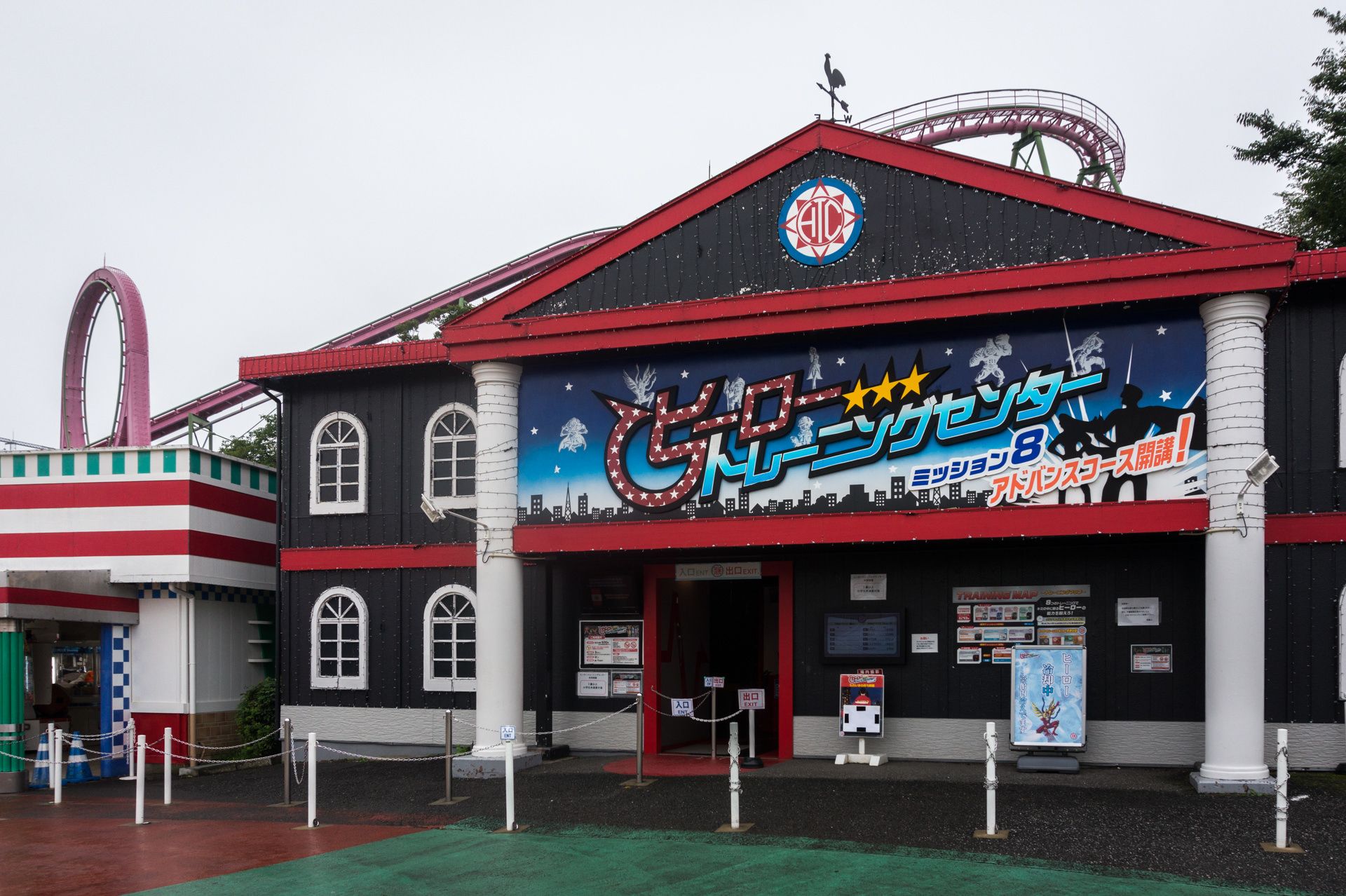
There are also two walkthroughs directly opposite each other on the Midway. In addition to a classic Japanese house of horrors, there is also the Hero Training Centre Mission 8, which is quite something. You have to master task after task in several stages and rooms. These vary between games of skill, endurance games and puzzles. It’s just a shame that there are milestones in between that you have to pass. Although we seem to have figured out the card game, we probably did it completely the other way round and therefore got kicked out. It’s a real pity, because this attraction is also absolutely outstanding and could be established in an European amusement park. Since the fan scene has suddenly been overwhelmed by Karls Erlebnisdorf theme parks anyway, how about this? Another idea they announced in numerous interviews has already been implemented here in Yomiuriland by a German company, but more on that later.

Looping Starship

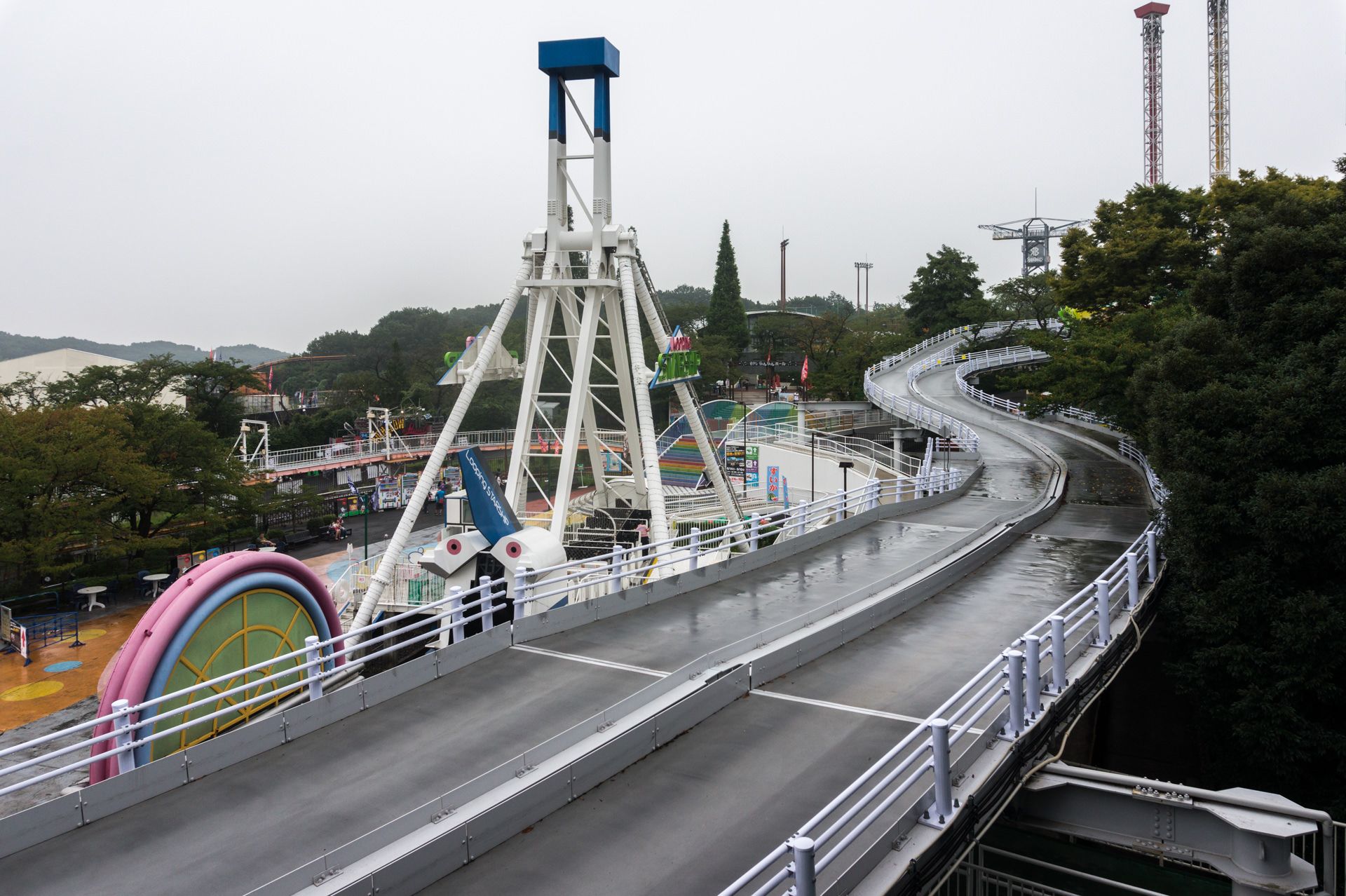
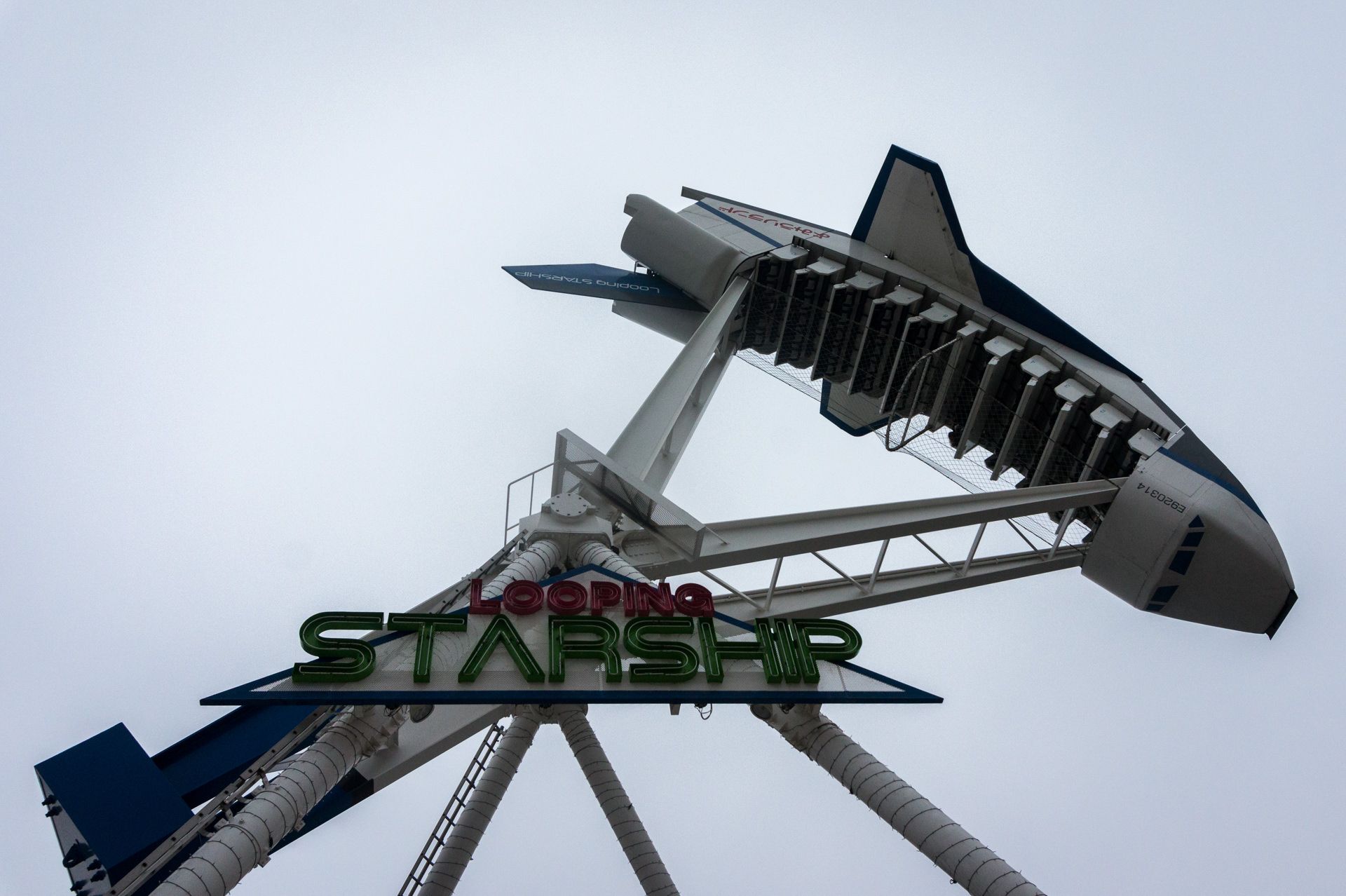
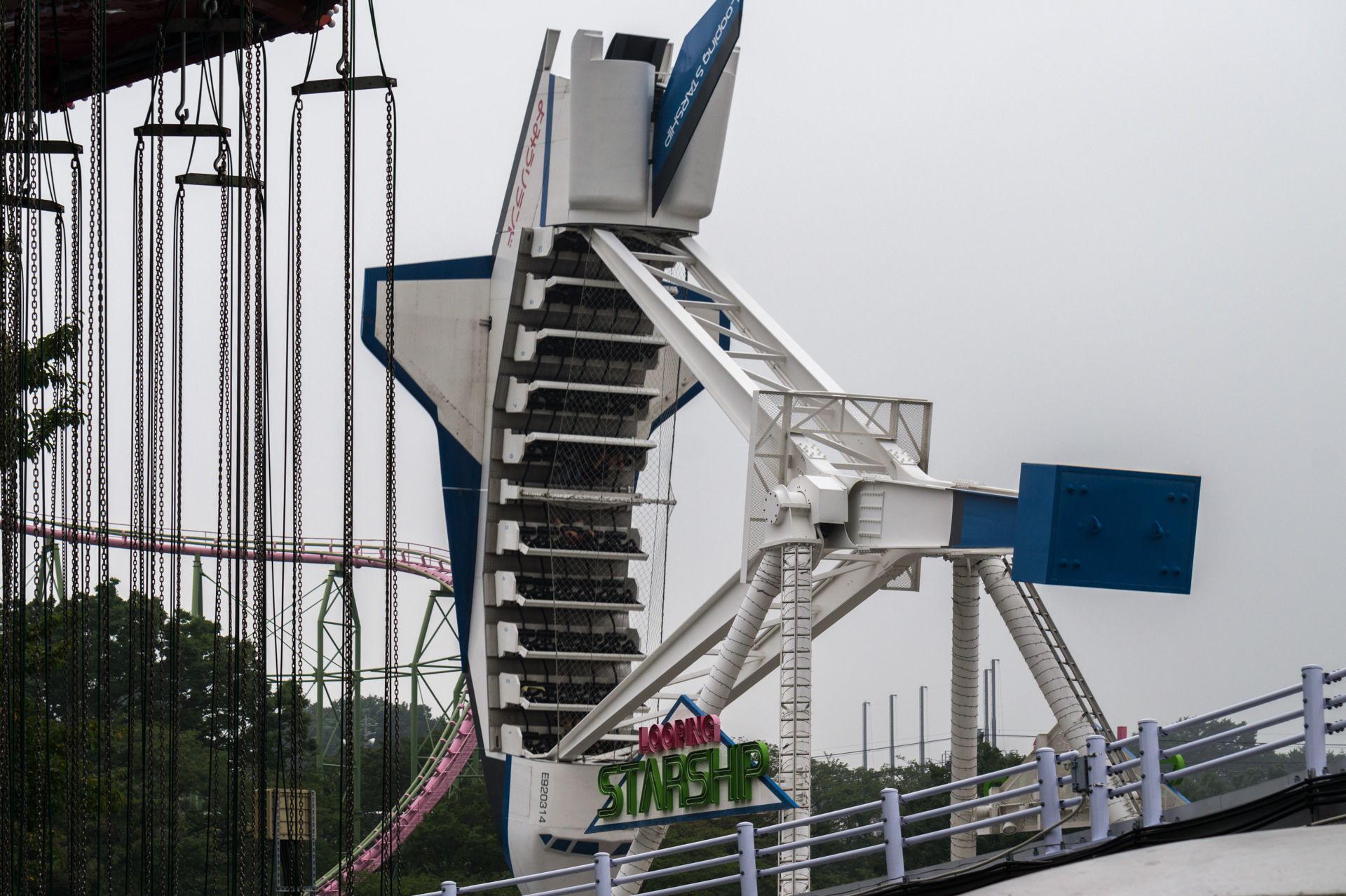
For now, it’s time to indulge in the looping craze of the late 70s and early 80s, and what could be better than a Looping Starship from Intamin. Just like in Nagashima Spa Land, the queen of the overhead ship swings convinces with its fast acceleration cycles and the terrific hangtime at the highest point of the ride.

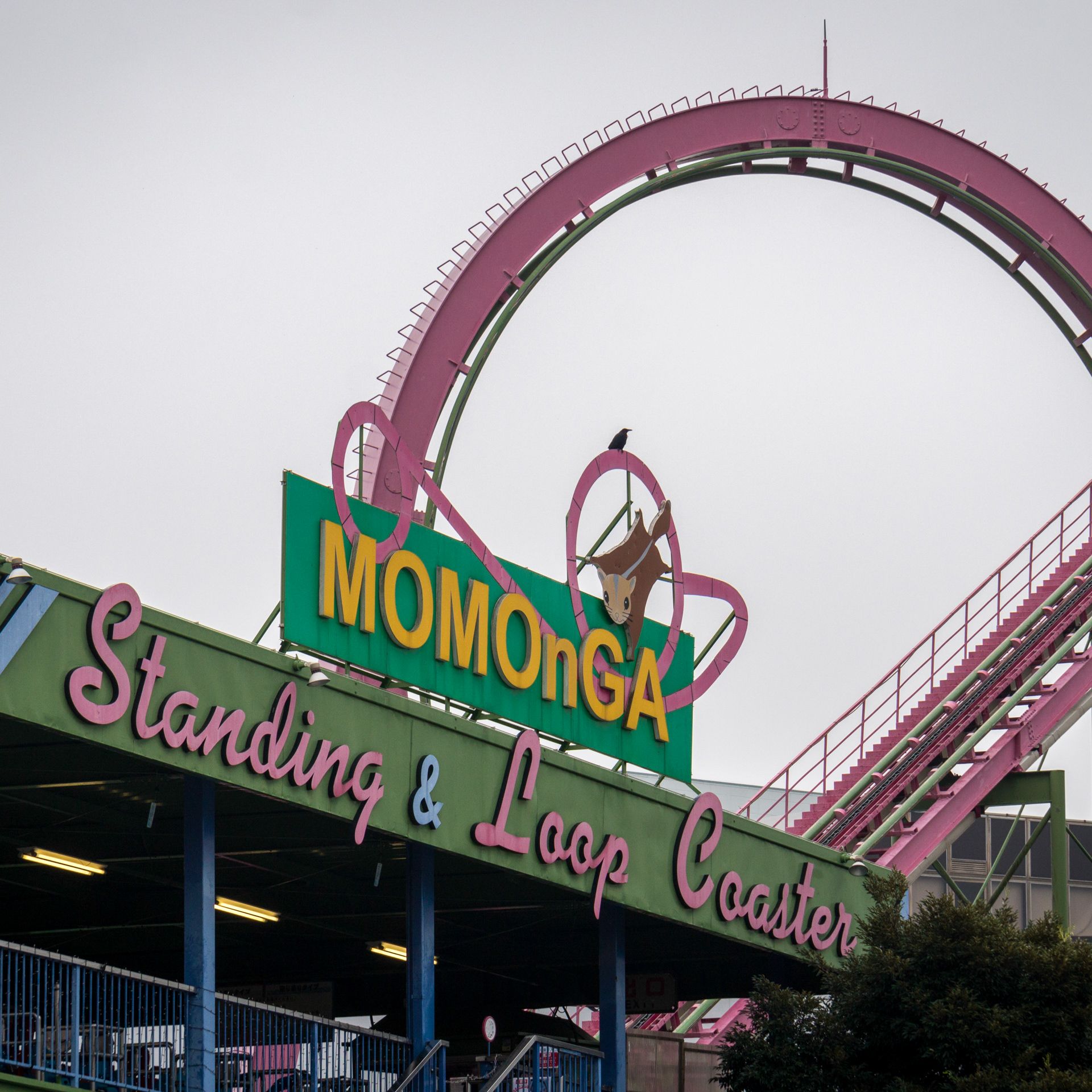
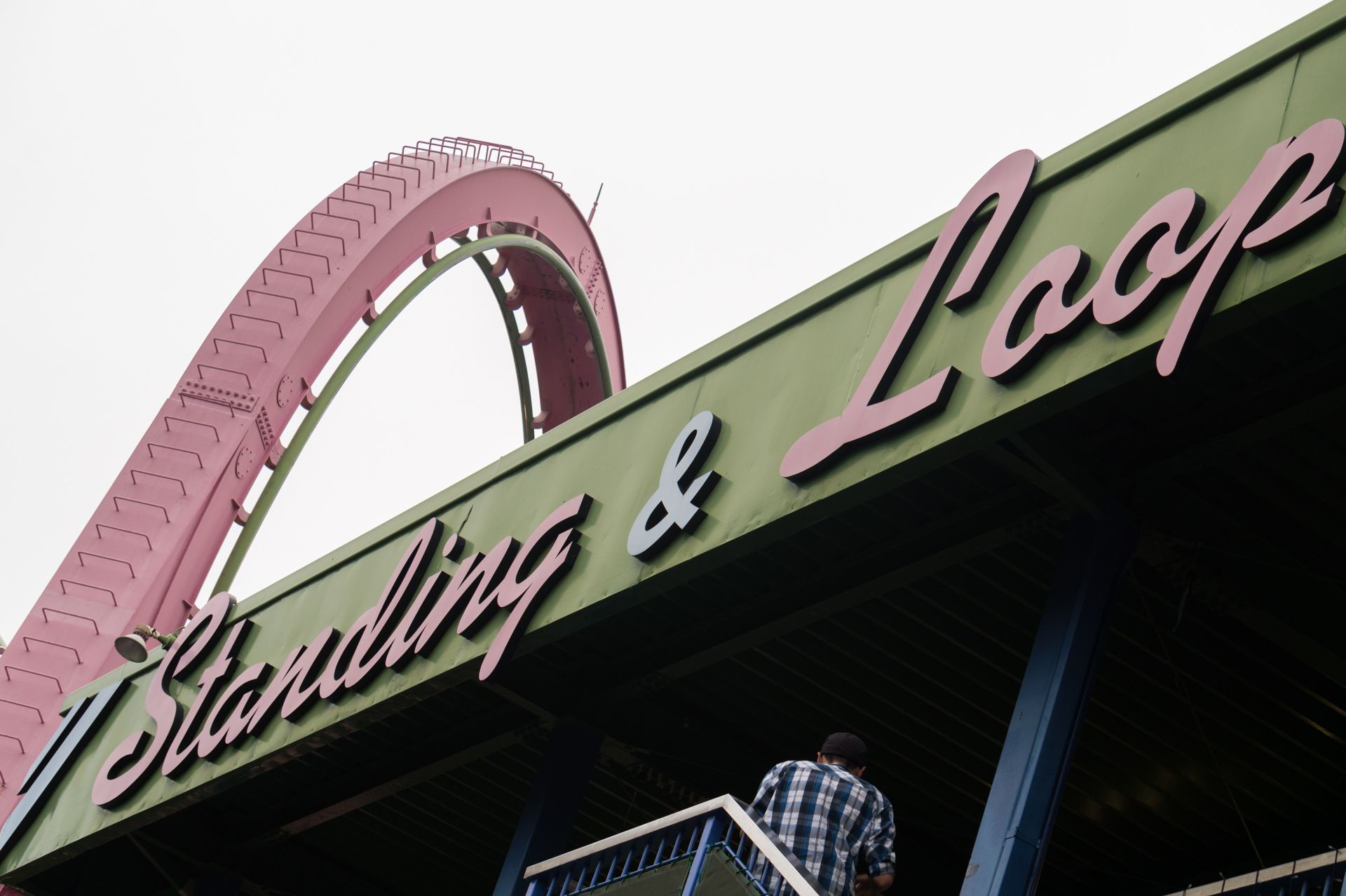
Standing & Loop Coaster Momonga

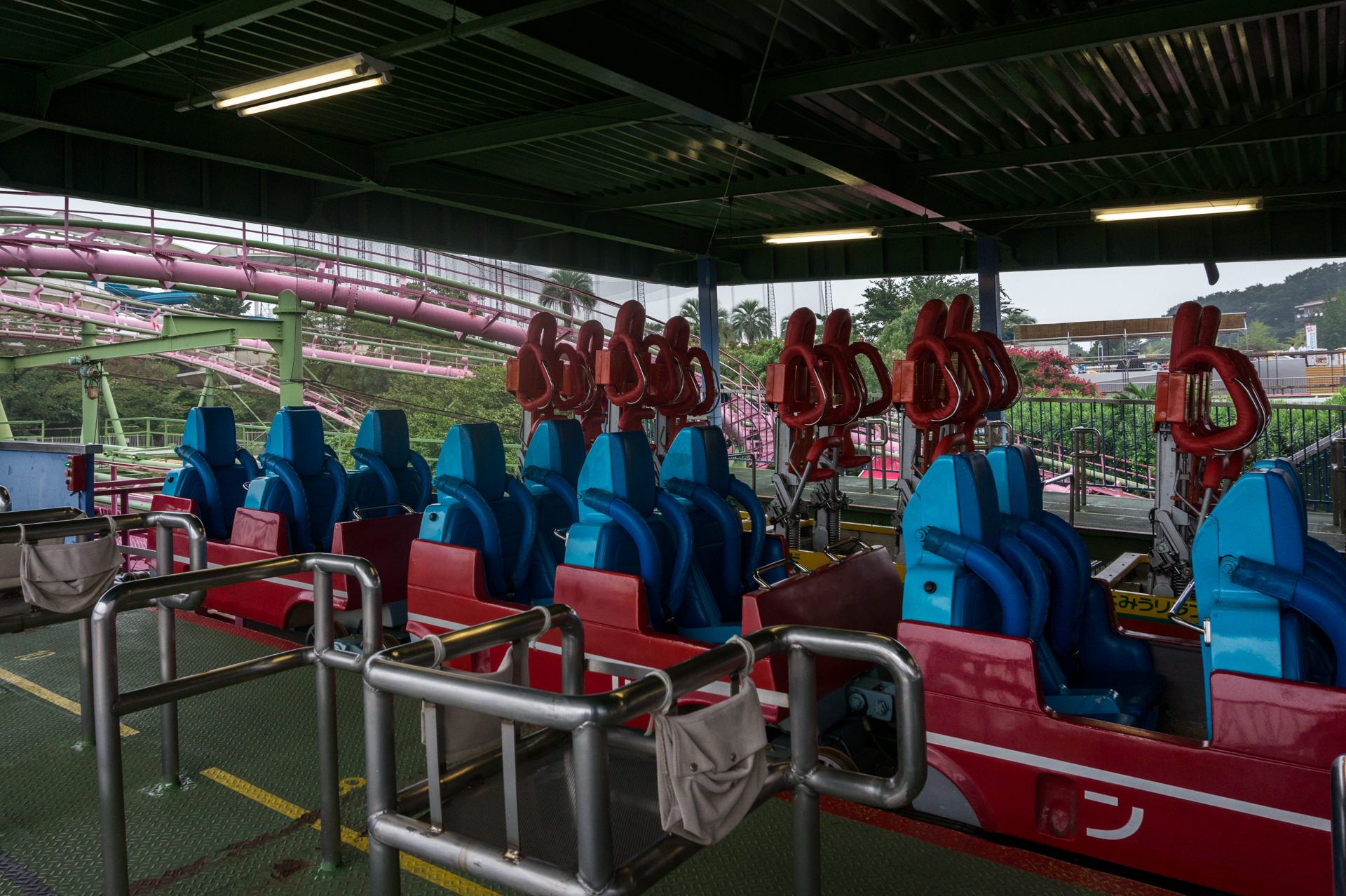
One level higher, we experience the same game on a roller coaster. The Standing & Loop Coaster Momonga has a special feature, as the ride is able to accommodate two different types of vehicles. For this purpose, the station was divided in two, with both sides parallel to each other. A transfer element then pushes the respective side onto the central lane, whereupon the fun can begin.

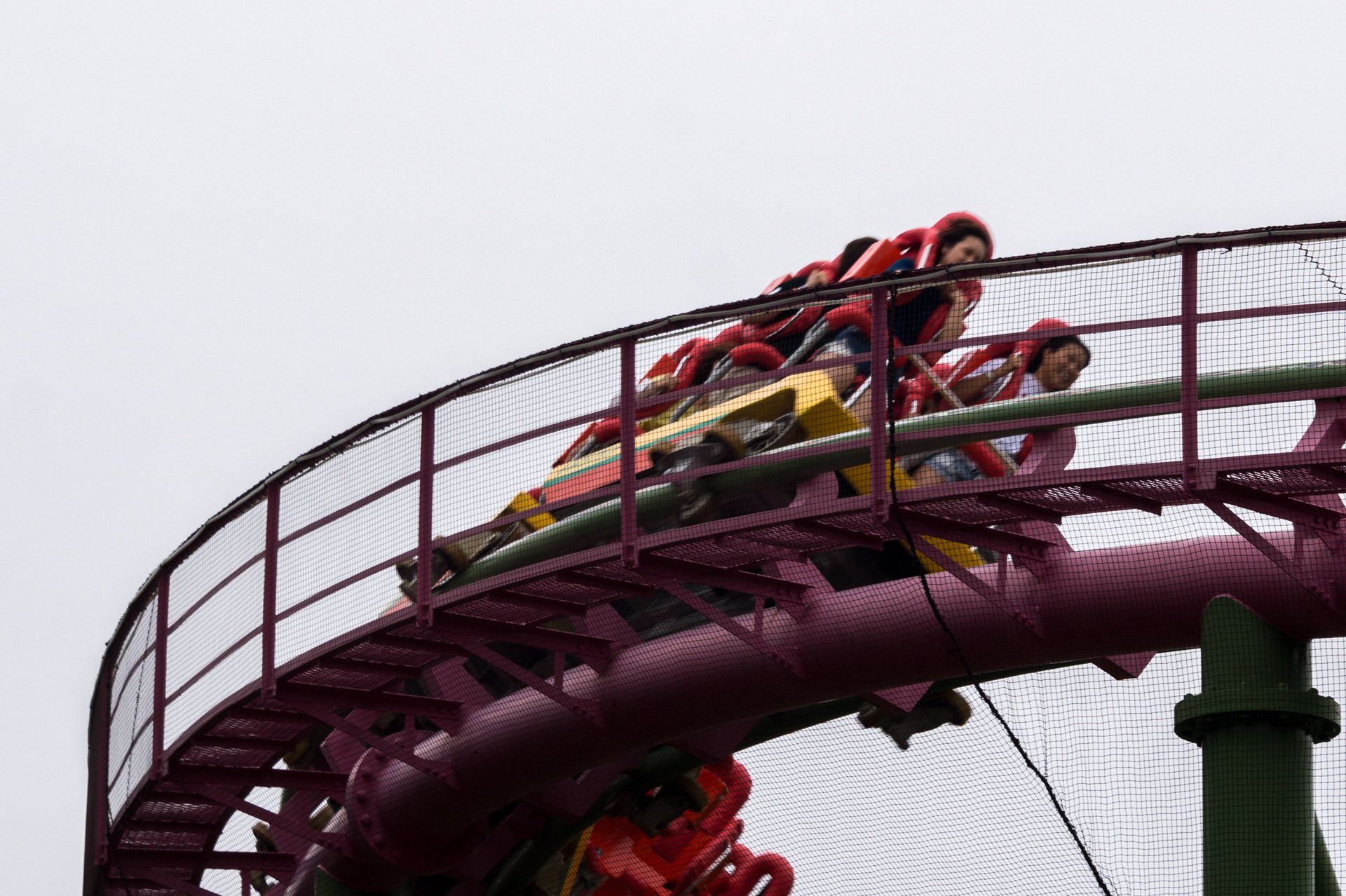
After leaving the station, we immediately climb the lift hill of the ride. Having reached a height of 25m, we briefly enjoy the view before the right-hand bend we are currently in becomes more and more of a descent. In no time at all we find ourselves in the valley and are loaded with wonderful G-forces. Immediately we enter the loop and circle the lift hill once in the vertical plane, which has a nice visual effect, especially in the stand-up version. This is followed by a wide horizontal loop. After a short valley, there is an almost equally wide left turn, which represents the turn back to the station. Soon the brake of the roller coaster is reached and the ride is over. Now you are quickly pushed back to your loading side so that the other side can be sent on its way.

The Standing & Loop Coaster Momonga is not the most exciting roller coaster and especially compared to later rides of the manufacturer it is absolutely harmless. Nevertheless, it manages to perfectly embody the zeitgeist of the era. In short: It is simply cult and, especially because of the alternating operation between stand-up and sit-down cars, it is a very interesting ride. If you can live with that, you can switch back and forth between the two variants; it was definitely fun.

Crazy Hyuuu and Crazy Stooon

Passing the wave swinger Milky Way and the water park Water Amusement Island (WAI for short), which for a small entrance fee offers a Lazy River, two children’s landscapes, a diving tower, a large wave pool and a total of three sliders (although only the Spiral and the Straight Line Slider, a kamikaze slide, are included in the entrance fee; the large rafting slide, however, is covered by the free pass), you head towards the Lan Lan area with its sea lion show and the two S&S towers. While the Crazy Hyuuu tower shoots you to a height of 60m, Crazy Stooon drops you down with a supposed -2G; however, it was nothing compared to the force of Flamingo Land’s Cliff Hanger tower.

Hashibiro-Go

Directly opposite, another product of the manufacturer S&S was once supposed to open. Unfortunately, it only took a short time for the Robin Twist Coaster to have its first accident. After this, the ride was immediately shut down and dismantled a short time later. Thus, El Loco shares the dubious record of the shortest operating time of an S&S roller coaster with the Ring°Racer at the Nürburgring. In the meantime, a round ride, the Mega Disk’o Hashibiro-Go, has been built in its place.

Good Job Attractions

Those who have always wanted to jump down with a bungee cord can do so from a 22m-high platform for a relatively low price. We, on the other hand, now turn our attention to the Good Job Attractions industrial theme area, which can be reached from here via an entrance across the water park. In fact, we had to look for quite a long time here and finally took the entrance near the main entrance.

Here, Yomiuriland suddenly presents itself to its park guests as highly modern, clean and absolutely imaginative. Especially in comparison to the really run-down Flag Street, this is a very, very, very big contrast, which is also reflected in the doublets of rides. In addition to a modern bicycle pedal track, where you go on a crime spree in a video game, there is also a modern go-kart track, which bizarrely still partly runs along the old go-kart track. In addition to some nice children’s rides, there is also a very interesting game of skill in the outdoor area, where you have to influence the course of oversized marbles. Lovely!

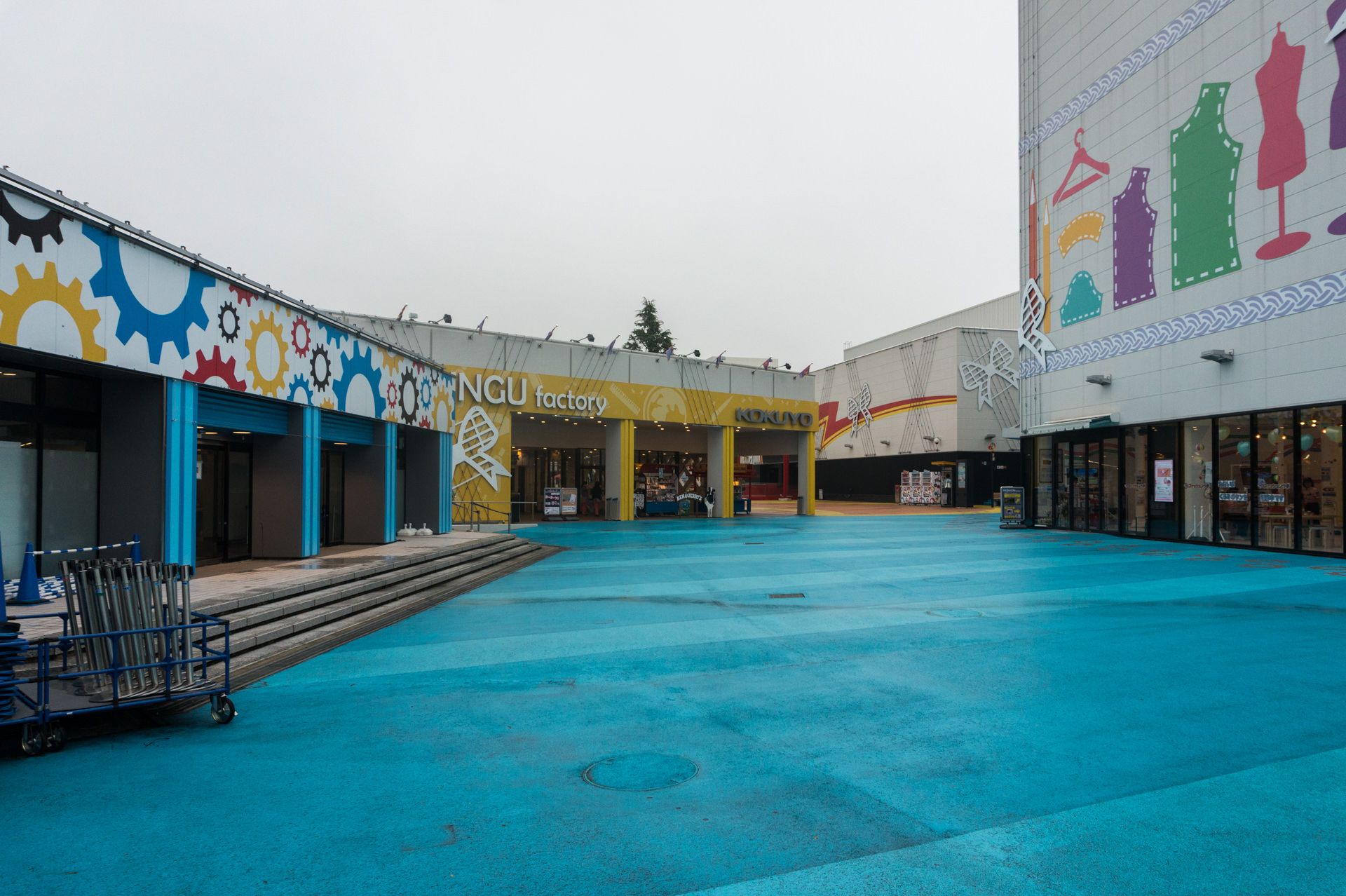
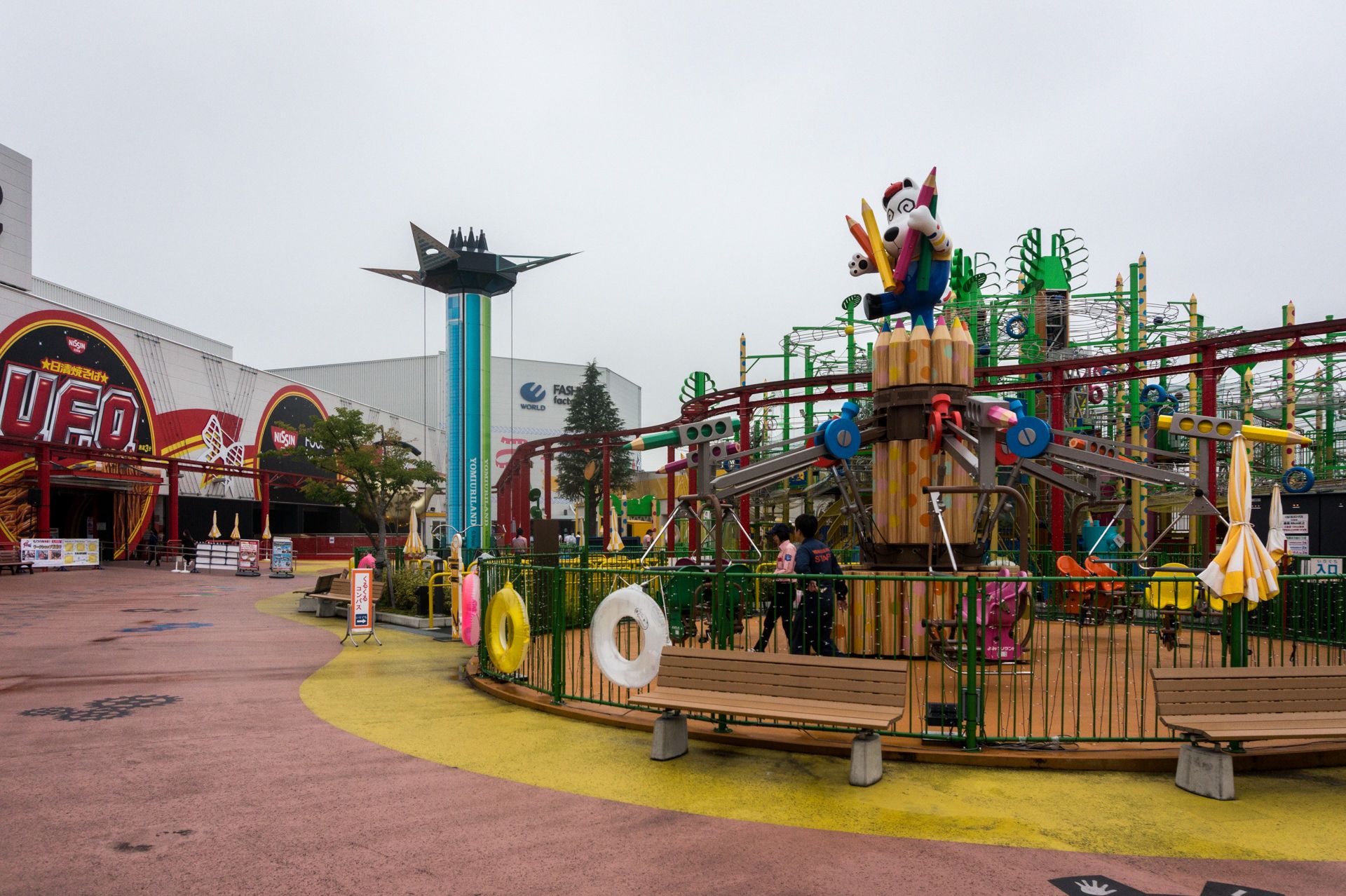
The remaining rides are integrated into themed industrial halls. These are divided into the Fashion, Bungu, Food and Car Factories. Similar to an expo, you are immediately drawn into the respective theme when you enter the respective hall. The industrial charm is more like a child’s idea of an industrial plant, which is very good for the whole area.

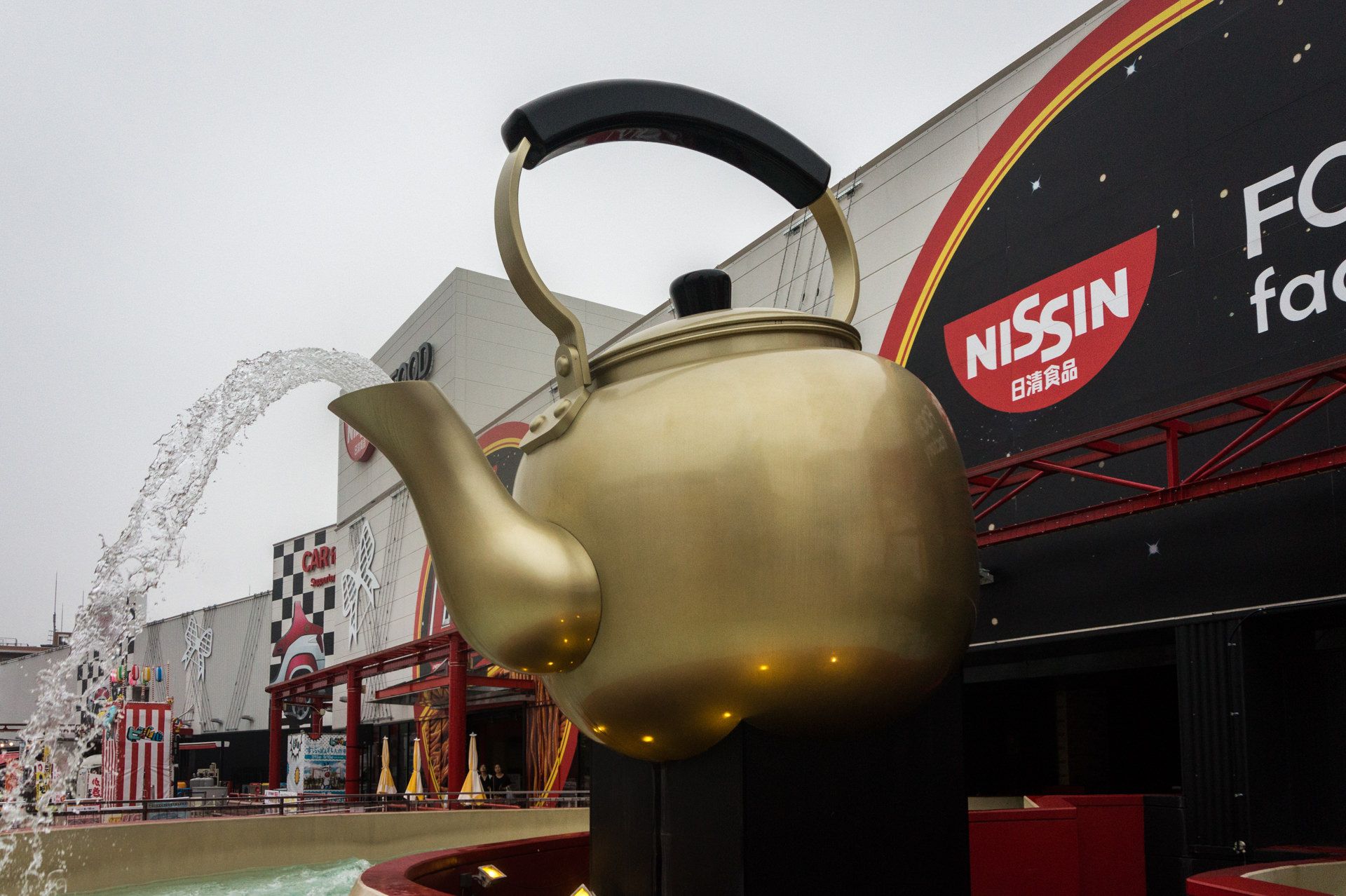
In the Bungu Factory, for example, another game of skill awaits park guests in Yomiuriland, while Fashion World can boast the Spin Runway roller coaster, a spinning coaster from the manufacturer Gerstlauer. Things get really crazy on the Splash U.F.O. round boat ride, which is themed around the protection of the Nissin Yakisoba U.F.O. factory, which produces ready-made ramen. You can also accompany your own dinner during production. Last but not least, the Car Factory offers the opportunity to design your own car and then test-drive it on an interesting track.

Splash U.F.O.

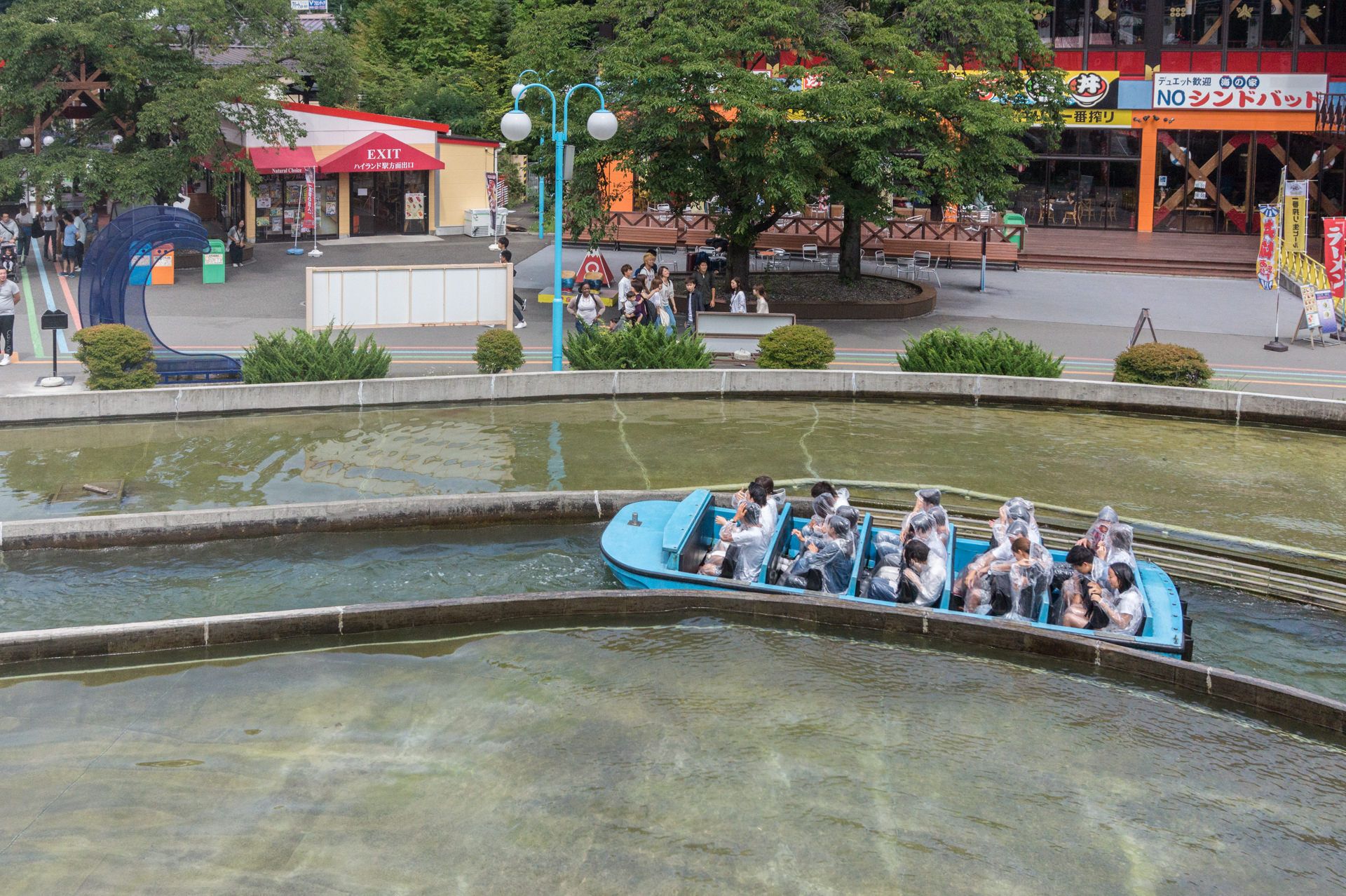
Let’s now take a closer look at the two large-scale rides in this area. In the Food Factory we will board one of the boats of the compact Hafema mini raft ride Splash U.F.O. As in the Fuji-Q Highland, only boats for a total of four people are used in the ride. In retrospect, we should have realised by now at the latest what was coming up. But since the people in front of us had not got out particularly wet, we dared to take a ride without a rain poncho on the last day of our trip to Japan. In fact, the ride became tremendously entertaining due to the resulting tirades of escape from Nicolas’ side.

But back to the beginning. As soon as you have boarded the boats and been secured by the staff, the ride can begin. The station conveyor belt pushes us onto a small rotating platform that turns 90° in succession. A small film is shown on a ceiling projection, to which we can react with the buttons in the boat before we are pushed into the ride’s lift.  We follow the production chain of ramen noodles up a few metres before the villain with the teapot on his head wants to eat us. We escape and slide down a 180° helix in the process. Shortly after, a crisp descent follows. In a short block area after the run-out we are stopped and another story segment is projected on the ceiling. A 570° downward spiral follows, with additional water cannons on the side of the channel sending the boat into an extremely violent spin. After a leisurely descent, we find ourselves in the classic rafting channel of the ride. Accompanied by several rapids, we leave the building and make a short turn around the outside of the ride. Back in the hall, a few more metres of rafting follow before we stop again in another block area. Now, with the help of the U.F.O. Ramen Man, we have to defeat the villain once and for all. Shortly afterwards, the ride ends and the ramen dish is saved.

So, dear team of the Karls Erlebnis-Dorf parks, please build something exactly like this. You don’t necessarily have to take over the interactive component, but I’m sure you could find a use for it somehow. These mini raft rides from Hafema are already a class of their own and are unfortunately far too rare outside Japan.

Spin Runway

However, you don’t necessarily need a rapid river for a successful factory tour, a spinning coaster will do. At least that’s how you can describe the Spin Runway roller coaster. After a really beautifully designed and partly interactive cue, we lock our valuables in a locker and immediately take a seat in the familiar Gerstlauer chaises. The ride begins immediately, very similar to the roller coaster Maskerade from the Wiener Prater, with a darkride part through some serpentine curves. After this, we reach the ride’s lift. In this case, however, it is a drum lift. During the ascent, we can play a little mini-game in which we have to collect as many items of clothing as possible for our chosen mascot. Wildly pushing around does not help at all, everything has to be coordinated with the other occupants of the car.

Once at the top, we complete a hairpin turn and slowly pick up speed. After the countdown 3,2,1 Speed Runway we throw ourselves into the first downhill helix under numerous light effects. After a short valley, we gain a little bit of altitude again before we skilfully reduce it in another downhill helix. This is followed by a somewhat longer stretch above the station, which is skilfully exploited by the car’s spin.

A block brake is followed by a brisk combination of a downward helix in a clockwise direction followed by an upward helix in an anticlockwise direction. Shortly afterwards we find ourselves on the runway of the fashion show and the braking section of the ride. Only a few moments later, the station is reached and we can get off.

Spin Runway is not a really long spinning coaster, but it is an insanely well staged one. Before the ride, I was already afraid that it would be a direct sister ride to the extremely weak roller coaster Maskerade from the Wiener Prater and accordingly approached the ride with very low expectations. But I was wrong; the ride was great. Although the chosen elements were also used in the ride in question, the ride on the Spin Runway offers a much more immersive experience. The rotation of the car itself could be a little faster, but that is the only real criticism of the ride. I would definitely have liked to go on one or two more rounds here.

Back in the daylight, Nicolas was suddenly recognised by one of the Achterbahnreisenden, who themselves were discovering the country for themselves with a large group of enthusiasts. While we just had our last day in Japan, it was still one of the first for them. It was nice to talk a bit, although none of us expected to meet other German roller coaster tourists in Japan.

Pictures Yomiuriland

Conclusion Yomiuriland

Yomiuriland is an amusement park that looks really run-down in places, but it always stands out positively with its selected novelties. They do their best and it shows. In general, I liked Yomiuriland a lot, but I can also understand if you don’t really like this park. The selection of rides is good and the interactive walkthroughs are quite something. The amusement park also finally had some halfway usable merchandise to offer and so I left the park with a plush of Detective Conan in my luggage.


What is your opinion about the theme park Yomiuriland?  Just write it in the comment field below the report or visit our social media channels:


Click here for the next report of the Titanic Max Tour

Riding a roller coaster at Mount Fuji

The History of Fuji-Q Highland

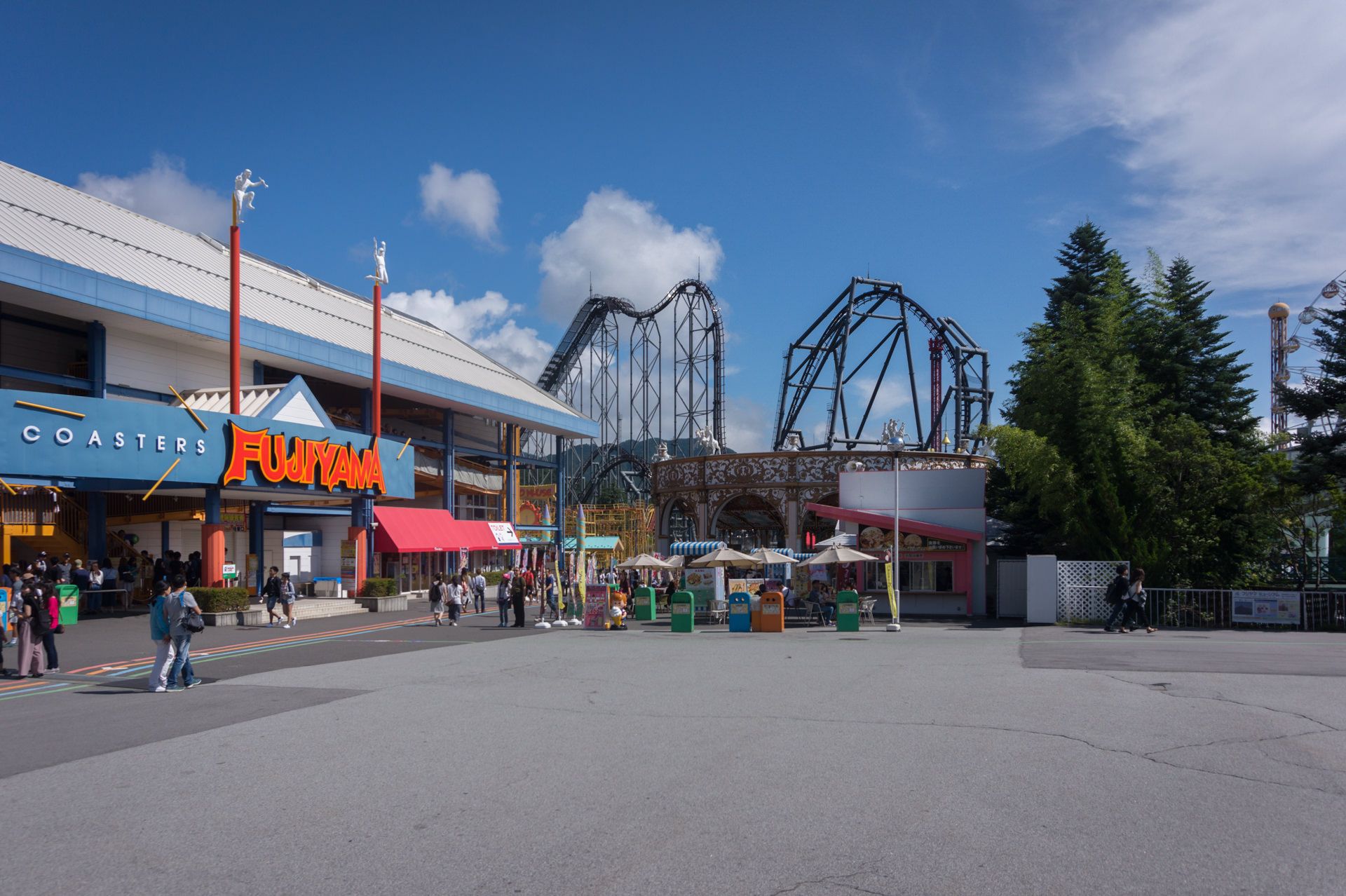
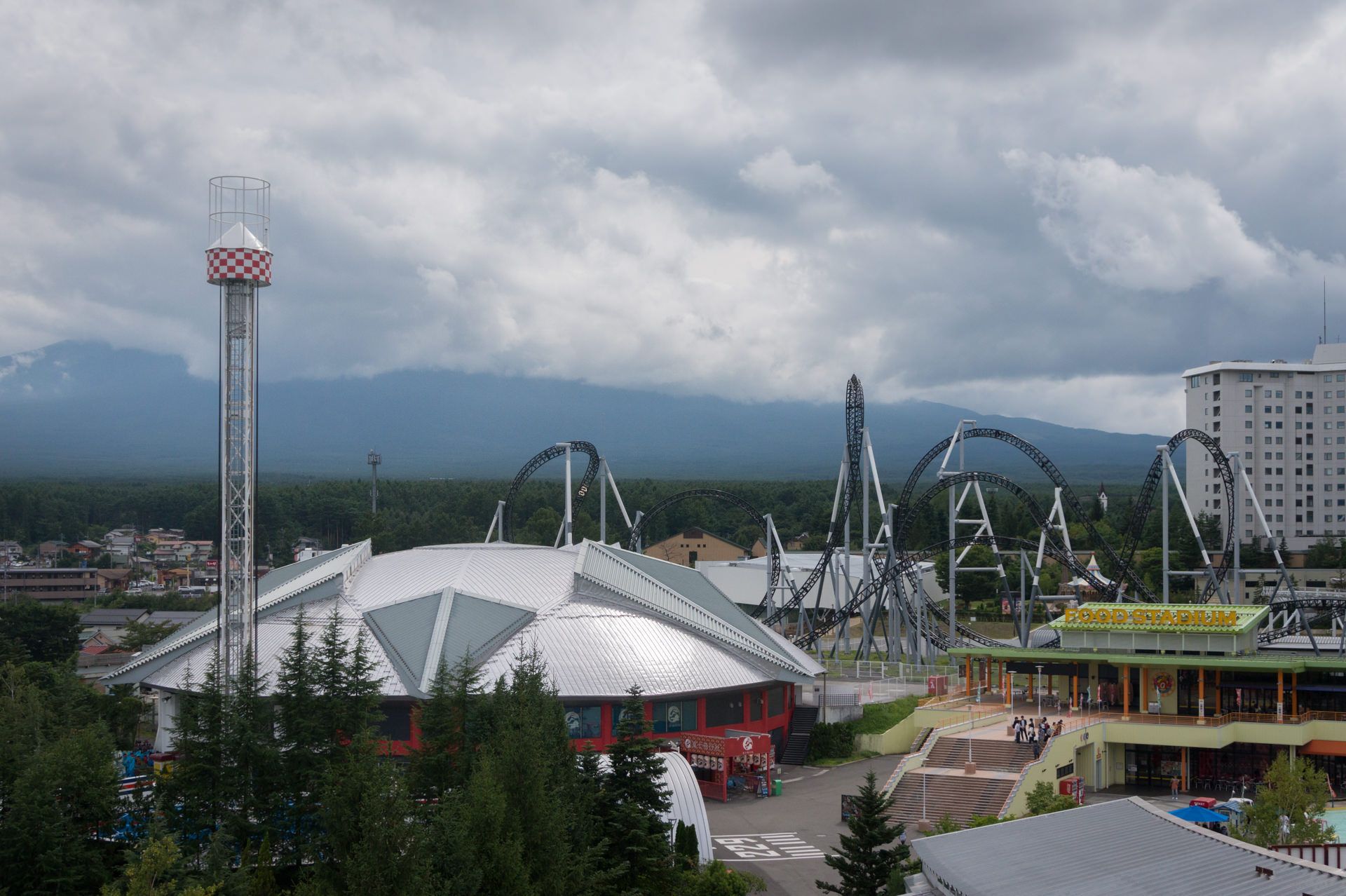
Fuji-Q Highland at the foot of the majestic Fujiyama, the King of the Mountains, is one of Japan’s most famous theme parks, with four record-breaking roller coasters waiting for the masses of park visitors to storm them. The fact that outside of these roller coasters there is a rather shabby, but in part also very likeable, amusement park is of no significance.

It all began with an ice skating rink in 1961, and with the construction of the Fuji-Kyūkō Line in 1964, the park was renamed Fuji-Q Highland and expanded into an amusement park. Since then, the park has been operated by the railway company Fujikyūkō Co Ltd. (Fujikyū for short). In 1986, the park was upgraded to a resort with the construction of the Highland Resort Hotel. Although the original skating rink, in the middle of which the legendary roller coaster Moonsault Scramble was built at the time, no longer exists, the resort remains true to its roots. In winter, skating is possible on several rinks, including an oval-shaped stadium in Conifer Forest outside Fuji-Q Highland, which is used for festivals and concerts in summer. Two museums, as well as two other hotels and an onsen complete the resort.

Tour of the park
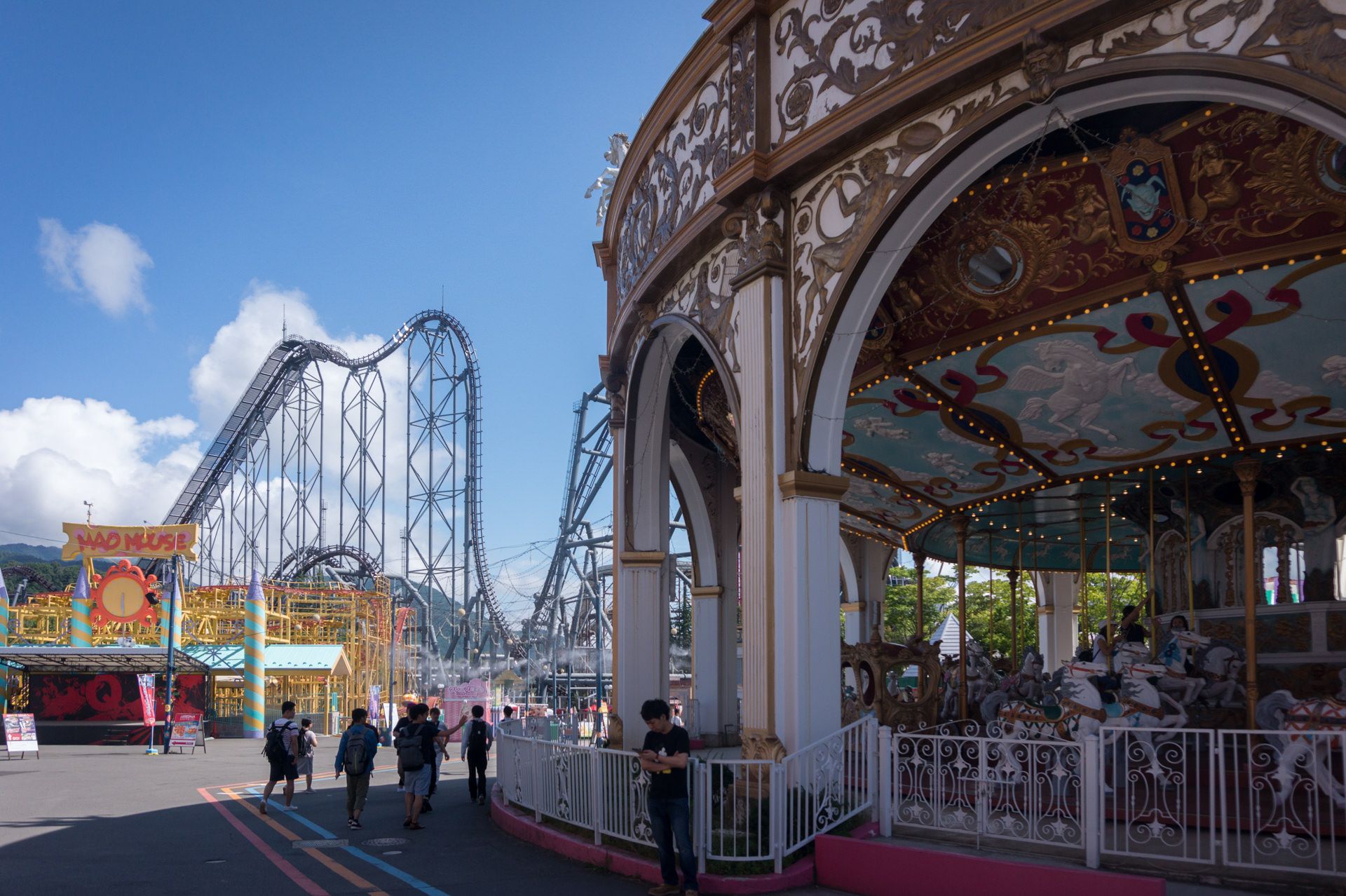
After checking in at the park’s hotel, we were drawn through the Ville de Gaspard et Lisa – a French-style shopping and food street, including Café Brioche, a terrific boulangerie that is perfect for breakfast – towards the main entrance of the theme park. Three of the four big roller coasters are located here. The exemplary Japanese now dutifully follows the floor markings and then gets into one of the queues; stupidly, this is one of the reasons why the rides increase in waiting time very quickly. The smarter park visitor, meanwhile, reaches into his wallet and buys priority passes at a small stand between the Mad Mouse roller coaster and the Panic Clock flat ride, which are available in such small numbers that they are sold out very quickly. So it’s a case of the early bird catches the worm, and consequently you can be happy about getting on all the roller coasters in just one day.

Do-Dodonpa

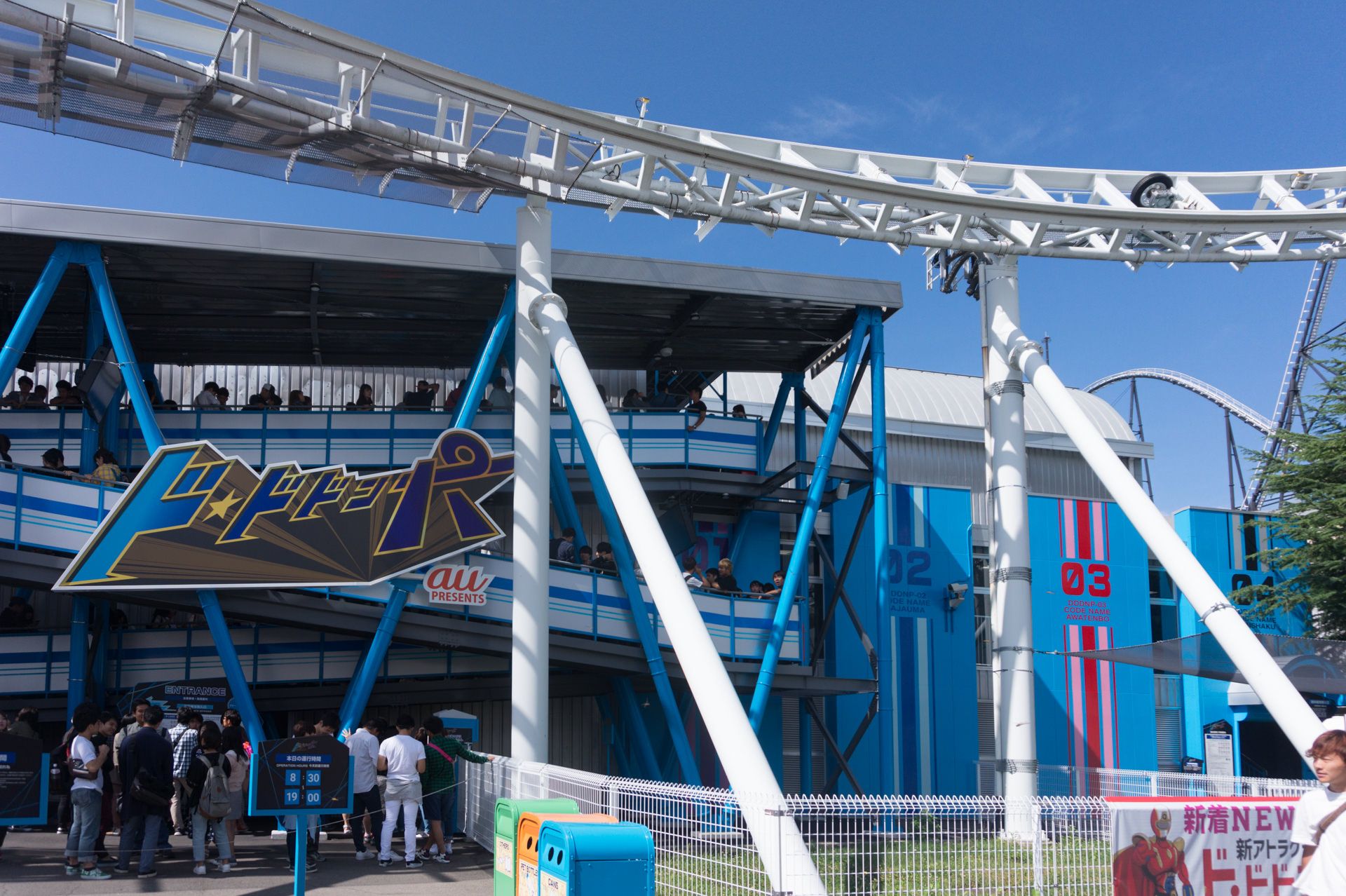
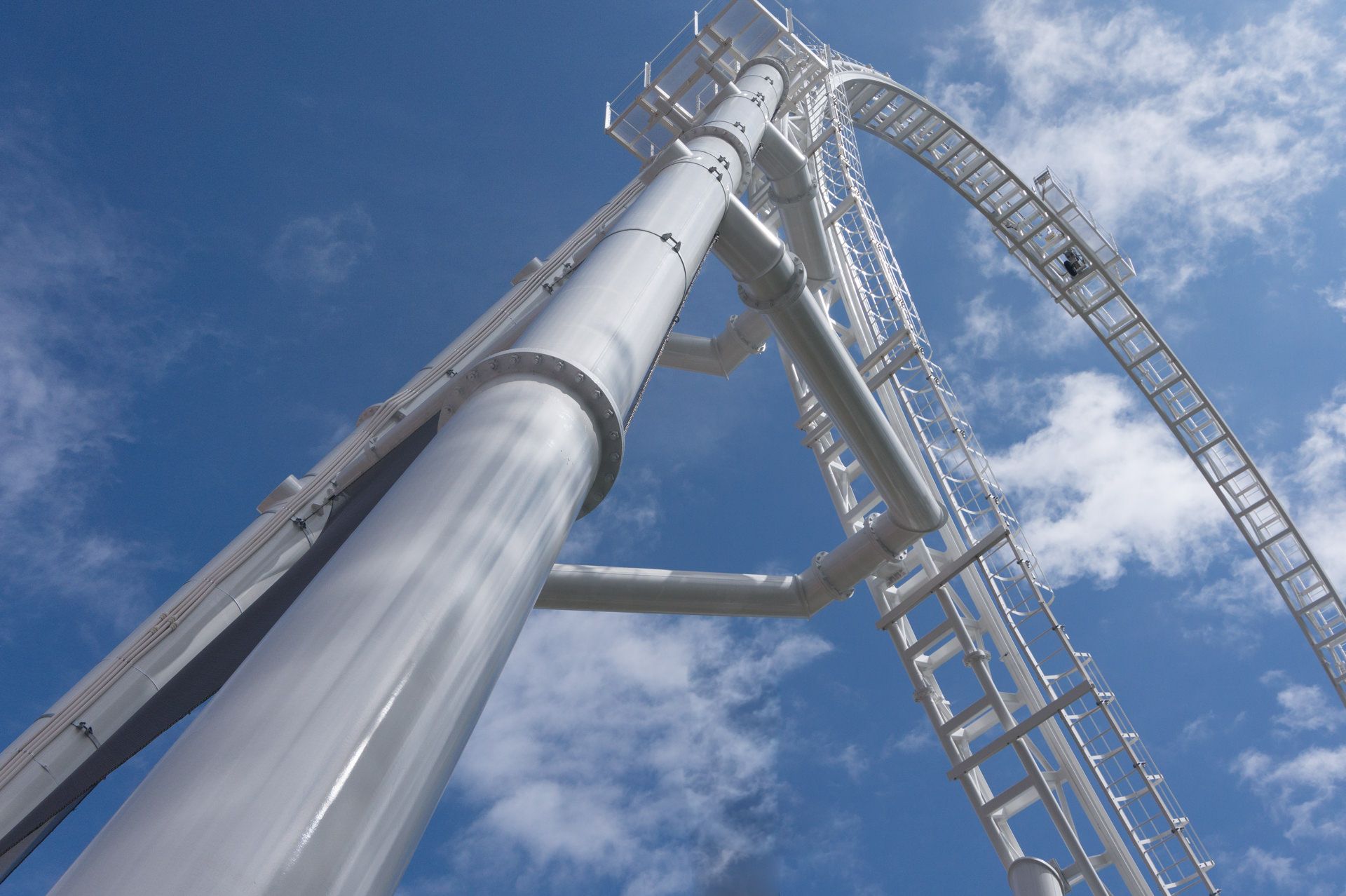
We start our tour of Fuji-Q Highland with the launch coaster Do-Dodonpa, which has undergone a significant makeover over the past year and now boasts a 49-metre vertical loop instead of a top-hat. At first approximation, this is nothing bad in principle – a nice loop can be the highlight of any ride – moreover, the speed of the air launch has been increased from 172 to 180 km/h and the acceleration phase has been reduced from 1.8 to 1.56 seconds; all this sounds quite promising and already too crazy to be true for most park guests.

That makes you all the more excited about your first ride and suddenly, as an experienced roller coaster enthusiast, you ask yourself questions you haven’t asked yourself in a long time: “Isn’t the acceleration of the launch already too much to handle?”. You then enter the launch tunnel and shortly afterwards the countdown to the launch sounds. Before you know it, you have advanced 60 m and are travelling at 180 km/h; that was fast and surprisingly smooth for around 4.75 G. However, the gradient of the launch is maintained and the train loses its speed steadily and very quickly. Even the short dip that follows cannot stop this behaviour. The train then makes its way through a very wide right-hand bend towards the loop, which is driven through very pleasantly. A short left-hand turn is followed by the first brake section. A strangely transverse right-hand turn then leads you back to the station.
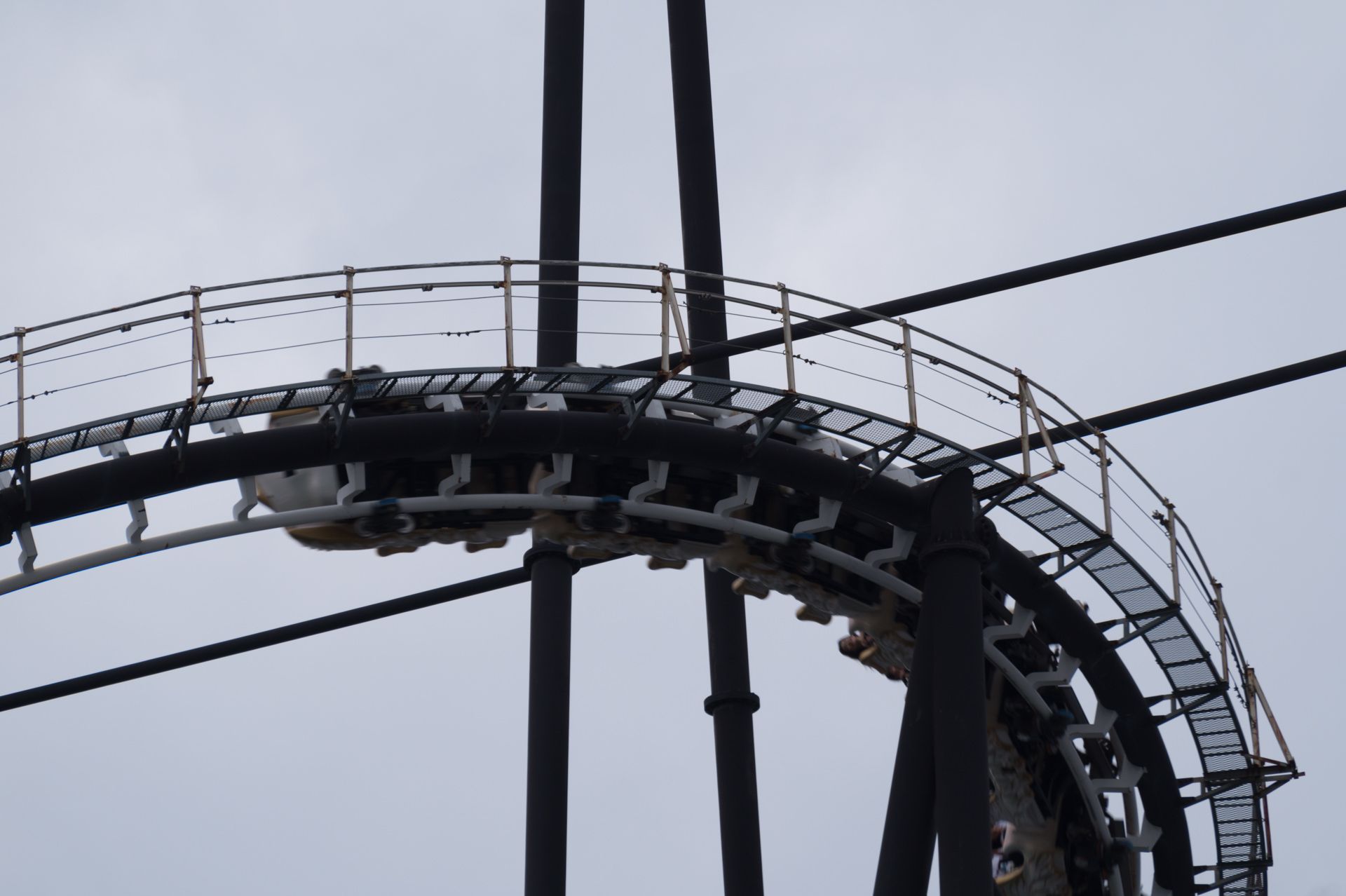
Luckily, we had bought a priority ticket for Do-Dodonpa, because after four hours of waiting, the disappointment about the uneventful ride would have been many times greater. Sure, the launch does a great job – but it only does so for 1.56 seconds. The rest of the ride is unfortunately not worth mentioning.
A strong opening in the first act is of no use if the rest of the piece is dull. It’s a shame that the predecessor, Dodonpa, had a second element in the form of the bone-crushing top hat, which had a decisive influence on the ride and thus invited visitors to ride it again. Accordingly, the update of the roller coaster here is unfortunately an improvement for the worse, and the fans of the old ride at least will not like it any more than I did after my first ride.

Takabisha

It’s a good thing that the Takabisha roller coaster is right next door. Built by Gerstlauer, an expert in steep descents from Münsterhausen in Swabia, the ride impresses with the steepest of all descents worldwide and other tried and tested elements. So nothing can go wrong here, especially since you’re travelling in the classic, shoulder-bar-equipped, Eurofighter cars.

The ride begins with a tight left turn, followed by a short but extremely steep drop. With a lot of pressure, you cross the following valley and elegantly throw yourself into a 180° left turn, which is followed by a wonderful heartline roll. This then leads into another left turn and soon into the first block brake. Via a mini-drop à la Karacho from the Swabian amusement park Erlebnispark Tripsdrill, you then reach the launch area of the ride, which accelerates you extremely powerfully over a longer period of time. Actually, it would be wrong to say that Takabisha has the better launch of the two launch coasters of Fuji-Q Highland, but Takabisha has the better launch.

This is followed by an oversized corkscrew, reminiscent of a top-hat, before you approach an extremely interesting element at full speed, and at the same time you are riding through a valley with wonderful intensity. The element in question is the so-called banana roll, a kind of cobra roll in the shape of a banana. The turn within the element takes place at the highest point, which results in an interestingly twisted exit. This is followed by a classic corkscrew that transports the car across the ride to the other side. This game is repeated again over a twisted and airtime-embroidered hill, before the entry into the second braking section awaits after a short ascent.

Inside the metal hall you now complete a 180° turn, whereupon the ride’s vertical lift is waiting to be climbed. The lift transports the passengers steadily to the maximum height of 43 m, so that they can enjoy the view on the subsequent descent; before the 121° steep drop, there is a short holding brake to generate an effect similar to that of the Dive Coasters from the manufacturer B&M. A few seconds later, the car is gently carried over the crest and then falls rapidly to the ground. At the same moment, interestingly enough, the onride photo is taken from far away – surprise, surprise (after all, you’d rather expect a photo of the ride going through the valley, which wouldn’t capture the facial expressions of this WTF moment)!

The drop keeps its promise and so the car rushes powerfully through the valley ahead. With a lot of momentum, you climb a hill, turn around your own axis and dive into a dive loop. This is also the prelude to a visually impressive double turning manoeuvre, because you now change direction again in an inside-top-hat before you climb an Immelmann loop. On its exit, the final brake awaits the passengers and soon the station of the 1000 m long roller coaster.

Takabisha is an all-round successful roller coaster from the manufacturer Gerstlauer, which is particularly convincing thanks to its launch and the significant steep drop in the second half of the ride. The banana roll is also an extremely interesting element that pulls you back and forth wonderfully. The riding characteristics are brilliant thanks to the classic cars. All in all, this is a roller coaster that absolutely lives up to its waiting time – as you could queue just as long for the ride here in Europe; in general, the queue is moving quite fast.

Fuji Airways

Admission to the Fuji Airways Flying Theatre is somewhat less rapid, as it always takes place at intervals. Built in 2014 by the manufacturer Brogent Technologies, the ride stands out above all (in the pre-show) for its absurd humour. Then in 2016, the film used was enhanced with 6K drone flight footage from the surrounding area and the inclusion of the gondolas from the nearby Tentekomai rollover ride. So they don’t take themselves too seriously here at Fujiyama, and so you glide over the landscapes with great enjoyment and perform an extremely impressive rollover in the middle.

Fans of this type of simulator will be thrilled; for me it was the first encounter with such a simulator and I thoroughly enjoyed the flight with Fuji Airways. The movements were fluid and the images shown were visually impressive; it didn’t really bother me that you could see the edges of the screen. Only the ride itself was a bit repetitive and generally a bit too long – but before the enthusiasm could die down too much, the roll over occurred and suddenly my enthusiasm was back again. All in all, a very nice ride at Fuji-Q Highland that you shouldn’t miss out on.

Tentekomai

In the same vein, one may also dare to take a ride on the Gerstlauer Sky Roller Tentekomai, which once again takes up the story of the fictional airline Fuji Airways and thus also does not take itself quite so seriously. The gondola rotation was easy, so you could get to the roll overs (if you want) quite quickly, however, the ride was over just as quickly. It took all the longer to clear the ride, which wasn’t too bad because of the crowds on the first day of the visit.

Thomas Land

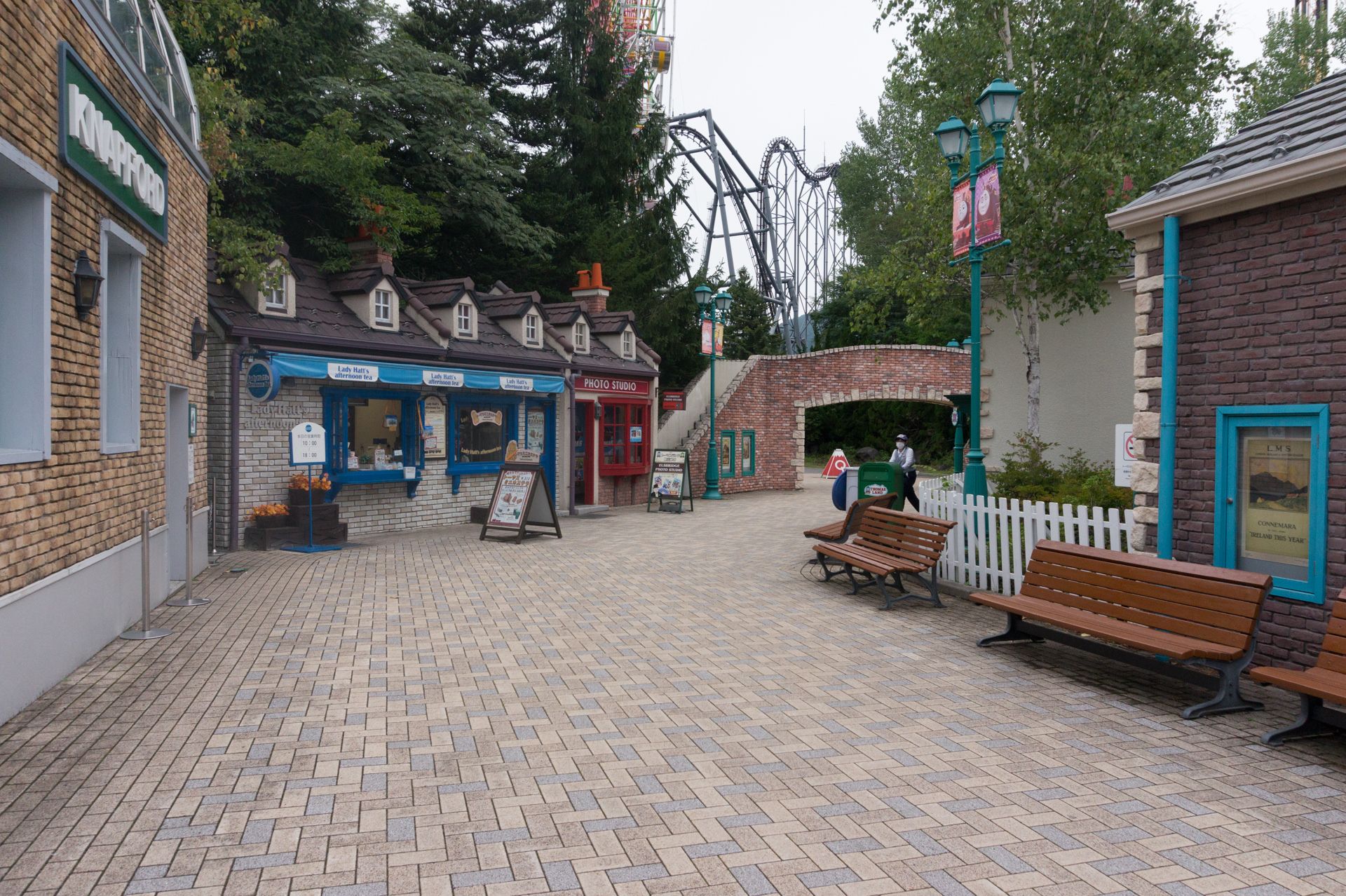
We pass the Wave Swinger and the Shining Flower Ferris wheel, which is relatively small (only 50 m high) for a Japanese park of this size and now head for the children’s area of Fuji-Q Highland. This is based on the children’s series “Thomas & Friends” and was the first of its kind at the time. Since 1999, Thomas and other actors from the Railways Series have been transporting visitors across the island of Sodor. Sometimes even in alternating shifts, because on Thomas and Percy’s Fun Ride the locomotives are changed several times a day.

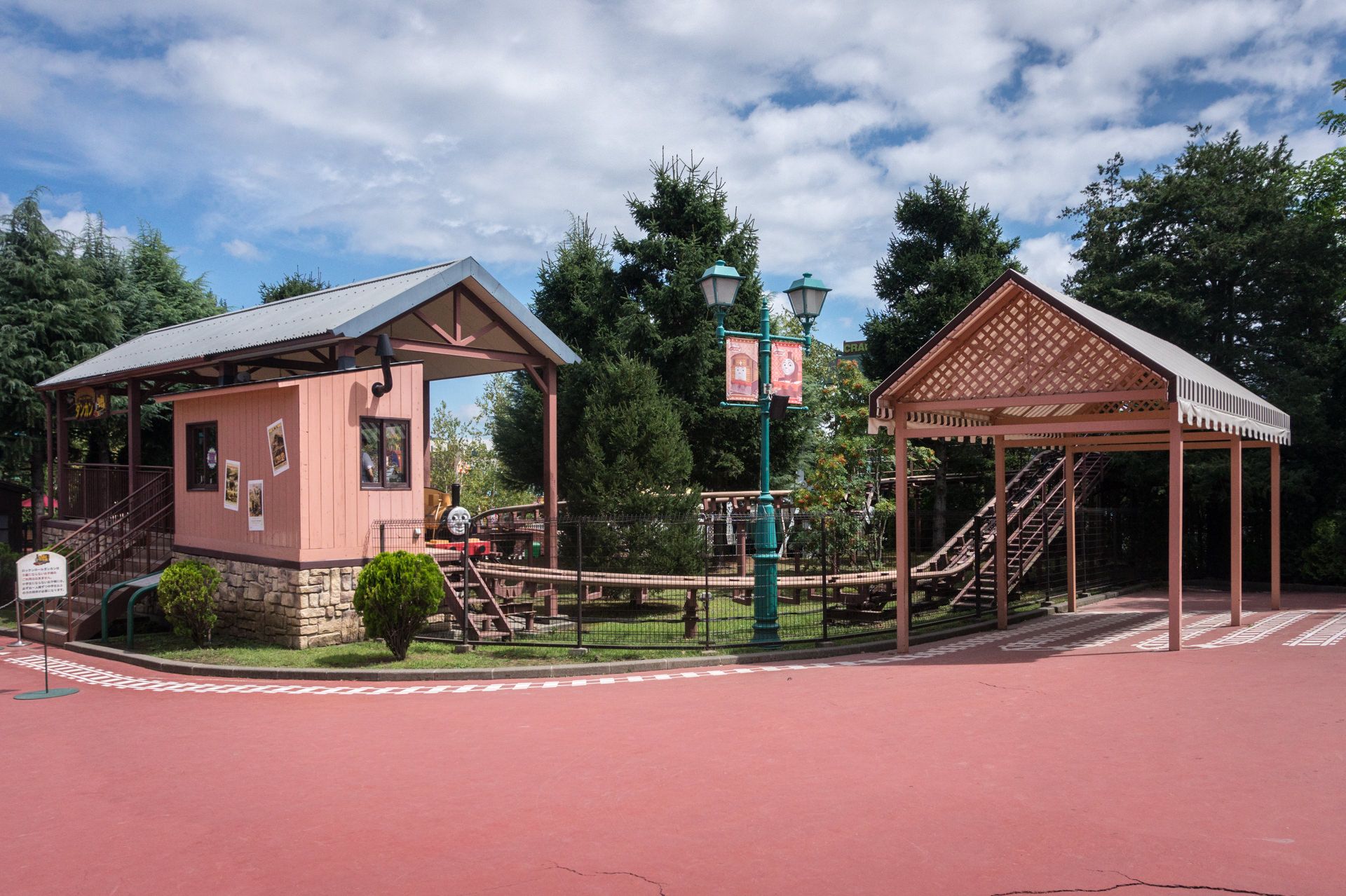
Otherwise, you feel like you’re in the middle of England. There is a pub ( which is unfortunately only a decoration), a tea room and much more to discover. In the middle of it all, four of the well-known locomotives are ready to be photographed and the fat inspector is of course also represented. In addition, the area is extremely well set up with a variety of rides, including the dark ride Thomas’s Party Parade (including turntable and switch), a very smartly integrated 3D Maze, a children’s log flume, a 3D cinema, and the L-shaped children’s roller coaster Rock ‘n Roll Duncan.

Mini-Fuji

At the back turn of the Do-Dodonpa roller coaster we leave Thomas Land and immediately find ourselves at the Mini-Fuji. There is a small slide here in winter, but otherwise this corner of Fuji-Q Highland lies largely unused. It is all the more interesting that you can actually climb this small mountain, which gives you a great view of the surroundings.

Adventure Land of Kaiketsu Zorori

At the foot of the small mountain is the star flyer Tekkotsubanchou, which fits in perfectly here with its construction site theme. Right next to it, you can explore the Adventure Land of Kaiketsu Zorori. A small, child-friendly funhouse with all kinds of interactive elements stretches across a 700 m² hall.

Ultimate Fort 2 und Super Scary Labyrinth of Fear

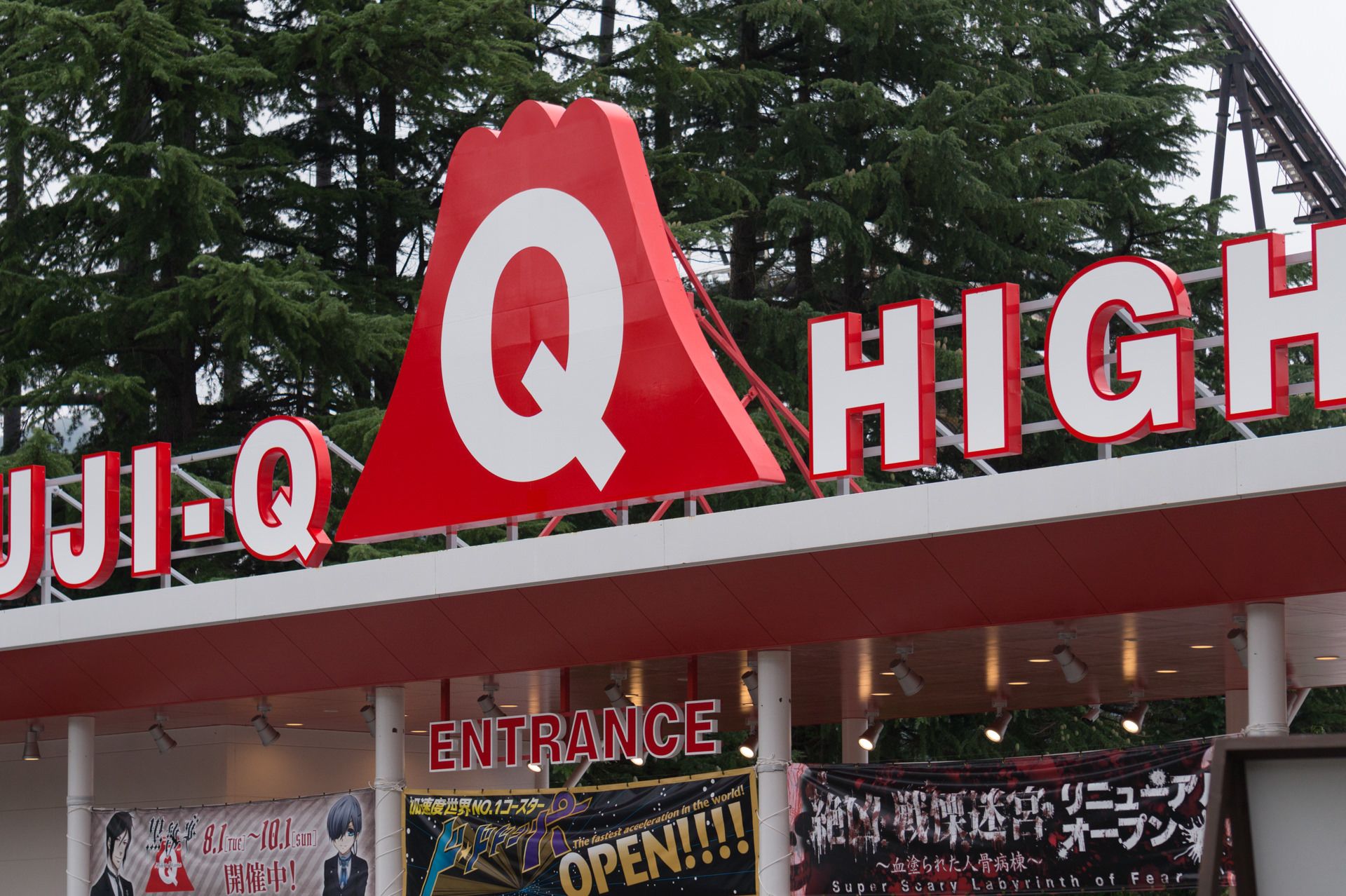
Nearby are two notorious indoor attractions; famous and infamous above all as the queues tend to reach their capacity limits by lunchtime. The Ultimate Fort 2 is an interactive walkthrough in the style of an Escape Room, where you have to carry out a seemingly impossible mission – the chance of success is about 0%, out of 100000 attempts usually only one group makes it. The second attraction is the Super Scary Labyrinth of Fear, a scare maze in the style of a run-down hospital with a running time of about 20-30 minutes; advertised, however, are 50 minutes, making the maze one of the longest of its kind.

Nagashimasuka

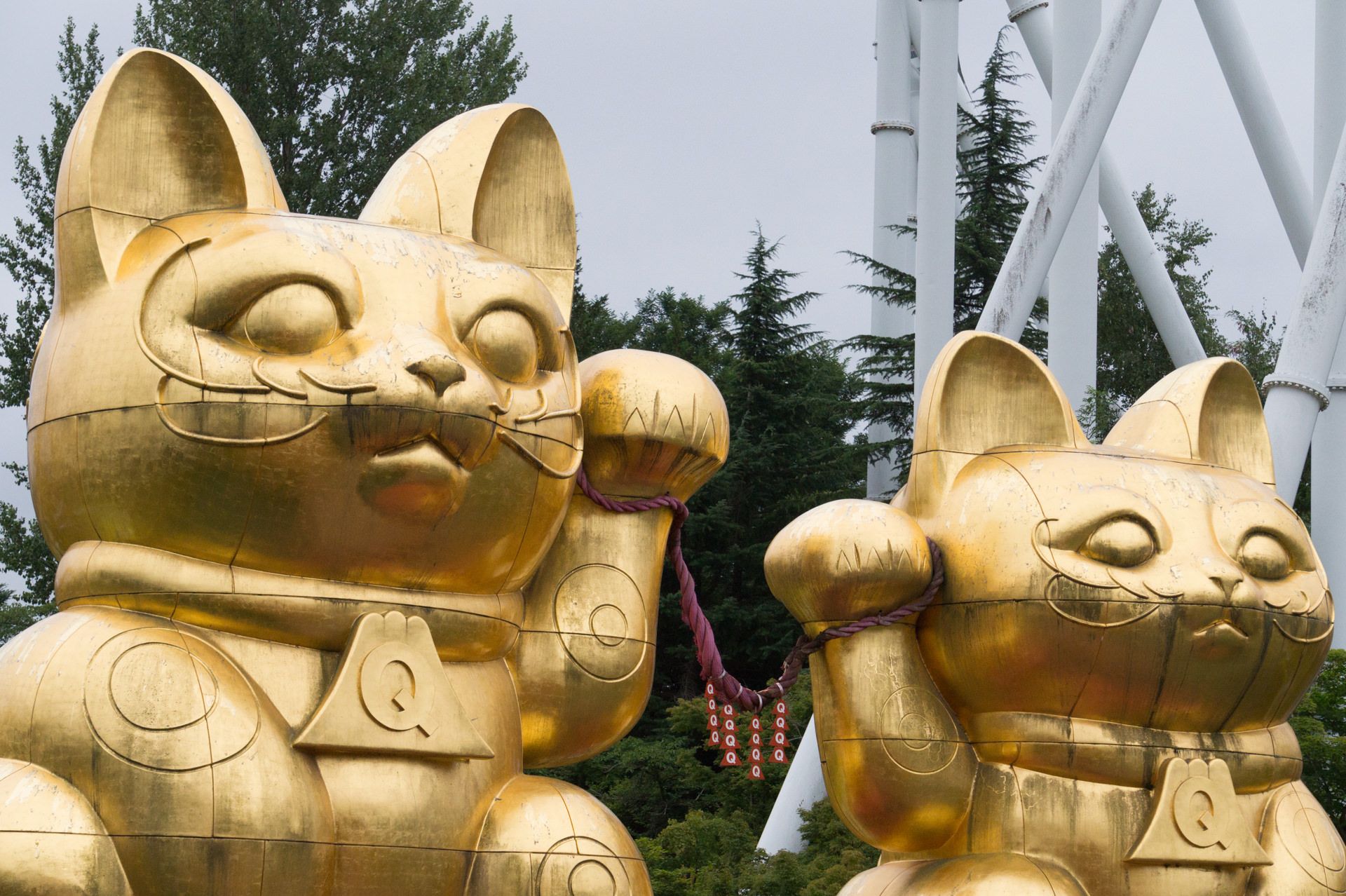
Interestingly, there is another maze right next to it with a much shorter run time. Our eyes, however, are drawn towards the elevated Hafema rapid river Nagashimasuka and its cute and mean winky cat design. The nasty aspect of these cats can only be seen from here; otherwise the ride is extremely inconspicuous. Even in the station, the degree of wetness seems manageable, as if Nagashimasuka is a simple round boat slide.

But this illusion is clouded; as soon as the ride’s high lift has been climbed and the boat has raced down the first incline, you are wet, or rather soaked, because the short braking distance causes quite a high wave to crash down on the four unsuspecting occupants. The boat then slides down a 670° helix, at the end of which another wave awaits. Now mostly soaked, you bob along a wide curve, pass the lift hill and another turning curve. This is followed, quite surprisingly, by a double drop. Here, too, some water sloshes into the round boat, but the ride is far from over and you land straight in a whirlpool, which is again very typical for the manufacturer. Those who have already completed a few rides of this kind will know that at the end there is usually a wave front waiting for the passengers, which can moisten them quite efficiently: This is also the case here!

The way back to the station is now through a classic rafting channel on the back of the once so friendly looking cat statues, here correspondingly in the angry version. Along the way, you pass a volume meter that switches on additional water effects at the edge of the path if the volume is loud enough. After a wide turn, the extremely wet ride comes to an end, whereupon we were invited to a photo session with our two Japanese passengers (who had asked us in a friendly way if we wanted to ride with them) in front of the two waving cats – in typical Japanese pose, of course.

Nagashimasuka is an extremely great rapid river, which is absolutely convincing due to its very high degree of wetness. The multitude of elements makes the rafting ride absolutely worth experiencing and the double drop alone makes the ride a must-do. Interestingly, you can also try the ride in winter, but then additional protective walls are attached to the gondola.

Voyage dans le Ciel (avec Gaspard et Lisa)

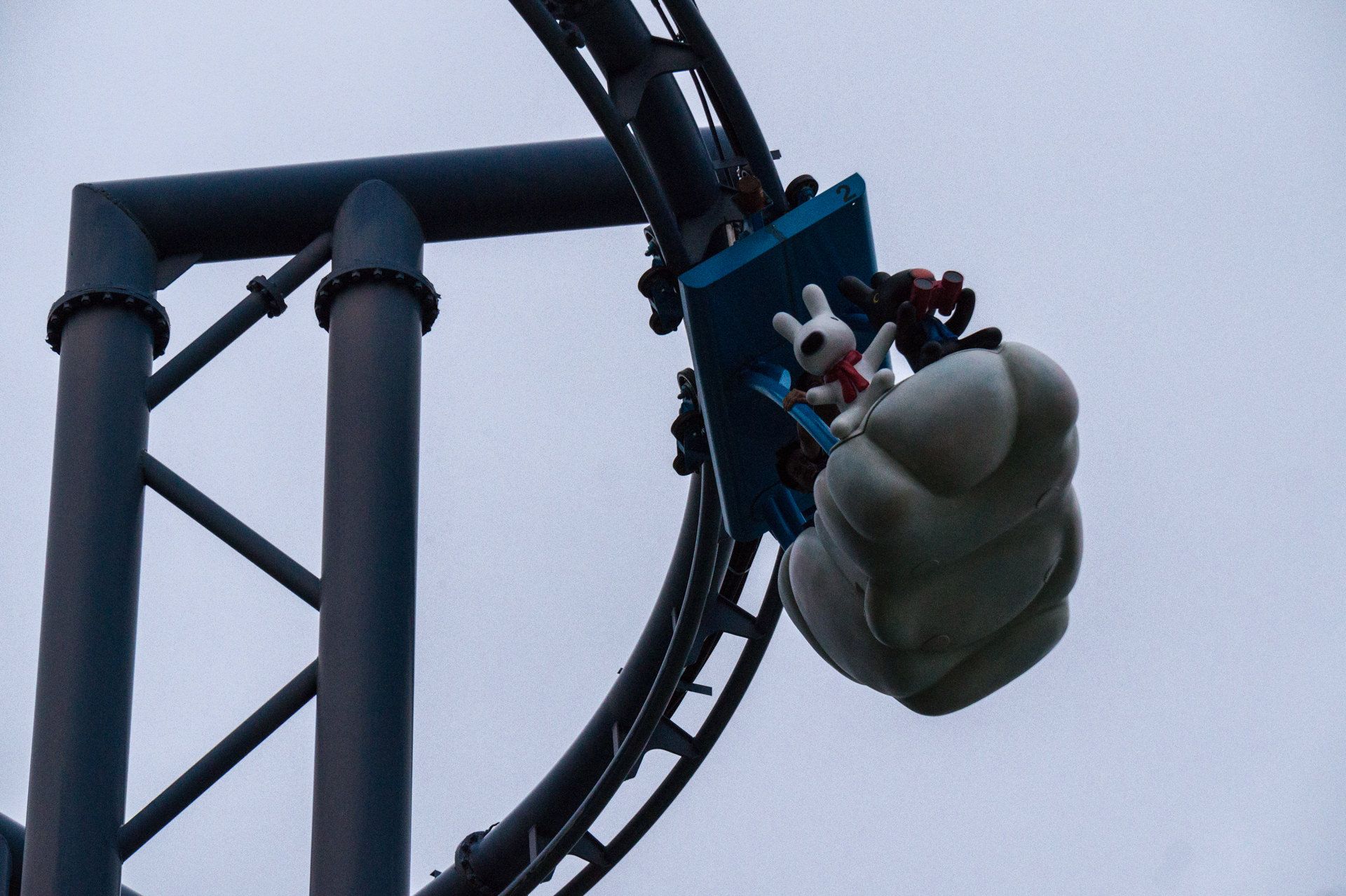
Right next door is the station of the roller coaster Voyage dans le Ciel (avec Gaspard et Lisa), formerly better known as the Hamtaro Coaster. But interestingly, the suspended coaster has an eventful history as the first flying coaster in Japan: Originally opened as Birdmen in June 2000 with flying gondolas very similar to a Zamperla Volare (but with only two seats side by side), it didn’t take long until the first incident happened – during an emergency stop in May 2001 – and the ride was subsequently closed for two years. As a result, the ride was fitted with new gondolas and has since become a child-friendly entry-level ride.

After you have squeezed into the two-seater gondolas (with seats behind each other), the ride can begin. A chain lift transports the rather bulky gondola to the starting height of 23 m. From here, the ride begins with a left turn and then a right turn. Then a left-hand bend and a right-hand bend take you steadily downwards, before a small dip and a hill follow. After a short ascent, the first block brake is reached, whereupon you complete a left-leading downward helix around the Red Tower freefall tower. This is followed by a short left turn, which turns into a beautiful descent at the Spillwater Cool Jappaan. The ride’s second block brake then awaits you beneath the lift hill. In a wide left turn, past the Fuji-Q Highland pedal monorail, you approach the last brake section of the ride, whereupon the thoroughly enjoyable ride soon comes to an end.

Eejanaika

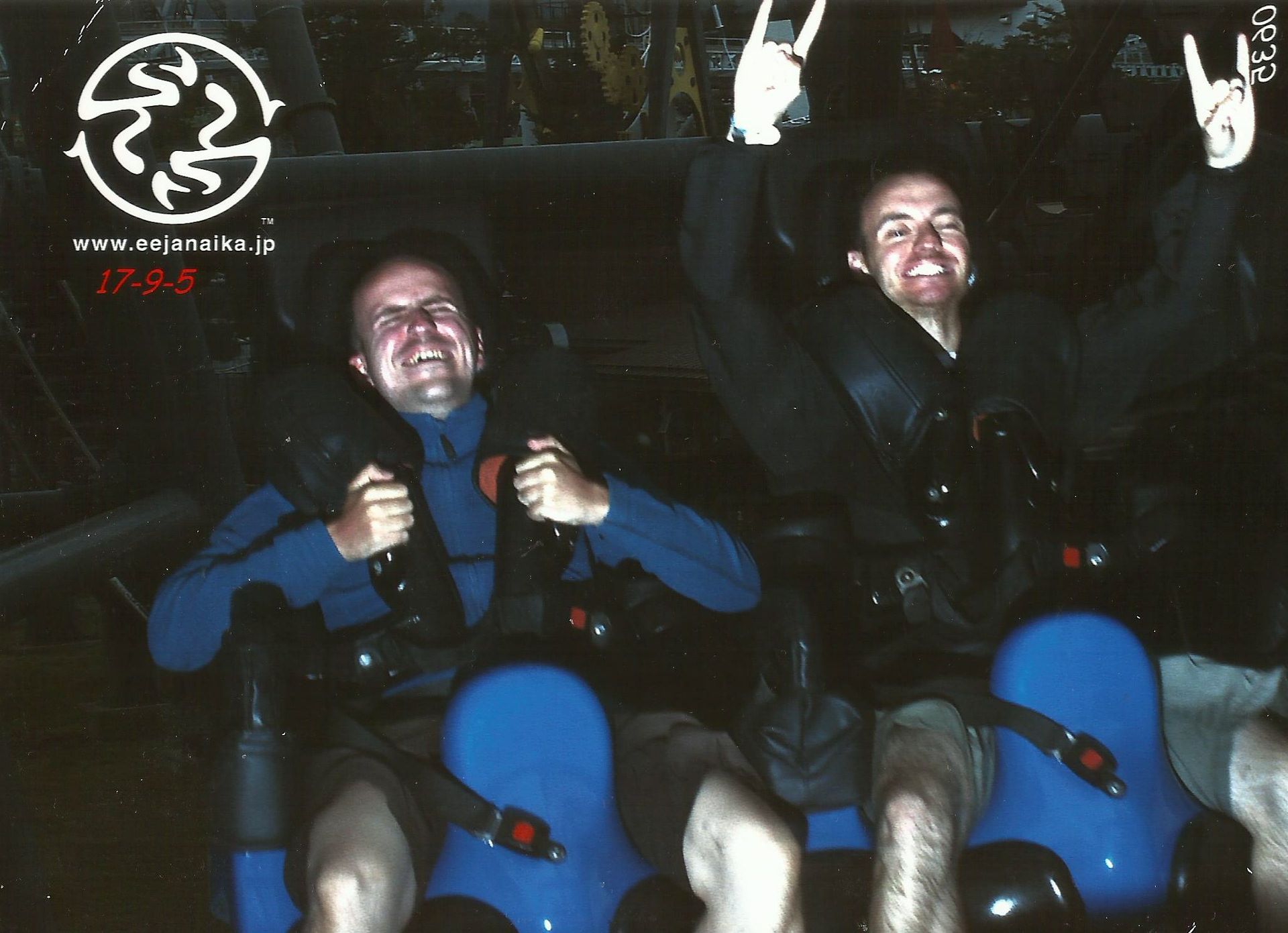
Arriving at the entrance near the Fuji-Q Highland Station, we had to tackle a very special steel colossus – as most visitors do here from the very beginning, because the ride is always crowded quite quickly due to its location directly at this entrance. We are of course talking about Eejanaika, the second delivery of a 4th Dimension Coaster – at that time, it was the first delivery of the manufacturer S&S. The basic layout is very similar to the prototype ride X from the American amusement park Six Flags Magic Mountain, but the gondola rotation was increased a bit at the request of Fuji-Q Highland. The ride is also somewhat larger and has a significantly lower capacity.

However, this is not due to the optimised dispatch process, where passengers prepare for the journey in separate boxes (all loose items and also shoes are placed in lockers) and also not due to the triple bar check, where you also have to become active yourself (probably for legal reasons), as well as the final show interlude before the train leaves the station. It is simply due to the fact that the train only has five gondolas on each side.

Once cleared, however, the ride begins quite quickly and in a 180° turn you immediately find yourself in the supine position, slightly upside down. You then reach the lift in a backwards position before it takes you up to a height of 75 m while lying on your back. Although this happens very quickly, you still have enough time to take a good look at the surrounding mountains – but not at Fujiyama, which is directly behind you.

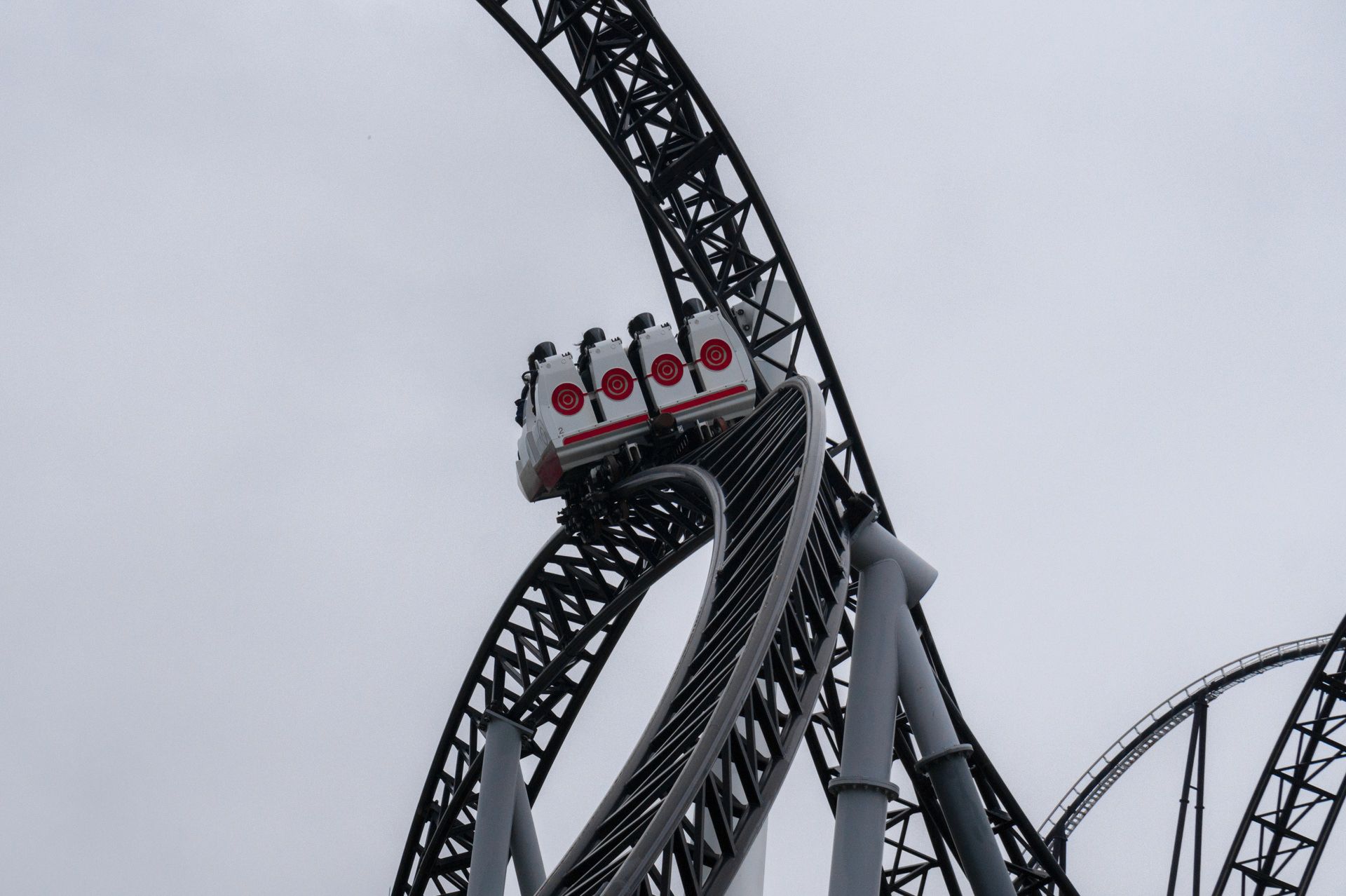
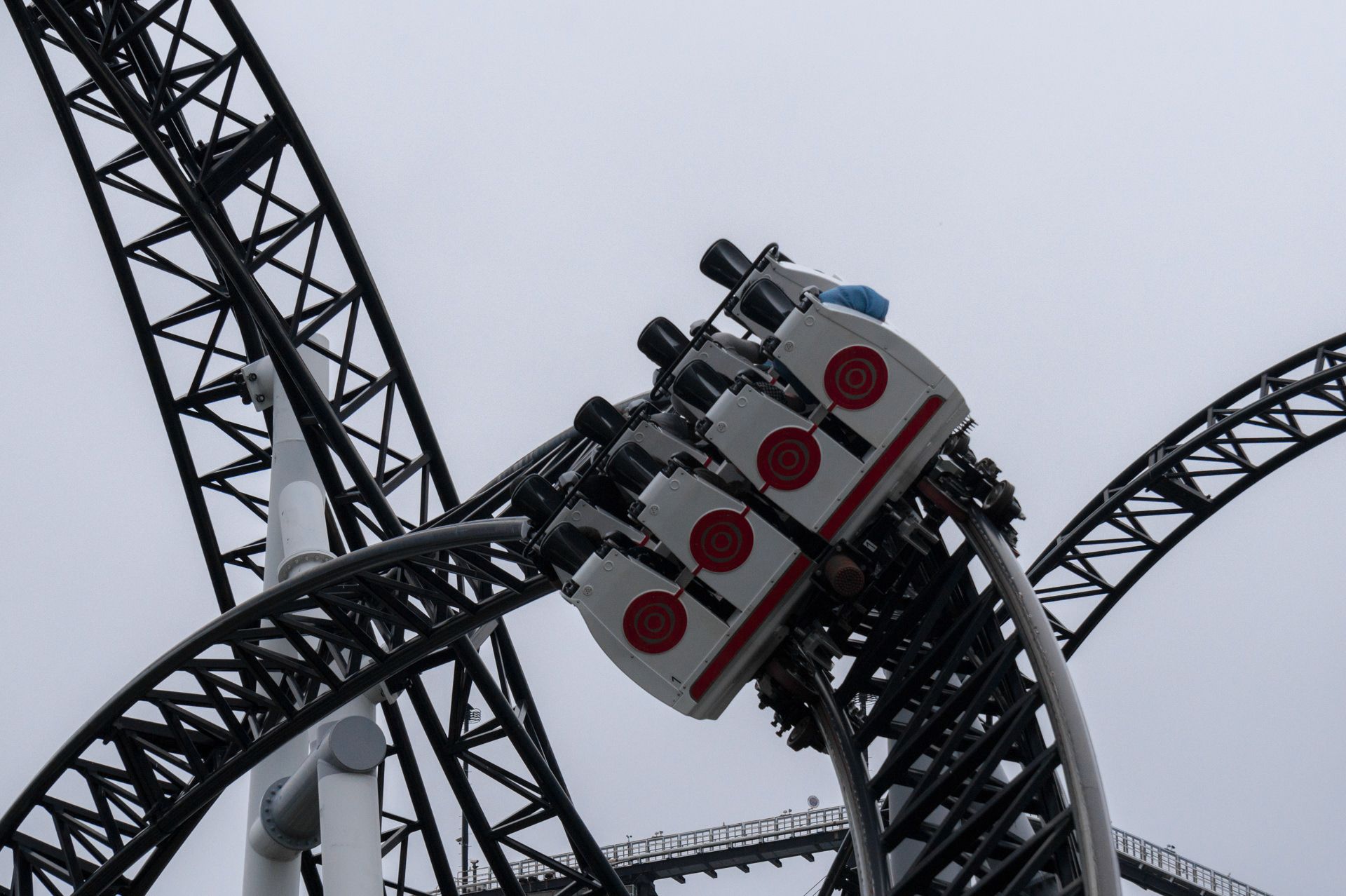
A short pre-drop gets the wagon group going and aligns us again in the original riding position before we are then directed head-on towards the ground or towards the row in front on the next crest. We then maintain this riding position for a large part of the vertical slope, but turn over once in the lower third so that we complete the following valley looking slightly upwards. In the inside rave turn, the direction of travel of the rail is now changed once, but we always experience the element in the horizontal position, just before the exit of it is reached and we perform a short somersault. The train itself, now hanging under the rail, goes down a slope and then turns around its own axis in a zero-G roll, while we race forward through the dense forest of supports and avoid a rollover in the roll with a 360° turn around our own axis. Facing forward once more, we then enter an over-inclined turn, at the crest of which we are turned towards Fuji-Q Highland. Continuing with a view ahead, we cross a powerful valley alongside the station. On the hill that now follows, the track changes its orientation in a fly-to-lie element and we cheerfully turn 180°. Leading backwards, we then pass a valley and immediately climb a hill at the end of which the entrance of the outside raven turn is waiting. In this variant of the rave turn, we are also kept horizontal while the train changes its driving position and thus continues hanging under the track. At a significantly high speed, we now race towards another fly-to-lie element, which, in combination with the gondola rotation, pulls us back and forth quite a bit. Shaken and stirred, we find ourselves in the braking section and shortly afterwards in the station.

Eejanaika is the most intense roller coaster I have experienced so far. The ride is extremely powerful, robs you of your sense of direction in an absolute way and is surprisingly smooth in its ride characteristics (apart from the last ride element). You are simply not beaten up, even though you are sitting in the train with your legs spread apart in Pasha style. The minimalist, yet quite complicated, restraint reinforces the ride and the respect for it immensely, even if you have already experienced it once. And even now, several months after the ride, my verdict of the ride is simple: Eejanaika is awesome!

Cool Jappaan

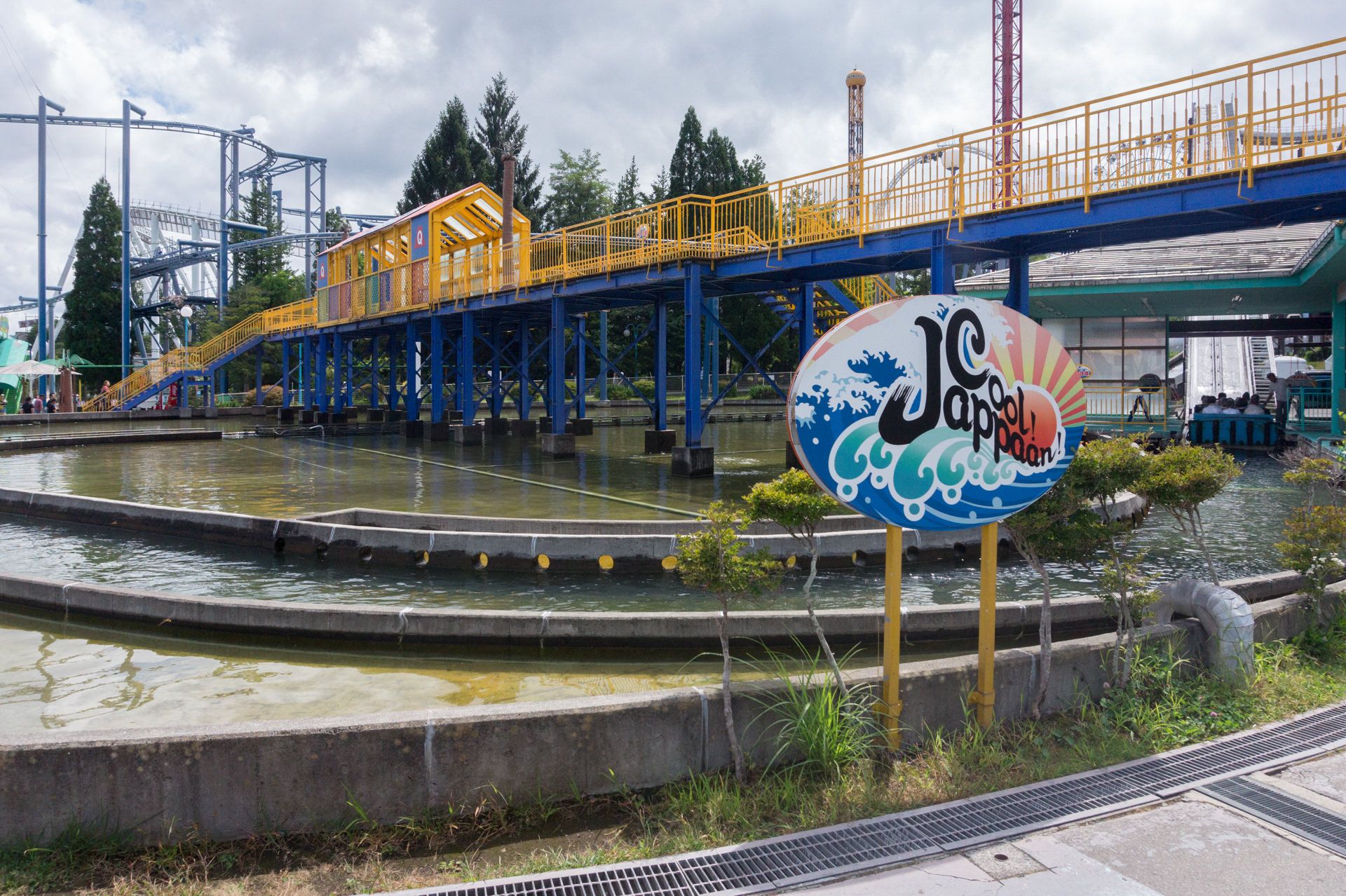
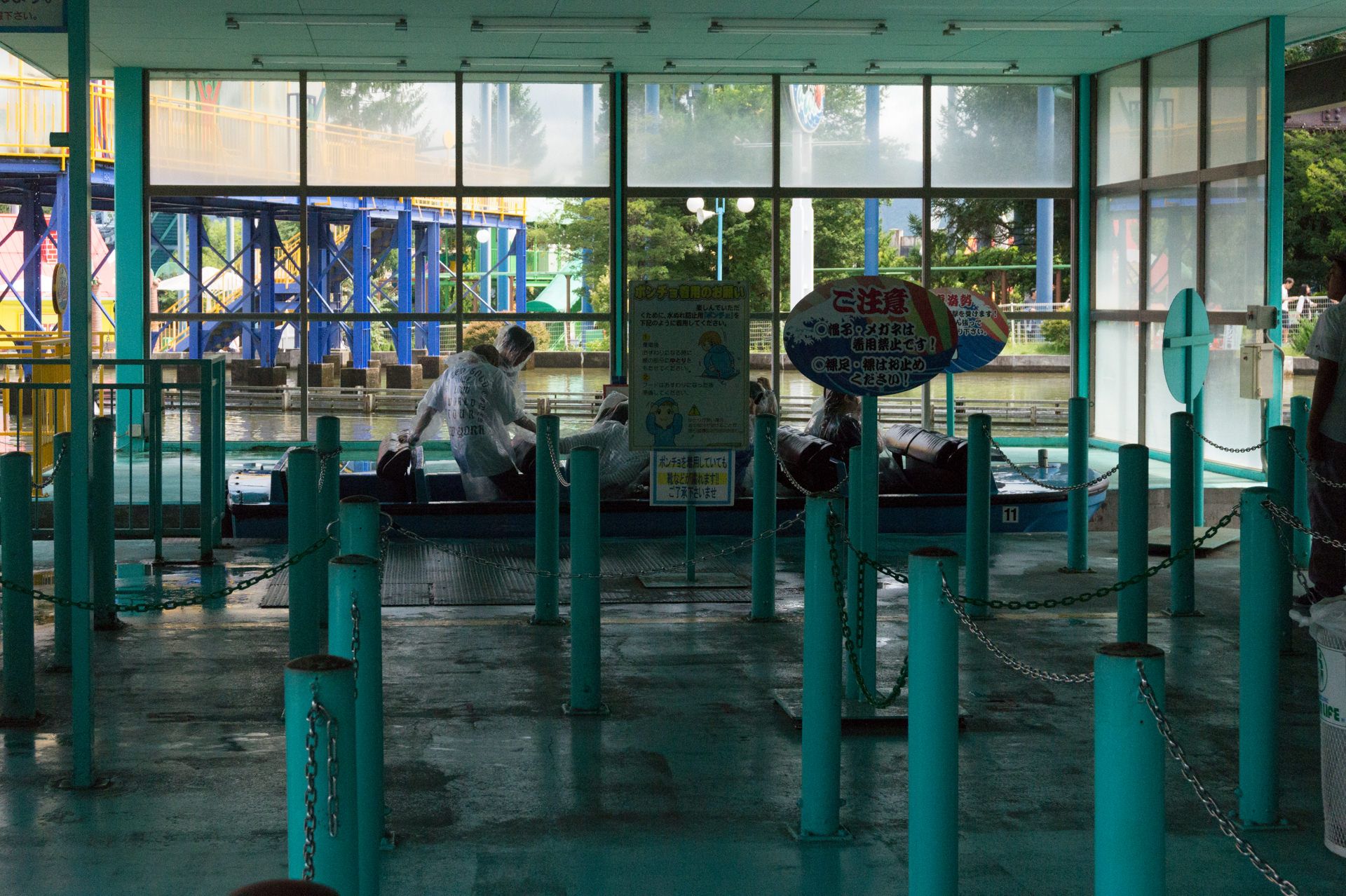
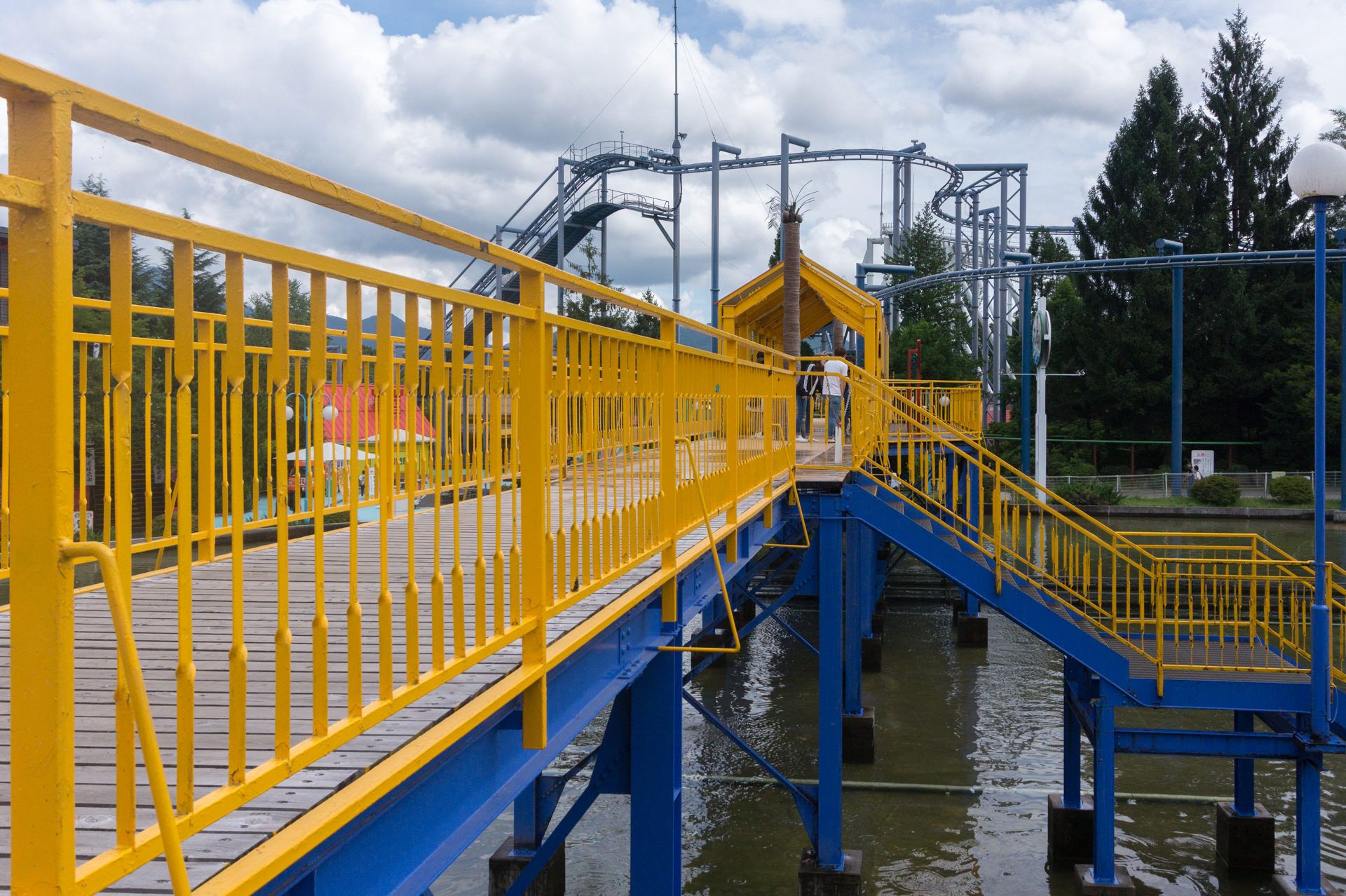
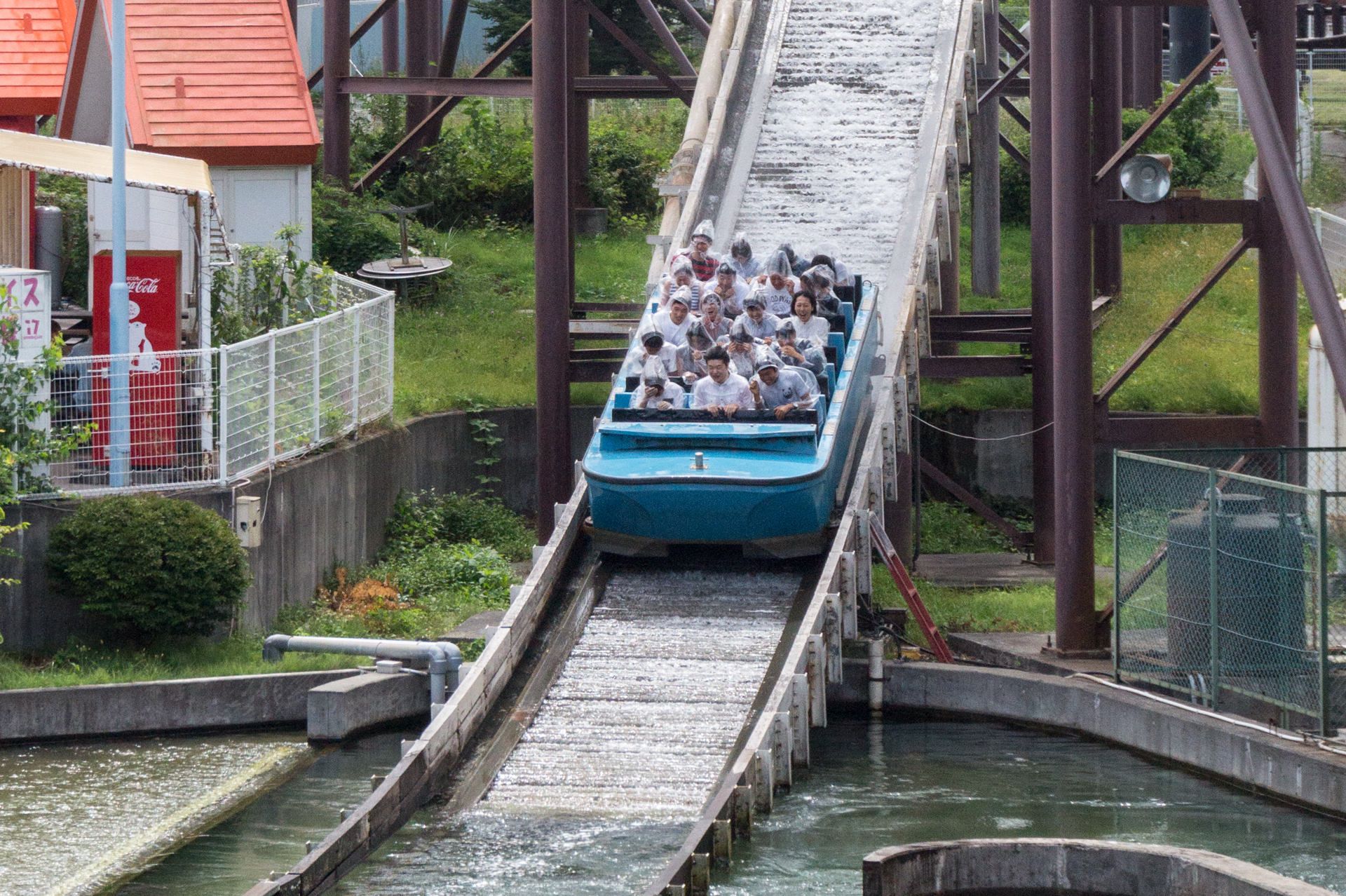
Eejanaika does not need any more praise than that, and so we quickly move on to the neighbouring ride, the Shoot the Chute Cool Jappaan from O.D. Hopkins. This ride is identical to the one in Nagashima Spa Land; however, it has a shelter on its bridge with some of the windows missing. The ride itself is slightly less wet than its sister ride, so you don’t get flooded until you reach the bridge. However, you should urgently ride in a poncho – although the staff are very happy if you don’t – because the water here (as in the rafting mentioned above) is unfortunately not really clean and leaves strange stains on your clothes, although this circumstance may only have been present temporarily – at least I thought it could be better.

Panic Clock

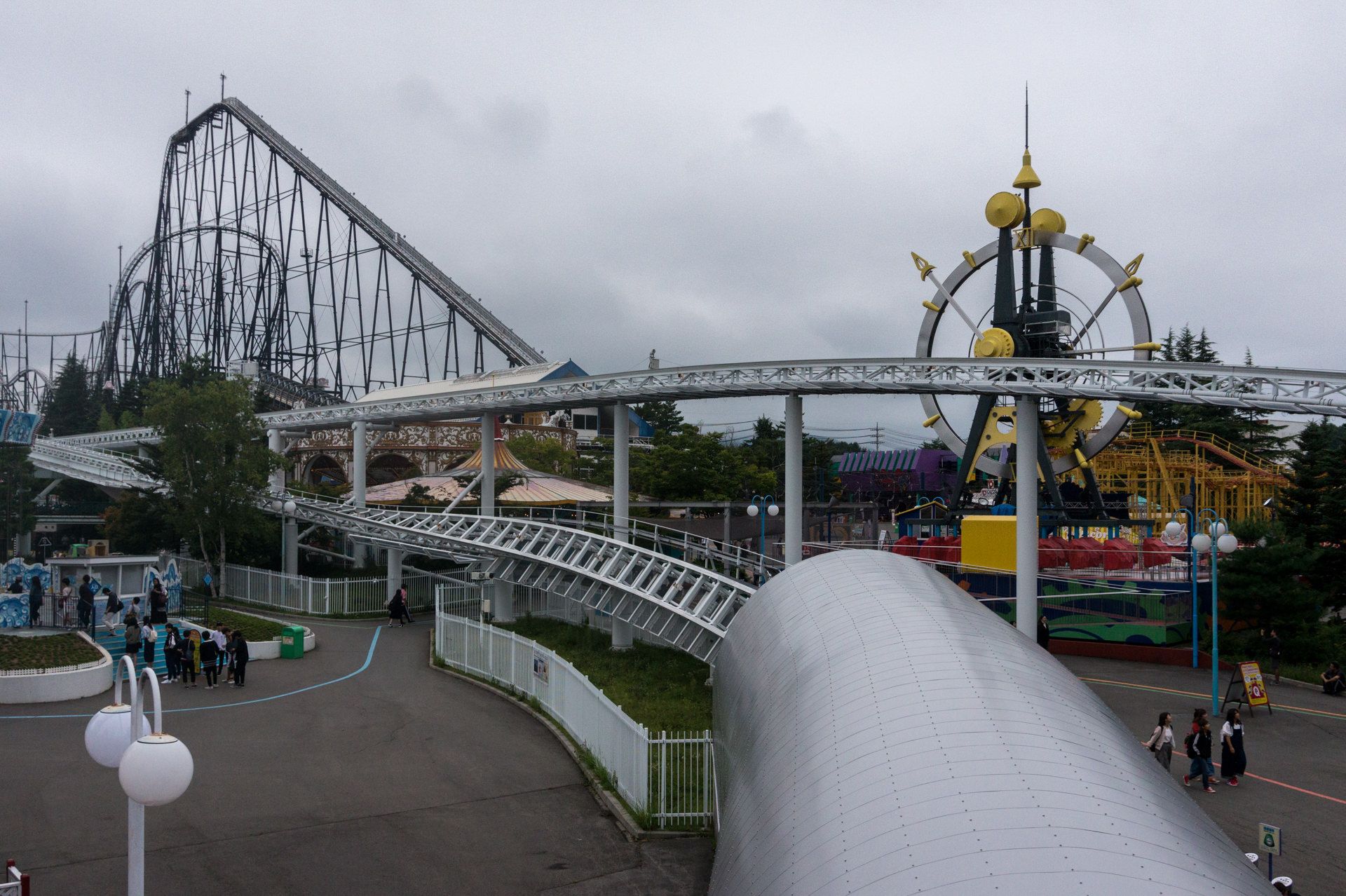
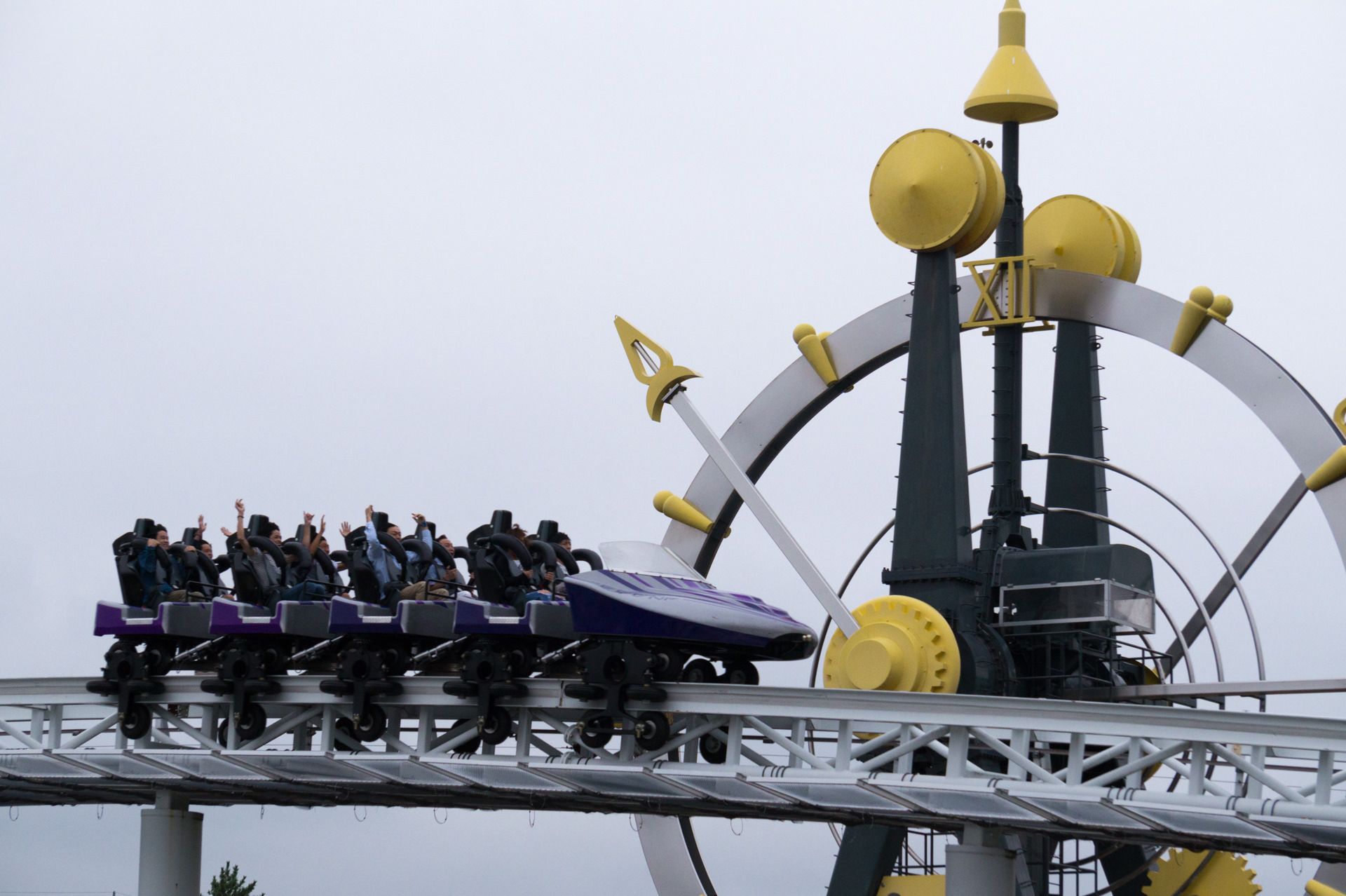
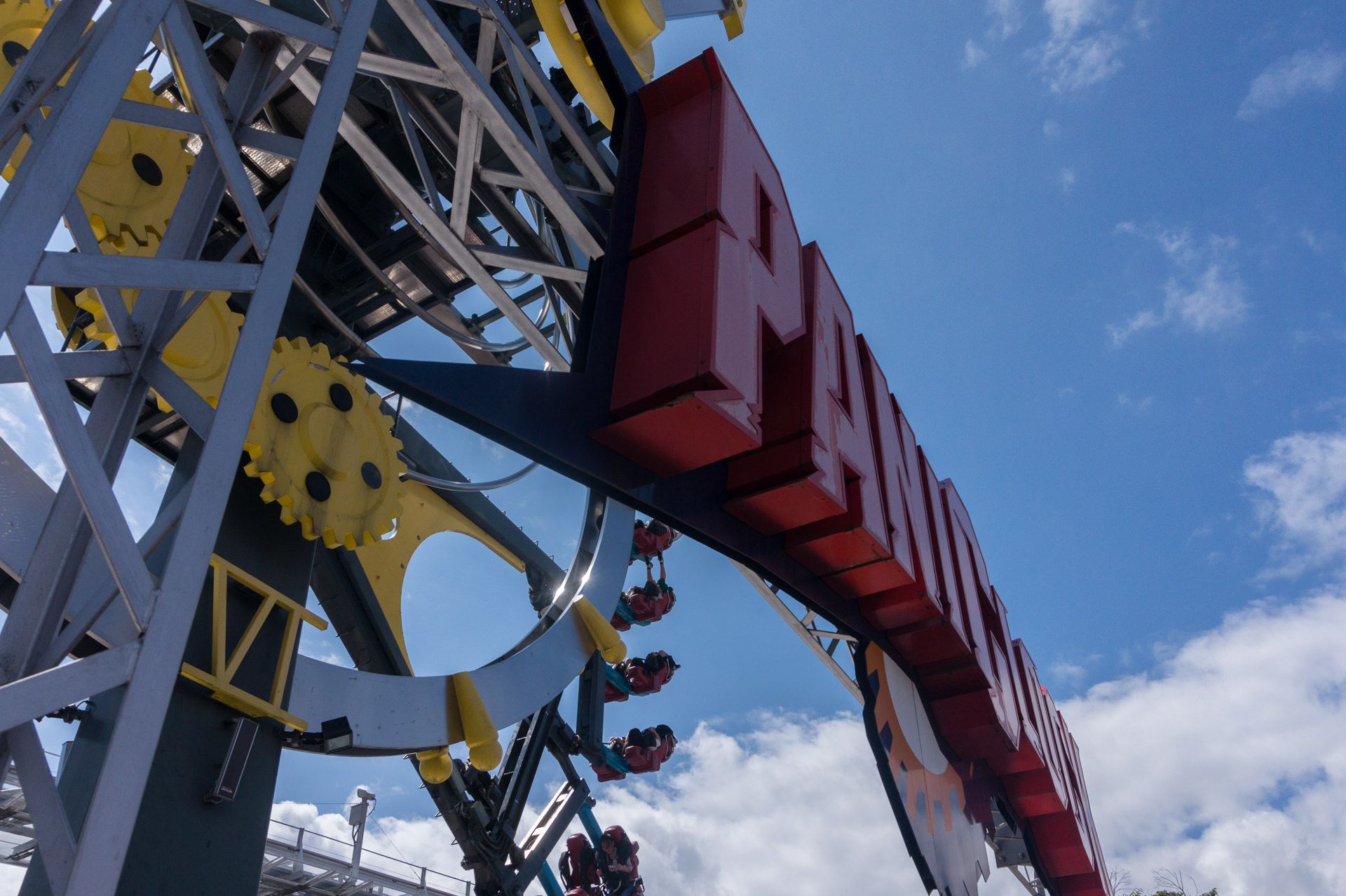
Past the Red Tower, an S&S Turbo Drop with a very shallow ride, the path takes us back to the large plane of Fuji-Q Highland. Here we meet the Panic Clock (or PaniClock, as it is written on the ride itself), a Vekoma Air Jumper. A further development of the Sky Flyer from the same company, the ride has gondola carriers with classic SLC seats instead of two open-plan cabins, where passengers are only secured by a lap bar. On this ride, passengers enter and exit on a straight plateau, and before the ride begins, the floor is lowered and the gondola carriers are hydraulically angled so that – unlike the related Fabbri models – the seats are all on a similar circular track. Both arms of the ride then start to move in opposite directions, which is why you keep meeting each other in the valley and in the loop. After 6 full rollovers, the ride ends again. Unfortunately, the ride characteristics are not optimal for this type of ride thanks to the given freedom in the SLC seats. Visually, however, the ride is convincing all along the line.

Much less appealing, however, is the makeshift tent in front of the old Moonraker back wall (which – for whatever reason – was simply not disposed of). Here you can experience the Fujiyama and Dodonpa roller coasters (i.e. Do-Dodonpa before the conversion) as a virtual ride. You sit in the original trains, get wind blown in your face and experience the ride, complete with VR goggles and headphones, almost exactly as if you were just getting on the ride a few metres further on.

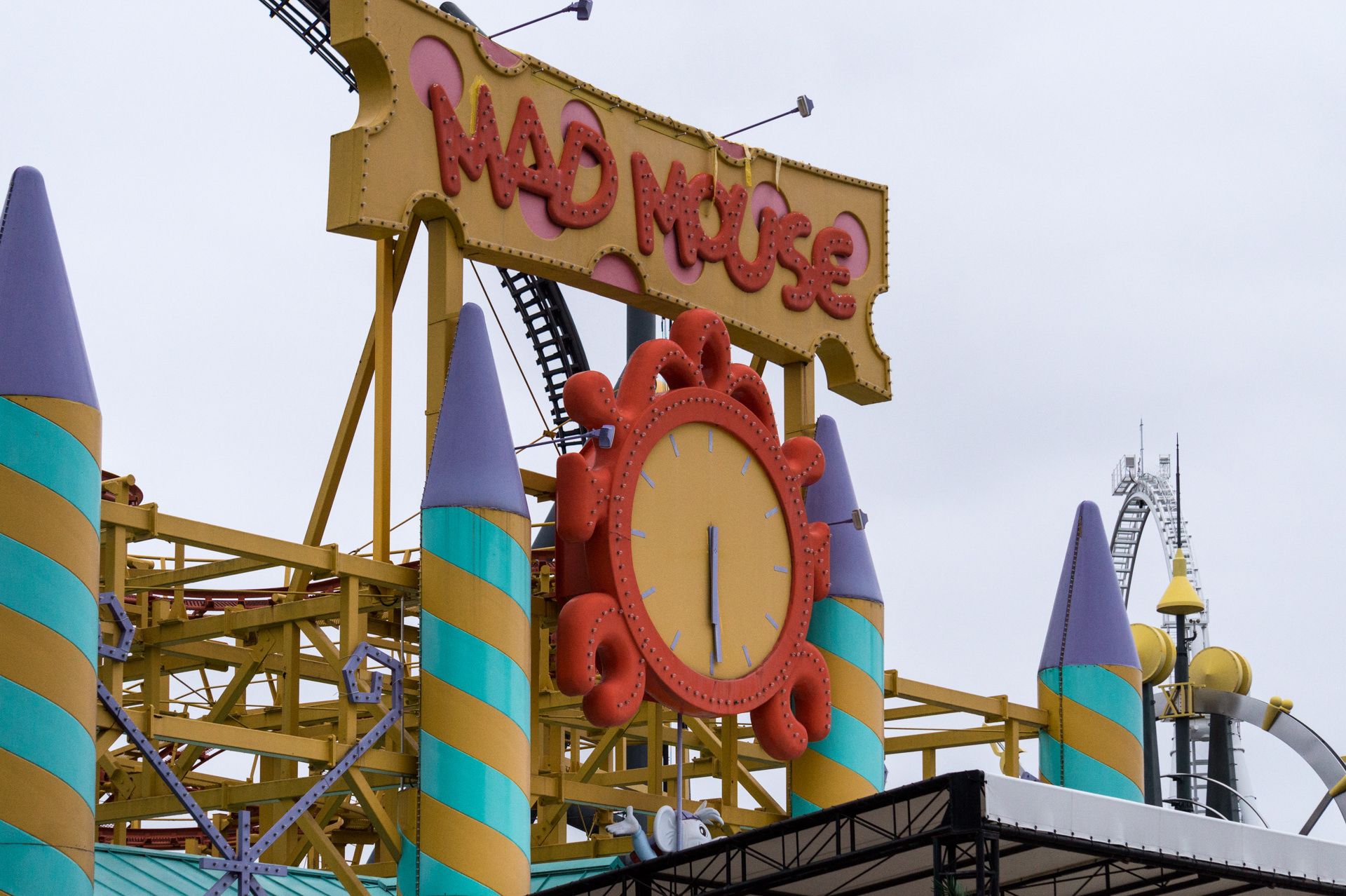
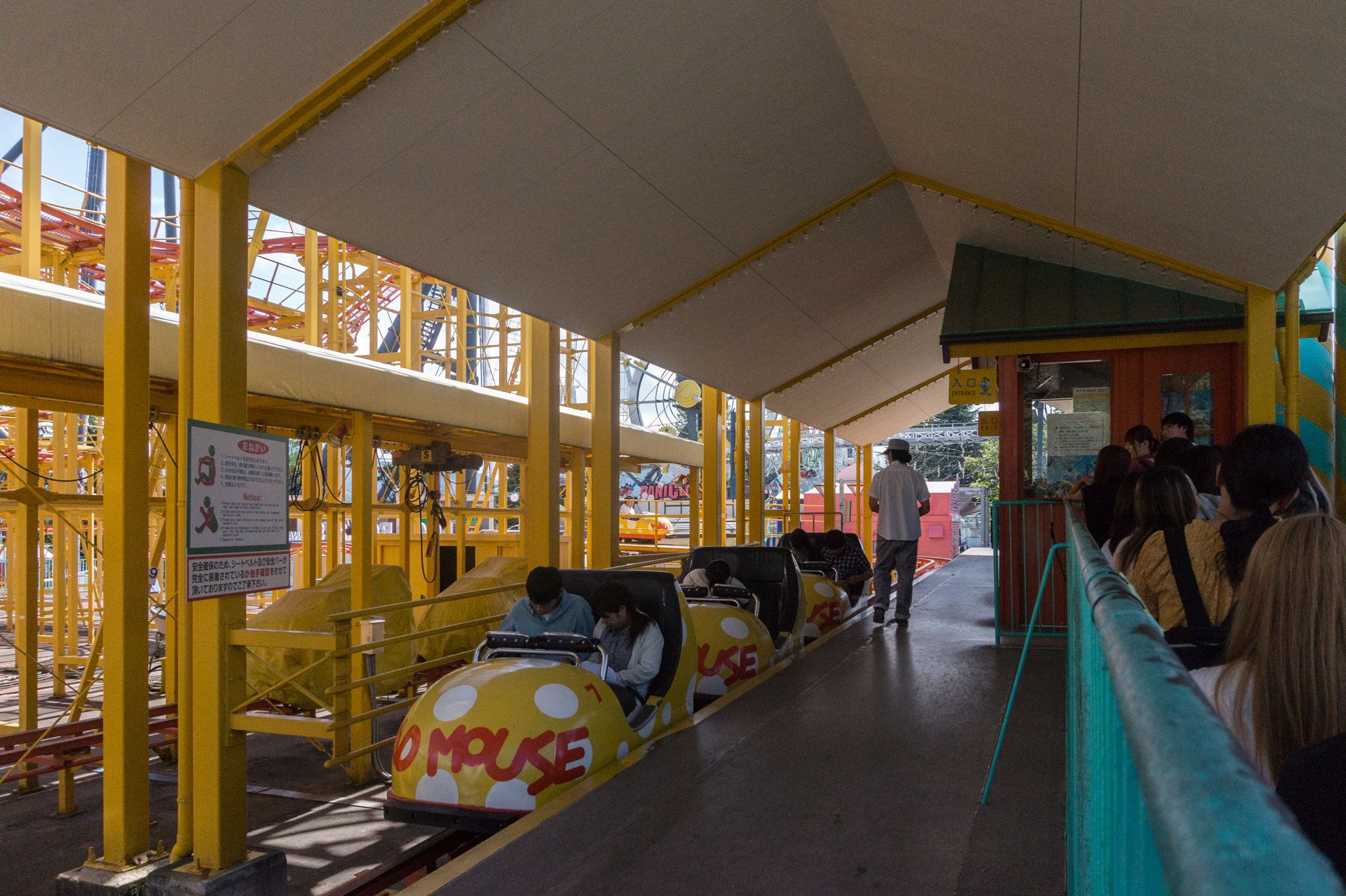
Mad Mouse

On the other hand, there is the Mad Mouse roller coaster in Fuji-Q Highland, which we of course love to get on. The two-seater cars are all loaded at the same time and are then gradually sent on their way. As in Greenland, however, this is done very quickly, so that one wonders once again why the Spaniards in Parque de Atracciones de Madrid simply can’t manage it on their Wild Mouse Vertigo.

The ride begins with a tight right turn into the lift hill of the ride. Once at the top, there is another right-hand bend and then the first dip. After a short incline, a right-hand bend is also negotiated and a subsequent dip awaits the passengers. After this, you quickly pass through a block brake and then a fast combination of right and left turns, each briefly interrupted by three short straights. Once you reach the other side of the ride, the first hairpin bend of the ride follows. After a few (Big Apple-like) waves, you then reach the ride’s second block brake. Here, too, there is a hairpin bend. On a short descent, you immediately pick up some speed, after which you race through the third hairpin bend.

On the following straight you pass through another block brake, but instead of going into a hairpin curve, you take a lap around the inner courtyard of the ride. After another block brake, however, you change back to the familiar driving behaviour of a wild mouse and ride through four more hairpin bends at short intervals before reaching the next brake. Now you make your way in quite wide right turns, each interrupted by longer straight segments, through the forest of supports of the ride, before some waves break up this behaviour again. After a narrow right turn, the waves increase and shortly afterwards you reach the final brake of the quite nice ride. From then on, the only thing left to do is to somehow heave yourself out of the wagons.

Tondemina and Evangelion World

Once you’ve managed that at some point, there’s nothing standing in your way for a ride on the neighbouring Giant Frisbee from the manufacturer HUSS. Except perhaps the fact that the Frisbee Tondemina is only distinguished from other specimens of its kind by its massive advertising for the pizza company Pizza-La. In this respect, a visit to the absolutely wild classic Japanese tea cups, the equally classic horse carousel or even the interactive experience Evangelion World around the well-known anime Neon Genesis Evangelion is recommended.

Fujiyama

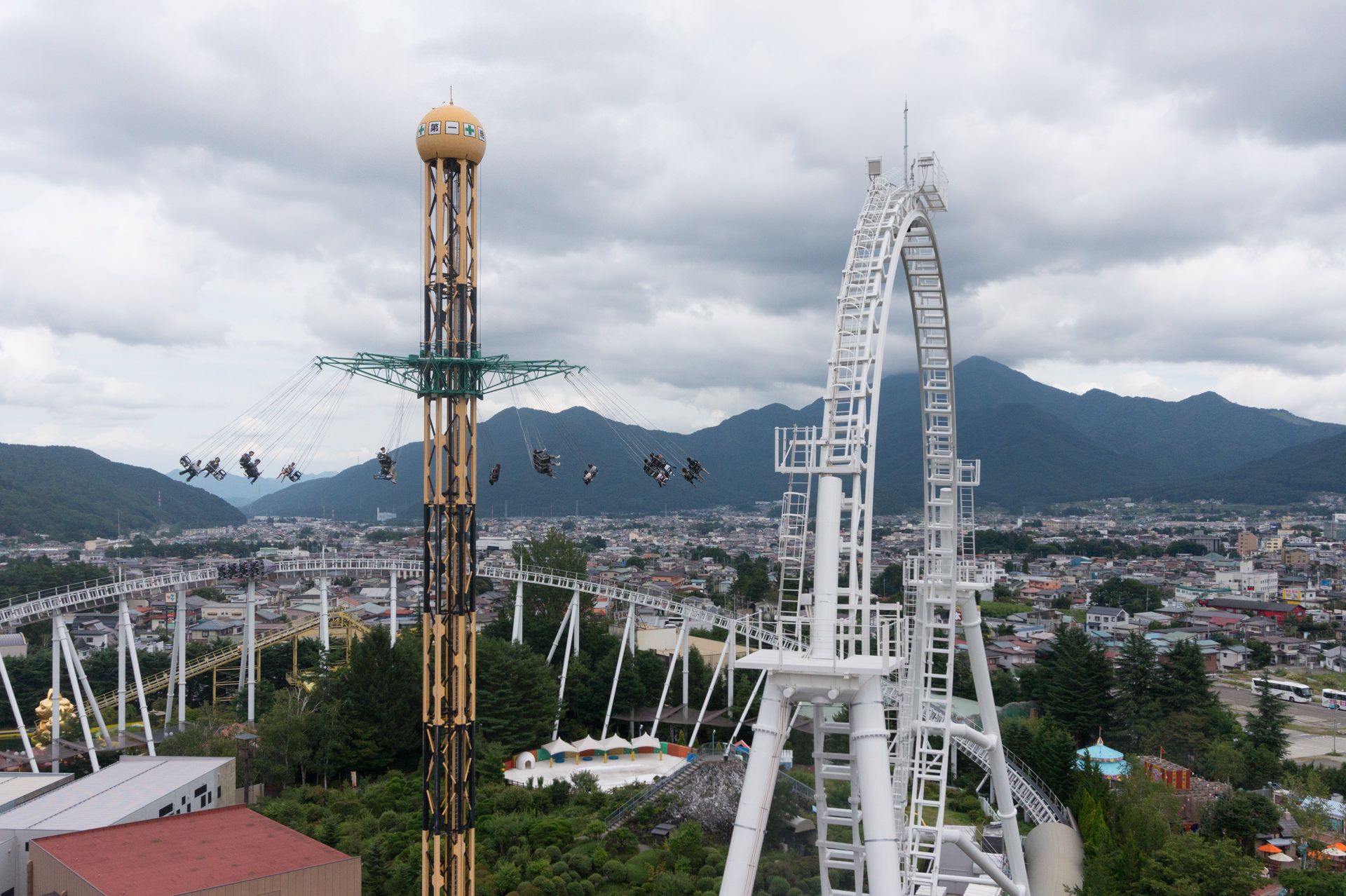
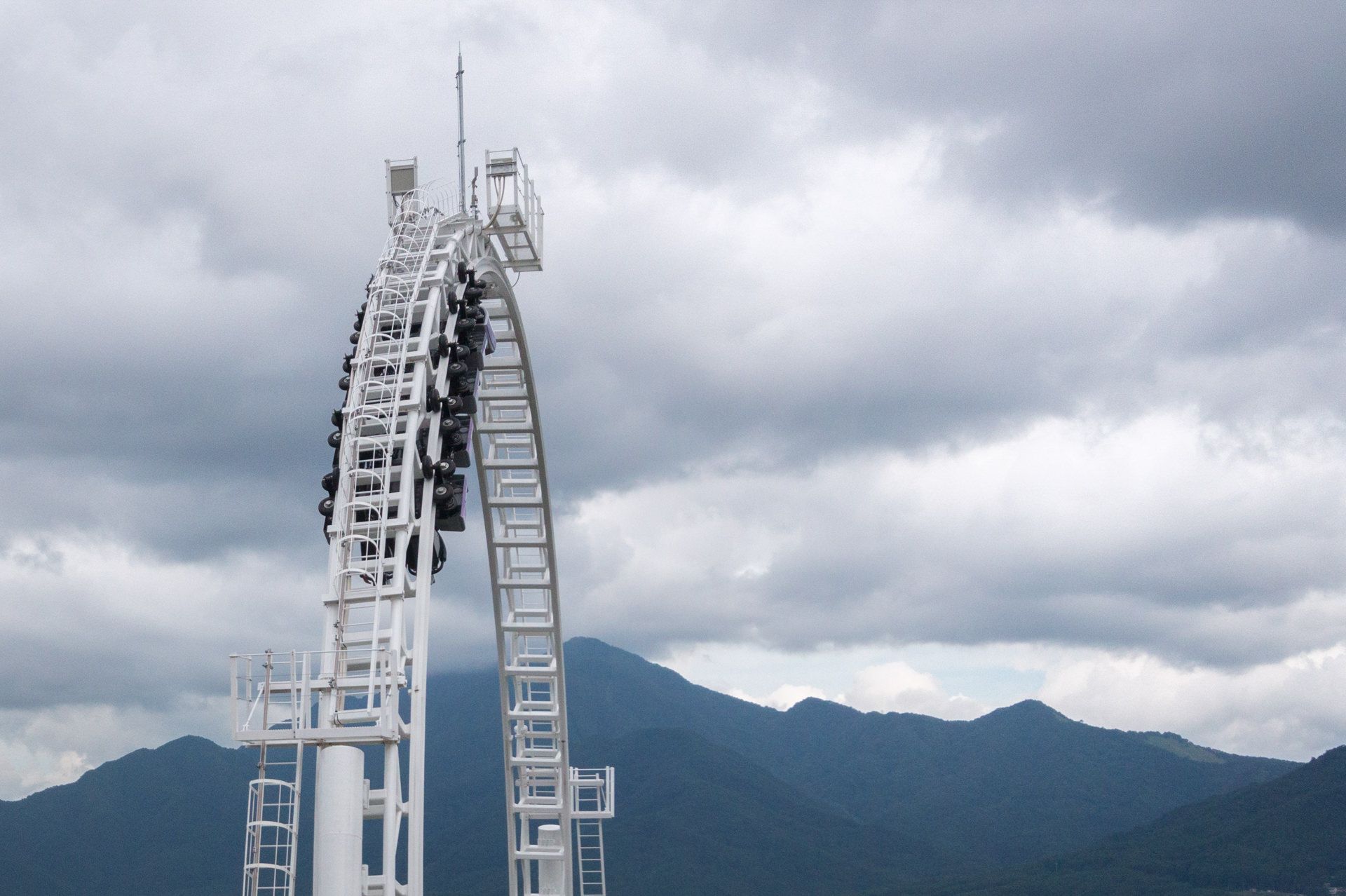
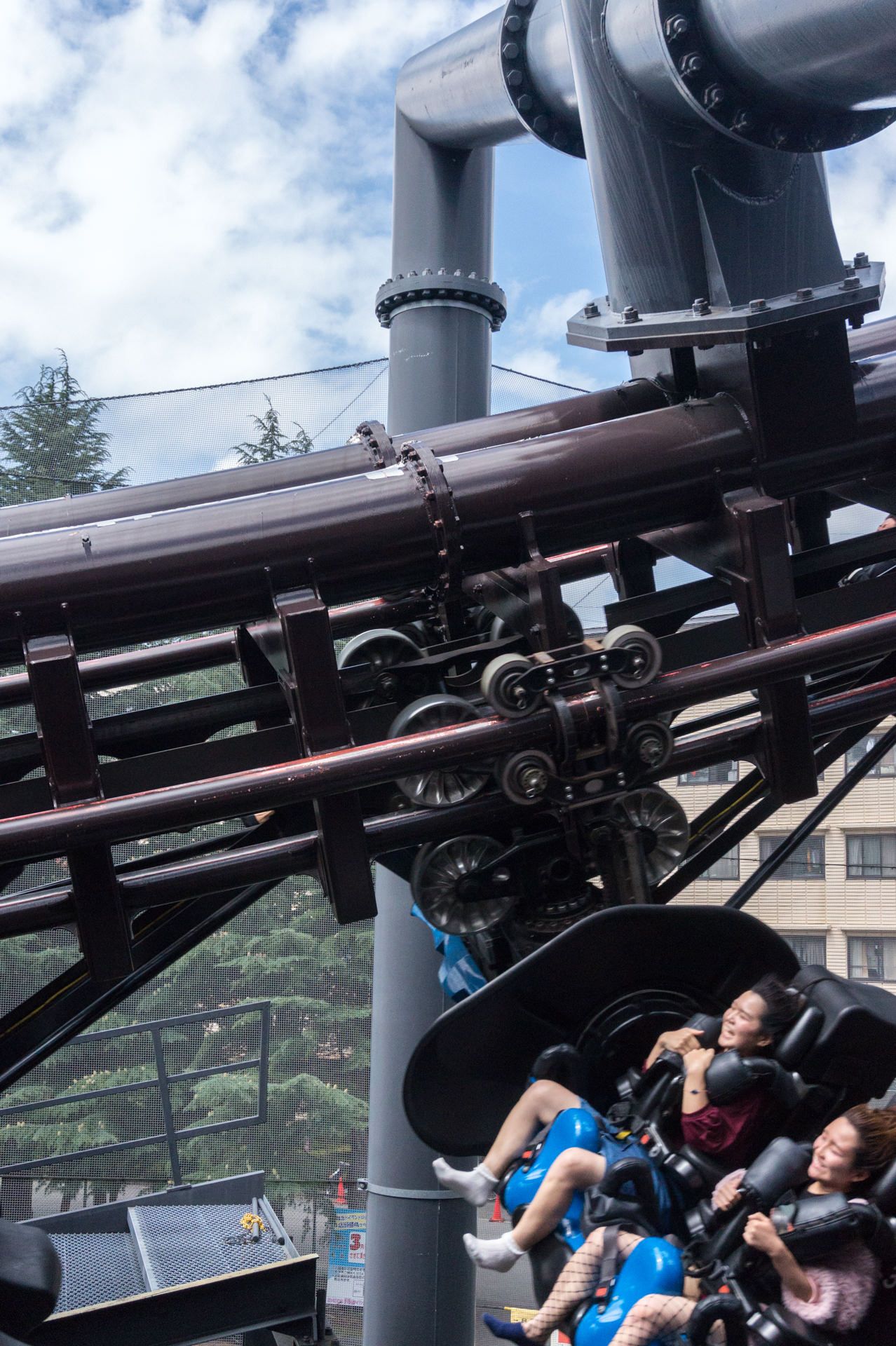
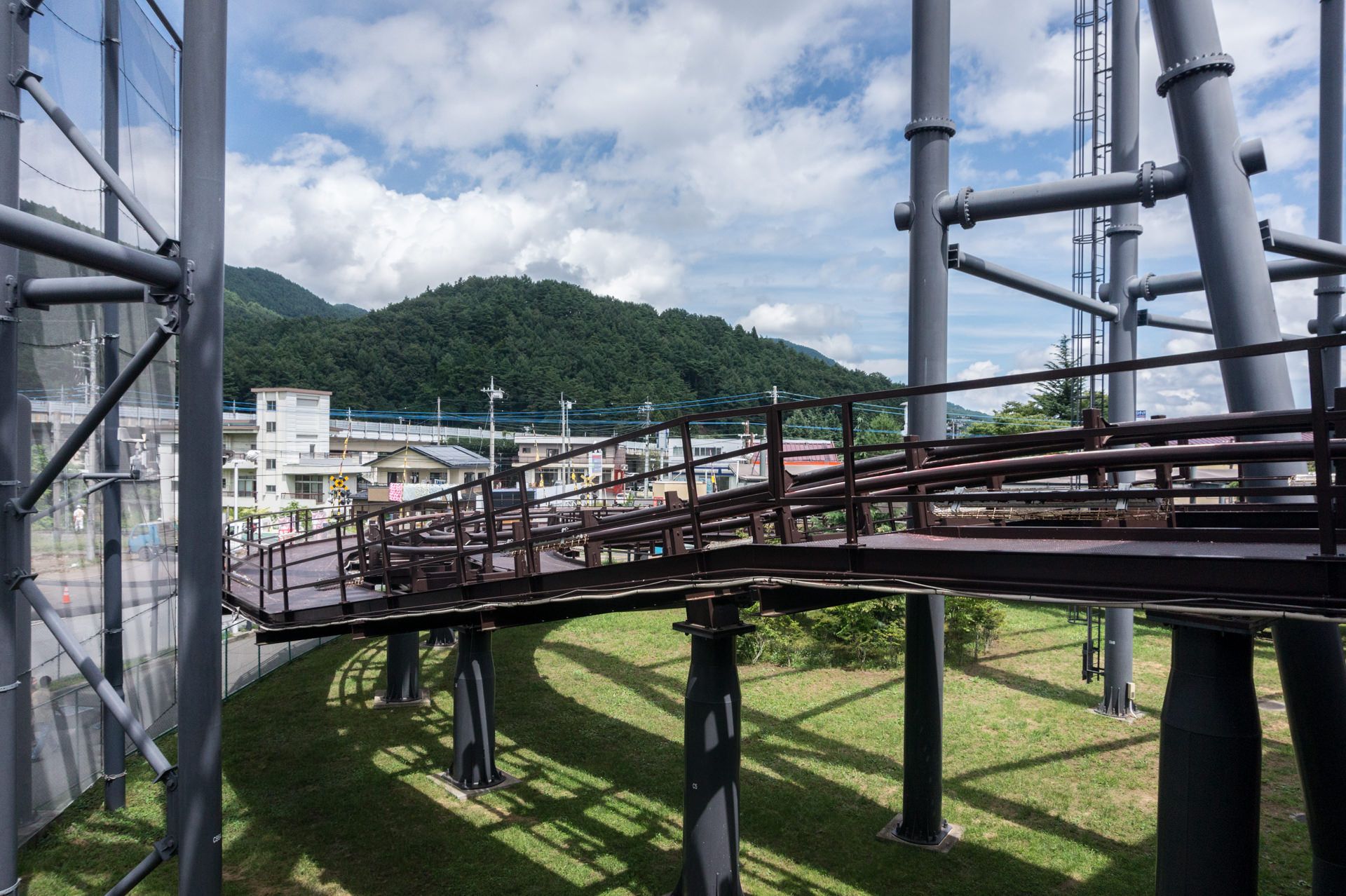
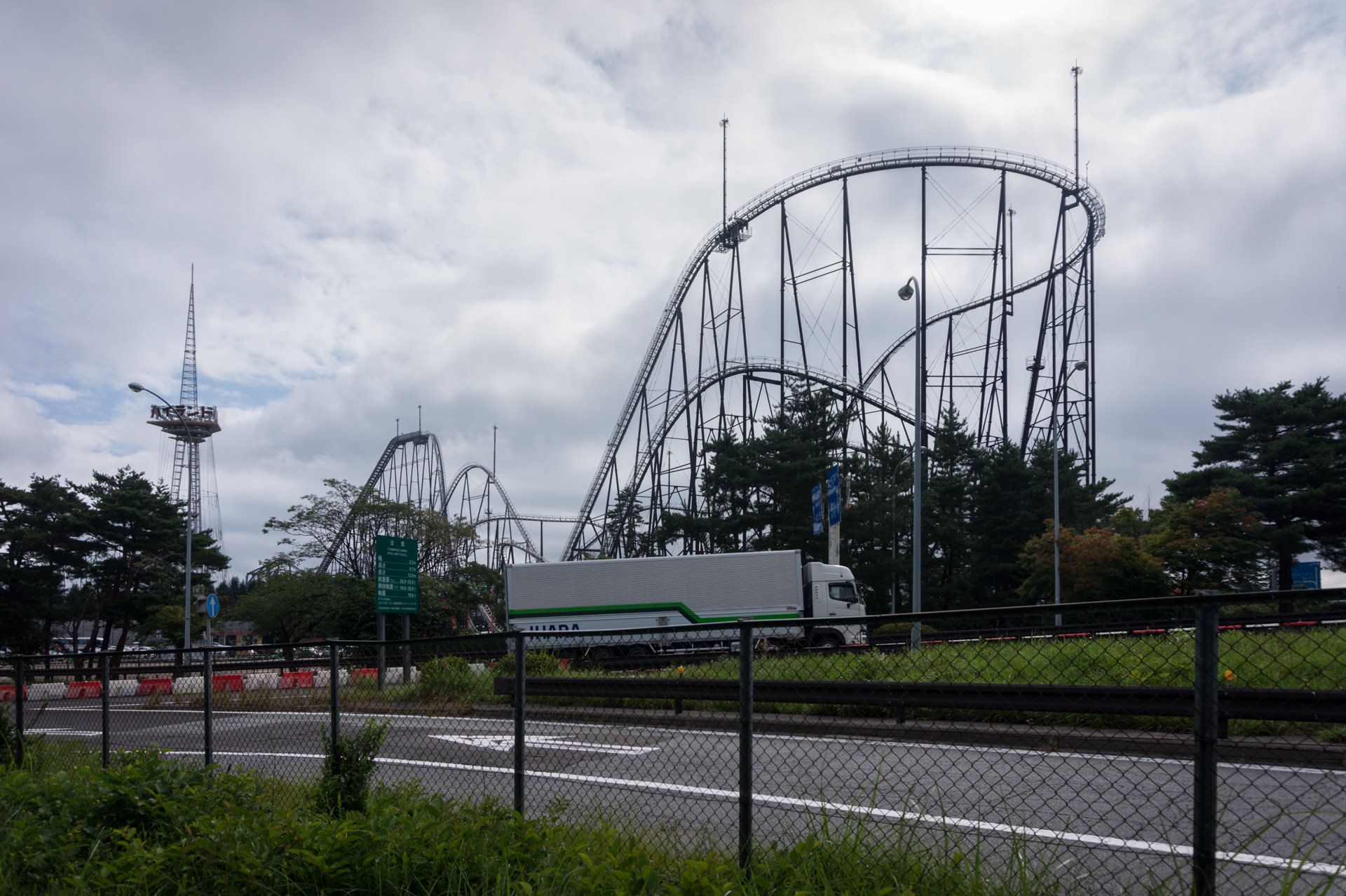
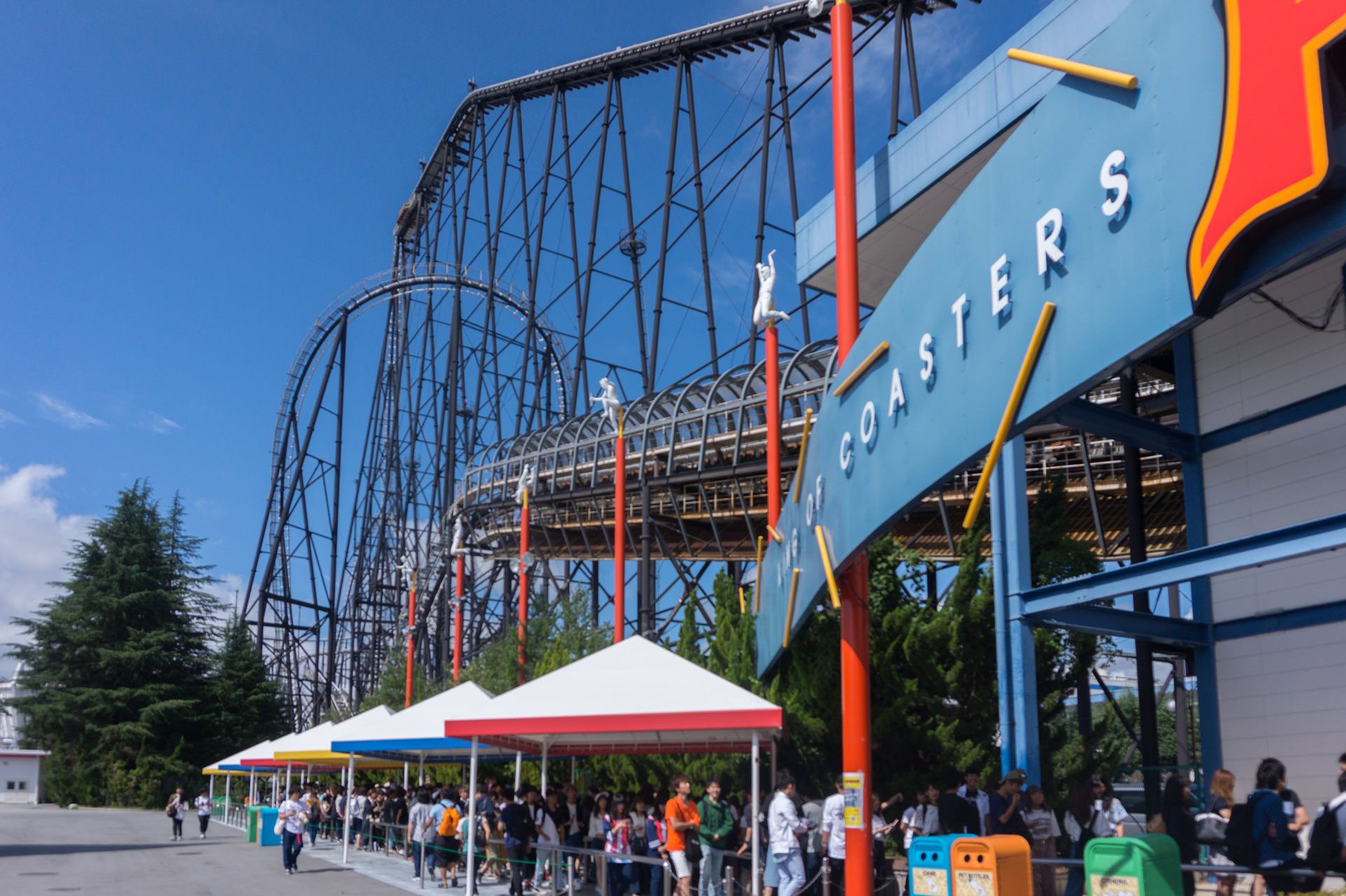
Now let’s move on to the last roller coaster of Fuji-Q Highland, the King of Coasters himself: Fujiyama. Built by the Japanese manufacturer Togo and with a height of 79 m and a length of more than 2 km, the ride shows off wherever it can, which is partly due to the paint job on the trains. And yet the ride is surprisingly compact, which makes the former record holder look almost filigree. Interestingly, most opinions about the ride are mostly negative – time to change that.

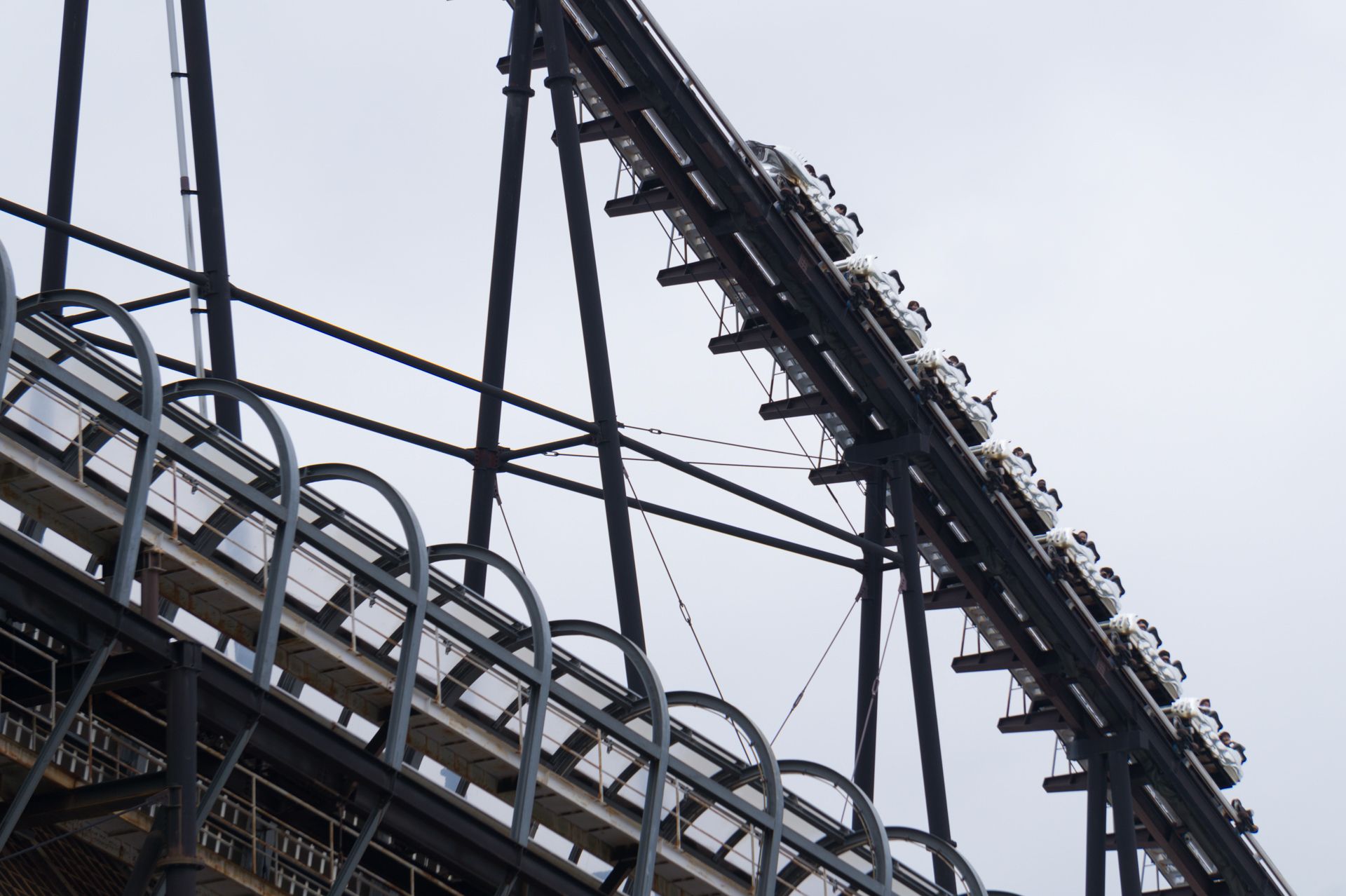
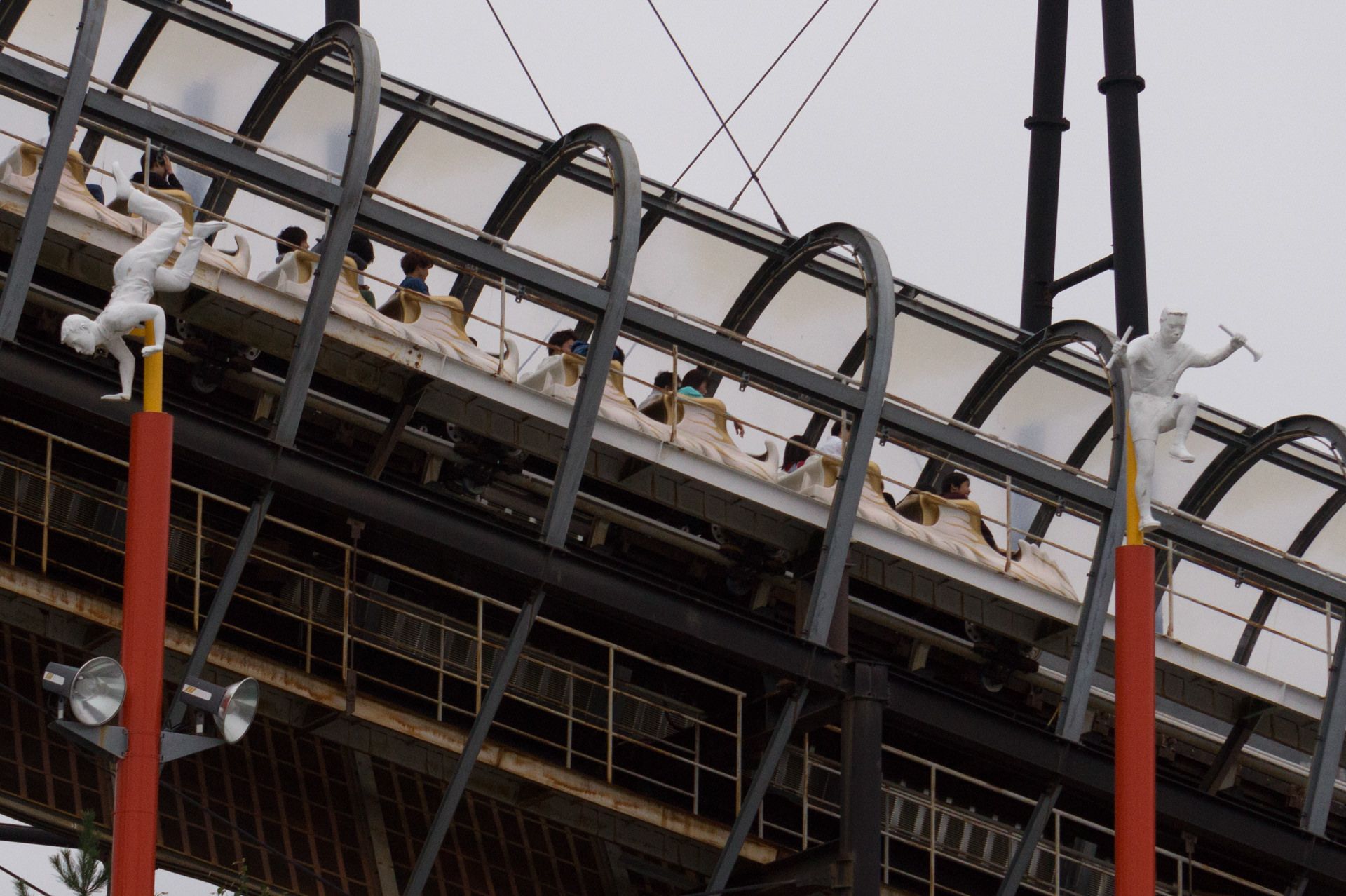
After taking a seat in the very comfortable train, which is however equipped with a strange bar, the ride can immediately begin. Far above the visitors, we pass through a tight turn and immediately reach the lift hill of the ride. This takes us steadily up to the aforementioned starting height, where we now stay for some time. A friction wheel battery then gets the train going a bit, so that, after a short right turn, it plunges into the depths, carrying the passengers into the air. In the valley, you then return to your original seating position and experience wonderfully pronounced G-forces. After a long climb, you complete a wide turn with (theoretically) excellent views of the volcano of the same name. On the following crest, you take off from your seat once more and experience airtime as it is written in the book. When you reach the valley, you would like the airtime moments to go on forever; how nice when shortly afterwards a camelback actually takes you into the air.

With a beautiful pacing, you now cross an elevated turn below the lift of the ride. After the subsequent valley, a slightly left-bending ascent follows, which then leads into an airtime-embroidered double-up. From then on, you race along the support structure of the turning curve through hill and dale. You then leave the aforementioned curve via another peak and drive in a straight line through the following valley. In a steep curve, which later tapers more and more to a turning curve, you quickly build up height, just before you shoot down to the ground and remain there for a long time. At breakneck speed, you pass through a long straight and a right turn close to the ground before the train turns towards the sky again. Still at an extremely pronounced speed, you now pass through a series of hills that zigzag their way through the steel structure of the roller coaster. This is delightfully wacky and causes a broad grin on the faces of the passengers. After a total of 5 hills, you start to climb a hill for the last time on a straight section of track, but instead of a descent, the final brake of the ride is awaiting you. With a good amount of airtime and at a speed that is actually much too high, you are now slowed down to a standstill. Shortly after, the station is reached.

Fujiyama is a magnificent roller coaster that knows how to lift its passengers out of their seats. The ride in the Fuji-Q Highland is breathtaking, while never repetitive and knows how to surprise even the most avowed roller coaster fan during the ride. In this respect, I really like the ground-hugging curve in the last third of the ride, but also the totally crazy last hills have their charm; the core component of this roller coaster, however, is and remains the pronounced airtime during the ride. And there is plenty of it, which is why Fujiyama is the best roller coaster of Fuji-Q Highlands for me and also the best roller coaster of the entire tour. In any case, the amusement park is not exaggerating by singing the praises of the roller coaster as the King of Coasters in a continuous loop. Moreover, the waiting time here almost flies by.

Pictures Fuji-Q Highland

Conclusion Fuji-Q Highland

Fuji-Q Highland is a very strange amusement park that looks really run down in parts. On the other hand, the park has really nice corners and some very great rides. Unfortunately, everything here is concentrated on the Big 4, i.e. the roller coasters Takabisha, Do-Dodonpa, Fujiyama and Eejanaika – the rest of Fuji-Q Highland is partly extinct. Now, however, we were also lucky to experience the park on two empty days (although the second one wasn’t needed and I didn’t ride any other attraction apart from the rapid river); on a full day, a visit is only worthwhile without a free pass, as then you can hardly manage anything outside the big 4 and possibly not even these. From the afternoon onwards, possibly even earlier, the announcements of the attractions whose queues have now been closed become more frequent. Towards the end, there’s nothing left to do but ride the teacups or take a spin on the horse carousel. Nevertheless, I’ll gladly visit the park again.


What is your opinion about the theme park Fuji-Q Highland?  Just write it in the comment field below the report or visit our social media channels:


Click here for the next report of the Titanic Max Tour