Parque de Atracciones de Madrid
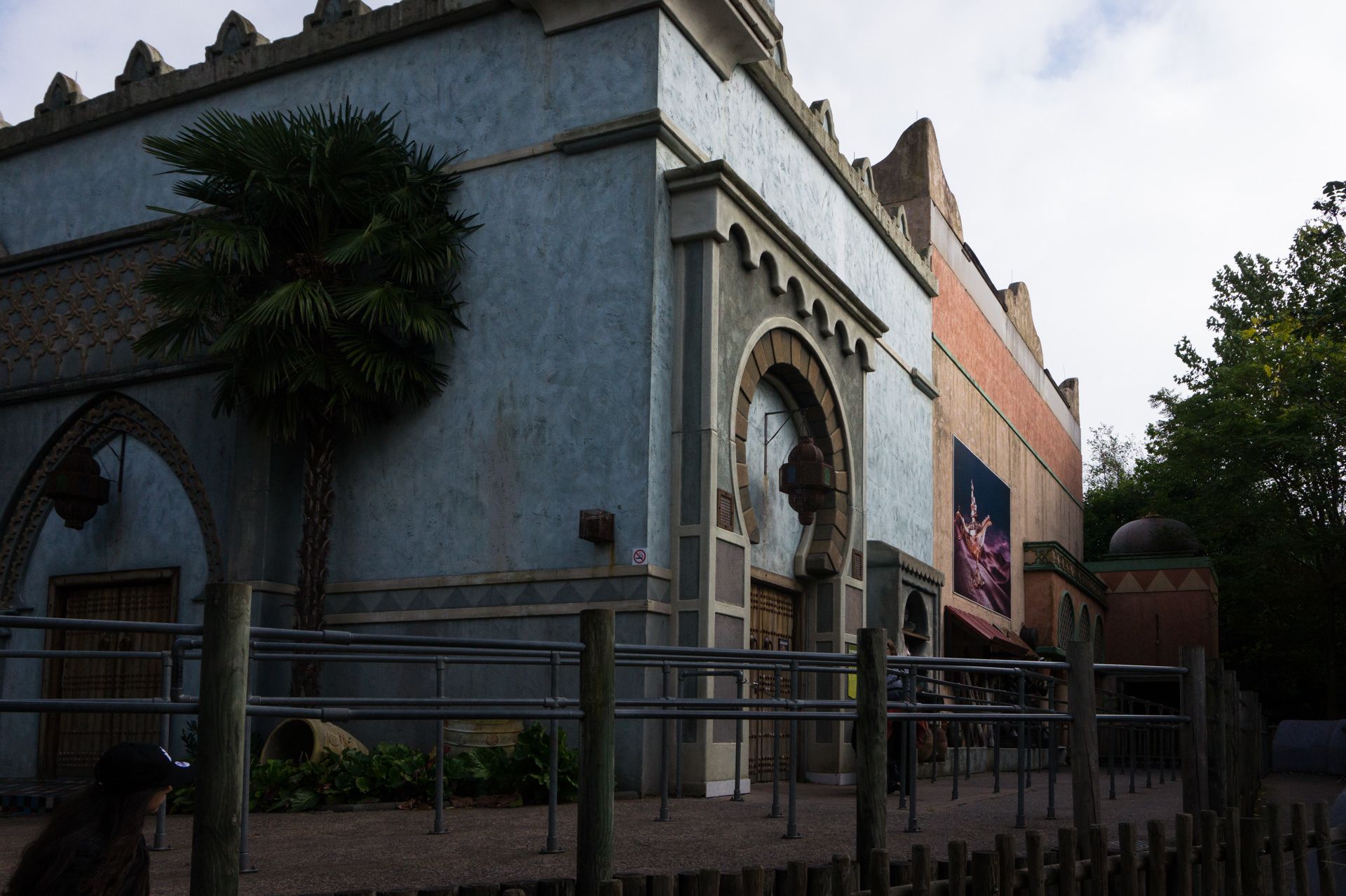
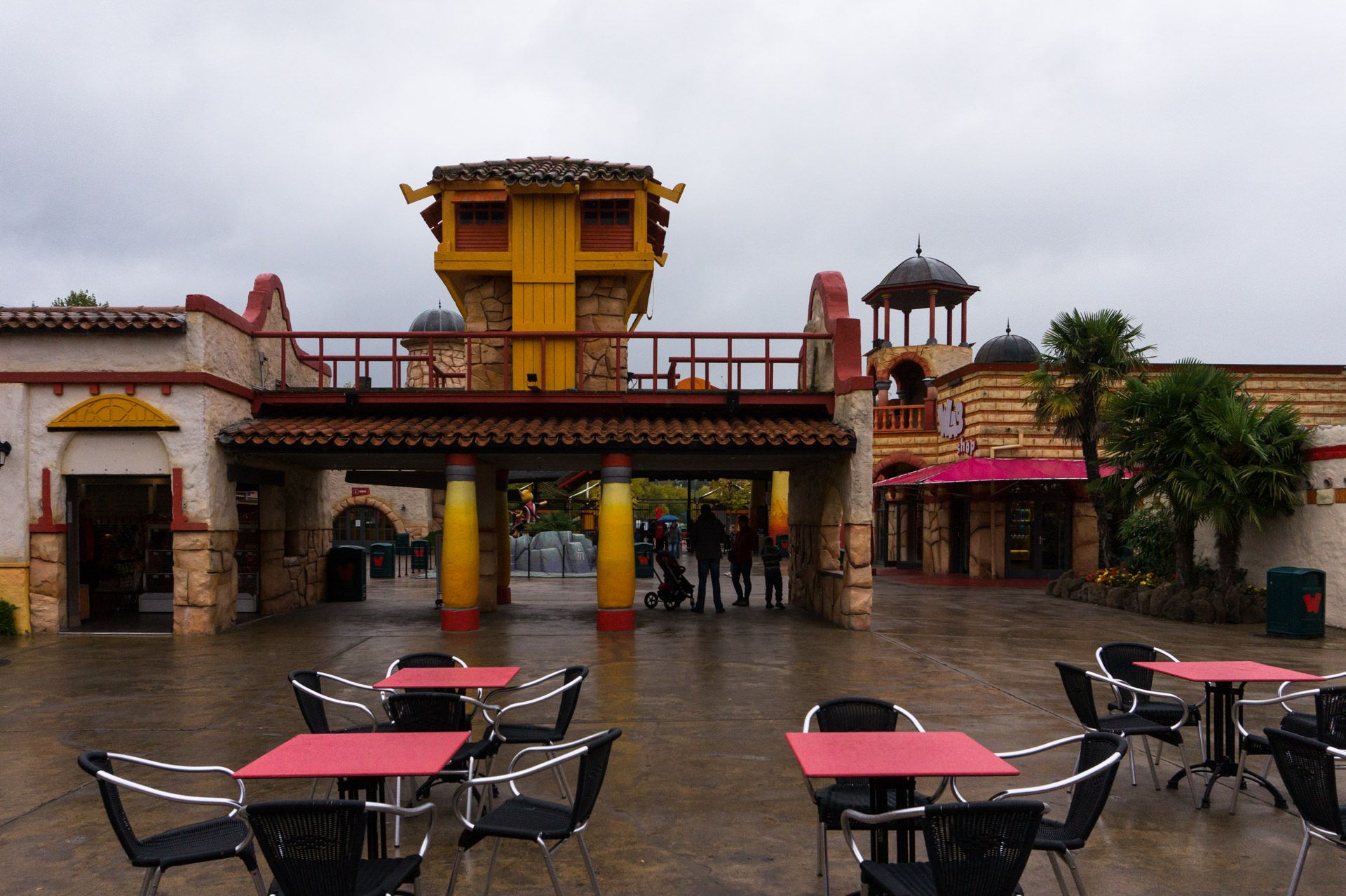
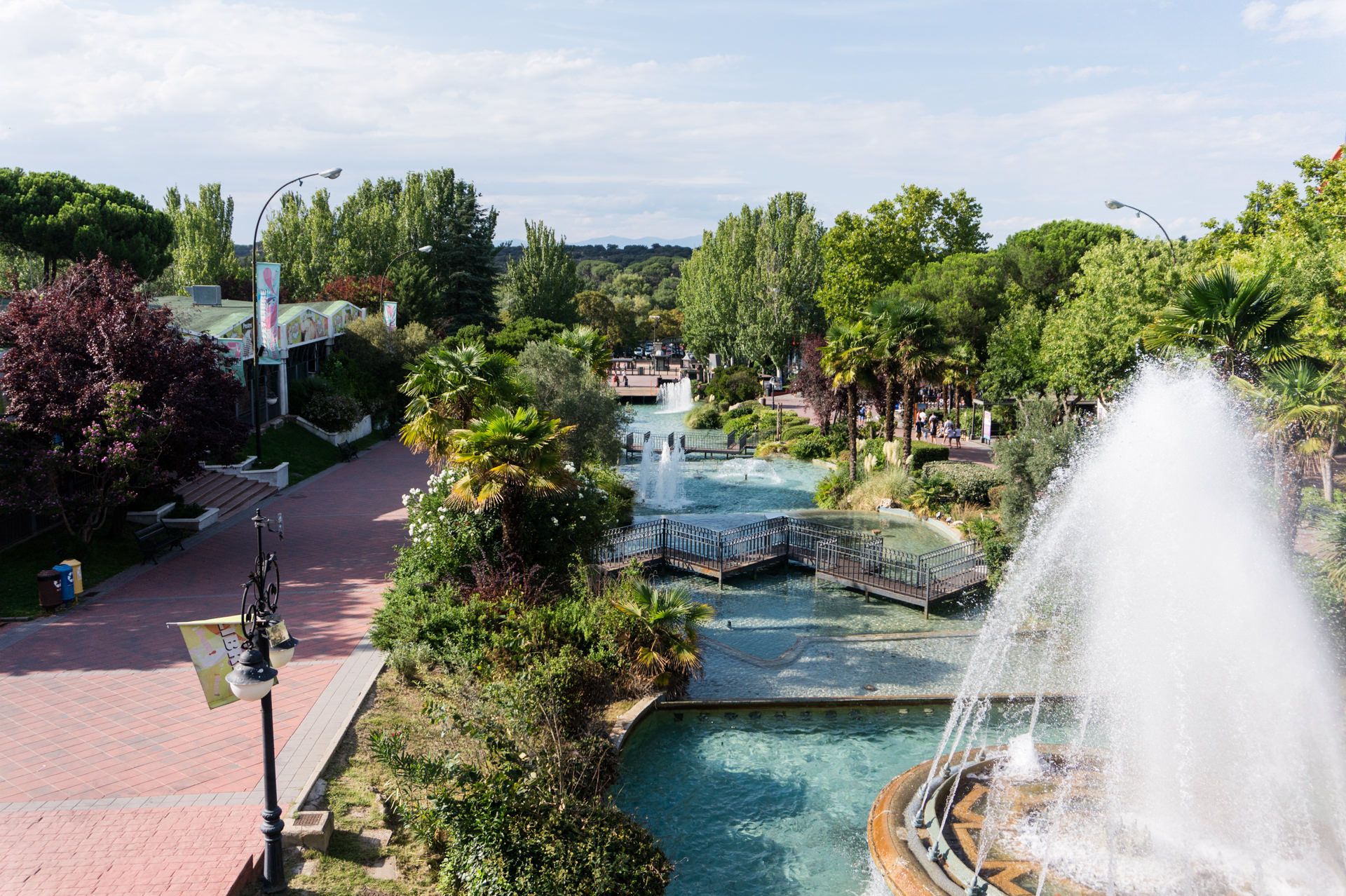
Not far from the Batán metro station, the Puerta Batán is a side entrance to the Parque de Atracciones de Madrid, the Spanish capital’s inner-city theme park. In contrast to other urban theme parks, such as the Copenhagen amusement park Tivoli Gardens or the Parque de Atracciones de Zaragoza, the Tivoli principle, where you only pay a small entrance fee and pay for the rides in addition, is not applied, so that the Parque de Atracciones de Madrid functions as a theme park in the classical sense.
Nickelodeon Land
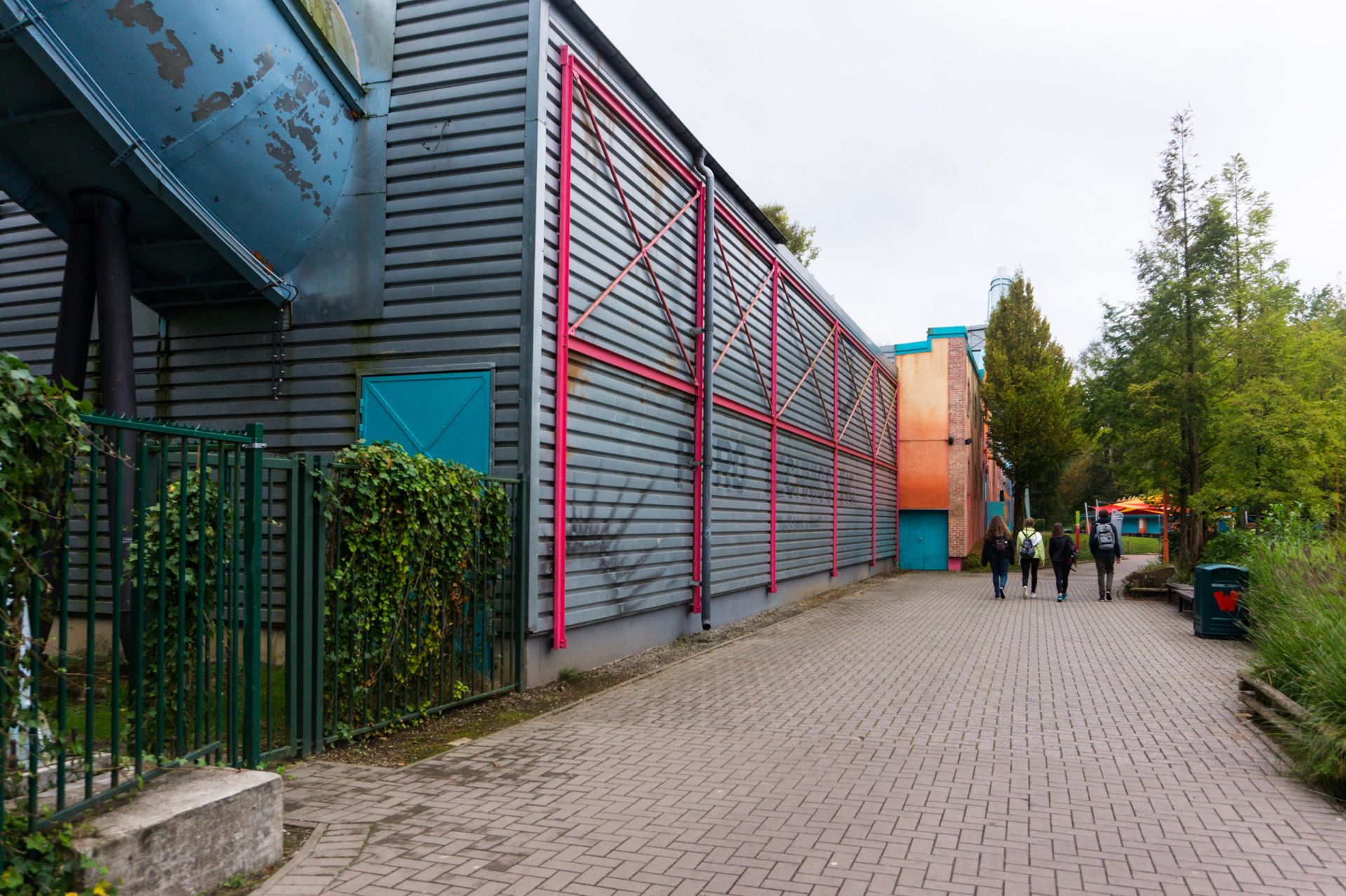
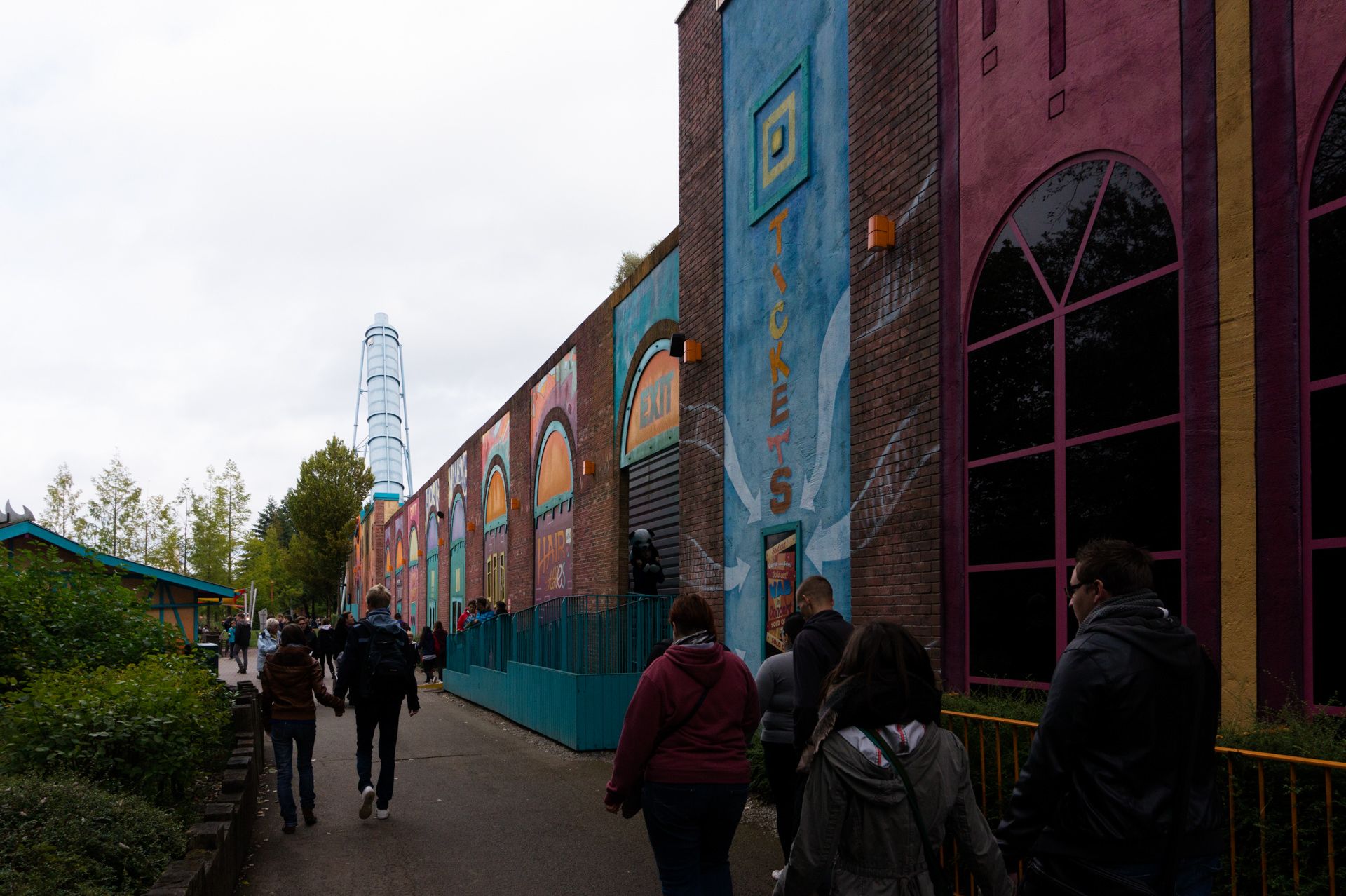
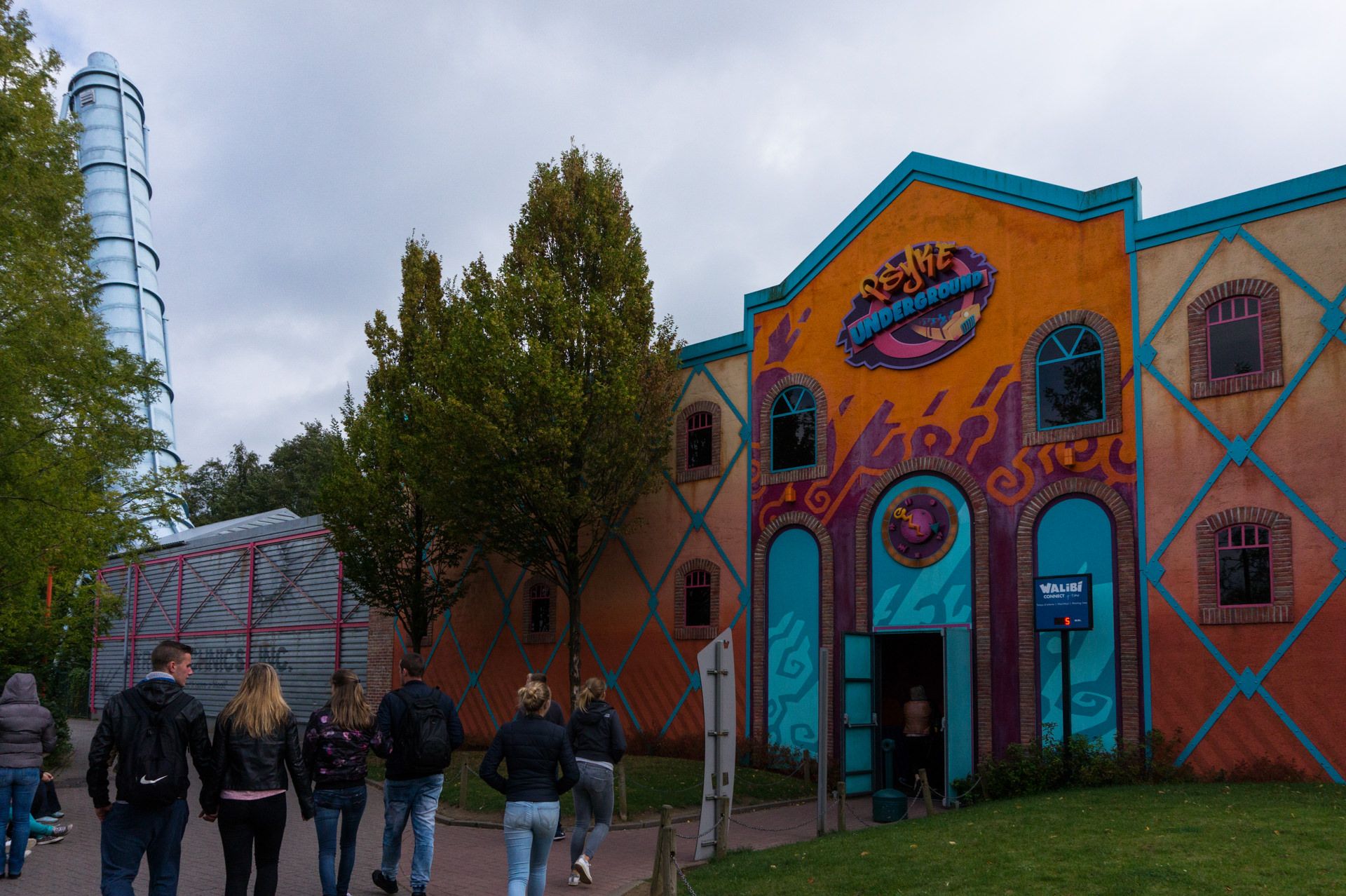
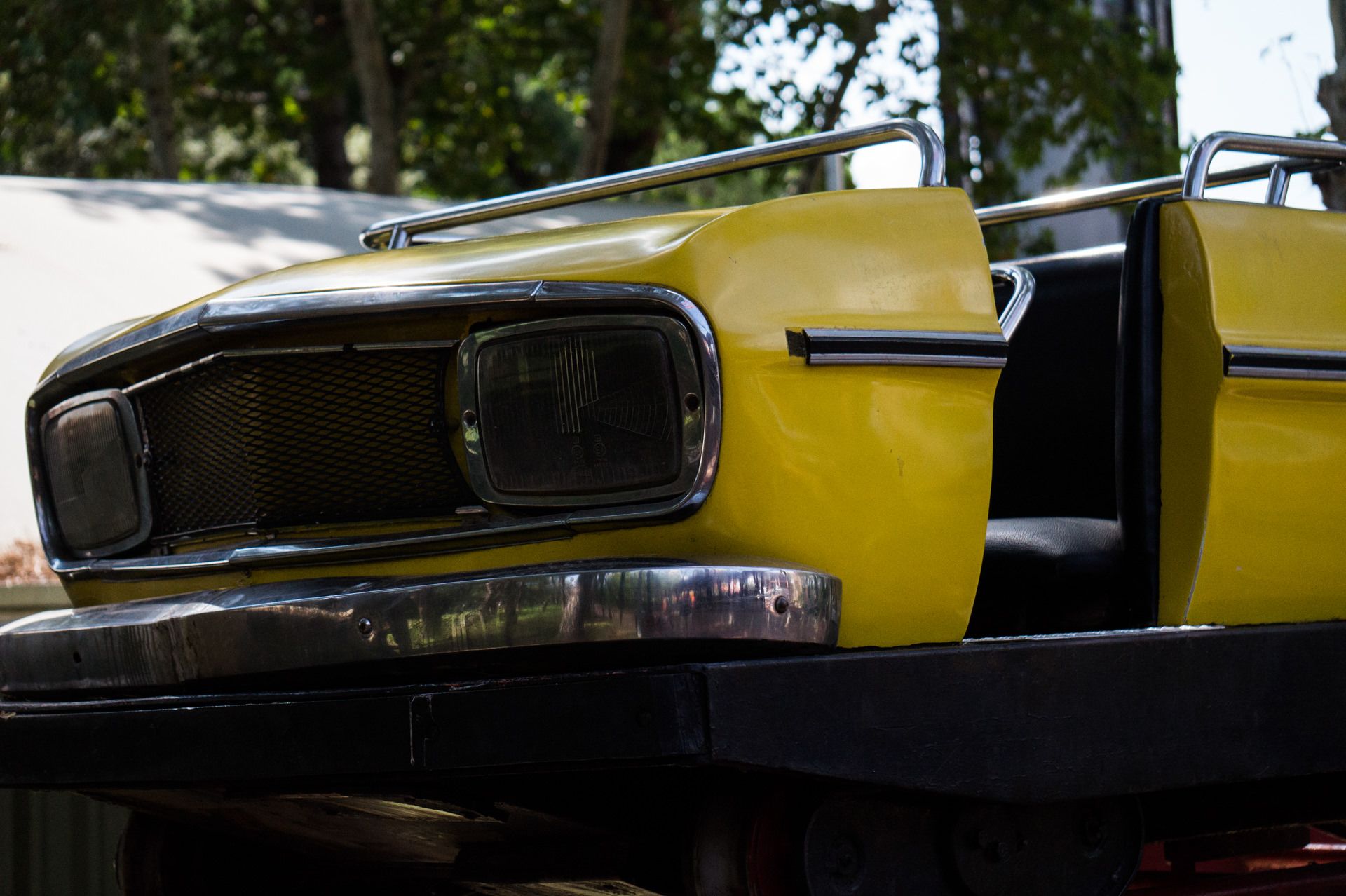
If you enter the park via the side entrance you will find yourself at the top of the Nickelodeon Land, a theme area that can be found in a similar form in the English Pleasure Beach Blackpool or the German sister park Movie Park Germany. Here too, existing rides were redesigned using licences from the well-known Viacom children’s channel Nickelodeon, and supplemented with a children’s driving school and additional artwork. What previously seemed to be a bit too much of a jumbled up children’s land now shows a consistently colourful mix, which is also very well done.
Padrinos Voladores
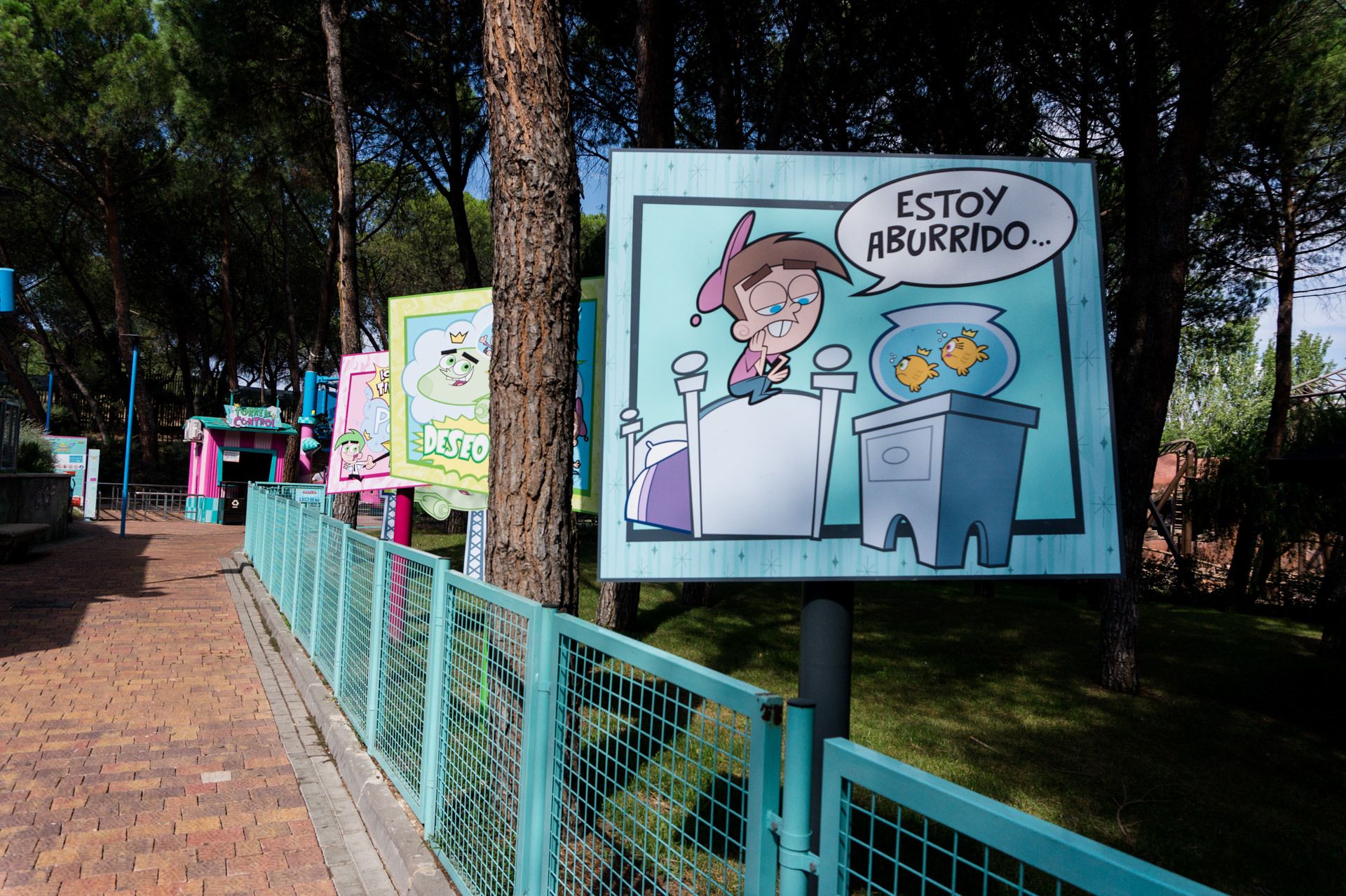
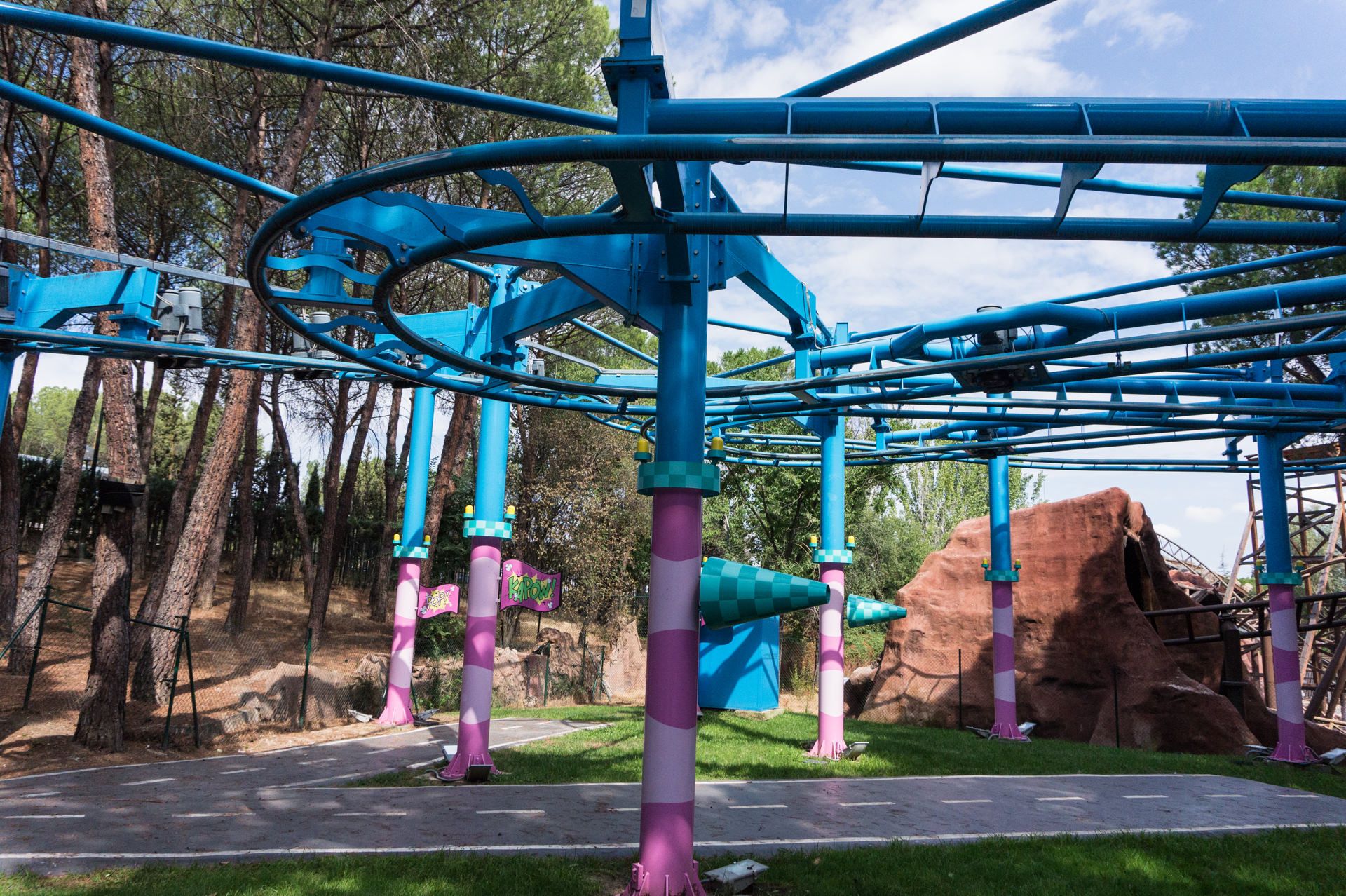
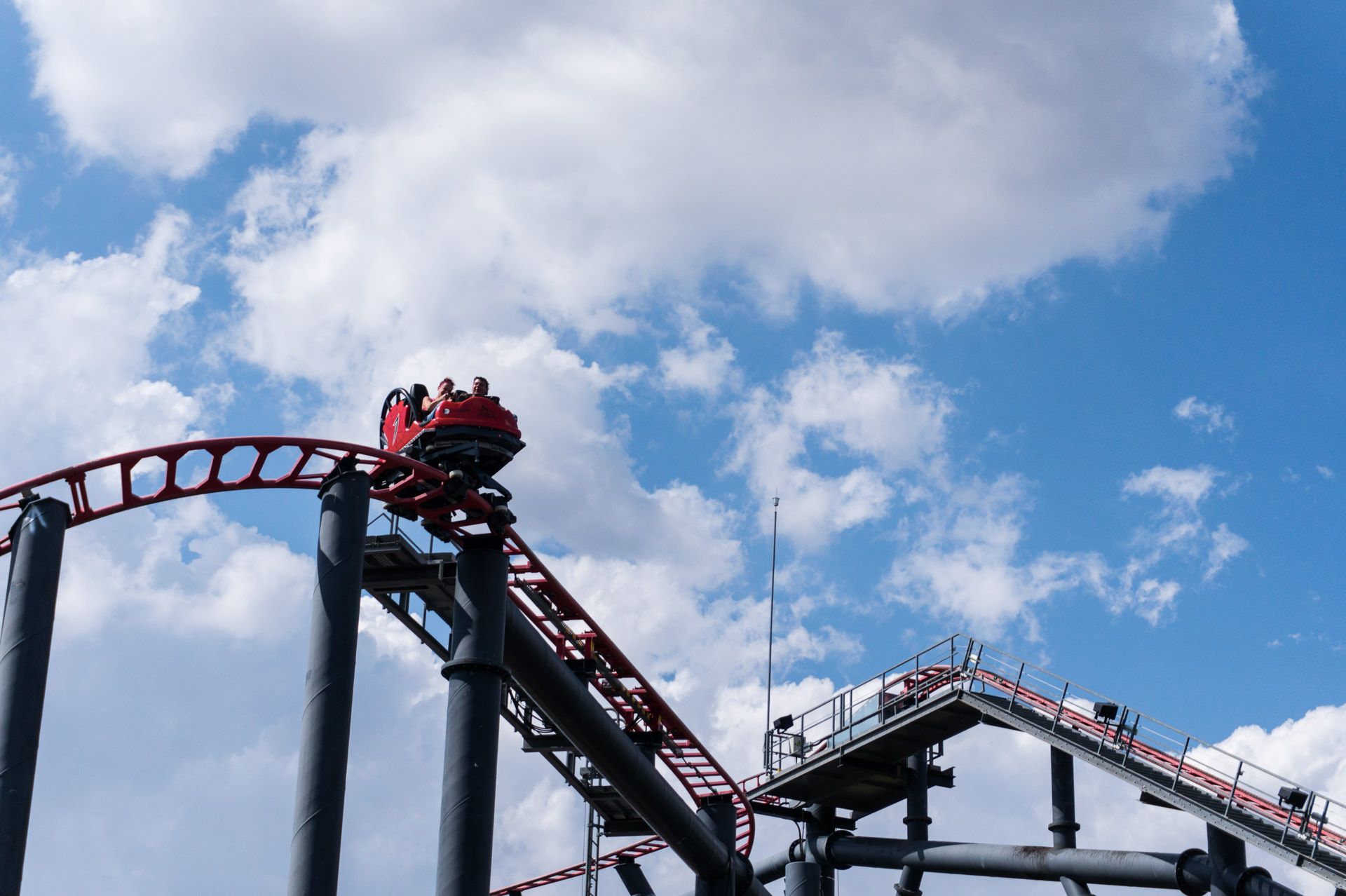
Especially the small roller coaster Turbulencia shows its full potential as Padrinos Voladores designed after the children’s series Fairly Oddparents. The layout features a few hairpin bends without any major difference in height; however, this makes the swing of the vehicles during the ride much more pronounced and thus also the riding pleasure. The Padrinos Voladores therefore offer a really great ride for smaller children, but can also be enjoyed by adults.
Vagones Locos
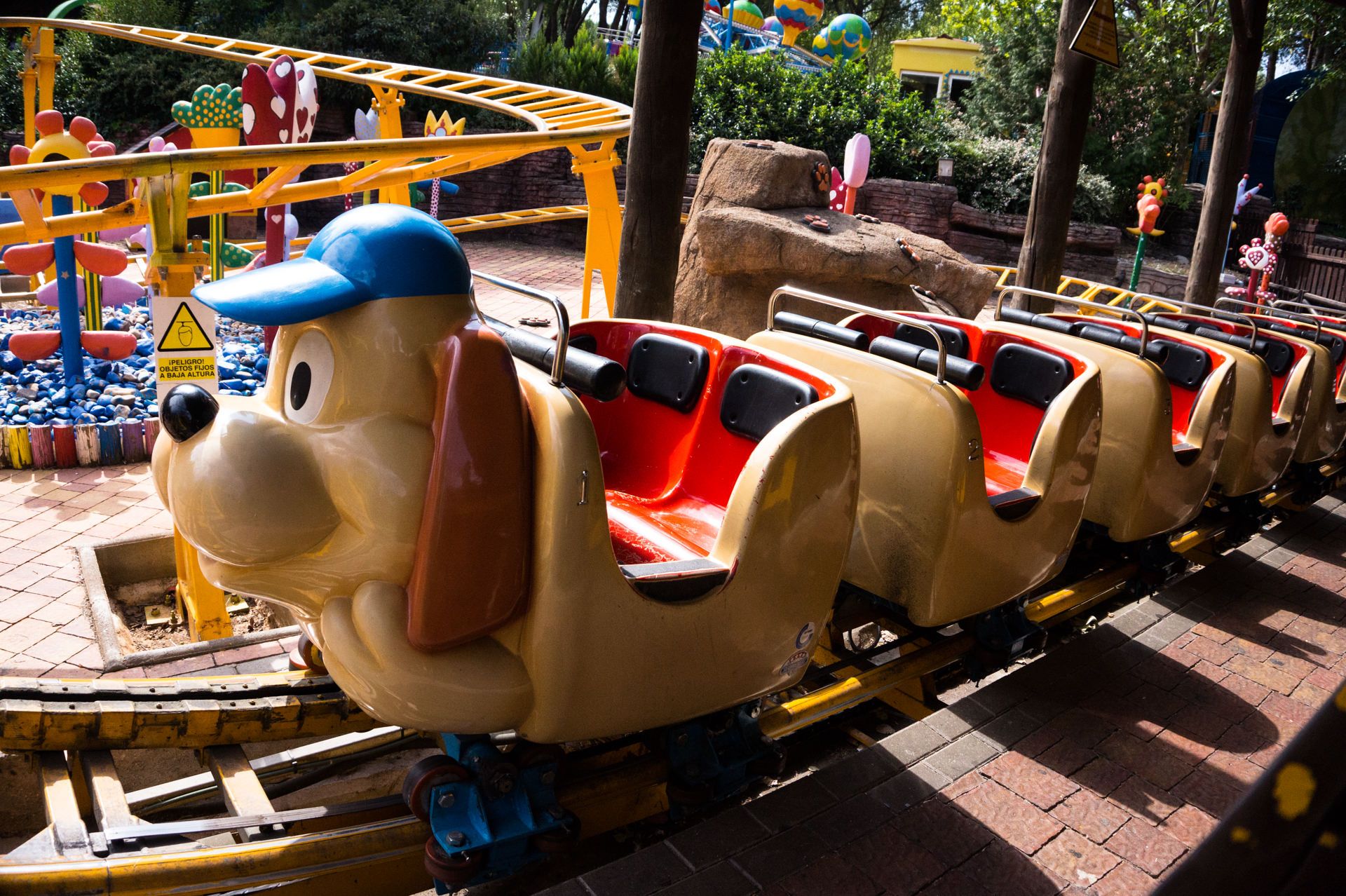
The Vagones Locos, on the other hand, are in the Naturaleza themed area, although the squeaky-coloured design makes the ride should be part of the Nickelodeon Land. This is the standard model of the Family Gravity Coaster of the Italian manufacturer Zamperla. Using a chain lift, you can reach the starting point for the winding descent relatively quickly. This is followed by a short ascent, whereupon a downward right helix and the return to the station takes place in a slightly Bavarian style.
Naturaleza
Telesaurio and Tiovivo
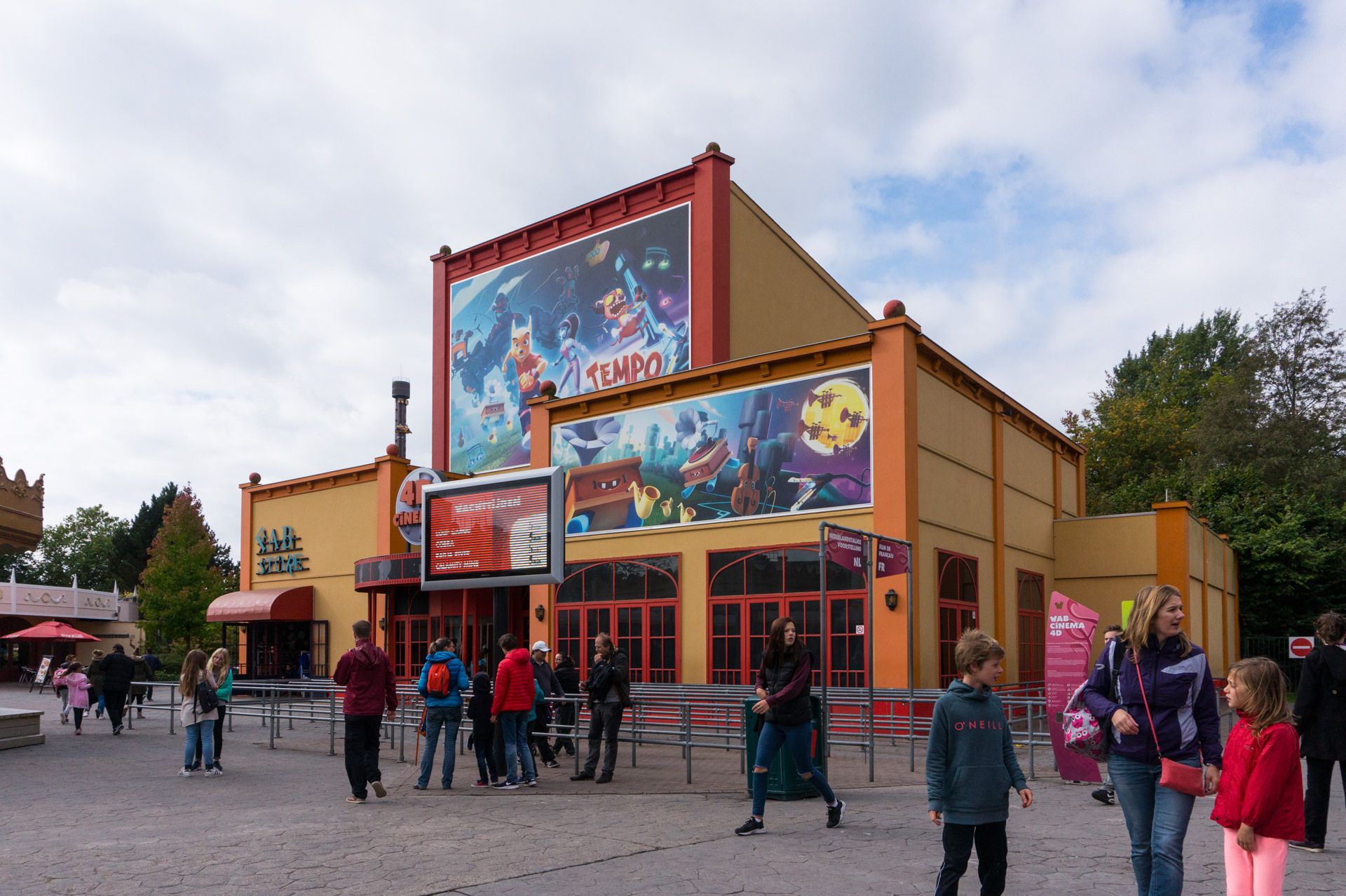
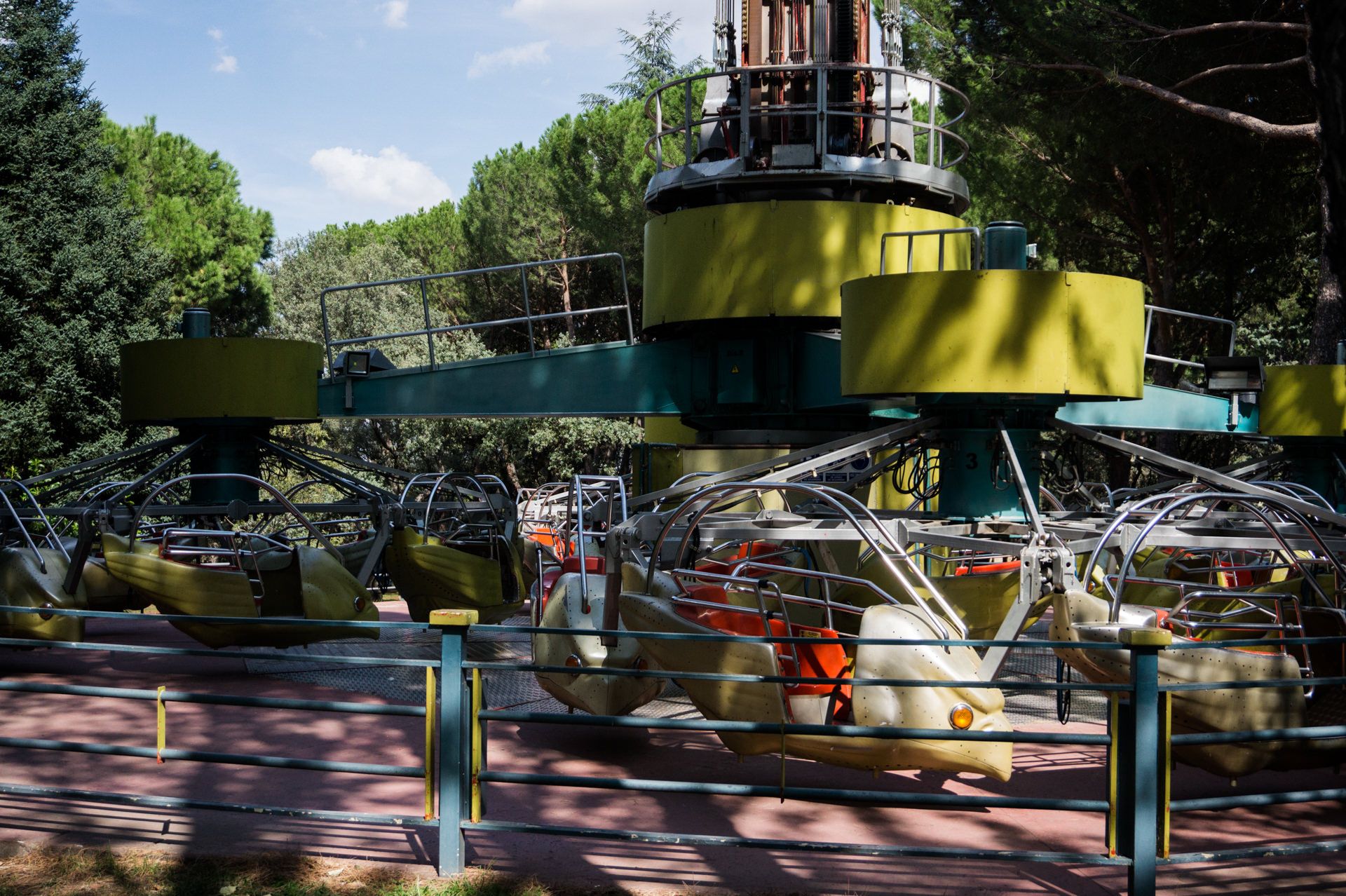
The Naturaleza theme area is by far the most beautiful area in the Parque de Atracciones de Madrid and, in addition to the larger attractions, is home to Telesaurio, a fully functional telecombat by Zamperla with lateral rotation, and Tiovivo, an old horse carousel as well as a 4D cinema.
TNT Tren de la Mina
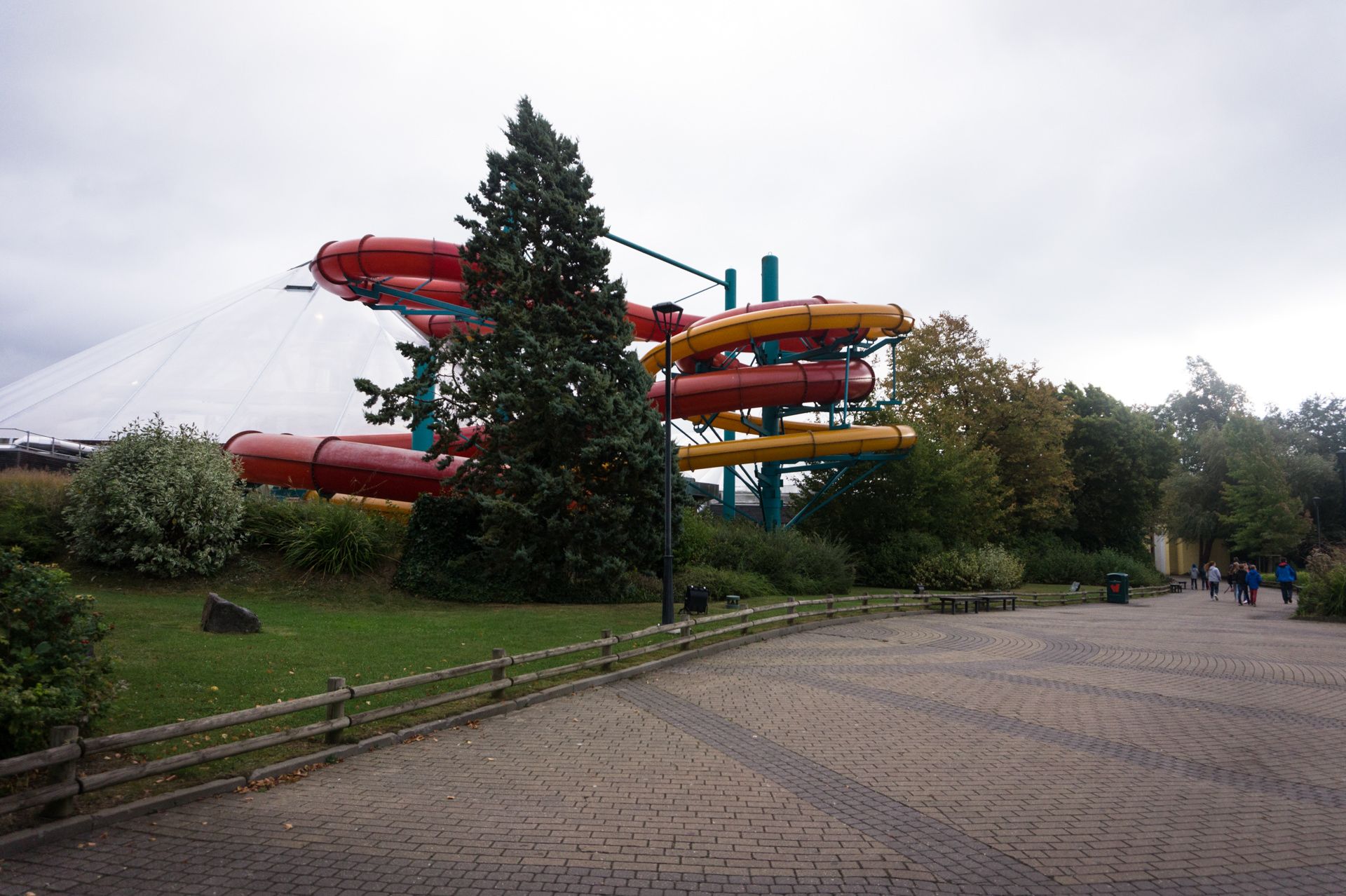
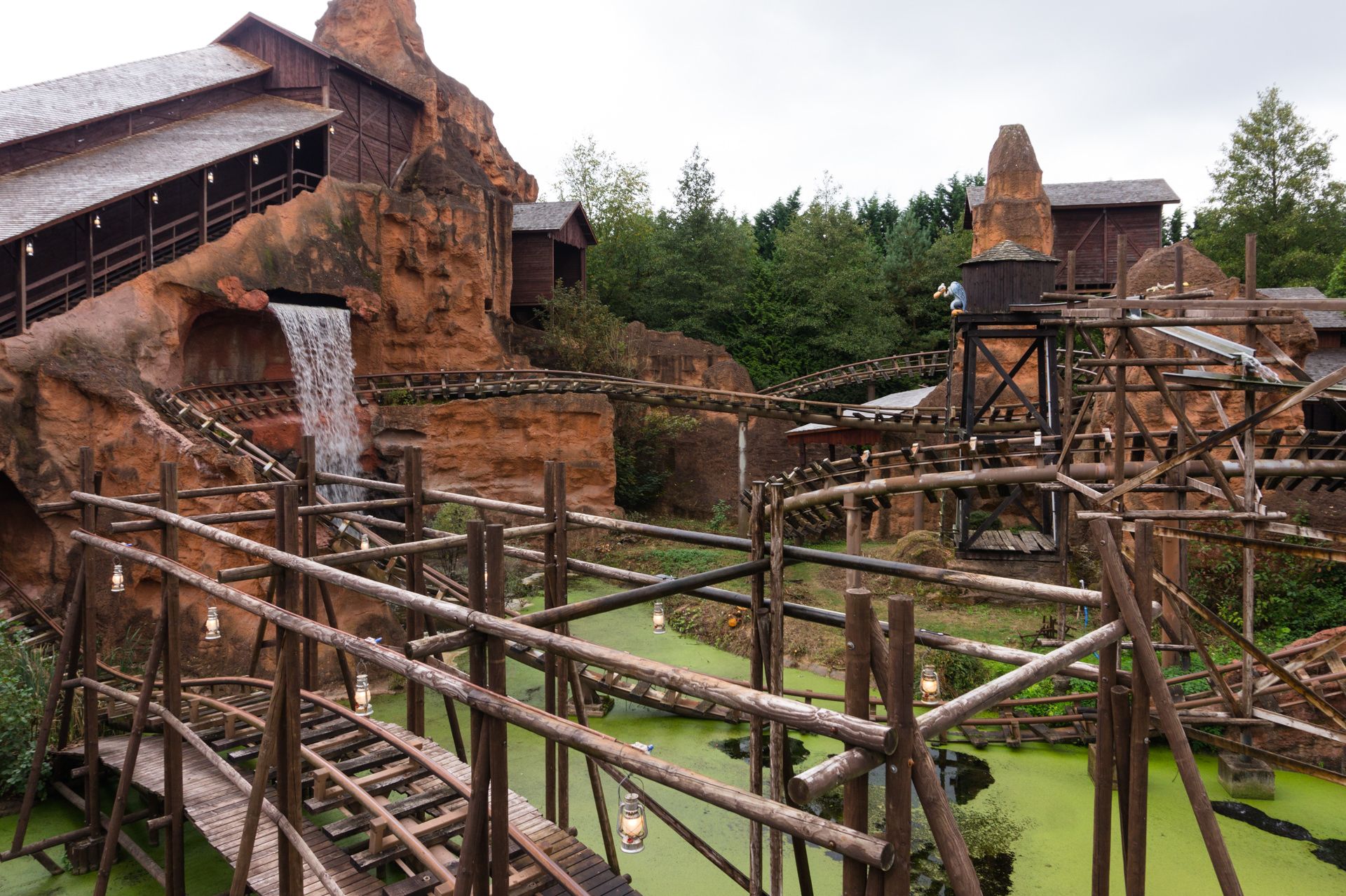
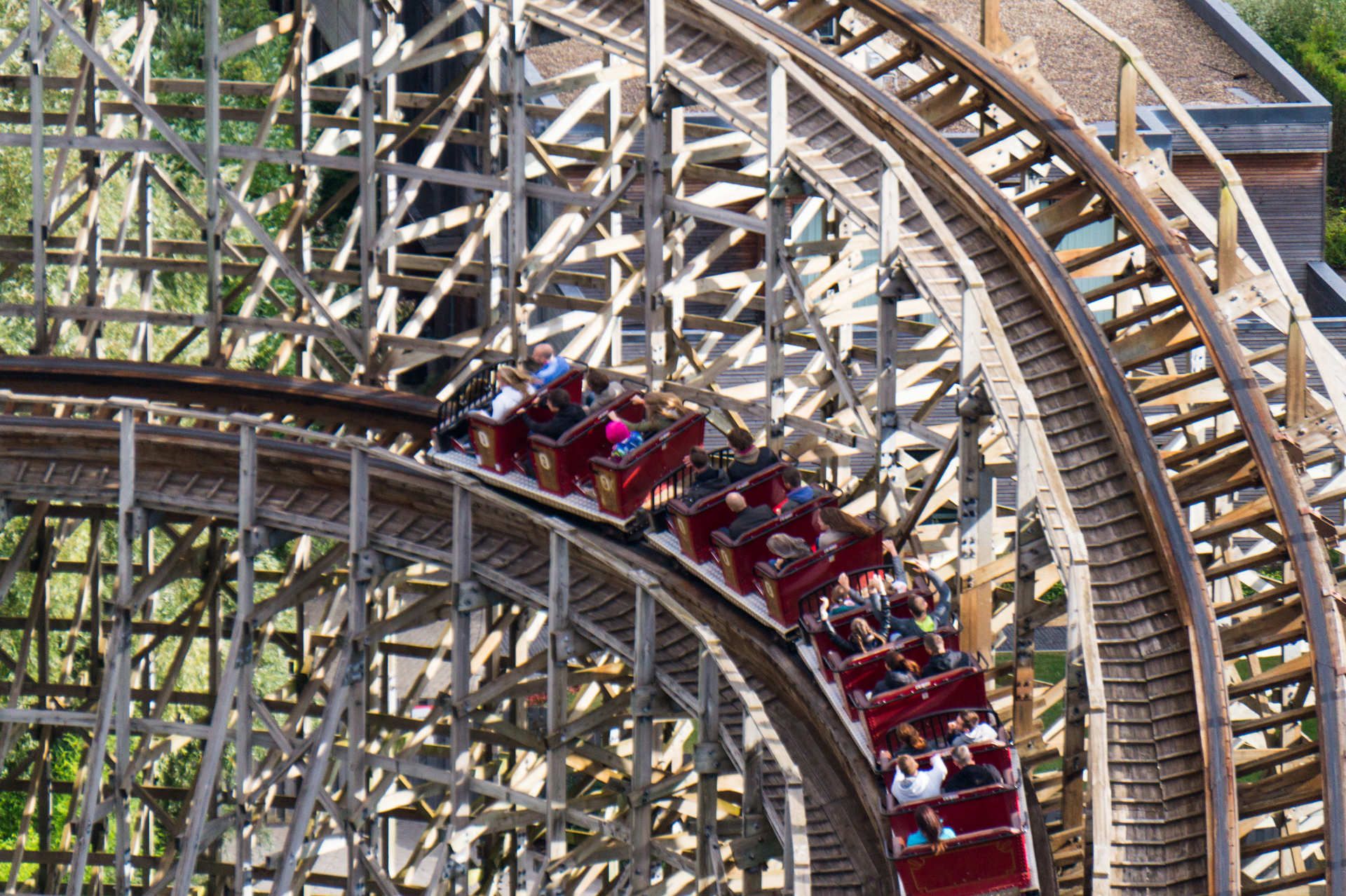
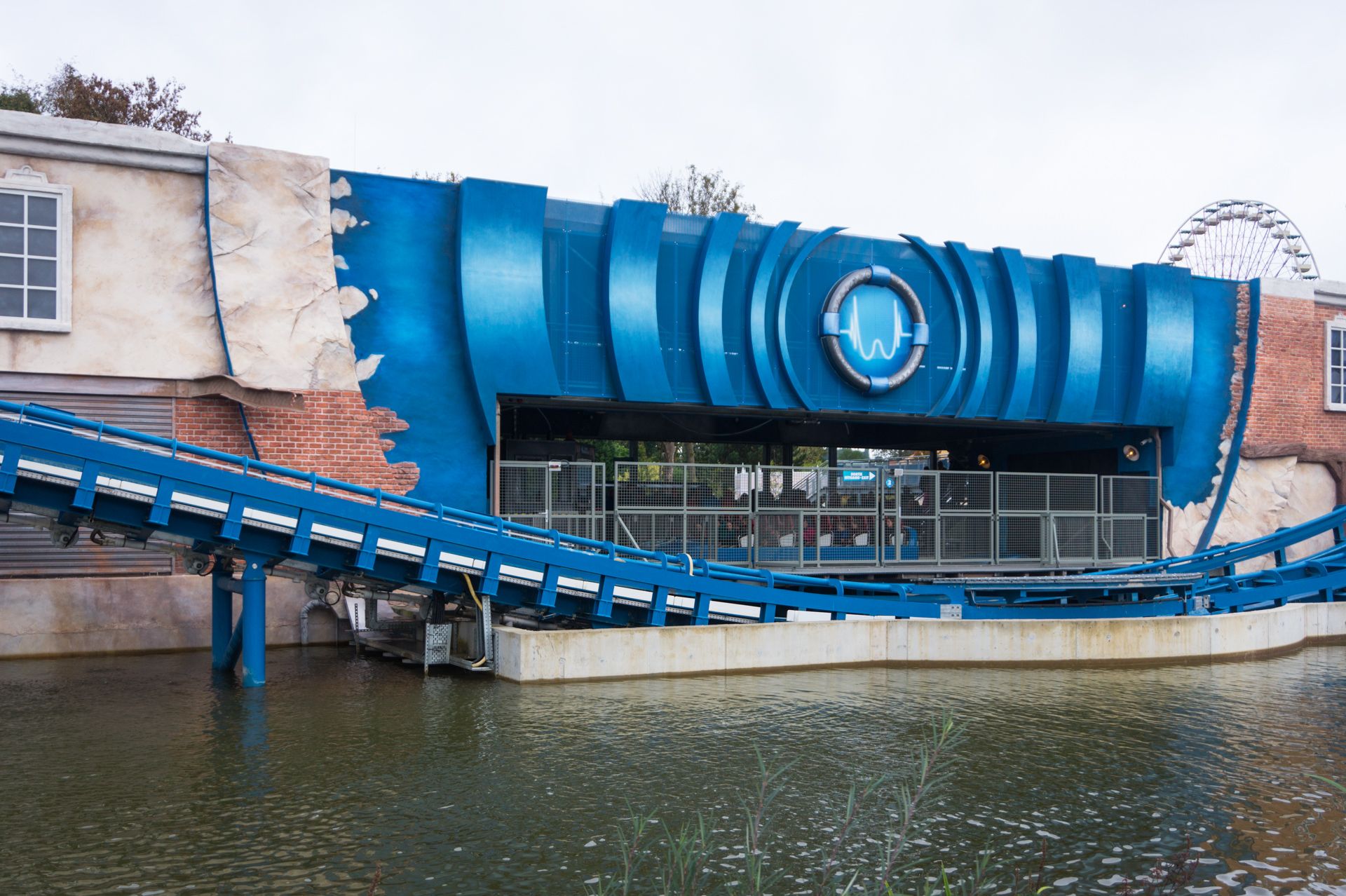
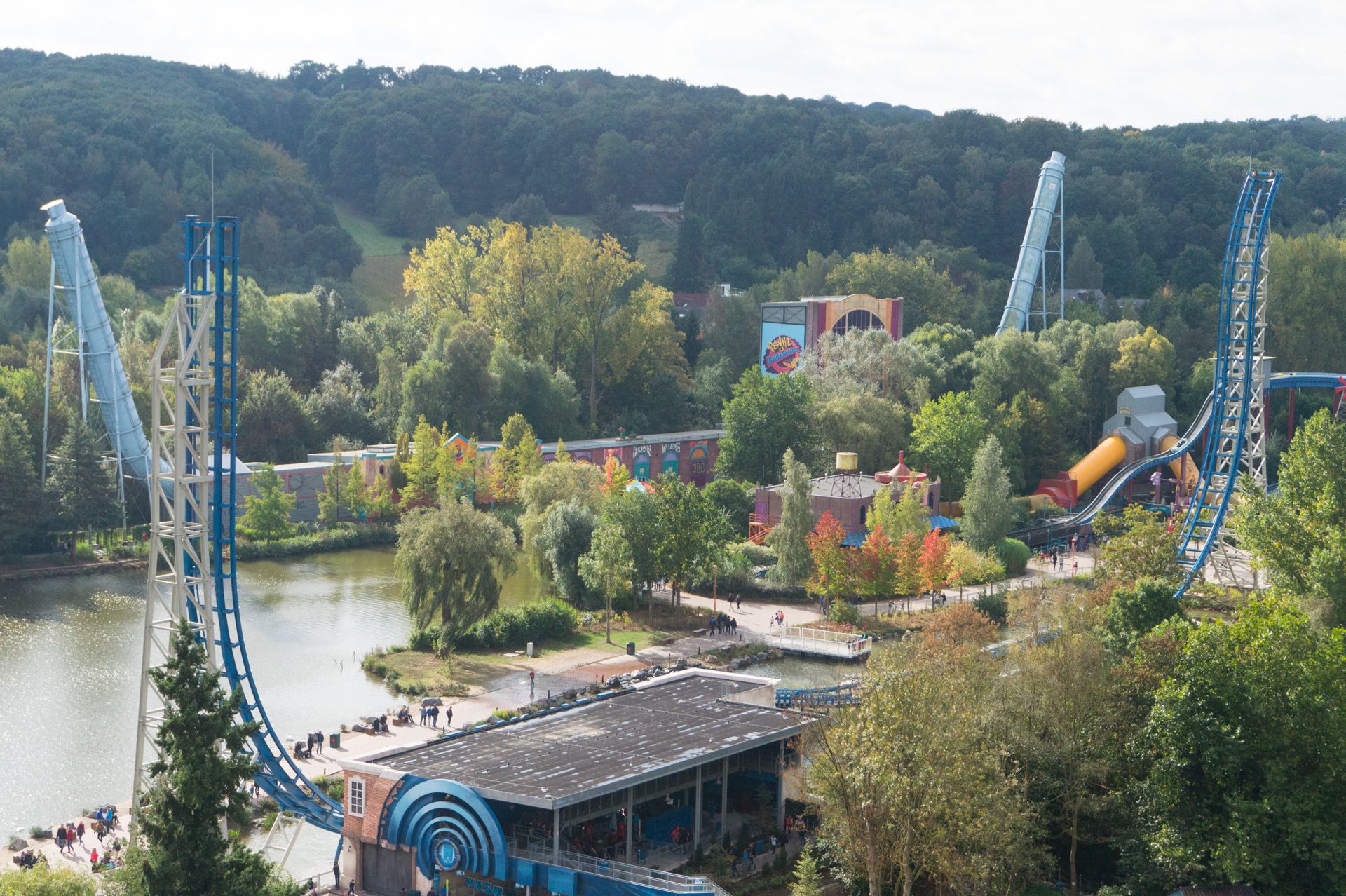
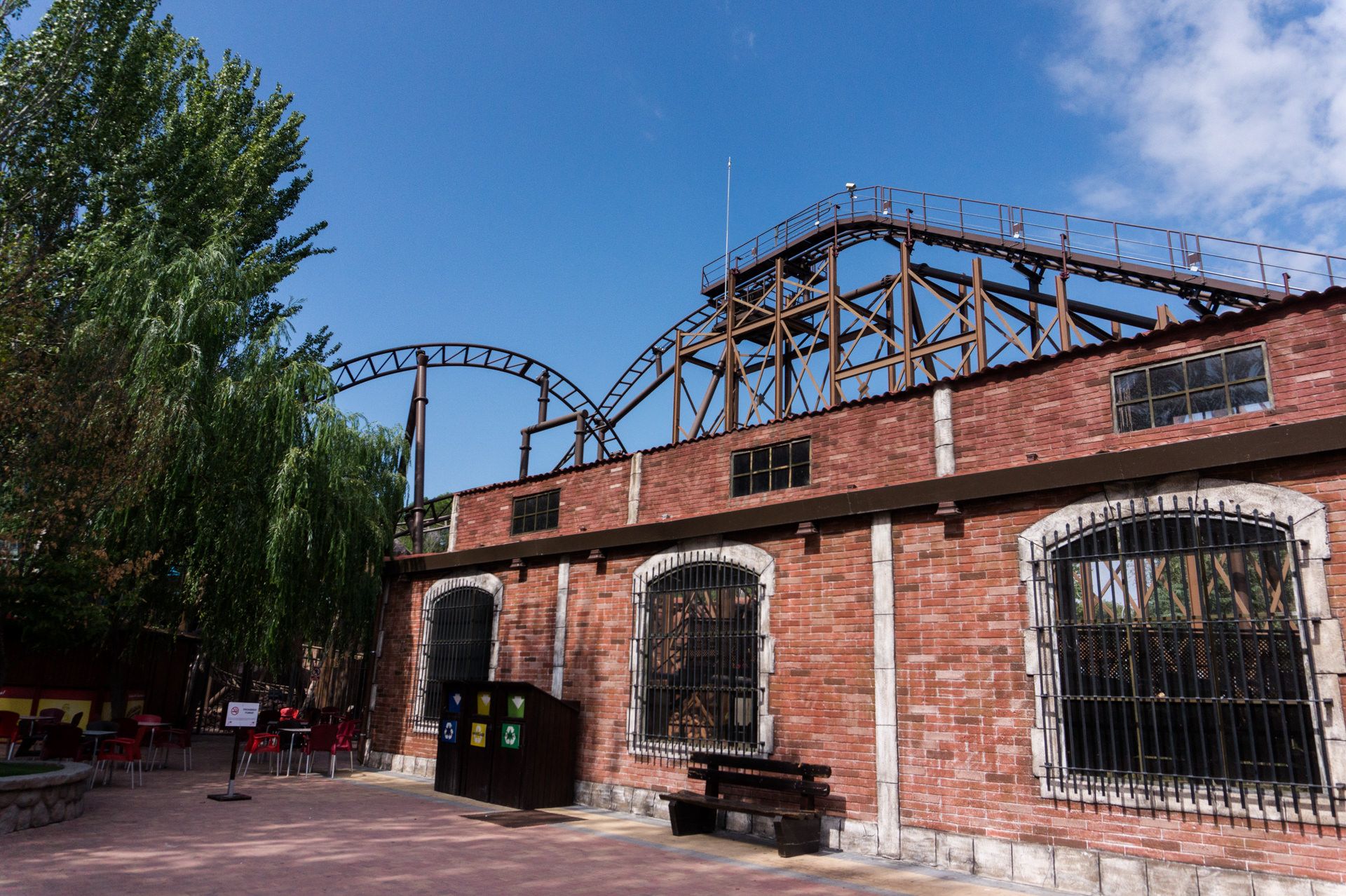
However, the actual main attraction of the area is likely to be the family roller coaster TNT Tren de la Mina, which opened in 2012. As I had not followed the construction I did not know where exactly the German interpretation of a mine train should be located within the park and was therefore very surprised to find it perfectly integrated between the children’s area Nickelodeon Land and the Spillwater Los Fiordos. I was all the more surprised to find that a large part of the ride uses a large portion of the water ride’s queue, which had hardly been used previously.
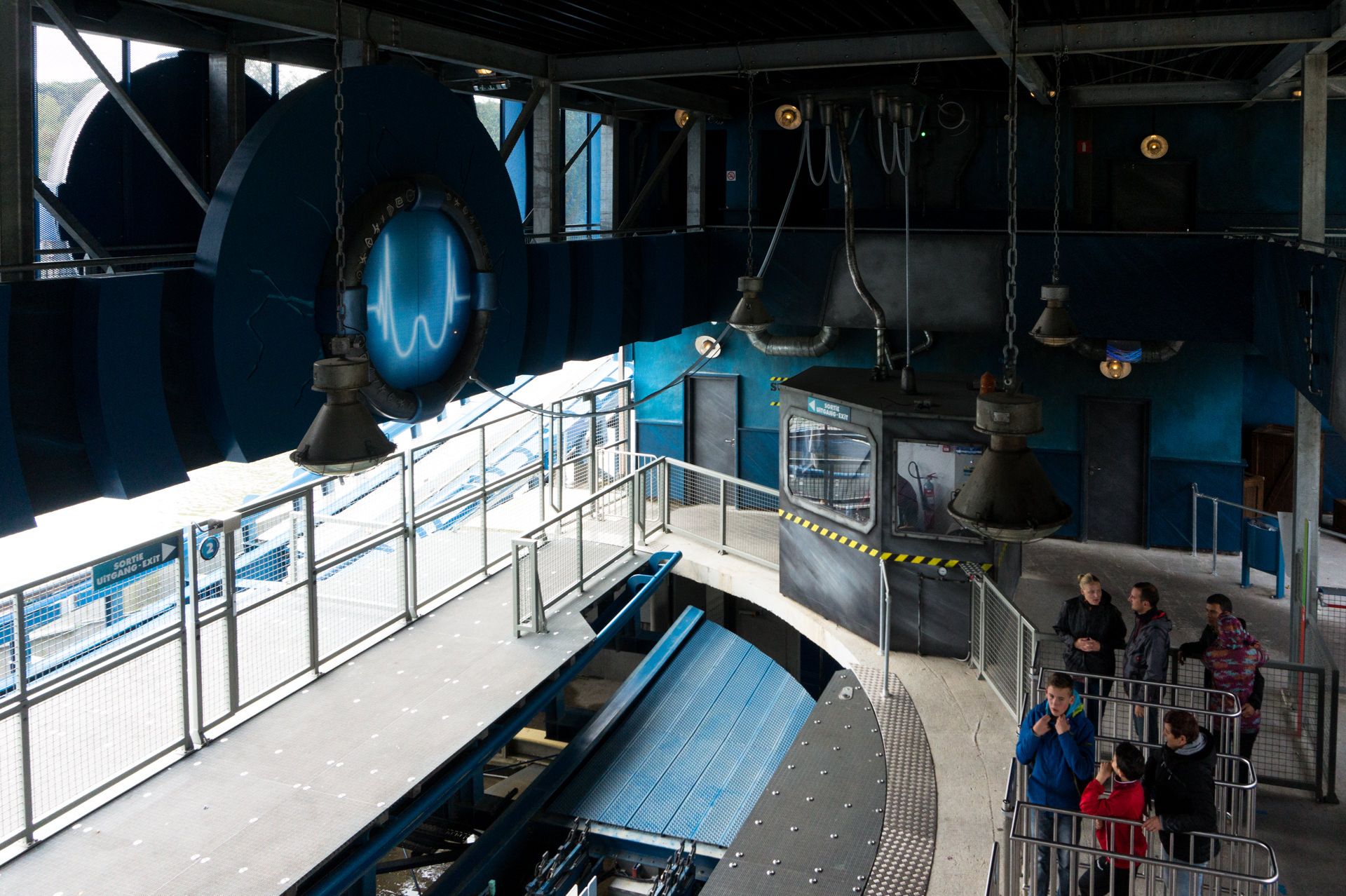
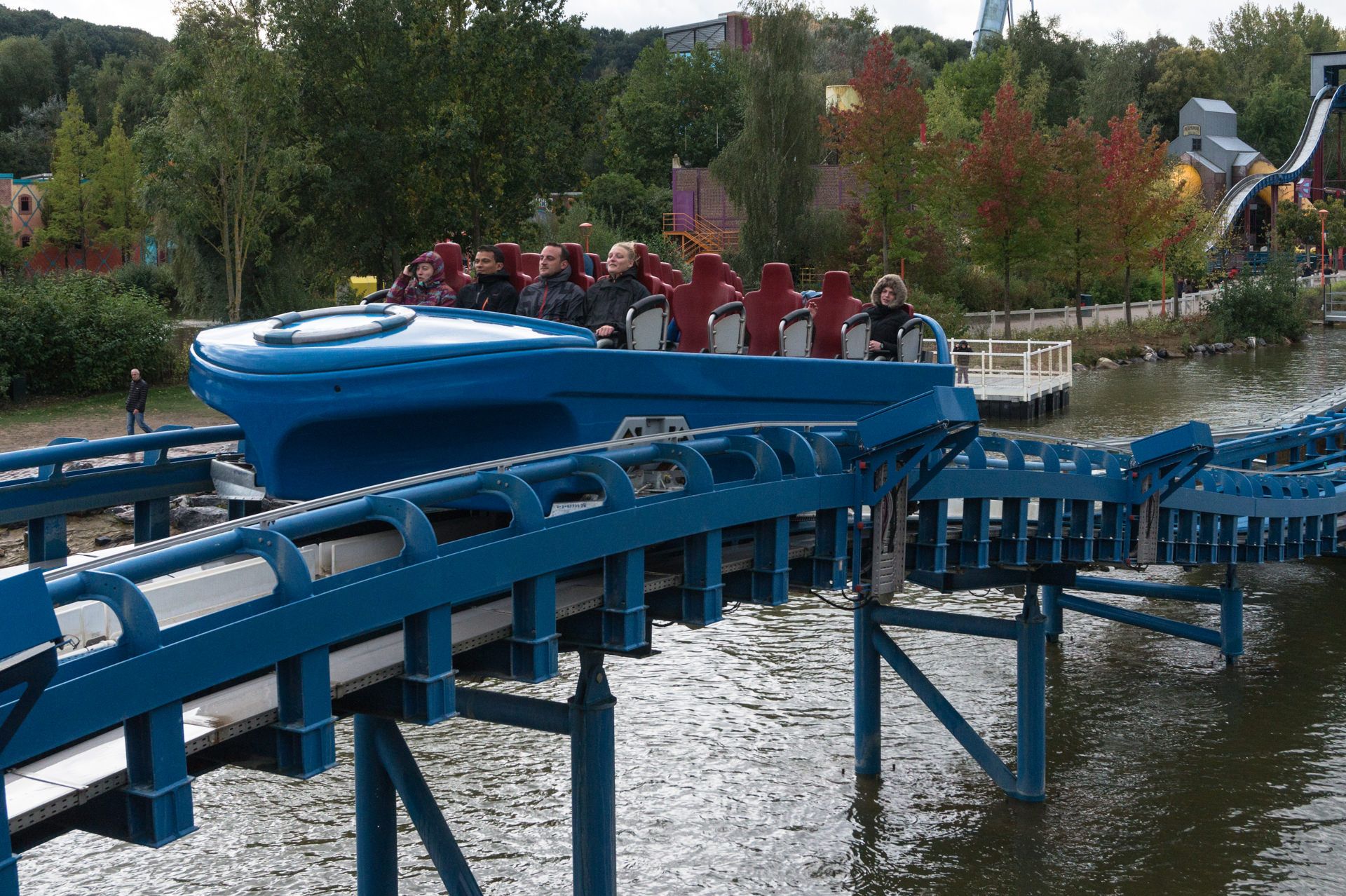
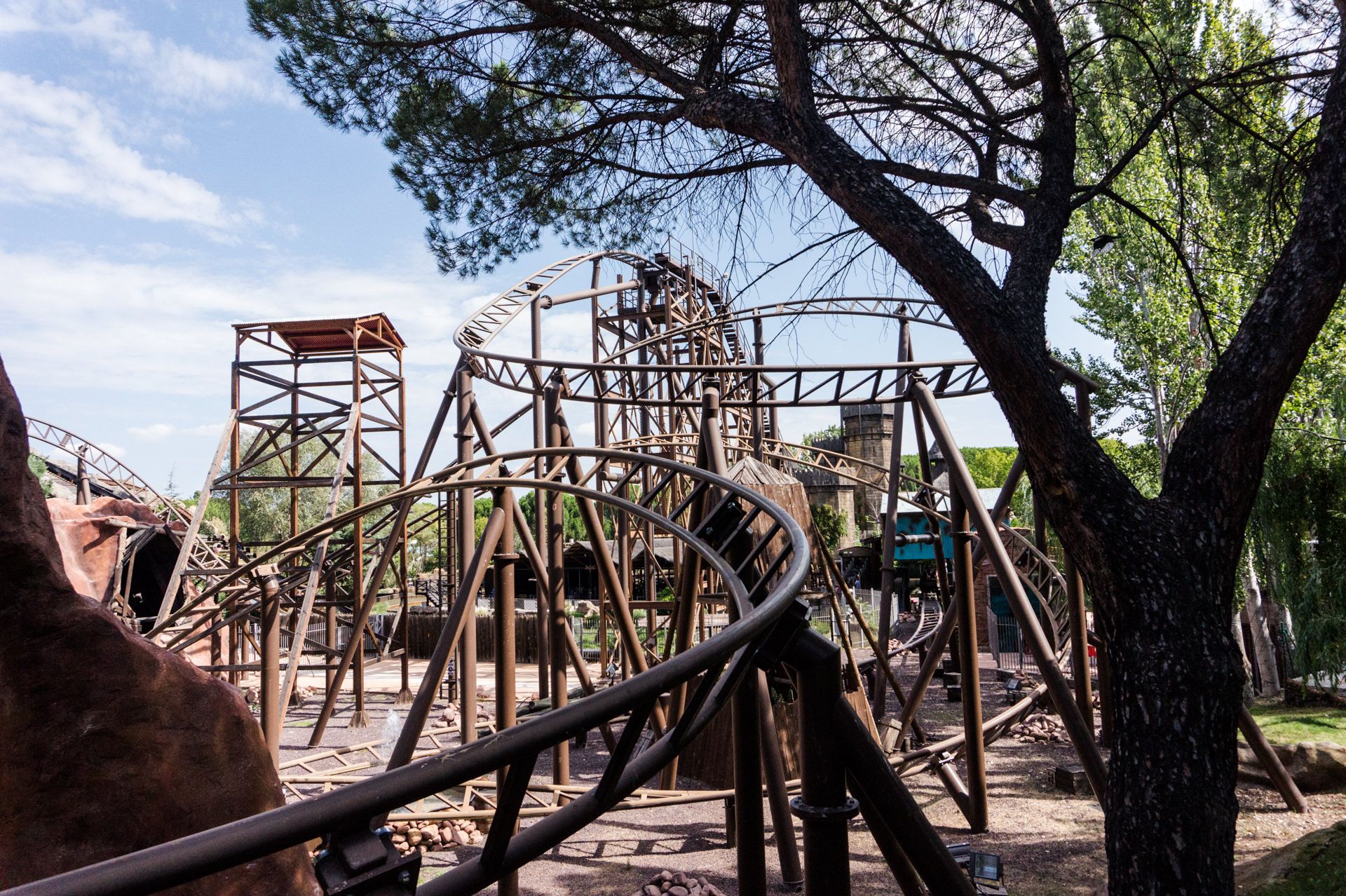
As soon as the train is finally cleared, it leaves the station and immediately goes through a left turn on the way to the lift hill. In the beginning it is still moving up quite fast and loses speed very quickly and crawls slowly over the top of the lift. After a short curvy ride the train picks up speed again before it heads towards the abyss just below the hilltop of the lift. Still far away from the ground the train shoots up again and turns in a horseshoe element, similar to the Youngstar Coaster of Mack Rides, whereupon an upward-moving swivel adds up. In a steep curve below the first helix the train seeks contact with the ground level for the first time, but the stay is only short, because an upward helix leading to the left is entered immediately. This is followed by a small drop with a subsequent camelback through a grotesquely shaped environment. In a right-hand bend, contact with the ground level is re-established, followed by some increasingly tighter curve changes, whereupon the brake section is reached immediately and shortly thereafter the station.
Gerstlauer has created a very neat family roller coaster with TNT Tren de la Mina, which gets a little lost in the fast-moving part of the layout. The strength of the roller coaster lies in its beginning and middle part, which is surprisingly close to the competing product from Mack Rides, only the end spoils the general ride pleasure, as well as the general handling of the ride – which is why TNT Tren de la Mina is not the kind of roller coaster I would go for if I had to wait longer. But for in between, this ride is more than perfect.
Los Fiordos
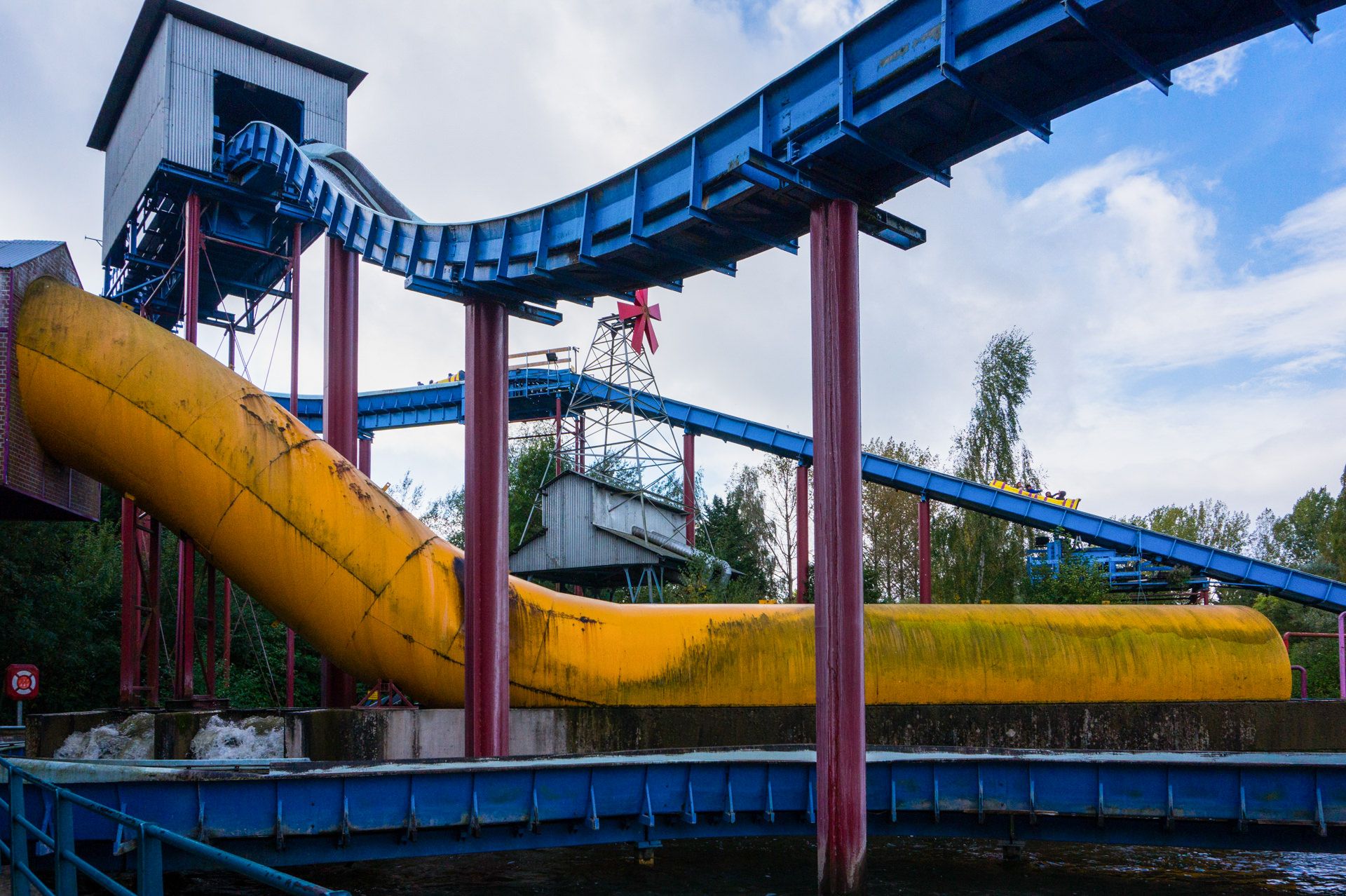
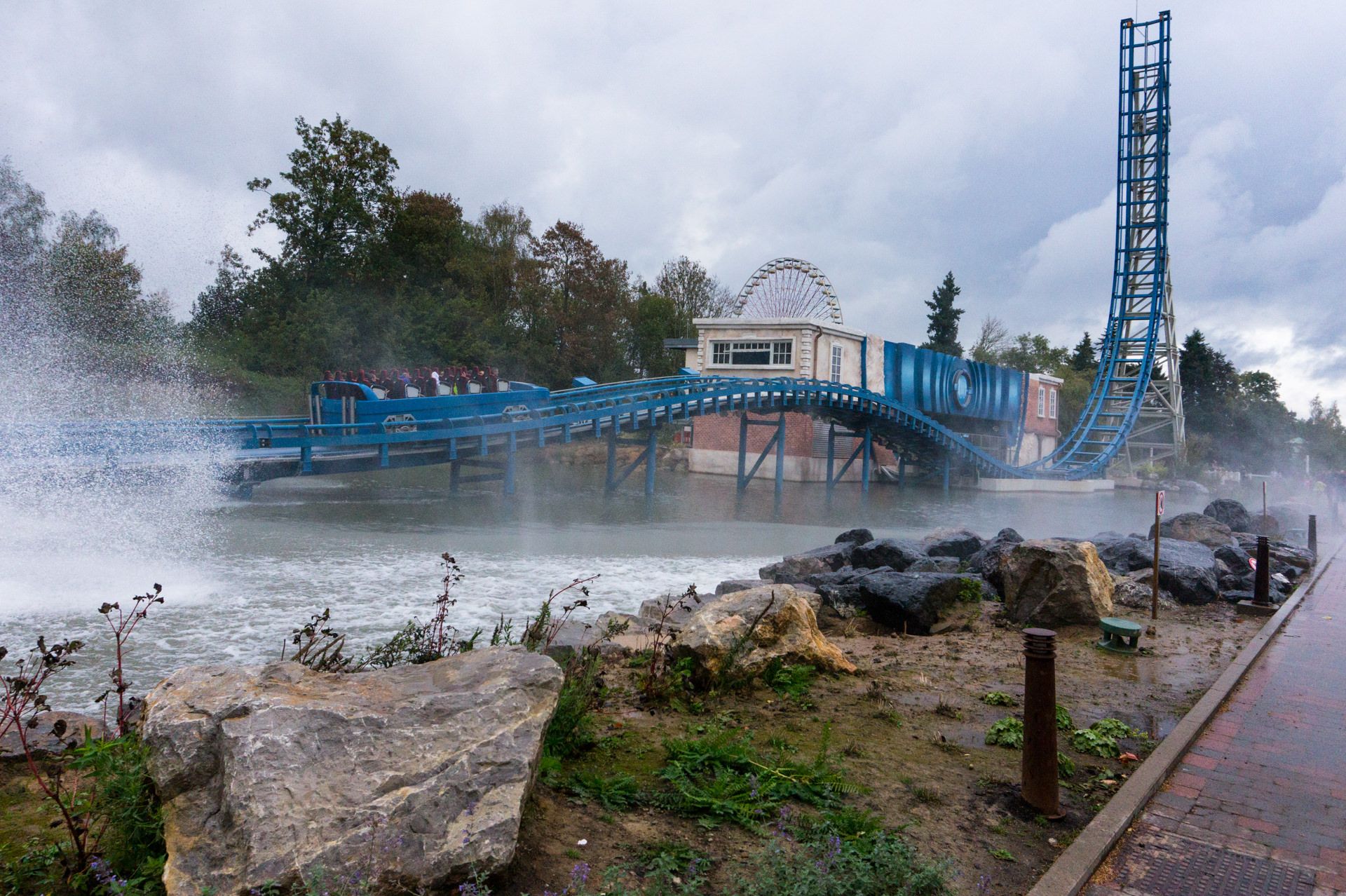
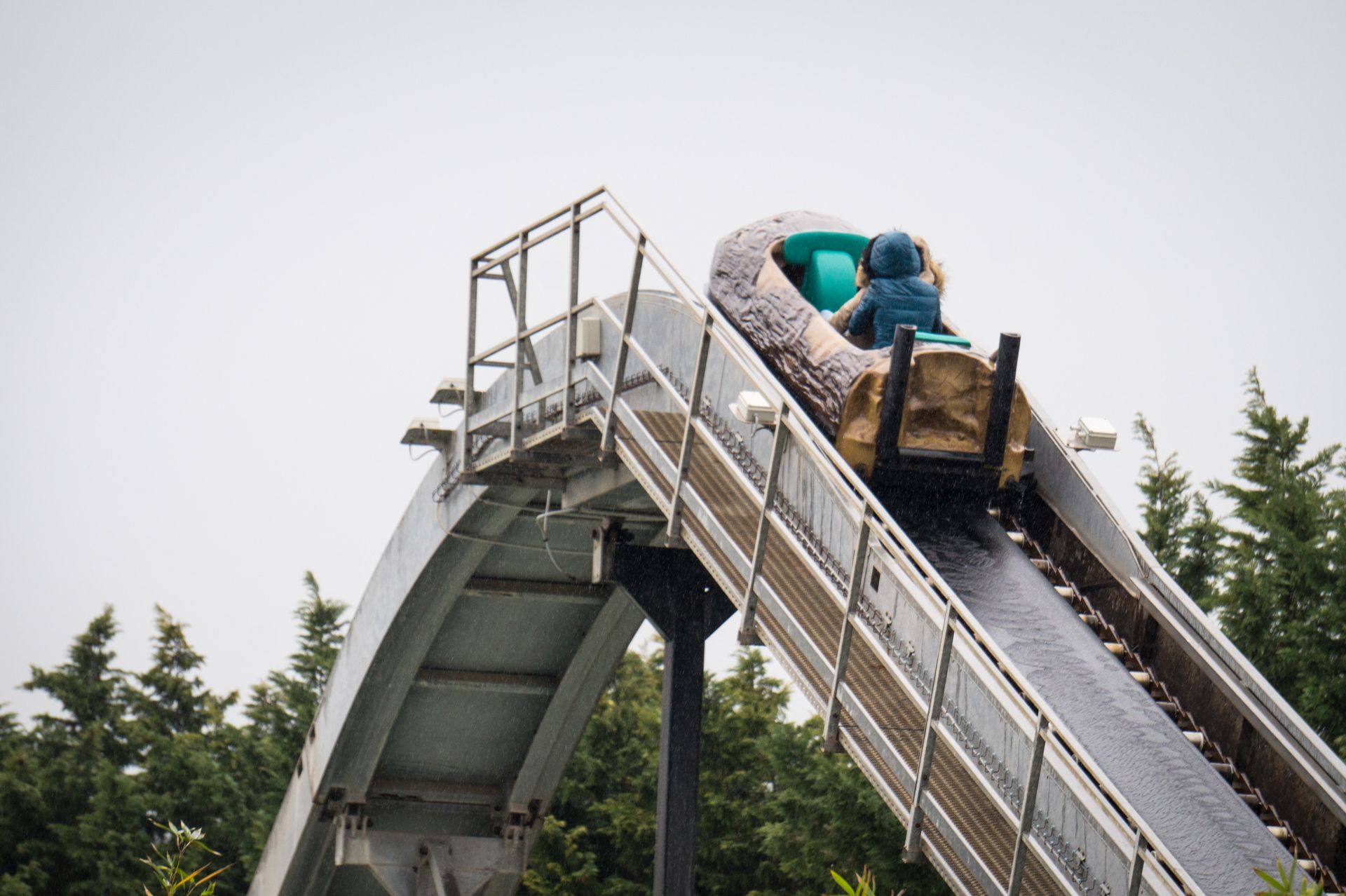
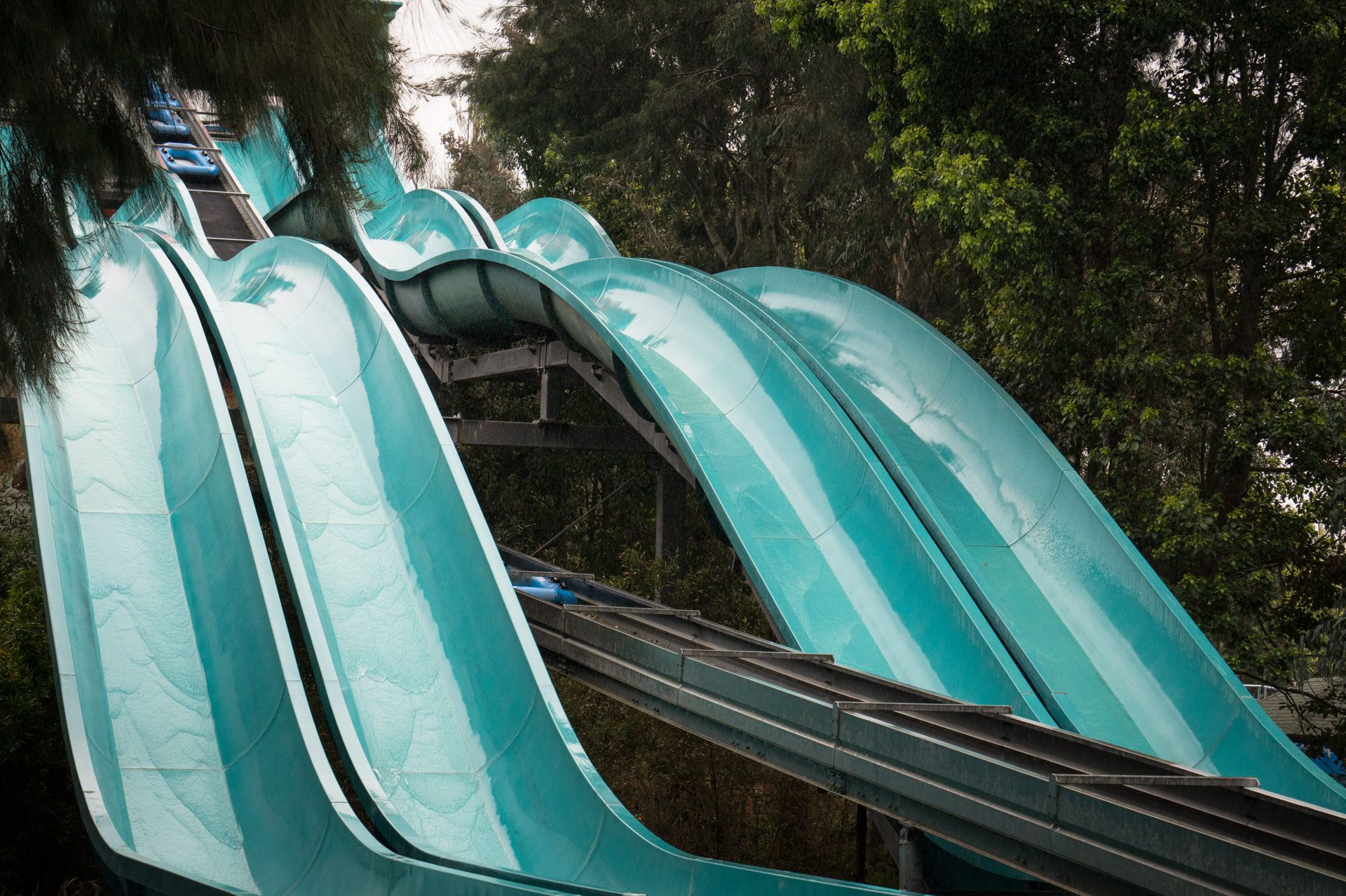
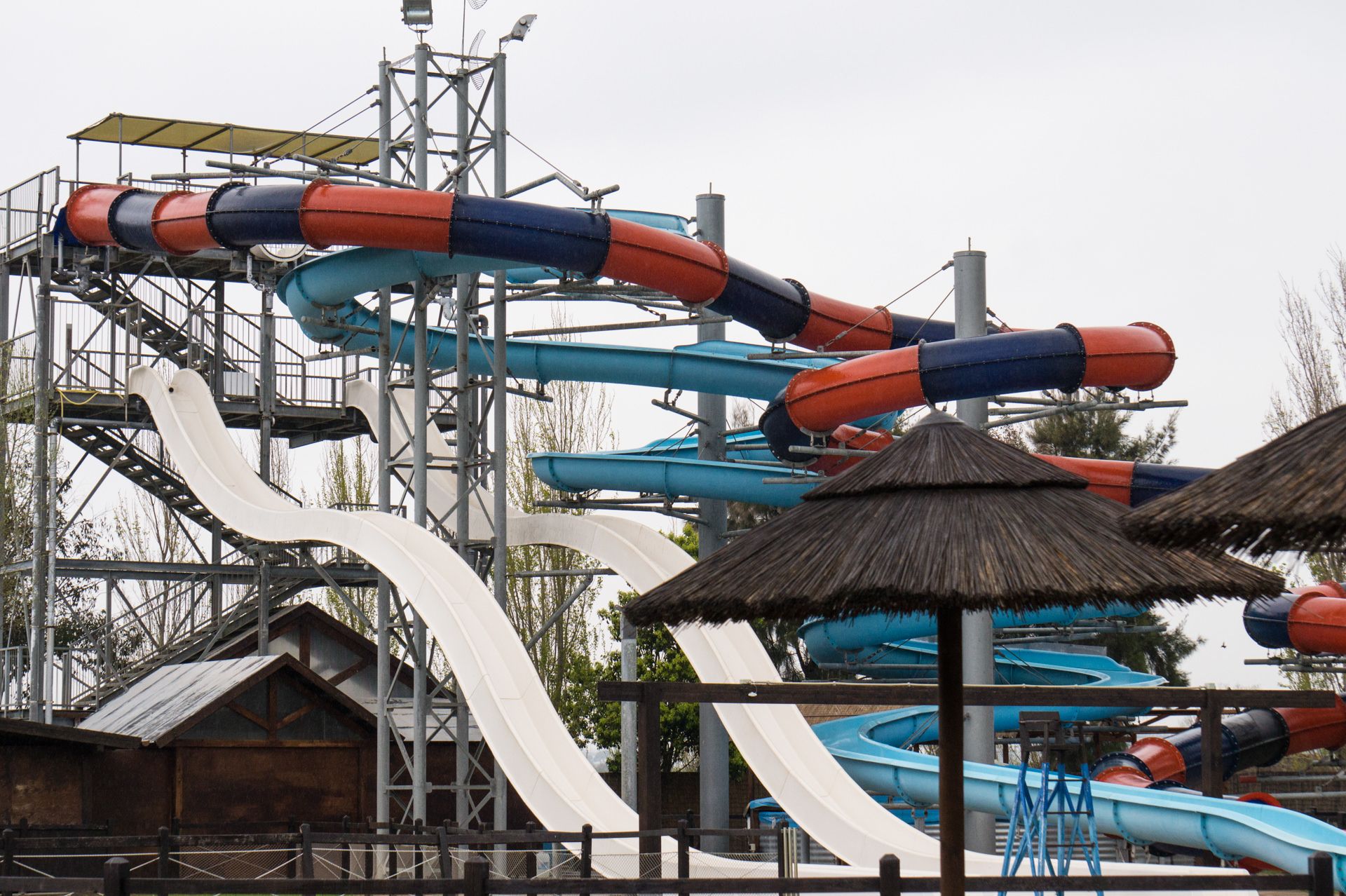
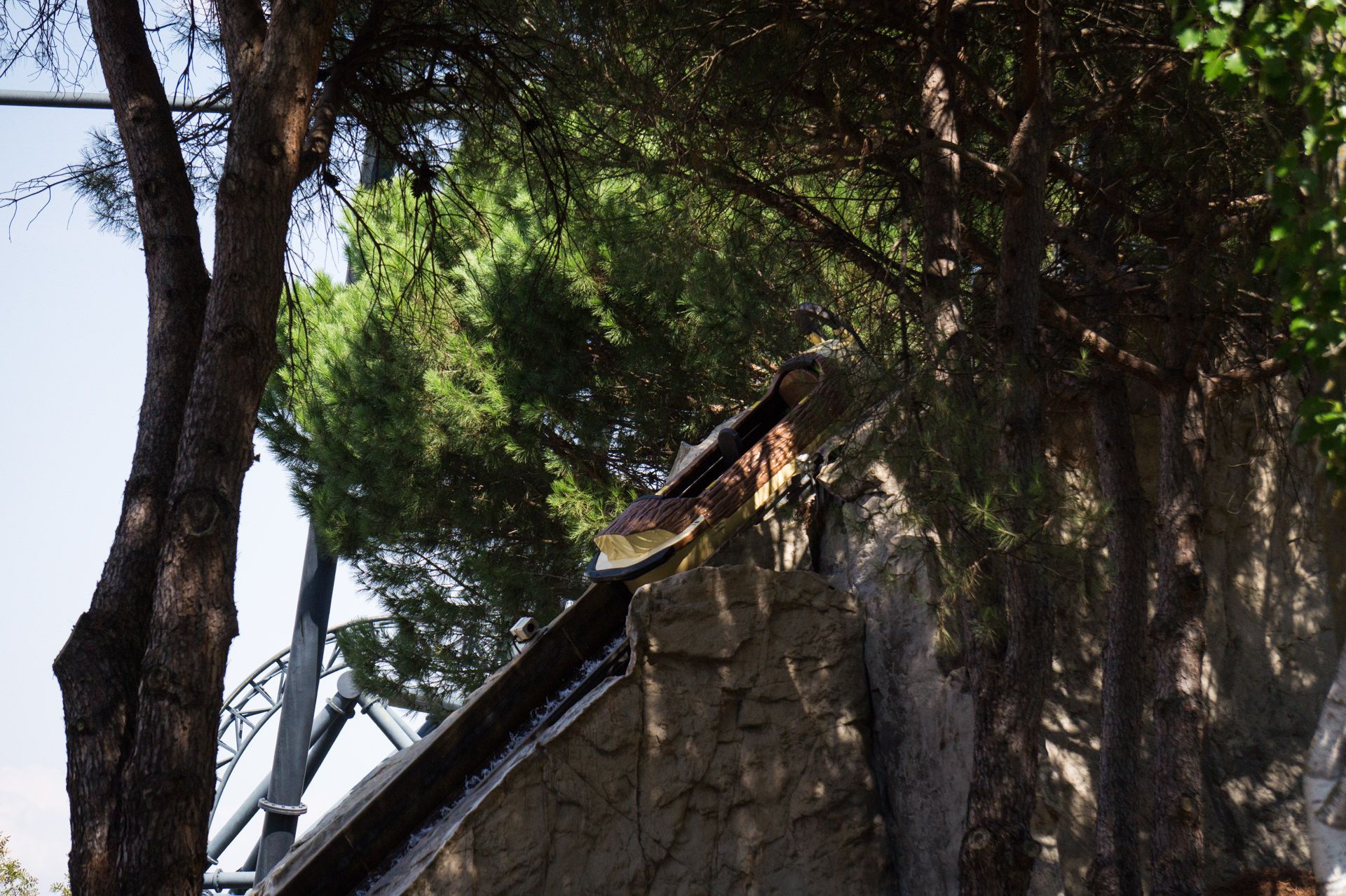
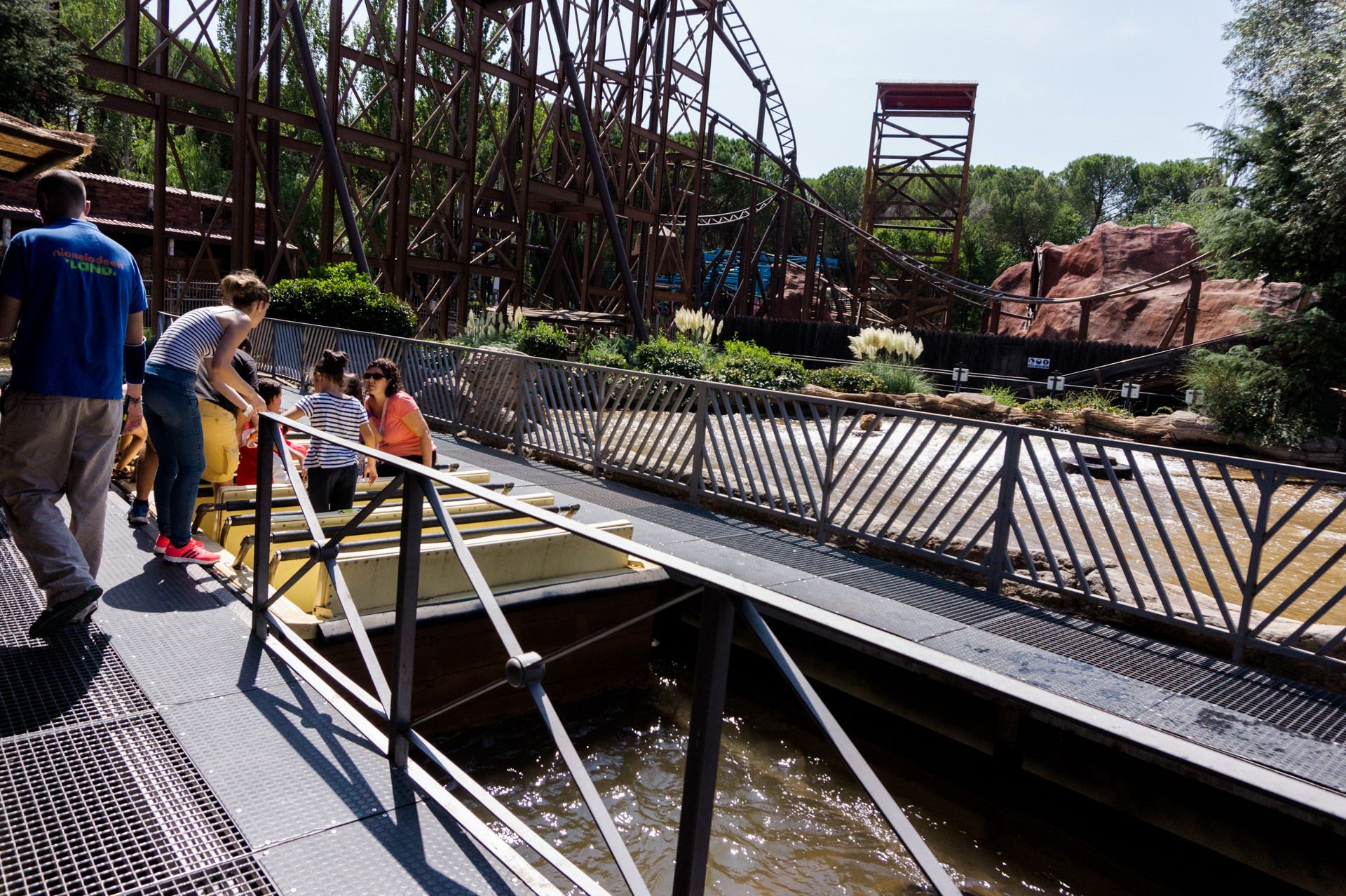
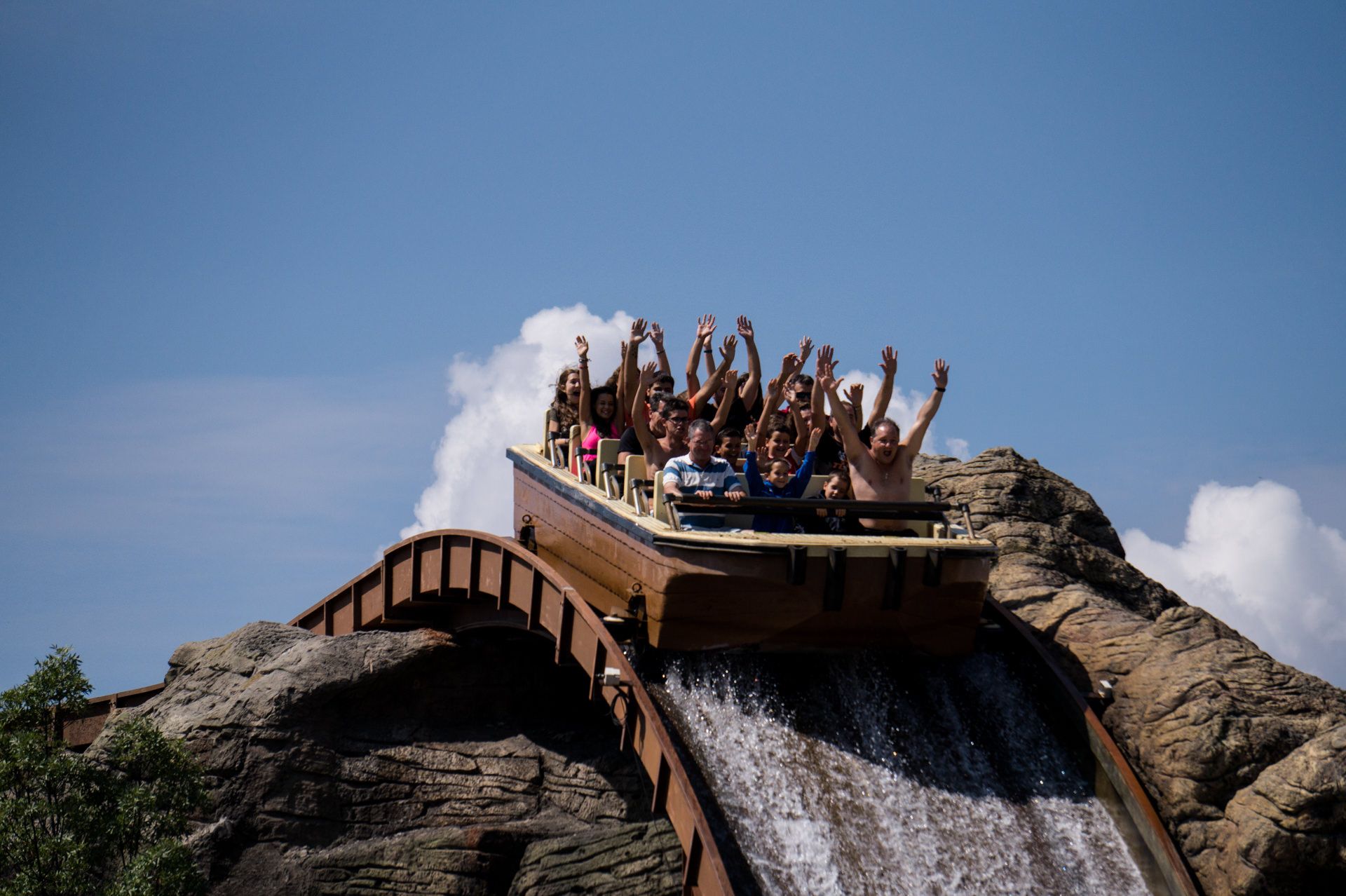
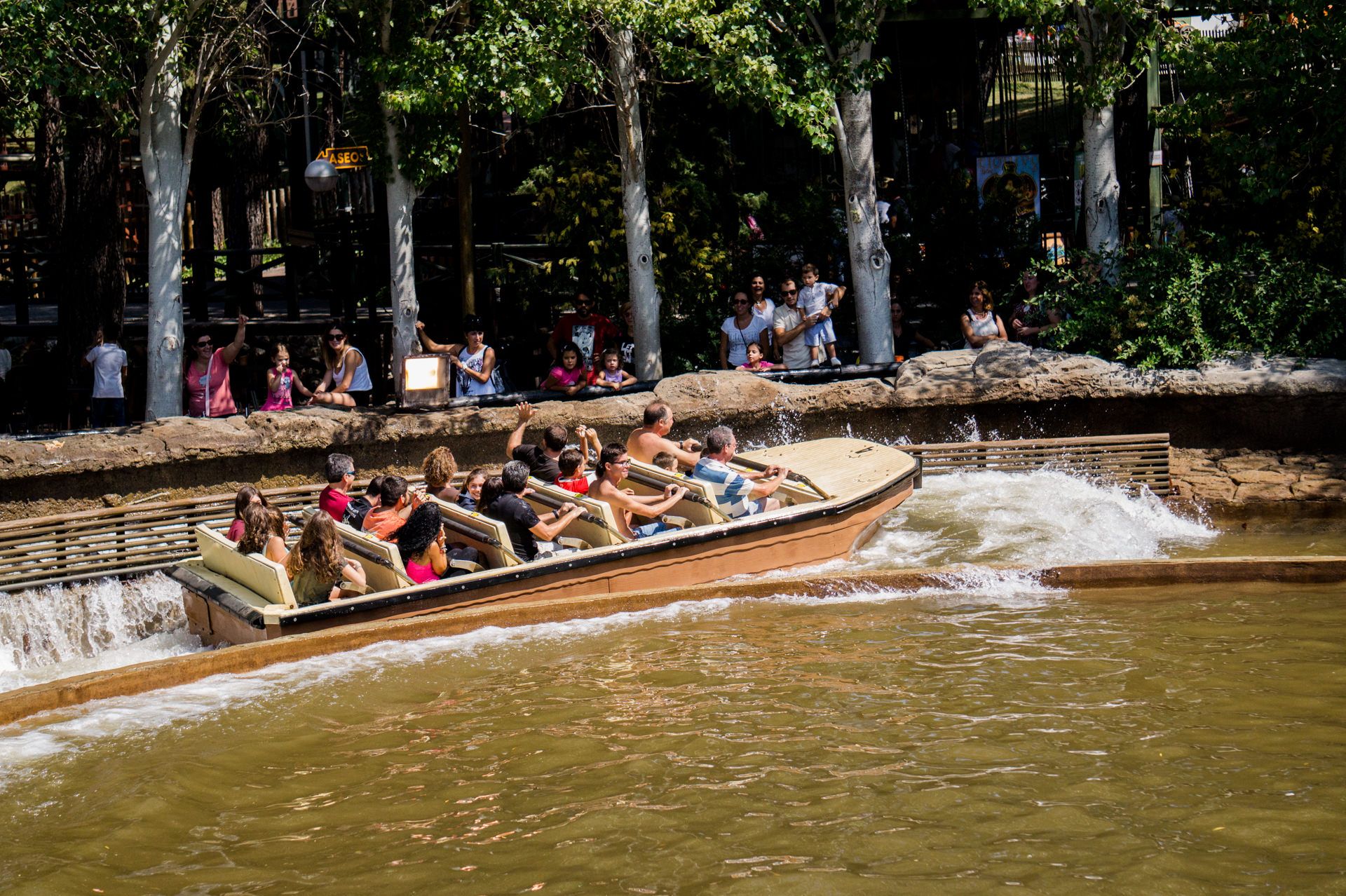
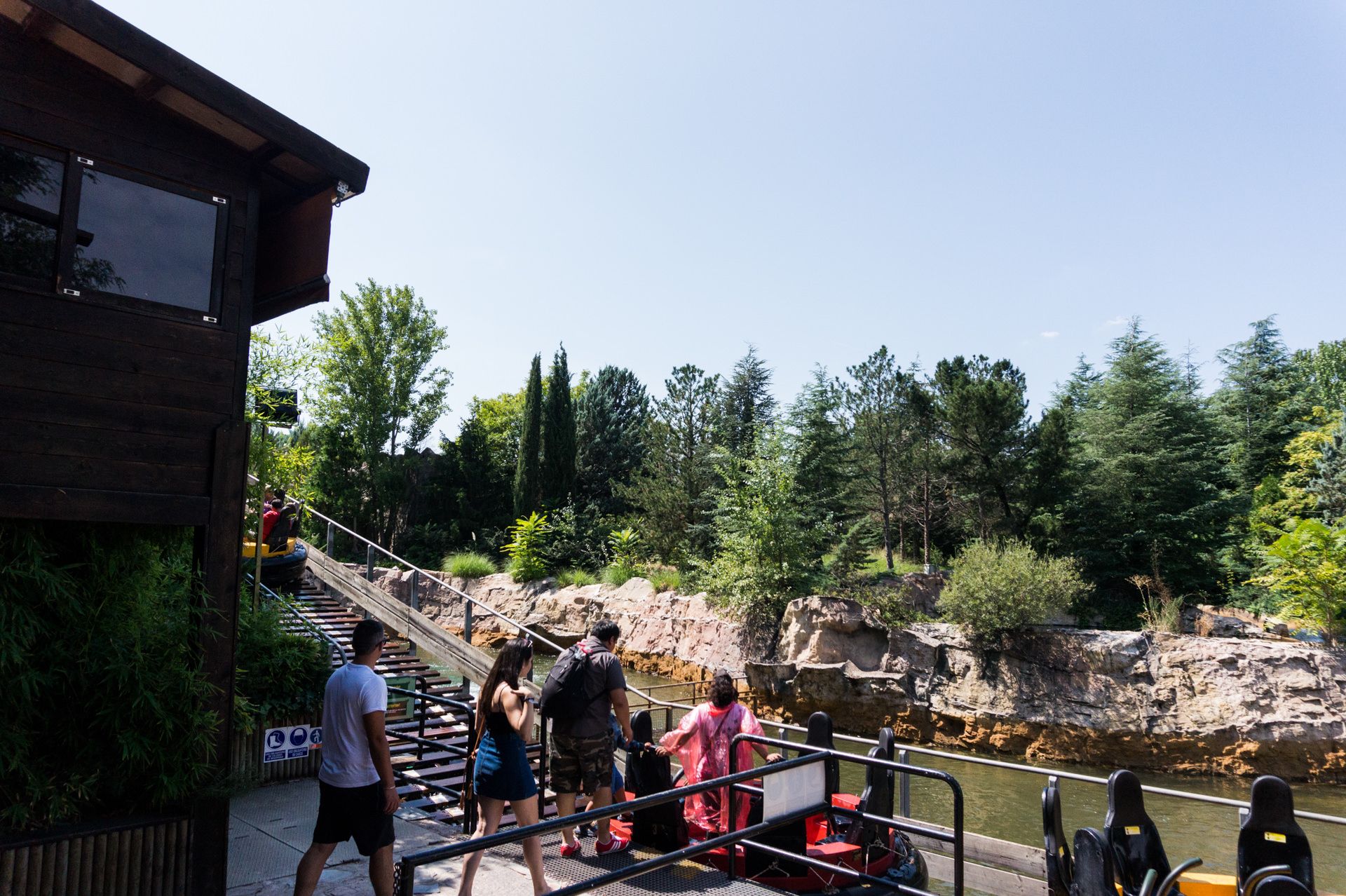
Formerly passing lush greenery that covered an entire show stage, the boat of the Spillwaters Los Fiordos chugged through the canal until the lift was climbed parallel to the park’s border. The aforementioned stage of the Parque de Atracciones de Madrid fell victim to the construction of the family roller coaster TNT Tren de la Mina, as well as the vegetation, which is why you can now ride below the roller coaster through a rather bare landscape, but with good views. After climbing up the rocky mountain, after a short bend to the right, the only downhill run of the ride follows. Once you reach the bottom, you will immediately come into contact with the water, whereupon, after a short 180° turn and a wide left turn, you will start your return journey towards the station. To my own surprise, the degree of wetness did not correspond to that of a normal log flume, as I had experienced on my last trip four years ago, but to that of the passage through a wall of water, which resulted from the direct reflection of the water at the bridge. Soaking wet and quite satisfied we left the ride, which I would like to describe as the wettest ride of this kind in Spain.
Vértigo
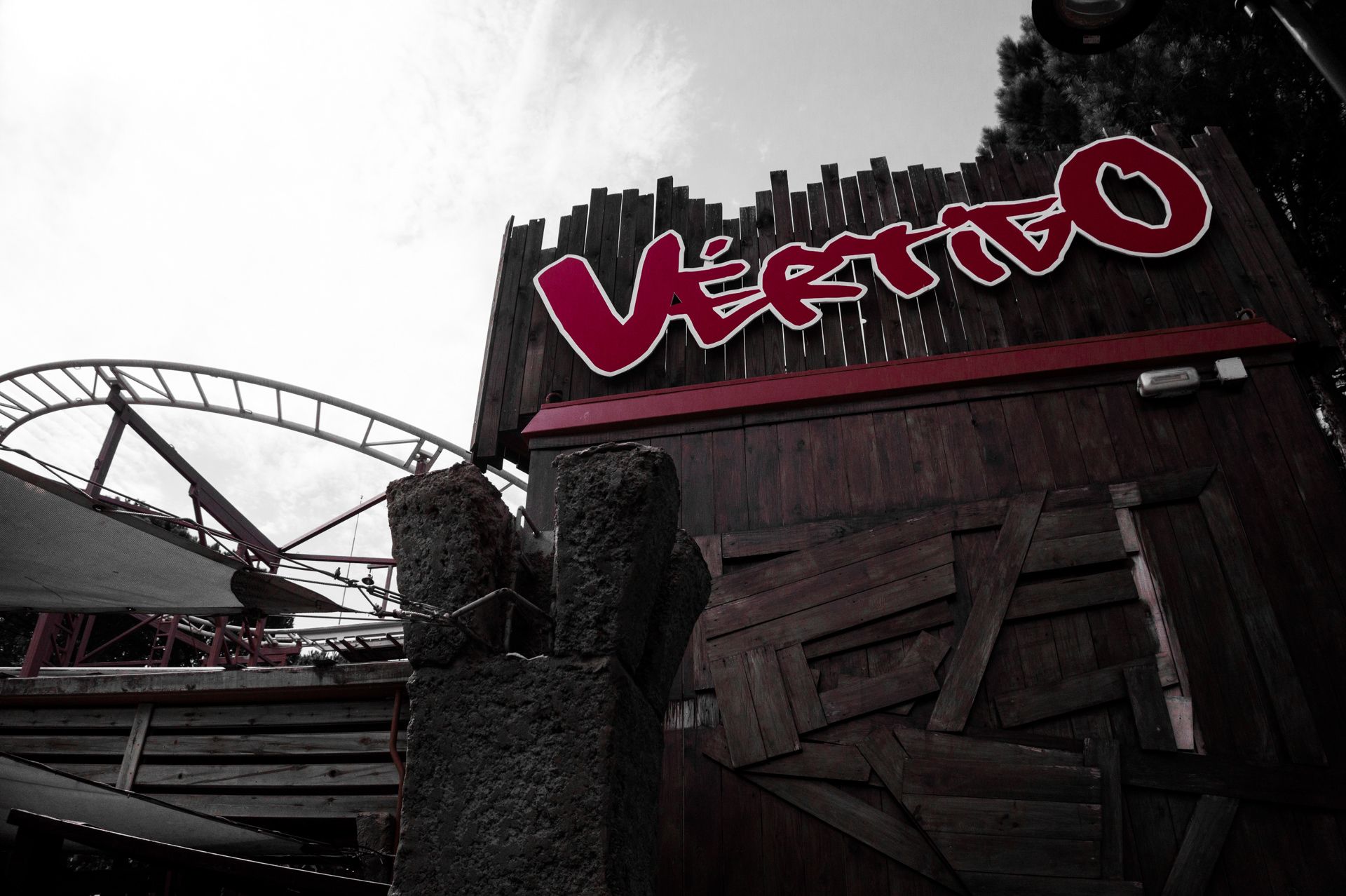
The dispatch of the Wild Mouse Vértigo is an outrage! Actually, there would be nothing, absolutely nothing to complain about with this stylish mouse featuring the well-known layout and absolutely great handling characteristics, if only instead of 10-15 minutes you wouldn’t have to invest a good hour of your valuable time for a ride. Due to the lack of separation between the boarding and deboarding areas, all cars are loaded simultaneously and then sent on their way one by one. The new passengers are only allowed into the station after all the cars have returned and been unloaded – a total of 16 people. This procedure reduces the capacity of the ride immensely, so that one always longs for a normally operated Wild Mouse, such as the other half of this former double ride, which is still located in the Belgian amusement park Bobbejaanland.
Los Rápidos
Los Rápidos is a truly special rafting ride in the Parque de Atracciones de Madrid, as it is the only ride of its kind in Europe by O.D. Hopkins. With it the Naturaleza area was founded in 1996, which can be seen in the consistent and beautiful design of the ride. The level of wetness is still elevated due to the rather wild end of the ride, unfortunately during our visit we did not see the metre-high fountain, which regularly rained down on the passing boats.
Maquinismo
Top Spin, La Maquina and La Lanzadera
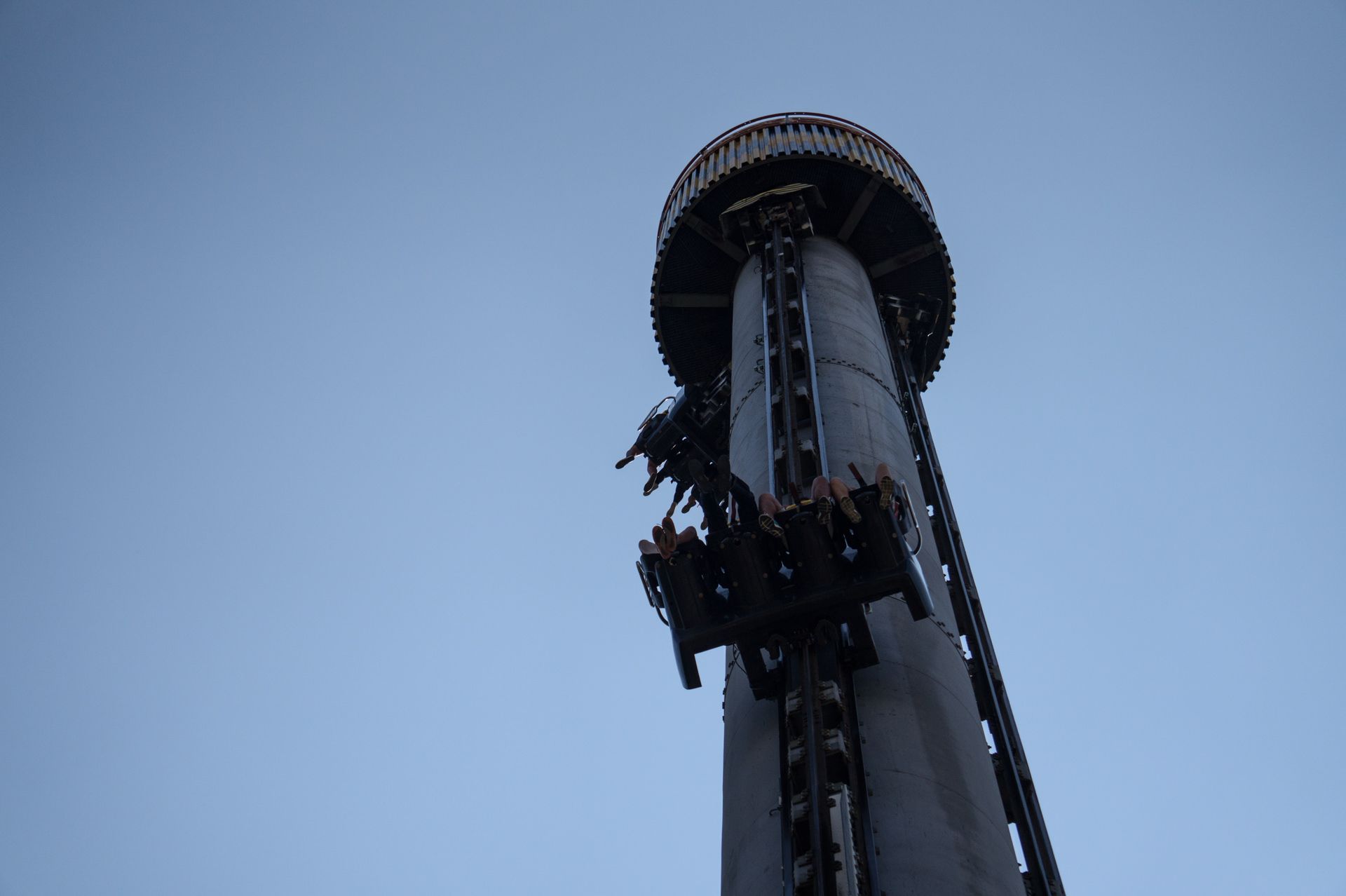
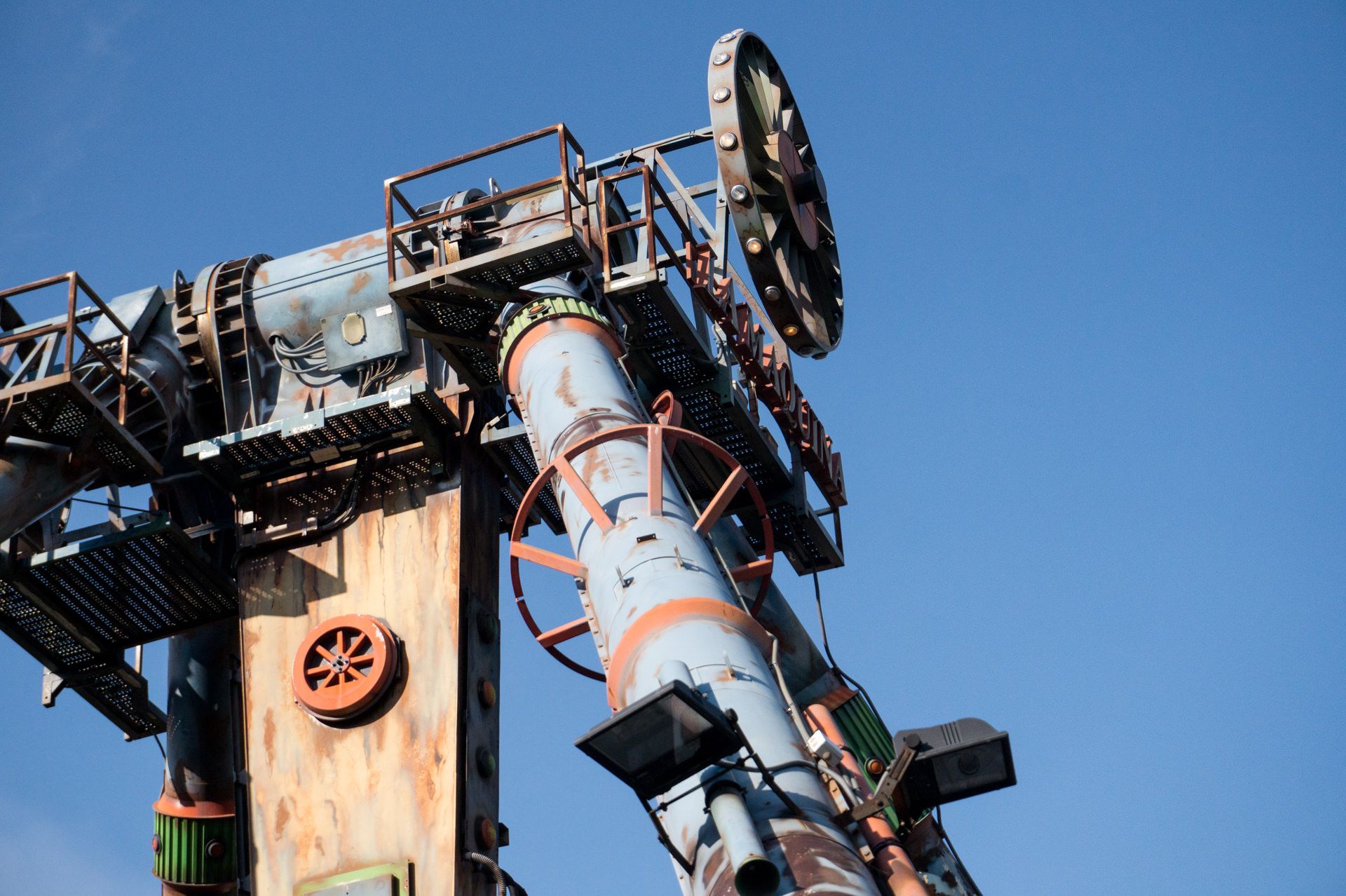
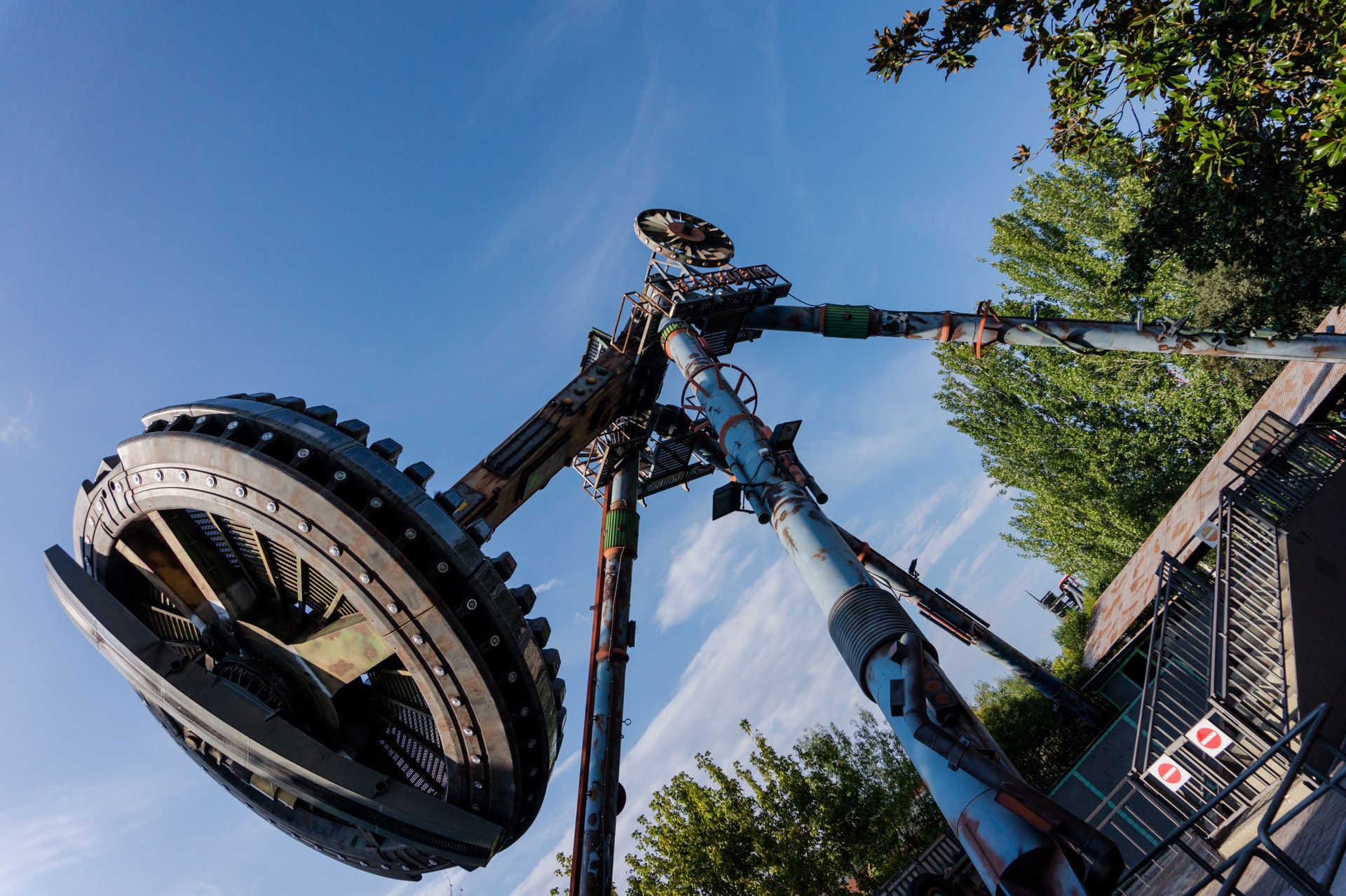
In the Maquinismo themed area, three cream cakes are waiting to be taken right in the entrance area, because here the crème de la crème of the Spanish flat rides are gathered together, all of them of course beautifully designed. We start off with the Top Spin from HUSS, which has a similar ride programme as the Aqua Spin ride from the German amusement park Heide Park, but which turns into a totally wild swing at the end of the ride. Right next door, the Frisbee La Maquina, also from HUSS, is making its rounds. Thanks to the great ride programme, you should take a ride or two on this outstanding attraction. Last but not least, the Intamin Freefall La Lanzadera offers a great view over the Casa de Campo and Madrid and a quite intense fall with good airtime at a comparably low altitude.
Abismo
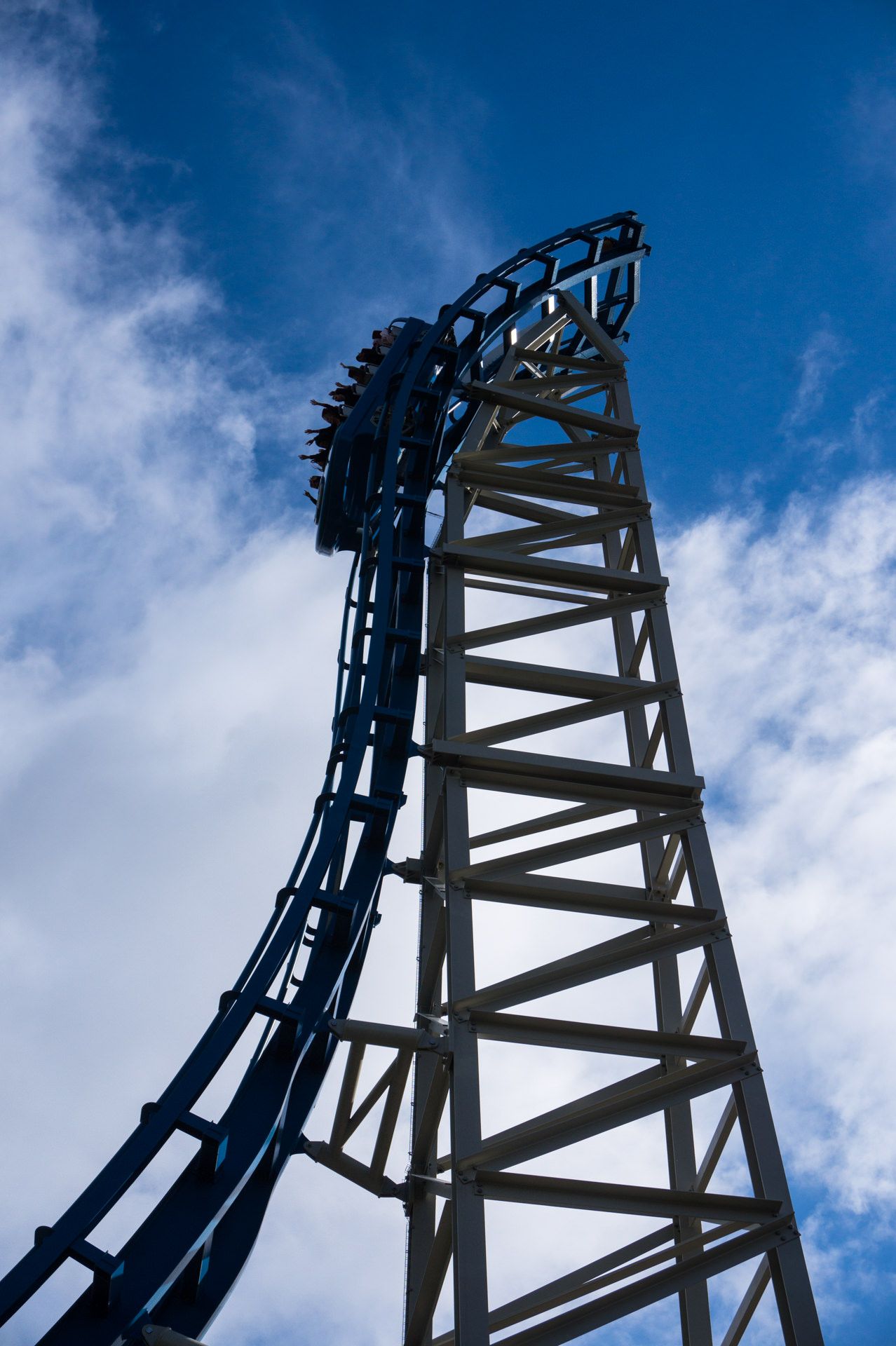
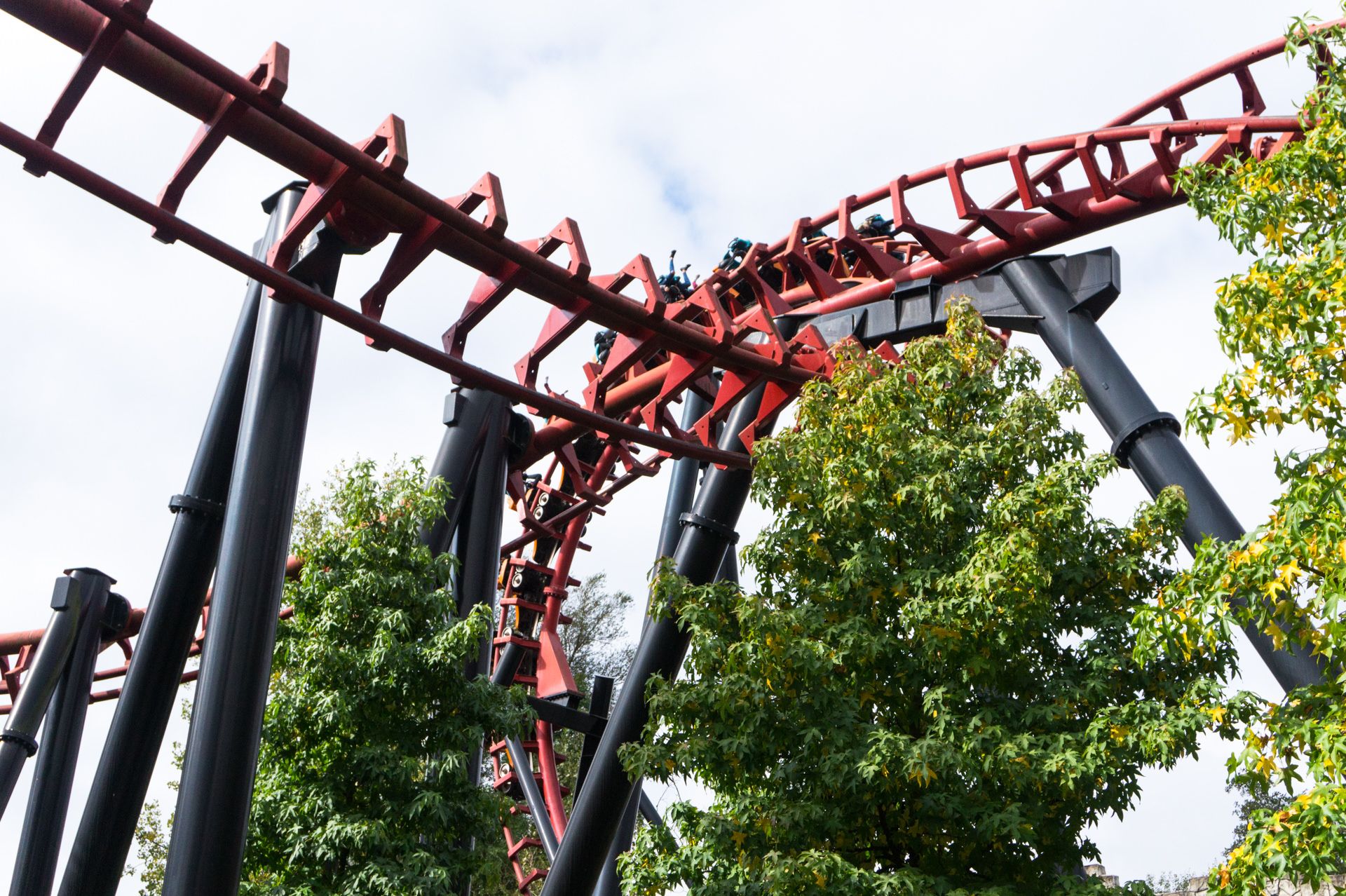
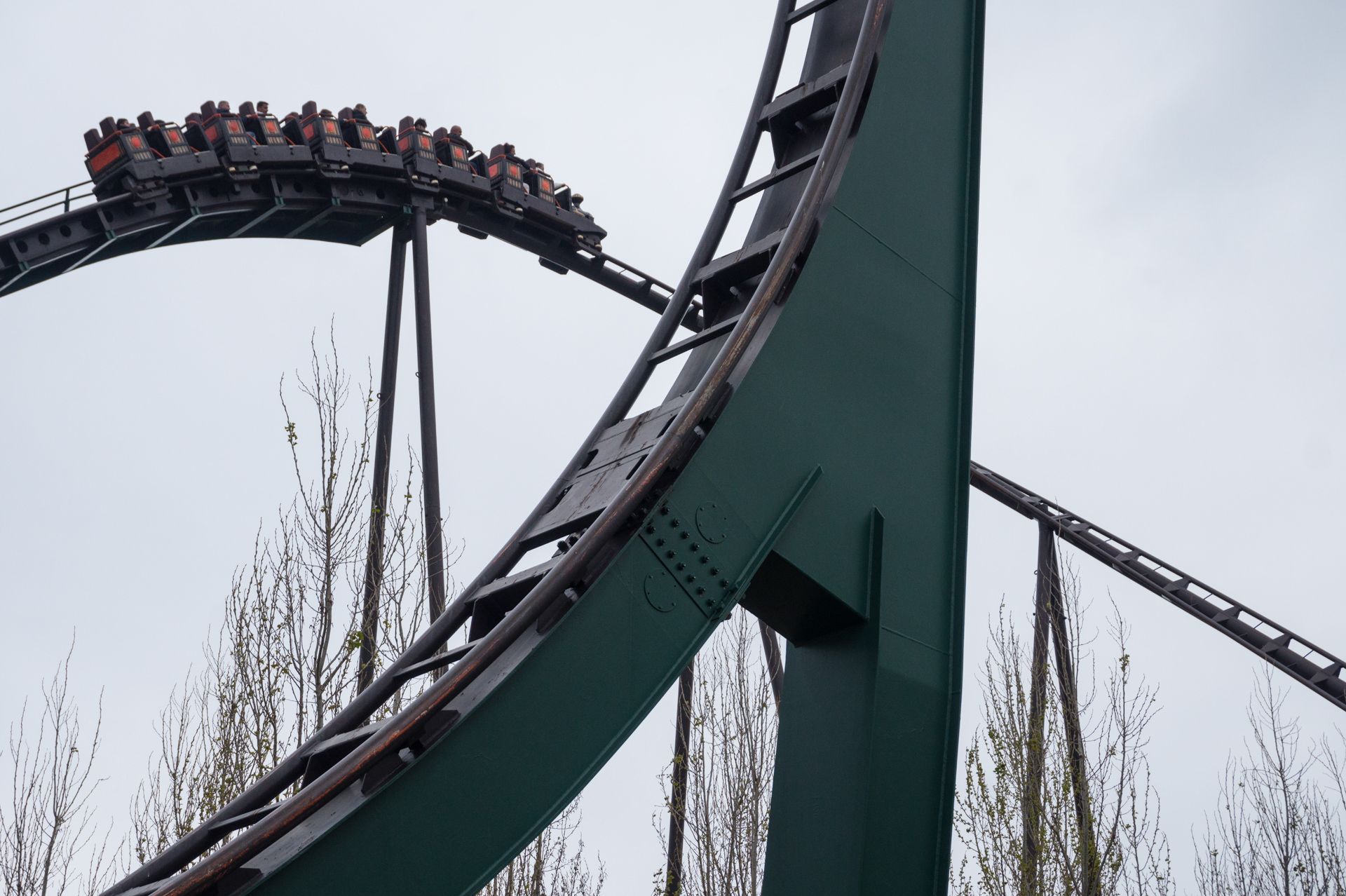
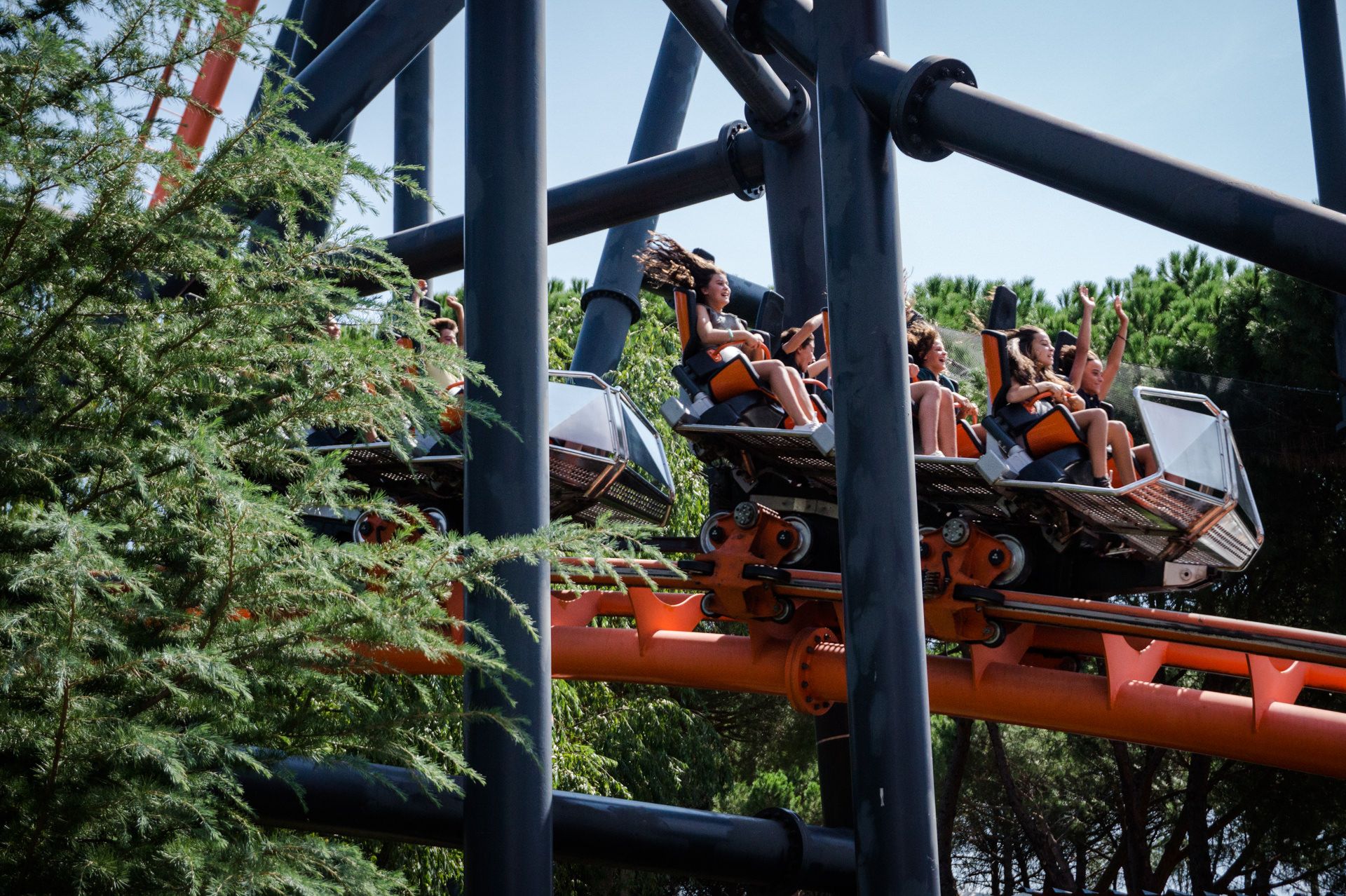
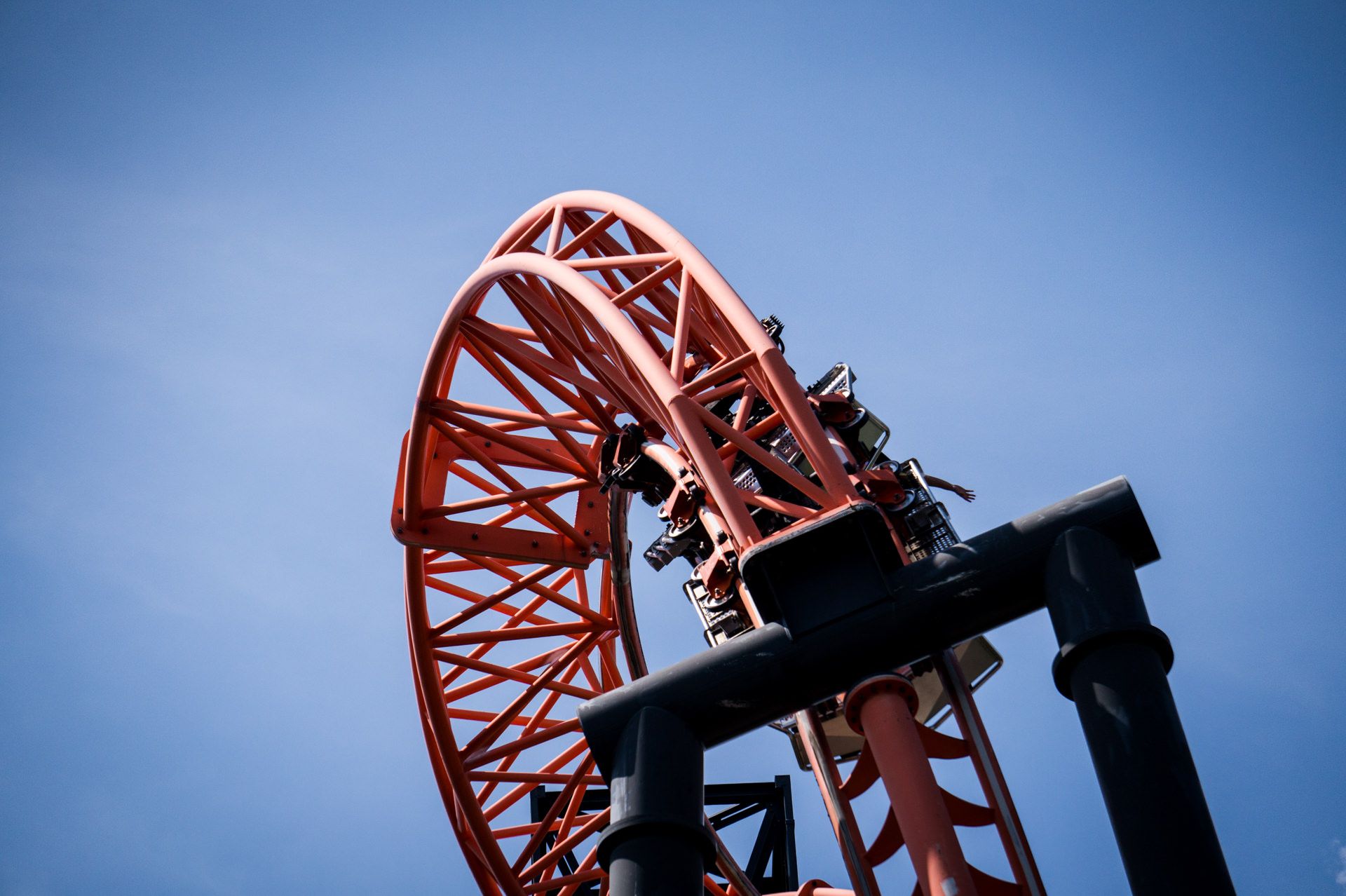
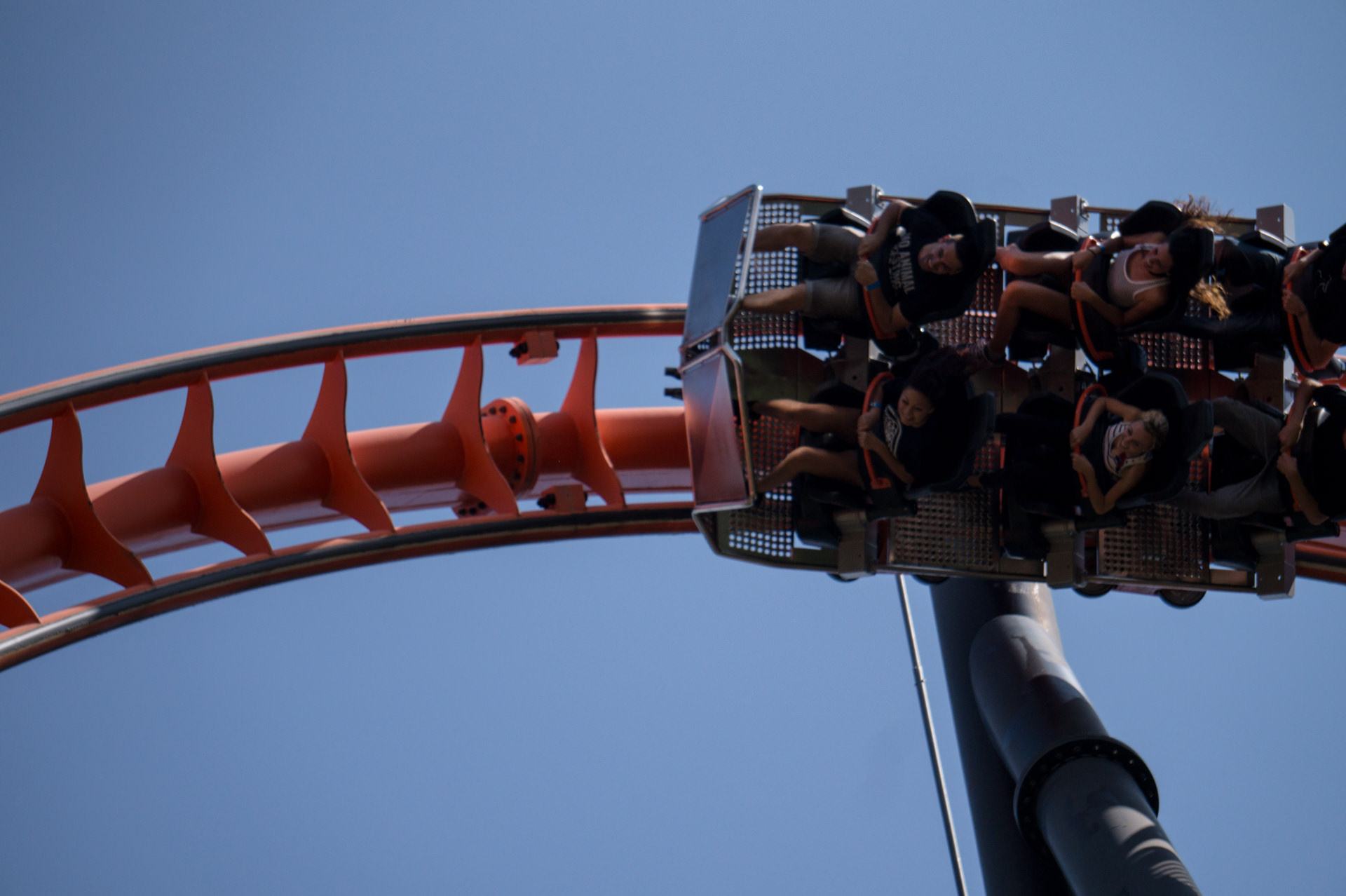
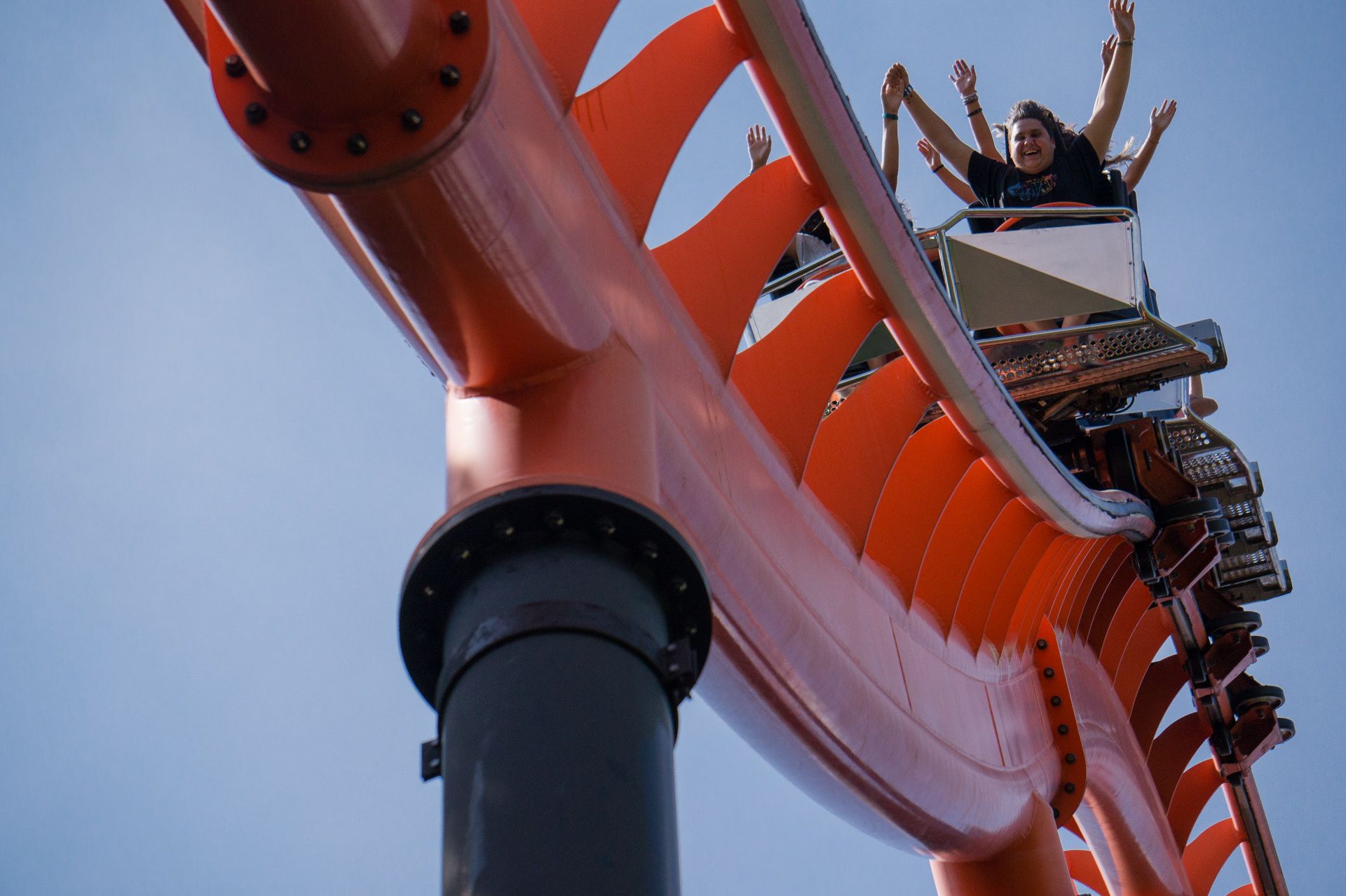
The access to the roller coaster Abismo – so far the only XT 450 ride by the manufacturer Maurer – is slightly elevated. The roller coaster can be described relatively simply as a 300 meter extended Sky Wheel ride from the German amusement park Skyline Park. The start of the layout is identical, as well as the length of the cars, so even with a manageable crowd there are always long waiting times. However, this is always the case even on empty days, because the roller coaster only runs as soon as the train is fully loaded.
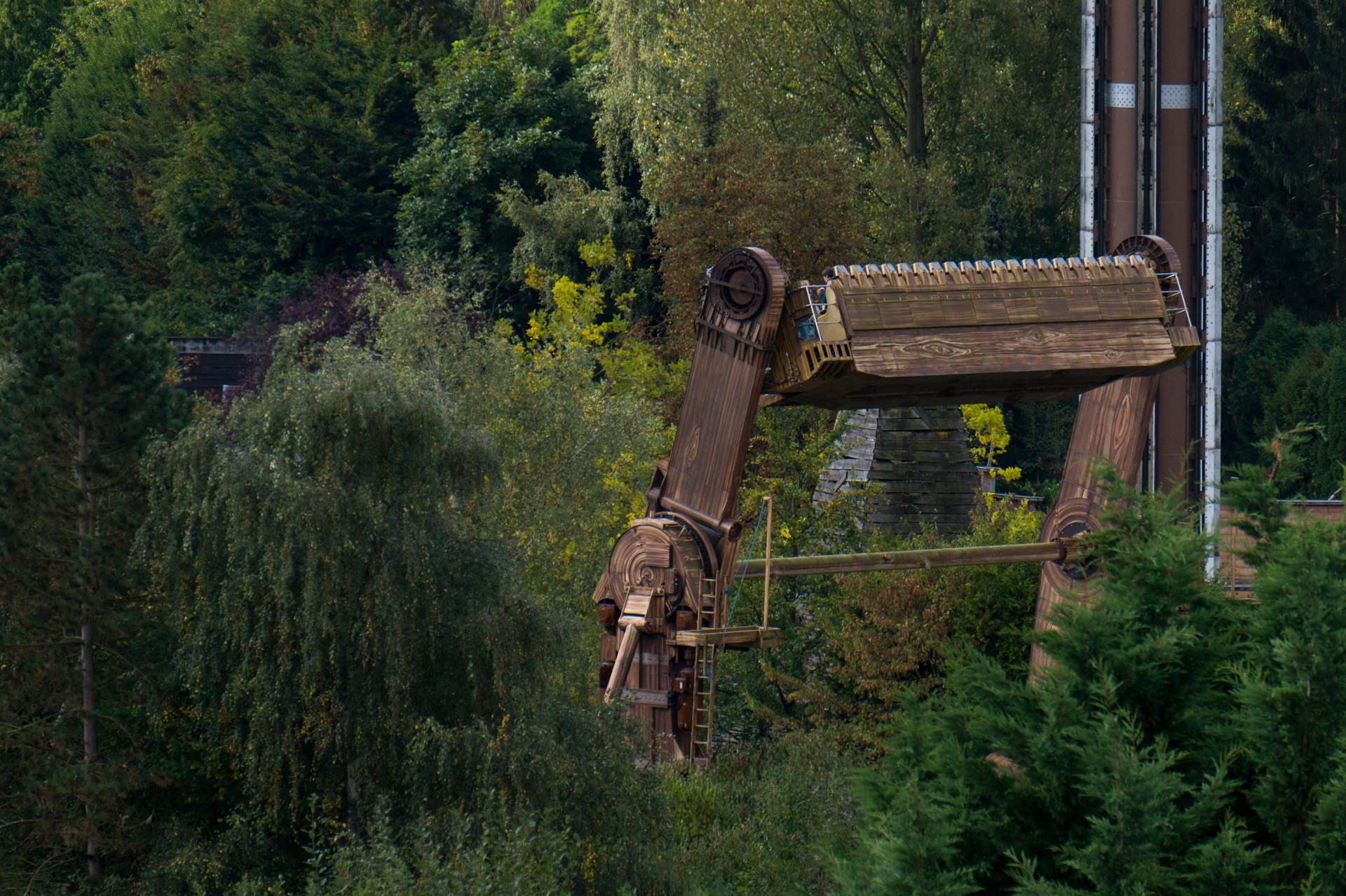
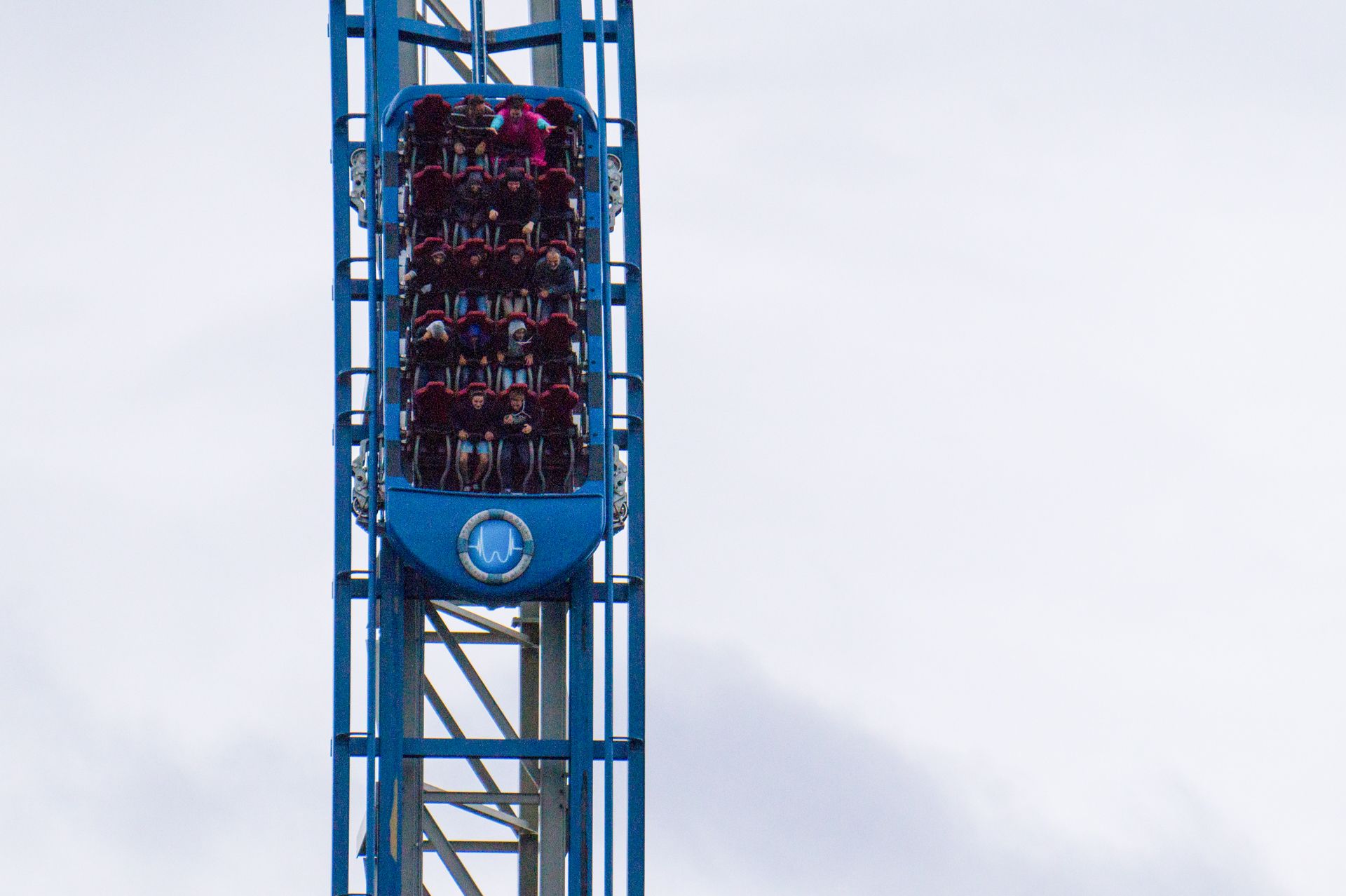
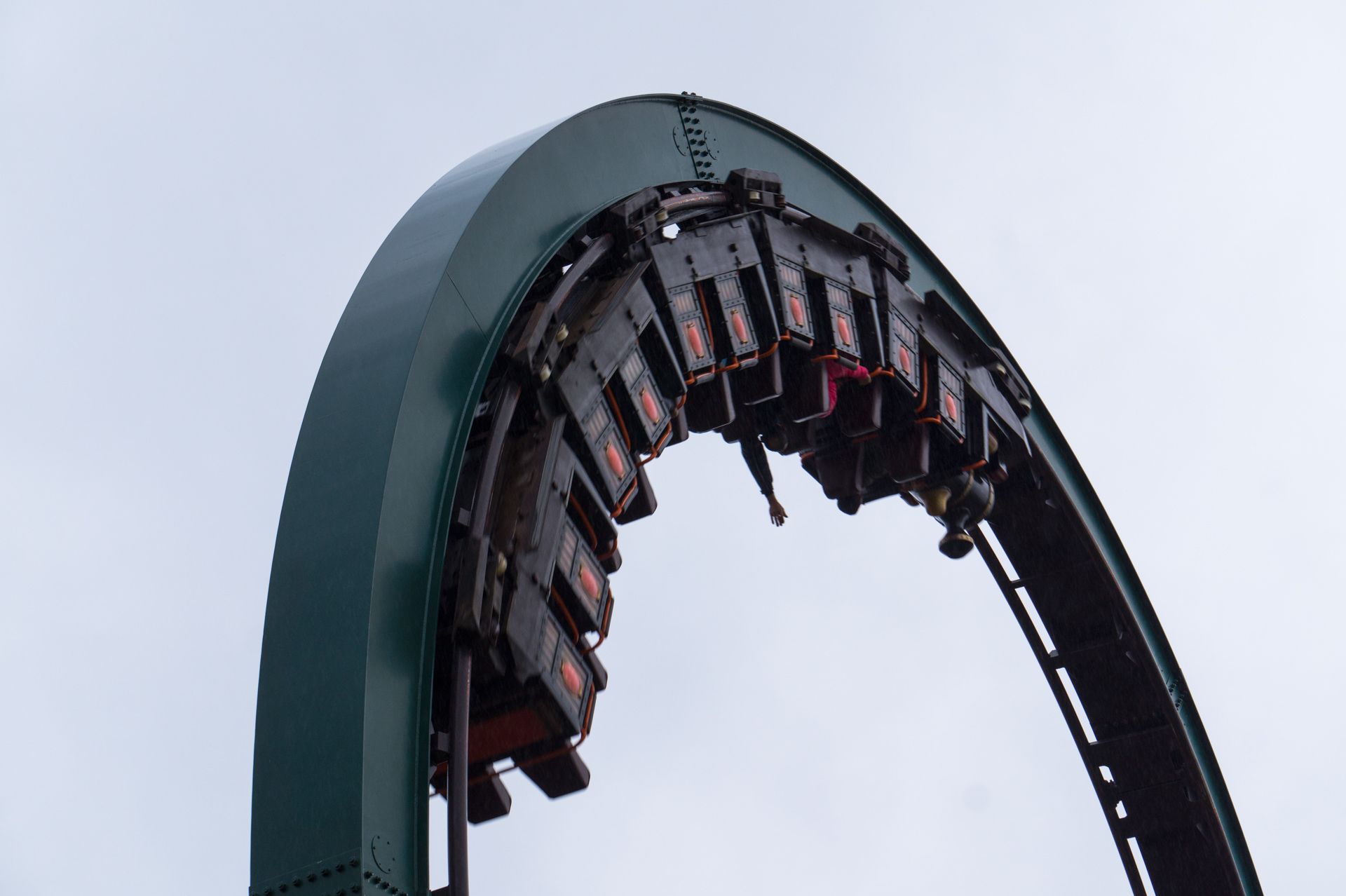
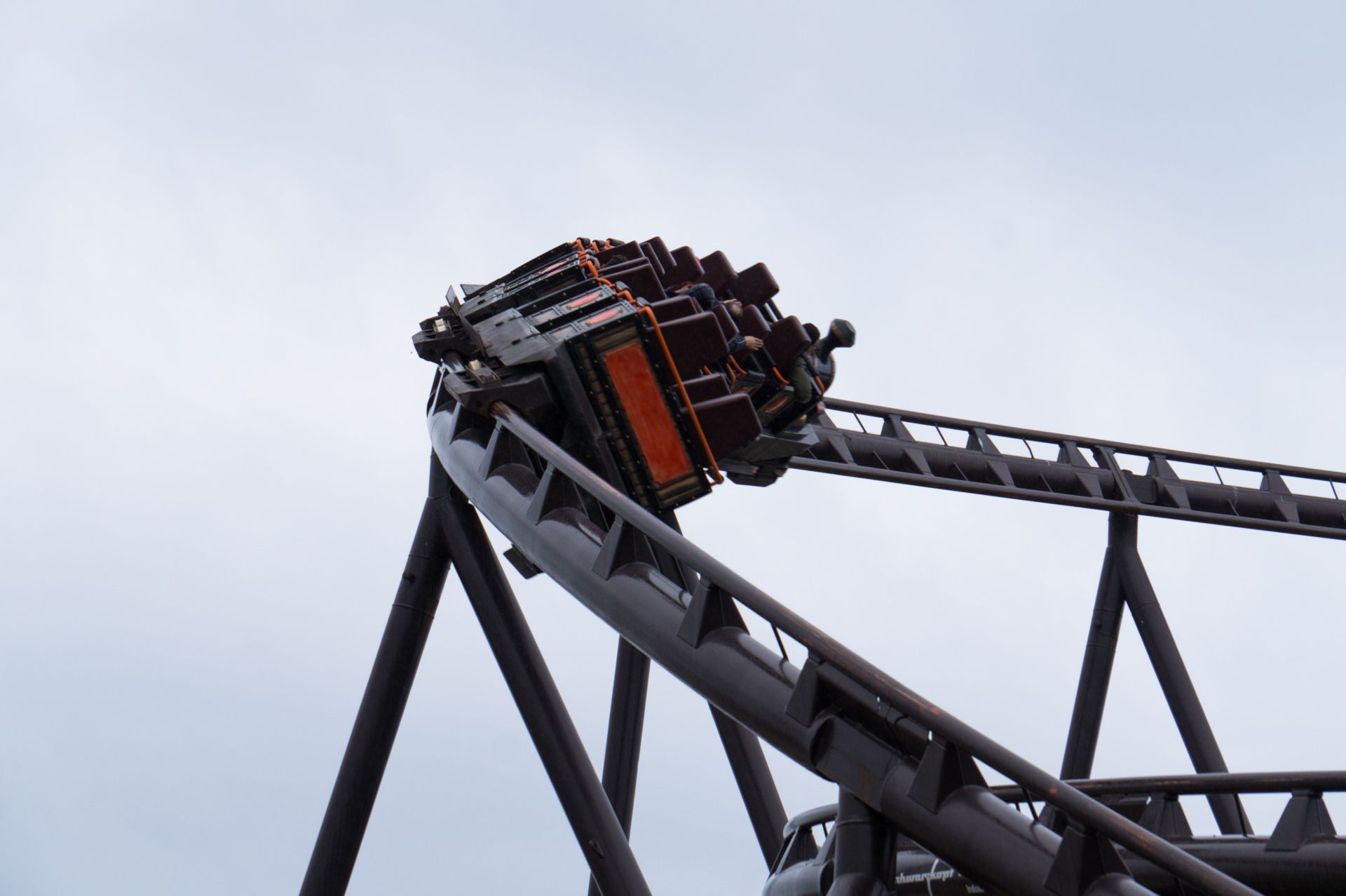
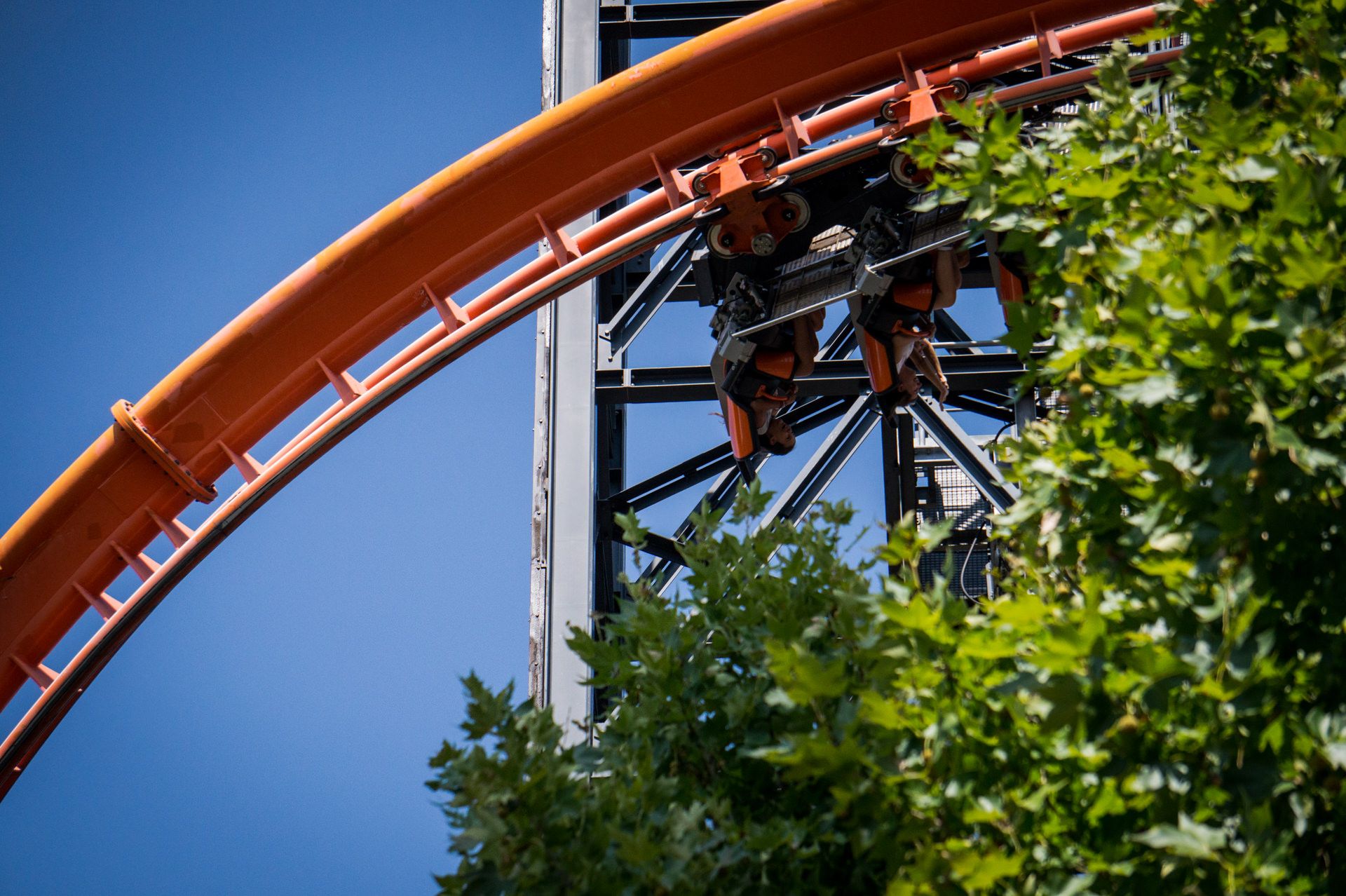
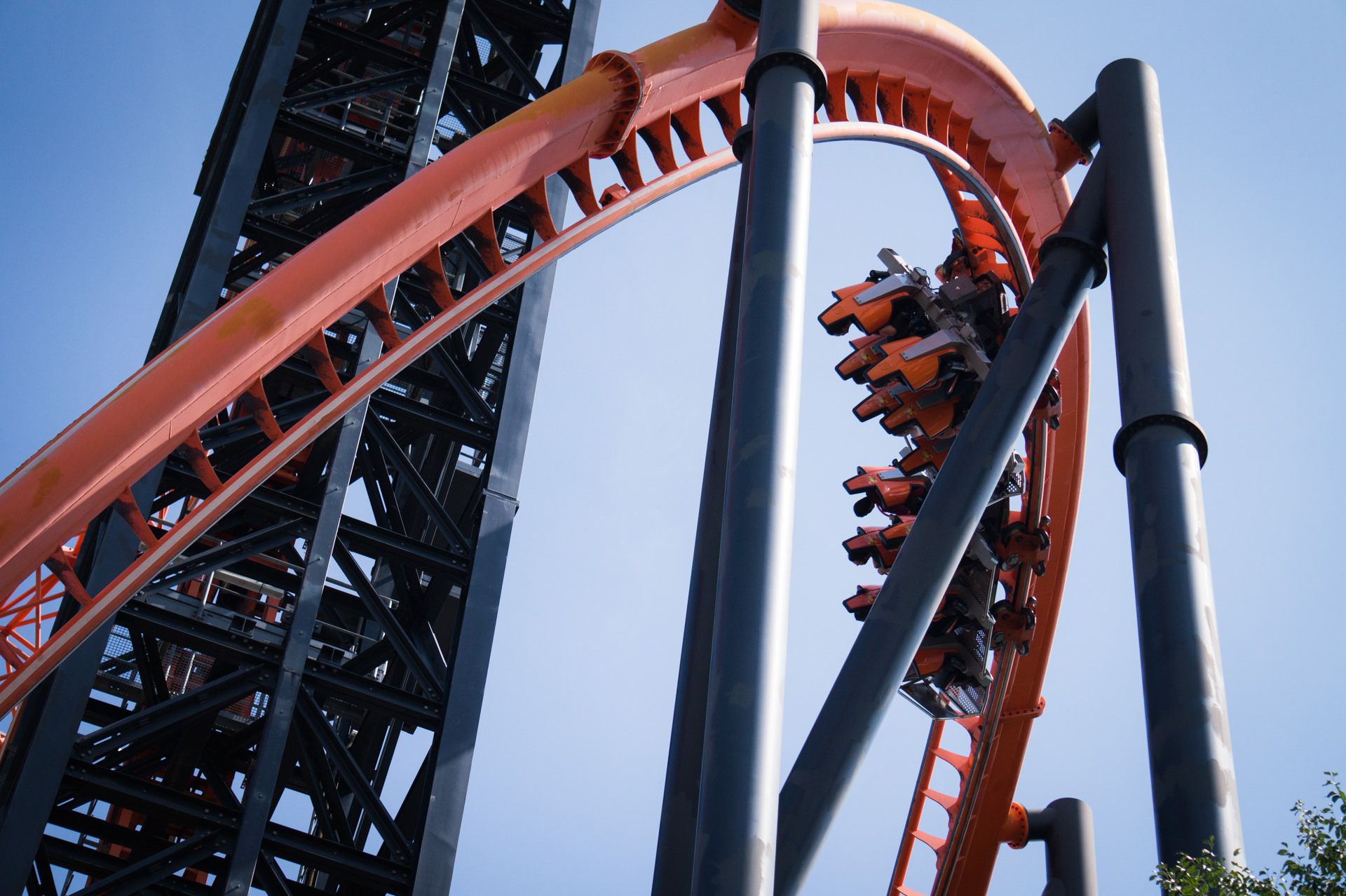
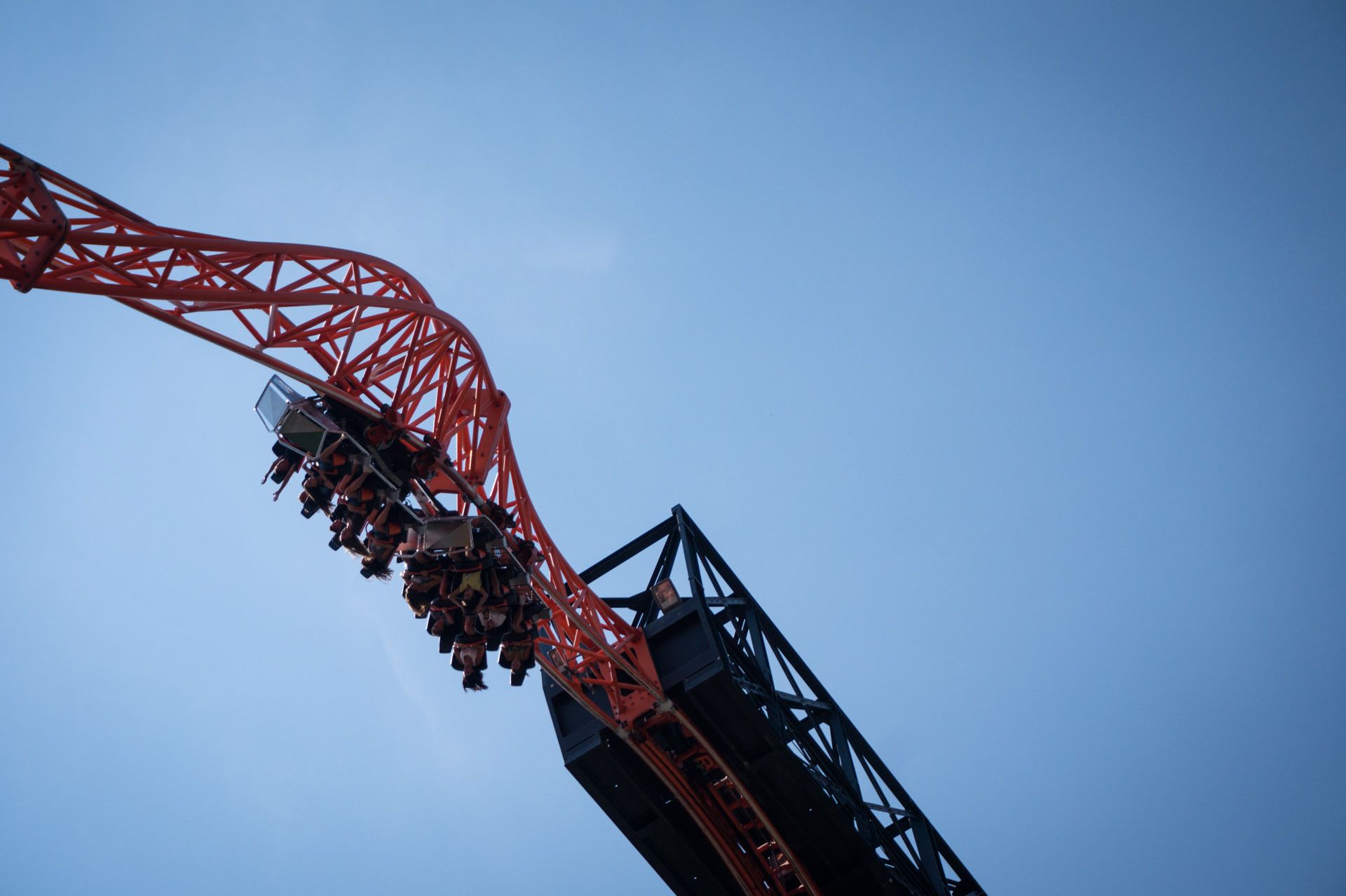
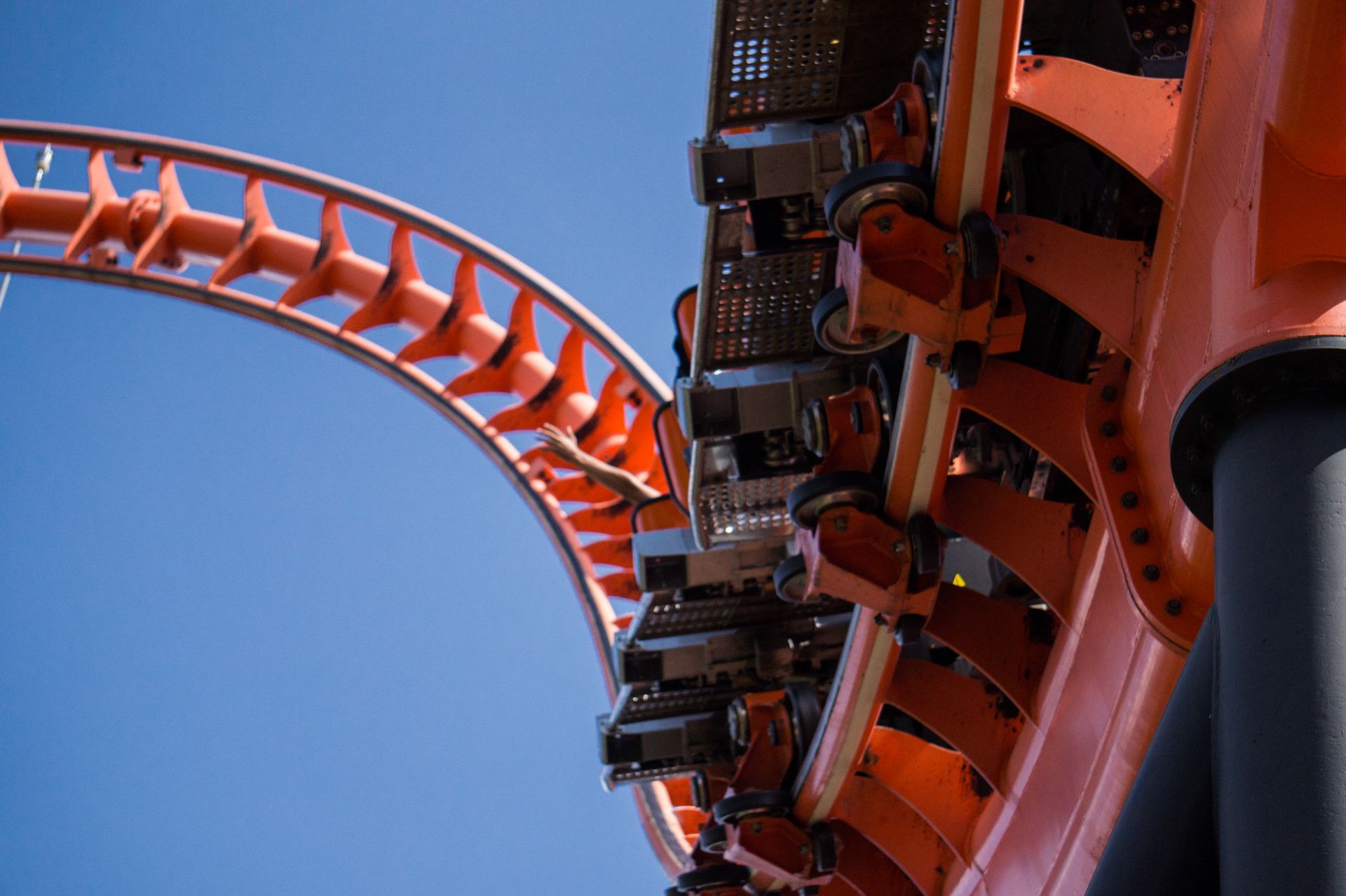
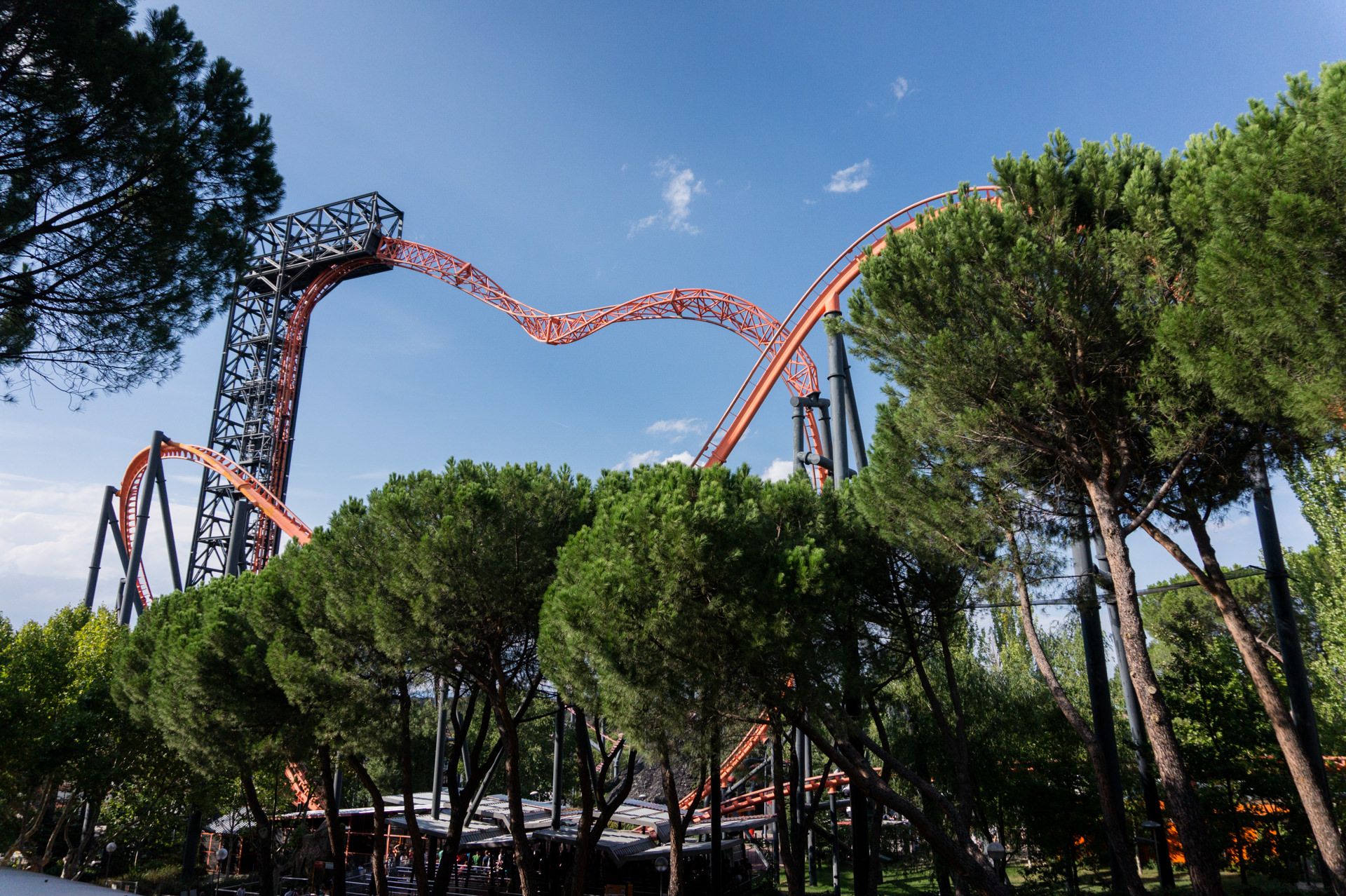
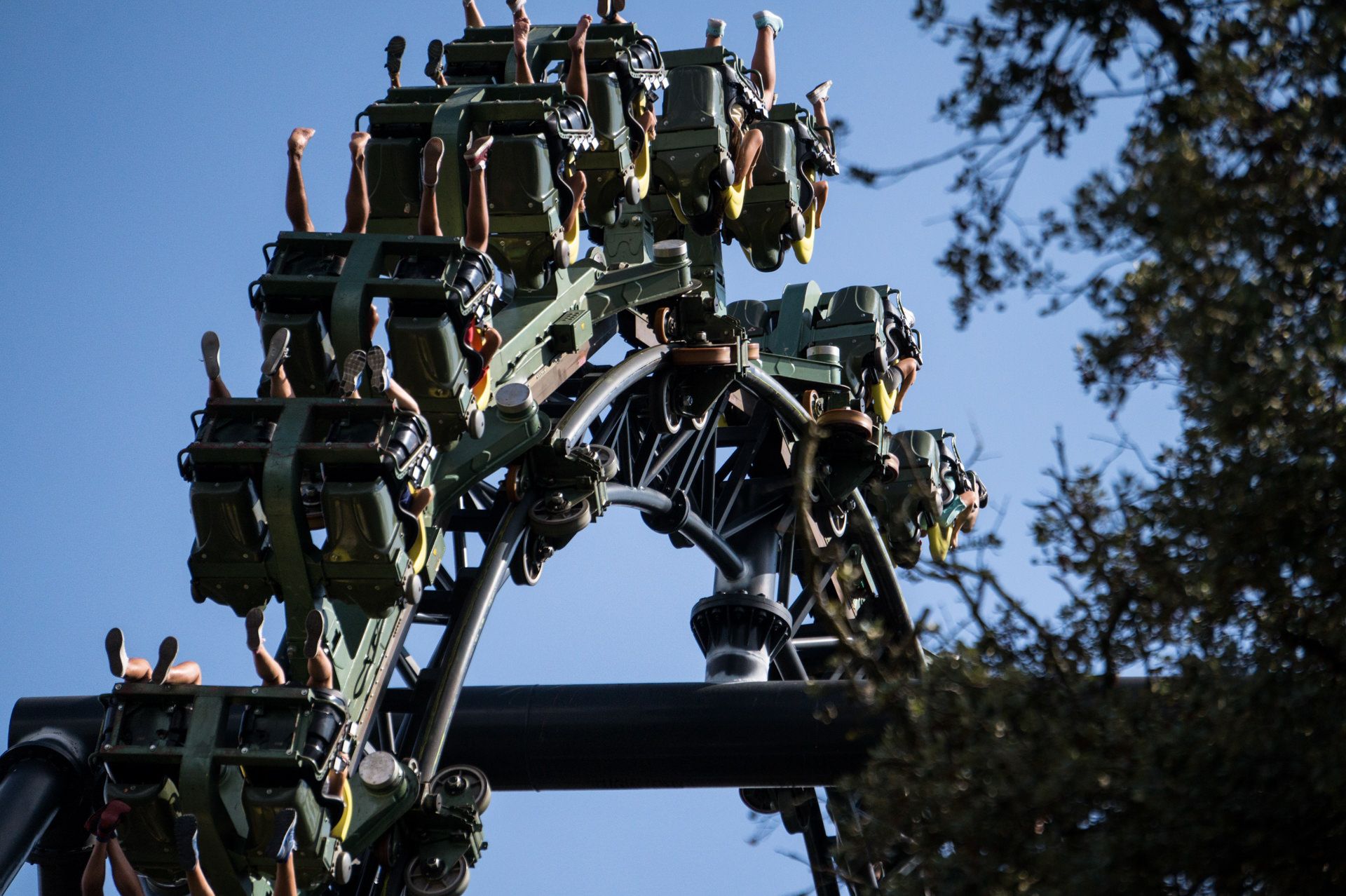
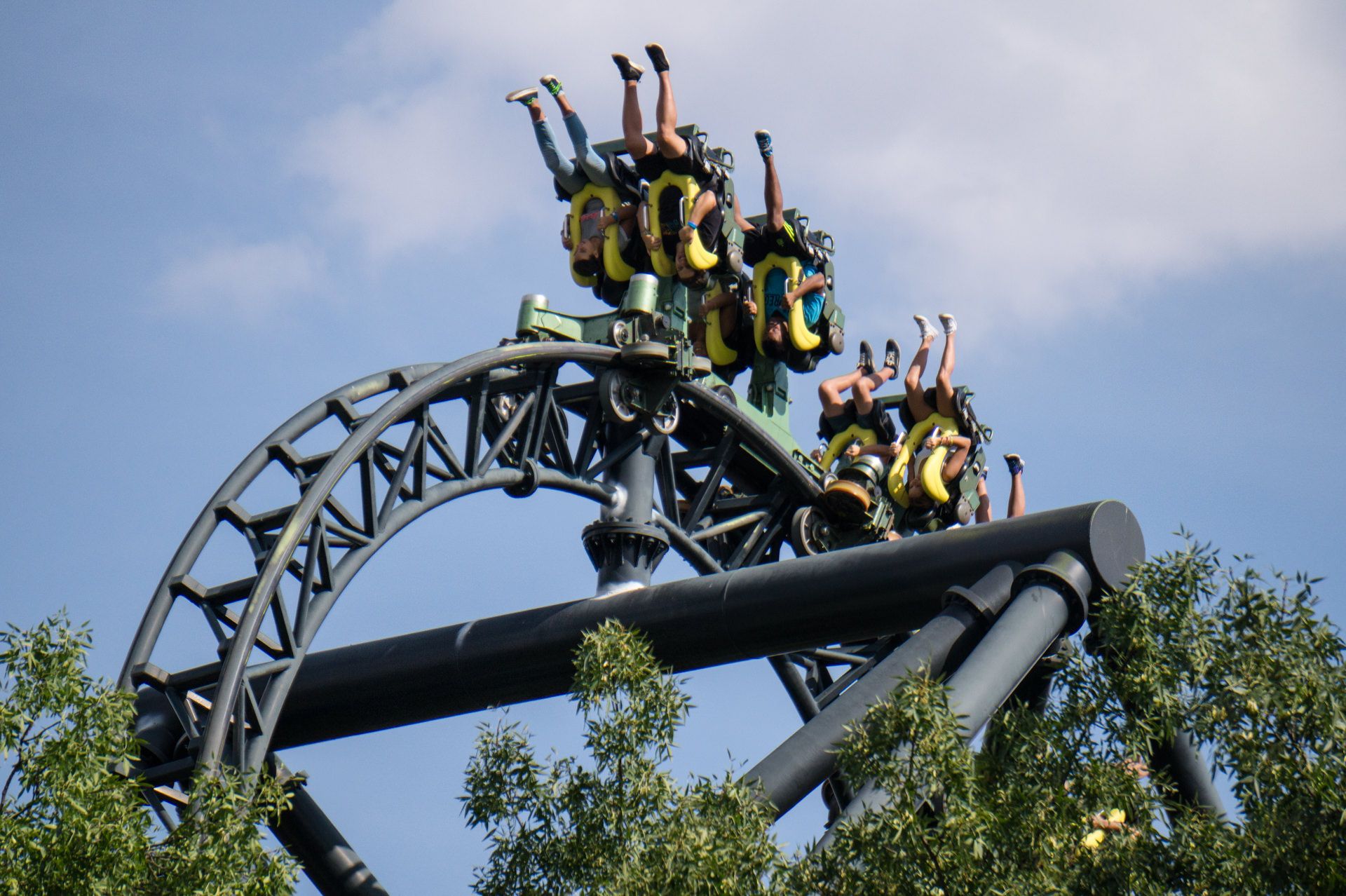
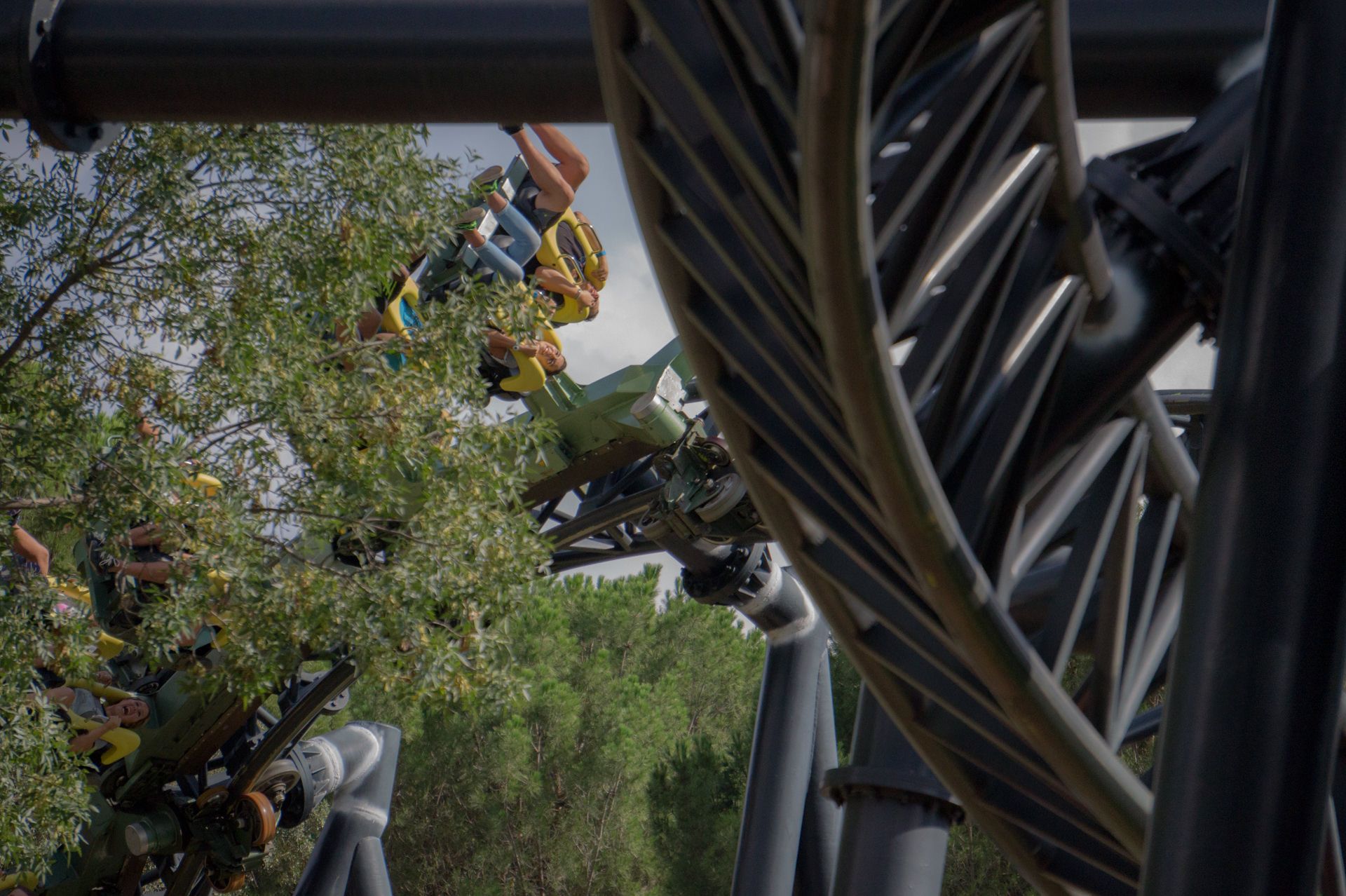
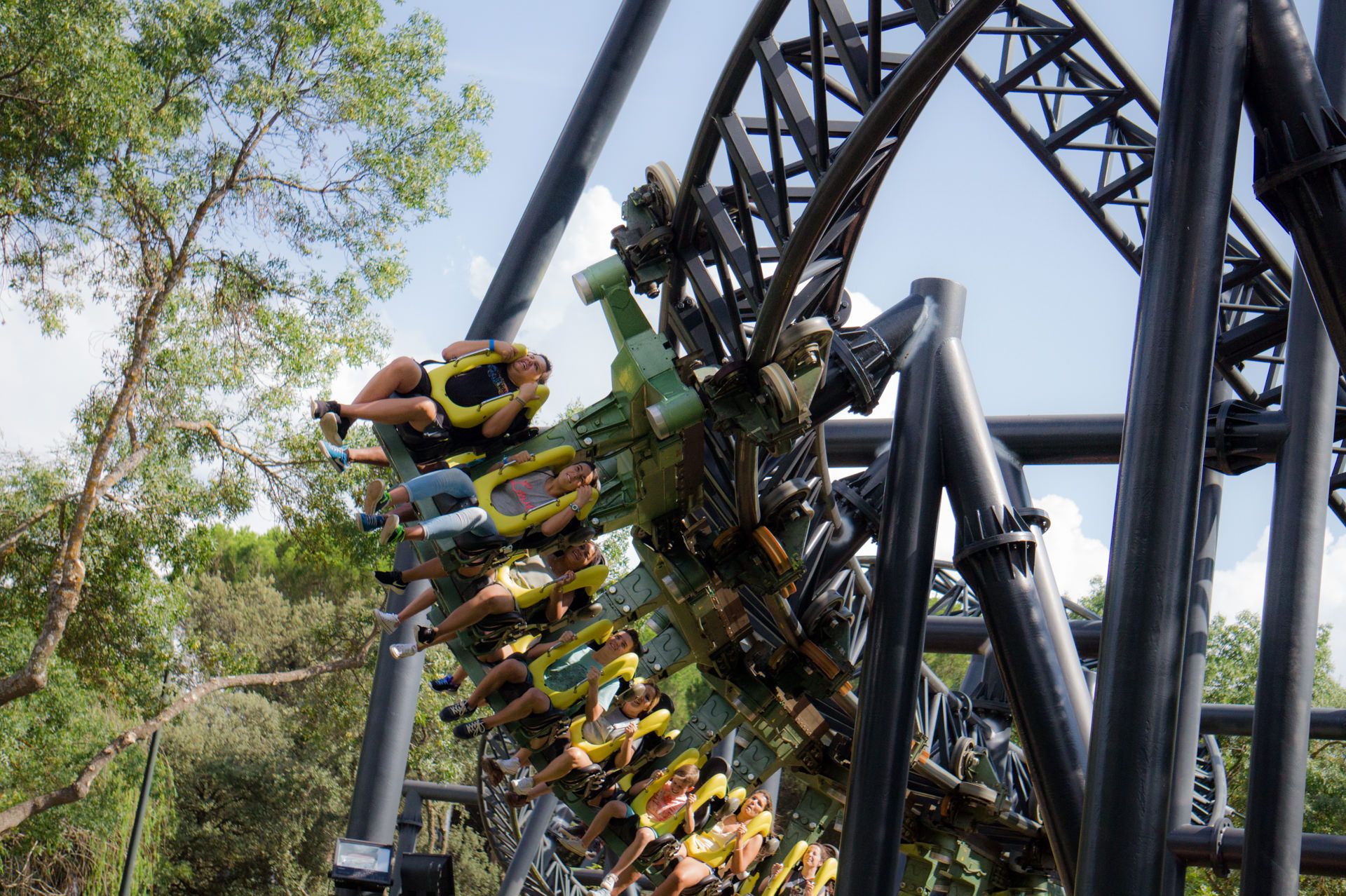
After the unfortunately somewhat time-consuming clearance, the train starts moving and is immediately transported upwards in a vertical position. A special feature of the Humpty Bump Lift is that the train is turned upside down at the top of the lift, creating an extremely queasy feeling at a height of about 46m, which is briefly interrupted by the subsequent roll at a lofty height. Now, one races towards the abyss in the true sense of the name of the ride. With a little more than 100km/h the train shoots past the station and passes a valley full of pressure before the lift is surrounded in a steep curve. The following drop is initiated with a strong cross slope, which leads you far above the waiting area. This is followed by a classic camelback, which, at least in theory, lifts the passengers out of their seats. Still far above the heads of the passers-by, another valley follows before a 127° steep Immelmann Turn introduces another turn in the layout. On a straight line the speed for the following finale is adjusted, because instead of the classic transition to the brakes, you now shoot through the station and up the vertical tower once more. Relatively high up and thus without great energy loss the train is stopped and hooked into the chain, whereupon it is quickly driven back to the station.
I do not like Abismo. Actually, this should be enough to sum it up, because I simply don’t enjoy riding this roller coaster very much. The ride characteristics are profound, it rattles like crazy. During my last visit, I’ve searched for the airtime of the ride and now I’ll give it up for good. The ride could be very good, as Daniel, who was sitting to my left, had experienced during the same ride, but for that the restraint system would have to be upgraded a lot.
Tarántula
Practically speaking, the entrance of the Tarántula spinning coaster is located directly opposite the exit of the Abismo Sky Loop. Despite single cars, the ride offers the highest capacity of the whole park, probably because of the separate entrance and exit areas. At least the queue is moving pleasantly fast, which makes the waiting time fly by compared to all the other rides at Parque de Atracciones de Madrid.
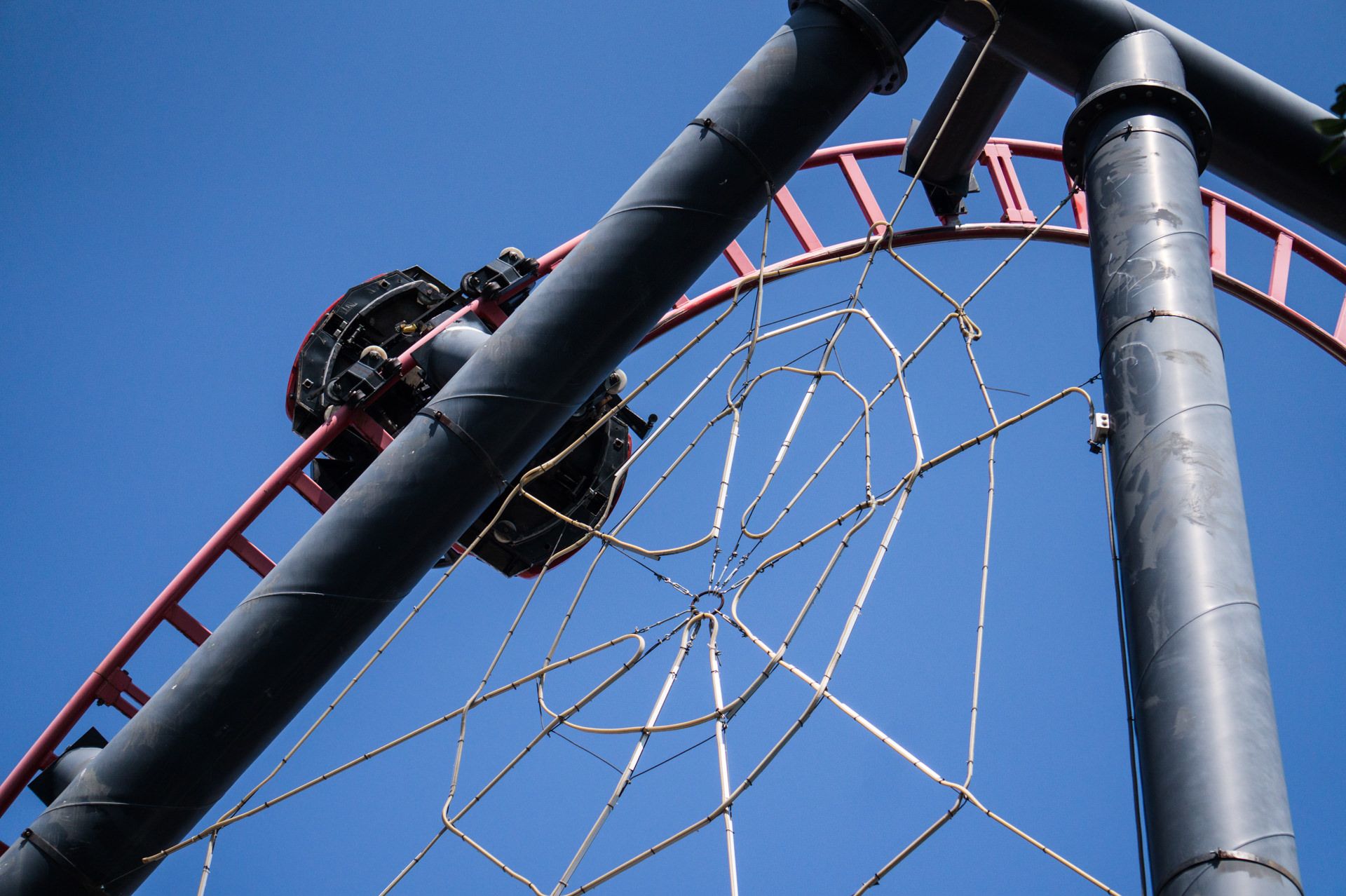
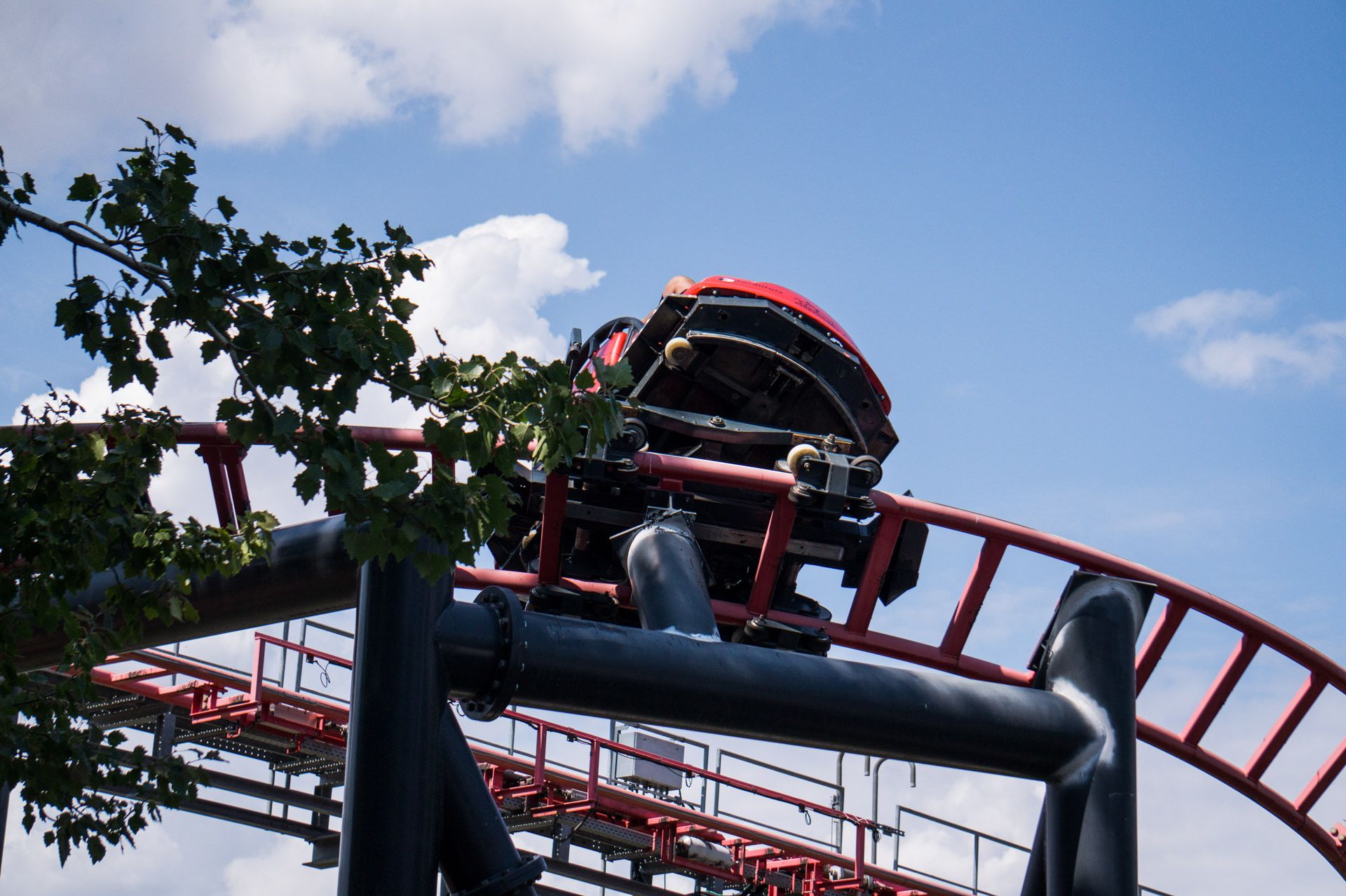
Shortly after you have taken a seat in one of the four seated chaises, the ride starts with a left turn towards the rather large lift hill. At a height of more than 25m, the gondola begins to rotate, so that the first slightly twisty descent can be made with a slight turning motion. This is followed by a generously designed turn, which slightly resembles an Immelmann Turn. Now the rotation of the gondola can hardly be stopped, which is also due to the rather steep and winding ascent into the first block brake. You pass this brake quite fast, whereupon you are torn into the depth by another curve. This leads into a generously designed bend with up and down movements until the second block brake is reached at an airy height. This releases you into an incline, which immediately leads into an Immelmann Turn, similar to the one from Dragons Fury at the English amusement park Chessington World of Adventures. A steep curve follows, which after a change of direction leads into the third block brake. A rapid zigzag course determines the course to the next block brake.This is followed by a left and a right turn before reaching the end of the ride.
Tarántula is a really good spinning coaster with a fantastic layout, although unfortunately the track is not as outstanding as the two English representatives of this type. However, the spin on the ride in the Parque de Atracciones de Madrid is pronounced and therefore almost automatically provides a great overall experience. Furthermore, the design of the ride is excellent, even if it is only very minimalistic, especially as it forms a unit with the dark ride La Cueva de las Tarántulas below the roller coaster. Unfortunately, this interactive dark ride is only a shadow of its former self, because apart from darkness you can hardly see anything.
El Aserradero, Tifon, Rotor and Sillas Voladores
Besides the rather long log flume El Aserradero by the manufacturer Zamperla featuring two shots and a tunnel at the end of which a waterfall awaits you that only switches off at the right moment from time to time, the Maquinismo themed area also features a Disk’o called Tifon, the wave swinger Sillas Voladores and the HUSS Condor Rotor, from which you have a wonderful view on the roller coaster Tornado below.
Tornado
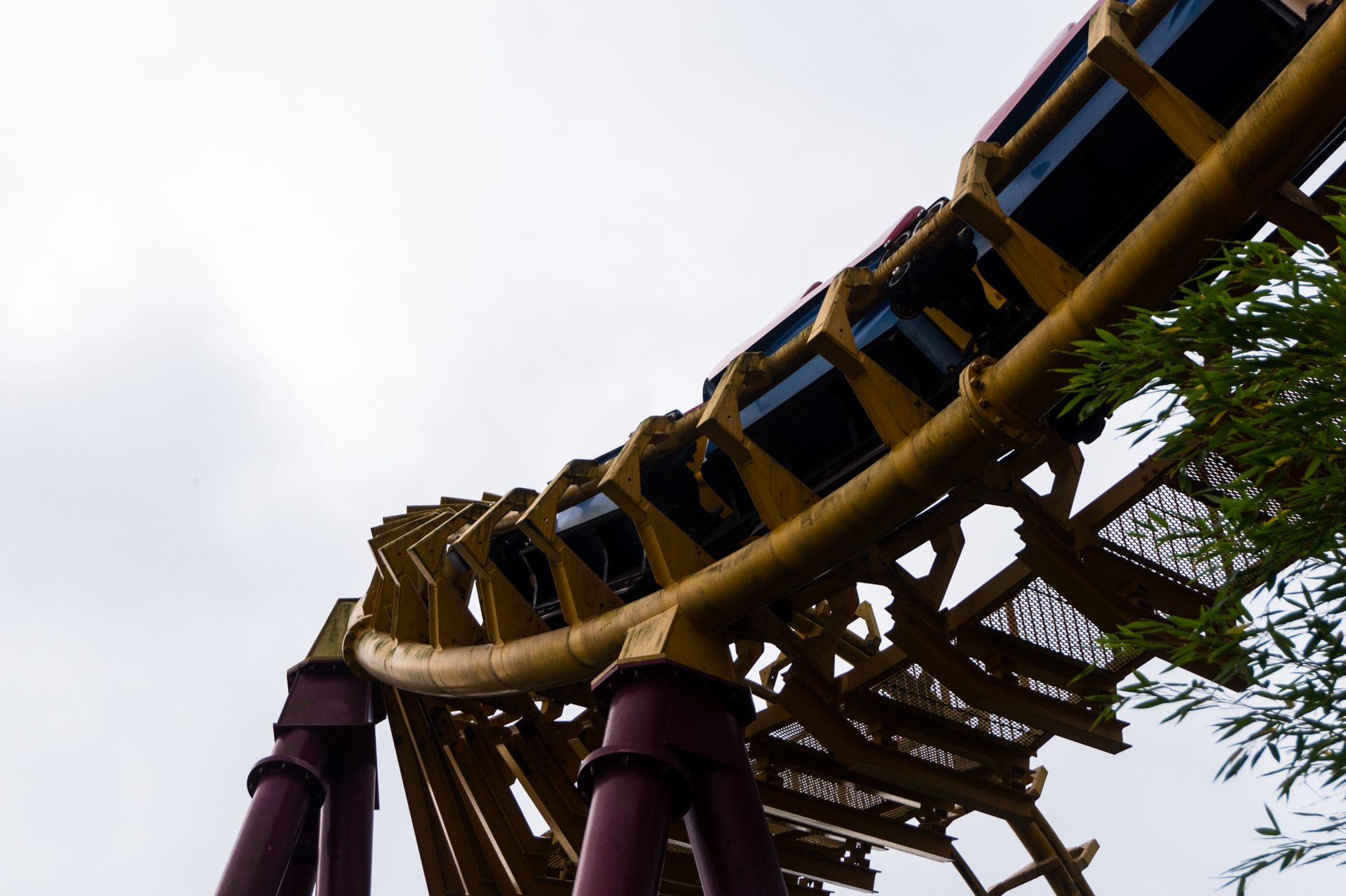
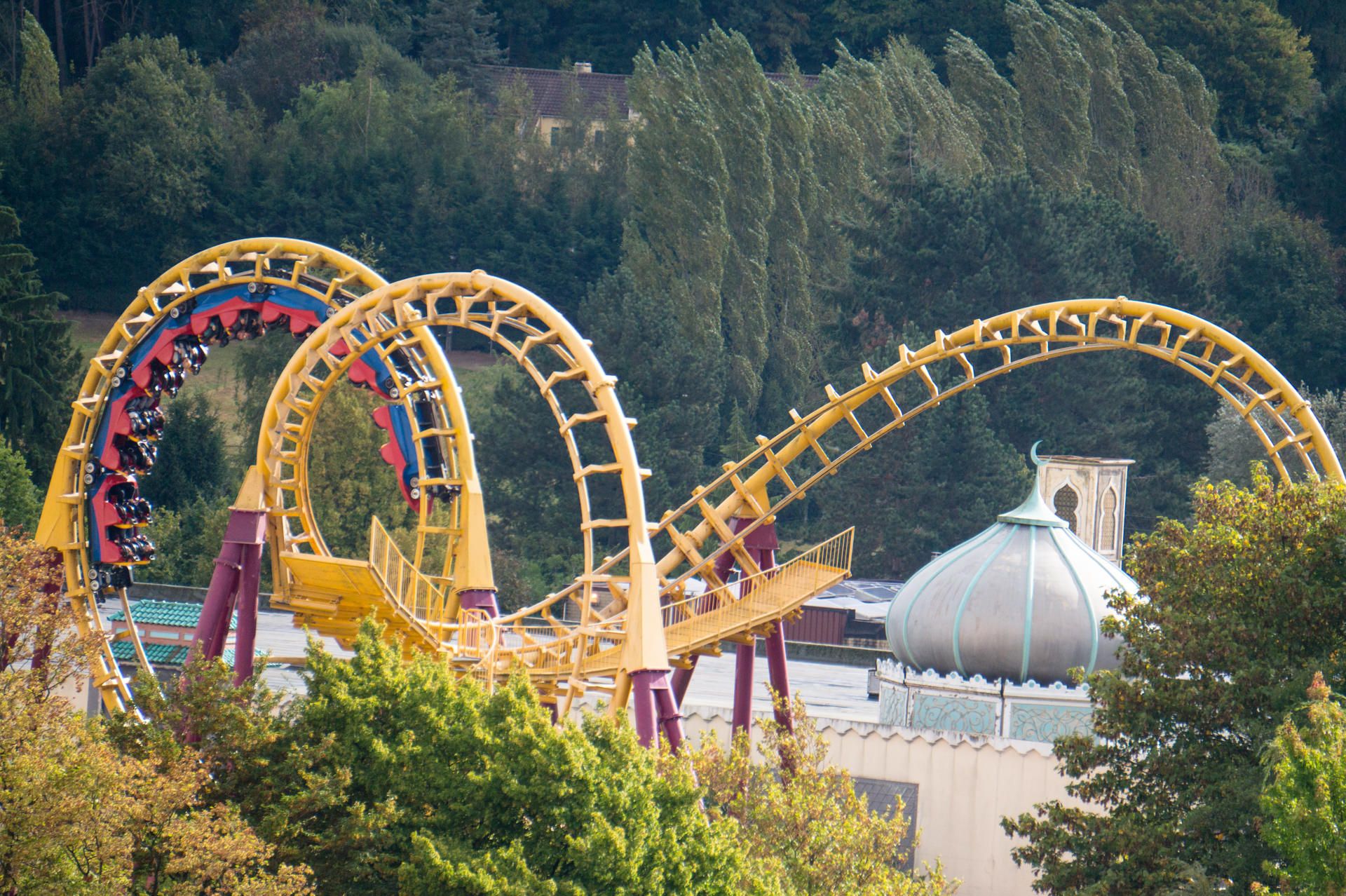
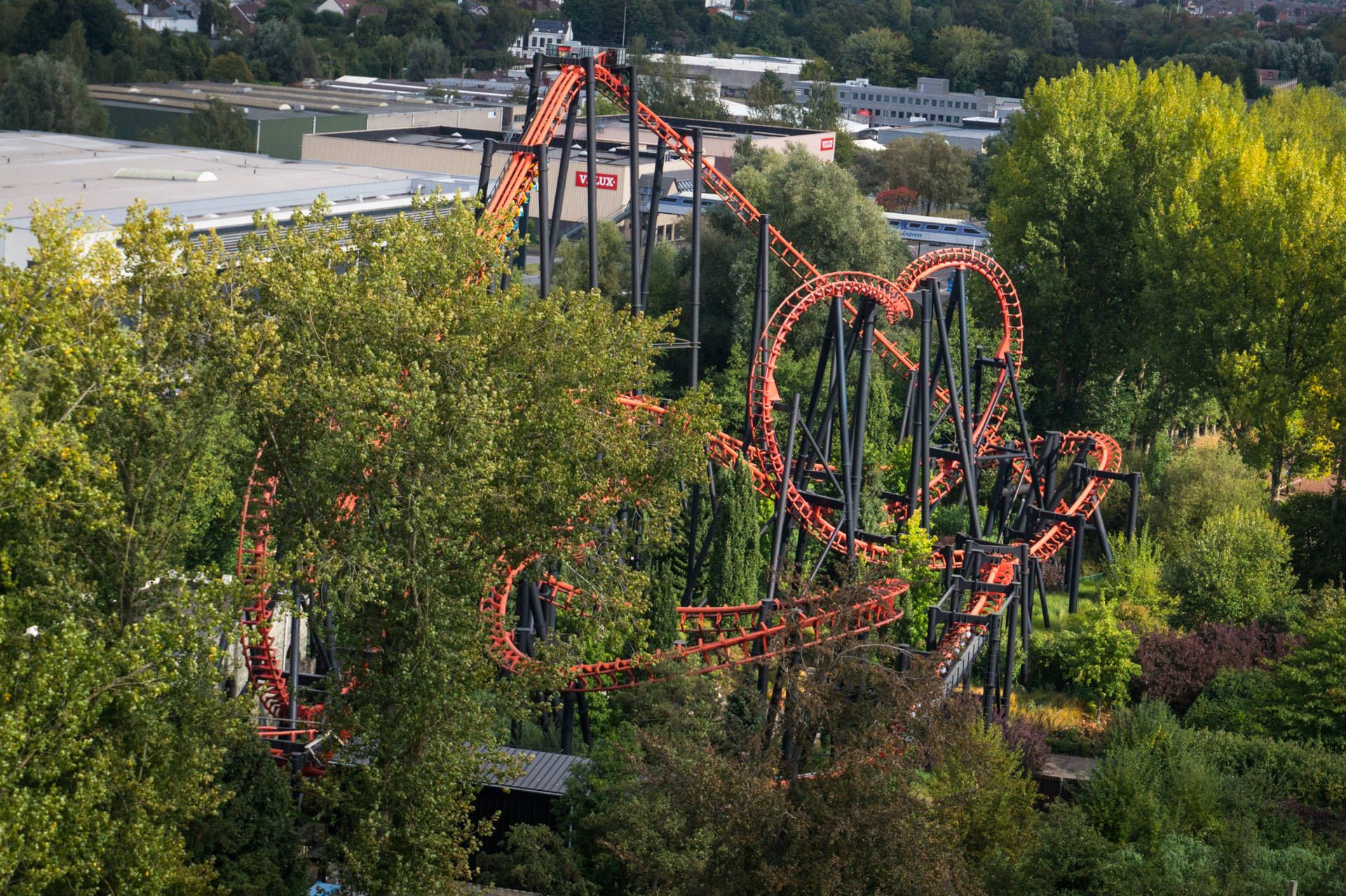
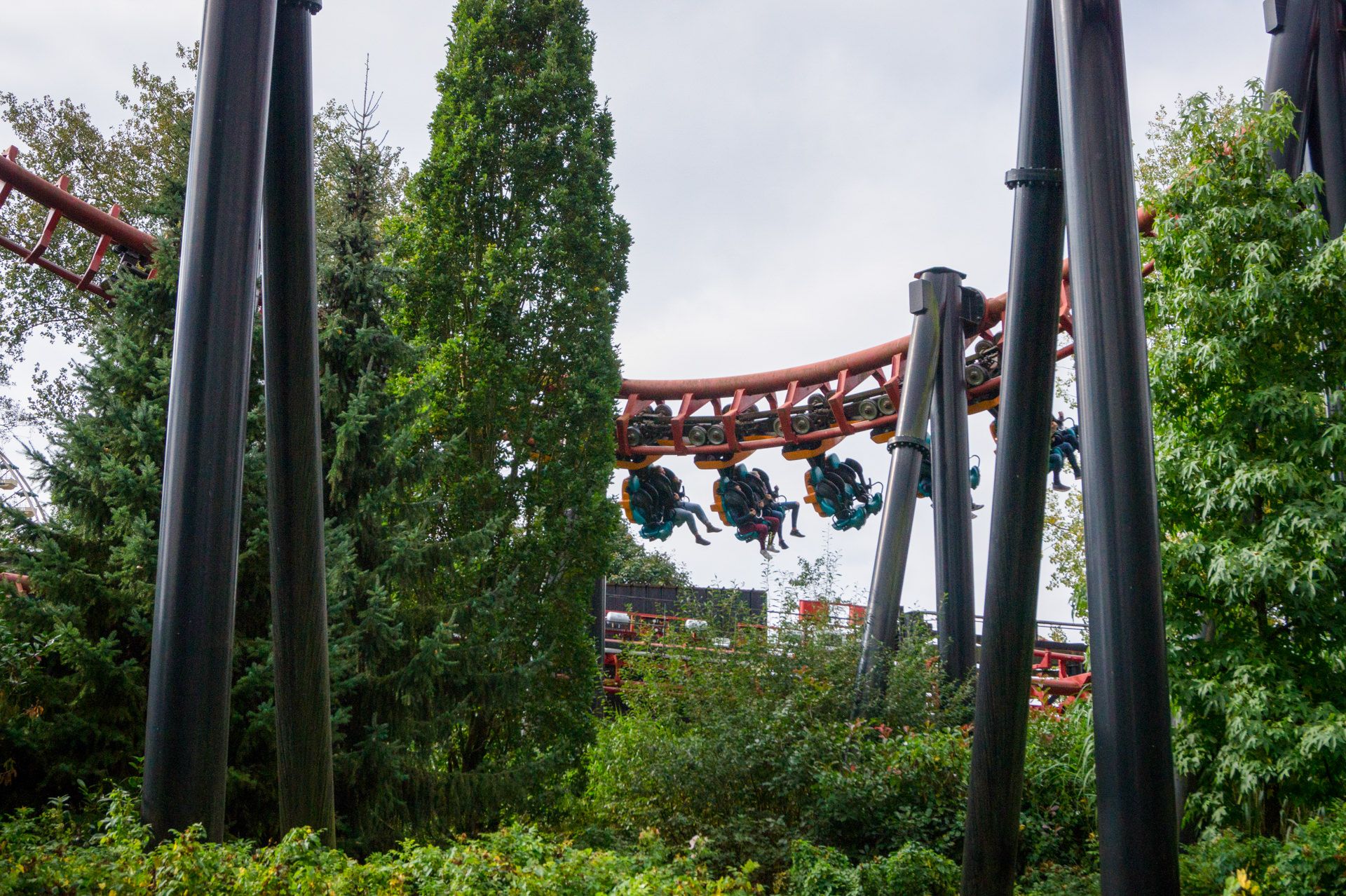
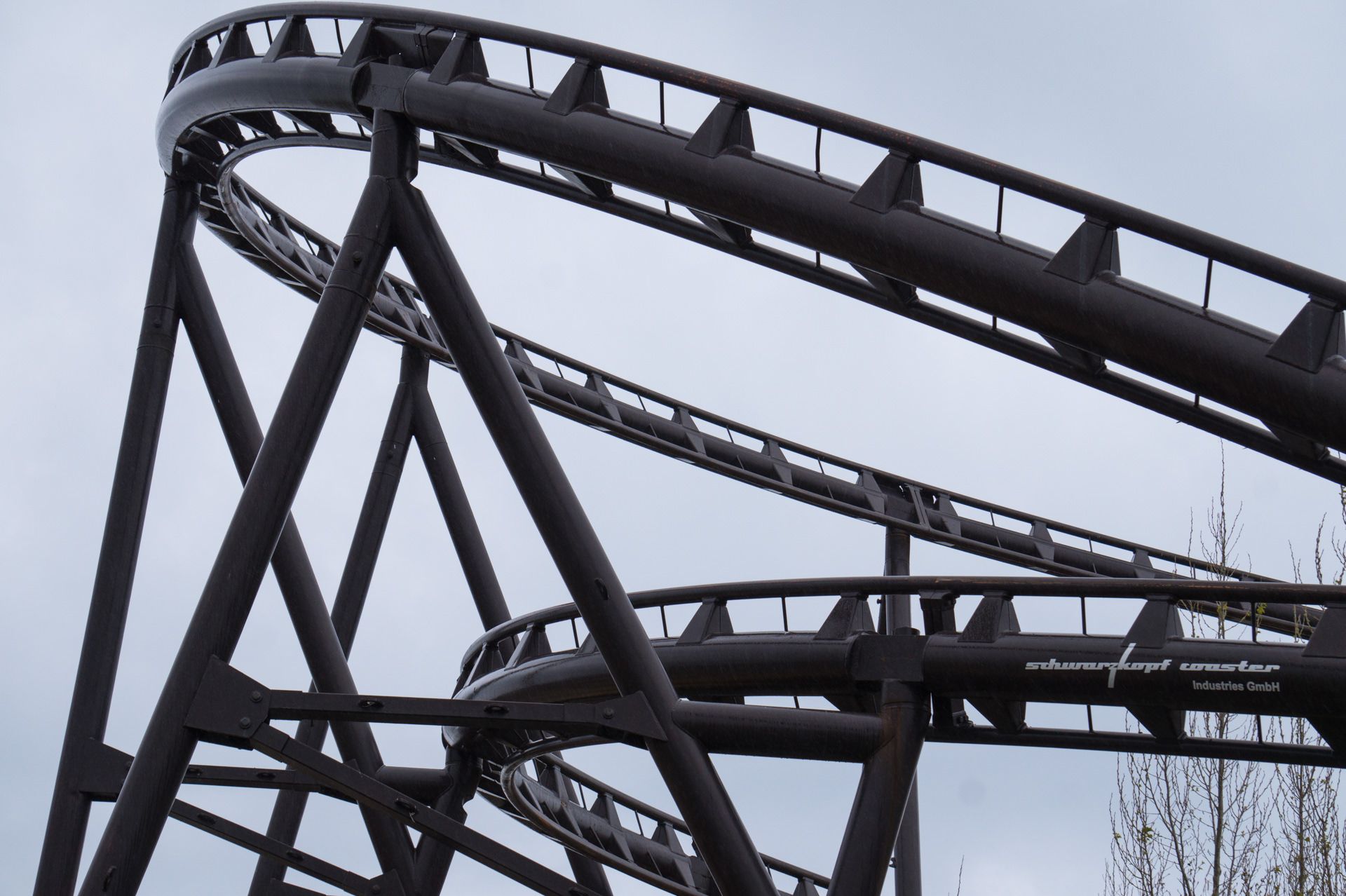
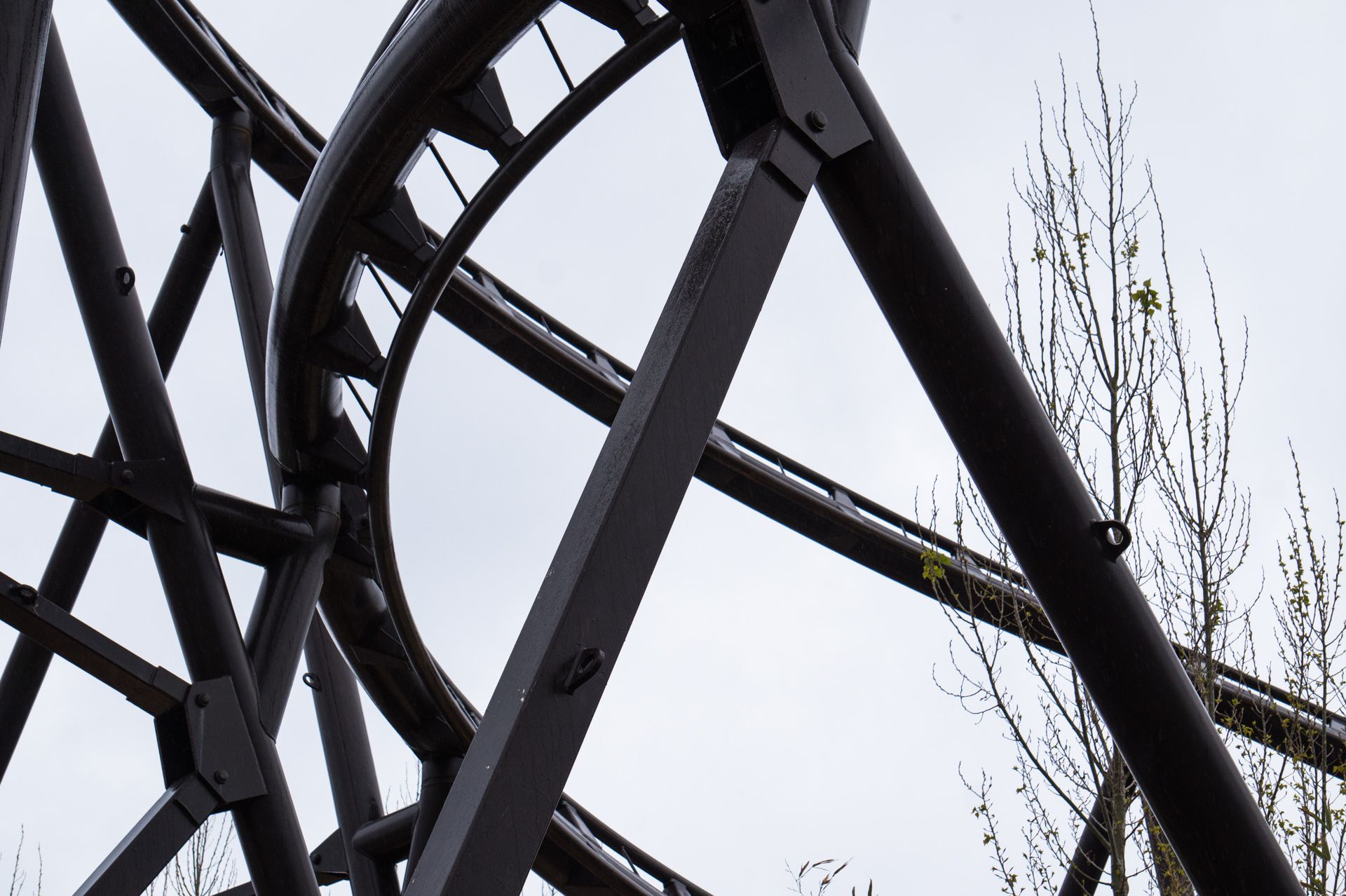
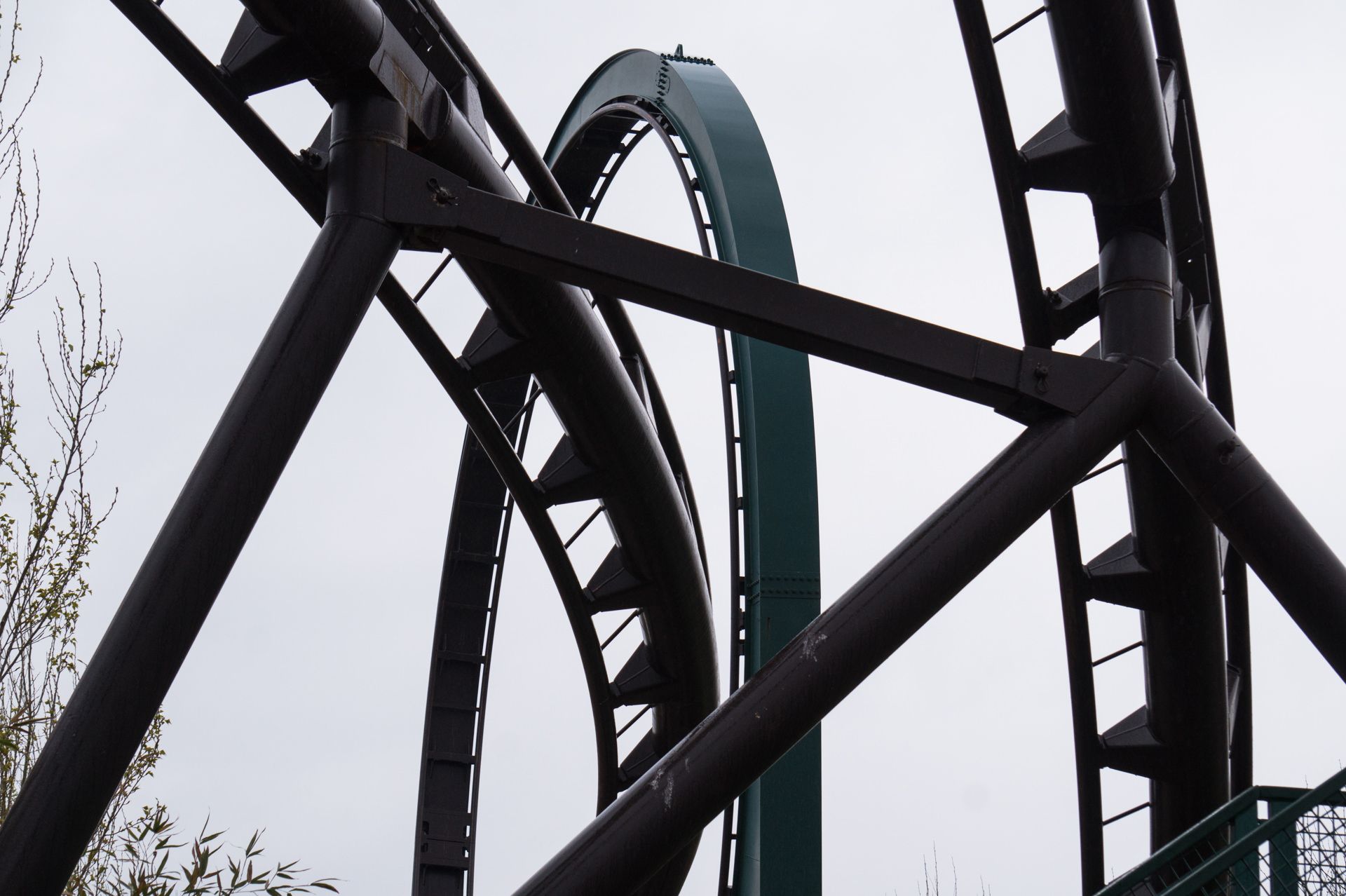
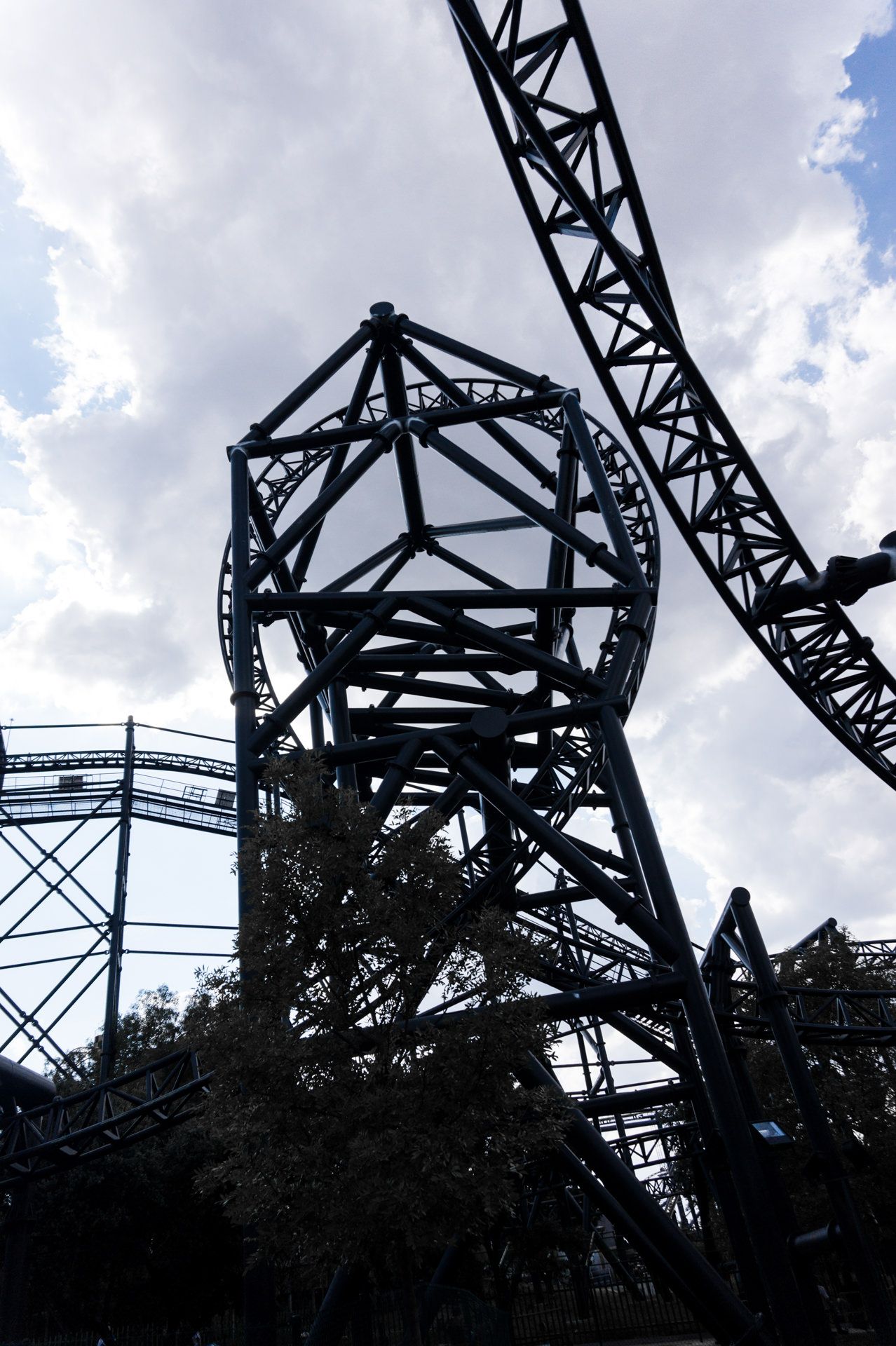
Since 1999 the Intamin Suspended Looping Coaster Tornado is located in a dead-end street without equal. The ride, which used to be painted in lemon yellow and lemon green, has been completely painted in black for several years now. The layout of the ride is generally quite wide and free of any special features, but these can be found in the supporting structure of the ride, especially the supports of the two loops.
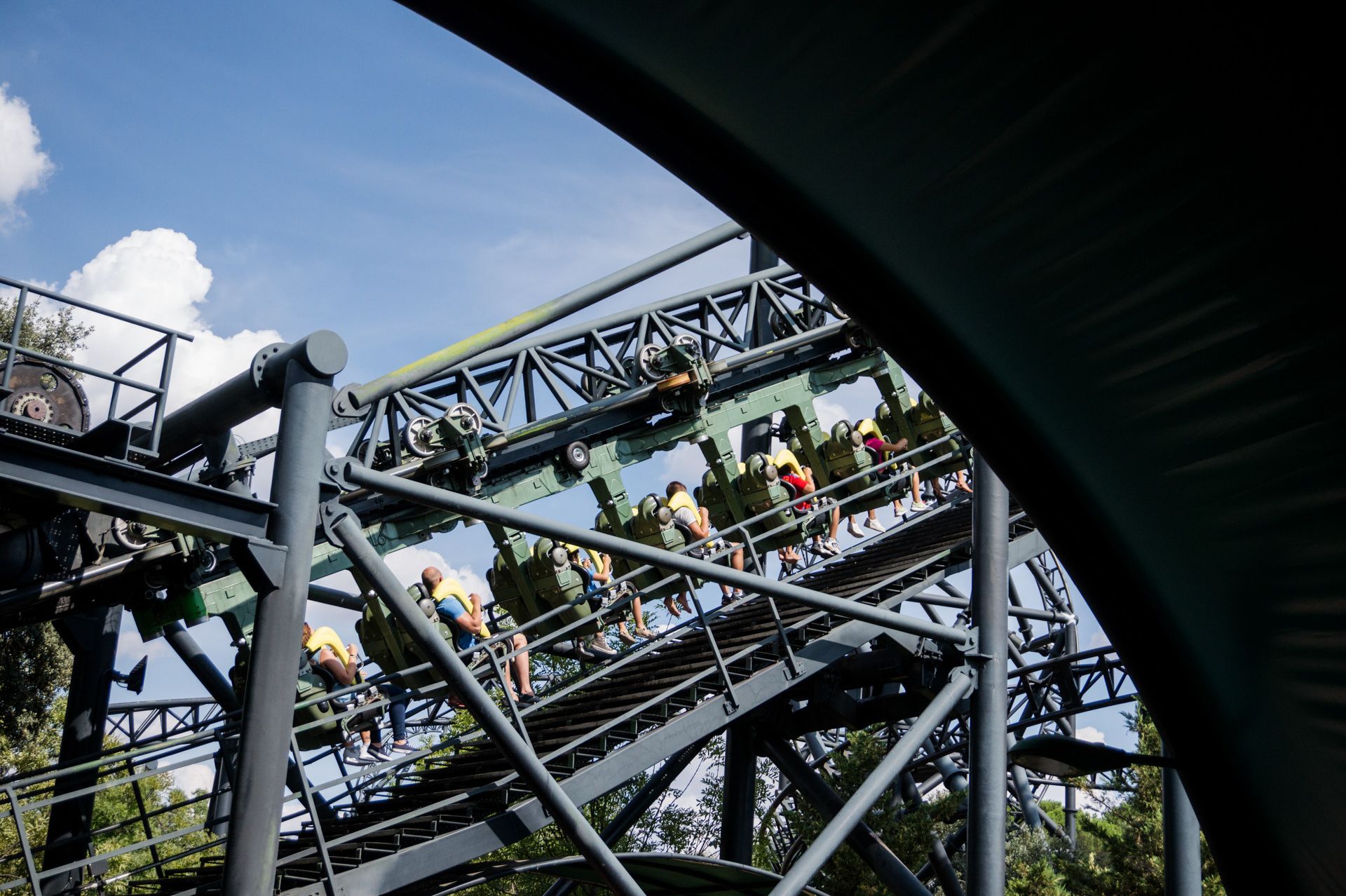
After climbing up the access ramp to the station and clearing the station, the long train can finally be loaded. After the employees have checked it off, it leaves the station in a slight right turn and shortly after climbs up the lift hill. After reaching the starting height of 30m, the train goes over a small straight line for a few meters and then turns left with full effort. With 80 km/h the train shoots through the valley into the first loop, which is passed quite forcefully. In a wide upright right turn the train takes momentum again to pass the second loop. This is also followed by a right-hand bend in the valley, but this time a classic corkscrew is waiting for you, which you pass through with a lot of momentum. In the following left-hand bend you take up some altitude again, which is immediately reduced in a downward helix after a change of direction. Below the lift the last change of direction into the bend before the brakes follows.
Tornado lives up to its SLC name, although the manufacturer is different from the often spurned Vekoma rides. The layout of Tornado is simply boring and doesn’t offer much on too much space except for the three inversions. Although the contact with the restraint is minimal, the vibrations of this ride can be felt up to the last meter, which is partly due to the too bulky trains. In addition there is a relatively lengthy dispatching process, where one wonders how the Spaniards intend to operate the ride with two trains at all, and whether the second train is even available. Especially if you want to take pictures from outside you should take a lot of time into account, especially on quieter days when hardly any guests enters this cul-de-sac.
Tranquilidad
Zeppelin, La Jungla and The Walking Dead Experience
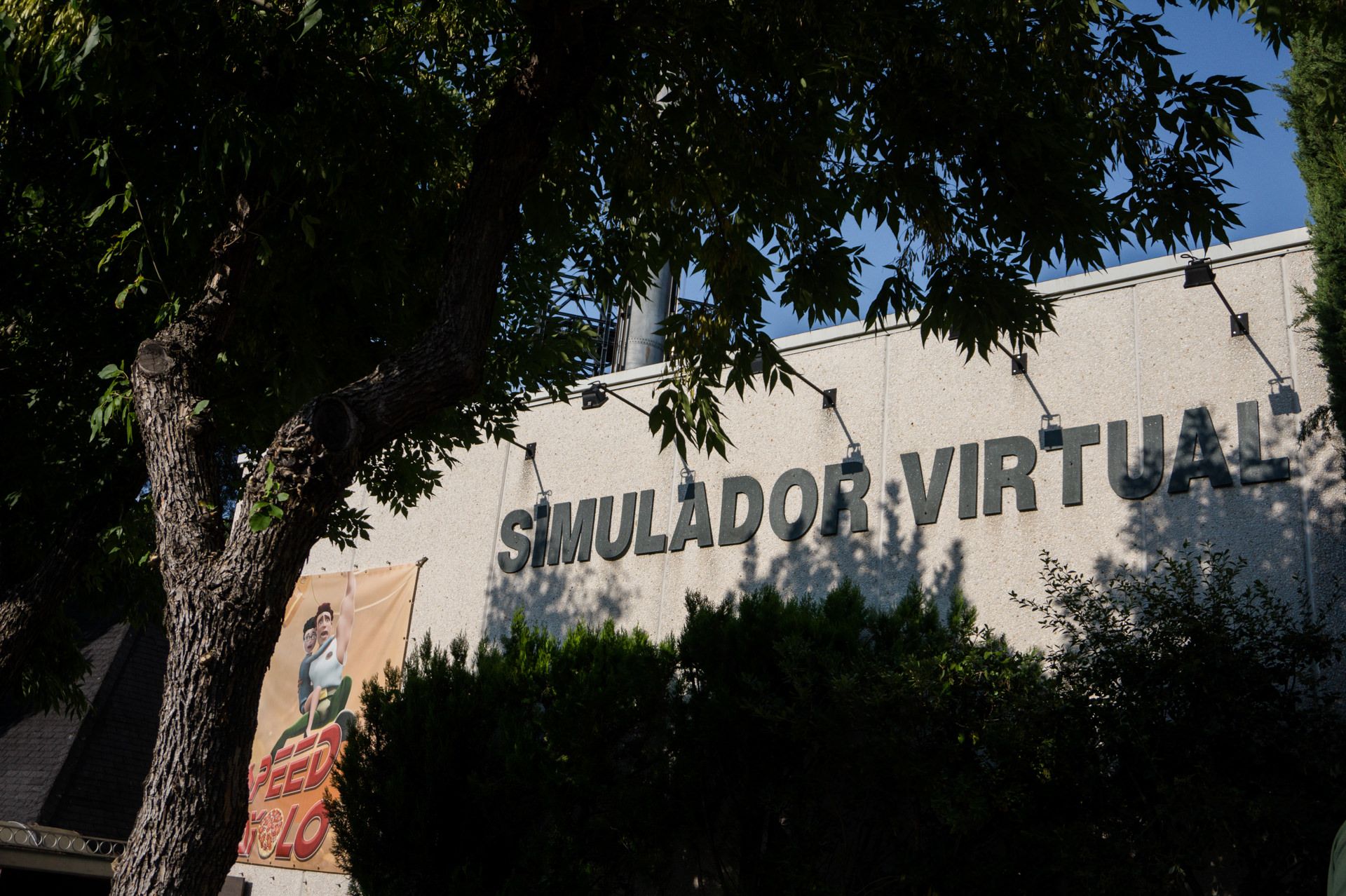
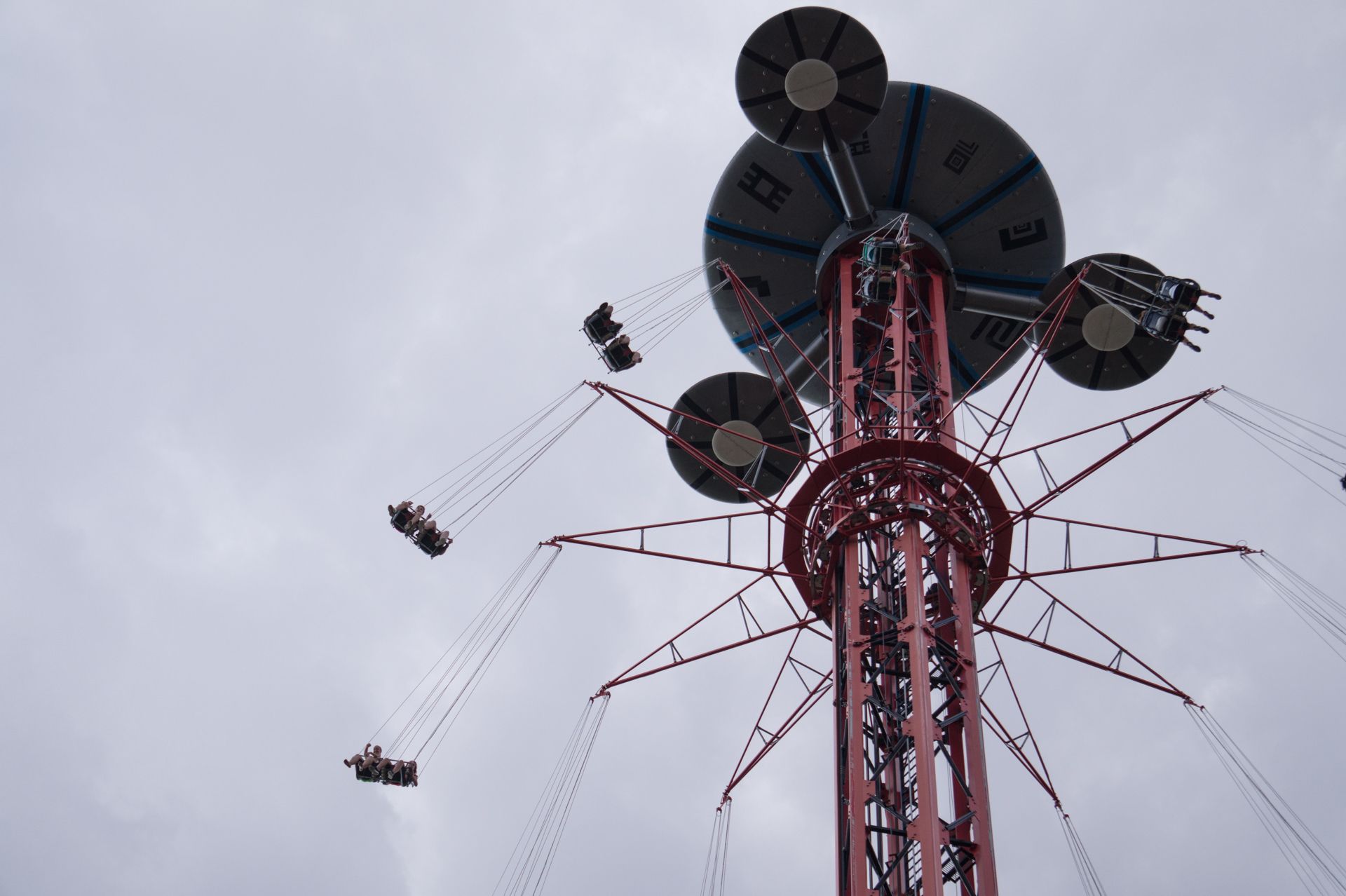
Almost as quiet as the area around Tornado is the theme area Tranquilidad, although admittedly the bear tends to tap-dance over here. This area is mainly home to quieter rides such as the Zeppelin monorail or the raft ride La Jungla, which is particularly impressive because of its old charm. But also a simulator or the Star Flyer can be found here. Friends of good horror mazes got their money’s worth with El Viejo Caserón, which was replaced this year by The Walking Dead Experience, whereby the jumbled up scenes fell victim to a consistent leitmotif and thus the charm of the building, which has existed since 1989, was somewhat affected.
Fantasia
With Fantasia, however, this theme area offers a really nicely designed dark ride based on the model of Disney’s It’s a small World. The boat trip through our oh so happy and small world starts here in space, because it shows the view of extraterrestrials on this planet. Past small scenes, which are equipped with really cute puppets, you will go through the different countries of our world, accompanied by a kitschy soundtrack, which you will hardly notice. This is also the biggest criticism of the otherwise very popular ride, because apart from the rather low capacity, the ride is simply not kitschy enough. You only have to adjust the music and the lighting of the scenes a little bit and you would have one of the best dark rides ever. In its current state, however, the ravages of time seem to have taken their toll on the ride.
Pictures Parque de Atracciones de Madrid
Conclusion Parque de Atracciones de Madrid
The Parque de Atracciones de Madrid is a good park with a charm all of its own, which was certainly much more pronounced in the days of the Tivoli principle, i.e. until 2011. The park offers many beautiful corners, but also unfortunately many unattractive and unused areas, especially in the theme area Tranquilidad. Despite this, the park seems to be following the right strategy, as the Nickelodeon Land and Naturaleza themed areas are truly impressive since the last update. The Parque de Atracciones de Madrid itself offers a nice portfolio of rides, but it doesn’t invite me to stay there for long. At least I would not say no to another visit in the late afternoon until the evening hours during the next visit of the city of Madrid.
What is your opinion about the spanish theme park Parque de Atracciones de Madrid? Just write it here below the report in the comment field or visit or our social media channels: