The History of Cinecittà World
The history of Rome as a film location dates back to 1937, when the film city Cinecittà was founded. Equipped with what were then the most modern studios in Europe, a backlot and a copy studio, around 300 films were produced by 1943. Bombed by the Allies and looted by the Nazis, the film production was moved to Venice. After the end of the war, Cinecittà served as a DP camp for two years before the film production site was returned to its original purpose. In the 1950s the Cinecittà Studios experienced a golden age, probably also due to the film funding of the Italian state, and served as the film location for important Hollywood films such as Ben-Hur.
Due to constantly increasing demand and limited studio capacities, the producer Dino de Laurentiis founded Dinocittà, at that time the largest film studio in the world, also in the south of the Italian capital. The studio mainly produced historic and monumental films such as Barabbas (Italy 1961, Richard Fleischer), Waterloo (Italy/USSR 1969, Sergei Bondarchuk) and John Huston’s mammoth work La Bibbia (Italy 1966). However, due to the reduction of subsidies at the beginning of the 1970s, the film studio was not able to survive for long, and so in 1973 the land was sold to the Italian state. From then on Dino de Laurentiis produced in the United States and the Dinocittà remained unused; although not forgotten. Plans in the early 2000s to run the studios under the name Roma Studios were quickly discarded and Cinecittà Holding took over the site.
Originally planned for 2012, the movie park Cinecittà World opened its doors for the first time in the summer of 2014. Unpaid bills and a lack of visitors, despite the surprisingly low target of 1.5 million visitors, quickly left the park in a negative light. Short-notice cancellations of seasonal events and the planned winter opening quickly gave rise to doubts as to whether the park would ever open again. However, after restructuring over the winter months, the park opened punctually at Easter.
Tour of the park
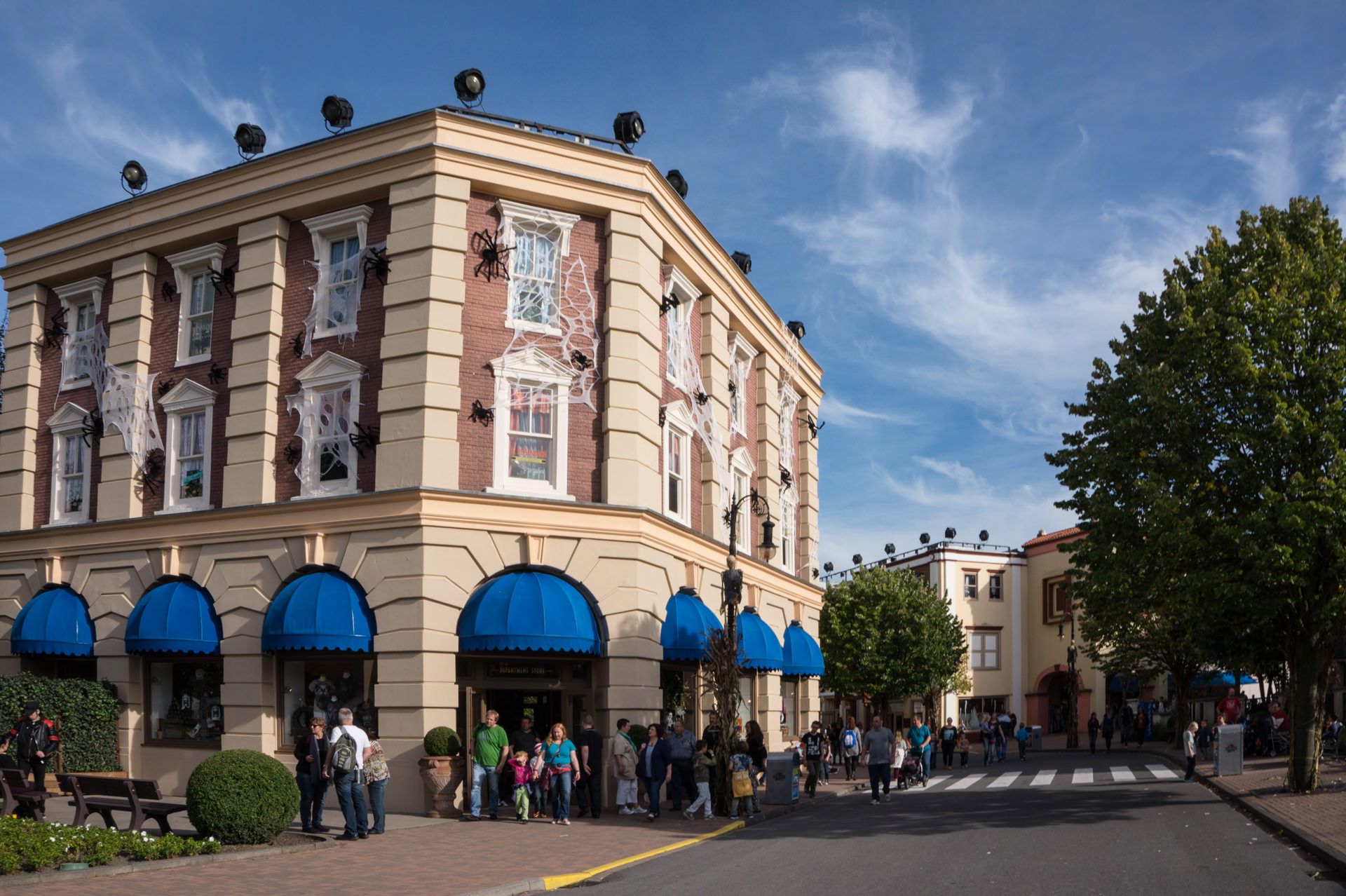
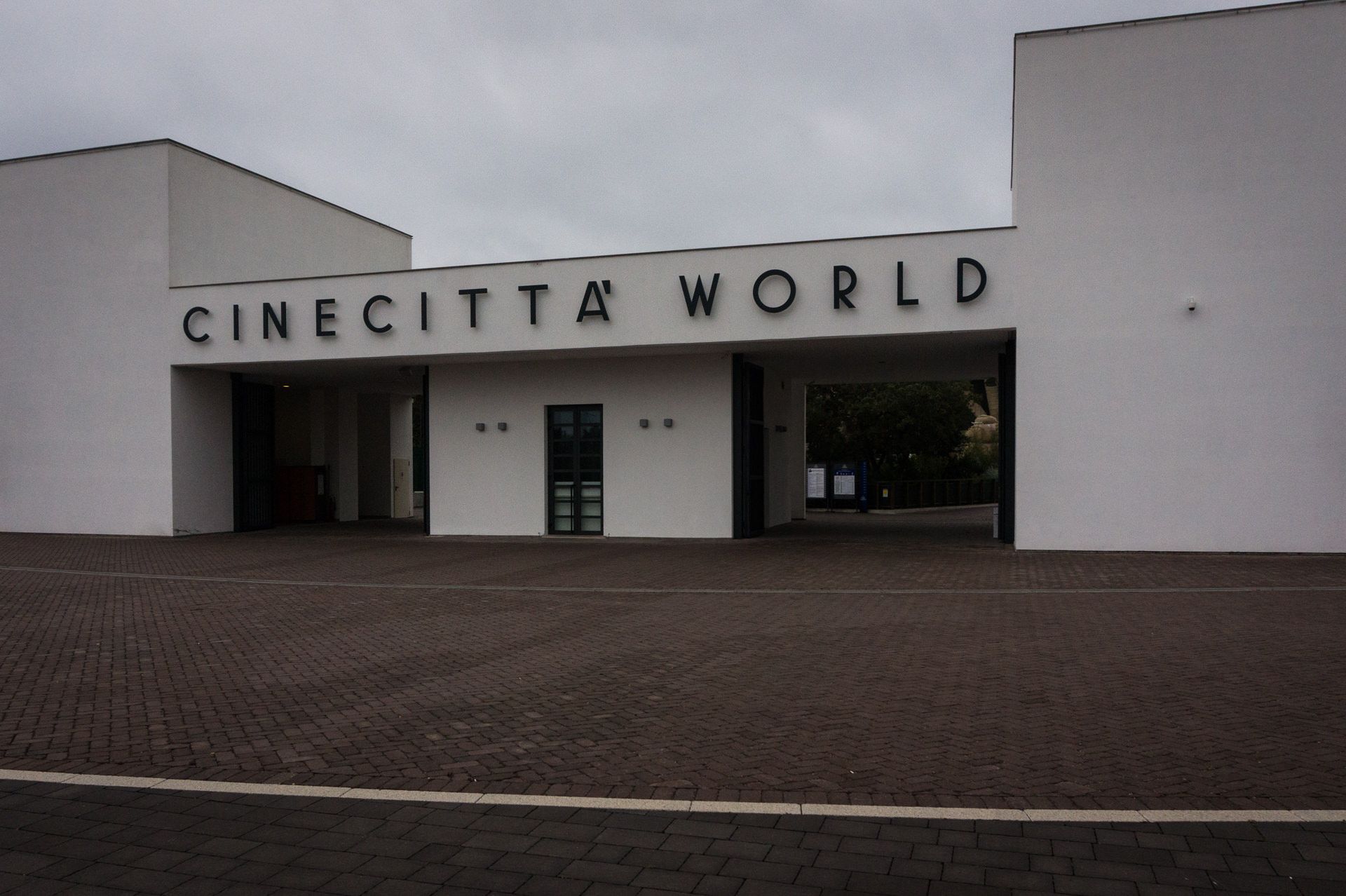
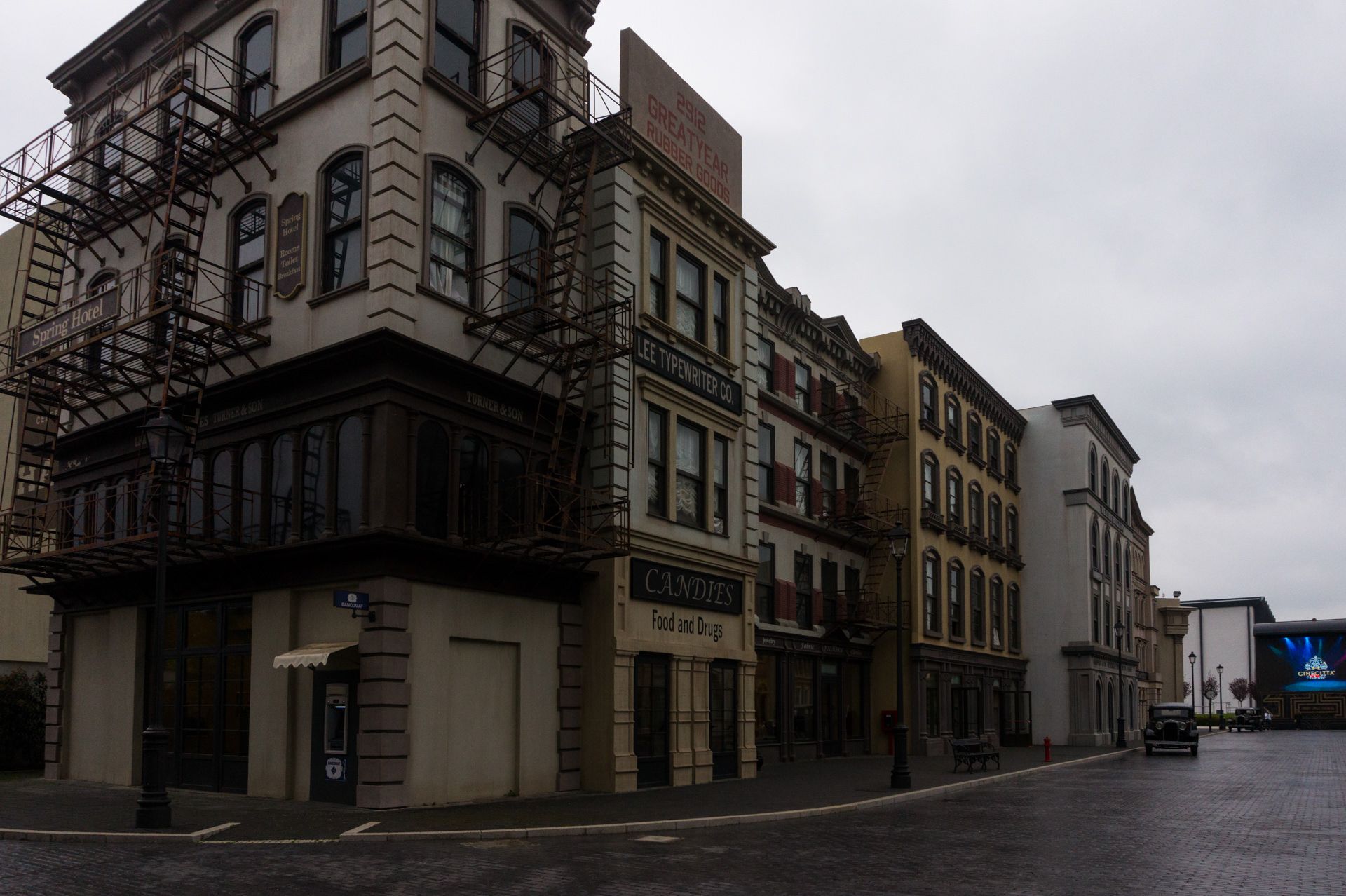
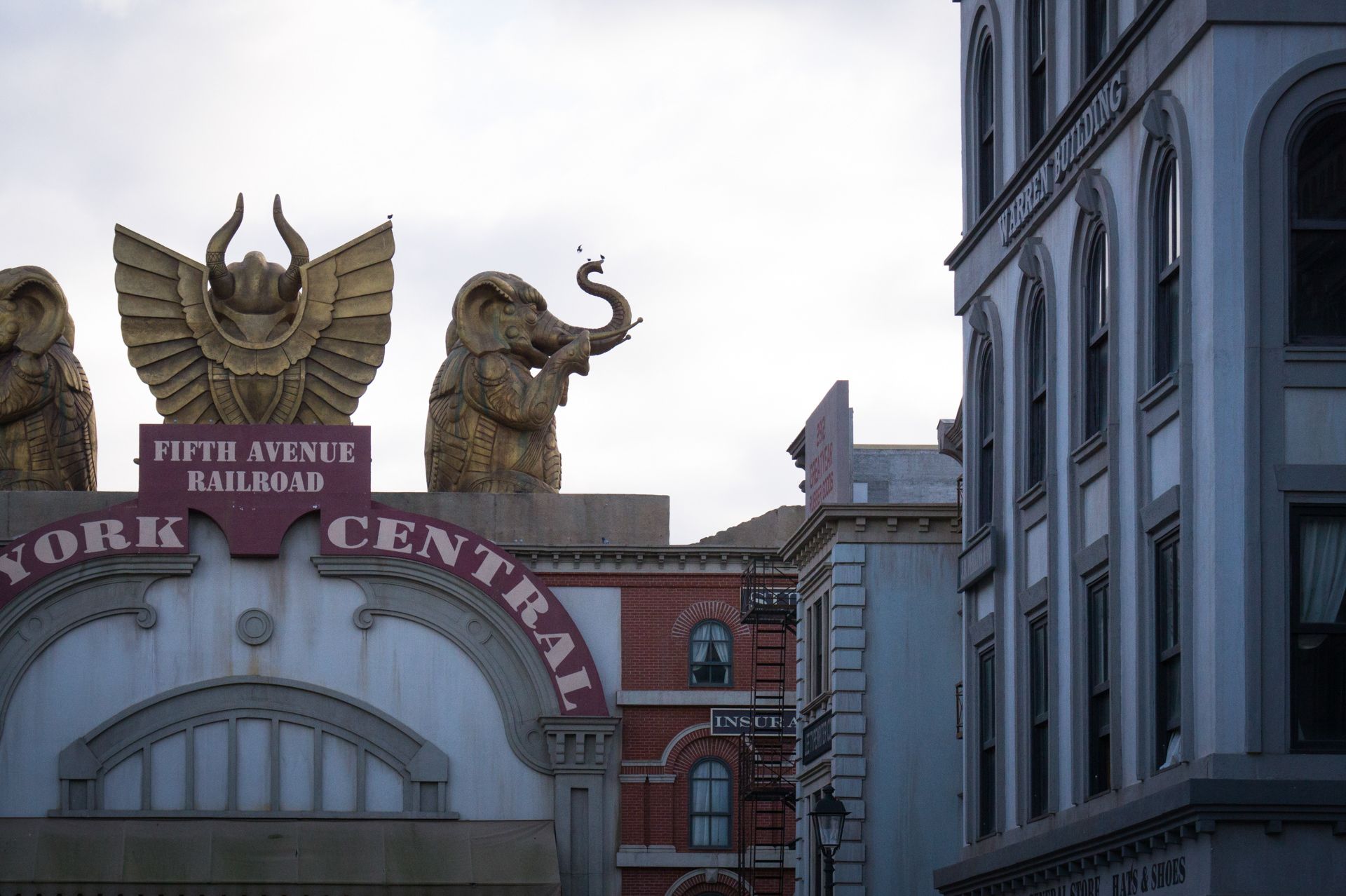
Through an elaborately designed entrance portal, one enters the park directly into Cinecittà Street, the park’s main street, inspired by New York of the 1920s. Although the set is only of generic design, i.e. not based on any film, this area has a lot of charm as long as it does not look like a ghost town due to a lack of visitors. The design is generally of a very high quality and equipped with all kinds of details, so that the first and last impression of the park is inevitably a positive one.
Aktium
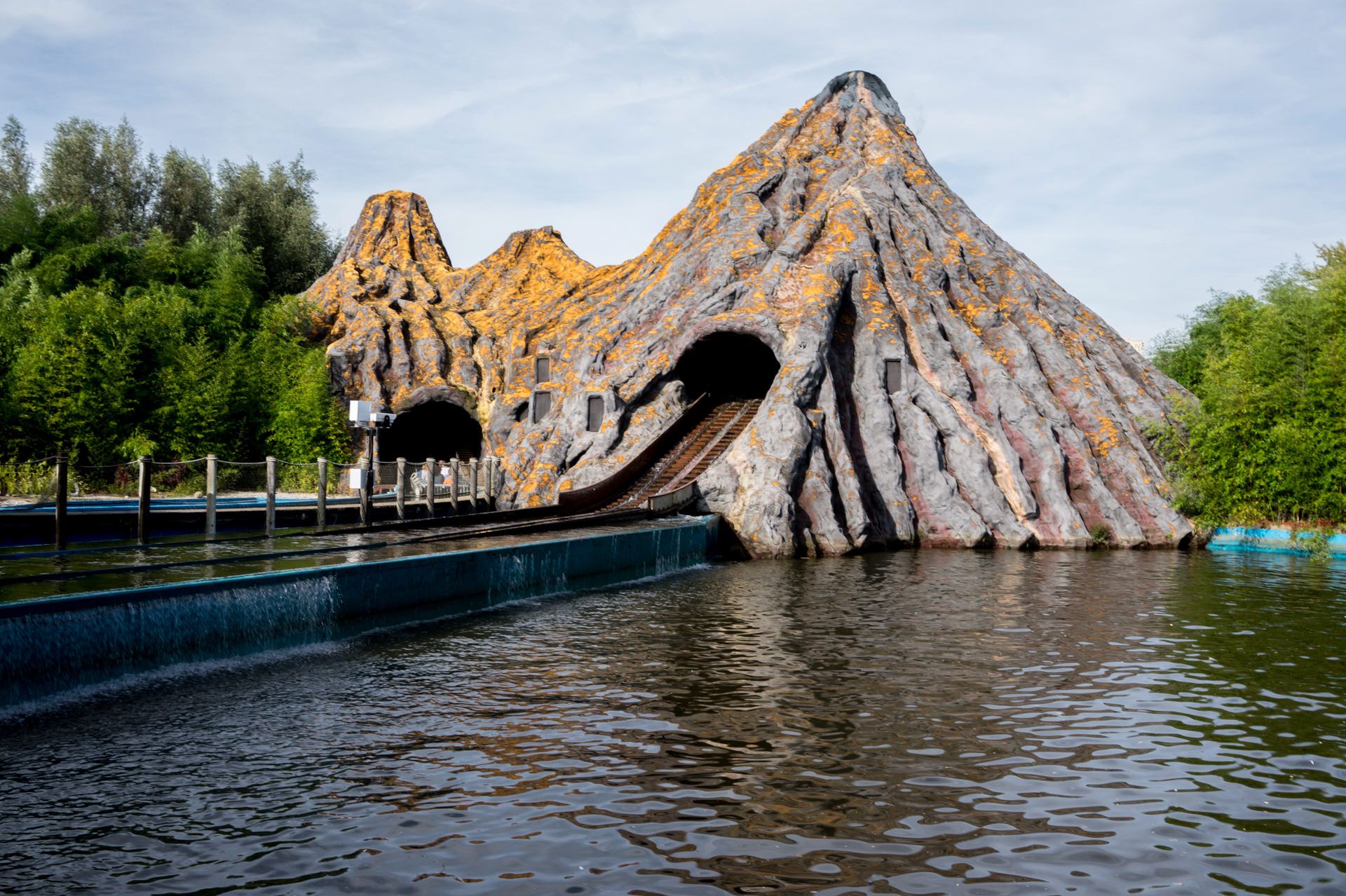
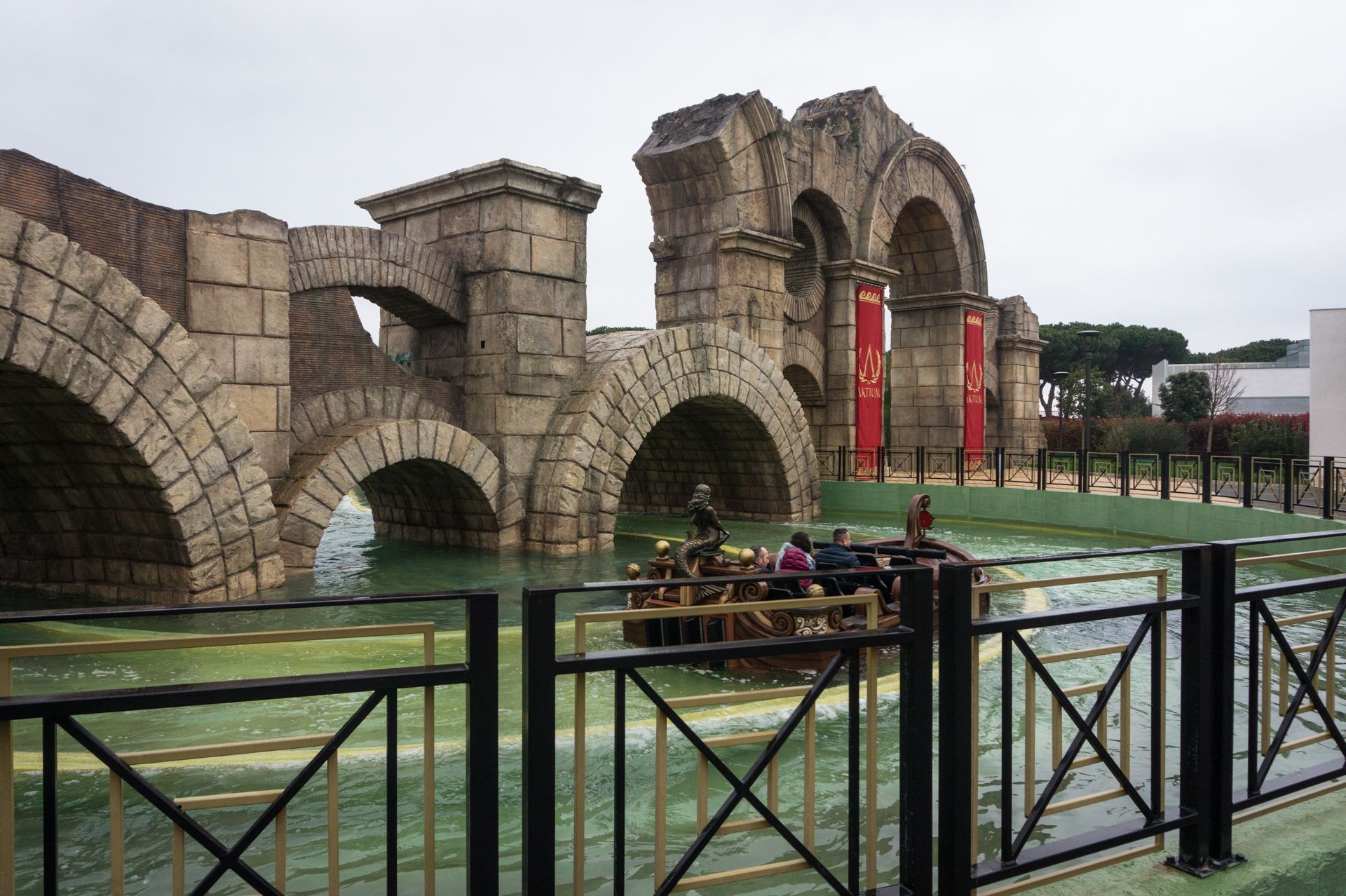
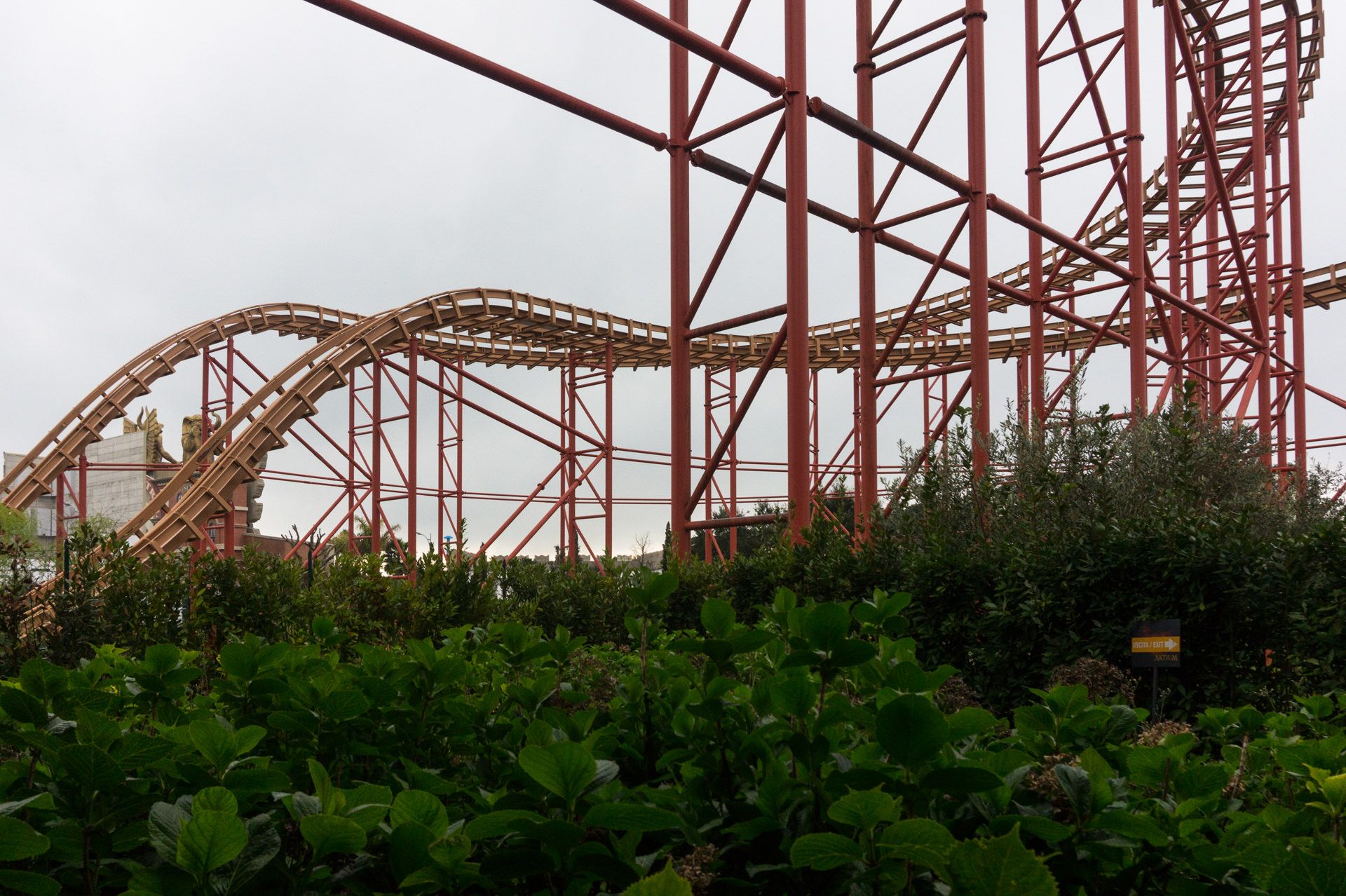
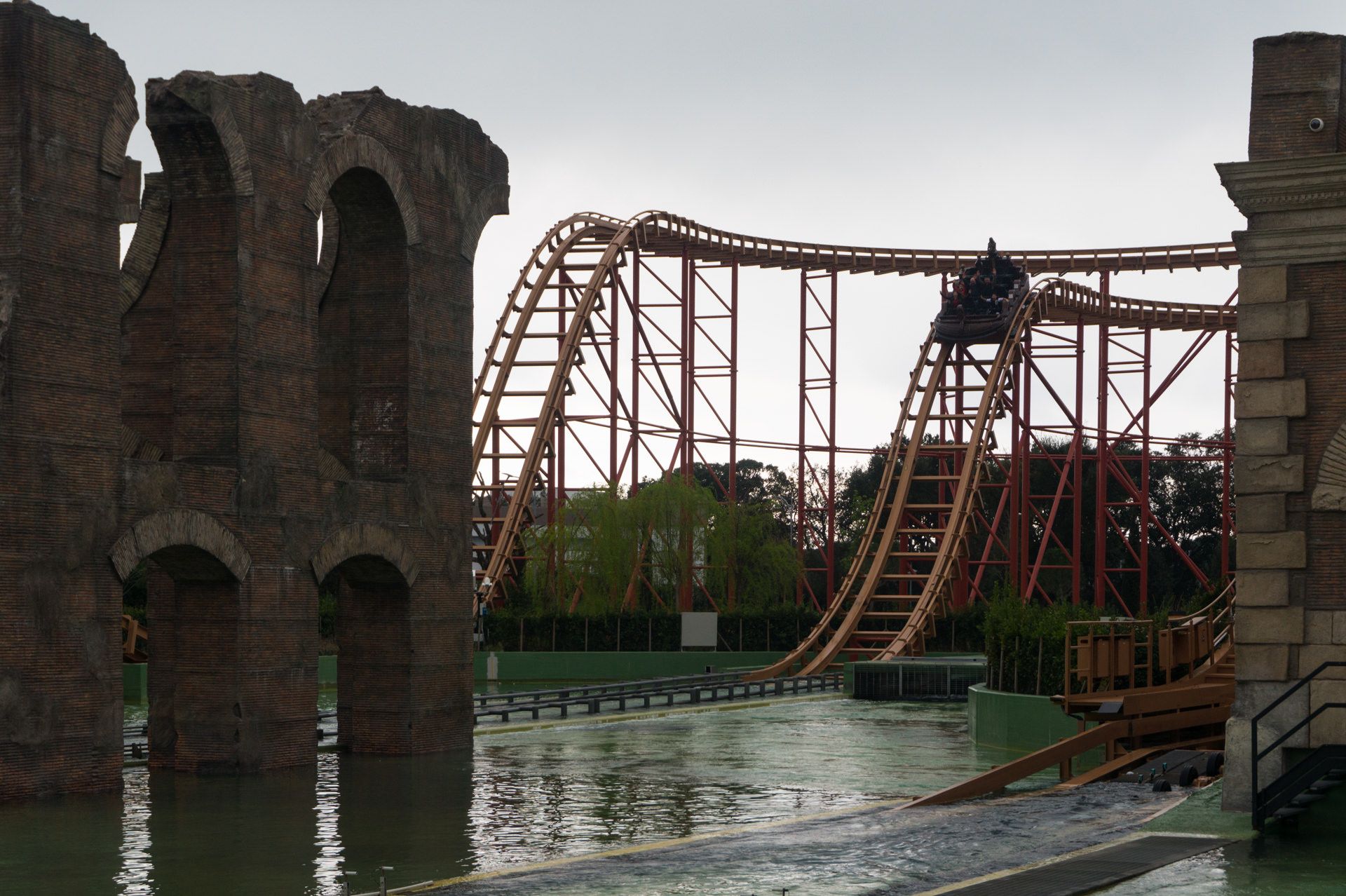
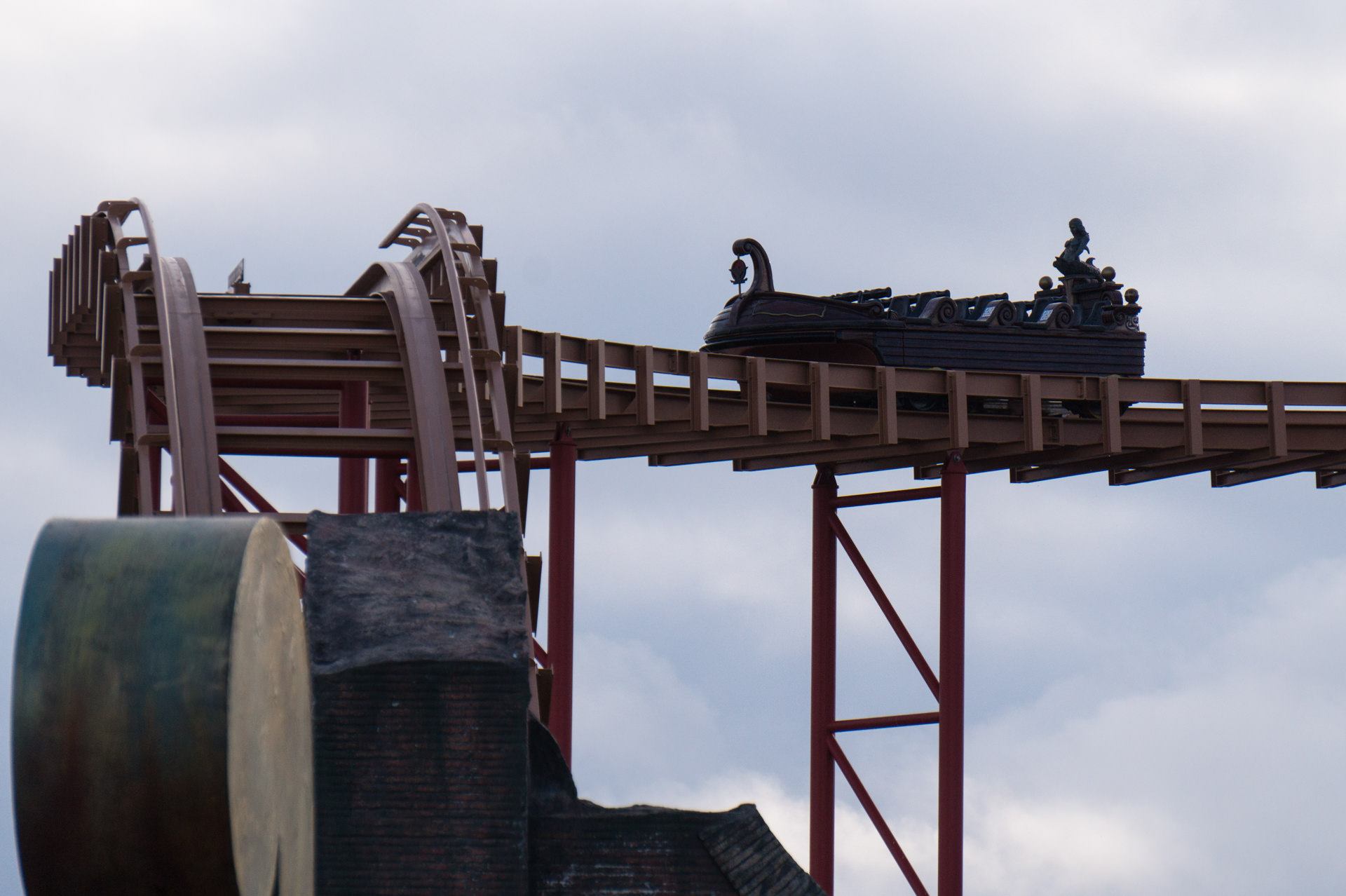
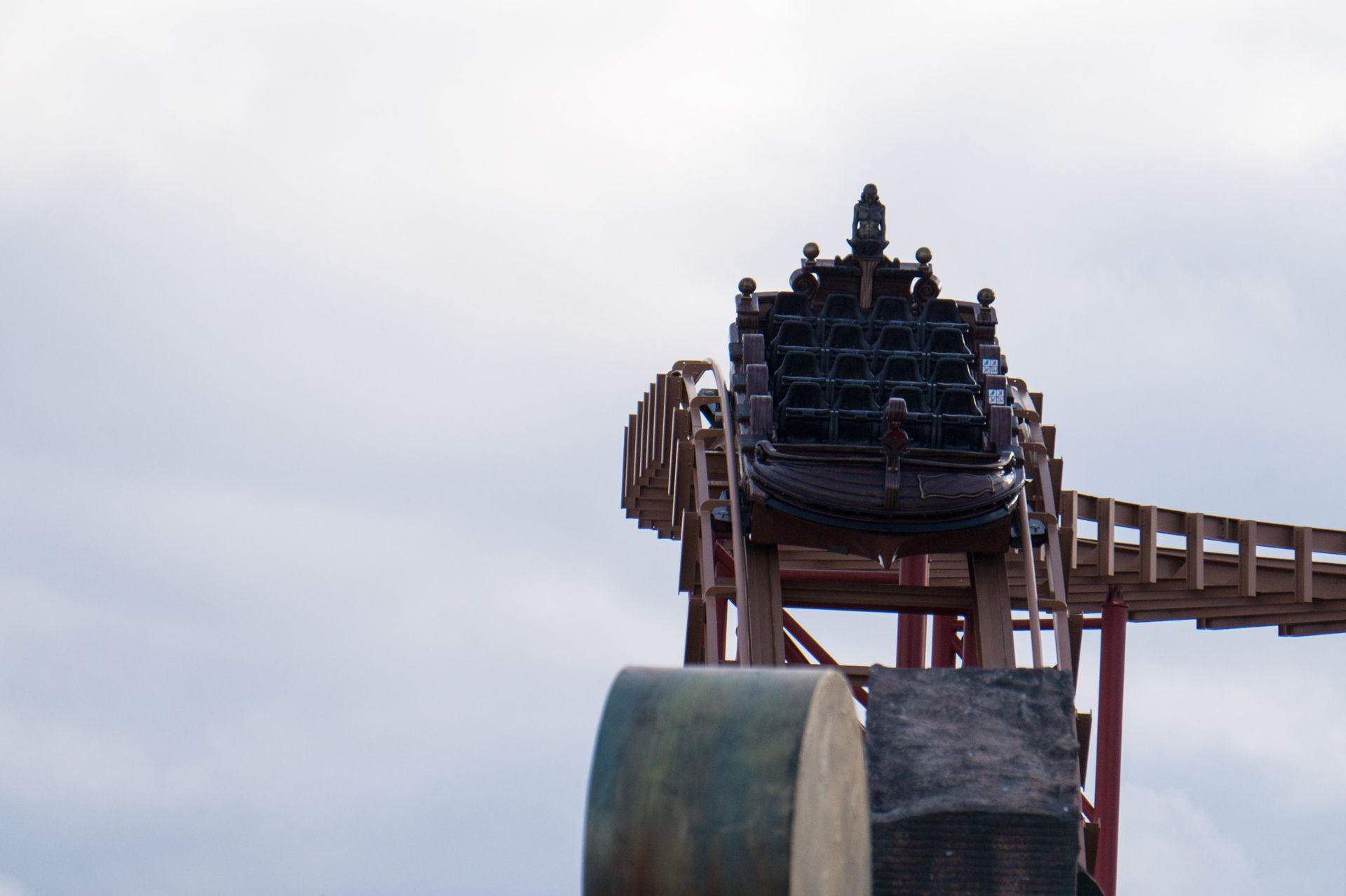
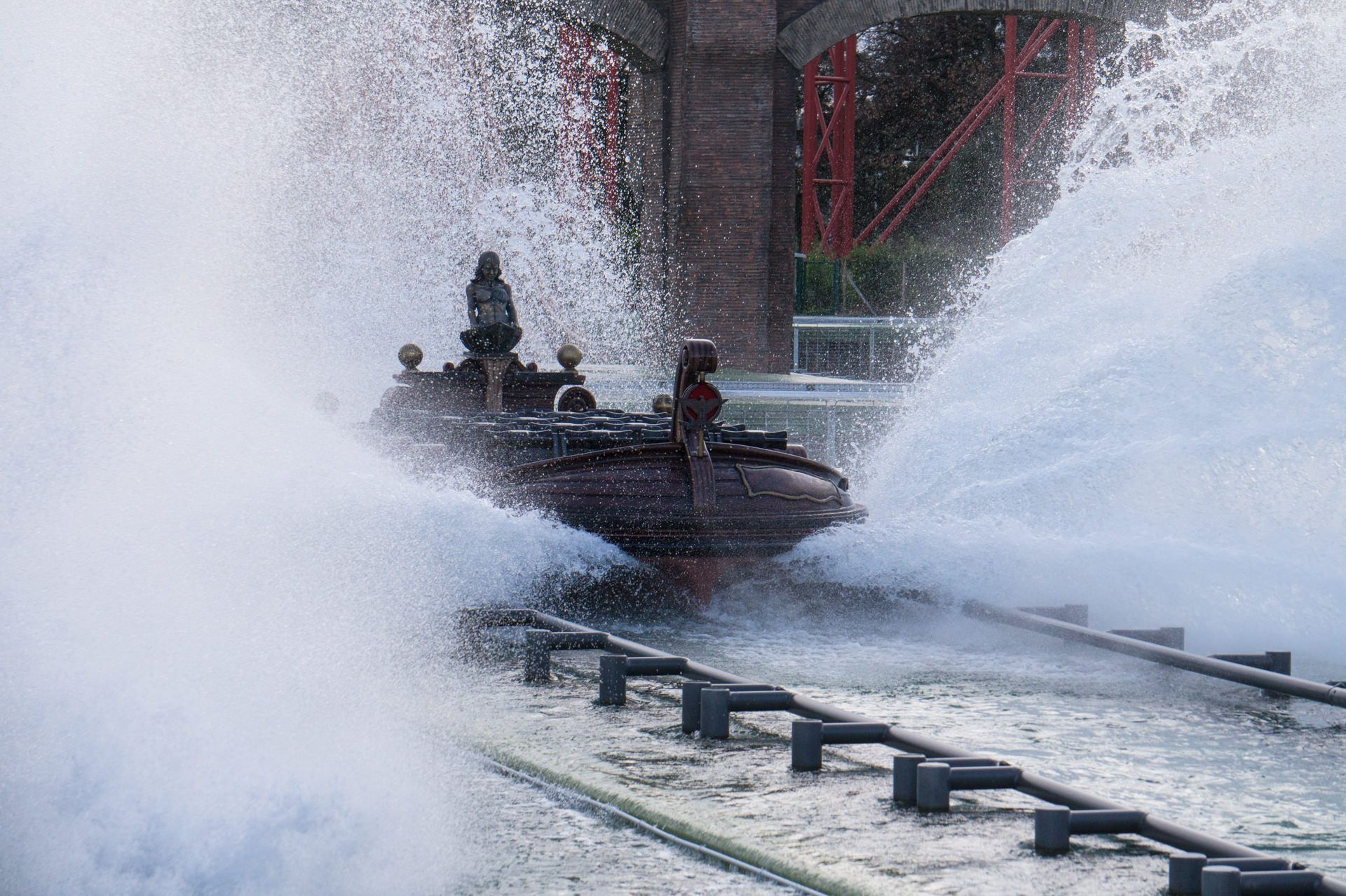
To the left of Main Street the set extends around Aktium, an elaborately designed Super Splash from Mack Rides. It is supposed to depict the naval battle at Actium, in which Octavian, the later Emperor Augustus, asserted himself against Marcus Antonius and the Egyptian Queen Cleopatra VII, thus securing sole rule in the Roman Empire. As violent as the battle was, the area around the ride is just as impressive and once again you can see that the Cinecittà World is a place where quality is the name of the game.
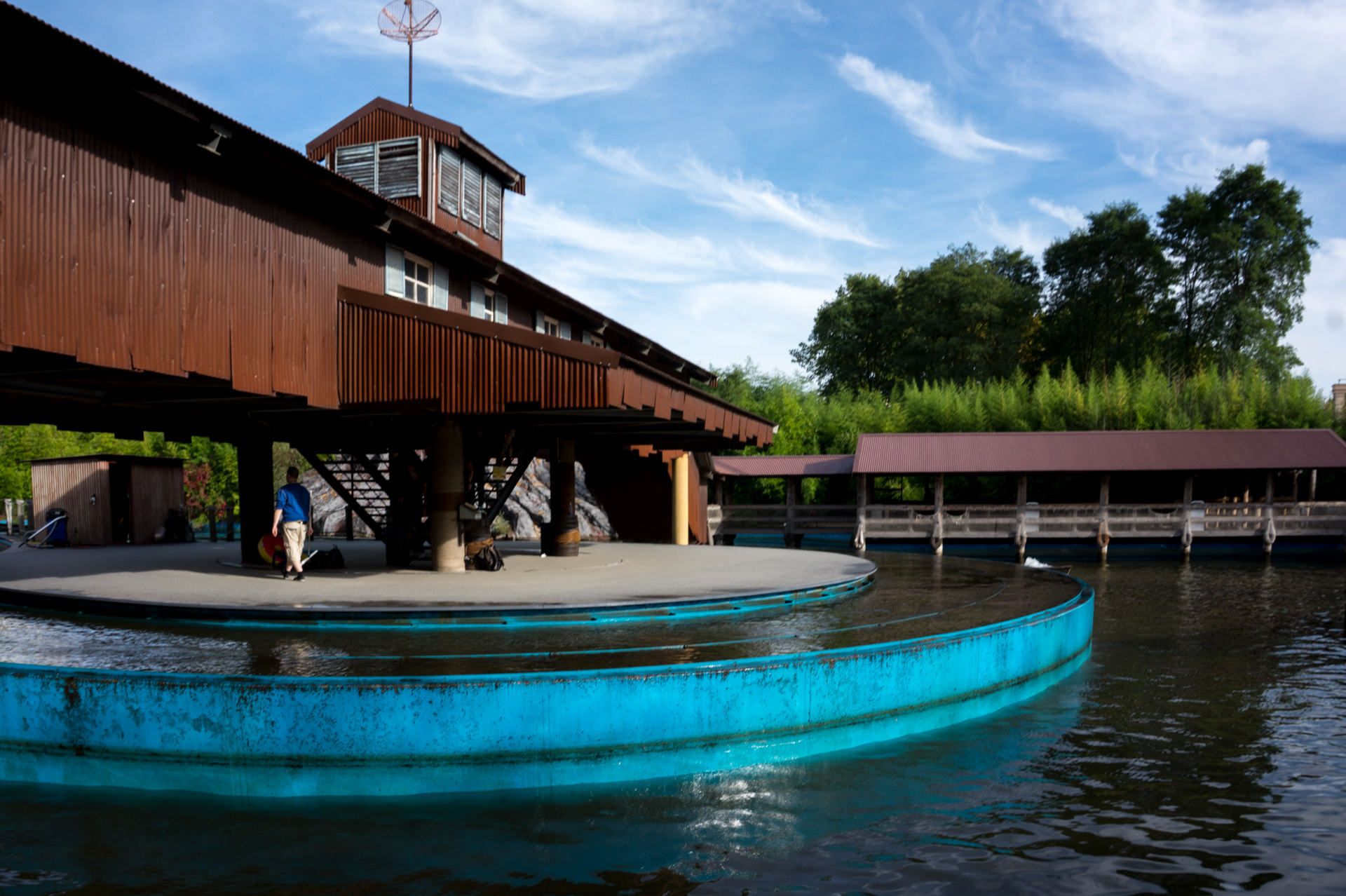
After you have left the spacious queue behind you, the journey can start right away. Without much foreplay, you go directly up the first lift hill, where you approach the first slope in a rough curve. Similar to various larger Spillwateranter installations, this runs directly down into the water without any great gimmicks. One turn later, the boat climbs up again and also makes a rough left turn. Where the ride showed itself to be quite untypical for this type of roller coaster the true character is revealed in the second shot. With a lot of momentum you pass a valley and take off on the adjacent hill before you get in contact with the water. After a little sailing through the canal you soon reach the station and are bid farewell by the staff to thunderous applause.
Aktium is a nice spillwater replacement, but it shows the limits of this roller coaster and reveals the reason why almost all other rides of this type use turntables instead of curves for the turning manoeuvres. Apart from the angular curves the ride runs without any other problems, although the level of wetness could have been a bit higher.
Studio 1
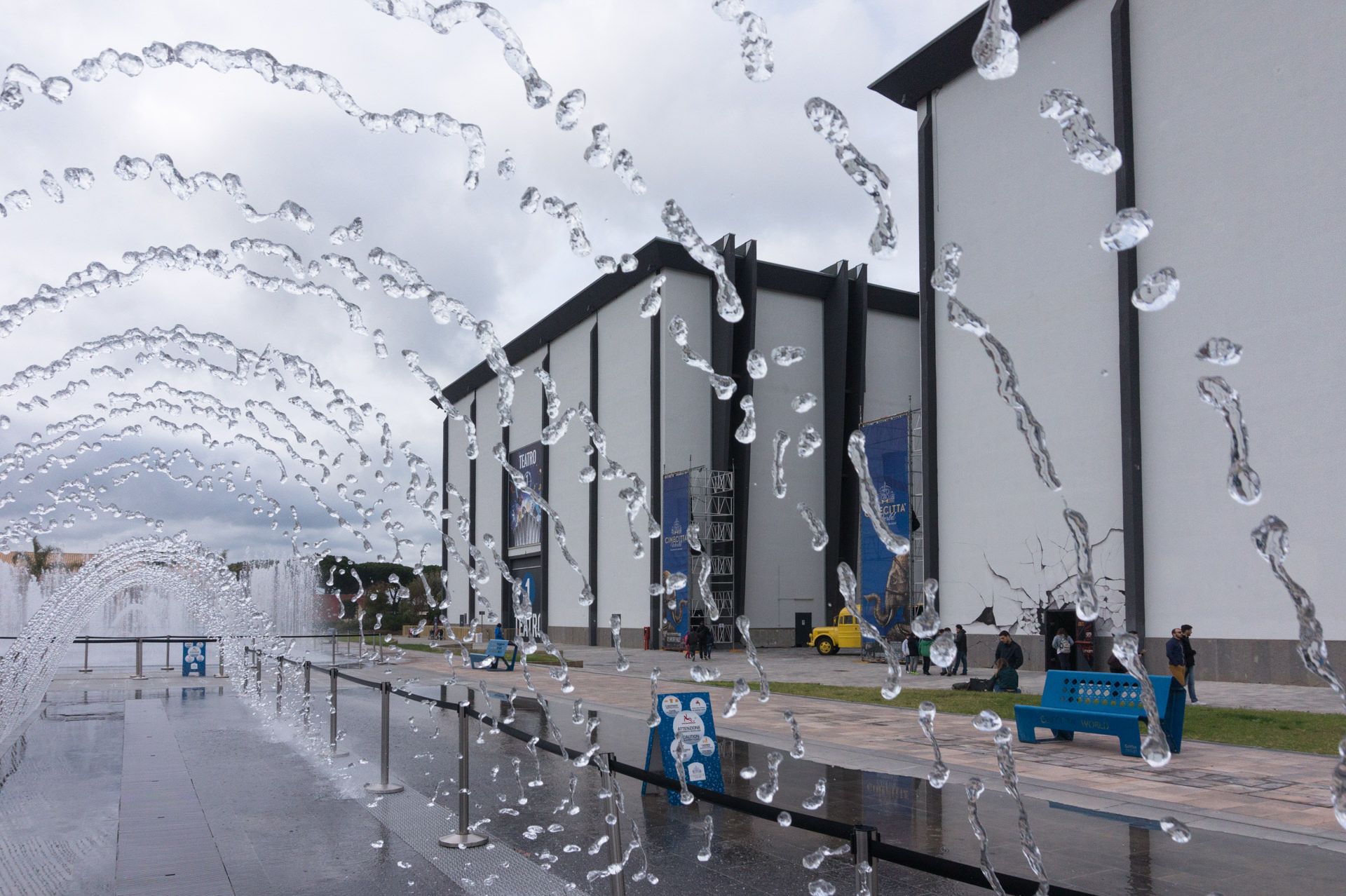
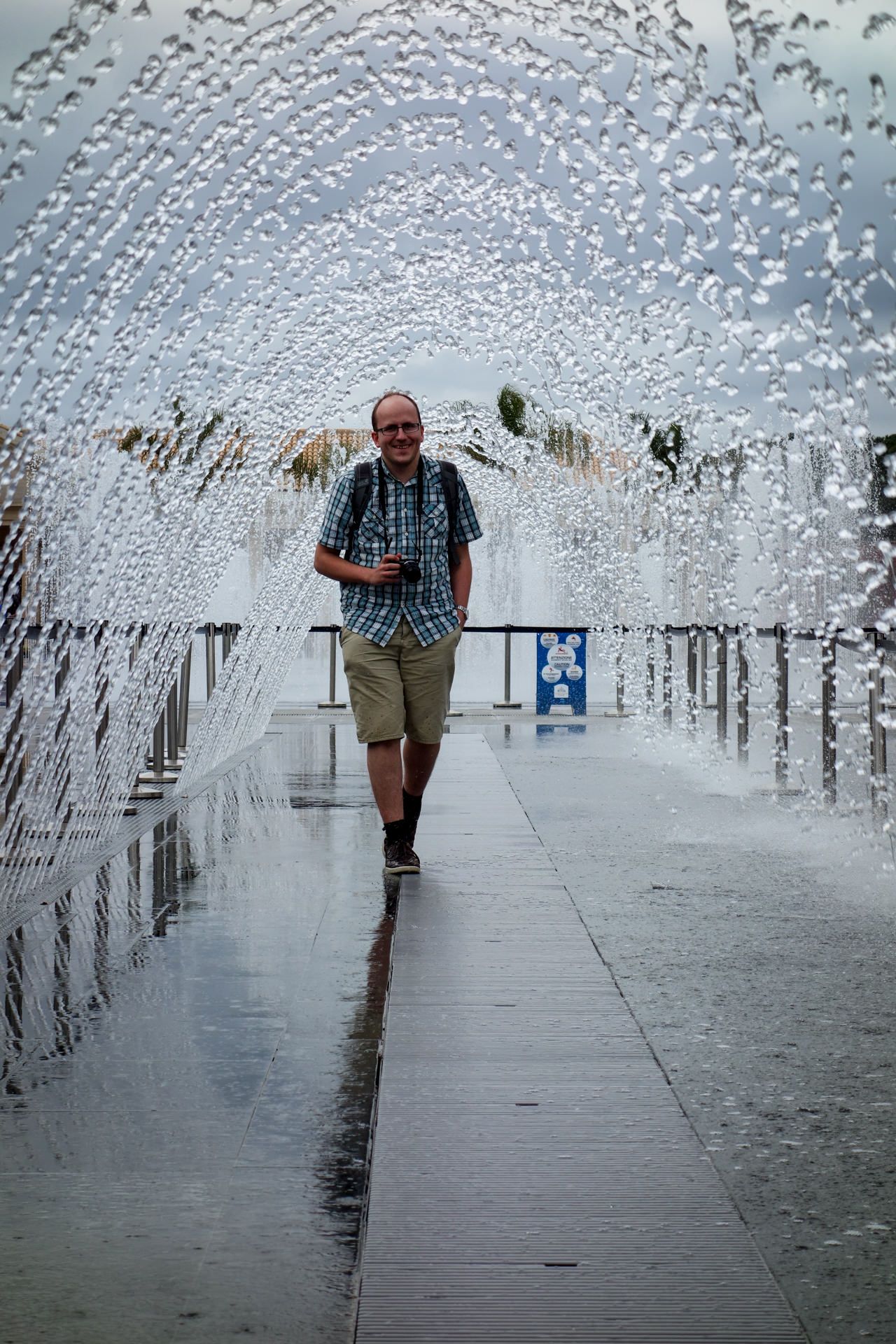
Across the Piazza Dino de Laurentiis with all its fountains and fountains we now enter Studio 1, where a magic show took place. Except for the time-consuming mind-reading number (which was only presented in Italian), the show was very professionally staged, but unfortunately not as worth seeing as the comparable show at Movieland Park.
Altair CCW-0204
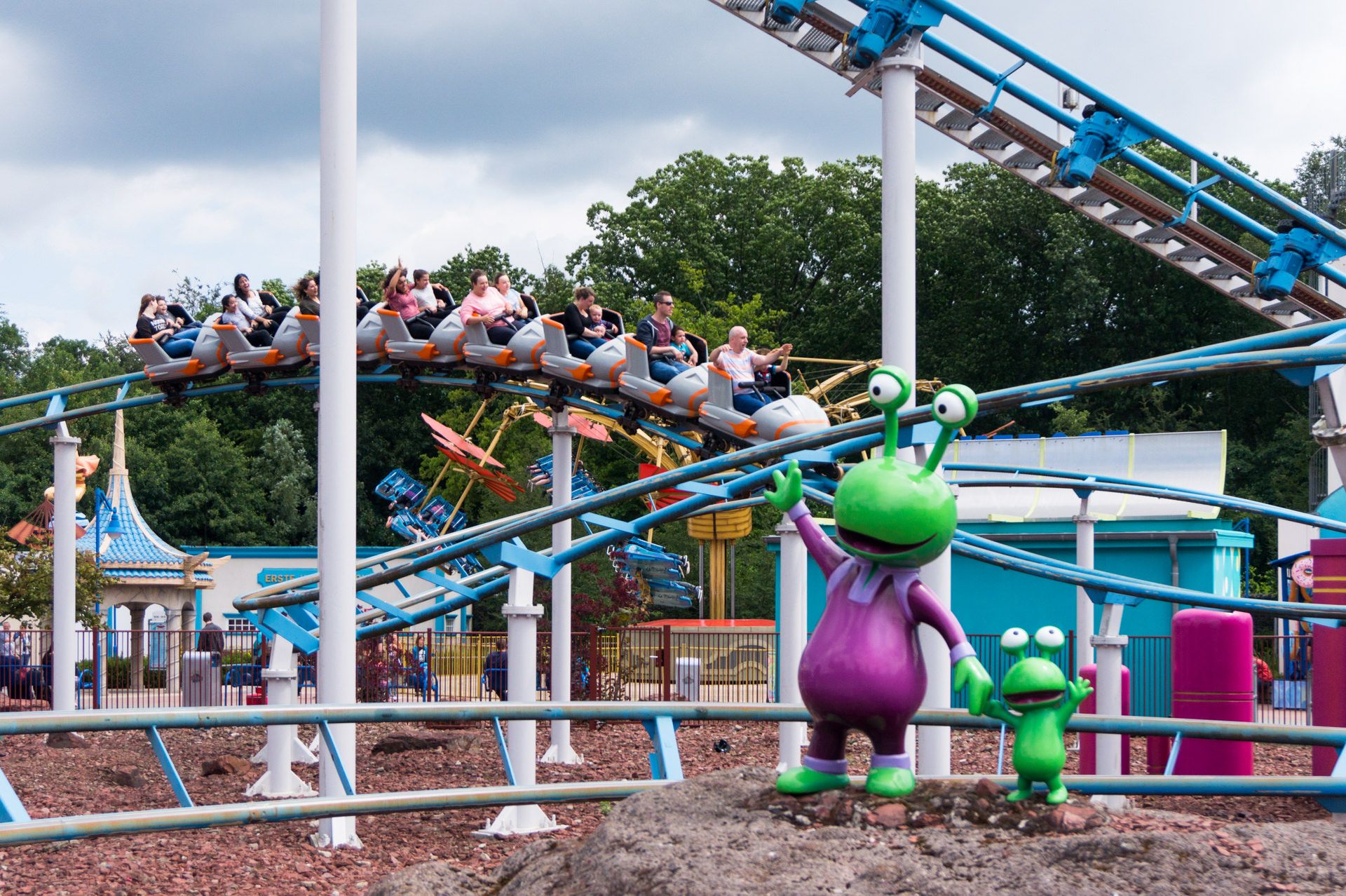
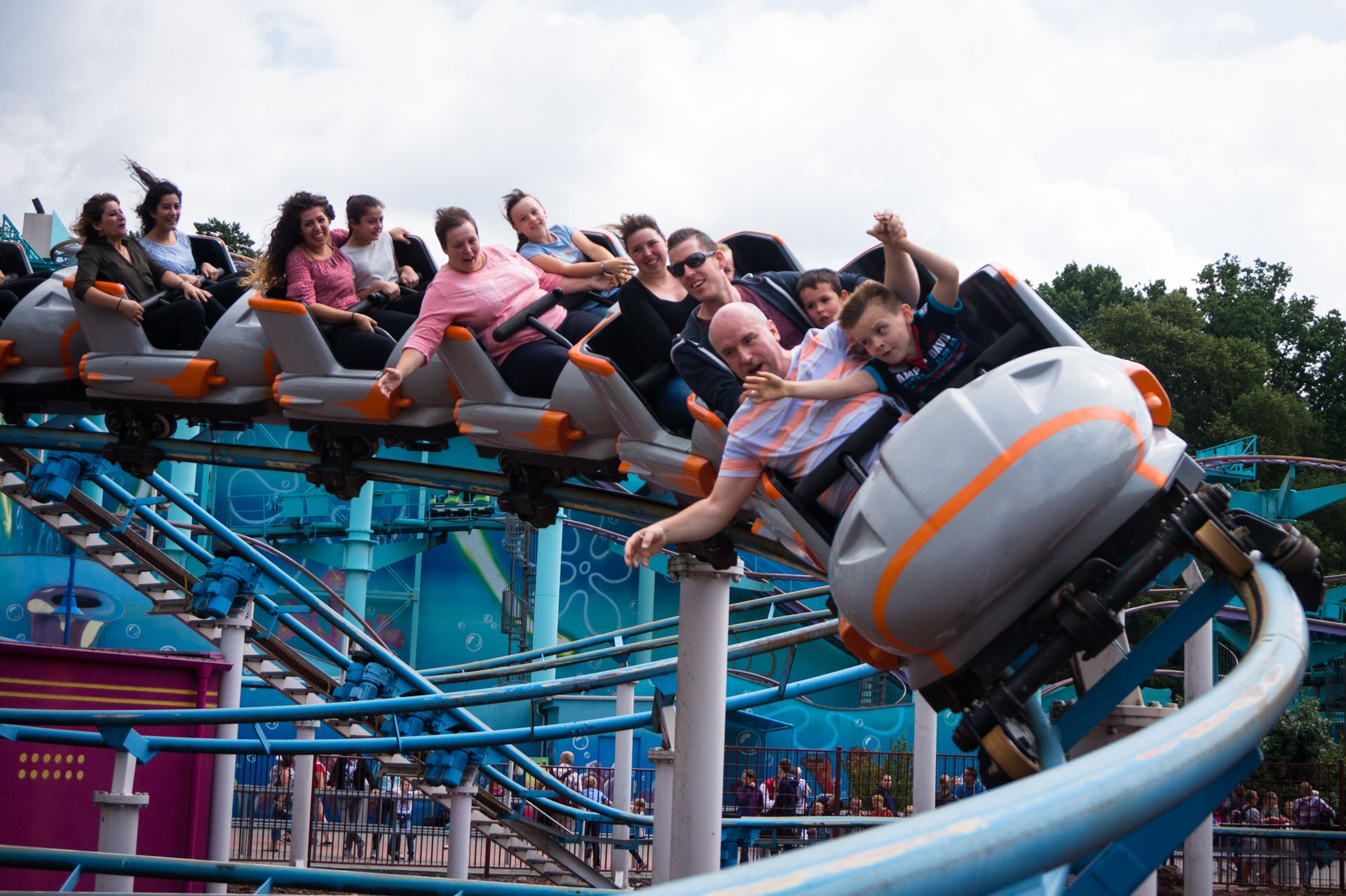
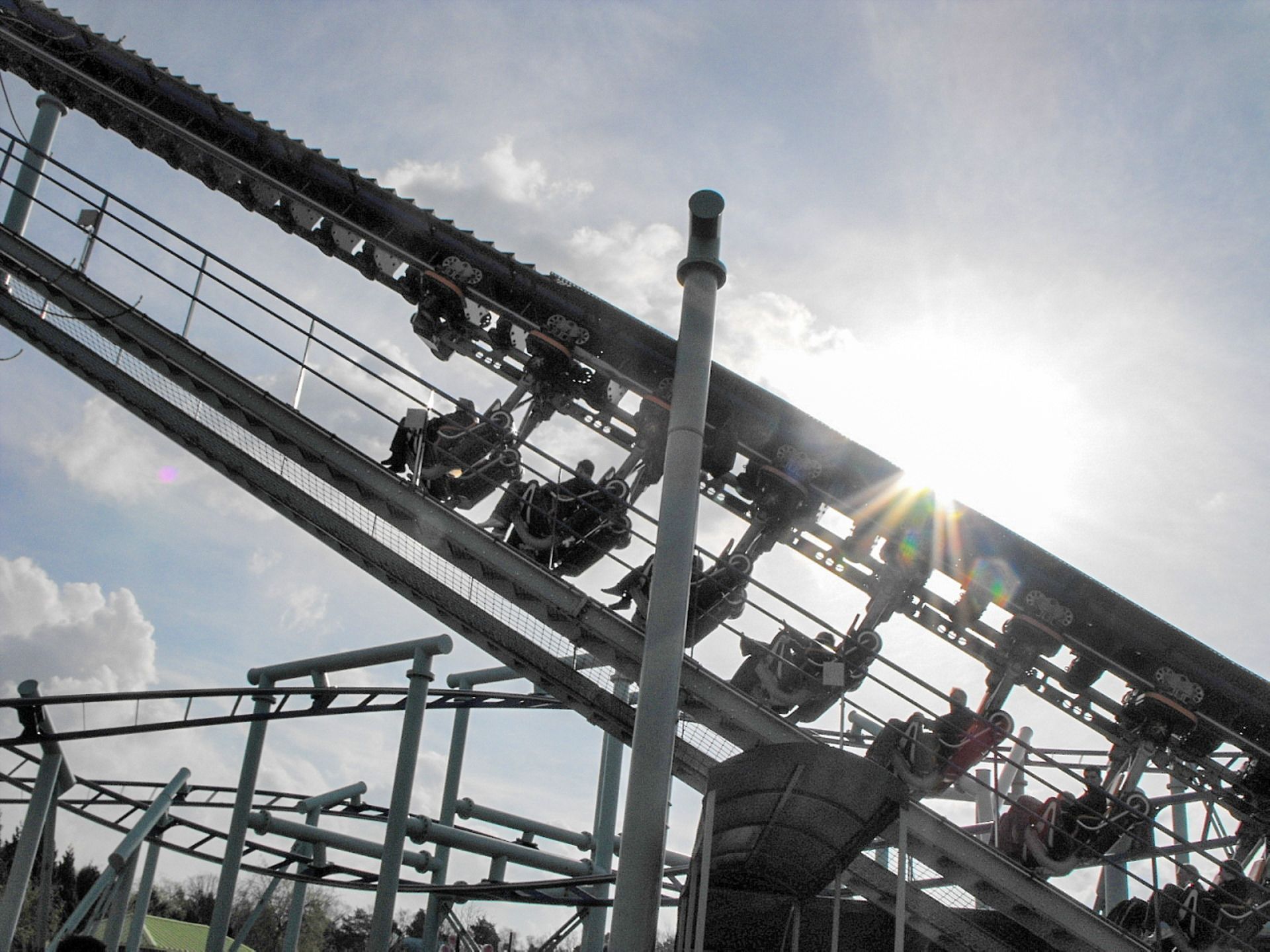
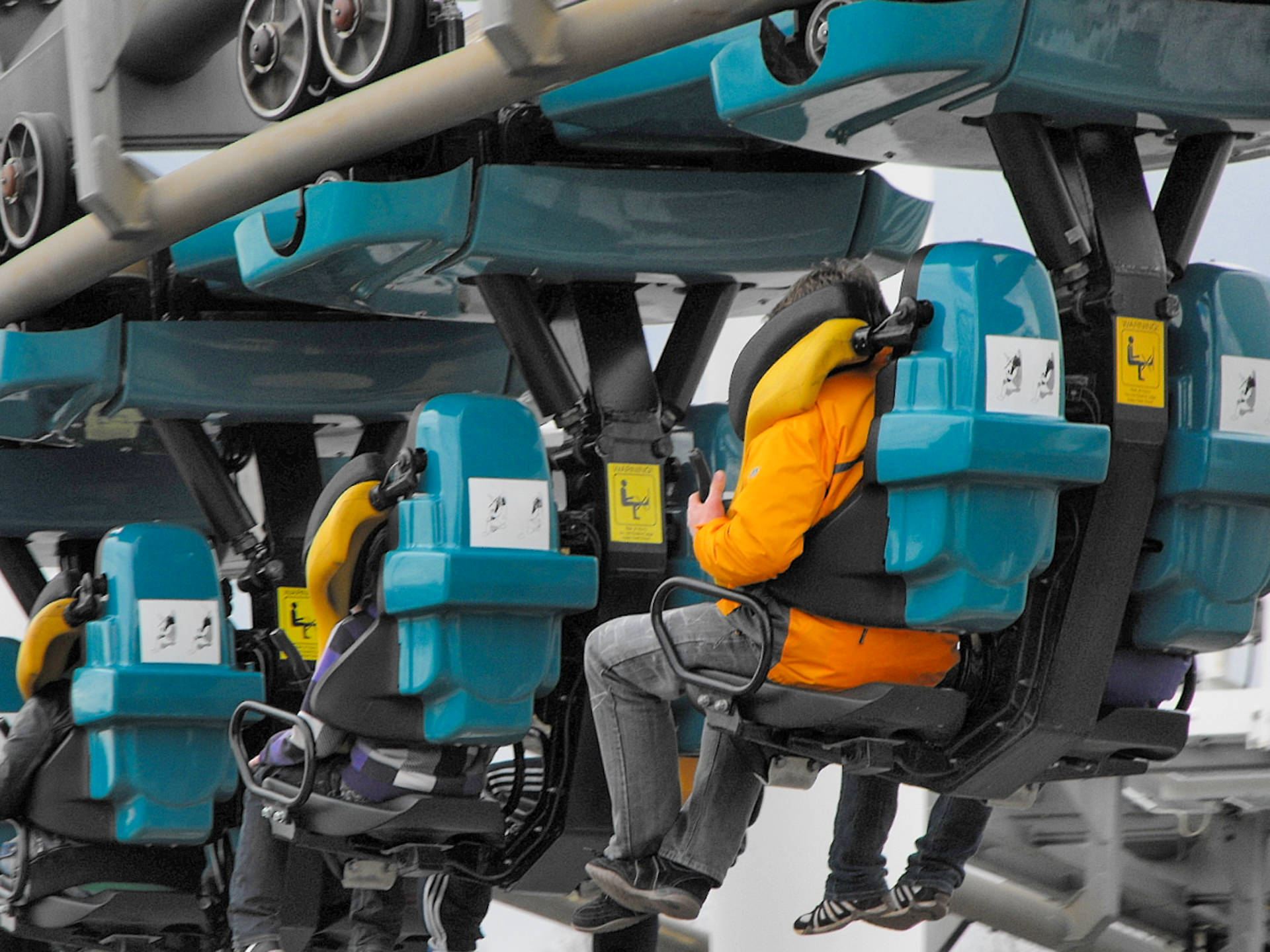
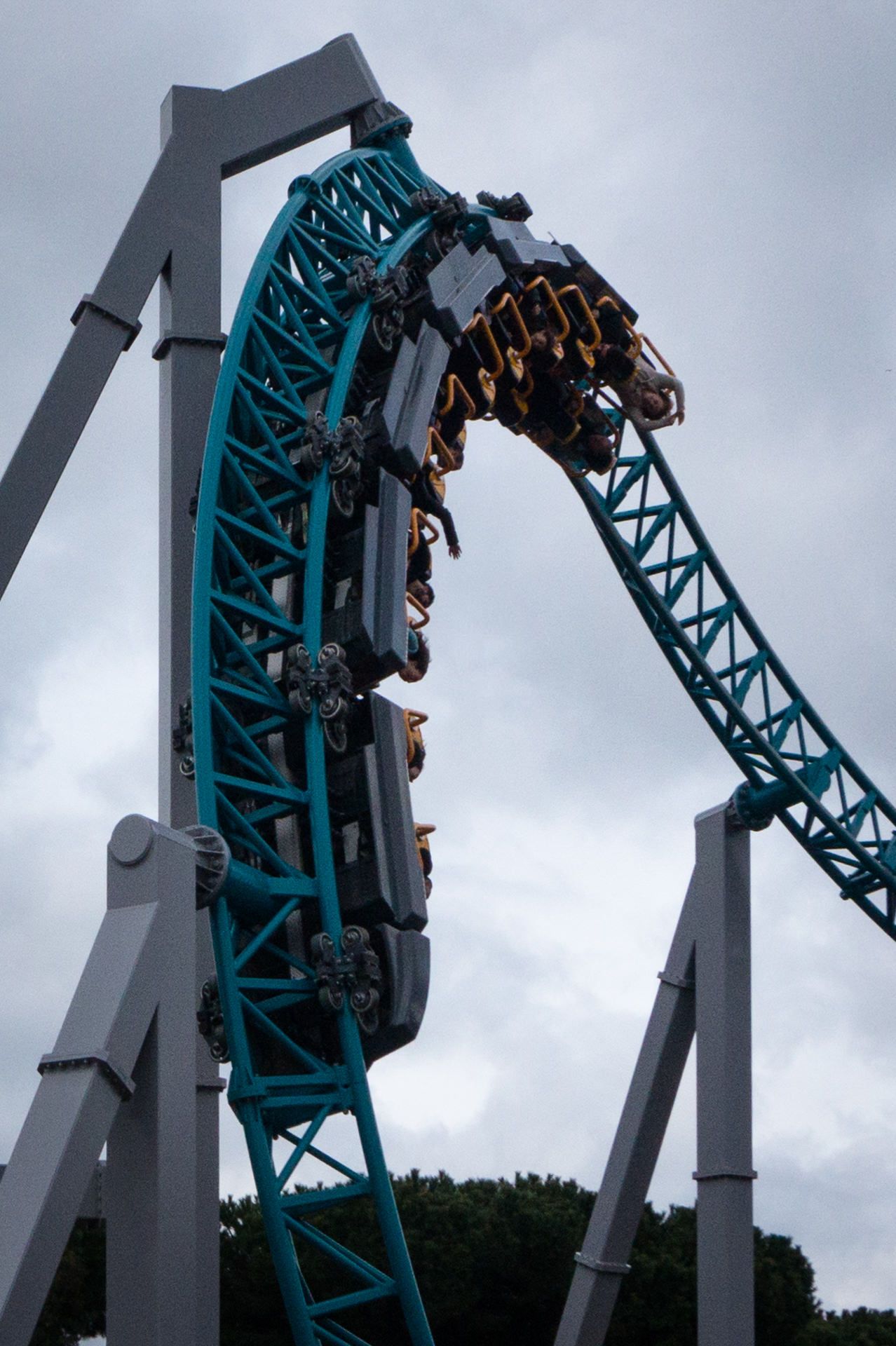
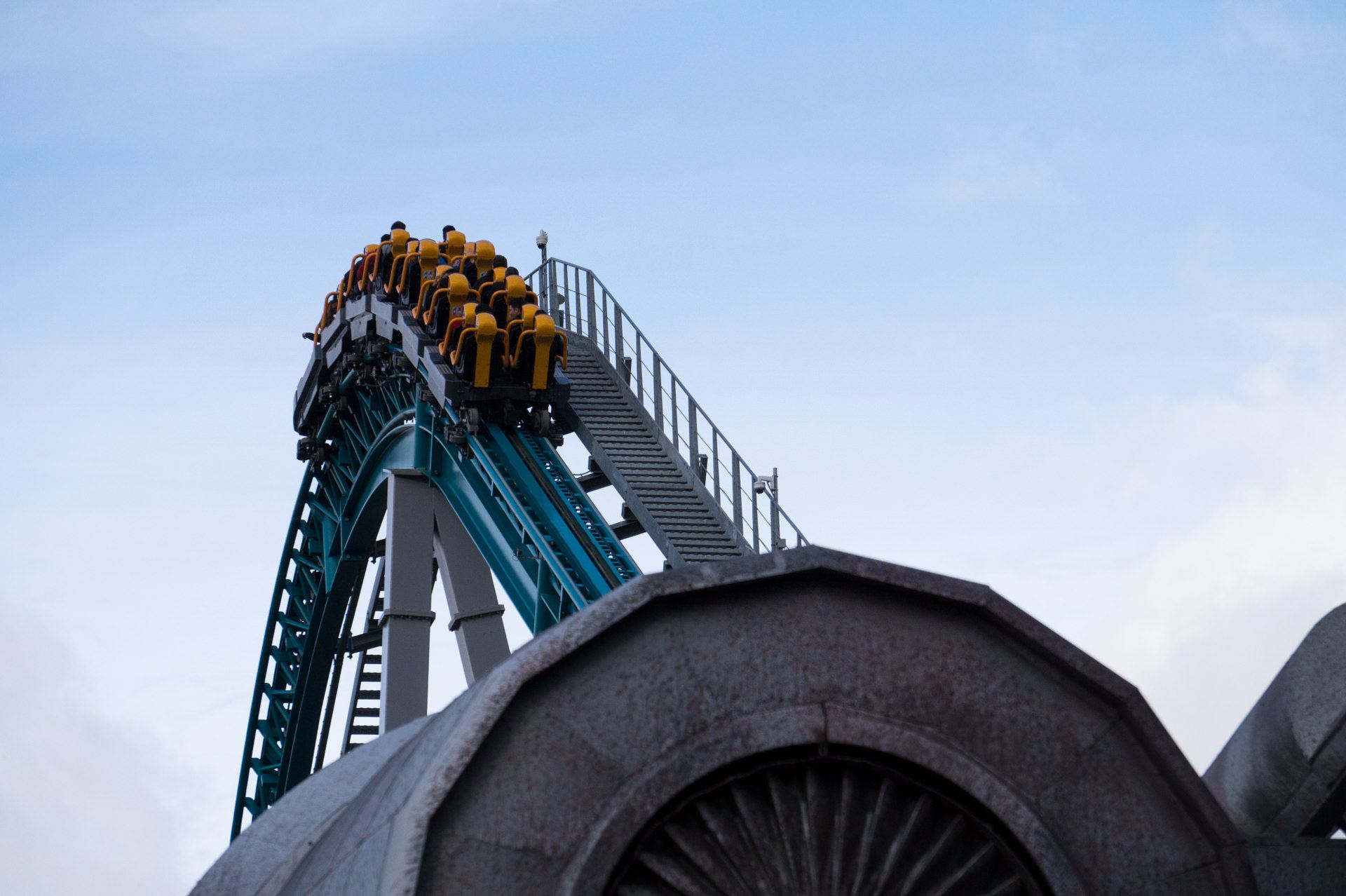
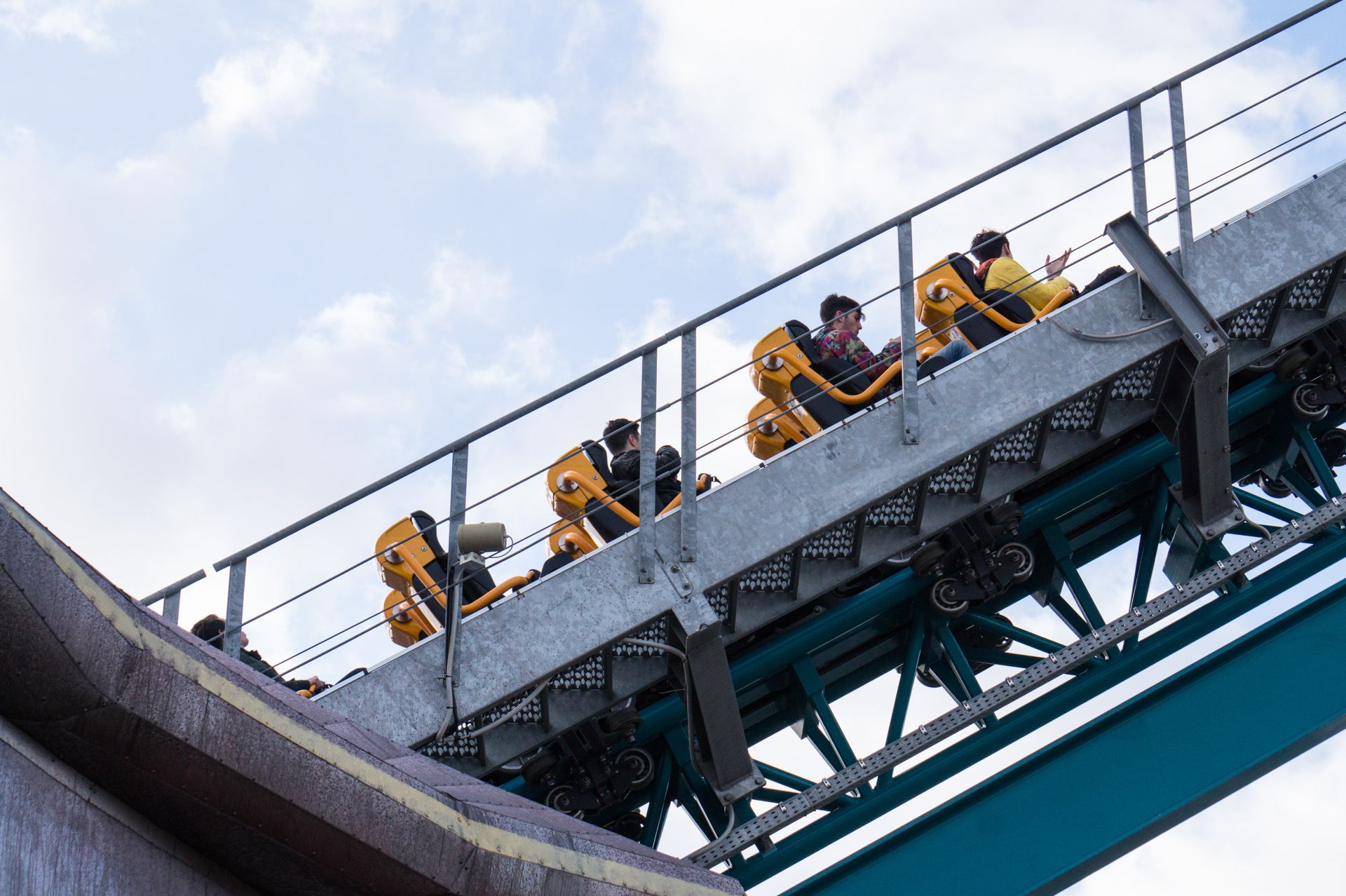
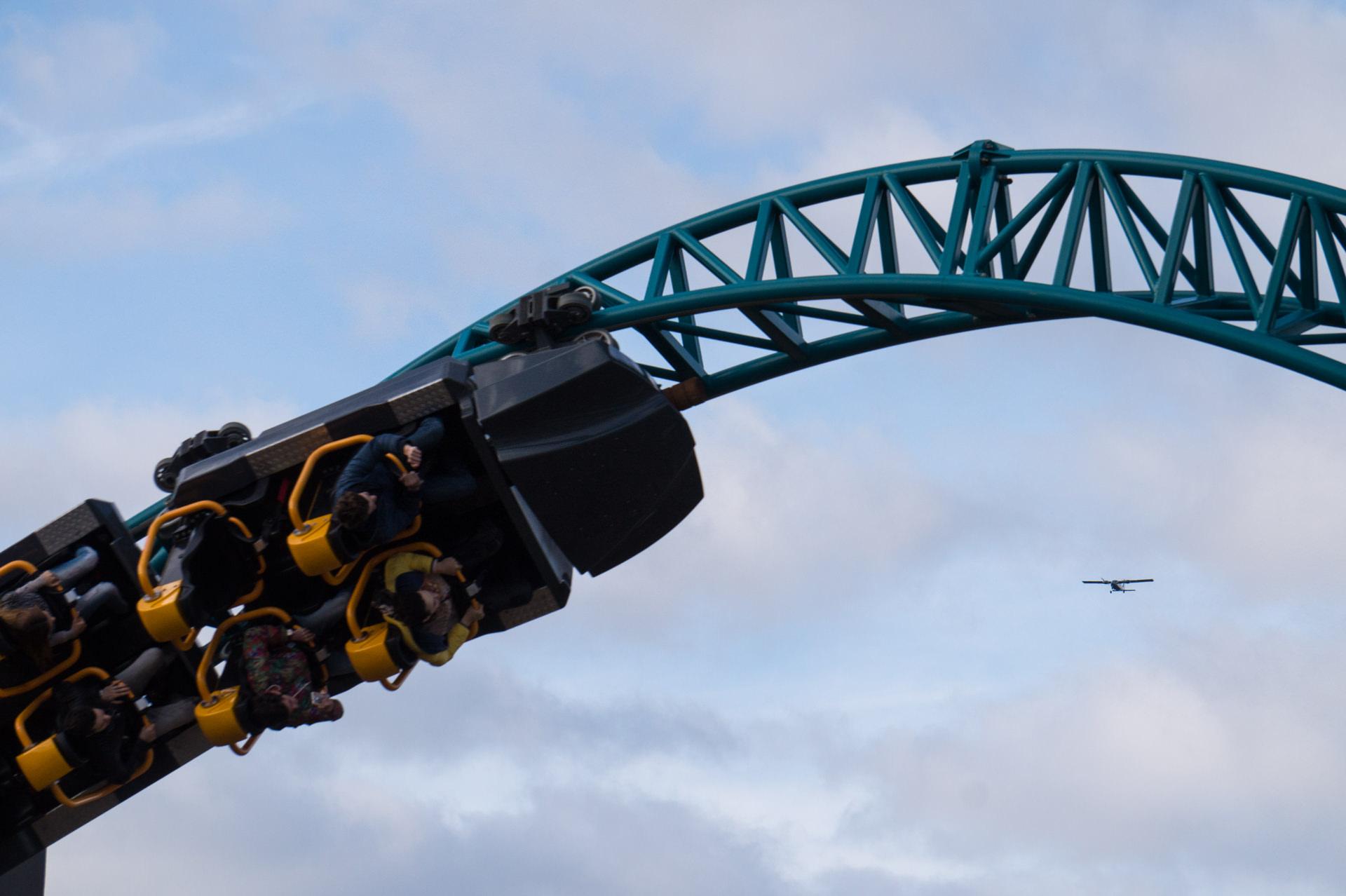
Directly behind it is Altair CCW-0204, a roller coaster that many people are probably already familiar with from the English amusement park Thorpe Park near London. Unlike the former record-breaker, however, the ride takes passengers up to the starting height of 33m a little faster and without a failure-prone chain lift. After an exciting start, the passengers are then thrown through the rollover elements in trains without shoulder restraints. A massive spaceship serves as an oversized station building, in which mankind returns to earth after more than four millennia and has to ask the question who is the alien, the creatures that developed here, or we who left them in the 22nd century?
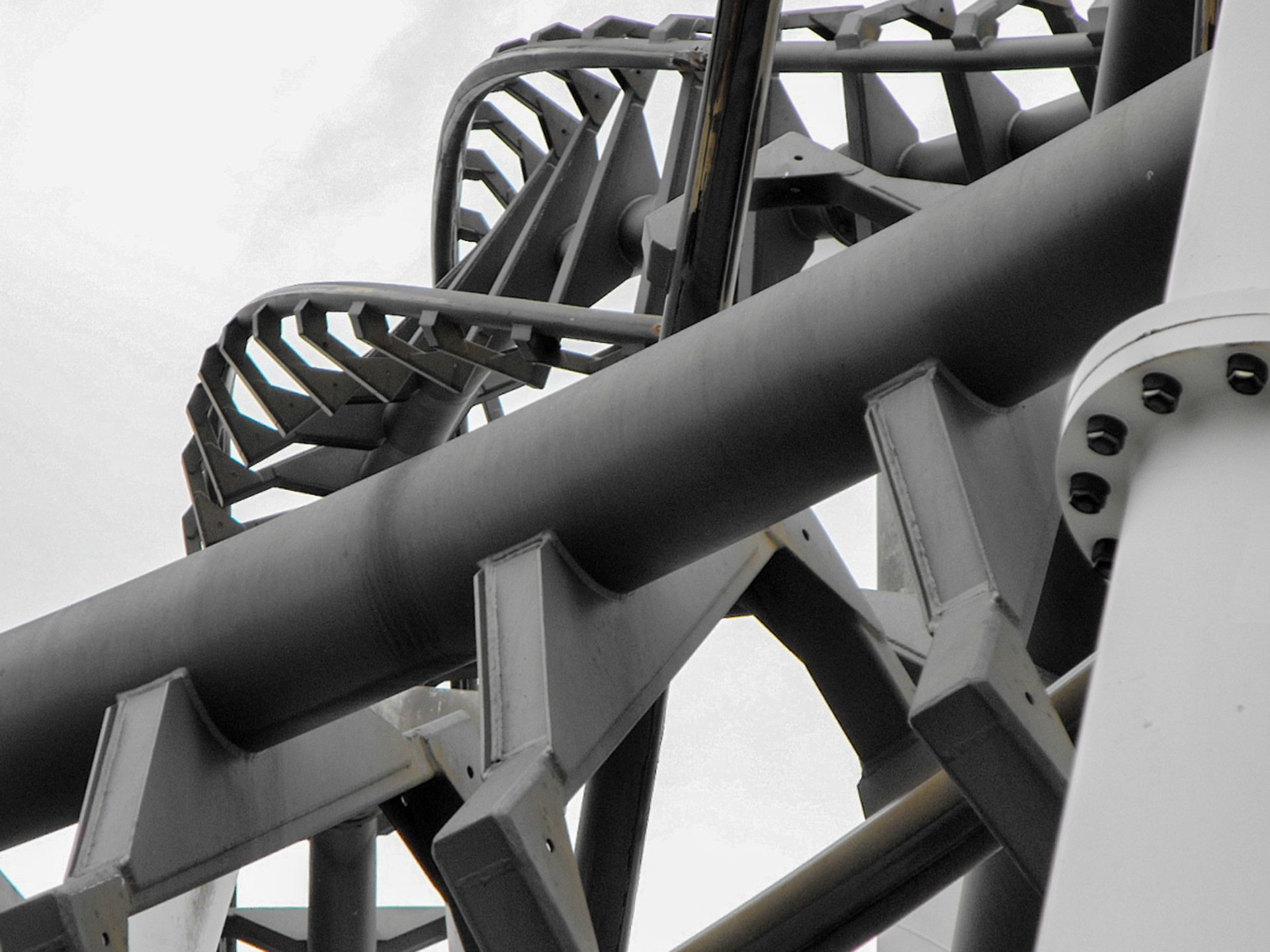
While the background story of Altair offers plenty of room for philosophical discussions, the train, whose restraint system is very similar to that of the Divertical water rollercoaster at Mirabilandia, ascends the lift hill directly. At the top, you pass the top of the hill quite leisurely and immediately drop down to the ground. With a high speed and a high pressure you go through a steep left turn before you shoot up the first inversion, a loop. This is traversed with the usual intensity, followed by a small hill with some airtime. In the valley below, the Cobra Roll is initiated, which is crossed just as confidently. After three rollovers, the half time of the ride is rung in with two corkscrews. After another left turn above the first downhill run, the quadruple heartline roll in the back of the ride is initiated. Because of the freer sitting position, you can complete this with a slight lateral overhang and thus the feeling of always being able to fall out. The train then passes through a last left turn and then the final inversion, a right leading heartline roll towards the brakes. In contrast to Colossus in Thorpe Park, this roll is a bit disappointing, as it is identical to the previous rolls and therefore offers no more surprises.
Altair is a great roller coaster with excellent ride characteristics and a significantly improved seating position compared to the original. However, Colossus also has its strengths, which are mainly reflected in the grandiose final roll and the better integration into the terrain; it is simply more photogenic, although Altair is by no means photo-shy either. The modified first drop is a great experience and the lack of vibrations in looping and the subsequent cobra roll, as well as the absence of a queue to our visit point, make the ride a guarantee for repeat rides.
Erawan
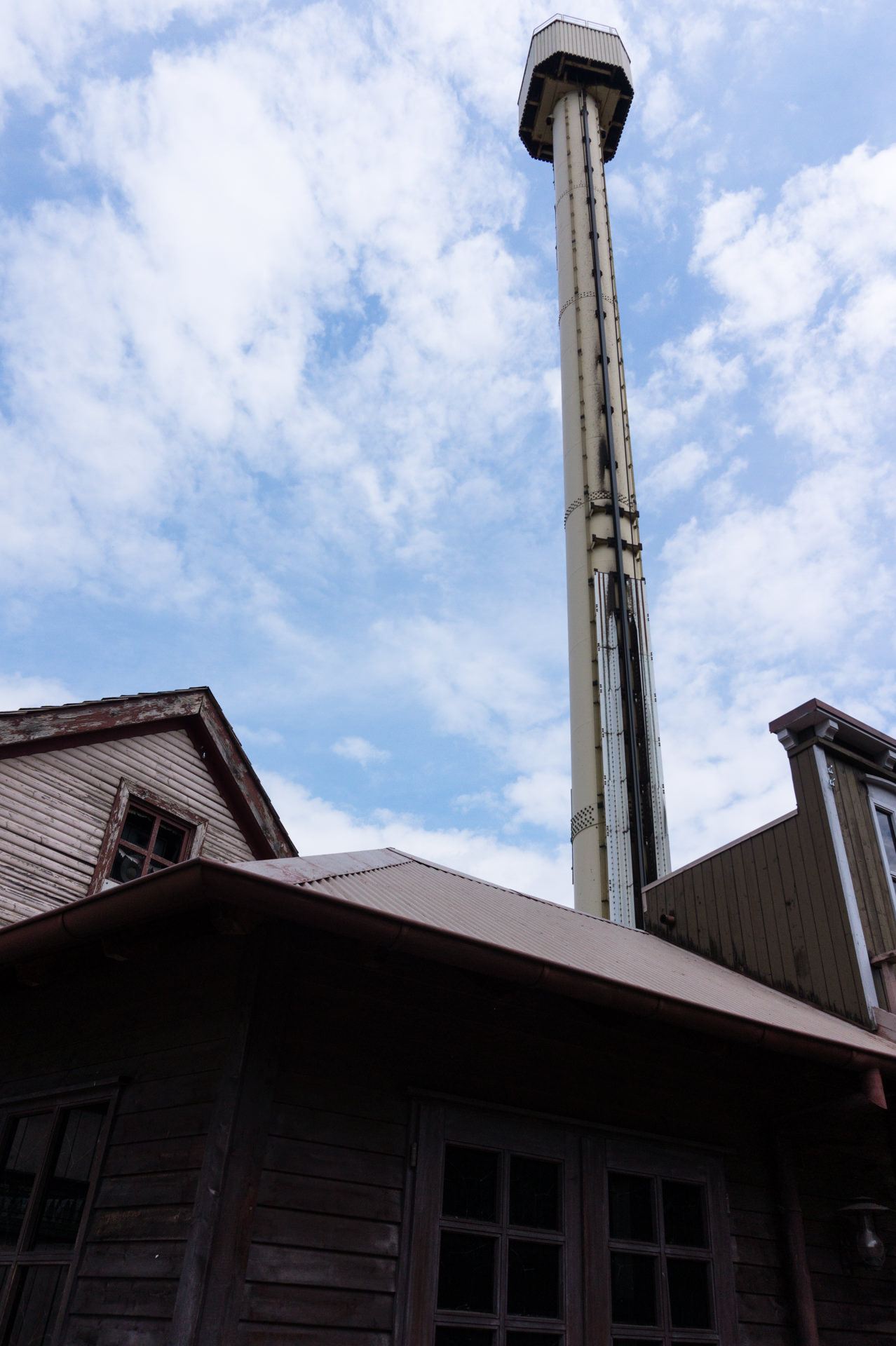
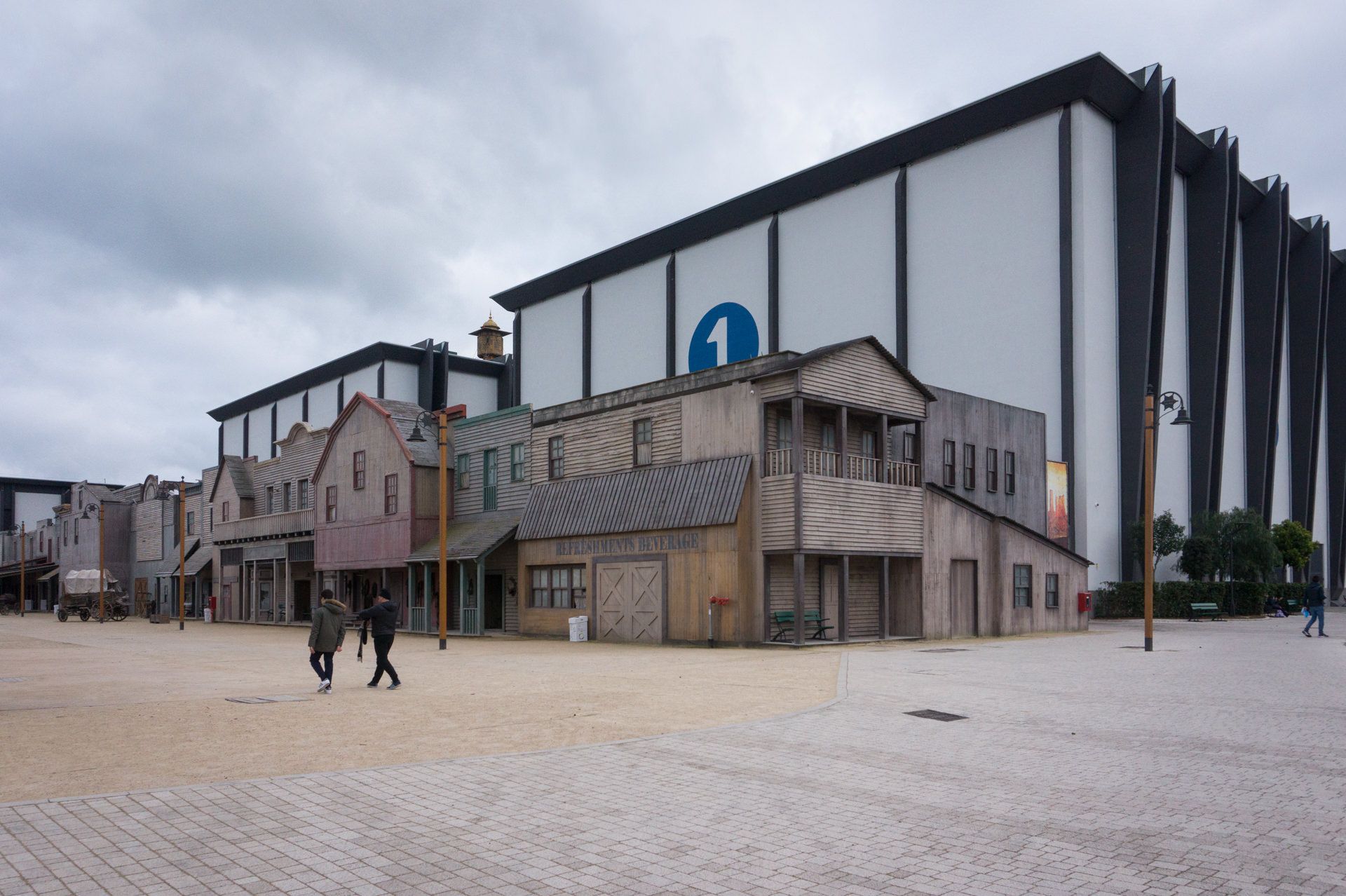
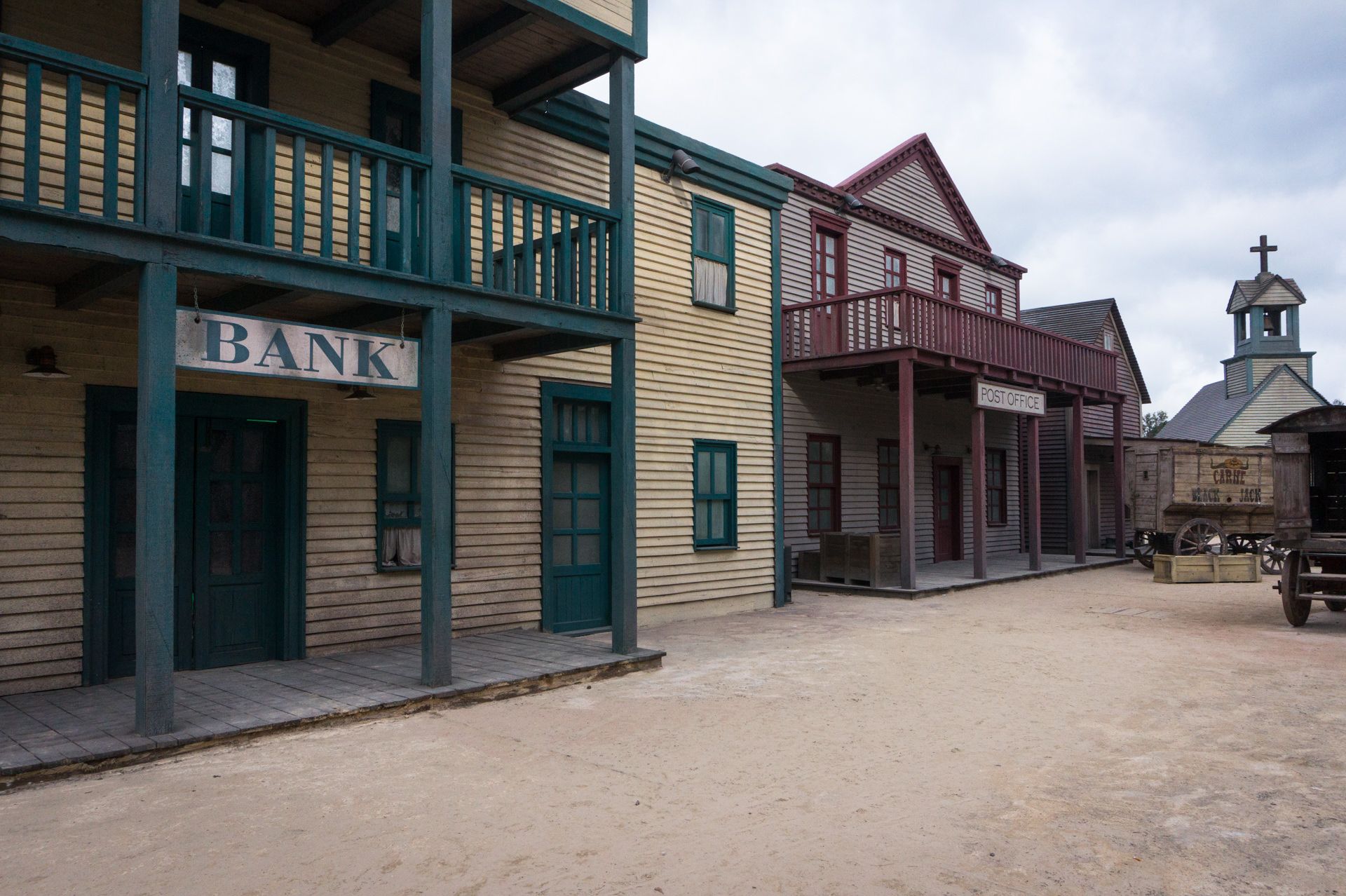
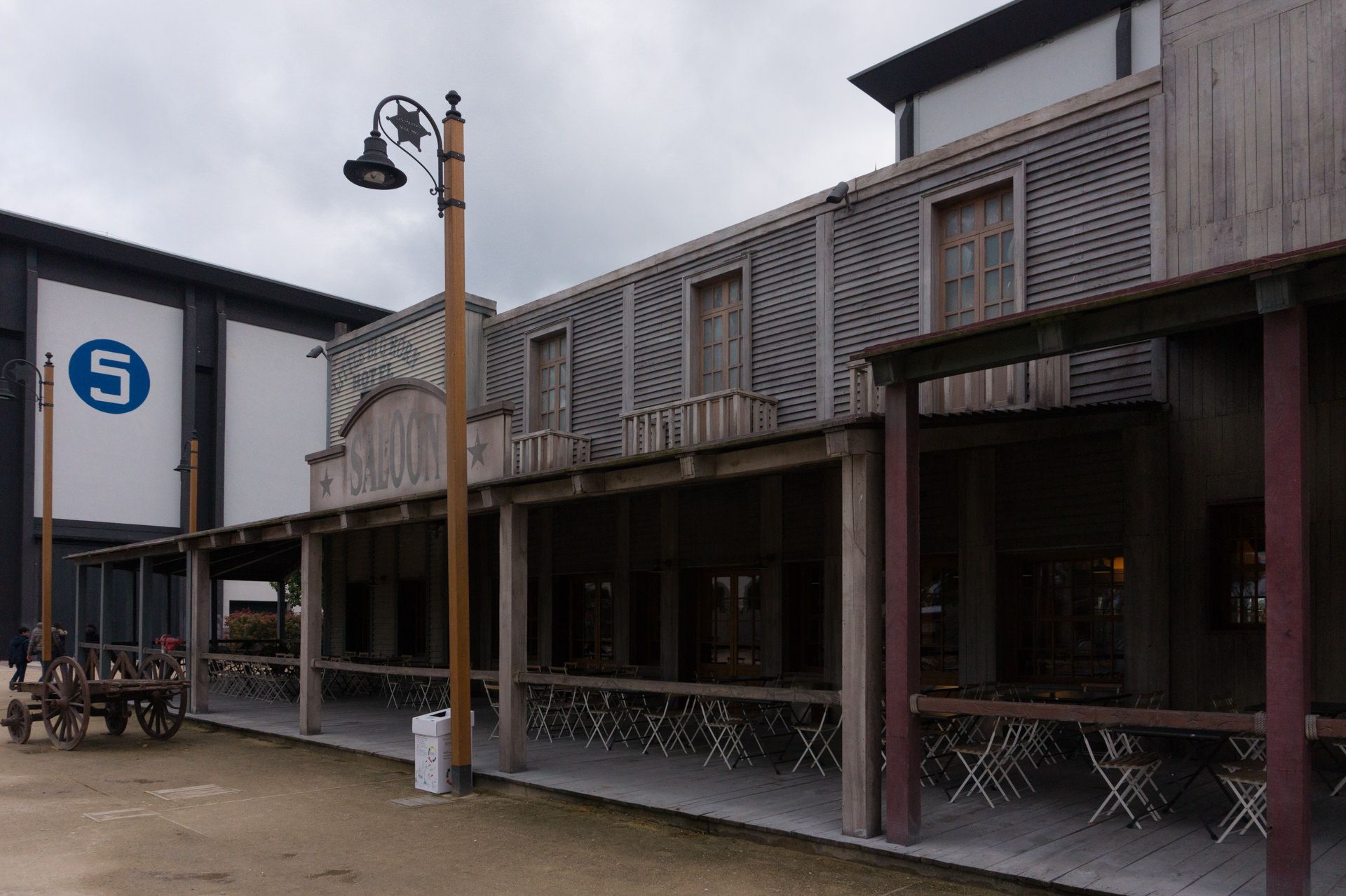
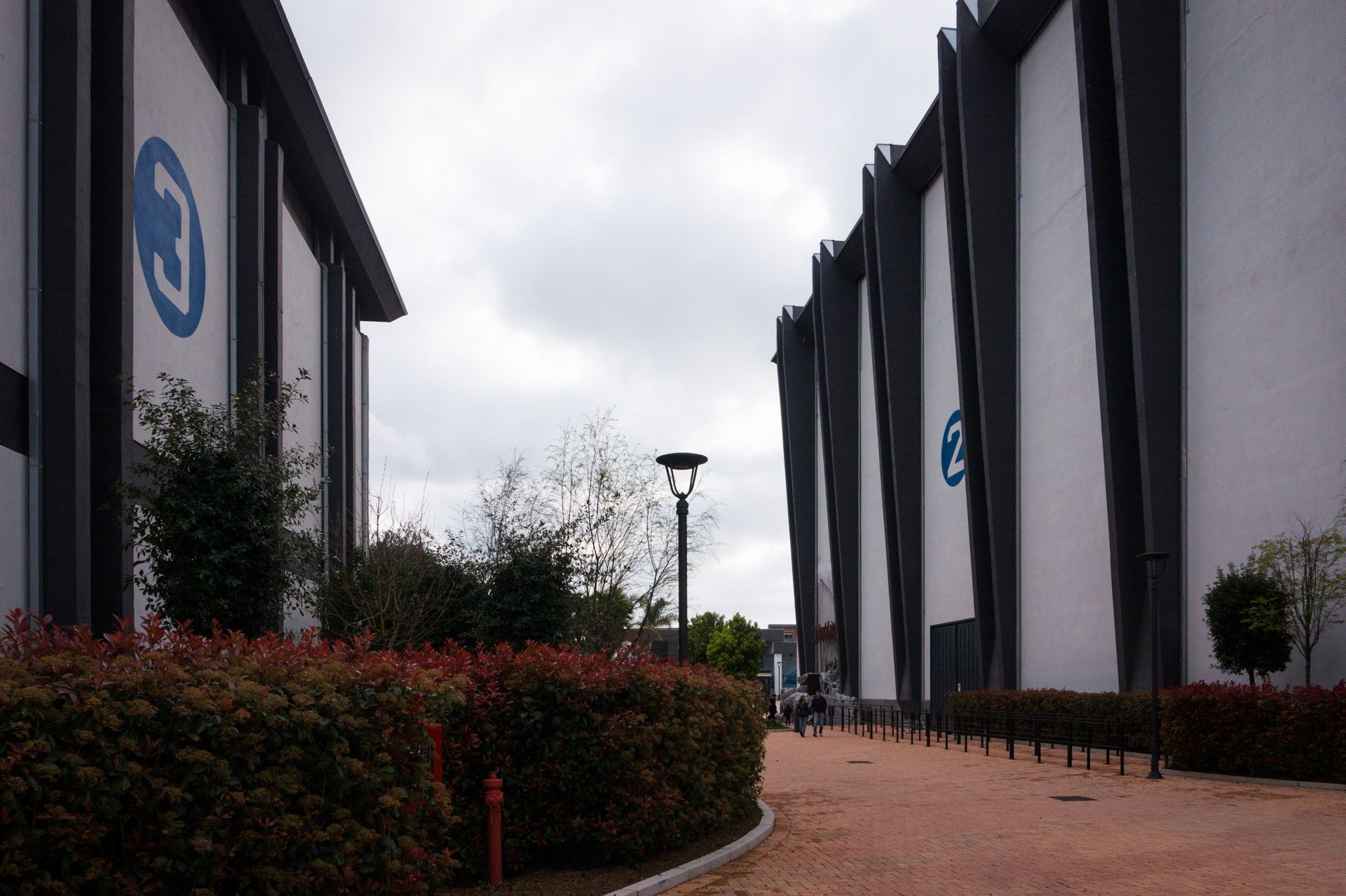
Through the pretty western town of Ennio’s Creek, named after Ennio Morricone, the composer of numerous Italo western scores, where a scary walkthrough is to educate during the season, and past Studios 3,4 and 5 (with a 4D cinema in Studio 4 and a children’s playground in Studio 3), we head towards the most impressive ride in Cinecittà World, the Erawan Freefall Tower. This visual treat includes four lanes, two of which offer pure falling pleasure while standing, while the other two lanes entertain their passengers while seated. All gondolas are tilted forward before the fall, which generally ensures a great and outstanding ride experience. But even apart from the special features Erawan is a magnificent tower. The pure fall reaches similar qualities as Apocalypse from the English amusement park Drayton Manor, which is in my opinion the best freefall tower in Europe. The only difference is that you are one experience poorer due to the absence of the hilarious standing gondola with corridor. Erawan is undoubtedly the best designed giant drop far and wide and also offers a great ride that you should not miss.
Darkmare
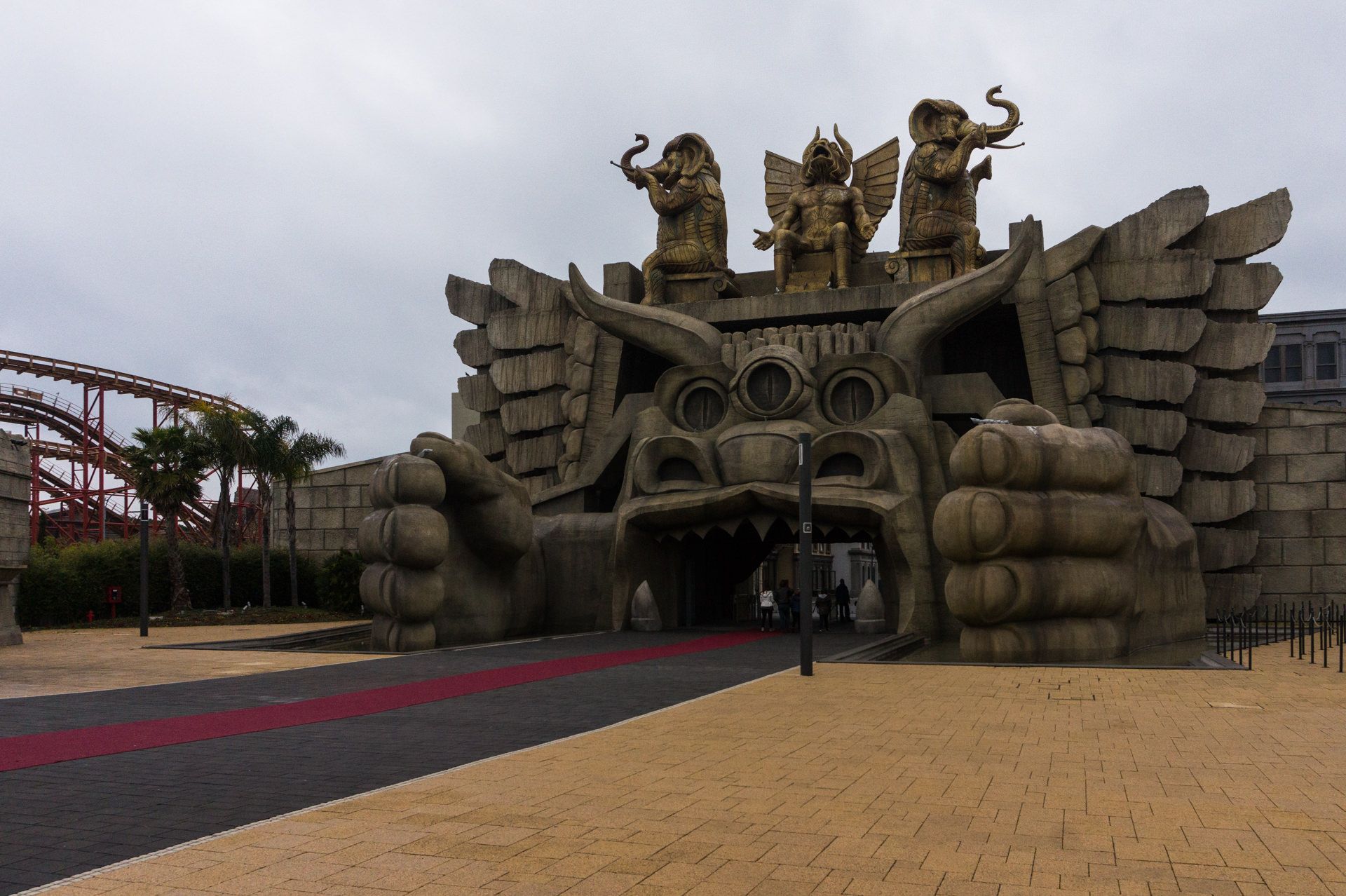
Just a few metres from Erawan is the entrance to Darkmare, the family rollercoaster of Cinecittà World featuring a very dark story. Thematically one takes up Dante Alighieri’s Divine Comedy, which was to be filmed in the 50s in Studio Hall 2. However, there were numerous strange accidents and finally a fire, whereupon the shooting was stopped and nothing happened afterwards.
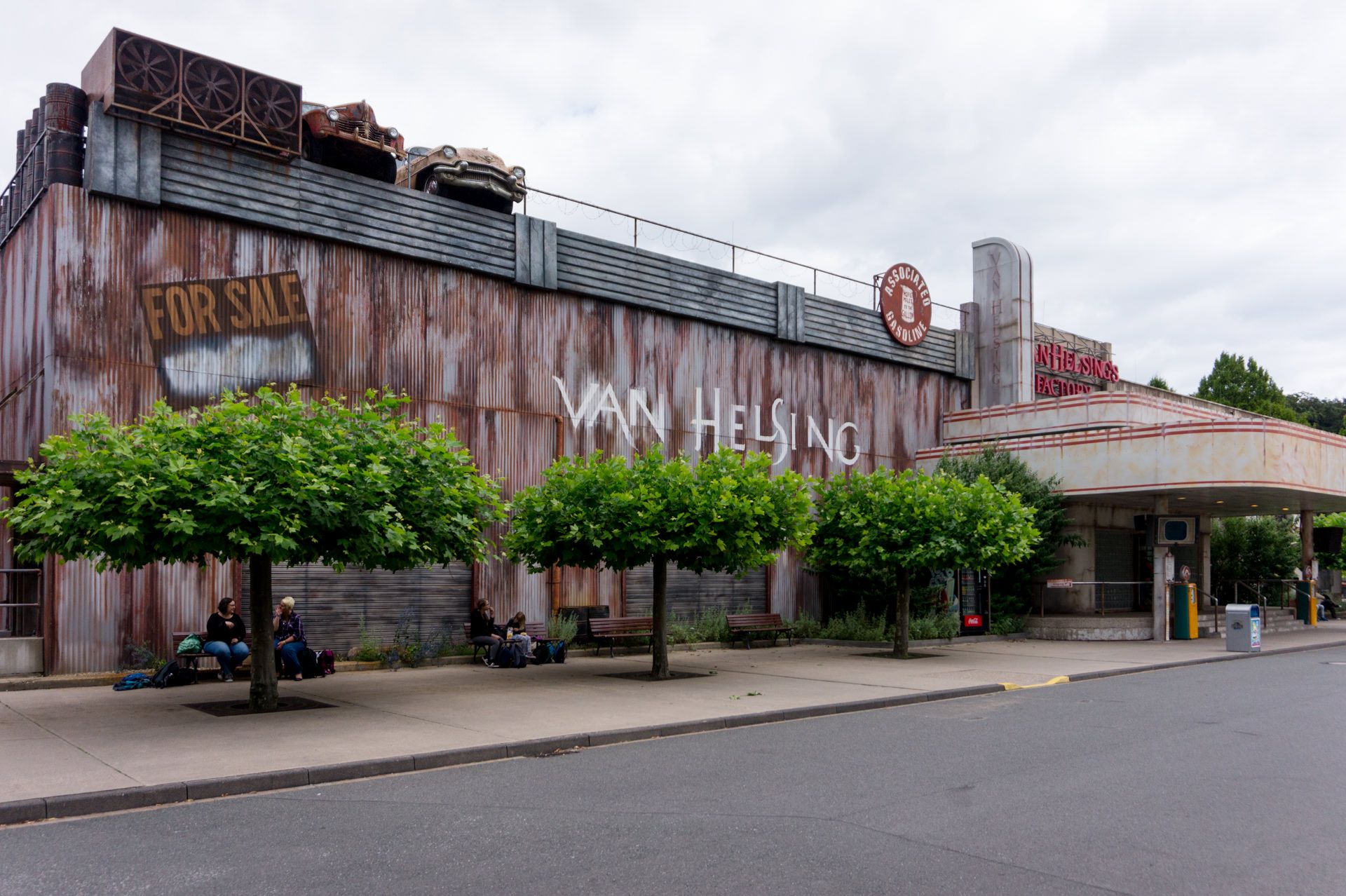
After years of standstill we venture into the hall and experience a wild ride through hell, which begins with a short descent in a right turn, into the lift hill of the lift. You pass a mirror, which is admittedly a really great effect. Passing numerous, artistically valuable projections, all of which make Van Helsing’s Factory from Movie Park Germany look old, you quickly reach the ceiling of the hall, whereupon the train immediately plunges to the ground in a steep left-hand bend. Regardless of losses, the first valley is crossed with outstanding intensity, whereupon the train soon gains altitude. After a curve change, the train passes through a narrow downward helix and winds its way to the other end of the hall in a zigzag curve combination. After a short ascent you reach the freefall segment, where a demon now shows itself and puts its wings around us. Shortly afterwards we are already one level lower and leave the segment very quickly. Now follows a narrow left turn, which is immediately joined by the final turn to the right. Shortly afterwards we reach the station and are once again bid an enthusiastic farewell.
Darkmare is really, really, really damn good! In contrast to the prototype Th13teen of the English amusement park Alton Towers, the ride has no funny backward part after the drop segment, but the rest of the track is much better. In addition, the general design of the ride in its dark comic style is really outstanding and the projections are just perfect. The large and demonically well darkened hall makes the compact ride look three times as big as it actually is and extends the ride in equal measure. The free fall is also quite ok, but can be a bit too much for first-time riders, after all the ride is not lacking in power anyways. But you shouldn’t take such a gloomy view, because Darkmare is definitely the best roller coaster of the park and one of the best roller coasters in the country; so it’s a great ride with a very high repetition urge.
Aquila IV
Opposite Teatro 2 is the submarine Aquila IV, which was used in a German submarine film and a music video by the band Bon Jovi. Of course it is not Das Boot, because it is still located in the Bavaria Filmstadt not far from Munich, but the U-900 from the film of the same name with Atze Schröder in the leading role. Admittedly, the scenery builders did a good job, but we couldn’t explain to ourselves what the meaningless tour was supposed to be in Italian. Without language skills you should avoid Aquila IV and even with language skills you really shouldn’t expect too much, especially since the waiting time is very long. On the other hand, a visit in a real submarine is really recommendable; we at least wished to return to the U-571 of Movieland Studios.
SpacExpress
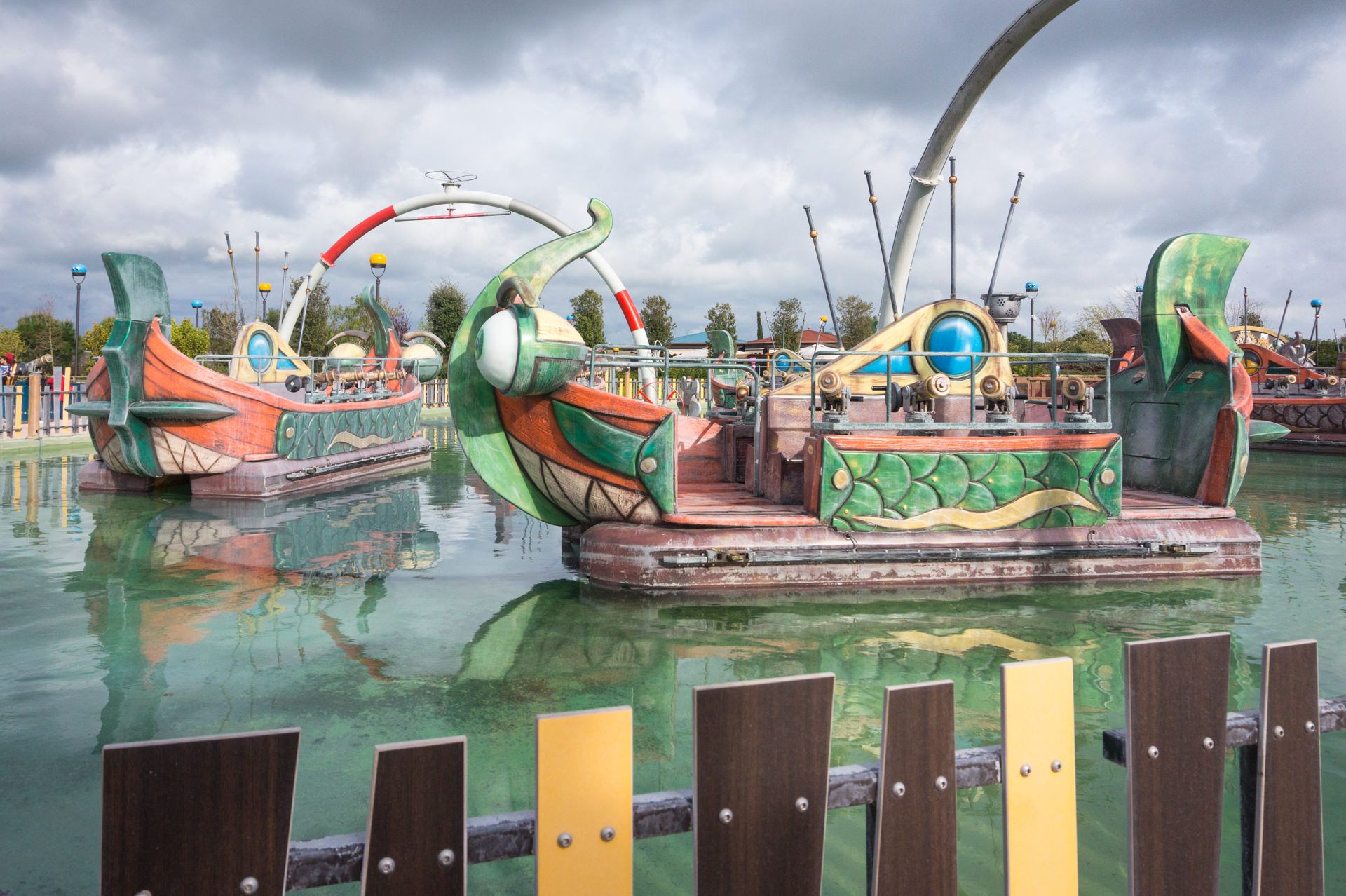
In addition to the SpacExpress, an immersive tunnel of Simworx, which however was not yet in operation at the time of our visit, the children’s kart track Velocità Luce and the entrance to the children’s land Sognolabio are also located in this area. This area is very colourful and offers some nice rides for children made in Italy, as well as a very annoying soundtrack and a nice splash battle.
Pictures Cinecittà World





Conclusion Cinecittà World
Cinecittà World is a good amusement park that has made quality its top priority; here neither the design nor the rides are of inferior quality. Unfortunately, sometimes the quantity is still missing, because you can only manage a whole day in the park if you actually watch every single show, eat comfortably in one of the restaurants and take multiple rides. The Movieland Park shows how it’s done, but at the Cinecittà World their own professionalism still stands in the way. In no other Italian park you could meet as much staff as here, neither in the shows nor in the attractions. Although this creates a good image, it is known to be somewhat more expensive than the one-person operation of the Mirabilandia. In addition, Cinecittà World is based on something you know and which is also used in numerous film parks or film studios with guided tours, but it is questionable whether they are on the right track; because sometimes they only show larger generic sets without any actual film reference with suitably embedded attractions. A larger reference to own productions would therefore be advisable, but one does not necessarily have to give up the intended concept. I’m curious how the Cinecittà World will develop in the next few years, because the park has potential and already offers a lot of quality; a condition that one would wish for other parks around Rome.
What is your opinion about the movie park Cinecittà World? Just write it here below the report in the comment field or visit our social media channels:
Click here for the next report of the Il Viaggio dei due Runner Tour