The History of Fuji-Q Highland
Fuji-Q Highland at the foot of the majestic Fujiyama, the King of the Mountains, is one of Japan’s most famous theme parks, with four record-breaking roller coasters waiting for the masses of park visitors to storm them. The fact that outside of these roller coasters there is a rather shabby, but in part also very likeable, amusement park is of no significance.
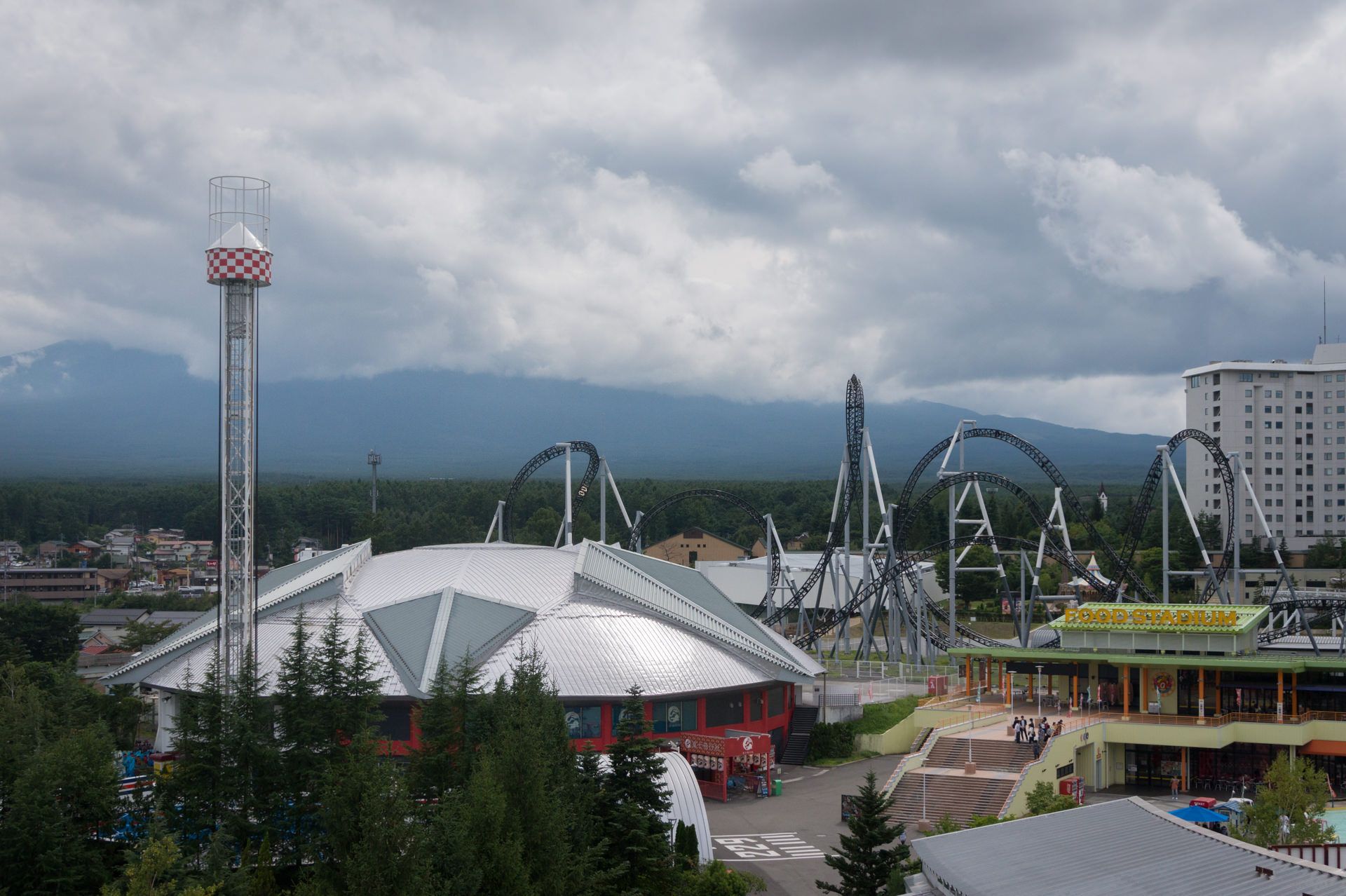
It all began with an ice skating rink in 1961, and with the construction of the Fuji-Kyūkō Line in 1964, the park was renamed Fuji-Q Highland and expanded into an amusement park. Since then, the park has been operated by the railway company Fujikyūkō Co Ltd. (Fujikyū for short). In 1986, the park was upgraded to a resort with the construction of the Highland Resort Hotel. Although the original skating rink, in the middle of which the legendary roller coaster Moonsault Scramble was built at the time, no longer exists, the resort remains true to its roots. In winter, skating is possible on several rinks, including an oval-shaped stadium in Conifer Forest outside Fuji-Q Highland, which is used for festivals and concerts in summer. Two museums, as well as two other hotels and an onsen complete the resort.
Tour of the park
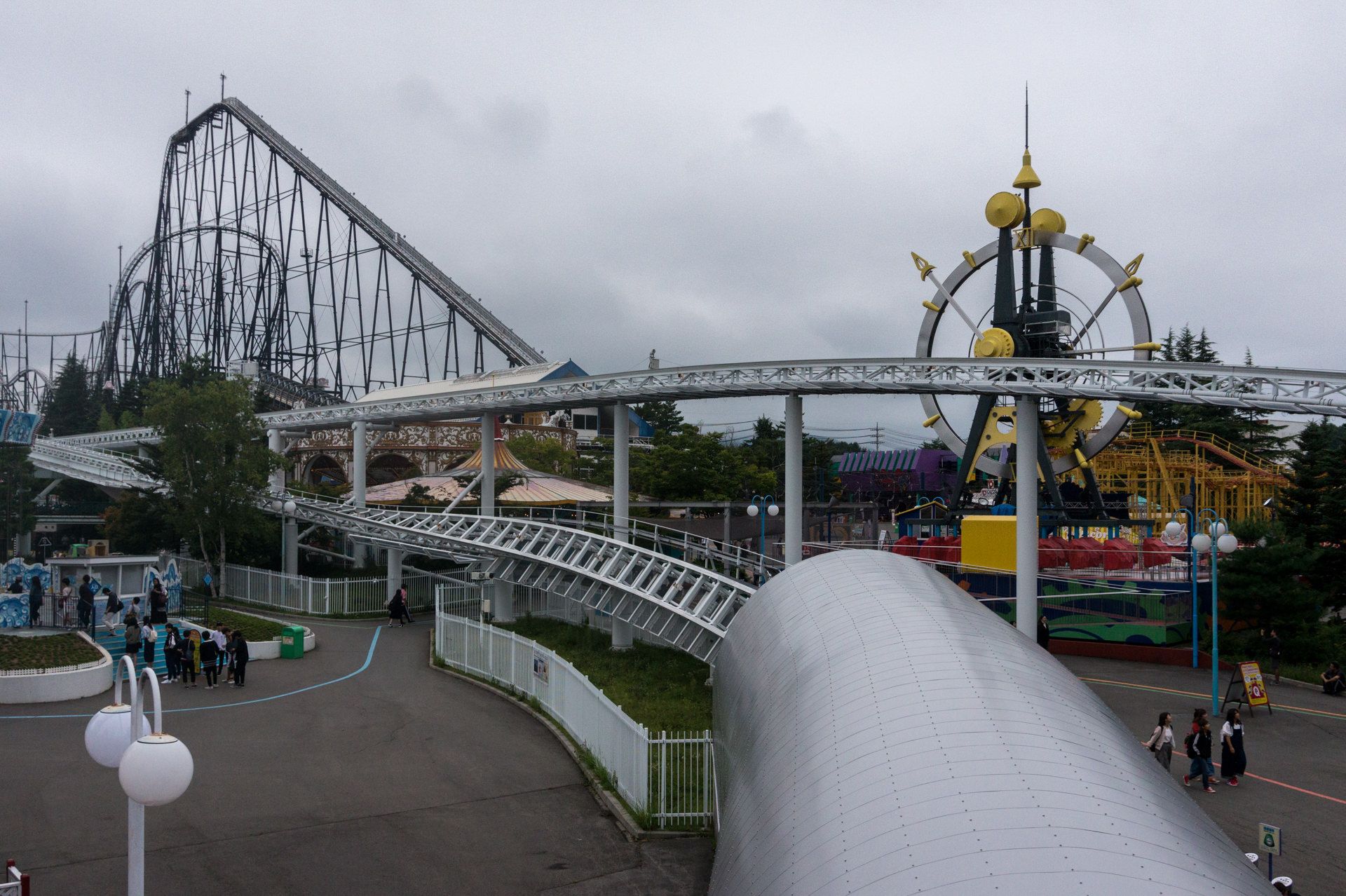
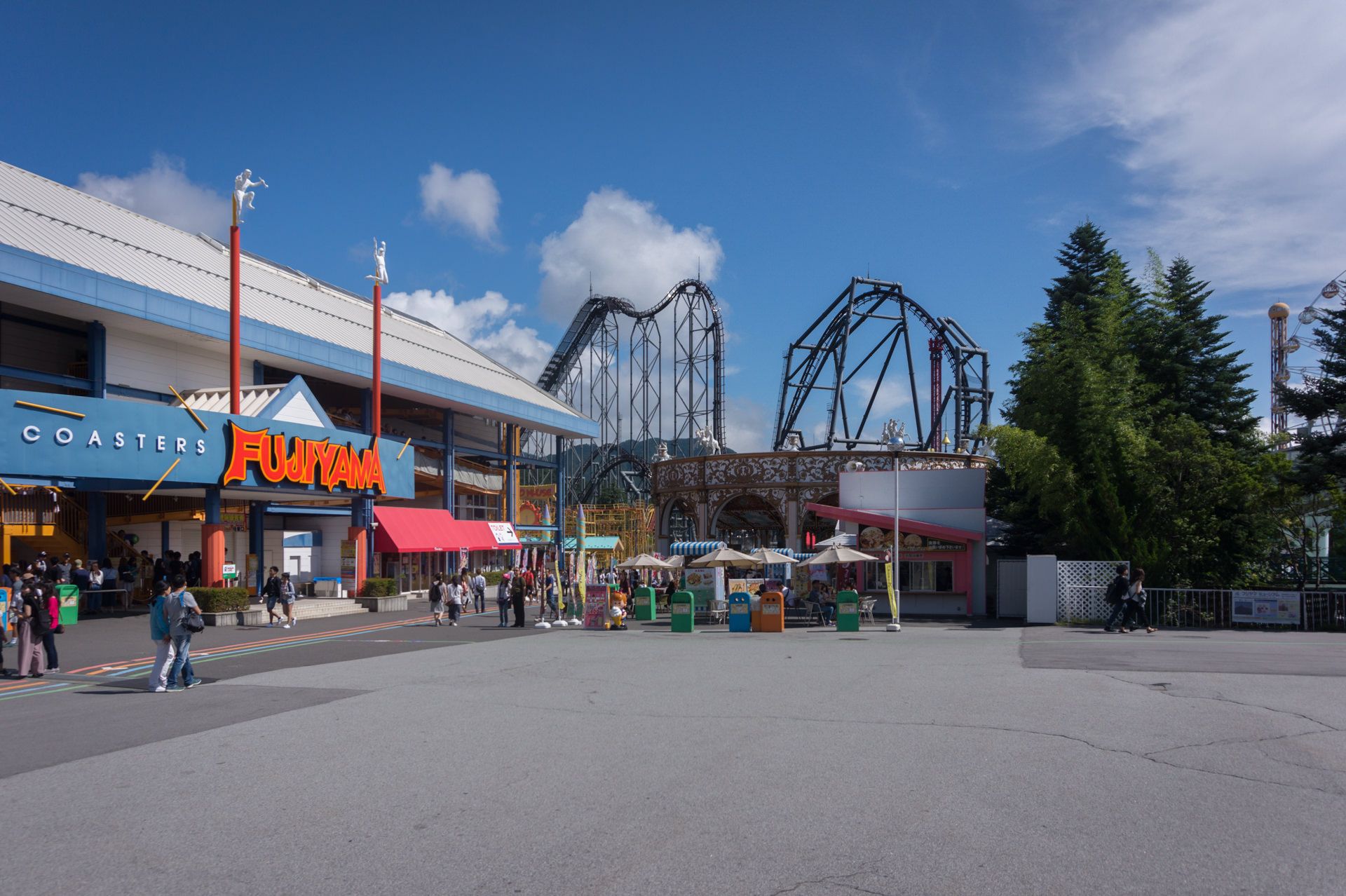
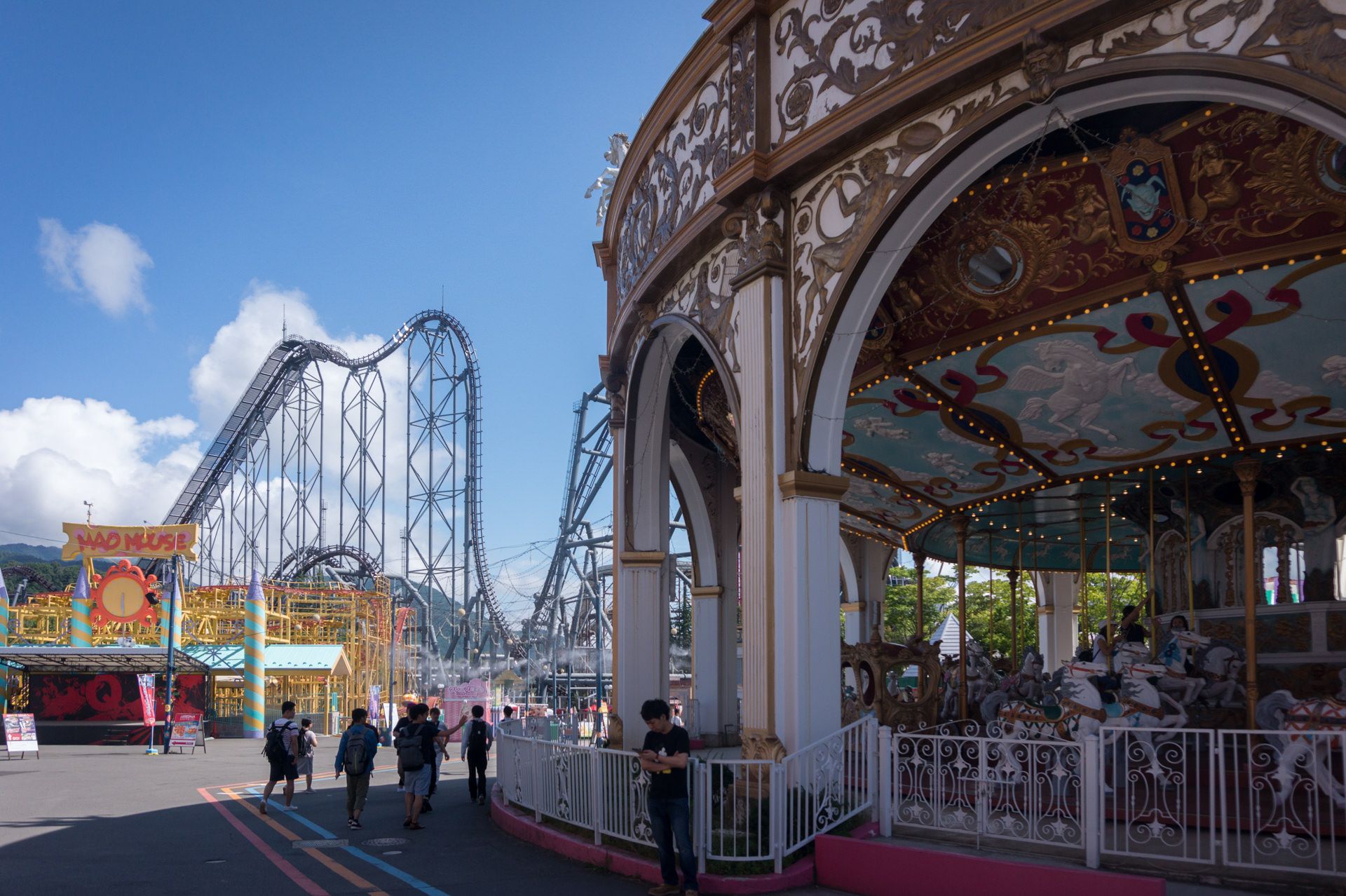
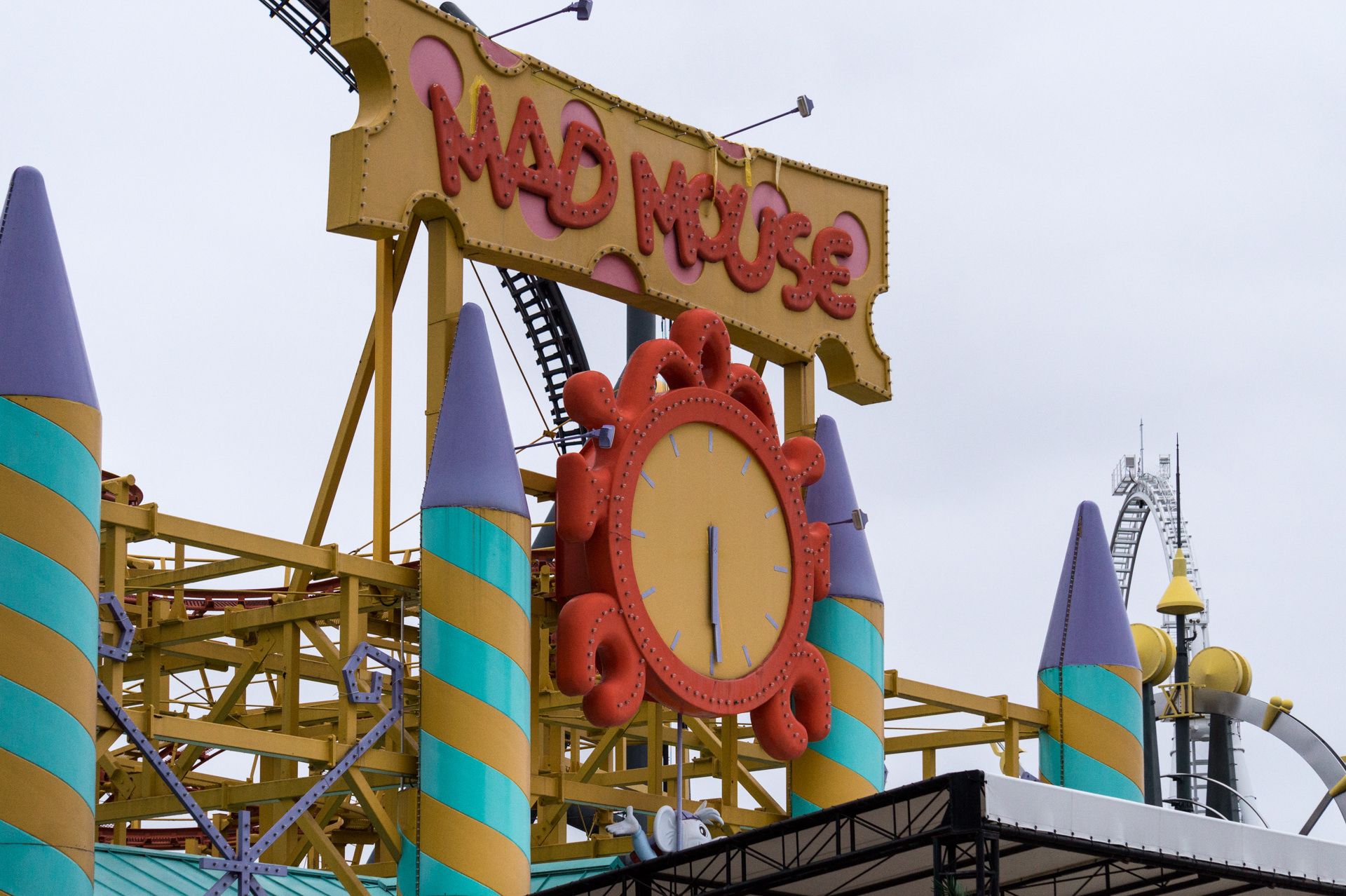
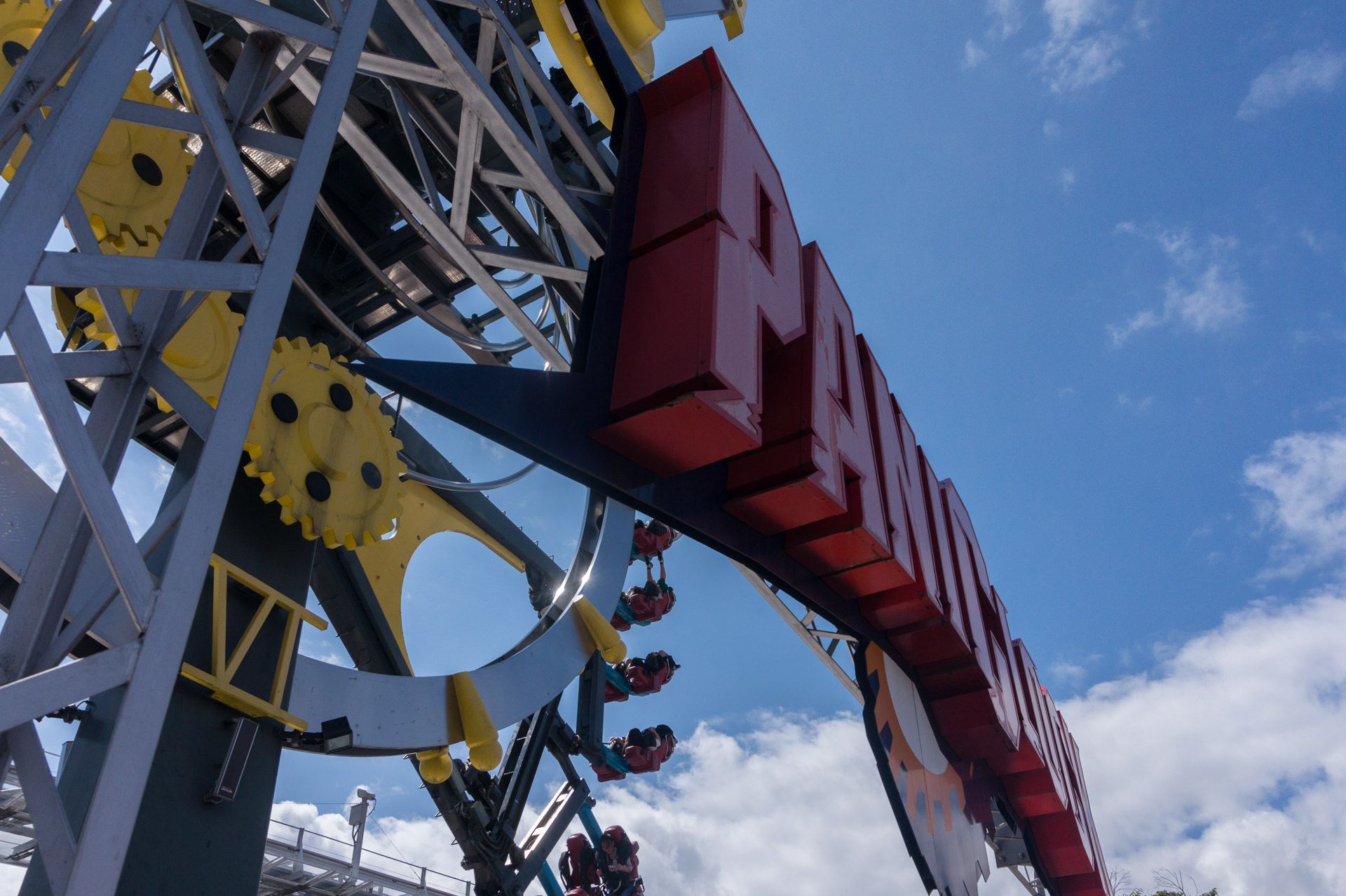
After checking in at the park’s hotel, we were drawn through the Ville de Gaspard et Lisa – a French-style shopping and food street, including Café Brioche, a terrific boulangerie that is perfect for breakfast – towards the main entrance of the theme park. Three of the four big roller coasters are located here. The exemplary Japanese now dutifully follows the floor markings and then gets into one of the queues; stupidly, this is one of the reasons why the rides increase in waiting time very quickly. The smarter park visitor, meanwhile, reaches into his wallet and buys priority passes at a small stand between the Mad Mouse roller coaster and the Panic Clock flat ride, which are available in such small numbers that they are sold out very quickly. So it’s a case of the early bird catches the worm, and consequently you can be happy about getting on all the roller coasters in just one day.
Do-Dodonpa
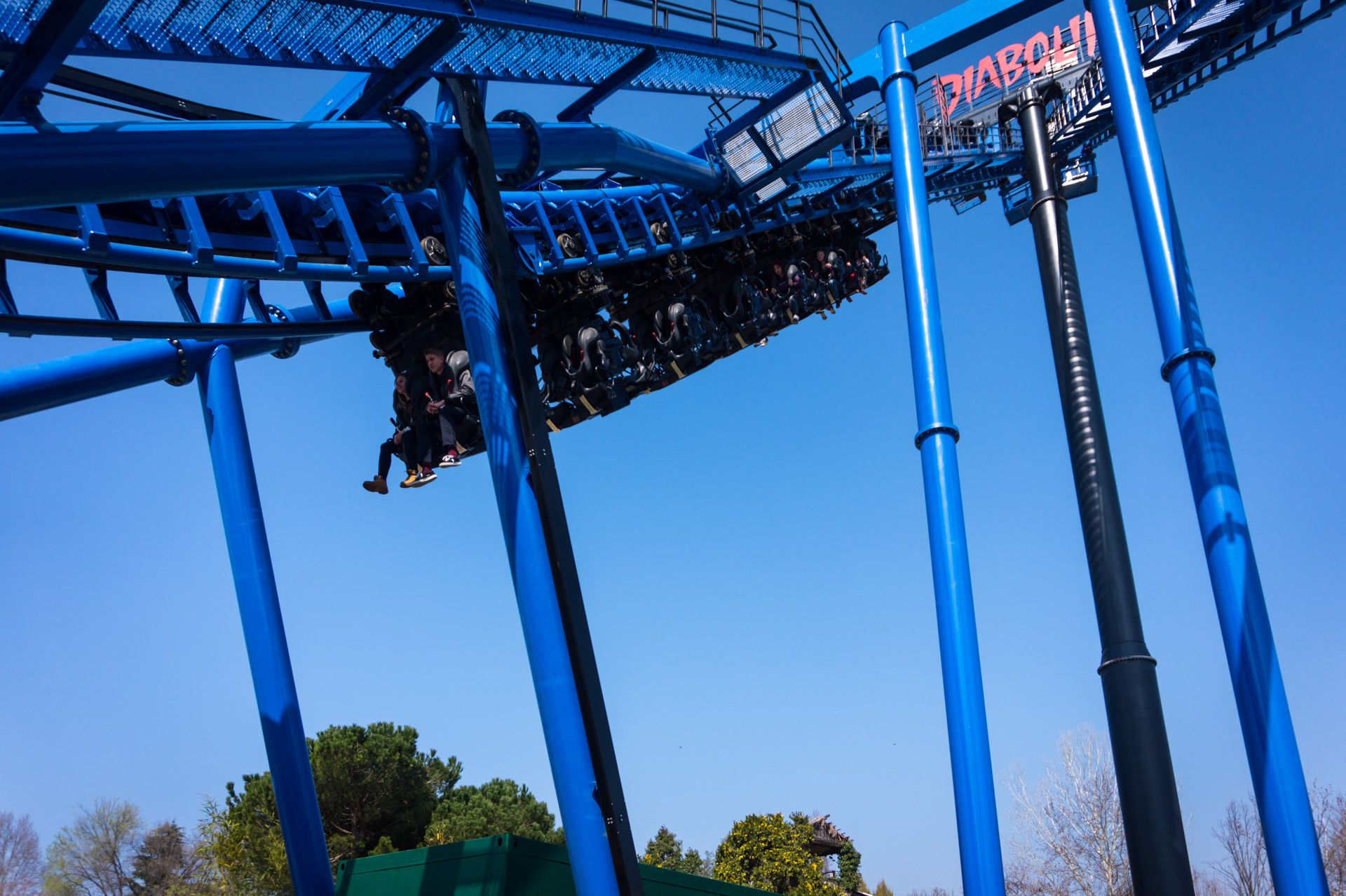
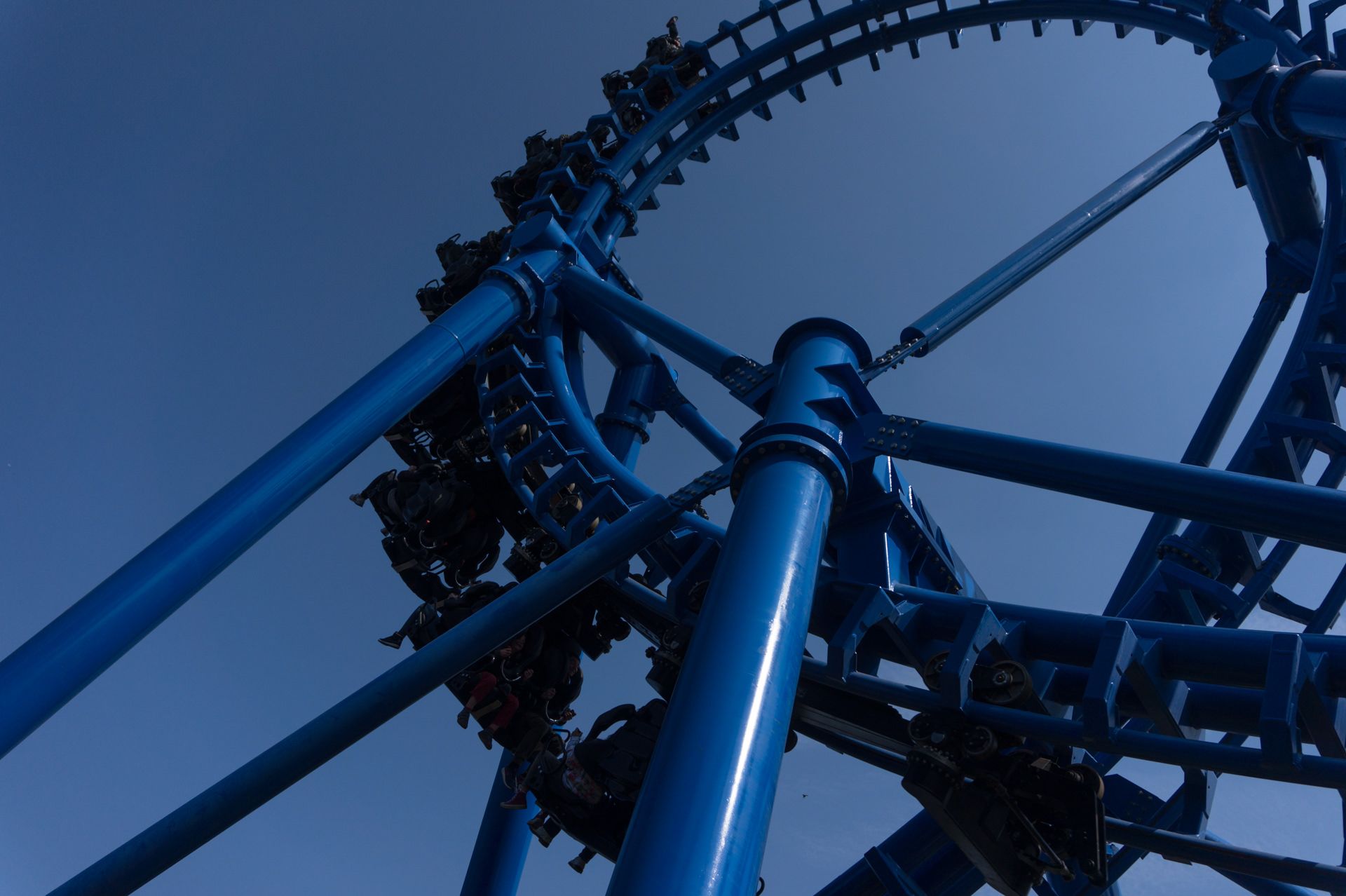
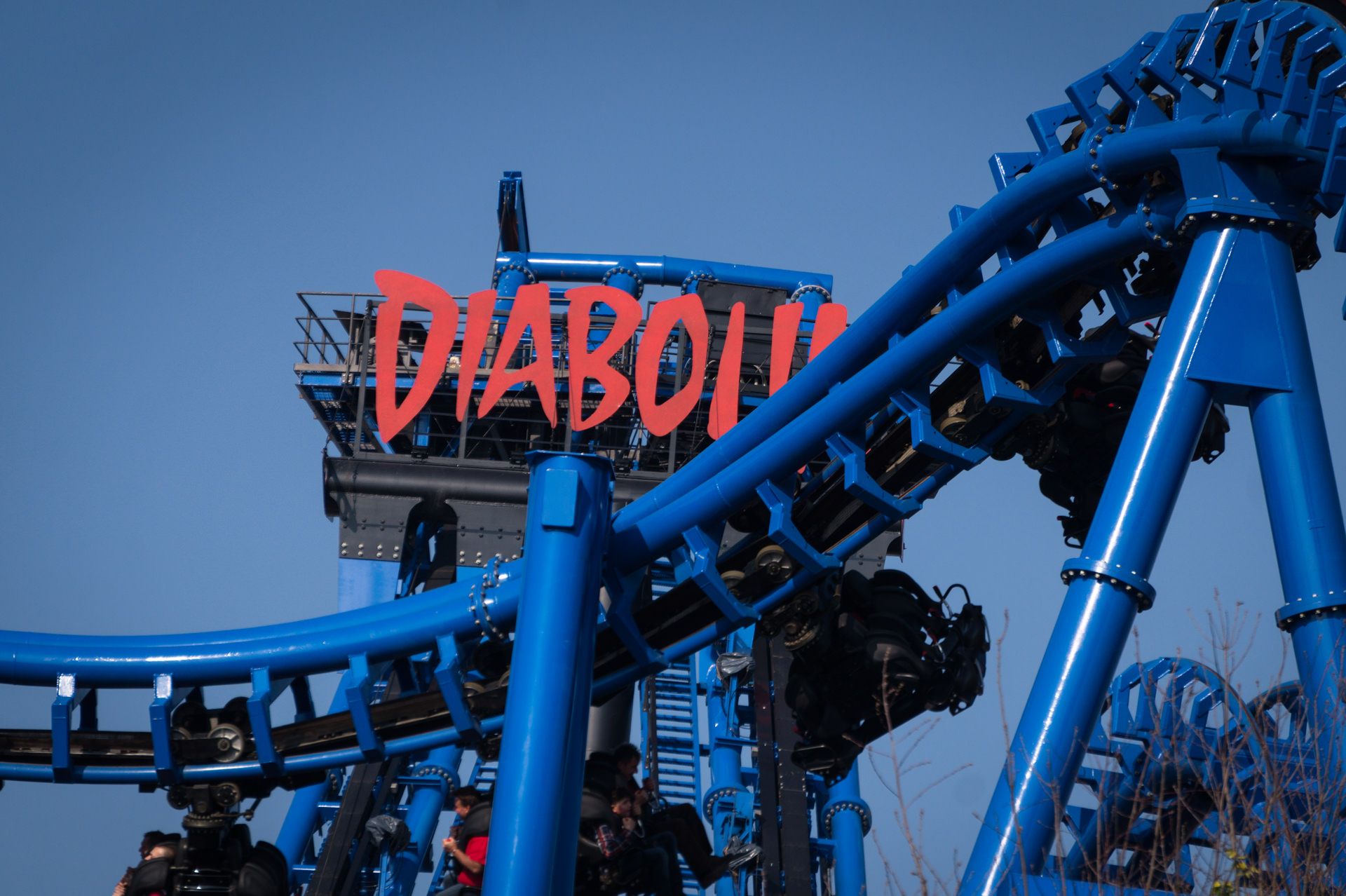
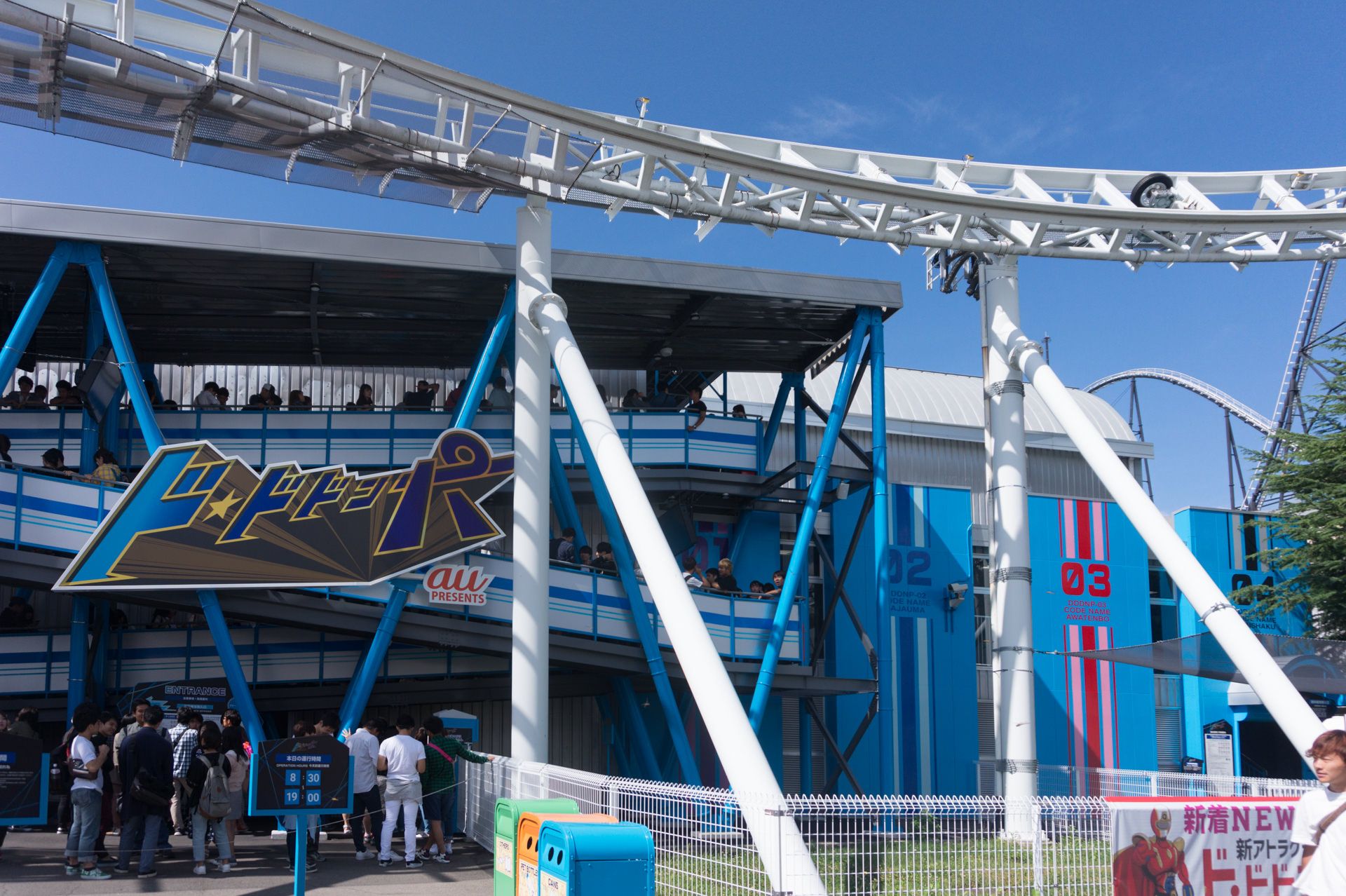
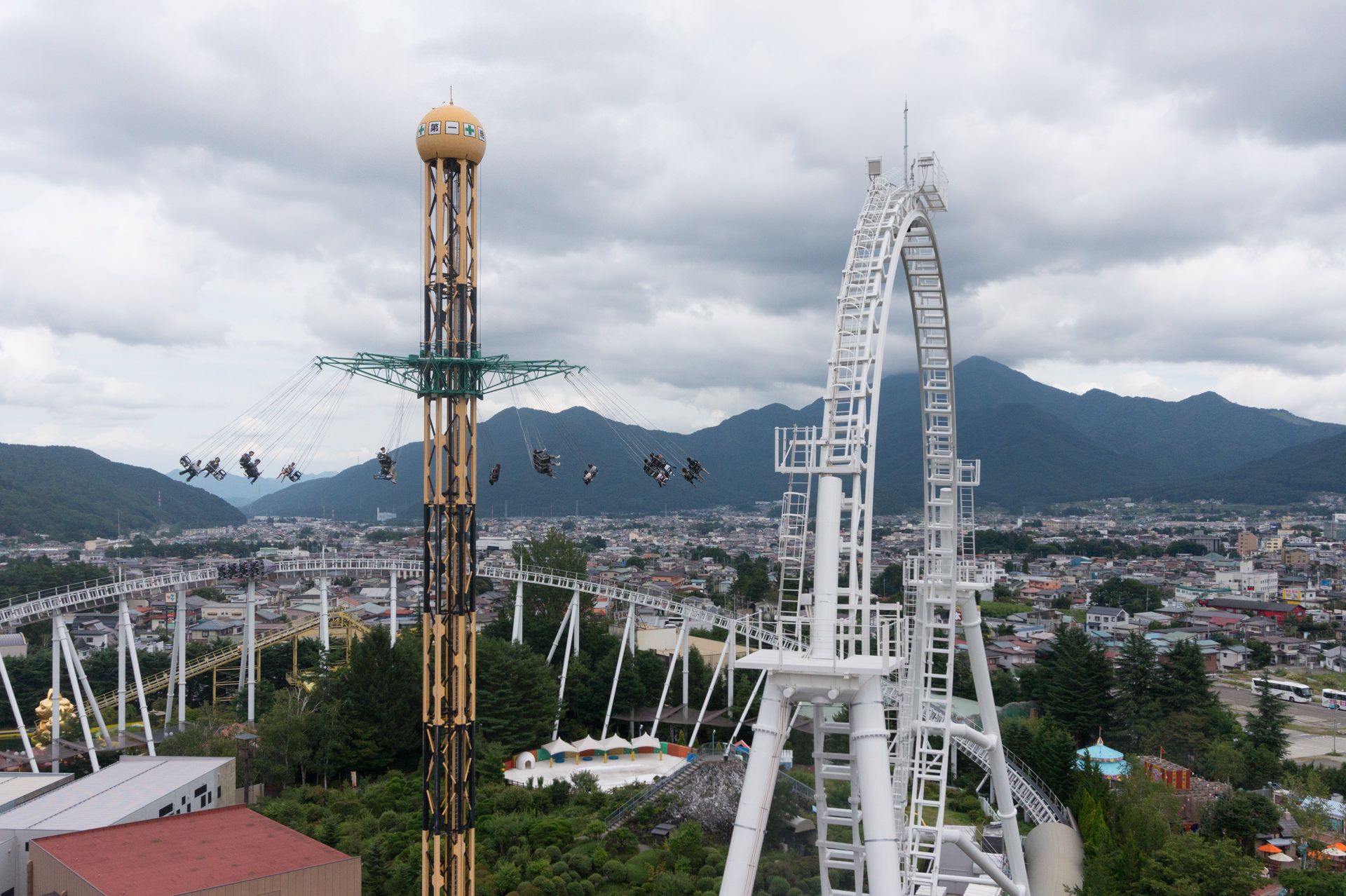
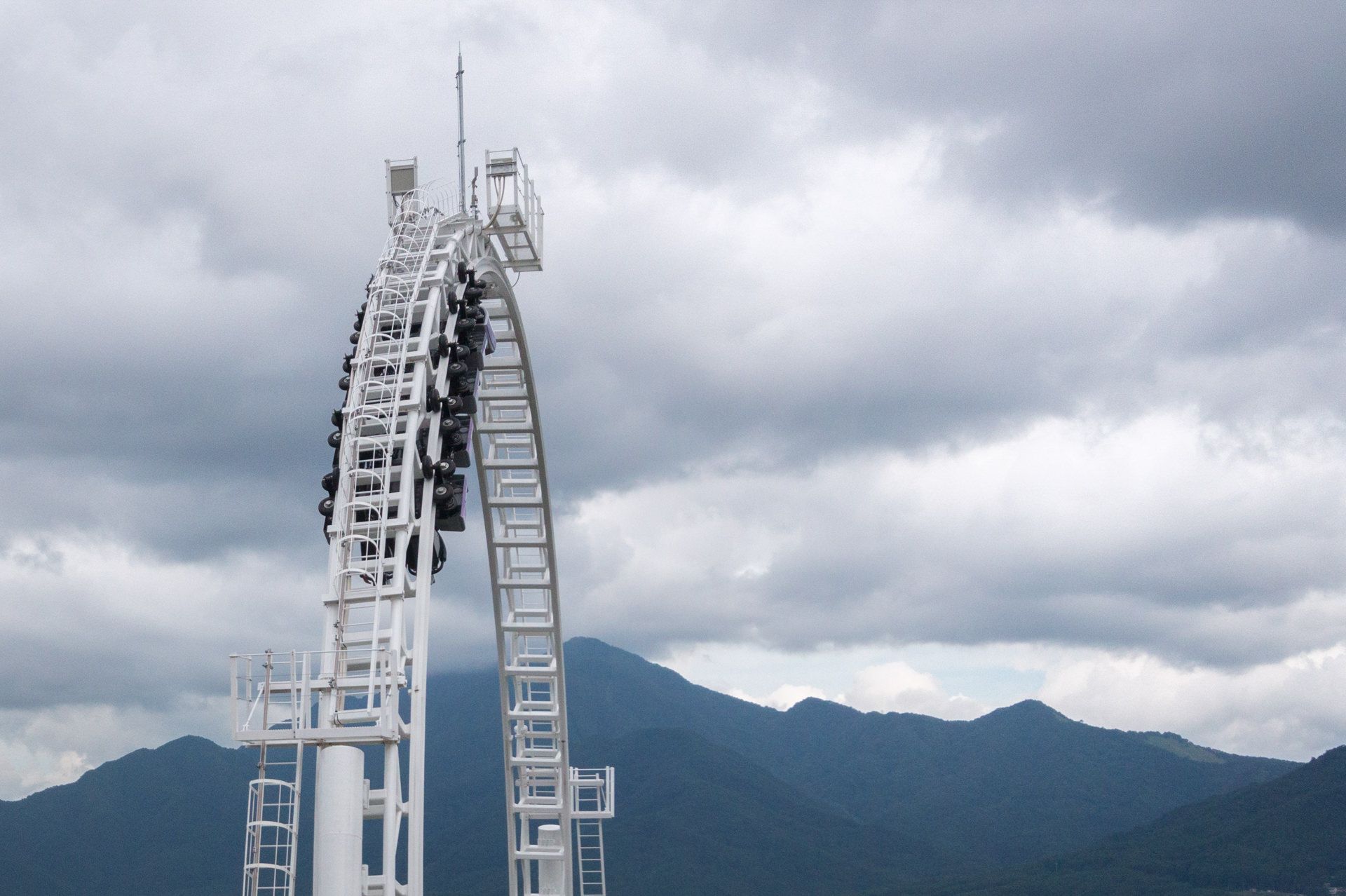
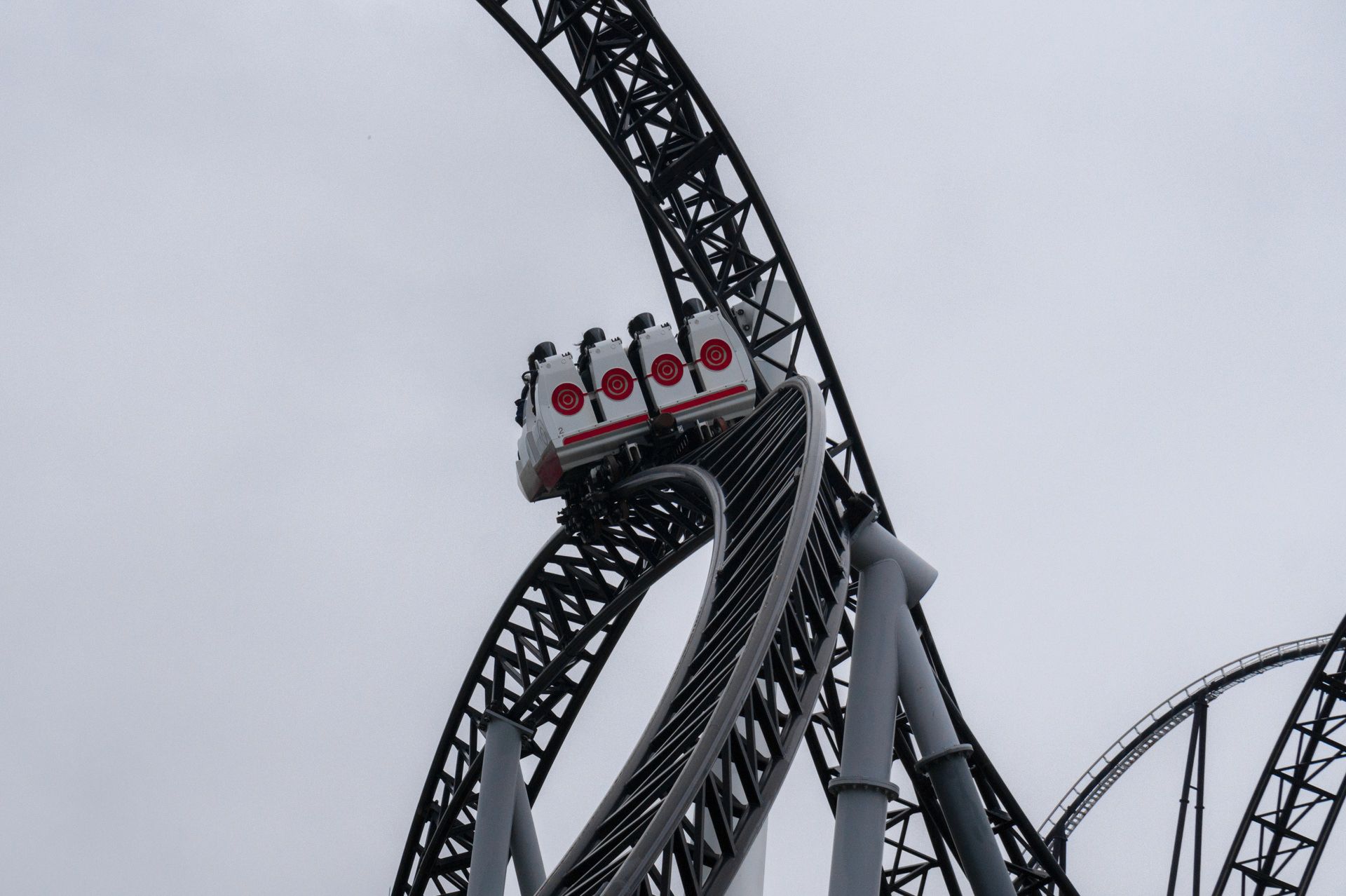
We start our tour of Fuji-Q Highland with the launch coaster Do-Dodonpa, which has undergone a significant makeover over the past year and now boasts a 49-metre vertical loop instead of a top-hat. At first approximation, this is nothing bad in principle – a nice loop can be the highlight of any ride – moreover, the speed of the air launch has been increased from 172 to 180 km/h and the acceleration phase has been reduced from 1.8 to 1.56 seconds; all this sounds quite promising and already too crazy to be true for most park guests.
That makes you all the more excited about your first ride and suddenly, as an experienced roller coaster enthusiast, you ask yourself questions you haven’t asked yourself in a long time: “Isn’t the acceleration of the launch already too much to handle?”. You then enter the launch tunnel and shortly afterwards the countdown to the launch sounds. Before you know it, you have advanced 60 m and are travelling at 180 km/h; that was fast and surprisingly smooth for around 4.75 G. However, the gradient of the launch is maintained and the train loses its speed steadily and very quickly. Even the short dip that follows cannot stop this behaviour. The train then makes its way through a very wide right-hand bend towards the loop, which is driven through very pleasantly. A short left-hand turn is followed by the first brake section. A strangely transverse right-hand turn then leads you back to the station.
Luckily, we had bought a priority ticket for Do-Dodonpa, because after four hours of waiting, the disappointment about the uneventful ride would have been many times greater. Sure, the launch does a great job – but it only does so for 1.56 seconds. The rest of the ride is unfortunately not worth mentioning.
A strong opening in the first act is of no use if the rest of the piece is dull. It’s a shame that the predecessor, Dodonpa, had a second element in the form of the bone-crushing top hat, which had a decisive influence on the ride and thus invited visitors to ride it again. Accordingly, the update of the roller coaster here is unfortunately an improvement for the worse, and the fans of the old ride at least will not like it any more than I did after my first ride.
Takabisha
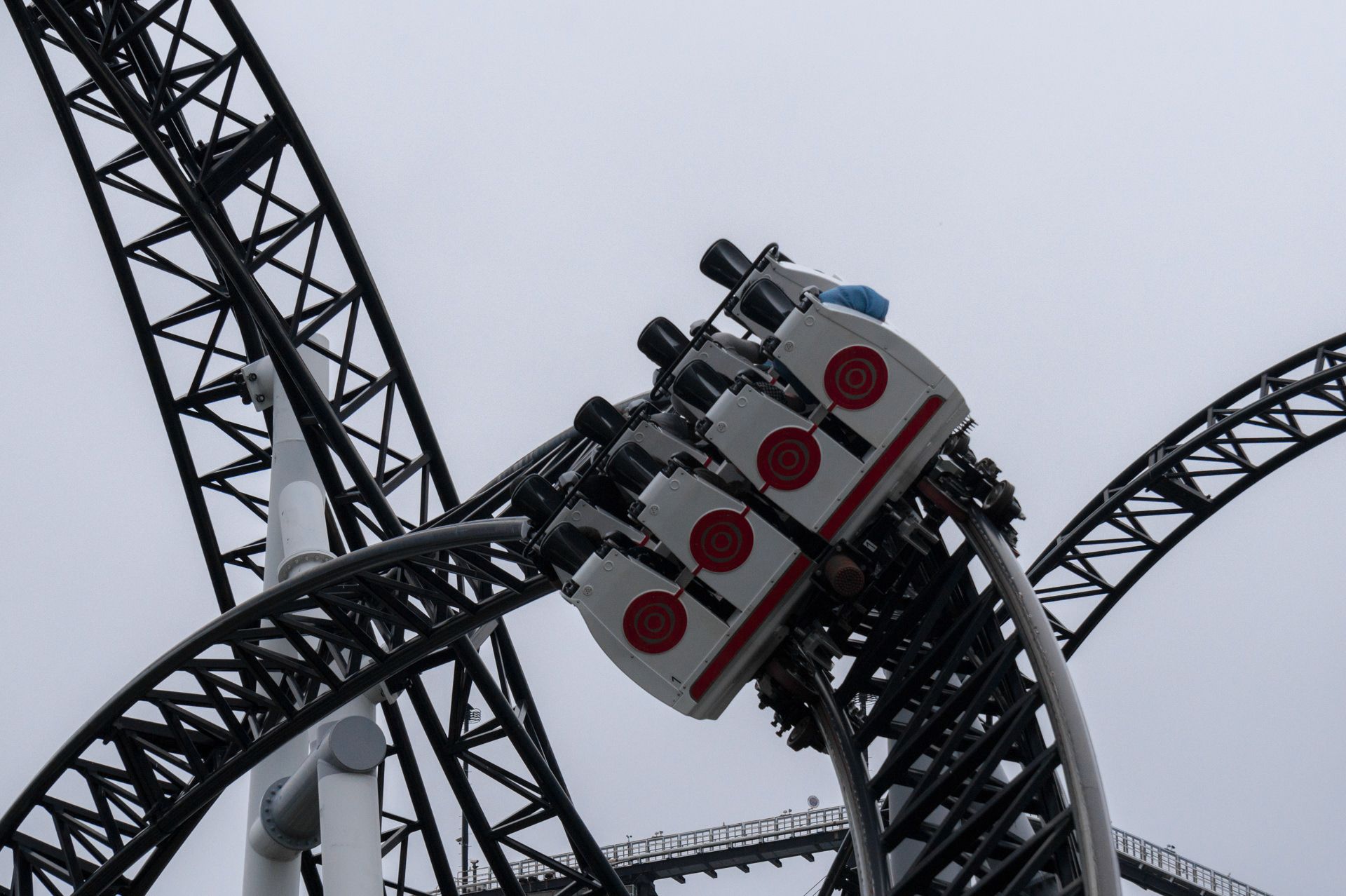
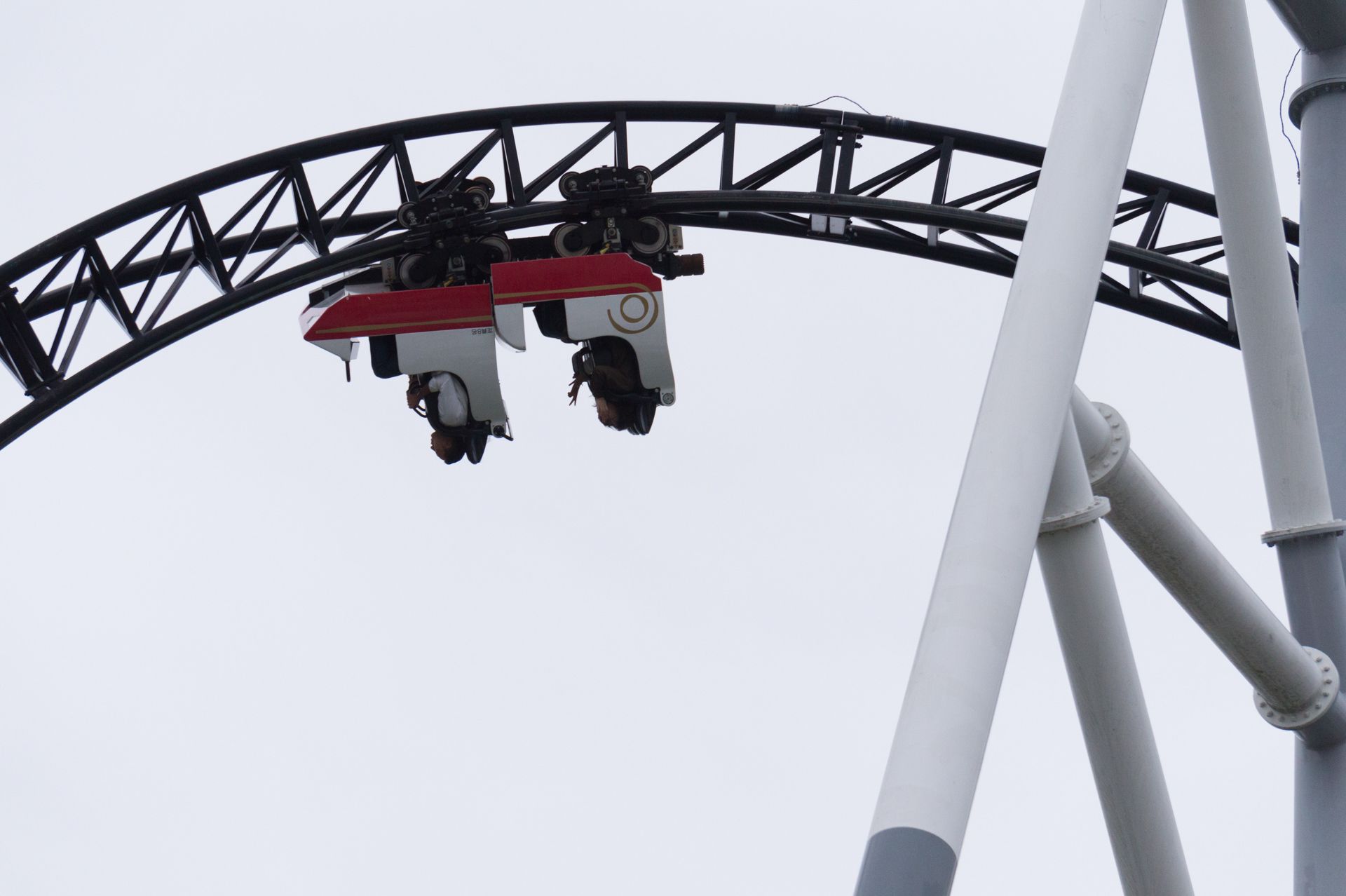
It’s a good thing that the Takabisha roller coaster is right next door. Built by Gerstlauer, an expert in steep descents from Münsterhausen in Swabia, the ride impresses with the steepest of all descents worldwide and other tried and tested elements. So nothing can go wrong here, especially since you’re travelling in the classic, shoulder-bar-equipped, Eurofighter cars.
The ride begins with a tight left turn, followed by a short but extremely steep drop. With a lot of pressure, you cross the following valley and elegantly throw yourself into a 180° left turn, which is followed by a wonderful heartline roll. This then leads into another left turn and soon into the first block brake. Via a mini-drop à la Karacho from the Swabian amusement park Erlebnispark Tripsdrill, you then reach the launch area of the ride, which accelerates you extremely powerfully over a longer period of time. Actually, it would be wrong to say that Takabisha has the better launch of the two launch coasters of Fuji-Q Highland, but Takabisha has the better launch.
This is followed by an oversized corkscrew, reminiscent of a top-hat, before you approach an extremely interesting element at full speed, and at the same time you are riding through a valley with wonderful intensity. The element in question is the so-called banana roll, a kind of cobra roll in the shape of a banana. The turn within the element takes place at the highest point, which results in an interestingly twisted exit. This is followed by a classic corkscrew that transports the car across the ride to the other side. This game is repeated again over a twisted and airtime-embroidered hill, before the entry into the second braking section awaits after a short ascent.
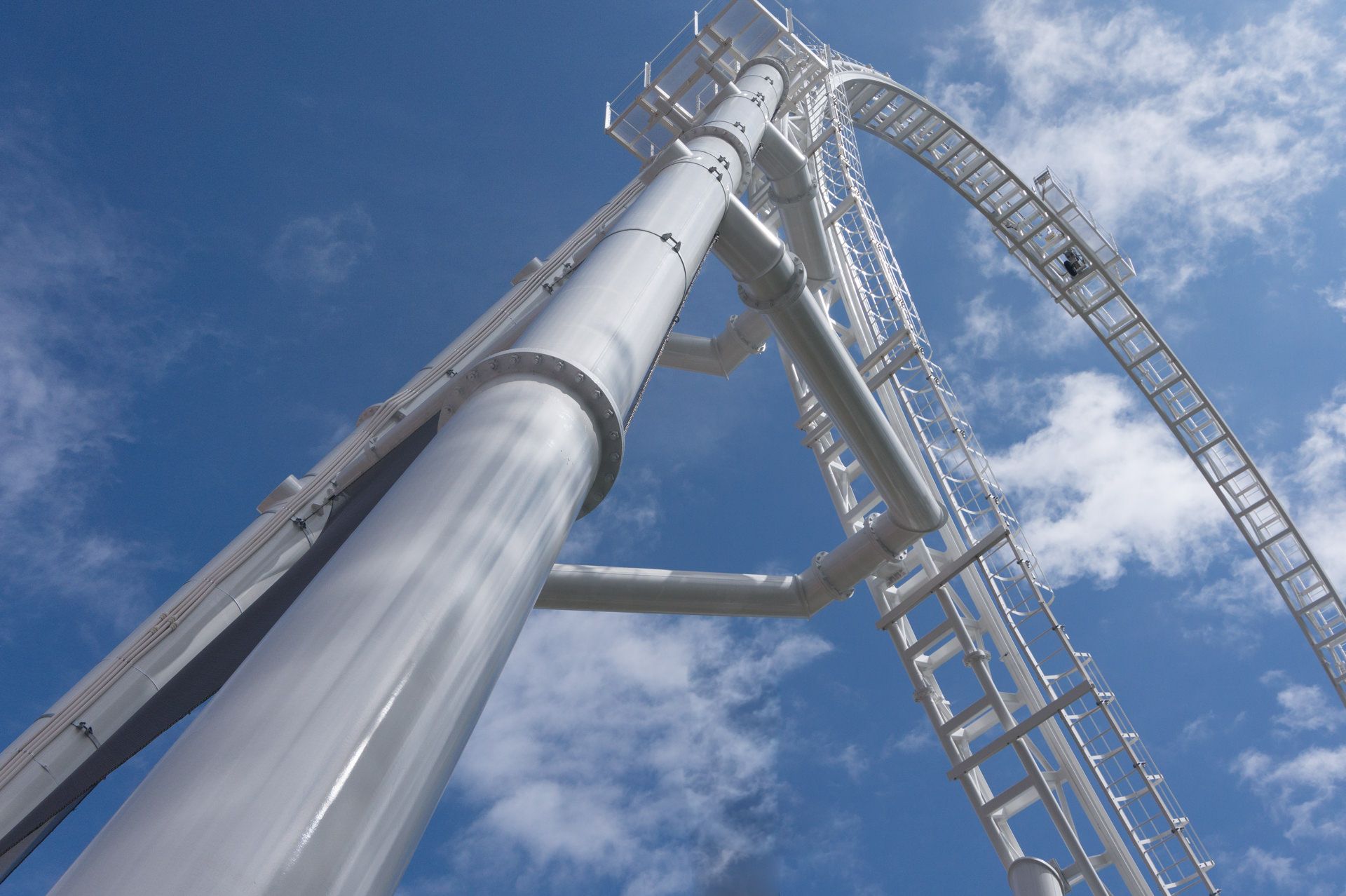
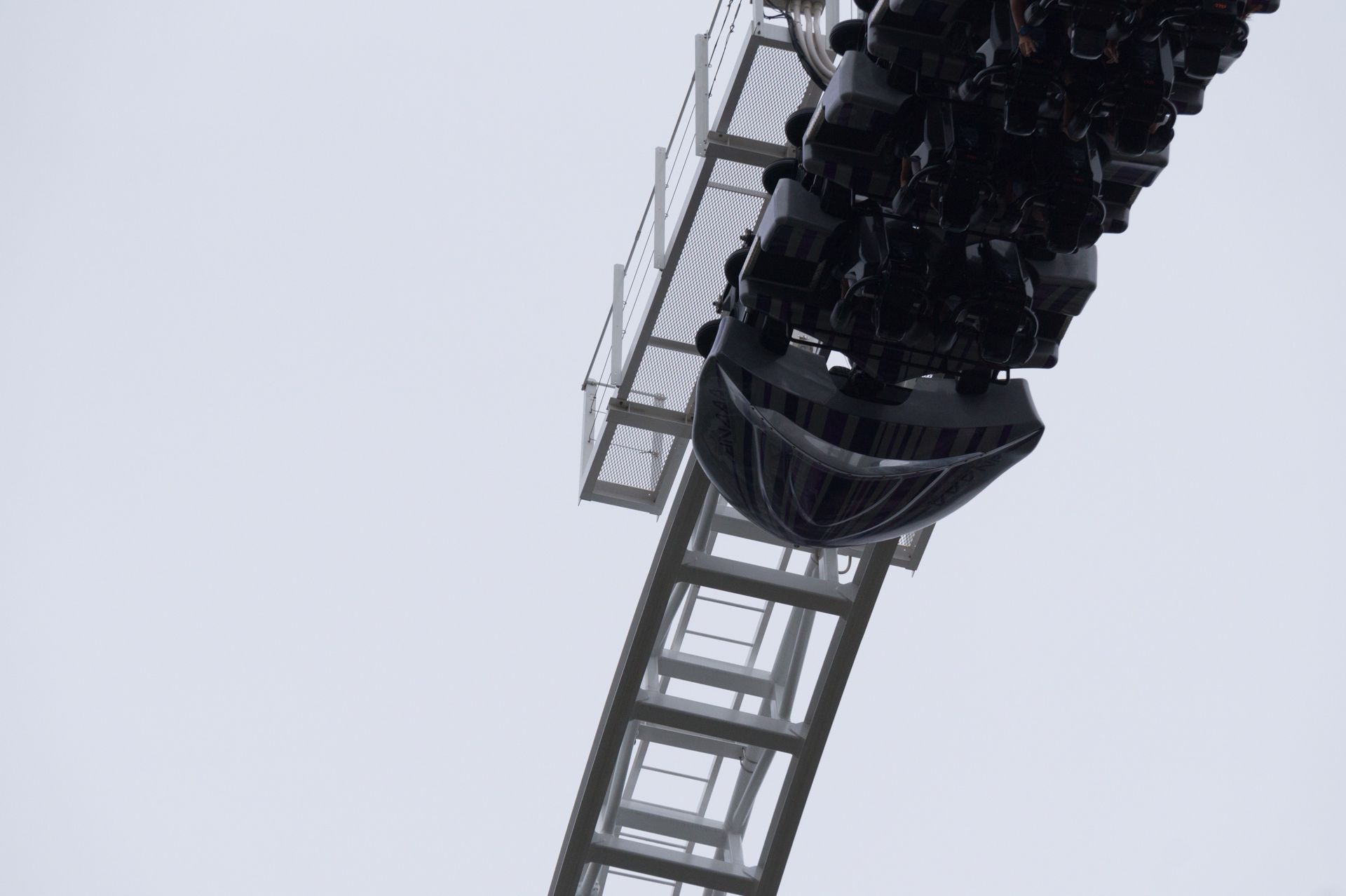
Inside the metal hall you now complete a 180° turn, whereupon the ride’s vertical lift is waiting to be climbed. The lift transports the passengers steadily to the maximum height of 43 m, so that they can enjoy the view on the subsequent descent; before the 121° steep drop, there is a short holding brake to generate an effect similar to that of the Dive Coasters from the manufacturer B&M. A few seconds later, the car is gently carried over the crest and then falls rapidly to the ground. At the same moment, interestingly enough, the onride photo is taken from far away – surprise, surprise (after all, you’d rather expect a photo of the ride going through the valley, which wouldn’t capture the facial expressions of this WTF moment)!
The drop keeps its promise and so the car rushes powerfully through the valley ahead. With a lot of momentum, you climb a hill, turn around your own axis and dive into a dive loop. This is also the prelude to a visually impressive double turning manoeuvre, because you now change direction again in an inside-top-hat before you climb an Immelmann loop. On its exit, the final brake awaits the passengers and soon the station of the 1000 m long roller coaster.
Takabisha is an all-round successful roller coaster from the manufacturer Gerstlauer, which is particularly convincing thanks to its launch and the significant steep drop in the second half of the ride. The banana roll is also an extremely interesting element that pulls you back and forth wonderfully. The riding characteristics are brilliant thanks to the classic cars. All in all, this is a roller coaster that absolutely lives up to its waiting time – as you could queue just as long for the ride here in Europe; in general, the queue is moving quite fast.
Fuji Airways
Admission to the Fuji Airways Flying Theatre is somewhat less rapid, as it always takes place at intervals. Built in 2014 by the manufacturer Brogent Technologies, the ride stands out above all (in the pre-show) for its absurd humour. Then in 2016, the film used was enhanced with 6K drone flight footage from the surrounding area and the inclusion of the gondolas from the nearby Tentekomai rollover ride. So they don’t take themselves too seriously here at Fujiyama, and so you glide over the landscapes with great enjoyment and perform an extremely impressive rollover in the middle.
Fans of this type of simulator will be thrilled; for me it was the first encounter with such a simulator and I thoroughly enjoyed the flight with Fuji Airways. The movements were fluid and the images shown were visually impressive; it didn’t really bother me that you could see the edges of the screen. Only the ride itself was a bit repetitive and generally a bit too long – but before the enthusiasm could die down too much, the roll over occurred and suddenly my enthusiasm was back again. All in all, a very nice ride at Fuji-Q Highland that you shouldn’t miss out on.
Tentekomai
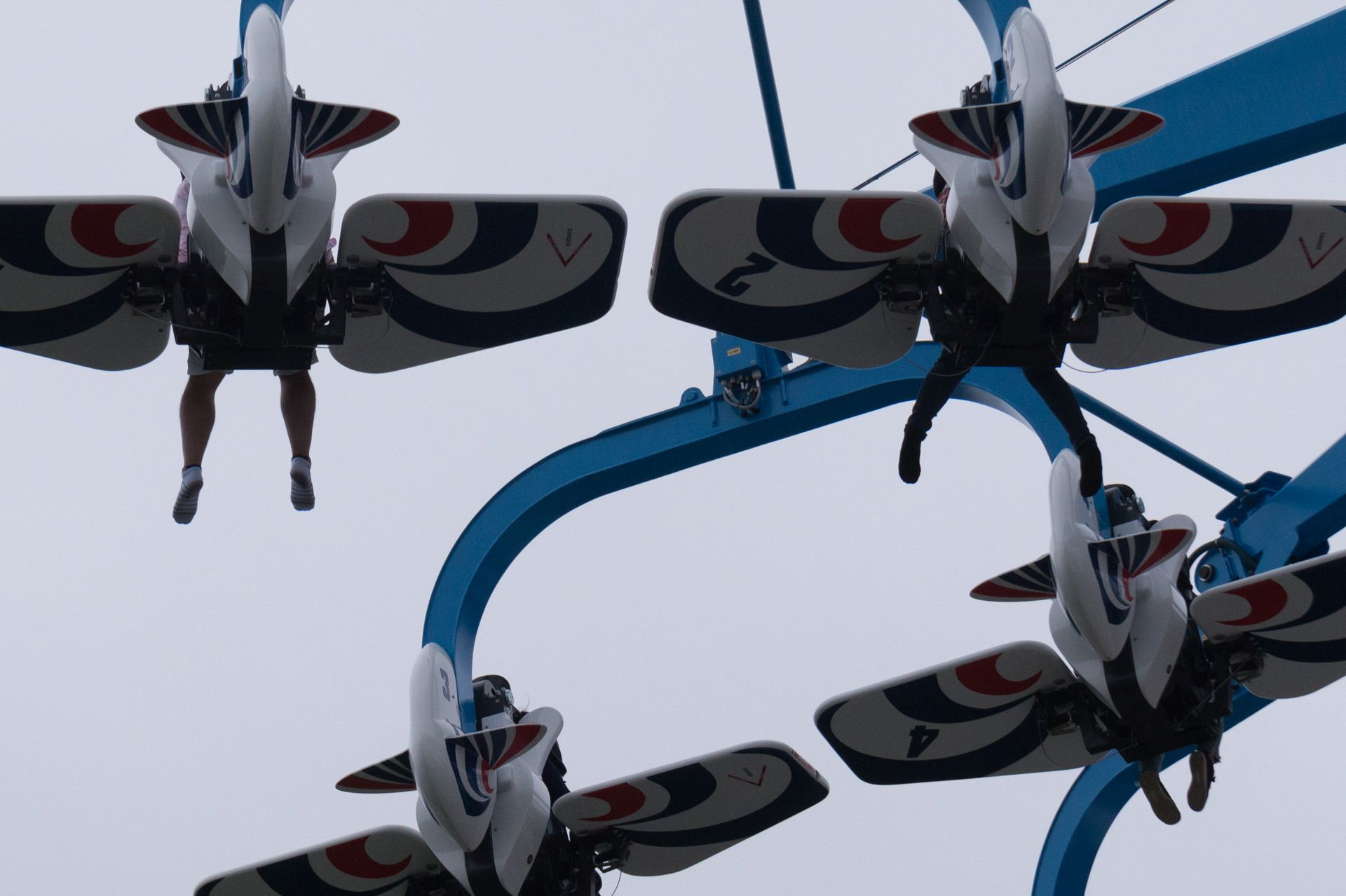
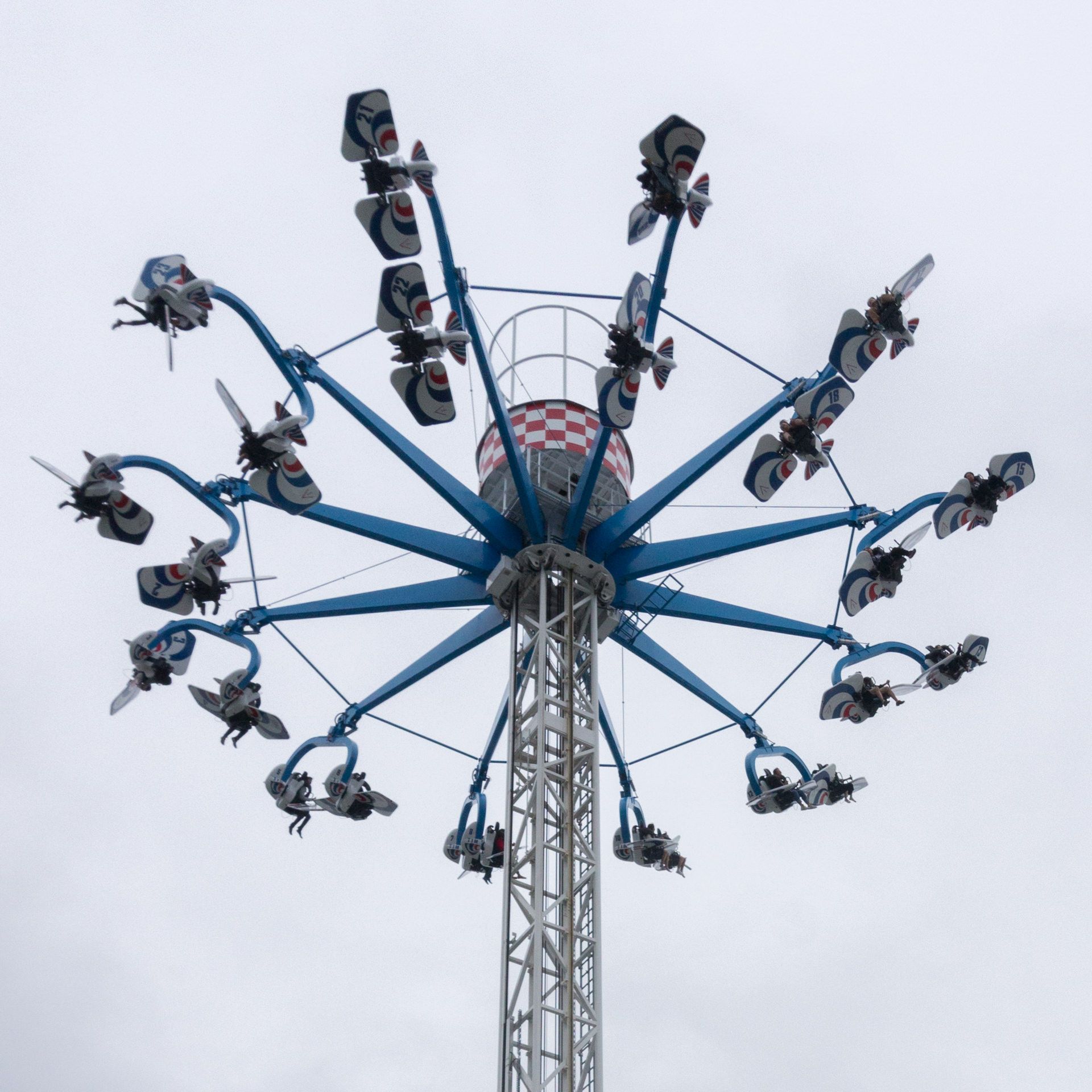
In the same vein, one may also dare to take a ride on the Gerstlauer Sky Roller Tentekomai, which once again takes up the story of the fictional airline Fuji Airways and thus also does not take itself quite so seriously. The gondola rotation was easy, so you could get to the roll overs (if you want) quite quickly, however, the ride was over just as quickly. It took all the longer to clear the ride, which wasn’t too bad because of the crowds on the first day of the visit.
Thomas Land
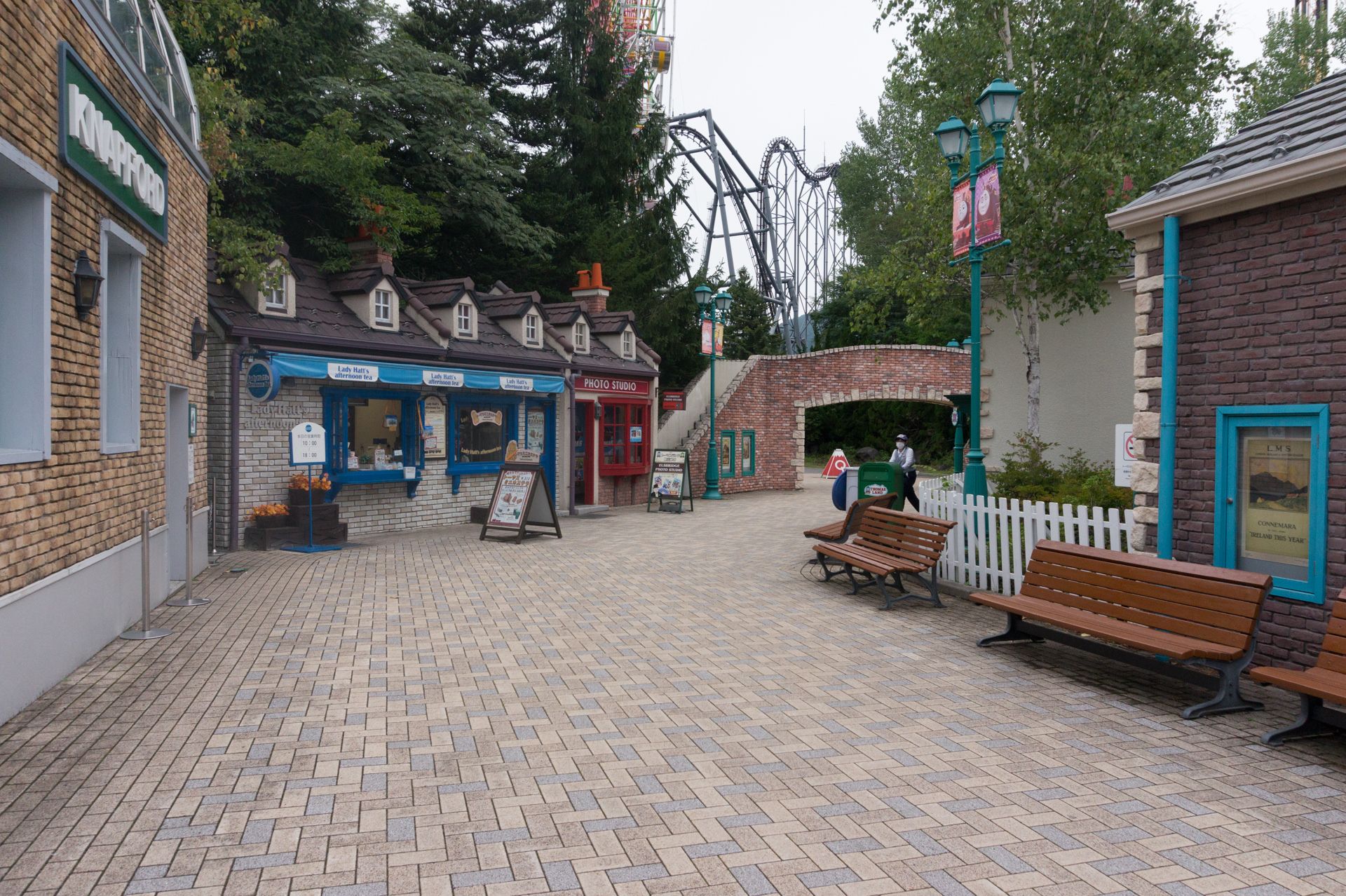
We pass the Wave Swinger and the Shining Flower Ferris wheel, which is relatively small (only 50 m high) for a Japanese park of this size and now head for the children’s area of Fuji-Q Highland. This is based on the children’s series “Thomas & Friends” and was the first of its kind at the time. Since 1999, Thomas and other actors from the Railways Series have been transporting visitors across the island of Sodor. Sometimes even in alternating shifts, because on Thomas and Percy’s Fun Ride the locomotives are changed several times a day.
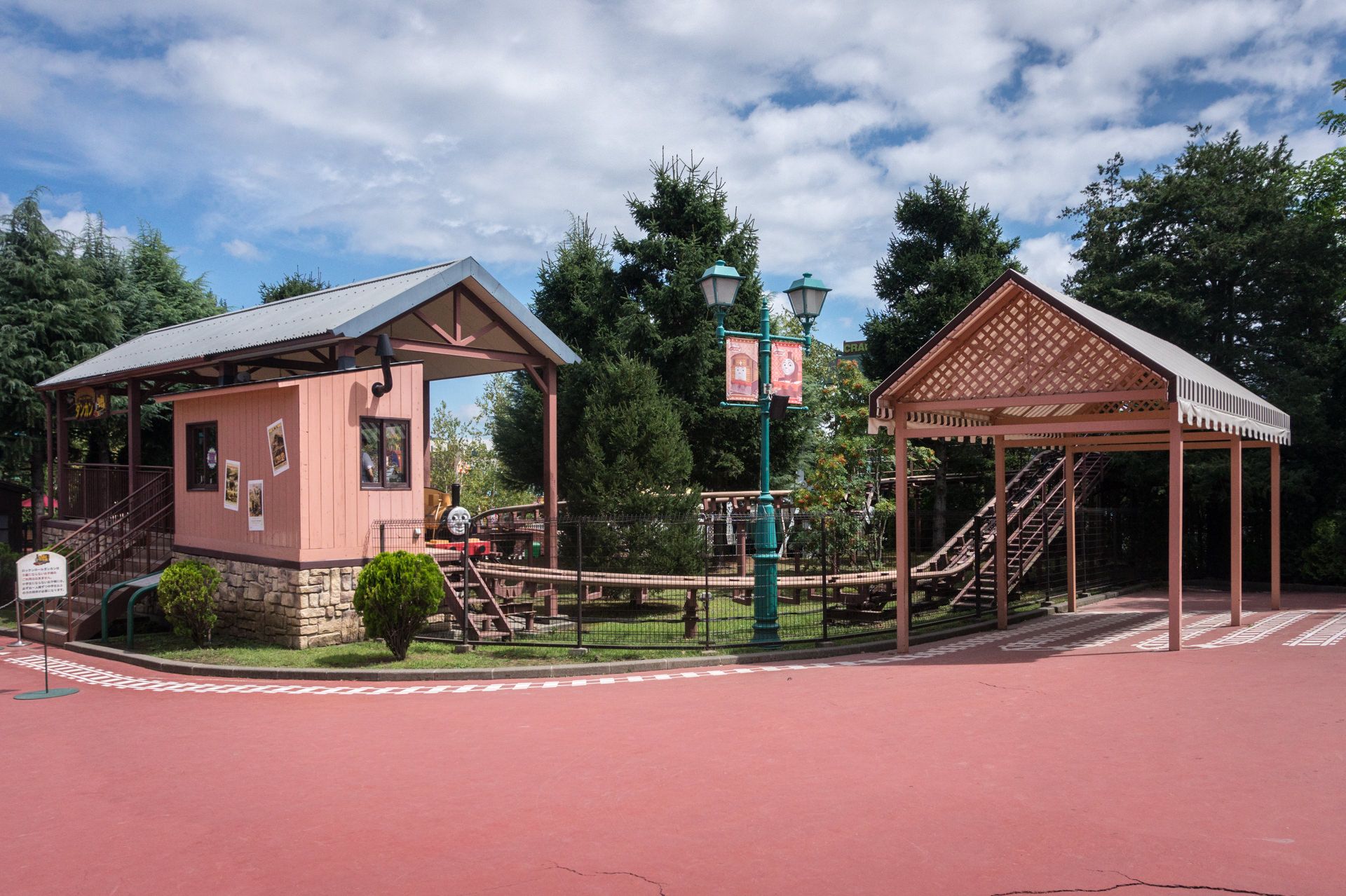
Otherwise, you feel like you’re in the middle of England. There is a pub ( which is unfortunately only a decoration), a tea room and much more to discover. In the middle of it all, four of the well-known locomotives are ready to be photographed and the fat inspector is of course also represented. In addition, the area is extremely well set up with a variety of rides, including the dark ride Thomas’s Party Parade (including turntable and switch), a very smartly integrated 3D Maze, a children’s log flume, a 3D cinema, and the L-shaped children’s roller coaster Rock ‘n Roll Duncan.
Mini-Fuji
At the back turn of the Do-Dodonpa roller coaster we leave Thomas Land and immediately find ourselves at the Mini-Fuji. There is a small slide here in winter, but otherwise this corner of Fuji-Q Highland lies largely unused. It is all the more interesting that you can actually climb this small mountain, which gives you a great view of the surroundings.
Adventure Land of Kaiketsu Zorori
At the foot of the small mountain is the star flyer Tekkotsubanchou, which fits in perfectly here with its construction site theme. Right next to it, you can explore the Adventure Land of Kaiketsu Zorori. A small, child-friendly funhouse with all kinds of interactive elements stretches across a 700 m² hall.
Ultimate Fort 2 und Super Scary Labyrinth of Fear
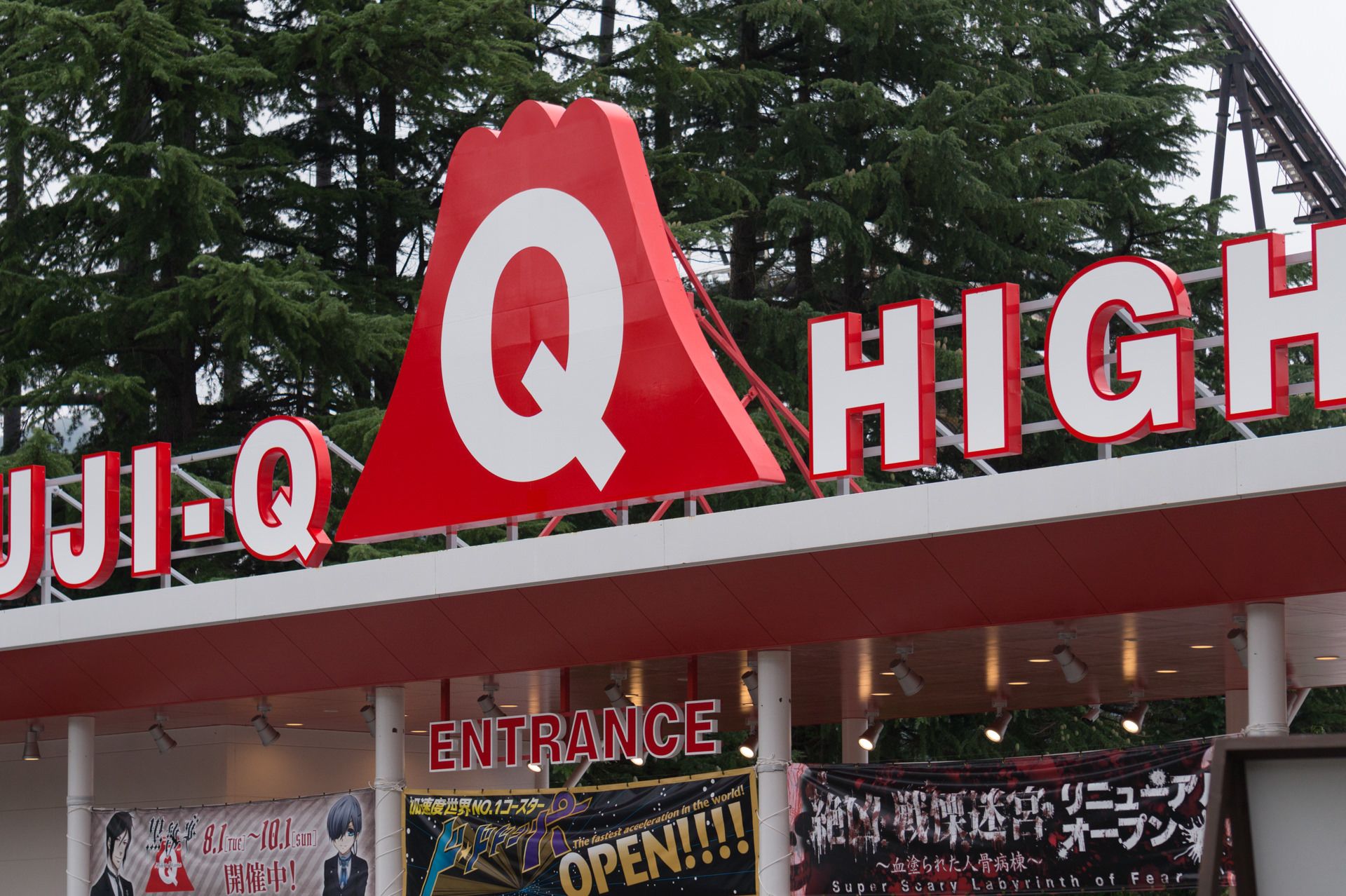
Nearby are two notorious indoor attractions; famous and infamous above all as the queues tend to reach their capacity limits by lunchtime. The Ultimate Fort 2 is an interactive walkthrough in the style of an Escape Room, where you have to carry out a seemingly impossible mission – the chance of success is about 0%, out of 100000 attempts usually only one group makes it. The second attraction is the Super Scary Labyrinth of Fear, a scare maze in the style of a run-down hospital with a running time of about 20-30 minutes; advertised, however, are 50 minutes, making the maze one of the longest of its kind.
Nagashimasuka
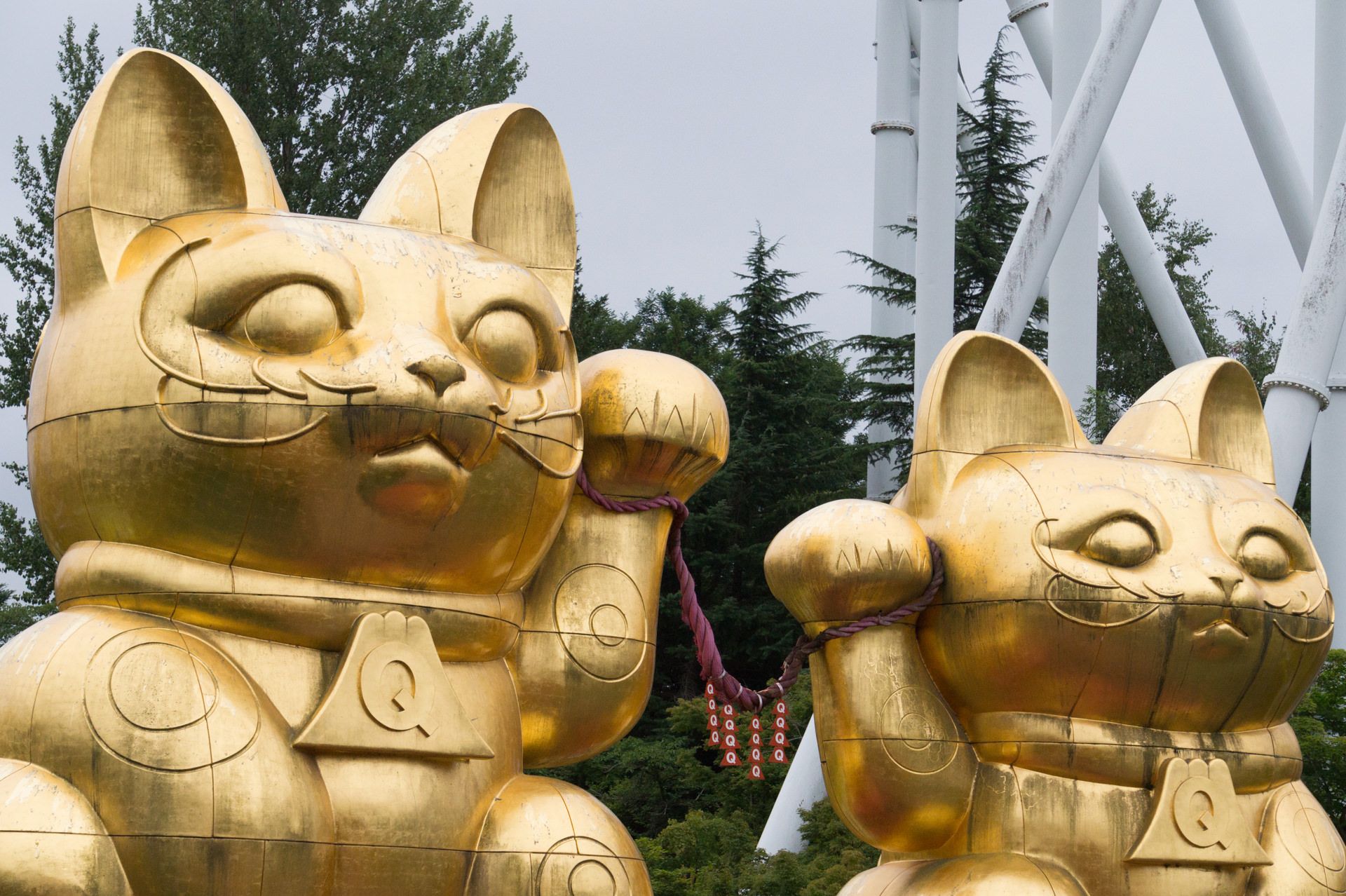
Interestingly, there is another maze right next to it with a much shorter run time. Our eyes, however, are drawn towards the elevated Hafema rapid river Nagashimasuka and its cute and mean winky cat design. The nasty aspect of these cats can only be seen from here; otherwise the ride is extremely inconspicuous. Even in the station, the degree of wetness seems manageable, as if Nagashimasuka is a simple round boat slide.
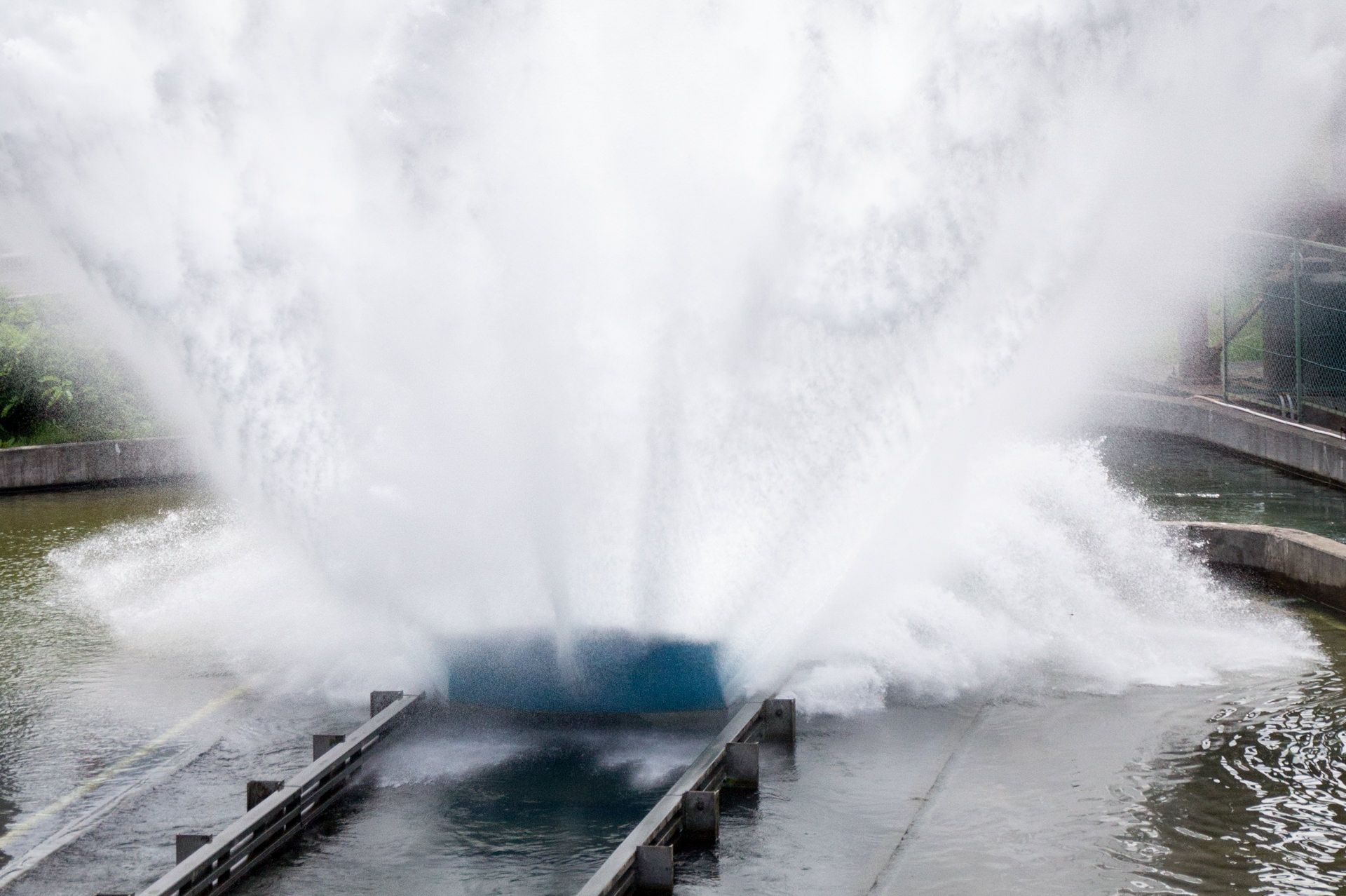
But this illusion is clouded; as soon as the ride’s high lift has been climbed and the boat has raced down the first incline, you are wet, or rather soaked, because the short braking distance causes quite a high wave to crash down on the four unsuspecting occupants. The boat then slides down a 670° helix, at the end of which another wave awaits. Now mostly soaked, you bob along a wide curve, pass the lift hill and another turning curve. This is followed, quite surprisingly, by a double drop. Here, too, some water sloshes into the round boat, but the ride is far from over and you land straight in a whirlpool, which is again very typical for the manufacturer. Those who have already completed a few rides of this kind will know that at the end there is usually a wave front waiting for the passengers, which can moisten them quite efficiently: This is also the case here!
The way back to the station is now through a classic rafting channel on the back of the once so friendly looking cat statues, here correspondingly in the angry version. Along the way, you pass a volume meter that switches on additional water effects at the edge of the path if the volume is loud enough. After a wide turn, the extremely wet ride comes to an end, whereupon we were invited to a photo session with our two Japanese passengers (who had asked us in a friendly way if we wanted to ride with them) in front of the two waving cats – in typical Japanese pose, of course.
Nagashimasuka is an extremely great rapid river, which is absolutely convincing due to its very high degree of wetness. The multitude of elements makes the rafting ride absolutely worth experiencing and the double drop alone makes the ride a must-do. Interestingly, you can also try the ride in winter, but then additional protective walls are attached to the gondola.
Voyage dans le Ciel (avec Gaspard et Lisa)
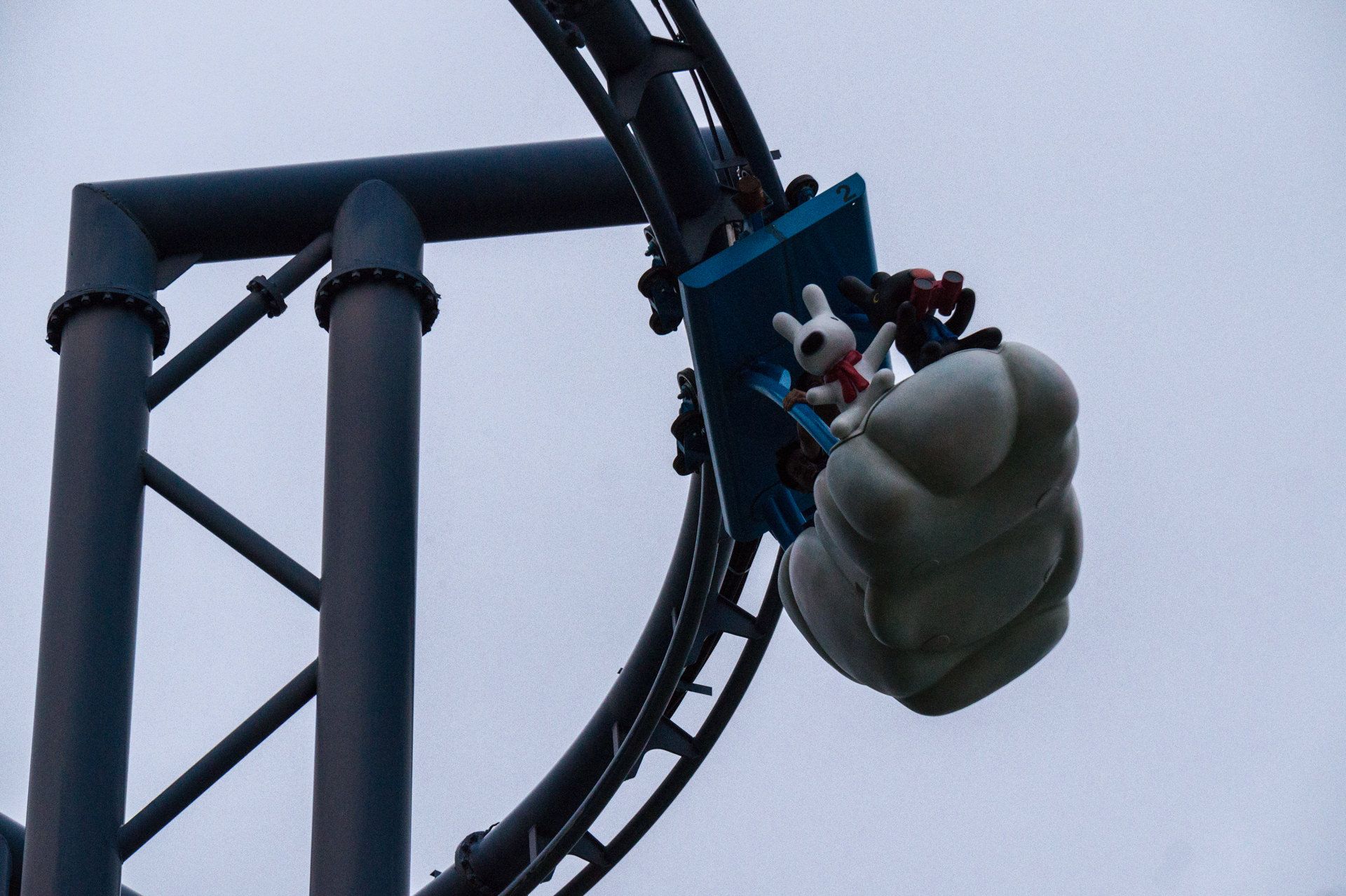
Right next door is the station of the roller coaster Voyage dans le Ciel (avec Gaspard et Lisa), formerly better known as the Hamtaro Coaster. But interestingly, the suspended coaster has an eventful history as the first flying coaster in Japan: Originally opened as Birdmen in June 2000 with flying gondolas very similar to a Zamperla Volare (but with only two seats side by side), it didn’t take long until the first incident happened – during an emergency stop in May 2001 – and the ride was subsequently closed for two years. As a result, the ride was fitted with new gondolas and has since become a child-friendly entry-level ride.
After you have squeezed into the two-seater gondolas (with seats behind each other), the ride can begin. A chain lift transports the rather bulky gondola to the starting height of 23 m. From here, the ride begins with a left turn and then a right turn. Then a left-hand bend and a right-hand bend take you steadily downwards, before a small dip and a hill follow. After a short ascent, the first block brake is reached, whereupon you complete a left-leading downward helix around the Red Tower freefall tower. This is followed by a short left turn, which turns into a beautiful descent at the Spillwater Cool Jappaan. The ride’s second block brake then awaits you beneath the lift hill. In a wide left turn, past the Fuji-Q Highland pedal monorail, you approach the last brake section of the ride, whereupon the thoroughly enjoyable ride soon comes to an end.
Eejanaika
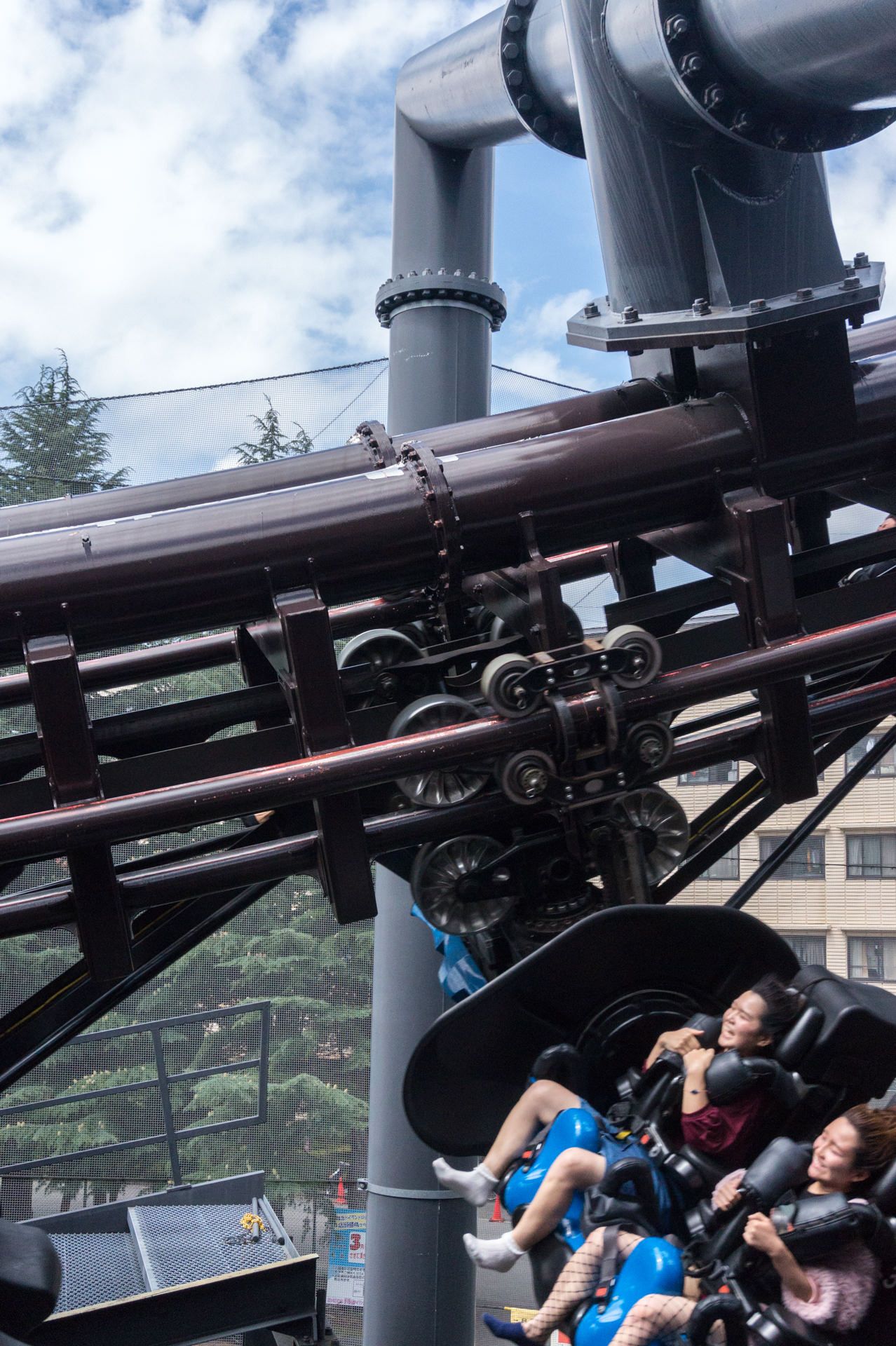
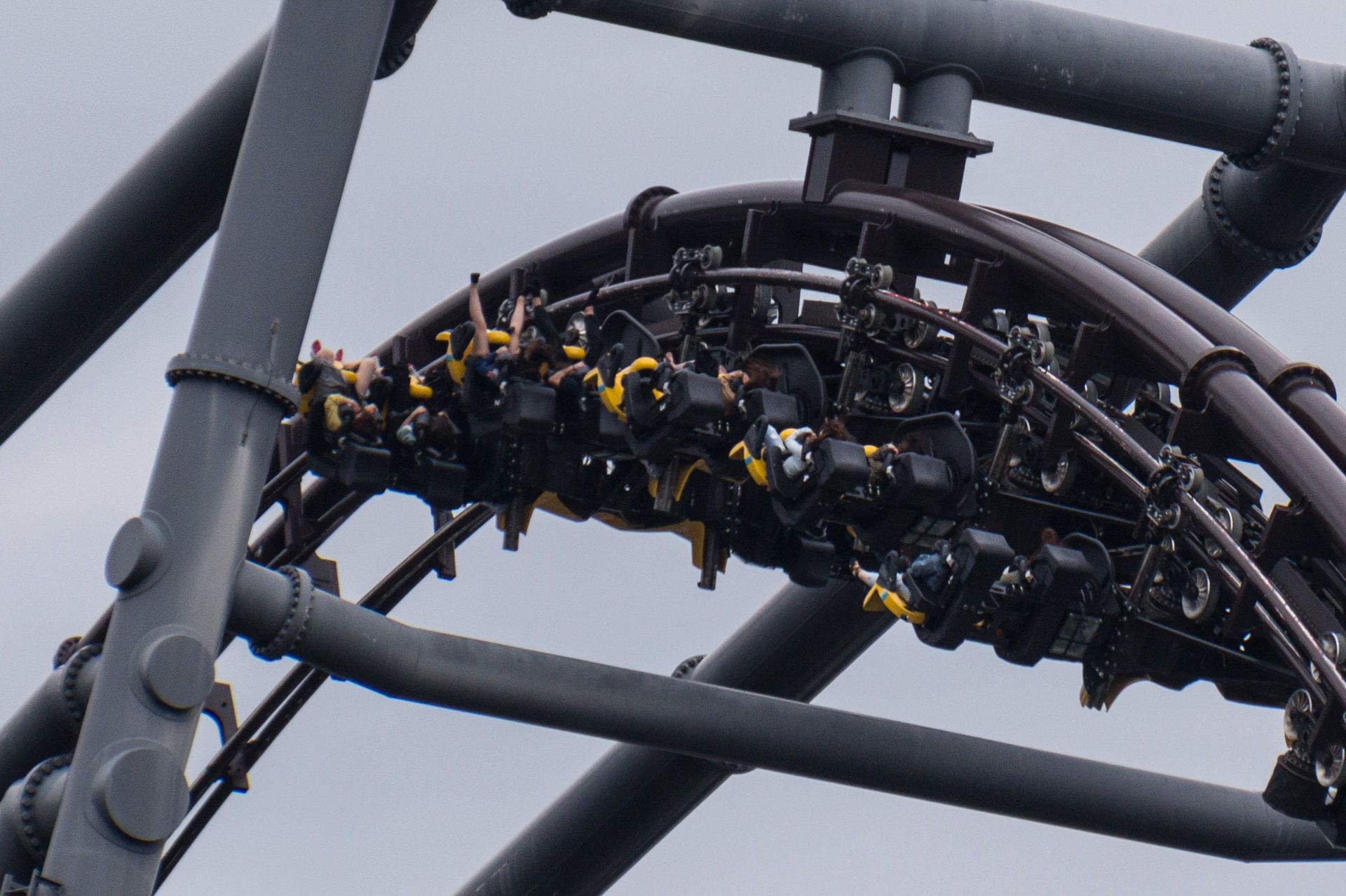
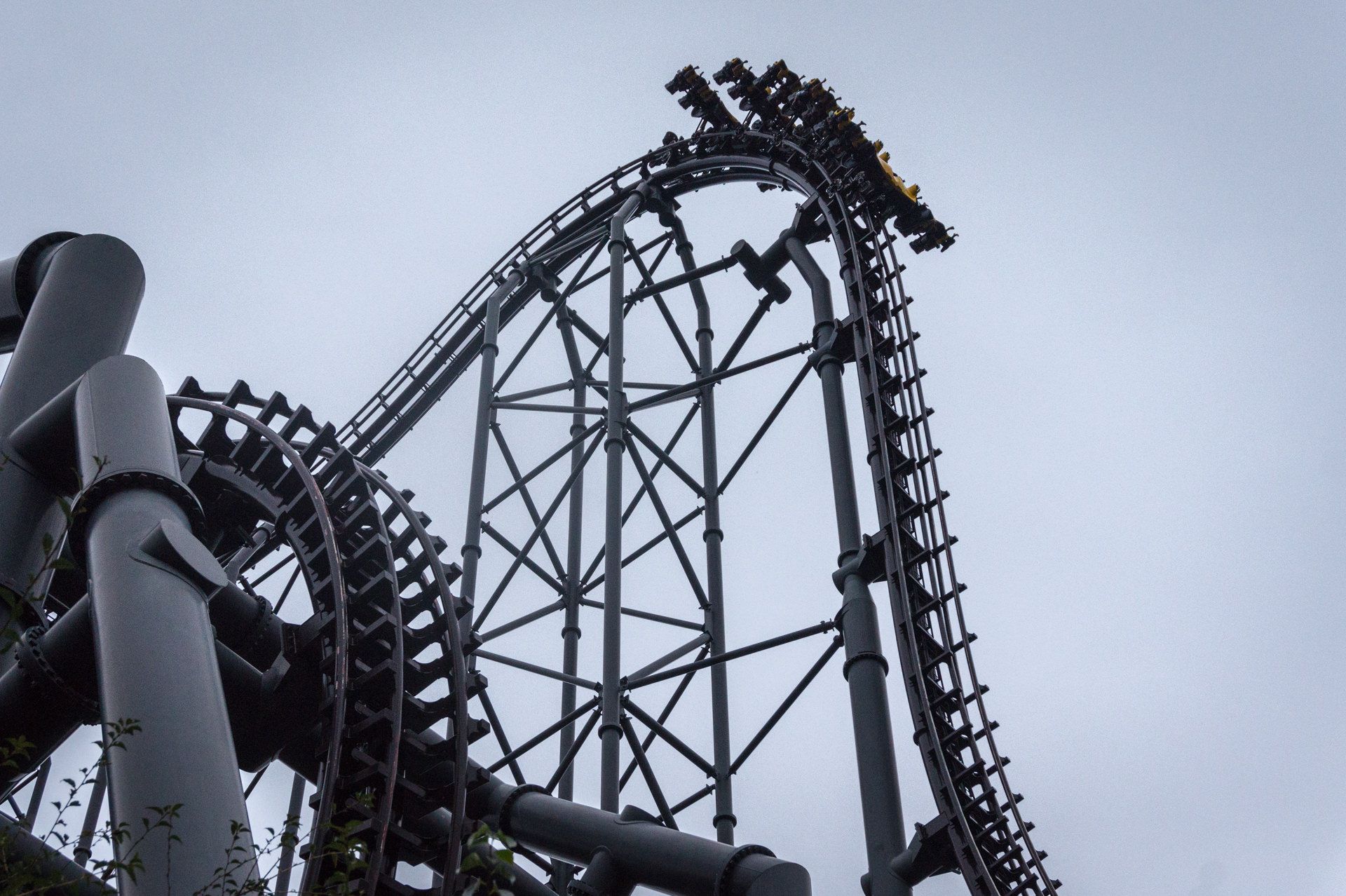
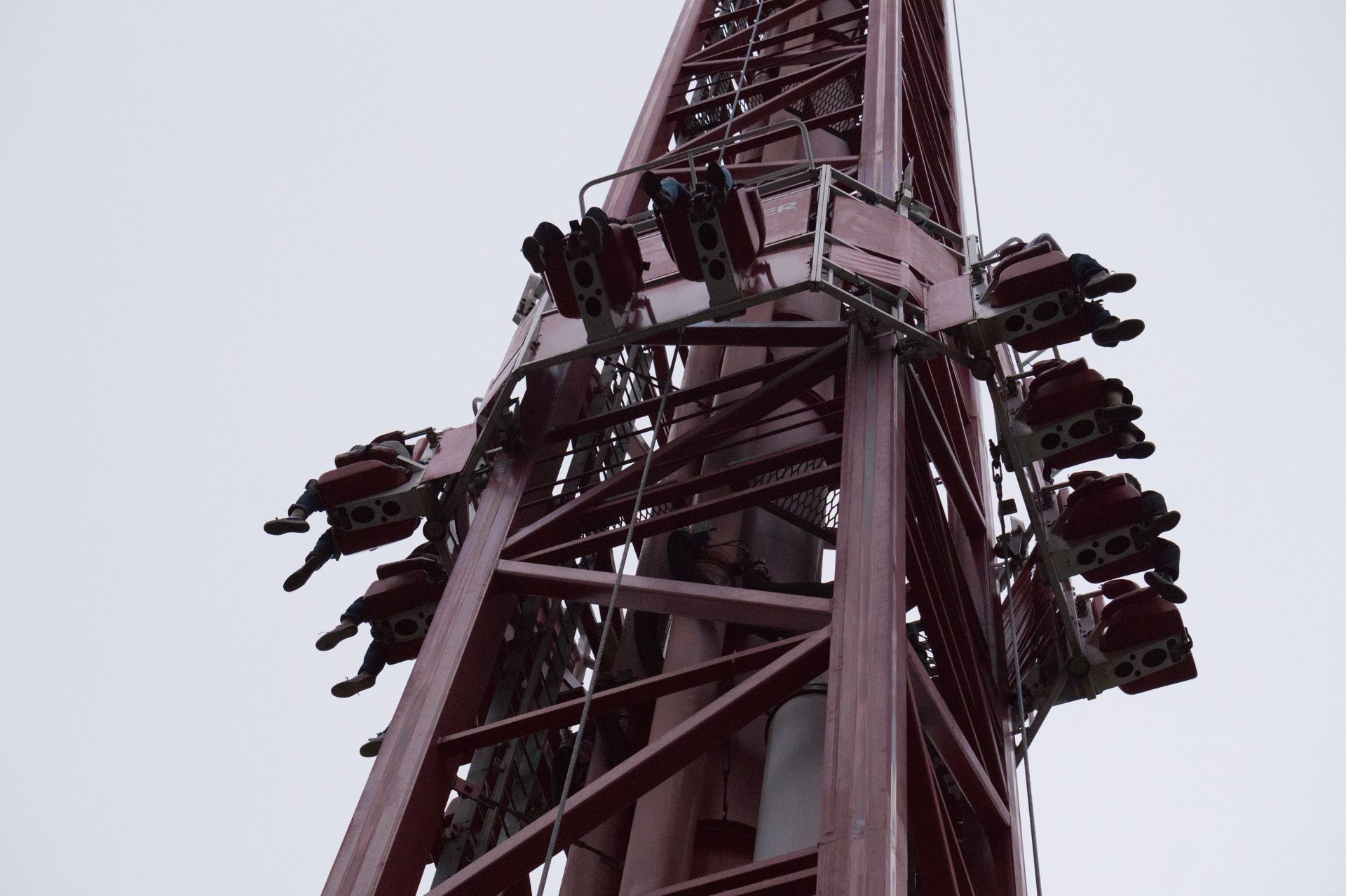
Arriving at the entrance near the Fuji-Q Highland Station, we had to tackle a very special steel colossus – as most visitors do here from the very beginning, because the ride is always crowded quite quickly due to its location directly at this entrance. We are of course talking about Eejanaika, the second delivery of a 4th Dimension Coaster – at that time, it was the first delivery of the manufacturer S&S. The basic layout is very similar to the prototype ride X from the American amusement park Six Flags Magic Mountain, but the gondola rotation was increased a bit at the request of Fuji-Q Highland. The ride is also somewhat larger and has a significantly lower capacity.
However, this is not due to the optimised dispatch process, where passengers prepare for the journey in separate boxes (all loose items and also shoes are placed in lockers) and also not due to the triple bar check, where you also have to become active yourself (probably for legal reasons), as well as the final show interlude before the train leaves the station. It is simply due to the fact that the train only has five gondolas on each side.
Once cleared, however, the ride begins quite quickly and in a 180° turn you immediately find yourself in the supine position, slightly upside down. You then reach the lift in a backwards position before it takes you up to a height of 75 m while lying on your back. Although this happens very quickly, you still have enough time to take a good look at the surrounding mountains – but not at Fujiyama, which is directly behind you.
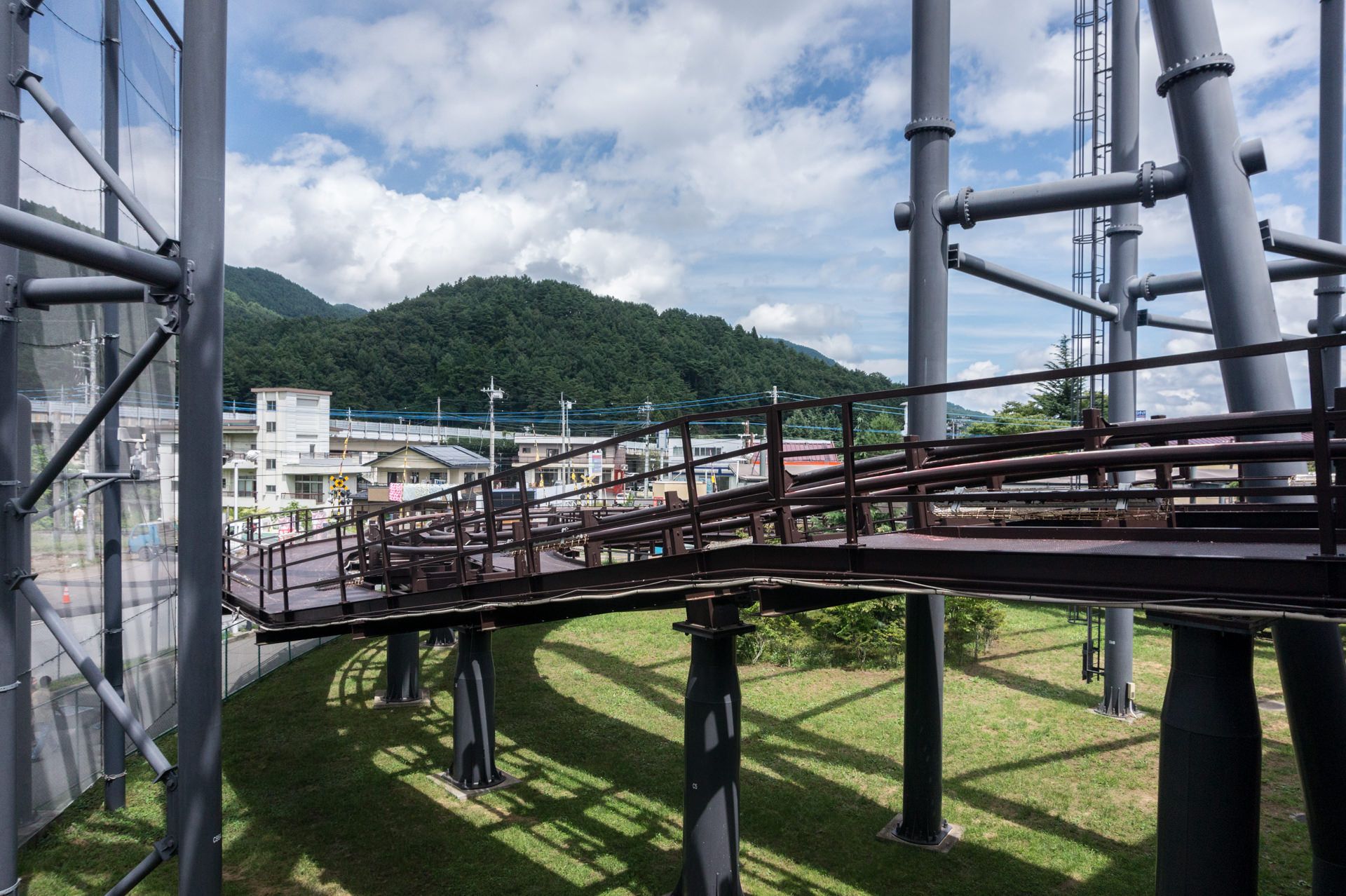
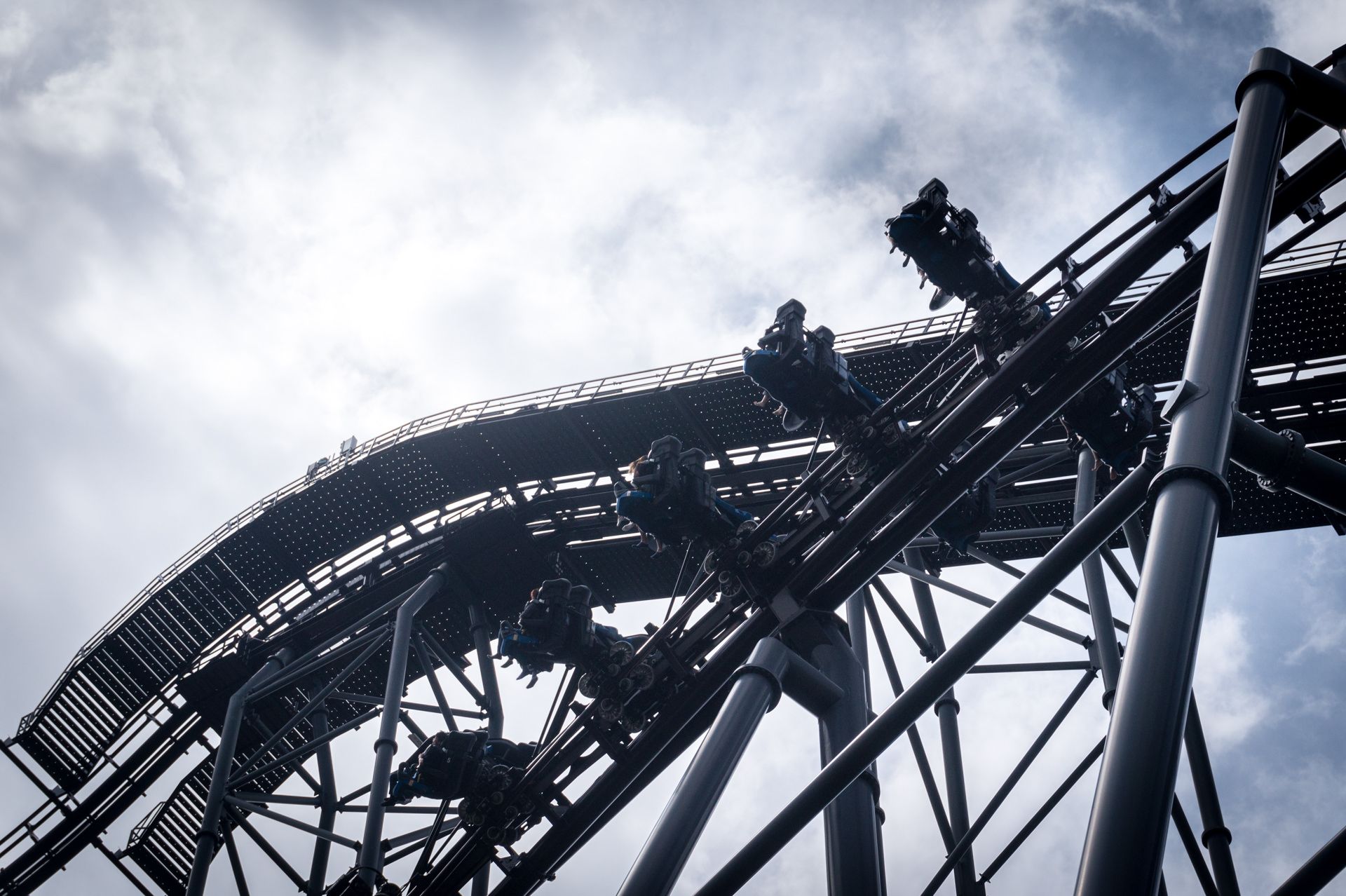
A short pre-drop gets the wagon group going and aligns us again in the original riding position before we are then directed head-on towards the ground or towards the row in front on the next crest. We then maintain this riding position for a large part of the vertical slope, but turn over once in the lower third so that we complete the following valley looking slightly upwards. In the inside rave turn, the direction of travel of the rail is now changed once, but we always experience the element in the horizontal position, just before the exit of it is reached and we perform a short somersault. The train itself, now hanging under the rail, goes down a slope and then turns around its own axis in a zero-G roll, while we race forward through the dense forest of supports and avoid a rollover in the roll with a 360° turn around our own axis. Facing forward once more, we then enter an over-inclined turn, at the crest of which we are turned towards Fuji-Q Highland. Continuing with a view ahead, we cross a powerful valley alongside the station. On the hill that now follows, the track changes its orientation in a fly-to-lie element and we cheerfully turn 180°. Leading backwards, we then pass a valley and immediately climb a hill at the end of which the entrance of the outside raven turn is waiting. In this variant of the rave turn, we are also kept horizontal while the train changes its driving position and thus continues hanging under the track. At a significantly high speed, we now race towards another fly-to-lie element, which, in combination with the gondola rotation, pulls us back and forth quite a bit. Shaken and stirred, we find ourselves in the braking section and shortly afterwards in the station.
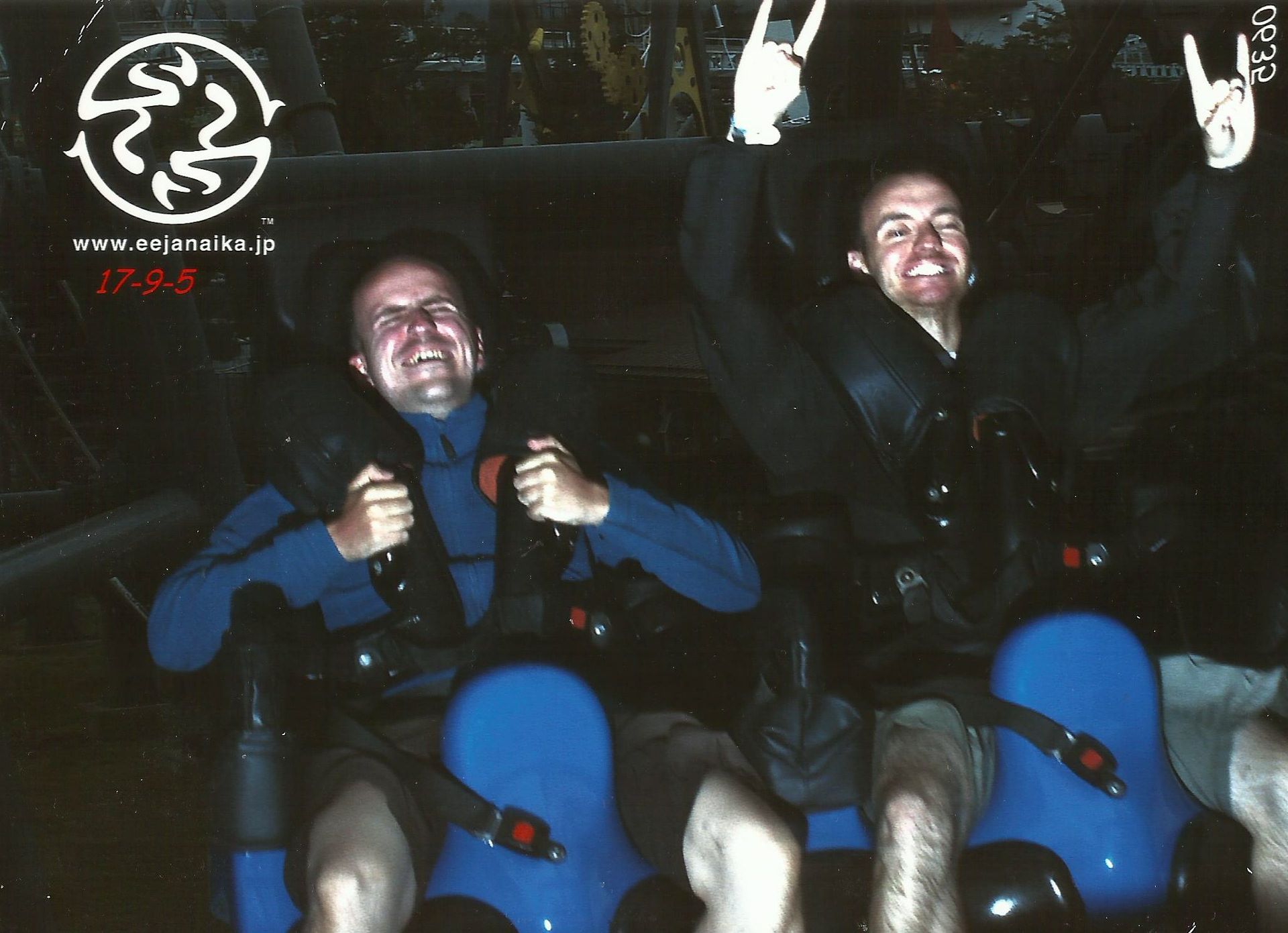
Eejanaika is the most intense roller coaster I have experienced so far. The ride is extremely powerful, robs you of your sense of direction in an absolute way and is surprisingly smooth in its ride characteristics (apart from the last ride element). You are simply not beaten up, even though you are sitting in the train with your legs spread apart in Pasha style. The minimalist, yet quite complicated, restraint reinforces the ride and the respect for it immensely, even if you have already experienced it once. And even now, several months after the ride, my verdict of the ride is simple: Eejanaika is awesome!
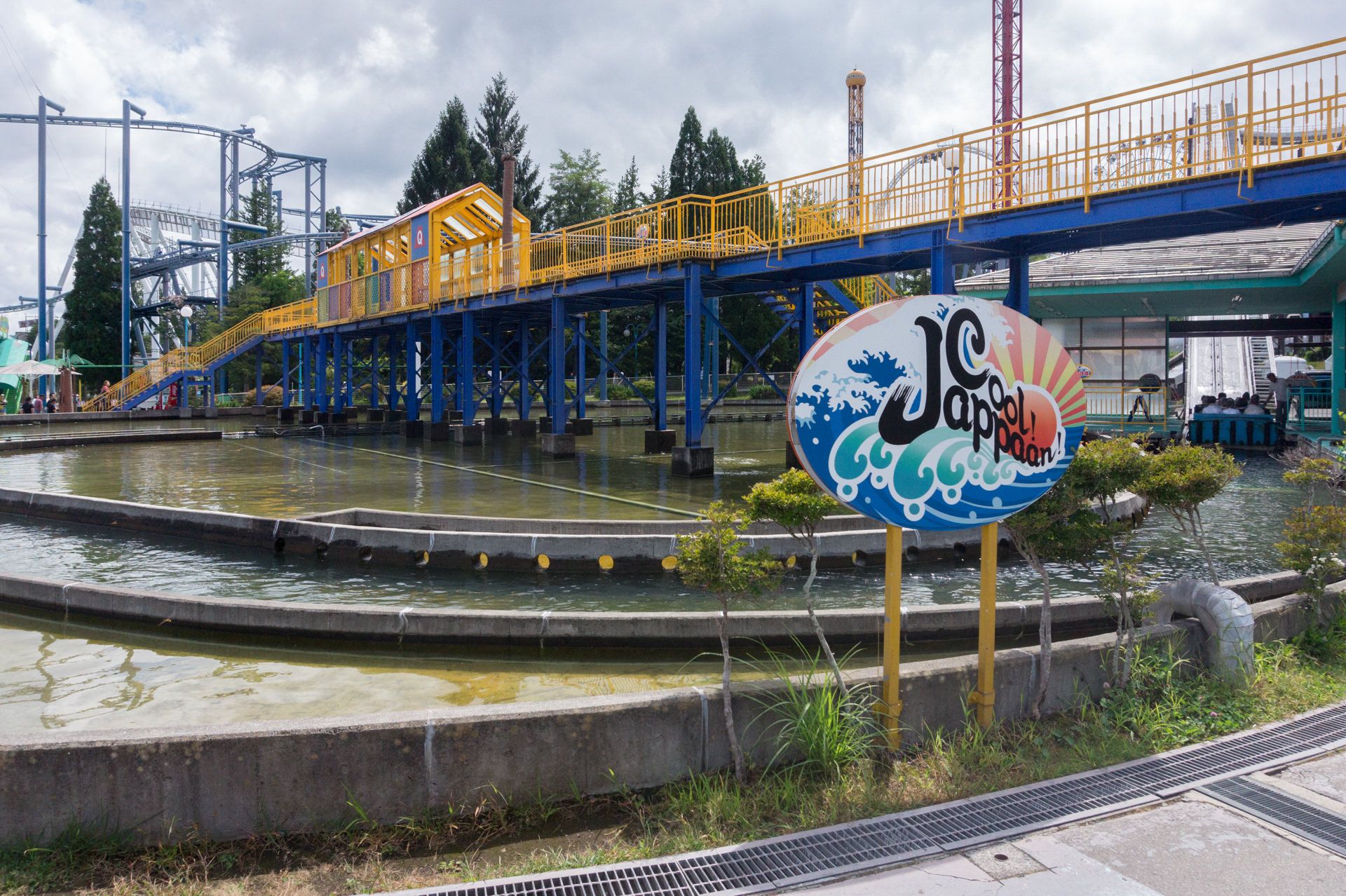
Cool Jappaan
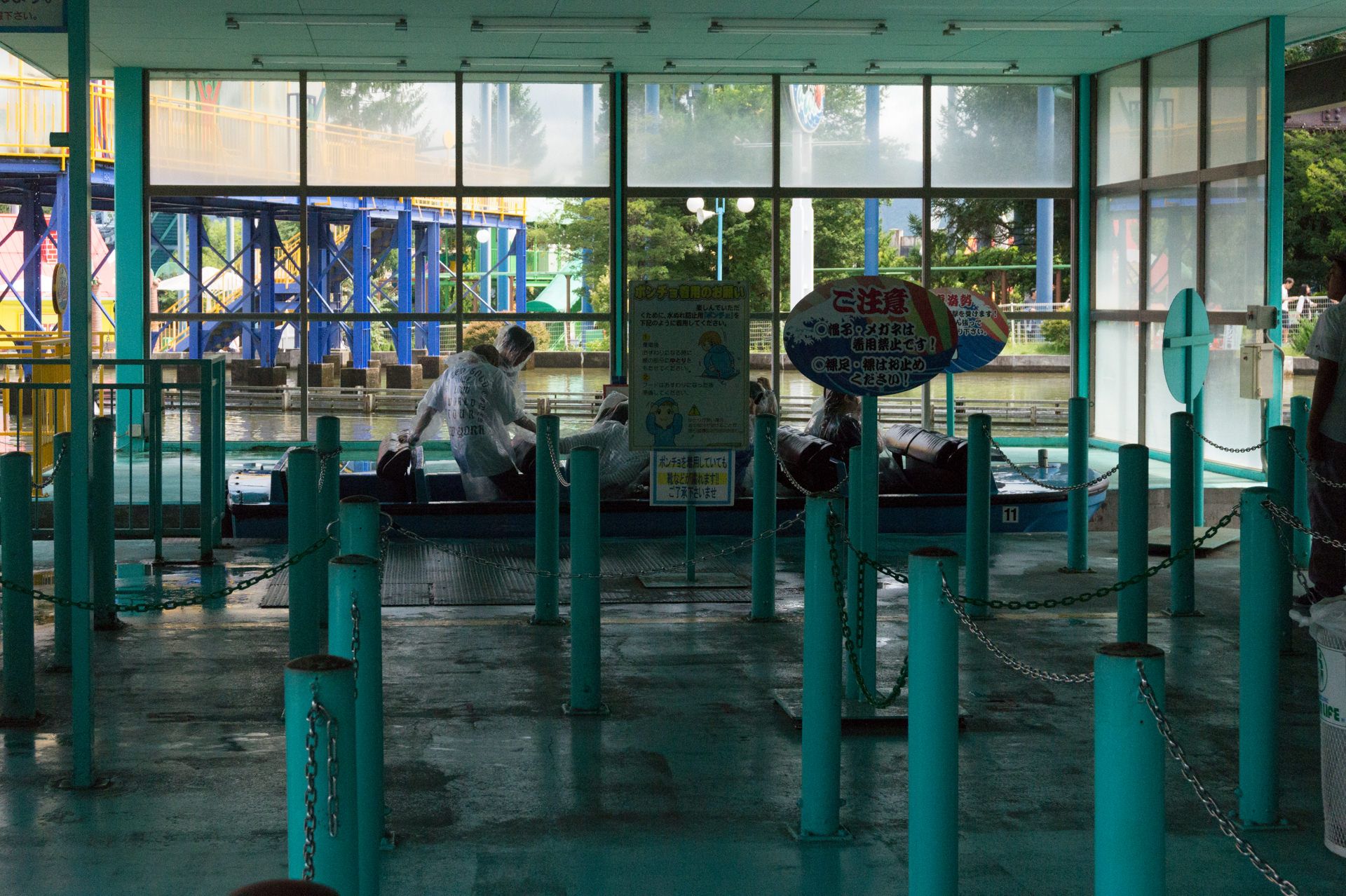
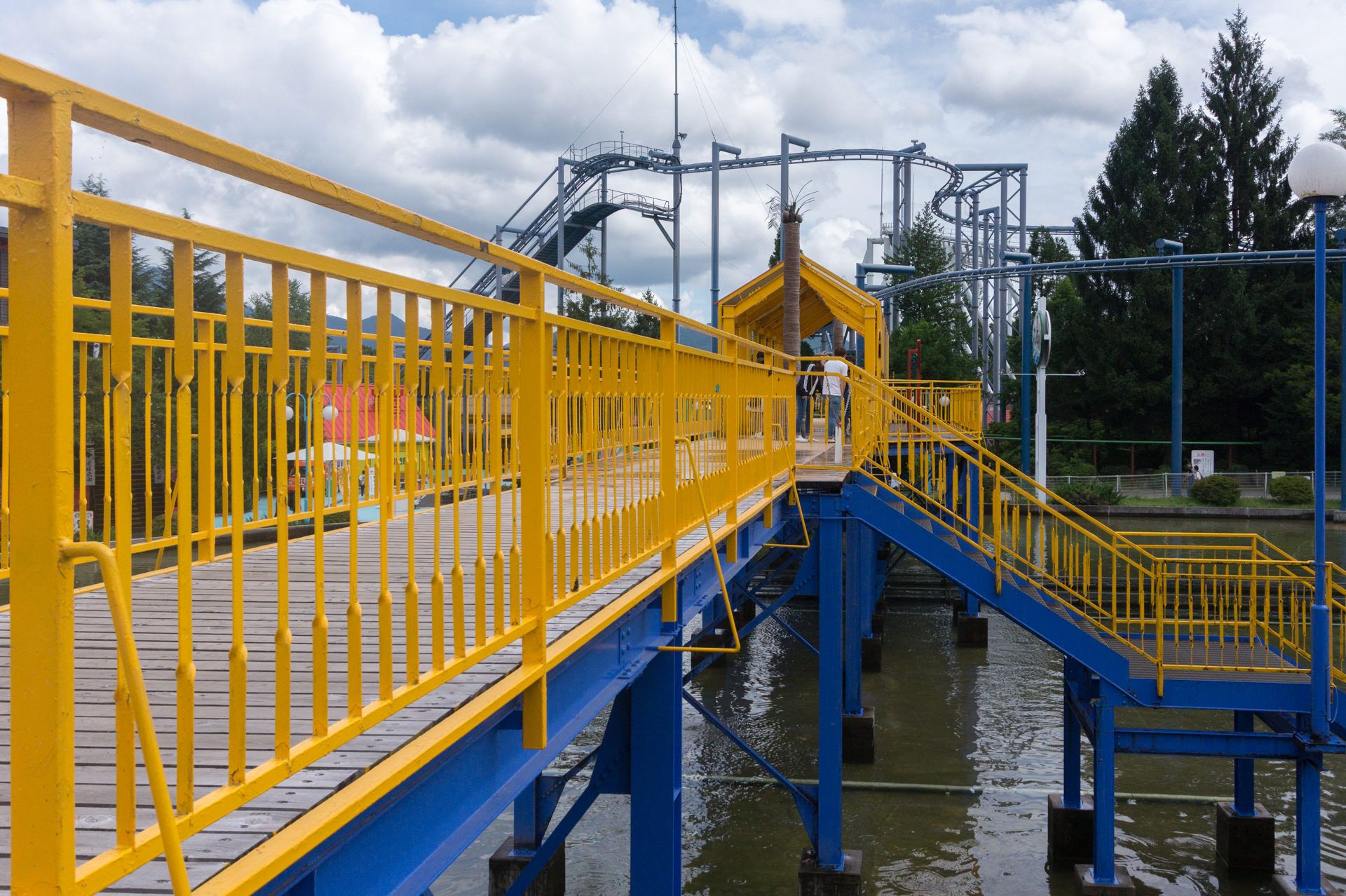
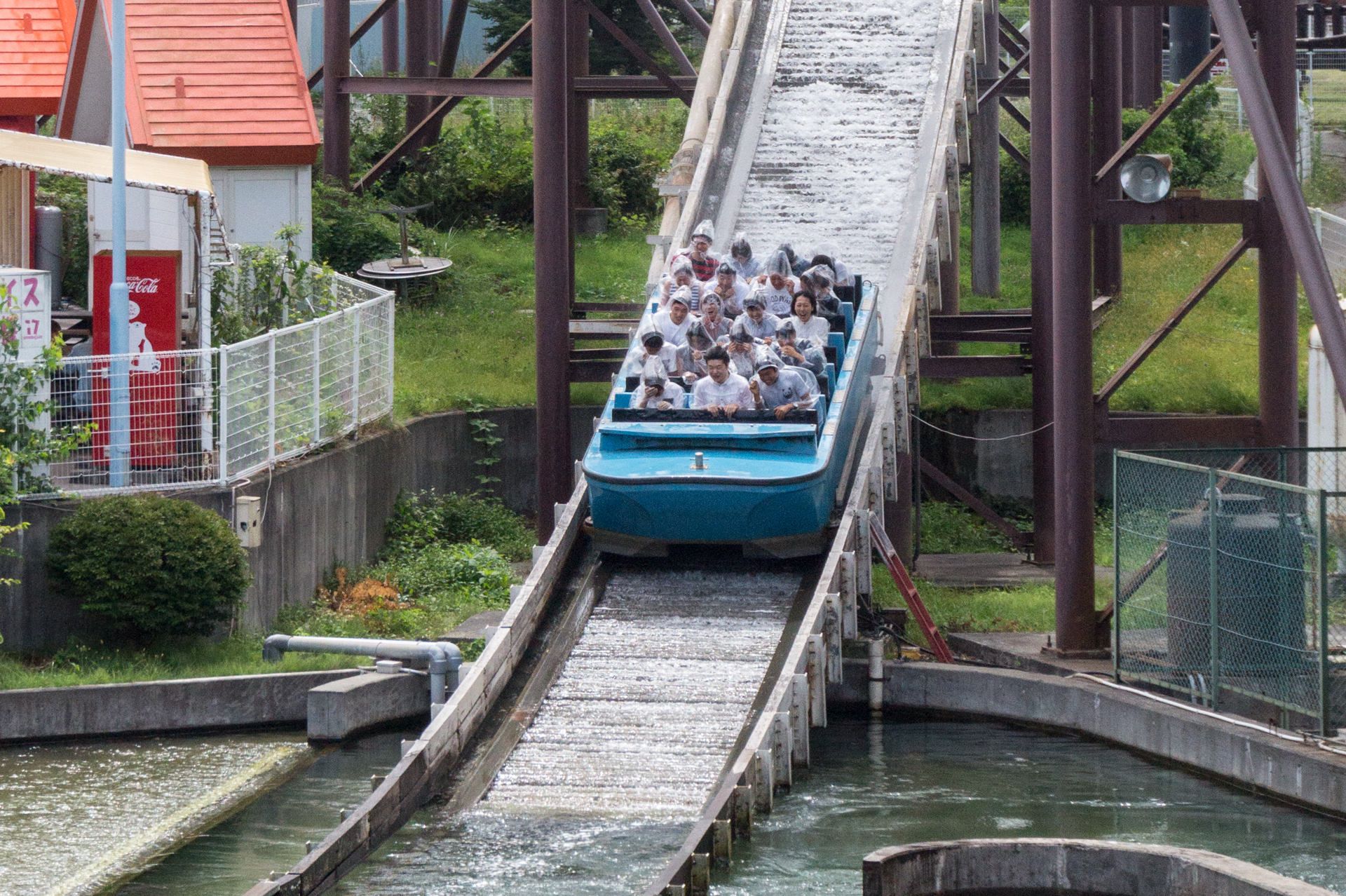
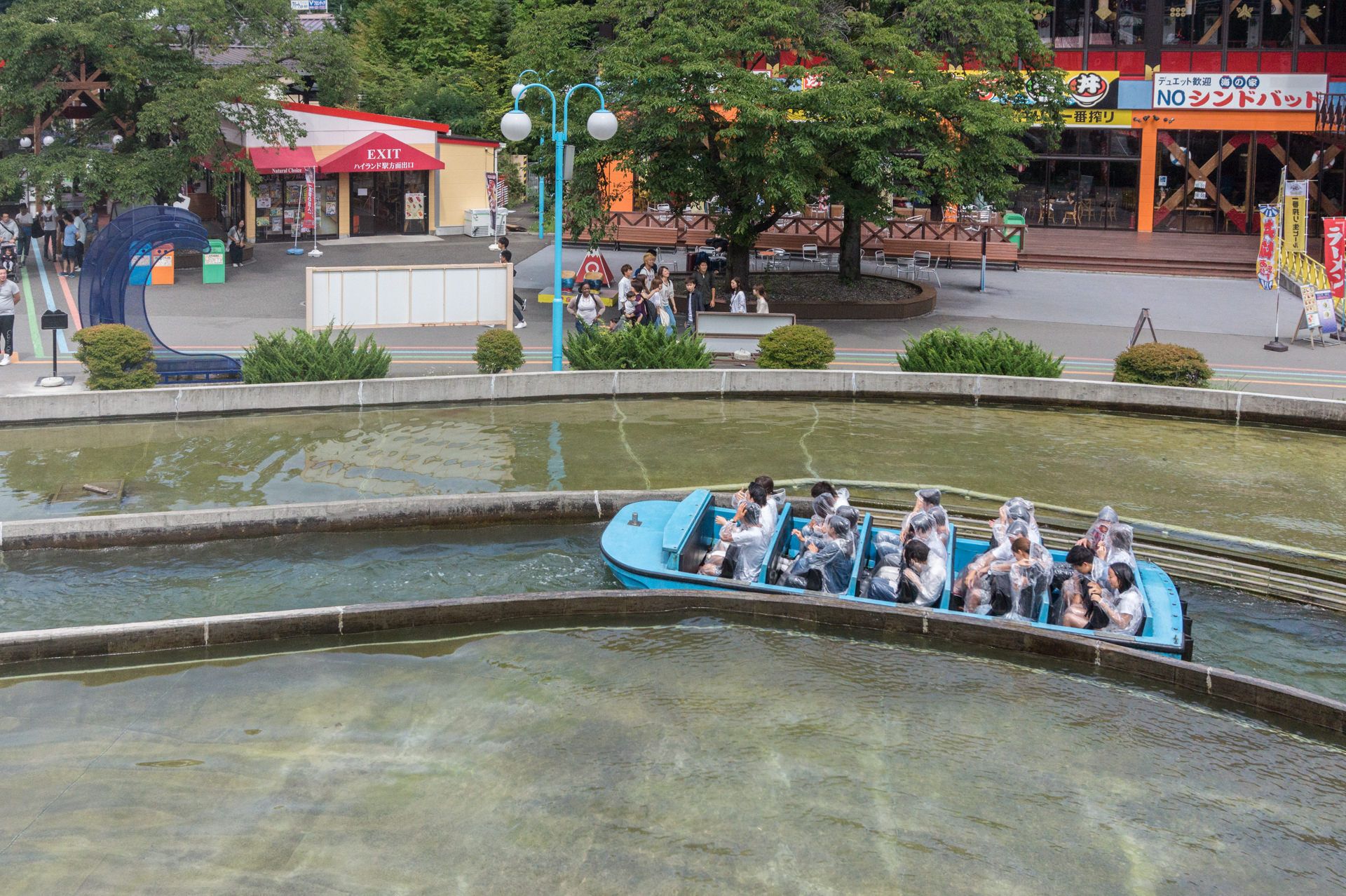
Eejanaika does not need any more praise than that, and so we quickly move on to the neighbouring ride, the Shoot the Chute Cool Jappaan from O.D. Hopkins. This ride is identical to the one in Nagashima Spa Land; however, it has a shelter on its bridge with some of the windows missing. The ride itself is slightly less wet than its sister ride, so you don’t get flooded until you reach the bridge. However, you should urgently ride in a poncho – although the staff are very happy if you don’t – because the water here (as in the rafting mentioned above) is unfortunately not really clean and leaves strange stains on your clothes, although this circumstance may only have been present temporarily – at least I thought it could be better.
Panic Clock
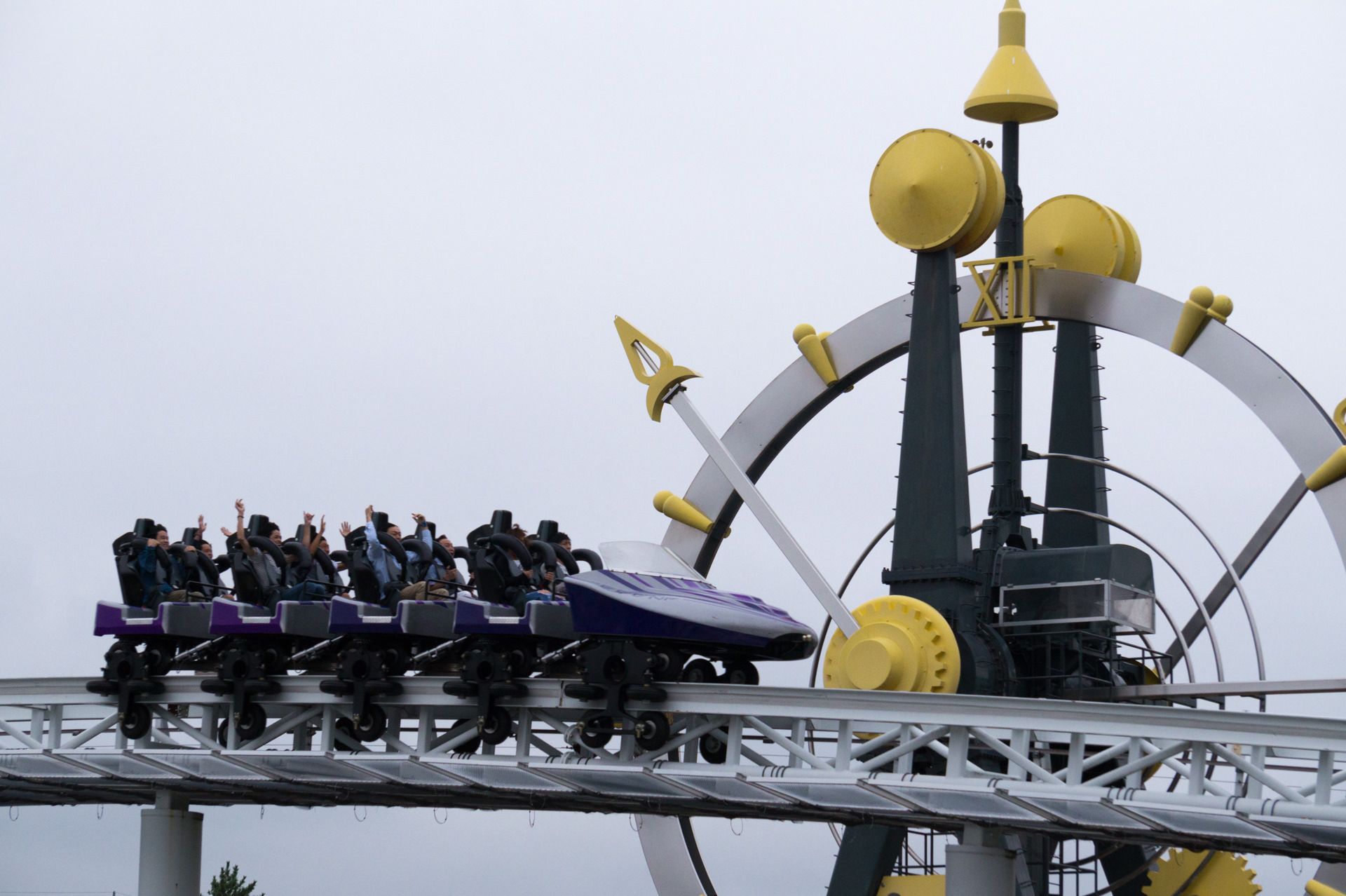
Past the Red Tower, an S&S Turbo Drop with a very shallow ride, the path takes us back to the large plane of Fuji-Q Highland. Here we meet the Panic Clock (or PaniClock, as it is written on the ride itself), a Vekoma Air Jumper. A further development of the Sky Flyer from the same company, the ride has gondola carriers with classic SLC seats instead of two open-plan cabins, where passengers are only secured by a lap bar. On this ride, passengers enter and exit on a straight plateau, and before the ride begins, the floor is lowered and the gondola carriers are hydraulically angled so that – unlike the related Fabbri models – the seats are all on a similar circular track. Both arms of the ride then start to move in opposite directions, which is why you keep meeting each other in the valley and in the loop. After 6 full rollovers, the ride ends again. Unfortunately, the ride characteristics are not optimal for this type of ride thanks to the given freedom in the SLC seats. Visually, however, the ride is convincing all along the line.
Much less appealing, however, is the makeshift tent in front of the old Moonraker back wall (which – for whatever reason – was simply not disposed of). Here you can experience the Fujiyama and Dodonpa roller coasters (i.e. Do-Dodonpa before the conversion) as a virtual ride. You sit in the original trains, get wind blown in your face and experience the ride, complete with VR goggles and headphones, almost exactly as if you were just getting on the ride a few metres further on.
Mad Mouse
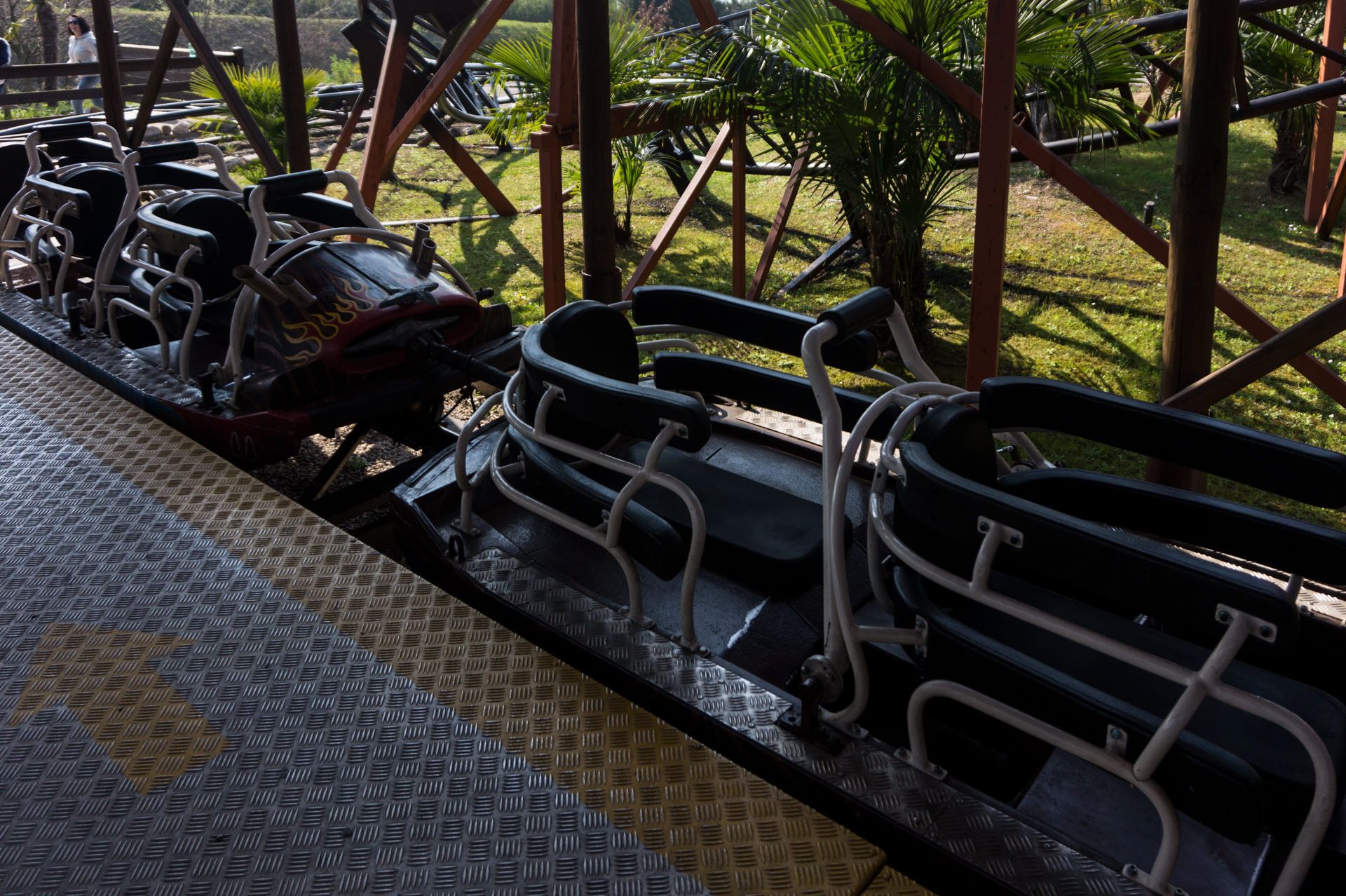
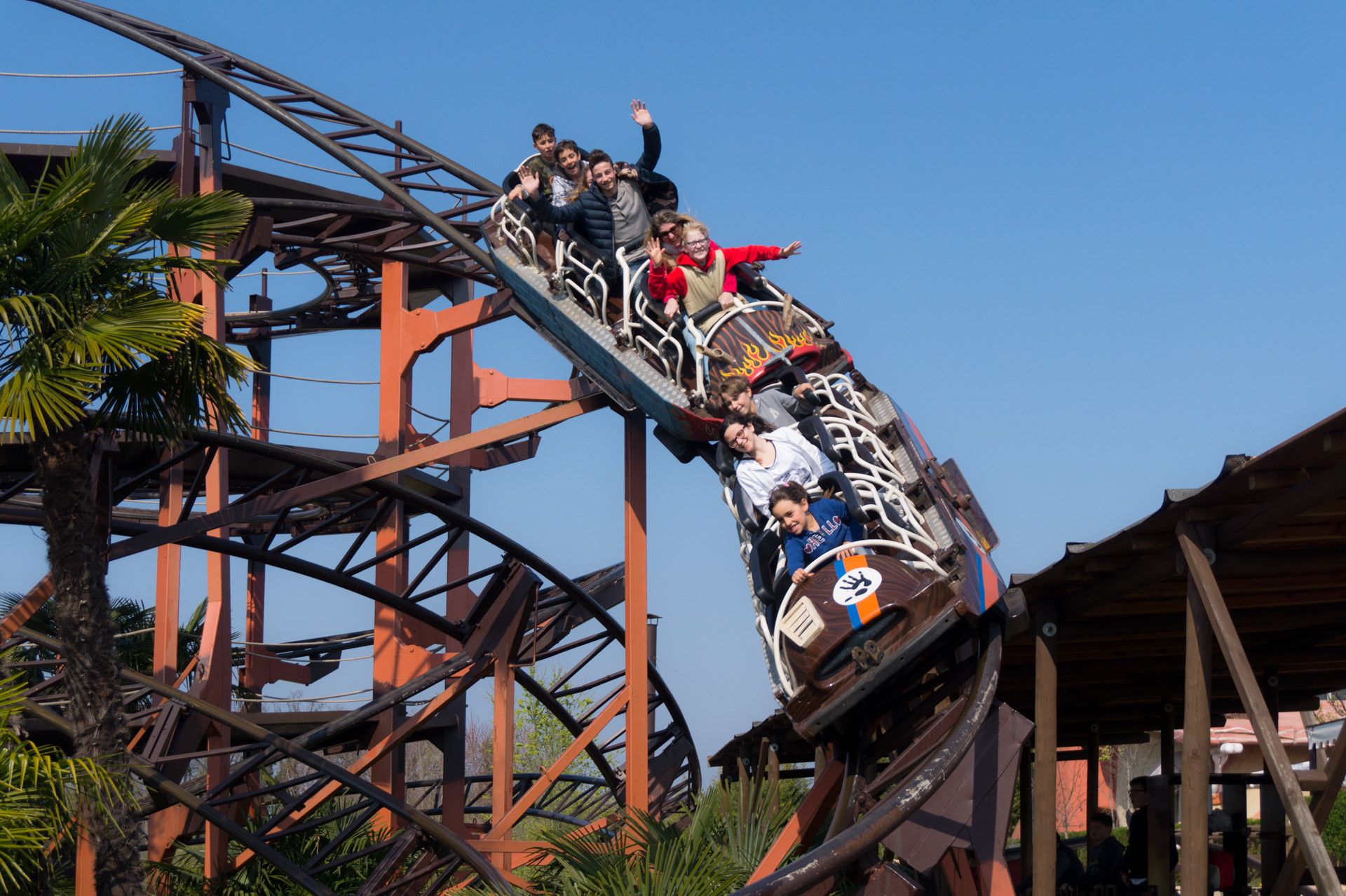
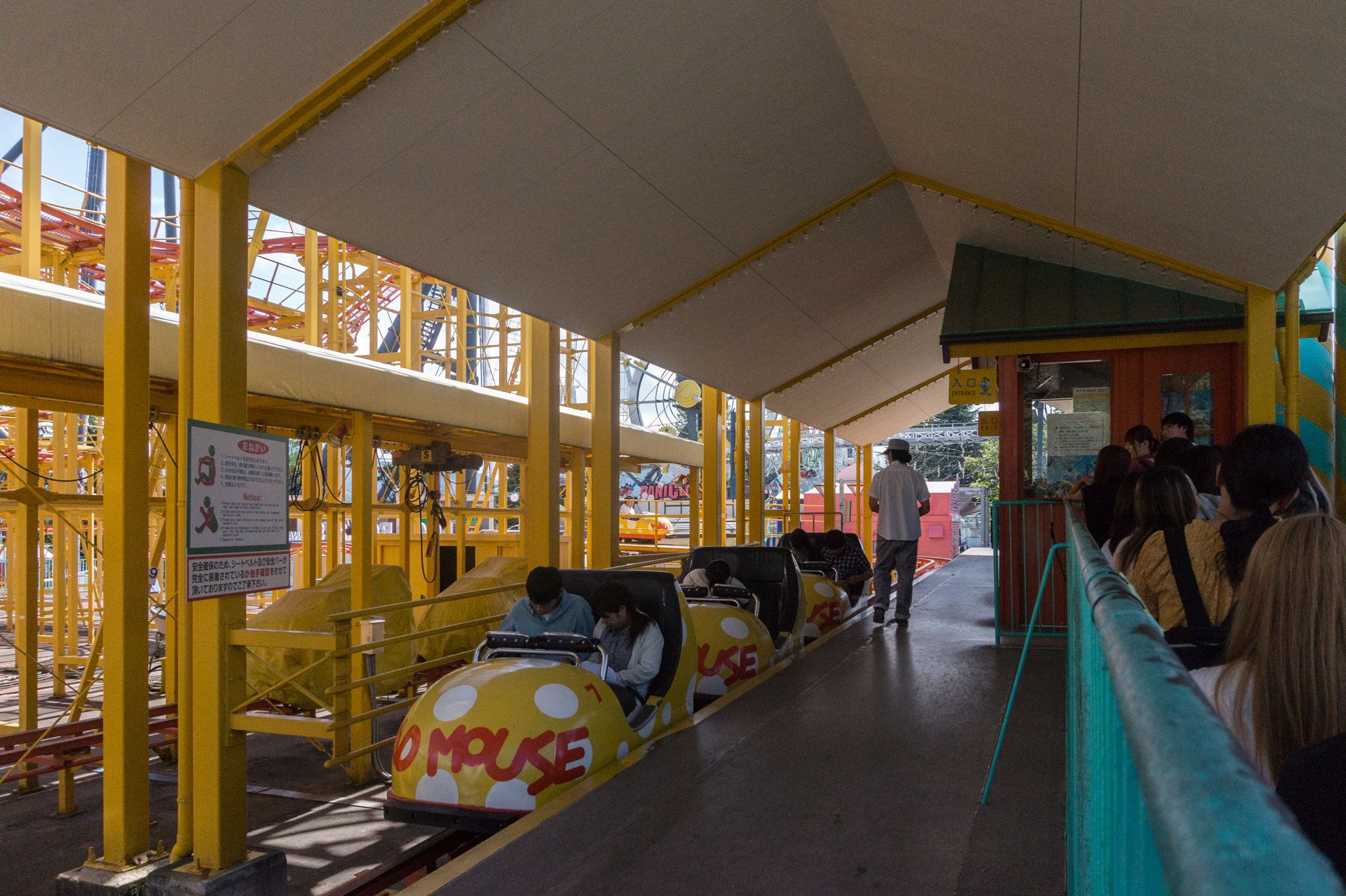
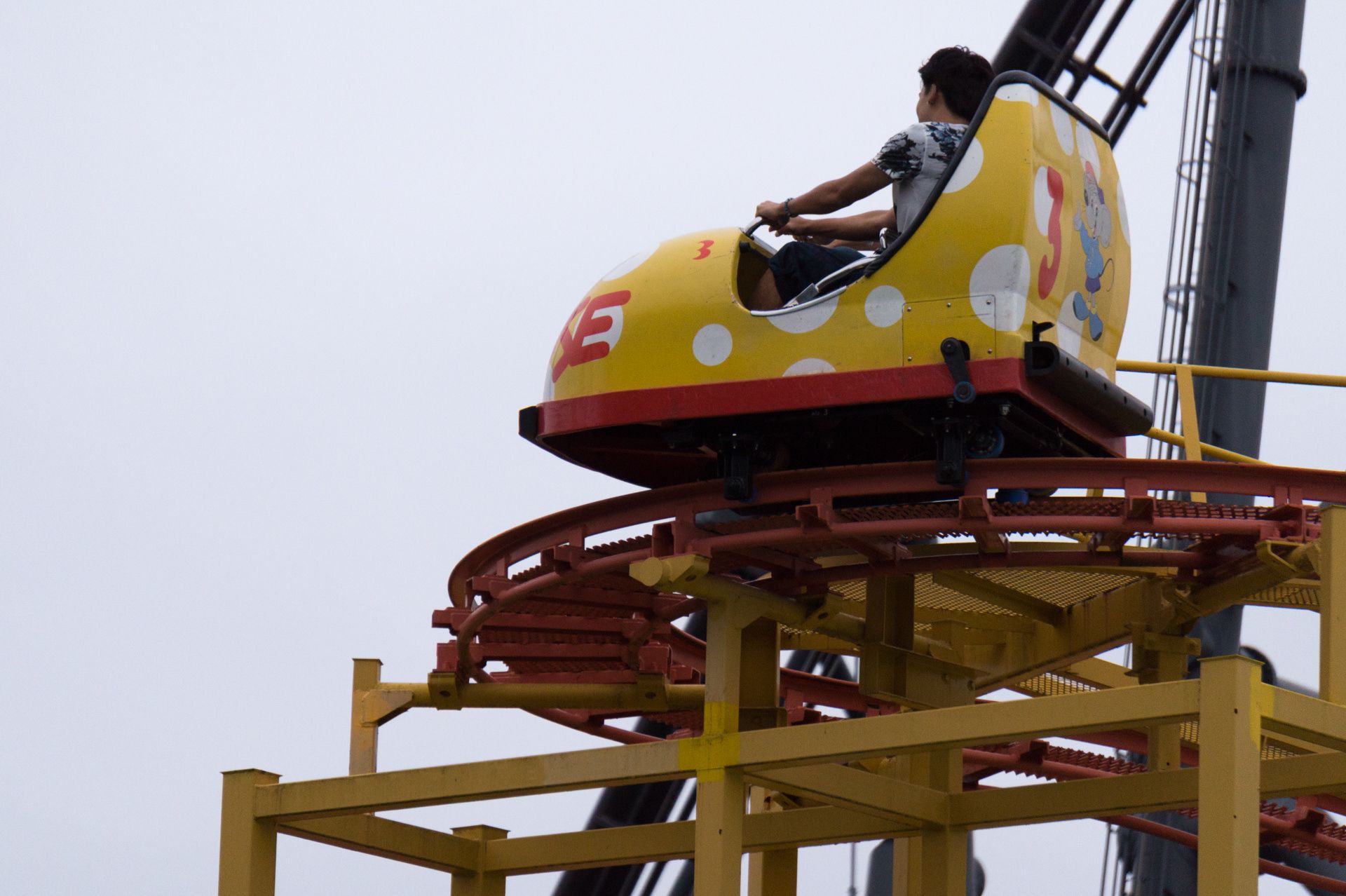
On the other hand, there is the Mad Mouse roller coaster in Fuji-Q Highland, which we of course love to get on. The two-seater cars are all loaded at the same time and are then gradually sent on their way. As in Greenland, however, this is done very quickly, so that one wonders once again why the Spaniards in Parque de Atracciones de Madrid simply can’t manage it on their Wild Mouse Vertigo.
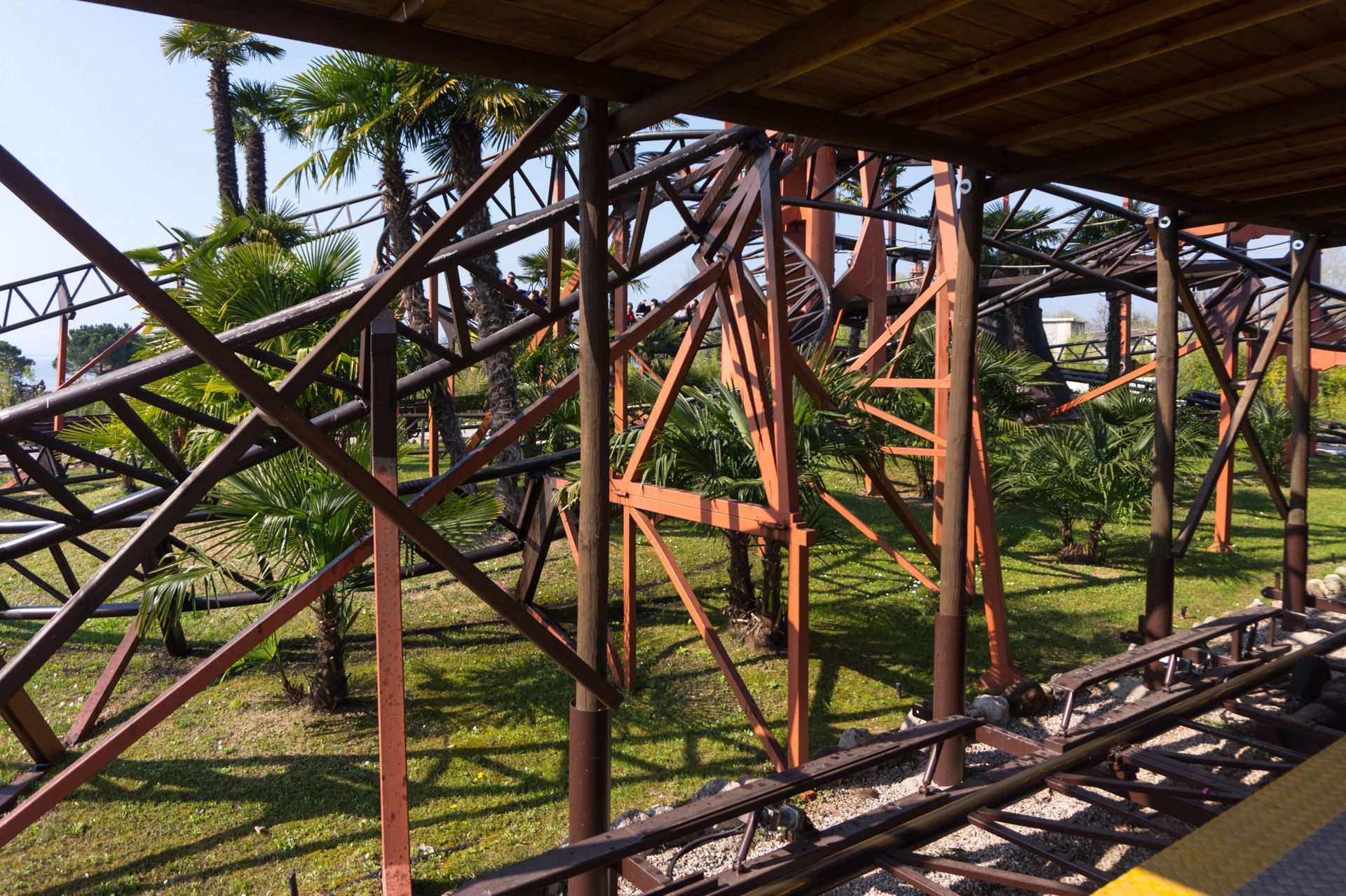
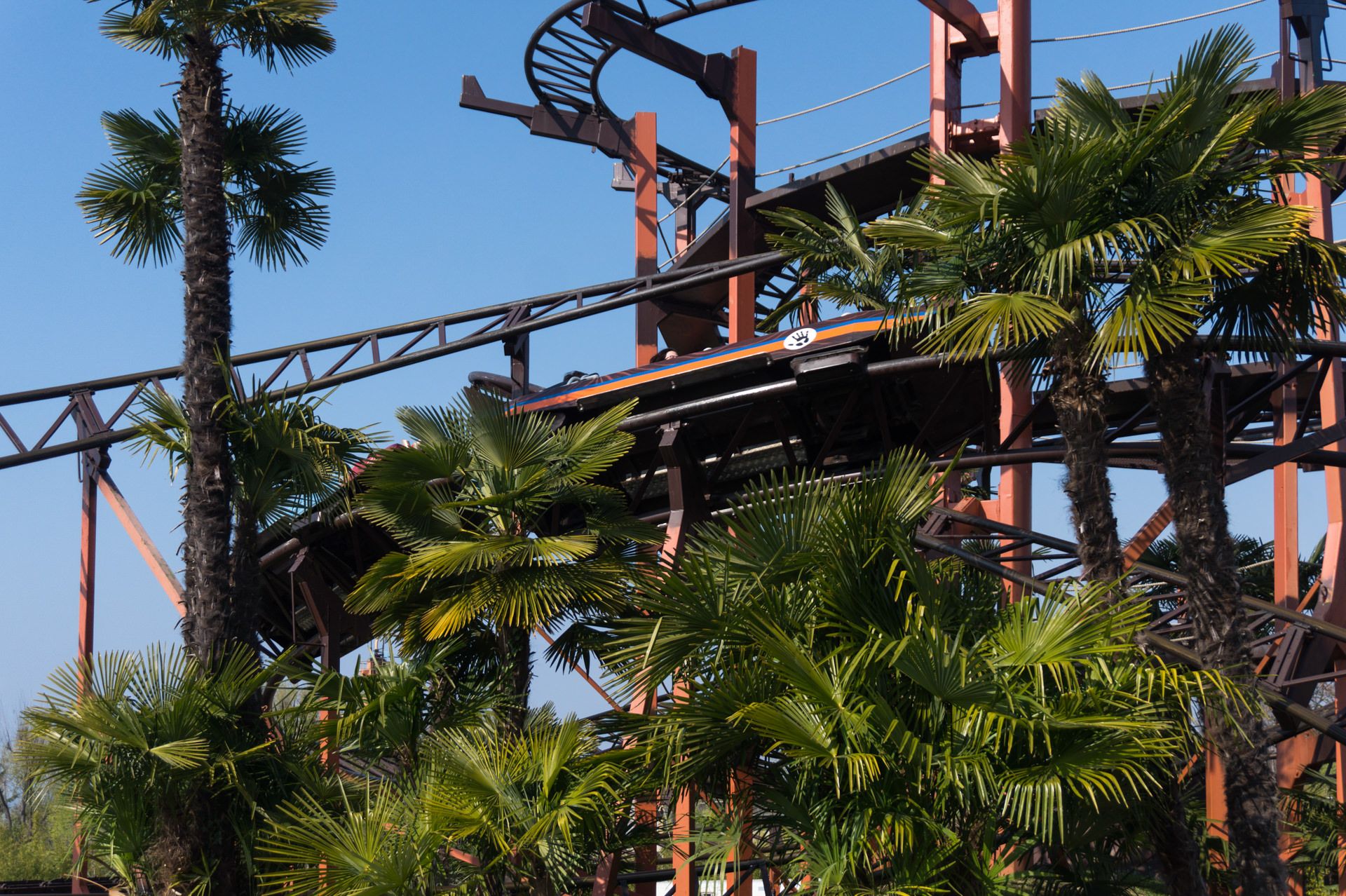
The ride begins with a tight right turn into the lift hill of the ride. Once at the top, there is another right-hand bend and then the first dip. After a short incline, a right-hand bend is also negotiated and a subsequent dip awaits the passengers. After this, you quickly pass through a block brake and then a fast combination of right and left turns, each briefly interrupted by three short straights. Once you reach the other side of the ride, the first hairpin bend of the ride follows. After a few (Big Apple-like) waves, you then reach the ride’s second block brake. Here, too, there is a hairpin bend. On a short descent, you immediately pick up some speed, after which you race through the third hairpin bend.
On the following straight you pass through another block brake, but instead of going into a hairpin curve, you take a lap around the inner courtyard of the ride. After another block brake, however, you change back to the familiar driving behaviour of a wild mouse and ride through four more hairpin bends at short intervals before reaching the next brake. Now you make your way in quite wide right turns, each interrupted by longer straight segments, through the forest of supports of the ride, before some waves break up this behaviour again. After a narrow right turn, the waves increase and shortly afterwards you reach the final brake of the quite nice ride. From then on, the only thing left to do is to somehow heave yourself out of the wagons.
Tondemina and Evangelion World
Once you’ve managed that at some point, there’s nothing standing in your way for a ride on the neighbouring Giant Frisbee from the manufacturer HUSS. Except perhaps the fact that the Frisbee Tondemina is only distinguished from other specimens of its kind by its massive advertising for the pizza company Pizza-La. In this respect, a visit to the absolutely wild classic Japanese tea cups, the equally classic horse carousel or even the interactive experience Evangelion World around the well-known anime Neon Genesis Evangelion is recommended.
Fujiyama
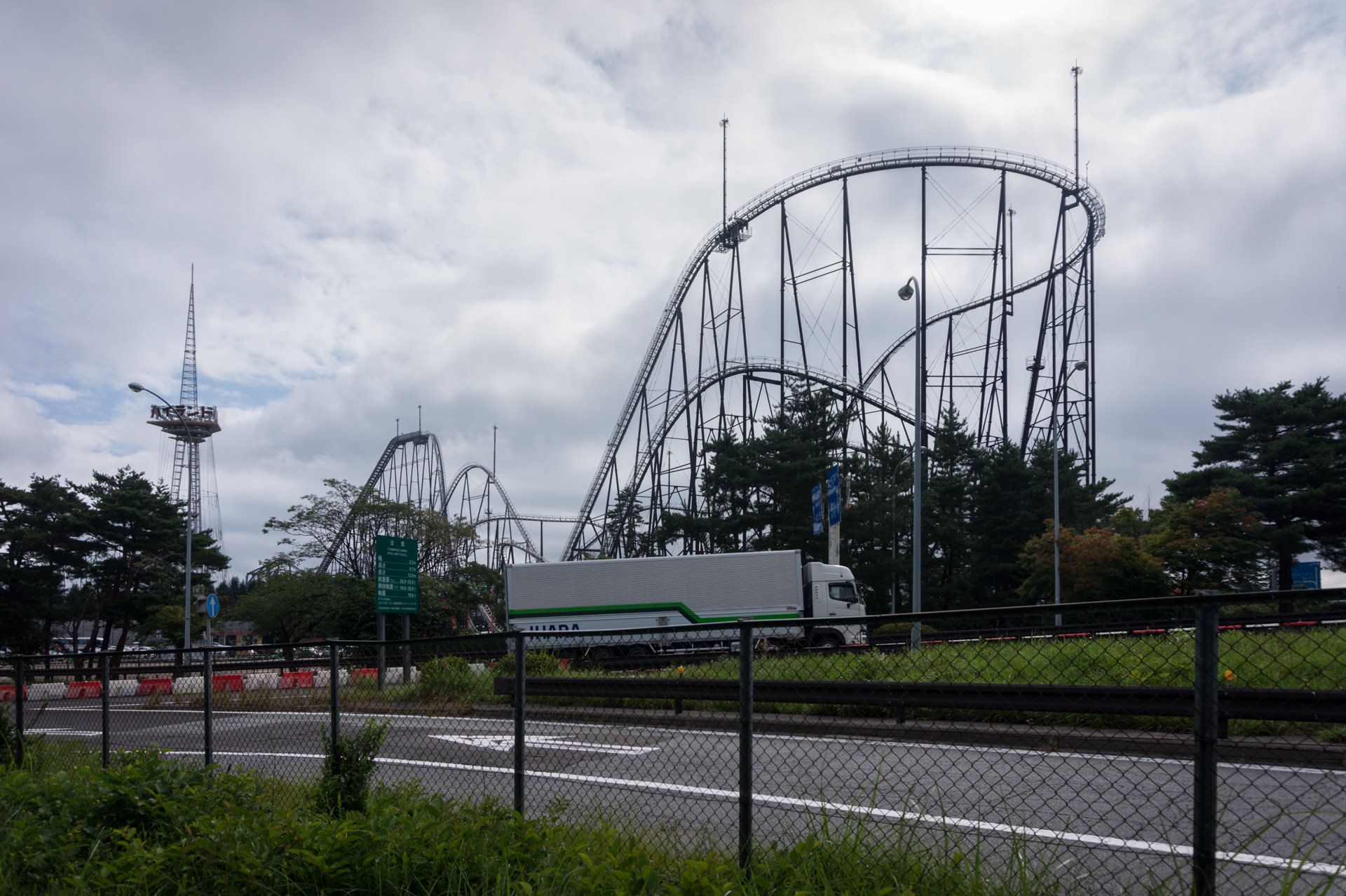
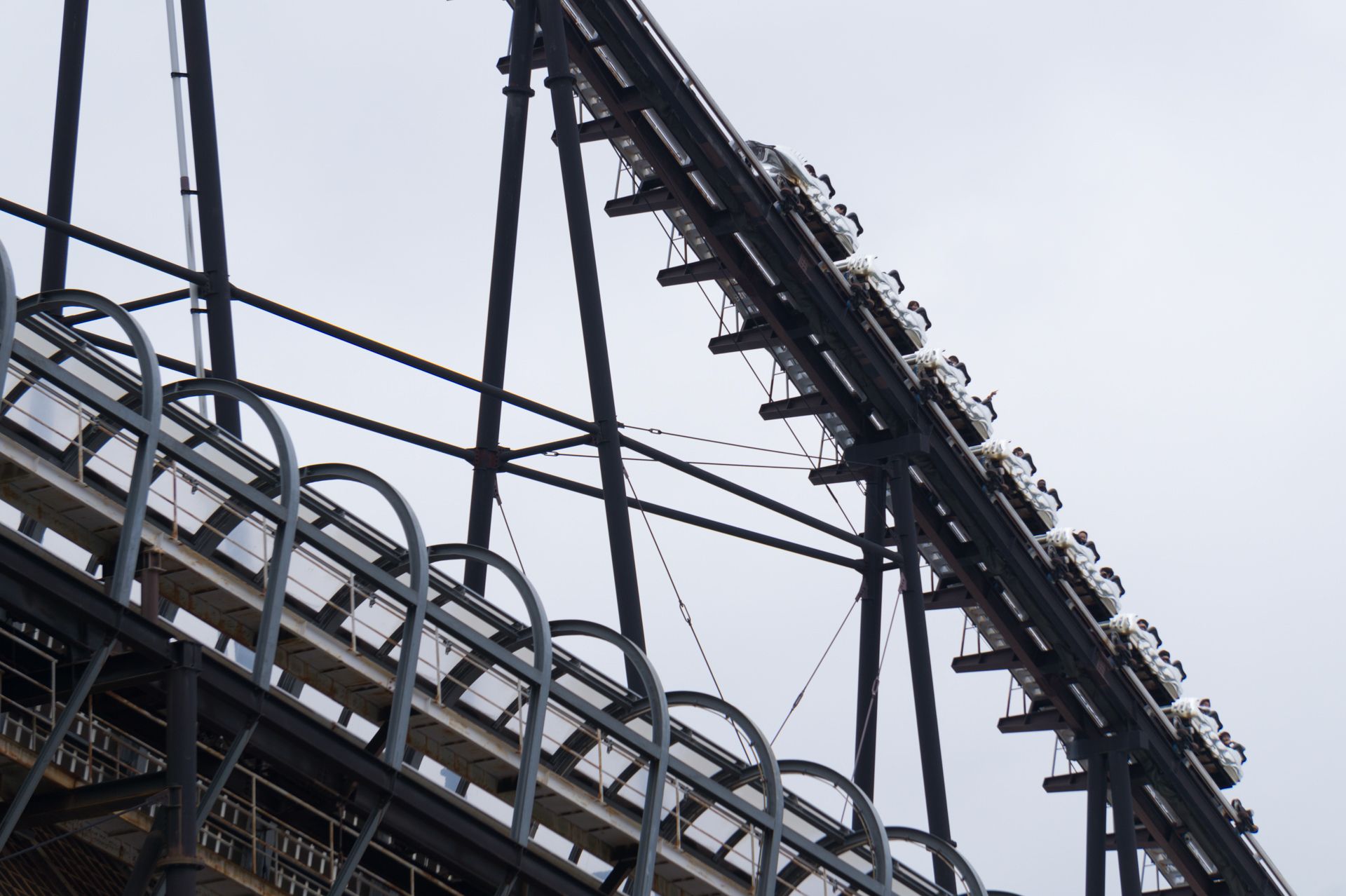
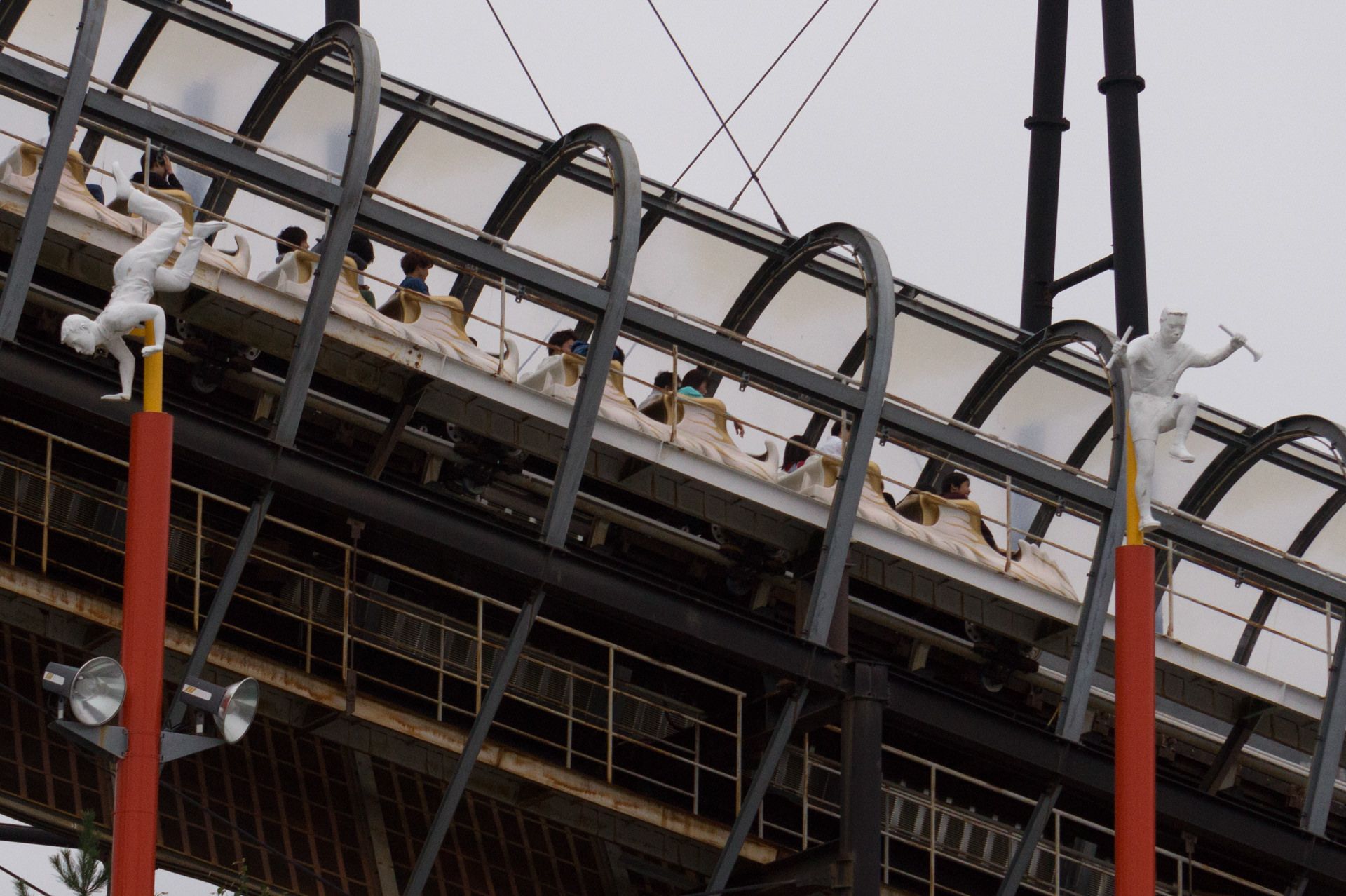
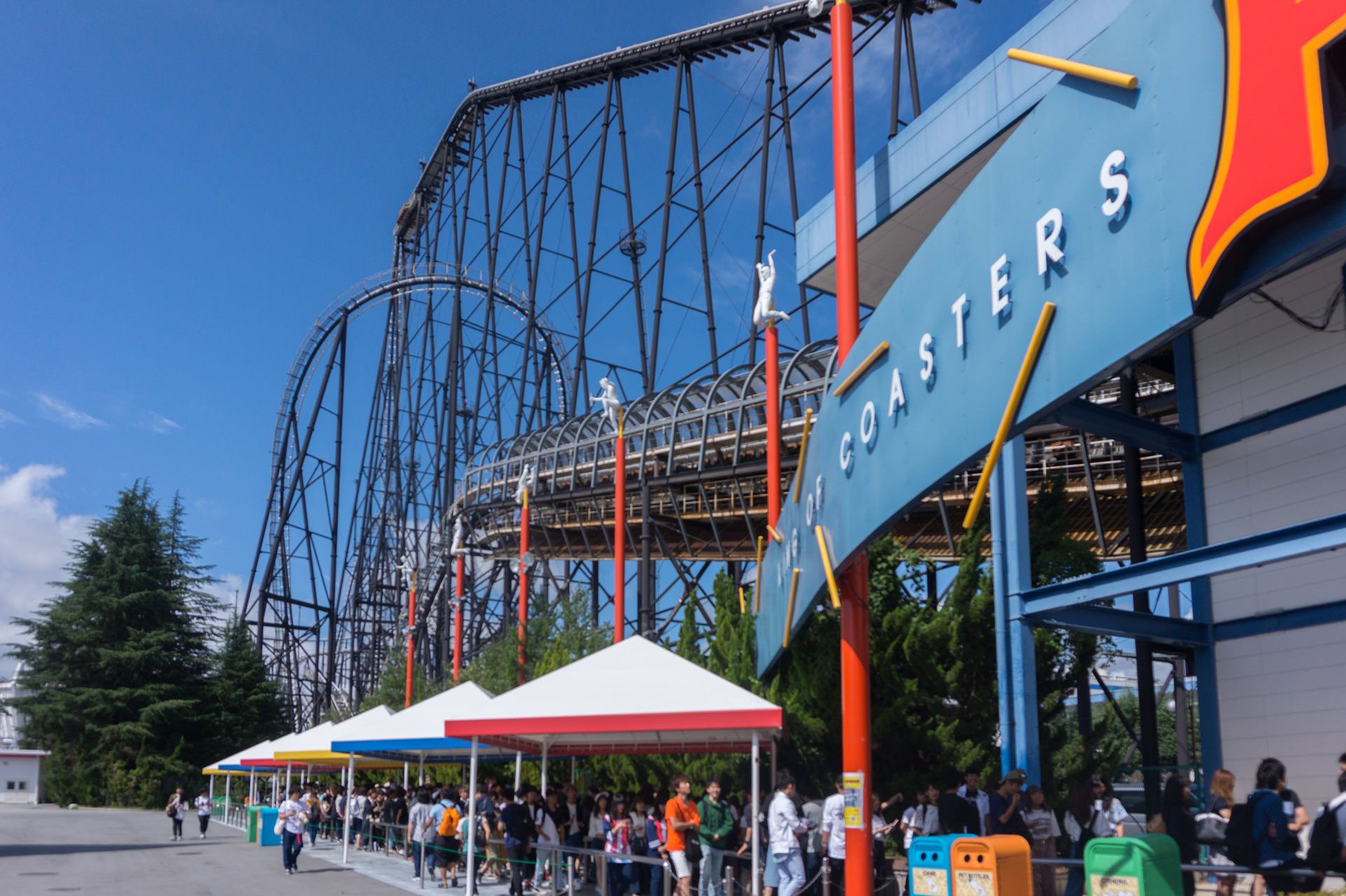
Now let’s move on to the last roller coaster of Fuji-Q Highland, the King of Coasters himself: Fujiyama. Built by the Japanese manufacturer Togo and with a height of 79 m and a length of more than 2 km, the ride shows off wherever it can, which is partly due to the paint job on the trains. And yet the ride is surprisingly compact, which makes the former record holder look almost filigree. Interestingly, most opinions about the ride are mostly negative – time to change that.
After taking a seat in the very comfortable train, which is however equipped with a strange bar, the ride can immediately begin. Far above the visitors, we pass through a tight turn and immediately reach the lift hill of the ride. This takes us steadily up to the aforementioned starting height, where we now stay for some time. A friction wheel battery then gets the train going a bit, so that, after a short right turn, it plunges into the depths, carrying the passengers into the air. In the valley, you then return to your original seating position and experience wonderfully pronounced G-forces. After a long climb, you complete a wide turn with (theoretically) excellent views of the volcano of the same name. On the following crest, you take off from your seat once more and experience airtime as it is written in the book. When you reach the valley, you would like the airtime moments to go on forever; how nice when shortly afterwards a camelback actually takes you into the air.
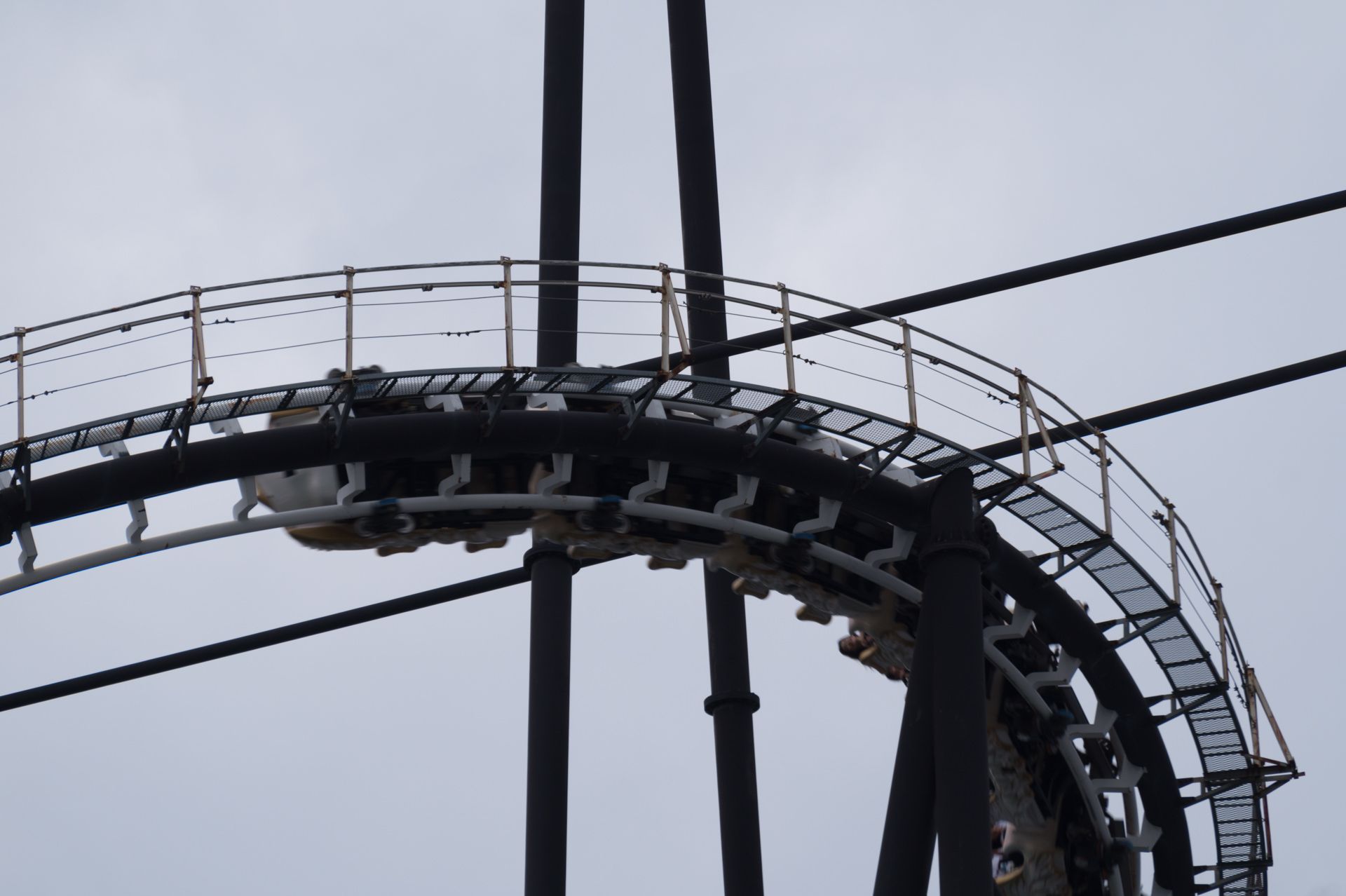
With a beautiful pacing, you now cross an elevated turn below the lift of the ride. After the subsequent valley, a slightly left-bending ascent follows, which then leads into an airtime-embroidered double-up. From then on, you race along the support structure of the turning curve through hill and dale. You then leave the aforementioned curve via another peak and drive in a straight line through the following valley. In a steep curve, which later tapers more and more to a turning curve, you quickly build up height, just before you shoot down to the ground and remain there for a long time. At breakneck speed, you pass through a long straight and a right turn close to the ground before the train turns towards the sky again. Still at an extremely pronounced speed, you now pass through a series of hills that zigzag their way through the steel structure of the roller coaster. This is delightfully wacky and causes a broad grin on the faces of the passengers. After a total of 5 hills, you start to climb a hill for the last time on a straight section of track, but instead of a descent, the final brake of the ride is awaiting you. With a good amount of airtime and at a speed that is actually much too high, you are now slowed down to a standstill. Shortly after, the station is reached.
Fujiyama is a magnificent roller coaster that knows how to lift its passengers out of their seats. The ride in the Fuji-Q Highland is breathtaking, while never repetitive and knows how to surprise even the most avowed roller coaster fan during the ride. In this respect, I really like the ground-hugging curve in the last third of the ride, but also the totally crazy last hills have their charm; the core component of this roller coaster, however, is and remains the pronounced airtime during the ride. And there is plenty of it, which is why Fujiyama is the best roller coaster of Fuji-Q Highlands for me and also the best roller coaster of the entire tour. In any case, the amusement park is not exaggerating by singing the praises of the roller coaster as the King of Coasters in a continuous loop. Moreover, the waiting time here almost flies by.
Pictures Fuji-Q Highland















Conclusion Fuji-Q Highland
Fuji-Q Highland is a very strange amusement park that looks really run down in parts. On the other hand, the park has really nice corners and some very great rides. Unfortunately, everything here is concentrated on the Big 4, i.e. the roller coasters Takabisha, Do-Dodonpa, Fujiyama and Eejanaika – the rest of Fuji-Q Highland is partly extinct. Now, however, we were also lucky to experience the park on two empty days (although the second one wasn’t needed and I didn’t ride any other attraction apart from the rapid river); on a full day, a visit is only worthwhile without a free pass, as then you can hardly manage anything outside the big 4 and possibly not even these. From the afternoon onwards, possibly even earlier, the announcements of the attractions whose queues have now been closed become more frequent. Towards the end, there’s nothing left to do but ride the teacups or take a spin on the horse carousel. Nevertheless, I’ll gladly visit the park again.
What is your opinion about the theme park Fuji-Q Highland? Just write it in the comment field below the report or visit our social media channels:
Click here for the next report of the Titanic Max Tour