A short visit to a beautiful Tivoli

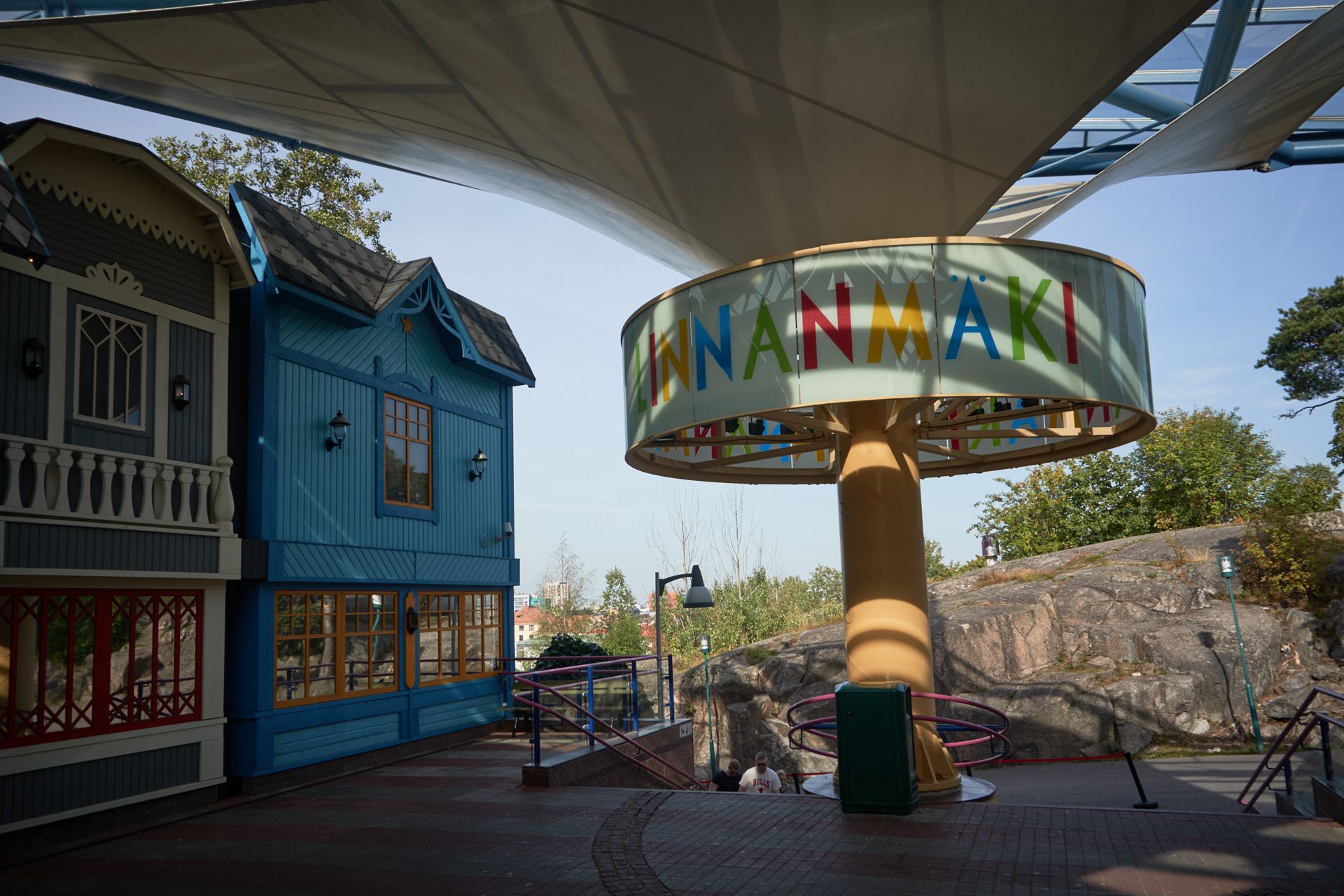
Linnanmäki

The story of Linnanmäki begins in 1907. Children’s Day events were organised across Finland in order to collect funds for child welfare. At first, the events were arranged on a non-regular basis but in 1945 Children’s Day became a regular annual event. In 1950 six child welfare organisations joined forces in the Children’s Day Foundation and opened the amusement park Linnanmäki.

Ukko

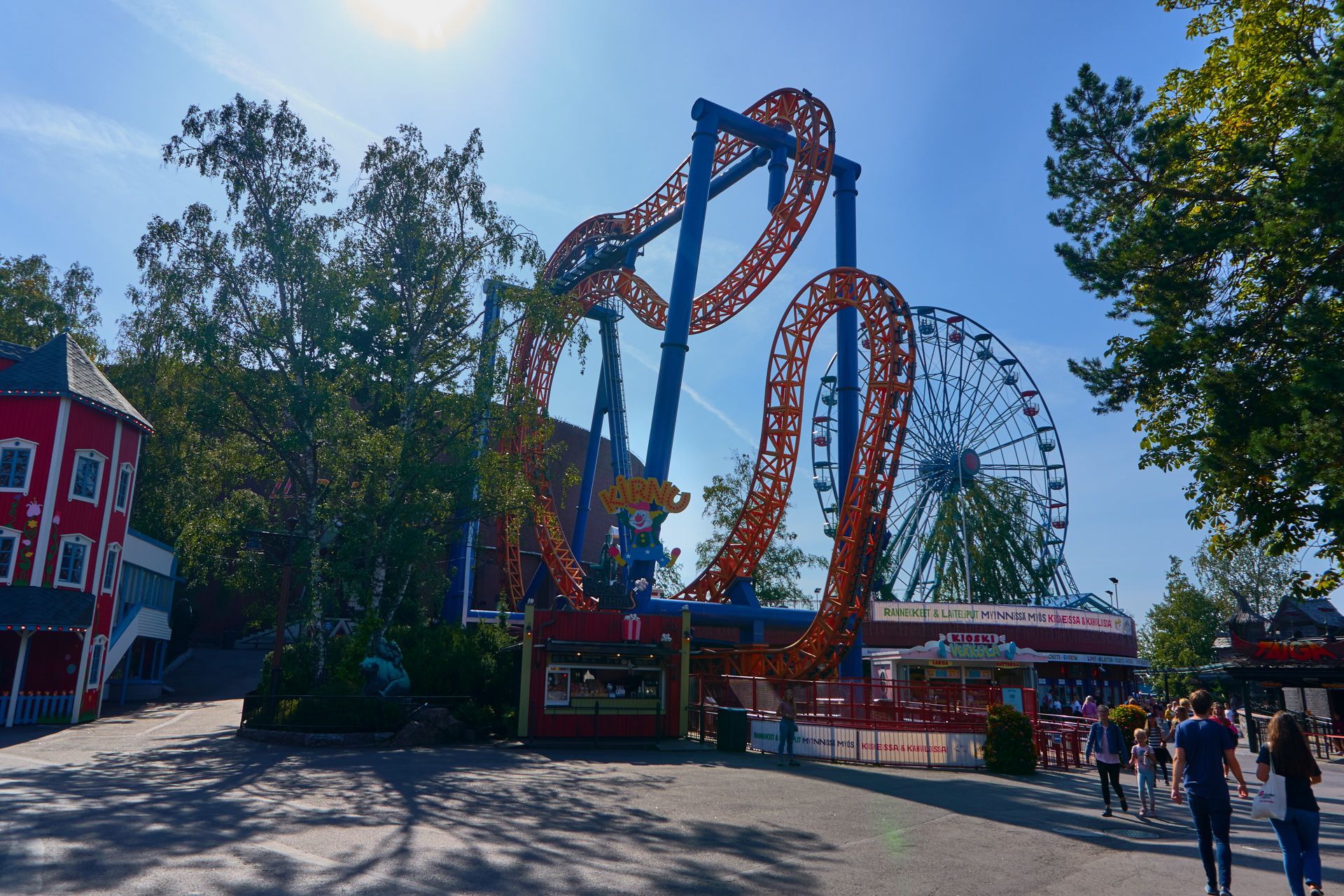
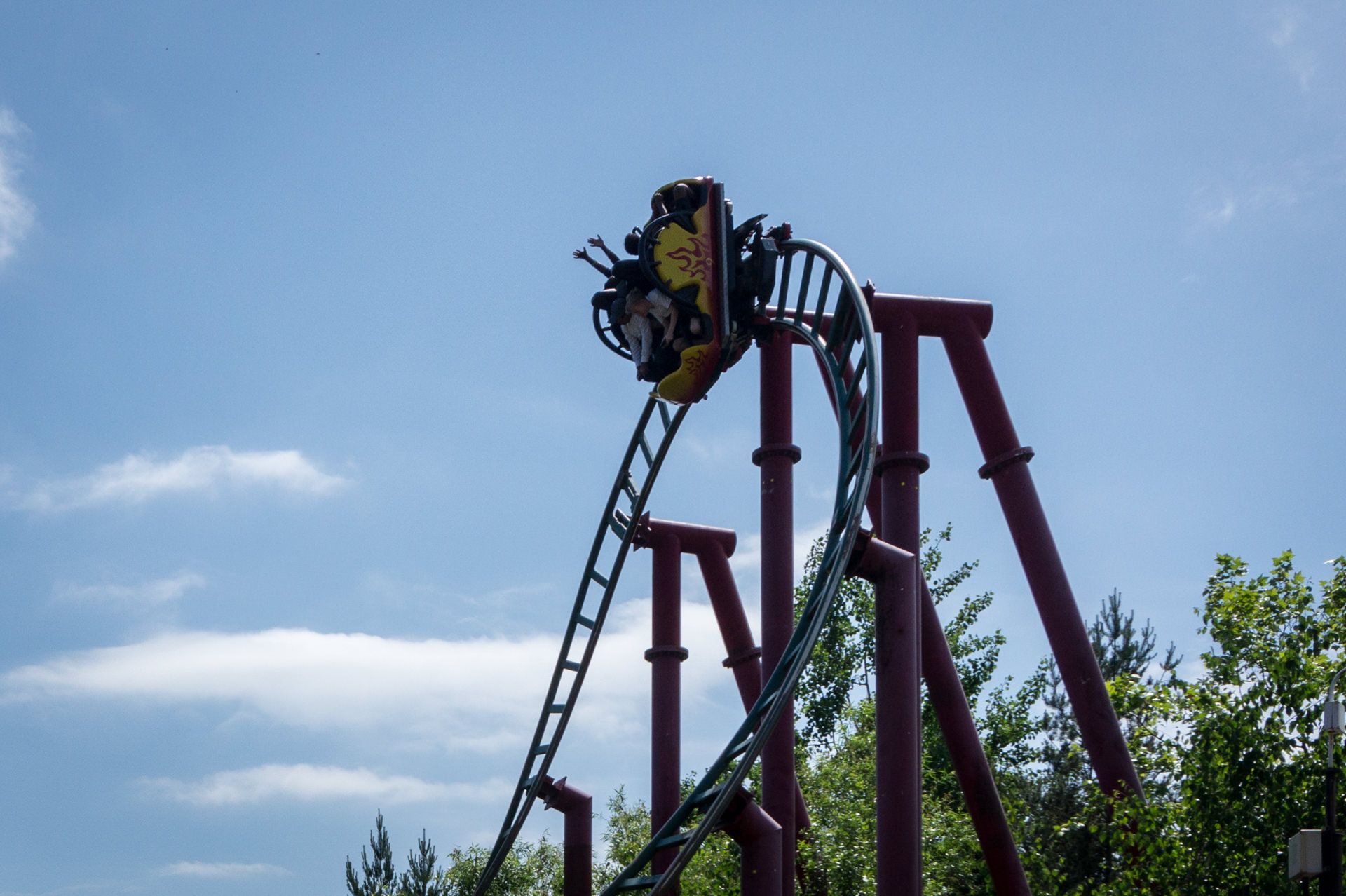
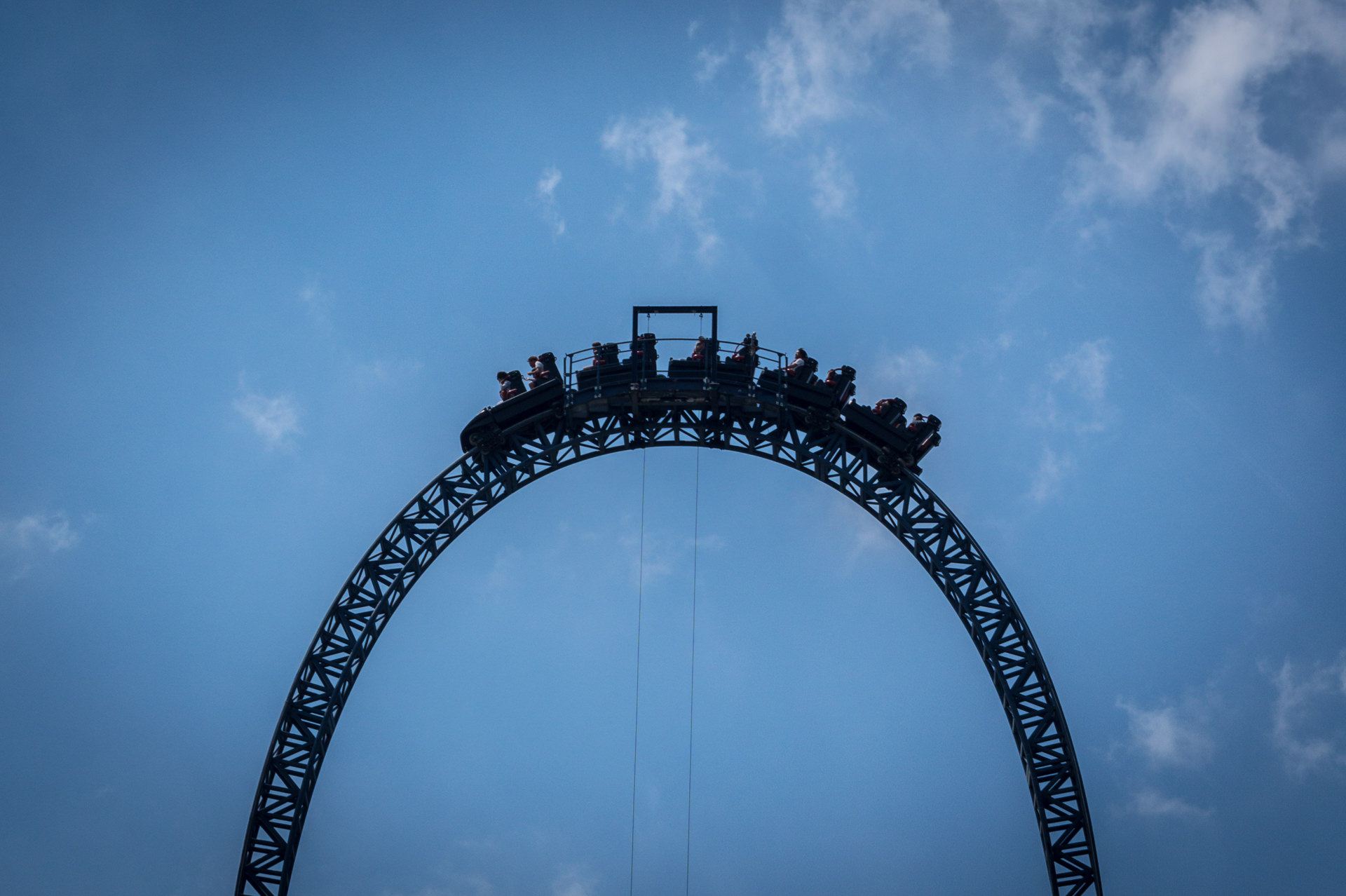
When you approach Linnanmäki one of the first rides you see is the roller coaster Ukko – a Maurer Sky Wheel towering the entrance area of the park. This ride features a vertical lift which goes over into the sky loop element.

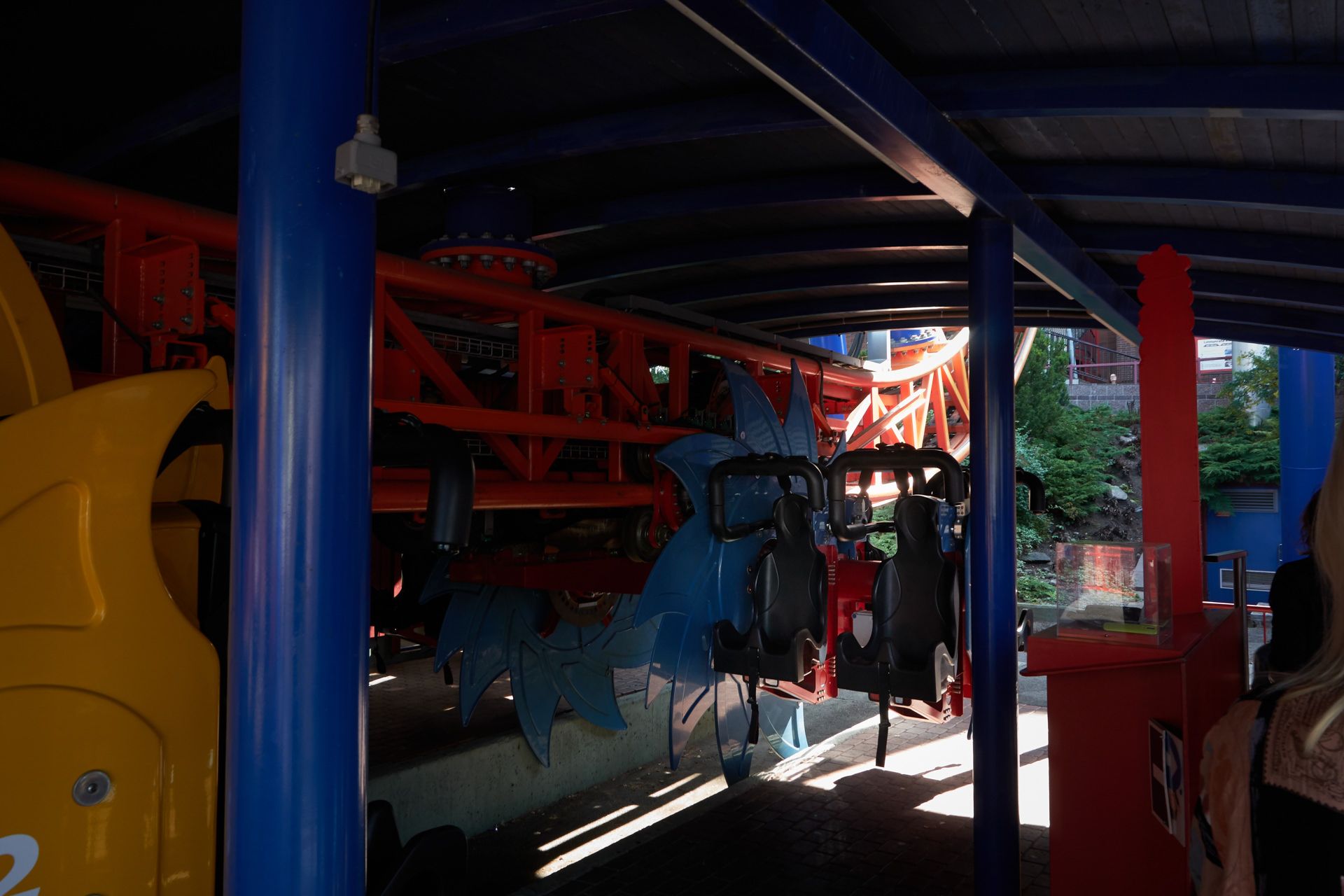
The Sky Wheel itself is a roller coaster experience that is quite difficult to describe. In the moment before you are relieved from the elevator upside down, there is a strange feeling in your stomach, which returns to normal within the first roll. This is followed by a descent with high centrifugal forces in the valley before you rush backwards through the valley again shortly afterwards in order to partially climb the sky loop element. After another pass through the station, the vehicle comes to an abrupt stop on the ride’s lift and is then lowered to the station again.

To be honest, I am not a big fan of Maurer’s Sky Wheels. The sensation is good, do not get me wrong, but they are not my kind of ride. The feeling of hanging upside down in 46m only hold by a lap bar is weird and not very enjoyable and the rest of the ride is just okay.

Raketi and Vuoristorata

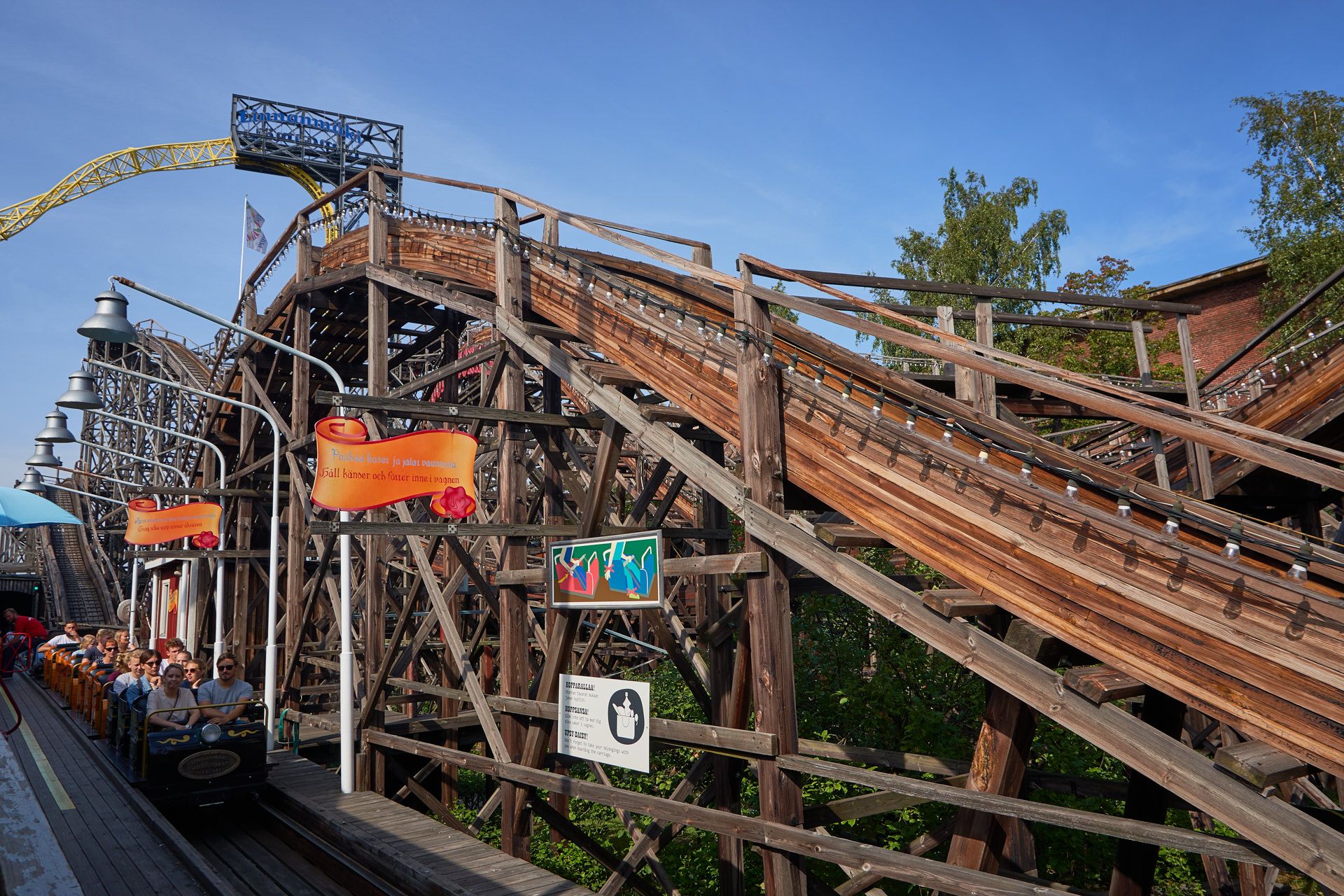
Past the great S&S Space Shot drop tower Raketi, we now head towards the oldest roller coaster of Linnanmäki: Vuoristorata. The name translates to or better said defines the term roller coaster in Finnish. It is the last of the four scenic railways by Valdemar Lebesch, who also built the two Rutschebanen of Bakken and Tivoli Gardens in Copenhagen.

Vuoristorata starts with a long curve leading to the left before the train engages with the cable lift. With a great view onto the roller coaster Ukko just in front, we quickly rise to the top to the lift. Another left curve follows before we dive towards the ground in a large drop. Now, we transverse the Figure-8 ride diagonally and climb a hill while doing so. On the front end of the ride, we now turn around in a curve leading to the right. We take off a bit on the double down, before racing over a large camelback. On the other side of the ride, we now take a left turn. This is followed by another double down leading into one more camelback. On the next hill we gently take another turn around. Parallel to the lift we now initiate the grand finale. Hereby we dive into a tunnel after another camelback. In darkness, we now pass the last curve before we reach the station of the ride and come to a halt.

Vuoristorata is a nice wooden roller coaster which offers a good amount of airtime, speed, and forces during its two-and-a-half-minute long ride. The scenic railway built in 1951 sure offers a great experience and should not be missed when visiting Helsinki.

Kirnu

One of the most interesting coasters of Linnanmäki is Kirnu. This Intamin Zac Spin is one of the earliest examples of a 4D coaster and resembles a large marble run. After the lift, the ride vehicle races towards the edge, plunges down, hits a high forced valley, and turns around on the next crest while the gondola can freely rotate around its own axis. Normally, a roll over is inescapable on the last hill of the ride.

Kirnu might just be a short ride, but also a very unpredictable and powerful one too, so you better not underestimate it.

Linnunrata eXtra

In the large water tower, situated right in the middle of the park, you can ride the Zierer family coaster Linnunrata eXtra which opened in the year 2000 as Space Express. Nowadays, the ride is not only named after the Finnish word for Milky Way, but also offers VR goggles, which makes it eXtra special. I rode the ride without the glasses, which I immediately regretted. The theme inside is dark and not longer visible. The ride itself is very gentle and therefore without any surprises. Unfortunately, I did not have the time to test the ride with the glasses, as it started to have a queue shortly after my ride.

Kieputin, Taikacircus and Mustekala

Back to the light, we quickly encounter the HUSS Top Spin Kieputin, which offered a short, but quite intense ride cycle. In the same corner of Linnanmäki, you can ride the dark ride Taikacircus, have a walk through the nearby funhouse or encounter a well-hidden Schwarzkopf ride called Mustekala at the end of a cul-de-sac.

Kingi

The 75m high drop tower Kingi does not have the best reputation among theme park enthusiasts. Albeit the ride on the Italian made ride offers a very intense drop, the experience itself sits on the uncomfortable side. The restraints by Moser Rides are very tight and the seats themselves are not made for Northern Europeans as they are simply not wide enough. Therefore, if you do not want to squeeze yourself into the seats for a rather long period of time, you should be either very slim and short or still a kid.

Magia

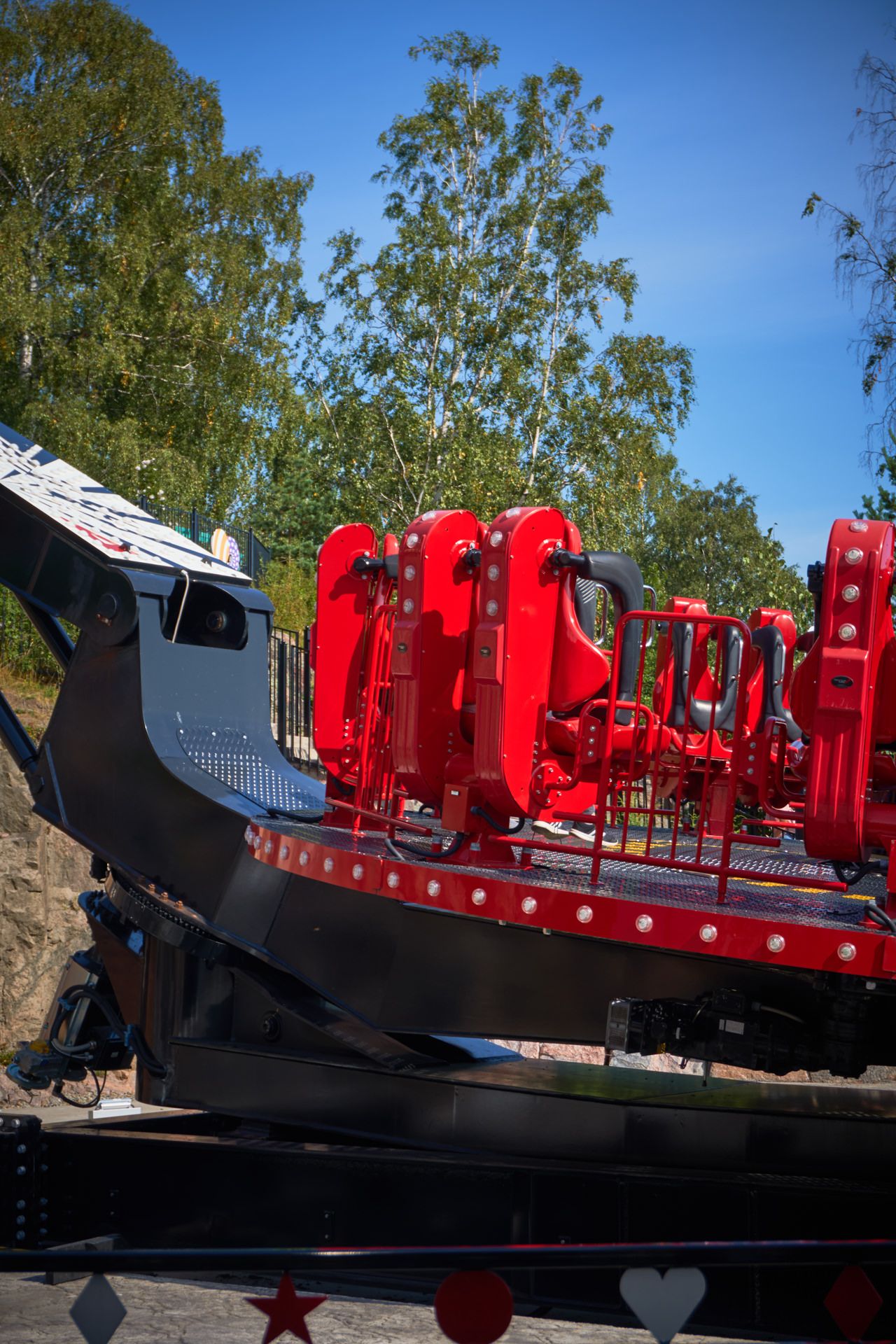
Passing the equally high observation tower, we now step down to another level where another Italian made ride awaits us. Here, however, we find ourselves in seats with a little bit too much room. The Technical Park fying pen Magia offers some heavy rotation and huge forces. It is a fun ride, which does not create a dizzy aftertaste.

Salama

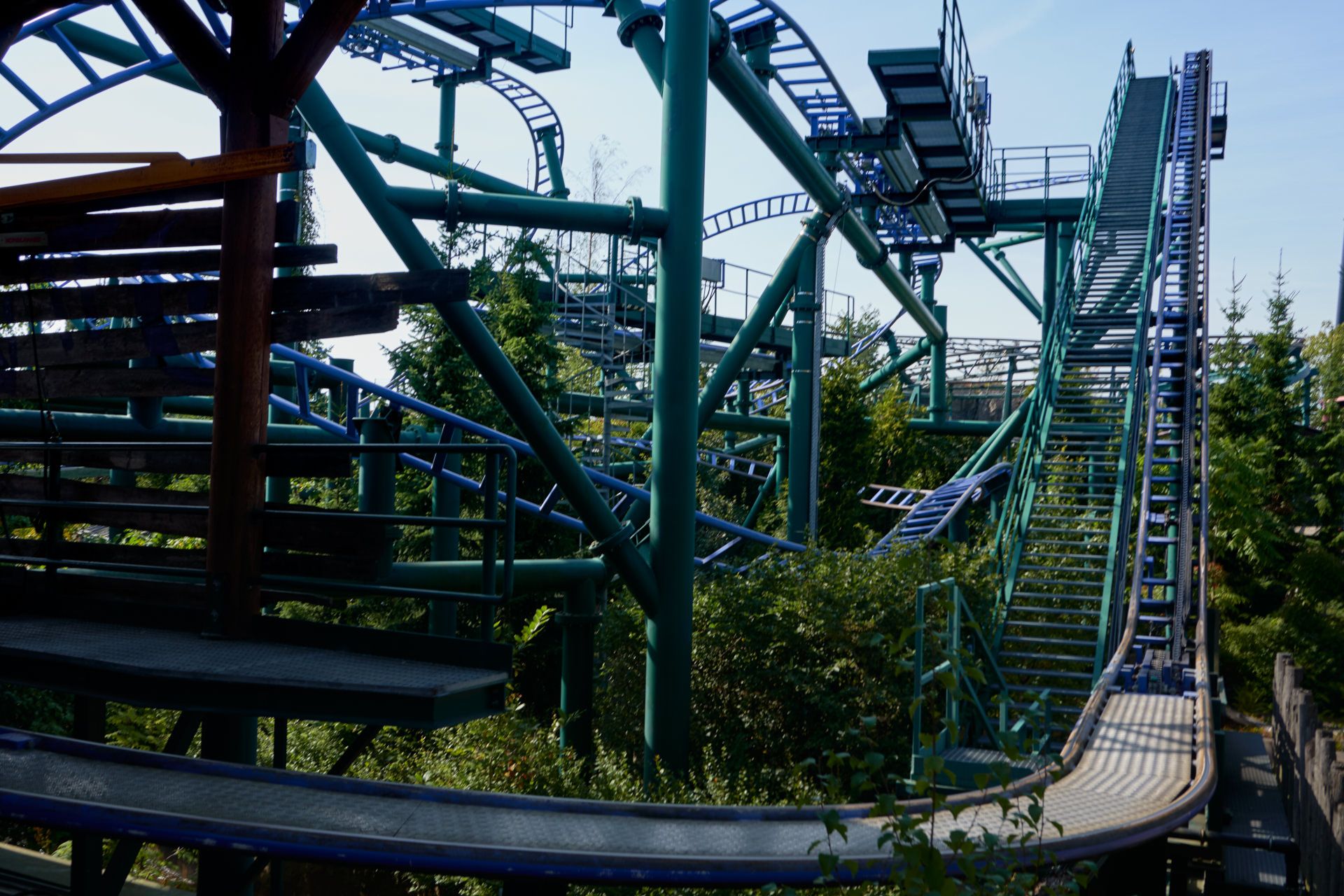
The spinning coaster Salama at Linnanmäki is a great example for an efficient use of space as it is located right on top of the rapid river Hurjakuru. As one of the latest spinning coasters built in Europe, it still offers the excitement of previous Maurer installations like Tarantula at Parque de Atracciones de Madrid or Spinball Whizzer at Alton Towers.

Salama begins with a short curve into the lift. Once at the top, the descents start with a tight turn leading into a curvy drop. With a good spin, we now cross the first valley and enter the large Immelmann turn, the track’s main element. Shortly thereafter, we climb a hill and find ourselves in the first block section of the ride. Another drop follows, whereupon we swirl over an inclined hill. After another upwards leading curve, we enter the second block brake. From here on, the hills get a little bit gentler. In a zigzaggy style, we now make our way towards the next block section. The finale of the ride consists of a downwards leading curve, a small hill and curve with a dip leading into the last brake section of the ride.

Salama is a great spinning coaster with an excellent spin. The ride offers a cool layout and a great pacing. Although the ride is quite short, it gives you a good repeatability factor.

Hurjakuru

Something you could also say about Hurjakuru. The compact rapid river by Intamin offers a refreshing ride through a well themed tunnel, various rapids, and along numerous water effects. Moreover, it also gives you an excellent view onto the spinning coaster above the ride.

Pikajuna

Another ride which is located above the rapid river is the powered coaster Pikajuna by Mack Rides. Like many of the old-style powered coasters, the ride features a bunch of helices and curved sections in a rather compact layout. Unfortunately, the ride is quite slow.

Tulireki

The exit of the ride leads us directly to Tulireki: a Mack Rides E-Motion Coaster. The prototype coaster is a rocking sensation, as the ride vehicle can rock forwards and backwards, as well as sideways. Nowadays, only the sideways rocking remains.

The ride starts immediately after a short curve with the incline of the very steep lift. At the top, we can enjoy the view onto Helsinki during our race through the gentle serpentine curves. After the first block brake we quickly head downwards in the largest drop of the ride. The following incline leads us into a spiral before we change direction at a lofty height. A downward leading curve to the left quickly goes over into a curve to the right and then into the second brake section of the ride. We continue our journey on Tulireki with a shallow downward leading curve to the left into a upwards leading curve to the right. Shortly thereafter we find ourselves in the final brake of the ride.

Tulireki is a fun little coaster when you are sitting in the front row on the vehicle, otherwise the ride can be very bumpy and not as satisfying. The ride system was a good trial, but it did not work out as expected.

Taiga

Right next door, you could ride the water coaster Vonkaputous by Premier Rides till the end of the 2017 season. Nowadays, this space is used for Taiga, the large Intamin LSM launch coaster which dominates Linnanmäki since June 2019.

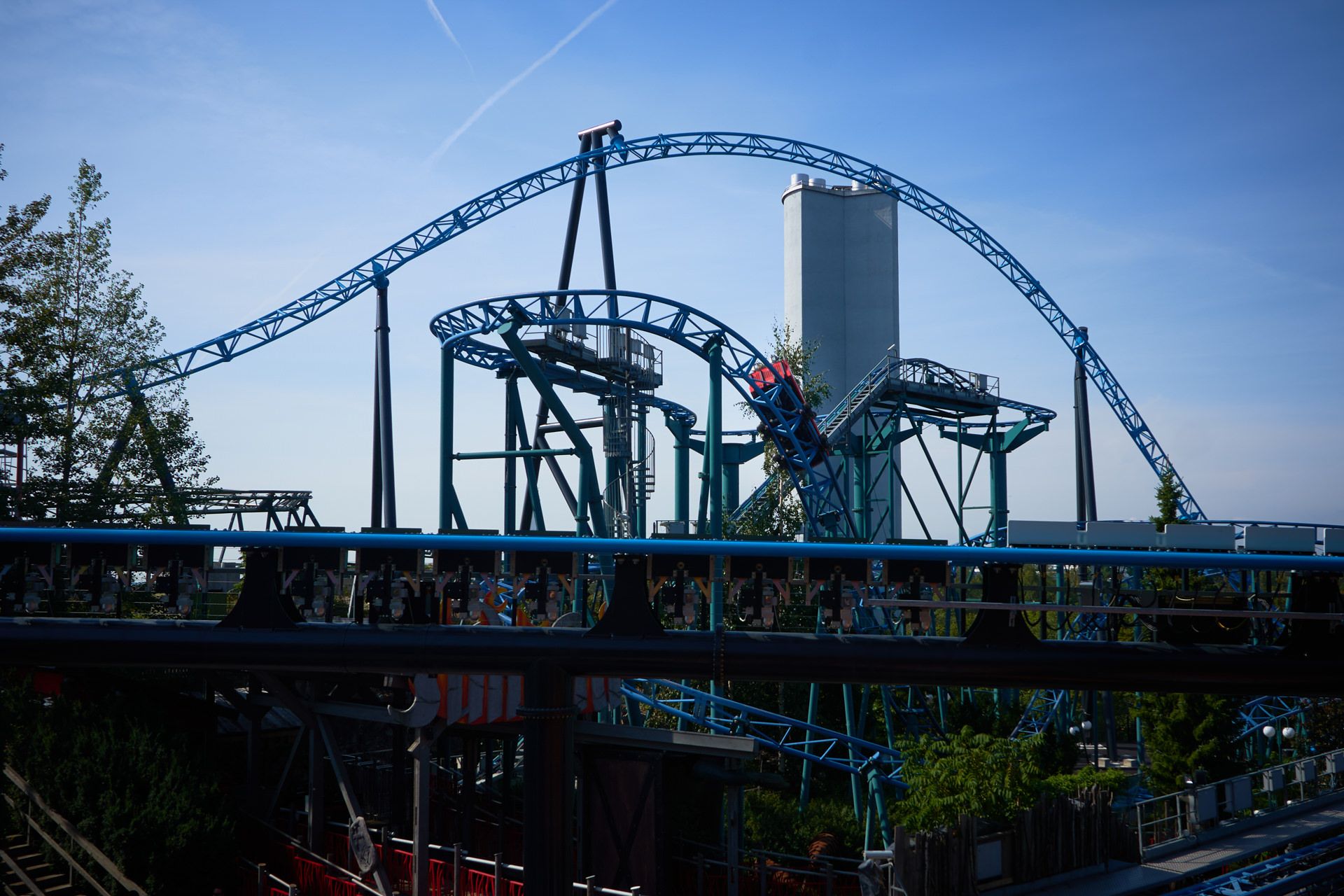
The ride on Taiga starts with a launch into the first inversion. This is basically an oversized corkscrew, whereby the entrance to the element is initiated by a twist to the right while climbing a hill. According to the roller coaster database (rcdb.com) this element is a Zero-G Winder. With a lot of momentum, we now race through the valley and swivel over hill and dale in a large curve to the right. On the crest of a hill, we quickly change direction and race along the ground. After another change of direction, the second launch section is reached, and we accelerate towards the next element: a 52m Top Hat.

With an awesome view onto the city of Helsinki we now dive down towards the powered coaster Pikajuna. In an inverted airtime hill, we now cross the roller coaster Tulireki and experience a moment of pure joy before turning towards the ground again. In the next valley, we reach our top speed of 106 kph. After flying over a bunny hop, we head upwards and change direction in an Immelmann. Hereafter, we climb a left-hand bend into an s-hill followed by a right-hand turn. At a lower speed, we now swivel a bit from left to right, before plunging down to the ground for one more time. In an airtime hill, we enter an inclining left-hand curve, which releases us into the final inversion of the ride: a heartline roll. One last right-hand bend then leads us into the brakes and shortly thereafter the ride comes to an end.

Taiga is awesome. This coaster is simply terrific, and the layout is just perfect. Intamin did an incredibly good job by giving its masterpiece from Phantasialand some new elements and include a bunch of outstanding inversion.

Pictures Linnanmäki

Conclusion Linnanmäki

Linnanmäki is a great amusement park and one of the best Tivoli, I visited so far. The atmosphere within the park is great and the attractions are amazing. You simply cannot have a better day in an amusement park while supporting a large child welfare foundation at the same time. You are doing something good while having fun and that is something you will not find that often.


What is your opinion about the Tivoli Linnanmäki?  Just write it in the comment field below the review or visit our social media channels:


The Gruffalo and Tiger Rock

The changes of the past five years

The UK’s greatest theme park has been going through a period of renovation, or rather transformation, for some time now; there is no other way of explaining the changes that have taken place over the last five years – apart from last year’s Adventure Tree Carousel, no new attraction has been added to Chessington World of Aventures. For example, the Runaway Train is now the Scorpion Express, the dark ride BubbleWorks is now Gruffalo’s River Ride Adventure and the log flume Dragon Falls is now Tiger Rock. Sadly, there have also been some retirements, such as the Monorail, which used to dominate the area around the Hocus Pocus Hall and the Zoo, and the Peeking Heights Ferris Wheel.

Scorpion Express

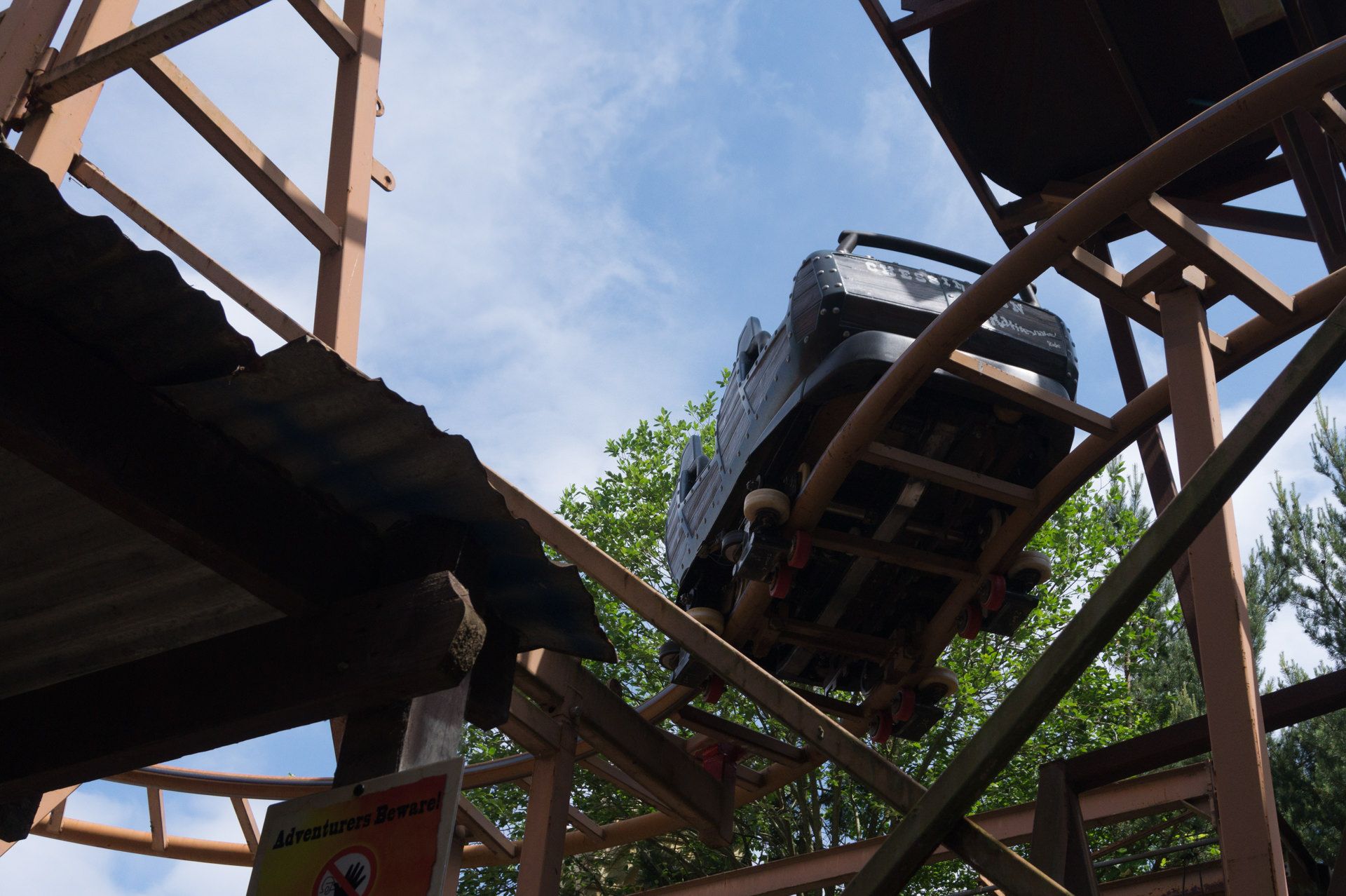
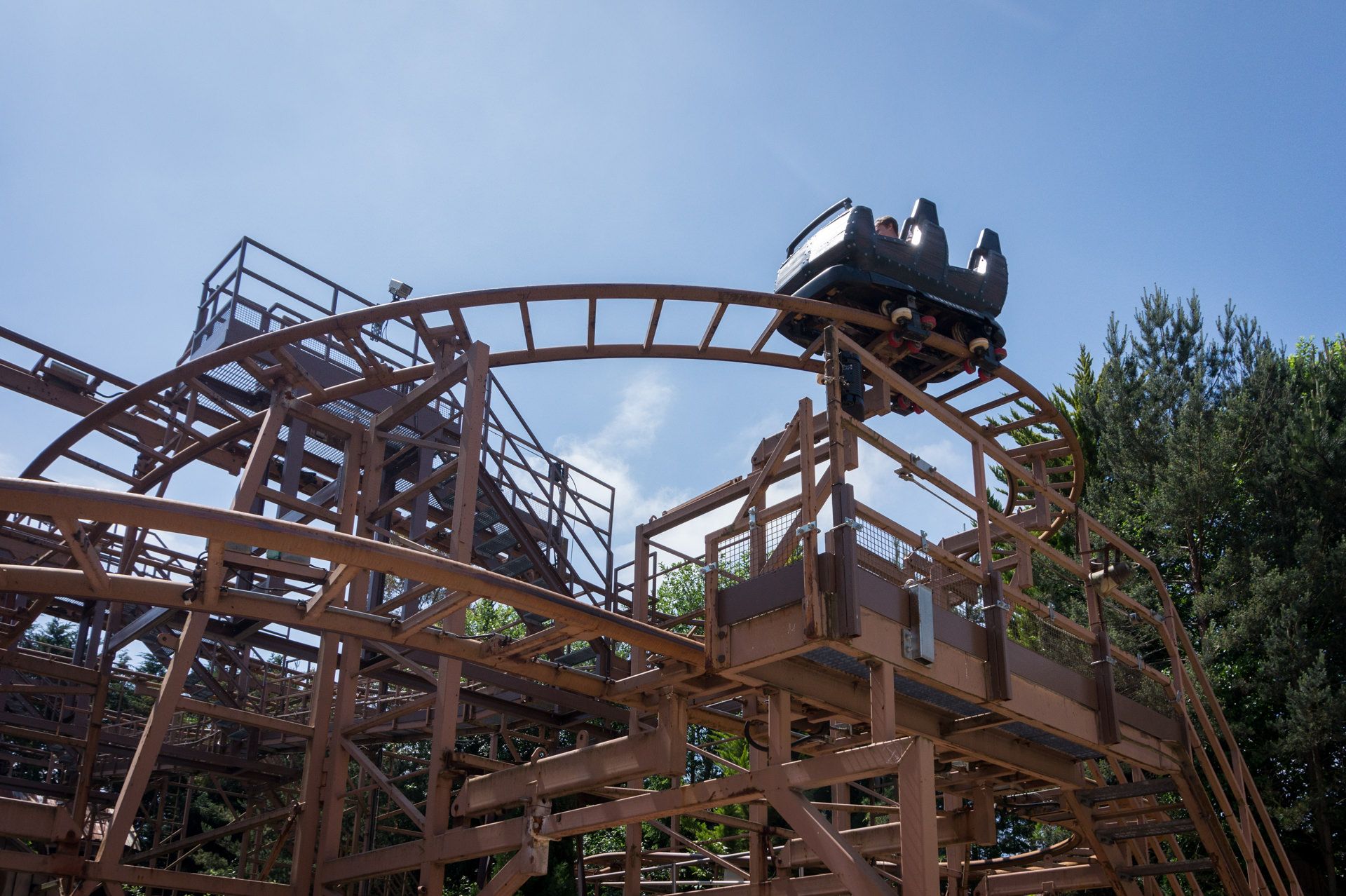
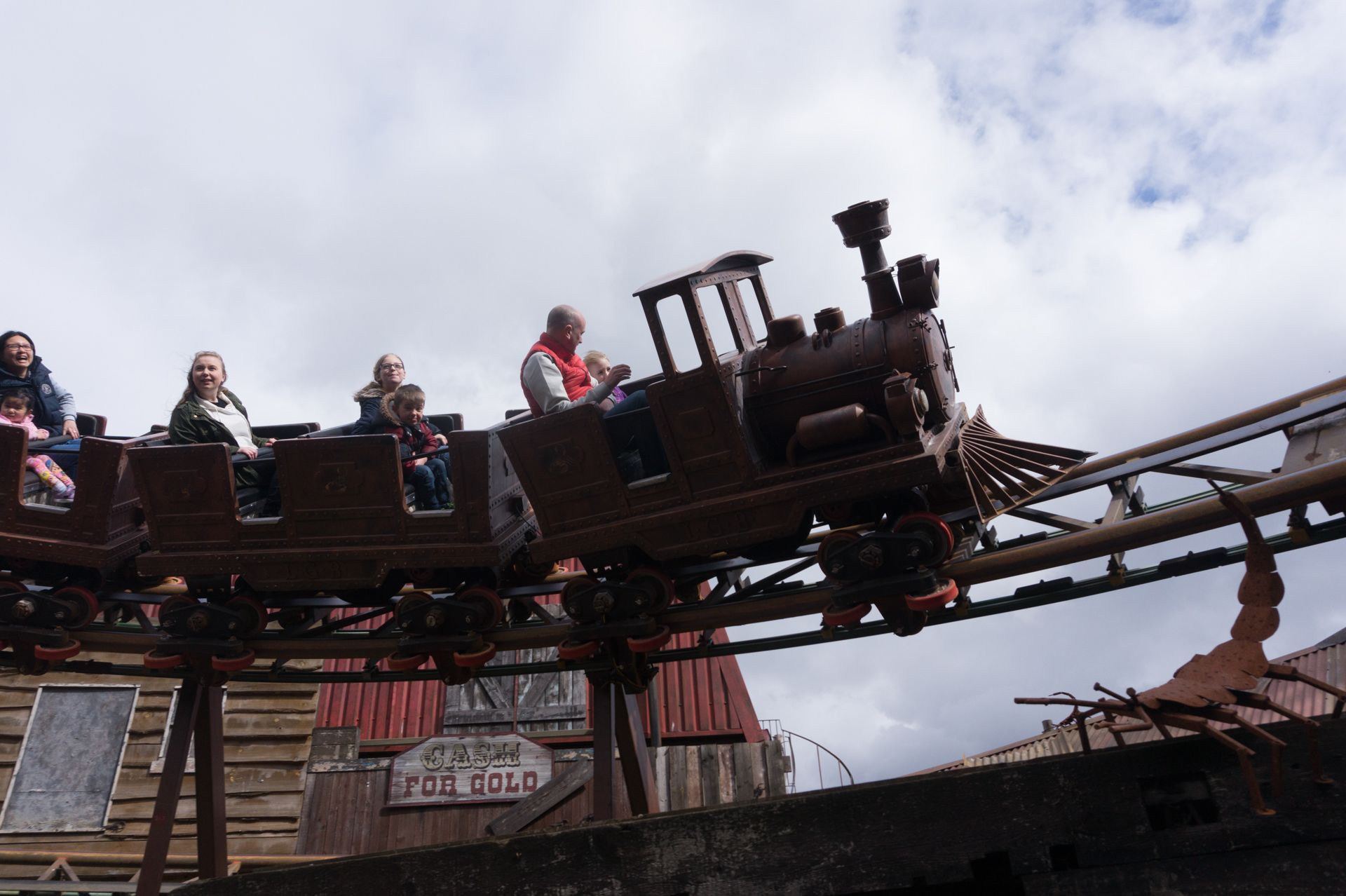
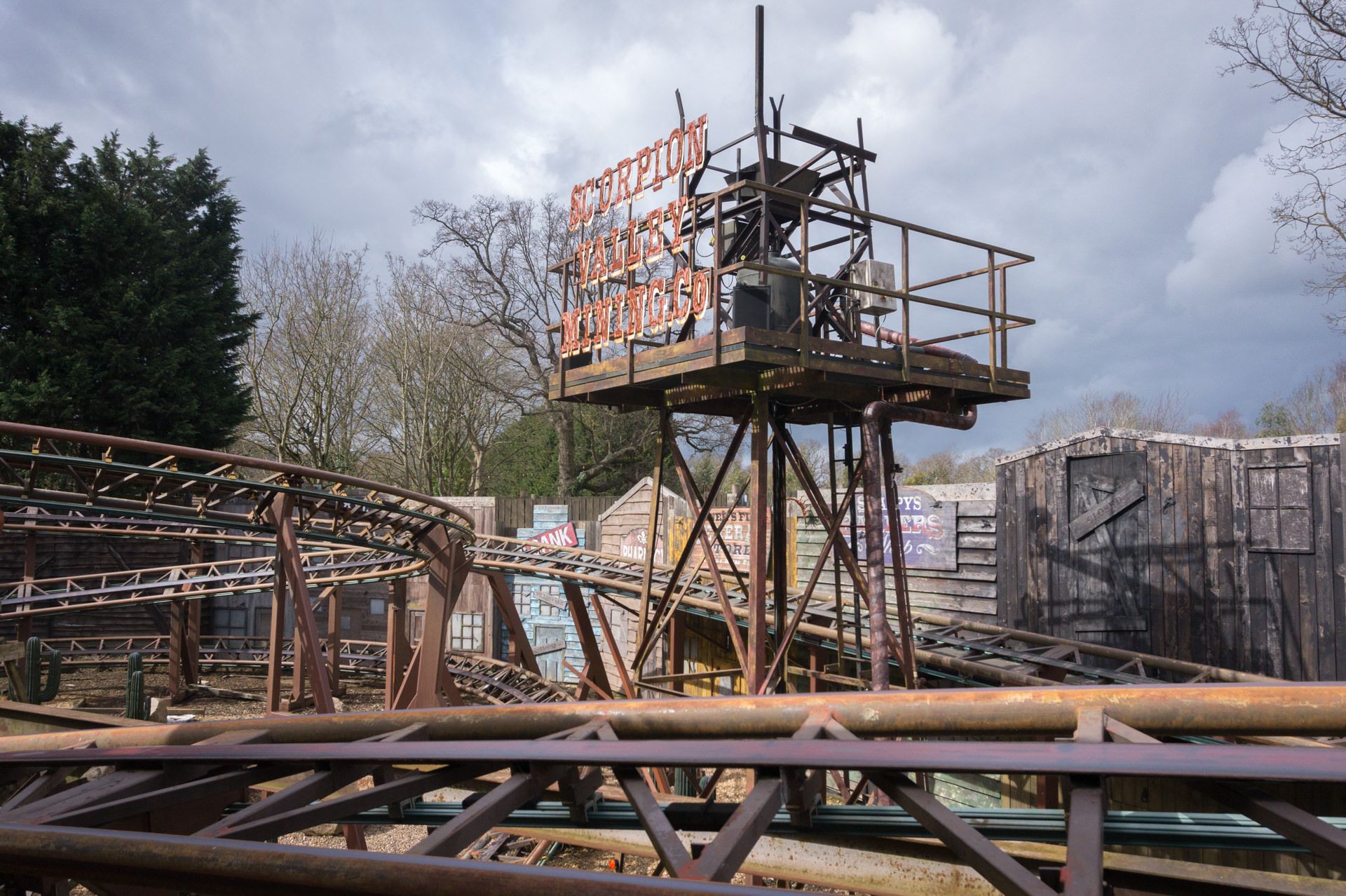
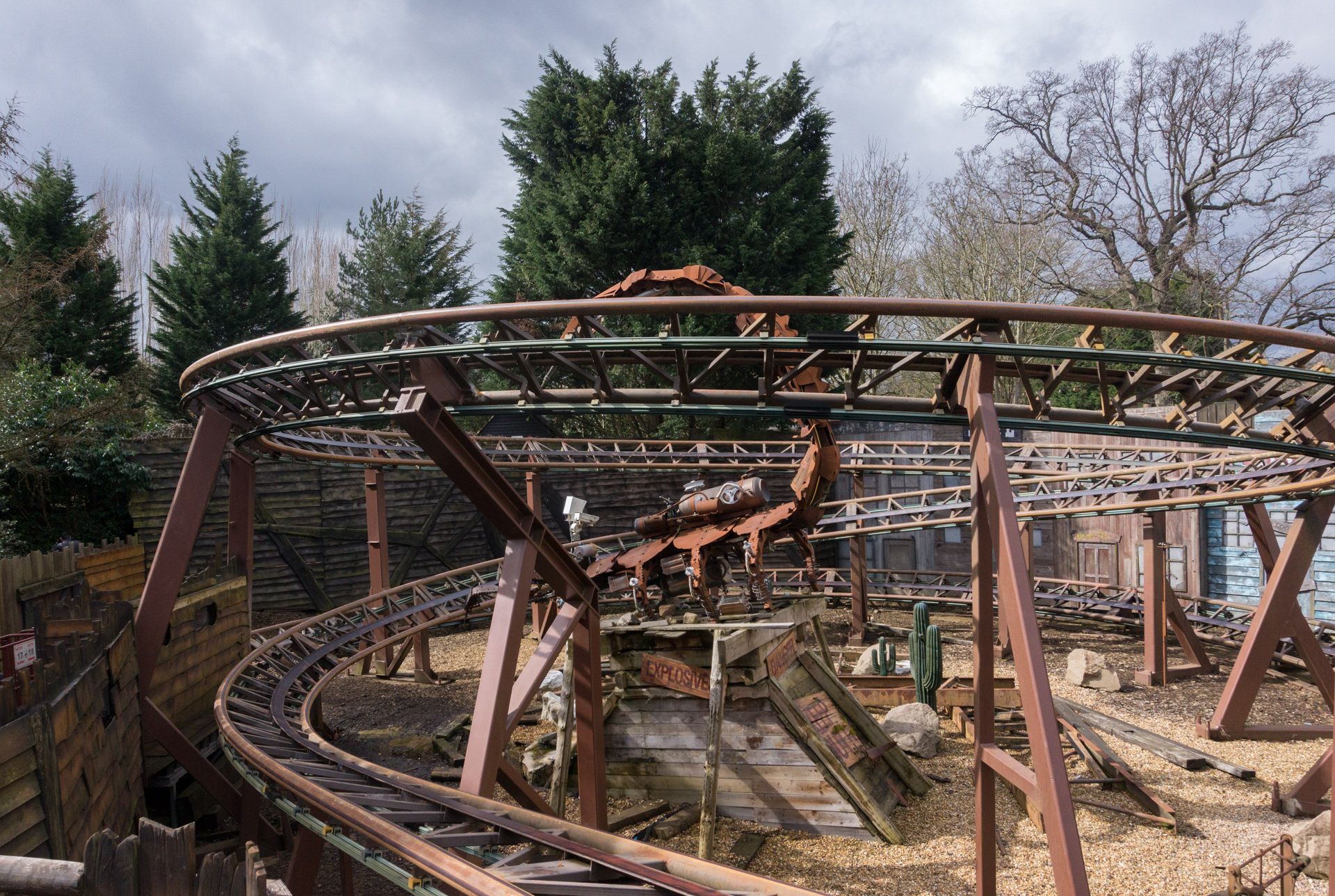
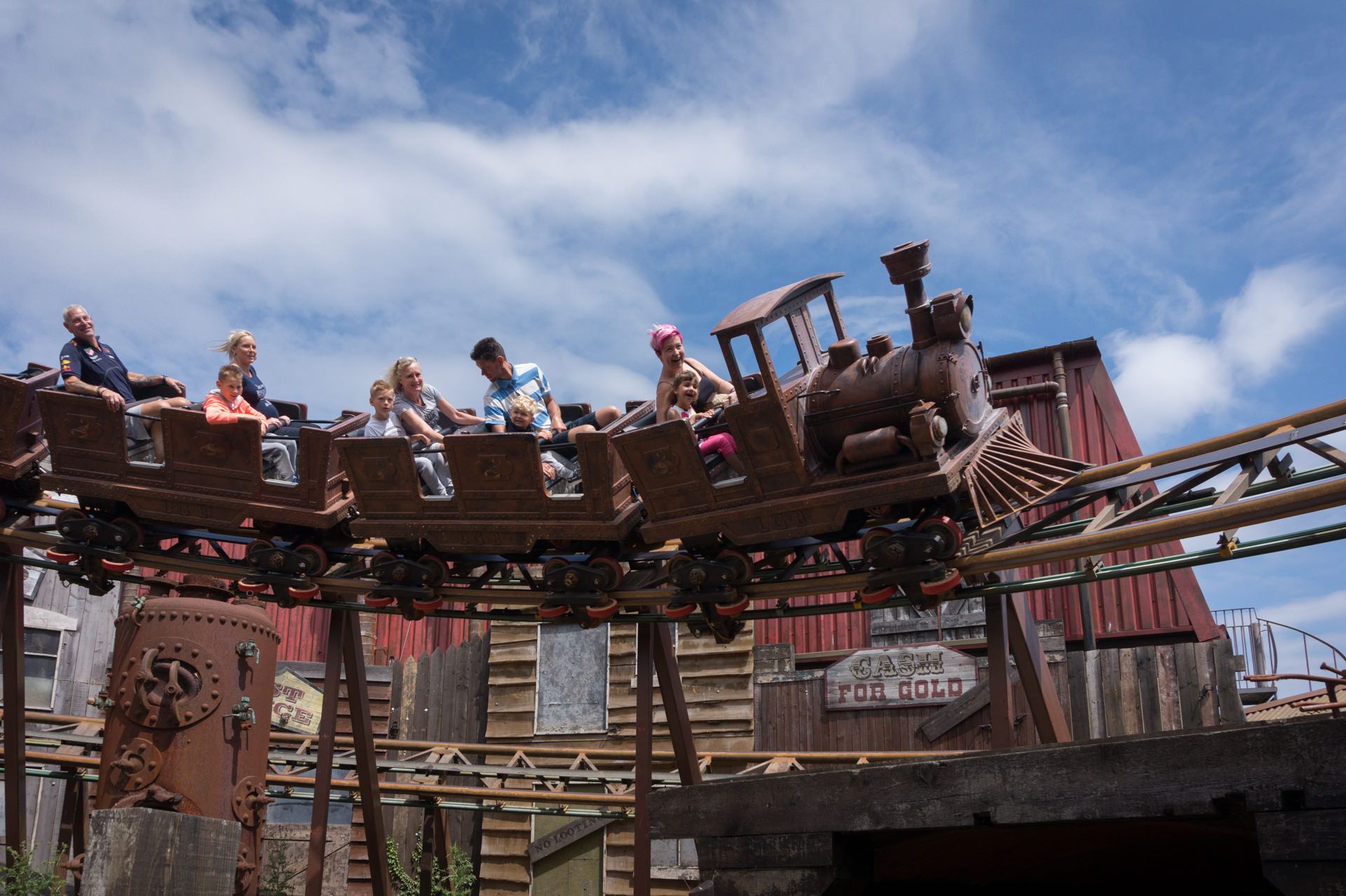
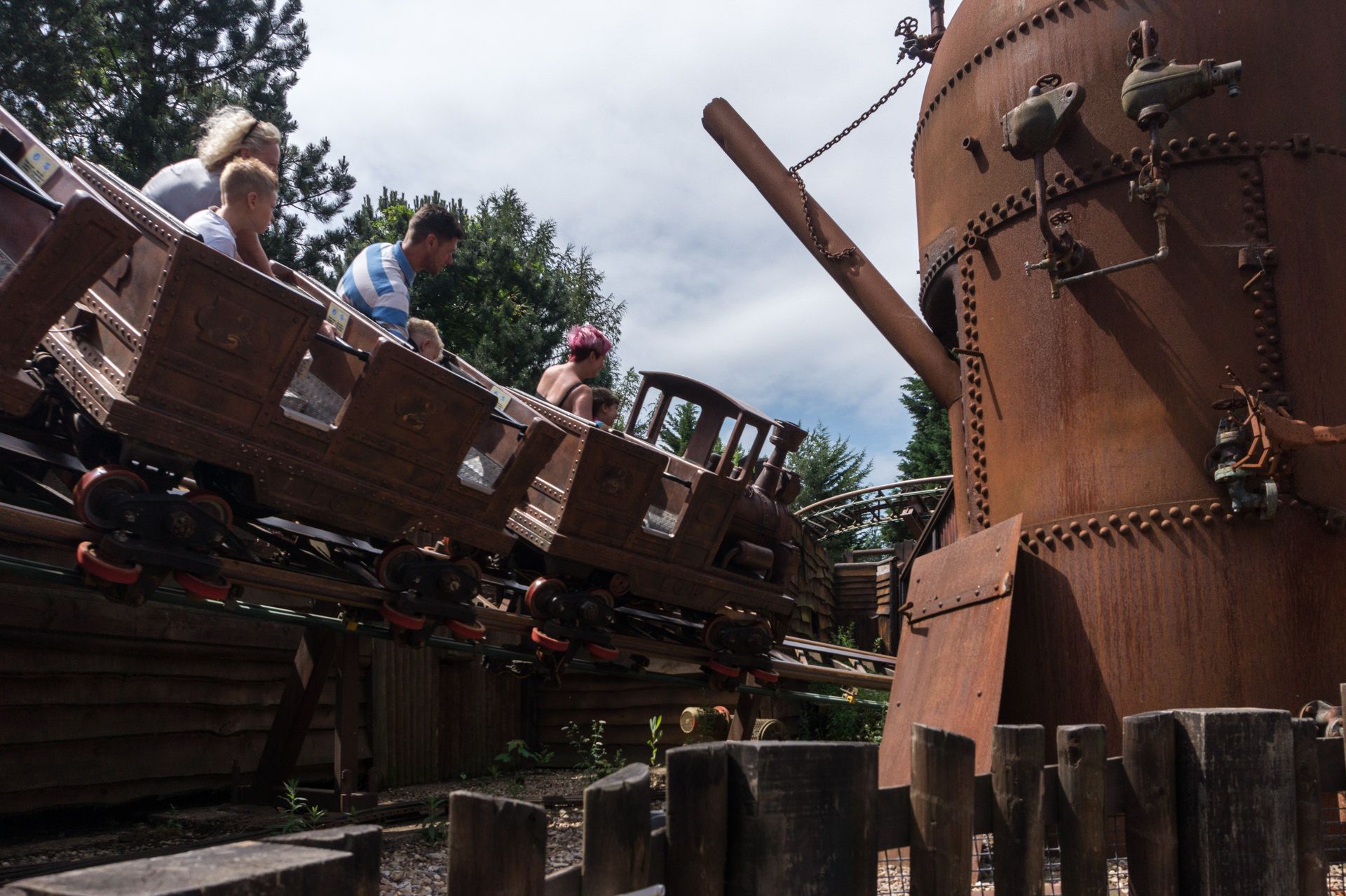
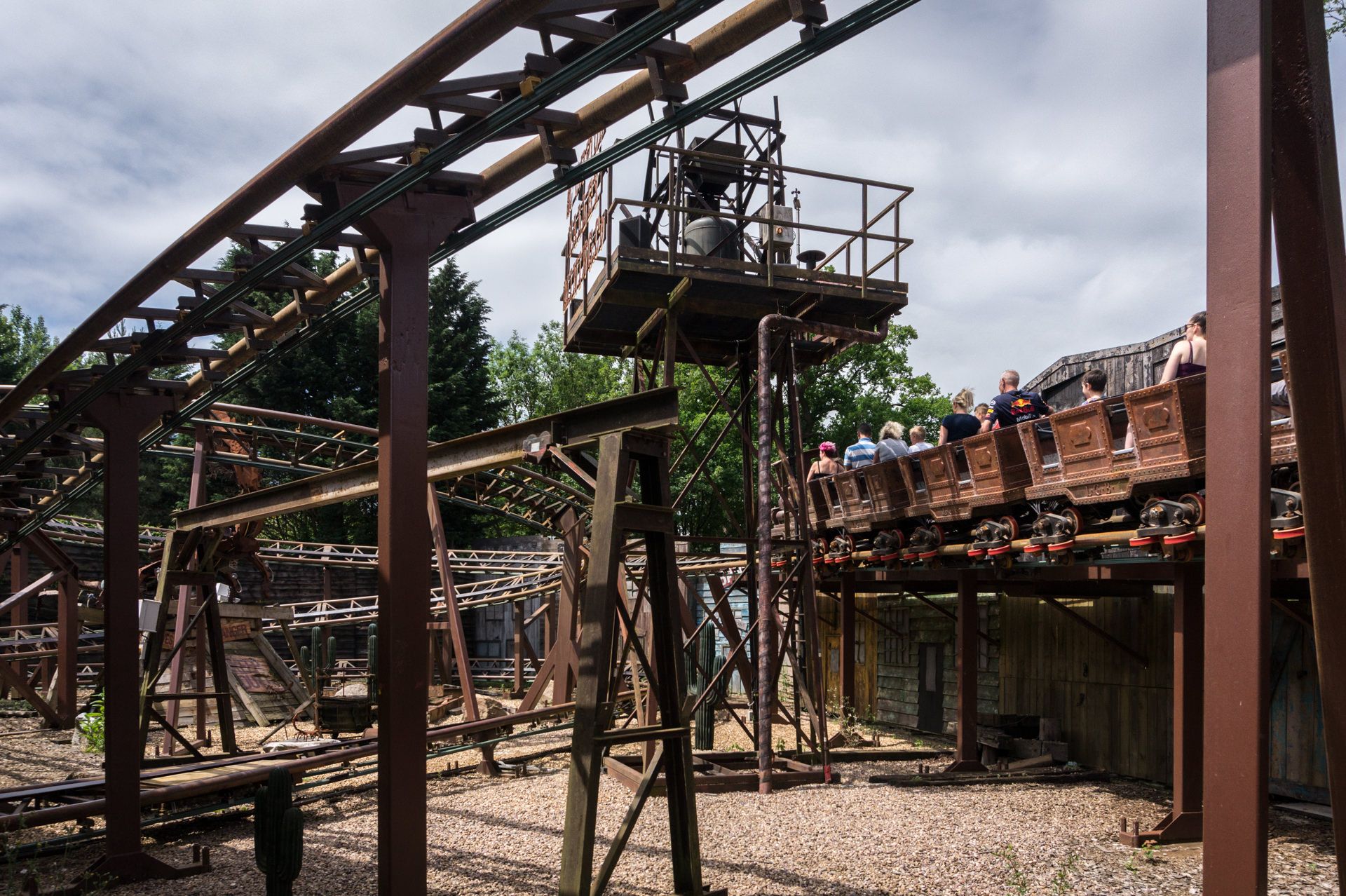
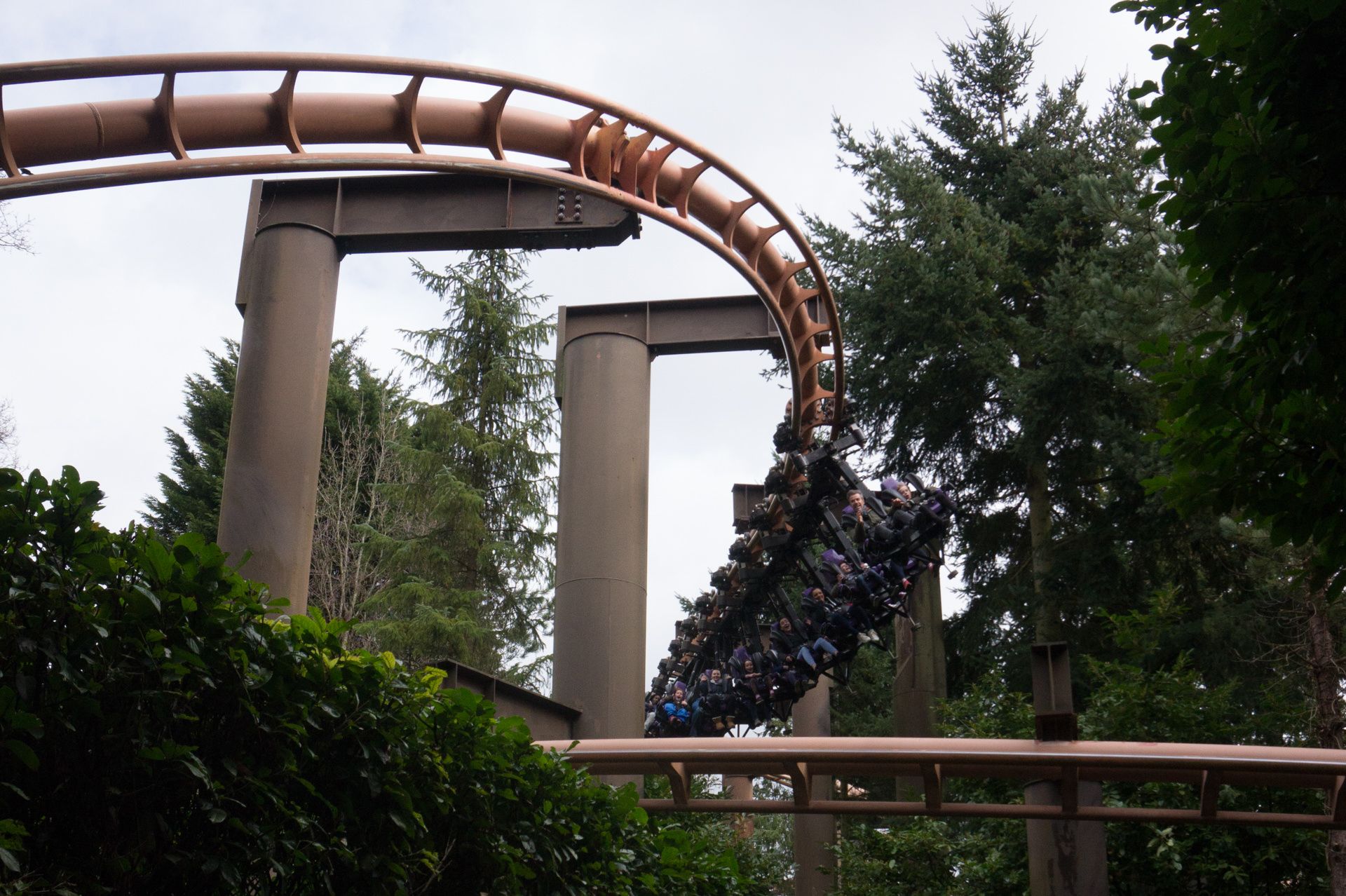
This development started with the Runaway Train rollercoaster, which lost all the artificial rock that had so impressively decorated the ride. Although Scorpion Express now stands relatively naked in the area, it is hard to miss. A huge mechanical sculpture in the shape of a scorpion adorns the rear helix, creating all sorts of effects that make for a very fun and lively ride. There are also a number of terrariums in the queue to entertain the waiting passengers. All in all, the upgrade of the ride has been successful. In any case, a ride on the Scorpion Express is a lot of fun.

Gruffalo’s River Ride Adventure

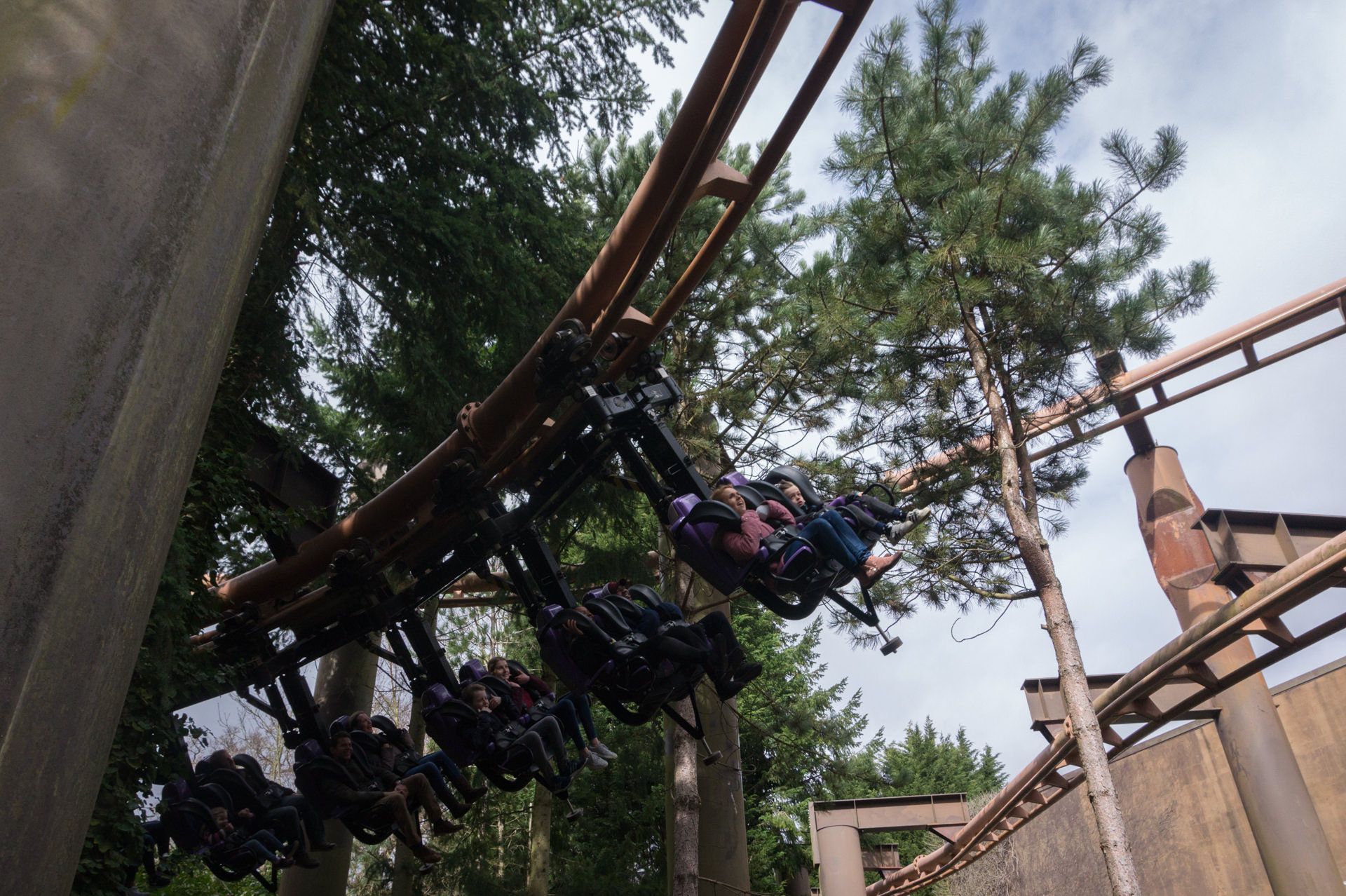
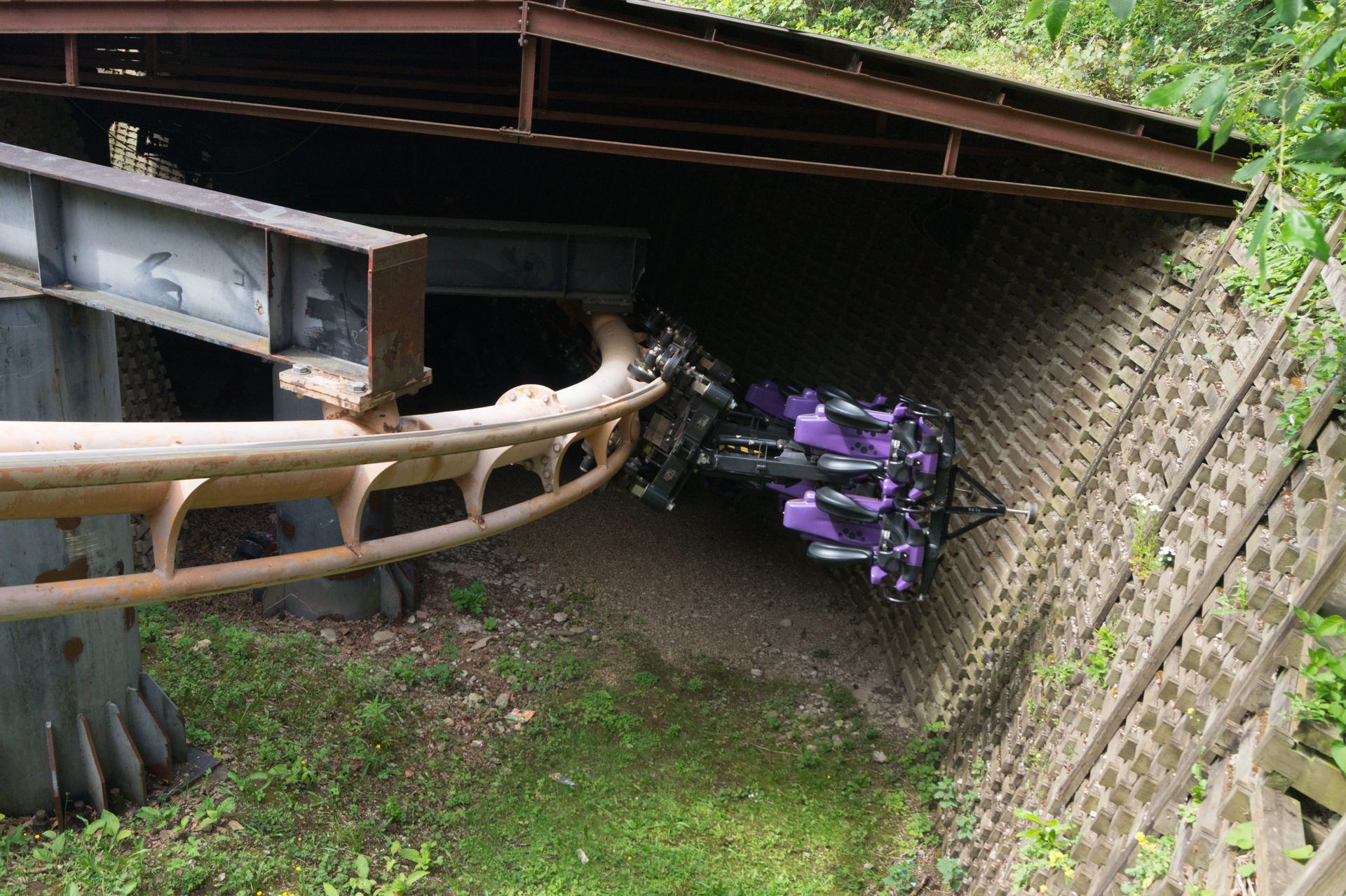
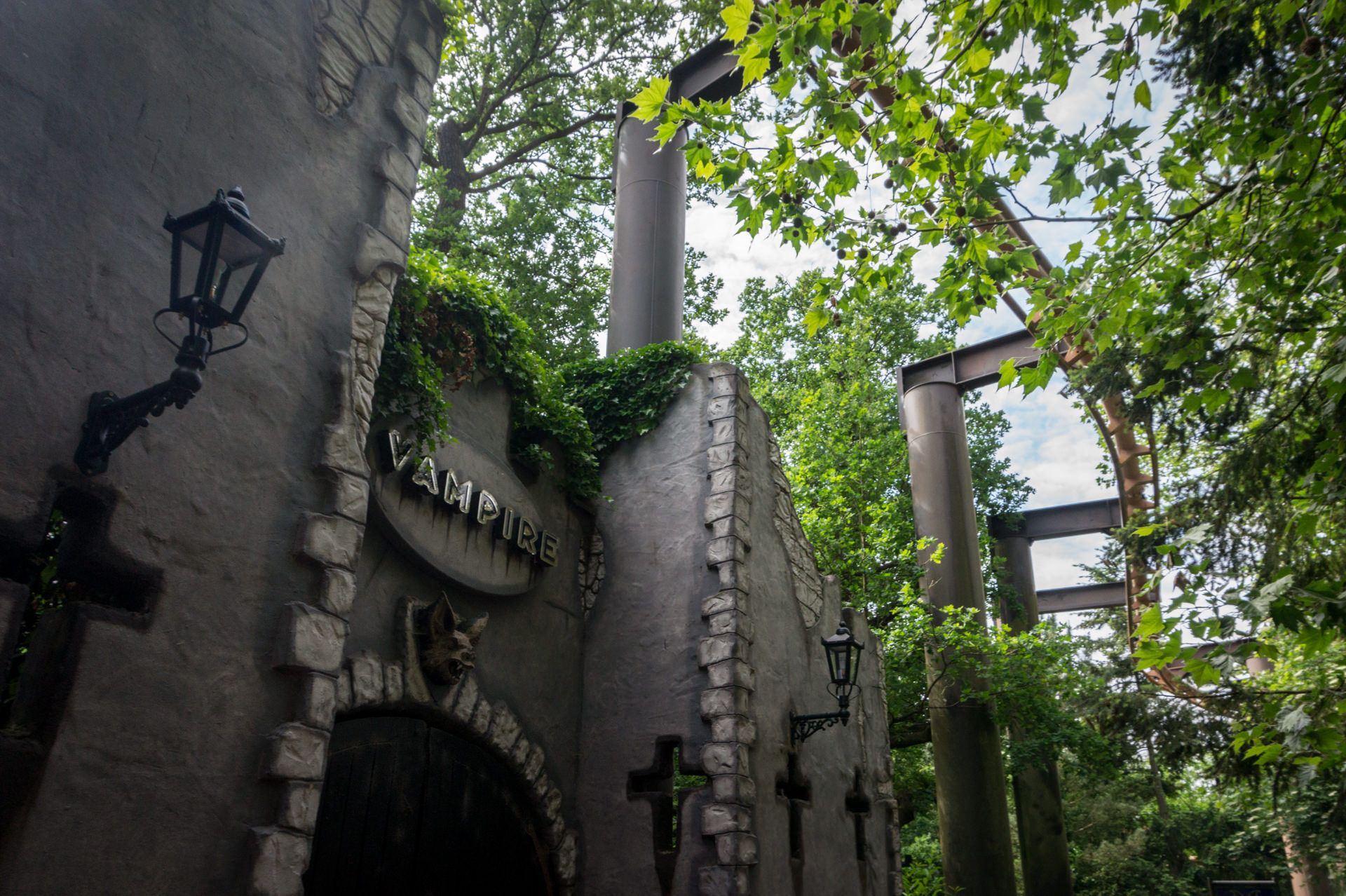
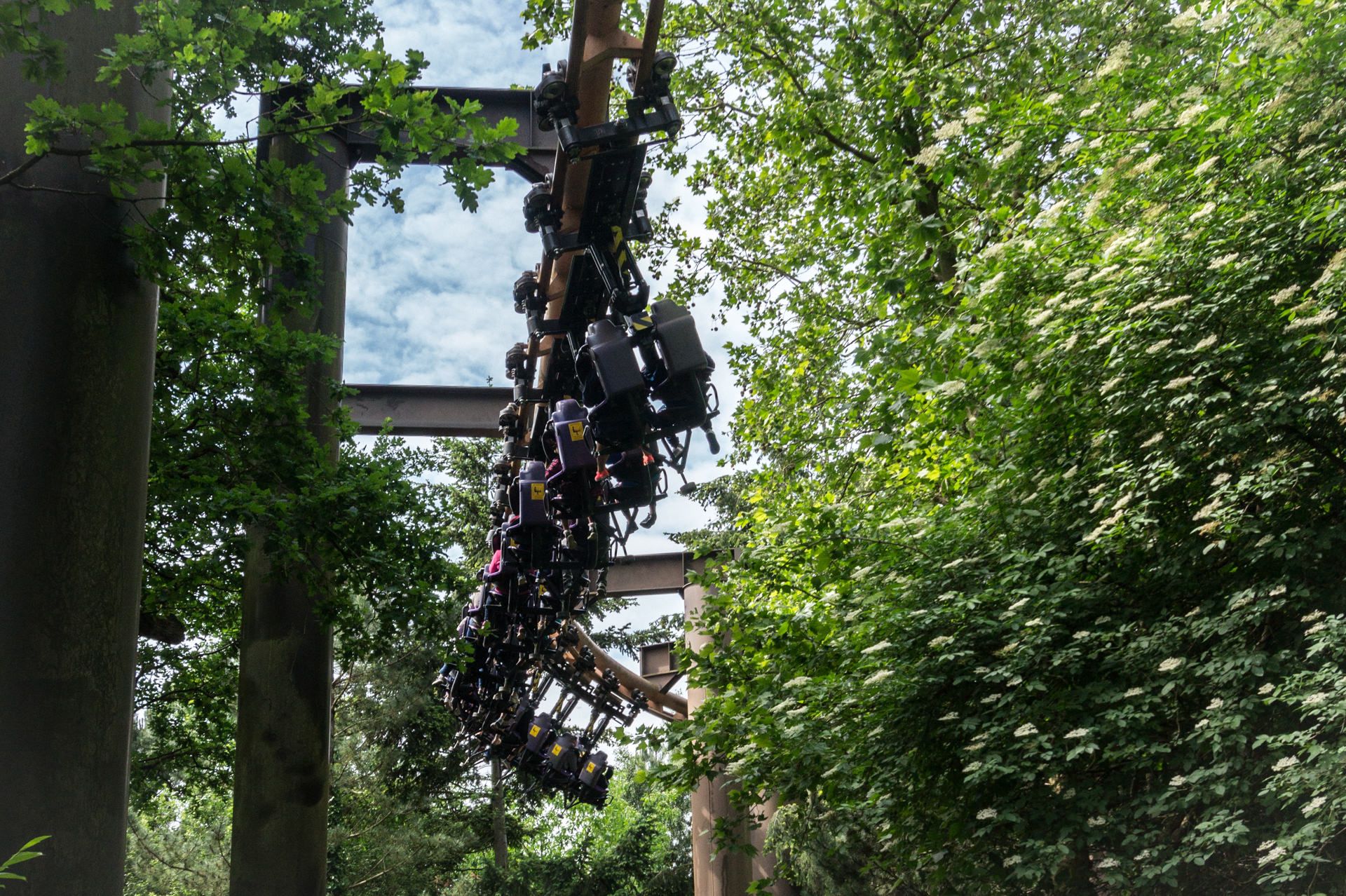
Similarly, the squeaky duck dark ride BubbleWorks in the Transylvanian area, next to the awesome Vampire suspended coaster, was a lot of fun – let’s see what happened to it.

Originally opened as Prof Burp’s BubbleWorks, the first 15 years were spent in round boats sailing through a fizzy drink factory before Imperial Leather’s ducklings took over the dark ride. In 2014, the soap manufacturer’s sponsorship with Merlin ended and all references to the manufacturer were removed from the park. While the theme of the ride may have lasted for the time being, the design elements used did not. So a new IP was needed, and a classic children’s book was chosen to fit in easily with the theme. The last ride with the old design followed in 2016, before Gruffalo’s River Ride Adventure opened on 18.03.2017.

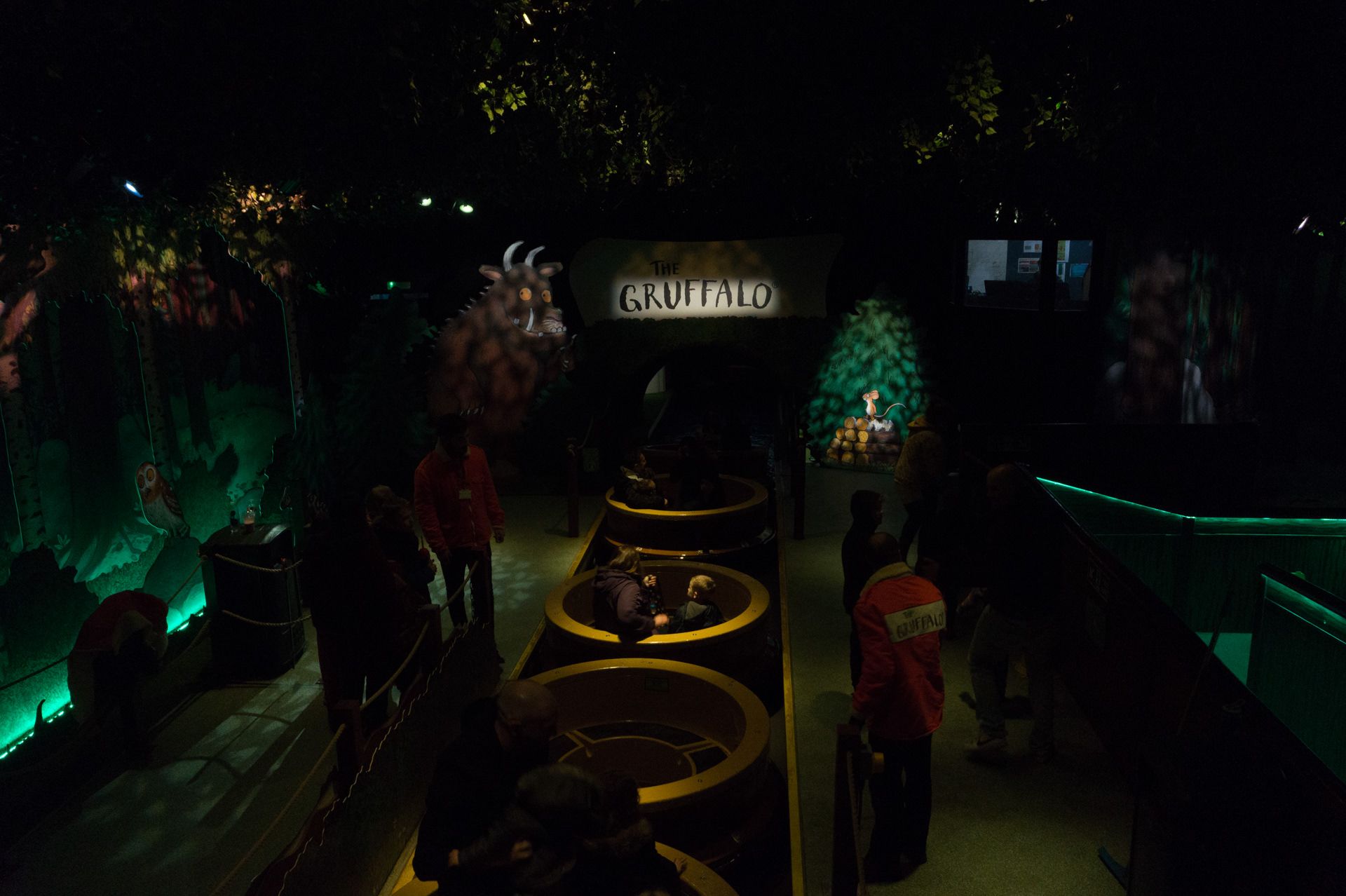
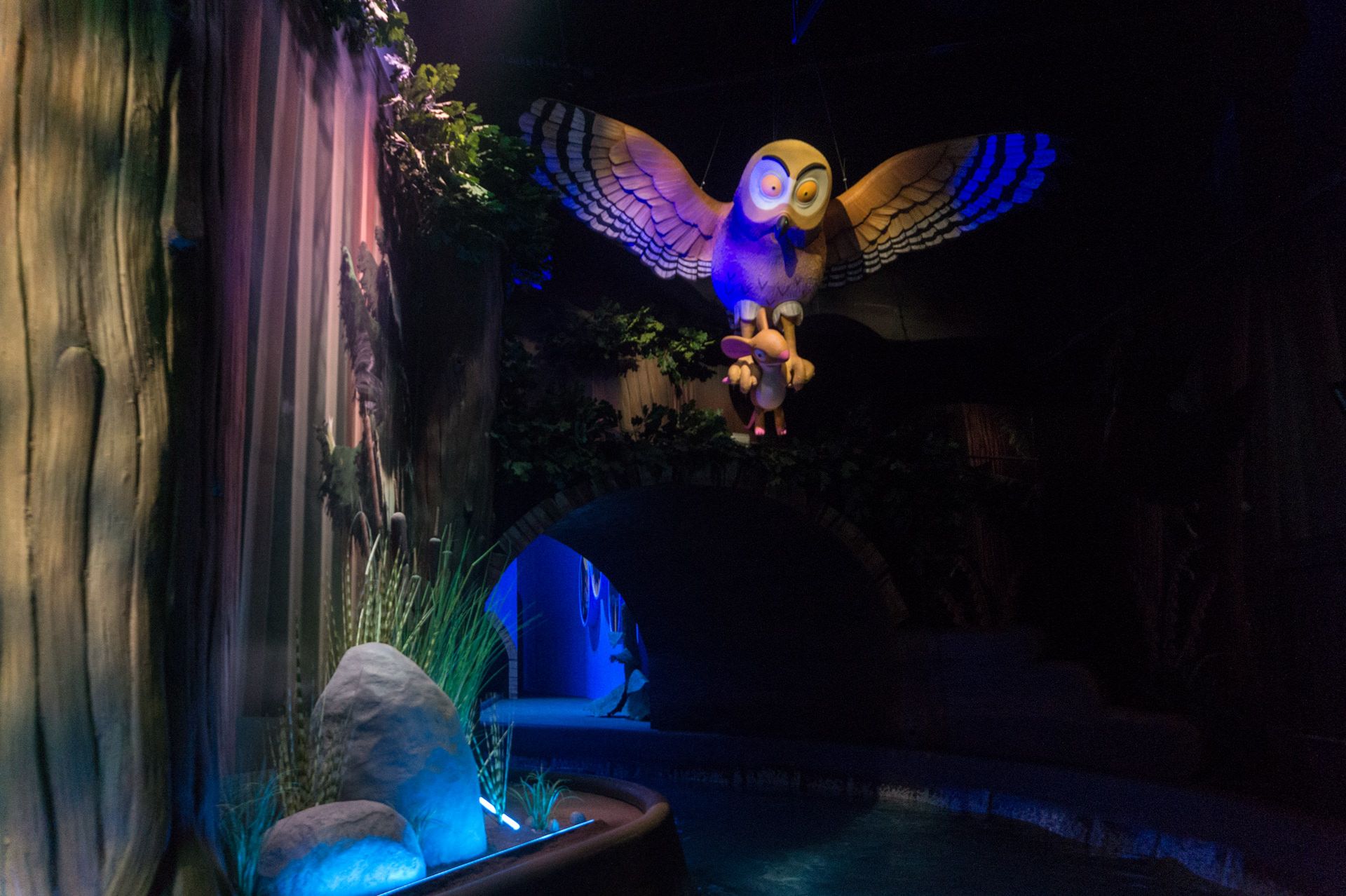
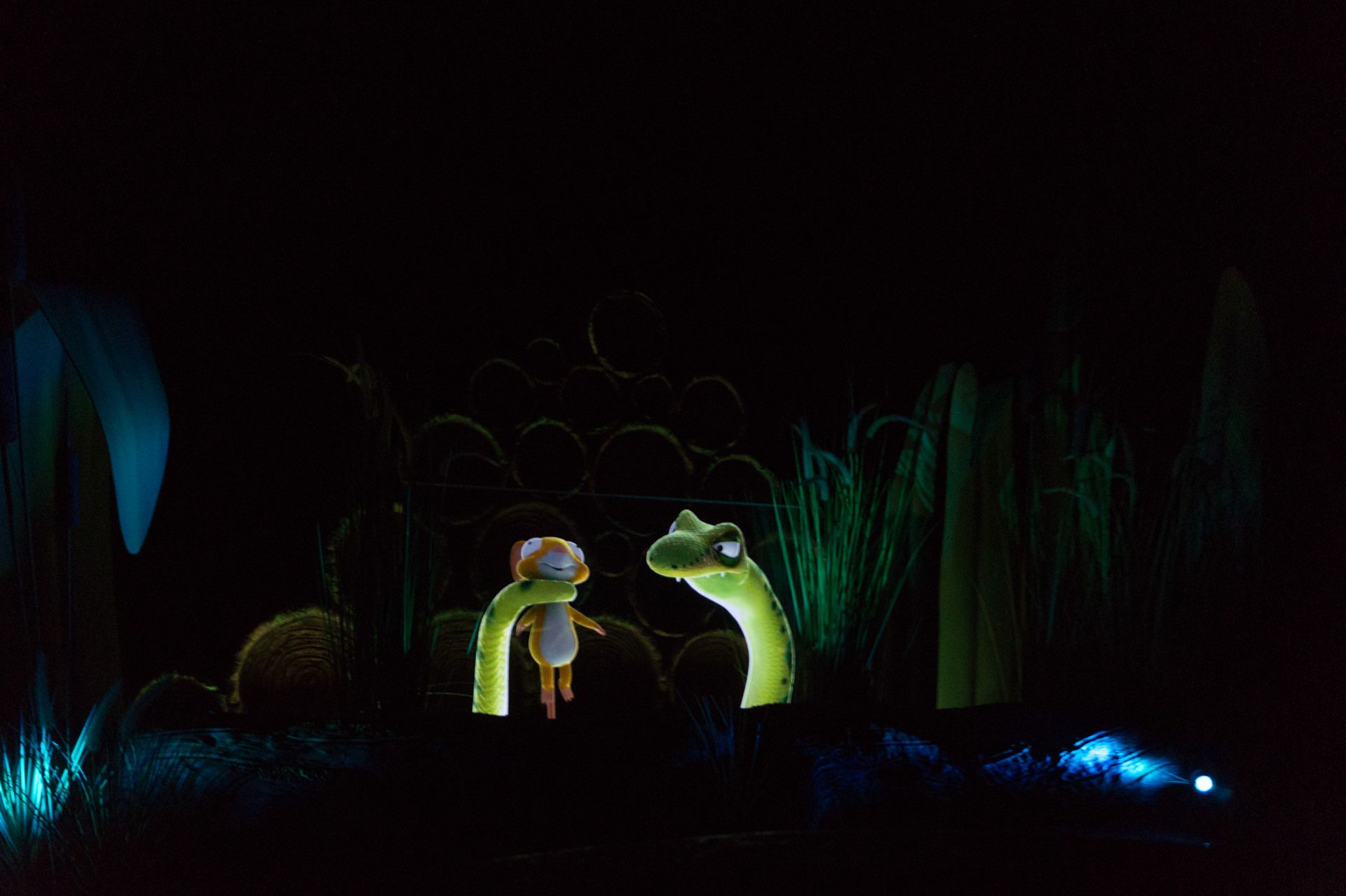
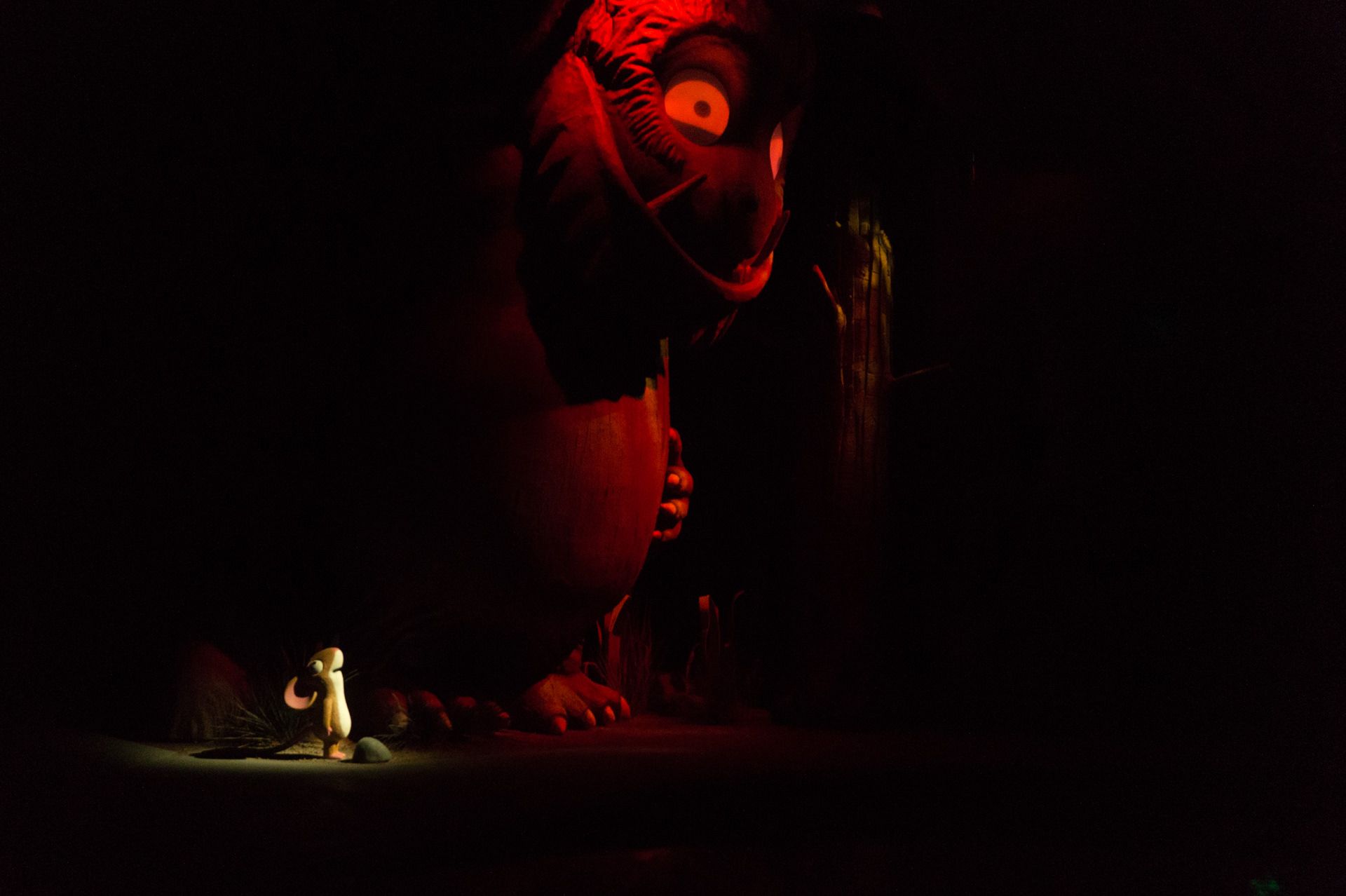
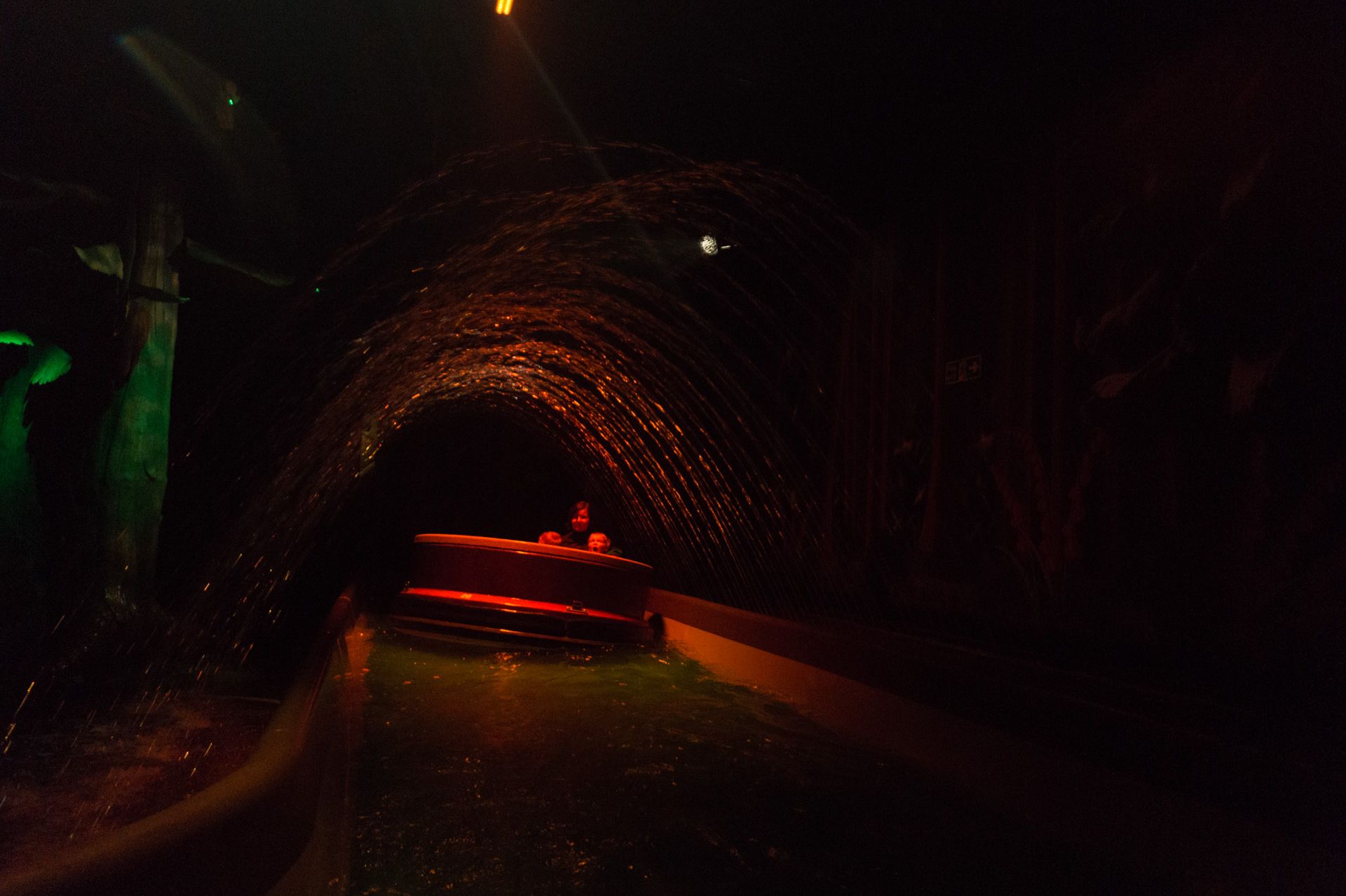
The ride itself offers a very healthy mix of static design elements and video projections. The atmosphere inside is now very dense; it feels like following a stream through a forest in a small boat. Each room tells a part of the first children’s book, in which the Mouse stops the Fox, the Owl and the Snake from eating him by threatening them with the Gruffalo – a hitherto fictional creature. In the following rooms, the Mouse meets the aforementioned Gruffalo, who also wants to eat him, but does not, thanks to the Mouse’s explanation that all the other animals are afraid of him. Together, the Gruffalo and the Mouse climb up the ride’s lift and then make their way to the former bathing room. There they meet the other animals, who take to their heels. This scene succeeds despite the relatively open design and retains some of its old charm thanks to some of the remaining fountains. On the way back to the station, the Mouse chases the Gruffalo away, leaving him to crack his nuts in peace.

As I am not familiar with the franchise, I will refrain from making a comparison at this point. The ride itself is once again fascinating. The mix of static design elements and video projections works very well and doesn’t seem out of place anywhere; despite the rotation of the gondola, you can actually catch it at any time. In general, the ride is now consistently well attended.

Tiger Rock

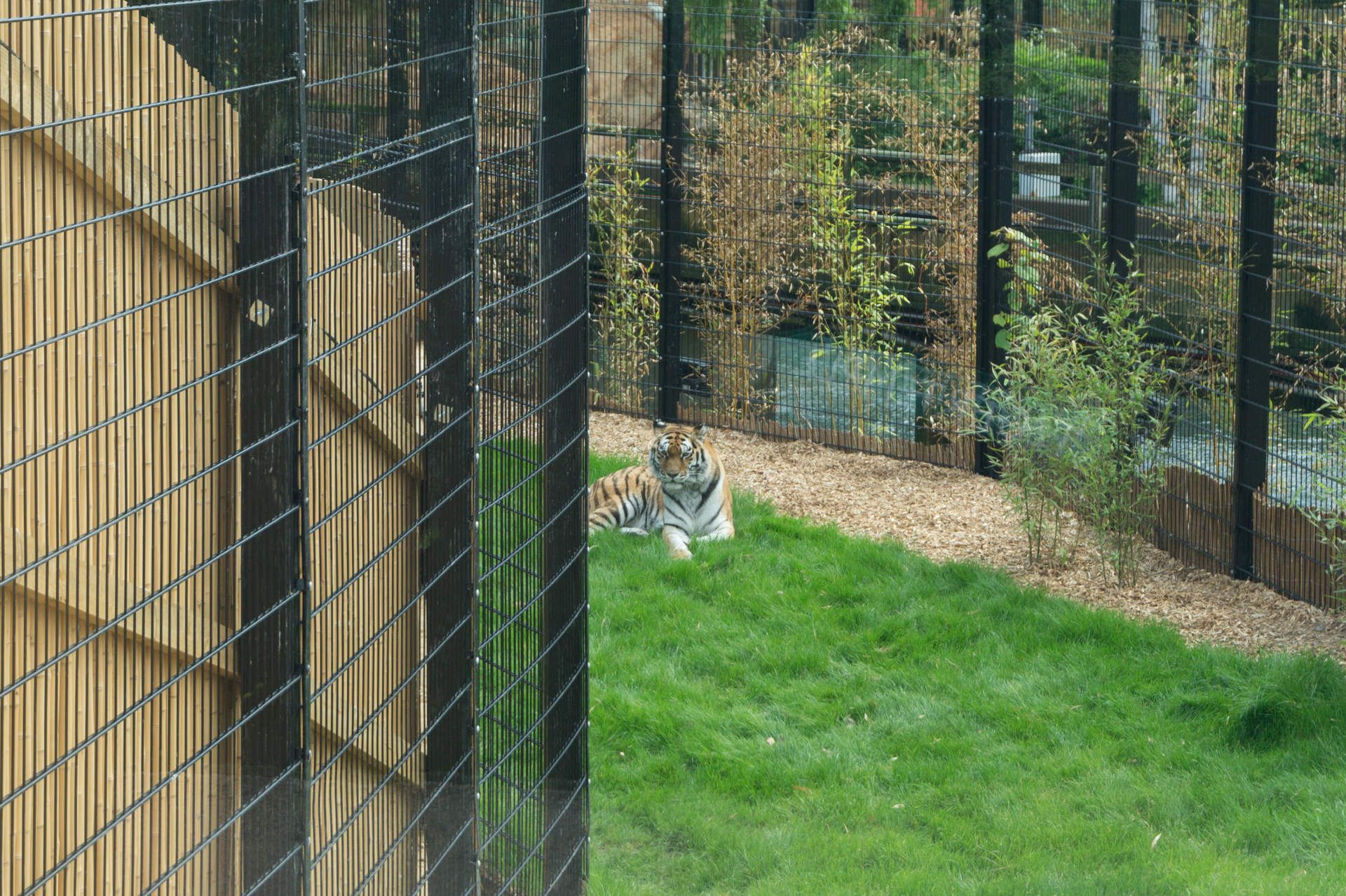
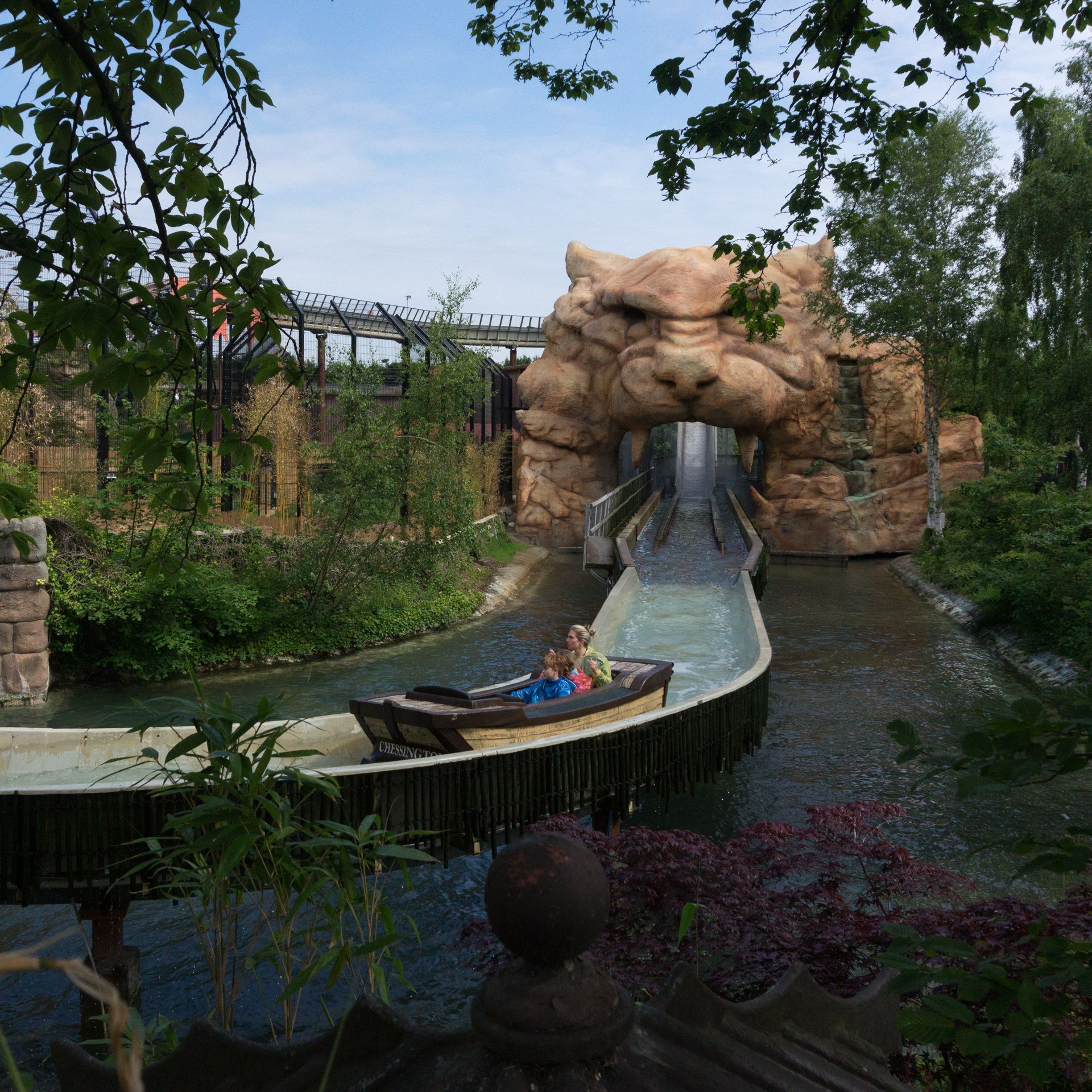
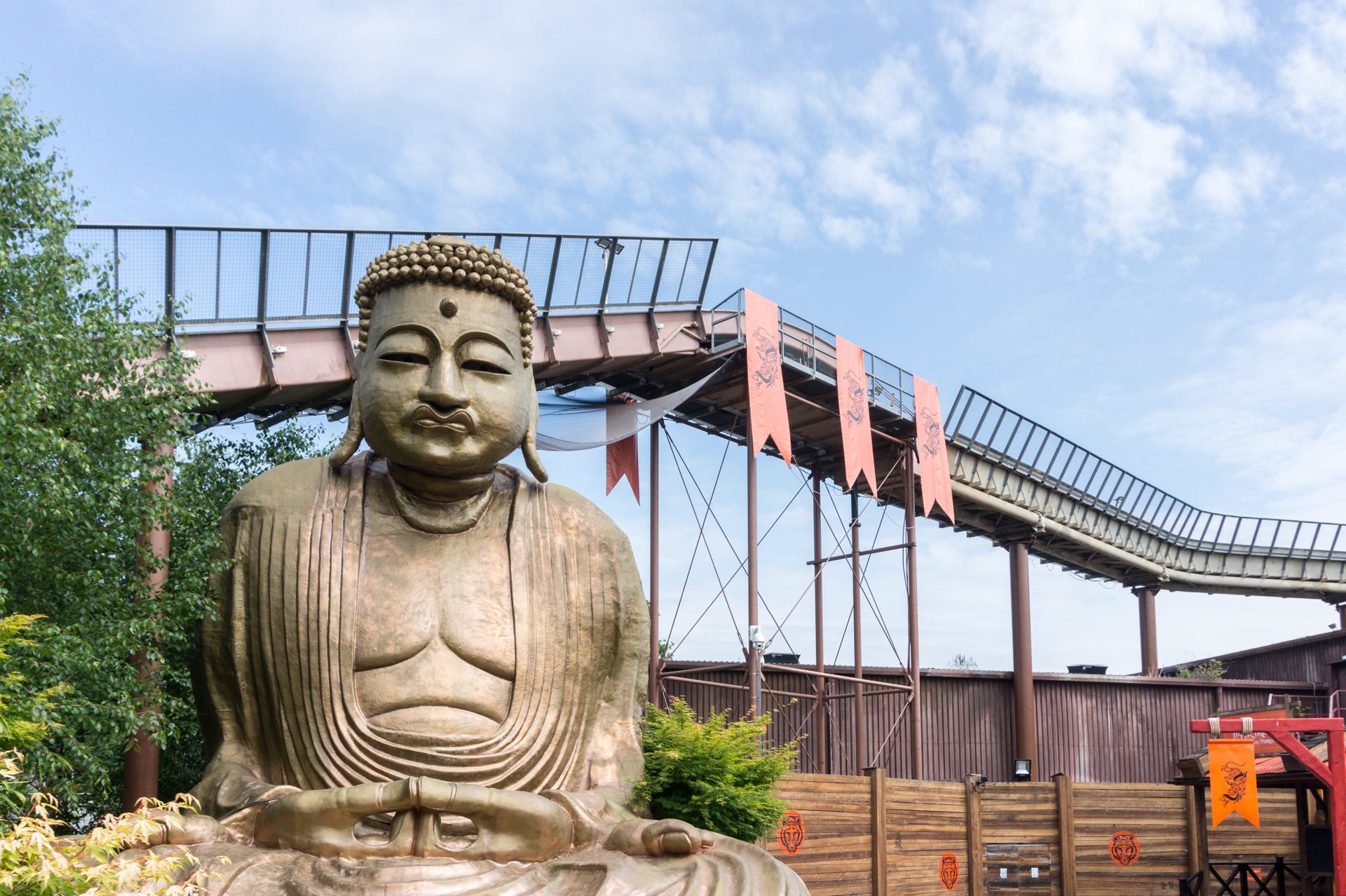
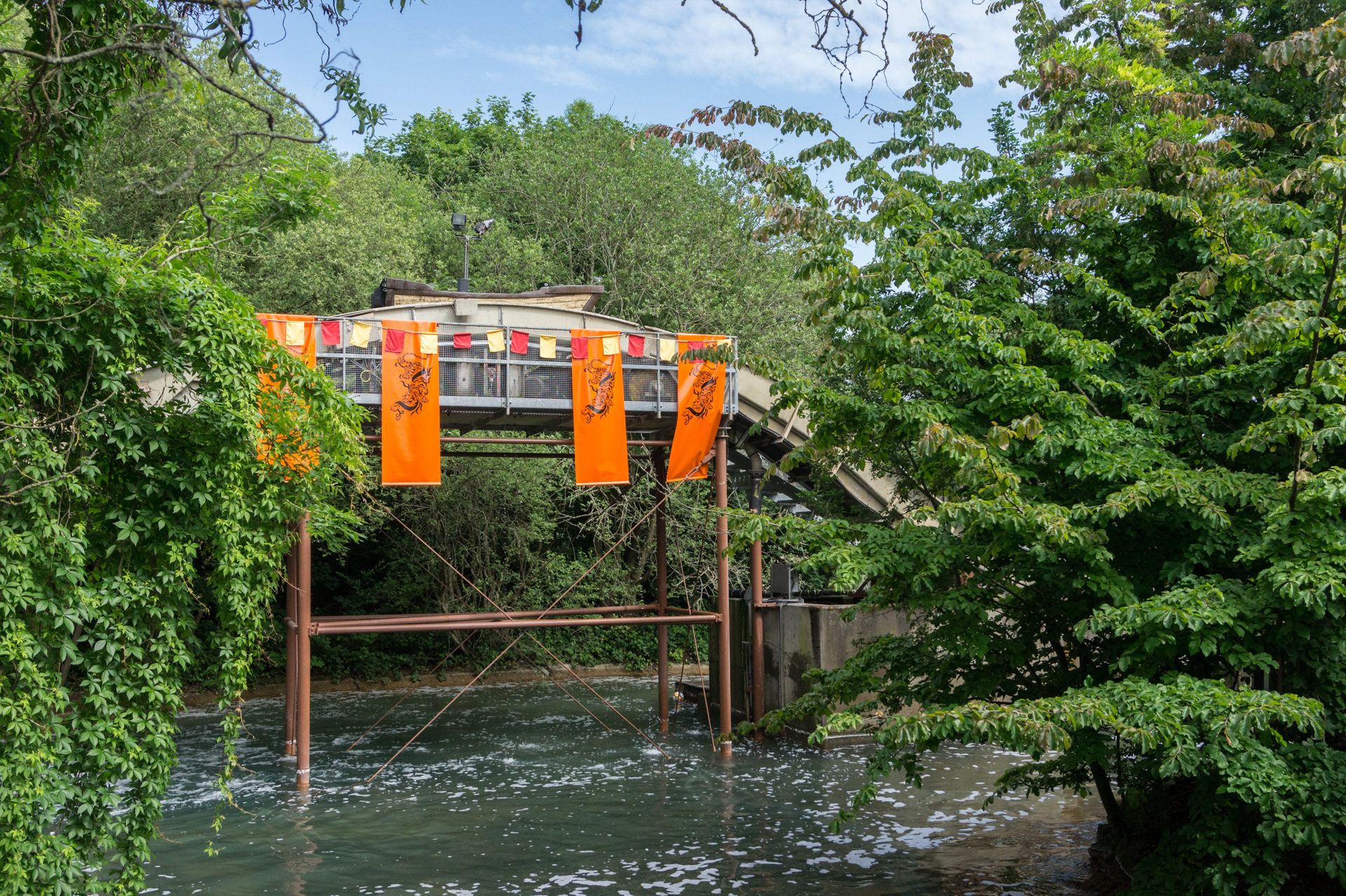
The Tiger Rock log flume, on the other hand, is much less popular, although this does not apply to the new and much larger tiger enclosure which now occupies the former open areas of the log flume. This is where most of the work has been done, as the renovation of the log flume was unfortunately not carried out. So you float through a channel that could have been re-coated and have a great view of the animals in the (at least partially) surrounding enclosure. This is a good thing, especially as the animals really do congregate in these areas and it is actually the best view from the Tiger Rock log flume, but it could have been more. The hardware of the ride contrasts with the new layout of the ride and in my opinion this is a missed opportunity. As Tiger Rock is the last remaining log flume of the group in England, it is sadly foreseeable that the ride will be closed in the next few years.

Pictures Chessington World of Adventures

Conclusion about the visit

Of the three theme parks near London, Chessington World of Adventures remains my first port of call. The three major additions of the last five years all have their place and are all either fully or largely successful. With a revamp of the Hocus Pocus Hall walkthrough already announced, we can look forward to more to come. In any case, it’s a park to include in your UK plans, especially if you’ve never been there and want to visit a theme park near London.


What is your opinion about Scorpion Express, Gruffalo’s River Ride Adventure and Tiger Rock at Chessington World of Adventures?  Just write it in the comment field below the report or visit our social media channels:


Click here for the overview page of Chessington World of Adventures

# Final Summer

History of the Space World

The amusement park Space World shows us in a very fatal way what fish frozen in an ice rink can do – despite record sales in the same year; whether the now internationally strongly criticised action towards the end of last year led to the collapse of the lease negotiations between the operating company Japan Park and Resort Co, Ltd. and the Nippon Steel & Sumitomo Metal Corporation (NSSMC) as the property owner is indeed written in the stars, but it is obvious, since it took place immediately afterwards: On 16 December 2016, it was announced that the theme park would close on New Year’s Eve the following year.

Before I move on to the #FinalYear celebrations, I would like to take a look at the history of Space World, because the land owners were once the main shareholders of the operating company and founders of the theme park. They were in the process of downsizing their local steelworks, which is why Japan Park and Resort Co., Ltd. was founded in 1988 to manage the vacated land and parts of the existing buildings in the future. Two years later, Space World was opened.

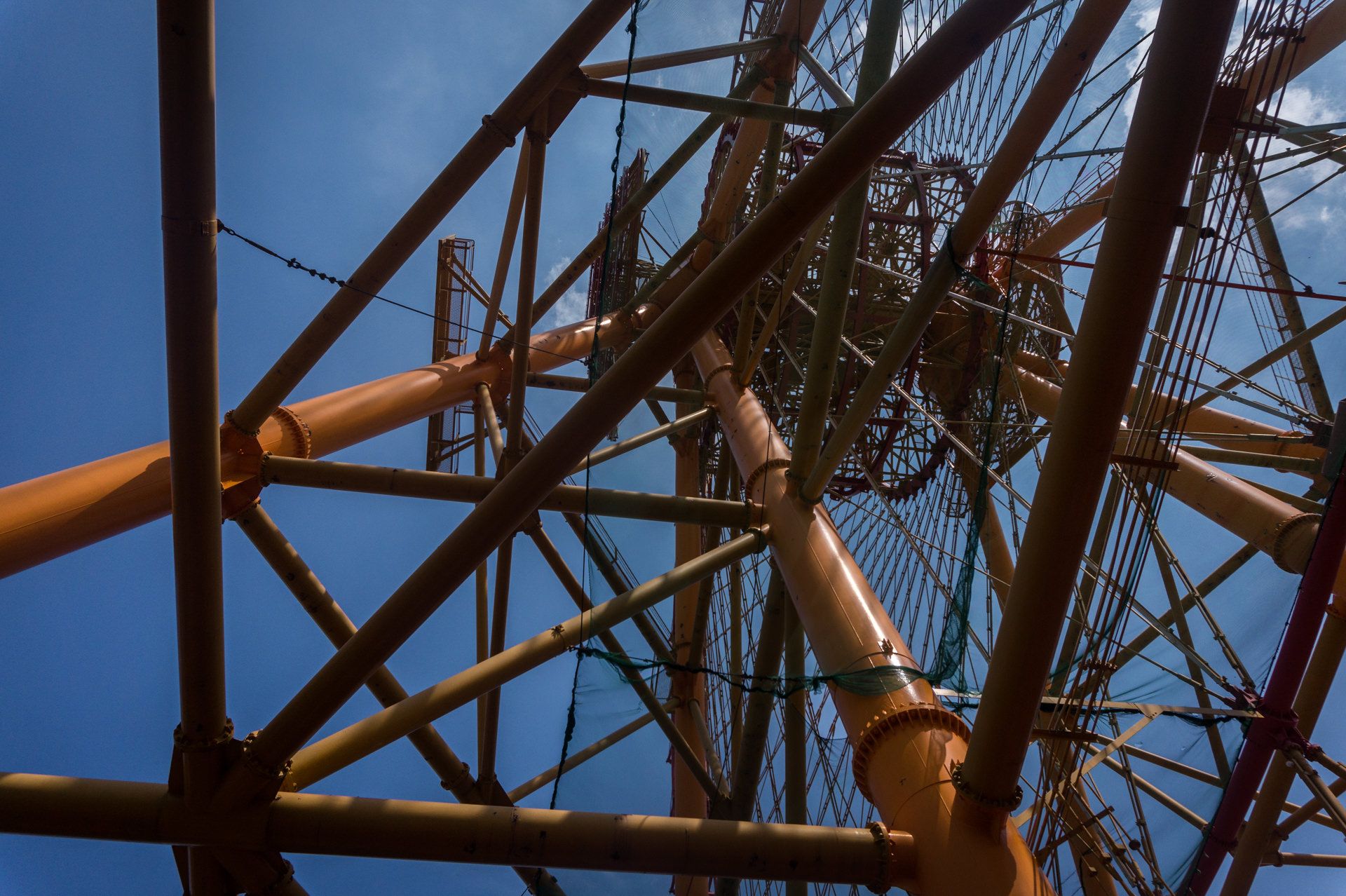
From then on, the amusement park was sensibly expanded at regular intervals. In 1997, the park reached its peak with 2.16 million visitors. A serious accident on the S&S Space Shot Atlas Tower, which had opened the previous year, led to the temporary closure of the amusement park in August 1998, whereupon visitor numbers also plummeted. Despite the opening of its own JR station and a 100m high Ferris wheel, visitors remained at a constant level, which is why the theme park was restructured in 2004. From then on, Kamori Kanko Co., Ltd. (operator of the Rusutsu Resort and Himeji Central Park, among others) became the sole main shareholder of the operating company. All kinds of redesigns followed, as well as the opening of the Zaturn launch coaster. At the same time, however, some rides were closed and the Astronaut Training Centre (Astresta), operated under the Space Camp Foundation licence in connection with Space Camp Japan, was abandoned. In 2008, the attraction was enhanced for the last time with the addition of a water park.

The end of the story is known and yet it is celebrated. Honestly, I don’t want to know how many desperate roller coaster and theme park enthusiasts have been drawn to Kitakyūshū this year and will be drawn after this report is published. At least one thing is certain: the time to experience this extraordinary amusement park is dwindling. Tick, tock.

Tour of the park

Clipper

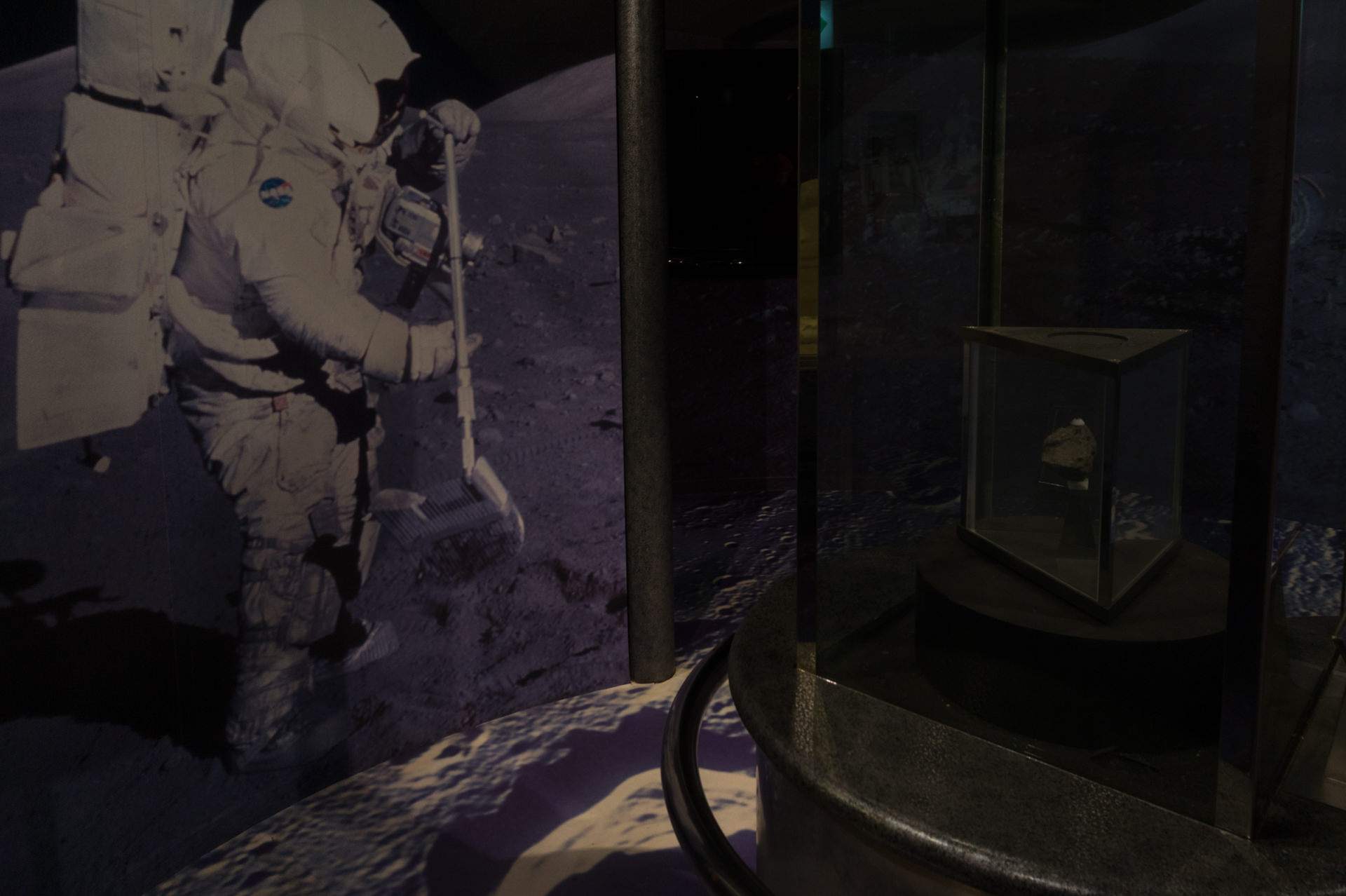
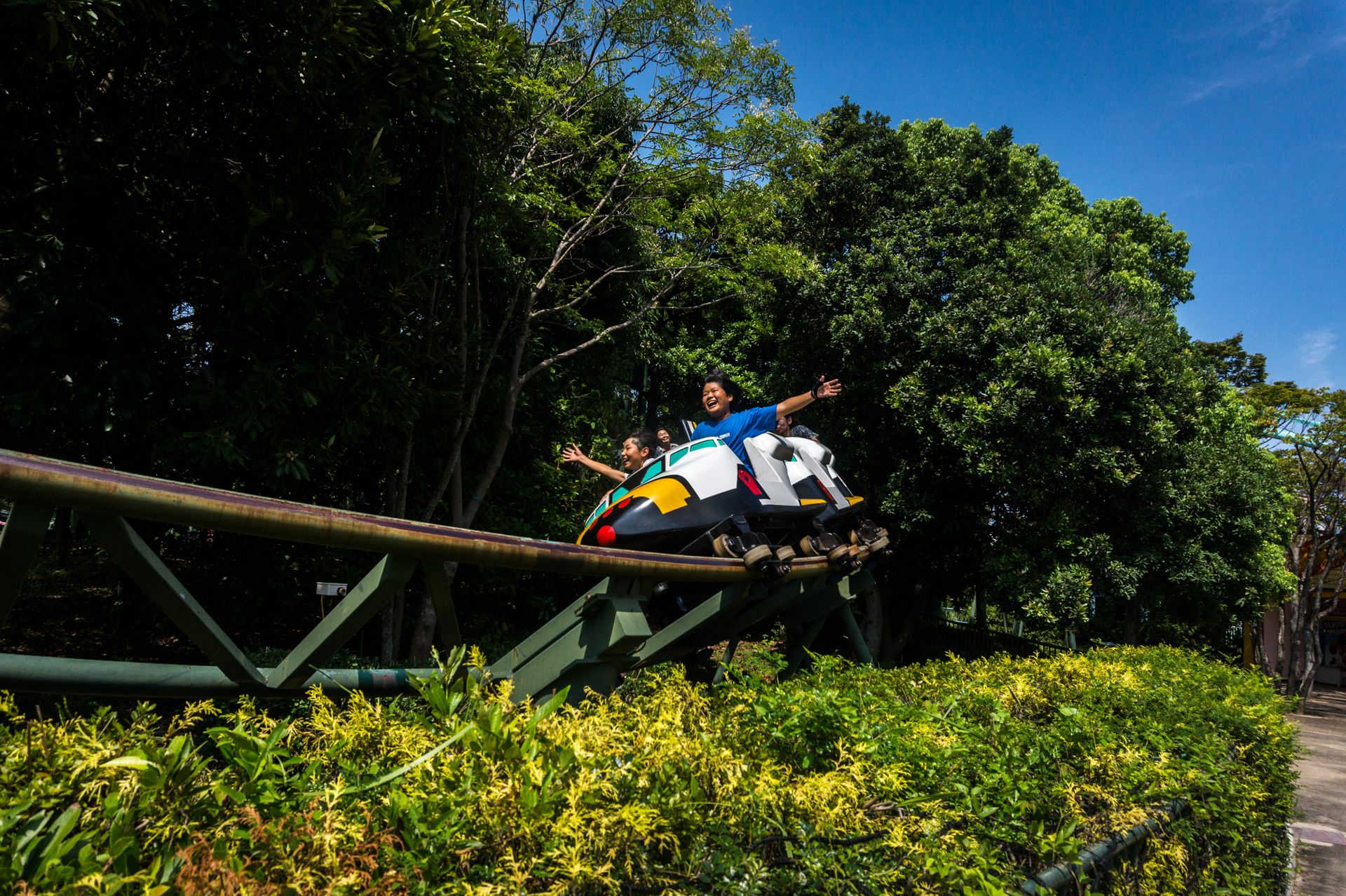
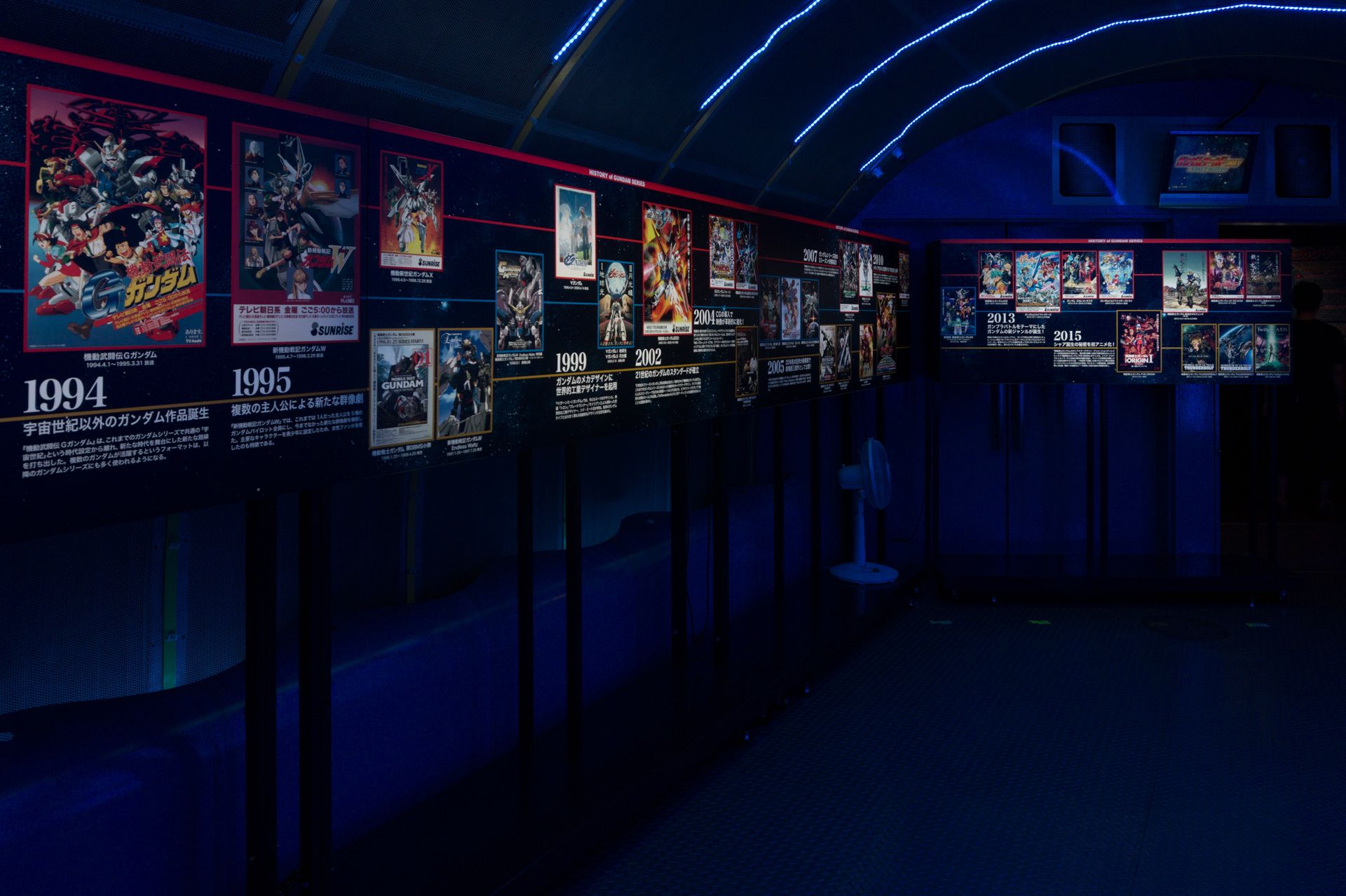
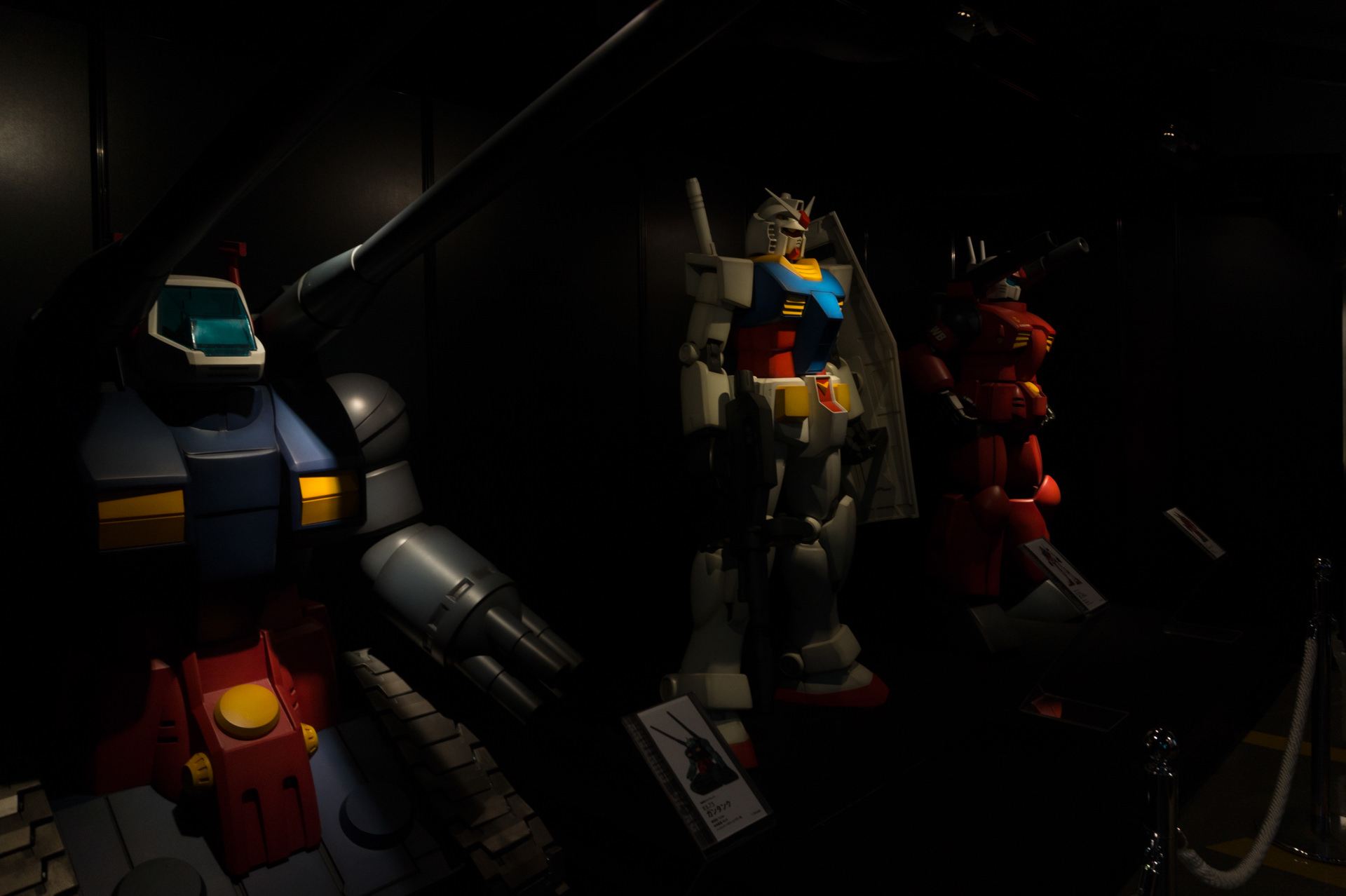
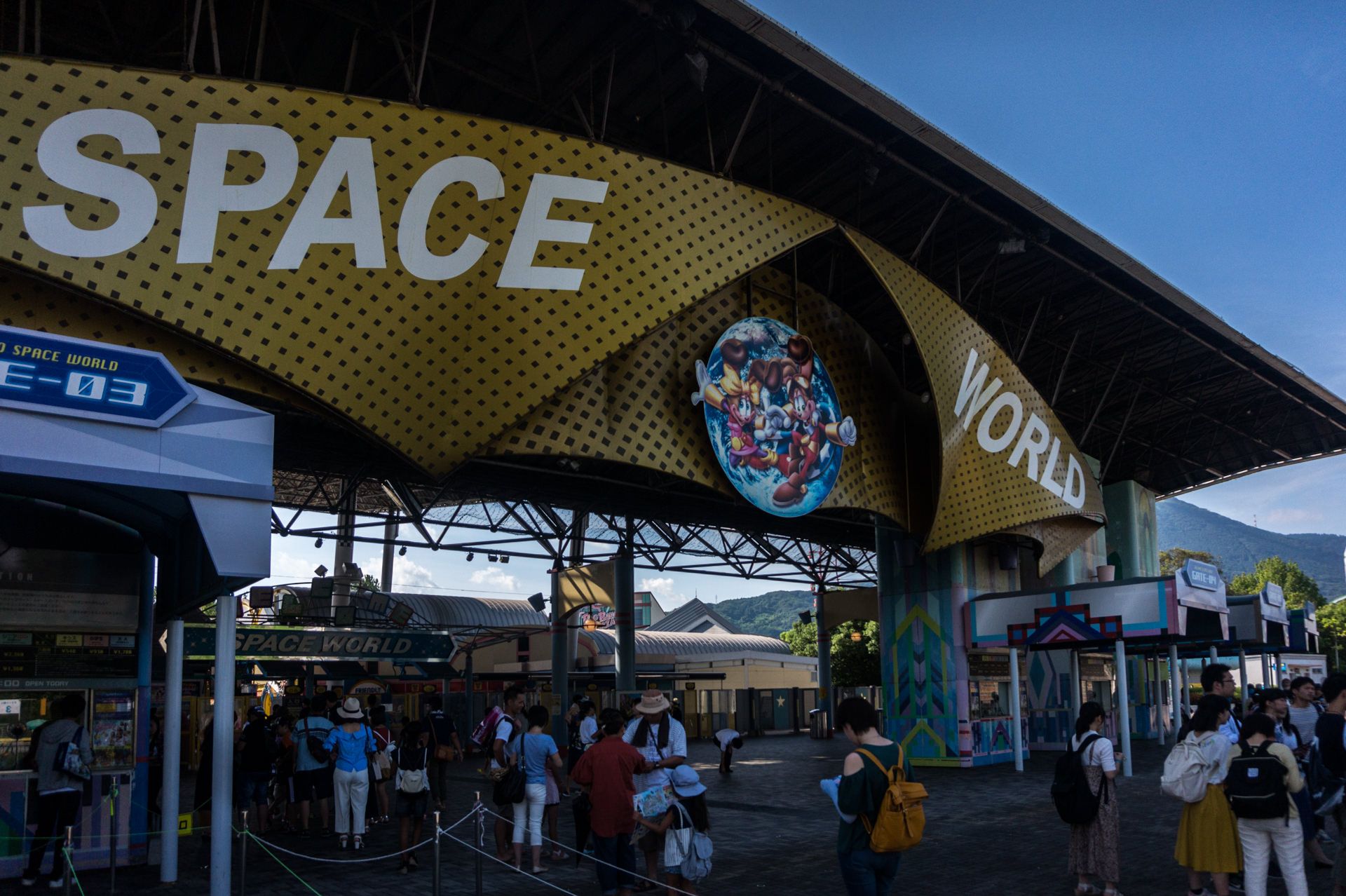
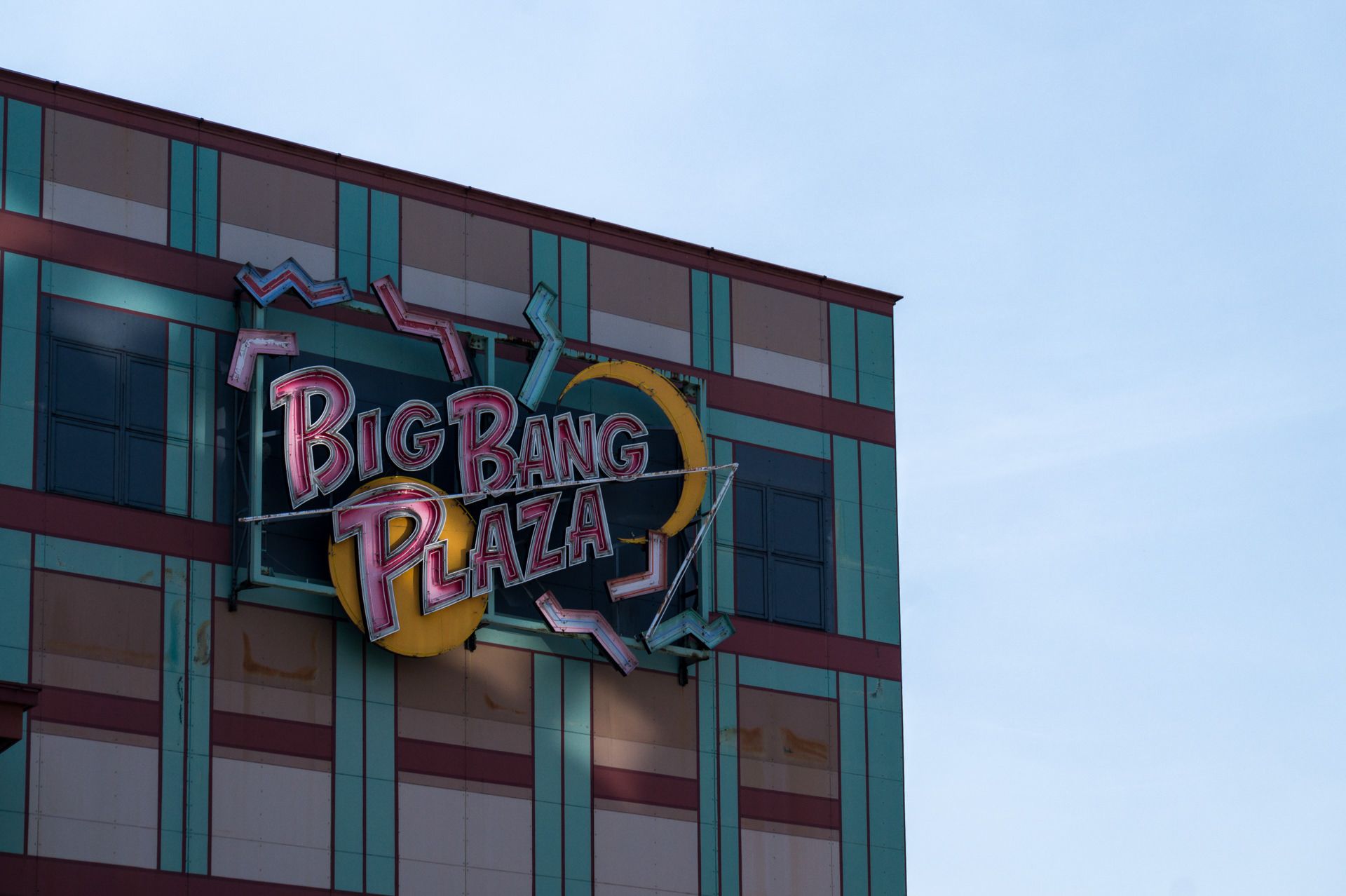
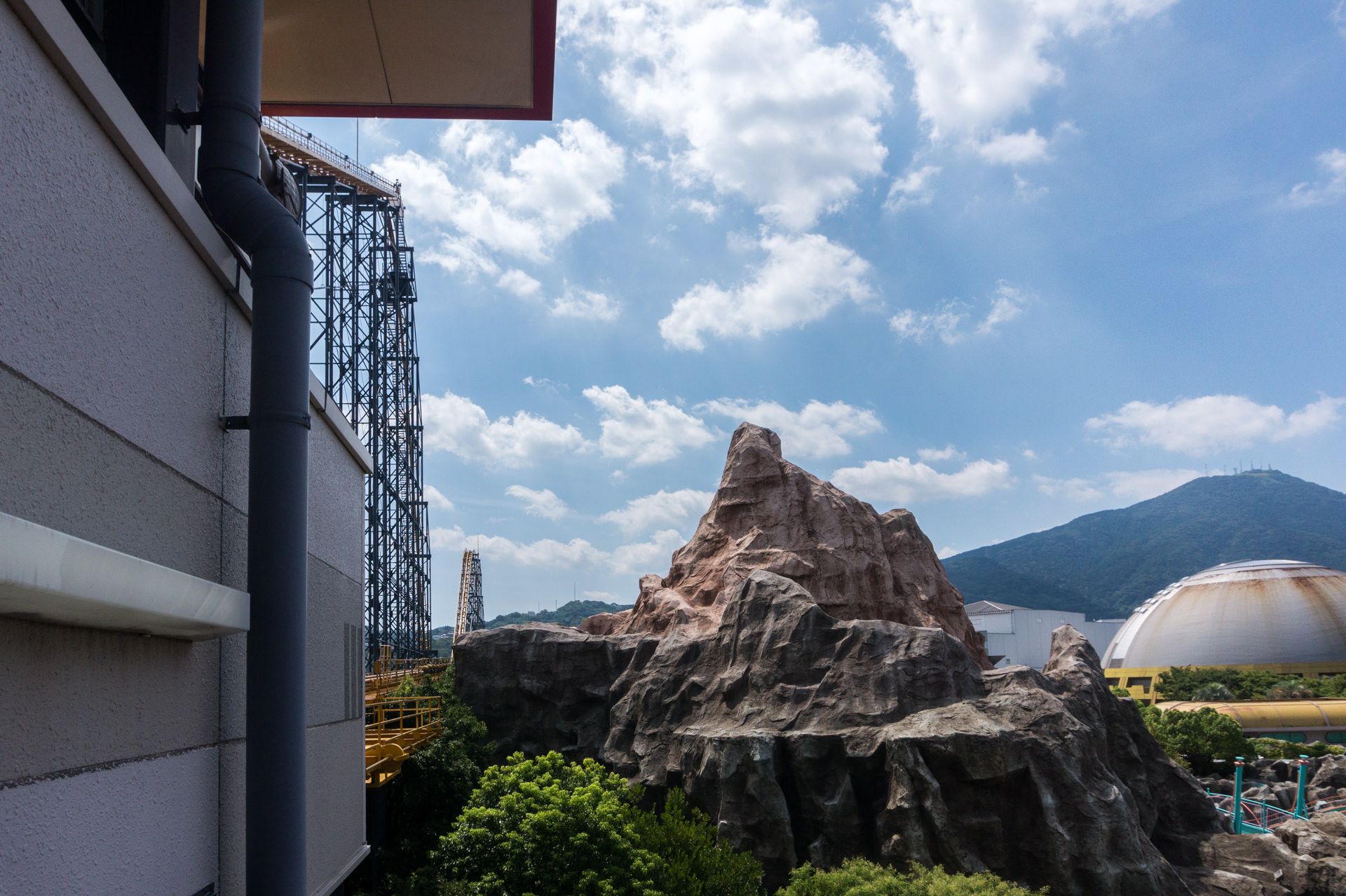
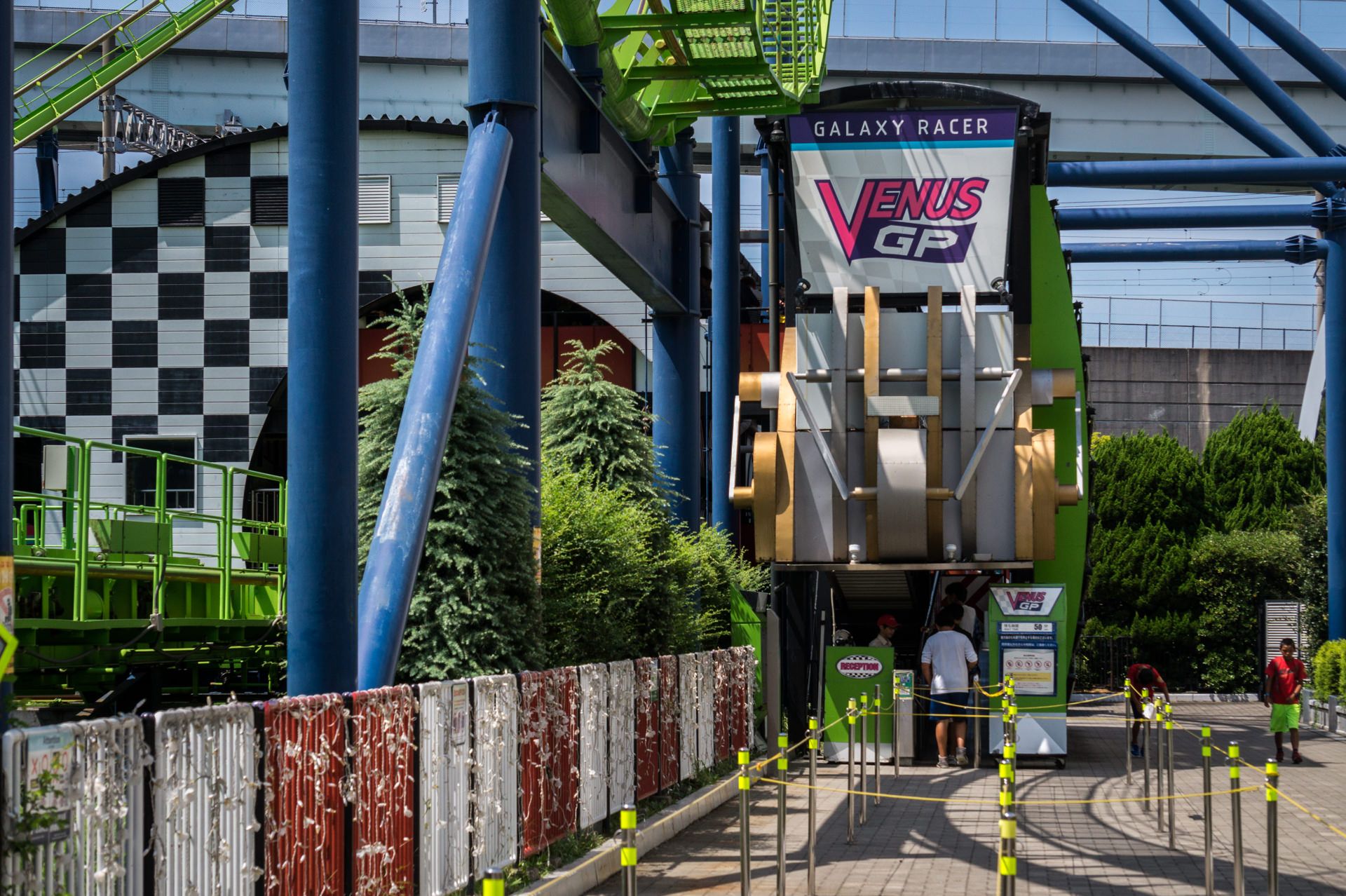
After passing through the generously designed portal, we immediately find ourselves on the Space Bazaar, the main street of Space World. From here, we turn right towards the Big Bang Plaza. Passing the huge show theatre, the anime museum Gundam World and the Astresta Hall – which is empty except for a meteorite and some moon rocks – we head towards the roller coaster Venus GP, which we already marvelled at on the way to the Space World. But shortly before that, we turn left and queue up for the children’s roller coaster Clipper. Because let’s face it, you’re certainly not that interested in a roller coaster from Germany in a report from Japan if there’s also something from Togo. With this in mind, let’s get into the small, extremely cute spaceships.

The ride on Clipper begins with a small right turn that leads the spaceship train directly into the ride’s lift. A short time later we reach the starting height of 10m, whereupon the train immediately throws itself into a left turn. The train then climbs a shallow incline and turns to the right with a pronounced dip in the middle. In a shallow Bavarian curve manner, we float through a high double curve-interchange play before approaching the ground in a right-hand curve. Then, at high speed, we pass through a final left/right combination of curves towards the station. But just before reaching the station, a short dip awaits us, where on other rides of this kind the brakes would be located.  All in all, this is a great little ride with a surprising finale that should be moved to another location in the near future.

Venus GP

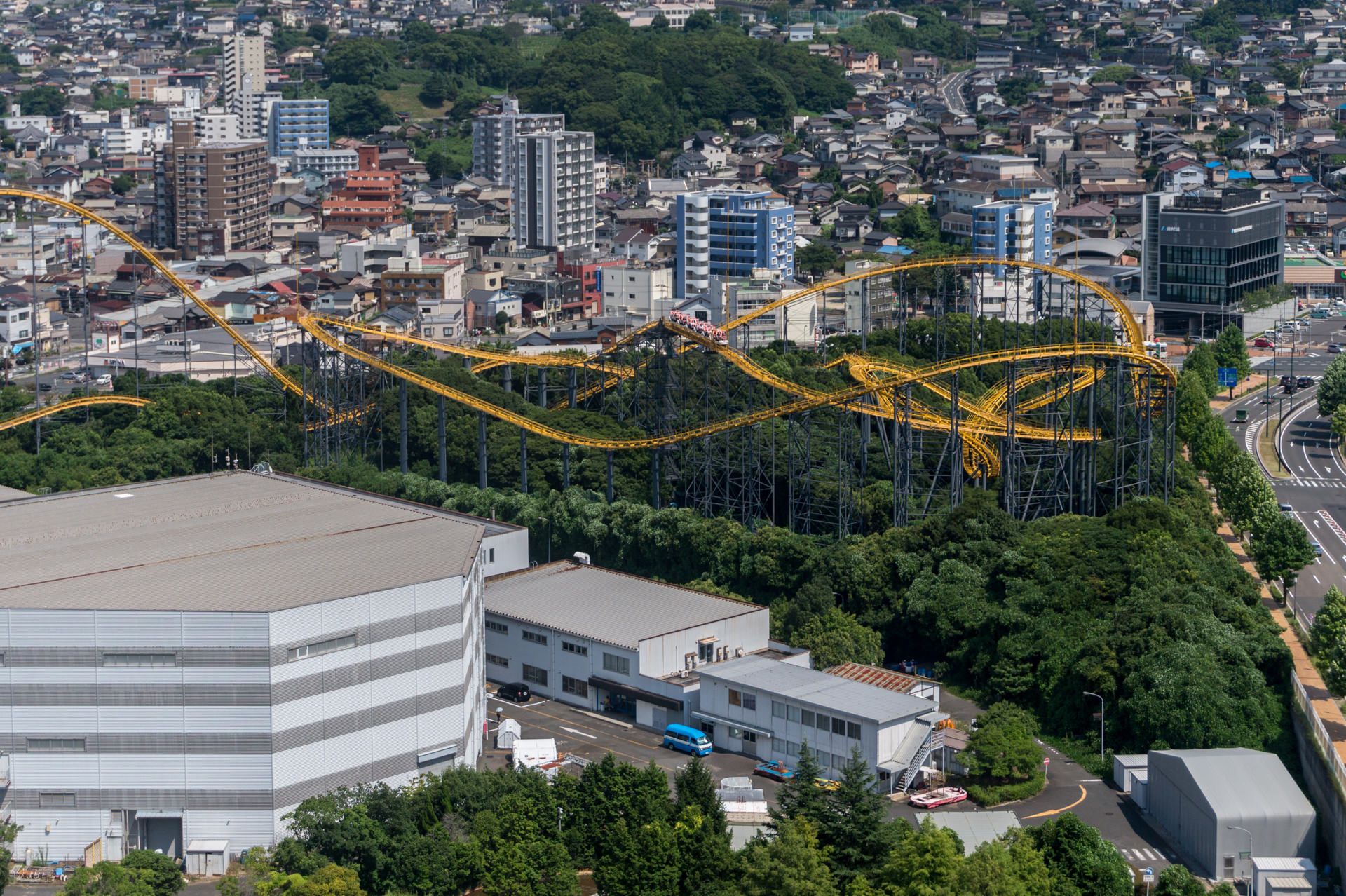
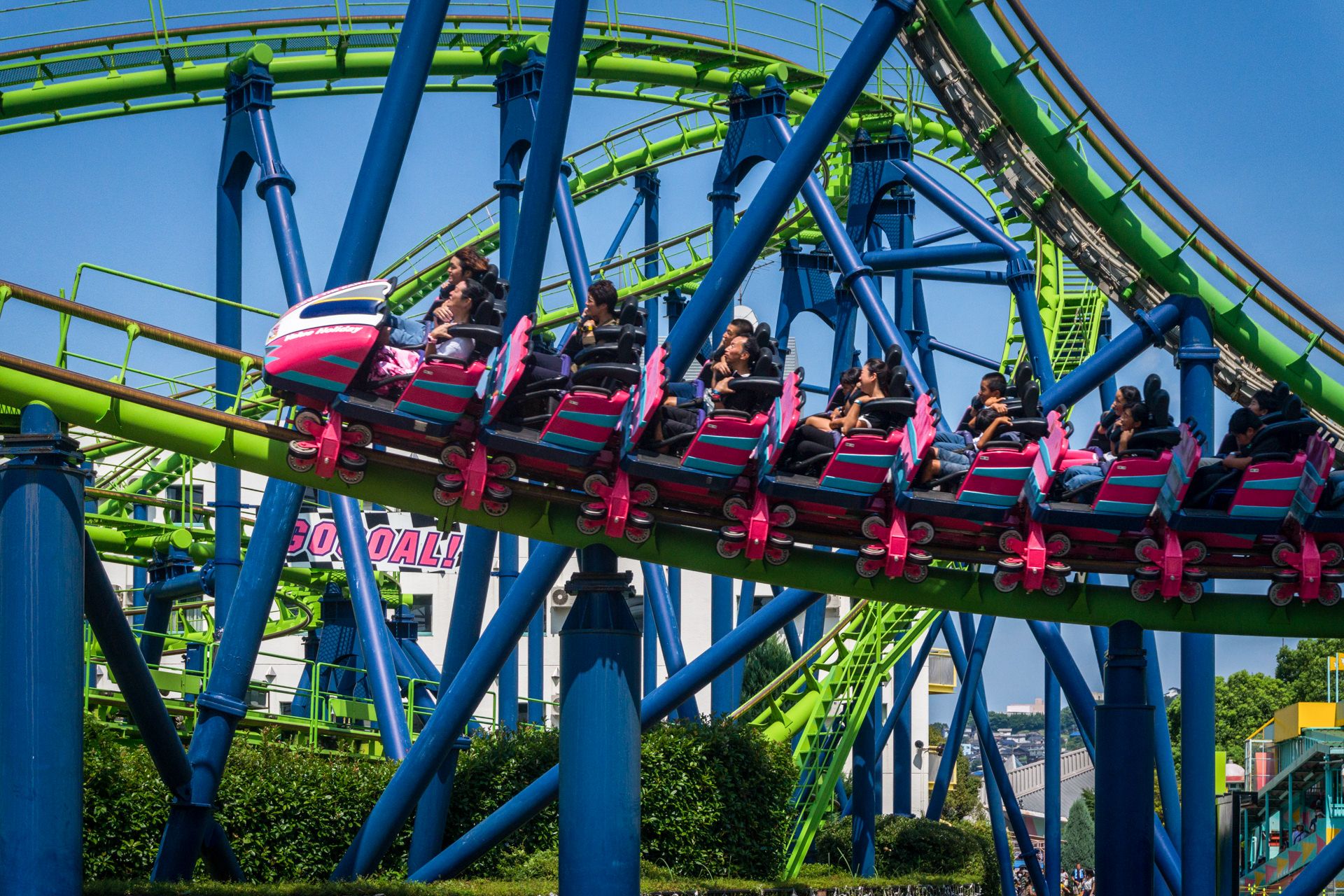
A fate that will be certain for the neighbouring roller coaster. After all, Venus GP is one of the first roller coasters of the Munich-based Maurer AG, which shortly before took over the roller coaster division of the Bayerische Berg-, Hütten- und Salzwerke AG (BHS for short), which in turn took over the production of already commissioned roller coasters when Schwarzkopf of Münsterhausen went out of business. To sum up: Venus GP is a genuine Schwarzkopf product, just not from Münsterhausen and certainly not from the manufacturer. But that doesn’t interest anyone, given the external values of this snazzy ride: A height of 40m, a total length of just over one kilometre, a total speed of 86 km/h and an extremely twisty layout speak for themselves, don’t they?

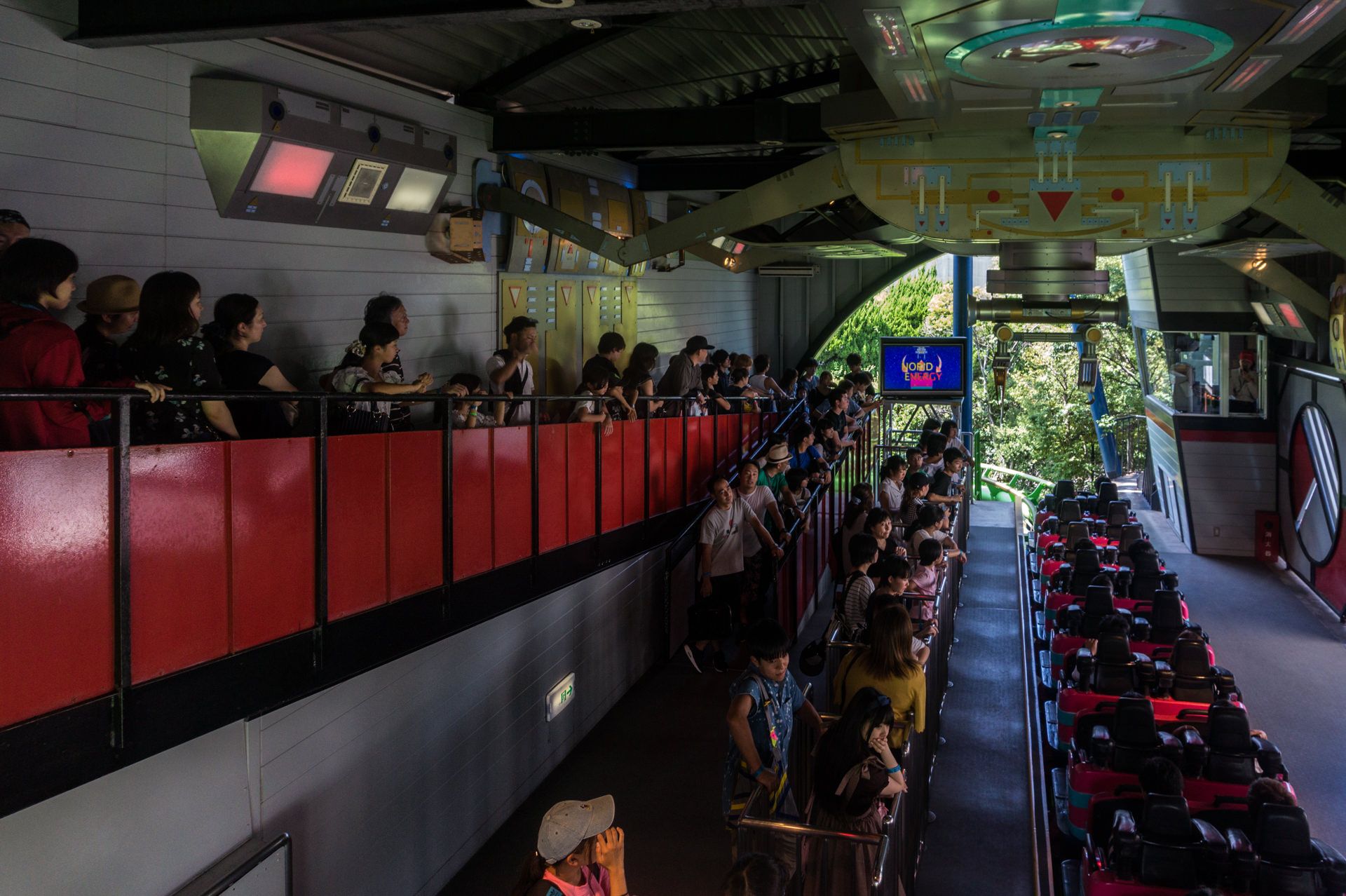
In any case, the staging of the ride with the boarding to the beat of the Queen classic “We will rock you”, the scream rehearsal before the start of the journey and the ear-catching station music when the train is just whizzing along the track makes this a special experience.  In any case, time flies by and before you know it you’re already on the train.

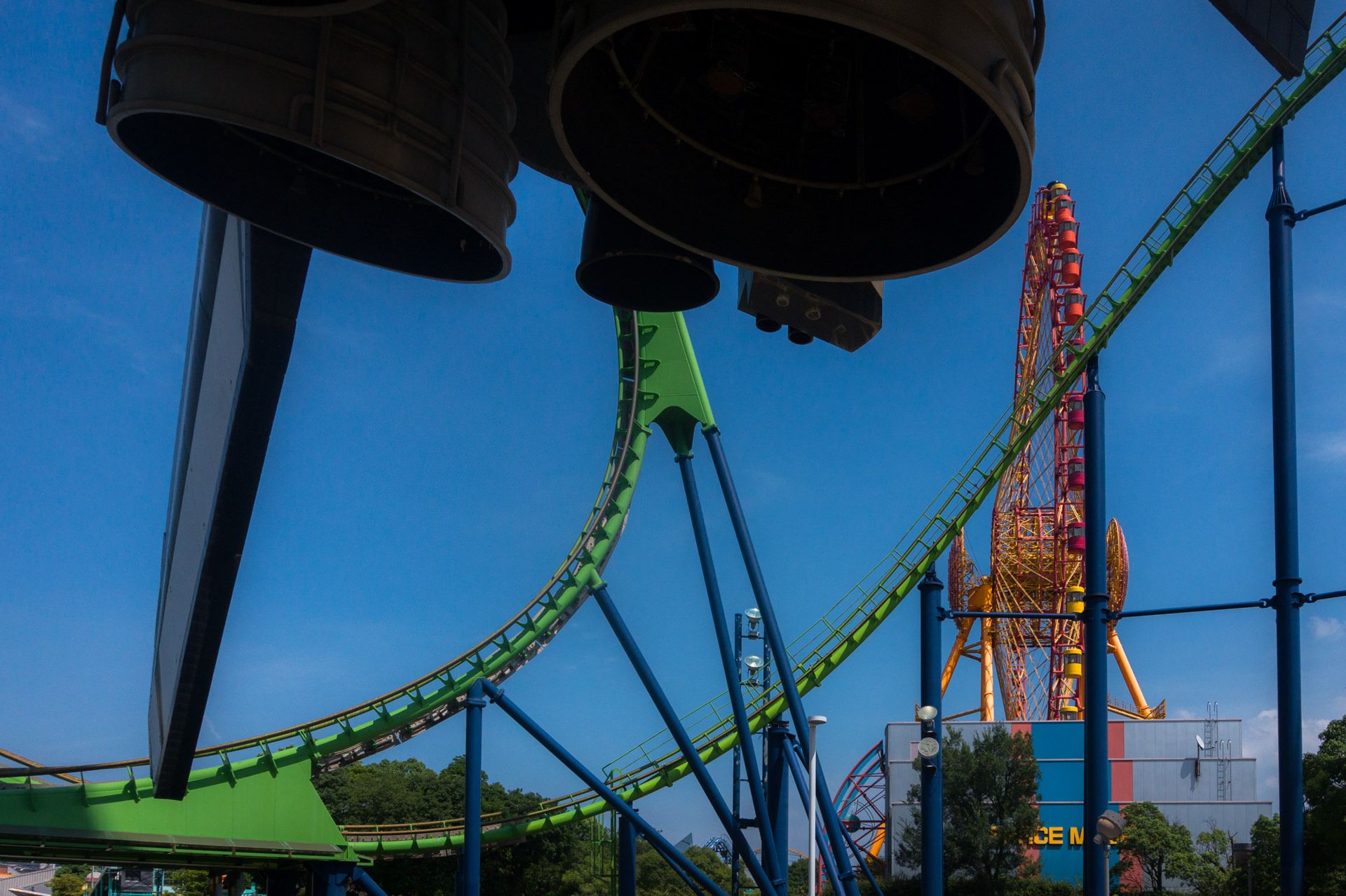
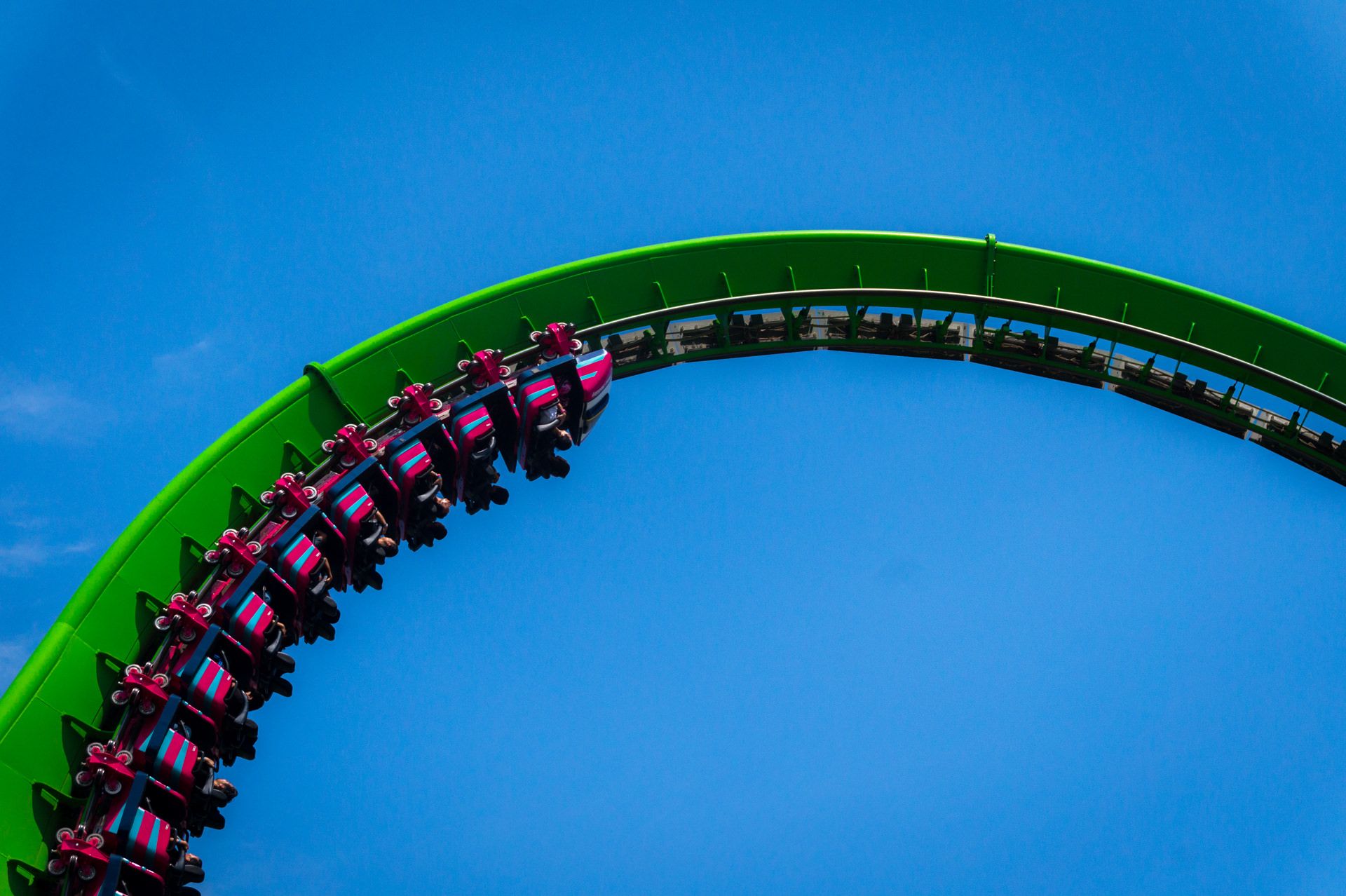
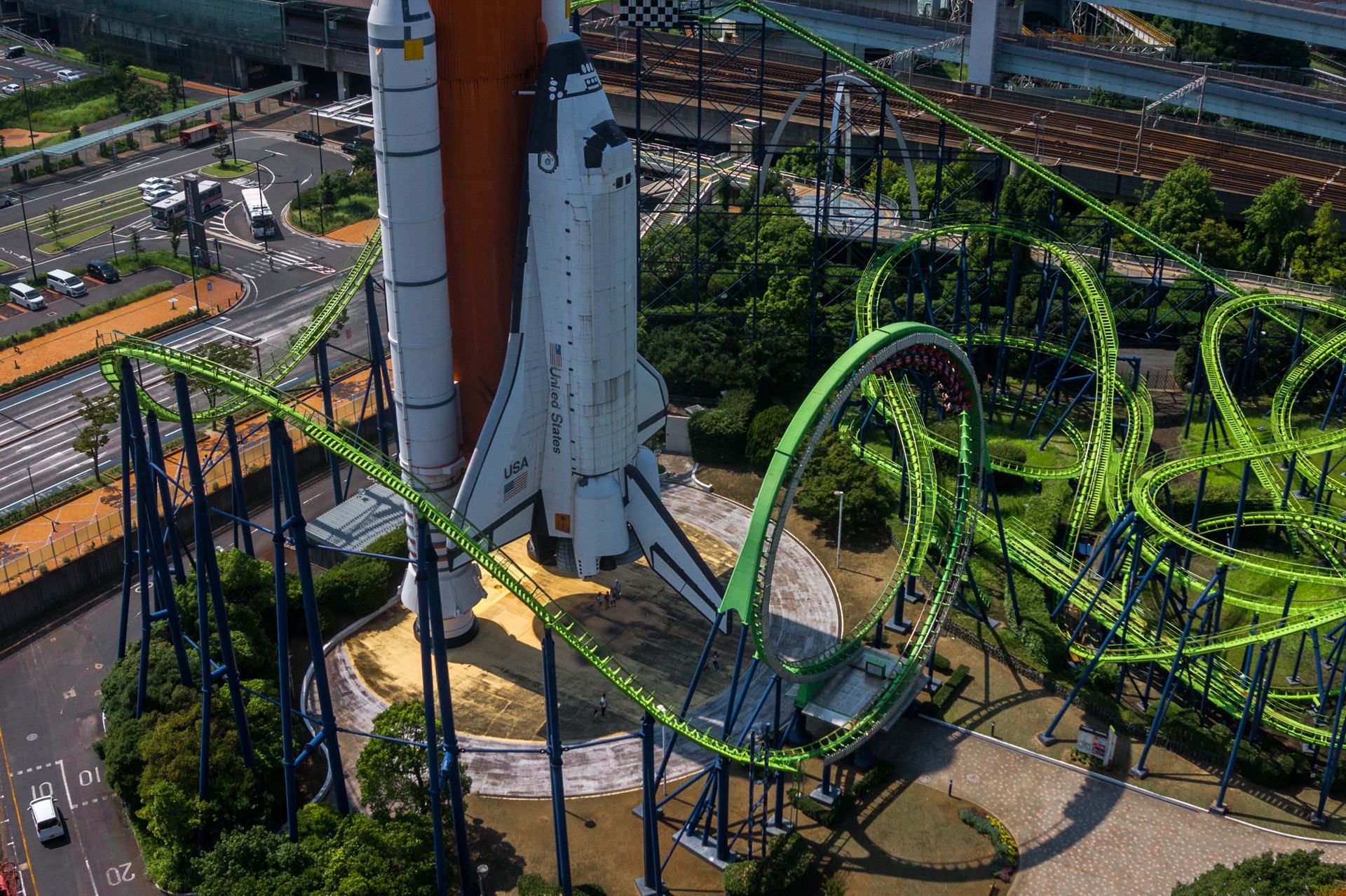
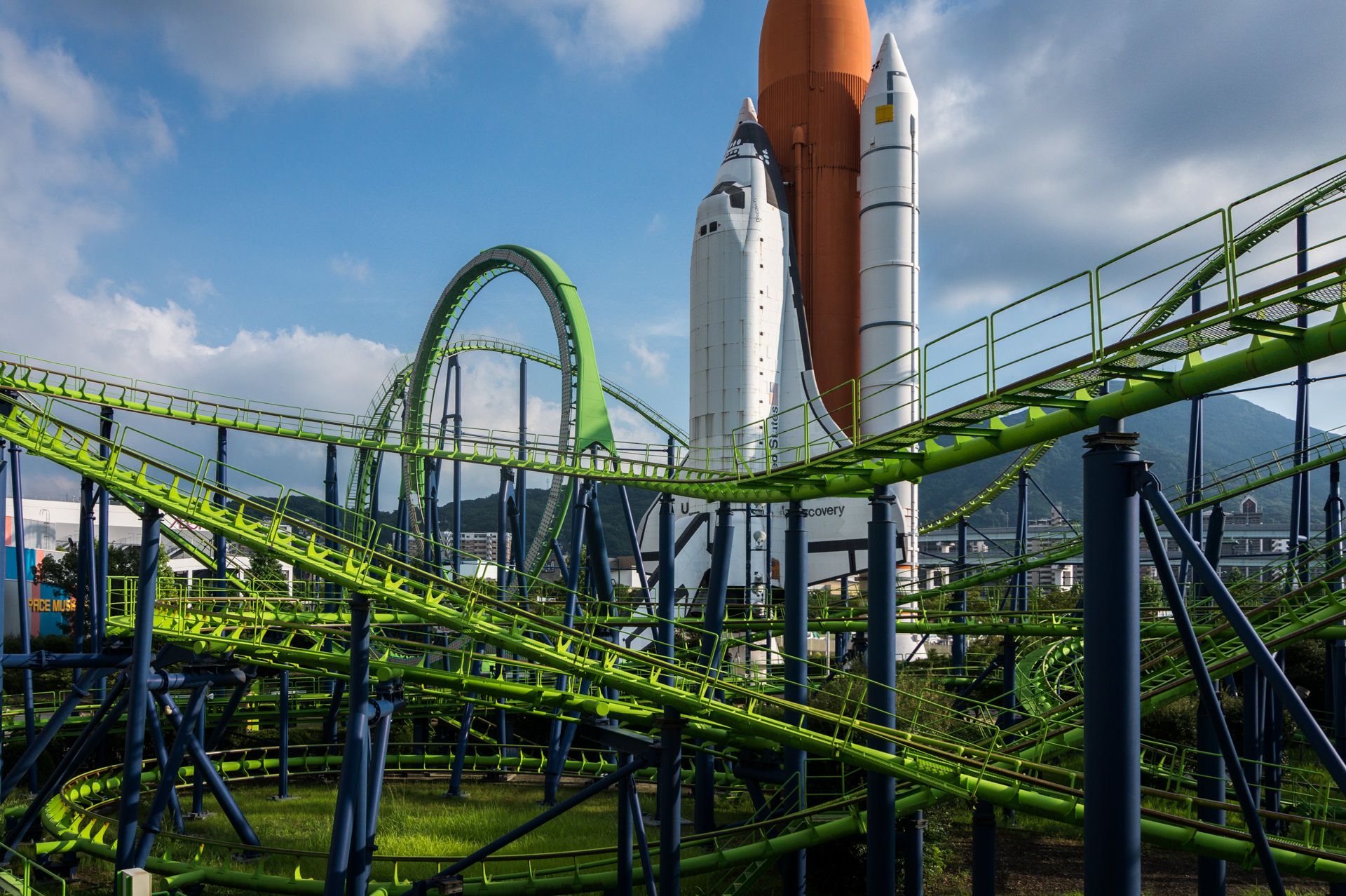
This is then also quickly dispatched, whereupon we leave the station in the direction of the lift hill. After a left turn, a chain takes us up to the starting height of 40m. Once at the top, there is a short moment to enjoy the view before being plunged full of anticipation into the depths on the back of the space shuttle Discovery. With the speed now built up, we climb a high banked turn before entering the almost circular loop with pinpoint accuracy. In the finest S-curve manner, we rapidly gain height, whereupon the train just barely scrapes past the lift hill in a tight curve. The train then crashes to the ground and reaches the lowest point of the ride. Mercilessly, the train turns around another bend, crosses the heads of the willing park guests and the station at a lofty height, and almost madly throws itself to the ground again. This is followed by an extremely rapid section of track in the form of a figure eight, which is followed by an intense upward helix. At high speed, we now go through a wide left-hand bend, which immediately turns into a downward helix. Shortly afterwards we reach the braking section and soon the station.

I have to admit, Venus GP sounds like the perfect roller coaster: powerful, brutal and merciless. During the ride in the Galaxy Racer, you only go through crisp curves and a beautiful loop – there is actually only time to breathe during the ascent in the lift and in the final brake. But why does my euphoria remain so low?! The answer is simple: the restraints!

In addition to the normal lap bar, the ride has shoulder claws à la Olympia Looping, only in extremely crappy. Well, the ride on the Olympia Looping is already a drastic experience due to the (more harmless) variant – but you can endure that if you strictly adhere to the given seating position. With Venus GP, on the other hand, you should give up hope of that as soon as you get in. This is how you experience the extremely appetising track layout with the constant fight with the bar – not pleasant, but the ride is actually top class.

Space Shuttle Discovery and the Space Museum

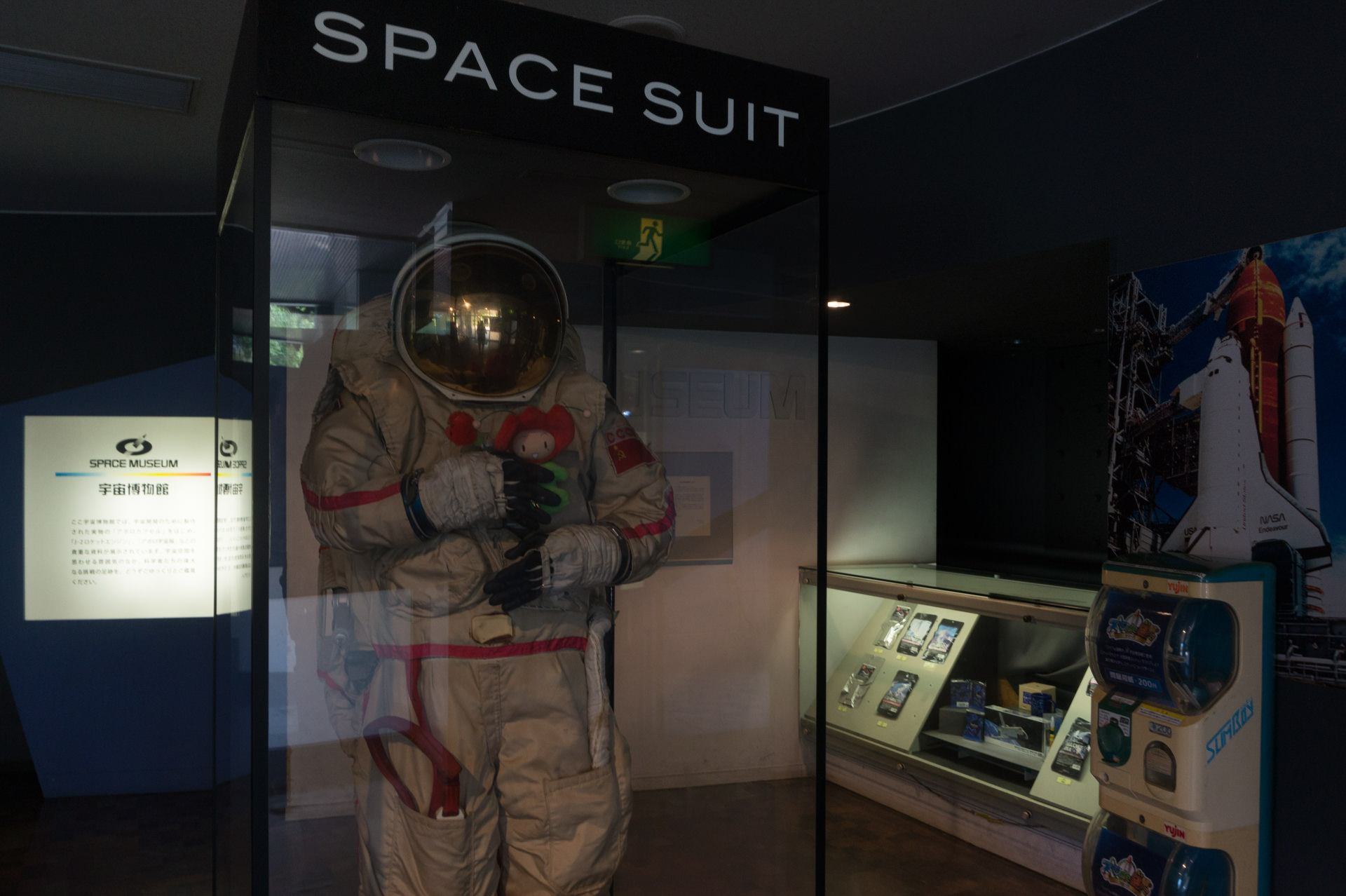
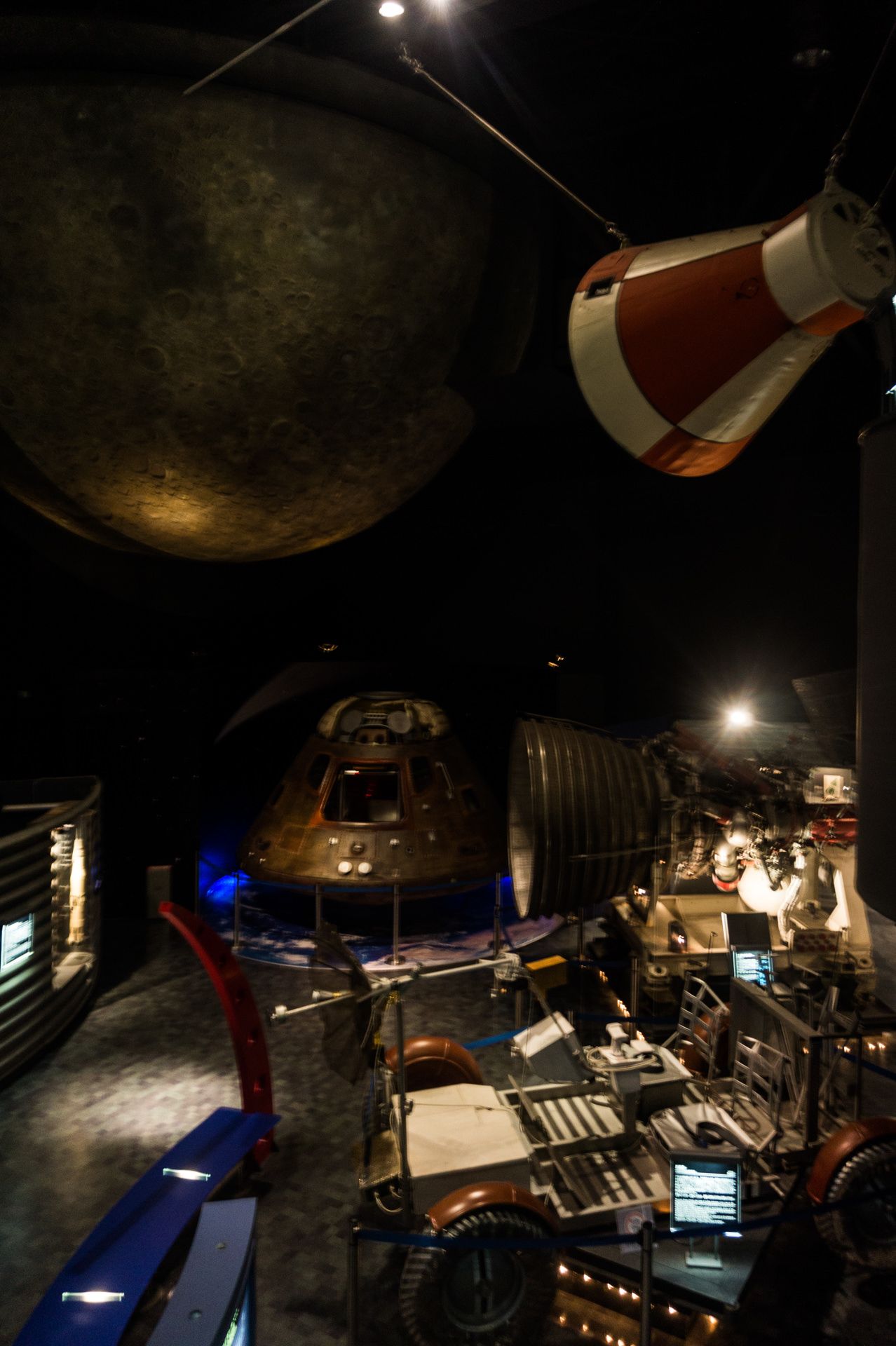
Let’s now turn our attention to the remaining edutainment offerings of the theme park, i.e. the replica of the space shuttle Discovery on a scale of 1:1 – which is extremely impressive in itself and makes the space station above the queue of the roller coaster Euro Mir at Europa Park look old without any effort – and the Space Museum. The former clearly has the advantage of not being overlooked by visitors, while not a soul gets lost in the well-made museum. Interestingly, an irrelevant anime was shown in the museum’s own screening room and some of the rooms were no longer open to the public – in the early years of Space World, it was certainly once a great attraction, which could actually continue to exist as an independent attraction in the future due to its location together with the space shuttle.

Boogie – Woogie Space Coaster

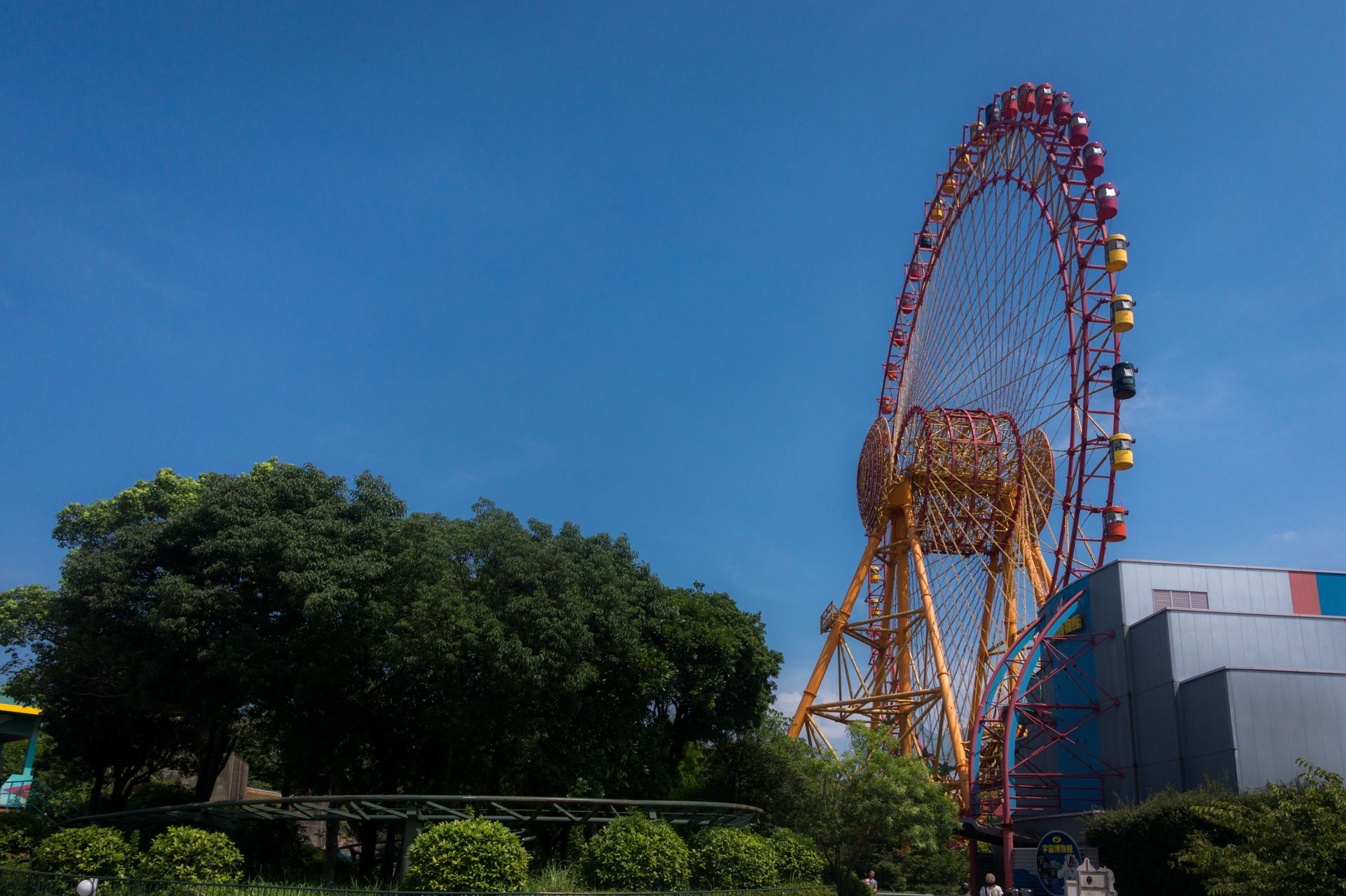
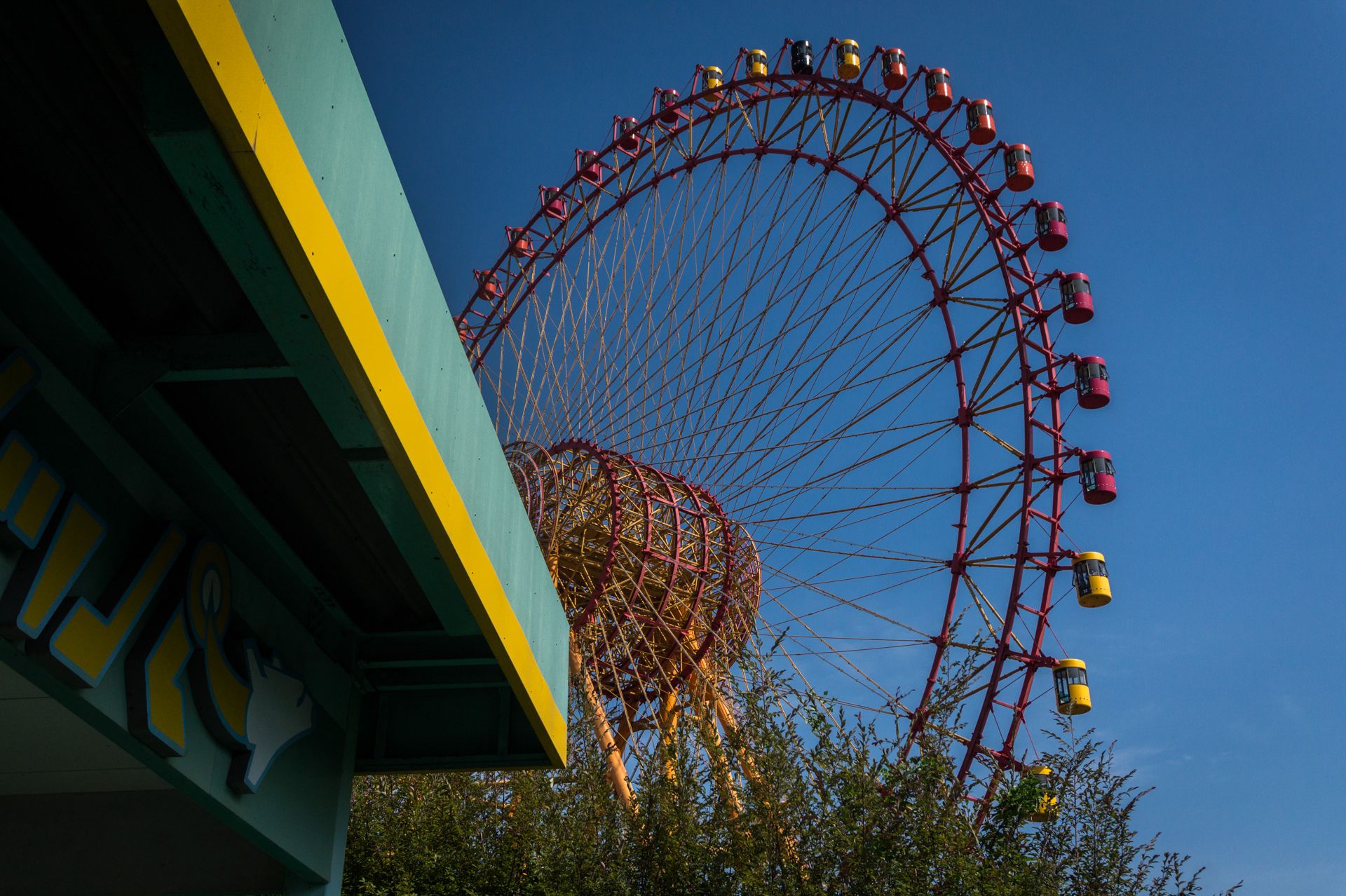
Past the Space Eye, the 100m high Ferris wheel of Space World – from which you have a great view of the neighbouring Venus GP roller coaster – we follow the path along the Boogie – Woogie Space Coaster, whose entrance is stupidly on the other side. Arriving at the entrance of the queue, you then have the choice between two backward and three forward facing cars. To increase the surprise factor of this little rust bucket a bit, the first ride was of course in the rear front row.

In a wide 180° curve, you leave the station in the direction of the lift hill. The lift then takes us slowly but surely to the top, where we are allowed to enjoy the view in another turn. On the following shot, in a tunnel through an oversized tetrahedron, we quickly gain speed, before the G force tries to kill us in the following valley, which is strangely inclined to the side. This in turn gives rise to a laughing fit that doesn’t subside until the end of the ride. Full of joy, we pass through the next turn, at the end of which a descent with a powerful valley is waiting. Finally, there is a grandiose downhill helix before one is guided in the direction of the station.

The Boogie – Woogie Space Coaster may not be a milestone among roller coasters, but from a ride-technical point of view it’s just great, which is why we were always happy to get on board. Especially the backwards ride adds a lot of value to this snazzy ride. Due to its condition, Space World will probably be the ride’s last venue – which is a shame.

Planet AQA

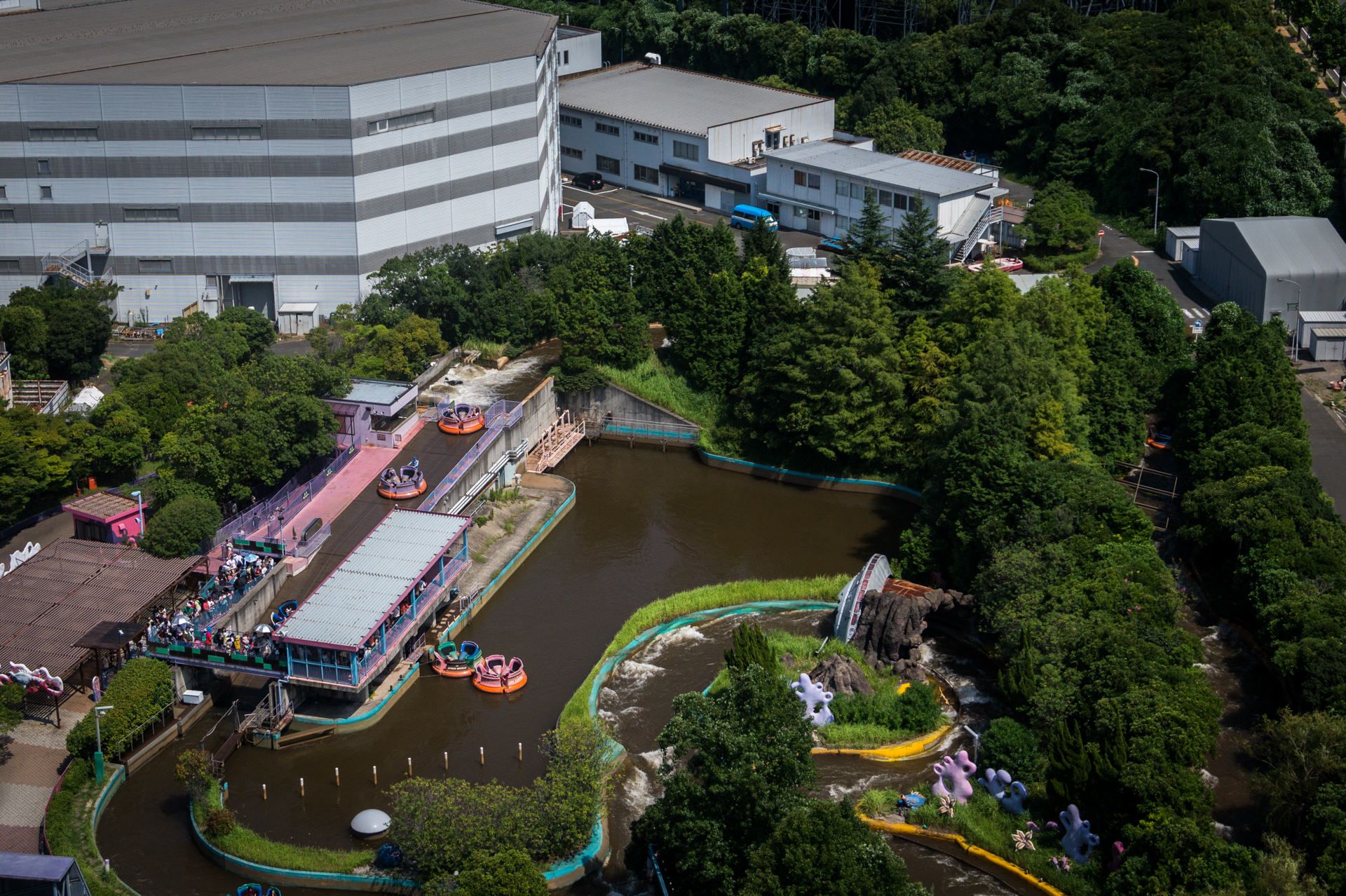
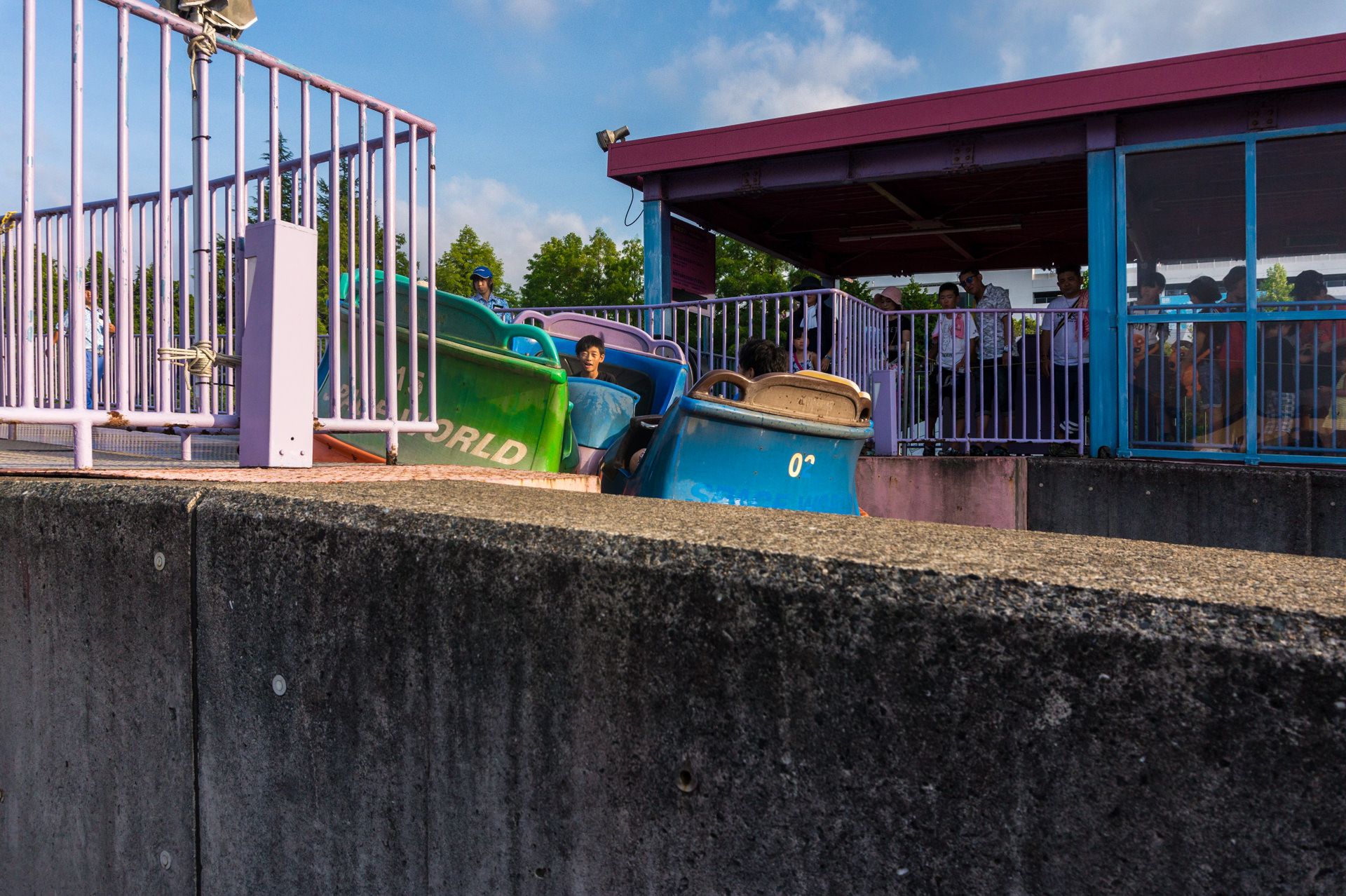
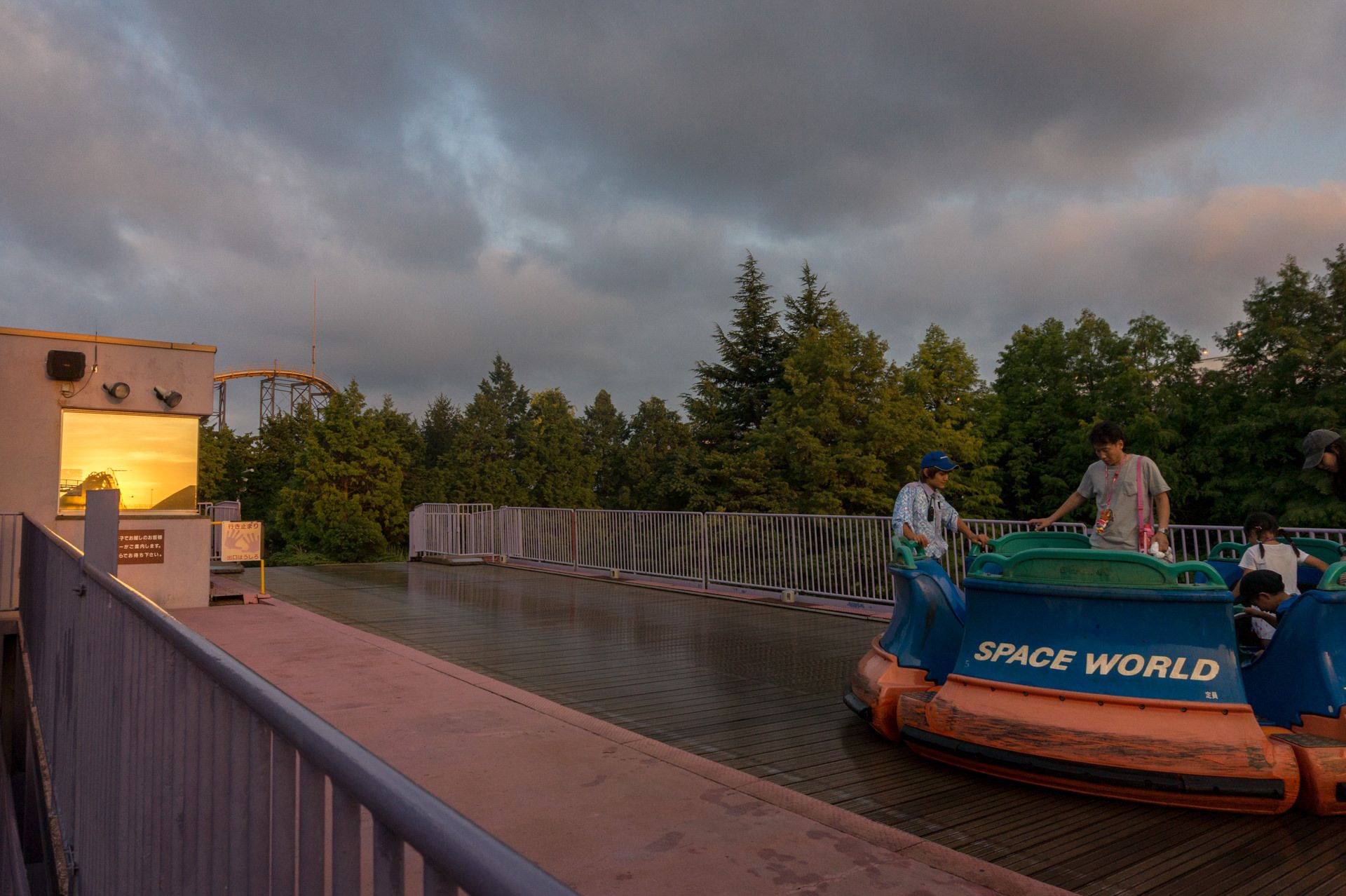
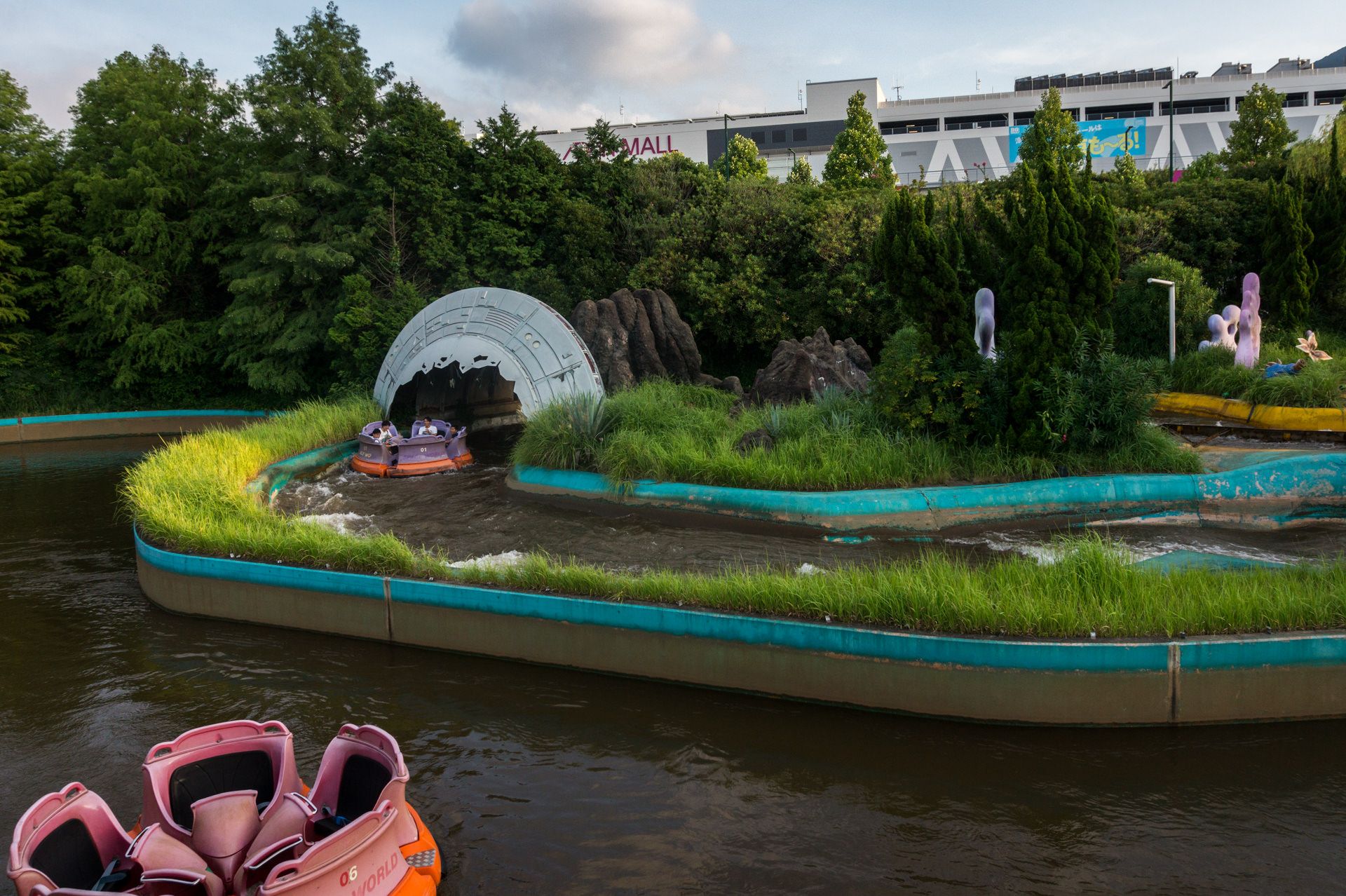
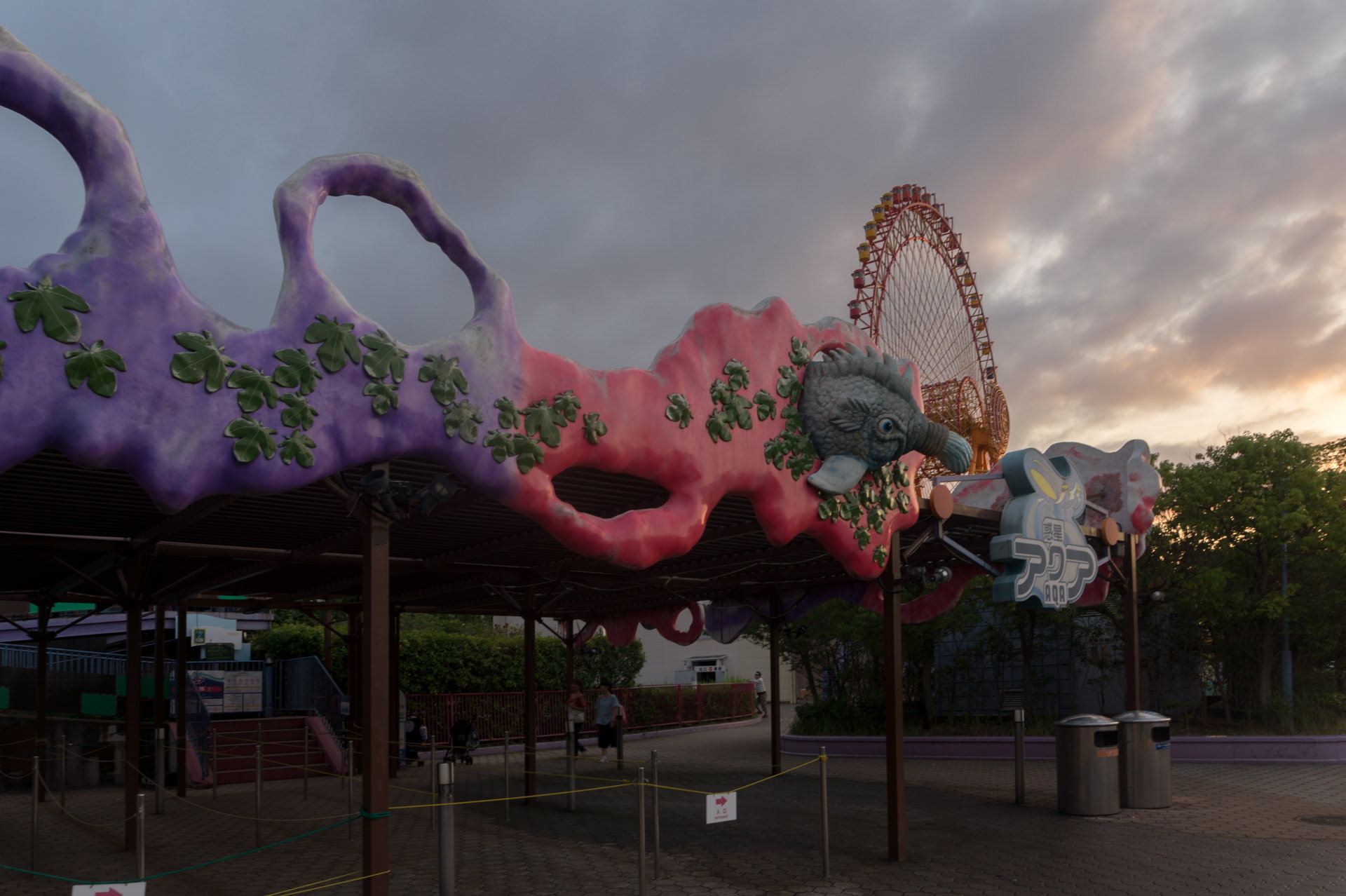
The situation is just as regrettable with the Planet AQA rapid river. This is the first product of the manufacturer Hafema. In spacious 10-person boats divided into 5 segments of two people each – which, however, due to the Japanese mentality are only loaded with further groups of people if the first group admits to it – you wind your way, after a long wait, through a channel full of rapids. The ride is similar to that of the rapid rivers made by Vekoma, which makes for an extremely interesting, albeit less thrilling, ride.

4D-Vision Pop Stella

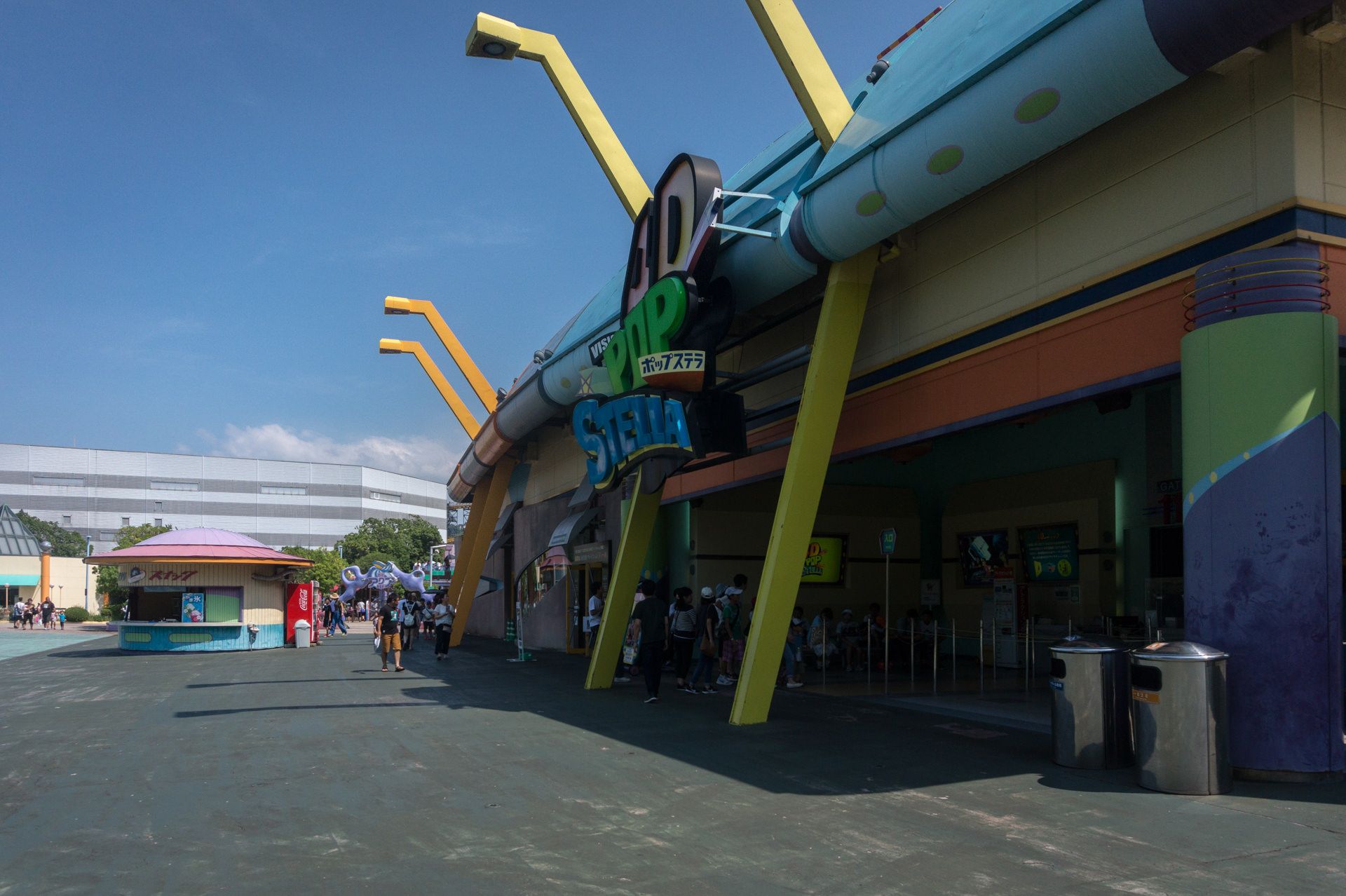
If you do get a little wet, you can get a free blow dry in the drying rooms next to the ride.  A slightly different solution would be a visit to the cinema room of the 4D-Vision Pop Stella, where a BBC nature film with all kinds of effects is shown. Here you can experience the daily routine of a chipmunk.

The next attraction on our tour is in the central building complex, which is probably a remnant of the former steelworks. Although you always walk past it, it can happen that you never look inside the building – which we felt compelled to do only when we were looking for the last roller coaster; luckily, however, we knew how many roller coasters there actually are in Space World.

Mission to Mars

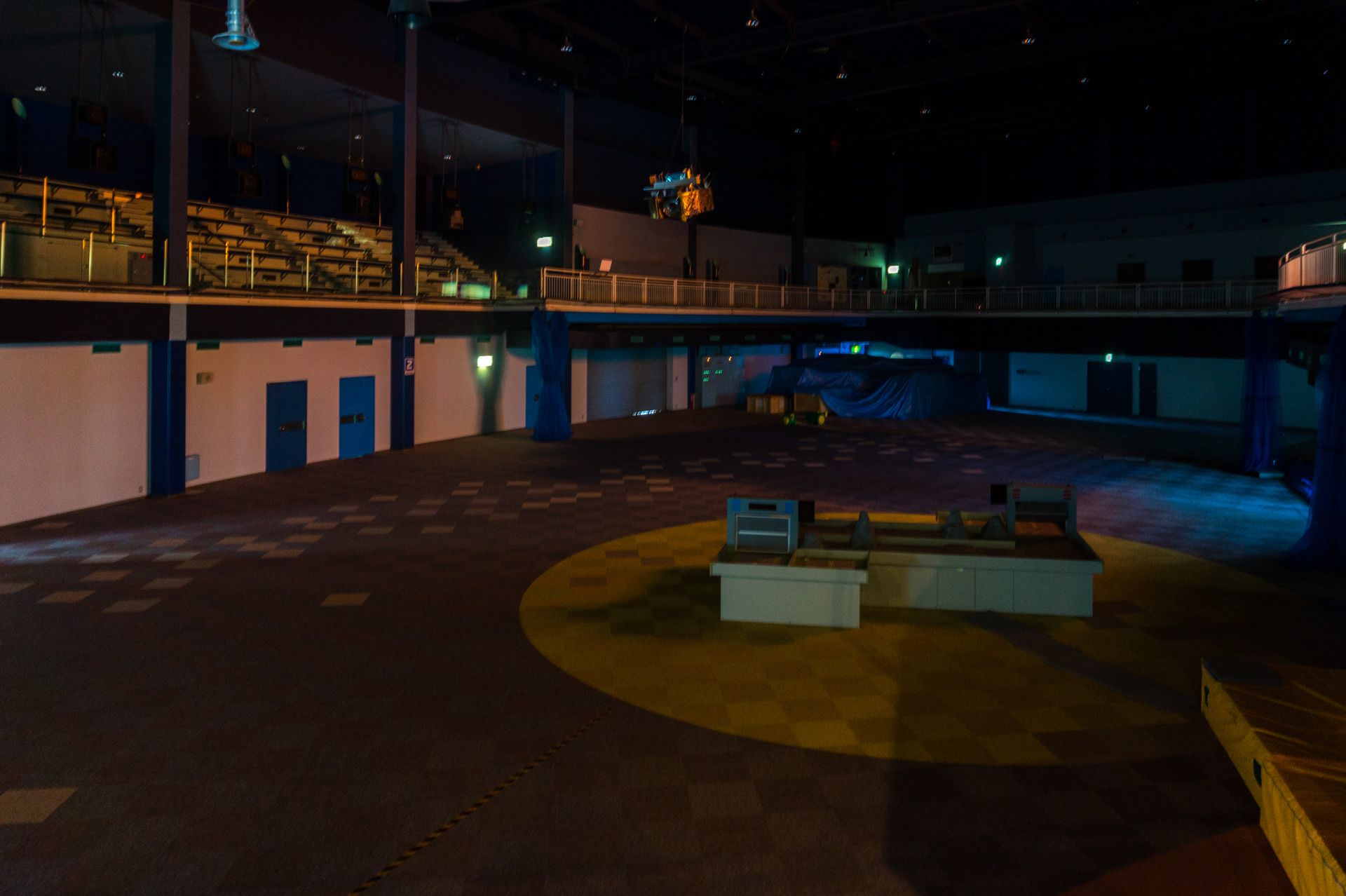
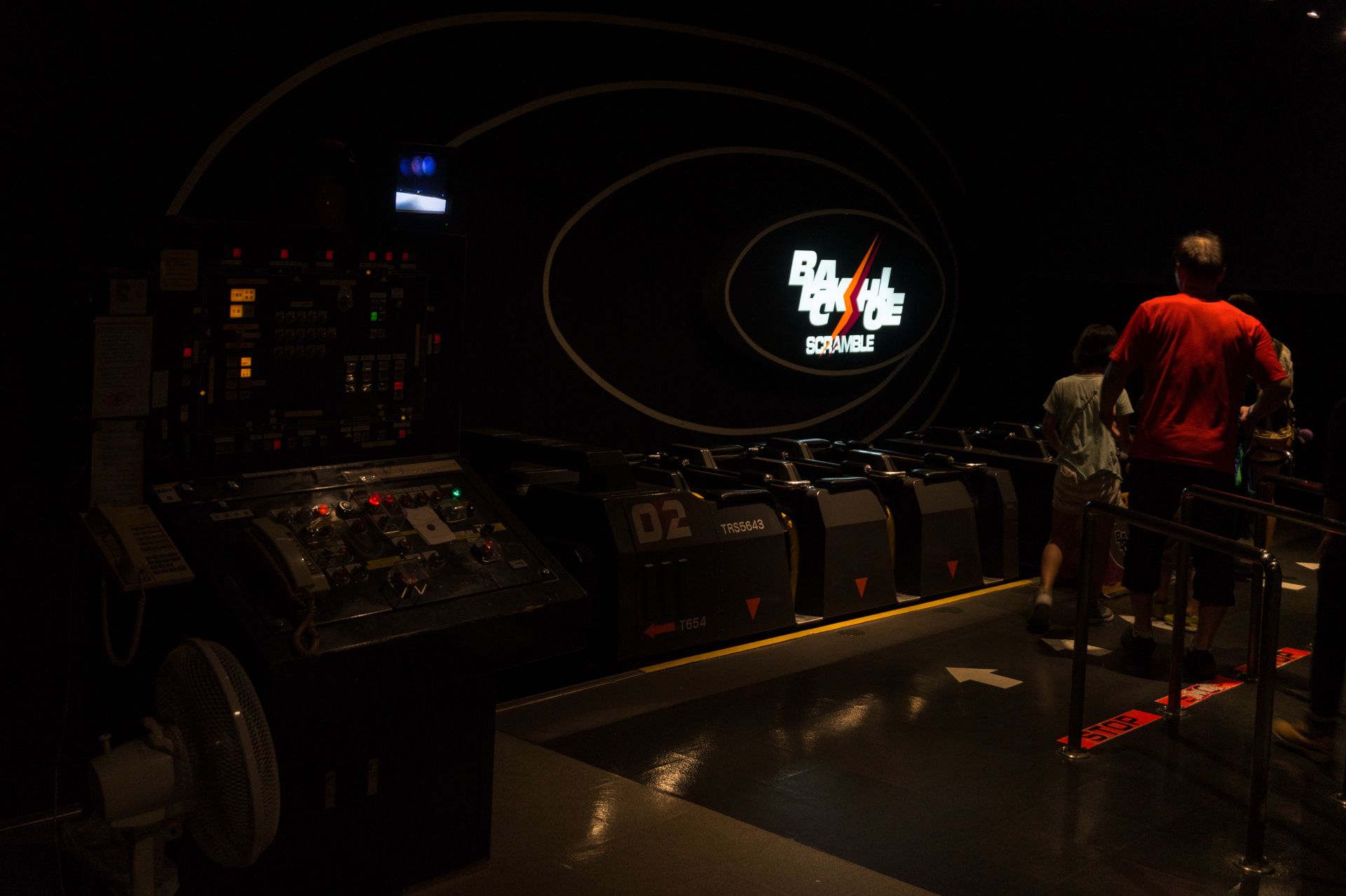
In the building complex itself, visitors are greeted by the ice skating rink, which is open in winter, a children’s play area, the Black Hole Scramble indoor roller coaster and the Mission to Mars Imax simulator. After a long pre-show in which the rescue mission is discussed, you board the large-scale simulators and then get a surprisingly stomach-friendly shake.

Black Hole Scramble

The main attraction in this area, however, is the aforementioned Black Hole Scramble indoor roller coaster. After taking a seat in one of the two six-passenger cars, the ride can start immediately. On the way to the first lift hill, you first pass two long straights, each of which is followed by a left turn. The following lift is climbed leisurely and releases you into another left turn. This is followed by a shallow descending straight where the train picks up speed a little. After a short ascent, a long right-hand bend follows, which immediately turns into a Bavarian bend and finally ends in a block brake. You leave this in a very tight right-hand bend, which shortly afterwards turns into an equally tight left-hand bend. After a short straight and another left turn, a surprisingly steep drop follows, after which the subsequent (also very narrow) right turn is traversed with a lot of pressure on the body. Shortly afterwards, you pick up a few metres of altitude again in lift hill no. 2. You then leave this in a right-hand bend, whereupon the train quickly gains speed on the following straight. After the subsequent right-hand bend, the train performs a short dip, whereupon the next right-hand bend is already waiting for you. After this, you climb a comparatively high ascent, which first releases you into a block brake and then into another right-hand bend. This is followed by the second major drop of the roller coaster, which then releases you into the final left turn and shortly afterwards into the braking section.

Even though the indoor roller coaster seems to consist only of tight curves and a few straight connecting sections, Blackhole Scramble is a true indoor roller coaster of Japanese design, which offers a lot of fun in a very small space. So much, in fact, that I would call it one of the best of its kind.

Twin Mercury

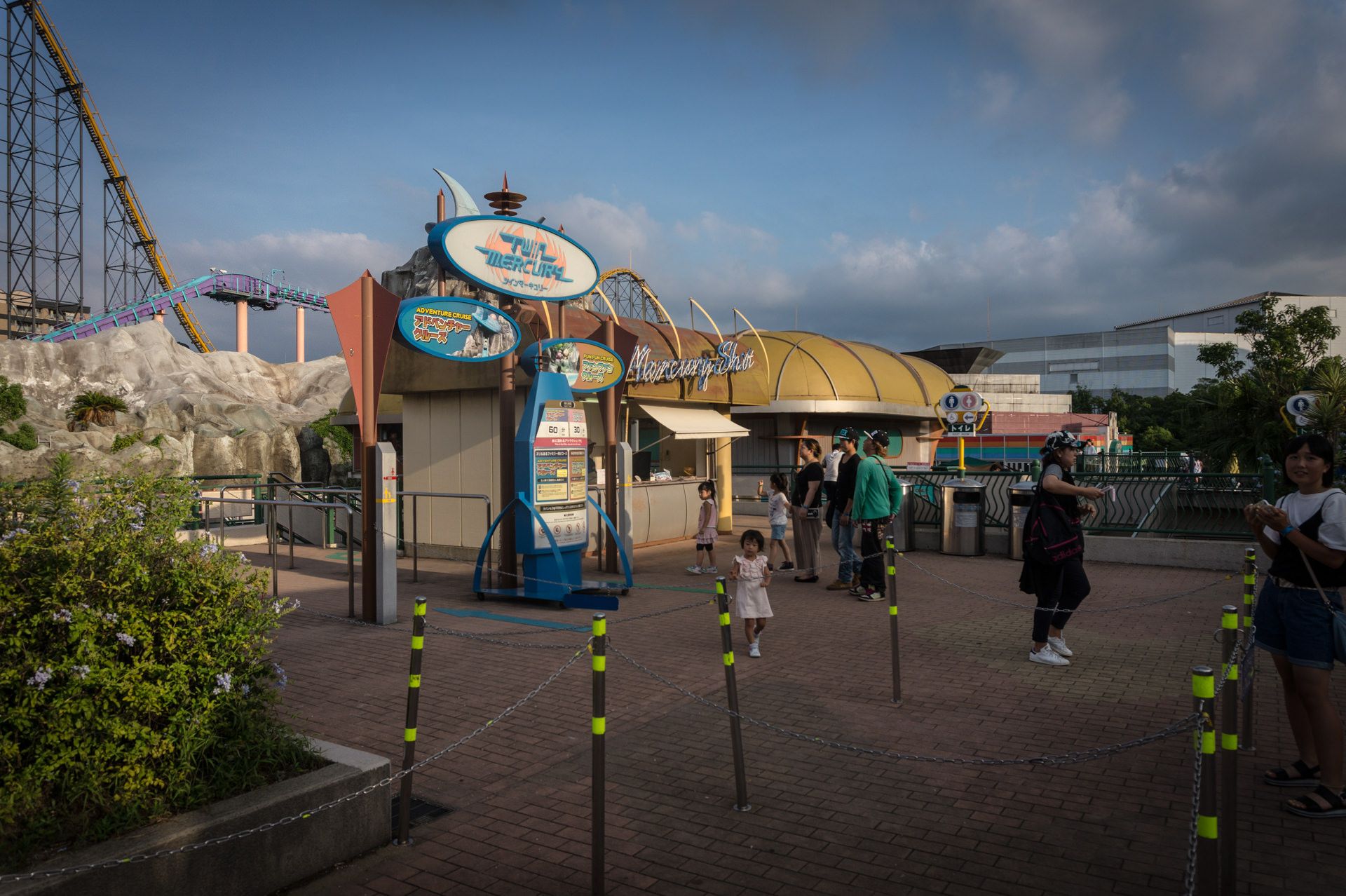
The log flume duo Twin Mercury also falls into this category, where you can either go on the Adventure Cruise or the Fun Fun Cruise. While the Adventure Cruise is meant to appeal to the more courageous passengers, you can let off steam with water pistols on a more leisurely ride on the Fun Fun Cruise. However, as we stood our legs in the queue for the Adventure Cruise due to the minimal number of boats, we refrained from taking any further rides.

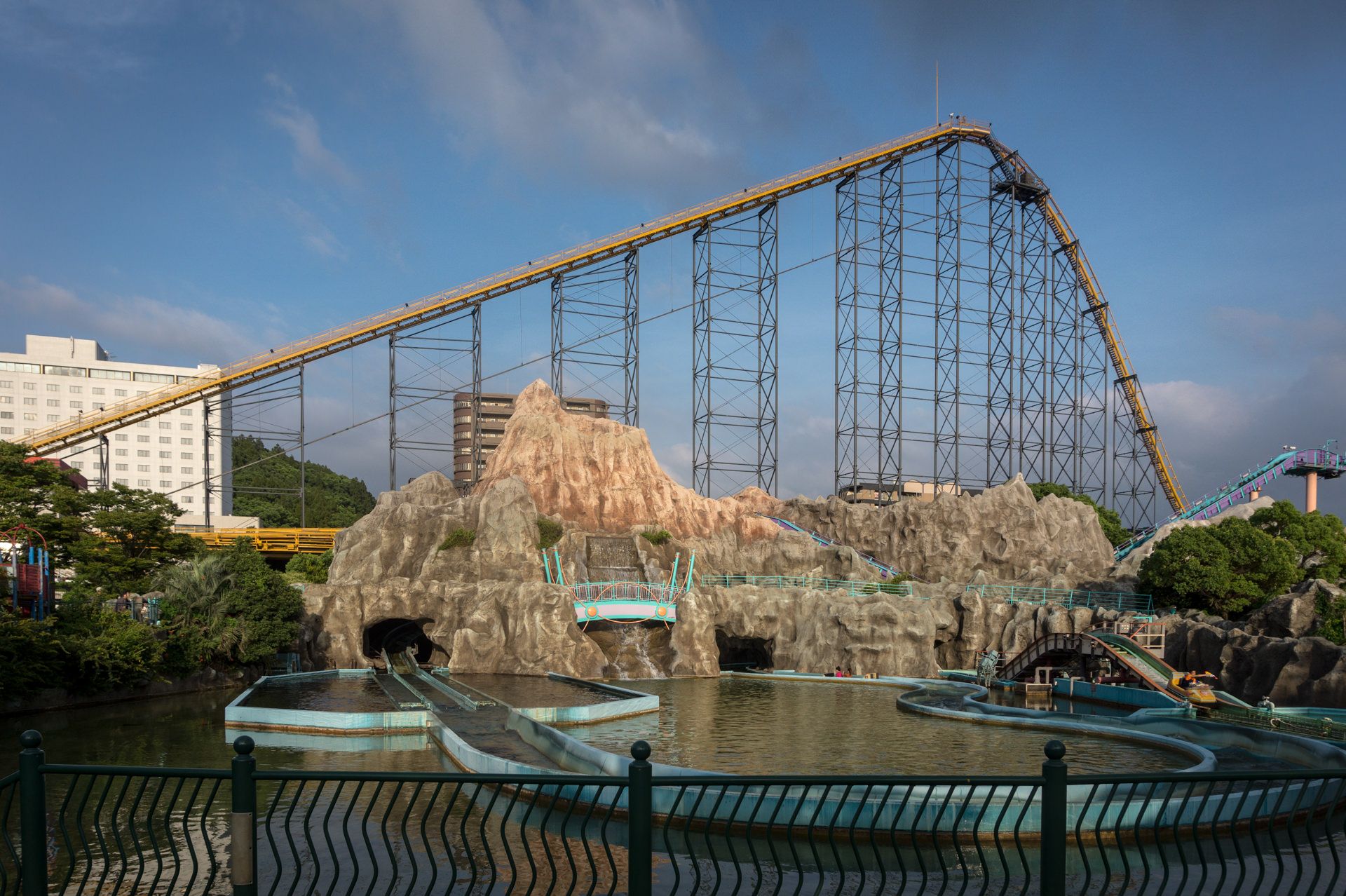
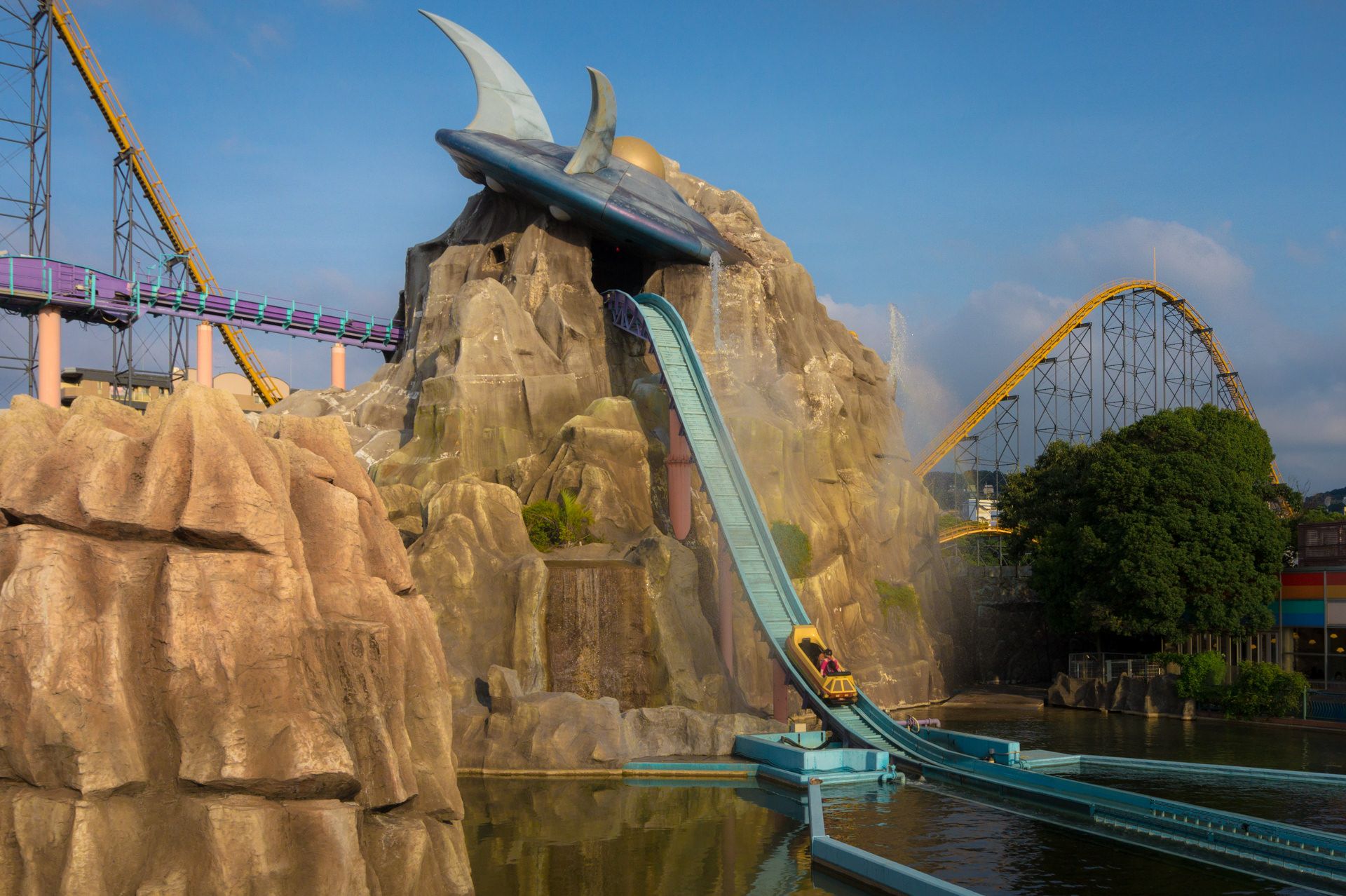
When it was finally our turn, we boarded the boat and the ride could begin. After a few metres of bobbing around in the channel, the conveyor belt of the first lift hill was already waiting for us, releasing us into the opulent mountain massif. After a short left turn, it becomes increasingly darker and light effects appear. After these are extinguished, you can only hear the water flowing faster and faster, so a drop is imminent, the only question is when. Suddenly you shoot down into the depths, but the water doesn’t come, instead you dash over a small hill and experience a shallow airtime before you finally come into contact with the cool water. Through openings in the façade, we can now recognise the course of the track and so we bob up to the second lift, quite surprised. This quickly brings us towards the second shot, which is completed in the form of a 500° downward spiral – an absolutely magnificent spectacle. Very well moistened, we now bob past the downhill of the Fun Fun Cruise and immediately disappear once more into the rock massif. After a right turn, we reach the third and final lift of the Adventure Cruise. Having reached the highest point of the ride, we now cross the inside of a crashed UFO in a short right turn and soon enter the last descent of the ride. While we are descending, two water cannons are fired in parallel, so that we get in contact with most of the water already during the drop, while the actual watering is relatively harmless. Shortly afterwards we reach the station again.

The Adventure Cruise of the Twin Mercury is undoubtedly one of the best log flumes in the world. The descents are all magnificently staged, whereby the drop in the inner area is an absolute surprise and almost knocks the second shot ride off its throne. This one is known for its unorthodox shape and the resulting, almost absurd, length. In combination with the Fun Fun Cruise children’s whitewater ride, Twin Mercury offers a unique combo that will soon be a thing of the past.

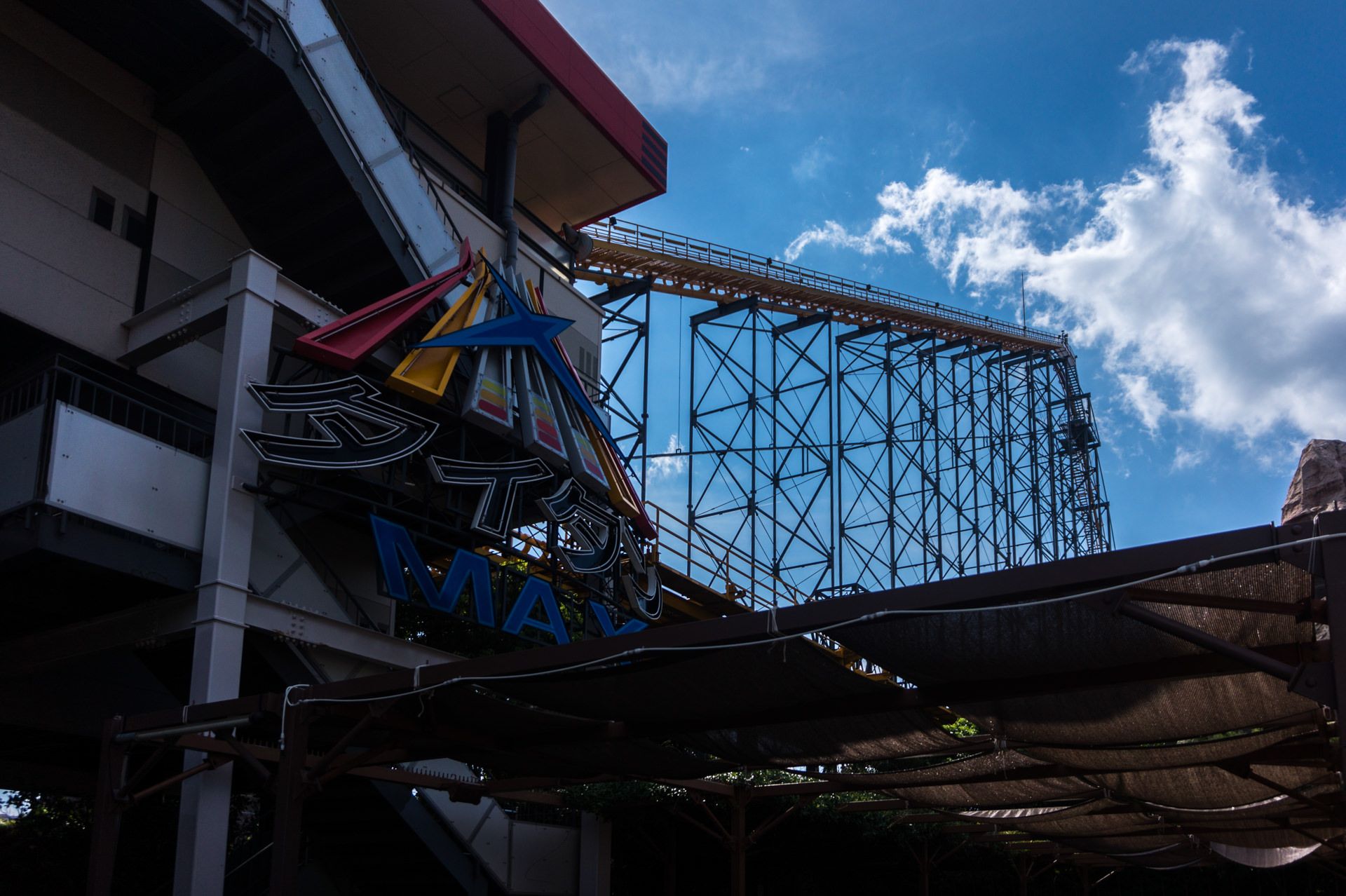
Titan Max

As much as most likely the Arrow roller coaster Titan Max, which was refurbished in 2015. A roller coaster that I was personally very much looking forward to and for which I read over all the negative reviews, because firstly, the ride was from 1994, the same year as the Big One from the Blackpool Pleasure Beach, and secondly, all roller coasters from the manufacturer are usually very good, but often frowned upon by roller coaster fans because of their rougher ride. Admittedly, it was not the reason to come here, but it was the deciding factor for the tour title Titanic Max.

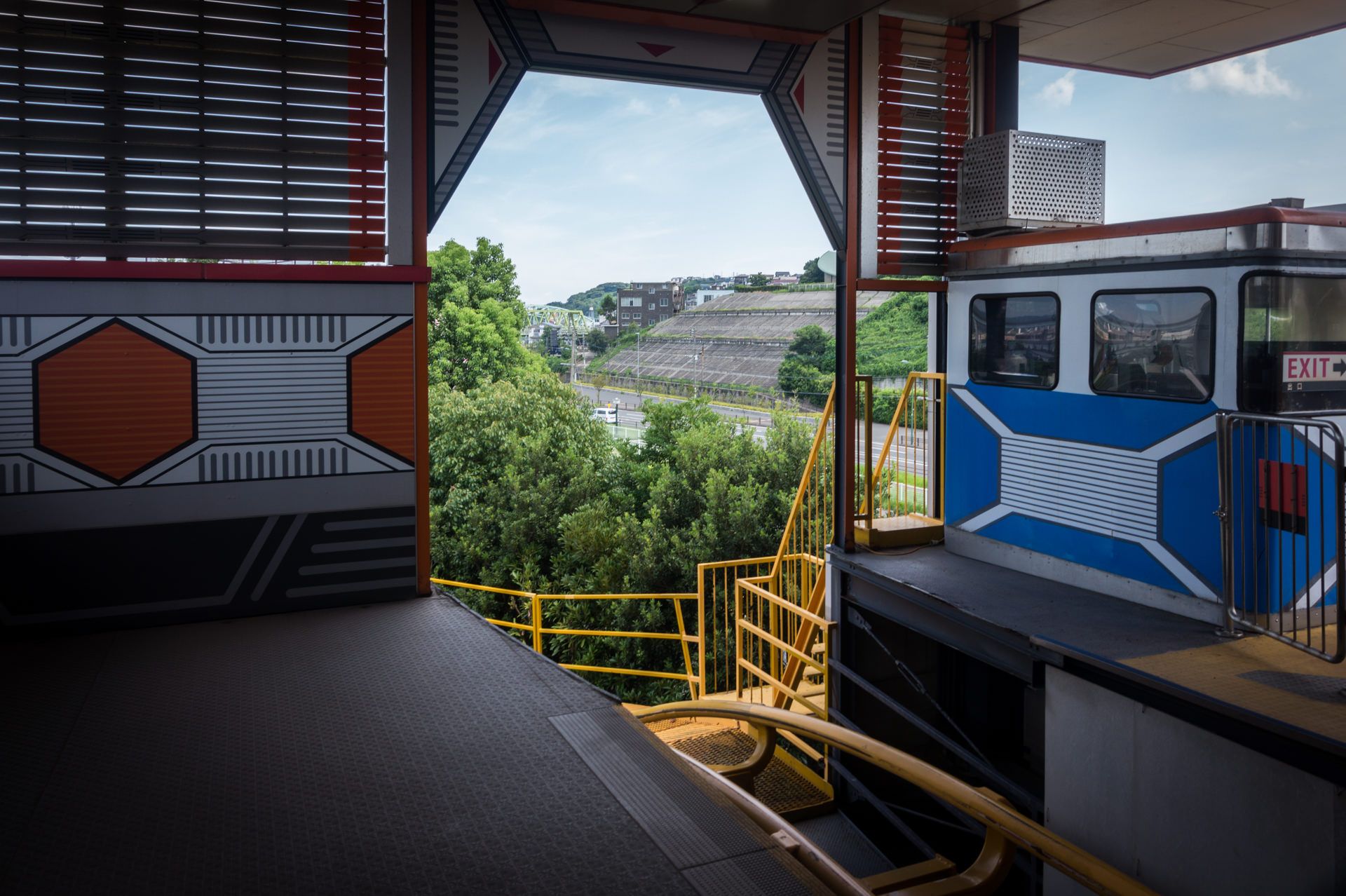
After you have survived the extremely annoying queue including the continuous announcement from tape, you can climb the staircase up to the station and wait there for a few (many) minutes. Of course, Space World does not run at full capacity, so you can look forward to a freshly dispatched train every ten minutes. With 24 people per train, this is a capacity of 150 people per hour, instead of the 1500 people that were originally possible.

The ride begins with a short dip out of the station, followed by a tight turn towards the lift. This then brings us relatively quickly to the starting height of 50m, where the first drop is waiting for us. On the now existing height difference of 54m, the train accelerates to a speed of 115 km/h in a short time. The following valley is glided through smoothly, as is the subsequent camelback. In the second valley, the acceleration values are a little more pronounced, but again not worth mentioning. Now follows a highly banked curvy part with gentle gradients and climbs in the middle, something like a very long and rather shapeless Bavarian curve. After spending a lap in a triangle, the last curve narrows visibly, whereupon we turn to the block brake. This reduces the speed a little so that one crosses the following part with the required speed. Although the subsequent long ramp hardly makes it seem so, we are now approaching the highlight of the ride. The curve narrows increasingly to a radius where it is a miracle that the very massive Arrow trains could have passed through at all. But while the lateral acceleration values get out of hand, the train immediately plummets abruptly towards the ground. The valley that follows is wonderfully powerful and also features a very nice change of direction. The game then repeats itself in reverse order, whereupon the element in the form of a figure eight unfortunately comes to an end. A shallow ramp with an included left turn now leads us parallel to the first camelback of the ride, whereupon the return of the station is initiated. Here, three gentle hills then await the passengers, where one honestly misses the negative forces a bit.  After a short kinky ascent, the final brake is reached and the ride draws to a close.

Unlike other roller coaster fans, I don’t want to complain about the ride characteristics, because they are absolutely fine. Personally, something else bothers me about the ride, because it is simply boring. There is only one element during the ride that stands out in any way, the rest is like a classic jet coaster and let’s be honest, the Japanese can do that much better than the Americans from Utah. All in all, the Meteor Liner with music selection is a nice roller coaster, but not one that I would queue for half an eternity for in the existing conditions at Space World.

Zaturn

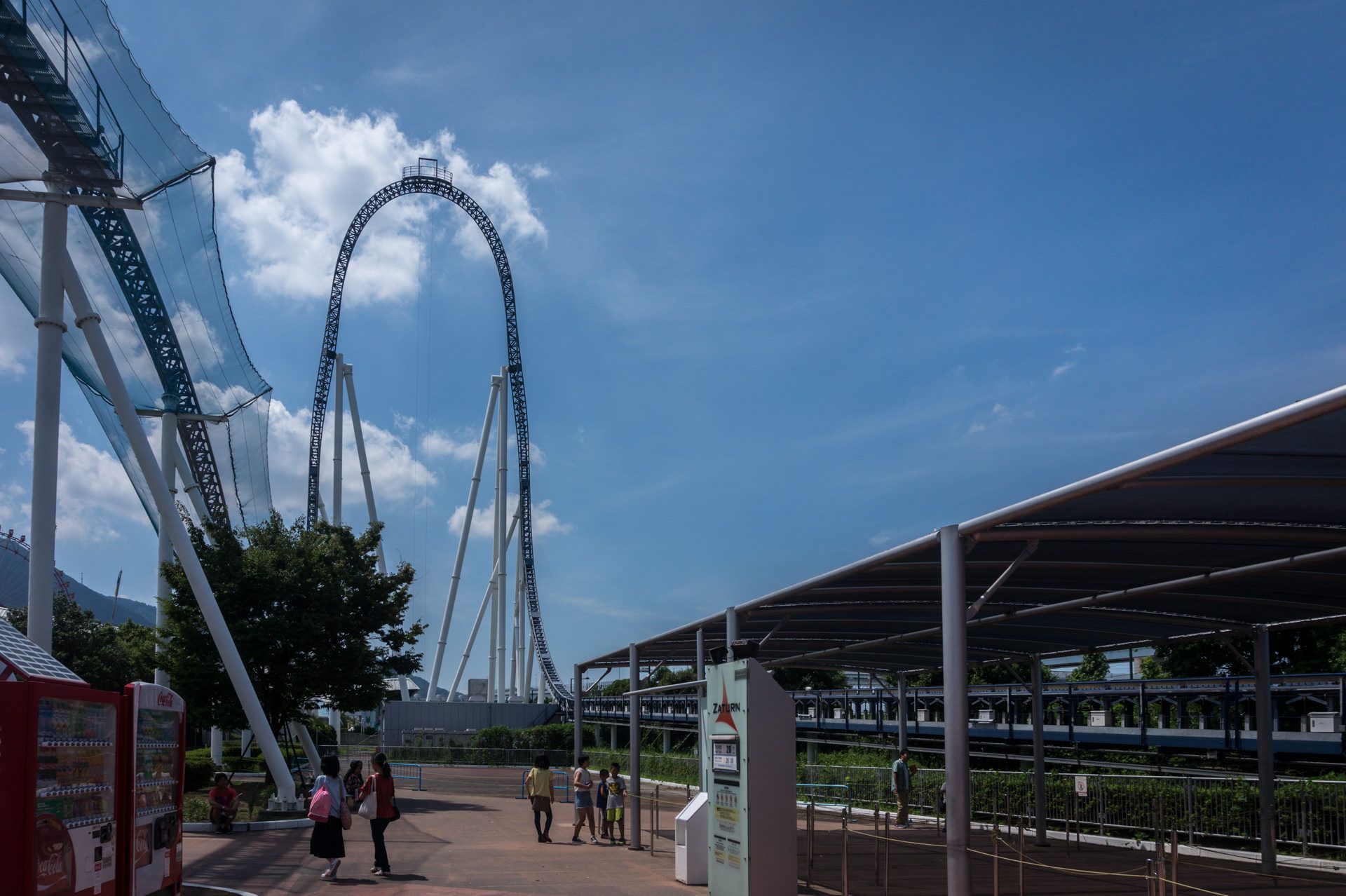
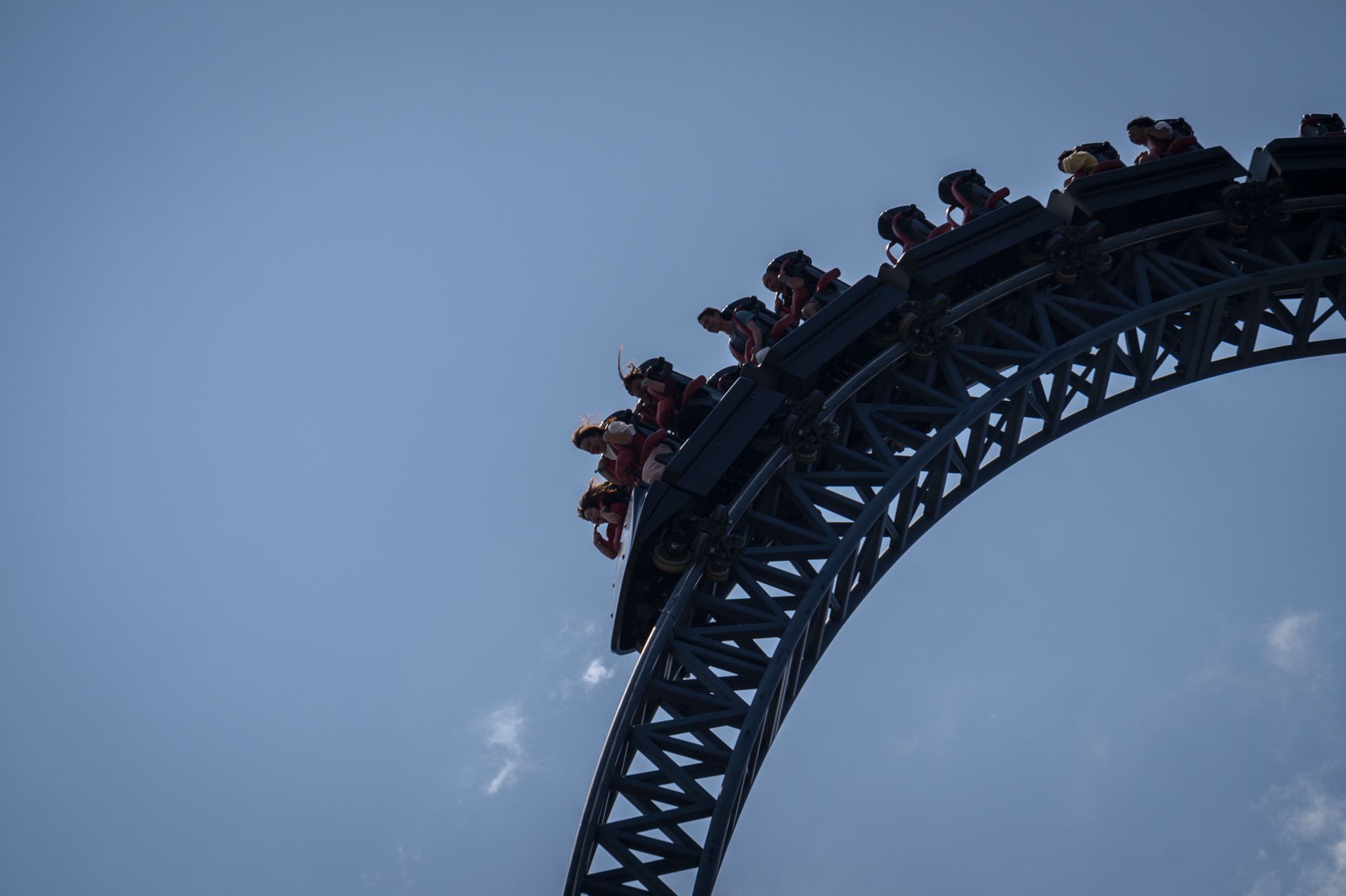
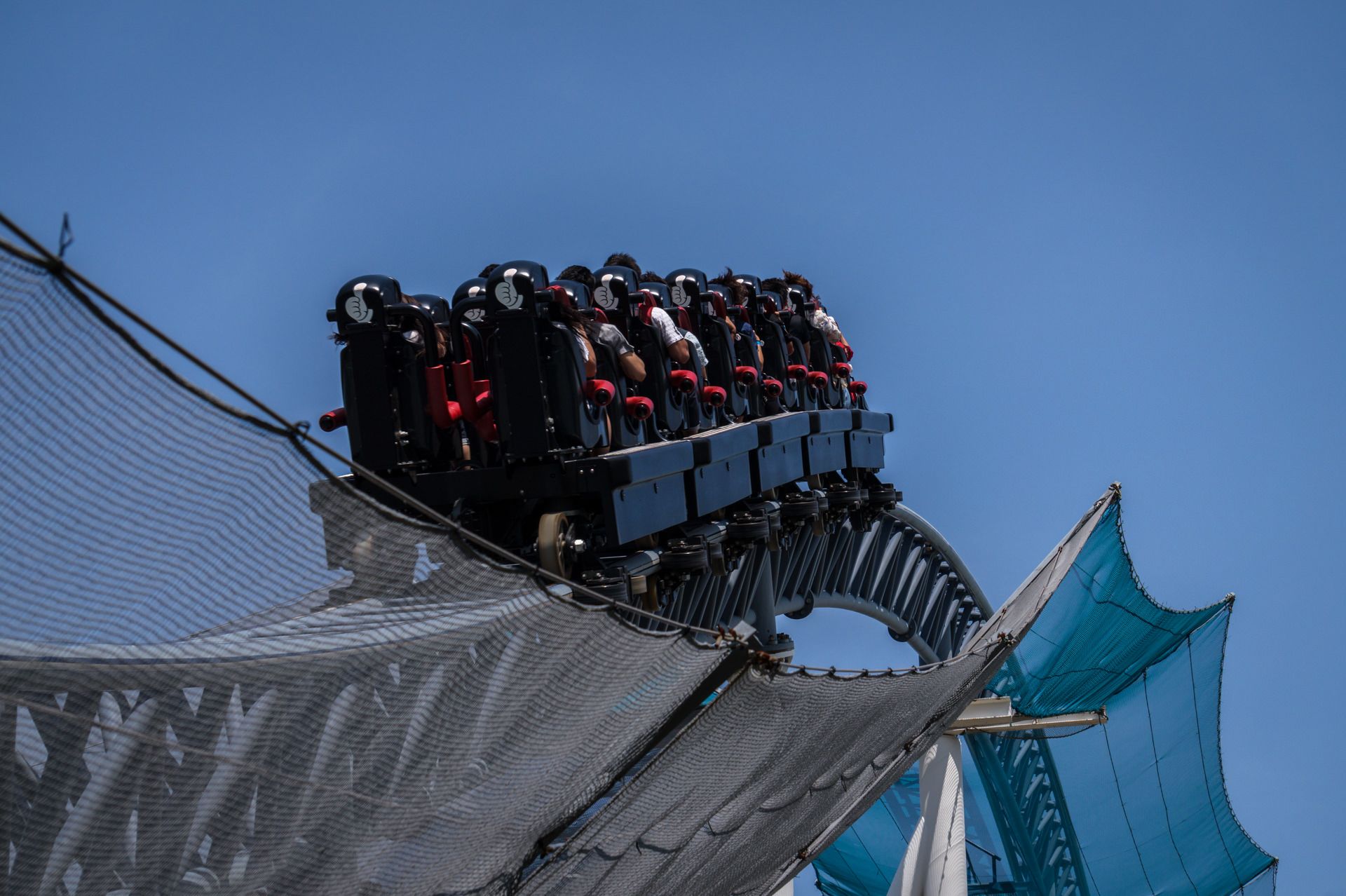
The situation is different with the launch coaster Zaturn, where the waiting time never exceeded 20 minutes, despite the pull-in operation and safety briefing ritual. This is a clone of the Stealth roller coaster from the English amusement park Thorpe Park, which is why the layout is quickly told. After the pulse of the light show has subsided, the train accelerates to a speed of 130 km/h. The train then shoots up a 60m high top-hat and leaves it in the same direction from which it came. In the following valley, a vertical acceleration of 5G awaits you before the braking section is initiated on the following hill. After a bend, you reach the separate exit platform.

Zaturn is solid and, despite its short travel time of about 30 seconds, actually offers everything that is missing on Titan. But compared to Stealth, the ride is unfortunately a bit weak, somehow I missed the atmosphere or at least the spillwater that you drive under on the ride; but it may also be due to the minimally shorter acceleration phase on the minimally older sister..

Along the closed Galaxy Theatre and the Maze Alien Panic Revolution, which we spared ourselves due to the high number of visitors, the path now leads us back to the Space Bazar and thus to the end of this report.

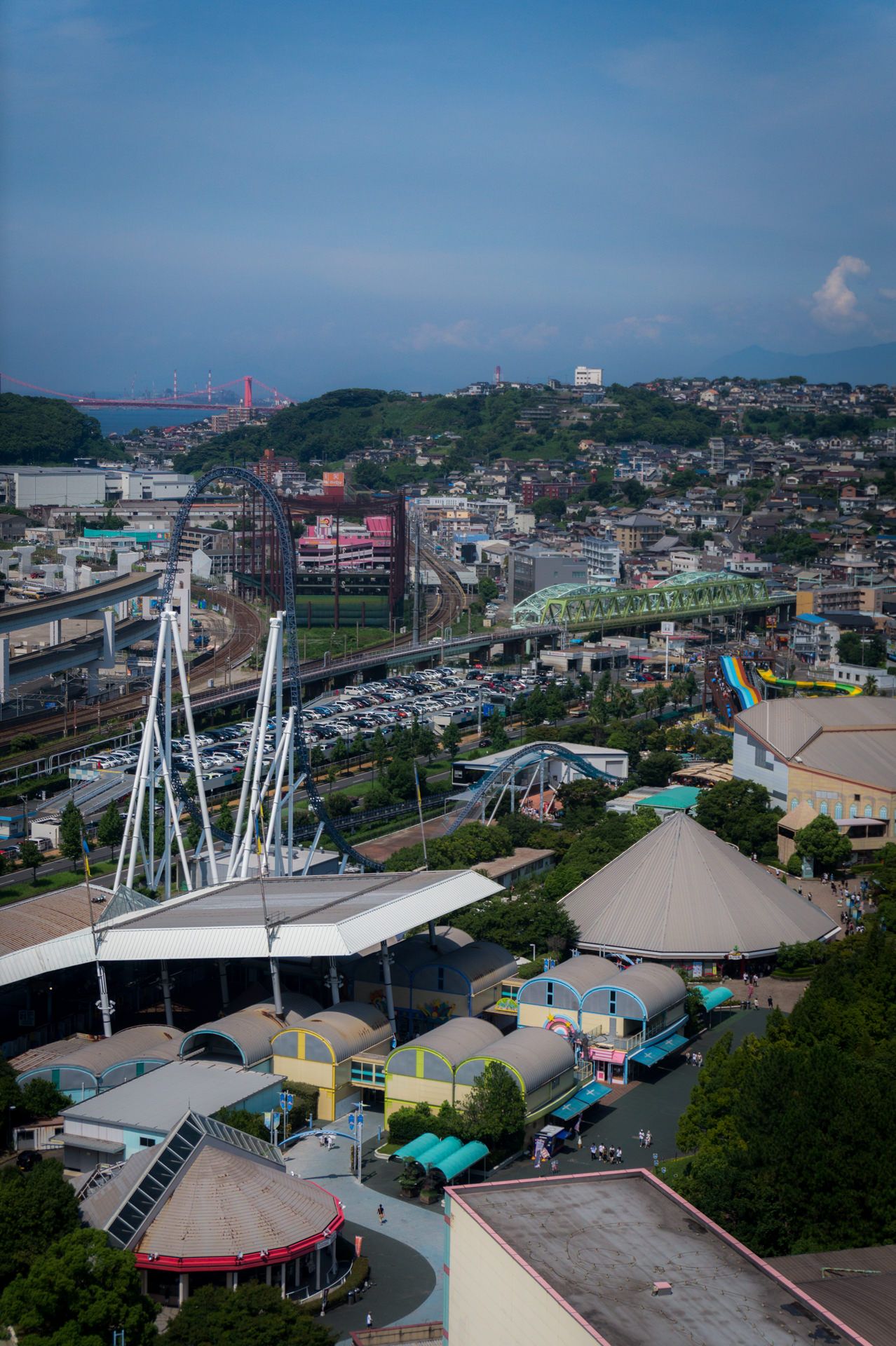
Pictures Space World

Conclusion Space World

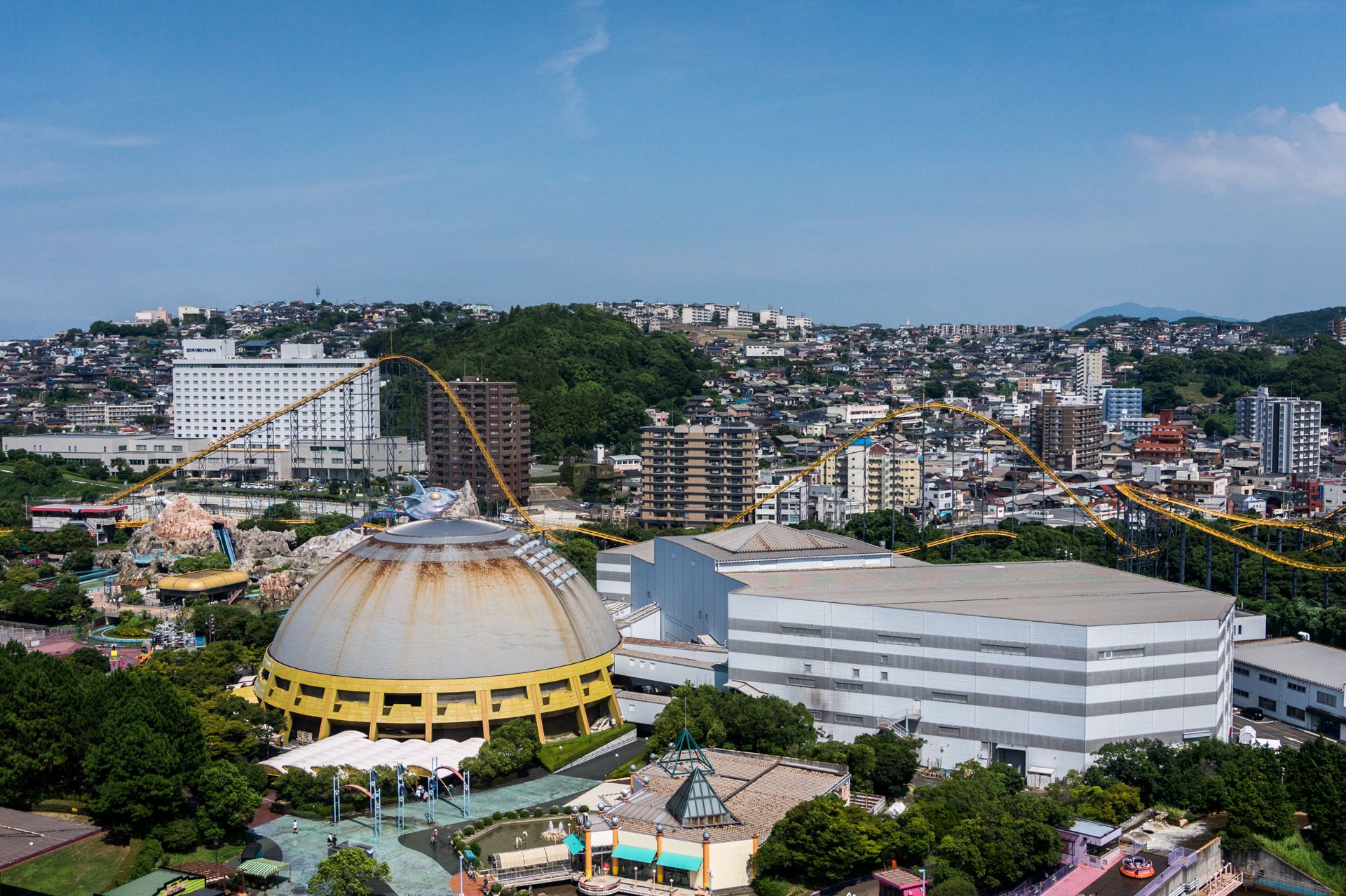
Space World is a good amusement park, but it has already left its best days far behind. This is evidenced by the many empty spaces, especially in the area around the Big Bang Plaza. On the other hand, the roller coasters (with the exception of the Boogie – Woogie Space Coaster) are well maintained, which is not surprising when they are temporarily closed during operation. Either way, it was a great day in an extraordinary amusement park, which we will soon be able to talk about with a good dose of pathos; after all, at Space World we don’t mourn, we celebrate.


What is your opinion about the theme park Space World?  Just write it in the comment field below the report or visit our social media channels:


Click here for the next report of the Titanic Max Tour