A guide to (S)Oakwood without replacement T-shirt

Preface

“Will you come and visit me in England? There’d be some great CCI wood in Wales.” – “Hmmm…” We’re talking about the Oakwood Theme Park that was hit as a late sequel to this chat.

Since a long weekend is always a bit difficult to combine with my work, it was of course very convenient for both of us that the Oakwood Theme Park had a few more open weekdays on Halloween in addition to the usual weekend openings in October. Add to that some unusual flight connections and an absolute hotel bargain, and the mini-trip deep into the Welsh pampas had already taken shape.

Pretty much on time I landed in Bristol, where I was through the passport control in no time and was able to pick up my travel bag. Tobias came through the airport entrance door at exactly the same time as I did through the locks on arrival – timing! Only a few minutes later and accordingly only poorer by the minimum parking fee, we already romped through the left-hand traffic again, which I could tolerate this time in a much more unexciting way. After first errands and a tank of gas at Tesco Extra we drove through Bristol on a route that was, ahem, not exactly low on roundabouts, until we finally passed the long and quite Tampa Bay-like bridge over the Severn Estuary to Wales. Shortly after the toll station we found our Hampton Inn, where after a tasty meal at Sawyer’s Bar & Grill across the road we just ploped into the comfortable beds.

The next day, after a fantastic breakfast at the hotel’s own buffet with English and continental concessions, we soon tackled the remaining 110 miles to Canaston Bridge. Sounds like a phrase in this sentence now, but let me assure you once again: it goes on and on and on. The park is not only located at the proverbial ass end of the world, but rather at the tip of a hair on a pimple at the same place. On the way, one crosses the most beautiful landscapes, but one has to be a very dogged CCI-pilgrim to make it worthwhile. The park is almost cut off from public transport – also according to its own statement on its website. The running gag, that not even a certain Ingo Wahlen should be able to find his way here without a two-hour hike, we are happy to release at this point as an impulse for a Stinson-like “Challenge accepted!”. A nice detail: the closer you get to the park on the unusually well developed country roads, the higher the probability that the brown signs will again bear the original name Oakwoood Leisure and not Theme Park.

But at some point – you can hardly believe it – after passing the probably hottest roundabout decoration for the coaster addicts, the parking lot of our destination today is reached! At the entrance I got out my online ticket, which I bought and printed out at home in Switzerland for £20.25, Tobias and his English student card even managed to get in for only £18. God knows, you can’t complain about that!

Tour of Oakwood Theme Park

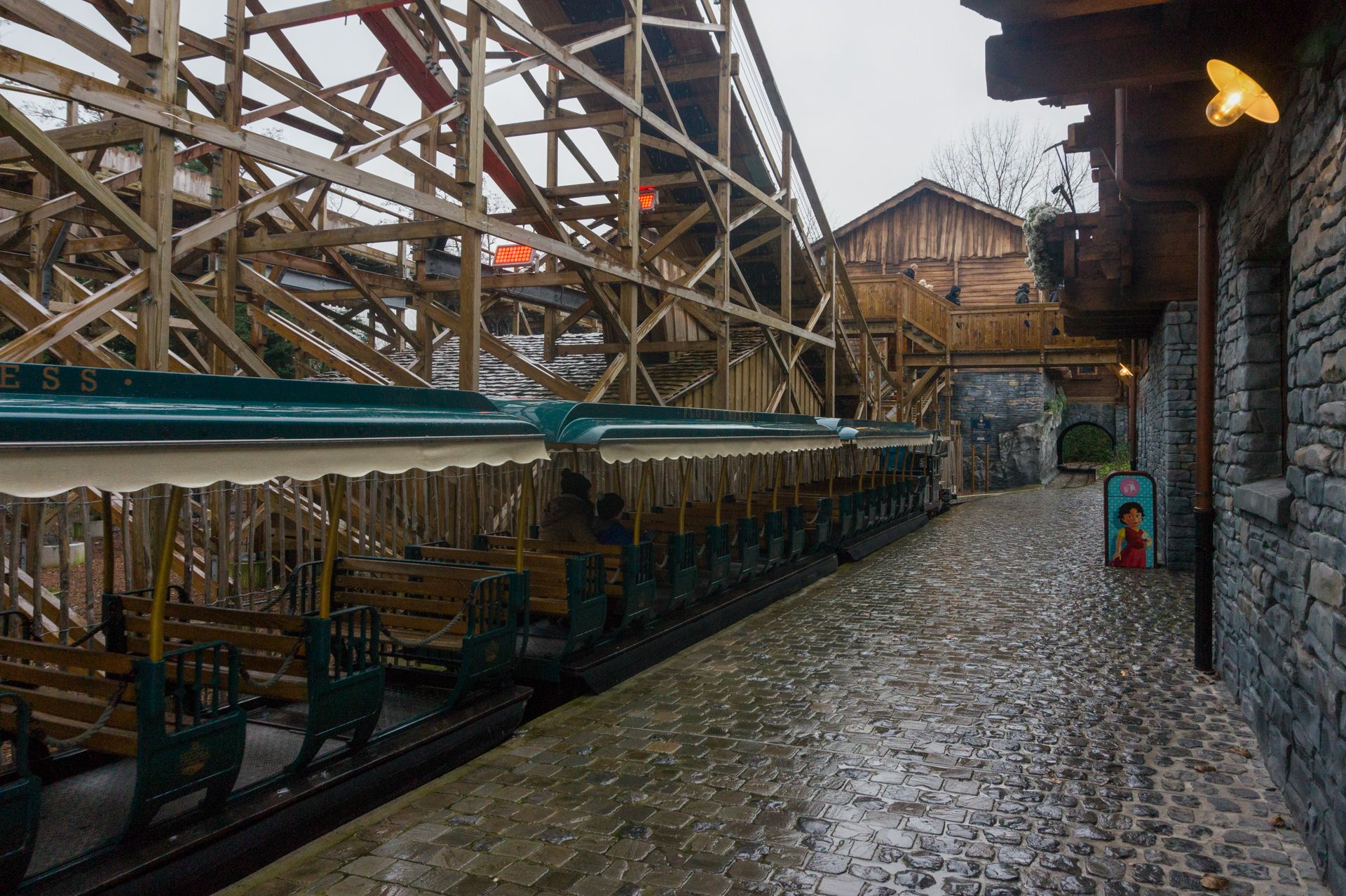
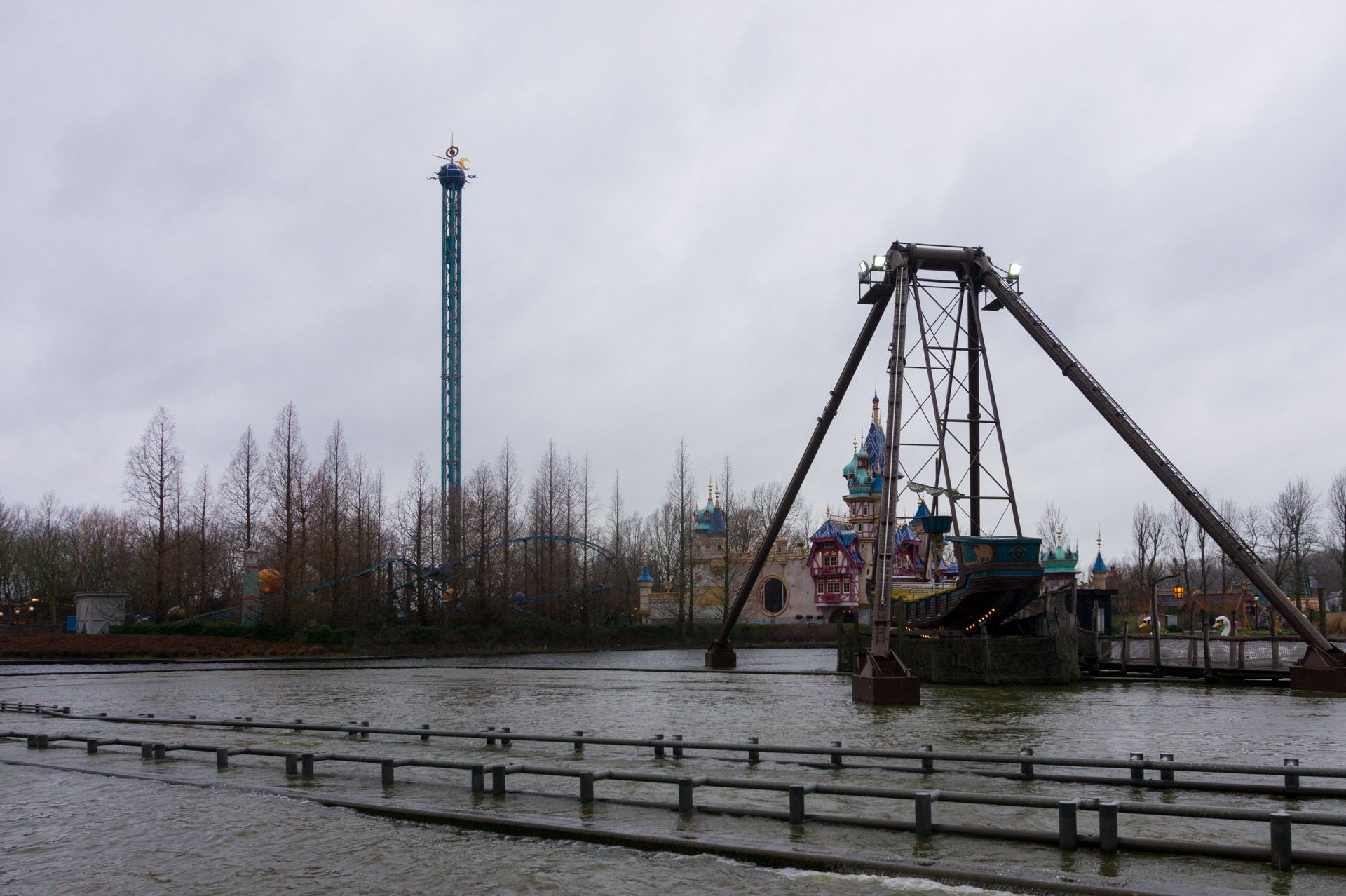
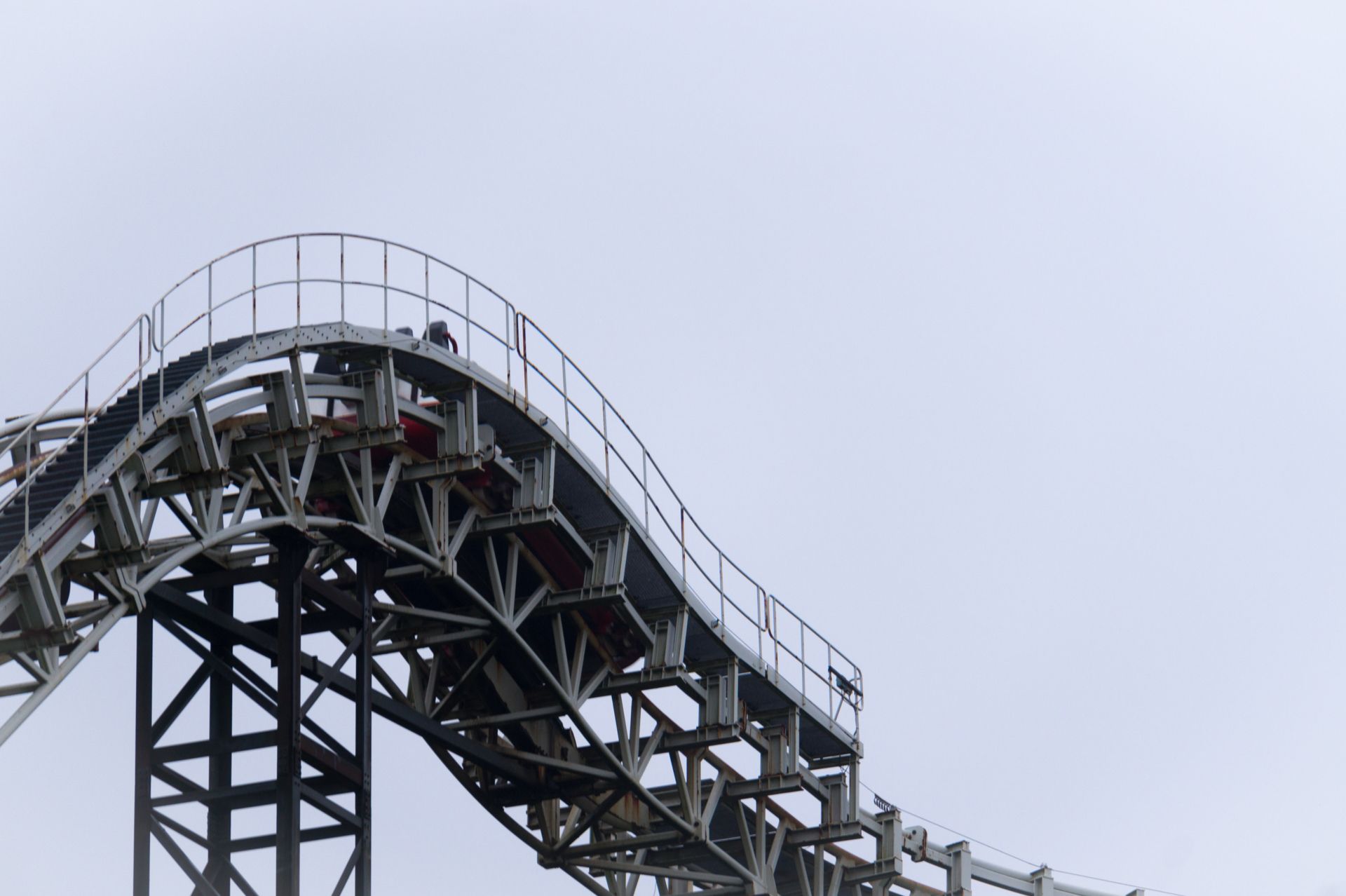
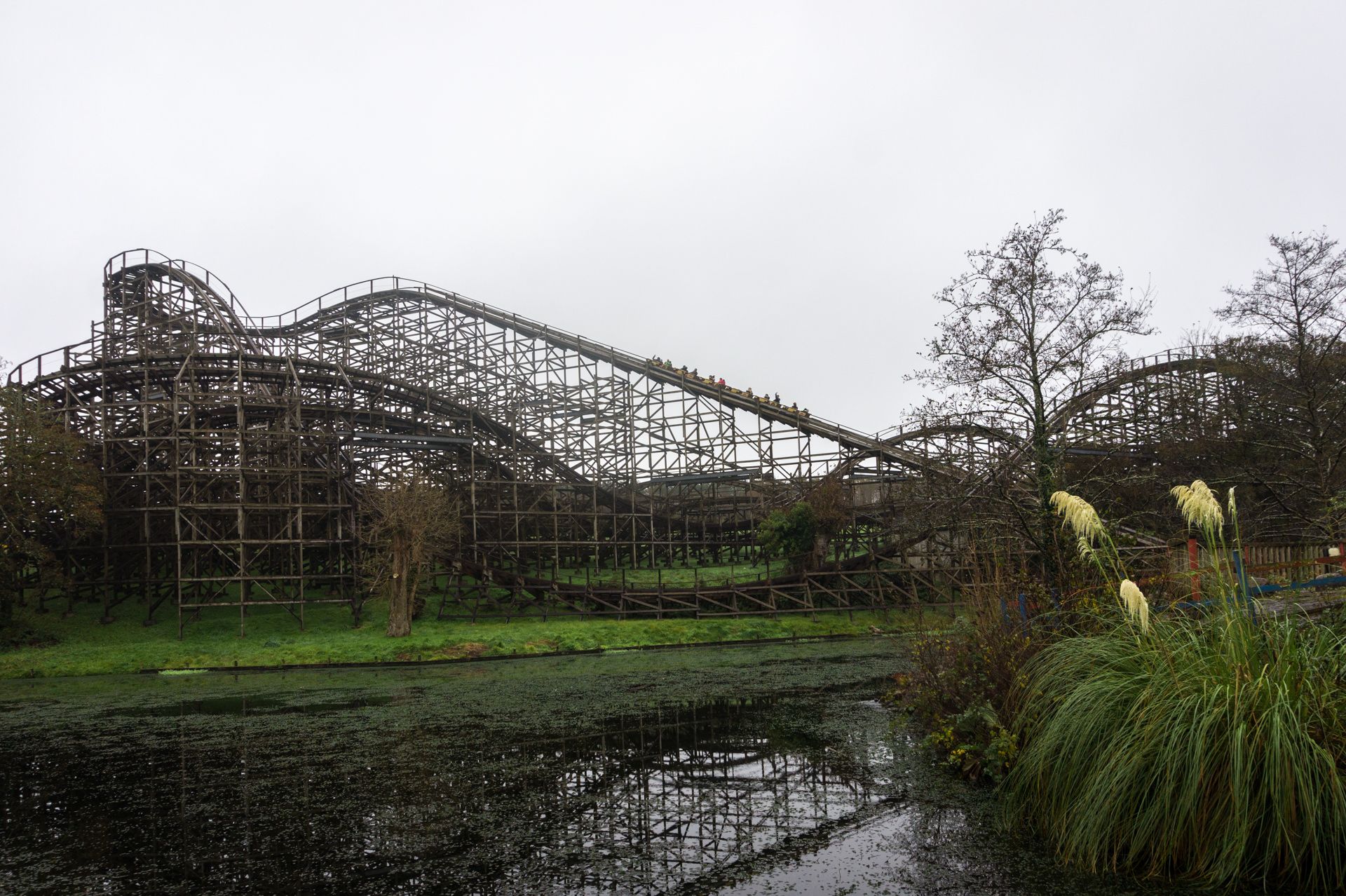
A small train takes the park guests who have just arrived from the ticket booths to the actual attraction area. As it only runs every quarter of an hour and we had just missed it, we walked the short distance on foot. En route, a fascinating side effect of the modest weather became apparent: you don’t see a more than 30 meter high Intamin Mega Splash every day so autumnally wrapped in fog. Due to equipment reasons and also because the ride would start at 14.00 o’clock, we postponed a ride with it for now.

Megafobia

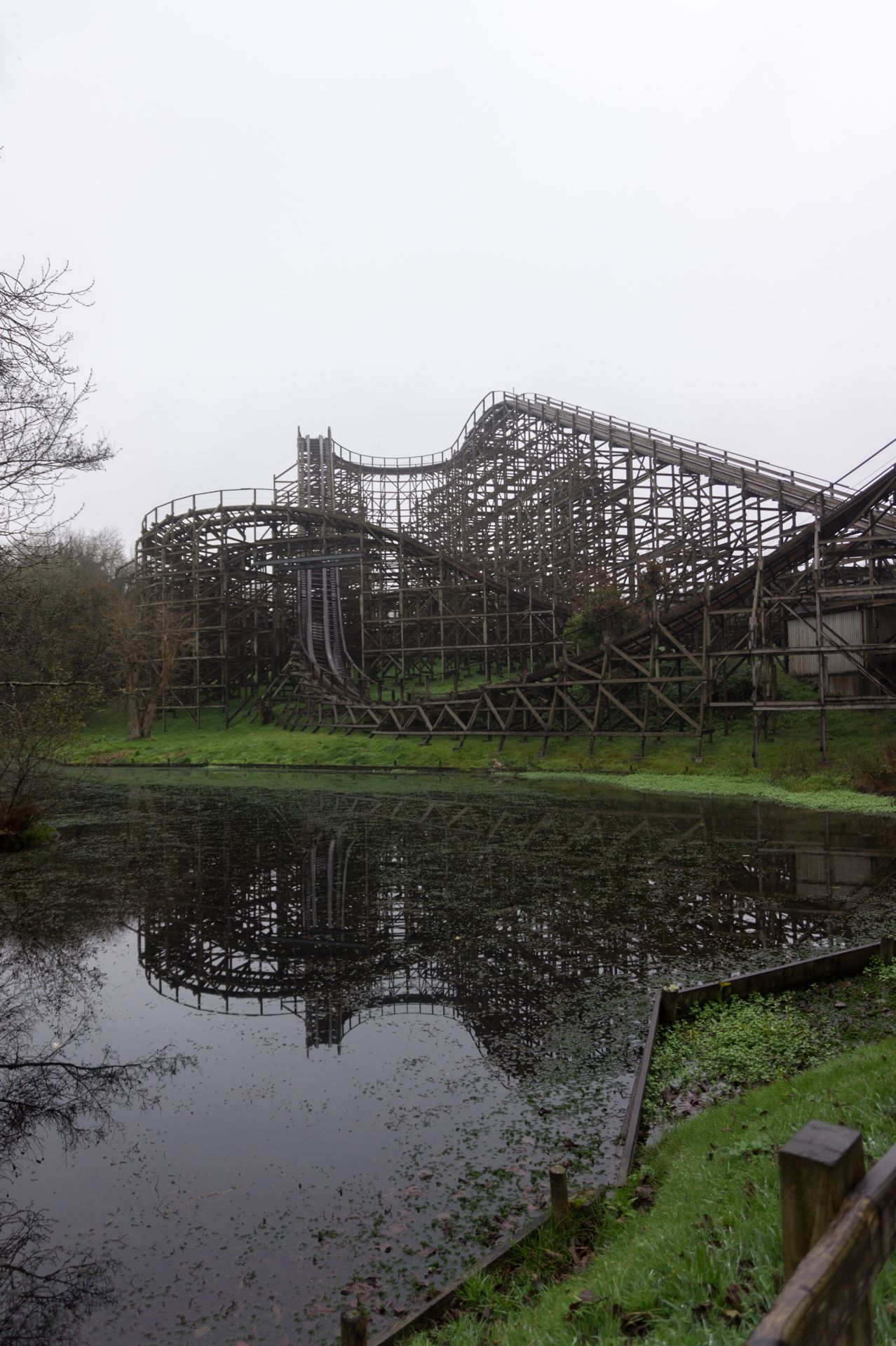
Passing the exit station of the park train, we would have actually wanted to head for this year’s novelty, the Scotland Import Flight of the Giant Peach. But as the queue had already grown to a respectable size and it was only going very resinously, we took a run under the railings and walked to the main reason for the visit of our whale detour, which was already audible from far away, but not so visible in the fog and behind the trees: straight to the CCI monster Megafobia!

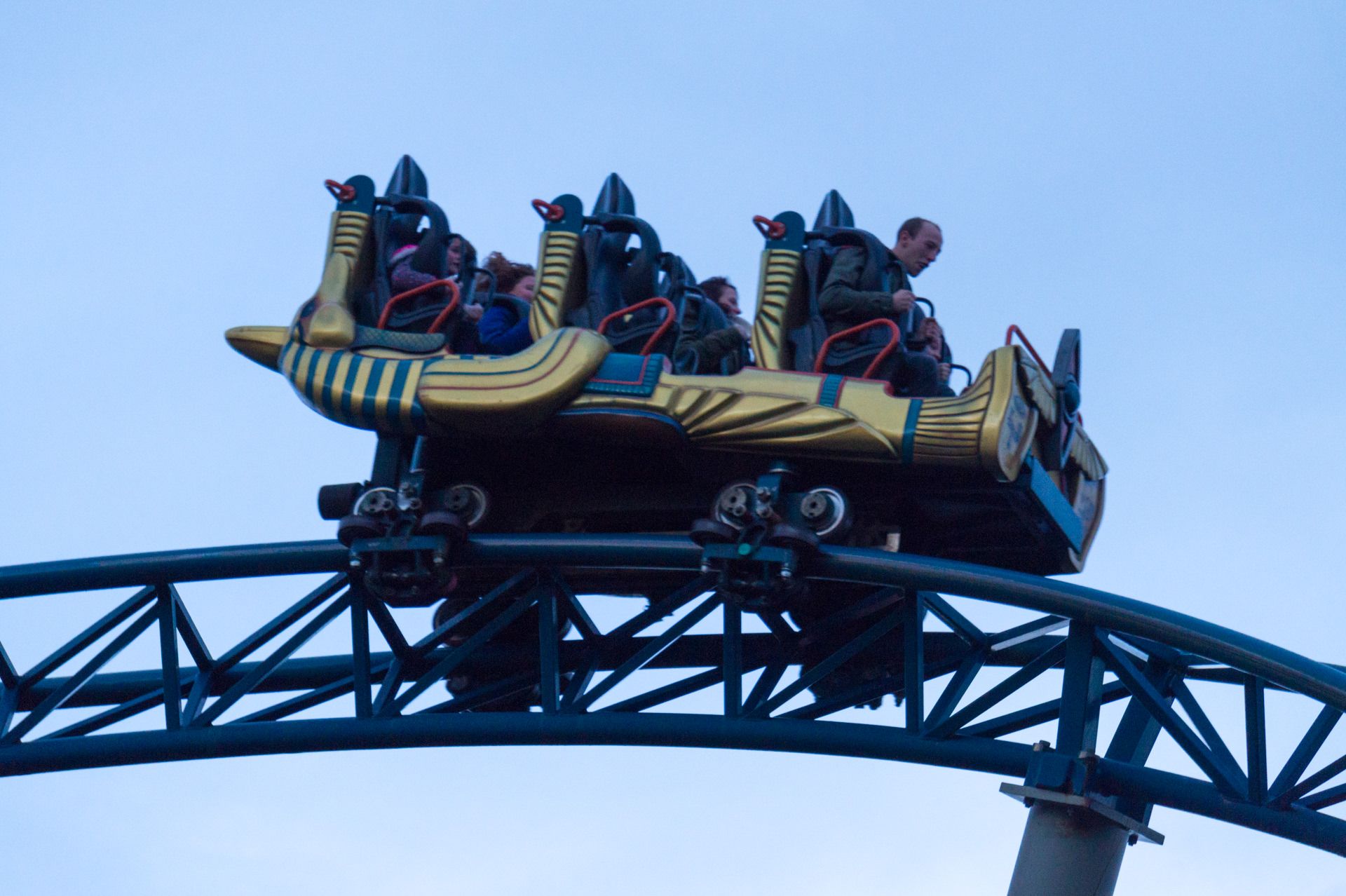
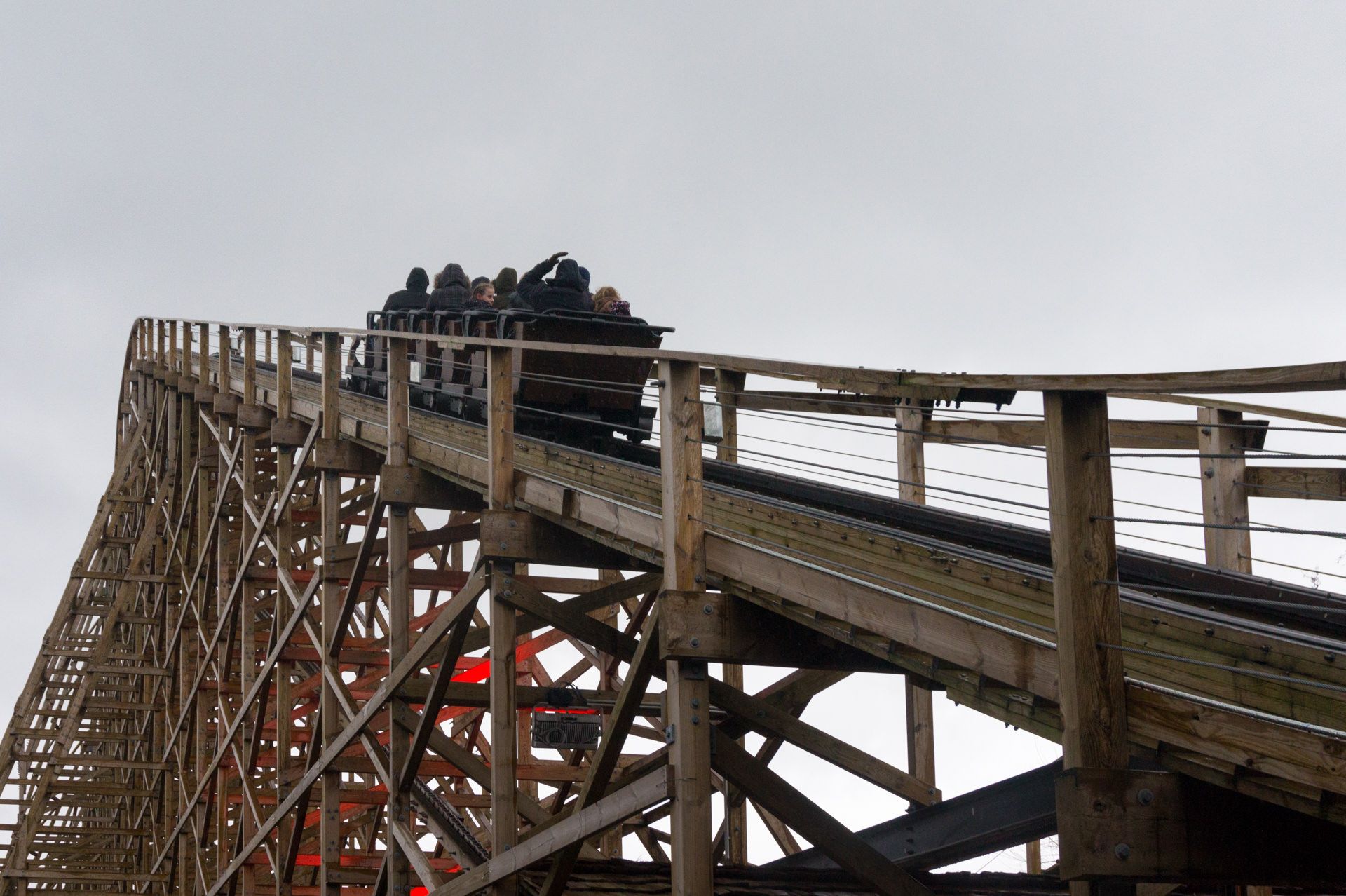
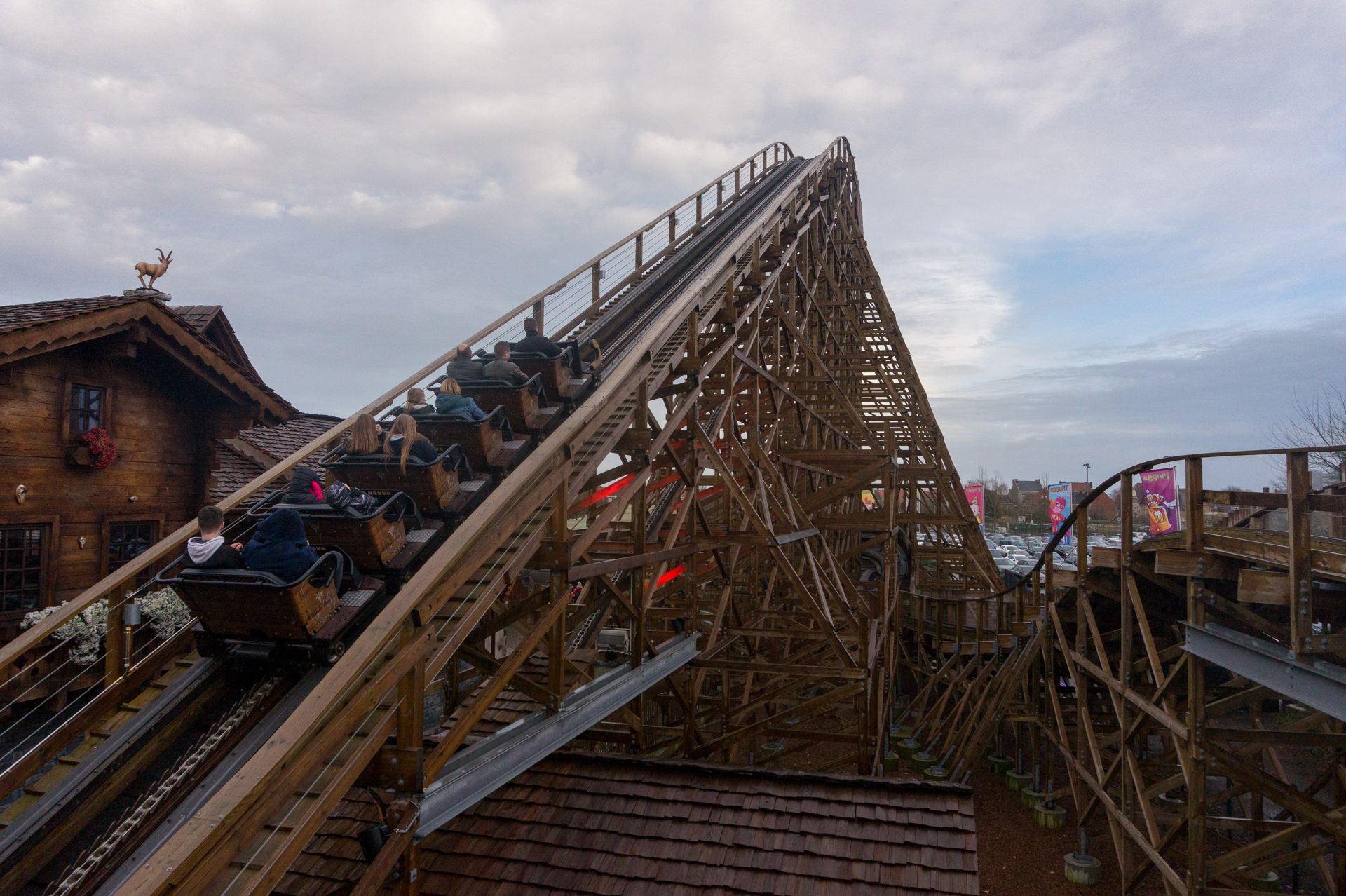
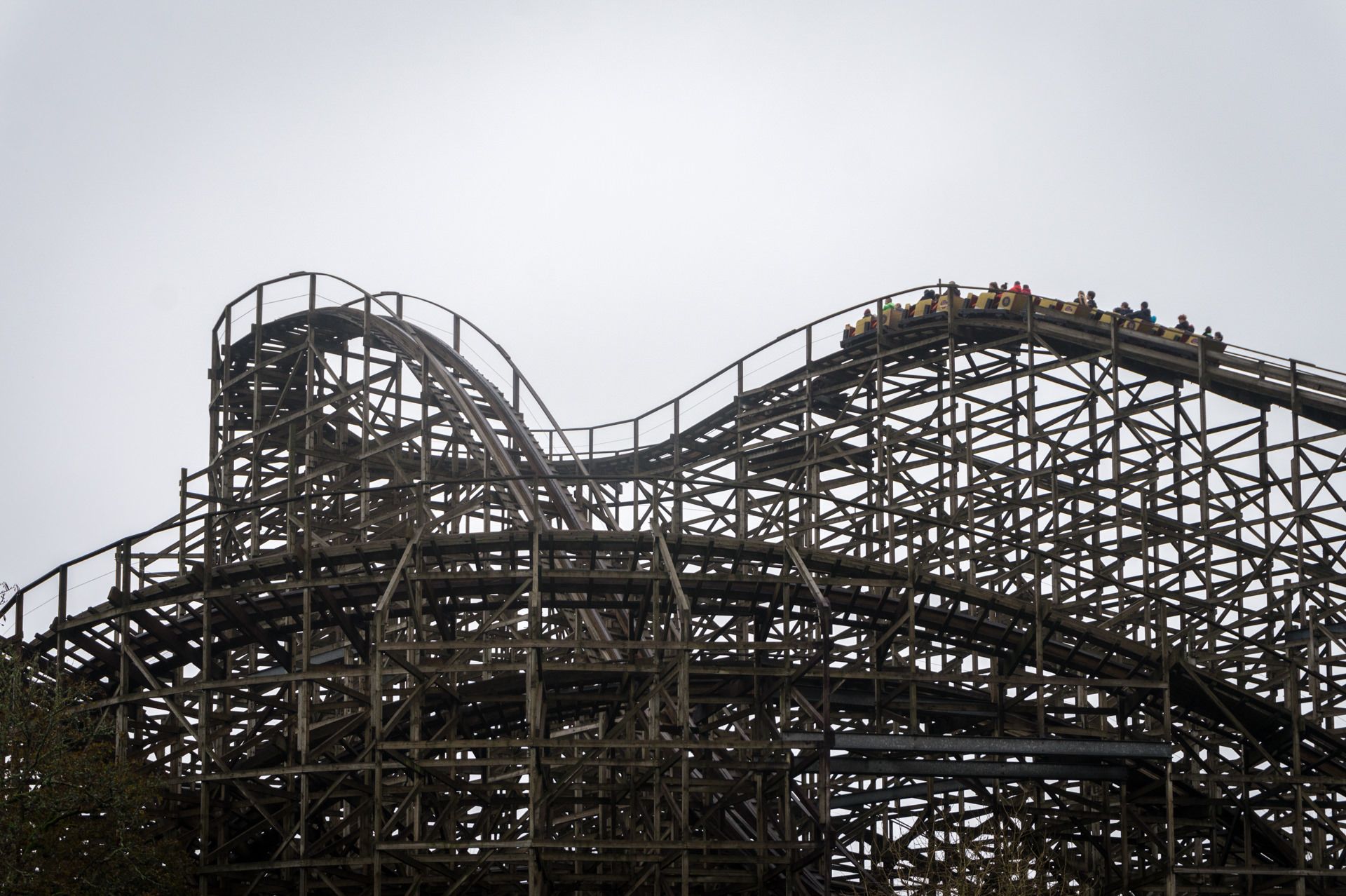
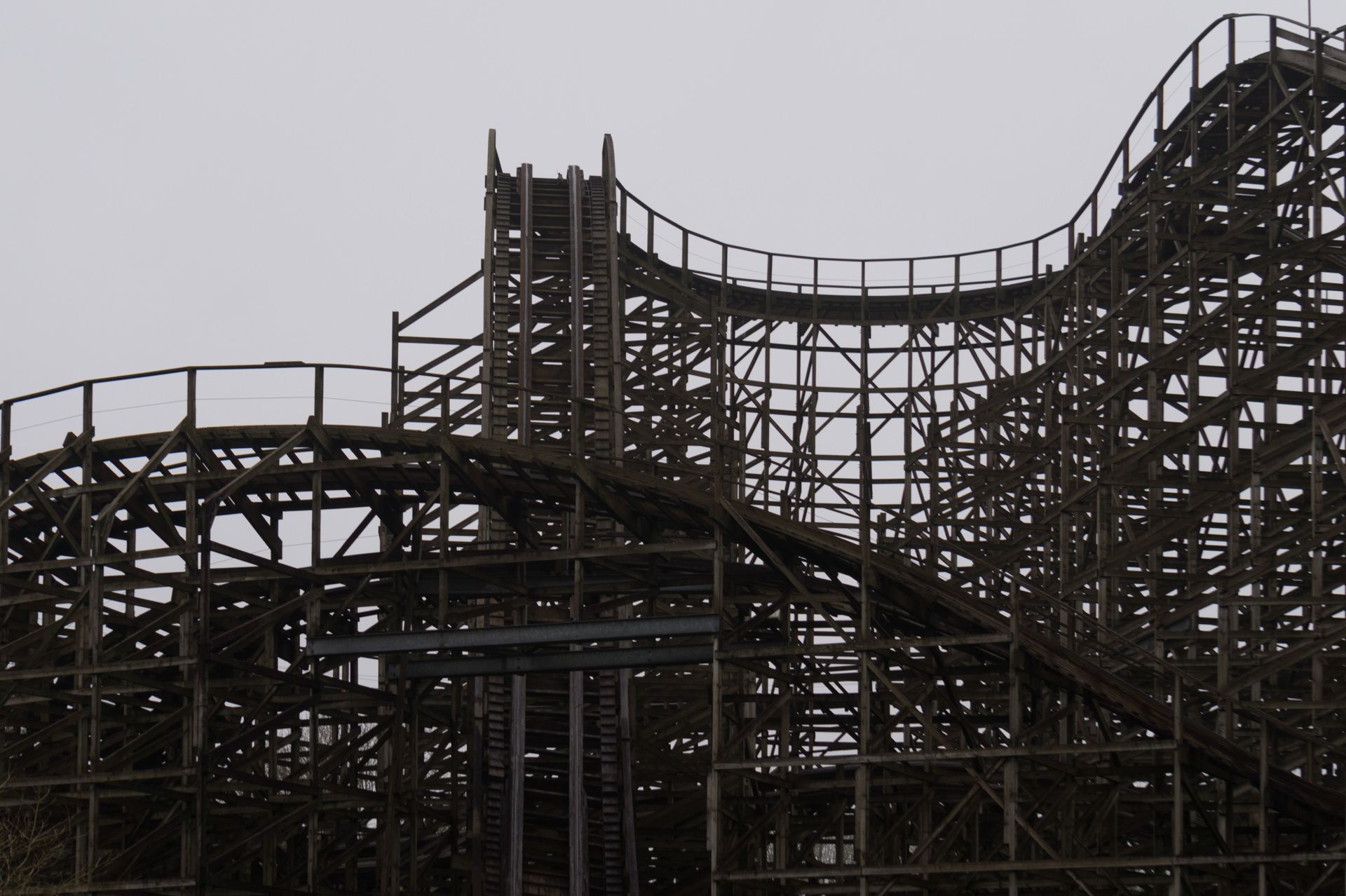
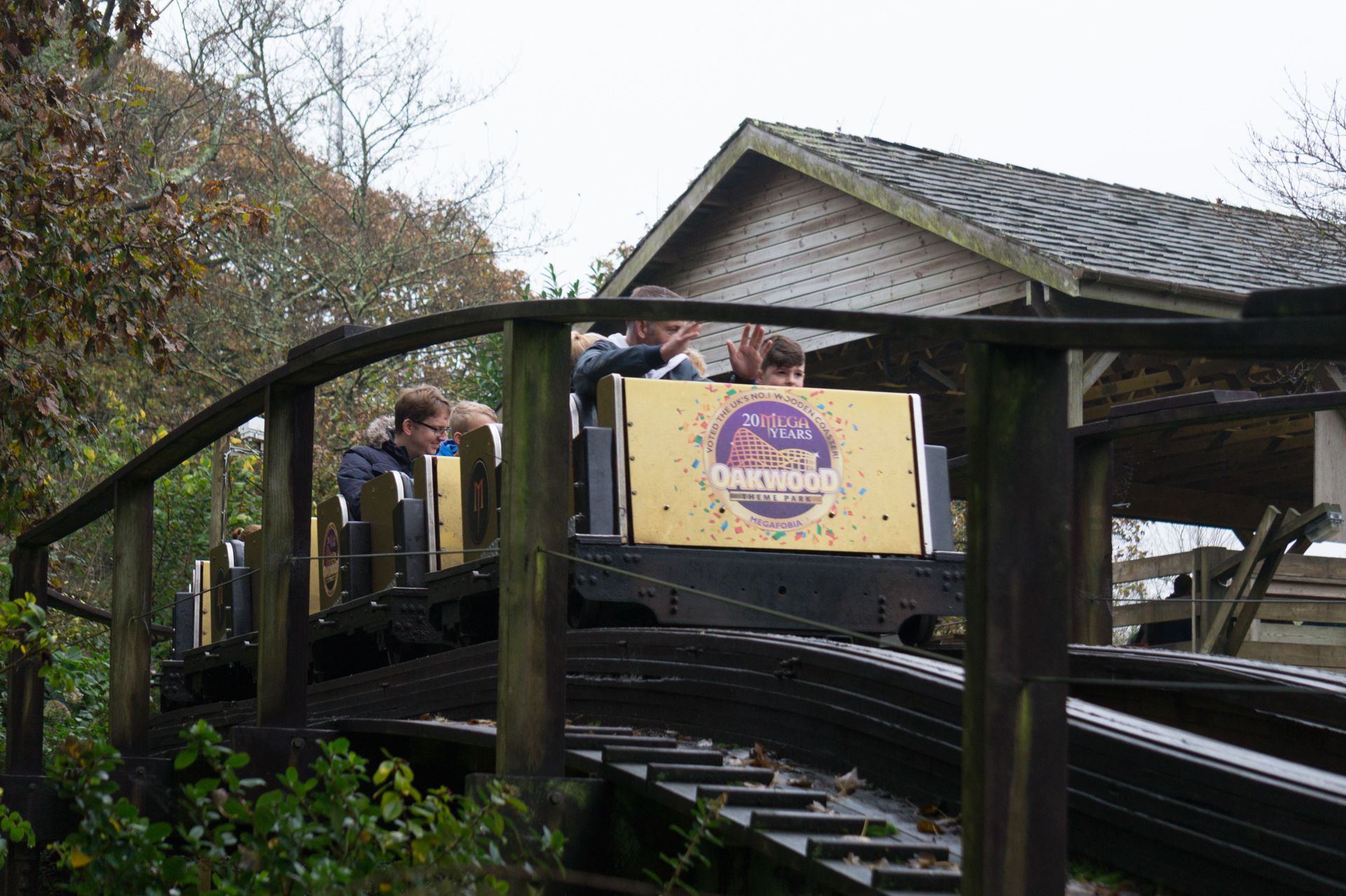
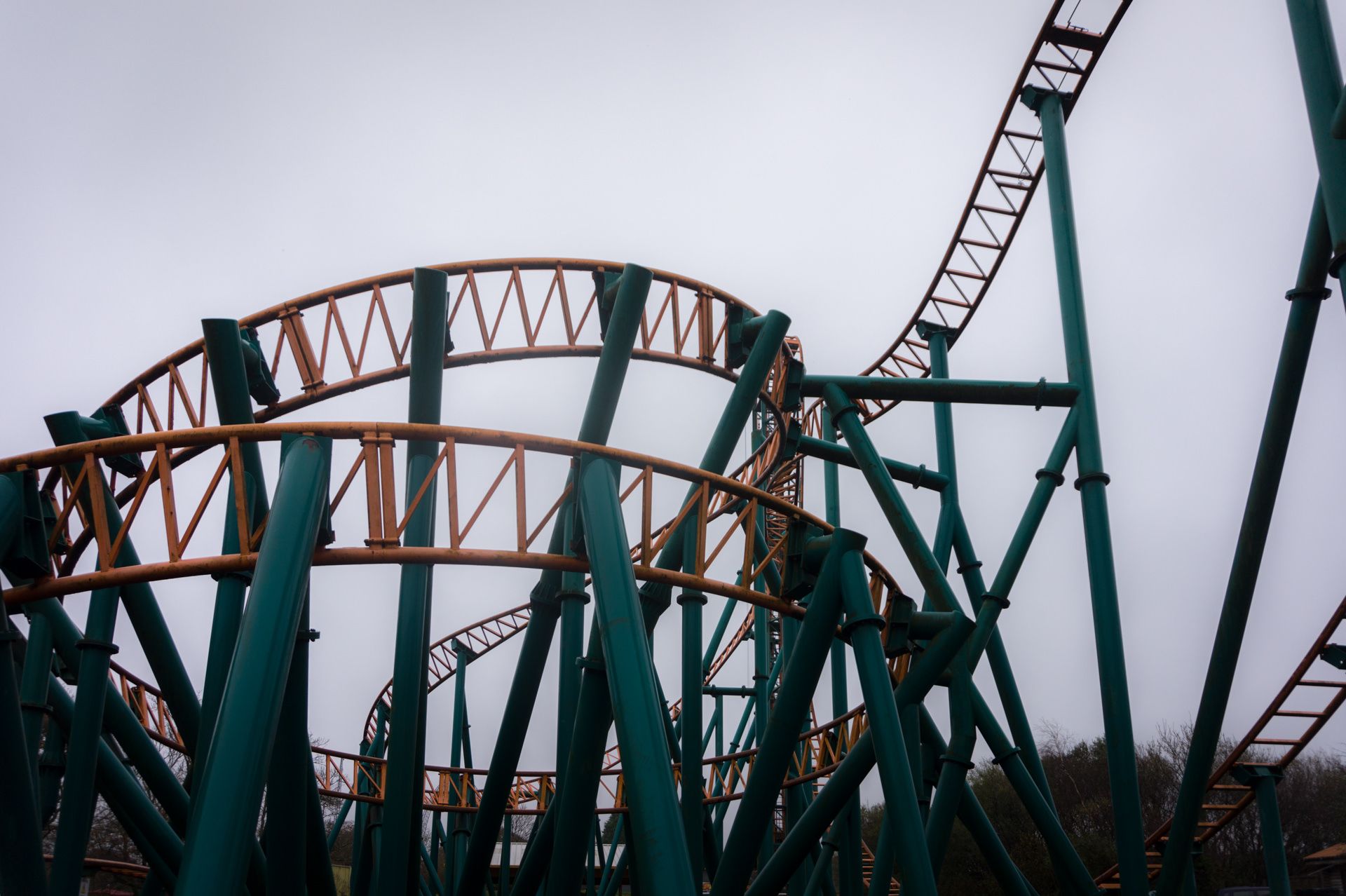
The sight and the sounds alone make your mouth water! With a height of about 26 meters, a length of 900 meters and a top speed of about 77 km/h the local exemplar is not exuberant spectacular, even within the CCI family I love so much. While the first few rides of the day were already really, really good, the performance of this fun wood improved so much during repeat rides in the late afternoon that it has now secured itself a place high up in the personal Woodie hit list. Let’s start from the beginning:

Looking from the access path to the gates in the station building, it looked like Walk-on all day long. However, it must be specified that this was the only way it looked during the first rides right after arrival, for a very British reason: The visitors applied the principle of the empty station – and they did it completely on their own! Completely without Sixflag’s instructional brats, they waited at the line after the stairs until the previous passengers had passed the gates, then the next 24 people (or at least nearly as many) joined the gates. And this without the station staff having asked for it via loudspeaker or anything like that, but simply as a natural consequence of British queuing culture. I’ve never seen it so real before!

Once you take a seat on the classic PTC train, you’ll already be confronted with one of the funniest aspects of the ride: the slightly older and above all charmingly nonchalant ride op with gnome beard and late hipster chignon!  On most of our rides during the day he entertained the guests – and above all himself! – with announcements and actions that were bursting with flat jokes. Examples that have remained special to us:

– Each time before immediate departure: “All right, folks. You know what to do. Try not to fall out.”

– After arrival: “After opening your searbelt push down on your lapbar to open it and exit to your left. Come on, do it. What’s keepin’ ya? Go on, you too. Yeeeah, you can’t, can you? Seems like I’ve got to push that button over here first. You know, the one that goes swsssh. Whole other noise than the green one over here, which I push to open the gates for the next guests. That one kinda goes like fmmmp.”

– Checking the bars when a young lady in the row just checked takes out her smartphone: “Oh, you naughty girl, you. What do you have there? Puppy pictures? Let me see! Aaaw, isn’t he cute? How old is he?” usw.

– After he invited people to stay seated in the late afternoon, but some deliberately wanted to wait another cycle for the front: “Typical. All right. Wait it out if you must.”

– To the question of a little boy in the front part of the train, how steep is the track: “Oh, you know, 78.5°. It’s steep, okay? Beyond vertical even.”

Whether it’s simple jokes, flappy sayings, quirky onomatopoeia of control panel noises or biting sarcasm – this guy truly accounted for half the charm of the already great attraction! For the regular reader of reports and Helvetism catchers I repeat myself at this point, but still: geile Siäch!

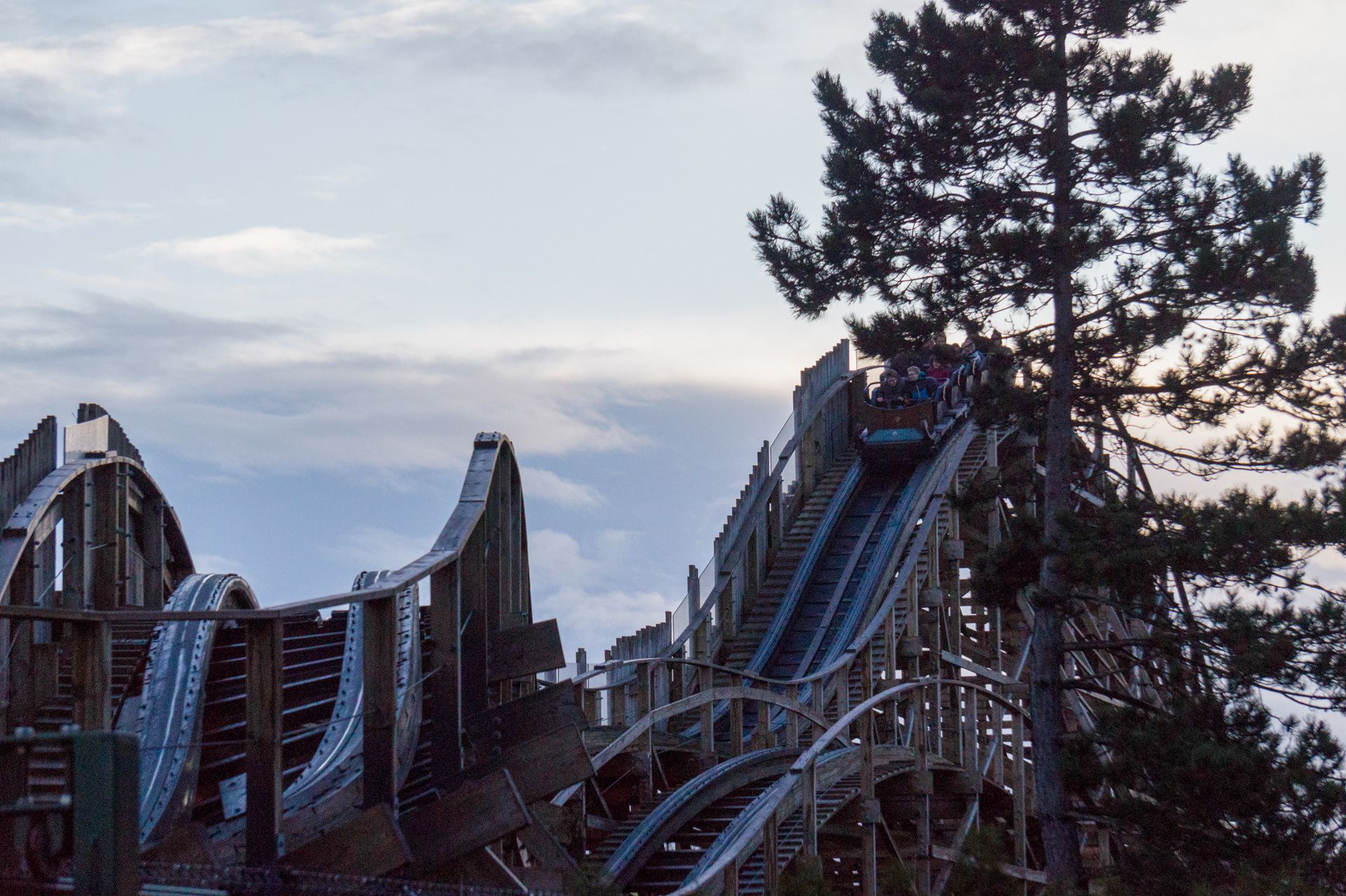
Join us now on a journey with this proverbial wooden gem! If the last capers of the funny staff are over, the belts are closed and the bars of some seats are locked in a strangely high position due to protruding screws on the thread, we’ll soon be off! The lifthill brings you into the Welsh autumn weather and the typical woodie chaindog concert accompanies you up to the starting height – with great views of the track to be rattled through at once, you’ll get all tingly!

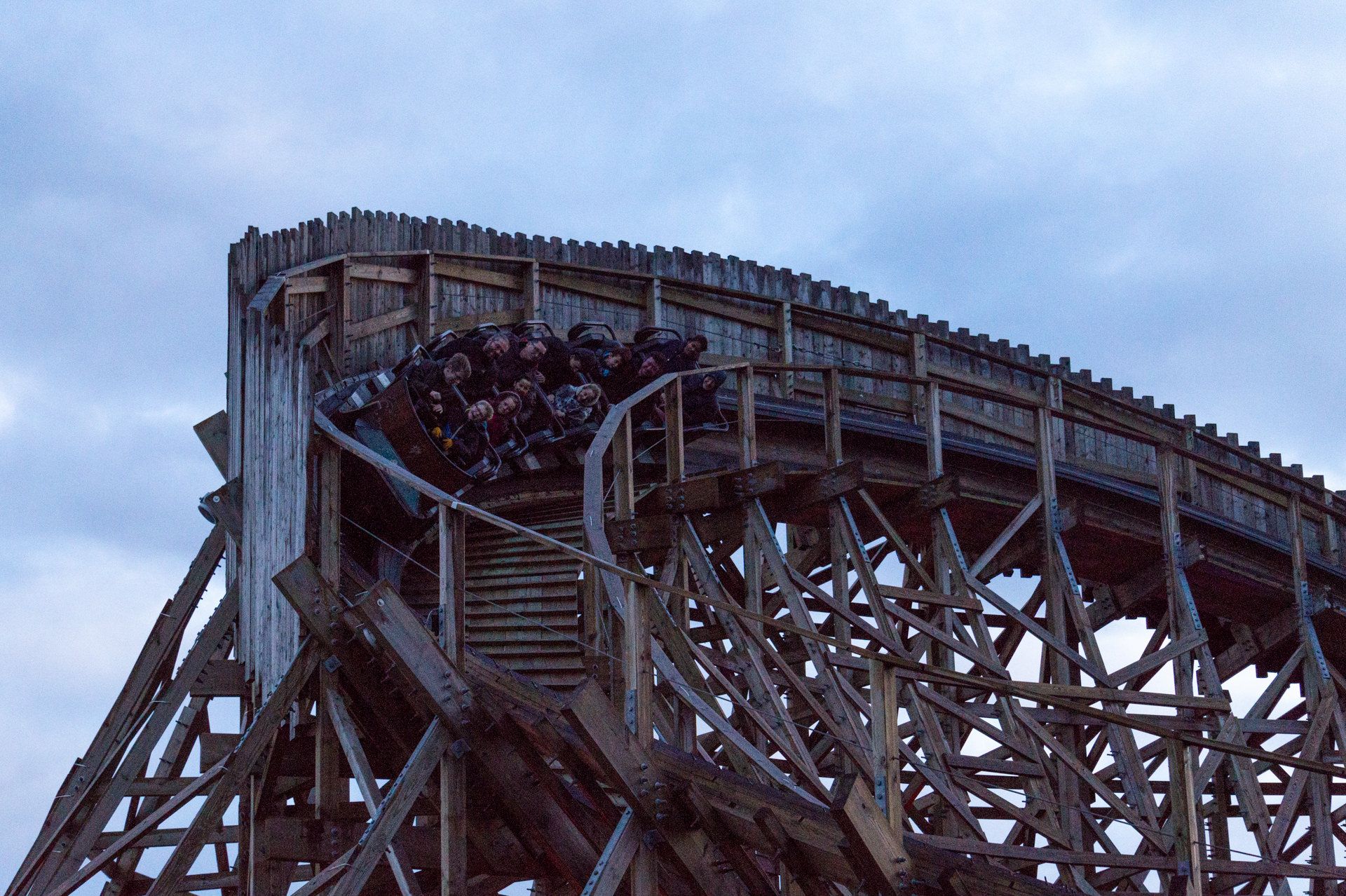
At the top, you disengage from the lift chain and already complete the first dipped CCI turn rich in lateral forces. Thereupon, you race down the first drop, which is quite narrowly capped and elegantly curves away to the left in the valley. Especially at the back of the train and during the rides later in the day, you’re going to be really high-flying! In combination with the narrow headchopper through the following section and the truly rough and tumultuous valley afterwards – the only part of the track that can be described as rough – a really incredible start! I would say that there is or was only one more time such a striking airtime moment on a classic Woodie: on the infamous ride in the over 18 backrow on Cyclops in Mt Olympus.

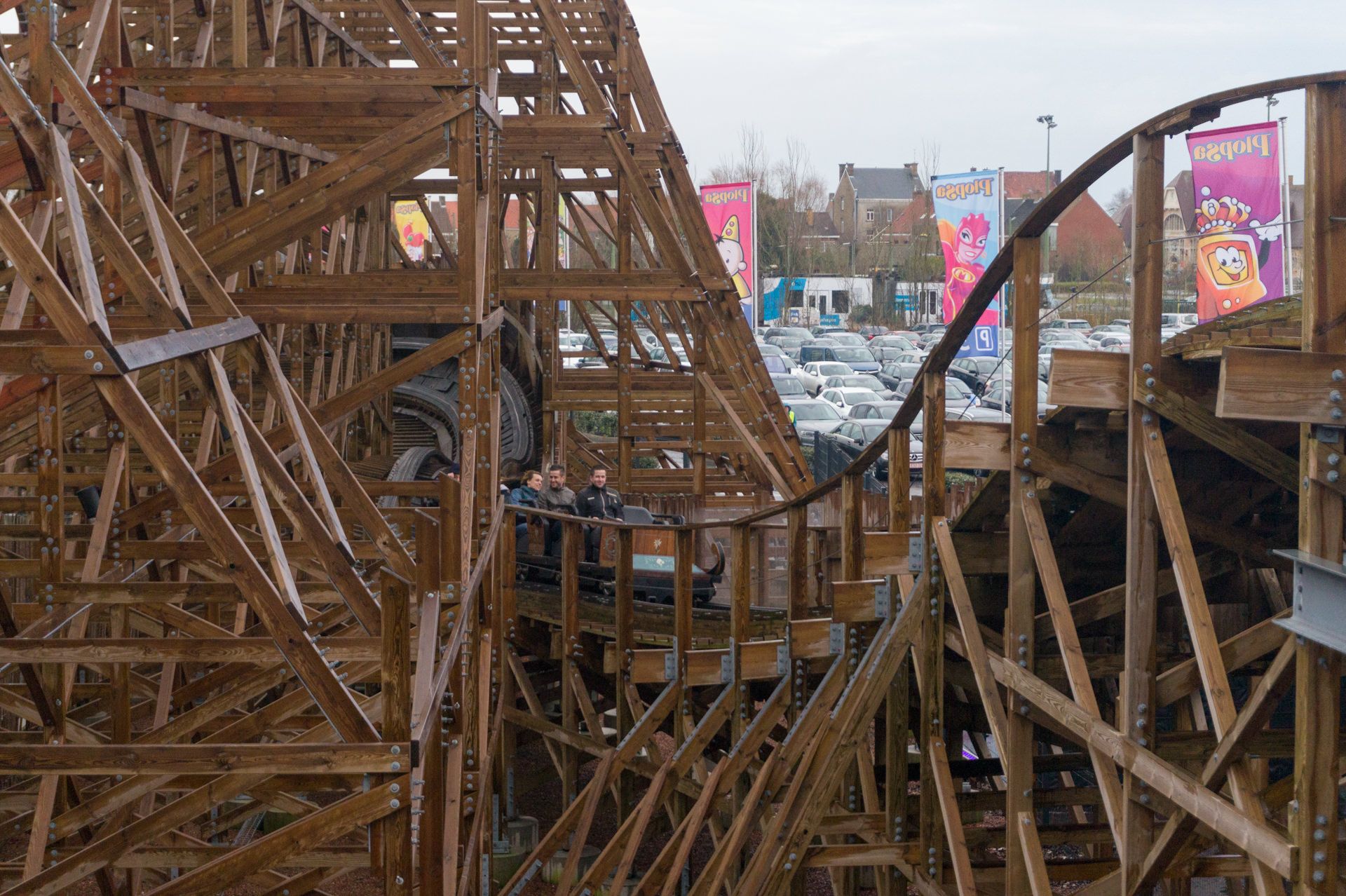
Thereupon one races over a parabolically much more generous hill, immediately afterwards into the next valley, over the following hilltop and to the second CCI-turn, here of course a little more banking. In my opinion, the next hilltop is the best part of the track. Almost as striking as the first drop, you are thrown out of your seat, photographed in a nosedive on the rather steep descent – seldom does a photo location produce such funny and horny snapshots as here! – in the following bottom of the valley because of the somehow much too narrow “re-up-radius” you get crushed in such a way that you get beaten in the stomach with every single ride! Sounds a bit more brutal than it actually is – first of all the sequence and pacing of these elements is just crazy and makes you laugh forever even on the sixth time!

And it’s not that you can’t recover from that, because two somewhat flatter ramp hills now join back to the Lifthill, where you are forced to cuddle with the side pad or the one sitting to the left: a wonderfully bankless curve, bordered by supports in the second part and turning a total of about 180°, is completed. On the now back leading and, because it is done on the top of the slope, even rather small hilltops, fantastic floating airtime is produced in all rows of seats, the longest lasting one naturally at the back of the train. Simply extraterrestrially beautiful and a real celebration!

After a tight 180° turn and a subsequent fall, a very strange bunnyhop follows, which seems to be completely straight when approaching it, but in a very curious way it turns sharply left. Somehow this abrupt slide to the right surprised us anew with every ride and was simply awesome! Emerging from the valley formed by it, a kind of CCI-turn follows again, but its second hilltop is much higher than the one at the beginning and with the loss of speed that comes with it, it actually allows something like a breather. But it doesn’t last long, because now follows a surprisingly deep dive, which leads directly into a right turn, which is again free of crossings. Somehow the only part of the ride that explicitly reminds me of another CCI ride: Rampage in the Alabama Splash Adventure. From there you pass two final bunny shops and reach the final brake, which finally puts an end to the truly wild ride.

Megafobia was, quite simply… mega. The varied layout, which plays with the topographical conditions and is surprisingly versatile for the rather small dimensions, offers a riding experience from which many woodies would benefit! It may be that I, as a fanatical CCI-lover, am a bit too prejudiced or blind of fog (giggle!), but all the rides, which were much more intense later in the day, have lifted Megafobia directly to a top position in the personal Woodie charts. Together with Shivering Timbers, the Hershey-GCIs and Joris in the Efteling, the ride will definitely make it to the lacront-club of favourite Woodies, who will really put a big smile on your face once they’ve warmed up! But that’s not all: this treasure of gold, so carefully placed and hidden in the deepest pampas, has plenty of attractive attributes anyway. Two murderous ejector airtime spots and countless tamer ones as well. A numerically not necessarily distinct, but in terms of conciseness extremely effective use of lateral Gs. Superb headchopper and near misses with supporting structure and vegetation. As well as a simply perfect and just the right amount of shaking, wooden roller coaster ride dynamics – except maybe the first valley.

Another thing that really impressed me was that although I’ve ridden some CCI tracks all over the USA and the typical elements like the dipped turns are present here, the track as a whole didn’t immediately remind me of anything else from West Chester, Ohio. Only the descent into an unbanked right-hand bend after the last 180° turn reminded me a bit of Rampage in Alabama, especially during the more intensive afternoon rides. Obviously, they have put a lot of effort and thought into creating something totally unique here, which is almost tailor-made for Oakwood Theme Park and the space conditions – attention, C-in-CCI humor. In any case, I cannot emphasise enough that every left-hand traffic mile, no matter how stupid it is, is completely worth it! And to the UK-experienced Tobias, who after our little ride marathon and hard fought Frontrow-drive now counts this gem among the best Woodies in the UK, there is no way to thank him enough for having made the Oakwood Theme Park proposal in the first place and for actually driving the long distance out here.

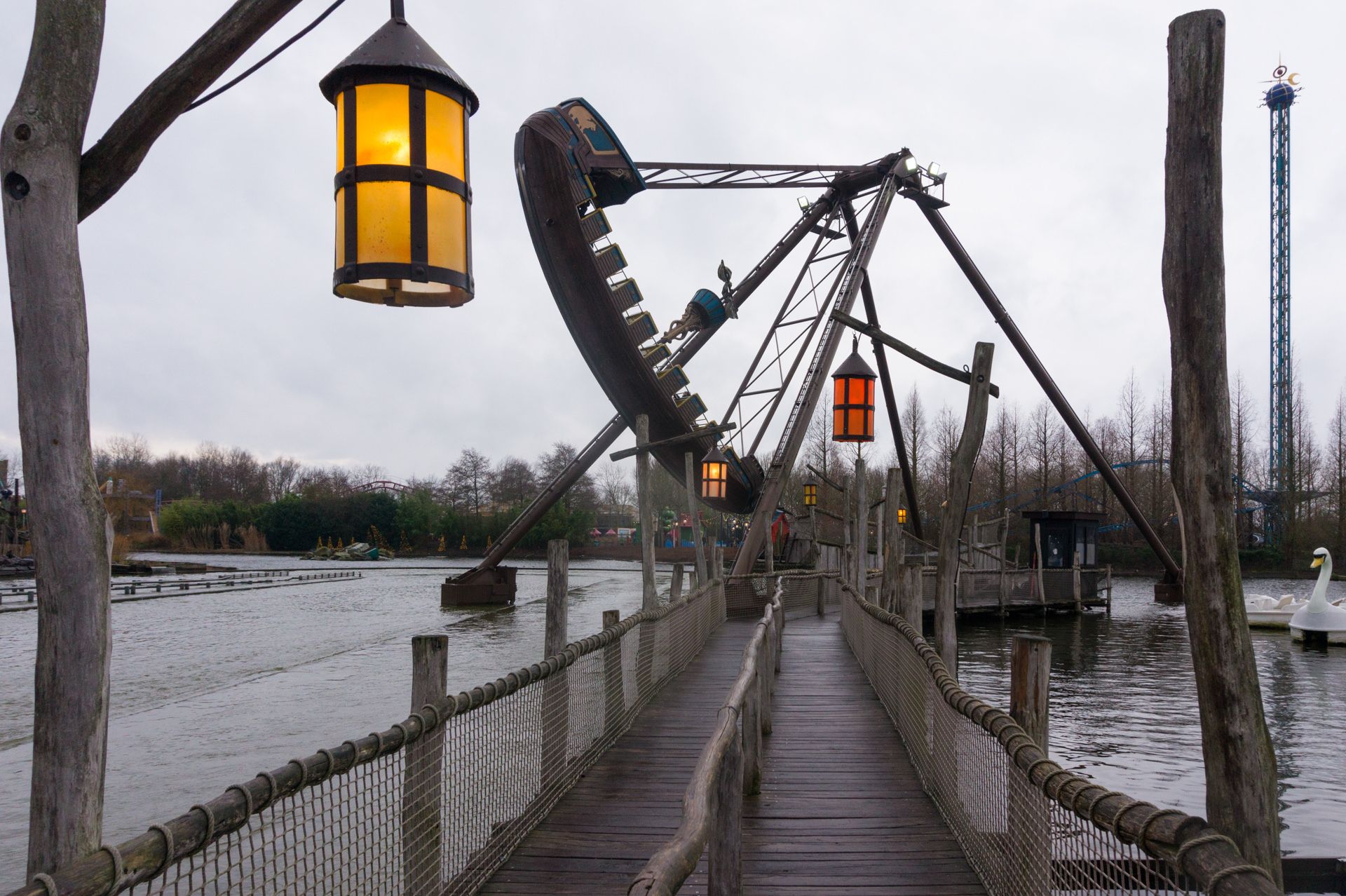
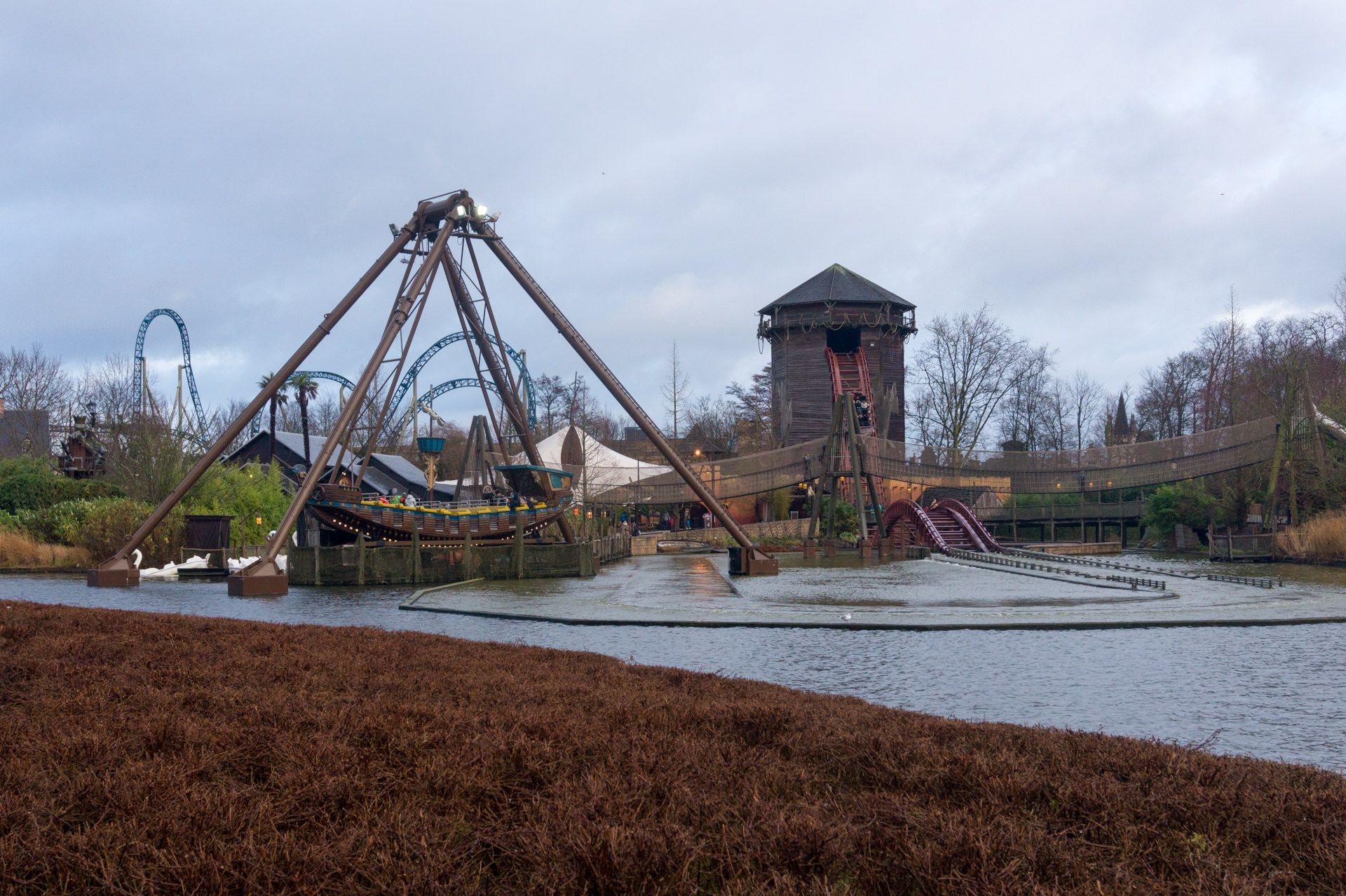
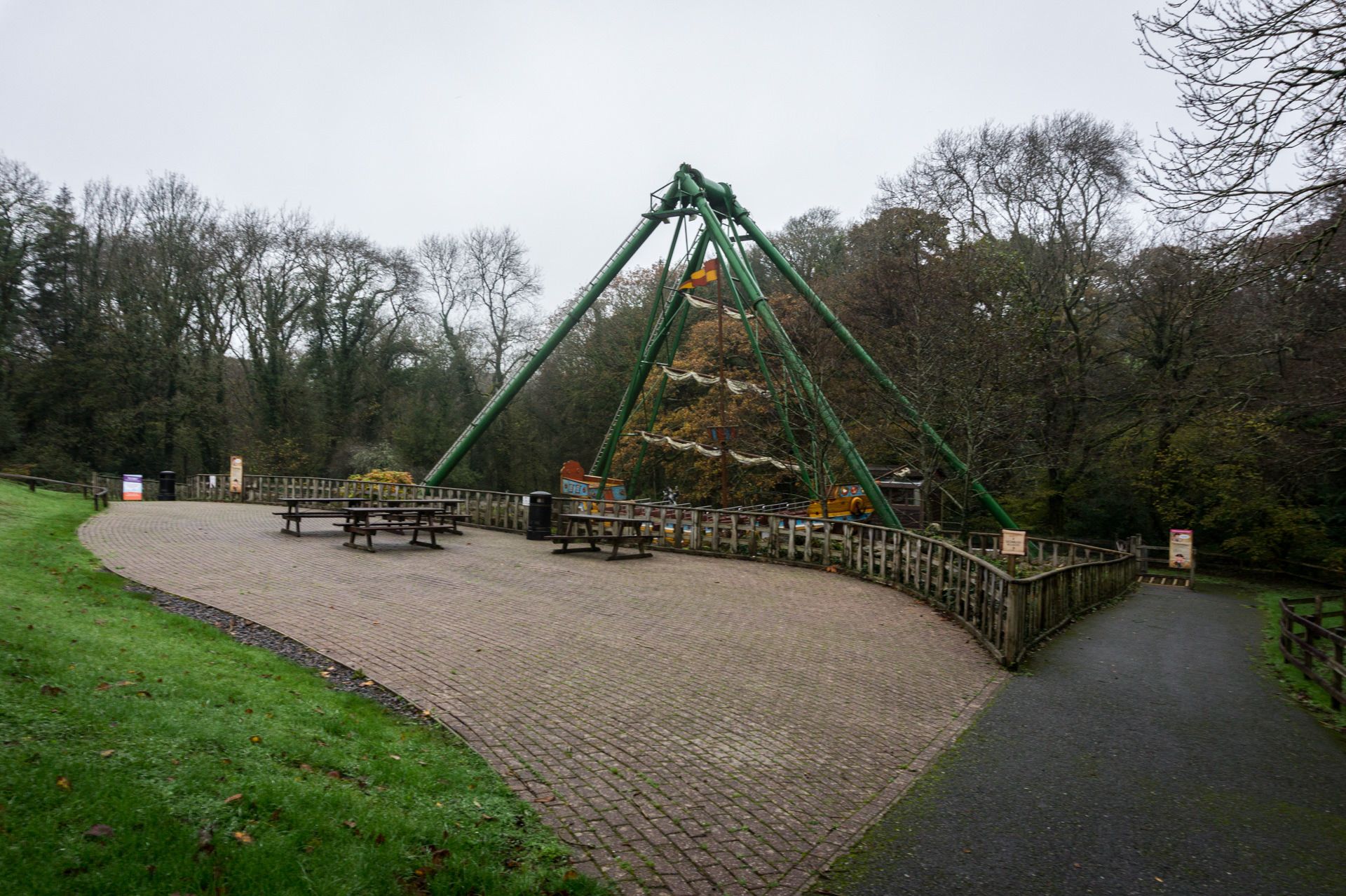
After the first few rides on Megafobia the exploration tour through the Oakwood Theme Park led us past the pedal rental. In the afternoon we saw some boats on the water despite the still modest weather. The Pirate Ship remained closed the whole day. This was already pointed out to us at the cash desk.

Snake River Falls

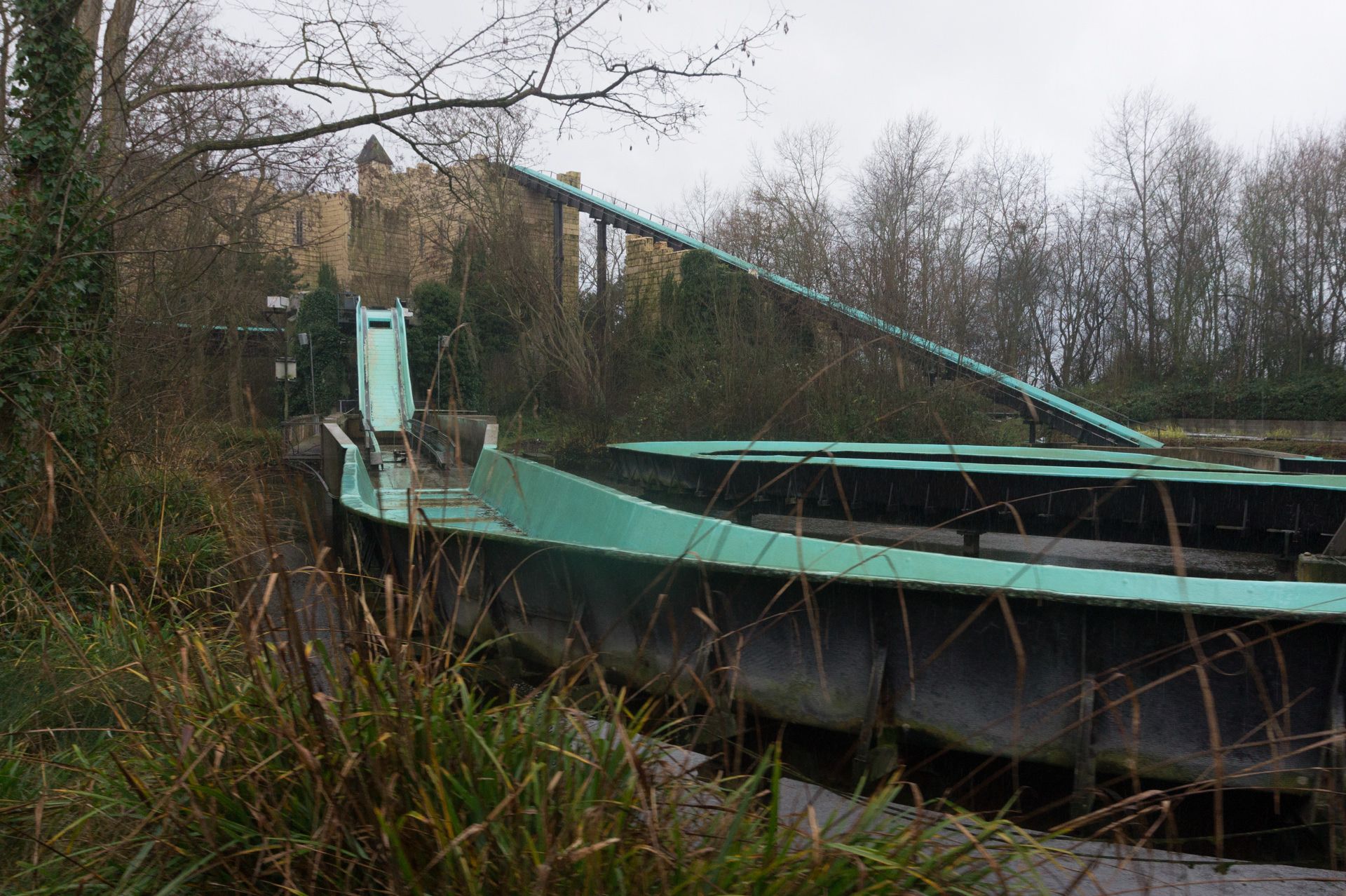
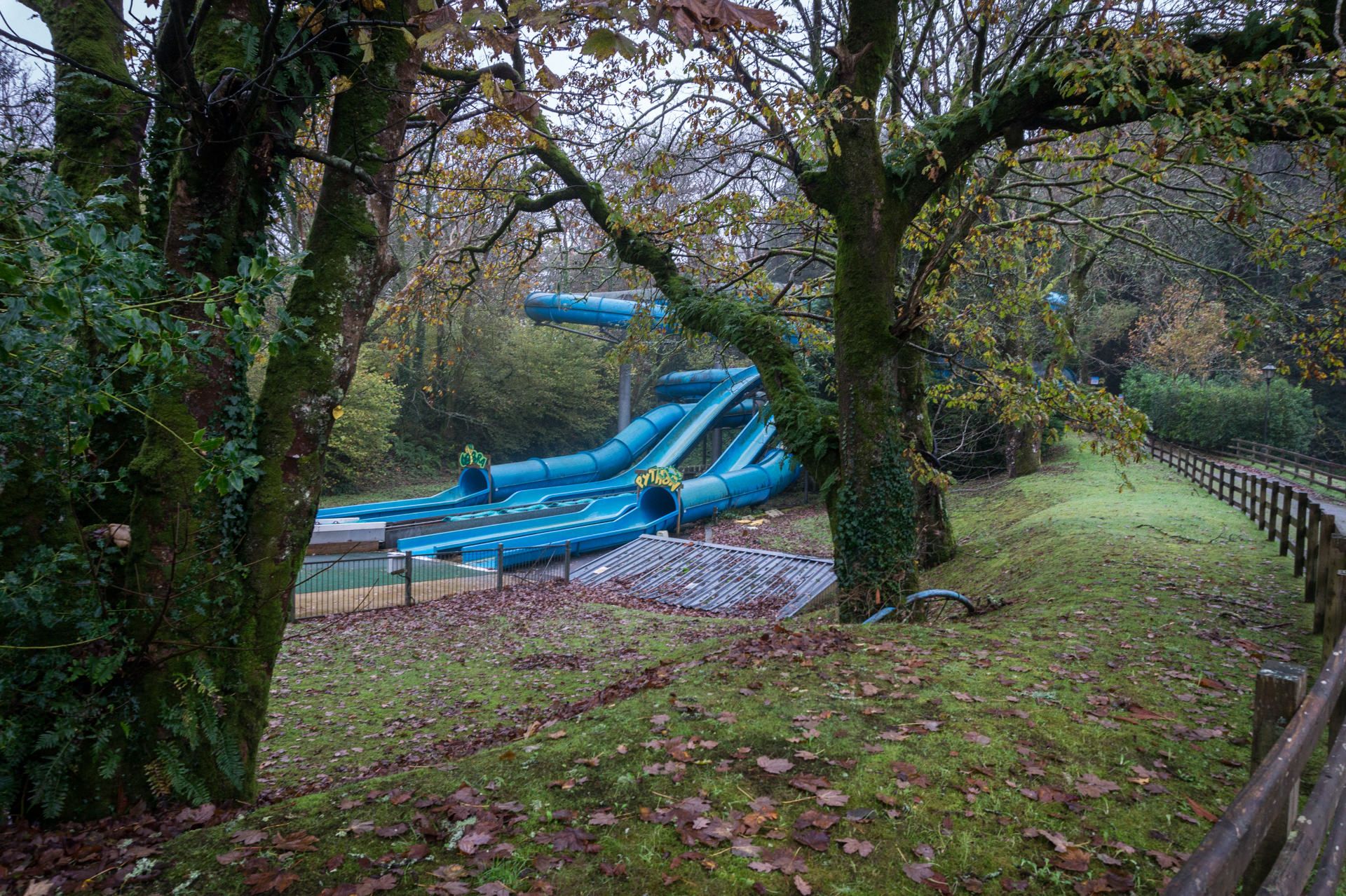
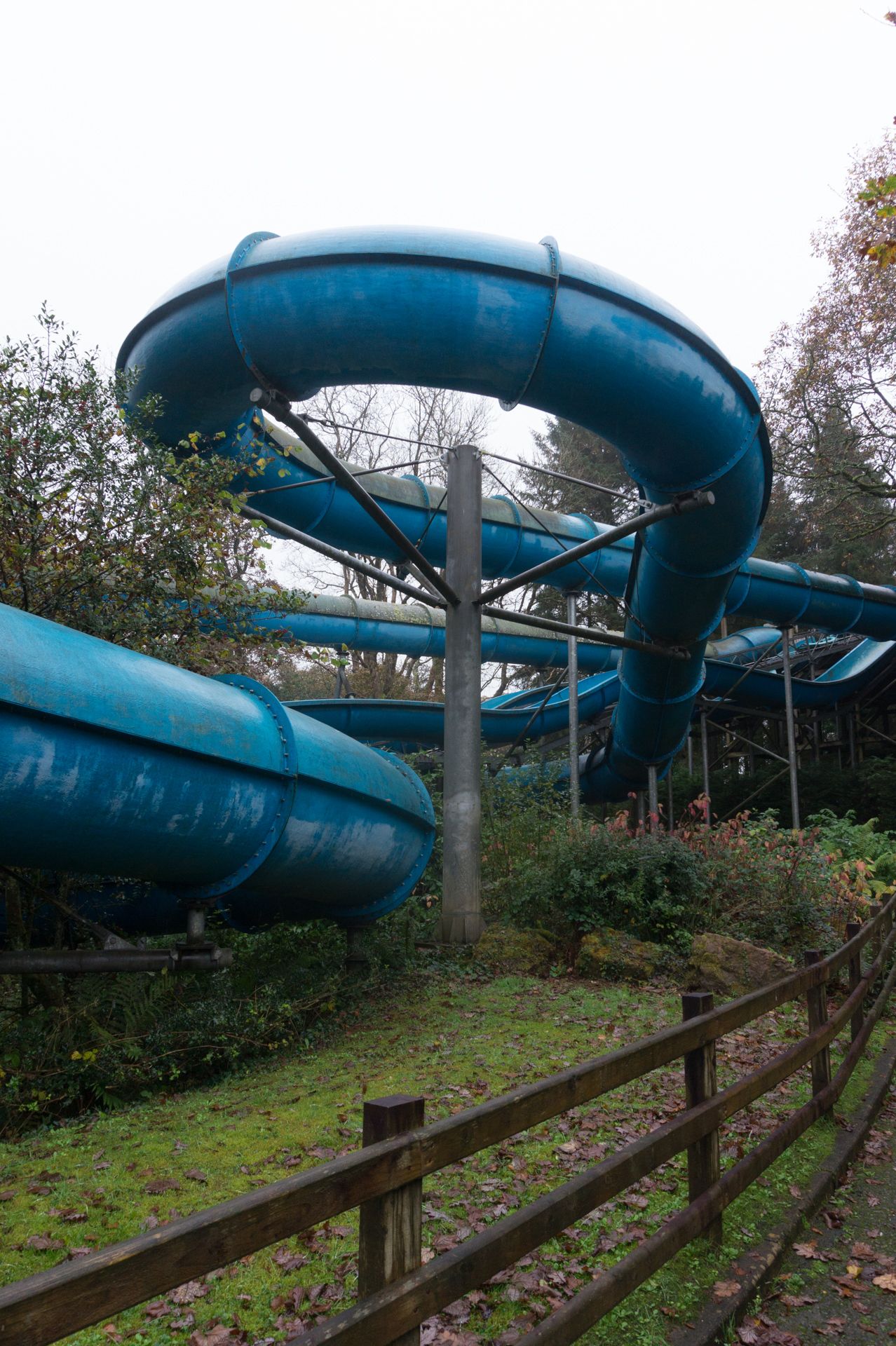
At least until the early afternoon a part of the Snake River Falls boat slide quartet was open. As far as I remember the two open wave slides in the middle and the cobra tube were in operation, we had a fun ride on the right of the two wave slides. I got the wettest on the elbows and the sleeves of my jacket, because most of the water came from this height of the slide channel wall.

Bounce

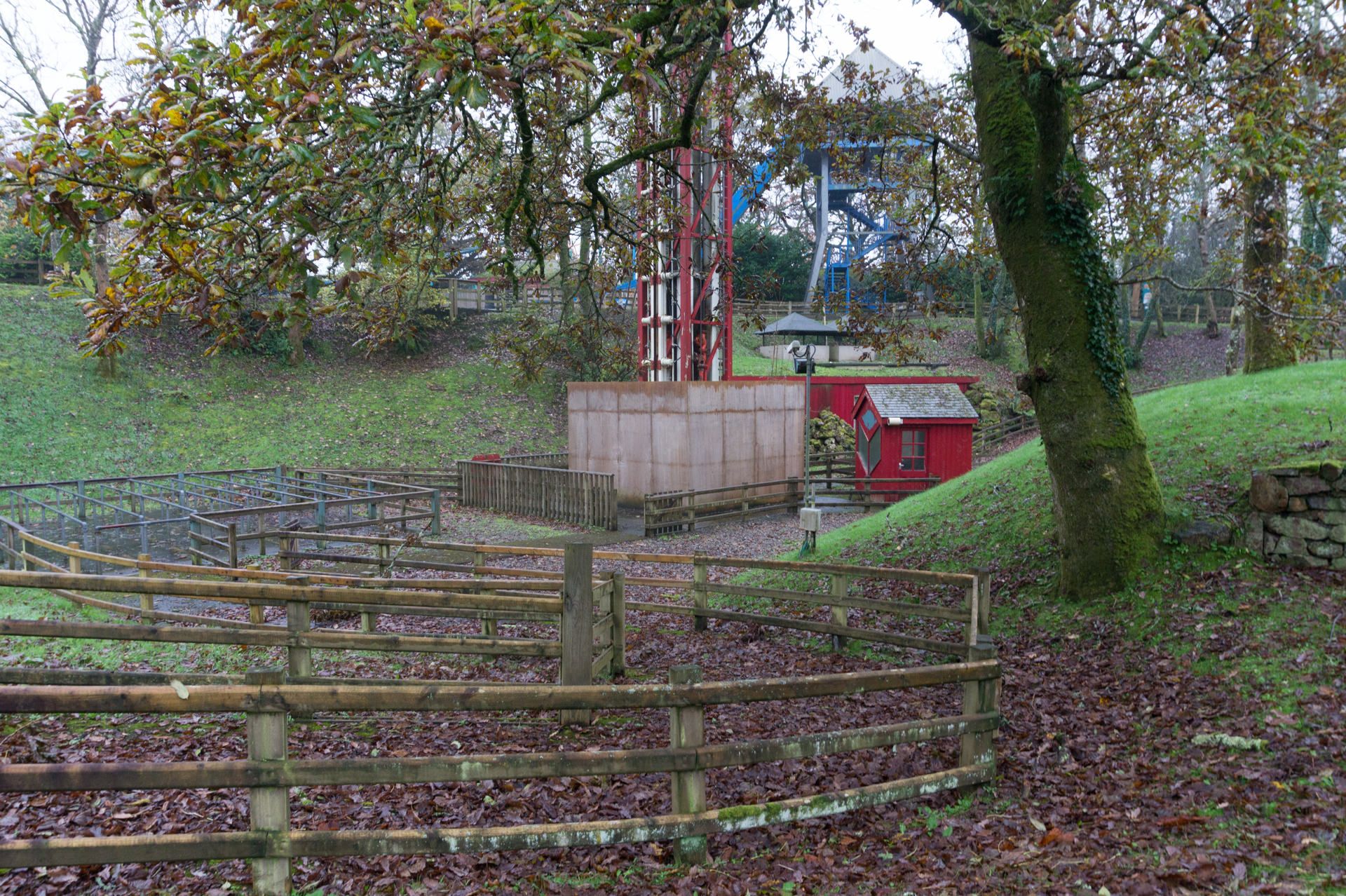
The Huss Shot ‘n’ Drop called Bounce, which was somehow neatly placed in a dip, probably to comply with height regulations, was announced last year that it would be closed. But it is still standing, together with the packed passenger gondola and the apparently operational control box. A certain heavyweight romanticism in all the autumnal foliage during our visit cannot be denied.

Treetops

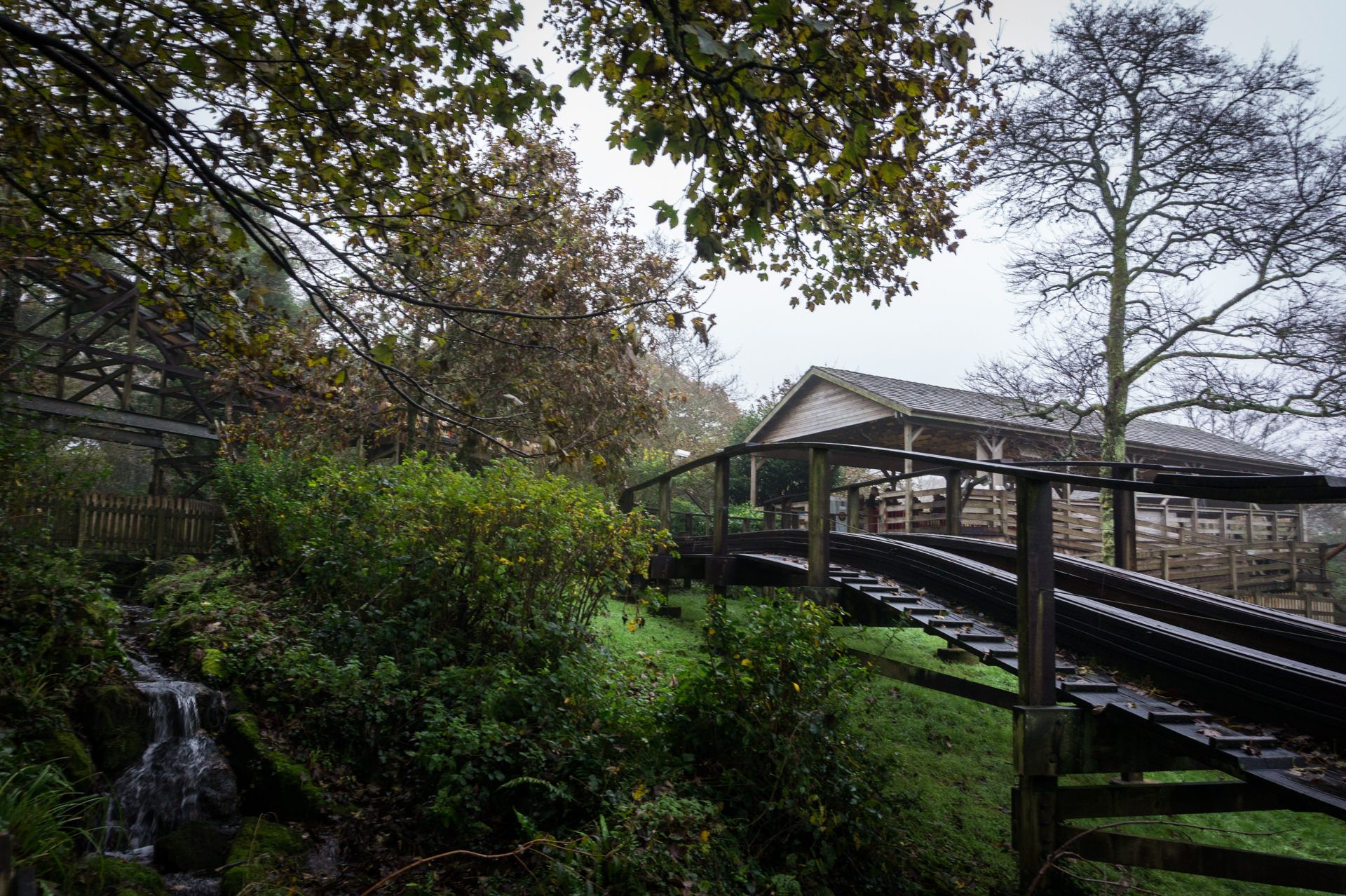
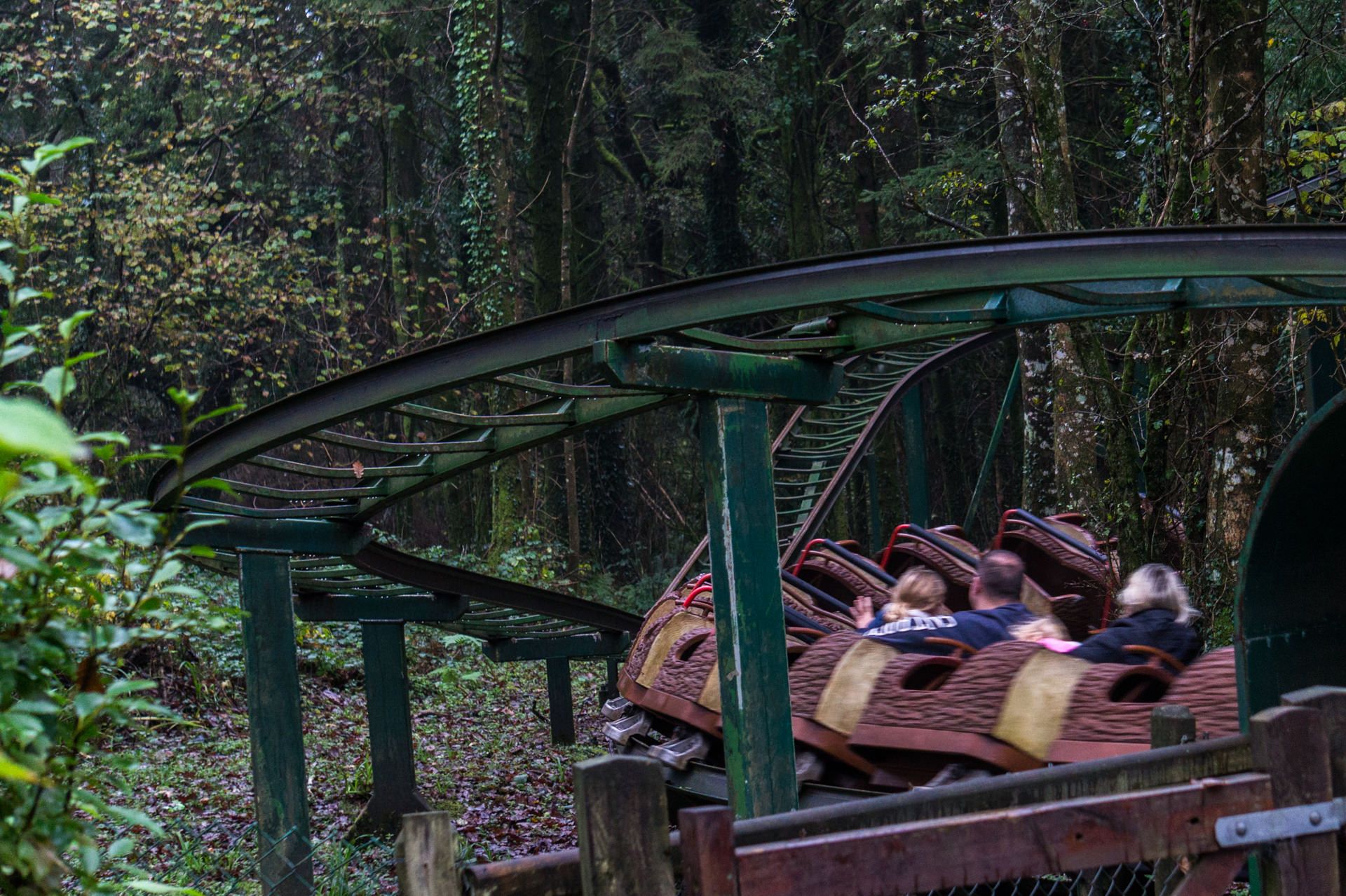
Right next door is an attraction with a slightly longer lifespan: the oldest roller coaster at Oakwood Theme Park, Treetops. You don’t see such a beautiful Tivoli Large embedded in forest and trees every day! It may be that at its opening in 1989 it was still towering above the treetops, but that’s definitely not the case today. It is somehow eerily beautiful how one can disappear in the darkness of the forest and in the vegetation even on visiting days with good weather.

There is not much new that can or must be said about the journey itself. The long trains, the smooth ride and the naturally numerous near misses with scarce rail crossings, tree trunks and branches are great fun for young and old alike. Worth mentioning is the fact that only the back half of the train was occupied, although there were times when there were enough people in the queue to fill it up completely. We suspect that this had less to do with the Oakwood Theme Park’s compliance with loading regulations of a physical or mechanical nature, but rather with the fact that the seats and floors up to the sixth or seventh car were totally covered with rainwater, leaves and twigs.

Furthermore to mention: the one ride operator was a bit gnarly and stupid, when I took some pictures of the track at the station. He probably assumed that I wanted to record a POV, since he mentioned that I had to check this with Guest Relations. In the age of smartphones and stupid park guests, he will of course have the correction to clearly point out the rules here. Nevertheless, motive-conscious “station/access route photographers” like me, who of course store the camera in their short pockets during the ride and thus do not violate the attached regulations at all, should proceed somewhat discreetly here.

Circus Clown

Since the Eurofighter Speed, which is located next to Treetops, would not start operating until 13 o’clock, we explored the children’s areas of the park a little more. The Pinfari Circus Clown named Circus Clown is part of a roundabout of children’s rides with circus theme, whose attractions are probably supervised by a single ride operation in rotation, as you have seen for example in Conneaut Lake or other small American parks. We felt that it was a bit too stupid to do count-begging.

Neverland

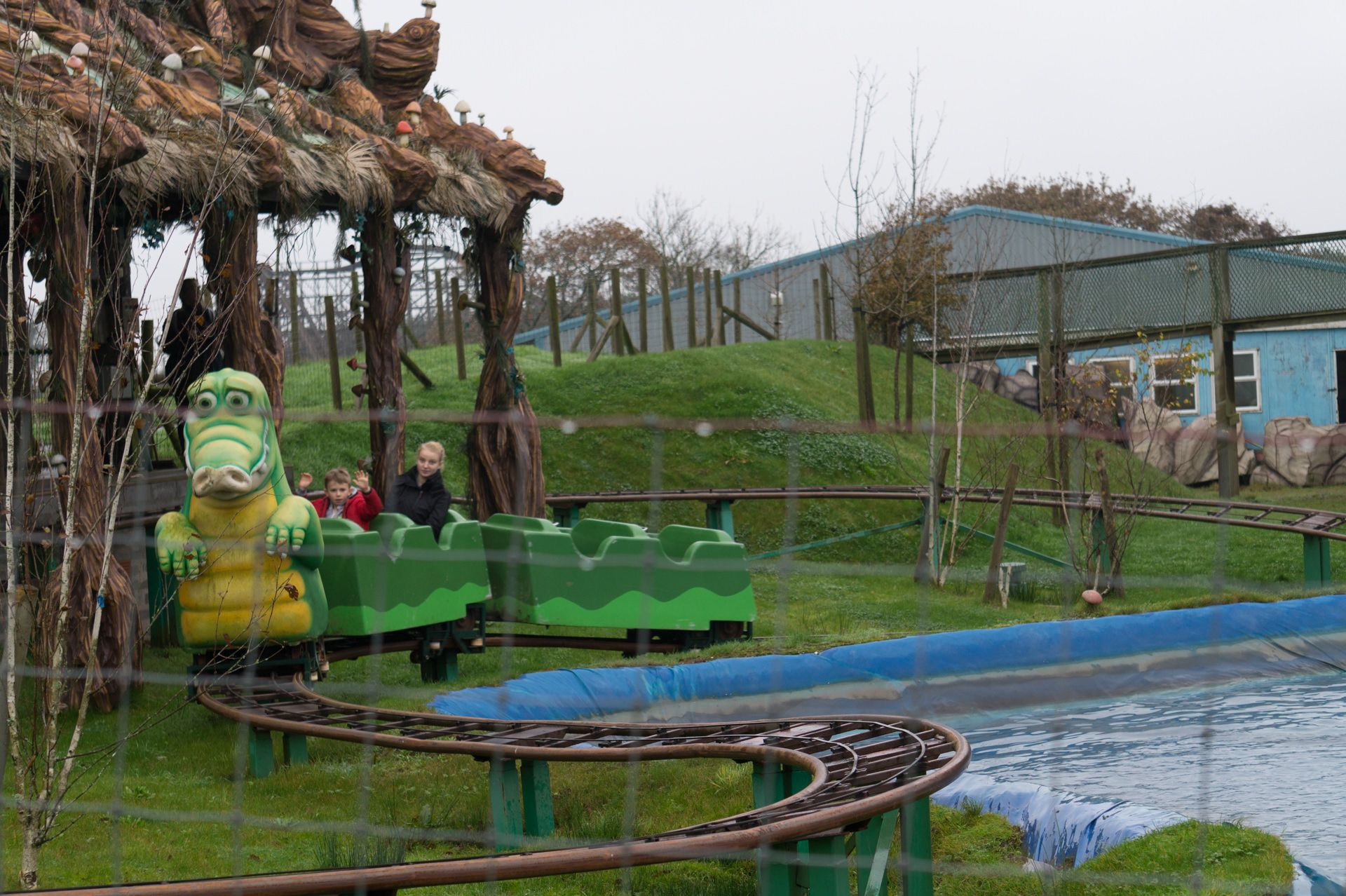
The second larger children’s area of the Oakwood Theme Park is Neverland, which can be reached through the walkthrough attraction Journey to Neverland. Once you arrive at Neverland, you will find yourself in a small hook/pirate area. It consists of the Dragon Wagon Crocodile Coaster, the log flume Skull Rock and the indoor playground Hook’s House of Havoc.

Skull Rock

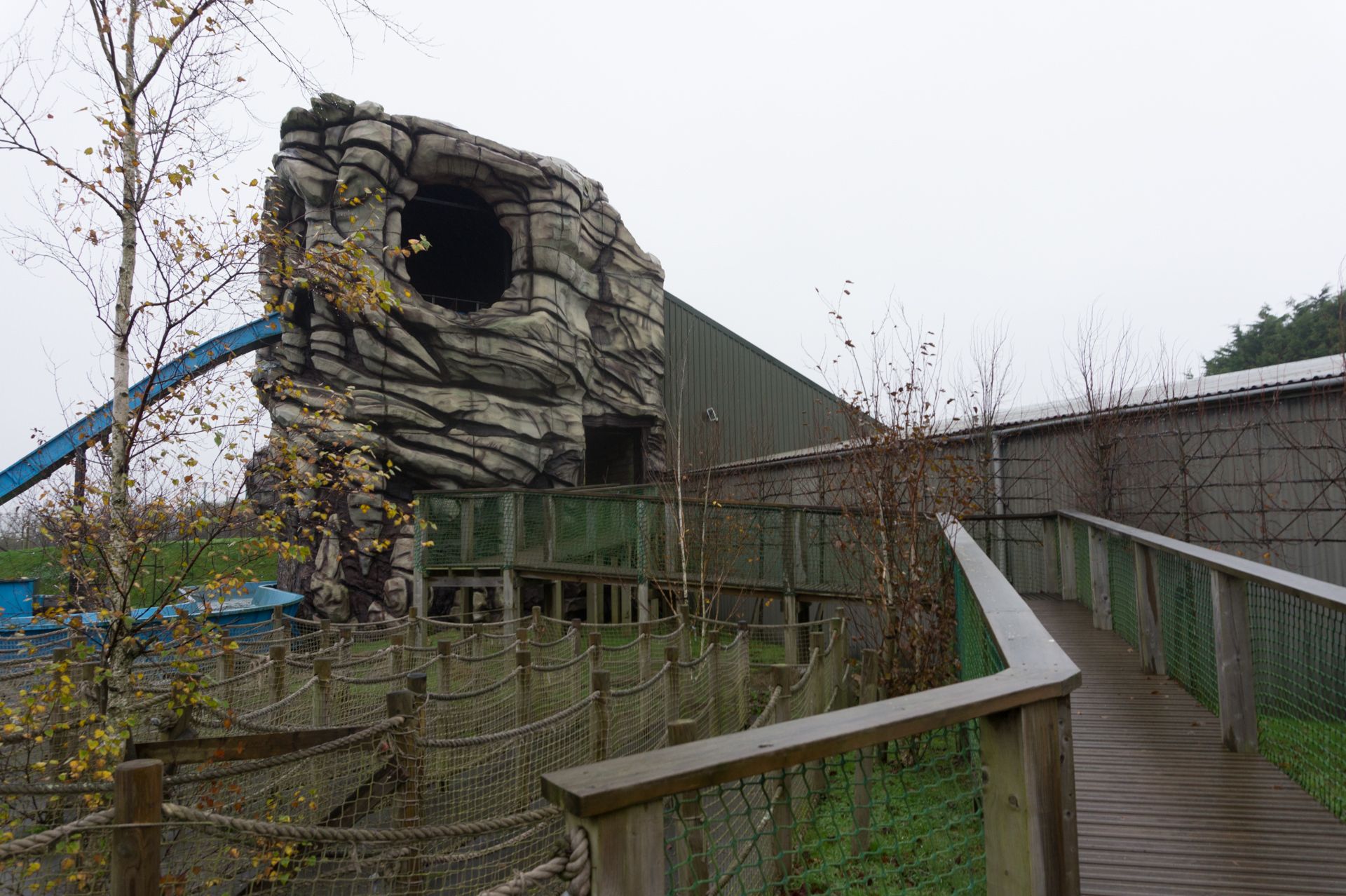
The Mimafab log flume, taken over from the Camelot theme park, is very nice, has a considerable pirate cave section for a park of this size and the only drop produces some very nice fountains. As I was sitting in the front of the log I was probably too well protected by the front cavity to get really wet; Tobias sitting in the back looked a lot more speckled afterwards.

Tink’s Flying School

But never mind! Immediately afterwards we applied the proven Blackpool method of airflow drying to Tink’s Jelly, uh, Flying School, by the way Tobias’ flyer premiere. I found the oversized cutlery replicas leaning against the control box especially funny – I had a lot of fun going round and round, heading for the flying box in the same way, so that there probably wouldn’t have been half a meter missing to erase the respective tips. As always very cool and within Europe also with rarity value!

Crocodile Coaster

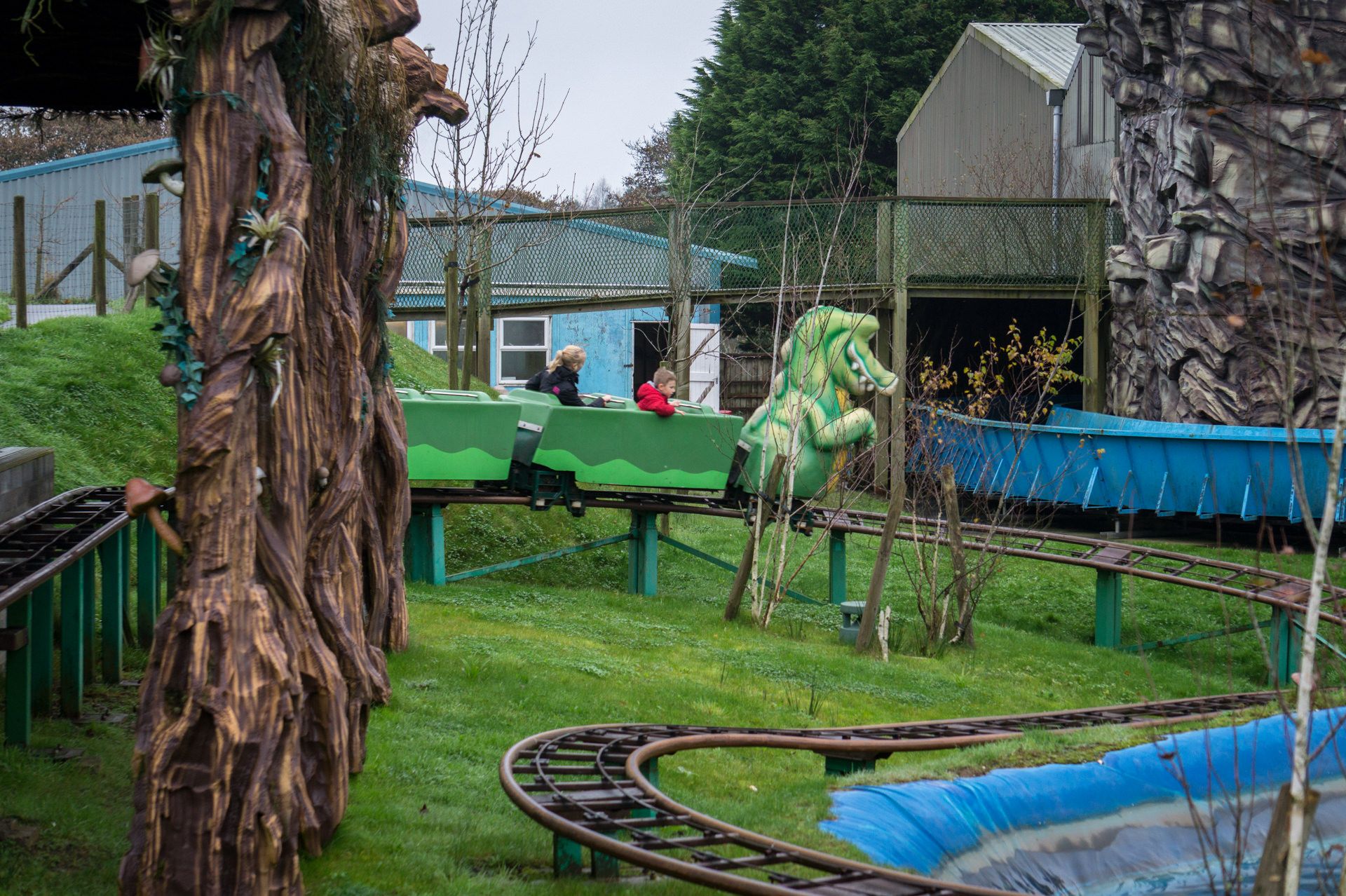
The access to the Crocodile Coaster, which was put into operation sometime during the afternoon, is right next to the one to the whitewater ride – you then pass through a tunnel through the skull and behind the drop of the whitewater ride. Except for the fact that the instructions before departure had a certain Glenwood Caverns AC tendency (“Thumbs up if you understood.”), I can’t write much more than: shaky affair.

Flight of the Giant Peach

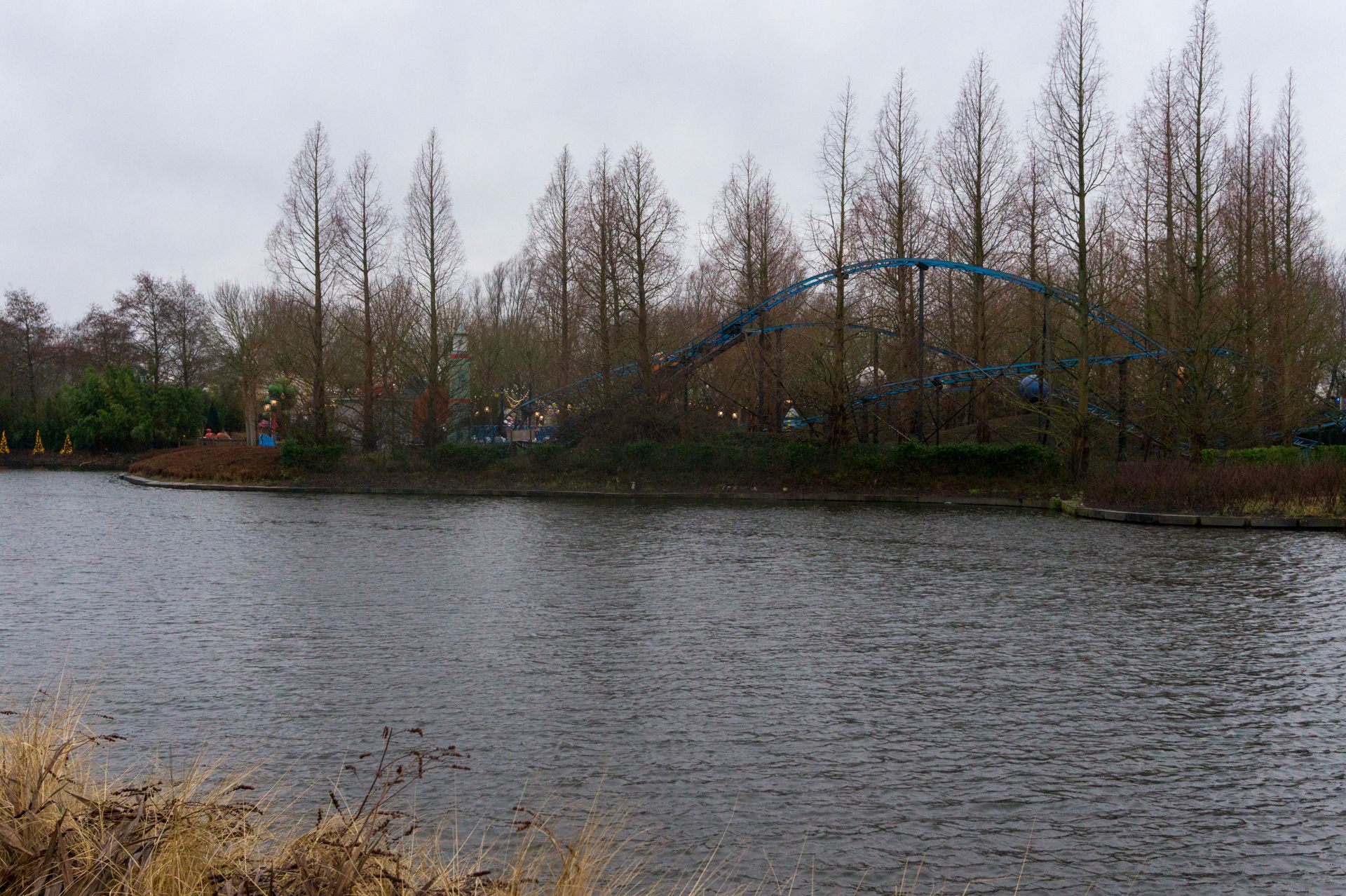
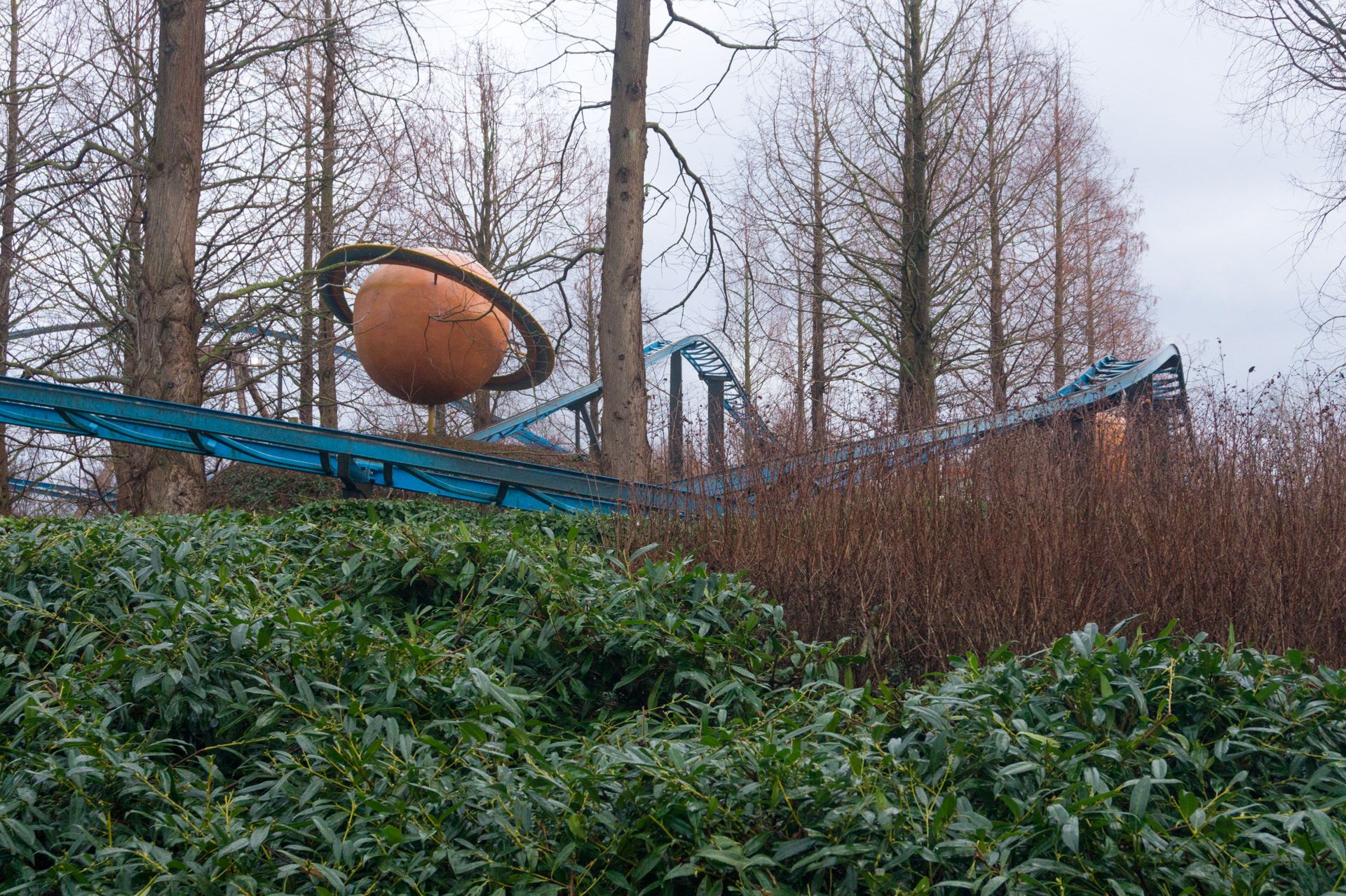
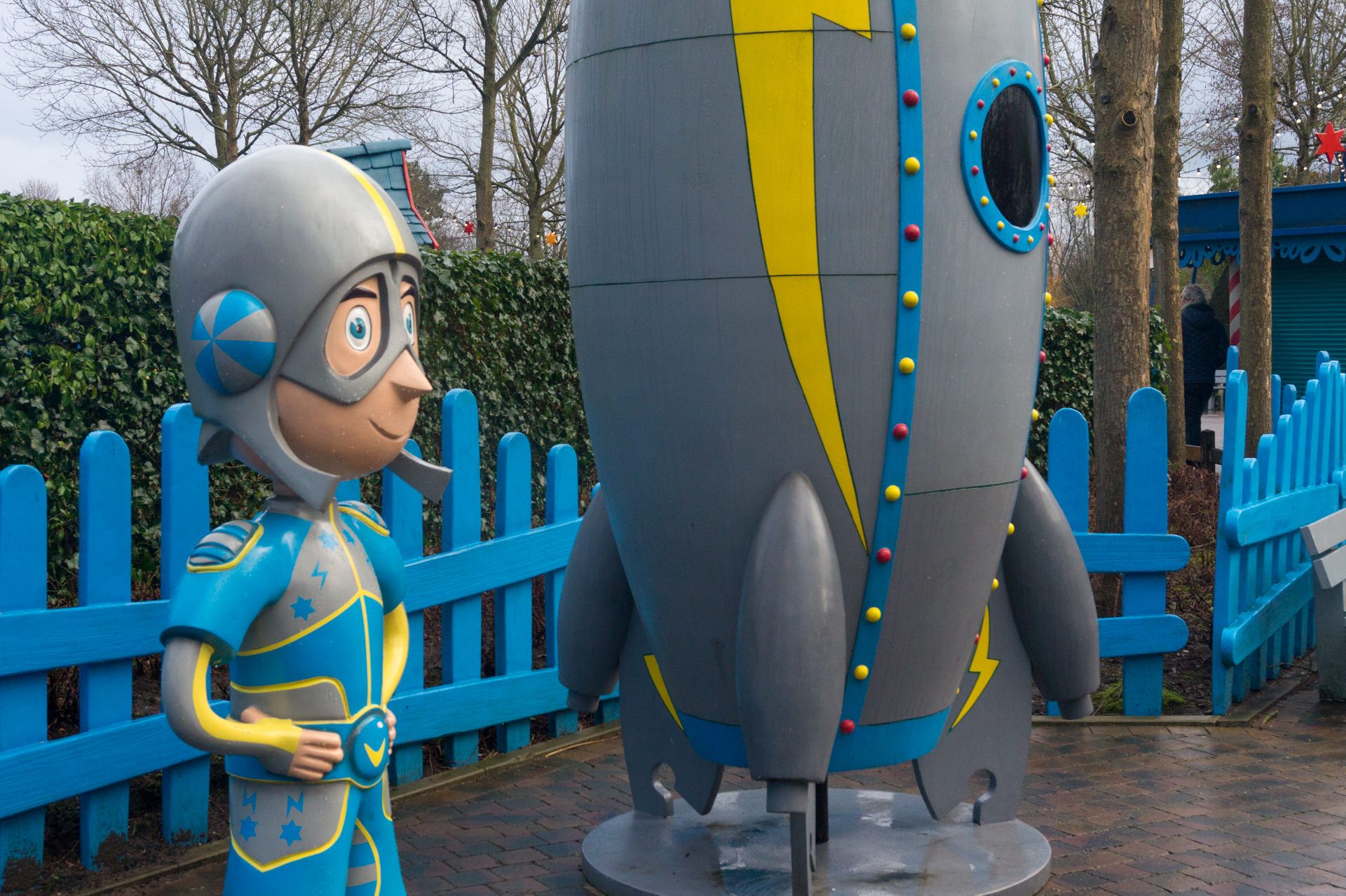
Since now just halfway there, we made a second attempt at this year’s novelty. The heart of the new Dahland (themed and designed according to the stories of Welsh writer Roald Dahl) is the Pinfari RC40 imported from M&D’s Scotland’s Theme Park. Also known as Cobra, Express and finally Space Coaster – according to the old RCDB entries, the Pinfari RC40 was designed after Dahl’s children’s book James and the Giant Peach and is now called Flight of the Giant Peach.

Luckily there was almost nobody left when we passed the cue this time, which was illuminated in a very effective orange colour. Not only Tobias had a premiere on that day: after some thorough RCDB tuning this might have been my first Pinfari ever. The comment of our expat was very harsh: “What a first impression for you!”. Somehow, this statement brings all my impressions of the track to the point. It’s just a fairground coaster. In spite of not existing rollovers it is equipped with (automatically lowering!) shoulder restraints. Apart from the one harsh valley, the ride as a whole is actually quite okay, but it doesn’t offer too much excitement. Twice done and somehow already forgotten.

Marginal note: The storage track was not built up at all and is, as Tobias rightly noticed, in the inner courtyard of the railway. So there is probably only one train at present, and thus only one entry – despite a separate exit station, where the poor ride-ops had to trample over the wet ground in every cycle.

Spooky 3D

We waited a while at the entrance to the Spooky 3D creepy walkthrough (we assume), but it seemed to be on a break. Right next to it is one of the Halloween mazes, where sometime during the afternoon people actually queued up for it. We assumed that these mazes were only in operation during the longer Saturday evening opening hours; on other Halloween special days, the Oakwood Theme Park closed at 5 pm.

Speed: No Limits

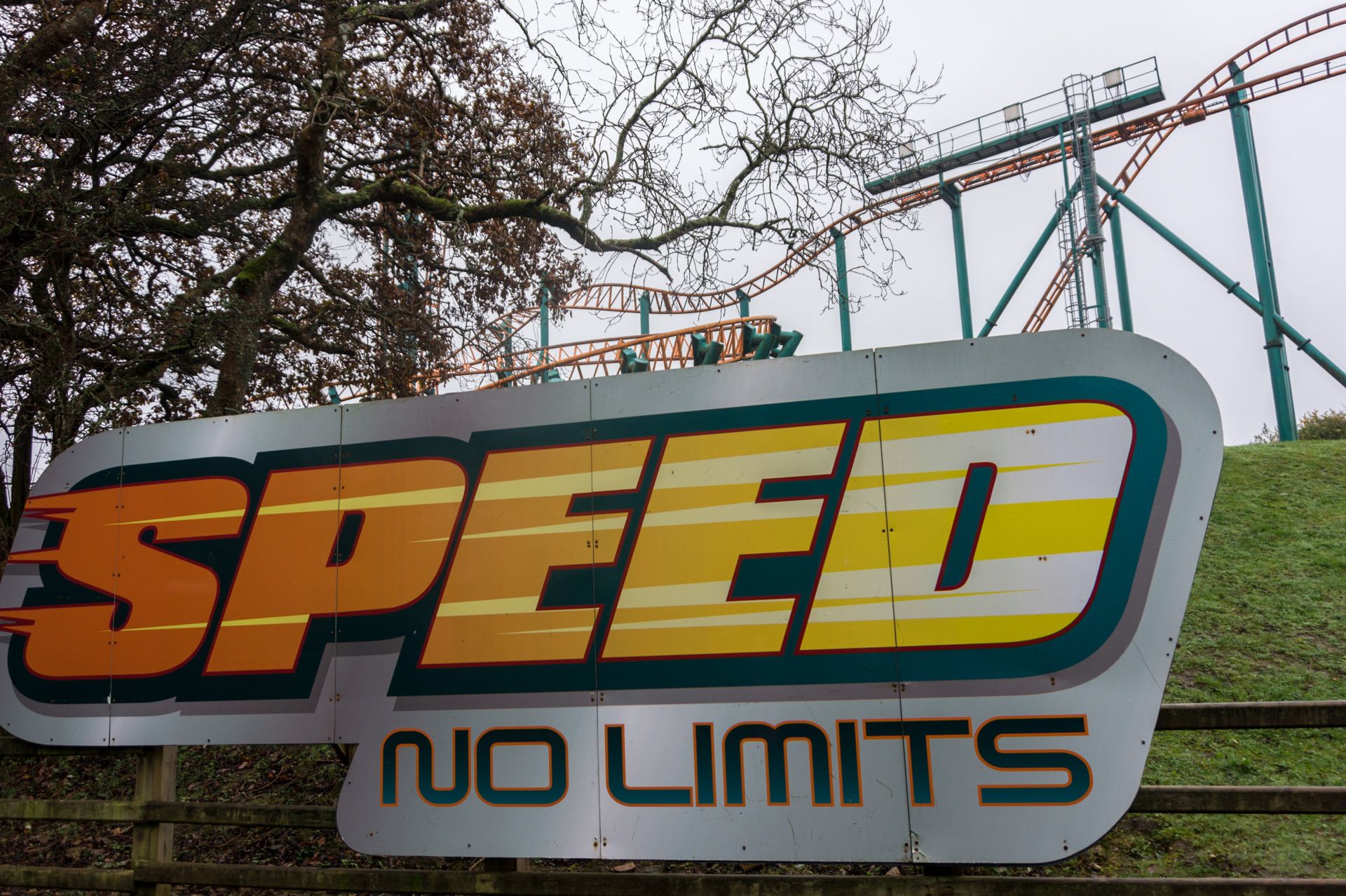
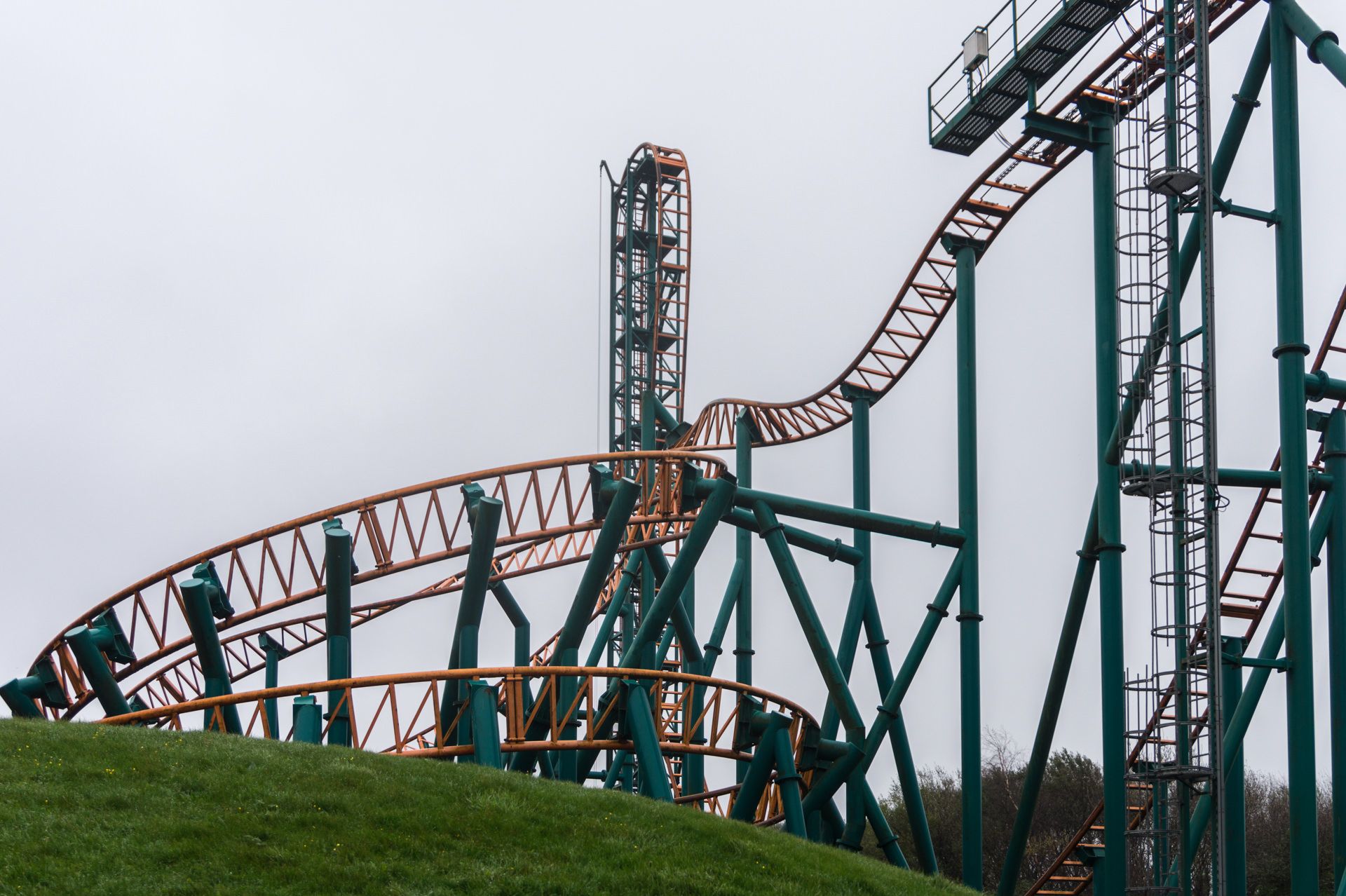
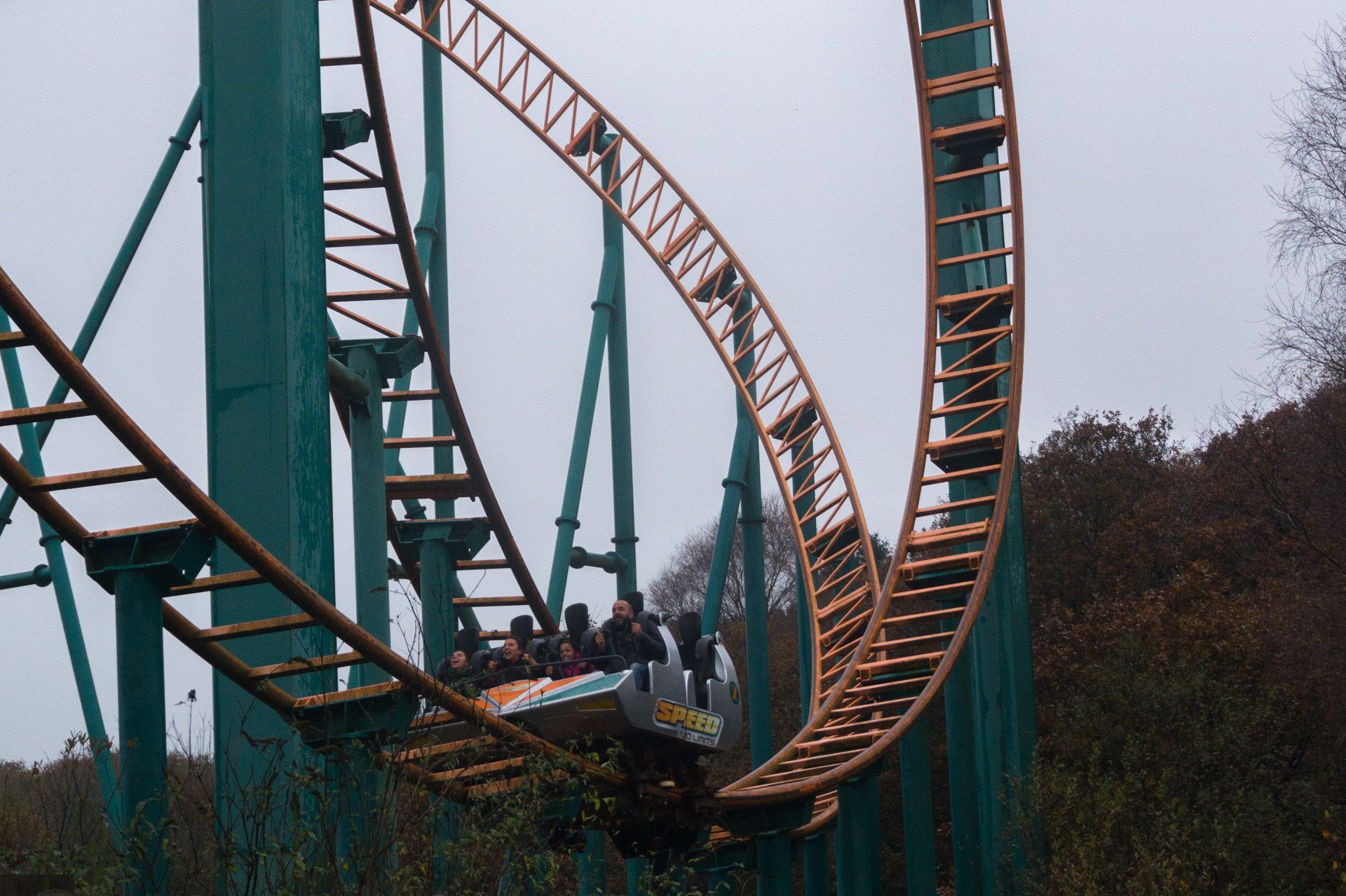
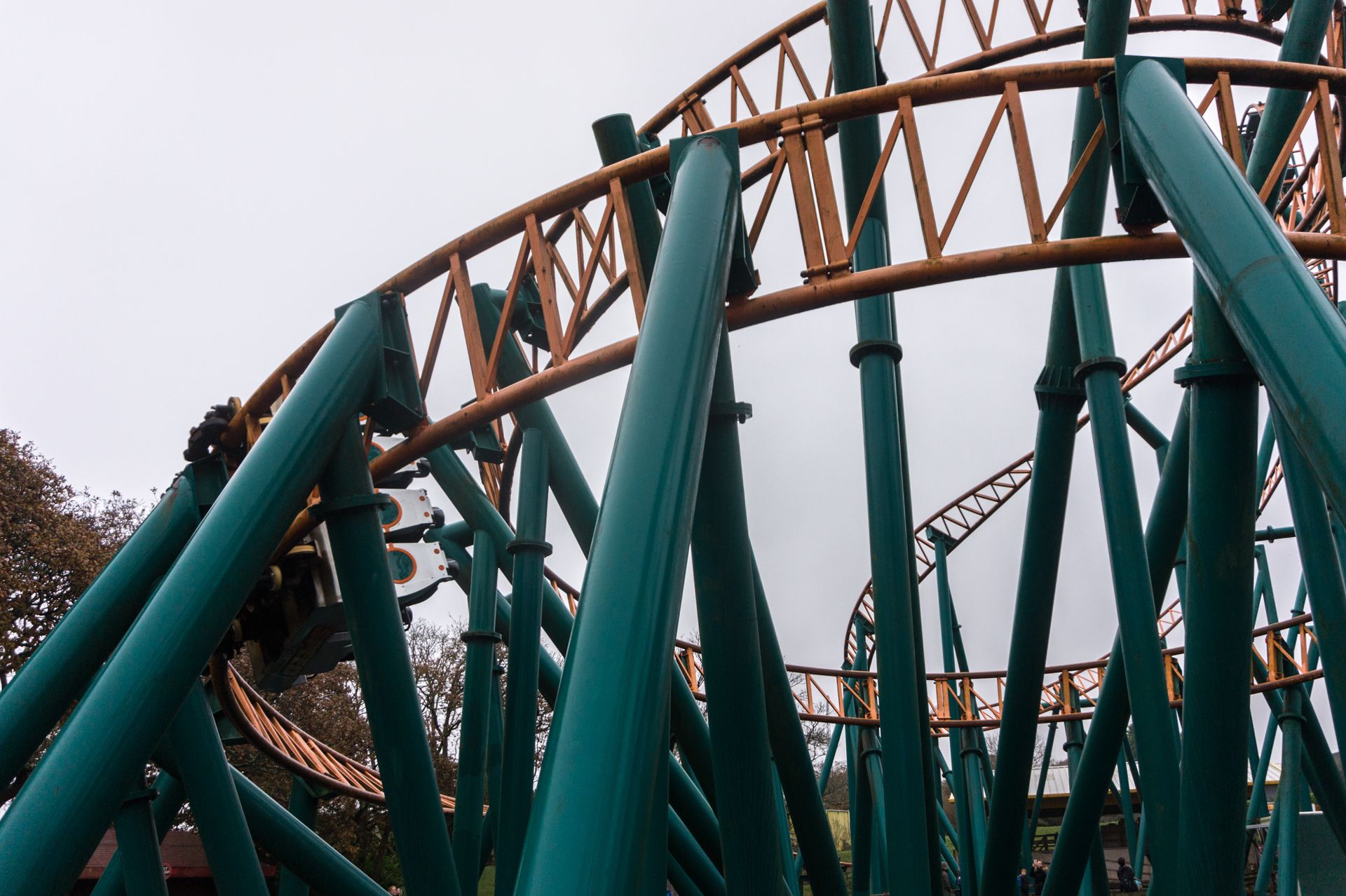
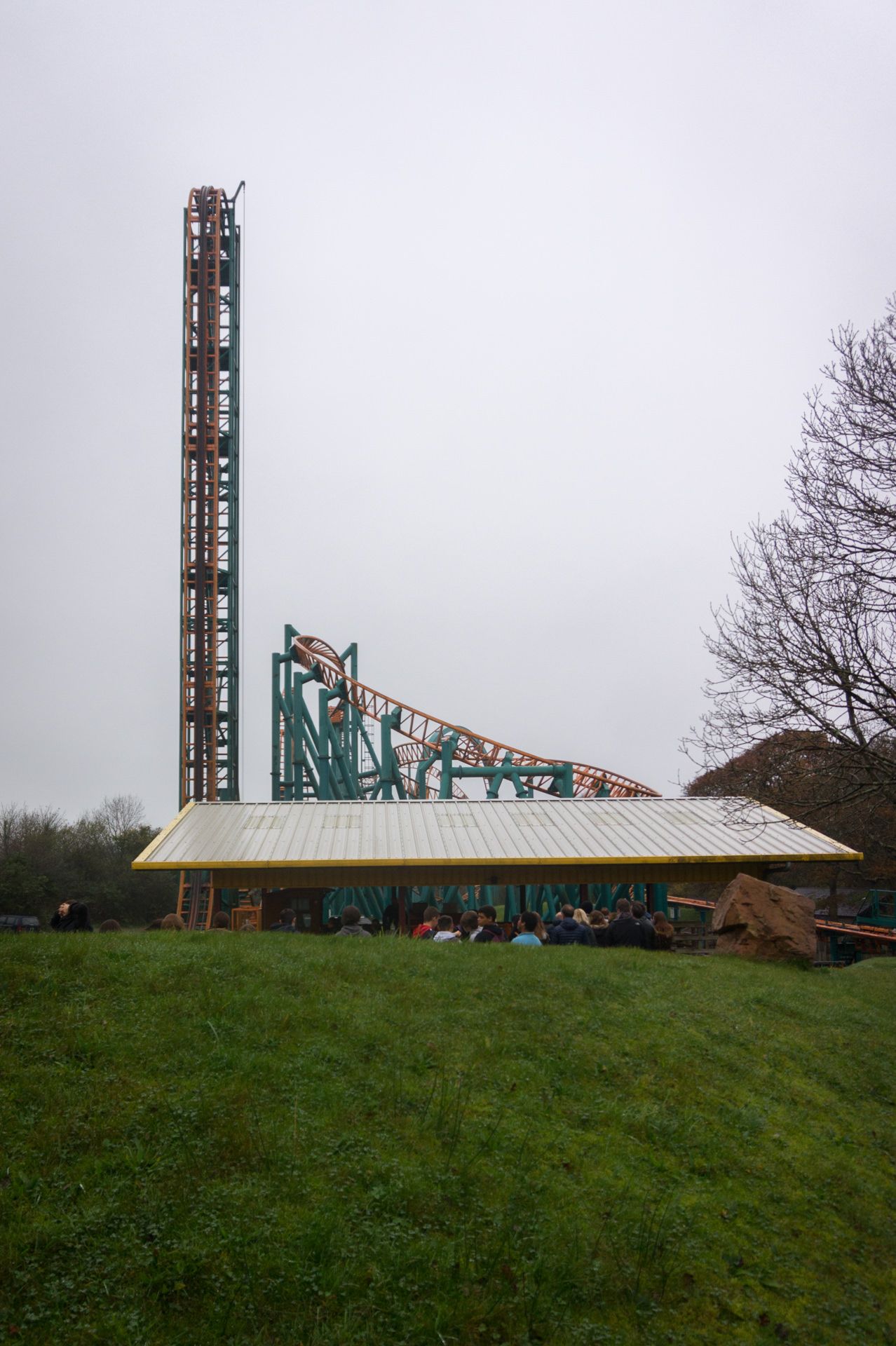
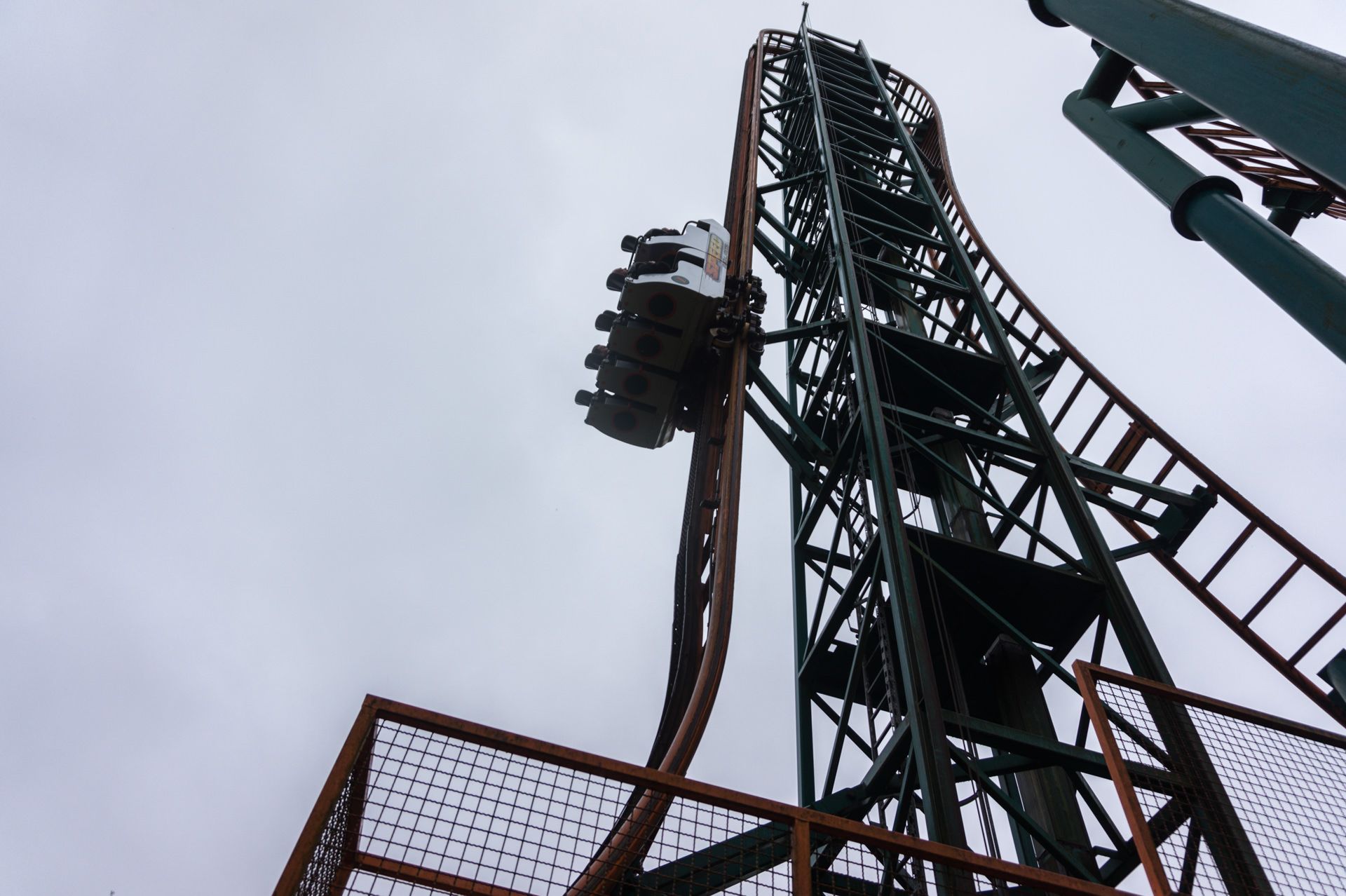
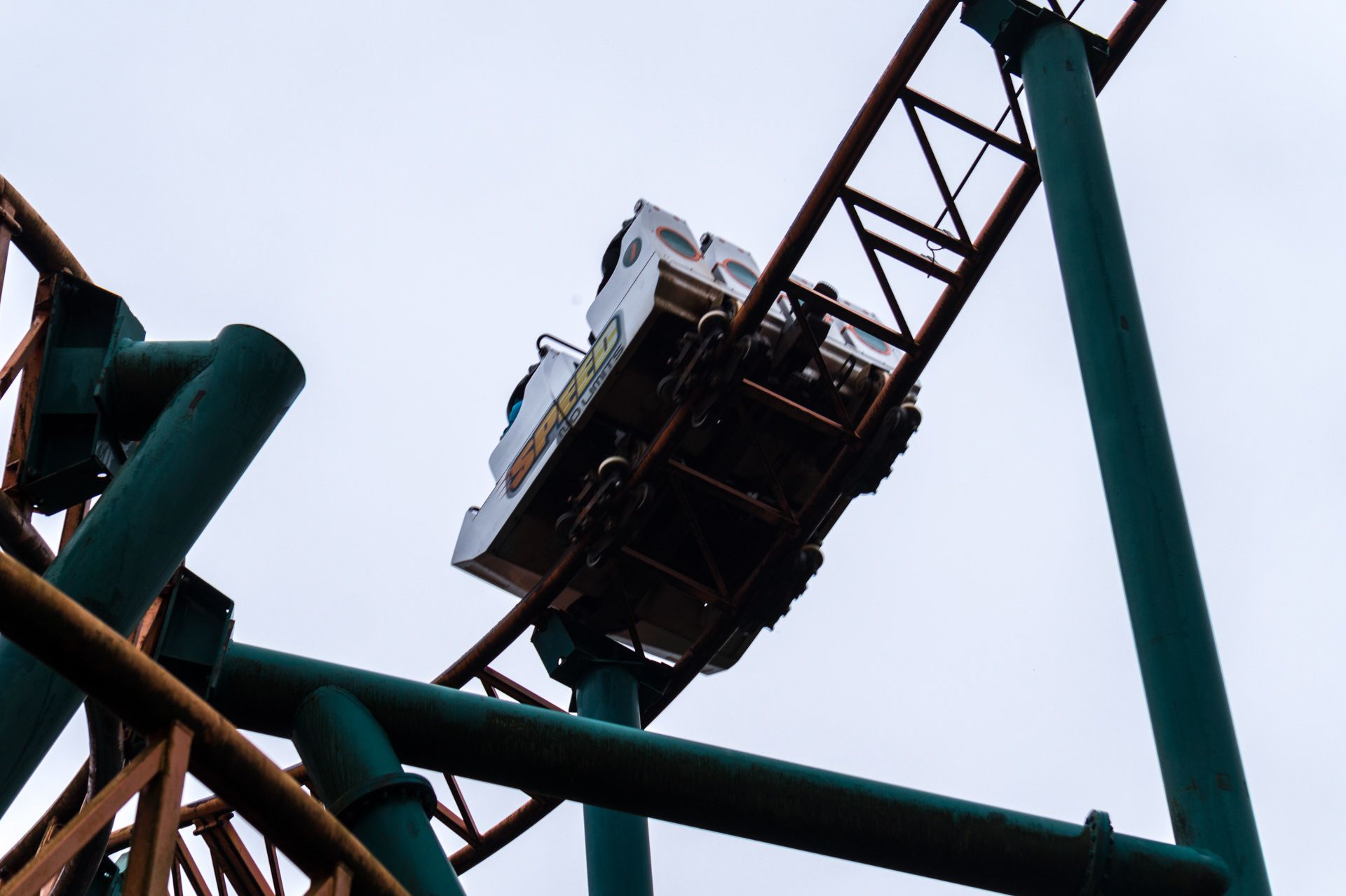
As announced, the giant Eurofighter Speed: No Limits started operation at 13 o’clock in its own small cul-de-sac. Thus we joined it directly for a few rides. One thing I can already anticipate: the ride was the absolute surprise hit of our Wales trip! Due to the route layout, which was somehow quite “generous” for a Eurofighter, and not least because of the impressive key figures, I expected a ride that was a bit different from the usual Eurofighter standard. Nevertheless, the indisputably fancy thing simply blew us both away! With Megafobia you could somehow foresee in advance that the ride would be really good – here you could just marvel and laugh about how much power and speed are offered on the 610 meters of track!

As expected, only one of the four possible eight passenger cars was in use, so our three rides consumed a considerable amount of waiting time compared to the park. But in retrospect I would have estimated that this was a maximum of a quarter of an hour or so for the first run; on the two repeat runs we were even faster. And as we were supposed to be impressively demonstrated, every single minute was worth it! Thanks to the, as always, extremely comfortable Gerstlauer shoulder restraints, the check-in as such never took very long – most of the time, the waiting was spent watching how the train unrolls the compact course and how the passengers react to it.

Once all eight shoulder restraints have been controlled by the quite dislocatable Ride-OP, the vehicle starts moving and over a 90° bend out of the station, you already reach the foot of the vertical lift, which is intimidating with every ride due to its sheer shape. Under unbearable tension, the chain is soon set in motion, which you finally hook into and which now turns you into the 90° angle required to force this type of lift. In the process, even the otherwise so dominated British and Welsh people elicit highly yankee-like sounds of disbelief, rapture and fear – “I don’t like this at all!” or “Oh my God, why did I let you talk me into this?!” were part of the repertoire often heard at this point.

Lying on your back in the seats, you’re now 35 meters up into the fog – even after defeating other Eurofighters several times, it’s still queasy, oppressive and fucking weird! Freaks like Tobias and me turn our heads to the right or left to enjoy an unreal tilted panorama of Oakwood Theme Park and Megafobia, or rather to see exactly what kind of metal stuff is lying in the field next to the track. But at some point the top is reached and you tilt from the supine position now in one go first into an upright sitting and finally into a forward overhanging position. With a truly frightening view of the unreal 97° shot in front of you, you lose contact with your seat and plunge into the shoulder restraints, catapulted up into the yawning depths – what a start! After the forward tilted madness fall, you gradually straighten up again in the valley and reach the top speed of 90 km/h, which is terrific, triggers tears of wind and even gives inspiration for naming the ride.

Immediately afterwards, you climb up and fly over the best part of the track: the airtime hill. Not only does this give the runway a great unique selling point in an internal comparison of the “classic” Eurofighters – it also really, really, really hits you hard!  According to Wikipedia, -1.3 g is effective here, but I honestly wouldn’t be surprised if there were a bit more to it. In any case, you are thrown incredibly awesome towards the sky and photographed in the following nosedive. And as Tobias laughingly stated, I had the same incredulous expression on my face full of enthusiasm and surprise about this totally unexpected kick – because according to my reaction nature to such moments nothing else was possible! What a power hillock!

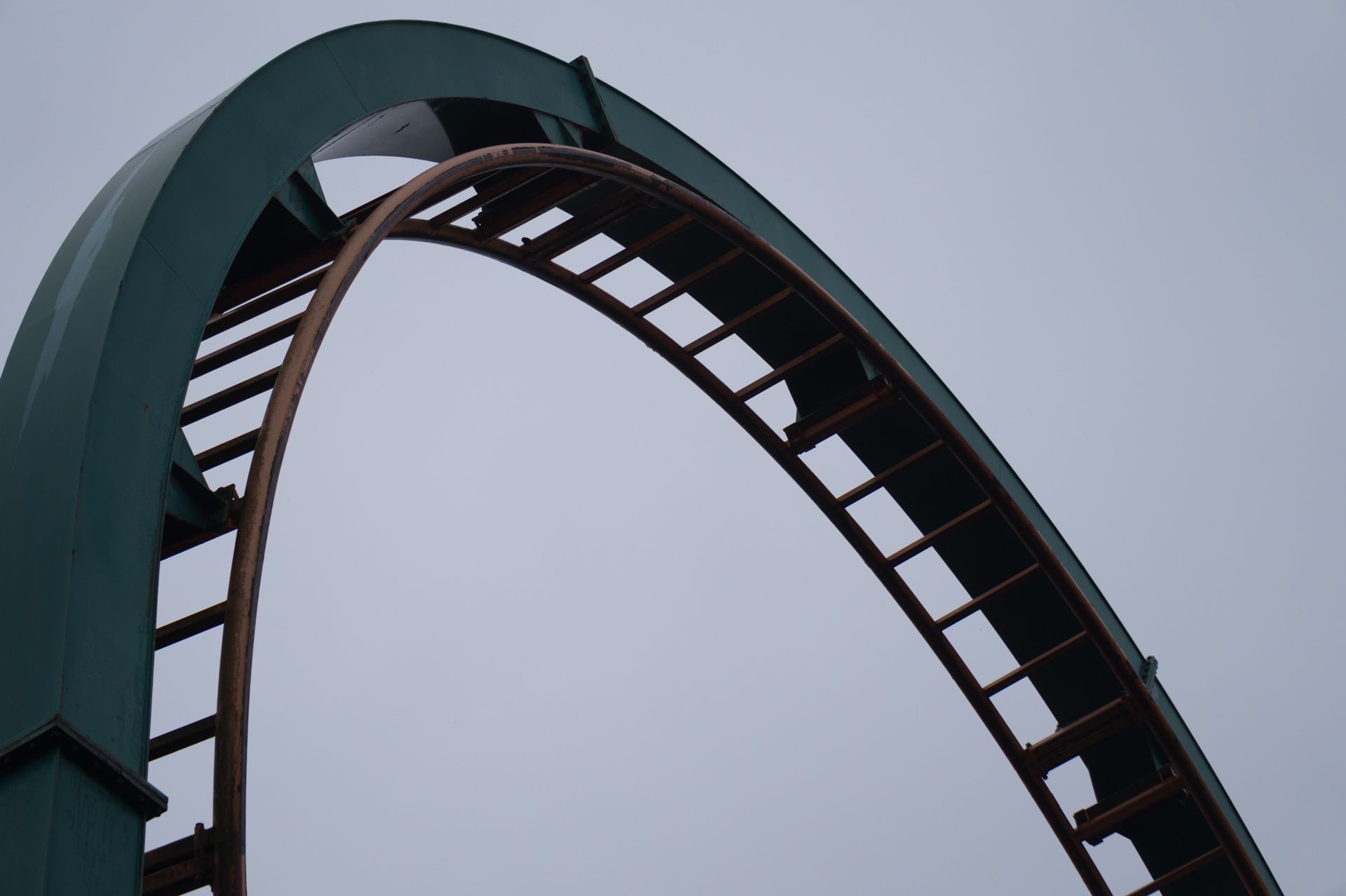
Now you elegantly glide through a huge over-bent curve and then race through a really pressure-packed vertical loop, where the sheer joy of the truly unexpectedly awesome ride dynamics of this caliber during at least two rides inevitably led to an Alvey scream – “Loop-de-Loop!!!”! Thereupon you climb up the ramp to the intermediate brake, where slight contact with the shoulder restraints is usually not easily avoided, but not really painful due to the generous width of the shoulder parts. After a small dip from the not too tightly gripping brake, you now roll slowly through an inline twist on the slope, whose slanting position is immediately adopted at the exit for a seamless transition into a fast steep curve. One rather brutal change of direction later you race through a downward helix that turns 540° and has alternating wide curve radii, where you are pressed into your seat for a long time. Thereupon the final brake is reached and another brilliant ride is unfortunately over.

I guess you could tell from the sheer volume of text for a Eurofighter (!): we really liked that thing a lot! Whether it’s the 97° downhill run, which as always is extremely well run, the power-airtime hill, the sloping curve, the powerful loop, the roll or the squeezing final helix – the track simply offers a complete package that will blow your mind! As mentioned, this is definitely a track where the potential for surprises is so great that you’ll be baffled afterwards! At the end of the day Speed: No Limits is still a Eurofighter, which is a bit more special than its conspecifics in terms of the layout, but from the outside you would never expect such power and fervor. And that’s the crux of the matter and the beauty of such tours: Appearances can be deceptive and it’s important to sit down and form your own opinion. Come and see it – it’ s great!

Waterfall

To be honest: we had already planned to do the surf slide attraction Waterfall. Especially since I am a big fan of this type of slide in water parks and in swimming trunks and I wanted to have a try in a leisure park just because of its rarity. But when we saw how the water just dripped off the buttocks of the passengers who had just completed a ride, we decided to postpone it until later. And since we could do the ultimate water ride in Oakwood Theme Park only at the end of the park because of certain, um, gear handicaps, Waterfall was simply no longer on the way. But a good reason for an early return.

Bobsleigh

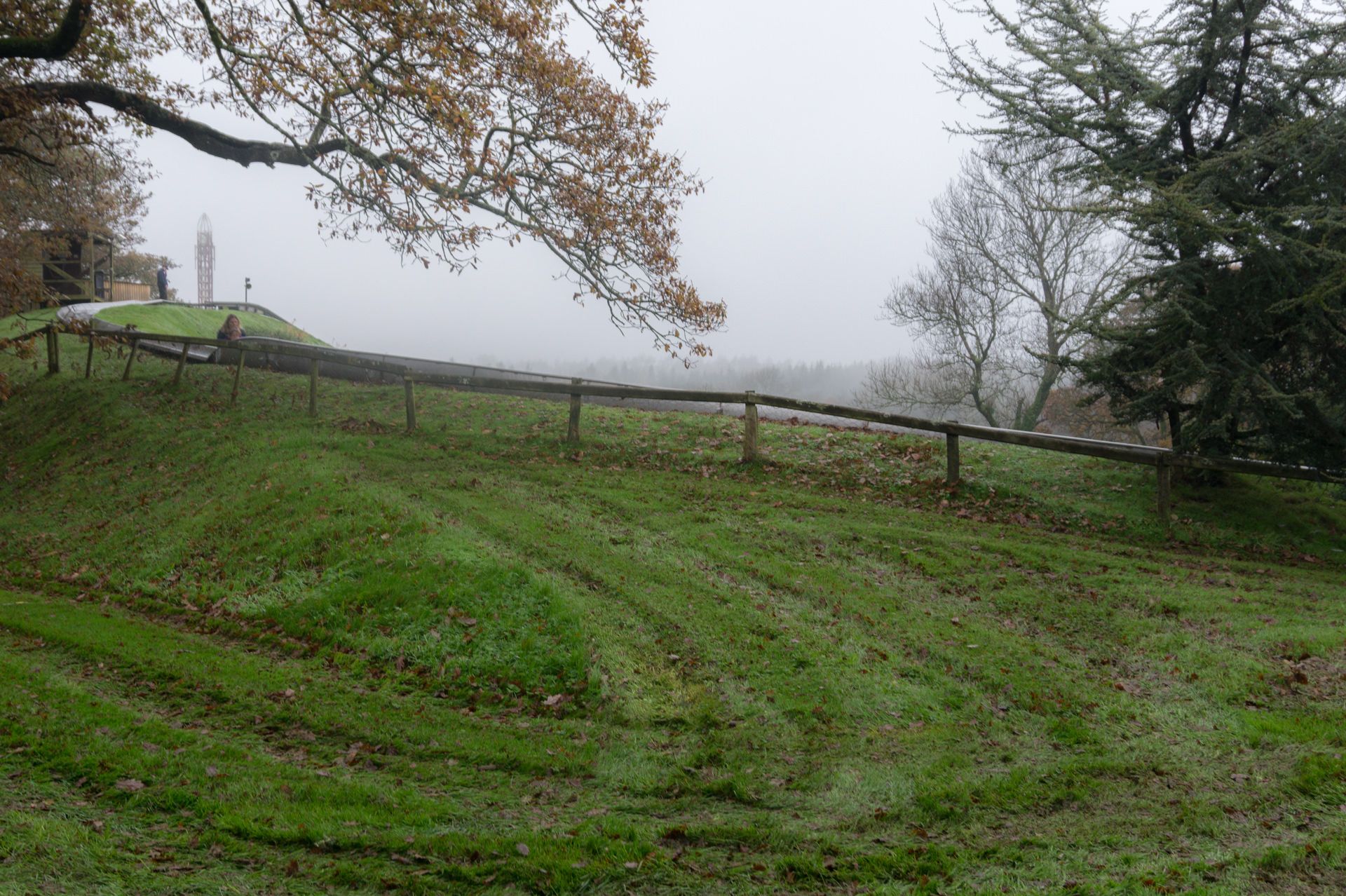
The queue at the park’s own mini-summer toboggan run with a roller conveyor lift called Bobsleigh was actually quite long all day long, as there were only five or six bobs on the circuit. After our visit, I would list this as one of the most urgent points for improvement in the park: with the Flight of the Giant Peach in forced induction mode and a summer toboggan run with only as few sleds in use, there are two main attractions with extremely low hourly capacity right at the beginning of the main circuit through the Oakwood Theme Park, which means that the waiting time there probably increased to an estimated three quarters of an hour shortly after the park opened. Which is a bit bitter for an otherwise completely empty park. I really hope that next season, or at least during the main visiting periods, the capacities will be increased a bit.

Anyway, the queue had shrunk to a much more bearable size during the third pass, so that we dared to go inside and finally waited for 15-20 minutes. However, Tobias still a considerable additional time longer than me, because I just caught the last sled of the “six-man group”, if you can call it that. To both our surprise, the Wiegand course, which is only 275 meters long and only consists of six curves, was surprisingly good! Especially because of the fourth turn, which really surprises you with the low sidewall and the tight radius. And anyway – it’s cool that you thought: “Hey, we have a small slope available! Let’s add a bit more and build a luge!” Not many amusement parks in the conventional sense would have done this – that’s for sure.

Drenched

It had to be done. Even if as a continental European you ask yourself somehow head-scratchingly why on earth a park like Oakwood Theme Park gets an attraction like an Intamin Mega Splash in this climate: even on mini holidays you have to adapt to the local mentality without reservation. And here, this includes letting yourself be soaked up to your underwear at autumnal 14°C! Seriously: I don’t really understand the decision of the Oakwood Theme Park, and I probably would have acted differently as the operator – but I can’t deny that this fabulously sick looking thing was, besides Megafobia, one of the main reasons for wanting to tackle the Welsh side trip. And this cognitive dissonance is really half the fun of this mad attraction!

There were two main reasons why we saved Drenched to the end. Firstly, because it was tactically cleverly placed near the parking lot and changing room, you can quickly and relatively easily change into dry spare clothes afterwards, so that you don’t catch cold. But in order to do this – and this is the really stupid second reason on my part – the prepared laundry at home in Switzerland has to get into your travel bag!

I usually pack for such trips according to the principle: lay out everything I need in a large pile and then distribute it in the bag with optimized compartments. Which usually works great. But this time somehow simply not. The three T-shirts I thought of – one especially for the ride on Drenched! – have simply remained snotty and cheeky at home. Everything from the pile came with me – including some unimportant stuff, which I hadn’t sorted out on the outbound flight because of the included checked baggage. Just not the T-shirts. So there was not much else to do than to storm the souvenir shop at Megafobia before our ride and buy a nice Oakwood Theme Park T-shirt. Which on the credit card statement in francs hurts a little bit. But that makes a very good impression concerning the production quality and curses one more also the most effective reminder for it is to make a checklist for packing next time.

Anyway, the T-shirt ubulus was relieved and we went straight to the station of the actually running water ride. During stops for taking pictures she had had some dropouts. As nothing else was possible as a replacement, I had to give her back to me in the best Valhalla tradition of the previous year – in jeans and Oakwood Theme Park T-shirt at 14°C!

Until the end I secretly hoped that I wouldn’t be able to fit into the boats and that I wouldn’t have to do this nonsense to myself. The shoulder restraints, which had to be retrofitted because of the fatal accidents on the sister attraction Perilous Plunge at Knott’s Berry Farm and the local specimen, don’t exactly have a reputation for offering particularly generous seating. To my astonishment (and annoyance), I fitted in, with a completely inverted distribution of problem zones than expected: there would have been plenty of room for the lap belt and the corresponding part of the stirrup, but my upper body was brutally squeezed in due to the strange “angle” of the upper metal bars of the shoulder restraints. In such a way that with each inhaler I got sometimes a little bit of space shortage and the cold metal bars bored themselves into my chest. The solution was somehow suboptimal, but unfortunately it became necessary after the accidents. I do have a more pronounced, but not so large chest muscle circumference that would have caused me problems on other shoulder restraints. I therefore assume that more people with a large bust than those with a large back or thigh circumference could have problems here, but this is completely different from body to body…

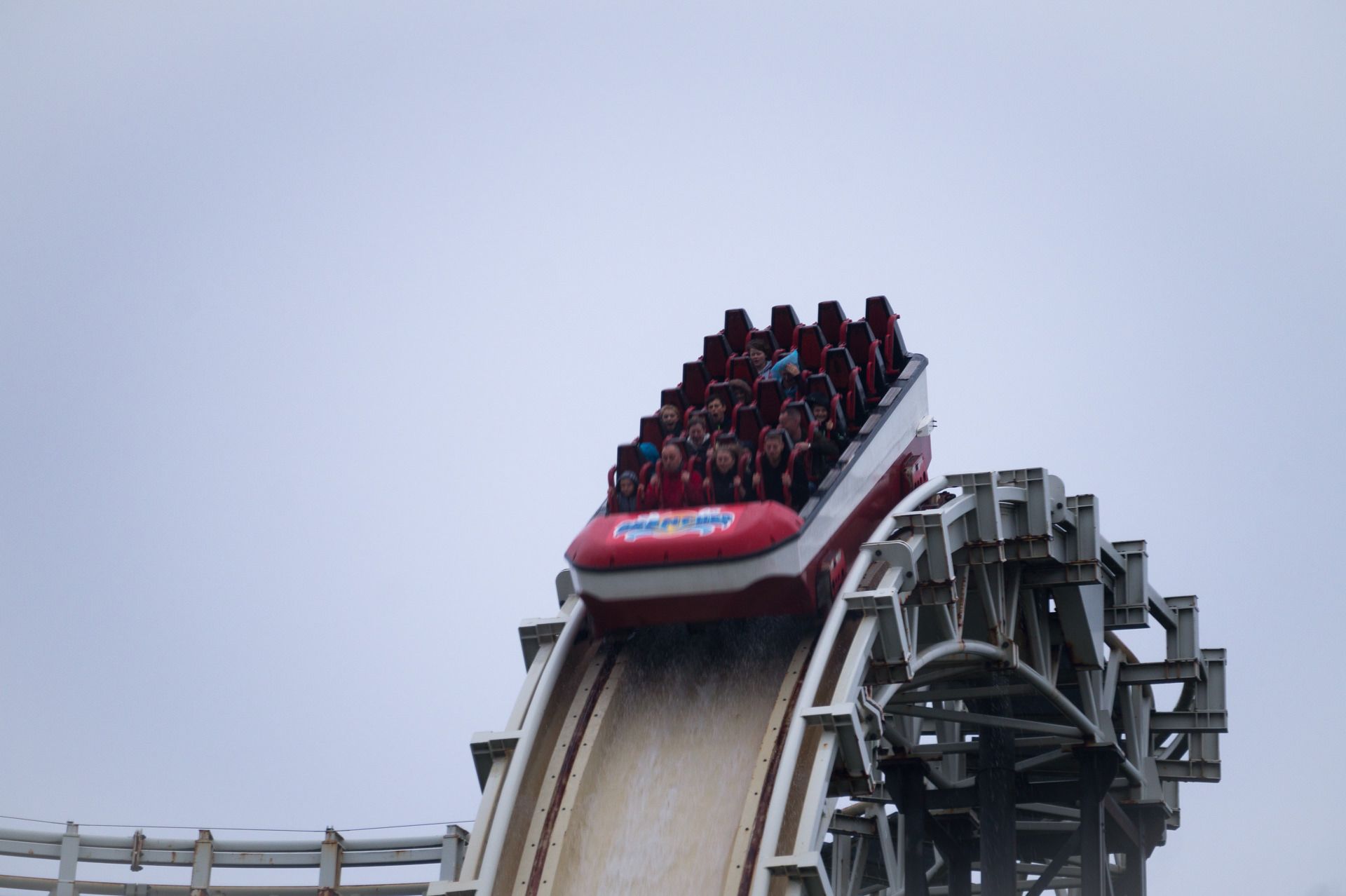
But well, to get back to Federal Heights and Pfäffikon: What do you do for awesome rides? At some point we were sitting in them – of course in the Frontrow! – and were pulled up the insanely stupid, about 30 meters high lifthill. The tirades of demonisation of the project, which get stronger with every meter, are nipped in the bud by the shoulder bars, but at some point the top is reached, where we turn around 180° and now face our doom. With an almost RMC-like airtime push, which is quite remarkable for a water ride, the only and about 78° steep fall is finally completed. Despite all its shortcomings, you really have to give it a try: not only because of the various cold conditions, this is an incredibly goose-skin-causing and terrific adrenaline rush – this drop is absolutely amazing!

With almost 80 kilometers per hour reached, you ultimately rush into the water, where a splash, which is somehow less than expected for both the inmates and the spectators, sets in. Don’t get it wrong: even so, as a passenger you get wet except for your underwear and have absolutely no chance to stay dry somehow. Even on the downhill run, you get water splashes in your face in the frontrow. And even my shoes were soaked from behind during the first ride, despite the sophisticated drainage system on the bottom of the boat! But still, the spray attack was less intense in terms of “pressure intensity” than, for example, one on a typical US spillwater. Depending on the specimen, it seems as if you get a bucketful of water slapped in your face at once – but here on Drenched it felt more like getting under a battery of freezing cold Aquaclic indoor pool shower jets: stinging, constantly wetting, but somehow without the water “slapping” you. I hope you can follow me. It may be that this is just the way it is since the boats were converted, or that this is a deliberate modification for the cooler off-season by Oakwood Theme Park. But the fountains created during our visit just looked a bit World of Fun-like – some of the water masses didn’t even come out above the height of the bridge railing. This circumstance and the fact that we were simply too wet to operate the cameras afterwards, explains why neither of us managed to get a usable photo of the immersion process. But as we actually drove a second time in the second row – when in Wales and wet anyway! – and this is documented enough in the whole internet sphere, I hope you can generously overlook that we didn’t fulfil our journalistic mission as thoroughly as usual.

And with this final picture of Hydro we now slowly say goodbye to the Oakwood Theme Park! Anyway, after our rides on Drenched, we went back to the parking lot, which was not so far away, and changed back into dry clothes and shoes at the car. Concerns that one is guilty of indecent exposure are completely unfounded, because most of the guests in our part of the parking lot did like us. Originally, we had thought about going to the nearby Blue Lagoon with its impressive domed building on a hill behind the Oakwood Theme Park, as there would certainly be good opportunities to get changed and have a warm shower. In the end, the return trip to Portsmouth, which Tobias had to master on the same day, was simply too long.

Pictures Oakwood Theme Park

Conclusion Oakwood Theme Park

The Oakwood Theme Park as a whole is a totally enjoyable and rewarding small park, which is absolutely worth every adventurous journey and drive out into the Welsh Pampas. The attraction portfolio is amazingly varied and boasts some absolutely brilliant pearls of attraction. While the joyrides on the well established CCI treasure Megafobia were somehow predictable, especially rides like Speed and Drenched were totally unexpected and therefore twice as beautiful. And then there are simply all the park specific additional links, which enrich the visitor experience enormously, even with the actual standard stuff. That Treetops is so ingeniously interwoven with the dark forest. The flyers in Neverland, which are quite unique in Europe. That a short but through one curve suddenly streamlined luge winds down the slope in the middle of the Oakwood Theme Park. Funny and mostly also quite unique water rides, which are a house number for a park of this size and climate… All this makes Oakwood Theme Park somehow just adorable. Especially in view of the comparatively low and really fair entrance fee the park is really great. Merch could be a little cheaper, but I wouldn’t really mention that if I had had a little more brains when packing and didn’t know exactly that I had to take care of myself in this point. For those of you who are still wondering if you should include the Oakwood Theme Park and the necessary detour into a tour, I say, with regard to the textile theme, unfortunately highly ironic and fittingly outfittery-like: Do it, just do it! It will be worth it! Yr wyf yn addo!


What is your opinion about Oakwood Theme Park?  Just write it in the comment field below the report or visit our social media channels:


Riding a roller coaster at Mount Fuji

The History of Fuji-Q Highland

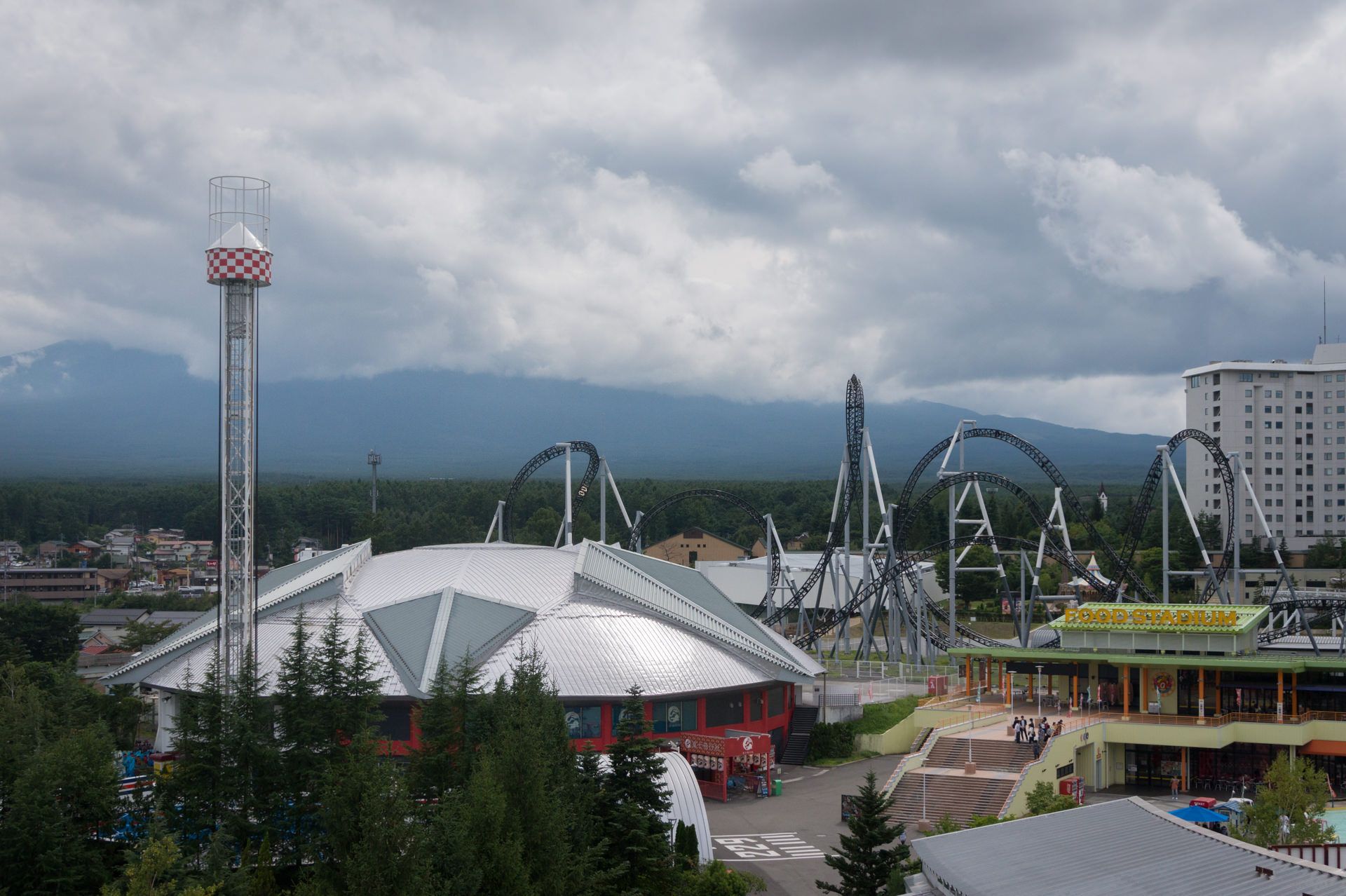
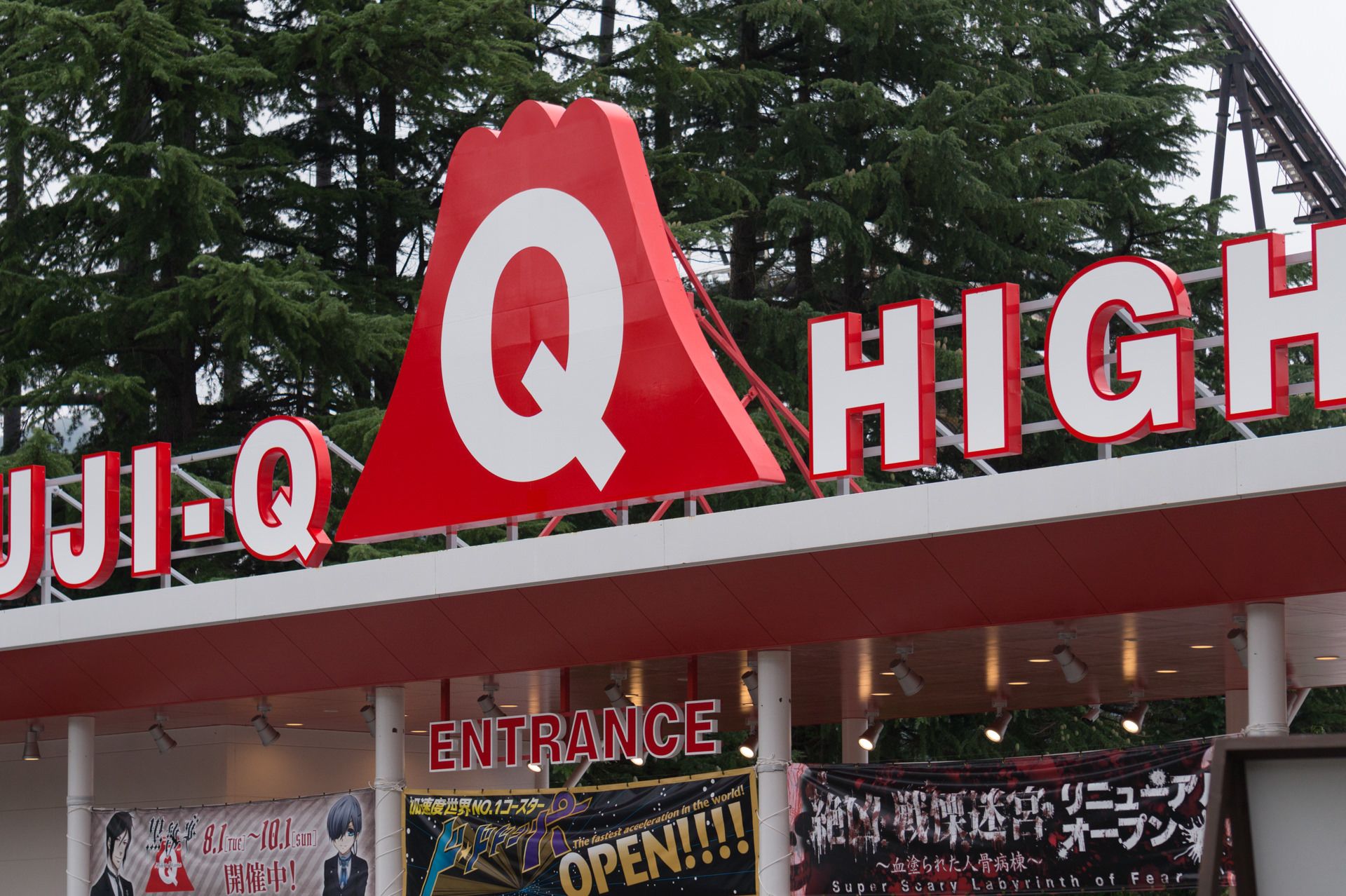
Fuji-Q Highland at the foot of the majestic Fujiyama, the King of the Mountains, is one of Japan’s most famous theme parks, with four record-breaking roller coasters waiting for the masses of park visitors to storm them. The fact that outside of these roller coasters there is a rather shabby, but in part also very likeable, amusement park is of no significance.

It all began with an ice skating rink in 1961, and with the construction of the Fuji-Kyūkō Line in 1964, the park was renamed Fuji-Q Highland and expanded into an amusement park. Since then, the park has been operated by the railway company Fujikyūkō Co Ltd. (Fujikyū for short). In 1986, the park was upgraded to a resort with the construction of the Highland Resort Hotel. Although the original skating rink, in the middle of which the legendary roller coaster Moonsault Scramble was built at the time, no longer exists, the resort remains true to its roots. In winter, skating is possible on several rinks, including an oval-shaped stadium in Conifer Forest outside Fuji-Q Highland, which is used for festivals and concerts in summer. Two museums, as well as two other hotels and an onsen complete the resort.

Tour of the park

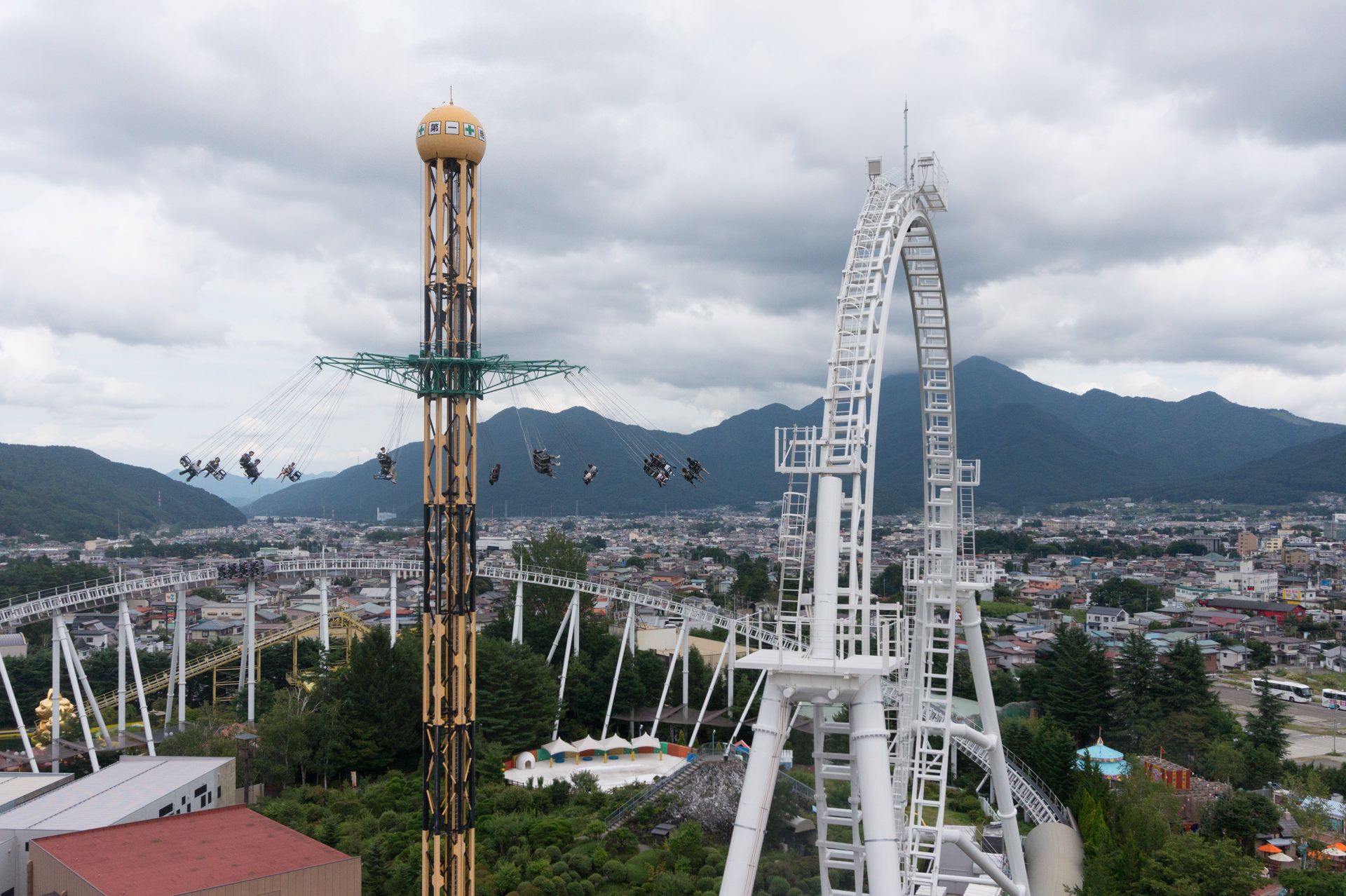
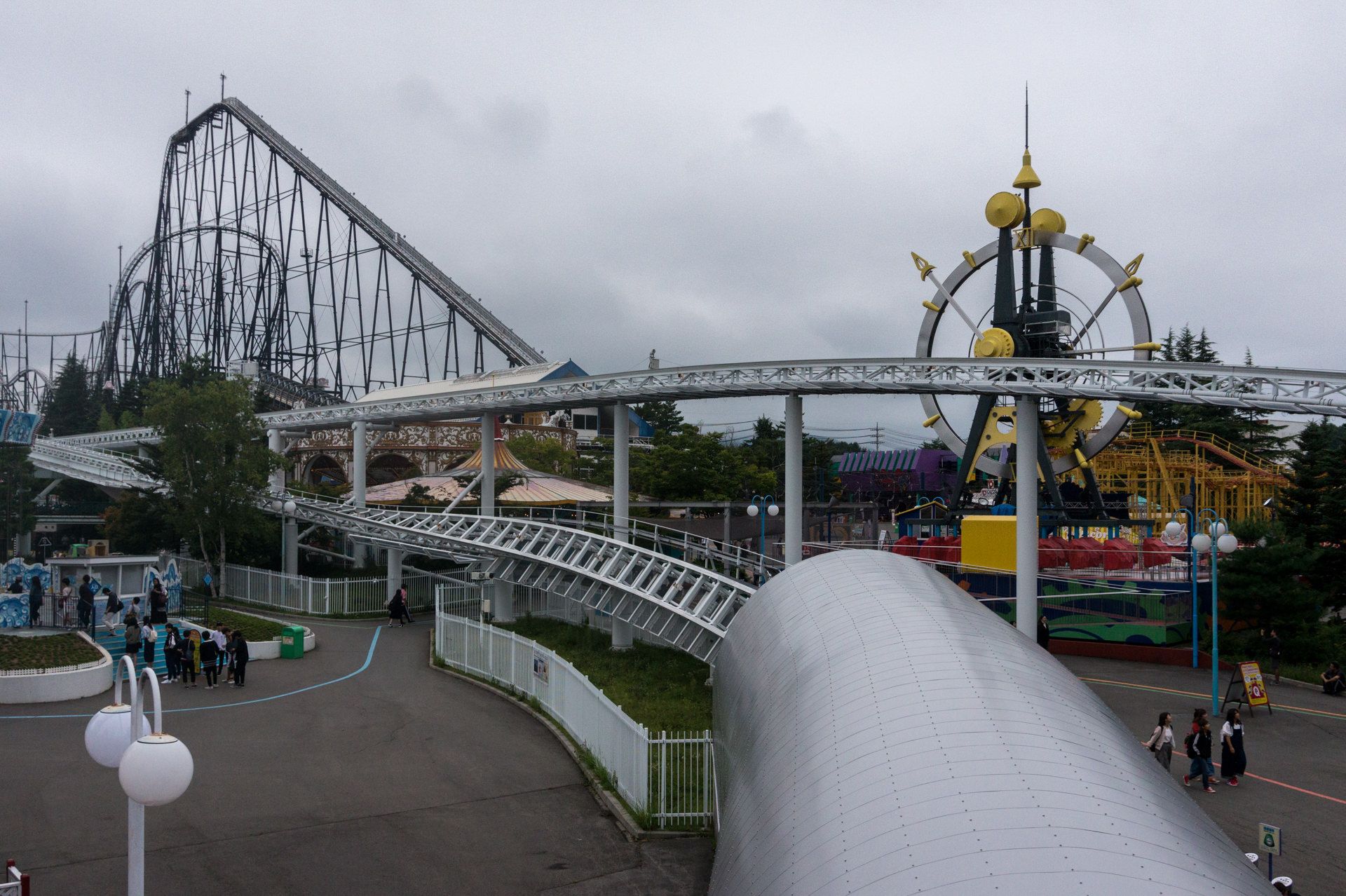
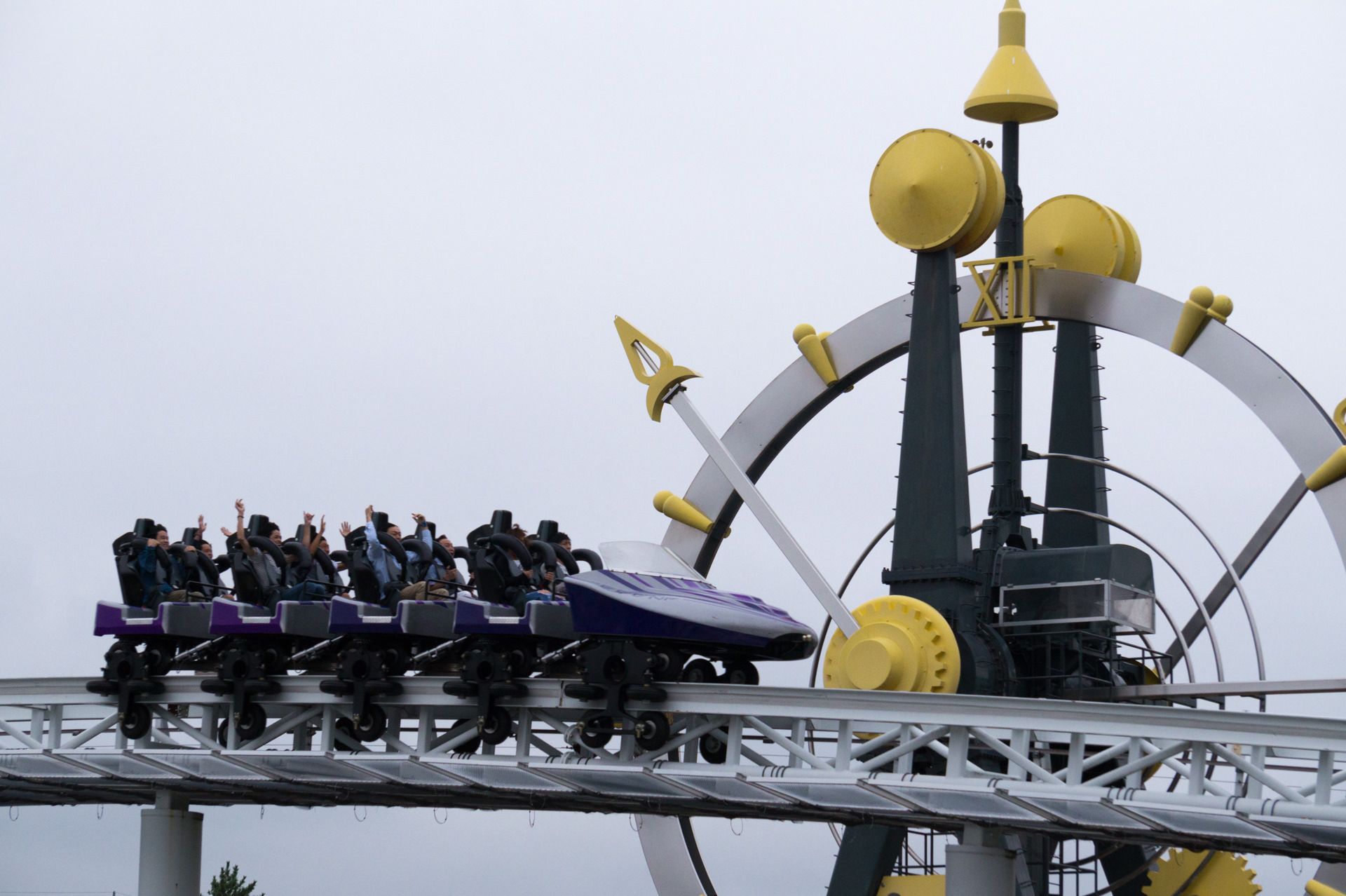
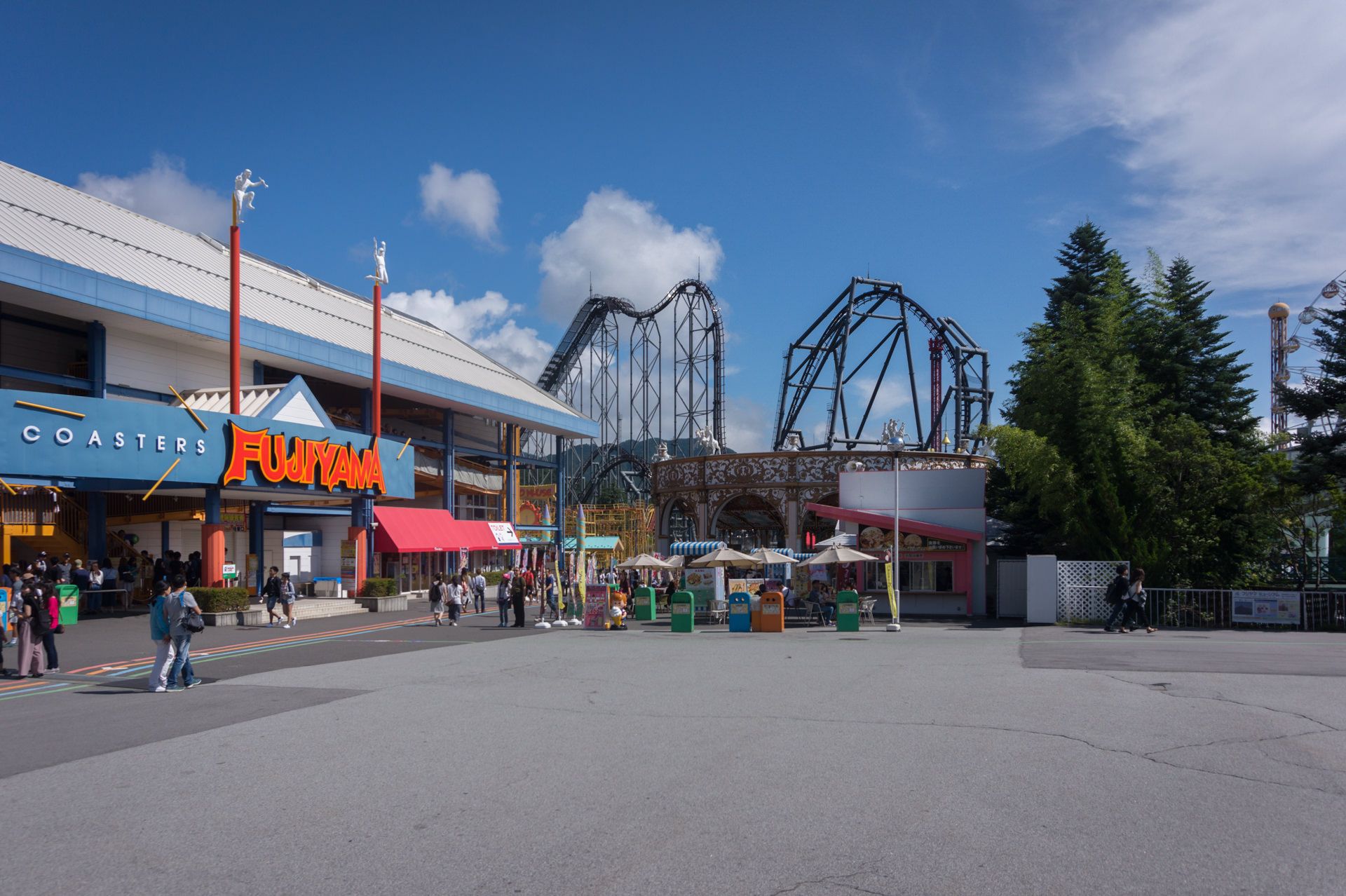
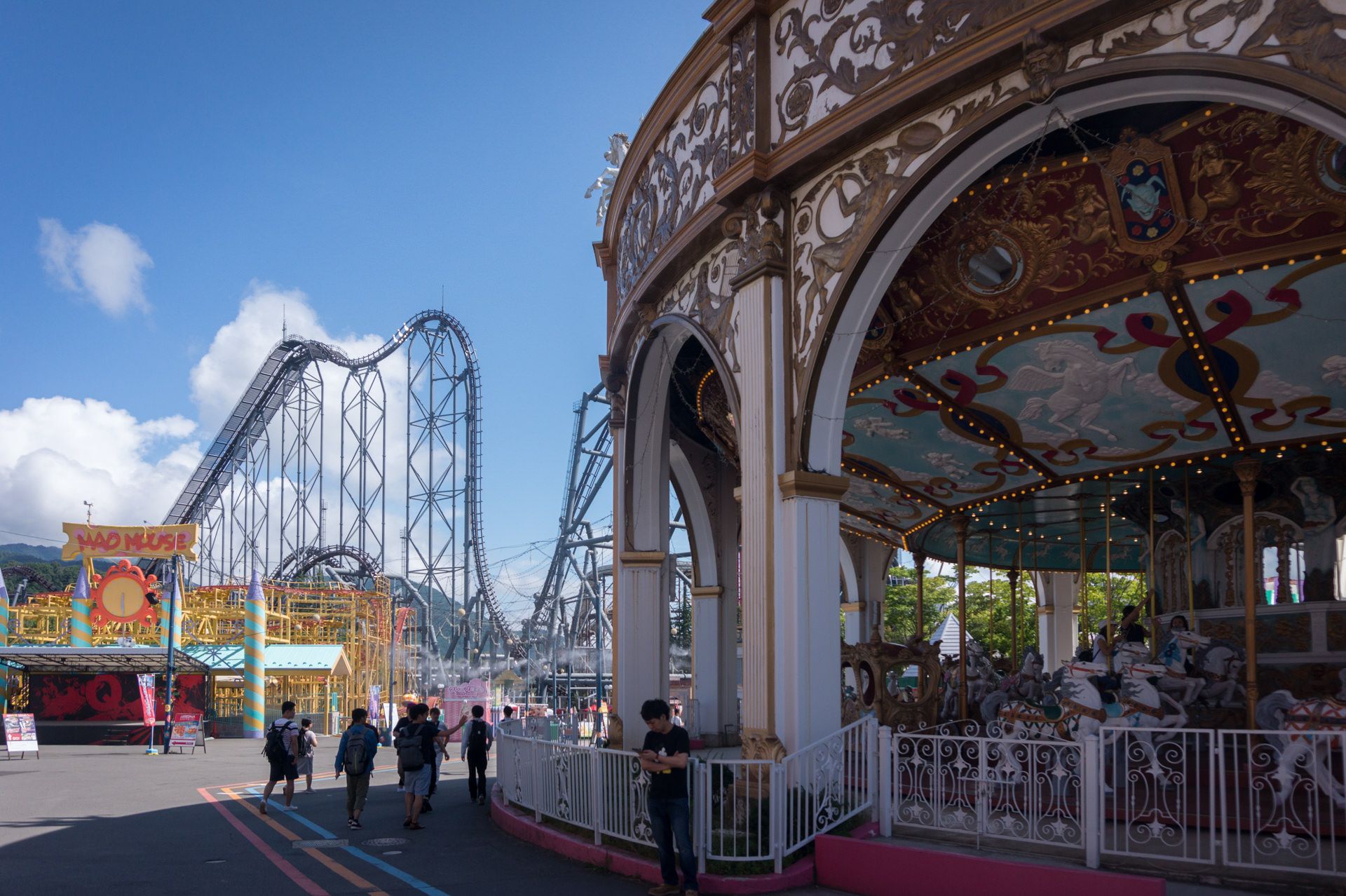
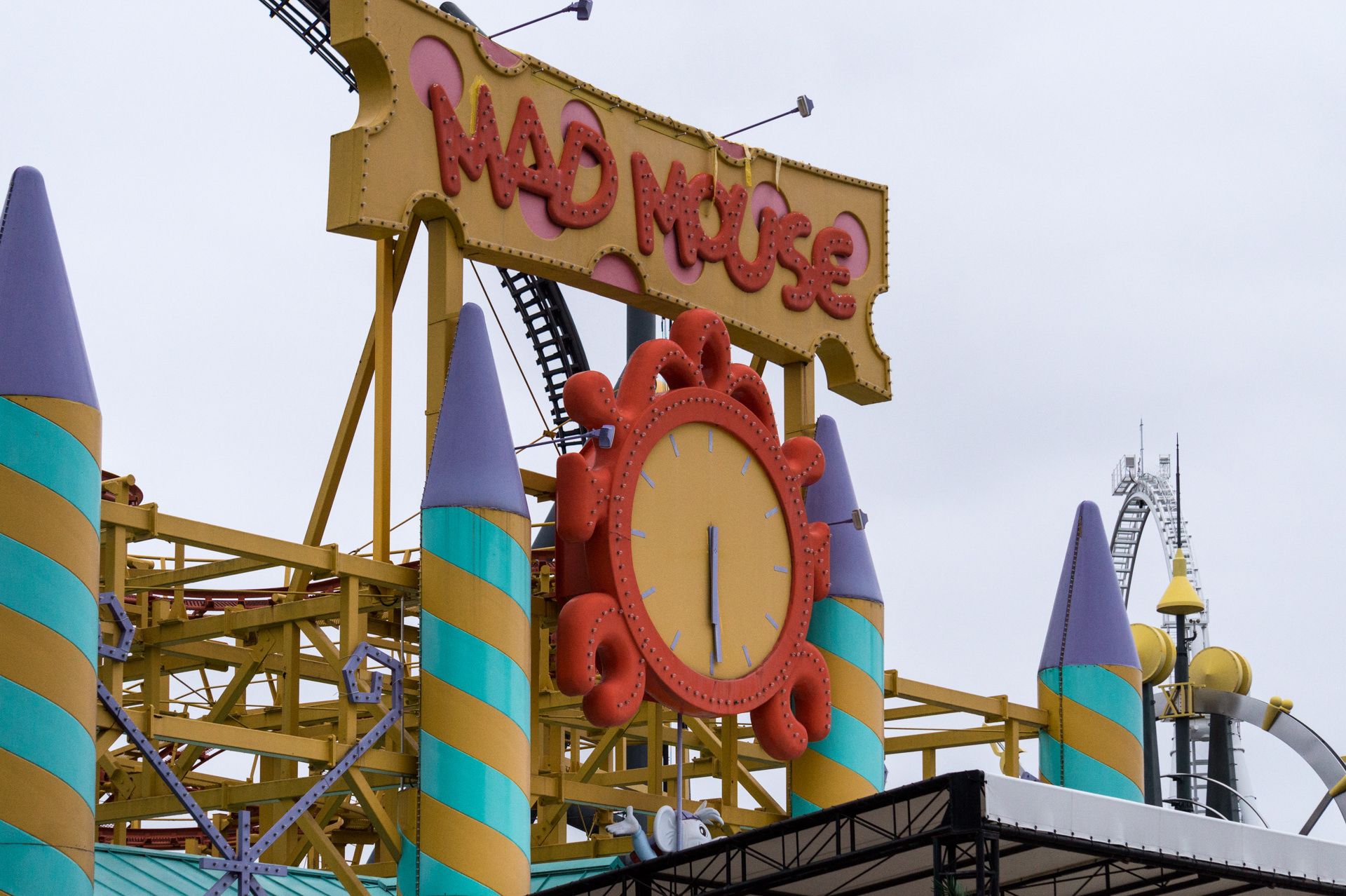
After checking in at the park’s hotel, we were drawn through the Ville de Gaspard et Lisa – a French-style shopping and food street, including Café Brioche, a terrific boulangerie that is perfect for breakfast – towards the main entrance of the theme park. Three of the four big roller coasters are located here. The exemplary Japanese now dutifully follows the floor markings and then gets into one of the queues; stupidly, this is one of the reasons why the rides increase in waiting time very quickly. The smarter park visitor, meanwhile, reaches into his wallet and buys priority passes at a small stand between the Mad Mouse roller coaster and the Panic Clock flat ride, which are available in such small numbers that they are sold out very quickly. So it’s a case of the early bird catches the worm, and consequently you can be happy about getting on all the roller coasters in just one day.

Do-Dodonpa

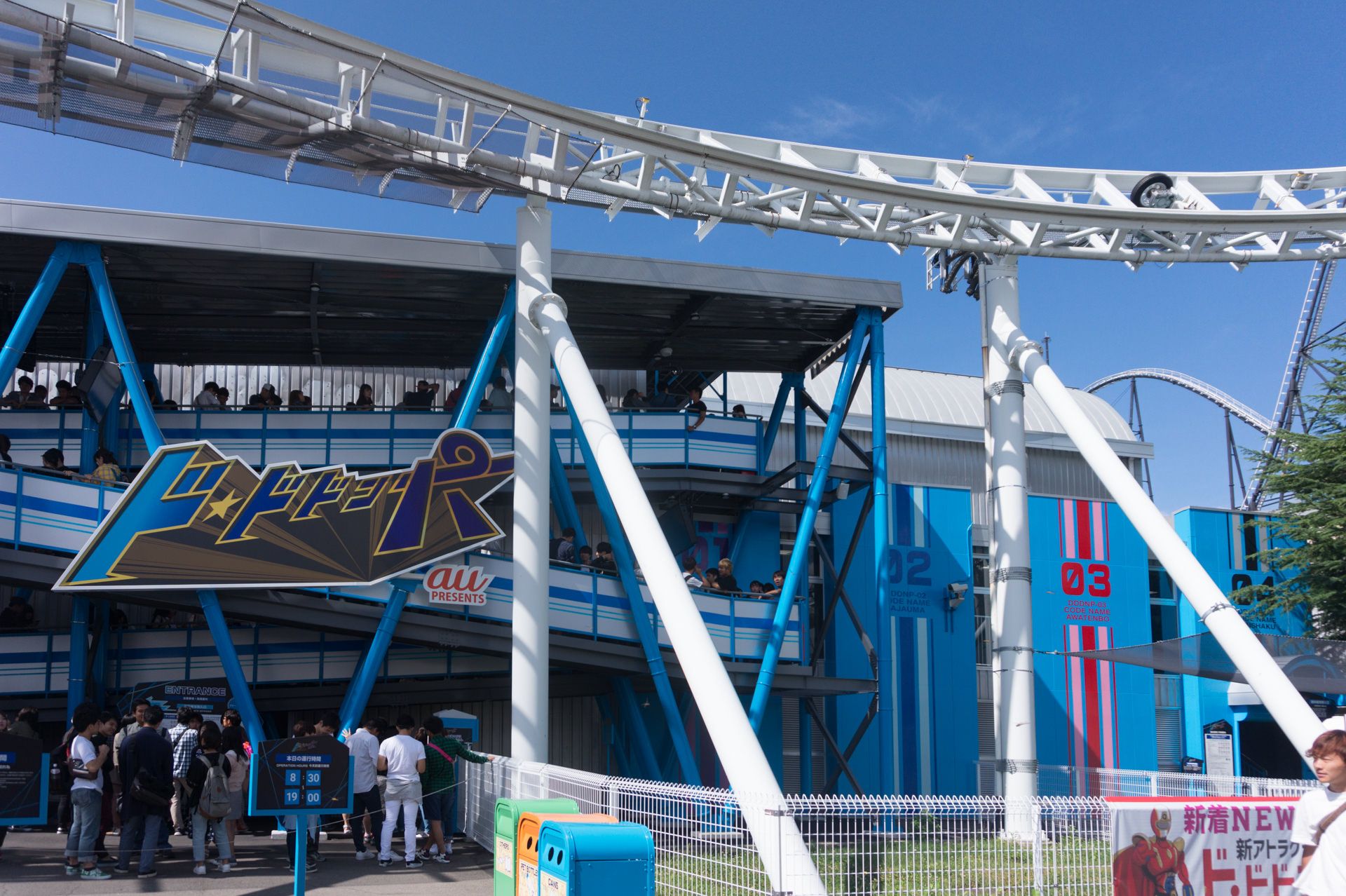
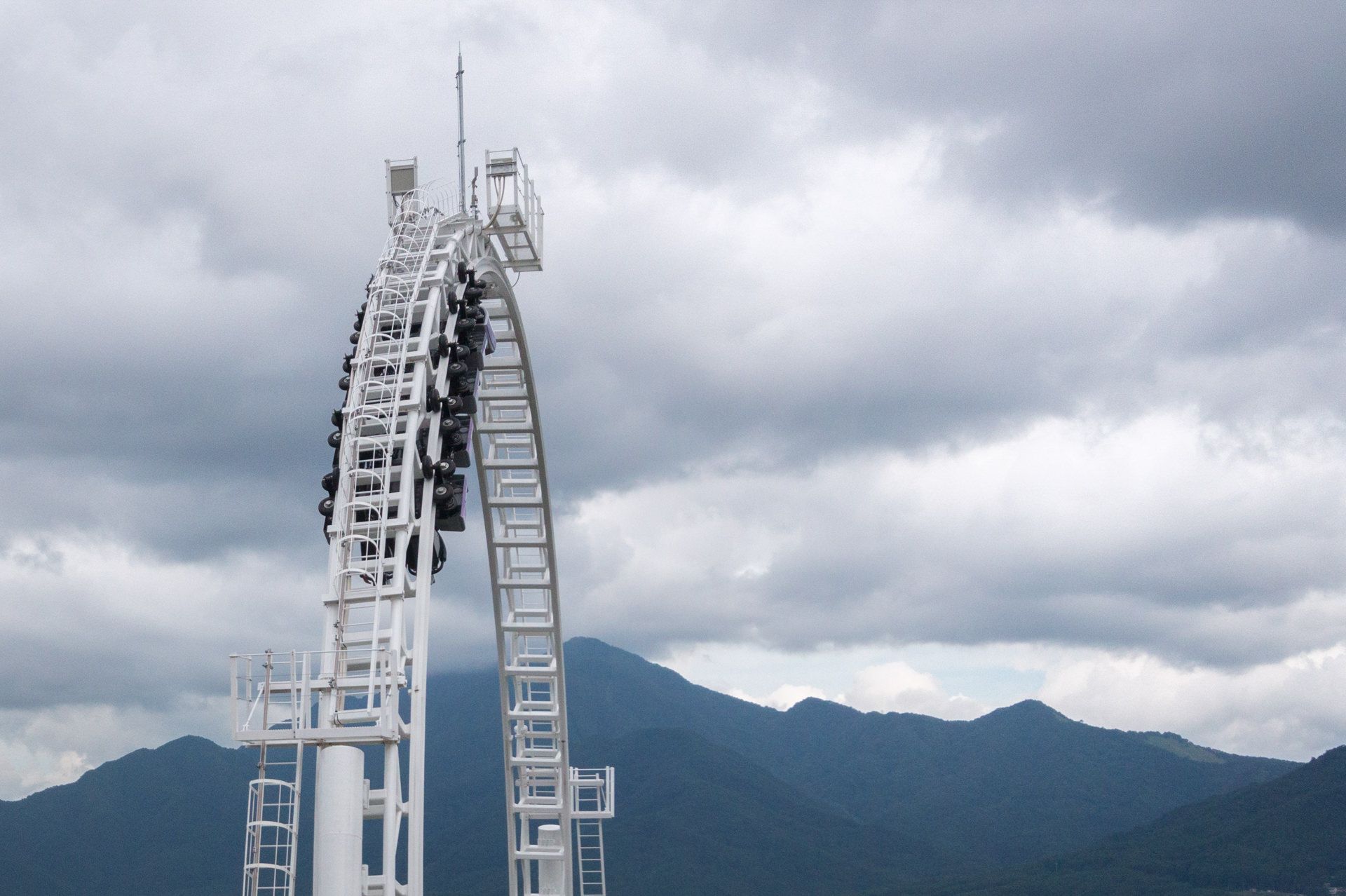
We start our tour of Fuji-Q Highland with the launch coaster Do-Dodonpa, which has undergone a significant makeover over the past year and now boasts a 49-metre vertical loop instead of a top-hat. At first approximation, this is nothing bad in principle – a nice loop can be the highlight of any ride – moreover, the speed of the air launch has been increased from 172 to 180 km/h and the acceleration phase has been reduced from 1.8 to 1.56 seconds; all this sounds quite promising and already too crazy to be true for most park guests.

That makes you all the more excited about your first ride and suddenly, as an experienced roller coaster enthusiast, you ask yourself questions you haven’t asked yourself in a long time: “Isn’t the acceleration of the launch already too much to handle?”. You then enter the launch tunnel and shortly afterwards the countdown to the launch sounds. Before you know it, you have advanced 60 m and are travelling at 180 km/h; that was fast and surprisingly smooth for around 4.75 G. However, the gradient of the launch is maintained and the train loses its speed steadily and very quickly. Even the short dip that follows cannot stop this behaviour. The train then makes its way through a very wide right-hand bend towards the loop, which is driven through very pleasantly. A short left-hand turn is followed by the first brake section. A strangely transverse right-hand turn then leads you back to the station.

Luckily, we had bought a priority ticket for Do-Dodonpa, because after four hours of waiting, the disappointment about the uneventful ride would have been many times greater. Sure, the launch does a great job – but it only does so for 1.56 seconds. The rest of the ride is unfortunately not worth mentioning.

A strong opening in the first act is of no use if the rest of the piece is dull. It’s a shame that the predecessor, Dodonpa, had a second element in the form of the bone-crushing top hat, which had a decisive influence on the ride and thus invited visitors to ride it again. Accordingly, the update of the roller coaster here is unfortunately an improvement for the worse, and the fans of the old ride at least will not like it any more than I did after my first ride.

Takabisha

It’s a good thing that the Takabisha roller coaster is right next door. Built by Gerstlauer, an expert in steep descents from Münsterhausen in Swabia, the ride impresses with the steepest of all descents worldwide and other tried and tested elements. So nothing can go wrong here, especially since you’re travelling in the classic, shoulder-bar-equipped, Eurofighter cars.

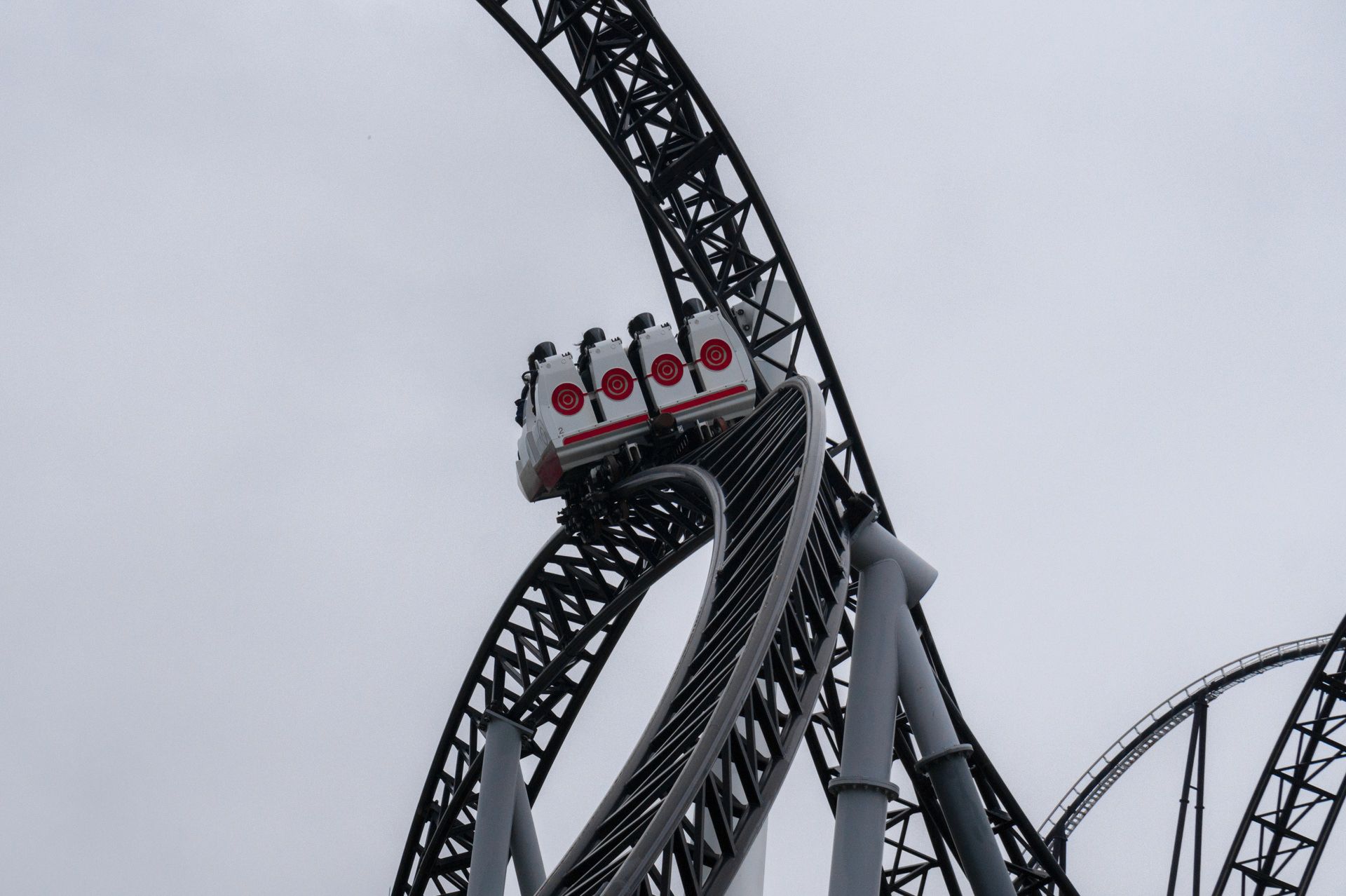
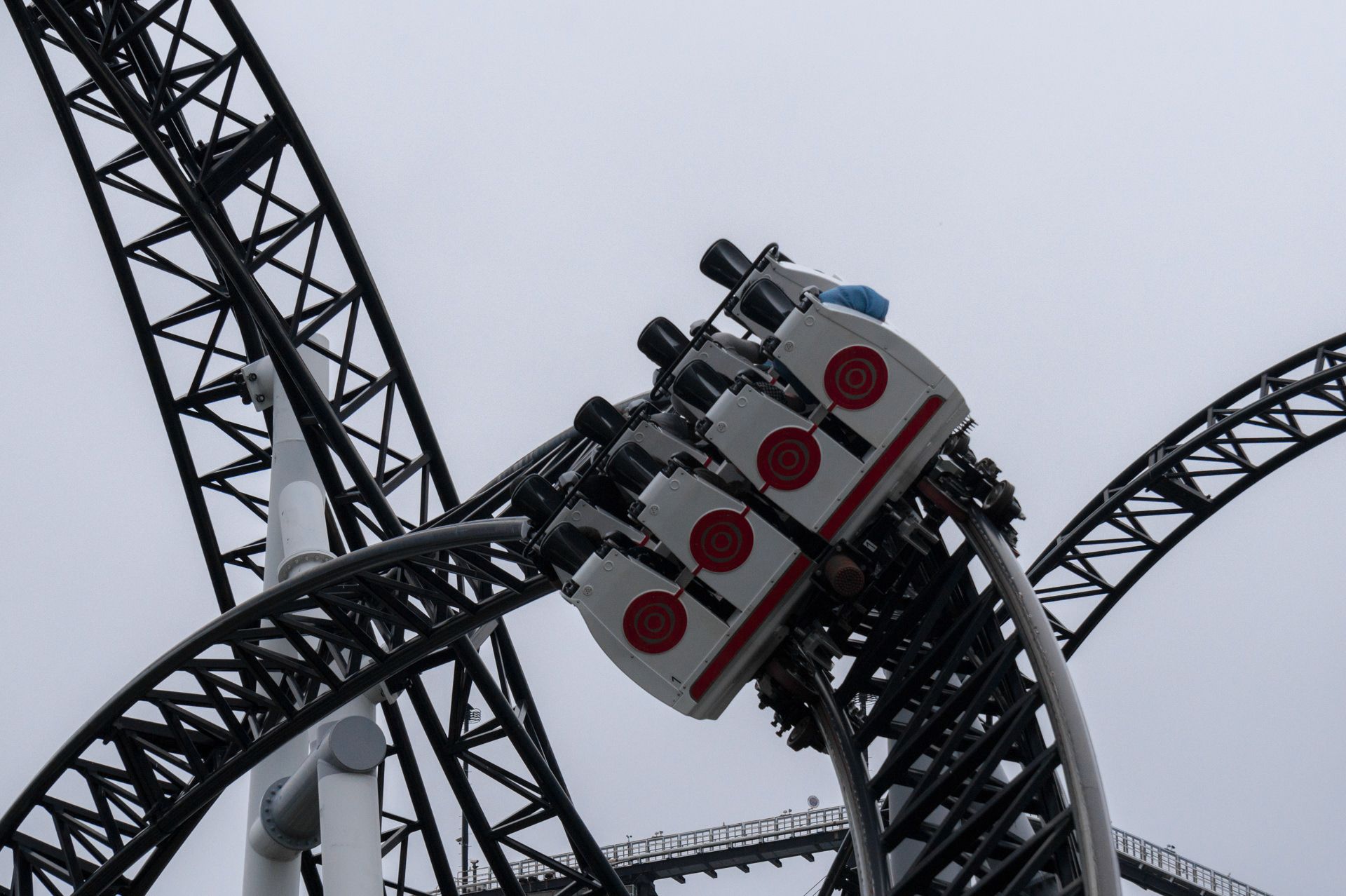
The ride begins with a tight left turn, followed by a short but extremely steep drop. With a lot of pressure, you cross the following valley and elegantly throw yourself into a 180° left turn, which is followed by a wonderful heartline roll. This then leads into another left turn and soon into the first block brake. Via a mini-drop à la Karacho from the Swabian amusement park Erlebnispark Tripsdrill, you then reach the launch area of the ride, which accelerates you extremely powerfully over a longer period of time. Actually, it would be wrong to say that Takabisha has the better launch of the two launch coasters of Fuji-Q Highland, but Takabisha has the better launch.

This is followed by an oversized corkscrew, reminiscent of a top-hat, before you approach an extremely interesting element at full speed, and at the same time you are riding through a valley with wonderful intensity. The element in question is the so-called banana roll, a kind of cobra roll in the shape of a banana. The turn within the element takes place at the highest point, which results in an interestingly twisted exit. This is followed by a classic corkscrew that transports the car across the ride to the other side. This game is repeated again over a twisted and airtime-embroidered hill, before the entry into the second braking section awaits after a short ascent.

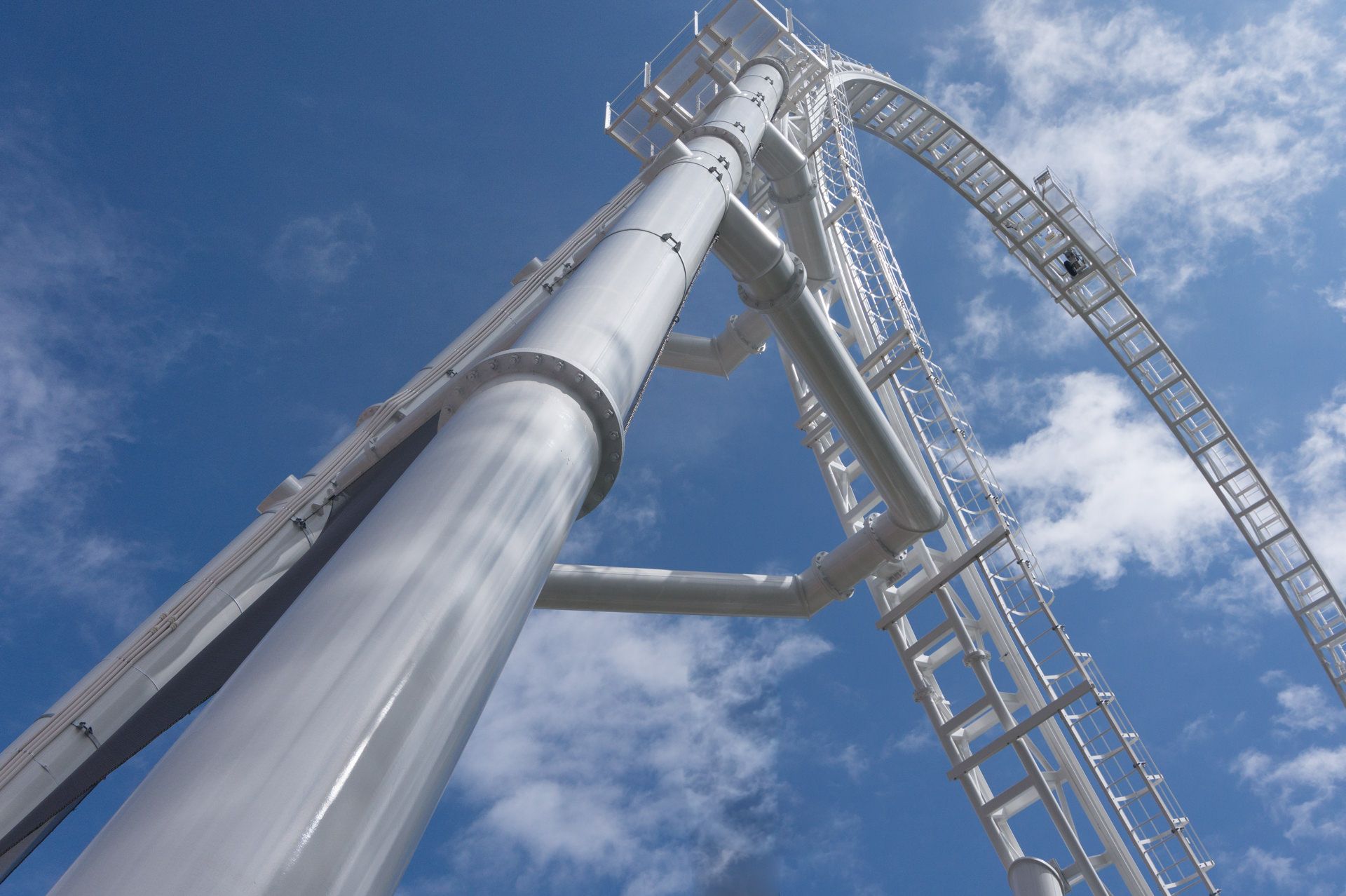
Inside the metal hall you now complete a 180° turn, whereupon the ride’s vertical lift is waiting to be climbed. The lift transports the passengers steadily to the maximum height of 43 m, so that they can enjoy the view on the subsequent descent; before the 121° steep drop, there is a short holding brake to generate an effect similar to that of the Dive Coasters from the manufacturer B&M. A few seconds later, the car is gently carried over the crest and then falls rapidly to the ground. At the same moment, interestingly enough, the onride photo is taken from far away – surprise, surprise (after all, you’d rather expect a photo of the ride going through the valley, which wouldn’t capture the facial expressions of this WTF moment)!

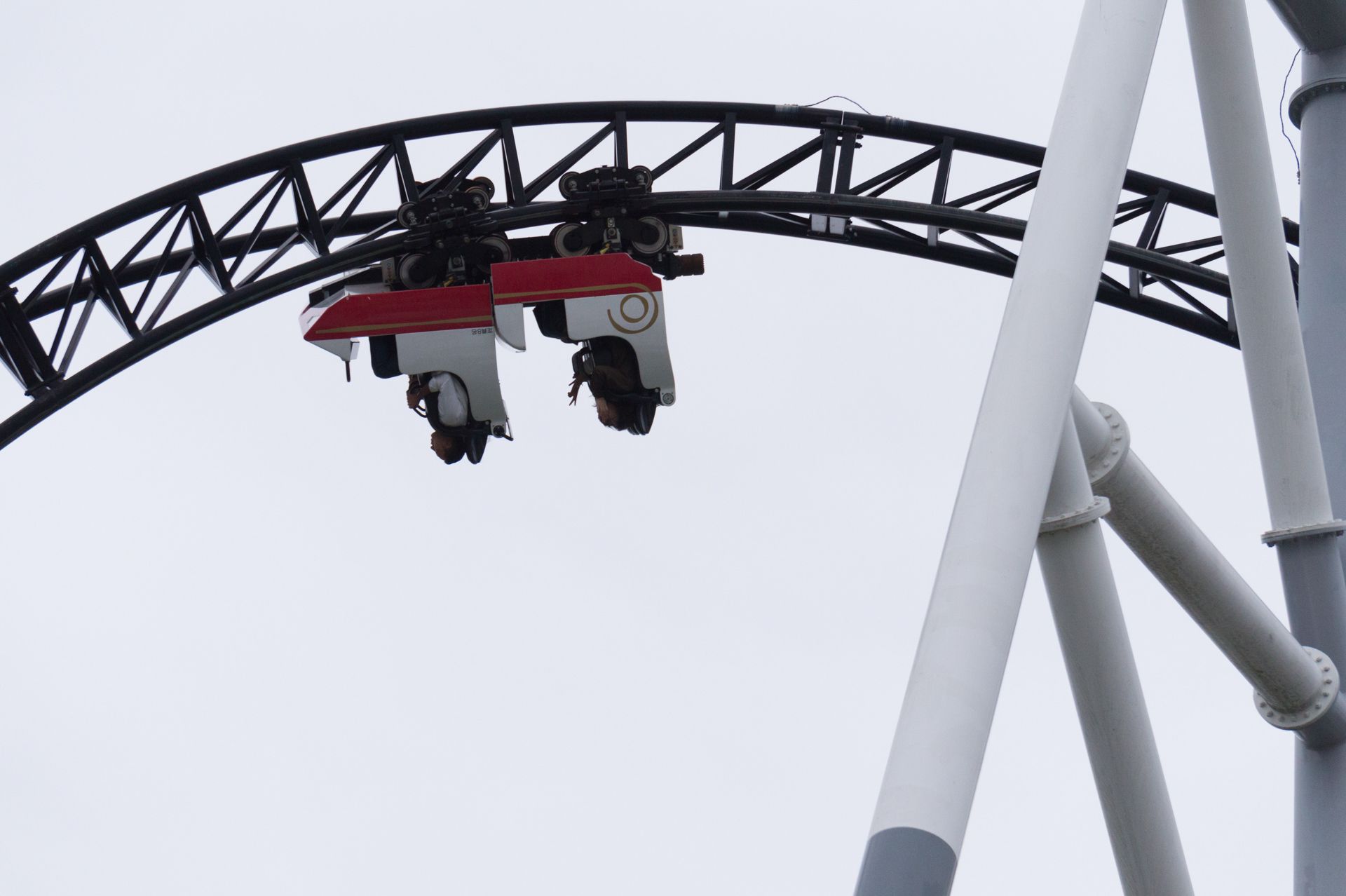
The drop keeps its promise and so the car rushes powerfully through the valley ahead. With a lot of momentum, you climb a hill, turn around your own axis and dive into a dive loop. This is also the prelude to a visually impressive double turning manoeuvre, because you now change direction again in an inside-top-hat before you climb an Immelmann loop. On its exit, the final brake awaits the passengers and soon the station of the 1000 m long roller coaster.

Takabisha is an all-round successful roller coaster from the manufacturer Gerstlauer, which is particularly convincing thanks to its launch and the significant steep drop in the second half of the ride. The banana roll is also an extremely interesting element that pulls you back and forth wonderfully. The riding characteristics are brilliant thanks to the classic cars. All in all, this is a roller coaster that absolutely lives up to its waiting time – as you could queue just as long for the ride here in Europe; in general, the queue is moving quite fast.

Fuji Airways

Admission to the Fuji Airways Flying Theatre is somewhat less rapid, as it always takes place at intervals. Built in 2014 by the manufacturer Brogent Technologies, the ride stands out above all (in the pre-show) for its absurd humour. Then in 2016, the film used was enhanced with 6K drone flight footage from the surrounding area and the inclusion of the gondolas from the nearby Tentekomai rollover ride. So they don’t take themselves too seriously here at Fujiyama, and so you glide over the landscapes with great enjoyment and perform an extremely impressive rollover in the middle.

Fans of this type of simulator will be thrilled; for me it was the first encounter with such a simulator and I thoroughly enjoyed the flight with Fuji Airways. The movements were fluid and the images shown were visually impressive; it didn’t really bother me that you could see the edges of the screen. Only the ride itself was a bit repetitive and generally a bit too long – but before the enthusiasm could die down too much, the roll over occurred and suddenly my enthusiasm was back again. All in all, a very nice ride at Fuji-Q Highland that you shouldn’t miss out on.

Tentekomai

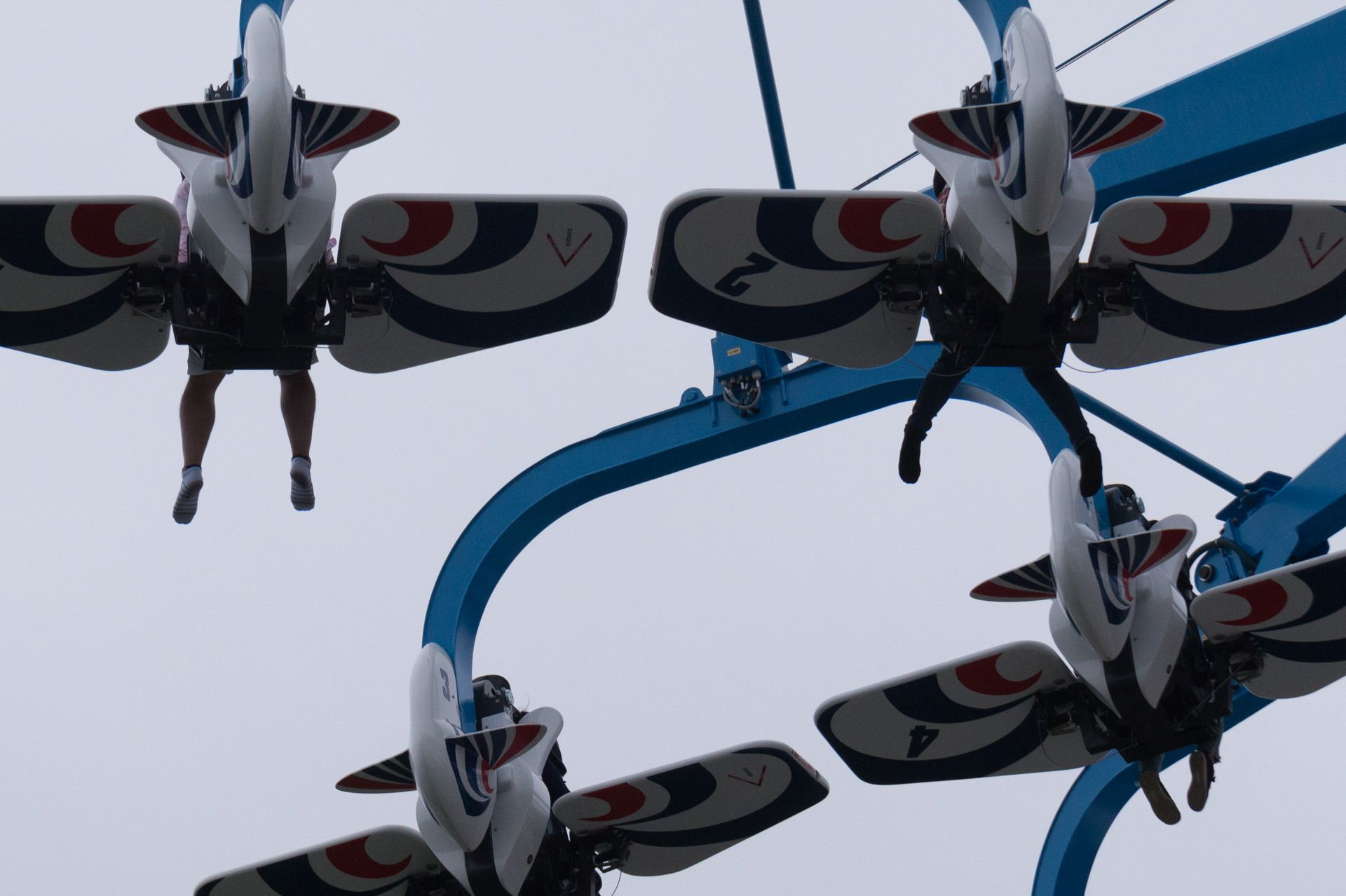
In the same vein, one may also dare to take a ride on the Gerstlauer Sky Roller Tentekomai, which once again takes up the story of the fictional airline Fuji Airways and thus also does not take itself quite so seriously. The gondola rotation was easy, so you could get to the roll overs (if you want) quite quickly, however, the ride was over just as quickly. It took all the longer to clear the ride, which wasn’t too bad because of the crowds on the first day of the visit.

Thomas Land

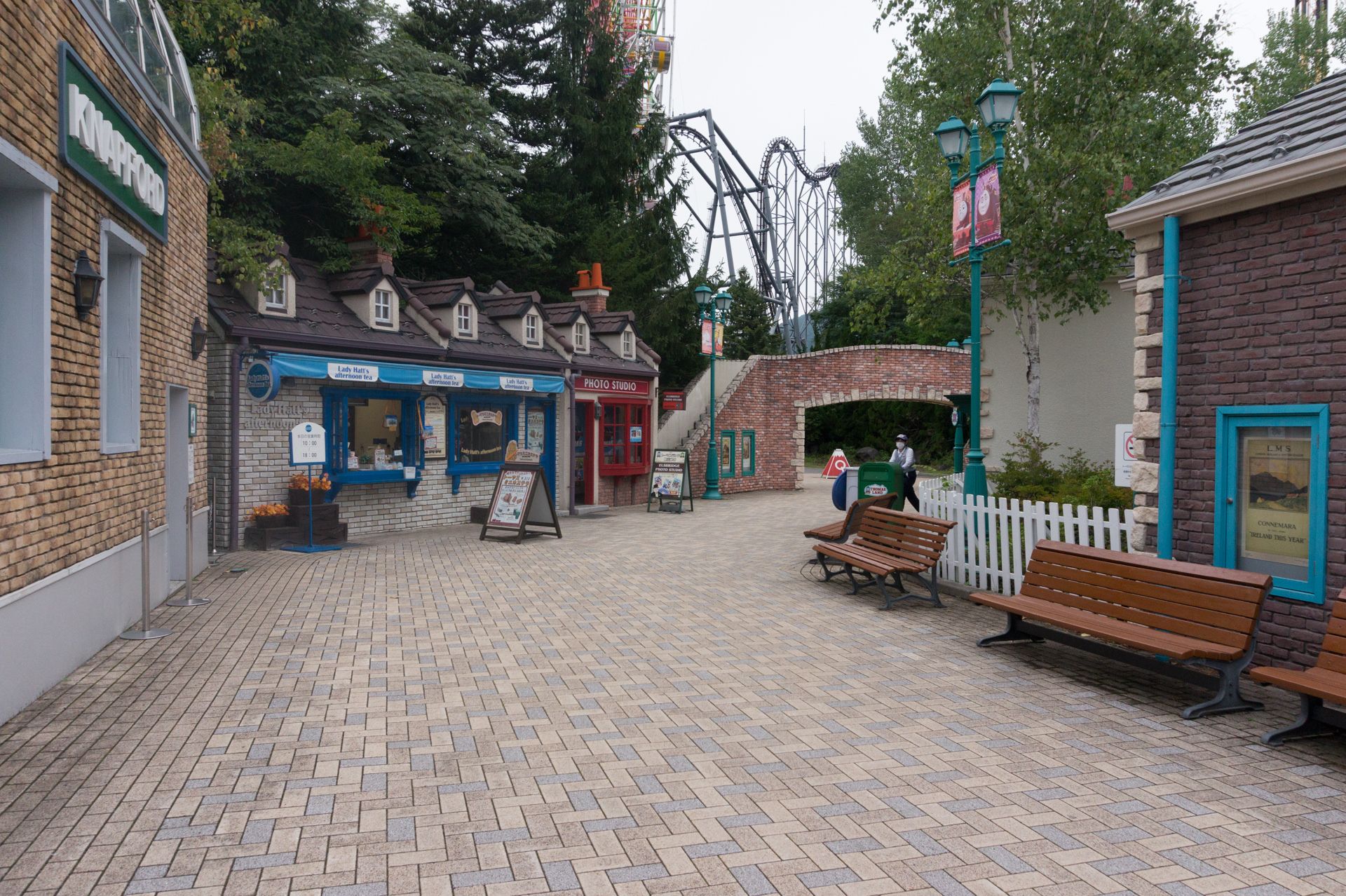
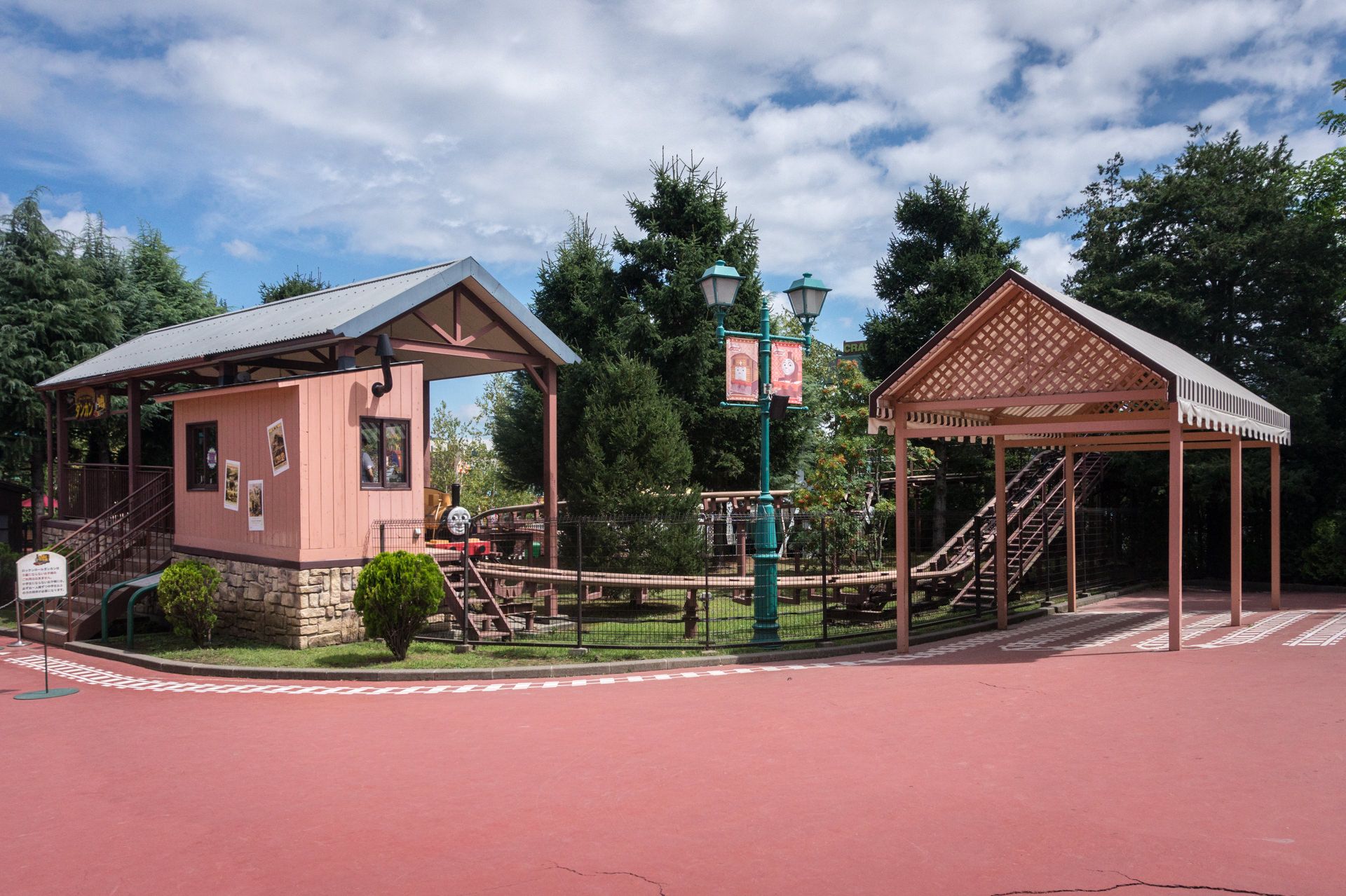
We pass the Wave Swinger and the Shining Flower Ferris wheel, which is relatively small (only 50 m high) for a Japanese park of this size and now head for the children’s area of Fuji-Q Highland. This is based on the children’s series “Thomas & Friends” and was the first of its kind at the time. Since 1999, Thomas and other actors from the Railways Series have been transporting visitors across the island of Sodor. Sometimes even in alternating shifts, because on Thomas and Percy’s Fun Ride the locomotives are changed several times a day.

Otherwise, you feel like you’re in the middle of England. There is a pub ( which is unfortunately only a decoration), a tea room and much more to discover. In the middle of it all, four of the well-known locomotives are ready to be photographed and the fat inspector is of course also represented. In addition, the area is extremely well set up with a variety of rides, including the dark ride Thomas’s Party Parade (including turntable and switch), a very smartly integrated 3D Maze, a children’s log flume, a 3D cinema, and the L-shaped children’s roller coaster Rock ‘n Roll Duncan.

Mini-Fuji

At the back turn of the Do-Dodonpa roller coaster we leave Thomas Land and immediately find ourselves at the Mini-Fuji. There is a small slide here in winter, but otherwise this corner of Fuji-Q Highland lies largely unused. It is all the more interesting that you can actually climb this small mountain, which gives you a great view of the surroundings.

Adventure Land of Kaiketsu Zorori

At the foot of the small mountain is the star flyer Tekkotsubanchou, which fits in perfectly here with its construction site theme. Right next to it, you can explore the Adventure Land of Kaiketsu Zorori. A small, child-friendly funhouse with all kinds of interactive elements stretches across a 700 m² hall.

Ultimate Fort 2 und Super Scary Labyrinth of Fear

Nearby are two notorious indoor attractions; famous and infamous above all as the queues tend to reach their capacity limits by lunchtime. The Ultimate Fort 2 is an interactive walkthrough in the style of an Escape Room, where you have to carry out a seemingly impossible mission – the chance of success is about 0%, out of 100000 attempts usually only one group makes it. The second attraction is the Super Scary Labyrinth of Fear, a scare maze in the style of a run-down hospital with a running time of about 20-30 minutes; advertised, however, are 50 minutes, making the maze one of the longest of its kind.

Nagashimasuka

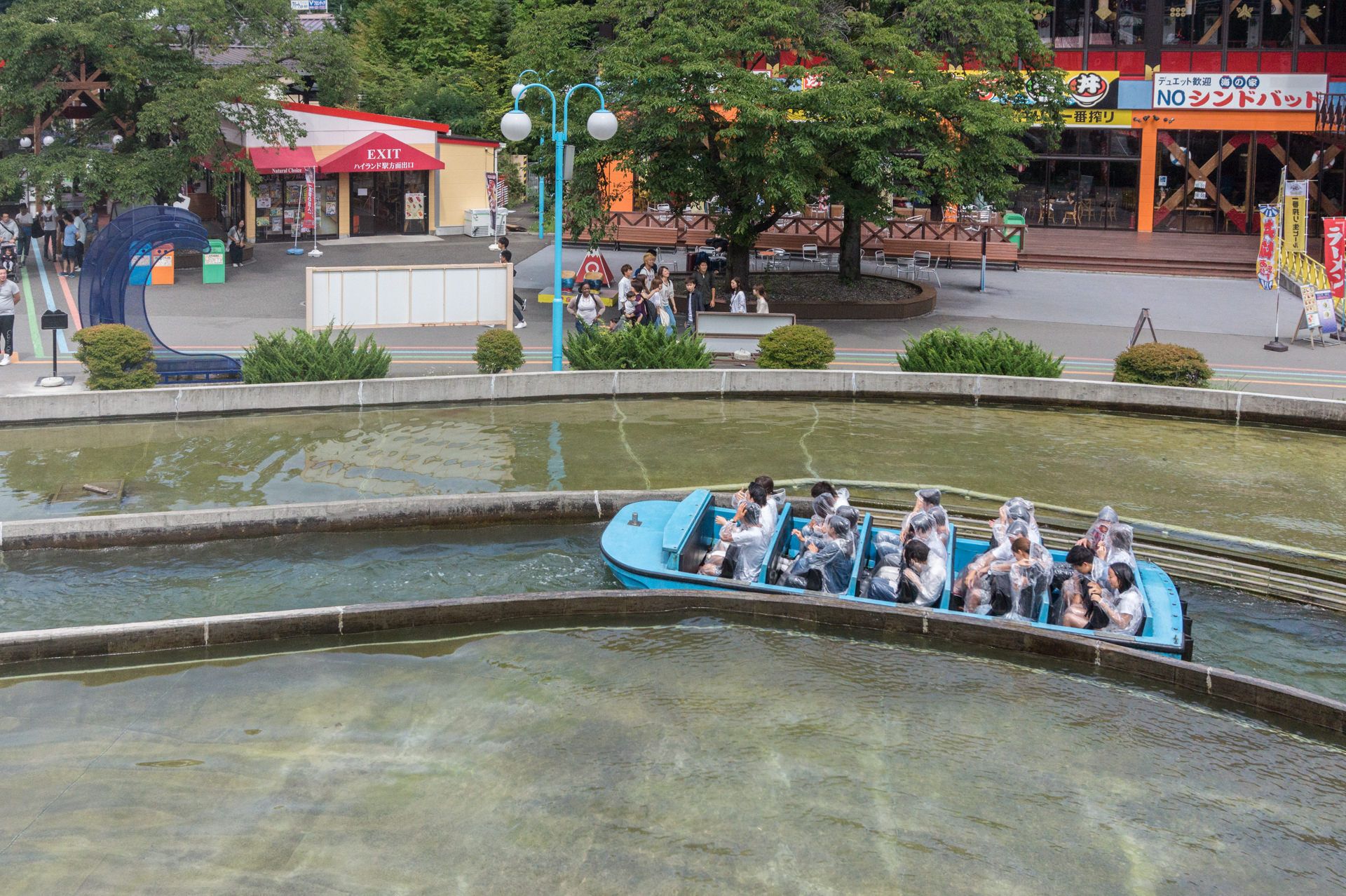
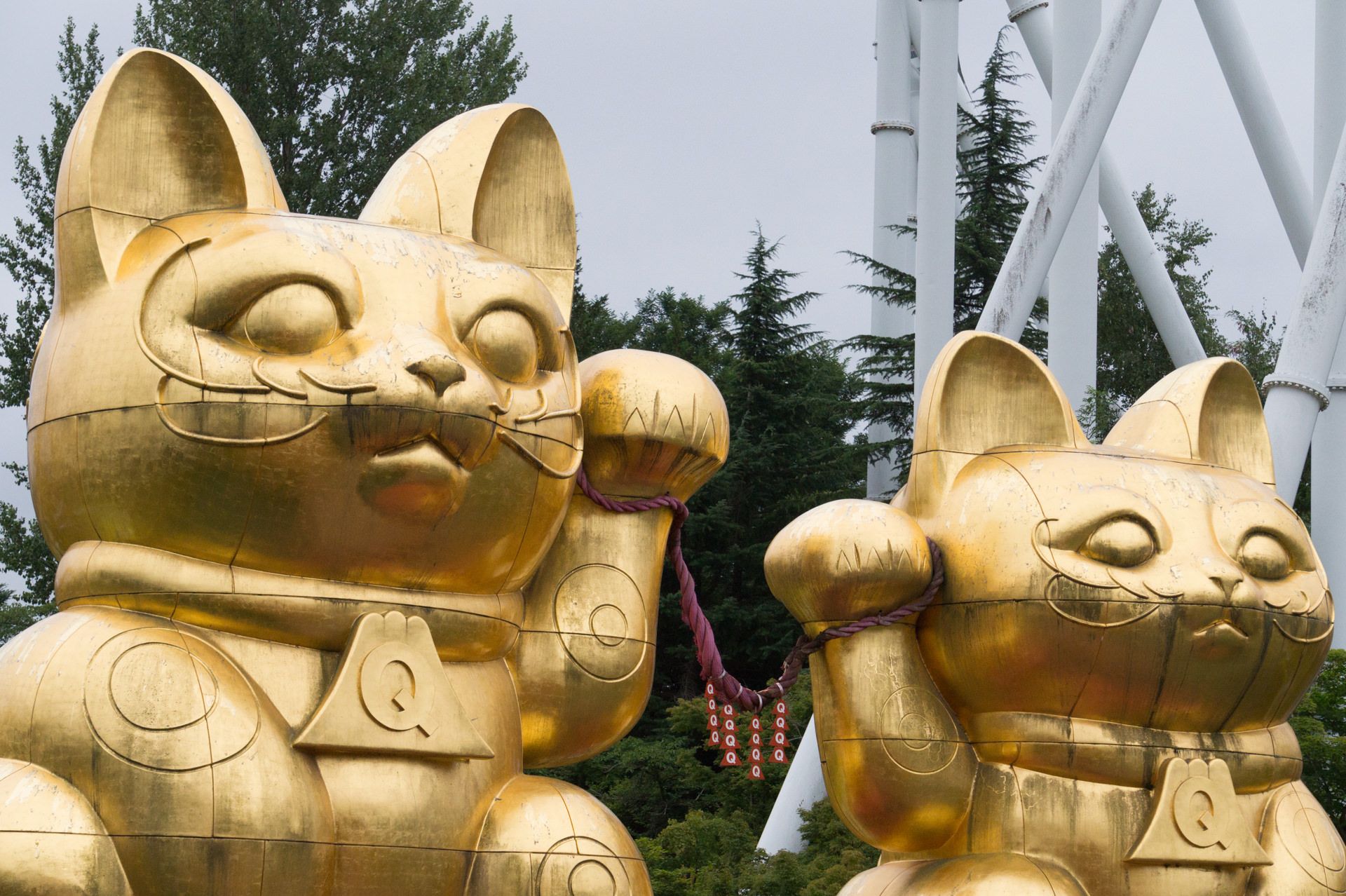
Interestingly, there is another maze right next to it with a much shorter run time. Our eyes, however, are drawn towards the elevated Hafema rapid river Nagashimasuka and its cute and mean winky cat design. The nasty aspect of these cats can only be seen from here; otherwise the ride is extremely inconspicuous. Even in the station, the degree of wetness seems manageable, as if Nagashimasuka is a simple round boat slide.

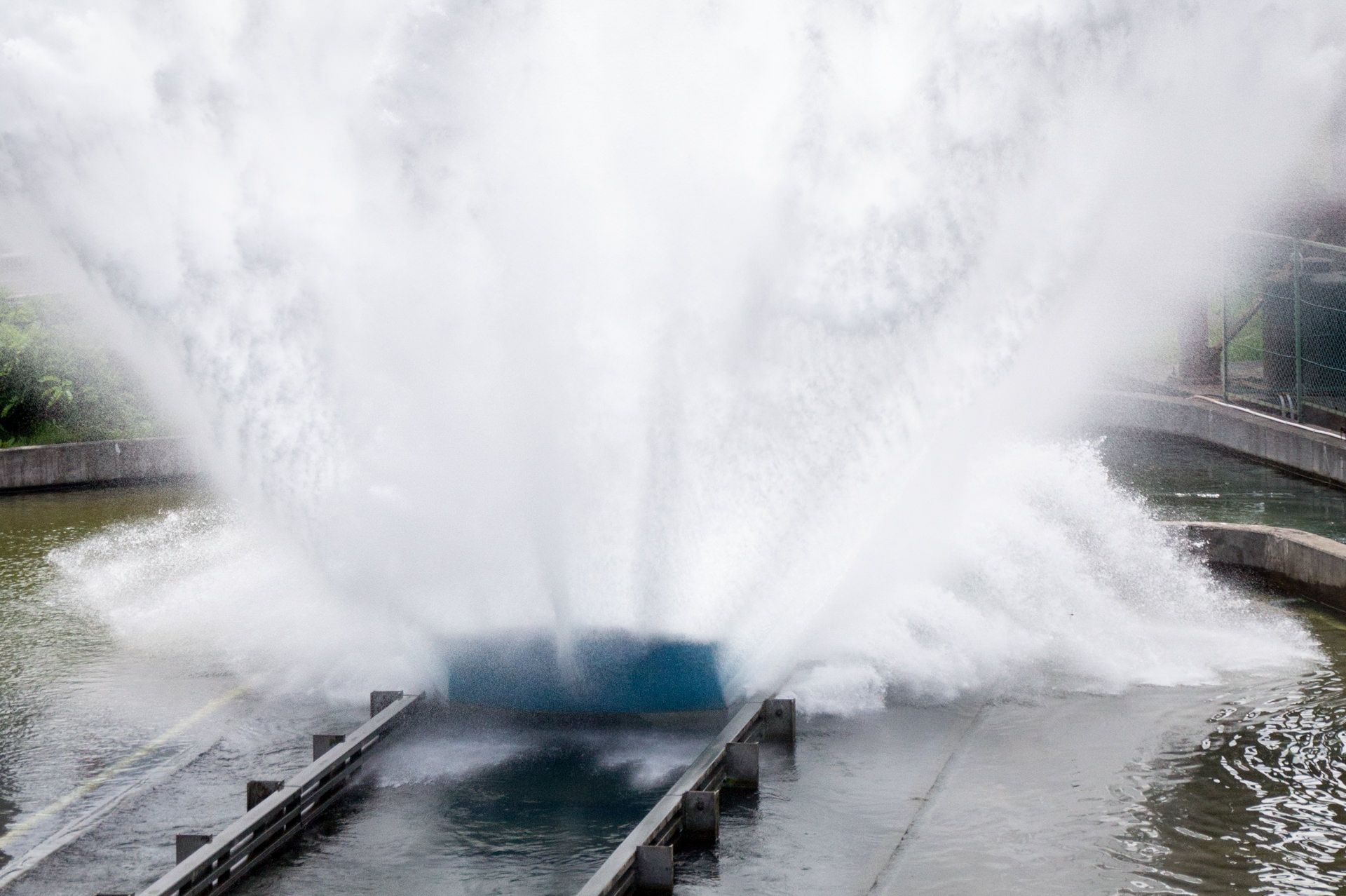
But this illusion is clouded; as soon as the ride’s high lift has been climbed and the boat has raced down the first incline, you are wet, or rather soaked, because the short braking distance causes quite a high wave to crash down on the four unsuspecting occupants. The boat then slides down a 670° helix, at the end of which another wave awaits. Now mostly soaked, you bob along a wide curve, pass the lift hill and another turning curve. This is followed, quite surprisingly, by a double drop. Here, too, some water sloshes into the round boat, but the ride is far from over and you land straight in a whirlpool, which is again very typical for the manufacturer. Those who have already completed a few rides of this kind will know that at the end there is usually a wave front waiting for the passengers, which can moisten them quite efficiently: This is also the case here!

The way back to the station is now through a classic rafting channel on the back of the once so friendly looking cat statues, here correspondingly in the angry version. Along the way, you pass a volume meter that switches on additional water effects at the edge of the path if the volume is loud enough. After a wide turn, the extremely wet ride comes to an end, whereupon we were invited to a photo session with our two Japanese passengers (who had asked us in a friendly way if we wanted to ride with them) in front of the two waving cats – in typical Japanese pose, of course.

Nagashimasuka is an extremely great rapid river, which is absolutely convincing due to its very high degree of wetness. The multitude of elements makes the rafting ride absolutely worth experiencing and the double drop alone makes the ride a must-do. Interestingly, you can also try the ride in winter, but then additional protective walls are attached to the gondola.

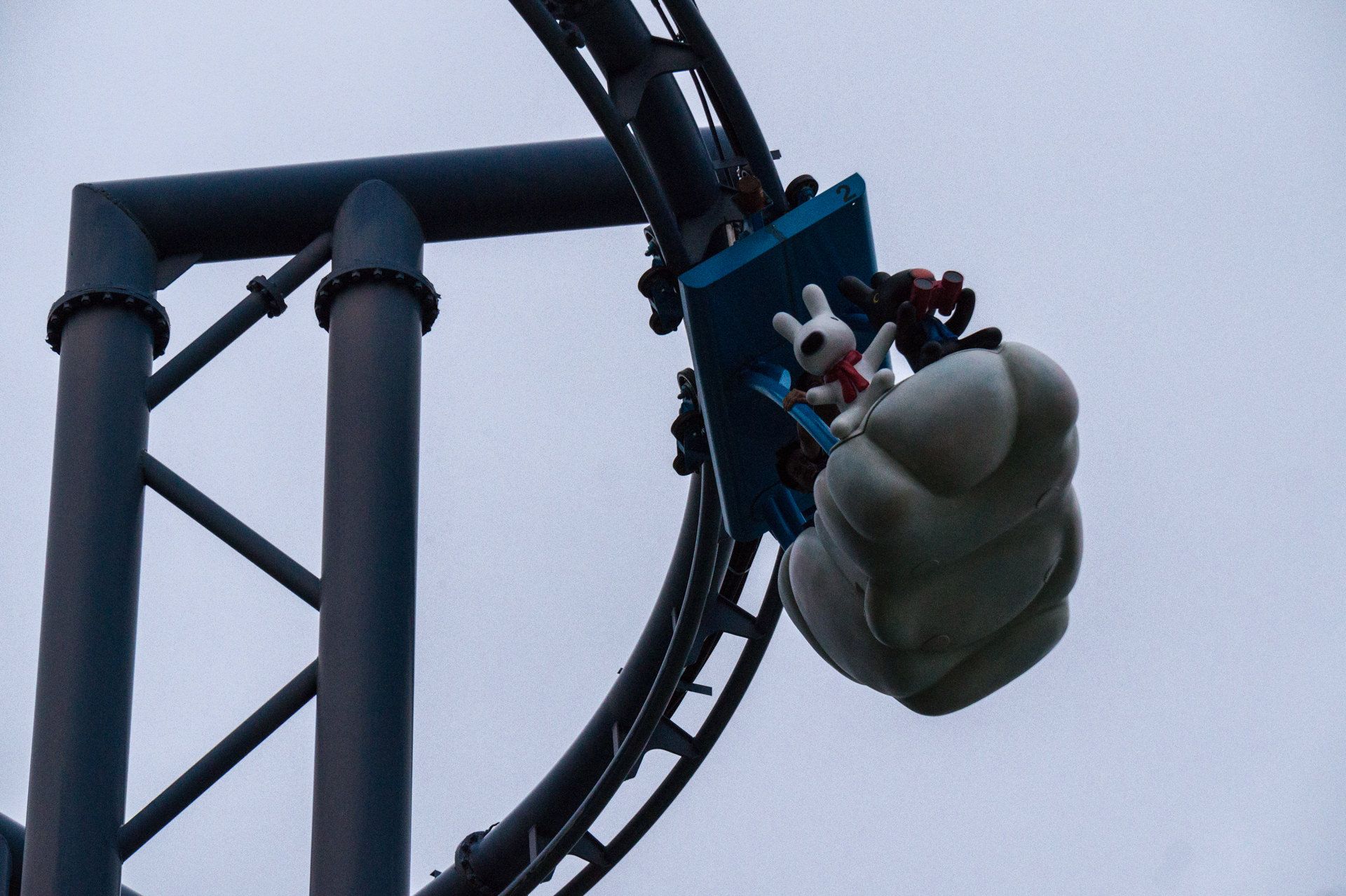
Voyage dans le Ciel (avec Gaspard et Lisa)

Right next door is the station of the roller coaster Voyage dans le Ciel (avec Gaspard et Lisa), formerly better known as the Hamtaro Coaster. But interestingly, the suspended coaster has an eventful history as the first flying coaster in Japan: Originally opened as Birdmen in June 2000 with flying gondolas very similar to a Zamperla Volare (but with only two seats side by side), it didn’t take long until the first incident happened – during an emergency stop in May 2001 – and the ride was subsequently closed for two years. As a result, the ride was fitted with new gondolas and has since become a child-friendly entry-level ride.

After you have squeezed into the two-seater gondolas (with seats behind each other), the ride can begin. A chain lift transports the rather bulky gondola to the starting height of 23 m. From here, the ride begins with a left turn and then a right turn. Then a left-hand bend and a right-hand bend take you steadily downwards, before a small dip and a hill follow. After a short ascent, the first block brake is reached, whereupon you complete a left-leading downward helix around the Red Tower freefall tower. This is followed by a short left turn, which turns into a beautiful descent at the Spillwater Cool Jappaan. The ride’s second block brake then awaits you beneath the lift hill. In a wide left turn, past the Fuji-Q Highland pedal monorail, you approach the last brake section of the ride, whereupon the thoroughly enjoyable ride soon comes to an end.

Eejanaika

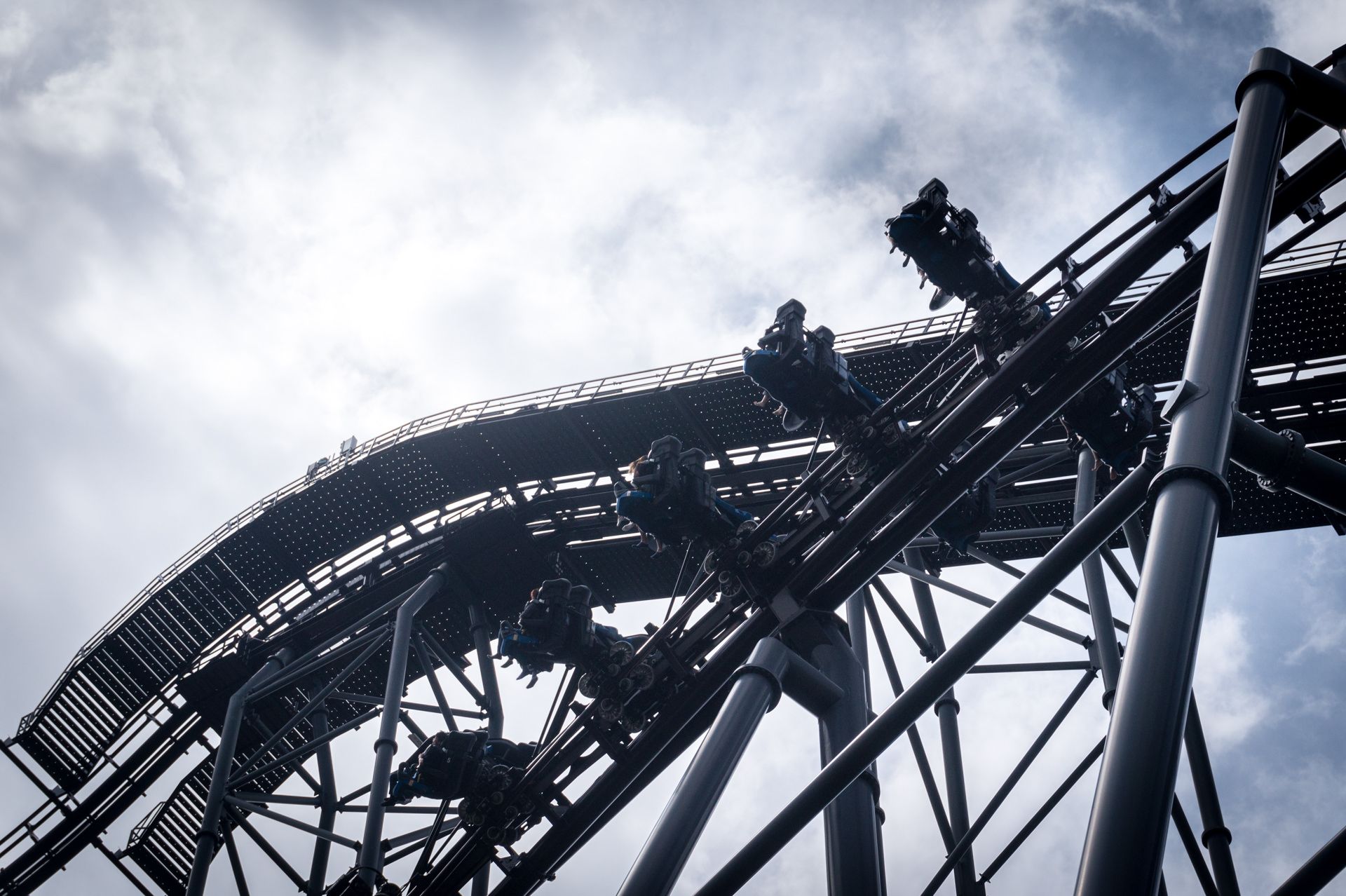
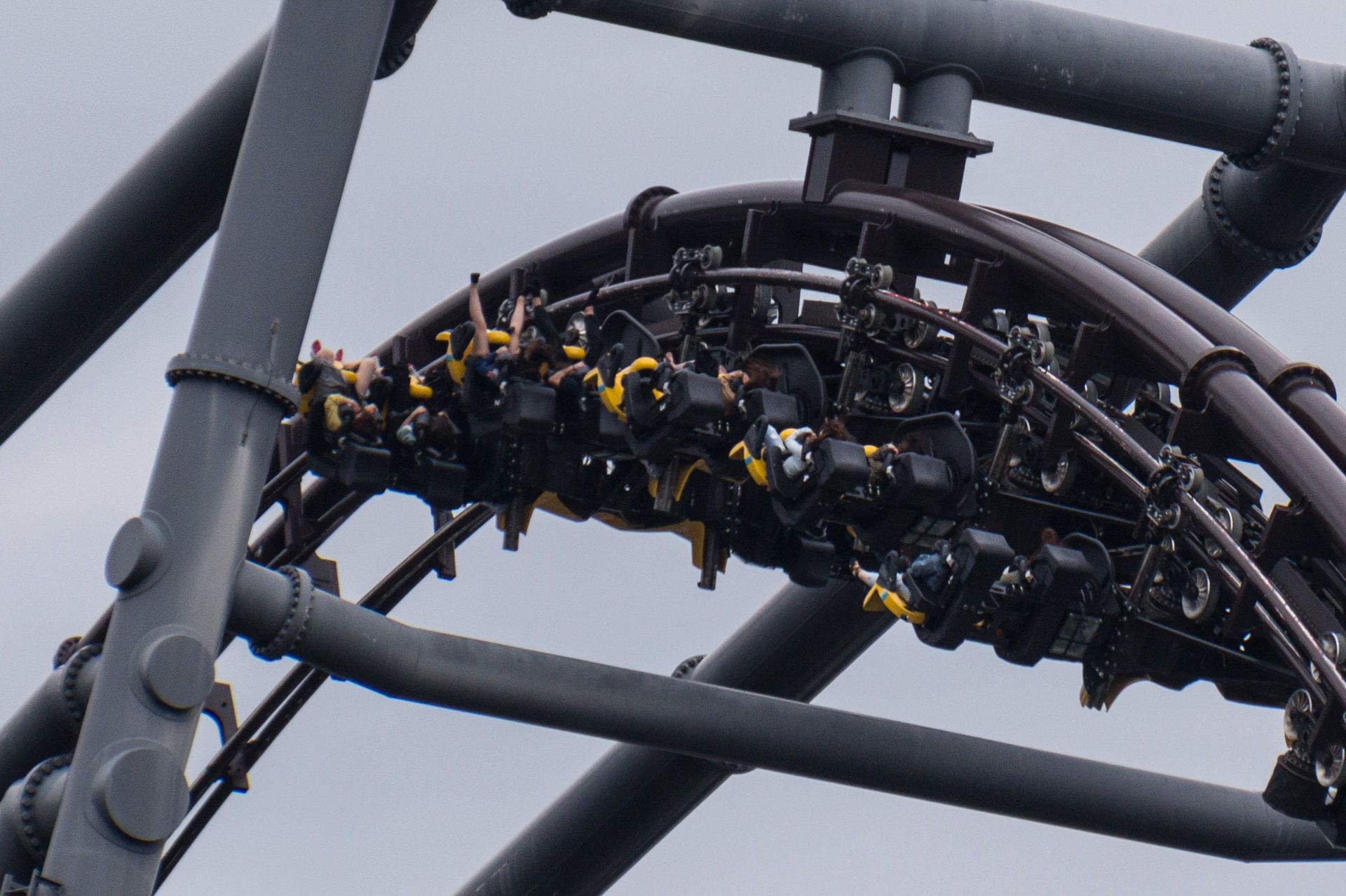
Arriving at the entrance near the Fuji-Q Highland Station, we had to tackle a very special steel colossus – as most visitors do here from the very beginning, because the ride is always crowded quite quickly due to its location directly at this entrance. We are of course talking about Eejanaika, the second delivery of a 4th Dimension Coaster – at that time, it was the first delivery of the manufacturer S&S. The basic layout is very similar to the prototype ride X from the American amusement park Six Flags Magic Mountain, but the gondola rotation was increased a bit at the request of Fuji-Q Highland. The ride is also somewhat larger and has a significantly lower capacity.

However, this is not due to the optimised dispatch process, where passengers prepare for the journey in separate boxes (all loose items and also shoes are placed in lockers) and also not due to the triple bar check, where you also have to become active yourself (probably for legal reasons), as well as the final show interlude before the train leaves the station. It is simply due to the fact that the train only has five gondolas on each side.

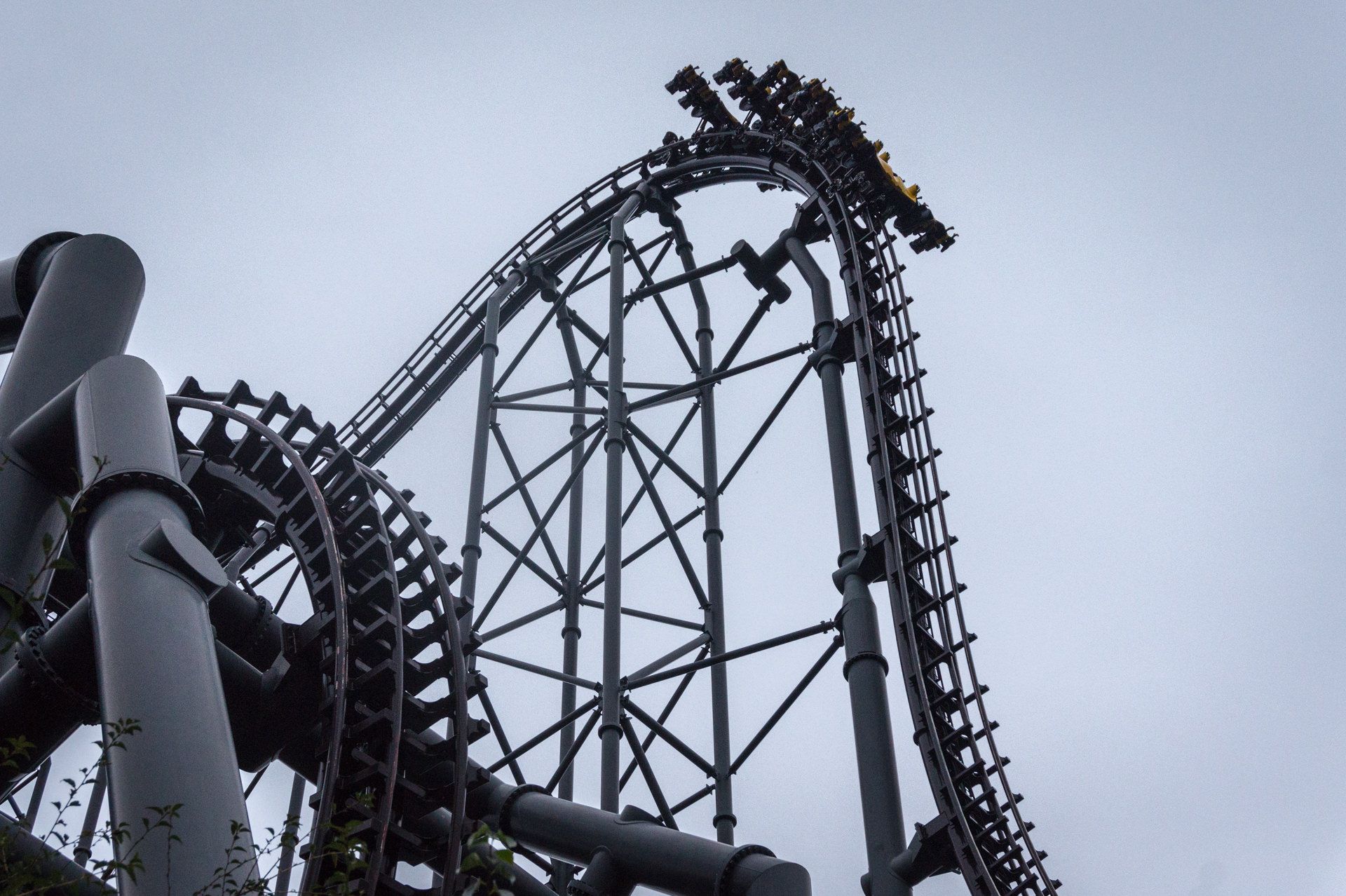
Once cleared, however, the ride begins quite quickly and in a 180° turn you immediately find yourself in the supine position, slightly upside down. You then reach the lift in a backwards position before it takes you up to a height of 75 m while lying on your back. Although this happens very quickly, you still have enough time to take a good look at the surrounding mountains – but not at Fujiyama, which is directly behind you.

A short pre-drop gets the wagon group going and aligns us again in the original riding position before we are then directed head-on towards the ground or towards the row in front on the next crest. We then maintain this riding position for a large part of the vertical slope, but turn over once in the lower third so that we complete the following valley looking slightly upwards. In the inside rave turn, the direction of travel of the rail is now changed once, but we always experience the element in the horizontal position, just before the exit of it is reached and we perform a short somersault. The train itself, now hanging under the rail, goes down a slope and then turns around its own axis in a zero-G roll, while we race forward through the dense forest of supports and avoid a rollover in the roll with a 360° turn around our own axis. Facing forward once more, we then enter an over-inclined turn, at the crest of which we are turned towards Fuji-Q Highland. Continuing with a view ahead, we cross a powerful valley alongside the station. On the hill that now follows, the track changes its orientation in a fly-to-lie element and we cheerfully turn 180°. Leading backwards, we then pass a valley and immediately climb a hill at the end of which the entrance of the outside raven turn is waiting. In this variant of the rave turn, we are also kept horizontal while the train changes its driving position and thus continues hanging under the track. At a significantly high speed, we now race towards another fly-to-lie element, which, in combination with the gondola rotation, pulls us back and forth quite a bit. Shaken and stirred, we find ourselves in the braking section and shortly afterwards in the station.

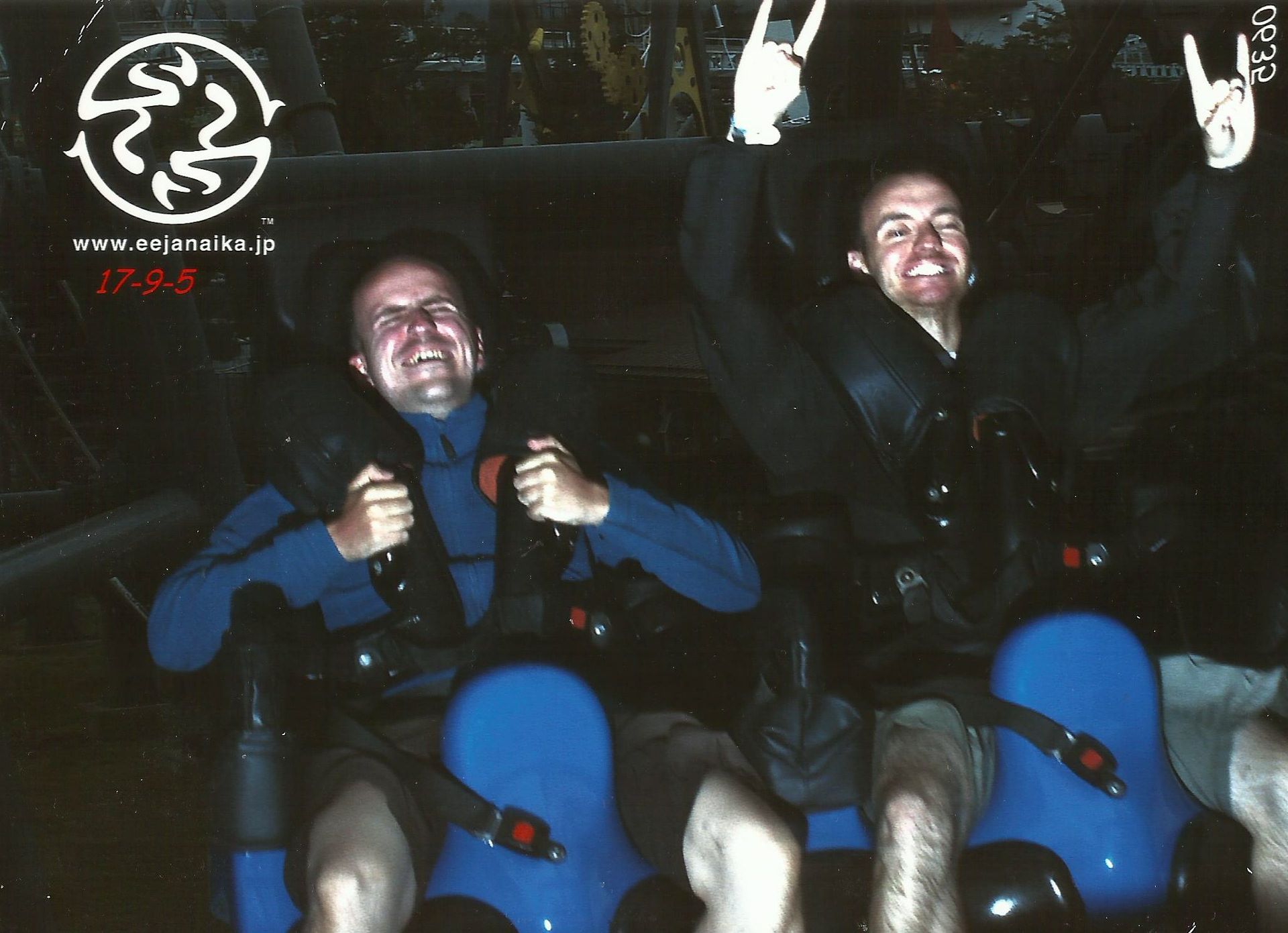
Eejanaika is the most intense roller coaster I have experienced so far. The ride is extremely powerful, robs you of your sense of direction in an absolute way and is surprisingly smooth in its ride characteristics (apart from the last ride element). You are simply not beaten up, even though you are sitting in the train with your legs spread apart in Pasha style. The minimalist, yet quite complicated, restraint reinforces the ride and the respect for it immensely, even if you have already experienced it once. And even now, several months after the ride, my verdict of the ride is simple: Eejanaika is awesome!

Cool Jappaan

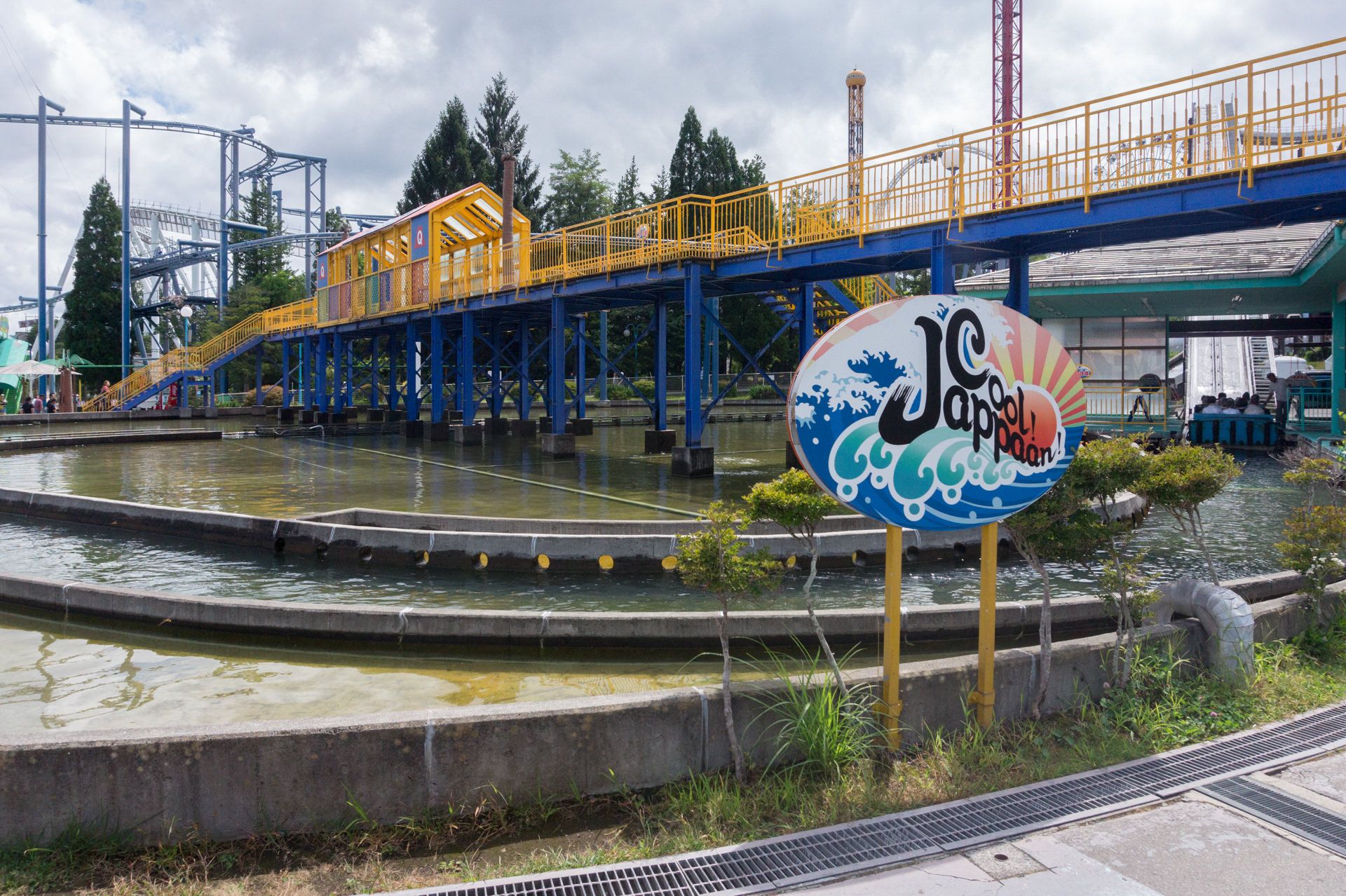
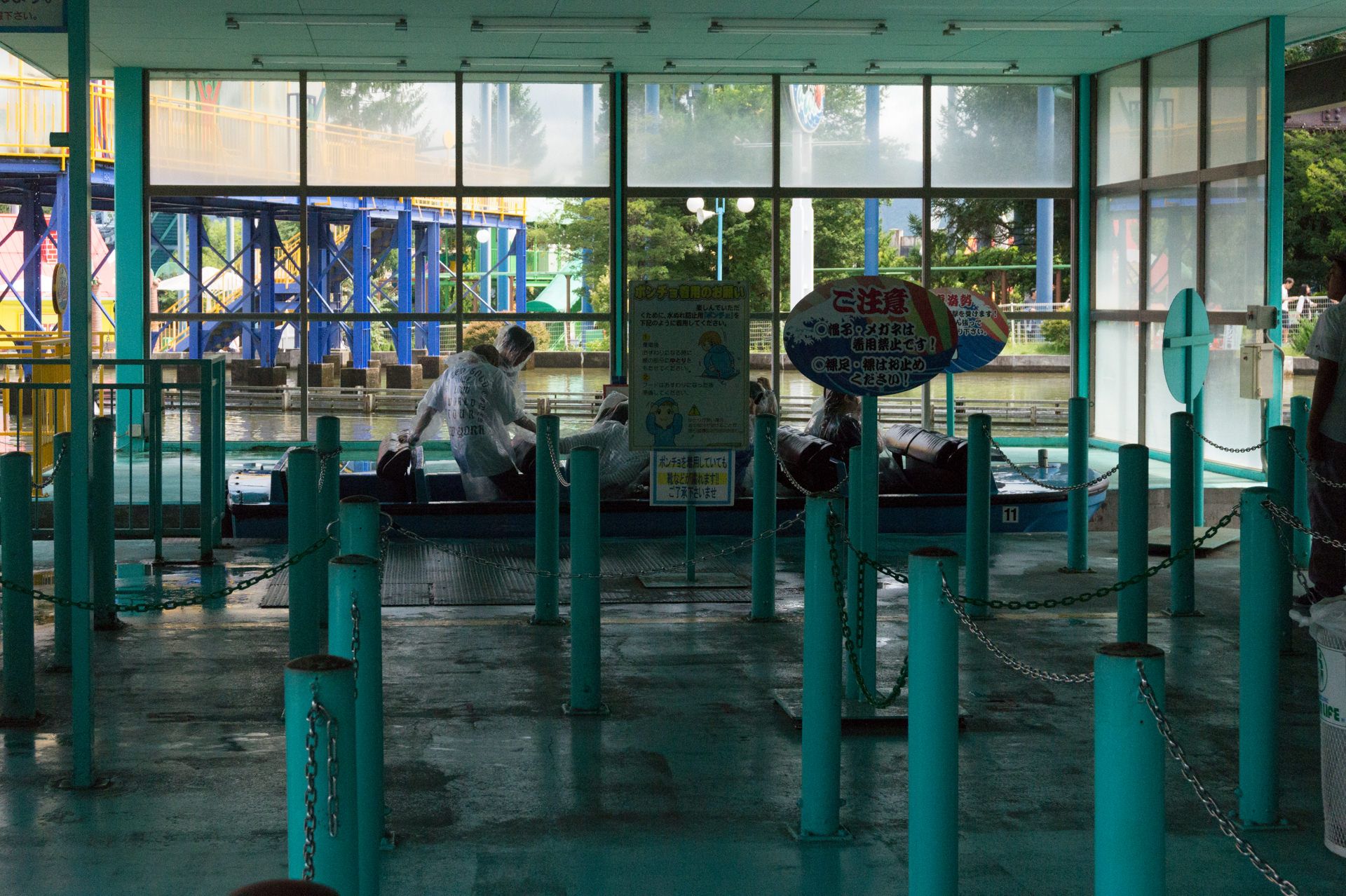
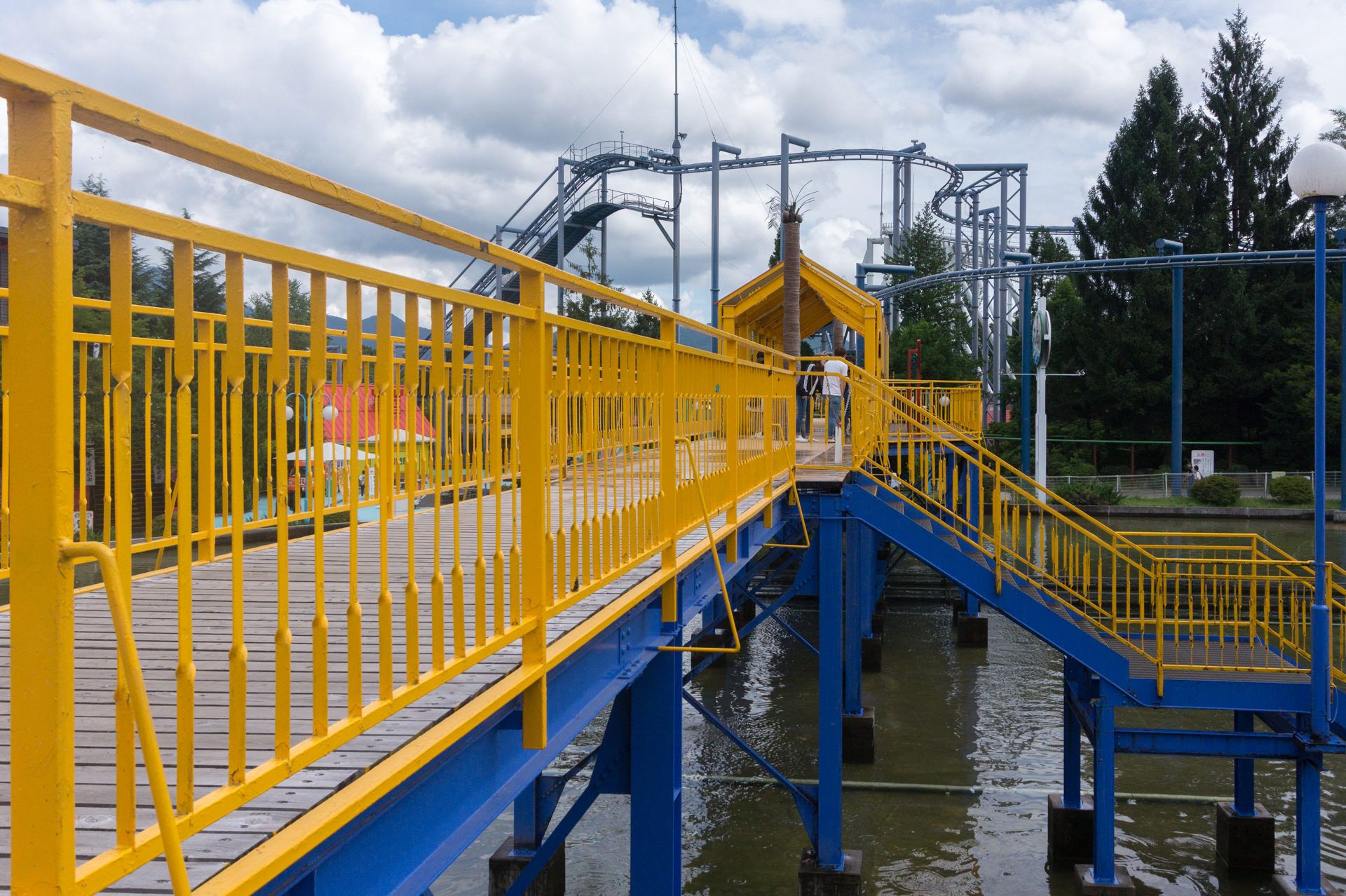
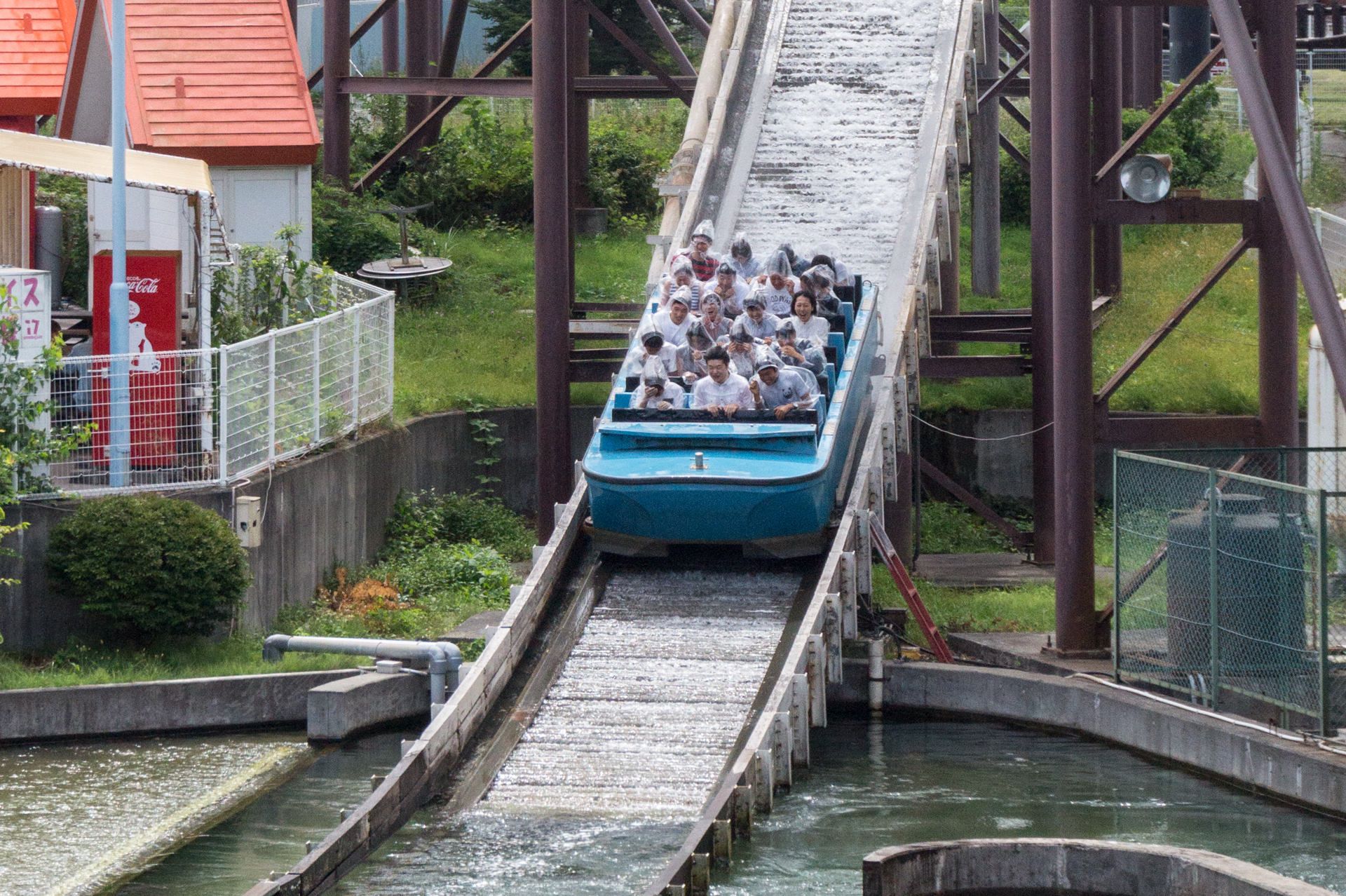
Eejanaika does not need any more praise than that, and so we quickly move on to the neighbouring ride, the Shoot the Chute Cool Jappaan from O.D. Hopkins. This ride is identical to the one in Nagashima Spa Land; however, it has a shelter on its bridge with some of the windows missing. The ride itself is slightly less wet than its sister ride, so you don’t get flooded until you reach the bridge. However, you should urgently ride in a poncho – although the staff are very happy if you don’t – because the water here (as in the rafting mentioned above) is unfortunately not really clean and leaves strange stains on your clothes, although this circumstance may only have been present temporarily – at least I thought it could be better.

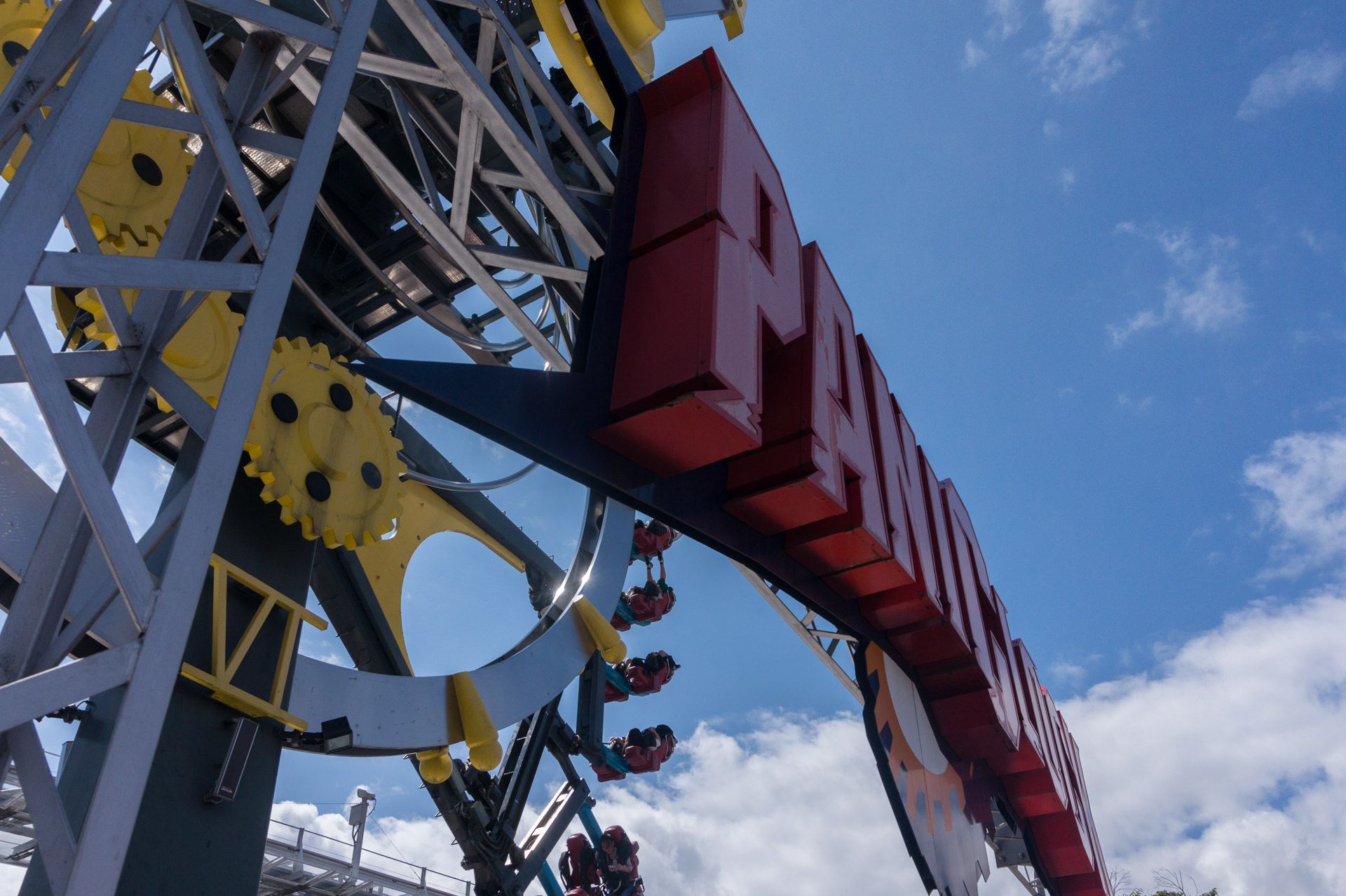
Panic Clock

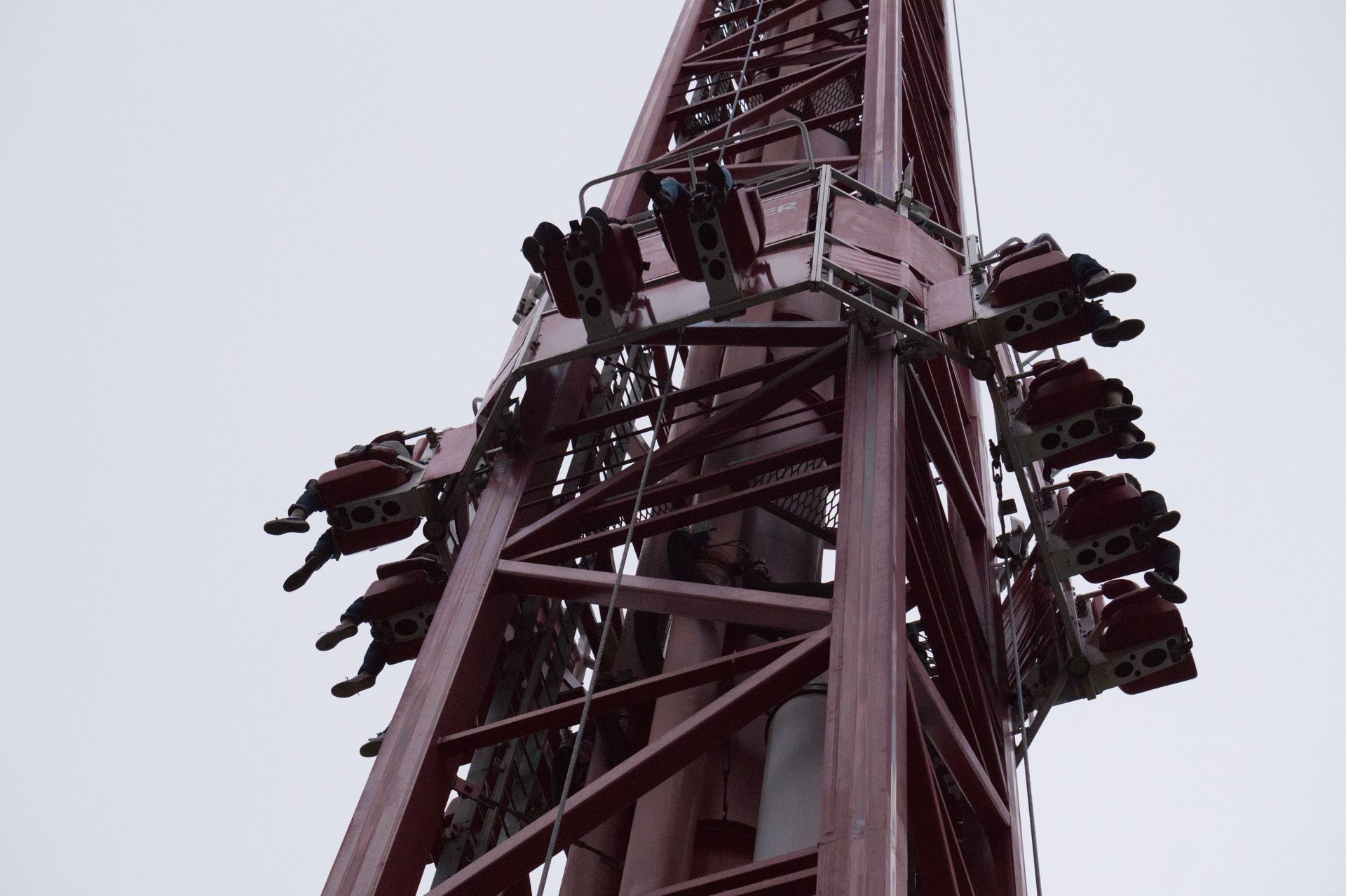
Past the Red Tower, an S&S Turbo Drop with a very shallow ride, the path takes us back to the large plane of Fuji-Q Highland. Here we meet the Panic Clock (or PaniClock, as it is written on the ride itself), a Vekoma Air Jumper. A further development of the Sky Flyer from the same company, the ride has gondola carriers with classic SLC seats instead of two open-plan cabins, where passengers are only secured by a lap bar. On this ride, passengers enter and exit on a straight plateau, and before the ride begins, the floor is lowered and the gondola carriers are hydraulically angled so that – unlike the related Fabbri models – the seats are all on a similar circular track. Both arms of the ride then start to move in opposite directions, which is why you keep meeting each other in the valley and in the loop. After 6 full rollovers, the ride ends again. Unfortunately, the ride characteristics are not optimal for this type of ride thanks to the given freedom in the SLC seats. Visually, however, the ride is convincing all along the line.

Much less appealing, however, is the makeshift tent in front of the old Moonraker back wall (which – for whatever reason – was simply not disposed of). Here you can experience the Fujiyama and Dodonpa roller coasters (i.e. Do-Dodonpa before the conversion) as a virtual ride. You sit in the original trains, get wind blown in your face and experience the ride, complete with VR goggles and headphones, almost exactly as if you were just getting on the ride a few metres further on.

Mad Mouse

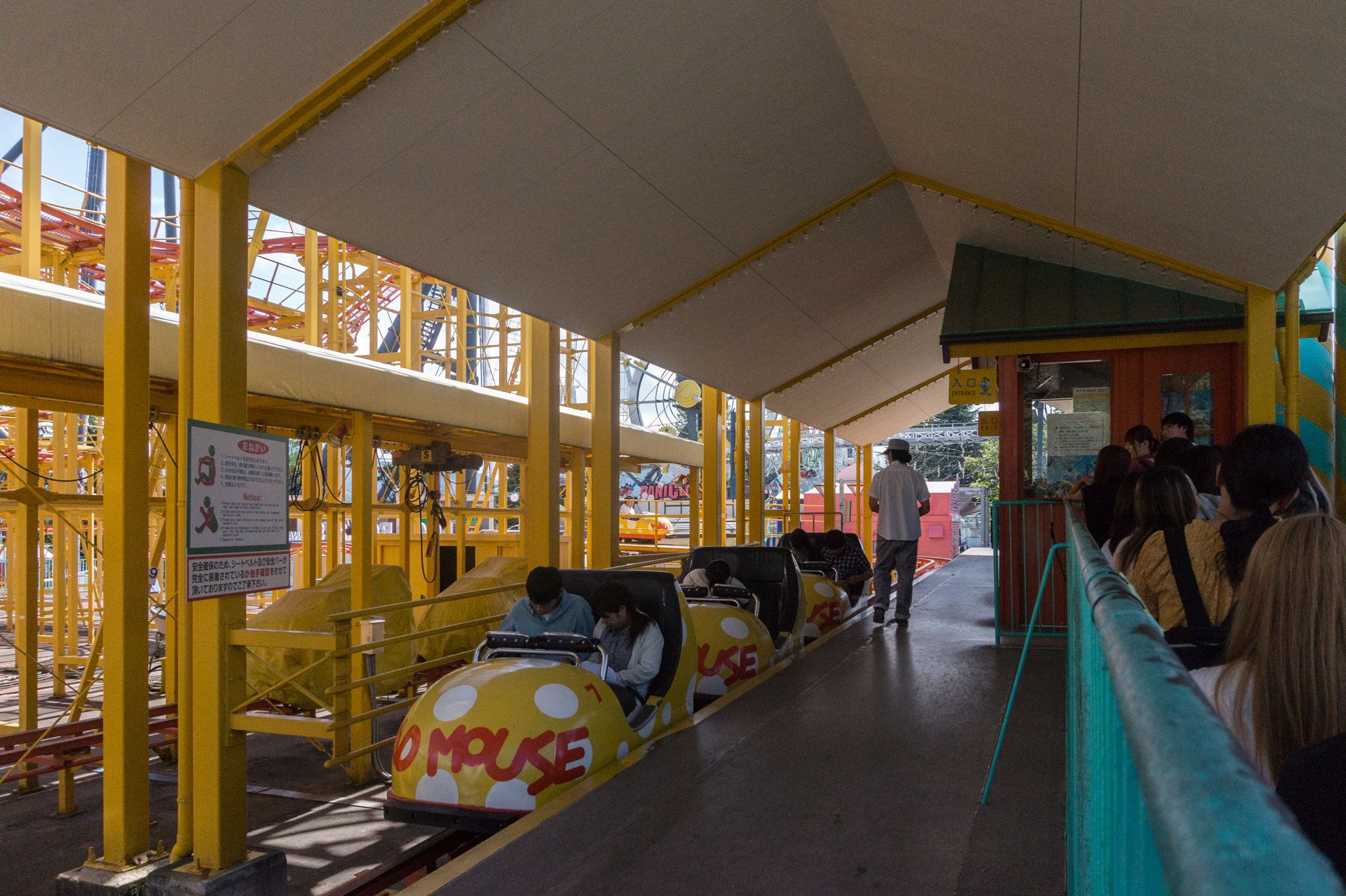
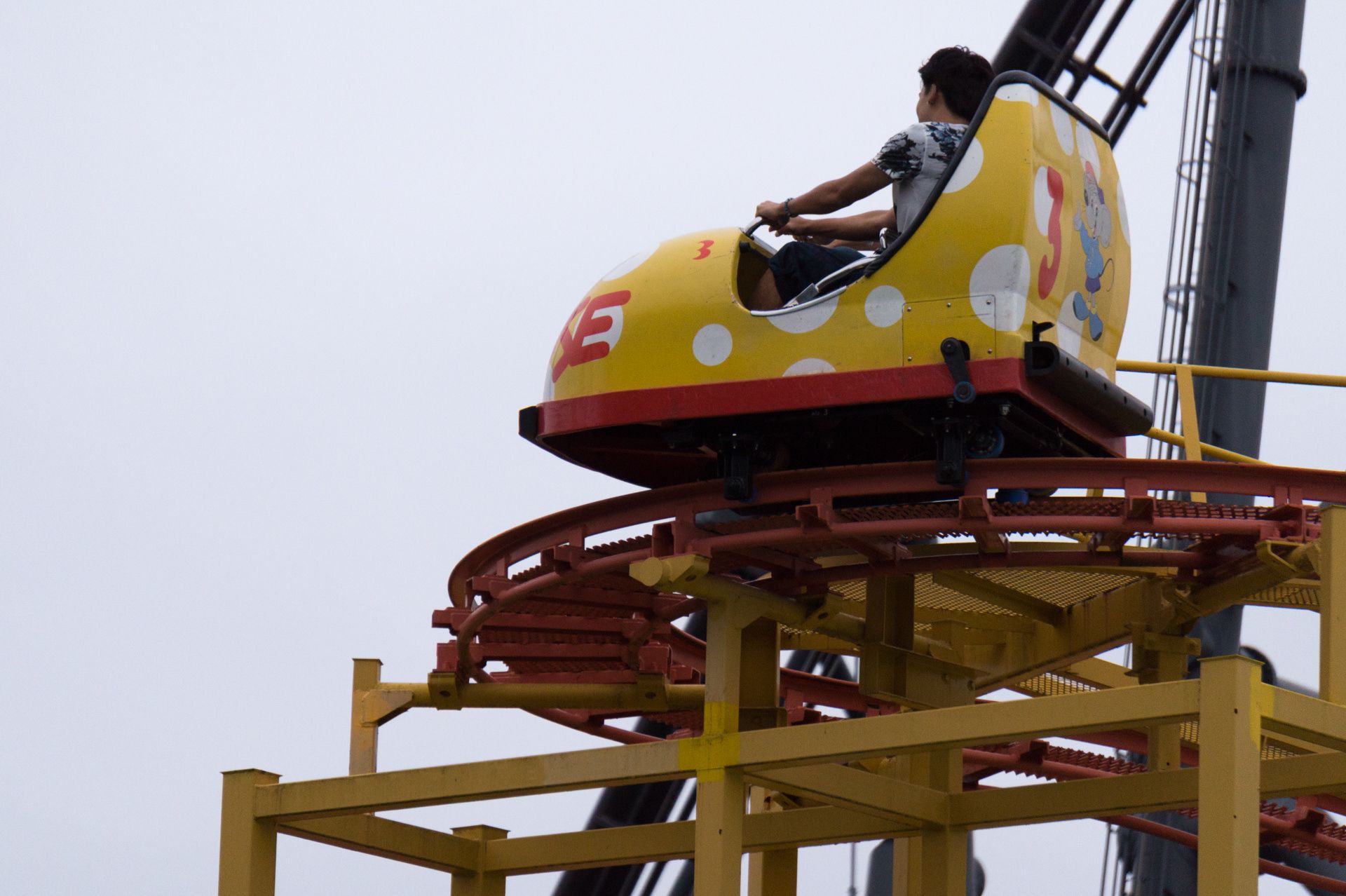
On the other hand, there is the Mad Mouse roller coaster in Fuji-Q Highland, which we of course love to get on. The two-seater cars are all loaded at the same time and are then gradually sent on their way. As in Greenland, however, this is done very quickly, so that one wonders once again why the Spaniards in Parque de Atracciones de Madrid simply can’t manage it on their Wild Mouse Vertigo.

The ride begins with a tight right turn into the lift hill of the ride. Once at the top, there is another right-hand bend and then the first dip. After a short incline, a right-hand bend is also negotiated and a subsequent dip awaits the passengers. After this, you quickly pass through a block brake and then a fast combination of right and left turns, each briefly interrupted by three short straights. Once you reach the other side of the ride, the first hairpin bend of the ride follows. After a few (Big Apple-like) waves, you then reach the ride’s second block brake. Here, too, there is a hairpin bend. On a short descent, you immediately pick up some speed, after which you race through the third hairpin bend.

On the following straight you pass through another block brake, but instead of going into a hairpin curve, you take a lap around the inner courtyard of the ride. After another block brake, however, you change back to the familiar driving behaviour of a wild mouse and ride through four more hairpin bends at short intervals before reaching the next brake. Now you make your way in quite wide right turns, each interrupted by longer straight segments, through the forest of supports of the ride, before some waves break up this behaviour again. After a narrow right turn, the waves increase and shortly afterwards you reach the final brake of the quite nice ride. From then on, the only thing left to do is to somehow heave yourself out of the wagons.

Tondemina and Evangelion World

Once you’ve managed that at some point, there’s nothing standing in your way for a ride on the neighbouring Giant Frisbee from the manufacturer HUSS. Except perhaps the fact that the Frisbee Tondemina is only distinguished from other specimens of its kind by its massive advertising for the pizza company Pizza-La. In this respect, a visit to the absolutely wild classic Japanese tea cups, the equally classic horse carousel or even the interactive experience Evangelion World around the well-known anime Neon Genesis Evangelion is recommended.

Fujiyama

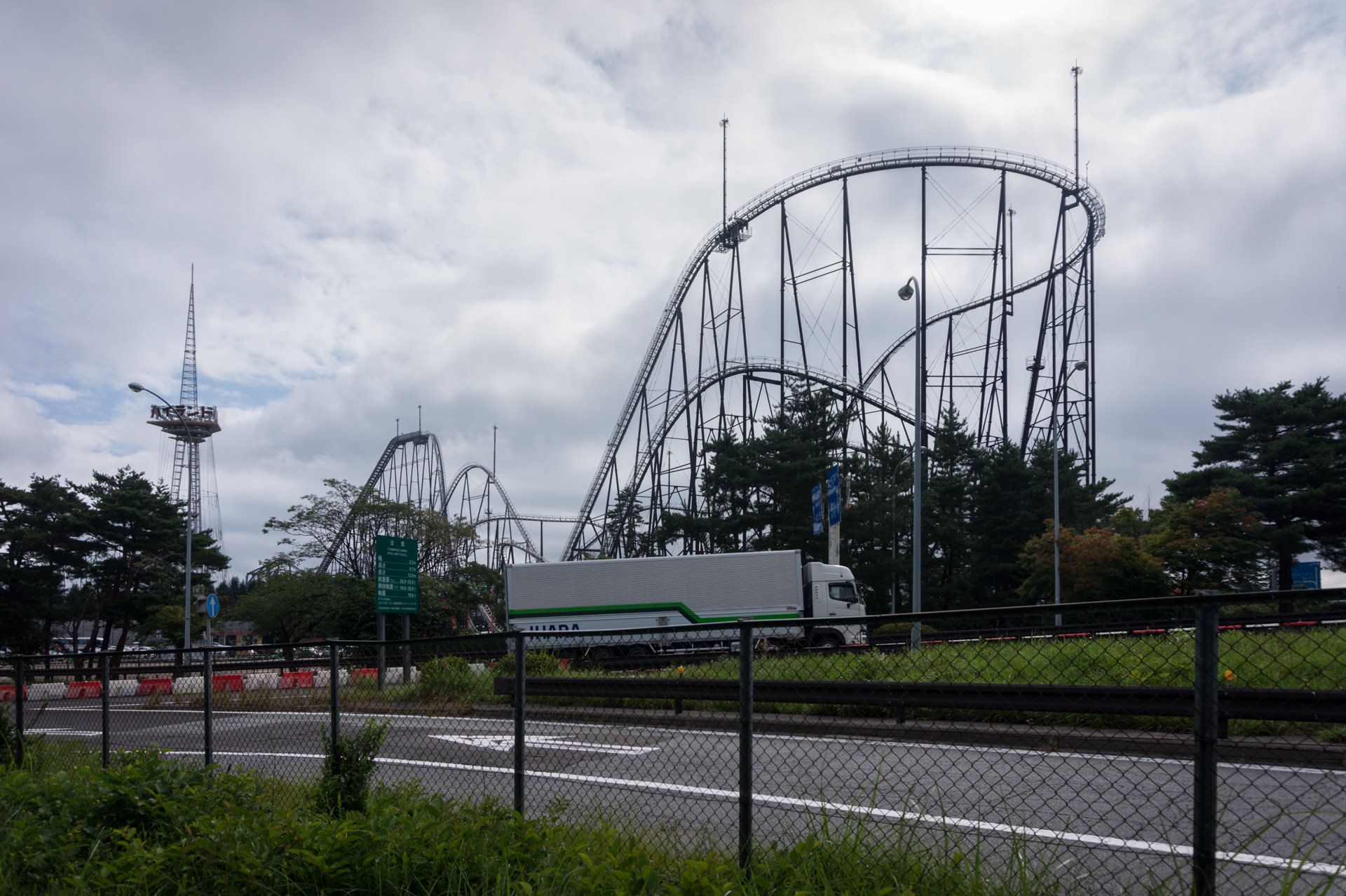
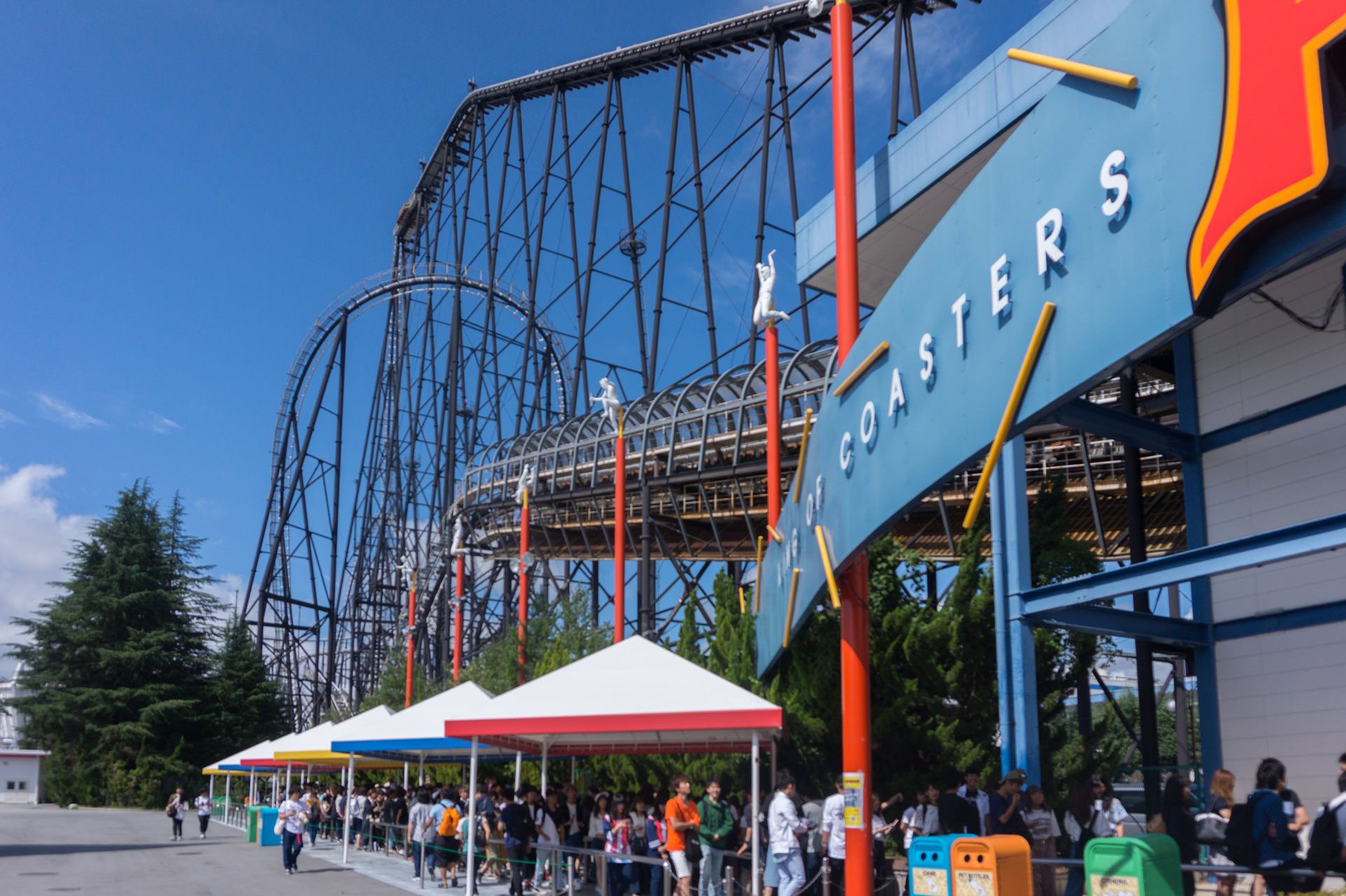
Now let’s move on to the last roller coaster of Fuji-Q Highland, the King of Coasters himself: Fujiyama. Built by the Japanese manufacturer Togo and with a height of 79 m and a length of more than 2 km, the ride shows off wherever it can, which is partly due to the paint job on the trains. And yet the ride is surprisingly compact, which makes the former record holder look almost filigree. Interestingly, most opinions about the ride are mostly negative – time to change that.

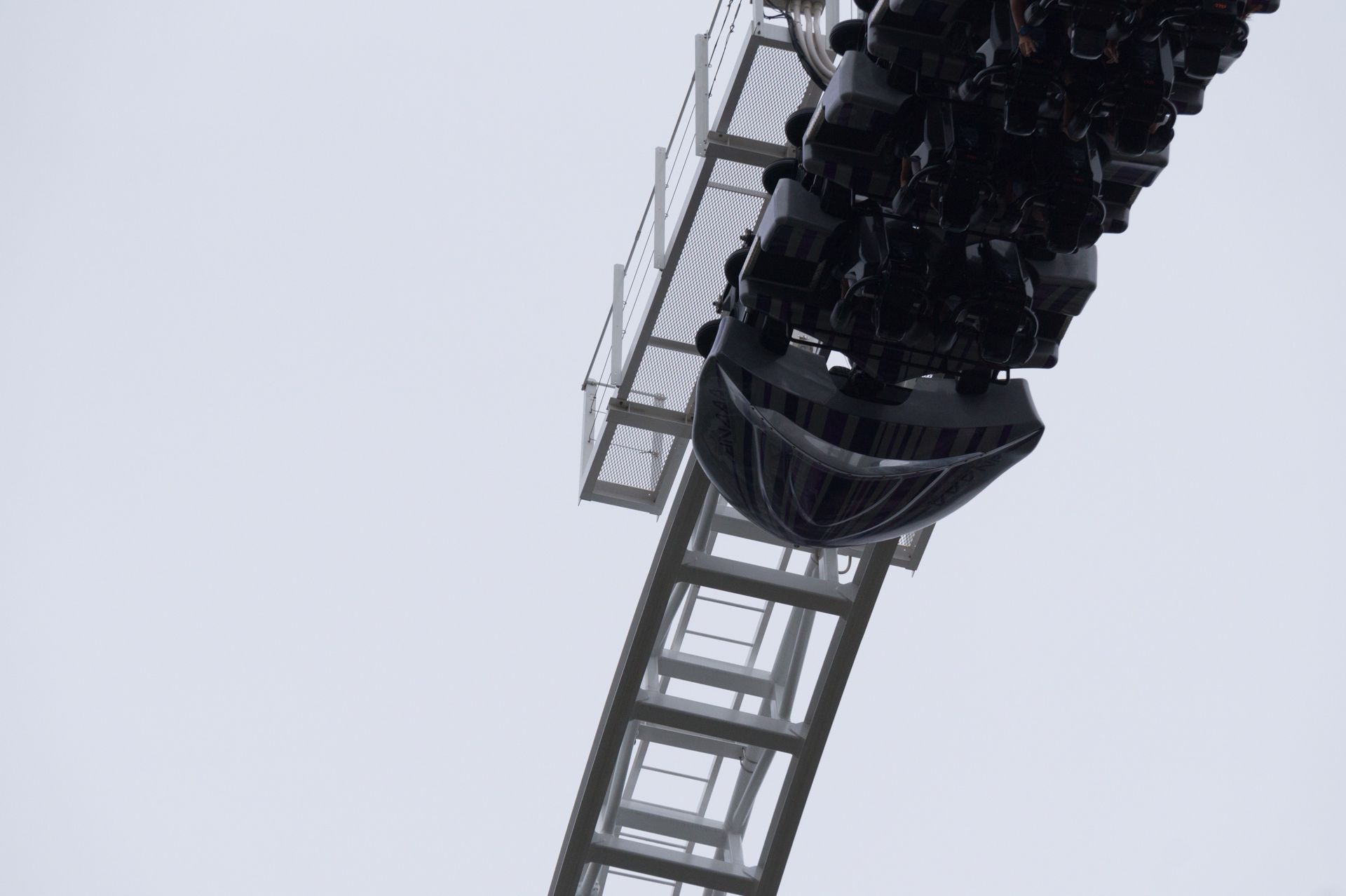
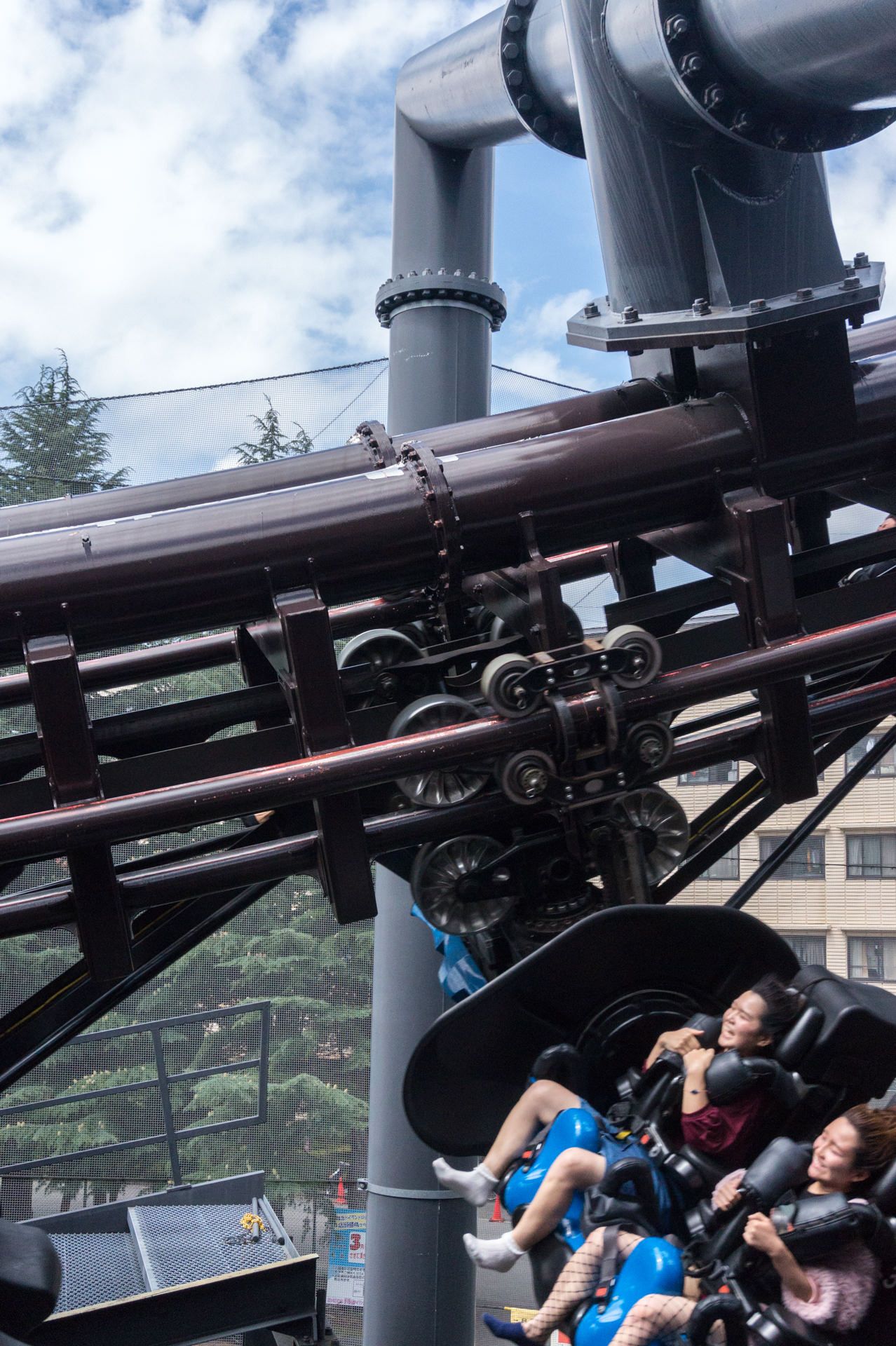
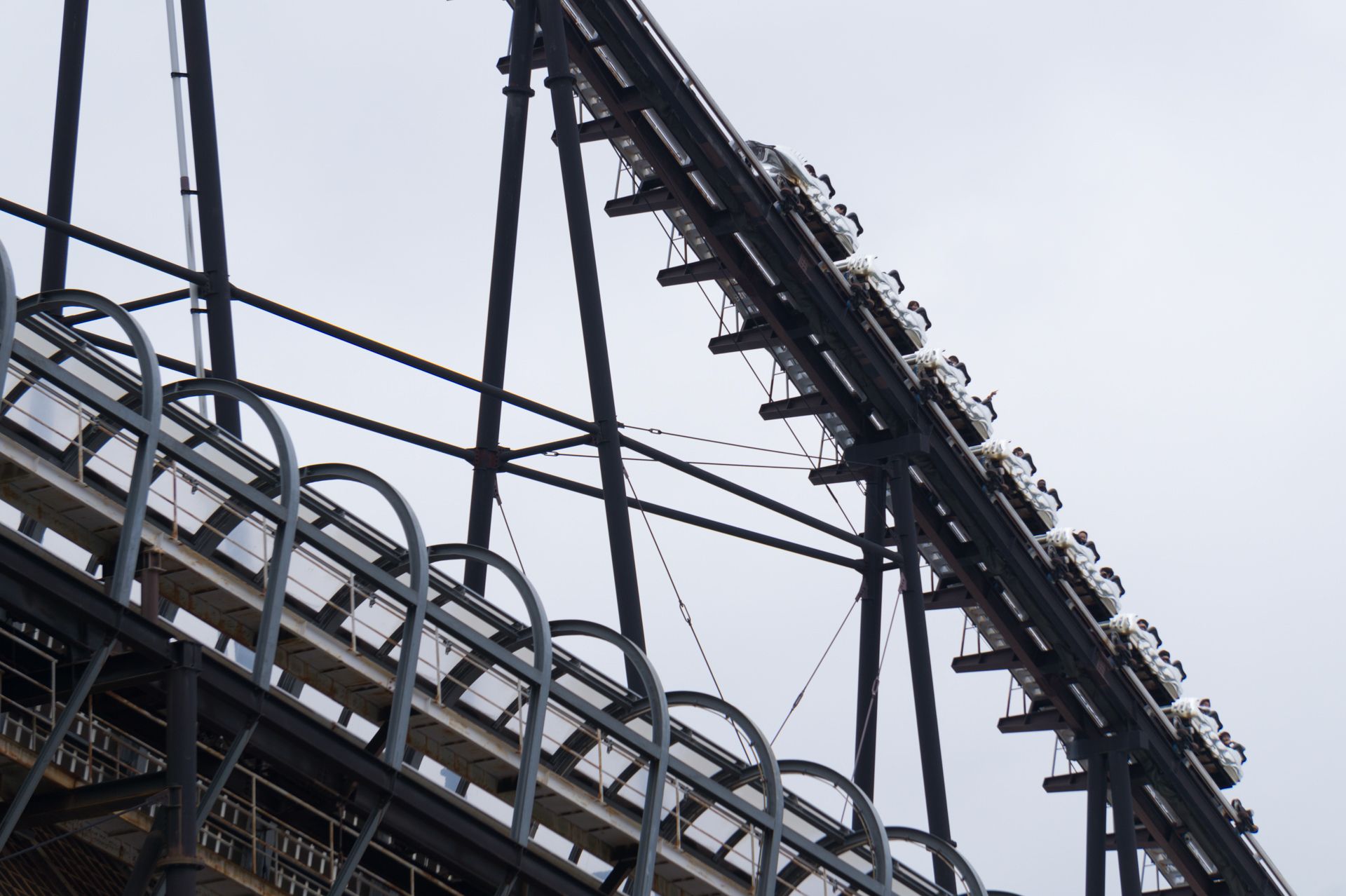
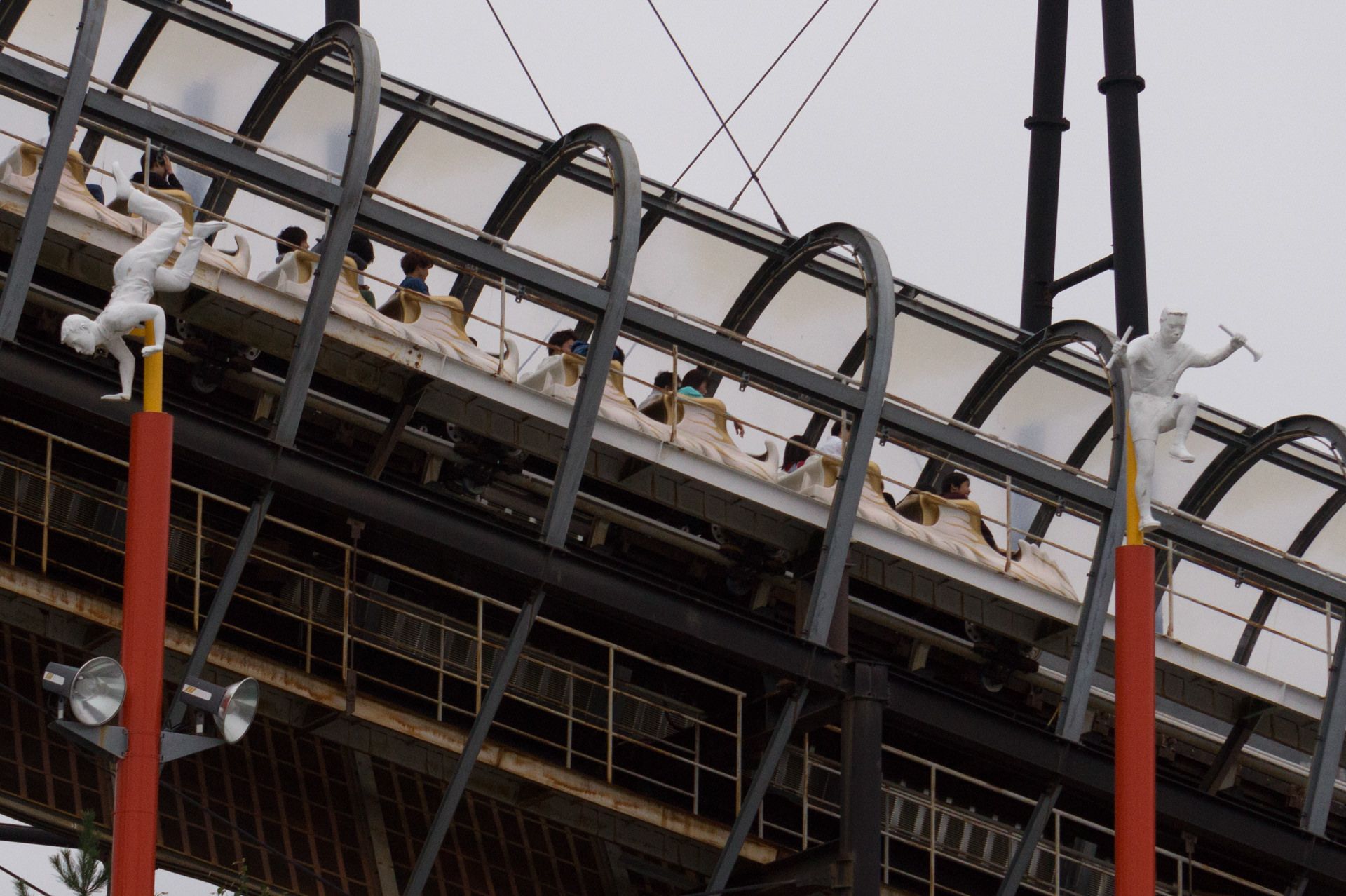
After taking a seat in the very comfortable train, which is however equipped with a strange bar, the ride can immediately begin. Far above the visitors, we pass through a tight turn and immediately reach the lift hill of the ride. This takes us steadily up to the aforementioned starting height, where we now stay for some time. A friction wheel battery then gets the train going a bit, so that, after a short right turn, it plunges into the depths, carrying the passengers into the air. In the valley, you then return to your original seating position and experience wonderfully pronounced G-forces. After a long climb, you complete a wide turn with (theoretically) excellent views of the volcano of the same name. On the following crest, you take off from your seat once more and experience airtime as it is written in the book. When you reach the valley, you would like the airtime moments to go on forever; how nice when shortly afterwards a camelback actually takes you into the air.

With a beautiful pacing, you now cross an elevated turn below the lift of the ride. After the subsequent valley, a slightly left-bending ascent follows, which then leads into an airtime-embroidered double-up. From then on, you race along the support structure of the turning curve through hill and dale. You then leave the aforementioned curve via another peak and drive in a straight line through the following valley. In a steep curve, which later tapers more and more to a turning curve, you quickly build up height, just before you shoot down to the ground and remain there for a long time. At breakneck speed, you pass through a long straight and a right turn close to the ground before the train turns towards the sky again. Still at an extremely pronounced speed, you now pass through a series of hills that zigzag their way through the steel structure of the roller coaster. This is delightfully wacky and causes a broad grin on the faces of the passengers. After a total of 5 hills, you start to climb a hill for the last time on a straight section of track, but instead of a descent, the final brake of the ride is awaiting you. With a good amount of airtime and at a speed that is actually much too high, you are now slowed down to a standstill. Shortly after, the station is reached.

Fujiyama is a magnificent roller coaster that knows how to lift its passengers out of their seats. The ride in the Fuji-Q Highland is breathtaking, while never repetitive and knows how to surprise even the most avowed roller coaster fan during the ride. In this respect, I really like the ground-hugging curve in the last third of the ride, but also the totally crazy last hills have their charm; the core component of this roller coaster, however, is and remains the pronounced airtime during the ride. And there is plenty of it, which is why Fujiyama is the best roller coaster of Fuji-Q Highlands for me and also the best roller coaster of the entire tour. In any case, the amusement park is not exaggerating by singing the praises of the roller coaster as the King of Coasters in a continuous loop. Moreover, the waiting time here almost flies by.

Pictures Fuji-Q Highland

Conclusion Fuji-Q Highland

Fuji-Q Highland is a very strange amusement park that looks really run down in parts. On the other hand, the park has really nice corners and some very great rides. Unfortunately, everything here is concentrated on the Big 4, i.e. the roller coasters Takabisha, Do-Dodonpa, Fujiyama and Eejanaika – the rest of Fuji-Q Highland is partly extinct. Now, however, we were also lucky to experience the park on two empty days (although the second one wasn’t needed and I didn’t ride any other attraction apart from the rapid river); on a full day, a visit is only worthwhile without a free pass, as then you can hardly manage anything outside the big 4 and possibly not even these. From the afternoon onwards, possibly even earlier, the announcements of the attractions whose queues have now been closed become more frequent. Towards the end, there’s nothing left to do but ride the teacups or take a spin on the horse carousel. Nevertheless, I’ll gladly visit the park again.


What is your opinion about the theme park Fuji-Q Highland?  Just write it in the comment field below the report or visit our social media channels:


Click here for the next report of the Titanic Max Tour

Nagashima-Mania

The history of Nagashima Spa Land

Nagashima Spa Land came into being as an addition to the resort near the city of Nagashima, which was developed in 1964. Located directly on Ise Bay, Otani Natural Gas Co, Ltd hoped to find a natural gas deposit in 1963 when they came across a hot spring while exploring for natural gas. The temporary bath that was then built quickly proved extremely popular, and Nagashimakankokaihatsu Co, Ltd was established in the same year with the aim of developing the spring, now known as Nagashima Onsen, for tourism. In November 1964, the bath was opened to visitors, followed a month later by the Nagashima Hotel. In 1966, the resort was further expanded with the opening of the second hotel and the Nagashima Spa Land, including a jet coaster.

The Nagashima Resort quickly became more popular, which is why the third hotel followed as early as 1970. The resort now consists of three hotels, the Nagashima Spa Land amusement park, the Nagano-no-Sato gardens, the Anpanman Children’s Museum, the large Mitsui Outlet Jazz Dream Nagashima outlet centre and the Yuami-no-Shima hot spring. Every year, around 5.8 million visitors come to Nagashima Resort.

Tour of the park

If you arrive by bus, you land at the side entrance of Nagashima Spa Land, located between the hotels and the outlet centre. From here, a path leads directly to the spacious children’s area, including a covered playground. In addition to a large number of child-friendly round rides and two small log flumes, there are two children’s roller coasters.

Children Coaster

The oldest of the two children’s roller coasters at Nagashima Spa Land is the very inconspicuously placed, medium-sized ladybird ride by the manufacturer Zierer called Children Coaster. As usual, you ride two laps through the figure-8 layout and enjoy the manual braking towards the end of the ride.

Oh, it’s beautiful here. In addition to the tried and tested fun of the time-honoured children’s roller coaster legend, characters from the classic English children’s book “The Tale of Peter Rabbit” have also found a home here. Peter Rabbit has been the mascot of Nagashima Spa Land for ages, but it was only in 2012 that a roller coaster was dedicated to him.

Peter Rabbit Coaster

The ride on the Peter Rabbit Coaster from Hoei Sangyo begins with a wide left-hand curve in which you gain a few metres in altitude, which you immediately lose again in a somewhat narrower right-hand helix. Once you reach the ground level, you go full steam ahead after a change of direction through a curve that is just as wide as the one at the beginning of the ride. At this point the track leads straight into the station and through it. After another lap through the track course, the very nice ride ends.

Viking

Before we get too far away from Kinderland and its park mascot Peter Rabbit, we are immediately drawn to the double monorail with its two tracks running in opposite directions. Actually, on the way there, we are drawn to a completely different, extremely imposing set of rides, the likes of which cannot be found anywhere else on this planet: the Viking boat swing conglomerate.

When I first came across Nagashima Spa Land, I was immensely impressed by the Japanese people’s love of swings. Whereas in some European amusement parks there are two, at most three, boat-swing-like rides, here there is the full programme in its maximum range, including three boat swings, two rotating swings and an overhead boat swing. From that moment on, one thing was clear to me: I have to go there! And more importantly: I have to ride them all!

Because let’s be honest, who cares about the longest roller coaster in the world when there are two gigantic boat swings far above a third, normal-sized boat swing? That is insane and, above all, simply terrific.

After the success of the small boat swing in 1980 and the success of the large HUSS double ride in the Toshimaen amusement park, Nagashima decided to go one better and built an equally large boat swing in 1986, also in a double ride. Now, it is somewhat difficult to trace how far the three existing large rides in Nagashima Spa Land, Toshimaen and Samsung Everland are related to each other, because although the boats are all built in the same way and are each located above various facilities, two of these rides are considered to be double rides of the HUSS Traumschiff. This is understandable, as the ride looks at first glance as if two somewhat larger ship swings of the Pirate model have been placed directly next to each other and connected to form a boat. However, the double Viking is called Twin Flying Bounty in Intamin’s reference list. The reason for this is probably the bankruptcy of the Arrow-HUSS company towards the end of 1984, after which the company reorganised itself in 1986 as HUSS Maschinenfabrik. In the intervening years, planned rides were built by other manufacturers (e.g. Ninja at Six Flags St. Louis).

But what is a Traumschiff/Twin Flying Bounty like to ride? It’s nice; the ride is actually not earth-shattering, as the basic construction itself is already incredibly inert, but seen as a whole it’s pretty nice. It’s a huge attraction of unbelievable proportions that is accessible to all park guests and doesn’t let anyone get off dissatisfied – a crowd pleaser of the highest order, so to speak. Taken together, the ship’s swing collection has a total capacity of 380 people (160 people per boat in the large swing plus 60 people in the normal-sized ship’s swing) per synchronised ride cycle. All in all, this means an hourly capacity of up to 5,000 people, which is certainly still necessary during the Golden Week and many other days. On emptier days, one of the Flying Bountys sets sail at least every 15 minutes.

Jet Coaster

In the meantime, you can take a nice panoramic ride on the aforementioned double-track monorail that runs in opposite directions. Here you have a wonderful view of the lake and the small forest that you are circling. The park railway, a go-kart track and the oldest roller coaster in Nagashima Spa Land, the Jet Coaster, are located in the forest.

Secured only by a belt, we immediately climb the lift hill of the time-honoured lady. Now far below the treetops, we pass through a long right-hand bend, where we immediately plunge steeply to the ground in a completely untypical manner for a classic jet coaster. We climb the following hill in the same way before we take another right turn. This is followed by a somewhat flatter gradient with an even flatter ascent diagonally through the ride. The ascent then leads into a left-hand bend one level below the first bend, which is consequently ridden at a somewhat more leisurely pace. This is followed by a last exceedingly brisk descent that leads into a slightly longer straight above the lake. A final hop leads us to the station level, whereupon we also reach it after a left turn and the obligatory braking section.

The Jet Coaster is an extremely charming roller coaster that is particularly visually appealing with its framework structure. The ride through the forest is extremely fast and knows how to thrill its passengers with ease. So much so, in fact, that the longest queue was here on the second day of the visit, thanks to the unfortunately existing one-train operation. Apart from that, however, it’s a beautiful old and extremely ride-worthy treasure from the house of Togo.

Space Shot and Flying Carpet

On the other side of the forest, a somewhat rare sight awaits visitors, right next to a more common one. While the S&S free fall tower triumvirate called Space Shot is still a very rare sight, a ride on a suspended flying carpet is the only one outside the Danish amusement park Tivoli Gardens. Both rides are quite convincing.

Shuttle Loop

Just like the ride of the next roller coaster, whose layout can be perfectly described with the words launch, loop and reverse. You’ve probably already guessed, it’s a Shuttle Loop from Schwarzkopf. As with every roller coaster from Münsterhausen, it doesn’t take much to create an all-round satisfying ride experience, and so the ride is unusually puristic compared to the (so far) only European ride (Psyké Underground in Walibi Belgium). That’s enough, because the ride is absolutely perfect as it is, which is why you’ll want to get on again and again, and more than once in a row.

Looping Star

The same applies to the sister ride, which is only three years younger. The Shuttle Loop was apparently a great success, so that another Looping Star was ordered in Münsterhausen and the roller coaster was interestingly placed right next door.

The ride in this classic of German engineering begins quite confidently with the ascent of the lift hill. From a height of around 24m, you immediately plunge towards the ground in a steep curve to approach the only inversion figure, a loop, at full speed. With a lot of power, you then pass the element that gives the ride its name, after which you shoot upwards again to make a turn at a lofty height. But the peace and quiet doesn’t last long, because immediately the wagon group throws itself towards the ground again, which can lead to unexpected airtime, especially in the rear part of the train. In the opposite direction to the first gradient, you gain a little height again and then reduce it efficiently parallel to the lift hill. Since a straight line with a constant lateral inclination is a bit strange to ride, you are straightened out in between, but without taking into account the principle of turning around the heart line; but there are other roller coasters in Nagashima Spa Land for that (like the Ultra Twister). Leaning to the left again, you ride through another curve before you enter a hill and approach the ground again. This is followed by a fast-paced right turn, which then takes you into the braking section of the ride.

Corkscrew

Interestingly, the rival product from Arrow has been situated directly opposite the Looping Star since the year 2012. In 1979, the Corkscrew coaster in Nagashima turned its passengers upside down twice. Interestingly, it is one of four identical rides that started operation in Japan that year – all probably inspired by the first inversion coaster in Asia, the Corkscrew at Yatsu Yuenchi.

The layout is quickly reproduced. After leaving the station via a small incline, you ride through a tight turning curve, which then transfers you to the ride’s lift. Having reached a height of about 21m, you leave the lift in a short dip, whereby the necessary lateral inclination for the following turn is already generated in the same move. Once the turn is completed, the train plunges towards the ground, which leads to a pronounced airtime, especially in the rear part of the train. Now the train roars powerfully through the first valley and shortly afterwards shoots up a hill. This then quickly turns into a longer downhill curve, in whose transverse valley the train enters the corkscrew. Absolutely skilfully, the train now turns over twice. The exit of the second corkscrew then leads into the final turning curve, whereupon the brakes are already waiting.

The ride on the Corkscrew is great. Nowadays the ride is nothing earth-shattering, but in 1979 it was enough to make the masses stand on their heads. Unfortunately, the ride characteristics were below the manufacturer’s average – but that hardly matters. All in all, the ride fits perfectly into its very strong field of competitors, which is why you should definitely take a ride or two; where else would you find so many idols of the late 70s in the same corner of a park?

Past a typical Japanese scary house and an excellent Star Flyer, the path now leads us to the other side of a gigantic steel structure, which we save for later. Here we turn left and follow the wide main path into a dead end, where the Flying Coaster Acrobat is waiting for us.

Acrobat

Attracted by the appearance, we quickly find ourselves in the spacious waiting area below the station and decide to go to one of the two sides of the station. After climbing the stairs, we are immediately assigned to a row, whereupon we stow our personal belongings and valuables in lockers belonging to the rows. Nothing unusual as far as that goes, but at the end a security scan including a metal detector awaits us. After we have proved that all our bags are empty, we are let through to the gates and can immediately board our preferred aircraft.

As soon as the starting position is reached, the ride can begin. We reach the ride’s lift via a switch, which takes us up to a height of 43m. Once at the top, we plunge into a steep curve to the right towards the abyss. In a wide radius we now float through the following valley and immediately climb a hill, which turns out to be the starting position for the now following Pretzel Loop. Without mercy we now plunge down, stand overhead for a short time and then watch the spectacle lying on our backs in reverse order, almost being killed by the G-Forces. Once again at high altitude, there is enough time to take a short breath, because now we cross the element we have just completed in a tame left turn. But before we know it, we are spinning around our own axis in an inline twist and hurtling towards the ground in a right turn. In a corkscrew we cross the Prezel Loop once more and soon have a look at the station of the roller coaster from behind. After a short ascent, we reach the middle block brake section of the ride, which, however, releases us into the second part of this without any major slowdown.

In a right-hand bend, accompanied by synchronised water fountains, we shoot across a lake. Similar to a Bavarian curve, hill follows dale and at the end of the curve there is even another inline twist waiting for the passengers. Still in this great flow, we find ourselves in a left turn, which unfortunately leads us straight into the final brake.

Acrobat is the tamer of the two Japanese flying coasters, but that doesn’t mean that the ride doesn’t try to beat you to death with the forces at its disposal. It just does it a little more subtly. While Universal’s Flying Dinosaur has one element after the other, Acrobat still has enough time to devote itself entirely to flying. This has its advantages and the ride itself seems a little more harmonious. Especially the part after the block brake is quite impressive and offers wonderful insights for the rest of the park guests. In general, the ride is wonderfully open and can be seen from all sides, so that even more guests from the nearby outlet centre will switch to the Nagashima Spa Land amusement park. It’s worth it, at least, because Acrobat is a really ingenious flying coaster in Nagashima.

Bobkart

Right next to it, the Wiegand Bobkart double track has been in place since 2004. On a length of 822 and 797m, both lanes theoretically duel each other. For the time being, the track runs parallel through a very bumpy left-hand bend. The driving comfort increases significantly with the steadily increasing speed, the fun in turn through the numerous waves on the now following straight. After another left-hand bend and just as many waves, the two lanes now separate from each other.

While the right lane now turns into a short right-hand bend, the left lane continues straight ahead. In a wide left-hand bend, the right-hand lane now steadily builds up height, whereupon the left-hand lane is crossed on another undulating straight. The competing lane meanwhile devotes itself to a right-leading upward helix, whereupon both lanes run parallel again for a short moment. This quickly changes and so both tracks separate at an sharp angle. There is a reason for this, because in the following downward helix of the right lane, the left lane comes towards you. The left lane circles the helix, but then runs parallel to the track you have just completed in the right lane. After a wide right-hand bend and a short straight, the left-hand lane meets the right-hand lane again, which in the meantime has only passed through a longer straight, and both enter an upward helix in parallel.

On an elevated part of the track, both tracks now cross the just completed and future track before entering a left turn along the station. Following a downward helix to the right, both tracks then continue on the ground. After a left turn and a 180° turn, both tracks reach their destination.

The double bobsleigh track is quite impressive, but the ride itself is only okay. Admittedly, you get a bit distracted by the rides surrounding you, but the ride over the numerous bumps is unfortunately also a bit repetitive. Although you could also look over them if the bobs ran parallel. Of the total of 28 bobsleds per side, unfortunately only about 5 were running on the first day of the visit – which was perfectly adequate in view of the crowds – and these were sent on their way one after the other per side. Whereas at the beginning both sides were served, shortly afterwards only the right lane was running. That was a pity, but also understandable, after all you can vary the capacity of the rides according to the rush in no time at all. Overall, the left lane was a little better than the right lane, but all in all, both lanes offered a good ride.

Ultra Twister

Directly behind the ride is the station of the Ultra Twister roller coaster. The standard model of the manufacturer Togo also awaits us in Nagashima, but here in a somewhat less colourful paint scheme than in the Greenland amusement park, but with ingenious lighting effects. Since we had already ridden 12 laps of the ride in Greenland, we knew what to expect and got on with pleasure.

After the car has been checked, you approach the transfer element at the rear end of the track. This is then turned by 90° degrees, which is promptly followed by the ascent in the vertical lift. Having reached a height of 30m, the car crosses a very narrow crest and plunges rapidly down a steep 85° gradient. There is intense airtime in every seat, but especially in the last row. The following and quite narrow valley is driven through with extreme pressure, while the following airtime hill skillfully tries to throw you off. With strikingly high speed, you now race through a heartline roll that couldn’t be more beautiful. Shortly afterwards, you climb a small incline, at the end of which you reach the first braking section of the ride.

In a second transfer element you are now brought to the lower lane, which you follow backwards from then on. On a short descent you then steadily increase speed before the car is turned upside down a second time. As soon as the station level is reached, the third and last roll of the ride follows. Shortly afterwards, the second braking section is reached and the ride on the Ultra Twister draws to a close.

Also in Nagashima, the tube roller coaster is completely convincing. The interplay of vertical acceleration is just wonderfully brutal and always worth experiencing. Especially since the end stops are not quite as hard as in Greenland, which makes the ride all the more inviting for repeat rides. Unless you don’t burn your shoulders on a visit to the Joyful Waterpark, which you should definitely plan to do so, and torture yourself accordingly on a night ride through the ride. Nonetheless, this is also totally worth it, because the illuminated ring elements enhance the visually very appealing ride even more.

Steel Dragon 2000

Equally appealing is Steel Dragon 2000. Built at the turn of the millennium, Steel Dragon 2000 is Japan’s largest roller coaster, with a height of 97 m. Even more impressive, however, is its length of about 2.5 km, which still makes it the longest roller coaster in the world. There are rumours that the roller coaster The Ultimate from the English amusement park Lightwater Valley will be extended, but until then there will probably not be a longer roller coaster.

The ride on the Steel Dragon begins with a small dip out of the station, followed by a short right turn. The first lift chain is then waiting to take us up to a height of about 50 m, where we change to the second lift chain, which in turn takes us up to an impressive 97 m. Once there, we descend very quickly. We pass through the first valley at 152.9 km/h, and the train starts to vibrate. Unfortunately, this vibration is transmitted to the passenger, which is why you can only be happy to shoot up a 76.8 m high hill shortly afterwards. After a moment of shallow airtime, another valley of terror awaits you.

The ride through the second valley is also no fun at all and so I was happy to find myself on the third hill of the ride. This hill is only 64 m high and leads the train into a special combination of curves. In a wide steep curve, one approaches the bottom and immediately shoots up an inclined clockwise helix. On the way into the following valley, a change of direction takes place and a second, now counterclockwise, huge helix follows. With steady pressure, the smile on your face slowly comes back and you may slowly forget the crappy start of the ride. In the process, you race through a ground-hugging and bloody long left turn along the large shopping centre. However, you don’t notice much of that, after all, you’re still going at a breakneck pace. It’s just a shame that after a long bend and two small curve swings, the ascent into the block brake awaits.

On the block brake, which is placed very low in relation to the overall height of the ride, the speed of the train is reduced considerably before it descends into a series of continuous camelbacks. Here the train passes two tunnels and six crests, each with valleys at different heights. On each hill you take off in a wonderful floating airtime. Shortly afterwards, however, the braking section is reached and the ride comes to an end.

The Steel Dragon 2000 is not a bad roller coaster, but it doesn’t meet my personal taste. I really enjoy the ride from the entry into the long curves, but the vibrations in the first two valleys are so nasty to my stomach that I only did one more repeat ride during the two days of my visit. I’m interested to know what the ride would have been like in the original trains, as the trains built by Morgan were much more solidly built and therefore shouldn’t have started vibrating so quickly. The trains built by B&M, which were added in the tenth year of operation of the ride, are by no means bad and allow a much freer ride, but they do not correspond to the original.

They must have had their reasons – I don’t have a comparison with the previous state of the ride anyway – so it’s not that bad. It doesn’t stop anyone from doing a marathon on the ride, and if the start of the ride wasn’t so messed up, I would do it too.

Arashi

The Free Spin coaster Arashi on the other hand is simply no fun. The ride is inharmonious and absolutely hard. The rollovers are all generated only by the forced rotation of the gondola carrier, otherwise the ride here would be a leisurely scenic ride very similar to the new concept by the Swiss engineering firm Ride Engineers Switzerland, which will soon be realised at Schwaben Park. Unfortunately, the whole thing is no comparison to the competing product from Intamin, which is less squeamish even in the smallest version and fortunately dispenses entirely with technical aids for rollover – interestingly, although the ride on a Zac Spin is hard on the edge, the harmoniously superimposed movements make it much more pleasant and interesting.

Rock ‘n’ Roll

In fact, the Rock ‘n’ Roll ride shows that even forced somersaults can be ridden in a reasonably harmonious way. A friction wheel causes the individual gondolas to rotate, whereupon the passengers (depending on the load of the gondola) do one somersault after another.

Paratrooper and Telecombat

The Paratrooper next to it is similarly interesting, with its wheel rim tilting horizontally during the ride. Otherwise, the ride is typical for a Twister-like round ride, so it goes up and down in free-swinging gondolas, over and over again. This one was built by Technical Park, as was the Telecombat next door.

Wild Mouse

The ride portfolio in this corner is then complemented by the water ride Jet Rescue of German production. This is fitting, as the Wild Mouse is located right next to it in a double version, just as it could have been at a German funfair. Of course, it’s only real with the matching ticket booth and Schuko sockets. The attraction resembles one of the many Wild Mice from Mack Rides and therefore invites you to take a ride or two; after all, you can ride the ride in a mirror image – at least if both rides are running on the same day. We were lucky and were able to ride one of the two tracks on each of the two days we visited.

Free Fall and Frisbee

Unfortunately, we had no luck with the Free Fall, a first-generation free-fall tower, and therefore had to forego a ride. Fortunately, there is a park version of the HUSS Frisbee directly opposite, which is always a guarantee for a successful ride. In Nagashima, however, things were a bit different – the fast spins were missing – and so the ride was a trivial swing, which not even the showman Robrahn from Bremen could undercut. A pity, because the little Frisbees are usually always a big deal.

Shoot the Chute

When one of your favourite rides bitterly disappoints you, it takes another favourite ride to put you back in a good mood. It’s a good thing that the Shoot the Chute of the Nagashima Spa Land amusement park, designed by O.D. Hopkins, is next door. As one of the first rides in the manufacturer’s Figure-8 design, the 30-metre-high ride is impressive, especially with its merciless wetness. Normally, in a spillwater, you are usually wet, but not soaked, by the time you reach the bridge over the run-out section, but this changes abruptly when you pass under the bridge. Here, however, it is the case that the boat creates such a high wave when it dives into the pool that it absorbs all the energy of the boat and thus decelerates the boat considerably so that the water has enough time to splash down on the passengers. You don’t get out this wet even from Valhalla of the English amusement park Blackpool Pleasure Beach and even there the degree of wetness is known to be like jumping into the Irish Sea. So everything is just right here and the name of the ride really lives up to its type – only why the first rows have to wear life jackets is beyond me, but luckily we were sitting a bit further back.

Something that has never been clear to me personally is the success of the Looping Starships from Intamin. In the looping fever at the beginning of the 1980s, the Bremen company HUSS developed an overhead boat swing in which the axle of the ride was driven, making a large number of rollovers and other rides possible. Only a short time later, the Weber company, also based in Bremen, followed suit with a similar ride. Intamin, on the other hand, planned an overhead boat swing that lives up to its name and uses a classic friction wheel drive to keep the ship moving until at some point it manages to roll over very narrowly.

Space Shuttle

It’s interesting when you realise on your own body during the ride that this is exactly what makes the Looping Starship the best representative of its kind. It’s as if a normal boat swing just keeps accelerating, so you suddenly find yourself at angles you wouldn’t otherwise experience. At some point you manage to do a headstand and are afraid of getting stuck upside down. Shortly afterwards, the next, somewhat quicker somersault follows. A moment later, the long deceleration phase begins and you change direction again in all possible angles of inclination. Wonderful! I am absolutely thrilled with the ride. The design of the Space Shuttle also speaks for itself. It’s just a shame that none of them have survived the test of time in Europe; at least not in their original version. So dear Movieland Park team, please buy a suitable counterweight and the corresponding shoulder restraints. It’s worth it, I promise!

Giant Frisbee

The rest of the ride portfolio consists of a wave swinger, an Italian-made swing up with far too narrow gondolas, and a giant frisbee from HUSS. The latter just does its thing – like every other Giant Frisbee from the same manufacturer. It’s okay.

White Cyclone

A glance at the clock on the 90-metre-high Aurora Wheel tells us: it’s time for wood. We are happy to comply and accordingly head for the entrance to the large white-painted wooden wall with the charismatic name White Cyclone.

The ride in the PTC trains begins with a wide left turn around the waiting area of the ride. We constantly lose height to gain enough momentum to enter the lift hill. This then takes us to a height of 42 m, where we then have a moment to enjoy the magnificent view of Nagashima Spa Land and Ise Bay. After a left turn, however, we rapidly descend to the ground. With the finest shake, rattle and roll we cross the first valley and then climb a high airtime hill. The exit then leads into a gigantic, constantly tapering helix far above ground level. Here you ride a little over hill and dale until you leave it at some point after a rapid dip over a hill.

The hill in question seems to be almost as high as the entrance to the helix, but based on the existing speed, it shouldn’t actually be the case. Visually an interesting trick in any case and so we plunge down again in a wonderful play of forces. Another airtime hill follows, as it is written in the book, before we disappear in the forest of pillars. In a very wide upward spiral, we now steadily increase in altitude metres before we reach the same kind of helix we already experienced a few moments ago. But instead of diving down briefly and then gaining height, we climb metre by metre up the wooden structure before then reaching the block brake of the ride.

After the fast-paced first part of the ride, the train plunges to the ground again. With gusto we pass under the valley of the first descent, conquer another airtime hill and dive into the wooden structure one more time. Inside the first helix we now go through a wide left turn before we are surrounded by wooden beams again. We then cross the ride over two hills and make our way along the outer edge of the roller coaster. Below the lift hill, the train disappears under the wooden construction for the last time in a wide left turn. Shortly afterwards, we reach the braking section of the ride and soon the station.

White Cyclone was a great wooden roller coaster with great pacing, lots of airtime moments and a well-tuned acceleration curve. In addition, the roller coaster lived on the shake, rattle and roll like hardly any other wooden roller coaster in the country, let alone any other wooden roller coaster I have already ridden. While I can understand that the roller coaster is now undergoing a makeover by the company RMC – because the layout offers many possibilities that have not yet been exhausted – on the other hand it is a pity that one of only four wooden roller coasters in Japan will disappear as a result. At least the basic structure of what was once the best roller coaster in Nagashima Spa Land remains and will be used in the future best roller coaster in the park. So we can be curious!

Pictures Nagashima Spa Land

Conclusion Nagashima Spa Land

Nagashima Spa Land is a great amusement park that offers so much in such a large area that you can’t help but be happy. This park simply offers everything possible, which means that every target group is covered – with the exception of dark ride fetishists, of course, because there are simply none of those in the park (outside of the scary walkthrough and a Pokémon attraction). I, at least, was completely thrilled by Nagashima Spa Land, which is why I would gladly return. There are many reasons for this, and the renovation of White Cyclone is yet another. So we’ll see you again sometime, but then with the full programme of onsen, water park, hotel visit and a detour to the nearby gardens.


What is your opinion about the Nagashima Spa Land theme park?  Just write it in the comment box below the review or visit our social media channels:


Click here for the next report of the Titanic Max Tour