The Thunder Dolphin of Tokyo

Tokyo Dome City Attractions

The Tokyo Dome City around the baseball stadium Tokyo Dome is an inner-city entertainment area. It consists of the stadium (home of the Yomiuri Giants), a hotel, three event halls, the generous wellness temple LaQua, a space museum, many restaurants and shopping facilities, as well as the amusement park Tokyo Dome City Attractions.

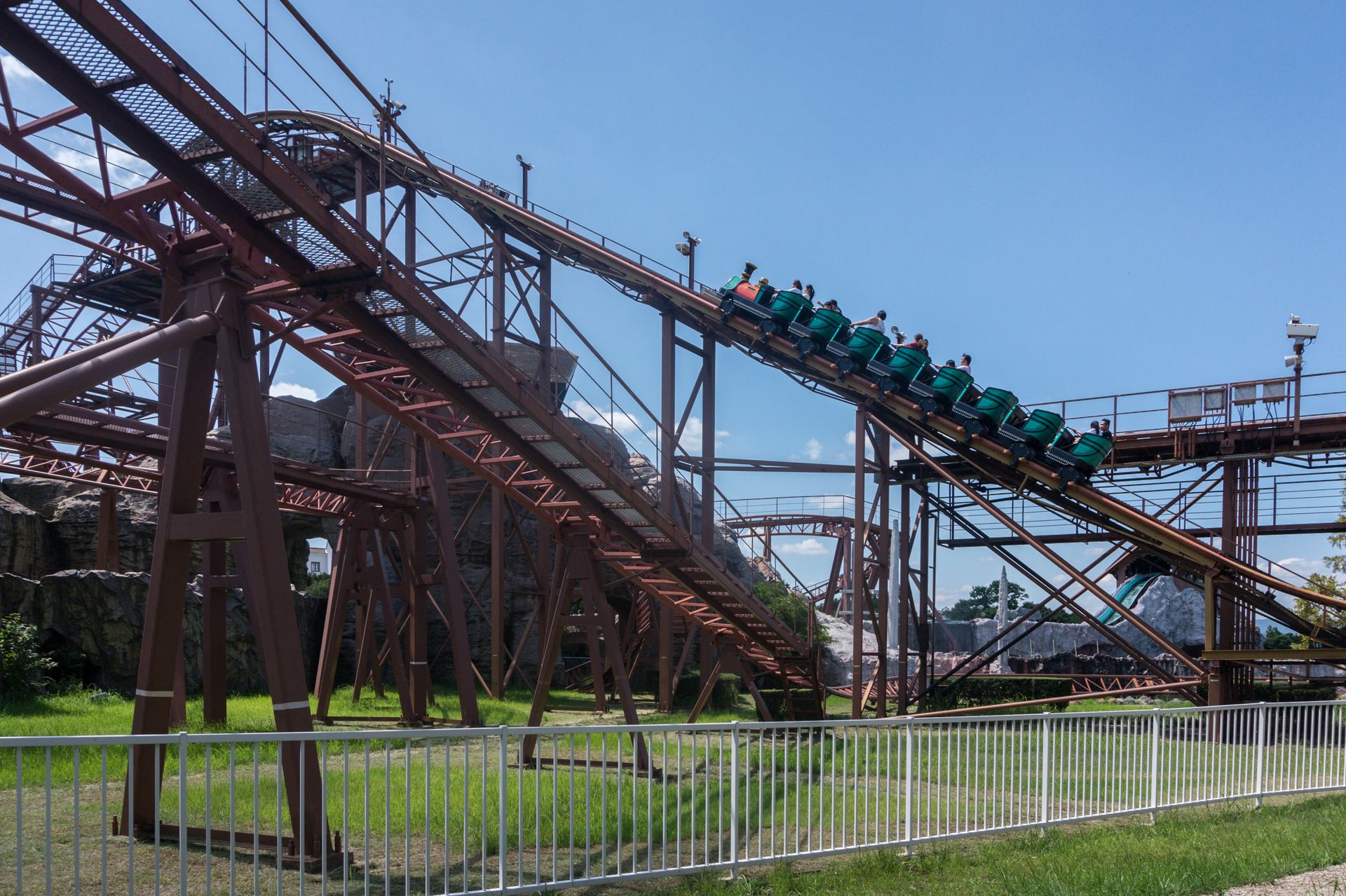
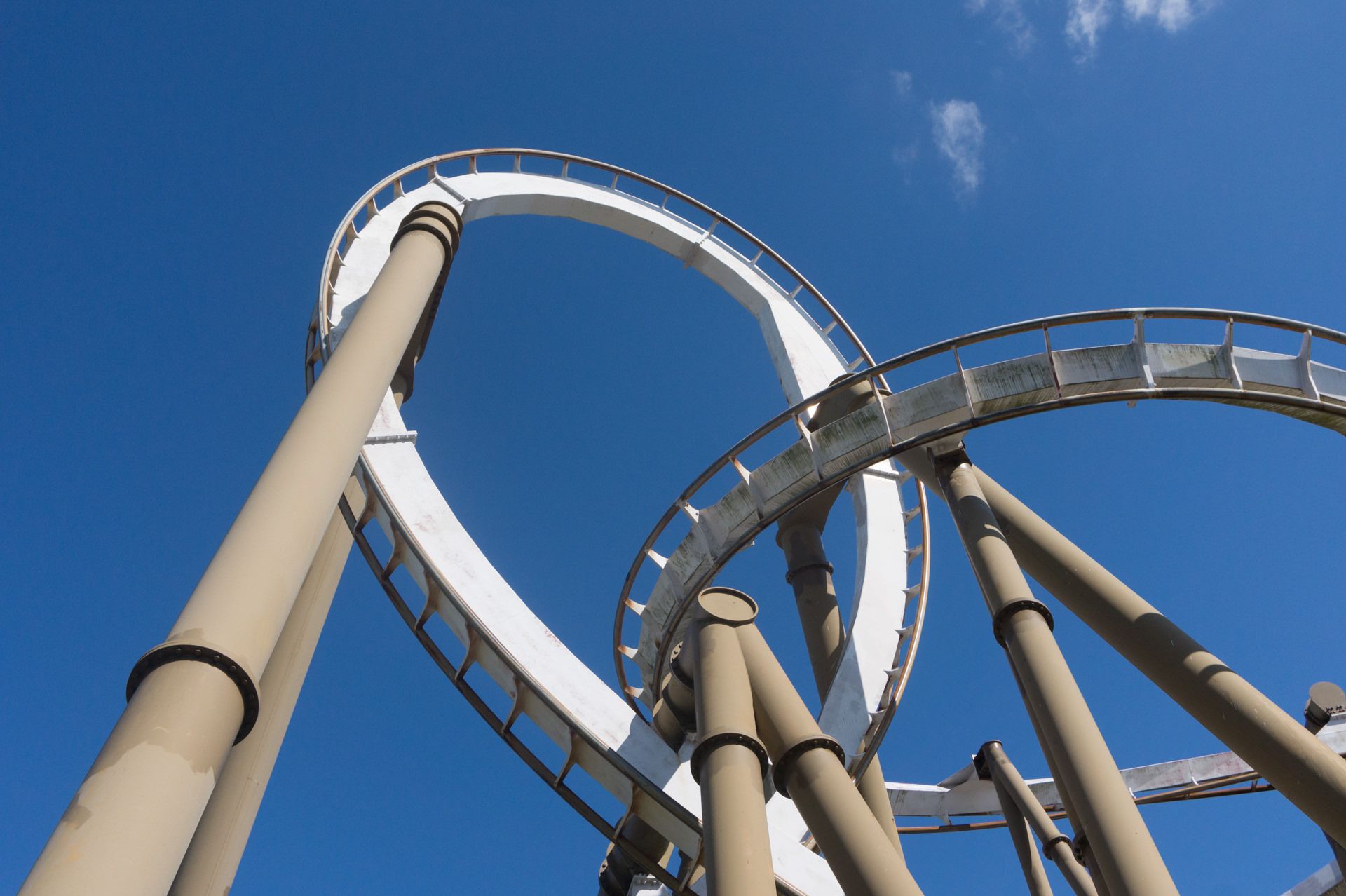
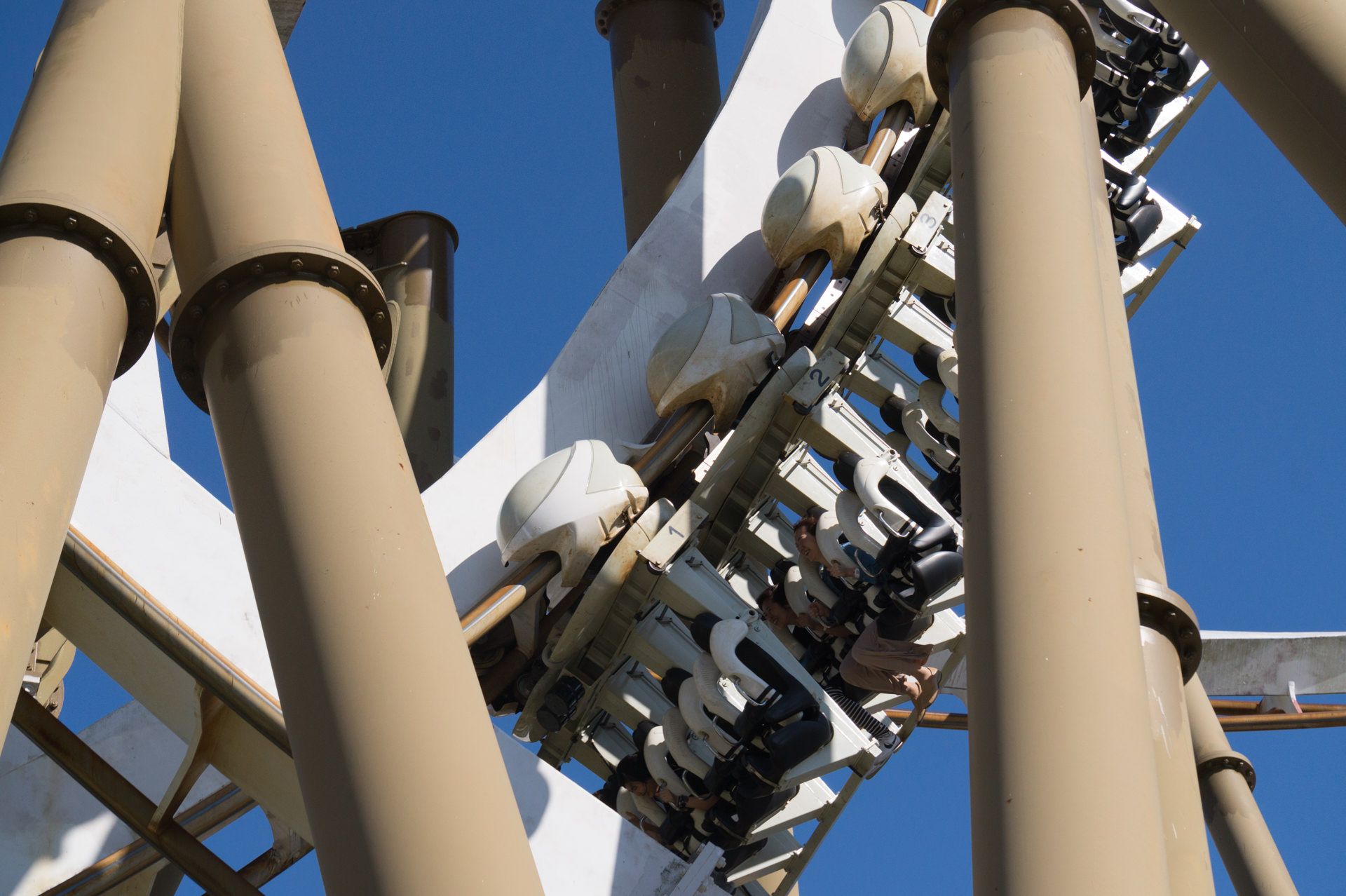
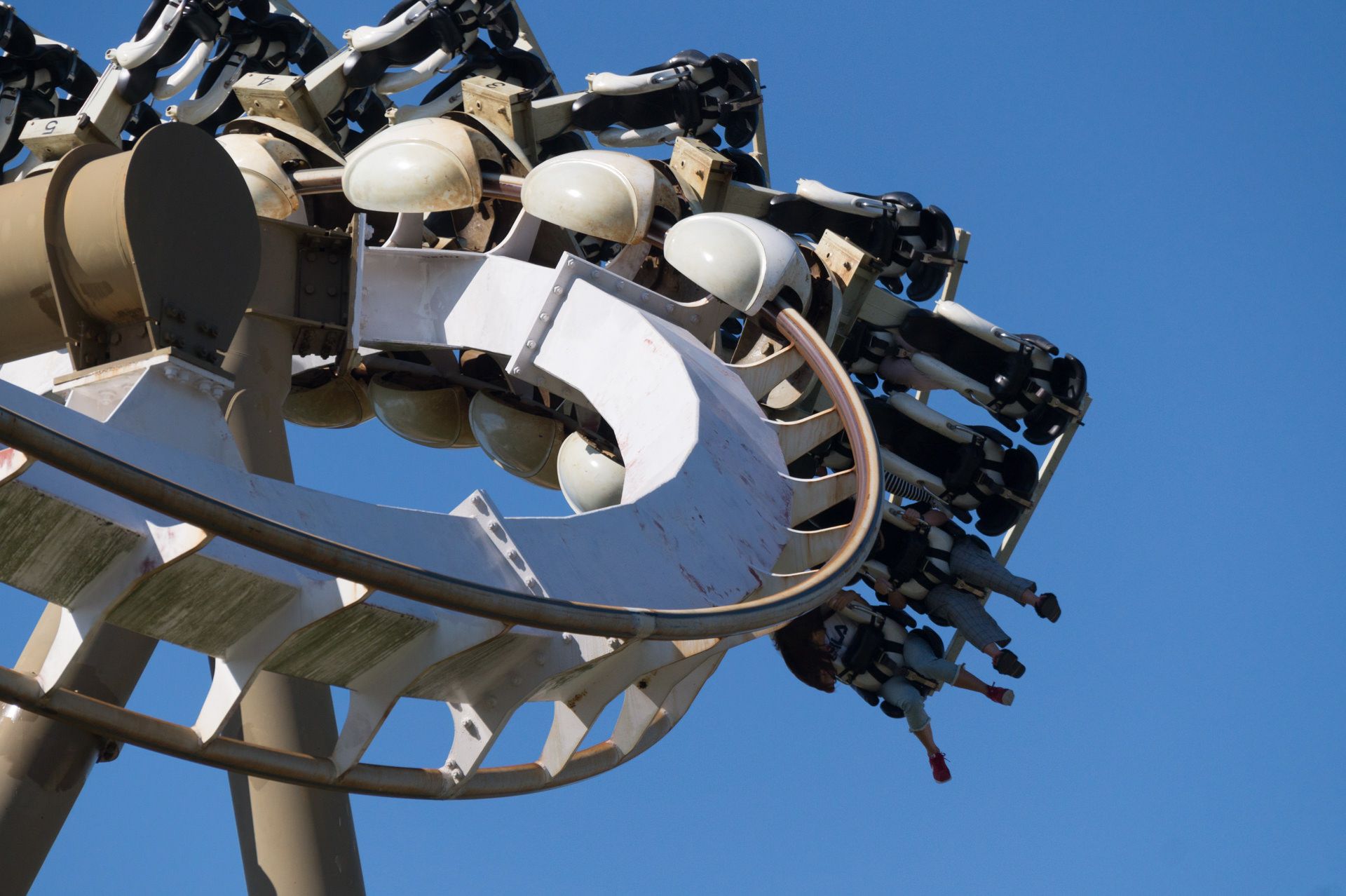
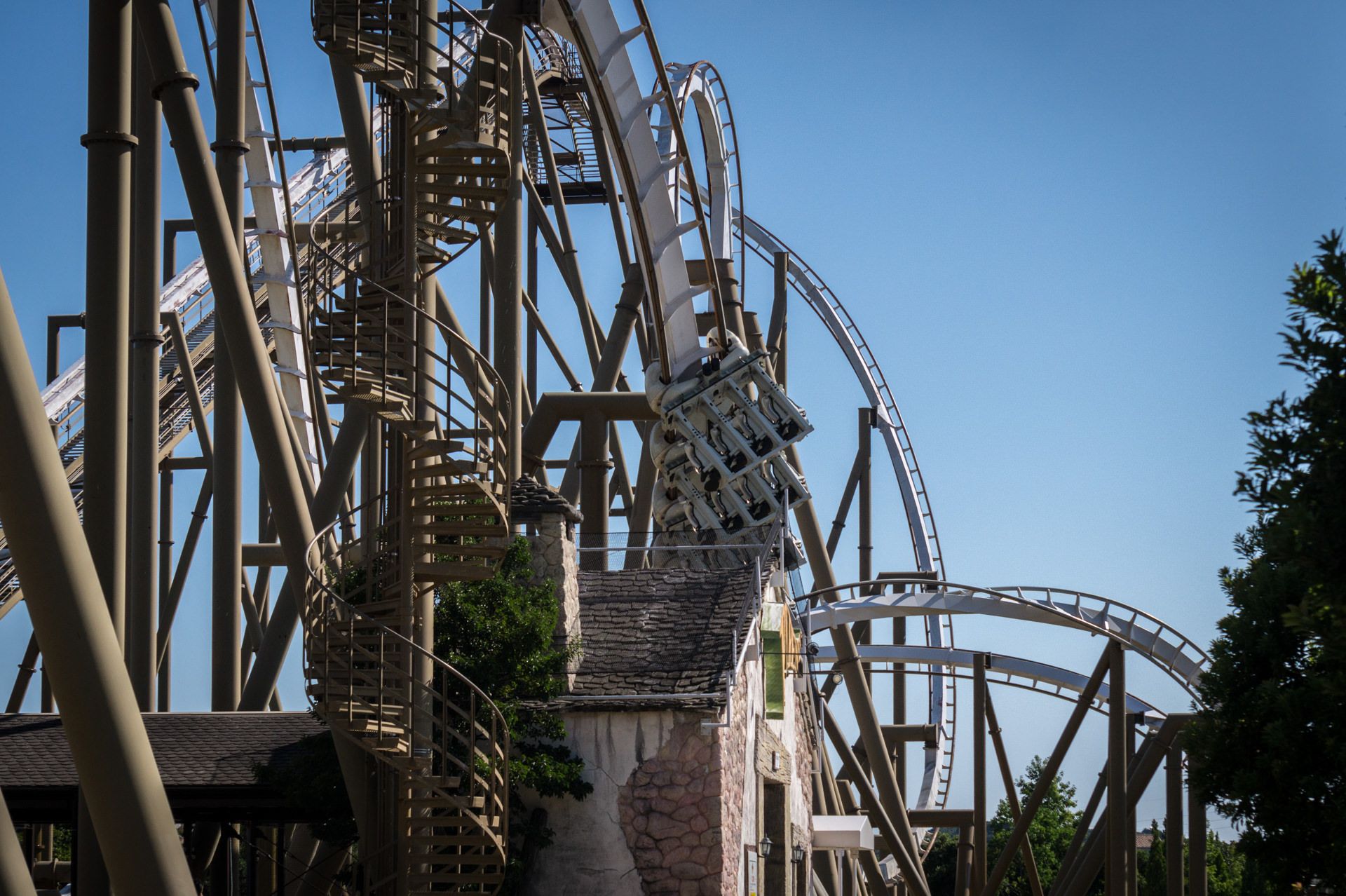
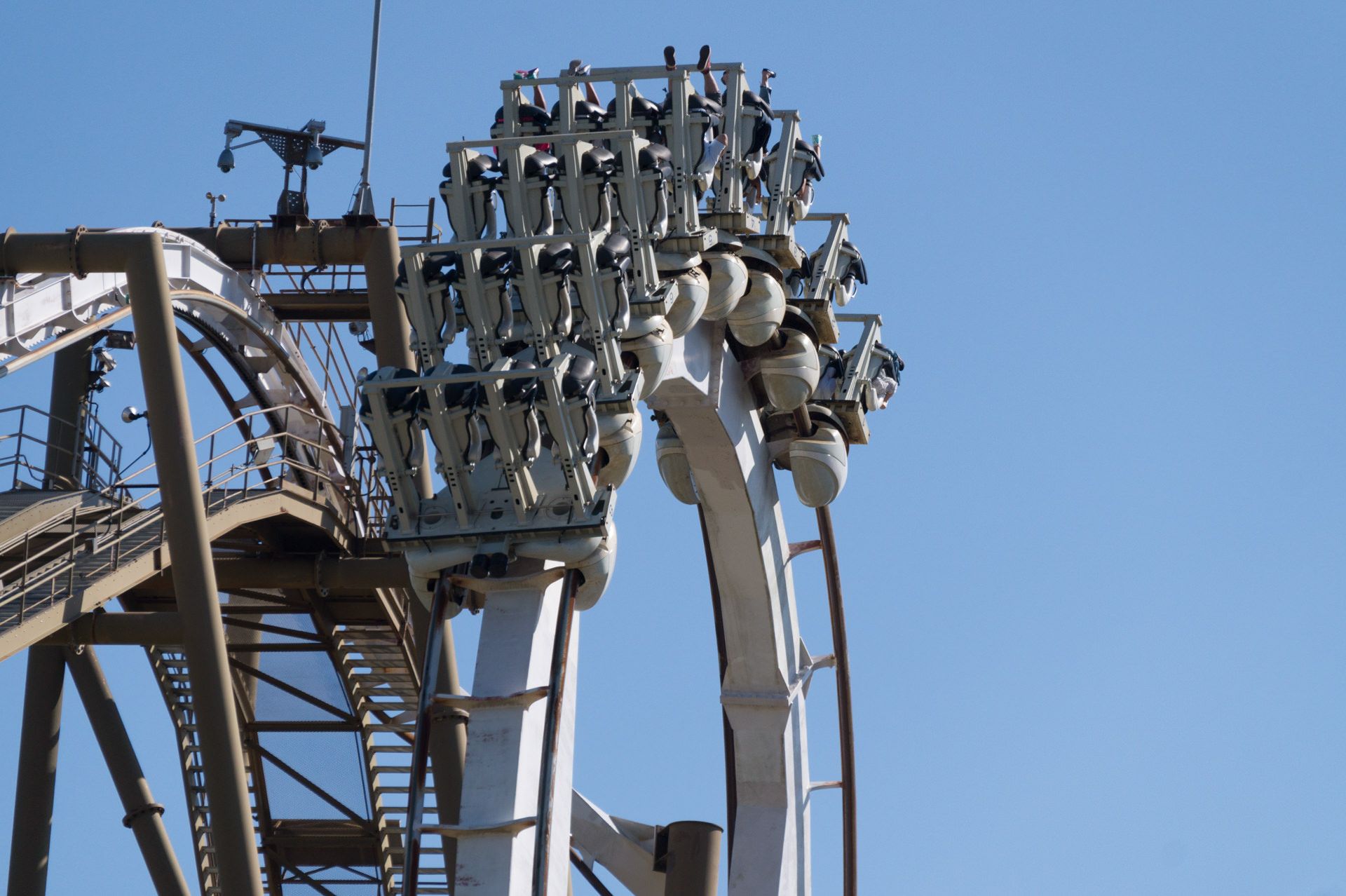
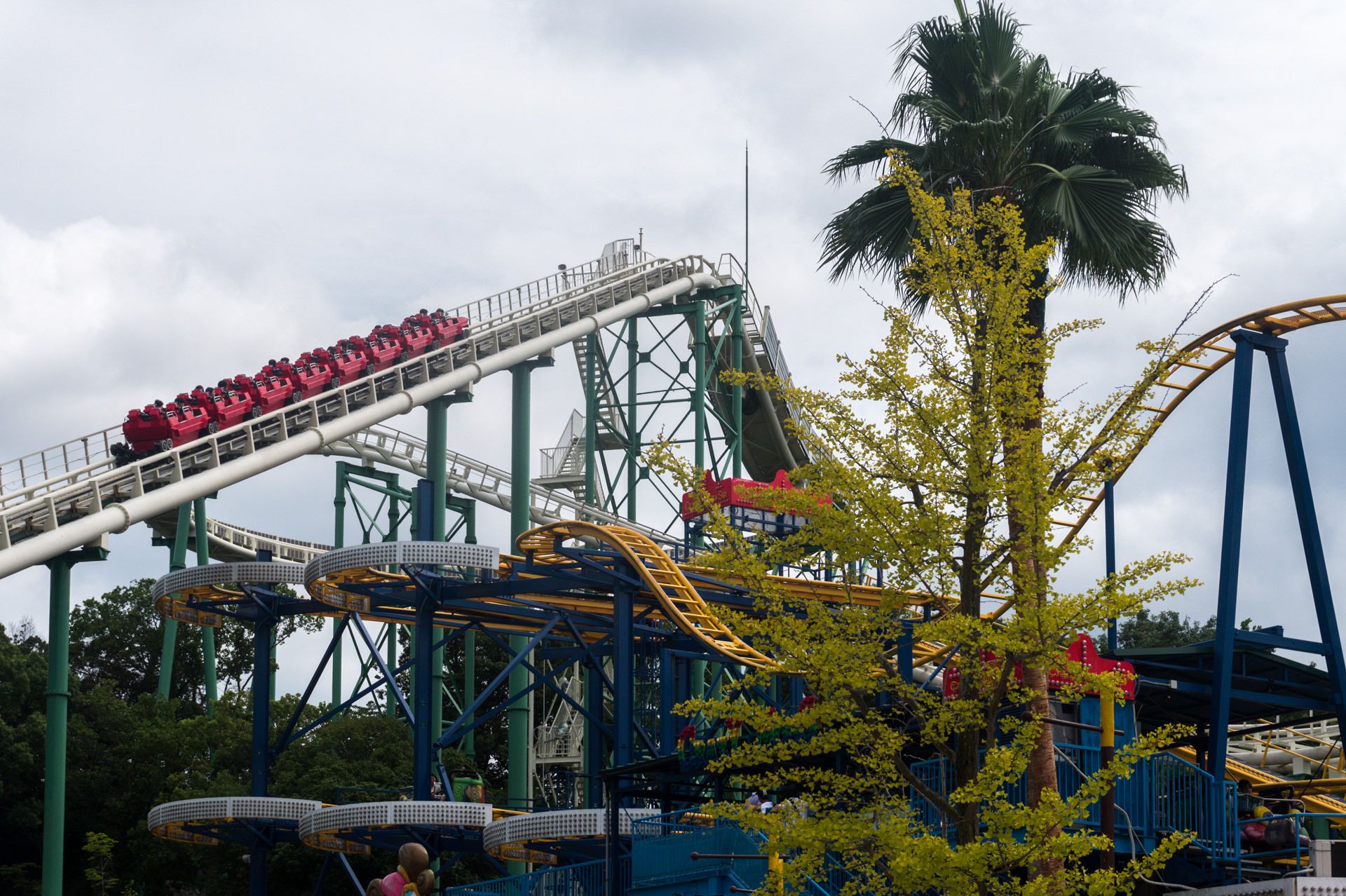
Many theme park fans are familiar with the park because of its Thunder Dolphin roller coaster, which has shaped the skyline of the park since the year 2003 and in particular the building complex in the LaQua area. The fact that the track leads through a building and the significant Big-O Giant Ferris Wheel also ensured a fast international reputation outside the fan community. Even though Facebook no longer plays a role, at some point everyone got a message with a reference to this roller coaster.

The amusement park itself is much older and dates back to 1955. Created as a supplement to the Korakuen Stadium built in 1937, the park quickly developed into one of the most important in the country. In fact, it was so important that Kijima Kogen Park in distant Beppu used to be called Kijima Korakuen Yuenchi for many years. The Korakuen Yuenchi or Korakuen Amusement Park was an important brand.

In the course of time, a lot was offered to the visitors on the grounds of the amusement park: whether it was the Jet Coaster built in 1955, as one of the first roller coasters in the country, the prototype of the Impulse Coaster by Intamin or a Togo Ultra Twister, as well as an Arrow Shuttle Loop. Unfortunately, none of the rides has survived the time and thus the park presents itself very modern and always state-of-the-art.

Sky Flower

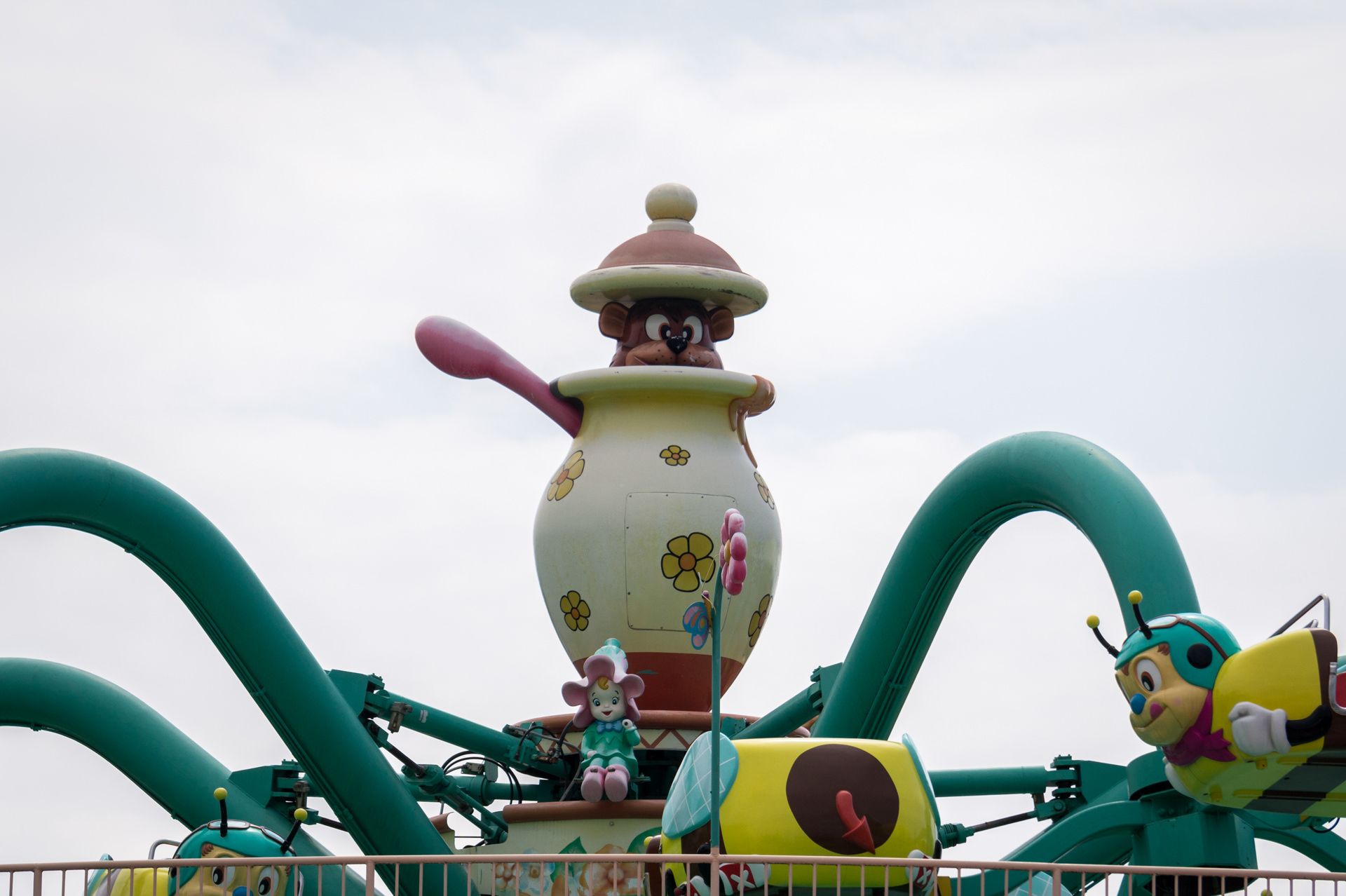
The park is divided into several areas: the LaQua Zone, the Viking Zone, the Parachute Zone, the Geopolis Zone and the Splash Garden Zone. Coming from the train station Suidōbashi you first encounter the Parachute Zone with its outstanding Parachute Tower Sky Flower. On the same level you will also find the park’s very snazzy teacups and music express.

Tokyo Panic Cruise

Directly below is the Geopolis Zone, home of the Theatre G-Rosso and the dark ride Tokyo Panic Cruise. Several times a day (on weekends and during school holidays), the theatre hosts a Hero Action Show, which is very popular, at least according to the website. Right next door, the dark ride Tokyo Panic Cruise impresses with its ride system, which is similar to the Spiderman dark rides of the Universal Studios Parks.

Adjacent to it is the Viking Zone with its giant boat swing and a quite interesting car ride. There is also a small collection of children’s rides.

Wonder Drop and The Dive

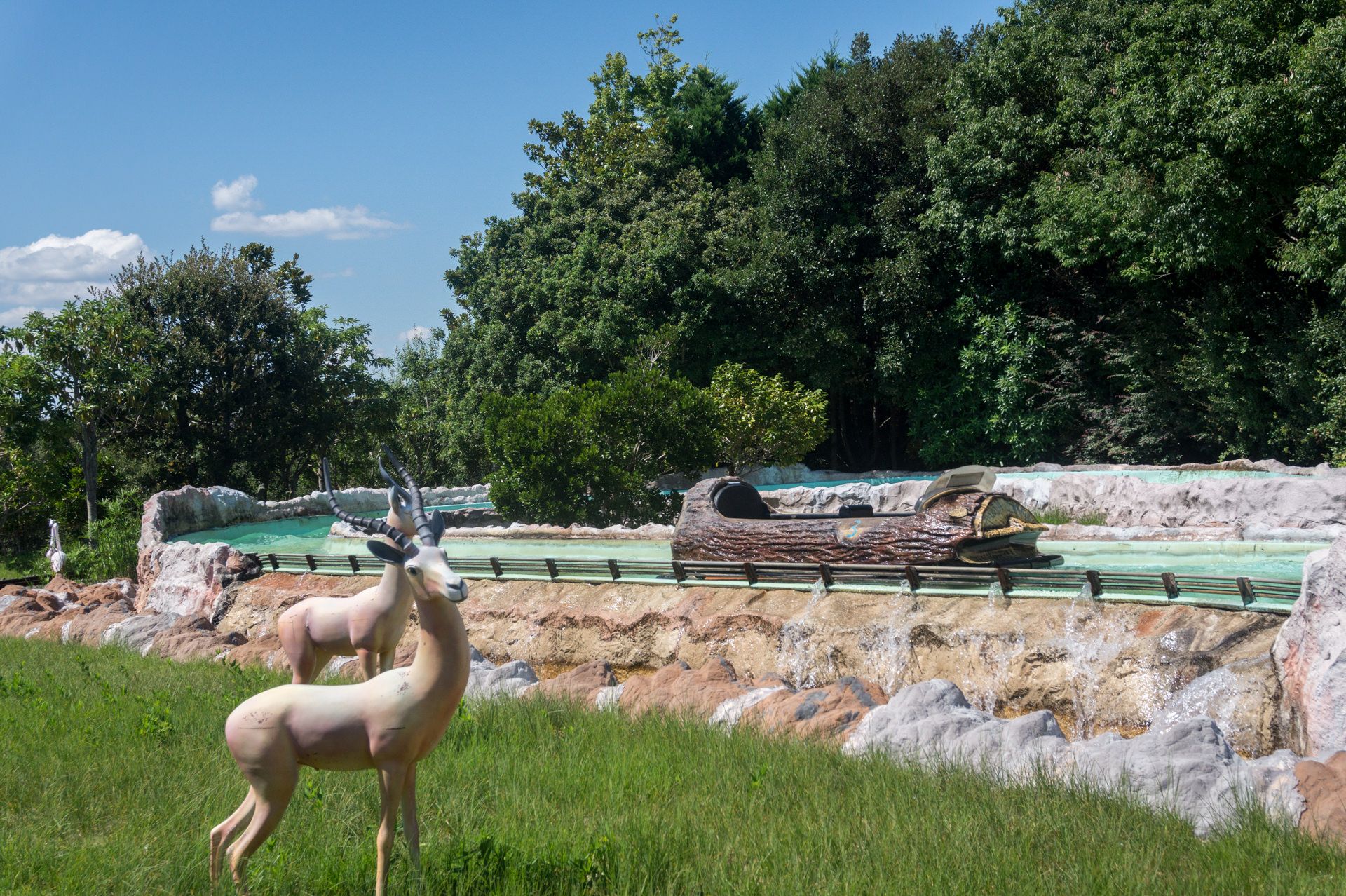
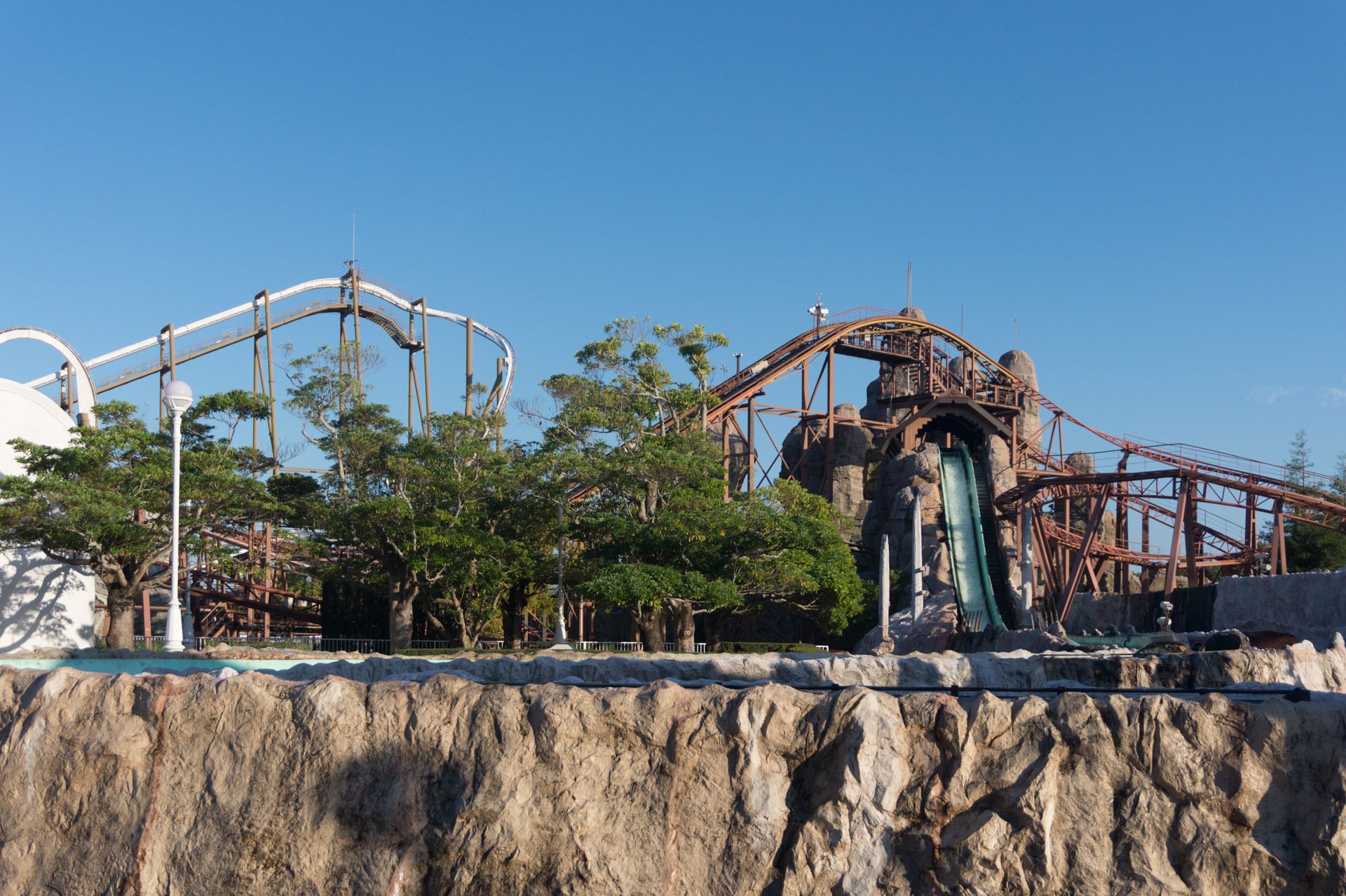
From here you can change to the LaQua zone via an underpass or a bridge. On the lowest level of the complex is the station of the O.D. Hopkins Wonder Drop log flume, which is supposed to get pretty wet, according to the Achterbahnreisenden (a highly recommended podcast that has thoroughly tested all the attractions of the park). Also on this level you can find the very interesting interactive dark ride The Dive.

Thunder Dolphin

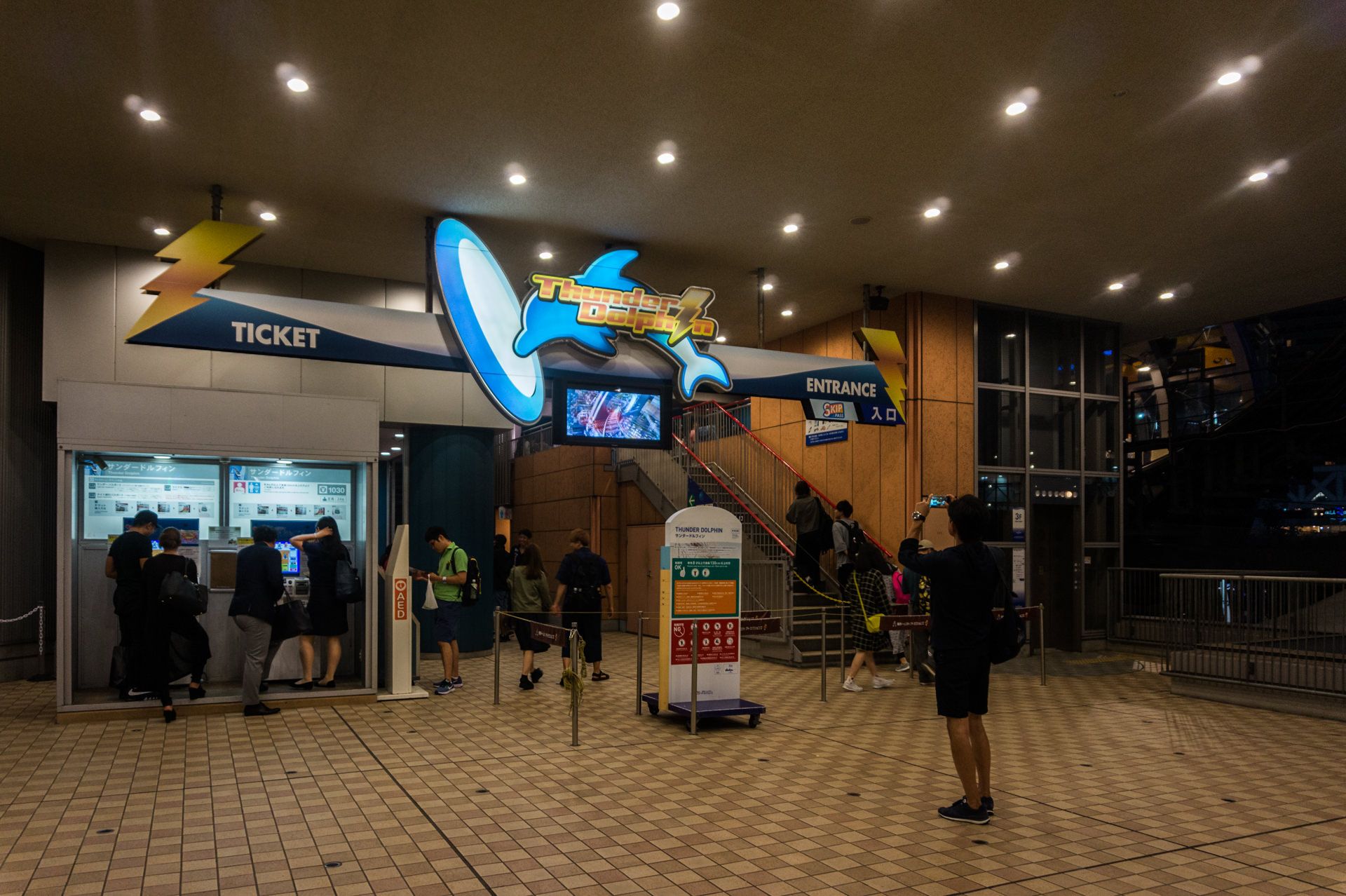
The main reason for our visit to the Tokyo Dome City can be found several levels up. For 1030 Yen (about 7,70€) we bought a ticket for the Thunder Dolphin and immediately queued. The line moved quite fast, so it shouldn’t take long until we were sitting in the train. However, when it was our turn it started to rain. Everything stopped, rien ne va plus. Too bad. Nicolas explained to the personal, that we would like to get our money back.

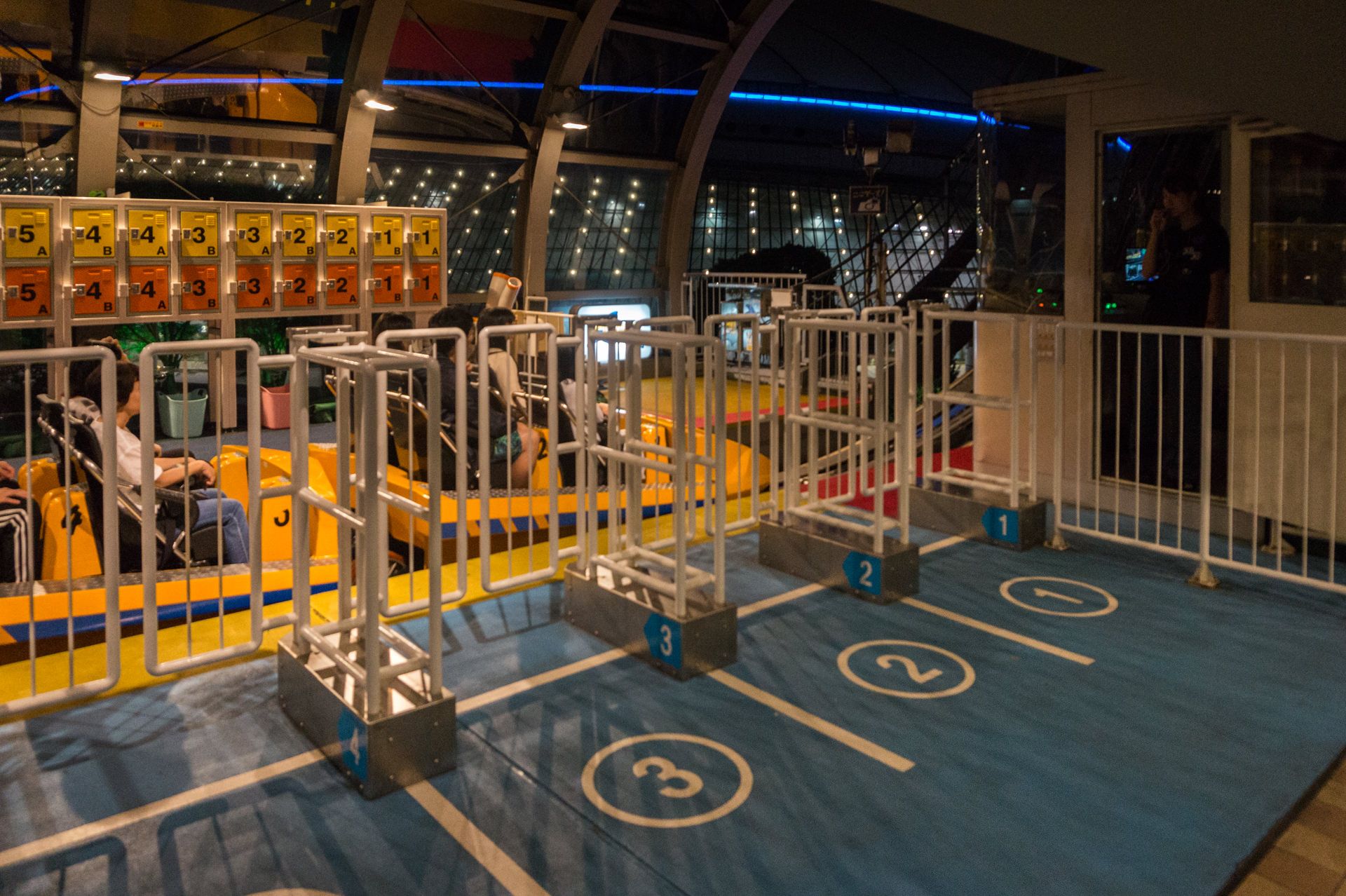
In the end we were allowed to wait in the station of the roller coaster and after half an hour the regular operation continued. We locked our belongings in the lockers for a second time – this time not for places somewhere in the middle, but in the back of the train.

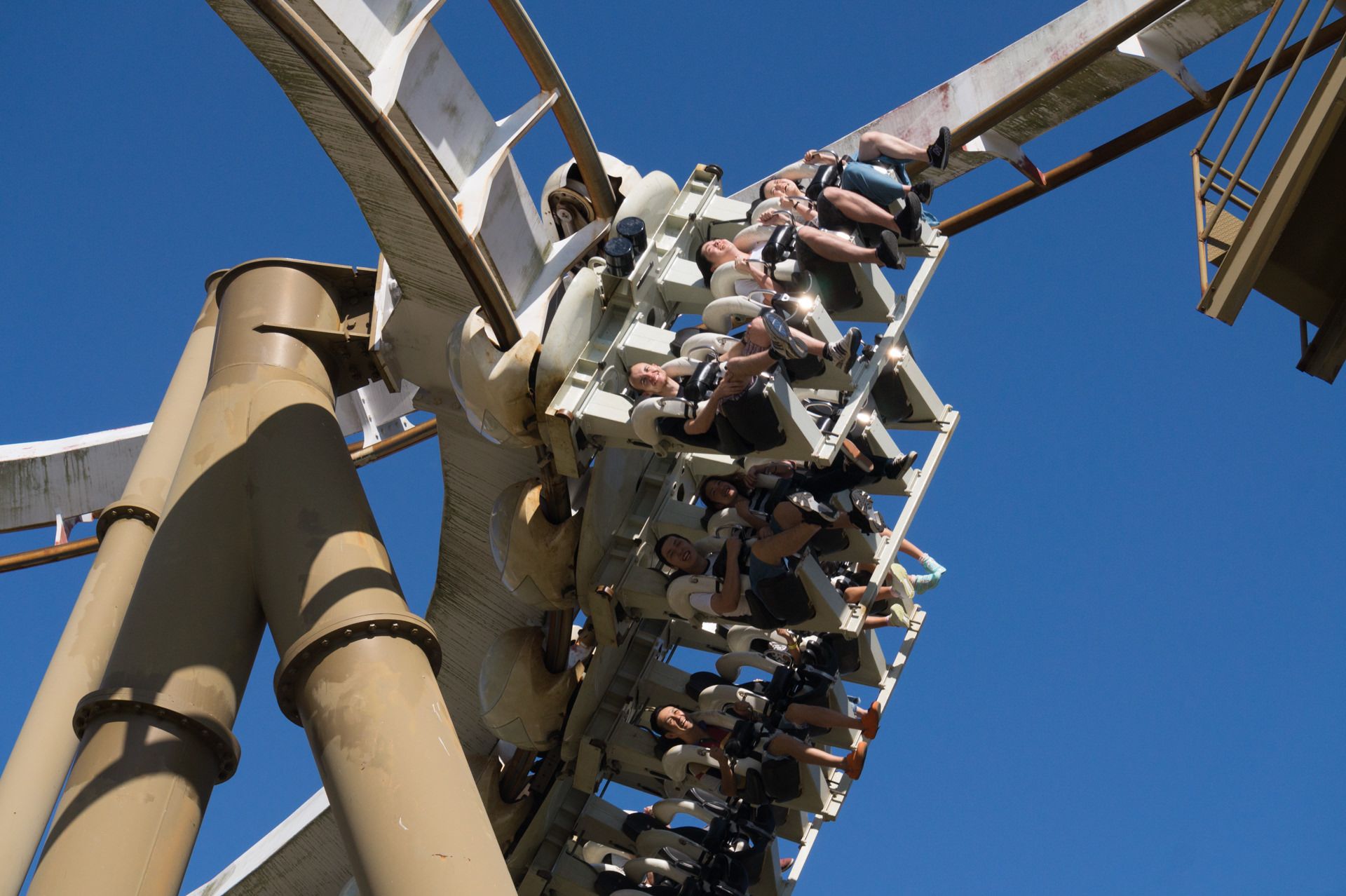
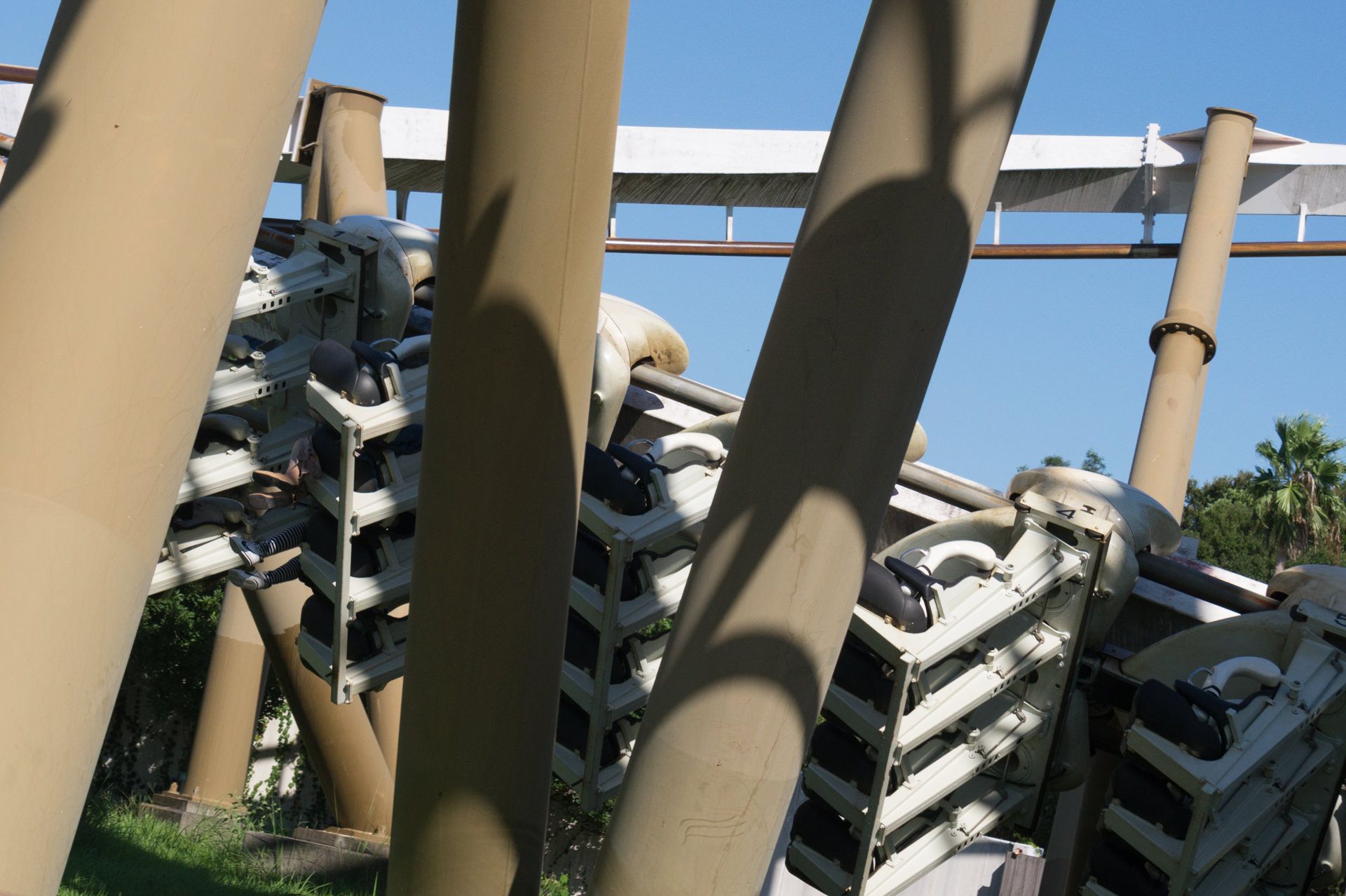
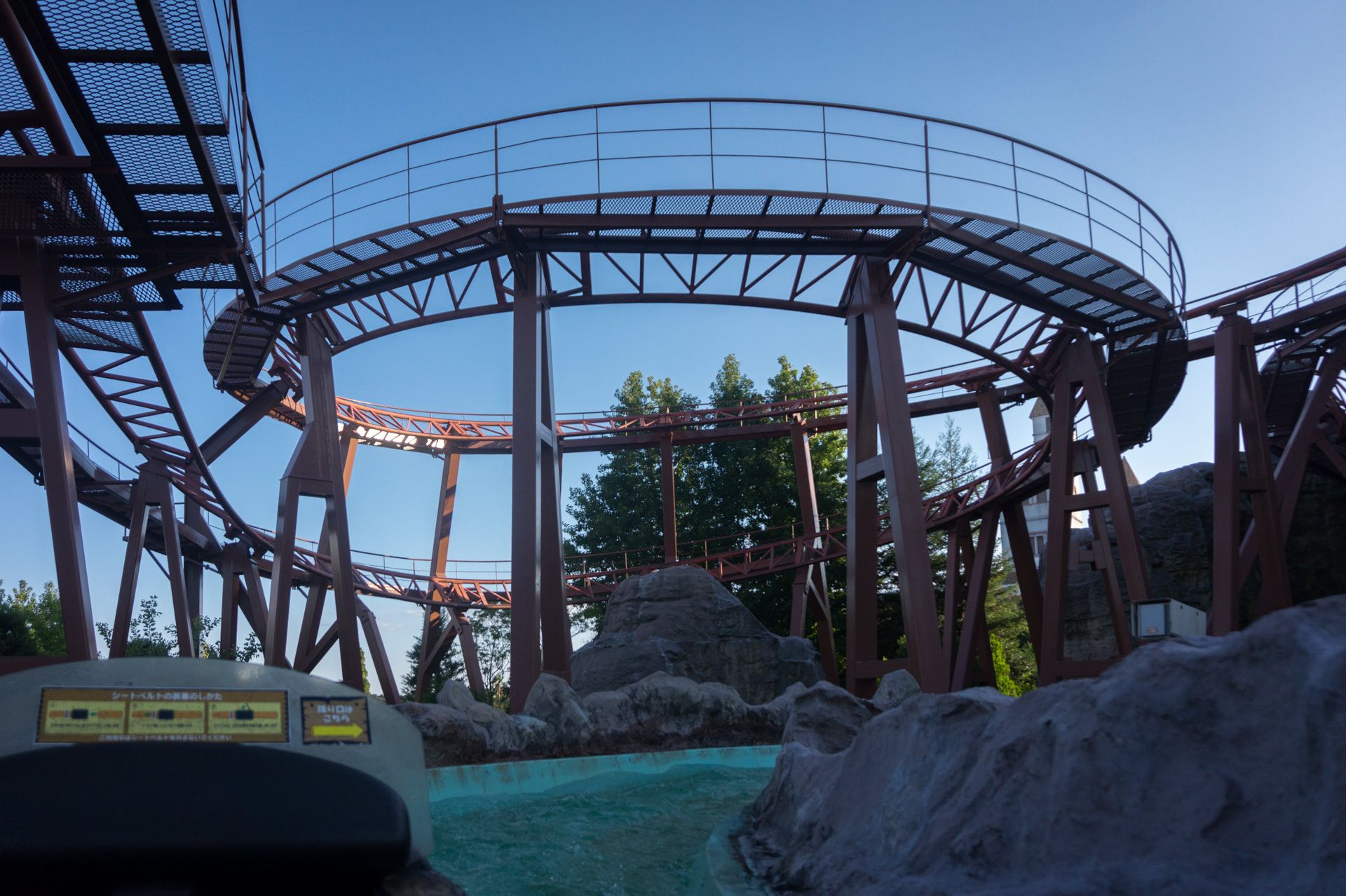
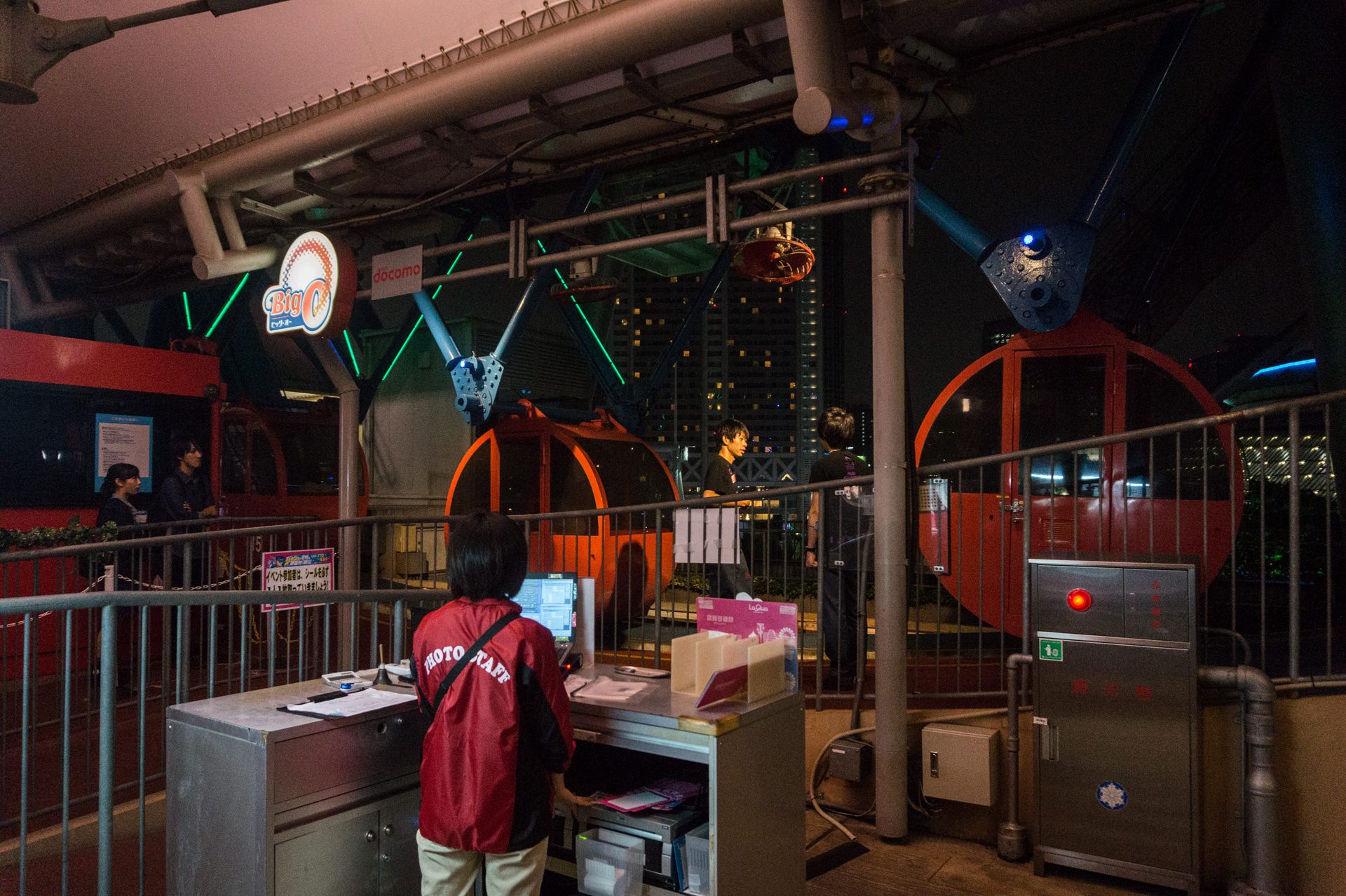
The cable lift takes you up to a height of 80m very quickly. With a breathtaking view of the city, you descend 66.5m in a spectacular descent. Then you rush through the adjacent valley at 130 km/h before the train turns to the roof of the spa building. In a nicely banked curve, you climb to the top of the spa building, where there is a small gradient and a camelback. The train plunges to the ground one more time through a hole in the wall. Just above the track of the log flume, we cross another valley before turning towards the Big-O Ferris wheel. We cross this hubless and 60m high Ferris wheel of the company Intamin where other Ferris wheels would have their hub. A short moment later and (thanks to the constant lateral slope and the massive supports of the wheel) one knowledge richer, we start the second round. Parallel to the first descent, we now race over a speed bump before we climb the roof of the facility once more. Quite leisurely we follow the waves of the roof construction and lean to the right and to the left. Although very dynamic, this section is a bit quirky. After some time the edge of the roof is reached and we jump down from about 30m for the last time. After a short straight the braking track of the ride follows and soon we arrive at the station.

The Thunder Dolphin is actually a really, really, really awesome roller coaster. The First Drop is outstanding and the distance up to the second rooftop visit is really incredibly good. Unfortunately the fun decreases significantly towards the end, where a grand finale should have been waiting for the passengers, but couldn’t be solved otherwise due to the existing boundary conditions. Nevertheless, I can’t imagine a better roller coaster as my 500th ridden coaster, especially since I rode a similar roller coaster alot during my visit at Tobu Zoo Park in the morning. The coaster impresses quite a lot and the 80m high ride (although only 66,5m of it are used efficiently) is a lot of fun and therefore should not be missed.

Pictures Tokyo Dome City Attractions

Conclusion Tokyo Dome City Attractions

The Tokyo Dome City Attractions amusement park is an exceptionally nice amusement park in the middle of a metropolis of millions. The choice of amusement rides is quite impressive and with the Thunder Dolphin and the Big-O you have two very significant attractions in the park. Especially in connection with a visit to the onsen and a dinner I can imagine another visit to the Tokyo Dome City. But then, I will visit the Tokyo Dome City Attractions with a Free Pass, as I can would like to ride the Parachute Tower Sky Flower, their dark rides and their novelties.

Closing Words

Originally a visit to the Yokohama Cosmo World was planned for the day, but due to a change in our schedule we were now drawn towards the indoor amusement park Tokyo Joypolis. However, we reached it a few minutes after the final admission. Actually, it was even worse, as we now went to visit the Cosmo World amusement park on a day of rest. But hey, there will be future visits to Japan. Stuff like this can happen. At least, I can definitely recommend the Hawaiian restaurant with live music in the mall next door.


What is your opinion about the Tokyo Dome City Attractions?  Just write it in the comment field below the report or visit our social media channels:


Click here for the next report of the Titanic Max Tour

¡Viva España!

The History of Parque España

It is an indisputable fact that the Japanese are always enthusiastic about European culture; places like Rothenburg ob der Tauber, for example, are considered one of the hotspots of any trip to Europe and restaurants from all possible regions of the Occident – in a selection that one would wish for more often in Europe – are extremely popular and sometimes very exquisite. One could therefore make the assumption that the same explains Parque España.

In order to improve the utilisation of its railway line, the railway company Kintetsu planned several resorts along the Shima Line, among which the resort at the terminus was to have its own amusement park to meet the increased needs of tourists – a modern interpretation of a classic trolley park.

It is strange that the amusement park that most closely resembles a typical park in our favourite holiday destination is located in Japan and that there is no similarly themed amusement park in Spain. It is even stranger if the reason for this decision was that the theme of the resort was simply hardly or not at all known to the Japanese at the time of the planning and it was only chosen because of the similar weather conditions. Major media events, such as the Summer Olympics in Barcelona and the 1992 Expo in Seville, then generally suited the park so that it could successfully start its first season in 1994.

After just a few weeks, the park welcomed over one million visitors. By the end of its first season, it had attracted 4.2 million visitors – an unparalleled success, one might think. In fact, things were a little different at Parque España, because its initial success was immediately followed by its decline. Already in its second season, the number of visitors dropped to about 3 million – not unusual in itself, as this is usually followed by a stabilisation of the figures – but in the following year the number of visitors dropped by another 500,000. The opening of the Pyrenees roller coaster and the dark ride Viaje Aventurero de Don Quijote counteracted the trend for a short time, but it could not be stopped. It was not until 2000 that the decline stagnated for the first time for several years at around 1.6 million visitors. In 2005, the numbers for the entire resort once again dropped in the double-digit range, but again they were able to catch up until 2008. Then in 2009 the number of visitors dropped by 13.4%, in 2008 by 7.2% and so on and so forth. It remains to be seen whether Shima Spain Village will be able to maintain its position for much longer and whether the number of visitors will actually stabilise at some point.

Tour of the park

But enough of the doom and gloom, we are going to Spain after all. So bring out the red wine and your best Brandy; you probably already have the tapas to go with it, and if not, I’ll now present you with a few delicacies. However, if you’re short on wine, you can also reach for your favourite cervesa.

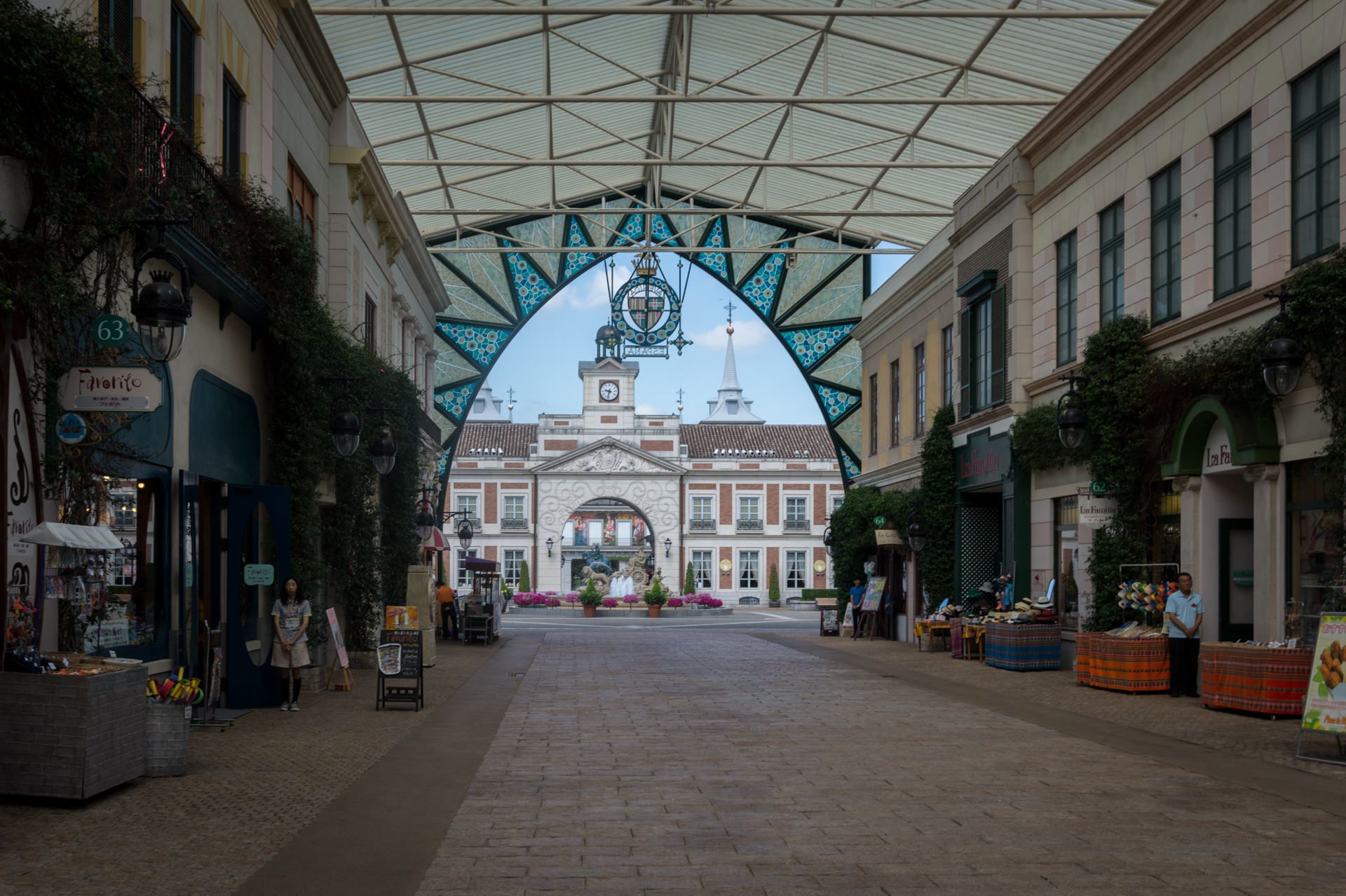
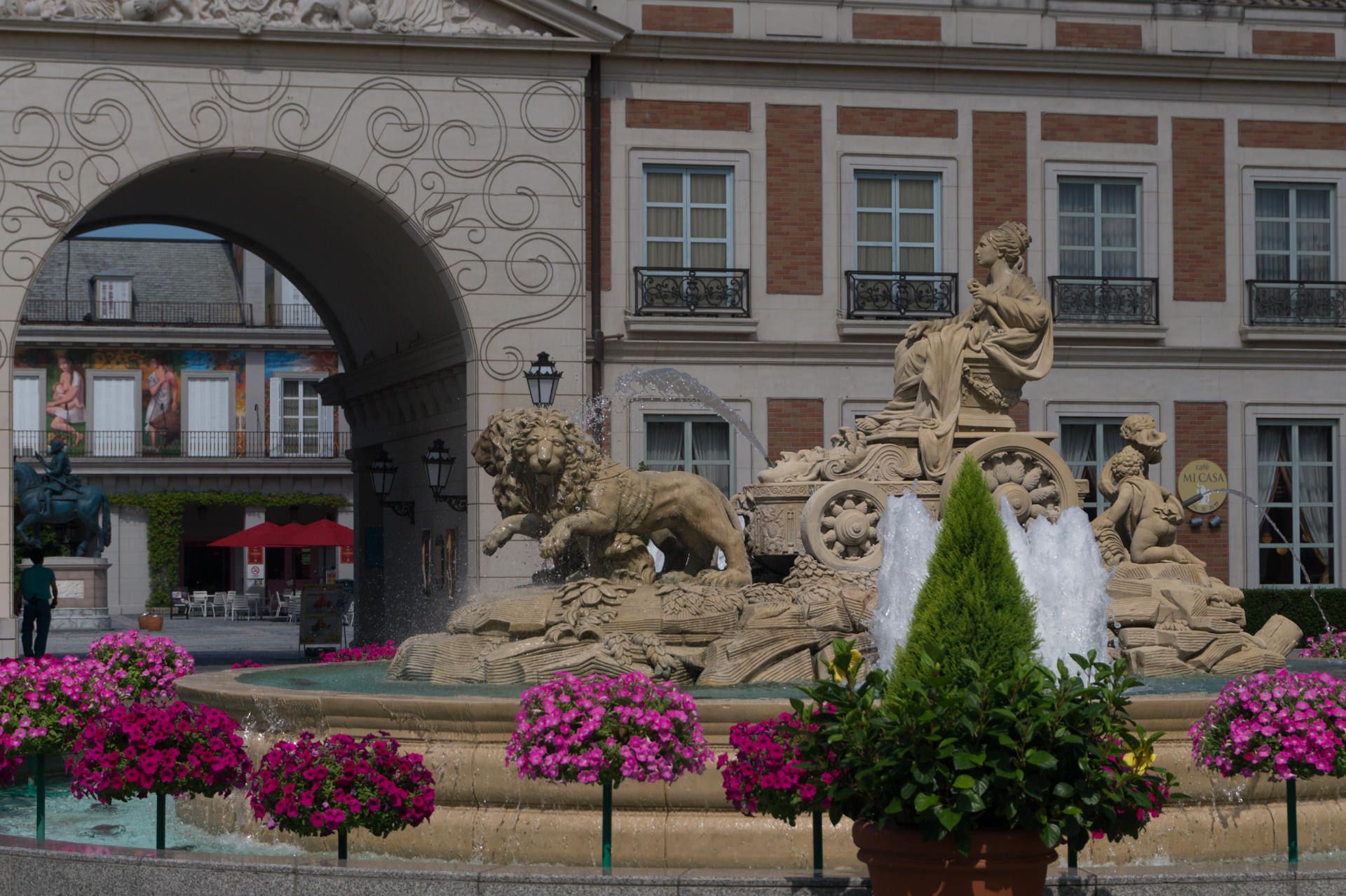
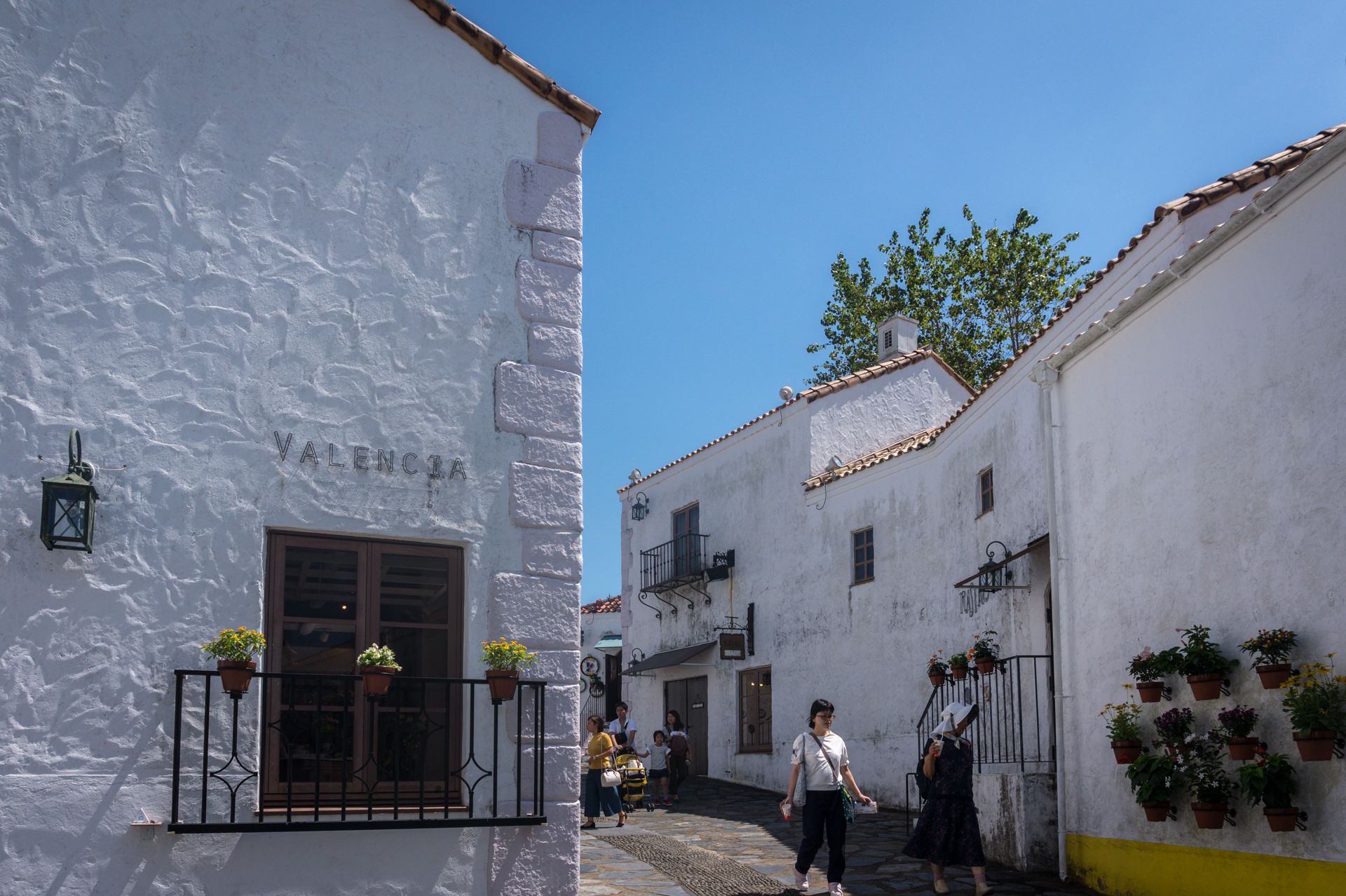
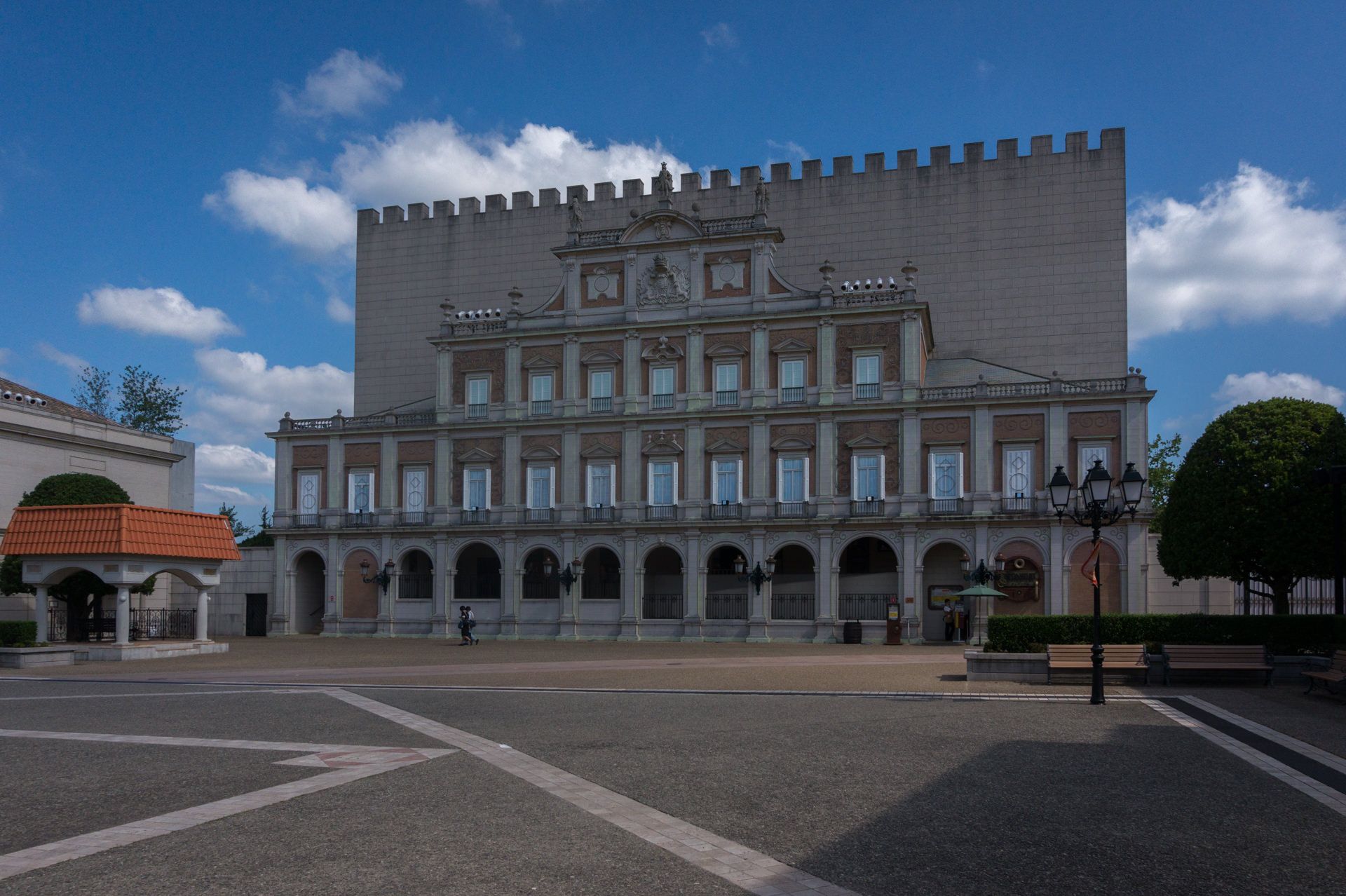
We enter the Parque España via the Avenida de España, the covered main street of the park, and immediately feel like we are on the Iberian peninsula. The effect is intensified on the Plaza de Cibeles, where we immediately see ourselves in the middle of the Spanish capital. Unlike the original, the large square here is not lined by the town hall, but by facades of various Spanish buildings and a bullring.

Steampunk Coaster Iron Bull

Where recently the train was forced into the arena on the Matador bullfight coaster, an iron bull now rolls impressively through a machine hall. The Steampunk Coaster Iron Bull is by no means as memorable as its design. Secured by shoulder restraints, we first ride through a short left turn and immediately climb the ride’s first lift hill. In an increasingly steep left turn, the bull plunges 12 m to the ground and reaches a top speed of 52 km/h. After this, we quickly climb a hill and before we know it, we are in a downward helix, whereupon the track runs close to the ground along the wall of the hall. Continuing in a right-hand bend, we now cross the section of the first slope and plunge towards the hall floor once more. Passing through a backdrop, we then climb another hill, whereupon we reach the show part of the ride.

During the time in the block brake, the steam train is supplied with hot coals for the rest of the ride. A progress scale is displayed and finally we are given the green light, just like a classic accelerator coaster; only the launch is missing. Instead, we move forward a few metres before the brake brings the train to a halt out of the blue. A very slow turn follows, after which the second lift hill is reached. The train also leaves this hill in an increasingly steep curve and immediately reaches the floor of the hall. After the subsequent left turn, the braking section follows and shortly afterwards the station and the ride, which was quite entertaining until the show part, comes to an end.

El Circo Pierrot

Hidden behind one of the other facades is the covered and very nicely designed children’s land El Circo Pierrot, including an interactive dark ride on the hall ceiling, which is not to be missed.

However, if you are drawn to Madrid, you can step through a portal onto the Plaza Mayor. Just as impressive as the original, it is adorned with a multitude of bars, restaurants and shops; of course in a rather high-priced segment. A visit to the Plaza Mayor is perfect for a cervesa or an afternoon siesta.

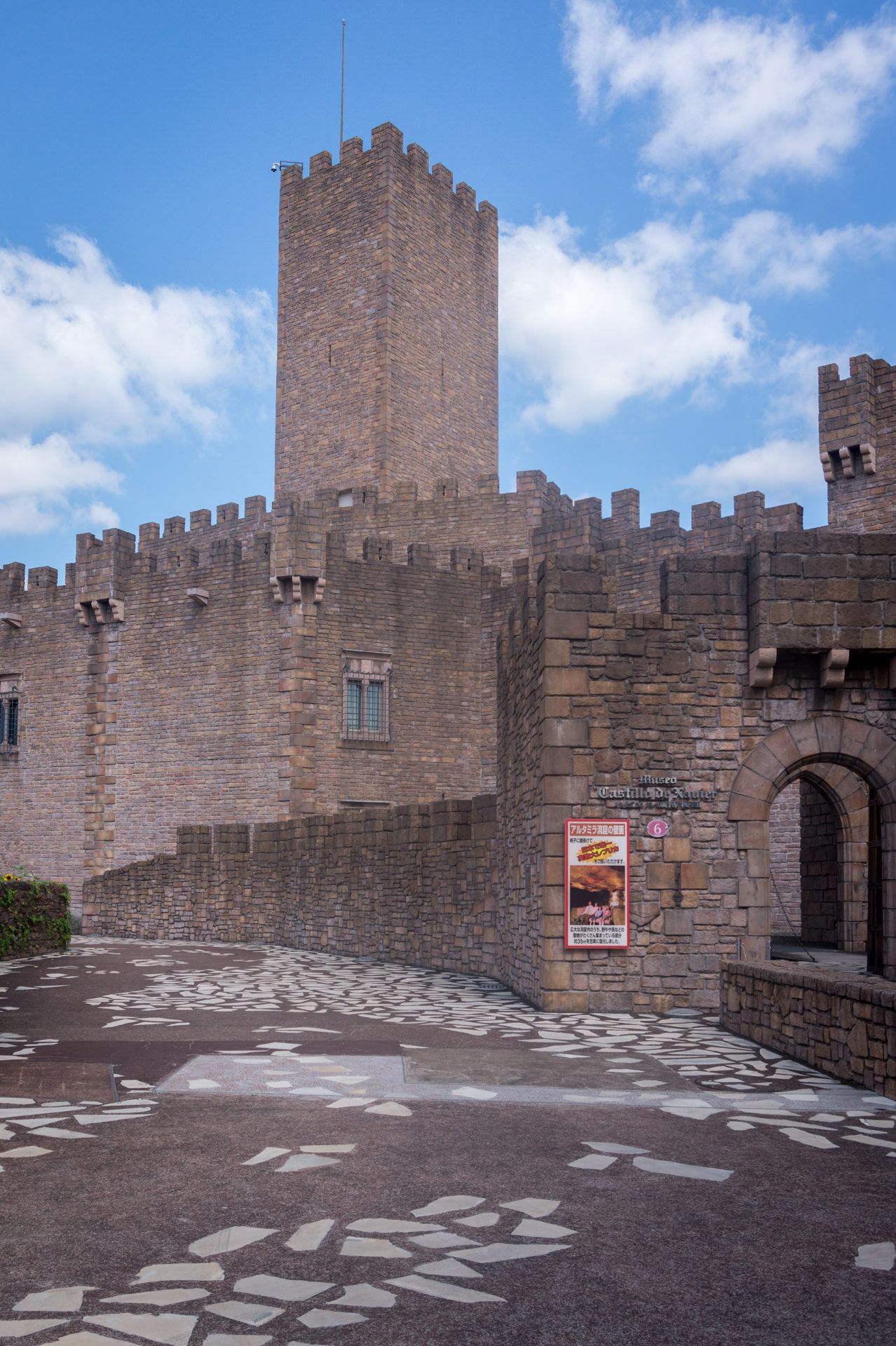
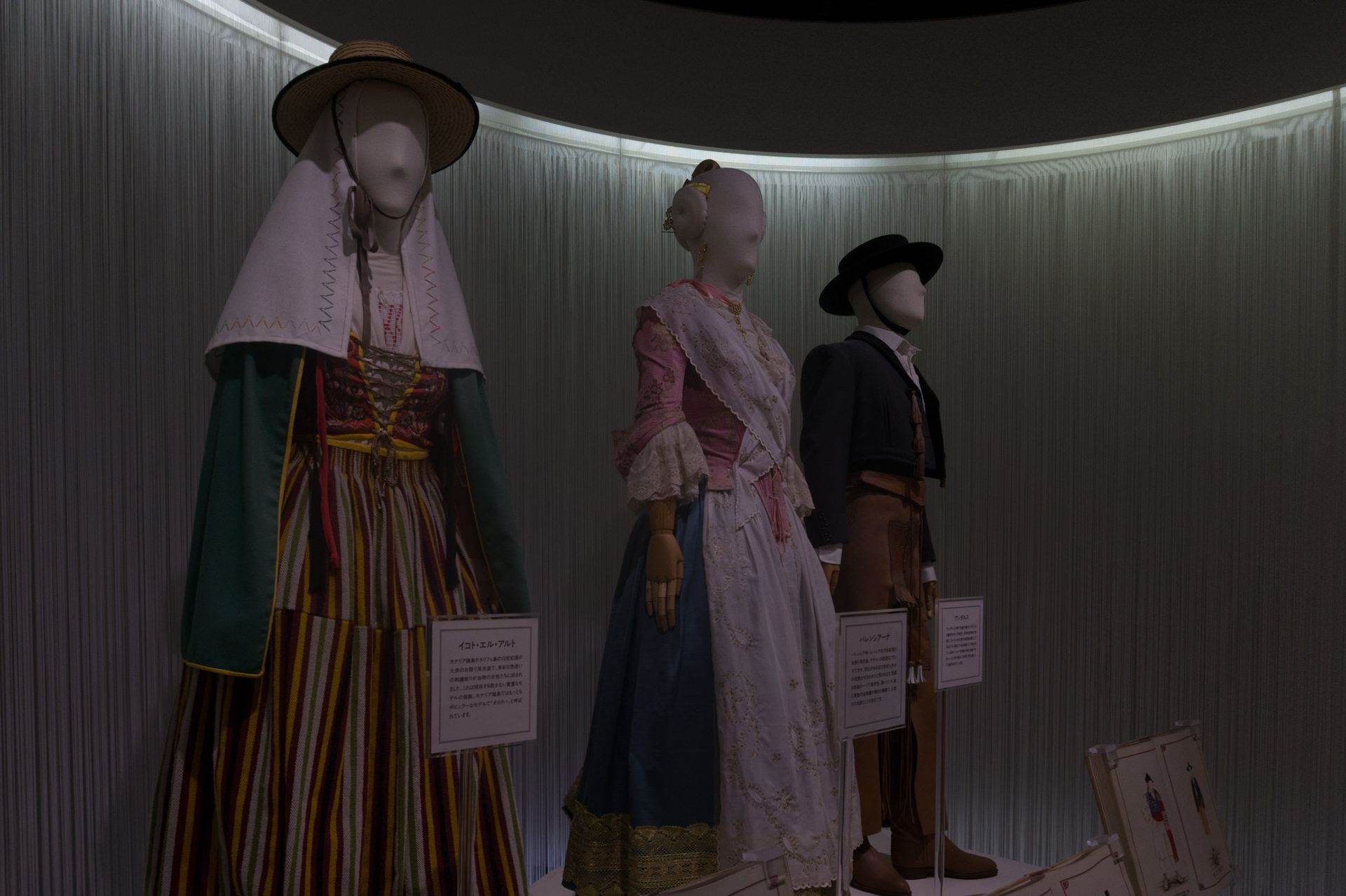
Those who want to find out more about Spain outside the visible architecture can do so in the spacious and extremely worthwhile Castillo de Xavier museum. Here, a tour through Spanish history, art and crafts awaits the interested visitor.

ABCDEspaña

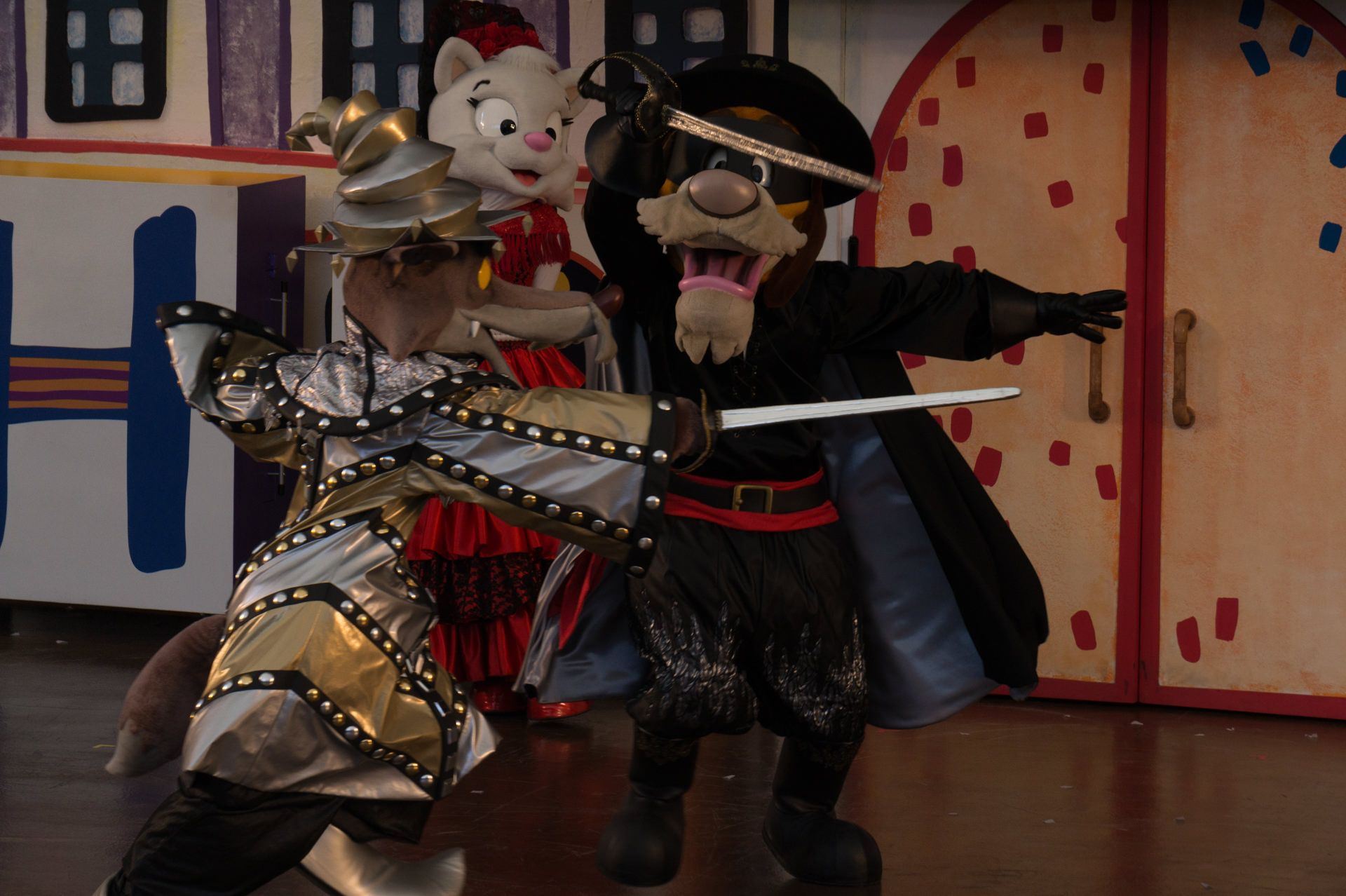
Meanwhile, a completely different image of Spain is conveyed in the musical show ABCDEspaña, in which typical Spanish customs and terms are conveyed by the park mascots using the ABCs. In doing so, they fall back on the Spaniards’ favourite form of entertainment – in my view very authentically – because well-choreographed shows always go down well. All in all, the show is extremely enjoyable, quite entertaining and even the sound was very good.

We leave the upper plateau using (disco) escalators and descend to the Plaza Colón, a beautifully designed area where two dark rides and a short walkthrough await visitors.

Casa Misteriosa de Choquy and Feliz Cruise 

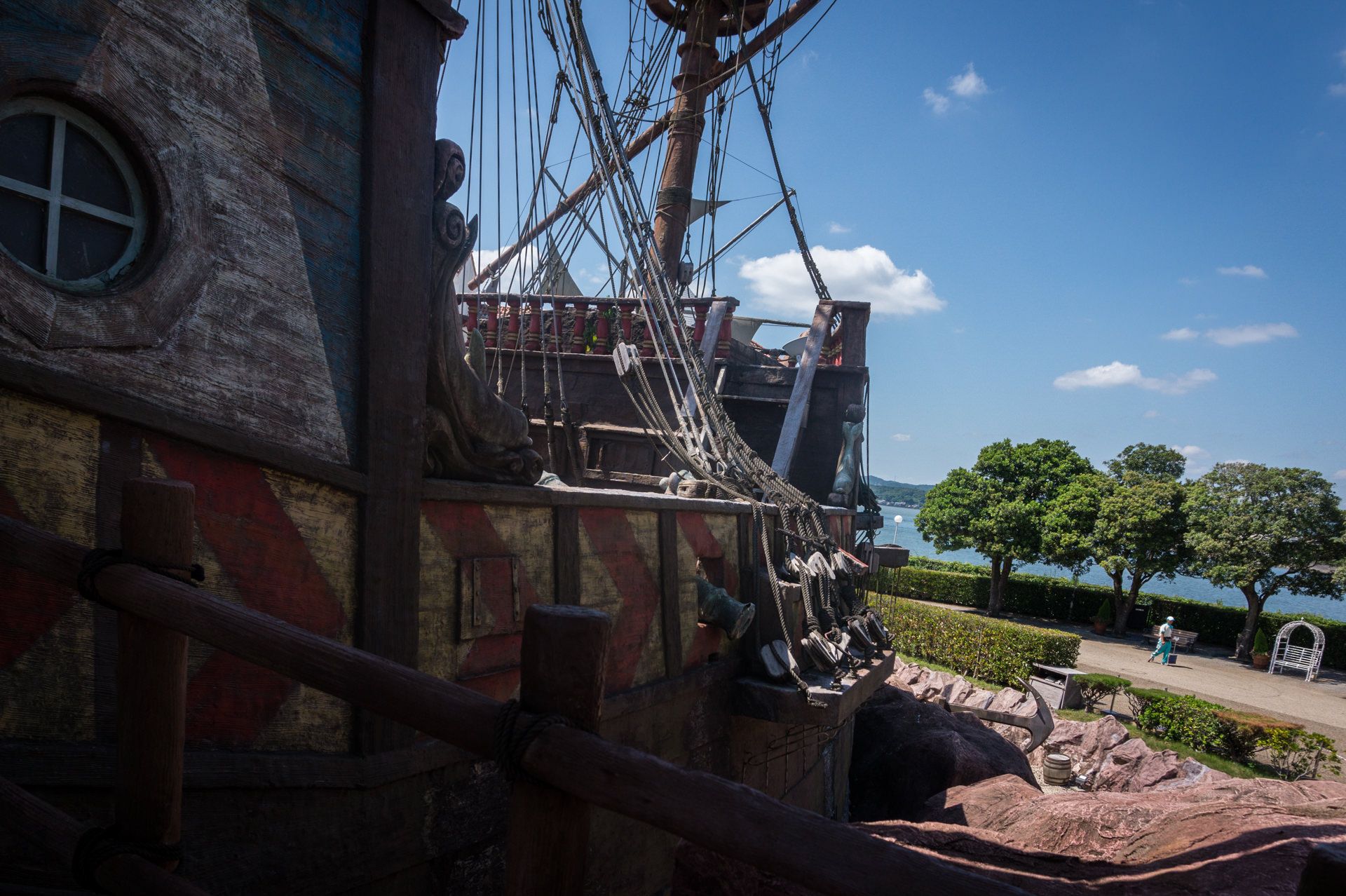
While the Casa Misteriosa de Choquy is a black-light funhouse with the mascot Choquy, the quiet dark ride Feliz Cruise is characterised by the fact that it was once a much more interesting state-of-the-art water ride with a pirate theme called Adventure Lagoon.

It is rather disappointing when an elaborately designed ride with vertical lift, incline and normal lifts is converted into a simple canal ride for cost reasons and the former station is then marketed as an almost independent pirate ship attraction. Although the Feliz Cruise with its dioramas is anything but bad, it leaves a bad aftertaste if the large (dark ride) hall is simply left unused.

Viaje Aventurero de Don Quijote

But anyone who thinks that a visit down here is therefore no longer worthwhile is very much mistaken, because the second of the two dark rides is quite something. On the Viaje Aventurero de Don Quijote, the adventure ride of Don Quixote, guests can expect a fabulous flight through the adventures of the Spanish knight, represented by the mascots of Parque España. The ride system is similar to that of the dark ride Peter Pan’s Flight from Disneyland, but it does one thing better than the other copies: it beats the original by miles! As much as I was amazed by it after my first ride, I liked the subsequent repeat ride just as much; a genuine insider tip.

Bosque de Cuentos

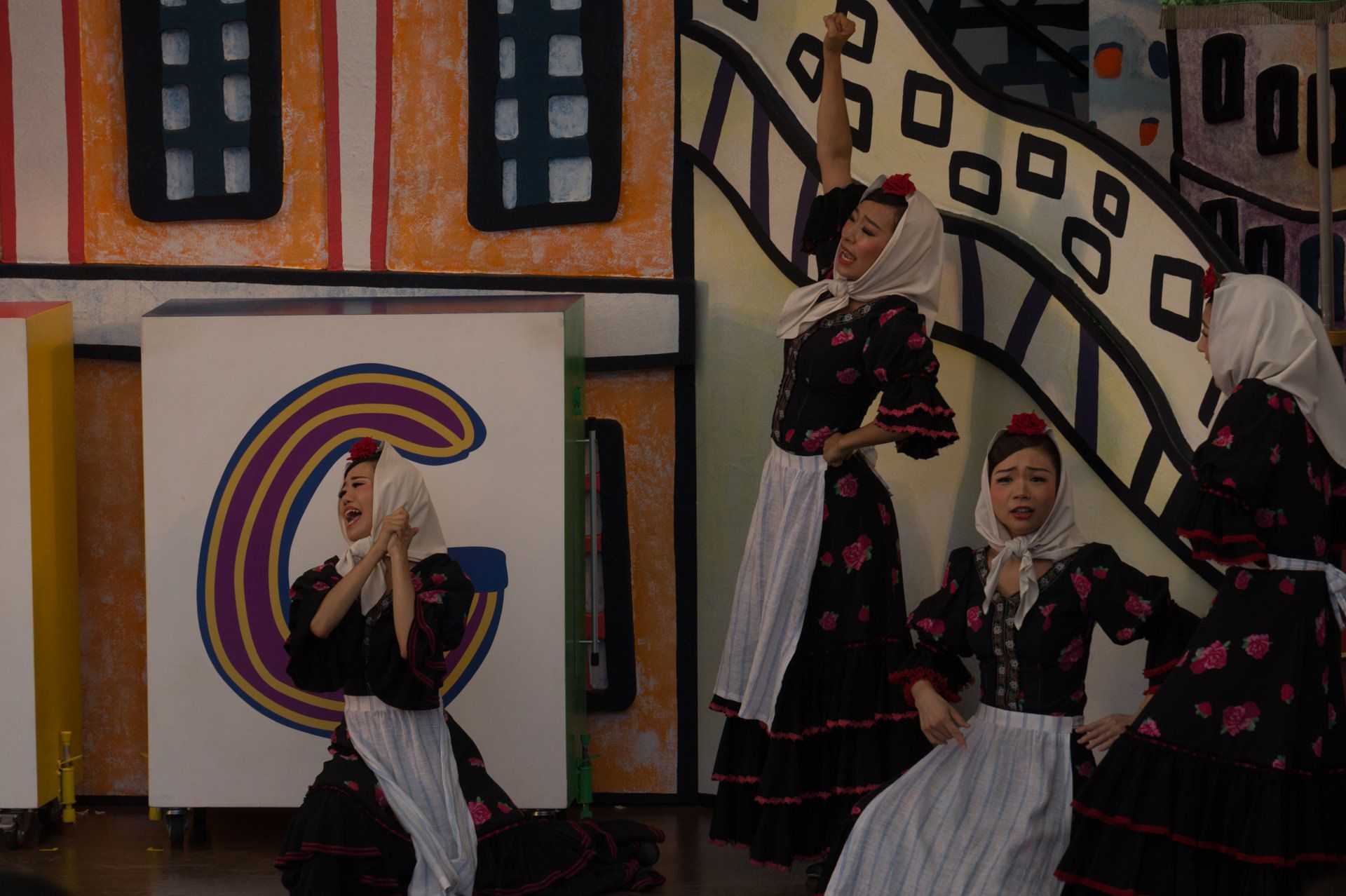
Through the Bosque de Cuentos, a kind of fairy tale path, and the Calle de Santa Cruz, a typical Spanish street with several restaurants, mock shops (including prices in €) and small exhibitions, we ascend to the Avenida de Carmen, where the Carmencita is already performing its predatory game. In fact, this allusion is quite valid, because the Parque España offers a flamenco show, which, however, charges a fee and features cast dancers from Spain. This would be legitimate if the park itself was not already one of the most expensive in the country.

La Suite del Cascanueces

Instead of the show, we dedicate ourselves to the Suite del Cascanueces by the Russian composer Tchaikovsky – instead of ballet, however, an extraordinary dark ride awaits us, in which the story of the Nutcracker is taken up, accompanied by a lot of coloured lights.

Castillo de Hielo and Alice in Wonderland

Passing the Castillo de Hielo, one of the typical Japanese freezer walkthroughs, which I have absolutely no memory of, we now head to the Plaza del Fiesta, the main theme park part of the park. Here you can see the Alice in Wonderland interactive walkthrough attraction, a boat swing, a balloon race, tea cups, a carousel, a 360° cinema and the station of the Tren Fiesta.

But you can also marvel at the main attractions of Parque España here. The first is the double ride consisting of Splash and Gran Montserrat, one of the early versions of the popular combination of roller coaster and log flume.

Splash Montserrat

The ride in Splash Montserrat starts with a wide turnaround, which you enter in a short right turn. The lift then takes you up quickly so that, similar in construction to the Europa Park’s Tiroler Wildwasserbahn (Tyrolean log flume), there is a medium-sized shot ride that releases you onto an elaborated level. Here you bob along the channel and the artificial rock massif for a little longer. Always with a good view of the course of the Gran Montserrat roller coaster, the canal zigzags straight ahead until you take a similarly constructed right-hand bend towards the second lift hill. Once you have reached the top, the big of the two shot rides immediately follows. After a final (almost non-existent) splashdown and the return to the station, the far too dry whitewater ride comes to an end.

Gran Montserrat

Five years after the opening of the Eurosat roller coaster, the Mack company was able to open another ride of this roller coaster model, but this time as a classically designed mine train. Gran Montserrat is therefore a very special ride in two respects, which we will now take a closer look at.

The ride begins with a left-hand turn into the first of the two lift hills. After reaching the starting height of 20m, we immediately plunge to the ground in a steeply descending right turn, reaching a speed of 66km/h. With a lot of pressure we cross the first valley, whereupon we gain height on a flat ramp leading to the left along the log flume. In a serpentine fashion, we now make a right and a left turn above the water ride, whereupon we plunge down a flat ramp to the ground and whiz over it in a wide right turn. After a short climb, we immediately reach the second lift hill parallel to the first.

Once again at 20m, we now disengage a little more leisurely and as a result dedicate ourselves to a flat downhill straight with a subsequent 180° helix. We change direction with momentum and reach the ground again after a left-hand bend, which is now quite steep. After another extremely pressurised valley, a relatively tight right turn follows, which takes us far up. High above the log flume, we now pass through a straight and then two downward helices, which are lined up in the shape of a figure eight and are first passed through to the right and then to the left. We then reach the final brake of the ride.

Gran Montserrat is a nice family roller coaster that is extremely fast and punchy in some places. In short, the Mack Rides Mine Train is quite appealing – just don’t make the mistake of comparing it to indoor roller coasters of the same design. The ride characteristics are particularly positive, as they are smooth and hardly distinguishable from modern rides by the manufacturer.

Batalla del Alcázar “Adelante”

In the immediate vicinity of the mine roller coaster is the entrance to the interactive dark ride Batalla del Alcázar “Adelante” by the Japanese manufacturer Senyo. As always with this type of dark ride, you shoot at worm-like animatronics and other enemies, but the highlight of this ride is that the passenger gondolas can additionally be moved transversely to the direction of travel, which has enhanced the already very great ride even more.

Kiddy Montserrat

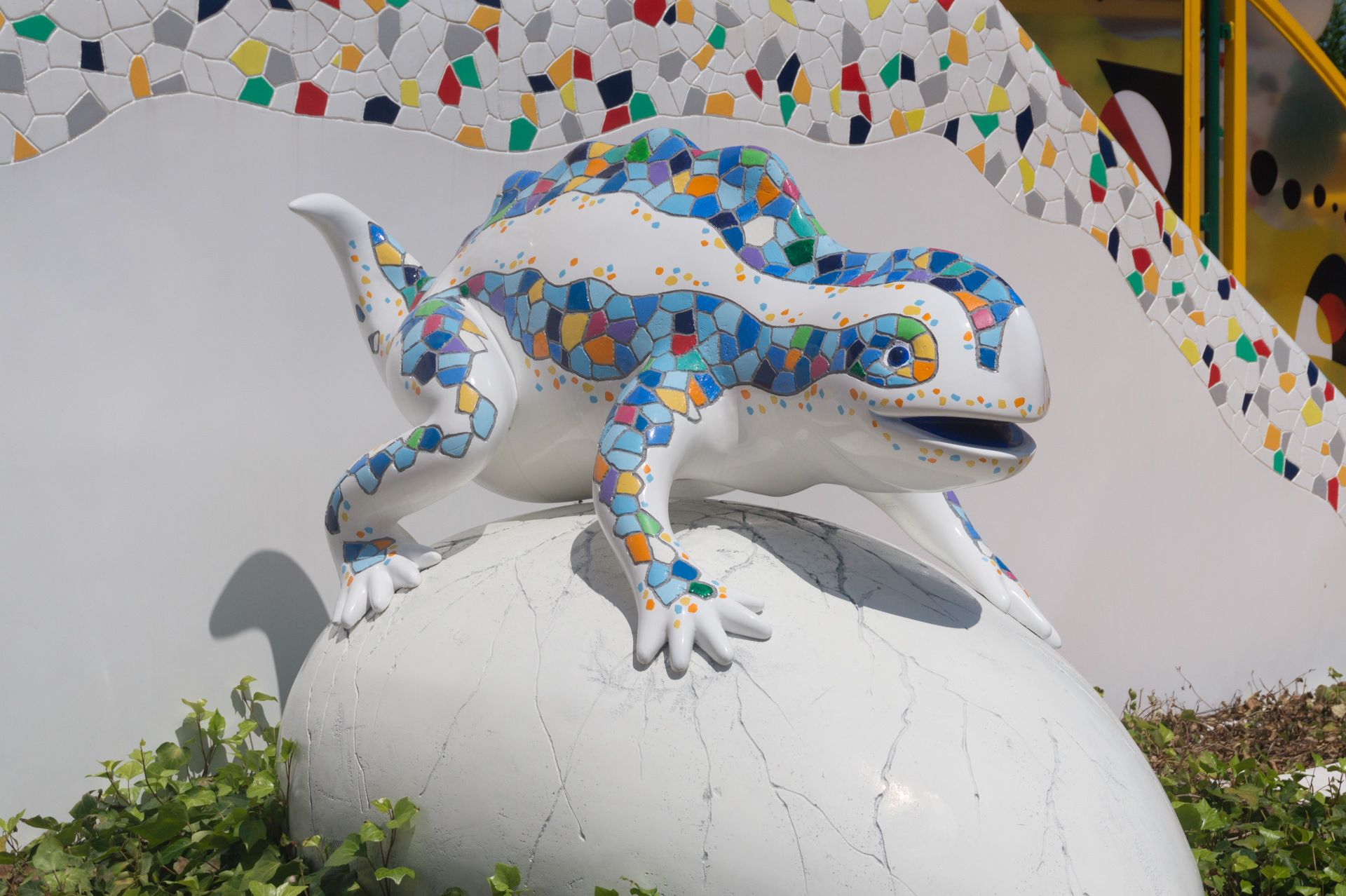
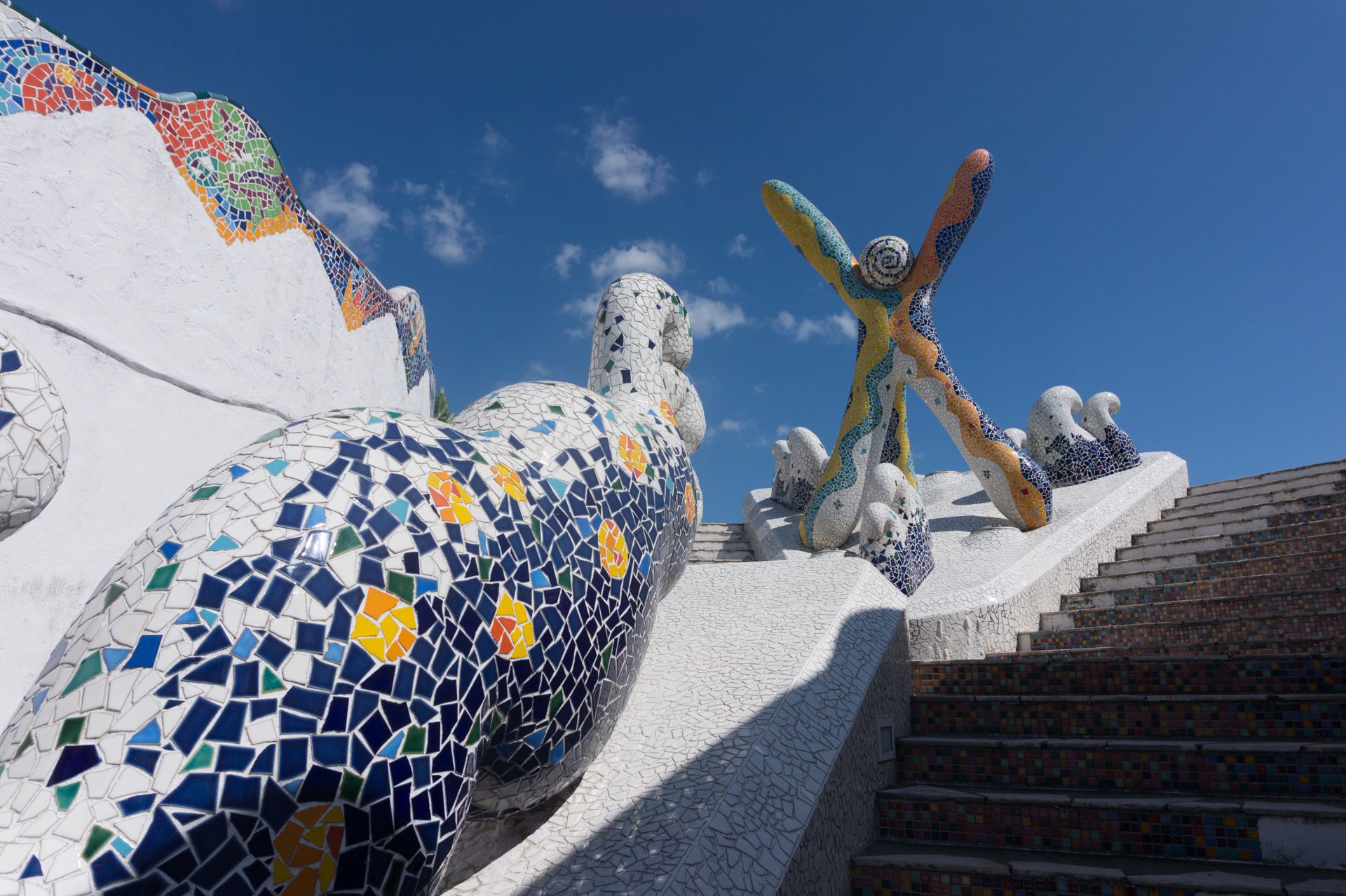
Parque España’s newest roller coaster is the Kiddy Montserrat children’s roller coaster, which, despite its name, does not ride through the artificial Montserrat mountain range. With a height of 8.5m and a length of 216m, the Mosaic Salamander takes you through a shallow left turn after the lift hill, followed by a wide right turn along the station. This is followed by a downward helix with an ever increasing radius before the station is reached again and the rather nice jet coaster ride ends.

Pyrenees

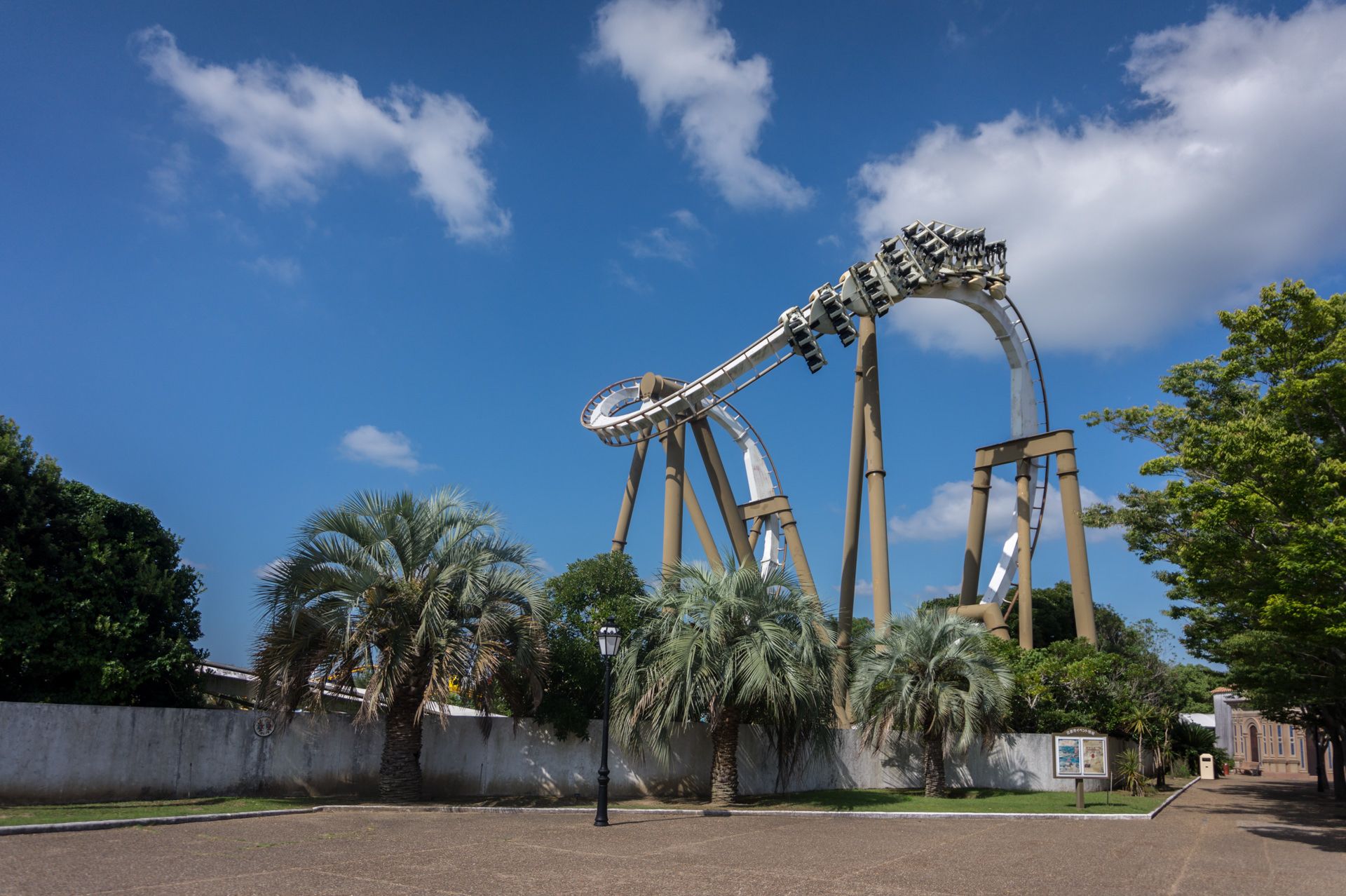
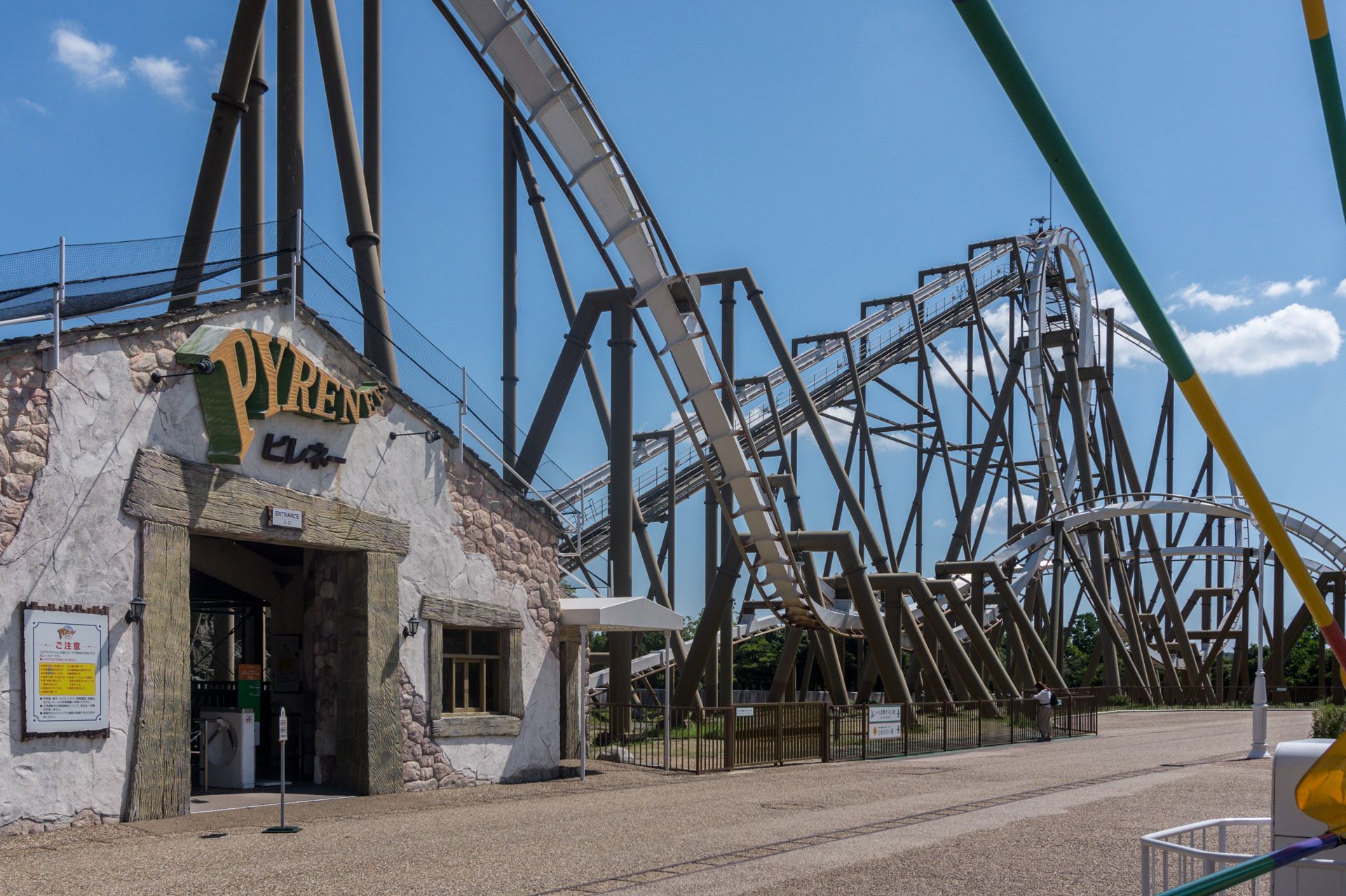
Let’s now turn to the last roller coaster of Parque España, the B&M Inverted Coaster Pyrenees. With a height of 45m and a length of 1234m, the ride is the top dog of the park and a real eye-catcher. But can the elongated inverter live up to the high expectations of the ride?

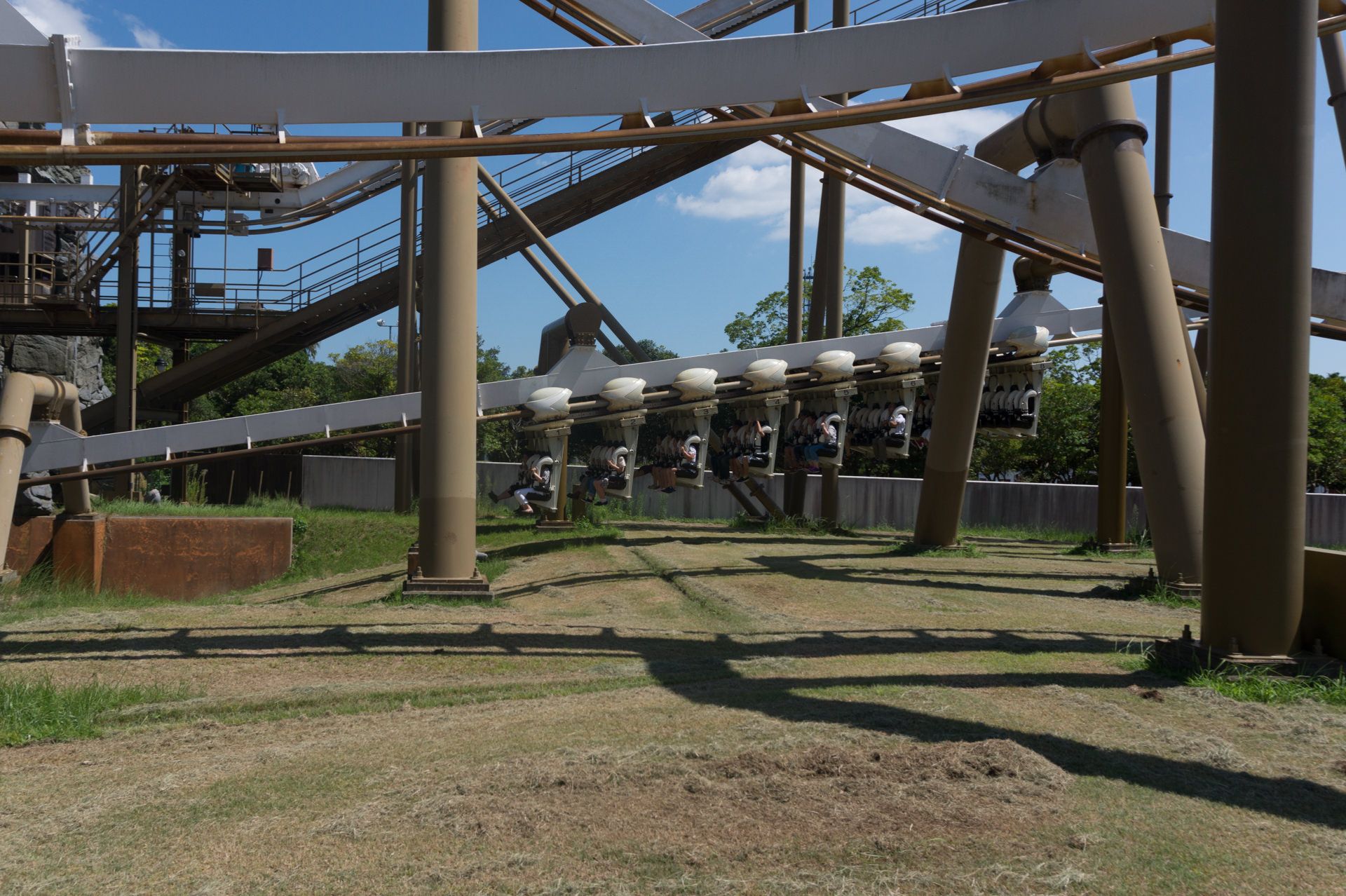
After passing through the deserted queue, we are immediately assigned to one of the front rows. After some time, the gates are opened and the train is quickly processed, so that we meet again in the lift a short time later. We cross the pre-drop with full vigour and immediately plunge towards the ground. What follows is an interplay of extremely pressure-rich valleys and beautiful loops, which are connected in the middle by a relatively tame zero-G roll. This is followed by a very long left turn close to the ground, which then turns into the Cobra Roll. We perform this inversion figure with the best of devotion and are turned upside down twice during the process. We pass through the next valley at high speed and immediately dedicate ourselves to the ascent into the block brake. We go through a long right-hand bend that narrows more and more towards the end and finally wraps around the second loop in an intense helix.

Without reducing the speed in the block brake, it pulls us towards the abyss one more time, whereupon the world is turned upside down for the last time in an exceedingly rapid corkscrew. Now we cross the track of the first drop in a left turn and pick up speed on a very long straight for the return to the station. With a lot of momentum we shoot over the queue and after a tight turning curve we soon find ourselves in the final brake and the station.

Pyrenees is a very nice inverted coaster of larger construction, but unfortunately its peculiarities do not convince me personally. During the ride, there are simply far too many parts of the track that are only meant to stretch the ride, and the long downward ramp before the final hill just seems strange, both visually and in terms of the ride. However, that doesn’t mean that fans of the manufacturer’s big inverted coasters won’t get their money’s worth – the ride is perfectly fine.

Pictures Parque España

Conclusion Parque España

Parque España is a beautifully designed amusement park, but its best years are long behind it. Although the park has some top-class attractions, overall Parque España simply lacks the attractions to justify the high entrance fee and the time-consuming journey to the park. This is a pity, because the idea of running an amusement park with authentic food and appropriate cultural offerings of a country far away from the country in question is quite charming; but perhaps as a European visitor, one simply associates Spain more as a holiday destination and consequently feels a little more in tune with the theme than the Japanese tourists, whom the park is known to miss out on.


What is your opinion about the theme park Parque España?  Just write it in the comment field below the report or visit our social media channels:


Click here for the next report of the Titanic Max Tour
Osaka’s home for little fairies

Hirakata Park

Hirakata Park originated as the Kikuningyō-ten exhibition grounds in 1912, with chrysanthemum-decorated figures and scenes being displayed in October and November of each year, before the last regular exhibition was held in 2005. The actual development of the amusement park took place in 1926, when the Keihan Electric Railway began operating the park and the first rides moved in. In 1944, the site was put to military use.

After the end of the Second World War, the site was unusable and the Kikuningyō-ten took place on another area along the Keihan Line. The return to Hirakata followed in 1949. Initially run as a city park, the site was again converted into an amusement park in 1952 as part of a tax reform.  The park has always been owned by the Keihan Group.

Magical Volcano

So off we go to Hirakata-kōen and into Hirakata Park. Right at the entrance, a beautiful and spacious rock massif with an integrated interactive attraction awaits us. Personally, I can’t describe the Magical Volcano any better than that, because it really is a lot of things in one; be it an exploration tour with integrated skill games or an adventure playground with a pre-show and storyline. It is relatively simple: at the start you are assigned a mission, after which you have to answer three questions. In the meantime, the volcano almost erupts and we have to throw softballs into its crater. Towards the end, you let your bow be evaluated by a machine and get a corresponding feedback. In our case, of course, this was a perfect score, but we had also received help from the staff. All in all, this is an attraction that we would like to see here in Europe.
Pachanga, Wonder Gaden und Athletic Try-It

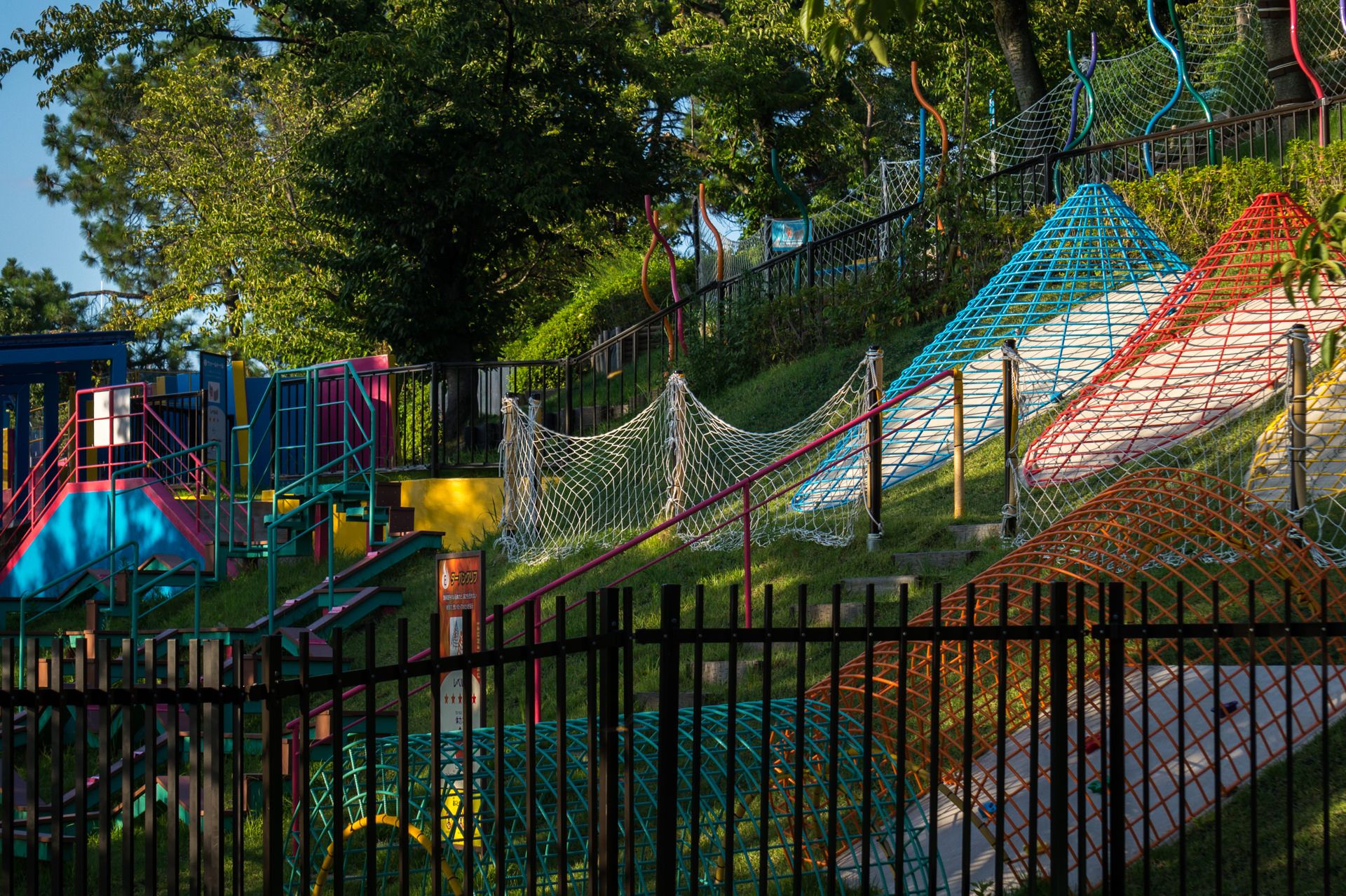
Exhausted, but one experience richer, we head straight for the wooden roller coaster Elf. While there, we take a ride on the unfortunately very dry rapid river Pachanga and admire the animals in the Wonder Garden. Unfortunately, the number of enclosures is very limited – this is especially a pity, as Hirakata Park does a good job and the animals are all housed in relatively large enclosures. Meanwhile, on the other side of the main path, we wonder about the Athletic Try-It, a kind of modern obstacle course, before we are finally drawn into the woods.

Elf

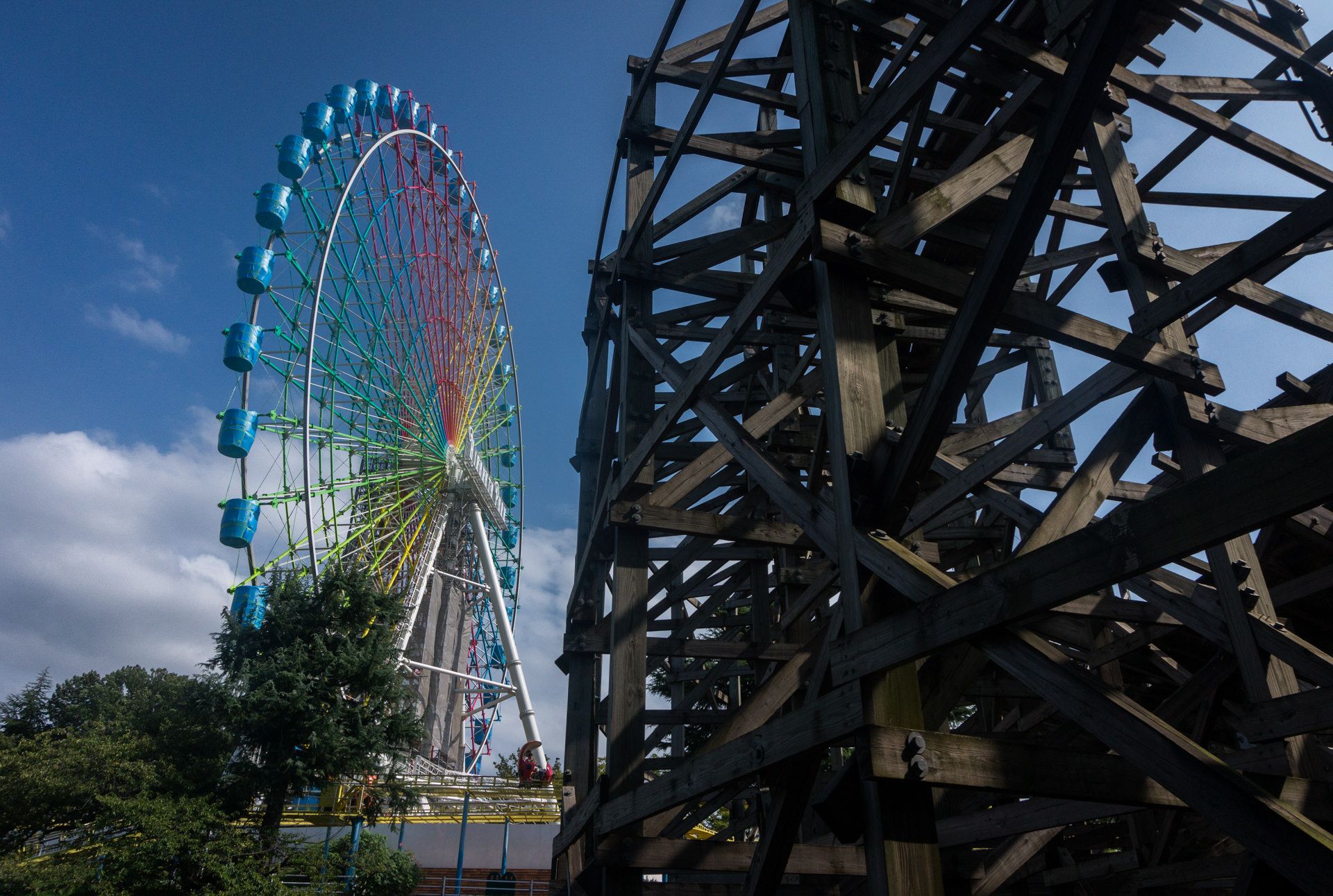
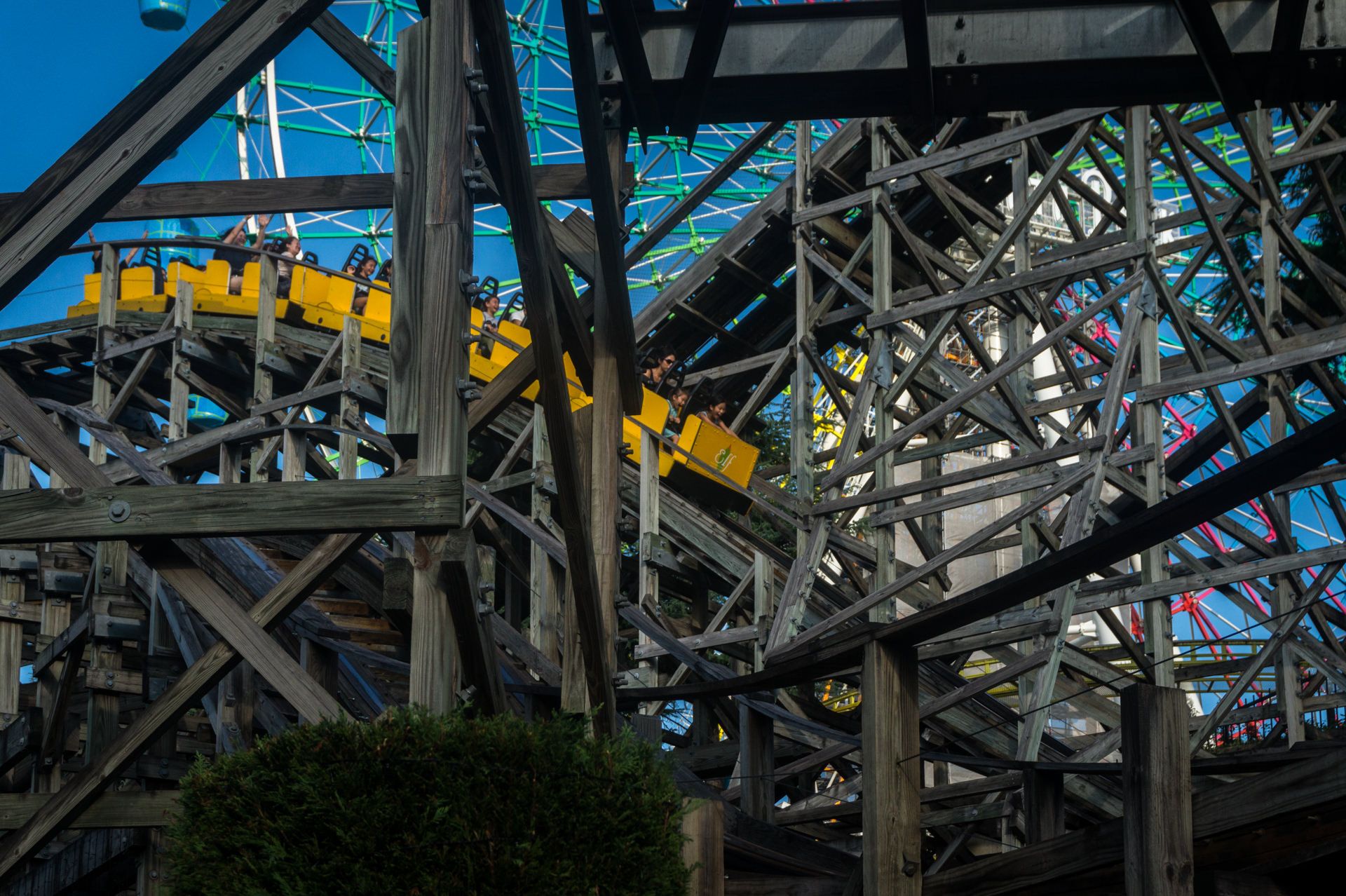
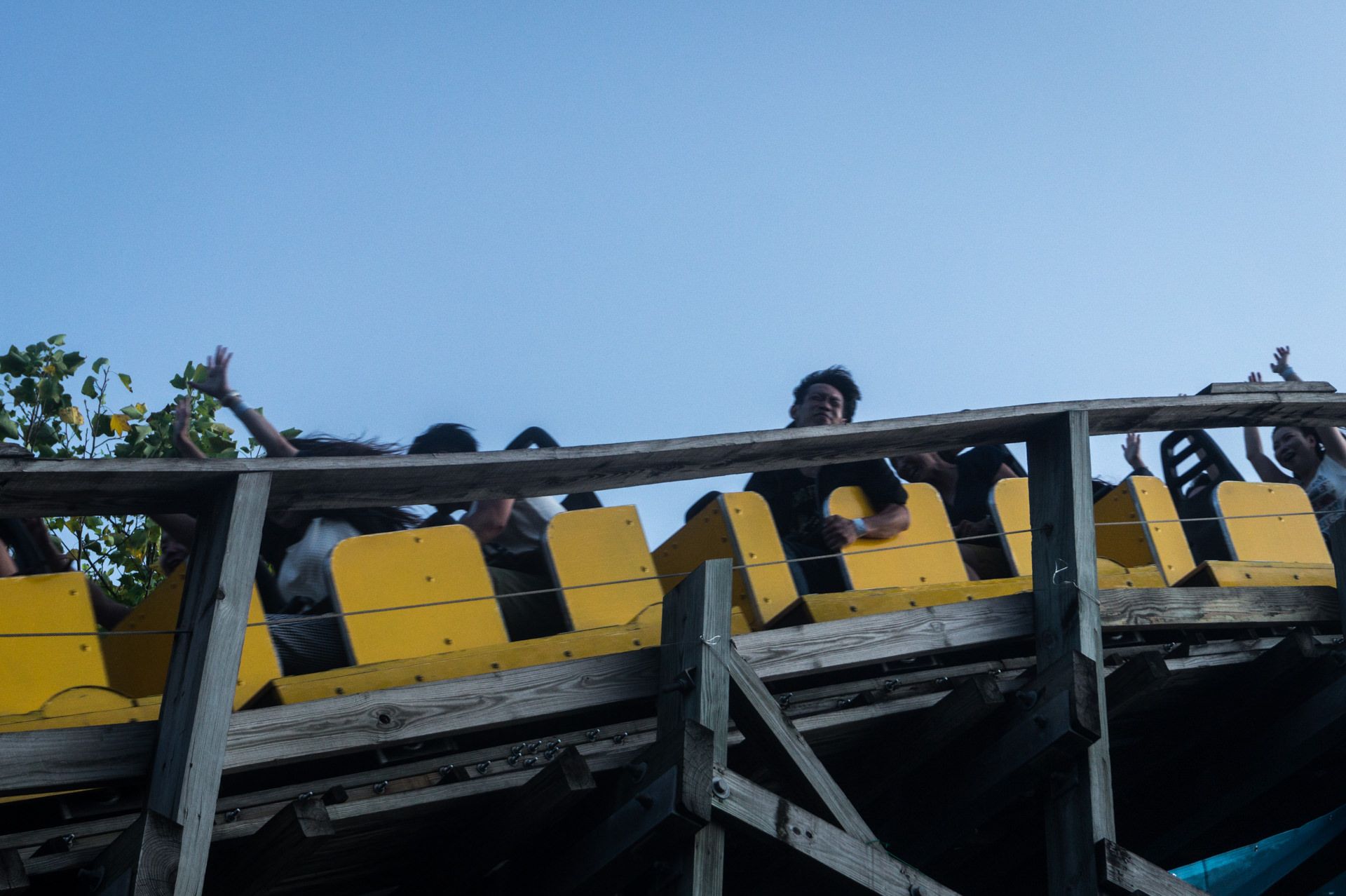
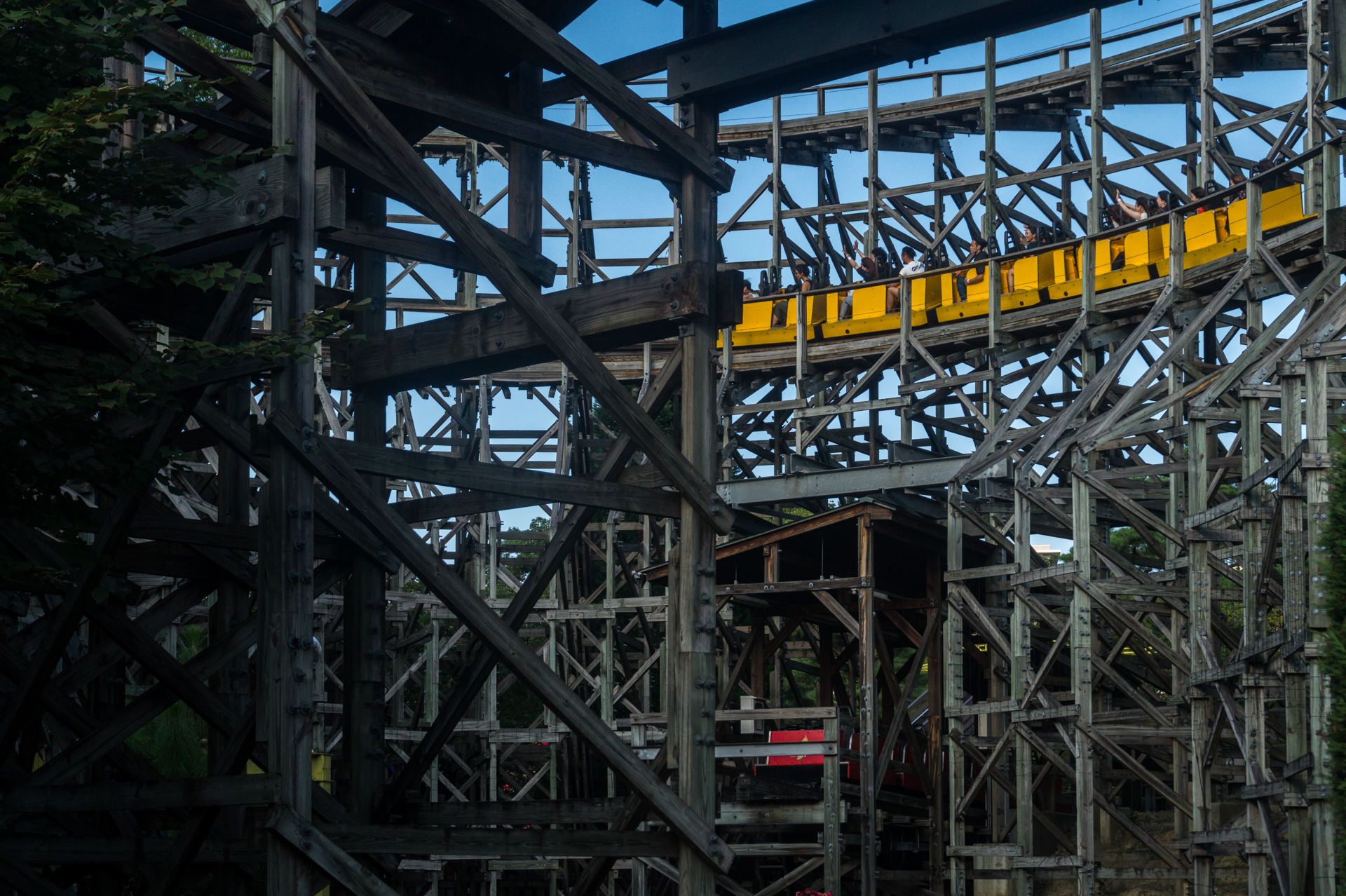
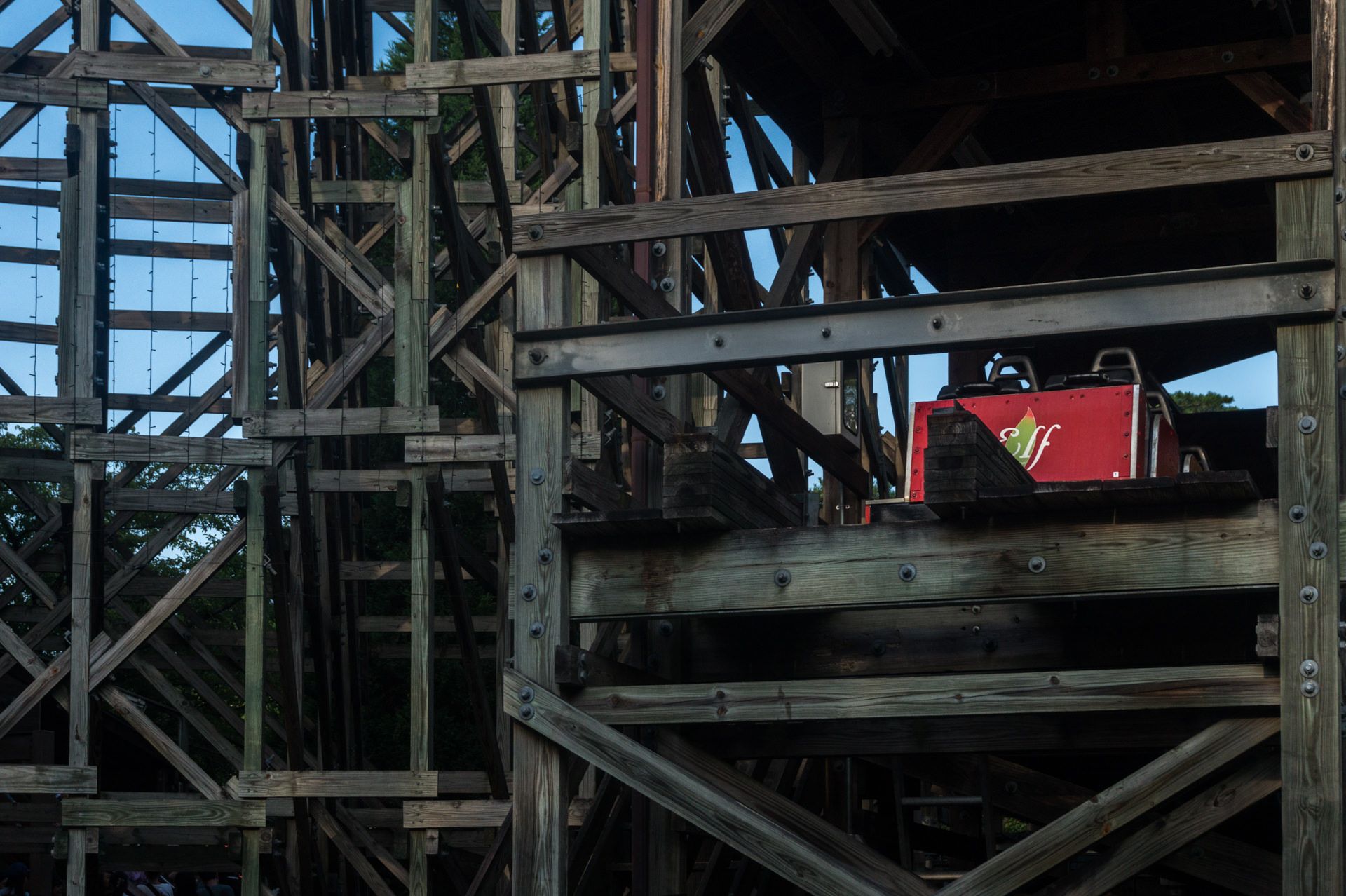
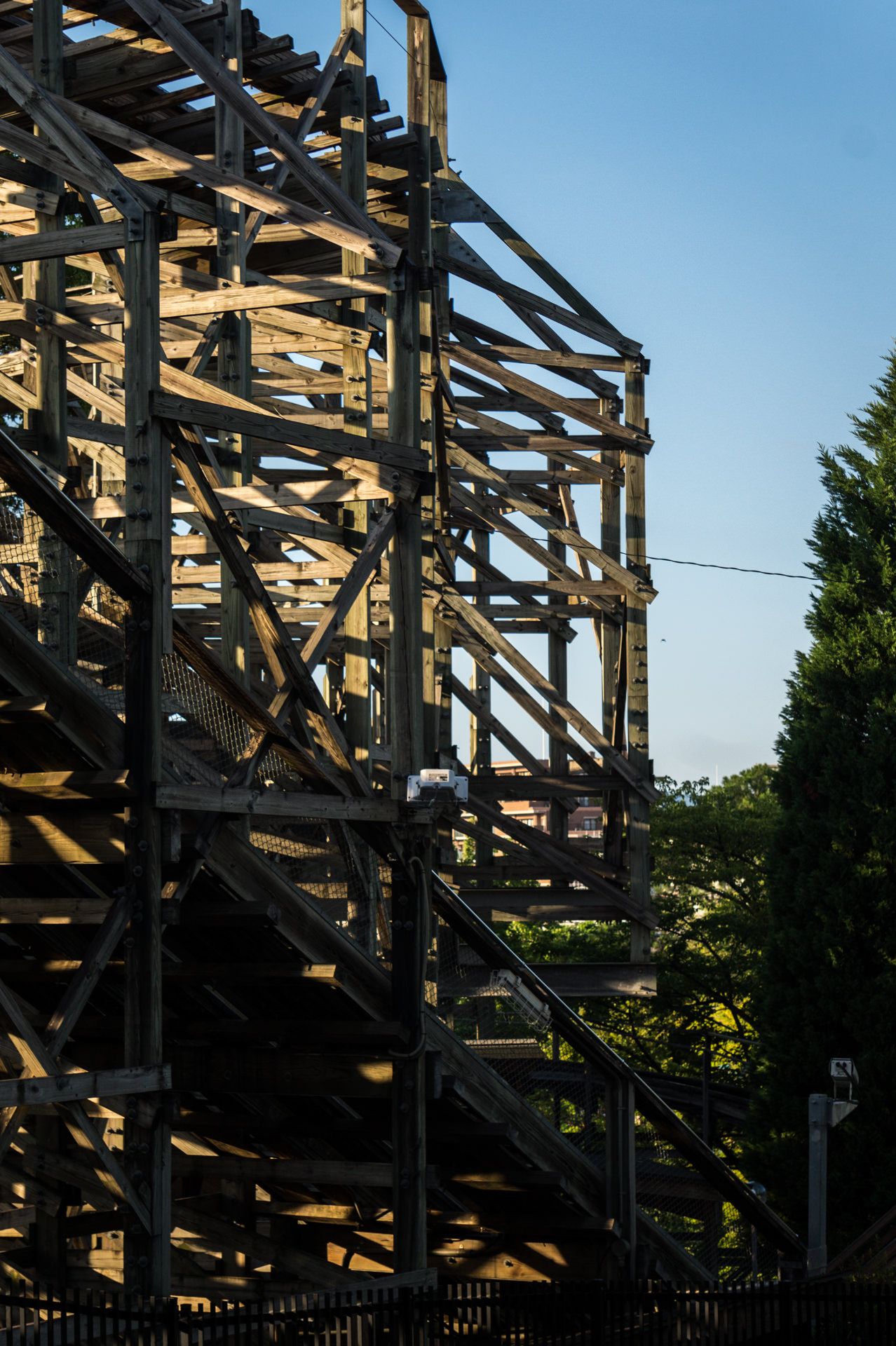
Elf, short for Episode of little Fairies, is a medium-sized wooden roller coaster from the European manufacturer Intamin. So far so good, but the expectations for this wooden roller coaster were not as high as they should have been, thanks to its former sister ride Pegasus at the Dutch amusement park Efteling.

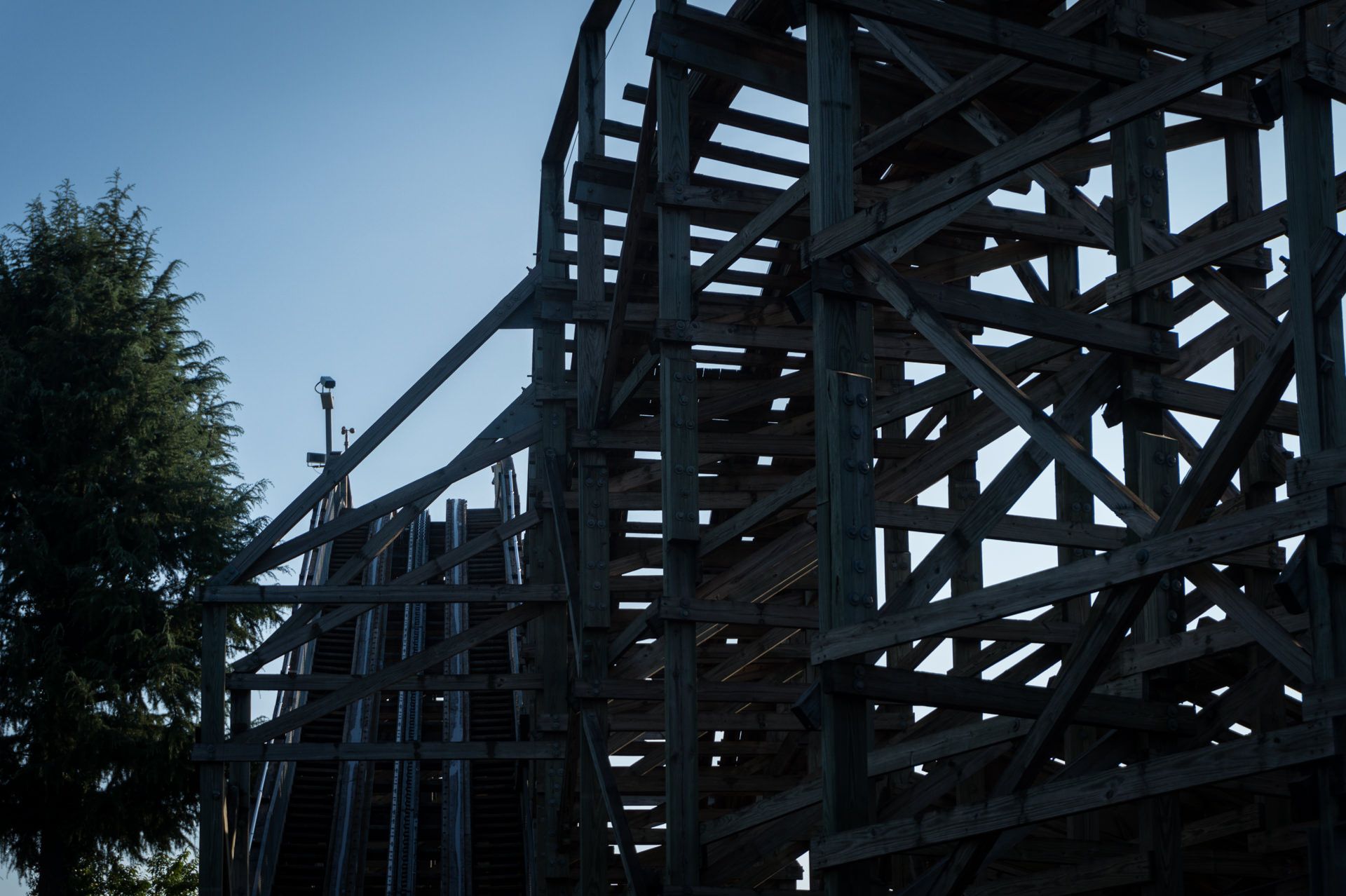
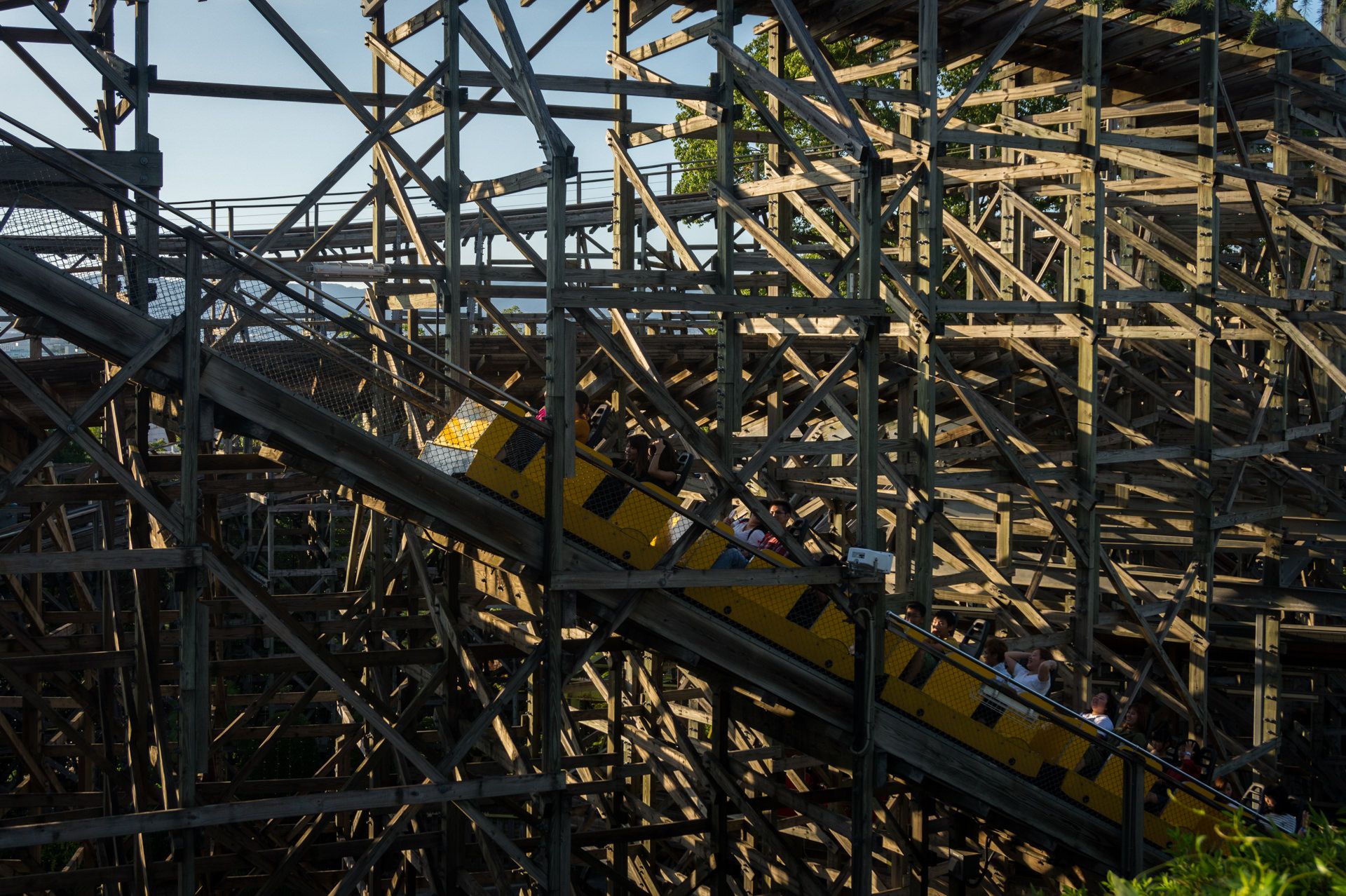
After a short wait, it was time to take a seat in the train car, which was then quickly dispatched. Following a short drop out of the station and a short right turn past the storage track integrated into the structure, we immediately found ourselves in the lift hill of the ride. Shortly after, the initial height of 18.5 m is reached, whereupon the train goes down the first small drop. This is followed by a longer turn to the right, where we gain a few metres in altitude. But before the view would distract us from the action, we plunge down the second drop. We are now pulled through the valley with gusto, whereupon we are pulled right onto the next hill. The ascent is quite steep at first and then a little less steep after an apparent crest. Meanwhile, we dedicate ourselves to another turn, which we leave parallel to the lift in a drop down to the ground level. Now we follow the route we have already completed by climbing another hill and also completing a turn. Instead of going straight down another drop, however, we now cross the ride in a diagonal, in which we naturally also head towards the ground.Once again with the funny transition from steep to less steep slope, we now dedicate ourselves to a left-leading turn, where we get momentum for the next ride manoeuvre. With a big bang we cross the following camelback and plunge straight into the dense woodwork. After a final turn, a short dip follows, whereupon we reach the final brake.

Elf is fun! With a good pinch of airtime and interesting incline trajectories, the small ride doesn’t need to hide from any larger wooden roller coaster – especially since the wooden roller coaster seems much higher than it actually is due to its hillside location. In any case, you can and should get on more often, it’s worth it.

Sky Walker and Truck

It would most likely have been worth getting on the Sky Walker Ferris wheel, but unfortunately it is currently being restored. The neighbouring Cycle Monorail was therefore not visited at all and we also had to do without a ride on the children’s roller coaster Truck in Peek-a-Boo Town, as the train belonging to it was missing.

Crazy Mouse

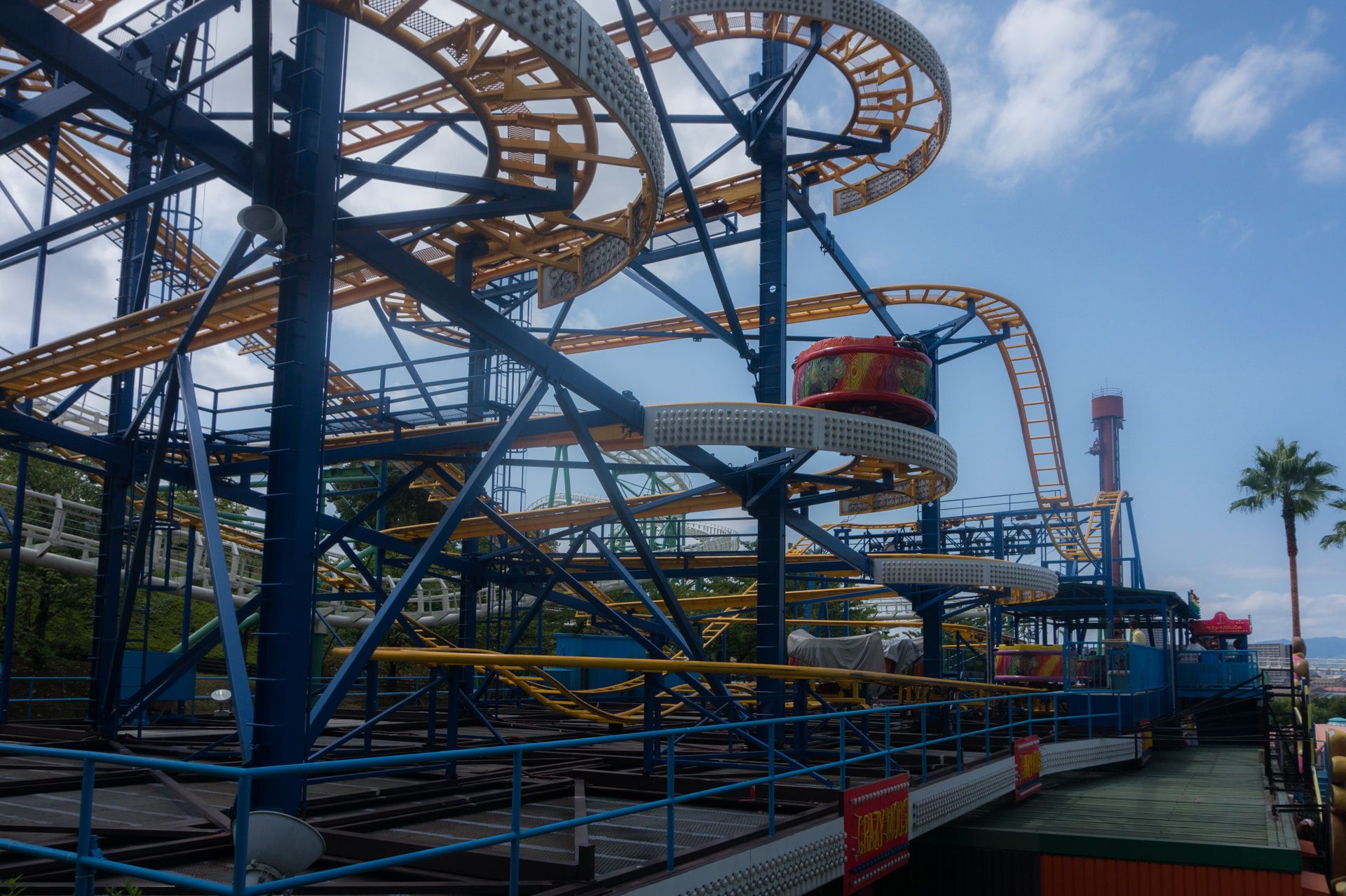
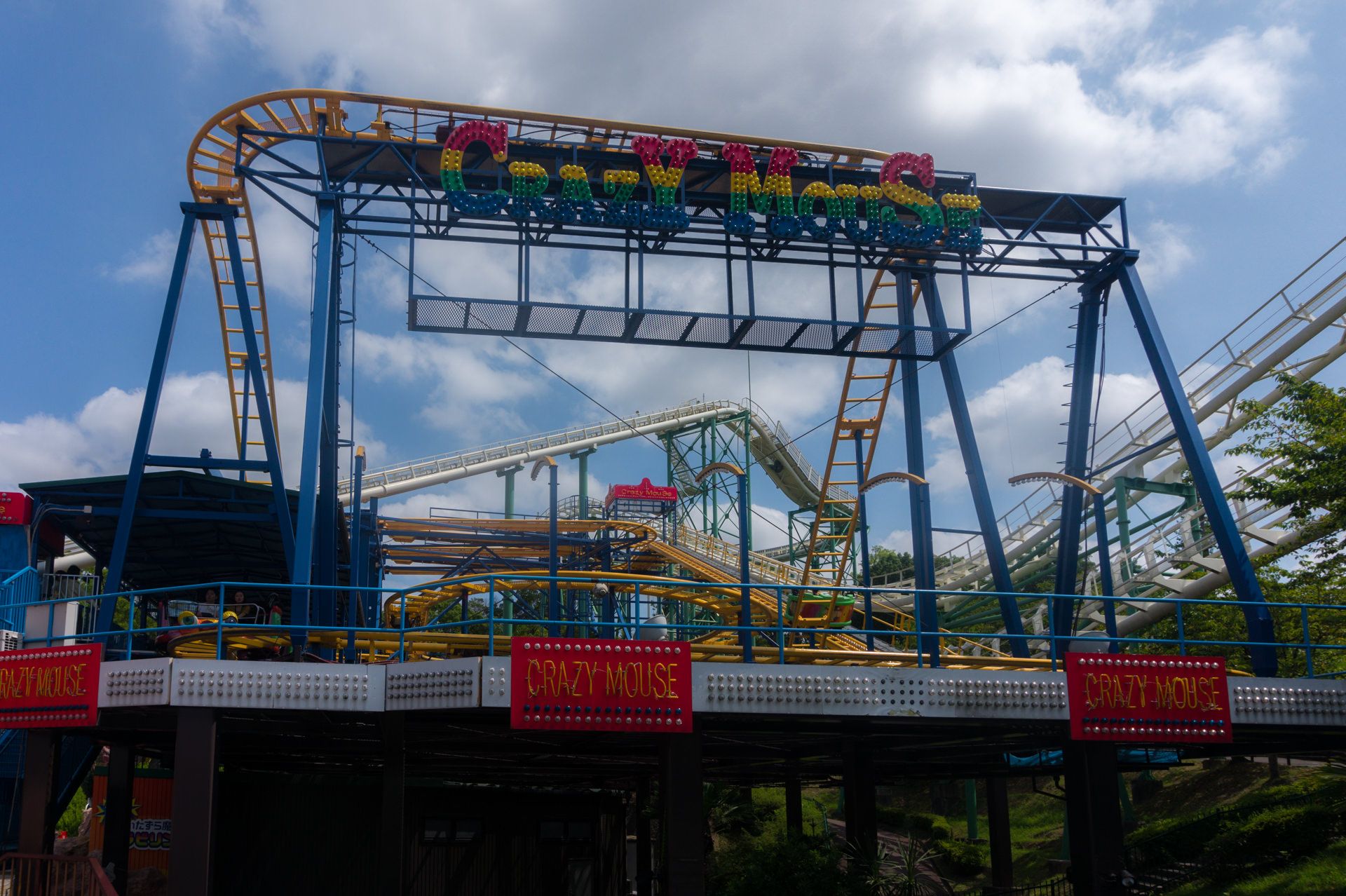
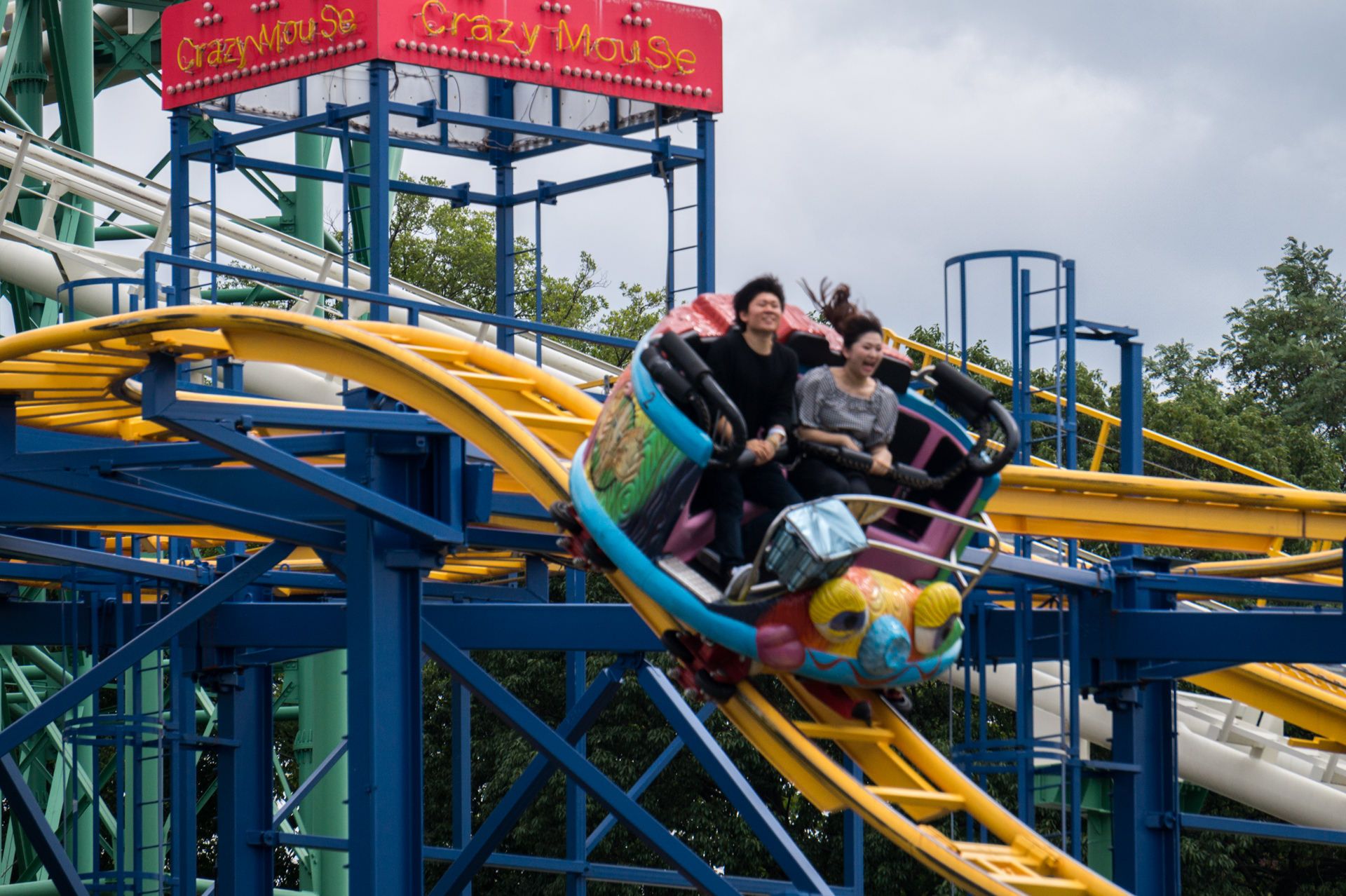
The fact that it doesn’t necessarily take a missing train to rob a roller coaster ride of its main feature can be seen on the Reverchon Crazy Mouse. It turned a bit too well, so it was decided not to release the spin of the cars anymore in order to reduce the ride’s intensity. As can be seen from the ride, this was not a good idea. The hairpin bends in the lower level are driven through in such a lousy way that in the end the pleasure completely falls by the wayside. A real pity, as Reverchon spinning coaster are actually great rides.

Bassh

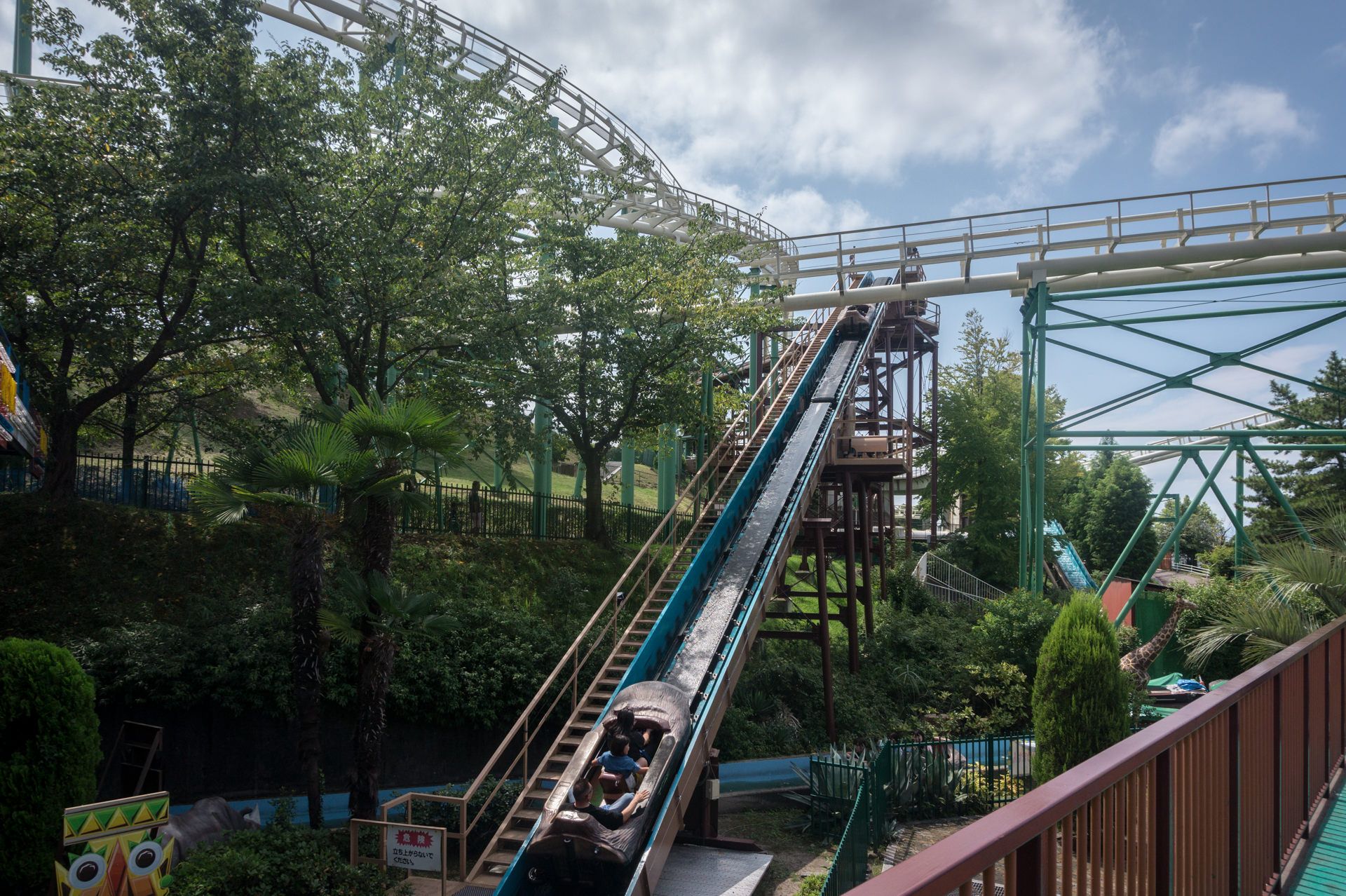
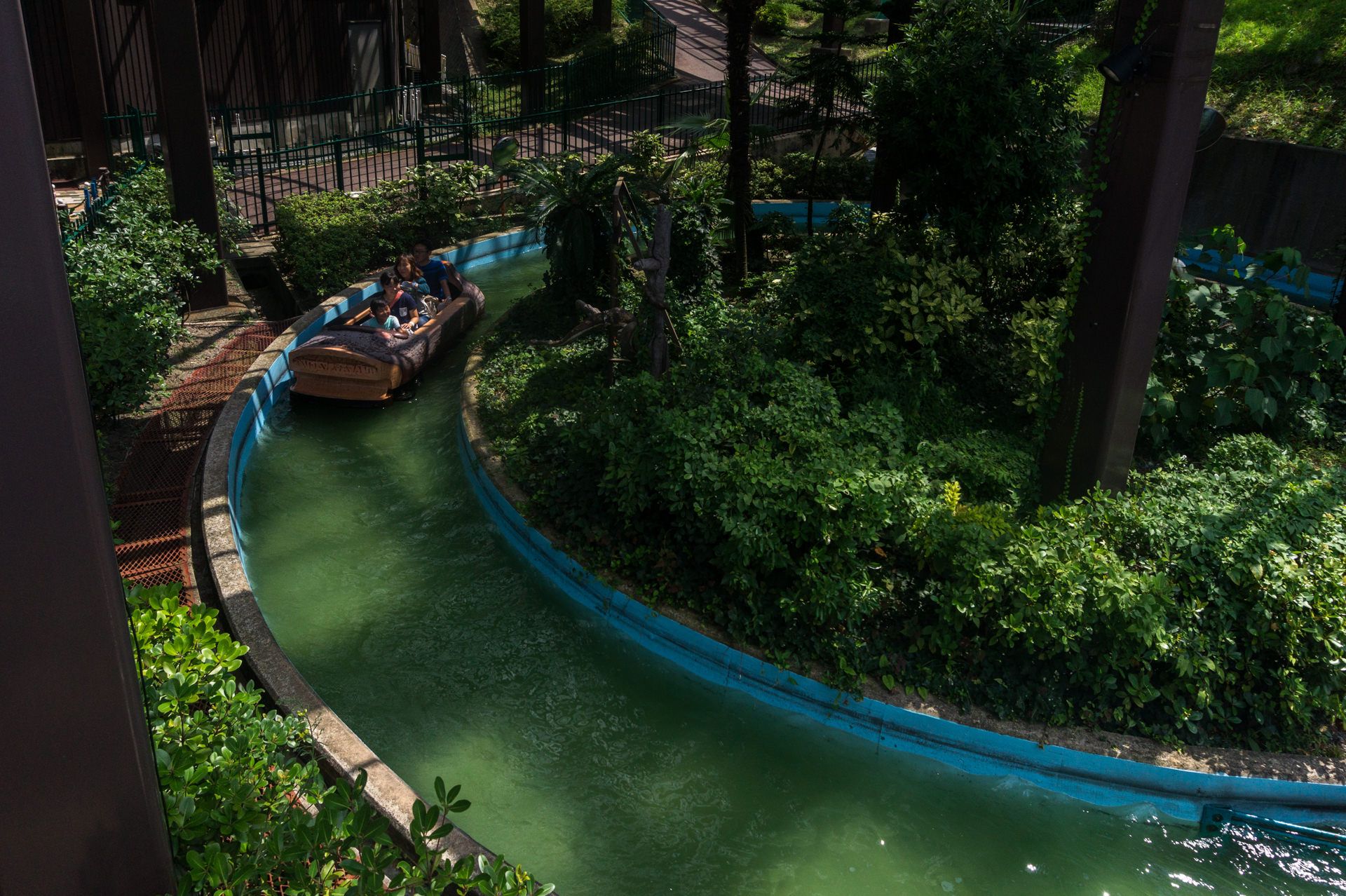
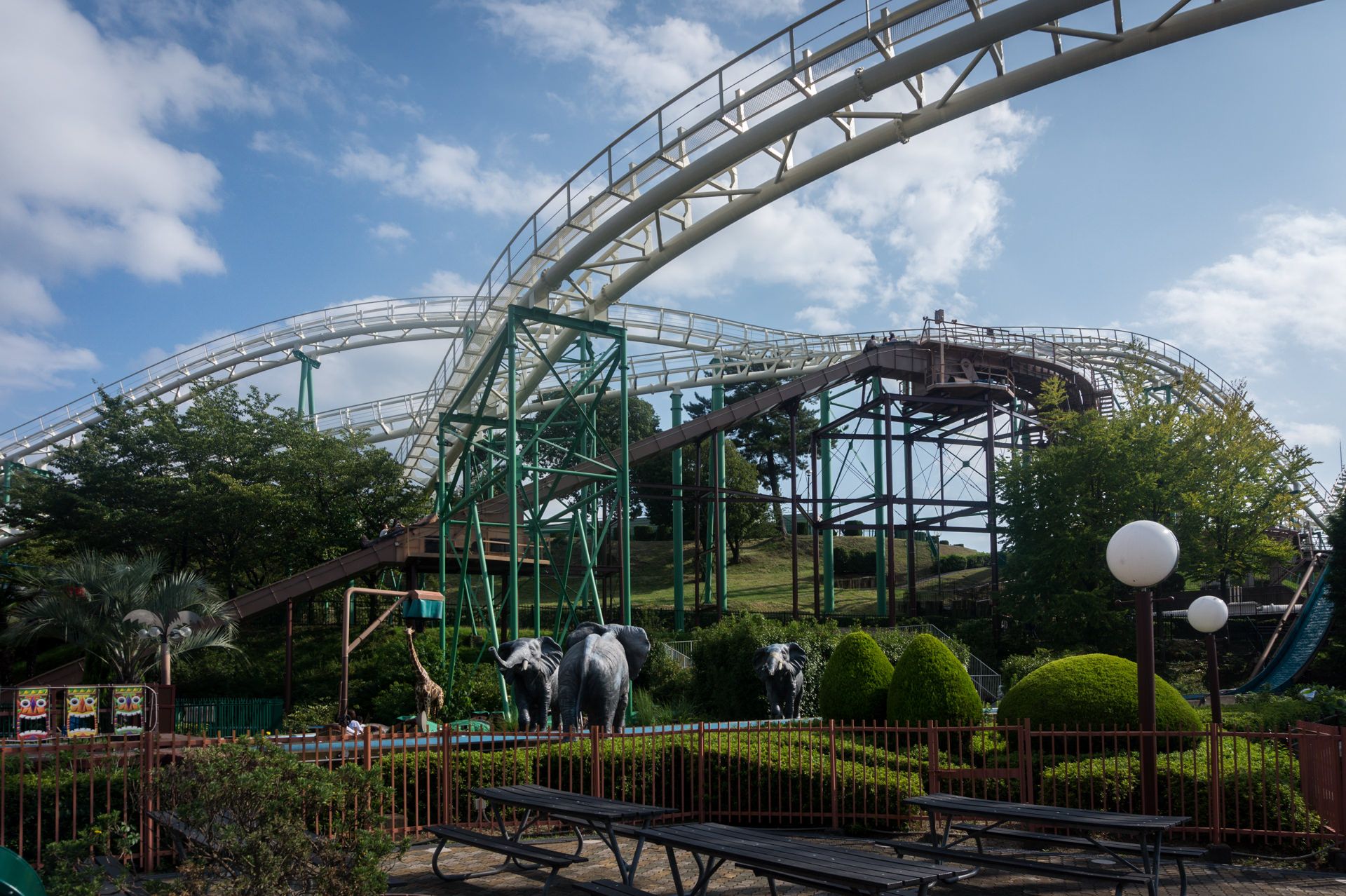
Whereby I should actually be a little less critical: The ride is quite okay and not being able to show a rotation as a spinning mouse is somehow special. Equally special is its location at a lofty height, elevated on a platform. This has the advantage that there are two other attractions underneath it. Besides the Little Witch’s Labyrinth walkthrough, the station of the Bassh log flume is located here.

The ride begins with a left turn that takes you under the plateau of the Crazy Mouse roller coaster. Past some animal sculptures and with the best view onto the tracks of the mouse one level higher, another left turn leads the boat directly into the ride’s lift. Due to the slope of the ride, you now spend some time in it before a short left turn takes you down just a medium shot. Without a single drop on your skin, a right turn follows immediately, after which you dash like mad through the channel. One S-curve later, you find yourself straight below the first shot, before you tackle a left/right curve combination and make your way towards the second and final shot. Once there, the descent is immediate and exhilarating. In the subsequent splashdown, every drop of water is missing and the score is close to zero. So we did something wrong, but unfortunately that’s what an amusement park with a dry log flume also does.

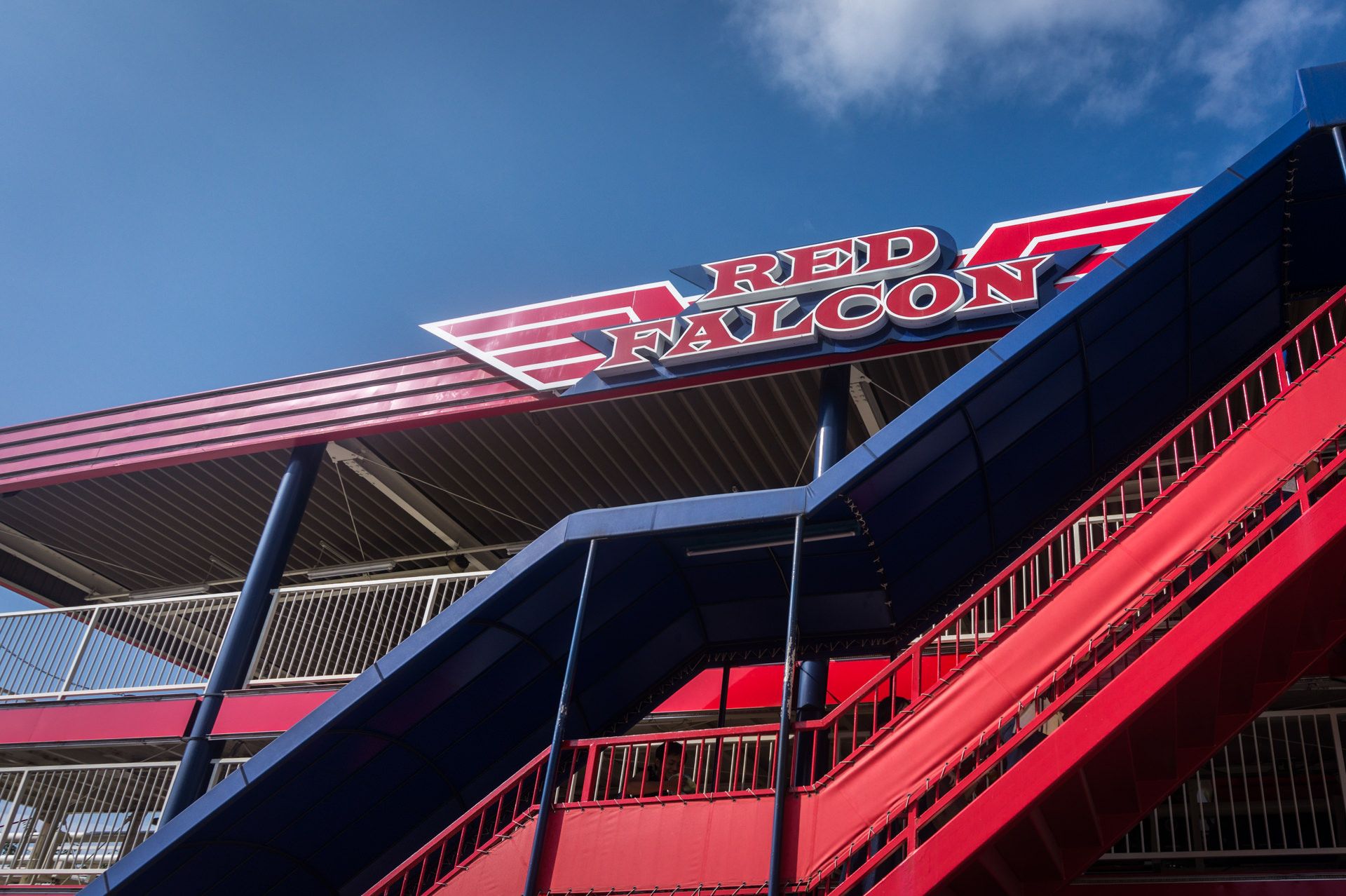
Red Falcon

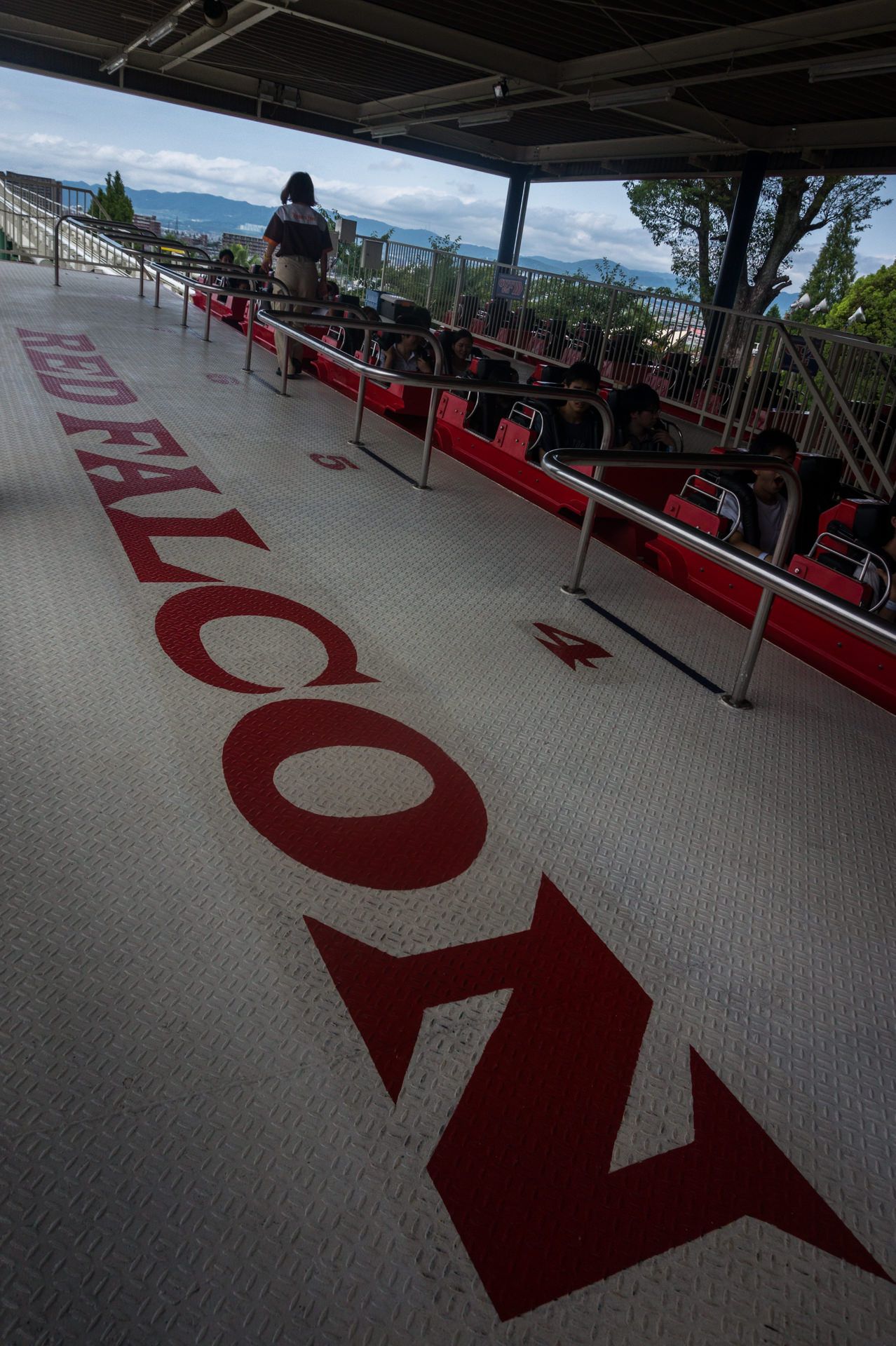
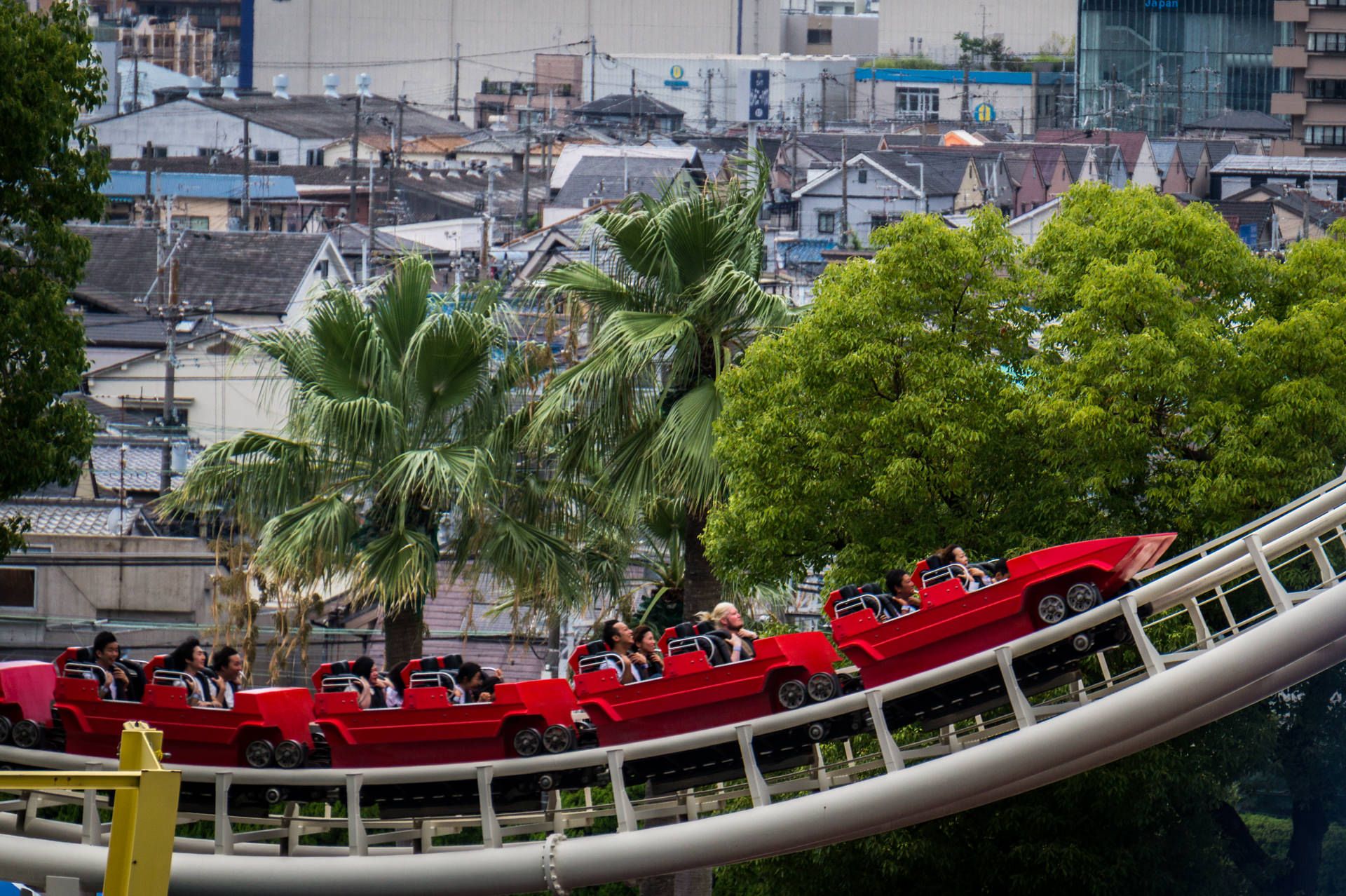
So it’s time to ride a type of roller coaster that no one in Japan can do wrong: The classic jet coaster. The one here at Hirakata Park is called Red Falcon and has been wonderfully placed on the big slope. But before you can dare to take a ride, you have to squeeze into the cars, and that is simply impossible, especially for taller people in the back rows.

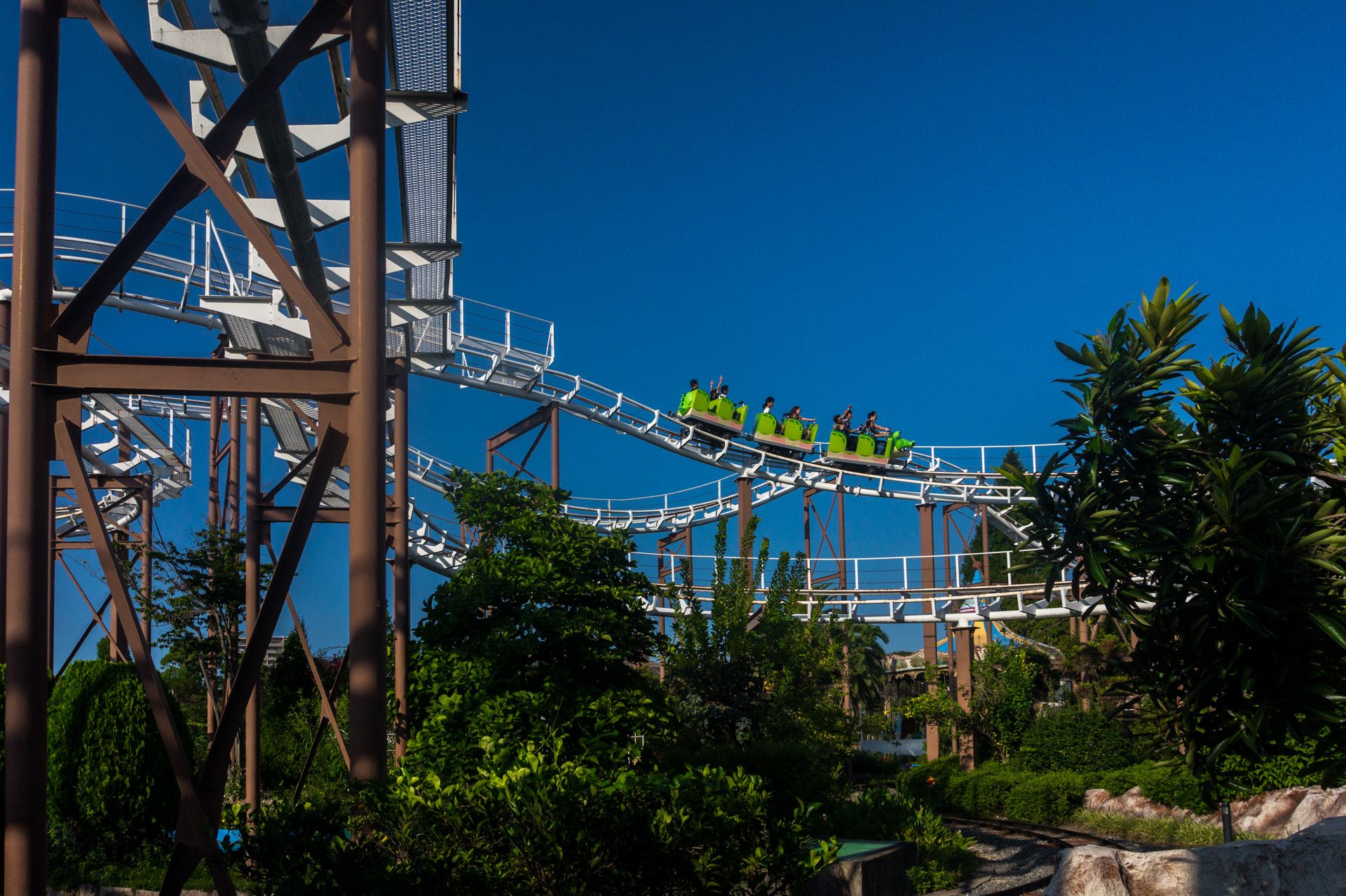
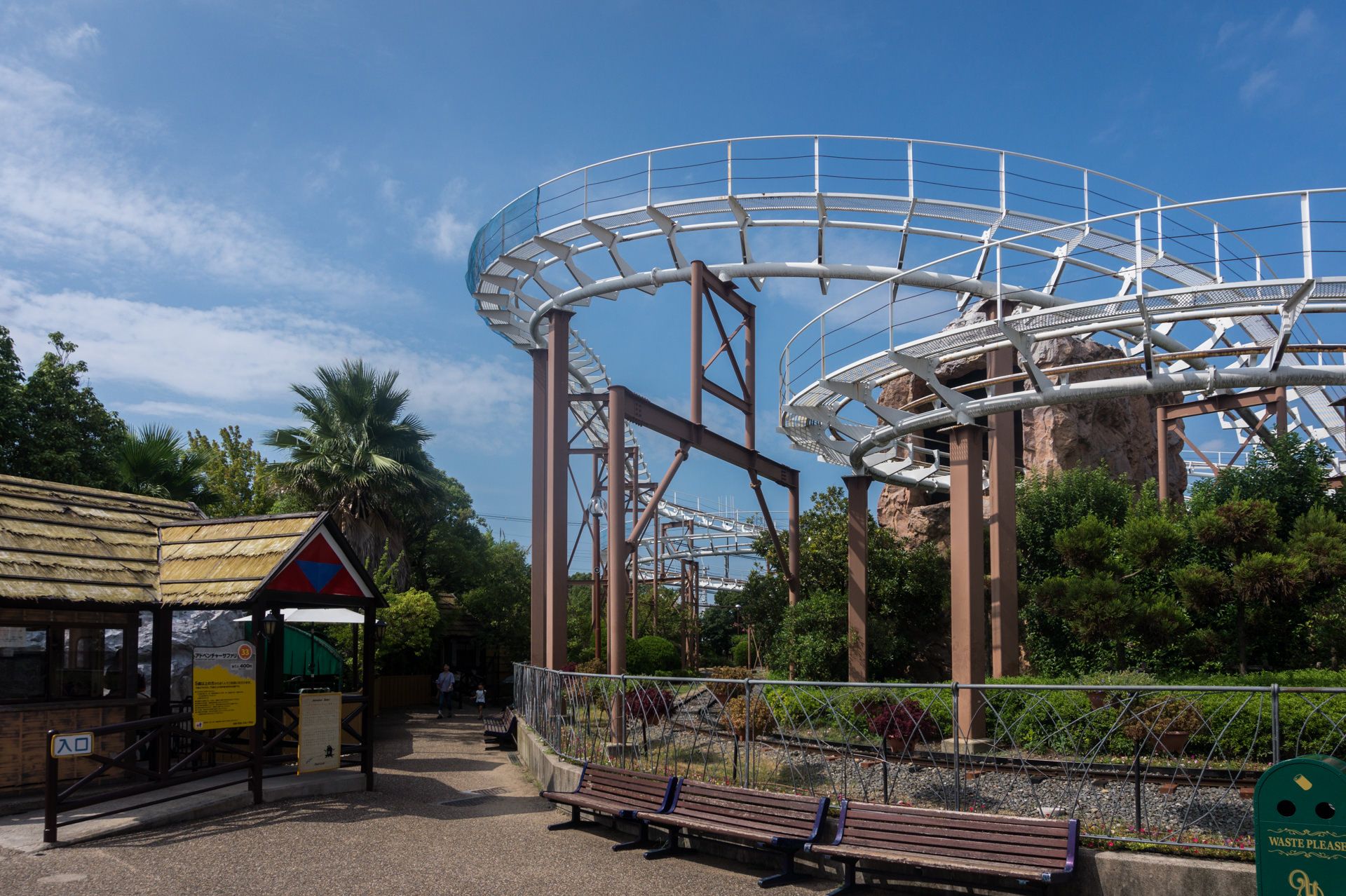
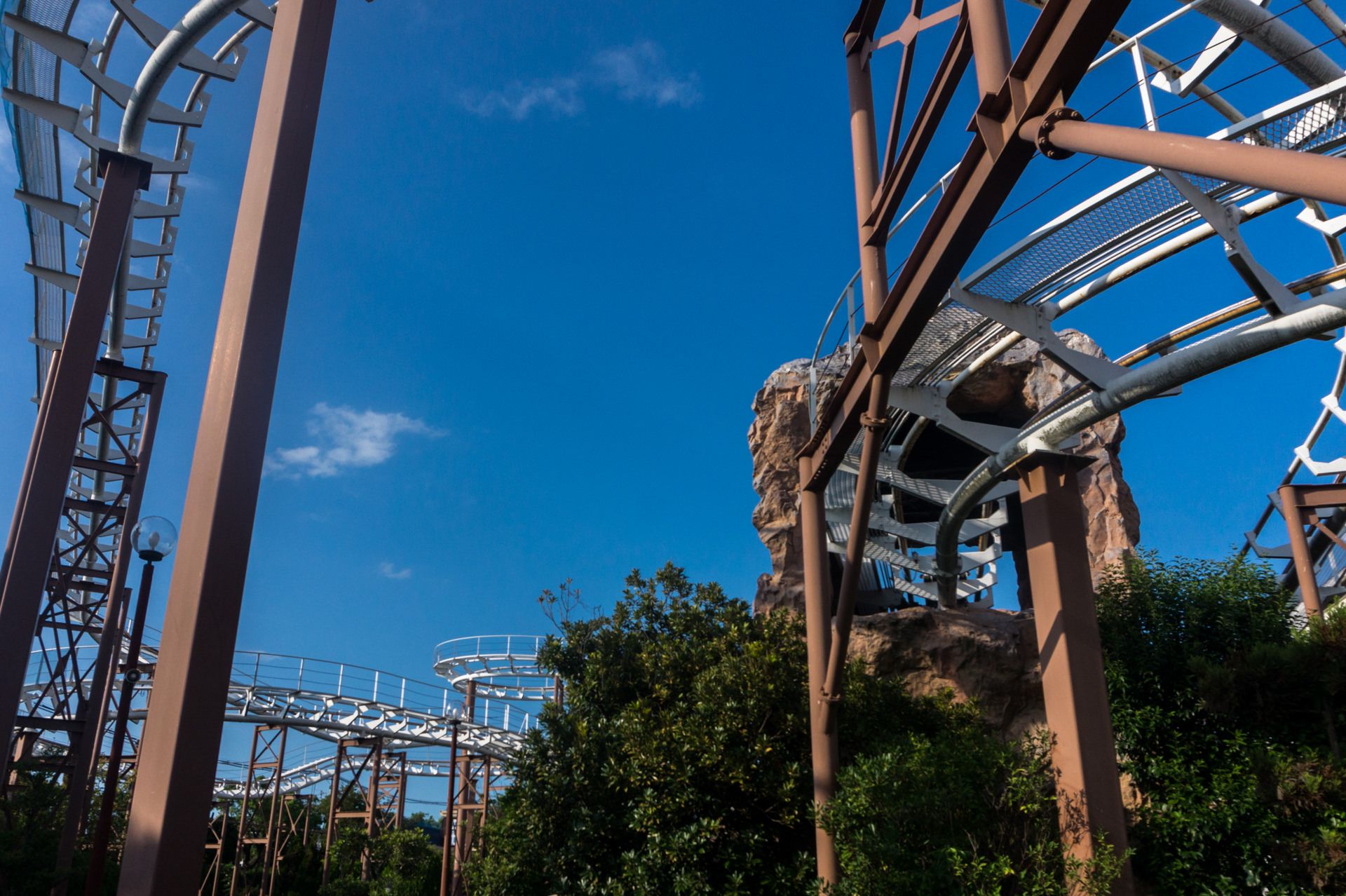
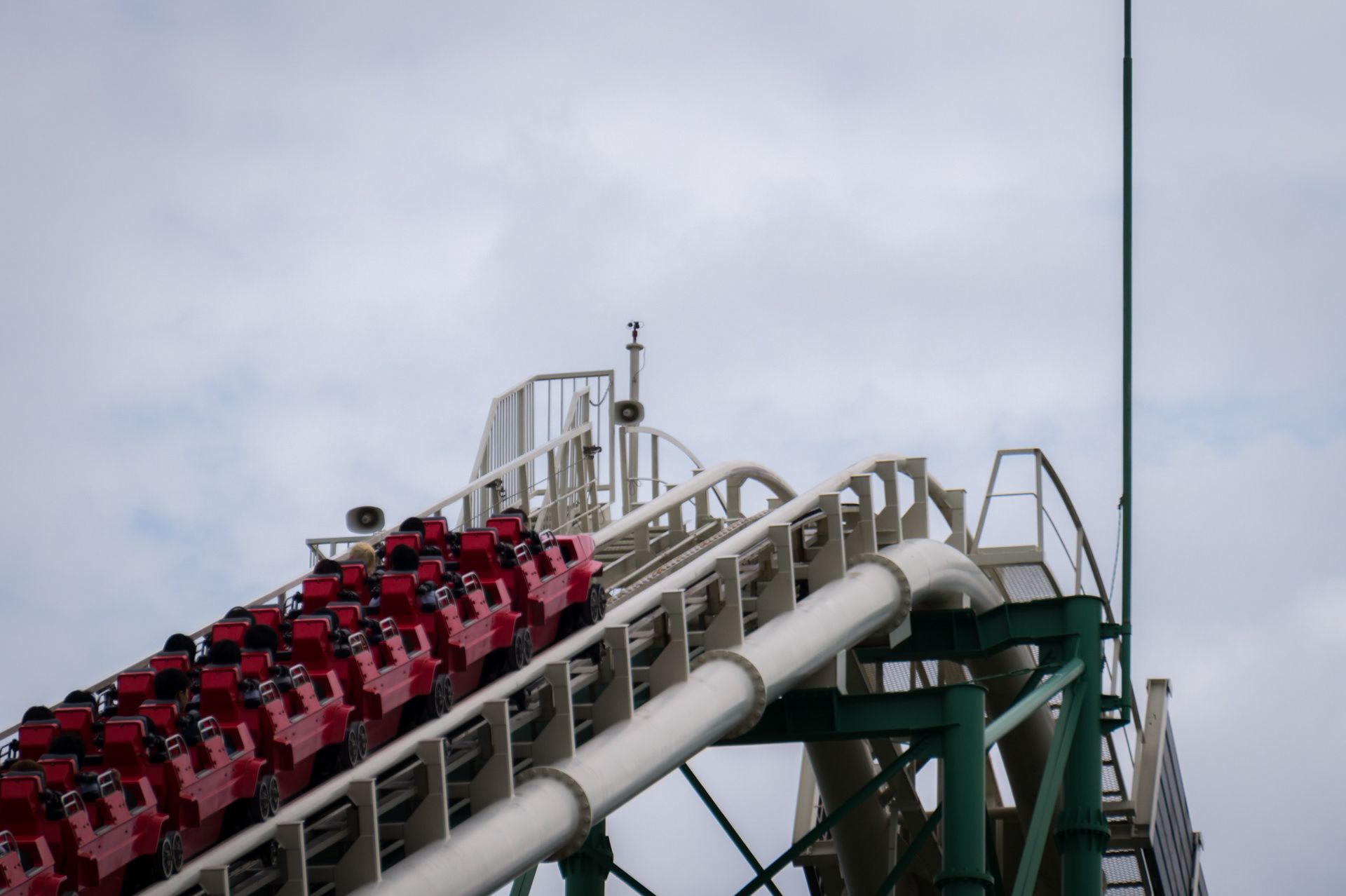
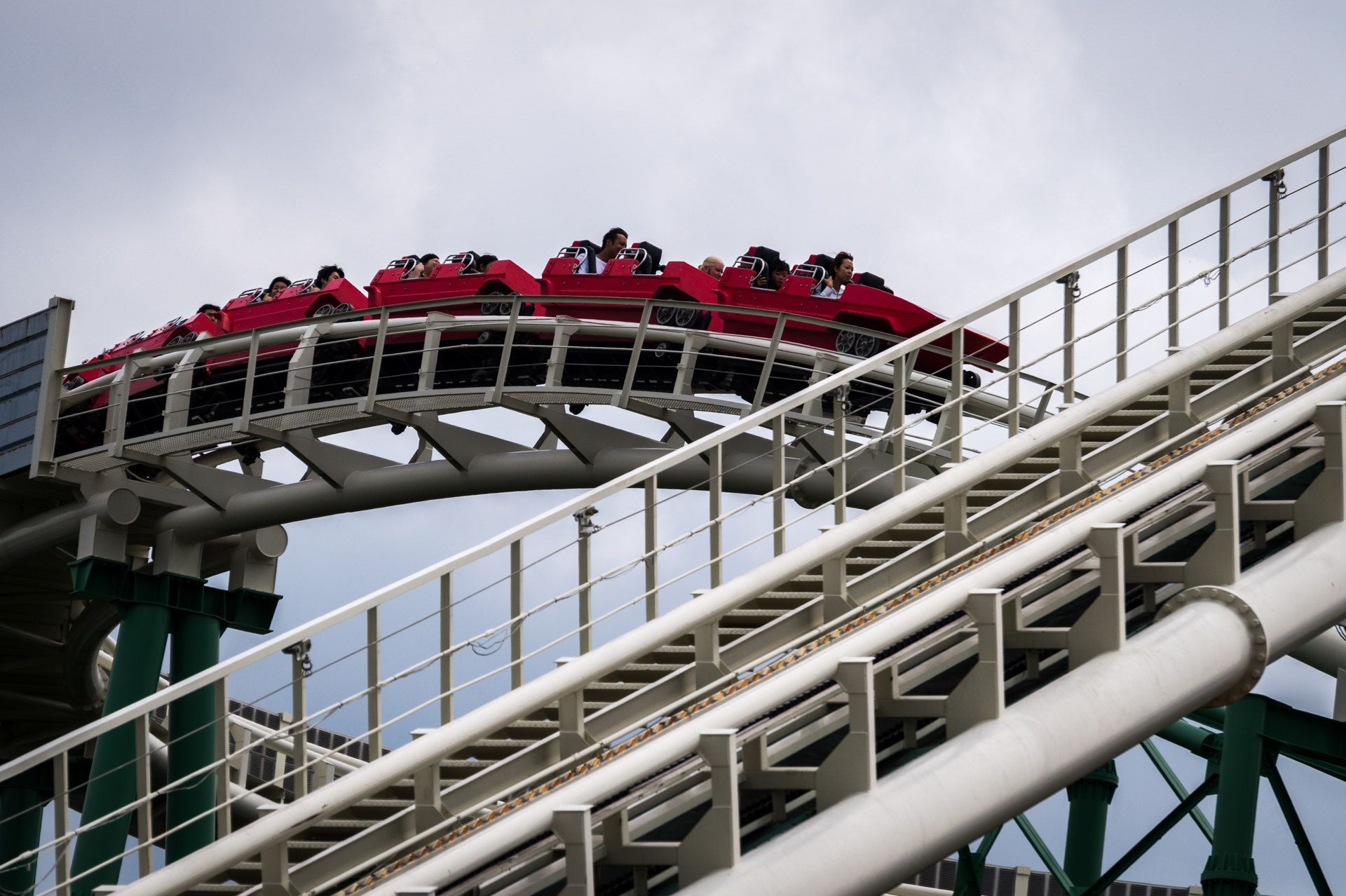
After a short straight section, the train takes you over a short dip into the ride’s lift. Typical for a proper jet coaster, this one is comparatively steep and you spend some time in it. But that’s not too bad, because it gives us more time to look at the city of Osaka. At the top, the train quickly picks up speed after a first, quite steep, small drop. This is followed by a long left turn before the first long descent. The train takes you rapidly through the first valley and over the top of a hill that bends slightly to the left. Far above the visitors’ heads, the train climbs another hill and passes the log flume.

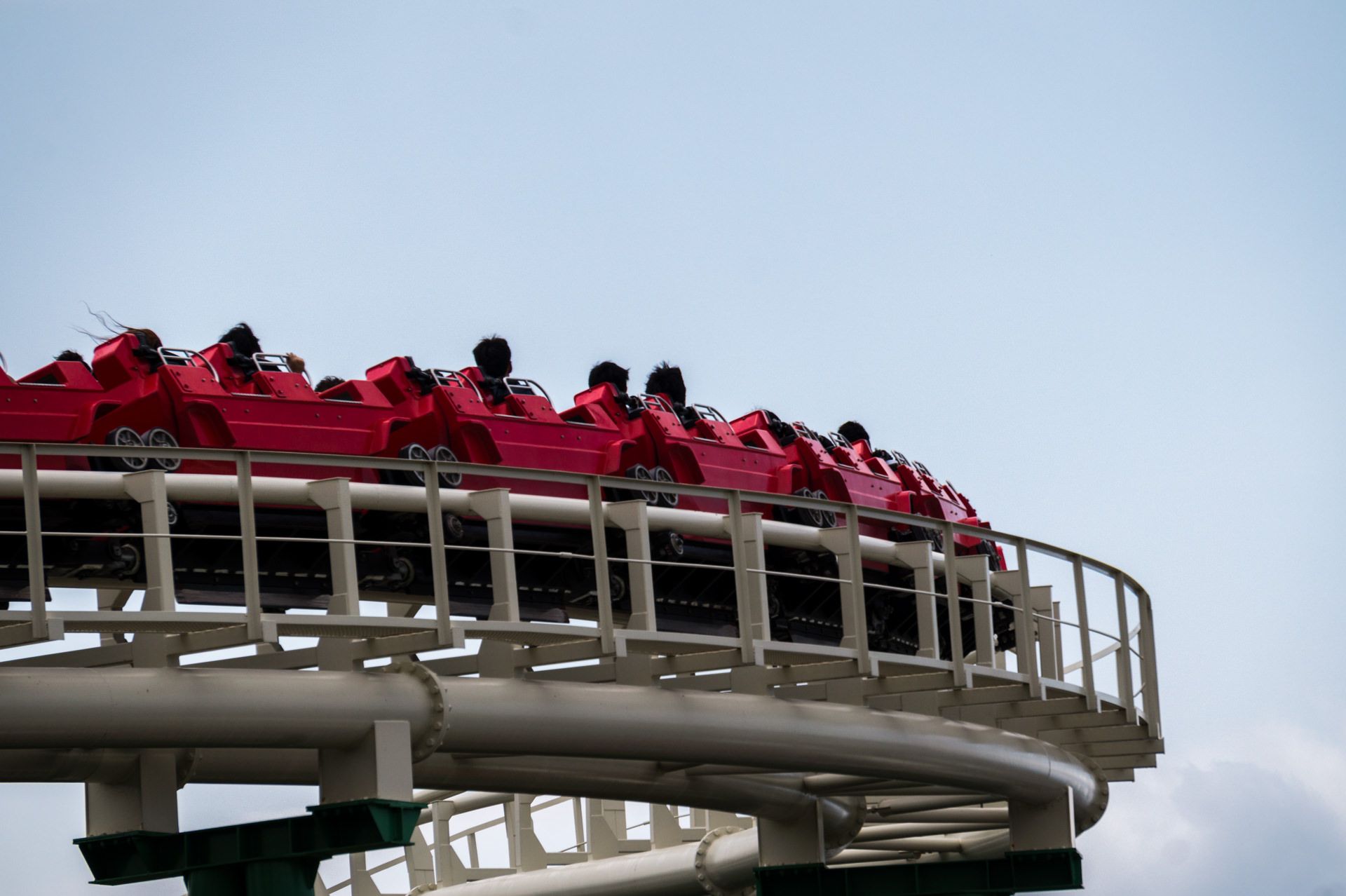
After another drop, you then reach a tight right-leading turn before you throw yourself properly to the ground for the first time. From then on, parallel to the track you have just completed, the train races over another hill into an extremely funny element. Coming out of a very wide right-hand bend, you drive through a narrow valley with a clear cross slope, which is suddenly followed by a narrow right-hand bend just below the first gradient. As in a very shapeless Bavarian curve, this leads you over a short hill, into another valley. A wide left turn follows. After a very flat drop with an equally flat ascent, a wide 540° helix awaits you, which then releases you into the final shot. After the subsequent ascent, a rather strange transition into a curve awaits you and shortly afterwards the braking section of the ride is reached.

The Red Falcon combines many of the Japanese peculiarities of roller coaster construction, but is a thoroughly nice ride that you should simply enjoy. The ride distance of 1300m gives you plenty of time to whizz over the rather flat hills at up to 70 km/h – secured by a shoulder restraint. The view of the city of Osaka and its imposing location far above the rest of the amusement park benefit the ride immensely.

Meteo

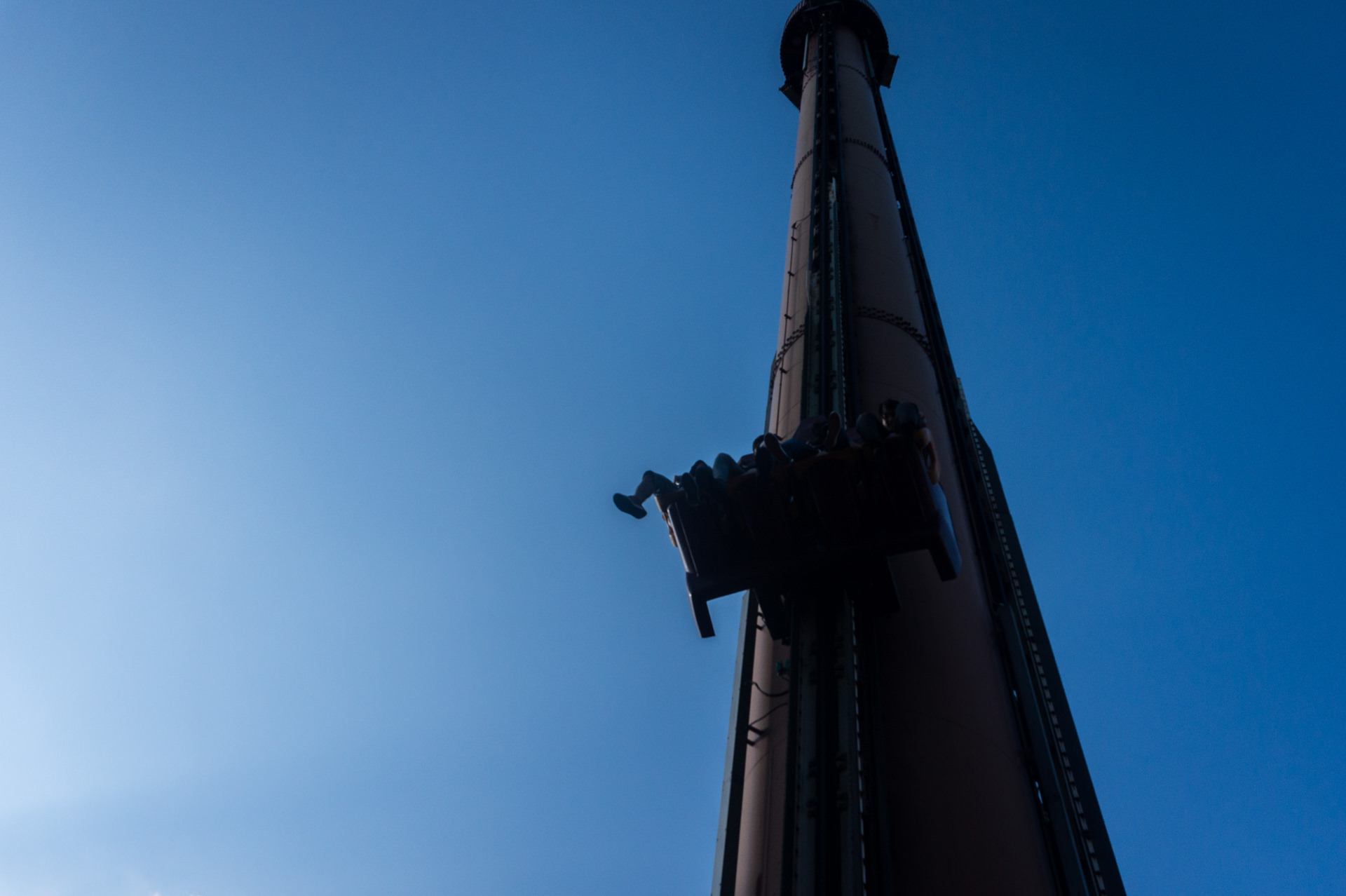
The very late braking on the Intamin Meteo freefall tower one level below is just as beneficial. As already experienced in the Kijima Kogen Park, people in Japan like to do without the secondary safety belt, so that here too the ride seems even more threatening and, in combination with the hard braking, can be described as absolutely ingenious.

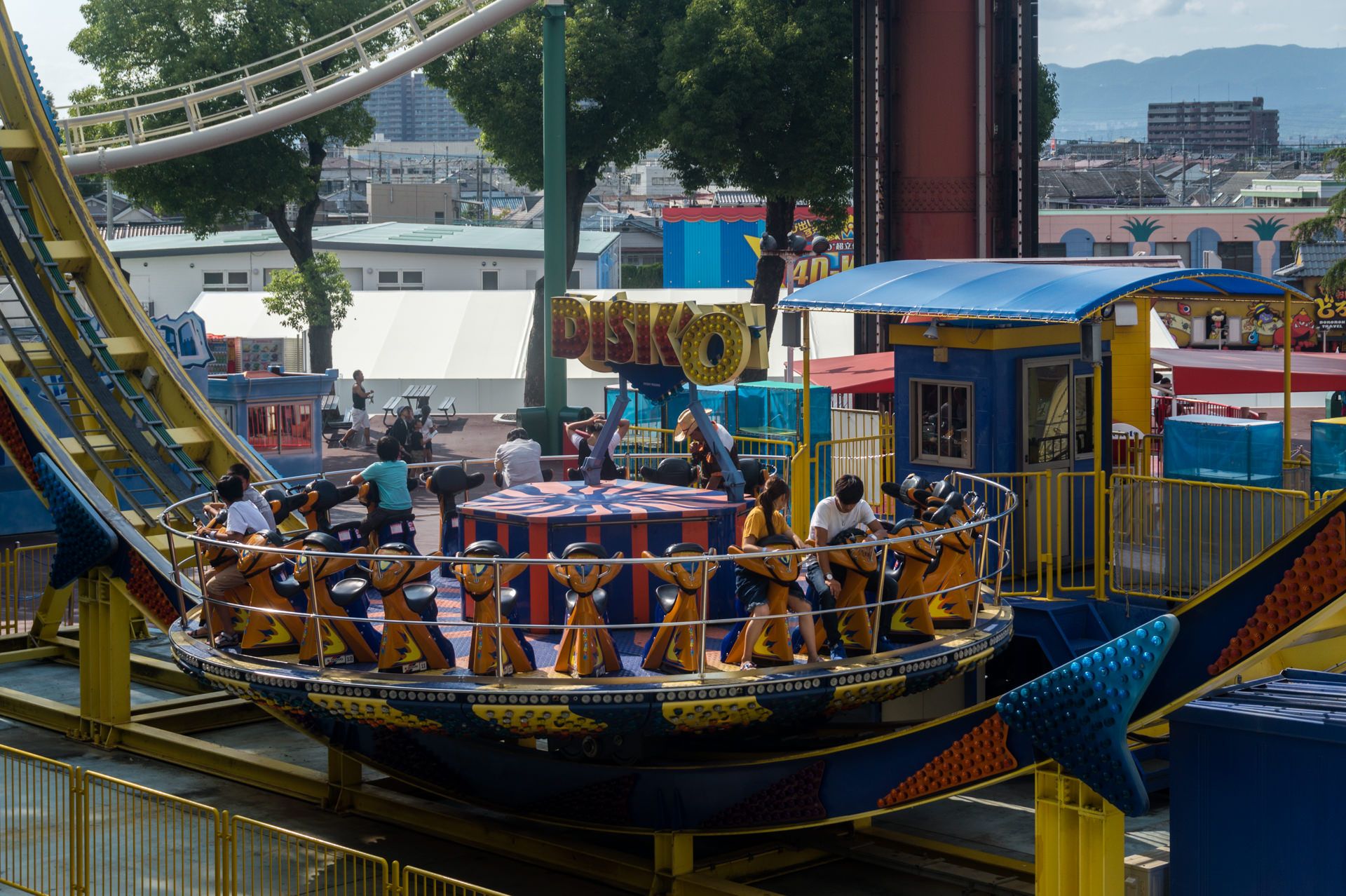
In addition to the obligatory freezer, this time (quite small) in the form of a large refrigerator, there is also a very good spinning Disk’o from the manufacturer Zamperla on this level, as well as a kite flyer and a Zierer wave swinger, which was unfortunately undergoing maintenance on the day we visited.

Palm Walk

One level further down, you come to the Palm Walk and its integrated interactive dark ride Gururimori, as well as the Legend of Dark Forest (a mirror maze) and Makafushigido walkthroughs. The area has a lot of charm and is similar in concept to the City Walk at nearby Universal Studios Japan – except that it is integrated into Hirakata Park.

Octopus Panic and Haunted House

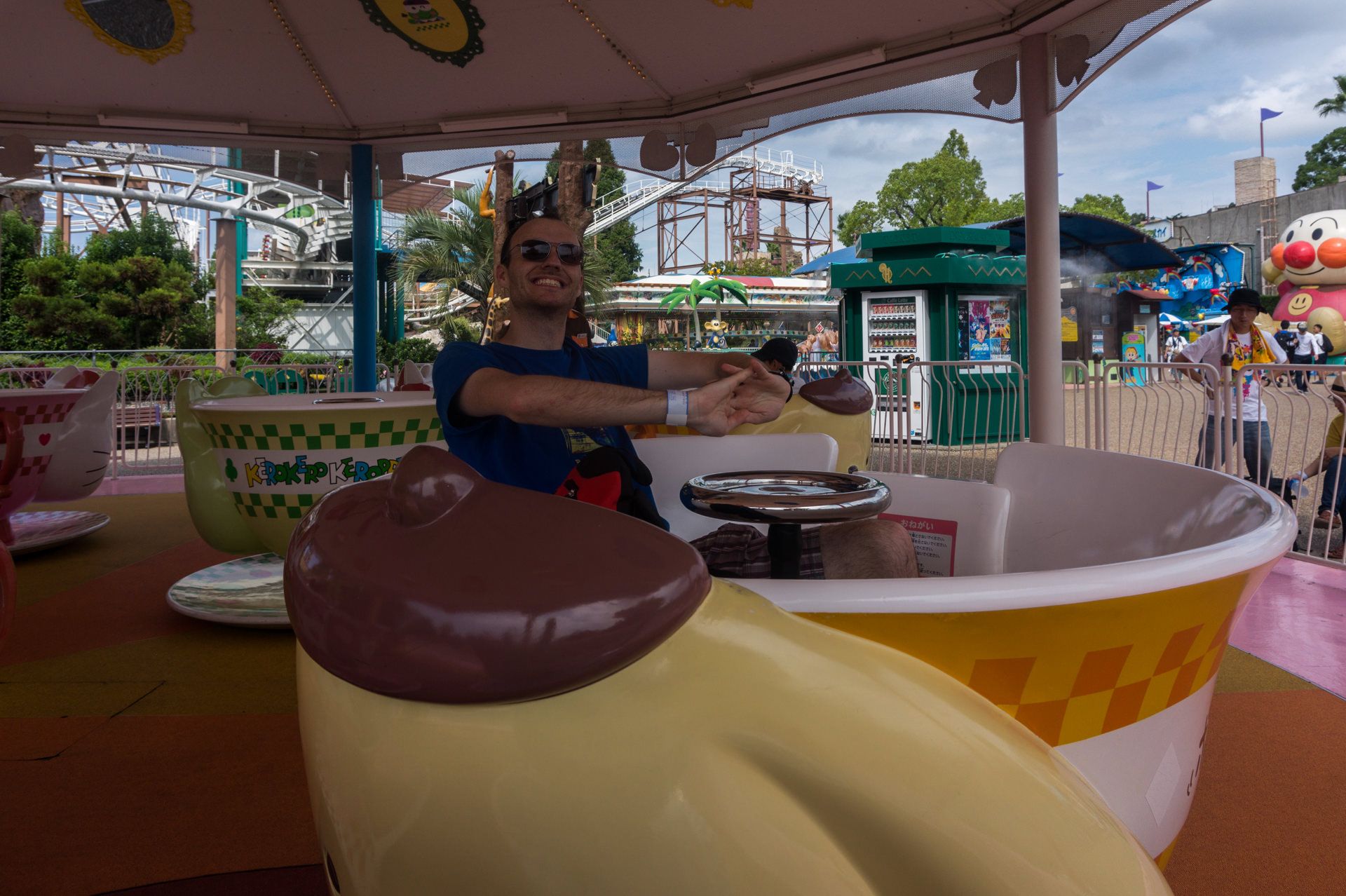
On the lowest level of Hirakata Park, you can mainly find various children’s rides, but also some classic rides and gems, such as the Octopus Panic sea storm ride, Japanese tea cups in Hello Kitty design or the child-friendly dark ride Haunted House, where you travel through the chirpy underworld with the Dororon travel company. Of course, the 3D 360° cinema right next door should not be overlooked.

Fantasy Cruise and Gnome’s Train

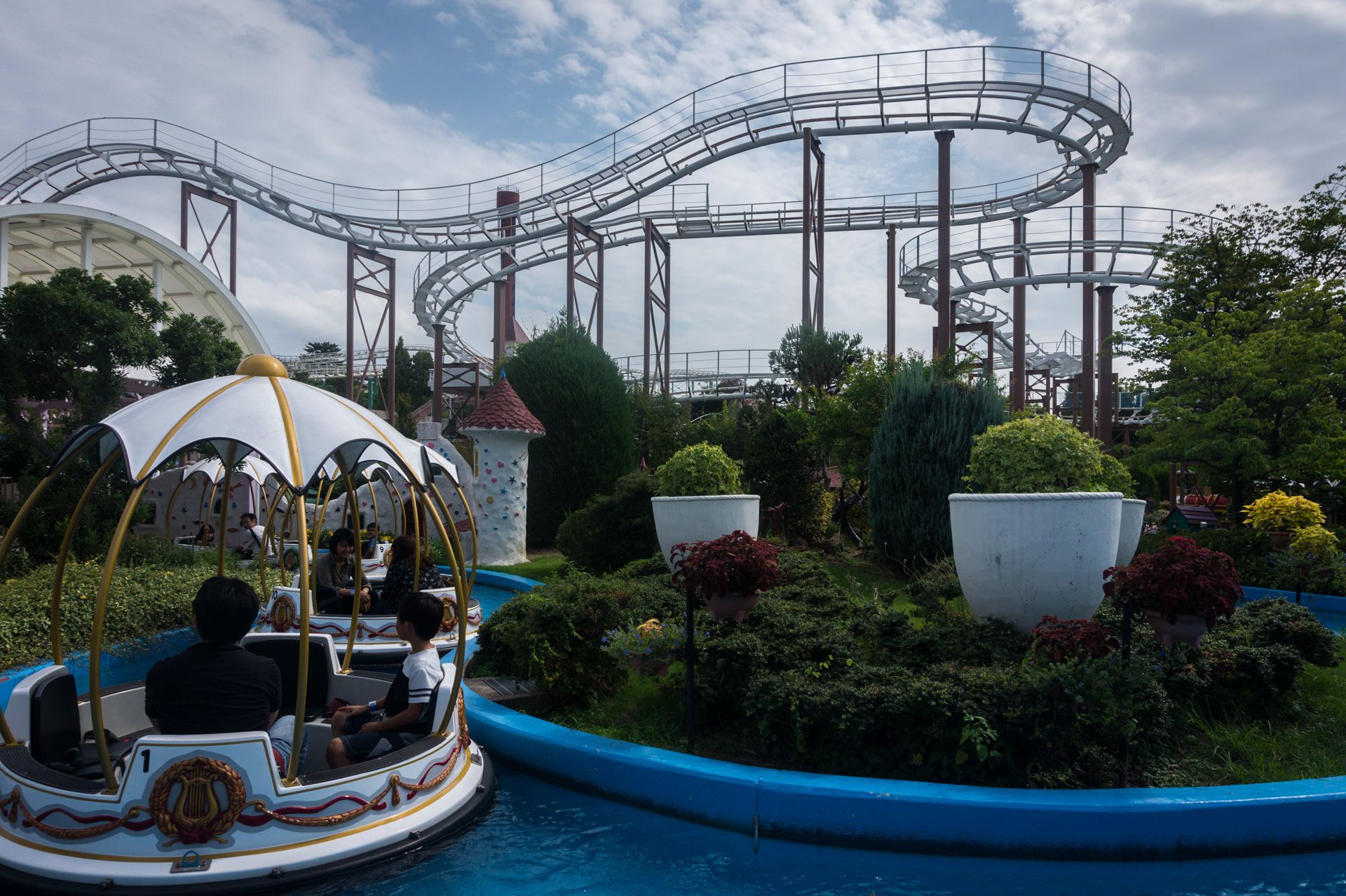
Meanwhile, if the hustle and bustle has become a little too wild for you, you should take a little stroll through Hirakata Park’s huge rose garden or venture out for a ride on the Fantasy Cruise round boat or the surprisingly long Gnome’s Train park railway. This area is an ideal retreat and invites any garden lover to linger, plus you have an exceedingly good view of Hirakata Park’s final roller coaster.

Fantastic Coaster Rowdy

The ride on the Fantastic Coaster Rowdy begins with a short right turn, followed by the lift hill. Once at the top, the lift makes a 180° left turn before the first drop follows. At a lofty height, the short-raced train now crashes over a camelback before it makes its way up again. Not at all rowdy, another tight 180° left turn follows and soon a very long right turn with integrated straight downhill. After a short right-hand bend, a very tight left-hand turn follows immediately, along with a shot. A left-hand and a right-hand bend join together like serpentines. This is succeeded by a final ascent into the braking section and soon the entry into the station, whereupon a ride not worth mentioning (as it is just okay) comes to an end.

Pictures Hirakata Park

Conclusion Hirakata Park

Although Hirakata Park is now over 100 years old, there are unfortunately no older rides to admire in the park; so they have always stayed up-to-date. This is understandable, but it does make the park a little less charming. It makes up for this with its green spaces, imaginative attractions and a successful overall ambience, which is why you ultimately feel very entertained when leaving the park.


What is your opinion about the theme park Hirakata Park?  Just write it in the comment field below the report or visit our social media channels:


Click here for the next report of the Titanic Max Tour