The Thrill Capital of the World

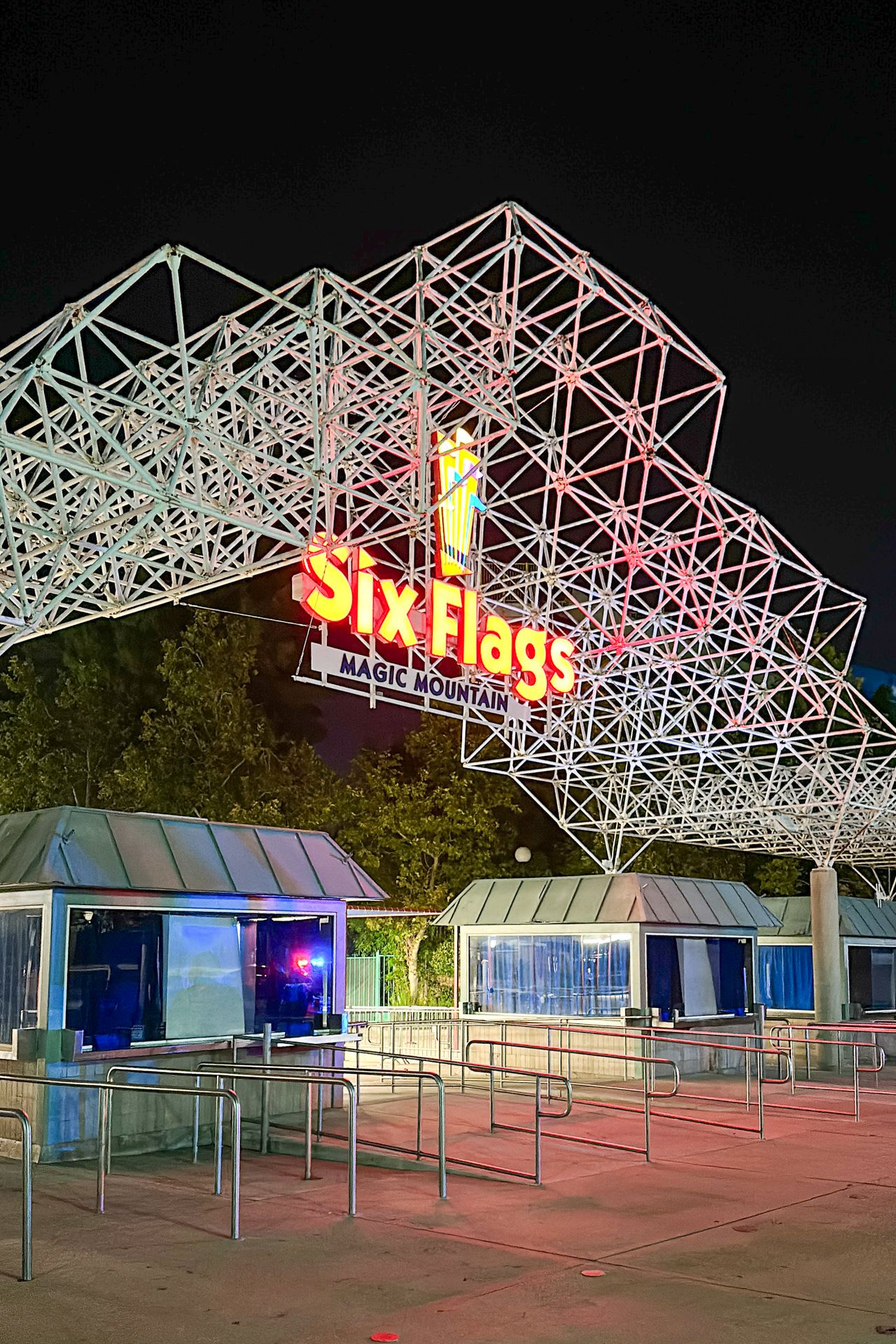
Six Flags Magic Mountain

Full Throttle

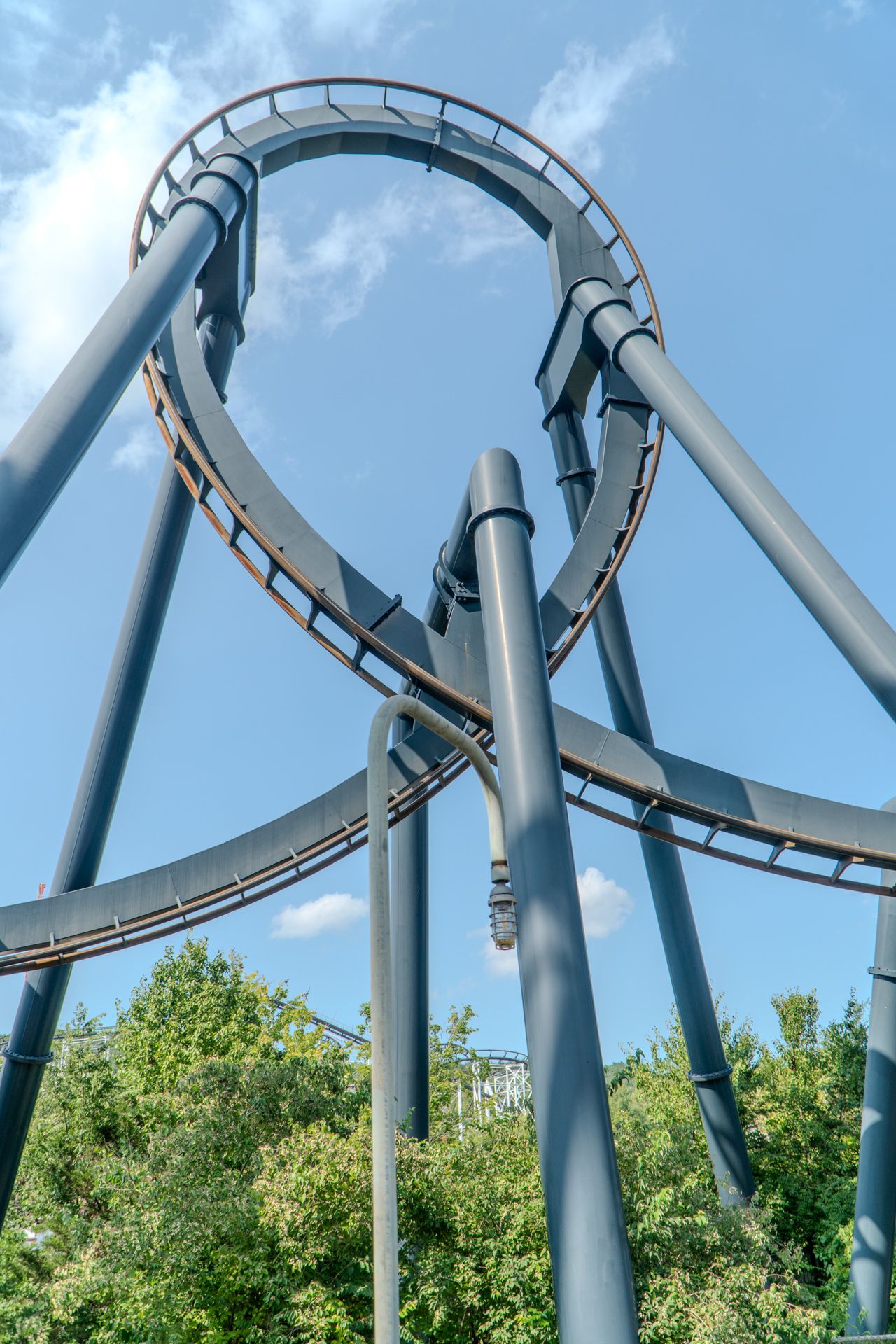
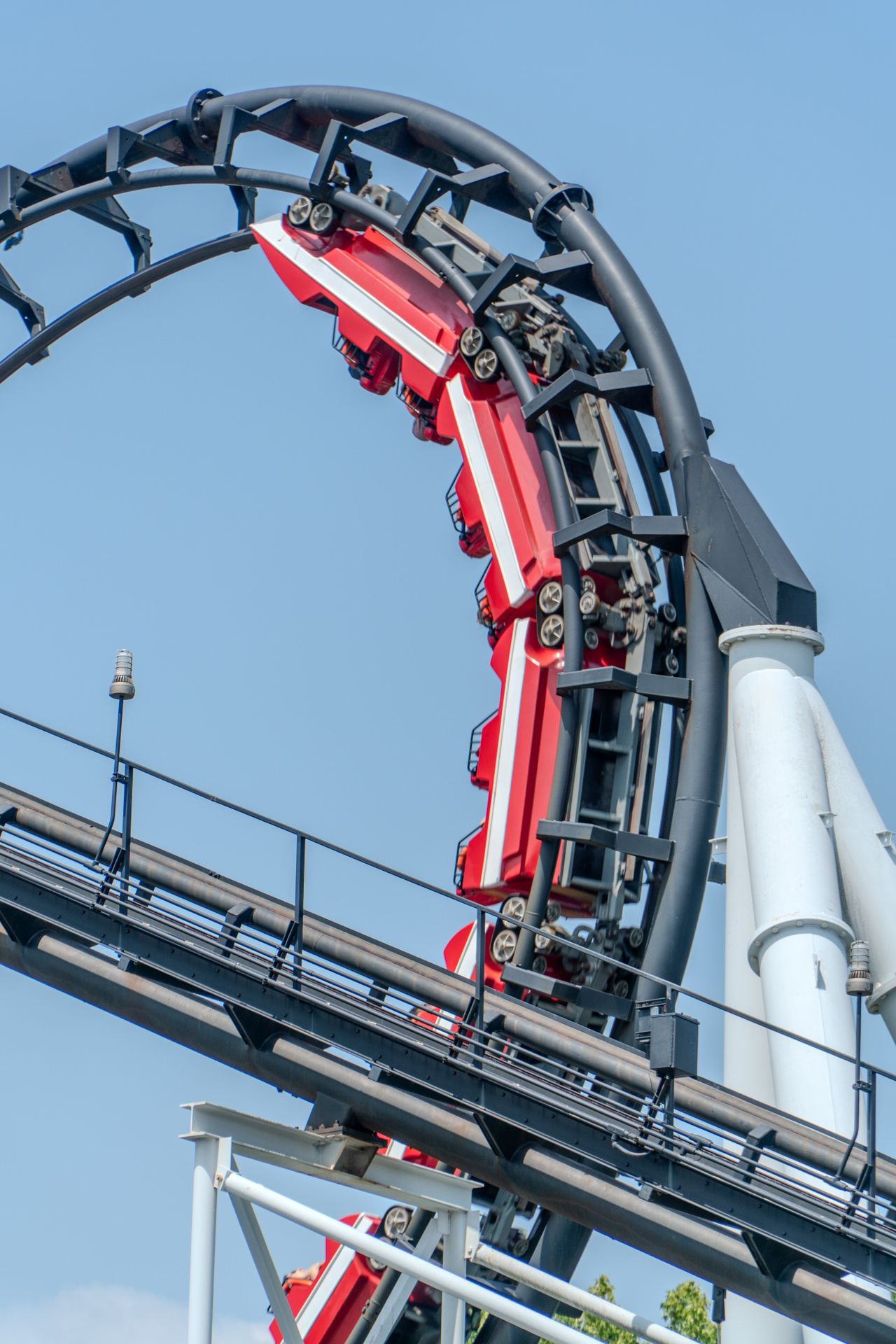
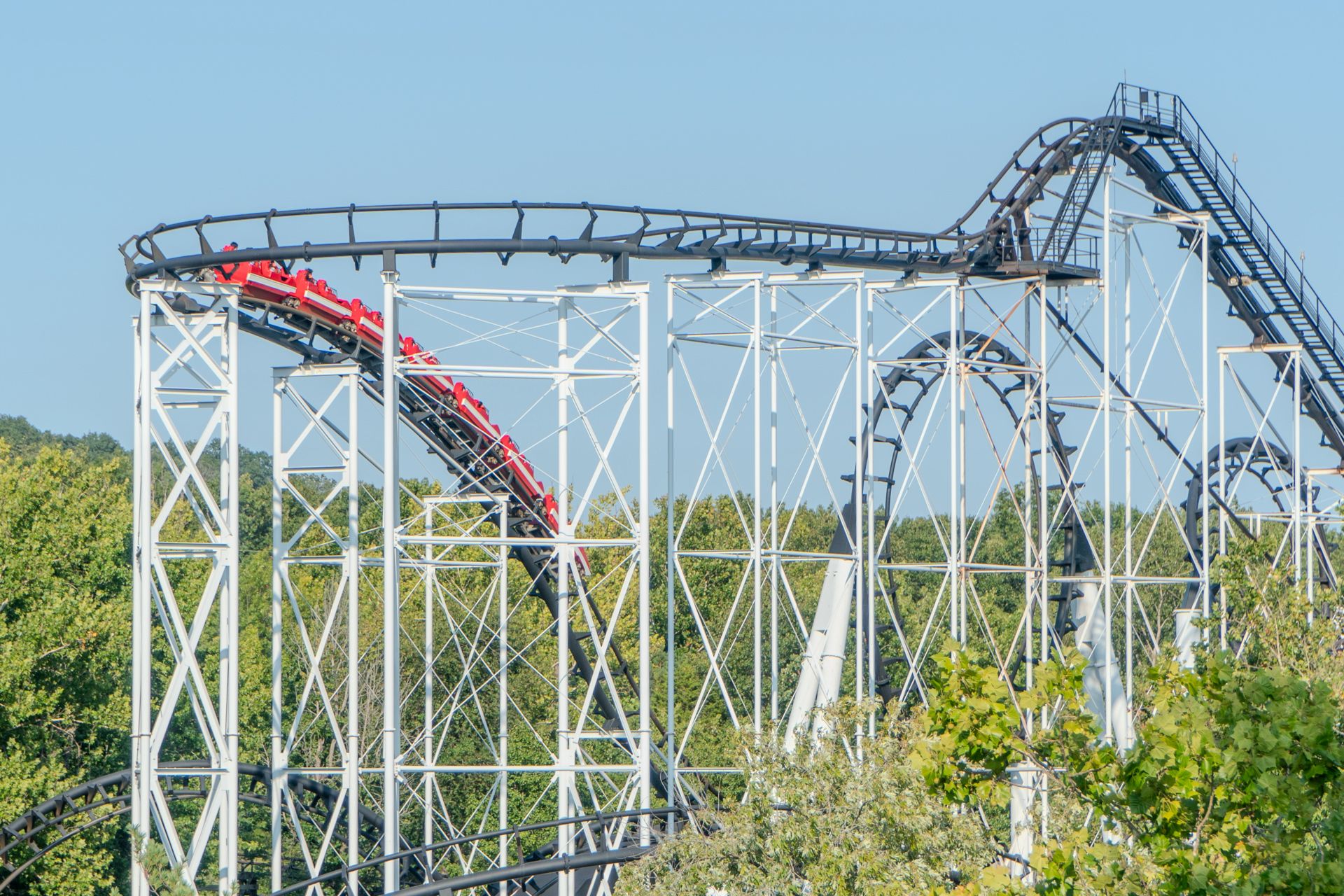
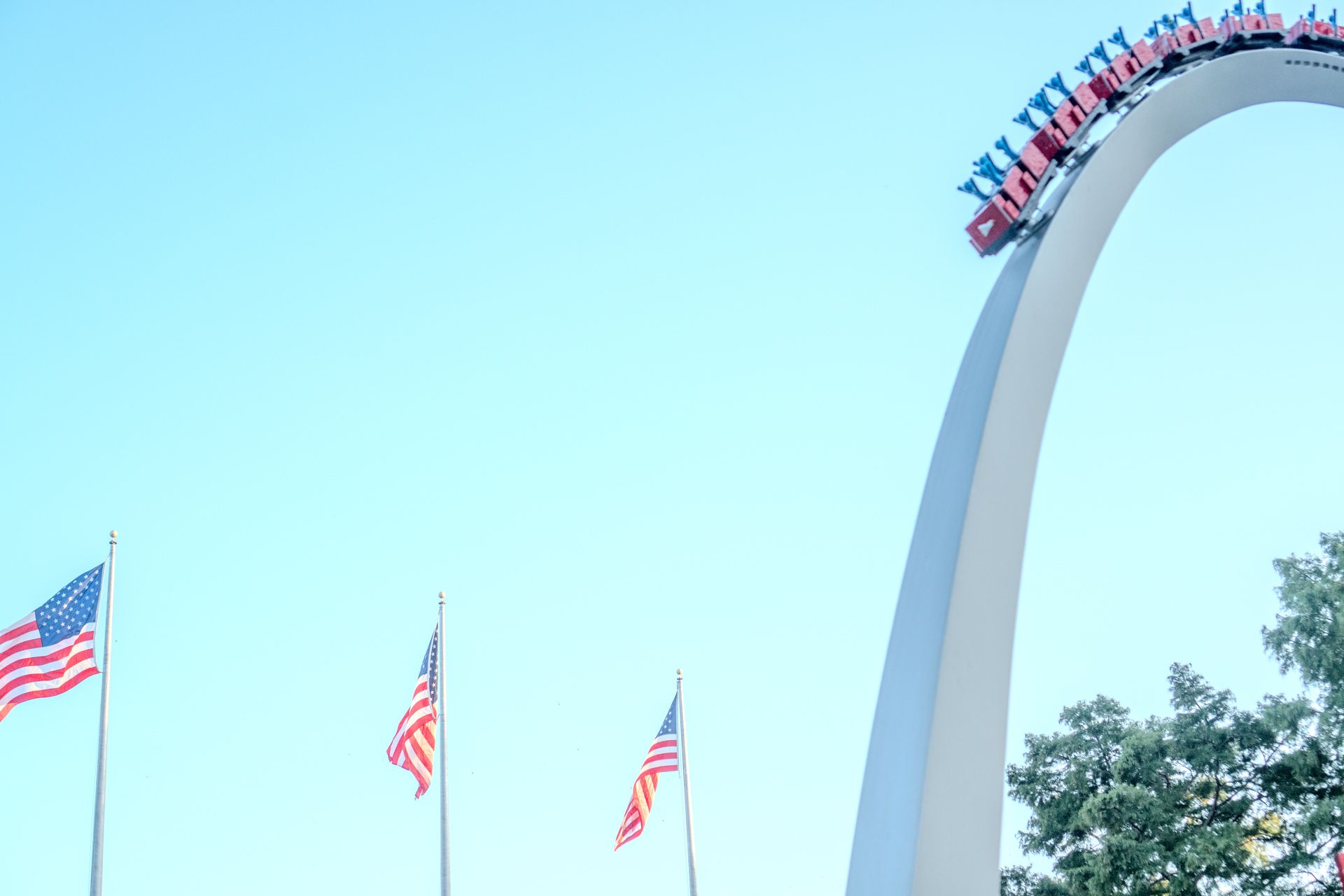
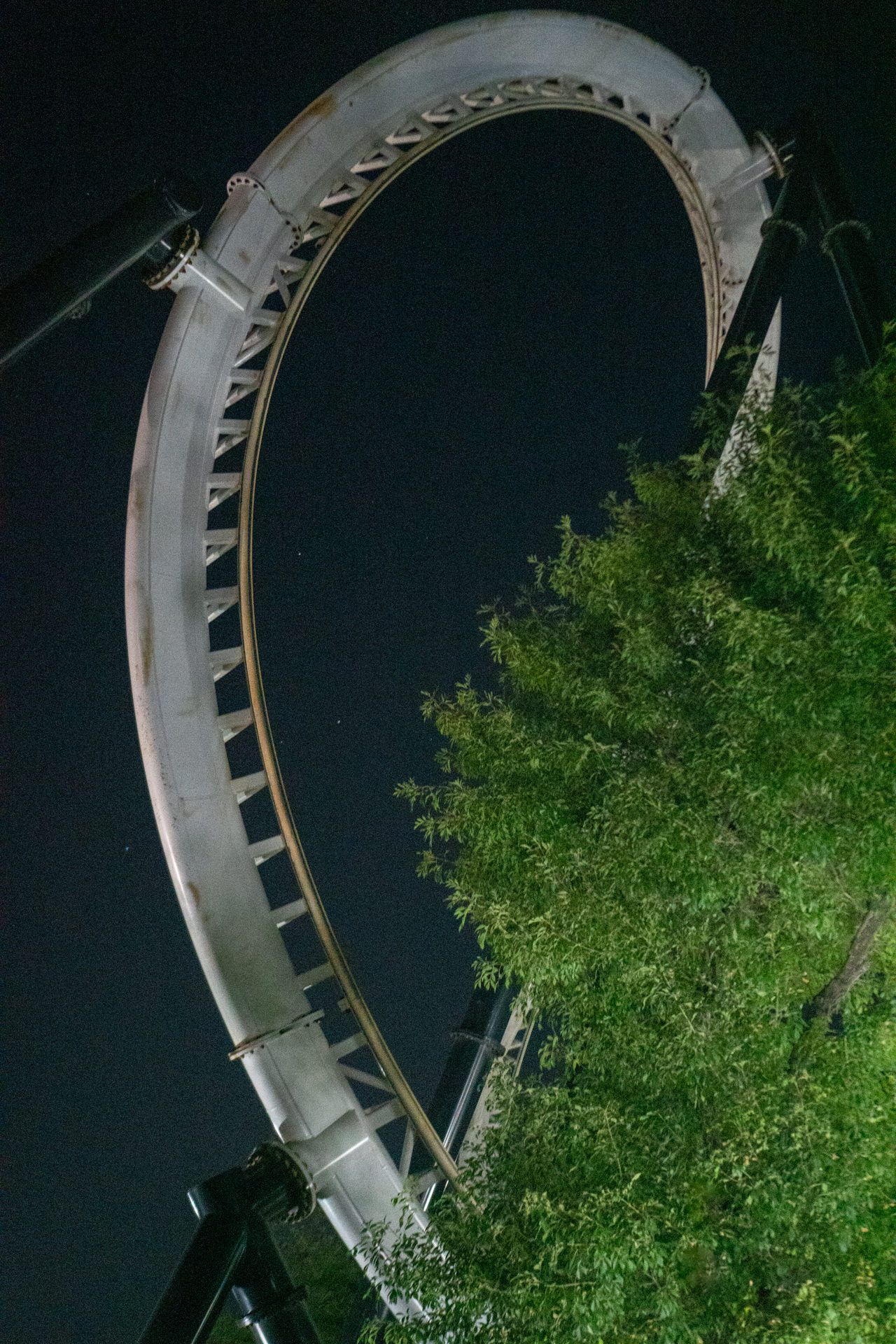
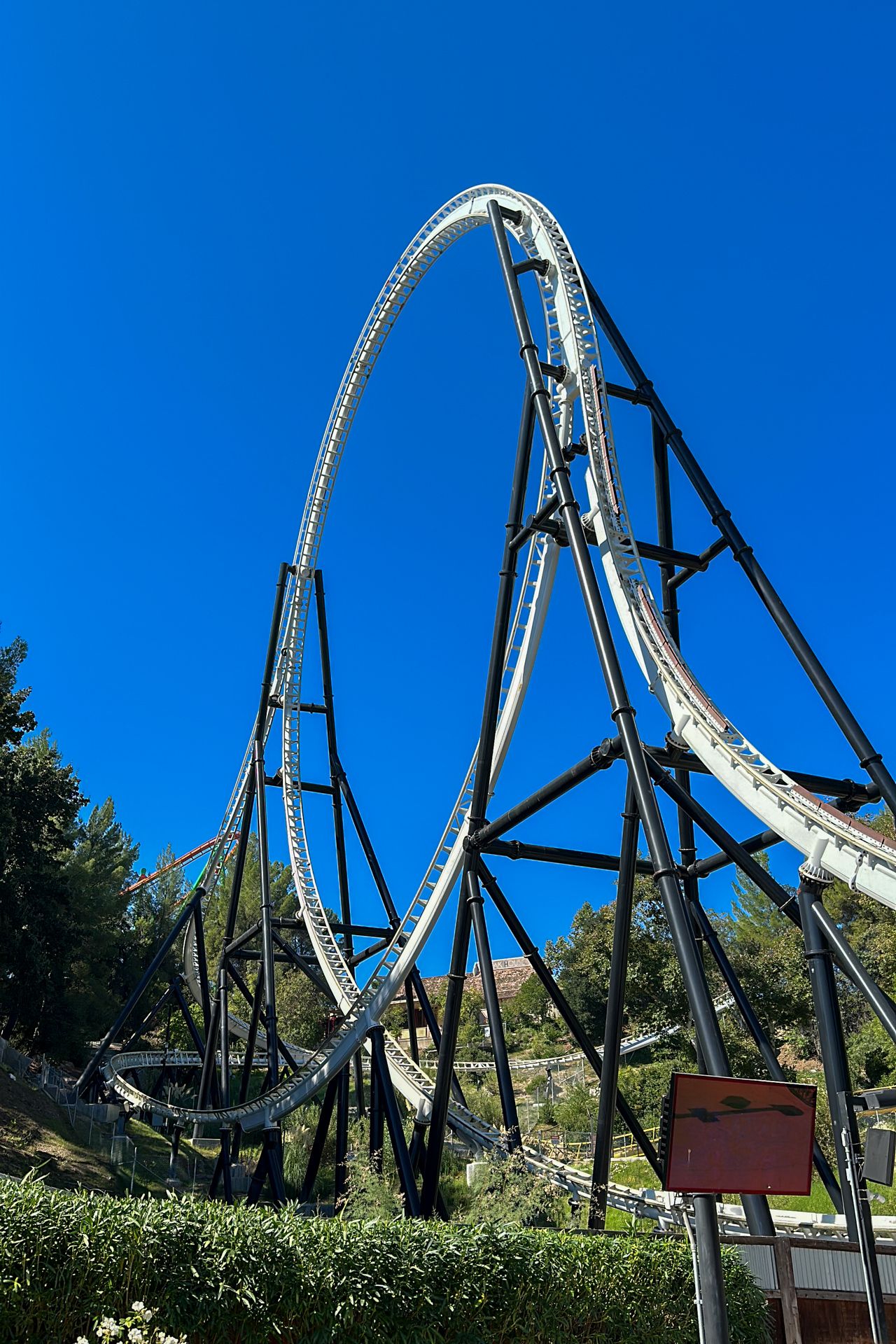
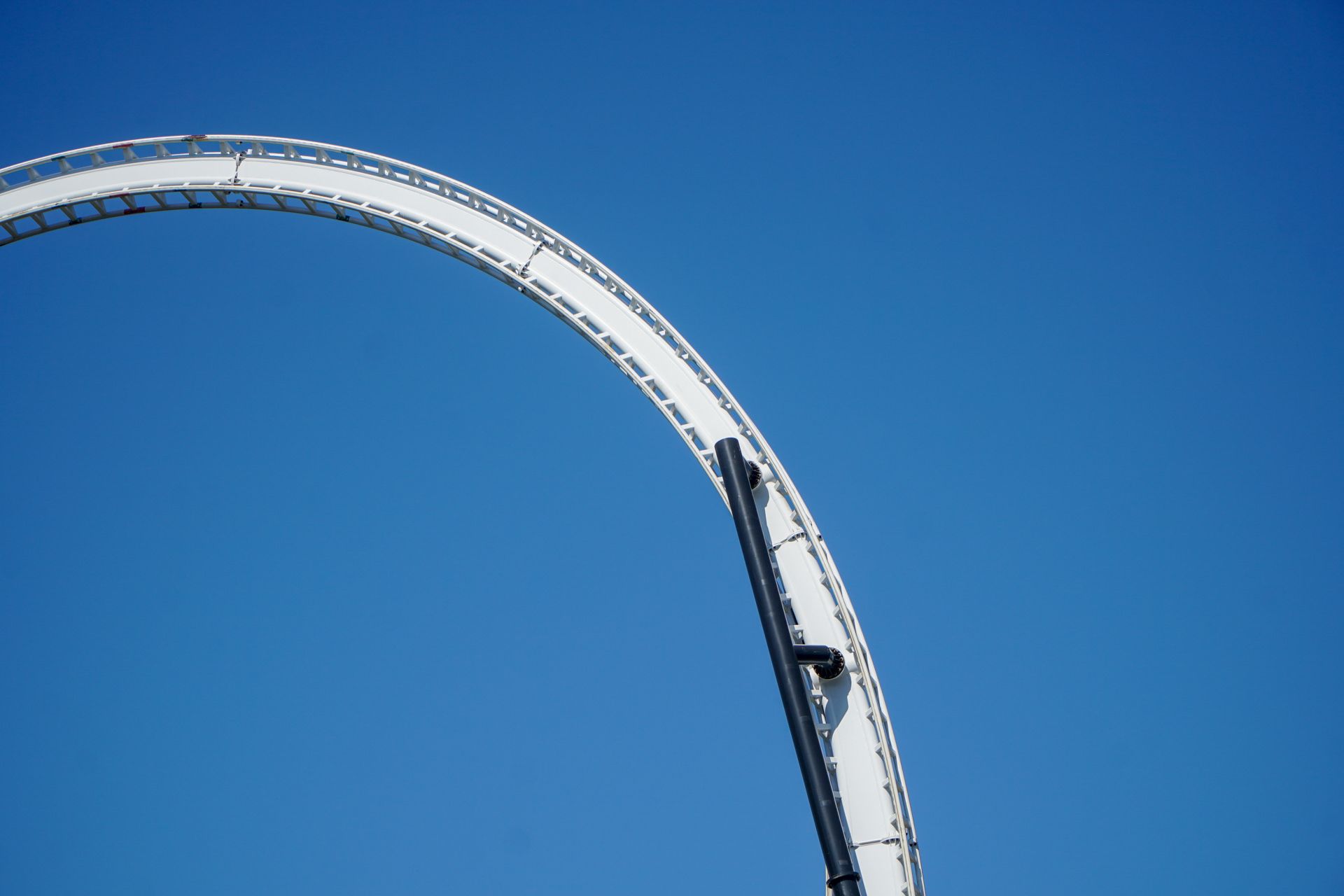
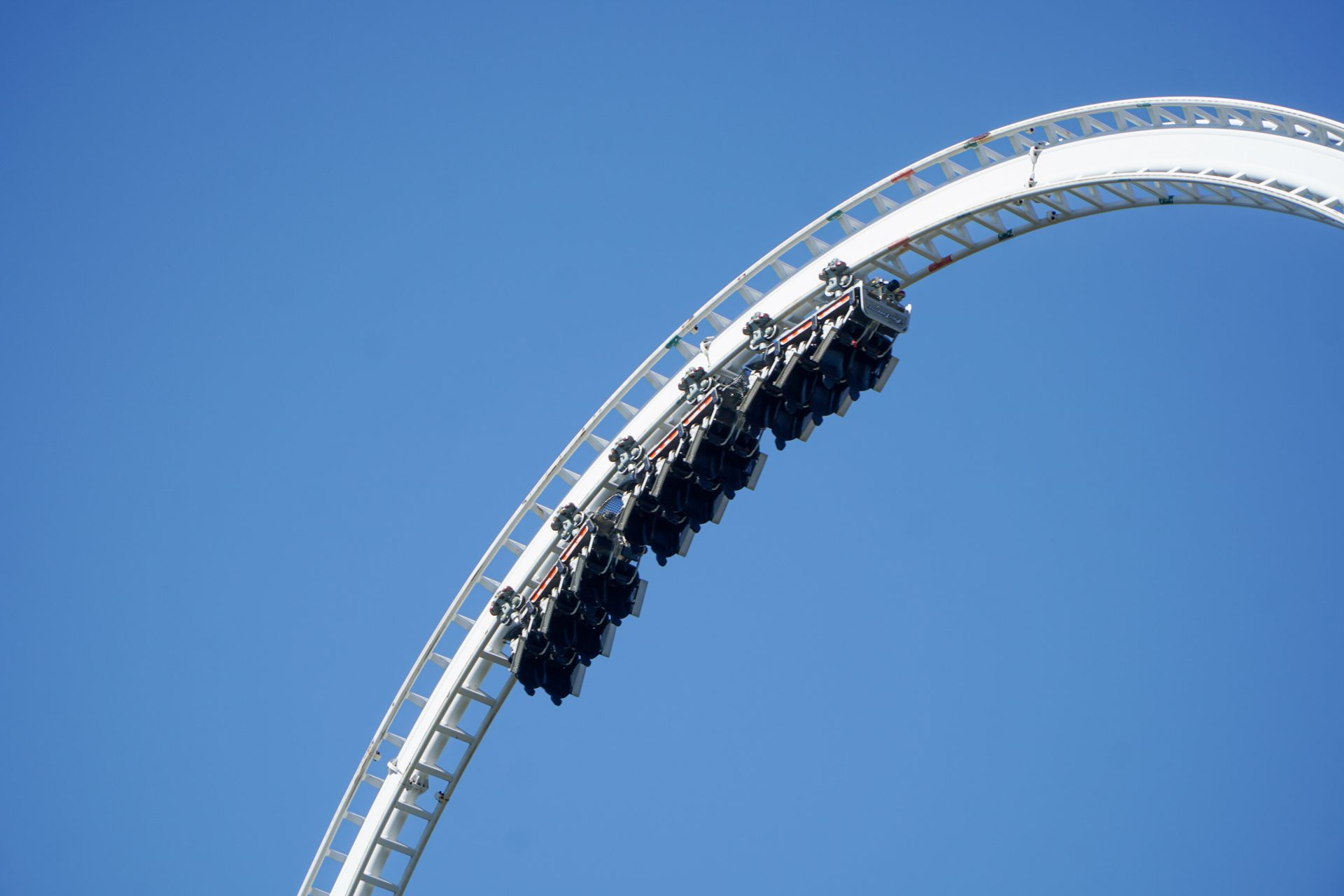
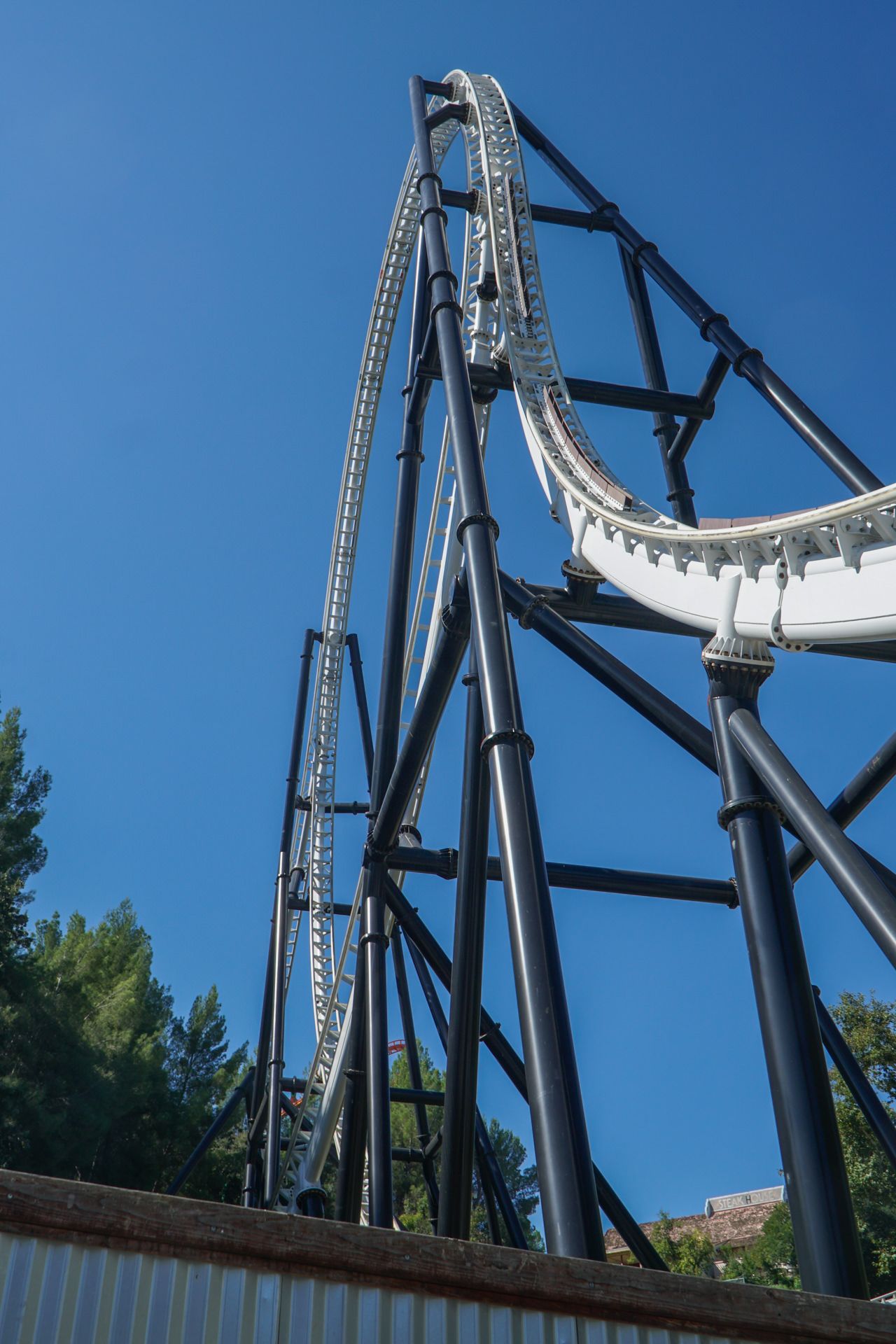
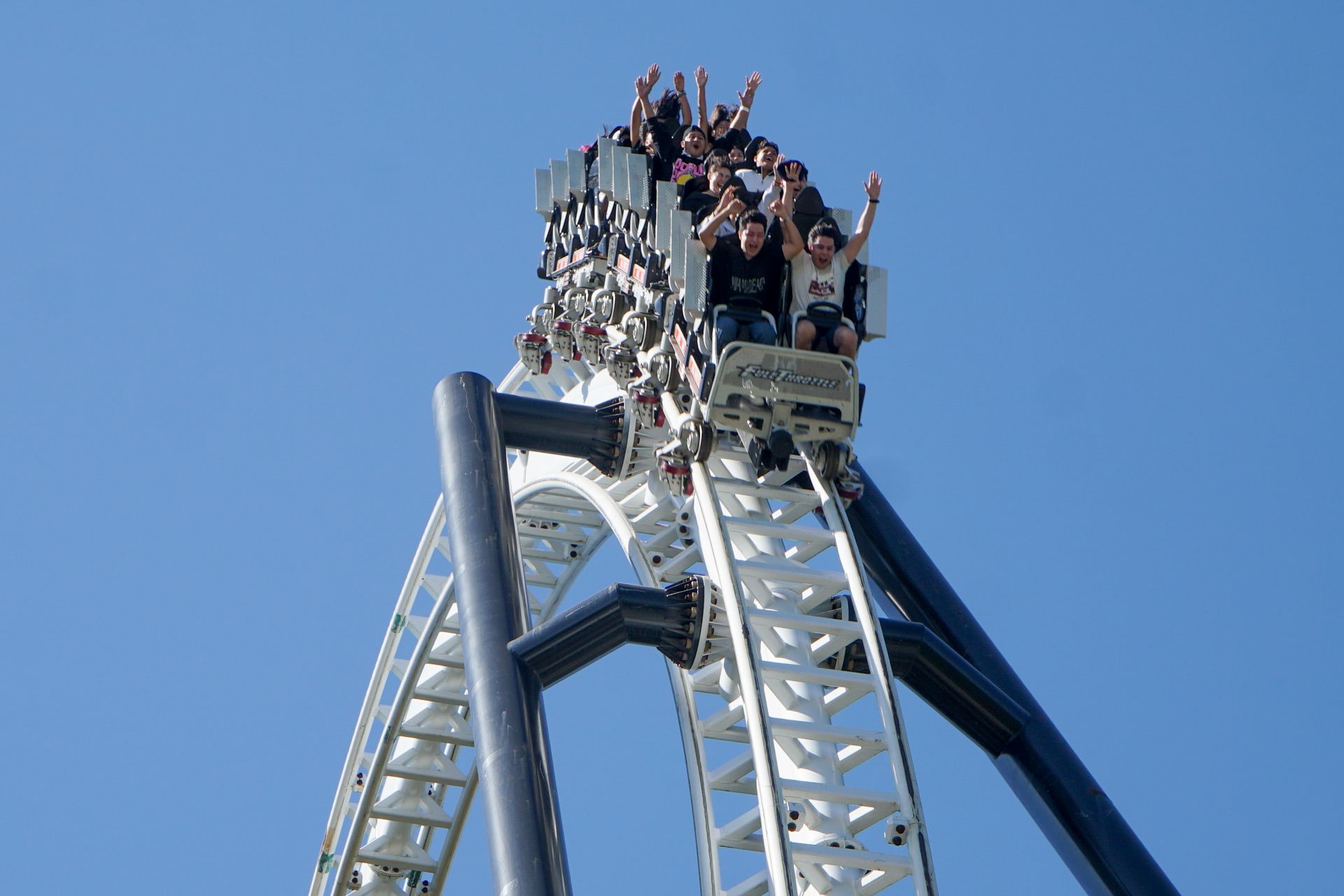
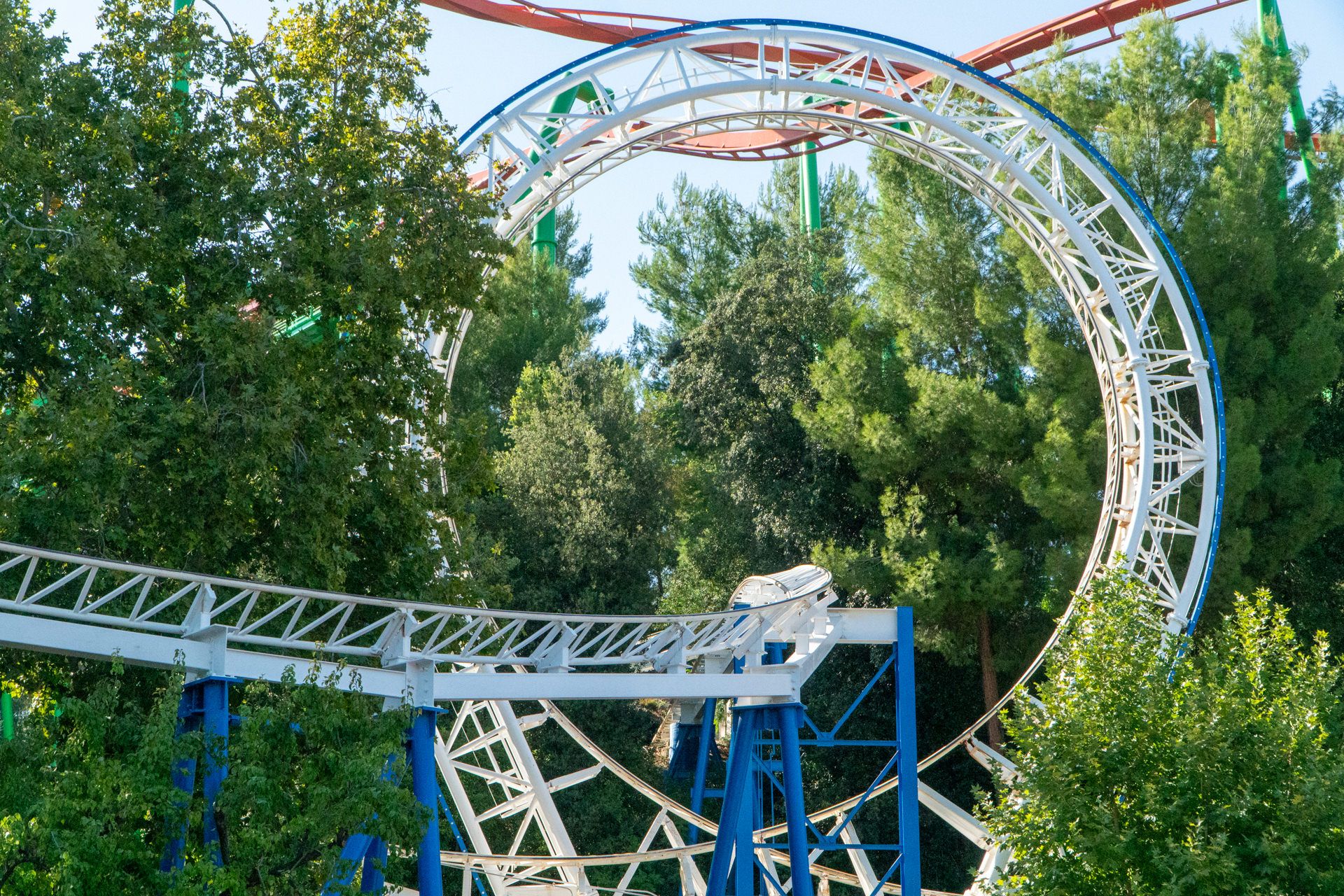
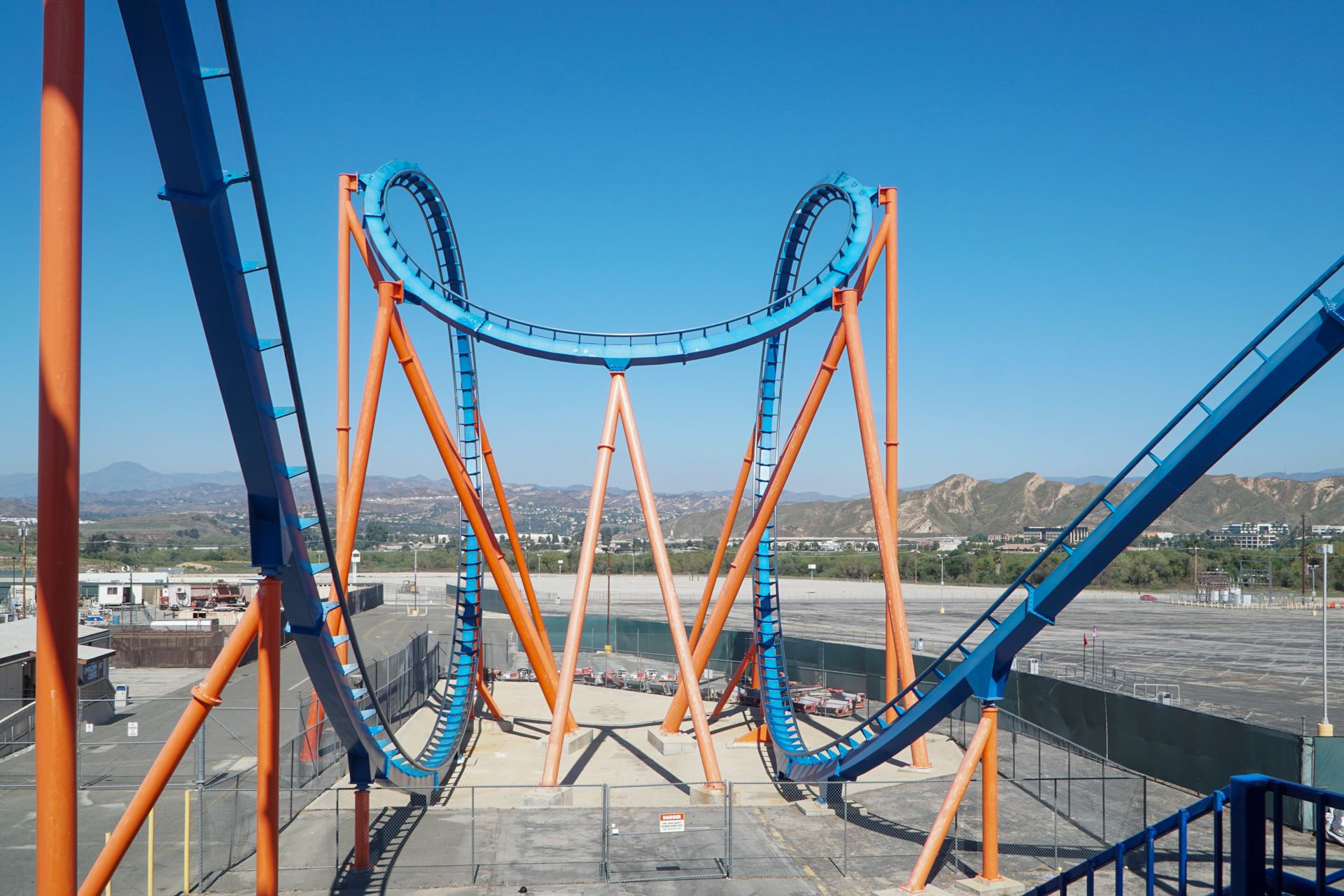
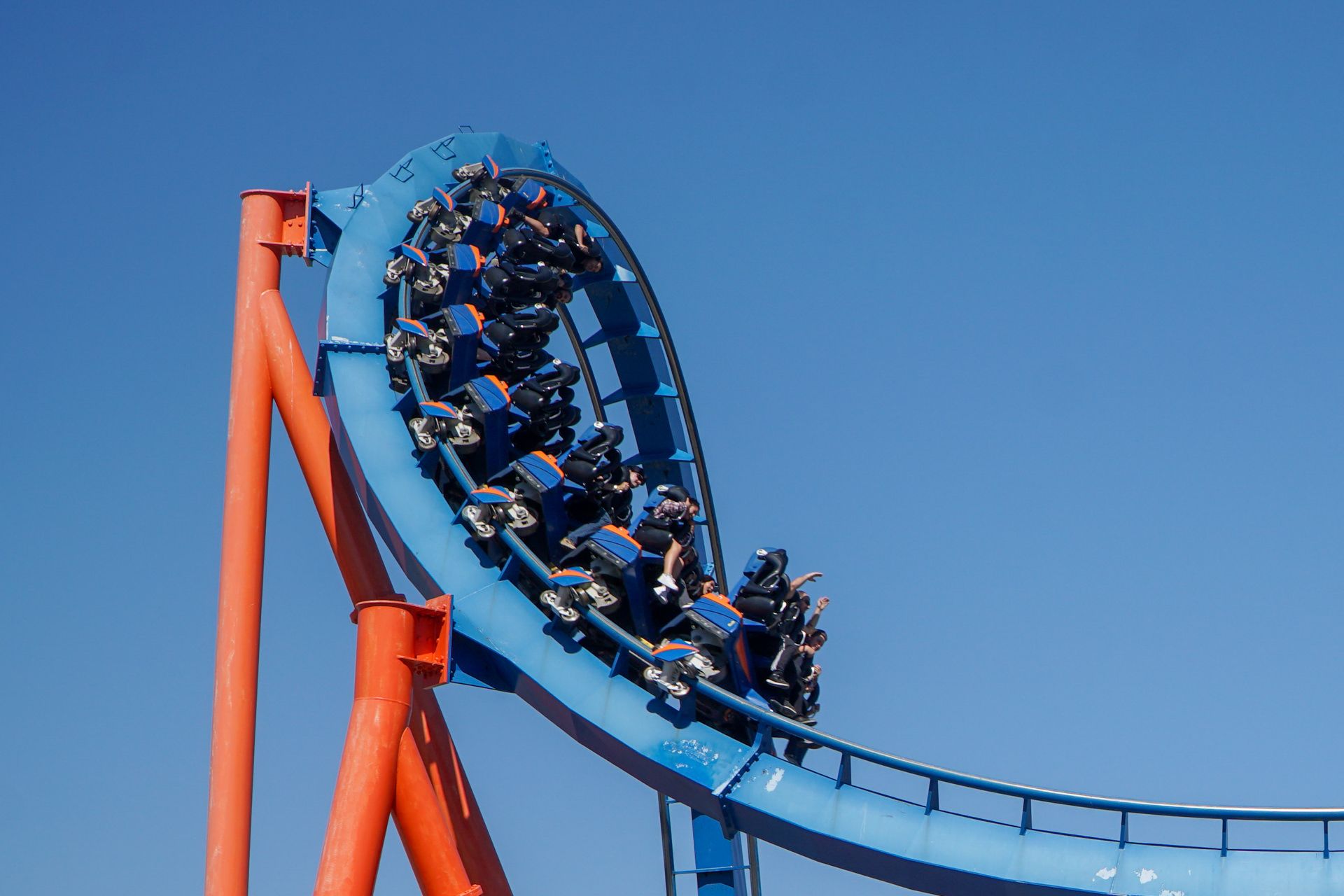
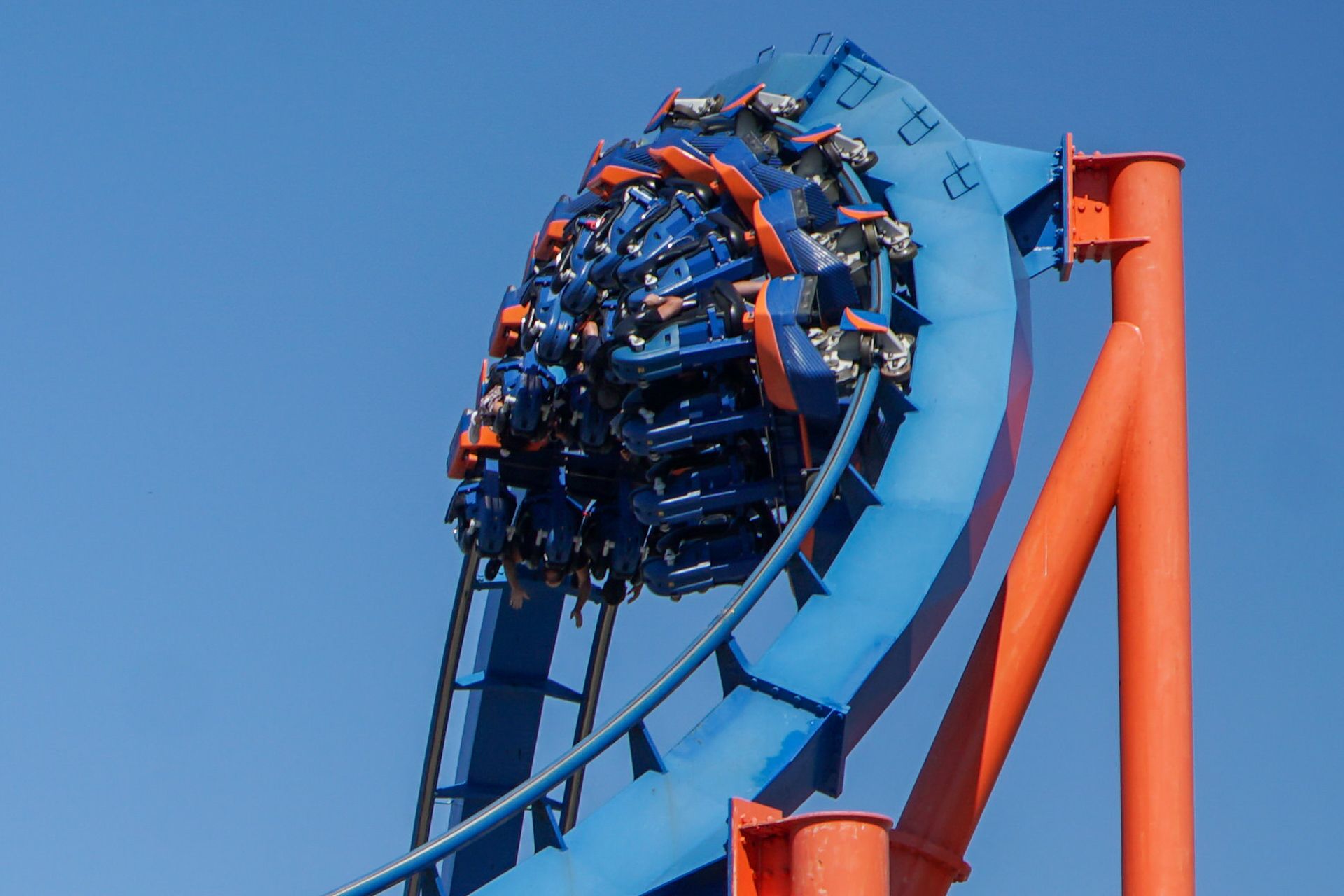
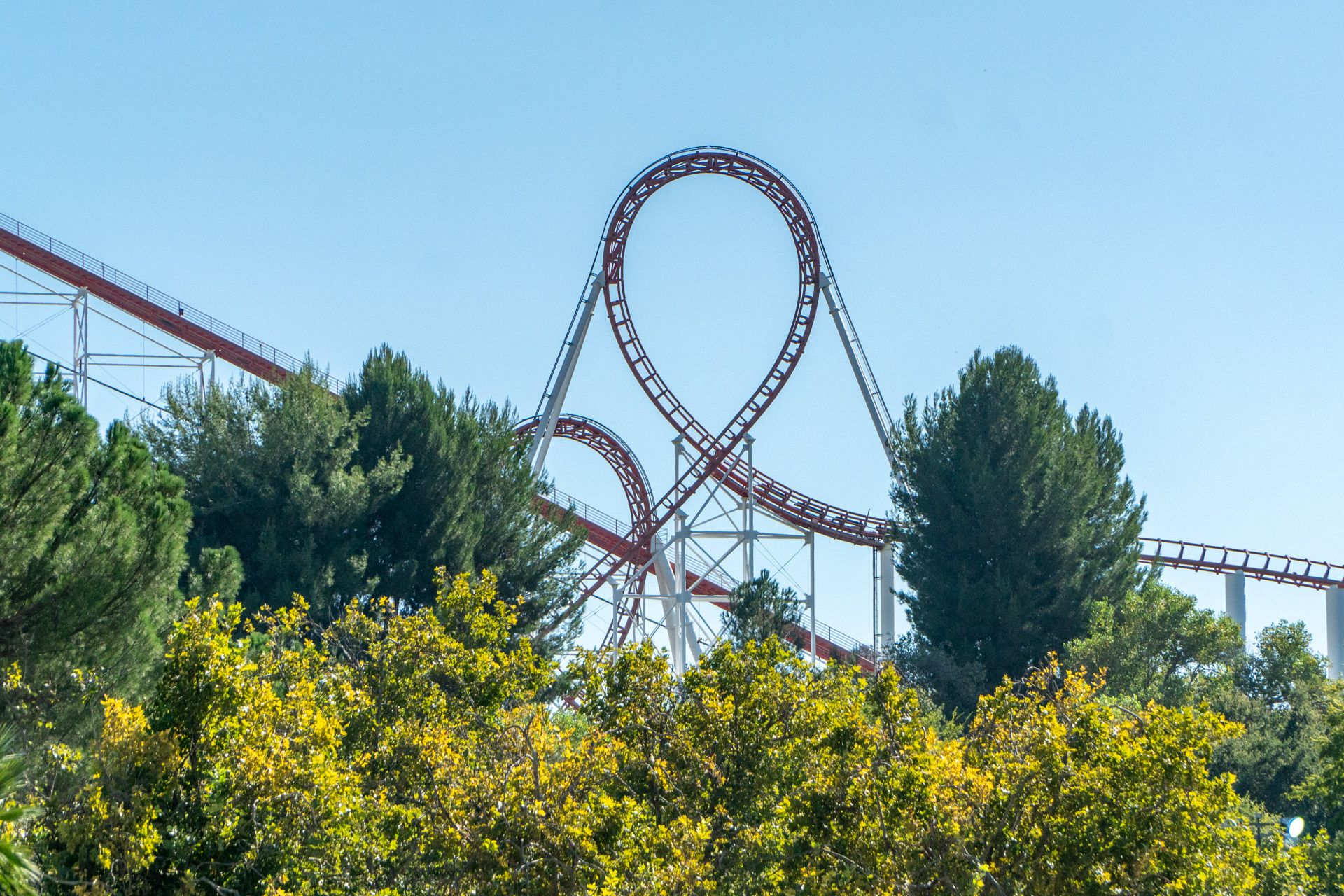
On the second day of my visit, I wanted to make sure I started my day on Full Throttle as it is one of the most popular rides during the day due to its location. The ride starts with a powerful launch out of the station and into the world’s biggest loop. This gives a nice sense of hangtime before we hit the ground again and make our way to the top of the mountain. Here we swing straight into a nice dive loop before entering a tunnel and coming to a stop. Seconds pass before we are launched again, but this time backwards. After almost reaching the top of the second inversion, we change direction again. This time we accelerate to top speed before turning and heading over the top of the loop. Enjoying the views, we soon hit the brakes on the descent and come to a halt shortly afterwards.
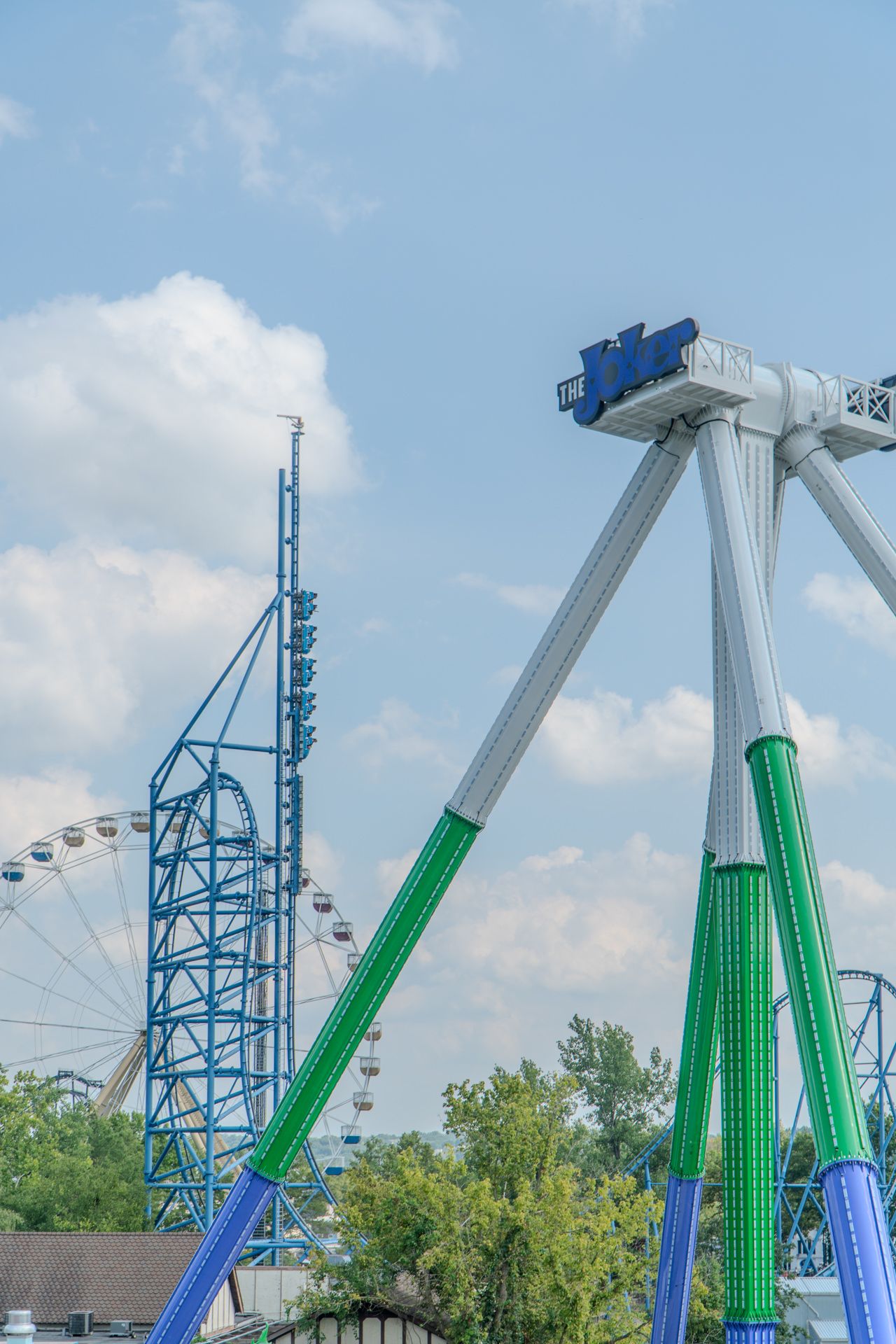
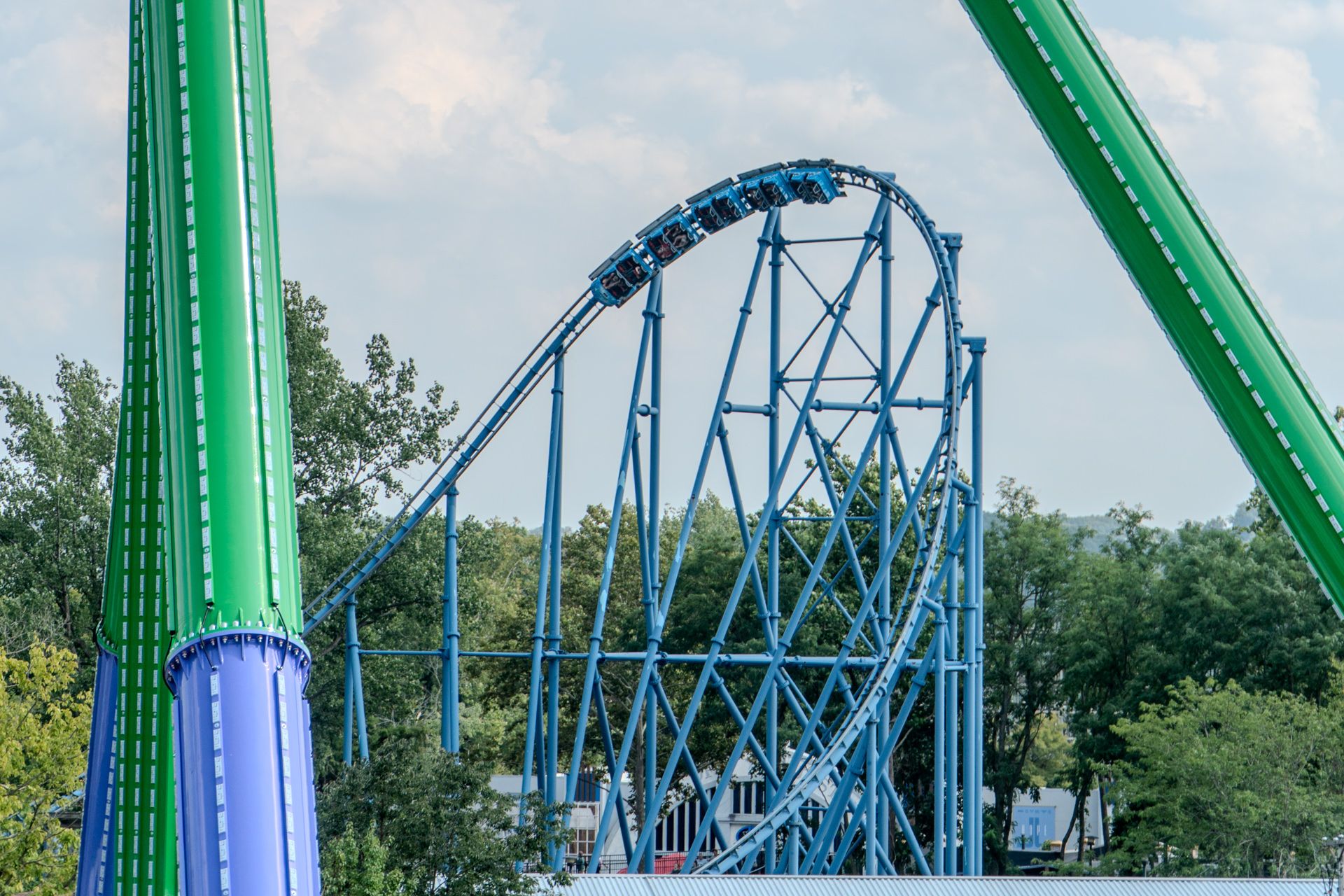
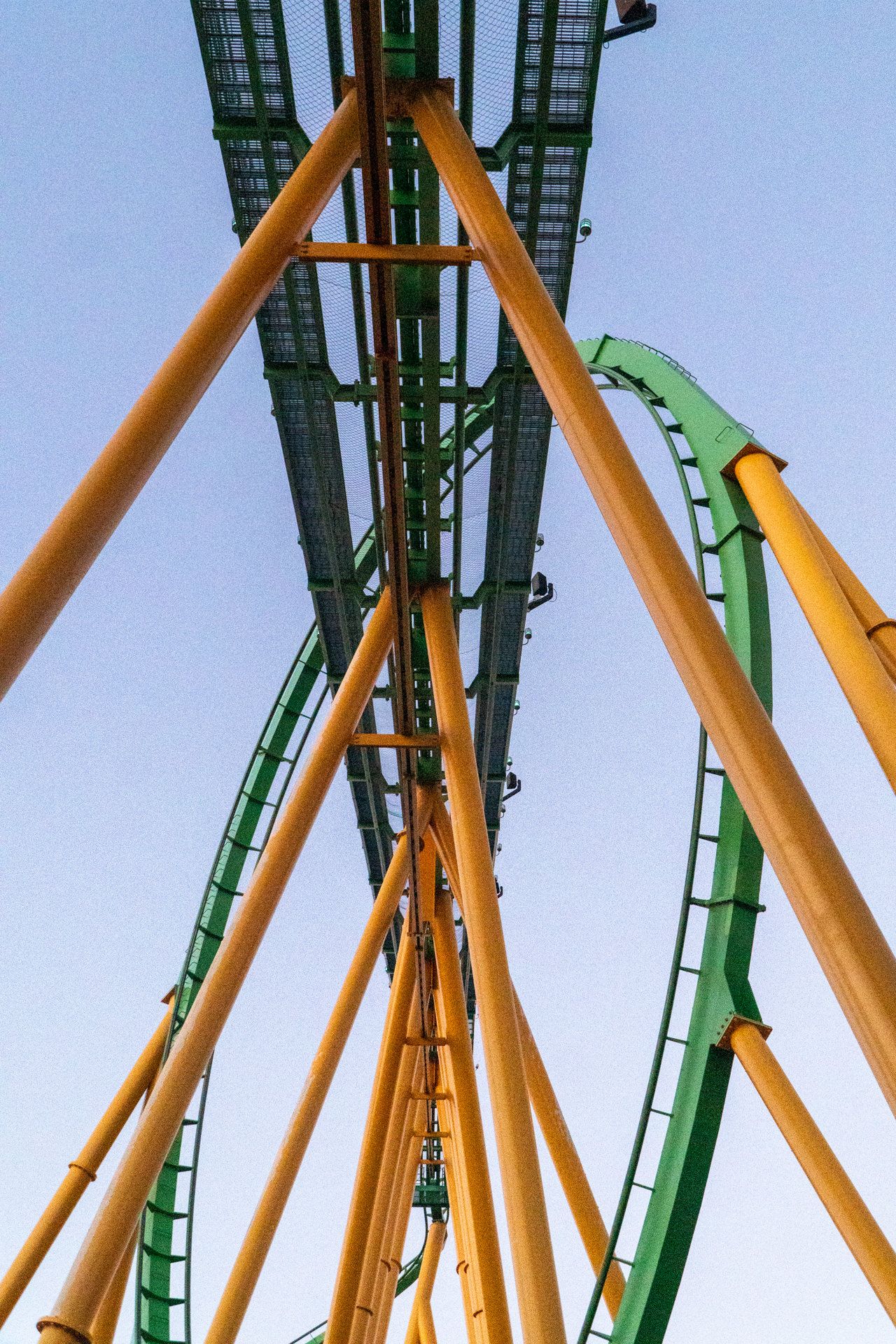
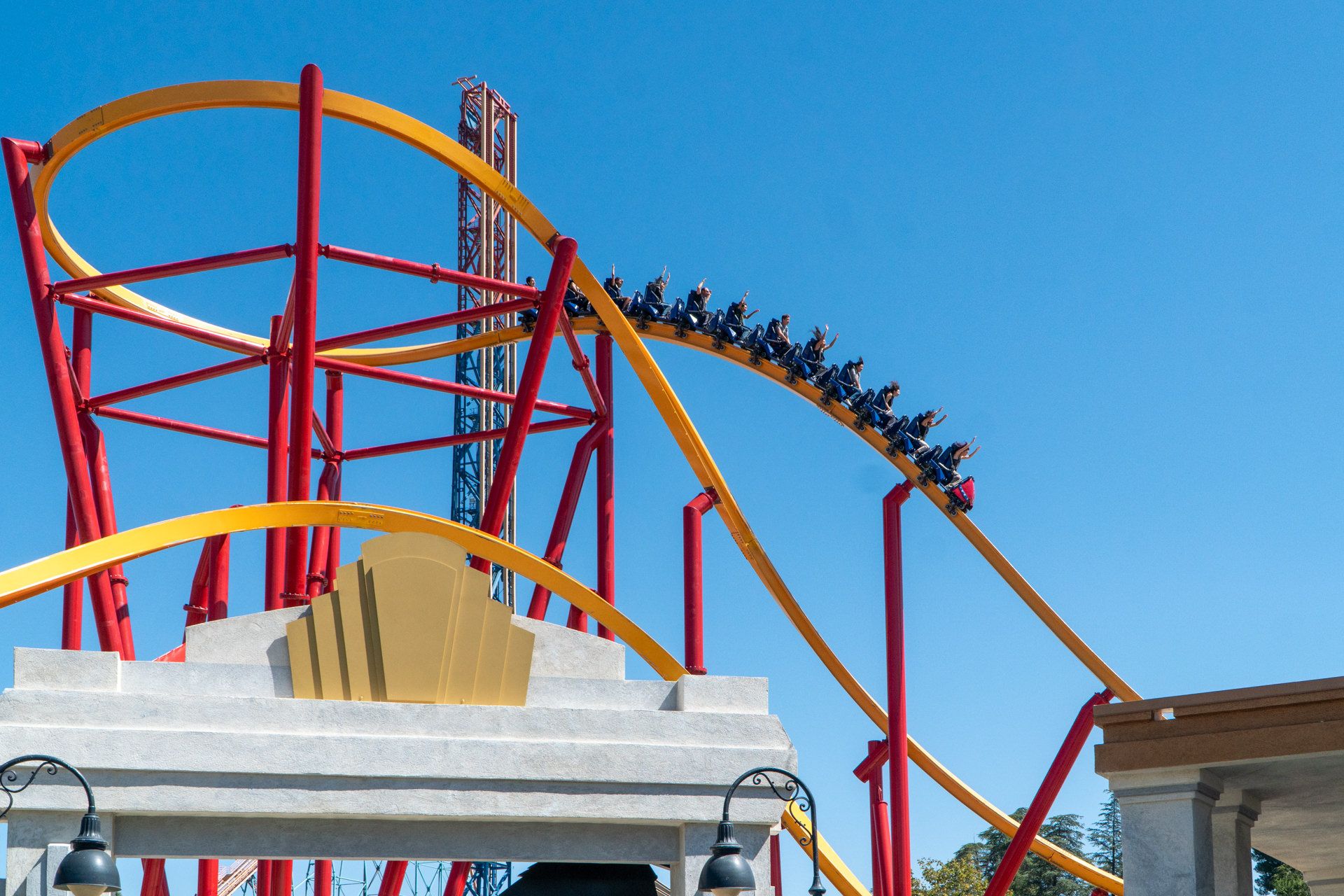
Full Throttle is a very fun coaster. I did not expect anything from this ride and was pleasantly surprised. The launch is powerful, the inversions are great and even the middle section where you go backwards is awesome. Unfortunately it is a short ride.

Canyon Blaster, Speedy Gonzales Hot Rod Racers and Magic Flyer

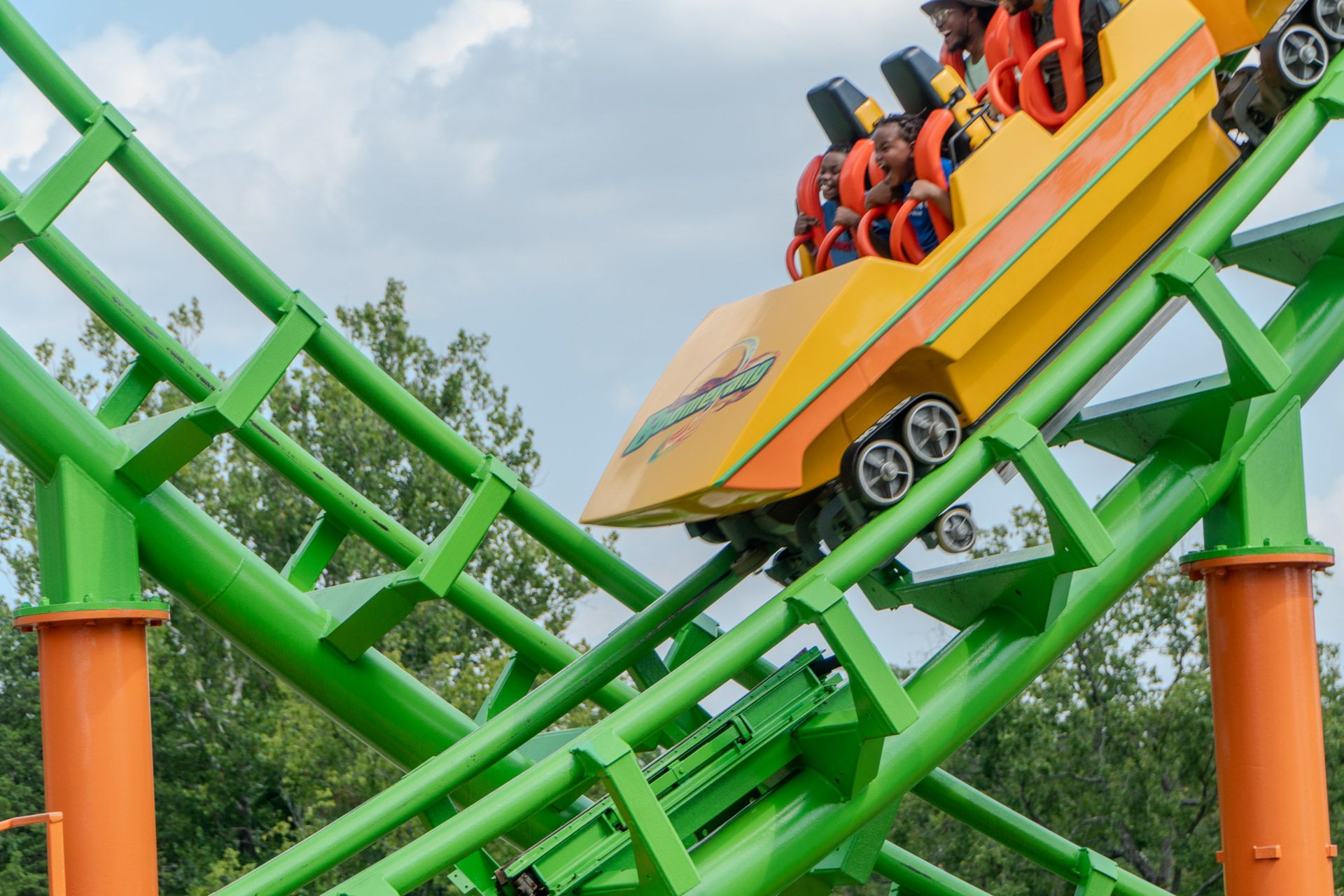
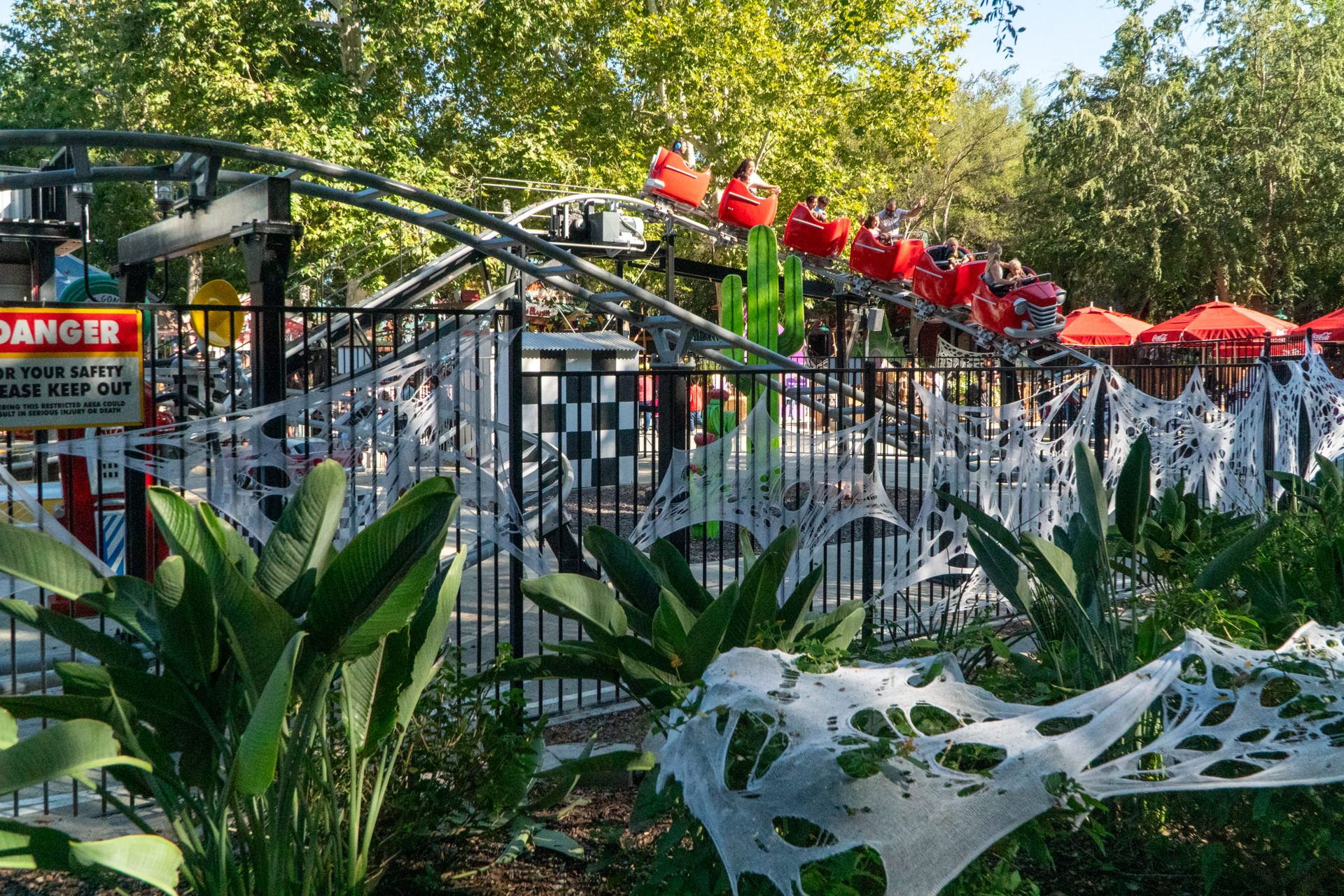
Interestingly, all the children’s roller coasters are located in the same corner of the park. Unfortunately, the largest of the three roller coasters, Speedy Gonzales Hot Rod Racers, was not in operation during my visit and the two smaller roller coasters, Canyon Blaster and Magic Flyer, were not allowed to be ridden unless accompanied by a child.

Buccaneer and Swashbuckler

Directly opposite the large entrance plaza of Goliath is the entrance to the two flat rides Buccaneer and Swashbuckler. While Buccaneer is a beautiful swing boat from Intamin, Swashbuckler is a classic American swing ride.

Goliath

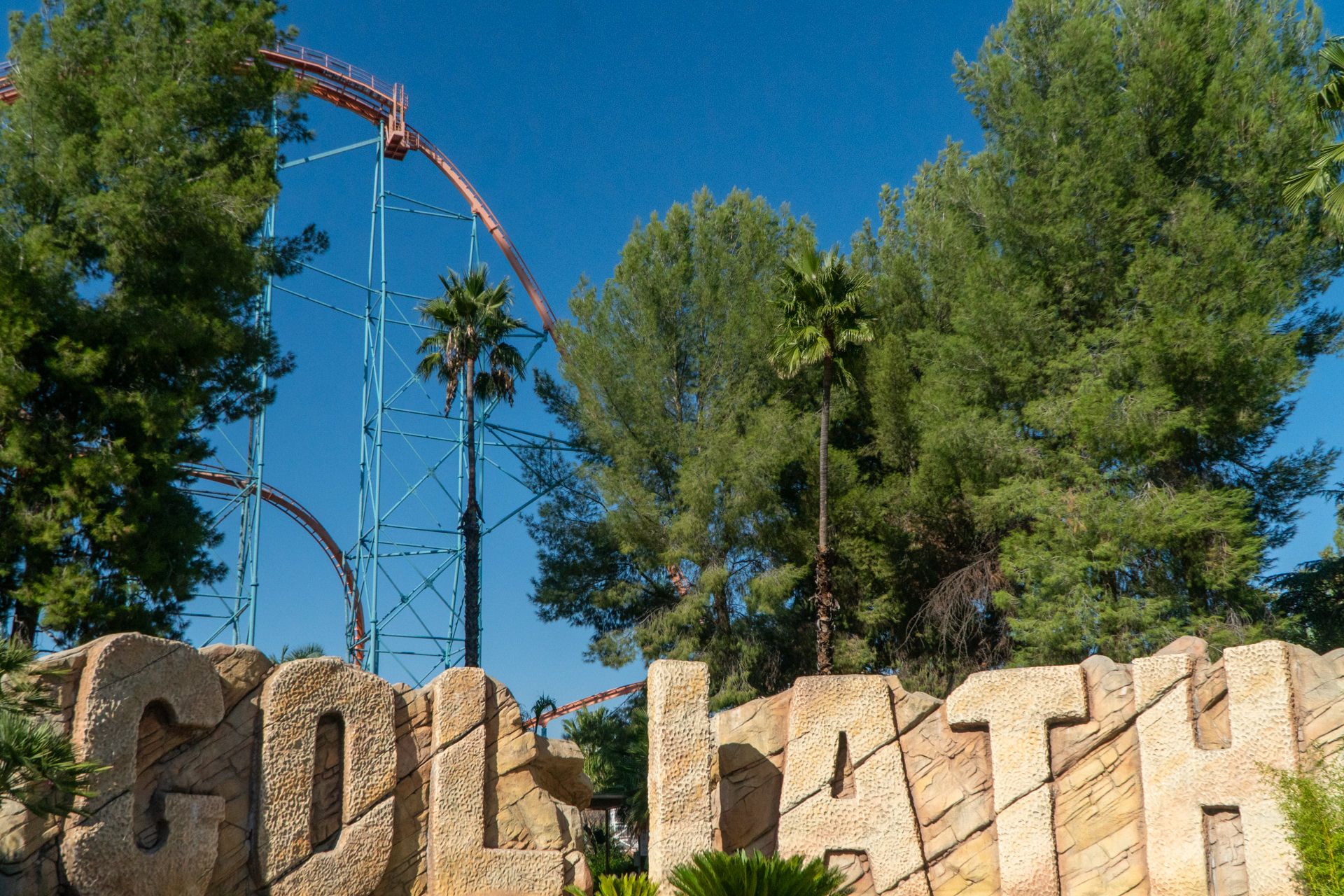
Leaving the station, the train makes a right turn and then we hit the lift hill of the ride. Having reached a height of 235ft, the train begins its long and amazing descent into a tunnel that leads to a total height difference of 255ft. At a speed of 85mph the train heads upwards into an impressive looking overbank turn. After the turn the train heads down another drop followed by a fantastic airtime hill. A long climb then leads into the mid-course brake run and we were slowed down to almost a standstill.

The train continues at a slow pace before finally picking up speed in a hard left turn. In one fluid motion, the train changes direction and we plummet towards the ground. This is followed by a powerful and crazy 585° helix. Then the track turns upwards and banks to the left. After another powerful descent, the train makes an upward right turn that leads us into the final brake run of the ride.

What a ride! Goliath is a beast of a coaster. It is powerful, fast and perfectly paced. I cannot even describe how much I adore this coaster as it has jumped straight into my top 20 favourite coasters. It’s one of the best hyper coasters I’ve ever ridden. Man, I love this ride.

Lex Luthor Drop of Doom

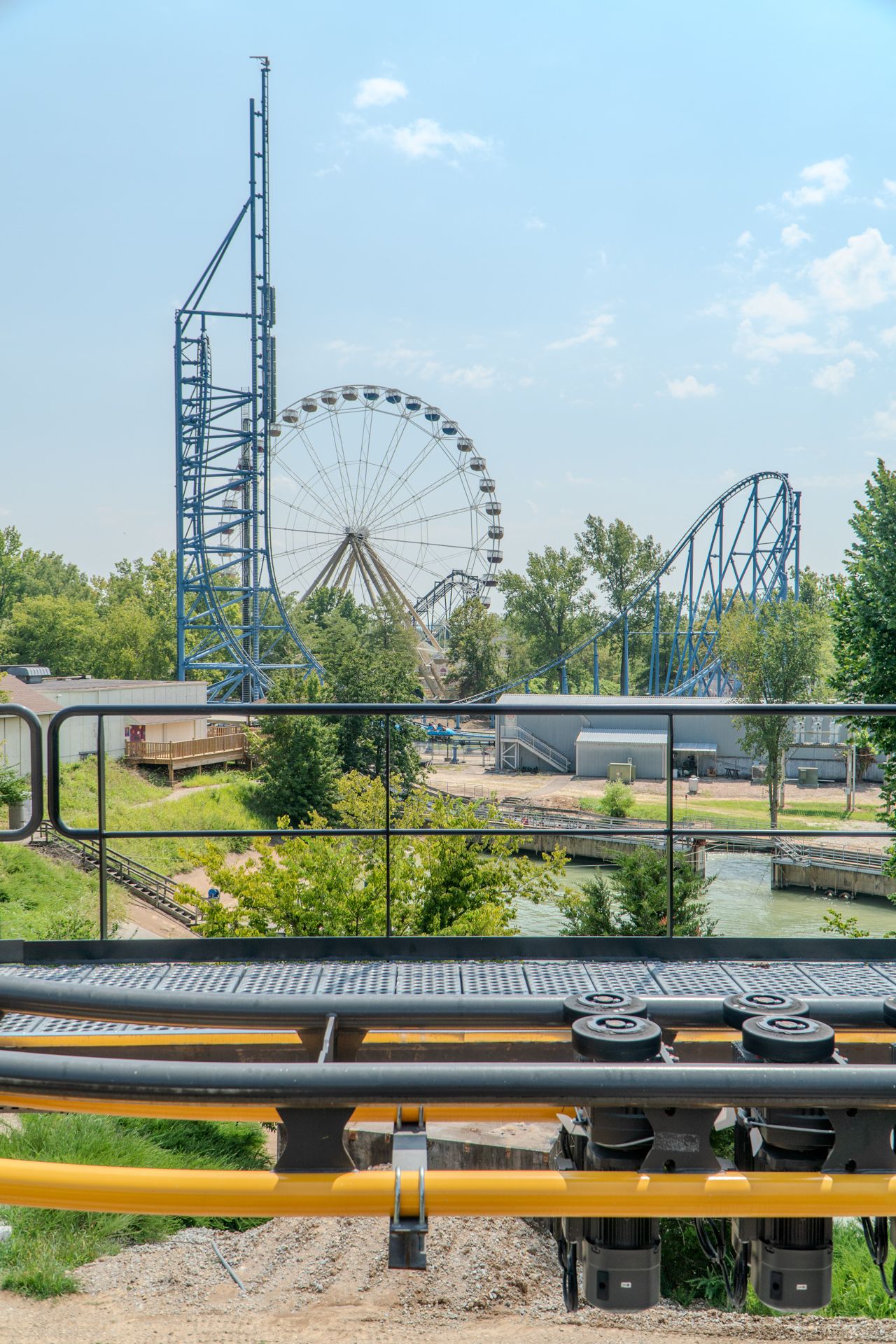
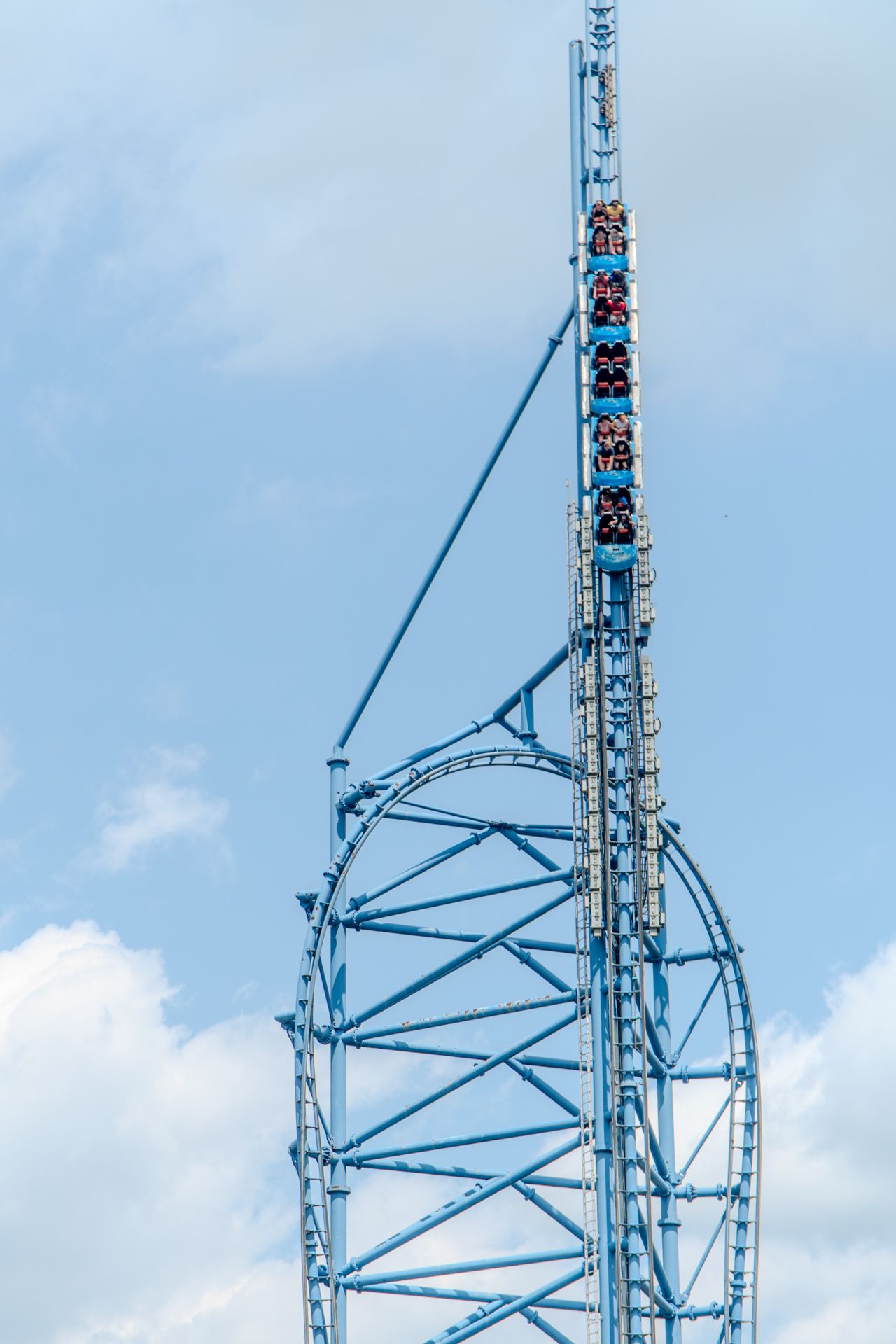
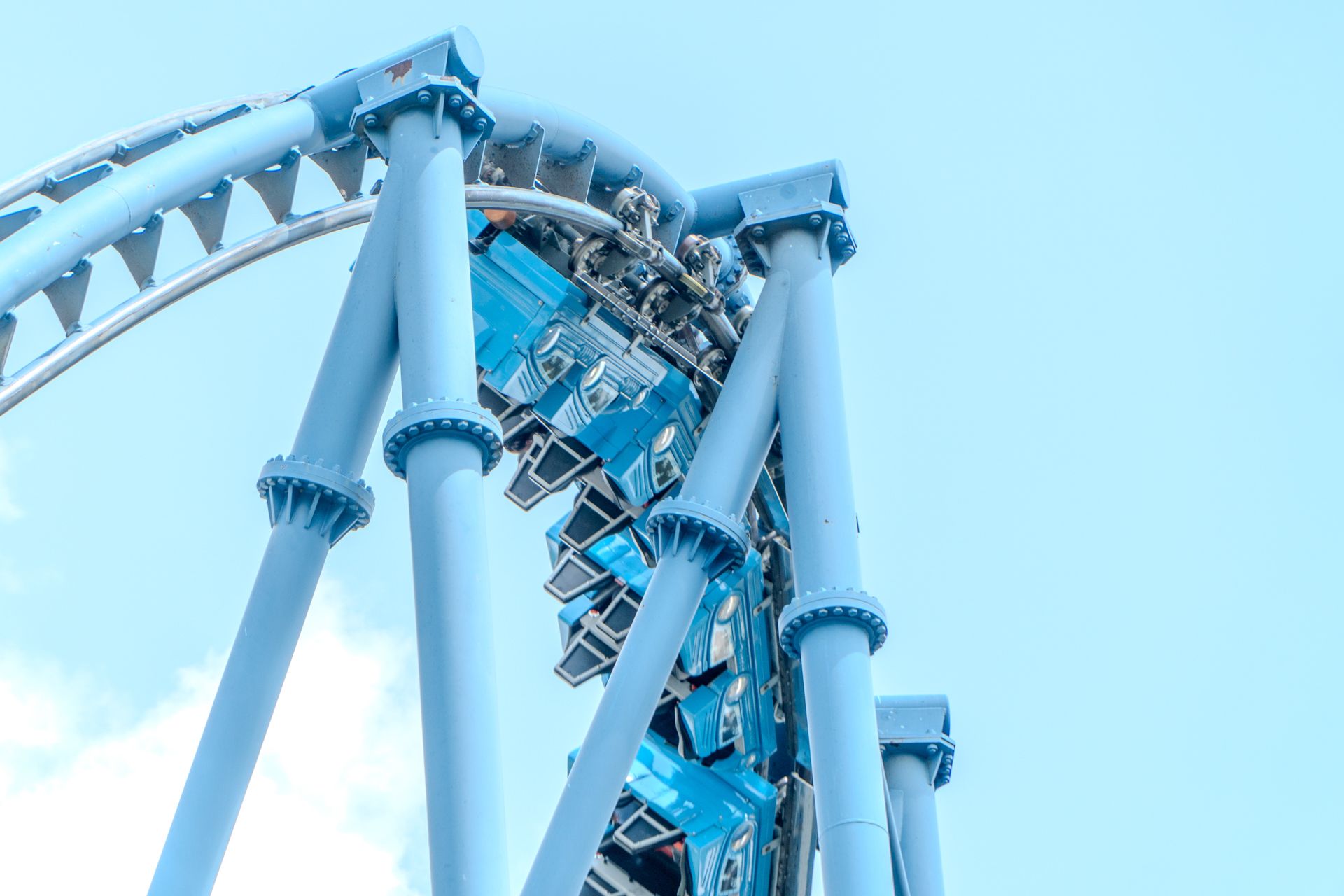
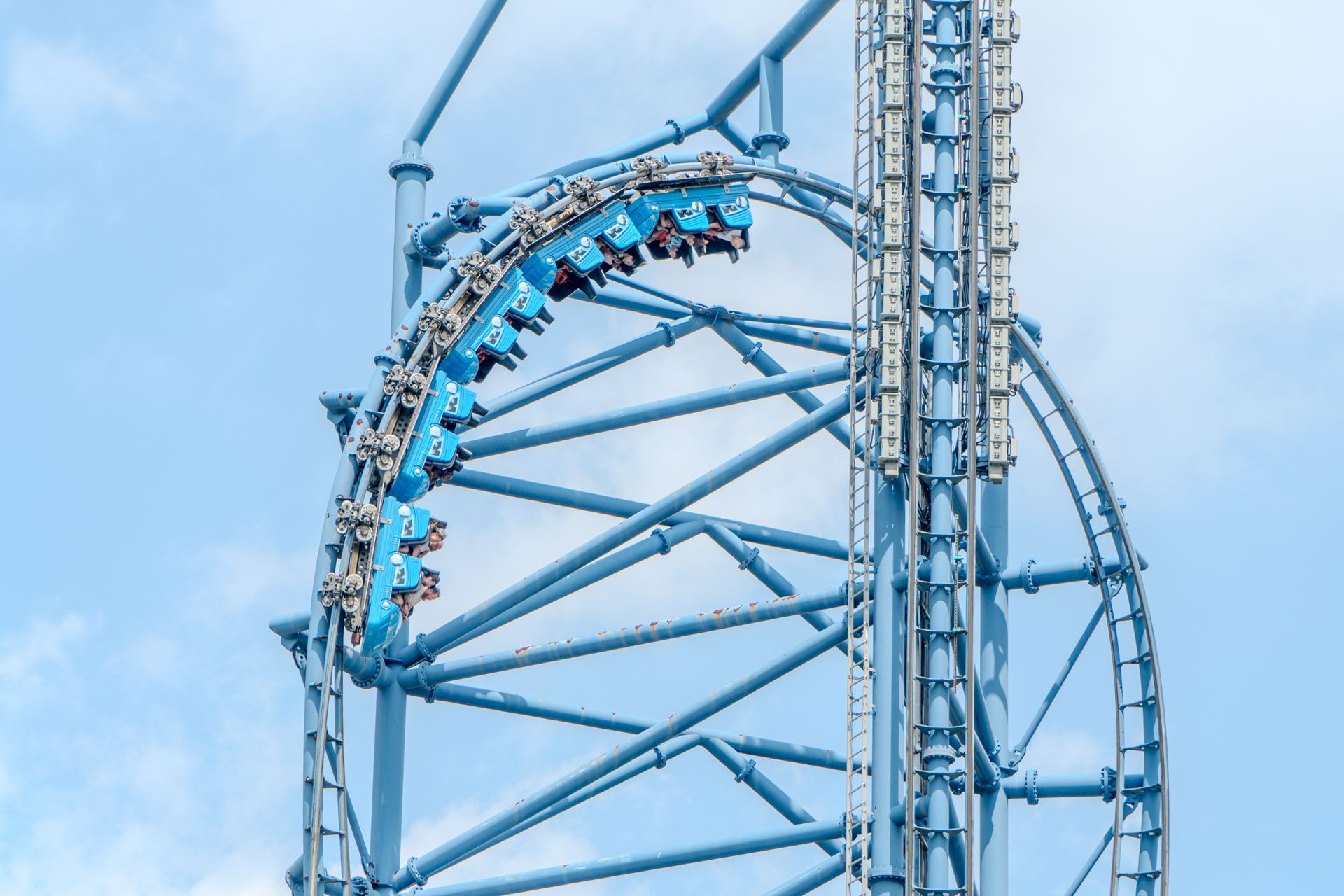
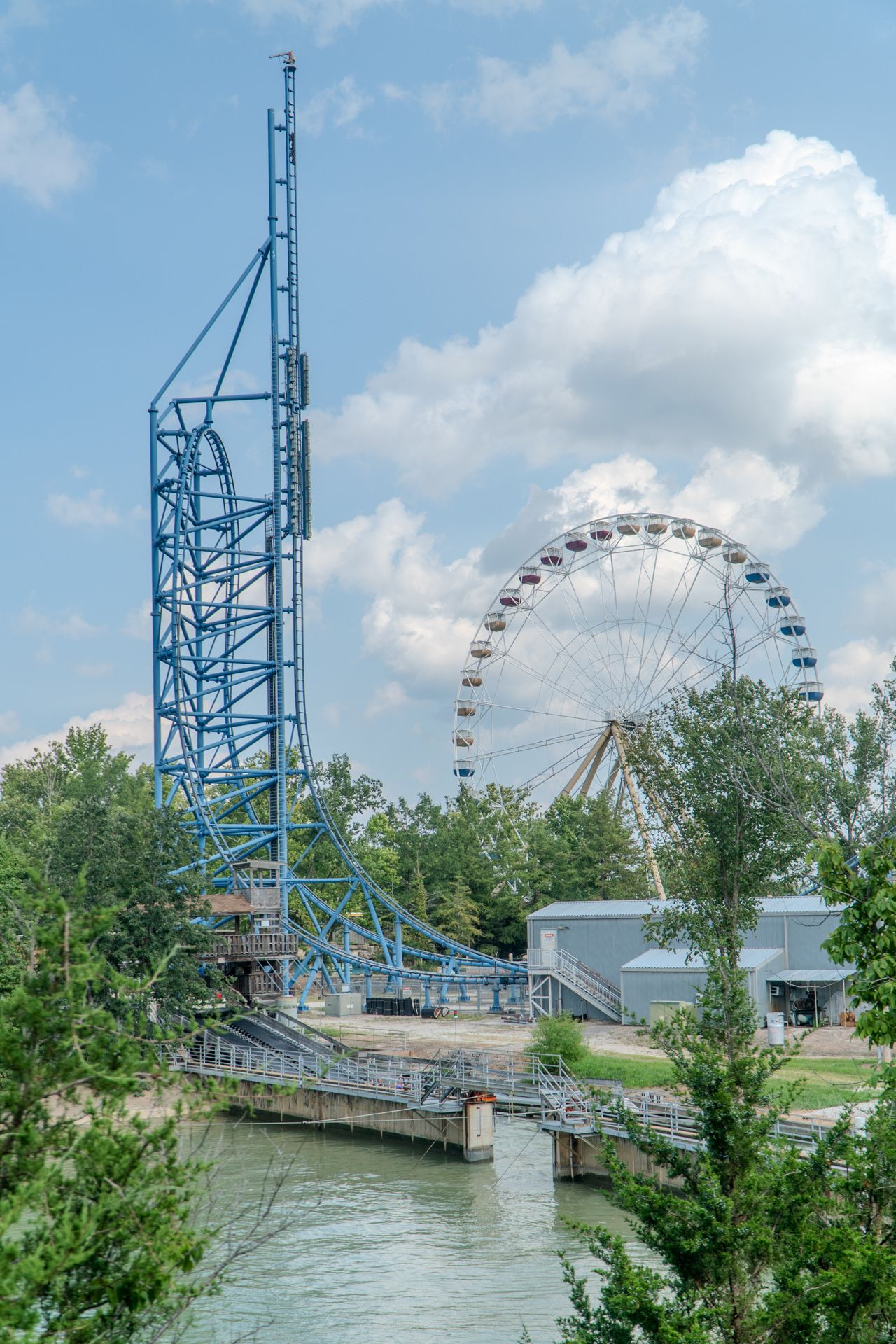
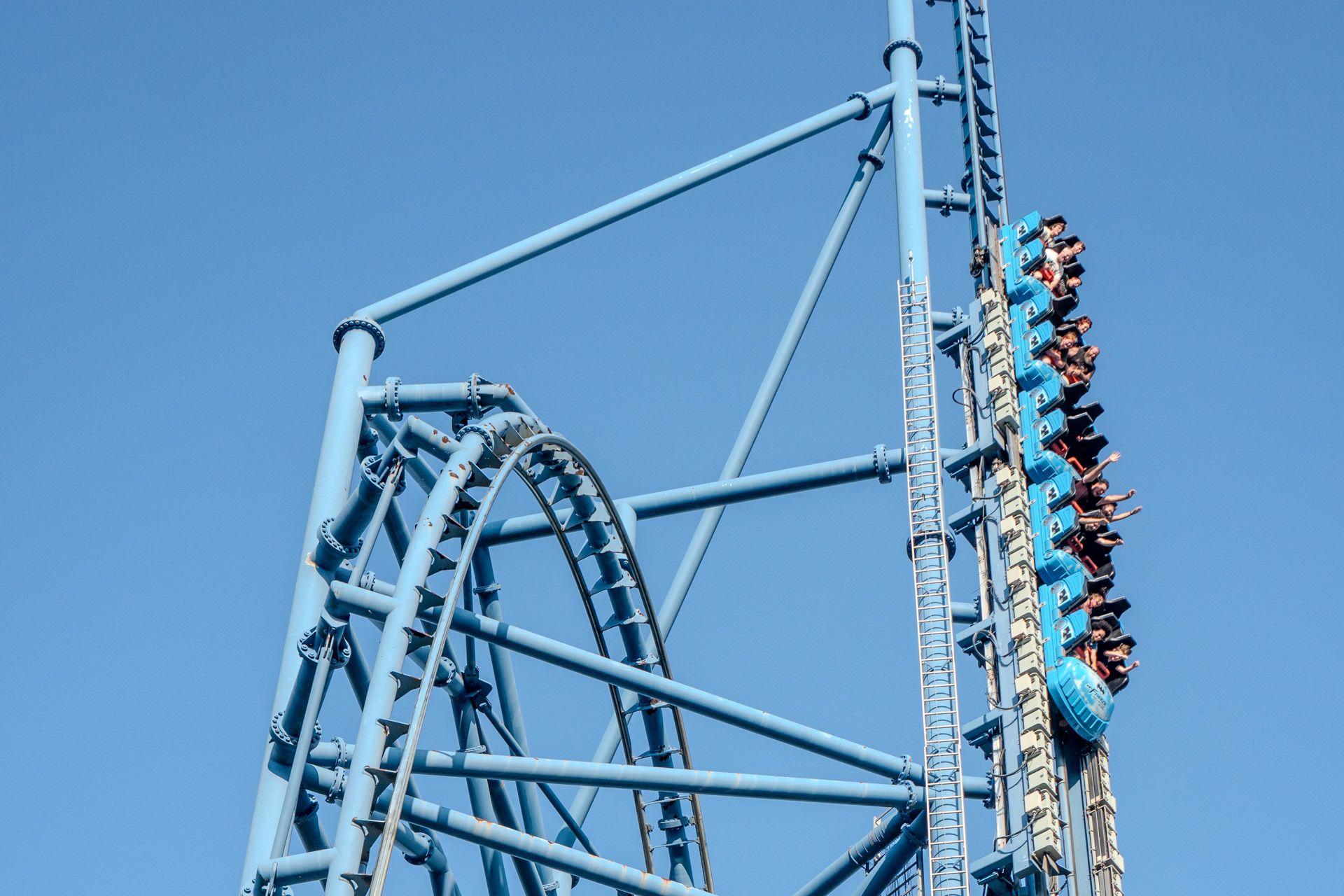
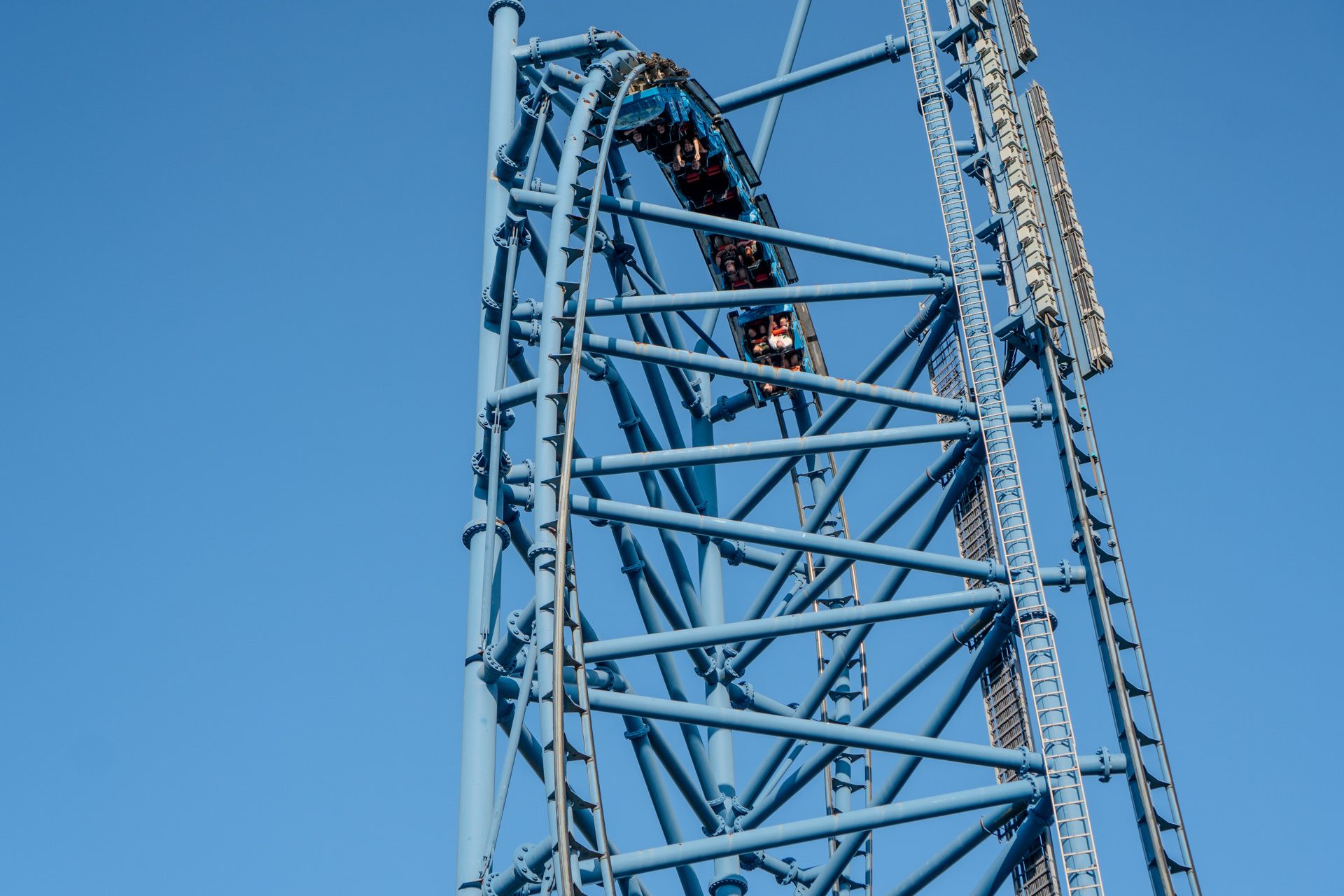
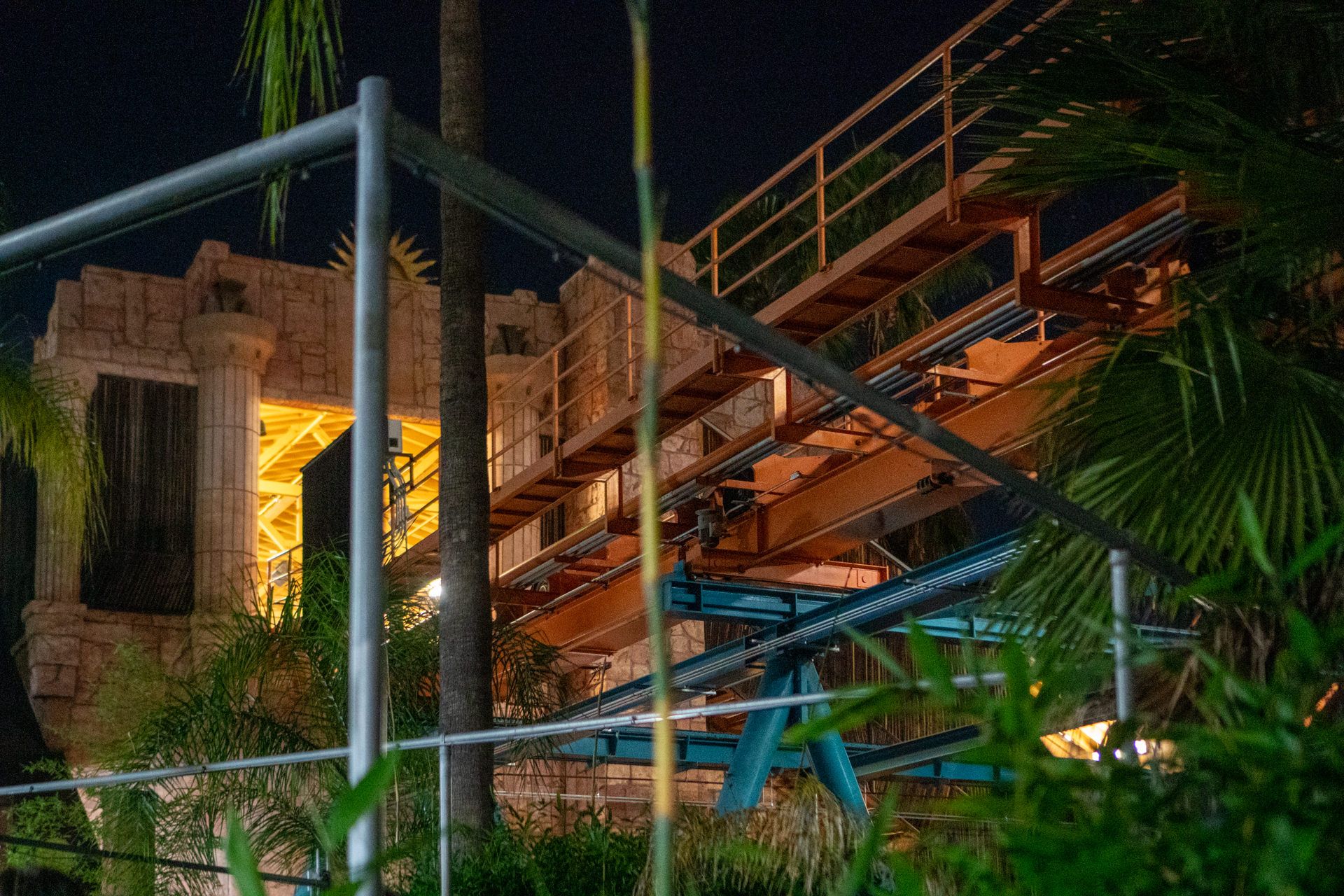
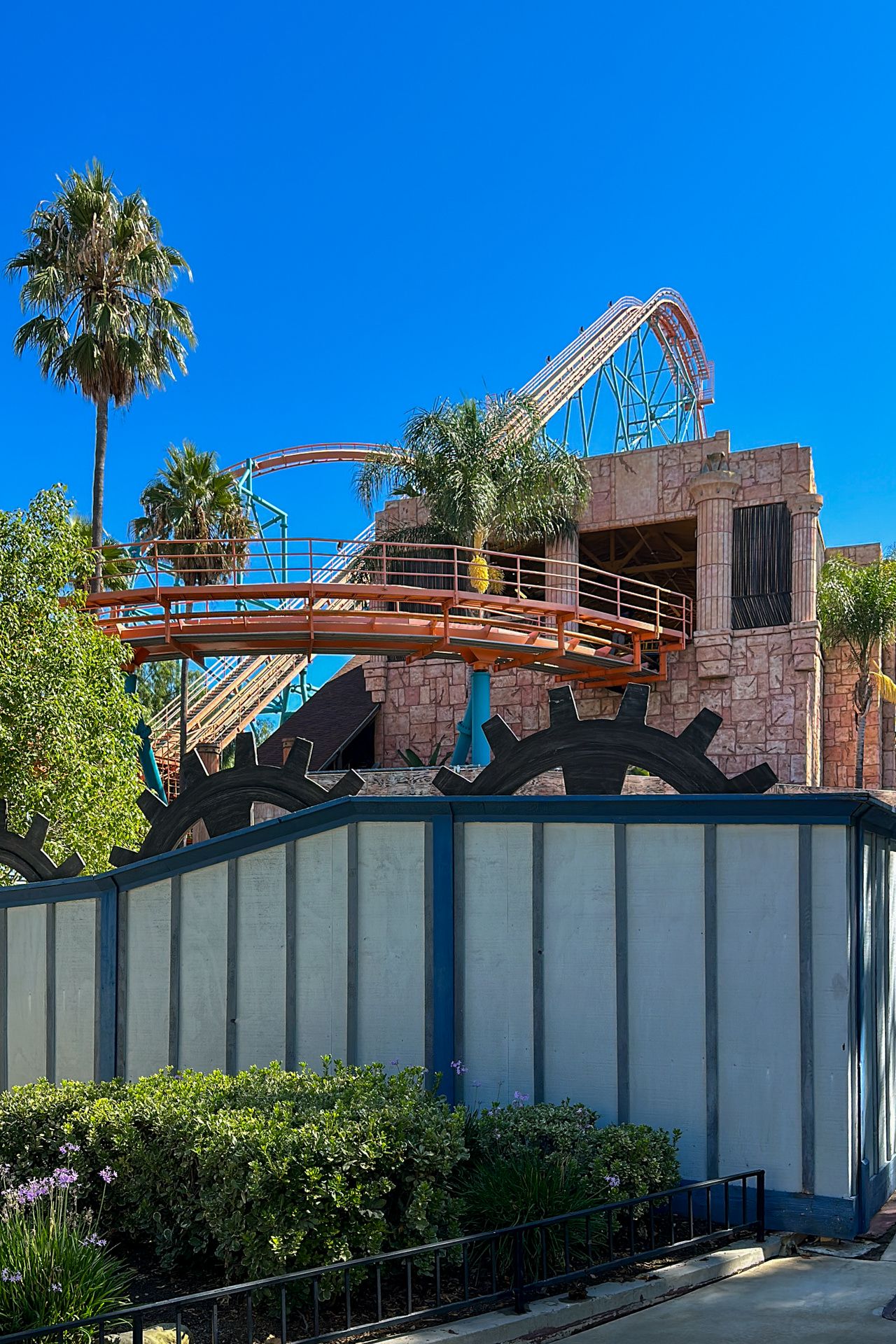
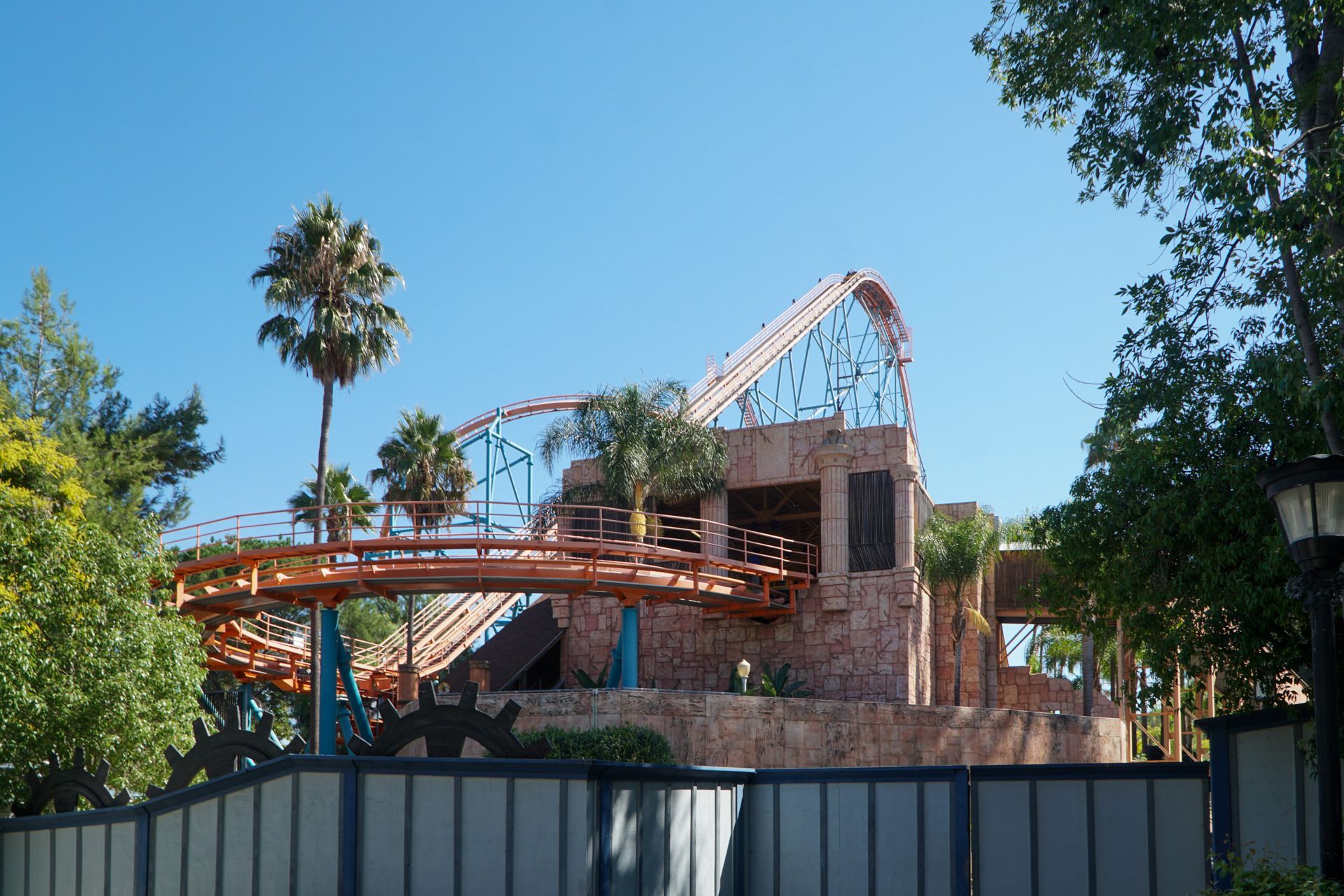
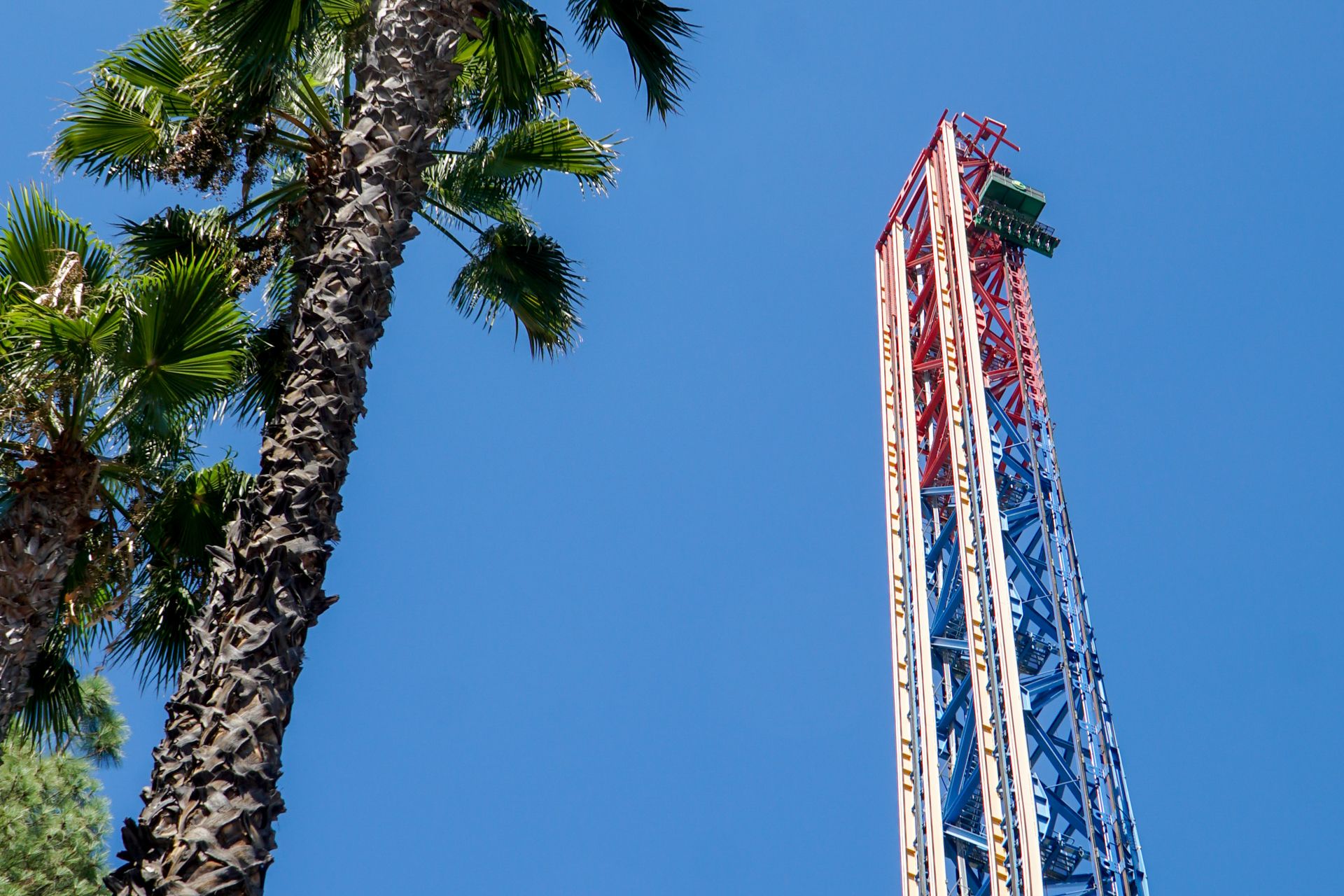
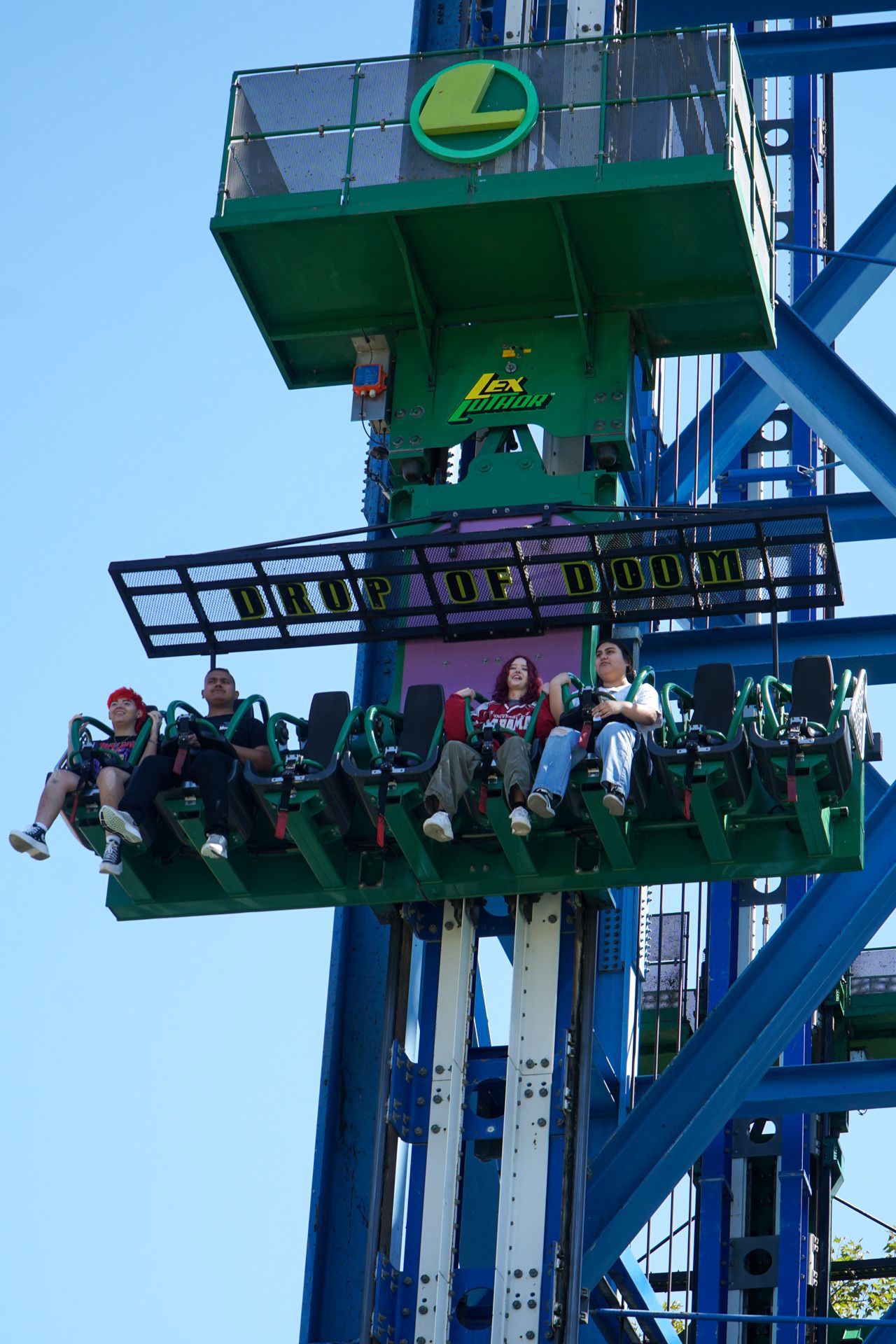
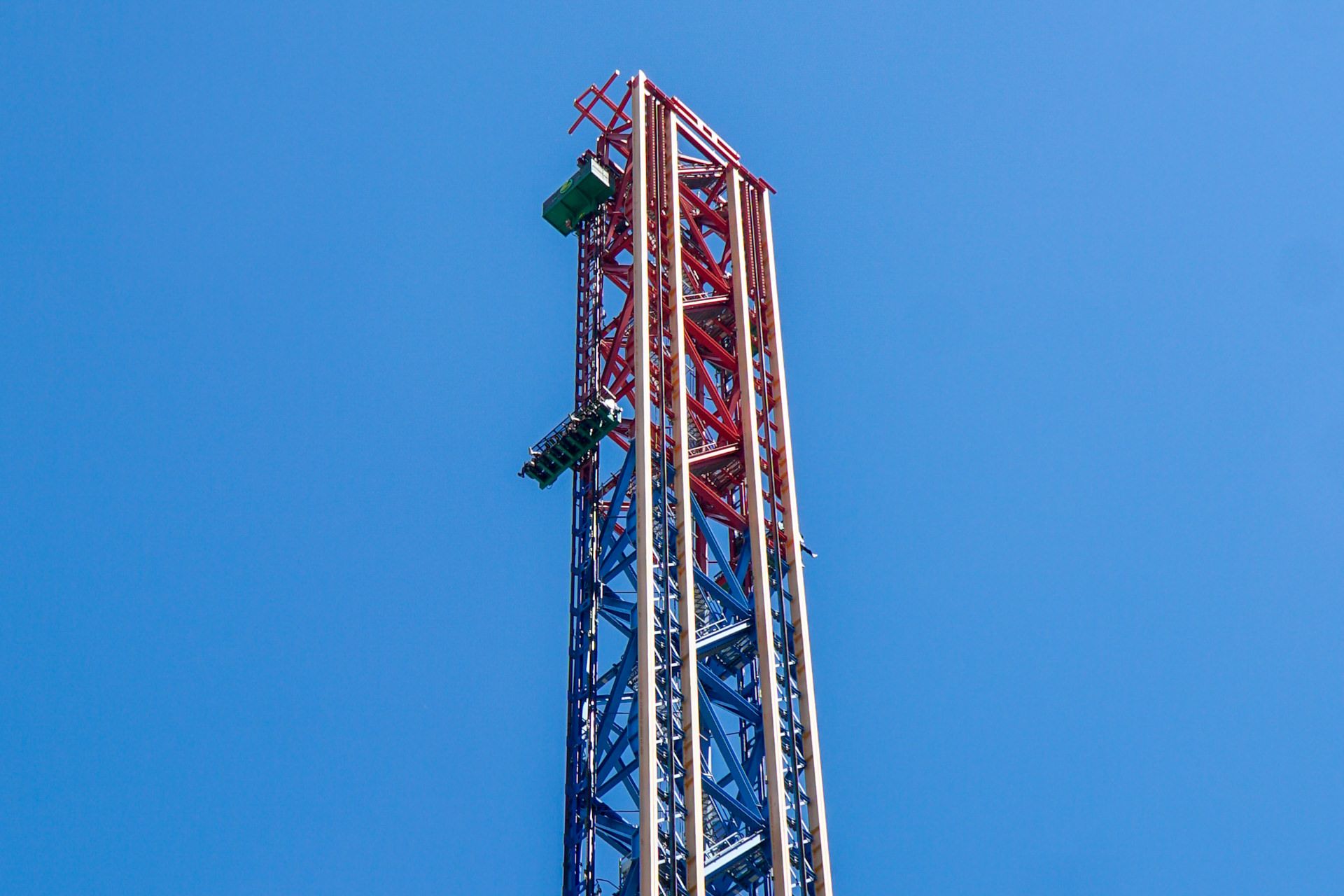
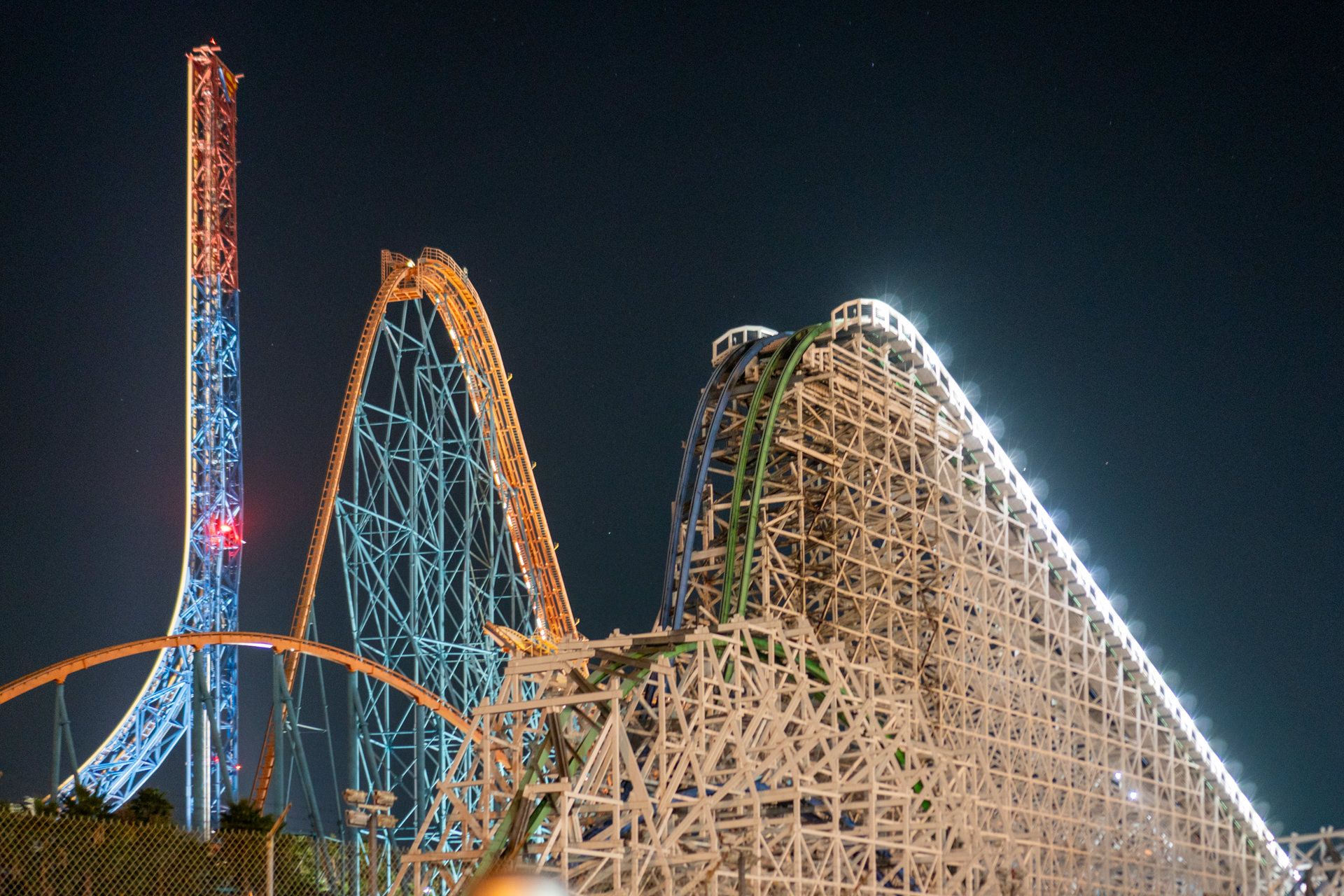
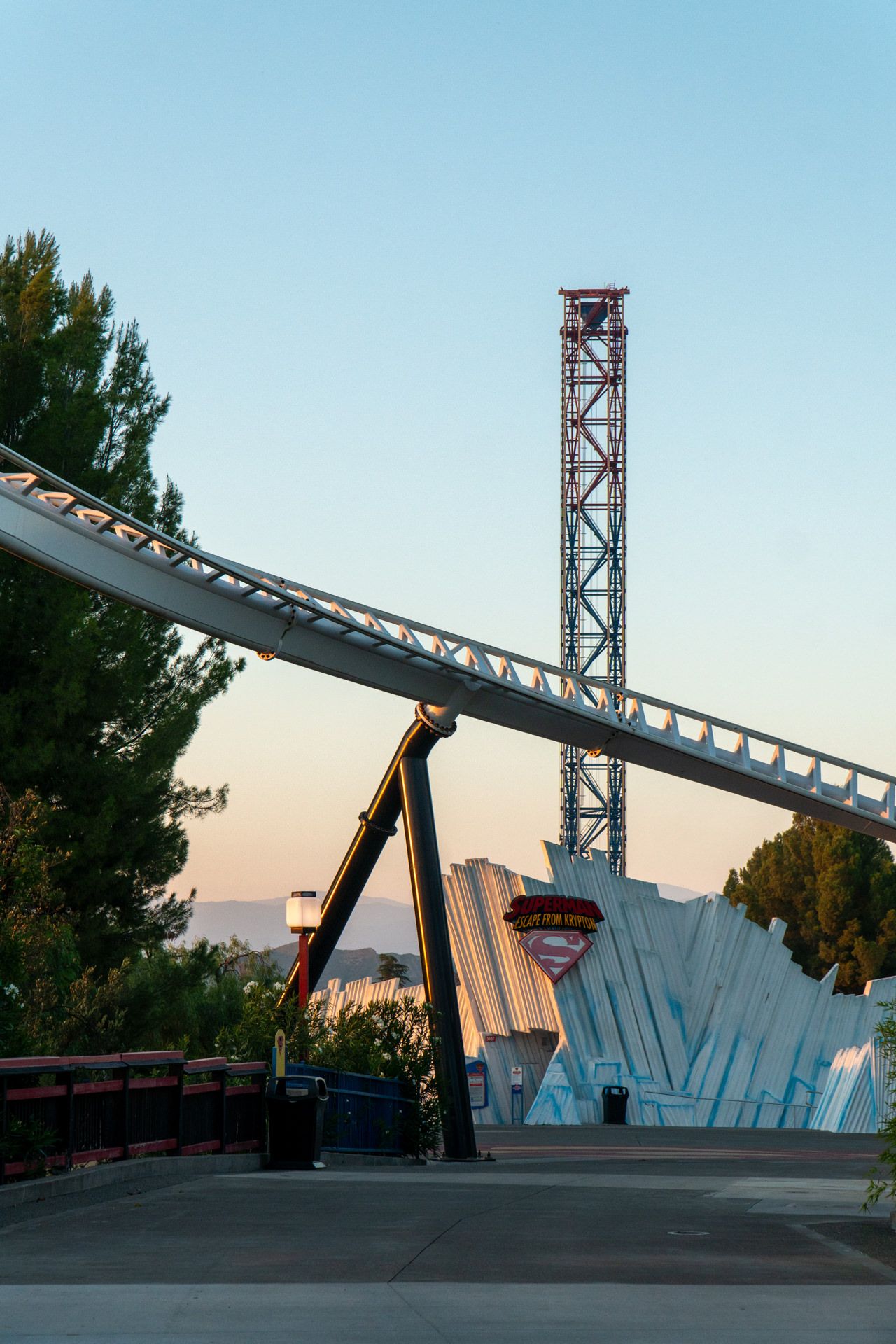
The supporting structure of the Superman: Escape from Krypton rollercoaster houses the two tracks of the Lex Luthor Drop of Doom: one of the world’s tallest freefall towers.  

Having left the heavily themed queue behind us, we soon take our seats in the gondola. After checking our safety harnesses, we are soon on our way to the top of the tower. At a height of 400 ft we have a wonderful view over the park and the surrounding area before the drop begins. The hook releases the gondola and we plummet to the ground at a top speed of 85 mph before we reach the brakes and the breathtaking ride comes to an end.

Twisted Colossus

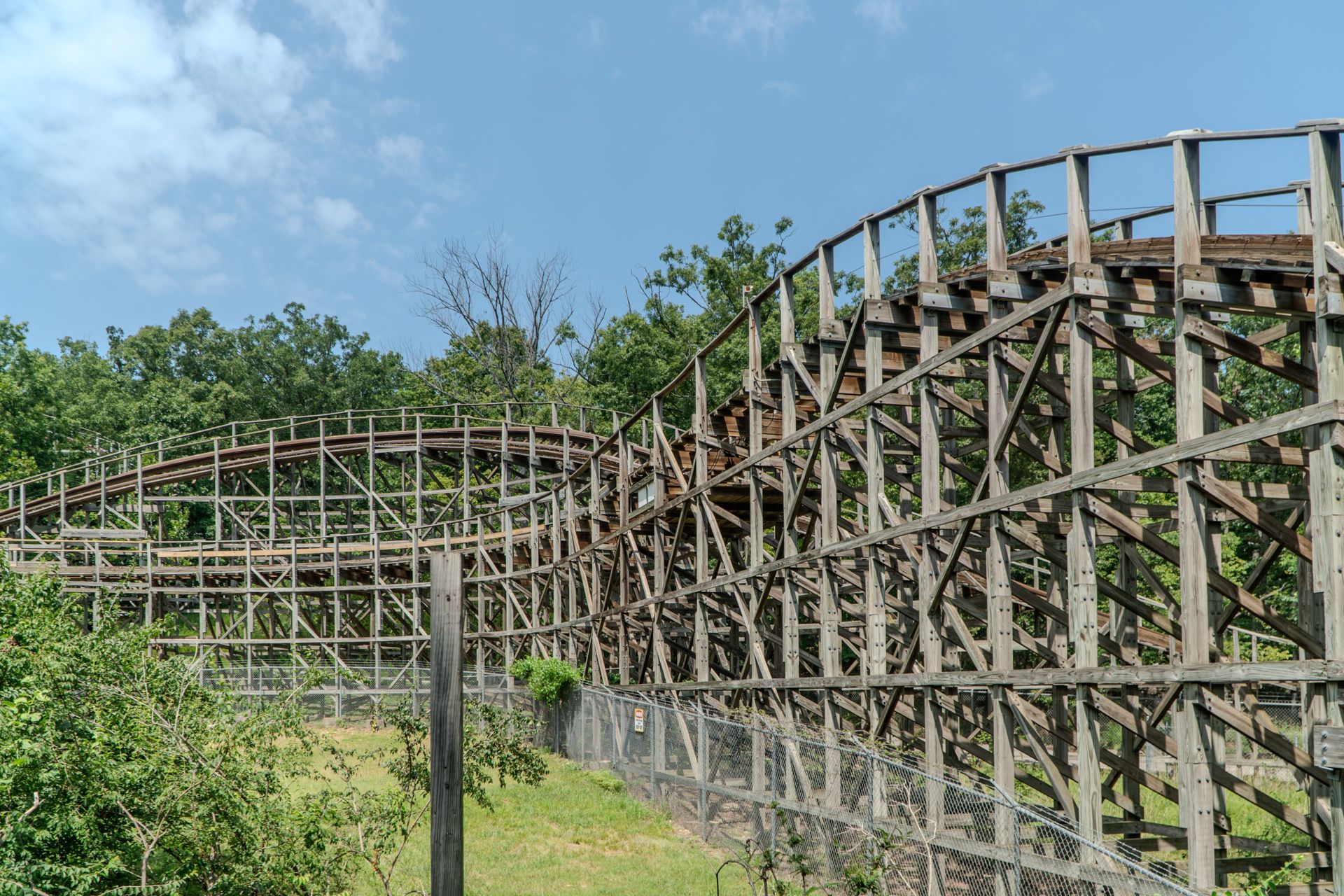
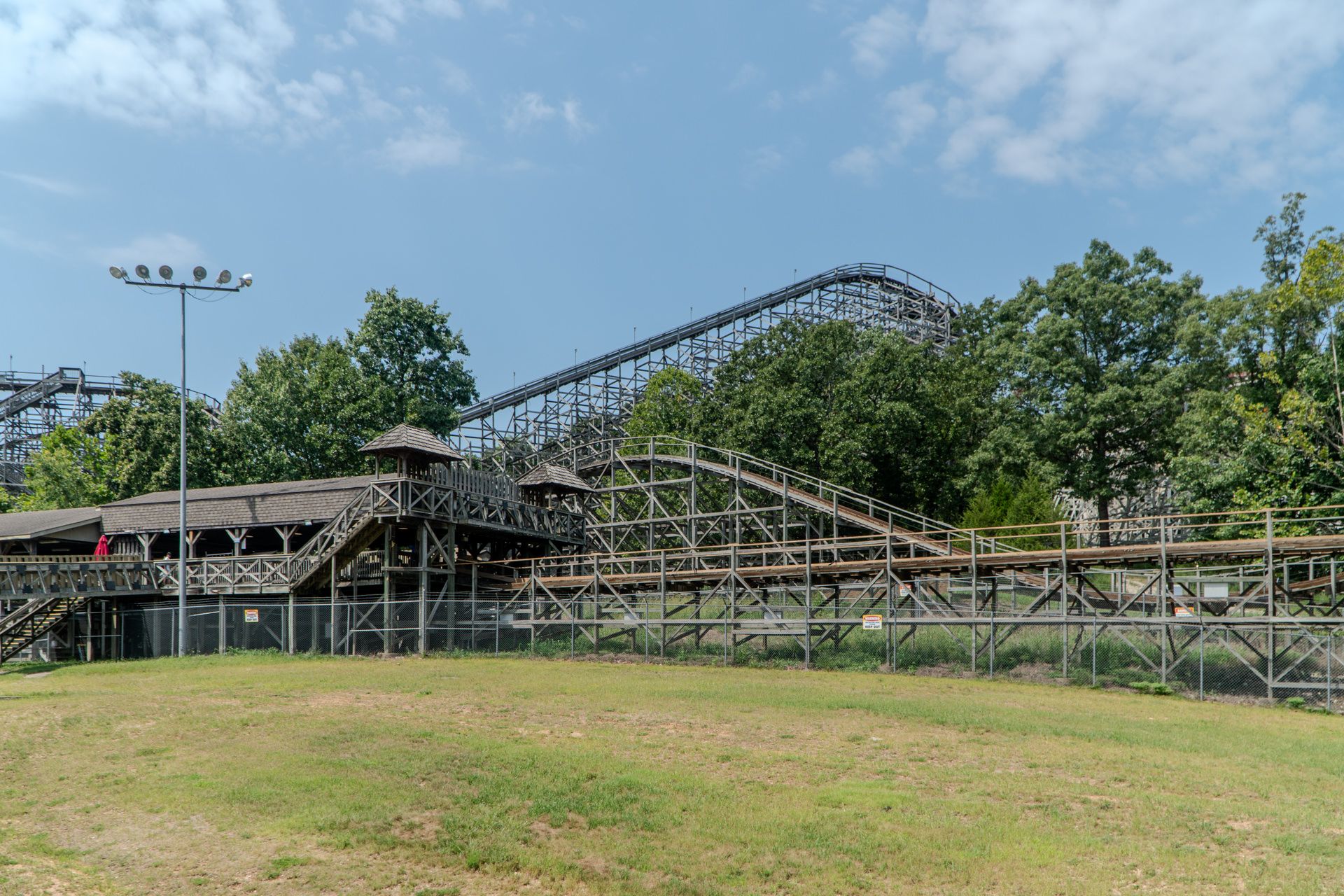
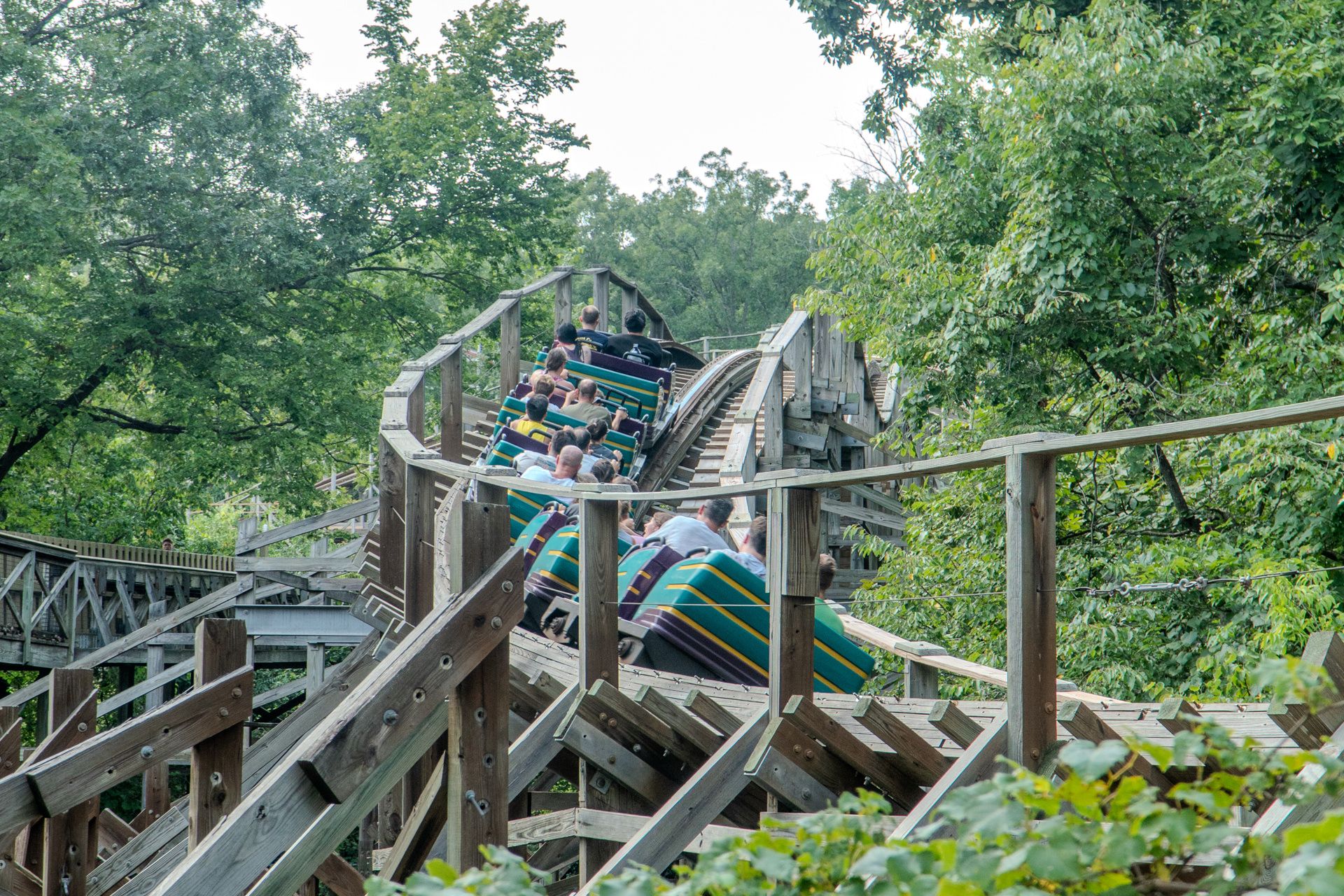
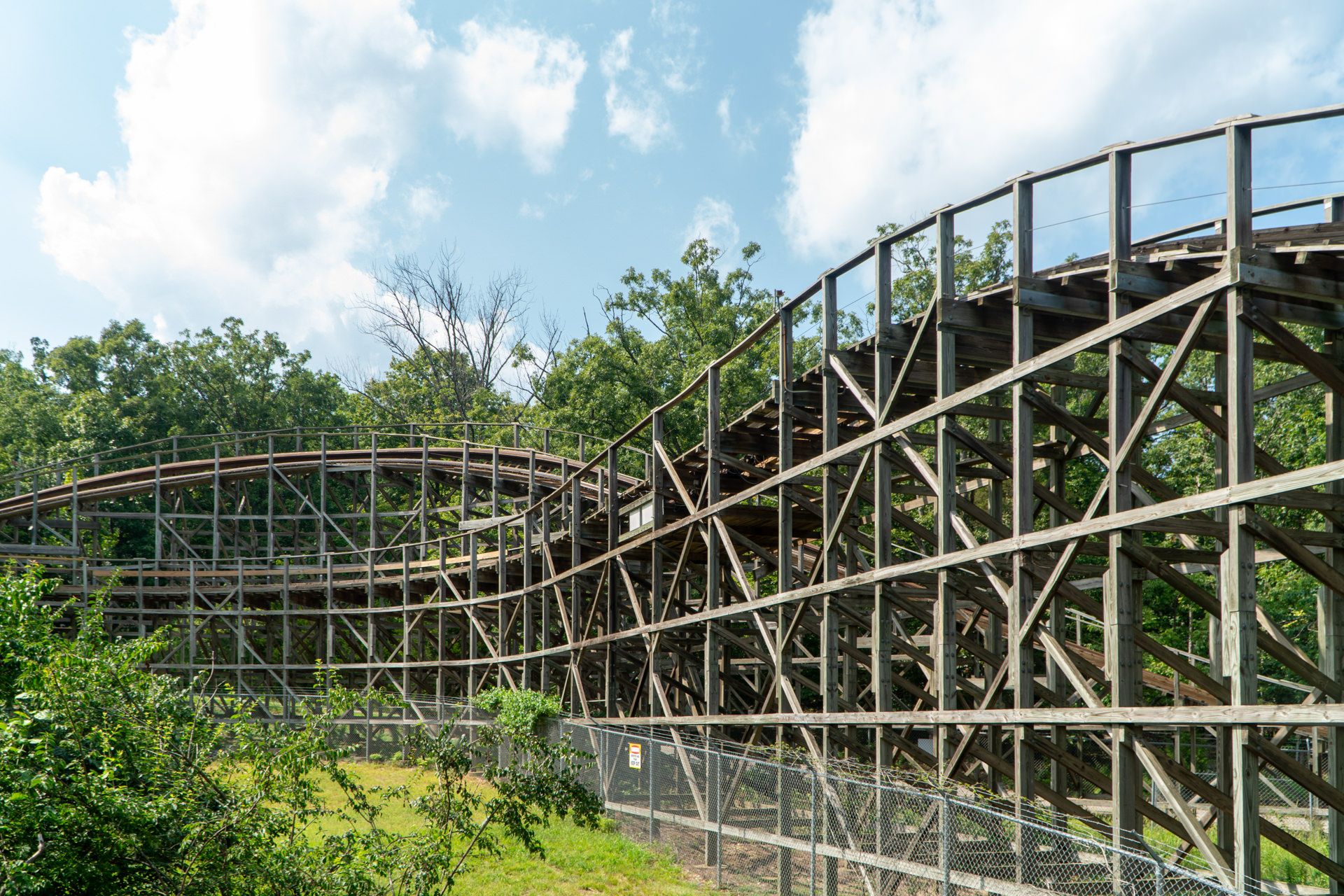
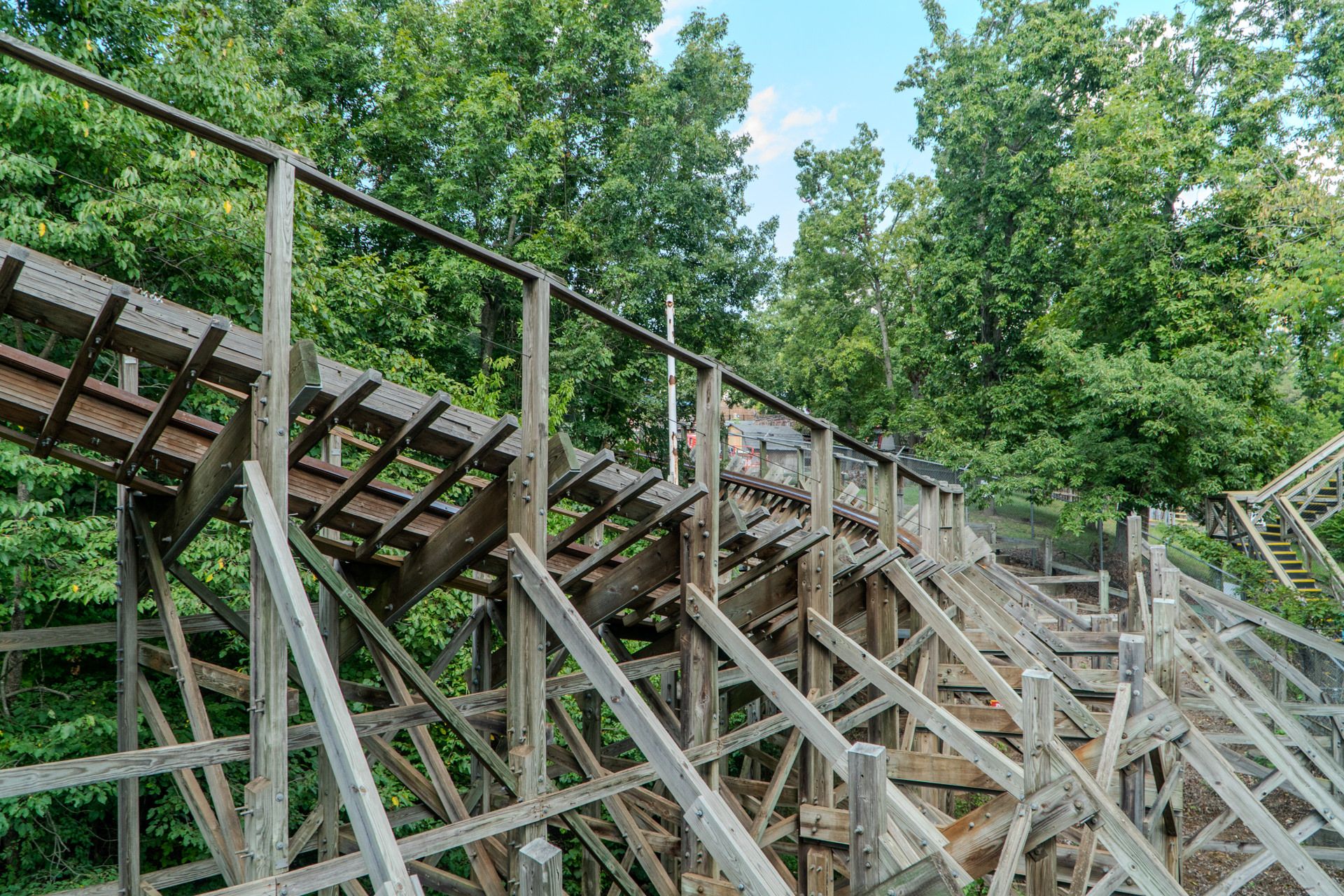
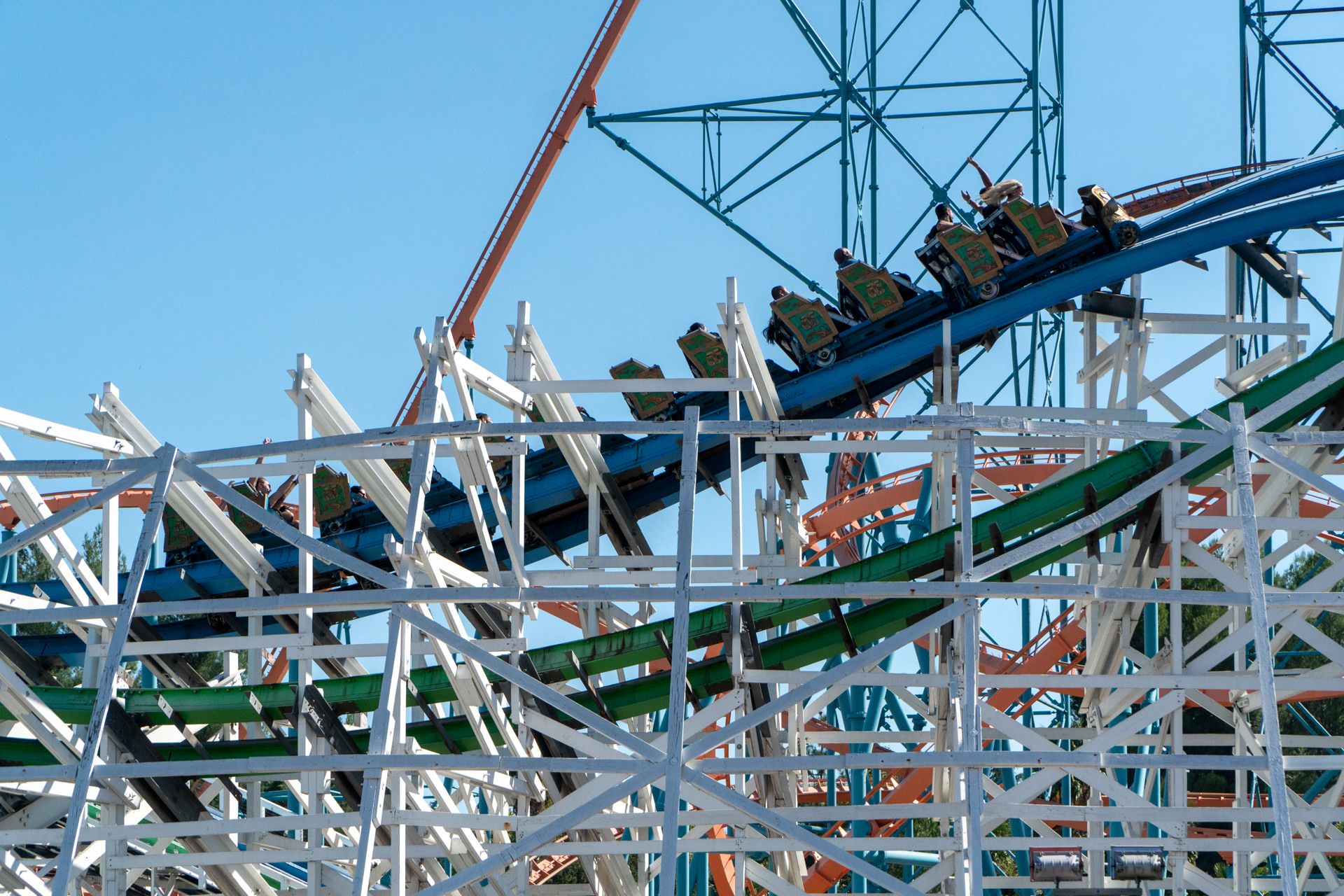
Colossus was the park’s big wooden roller coaster and made it one of the most famous theme parks in the world. In the 2010s, more and more wooden roller coasters were converted into hybrid roller coasters, including Colossus. Instead of two tracks, Twisted Colossus now consists of just one, meaning you can experience the layout twice in a row. The highlight: with the right timing, you can experience a merciless racing coaster.

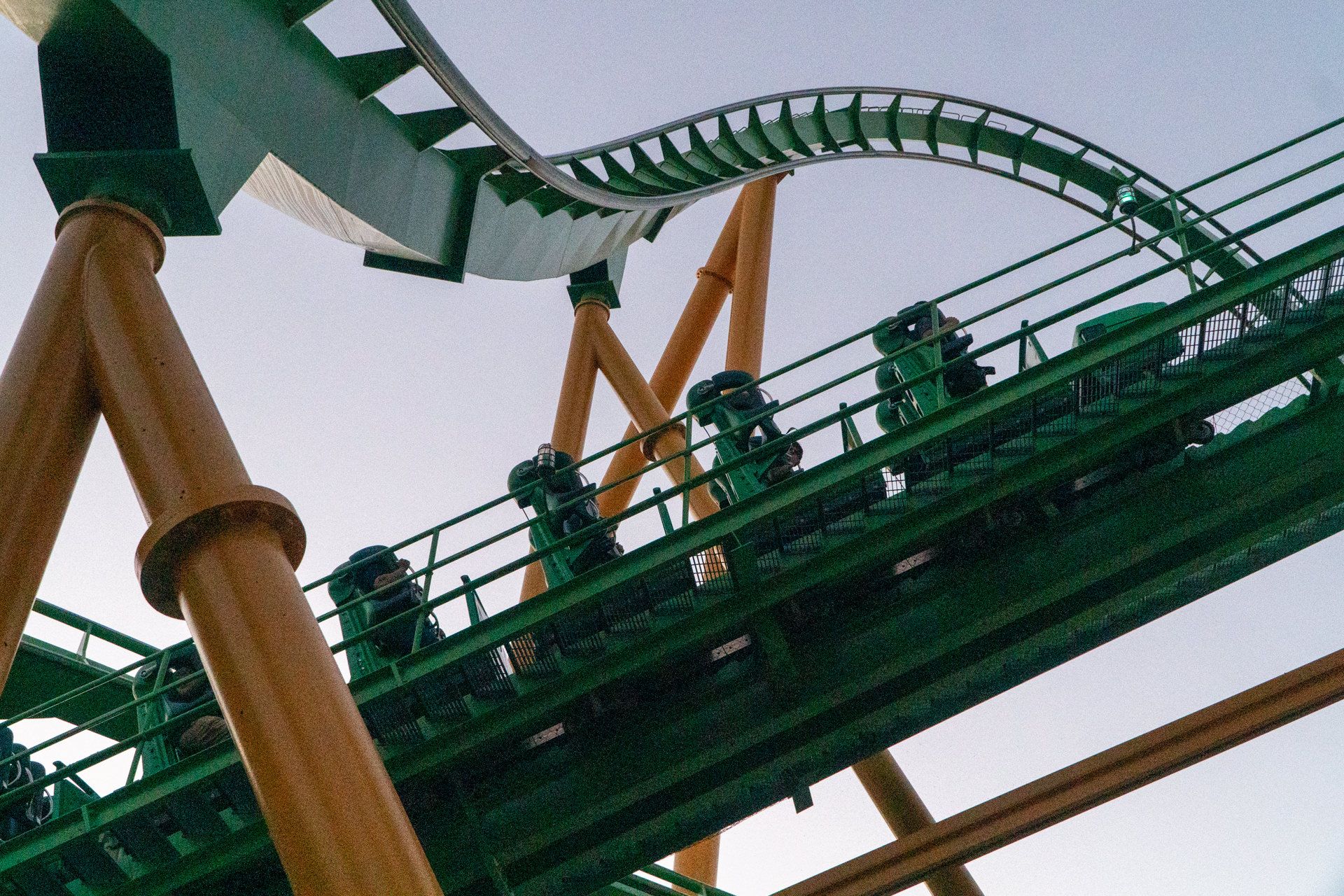
Unfortunately, I didn’t have that luck and so our train travelled alone over the lift hill after a hilly section. After a slightly twisty first drop, it goes through a long valley and over a speed bump close to the ground before going up a hill and into a turning curve with a high-five element.  After another drop, the blue track goes over another speed bump and into a camelback, while the green track races over a double-down and a zero-G roll directly over the blue track. Now the blue track also goes into a roll, while the green track races over a hill. After a double-up, the two tracks separate and while the blue track now becomes the green track, the green track approaches the final braking section and then the station.

Twisted Colossus is a pretty cool coaster, but without the racing feature, it’s a very linear coaster with no big surprises. And that’s just not what you’re used to from an RMC. It’s a shame, because of all the RMCs I’ve ridden, Twisted Colossus is the weakest ride in my opinion.

Scream!

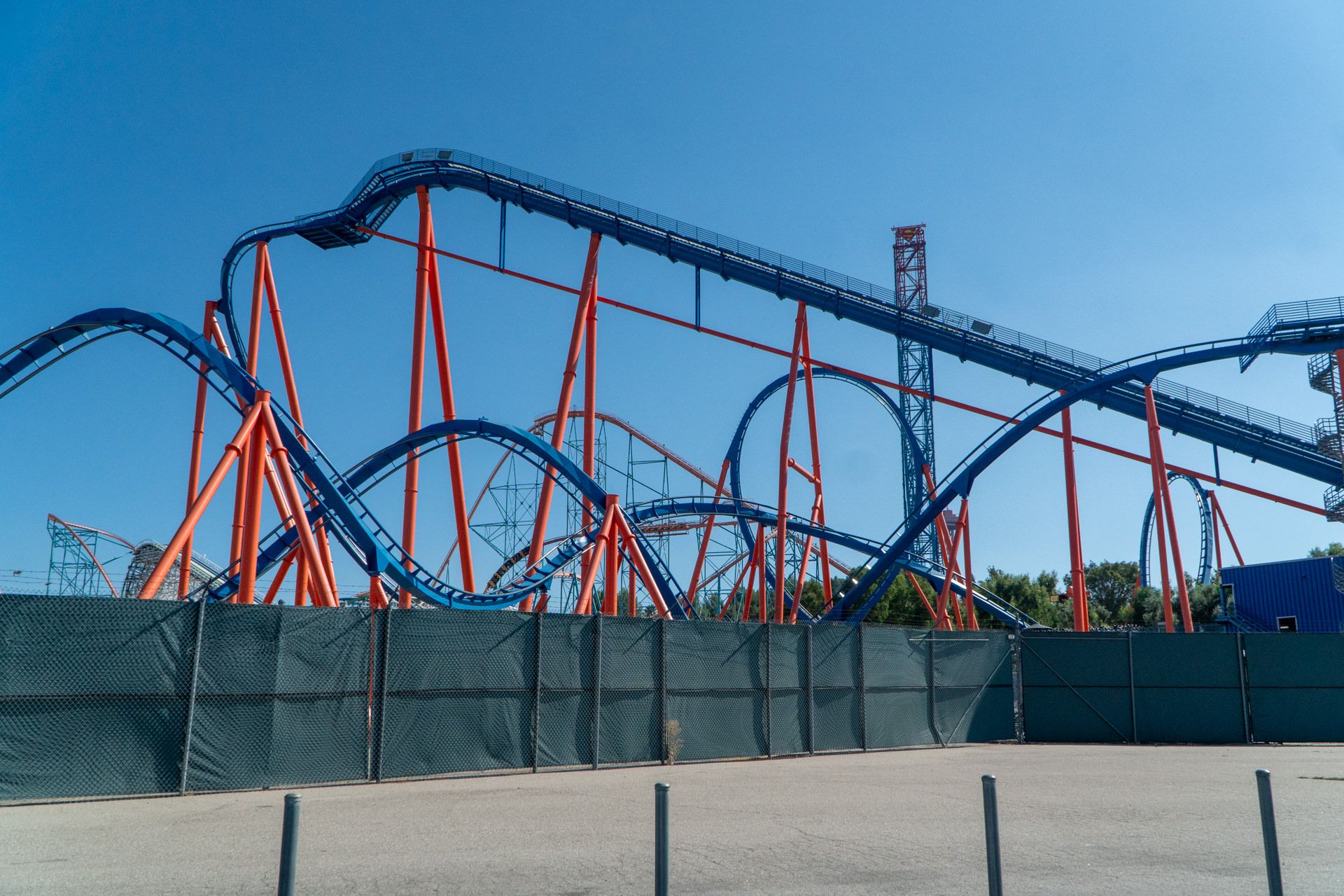
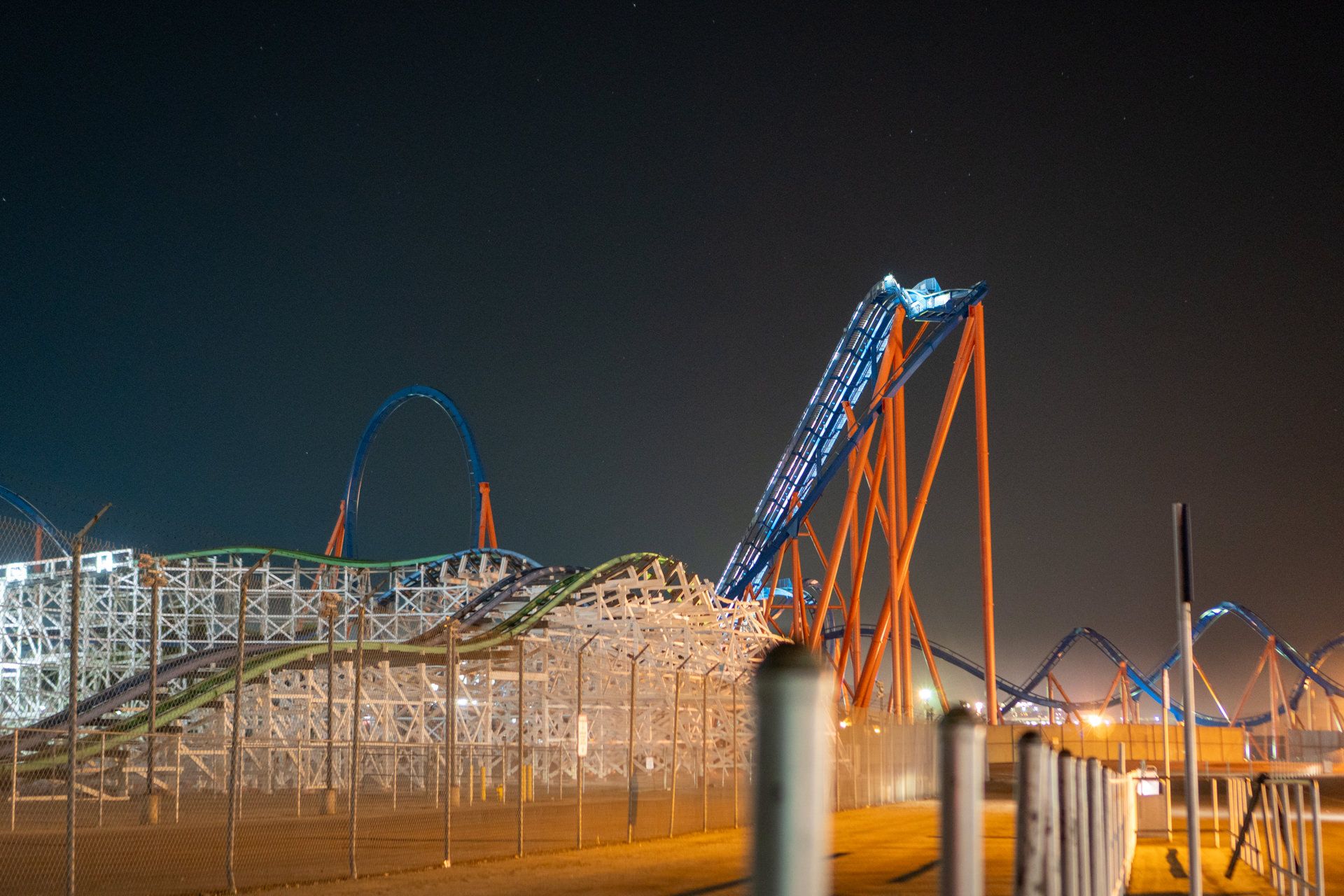
The Scream! roller coaster is probably the least appreciated investment in the theme park due to its location above a car park.

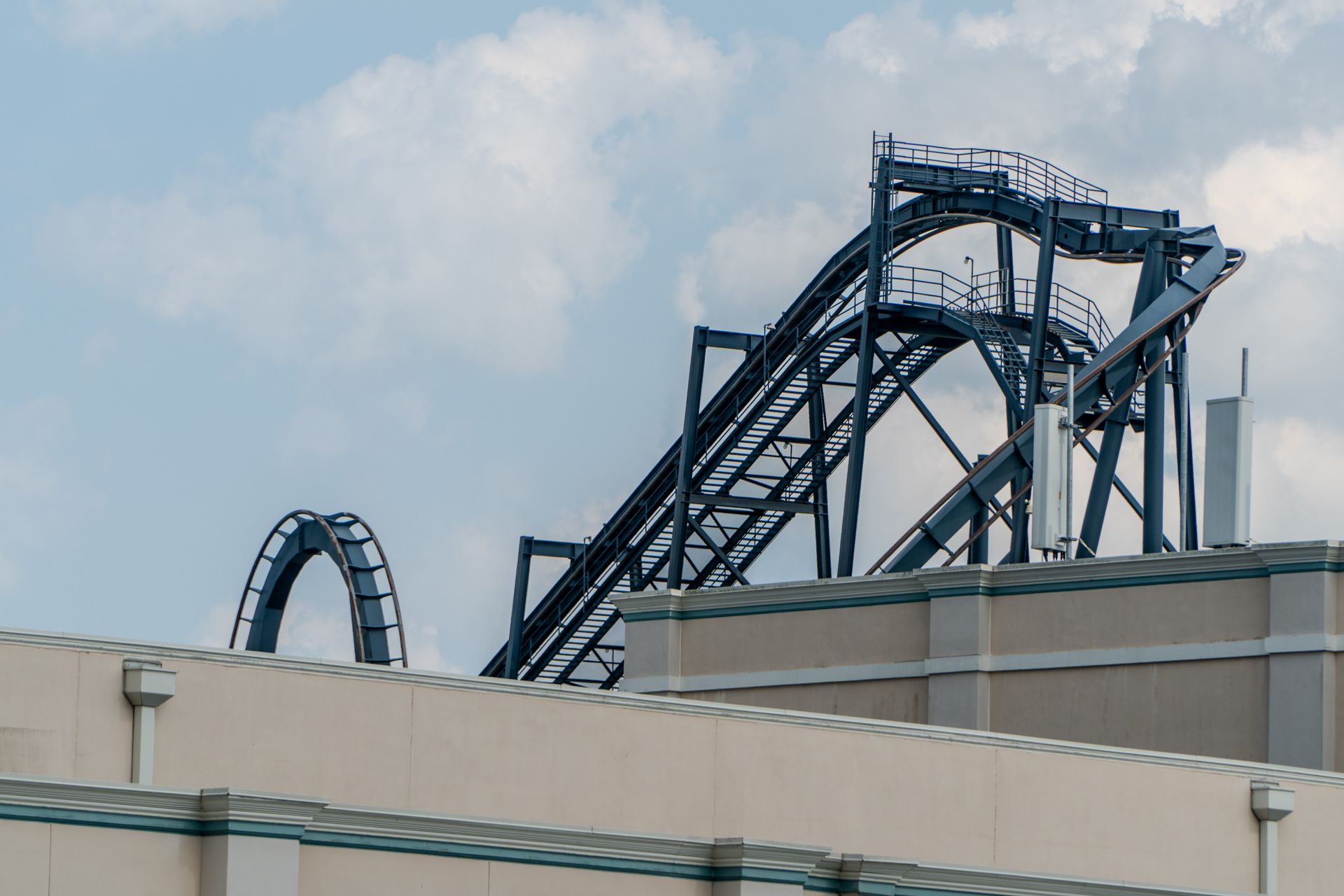
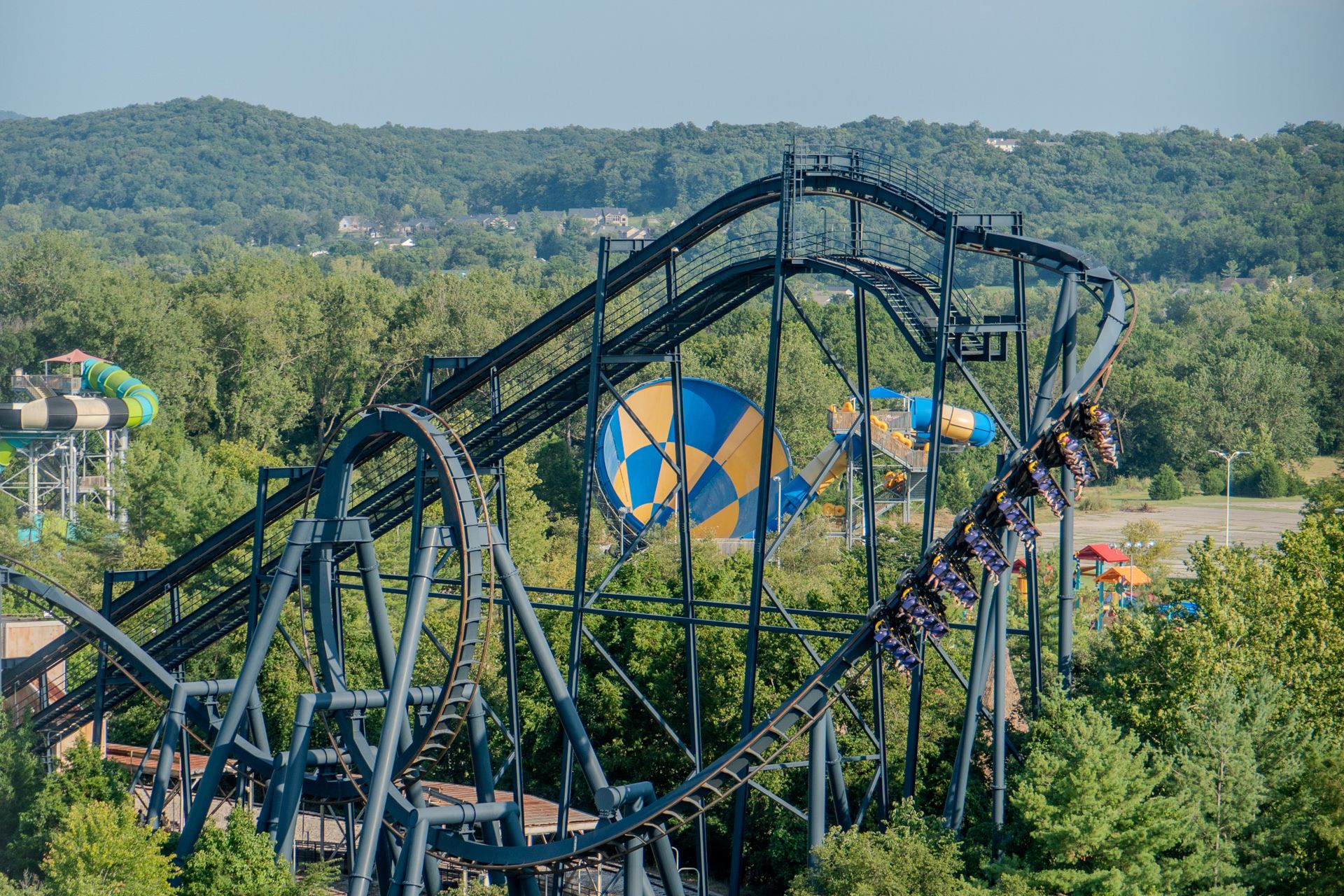
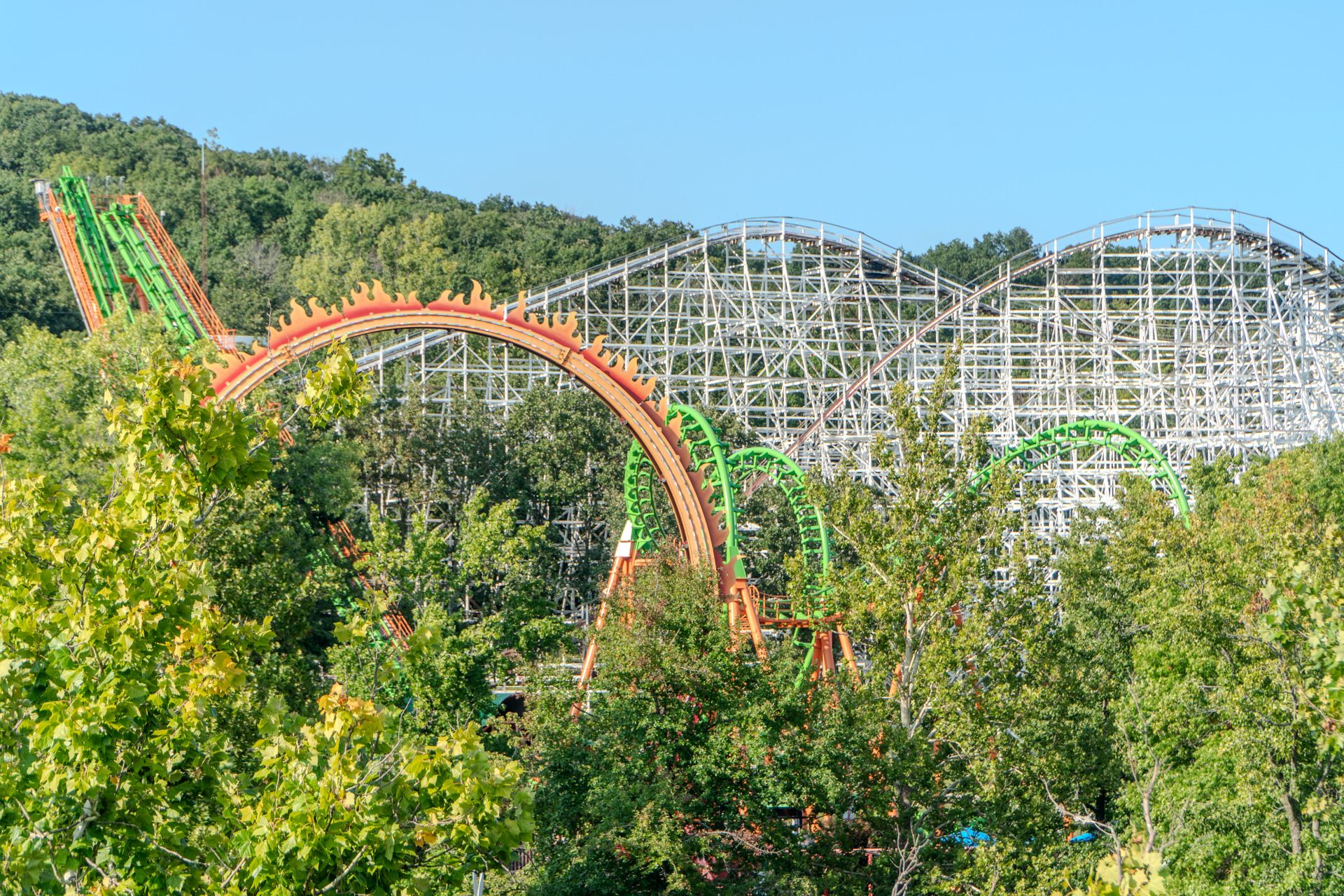
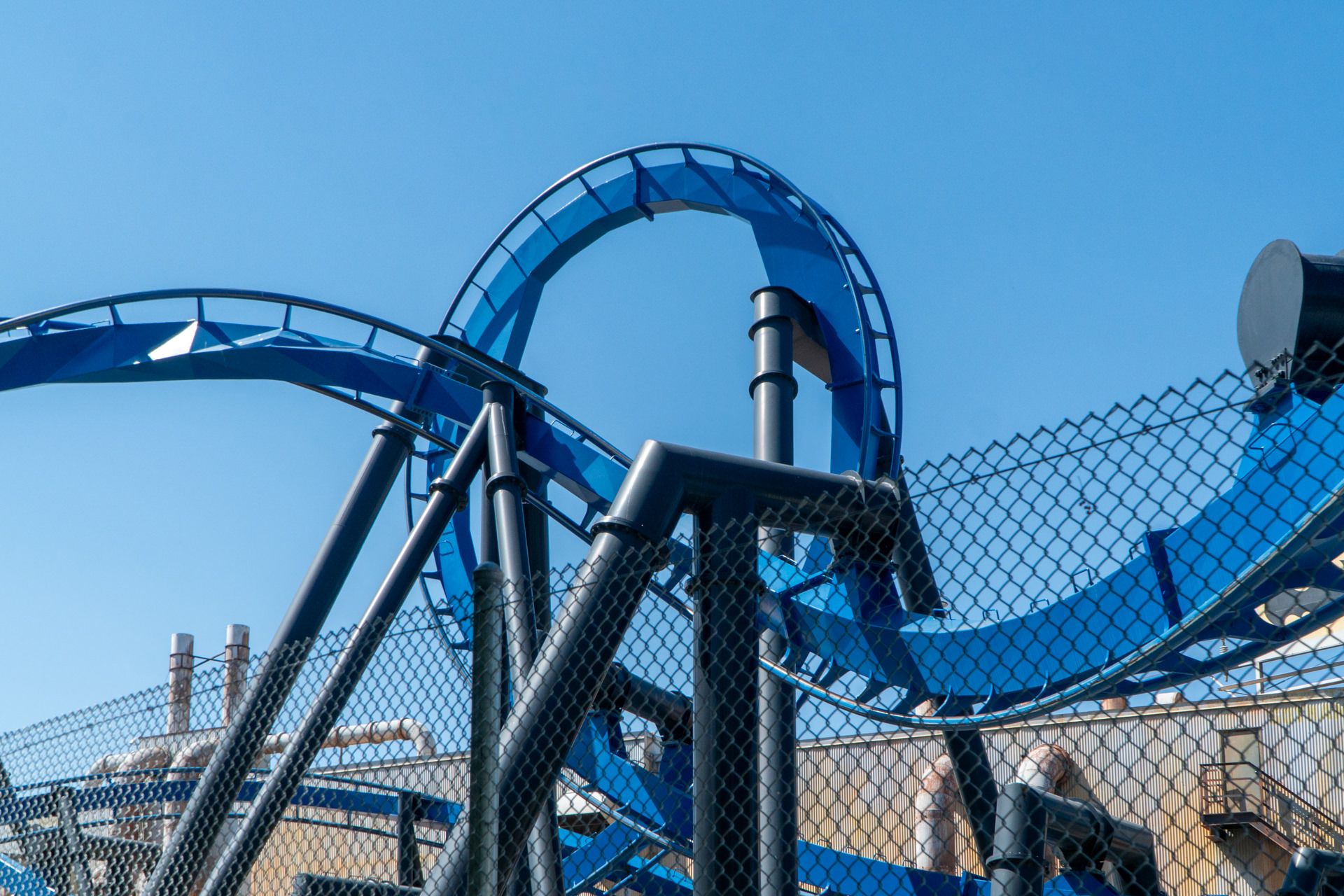
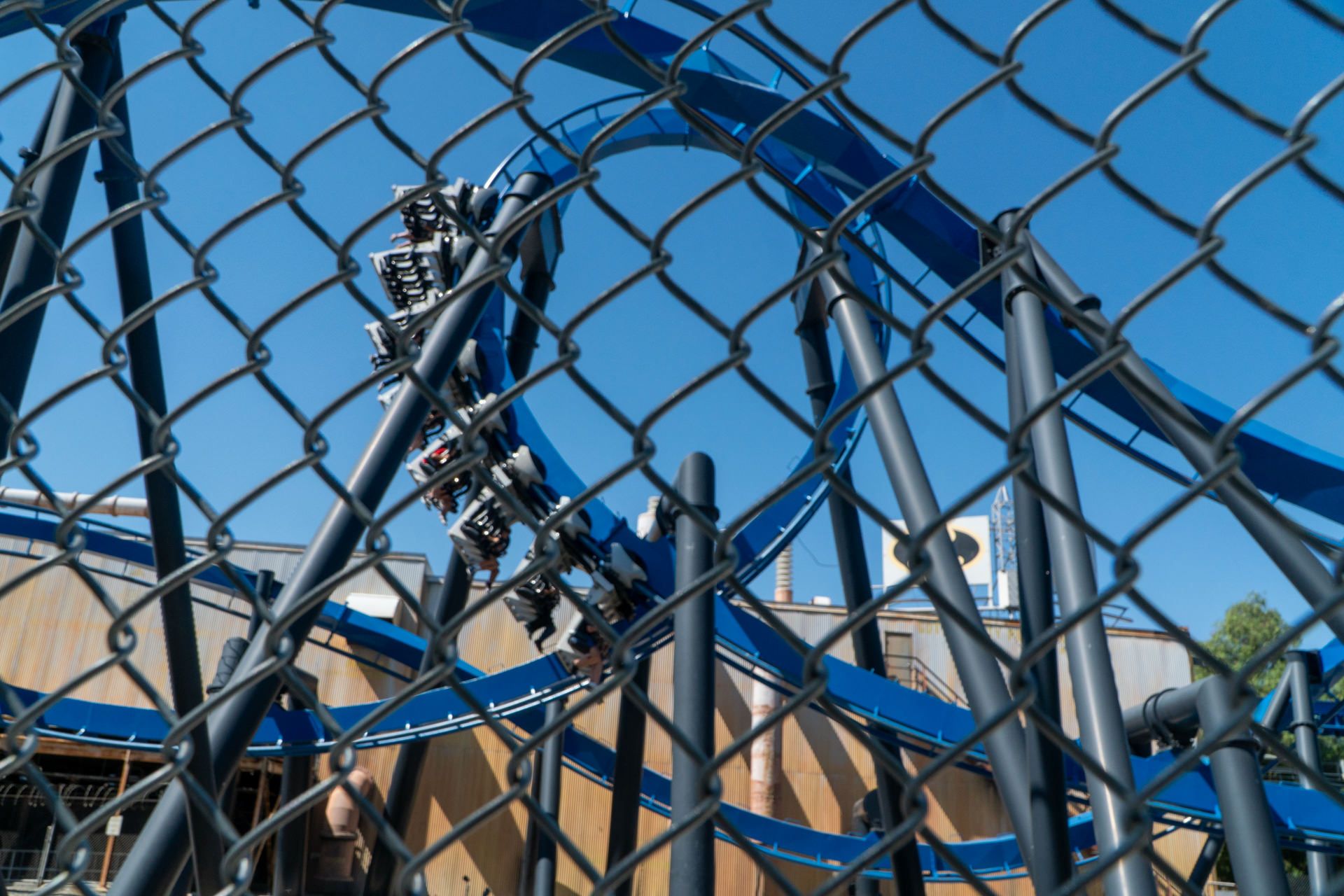
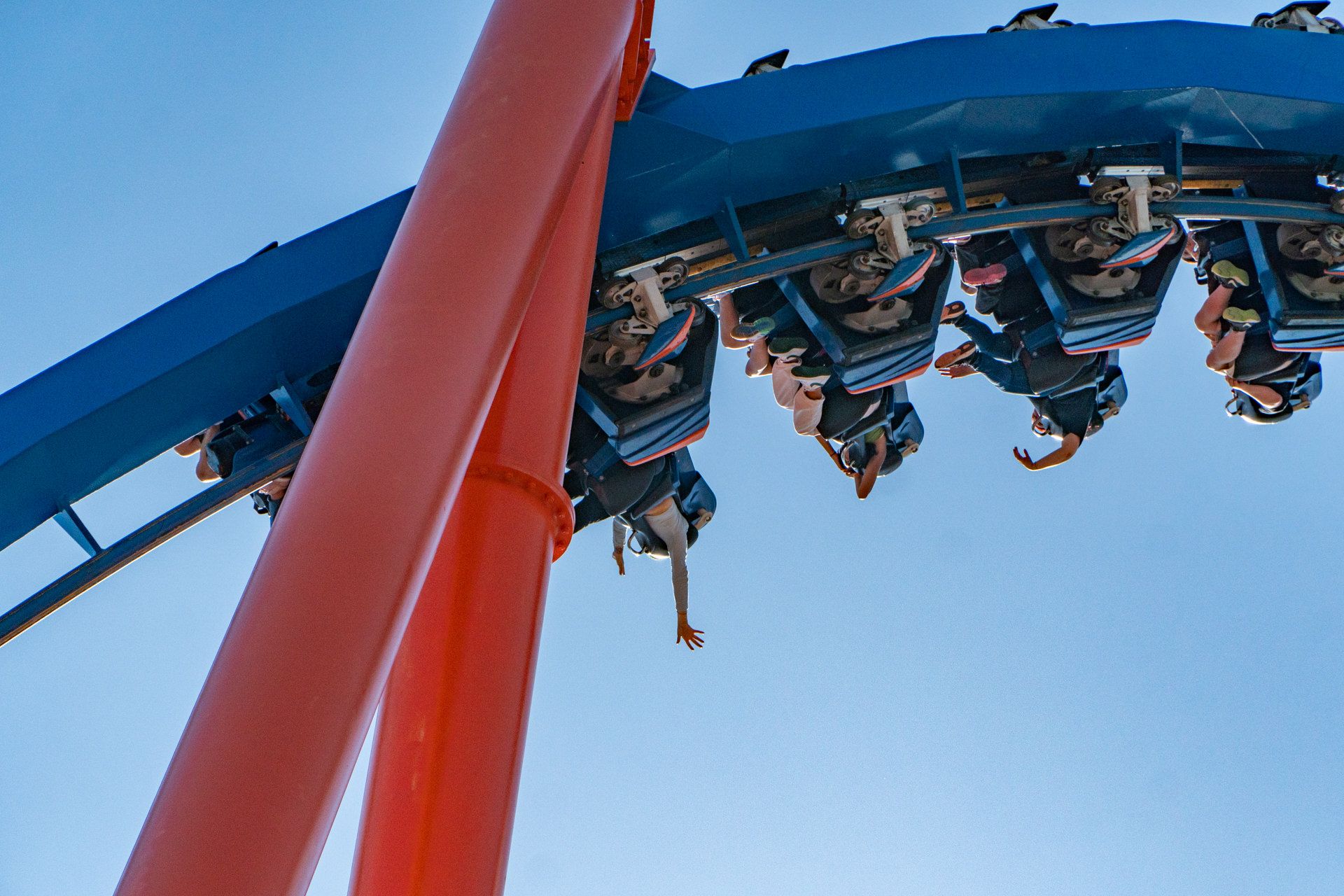
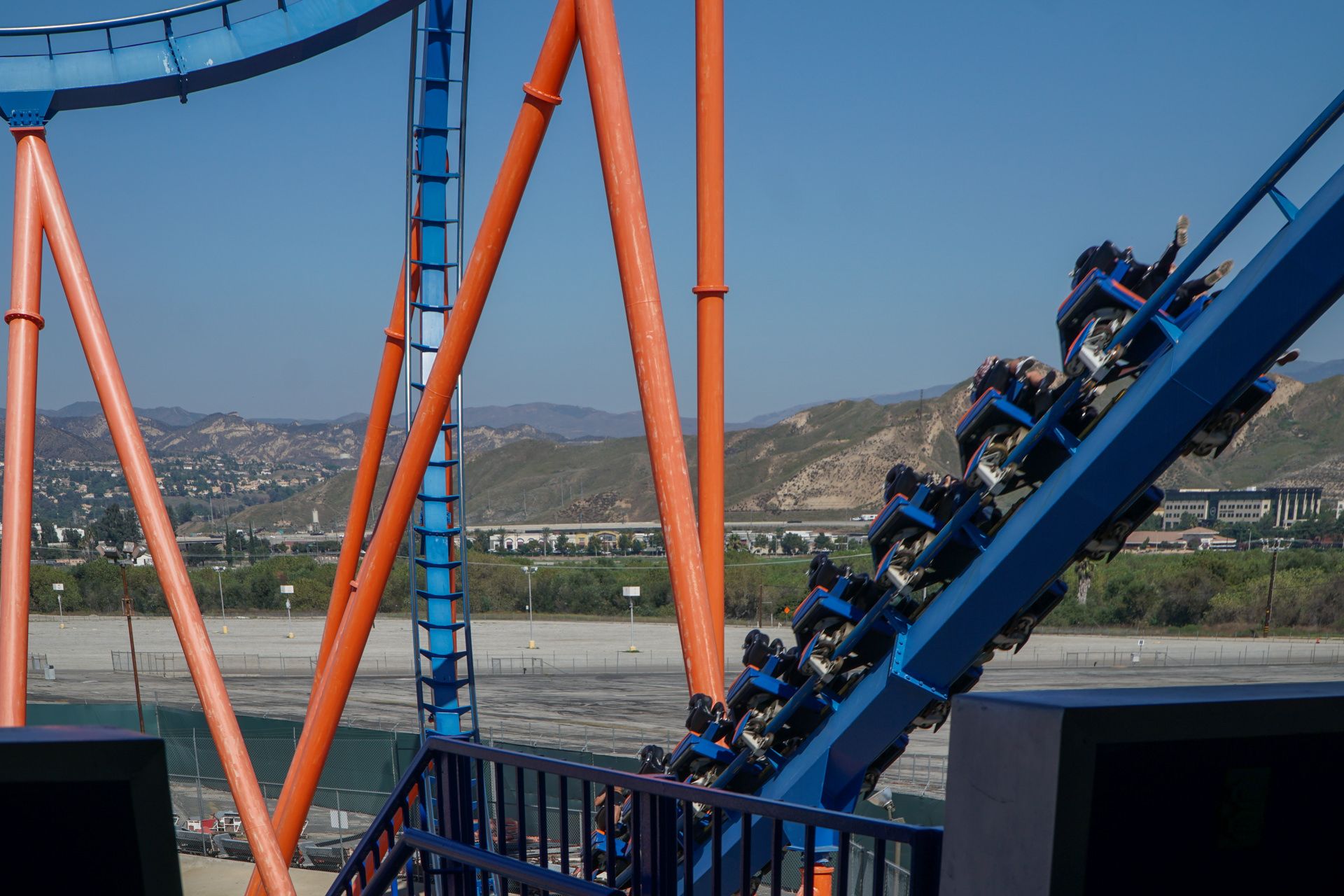
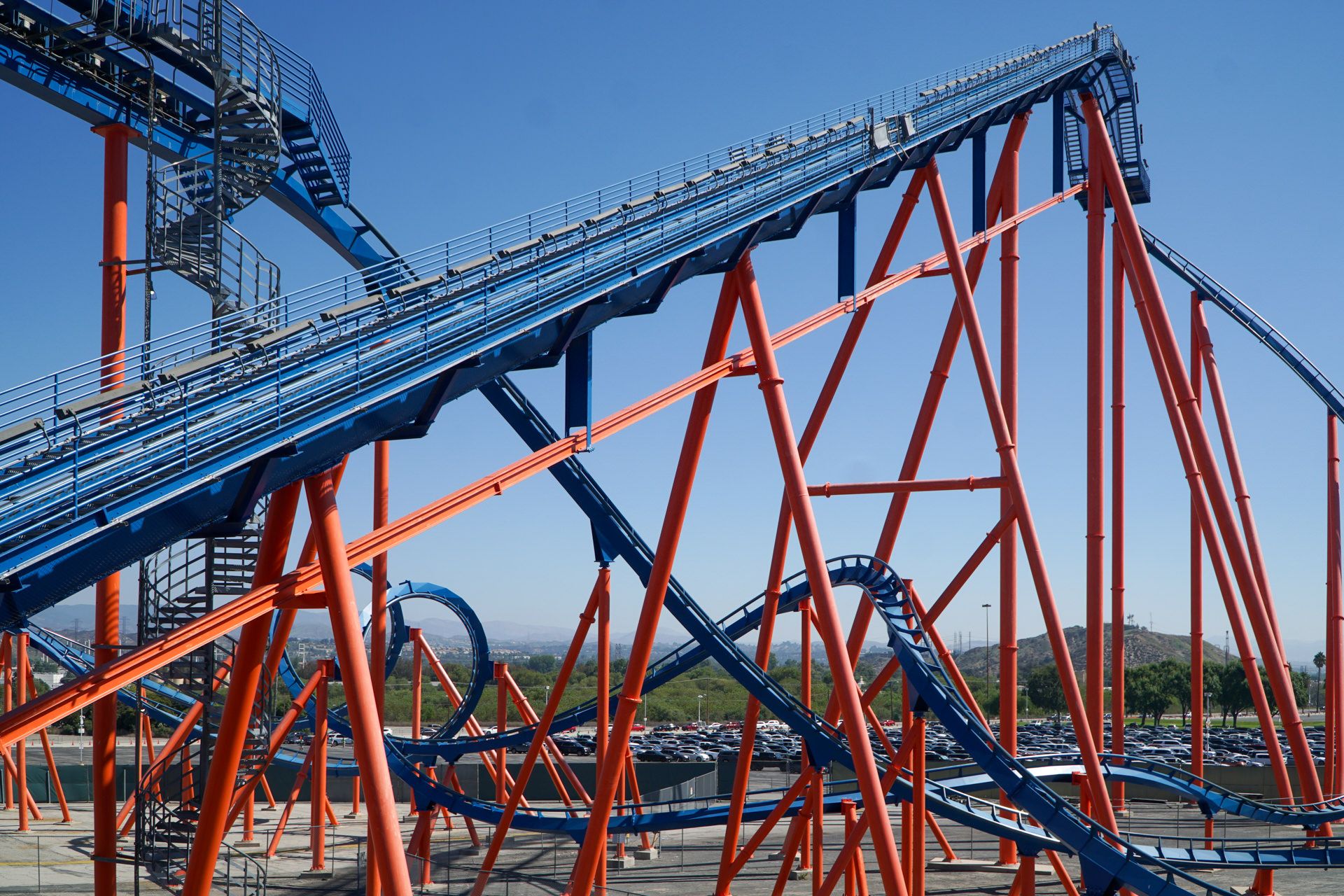
But the rollercoaster has it all. Once you have climbed the lift hill of the rollercoaster, you immediately plunge into the depths. With a lot of pressure, it goes through the valley and immediately afterwards into the large loop of the roller coaster. A climb to the left turns out to be a dive loop and immediately pulls us into the depths. With plenty of momentum, we then go through a zero-G roll and immediately afterwards into the rollercoaster’s cobra roll. A climb then leads us into a block brake, where we can only catch our breath briefly. We immediately descend in a steep curve. We then enter an intense helix just above the ground. After a change of direction, we enter the Interlocking Corkscrews. A short left-hand bend then leads us into the final incline of the ride, after which we reach the roller coaster’s braking section.

What a ride! The Scream! floorless coaster is an absolute fun machine with a breathtaking layout and a total of seven inversions. I loved getting on here again and again.

Batman The Ride

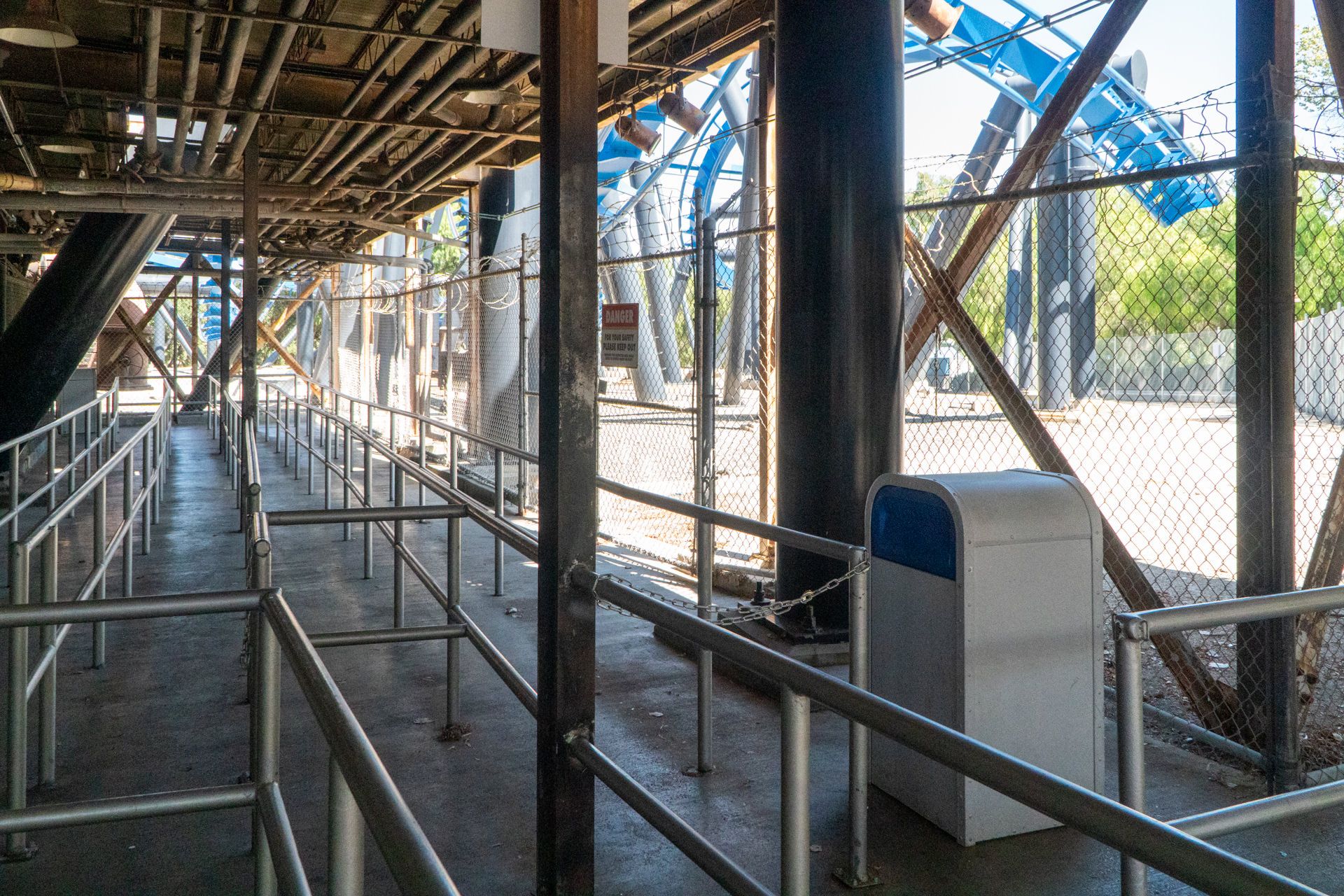
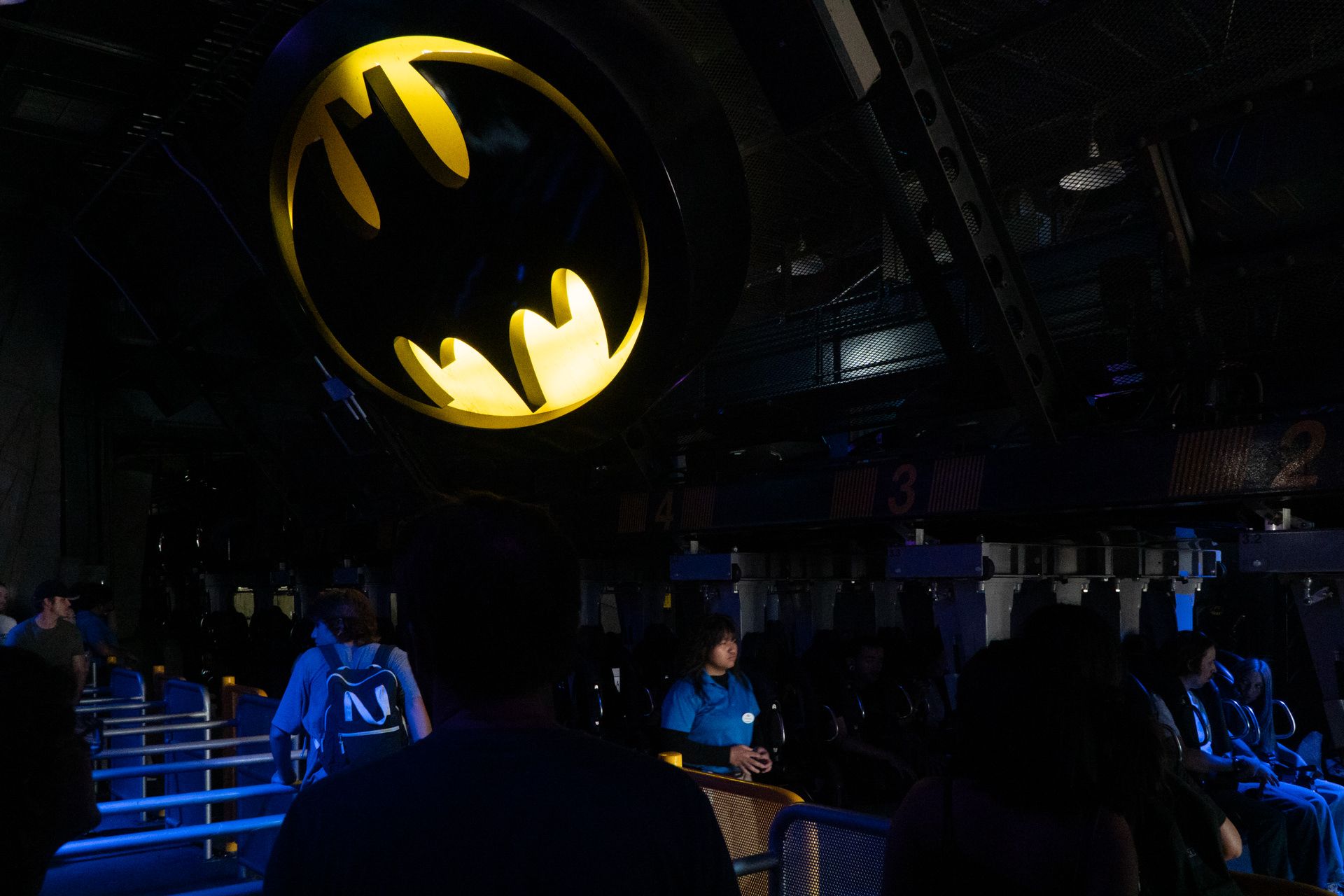
Just two years after the opening of the first Batman: The Ride at Six Flags Great America, the Dark Knight found his place at Six Flags Magic Mountain in 1994.

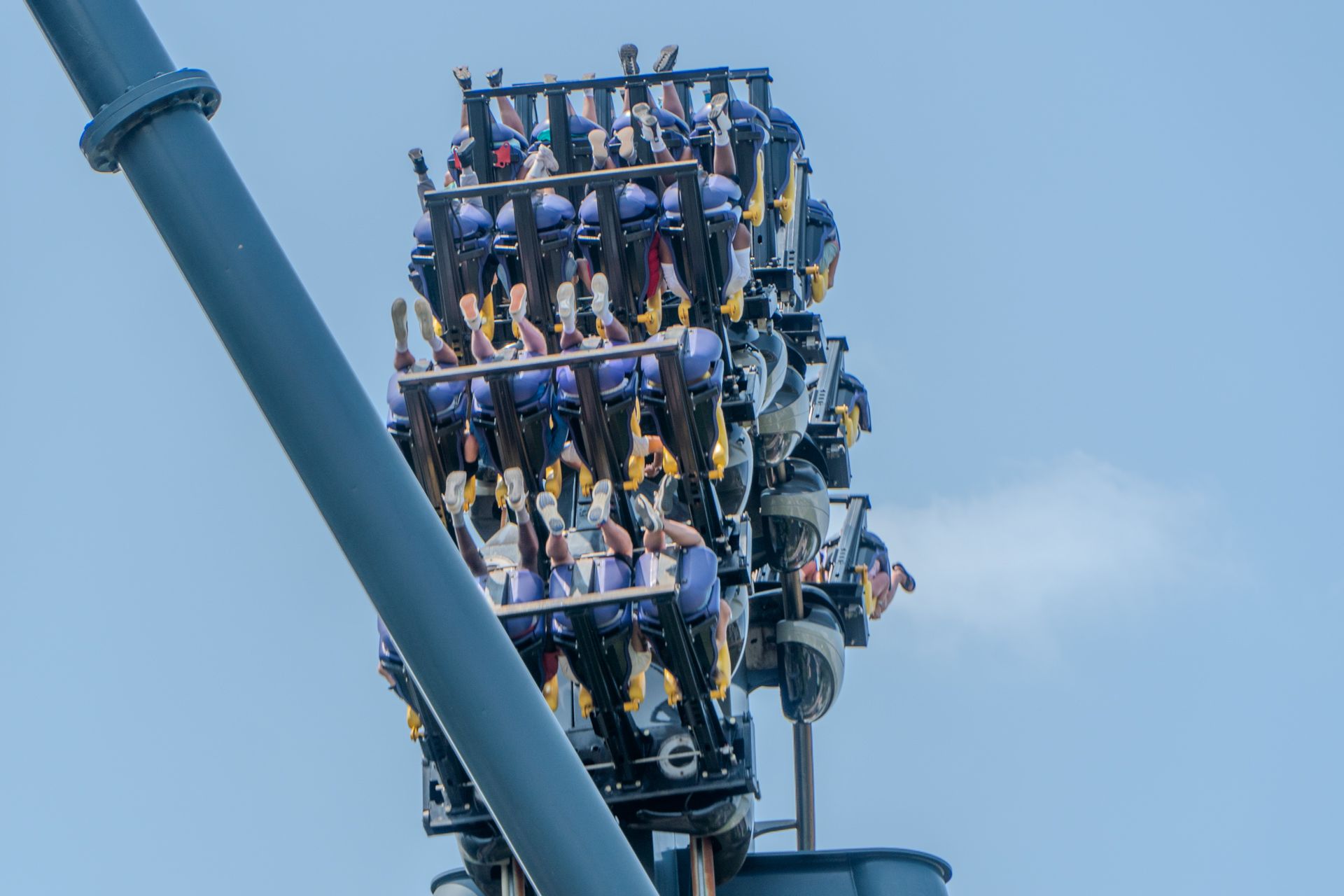
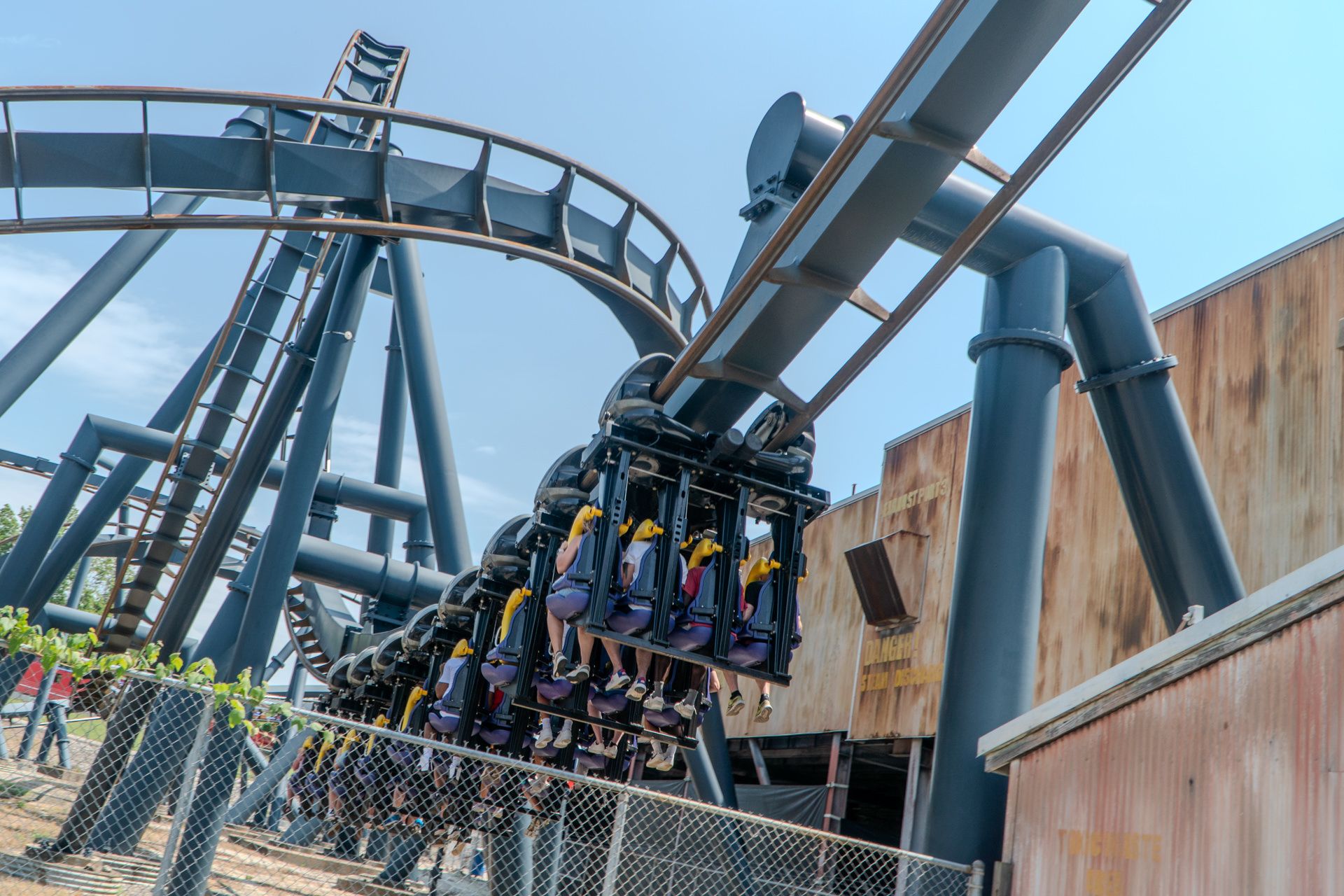
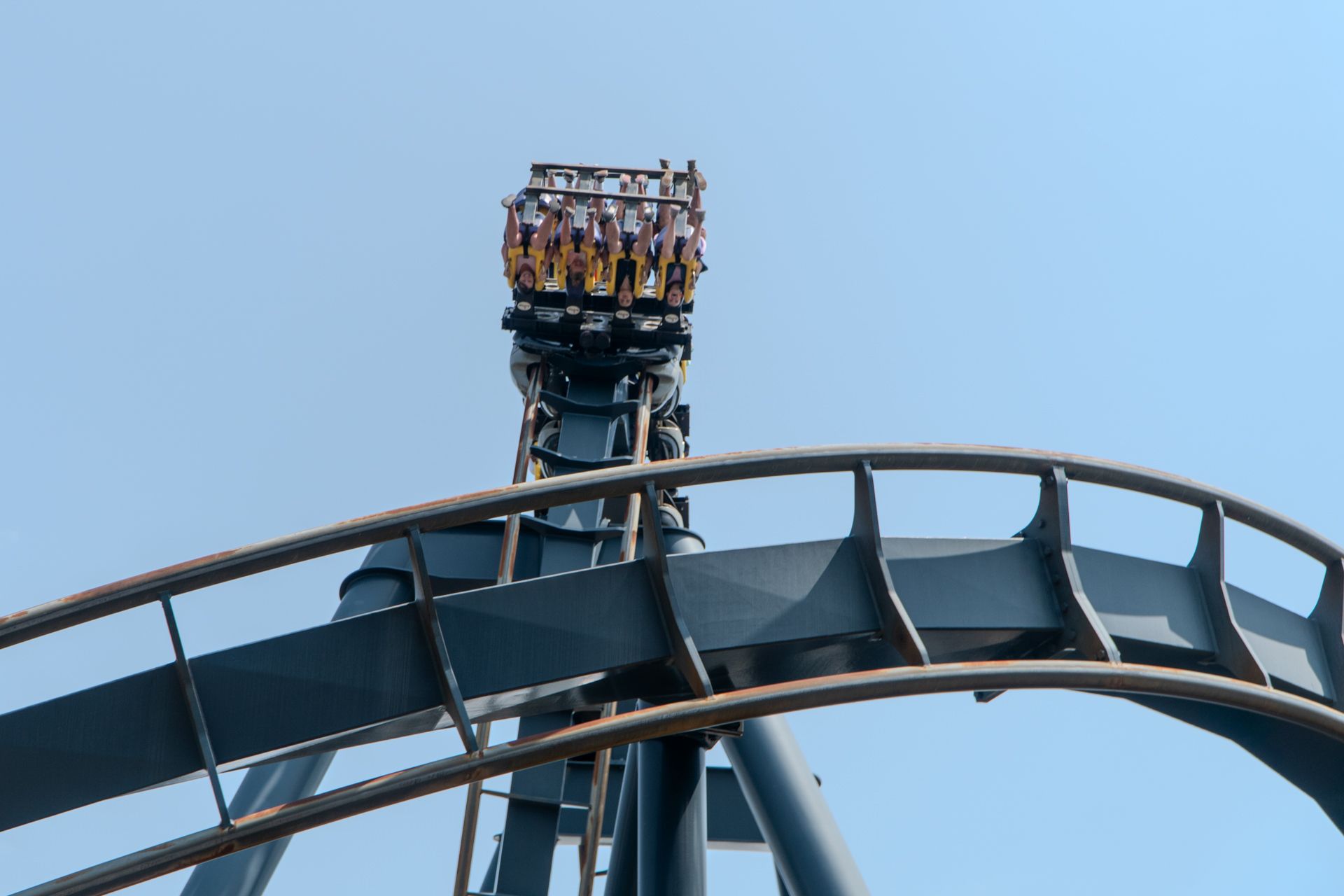
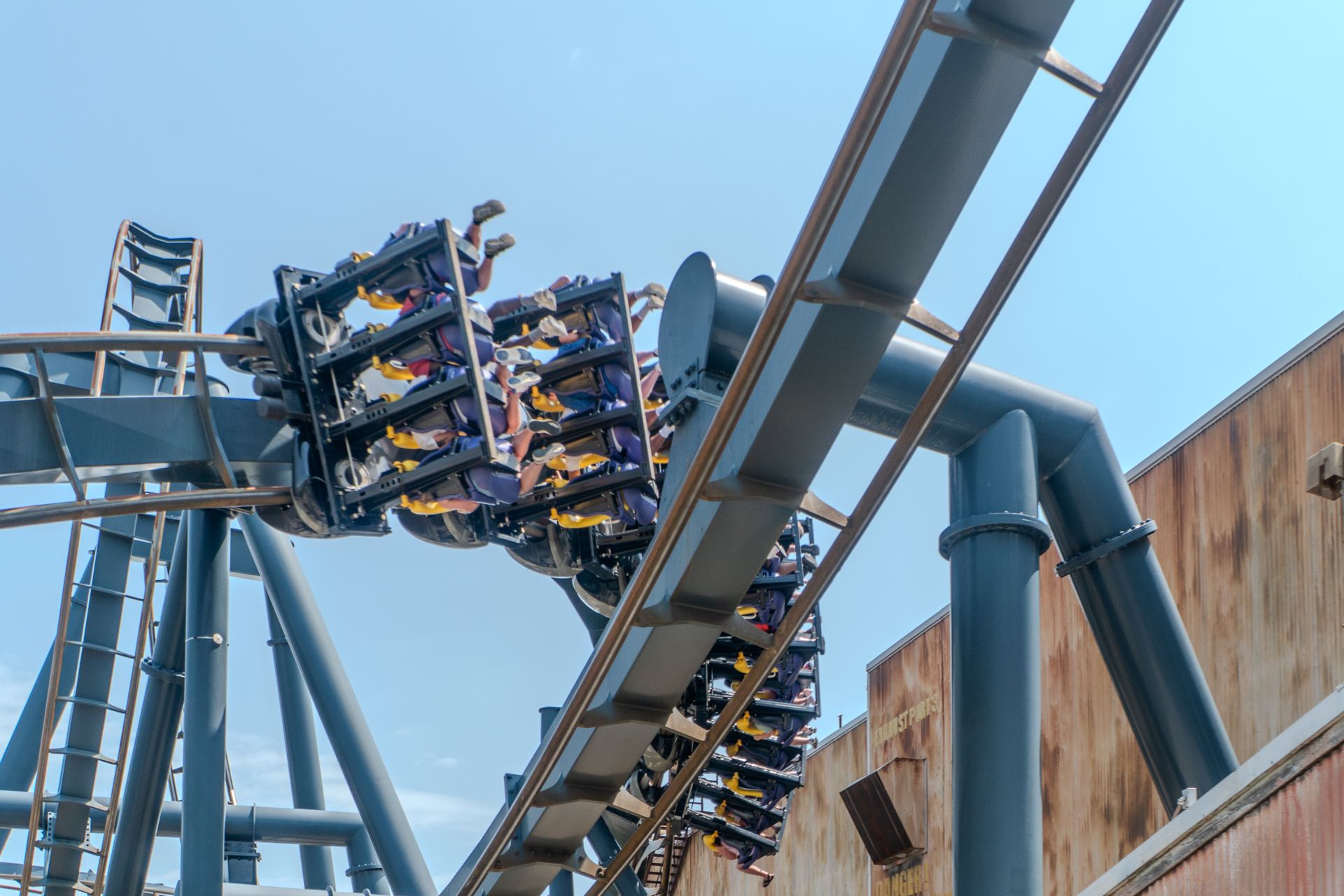
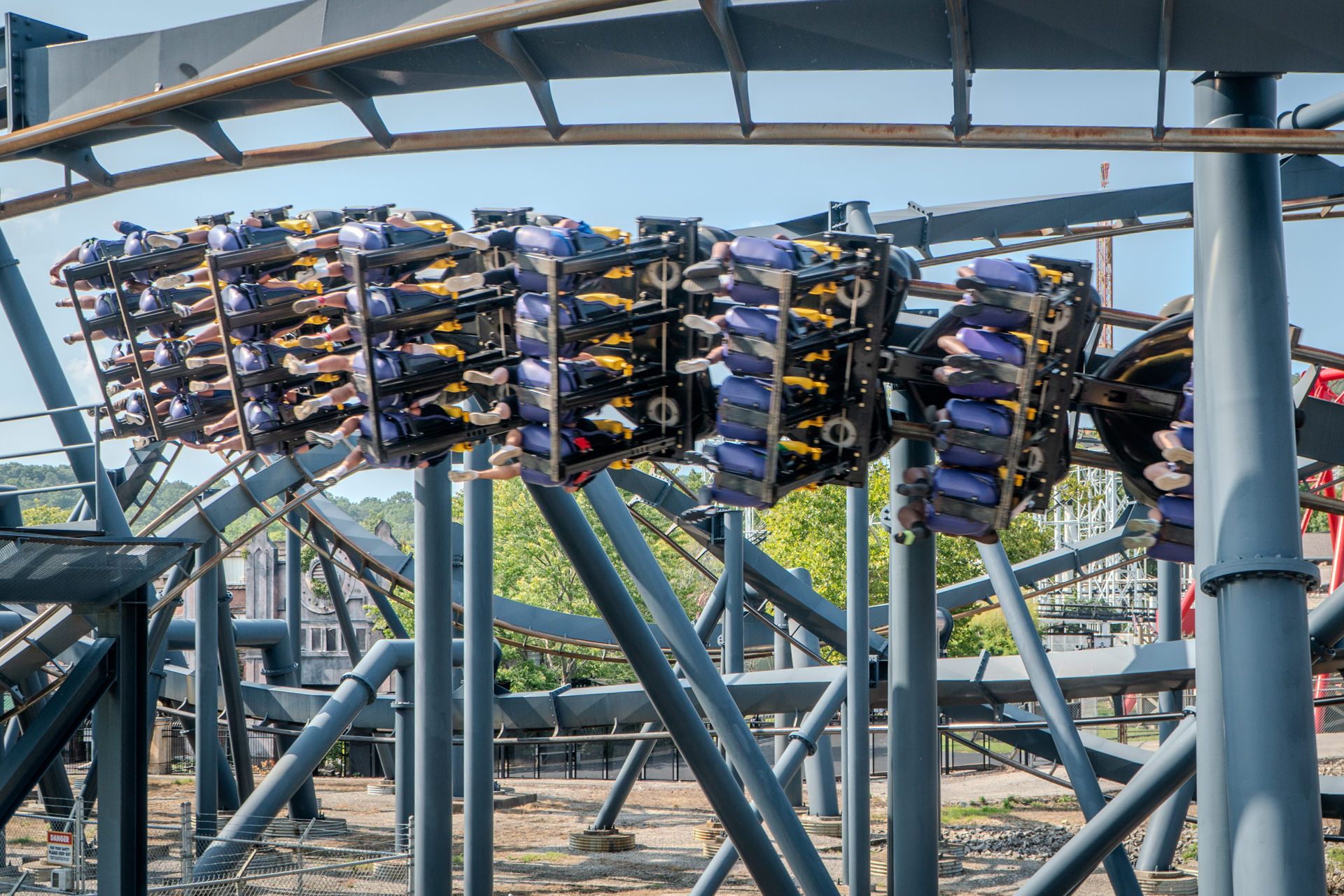
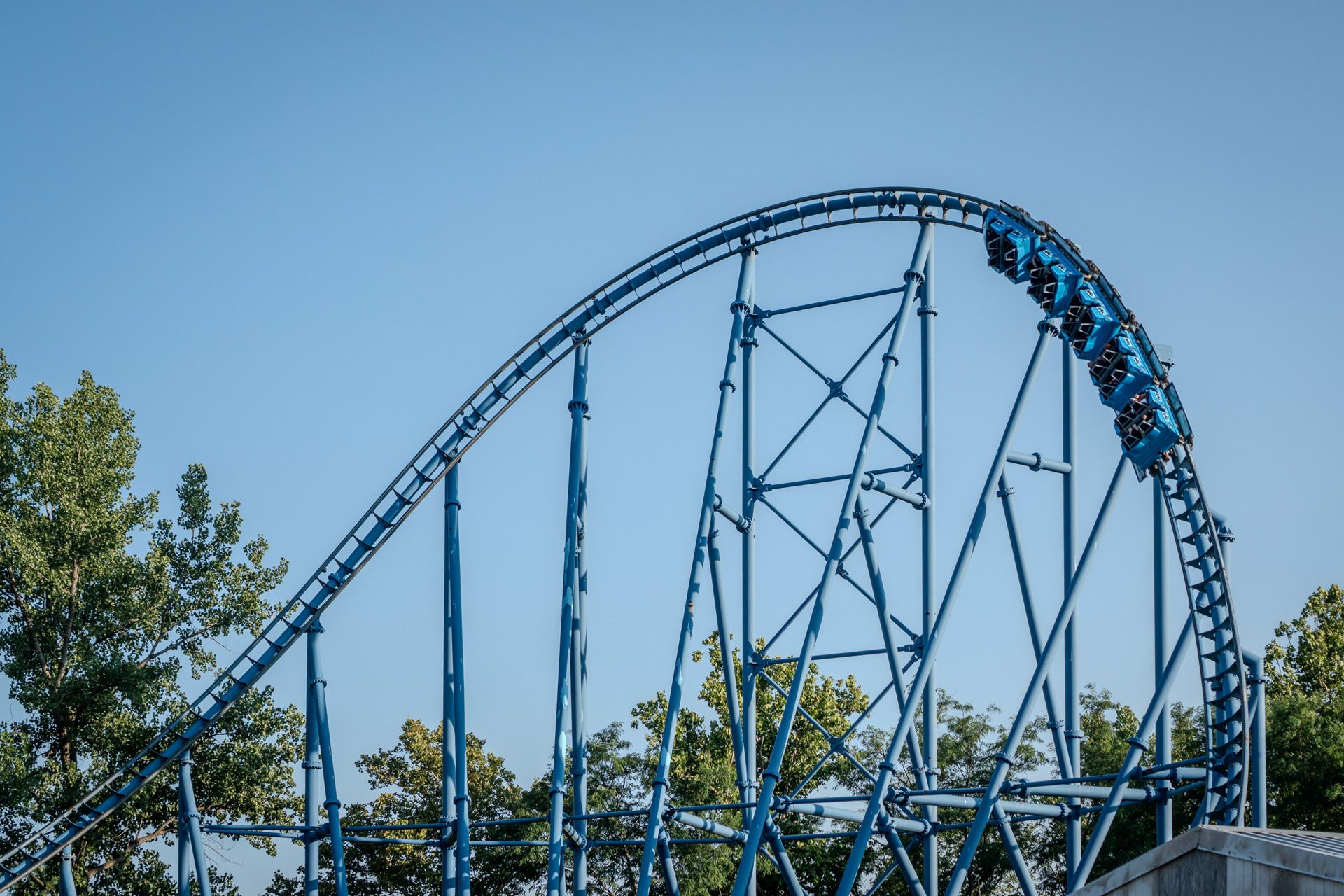
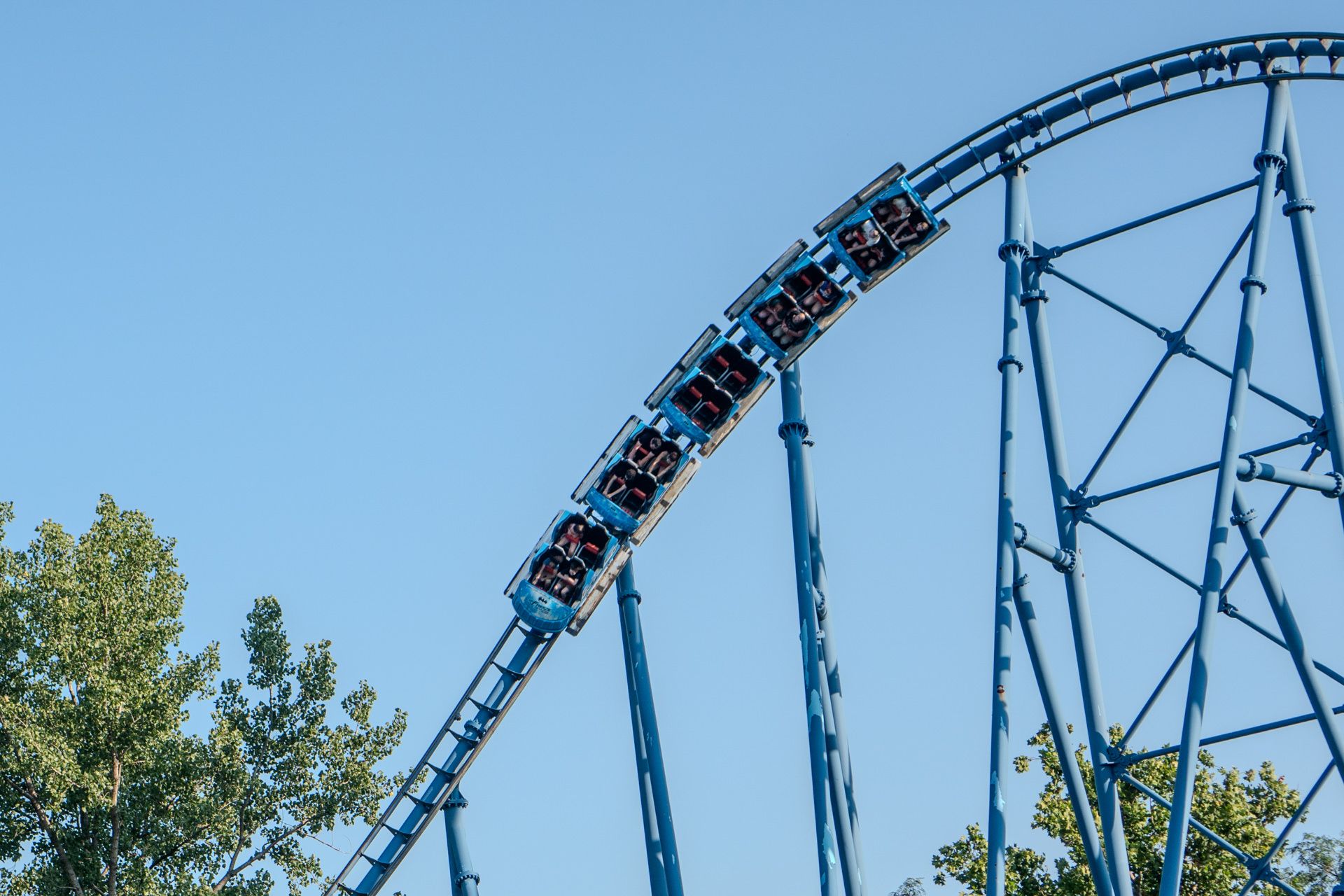
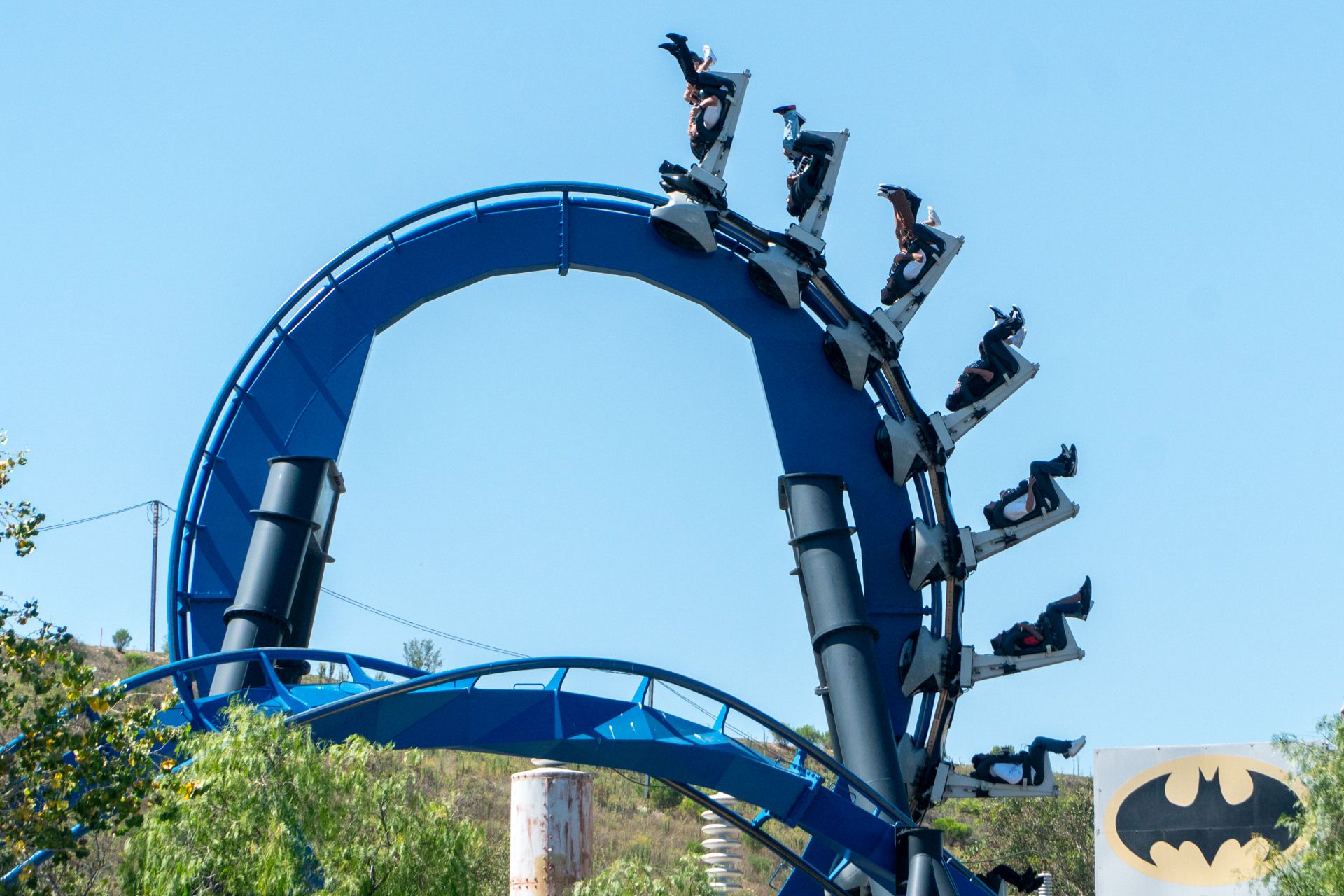
After climbing the lift hill, passengers can expect a pre-drop before the train finally plunges down the first drop in a steep curve. On the descent, passengers can experience high G-forces before entering the first loop. The second inversion, a zero-G roll, follows in no time at all. Then another loop is taken. The blood pressure in your feet rises abruptly as you go through a steep curve and a straight section of the track. It then heads mercilessly towards the bottom, where the first corkscrew awaits the rider. This element is pure madness if you are travelling at the back of the train, as the acceleration changes abruptly. The second corkscrew follows after a short right-hand bend. After that, a left-hand bend takes you straight into the braking section.

Batman: The Ride is still one of the best inverted coasters out there. The ride offers an intense ride layout with lots of positive G-forces on a relatively small footprint. Apart from the theming, the ride experience does not differ between the different rides, which is a good sign.

Wonder Woman Flight of Courage

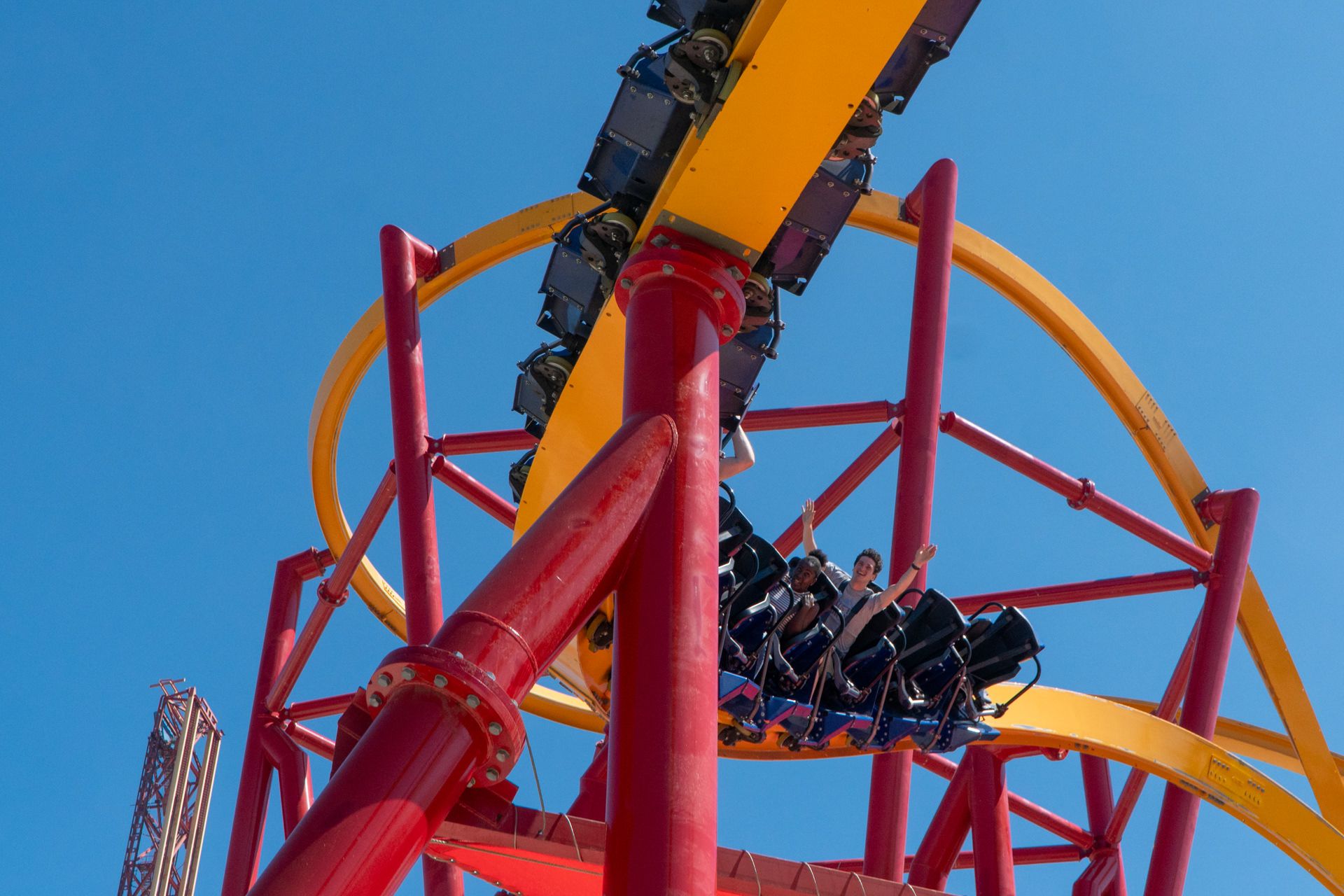
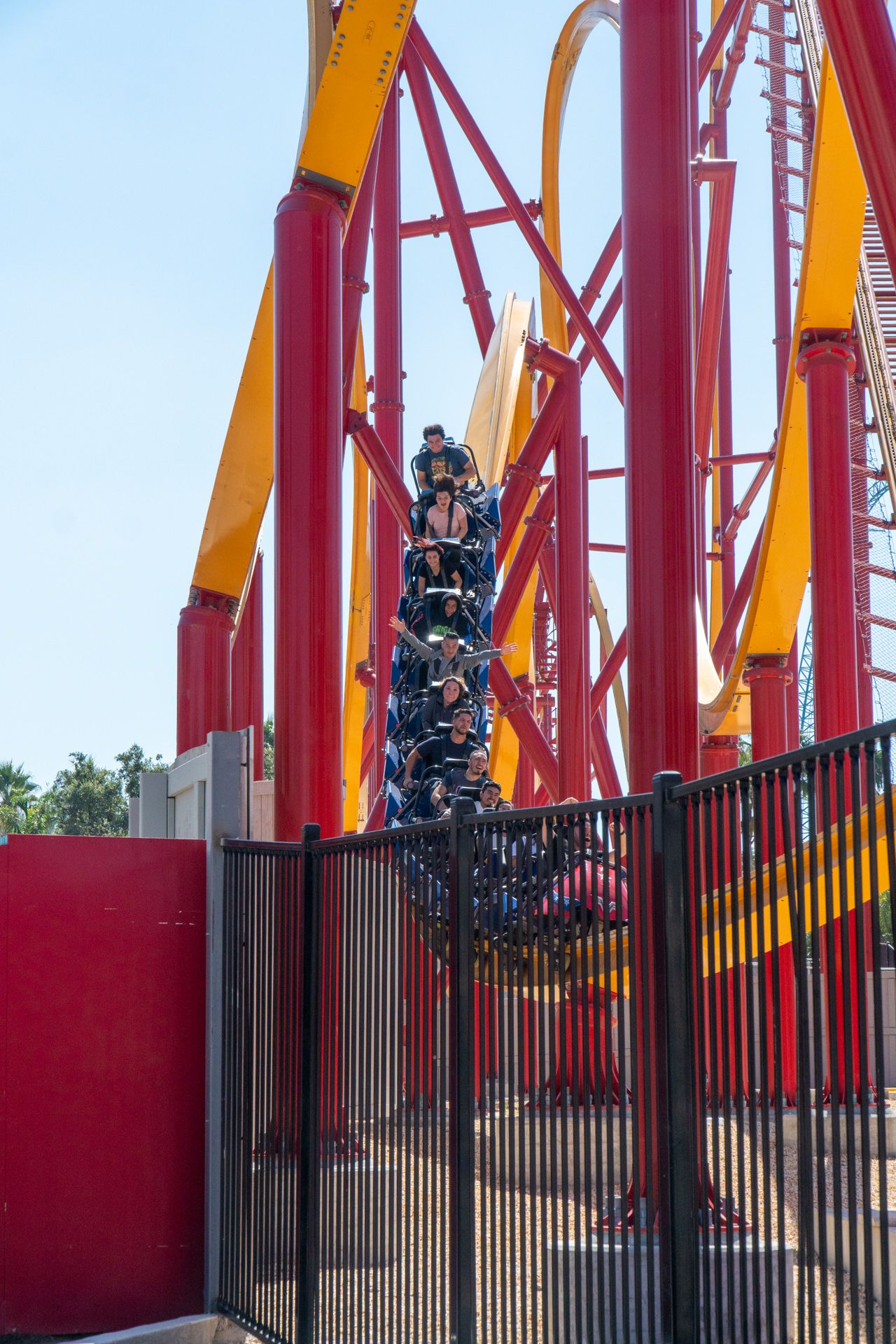
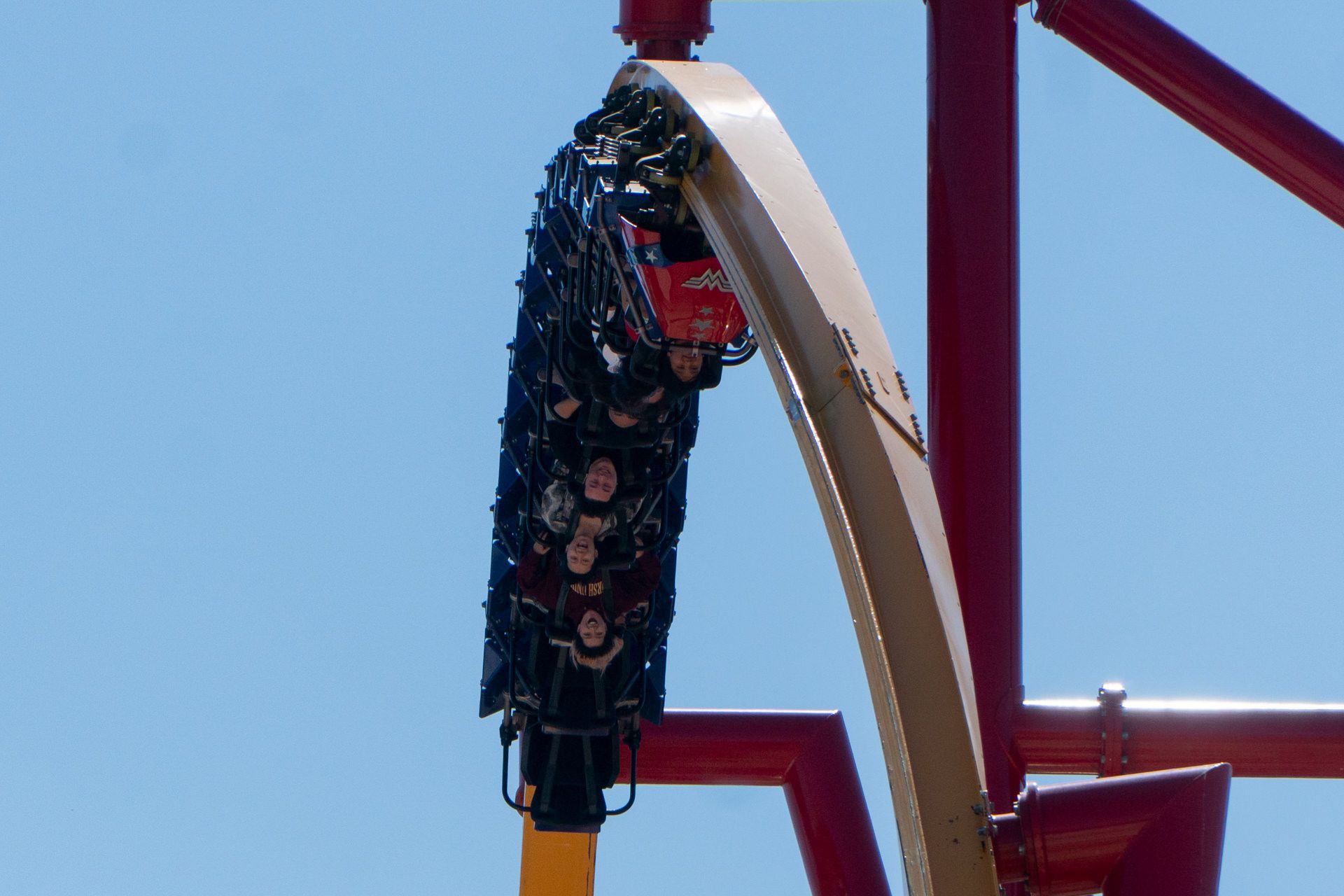
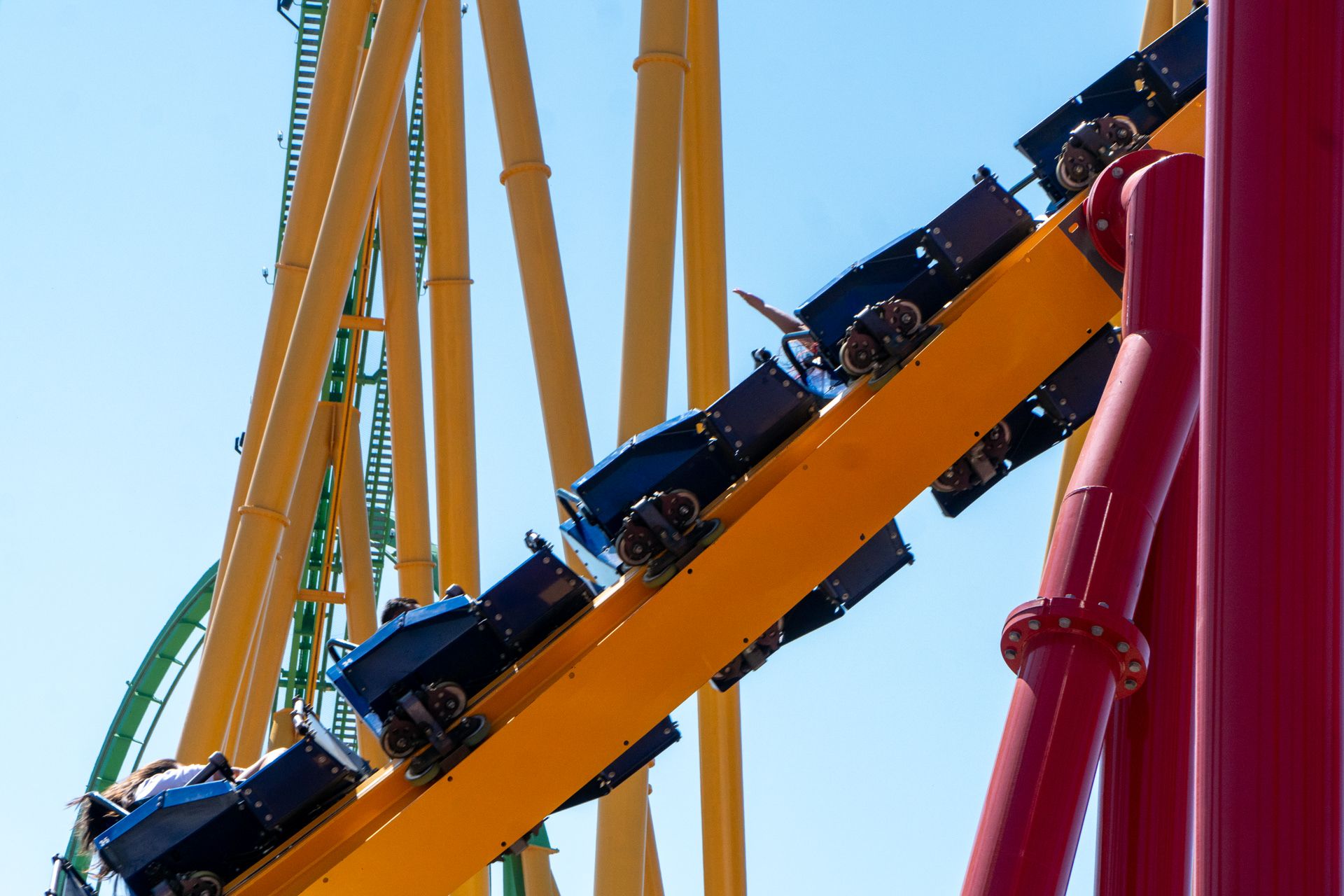
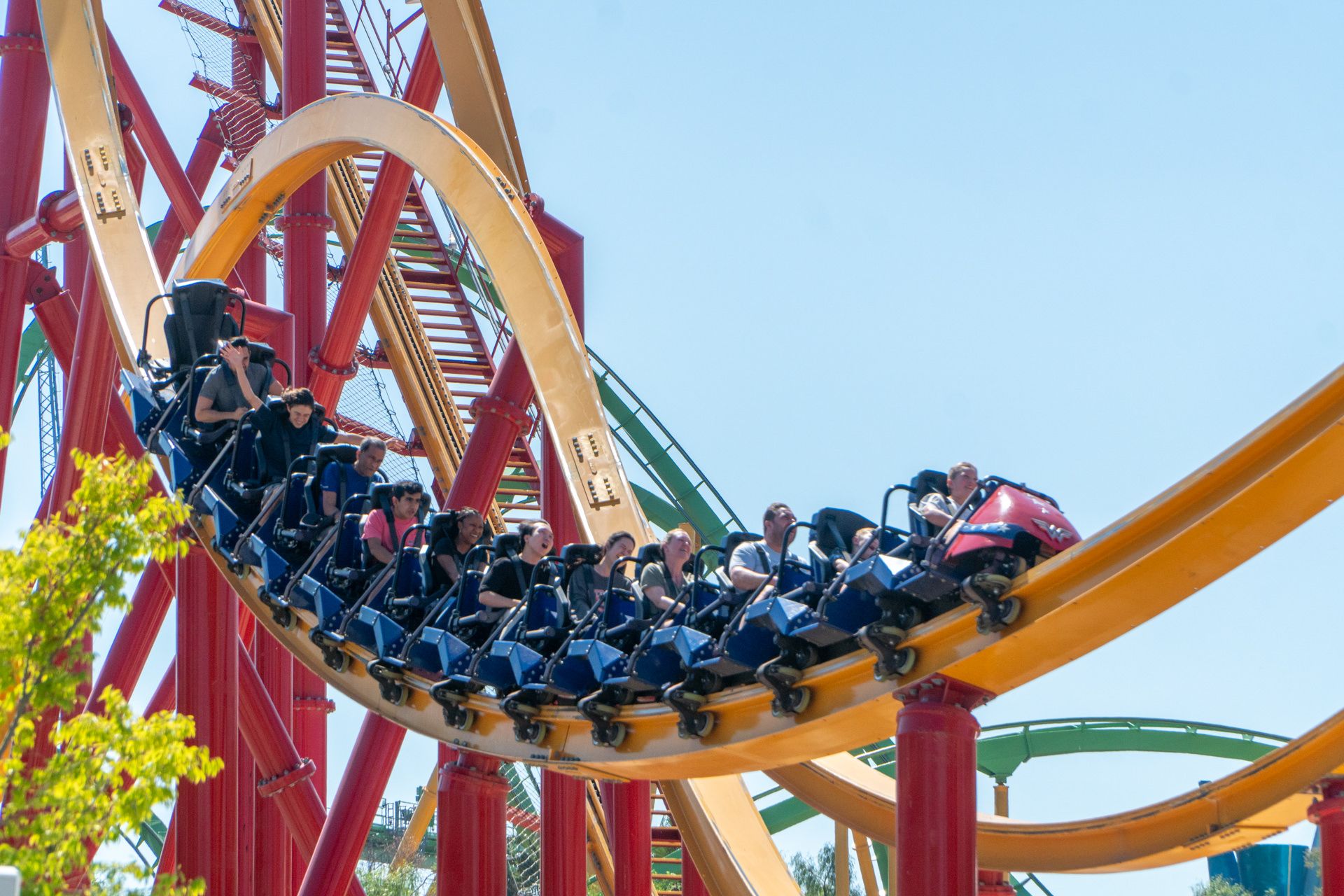
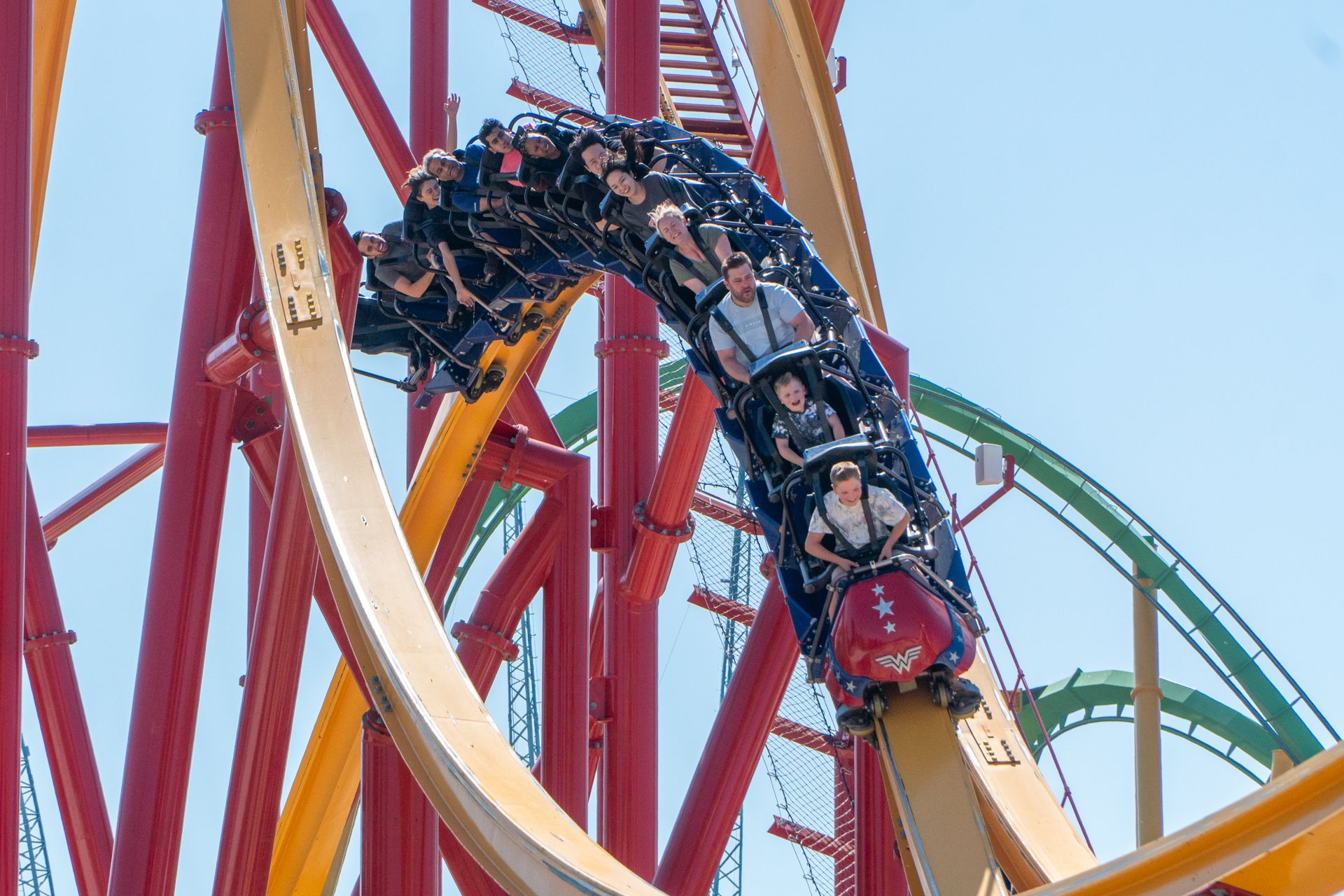
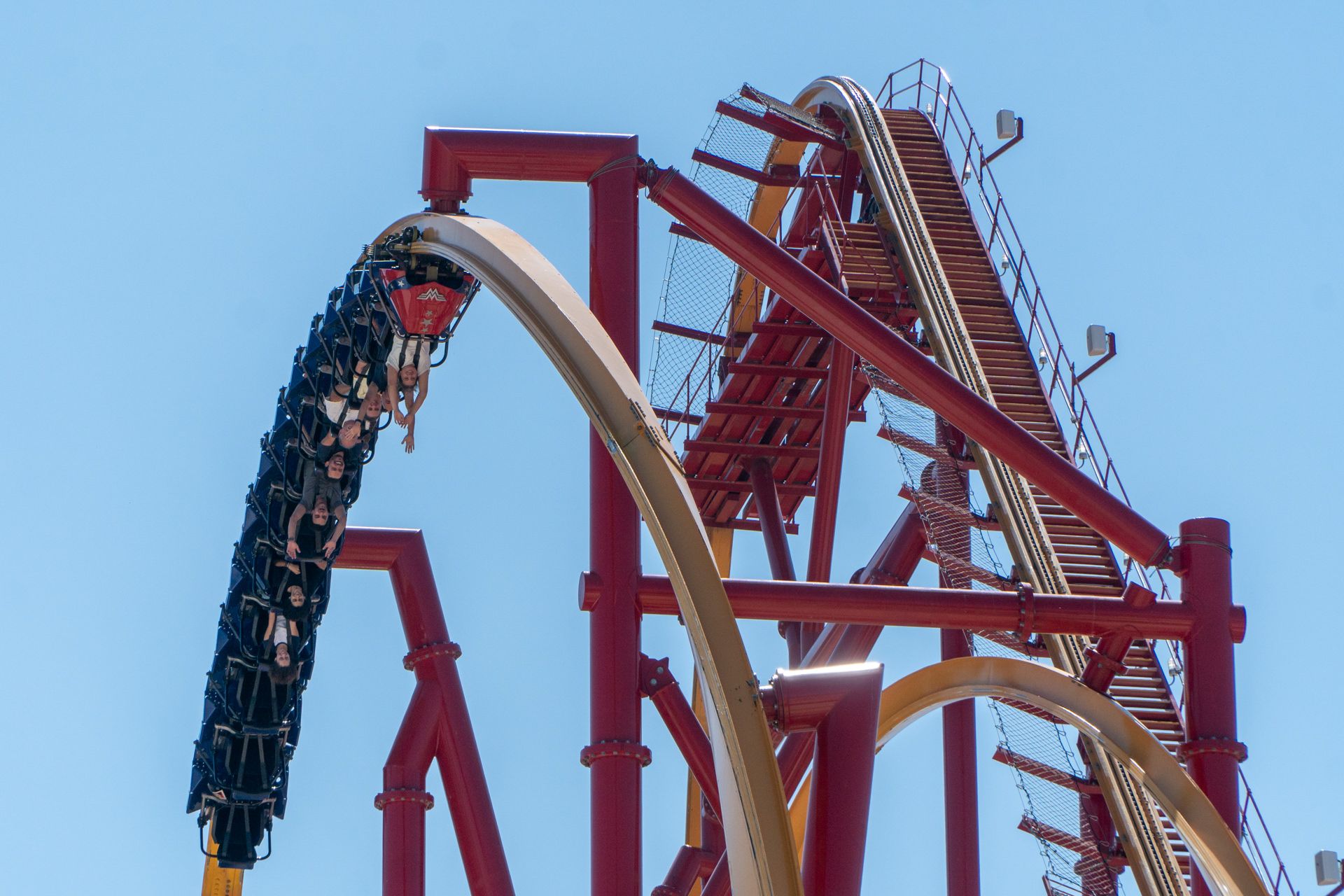
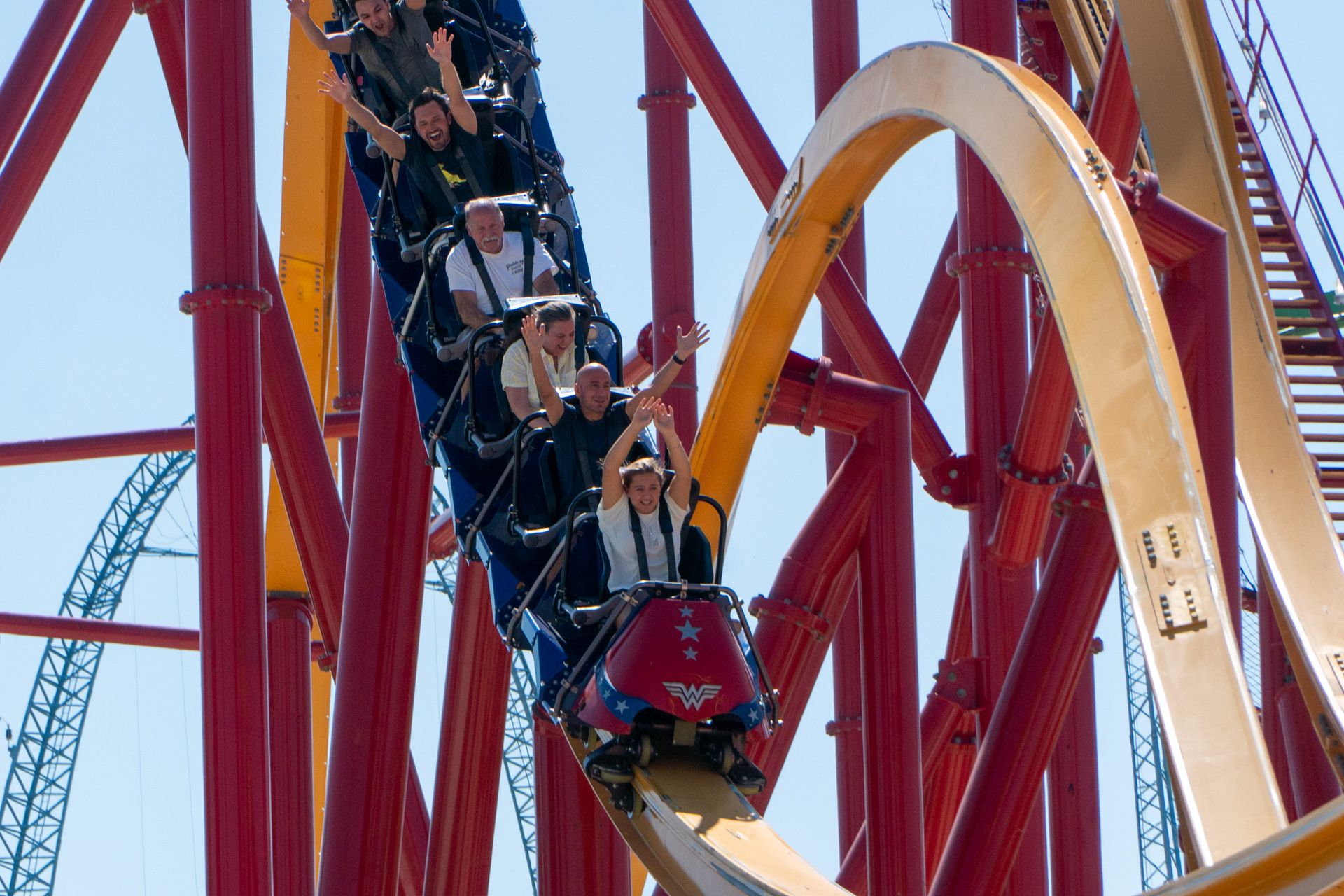
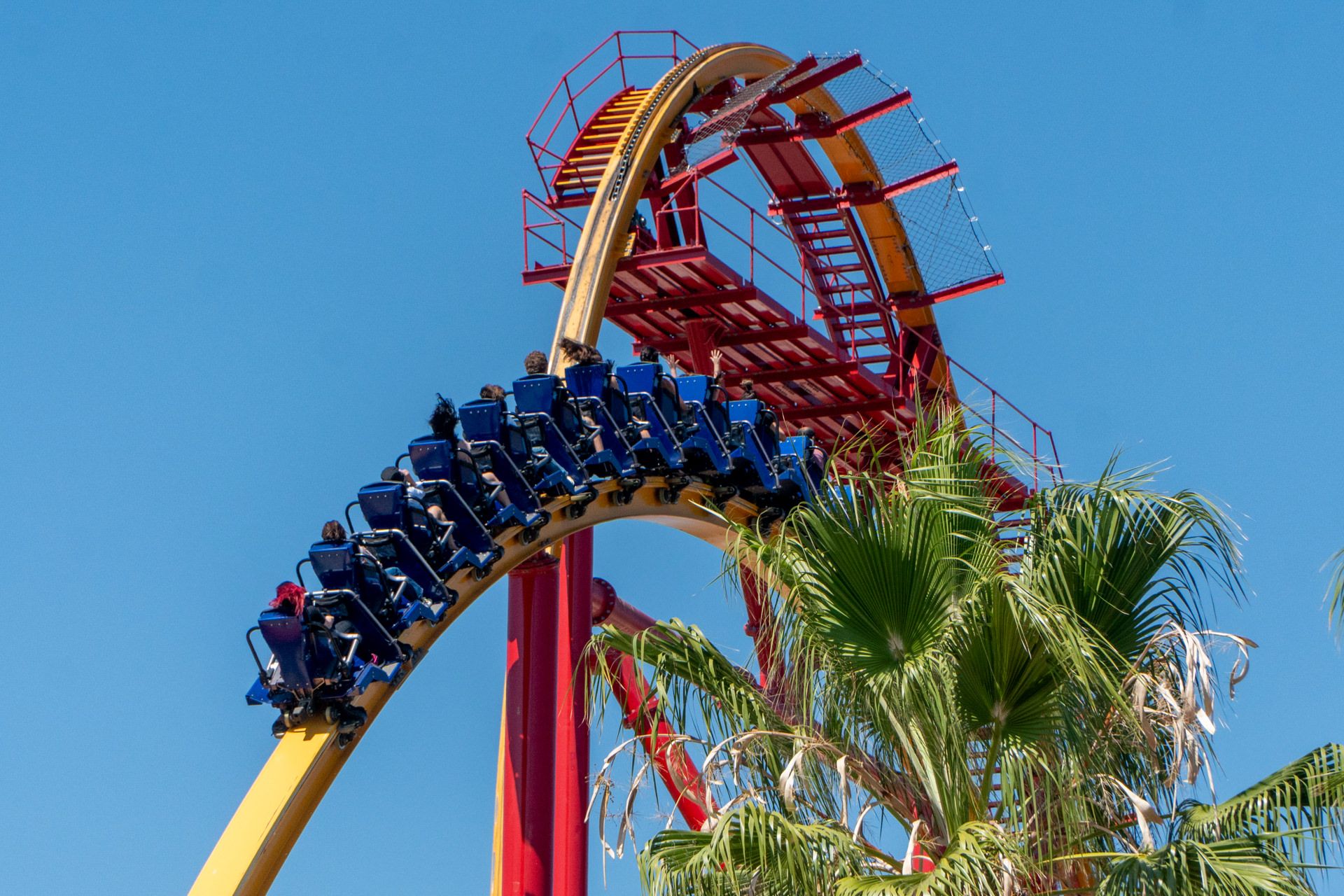
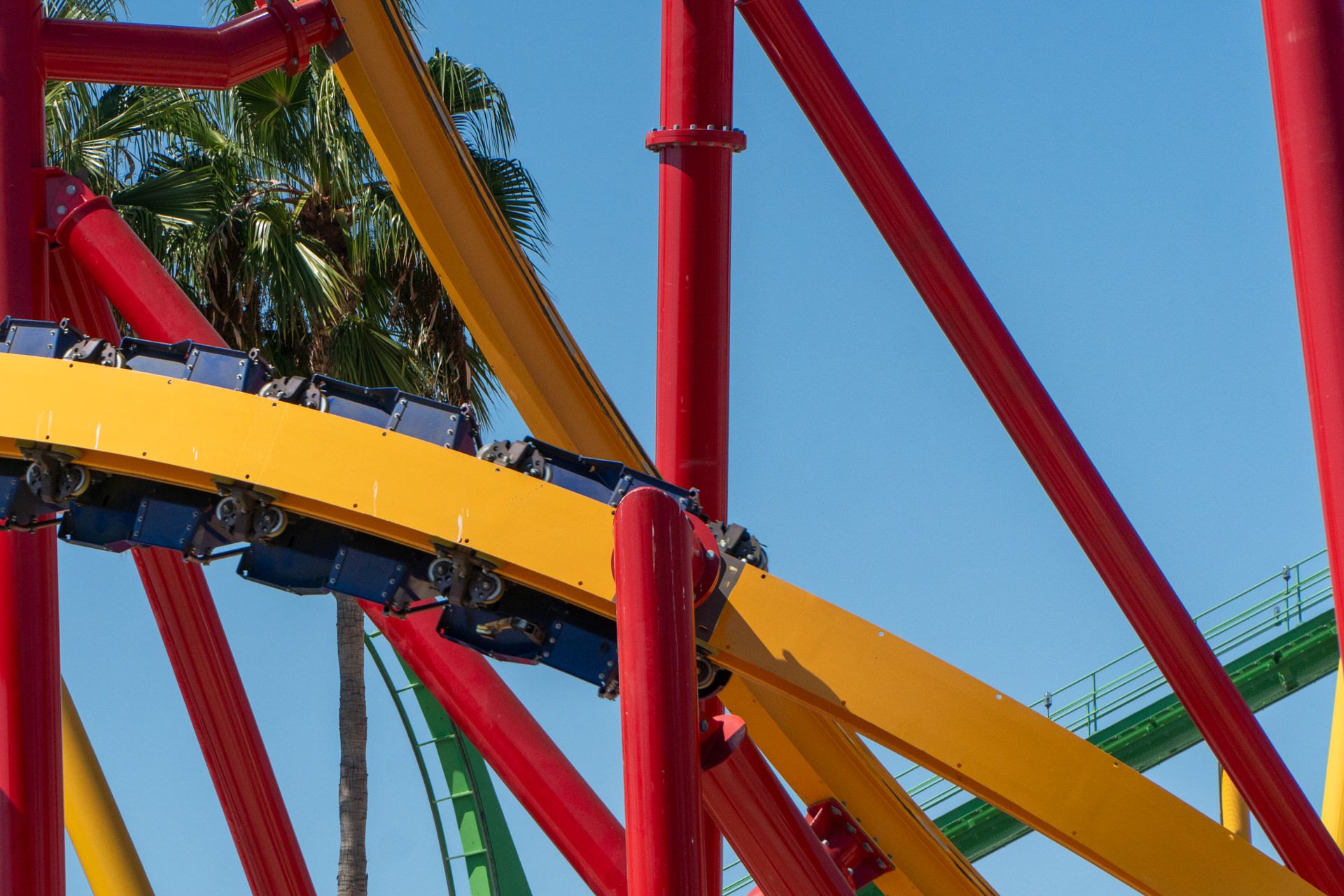
The Wonder Woman Flight of Courage is the latest rollercoaster. The ride on the RMC Raptor Track begins immediately after a right-hand bend with the lift hill of the ride. After reaching the starting height of 130 ft in no time at all, we plummet down a very steep descent. After a quick ascent, it’s straight back down in a dive loop. With brutal airtime, we then go over a huge camelback and immediately afterwards into a zero-G stall. A steep ascent then leads us into a very tight turn. Now we descend again quite abruptly and immediately enter a zero-G roll. Another ascent then leads us into a block brake. Without much hesitation, we enter the next descent, after which another turn awaits us. Still very fast, we now race over a series of airtime hills. After a sharp left-hand bend, we reach the final brake.

Wonder Woman Flight of Courage is the better of the two RMC roller coasters in the park. The layout of the single rail coaster has a really nice flow. The inversions all ride very well and the airtime is also very nice. I at least really enjoyed the ride, even if I think it’s a bit of a shame that the DC Universe was literally torn in two by this coaster.

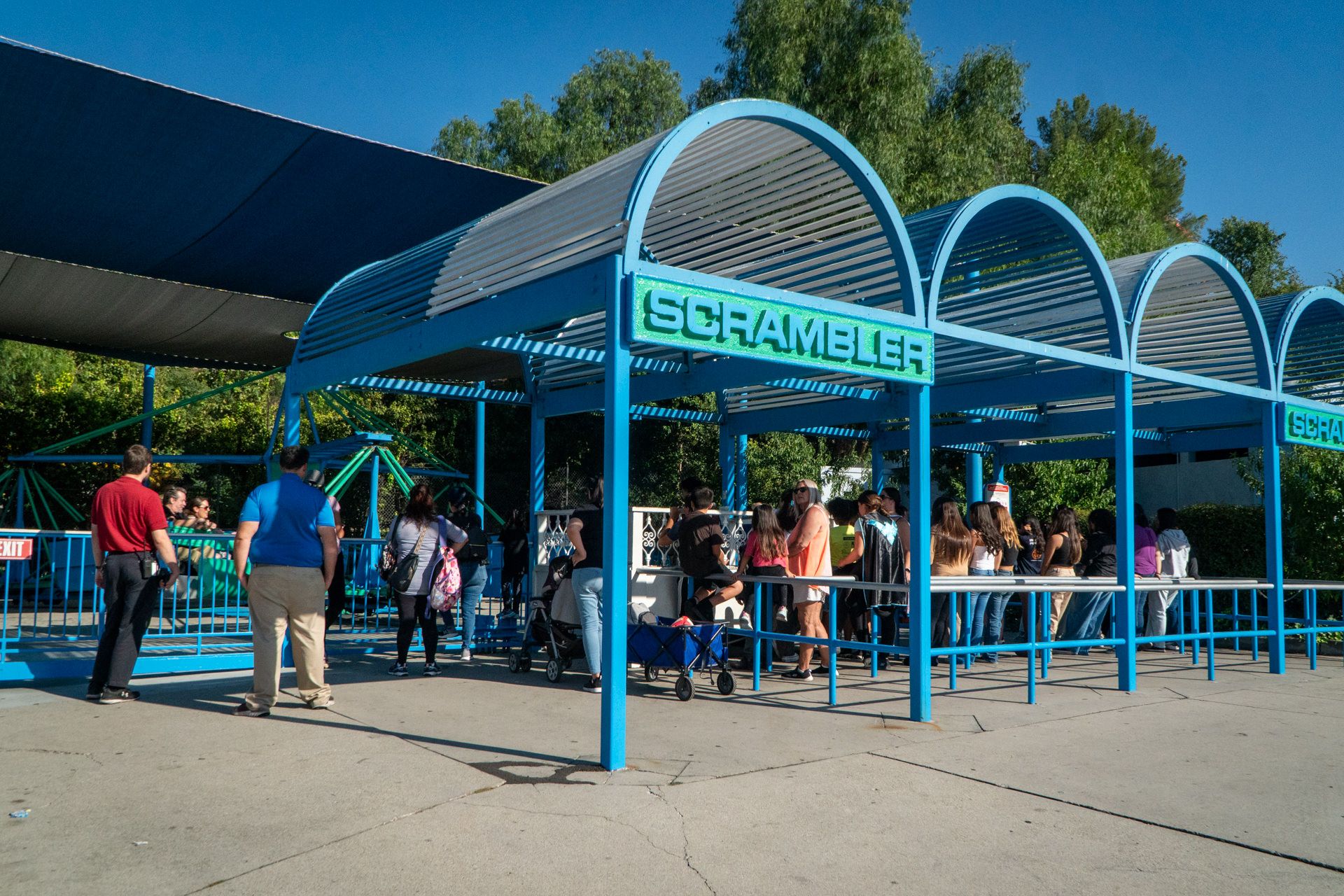
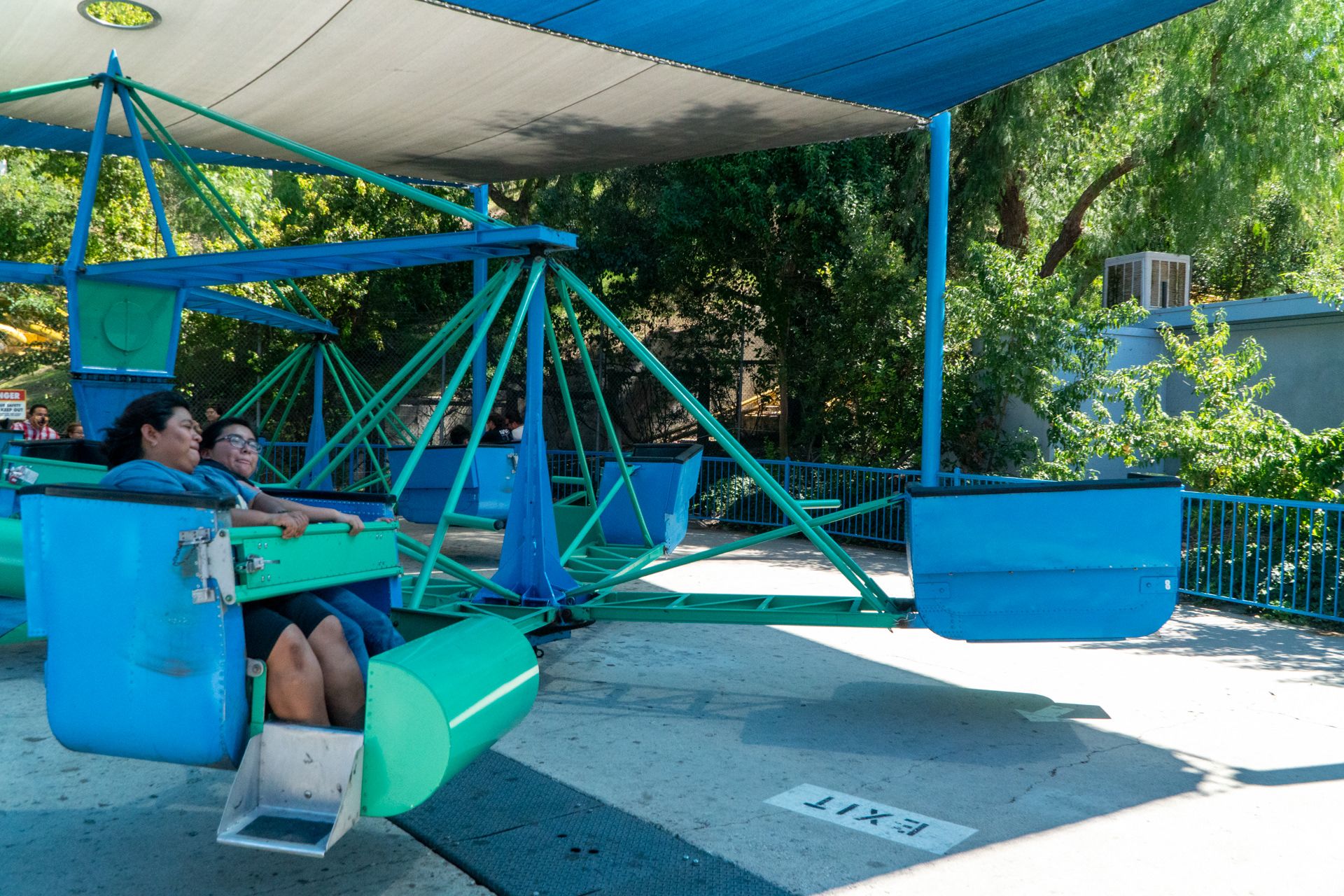
Teen Titans Turbo Spin, Crazanity and Scrambler

The path to the park’s next rollercoaster is lined with several flat rides. Here we encounter the Round-Up Teen Titans Turbo Spin, a classic Scrambler, as well as the Zamperla Giant Discovery Crazanity, which was unfortunately not in operation on the days I visited.

Riddler’s Revenge

The Riddler’s Revenge rollercoaster is one of the largest stand-up coasters in the world. After leaving the very long queue behind and wondering about the purpose of the rather strange station layout, the ride can soon begin.

After the lift has taken us to a height of 160 ft, we immediately take a steep turn towards the ground. This is followed by the ride’s large loop and, as with Scream!, we immediately enter a dive loop. Riddler’s Revenge goes one better and takes us straight into another dive loop. We then experience the world slightly upside down in an Inclined Loop. A wonderful turn then takes us into an ascending bend and immediately afterwards into the mid-course brake. With barely any reduction in speed, we descend once more and are immediately faced with a corkscrew. A left-hand bend close to the ground leads us into a camelback. After a helix and a left-hand bend, we plummet to the ground again and are thrown around in another corkscrew. After another right-hand bend, we reach the ride’s braking section.

Riddler’s Revenge is a really great rollercoaster. The ride is a very intense experience, which is further intensified by the standing riding position.

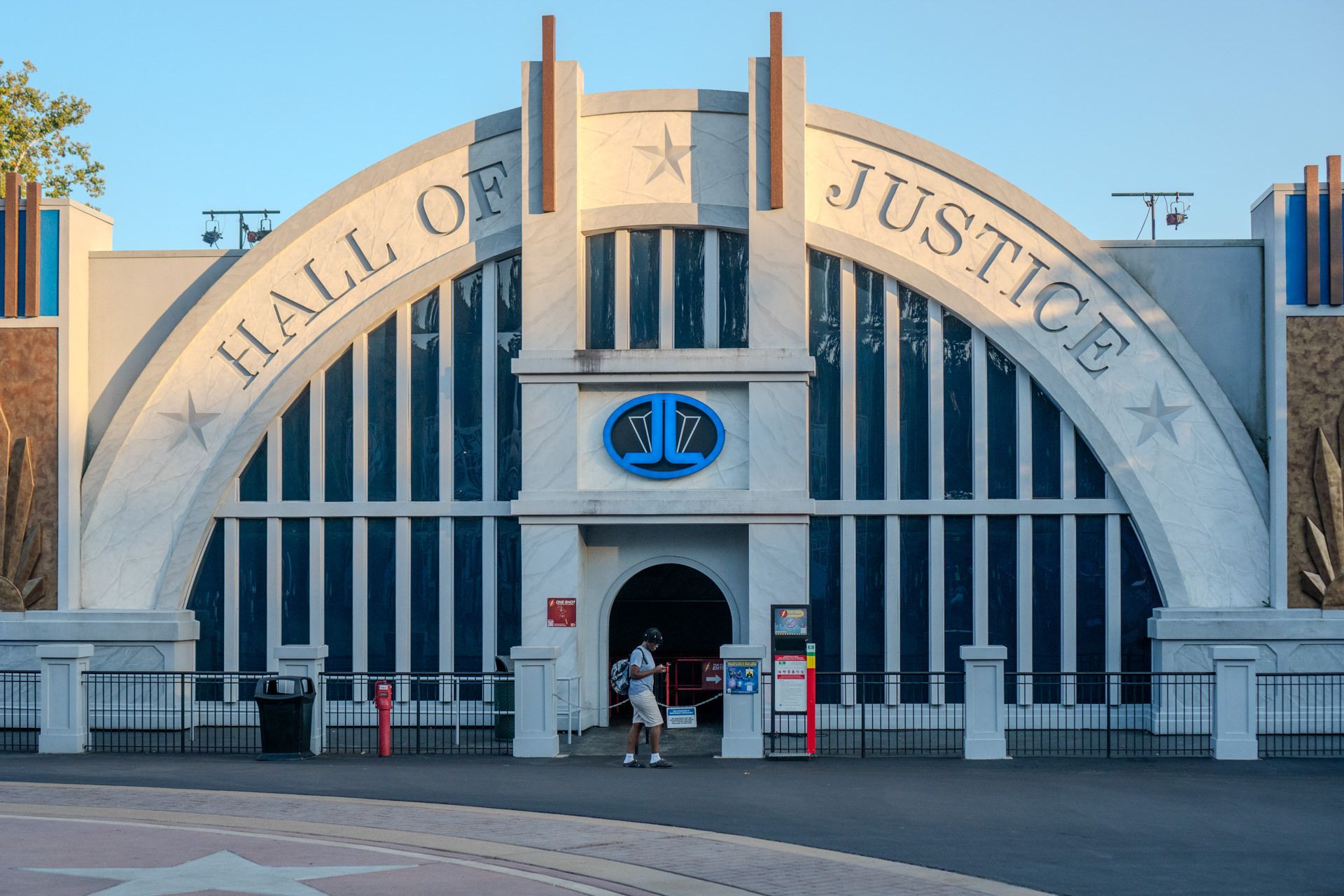
Justice League: Battle for Metropolis

Developed by the Sally Corporation, the Justice League: Battle for Metropolis dark ride combines large plastic scenes with 3D screens where you have to fend off all sorts of Lex Luthor’s gadgets before he manages to capture the entire Justice League with the help of the Joker. It’s great fun, as you’d expect from Sally, and a surprisingly well-made dark ride that can be found in many Six Flags theme parks.

Gold Rusher

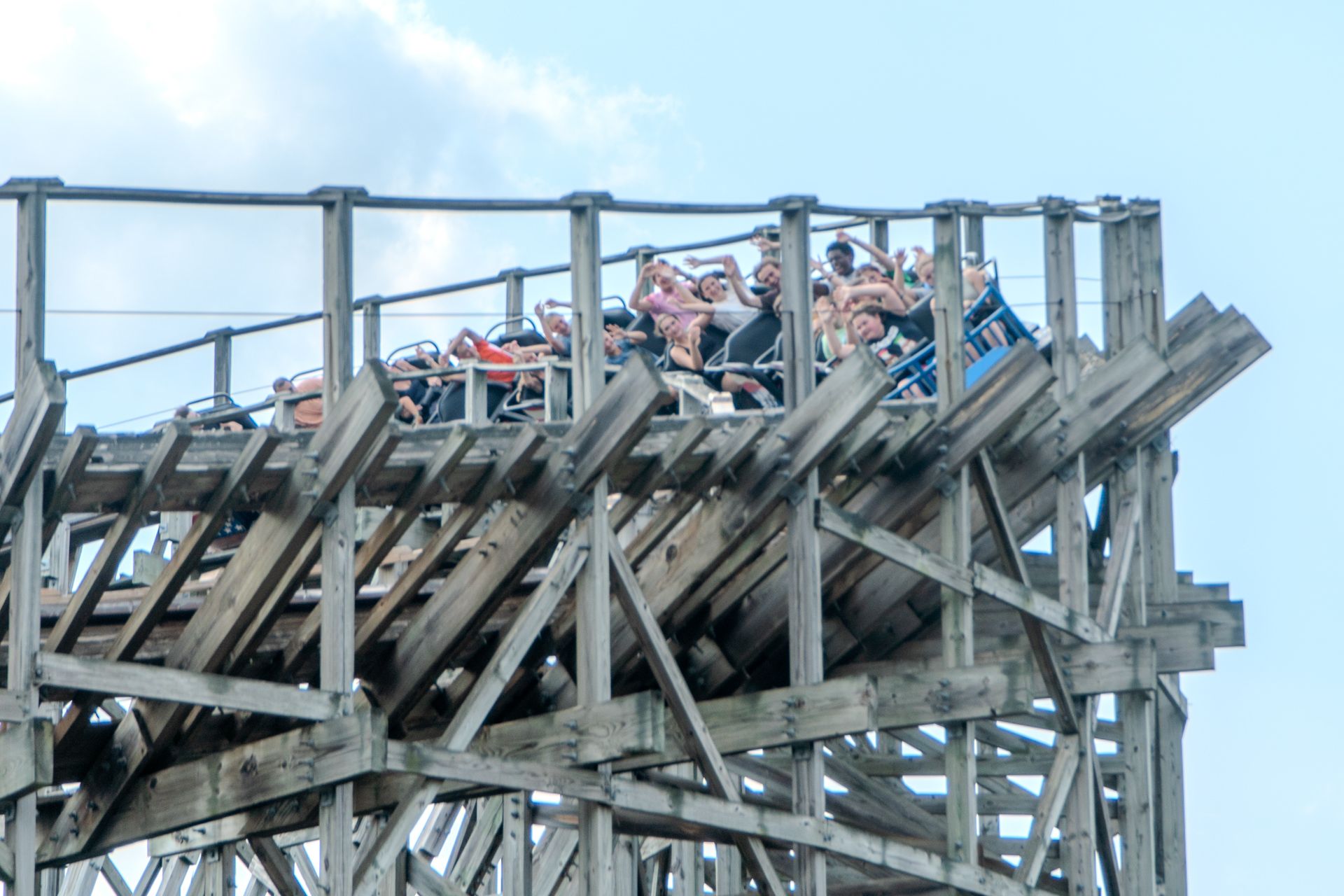
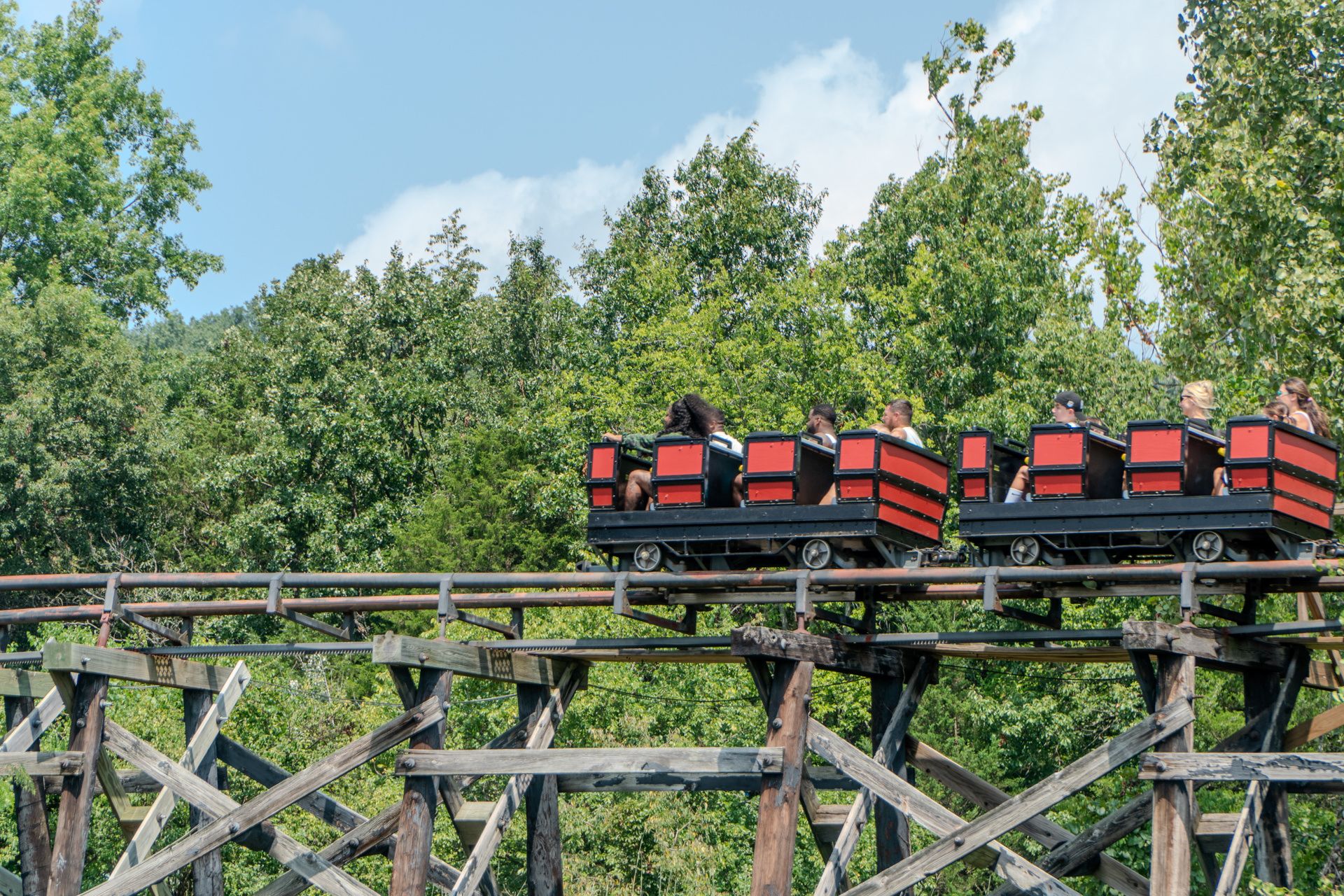
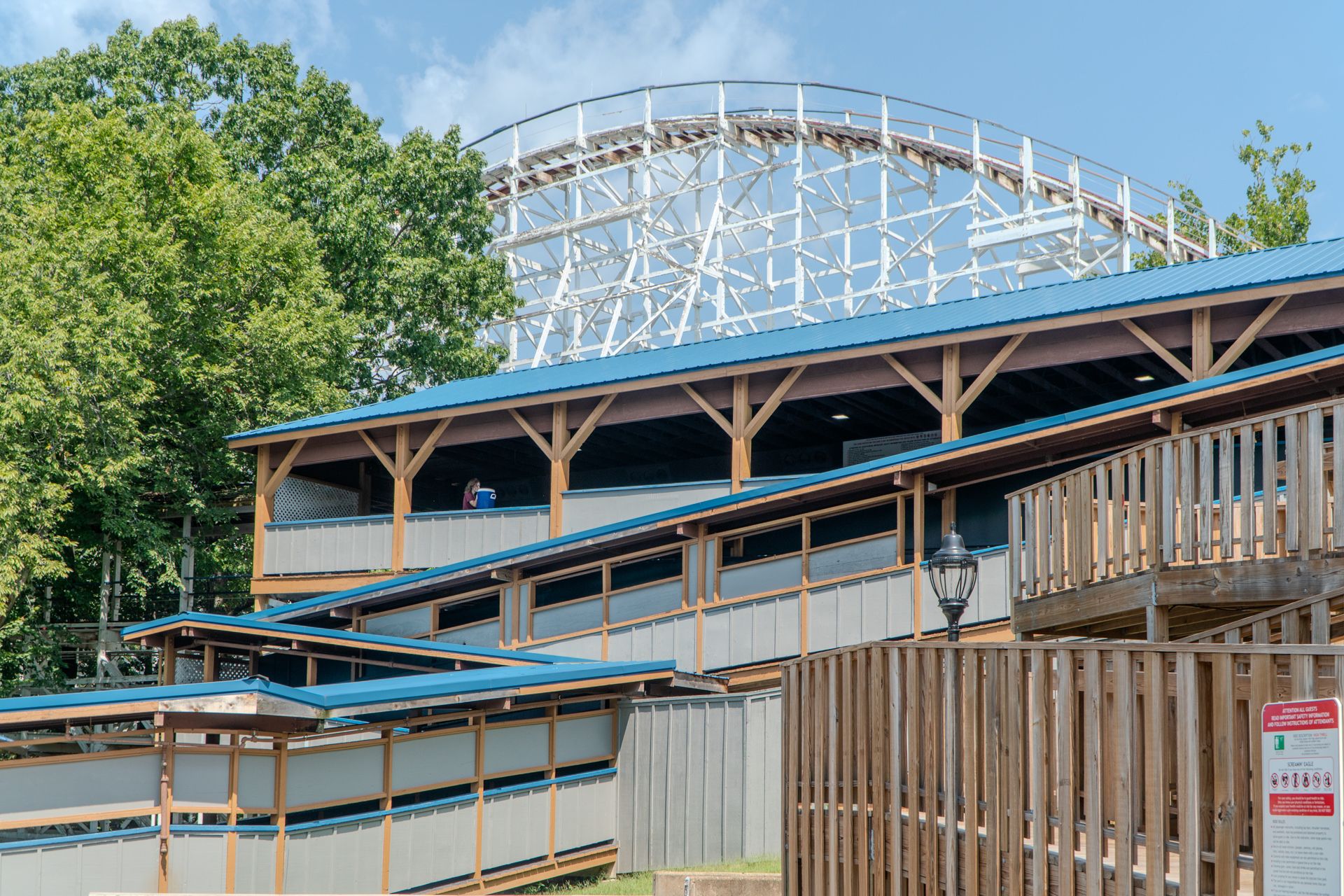
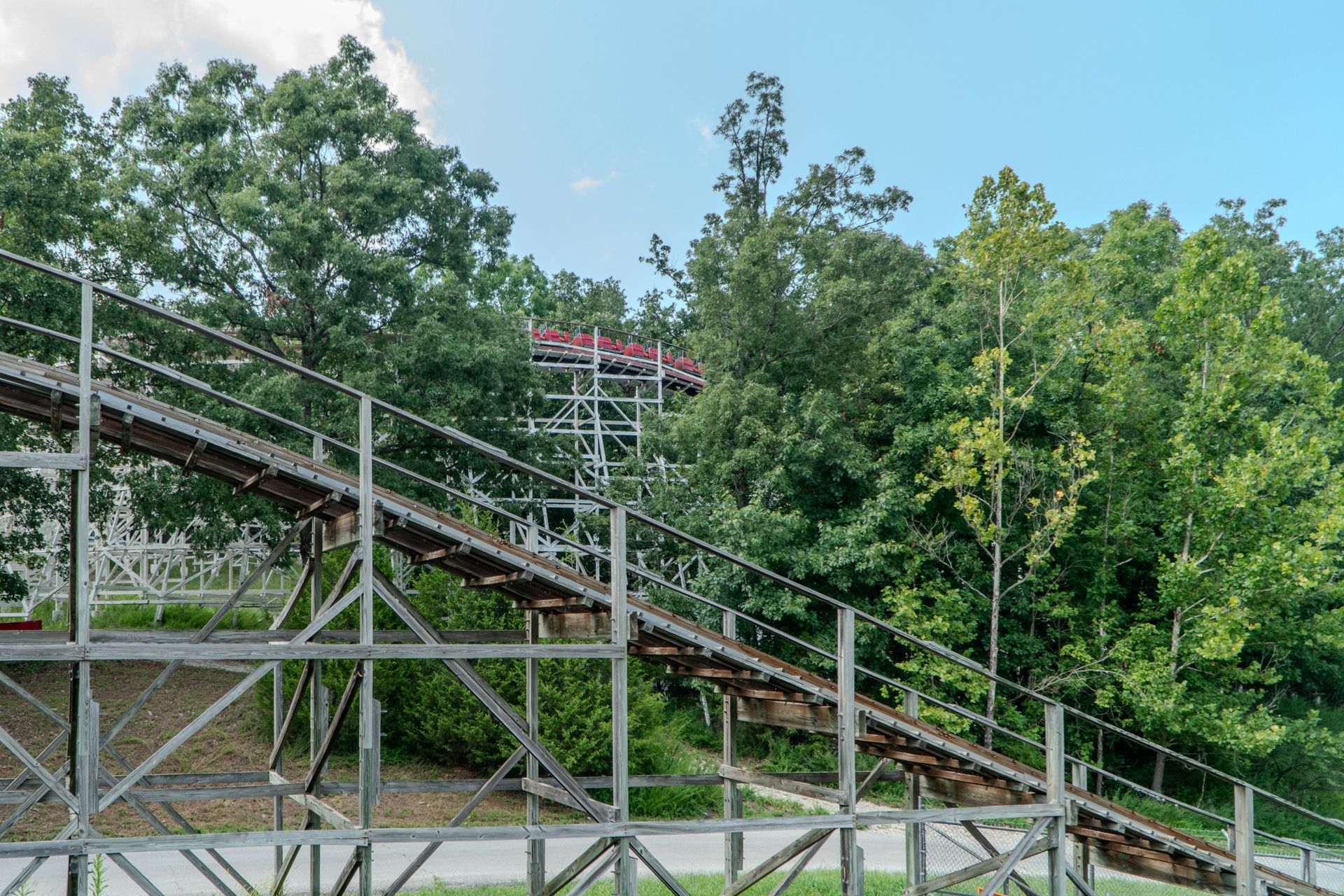
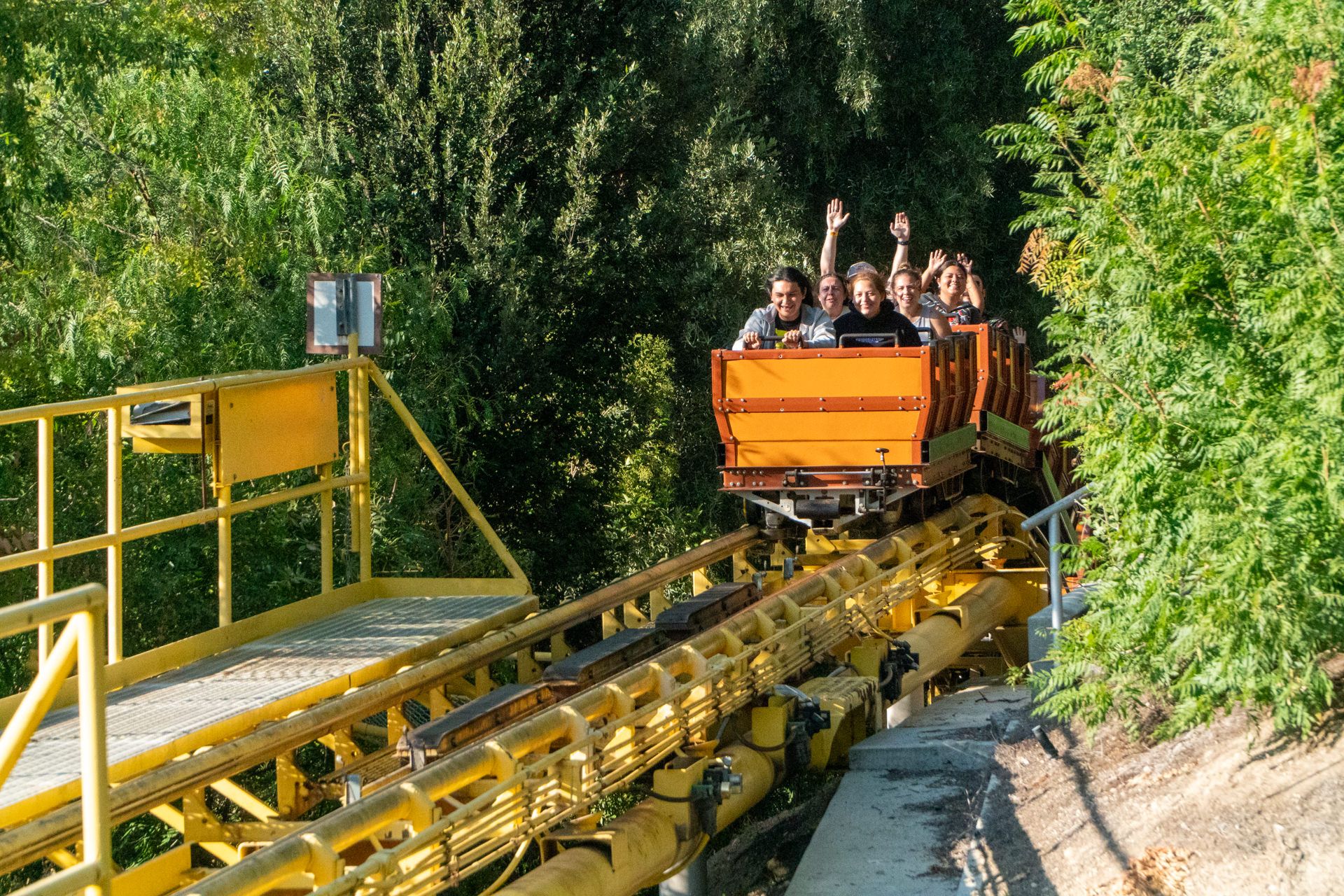
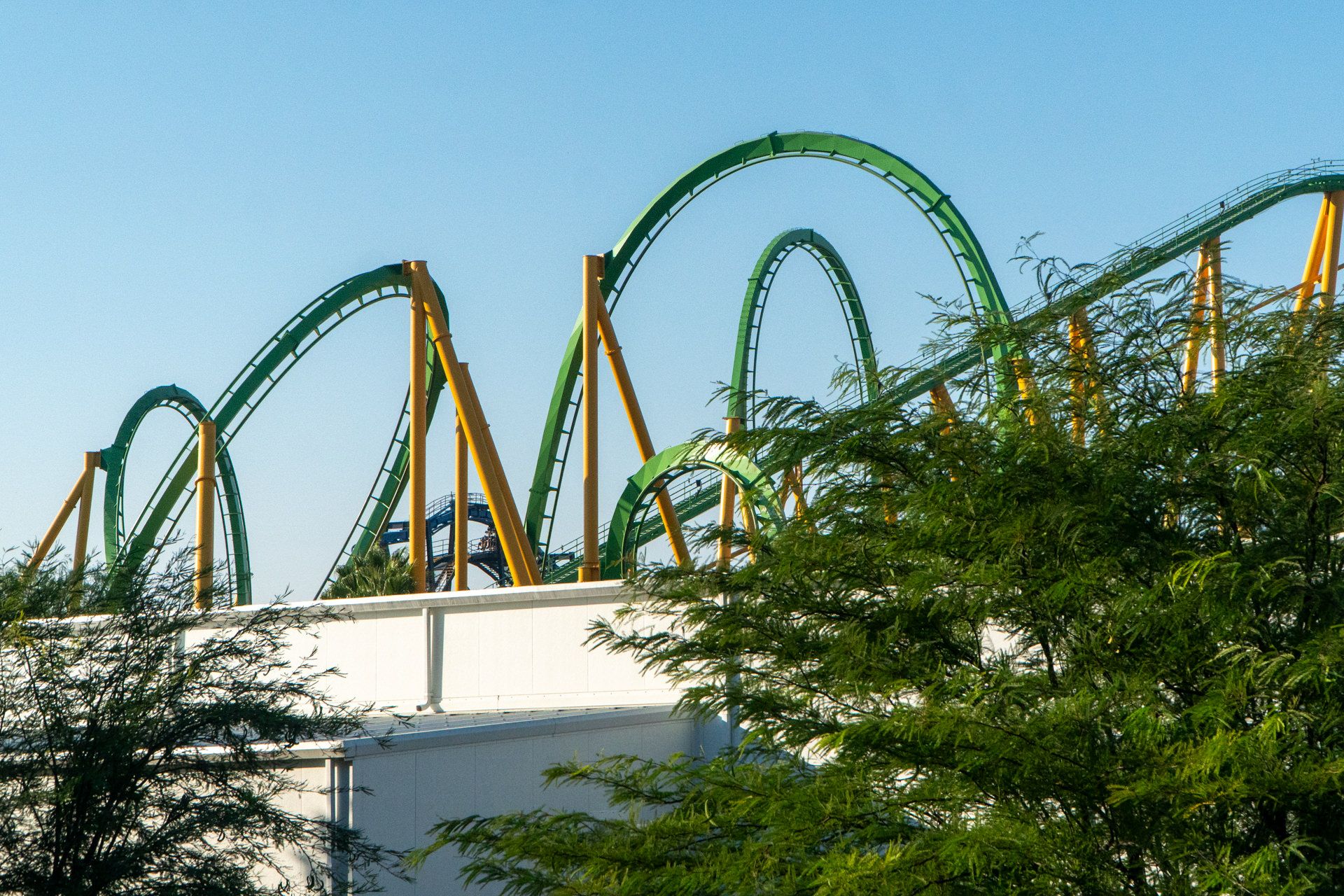
The first roller coaster at Magic Mountain is the Mine Train Gold Rusher. The ride along the slope has a rather unusual layout with many, rather small drops and a serpentine route. After a block brake, the train turns into a very fast helix at the end, followed by a short uphill section before reaching the final brake of the ride and our strange but fun ride comes to an end.

West Coast Racers

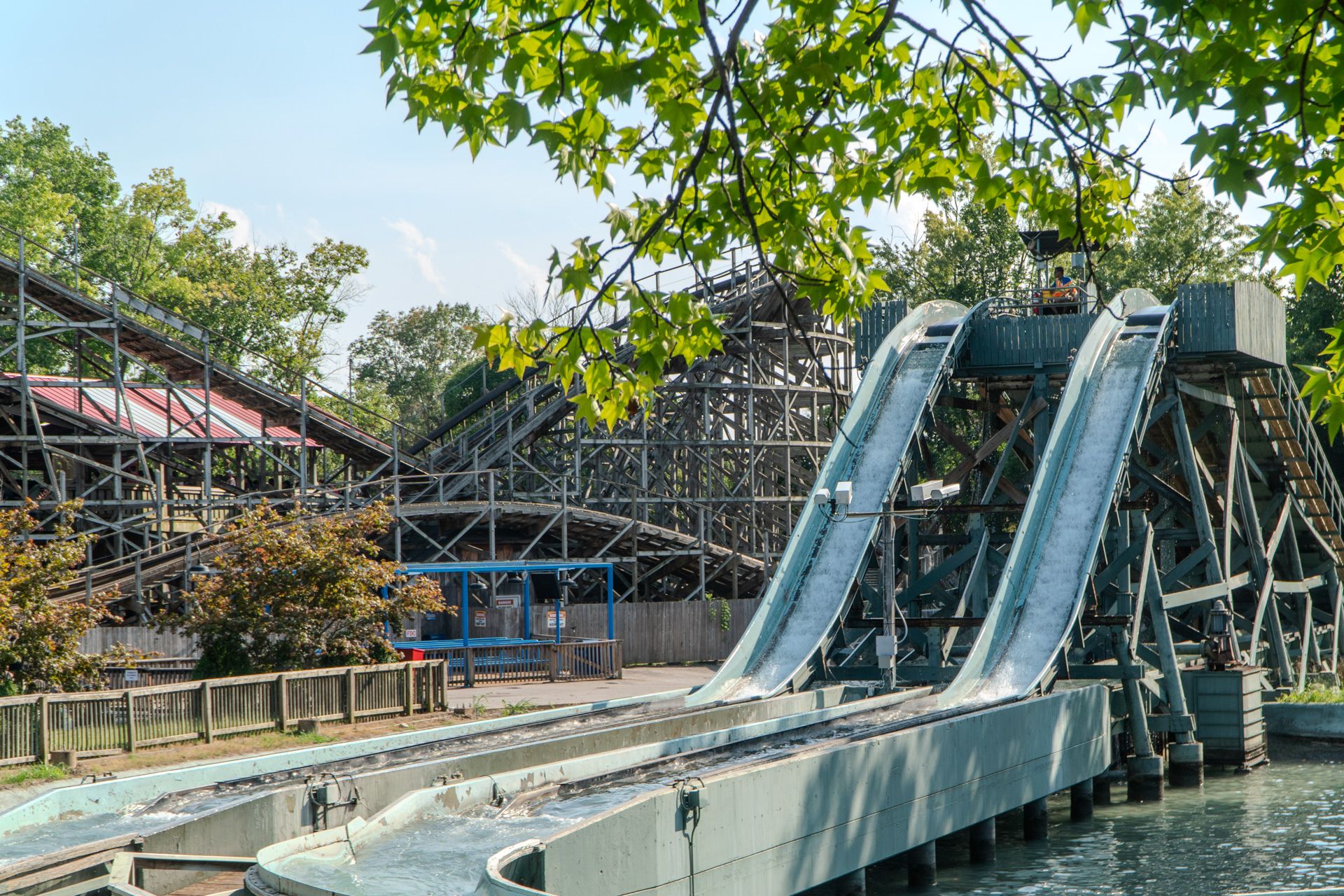
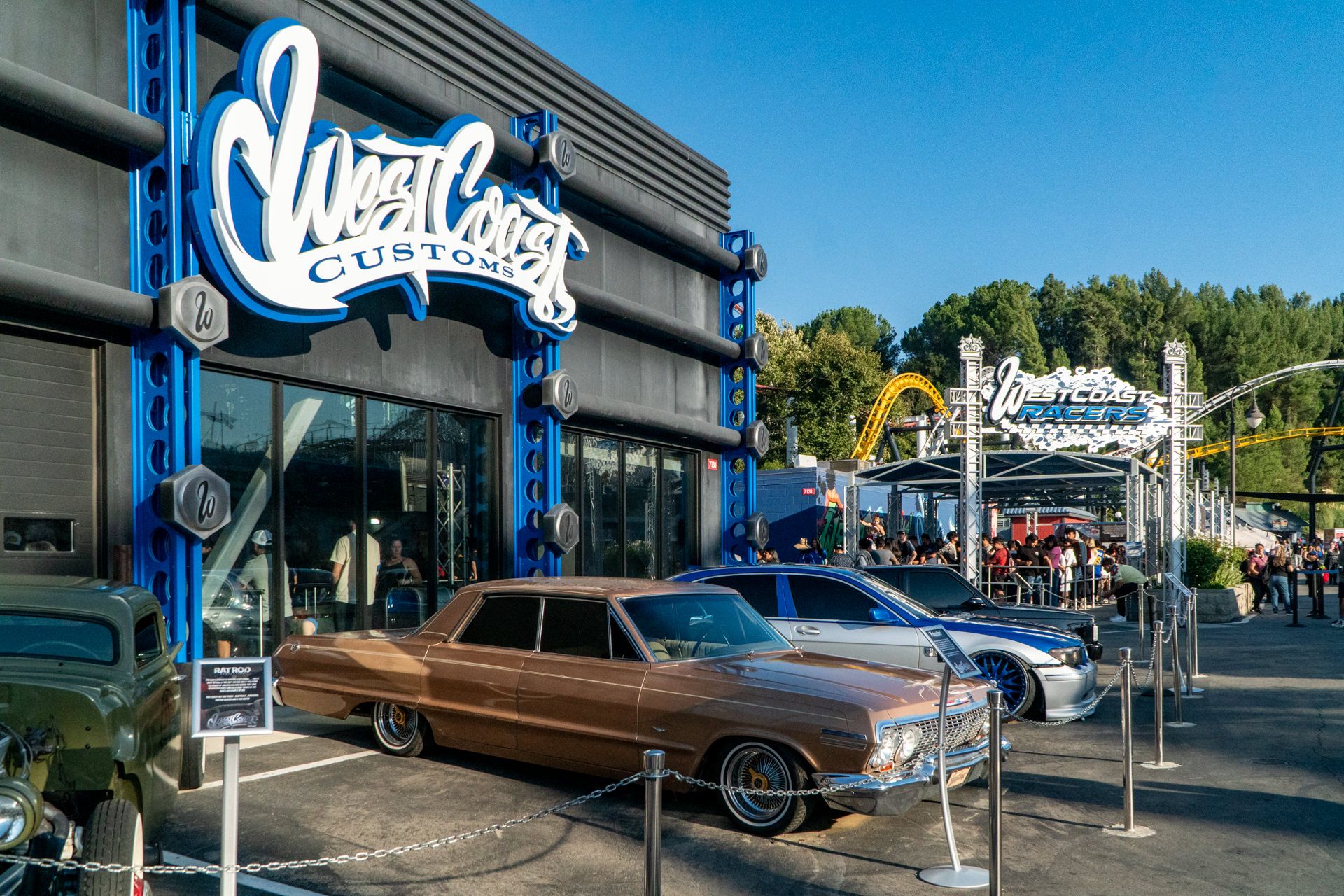
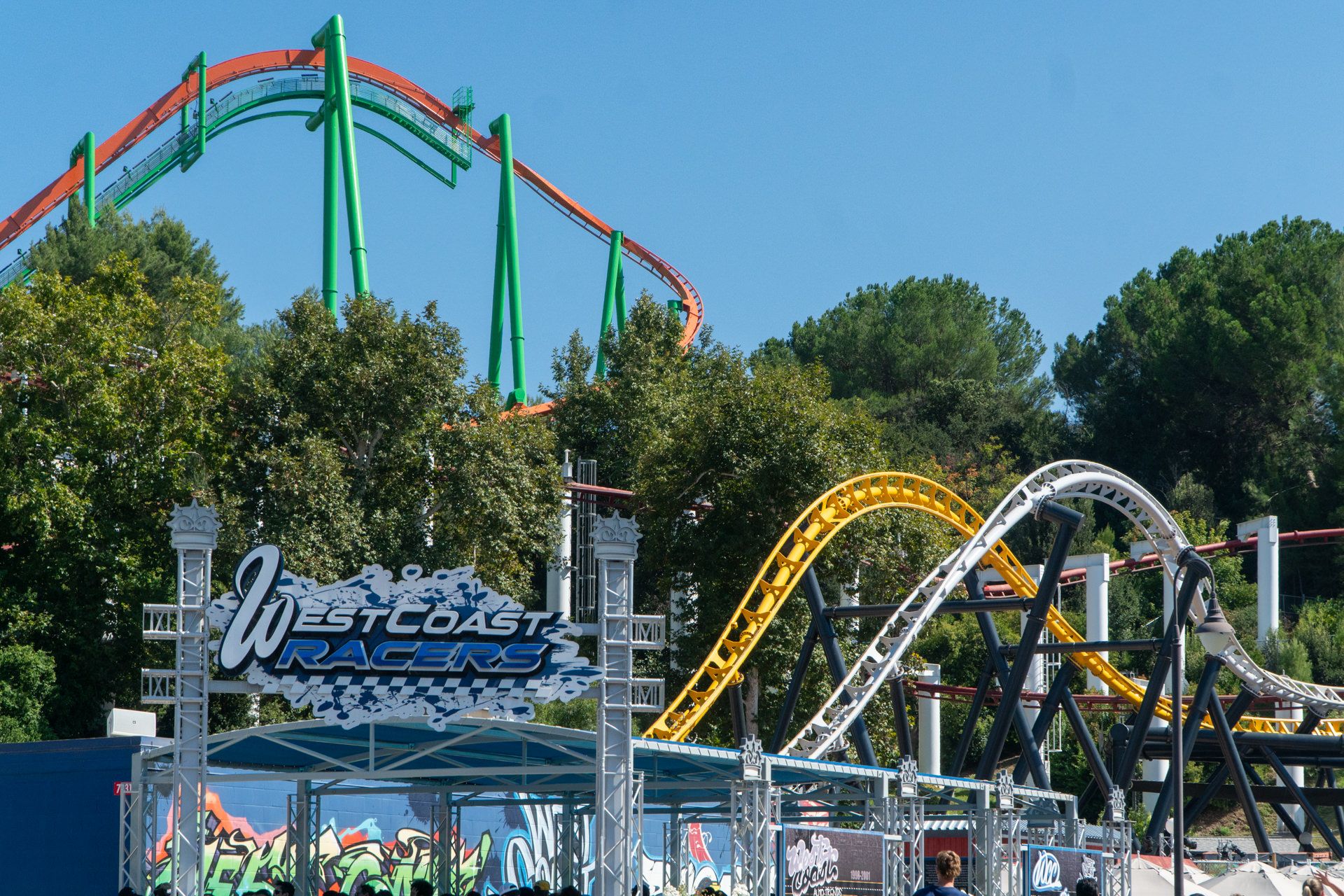
Passing the Jet Stream log flume, which was unfortunately closed for the season, we are now drawn to the West Coaster Racers.

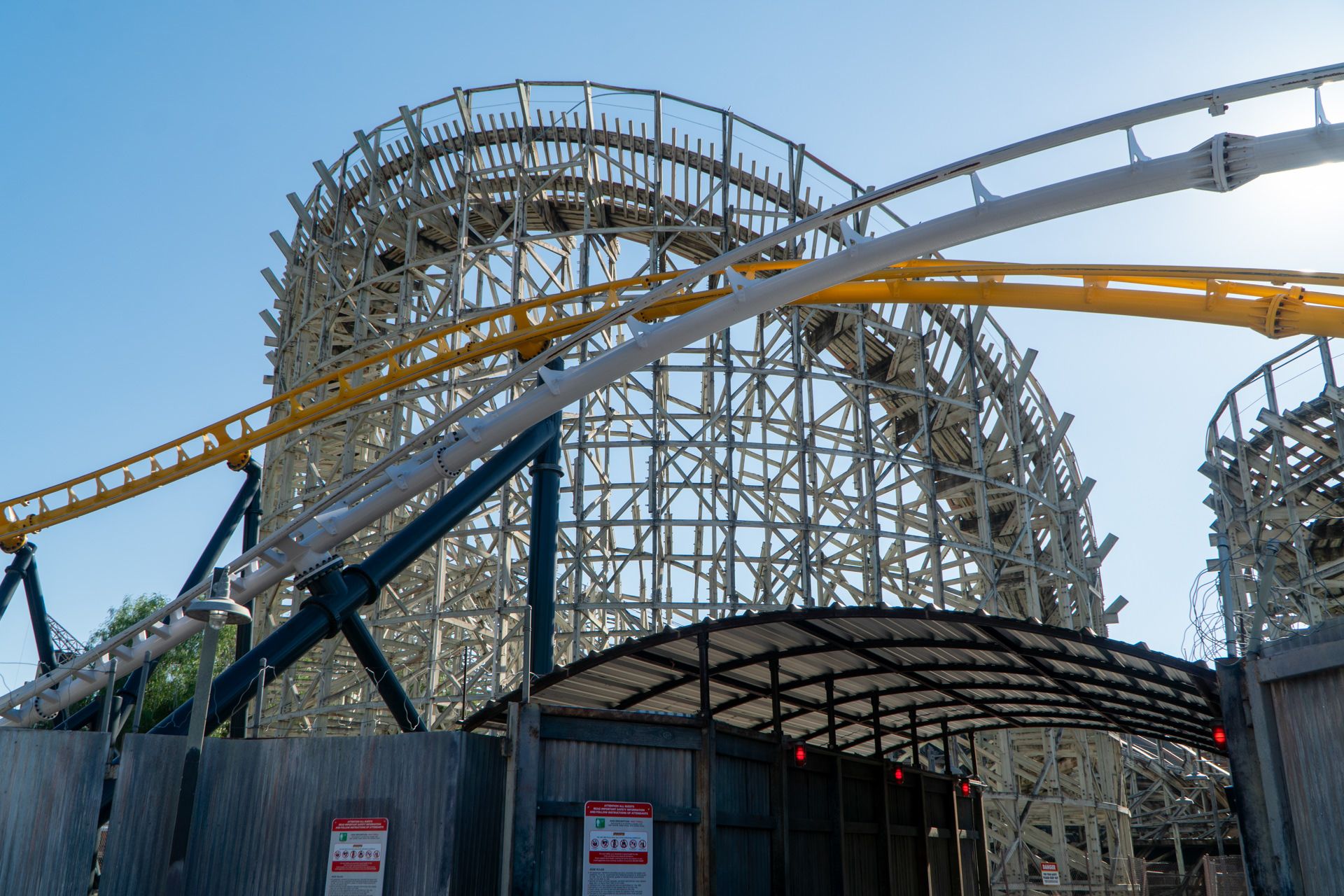
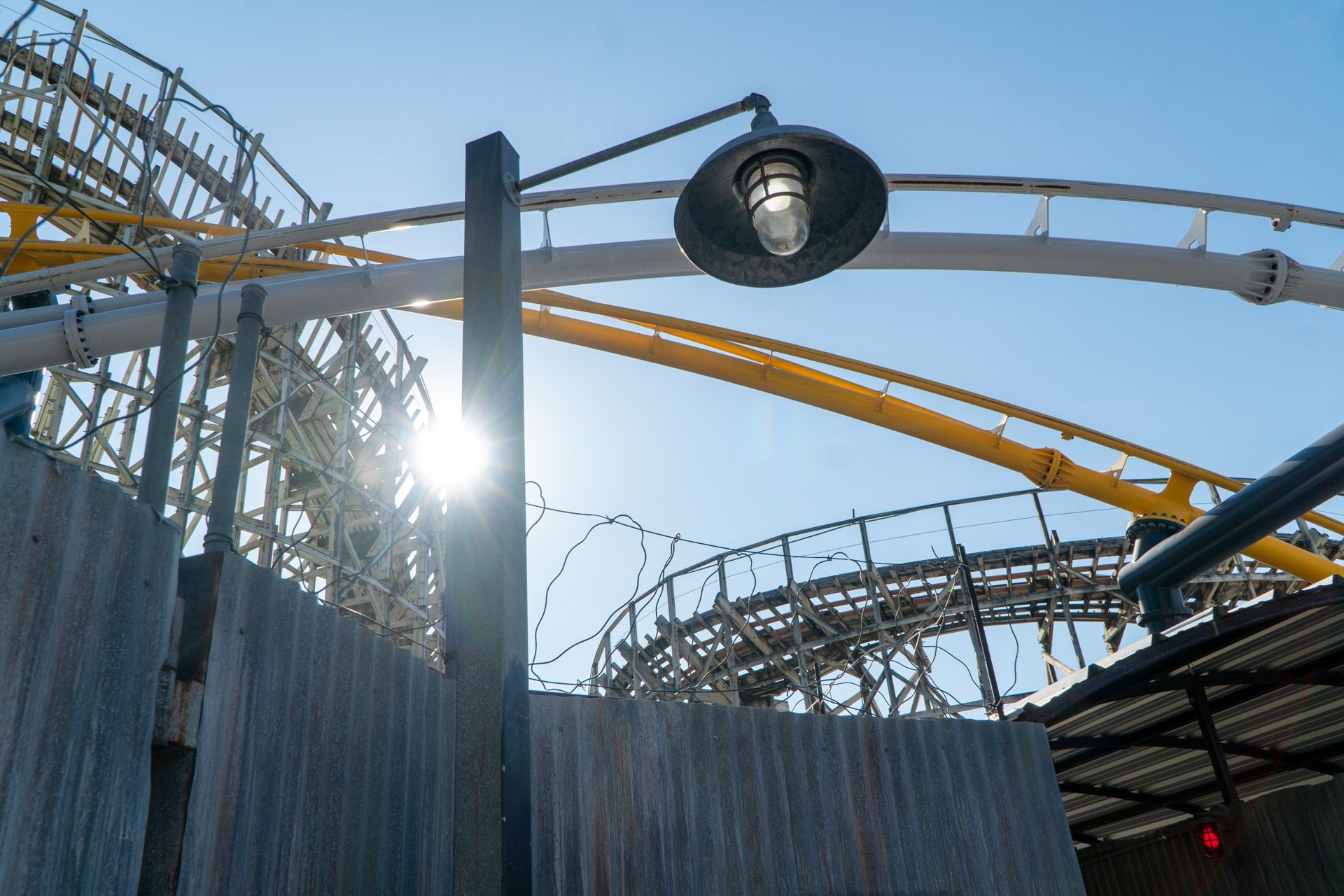
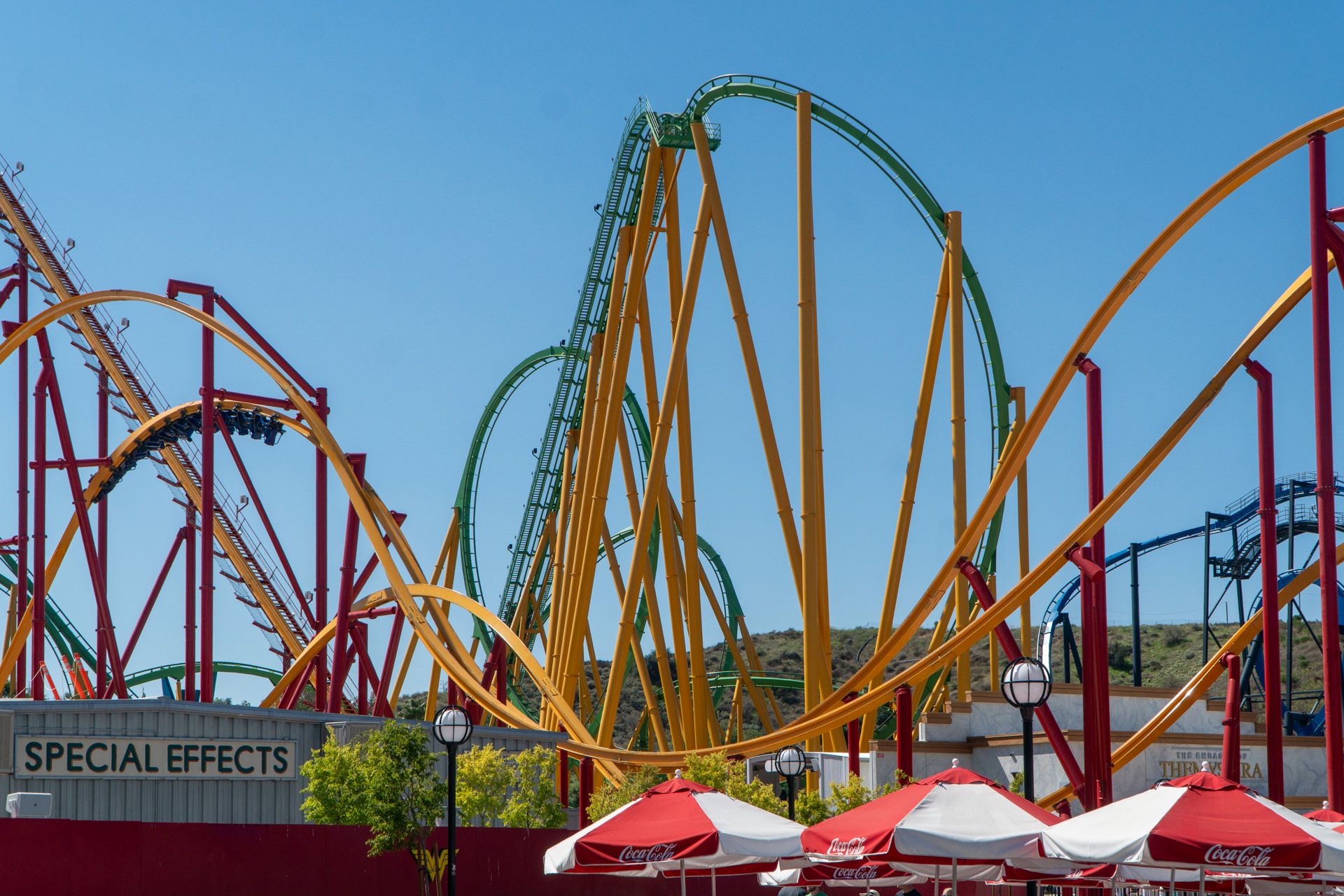
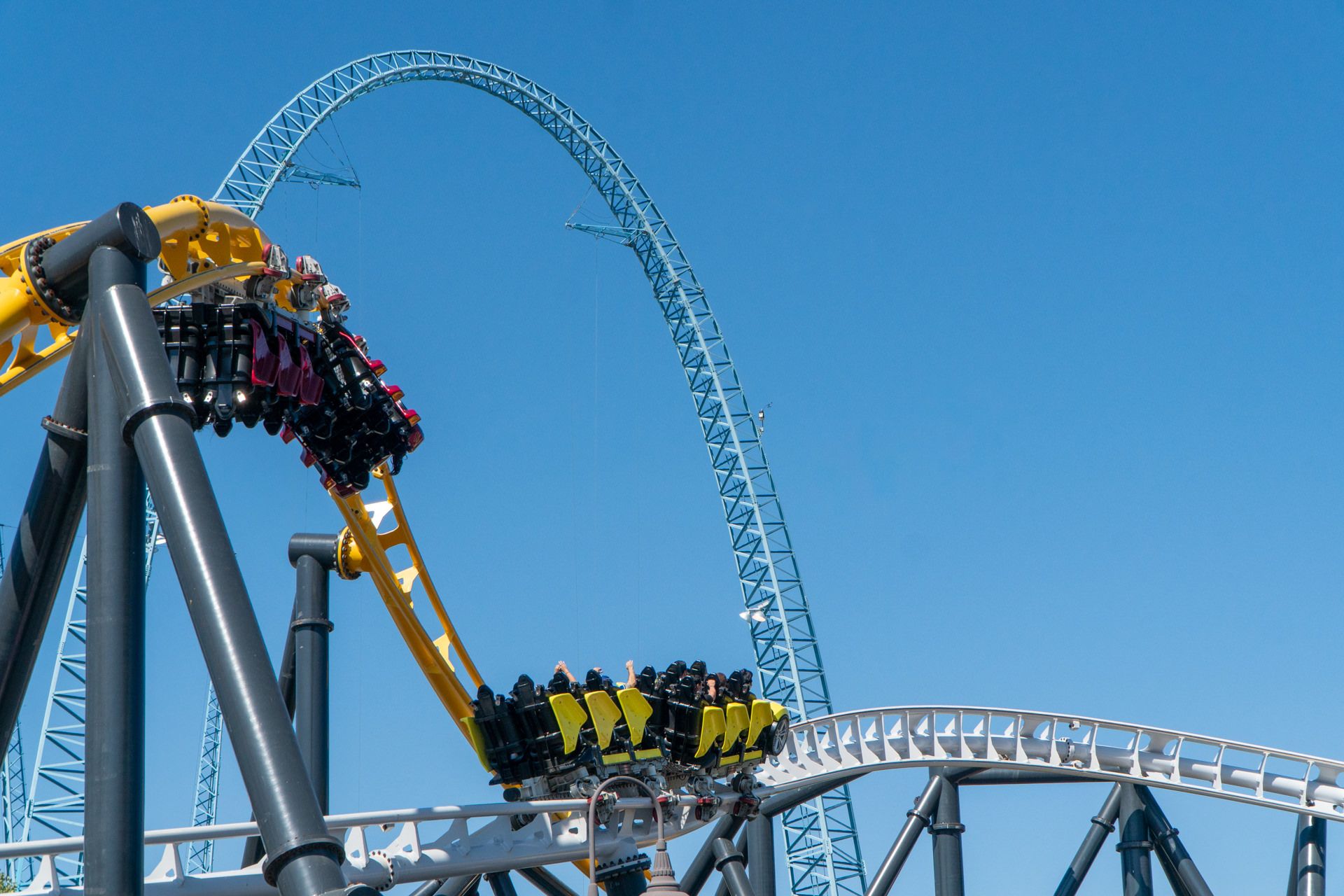
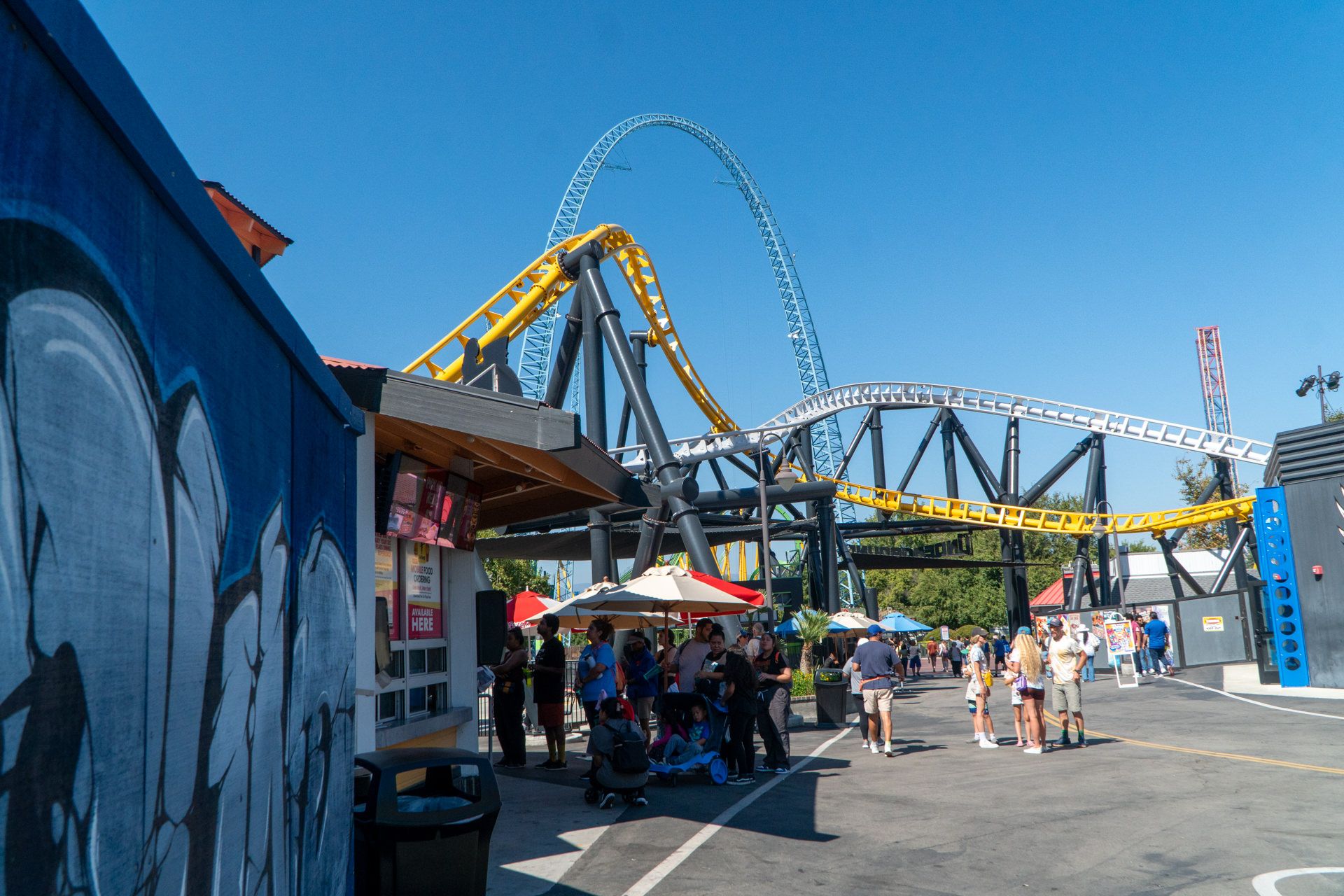
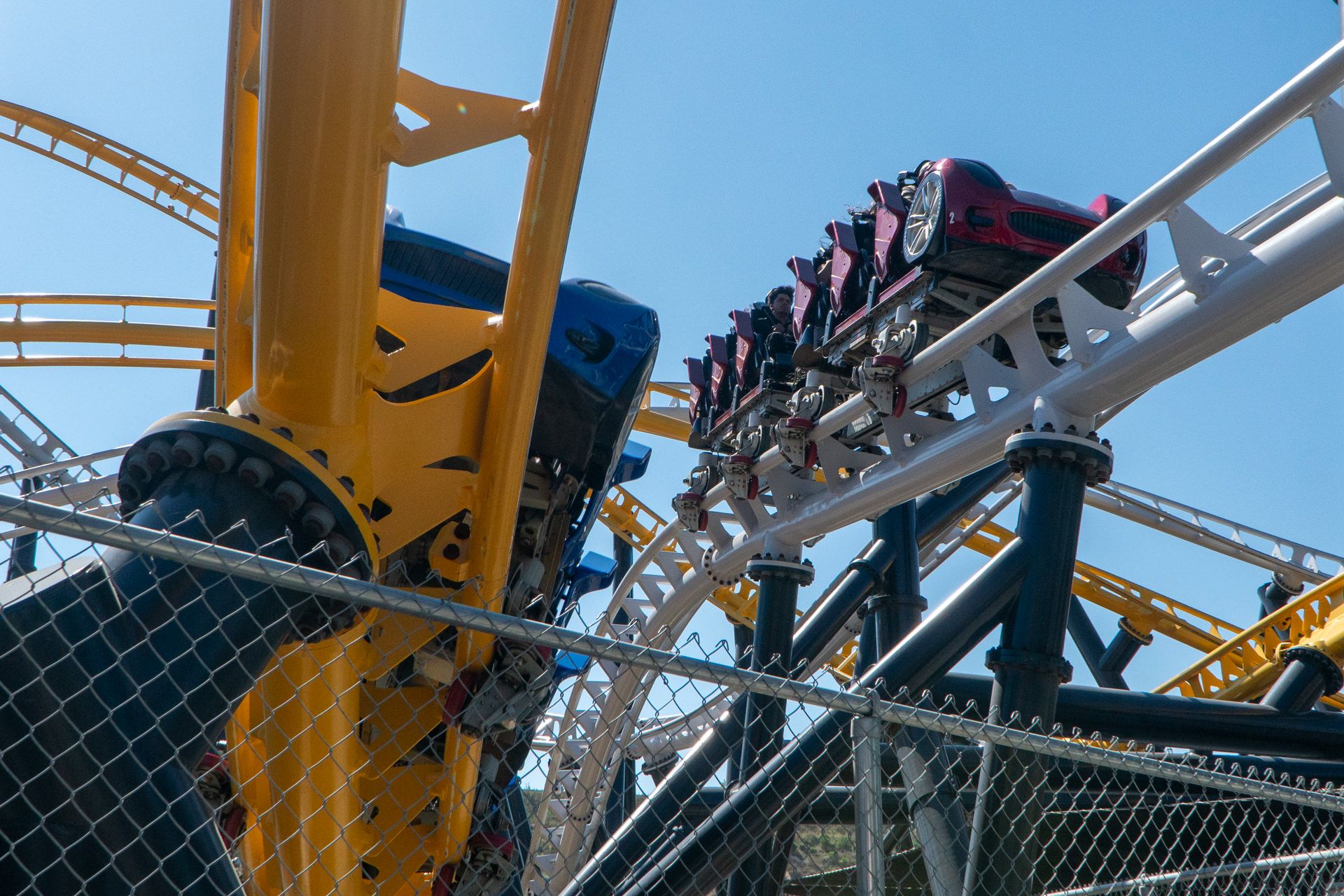
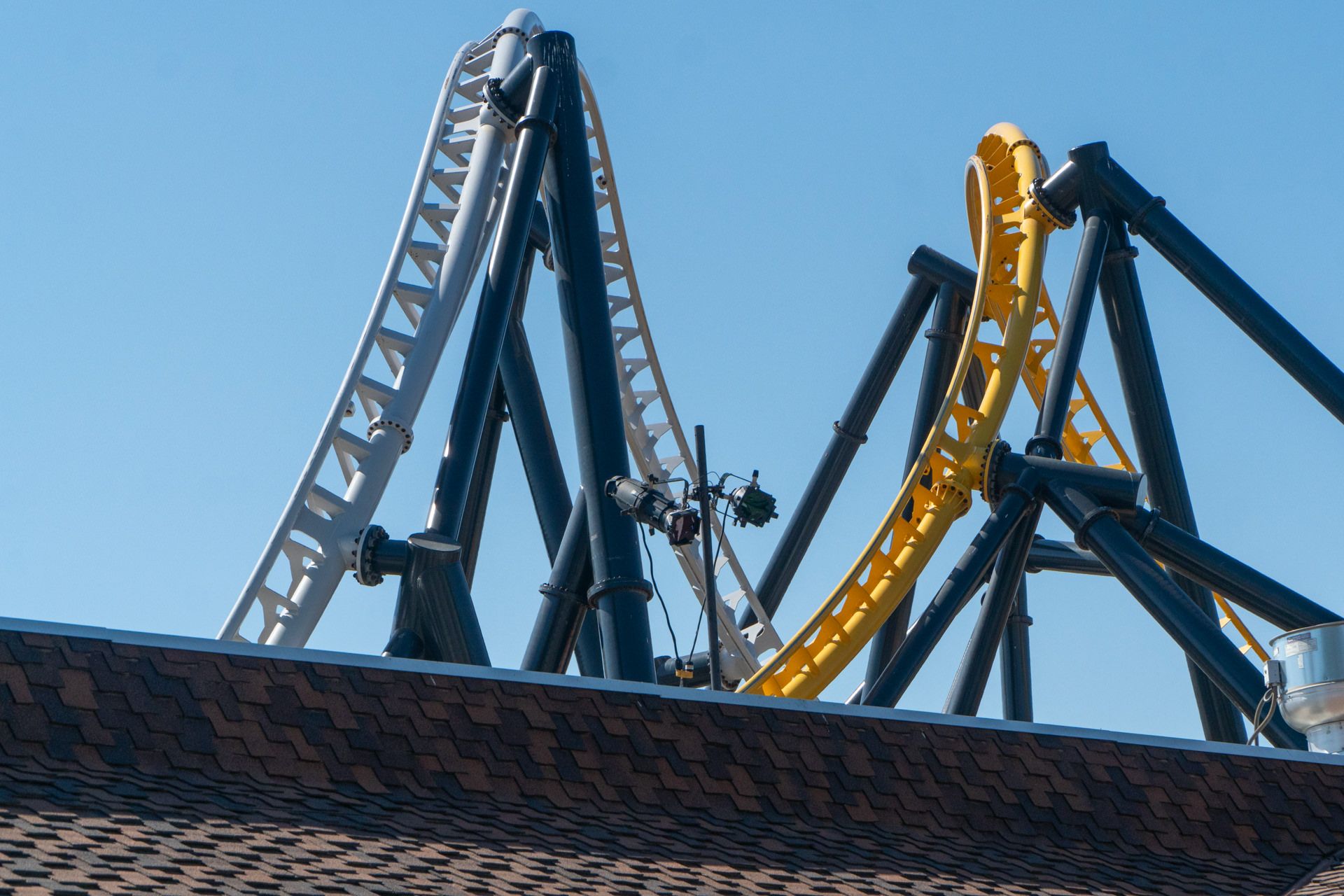
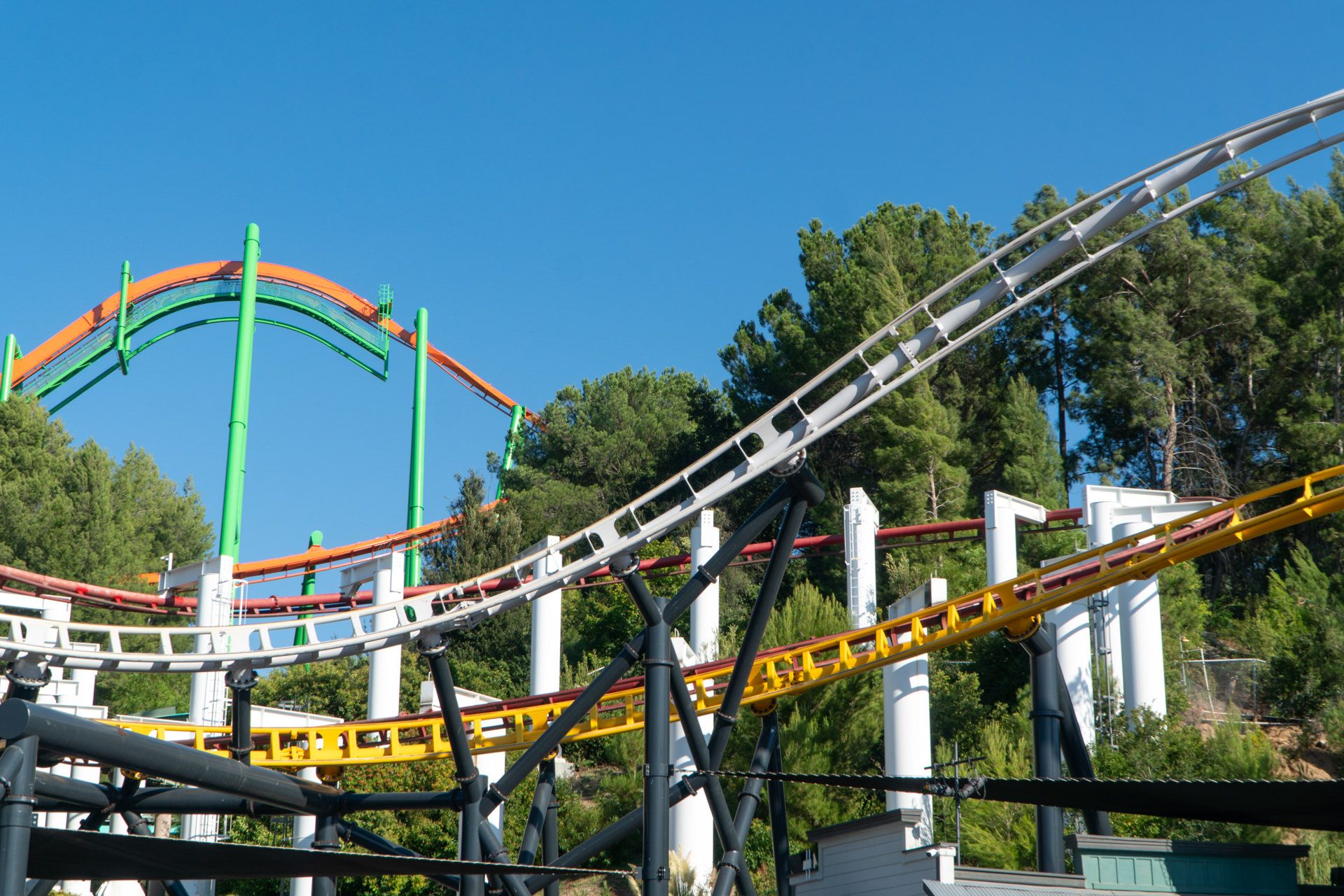
In principle, the roller coaster here follows the same principle as Twisted Colossus. However, here the second train waits in a separate area before entering the track in parallel. We are immediately accelerated by LSM and enter a high-five element. While the white track enters a roller, the yellow track races over a hill directly below. After a right-hand bend, both tracks race into the second LSM area. In a wonderful manoeuvre, both lanes then drive parallel overhead and immediately afterwards through two parallel helices. For the grand finale, the white track then drives over a hill, while the yellow track performs a roll directly over the hill. After a bend, the white track continues into the separated area and thus becomes the yellow track, while the yellow track now approaches the station.

Somehow I wish I could have experienced this racing feeling on Twisted Colossus too, because the ride on the West Coast Racers lives almost exclusively from the numerous near-miss encounters during the ride. In any case, the track has it all and the layout has some pretty cool elements despite the more or less very linear ride dynamics.

Apocalypse

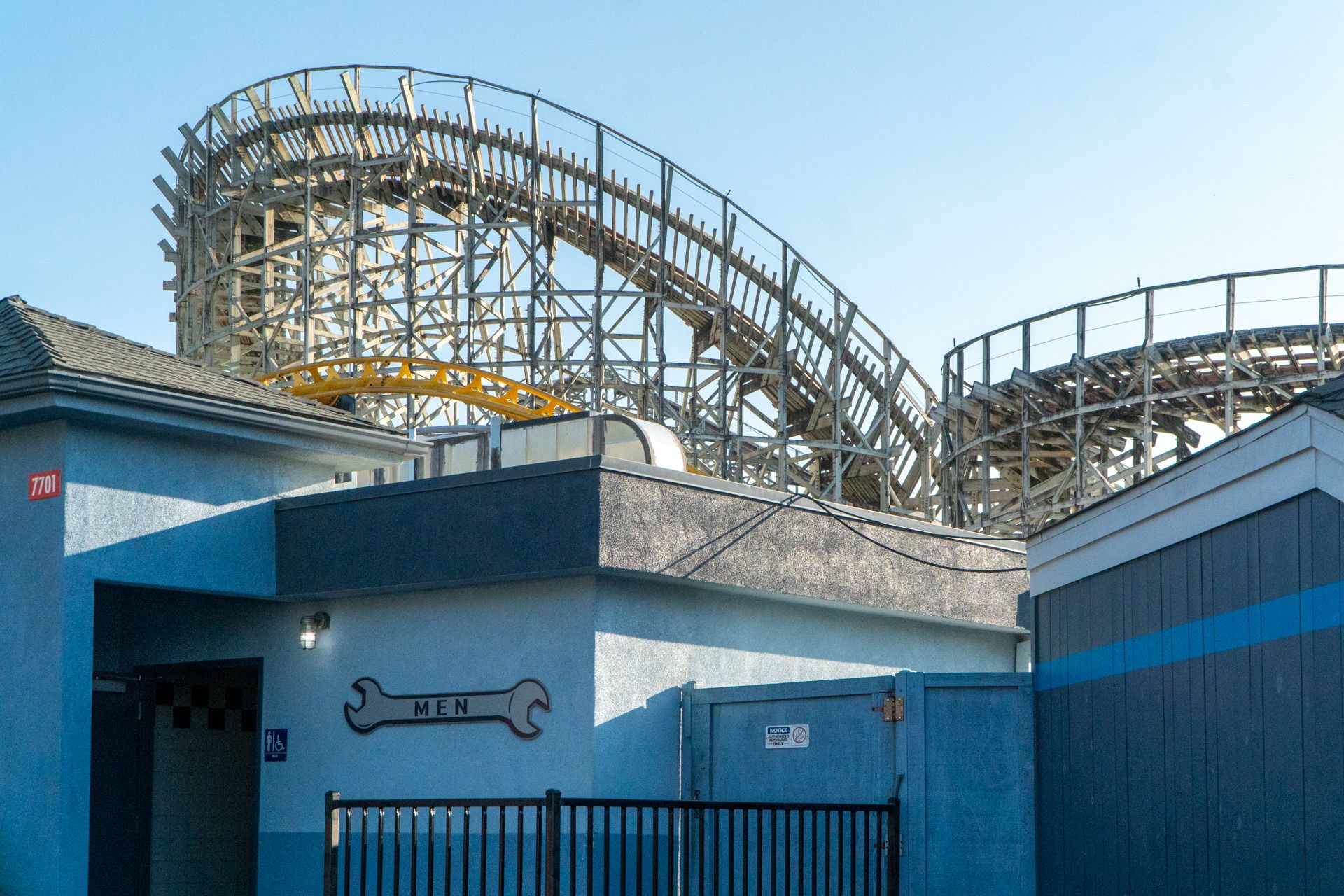
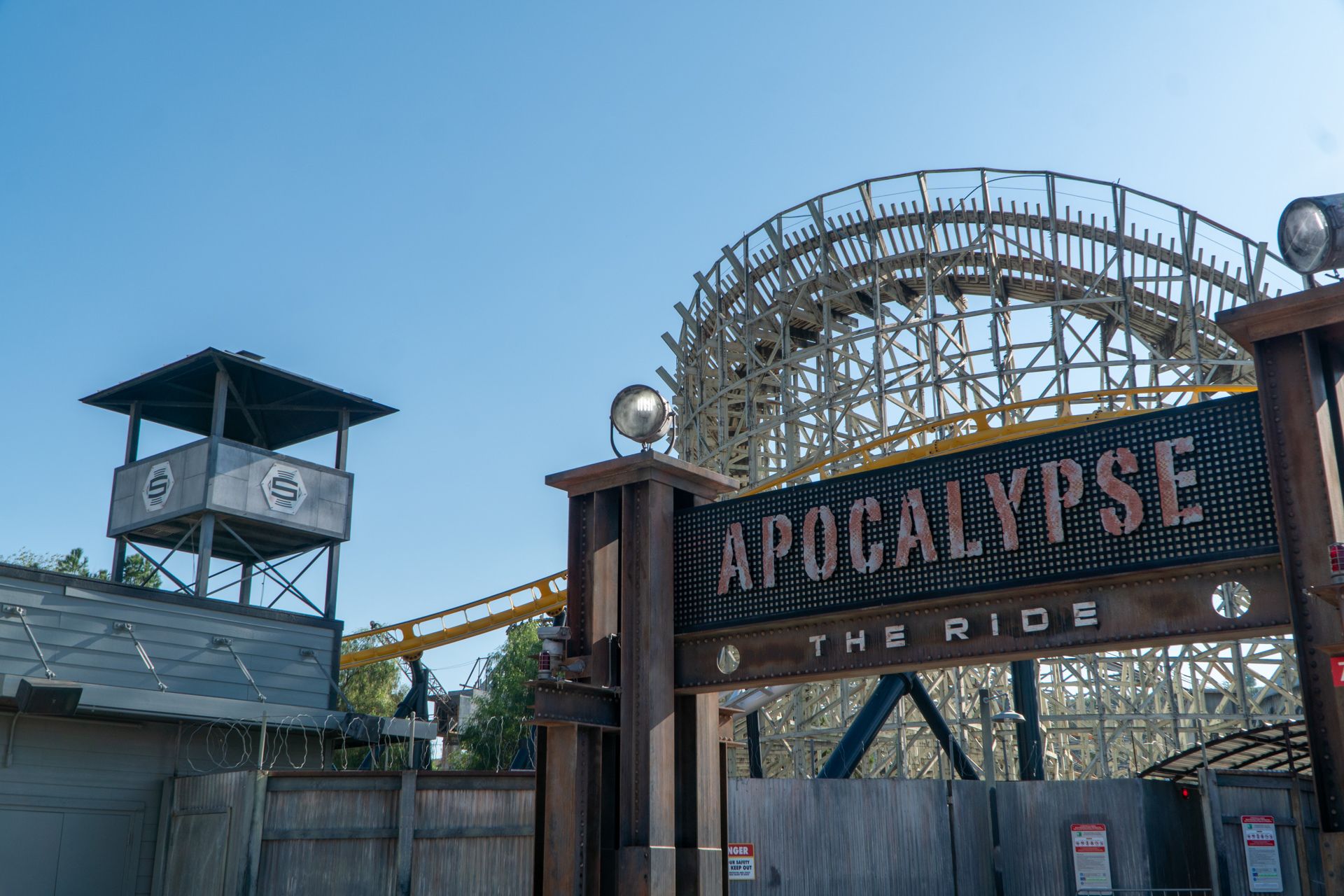
The wooden roller coaster Apocalypse was originally opened as Terminator Salvation: The Ride. It replaced the Psyclone roller coaster, which was located at this spot in the park for many years. Unfortunately, I wasn’t able to ride this roller coaster from the manufacturer GCI on the two days I visited.

Tatsu

Luckily, thanks to my Legacy membership, I still have a one-off Flash Pass to use for free. Otherwise I would have missed out on a ride on the Tatsu rollercoaster, as the waiting times for just one train were beyond belief.

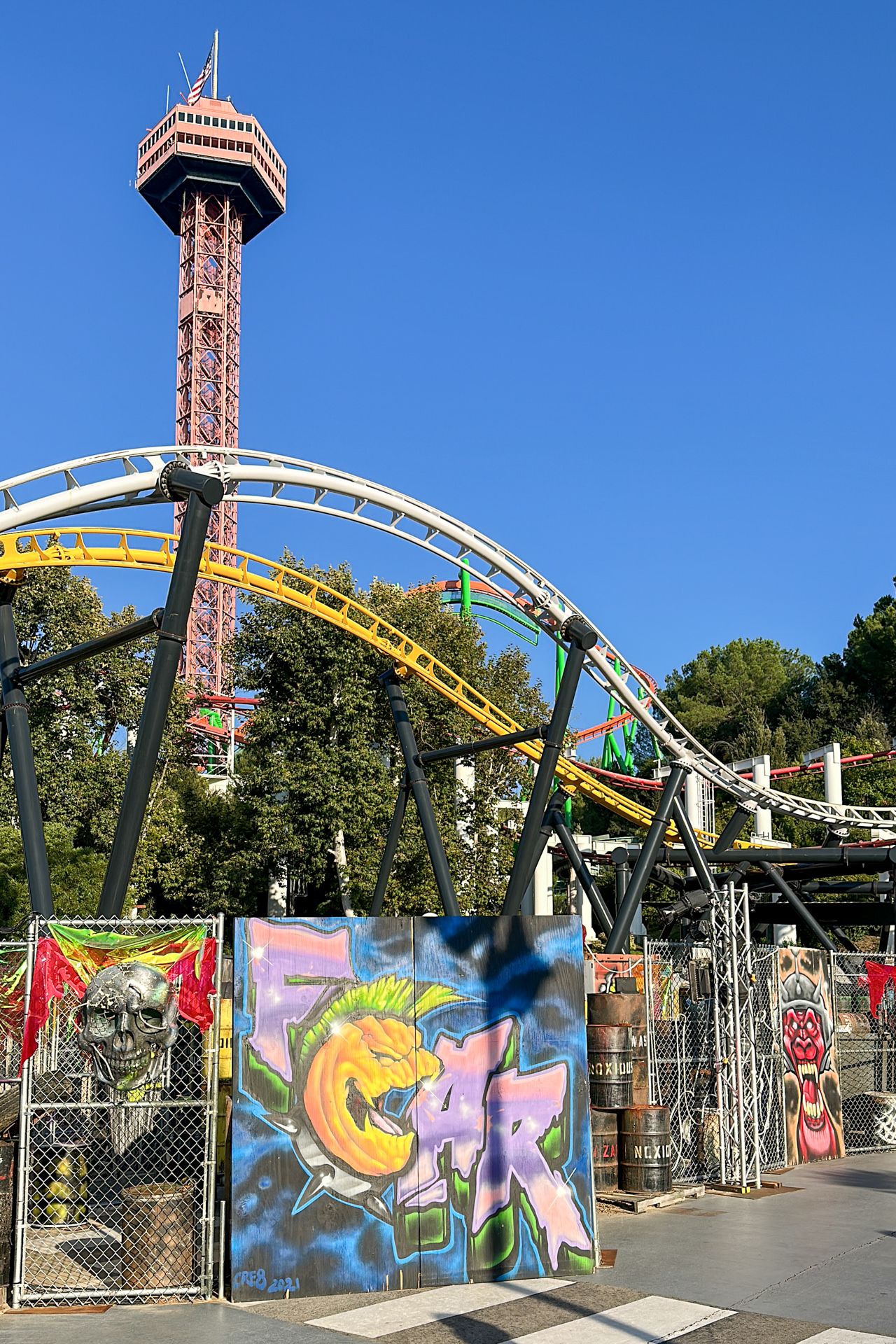
The ride on Tatsu begins as soon as we enter the lift hill. Once at the top, we immediately plunge into a steep turn with the best view of the Intamin Rapids Ride Roaring Rapids. Immediately afterwards we fly very close to the Sky Tower in a corkscrew. After a left turn, we turn once on our own axis and then enter a steep turn. Another left turn leads to the highlight of the ride: the Pretzel Loop. With the best view of the loop of the New Revolution rollercoaster far below us, we plunge into the depths. With a lot of pressure, we ride through the valley lying on our backs. Shortly afterwards, we repeat the experience in reverse order. Back in the air, we immediately enter the next roll. After a right turn and a small climb we reach the final brake of the coaster.

Tatsu is a very good flying coaster. Its location high up on the mountain enhances the feeling of flying during the ride. The ride itself has some nice elements and, thanks to the pretzel loop at the end of the ride, a very varied and intense layout.

Sky Tower

Behind Tatsu is one of the entrances to Samurai Summit, where Intamin’s Sky Tower dominates the park. Unfortunately, the tower has not been accessible since 2014.

Ninja

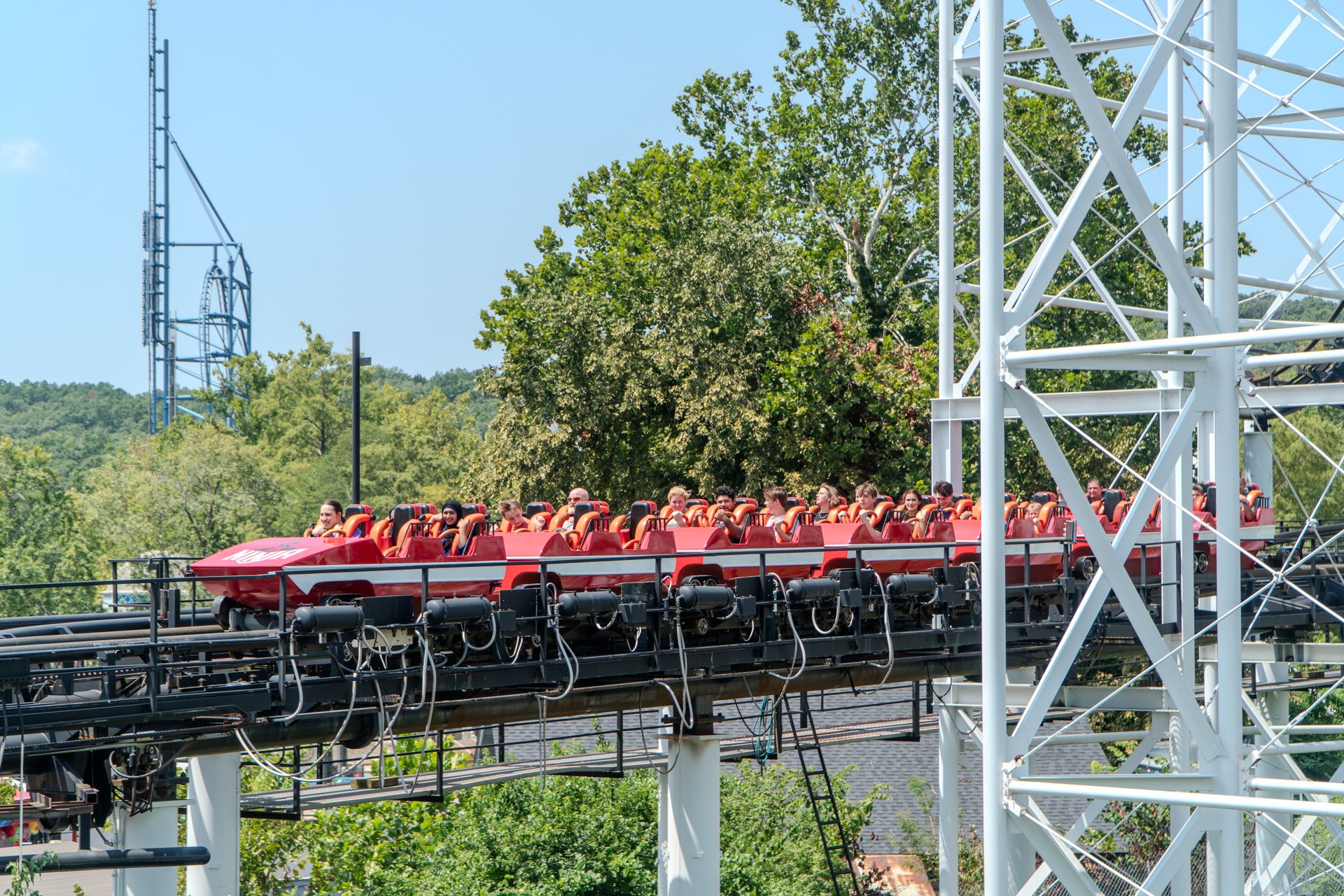
The second attraction at the Samurai Summit is the suspended coaster Ninja from Arrow Dynamics.

The ride begins with the first of the two lift hills. Once at the top, we immediately take a steep right-hand bend. After a helix, we swing along the slope parallel to the Jet Stream log flume. A left-hand bend then takes us to the lowest point of the ride, where we immediately turn into a right-hand helix. After a short straight under the log flume’s lift, we whizz back along the surface of the water. A short incline and several dynamic curve changes later, we slowly but surely approach the braking section at the bottom of the slope. Shortly afterwards, we enter the second lift, which takes us back to the station level, marking the end of our great ride on the family-friendly roller coaster.

Superman: Escape from Krypton

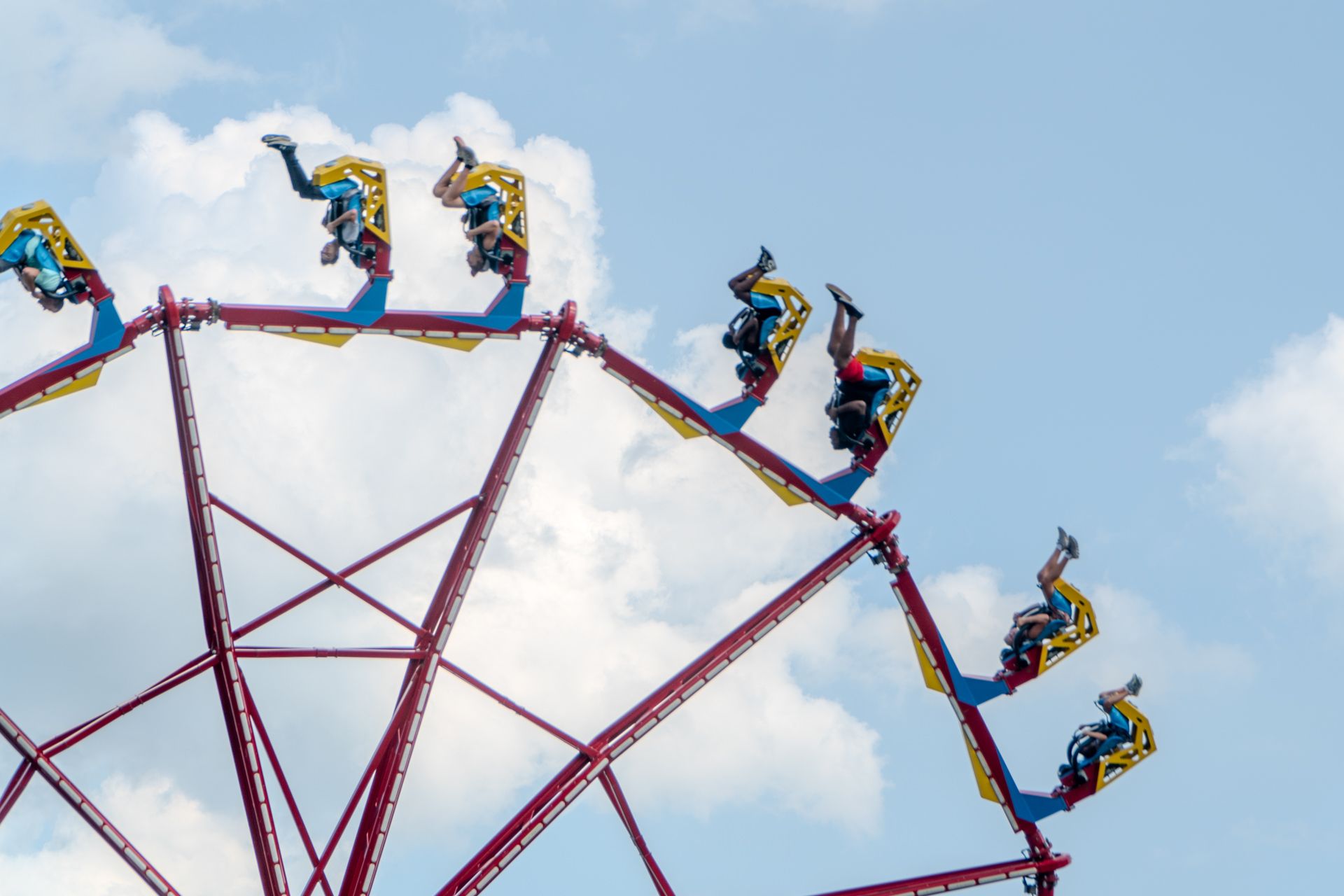
When Superman The Escape opened in 1997, it was the tallest and fastest roller coaster in the world alongside Dreamworld’s Tower of Terror (later Tower of Terror II). Together, the coasters held the speed record until the opening of Dodonpa at Fuji-Q Highland in 2001 and the height record until the opening of Top Thrill Dragster at Cedar Point in 2003. In 2010, the coaster was overhauled and equipped with new trains. On Superman: Escape from Krypton, you could now mainly experience the ride travelling backwards until one of the cars was turned around again in 2021.

As I was able to experience Tower of Terror II on the last day of operation, I was really looking forward to a ride on Superman: Escape from Krypton. Unfortunately, the coaster was not in operation on any of the days I visited.

Roaring Rapids

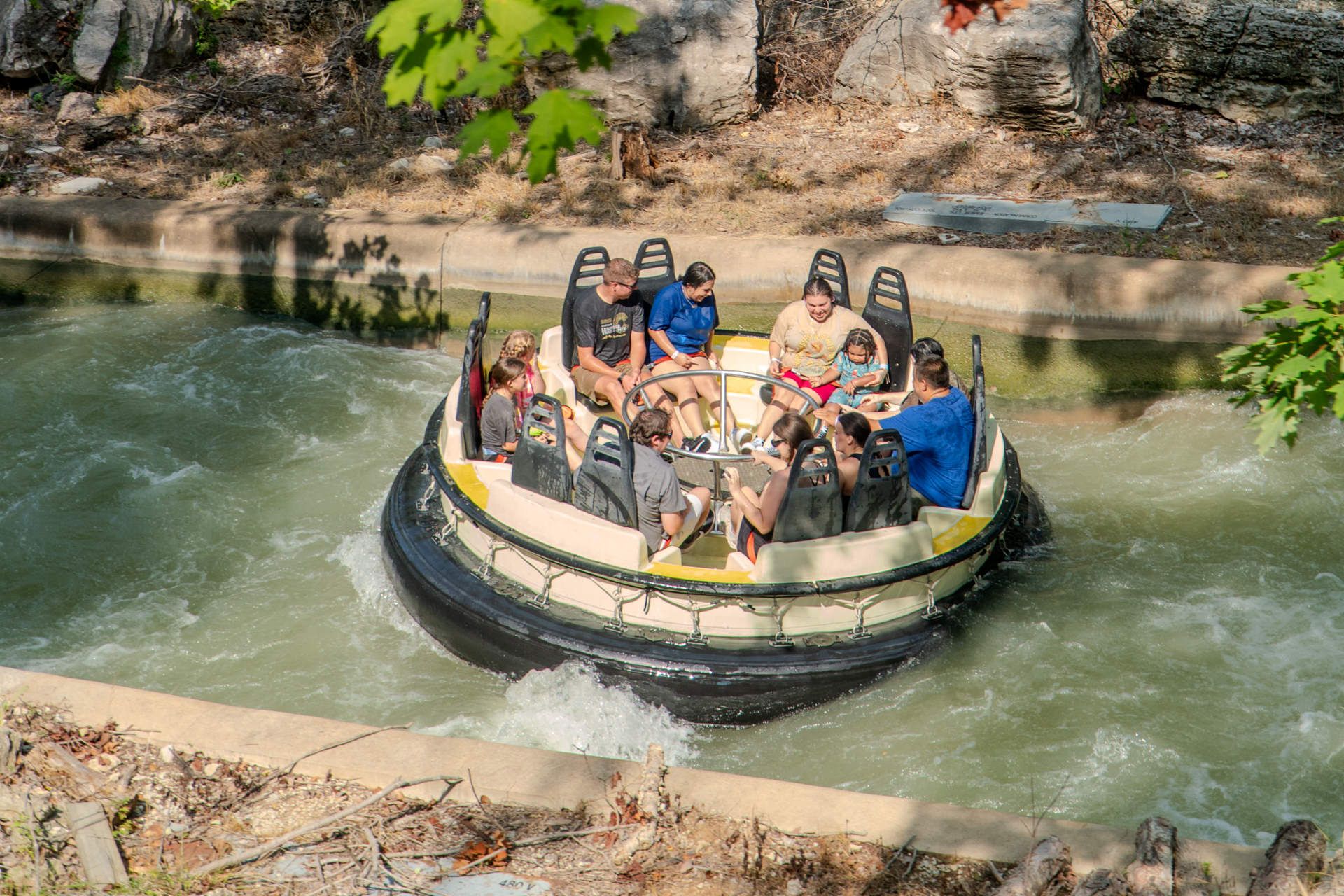
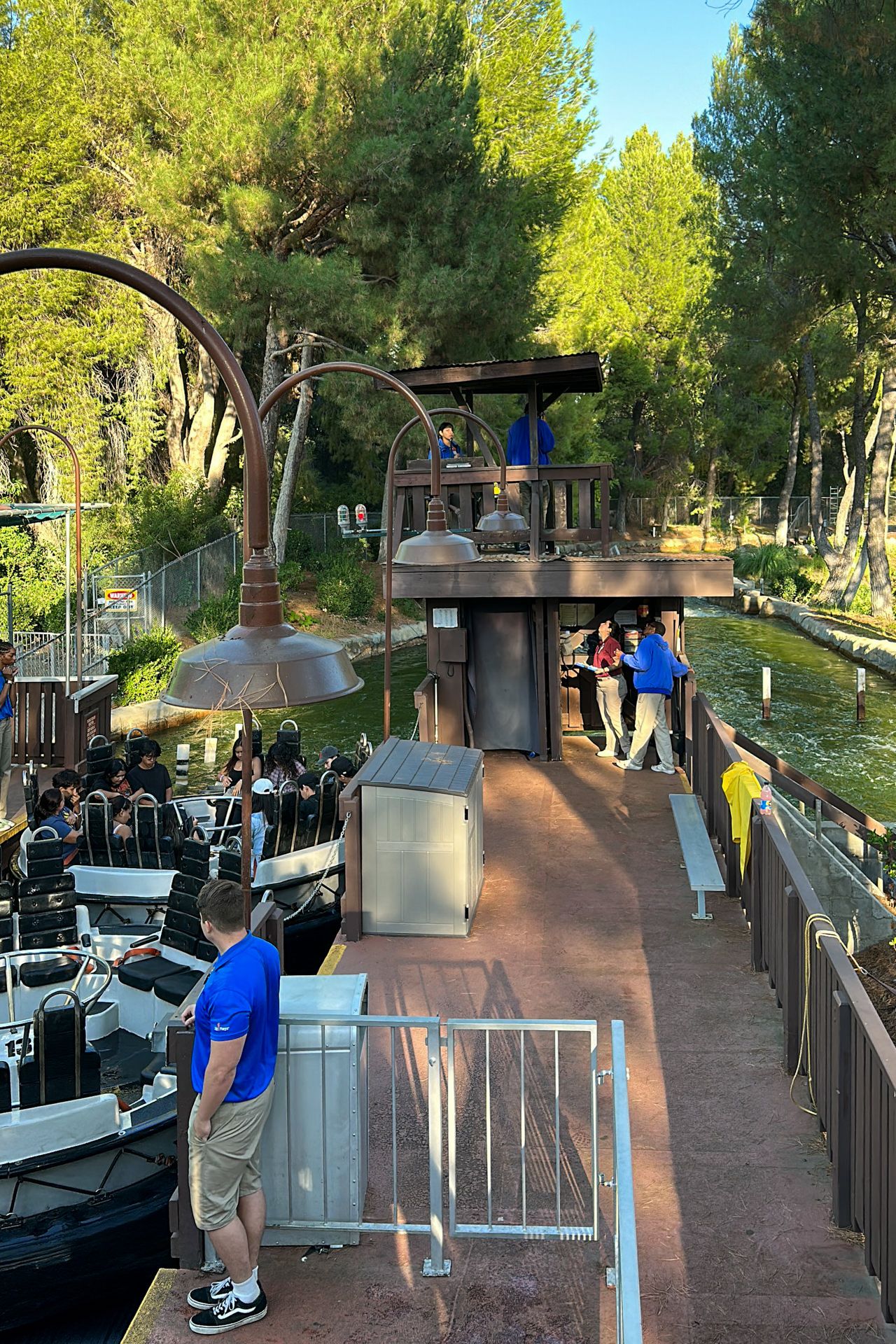
One of the most interesting rapids rides I have ever seen is Roaring Rapids. You can’t see anything of the ride from the outside as it was built on a plateau high above the park paths. Only the stairs leading up to the attraction are visible. The ride in the large boats is quite simple, but a lot of fun. The level of wetness was pleasantly limited.

New Revolution

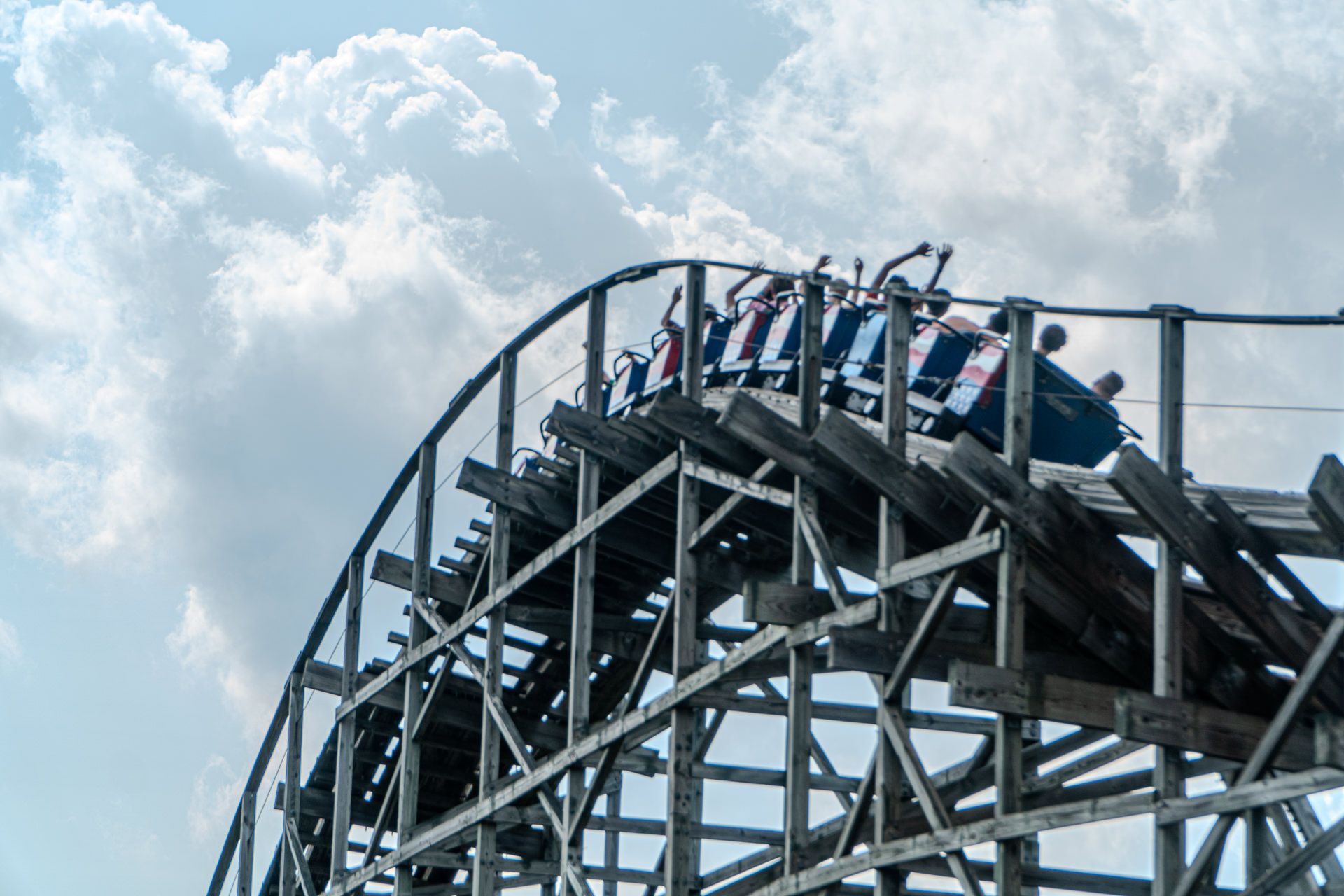
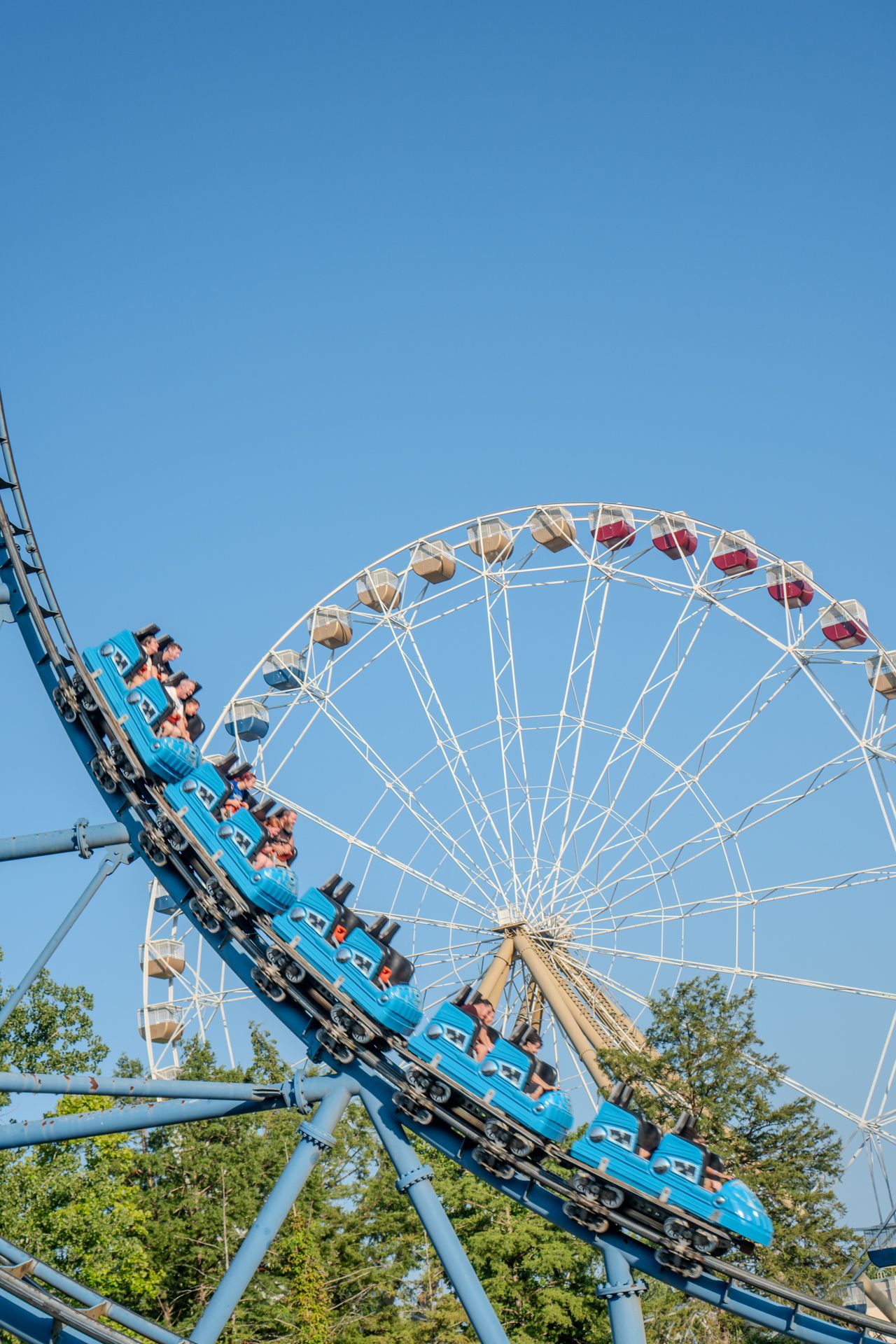
Probably the most classic roller coaster at Six Flags Magic Mountain is the Revolution. As the first looping roller coaster of modern times, the Schwarzkopf roller coaster attracted everyone’s attention in 1976 and became world-famous thanks to the film Roller Coaster.

The ride on the Revolution begins as soon as you enter the lift hill, which takes you up to a height of 110 ft. Once at the top, the ride heads towards the ground in an increasingly steep curve. Afterwards, we take a fairly leisurely ride over a hill and then immediately enter the second, even steeper descent. After narrowly missing the station, we ride over another hill. We then take a left-hand bend that runs very close to the ground. After a climb, we approach what is probably the most important descent. On a long straight, we get faster and faster and then race through the first modern loop in the history of the world. A long uphill left-hand bend leads into an equally long right-hand bend, in which we adapt to the terrain. A tunnel is followed by a long straight that leads through the loop. A short dip to the right then takes us into the fast-paced finale of the helix. Shortly afterwards, we reach the final brake and our solid ride draws to a close.

Viper

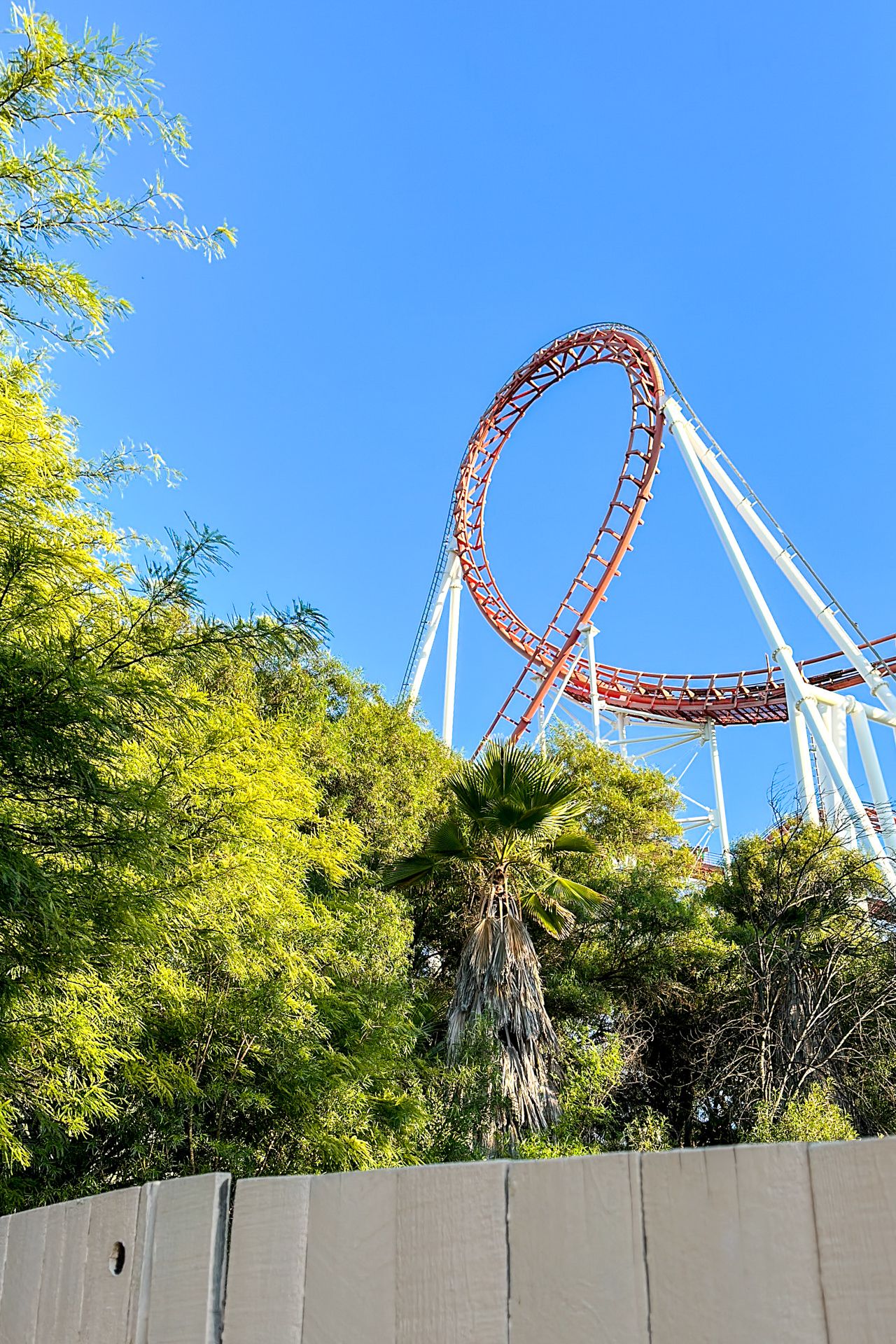
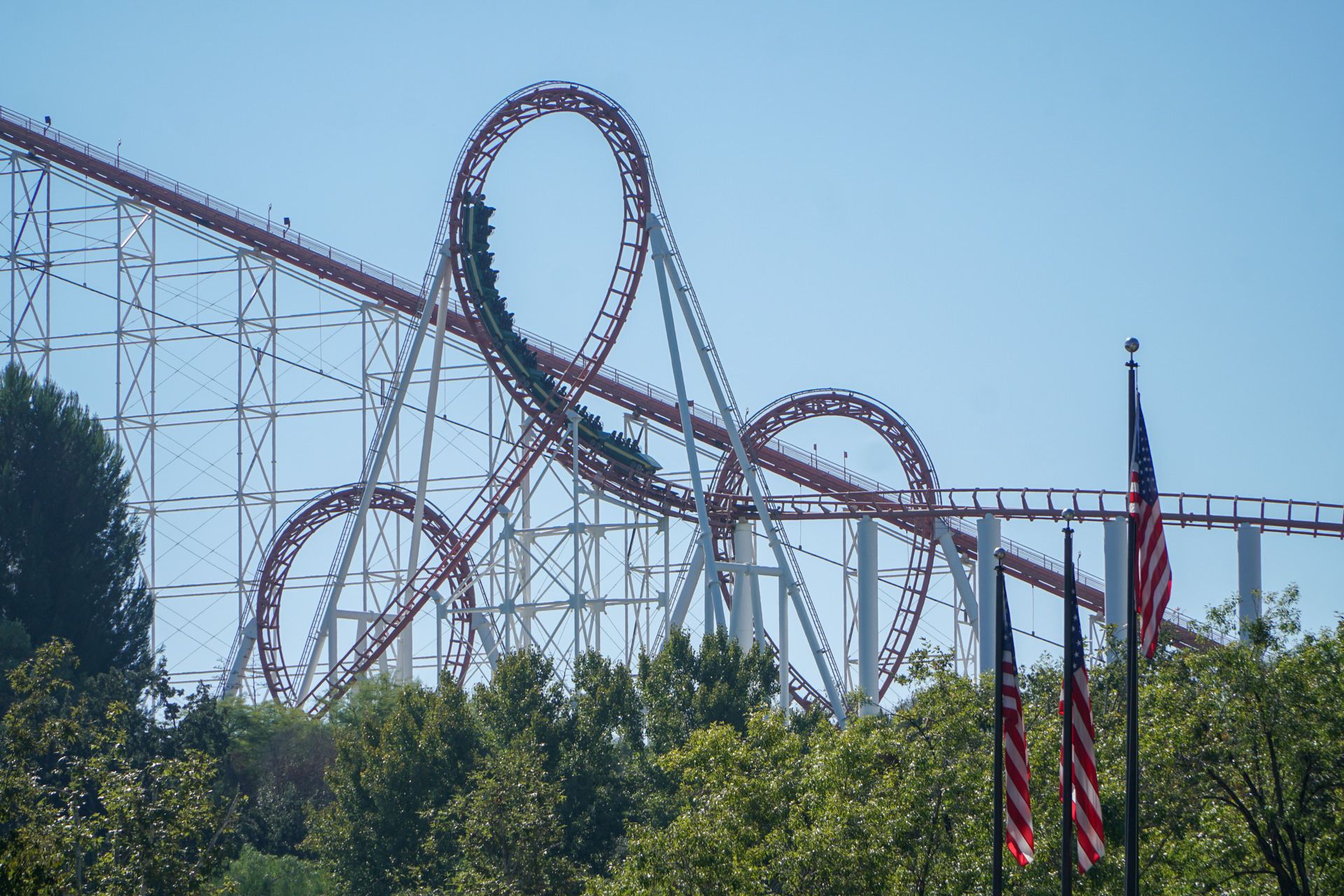
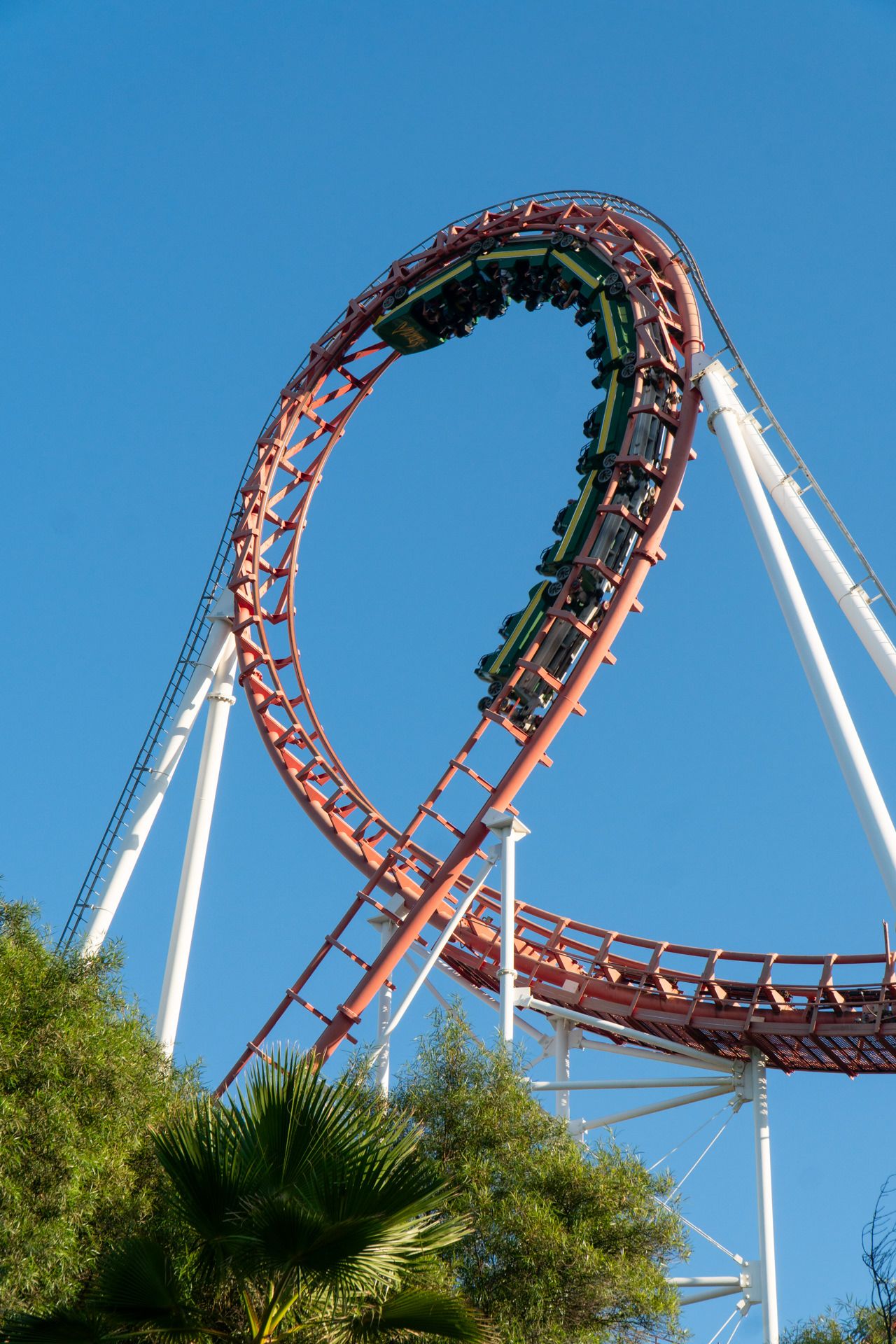
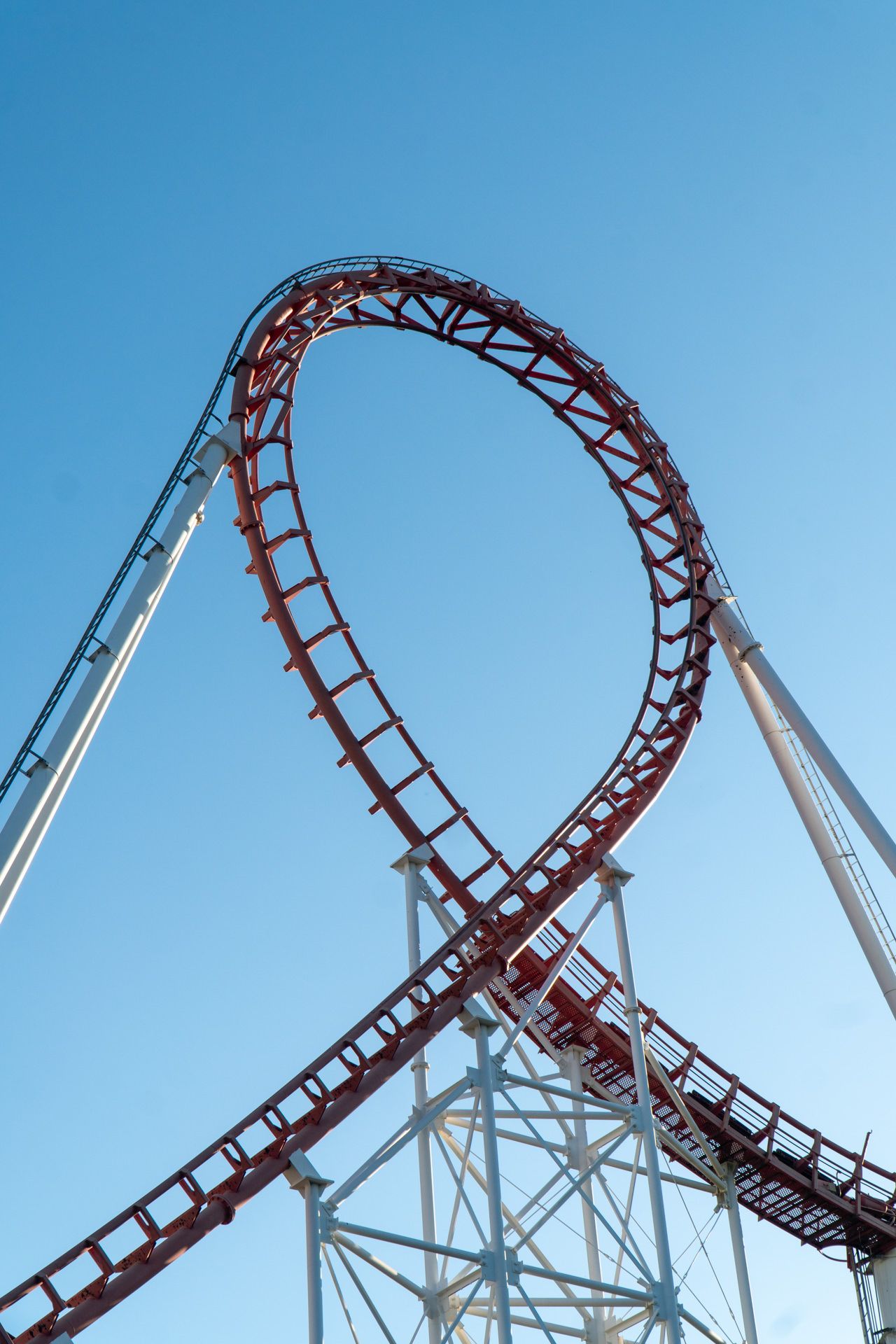
The large Arrow looping coaster Viper was the main reason for me to finally visit Six Flags Magic Mountain.  The coaster, which opened in 1990, is unfortunately nearing the end of its life and after the closure of the fantastic Vortex looping coaster at Kings Islands, Viper was at the top of my to-do list.

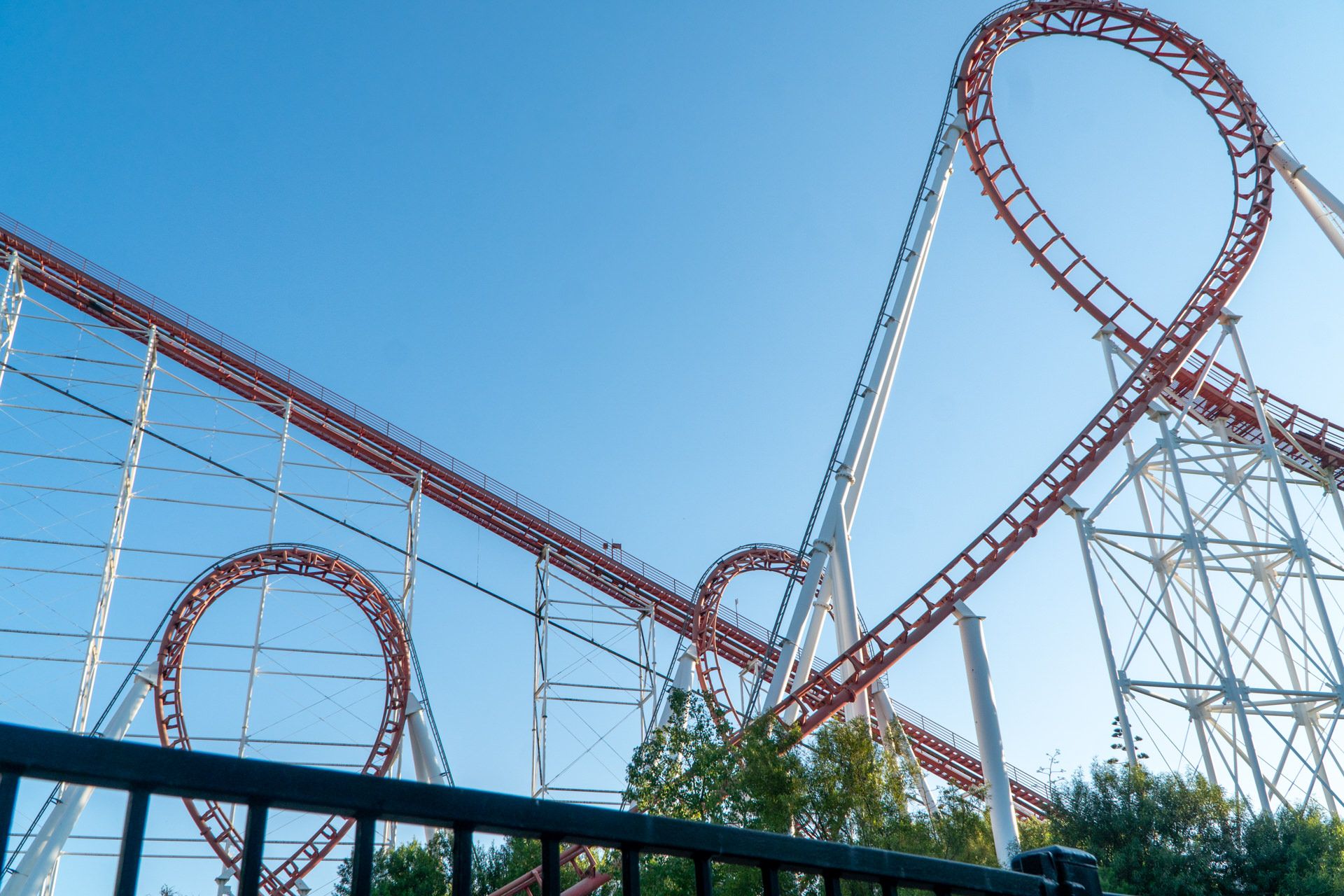
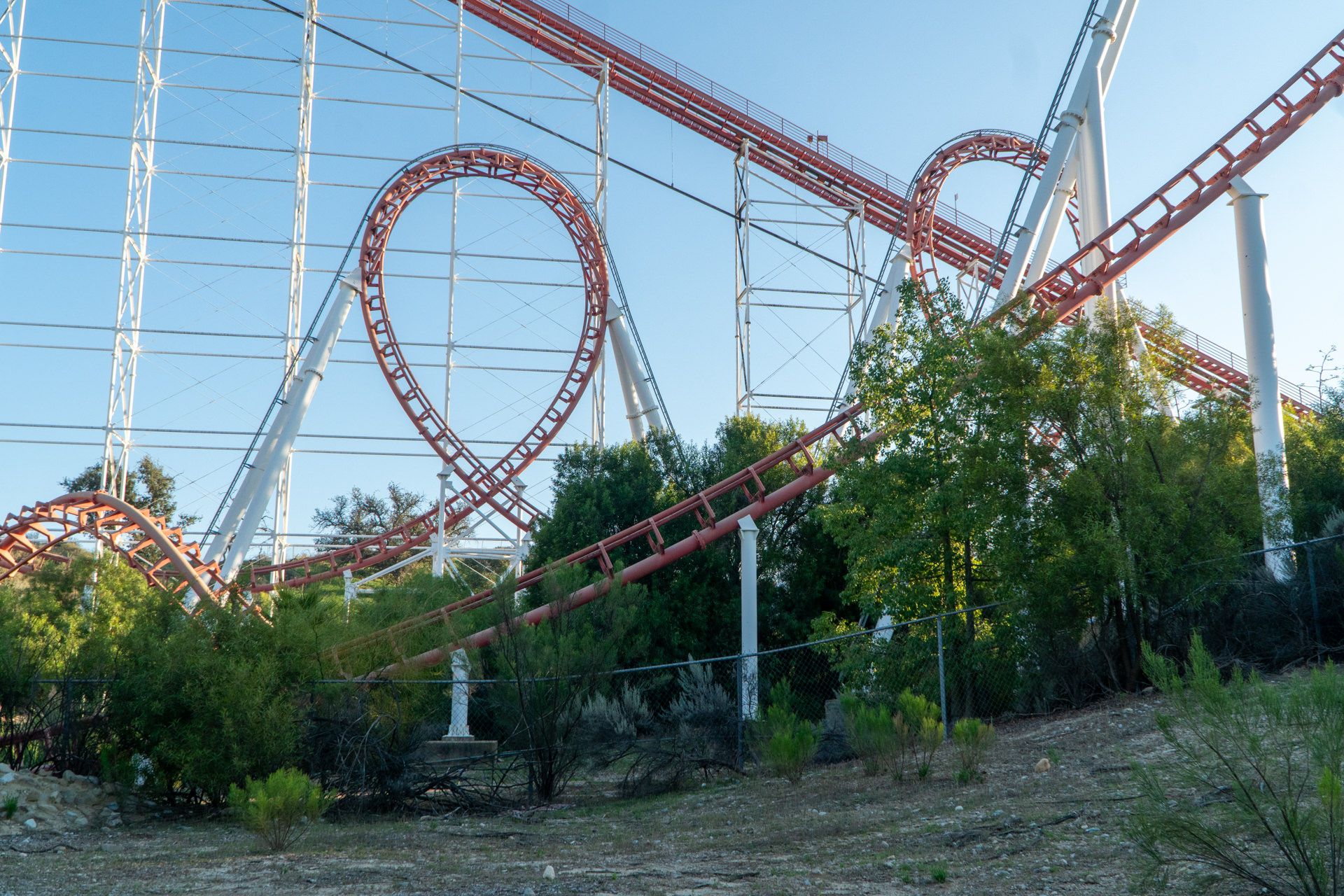
As soon as we get to the top of the lift, we quickly descend in a terrifyingly steep turn. After a very intense descent, we enter a seemingly endless ramp, at the end of which the first loop mercilessly presses us into our seats. After a wide left-hander, we enter two more loops that are also very intense. After an uphill section, we are pulled through a block brake, which slows us down slightly. After a left-hander and a short right-hander, we enter the Batwing, which turns us upside down twice. The grand finale is a bend that takes us straight into the double corkscrew of the track. After a long straight we pass under the lift and immediately enter the braking section of the ride.

The ride on the Viper is even better than I expected. The coaster is mercilessly intense, has a very good pacing and runs absolutely smoothly. An absolute top coaster and the one I rode the most during my visit to Six Flags Magic Mountain.

X2

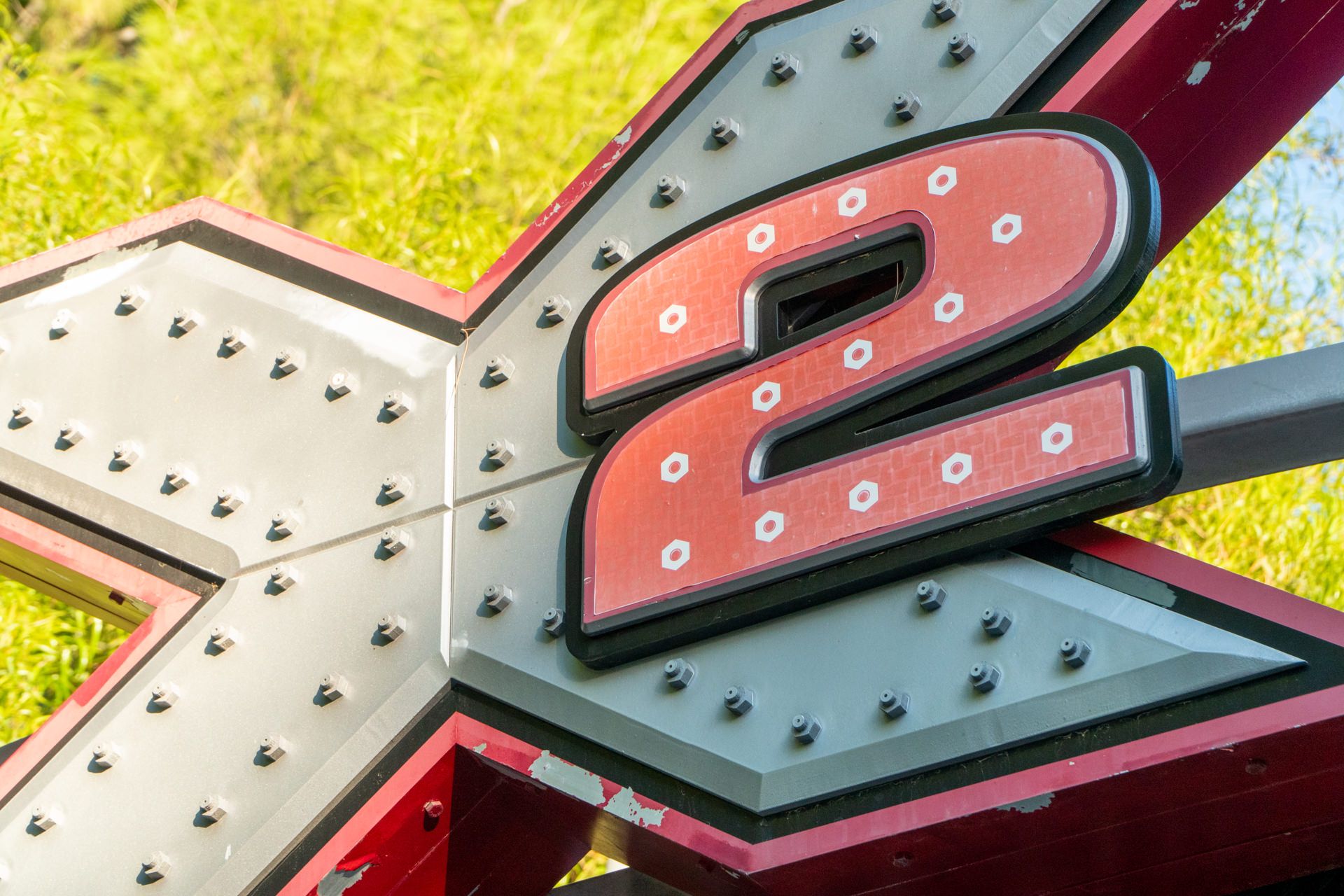
Right at the entrance to the park’s car park is the X2 roller coaster, the first 4th Dimension Coaster to be delivered and a crazy ride with a layout that is really untypical for a roller coaster. In the park itself, you first have to cross a bridge to get to the coaster. Unlike Fuji-Q’s Eejanaika coaster, the queues here are pleasantly short, so you can get on the ride quite quickly.

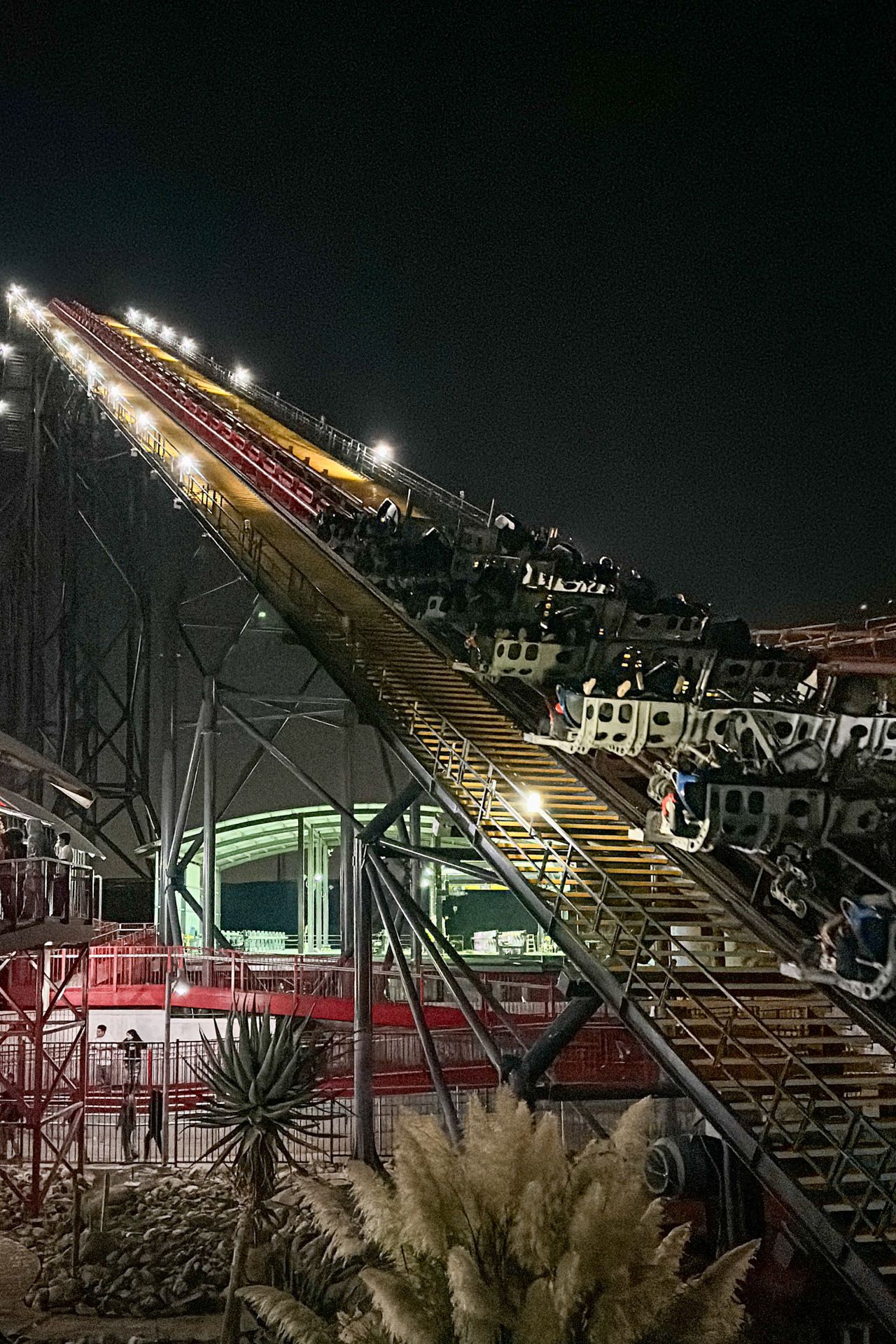
The ride starts with a 180° turn. You enter the lift in a supine position before being propelled 250 ft into the air on your back. Although this happens very quickly, you still have enough time to take a good look at the amusement park in front of you – a fantastic sight.

A short pre-drop gets the coaster going again and we are back in our original riding position before we are flipped upside down to the ground or to the row in front of us on the next hill. This riding position is then maintained for most of the steep drop, with one roll over in the lower third to ride through the following valley looking slightly upwards. In the inside raven turn, the direction of travel of the track changes once, but the element is still experienced horizontally. The train itself, now suspended underneath the track, goes down an incline and then through a camelback, while we race forward through the dense forest of columns, rolling beautifully in a 360° rotation. We continue forward again into a steep and banked turn. Continuing forward, we cross a forceful valley above the station. On the following hill the track changes direction in a fly-to-lie element and we make a lively 180° turn. We then ride backwards through a valley and immediately up another hill, at the end of which is the entrance to the outside raven turn. In this version of the Raven Turn we are also held horizontally while the train happily changes its position and continues under the track. At a much higher speed we race towards another Fly-to-Lie element which, combined with the rotation of the gondola, allows us to gently glide into the braking section.

X2 is one of the most intense roller coasters I have ever ridden. The ride is extremely powerful, completely disorientating and surprisingly smooth. You just don’t feel overwhelmed, even though you’re sitting like a pasha with your legs spread wide. The minimalist but rather complicated safety bar adds to the fun and respect for the ride, even if you have been on it many times before. As after a ride on the Eejanaika, the conclusion is the same: the ride is awesome!

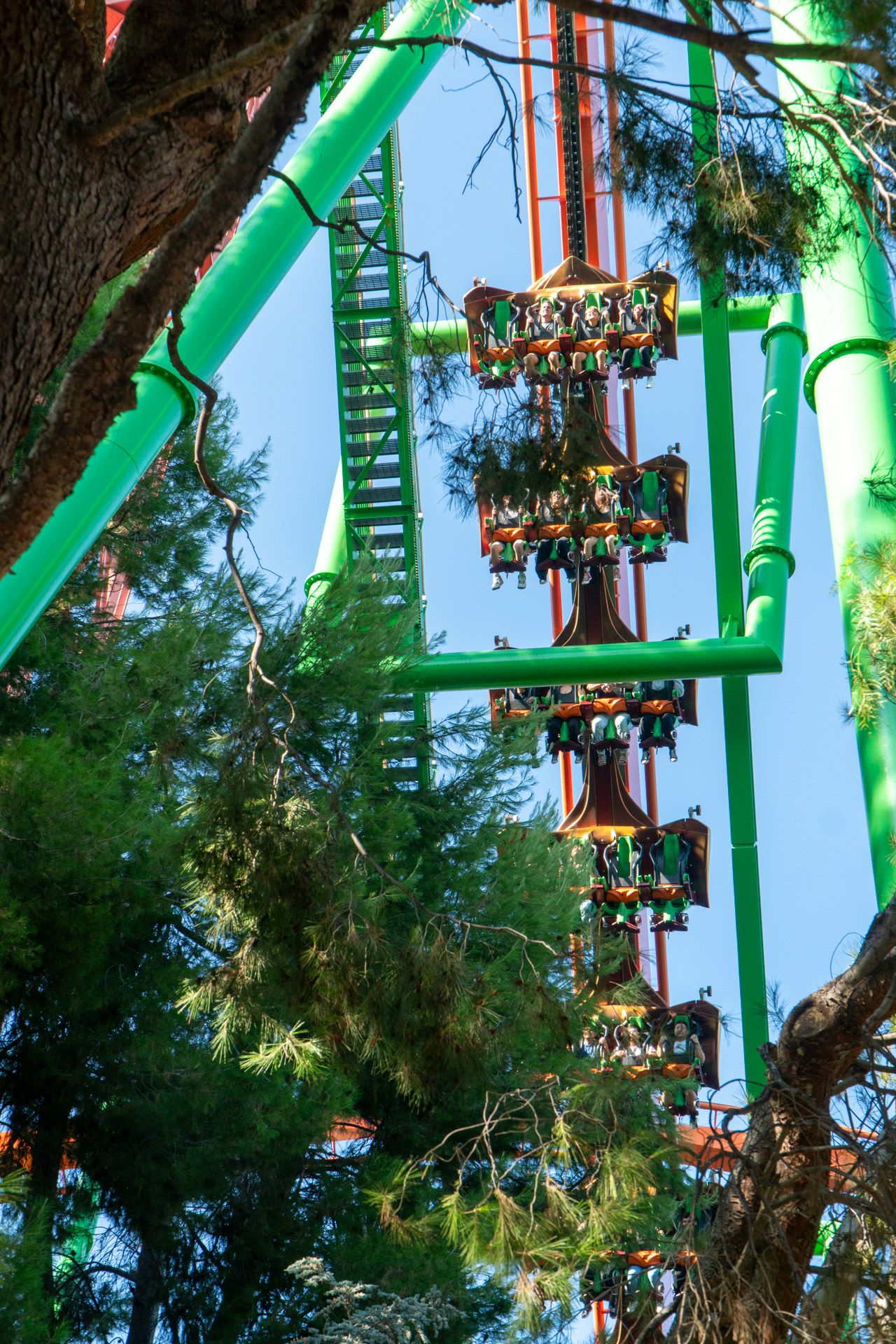
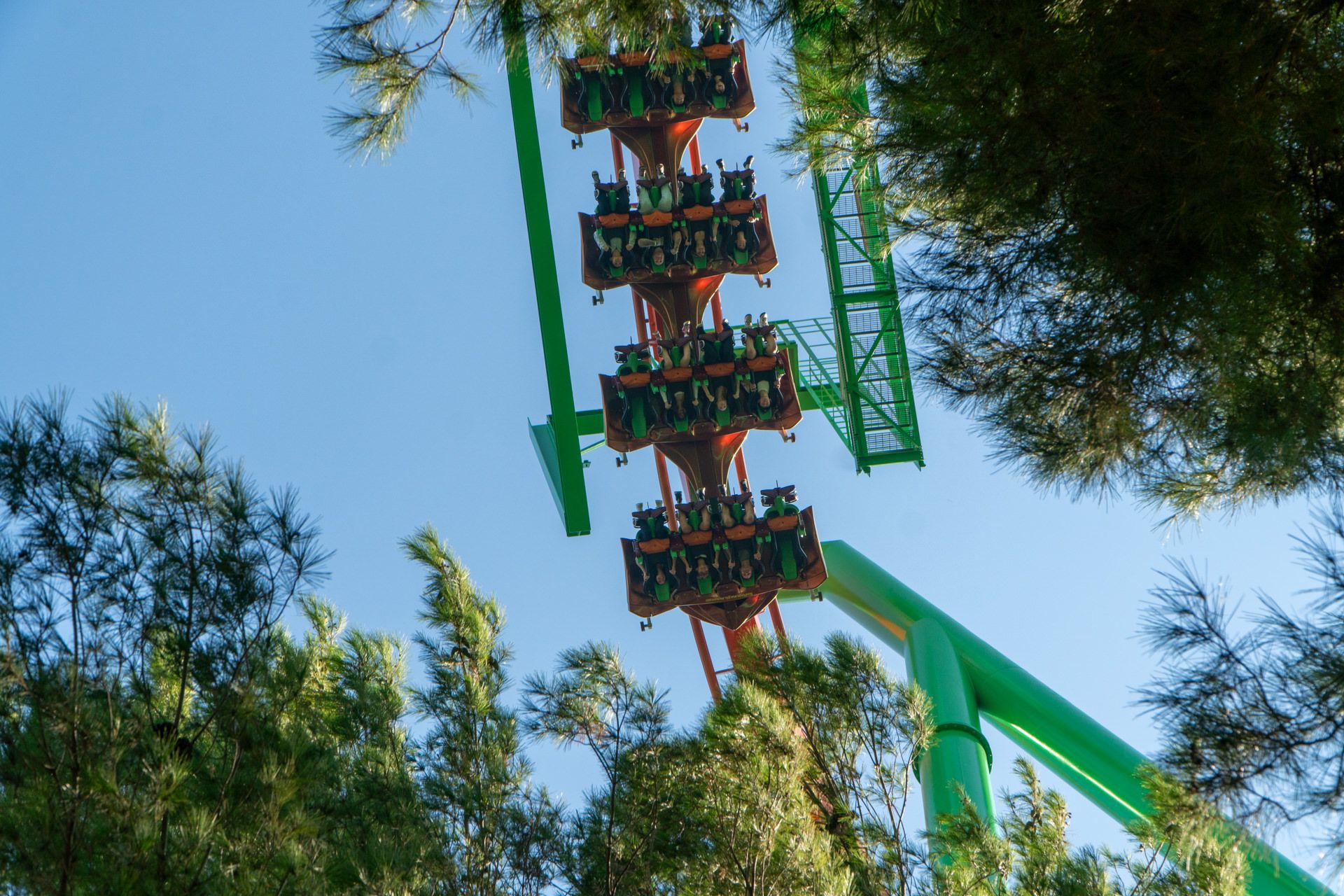
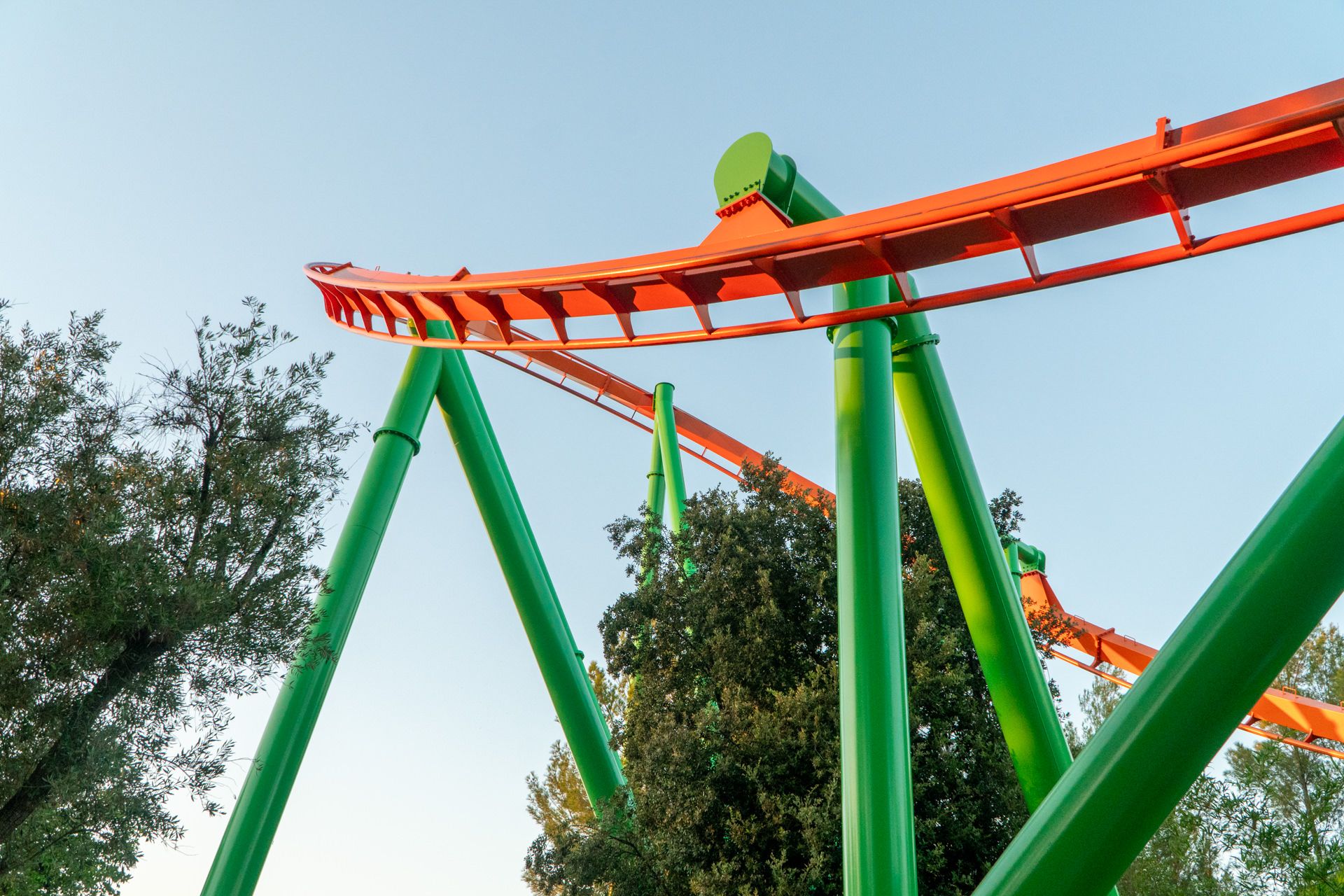
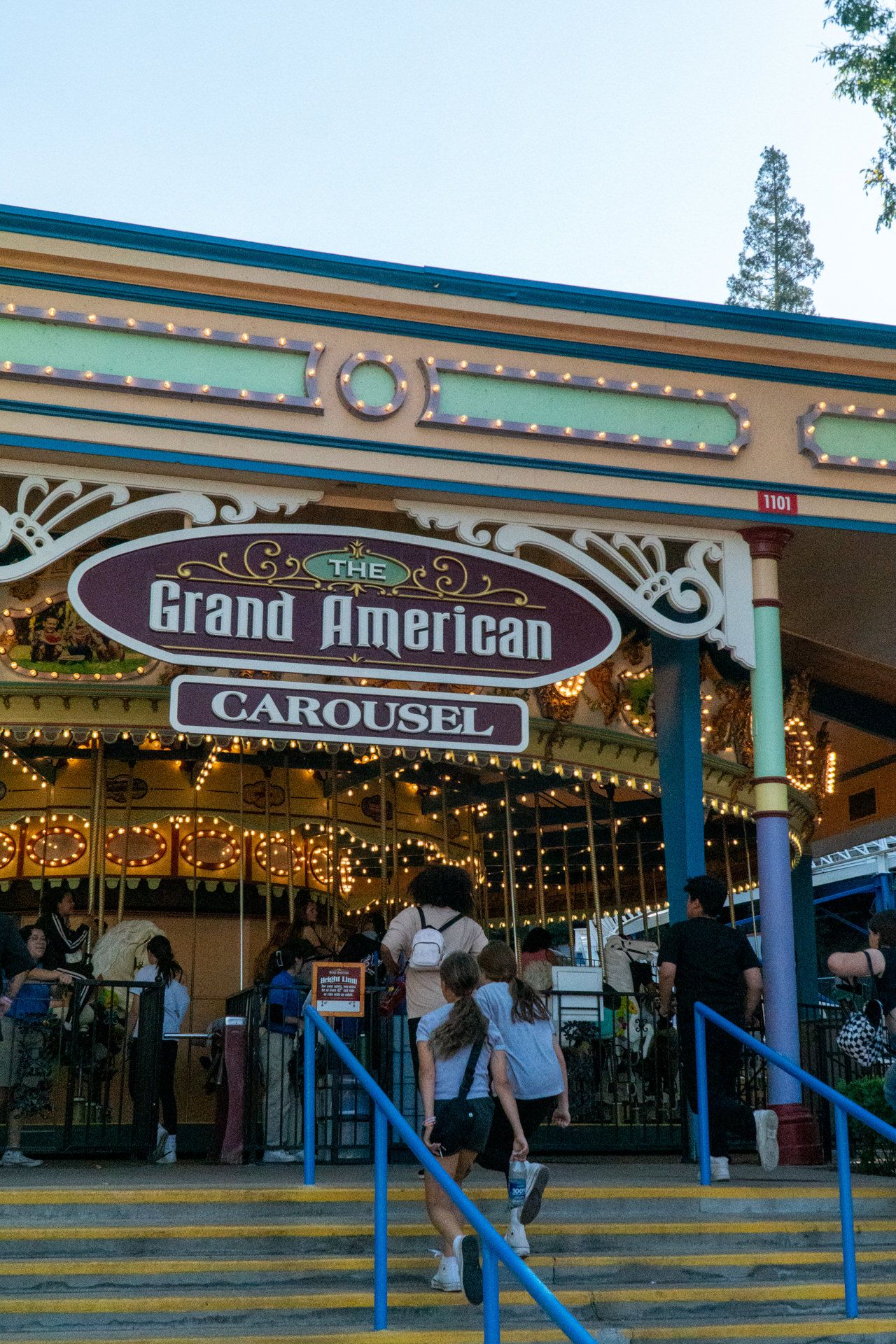
Pictures Six Flags Magic Mountain

Conclusion Six Flags Magic Mountain

Six Flags Magic Mountain is a beautiful amusement park. Opened in the 1970s, the theme park utilises the available space very well, creating a pleasant atmosphere. Due to the large crowds on the first day of my visit (caused by the long event opening hours) and the reduced capacity on almost all roller coasters, I didn’t get the best impression of Six Flags Magic Mountain. However, this changed the very next day, when I was able to do everything without any major waiting times and was through with almost everything by lunchtime. It was just a shame that some of the roller coasters were unfortunately closed during my visit.


What’s your opinion on the theme park Six Flags Magic Mountain? Simply write it in the comment field below the report or visit our social media channels:


Click here for the next report of the California Adventure Tour

The legacy of Dinocittà

The History of Cinecittà World

The history of Rome as a film location dates back to 1937, when the film city Cinecittà was founded. Equipped with what were then the most modern studios in Europe, a backlot and a copy studio, around 300 films were produced by 1943. Bombed by the Allies and looted by the Nazis, the film production was moved to Venice. After the end of the war, Cinecittà served as a DP camp for two years before the film production site was returned to its original purpose. In the 1950s the Cinecittà Studios experienced a golden age, probably also due to the film funding of the Italian state, and served as the film location for important Hollywood films such as Ben-Hur.

Due to constantly increasing demand and limited studio capacities, the producer Dino de Laurentiis founded Dinocittà, at that time the largest film studio in the world, also in the south of the Italian capital. The studio mainly produced historic and monumental films such as Barabbas (Italy 1961, Richard Fleischer), Waterloo (Italy/USSR 1969, Sergei Bondarchuk) and John Huston’s mammoth work La Bibbia (Italy 1966). However, due to the reduction of subsidies at the beginning of the 1970s, the film studio was not able to survive for long, and so in 1973 the land was sold to the Italian state. From then on Dino de Laurentiis produced in the United States and the Dinocittà remained unused; although not forgotten. Plans in the early 2000s to run the studios under the name Roma Studios were quickly discarded and Cinecittà Holding took over the site.

Originally planned for 2012, the movie park Cinecittà World opened its doors for the first time in the summer of 2014. Unpaid bills and a lack of visitors, despite the surprisingly low target of 1.5 million visitors, quickly left the park in a negative light. Short-notice cancellations of seasonal events and the planned winter opening quickly gave rise to doubts as to whether the park would ever open again. However, after restructuring over the winter months, the park opened punctually at Easter.

Tour of the park

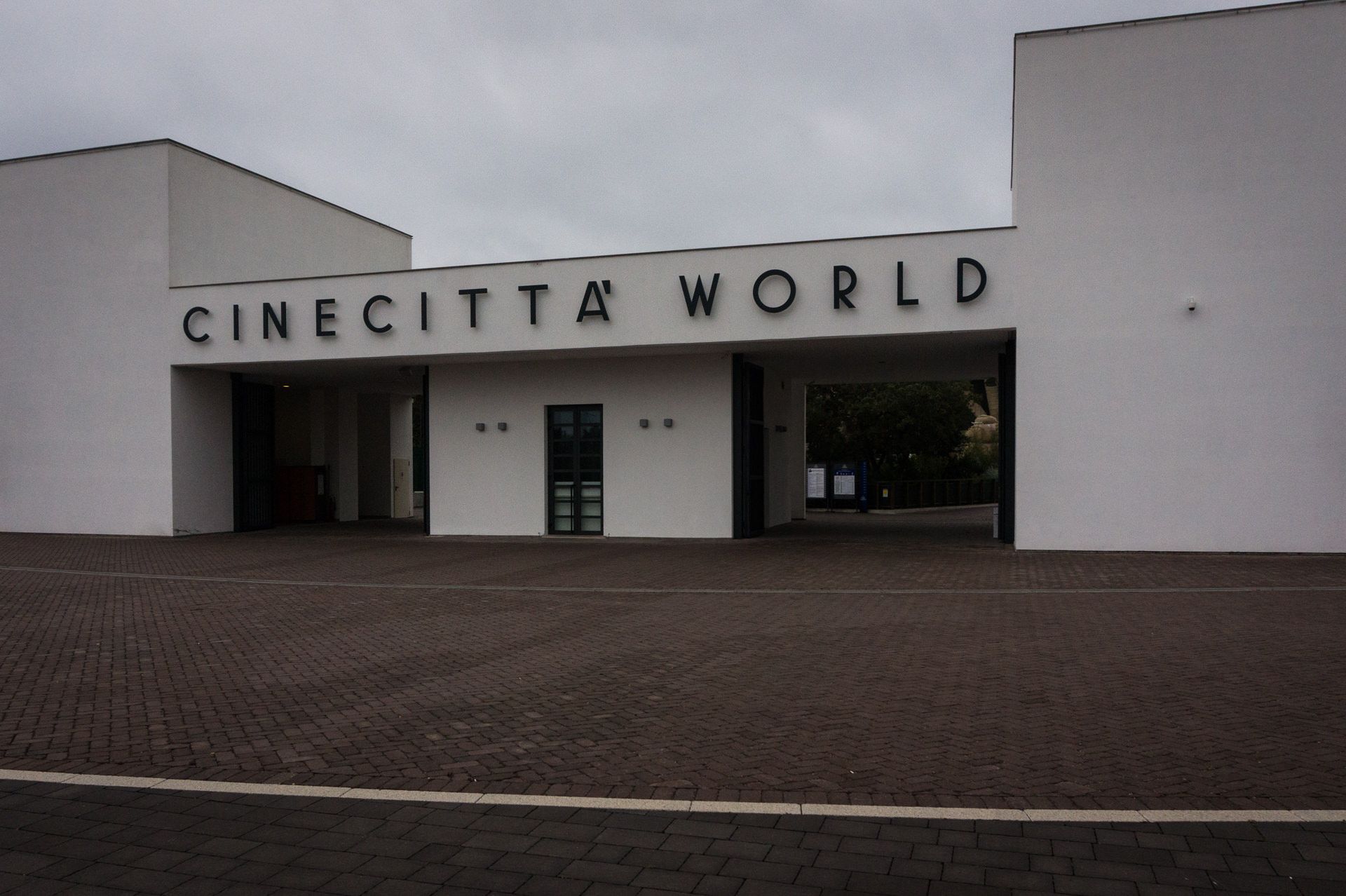
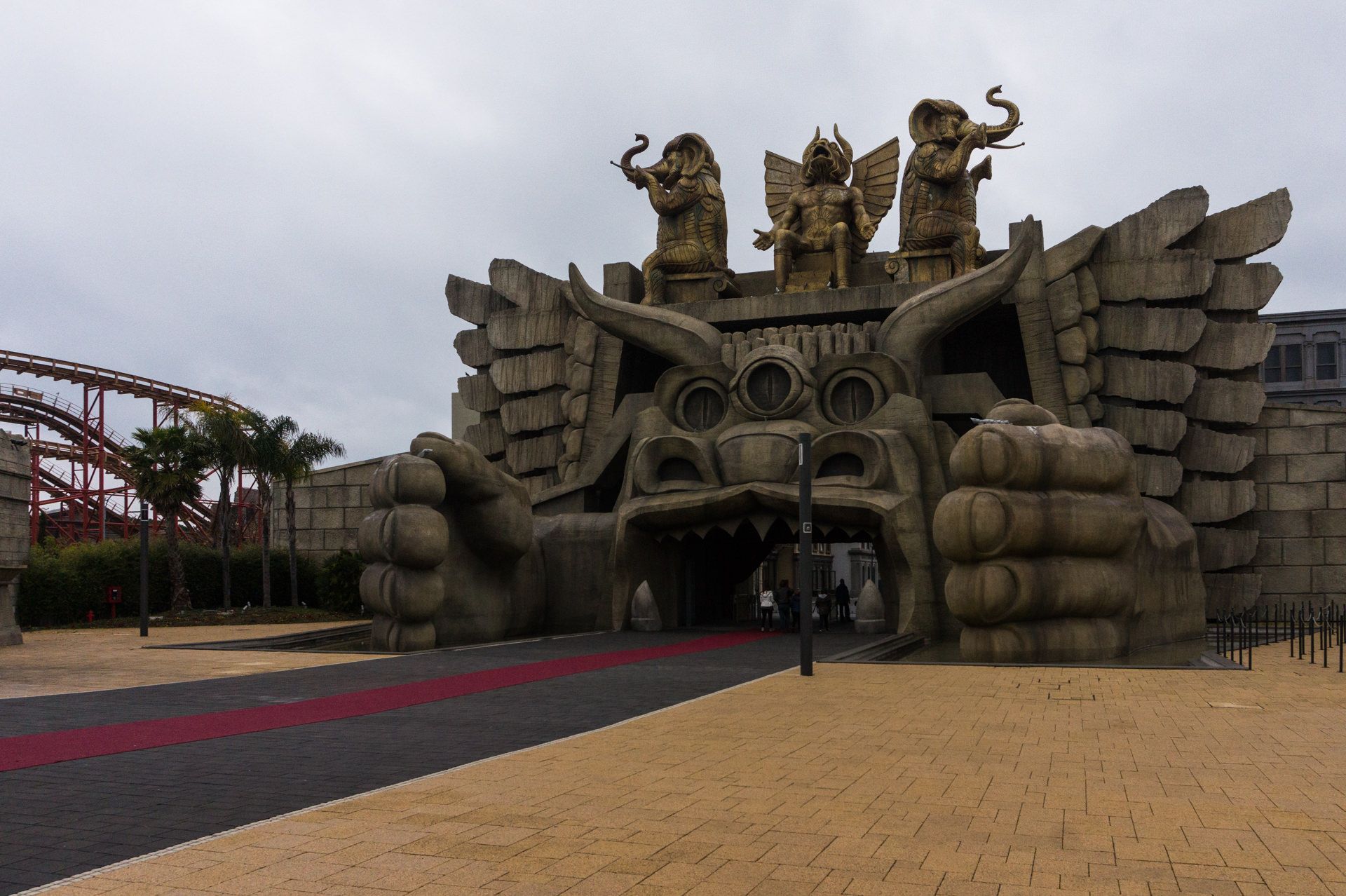
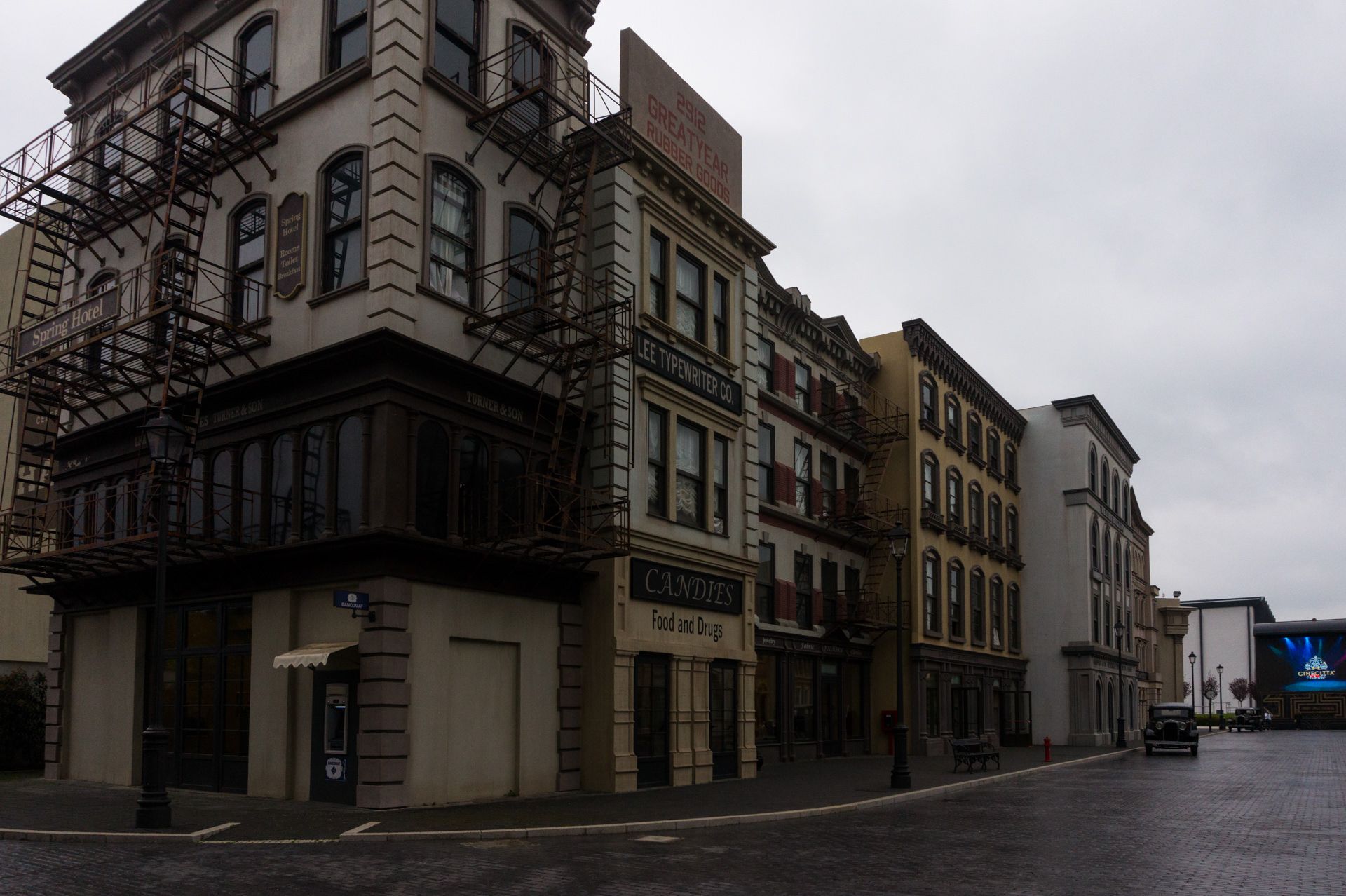
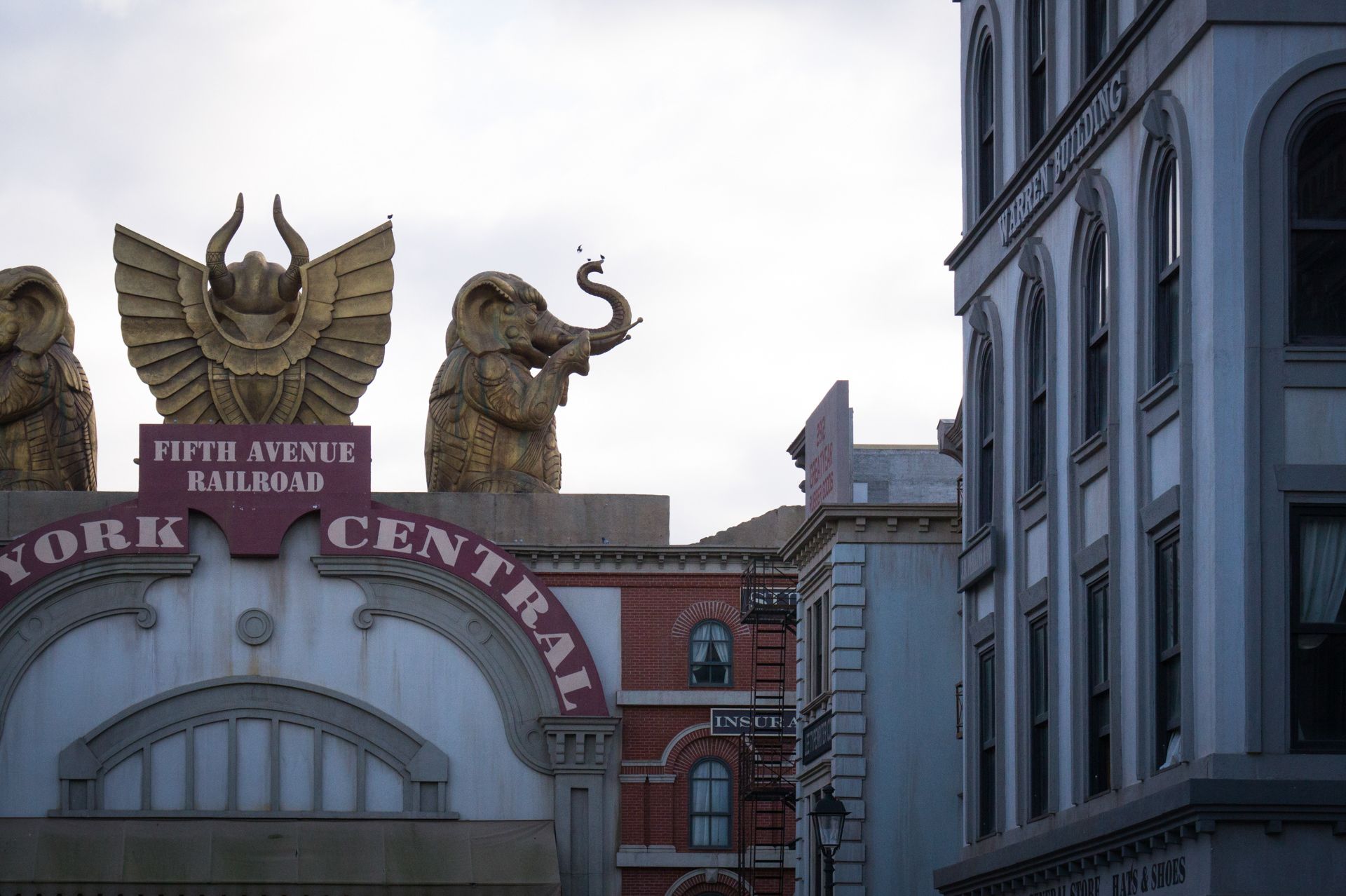
Through an elaborately designed entrance portal, one enters the park directly into Cinecittà Street, the park’s main street, inspired by New York of the 1920s. Although the set is only of generic design, i.e. not based on any film, this area has a lot of charm as long as it does not look like a ghost town due to a lack of visitors. The design is generally of a very high quality and equipped with all kinds of details, so that the first and last impression of the park is inevitably a positive one.

Aktium

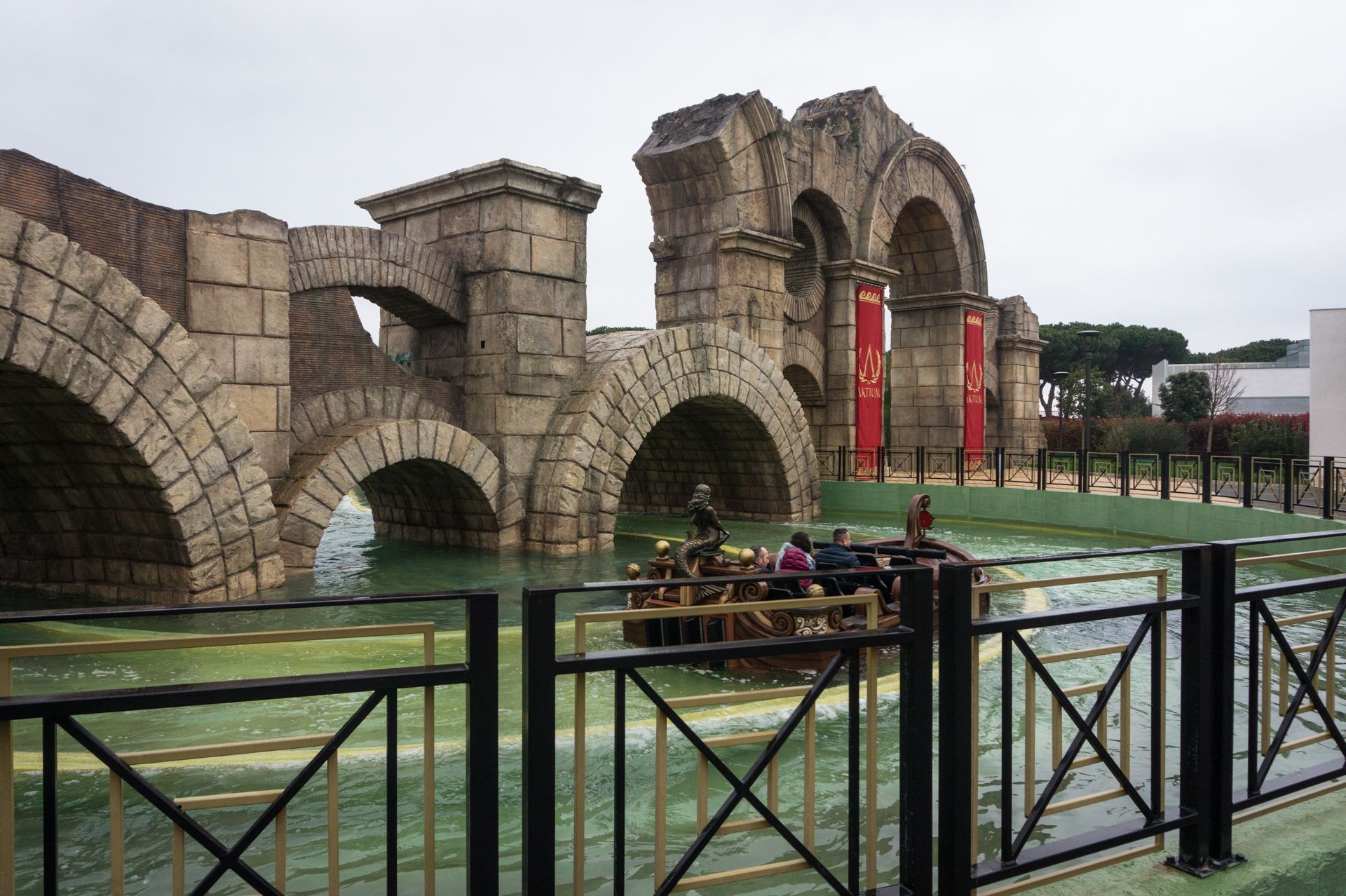
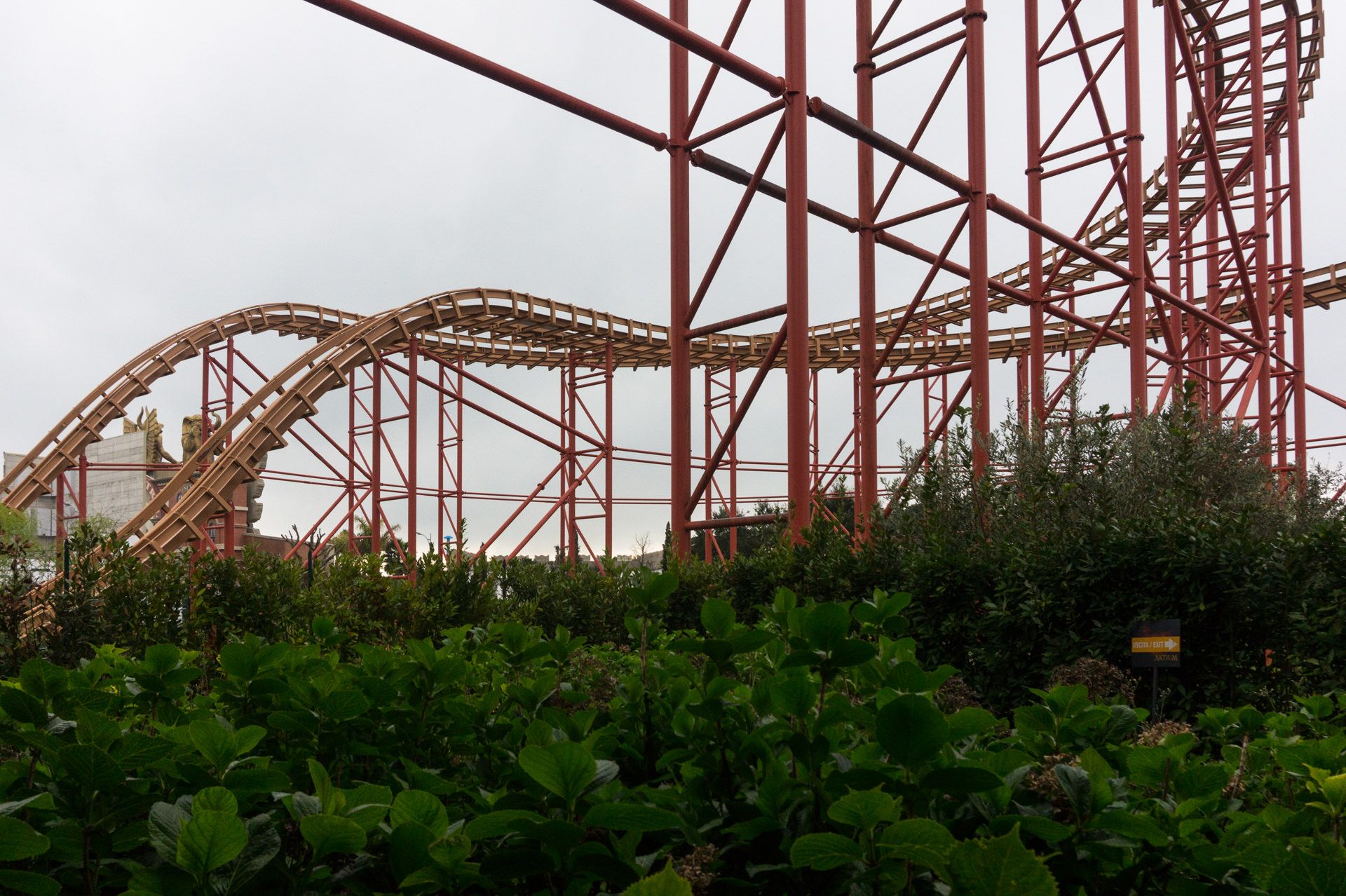
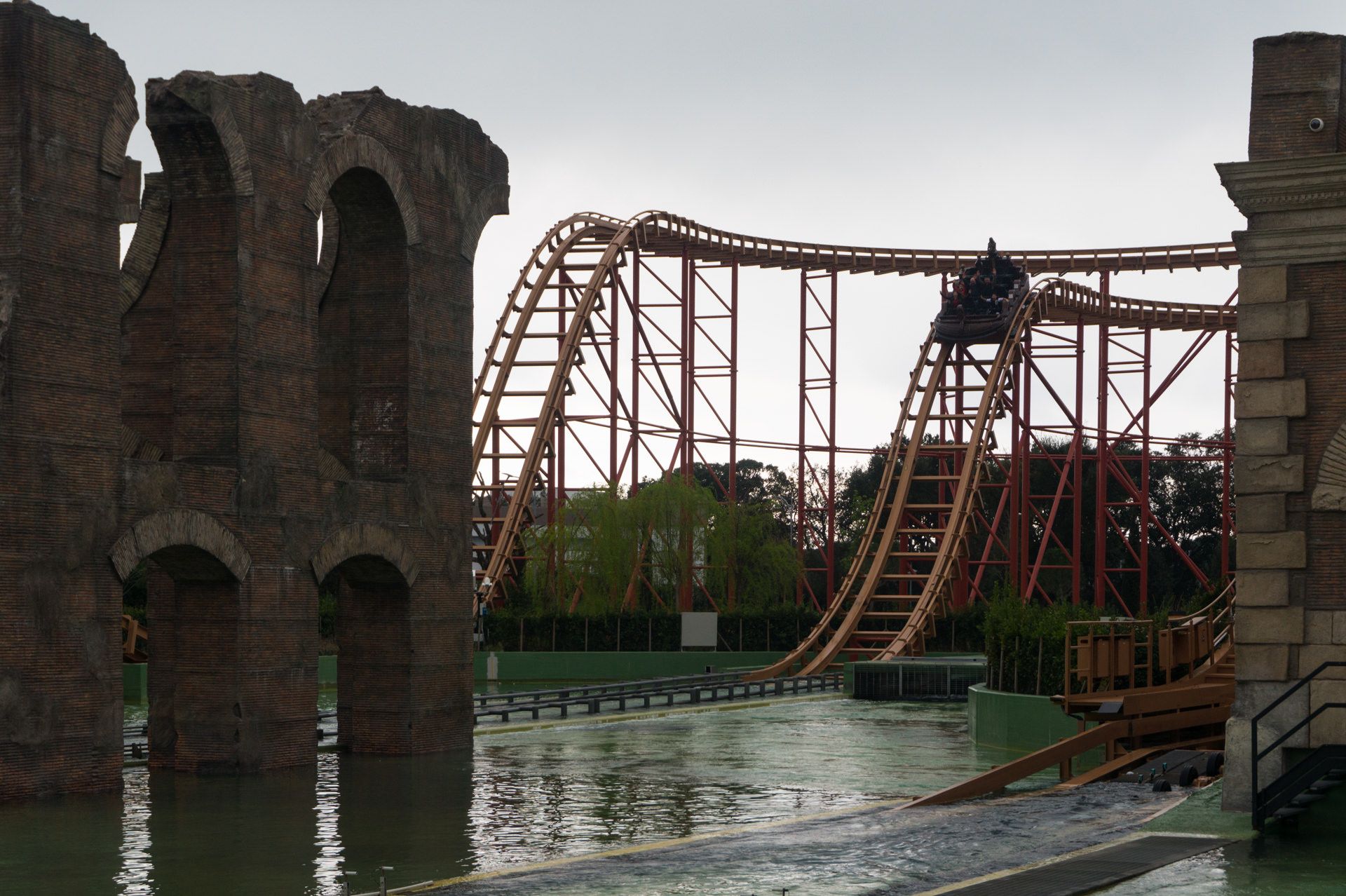
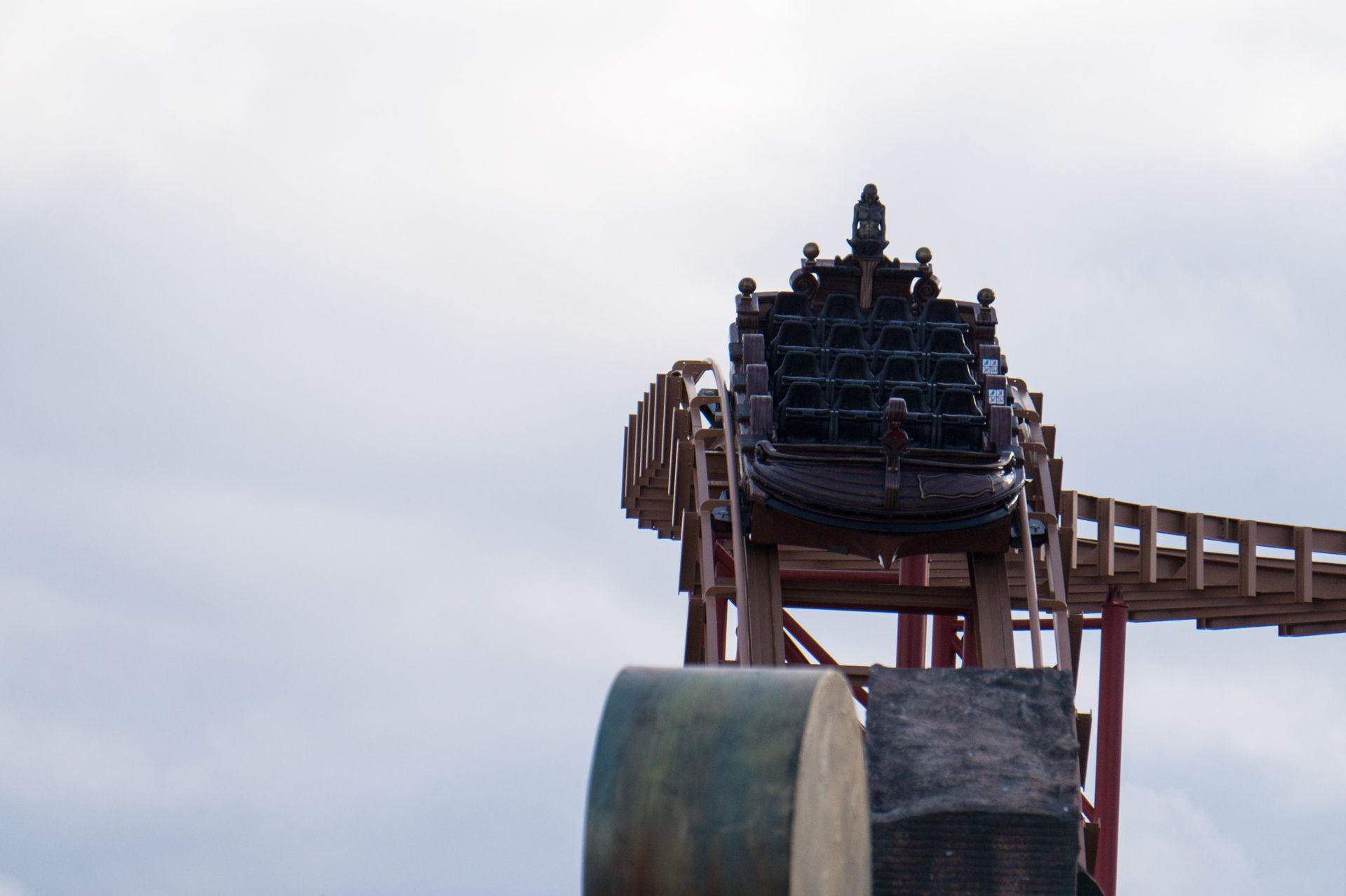
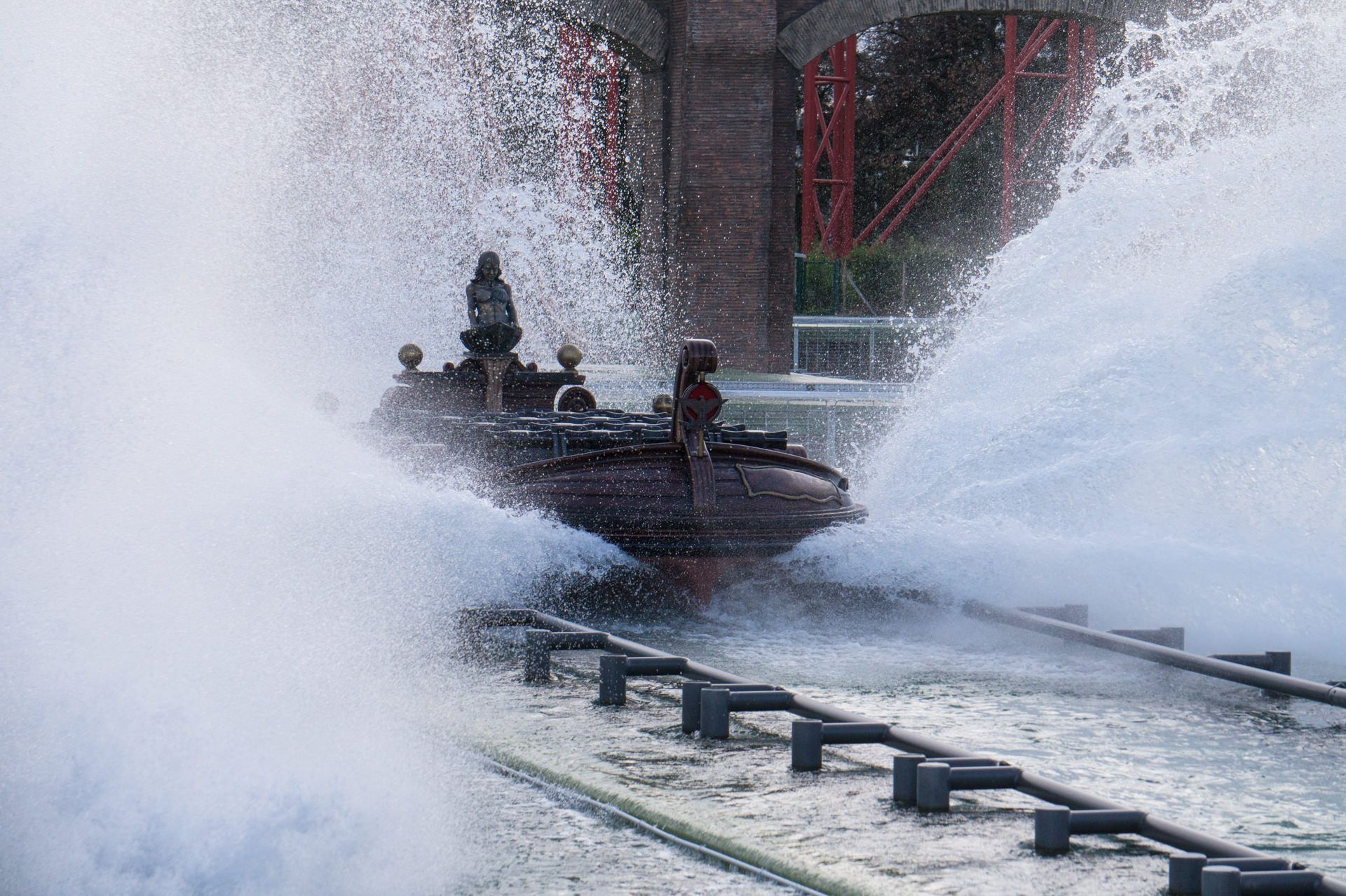
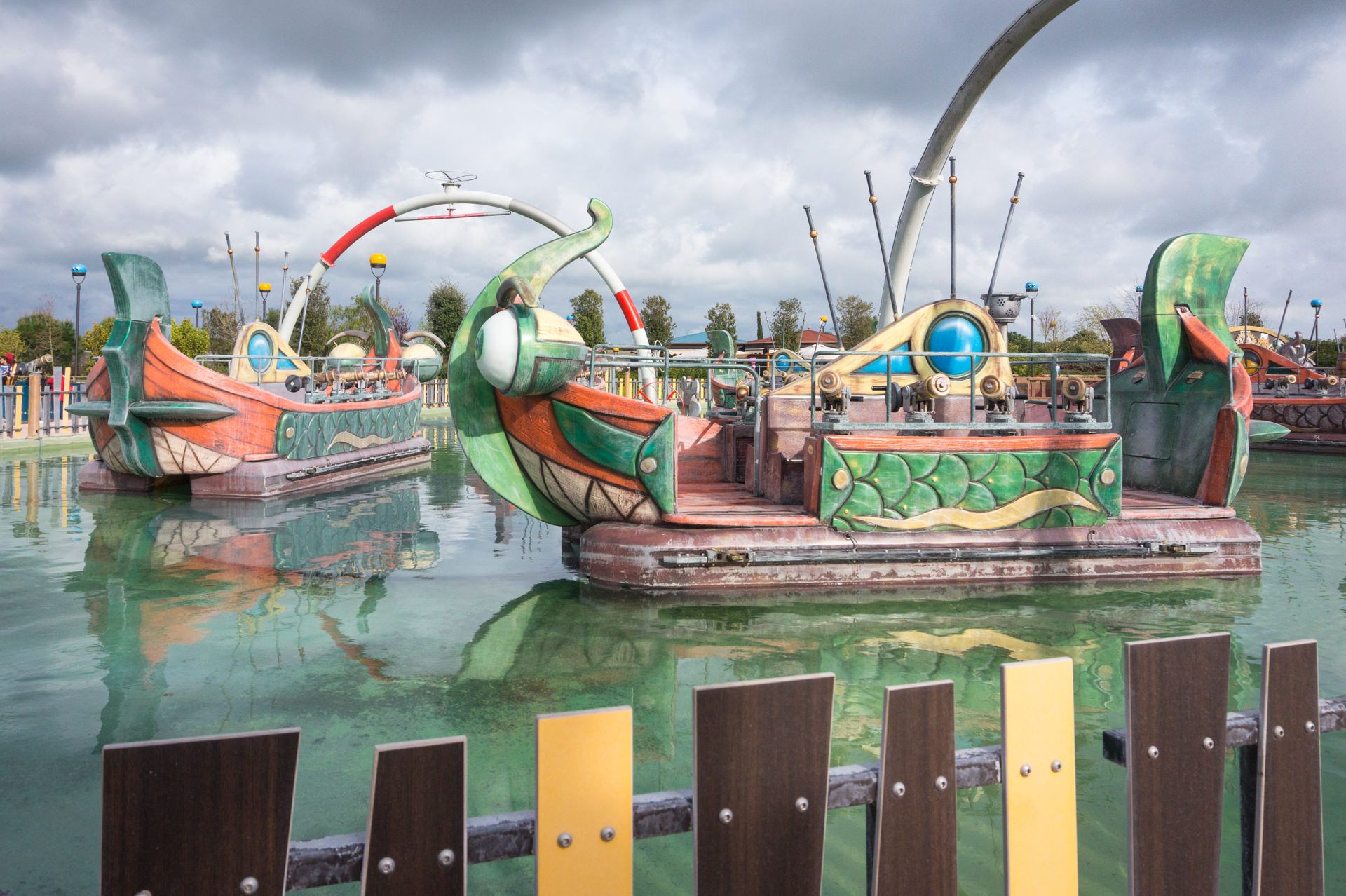
To the left of Main Street the set extends around Aktium, an elaborately designed Super Splash from Mack Rides. It is supposed to depict the naval battle at Actium, in which Octavian, the later Emperor Augustus, asserted himself against Marcus Antonius and the Egyptian Queen Cleopatra VII, thus securing sole rule in the Roman Empire. As violent as the battle was, the area around the ride is just as impressive and once again you can see that the Cinecittà World is a place where quality is the name of the game.

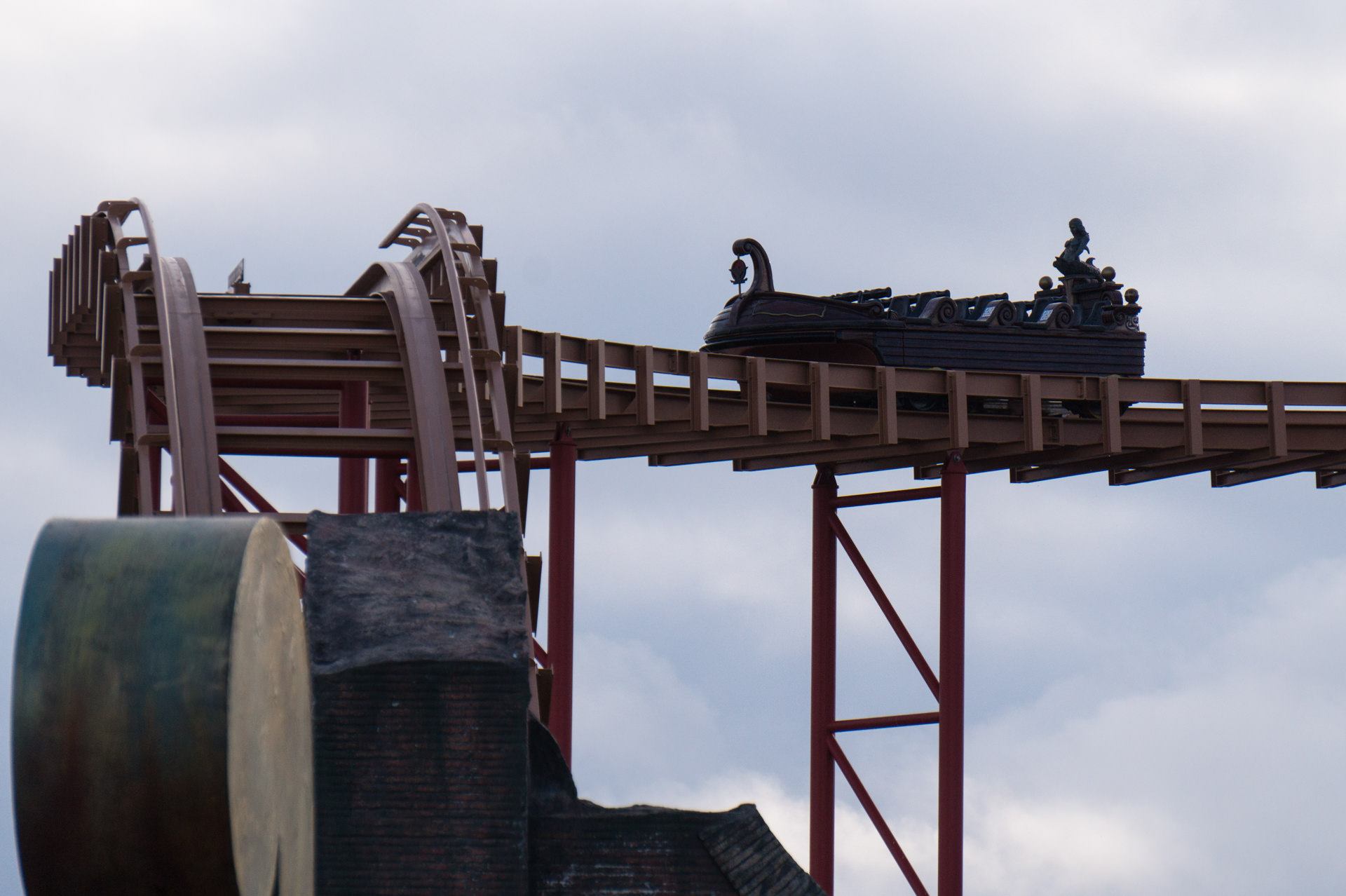
After you have left the spacious queue behind you, the journey can start right away. Without much foreplay, you go directly up the first lift hill, where you approach the first slope in a rough curve. Similar to various larger Spillwateranter installations, this runs directly down into the water without any great gimmicks. One turn later, the boat climbs up again and also makes a rough left turn. Where the ride showed itself to be quite untypical for this type of roller coaster the true character is revealed in the second shot. With a lot of momentum you pass a valley and take off on the adjacent hill before you get in contact with the water. After a little sailing through the canal you soon reach the station and are bid farewell by the staff to thunderous applause.

Aktium is a nice spillwater replacement, but it shows the limits of this roller coaster and reveals the reason why almost all other rides of this type use turntables instead of curves for the turning manoeuvres. Apart from the angular curves the ride runs without any other problems, although the level of wetness could have been a bit higher.

Studio 1

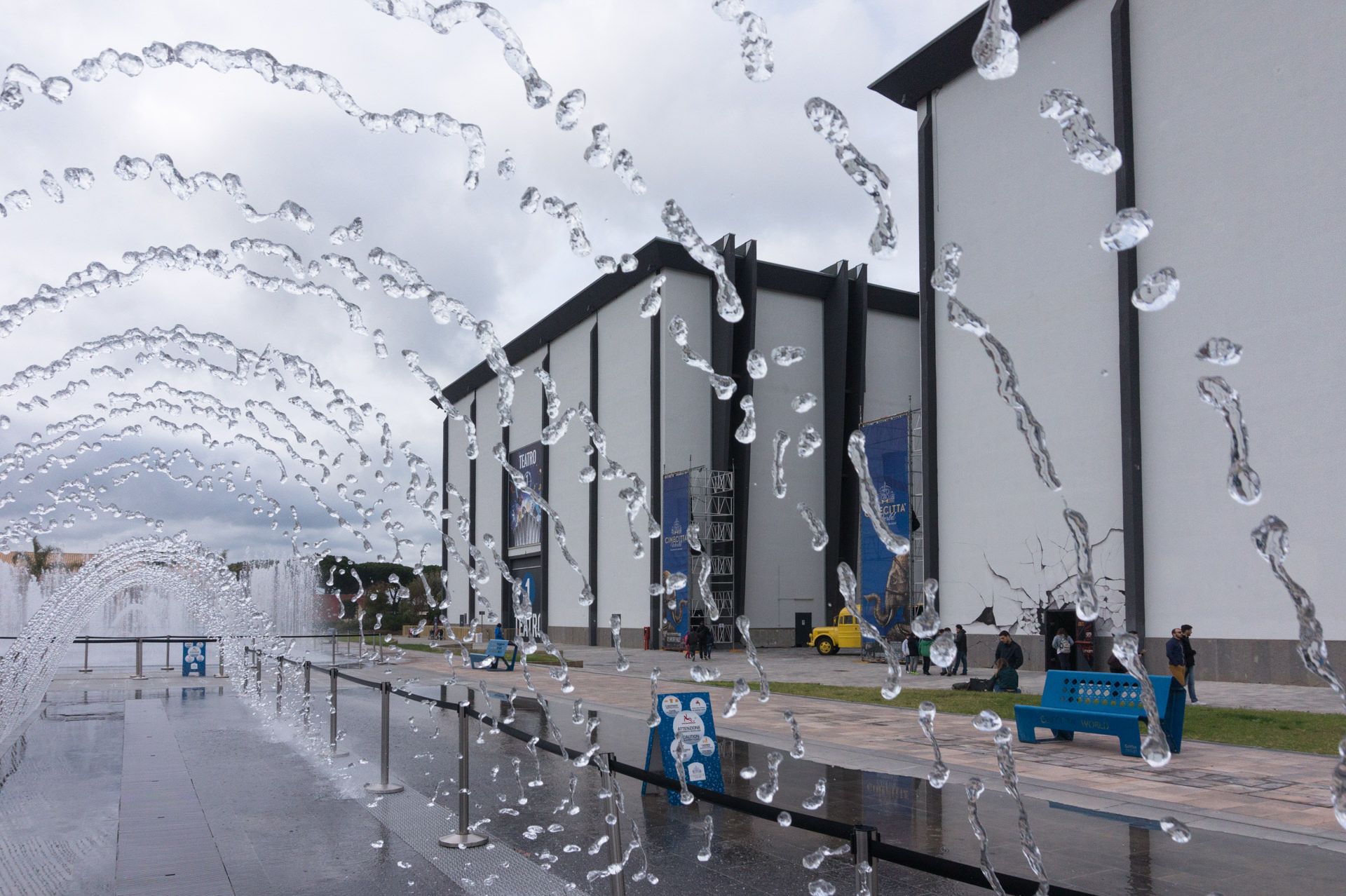
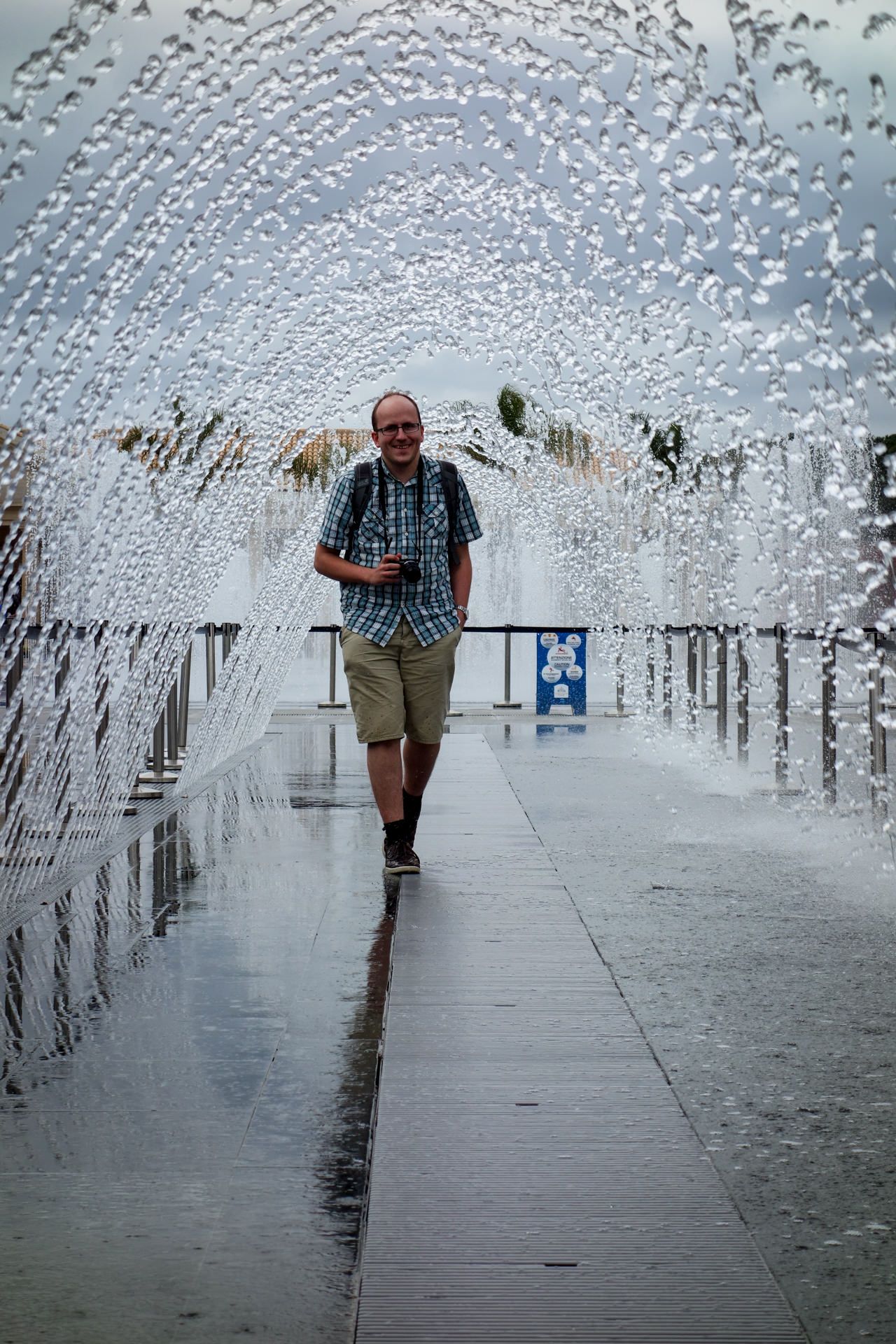
Across the Piazza Dino de Laurentiis with all its fountains and fountains we now enter Studio 1, where a magic show took place. Except for the time-consuming mind-reading number (which was only presented in Italian), the show was very professionally staged, but unfortunately not as worth seeing as the comparable show at Movieland Park.

Altair CCW-0204

Directly behind it is Altair CCW-0204, a roller coaster that many people are probably already familiar with from the English amusement park Thorpe Park near London. Unlike the former record-breaker, however, the ride takes passengers up to the starting height of 33m a little faster and without a failure-prone chain lift. After an exciting start, the passengers are then thrown through the rollover elements in trains without shoulder restraints. A massive spaceship serves as an oversized station building, in which mankind returns to earth after more than four millennia and has to ask the question who is the alien, the creatures that developed here, or we who left them in the 22nd century?

While the background story of Altair offers plenty of room for philosophical discussions, the train, whose restraint system is very similar to that of the Divertical water rollercoaster at Mirabilandia, ascends the lift hill directly. At the top, you pass the top of the hill quite leisurely and immediately drop down to the ground. With a high speed and a high pressure you go through a steep left turn before you shoot up the first inversion, a loop. This is traversed with the usual intensity, followed by a small hill with some airtime. In the valley below, the Cobra Roll is initiated, which is crossed just as confidently. After three rollovers, the half time of the ride is rung in with two corkscrews.  After another left turn above the first downhill run, the quadruple heartline roll in the back of the ride is initiated. Because of the freer sitting position, you can complete this with a slight lateral overhang and thus the feeling of always being able to fall out. The train then passes through a last left turn and then the final inversion, a right leading heartline roll towards the brakes. In contrast to Colossus in Thorpe Park, this roll is a bit disappointing, as it is identical to the previous rolls and therefore offers no more surprises.

Altair is a great roller coaster with excellent ride characteristics and a significantly improved seating position compared to the original. However, Colossus also has its strengths, which are mainly reflected in the grandiose final roll and the better integration into the terrain; it is simply more photogenic, although Altair is by no means photo-shy either. The modified first drop is a great experience and the lack of vibrations in looping and the subsequent cobra roll, as well as the absence of a queue to our visit point, make the ride a guarantee for repeat rides.

Erawan

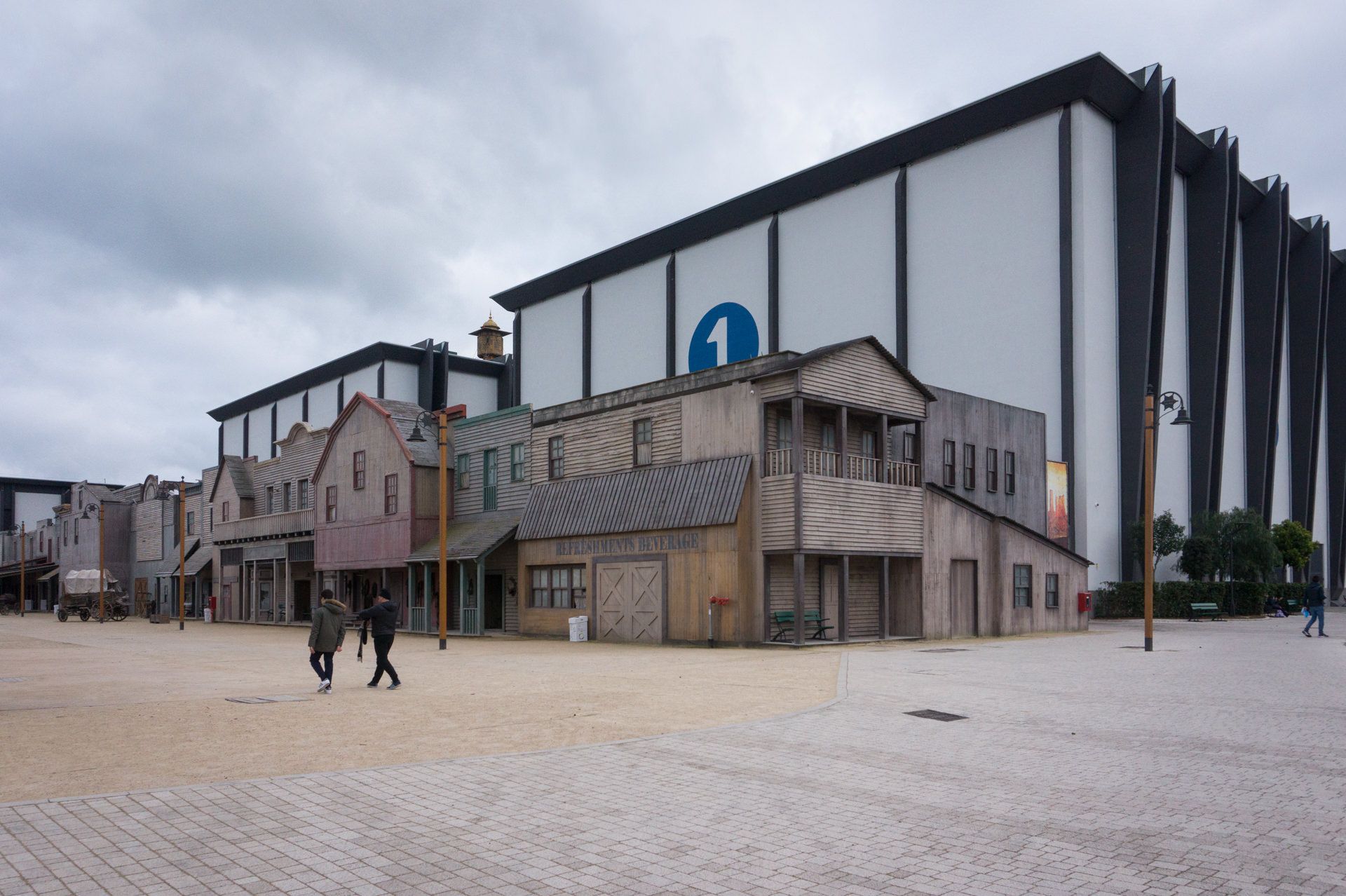
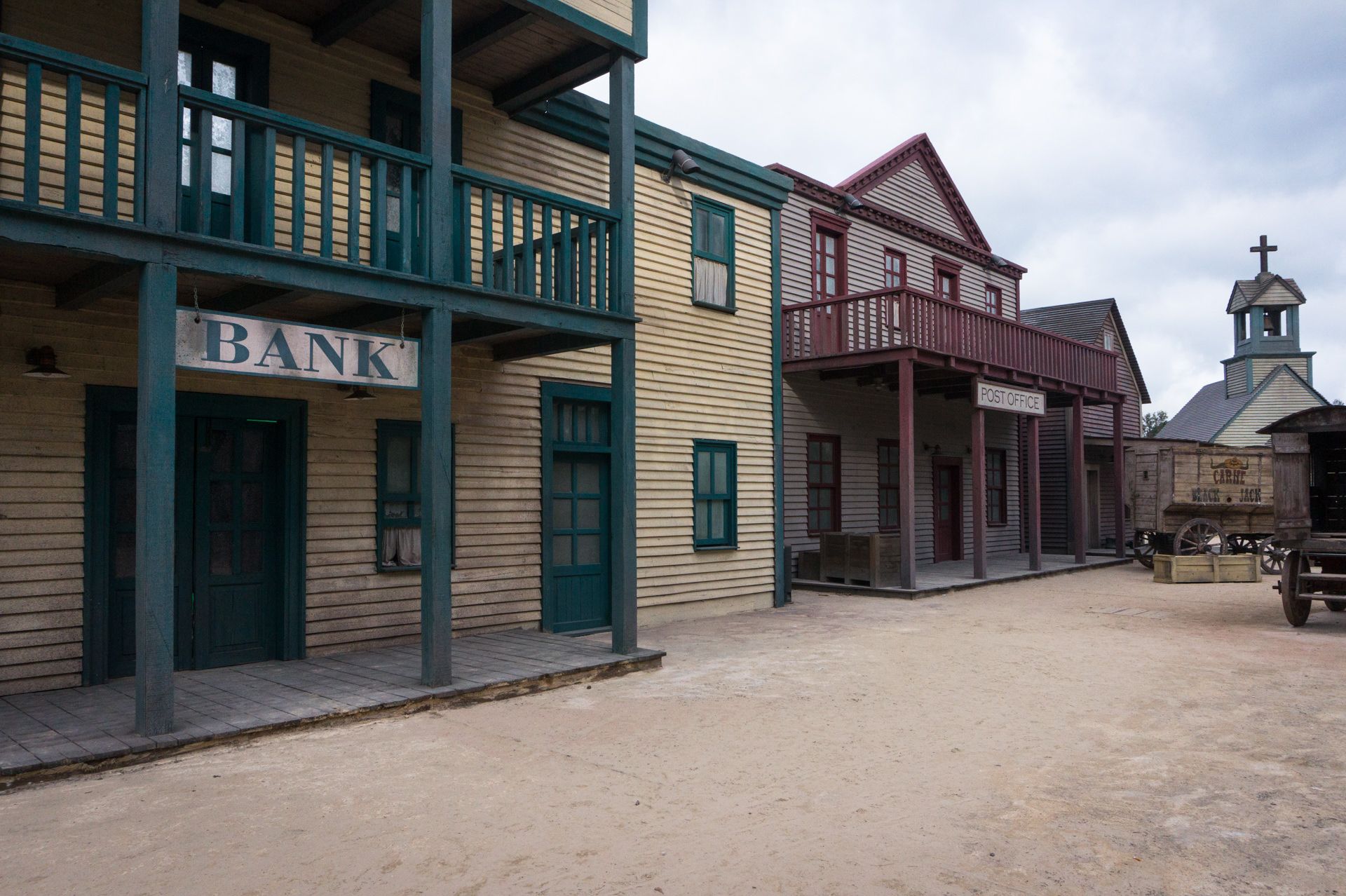
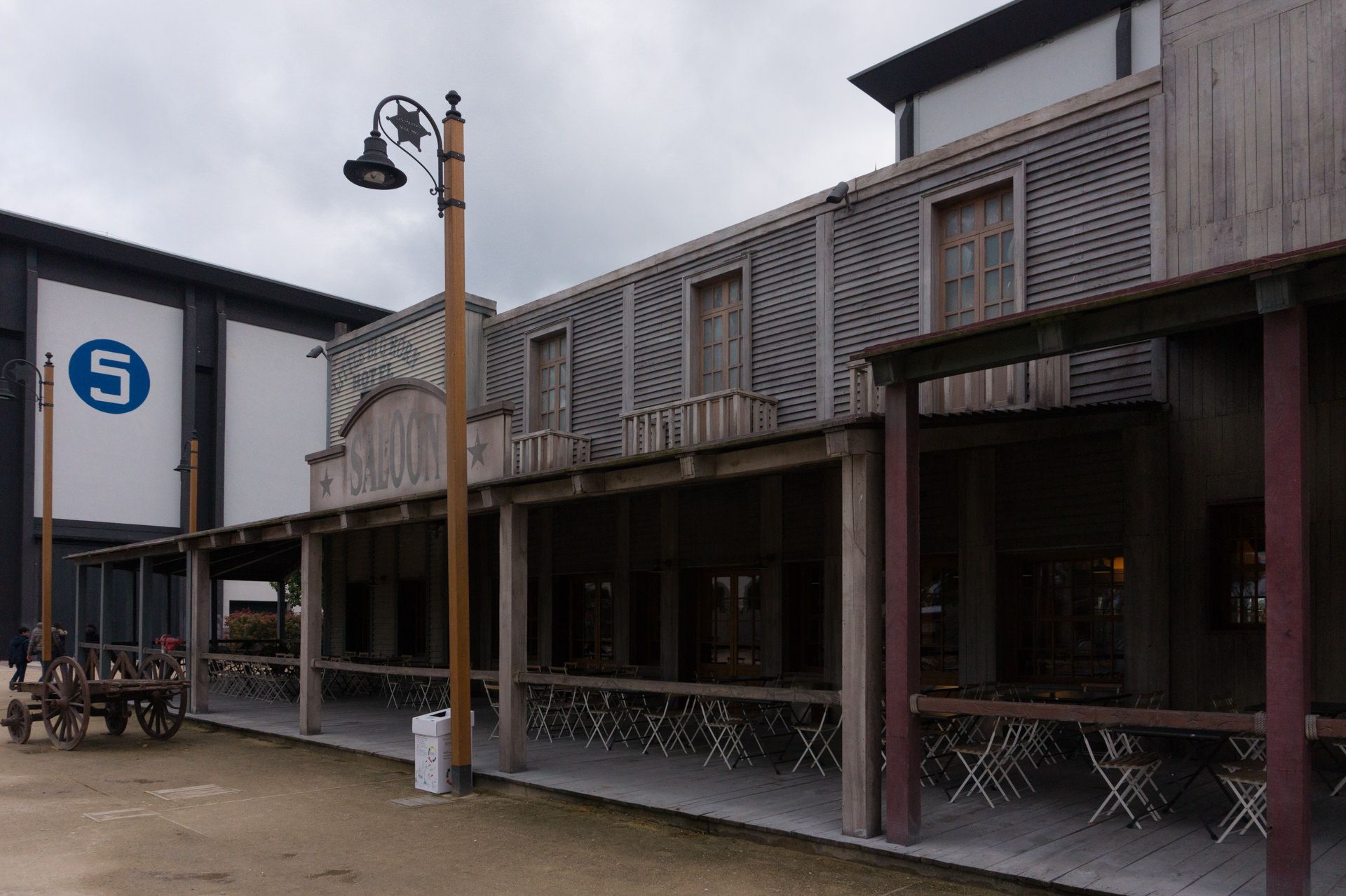
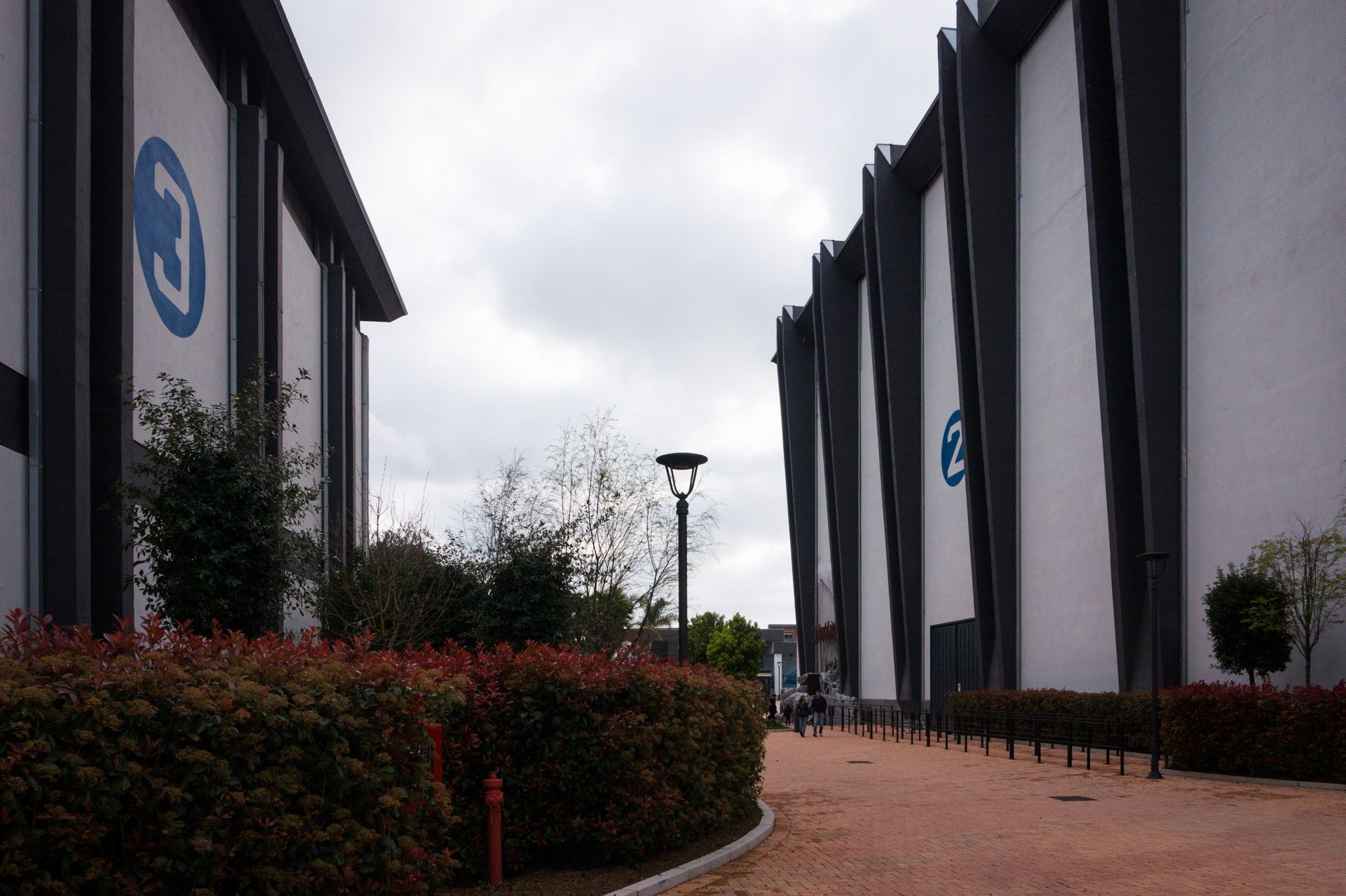
Through the pretty western town of Ennio’s Creek, named after Ennio Morricone, the composer of numerous Italo western scores, where a scary walkthrough is to educate during the season, and past Studios 3,4 and 5 (with a 4D cinema in Studio 4 and a children’s playground in Studio 3), we head towards the most impressive ride in Cinecittà World, the Erawan Freefall Tower. This visual treat includes four lanes, two of which offer pure falling pleasure while standing, while the other two lanes entertain their passengers while seated. All gondolas are tilted forward before the fall, which generally ensures a great and outstanding ride experience. But even apart from the special features Erawan is a magnificent tower. The pure fall reaches similar qualities as Apocalypse from the English amusement park Drayton Manor, which is in my opinion the best freefall tower in Europe. The only difference is that you are one experience poorer due to the absence of the hilarious standing gondola with corridor. Erawan is undoubtedly the best designed giant drop far and wide and also offers a great ride that you should not miss.

Darkmare

Just a few metres from Erawan is the entrance to Darkmare, the family rollercoaster of Cinecittà World featuring a very dark story. Thematically one takes up Dante Alighieri’s Divine Comedy, which was to be filmed in the 50s in Studio Hall 2. However, there were numerous strange accidents and finally a fire, whereupon the shooting was stopped and nothing happened afterwards.

After years of standstill we venture into the hall and experience a wild ride through hell, which begins with a short descent in a right turn, into the lift hill of the lift. You pass a mirror, which is admittedly a really great effect. Passing numerous, artistically valuable projections, all of which make Van Helsing’s Factory from Movie Park Germany look old, you quickly reach the ceiling of the hall, whereupon the train immediately plunges to the ground in a steep left-hand bend. Regardless of losses, the first valley is crossed with outstanding intensity, whereupon the train soon gains altitude. After a curve change, the train passes through a narrow downward helix and winds its way to the other end of the hall in a zigzag curve combination. After a short ascent you reach the freefall segment, where a demon now shows itself and puts its wings around us. Shortly afterwards we are already one level lower and leave the segment very quickly. Now follows a narrow left turn, which is immediately joined by the final turn to the right. Shortly afterwards we reach the station and are once again bid an enthusiastic farewell.

Darkmare is really, really, really damn good! In contrast to the prototype Th13teen of the English amusement park Alton Towers, the ride has no funny backward part after the drop segment, but the rest of the track is much better. In addition, the general design of the ride in its dark comic style is really outstanding and the projections are just perfect. The large and demonically well darkened hall makes the compact ride look three times as big as it actually is and extends the ride in equal measure. The free fall is also quite ok, but can be a bit too much for first-time riders, after all the ride is not lacking in power anyways. But you shouldn’t take such a gloomy view, because Darkmare is definitely the best roller coaster of the park and one of the best roller coasters in the country; so it’s a great ride with a very high repetition urge.

Aquila IV

Opposite Teatro 2 is the submarine Aquila IV, which was used in a German submarine film and a music video by the band Bon Jovi. Of course it is not Das Boot, because it is still located in the Bavaria Filmstadt not far from Munich, but the U-900 from the film of the same name with Atze Schröder in the leading role. Admittedly, the scenery builders did a good job, but we couldn’t explain to ourselves what the meaningless tour was supposed to be in Italian. Without language skills you should avoid Aquila IV and even with language skills you really shouldn’t expect too much, especially since the waiting time is very long. On the other hand, a visit in a real submarine is really recommendable; we at least wished to return to the U-571 of Movieland Studios.

SpacExpress

In addition to the SpacExpress, an immersive tunnel of Simworx, which however was not yet in operation at the time of our visit, the children’s kart track Velocità Luce and the entrance to the children’s land Sognolabio are also located in this area. This area is very colourful and offers some nice rides for children made in Italy, as well as a very annoying soundtrack and a nice splash battle.

Pictures Cinecittà World

Conclusion Cinecittà World

Cinecittà World is a good amusement park that has made quality its top priority; here neither the design nor the rides are of inferior quality. Unfortunately, sometimes the quantity is still missing, because you can only manage a whole day in the park if you actually watch every single show, eat comfortably in one of the restaurants and take multiple rides. The Movieland Park shows how it’s done, but at the Cinecittà World their own professionalism still stands in the way. In no other Italian park you could meet as much staff as here, neither in the shows nor in the attractions. Although this creates a good image, it is known to be somewhat more expensive than the one-person operation of the Mirabilandia. In addition, Cinecittà World is based on something you know and which is also used in numerous film parks or film studios with guided tours, but it is questionable whether they are on the right track; because sometimes they only show larger generic sets without any actual film reference with suitably embedded attractions. A larger reference to own productions would therefore be advisable, but one does not necessarily have to give up the intended concept. I’m curious how the Cinecittà World will develop in the next few years, because the park has potential and already offers a lot of quality; a condition that one would wish for other parks around Rome.


What is your opinion about the movie park Cinecittà World? Just write it here below the report in the comment field or visit our social media channels:


Click here for the next report of the Il Viaggio dei due Runner Tour

Oh, oh, oh Gardaland

Gardaland

After a visit to Disneyland in Anaheim, California in the early 70s, businessman Livio Furini decided to create his own park. At that time no place seemed more suitable than an area within sight of Lake Garda, after all this is the first lake of its size that tourists, coming from the Brenner motorway, have been occupying since the late fifties and have not given it away since then; finest Mediterranean feeling without the Mediterranean Sea, of course. With the help of some local entrepreneurs, Gardaland opened its doors for the first time in 1975 and has been growing steadily ever since. In 2006 the British Merlin Entertainments Group bought the park for 550 million euros. Two hotels a few kilometres away complete the offer.

Arriving at the car park, the crowd of people promised a pleasant day’s visit, but this was not necessarily reflected at the cash desks and at the entrance. Really stupid German park guests in their teens, who had probably never been to an international amusement park before, also delayed the ticket purchase immensely by explicitly asking for two Eintrittskarten. It’s very easy to do so, if you order the tickets in English, put down your Merlin 2:1 voucher and pay the money. Afterwards they wish you a wonderful day in finest German. With the tickets in hand, we went straight into the park, where I had to wait for Dominik, as he hadn’t been able to close the gap behind an Italian family. In general, the access area to Gardaland is somewhat disadvantageously built.

Fantasy Kingdom

Right at the beginning you are spoilt for choice by walking through two children’s areas. You can choose between the medieval area of Gardaland, where there is a horse carousel and several playground equipment, and the Fantasy Kingdom, where you can find Prezzemolo and his friends, the park mascots. They are cult in Italy and in 2002 they even got their own TV series, incidentally one of the early projects of the Rainbow studio (Winx Club, Huntik and some more, whose licence is now used in Rainbow Magicland close to Rome), with 26 episodes in total. Prezzemolo, which translates as parsley in English, is a shy dragon who, while eating pizza topped with strawberries, becomes He-Man and helps his friends. The series is actually not bad, although I don’t understand a word of Italian, and it shapes the style of the theme area immensely.

The centrepiece of this is an artificial tree, which, similar to the Cabane des Robinson of the Disneyland Park in Paris, is accessible. Inside there are some rooms inhabited by Prezzemolo and his friends, which are very nicely decorated. Continuing upwards you climb a staircase until you reach the balcony in the artificial treetop. Up here you can have your picture taken with Prezzemolo or simply enjoy the view of Gardaland and nearby Lake Garda. A staircase around the tree leads you down again. It gets quite interesting in the cellar of the tree, where the Magic House is located.

Magic House

After entering the entrance hall to Prezzemolo’s happy home, a magician appears and speaks to the visitors. The room in which you are currently located is extended. Prezzemolo is greeted with great excitement in his living room and explains that the strange voice that is heard from time to time means that there are hardly any visitors left. Suddenly strange things happen and the magician speaks again to the guests of the house. Now the restless ghost explains that this was once his laboratory and he has got used to living in the same house with Prezzemolo a little bit, but now he declares it to be his own. He then invites the visitors to a small illustration of his powers, in which he turns the house upside down. On the way out, Prezzemolo tells his visitors about a strange dream in which his house and a magician played an important role.

It’s kind of cool to stand in front of a huge building and take a lift a few meters down to the basement to visit a completely underground Mad House. Unfortunately the comic look of the drum robs the illusion a little bit, here you could have achieved even more with additional effects. The music is coherent and the Italians listen attentively to the story, which makes it easy to follow the story, at least in theory.

The rest of Fantasy Kingdom looks like the prototype of all the more modern children’s kingdoms. Similar to the younger Sesamo Aventura from the Spanish Port Aventura near Salou, there are other rides, e.g. a quite neatly designed tractor ride, a small monorail and other smaller carousels in an elaborate design.

Raptor

A little above this area is the entrance to Raptor, the prototype of the Wing Coaster from Bolliger & Mabillard. Similar to the notorious roller coaster Nemesis of the English amusement park Alton Towers, this ride presents itself as an alien, which was found by chance during construction work in the park. While Nemesis was tamed into a steel-like structure and has been used as a ride for the towers’ guests ever since, the Genetix Initiative, a paramilitary organisation, tried to tame the found creature in the specially built X-Labs in Gardaland. But all attempts failed and Raptor succeeded in breaking out.

In a short left-hand bend, the train leaves the station and immediately climbs the lift hill. While the newer versions of the ride slowly turn their passengers by 180°, the Raptor plunges into the depth, which leads to unexpected airtime, especially in the back rows. Powerfully the train crosses the first valley and then makes a steep turn to the left. Without any rest, the alien falls to the ground again and doesn’t hesitate to use its power. In a zero-g roll you are now turned upside down for the first time, leaving it in a left turn. Now you cross the entrance portal of the ride on a hill, whereupon the train throws itself into a curve close to the ground, which serves as an introduction into a somewhat elongated corkscrew. A right-hand bend close to the ground, passing the lift hill of the ride, follows, but is immediately replaced by another left-hand bend. This leads into a very long in-line twist, a straight roll, which is equipped with some Near Miss elements. Shortly afterwards we land in the braking section of the track, where we can spend some time in the now tightly fitting restraint waistcoats. Another left turn brings us down to the hangar level again.

Although Raptor is the smallest representative of its kind with a height of 33m and a length of just 770m, the ride is one of the better ones, as long inversions are accompanied by tight curves and forceful valleys. Although the Near Miss elements are negligible, the ride in Gardaland surprises all the more with its rather unconventional first drop (it’s strange that through the whole hipster movement with its unconventional mainstream, something absolutely classic can now be called unconventional, as nobody uses it anymore). Compared to the other European rides, Raptor is clearly ahead due to its more dynamic ride, especially since The Swarm from Thorpe Park, England, has lost all of its driving sophistication again due to the renewed rotation of the two rear cars.

4D-Adventure Cinema

A few meters further on you will find the Spectacular 4D-Adventure Cinema, which contains a simulator with quite long rows made by Intamin. The ride was opened in 1990 under the name Cinema Dinamico as the first of its kind in Europe and showed up to 6 different films per day, including a film showing the wooden roller coaster Colossus from the amusement park Six Flags Magic Mountain. In 2001 the theatre was rebuilt, whereupon 3D films were shown, which were lifted into the fourth dimension by the additional movements. As always with such attractions the quality of the films varies immensely, mostly the movements of the passenger carrier are jerky and moreover asynchronous to the image, which makes them a guarantee for whiplash injuries of any kind and motion sickness.

I Consari

A little quieter, but by no means less spectacular, is the dark ride I Corsari. In defiance of the imminent opening of the Euro Disney Resort in Paris in 1992, Gardaland created the most expensive attraction in the world at the time. And so it is hardly surprising that the already very limited space of Gardaland was optimally utilised by an additional underground hall. Access to the dark ride is on the deck of a huge galleon, in whose hull the queue including the station is located.

Hired as sailors of a huge galleon we immediately try to escape the cruel captain Jason Montague in two nutshells. Our way leads us directly into the jungle, where dangerous animals and dead pirates make us understand the cruel reality of our business. A parrot tries to keep us from our goings-on, but we know that returning to the captain will be no less harmless. In a cave we meet a rotten ship whose restless crew is still among us. We narrowly escape and end up in a supposedly safe environment. The pirates here seem to be nice and friendly, but above all, they like to drink. We are advised to turn left and through a sewer system we end up in a swamp. If this environment was not deadly enough, we are attacked by a sea snake with human appearance in the next moment. But even here we manage to escape and are immediately rewarded with a legendary treasure. Freshly hanged pirates do not bode well and so we are not surprised when a huge galleon sounds the order to attack. It is our old team leader Captain Montague, who not only destroys the fort next to us, but also guides us into the depths of the sea.

I Consari can easily be called the best pirate theme cruise in Europe without devaluating the Disneyland classic Pirates of the Caribbean too much. The ride itself is extremely harmonious and the animatronics used are impressive, as is the entire set design.

Sequoia Adventure

Next to the log flume Colorado Boat, which was built in 1984 and is a rather classic ride with two shots, is the entrance to Sequoia Adventure, a truly special roller coaster made by S&S. The layout of the Screaming Squirrel promises a very exciting ride with three, slightly longer, overhead passages.

Once the manufacturer’s typical airy brackets have been set and locked, the car starts to move and immediately rolls towards the curve, which grips the car over two raised rails under the arms and lets it slide onto the actual track. Here, the trolley couples back to its original rail profile and is immediately transported upwards in the lift. Once at the top, the car completes a short straight line before it is braked and transported very slowly over the hilltop. In the so-called saxophone element, which actually looks a bit like the musical instrument, you drive back the straight line upside down before you are slowly turned around in a turn. The whole game is repeated two more times, whereby after the second saxophone it goes up a little bit to get to the correct starting height for the third saxophone. Towards the end another turn leads the car back to the station.

Sequoia Adventure is a wonderfully wacky roller coaster that celebrates its longer overhead passages virtually by itself. All these passages are quite pleasant, but the turns are unfortunately not without jerks, which is especially noticeable after the second saxophone with its free cut. But the ride itself is fun and with its wonderful different layout it is a real eye-catcher.

Magic Mountain

In 1981 the Dutch amusement park Efteling presented Python, the largest and most exciting roller coaster in Europe. Two years later, Heide Park Soltau introduced Big Loop, a similarly exciting but higher ride, which attracted a lot of attention. Gardaland also recognised this trend and in 1985 offered Magic Mountain, the most exhilarating roller coaster in Italy at the time, also modelled on the Carolina Cyclone of the American amusement park Carowinds.

As with Python, the train leaves the station in Gardaland on a small gradient, followed by a left turn. Shortly afterwards the train hooks up to the lift chain, which takes it to a starting height of 29m. This is followed by a small gradient and another 180° left turn before the train races down the track. The colourful train advertising for Coca Cola now passes through a very powerful valley and immediately passes the first loop and then the second loop of the ride. On a straight line the train gains a bit of height and shortly after that it takes a curve. This brings the train up to the starting height of the corkscrews, which you enter at a remarkable slant. While the wagons are screwed through this, the world is turned upside down two more times. After a small hill, you now complete an upward helix around a fountain, after which the braking section is waiting.

Magic Mountain is a great older type of roller coaster, which doesn’t have to hide from newer rides due to its truly intense dynamics, even though both trains were only half occupied. (One train with three cars, the other with four). The ride itself runs faster than its Dutch counterpart and therefore has a lot of pressure from the beginning, which is transferred to the passengers as well as to the track. Vekoma’s new trains generally enhance the ride, but the strange Coca Cola branding and the even stranger clearance on the day of the visit detracts from it.

Kung Fu Panda Academy

Behind the big looping roller coaster, the Kung Fu Panda Academy in Gardaland is currently under construction, which will feature the Fabbri Spinning Coaster Kung Fu Panda Master, the redesigned tea cup carousel Mr. Ping’s Noodle Suprise and the Kung Fu Panda Chi School.

Ortobruco Tour

In the farthest corner, still behind the entrance to the monorail, the cog ride and the toddler carousel is the entrance to the Ortobruco Tour, probably the world’s largest Big Apple. The ride opened in 1990 with a much shorter layout, but this was extended to its current length in 1993, probably also for capacity reasons. From a technical point of view, the Pinfari roller coaster is quite impressive due to the number of friction wheel lifts, as well as the fully automated trains.

After a right-hand bend, the train goes through a longer straight line, whereupon the first lift hill follows after another right-hand bend. At the top, the train passes a left turn and slowly picks up speed. Over hill and dale or the typical waves of every Big Apple the way to the next curve is now overcome. After the turn, the second lift follows, whereupon a downward right helix is added. This is followed by the third lift above the queue, which merges into a right-hand bend. In its original version, this lift led the train into the station, but in the current version it leads the train into the fourth lift. Now one circles the building of the toddler carousel by about 90°, completing a straight drop and a straight gradient after a slightly bent valley. Immediately you go downhill again in another right helix. You leave this one in a slight incline, which here also merges into a lift. In a helix to the left the train makes the subsequent descent. Here too, the speed of the train is kept alive by additional friction wheels in the following ascent. Now the train goes through a right-hand bend, which is then transferred to a left-hand bend after a slight bend; shortly after that the station appears.

The Ortobruco Tour is a nice children’s roller coaster, which always gives the feeling of sitting in a bigger Zierer Tivoli than in a Big Apple, because the speed and the track length suggest it. The ride is at least good and the decoration, which interestingly comes from the former Gardaland Waterpark near Milan, is quite impressive.

Ramses Il Risveglio

The first major dark ride in Gardaland opened in 1987 with Valle dei Rei, which, due to the seemingly endless popularity of interactive dark rides, was redesigned into Ramses Il Risveglio in 2009. The ride suffered the same fate as Duel from Alton Towers and Tomb Blaster from Chessington World of Adventures.

The story is now about strange phenomena that occurred during restoration work and an evil that wants to subjugate the world. We already had a similar storyline with Raptor, but in contrast there are robot mummies and finest metal sounds. If the typical sound of the guns would not be there, as for example in this year’s redesign of Tomb Blaster, I would really enjoy the ride. All in all, the ride is of course well worth seeing and the ride system by Pinfari is well worth experiencing. The general design is outstanding and the futuristic metal mummies are a pretty cool idea.

Below the Gardaland Theatre is the 4D cinema of Gardaland, where an Ice Age film is currently being shown. Normally this is reason enough to stay away from the cinema, after all the first Ice Age 4D film was a poorly edited version of the otherwise brilliant third cinema adventure around Manny, Sid, Diego and Co., but now the Blue Sky Studios have released a 4D film especially tailored for Scrat and it is really good. Scrat finds a time machine and travels through several eras, of course always in search of his hazelnut. The effects were well used, but the few Italian text passages were not subtitled and are not necessary for the overall understanding of the film.

Space Vertigo

Space – the final frontier. The year is 1998, and these are the voyages of the starship Space Vertigo. Its crew of 16 is on its way for about 30s to investigate basic physical equations. In not quite as many vertical meters as comparable towers, Space Vertigo boldly go where no one has gone before on a freefall tower. Aha hahahaha ha (3x).

Somehow this convoluted nature of the Star Trek intro text fits in well with Gardaland and Space Vertigo, after all the space theme has its origins in the opening year of Gardaland and thus on the European wave of popularity of the series, which was discontinued at the end of the 1960s. The queuing area consists mainly of octagonal corridors in which monitors with outdated visual material are embedded. The station is no less purist, but apart from bulky lamps it has hardly any decorative elements; but that is not what really matters here either. The tower shows, similar to the Funland drop ride on Hayling Island, that height is an extremely negligible parameter for a free-fall tower. This tower rocks tremendously, but the waiting time here was a bit long.

Oblivion – The Black Hole

Just as high as the tower next door, Oblivion – The Black Hole, a dive coaster by Bolliger & Mabillard, freely inspired by Oblivion from its sister park Alton Towers, stretches up into the sky. While Oblivion’s story revolves around the ride itself and the hole to be passed through, the story of Oblivion – The Black Hole concentrates on the black hole in its name, which is to be investigated.

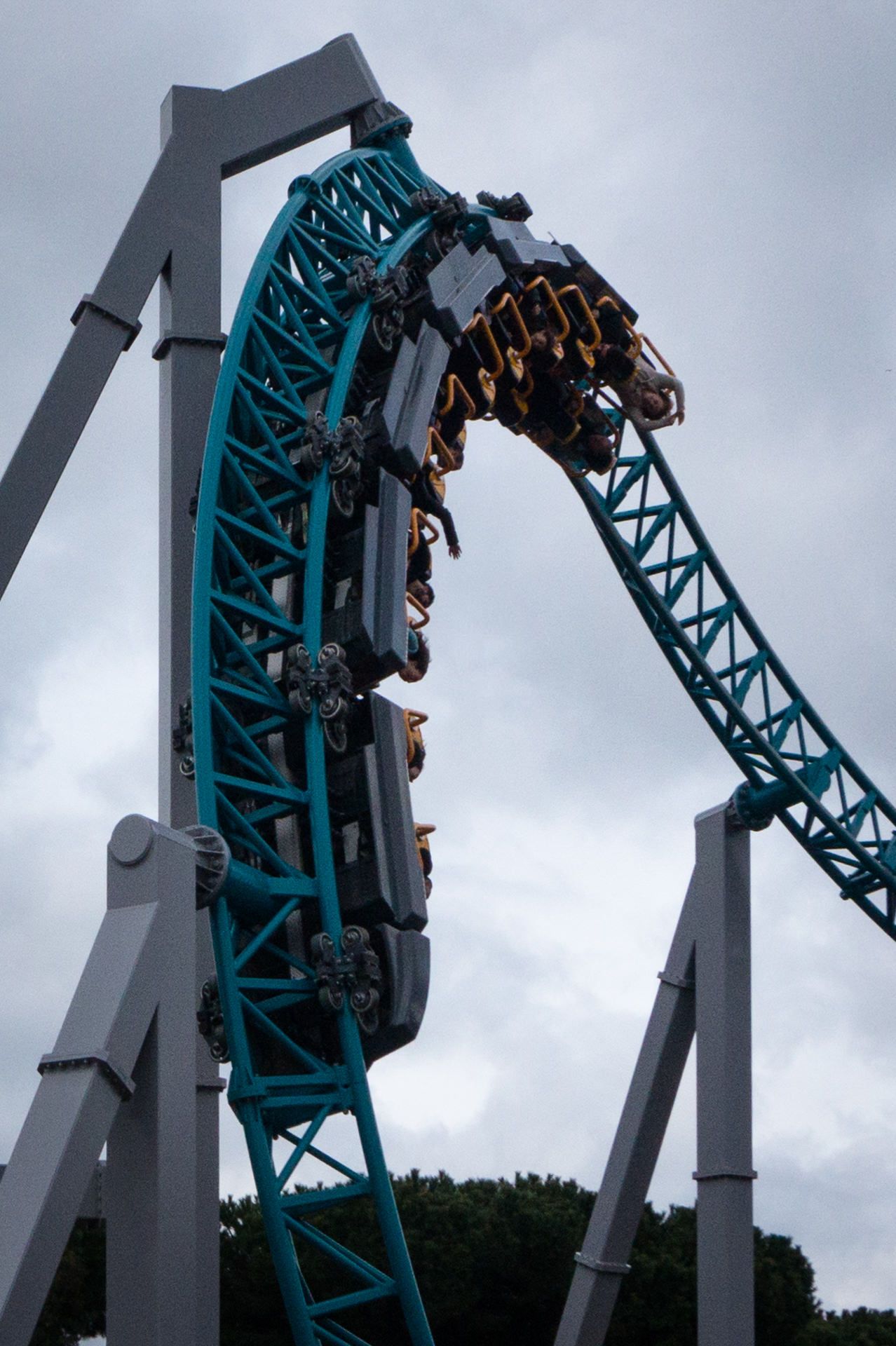
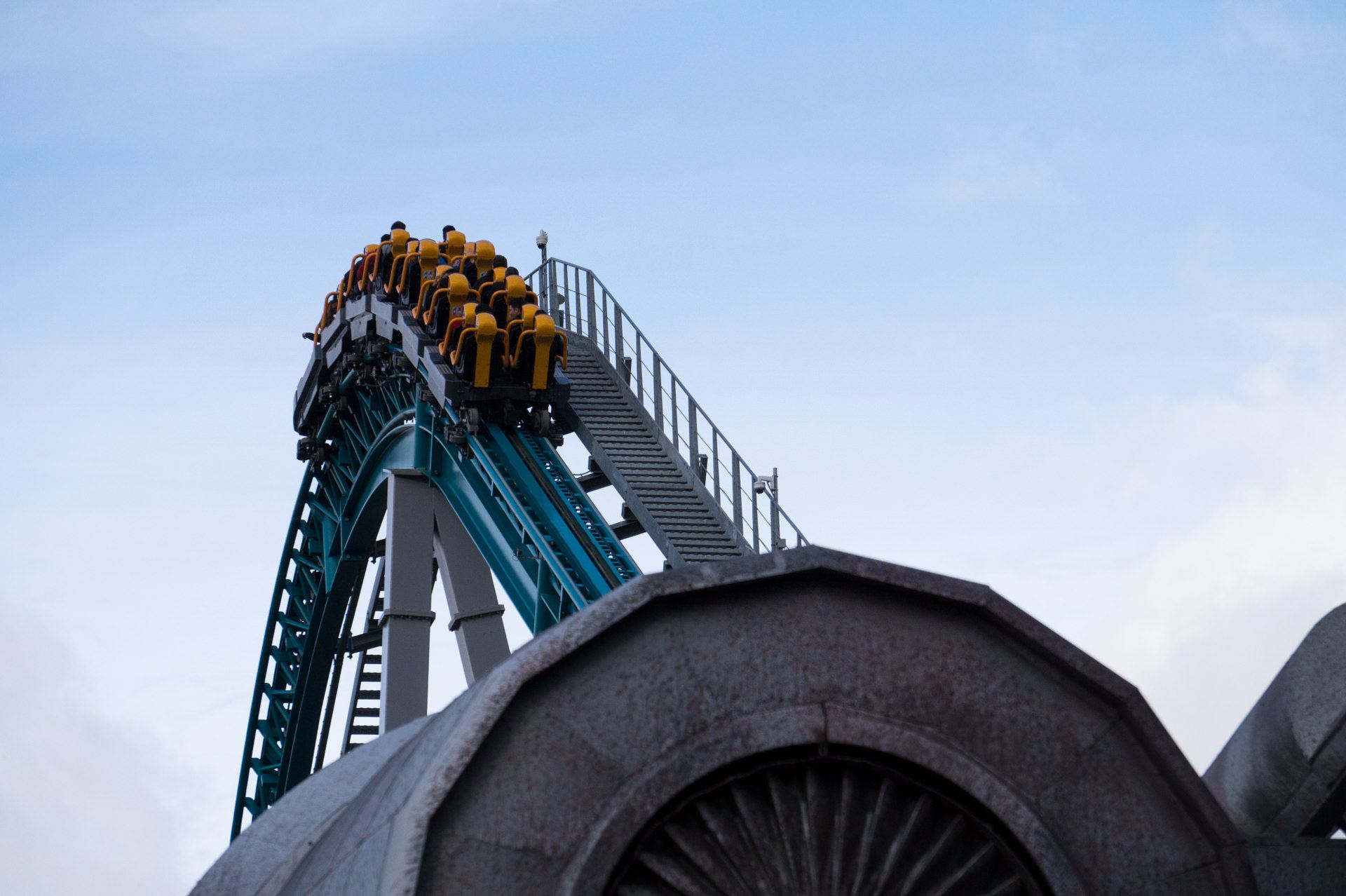
After passing the stylish, partly interactive, queue and boarding the train, the journey begins after a short countdown. Following a small bend, you immediately climb the lift hill, which takes you up to the starting height of 42.5 m. At the top you approach the position of the black hole through a left turn. The track bends downwards, the train follows this movement but is still prevented from falling vertically by a holding brake. A few seconds pass by and the train approaches the black hole at a rapid pace, with the surrounding objects which have been attracted by the hole showing their near miss character more closely than on the Wing Coaster in the same park. The train now makes its way through the adjoining tunnel, which attracts attention through fog and integrated lighting effects. In an Immelmann you skilfully change direction and then approach the ground level. Through a small building you pass another valley before you climb up the camelback, which skillfully takes you out of your seat. This is followed by a 270° downward helix, which releases you into a heartline roll rotating in the same direction. A short climb later you reach the braking section and soon after the station.

Oblivion – The Black Hole is a good roller coaster with an excellent layout, but a little identity problem. In theory, the ride covers almost the same story as Oblivion, only that the whole layout at Alton Towers is simply better. It looks like a half-hearted remake of an indisputably brilliant movie, yet the hardware of the ride is not responsible for this feeling. This and the general layout of the ride ultimately ensure that Baron 1898 from the Dutch amusement park Efteling is the better of the two Dive Coasters that opened in 2015.

Mammut

Passing the Flying Island with the same name and an overall successful design that fits the theme area, the way leads us towards the roller coaster Mammut, which uses the basic layout of the Vekoma Mine Trains and adds a total of 245m track length. The design of the ride is supposed to be an expedition to the North Pole and can convince with its general theming and the presence of a giant mammoth, but things look a bit different when it comes to the ride.

It starts off immediately with a right-hand bend, followed by the first lift hill, which unfortunately takes you up in a very straight line. Once there, you leave the hill in a left helix, where you pick up some speed. Three 180° curves with implied valleys and hills follow each other like in a slalom, the first of these curves running to the right. After a drop below the lifts, and a subsequent uphill left turn, you reach the first brake. This is followed by a left turn and the second lift hill, which again runs in an unorthodox straight line. So far the mother of all Vekoma mine train coasters Calamity Mine from the Belgian amusement park Walibi Belgium is already a lot more entertaining due to its sloping lifts, but there are still some more meters to go to generate a completely different opinion. Slightly higher than after the first lift hill you see daylight again and shortly after that you descend a long righthand helix and get a little closer to the ground. A wide left turn brings you a little bit up the hill again, but this is also followed by a downward helix to the right. Normally a left turn follows into the braking section and straight into the station, but in Gardaland the train now takes you into a left turn and up the third lift hill, because we haven’t discovered the mammoth that gives the ride its name yet. We leave the highest point of the ride, how else could it be, in another helix, this time leading us down to the ground. Passing the mammoth, we make a small turn in lofty heights and immediately make a right turn. After a steeper descent we pass under the first two lifts and make a last 180° turn, whereupon the final braking section awaits us.

Mammut could be a really good Mine Train, if it weren’t for the rather miserable ride characteristics. Compared to almost all other Mine Trains of the same manufacturer, the ride vibrates unpleasantly, so you can’t really talk about having fun after the first two parts of the ride. Only the third part of the ride brings something unexpected out of the standard layout, but unfortunately this does not improve the ride characteristics.

Jungle Rapids and Fuga da Atlantide

Behind the very neatly designed rapid river Jungle Rapids with a good degree of wetness lies the Intamin Super Splash Fuga da Atlantide. With a rather classic spillwater layout, the ride humidifies the passengers with bravura, even though much less than a Shoot the Chute normally does; this may also be due to the (at least for sun-drenched Italians) rather wintry temperature of about 18°C. Interestingly, the descents here run on roller coaster tracks and the lifts were solved by cable lifts. Apart from that, the wonderful design of the ride is inevitable, but the ride itself could be better.

Blue Tornado

As the only attraction visible from afar, mainly due to its elevated position in Gardaland, the suspended looping coaster Blue Tornado stretches upwards. Due to its open design, this toy jet coaster is an unparalleled eye-catcher, which is mainly due to the extraordinary photogenicity of the track profile. The ride is always in motion due to the three-train operation, which theoretically results in lots of photos, if you are not distracted by dancing robots.

As in every standard SLC, the ride begins with the gain of potential energy by a chain lift on a straight line leading upwards. Once there, you cross or rather undercross a hilltop, which immediately releases you into a steep curve. At a decent speed you now cross the following valley before you are turned upside down twice in a roll over. Back at ground level, the train shoots up a sloping hill. Parallel to the station you now reach the lowest point of the ride, which is also flooded with fog. In a sidewinder you now change direction, whereupon a helix is added. You leave the station with two in-line twists. A right turn lets you cross the first slope, but instead of approaching the end in a staggering manner, the train shoots down one last time and passes a helix close to the ground, which is often called bonus helix in the (roller coaster) vernacular. This is followed by the braking section and the return to the station. Surprisingly, the ride is fun and the ride characteristics are good. We even rode it more than once.

Pictures Gardaland

Conclusion Gardaland

Gardaland is a nice and above all good amusement park, which can be relatively easily described as the Italian Alton Towers. The theme areas are mixed and only rarely have a clear line, but the park scores with its exceptionally good rides, especially the dark ride I Consari. In general, there is a visible effort to make the guests have a pleasant day, which is also reflected in the guests of the park. In spite of the popular holiday region, the park guests behave in an exemplary manner, there is no queue jumping at all, groups even let you in and you can easily hang your luggage on the appropriate storage facilities, usually far away from the actual attraction, without the risk of something being stolen. In addition, the park is filled with songs composed especially for the park, so that at the end you have to rave to Oh, Oh, Oh Gardaland in the disco tunnel leading to the car park.


What is your opinion about Gardaland theme park? Just write it here below the report in the comment field or visit our social media channels:


Click here for the next report of the Il Viaggio dei due Runner Tour