The History of Kijima Kogen Park
On a high plateau (Japanese Kogen) far above the Japanese spa town of Beppu – which attracts several million visitors every year, mainly due to its large number of hot springs and the associated public baths, the so-called onsen – lies the Kijima Kogen Park (城島高原パーク).
Starting out as a small go-kart track, Kijima Motopia Land was created in 1967. With the longest go-kart track in Japan at that time, new visitors were quickly attracted to the plateau. After a change of ownership in 1971, a swimming pool and a bowling alley were added to the resort. In 1982 the park name was changed to Kijima Kogen Family Park and the following year the looping coaster Super LS Coaster was opened.
In 1987, West Japan Nippon Korakuen Co, Ltd. (operator of the former Kōrakuen stadium and today’s Tokyo Dome) took over the park. In the course of this, the park was renamed in 1992 to Kijima Korakuen Yūenchi (engl. Amusement Park), in connection with a large expansion of the amusement park area and the opening of Japan’s first wooden roller coaster. In 2007, the resort was sold to Morgan Stanley, after which it was operated under the resort brand Centleisure for several years. In 2012, Kijima Kogen Operations Co, Ltd. was established as part of a restructuring process and renamed Kijima Kogen Park.
Tour of the park
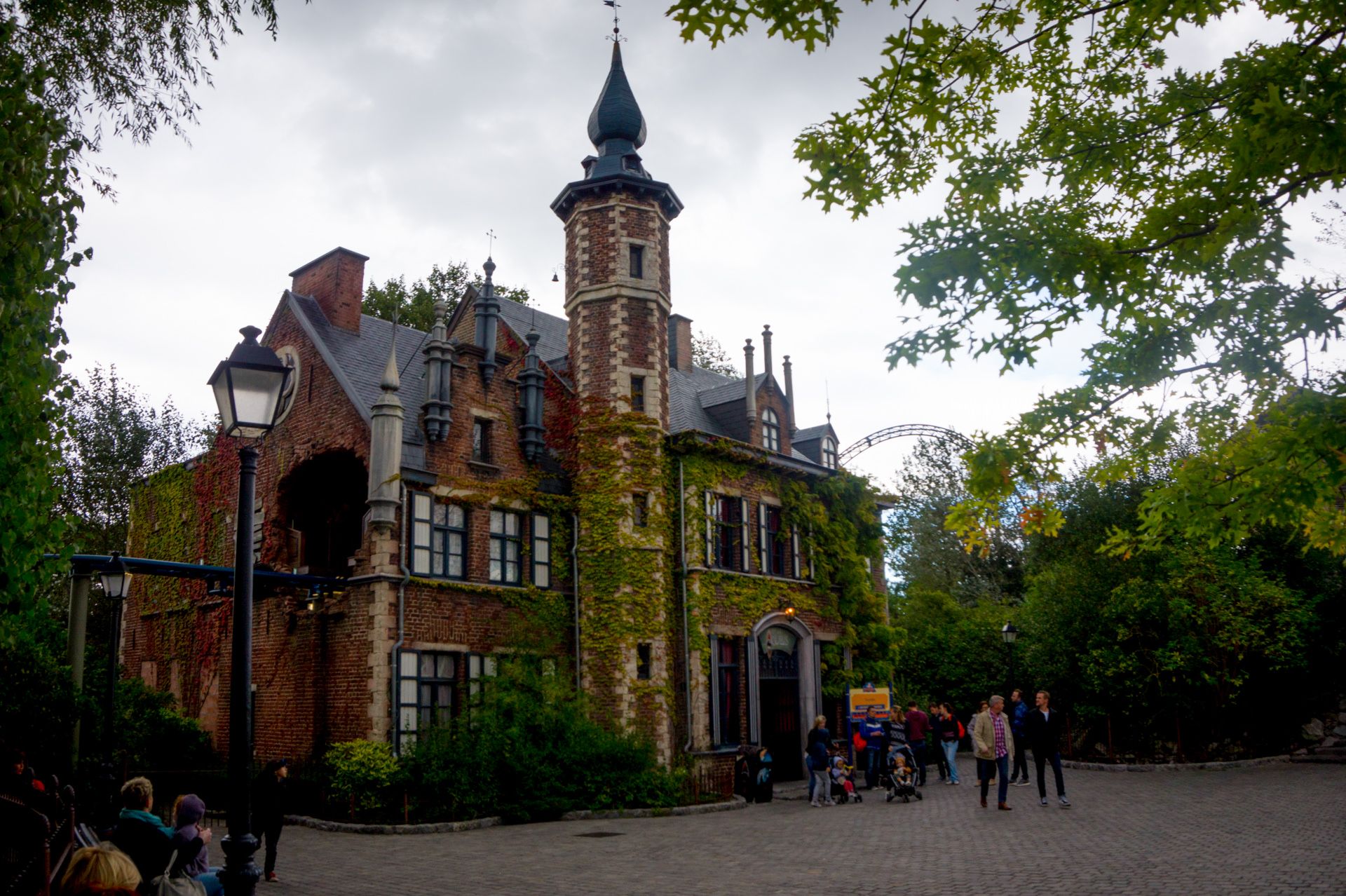
If you enter the park, you will find yourself right on the beautiful Main Street of the park. To the left is the indoor playground Toy Kingdom and to the right the souvenir shop of the park, where you can buy mainly the most popular souvenir of the Japanese: cookies from the region.
Super LS Coaster
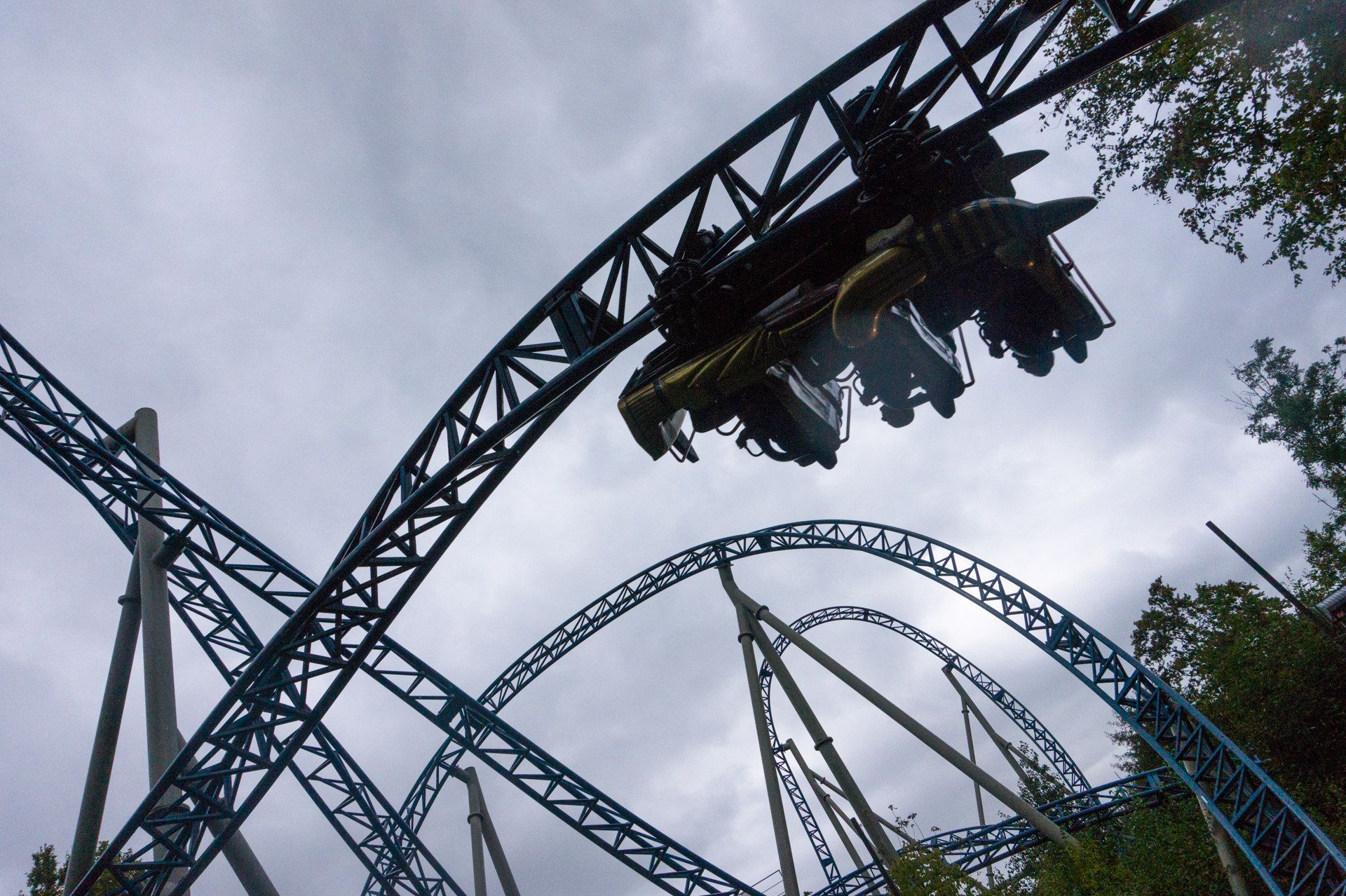
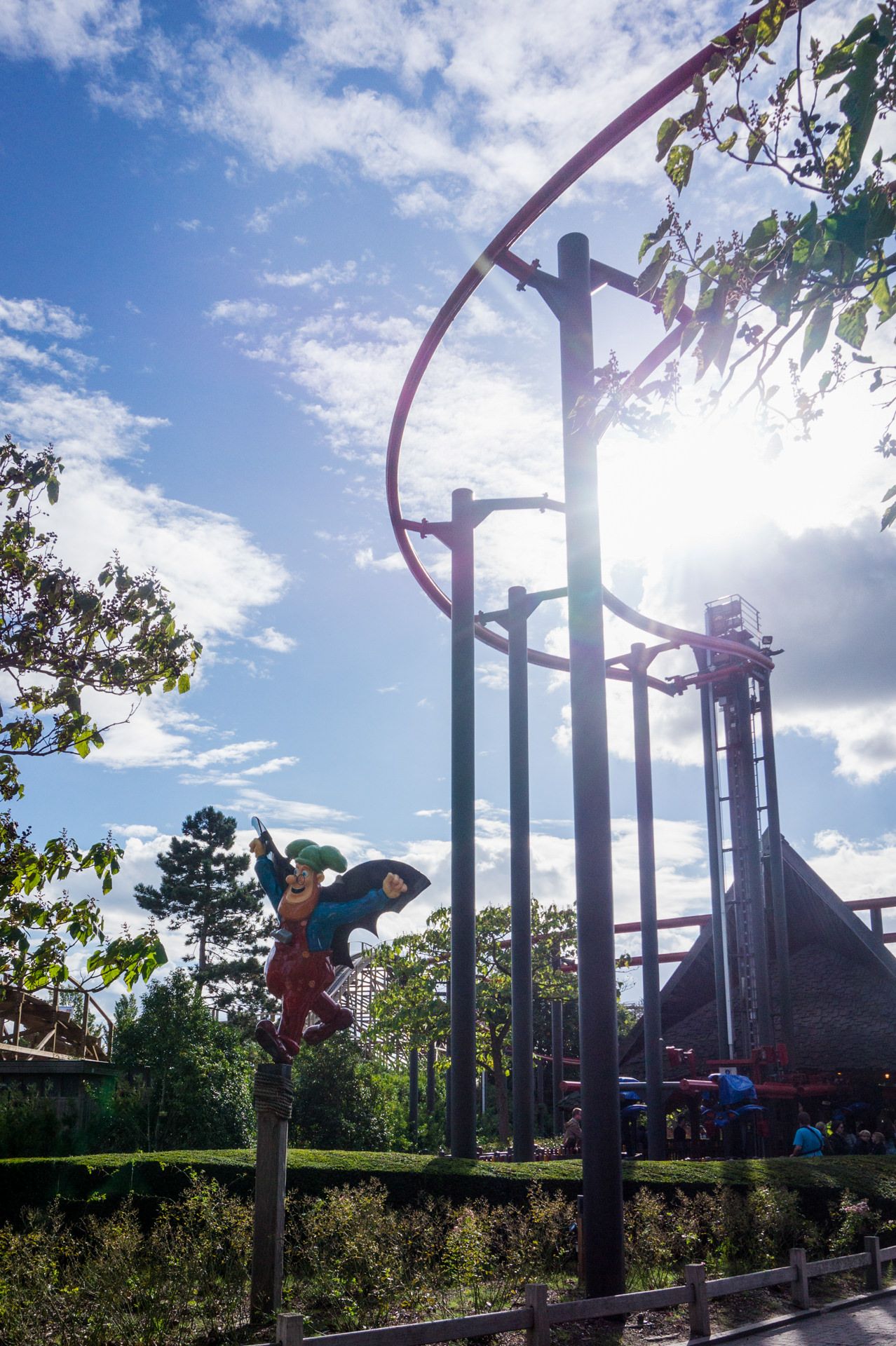
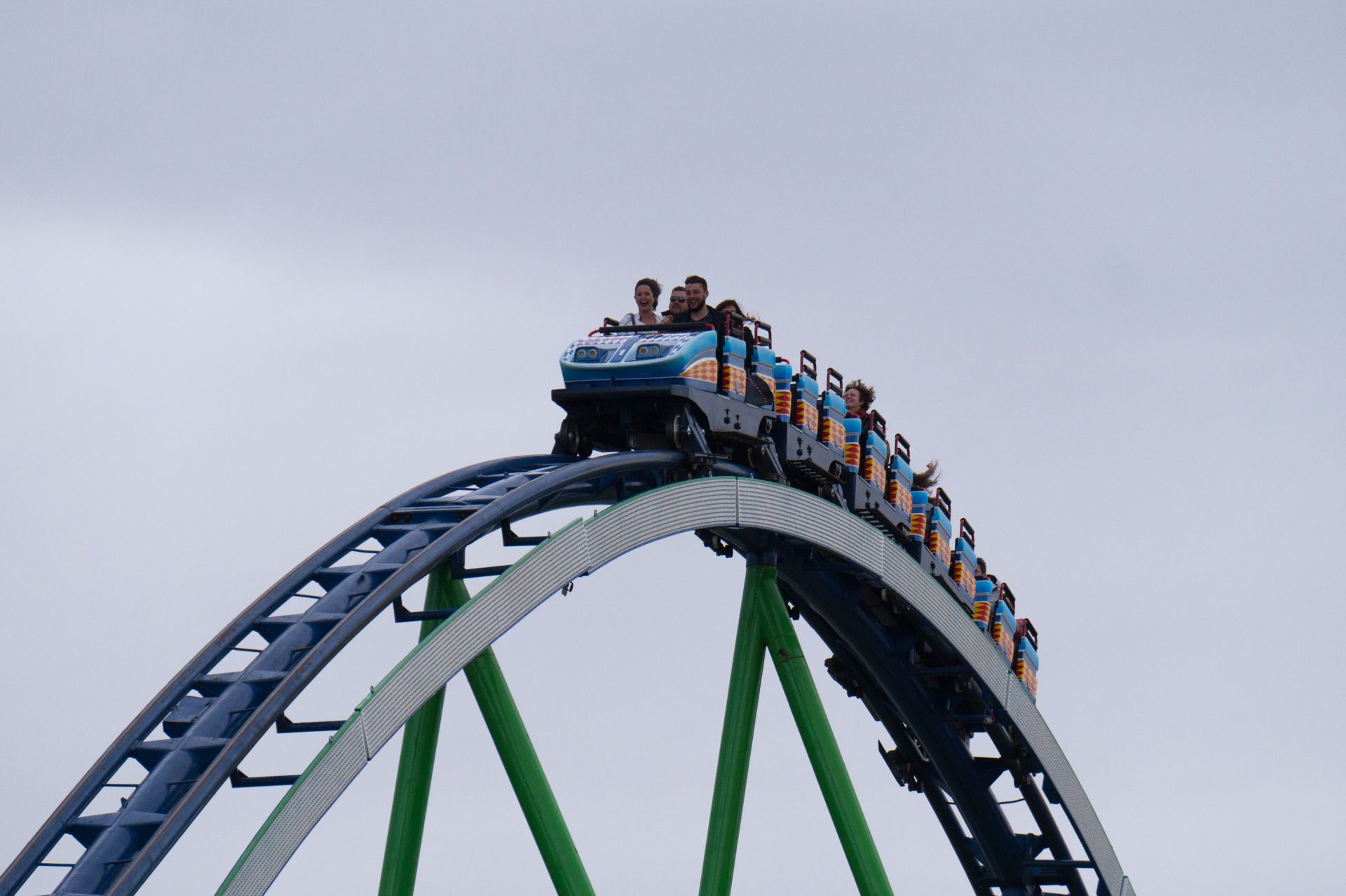
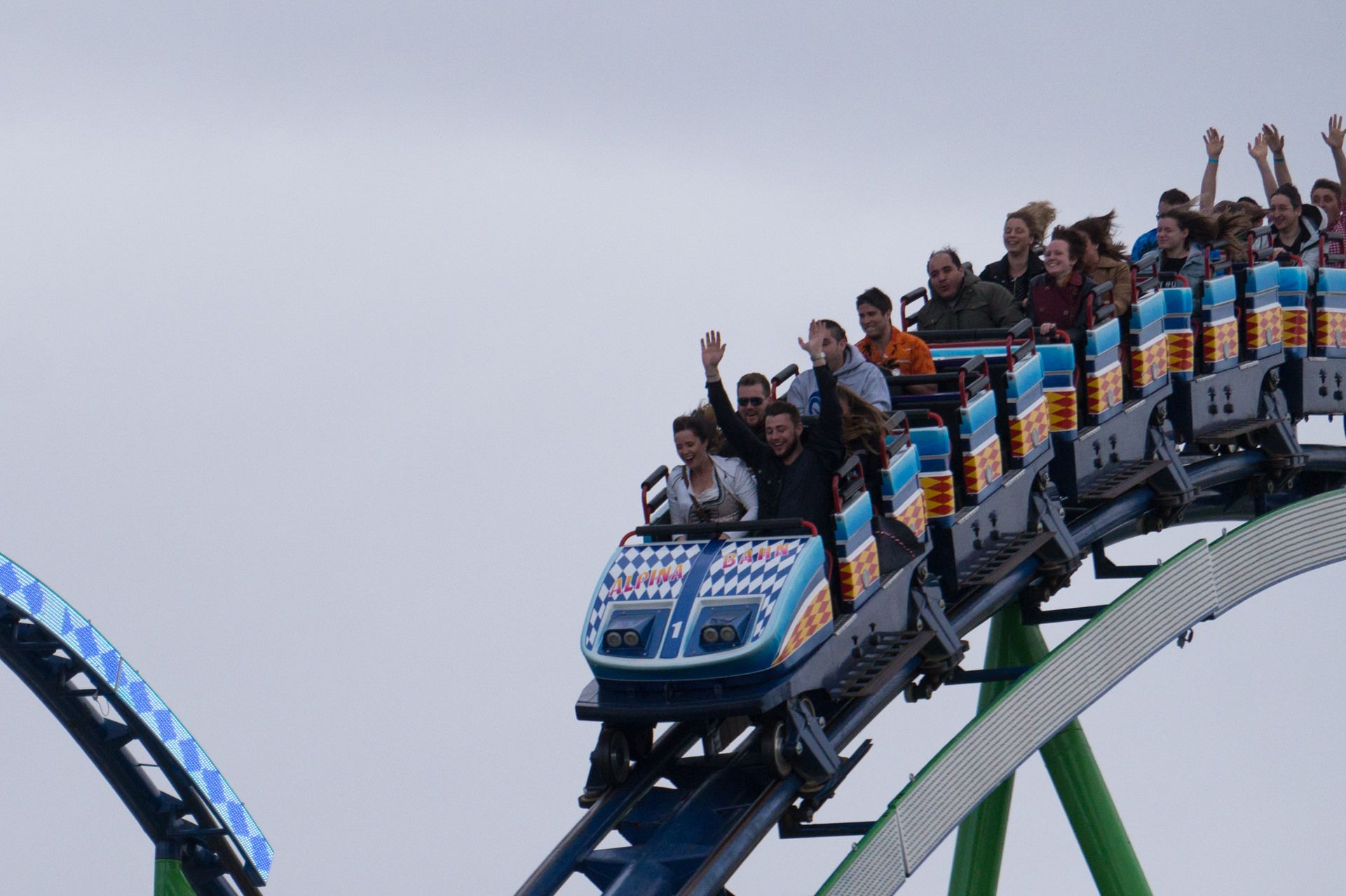
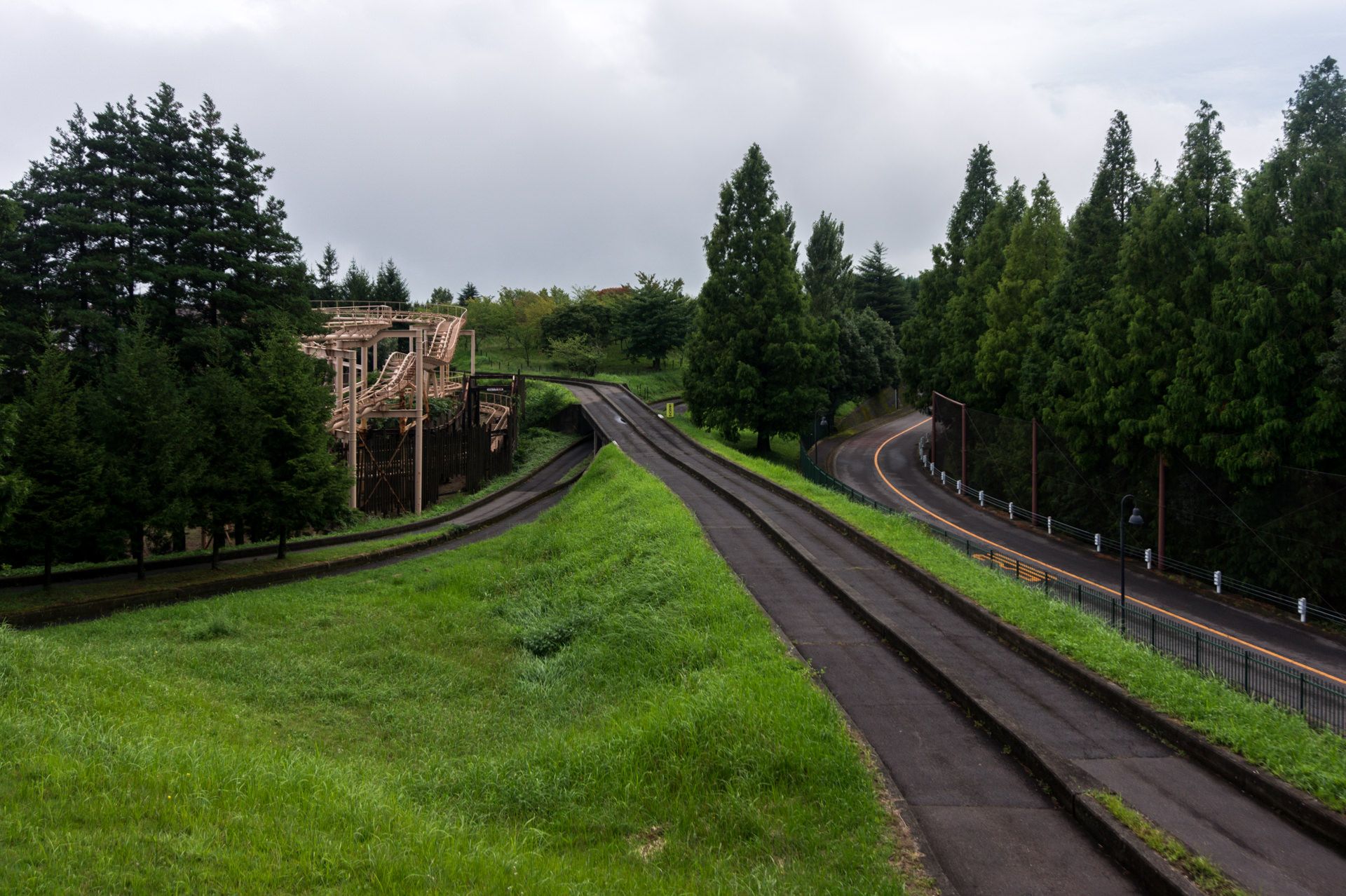
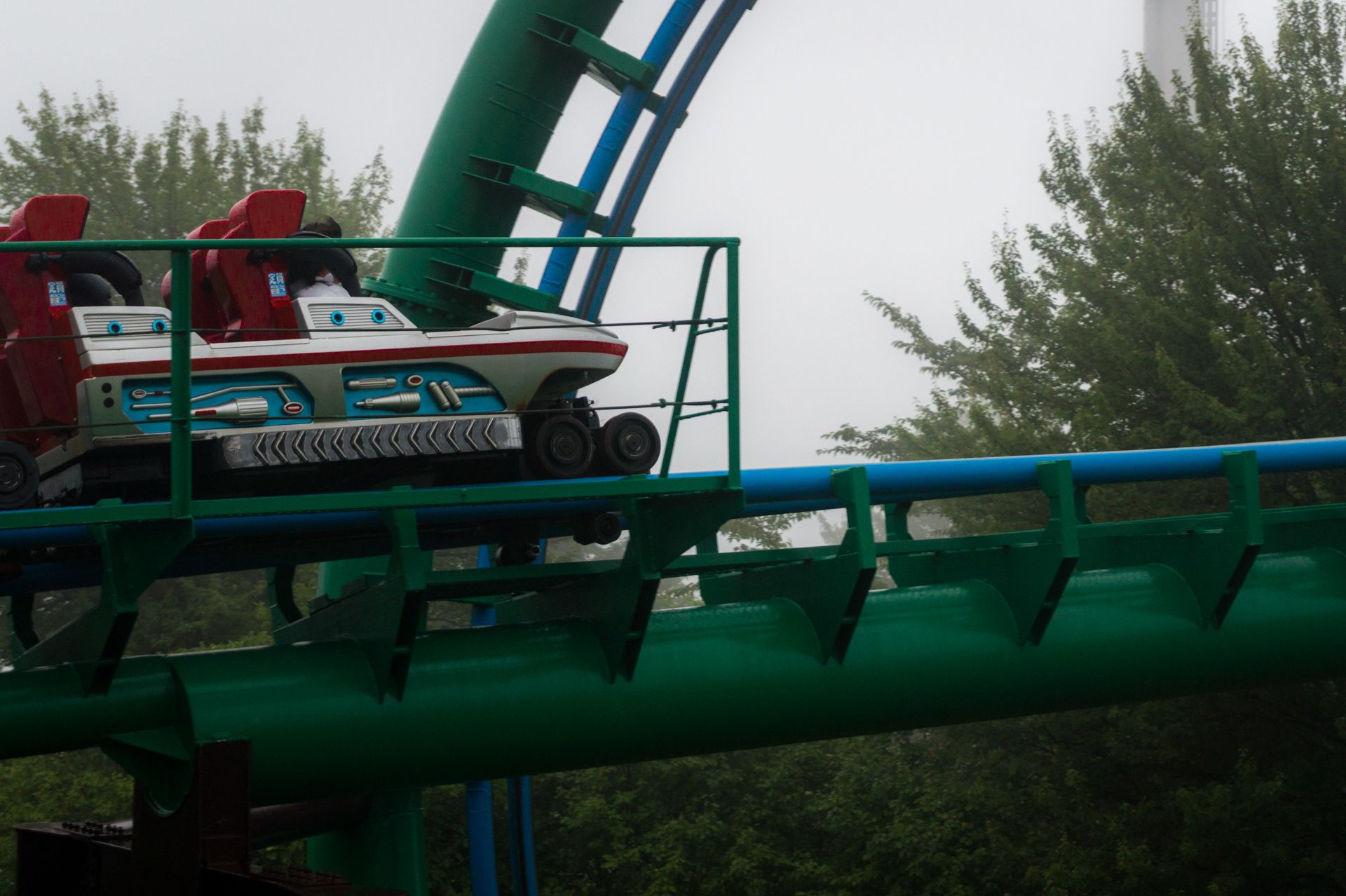
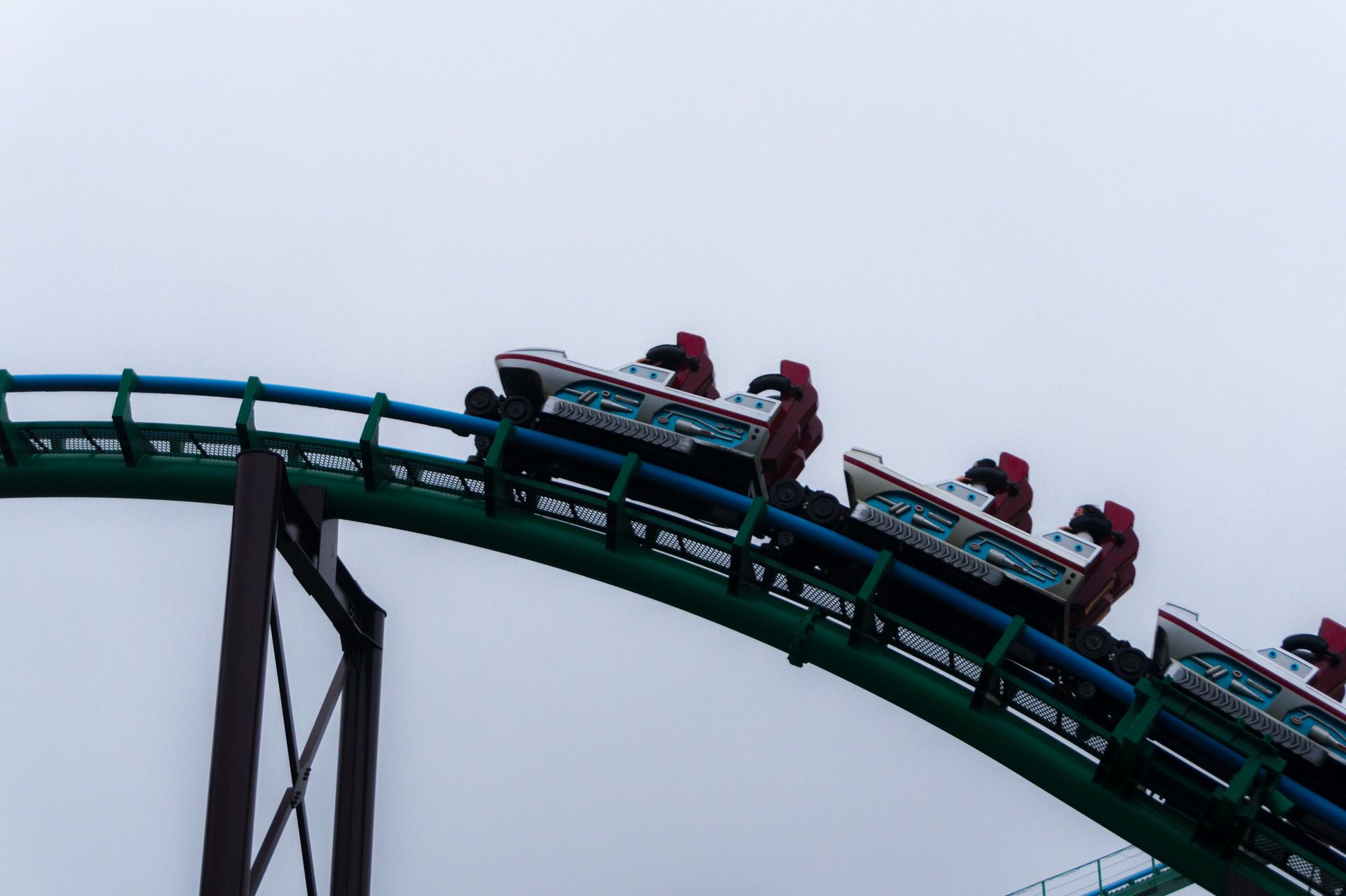
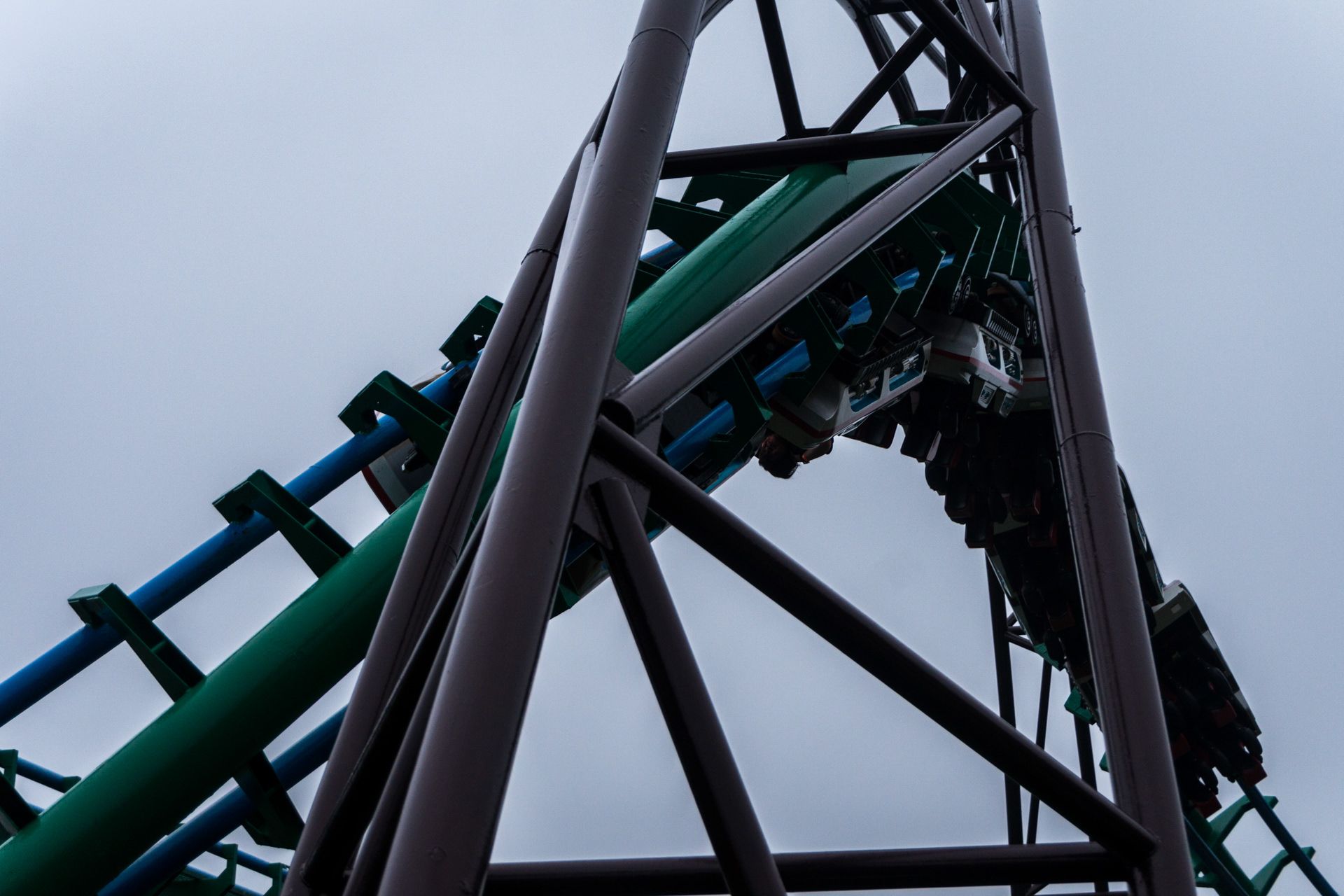
Of special interest, however, is the big roller coaster directly in front of us: The Super LS Coaster (actually L&S, for Loop & Screw) by Meisho. Wonderfully embedded in the landscape, the train takes you through a loop and two corkscrews.
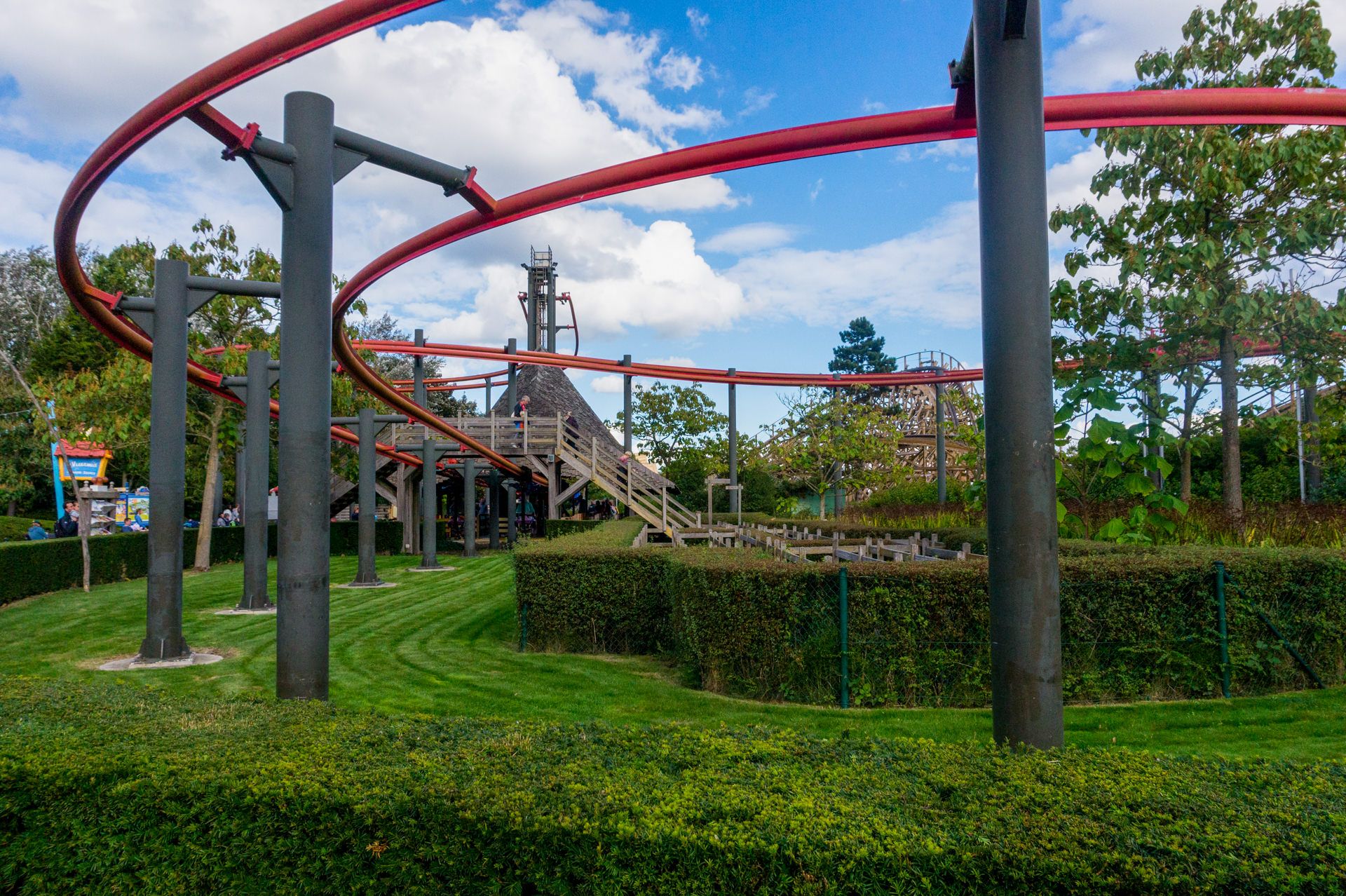
But before I tell you too much about the route in the introduction I would suggest that we climb the stairs to the station and get on the train. After leaving the station we spend some time on the lift hill. At the top we leave the hill on a ramp with a minimal gradient and make a short right bend. High above the arcades we cross the first valley and start the big shot. In a wide right bend we increase more and more speed, whereupon the train disappears in a pit. Continuing with the same gradient, we now rush through a short straight section with our eyes now always on the next element. Mercilessly powerful we cross the following valley before we find ourselves headfirst in a loop. This is also passed with a lot of pressure. Afterwards the train shoots up a steep slope of a camelback. This camelback brings us with light airtime into the right sitting position for the next inversion figure. In a wide left turn along the minigolf course we slowly increase in cross slope before we are in the starting position for the two corkscrews. Two headstands later we are slowly pulled towards the station in a left turn. We cross the loop and dive down on a longer straight for the last time. Between the two corkscrews we are pulled up to the station level and shortly after into the final brake of the ride.
The Super LS Coaster keeps what its name promises and surprises you all the more with the excellent transfer of its built up speed. In addition, there are three overhead elements that are beautiful to ride and the generally very good ride characteristics of the layout, which ultimately invite you to ride it continuously.
Jupiter
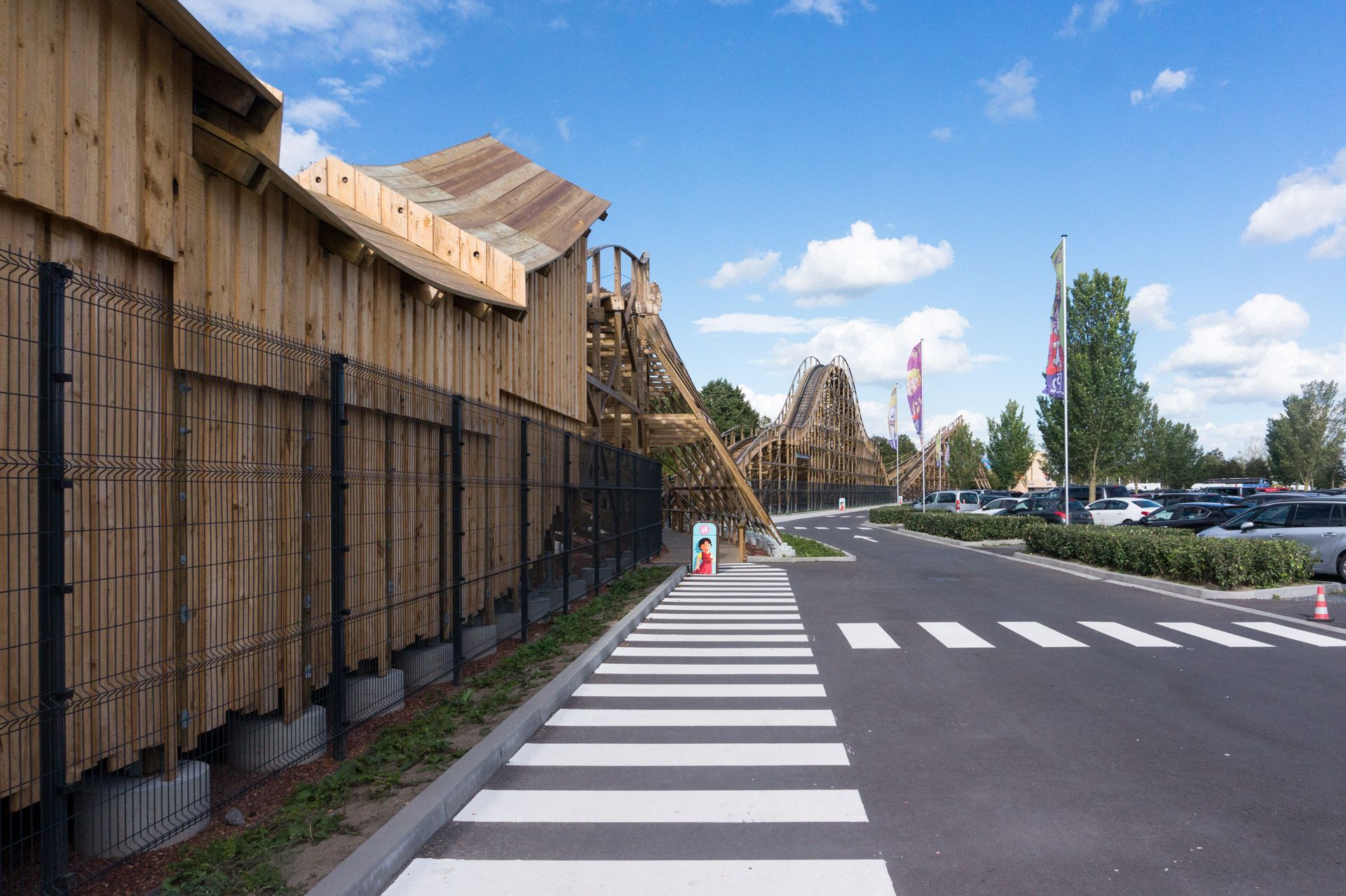
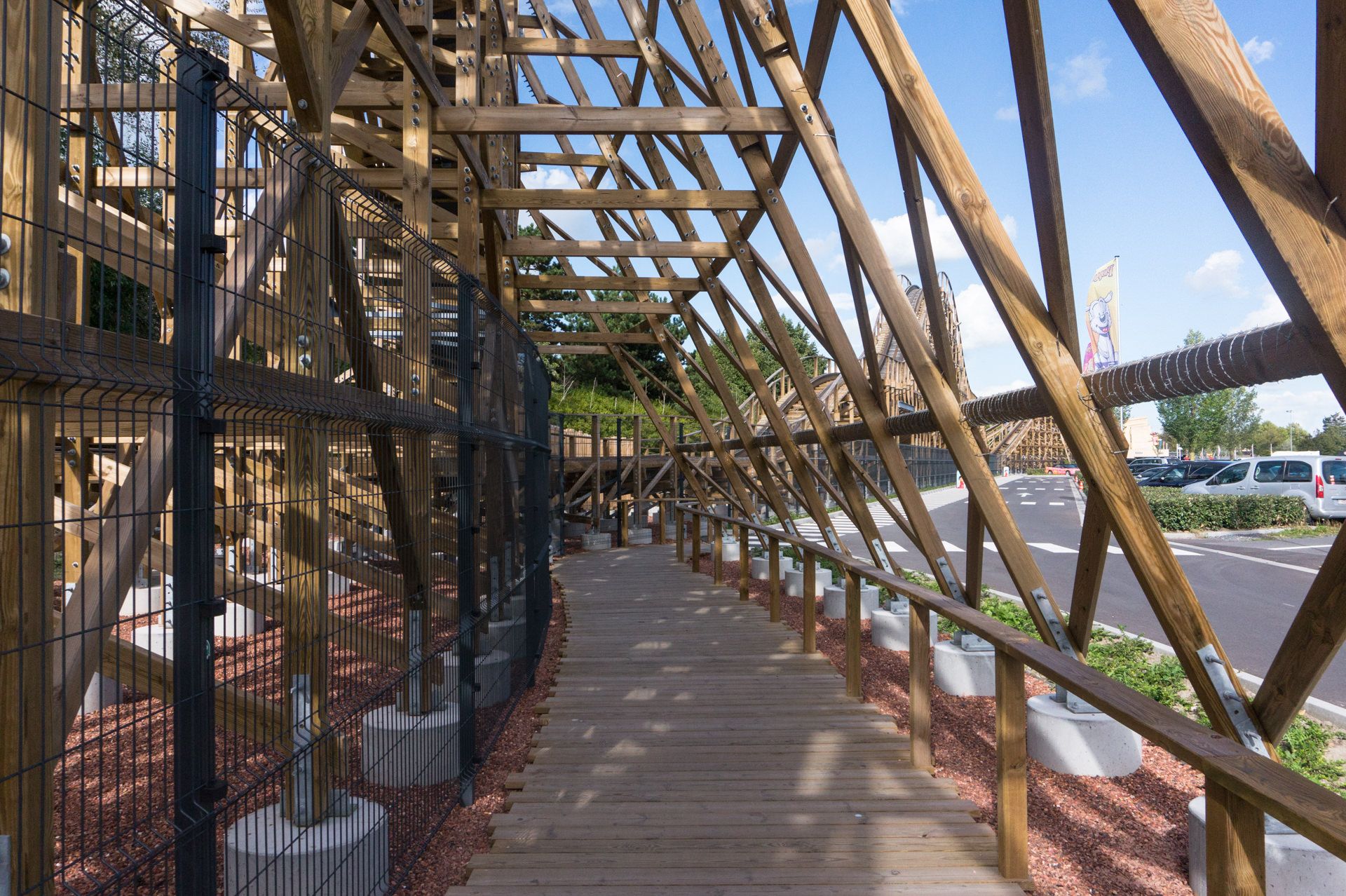
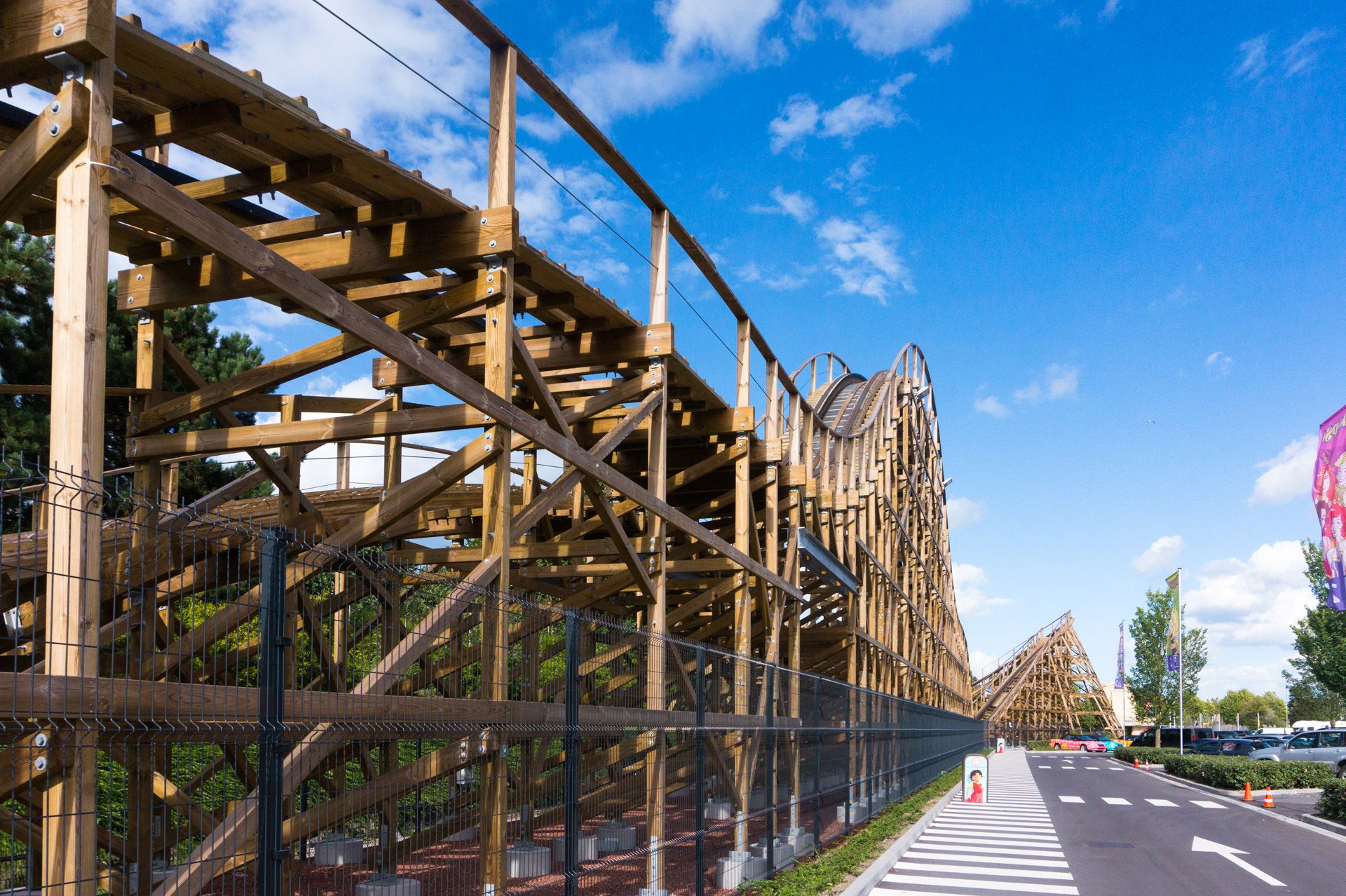
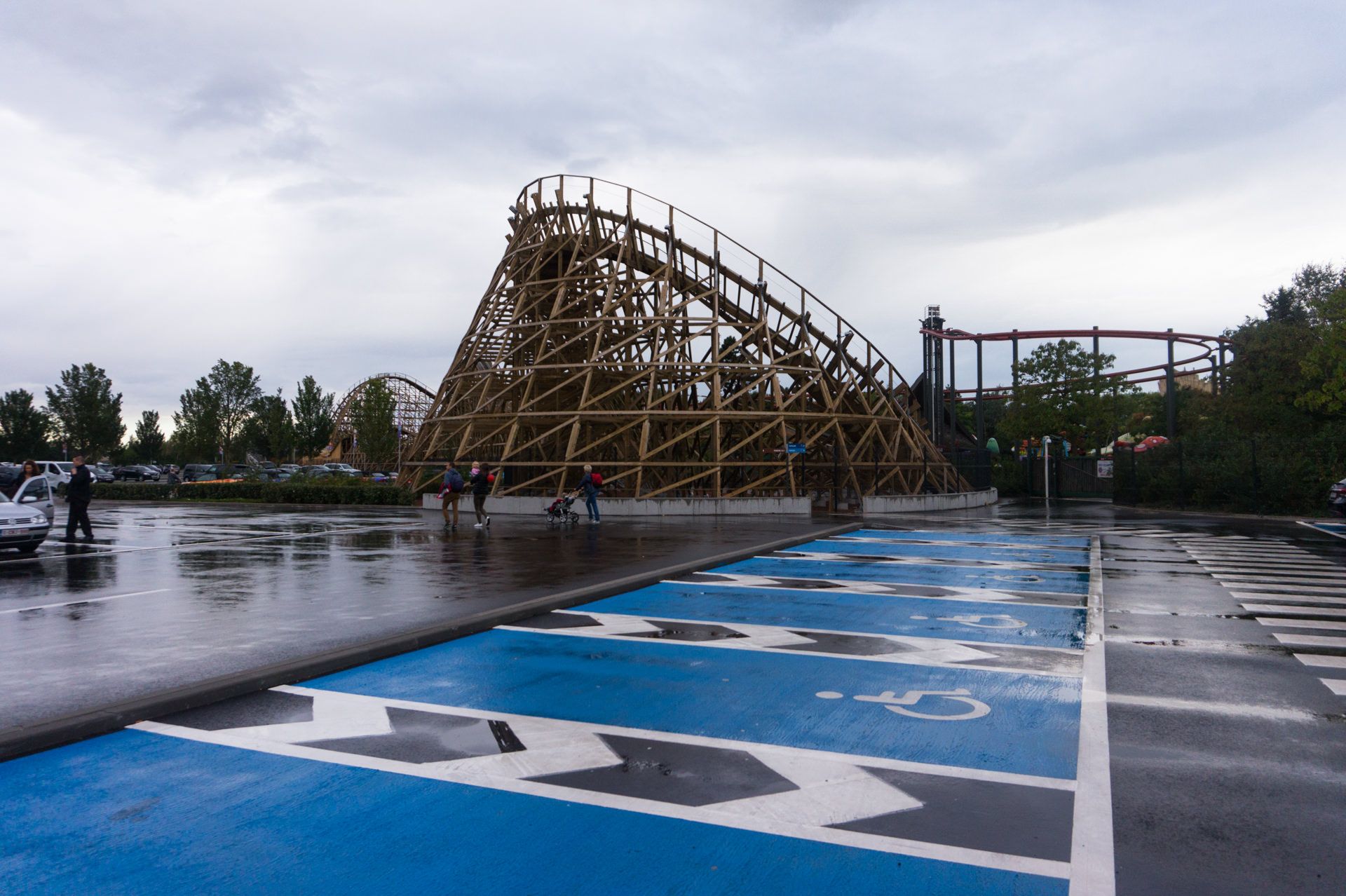
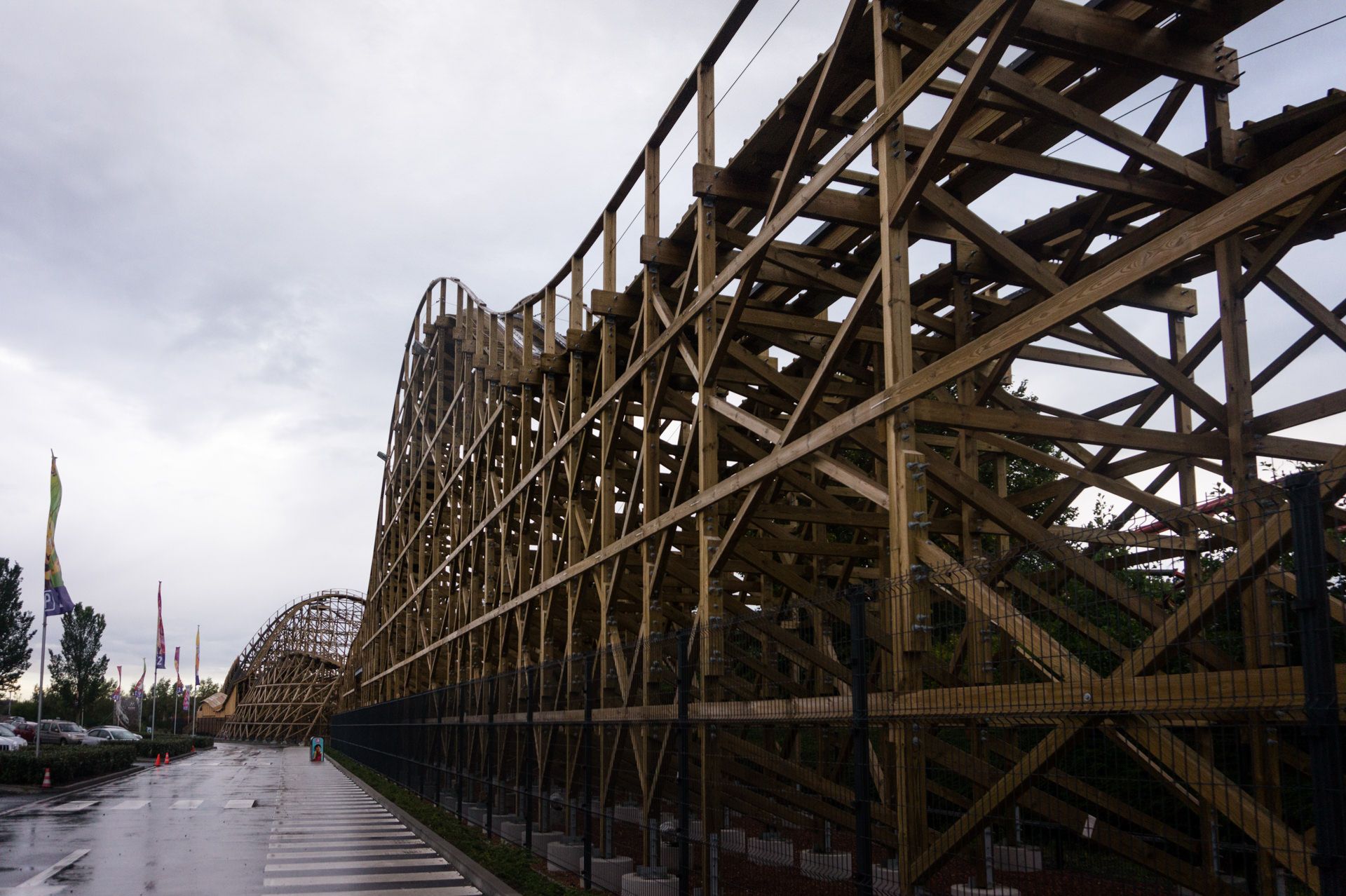
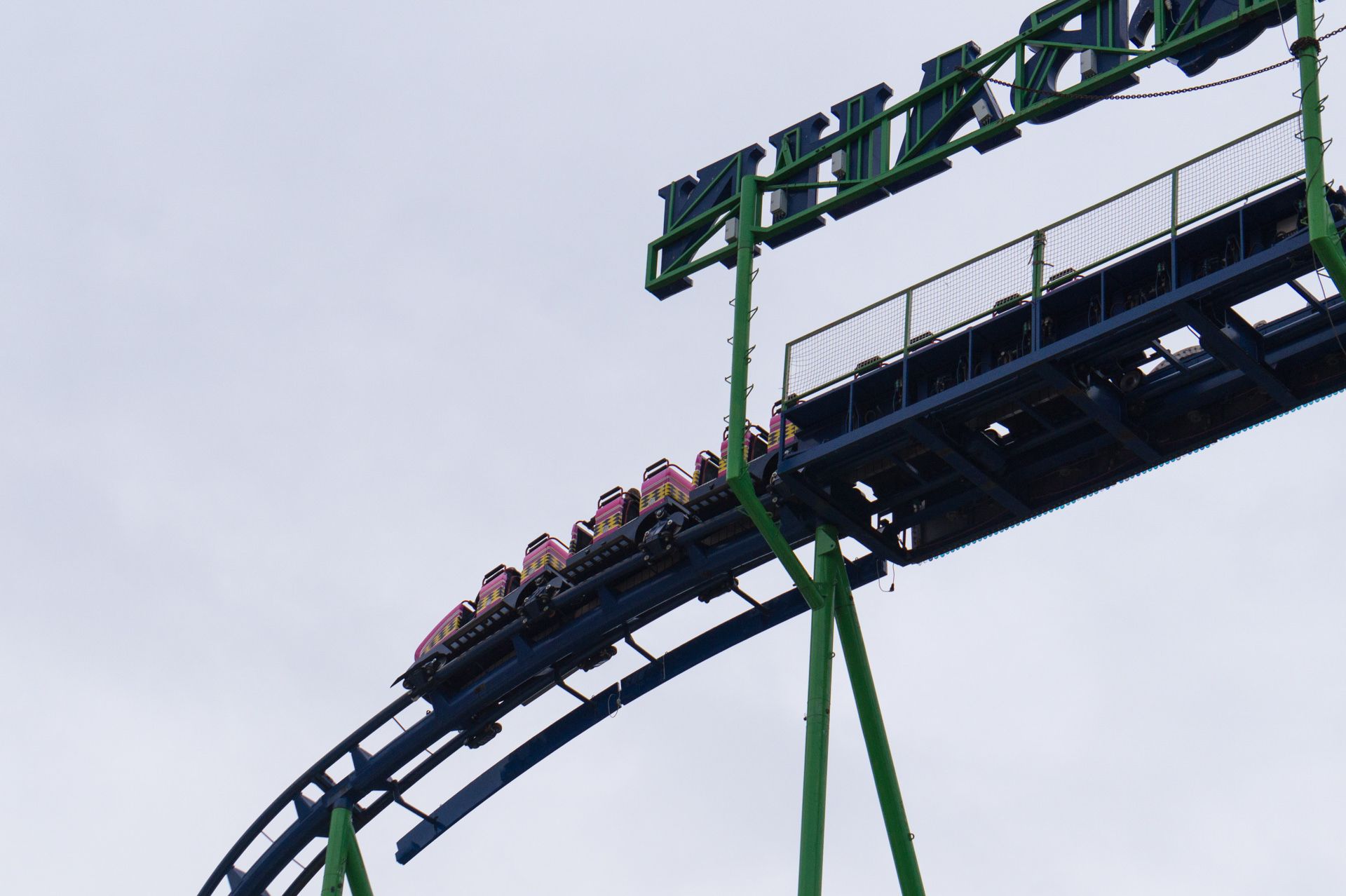
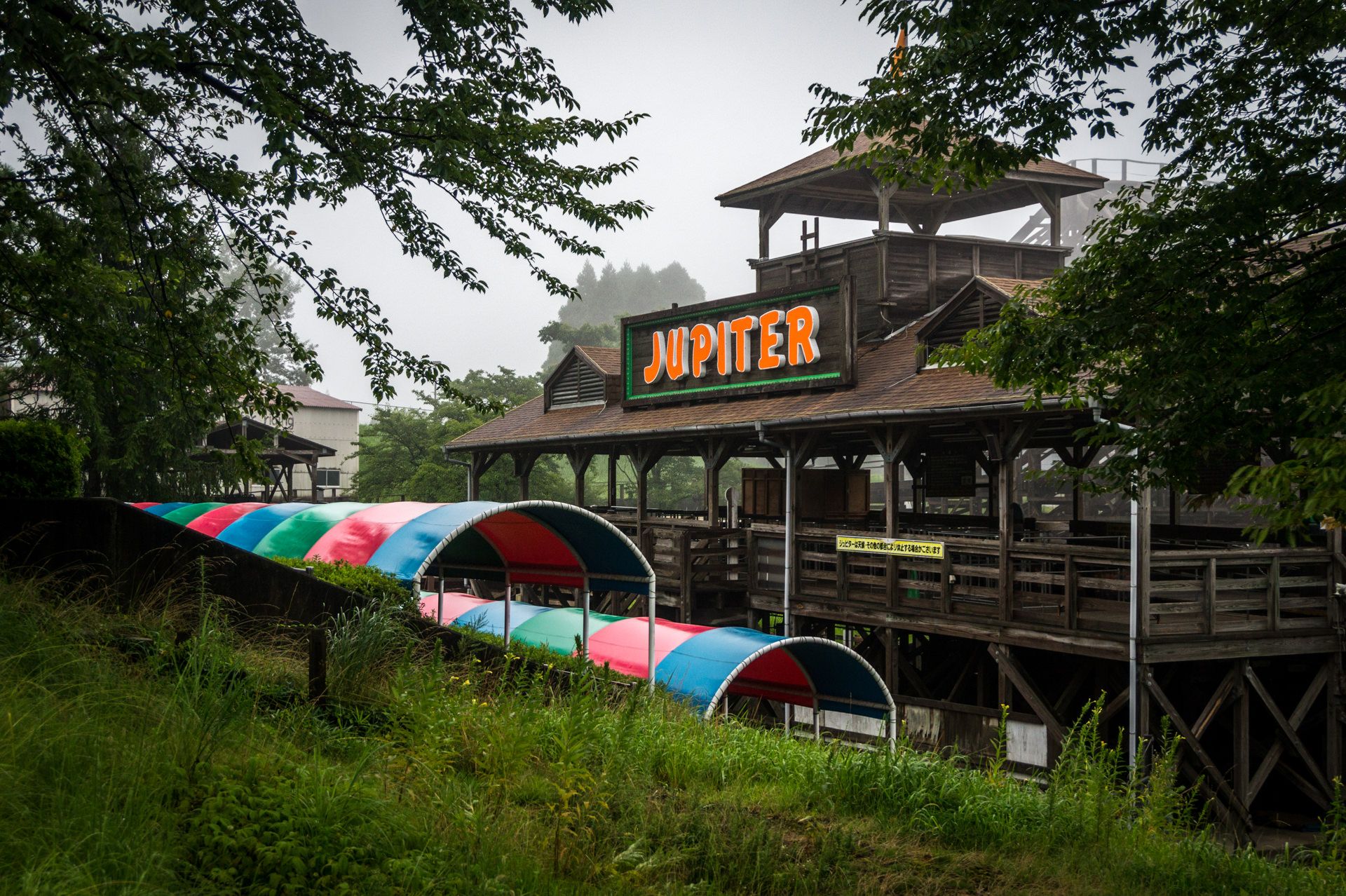
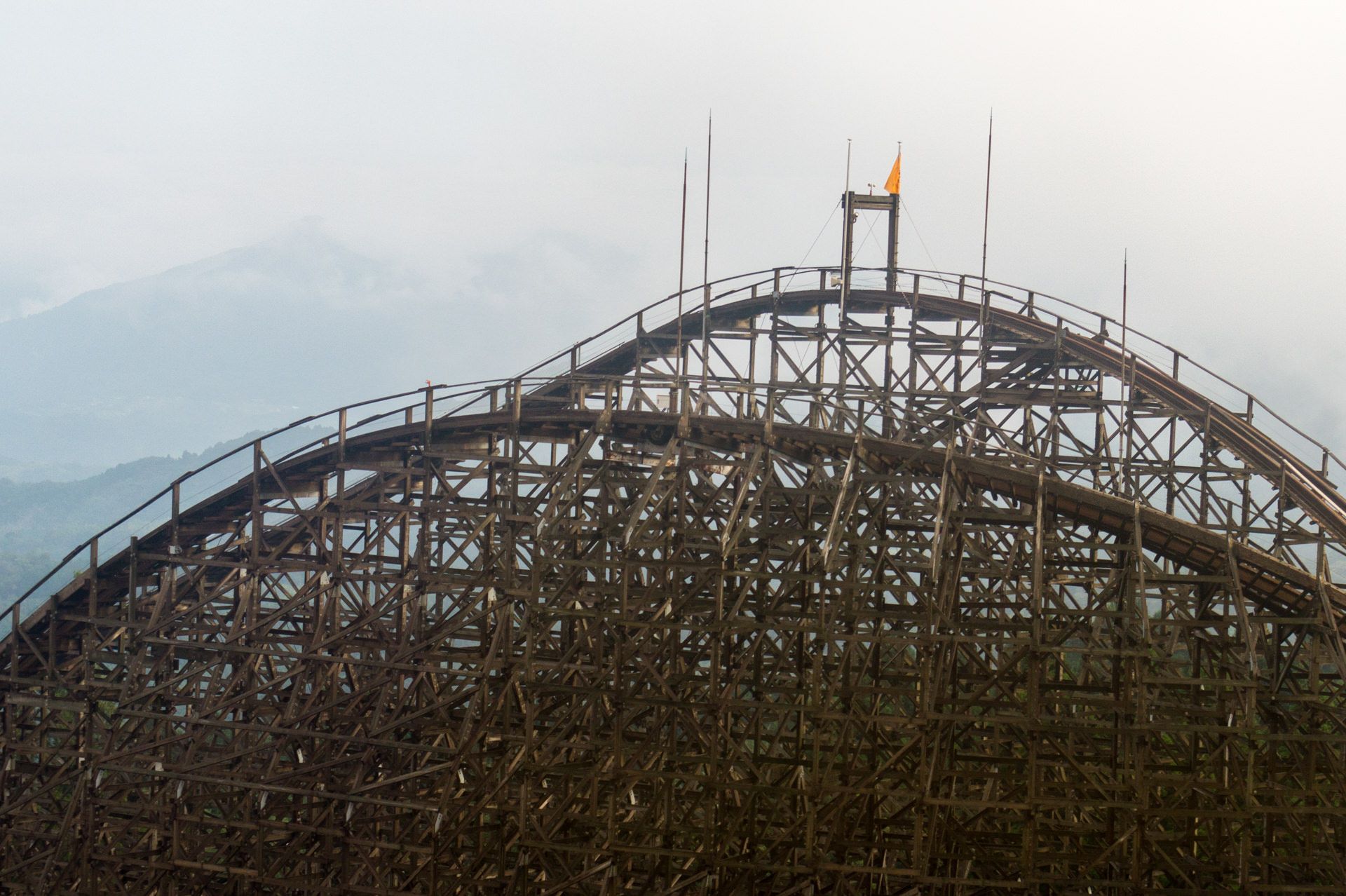
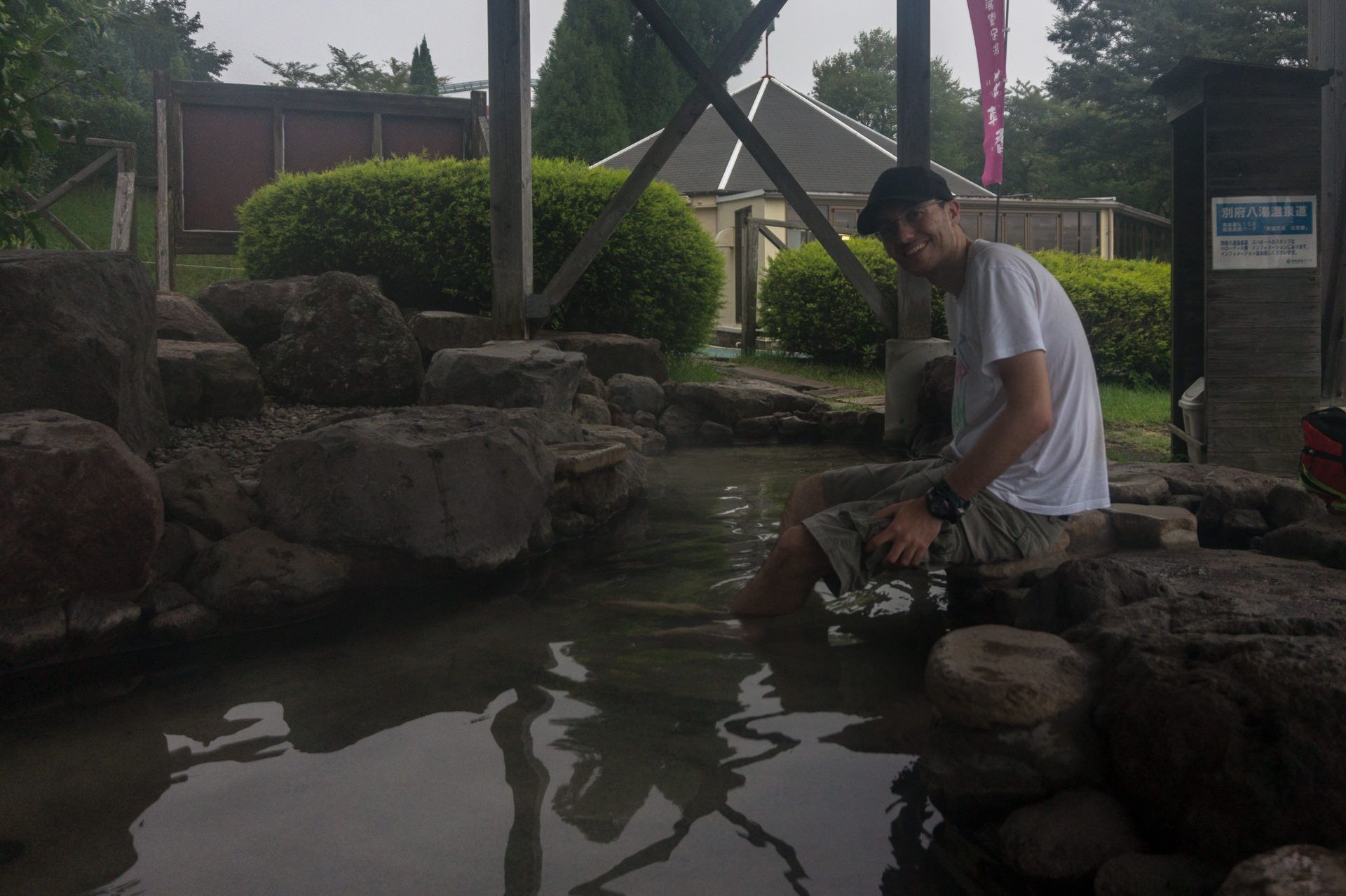
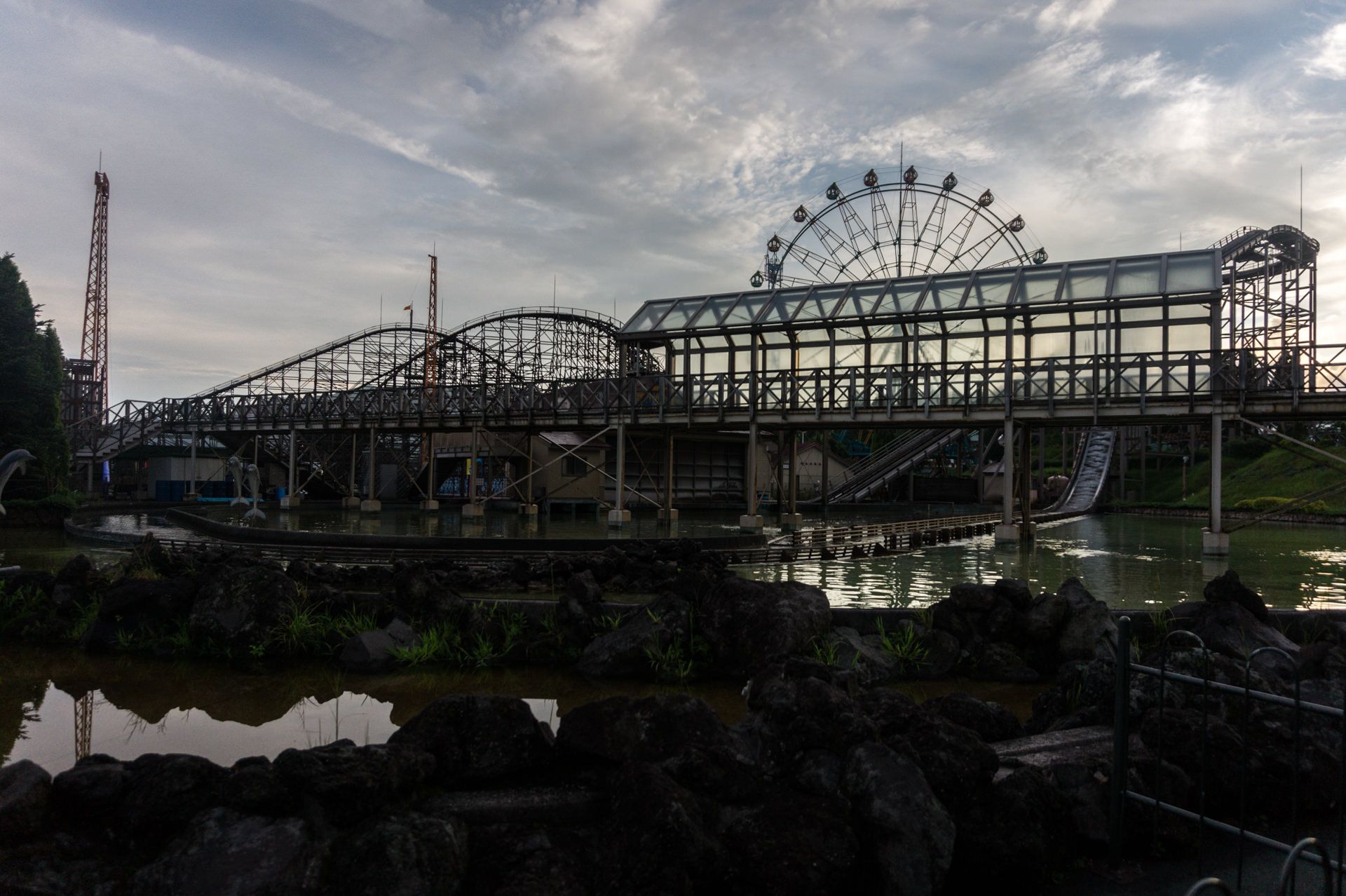
But before we dedicate ourselves to this activity, we first go on an exploration tour to the lower levels of the Kijima Kogen Park. Passing a beautifully designed children’s driving school and the neighbouring footbath (one of the typical Japanese onsen, just for feet) we are drawn to the wooden roller coaster Jupiter. We were told right at the entrance that the ride would not run today – but we didn’t know the reason for that yet. In fact, we thought that the freshly renovated trains were the reason for this and not the death of an employee (during routine work) only a few days before. Of course, such an accident should not happen and the outcome is tragic – so it’s perfectly understandable that the ride was not in operation until it was approved by the local authorities. On site, of course, it was necessary to overlook the loss of a ride – very difficult especially if one person wanted to ride all wooden coasters in the country. In general, however, one thing can be said about Jupiter: The ride looks (if you see it at all) extremely delicious; the first drop seems absolutely wild and in general the track with its 1600m seems to be extremely dynamic.
Mars
I will certainly stand in front of the roller coaster again at some point in the near future. In the meantime, however, we are drawn into the labyrinth Mars, which is actually subject to an extra charge. On two missions – one rather sporty, the other one for thinkers – it goes over several levels, peppered with various tasks through the wooden building. There are three stamps to find for the stamp booklet and if you have passed both missions, you even get a golden sticker. Indeed a fun for the whole family, which might be a great idea to be introduces into serveral western countries.
Poseidon 30
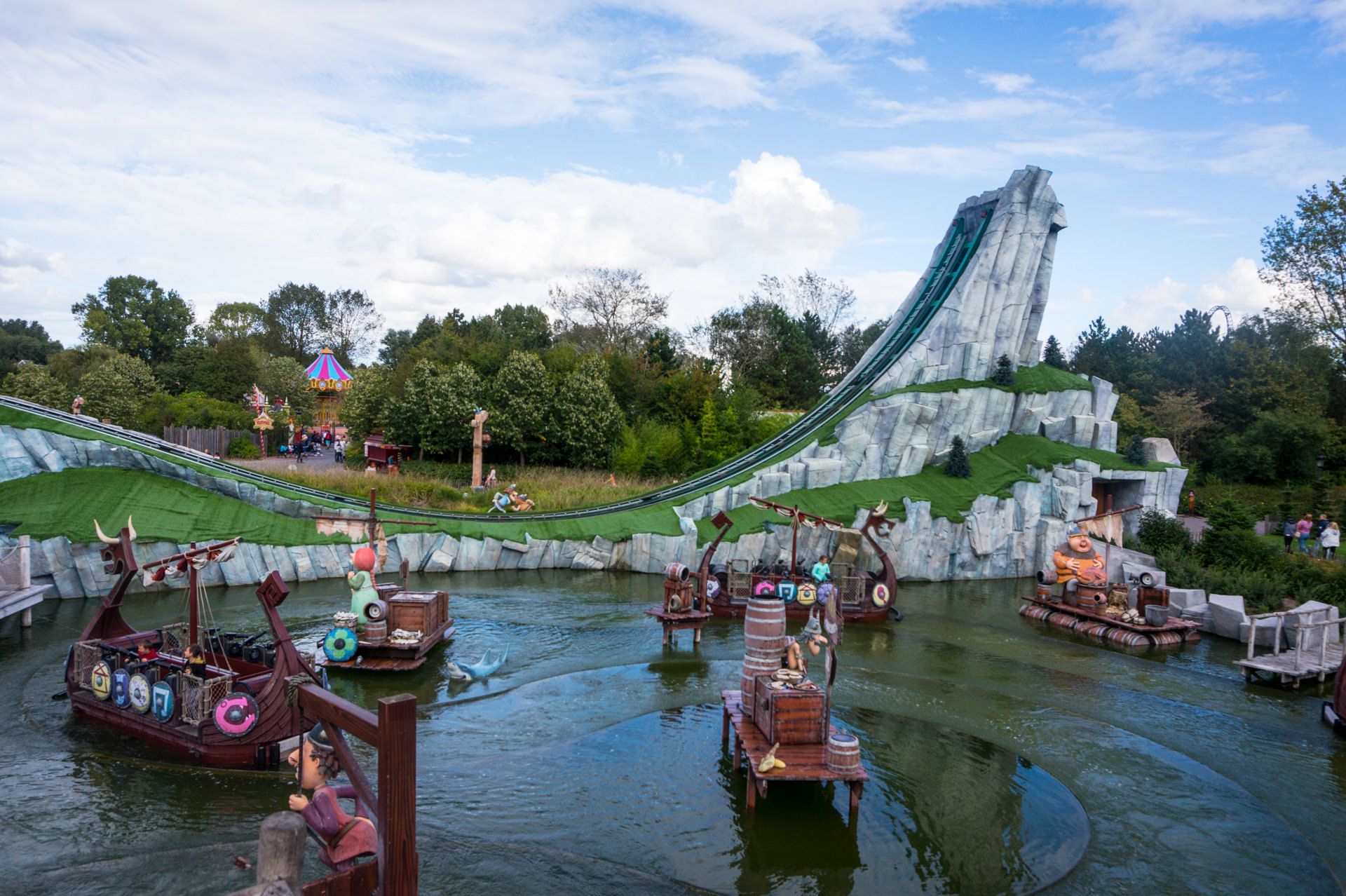
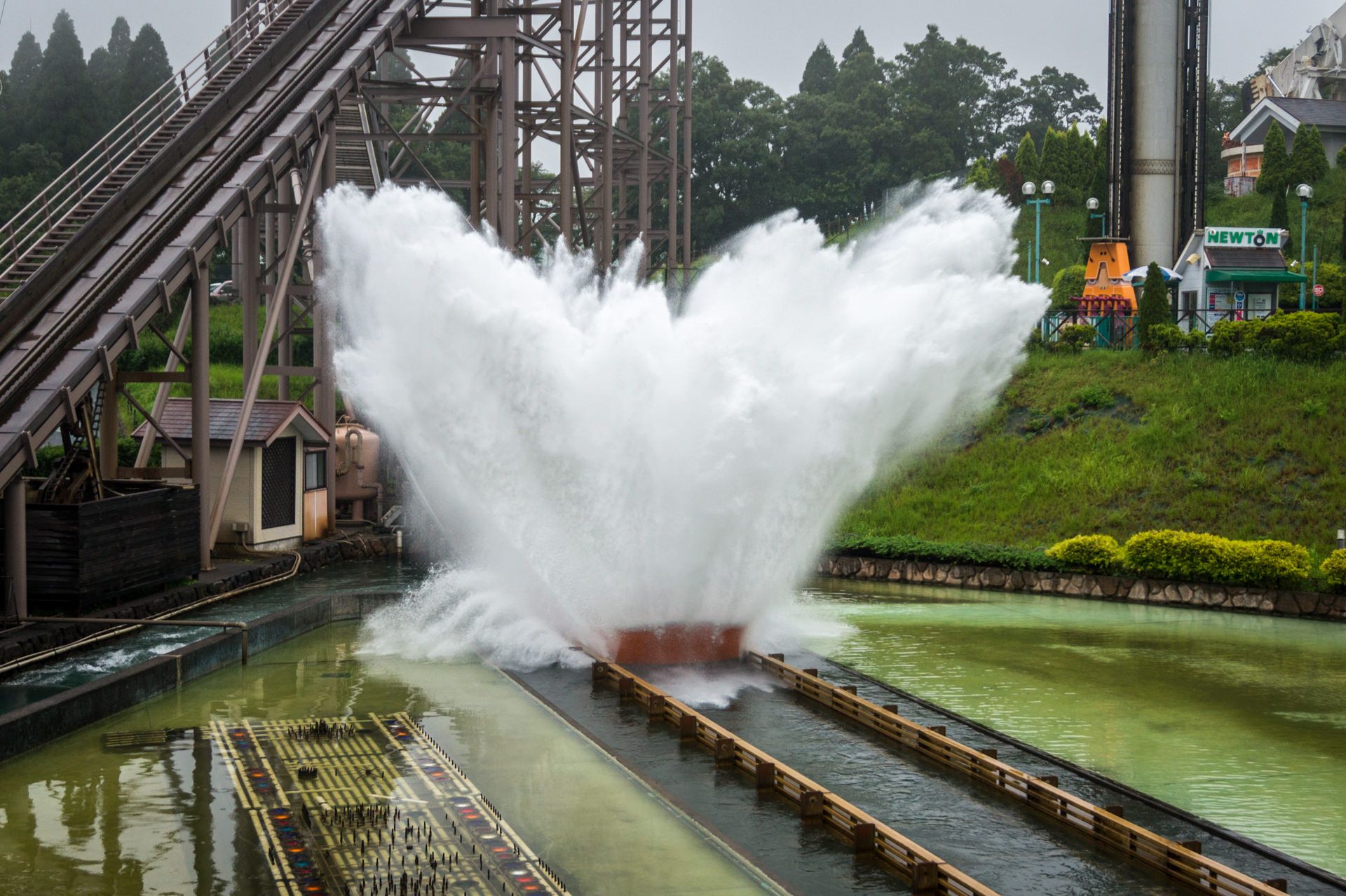
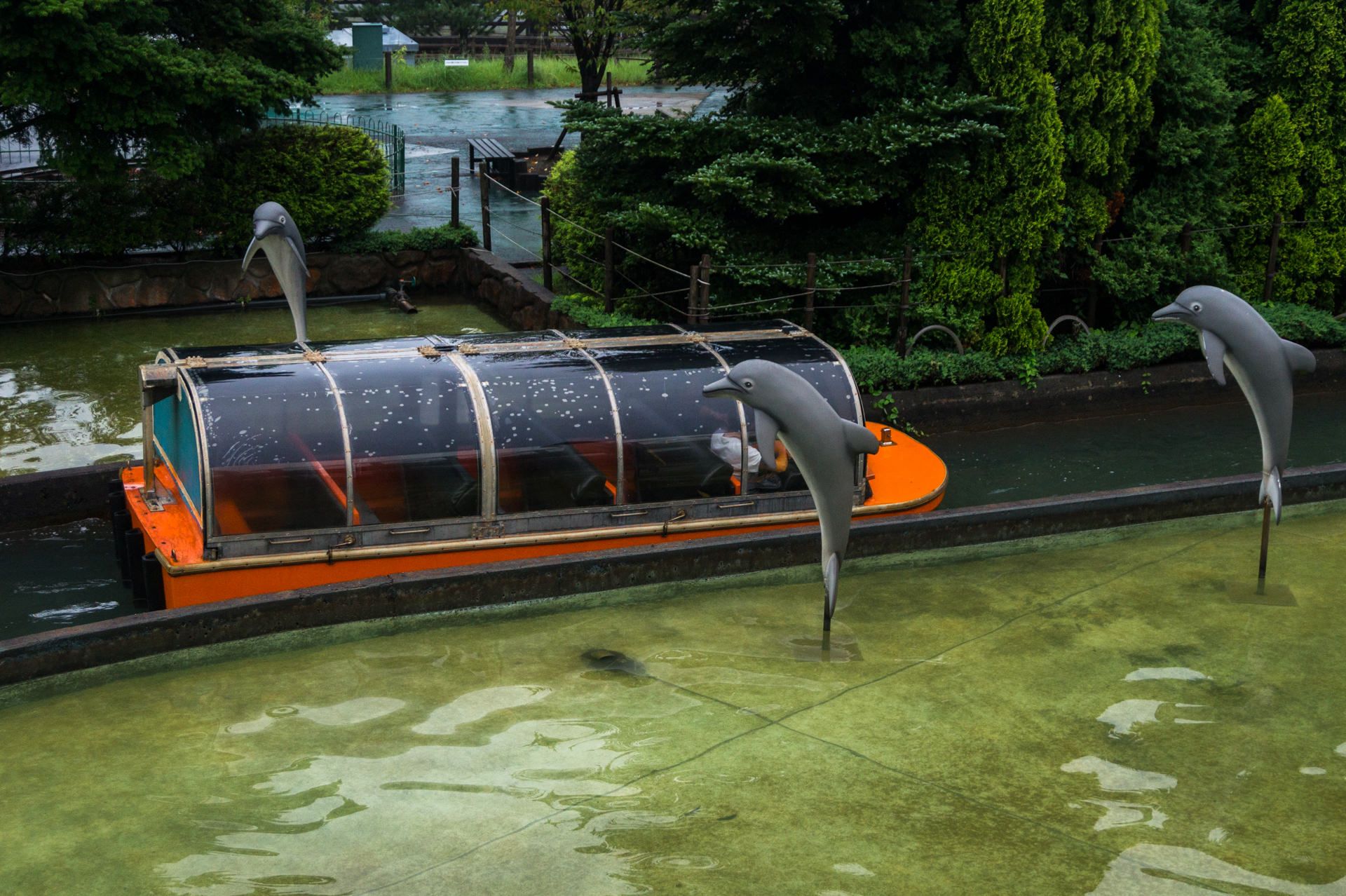
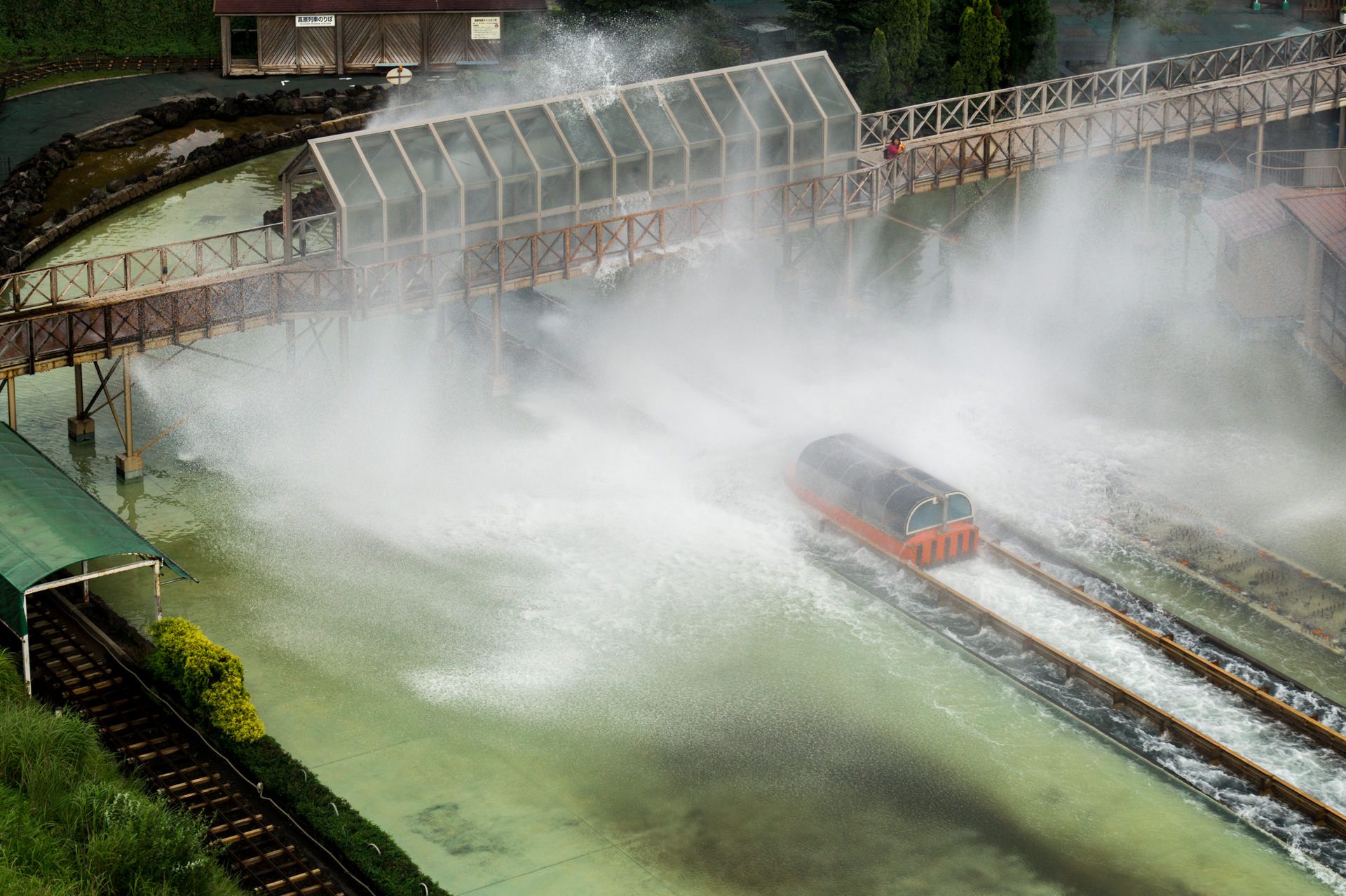
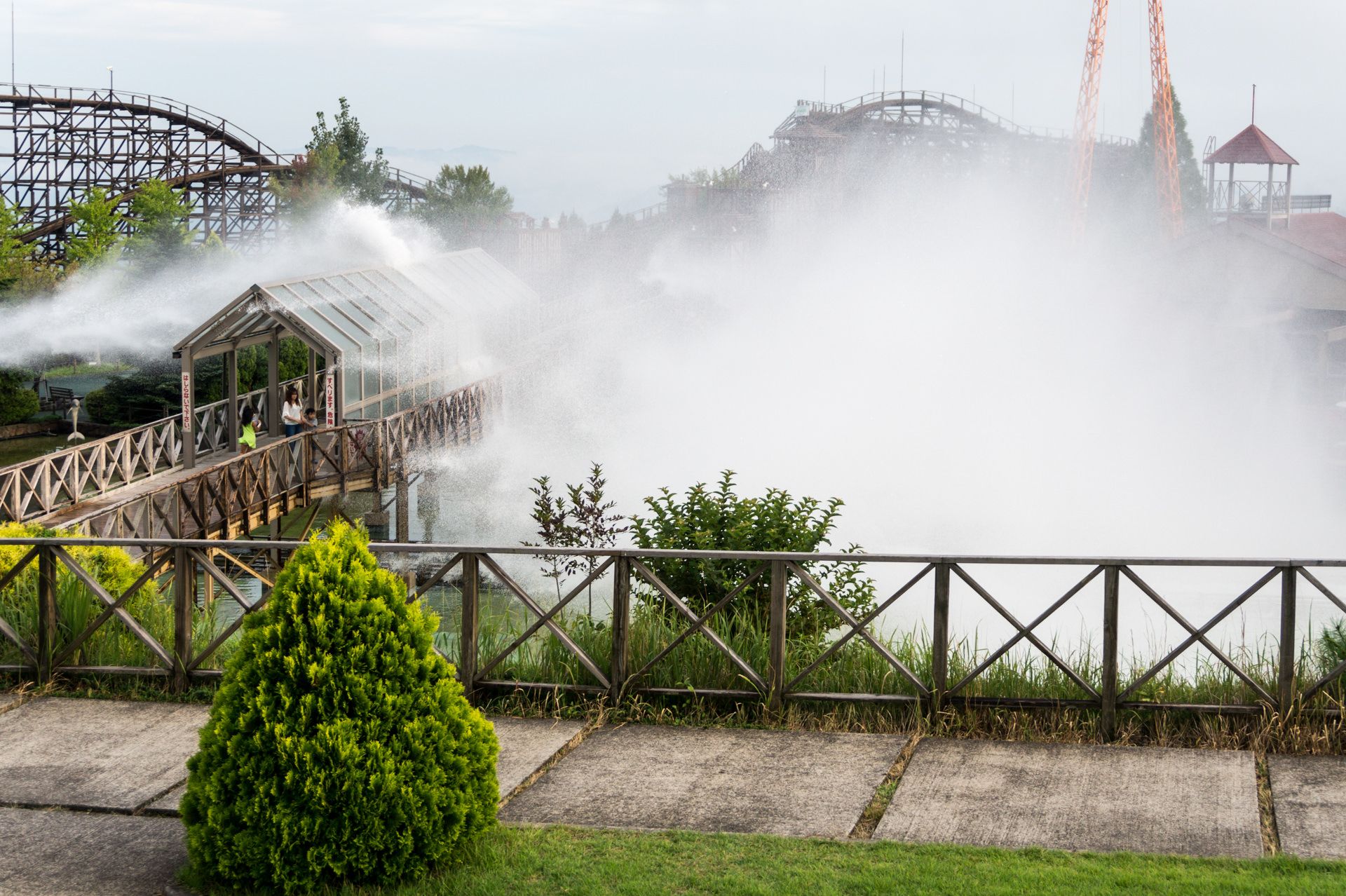
The same applies to the covered water ride Poseidon 30 – whereby the roof of the boats should only be offered as an option for the water-shy park guests. Built by the manufacturer O.D. Hopkins, the Spillwater stands out above all for its impressive wave, while at the same time the passengers and spectators are not getting wet at all. For a water ride this does not sound very impressive, but who am I kidding? It’s about boats. The boat, which at that time fulfilled an involuntary abort criterion of the onride veteran Stilbruch on his Japan trip.
Actually, it’s quite simple: Put your foot on the roller in the floor space and push your harness when the boat hits the wave and you will survive without any insury; promised ;-). We were patiently taught how to do it and after we survived it we were happy to get back on board again and again during the day. However, if something would have happened, it would have been the conceivably most unfavourable tour course. But as it is already said Tidal Wave in the English theme park Thorpe Park: “What is the worst that could happen? Well, it is advertising for Dr. Pepper, but still – this is the only way to start a Japan tour.
Ice World
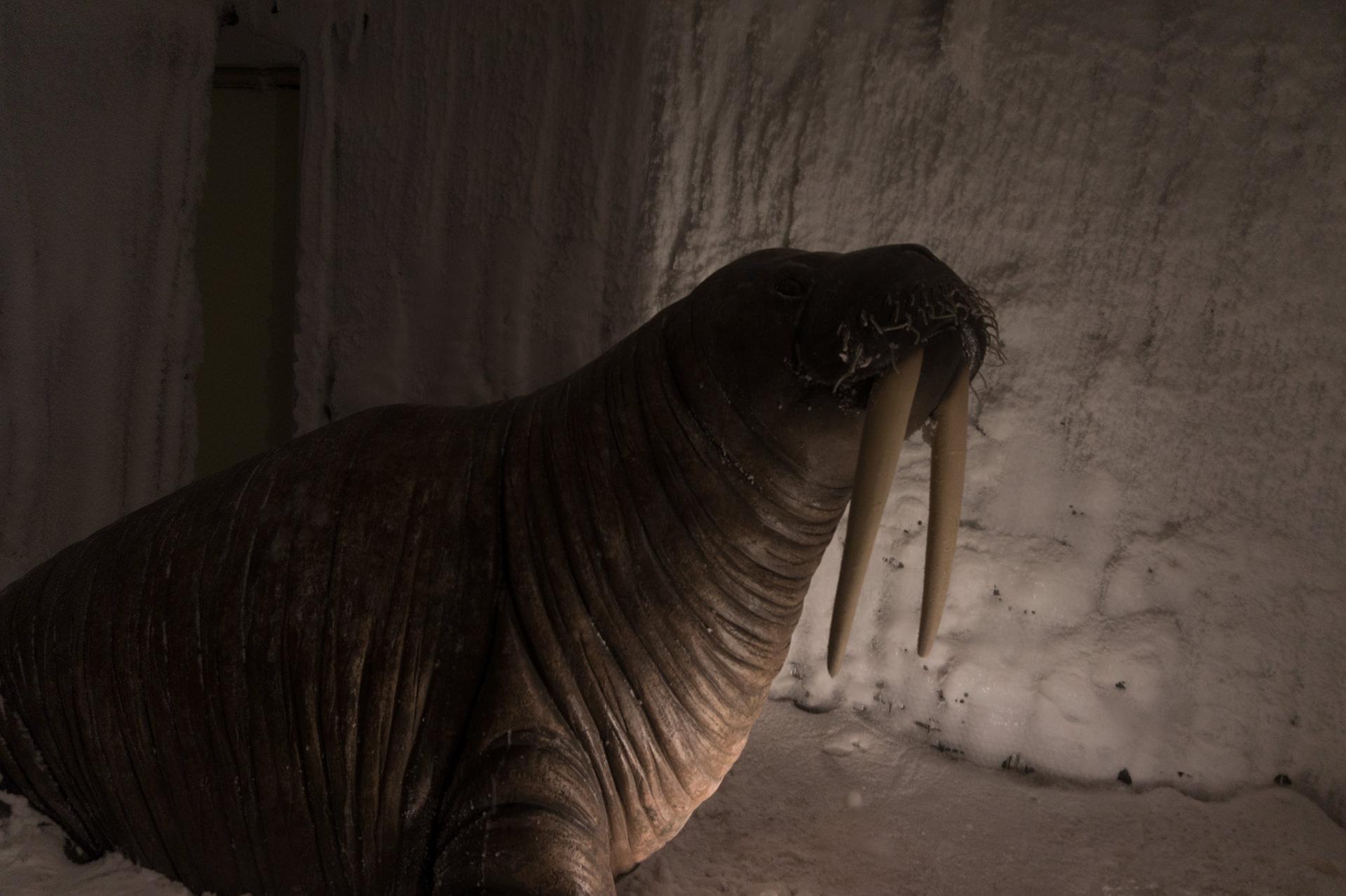
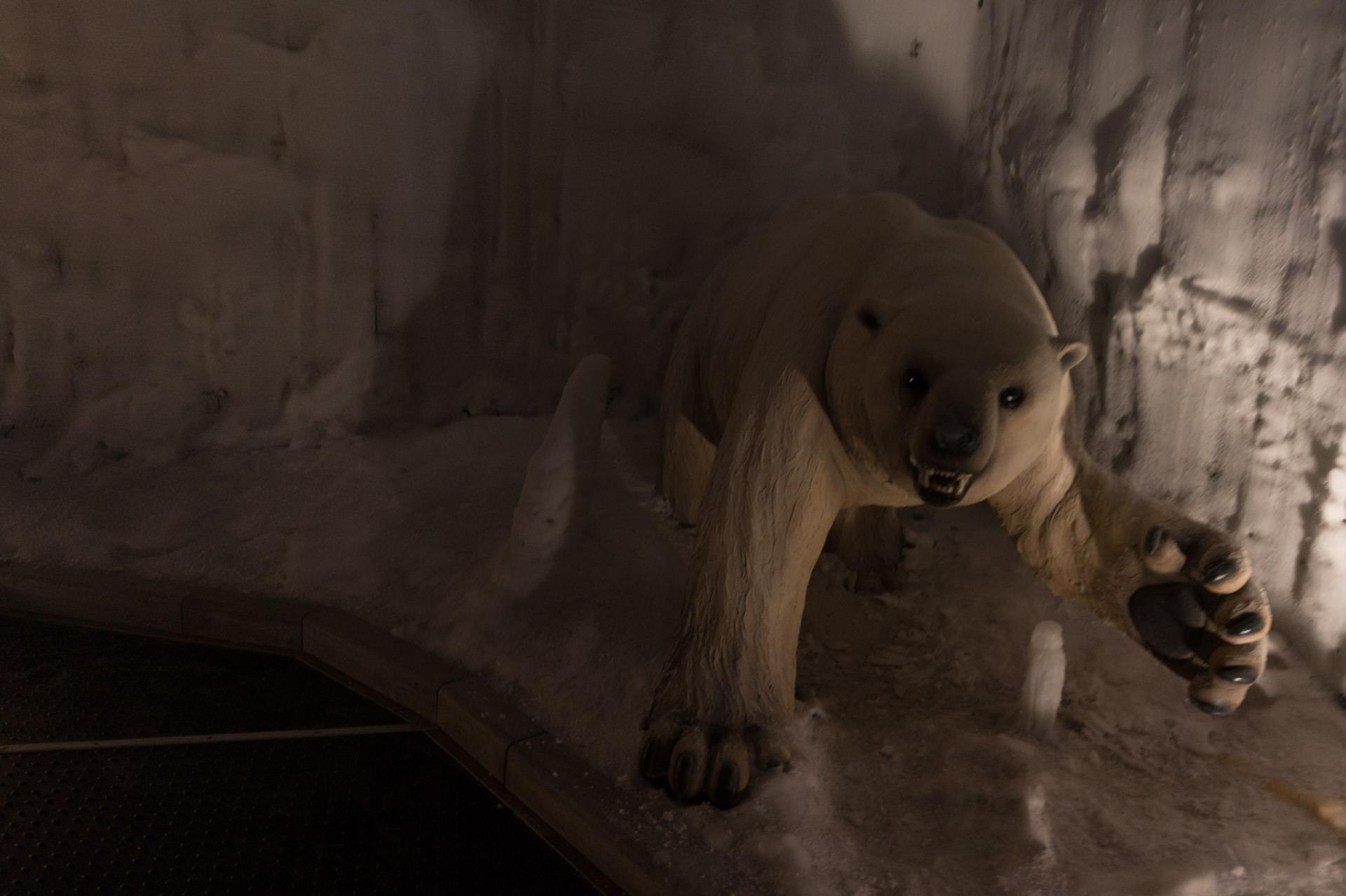
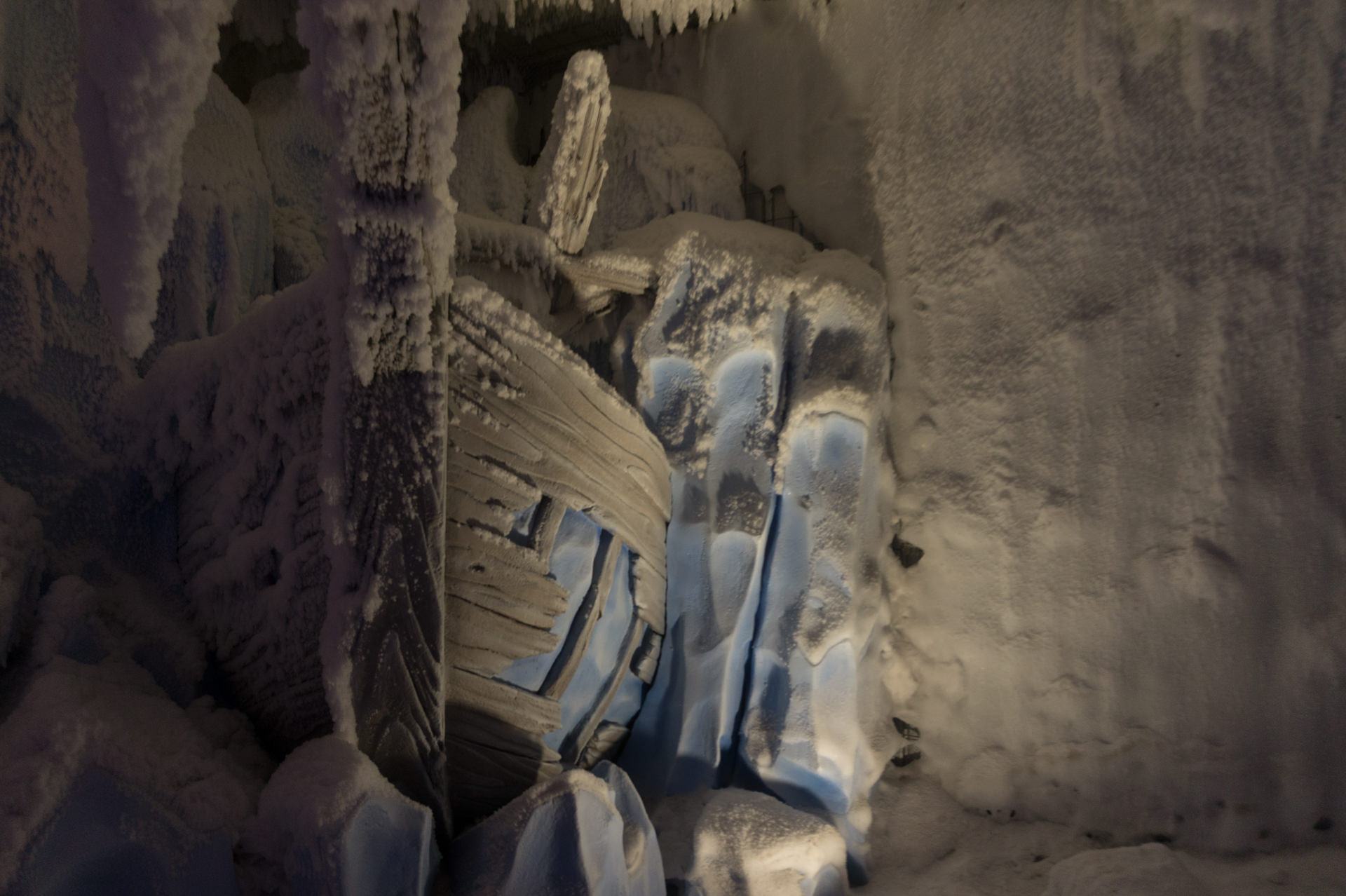
Survived, but with the best will in the world hardly or not at all refreshed, we were now drawn to a very special attraction: the nicely designed cold store Ice World. With a temperature difference of more than 60°C, we walked in very small steps through the cold chamber cooled down to -30°C and past all kinds of beautifully designed scenery.
Sky Pallet
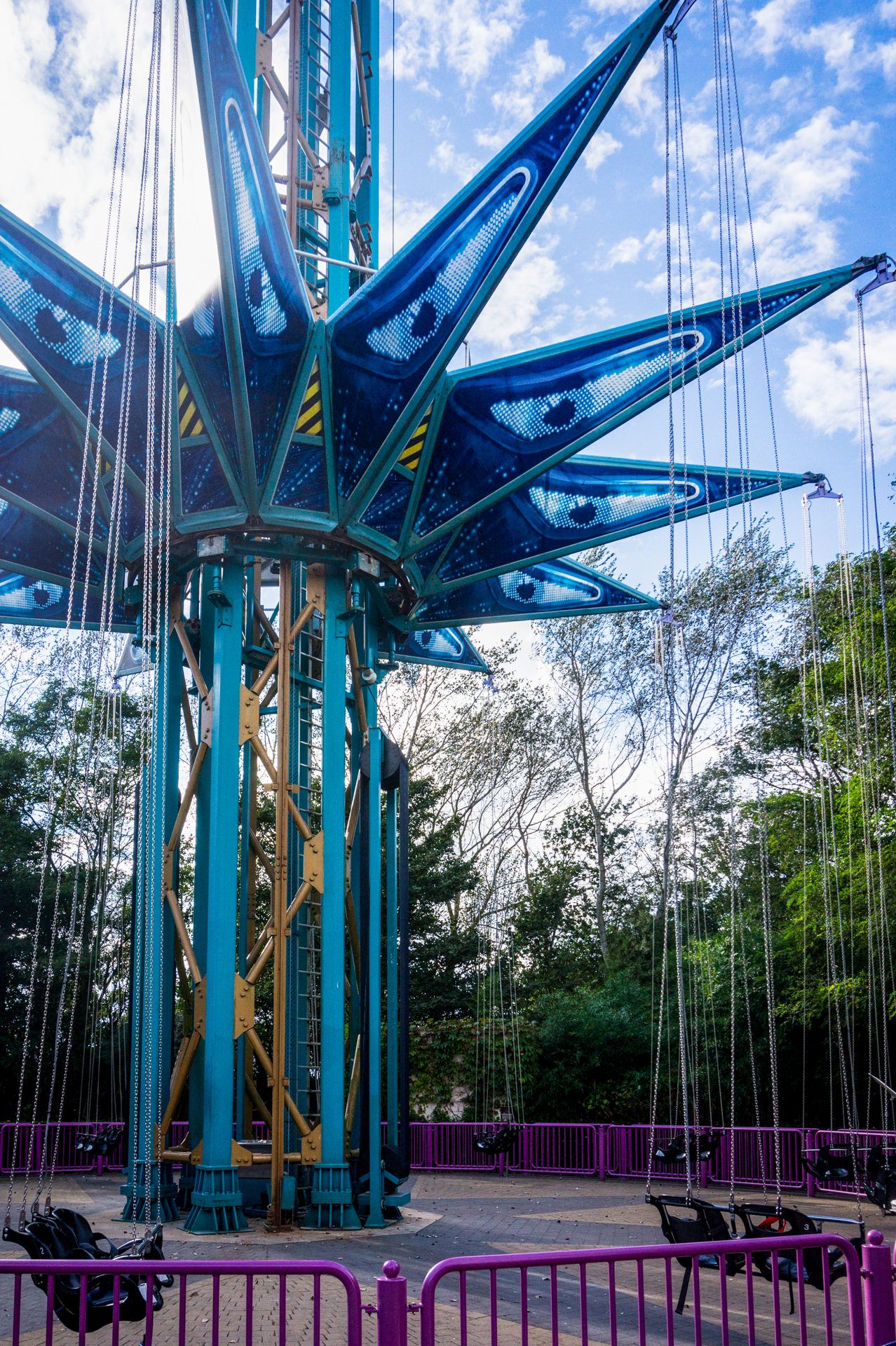
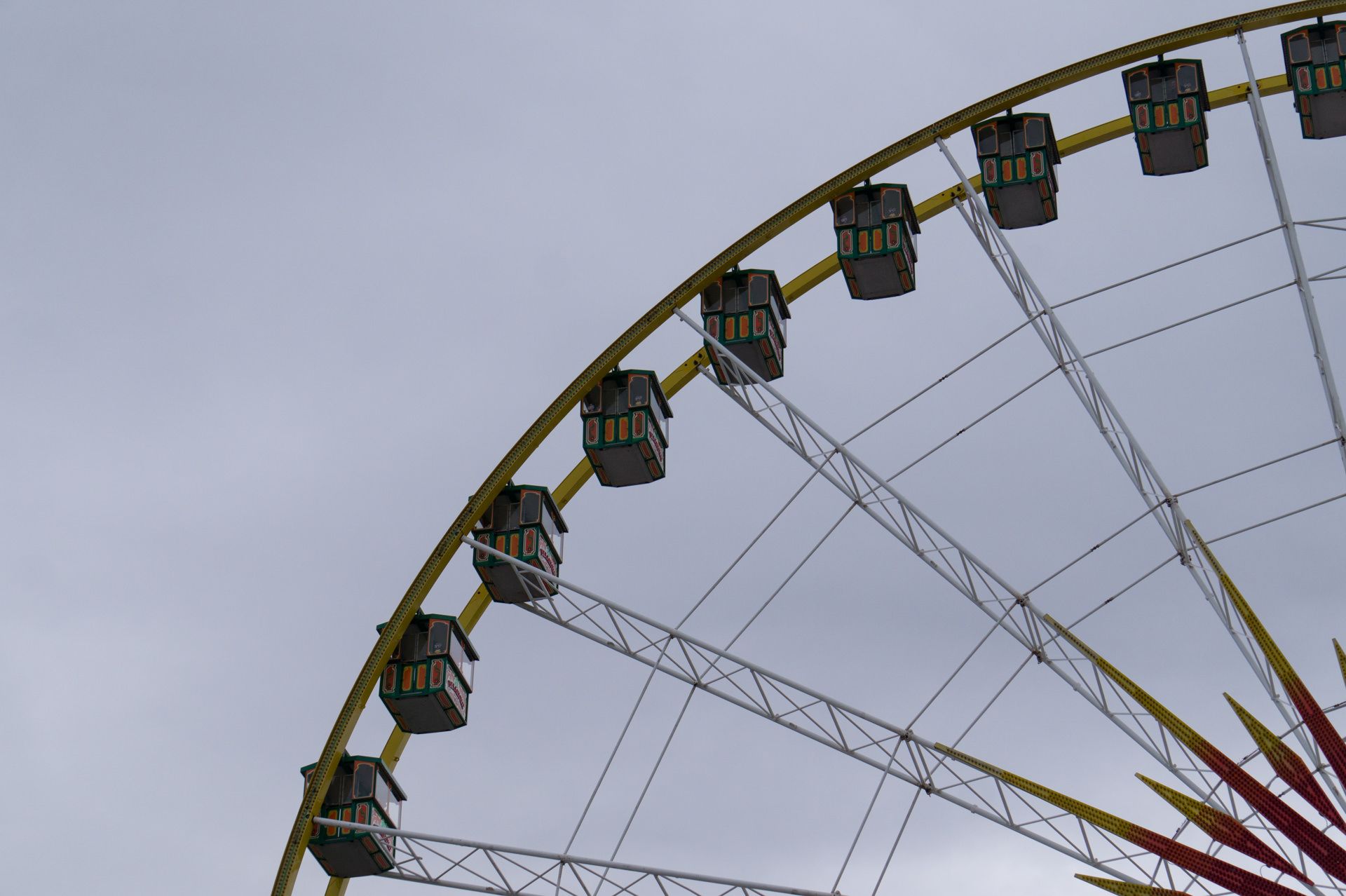
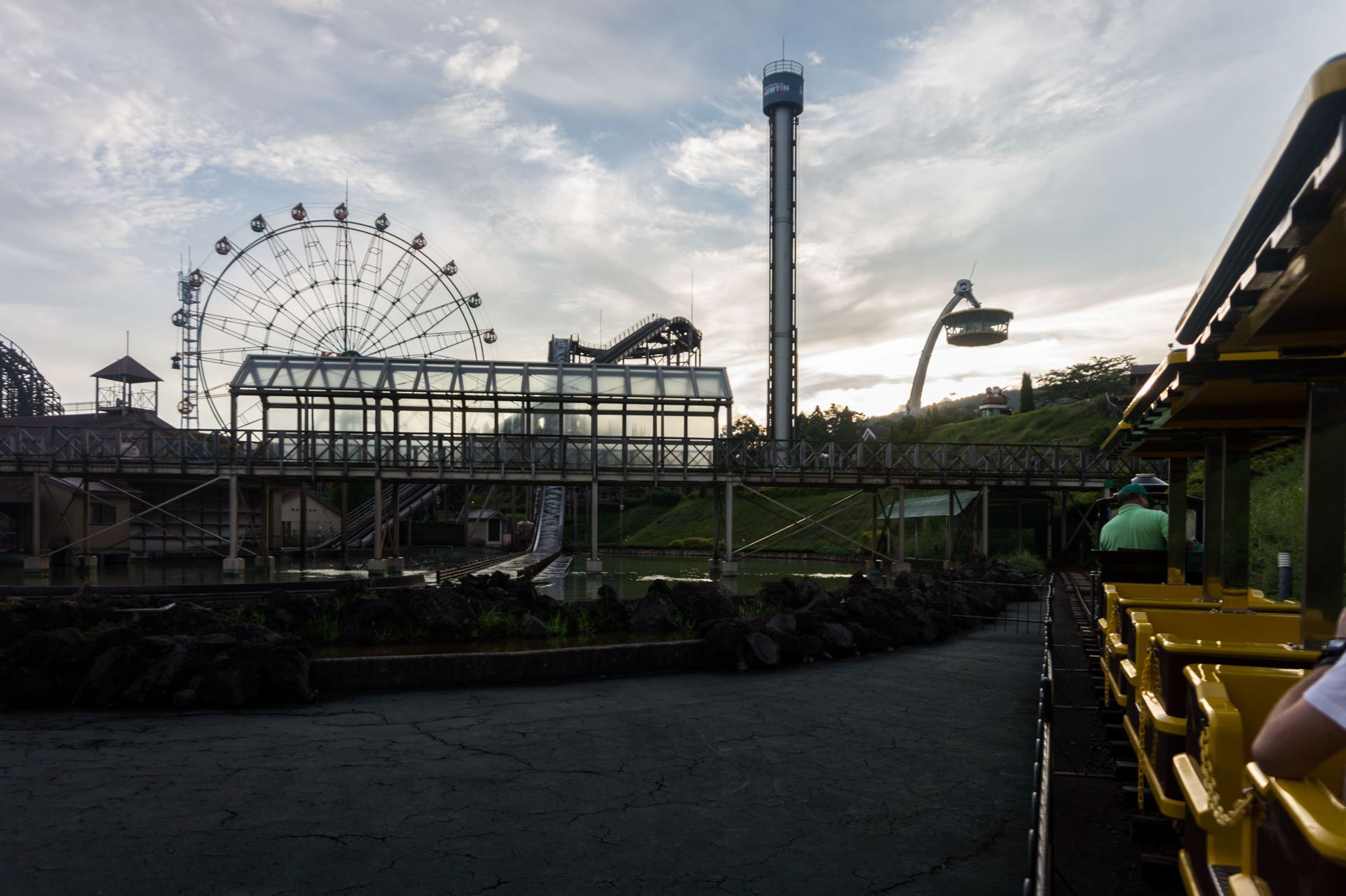
The next special feature of Kijima Kogen Park was the nearby Giant Ferris Wheel Sky Pallet, where, in addition to the normal gondolas, you can also experience the ride in a kind of open-air gondola at right angles to the direction of travel. Secured by a shoulder restraint, the ride experience intensifies almost automatically, but the field of vision is limited to only one side. Thus, it is a pity that such gondolas are much too rare.
Newton
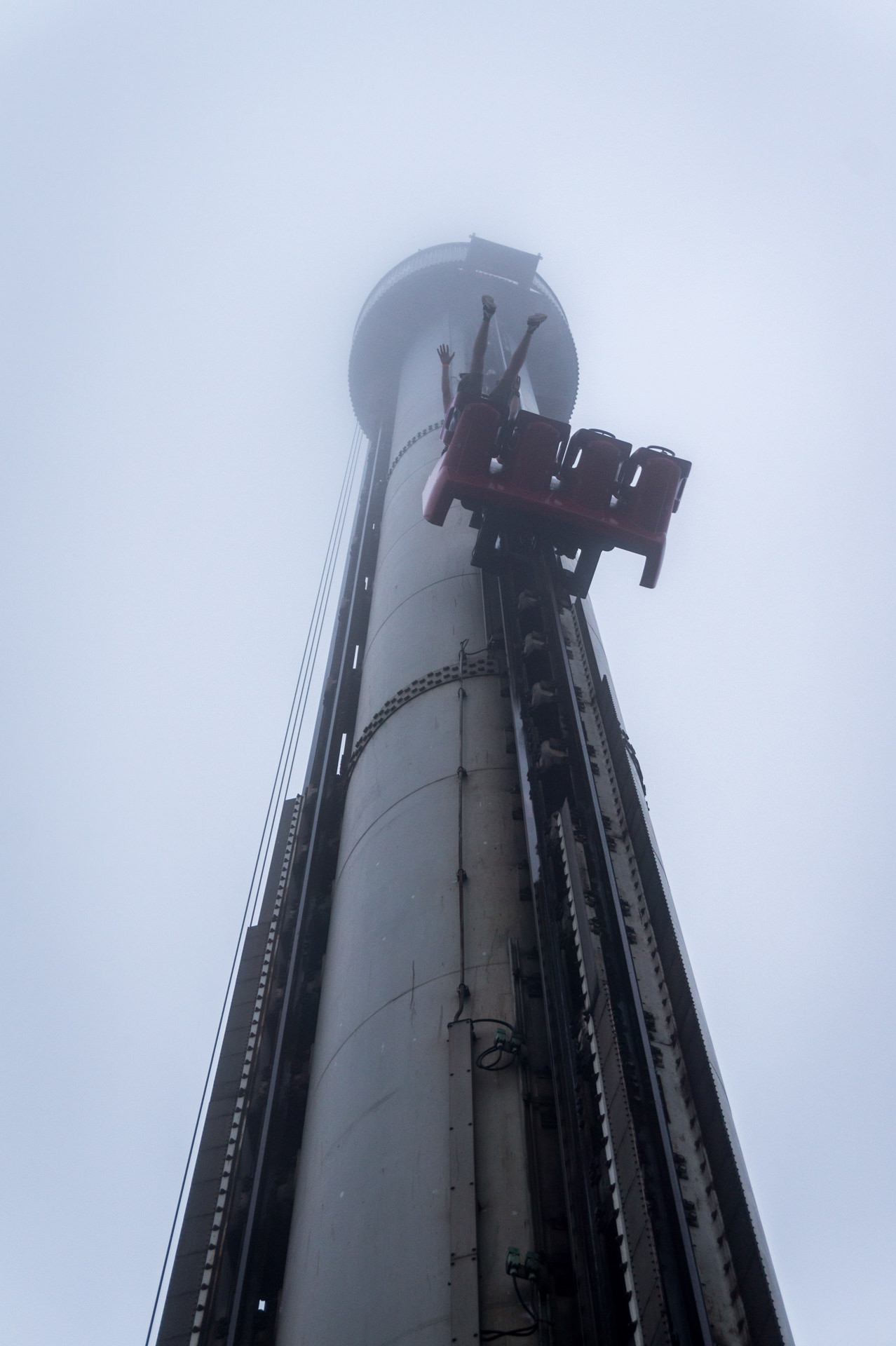
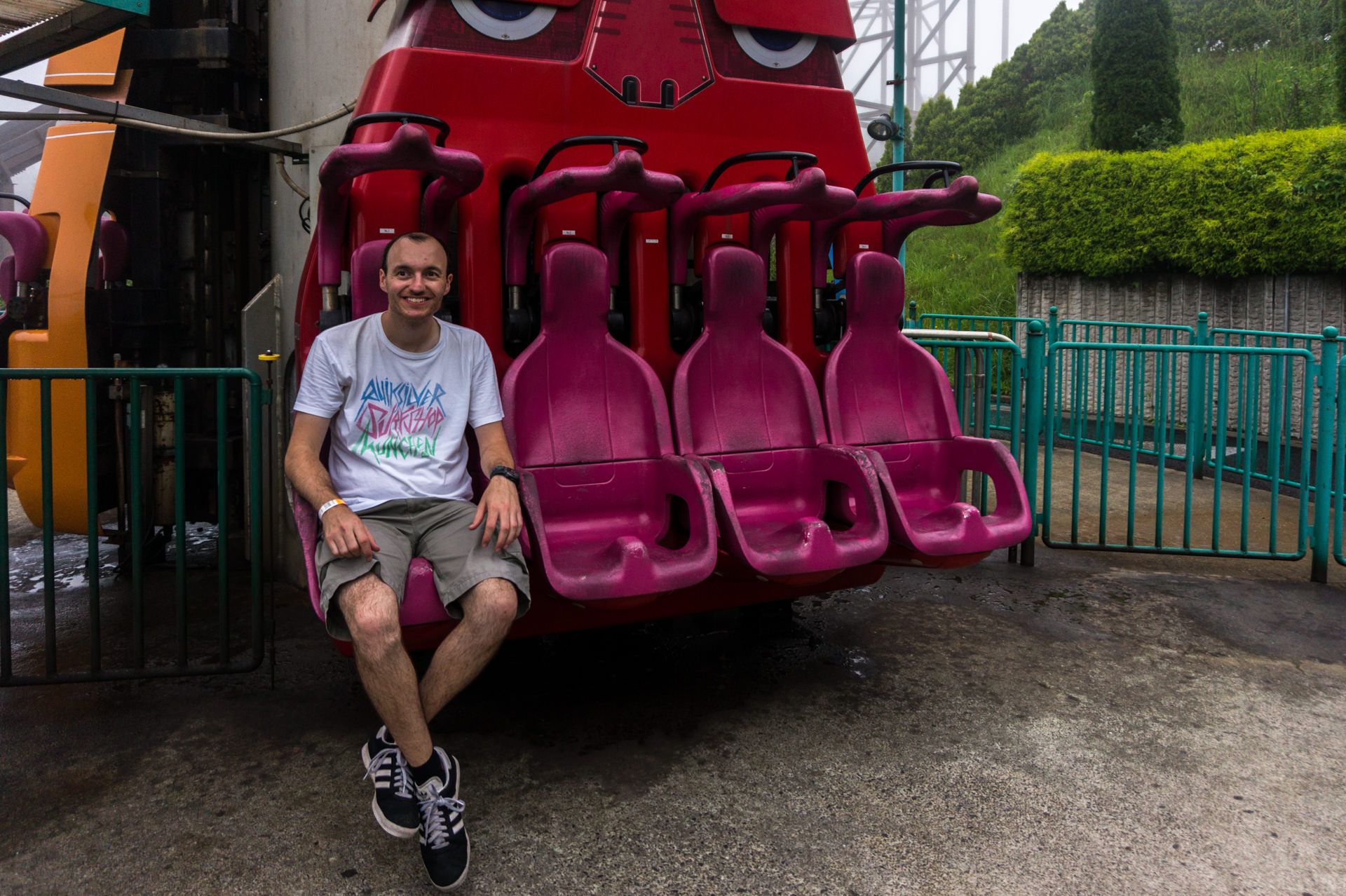
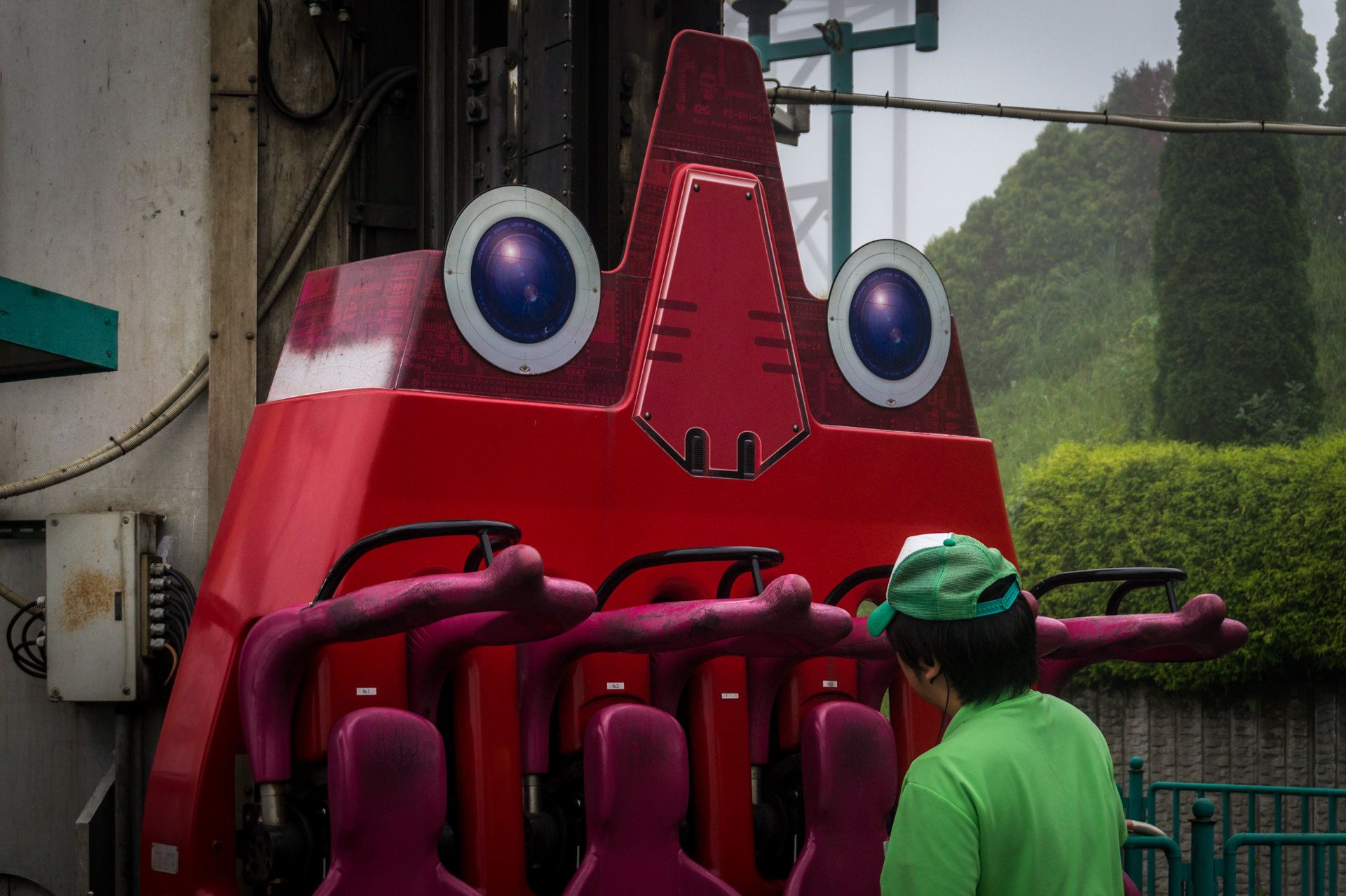
More often, also in Japan, you can find free fall towers. The local example is called Newton and like an apple, it drops you from a tall height to the ground. The Japanese have an interesting understanding of safety, and although they put additional padding everywhere, they do not use it in free fall towers; even the belts known from Europe to secure the safety bar are simply missing. This results in an even more intensified overall experience that can only be topped by the extremely creative gondola design.
A similarly creative design can be found on the nearby observation tower, which has a stork design and works like a Flying Island ride. From up here you have a wonderful view of the plateau with all its rides, which we will now take a closer look at.
Dragon
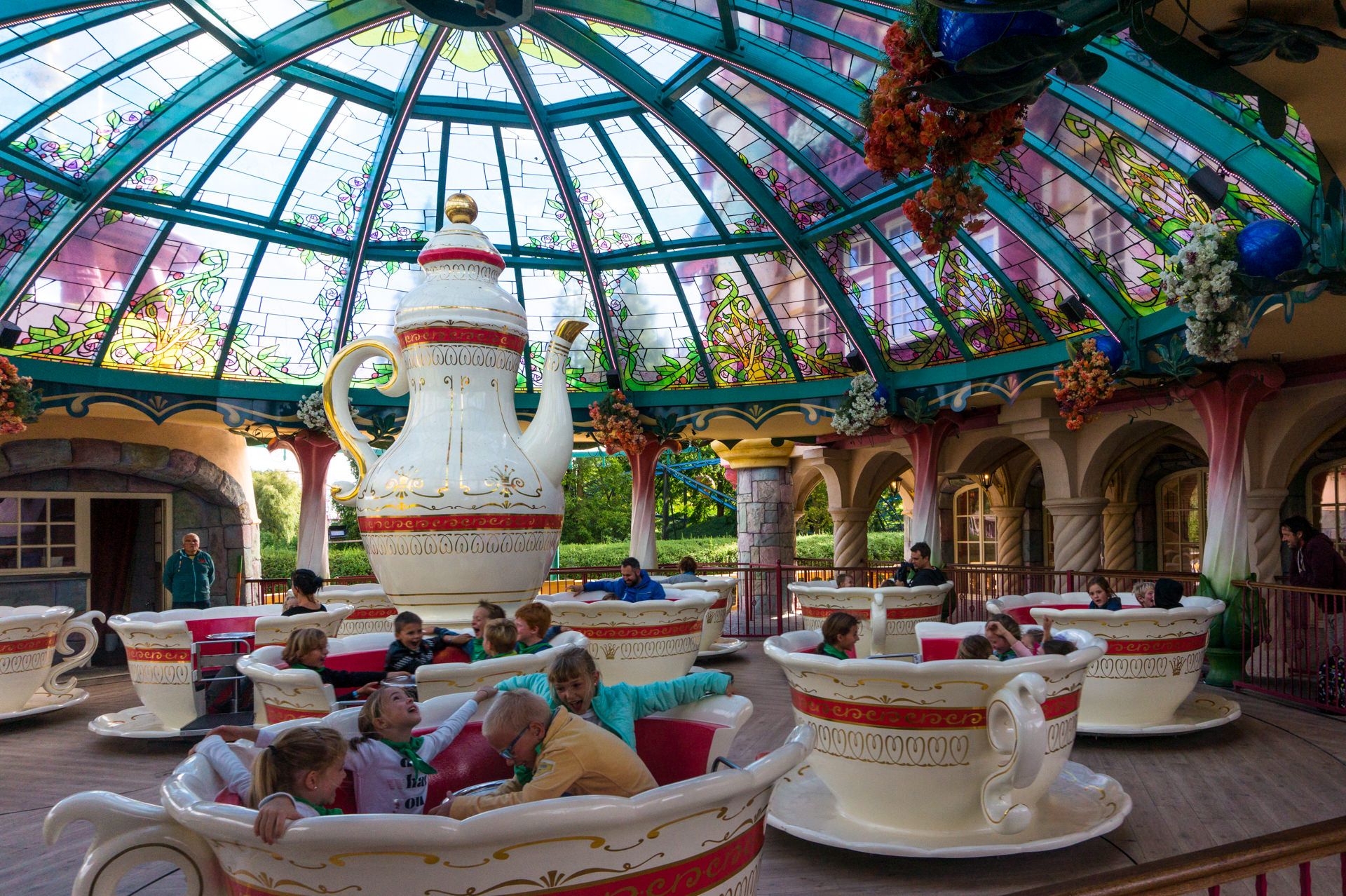
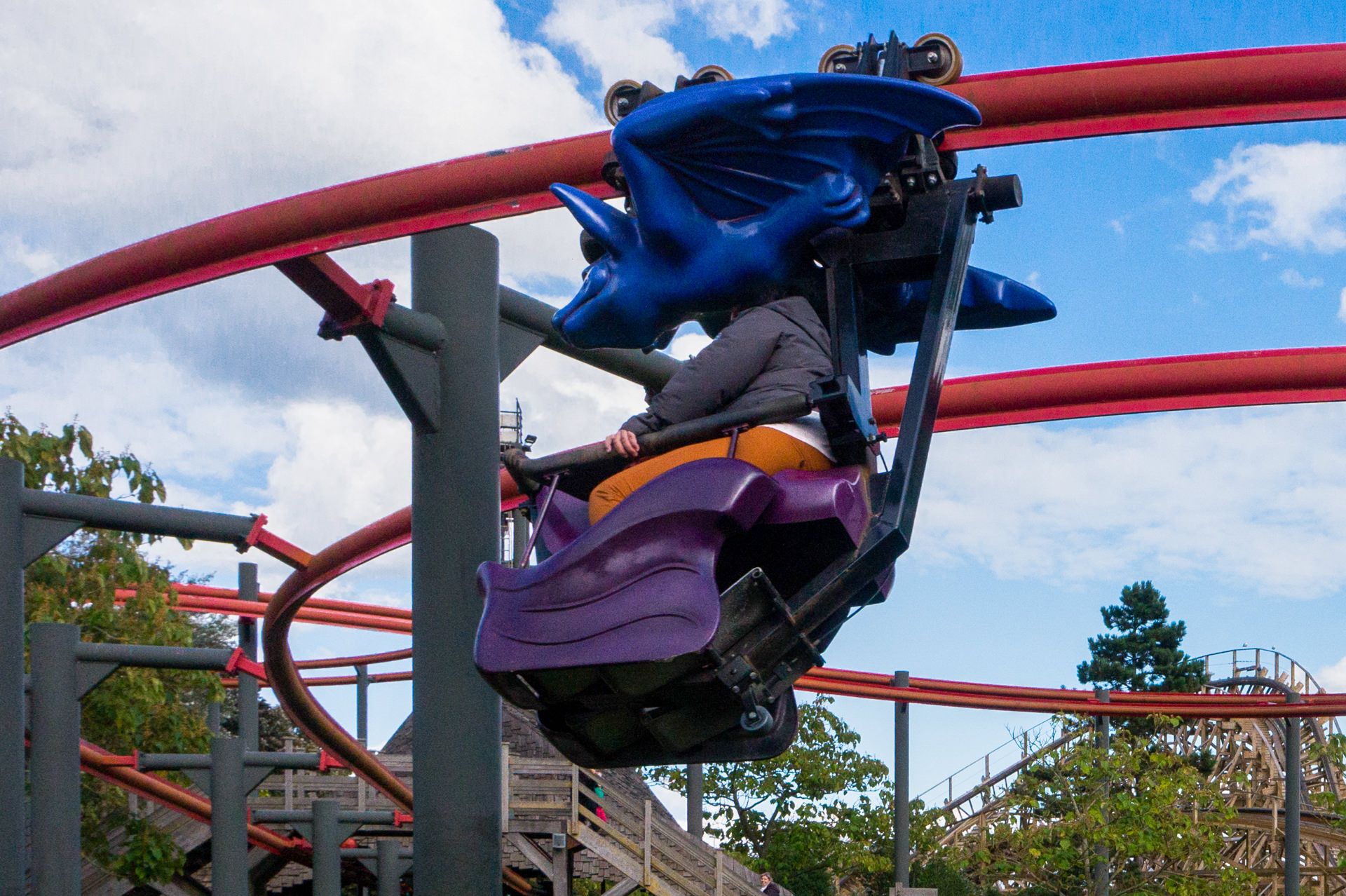
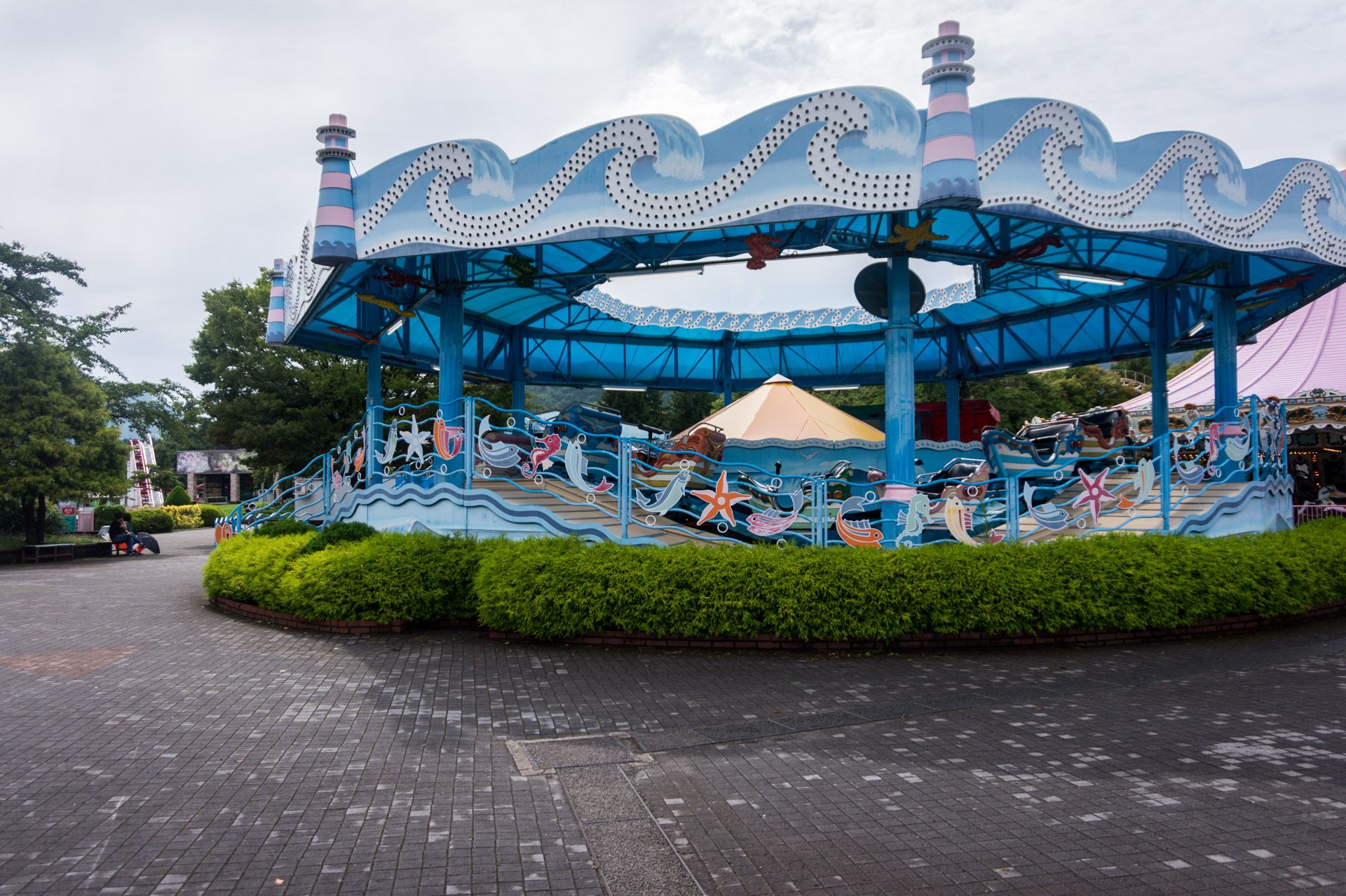
Through a small children’s area, including a dragon roller coaster by the manufacturer Zamperla (a small oval with a central downward helix) and past the large paddling pool, which is used as a skating rink in winter, we were drawn to the upper level. Here you can find all kinds of classic flat rides, such as a teacup ride, a horse carousel and a wave swinger, but also rides such as a sea storm ride, a flying carpet and a large swing boat.
360° 3D cinema
Of particular interest was the 360° 3D cinema, where a typical Japanese horror film was shown in the afternoon. Accompanied by all kinds of effects, the film worked extremely well and the 3D effect was also great – which is why we were drawn back to this kind of cinema again and again during the rest of the tour.
Flash Battle K and Shooting Pirates
The same is true for interactive games, like Flash Battle K, where you had to hit buttons – which are spread all over the room – like crazy to score as many points as possible. With the same premise, but conceived as a classic interactive theme ride, Shooting Pirates presents itself to park guests. Similar to the dark ride Capitán Balas of the Spanish amusement park Isla Magica, the ride goes through an elaborately designed pirate theme in small round chaises. The ride is very impressive, but it is also incredibly short and the end comes very fast.
Roller Skate Coaster
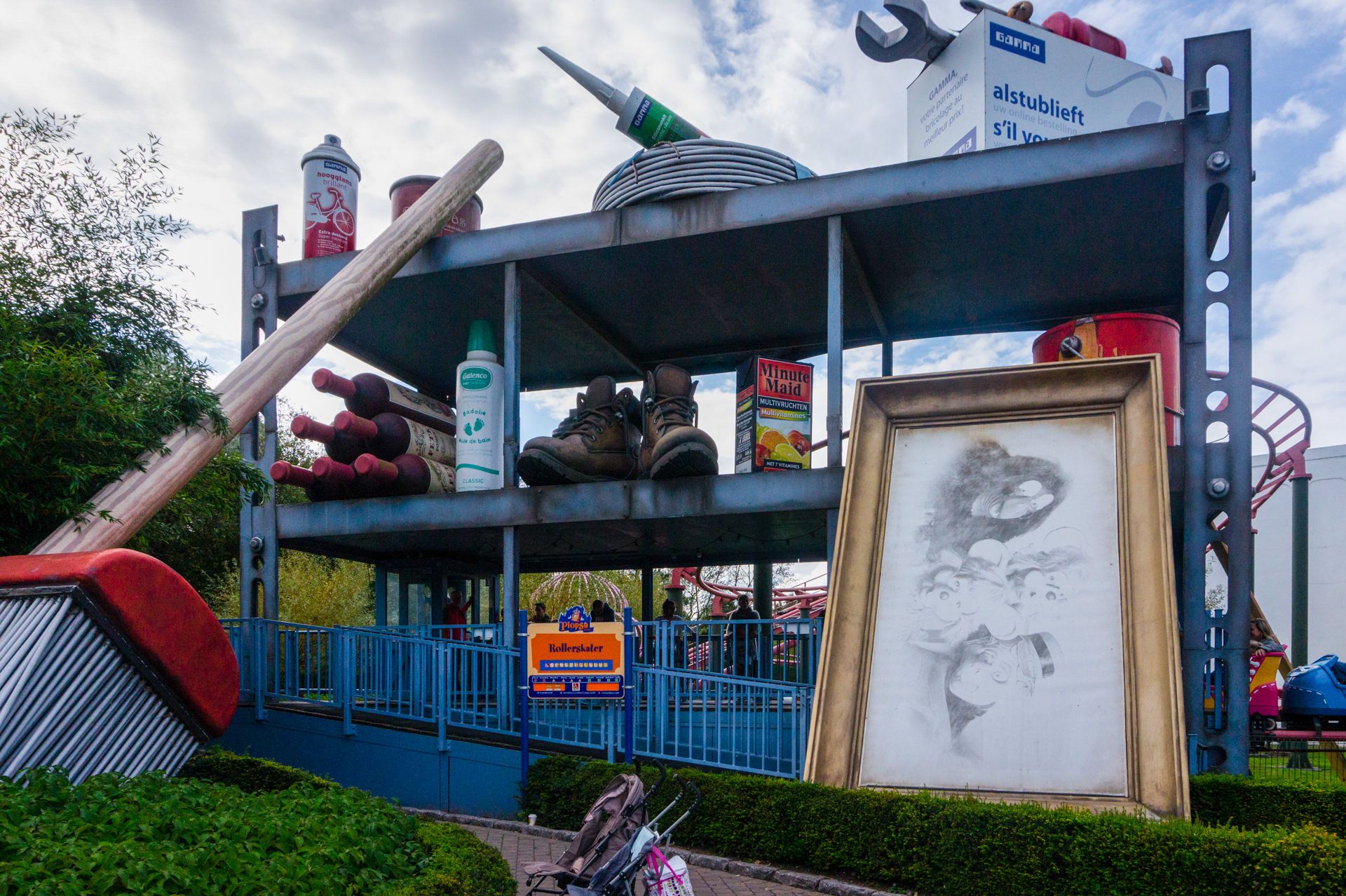
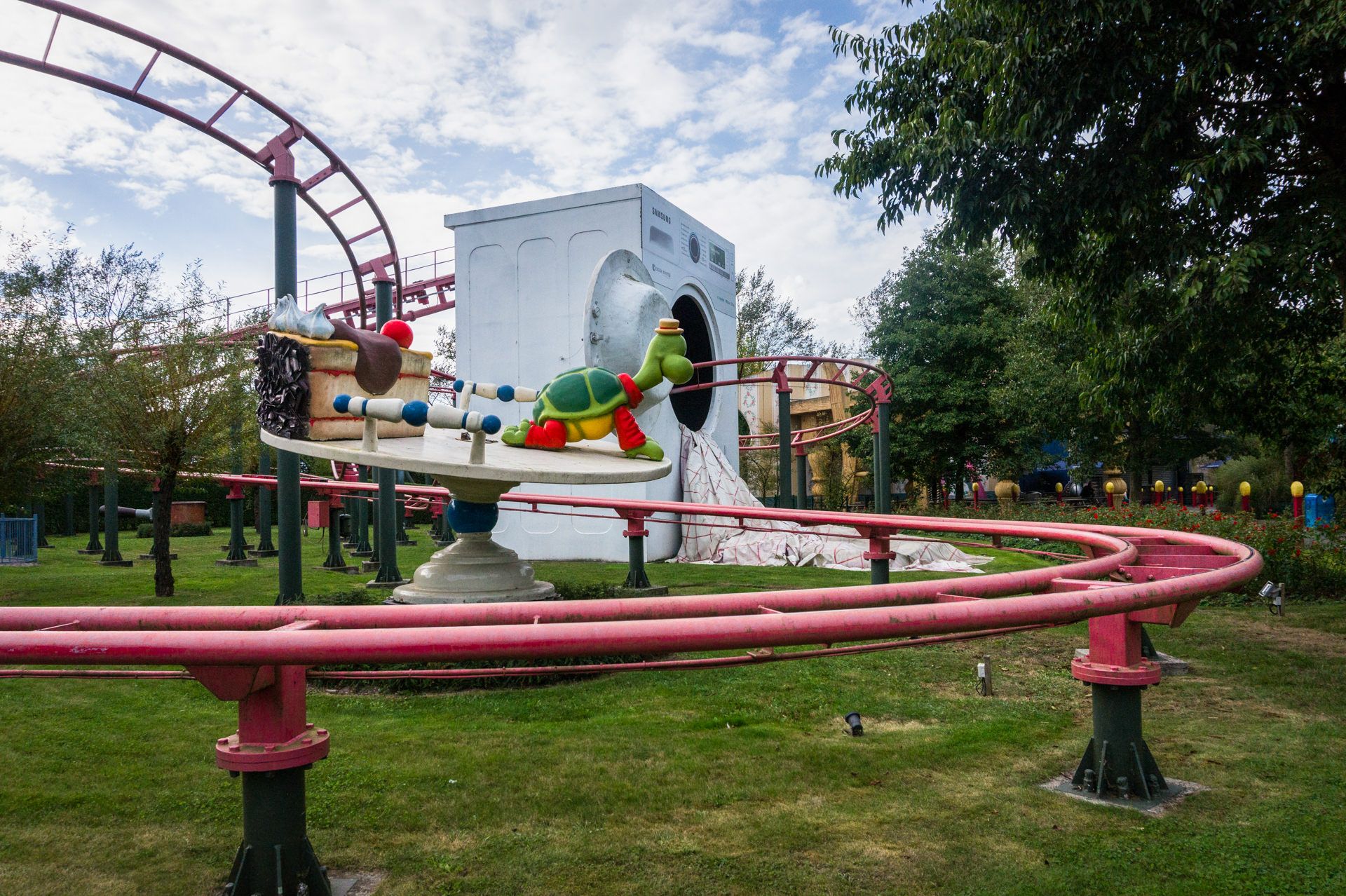
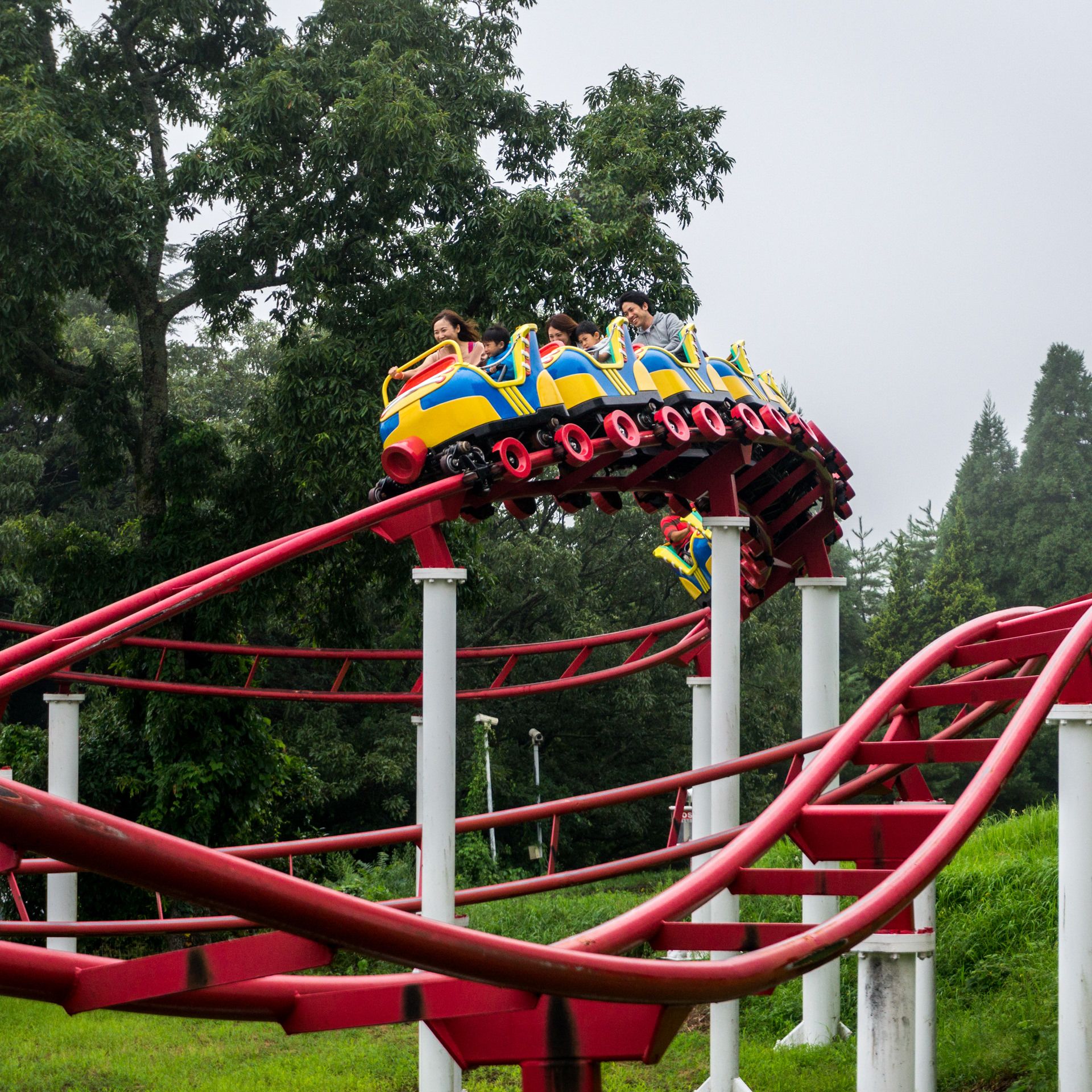
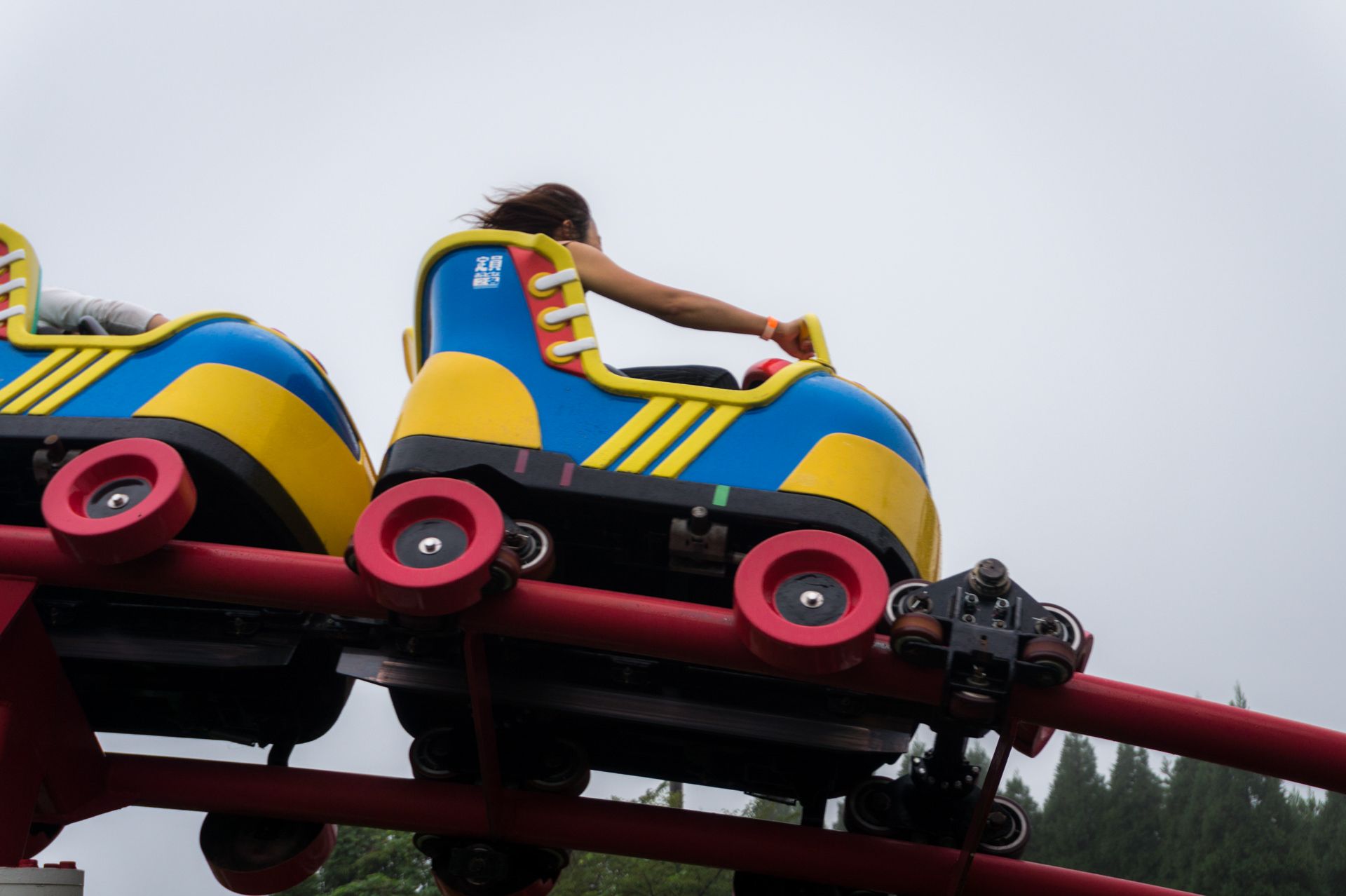
Right next door you will find the laser labyrinth (extra charge) and the children’s roller coaster Roller Skate Coaster in the classic roller skater layout of the manufacturer Vekoma. Accordingly, the ride offers some racy curves and helices, perfectly tailored to the young park guests who like to get on and off.
Moon Parade
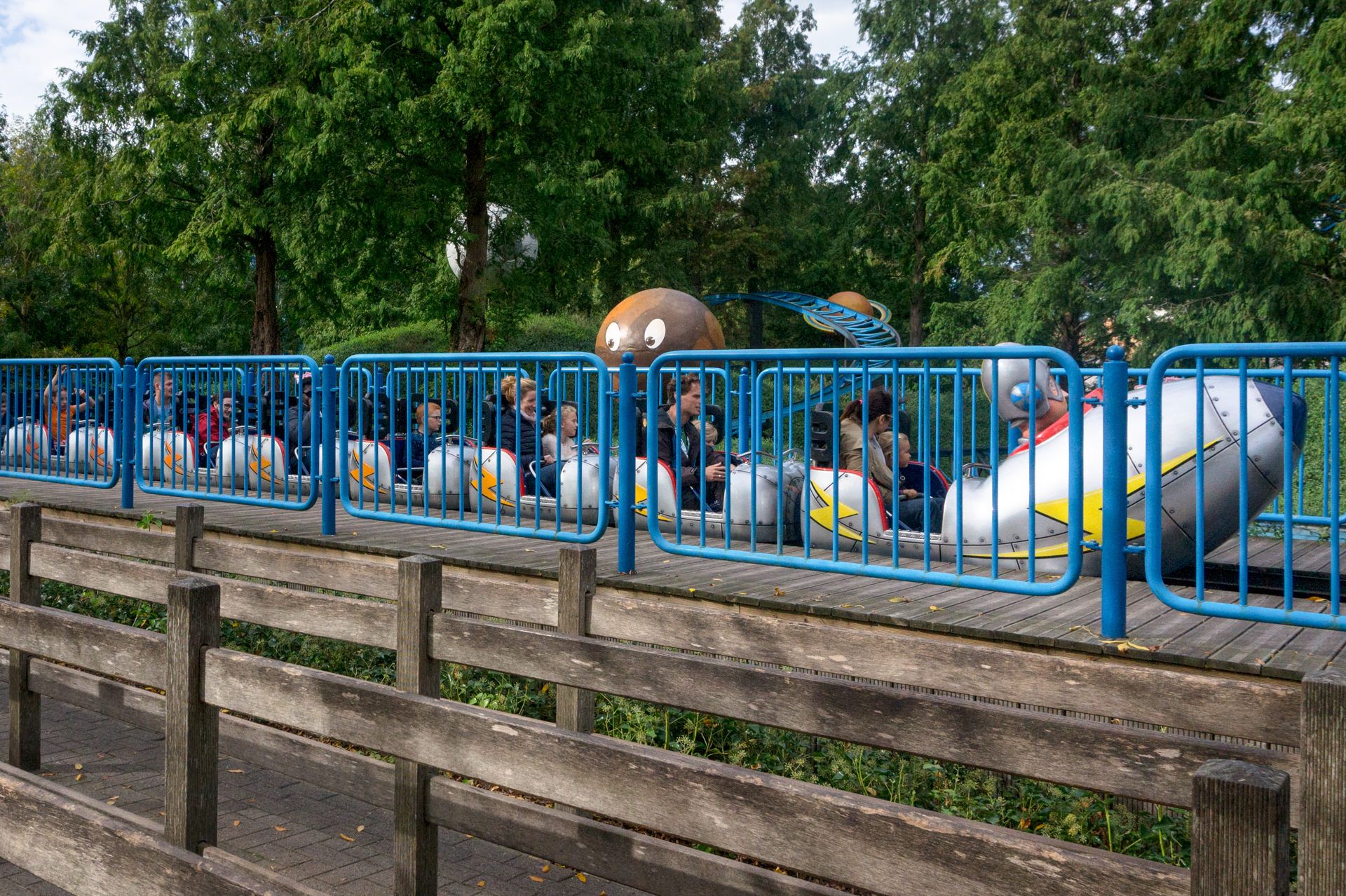
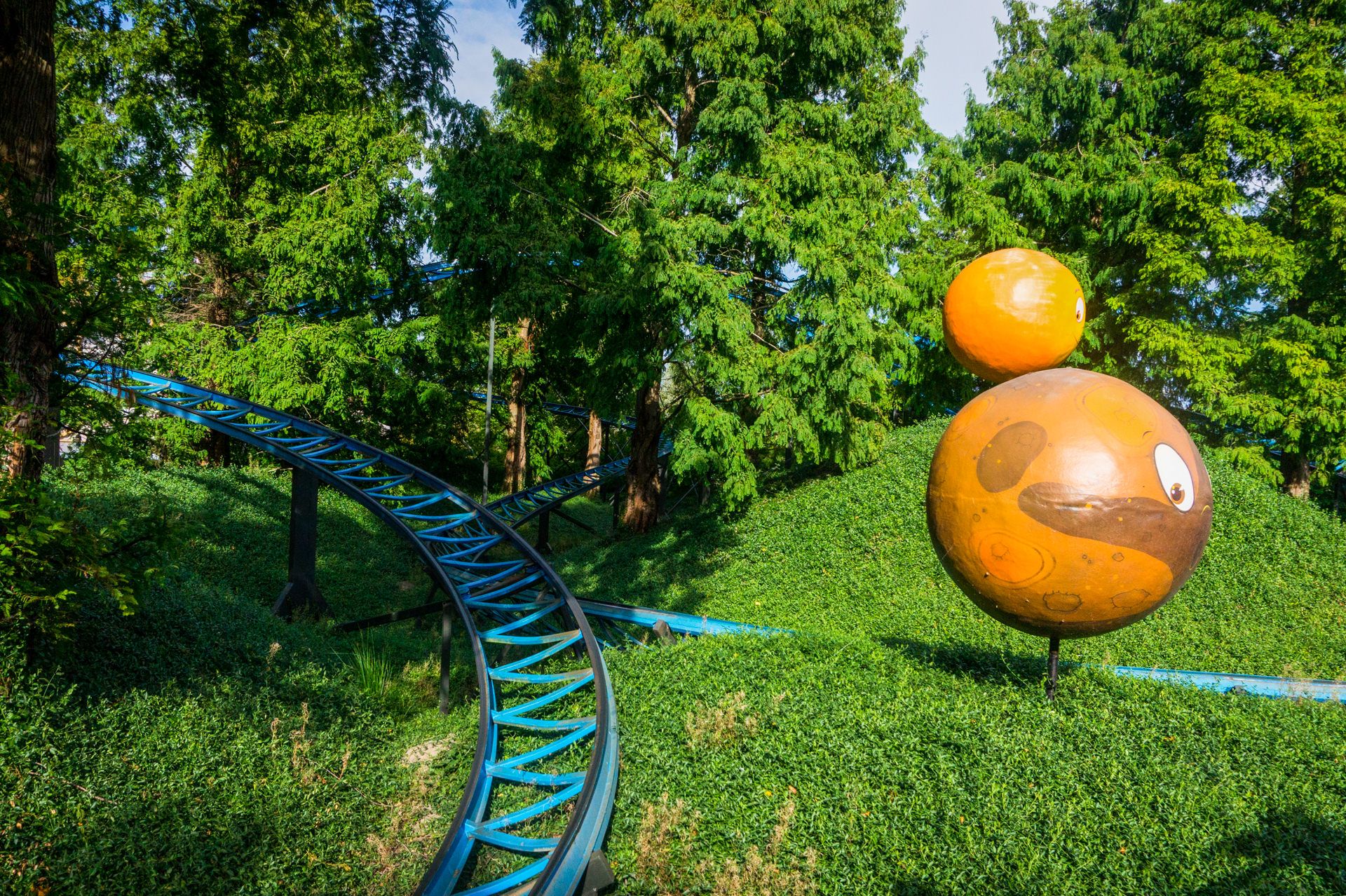
At first sight, the Monorail Moon Parade looks similarly familiar, at least until you get into the car. Instead of using electricity, you drive along the track with a combustion engine, and the best part is that we can steer. We can only control the speed, but for everything else there is a very long go-kart track directly under the layout.
Gold Rush
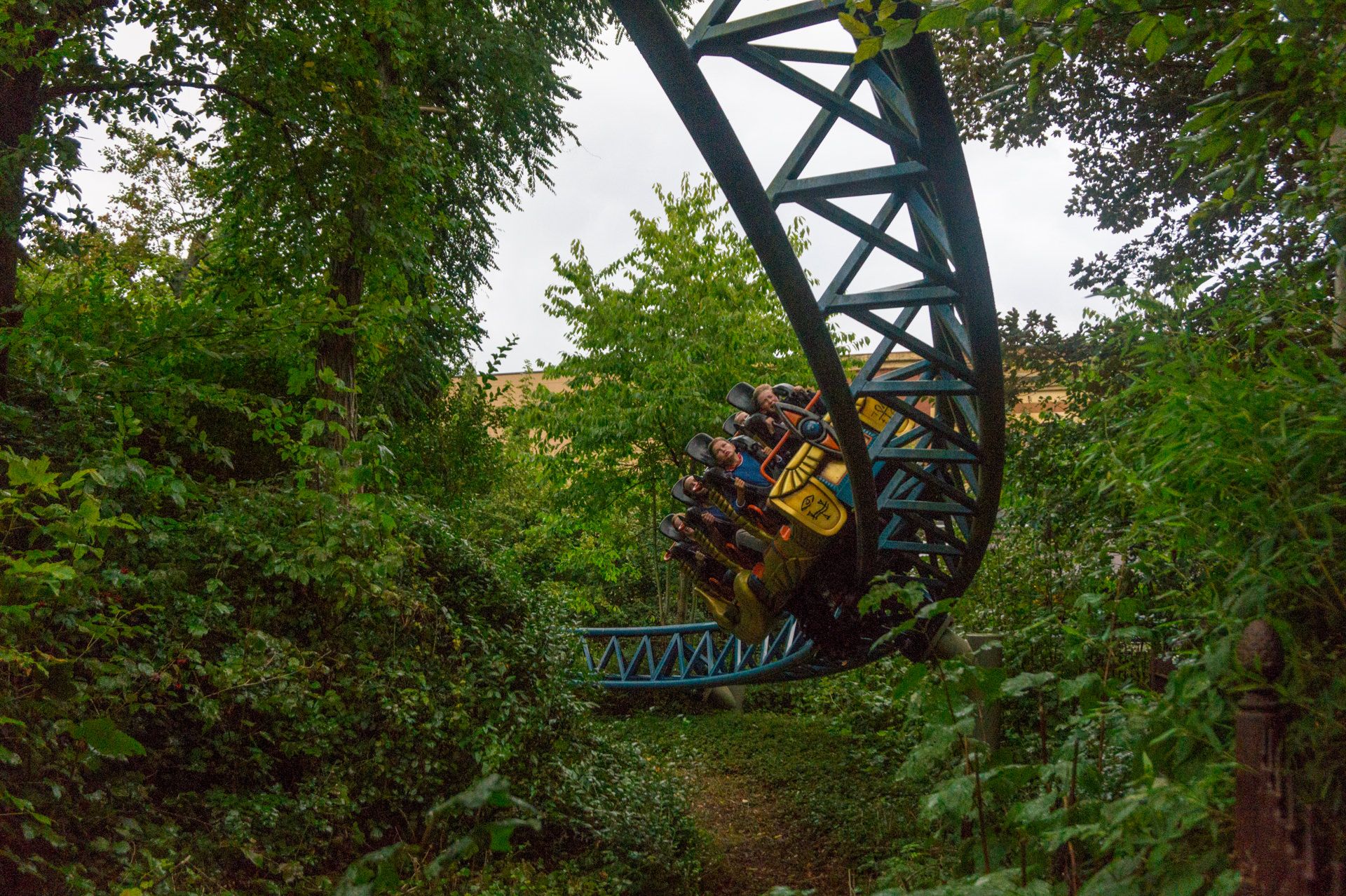
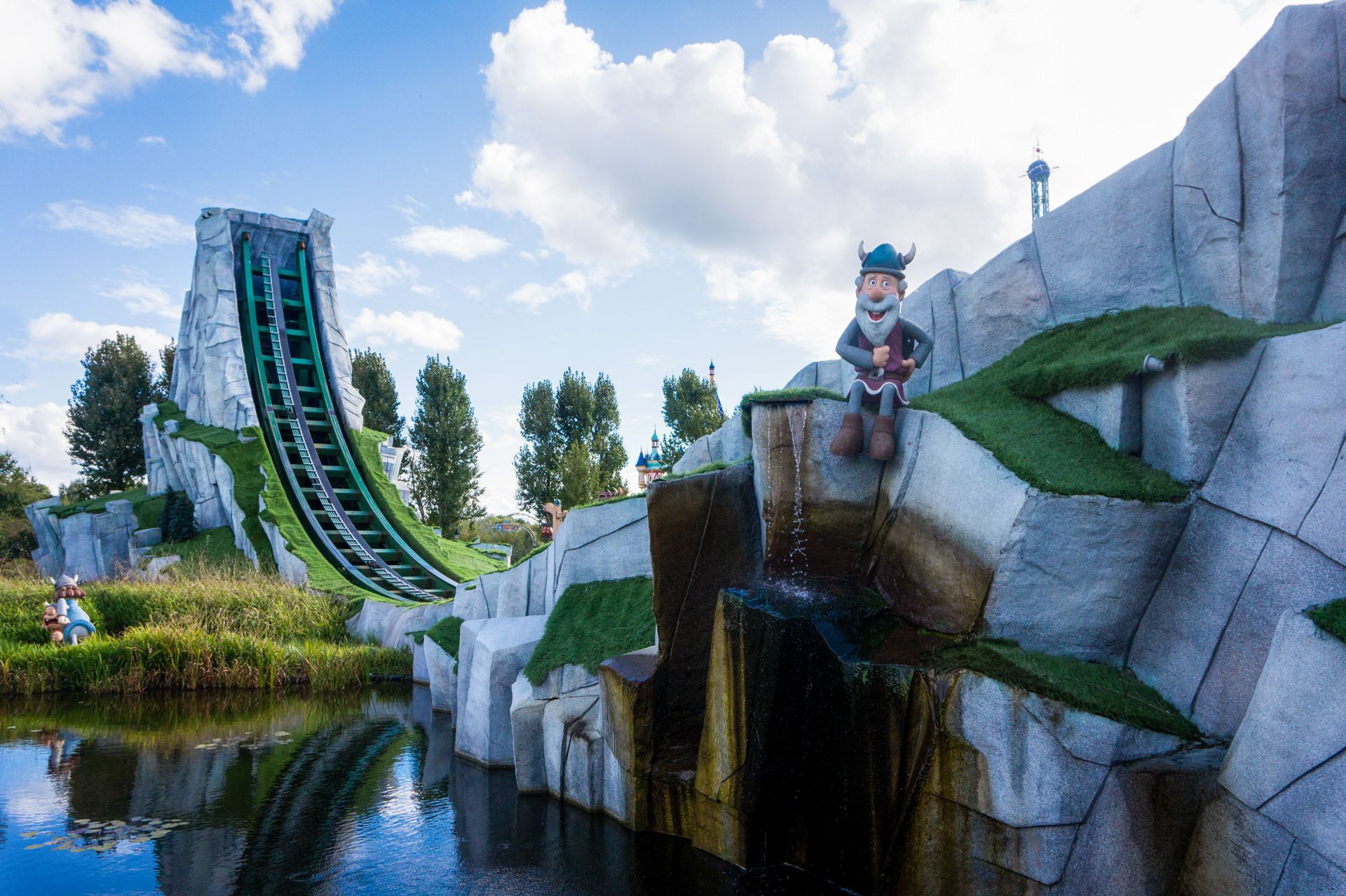
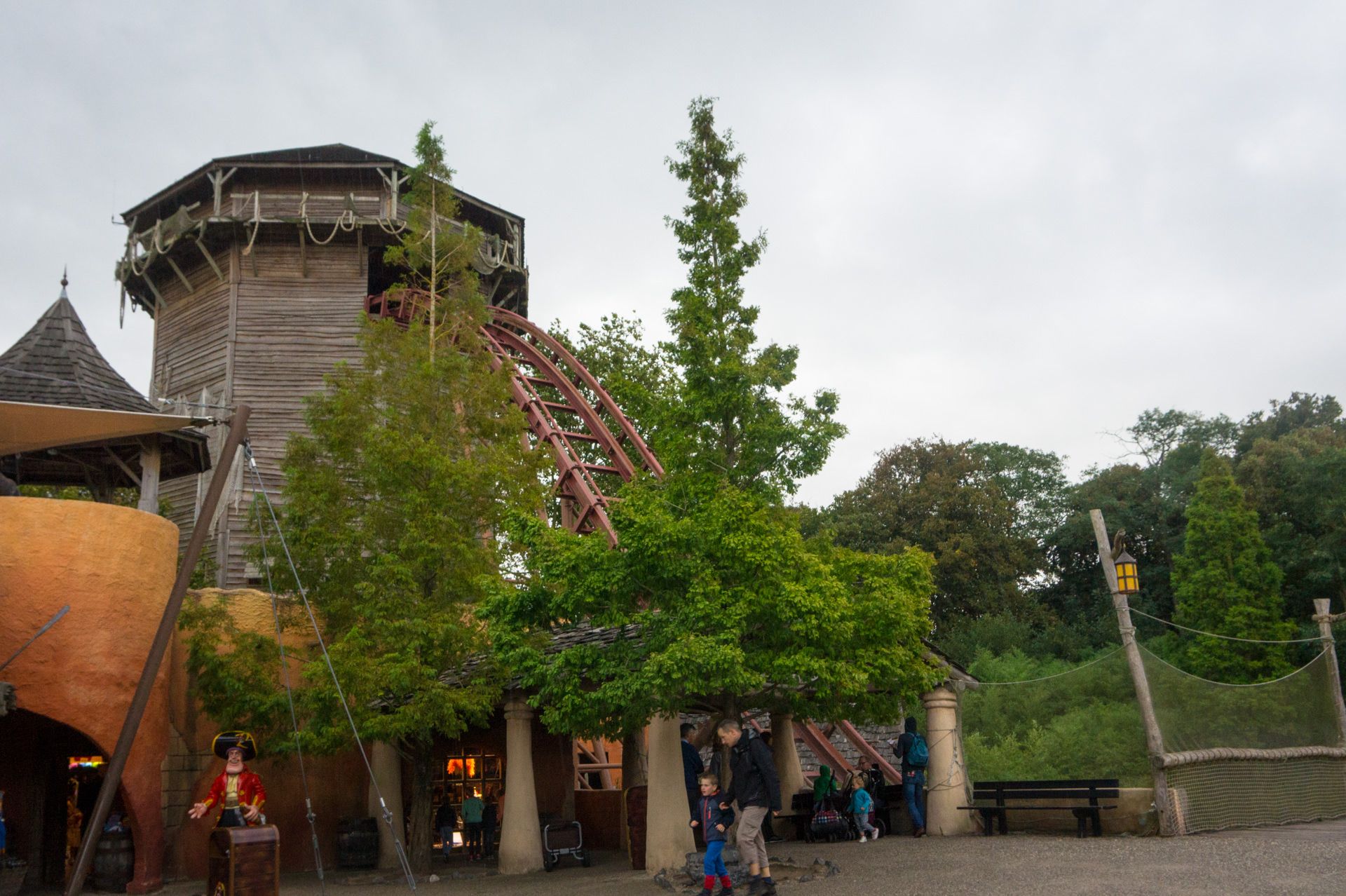
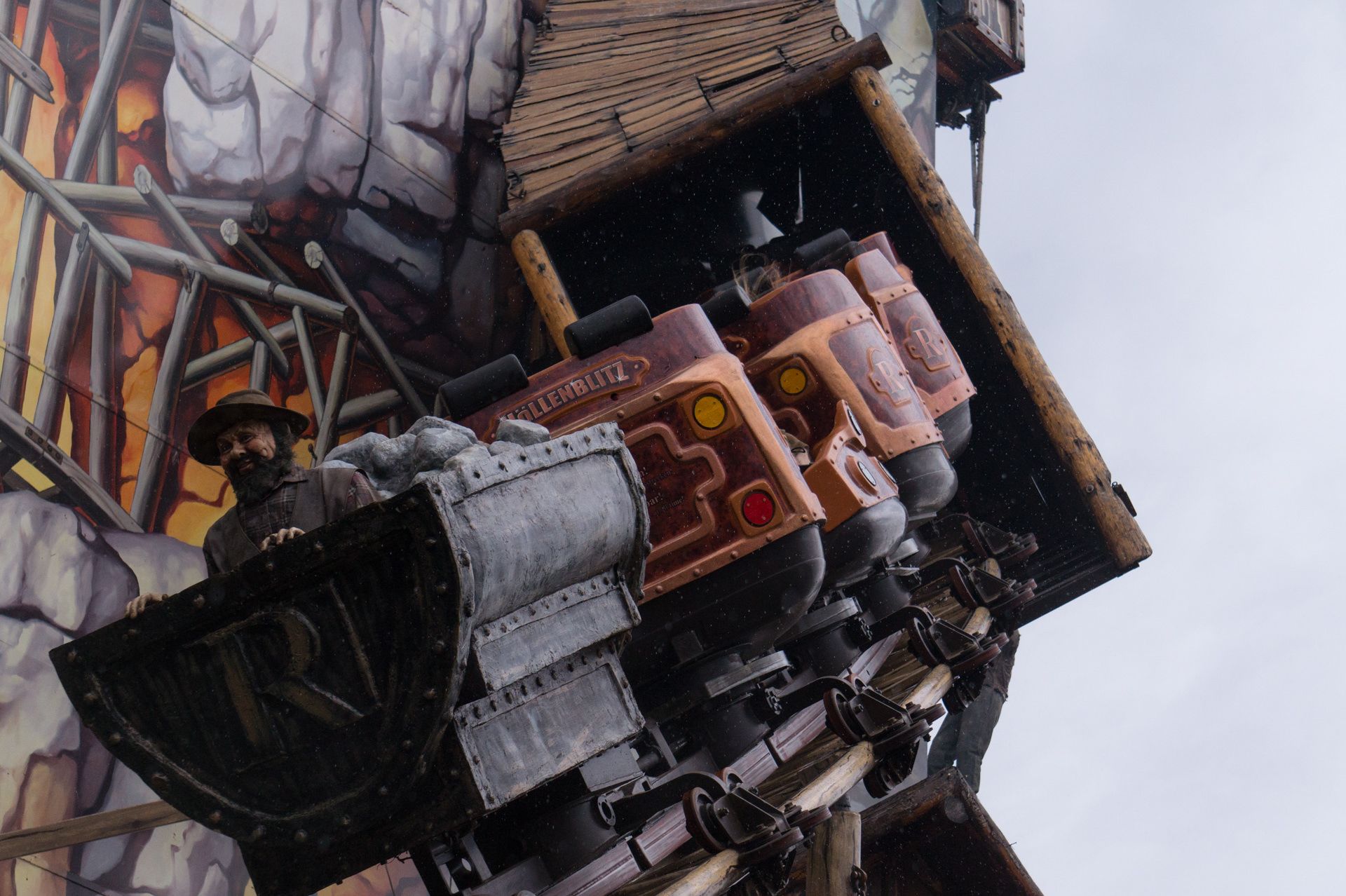
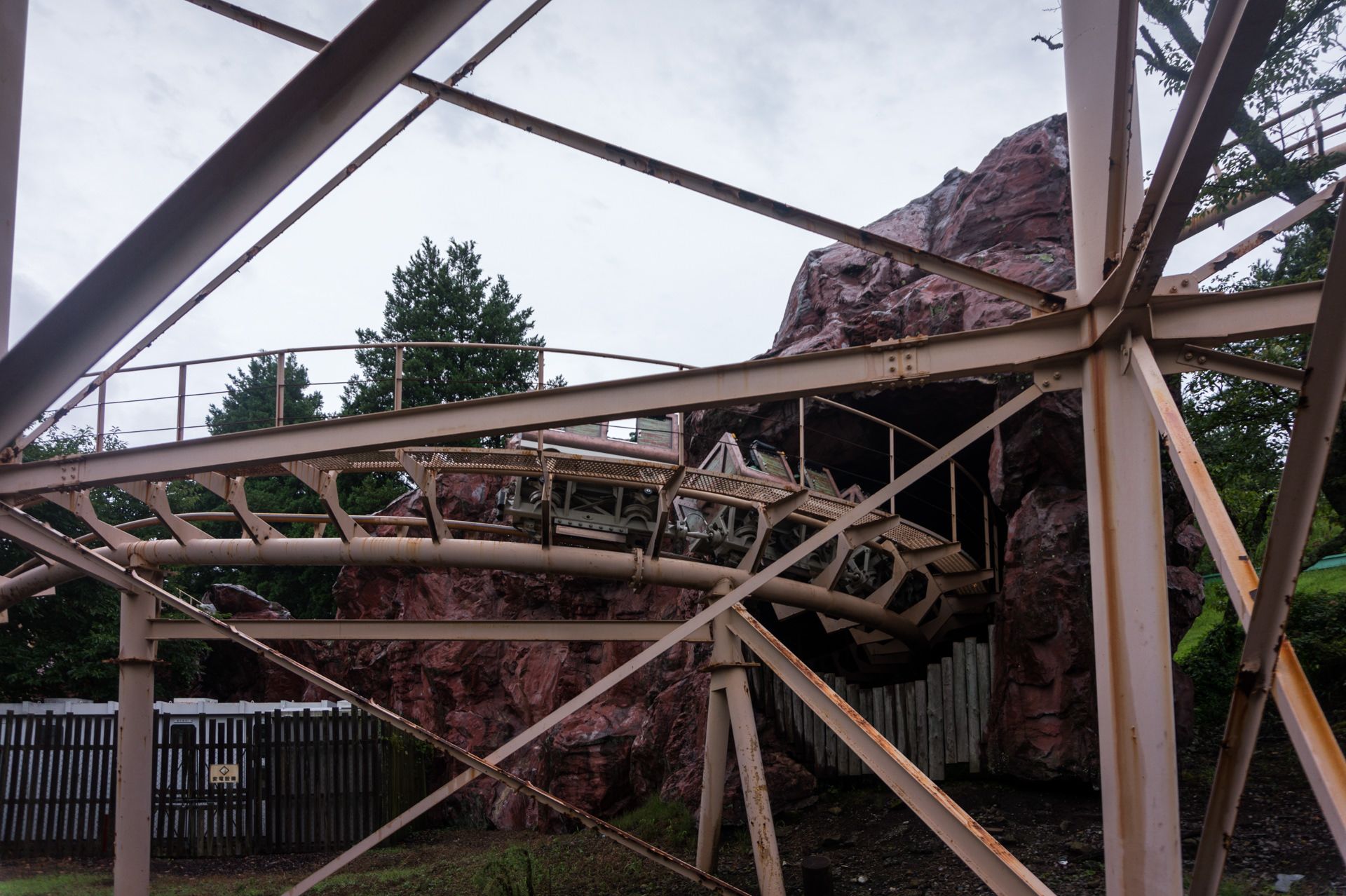
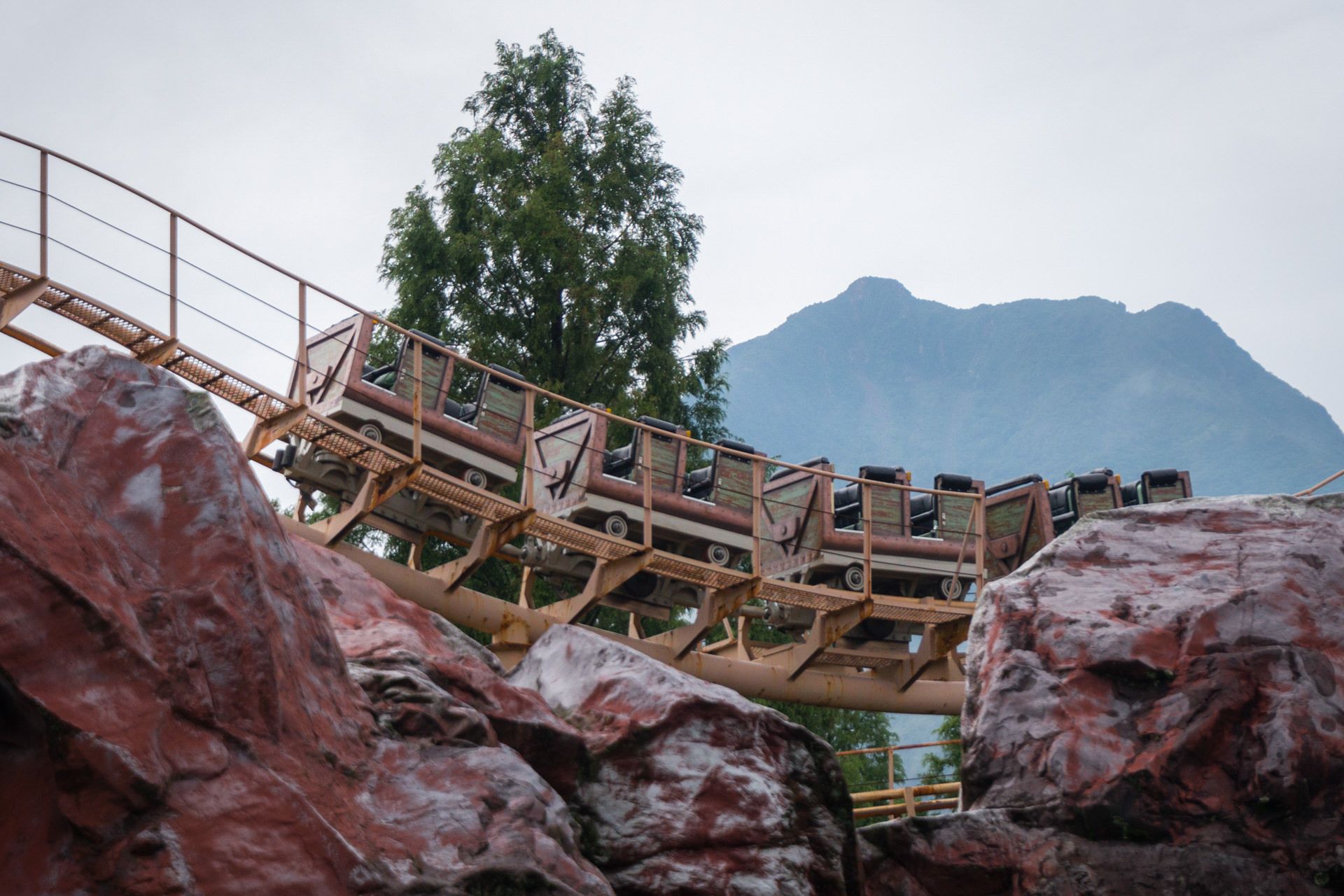
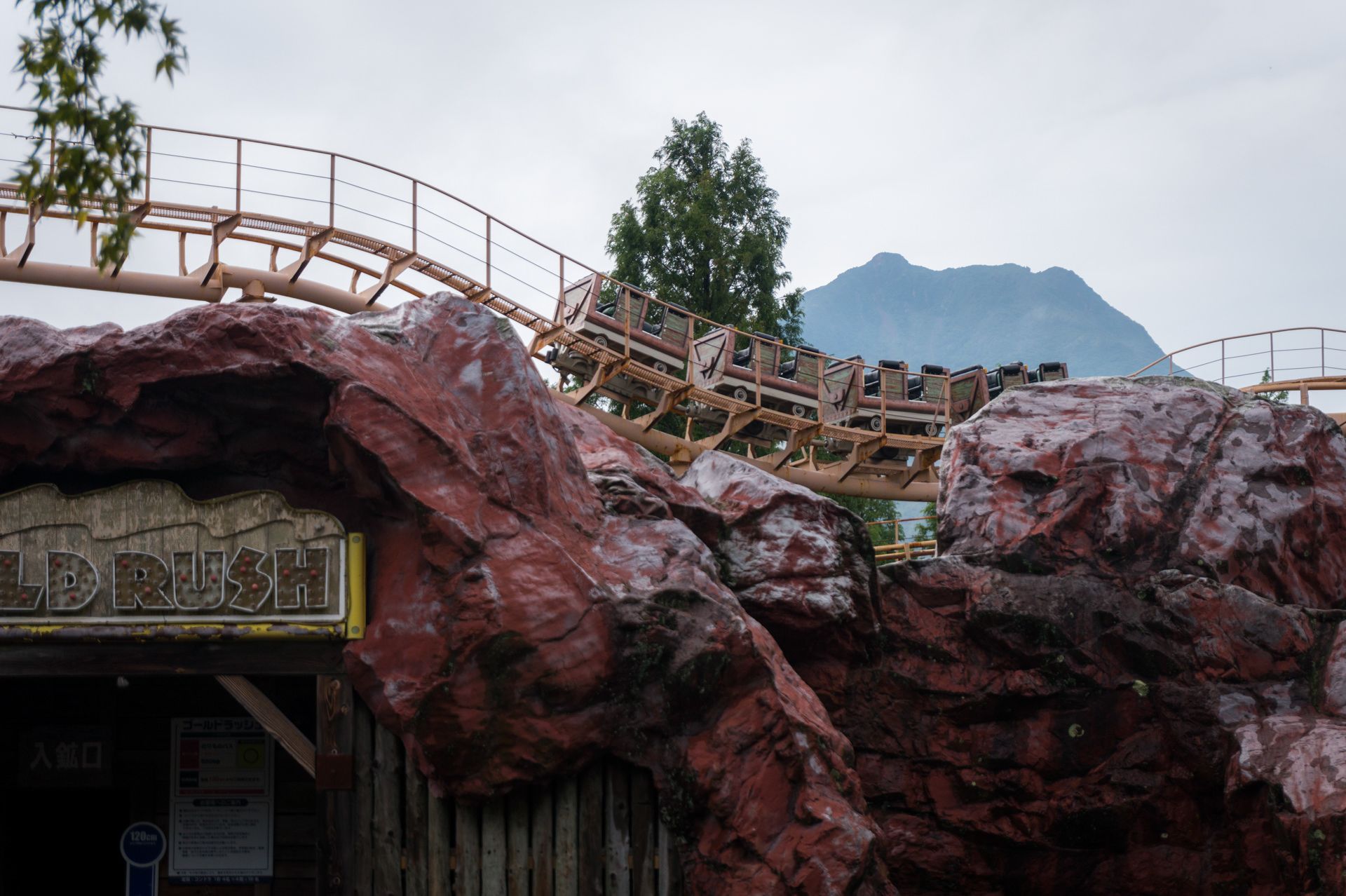
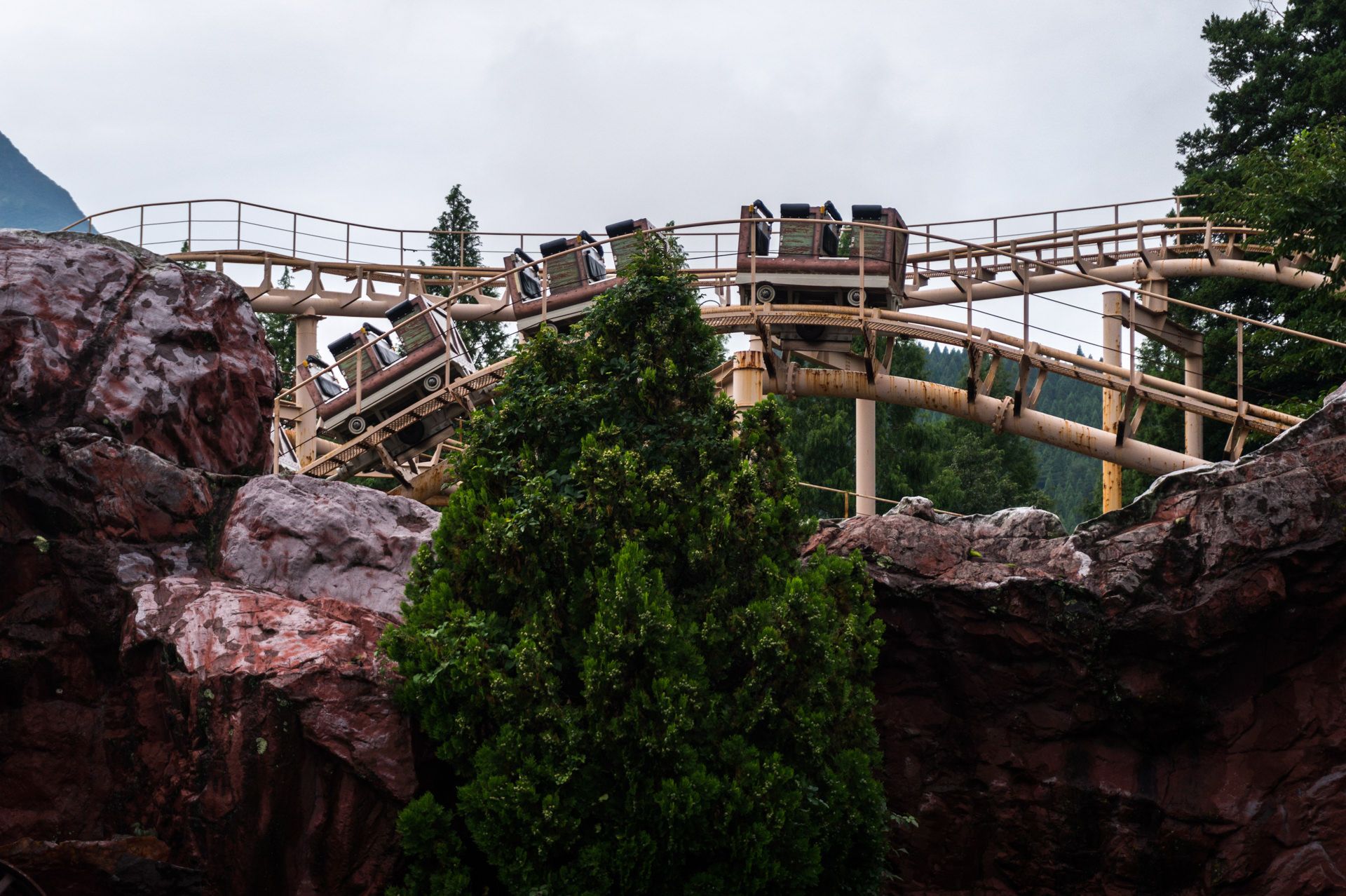
Now let’s get to the last attraction of Kijima Kogen Park and my 450th roller coaster: Gold Rush. Nestled in an artificial rock massif, the ride is, at least in the front part of the train, incredibly brute and wild. After the lift ascent, you curve through the layout level by level, starting with a tight left turn, which immediately leads into the first, very flat drop. Interestingly, the ascent is much steeper and the hilltop is very narrow, so you get in contact with the bar and experience some airtime. After a left bend, the game is repeated again on a small scale. After a wide right bend a short dip follows, after which we gain a lot of momentum on a shot. During this we dive into the rock massif, always with our eyes on the coming evil. As if we did not deserve it any other way, we climb a small ascent, the crest of which is once again very narrow and then leads into a curve. Absolutely surprised by the enormous interplay of all forces, we leave the cave under loud laughter and devote ourselves to the rest of the course. Over a powerless camelback we reach another turn-around curve, on which we are now forwarded parallel to the station. In a left-hand bend we cross under the hill we just passed, and with a constant lateral inclination we now cross a short straight line, as well as the last bends in the direction of the station.
I did not expect much from the Gold Rush roller coaster, but it is truly a rush of the senses. Rather rusted than covered with gold dust, the ride convinces with its slick ride characteristics and its, at least in the front part of the train, absolutely terrific transitions. All in all, the Gold Rush roller coaster is a great family roller coaster, which fits perfectly into this amusement park.
Pictures Kijima Kogen Park












Conclusion Kijima Kogen Park
The Kijima Kogen Park was a very special amusement park for me, as it was not only the first one I visited in Japan, but also my 100th visited amusement park! Therefore, it is even better that I really liked the park very much. The atmosphere of the park reminds in large parts of the Danish amusement park Tivoli Gardens, which is also due to its absolutely great gardens. The rides all know how to entertain, which is why I would like to come back sooner than later, definitely not because I miss a ride on the wooden roller coaster Jupiter but rather because I would like to explore the area around Beppu. The hot springs are really appealing to me.
What is your opinion about Kijima Kogen Park? Just write it in the comment field below the report or visit our social media channels:
Click here for the next report of the Titanic Max Tour