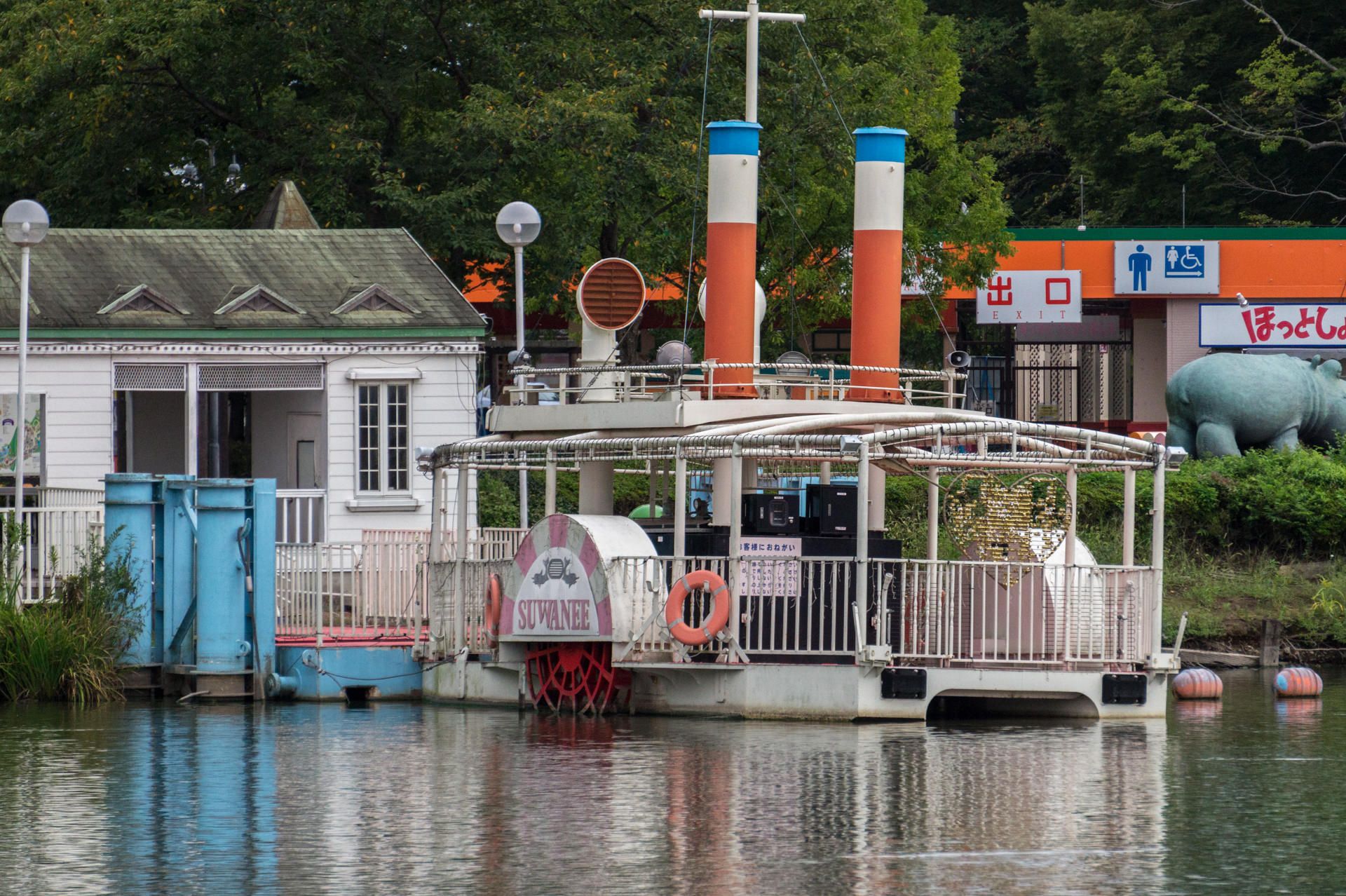
Parc Astérix
Parc Astérix is available either in full or closed. Up to now I could always fully sign this statement, because every time I went for a roller coaster ride near Paris, the park was closed. It is in the nature of things that there are many other conditions besides this logical expression. However, it is also a fact that the amusement park, which opened in 1989, is one of the most famous European amusement parks and is therefore quite well visited. Astérix is also a very successful brand.
As a collector of the French hardcover books, I was very much looking forward to the visit to the Parc Astérix. After the second night in Champagne, I left for Paris after a short chat with the owner of the holiday home. But as the motorways were all overloaded, I reached the theme park via numerous national roads much later than originally planned. Actually, I had already wanted to buy the pass Saison Découverte online (reduced-price annual ticket with exclusion days), as it is cheaper than a two-day ticket, but thanks to shipping, the ticket would probably have arrived after my visit at home. So I had to pay the parking fee of 10€ at least once. As the queue at the annual ticket office was too slow for me, I bought a normal day ticket, which I later converted in Parc Astérix. Thanks to the data already entered online, this was also done in no time.
Le Défi de César
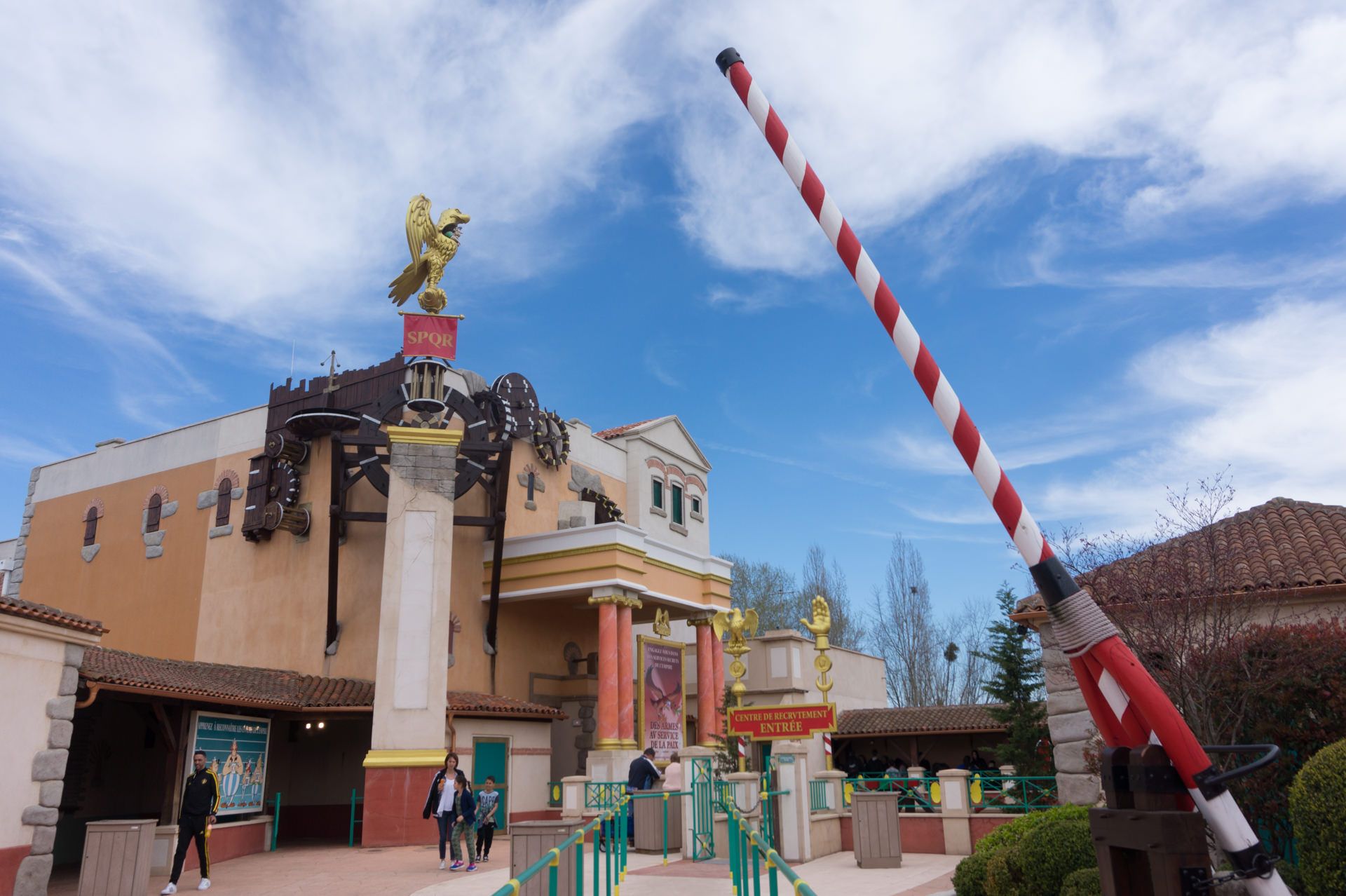
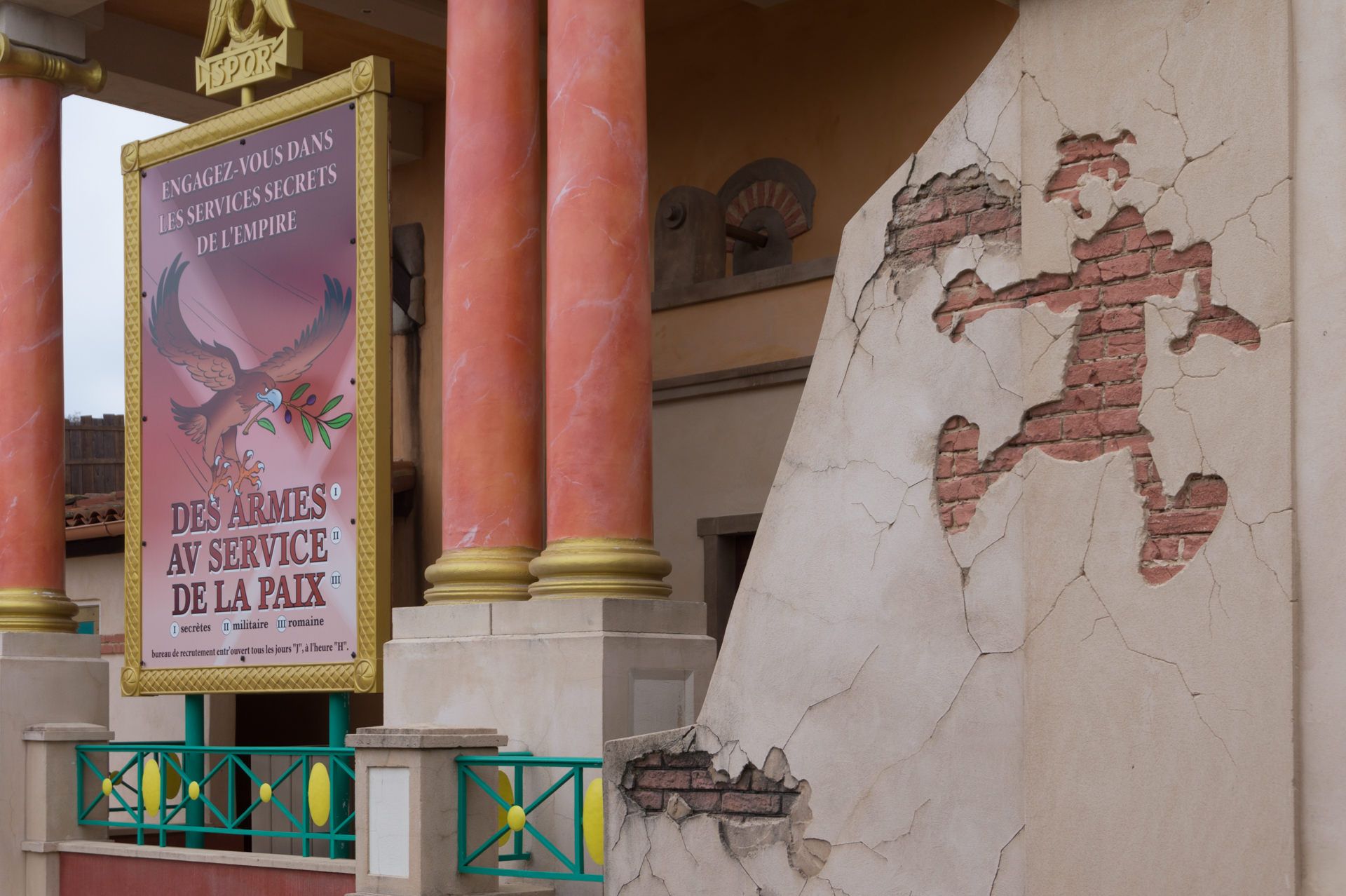
The first part of my three-day tour of the park is the Le Défi de César mad house. As candidates for the Roman intelligence service, we are to infiltrate the stubborn Gaul. All of Gaul? No, actually only the village of Astérix and Obélix. In order to prepare ourselves for this mission, Julius Caesar has set us several tasks.
In three pre-show rooms we are now guided through the attraction before the actual Mad House awaits us. In the first challenge we learn how important it is to wear the future work clothes – beards and Gallic braids – with dignity. The second challenge focuses on Gallic humour, before we turn to the magic of Gallic women and the musical arts of the bard Troubadix in the third challenge. This is exactly what happens in a Roman bath, which, to the song of Troubadix, no longer has control of its water masses and almost collapses. The final challenge is the crossing to Gaul. During this crossing we meet Astérix and Obélix in person, who noticeably enjoy turning the ship around its horizontal axis for a few laps. Shortly afterwards the ship sinks and an octopus attacks. We barely escape the beast and then give up.
The Mad House of the manufacturer Mack Rides scores above all by the inclusion of the well-known characters and by the inclusion of the future secret agents. Unfortunately, the experience gets very long, especially towards the end, so that repeat rides are not really recommended. As a unique happening, Le Défi de César should not be missed.
Romus et Rapidus
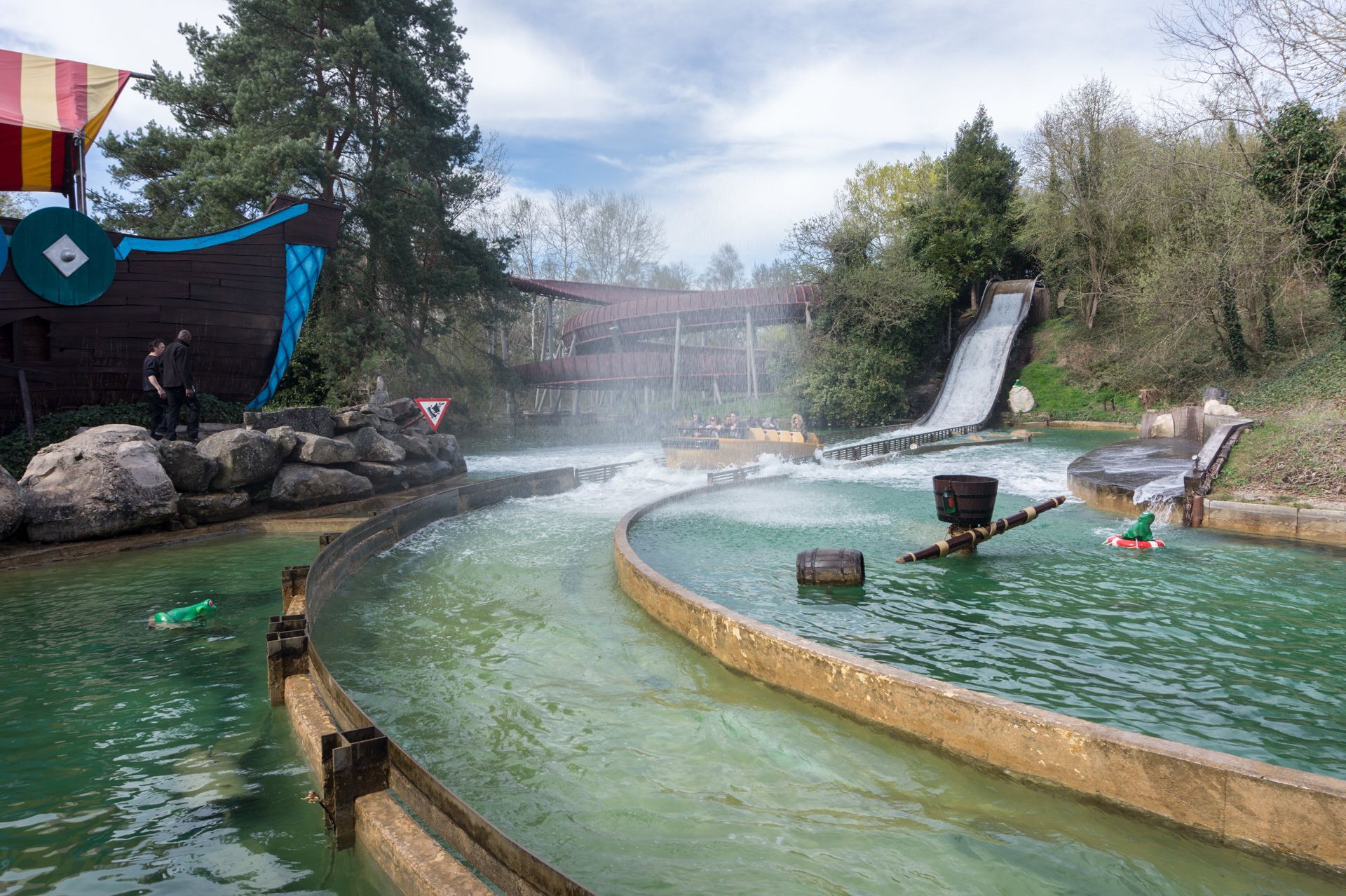
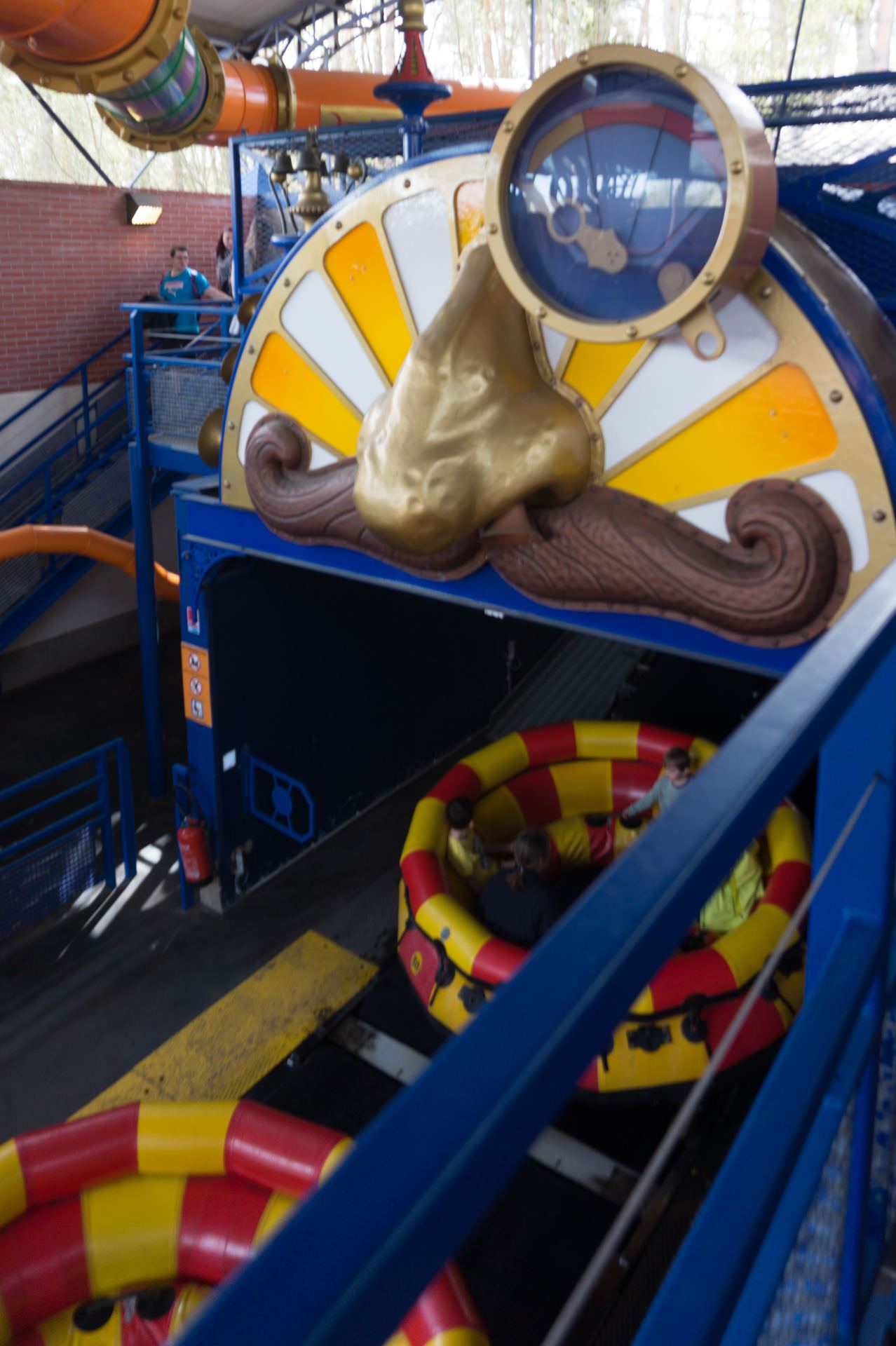
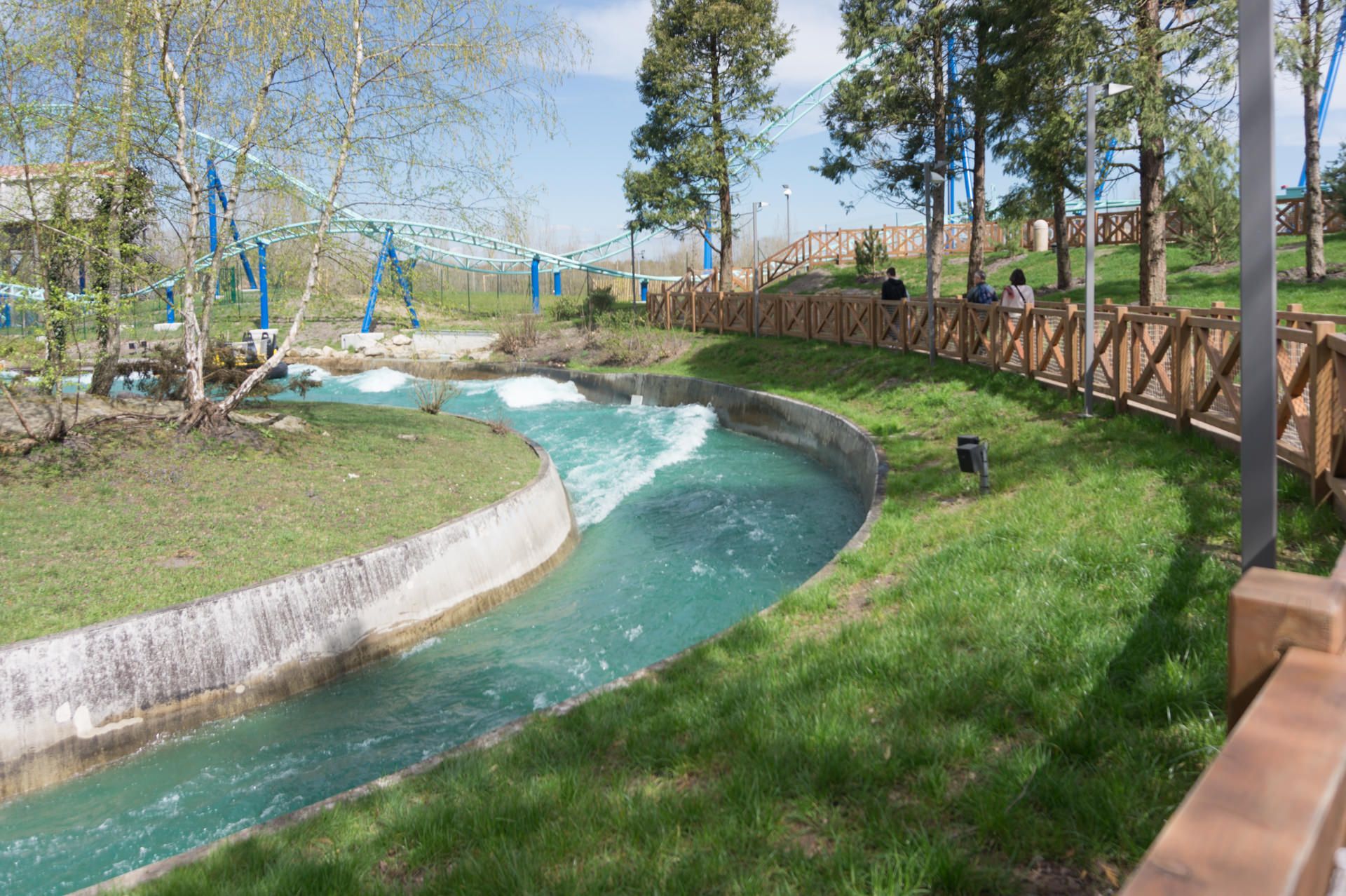
Only a few metres further on is the entrance to the Romus et Rapidus Intamin Rapids Ride. Once known as Descente du Styx, the rapid river has been entertaining park visitors since the opening year of the theme park. After an incident in 2006, when a boy fell out of a boat, the safety features were massively extended, giving it its current appearance. Since then, the boats have been much less free-flowing, but this is by no means a renunciation of the wild river ride. Romus et Rapidus offers a wild rafting trip with a large number of rapids and other obstacles, where water is always sloshing into the boat. A very splashing adventure.
Théâtre de Poséidon
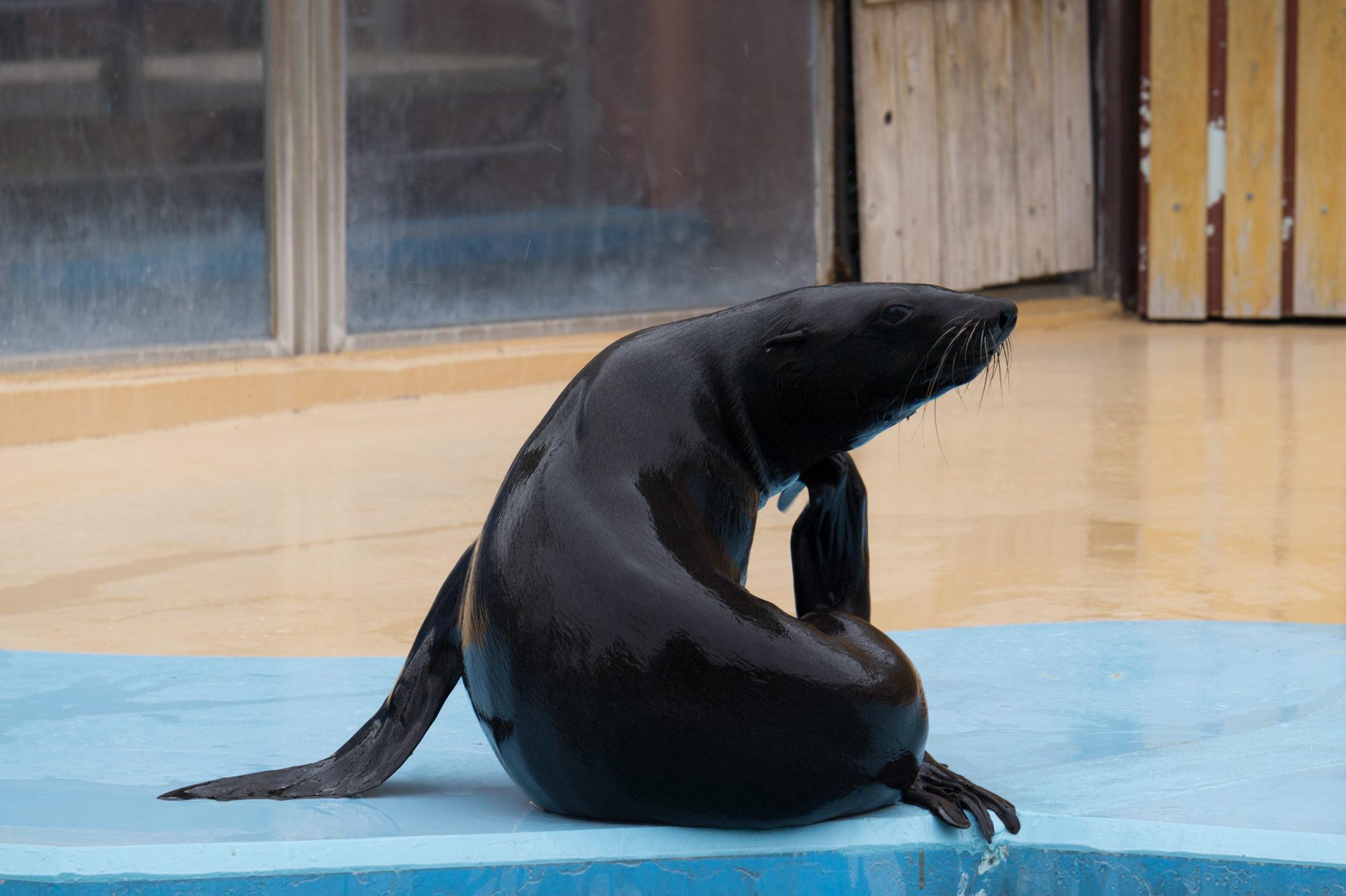
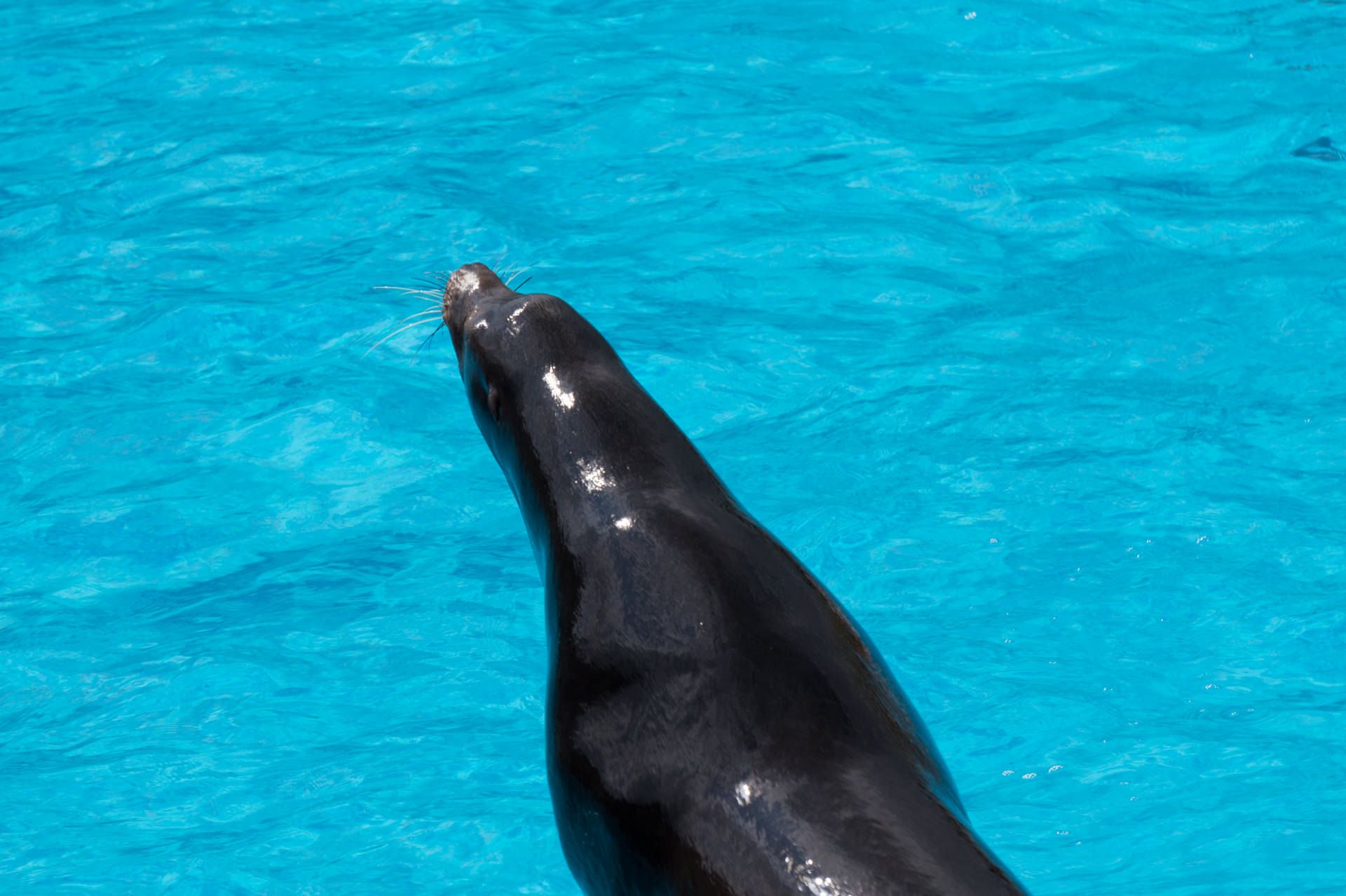
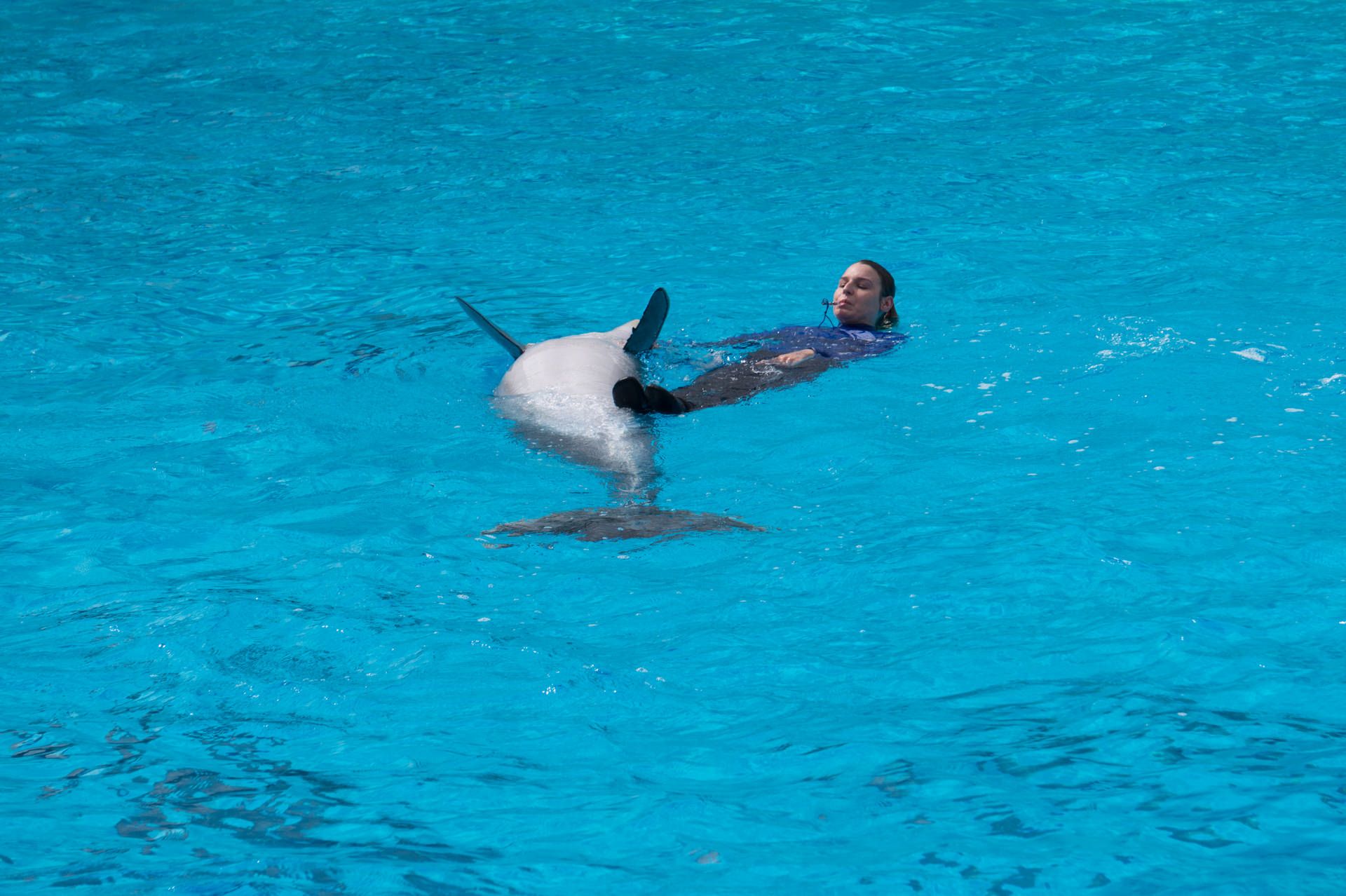
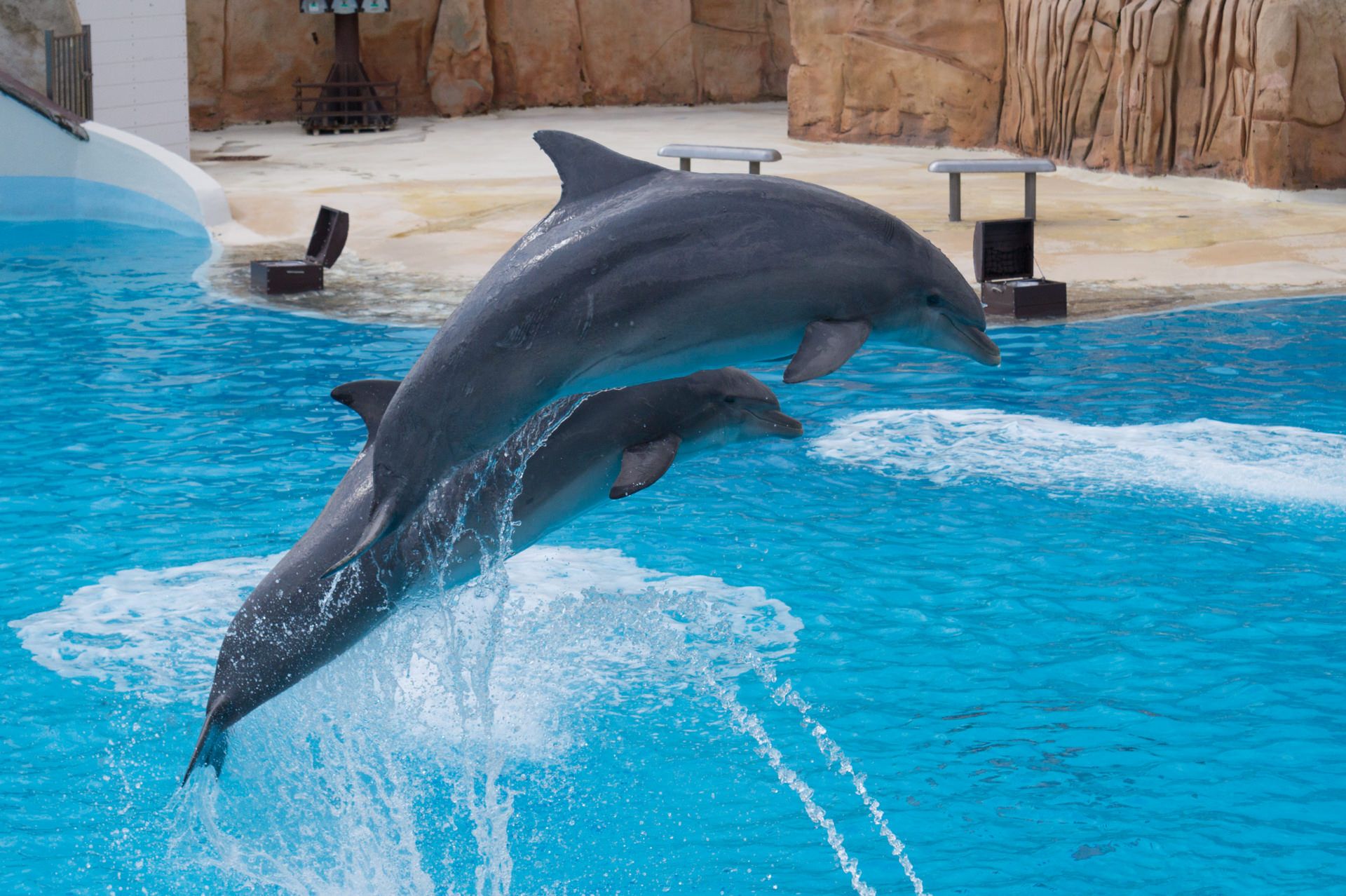
The same could be said of the Parc Astérix dolphin show at the great Théâtre de Poséidon. But instead of Gaulish humour, a dull dolphin and sea lion show awaits us here, where the relationship between trainer and animal, as well as education about the animals, takes centre stage. If you are honest, the whole spectacle is like a journey to a time long gone and that’s exactly where we leave it.
Cheval de Troie
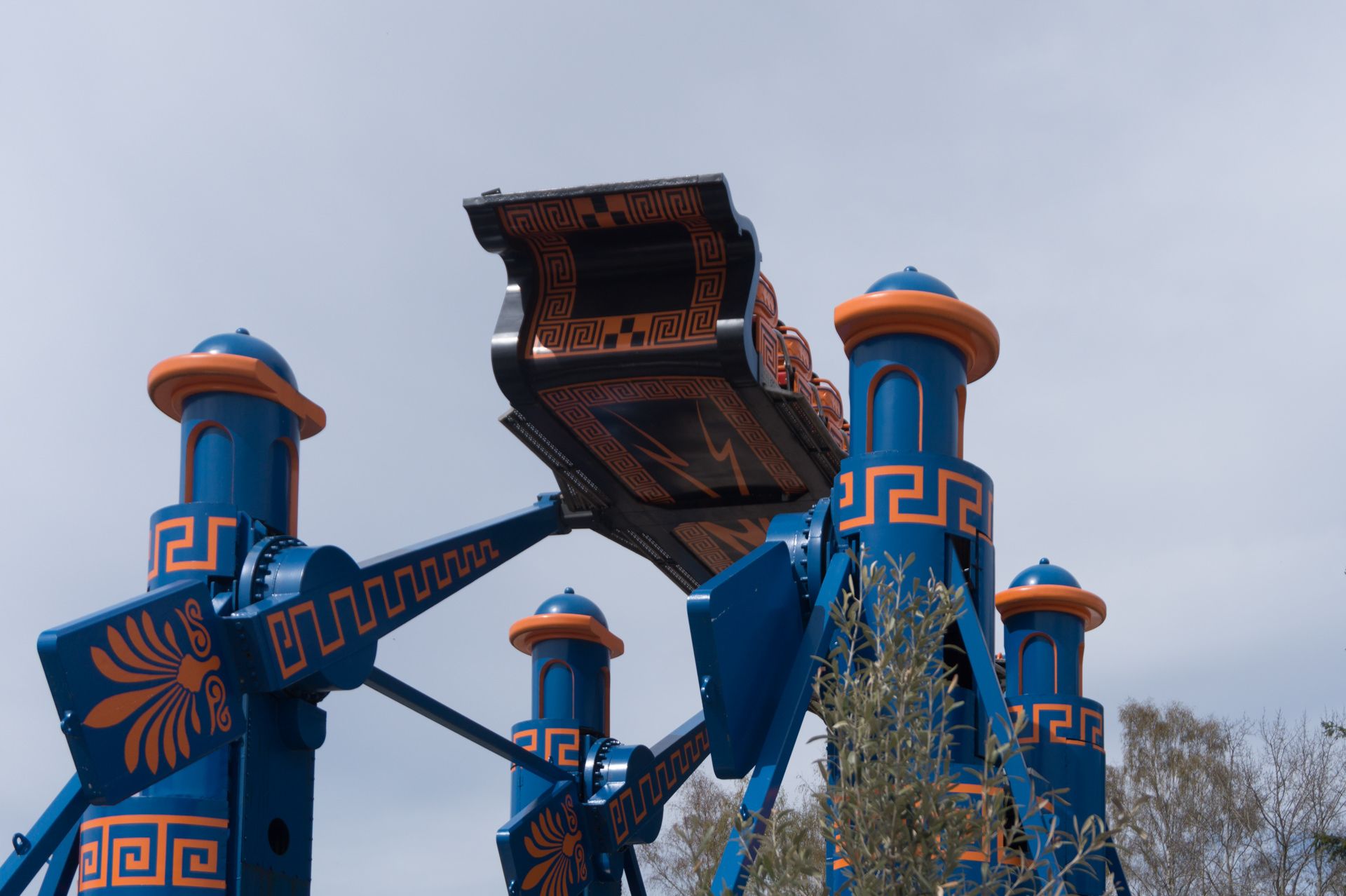
We experience a far more positive journey through time on Cheval de Troie, a flying carpet from Zierer. Although the ride on the Cheval de Troie is extremely short, it’s a real thrill – after all, the gondola has to accelerate accordingly to reach the peak of the ride in the shortest possible time. It’ s like a special kind of quickie.
Pégase Express
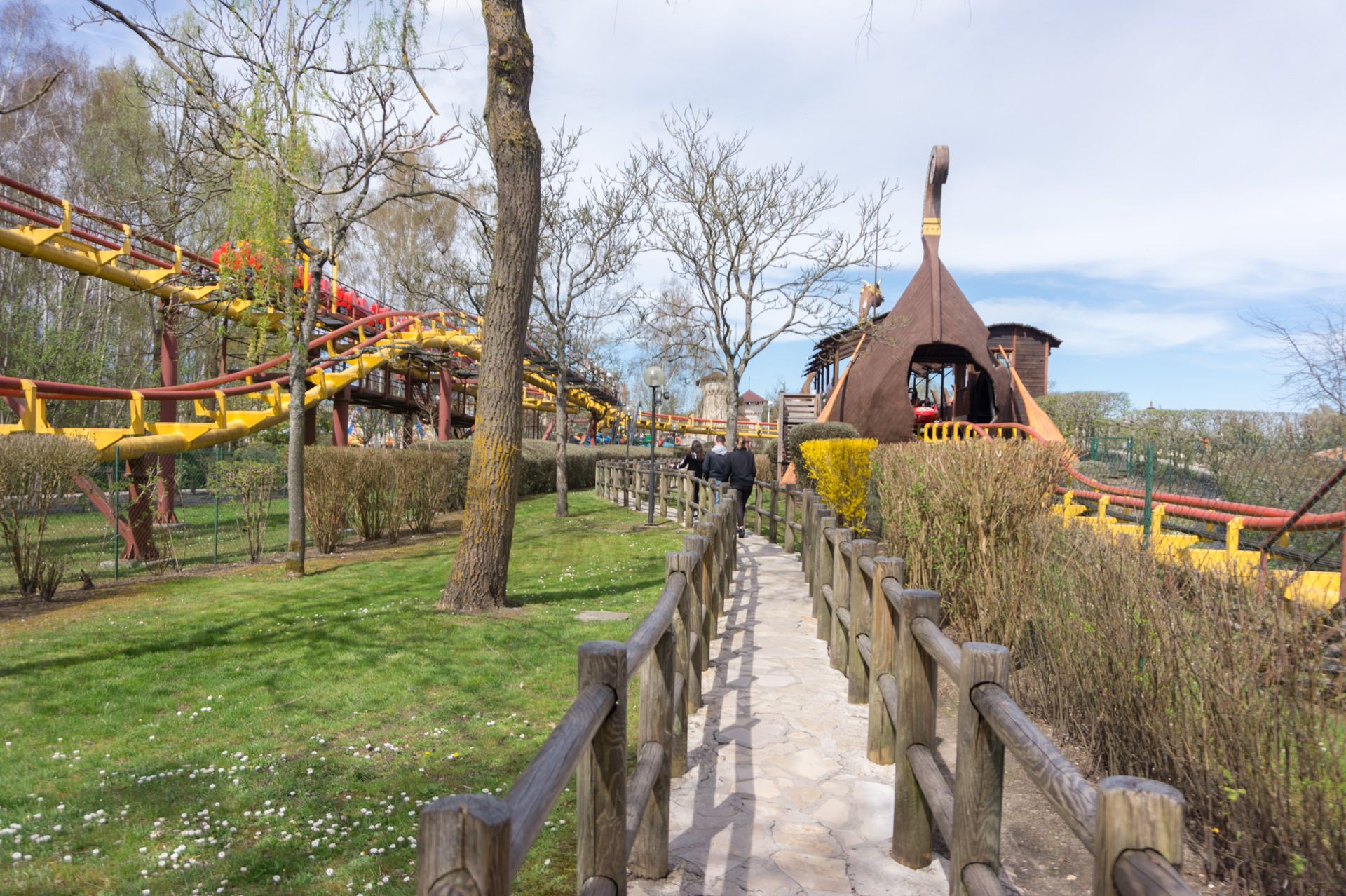
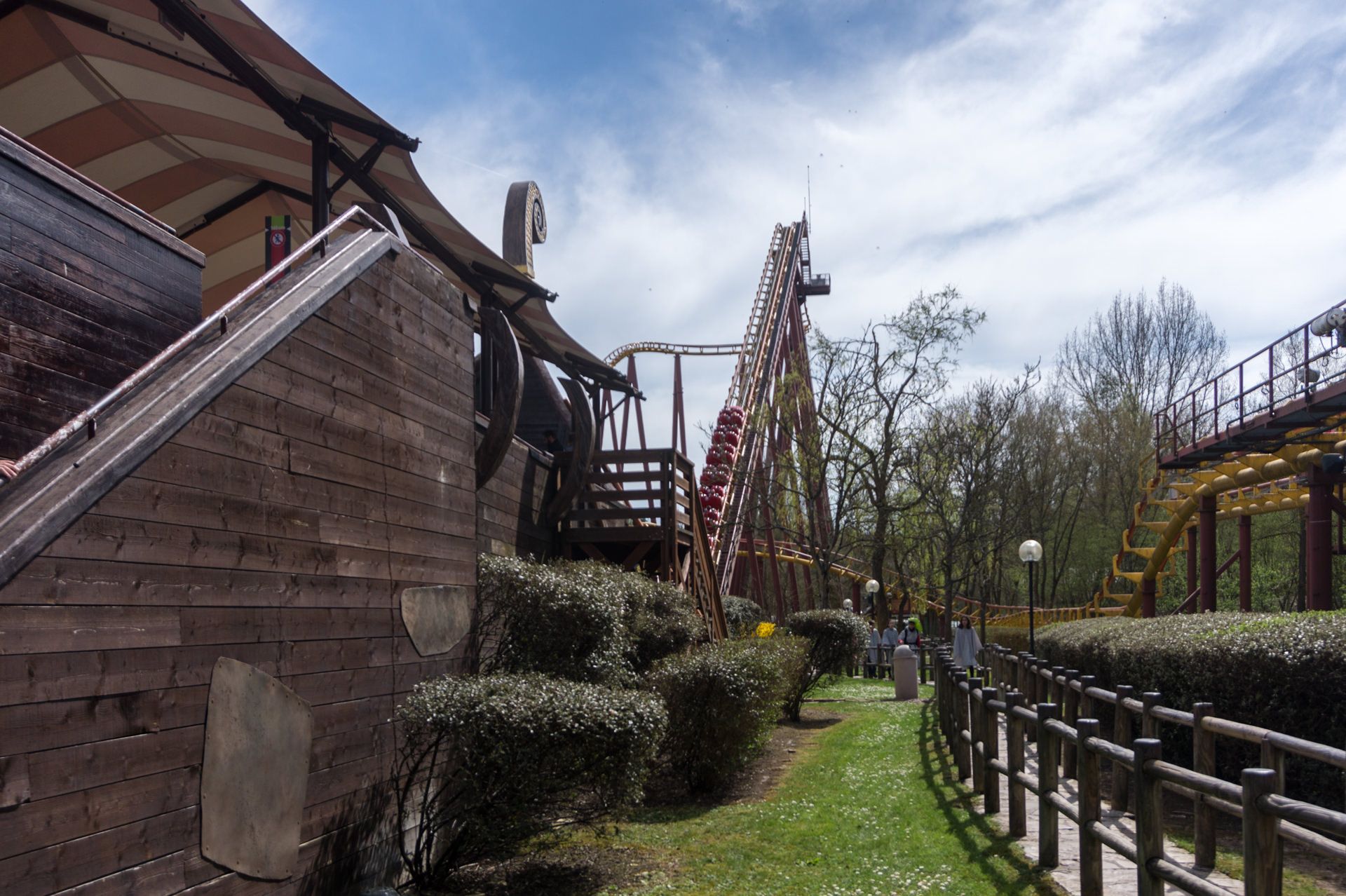
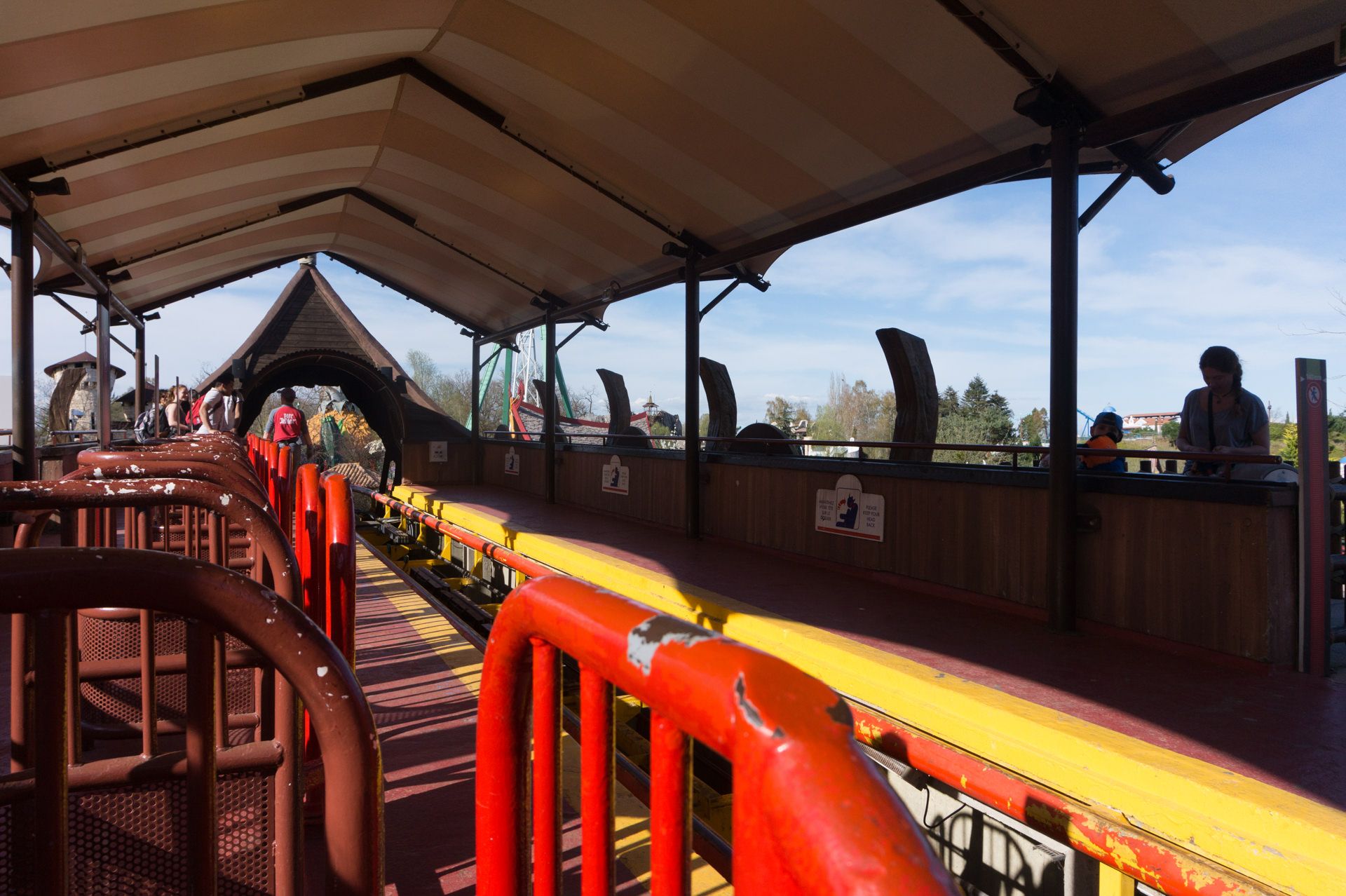
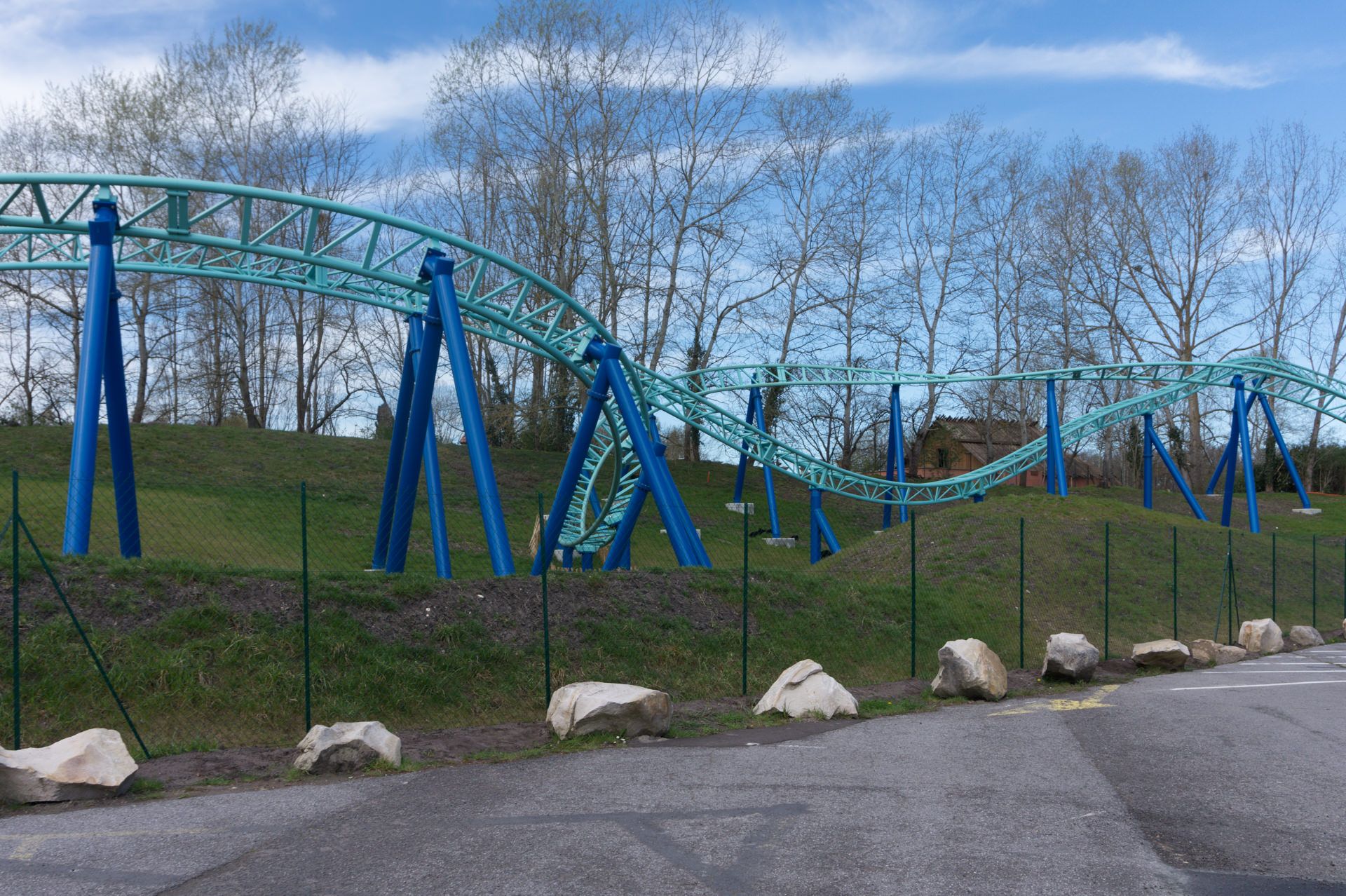
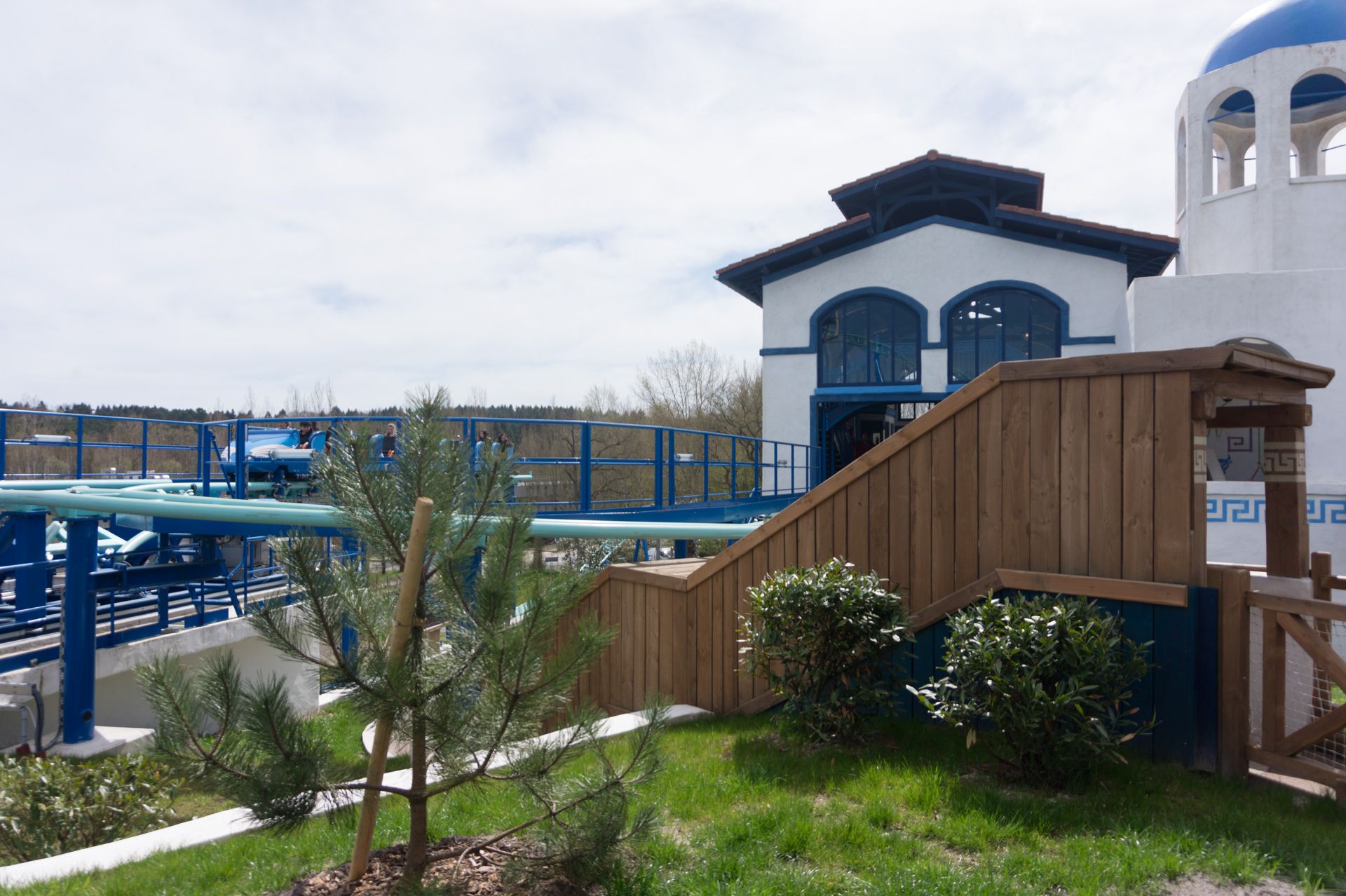
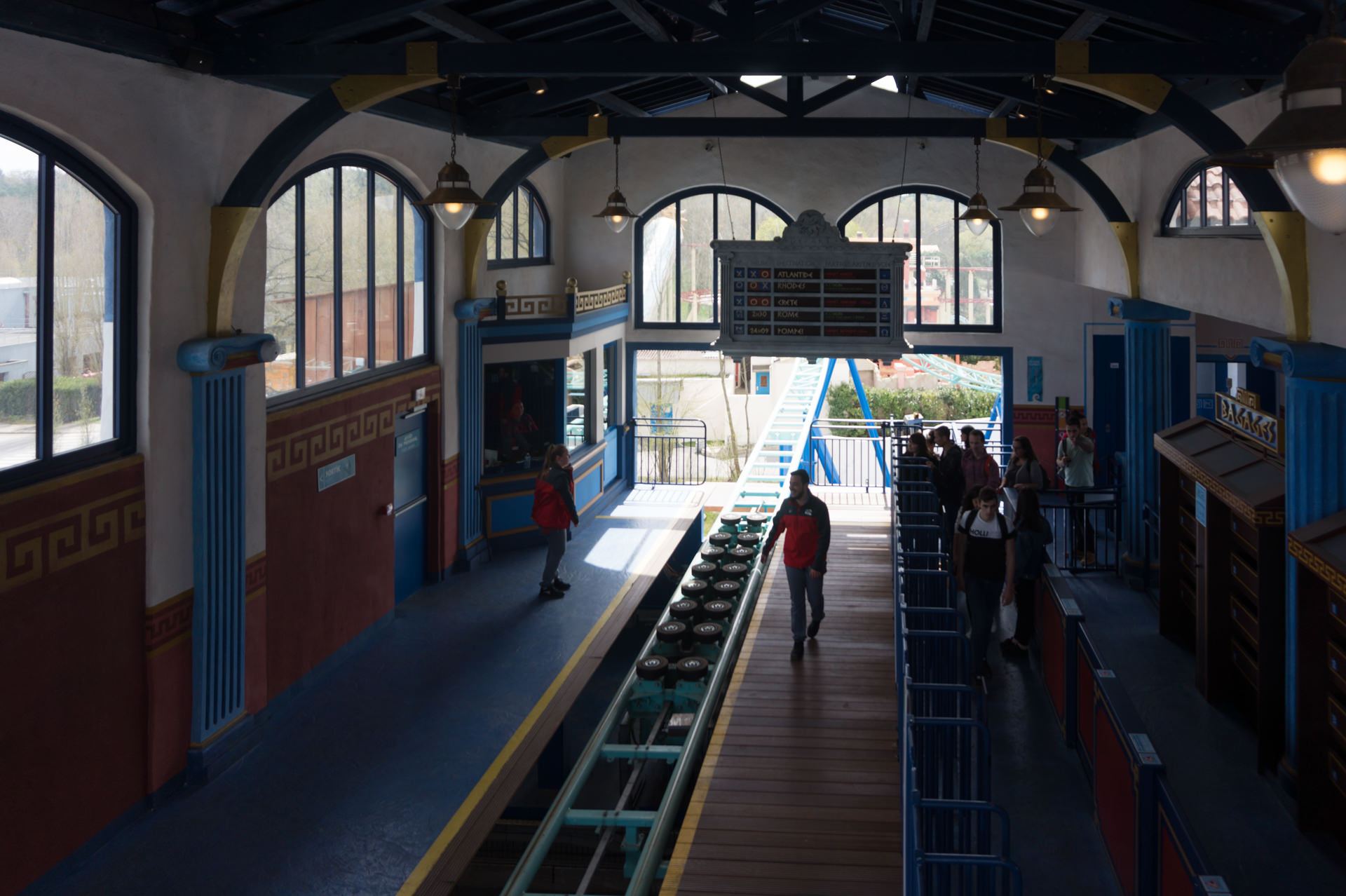
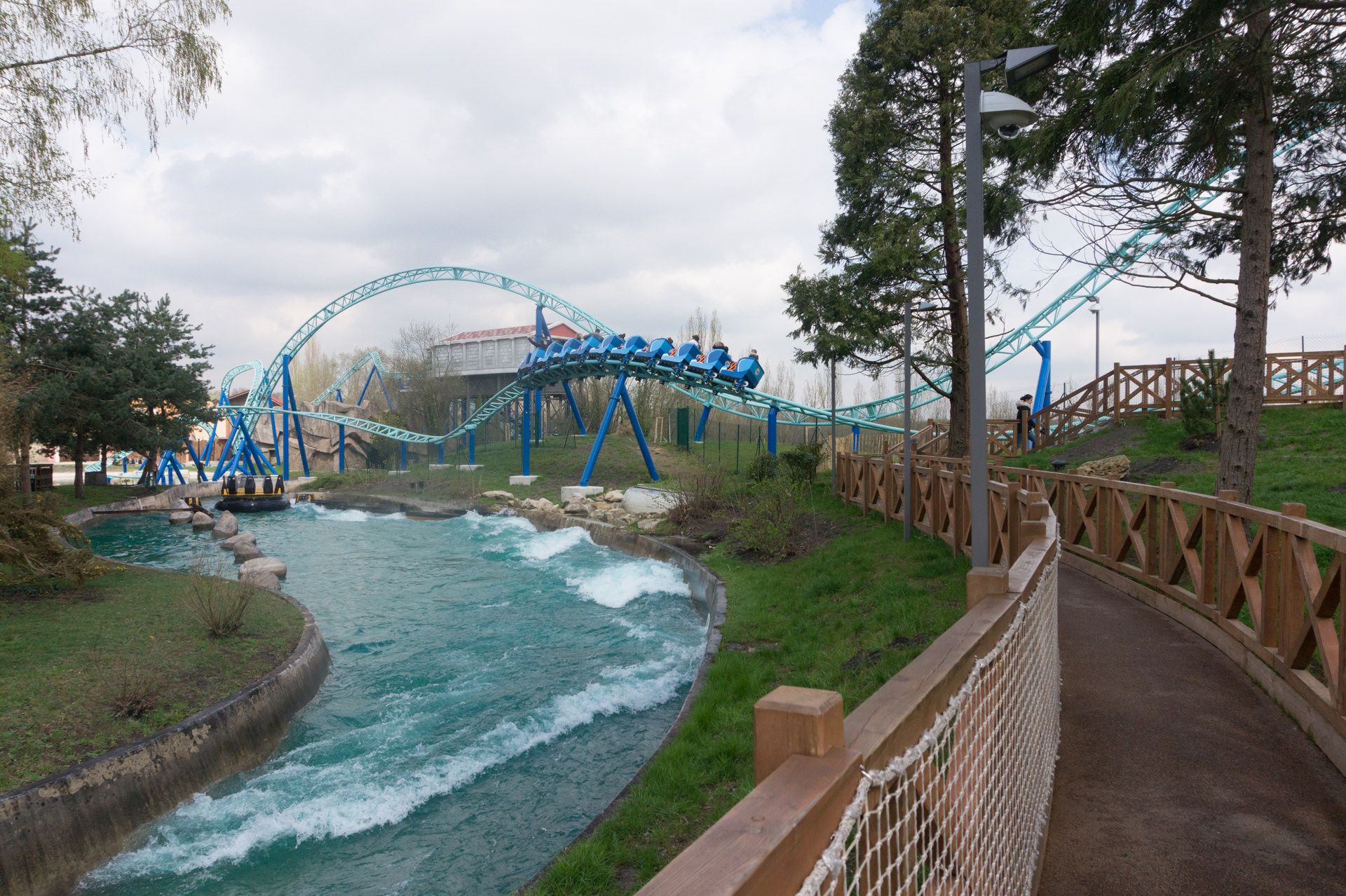
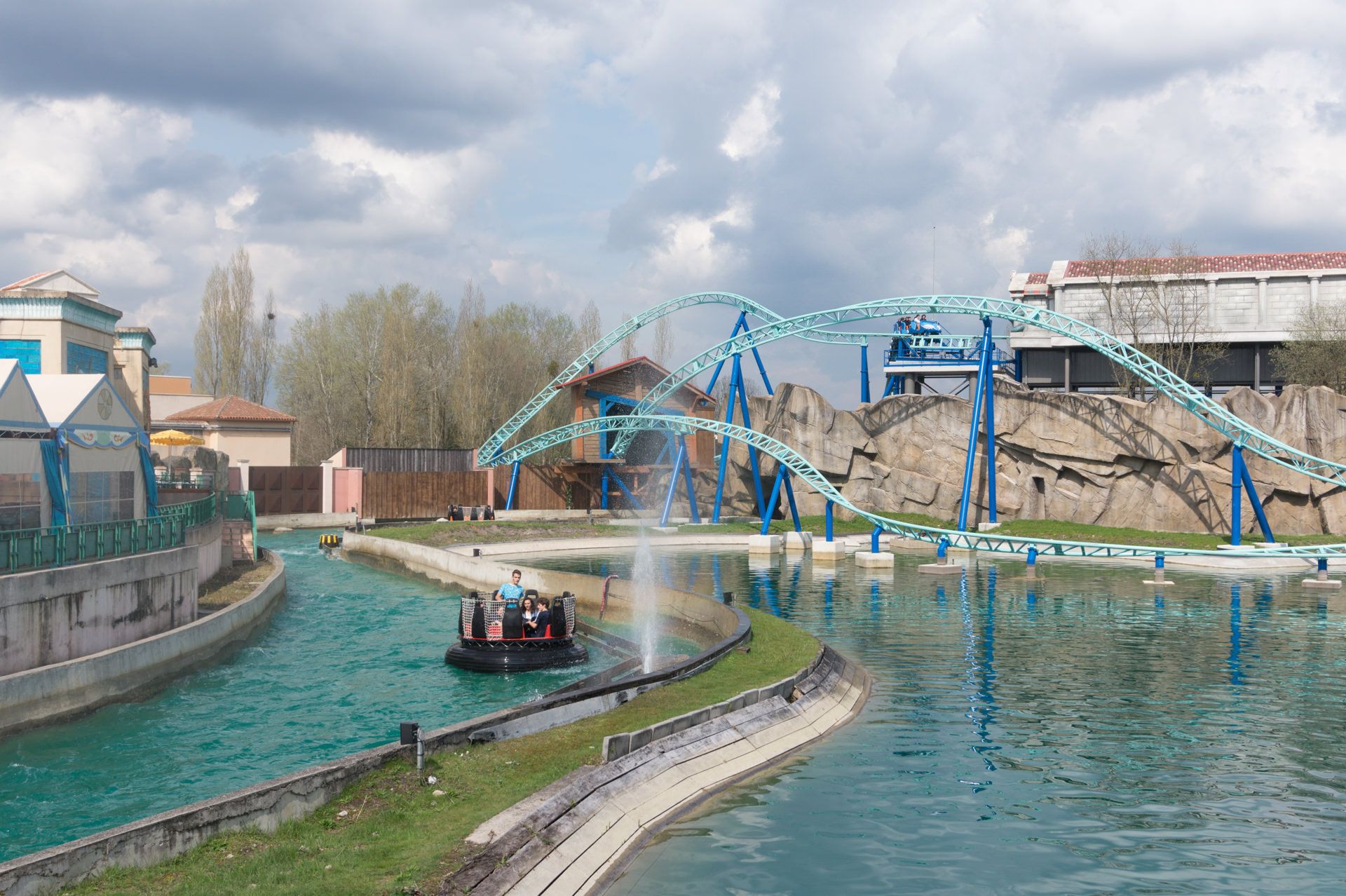
The queue at the Pégase Express turns out to be much longer. After a few steps in the station building of the Gare Montparnassos (hihihi), you can quickly get out into the fresh air again and walk over the dike of the Romus et Rapidus rapid river, from where you can catch a great view of the soon to follow trip, before returning into the building. Here you have to climb a lot more steps before you reach the station of the roller coaster. Theoretically, you will be let into an area in front of the roller coaster, where you can deposit your belongings – but if there is not much traffic, this step is not necessary and you have to take them with you on the ride.
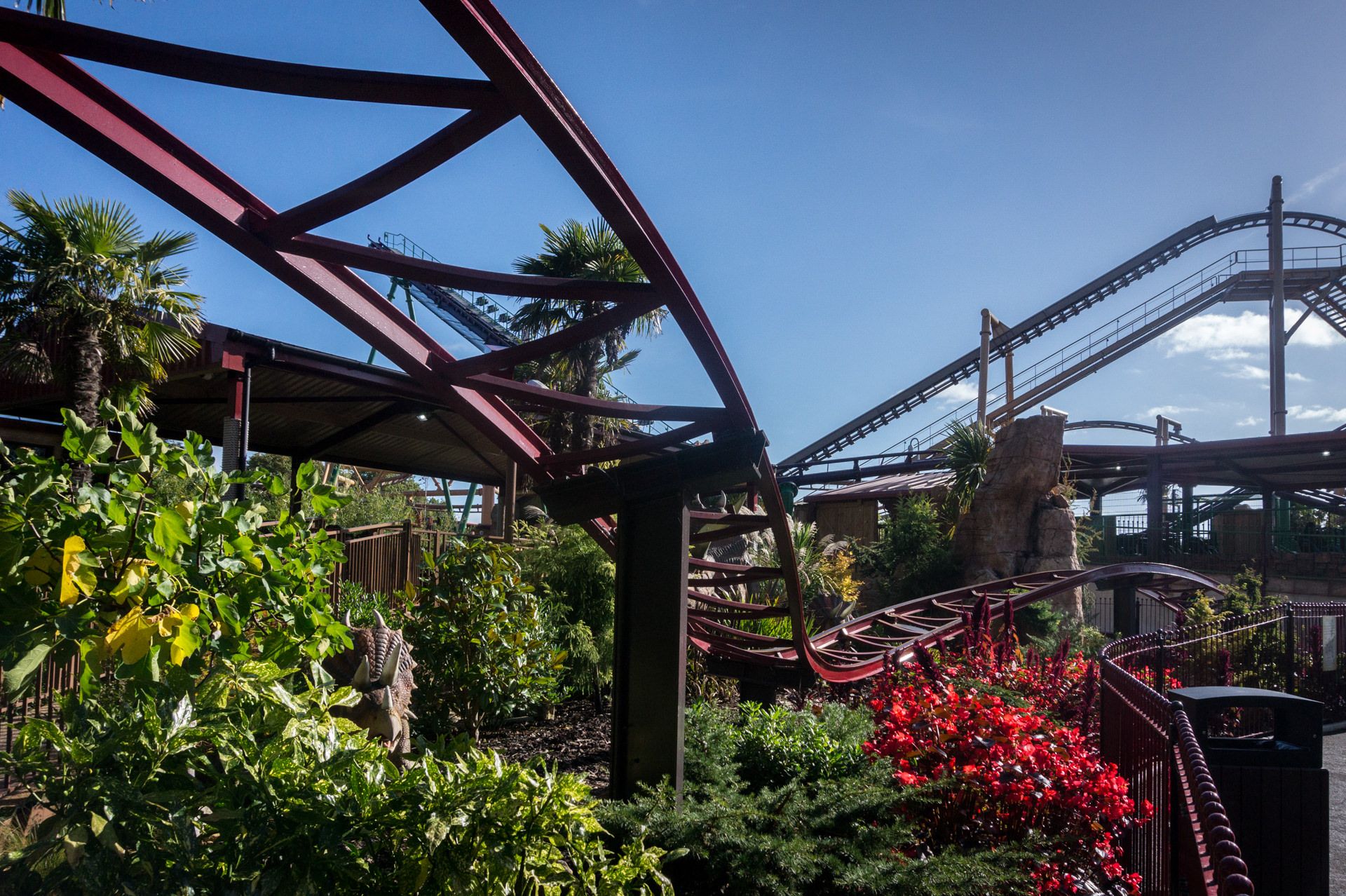
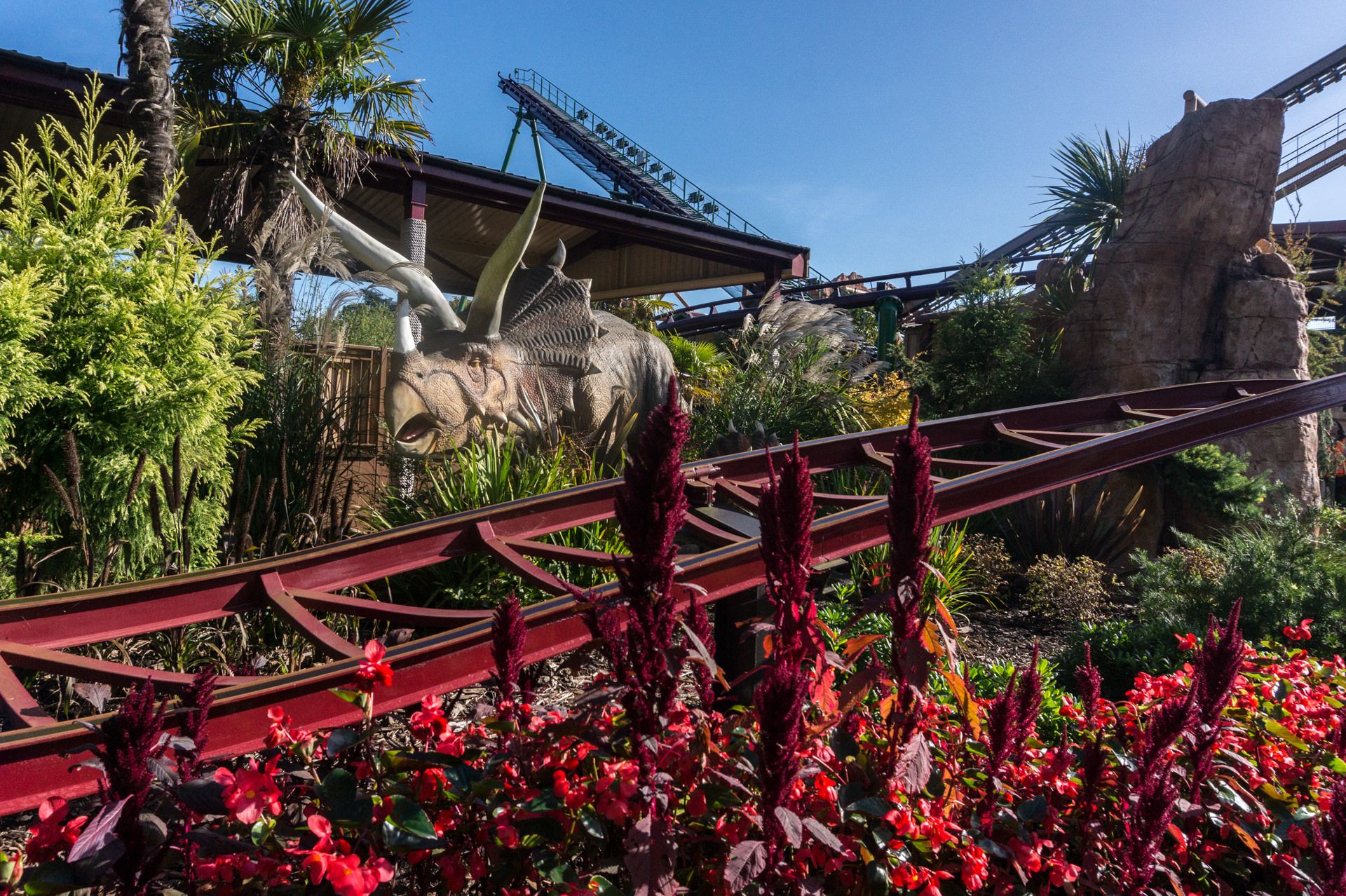
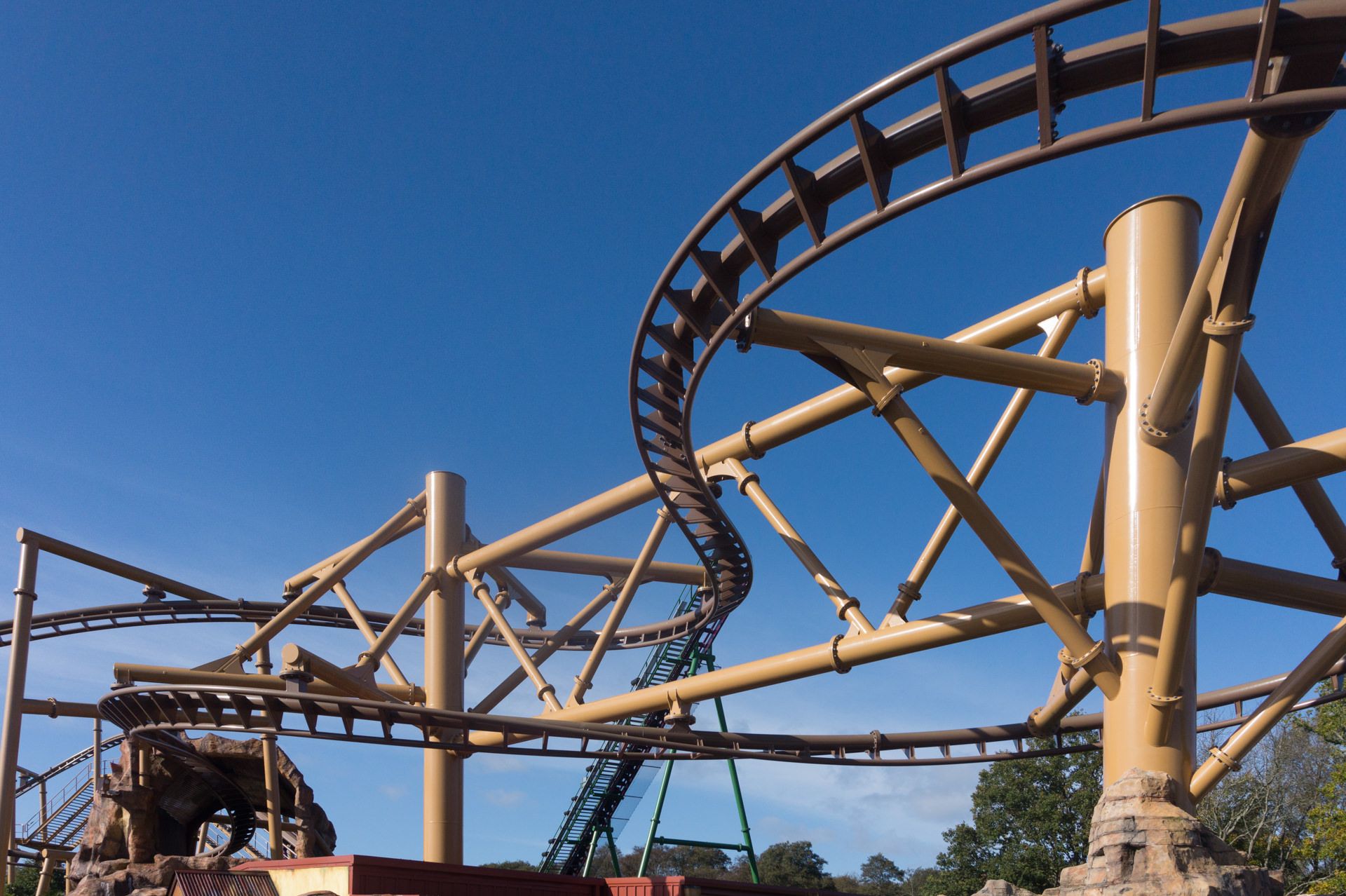
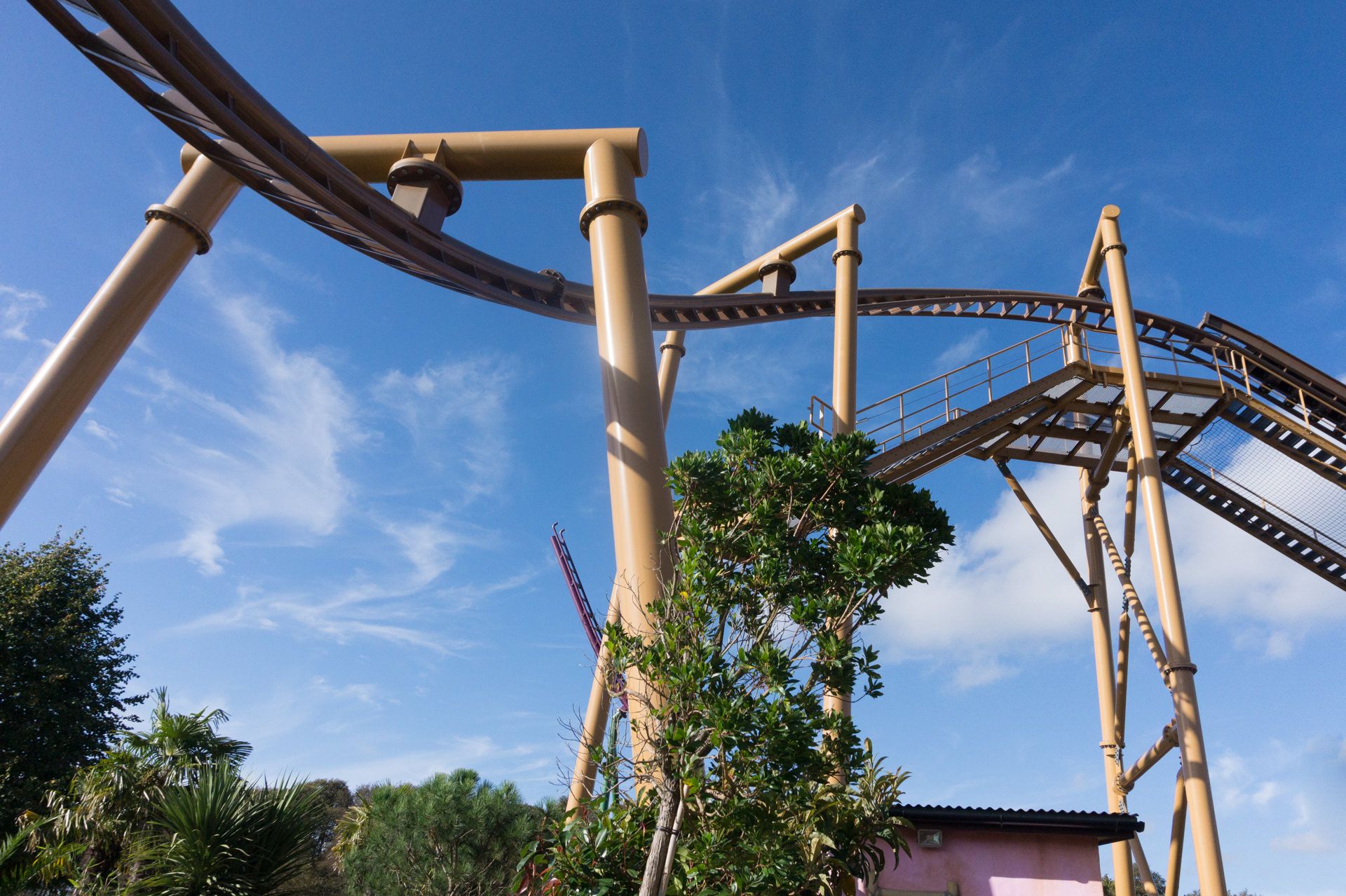
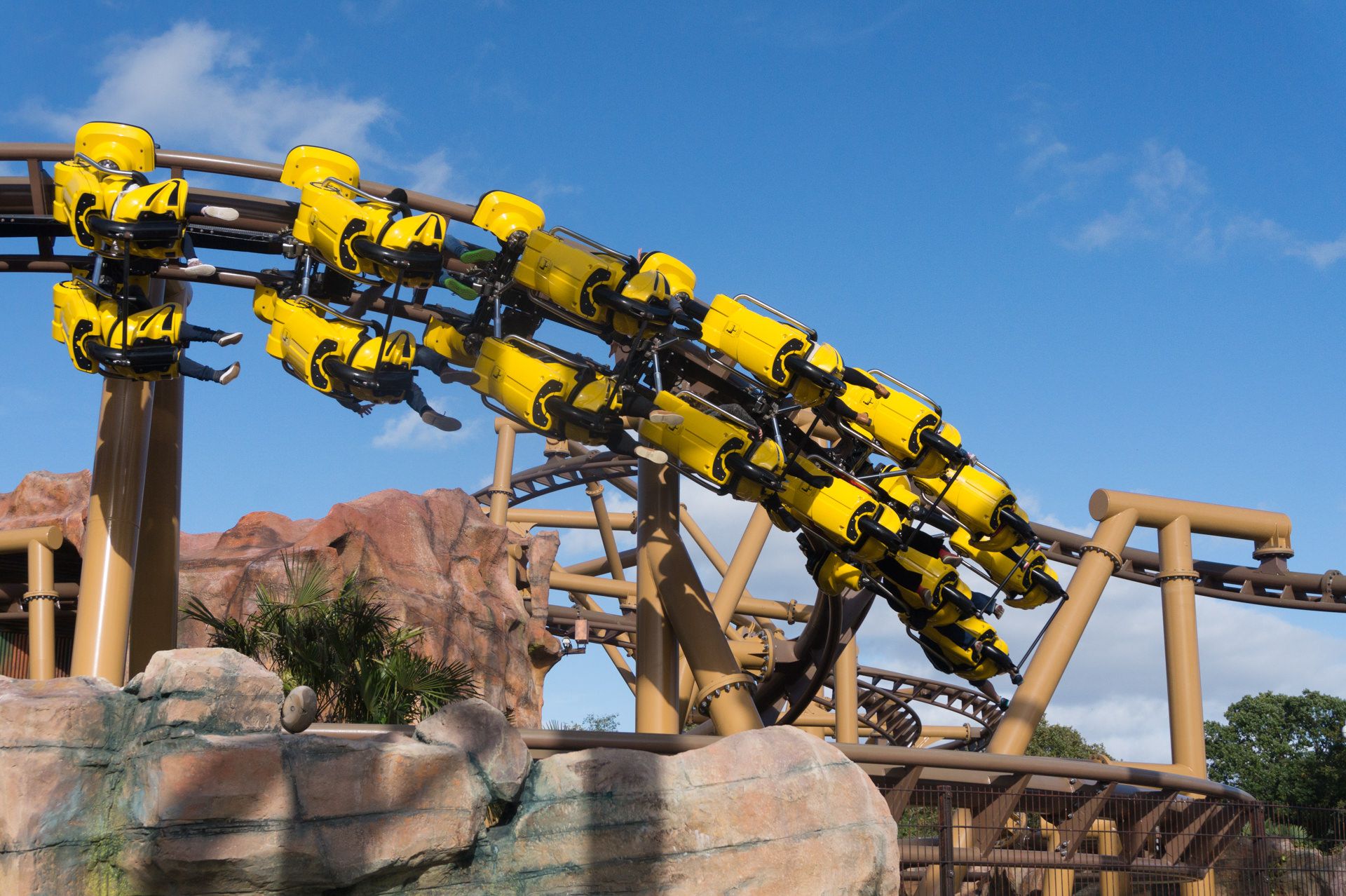
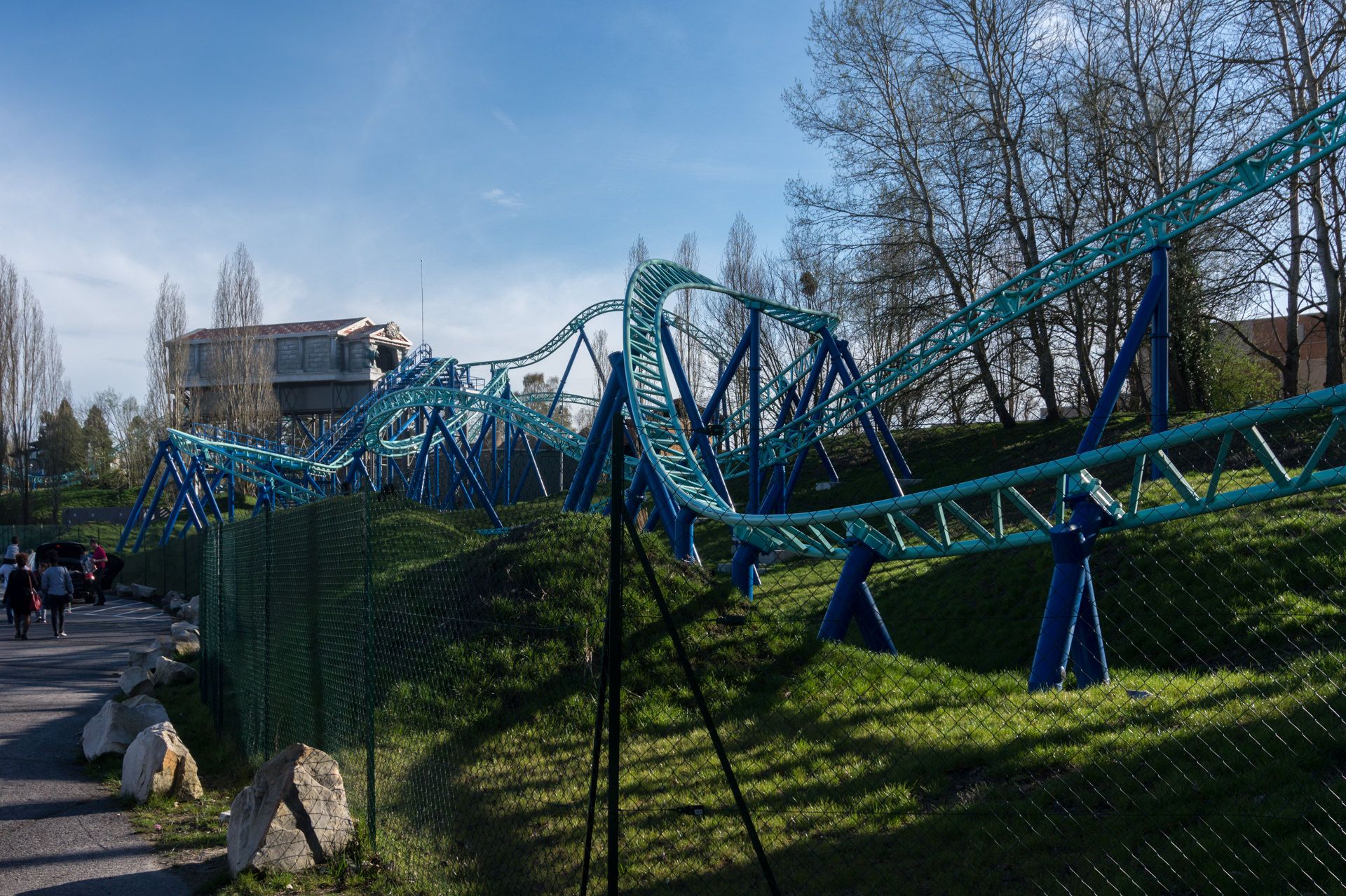
From the station, we start with a small friction wheel lunch. The speed built up by this is, however, already reduced to a minimum on the following hill before it goes rapidly towards the first lift hill in a downhill leading Bayernkurve and a strongly inclined left curve. Quickly we reach the top of the first lift hill. In a curve we enjoy the view for a short time before the train plunges to the ground. With a bit of airtime we now whiz over a camelback and a total of three turns, before we approach the highlight of the ride via a kind of double-up. With a lot of speed we break through an advertisement in a beautiful steep turn, before we make another series of turns towards the second lift hill. Once arrived, we are quickly transported up the hill and then pushed into a raised temple hut.
The show programme for setting the course seems a little unimaginative and not very threatening; fortunately, however, we are quickly released from it by a friction wheel launch. Once again a short hill follows, which uses up all the momentum before we fall to the ground in a long curve. Backwards we go over hill and dale, or rather a rather wild ride with all sorts of hills close to the ground, small S-curves and tiny turns past the rapid river, back to the station building. Parallel to the first lift hill of the ride we reach the braking track after a short time. Here you roll back far enough before another switch can be set, which will let you go back to the station for the last few metres.
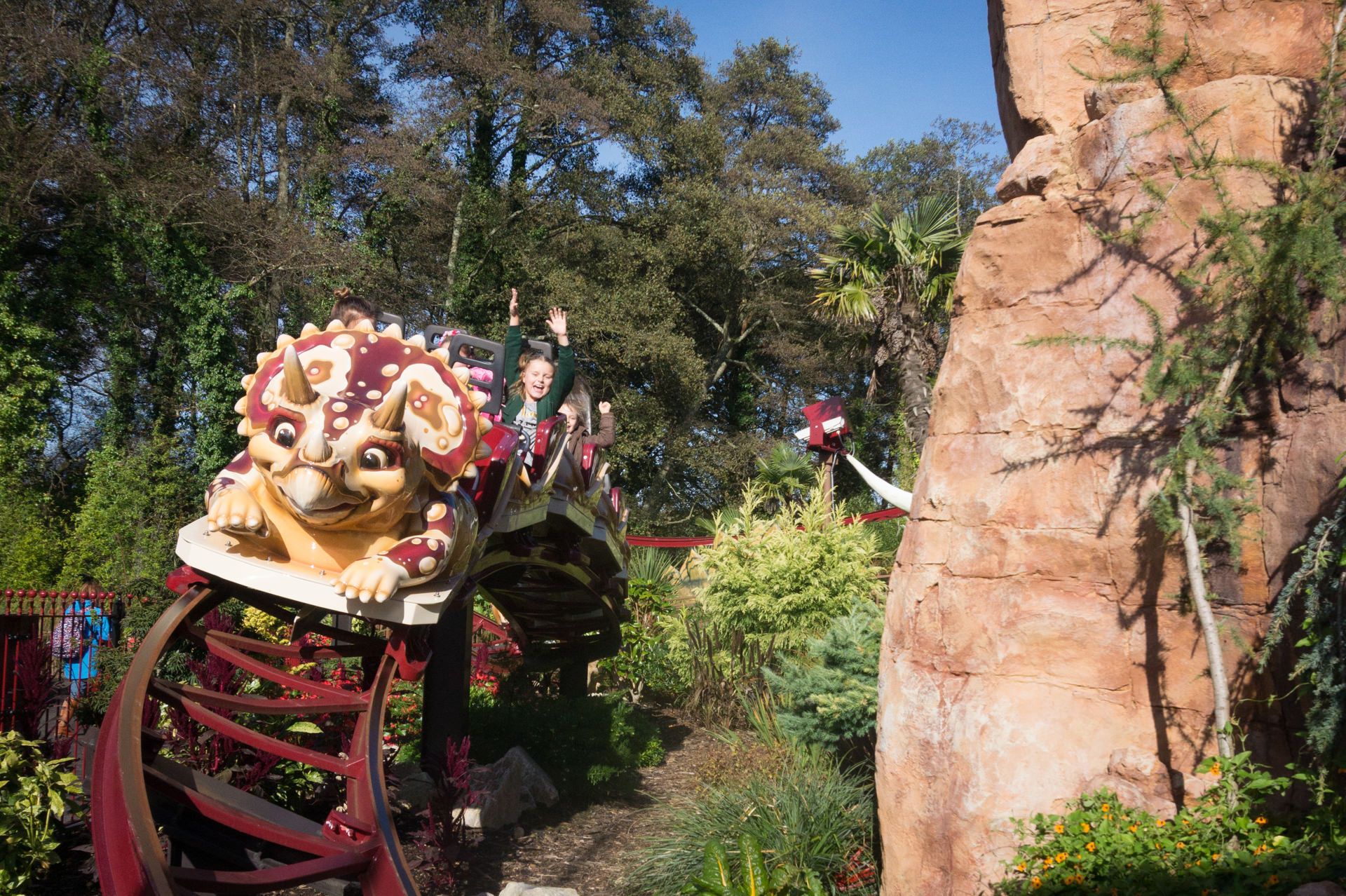
The Pégase Express is an extremely dynamic family roller coaster with some truly amazing ride manoeuvres and moments. The ride in Parc Astérix has a lot of momentum and in some parts is not very gentle with its passengers. Nevertheless, the ride remains family-friendly at its core, which is why Maman et Papa shouldn’t be completely overwhelmed, while the children are cheering with joy for the whole ride. Nevertheless, I left it at only a few rides – when there is no rush, the queue here is simply far too long.
Vol d’Icare
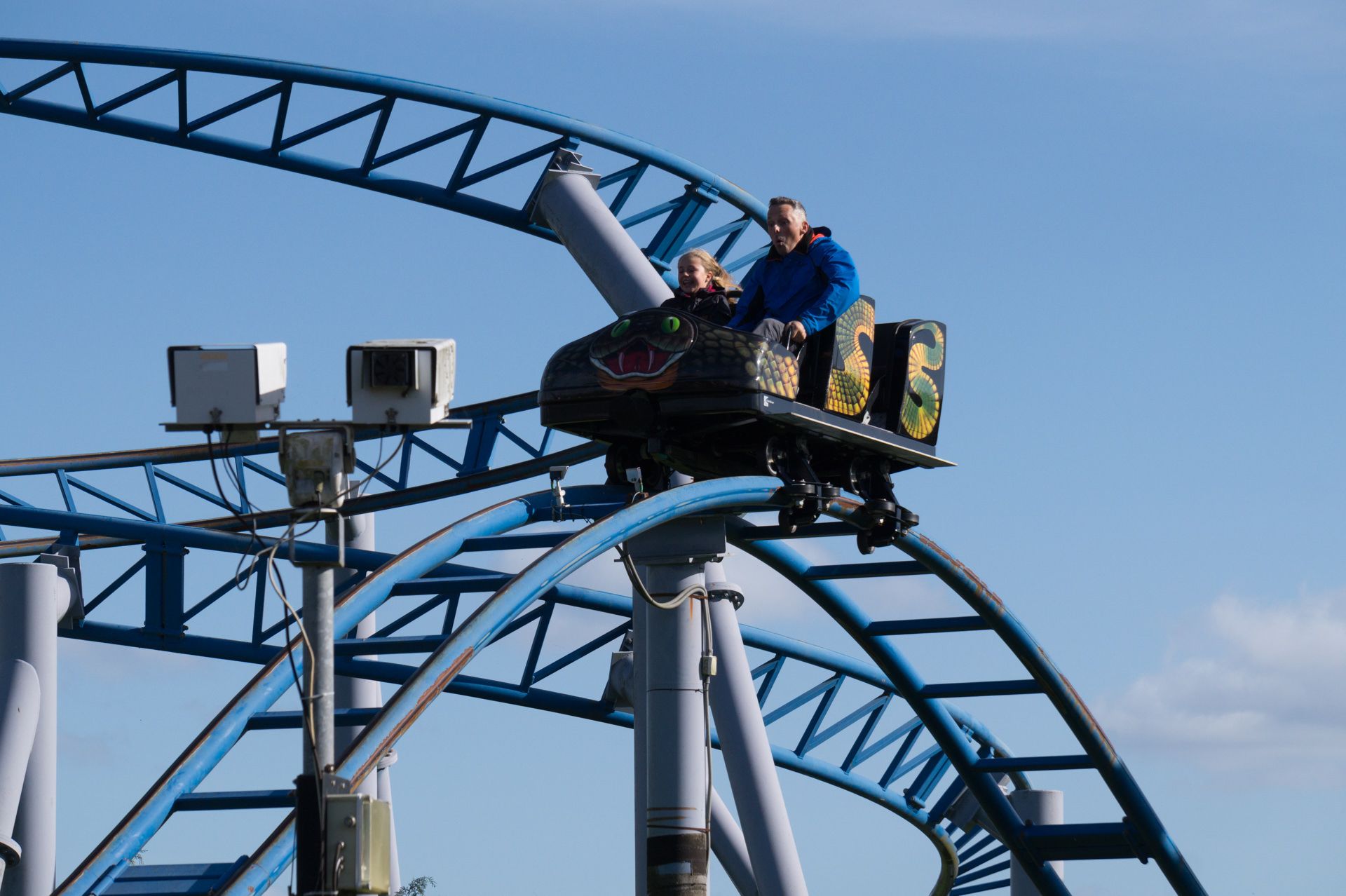
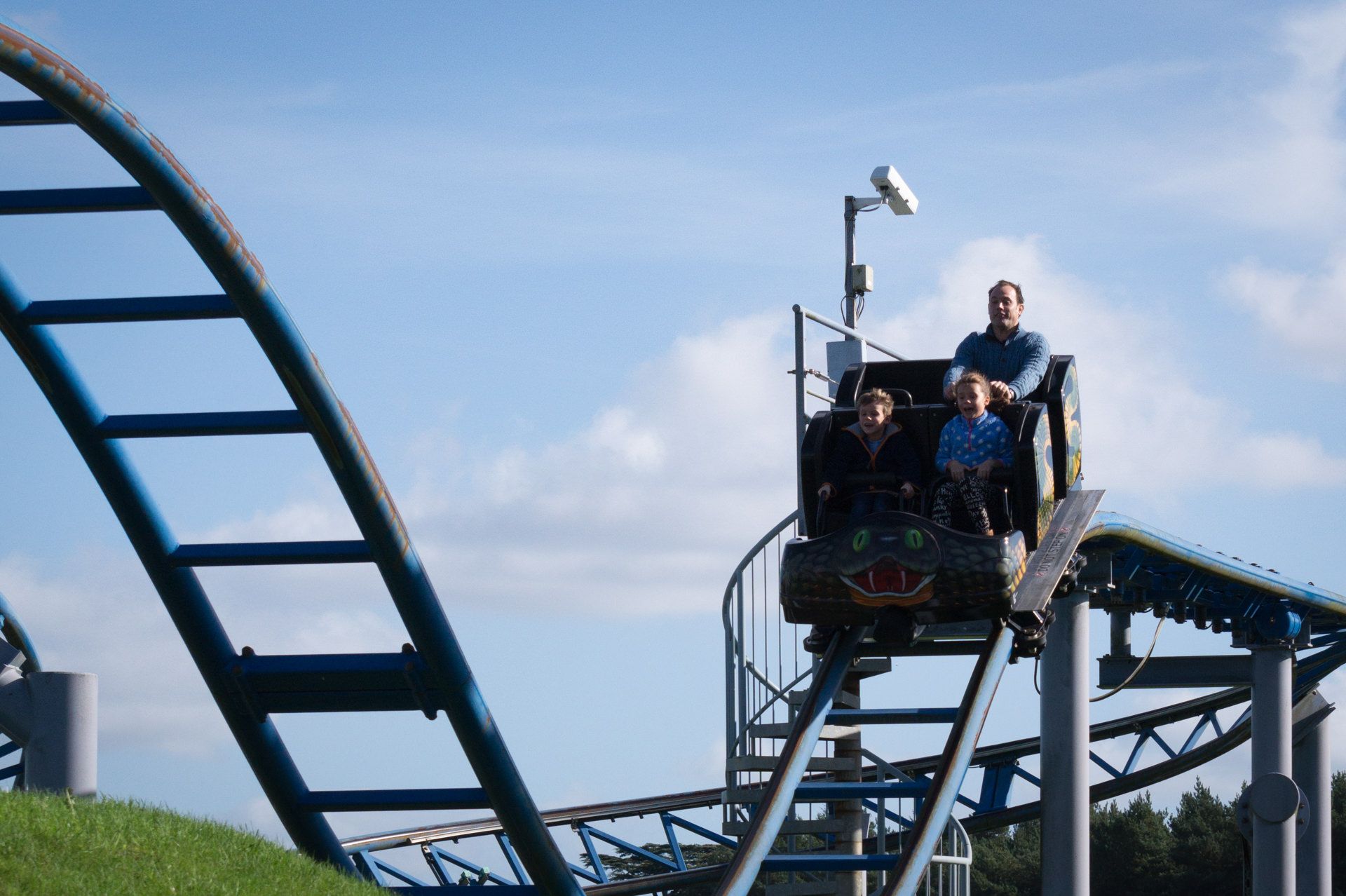
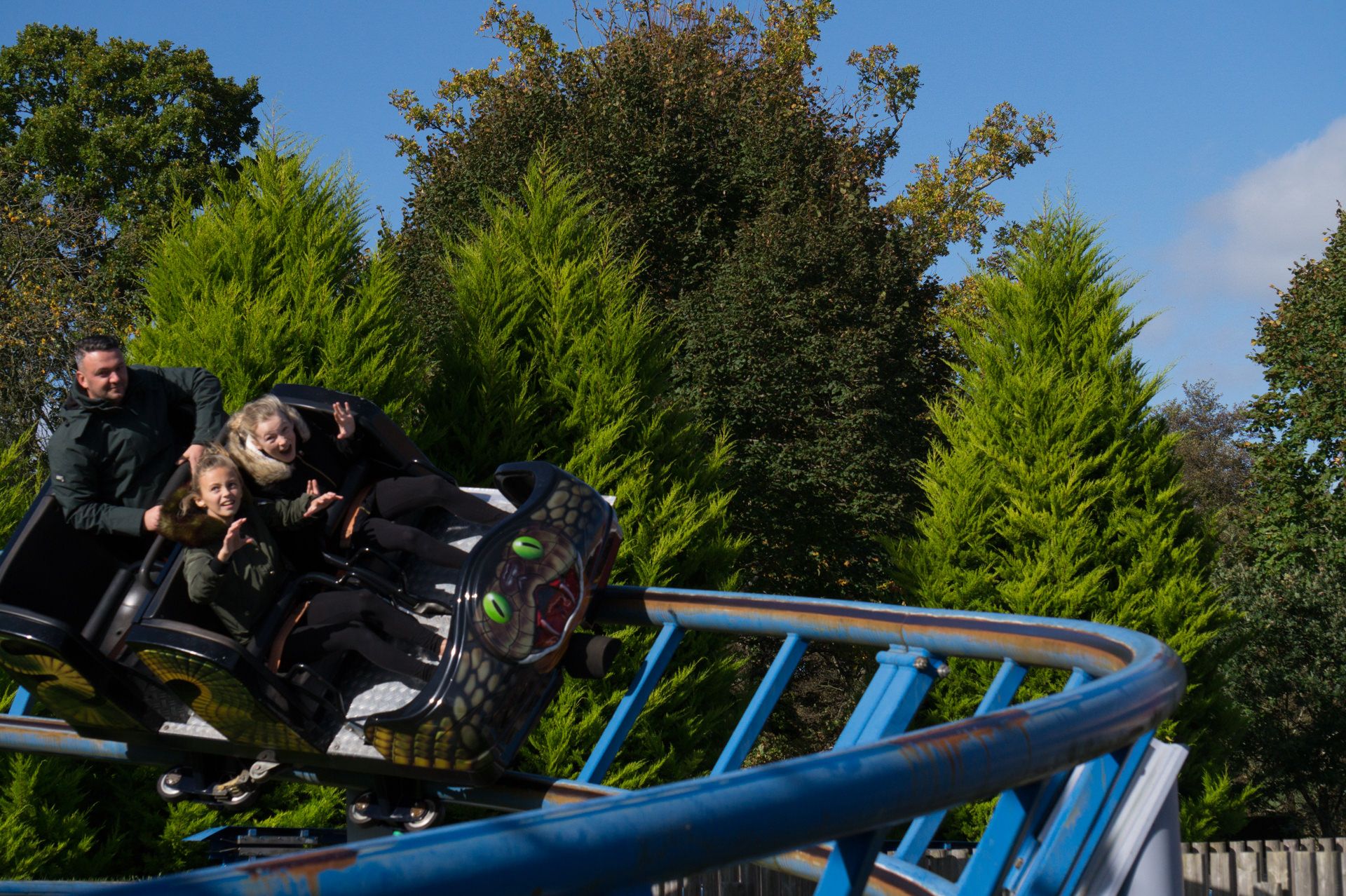
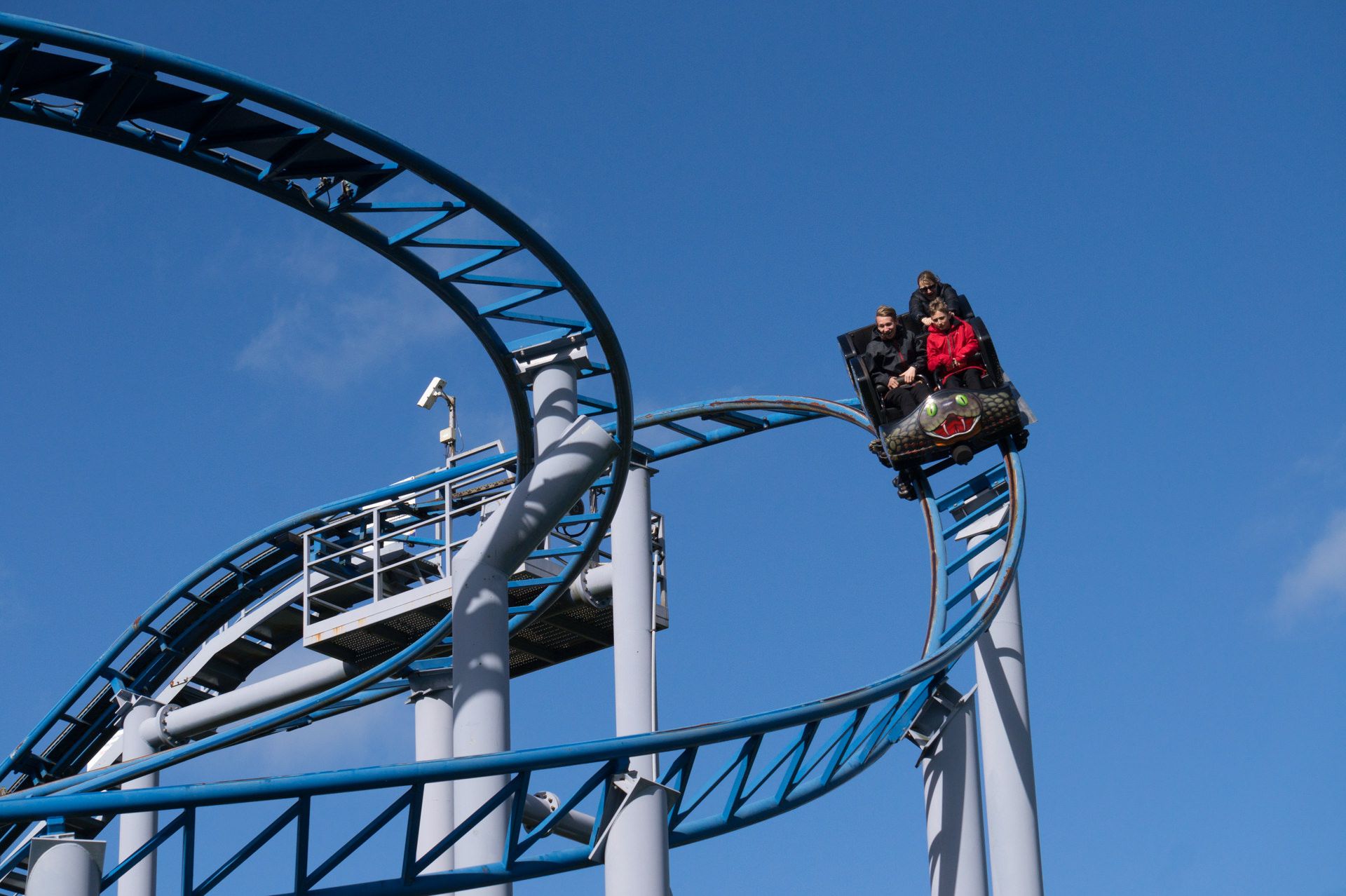
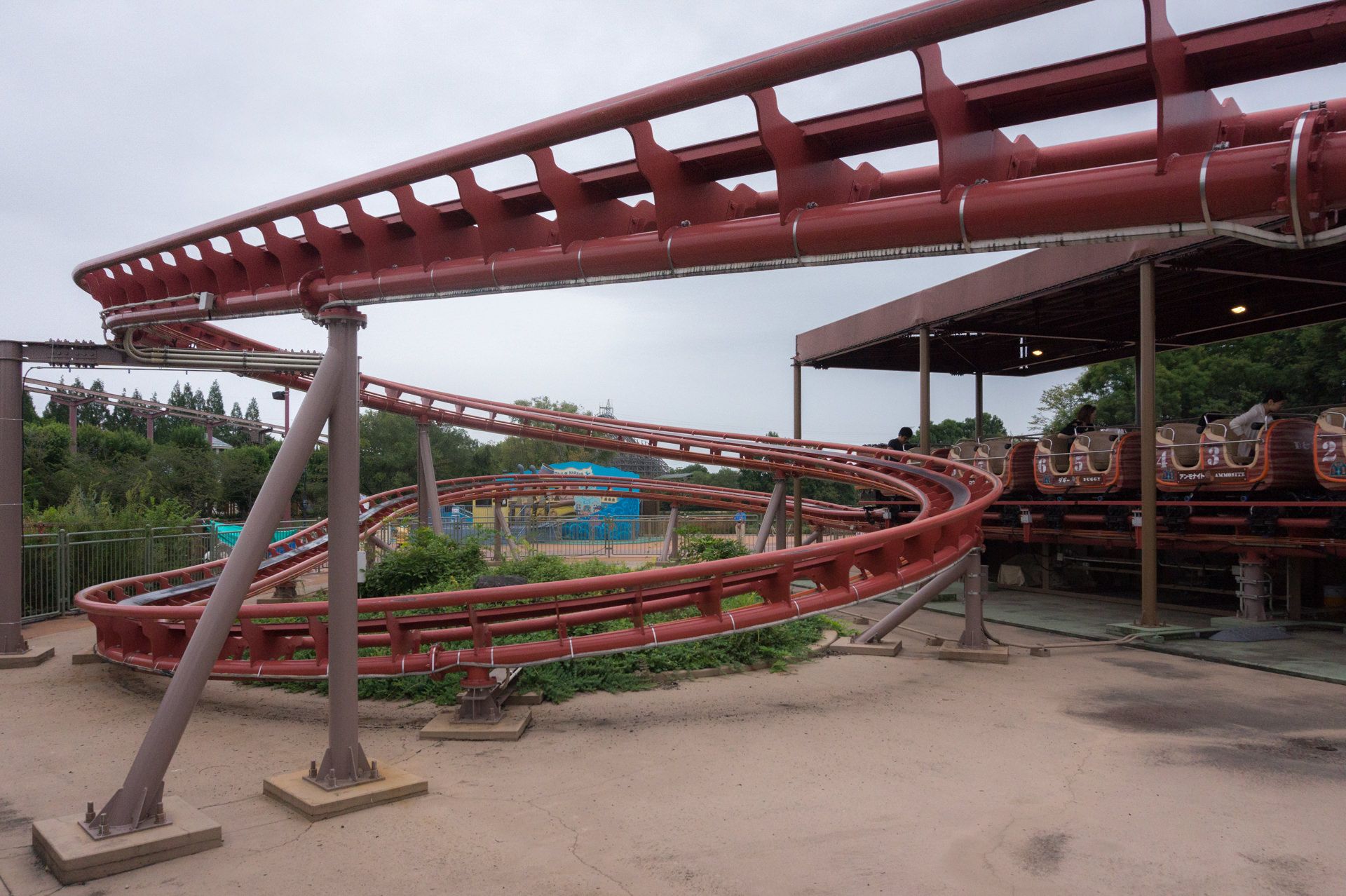
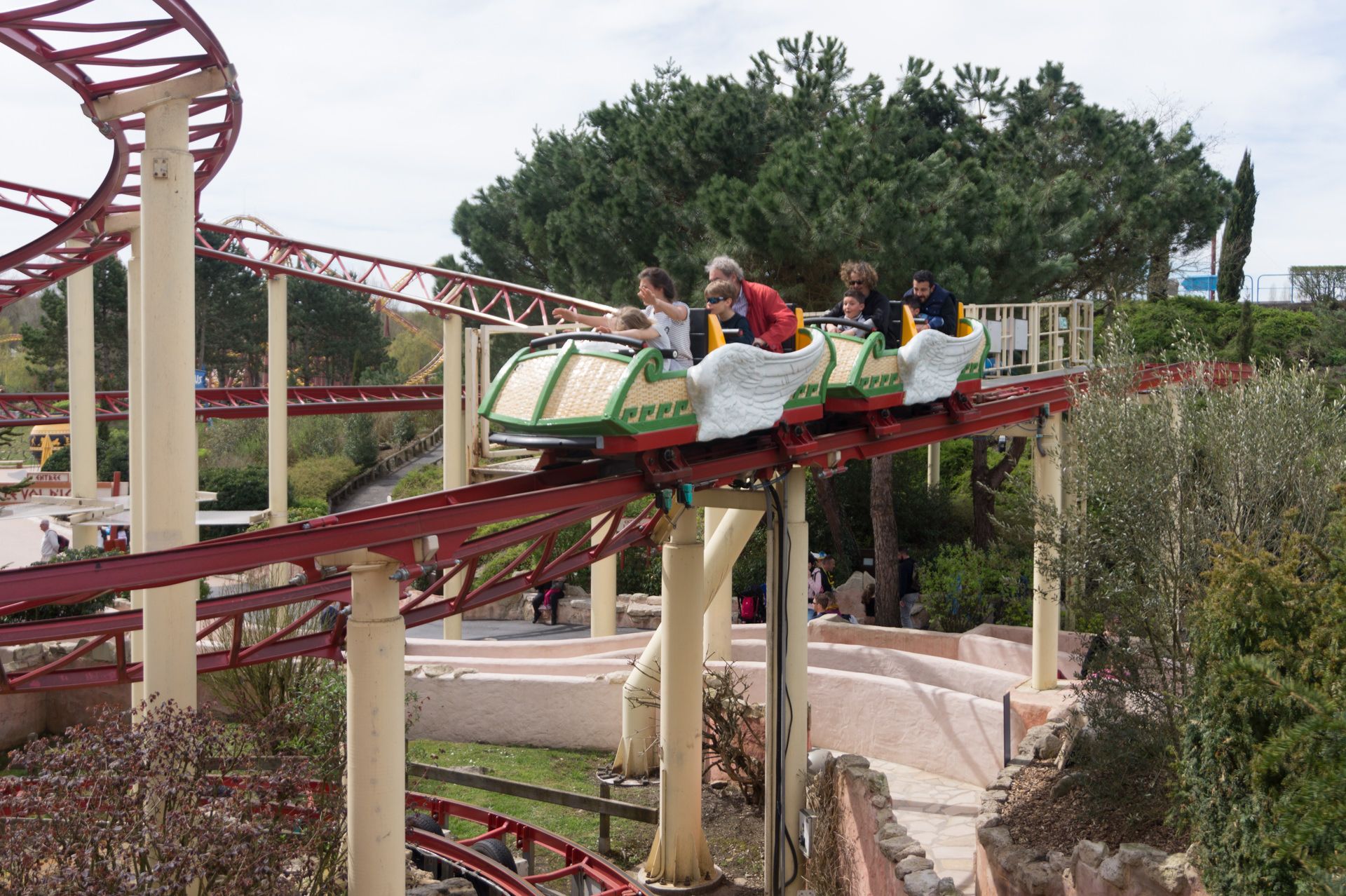
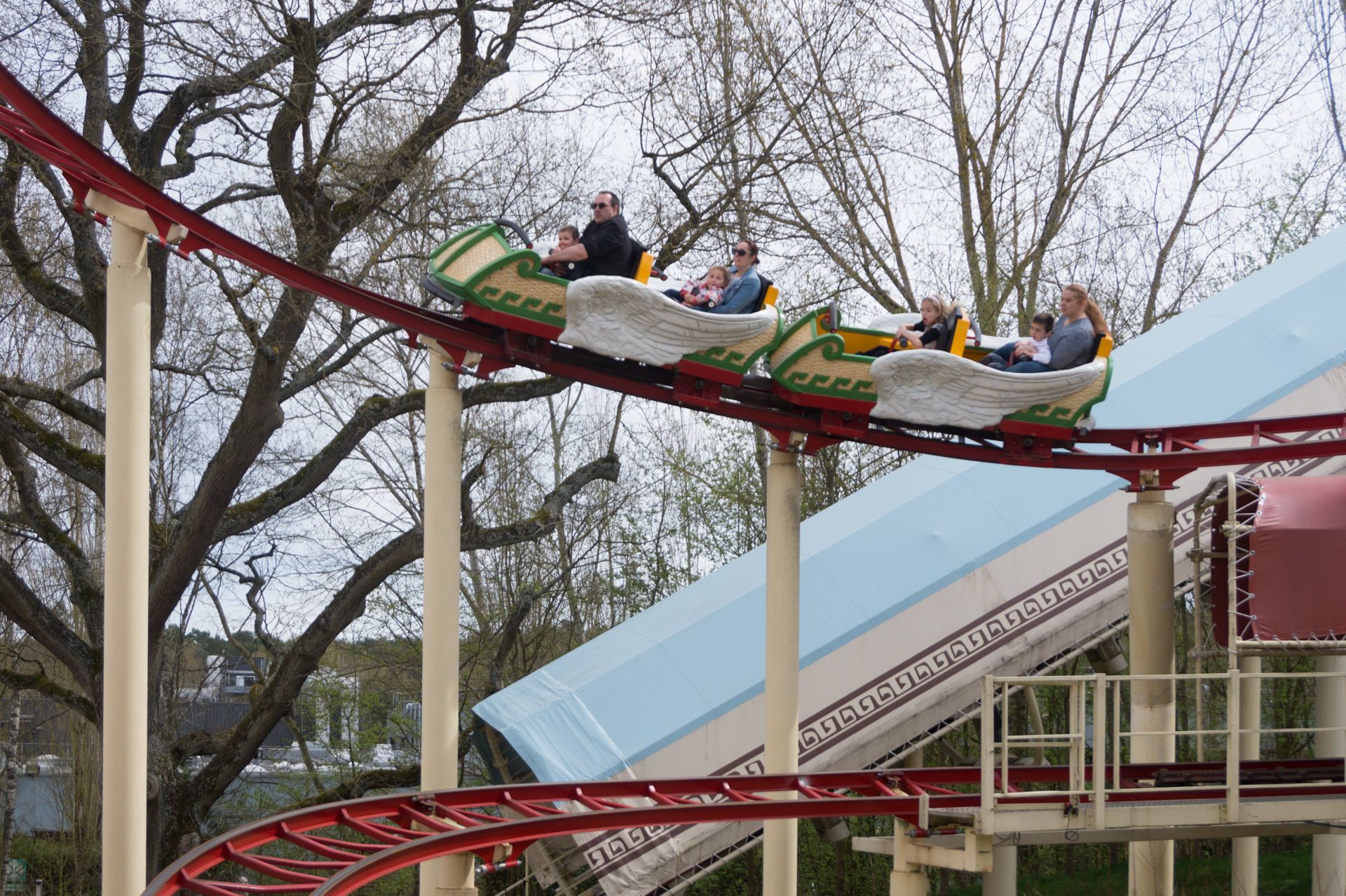
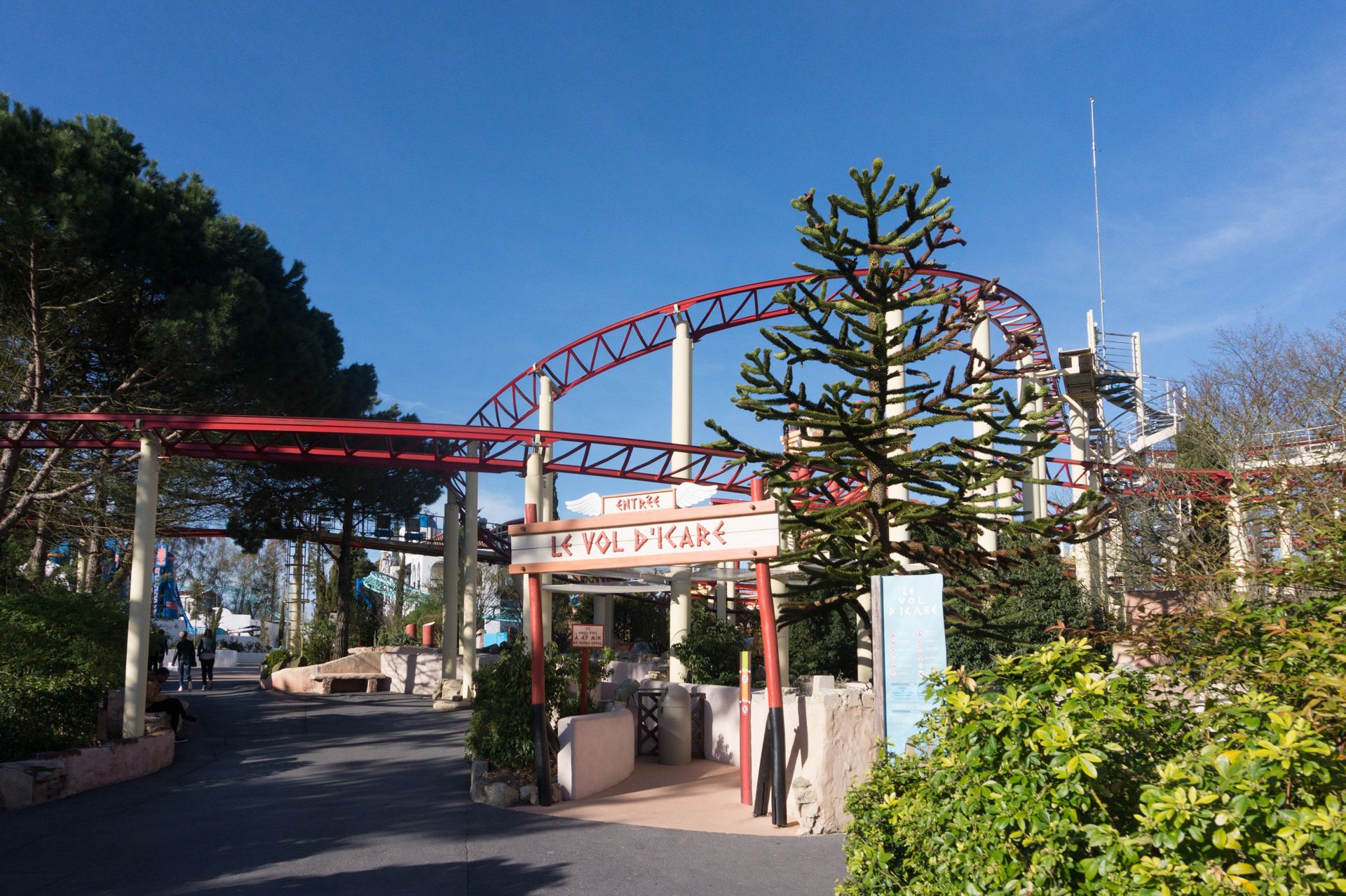
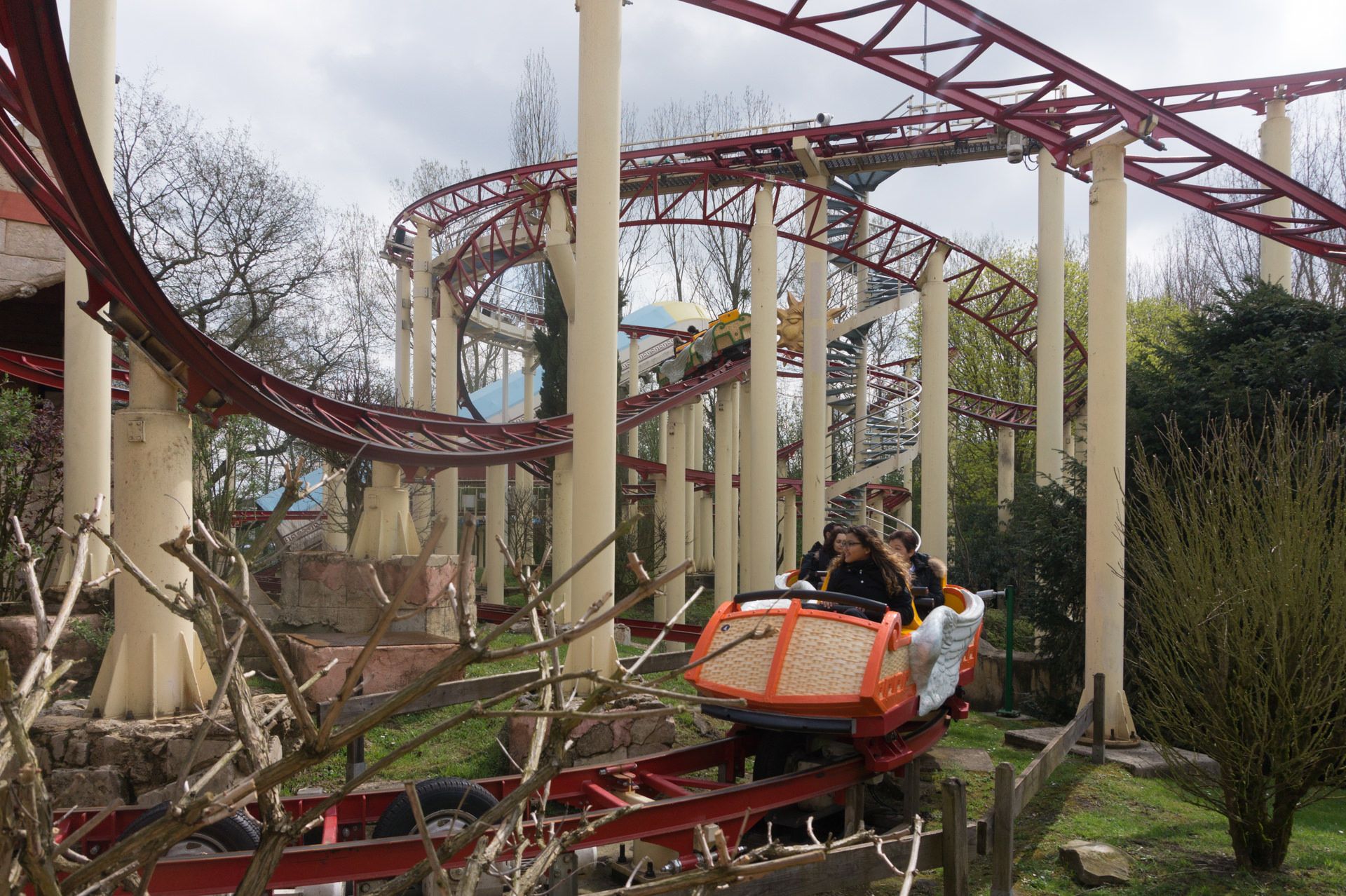
Before the Pégase Express was built, the largest family roller coaster in the Parc Astérix was the Vol d’Icare. Based on the layout of the (former) roller coaster Comets from the Danish amusement park Tivoli Gardens, the roller coaster impresses with a variety of enjoyable curve manoeuvres. But instead of a theoretical capacity of 1200 people per hour, the ride usually has a much lower passenger flow due to a modified train design. Here, instead of two people next to each other, a maximum of two people can sit behind each other per row. Although the staff visibly tries to fill up the trains quickly and send them on their way, you should always expect a longer waiting time.
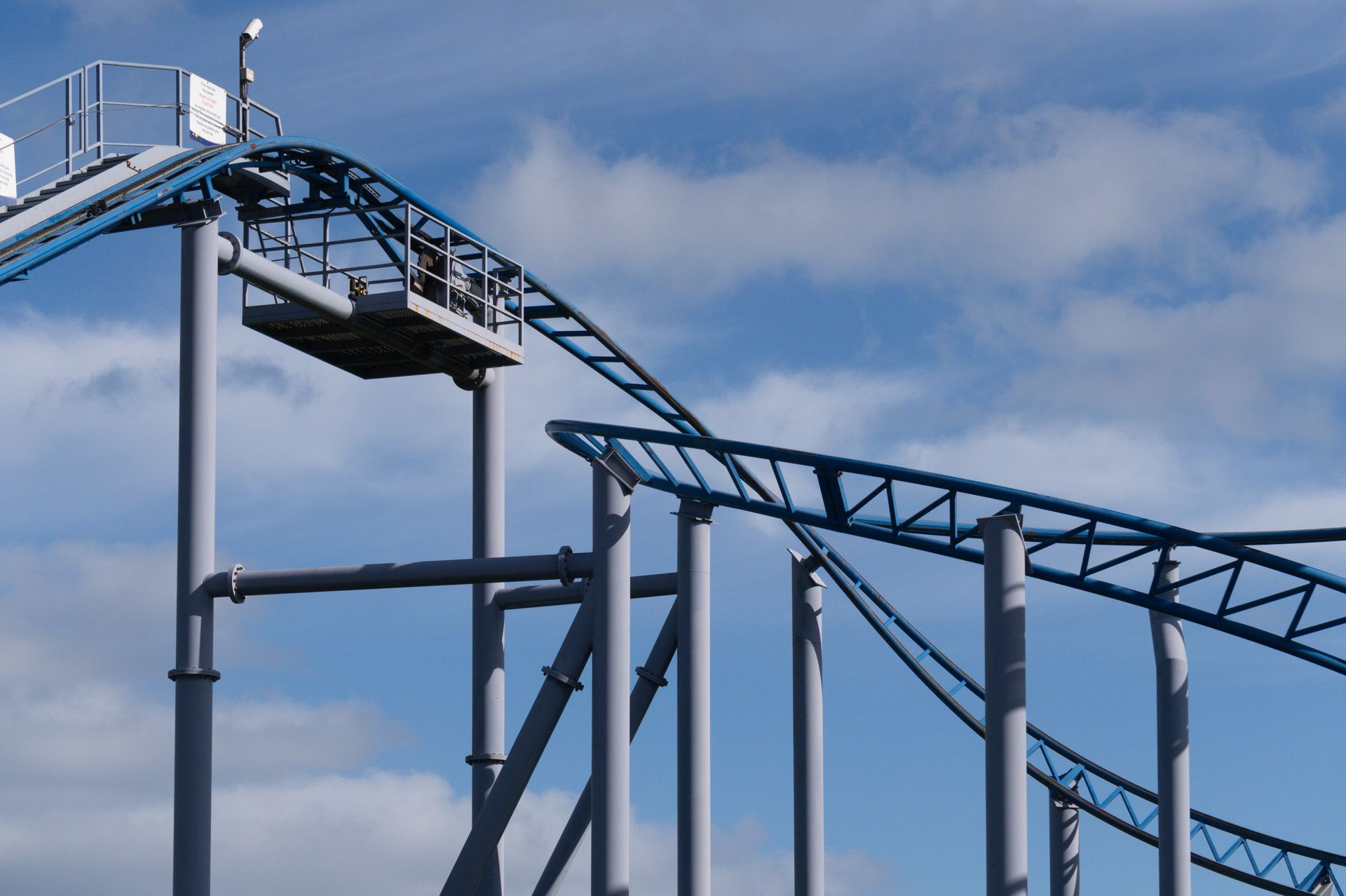
If you could get a seat in the train after some waiting time, you just pull the bar – which can be adjusted by a rail in the centre console – towards you before you can start your journey. After a short right-hand bend, the lift of the ride is already reached, which takes you up to a height of 10,7m. But there is no time to enjoy the view and so we soon fall down a steep curve. Due to the extremely compact construction of the ride, a very narrow and therefore very pressure-laden valley awaits us before we climb up the hill and down the valley in an equally narrow Bayernkurve. Immediately the first block brake is crossed.
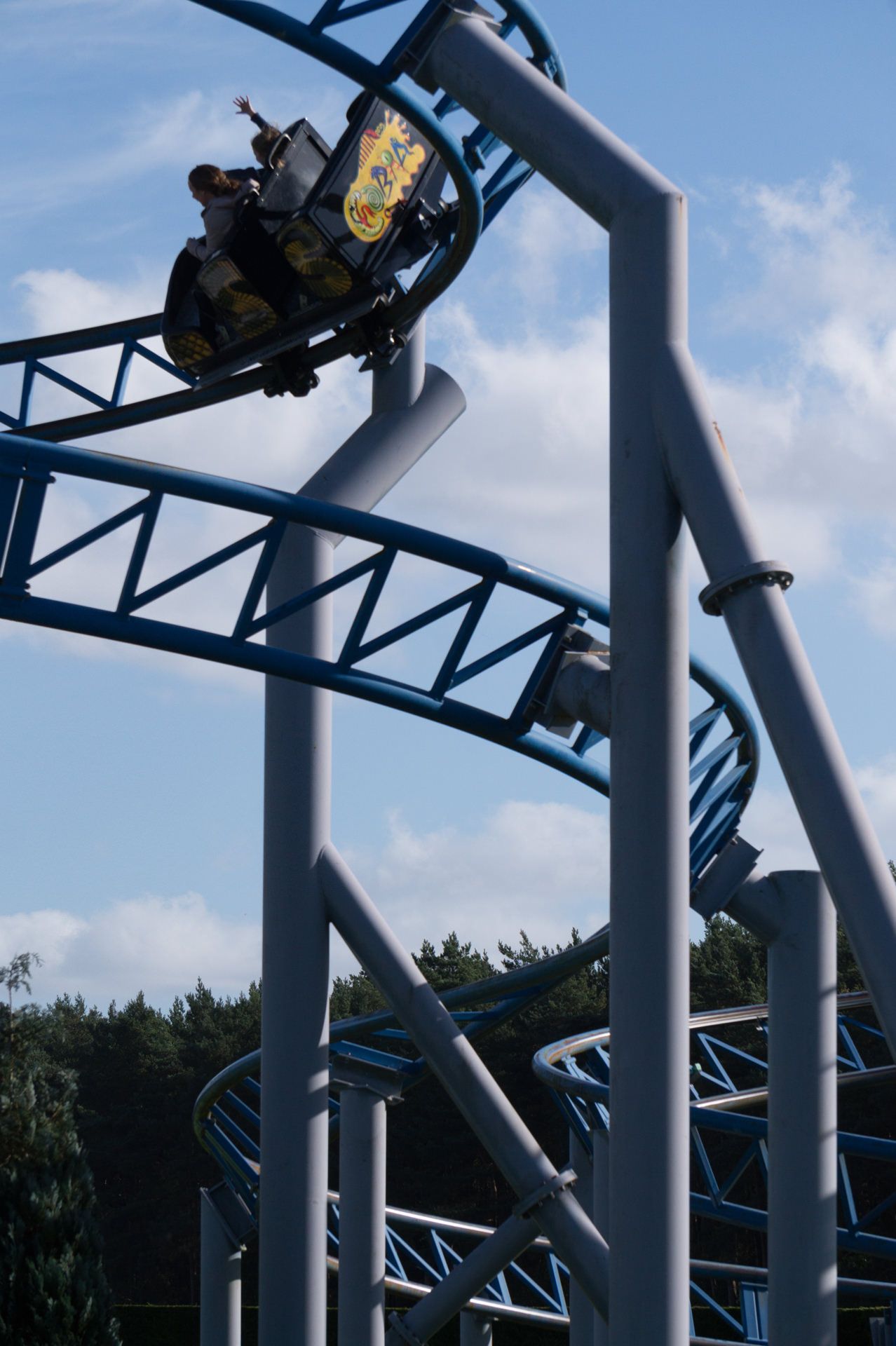
In a rather wide right turn we now increase our speed constantly before we make our way to the second block brake after a rapid left turn. We then leave the second block brake in a left-hand bend, followed by a wide right-hand bend. With a good momentum we slam into another block brake and are slowed down almost to a standstill. Especially on the first ride this brake comes as a surprise, especially since we still haven’t reached the end of the ride. Very slowly we make another combination of right and left turn, whereupon another block brake is waiting for us. We reach the actual braking section of the ride after a short dip on this one. After a turn-around we reach the station building of the roller coaster.
Even if the Vol d’Icare sounds like a collection of block brakes with little track in between, the roller coaster is extremely entertaining, especially because of the first two sections. The ride is fun and encourages you to repeat rides if there are not many people queuing for it. It is a pity that there are so few examples of this type of roller coaster.
Hydre de Lerne
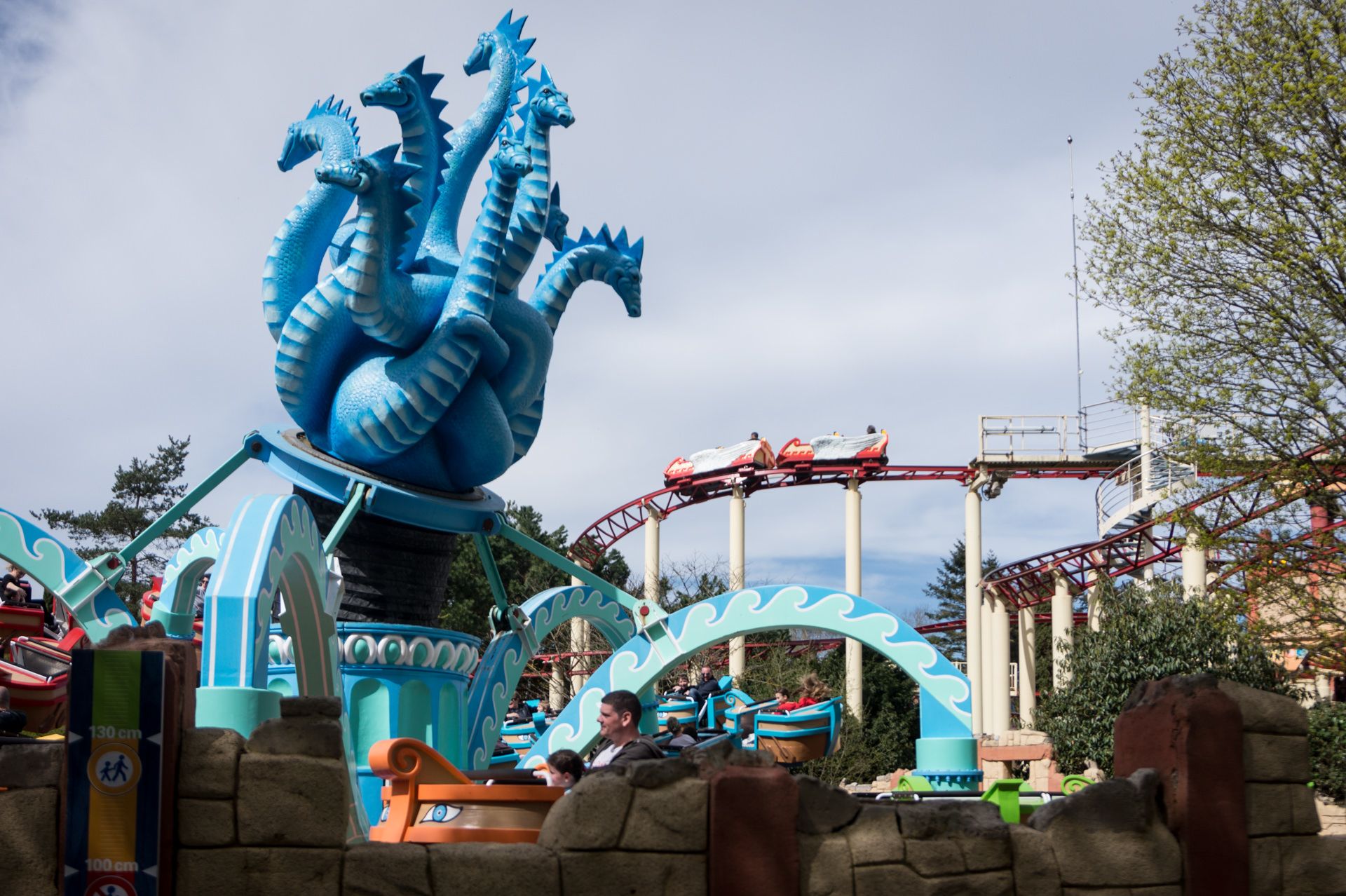
With the Hydre de Lerne another classic flat ride awaits us that should not be missed. This nicely designed monster, produced in Münsterhausen, offers an extremely fast and by no means short ride. Furthermore, the Polyp is one of the first rides made by Gerstlauer Amusement Rides.
Rivière d’Elis and Discobélix
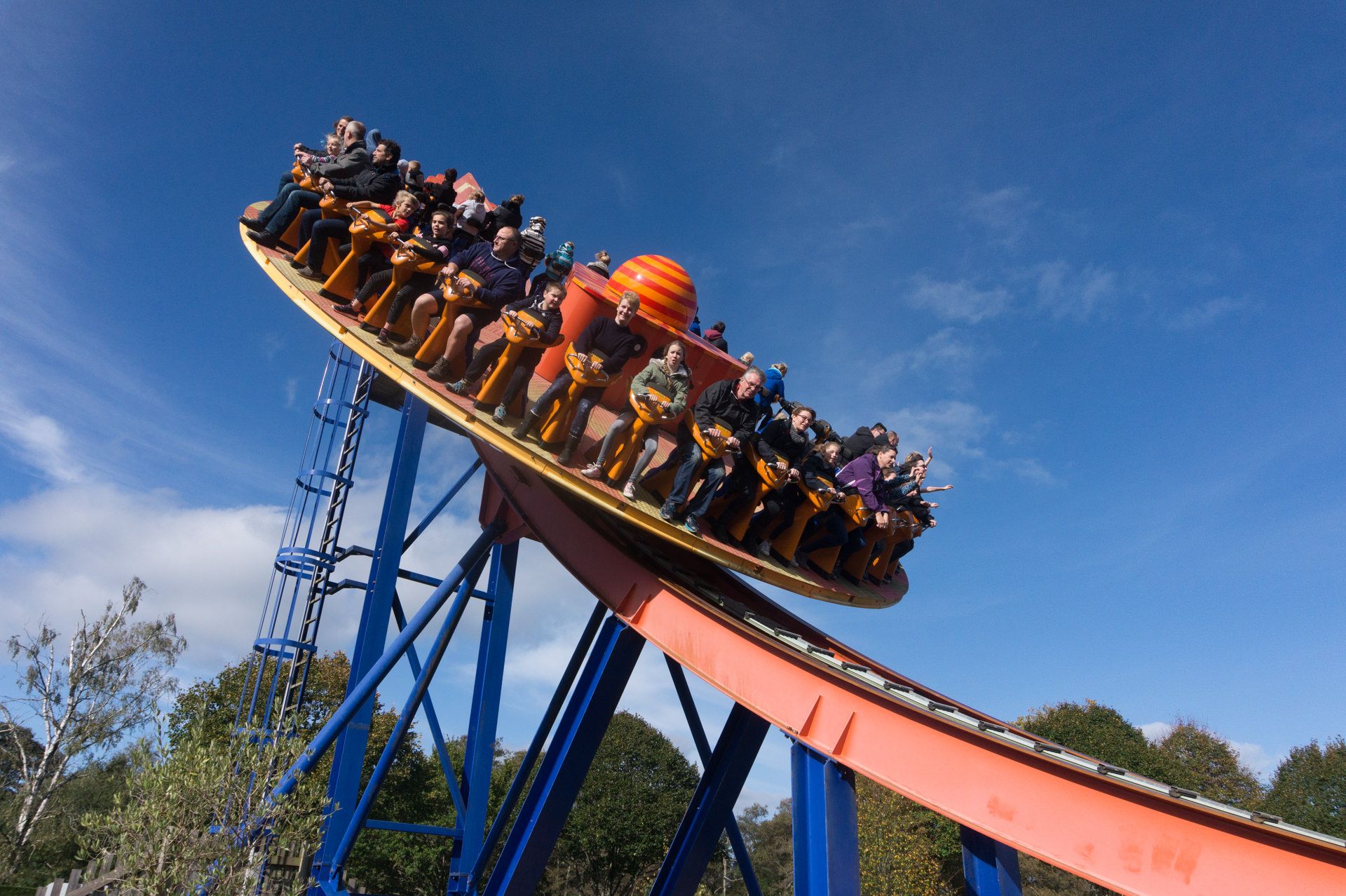
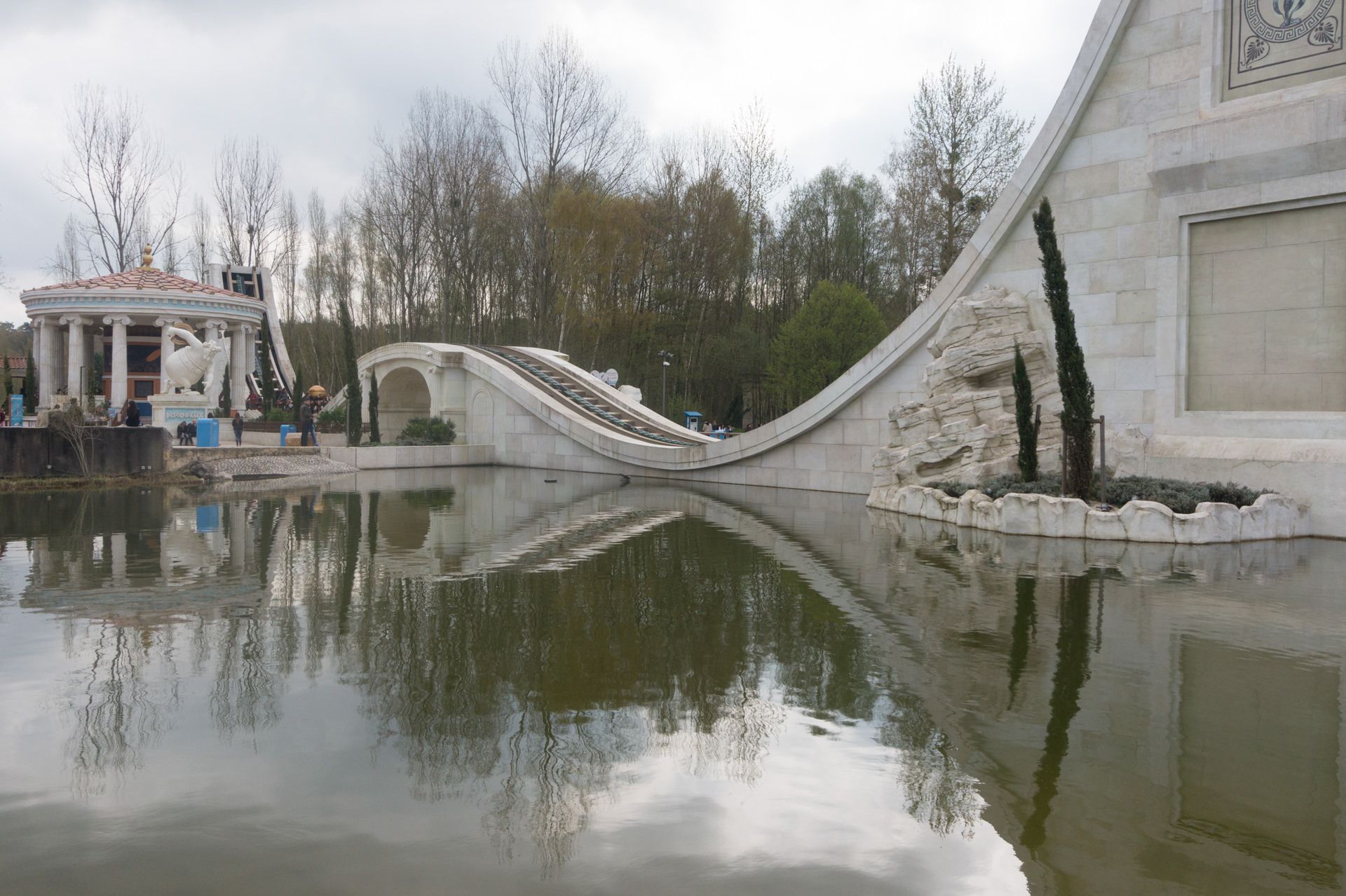
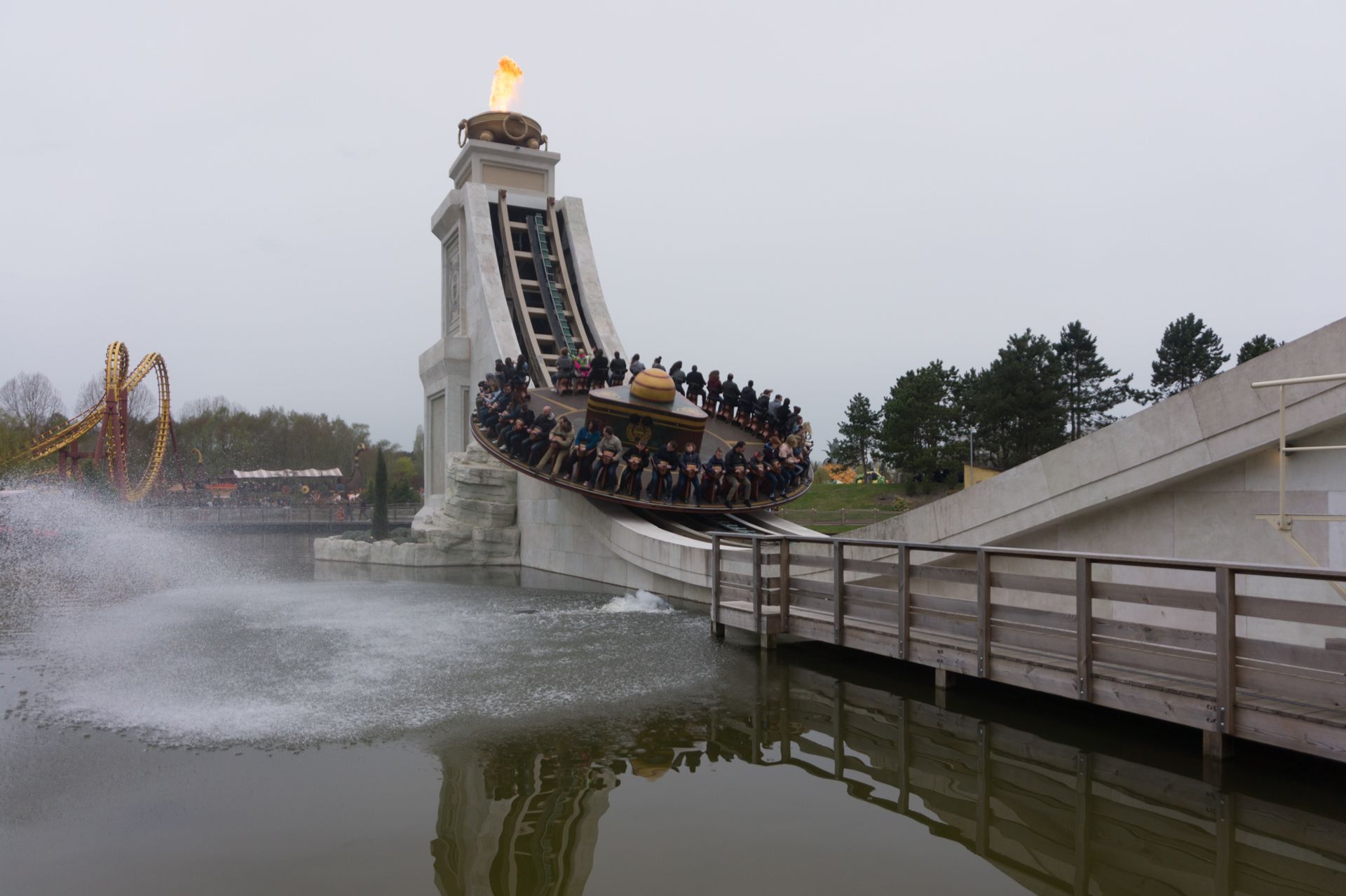
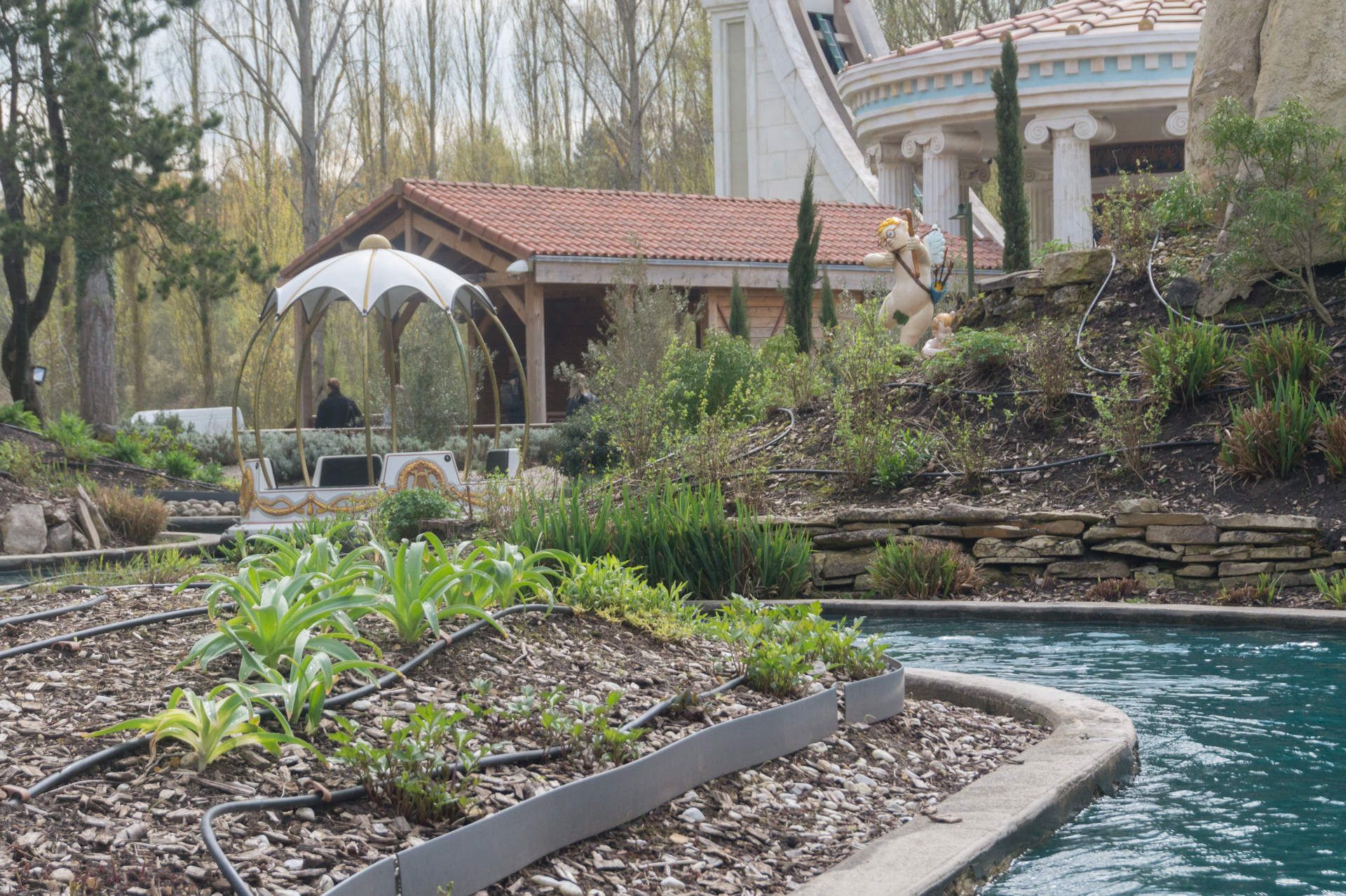
Past the leisurely boat trip Rivière d’Elis we are now drawn to Discobélix, a Disk’o Coaster from Zamperla. Larded with fire and water effects, the ride convinces especially from the outside. For the passengers themselves, it is unfortunately a little monotonous. Admittedly, the ride is certainly chic and the ride across the water is an extremely nice feature.
Tonnerre de Zeus
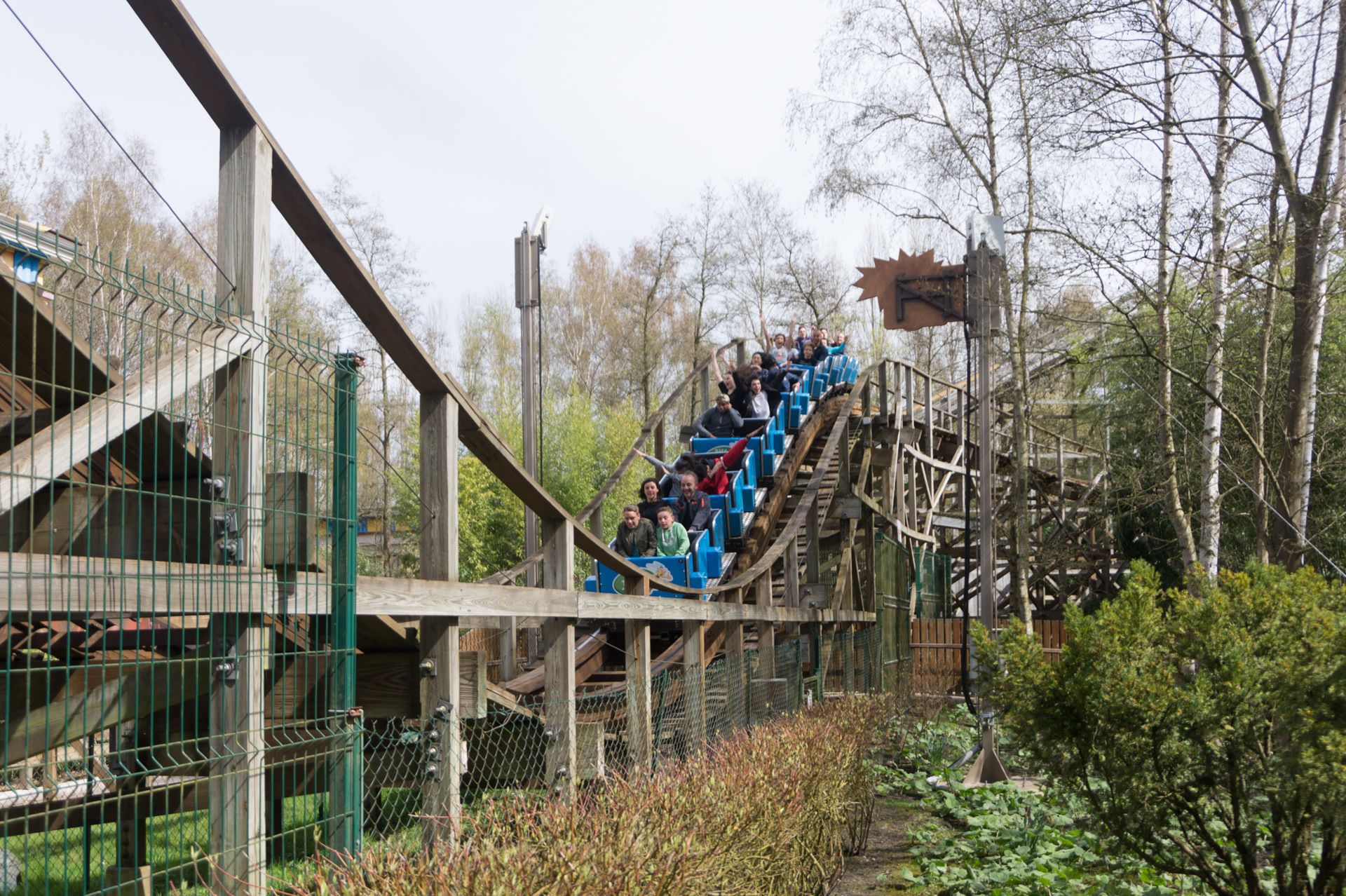
Now we come to the wooden roller coaster Tonnerre de Zeus. The camera-shy Woody, who is remembered by many fans mainly because of his entrance gimmick, has made it to the top of my list of favourites without much effort. How? Let’s take a closer look right now.
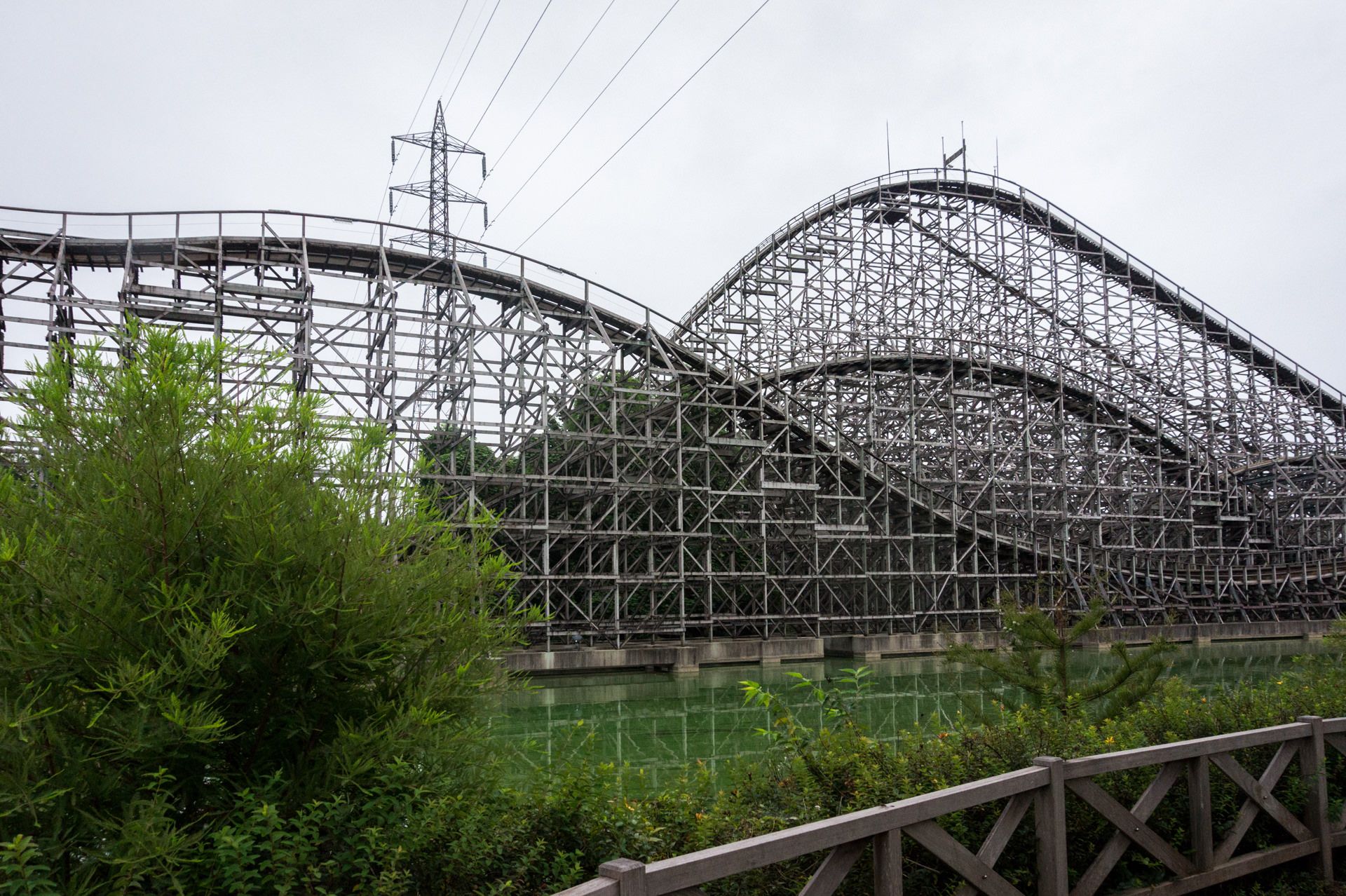
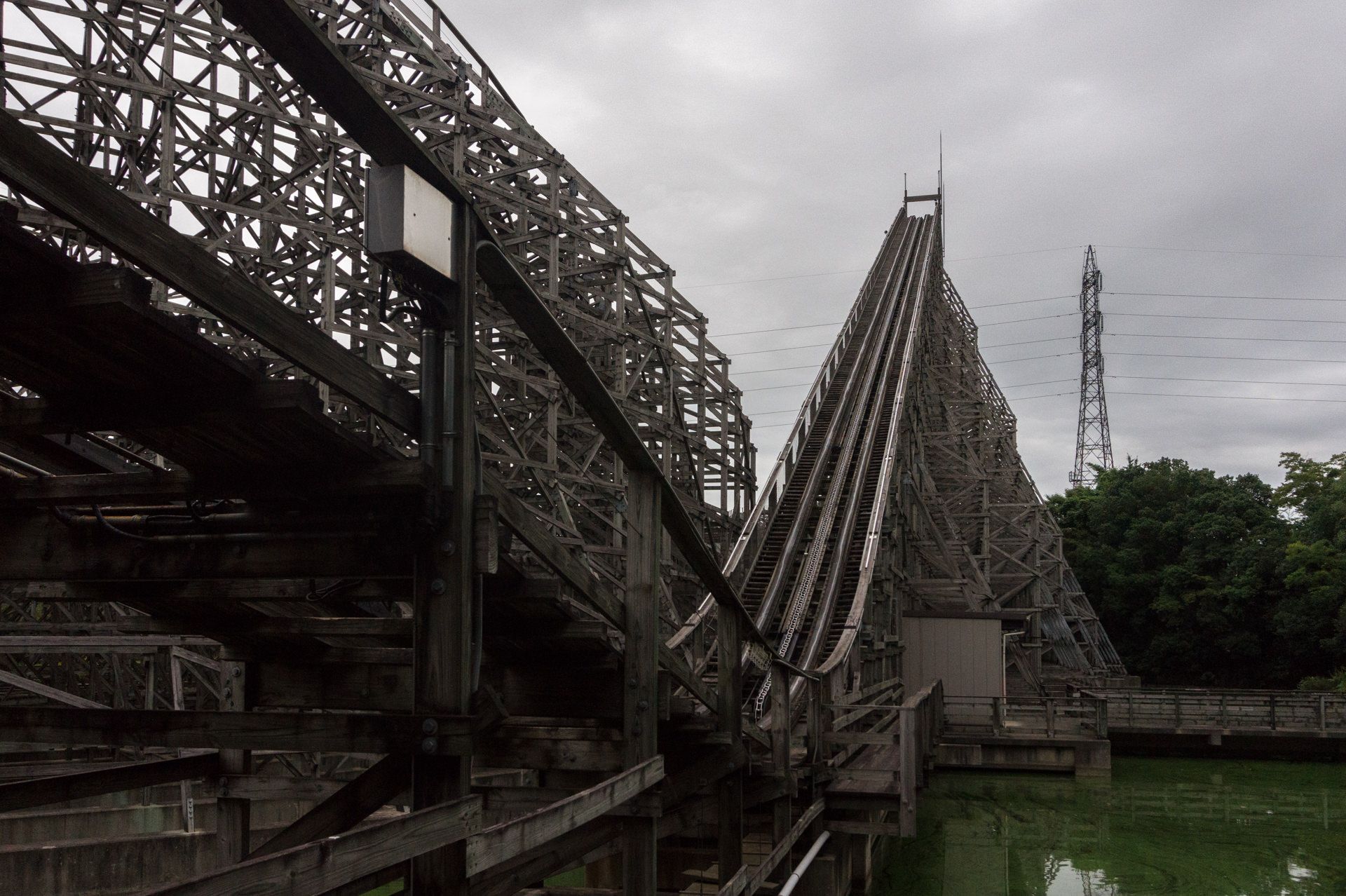
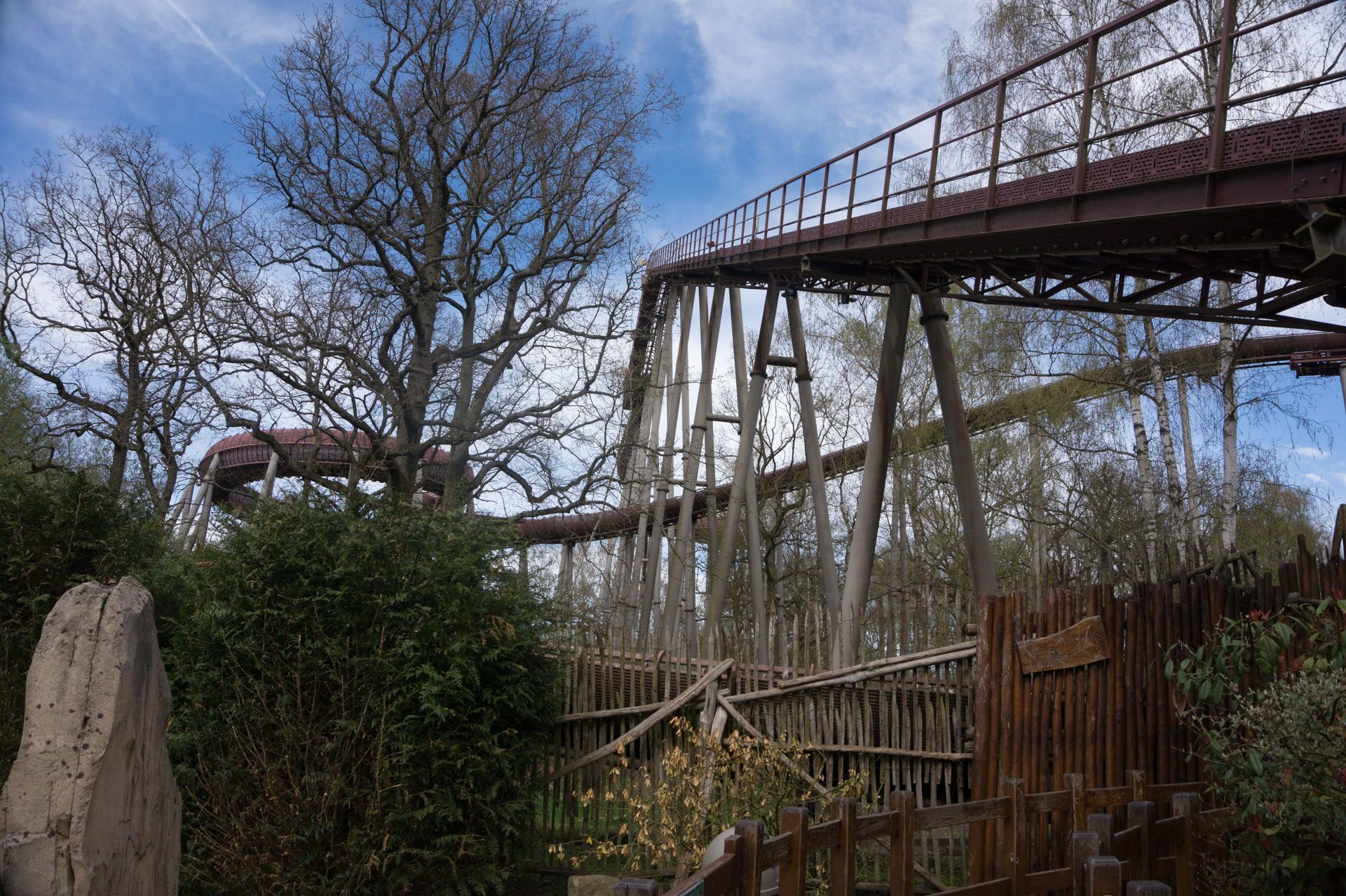
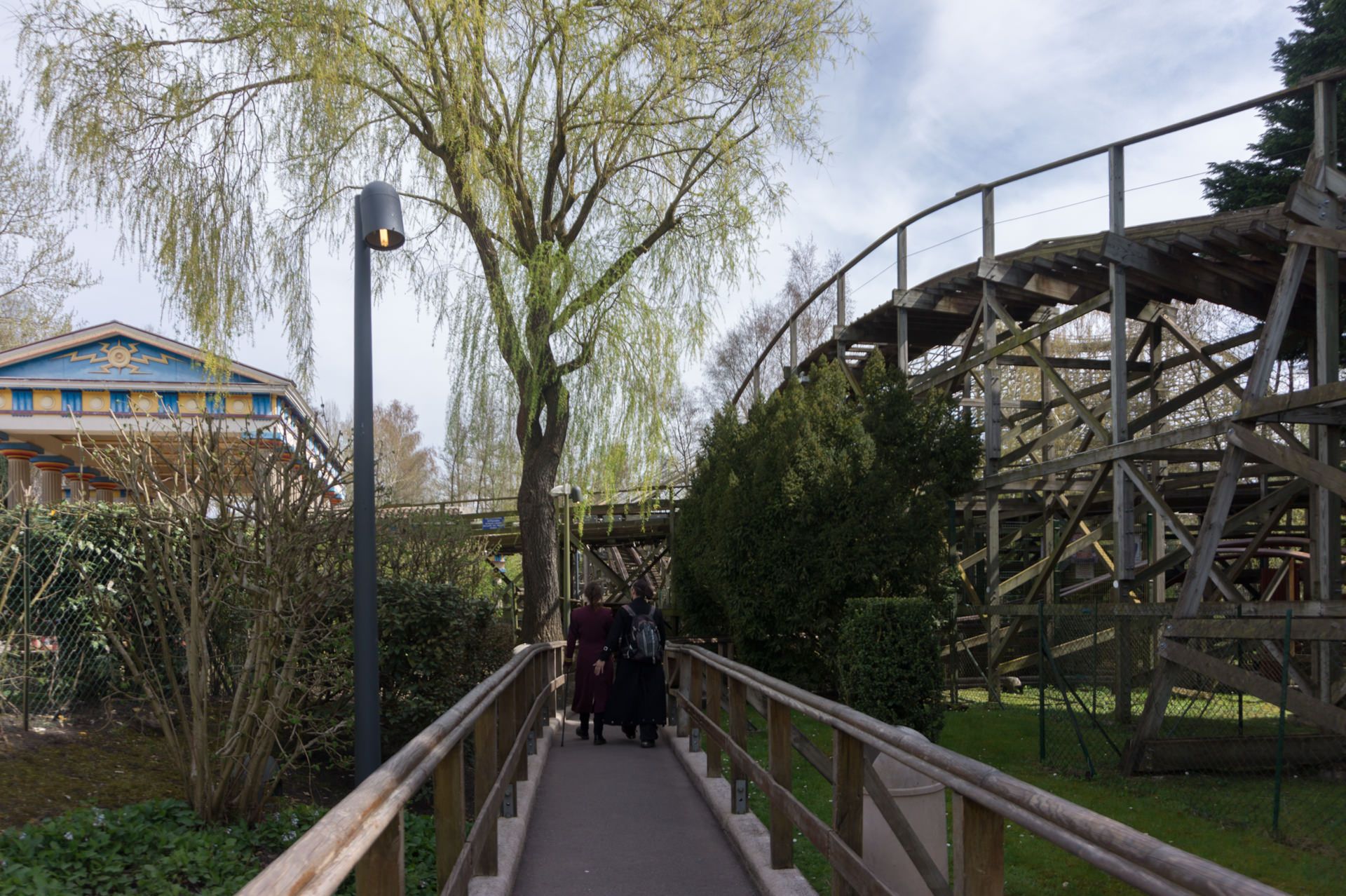
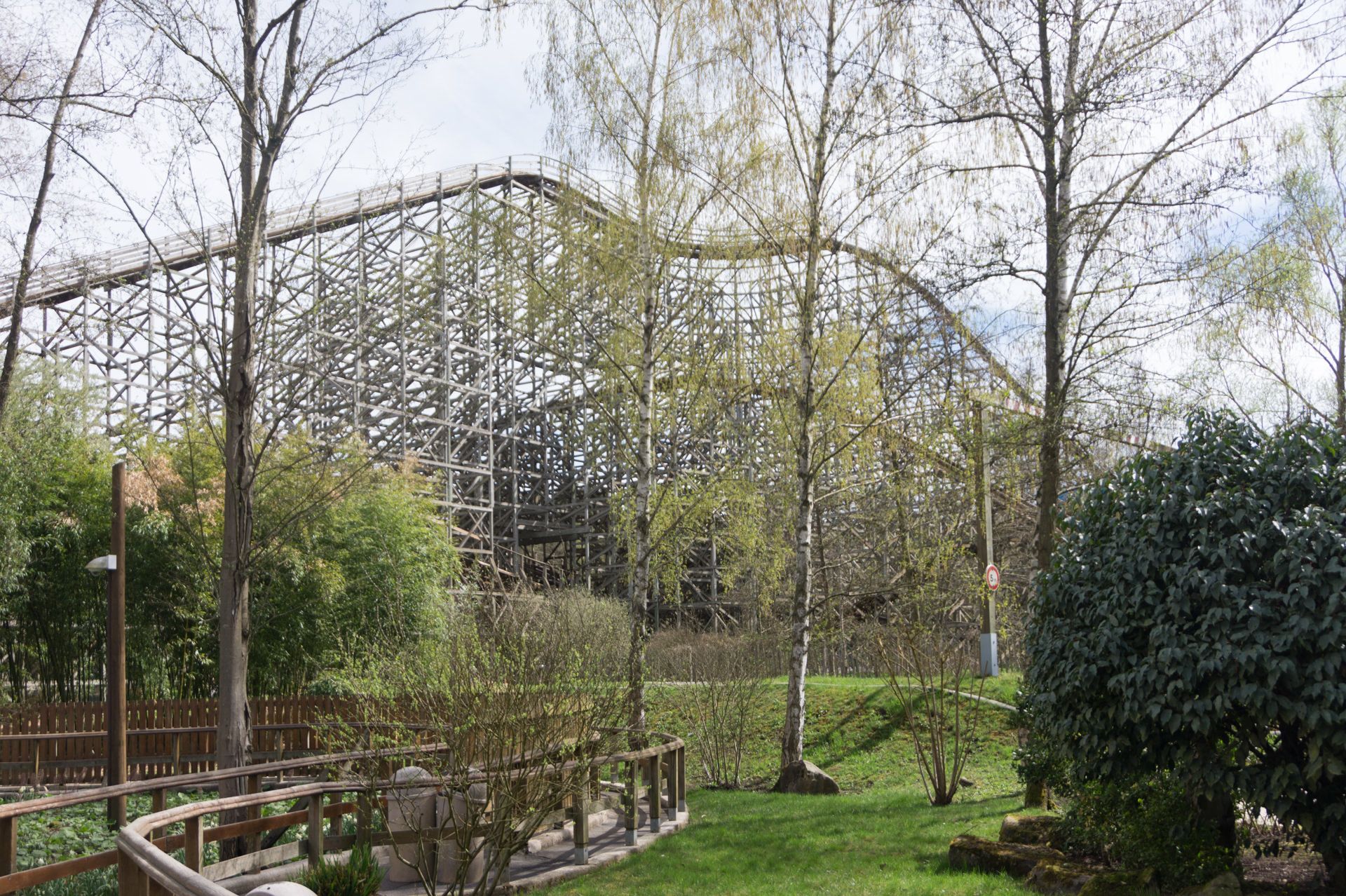
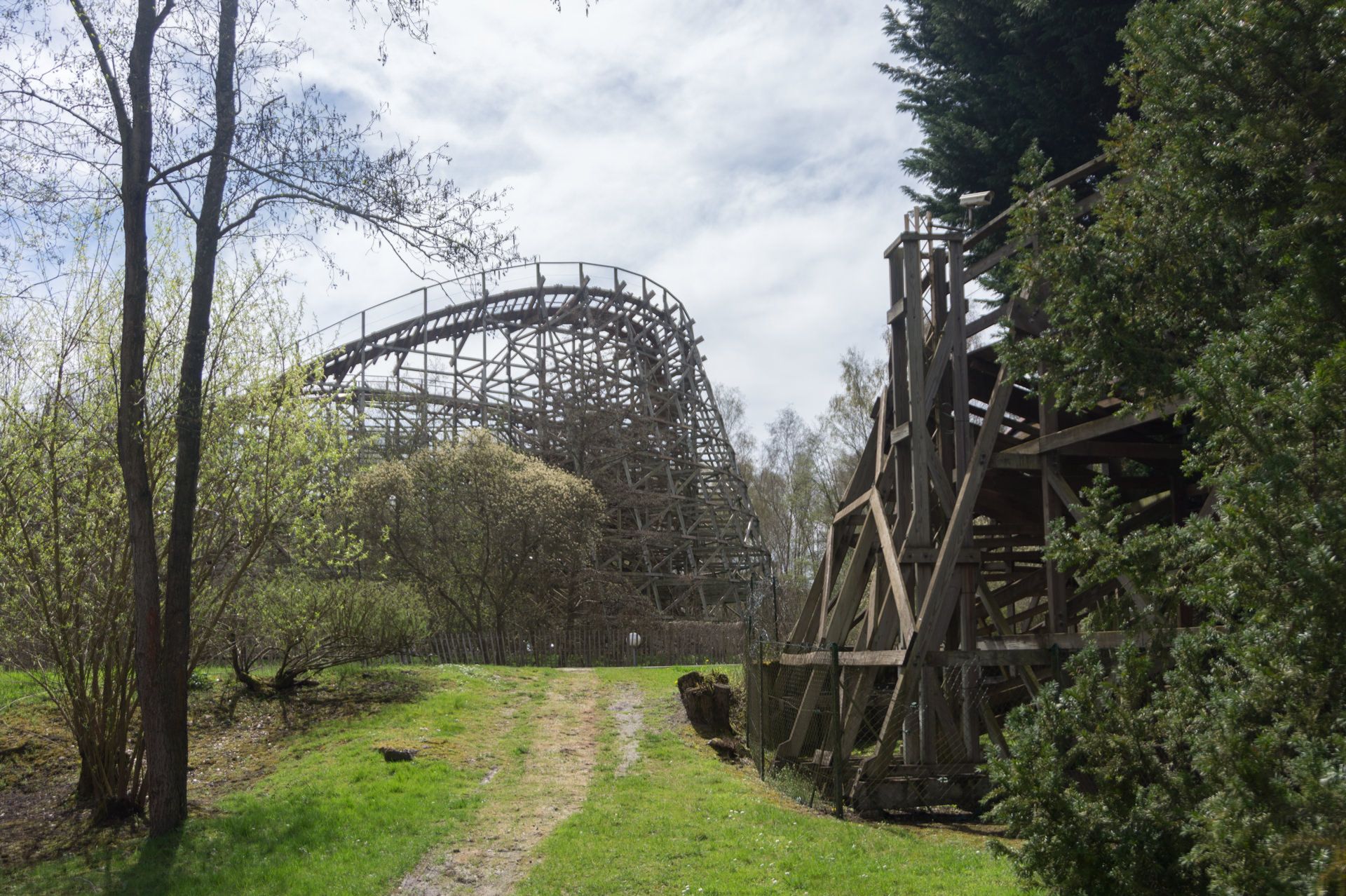
The journey begins with a short right turn out of the station. We immediately reach the lift hill and a little later the starting height of 30m. After another bend at a lofty height the train rushes over a CCI typical and much too narrow hilltop towards its fate. Exposed to light airtime we do the same and race mercilessly towards a tunnel that is much too narrow. With a lot of pressure and shake, rattle and roll we cross the first valley. Thereupon we shoot up a hill, which at the same time initiates a change in the layout. We quickly sink down before we are torn out of our seats again and get closer to the ground. Over a camelback we then cross the lift structure of the wooden roller coaster and approach the main element of the roller coaster, a 572° helix.
Here we will spend some time together over hill and dale. There is a constant up and down, sometimes the track is very steep and runs through its own structure. An awesome part! It suits quite well that a number of small hills are waiting for the passengers, which of course transport them out of their seats. Once again a turn follows with an included dip, which once again skillfully pushes us into the side of the car. With momentum we also leave this curve manoeuvre over a brisk Airtime hill, which is also followed by others. Inside the helix we now cross another turning curve before we slowly make our way back to the station. Over a right turn the track slowly nestles up the lift hill. But shortly before reaching the station the train roars over a hill and disappears into a forest after a left turn. Here we make a lap in a 256° helix, whereupon the braking section is reached and soon the wild ride ends.
Tonnerre de Zeus is awesome! The ride offers a great pacing, peppered with some really great airtime moments, which are not as crazy as with the sibling Megafobia in the Welsh Oakwood Theme Park, yet they appear more often. Furthermore the ride is hardly lacking in lateral forces, which especially in the insanely constructed helix in the middle part of the ride cause a broad grin on the passengers’ faces. The great first drop into the narrow tunnel, as well as the extremely long ride duration are further points why you simply have to love this ride. A terrific thing and a must-do for every roller coaster lover.
Goudurix
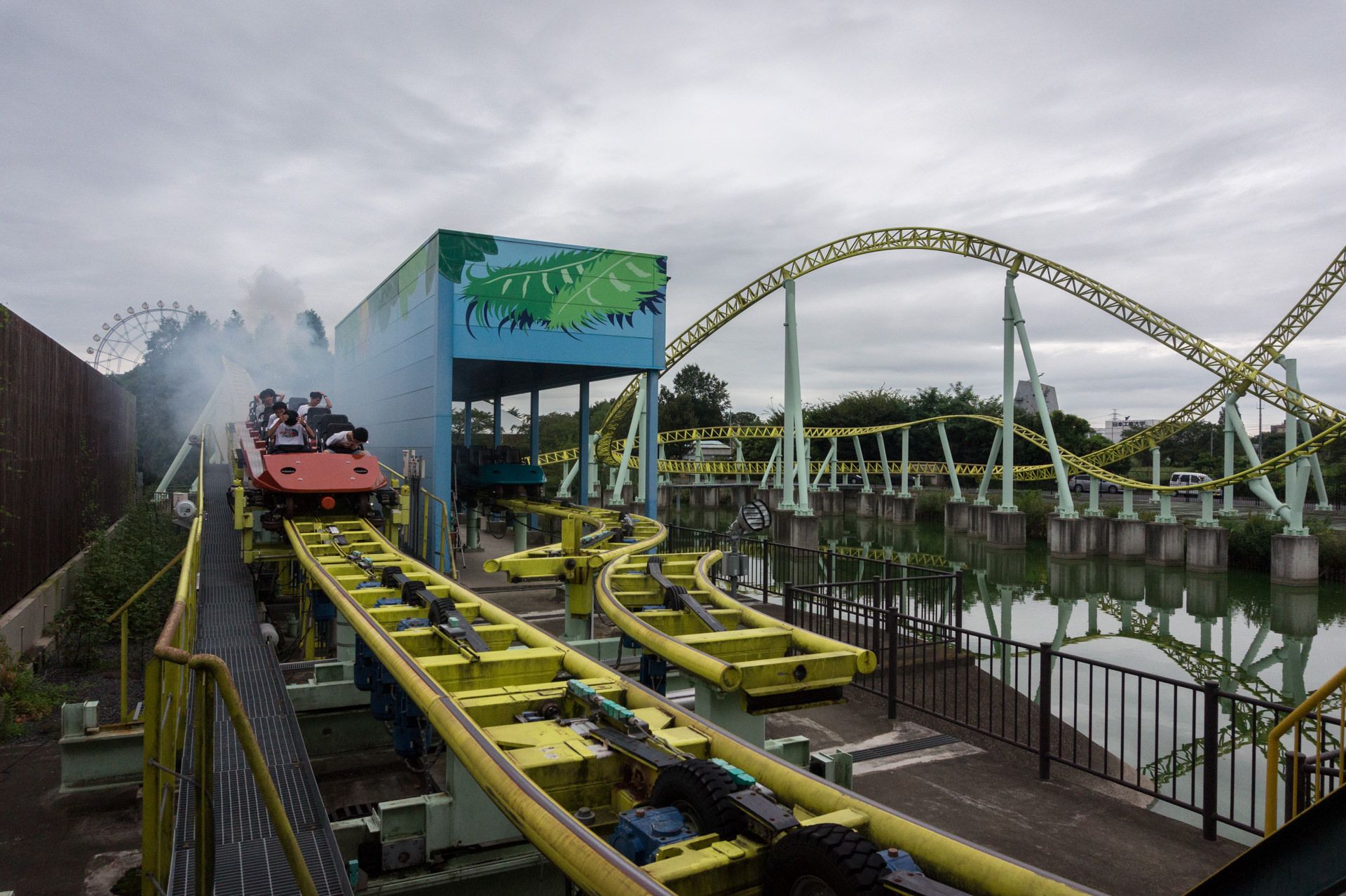
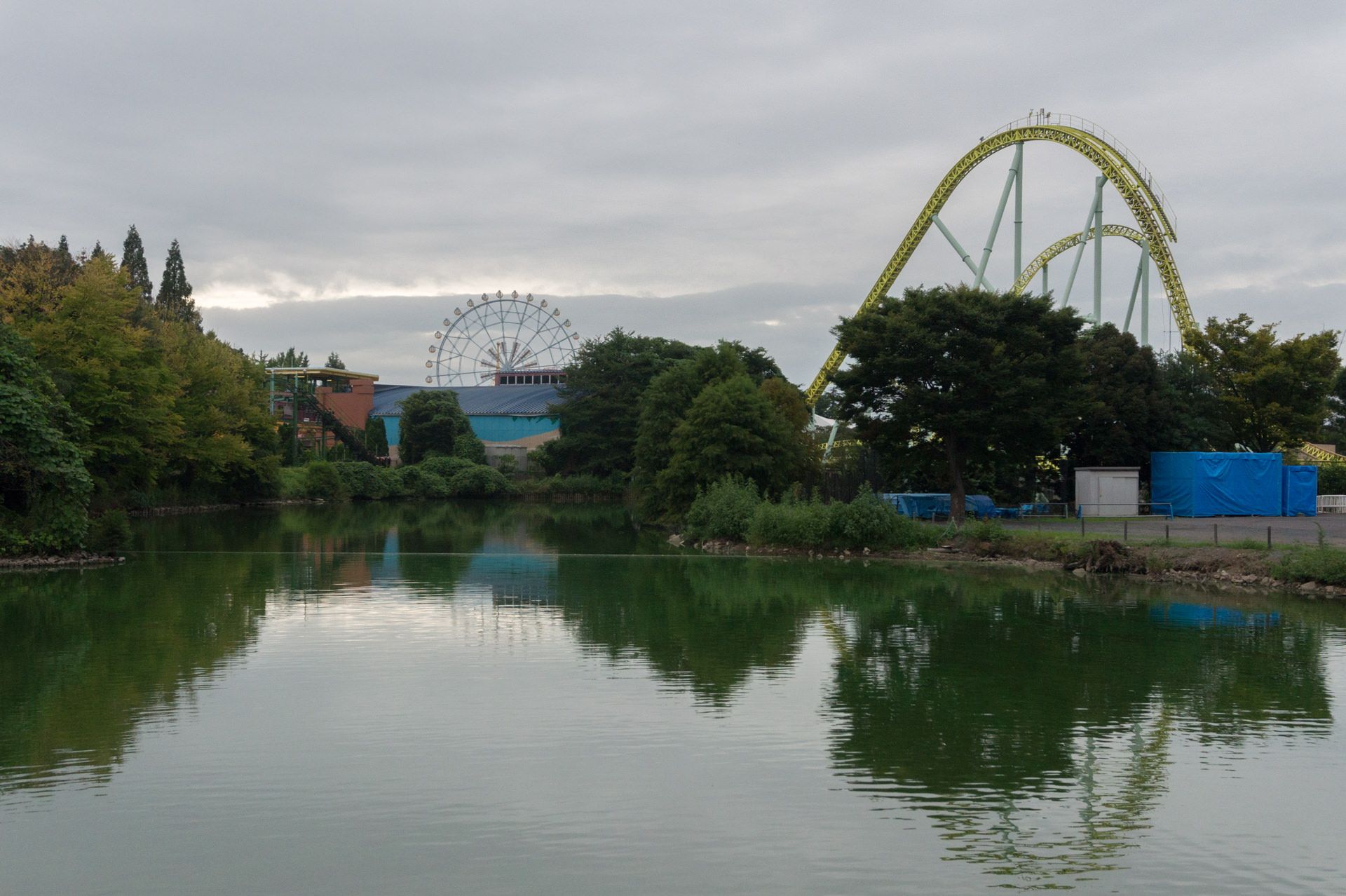
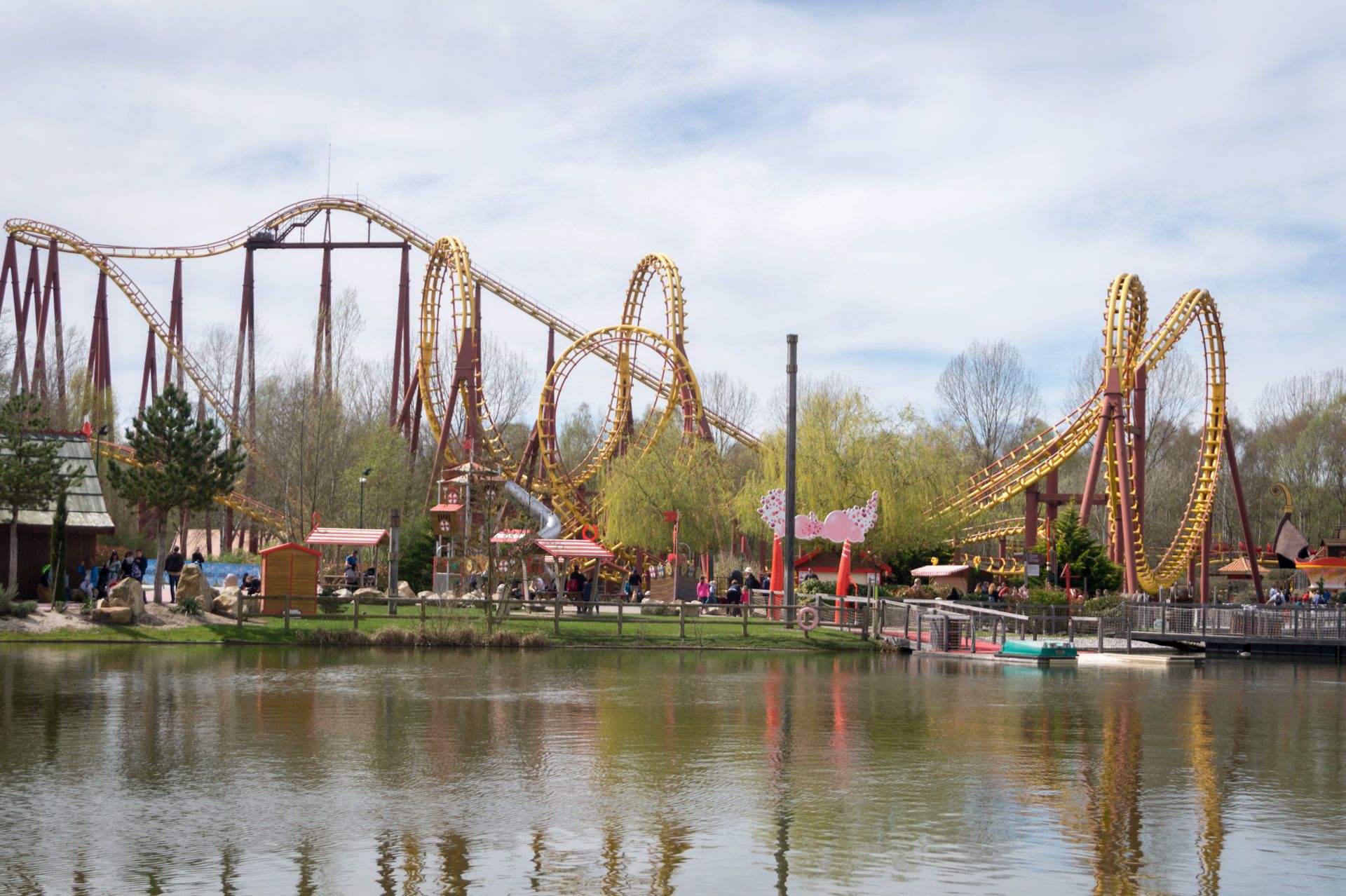
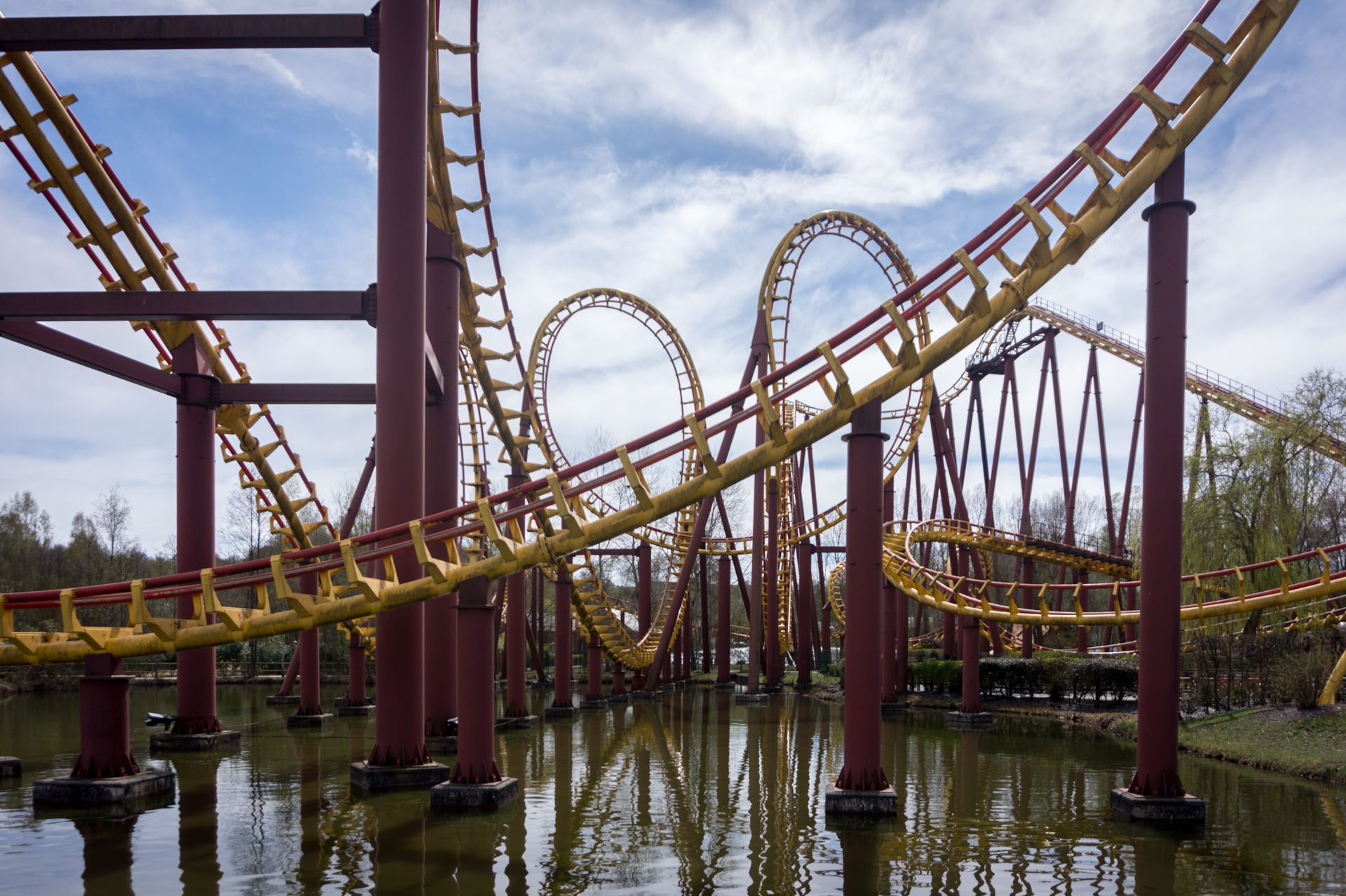
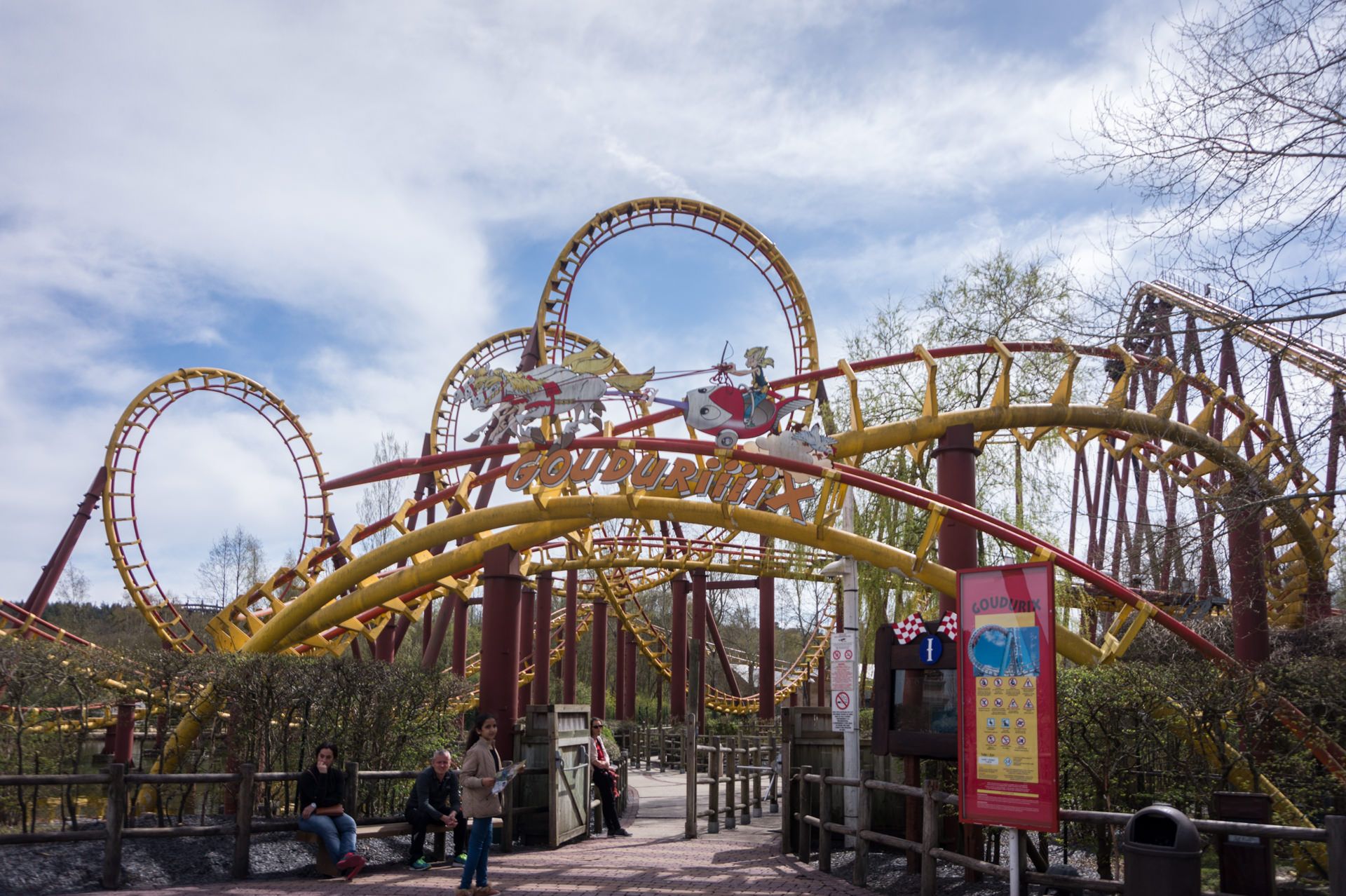
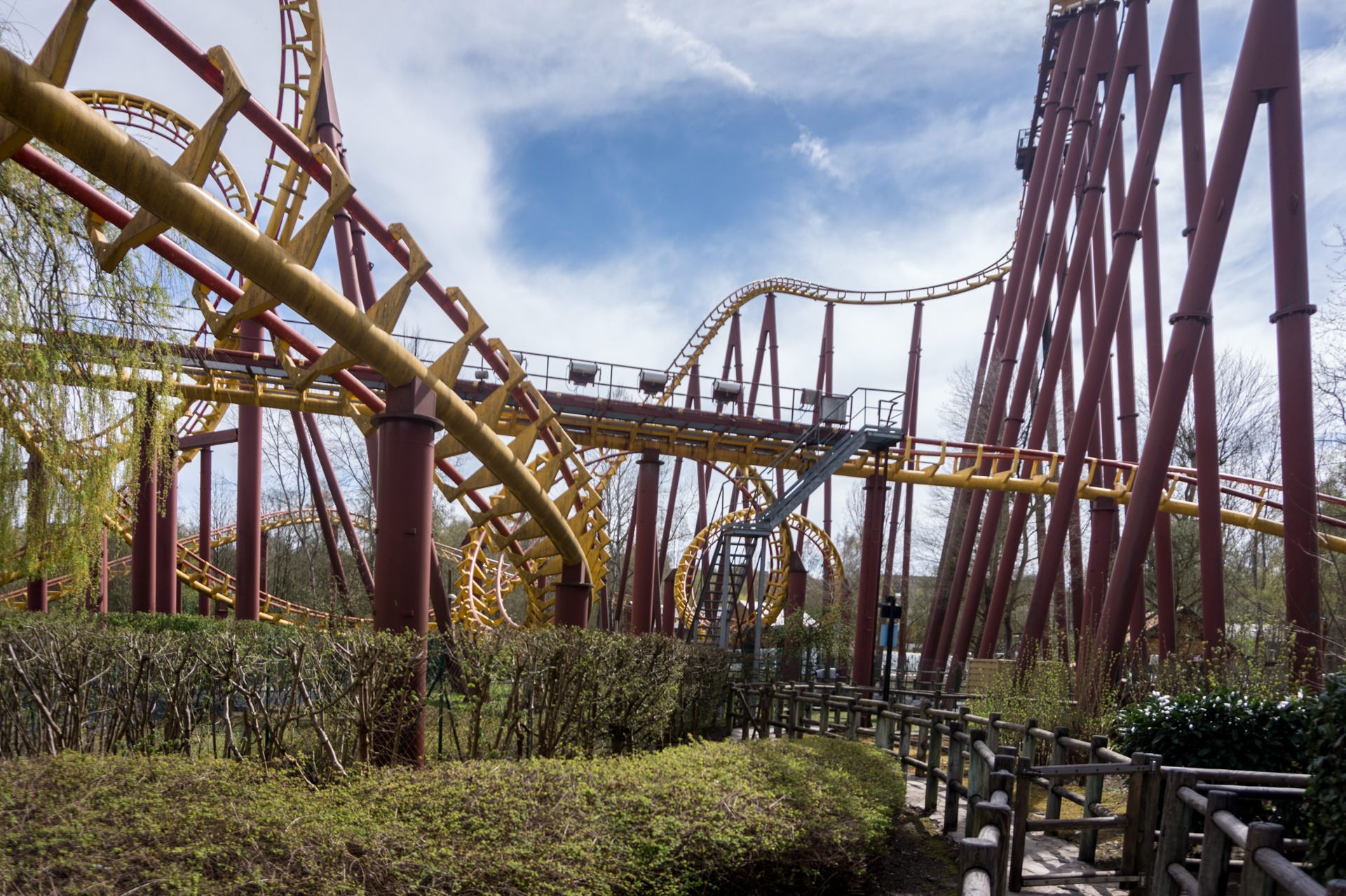
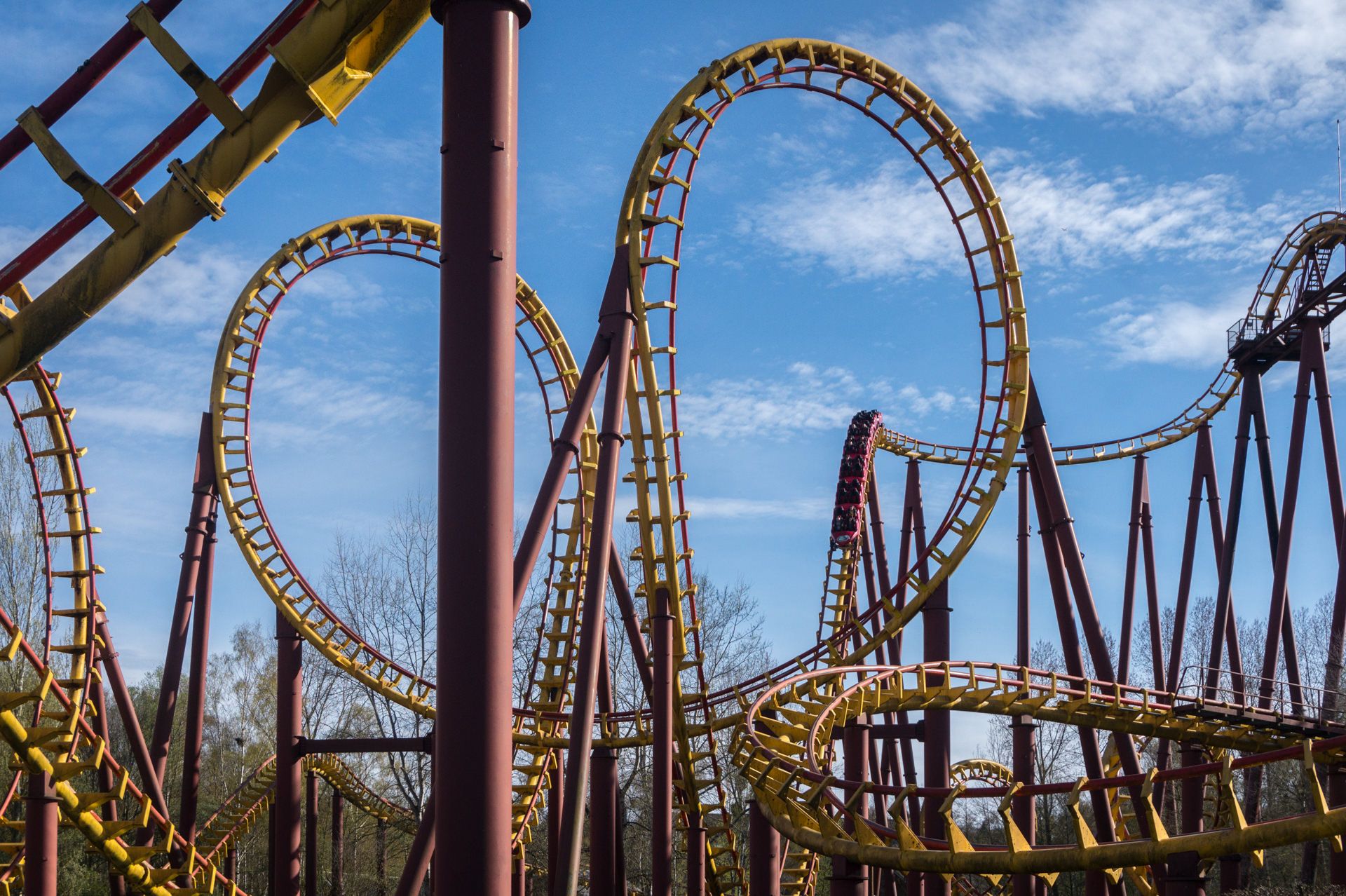
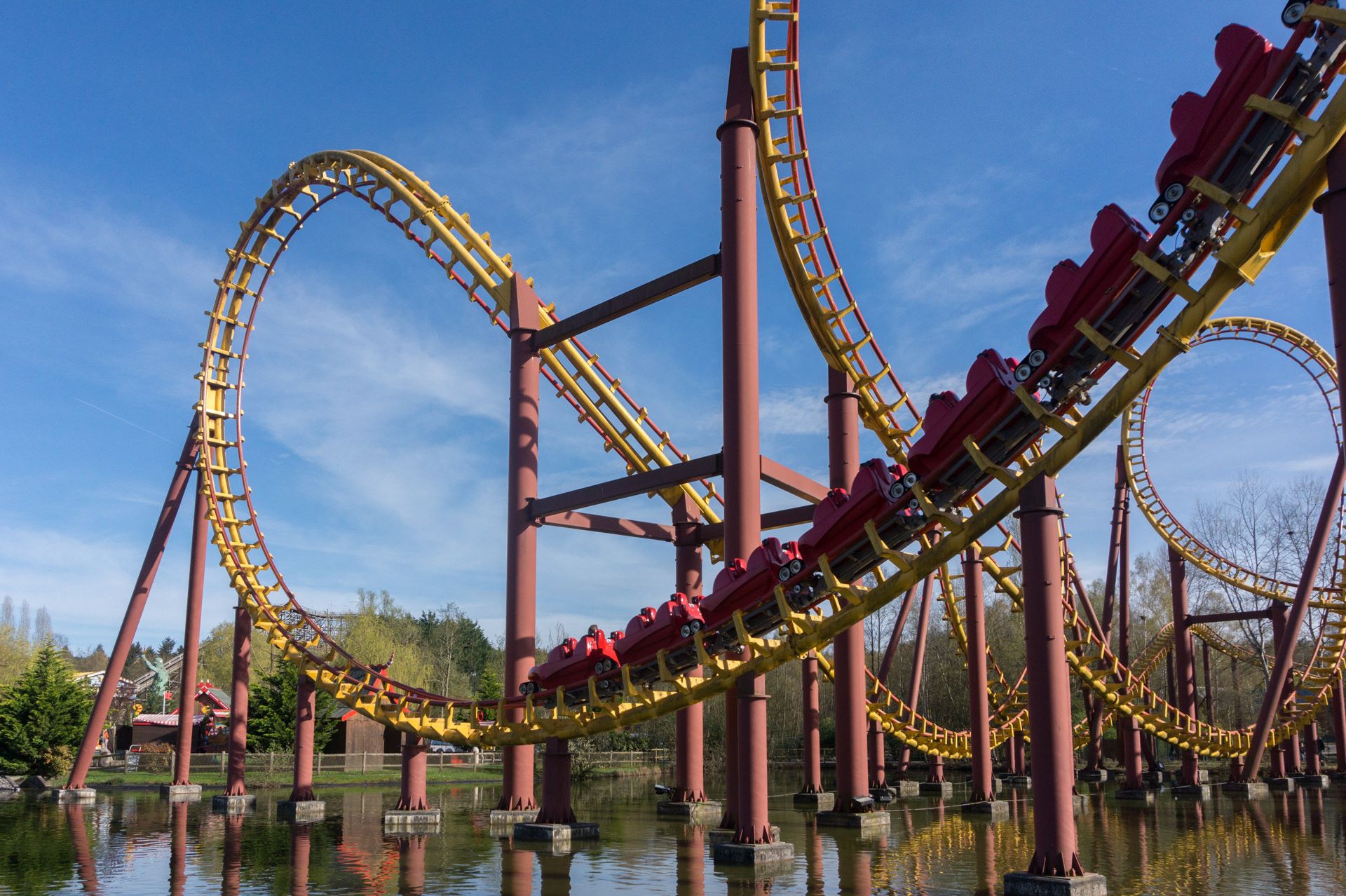
We will now find out if this statement can be applied to the looping roller coaster Goudurix. The former inversion record holder has been smiling at us from far away for quite a while. The ride built by Vekoma is indeed quite an ordeal for many people – especially for those who are a bit taller – and they experience it as an unparalleled torture. Parc Astérix is well aware of this, which is why the ride has already been redesigned. However, that was several years ago and you didn’t read many opinions during this time, so I was very excited about the trip.
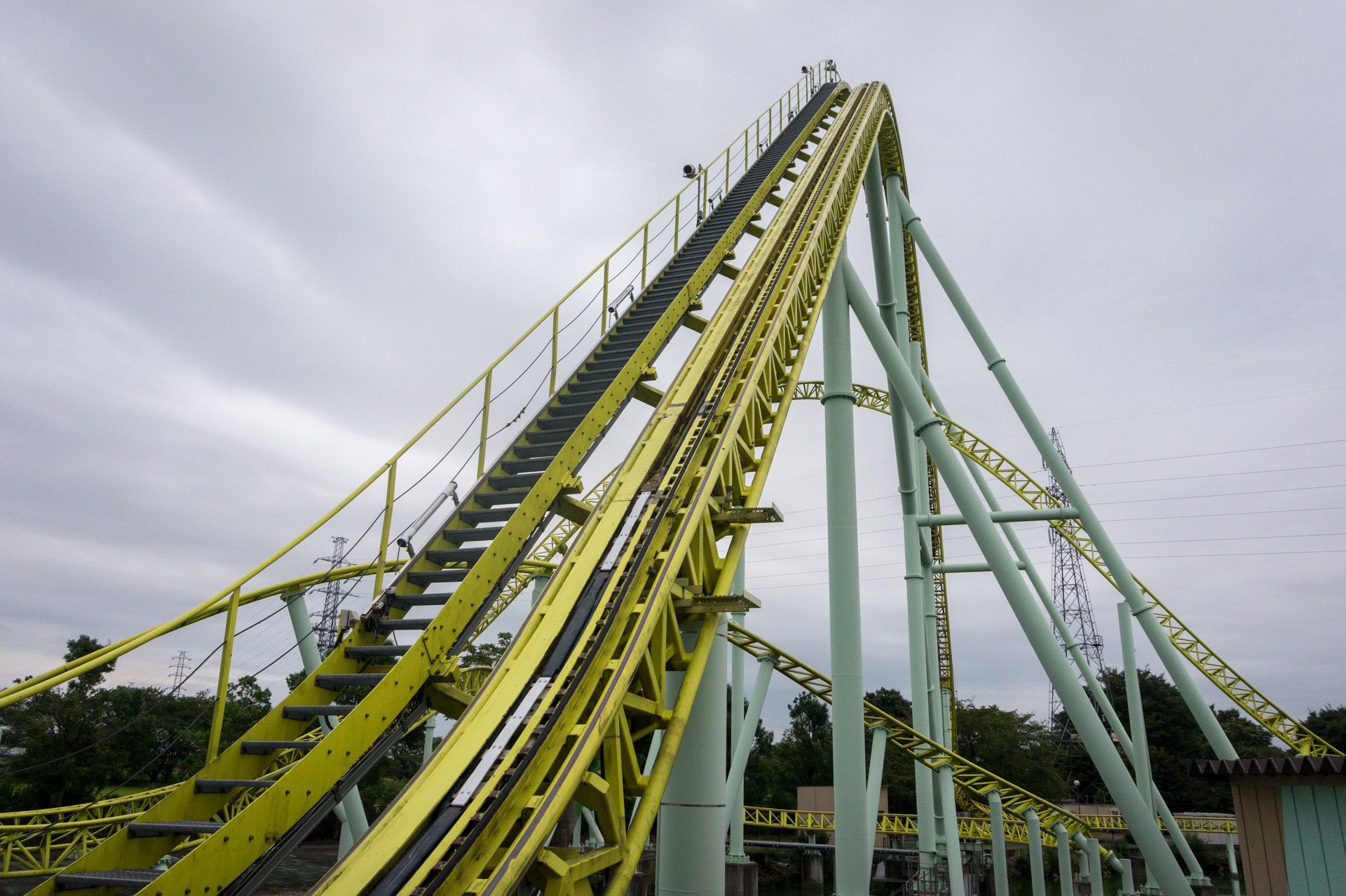
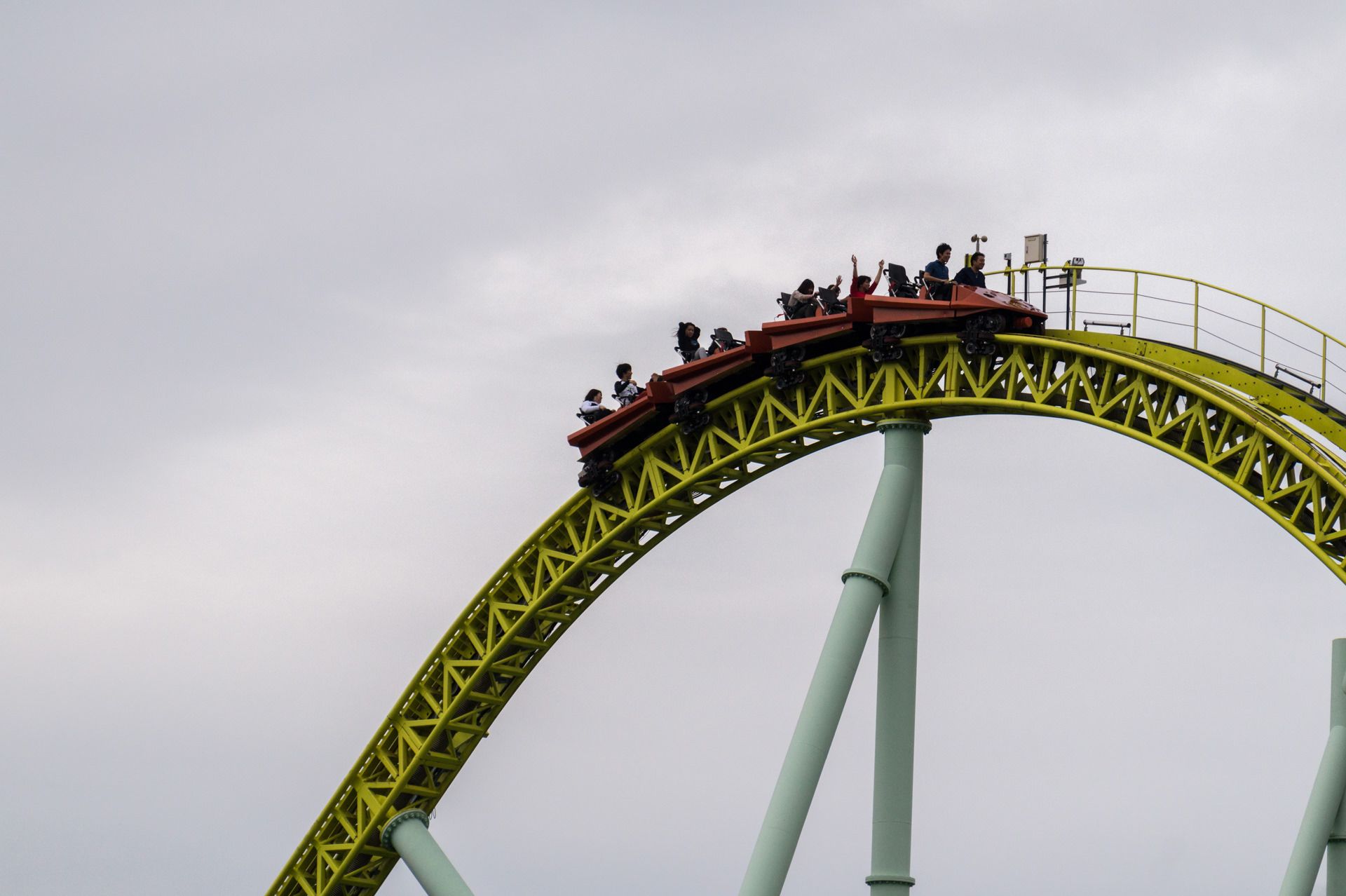
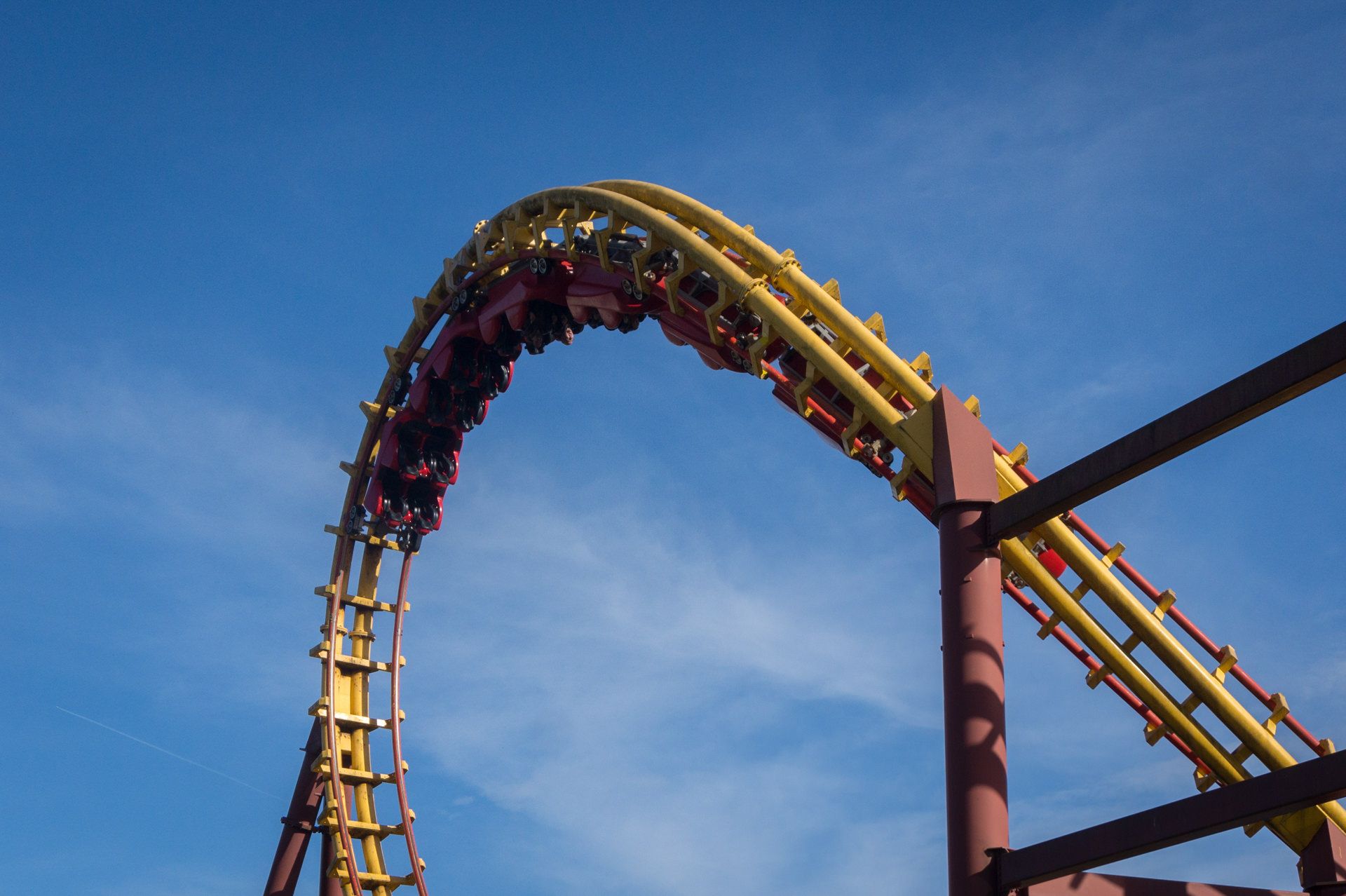
After a short dip out of the station we soon reach the lift hill, which takes us up to a worrying 36m. At the top we quickly cross a hilltop, followed by a wide left turn. With increasing speed we approach the actual first drop and fall directly towards the ground without any mercy. With full force we are pressed into the car in the following valley before we shoot up the first inversion figure. In the Butterfly we see the world upside down twice, while we have to endure quite strange rail inclinations. In between, the element is also amazingly powerful, offering the passenger an interesting interplay of forces. Also in the following valley the G-forces do not get weaker, just good that we are already on the ramp to the next inversion figure.
Quite quickly we turn to the right and find ourselves once again upside down. Without compassion we once again rush towards the ground and continue to be under pressure. What we have just experienced follows in reverse order and after the fourth headstand we find ourselves on a ramp leading downhill. With momentum we approach the only real loop of the ride, which is a bit shallower than expected. On the following hill we can now take a deep breath for the first time. In a long curve we take another turn, only to experience the world in a corkscrew two more times overhead. In the flow of the corkscrew a classic Bayernkurve is added, whereupon we soon reach the braking section of the ride. Interestingly enough, there is a small gradient, followed by a longer straight line past the storage track of the ride. A small gradient later we find ourselves in the brake track which is parallel to the station. A short turning curve later the ride is over again.
Wow, what a ride! Goudurix is certainly not gentle with his passengers, but unfortunately I didn’t get to experience the much-vaunted blows and strong vibrations. Even after several rides in a row the enthusiasm about the powerful inversion slingshot from Vekoma prevailed. I am well aware that Goudurix is not to everyone’s taste, but just for the butterfly element right at the beginning of the ride it is worth to experience the roller coaster at least once.
La Galére and Transdemonium
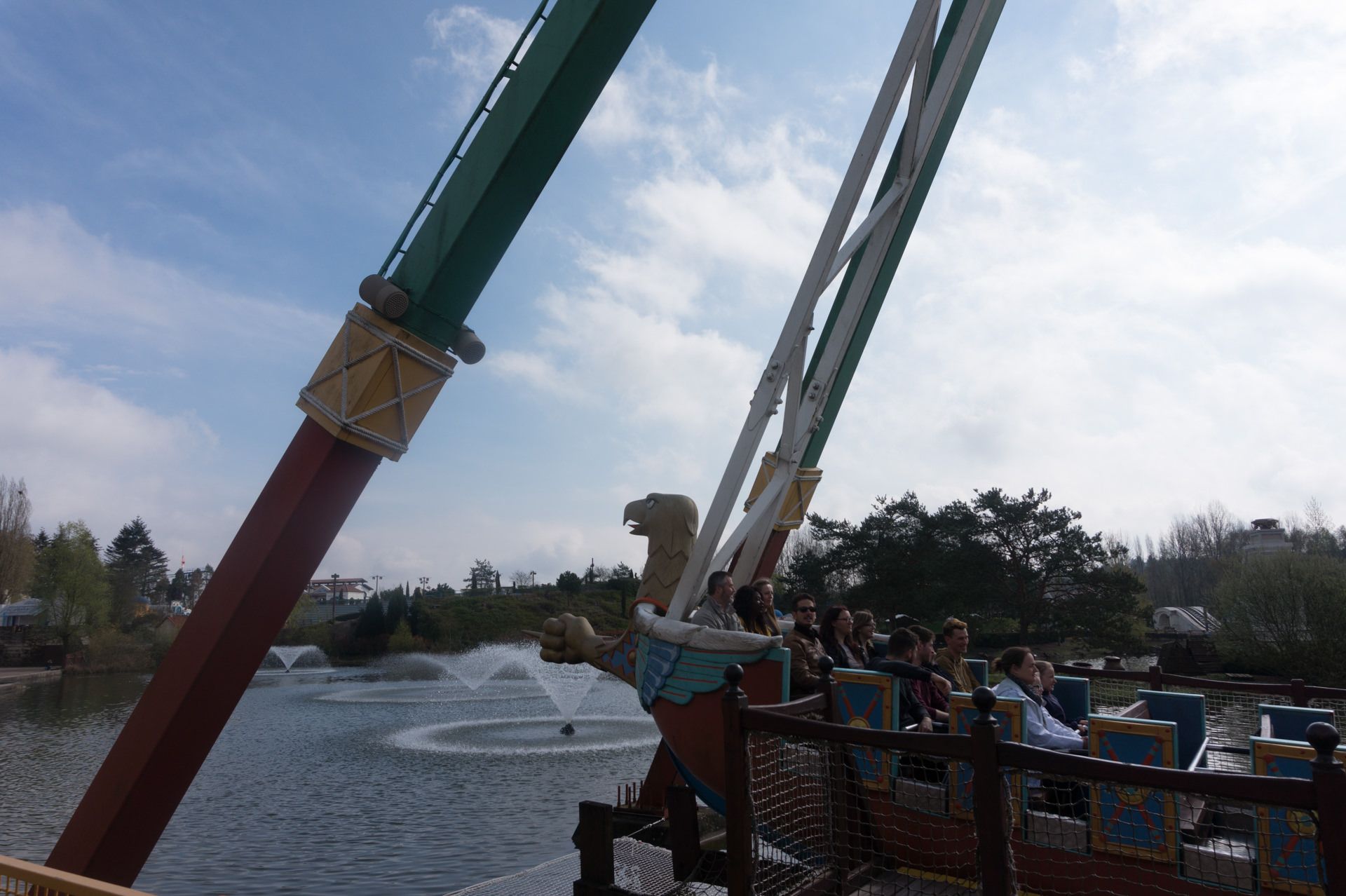
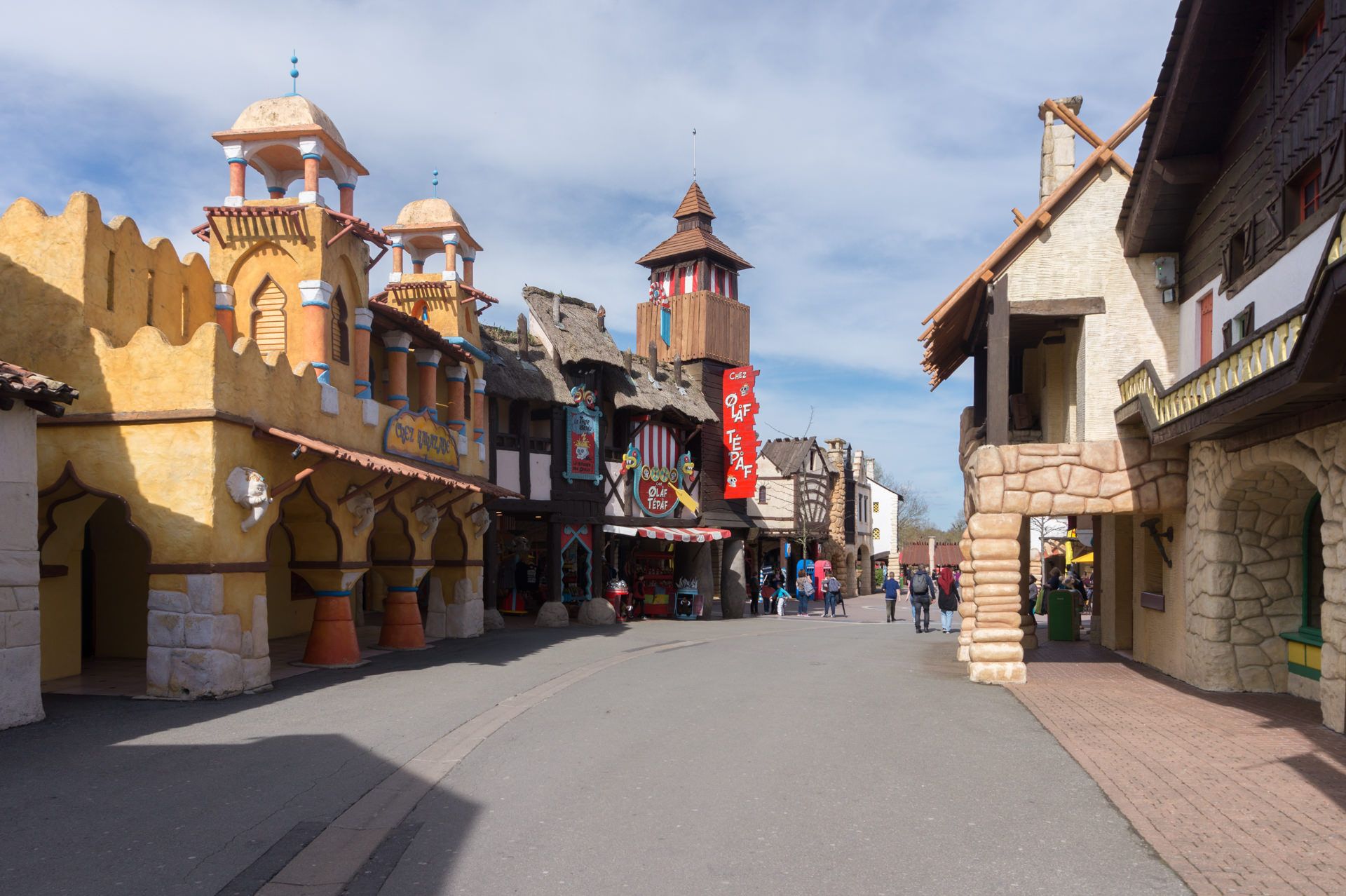
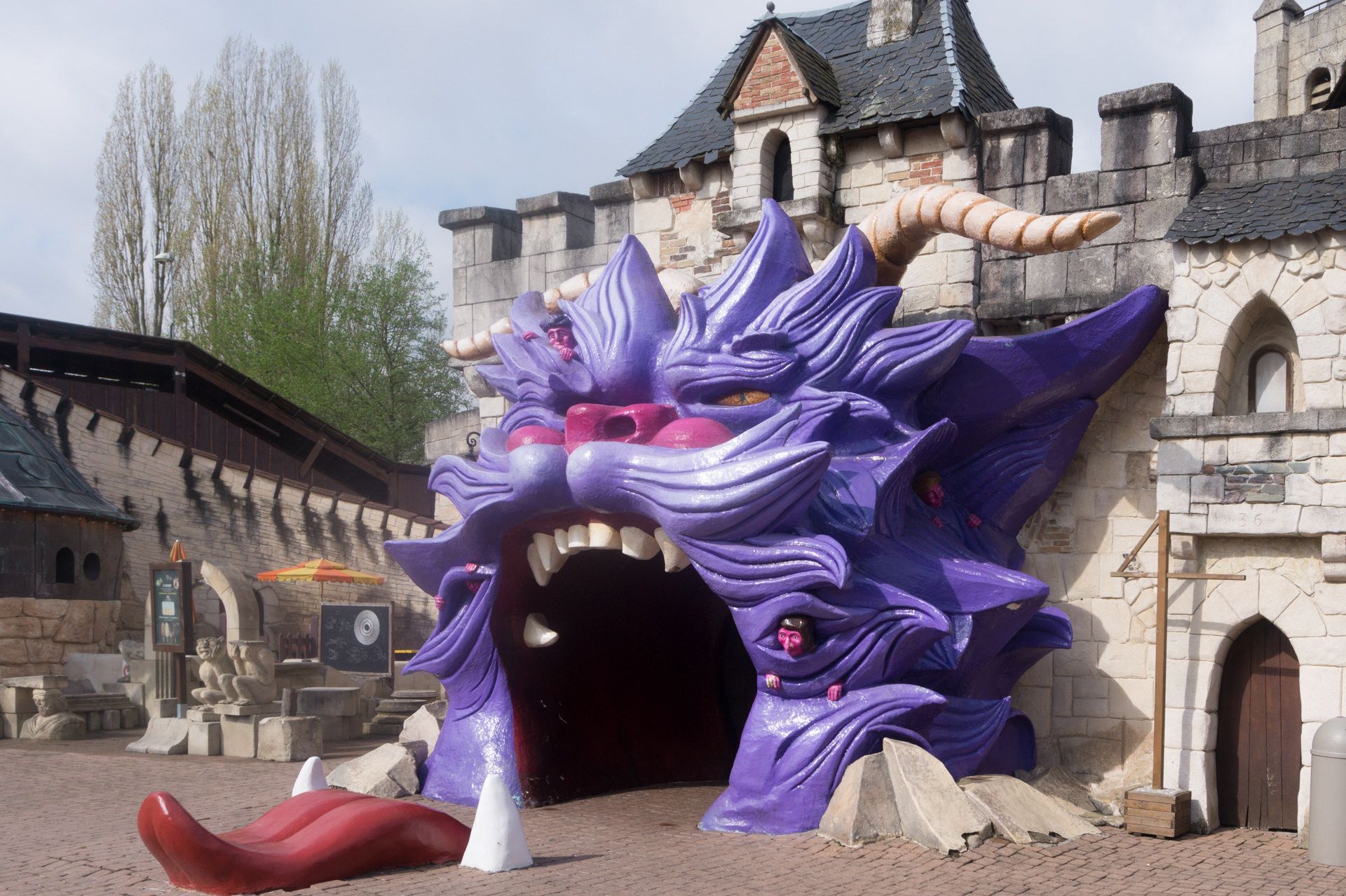
We end our tour of the lake with a ride on the La Galére boat swing, which is typically French and very atmospheric, before turning to the medieval theme area of the Parc Astérix. Here, we are immediately greeted by the eerily beautiful dark ride Transdemonium, whose entrance, in contrast to the dominant exit portal, is somewhat inconspicuous.
The morbid puppet theatre should not be omitted in any case, because the atmospheric mixture of surreal scenes, appropriate sound system and variable ride dynamics is convincing all along the line. It is a beautiful ride that is able to capture the spirit of historical ghost trains. That alone is a great art. Combined with some great scenes, above all the horse skeleton carousel, the Transdemonium has quite a high show value. The end of the ride reminds me of the former and also great ghost train Over the Hill from the English amusement park Adventure Island and therefore did not really come as a surprise to me. Nevertheless, a great ghost train, which you should not miss.
Les Cheveaux de Roi
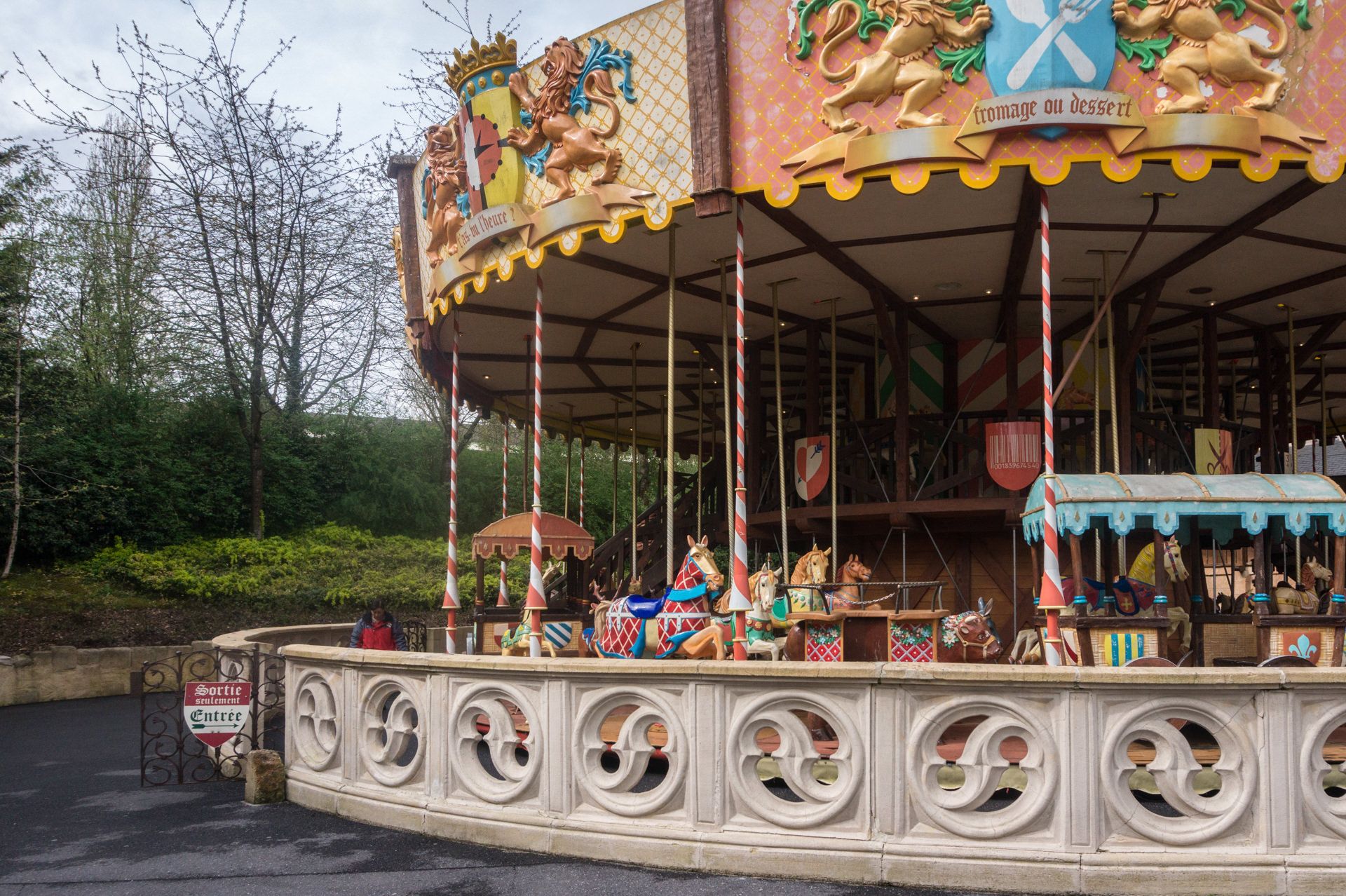
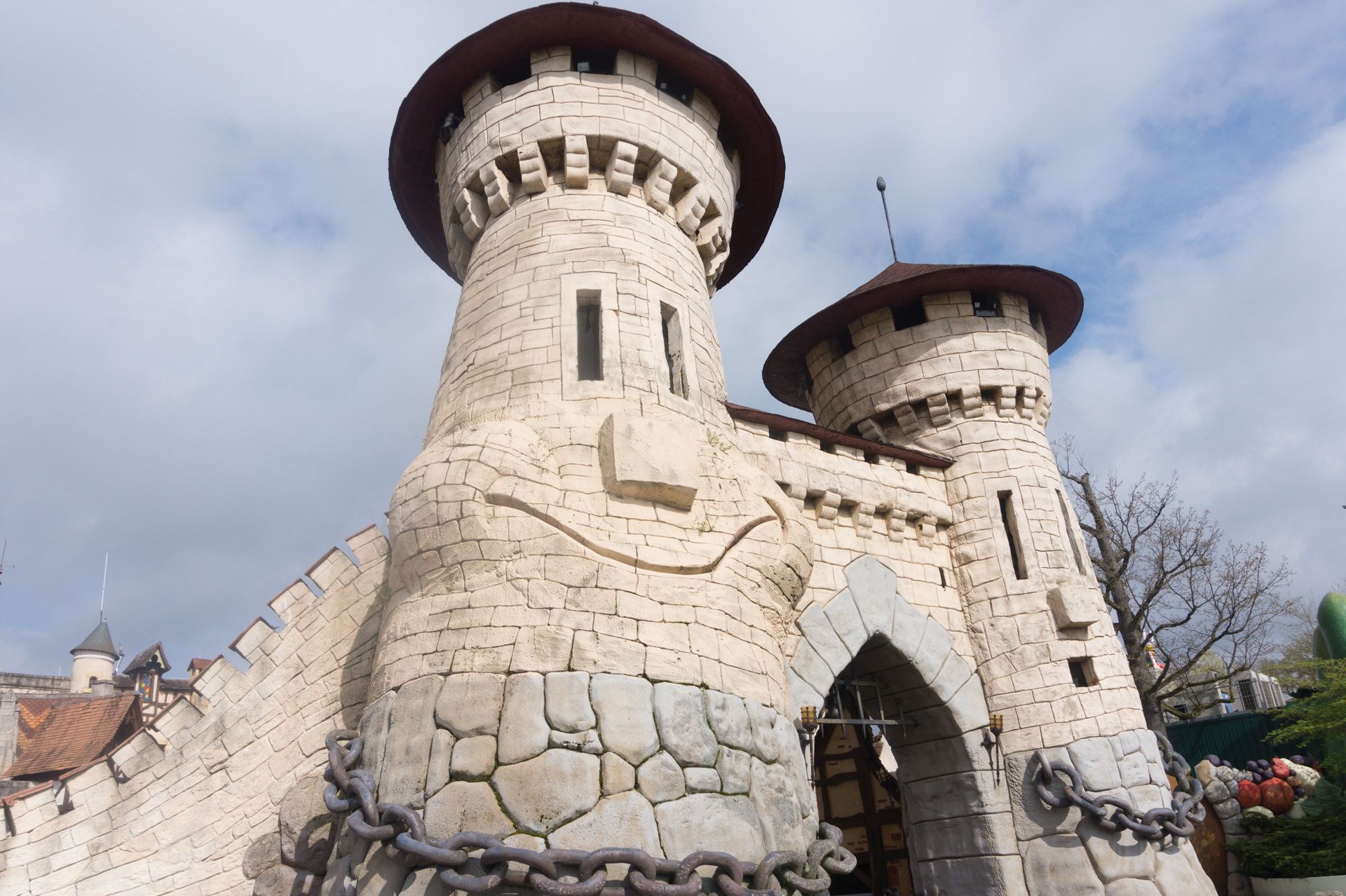
Passing a burger stand and a small café, we are now drawn into the courtyard of the castle, where we take a ride on the horse carousel Les Cheveaux de Roi before changing to the French themed area. In another hall, two dioramas reflecting life in Paris in the 17th and 18th centuries will be performed. During my visit, I was unable to understand why there is an unused queue in the middle of the hall. In general, the area looked neglected, which could also be due to the fact that the large show arena next door is not used during the low season. As I was able to research, the aforementioned queue is, however, even then only used for the Maison de la Peur during the Halloween season.
Oxygénarium
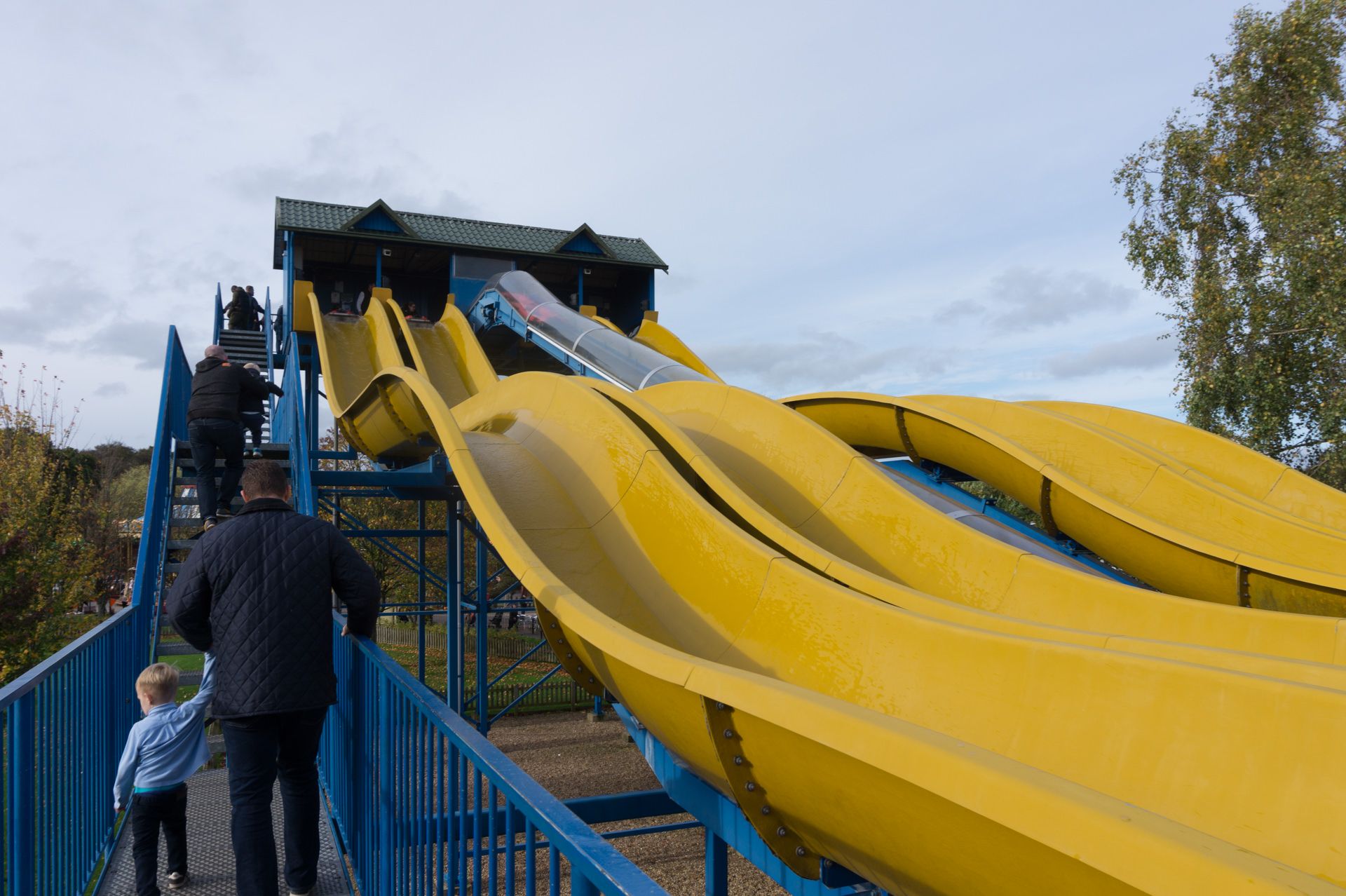
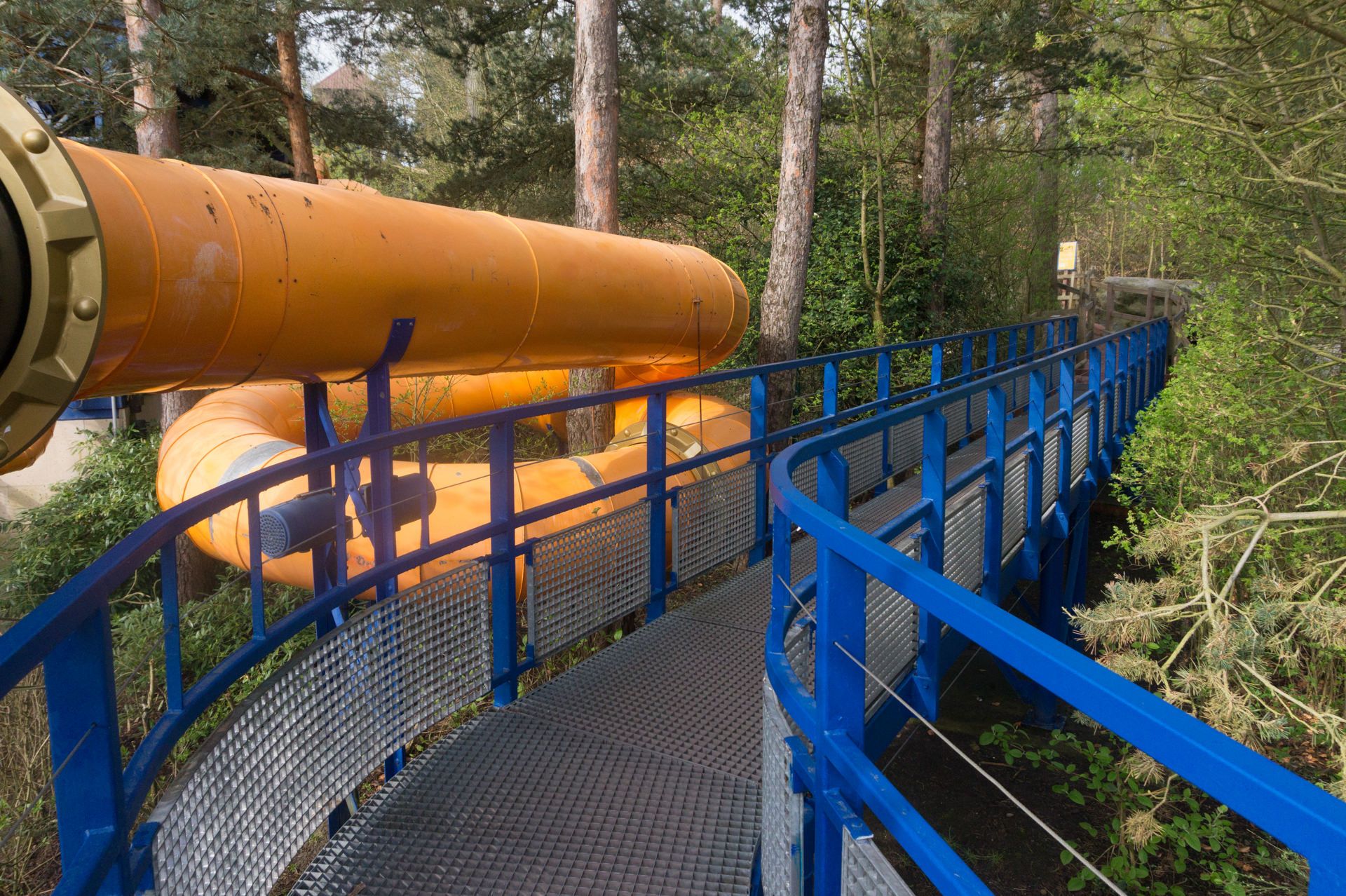
Back in the daylight, we immediately devote ourselves to the air cure on the Oxygénarium round boat slide. This Spinning Rapids Ride from Whitewater West has been providing a good spin and an occasional shower since 1999. If you know Störtebekers Kaperfahrt in Hansa Park, you will also enjoy Oxygénarium, although the track has far fewer curves. The design of the ride is just as convincing as its integration into the surroundings, as even from the queue it is hardly possible to see the track. Above that the queue offers an excellent view of the roller coaster OzIris, which we will get to later. Accordingly, an absolute must-do for every amusement park fan at Parc Astérix.
Chaises Volantes and Nationale 7
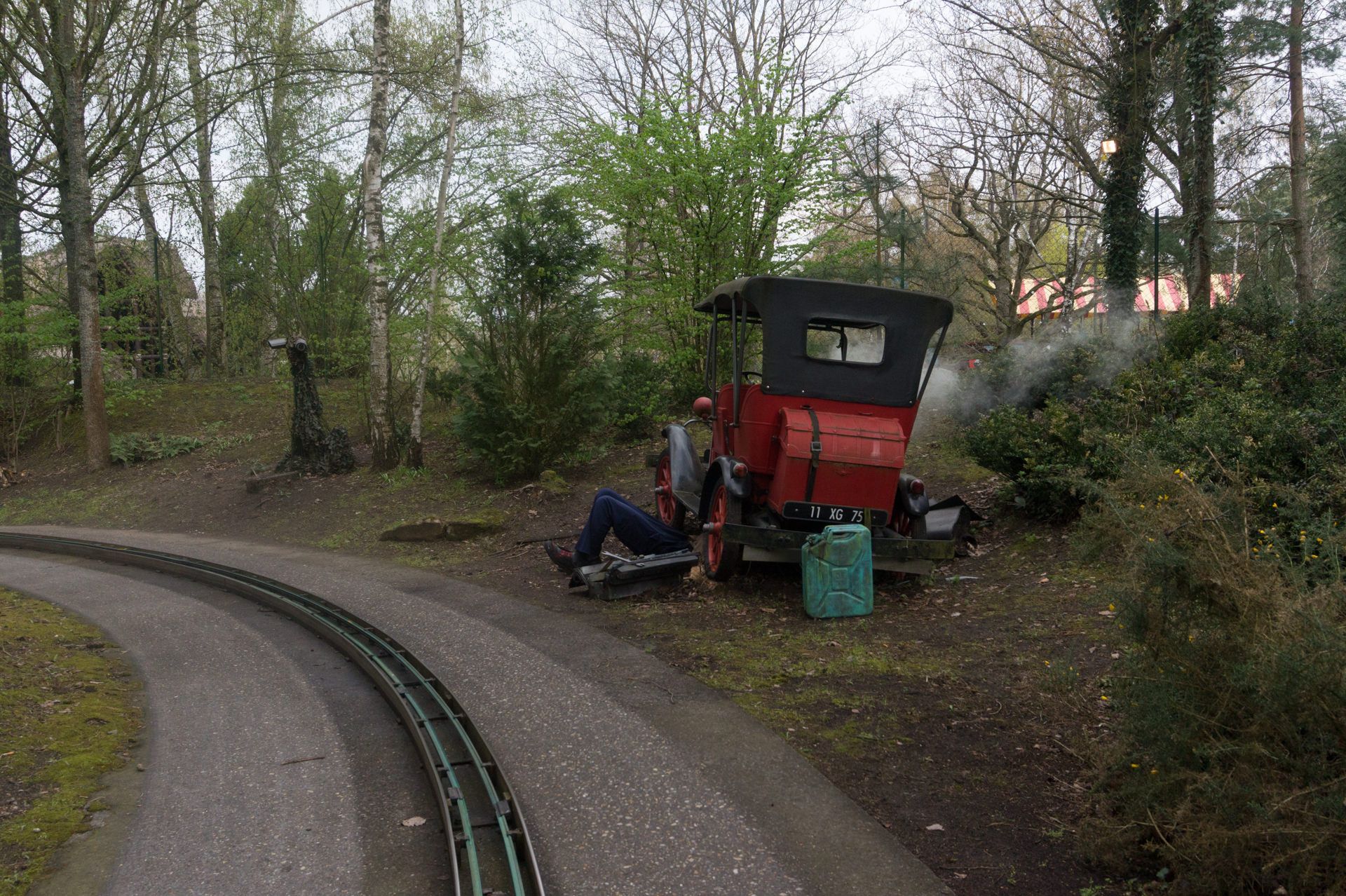
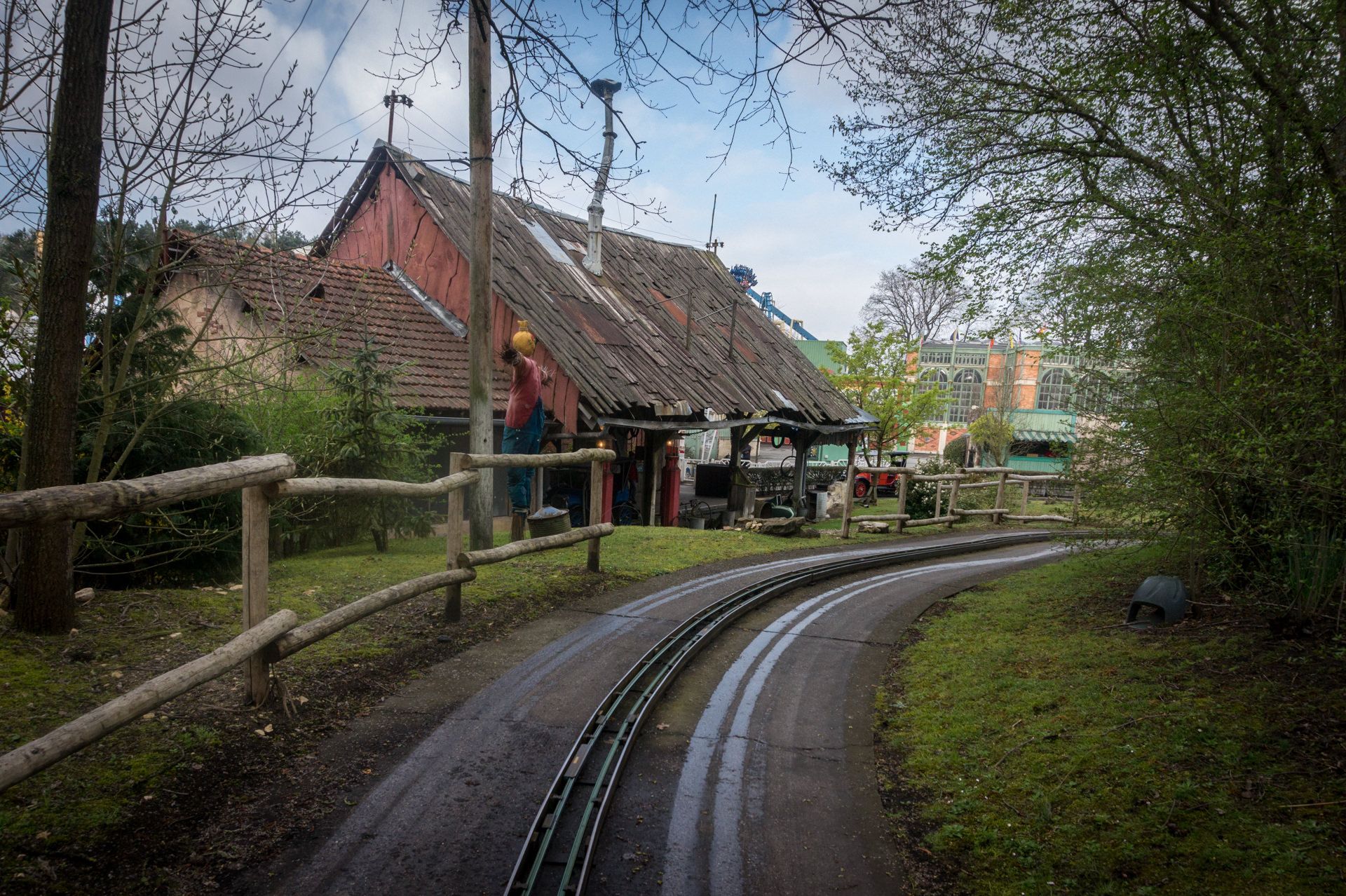
After a ride on the Attraction à Sensation in this area – the wave swinger Chaises Volantes – we dedicate ourselves to the French national road. The vintage car ride Nationale 7 takes us on a rather long stretch of road past several lovingly and humorously designed scenes. Thanks to its location, it is quite possible to overlook the ride.
Menhir Express
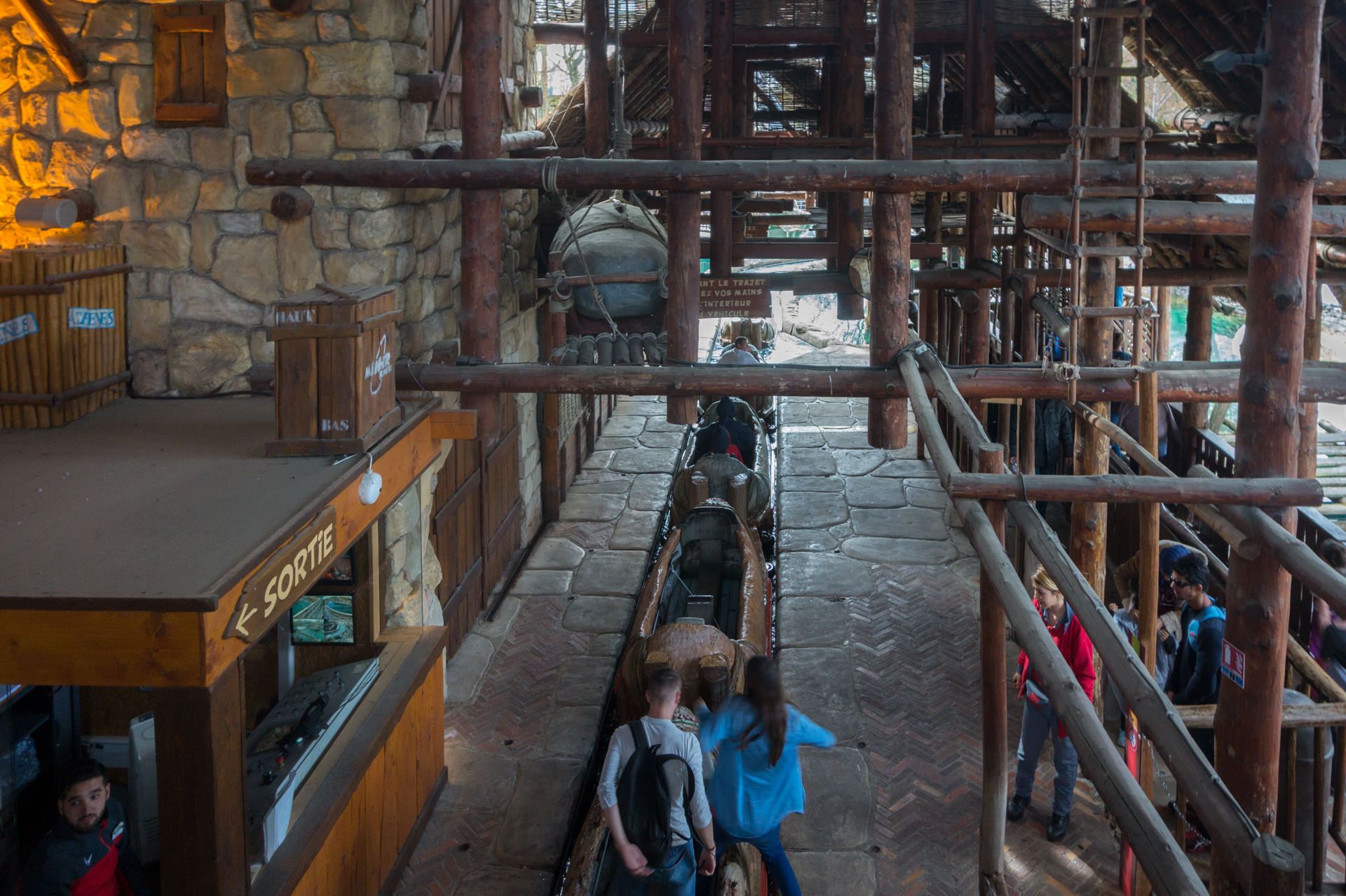
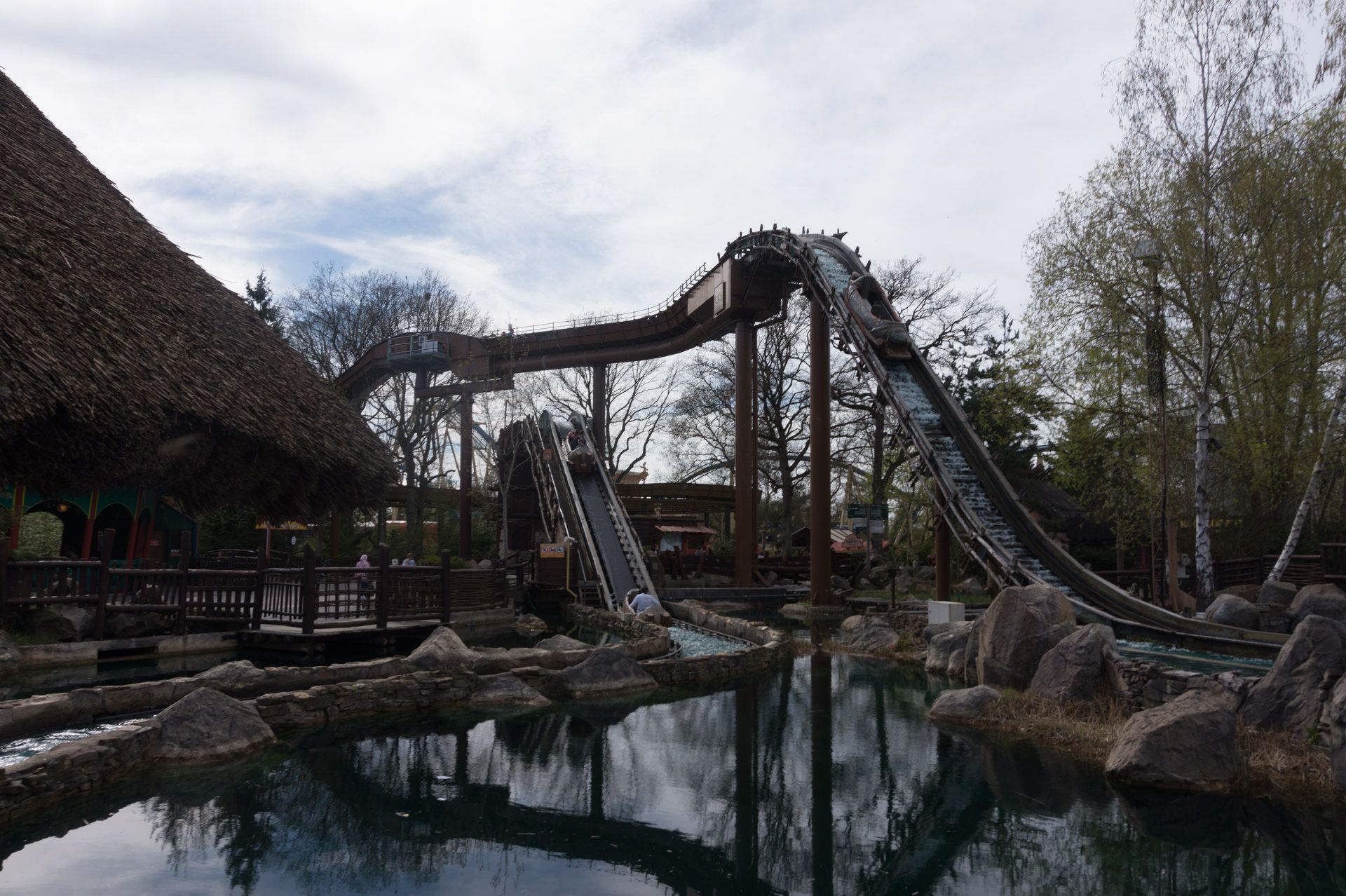
Far more dominant in this respect is the log flume Menhir Express. Passing the tea cup ride Les Chaudrons and the cog ride La petite Tempête, the route takes us once around the entire ride before we reach the entrance of this ride from O.D. Hopkins. As a fan of the manufacturer’s Shoot the Chutes rides, I have been looking forward to experiencing a log flume from this company in Europe for some time. But it almost never came to that. In the report on Walibi Rhône-Alpes I already explained the single rider policy of the Compagnie des Alpes, but this was the first time that they wanted to deny me a ride completely. Especially in the Parc Astérix – where I was always put in the boat with other people – I was very surprised. There was no sign at the entrance of the attraction. In the end I was able to join the following family, but unfortunately also only after further inquiry. As I said, at all other water attractions of the CdA the whole thing went much less problematic.
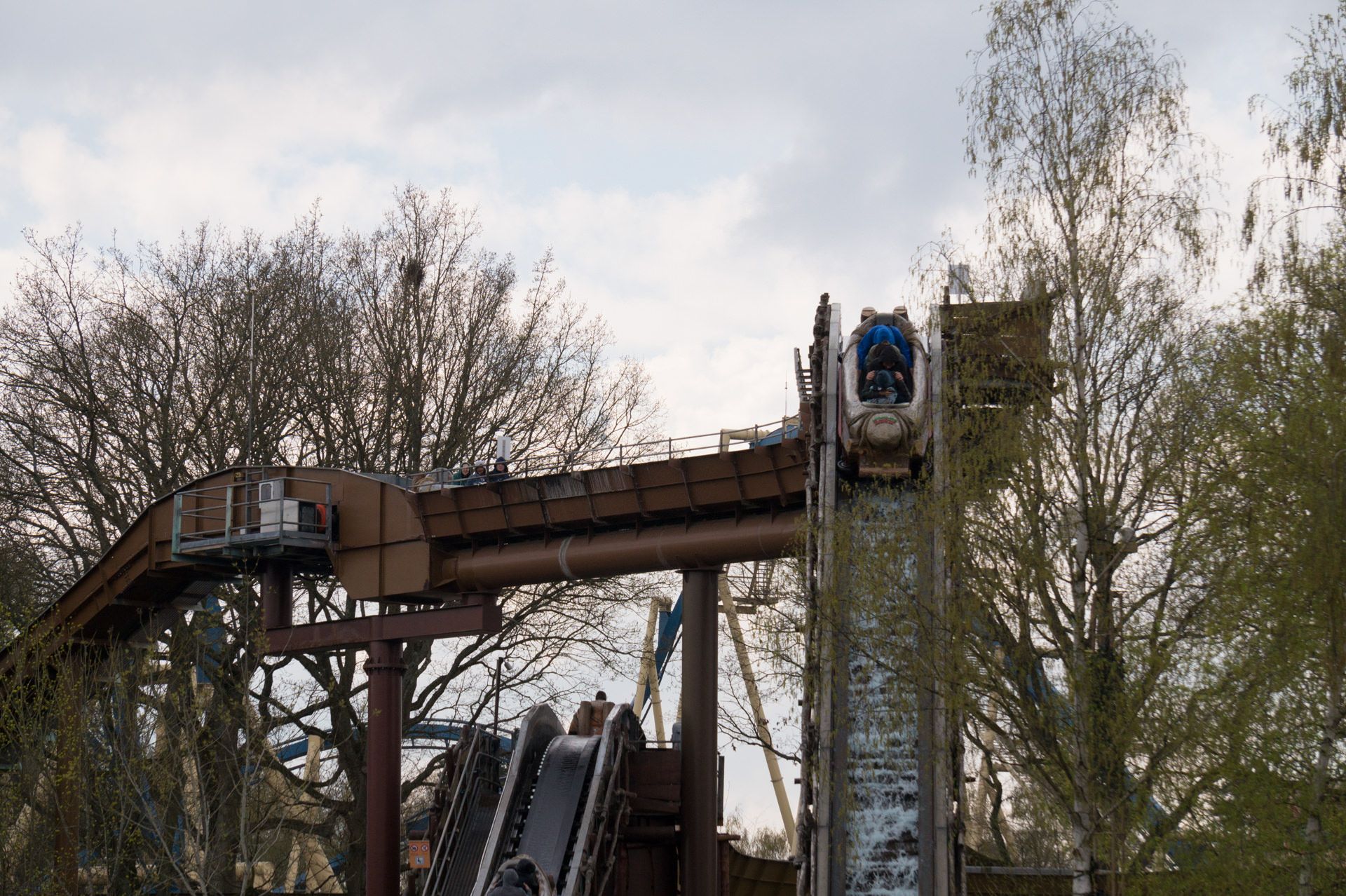
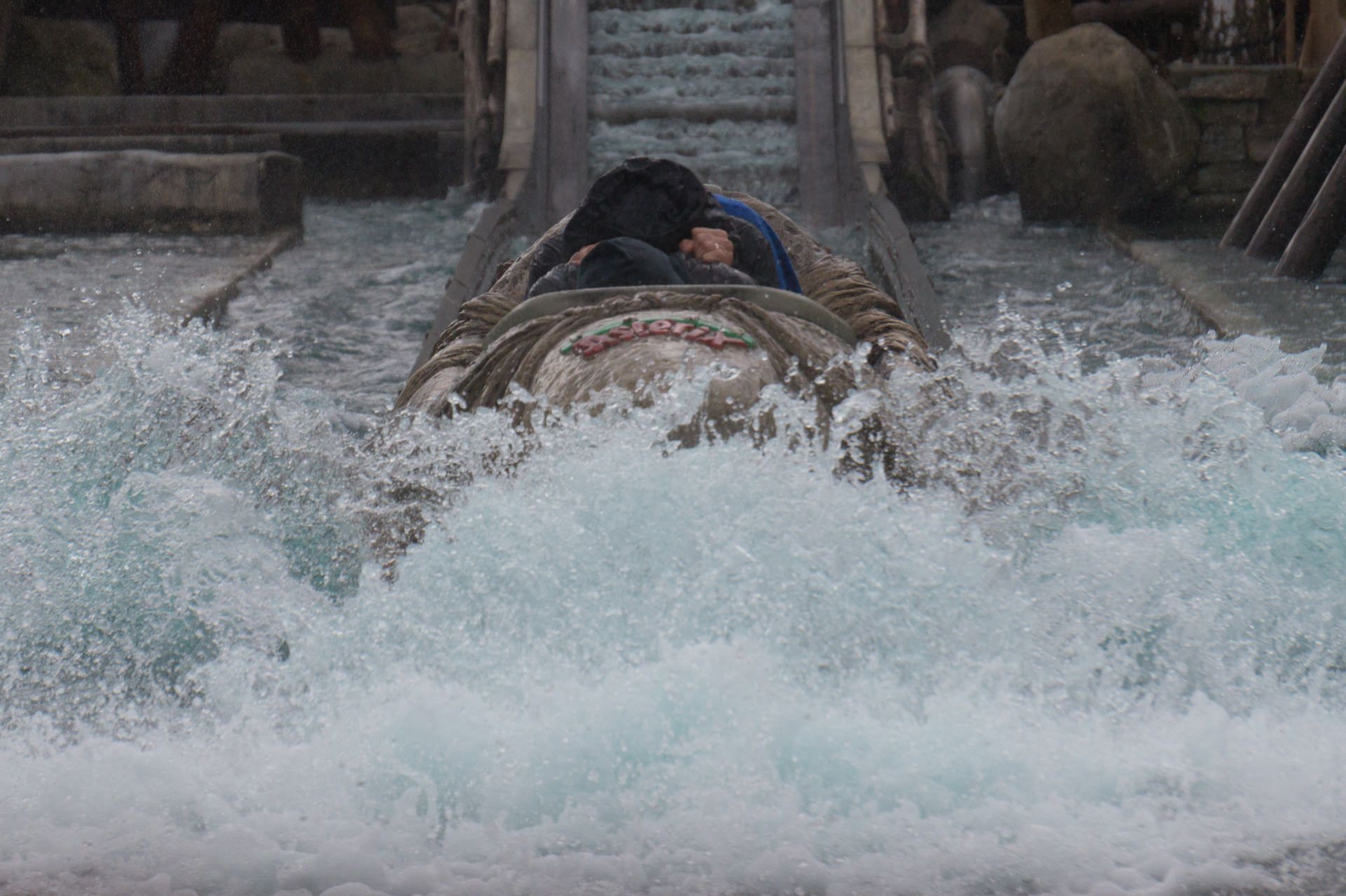
After all the unnecessary stress, the cooling down came at just the right time. After the menhir has left the station, you bump a little in an S-curve towards the first lift. At the top there is a faster passage consisting of several right and left turns, before you slow down a bit and rush through real white water. After several bends you reach a tunnel, where the first shot of the ride is hidden. With momentum you go down immediately and up again just as fast. After a camelback you reach the exit section, whereupon a larger amount of water pours over the passengers. On the way to the next lift the rapids predominate and water is constantly splashing into the boat, before a cave is reached at some point. This leads one through a seemingly switched off revolving tunnel, as well as a water fountain tunnel similar to the one of the Gruffalo River Ride Adventures in the English amusement park Chessington World of Adventures. Back in the fresh air, the second lift hill of the ride awaits us. In lofty heights, we will now dawdle through the canal for a few more metres before the second ride awaits us. Although the smaller downhill run is usually the wetter one, you will also have a good shower on the big one. Completely soaked, we return to the station.
The Menhir Express is a log flume that really lives up to its type designation. The ride is fast, very lively and absolutely wild due to the rapids. The two shots are almost superfluous if they weren’t also absolutely brilliant. The degree of wetness is, as is typical of O.D. Hopkins, extremely high and yet I would have loved to go on one lap after the other. It is a real pity that there are so few log flumes of this character in Europe. Whitewater West would certainly be happy about new orders.
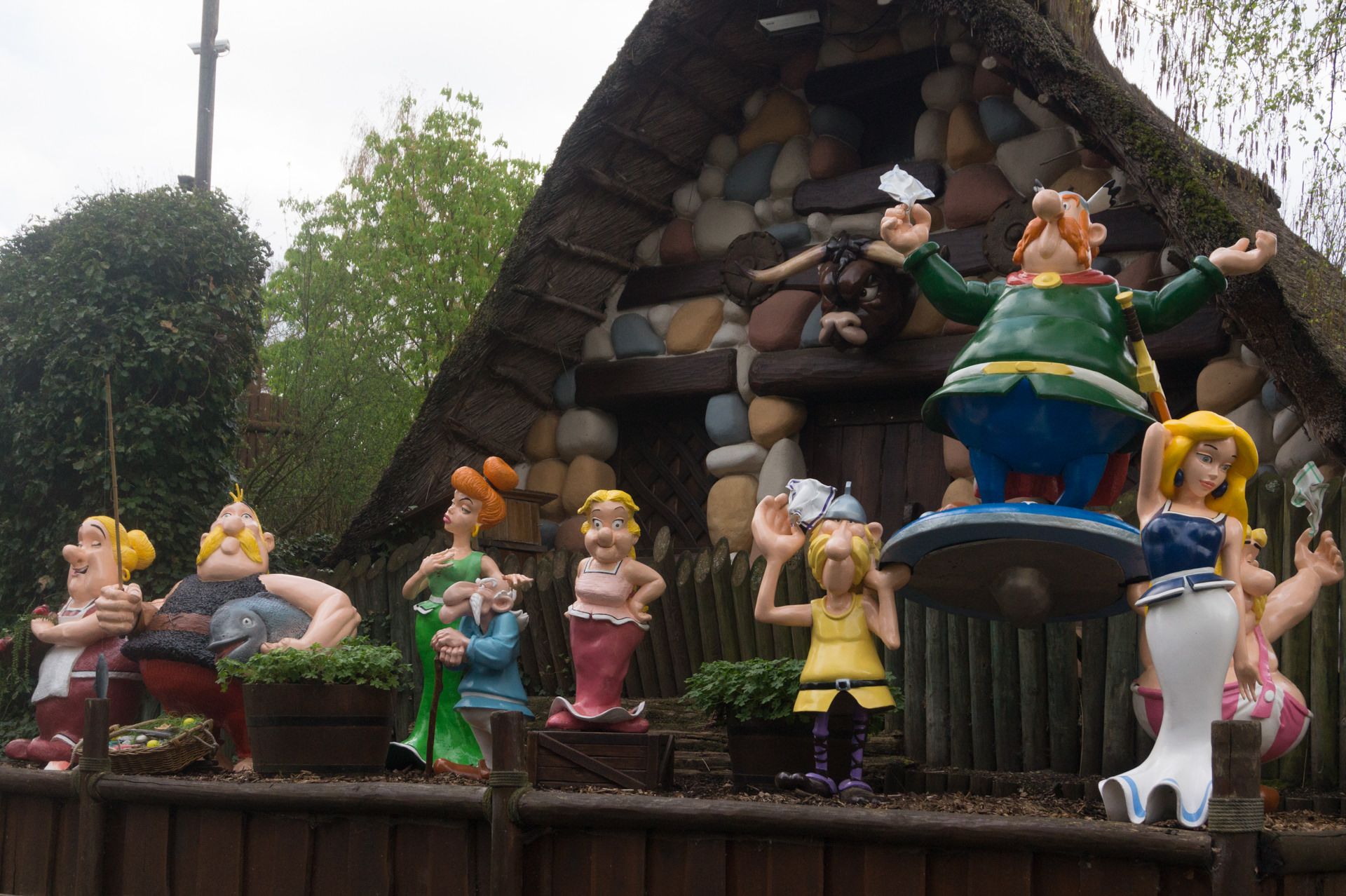
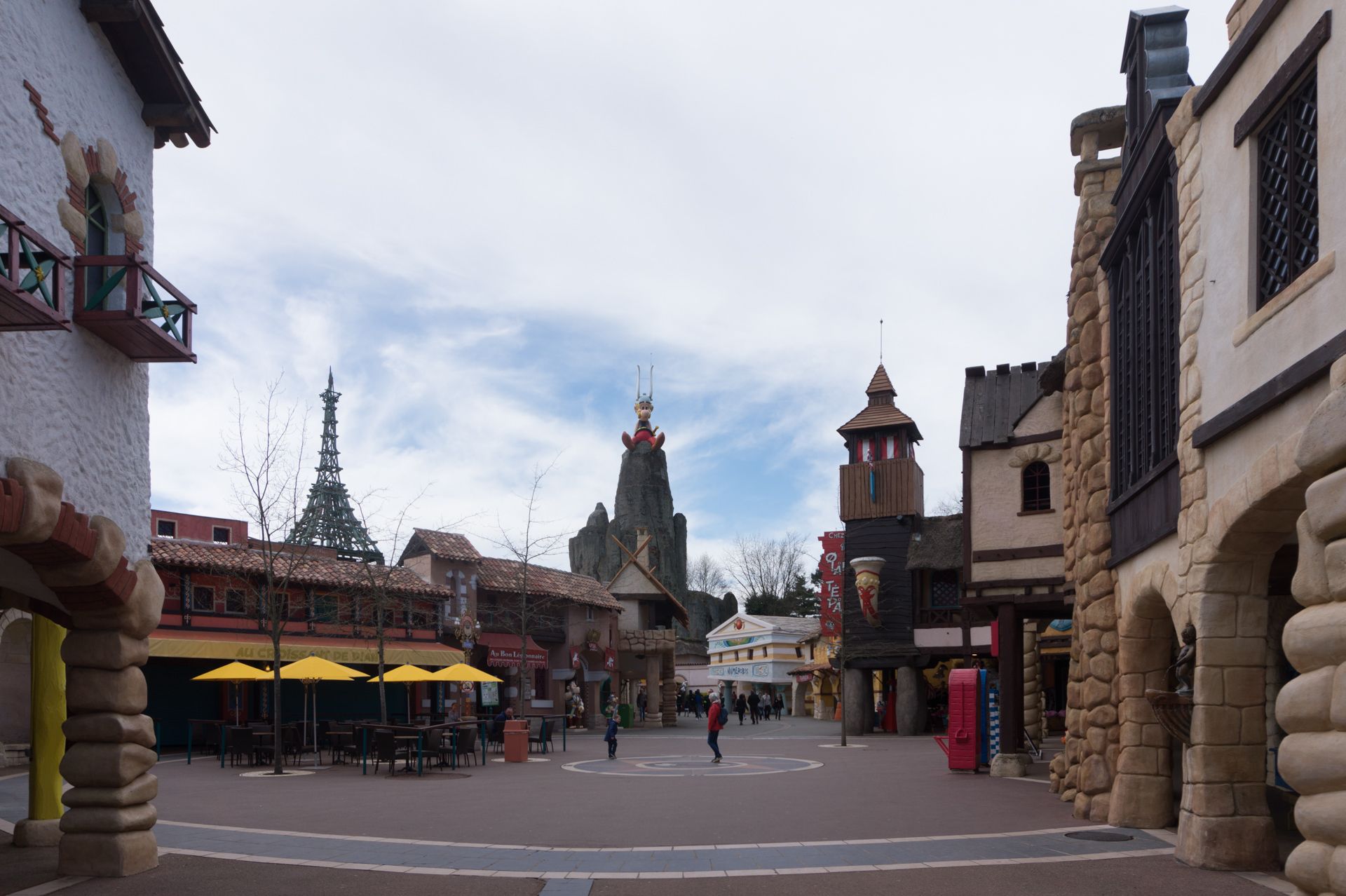
While we just had a view onto the menhirs, we can also slowly take a look at the home village of our favourite Gauls. It is situated in the middle of Parc Astérix and offers the ideal opportunity to get away from the hustle and bustle of the area. There is also a small show arena around the Troubadix tree house, which serves as a stage for a pet show in summer. The animals themselves live in the village and are even more likely to excite the children than the eerie Meet & Greet characters. In this respect there is really room for improvement, because frightened children can be found on every corner.
Épidemaïs Croisière
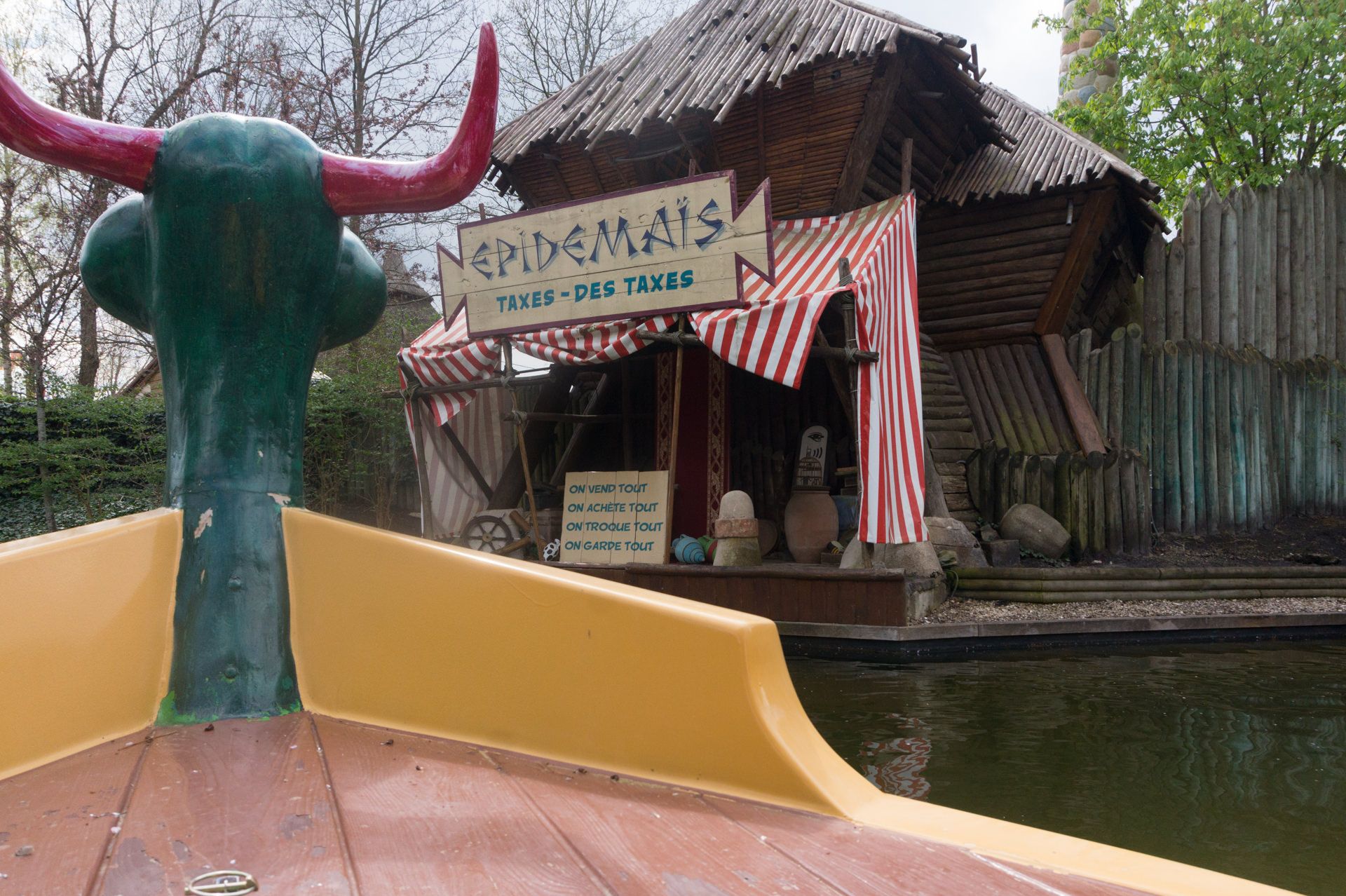
Directly adjacent to the Théâtre du Barde is the dark ride section of the Épidemaïs Croisière boat trip. This leisurely cruise takes us on a journey through the famous comic strips. In the individual scenes we meet a variety of characters, as well as a Roman garrison, which is of course reduced to rubble.
Through the really stylish children’s area La Fôret d’Idéfix, with its beautiful selection of children’s rides, we now move on to the Théatre du Panoramix, which was used for the show of the magician Crypto on at least one of my visiting days. This was unfortunately mystical nonsense and not very entertaining, but it is interesting to see what a variety of shows and a multitude of performances Parc Astérix puts on depending on the crowd. It is also impressive that Parc Astérix has its park plans reprinted every day. Not only are the daily shows and performance times in the plan, but also information about the weather and other information. Such a service is really not often found.
Gaulois-Romains: Le Match
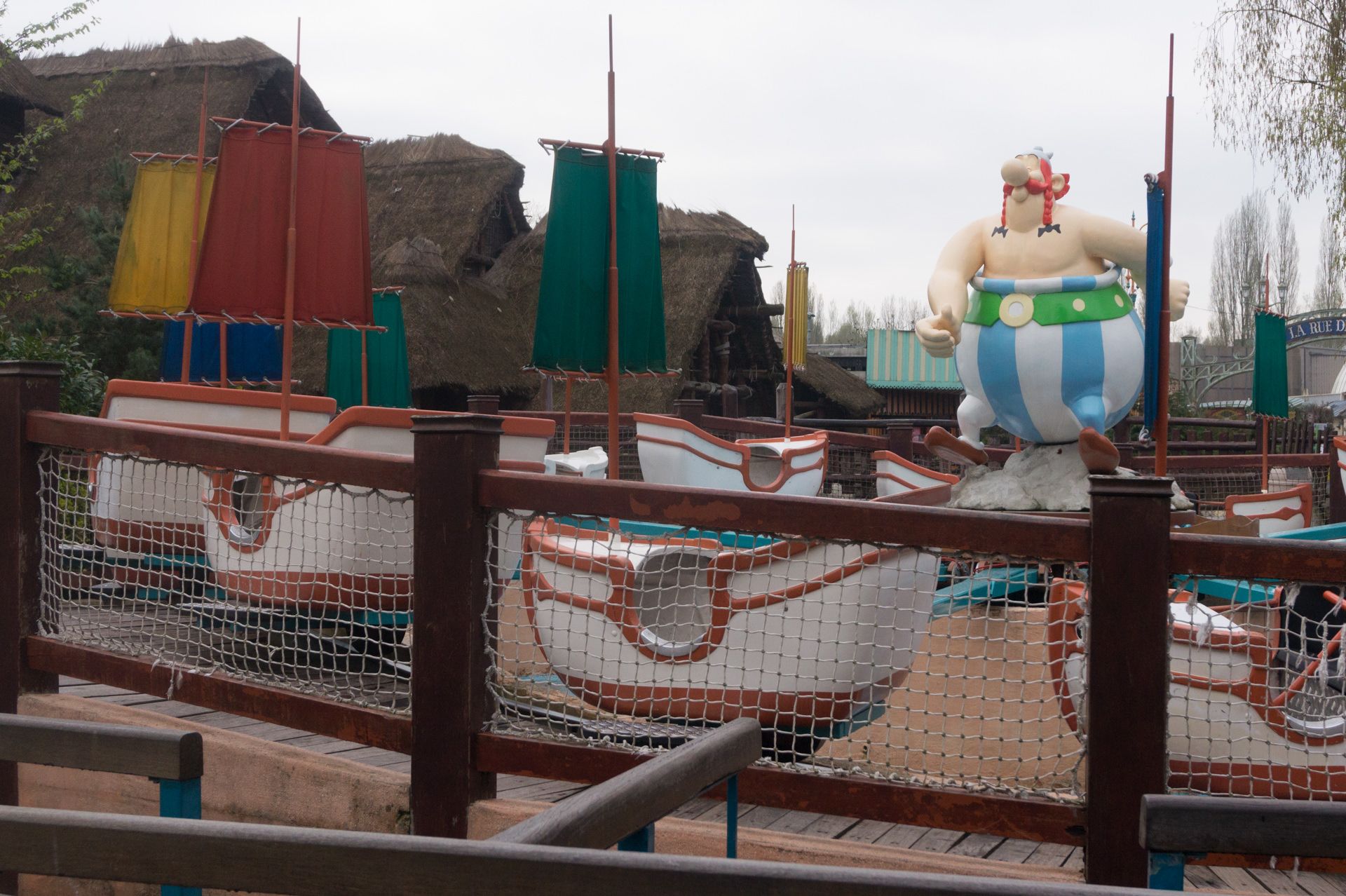
Past the famous carousel Le Carroussel de César, where you can take a seat in the middle of Obélix, we are now drawn to the Roman arena, where Gauls and Romans compete in Gaulois-Romains: Le Match a more or less fair competition. In three rounds of competition, the show is about nothing less than the future of the Gaulish village, and the whole of Rome resorts to unfair means, which can even give the audience a nasty surprise. For example, I was allowed to give an interview to a recorded soundtrack, how wonderful! The whole show is of black humour and the performances of the dancers and acrobats are really breathtaking. In the meantime, there is also a brilliant halftime show with advertising sports, which you will certainly not see anywhere else. But for our Gauls it doesn’t look good at all, only good that towards the end Idéfix gets into the arena with the magic potion and the Romans get a good beating as a result. A great and above all entertaining show that should not be missed.
Also not to be missed is the gastronomy of Parc Astérix. It is really damn good. In addition to the typical theme park dishes, Parc Astérix offers a wide range of wild boar dishes and other delicacies. Personally, I’m really fond of Burger Italy with rocket and pesto, which is why I scheduled the third day in the park only for lunch. The alternative would have been a visit to the nearby amusement park Mer de Sable, but I decided not to do so. But at least the annual ticket was worth a little bit more and the Zierer waltz ride will not run away from me that fast.
Le Grand Splatch
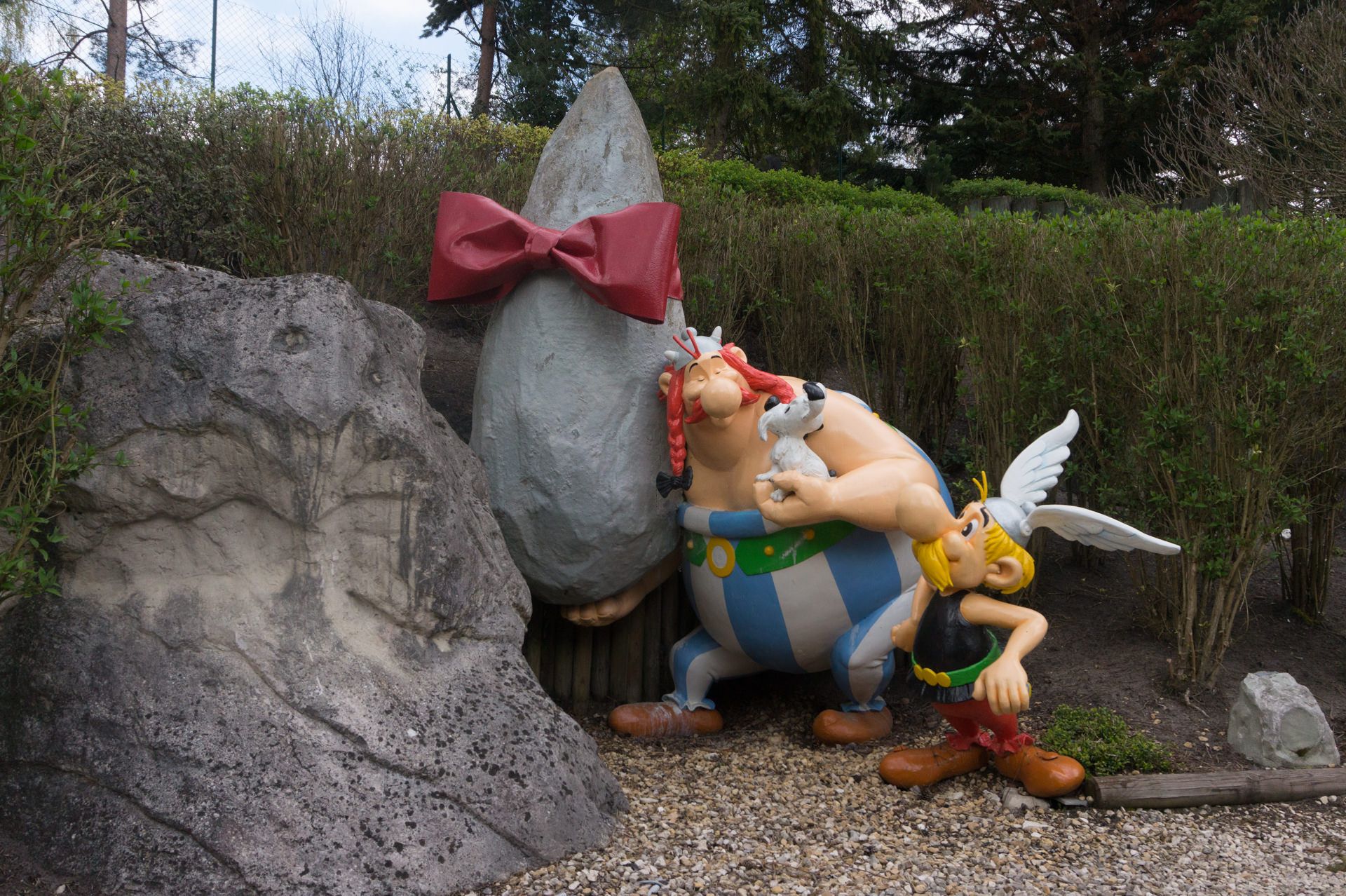
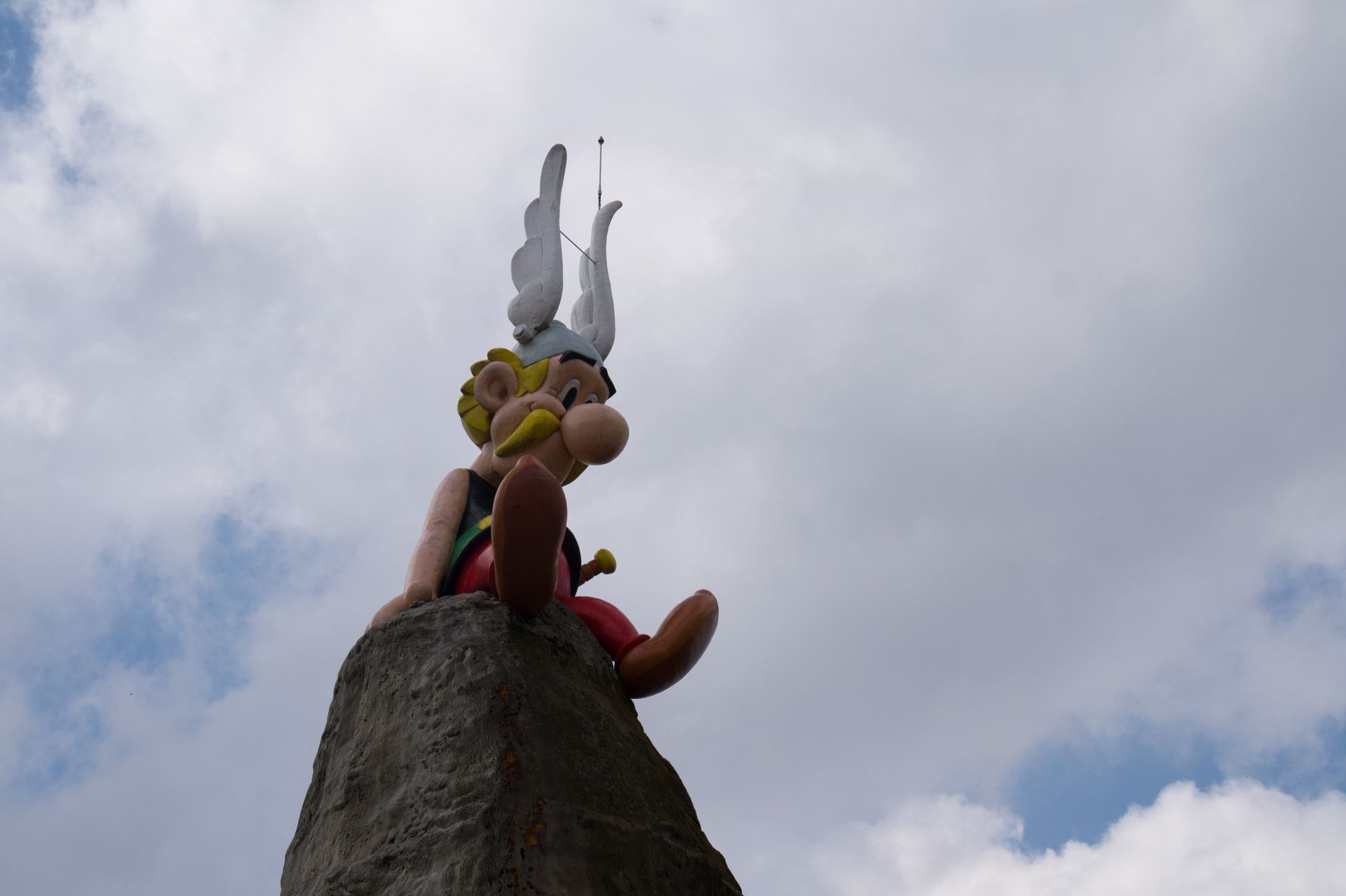
The next attraction on our park tour is the park’s Intamin Spillwater. The entrance to Le Grand Splatch is located below the track of the elevated railway Les Espions de César, which offers a good view of the Gallic village and the children’s area of the Parc Astérix, and is sometimes quite interesting. In fact I walked too far the first time, because I thought the entrance was not at the Astérix rock but rather near the station. So I quickly marched back and through the quite spacious queue to take a seat in the next boat.
The lift takes us quickly up to the top, where we accelerate in a tight curve, which then immediately turns into the first shot of the ride. Slightly moistened, we now bob through a canal for a few minutes and are constantly surprised and entertained by small to large water effects. At some point the second shot of the ride appears in the form of a double drop. Depending on where you sit and how the weight is distributed in the boat you can leave the trip halfway dry or completely soaked. I won’t become a fan of the double drop ride at Intamin Spillwaters – in this respect the single drops are somehow more impressive – but I will always be a fan of Le Grand Splatch. The ride is very unique and entertaining.
La Trace du Hourra
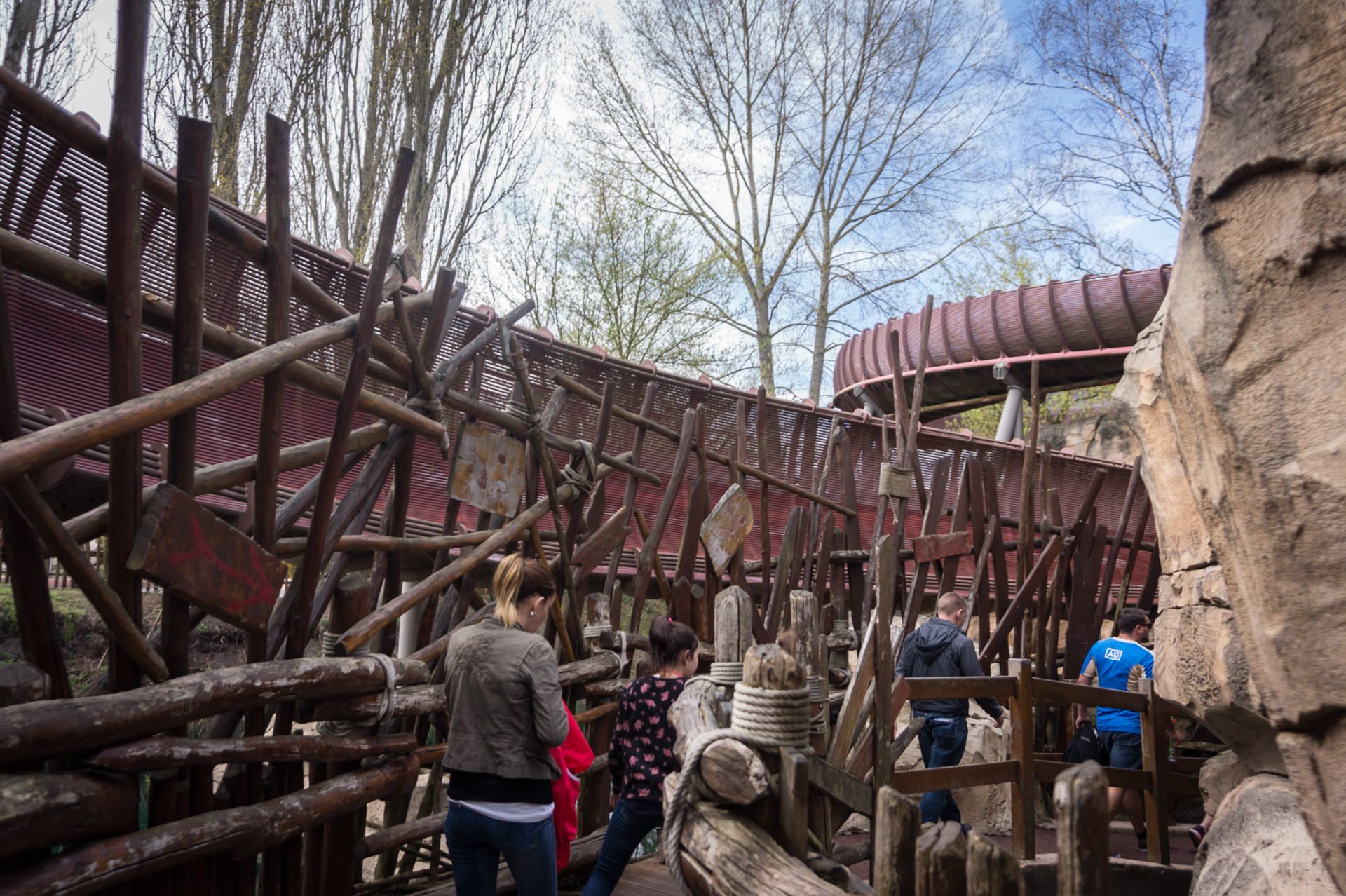
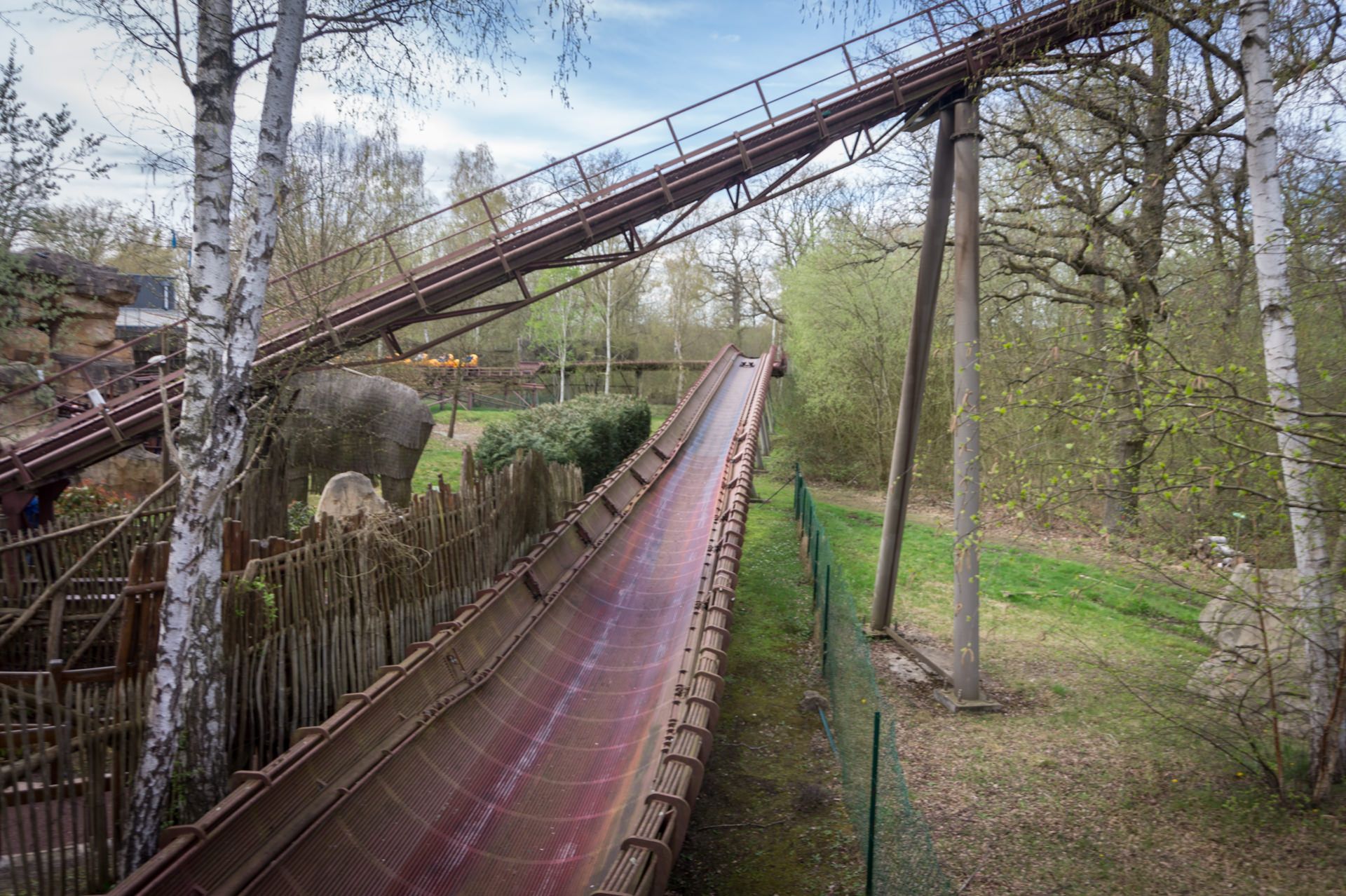
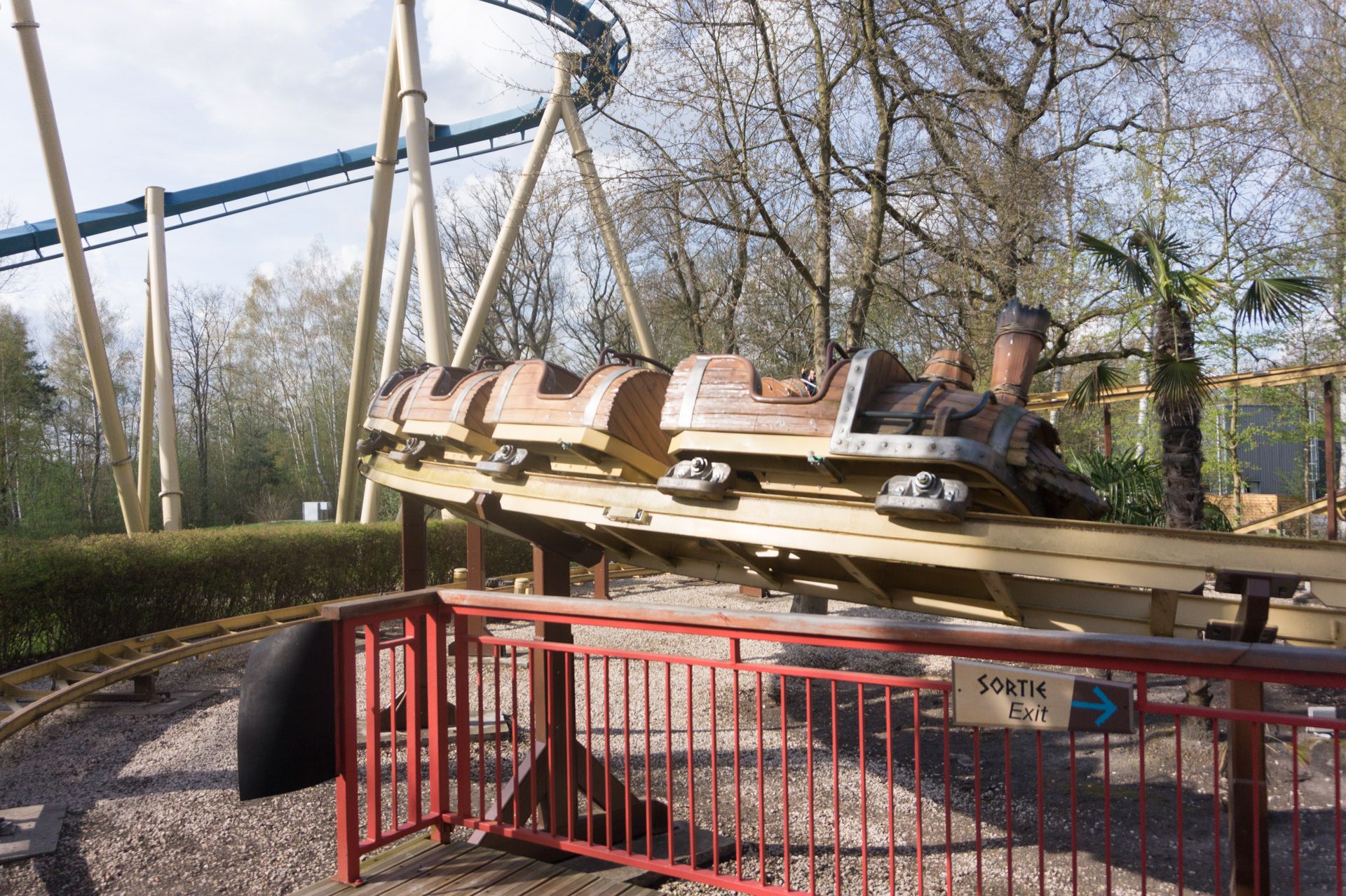
If the layout of a roller coaster gets its own backstory, then Trace du Hourra is the place to be. The story takes place at a time when man has not yet walked on two legs. One day a caveman learns that very thing and screams Hourra loudly to tell his friends about the discovery. The path he took between the mountains is the route of La Trace du Hourra. But before we can have the pleasure of a ride on this bobsleigh run made by the manufacturer Mack Rides, we first have to stand in line for quite a while.
At some point the time has come and the journey can begin. In a left-hand bend we leave the station immediately and soon climb the only lift hill of the ride. After a short straight line at a height of 31m, we immediately descend steeply, whereby the swing of the bobsleigh in the first 270° helix is already very pronounced. Now we make the first change of turn and immediately take a wonderful left curve. This is followed seamlessly by a downward helix to the right. With a shallow rumble we tackle a gradient and then cross the first block brake of the ride. After a narrow left-hand bend, we now swing upwards in an ever-tightening right-hand downward helix. With momentum, we climb another ascending slope. After the second block brake, we now circle a little above the heads of the waiting people in a left-hand bend, before we pass them directly in a 270° helix. After a left-hand bend close to the ground we reach a long ramp, which then leads us into the braking section of the ride. This is followed by the return to the station via several stopping positions.
La Trace du Hourra is a decent bobsleigh run with a beautiful start and an extremely impressive height. The ride is enjoyable, although I personally prefer other bobsleigh runs. However, I have only ridden the ride twice, as the waiting time at the ride was always too long. At Trace du Hourra, a visit is recommended especially in the early hours of the morning, as you can still walk straight through to the station.
S.O.S Numérobis
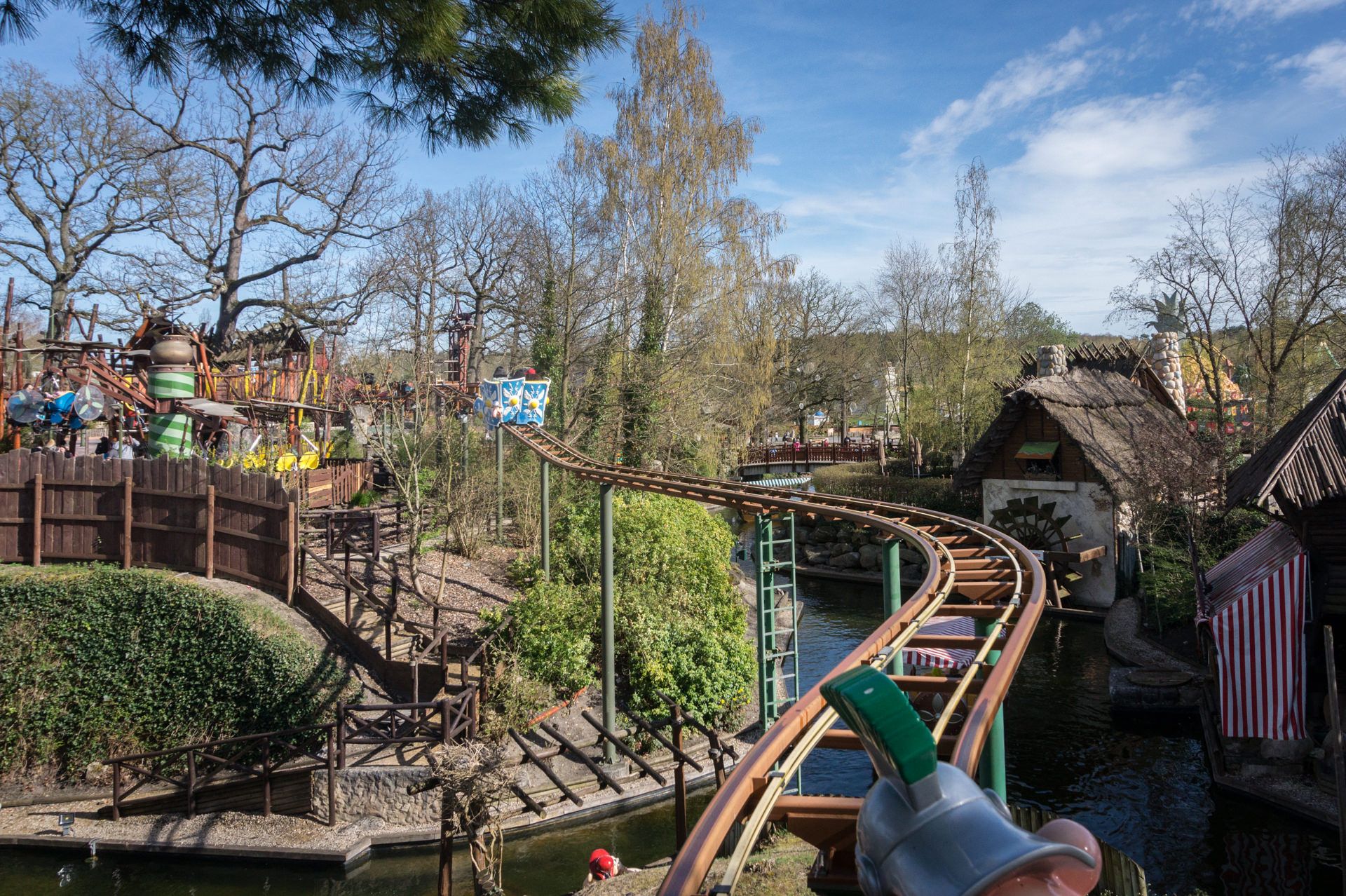
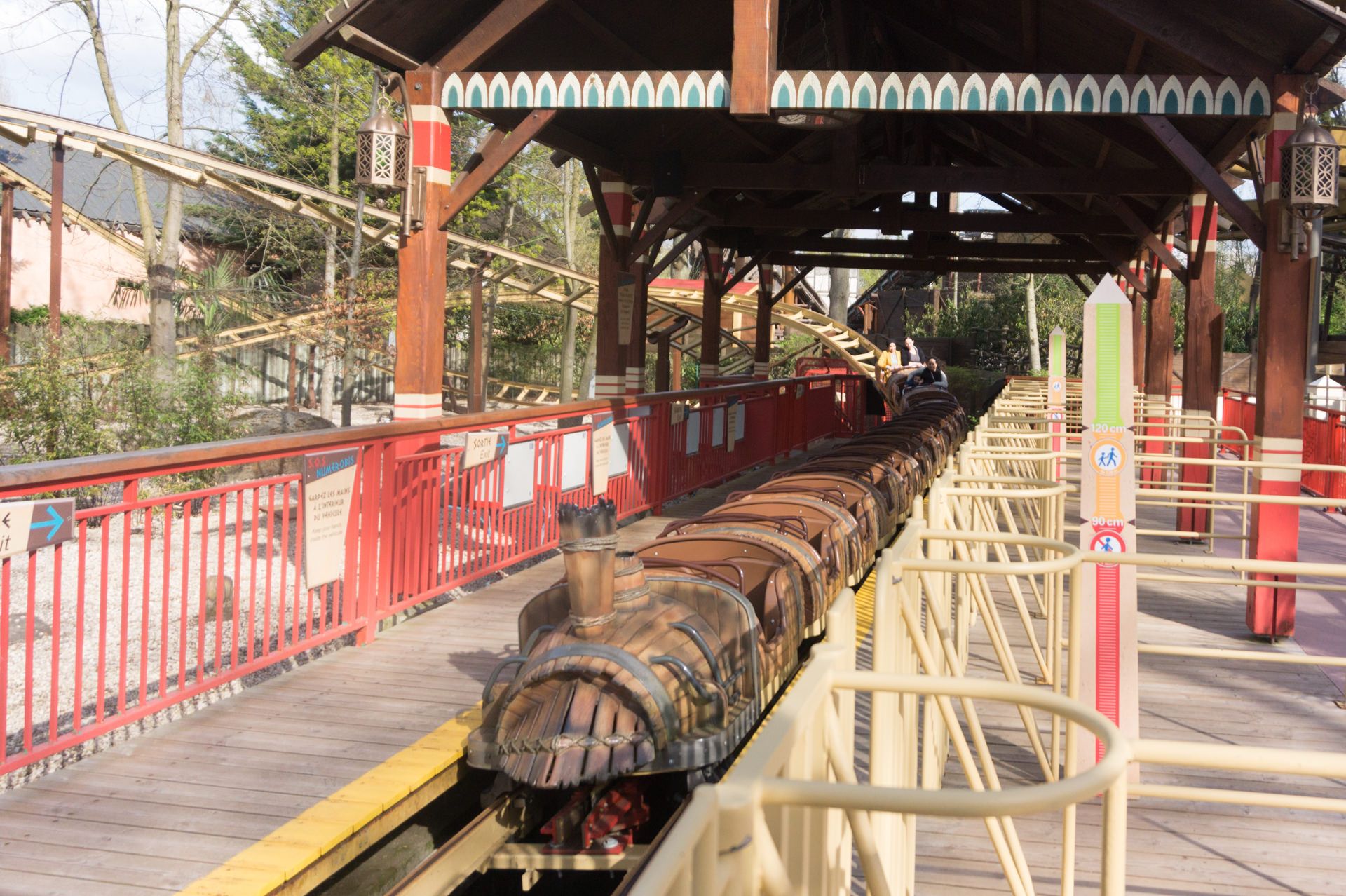
The smallest roller coaster of the Parc Astérix theme park is located in the Egyptian themed area. On S.O.S Numérobis the smallest park guests are offered an exciting ride through a layout in the shape of an eight. Depending on the rush, two or three laps are ridden on this medium-sized Tivoli coaster.
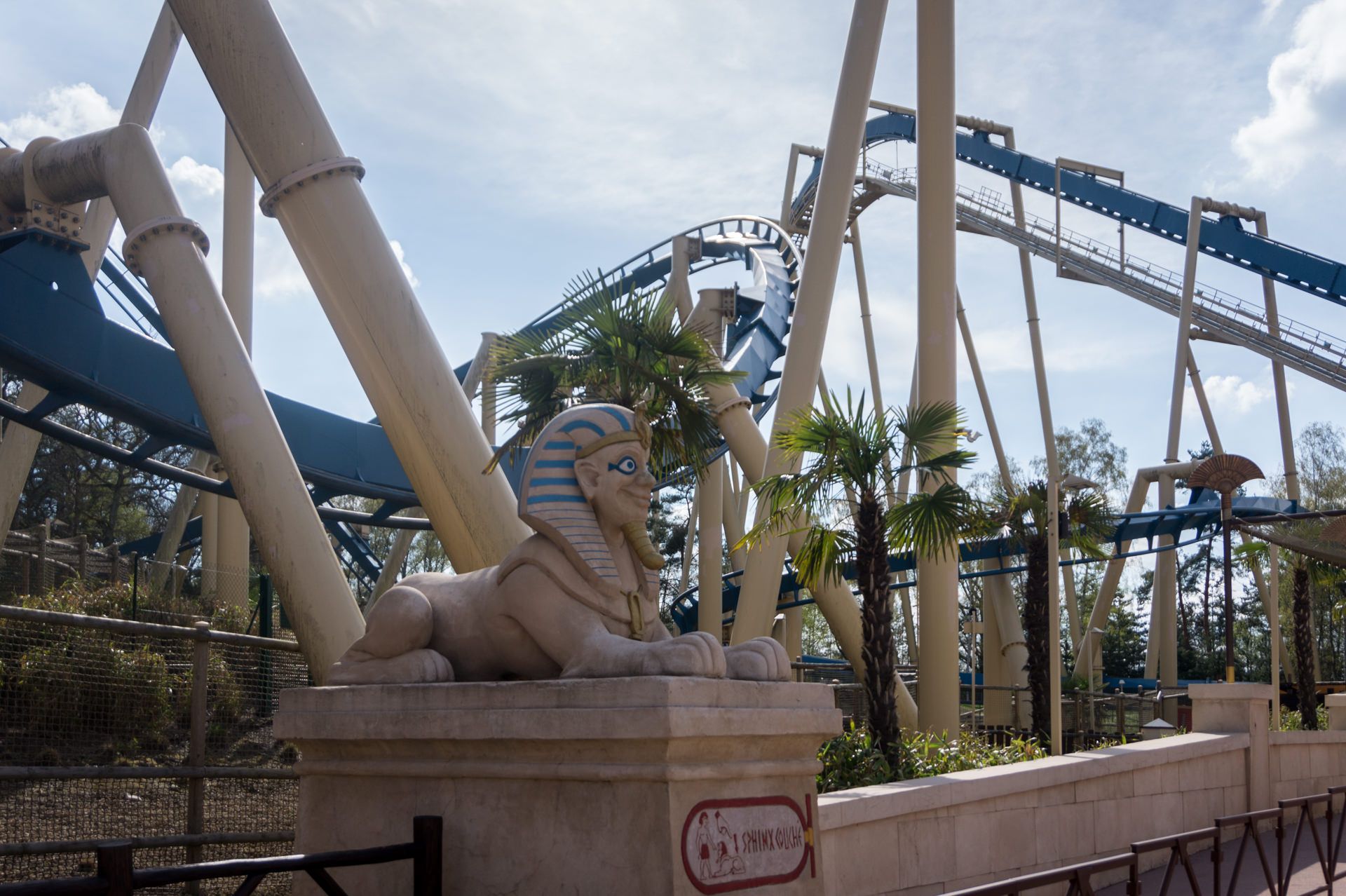
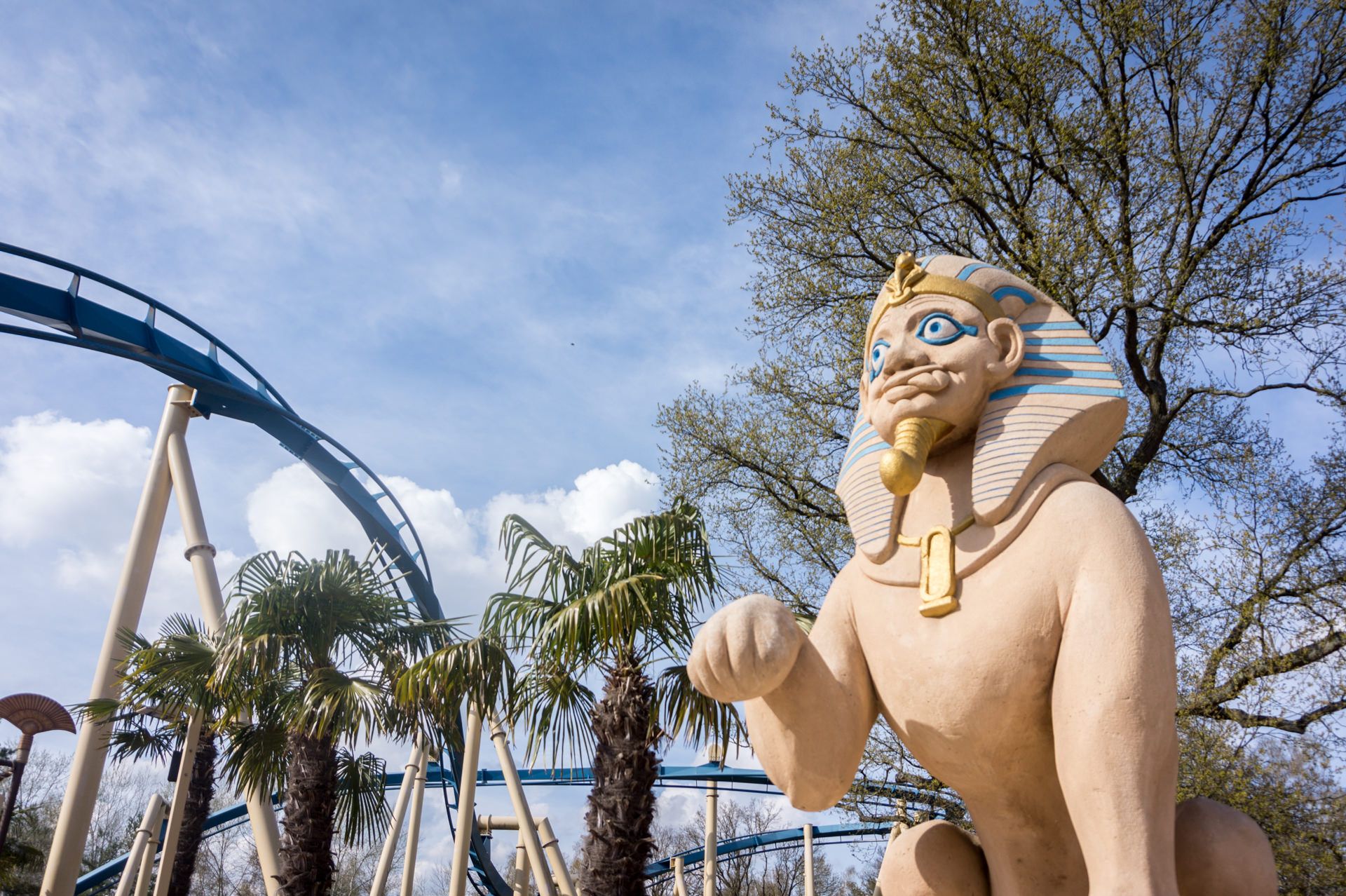
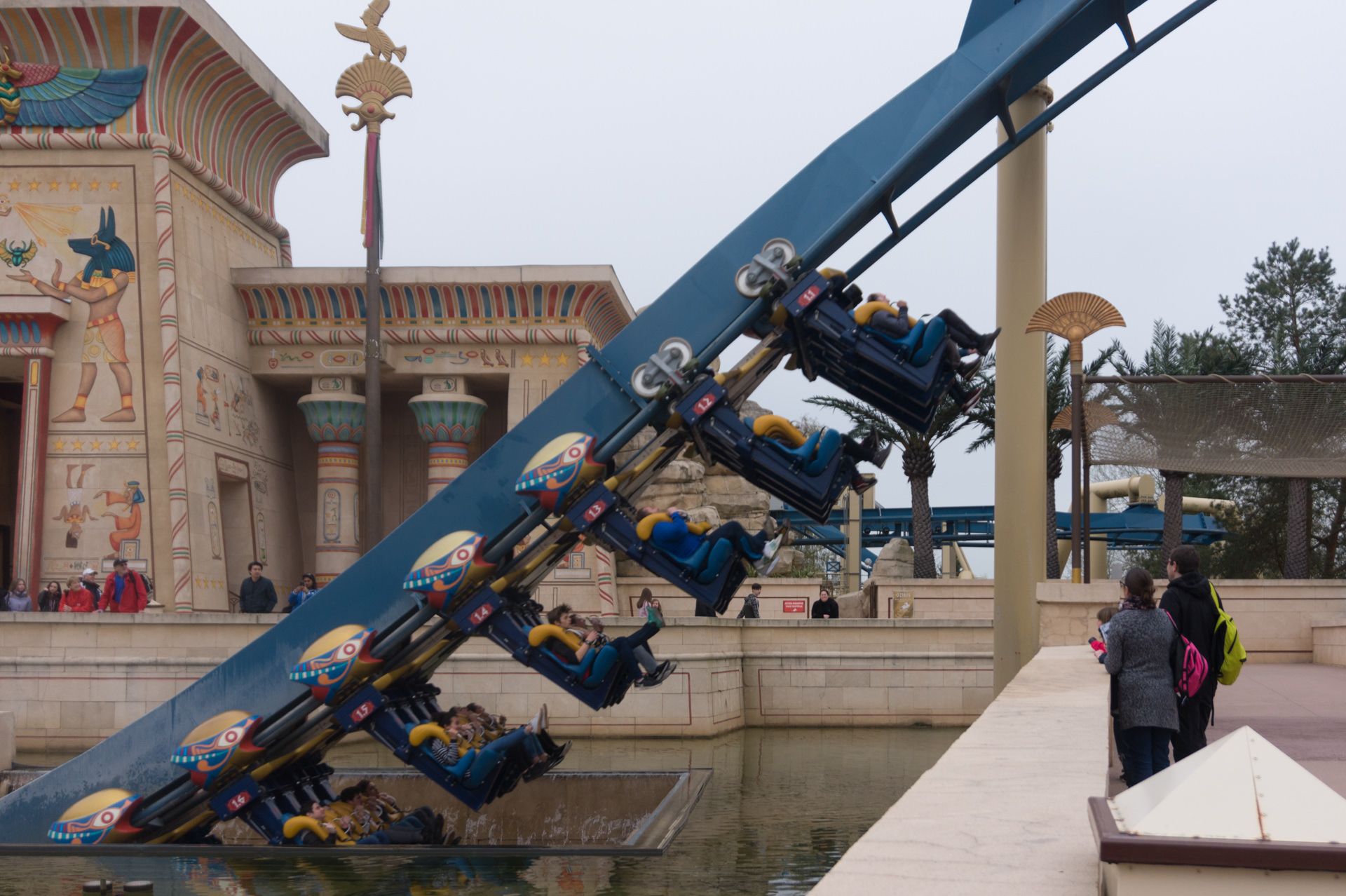
OzIris
By Osiris and by Apis, look at me…
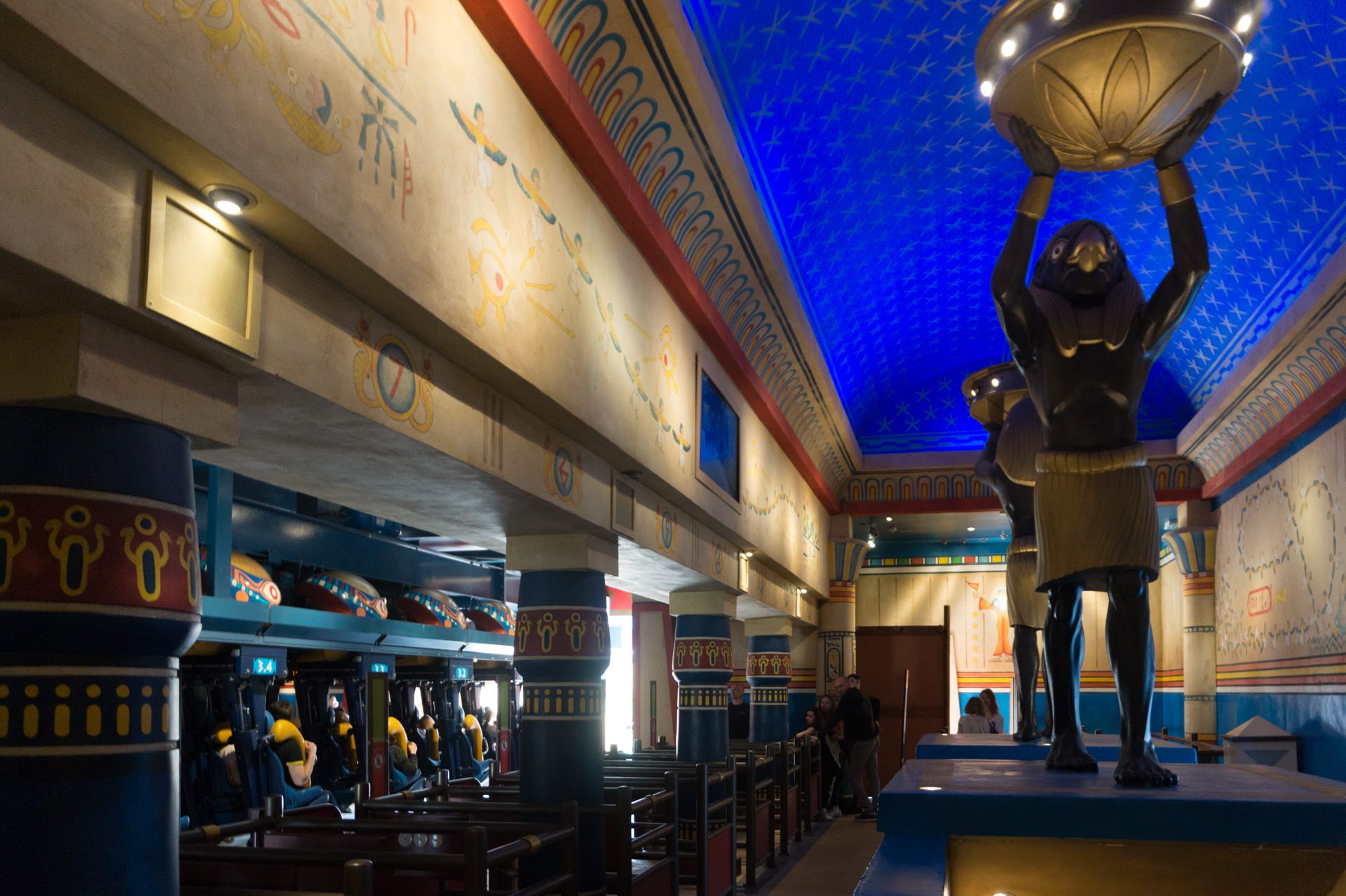
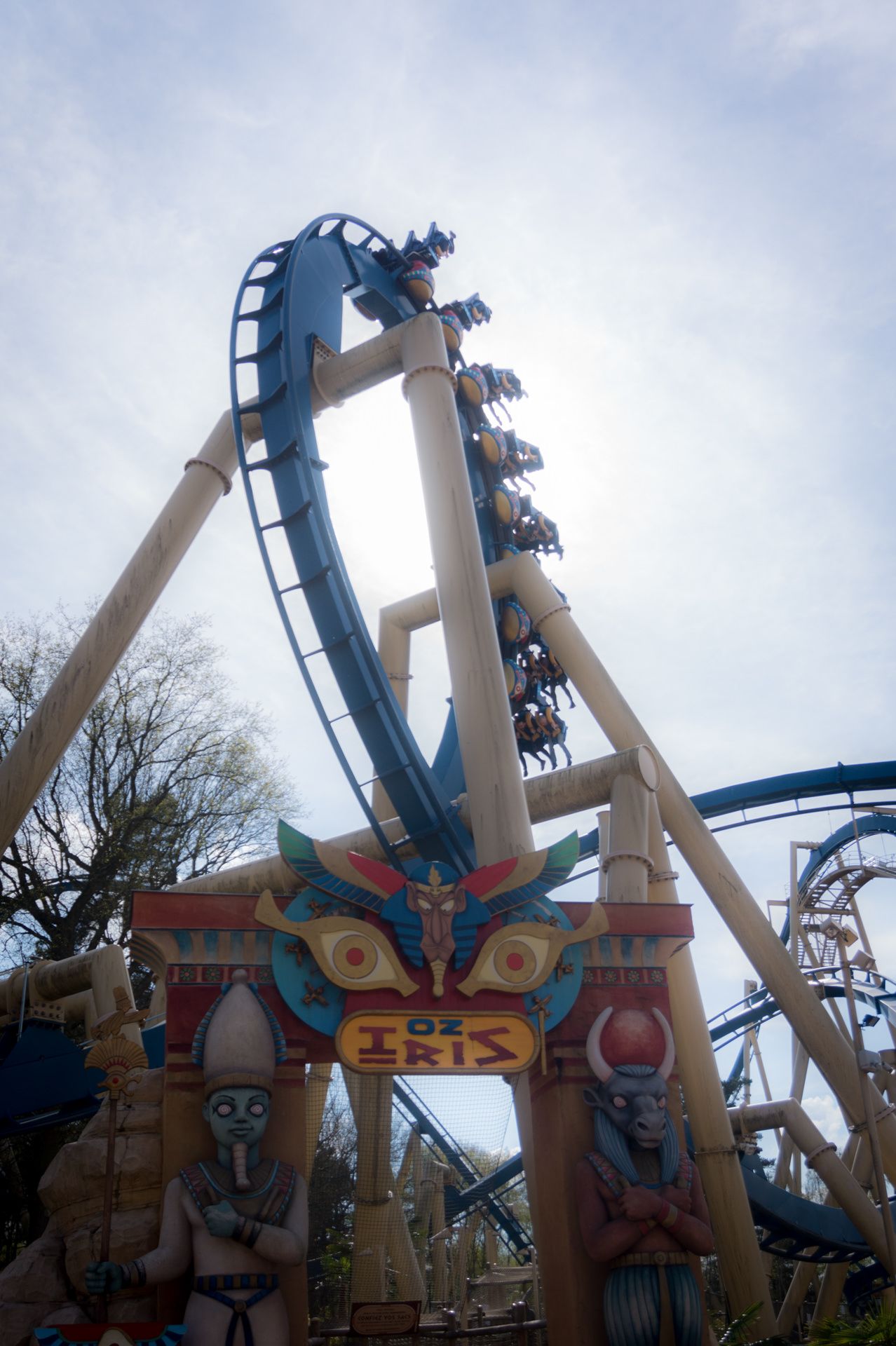
Iris – the hypnotist from the movie The Twelve Tasks of Astérix – invites you to group therapy in Parc Astérix and we are there live on OzIris. Once you have taken your seat, the happening can start immediately. “Par Osiris et par Apis, vous êtes maintenant des oiseaux. Oui, des oiseaux!” sounds from the loudspeakers as we leave the station bird-free and climb up the 35m high lift.
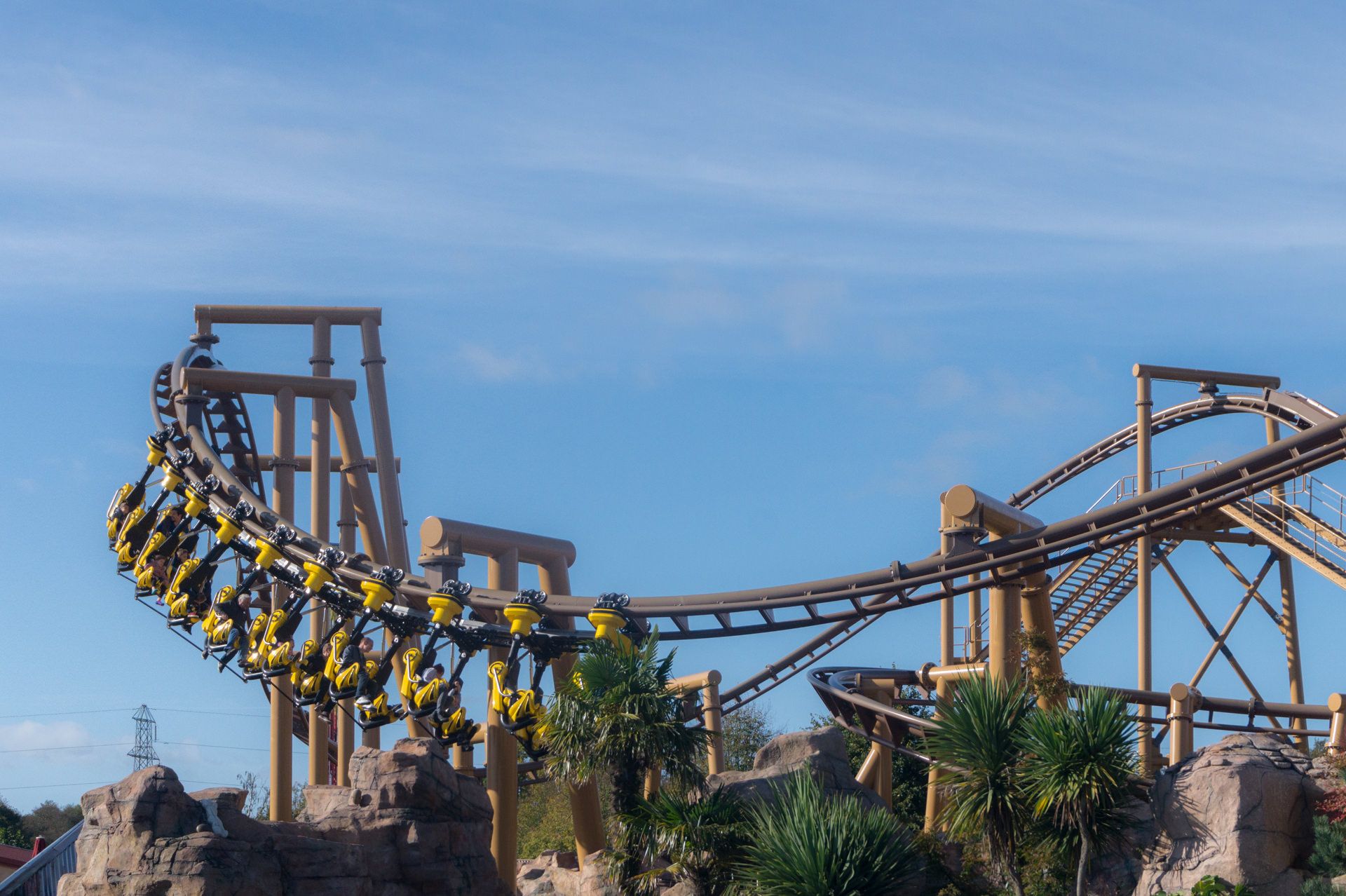
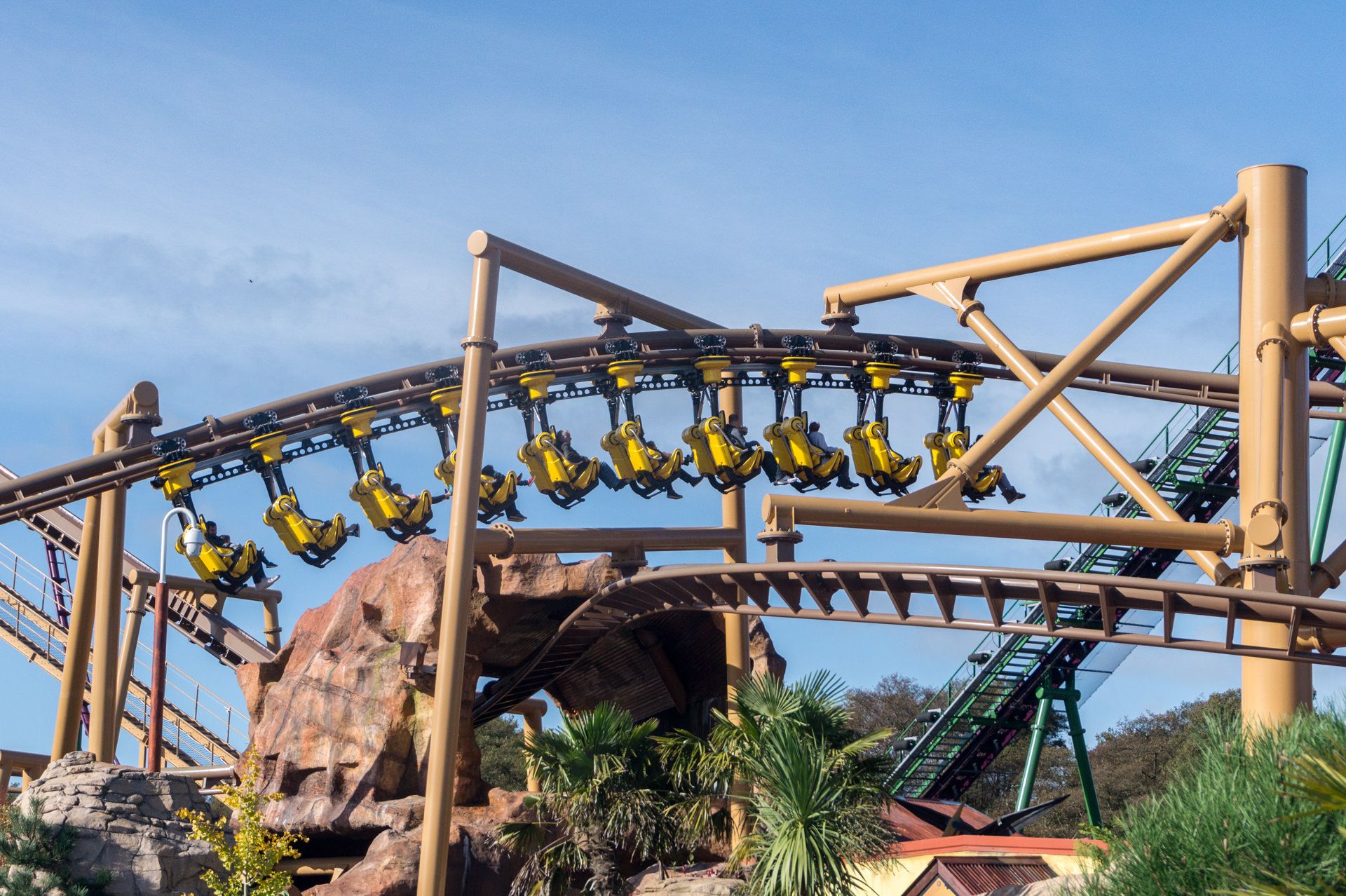
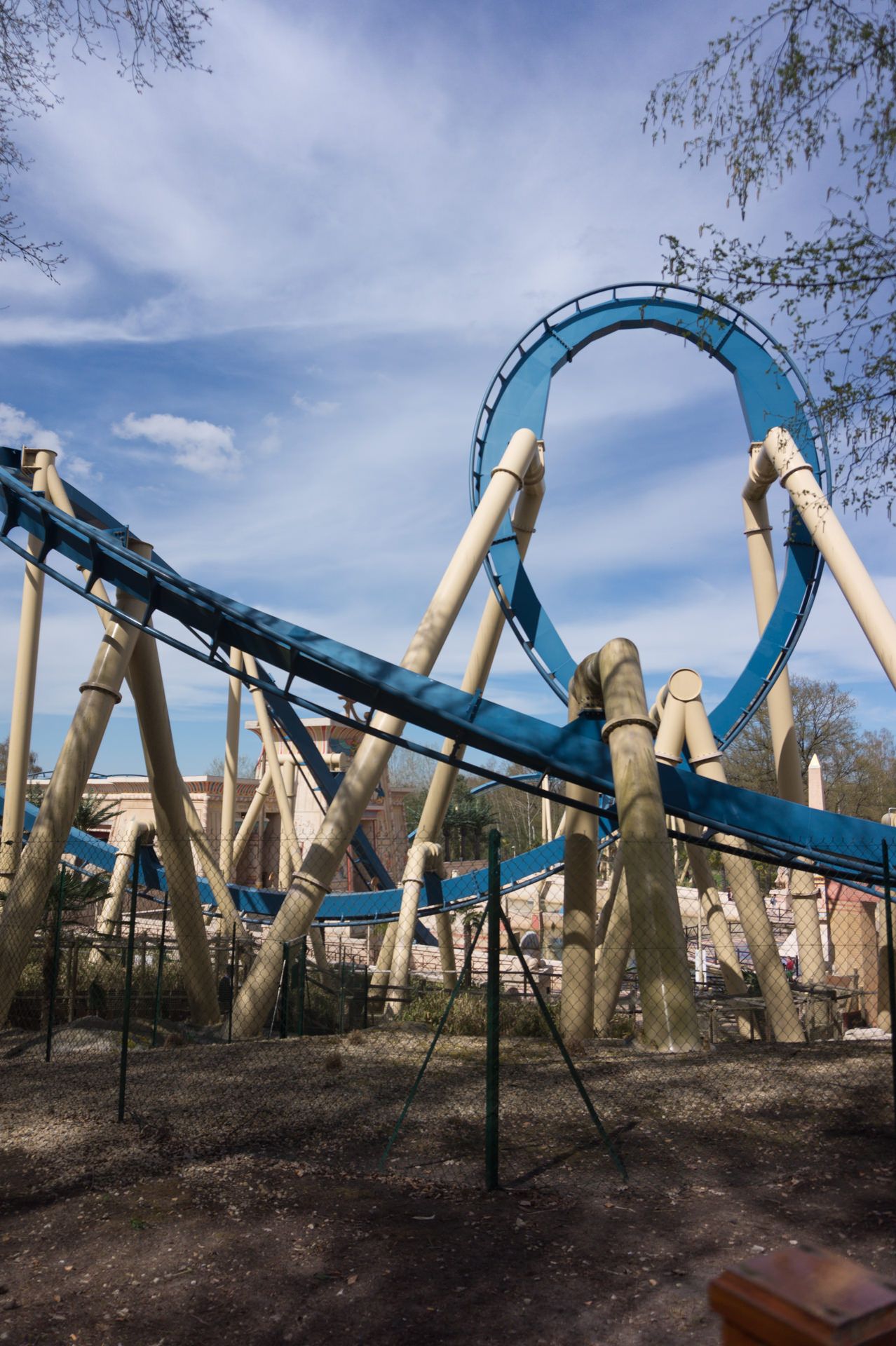
As soon as we reach the top we fall like a bird that has just left its nest, unstoppably and unbelievably steeply towards the ground. With momentum we rush through the first valley before we turn right and climb a dive loop. Once overhead we descend skillfully into a rather narrow valley. With full speed we climb up again to take the path towards the loop in an over-banked turn. Once more our feet stretch towards the sky before we fall into a deeper lying valley and feel a short airtime moment. In a professional way we now turn our direction in an Immelmann. After a second Overbanked Turn we plunge into a fog-flooded underwater tunnel in front of the impressive domicile of our trustworthy hypnotist.
Back in daylight we are immediately rotated once around our axis in a zero-G, whereupon a 270° helix awaits us. After a short moment of catching our breath we fall to the ground once more. Directly behind the temple complex the second Zero-G Roll of the ride awaits us, which this time spins us clockwise. This is followed by an upward helix close to the ground, which pumps the blood into our legs one last time. Below the lift hill we will now once again see the direction of travel, whereupon, after a quick dip and a short ascent, we already face the braking distance of the ride. After another bend we reach the station, whereupon the next passengers are already invited to the session with a spirited “Au suivant”.
OzIris is without doubt a magnificent roller coaster. The choice of ride elements is as successful as the staging of the ride and the associated theme area. Everything is just right at first glance. One could take a deduction for the location directly at the motorway, but on the other hand this is also an ideal advertisement for the Parc Astérix, which will soon be allowed to have a much higher ride. Nevertheless, OzIris remains a really great ride, which you will quickly learn to appreciate thanks to the single rider entrance on the left side of the temple.
Pictures Parc Astérix


























Conclusion Parc Astérix
In addition to all kinds of comic references, lots of black humour and a really chic design, the theme park of the indomitable Gauls offers above all a magnificent portfolio of rides, which is rarely found in such abundance. The roller coasters of Parc Astérix are good to very good because of the bank and the water rides are the crème de la crème in European comparison. The offer is supported by a variety of shows worth seeing, which are shown depending on the rush. I at least felt very well entertained on all three visiting days, even though I had originally planned only two. Thanks to the low crowd, a visit during the Easter holidays is highly recommended.
What are your thoughts about the French theme park Parc Astérix? Just write it here in the comment field below the report or visit our social media channels:
Click here for the next report of the Tron-Tron-Trône Tour