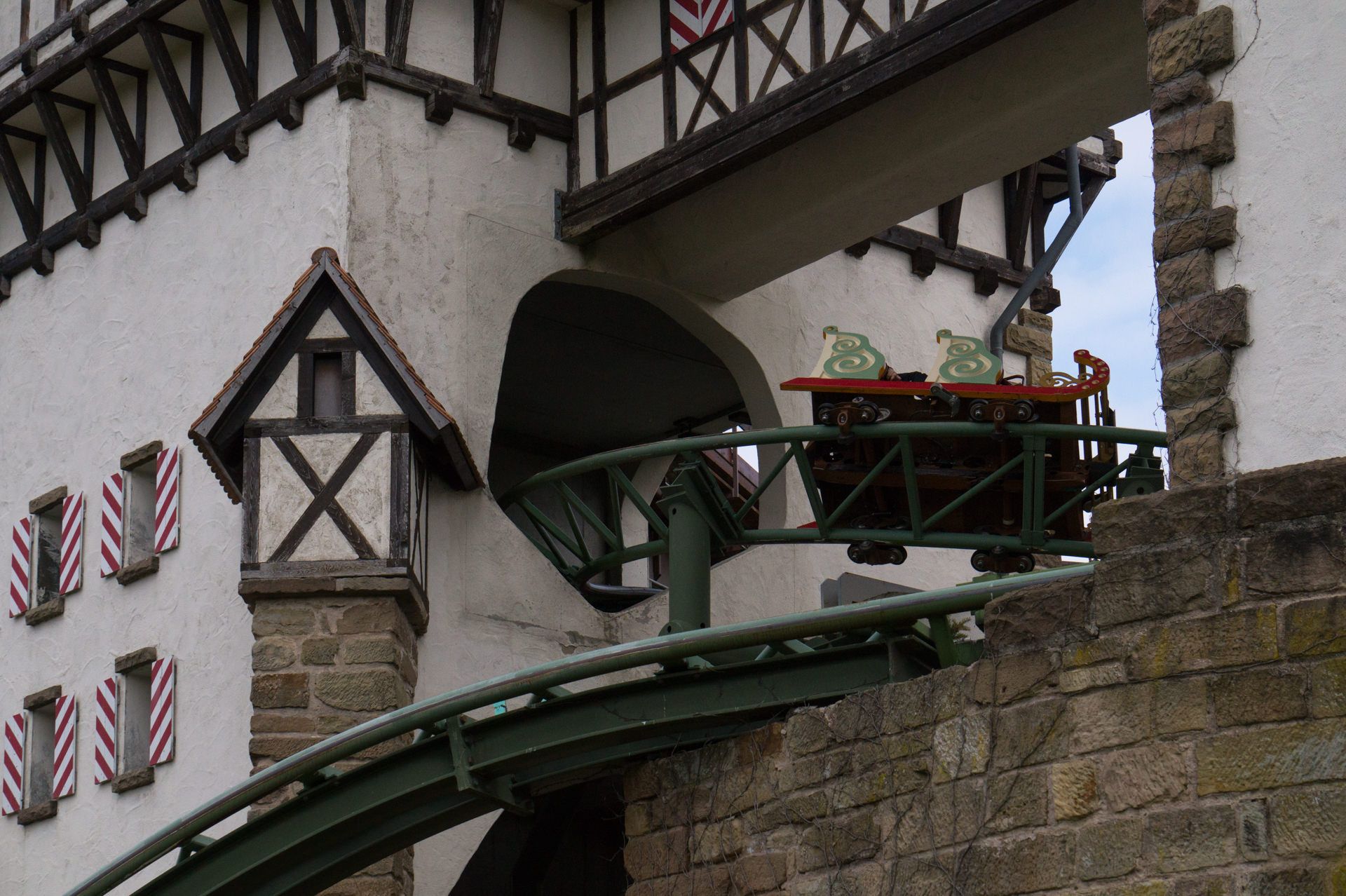
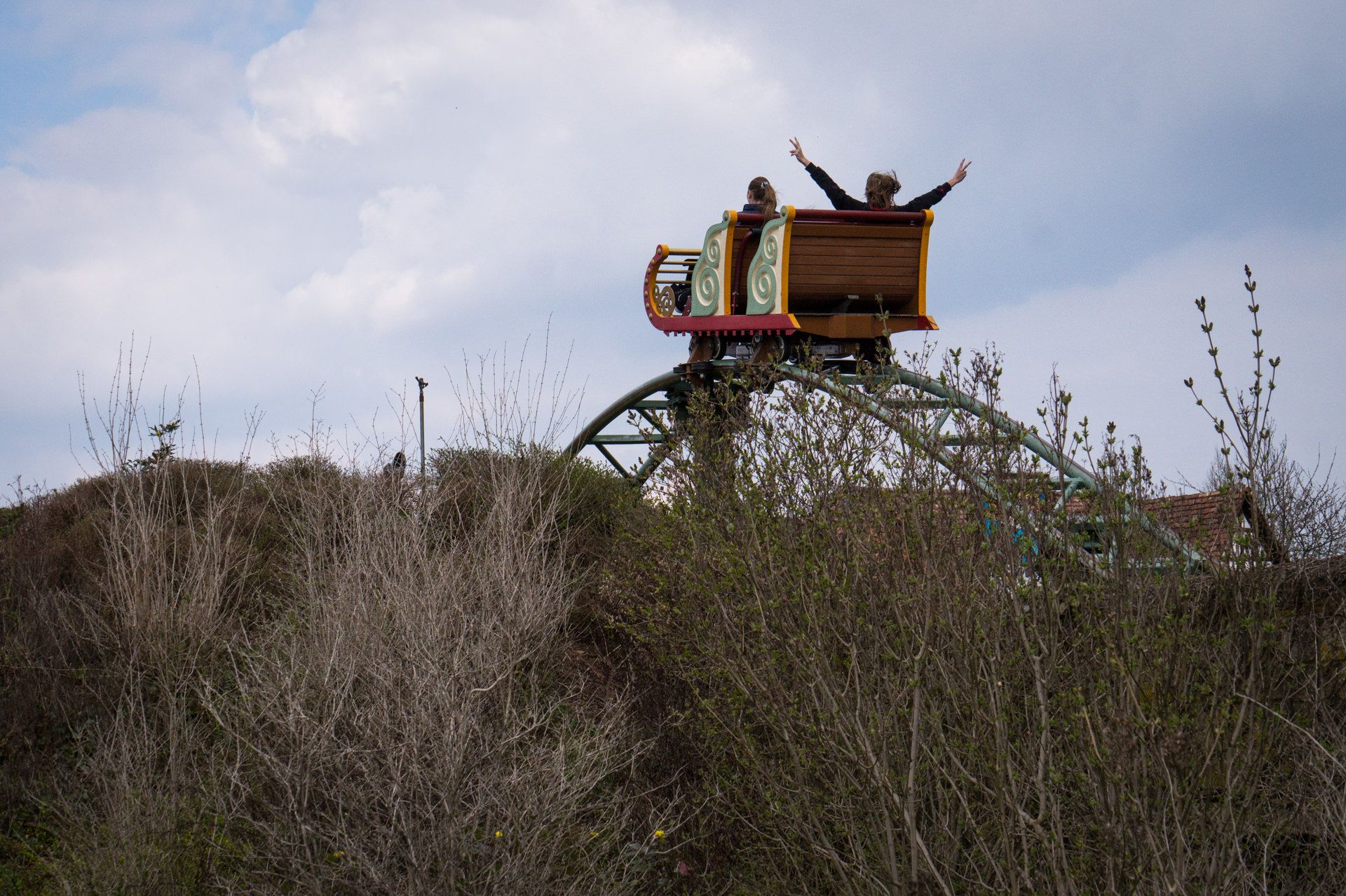
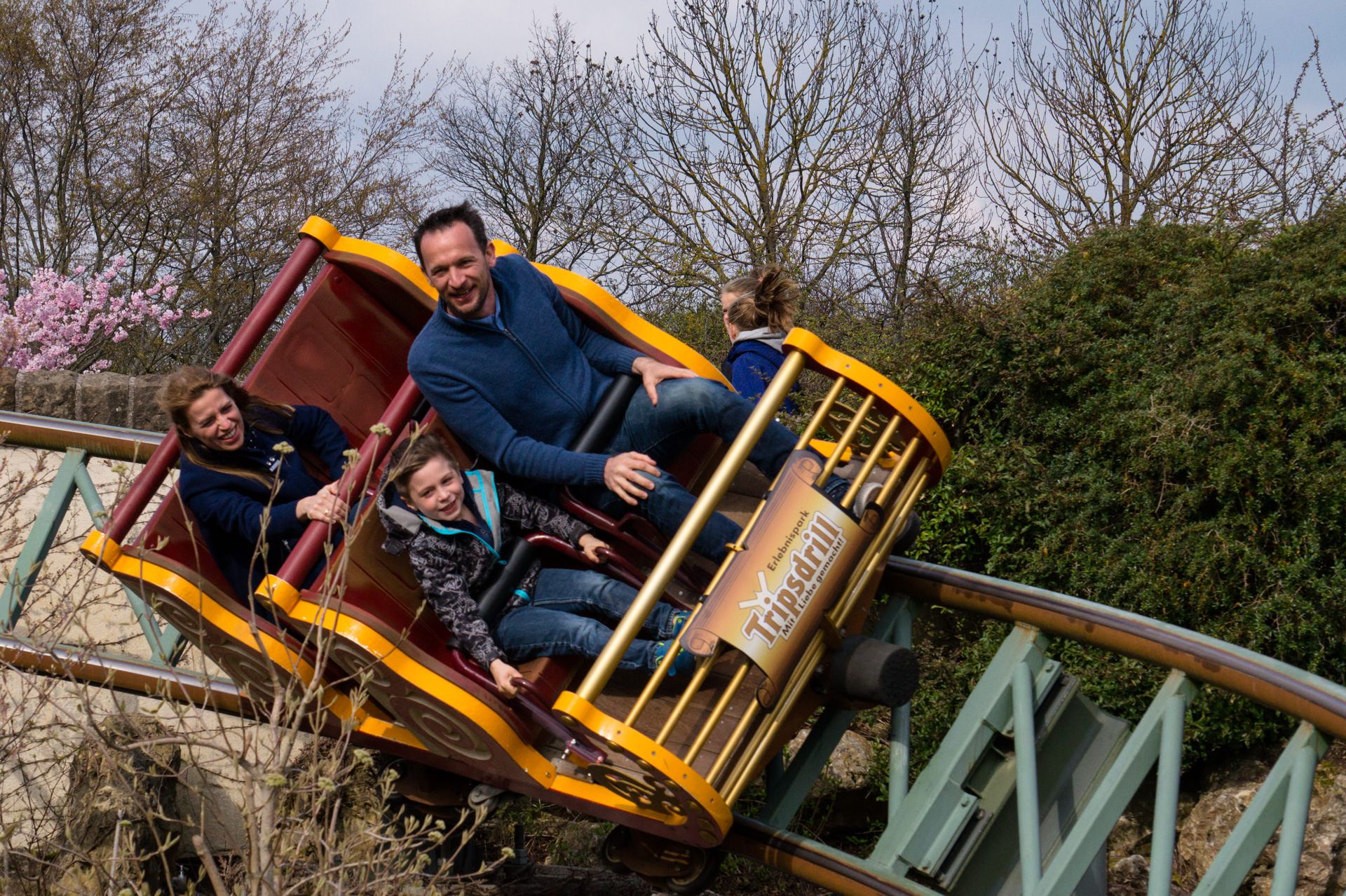
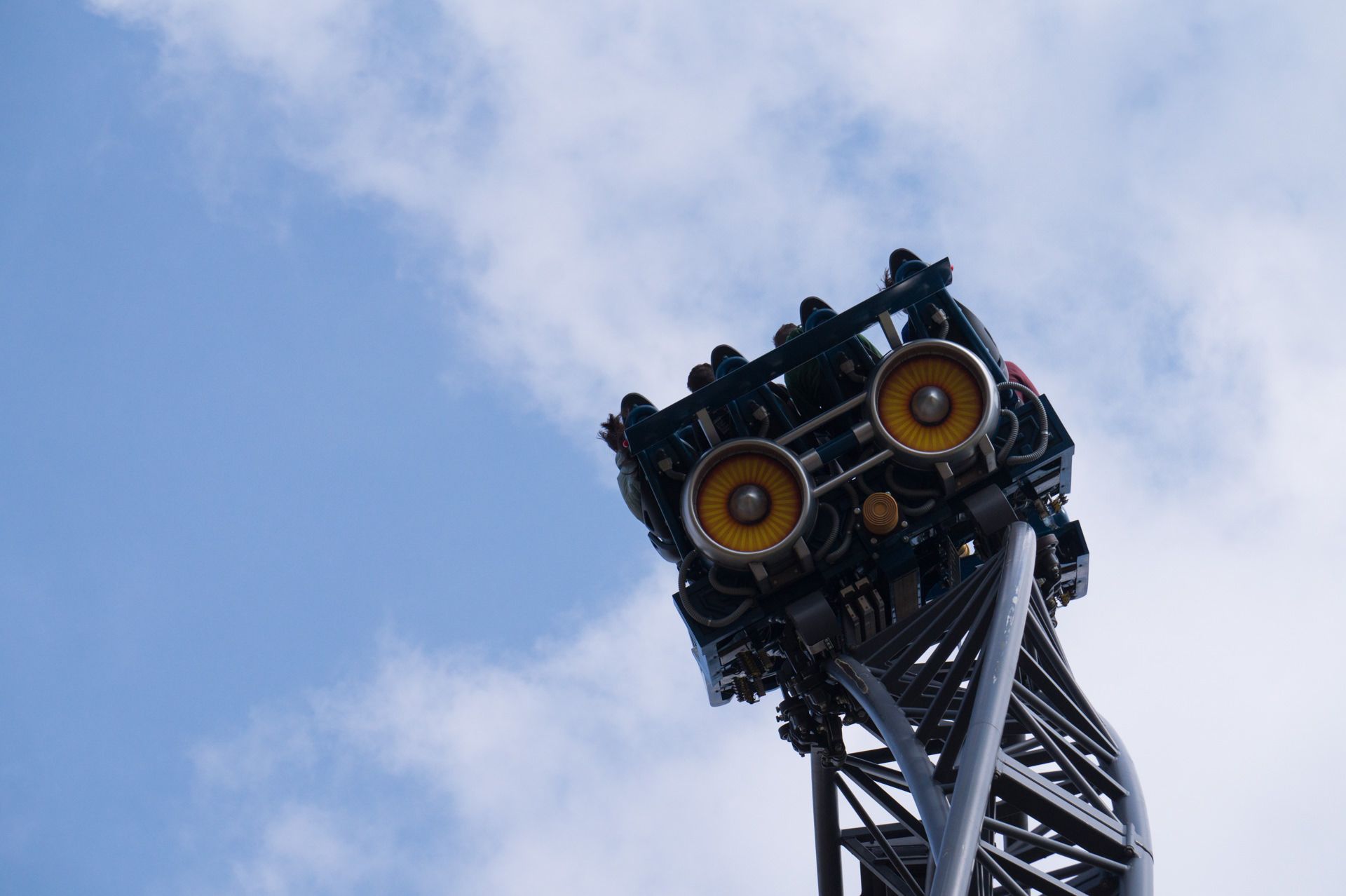
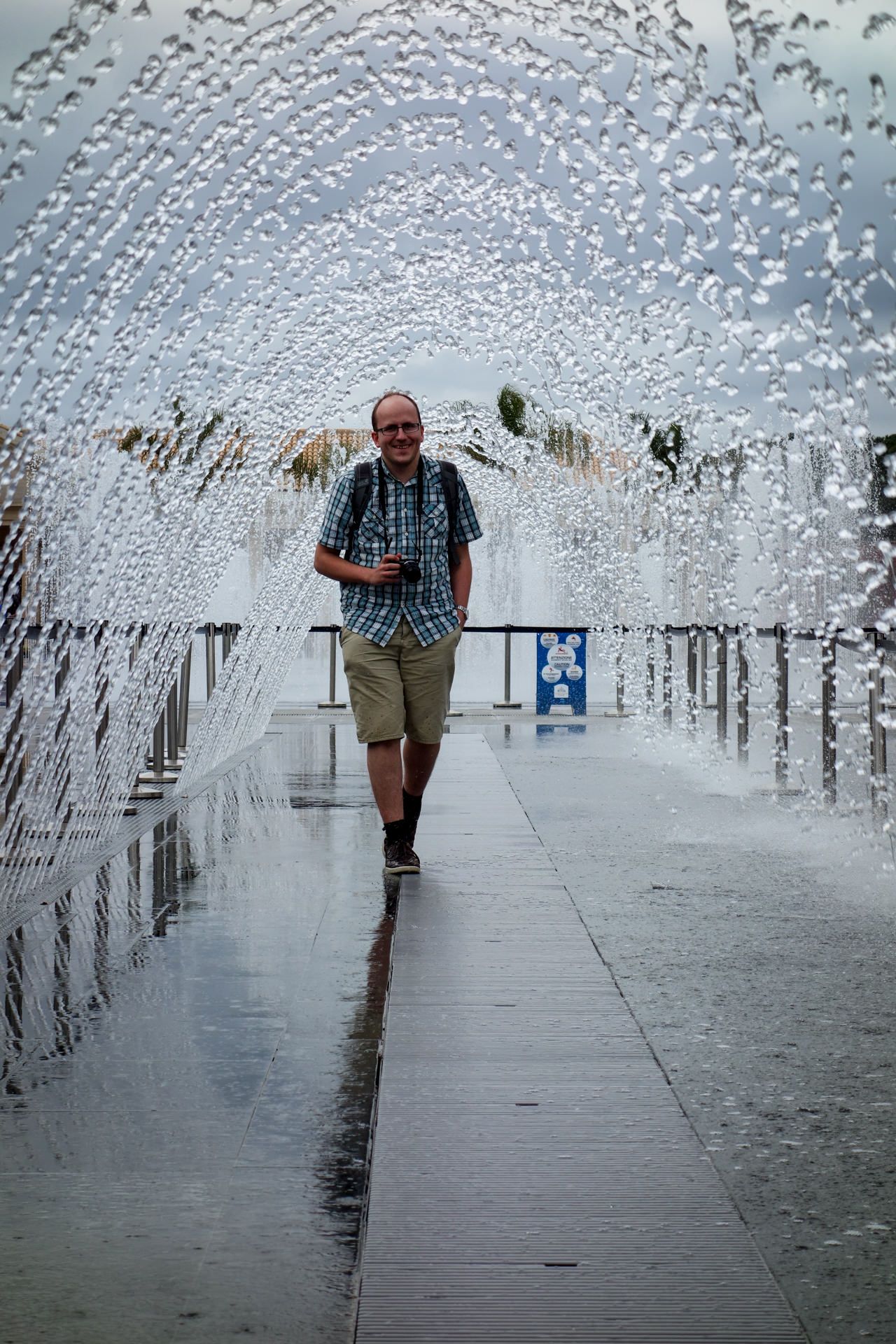
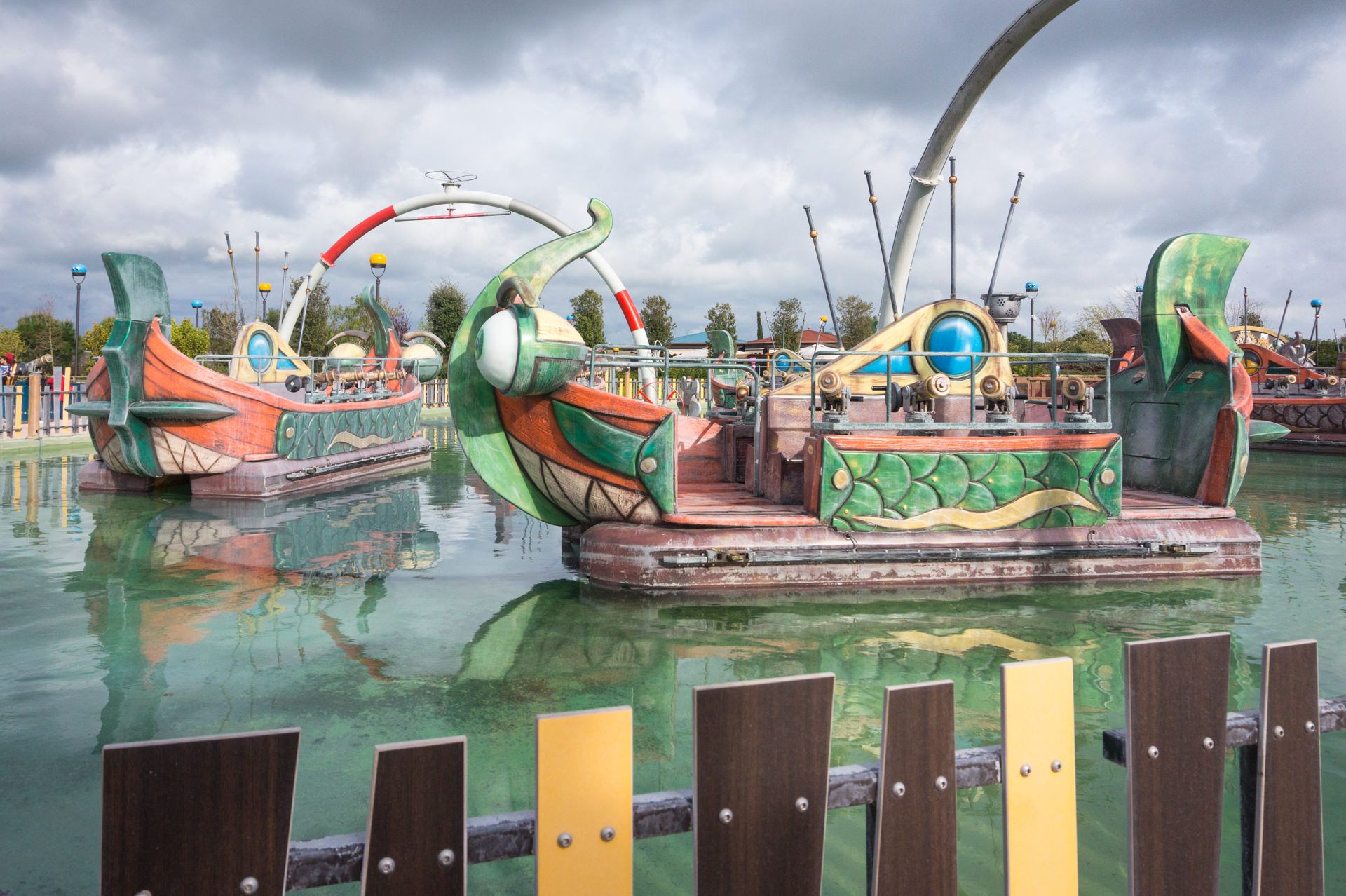
Boats ahead on the Japanese highland plateau

The History of Kijima Kogen Park

On a high plateau (Japanese Kogen) far above the Japanese spa town of Beppu – which attracts several million visitors every year, mainly due to its large number of hot springs and the associated public baths, the so-called onsen – lies the Kijima Kogen Park (城島高原パーク).

Starting out as a small go-kart track, Kijima Motopia Land was created in 1967. With the longest go-kart track in Japan at that time, new visitors were quickly attracted to the plateau. After a change of ownership in 1971, a swimming pool and a bowling alley were added to the resort. In 1982 the park name was changed to Kijima Kogen Family Park and the following year the looping coaster Super LS Coaster was opened.

In 1987, West Japan Nippon Korakuen Co, Ltd. (operator of the former Kōrakuen stadium and today’s Tokyo Dome) took over the park. In the course of this, the park was renamed in 1992 to Kijima Korakuen Yūenchi (engl. Amusement Park), in connection with a large expansion of the amusement park area and the opening of Japan’s first wooden roller coaster. In 2007, the resort was sold to Morgan Stanley, after which it was operated under the resort brand Centleisure for several years. In 2012, Kijima Kogen Operations Co, Ltd. was established as part of a restructuring process and renamed Kijima Kogen Park.

Tour of the park

If you enter the park, you will find yourself right on the beautiful Main Street of the park. To the left is the indoor playground Toy Kingdom and to the right the souvenir shop of the park, where you can buy mainly the most popular souvenir of the Japanese: cookies from the region.

Super LS Coaster

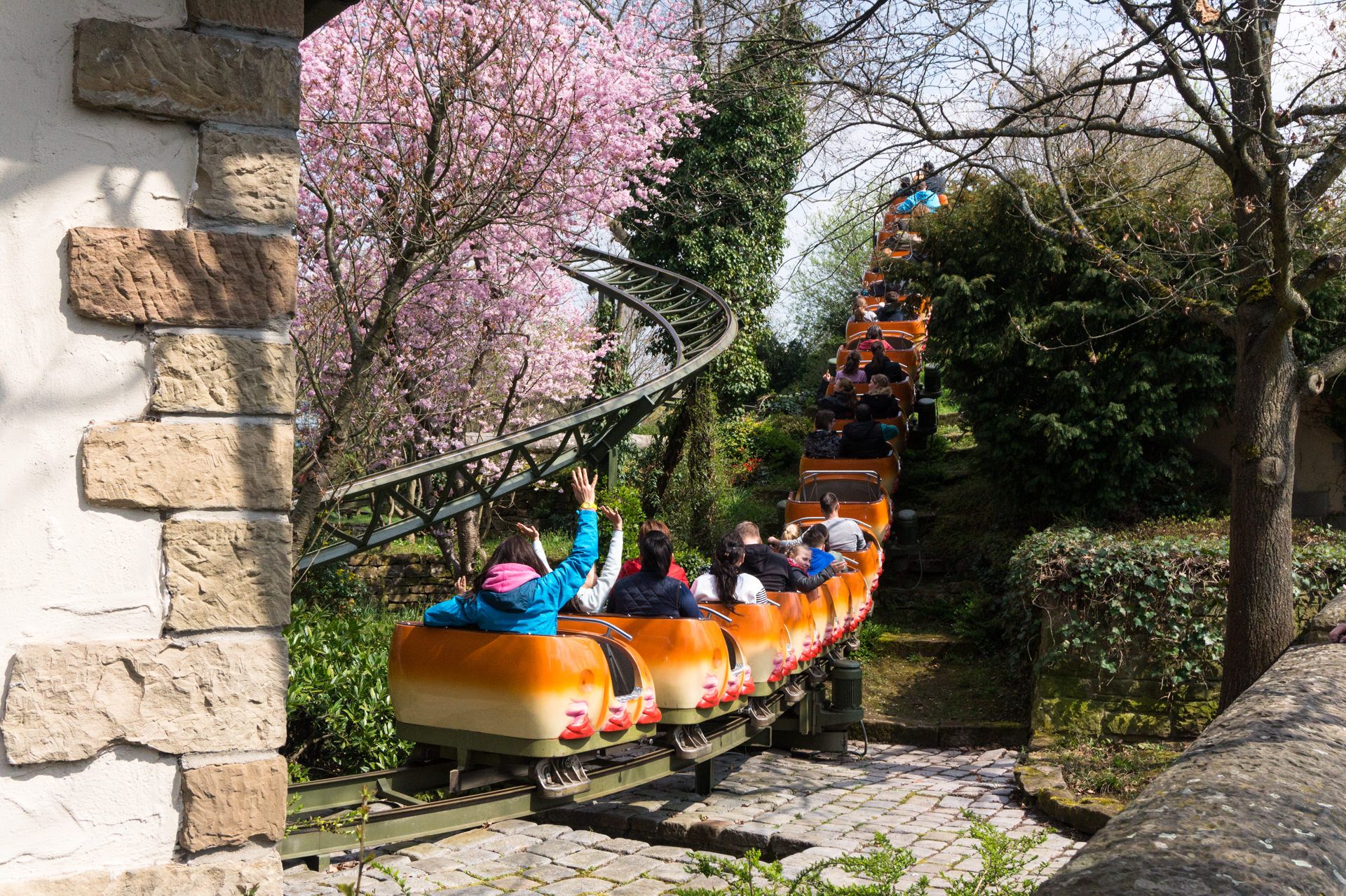
Of special interest, however, is the big roller coaster directly in front of us: The Super LS Coaster (actually L&S, for Loop & Screw) by Meisho. Wonderfully embedded in the landscape, the train takes you through a loop and two corkscrews.

But before I tell you too much about the route in the introduction I would suggest that we climb the stairs to the station and get on the train. After leaving the station we spend some time on the lift hill. At the top we leave the hill on a ramp with a minimal gradient and make a short right bend. High above the arcades we cross the first valley and start the big shot. In a wide right bend we increase more and more speed, whereupon the train disappears in a pit. Continuing with the same gradient, we now rush through a short straight section with our eyes now always on the next element. Mercilessly powerful we cross the following valley before we find ourselves headfirst in a loop. This is also passed with a lot of pressure. Afterwards the train shoots up a steep slope of a camelback. This camelback brings us with light airtime into the right sitting position for the next inversion figure. In a wide left turn along the minigolf course we slowly increase in cross slope before we are in the starting position for the two corkscrews. Two headstands later we are slowly pulled towards the station in a left turn. We cross the loop and dive down on a longer straight for the last time. Between the two corkscrews we are pulled up to the station level and shortly after into the final brake of the ride.

The Super LS Coaster keeps what its name promises and surprises you all the more with the excellent transfer of its built up speed. In addition, there are three overhead elements that are beautiful to ride and the generally very good ride characteristics of the layout, which ultimately invite you to ride it continuously.

Jupiter

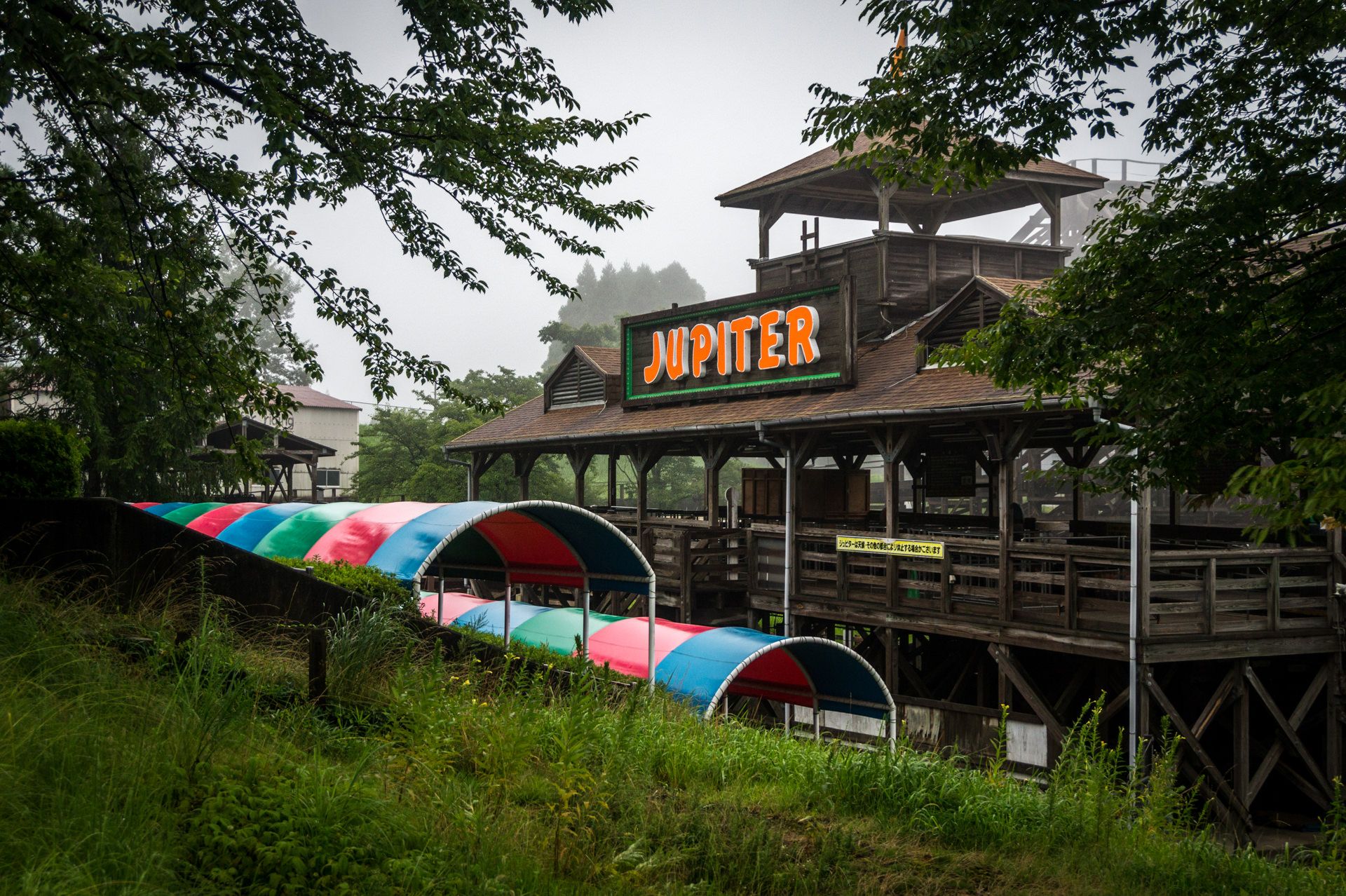
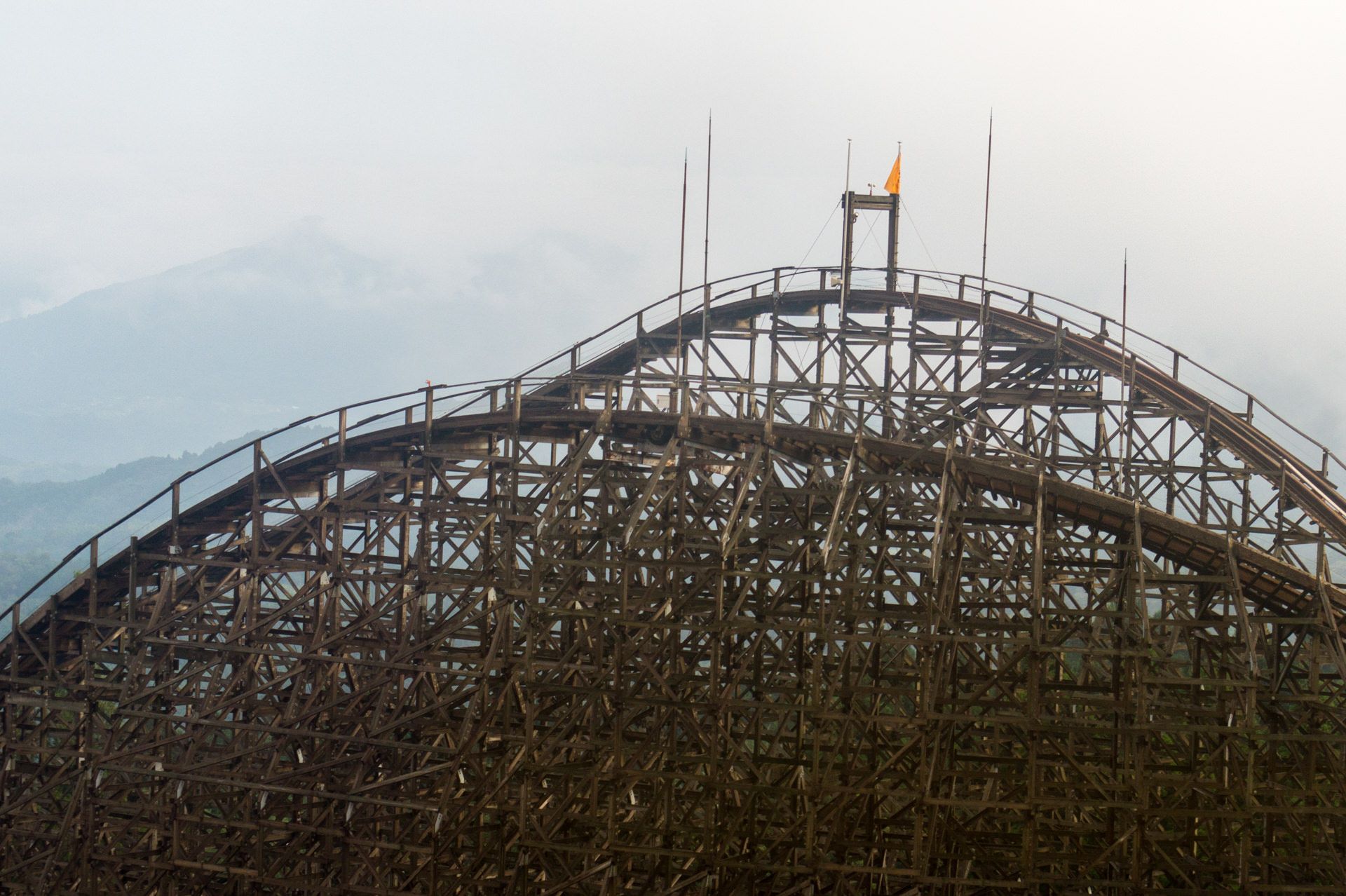
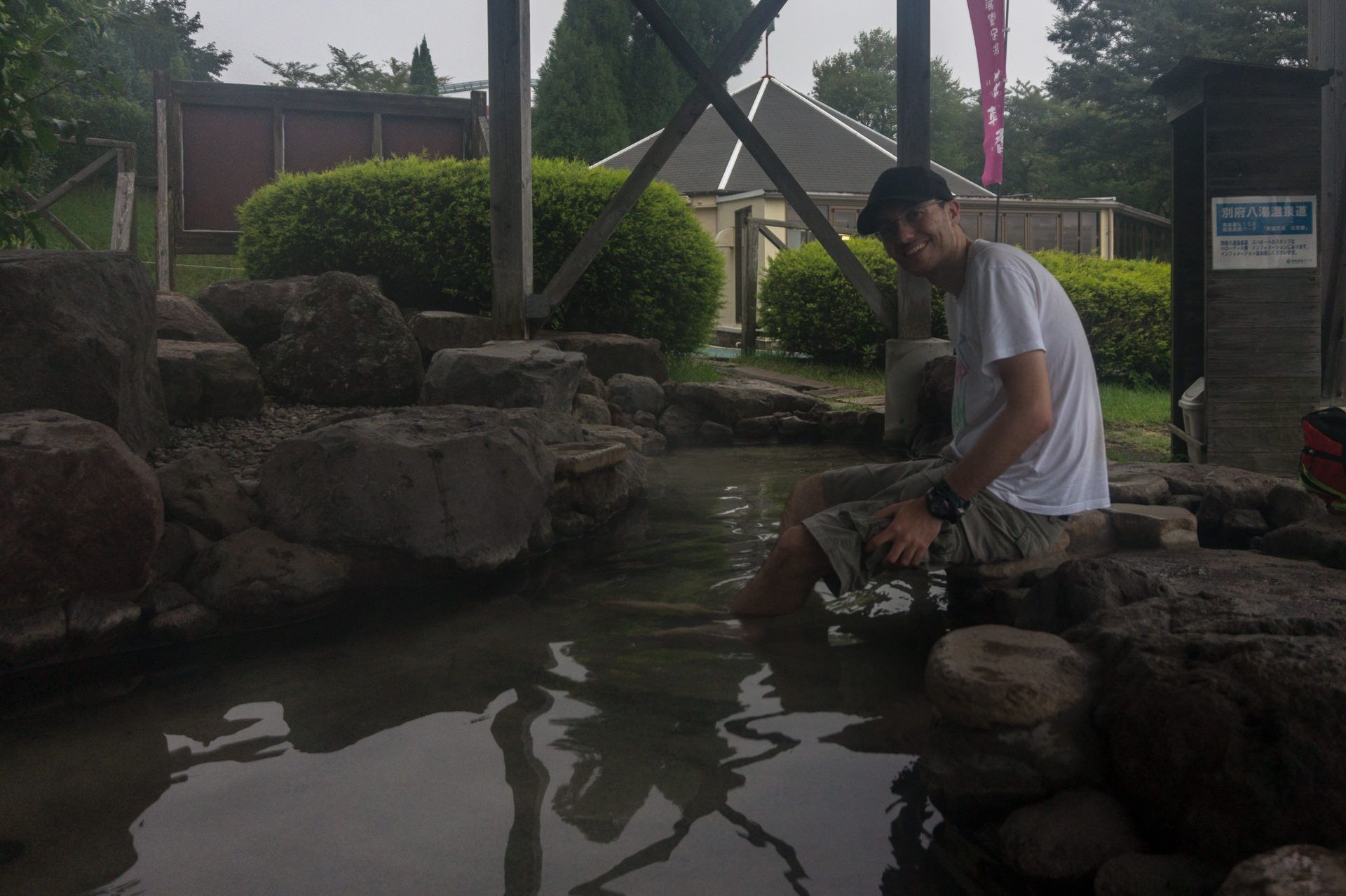
But before we dedicate ourselves to this activity, we first go on an exploration tour to the lower levels of the Kijima Kogen Park. Passing a beautifully designed children’s driving school and the neighbouring footbath (one of the typical Japanese onsen, just for feet) we are drawn to the wooden roller coaster Jupiter. We were told right at the entrance that the ride would not run today – but we didn’t know the reason for that yet. In fact, we thought that the freshly renovated trains were the reason for this and not the death of an employee (during routine work) only a few days before. Of course, such an accident should not happen and the outcome is tragic – so it’s perfectly understandable that the ride was not in operation until it was approved by the local authorities. On site, of course, it was necessary to overlook the loss of a ride – very difficult especially if one person wanted to ride all wooden coasters in the country. In general, however, one thing can be said about Jupiter: The ride looks (if you see it at all) extremely delicious; the first drop seems absolutely wild and in general the track with its 1600m seems to be extremely dynamic.

Mars

I will certainly stand in front of the roller coaster again at some point in the near future. In the meantime, however, we are drawn into the labyrinth Mars, which is actually subject to an extra charge. On two missions – one rather sporty, the other one for thinkers – it goes over several levels, peppered with various tasks through the wooden building. There are three stamps to find for the stamp booklet and if you have passed both missions, you even get a golden sticker. Indeed a fun for the whole family, which might be a great idea to be introduces into serveral western countries.

Poseidon 30

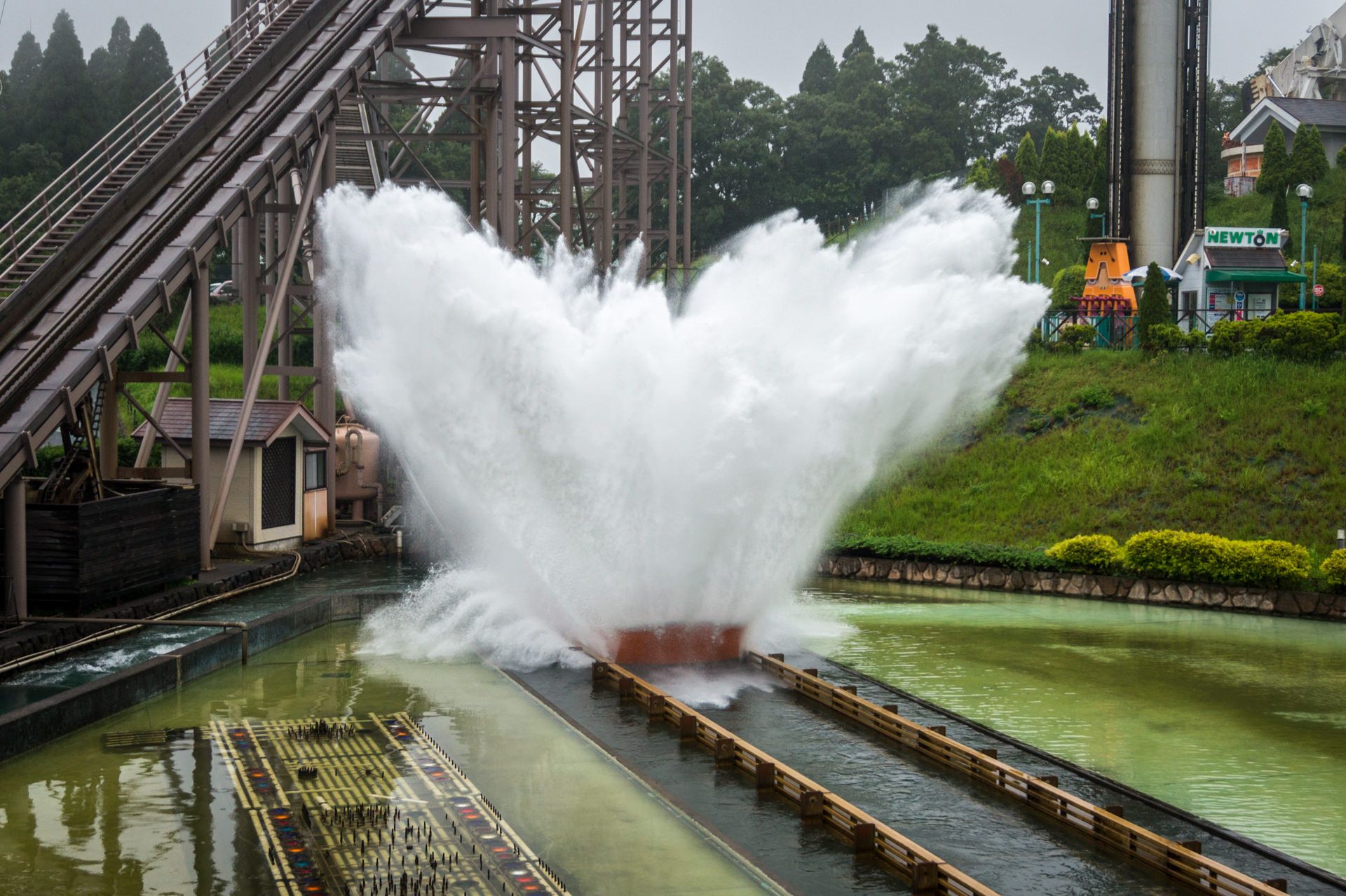
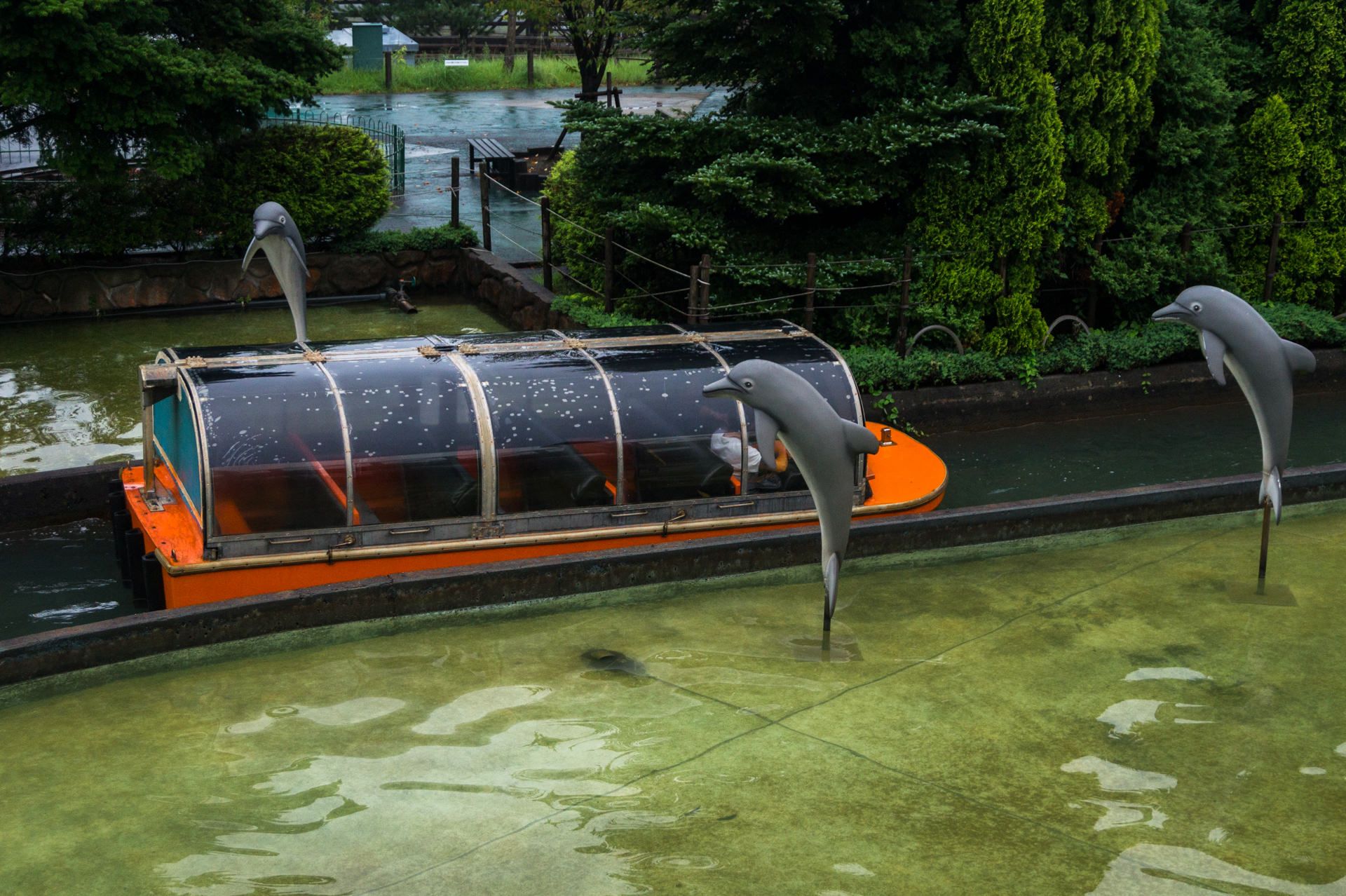
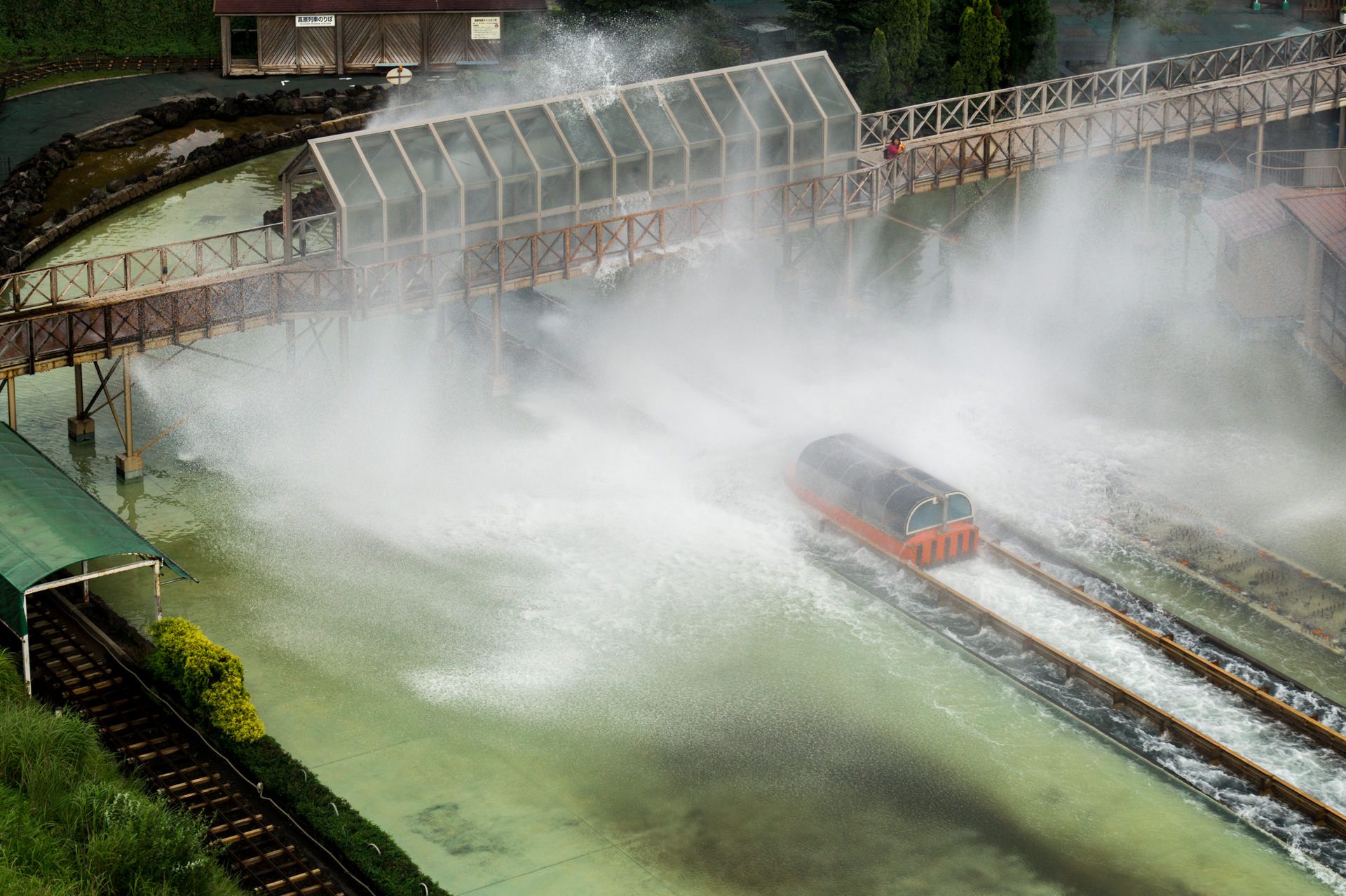
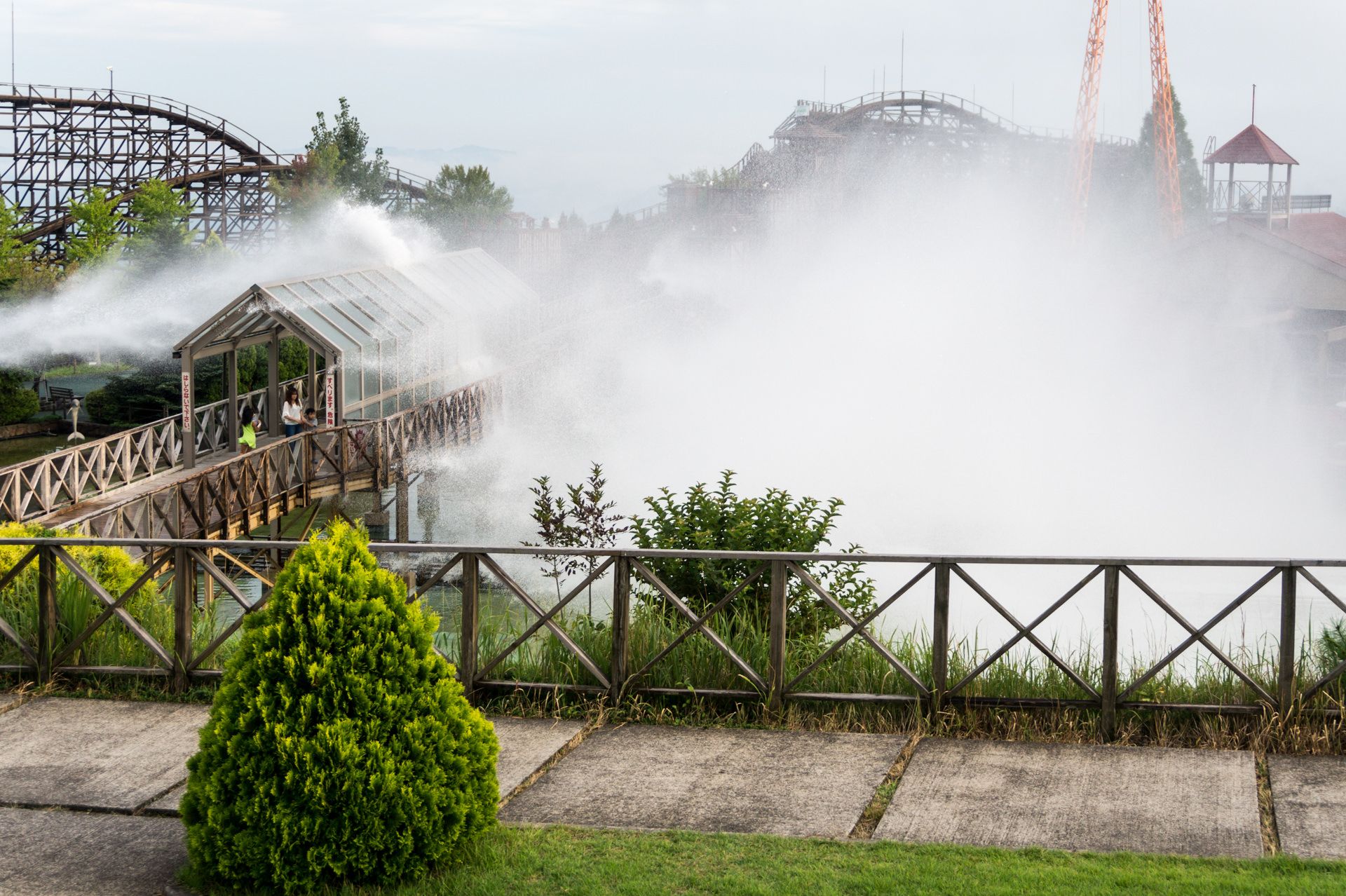
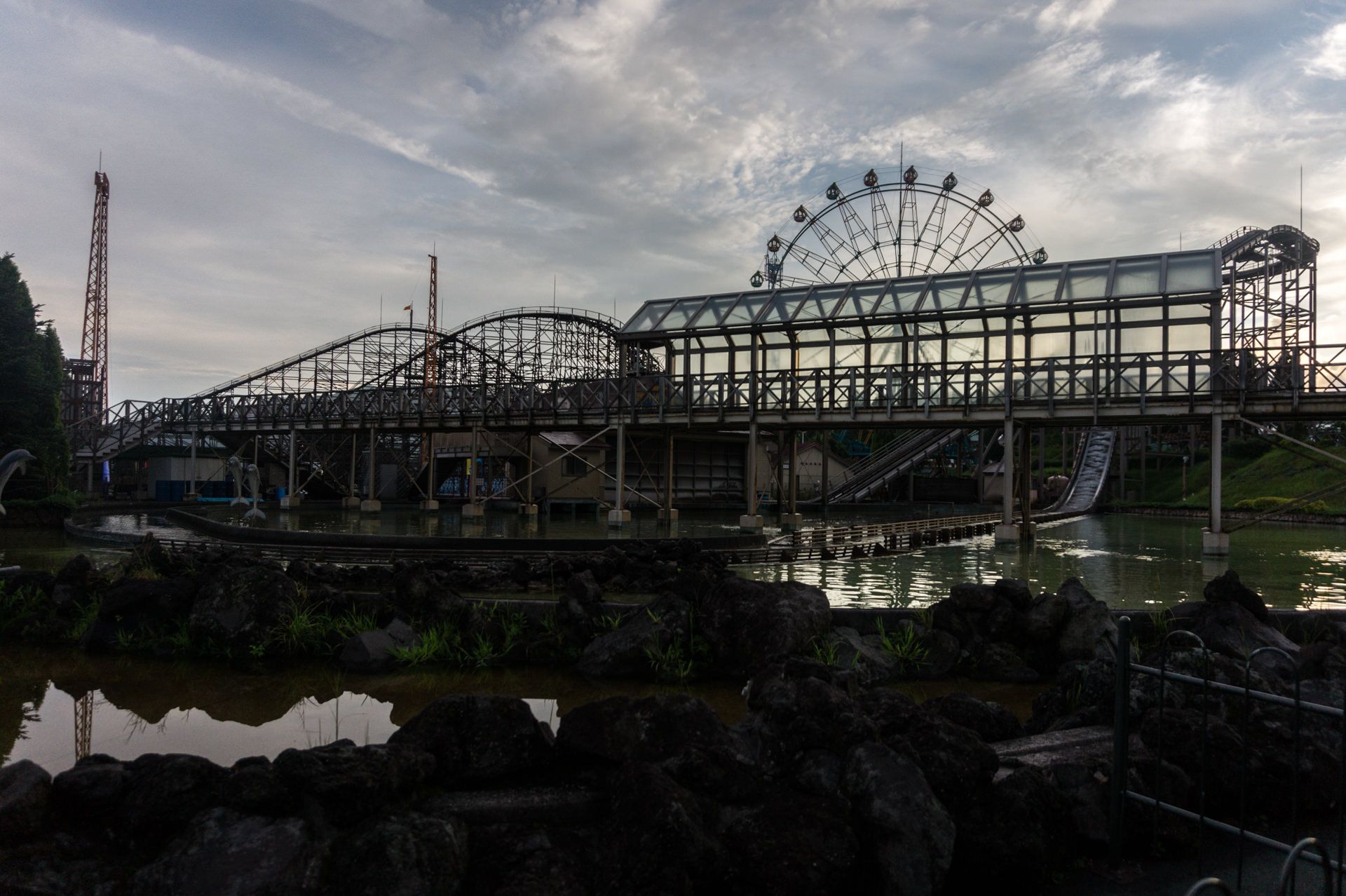
The same applies to the covered water ride Poseidon 30 – whereby the roof of the boats should only be offered as an option for the water-shy park guests. Built by the manufacturer O.D. Hopkins, the Spillwater stands out above all for its impressive wave, while at the same time the passengers and spectators are not getting wet at all. For a water ride this does not sound very impressive, but who am I kidding? It’s about boats. The boat, which at that time fulfilled an involuntary abort criterion of the onride veteran Stilbruch on his Japan trip.

Actually, it’s quite simple: Put your foot on the roller in the floor space and push your harness when the boat hits the wave and you will survive without any insury; promised ;-). We were patiently taught how to do it and after we survived it we were happy to get back on board again and again during the day. However, if something would have happened, it would have been the conceivably most unfavourable tour course. But as it is already said Tidal Wave in the English theme park Thorpe Park: “What is the worst that could happen? Well, it is advertising for Dr. Pepper, but still – this is the only way to start a Japan tour.

Ice World

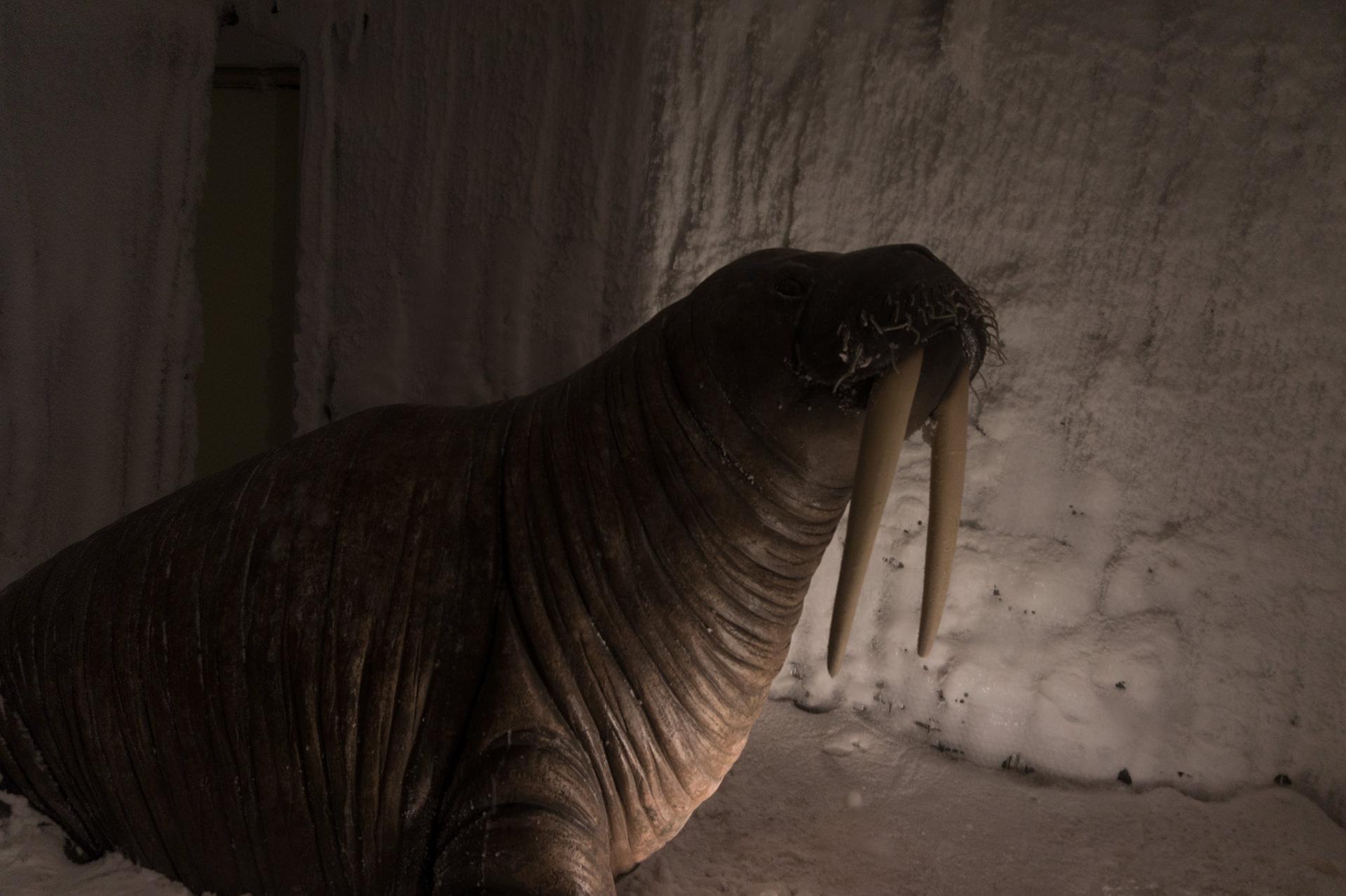
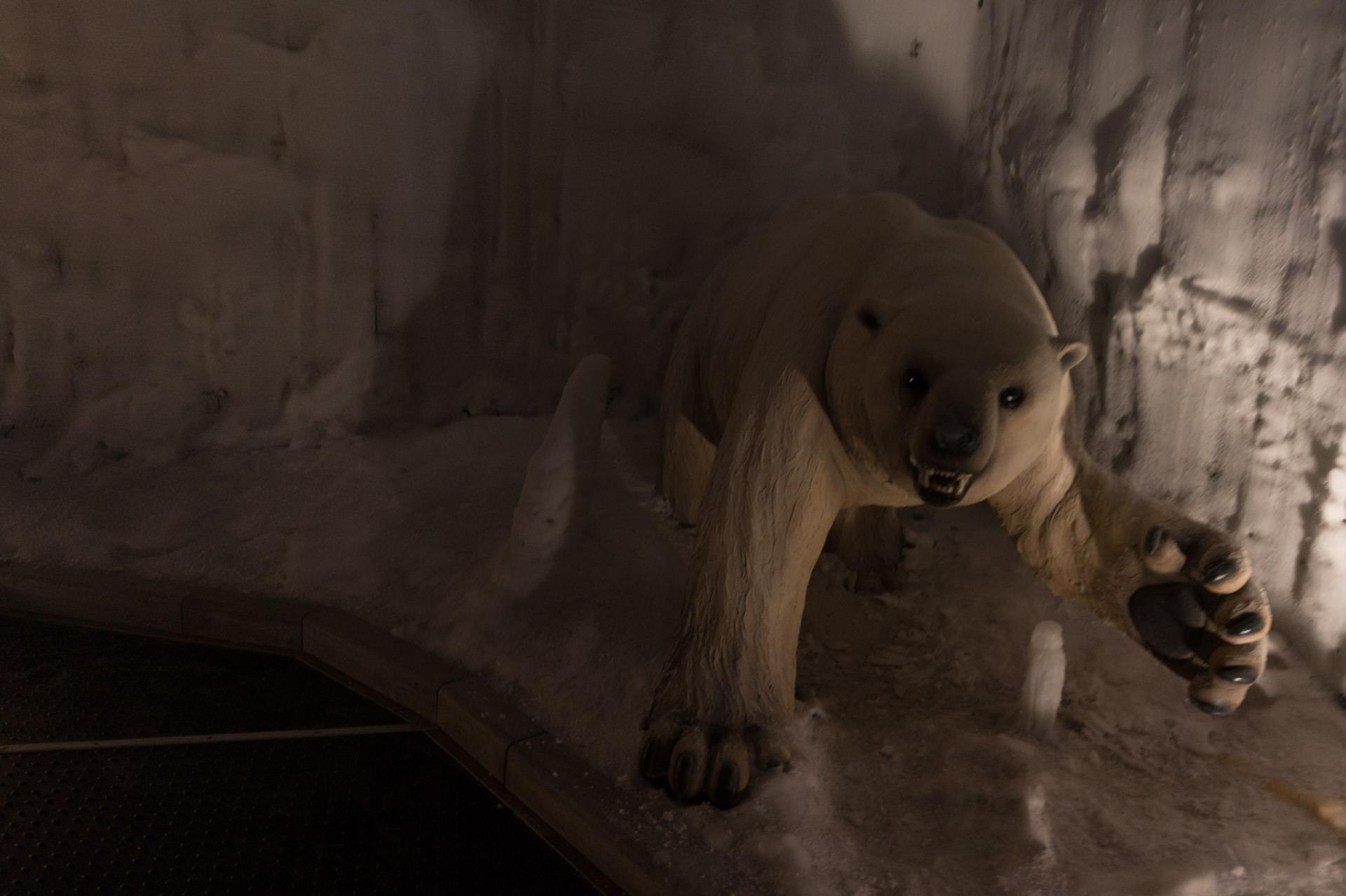
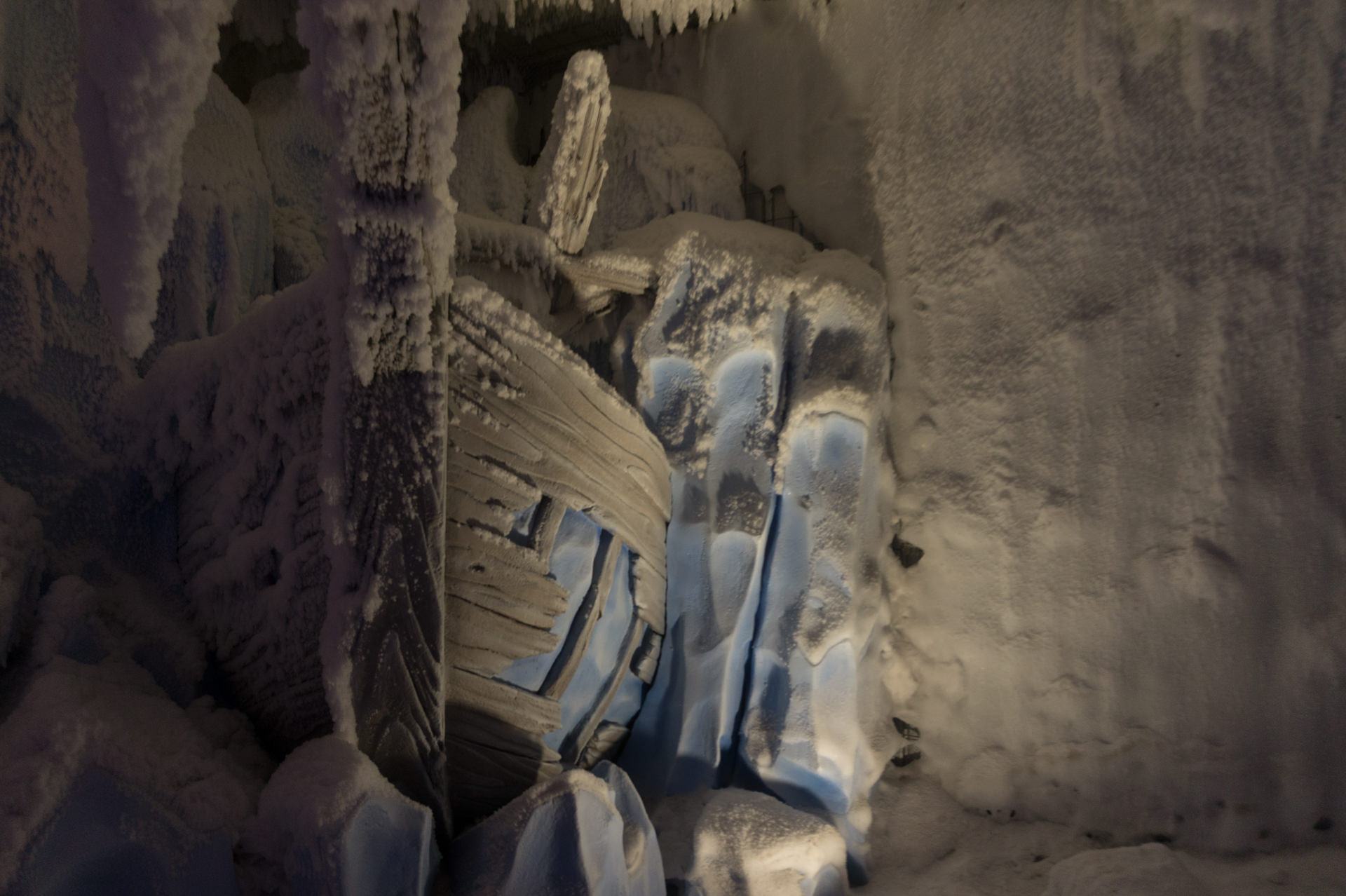
Survived, but with the best will in the world hardly or not at all refreshed, we were now drawn to a very special attraction: the nicely designed cold store Ice World. With a temperature difference of more than 60°C, we walked in very small steps through the cold chamber cooled down to -30°C and past all kinds of beautifully designed scenery.

Sky Pallet

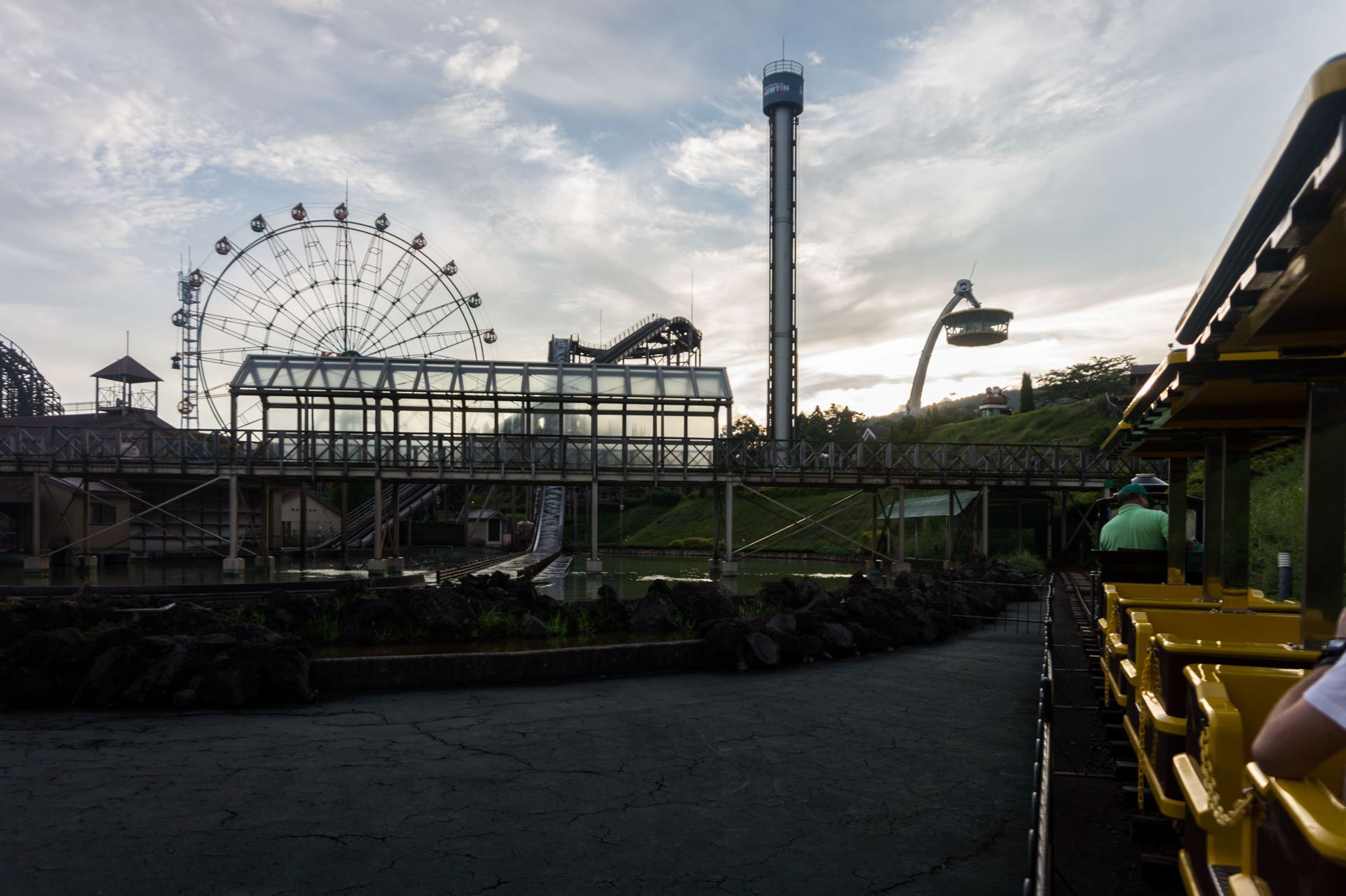
The next special feature of Kijima Kogen Park was the nearby Giant Ferris Wheel Sky Pallet, where, in addition to the normal gondolas, you can also experience the ride in a kind of open-air gondola at right angles to the direction of travel. Secured by a shoulder restraint, the ride experience intensifies almost automatically, but the field of vision is limited to only one side. Thus, it is a pity that such gondolas are much too rare.

Newton

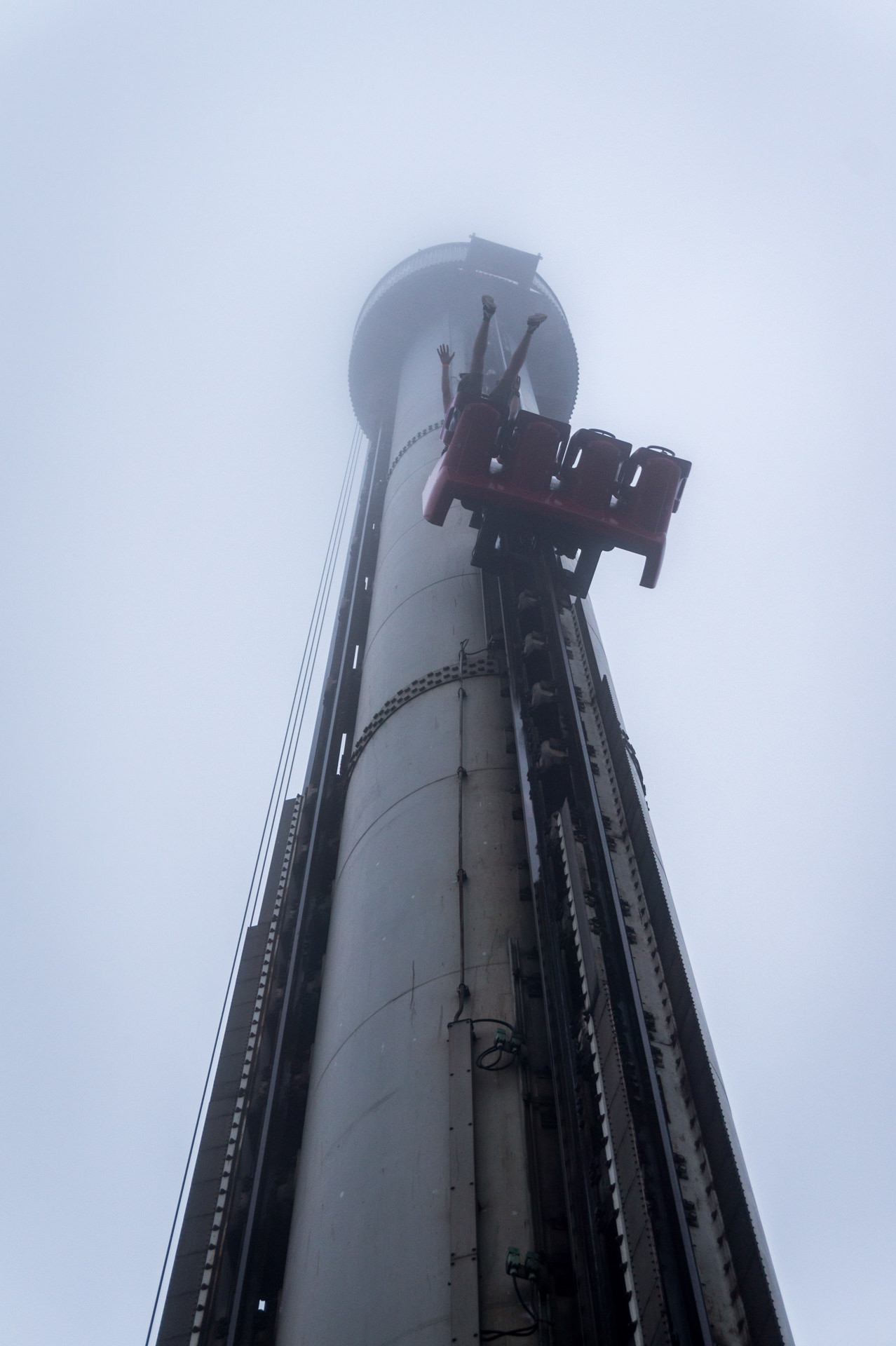
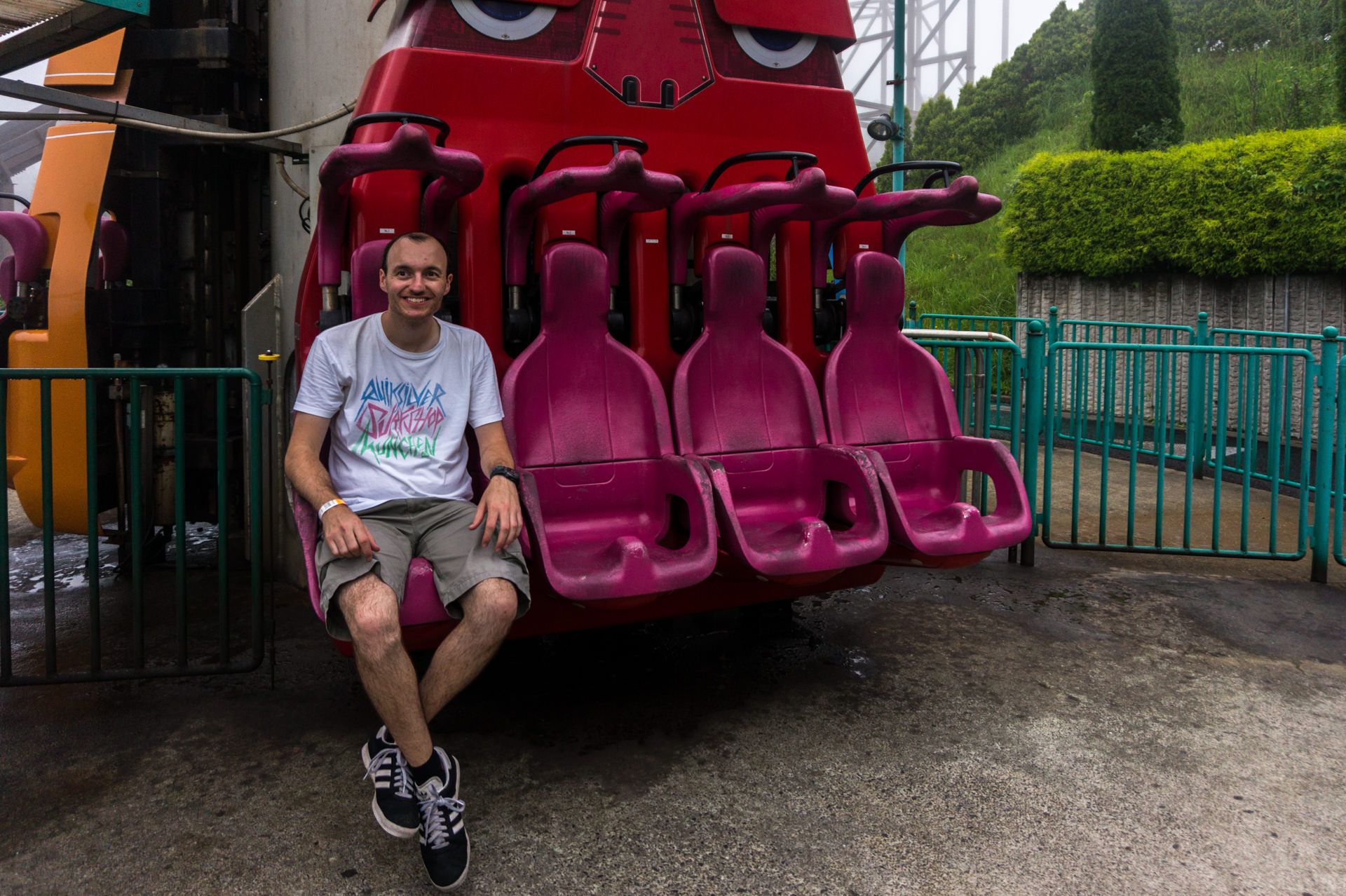
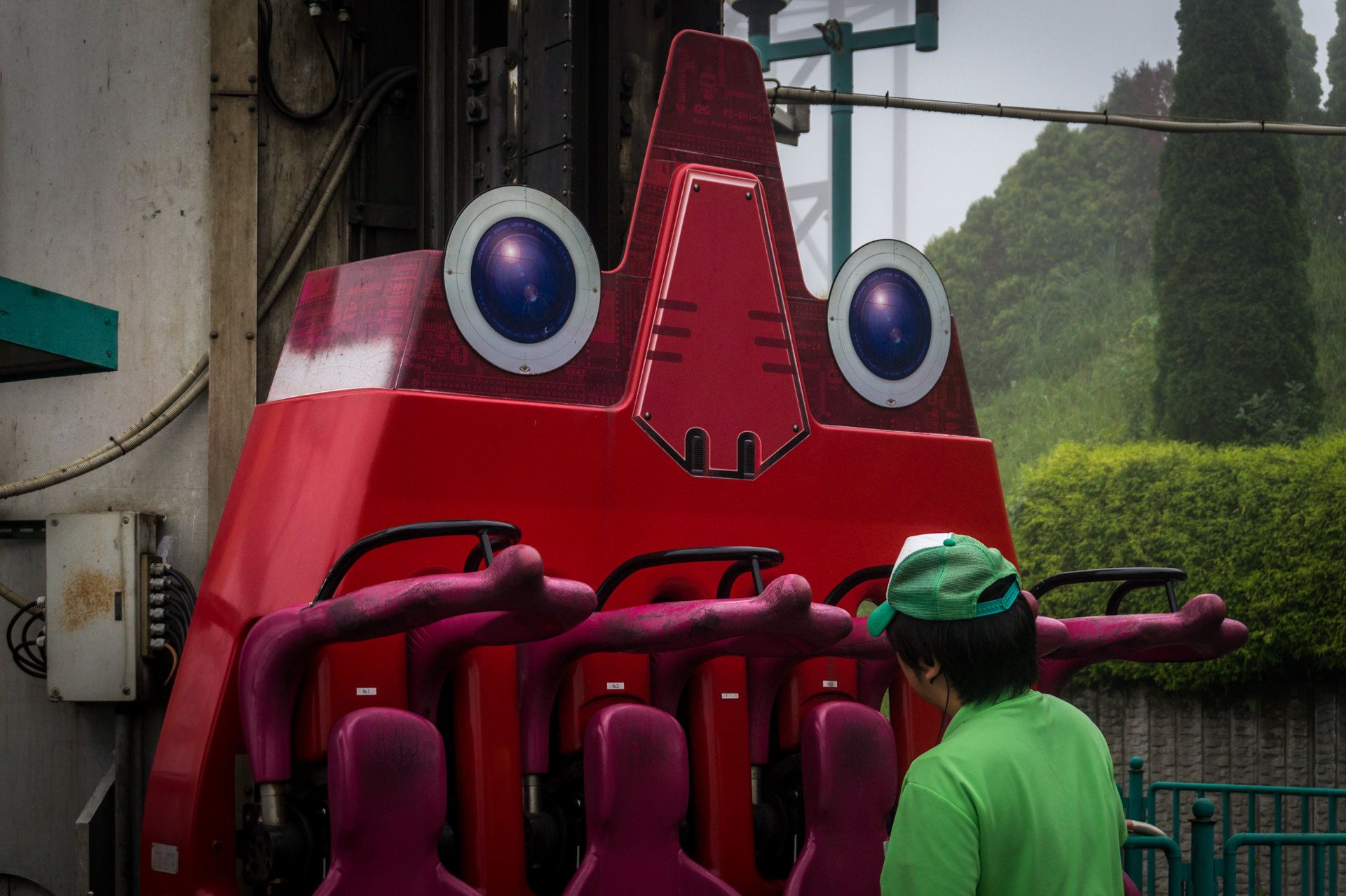
More often, also in Japan, you can find free fall towers. The local example is called Newton and like an apple, it drops you from a tall height to the ground. The Japanese have an interesting understanding of safety, and although they put additional padding everywhere, they do not use it in free fall towers; even the belts known from Europe to secure the safety bar are simply missing. This results in an even more intensified overall experience that can only be topped by the extremely creative gondola design.

A similarly creative design can be found on the nearby observation tower, which has a stork design and works like a Flying Island ride. From up here you have a wonderful view of the plateau with all its rides, which we will now take a closer look at.

Dragon

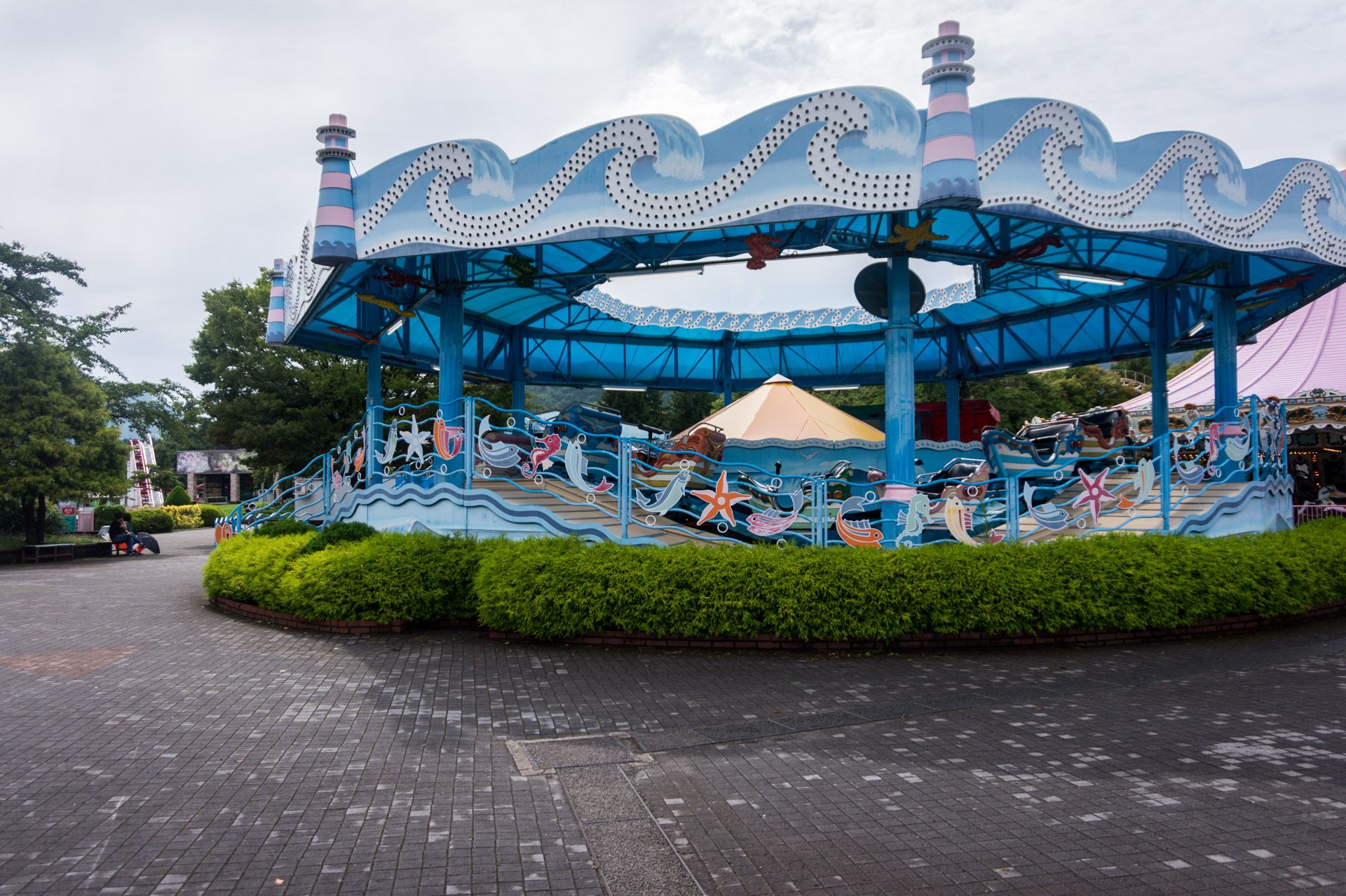
Through a small children’s area, including a dragon roller coaster by the manufacturer Zamperla (a small oval with a central downward helix) and past the large paddling pool, which is used as a skating rink in winter, we were drawn to the upper level. Here you can find all kinds of classic flat rides, such as a teacup ride, a horse carousel and a wave swinger, but also rides such as a sea storm ride, a flying carpet and a large swing boat.

360° 3D cinema

Of particular interest was the 360° 3D cinema, where a typical Japanese horror film was shown in the afternoon. Accompanied by all kinds of effects, the film worked extremely well and the 3D effect was also great – which is why we were drawn back to this kind of cinema again and again during the rest of the tour.

Flash Battle K and Shooting Pirates

The same is true for interactive games, like Flash Battle K, where you had to hit buttons – which are spread all over the room – like crazy to score as many points as possible. With the same premise, but conceived as a classic interactive theme ride, Shooting Pirates presents itself to park guests. Similar to the dark ride Capitán Balas of the Spanish amusement park Isla Magica, the ride goes through an elaborately designed pirate theme in small round chaises. The ride is very impressive, but it is also incredibly short and the end comes very fast.

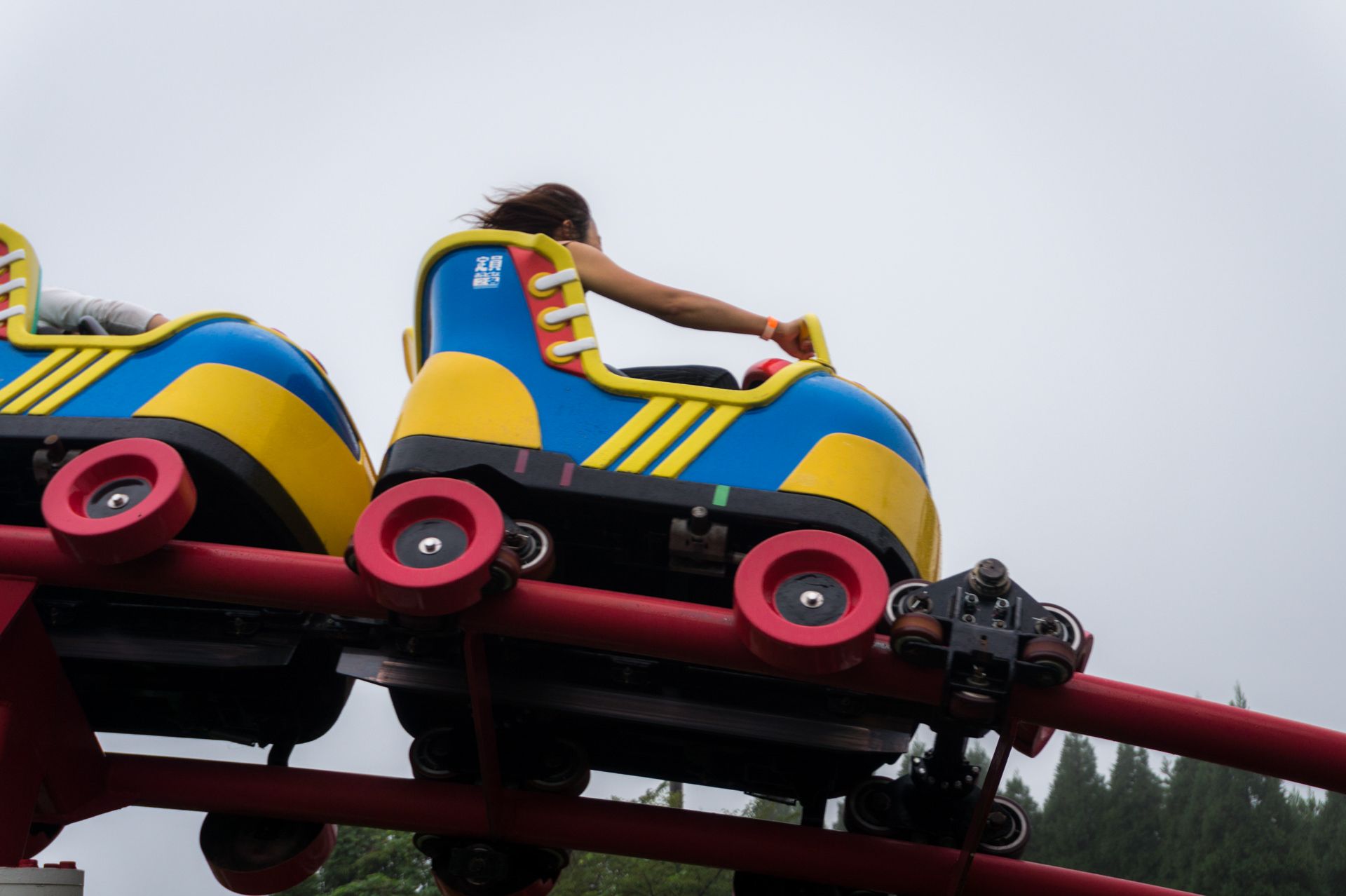
Roller Skate Coaster

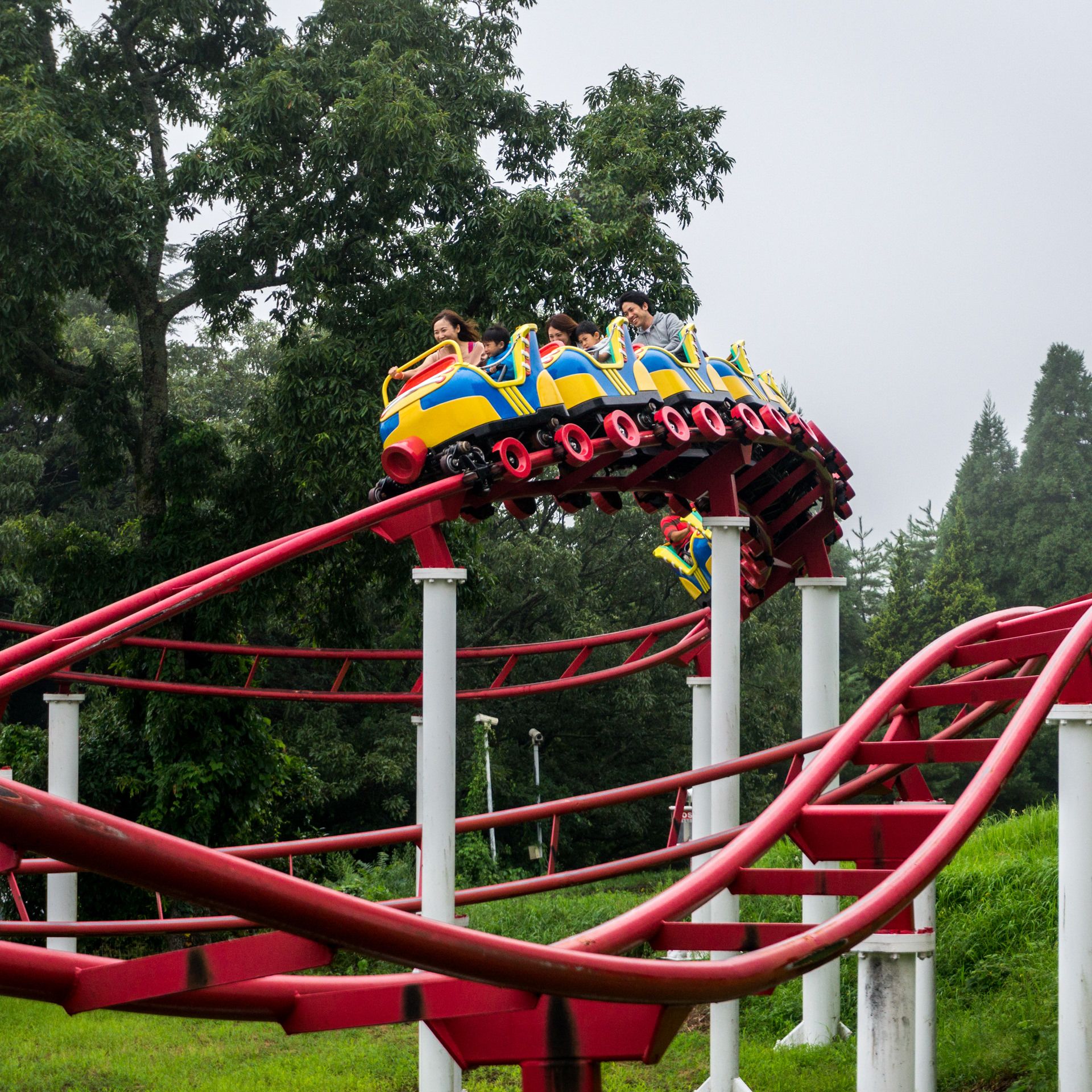
Right next door you will find the laser labyrinth (extra charge) and the children’s roller coaster Roller Skate Coaster in the classic roller skater layout of the manufacturer Vekoma. Accordingly, the ride offers some racy curves and helices, perfectly tailored to the young park guests who like to get on and off.

Moon Parade

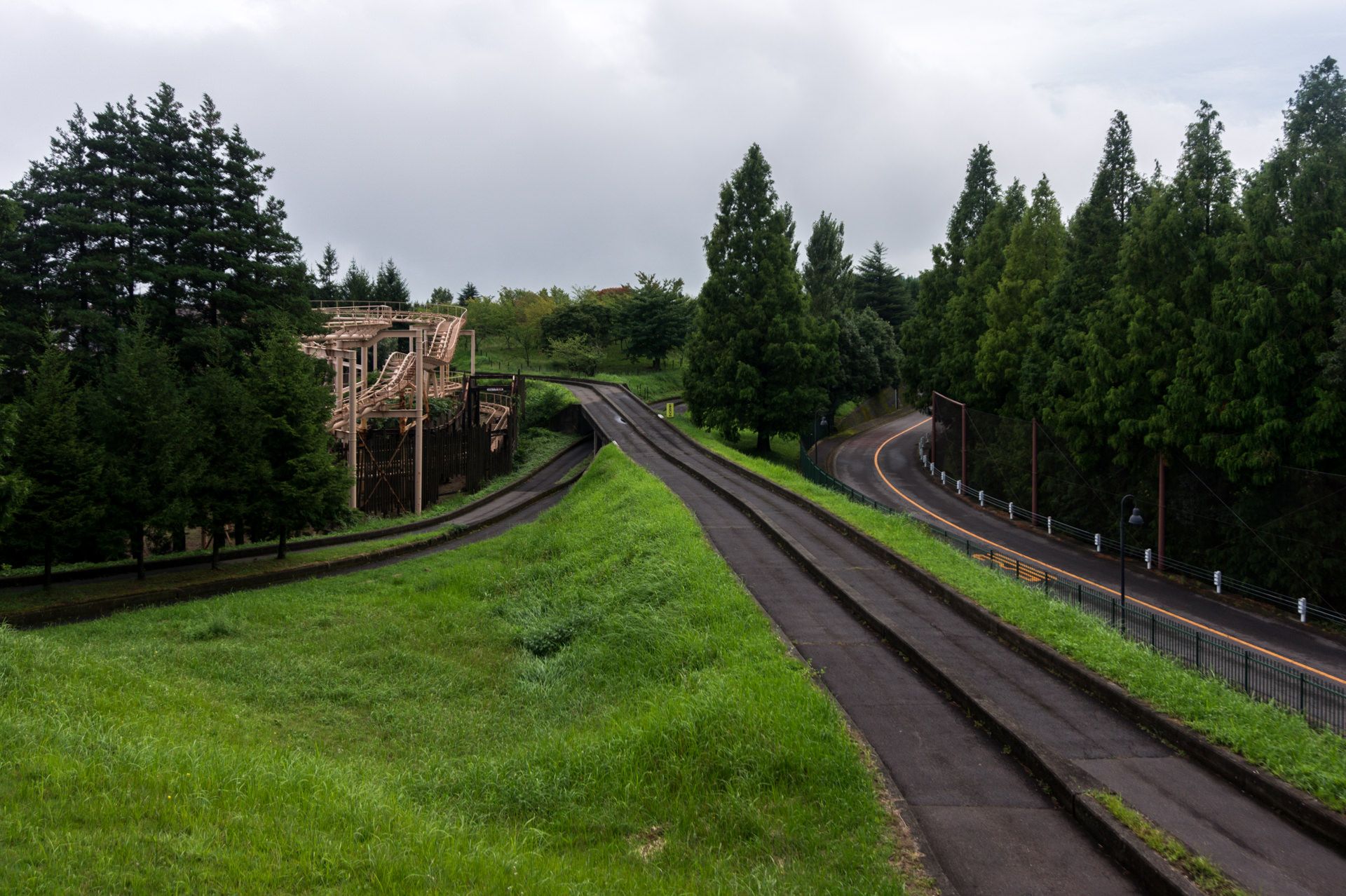
At first sight, the Monorail Moon Parade looks similarly familiar, at least until you get into the car. Instead of using electricity, you drive along the track with a combustion engine, and the best part is that we can steer. We can only control the speed, but for everything else there is a very long go-kart track directly under the layout.

Gold Rush

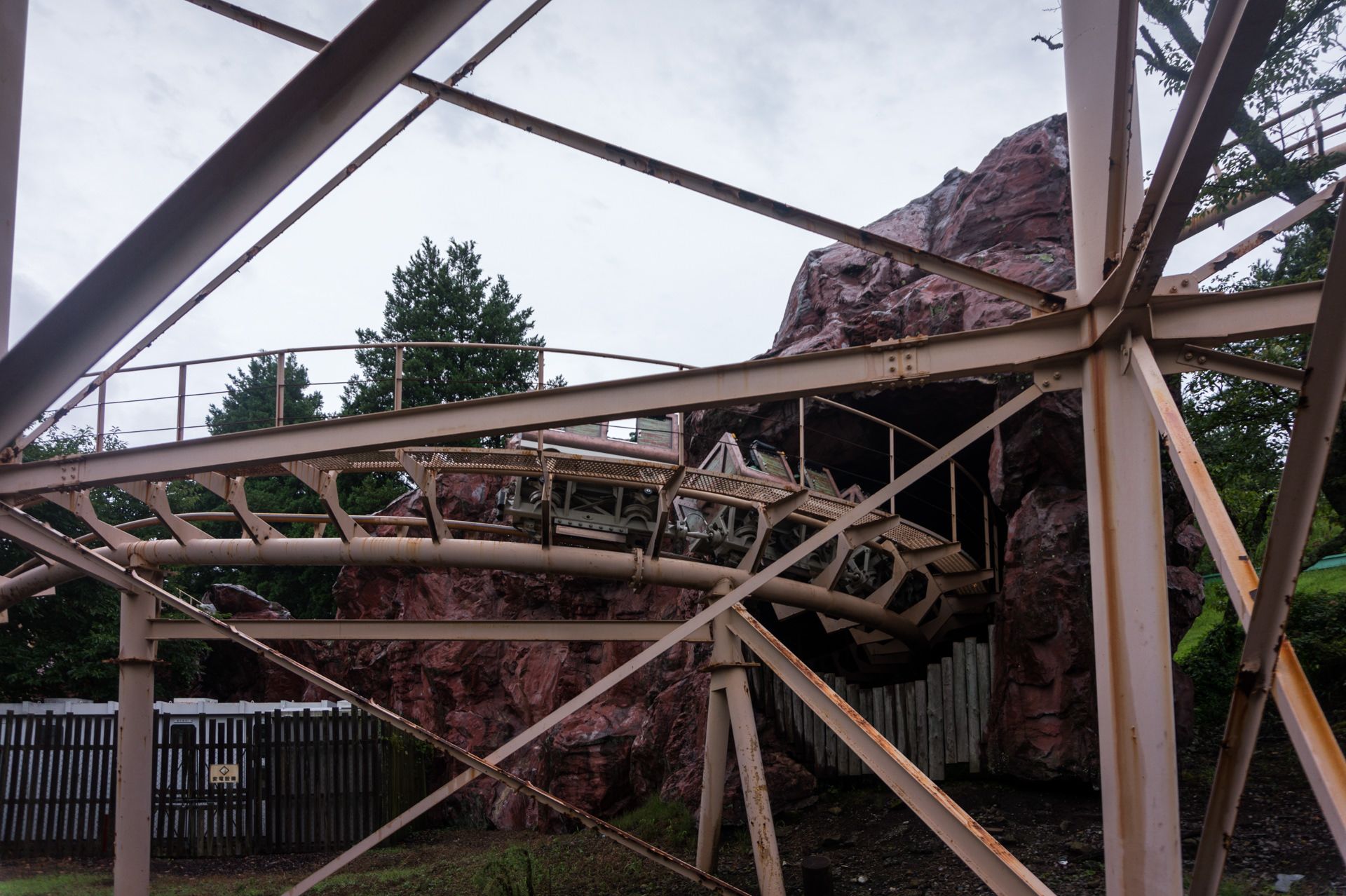
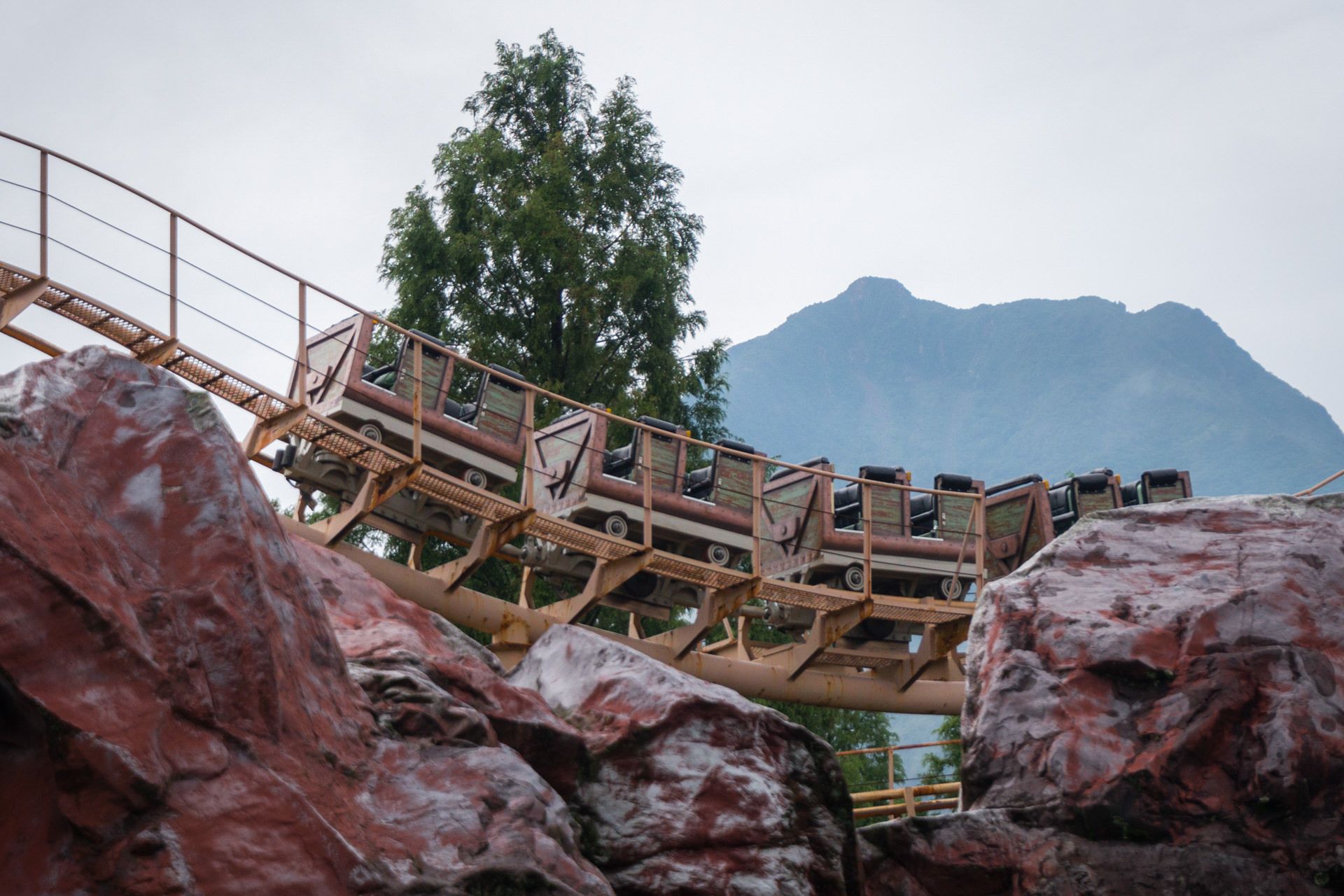
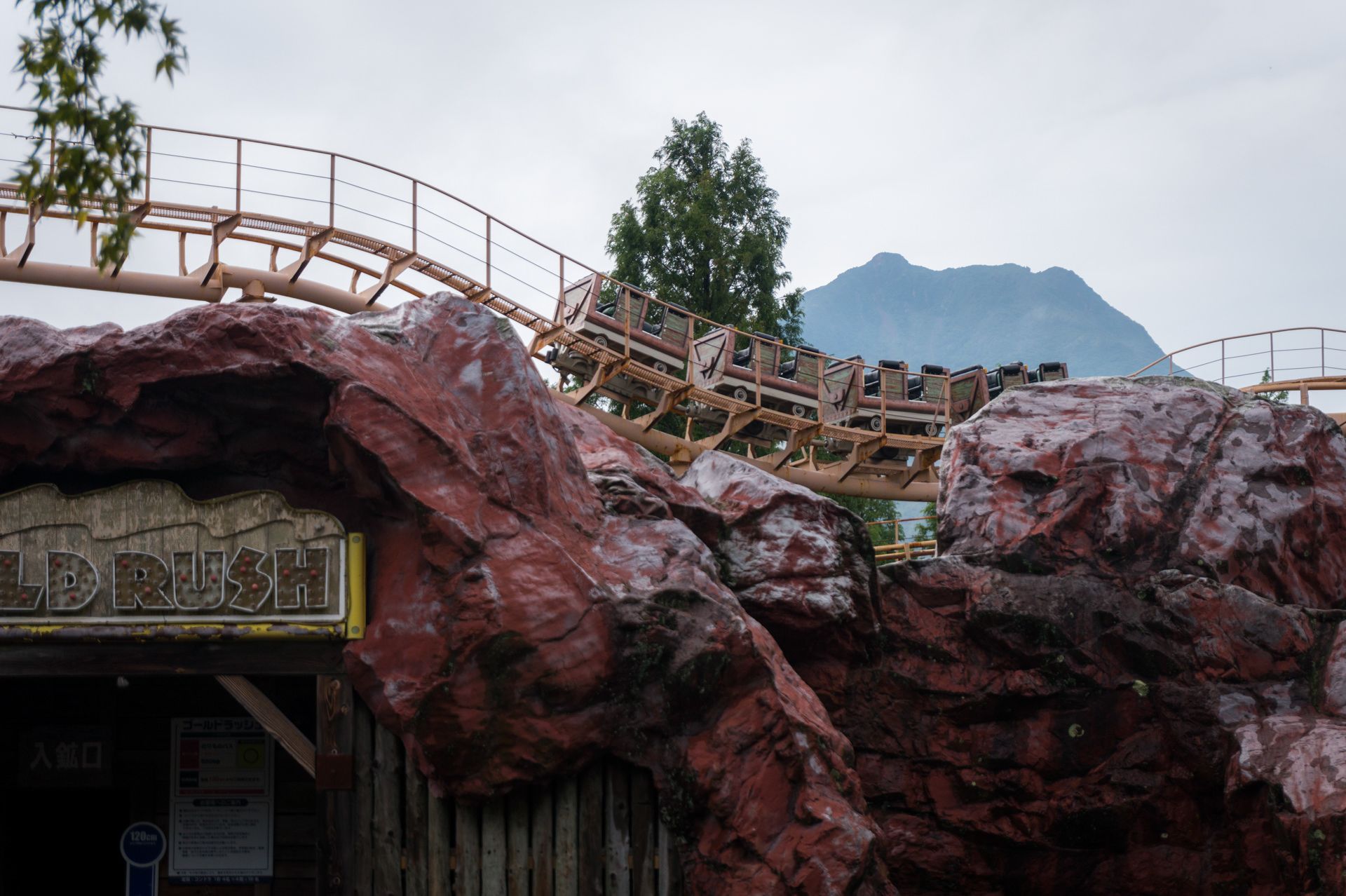
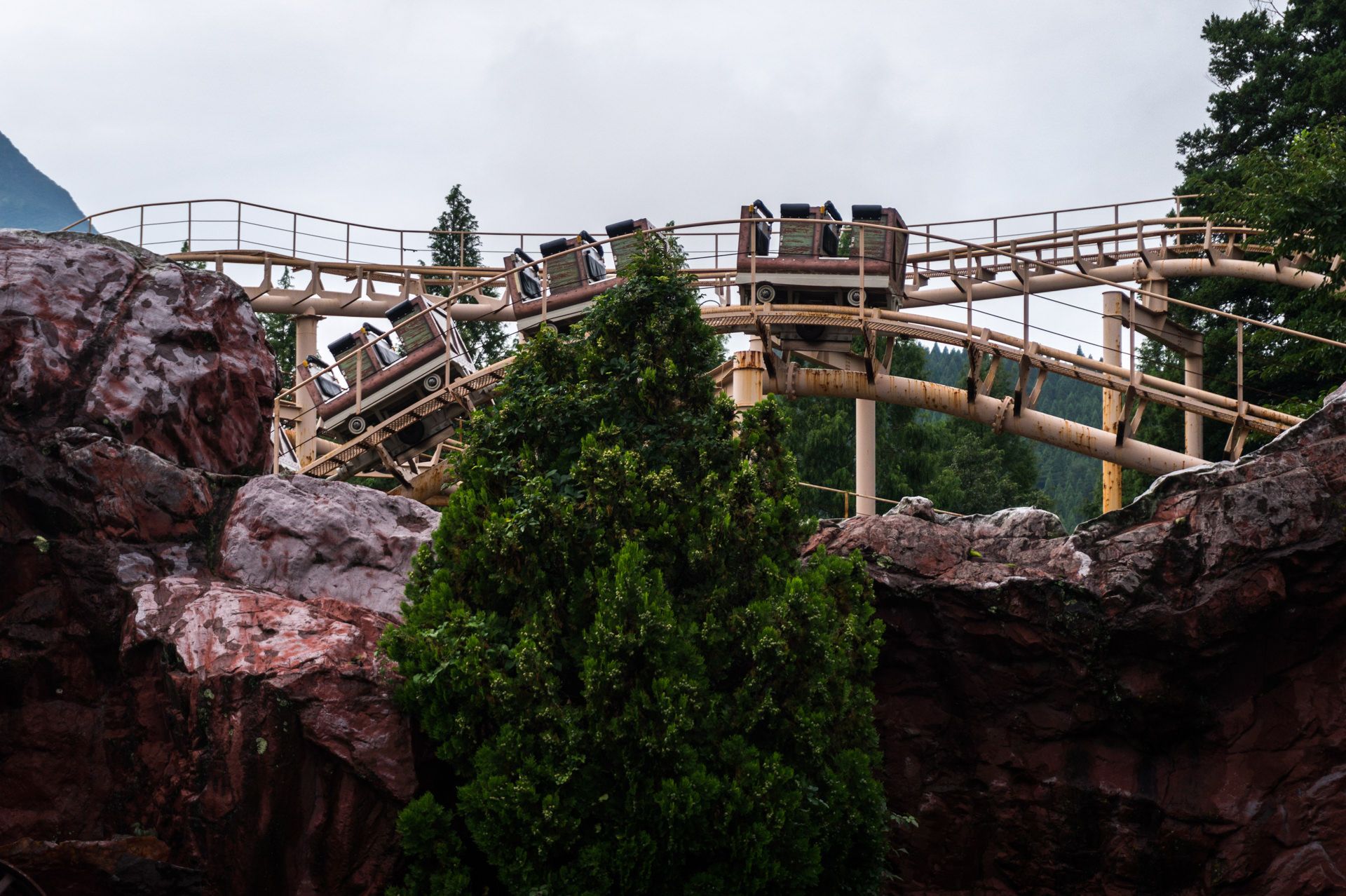
Now let’s get to the last attraction of Kijima Kogen Park and my 450th roller coaster: Gold Rush. Nestled in an artificial rock massif, the ride is, at least in the front part of the train, incredibly brute and wild. After the lift ascent, you curve through the layout level by level, starting with a tight left turn, which immediately leads into the first, very flat drop. Interestingly, the ascent is much steeper and the hilltop is very narrow, so you get in contact with the bar and experience some airtime. After a left bend, the game is repeated again on a small scale. After a wide right bend a short dip follows, after which we gain a lot of momentum on a shot. During this we dive into the rock massif, always with our eyes on the coming evil. As if we did not deserve it any other way, we climb a small ascent, the crest of which is once again very narrow and then leads into a curve. Absolutely surprised by the enormous interplay of all forces, we leave the cave under loud laughter and devote ourselves to the rest of the course. Over a powerless camelback we reach another turn-around curve, on which we are now forwarded parallel to the station. In a left-hand bend we cross under the hill we just passed, and with a constant lateral inclination we now cross a short straight line, as well as the last bends in the direction of the station.

I did not expect much from the Gold Rush roller coaster, but it is truly a rush of the senses. Rather rusted than covered with gold dust, the ride convinces with its slick ride characteristics and its, at least in the front part of the train, absolutely terrific transitions. All in all, the Gold Rush roller coaster is a great family roller coaster, which fits perfectly into this amusement park.

Pictures Kijima Kogen Park

Conclusion Kijima Kogen Park

The Kijima Kogen Park was a very special amusement park for me, as it was not only the first one I visited in Japan, but also my 100th visited amusement park! Therefore, it is even better that I really liked the park very much. The atmosphere of the park reminds in large parts of the Danish amusement park Tivoli Gardens, which is also due to its absolutely great gardens. The rides all know how to entertain, which is why I would like to come back sooner than later, definitely not because I miss a ride on the wooden roller coaster Jupiter but rather because I would like to explore the area around Beppu. The hot springs are really appealing to me.


What is your opinion about Kijima Kogen Park?  Just write it in the comment field below the report or visit our social media channels:


Click here for the next report of the Titanic Max Tour

Full speed ahead on Karacho

Preface

Erlebnispark Tripsdrill is not a good theme park. Although my reports always reflect a very differentiated and well-considered opinion, it makes sense for once to anticipate a judgement and play with open cards. I don’t like this park and I will probably never like it. The fact that I visited the park for a second time after 2009 was only because of the rather new launch coaster Karacho and even for this one I would never want to visit the park again, but more about that later. In general, the Erlebnispark Tripsdrill is overpriced, has an inferior gastronomy and demands a small contribution at every corner to be able to use the full offer. The wildlife park that belongs to the park is, as also the parking, included in the entrance fee, but is probably not really visited by many visitors; after all, the only reasonable connection to it is your own car.

History of the Theme Park

It all began in 1929 with the construction of the Altweibermühle zu Tripsdrill. Eugen Fischer, the owner of an inn in Treffentrill, took the idea of building the Weibermühle von Tripsdrill from the singspiel by Georg Anton Bredelin after some hikers in the region had explicitly asked for the mill. The allegedly rejuvenating cure of the wild slide was soon on everyone’s lips and thus Tripsdrill steadily developed into a popular excursion destination in the region. In 1957 the first zoo in the immediate vicinity of the mill followed and from the 1960s on the first rides.

Tour of the park

The rides of the front area

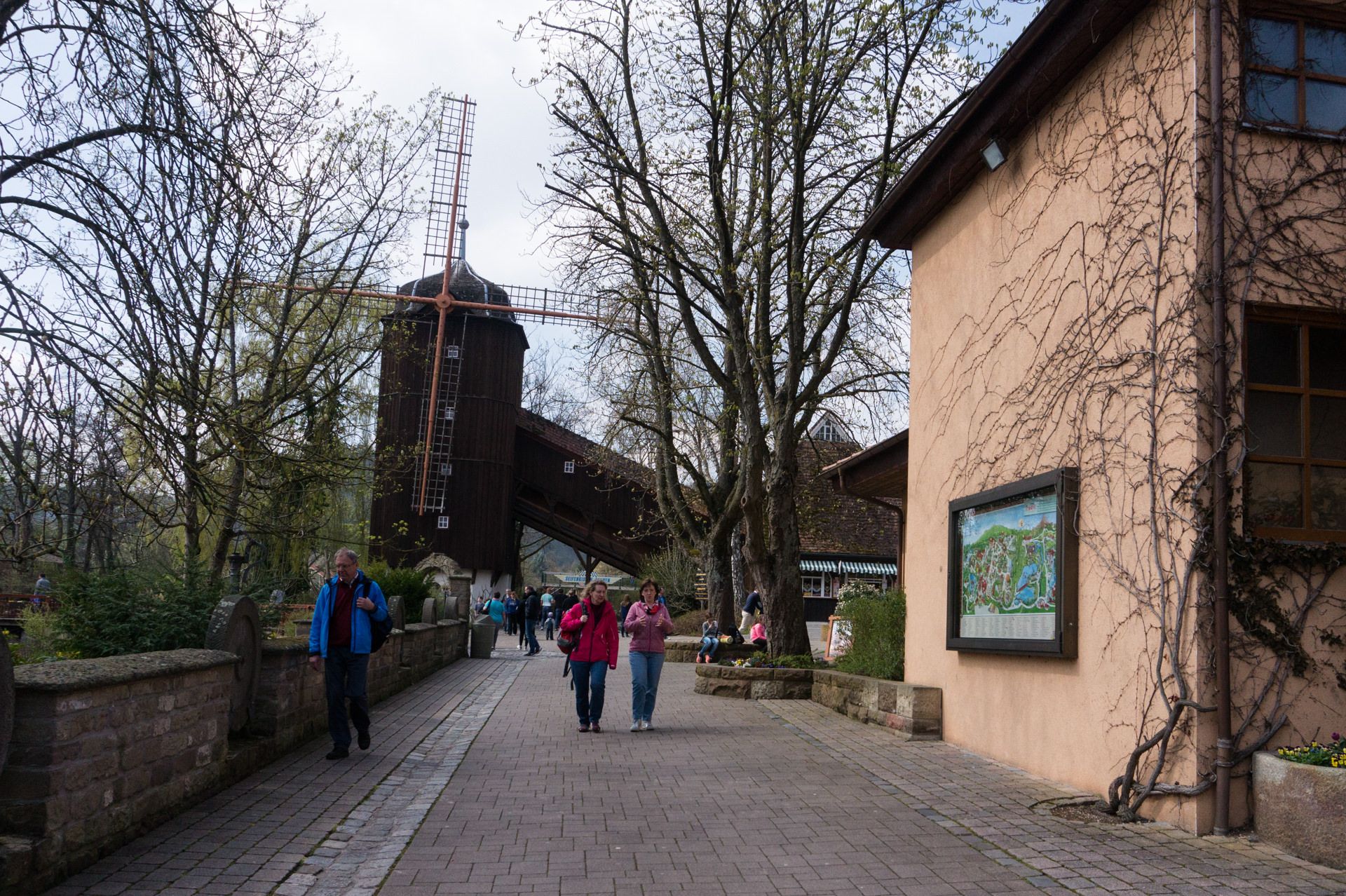
When you enter the park, you will immediately find yourself on the nicely designed village street, where you will find the pleasant panoramic Maibaum ride next to the Gaudi quarter, a covered children’s playground featuring a free fall. Here you can also buy the tickets for the crossing to the Wildparadies.

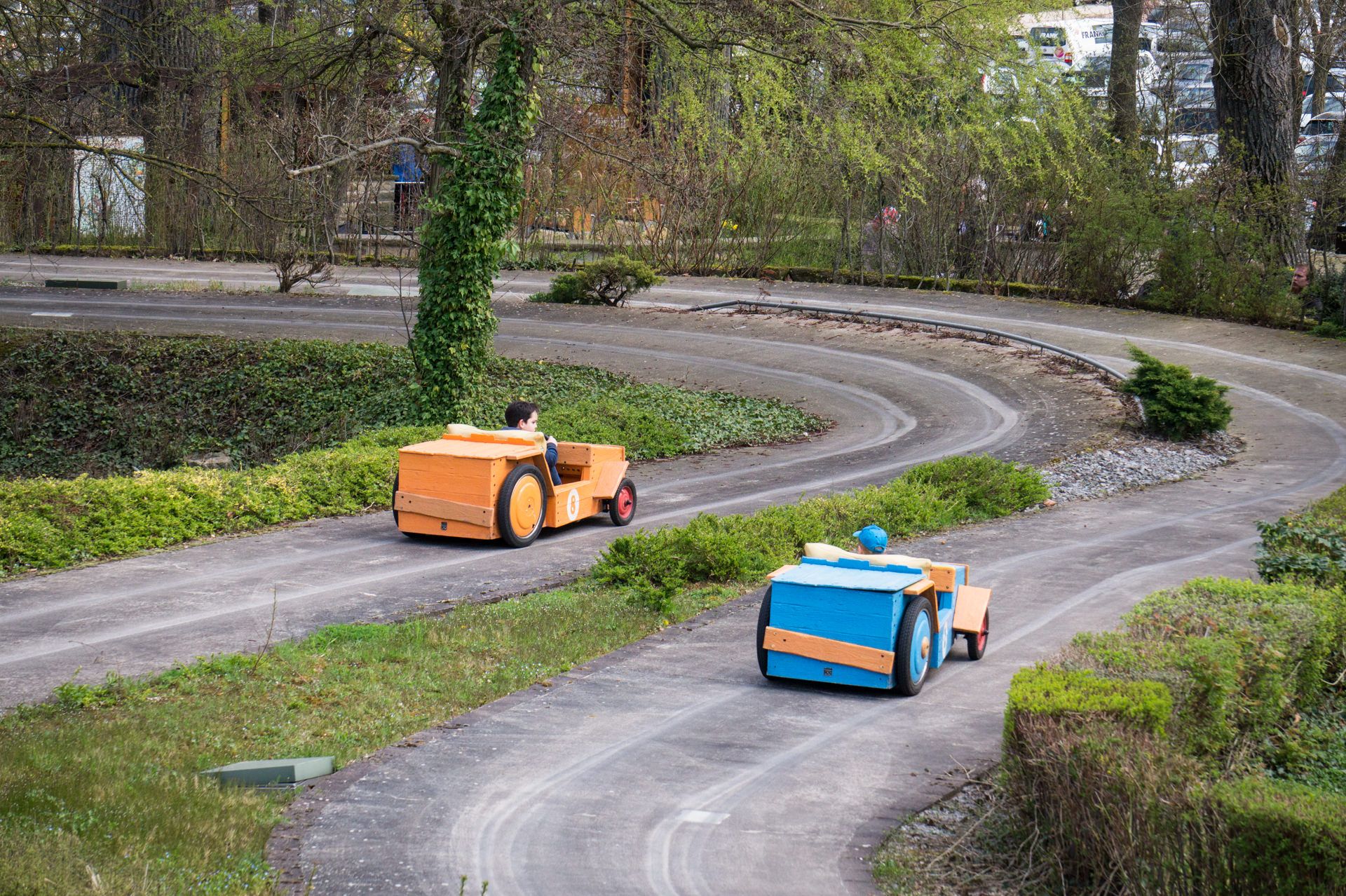
The Mühlental with the famous Altweibermühle is located next to it. To prevent the men from idly assisting the women’s rejuvenation there is also the Altmännermühle, a mechanical open-air obstacle course of an older construction. The Doppelte Donnerbalken, a more than modest vertical ride with a strange inclination effect, the leisurely boat ride Spirtztour der Seefahrer, the children’s log flume Mühlbach-Fahrt, as well as the unique Seifenkistenrennen round off this area.

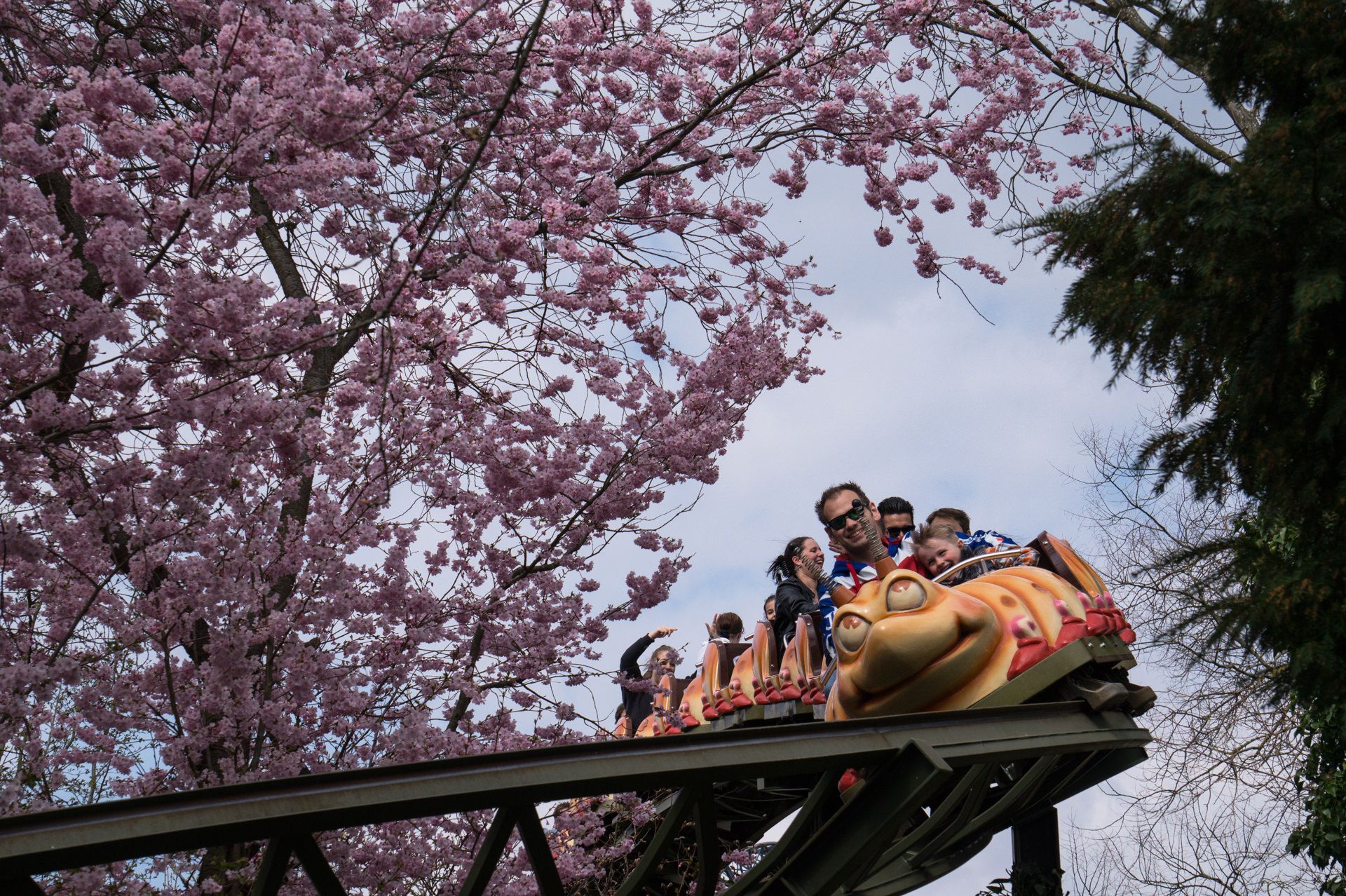
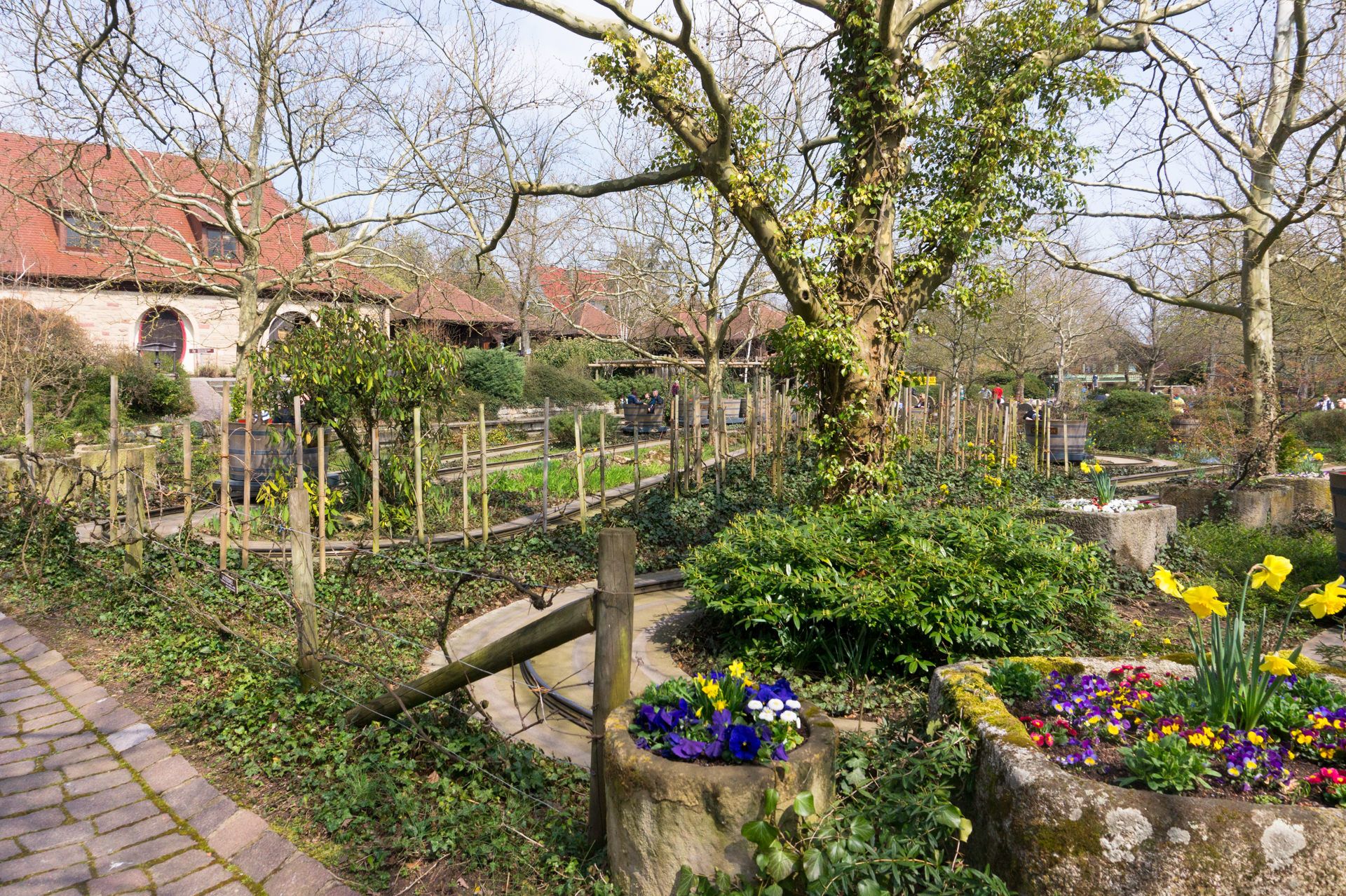
Friends of overlong leisurely rides will find what they are looking for at the wedding market. Here you will find three of these attractions: the vintage car and horse-drawn Hochzeitsreise, the Schmetterlingsflug and the Wiegen-Hochbahn. Since marriages nowadays tend to be of shorter duration, a trip on the wine bucket ride Weinkübelfahrt is recommendable, before you try your hand at the soup bowl ride Suppenschüsselfahrt through the individual soups in a similar way. With the coffee cup ride, the spinning game could continue, but unfortunately the park runs all flat rides on a low flame, so that even the prototype of this popular classic is not convincing. But this only really gets worse with the Gugelhupf-Gaudi-Tour, the first and only modern waltz ride from Münsterhausen, which, with the best will in the world, has nothing in common with its predecessor. The three other rides, Wäschekorb-Rundflug, Schlappen-Tour and the Wellenflieger Wirbelpilz, are, outside of their design, accordingly worth no mention. After all, the big Tivoli roller coaster Rasender Tausendfüßler by the manufacturer Zierer still manages to entertain the passengers well.

Up to the present time of the report, the front theme areas of the theme park have been covered because they more or less form a unit and are connected to the rear area only by a rather narrow path along the outer park boundary. So there is no direct connection to the quite dominant roller coaster Karacho, which means that you can get lost mercilessly if you don’t know the place.  The peeps of the notorious computer game Roller Coaster Tycoon would have complained loudly about not being able to find attraction XY, especially since the signage is not optimal. In fact, I don’t know of any other amusement park in Europe that is as badly constructed as Tripsdrill, although it can’t be that difficult to build an overpass or underpass and create a second access route, which should also benefit the general distribution of guests.

Waschzuber-Rafting

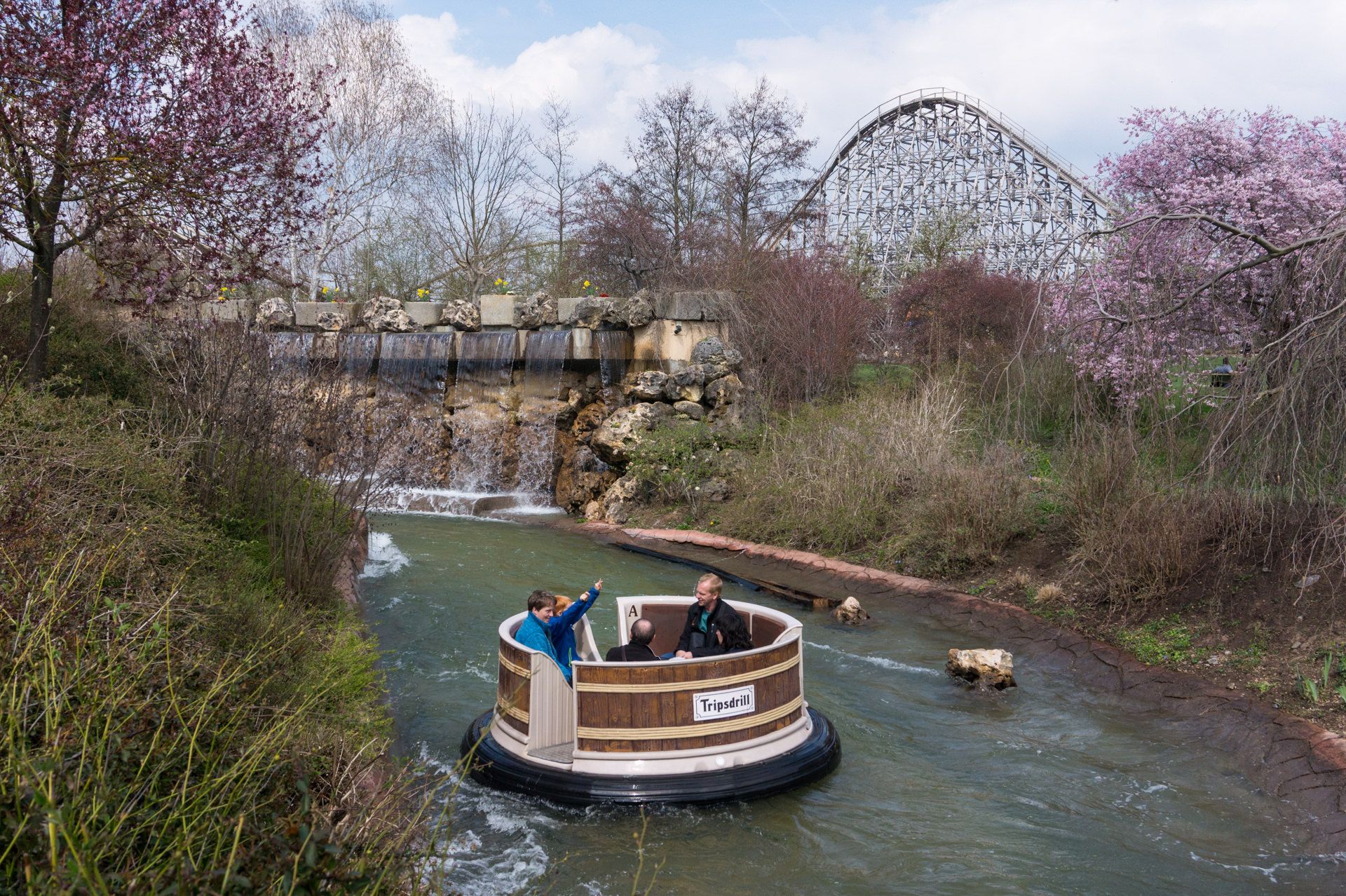
But if one should have made it to the back area, one immediately comes across to the first big attraction of the park, the Waschzuber-Rafting. This stylish Hafema ride is completely dedicated to the topic of doing the laundry and has some interesting exhibits in its queue that reminds of a museum. The ride through the winding road is not particularly wet, nor fast, but nice and really well embedded into the landscape.

Badewannen-Fahrt zum Jungbrunnen

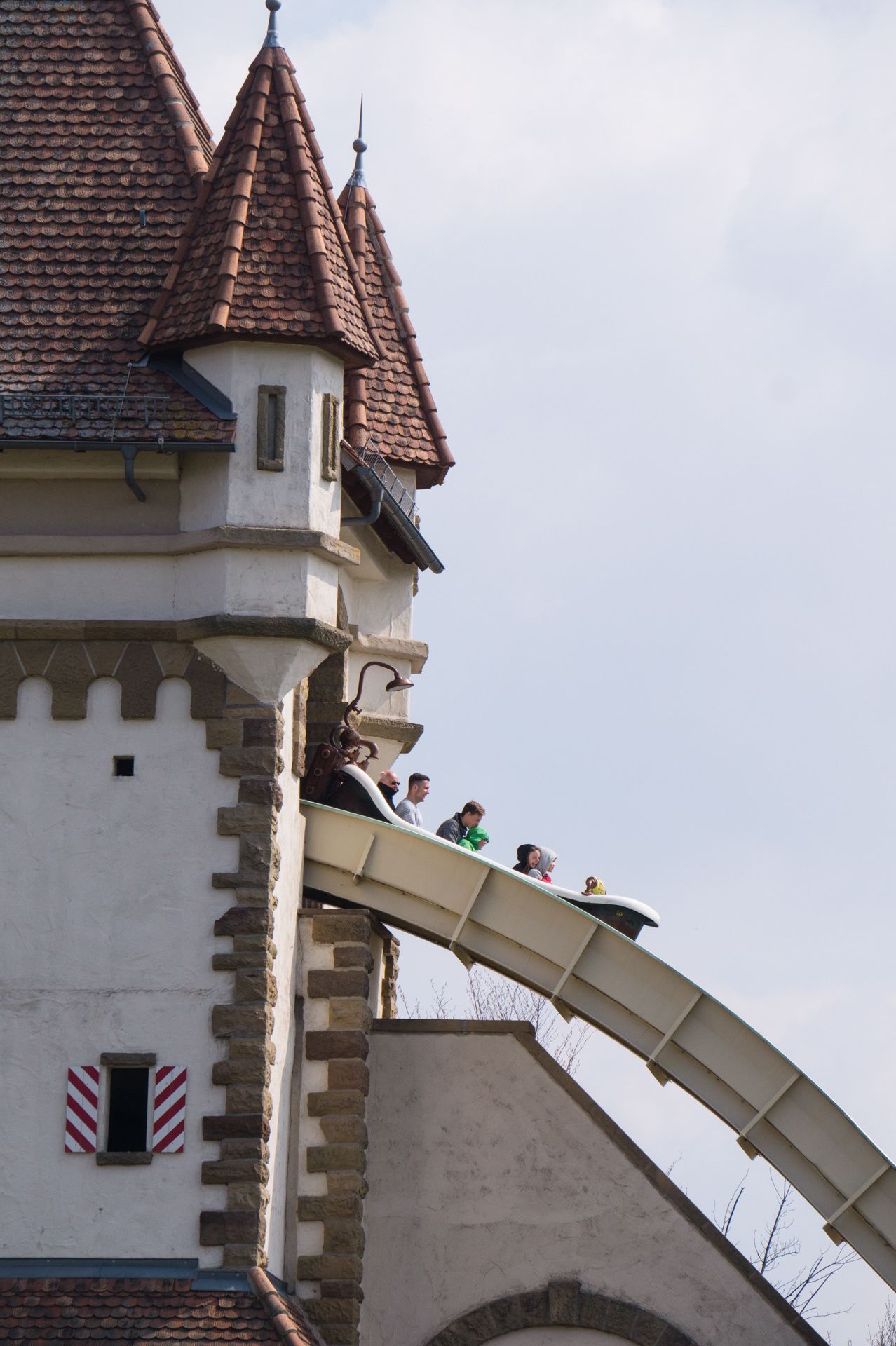
Behind the round boat rafting, the facade of the Rauhe Klinge Castle attracts all eyes, after all, this beautifully designed concrete block on one side houses two larger rides, which complement each other extremely well. The log flume Badewannen-Fahrt zum Jungbrunnen (Bathtub Ride to the Fountain of Youth) is quite unusual, its name says it all and surprises some, let’s say rather prudish, passengers a little bit.

After one has left the, once again museum-like, queue behind him and got into his tub, the trip can start immediately. As soon as the boat swims freely in the canal, one dumbles a little towards the castle Rauhe Klinge. Parallel to the walls, the first lift takes the boat up for a short time before it goes down a short shot. In a right bend the canal leads you into the building, whereupon you have found the fountain of youth and indeed the old women seem to taper off into young, crisp and well-built women. But the view is only short and so the second lift leads up quickly. This is also where the first turntable is waiting for you, whereupon you take the second, medium sized downhill run backwards. At the back of the castle you now make a turn including the second turntable. Thereupon another lift hill leads you up one last time. At the top you can have a last look at the surrounding landscape before you turn left and enter the upper floor of the castle. After a shorter straight section the big and final shot of the lift takes place, whereupon contact with the wet element is inevitable. The spray is refreshing, so after returning to the station you will be very happy to get out of the tub.

G’sengte Sau

The second ride of the Rauhe Klinge Castle is the 1998 built bobsled coaster G’sengte Sau by the Münsterhausen manufacturer Gerstlauer and its sign the first new roller coaster from the former factories of the legendary roller coaster smithy Schwarzkopf. After the brisk lift hill, the ride starts with a very steep right-hand downward curve, whereupon an outward helix is completed in the same direction of rotation. This is followed by four powerful, contiguous serpentines, which are perfect for exerting some pressure on the person sitting next to you, before the ride, still introduced by the “Wetten, Dass…?”-sign of the famous bet of extreme sportsman Dirk Auer in 2001, goes into a rapid helix combination. The following camelbacks are quickly driven through and can lift you a little bit out of the car before it goes into a final helix-combination. After that the final braking section is reached immediately and shortly after that the station.

The G’sengte Sau offers all kinds of riding fun on the wild ride through the naked concrete world of the Rauhe Klinge castle. Beautiful is certainly different, which is shown above all by the identical Thor’s Hammer ride from the Danish amusement park Djurs Sommerland, but the ride is also incredibly cult, especially because of the banner of the family show “Wetten, Dass…?”, which was cancelled almost two years ago.

Mammut

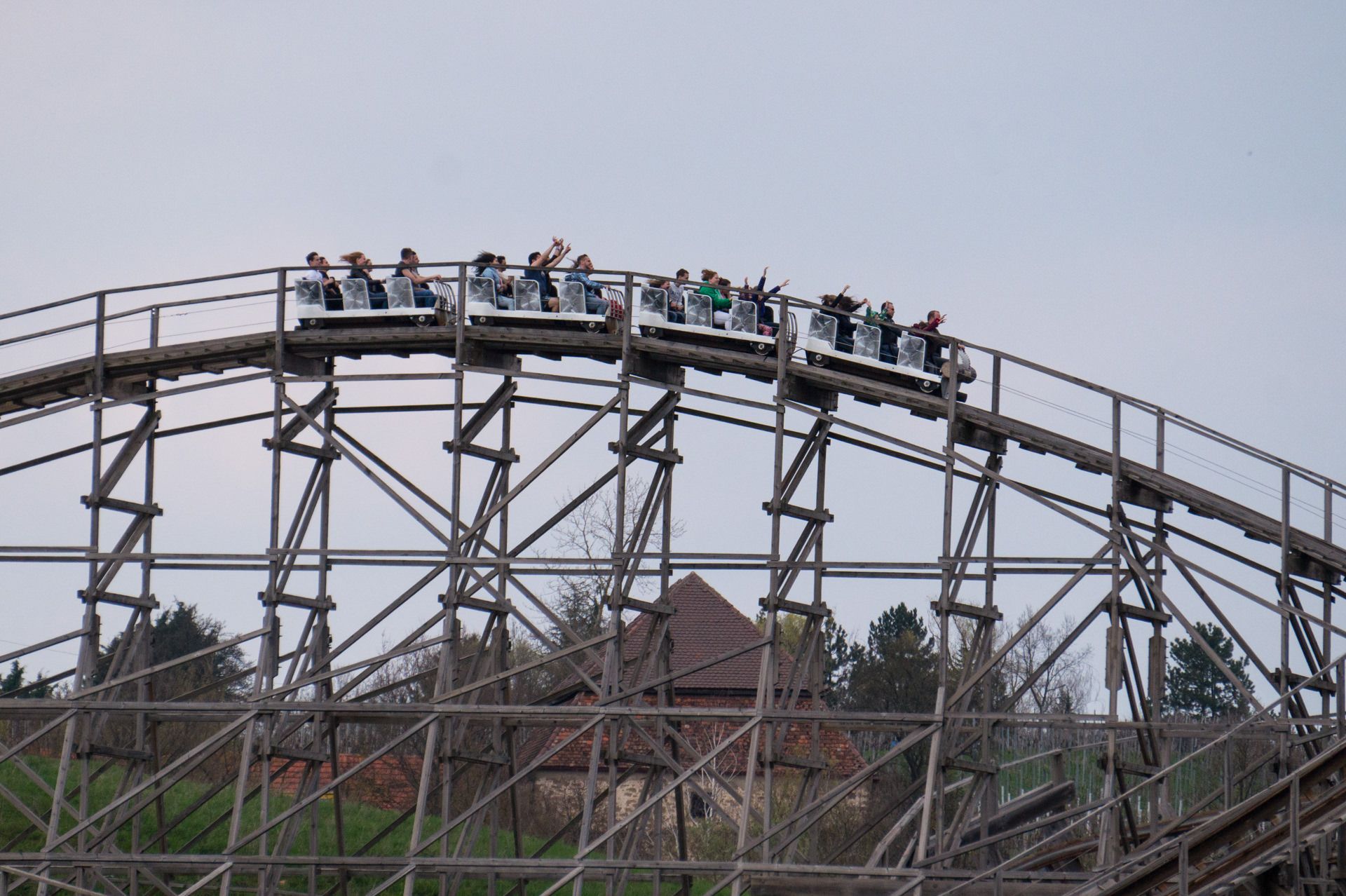
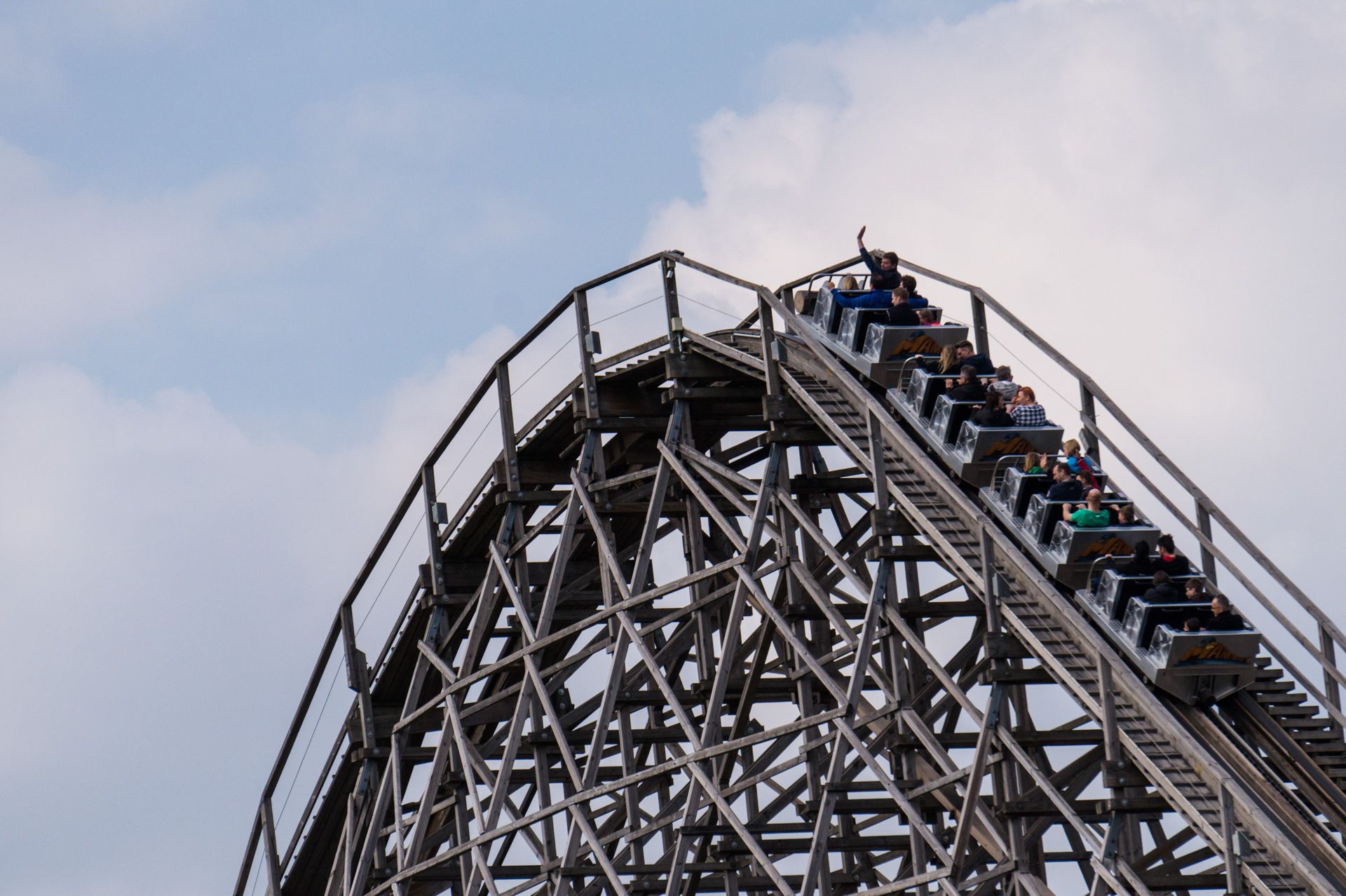
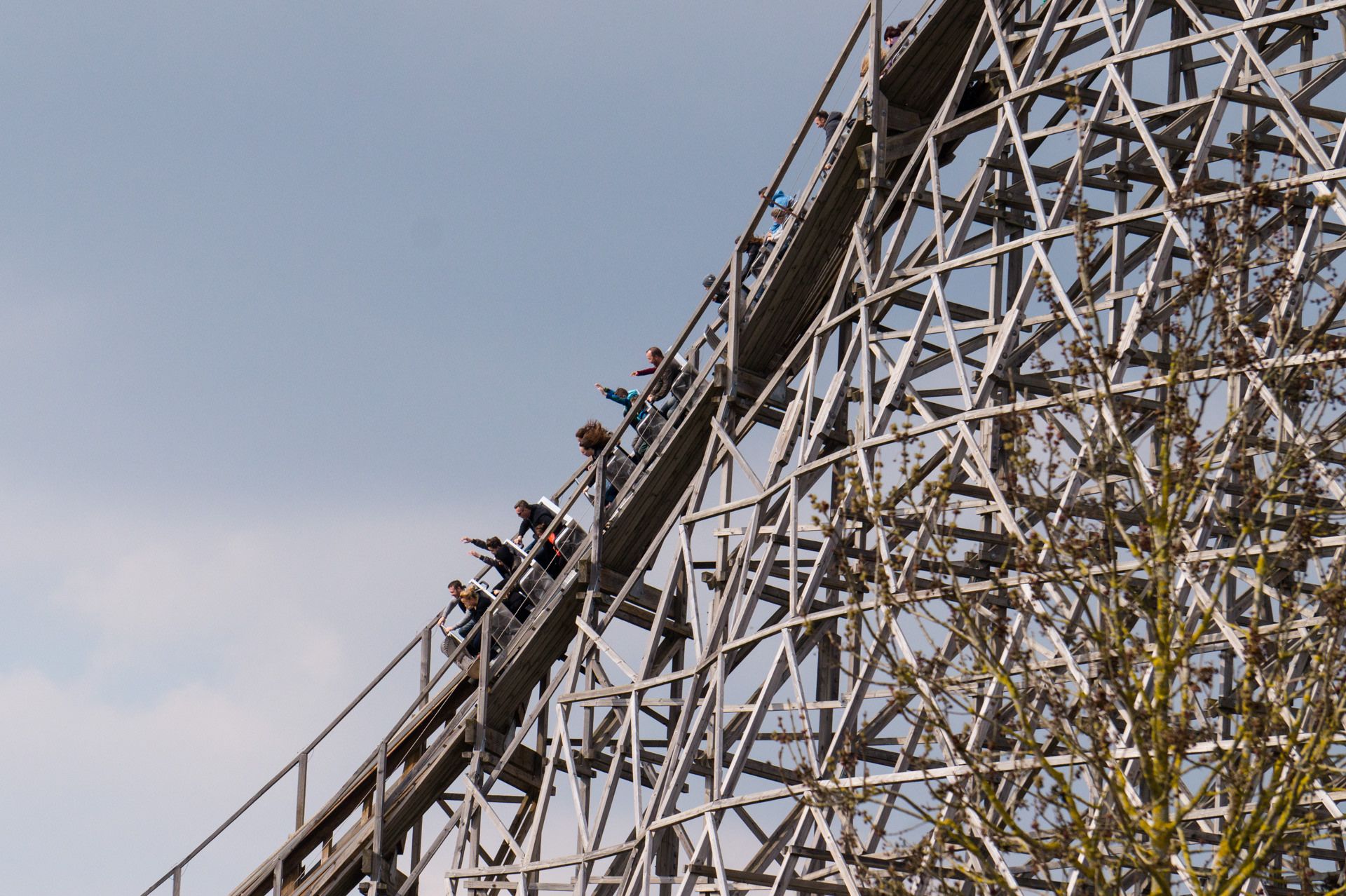
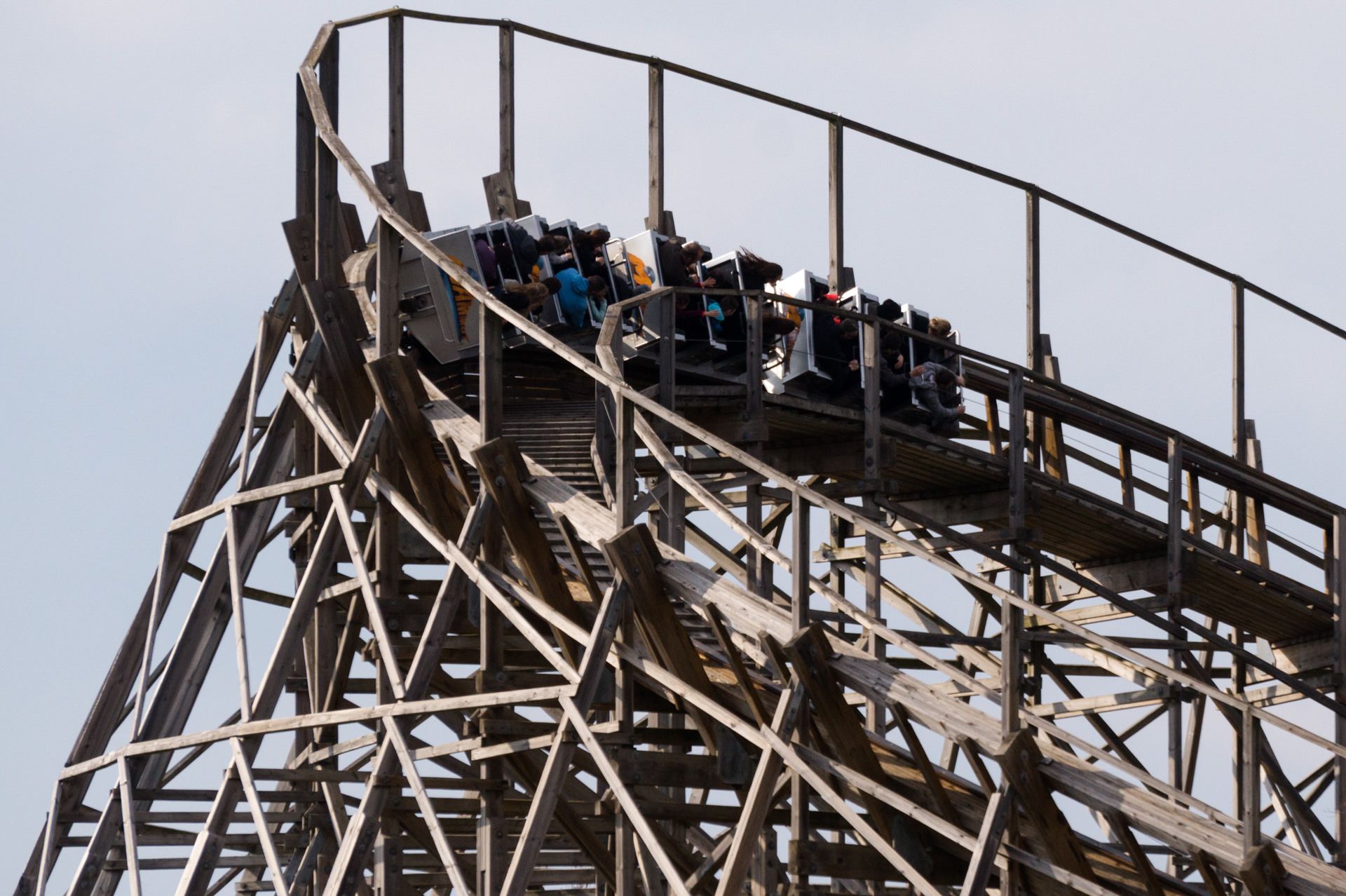
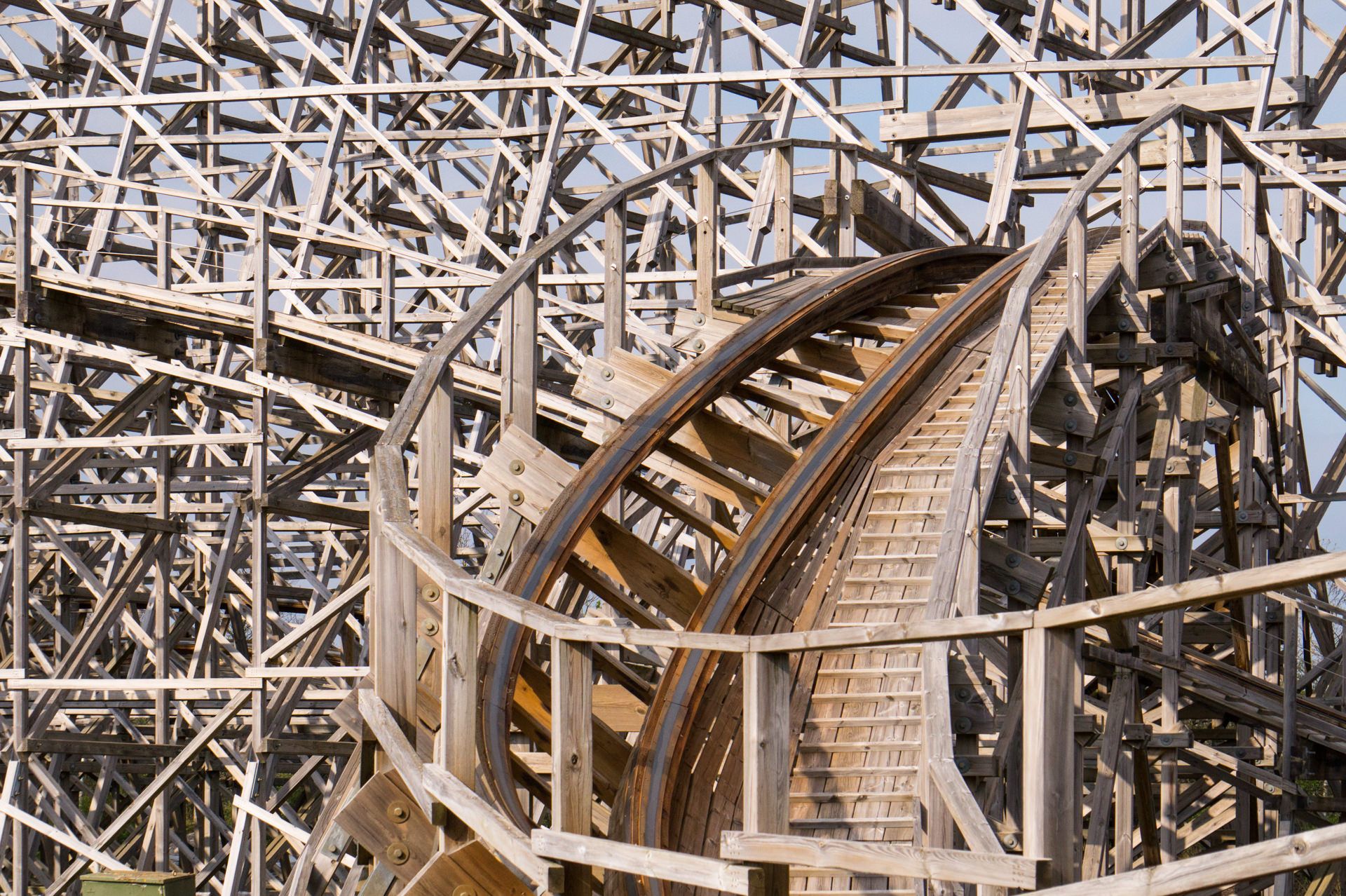
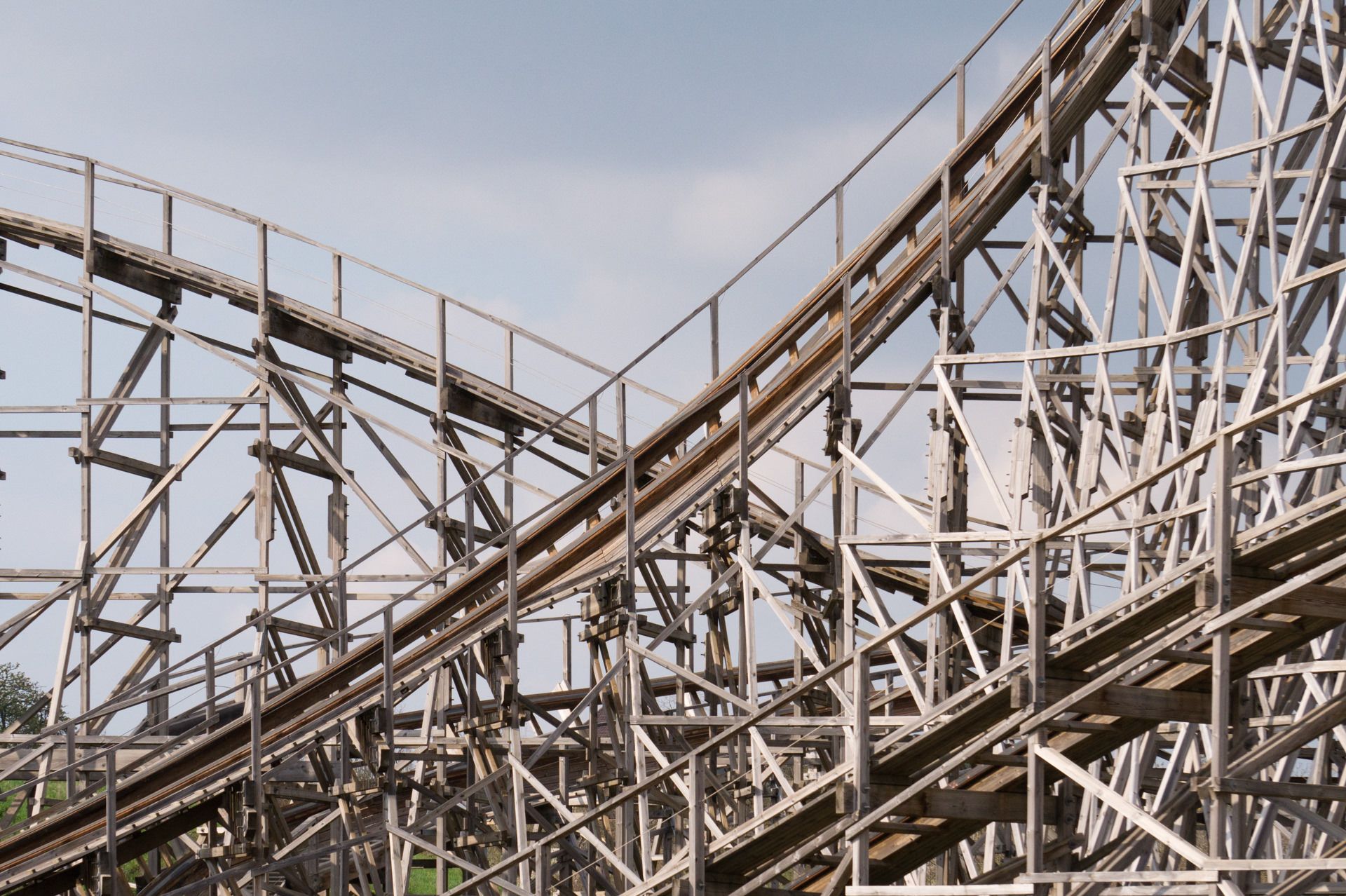
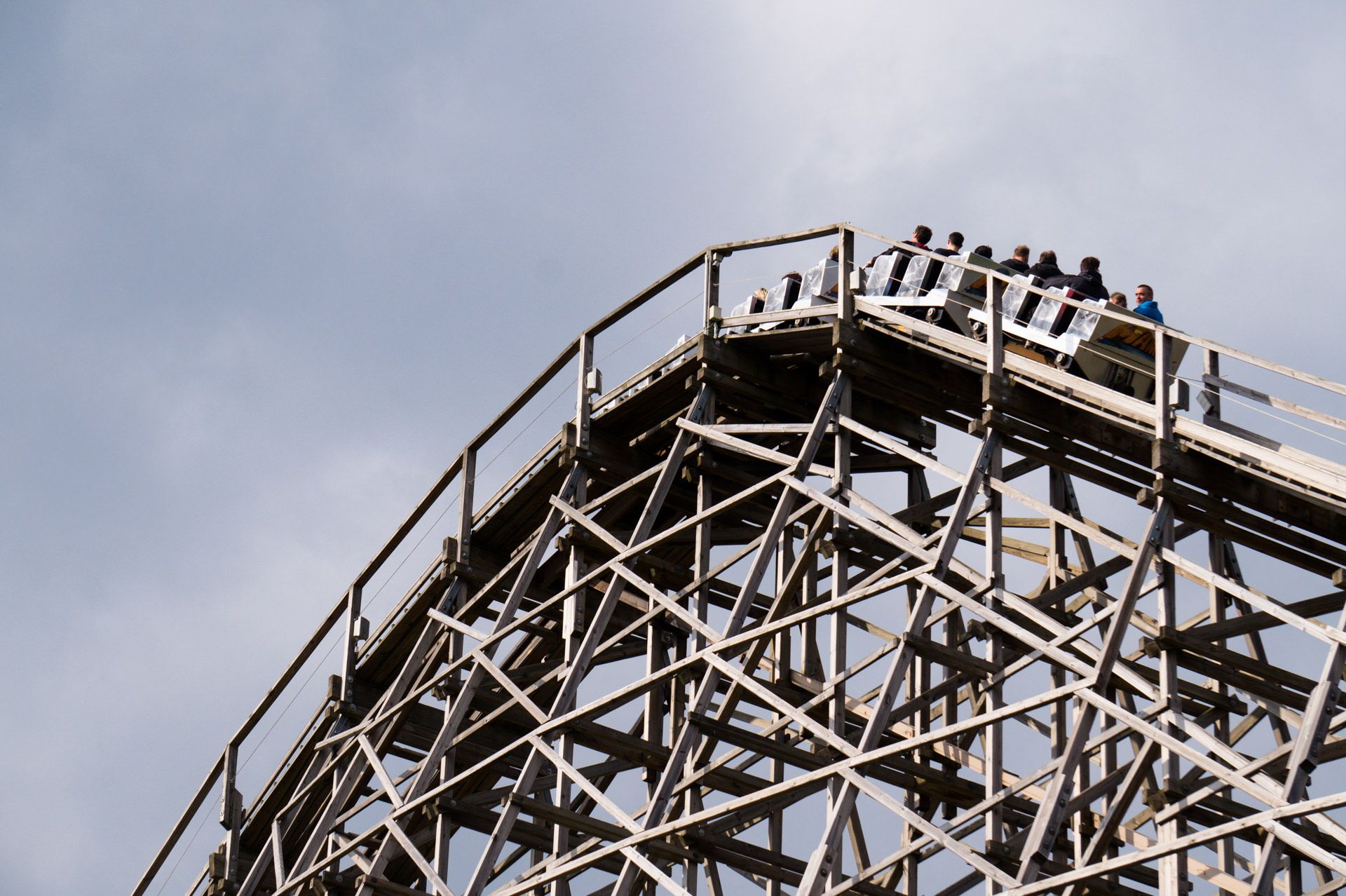
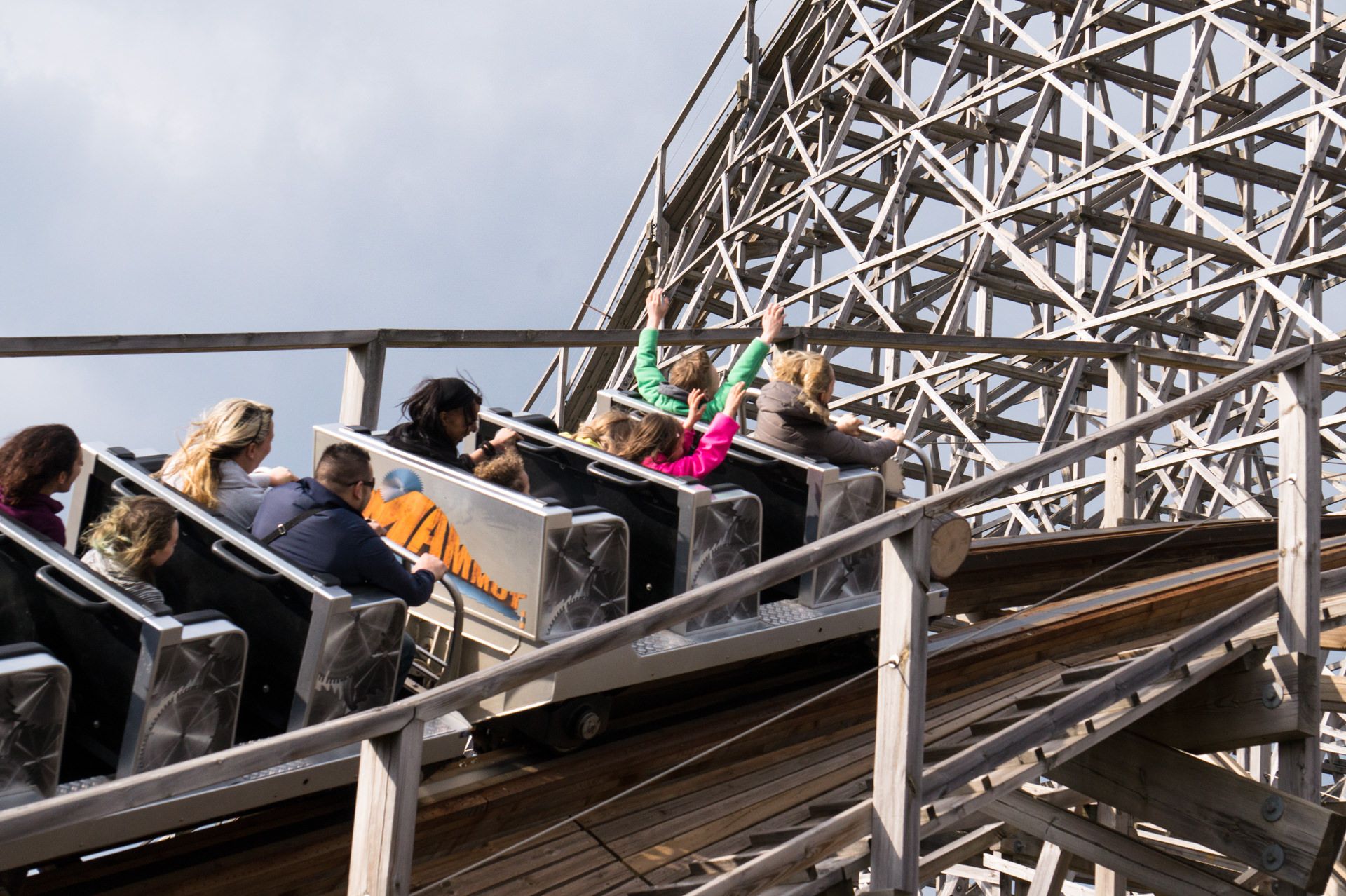
If you follow the circular route, the next big attraction of the park is the wooden roller coaster Mammut. The roller coaster opened in 2008 and was designed and built by the company Holzbau Cordes, but the trains used are from Gerstlauer. The perfectly joined track and the trains with their sprung axles made for a much too smooth ride, especially in the first years, so that a wooden roller coaster feeling did not exist. A circumstance that made me call Mammut a rather bad wooden roller coaster, but the ride has aged nicely!

The journey begins with a short left turn out of the station and into an unsuitably designed disco sawmill. A small dip and the train hooks into the chain, whereupon it is brought to a starting height of 30m. The first descent is a steep left turn down to ground level. Here one passes a powerful valley before it immediately goes along a high turn with a good speed. A high camelback follows, where you are lifted out of your seat. This is again followed by a turning curve, but this one leads into a steep curve to the left, whereupon the train dives into a small ditch. A clearly low camelback now repeats the game of weightlessness of the passengers, whereupon a fast Bavarian curve is made. Now the track leads through the framework of the lift hill and along the back of the layout. Over a short zigzag track some shake & roll – attributes of a really great wooden roller coaster – takes place, before the train dives into a tunnel after a left turn and a short change of direction. Here, the wonderfully dynamic zigzag course is repeated one more time, whereupon the braking section is already reached.

Mammut is fun! In fact, so much so that, with the best will in the world, you wouldn’t expect it if you’d only seen it in 2009. It’s the best roller coaster of the park, which is why it’s even more a shame that it was on n one train operation during the visit, although there was quite a rush.

Karacho

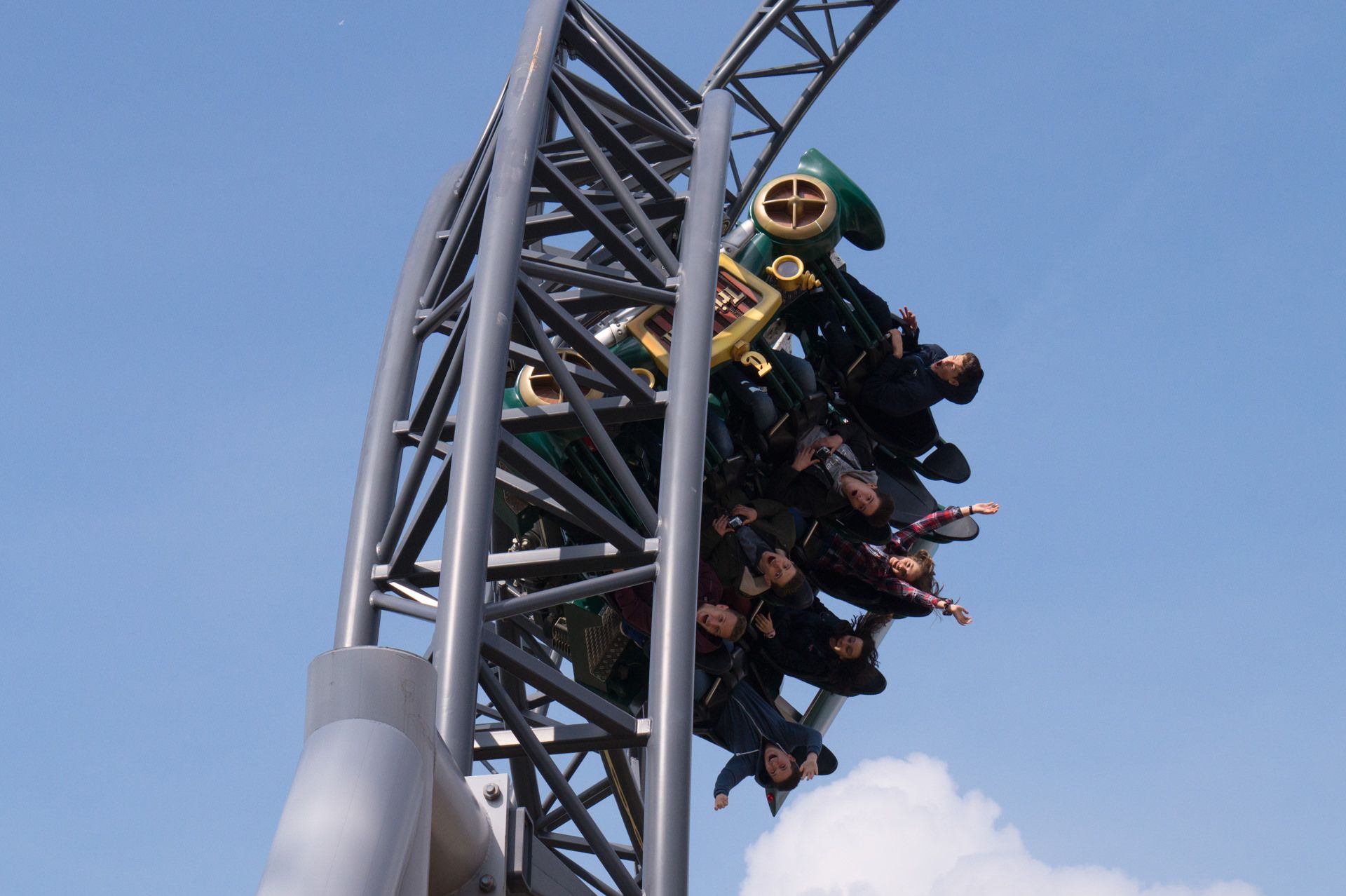
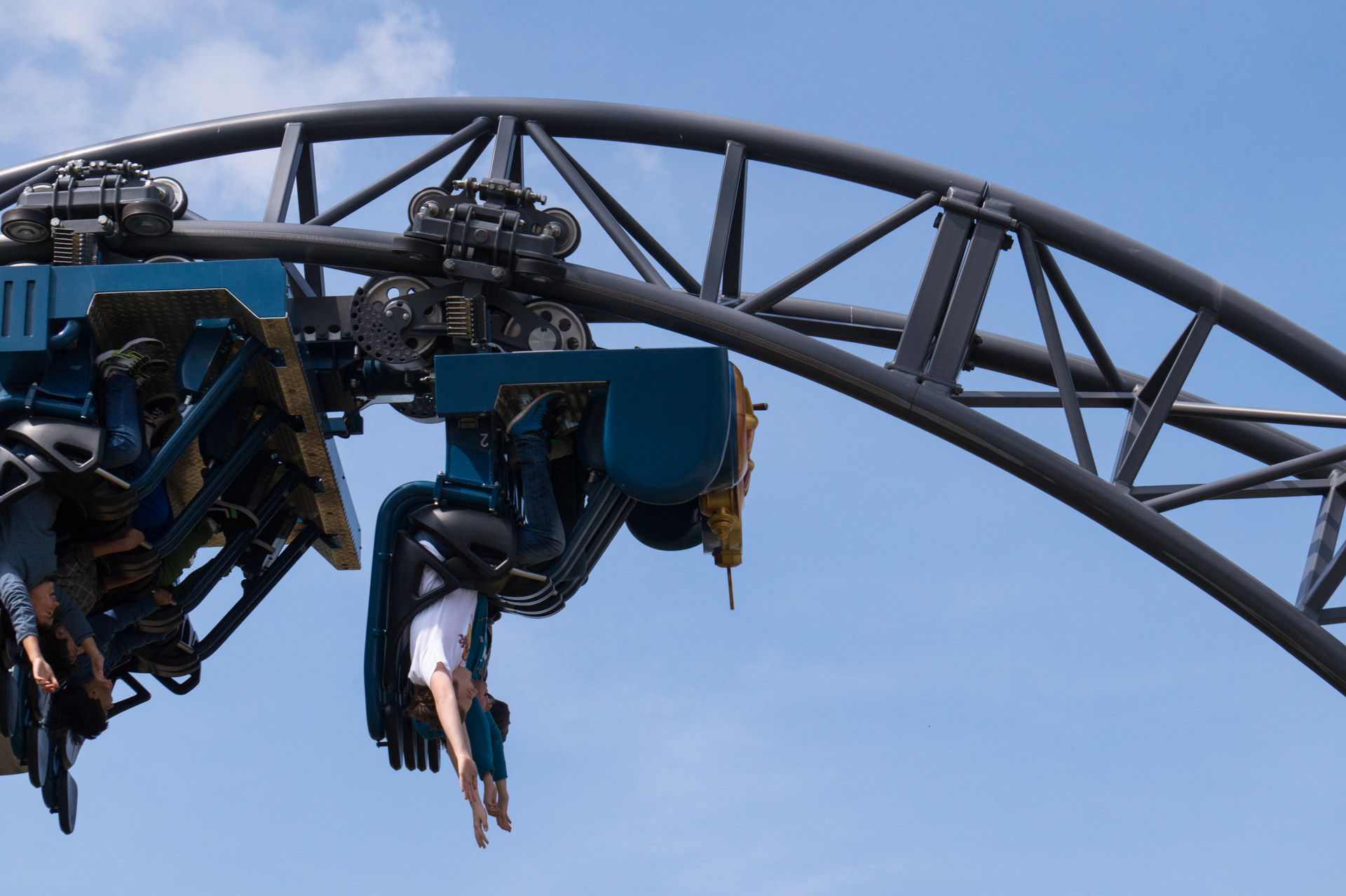
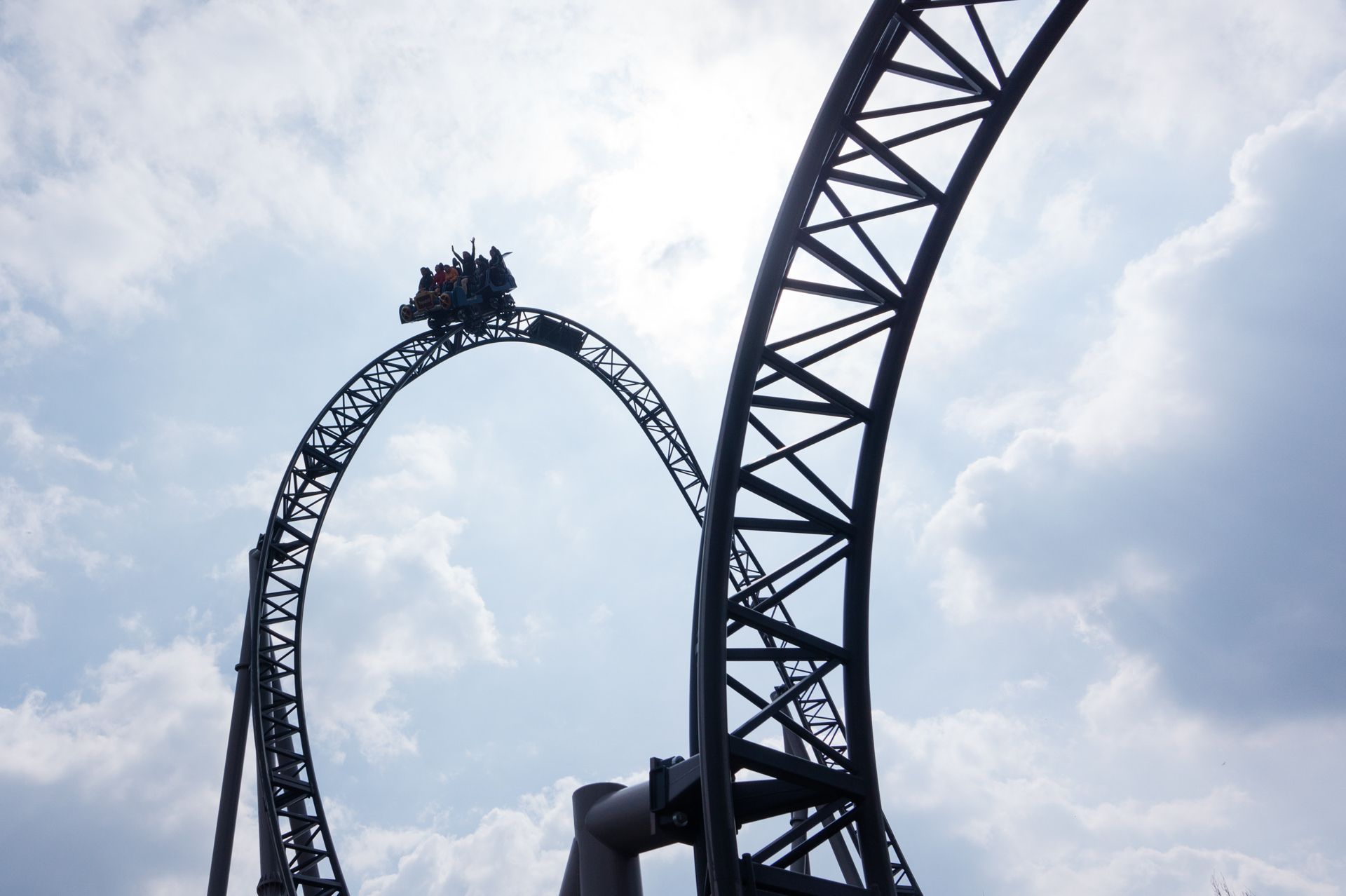
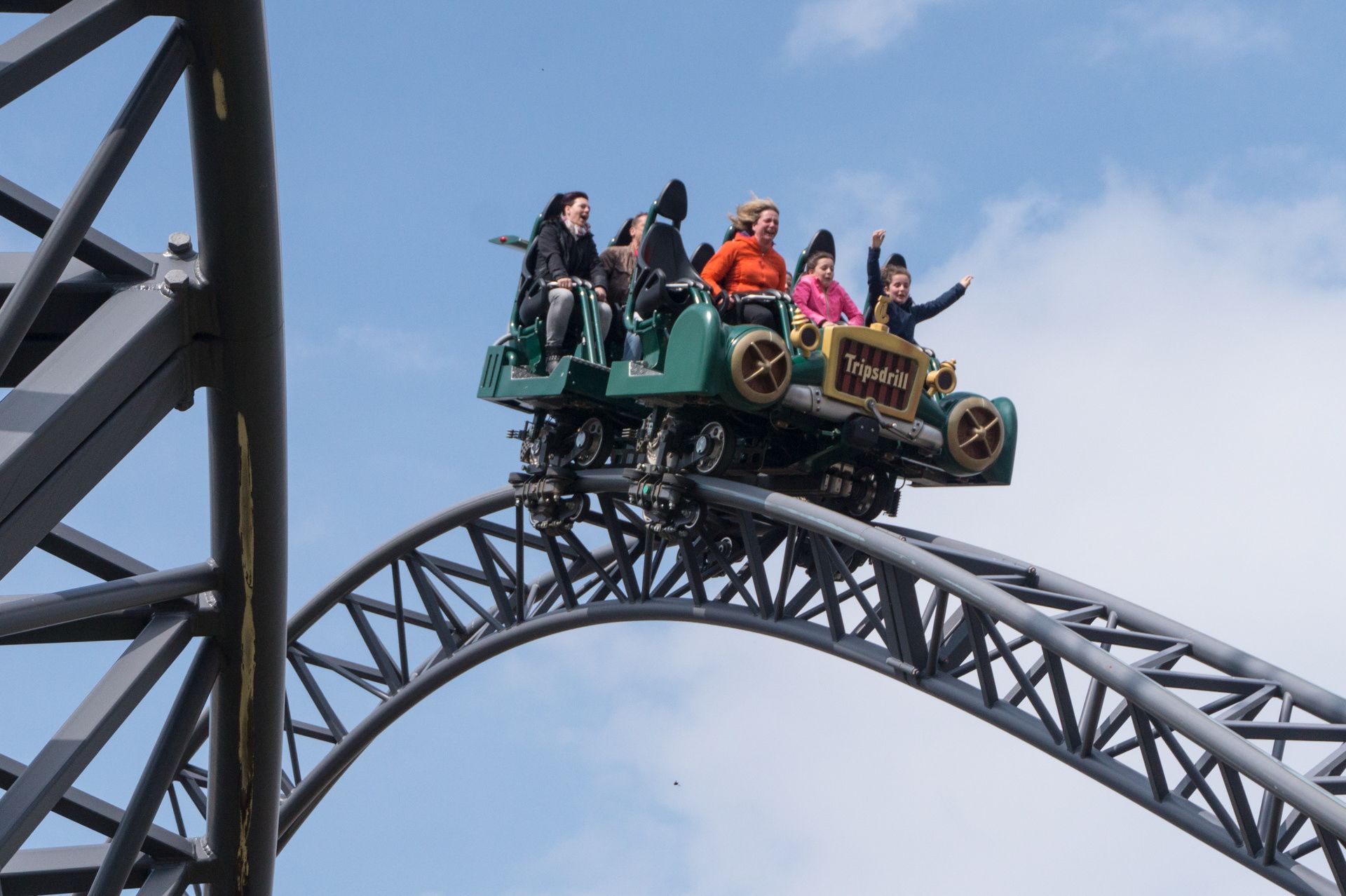
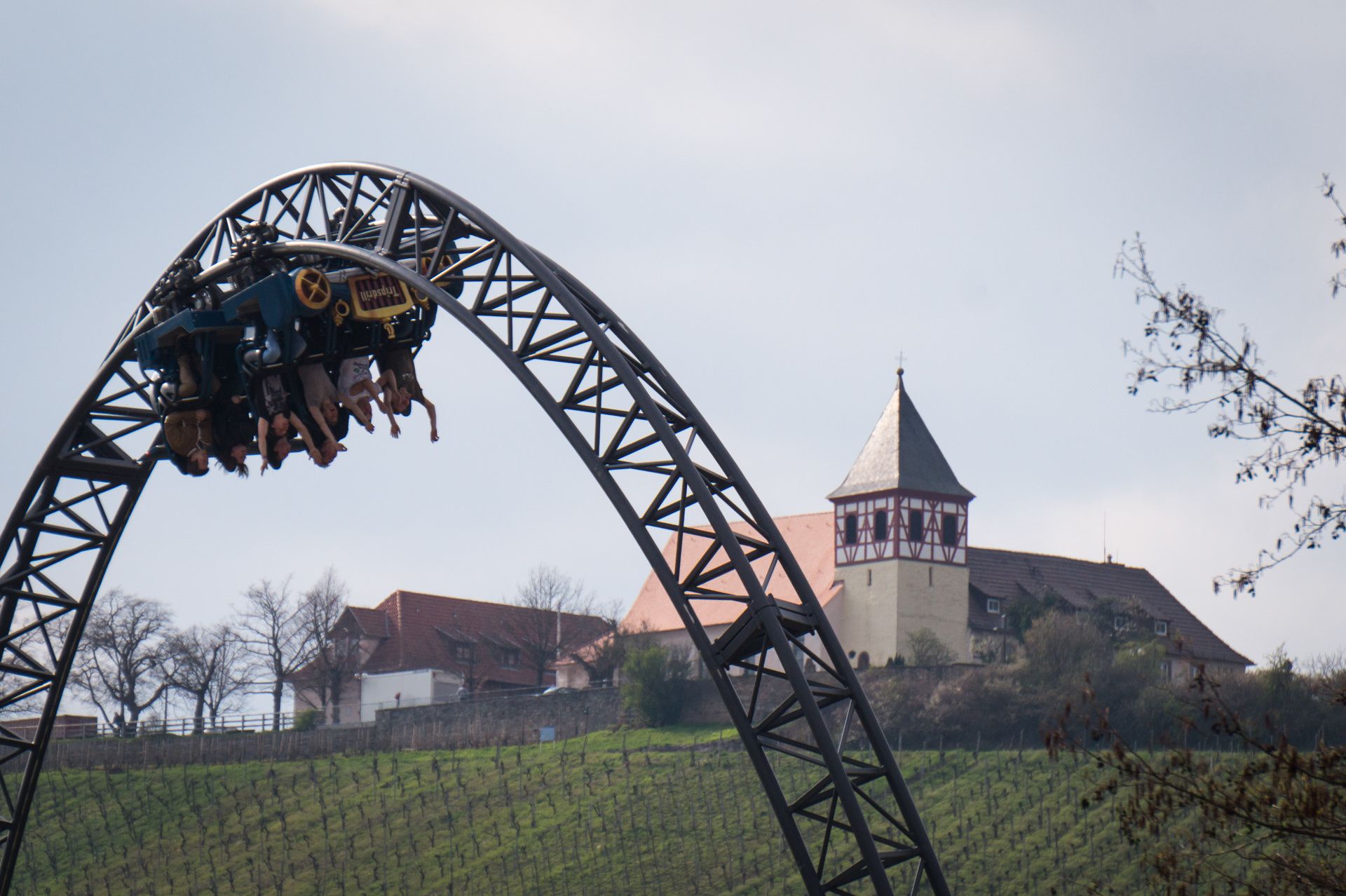
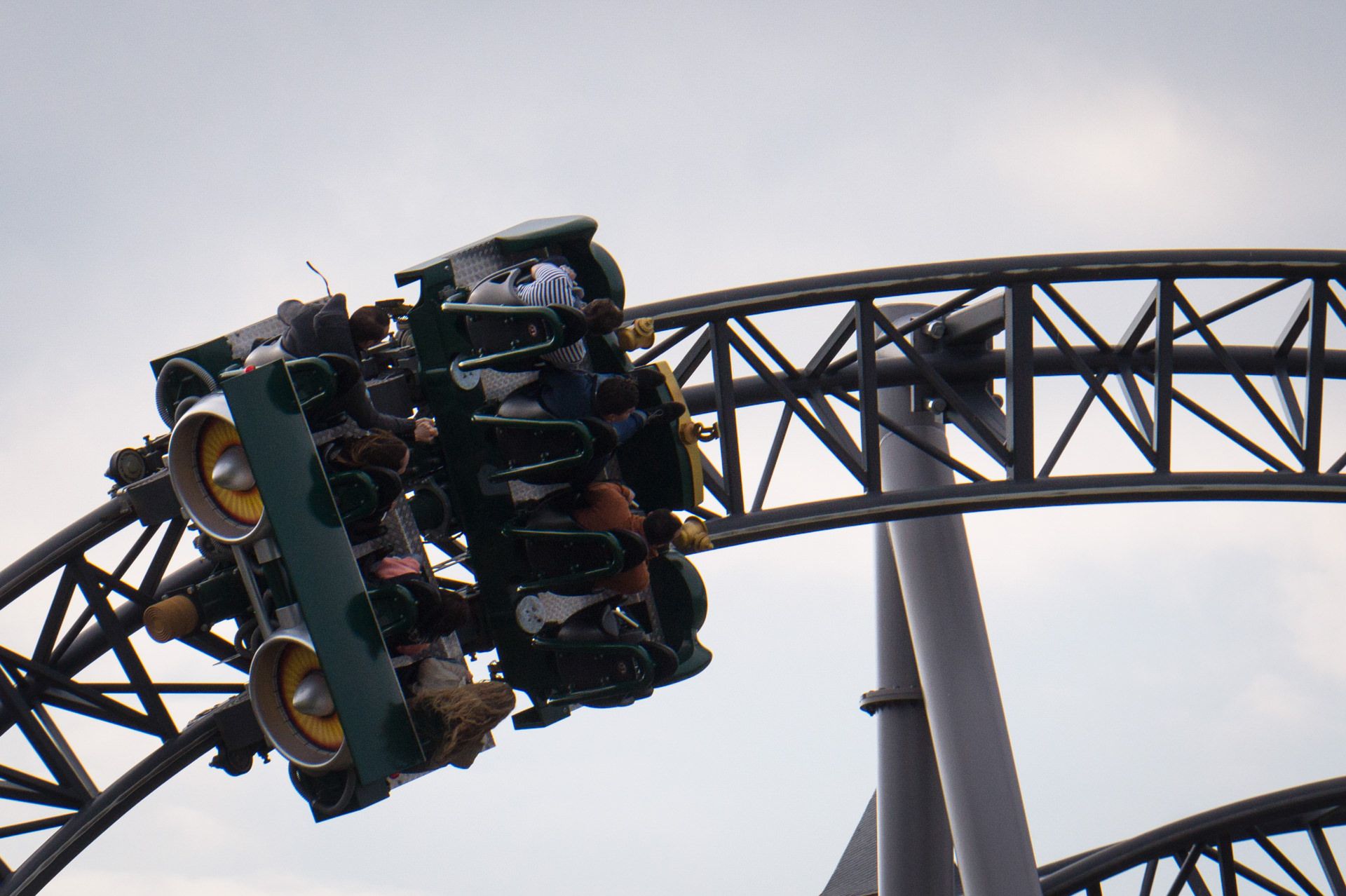
Let’s get to the last and newest roller coaster of the park, the launch roller coaster Karacho. The expectations were quite high, because if there’s one thing Gerstlauer can do, it’s to launch a roller coaster onto a ride offering a very funny track, and indeed Karacho has both. But the layout couldn’t convince after getting on the train, as these trains are really uncomfortable and the operating personnel additionally pushes the bars down so far that the legs are literally squeezed between the bars and the edge of the seat. Ouch! Kärnan from Hansa Park, a theme park in northern Germany, shows how it’s done differently, but until the trains were delivered two years later there were certainly some changes to them.

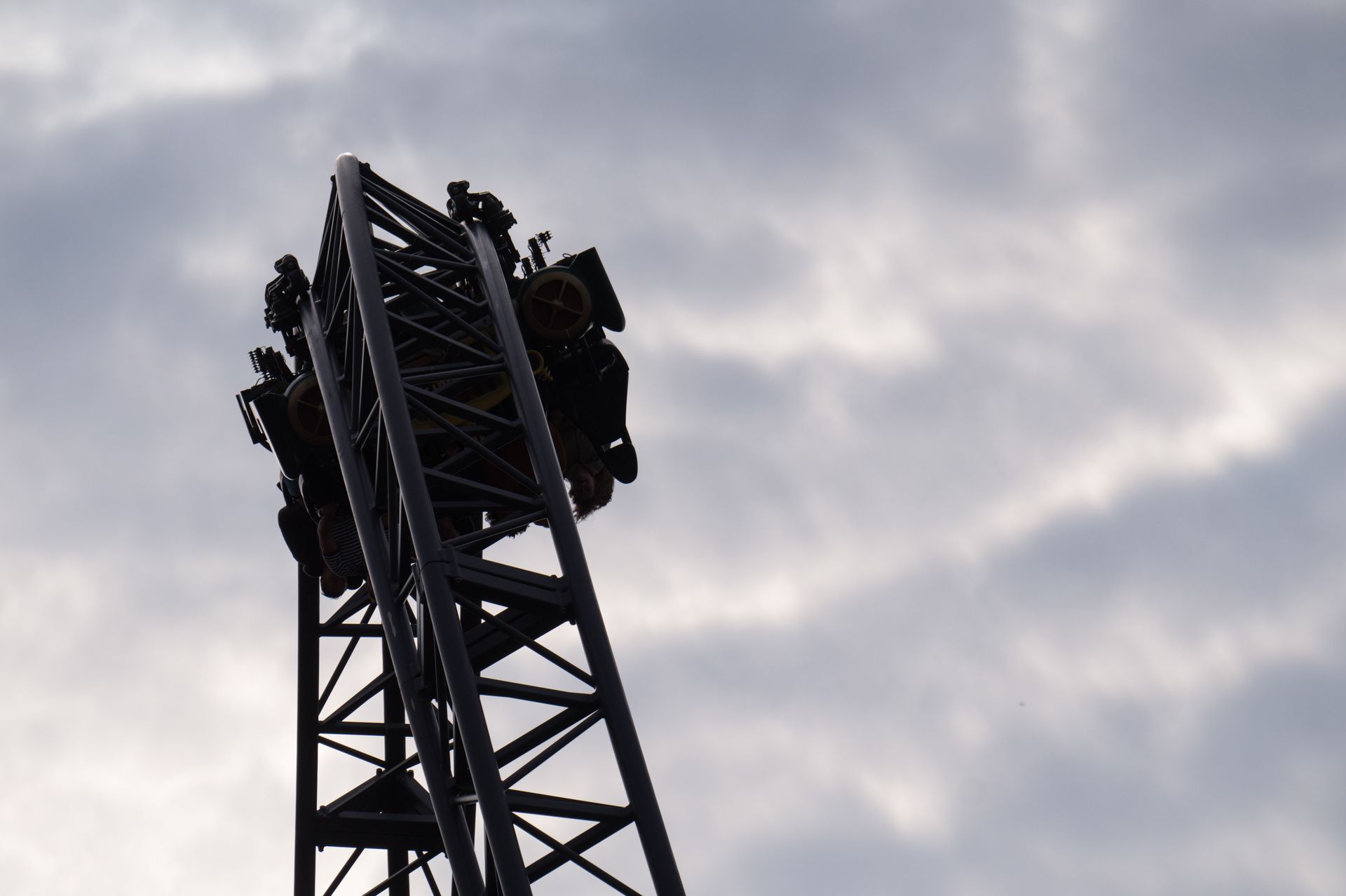
The ride on Karacho begins with a slow right turn out of the station. After a short and relatively steep dip, a heartline roll is initiated on a straight line. This happens rather clumsy in my opinion, as the dynamics seem to be missing during this roll; an example how to do it better can be found at the English amusement park Thorpe Park on Saw – The Ride, where the roll is passed after a short bend. Then you pass the first block brake and shortly after that another, in my opinion much too small, dip. With Karacho you are now accelerated to a speed of 90 km/h, whereupon you shoot up a top hat element. Without taking a breather, the car crashes towards the ground, passes the following valley with full force and daringly shoots an oversized corkscrew towards it. Here you are turned upside down for a second time before the train is longing for the ground again. Very restless and quick-witted, the car now takes you over a hill that is strongly inclined to the side, just before you screw up to the block brake in a steep curve. Here you are slowed down to walking speed, whereupon the following part of Karacho is driven through very leisurely. A short gradient changes into a short and uneventful camelback, whereupon you stay in a right turn for a very long time. But then the car takes momentum again and turns the passengers upside down once more while going down in a diveloop. Another corkscrew joins in and at the same time leads into the braking section, whereupon the station of the roller coaster Karacho is reached soon.
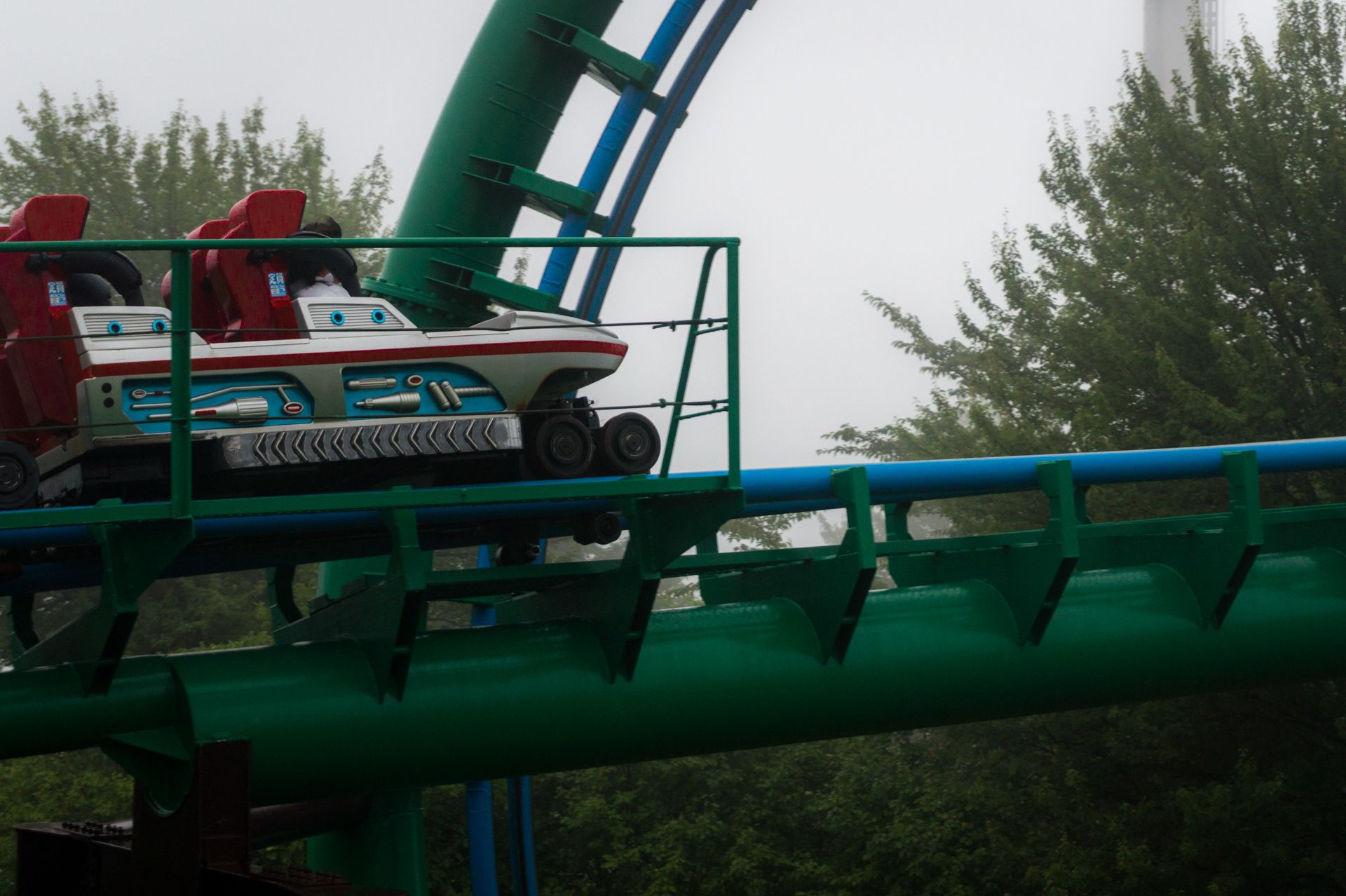
Karacho is not only uncomfortable, it also lacks the bite. The ride would be just ok if you could ride it without pain, i.e. with the classic roller coaster trains of the manufacturer, but it wouldn’t be anymore either. Especially the part with the dive loop is done without the insane force of earlier coasters and therefore hardly gives an impression; not to mention the absolutely nonsensical ride part before. Karacho certainly does justice to the target audience.

Pictures Erlebnispark Tripsdrill

Conclusion Erlebnispark Tripsdrill
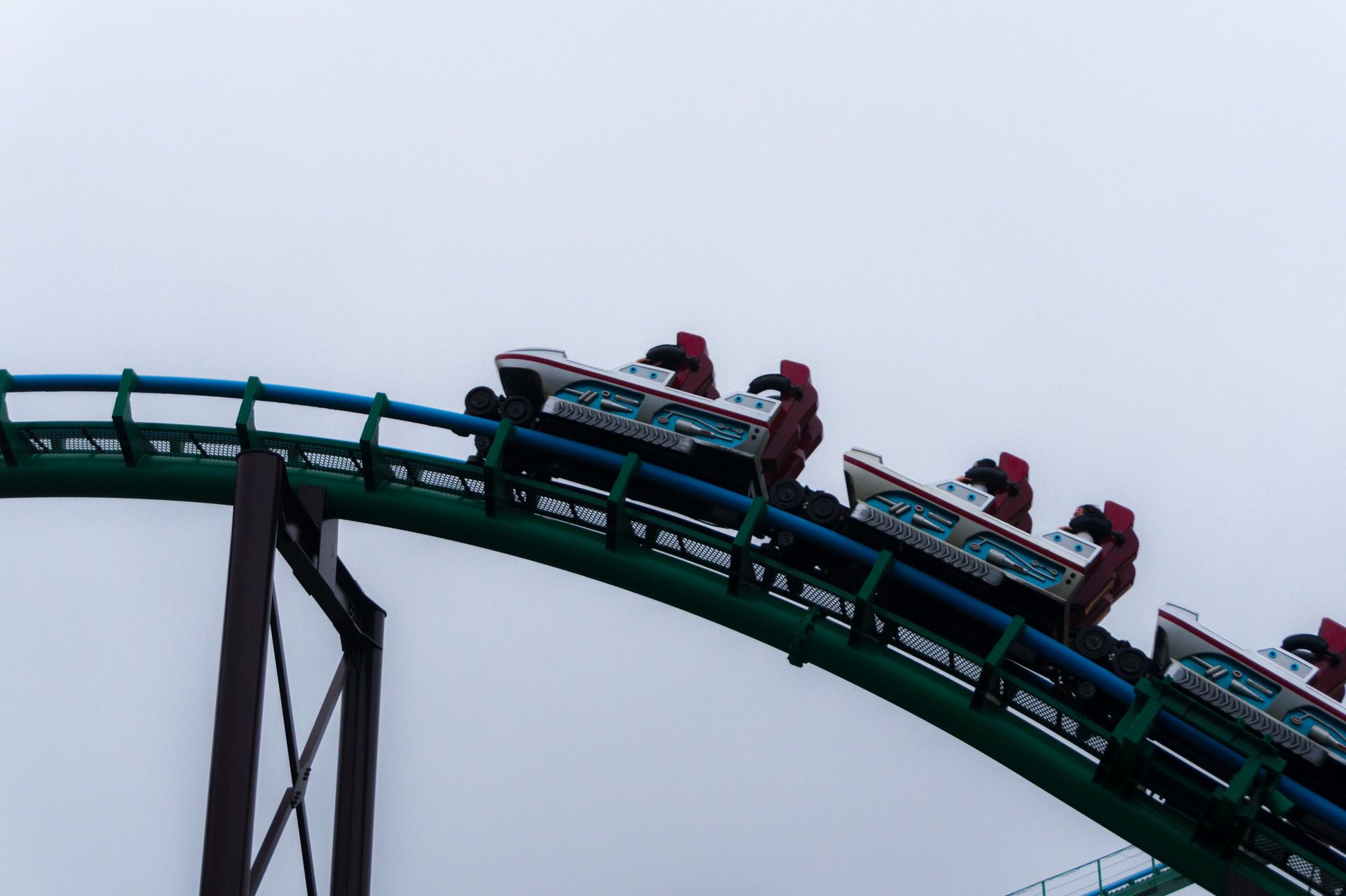
The Hansa Park of the South is not a good park; it is a nice park, but simply not a good one.  I have tried to understand and comprehend the whole adulation of various roller coaster and amusement park fans in different forums, but I just can’t. It’s a fact that even among Swabians (at least the one I met during my time in Stuttgart) it’s more of a toddler park. There’s simply nothing here that justifies the high entrance fee. Let’s see if the novelties after Karacho can change my opinion…
 

What is your opinion about the roller coaster Karacho? Just write it in the comment field below the report or on our social media channels:


The legacy of Dinocittà

The History of Cinecittà World

The history of Rome as a film location dates back to 1937, when the film city Cinecittà was founded. Equipped with what were then the most modern studios in Europe, a backlot and a copy studio, around 300 films were produced by 1943. Bombed by the Allies and looted by the Nazis, the film production was moved to Venice. After the end of the war, Cinecittà served as a DP camp for two years before the film production site was returned to its original purpose. In the 1950s the Cinecittà Studios experienced a golden age, probably also due to the film funding of the Italian state, and served as the film location for important Hollywood films such as Ben-Hur.

Due to constantly increasing demand and limited studio capacities, the producer Dino de Laurentiis founded Dinocittà, at that time the largest film studio in the world, also in the south of the Italian capital. The studio mainly produced historic and monumental films such as Barabbas (Italy 1961, Richard Fleischer), Waterloo (Italy/USSR 1969, Sergei Bondarchuk) and John Huston’s mammoth work La Bibbia (Italy 1966). However, due to the reduction of subsidies at the beginning of the 1970s, the film studio was not able to survive for long, and so in 1973 the land was sold to the Italian state. From then on Dino de Laurentiis produced in the United States and the Dinocittà remained unused; although not forgotten. Plans in the early 2000s to run the studios under the name Roma Studios were quickly discarded and Cinecittà Holding took over the site.

Originally planned for 2012, the movie park Cinecittà World opened its doors for the first time in the summer of 2014. Unpaid bills and a lack of visitors, despite the surprisingly low target of 1.5 million visitors, quickly left the park in a negative light. Short-notice cancellations of seasonal events and the planned winter opening quickly gave rise to doubts as to whether the park would ever open again. However, after restructuring over the winter months, the park opened punctually at Easter.

Tour of the park
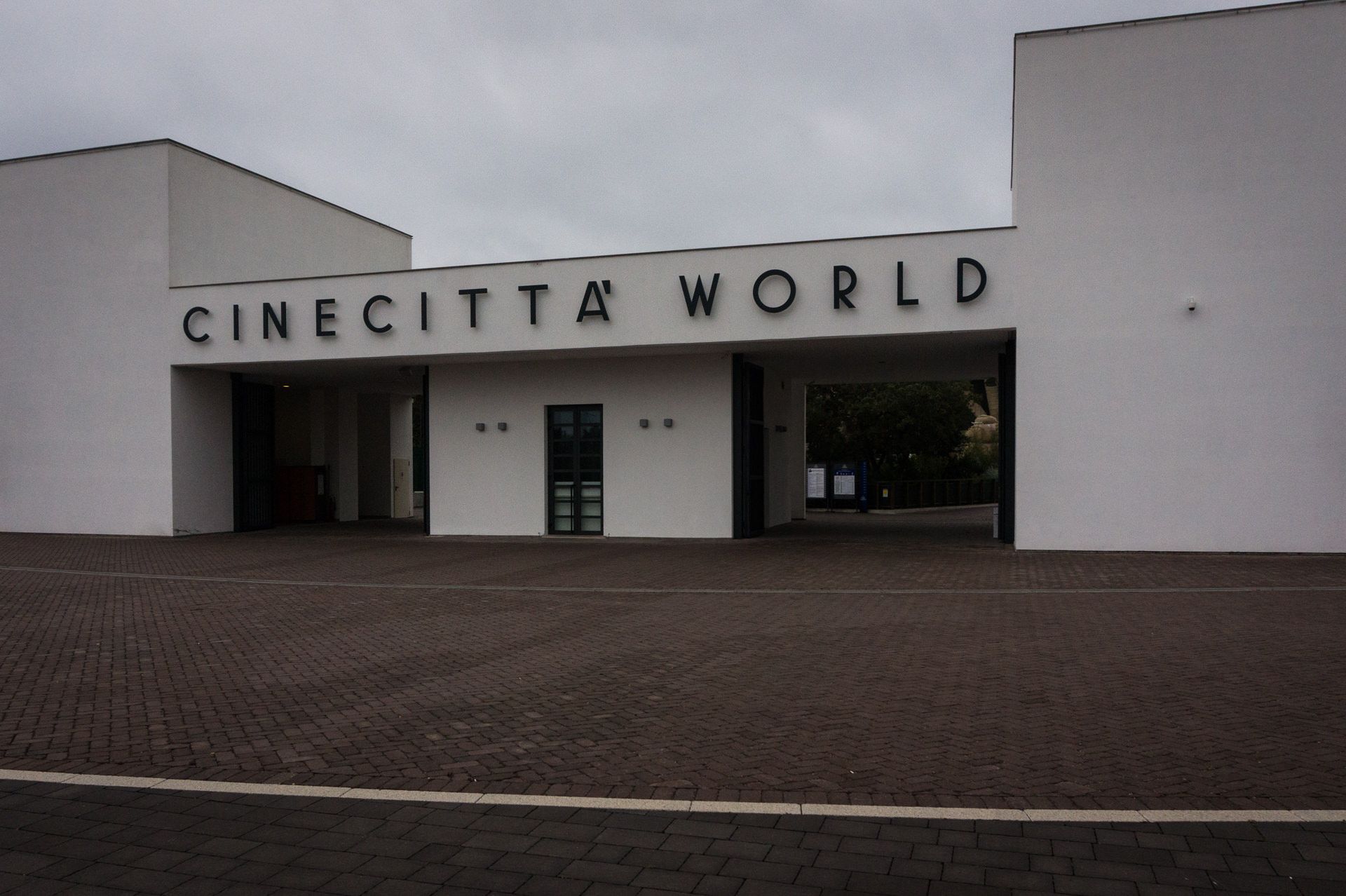
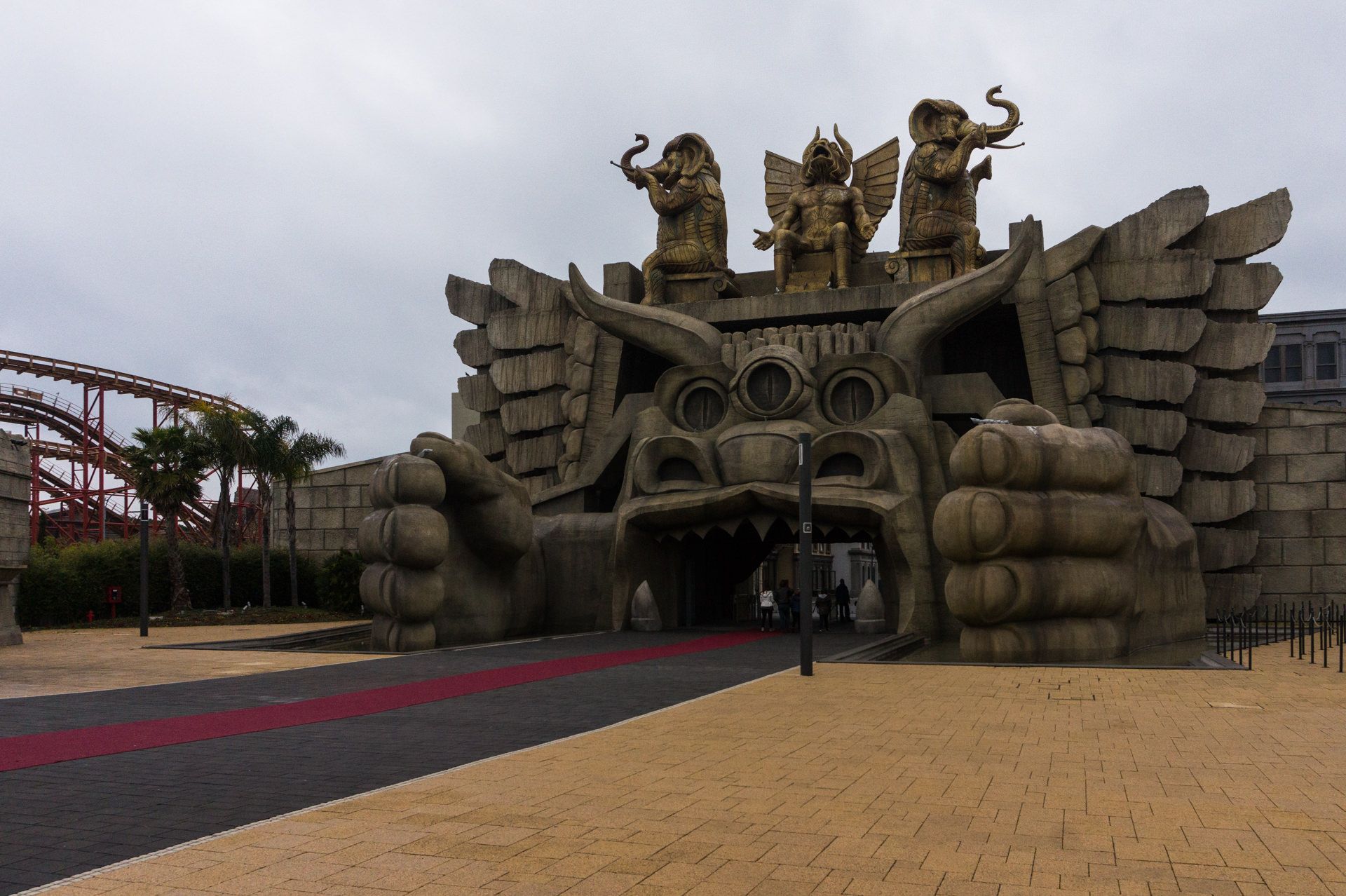
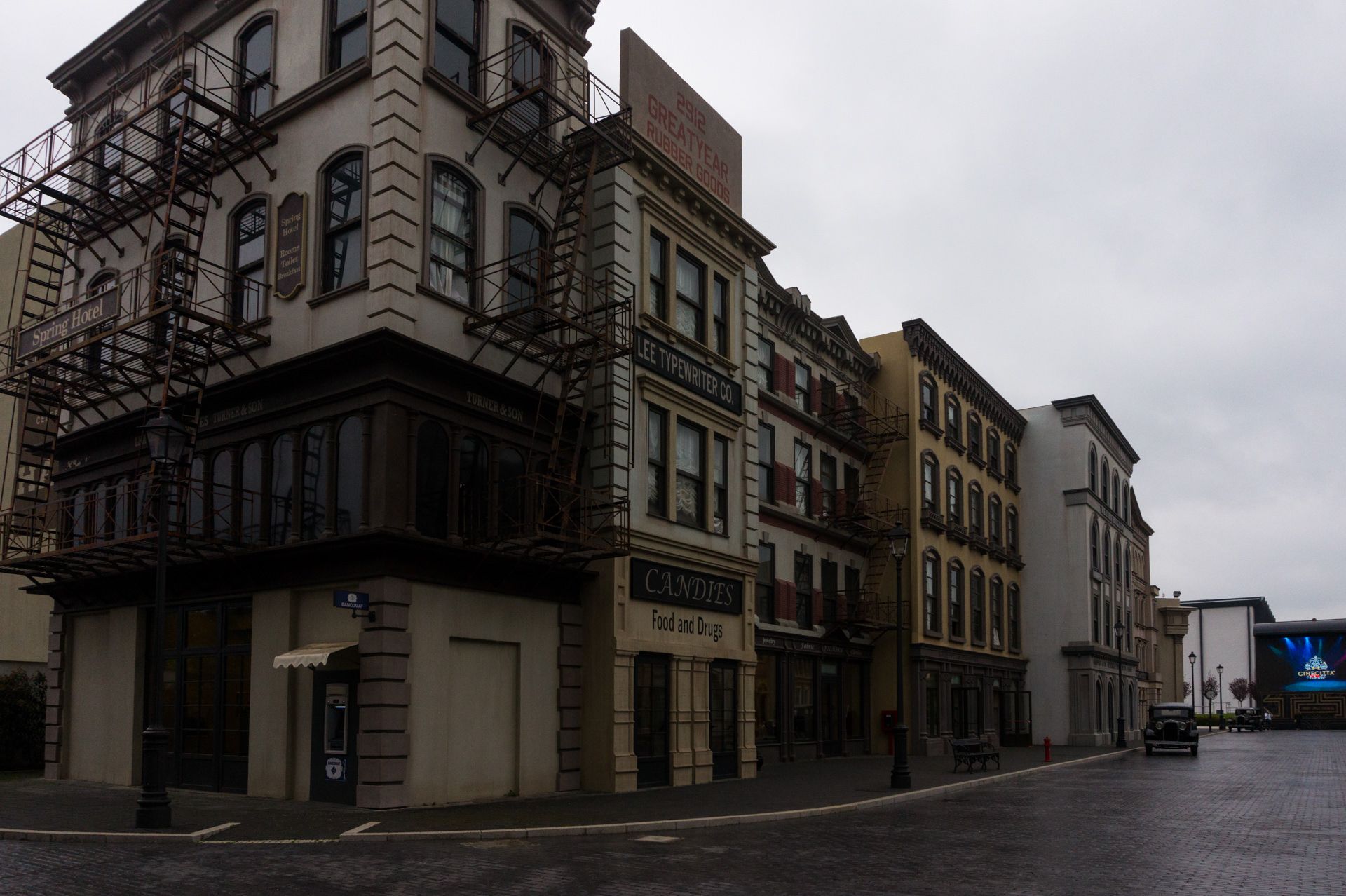
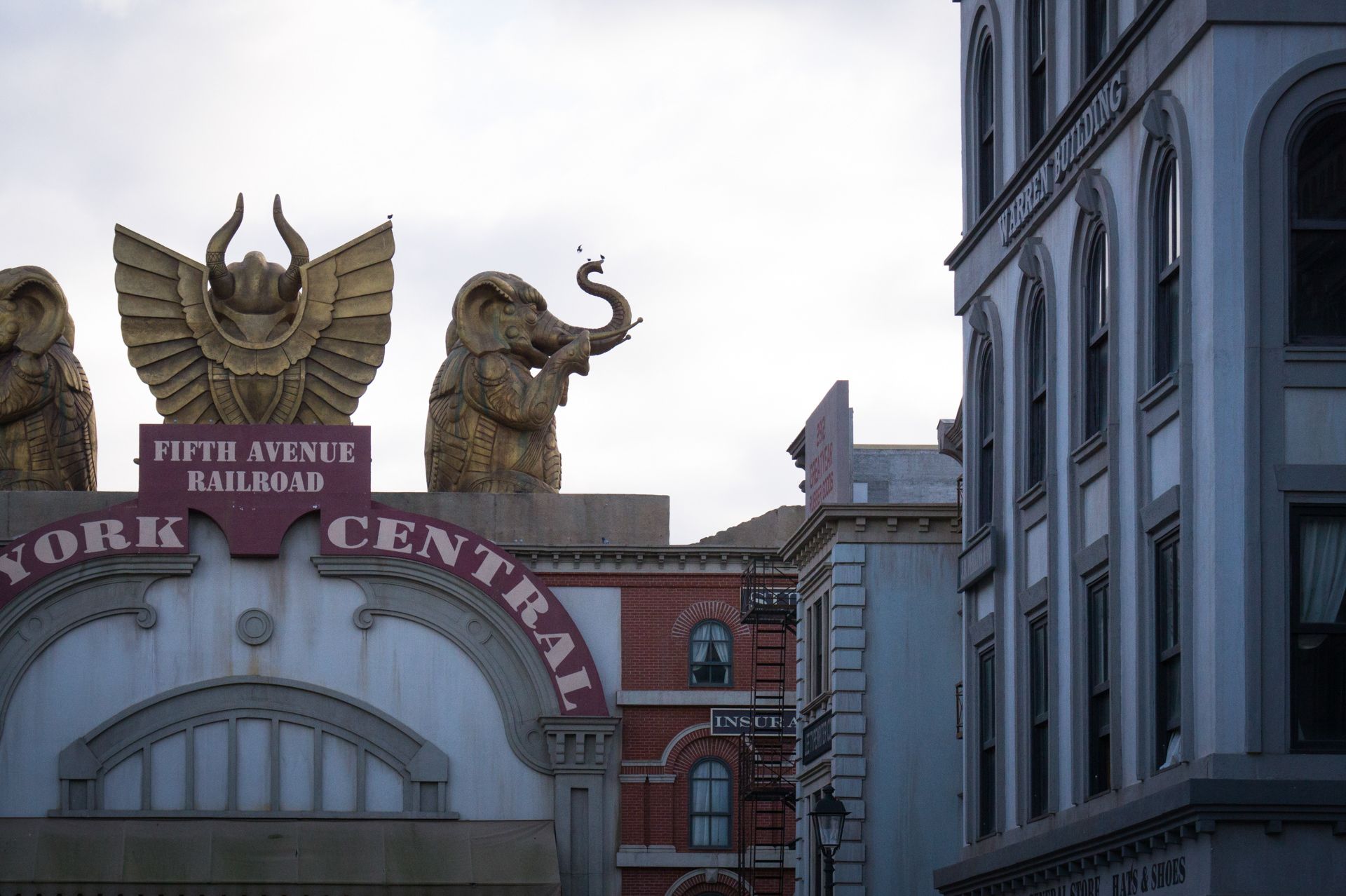
Through an elaborately designed entrance portal, one enters the park directly into Cinecittà Street, the park’s main street, inspired by New York of the 1920s. Although the set is only of generic design, i.e. not based on any film, this area has a lot of charm as long as it does not look like a ghost town due to a lack of visitors. The design is generally of a very high quality and equipped with all kinds of details, so that the first and last impression of the park is inevitably a positive one.

Aktium

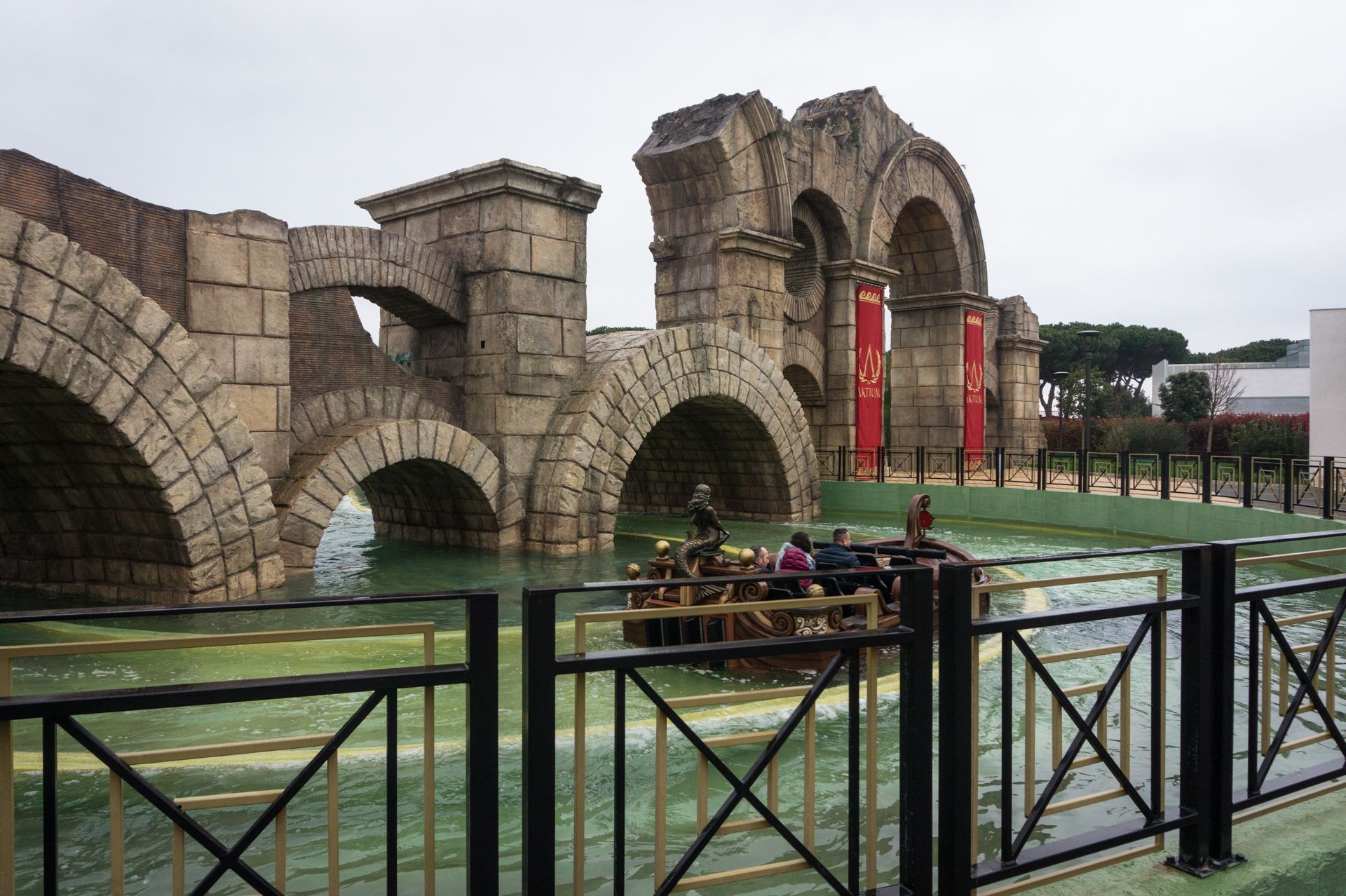
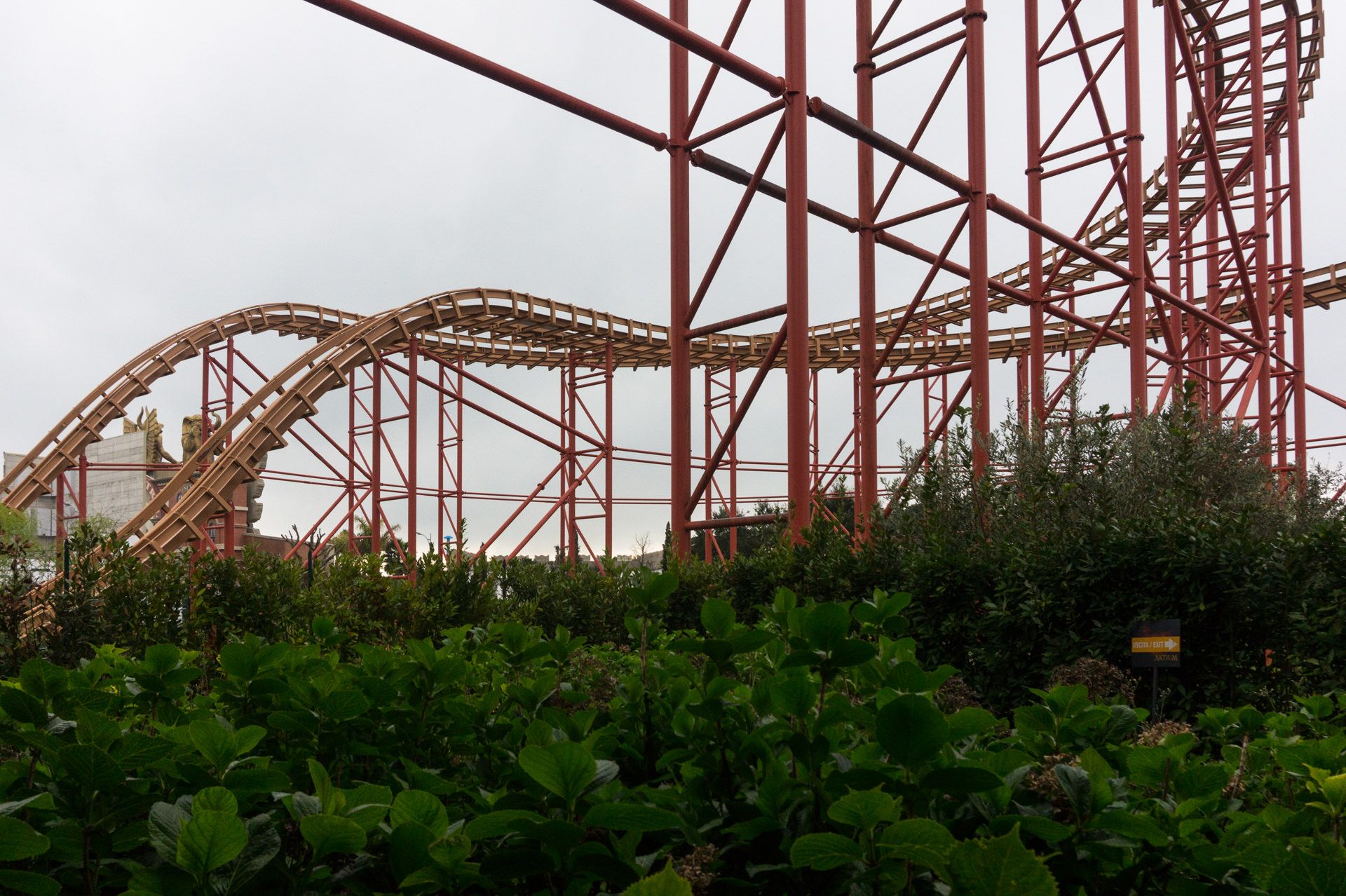
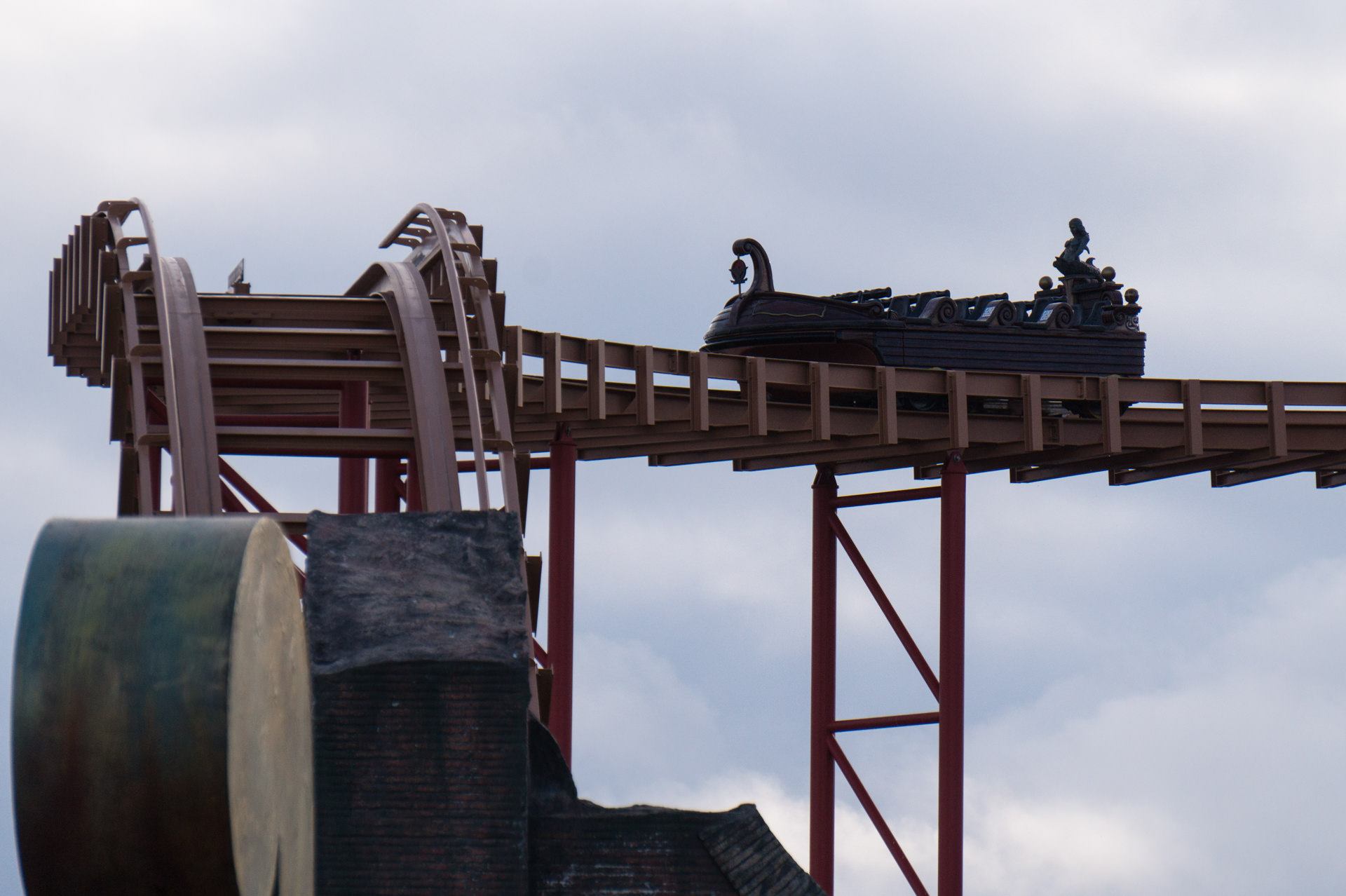
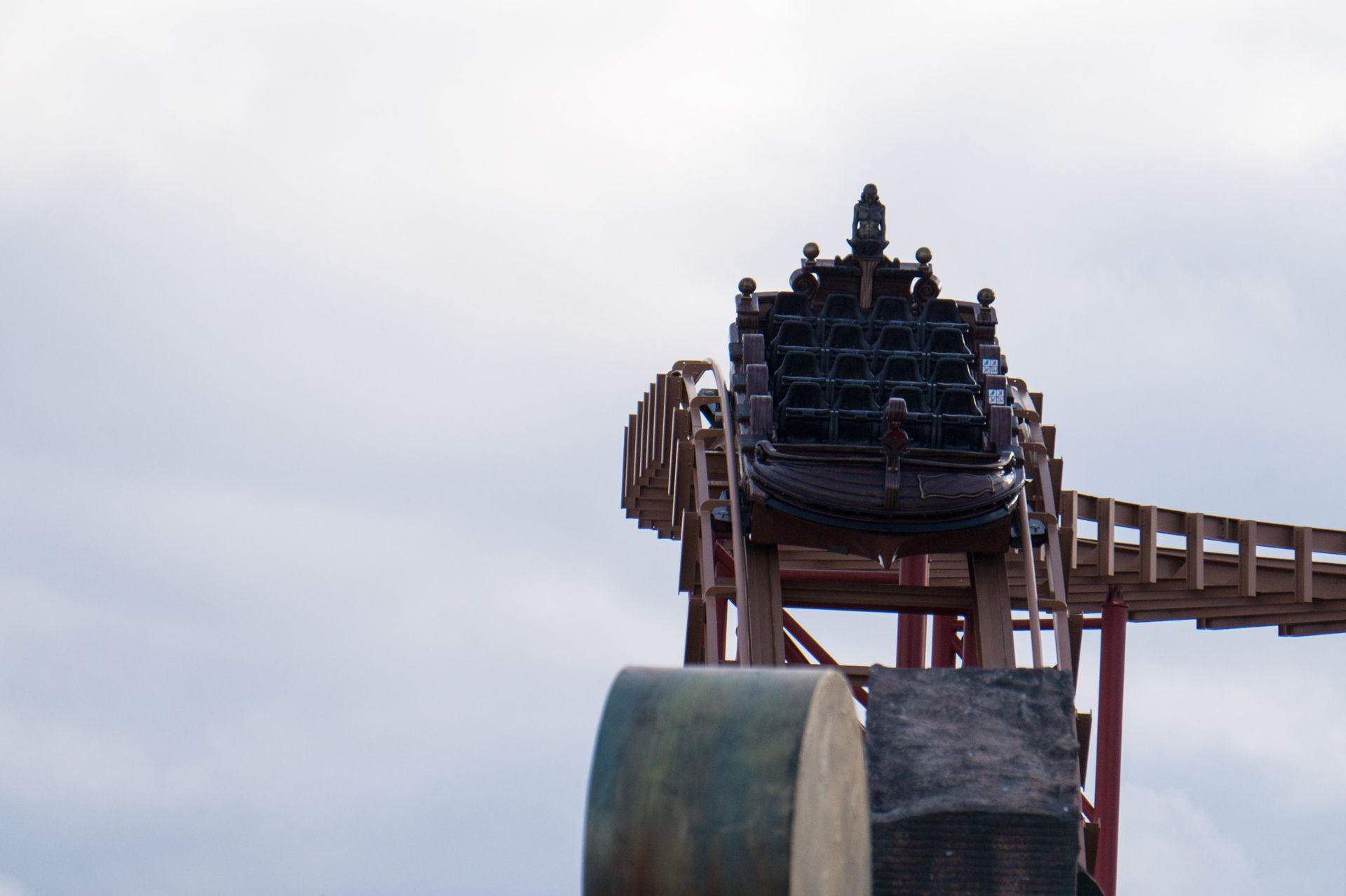
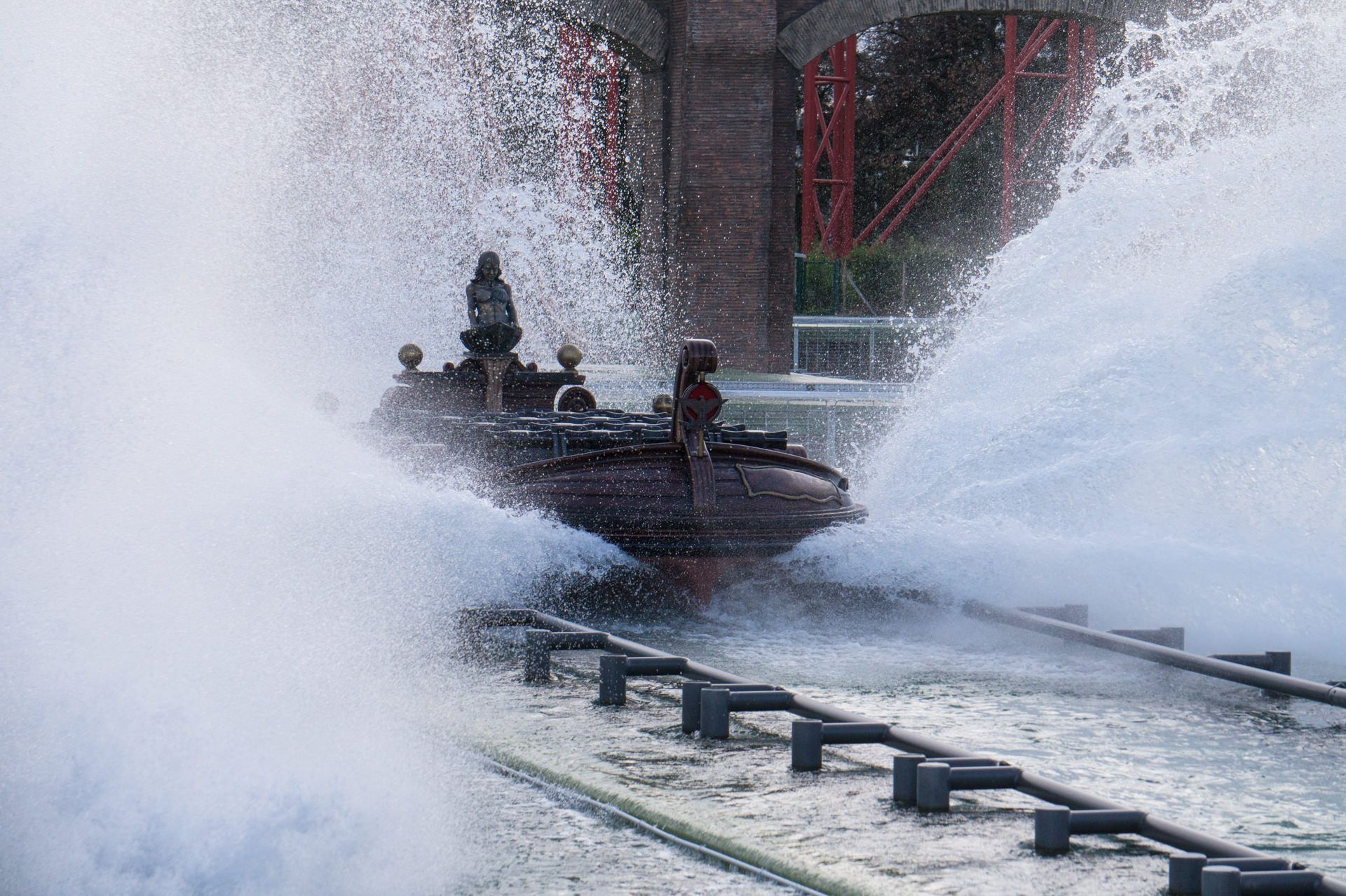
To the left of Main Street the set extends around Aktium, an elaborately designed Super Splash from Mack Rides. It is supposed to depict the naval battle at Actium, in which Octavian, the later Emperor Augustus, asserted himself against Marcus Antonius and the Egyptian Queen Cleopatra VII, thus securing sole rule in the Roman Empire. As violent as the battle was, the area around the ride is just as impressive and once again you can see that the Cinecittà World is a place where quality is the name of the game.

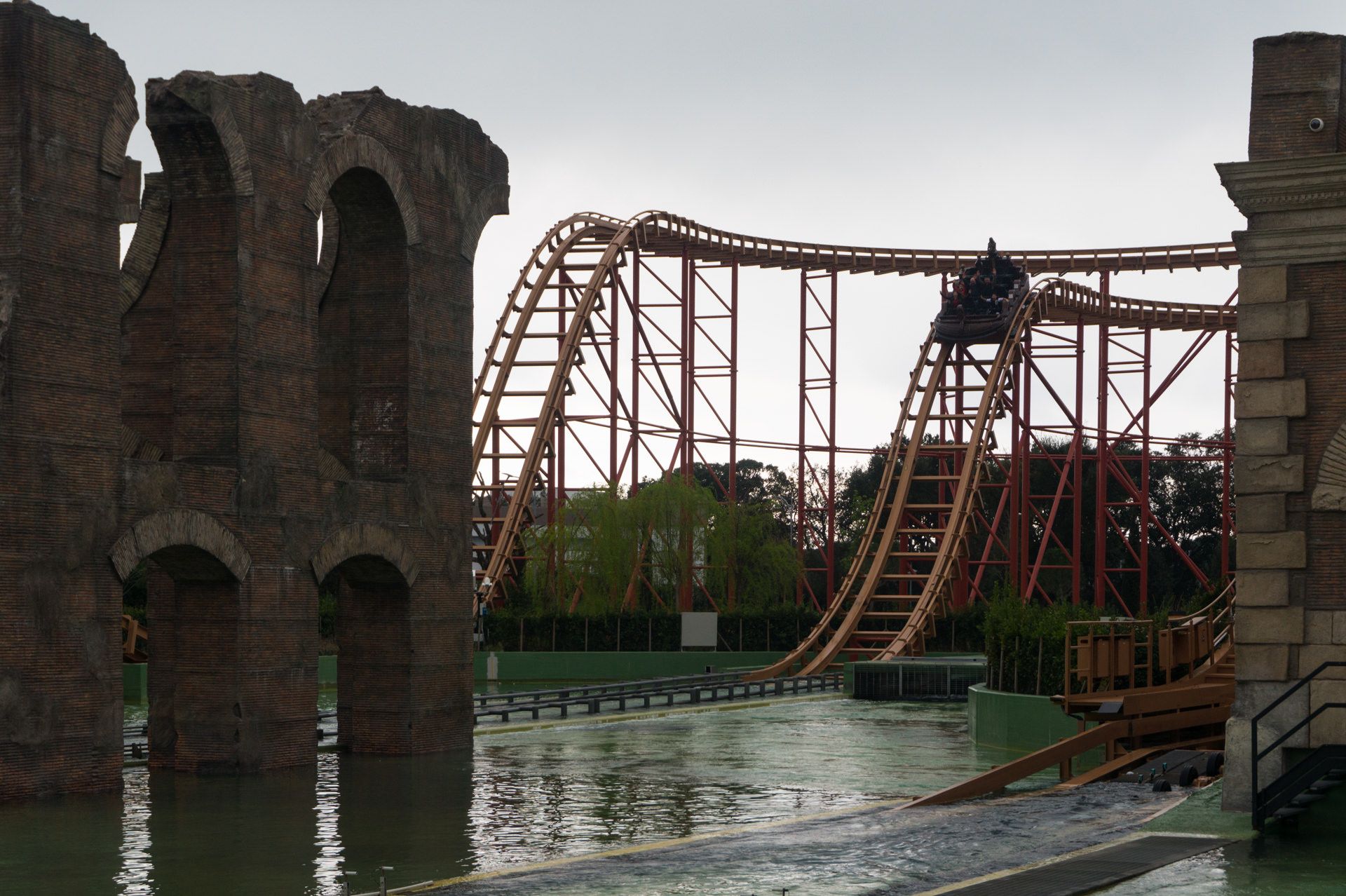
After you have left the spacious queue behind you, the journey can start right away. Without much foreplay, you go directly up the first lift hill, where you approach the first slope in a rough curve. Similar to various larger Spillwateranter installations, this runs directly down into the water without any great gimmicks. One turn later, the boat climbs up again and also makes a rough left turn. Where the ride showed itself to be quite untypical for this type of roller coaster the true character is revealed in the second shot. With a lot of momentum you pass a valley and take off on the adjacent hill before you get in contact with the water. After a little sailing through the canal you soon reach the station and are bid farewell by the staff to thunderous applause.

Aktium is a nice spillwater replacement, but it shows the limits of this roller coaster and reveals the reason why almost all other rides of this type use turntables instead of curves for the turning manoeuvres. Apart from the angular curves the ride runs without any other problems, although the level of wetness could have been a bit higher.

Studio 1

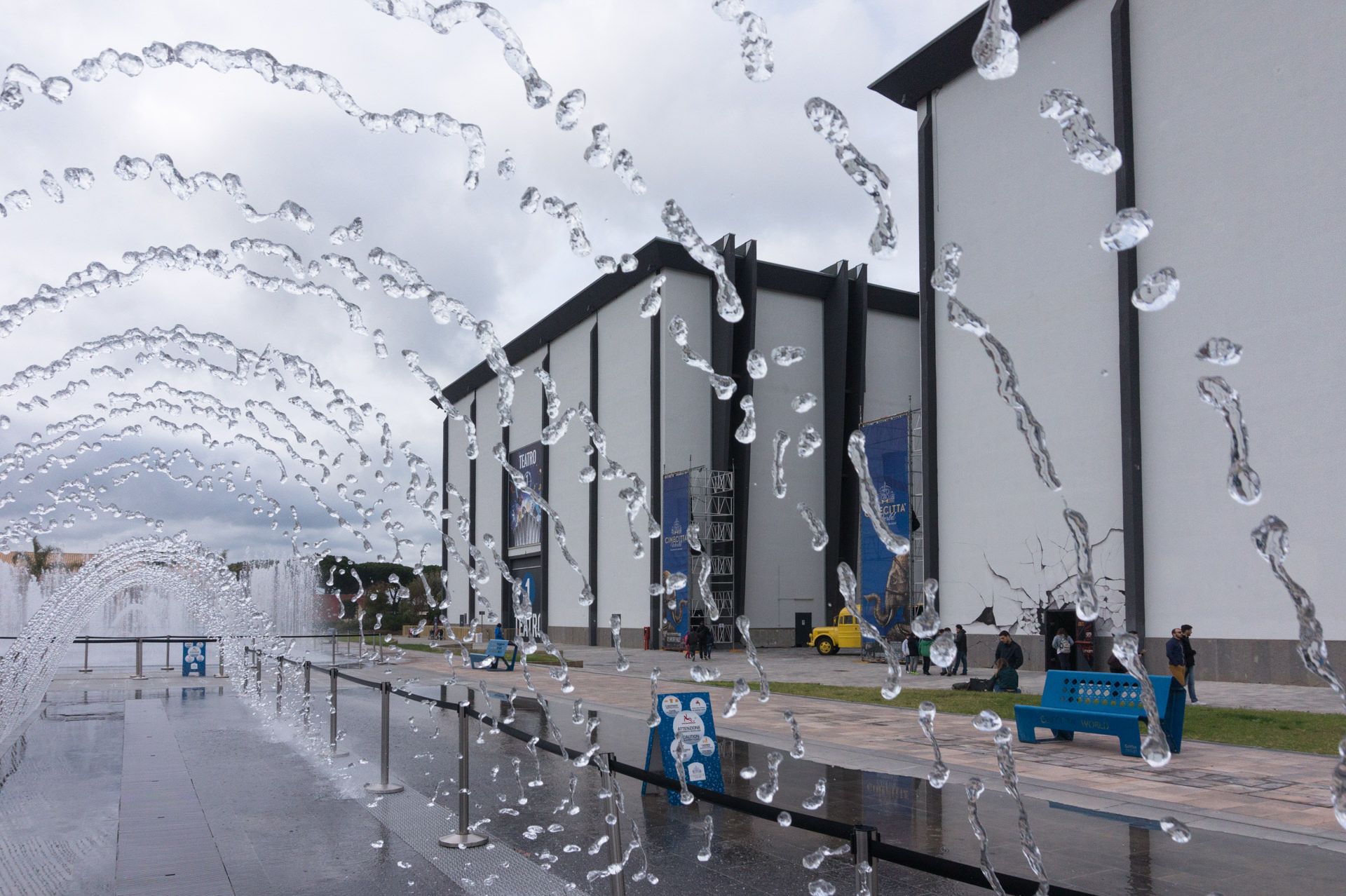
Across the Piazza Dino de Laurentiis with all its fountains and fountains we now enter Studio 1, where a magic show took place. Except for the time-consuming mind-reading number (which was only presented in Italian), the show was very professionally staged, but unfortunately not as worth seeing as the comparable show at Movieland Park.

Altair CCW-0204

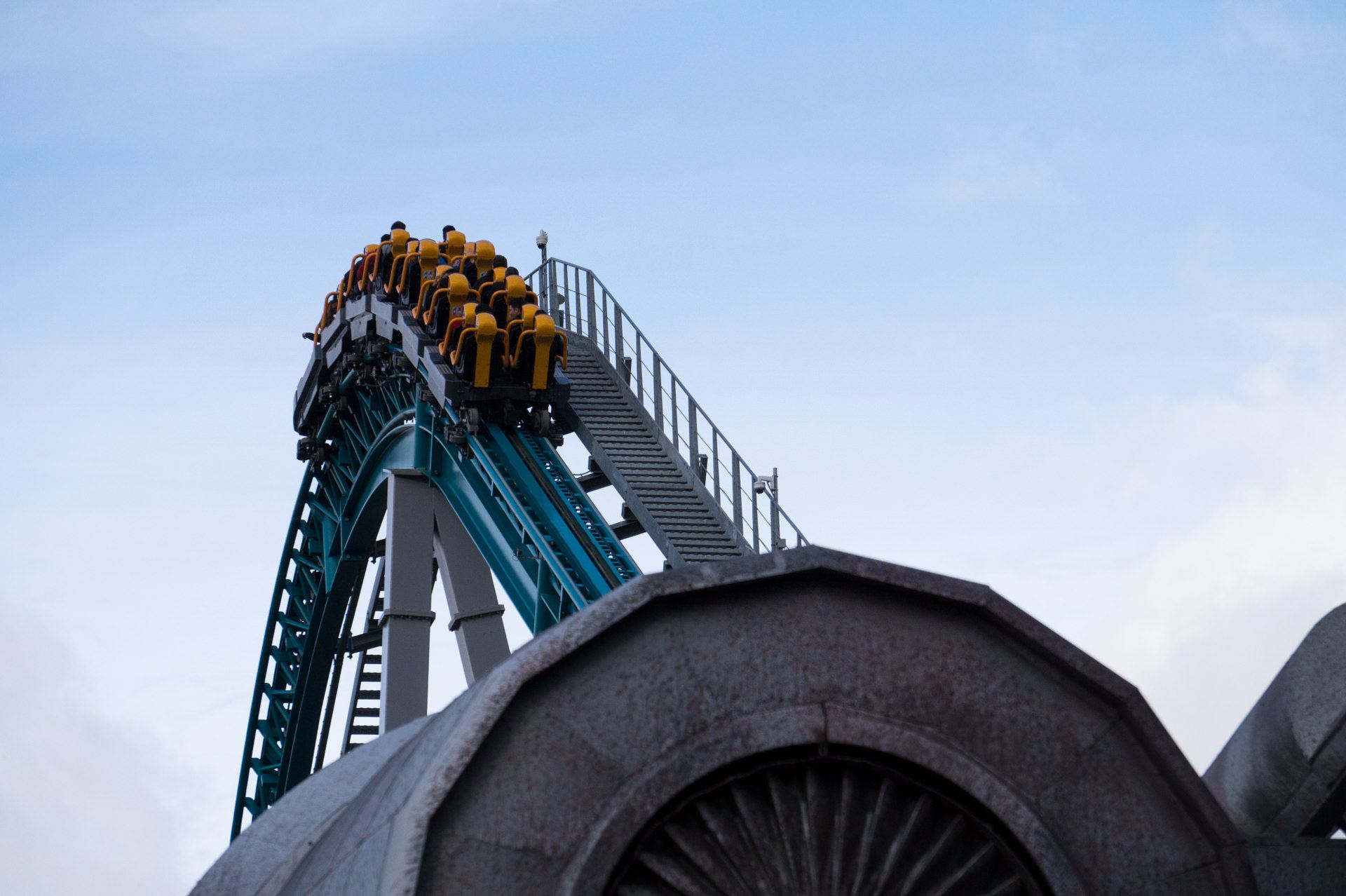
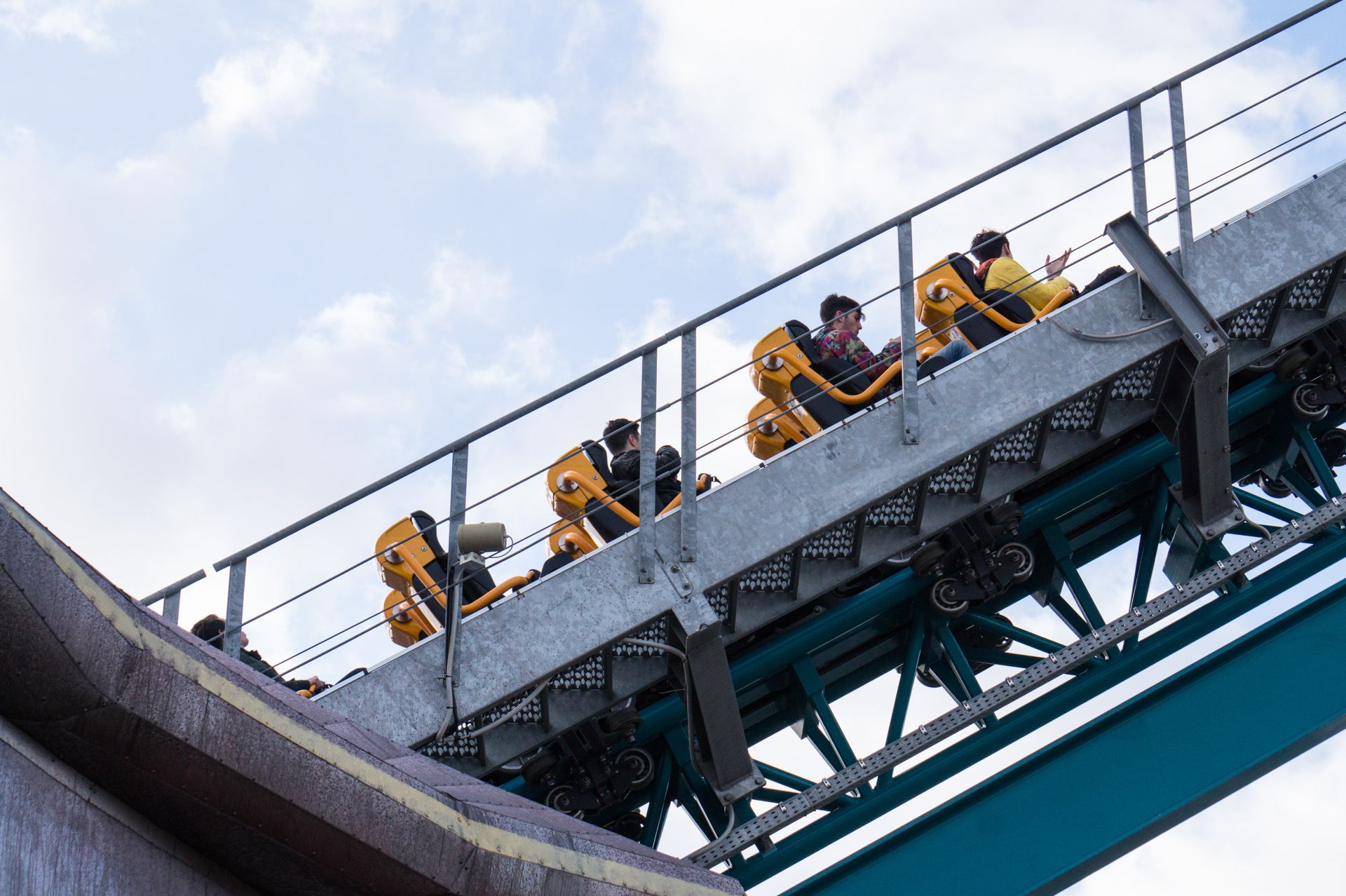
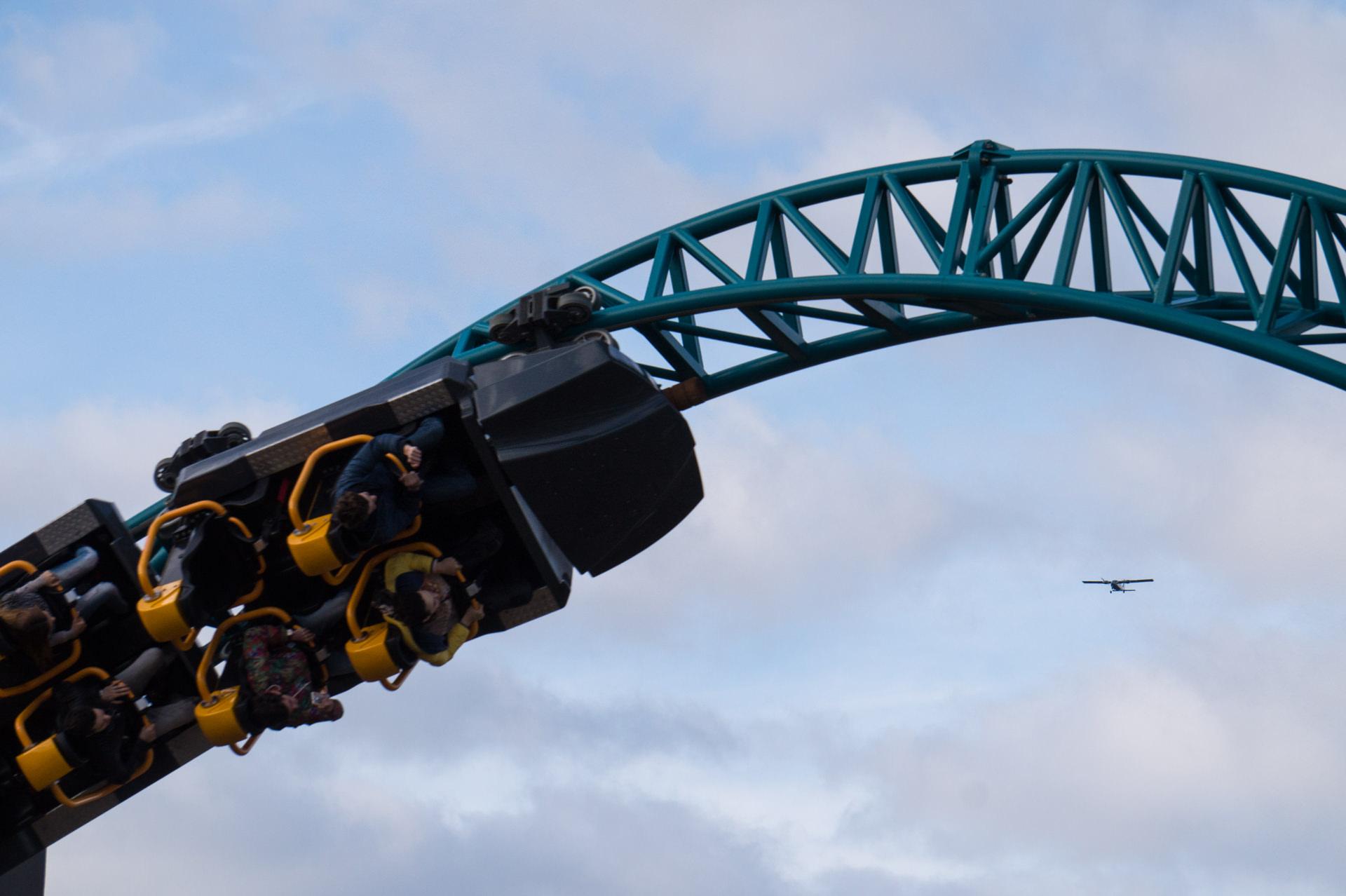
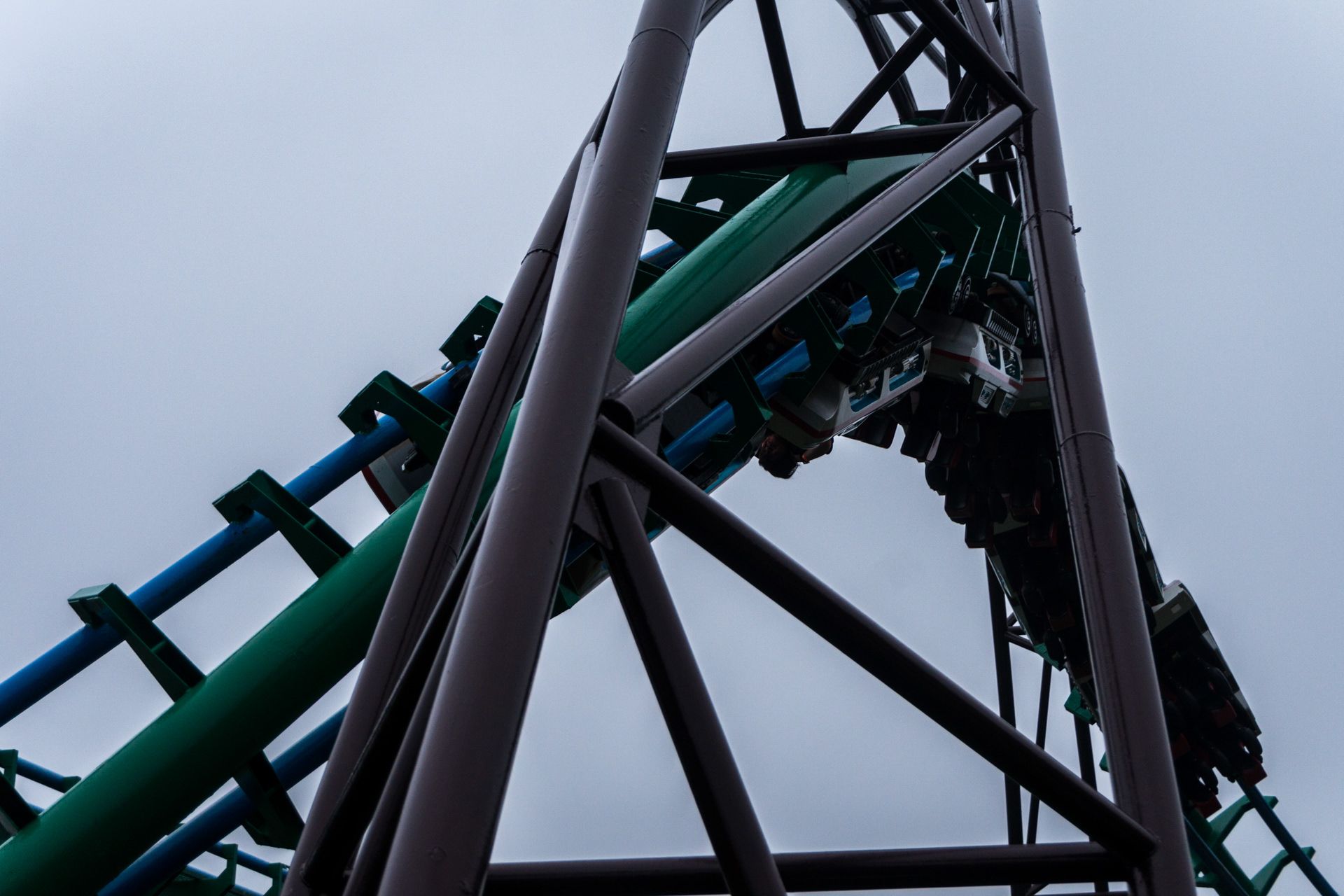
Directly behind it is Altair CCW-0204, a roller coaster that many people are probably already familiar with from the English amusement park Thorpe Park near London. Unlike the former record-breaker, however, the ride takes passengers up to the starting height of 33m a little faster and without a failure-prone chain lift. After an exciting start, the passengers are then thrown through the rollover elements in trains without shoulder restraints. A massive spaceship serves as an oversized station building, in which mankind returns to earth after more than four millennia and has to ask the question who is the alien, the creatures that developed here, or we who left them in the 22nd century?
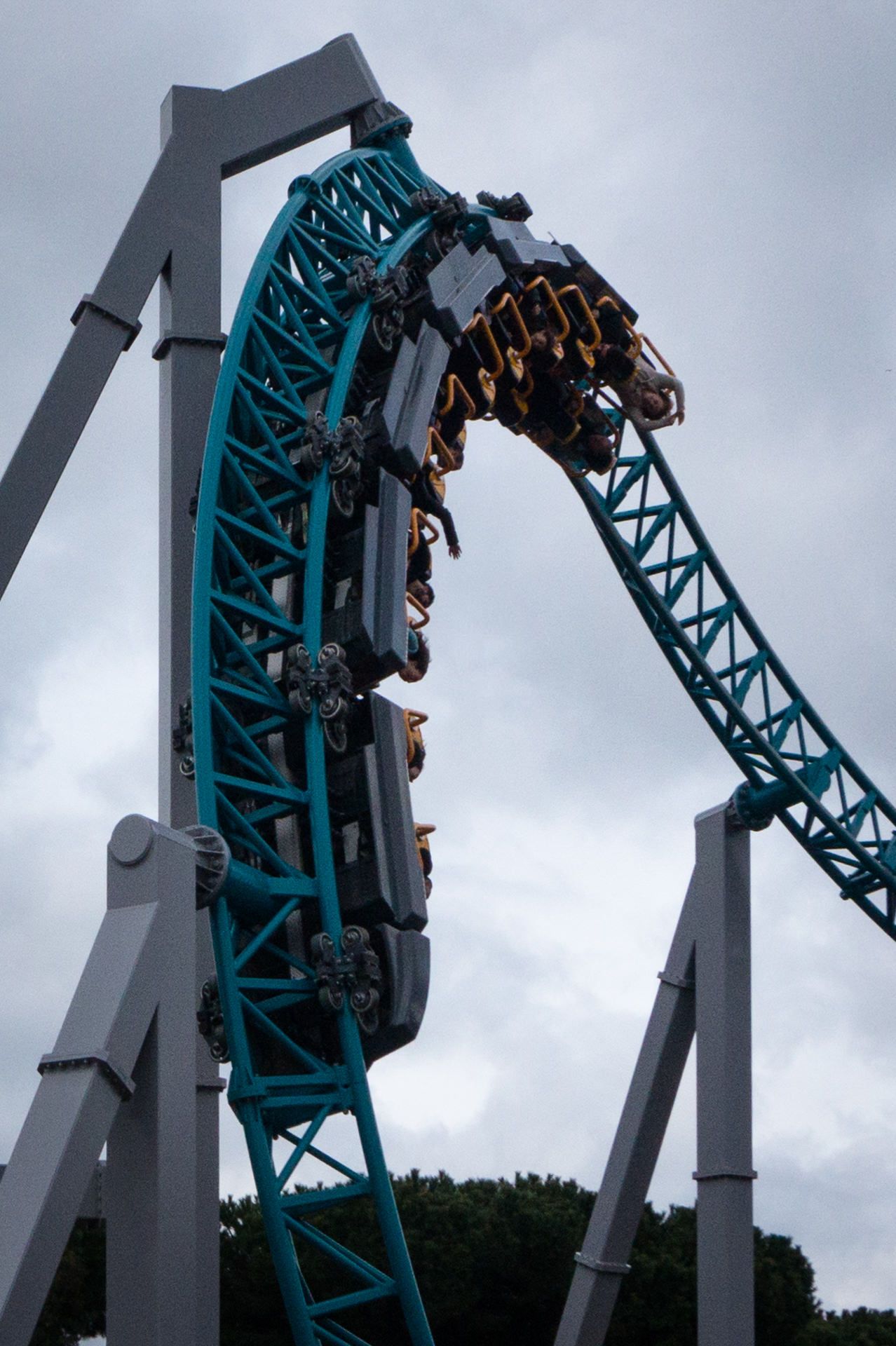
While the background story of Altair offers plenty of room for philosophical discussions, the train, whose restraint system is very similar to that of the Divertical water rollercoaster at Mirabilandia, ascends the lift hill directly. At the top, you pass the top of the hill quite leisurely and immediately drop down to the ground. With a high speed and a high pressure you go through a steep left turn before you shoot up the first inversion, a loop. This is traversed with the usual intensity, followed by a small hill with some airtime. In the valley below, the Cobra Roll is initiated, which is crossed just as confidently. After three rollovers, the half time of the ride is rung in with two corkscrews.  After another left turn above the first downhill run, the quadruple heartline roll in the back of the ride is initiated. Because of the freer sitting position, you can complete this with a slight lateral overhang and thus the feeling of always being able to fall out. The train then passes through a last left turn and then the final inversion, a right leading heartline roll towards the brakes. In contrast to Colossus in Thorpe Park, this roll is a bit disappointing, as it is identical to the previous rolls and therefore offers no more surprises.

Altair is a great roller coaster with excellent ride characteristics and a significantly improved seating position compared to the original. However, Colossus also has its strengths, which are mainly reflected in the grandiose final roll and the better integration into the terrain; it is simply more photogenic, although Altair is by no means photo-shy either. The modified first drop is a great experience and the lack of vibrations in looping and the subsequent cobra roll, as well as the absence of a queue to our visit point, make the ride a guarantee for repeat rides.
Erawan

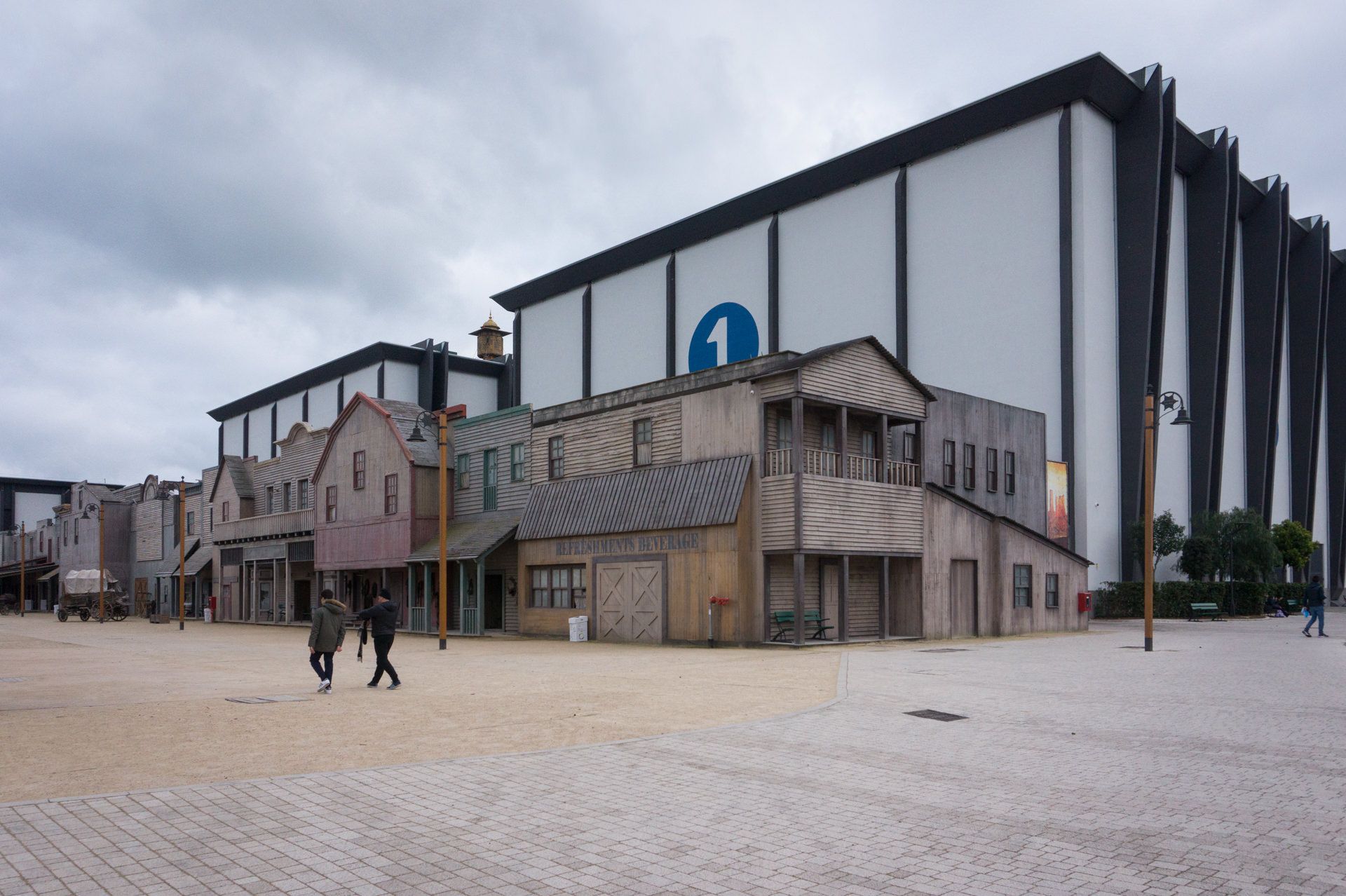
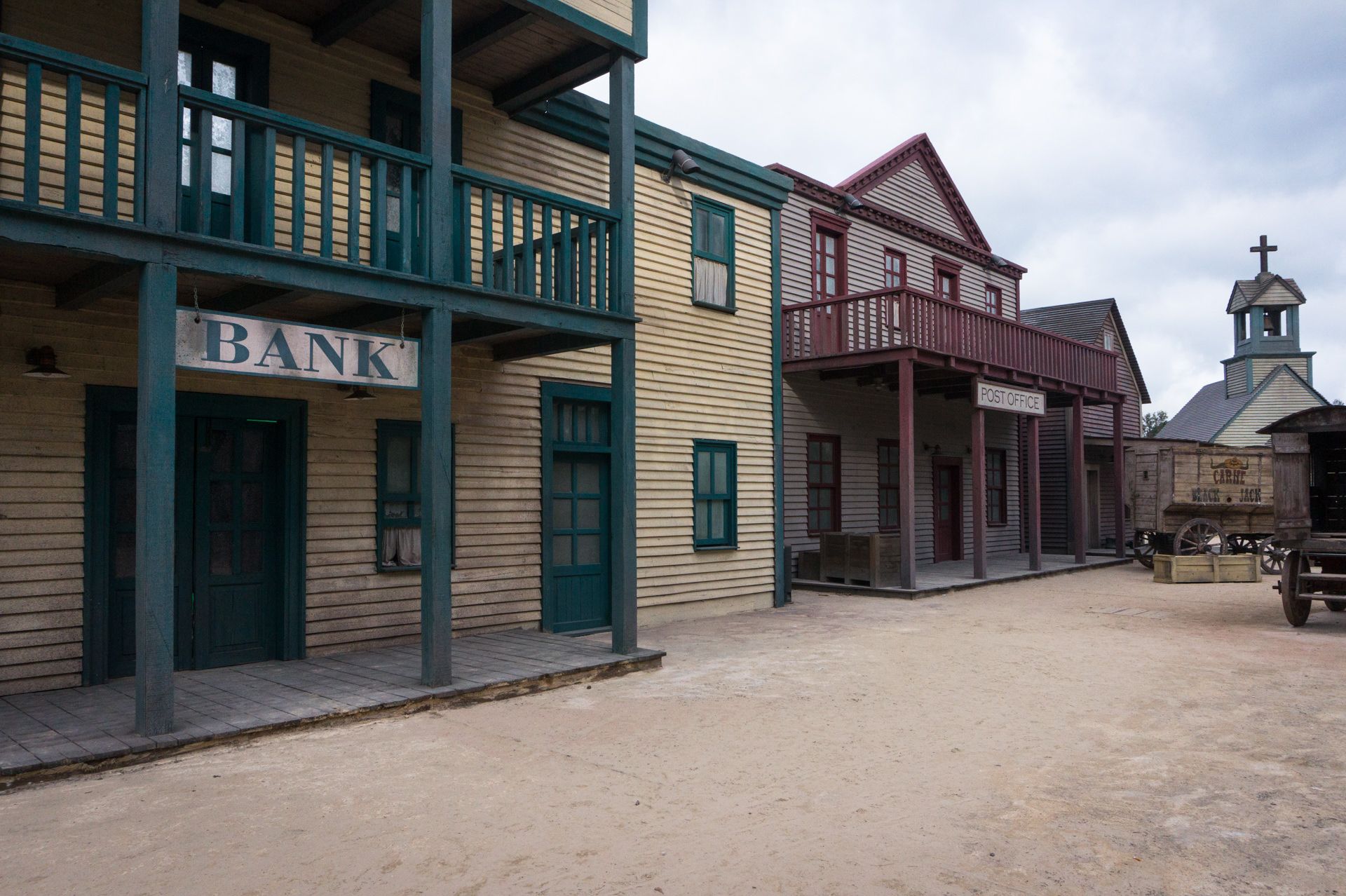
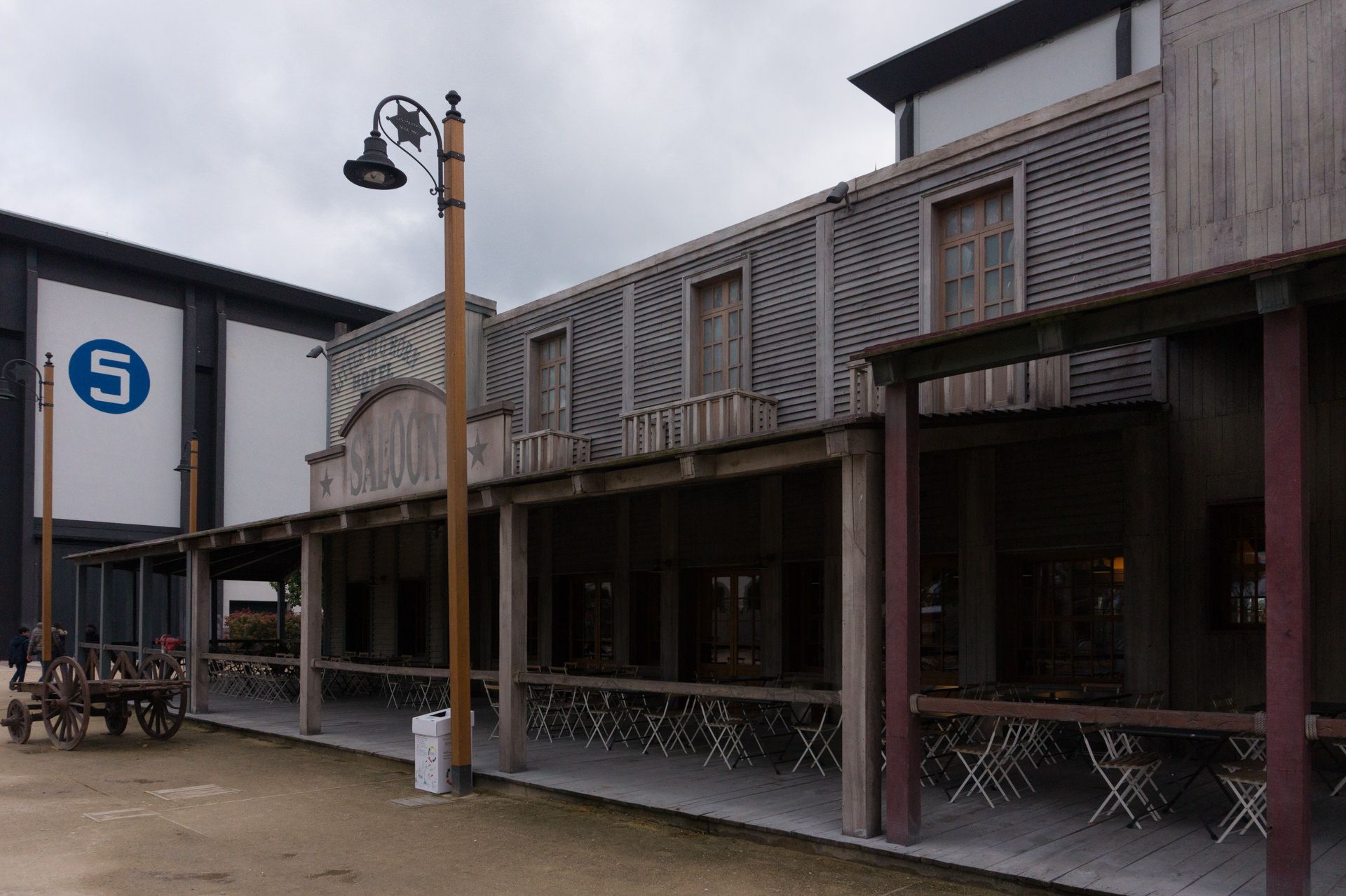
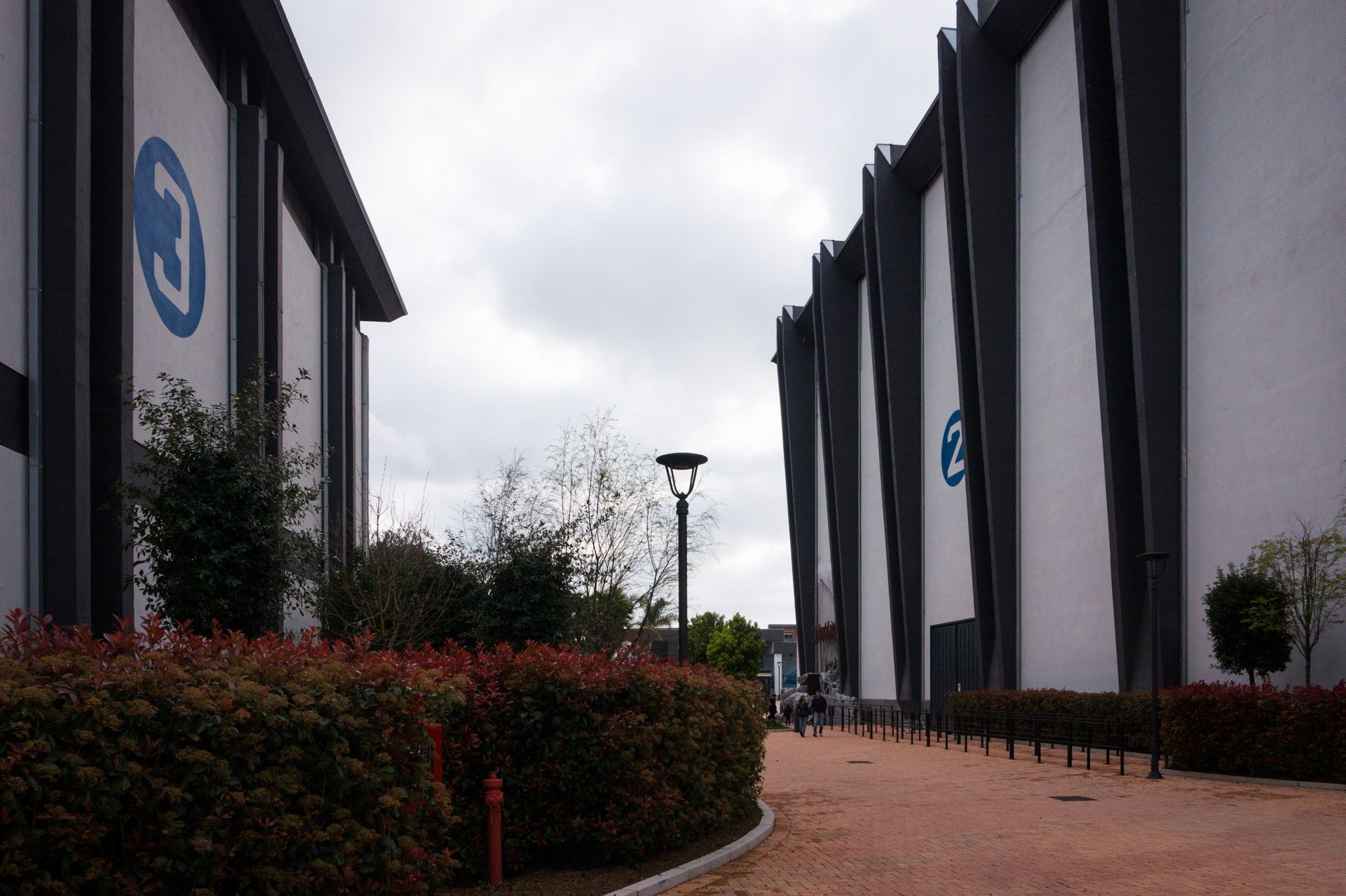
Through the pretty western town of Ennio’s Creek, named after Ennio Morricone, the composer of numerous Italo western scores, where a scary walkthrough is to educate during the season, and past Studios 3,4 and 5 (with a 4D cinema in Studio 4 and a children’s playground in Studio 3), we head towards the most impressive ride in Cinecittà World, the Erawan Freefall Tower. This visual treat includes four lanes, two of which offer pure falling pleasure while standing, while the other two lanes entertain their passengers while seated. All gondolas are tilted forward before the fall, which generally ensures a great and outstanding ride experience. But even apart from the special features Erawan is a magnificent tower. The pure fall reaches similar qualities as Apocalypse from the English amusement park Drayton Manor, which is in my opinion the best freefall tower in Europe. The only difference is that you are one experience poorer due to the absence of the hilarious standing gondola with corridor. Erawan is undoubtedly the best designed giant drop far and wide and also offers a great ride that you should not miss.

Darkmare

Just a few metres from Erawan is the entrance to Darkmare, the family rollercoaster of Cinecittà World featuring a very dark story. Thematically one takes up Dante Alighieri’s Divine Comedy, which was to be filmed in the 50s in Studio Hall 2. However, there were numerous strange accidents and finally a fire, whereupon the shooting was stopped and nothing happened afterwards.

After years of standstill we venture into the hall and experience a wild ride through hell, which begins with a short descent in a right turn, into the lift hill of the lift. You pass a mirror, which is admittedly a really great effect. Passing numerous, artistically valuable projections, all of which make Van Helsing’s Factory from Movie Park Germany look old, you quickly reach the ceiling of the hall, whereupon the train immediately plunges to the ground in a steep left-hand bend. Regardless of losses, the first valley is crossed with outstanding intensity, whereupon the train soon gains altitude. After a curve change, the train passes through a narrow downward helix and winds its way to the other end of the hall in a zigzag curve combination. After a short ascent you reach the freefall segment, where a demon now shows itself and puts its wings around us. Shortly afterwards we are already one level lower and leave the segment very quickly. Now follows a narrow left turn, which is immediately joined by the final turn to the right. Shortly afterwards we reach the station and are once again bid an enthusiastic farewell.

Darkmare is really, really, really damn good! In contrast to the prototype Th13teen of the English amusement park Alton Towers, the ride has no funny backward part after the drop segment, but the rest of the track is much better. In addition, the general design of the ride in its dark comic style is really outstanding and the projections are just perfect. The large and demonically well darkened hall makes the compact ride look three times as big as it actually is and extends the ride in equal measure. The free fall is also quite ok, but can be a bit too much for first-time riders, after all the ride is not lacking in power anyways. But you shouldn’t take such a gloomy view, because Darkmare is definitely the best roller coaster of the park and one of the best roller coasters in the country; so it’s a great ride with a very high repetition urge.

Aquila IV

Opposite Teatro 2 is the submarine Aquila IV, which was used in a German submarine film and a music video by the band Bon Jovi. Of course it is not Das Boot, because it is still located in the Bavaria Filmstadt not far from Munich, but the U-900 from the film of the same name with Atze Schröder in the leading role. Admittedly, the scenery builders did a good job, but we couldn’t explain to ourselves what the meaningless tour was supposed to be in Italian. Without language skills you should avoid Aquila IV and even with language skills you really shouldn’t expect too much, especially since the waiting time is very long. On the other hand, a visit in a real submarine is really recommendable; we at least wished to return to the U-571 of Movieland Studios.

SpacExpress

In addition to the SpacExpress, an immersive tunnel of Simworx, which however was not yet in operation at the time of our visit, the children’s kart track Velocità Luce and the entrance to the children’s land Sognolabio are also located in this area. This area is very colourful and offers some nice rides for children made in Italy, as well as a very annoying soundtrack and a nice splash battle.

Pictures Cinecittà World

Conclusion Cinecittà World

Cinecittà World is a good amusement park that has made quality its top priority; here neither the design nor the rides are of inferior quality. Unfortunately, sometimes the quantity is still missing, because you can only manage a whole day in the park if you actually watch every single show, eat comfortably in one of the restaurants and take multiple rides. The Movieland Park shows how it’s done, but at the Cinecittà World their own professionalism still stands in the way. In no other Italian park you could meet as much staff as here, neither in the shows nor in the attractions. Although this creates a good image, it is known to be somewhat more expensive than the one-person operation of the Mirabilandia. In addition, Cinecittà World is based on something you know and which is also used in numerous film parks or film studios with guided tours, but it is questionable whether they are on the right track; because sometimes they only show larger generic sets without any actual film reference with suitably embedded attractions. A larger reference to own productions would therefore be advisable, but one does not necessarily have to give up the intended concept. I’m curious how the Cinecittà World will develop in the next few years, because the park has potential and already offers a lot of quality; a condition that one would wish for other parks around Rome.


What is your opinion about the movie park Cinecittà World? Just write it here below the report in the comment field or visit our social media channels:


Click here for the next report of the Il Viaggio dei due Runner Tour