A not so great visit

Preface

After our day’s start in Fiabilandia we reached the car park of the amusement park Mirabilandia at late noon. Although our visiting day fell on Easter Sunday, the general rush of visitors was limited, but not the waiting times and the eagerness of the tourists/residents to jump the queue. Yes, it was not a pleasant visit to Mirabilandia, although the attractions are first class, but more about that later.

The History of Mirabilandia

We start the review with a look at the history of the amusement park, which opened in 1992. The park was founded as a project of a group of investors consisting of Situr-Finbrescia (46%), San Paolo Finance (44%) and Publitalia 80 (10%) who, with the simple formula “tourist resort + amusement park = cash cow”, completely failed in their exaggerated expectations and were unable to attract even a third of the two million visitors they had hoped for. As the operating company was on the verge of bankruptcy in 1996, they sold the park in late autumn of the year to the Löffelhardt-Casoli Group, a joint venture between Phantasialand co-founder Gottlieb Löffelhardt and Giancarlo Casoli, one of the owners of the former Italian amusement ride manufacturer S.D.C., who massively expanded the park in the following years. As a result, the number of visitors also grew to over 1.5 million. After a few years Löffelhardt withdrew from the business and Casoli took over the patronage, before Mirabilandia was sold to the Spanish group Parques Reunidos in 2006.

Tour of the park

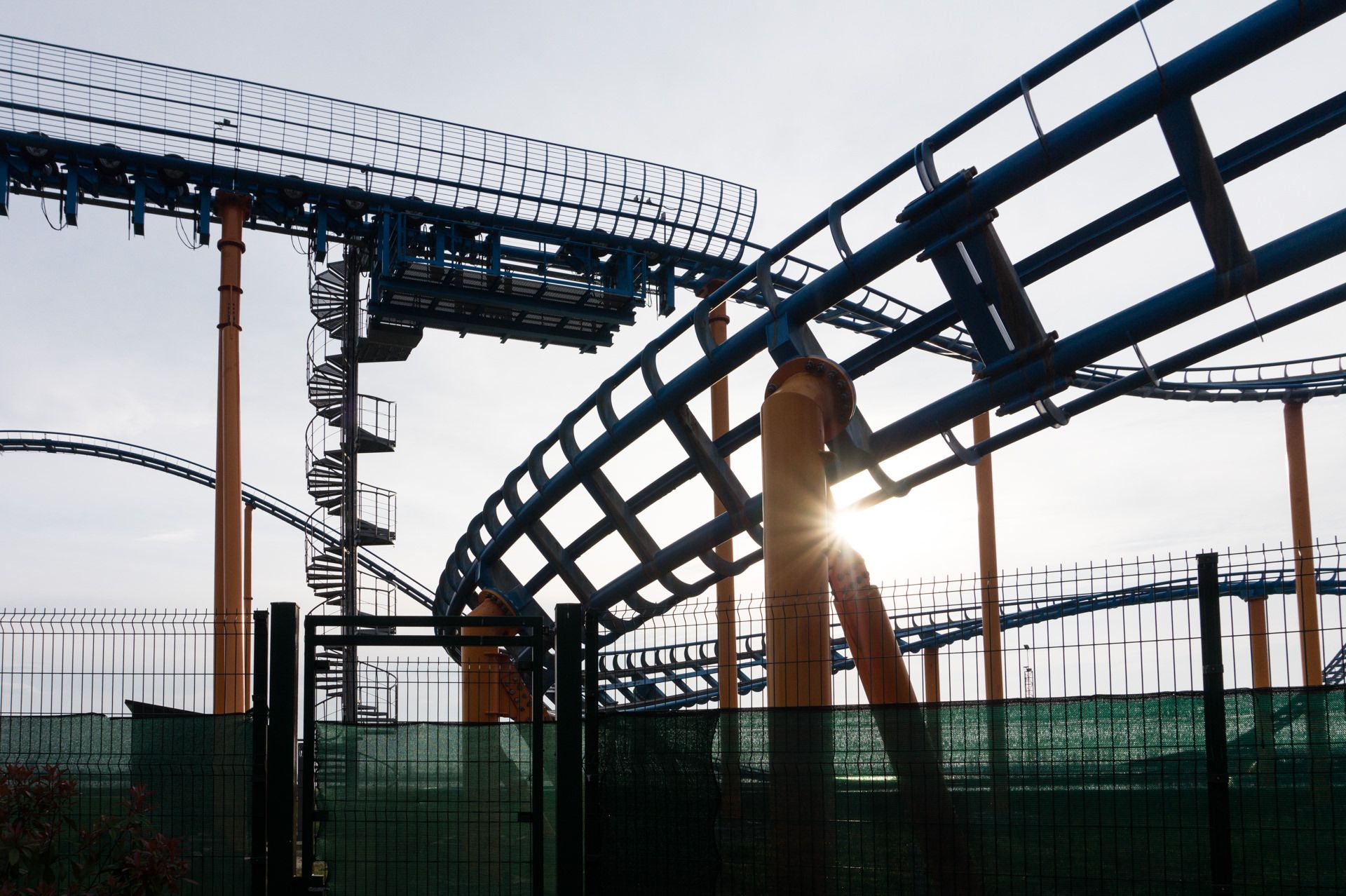
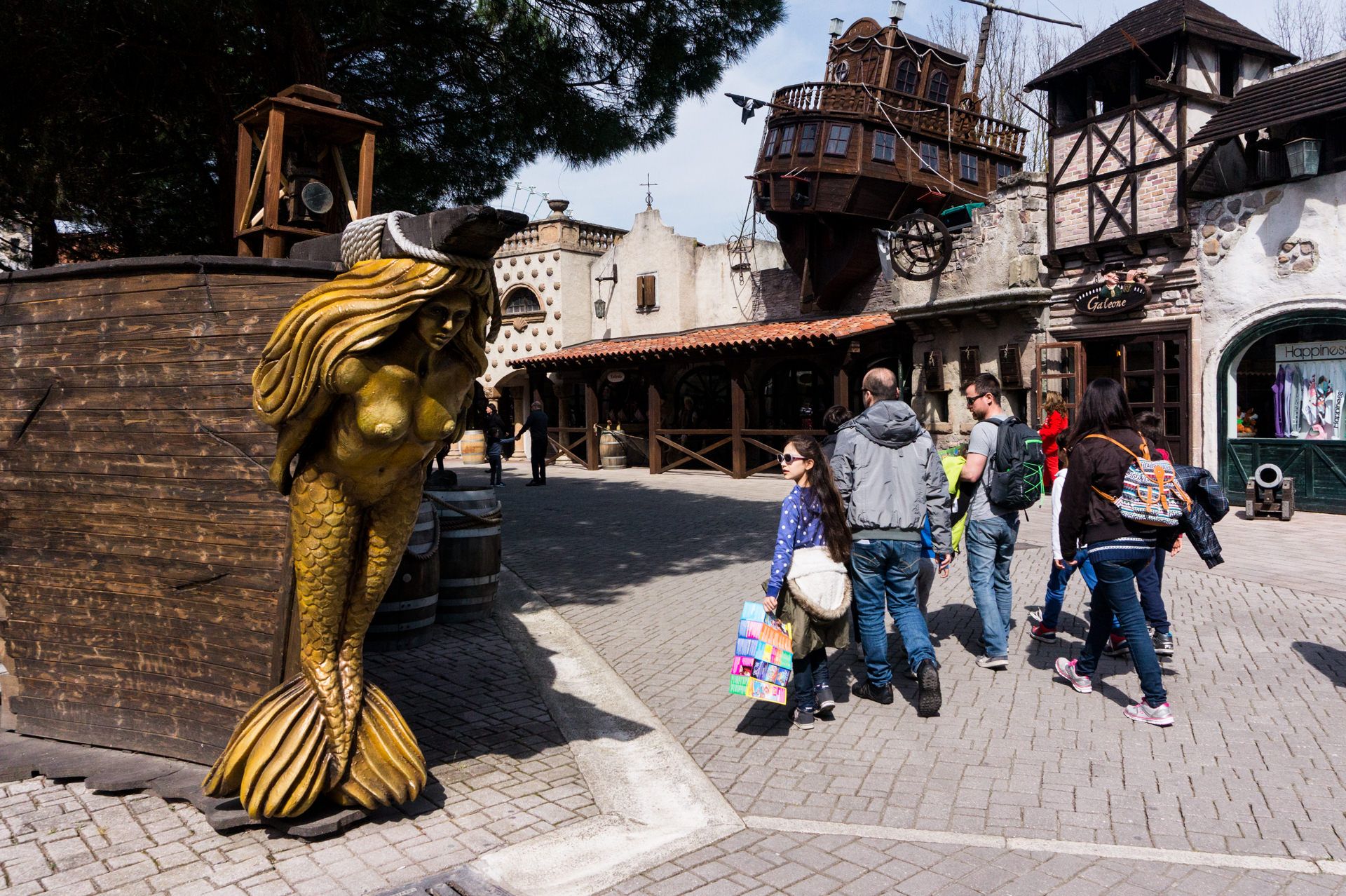
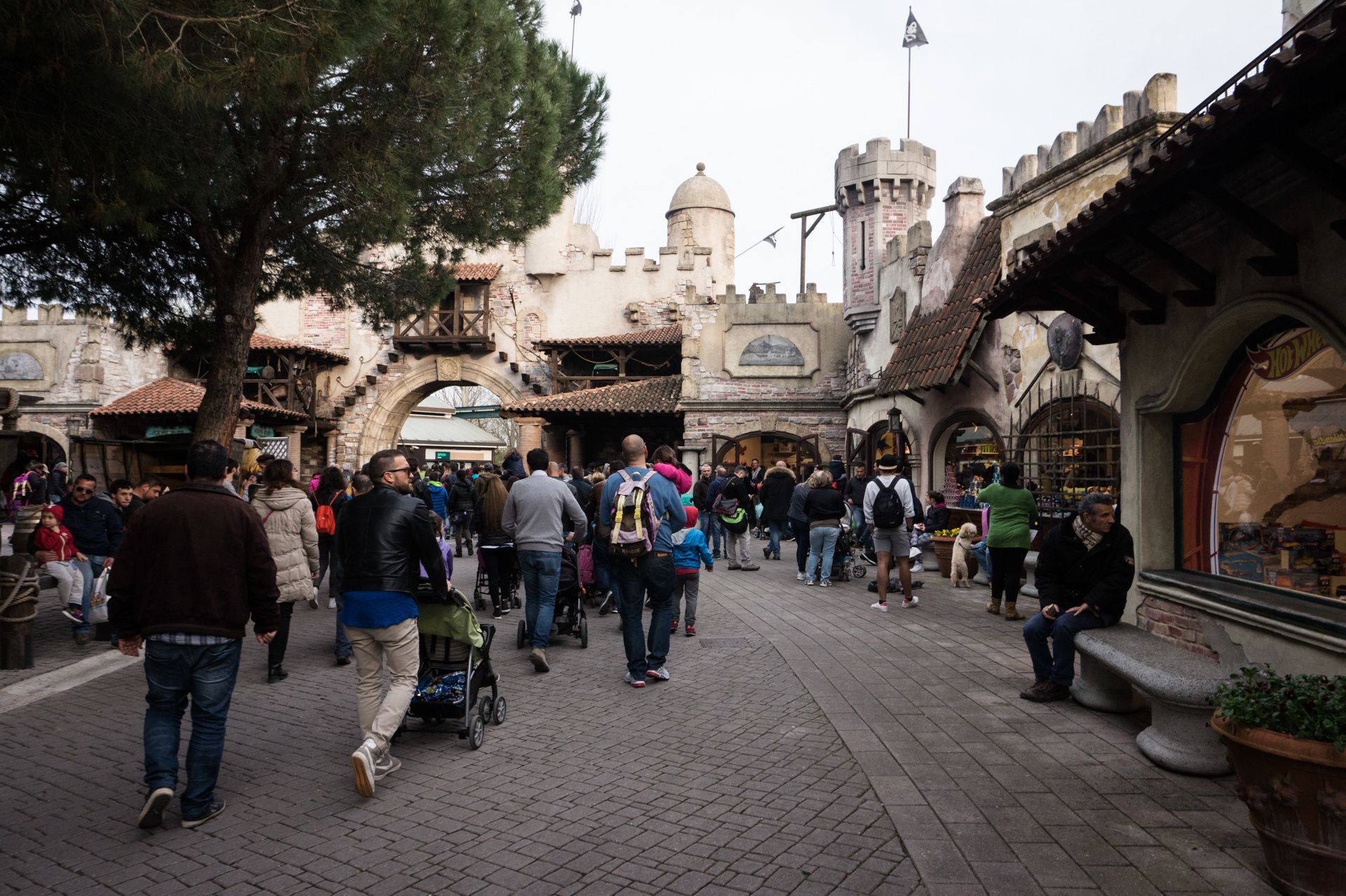
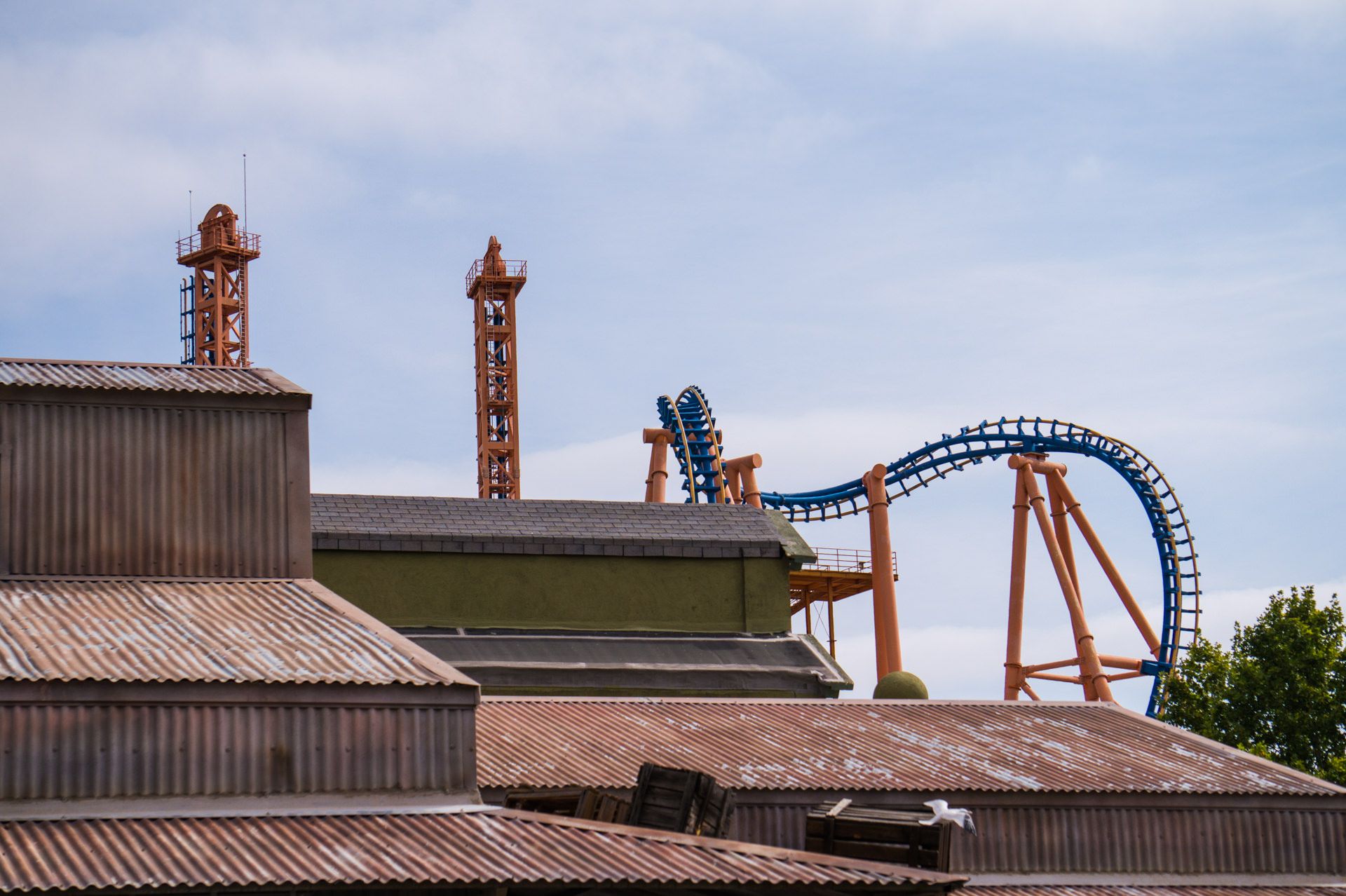
After leaving the ticket offices behind, you enter the park over a bridge, similar to the English amusement park Thorpe Park near London. The skyline here is discreetly restrained, but with the perfectly placed Cobra Roll of the inverter Katun to the right of the bridge it is already very impressive. From here there is a path leading into the Far West Valley, which was still largely under construction, and the actual entrance area of Mirabilandia. This turns out to be a pirate’s nest full of details and accommodates some shops, where you can get fast passes, which were almost a necessary treat to be able to ride anything in this park.

To my own confusion, Mirabilandia had arbitrary opening and closing times of the rides, which meant that many attractions didn’t open until noon or even later, or closed much earlier. This in turn resulted in long waiting times throughout the park. On the one hand, I can understand that some smaller parks only gradually put their rides into operation or sometimes even open certain themed areas after a certain time, but I have never seen such a measure in a large amusement park before. It also explains why Gardaland, in return, advertises to close the queue of rides at the end of its opening hours.

Divertical

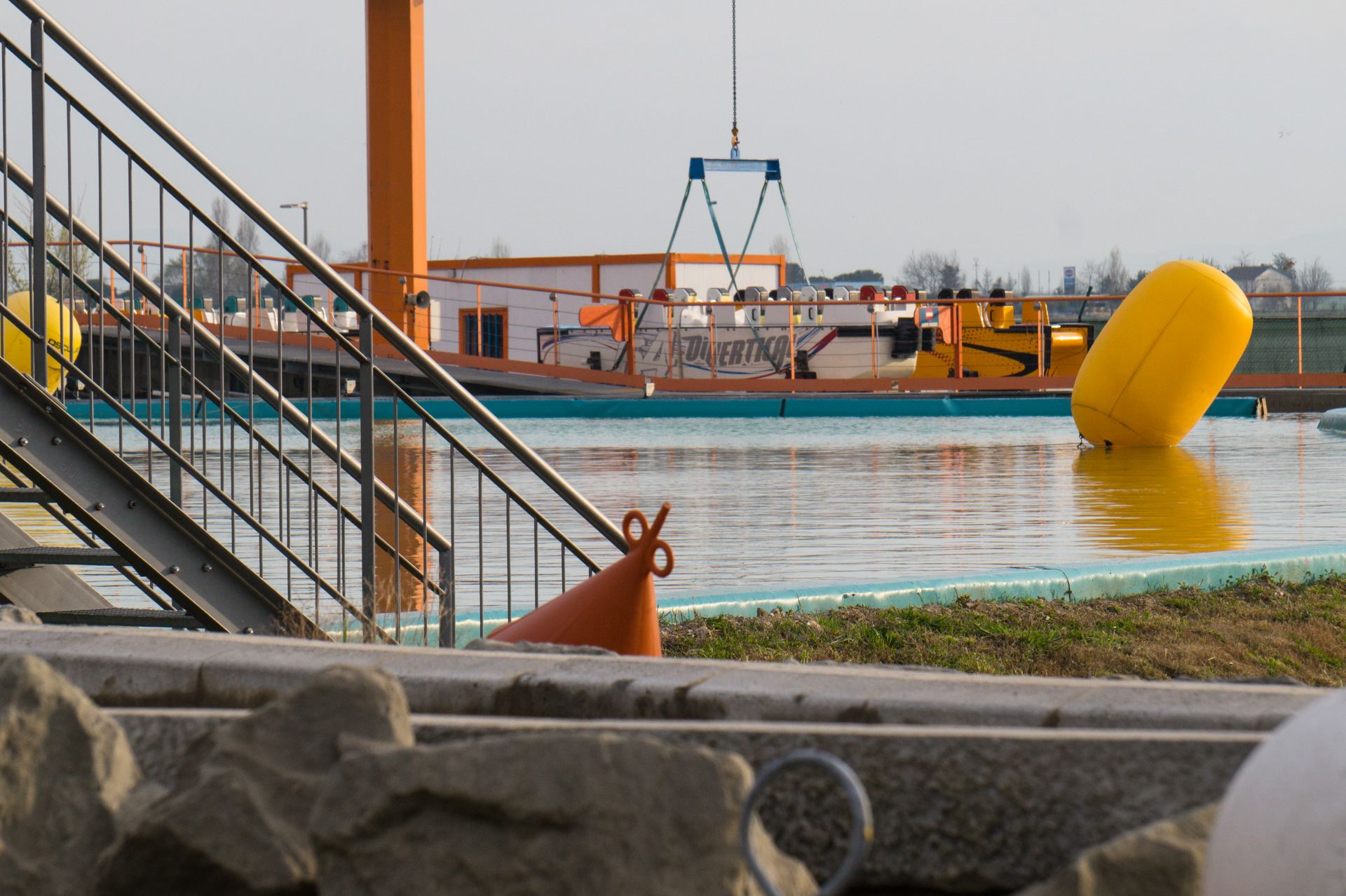
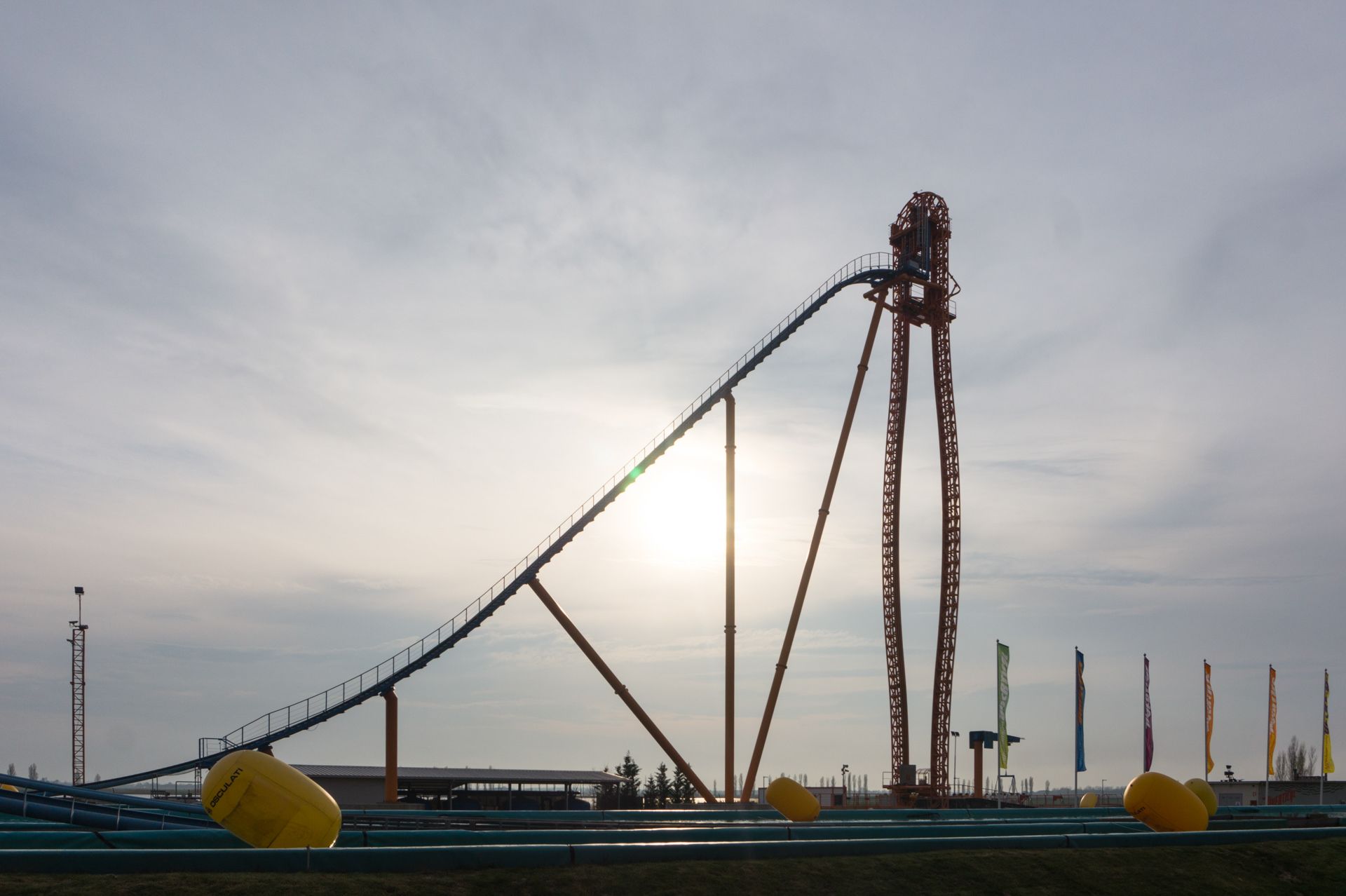
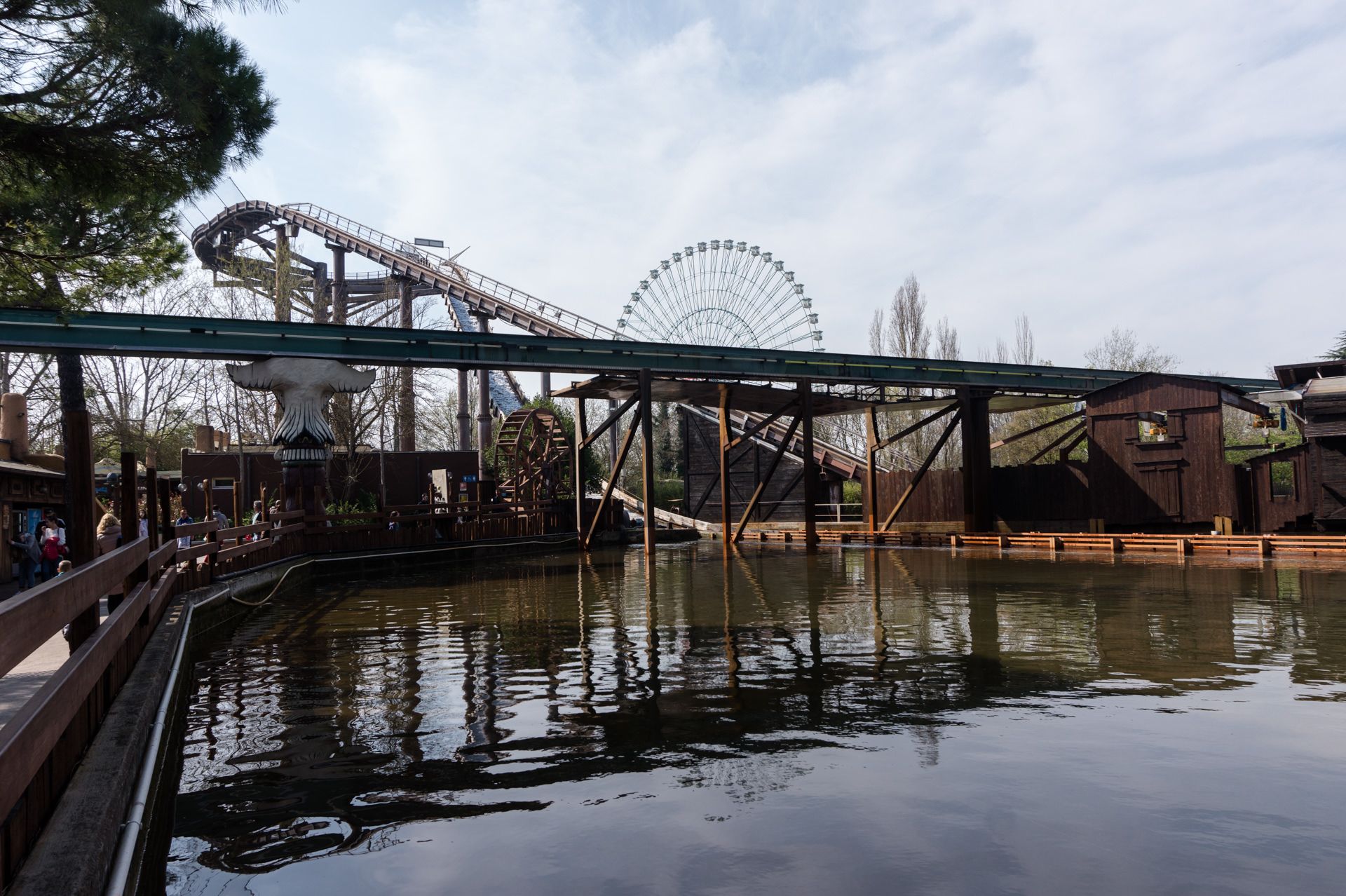
Passing the Pepsi Theatre, where, how could it be otherwise, a magic show is shown, and the musical stage in front of it, we head towards the Divertical water coaster, which already looks very striking from afar. By now at the latest, one becomes aware of how high the ride is and how wasteful it is with the space it has been placed on; however, this does not make the ride look aesthetic at all, which is mainly due to the sparingly placed decoration. On the other hand, the rear part of the ride adorns the insanely long access path to the completely out of place interactive dark ride Reset, which is quite positive and probably attracts more people than ever before to this corner of Mirabilandia.

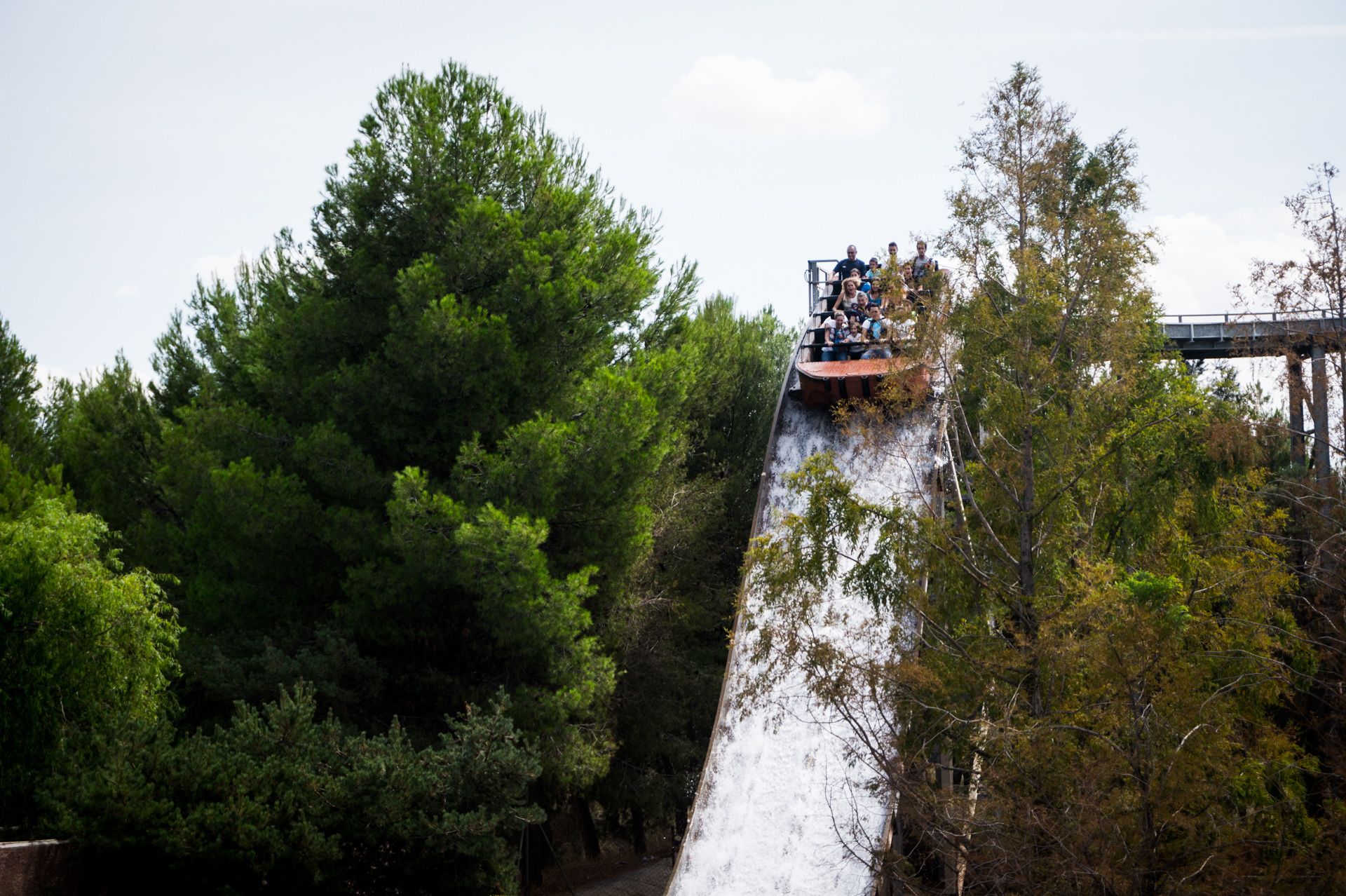
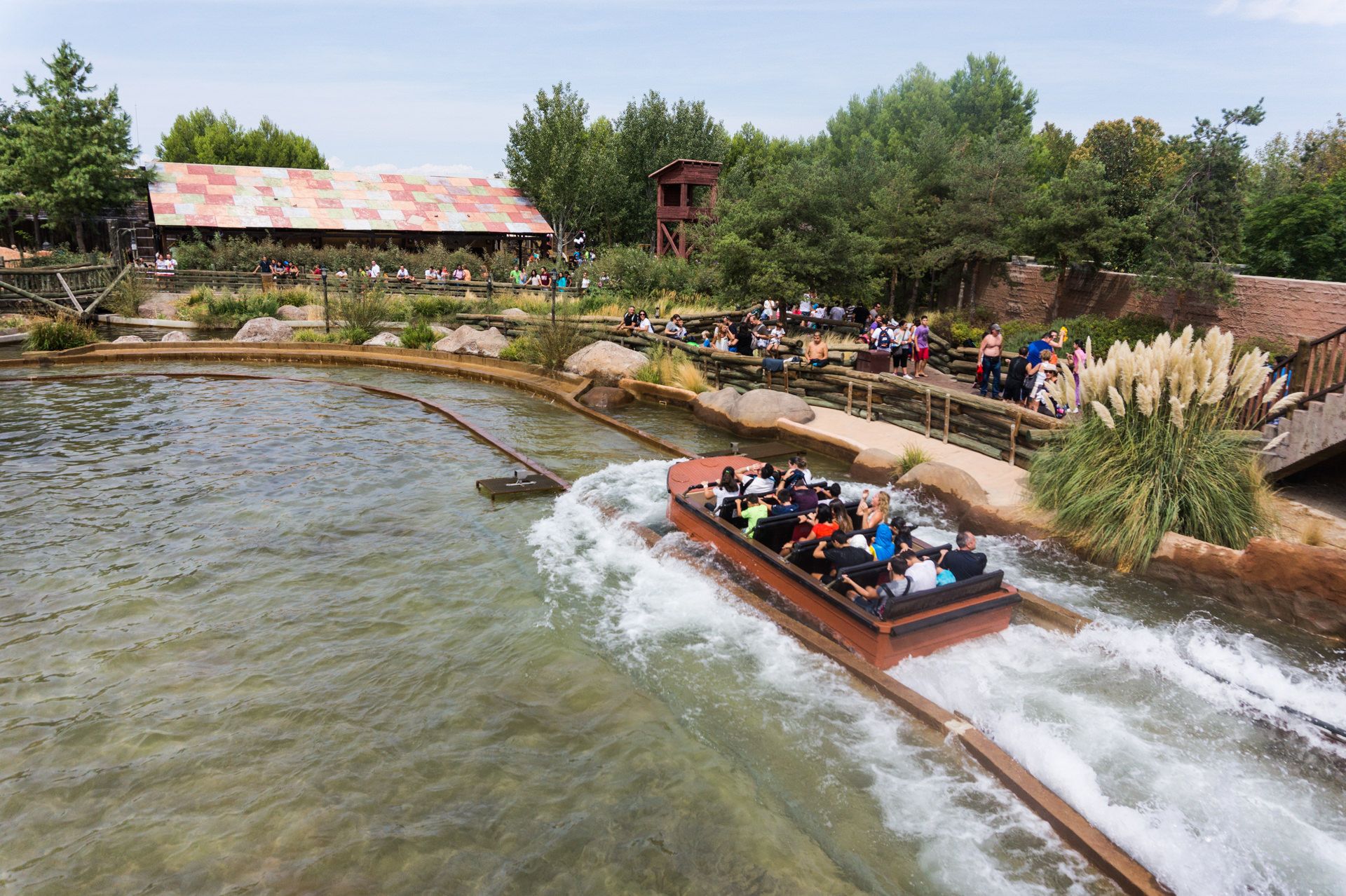
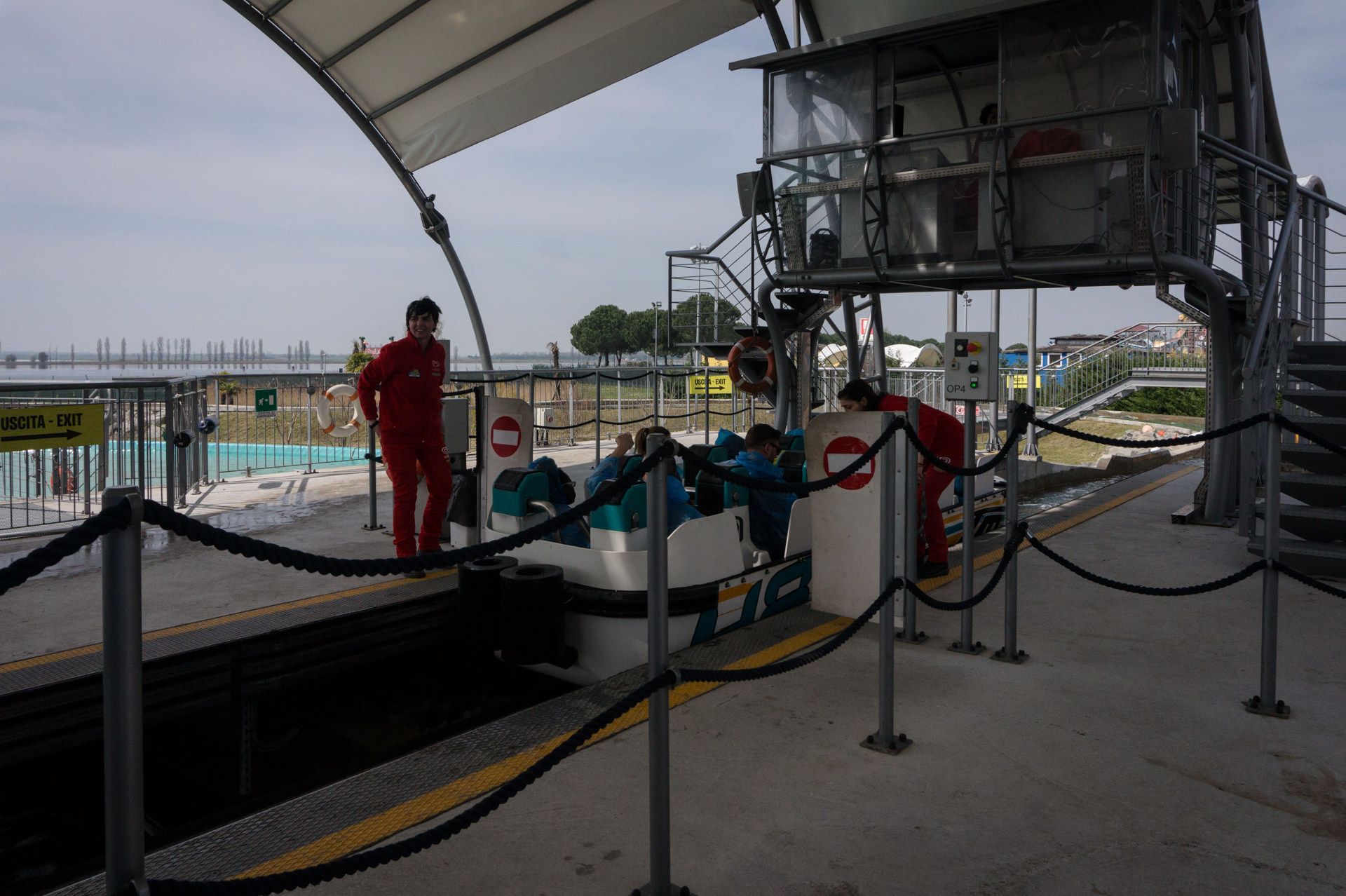
After you have been asked to come up to the station and get into the speedboat, the trip on Divertical can start immediately. As the vertical lift of the ride is still a long way off, you bob a bit through the canal, which interestingly enough creates a good whitewater feeling. After all, the waves almost hit the boat again and again and make you jump away by the whirled up water drops. As soon as the lift is reached, you quickly rise to the starting height of 60m, whereby the curvature of the lift is interestingly hardly noticeable at all. As the view from up here is not very interesting, you are soon pushed over the top of the hill. On the following 45° slope you have enough time to notice how fast this ride actually is. The spray refreshes you and soon after you race through the first pool only to drive over a hill without slowing down. Here you take off a little bit before you throw yourself into a brisk curve. Hoping to slow down a little bit by the following block area, you drive through it without any braking effect and are then released into a right turn. A quick downward helix follows. However, it then goes over into a hill, which initiates the final shot of the ride. Well soaked, you are released back into the channel and reach the station shortly afterwards.

Contrary to my expectations, Divertical is a really awesome water coaster, which gives a feeling of speed like no other ride before. The ride is just fast, which I personally only noticed while crossing the first pool. Considering the starting height of the world’s largest water roller coaster, this is actually in the nature of the ride; at least I have rarely experienced such a speed rush. Moreover, the ride is made with a perfect finish, which means that the friction losses are not really significant, which in turn benefits the speed.

iSpeed

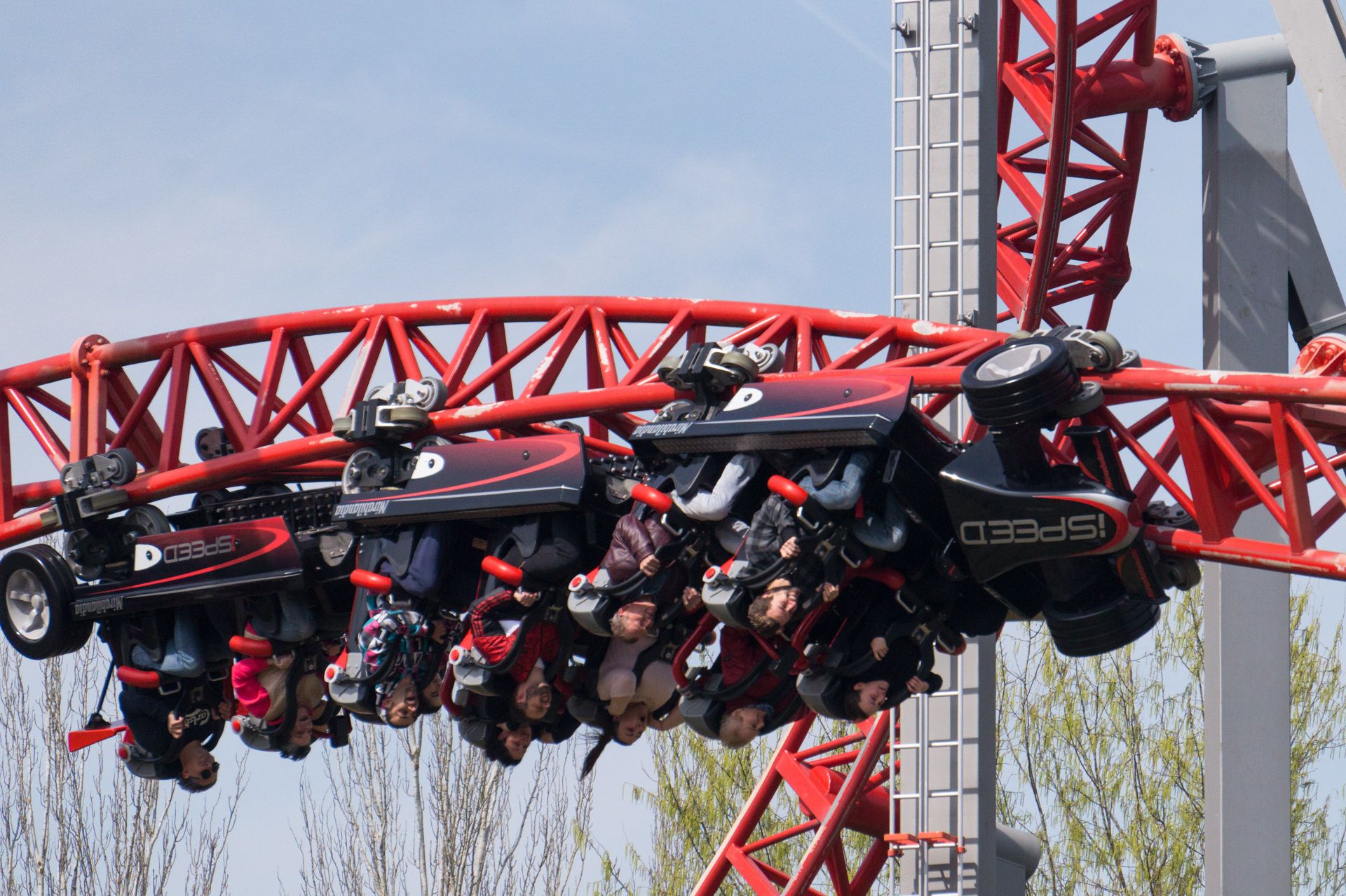
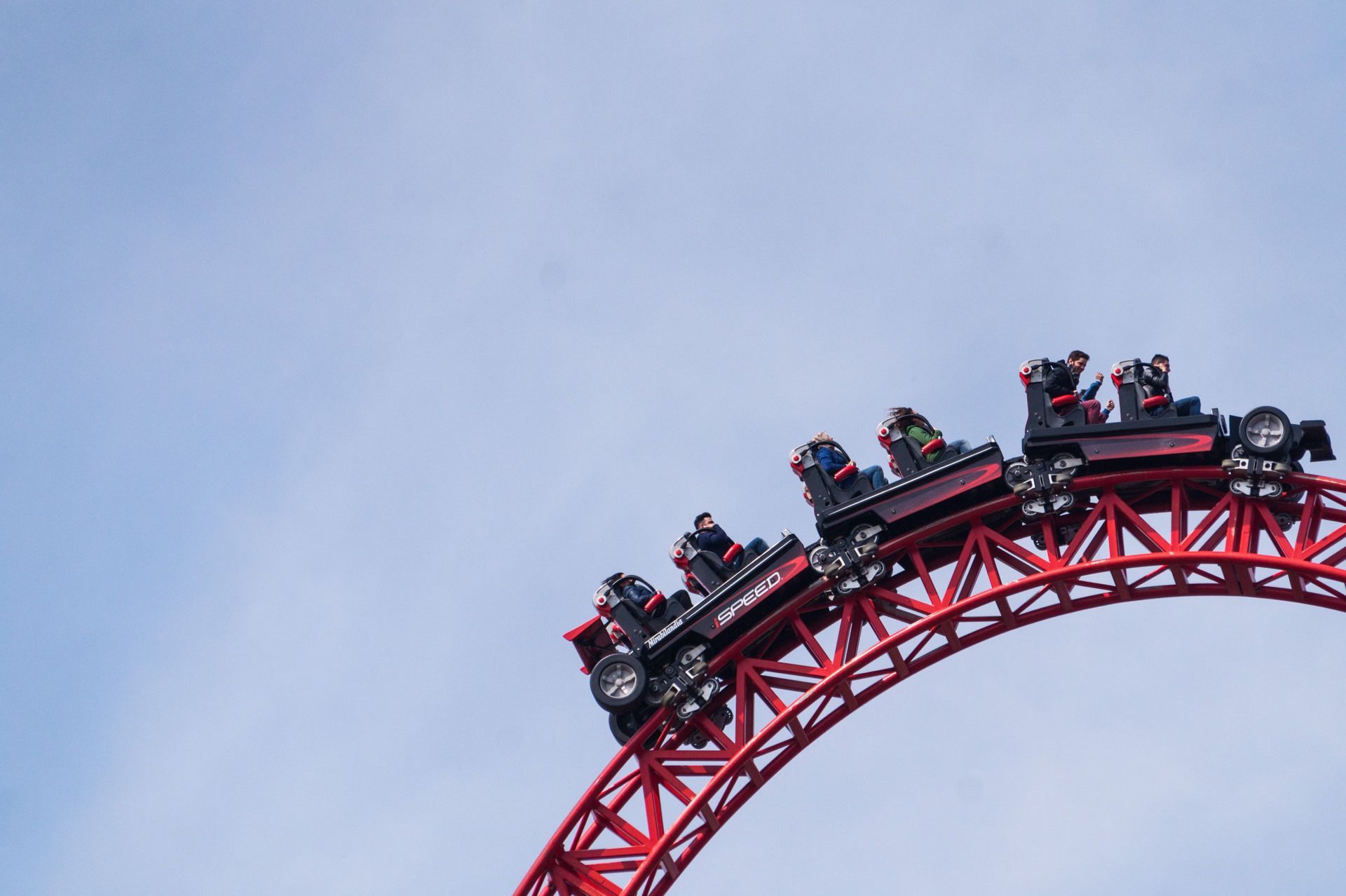
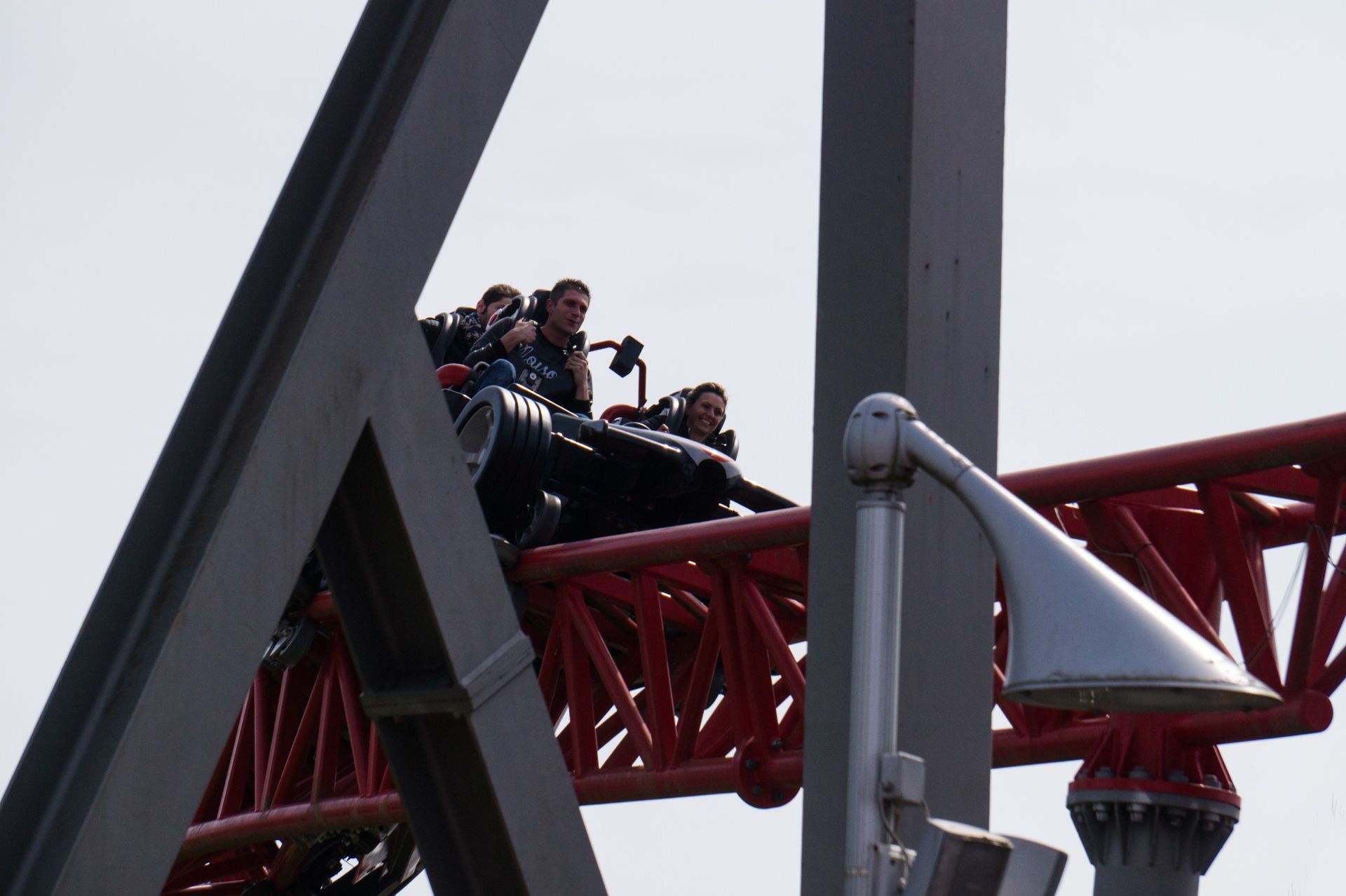
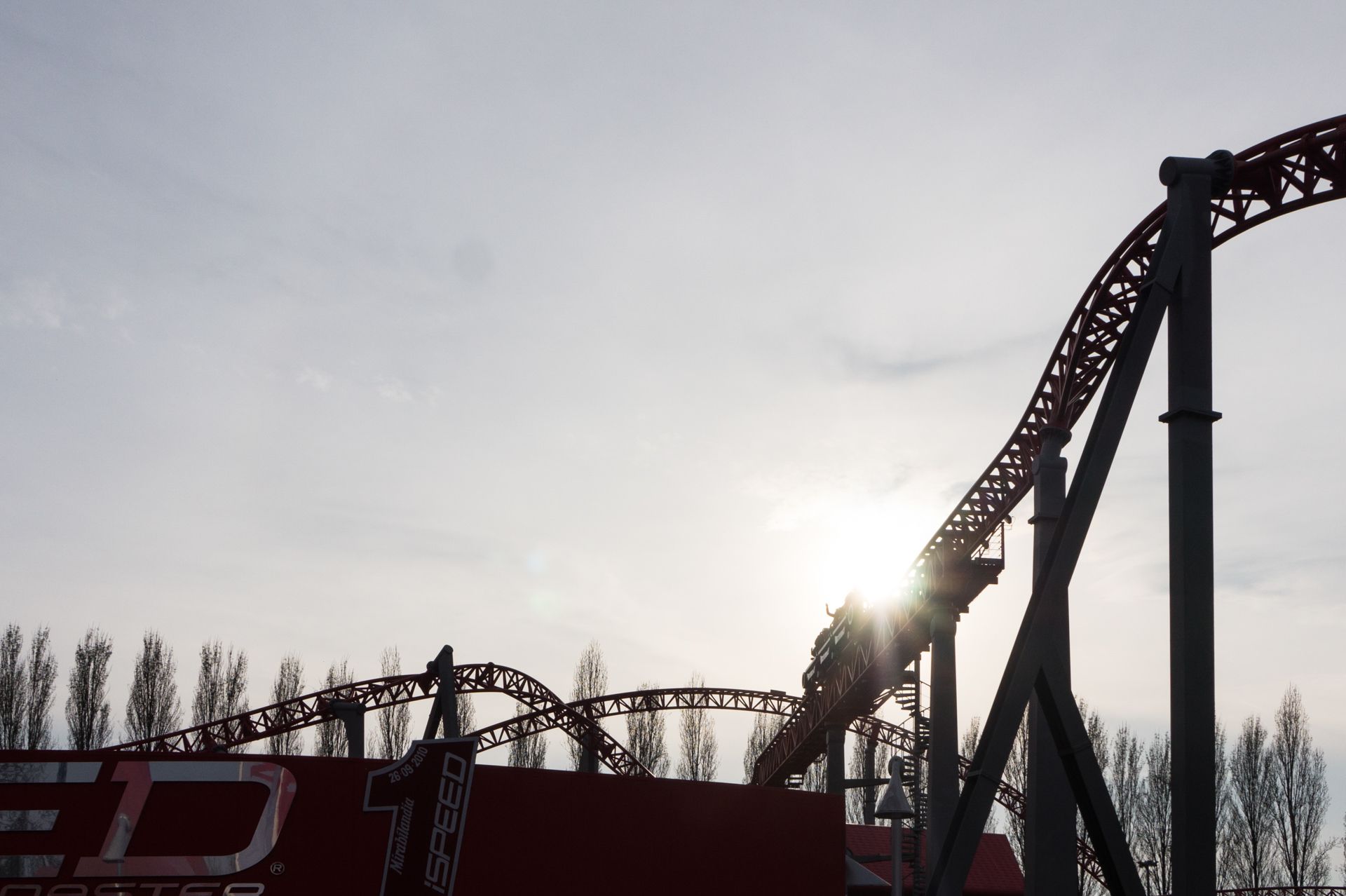
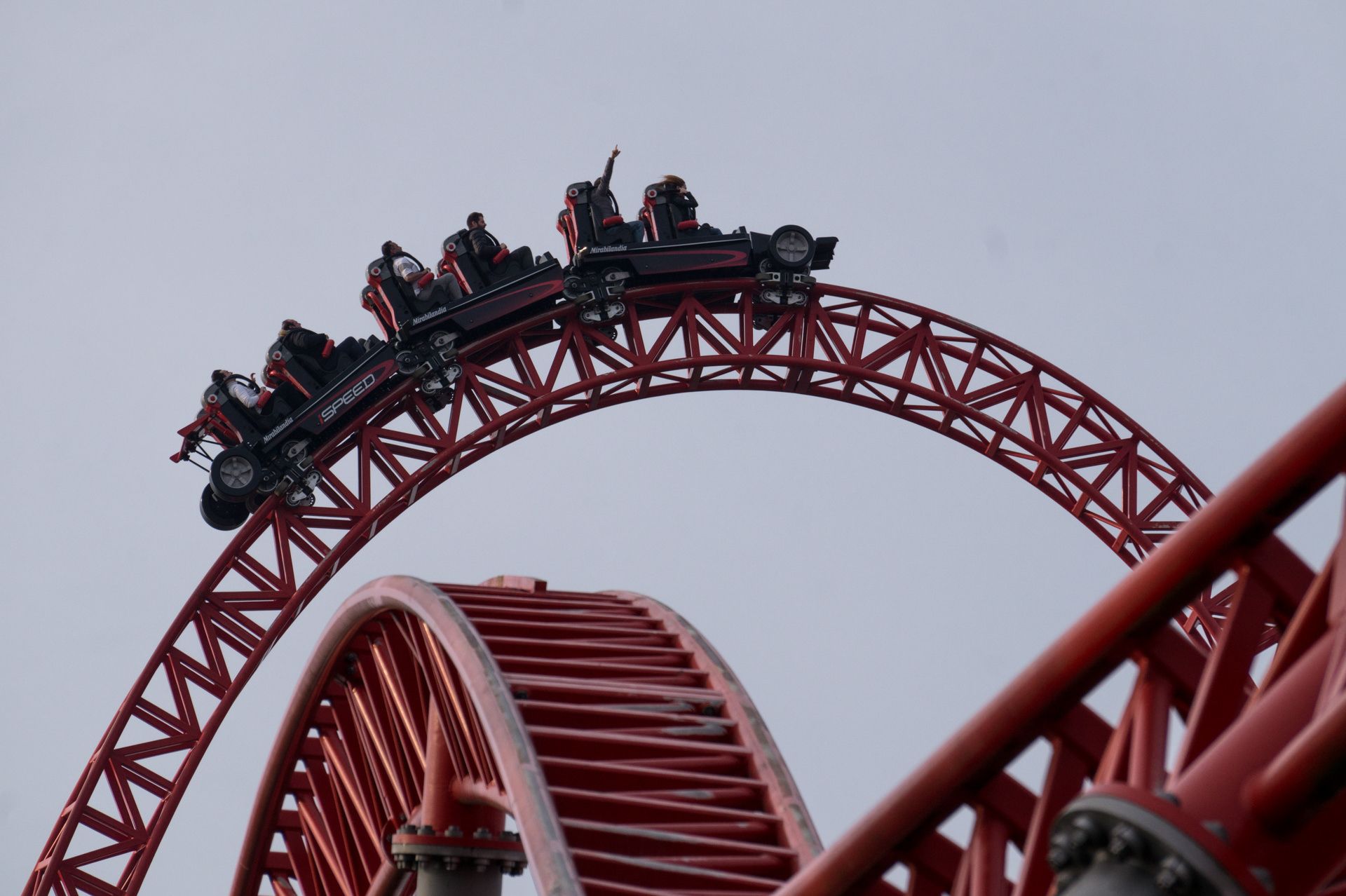
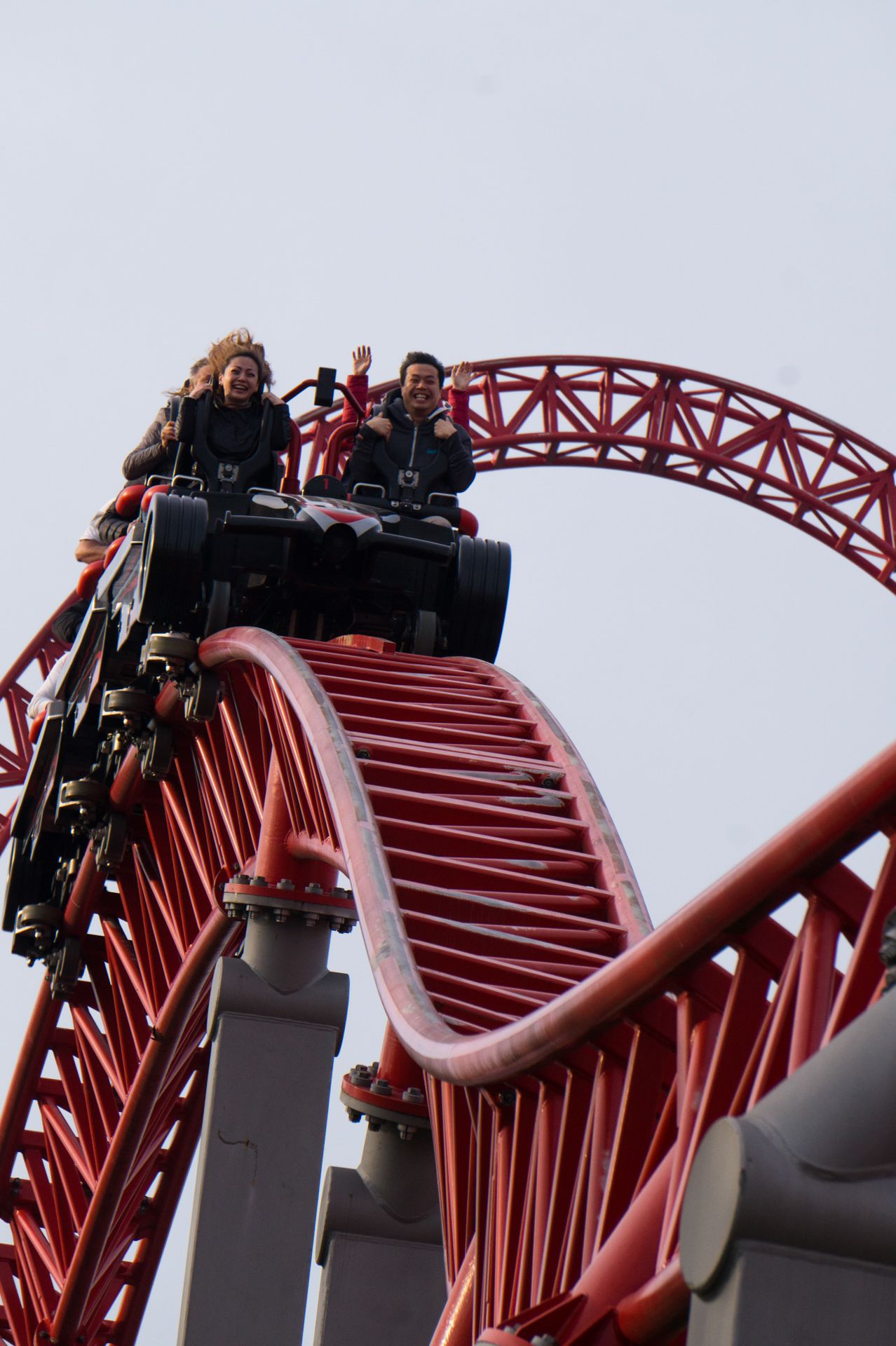
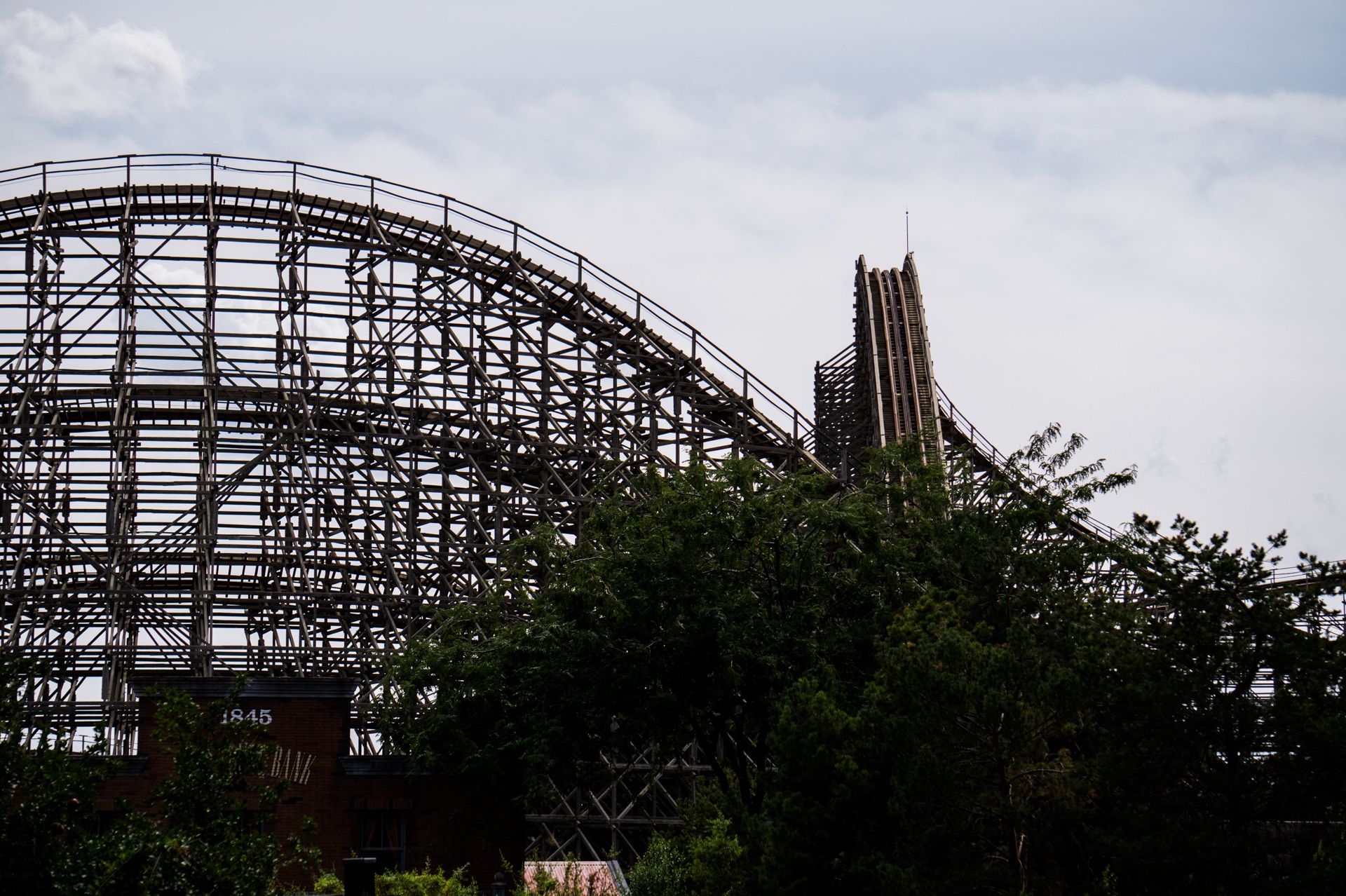
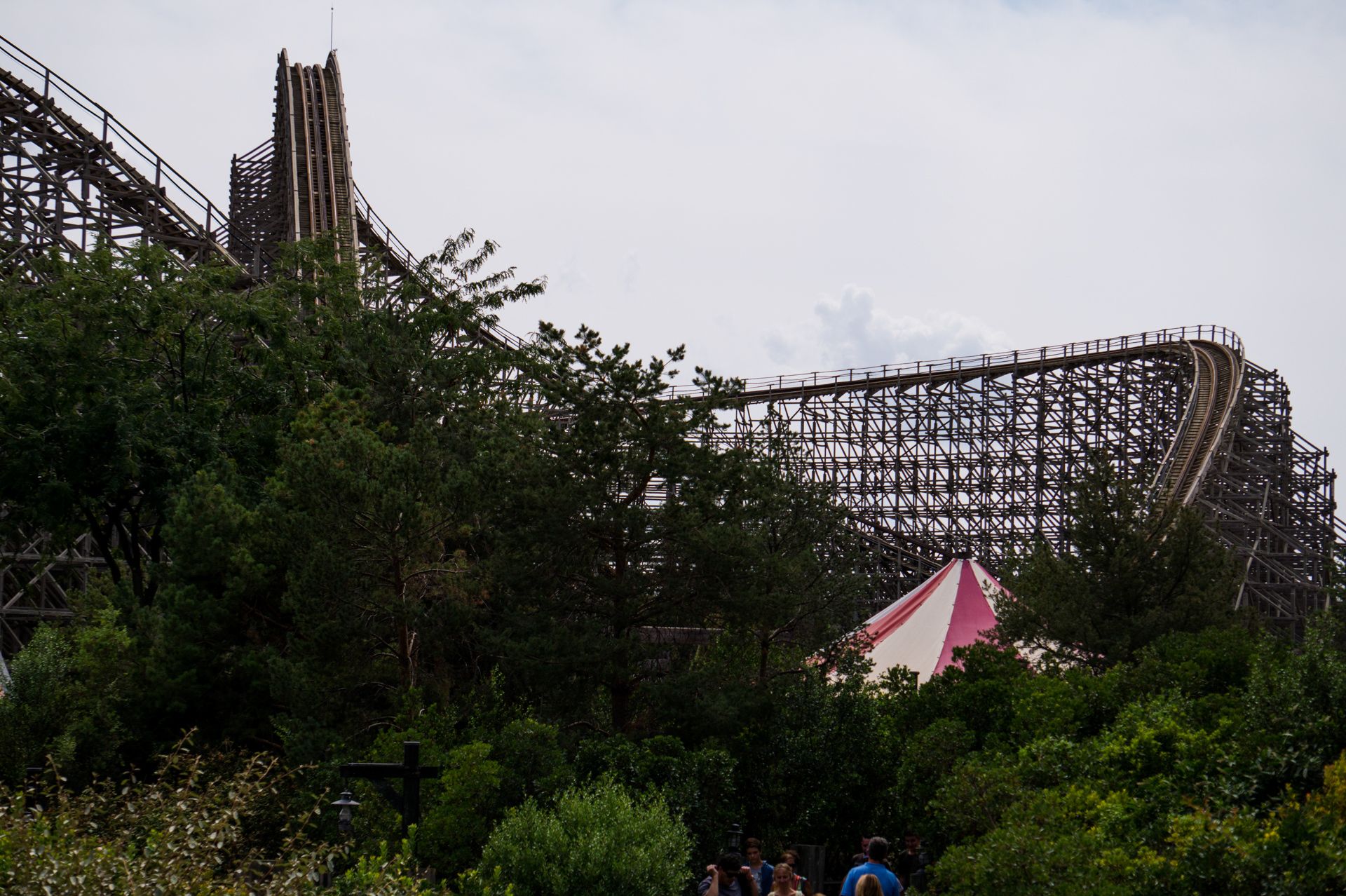
Also addressing the central theme of speed is the Blitz Coaster iSpeed from Intamin, a catapult launch coaster with LSM modules, which replaces the aging wooden coaster Sierra Tonante. The Spanish company’s first project was the self-titled “Il Rollercoaster #1”, a thoroughly fast roller coaster with a more than modest capacity.

Whilst at Divertical we had to queue for a short time, our less wasteful and self-horny lifestyle took revenge by not buying a fast pass. Now we were allowed to wait here for more than an hour in the desolate waiting area of the roller coaster, only to be constantly passed over by some brats of the thoroughly anti-social tourists of the Italian Adriatic. While in the other Italian parks nobody pushed in front of us and even let one of us pass by voluntarily to keep groups together, here it was simply a plague without equal. If you want to be reasonable in Mirabilandia, you better practice becoming a narcissist in advance by creating selfies en masse and treat yourself to a fast pass! In theory it’s not that expensive anyway, especially if you have bought an annual ticket for one of the other Parques Reunidos parks (e.g. Movie Park Germany, Attractiepark Slagharen, …) and didn’t pay any entrance fee anyway; at least you save yourself the wait with the disgustingly anti-social tourists, while in other parks you become a disgustingly anti-social tourist just by buying a fast pass.

But now let’s get to the ride description of the LSM roller coaster iSpeed, because as soon as you finally reach the stairs to the station it’s going quite fast. Once you sit down in the train and close the safety bars, the train is pushed forward slightly before the impulse is taken up and the train accelerates more and more. Now the train climbs up the top hat vertically before you cross it with a great view of the log flume Autosplash. Now you plunge vertically towards the ground, make a short turn to the right and pass the first valley with a lot of pressure. Parallel to the station you cross a hill, where you are lifted out of your seat. Another S-curve is now made with a lot of momentum, which merges into a tight right turn. On the following hill a leisurely turn follows, which releases you into a slight left turn above the station. All of a sudden a corkscrew is introduced, which throws you around with an incredible intensity. On a further hill you cross the launch track, whereupon you can take a deep breath again in the following steep turn. Rather leisurely the train shoots through a wide right turn, which shortly afterwards changes into the heartline roll, which can be seen from the outside. After another steep turn follows a short block brake. You leave it in an equally steep left turn, followed by a small hill and the final left turn towards the station.

Even though the initial acceleration of the launch is rather lax and hardly comparable to the manufacturer’s hydraulic and friction wheel drives, the ride offers a hodgepodge of exciting elements paired with really high pressure and speed. Especially the corkscrew, which can hardly be seen from the outside, simply surprised me during the ride and also the part of the track after the block brake, which always seemed insignificant on videos, has its moments and fits perfectly into the overall experience of the ride. The roller coaster itself, on the other hand, is unfortunately not as convincing as the actual ride itself, thanks to its lean design and low capacity.

Leprotto Express

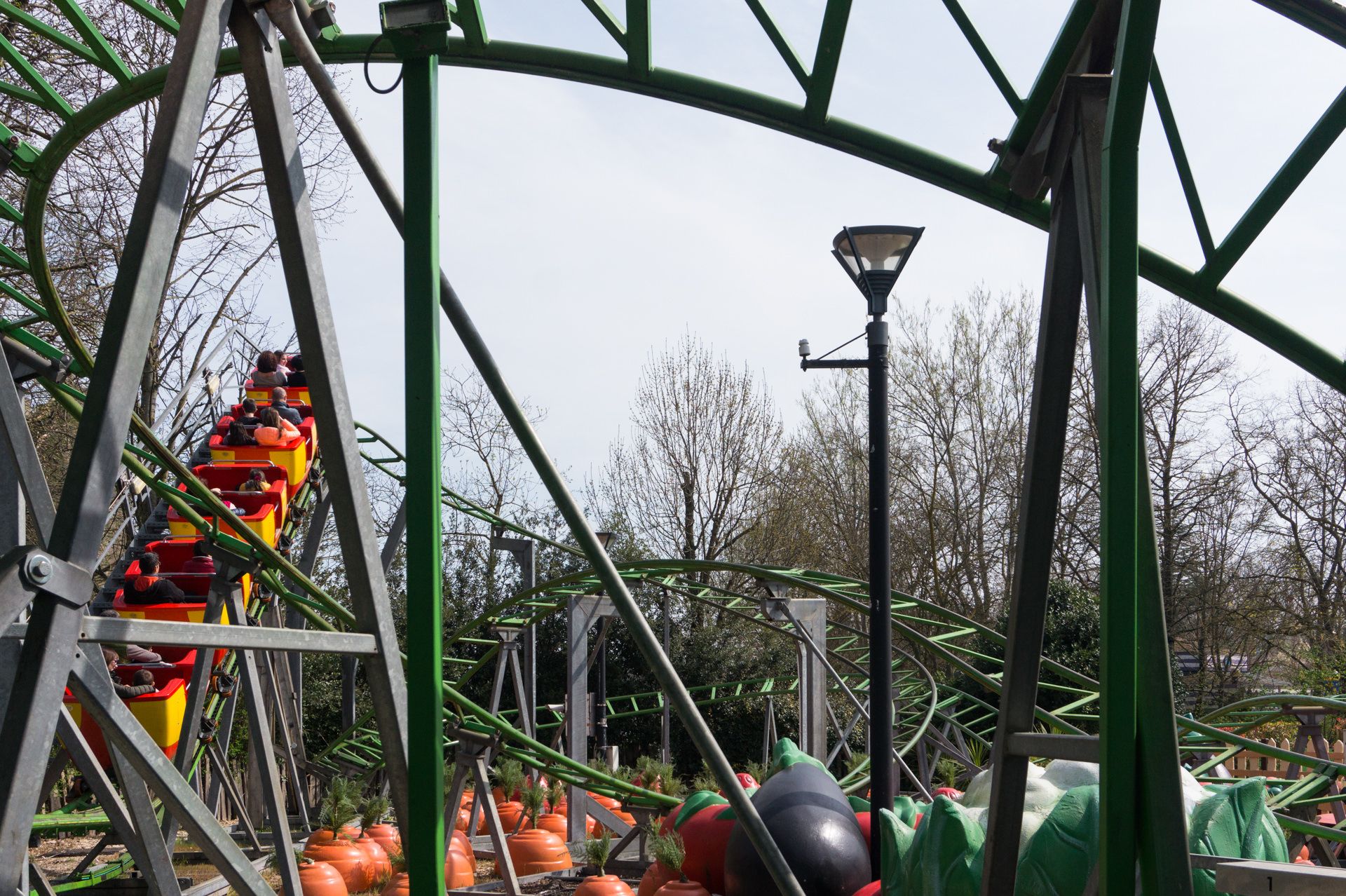
Directly opposite, in the children’s land of Bimbopoli, you will find Mirabilandia’s next roller coaster, the Leprotto Express. This is a simple children’s roller coaster by the manufacturer L&T Systems, whose layout describes a simple figure eight in a constant alternation of up and down movements. Due to the crowd, the ride only went one lap.

Rexplorer

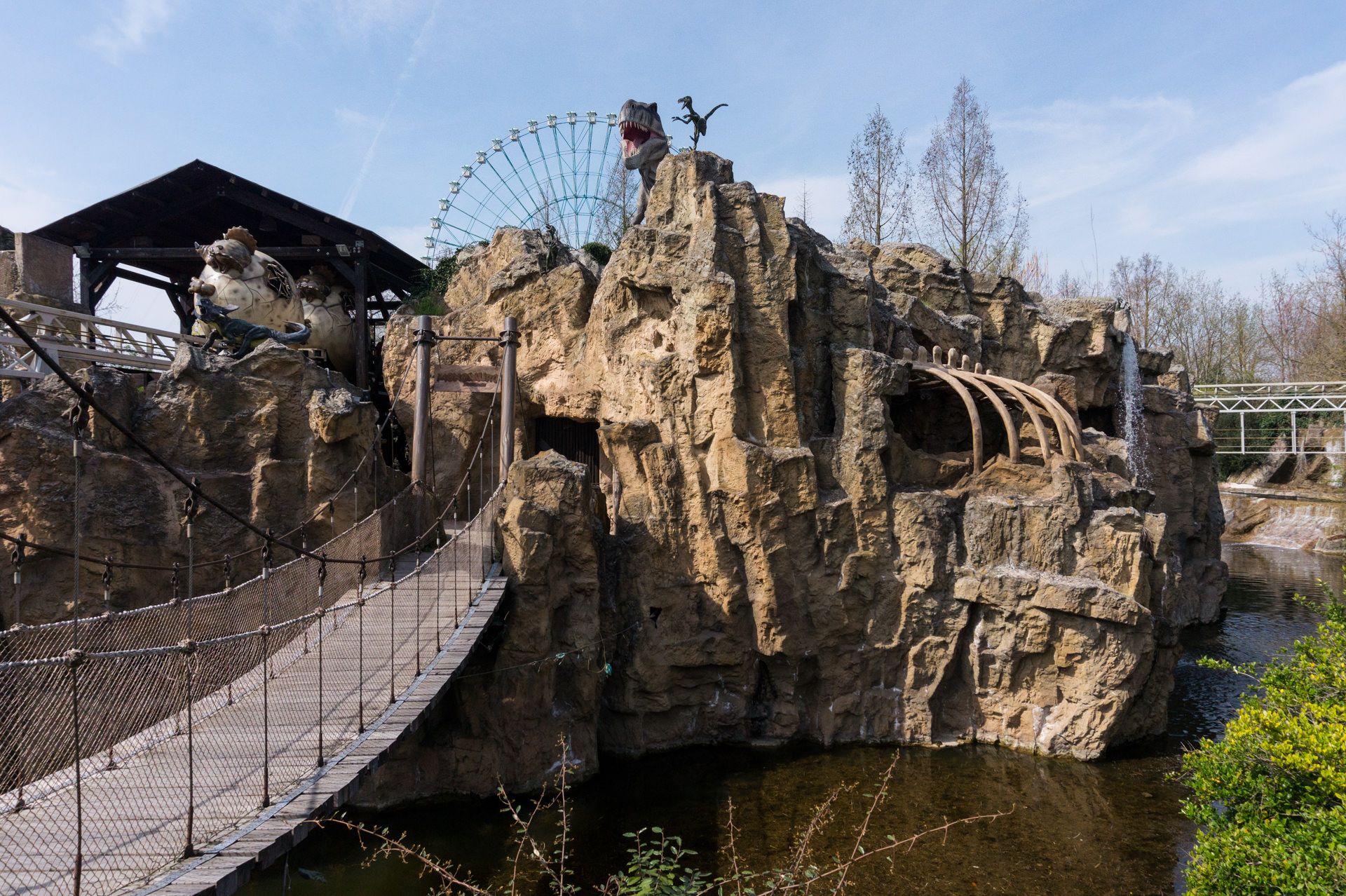
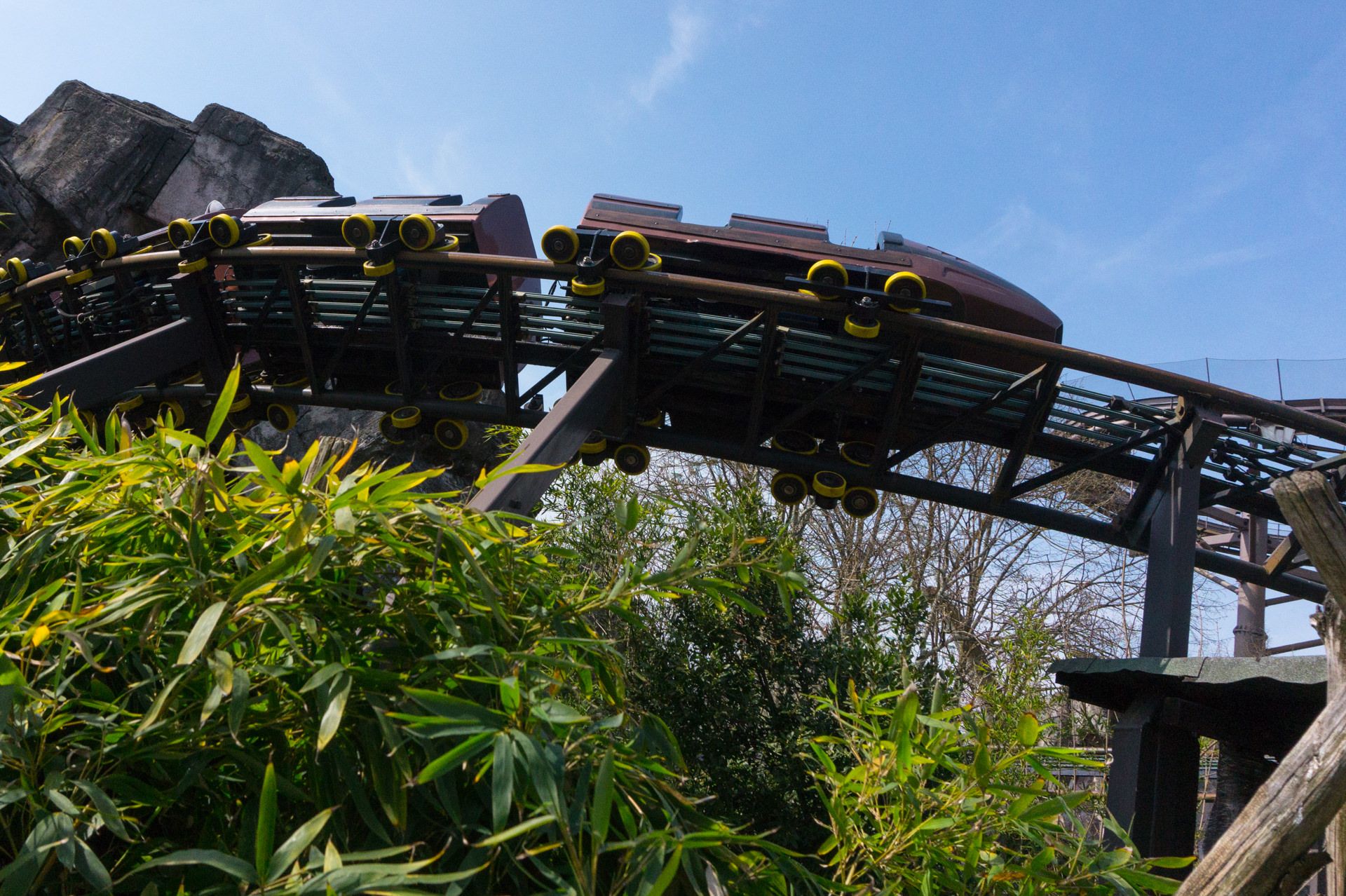
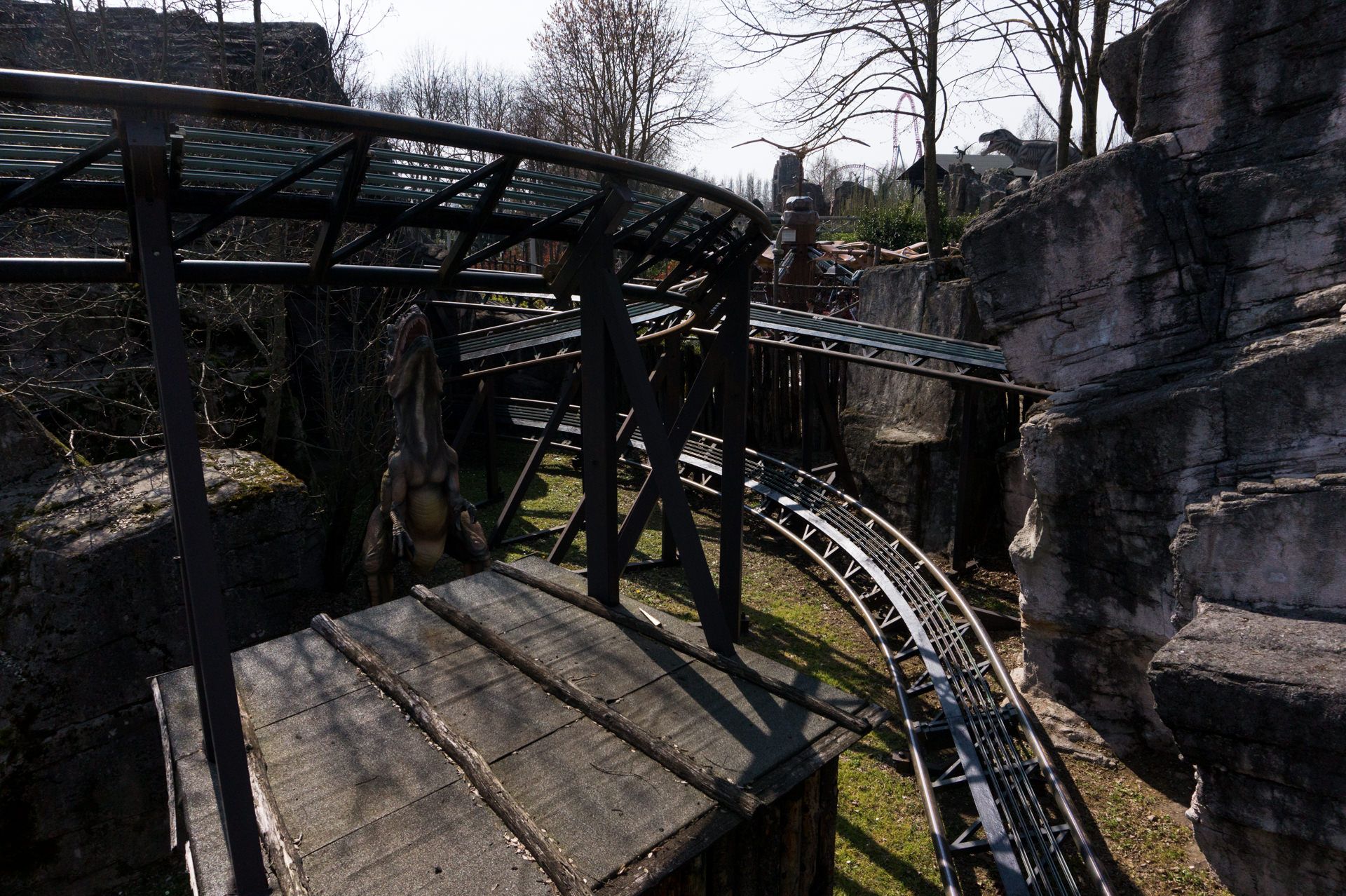
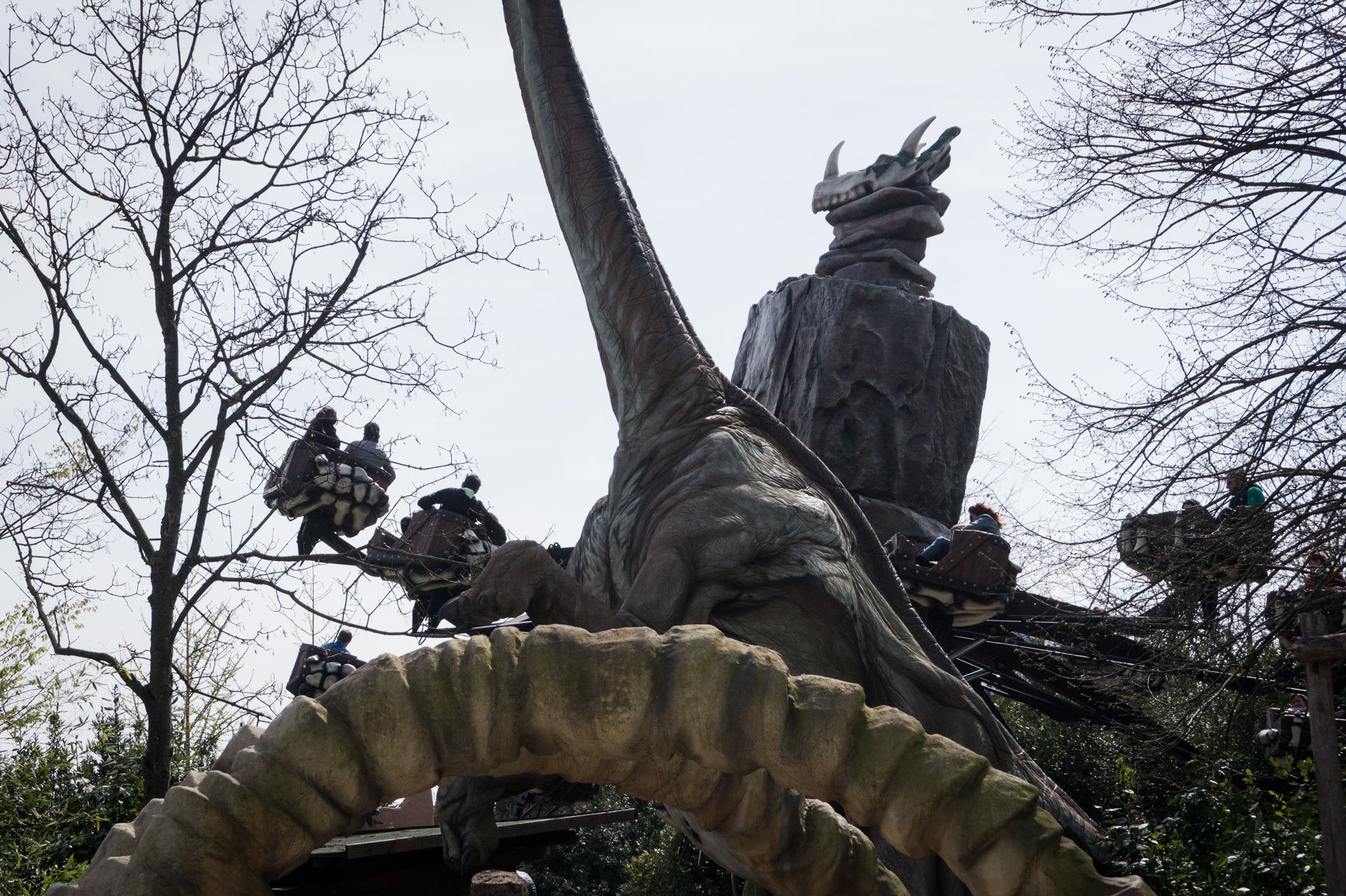
Via the island with the Acapulco cliff divers show you reach the Dinoland area, which was redesigned in 2014. Apart from the transformation of existing rides, e.g. the telecombat ride featuring an inclined ride or the popular children’s monorail, a money printing machine, I meaning a children’s driving school, and a Magic Bike by Zamperla also found their way into the themed area. But the most important destination for us was the oldest roller coaster of Mirabilandia, the Powered Coaster Rexplorer.

The journey begins with a wide bend to the left, followed by a leisurely climb past some artificial rocks. At the top, the train goes through a downward helix through the rock formation before climbing up a steeper straight. Now the train goes through a wide downward right-hand bend, passes under the track it has just passed and surrounds the first downward helix in a left-hand bend. With much more momentum you cross the station and complete another lap through the course.

Theoretically, the ride on the Rexplorer would have been quickly dealt with, because unlike many other rides at Mirabilandia, this ride has a slightly higher capacity by nature and the queue itself was manageable. However, Mirabilandia would not be Mirabilandia if they did not mess up this ride as well. The dispatching was a mess and was further protracted by the lack of numerical knowledge of the staff. After waiting until all passengers of the newly arrived train had left the station area, about half of the train was filled with Fast Pass people, but they all had to be counted and checked individually. Of course, the staff constantly miscounted, which was particularly noticeable after a change of staff. Only after each of the Fast Pass owners had taken their seat the normal waiting people were let in. The checking of the restraints and the ride itself, on the other hand, was quickly completed. However, the one-man operation at the ride almost always took 5 or more minutes during loading for one cycle.

El Dorado Falls and Gold Digger

As the construction work in Mirabilandia’s new themed area Far West Valley was still in full swing during the visit, the only remaining attractions in operation were the Spillwater El Dorado Falls of the water rides pioneer O.D. Hopkins – which, however, struggled with constant failures and did not make good form due to the one-boat operation – and the Wild Mouse Gold Digger, formerly known as Pakal. Since 50% of the cars were also equipped with Fast Passers, we unfortunately had enough time to experience every corner of the small, quite desolate, queue and thus invested almost an hour for the Italian-style Wild Mouse.

The ride is actually quite entertaining, because after you have made the hairpin bends in the upper level, seven in all, you go down one level, where a big drop is followed by another serpentine curve. This is also followed by a steeper gradient and a hairpin bend. As is well known, the two successive slopes are the most fun for wild mice and therefore we will not do without them here either. A last narrow bend and a small dip follow before you are led back to the station.

Katun

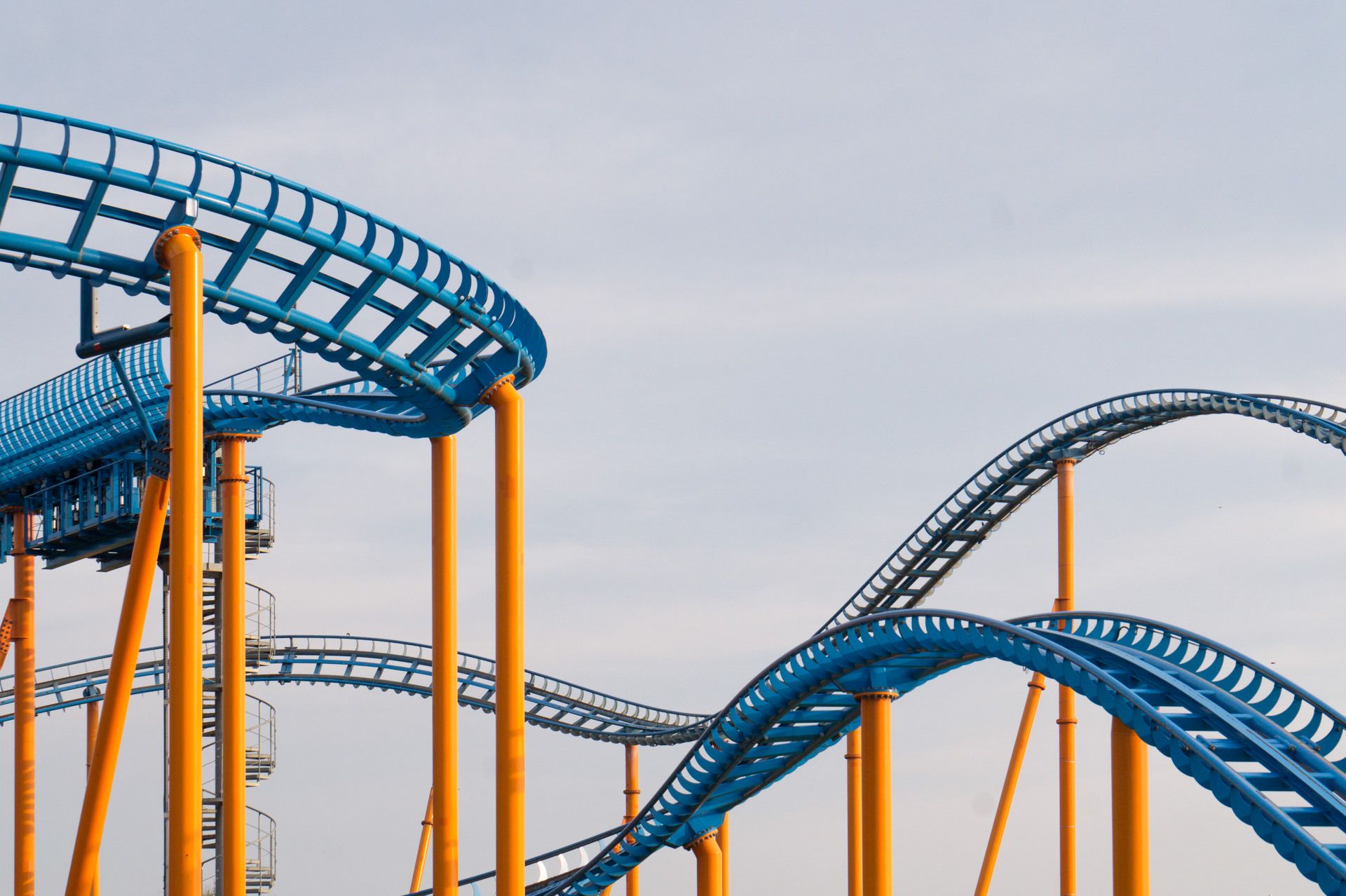
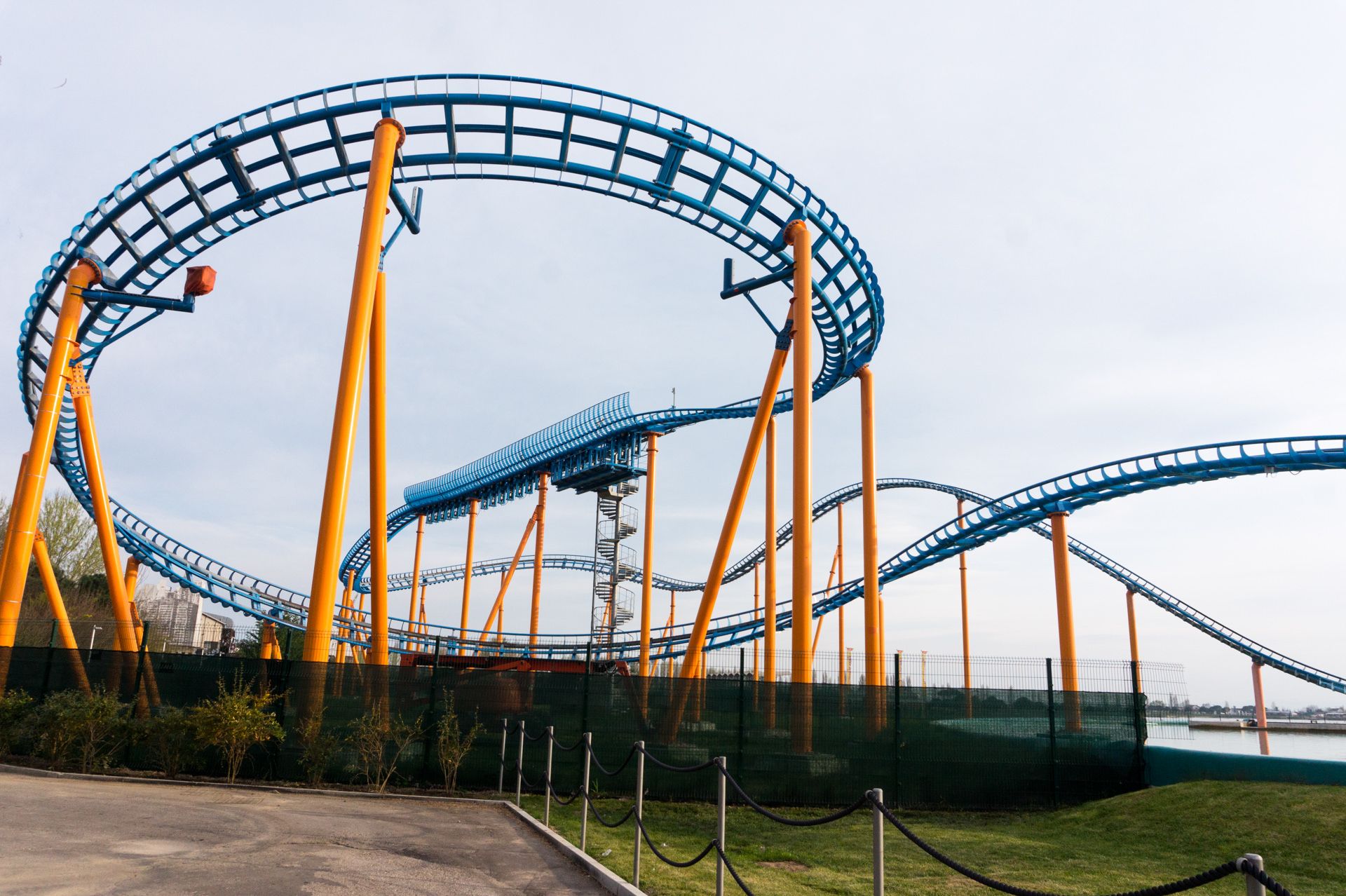
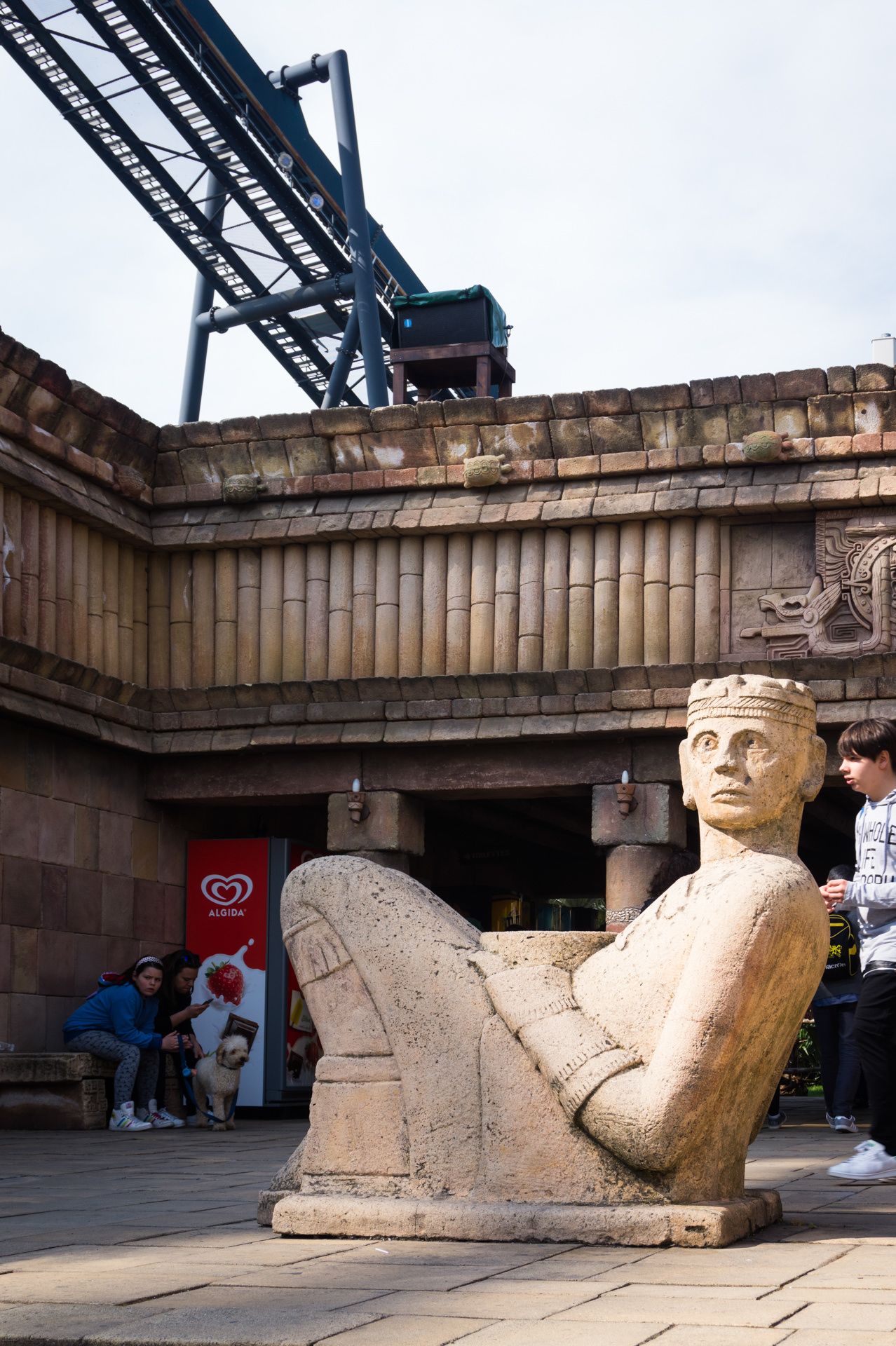
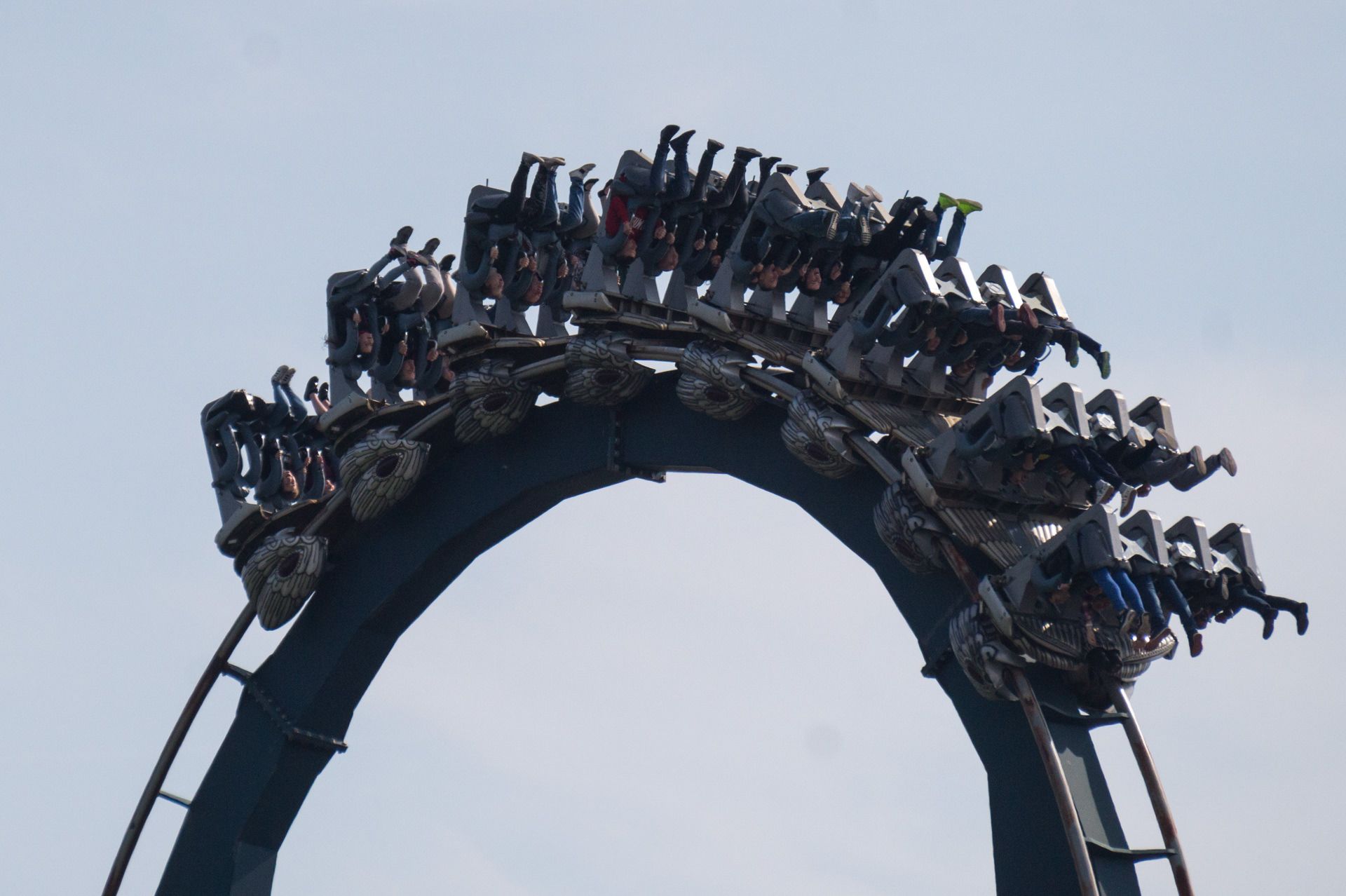
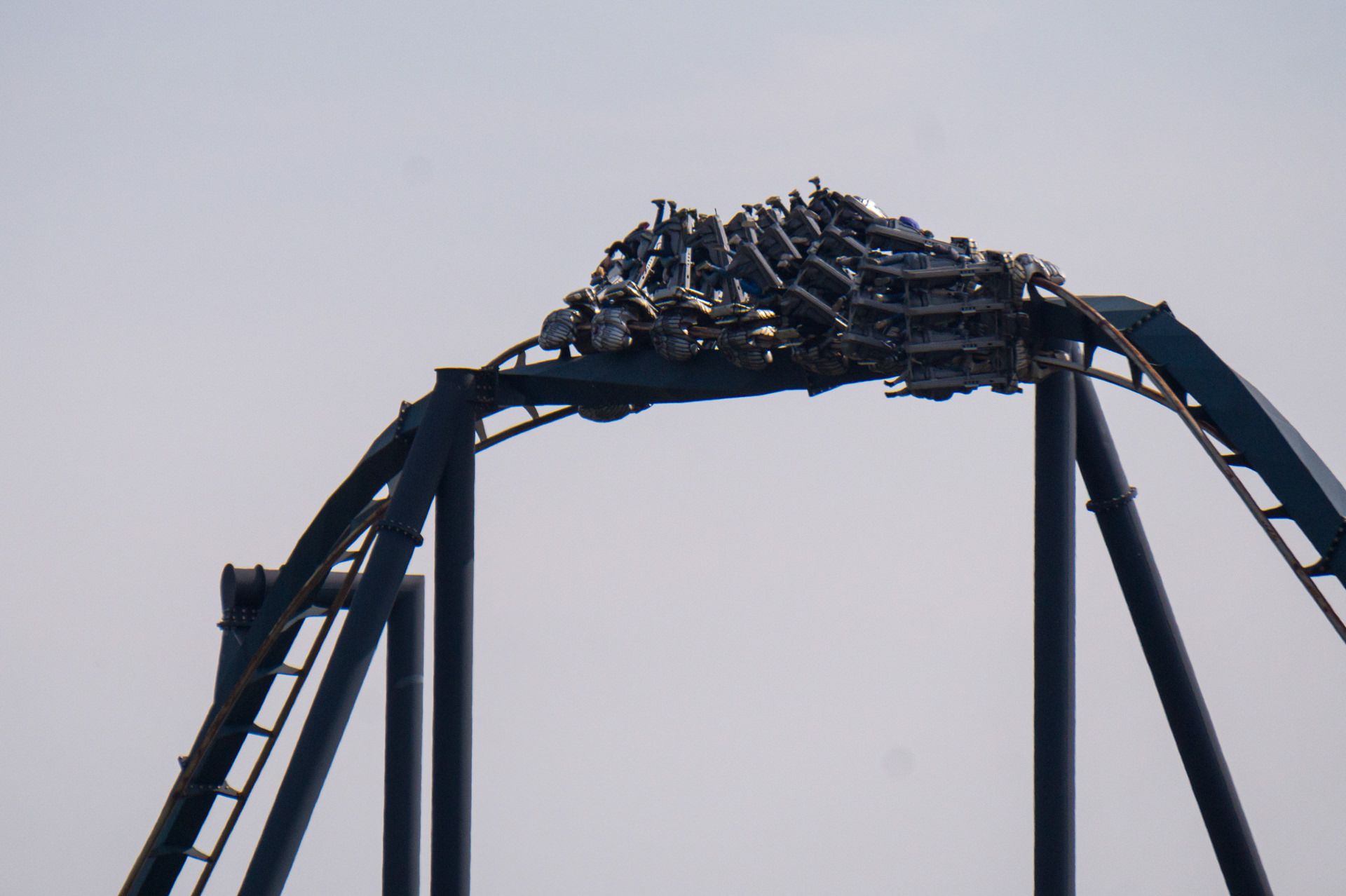
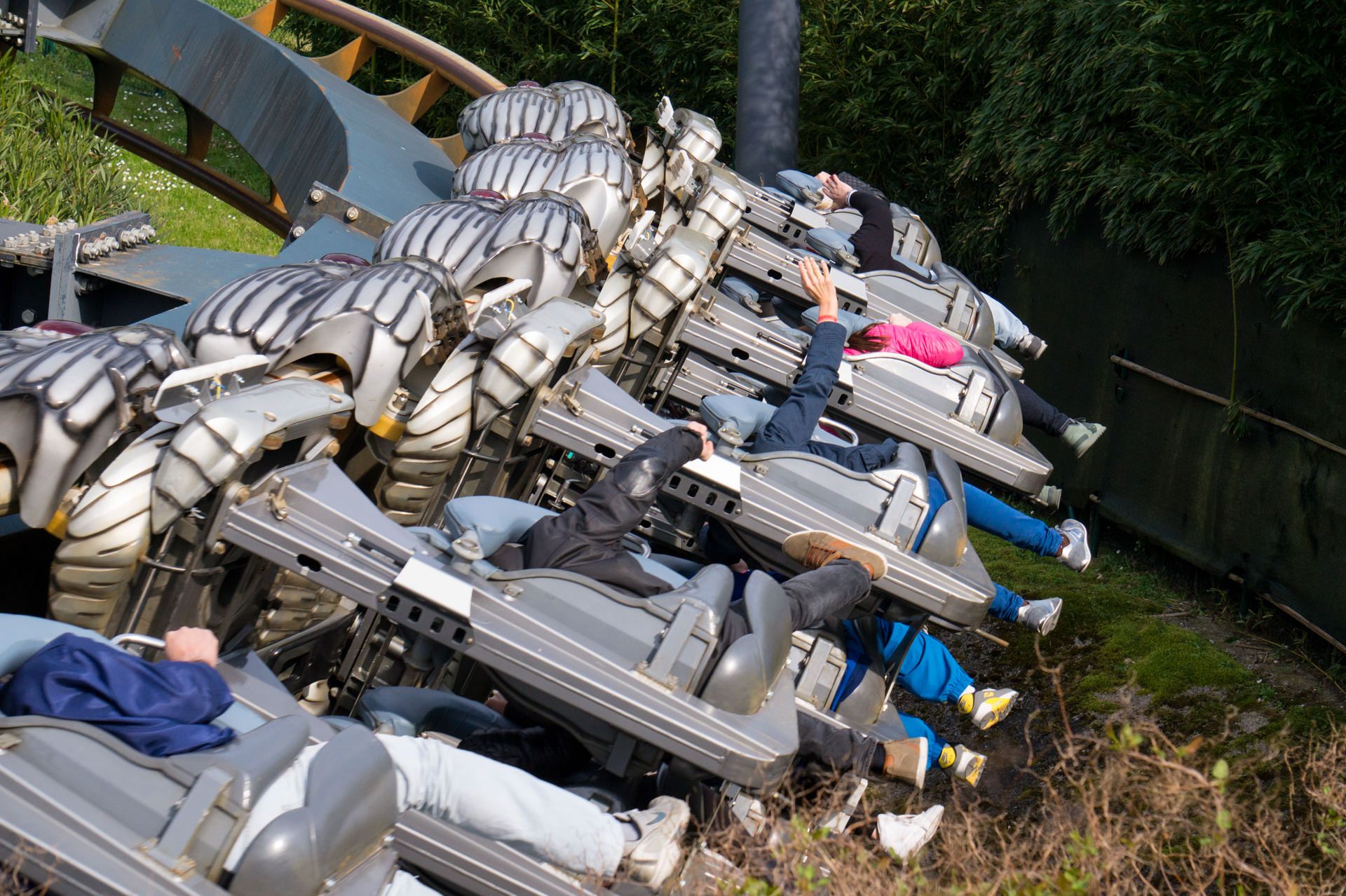
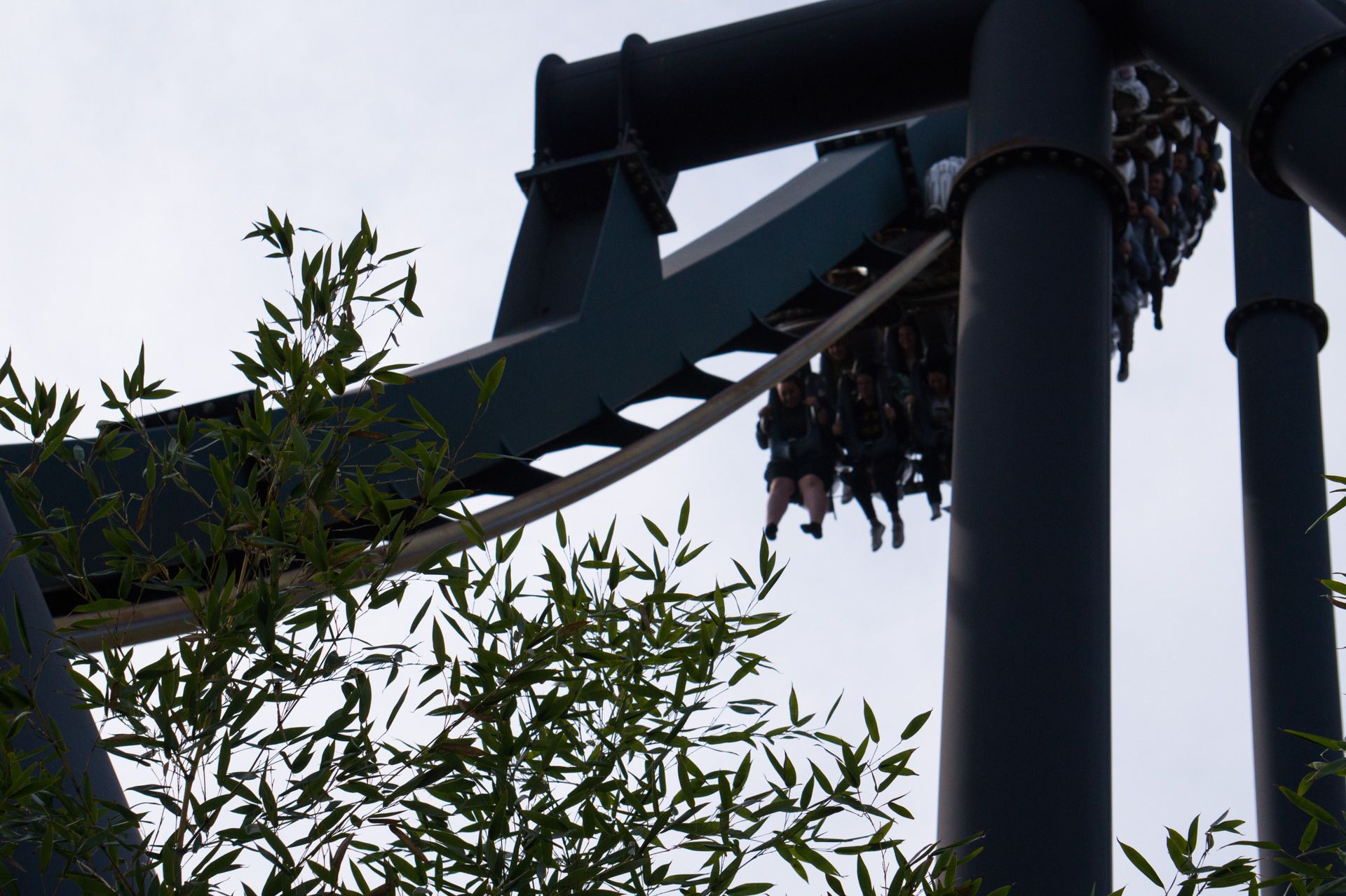
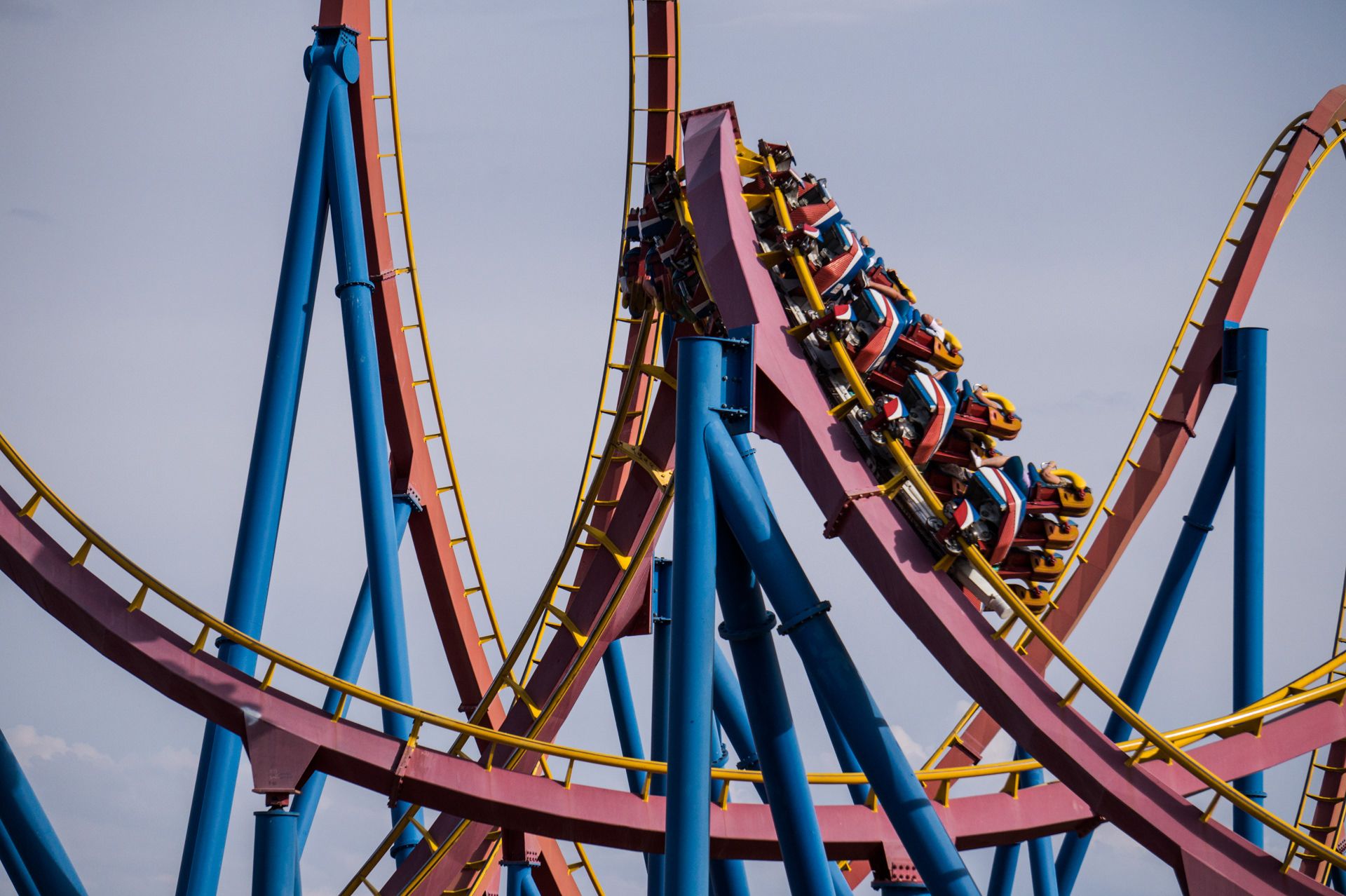
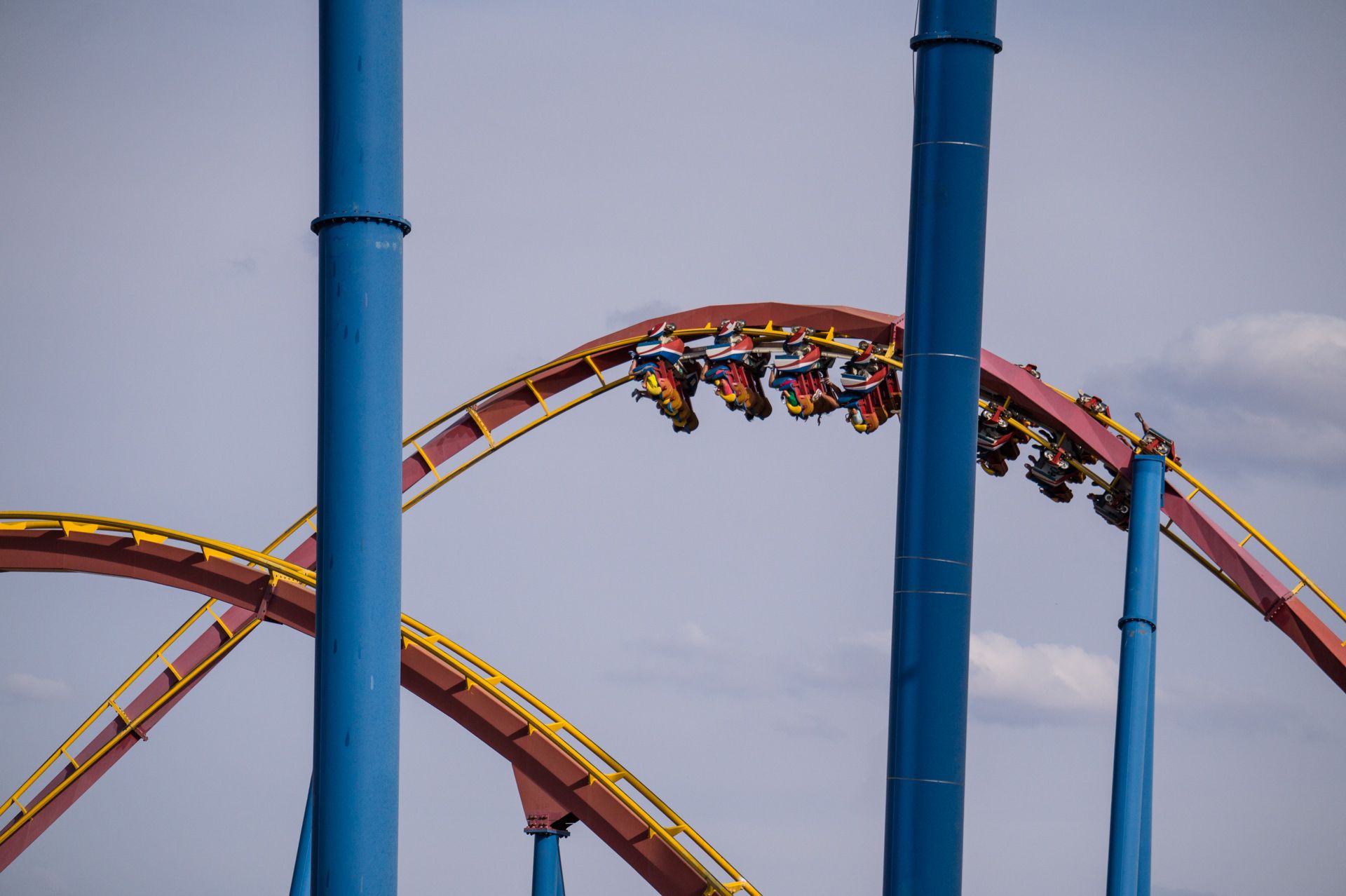
Through a spacious temple complex you can reach the Inverted Coaster Katun, which has been turning its passengers upside down several times since the millennium. With a height of 50m and a length of 1200m Katun has always been the largest ride of its kind in Europe and is fortunately scary enough to keep the waiting time low despite the one-train operation. Interestingly enough, the second train was actually sent on its way towards the end of the day, but probably only to finish on time.

The ride begins with a short left turn out of the station and into the ride’s lift. As soon as the train has reached its initial height, it turns to the left and at the same time makes a rather steep descent. You cross the first valley with a lot of pressure before you are turned upside down for the first time in the huge loop. Once back on ground level, the train shoots up again and turns on its own axis in a zero-g roll. To enable the ingenious placement of the Cobra Roll at the lake on the right side of the entrance, there are now a few meters of track missing, which were solved by a steep curve close to the ground and leading to the right. In the following inversion figure you shoot up half a loop, then turn to the side and do the same again in reverse order. Of course with extremely positive centrifugal forces, which should not be underestimated in the following valley. Also with a lot of pressure one turns a round in a wide upward helix at the end of which the block brake of the ride is reached. This is passed without any reduction of the momentary speed, which leads to an immediate plunge into the abyss. Almost straight ahead the first corkscrew is introduced, which whirls you with full force to the right into a tunnel. You then leave this tunnel into another corkscrew, but this time in the opposite direction. A short hill releases you into the final downward helix of the ride, whereupon the station is reached immediately.

Katun is a great Inverted Coaster of the bigger type, which plays many huge and well coordinated inversion figures in a layout worth experiencing, at a decent speed. The play of forces should not be underestimated yet it is still quite smooth compared to the smaller European versions of this roller coaster type.

Max Adventures Master Thai, Eurowheel and Hot Wheels Stunt Show

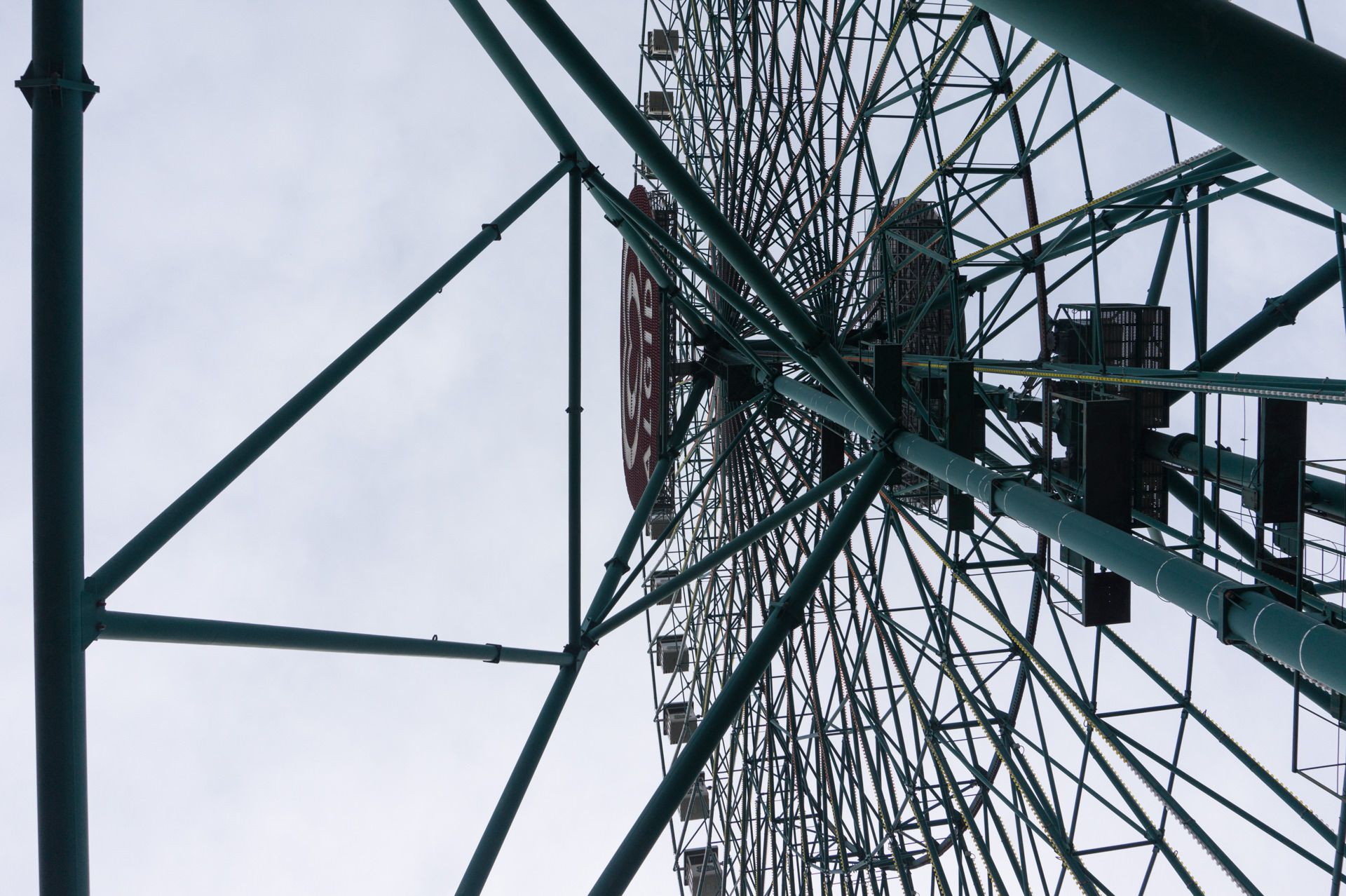
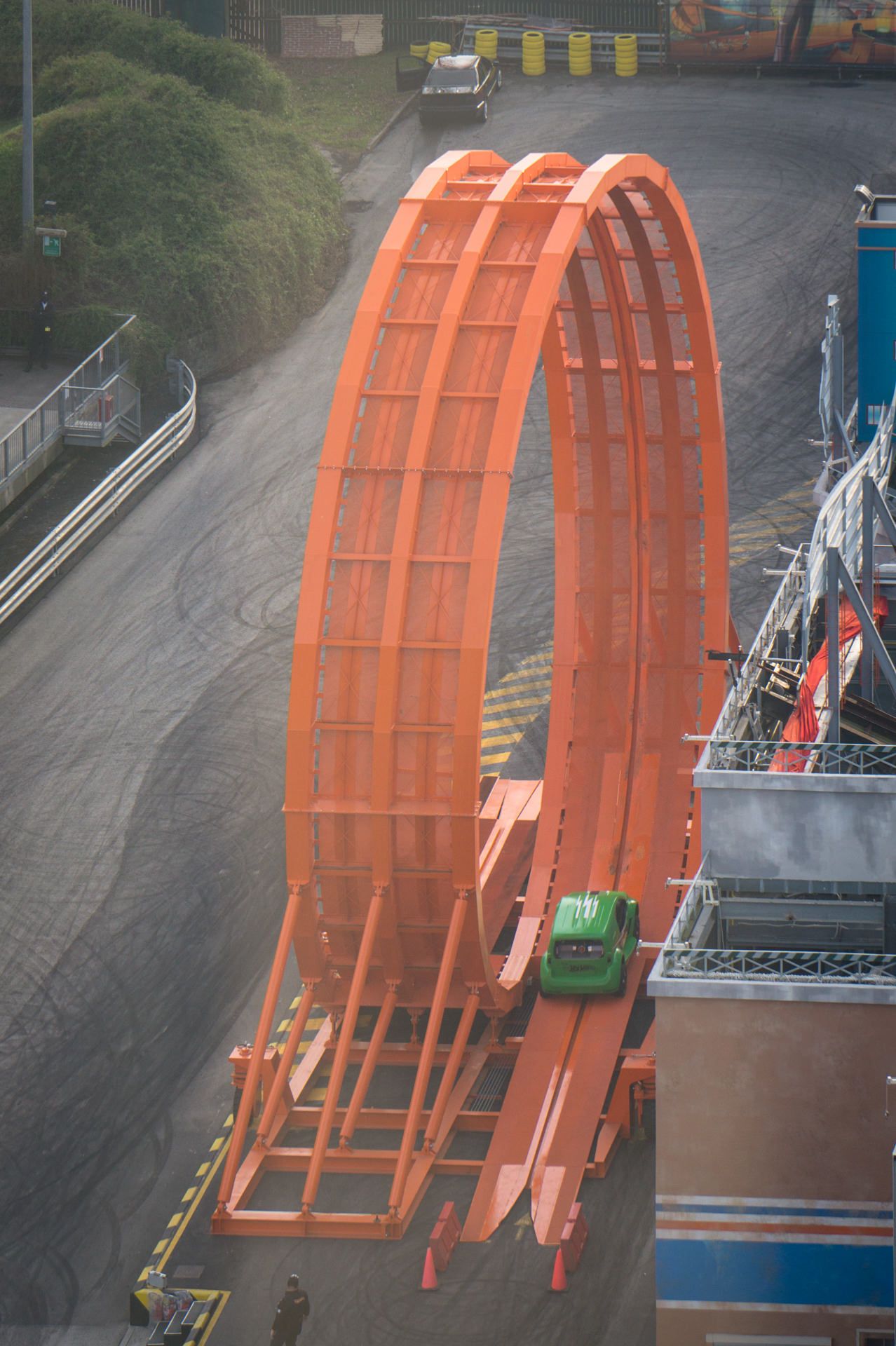
While waiting in the queue of the Katun roller coaster we could already observe that the neighbouring Max Adventures Master Thai roller coaster had a technical defect and was evacuated accordingly. Even one hour later there was no sign of a reopening of the ride, so we headed towards the prominent landmark of Mirabilandia. Also at the 90m high Eurowheel a long and tough queue was waiting for us. But we didn’t want to miss a ride on what used to be the highest Ferris wheel in Europe because we were so tired of waiting somewhere else. As expected, only half of the gondolas of the Ferris Wheel were equipped, which gave us plenty of time to take a closer look at the unconventional supporting structure of the Ferris Wheel. During the ride we could watch the Hot Wheels Stunt Show from above, the finale of which was the passage of a huge looping.

Pictures Mirabilandia
Closing Words

Also from above we could watch some test rides on Max Adventures Master Thai, so we immediately walked back to the ride, only to find the doors closed again. We still had half an hour left, so we decided to go on another ride on Katun. We couldn’t foresee that we wouldn’t be able to go on another ride after that, so we could only ride six of the seven roller coasters and the Ferris wheel. A disgrace beyond compare, which made the actually brilliant amusement park Mirabilandia the last flop. It is obvious why Gardaland is the most successful amusement park in Italy and why Parques Reunidos should reconsider their strategy.

What is your opinion about the theme park Mirabilandia? Just write it here below the report in the comment field or visit our social media channels:


Click here for the next report of the Il Viaggio dei due Runner Tour

Busy times for Looney Tunes

Preface

Four years have passed since the day when I last walked through the gate of the Parque Warner Madrid theme park. At that time, as part of a comprehensive tour of Spain with the admittedly quite creative name Coaster con Carne, and now as the main reason to finally take a closer look at the Spanish capital Madrid. The deciding factor was the airline Norwegian Air Shuttle, which offers really low prices to Spain from Hamburg, as well as a meeting with Daniel (@Danieldikay), who is a student of the Spanish language and currently completing his compulsory stay in Zaragoza just 300 km away. The stay was booked through Travel Parks, the travel agency of Parques Reunidos, so we paid about 176€ for two nights in a Holiday Inn Express including breakfast and two entrances each for the Parque de Atracciones de Madrid and Parque Warner Madrid (each for up to 2 persons per ticket, as well as the possibility to go back to Parque Warner Madrid on the next day of the visit). A price that could hardly be lower without an annual ticket to one of the Parques Reunidos parks.

We stayed overnight in Alcorcón, with good connections to the Cercanias Renfe, the suburban railway system of Spain, and the metro of Madrid. The journey to the Parque Warner Madrid turned out to be quite easy, only the departure from the park after midnight worried us. Via the central train station, and junction of all Cercanias Renfe, Atocha Cercanias, you can get to Pinto station quite quickly where you can take bus 413, which will take you directly to the park in a quarter of an hour. In the evening the bus takes you back to Pinto, where the last Cercanias Renfe back to Madrid leaves at 23:48. Another alternative had to be found, so we took the bus 412 to Villaverde Bajo-Cruce and got into the metro, which is still running until shortly after 2 o’clock.

Parque Warner Madrid

Teatro Chino 3D

After passing through the entrance gate you will find yourself on Hollywood Boulevard, the main street of the park. Here you will find some shops, some restaurants and the Theatro Chino 3D, a replica of the famous TCL Chinese Theatre on Hollywood Boulevard in Los Angeles. Besides the film Coyote y Correcaminos (a compilation of the last Road Runner and Wile E. Coyote cartoons), the film Marvin el Marciano en 3D (Marvin the Martian in the third dimension) is also shown here; especially the second film should not be unknown to visitors of the former Warner Bros. Movie World Germany near Bottrop Kirchhellen. It is aboutt Daffy Duck and Marvin the Martian, and is of a surprisingly good quality for its age, especially with regard to the effects used. The film always looks like an old Looney Tunes cartoon and the story of it can entertain you very well.

 Oso Yogui and Cine Tour

If you enter the park at the beginning of the opening hours, it is advisable to start your tour counter-clockwise and visit the Cartoon Village with all its attractions first. However, if you enter the park slightly later, you can expect longer waiting times, so a clockwise tour is the more sensible choice. The Movie World Studios are a wonderful themed area, where the theme of film, as in the entire park, now plays a much less important role than in 2011. While the Splash Battle Oso Yogui in its full splendour is still wetting the passengers down to their pants, the vintage car ride Cine Tour lacks all the figures from the Looney Tunes universe, so that in the end only a modest capacity remains on a somewhat longer ride. Here you also learn for the first time to hate the owners of Pase Correcamino’s Platinium wristbands, as they constantly pass before you.
Stuntfall

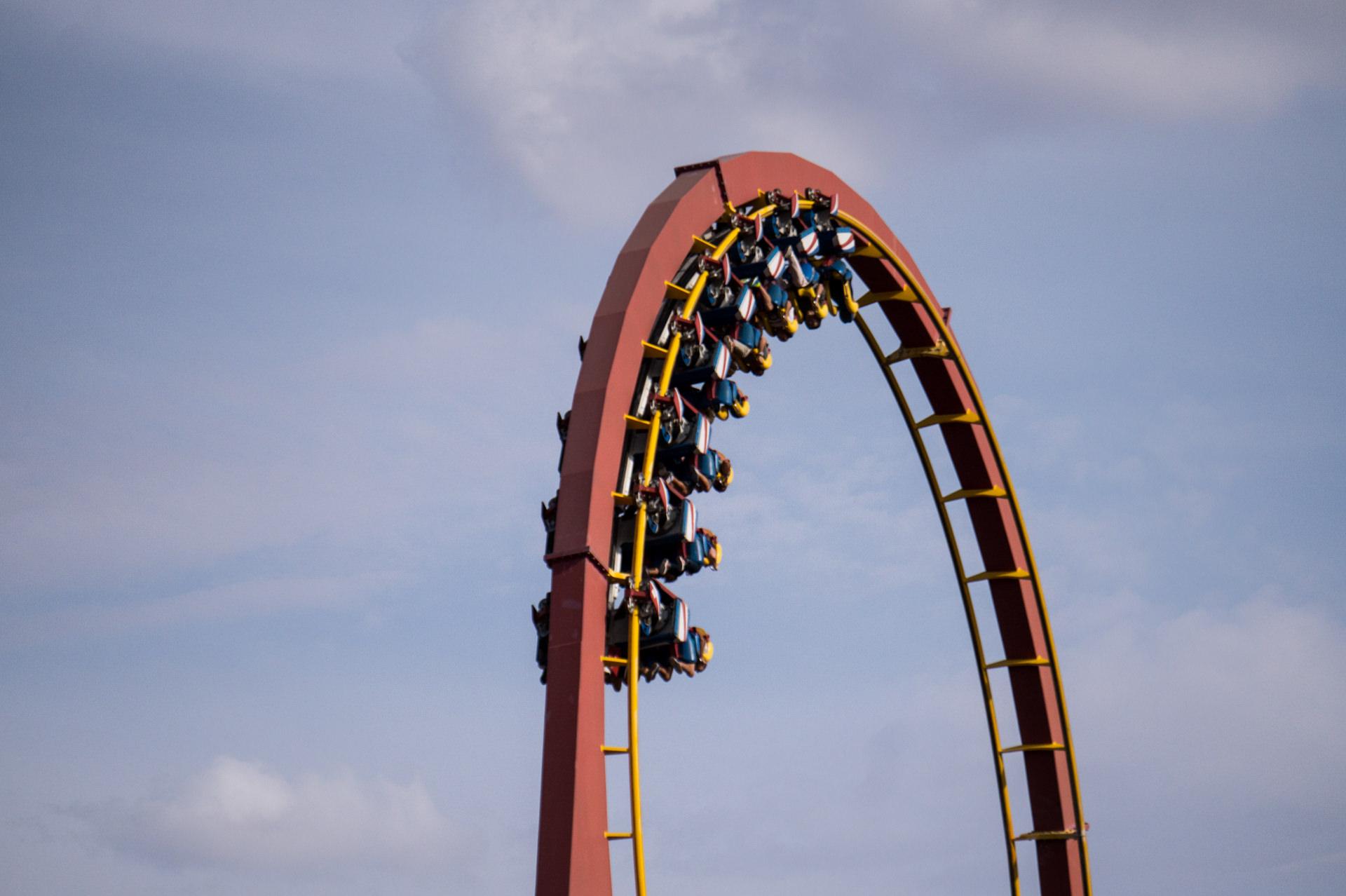
It’s only good that during the roller coaster Stunfall, due to an incident in which the train swung out in the first inversion figure and some rows, despite the existing platform, could not be evacuated easily, always runs with some blocked rows in the front and rear part of the train and therefore has a reduced capacity. Like at Shambhala in the Spanish Port Aventura, the train is almost exclusively filled with Pase Correcaminos owners, so that there is always a longer queue at this roller coaster. Stuntfall is a special kind of treat that you don’t want to ride only once.

After the corridor has been lowered, the wagon group is pulled backwards up a vertical tower. As soon as the tower reaches a height of less than 60m, it is released and thus puts its passengers in free fall before the train goes with full force towards the horizontal station passage. With rapid pace you approach the Cobra Roll, the first inversion figure of the track, and do two headstands. After you have left the element, a truly huge loop follows immediately, in which there is hardly any lack of pressure in the forward direction. Without any brakes you race up the second vertical tower, as well as the now synchronously running catch-car, which catches you and carries you up. By engaging the sled, the body is now at the upper end of the shoulder restraint and thus without any contact to the actual seat. The part that inevitably follows could have been the inspiration for the Schwur des Kärnan from the North German amusement park Hansa Park, but it is much more extreme, because on the one hand the incipient free fall is of longer duration and on the other hand it is only ended by the body in the middle of the looping by renewed contact with the seat shell. The loop is now traversed with pronounced pressure, whereas the Cobra Roll is traversed much more slowly. On the way back, you are caught in the tower by a catch-car, which is now also running synchronously, so you inevitably get to know the restraint and hang in it for some time. Shortly afterwards you will be driven back to the station.

The Giant Inverted Boomerangs are a really great invention. During the development process, the responsible engineers of the Dutch manufacturer Vekoma certainly took their breaks in the coffee shops in the area. The synchronously running sleds alone make the ride interesting, at least in terms of control technology. It is also quite complex, which is why it is already a miracle that Stuntfall makes its rounds without any major problems compared to the very error-prone rides of the same series. The ride on the Stuntfall is relatively smooth, but thoroughly intense and peppered with a great pinch of airtime without straining the body too much. All in all a great ride, where the crew has done everything possible to get the ride moving.

Hotel Embrujado

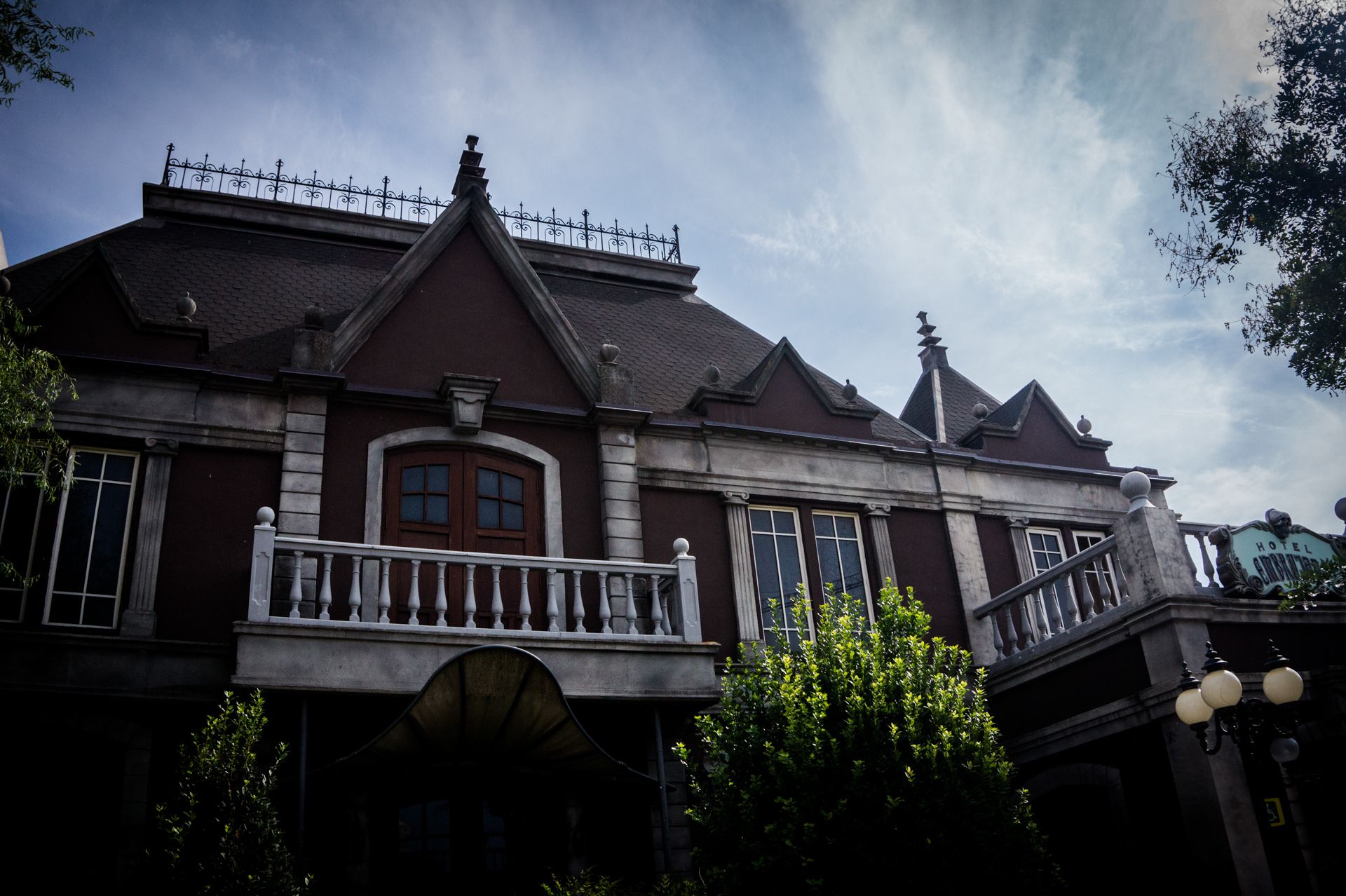
In a side street is the entrance to the Hotel Embrujado, a run-down hotel that seems to be cursed. Here the story of Isabella, henceforth referred to only as the bride, and Rikardo, her groom, is told. During a fire the night before the wedding, Rikardo died in the house’s secret library, access to which was at first not found; the bride, on the other hand, waited and waited and waited. Years later, an access to the library was discovered, whereupon the tragedy of the past days seems to repeat itself. A passageway leads from the library to the richly covered banqueting hall, but it is only a projection of days gone by. It gets dark and the bride awakes from the dead. Her mood sets the room in motion, varying from grief to despair and anger over the fact that Rikardo has left her. In the end she realises her mistake and chases the visitors away.

The Hotel Embrujado is a good Mad House with a well implemented storyline, but also a lot of Spanish visitors, so the atmosphere suffers from the general and quite loud chatter among each other. In addition, the queue inside the building moves very slowly, which is why a visit in the evening with much less crowd creates a much more atmospheric overall picture.

Parque Warner Beach

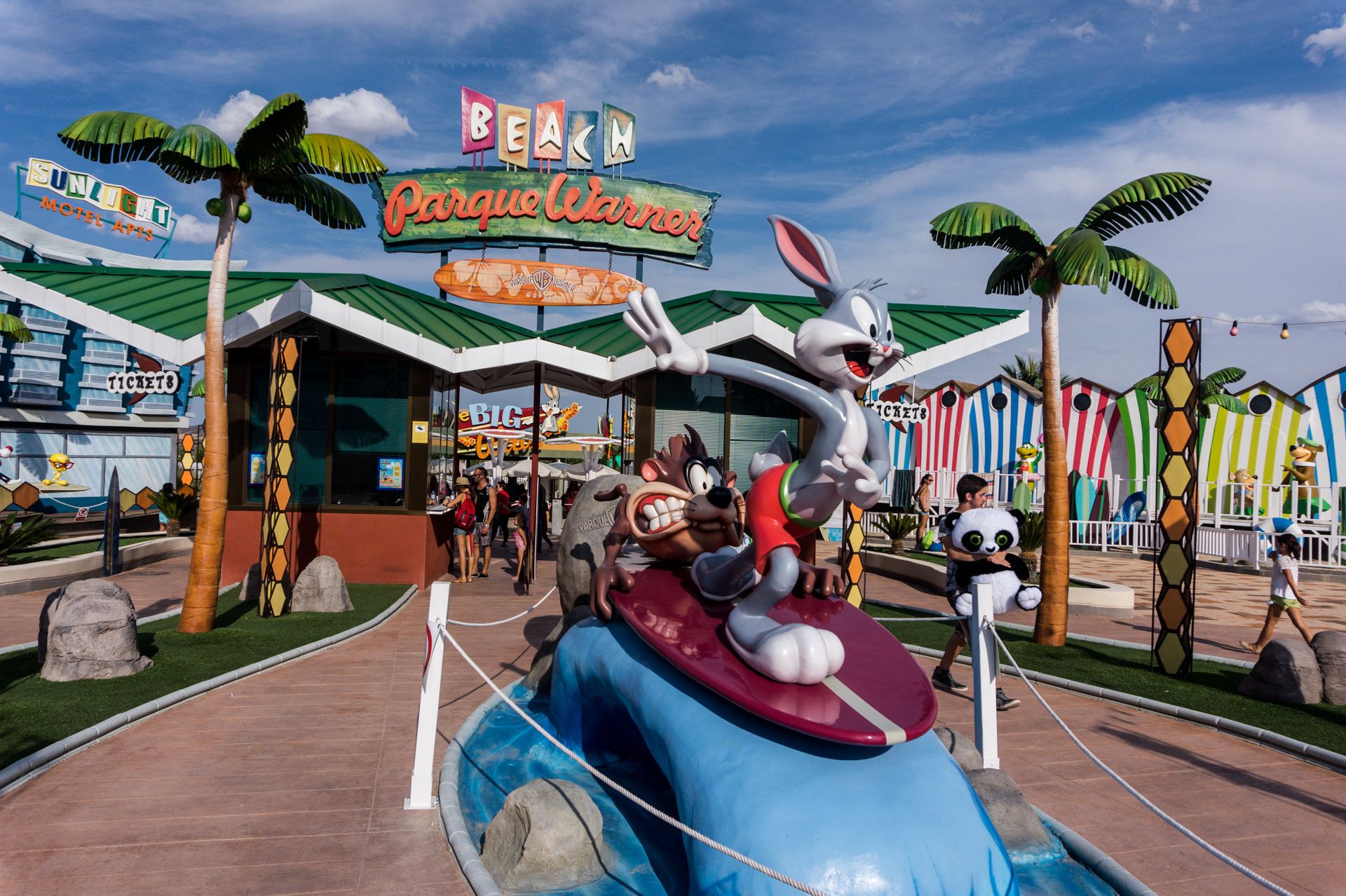
If you follow the main path, you are in an escape with the lift hill of the supposed main attraction of the park, at least the steel track would be according to our definition. But now we turn left shortly before and stand in front of the entrance of the water park Parque Warner Beach. It was opened in 2014 and offers new perspectives on the two roller coasters Stuntfall and Superman: La Atracción de Acero. Inside it offers a Lazy River and a larger wave pool. Fans of impressive water slides will not always get their money’s worth at Parque Warner Beach, as there are only smaller slide complexes or play structures with integrated slides from the manufacturer Van Edgom, including an interesting body slide with a funnel. The general design of the water park has been consistently implemented in the style of the Looney Tunes and Hanna Barbara (The Flintstones, Scooby Doo, Yogi Bear) figures and is worth seeing, even if the figures from the Cine Tour had to give up their place for this. Due to lack of time we were unfortunately not able to visit the water park, so I cannot say if it is worth the additional entrance fee. At least it seemed to be accepted by the population despite the end of the season. An extension with bigger and more appealing attractions would at least be desirable, but then also with an entrance outside the amusement park.
Superman: La atracción de Acero

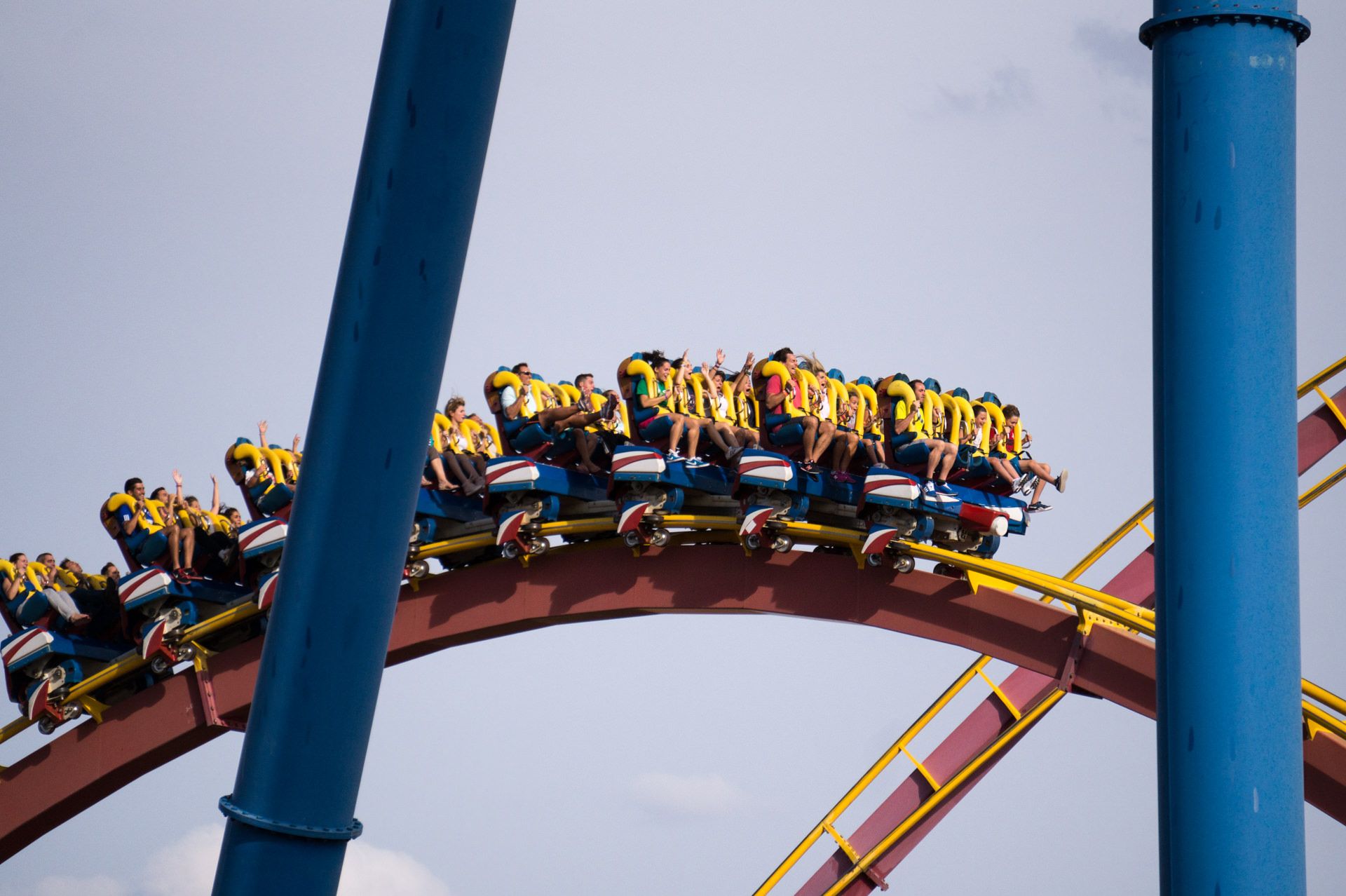
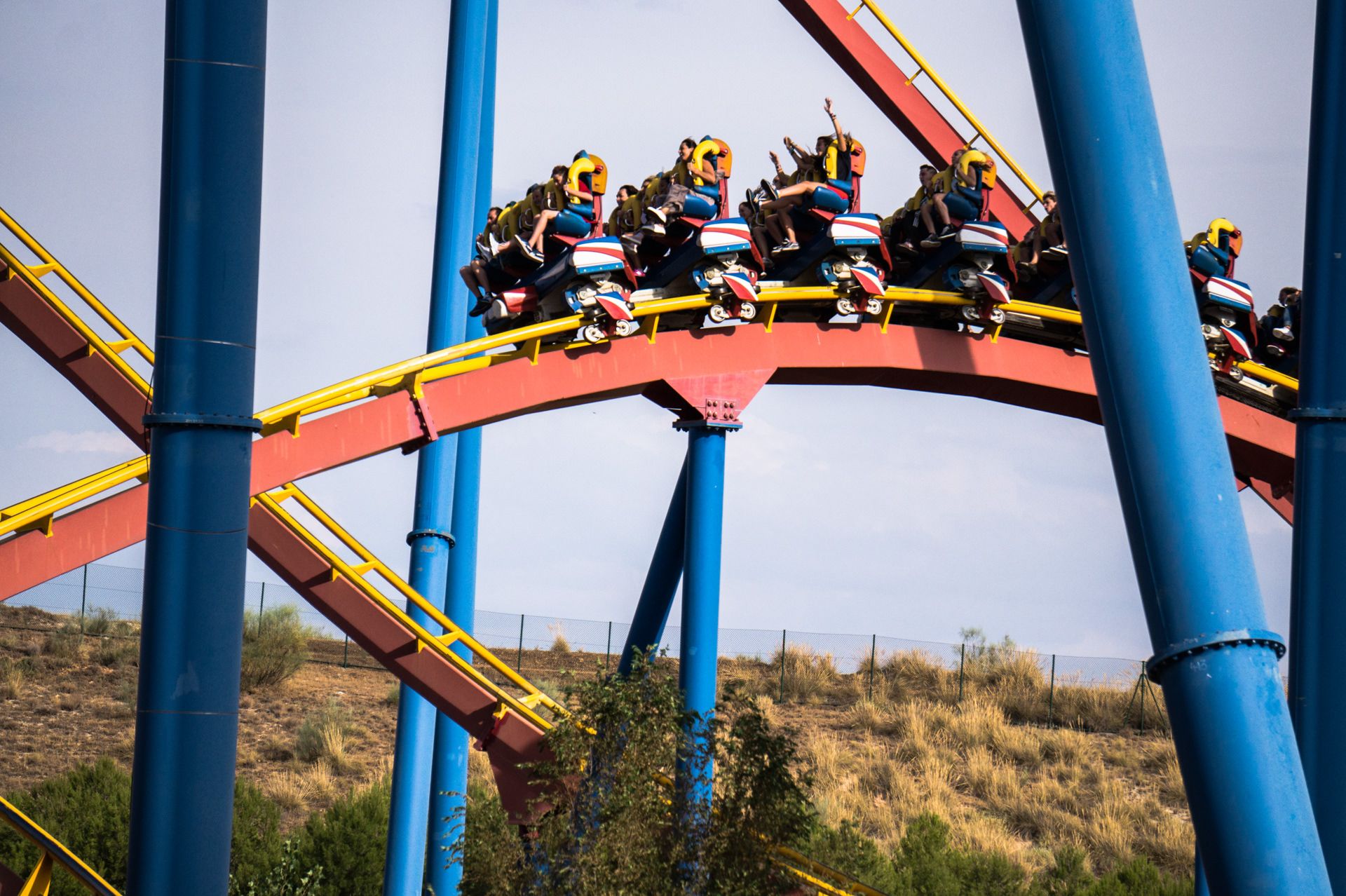
As already mentioned Superman: La atracción de Acero is the supposed main attraction of the park, at least it is one of the bigger roller coasters of the manufacturer Bolliger & Mabillard, so by definition it is already better than good. At Parque Warner Madrid, on the other hand, the steel coaster has an average waiting time of only about 15 minutes, thanks to halfway competent staff and two-train operation, no matter how crowded the park got later in the day. It’s quite funny that many visitors don’t see the roller coaster with all its supports and rails and often clog the entrance of the queue with their pushchairs.

After the floor in the station has tilted to the side, the wagon group leaves the station and immediately completes a small turn in a typical Bayernkurve. Now the lift hill leads to a height of 50m, whereupon a small intermediate slope is passed before the actual first drop. Shortly afterwards, the train disappears towards the ground and the body reacts sluggishly. Almost continuously without any contact to the seat shell you fall down the drop to find your original seat again shortly before entering the loop. This is passed relatively quickly and thus with clearly pronounced forces. The following valley is crossed with full force just before you climb the Immelmann. A Trim Brake in the next valley reduces the train noticeably, which makes the Zero-G Roll, an inversion figure in which one turns around one’s own axis without any acceleration, quite pleasant to ride. This is followed by a generously designed Cobra Roll in whose exit you pass a second reduction brake. This is necessary because on the following hill you are transported out of your seat with extraordinary force.  The first corkscrew is then entered in a straight line and after a short turn the exit of the first corkscrew is crossed by a second corkscrew, thus forming the element of the Interlocking Corkscrews. This is followed by a very intense curve close to the ground, whereupon the train takes another hill and carries the passengers up into the air again. An even more intensive upward helix follows, and shortly afterwards the brakes are reached.

Superman: La Atracción de Acero is simply brilliant. The ride offers everything a really good roller coaster needs, namely a great layout with its specific characteristics, in this case fast inversions and a balanced, although not lax, play of forces. The ride comfort is extremely good, although Superman: La Atracción de Acero is the ride with the most shoulder bar contact in the whole park and the condition of the trains in general is poor, as almost every headrest of this ride is now damaged.

Lex Luthor and Sillas Voladores de Mr. Freeze

Opposite the steel track, Lex Luthor, one of Superman’s opponents, bores his guests to death in a top spin with a lousy ride programme; interestingly, however, the ride is very popular with the park’s visitors. One of Batman’s opponents is much more fast-paced, however, as the Sillas Voladores de Mr. Freeze, a very nice wave swinger with an unusual design, offers a pretty good ride programme.

La Venganza del Enigma

High above the ground is La Venganza del Enigma, where you are transported to a height of 100m due to the Riddler, also a villain from the Batman universe. The 120m high Combo Tower of the company S&S has in theory three different modes. On our visiting day two lanes were operated in Space Shot mode and the third lane, which only functions as a turbo drop, was closed although the waiting area was quite well filled towards the end of the day. While I described the ride in 2011 as a damn high observation tower at best, I have to revise my opinion now, because the ride, perfectly placed in the park, can do more than just look good. The launch in space shot mode pulls surprisingly strong and just as long before you reach the maximum height and are lifted out of your seat a little bit. Up here you have a wonderful view of the underlying Parque Warner Madrid and theoretically of the Spanish capital before commuting at a leisurely pace. At least it is no comparison to other Space Shot rides and so La Venganza del Enigma is quite high in my favour, especially since it is the only tower above 71m height that is still fun to ride.

Batman: La Fuga

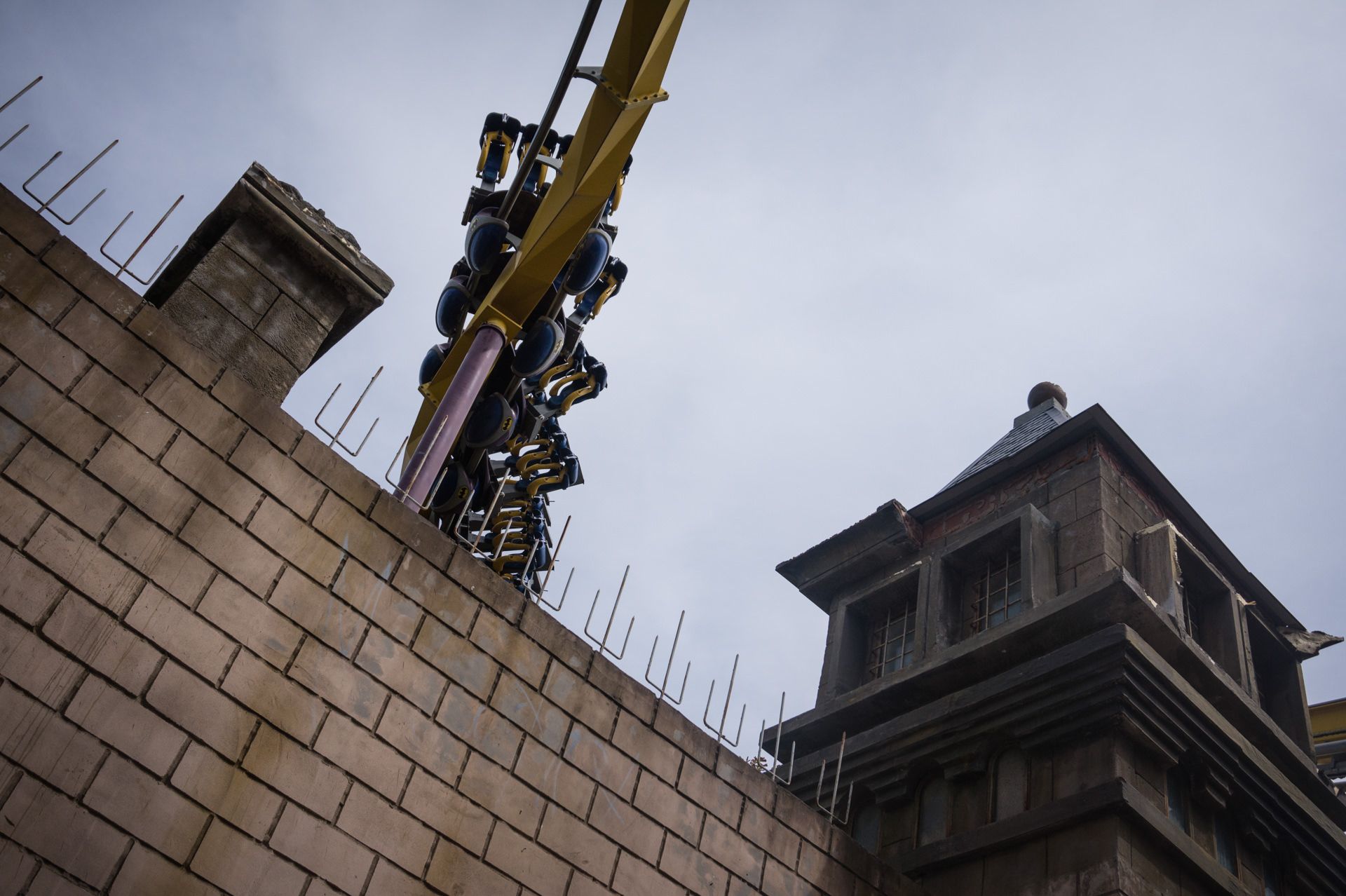
On the other side of DC Super Heroes World is Arkham Asylum, Gotham City’s asylum, where a large number of the most famous and dazzling Batman opponents decided to escape at the same time. As Dark Knight, you’ll have to catch them again. On your way up to the station of the Inverted Coaster Batman: La Fuga, you can explore the asylum from the inside. This can, if the ride is operated in the move-in mode, due to the minimal number of employees and surreal-looking processes, sometimes take a little longer.

After you have boarded the train and it has finally been checked in, the journey can start immediately. You don’t spend much time on the lifthill before you make a small predrop and get pulled into a steep curve. With immense force you pass the first valley and are immediately pushed into the first loop. Before you know it, you’ll be upside down again in the following zero-g roll. Without mercy, you now perform another loop, whereupon a left-hand upward helix introduces the supposedly most harmless part of the layout. But as soon as you make the turn at a lofty height, you no longer feel your legs. A steep turn brings you back to ground level, whereupon the first corkscrew is introduced. Especially in the rear part of the turn you pull through the element with quite high acceleration. After a rather tight turn you are again standing upside down in a corkscrew, whereby the play of forces of the first corkscrew is presented here even more intensified. After an upward left turn you reach the brakes and shortly afterwards the station.

Batman: La Fuga is short, not very high, but distributes the G-Forces like no other coaster; at least in Europe. The 11 sister installations, 6 of which have a similar theme, on the other hand, are burdening the passengers in the most positive sense in the rest of the world, but mostly in North America and there from time to time also backwards. Batman: La Fuga is a great roller coaster through and through, even though it is a very intense roller coaster, which is why it wouldn’t be a pity if, besides the current renaissance of the Suspended Looping Coaster by the Dutch company Vekoma, other rides of this kind were built by Bolliger and Mabillard.

Passing through the beautifully designed Gotham area of DC Super Heroes World, the tour will take you past the bumper car Los Coches de Choque de el Joker and the former simulator Batman: la Sombra del Murciélago, which had its last season in 2014 and may be replaced by a Justice League style dark ride, into the Old West Territory. Here you will find the break dance Los Carros de la Mina, as well as the two water rides Cataratas Salvajes and Rio Bravo.

Cataratas Salvajes

The wild waterfalls, i.e. the Cataratas Salvajes, are a very efficient and in my opinion very beautifully staged spillwater from the company Intamin. The efficiency of the ride is simply based on the simplicity of the layout, which is an oval without unnecessary frills. So after the boat has been transported up the lift hill, it makes a turn at lofty heights and immediately plunges down the only shot of the ride. This creates a large wave, which is then showered down on the boat’s occupants or moistens the daring passers-by on the bridge over the lane. The degree of wetness of the ride is relatively high already, but on average it is on a par with other rides of this type.

Coaster Express

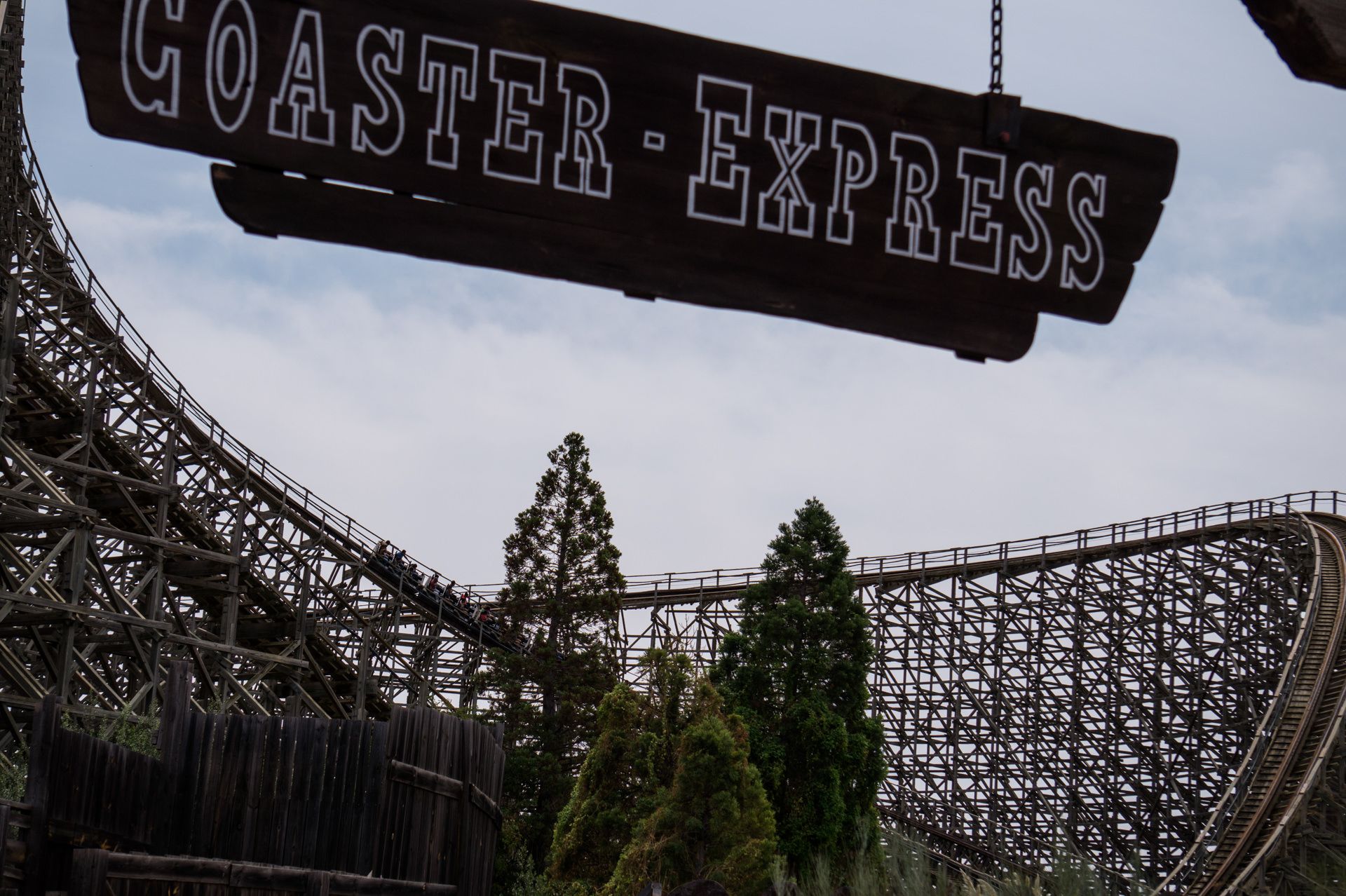
The roller coaster Coaster Express is the only roller coaster of the park which can show an eventful history after the American Six Flags group as the operator of the park was discontinued. Like Bandit at Movie Park Germany, the ride started as Wild Wild West, designed to match the movie of the same name from 1999. As this movie was a flop without equal and meanwhile, partly unjustified, is considered as one of the worst movies, it was decided not to use the licence for the roller coaster and the theme area of the same name any longer when the park changed its operator to Parques Reunidos in 2005. The oversized queue underneath the station was shortened to the outside area and the space is now used for other purposes, but you can still have a look at the train with the ejection seat from inside the station.

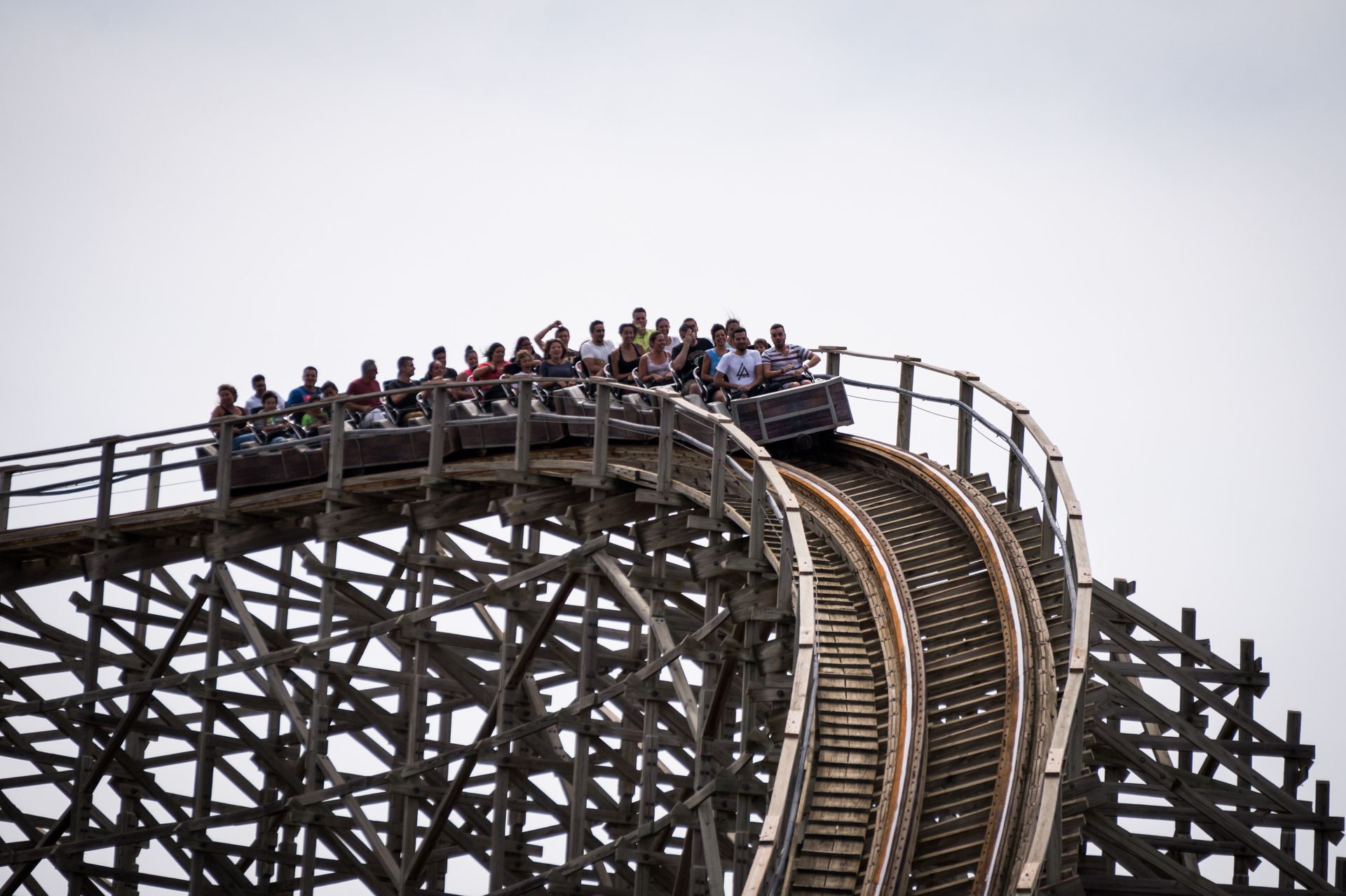
After leaving the station, you cross the transfer track for a short time, whereupon a left turn follows. The train then hooks into the chain and is transported up the lift hill. Arriving at a height of about 36m the train immediately turns into a wide right turn, which turns out to be a 590° helix. The speed in the valley is about 80 km/h before it starts to rise again. At a higher level, you now wrap around the First Drop until you reach the ground again. A longer straight section is followed by a small right bend at a lofty height, after which a wide straight drop joins. Now you make a higher right turn, which at the same time changes into another drop. Here you make the second and last change of direction of the layout, because shortly after that you cross another transversely inclined helix, but this time leading left and only 520° wide. This is followed by a hill relatively close to the ground, whereupon another left turn follows. This is joined by another hill across the support structure, on whose descent there is a reduction brake. This brake is noticeably effective, which is even useful in the following and quite funny curve; it was exactly this curve which set the maximum size of the passengers to a comparably low 1m85 until a few years ago. Shortly afterwards the brakes engage and the train returns to the station.

While on my last visit in 2011 I had warned against getting on the ride at all and described the ride as a torture, I have to say that the Coaster Express is a pretty funny roller coaster and not to be missed. Although this wooden roller coaster offers absolutely no noticeable negative forces, the feeling of speed in the curves is very strong; at least the ride made me laugh almost all the time. The ride characteristics on Europe’s longest wooden roller coaster are generally good and the ride looks good from the outside.

Rio Bravo

The Reversing Boat Ride Rio Bravo from Intamin is a copy of the Hopkins ride Wild West Falls from the original Warner Bros. Movie World on the Australian Gold Coast, but is based on the original design idea after the movie Rio Bravo. So you can enjoy the ride all the more, because it has been thematised down to the last detail.

After crossing the long queue you can take a seat in one of the boats, at least in the evening. To my astonishment the seat belts have been abolished in the meantime, which at least adds to the capacity of this quite popular attraction. Shortly afterwards the boat bobs past the maintenance hall of the ride towards the first lift hill. At the top you enter the huge mountain range, where the first turntable is waiting for you. The turntable then releases the boat into the first shot, which is done backwards. So far so good and often experienced, but Rio Bravo wouldn’t be an extraordinary log flume if there wasn’t a special feature following it. For many people, it is often very unexpected to see a camelback coming up, which will take you 10-20cm into the air on its crest. Shortly afterwards the descent into the cool water follows, whereby the degree of wetness is still very manageable. After a bend, you reach another turning point, whereupon the boat is on its way forward again. The river now leads you through a canyon, an Indian village and the western town of Dogde City, before you enter the mine again. Arriving at the highest point of the ride, you are brought back into position by a turntable, whereupon the second and final shot ride is initiated with a fantastic view of the wooden roller coaster Coaster Express. Once you arrive at the bottom you will be pleasantly moistened. This is followed by the return trip to the station.

The Rio Bravo log flume is a great ride with a bigger element of surprise at the beginning of the ride. The general design is terrific, but it lacks a bit of effects after leaving the second turning point. Although I don’t ask for buckets of water to be thrown in my face like on the magnificent log flume Valhalla from the English Blackpool Pleasure Beach, a little more would have been possible here, especially since the other water rides of Parque Warner Madrid are all wetter.

Tom y Jerry

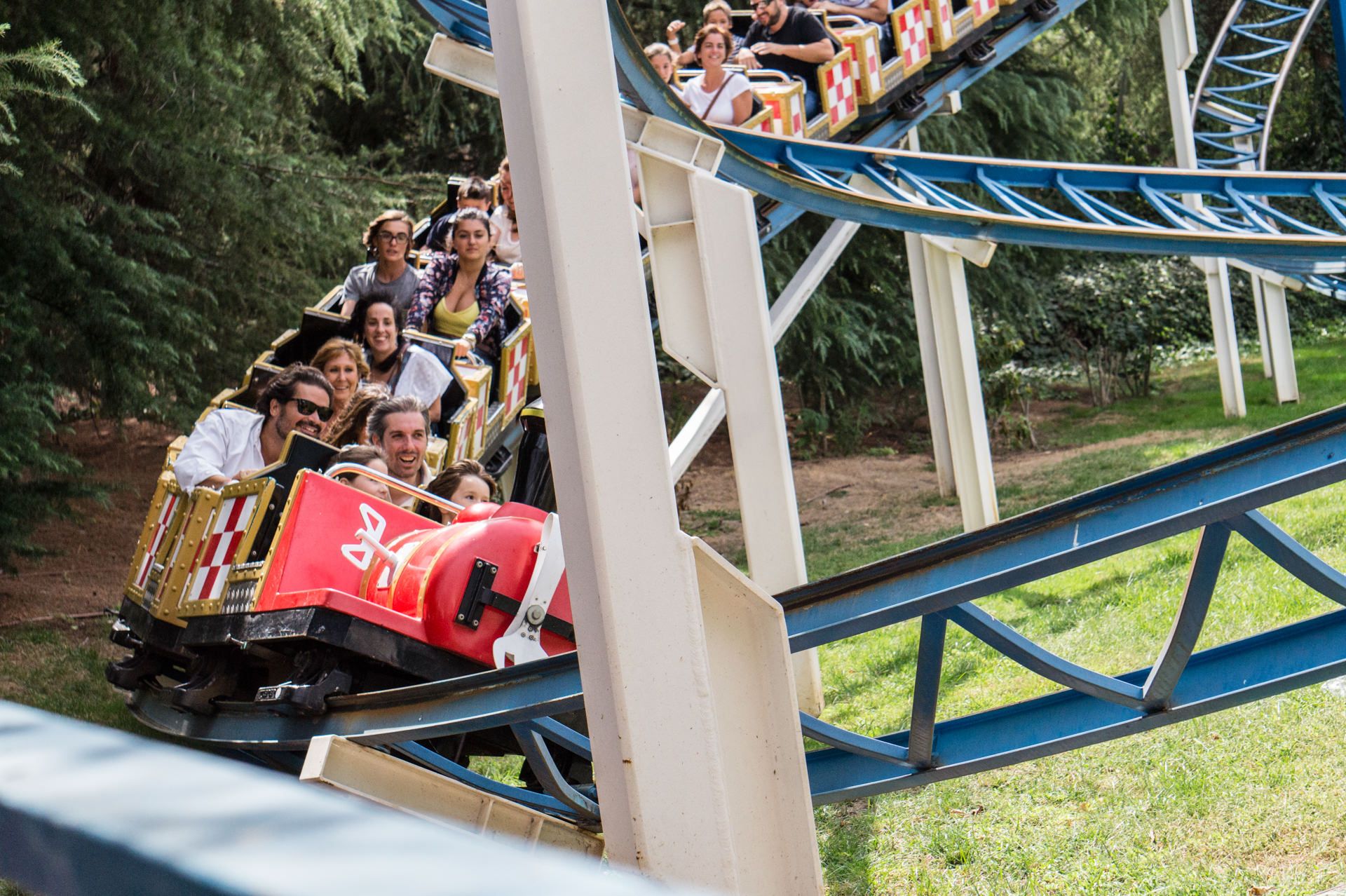
You can hear the Tom y Jerry children’s rollercoaster at Parque Warner Madrid from far away, as the ride sounds like a jet plane flying over the park. This is one of the last Zierer Tivoli large coasters produced, which was commissioned by Six Flags at the turn of the millennium and therefore has supports that meet the clearance gauge in comparison to the rides from the 1970s, which are often to be found in Germany. The layout can be described relatively simply as two adjacent eights, in which the rather wide curves are negotiated by a train that is all the longer. Mostly the course will be ridden through several times, but not at Parque Warner Madrid. Otherwise the waiting time at this very solid roller coaster would be hard to control, because Tom & Jerry is one of the most popular rides at Parque Warner Madrid.

Cartoon Village

However, this generally applies to the Cartoon Village theme area with its two children’s lands and the Rápidos Acme rafting. It is true that the situation in Spain is not quite as extreme as in England, where basically only well-known, or for us sometimes completely unknown, children’s series bring the masses into amusement parks. Paultons Park has shot the bird with the Peppa Pig World, so that it is only known to the public as Peppa Pig World and various advertising brochures can already be found in Scotland. In Spain, on the other hand, although the children’s areas are more important, other visitors also come to the park and are spread over the other theme areas of it, although this proportion has increased significantly in recent years.

What is interesting about the Parque Warner Madrid children’s areas, however, is the way they are designed. One area was completed for the opening in 2002 and the other in 2011, with the roller coaster Correcaminos Bip, Bip from 2009 being halfway integrated. While the old children’s area has countless rides in a narrower area, always in the shade of countless trees, the new area has few rides in a larger concrete area without any shade. Although these are all neatly arranged, there is no atmosphere whatsoever in this addition. What is interesting here is that almost every new plan park has these patterns, which in my opinion is a no-go. The Academia de Pilotos, a children’s monorail from SBF Visa from 2013, has at least tried to break up this situation.

Correcaminos Bip, Bip

The roller coaster with the supposedly strange-sounding name Correcaminos Bip, Bip is a Youngstar Coaster by the company Mack, which has the same layout as the one year younger Götterblitz from the Austrian Familypark. Just like at Lake Neusiedl, the ride begins with the ascent of the lifthill. After reaching the top of the lifthill, a small gradient leads into the first curve, followed by the big drop. At full speed you pass the first valley and immediately a horseshoe, an element which is shaped like an elevated horseshoe. In a right-hand bend, you accumulate meters of altitude once again, whereupon these are reduced in a downward left helix with subsequent gradient. Now follows a curve combination of up and down helices, which resembles an eight when viewed from above.  Finally, another right turn leads the train up to the braking section and then back to the station.

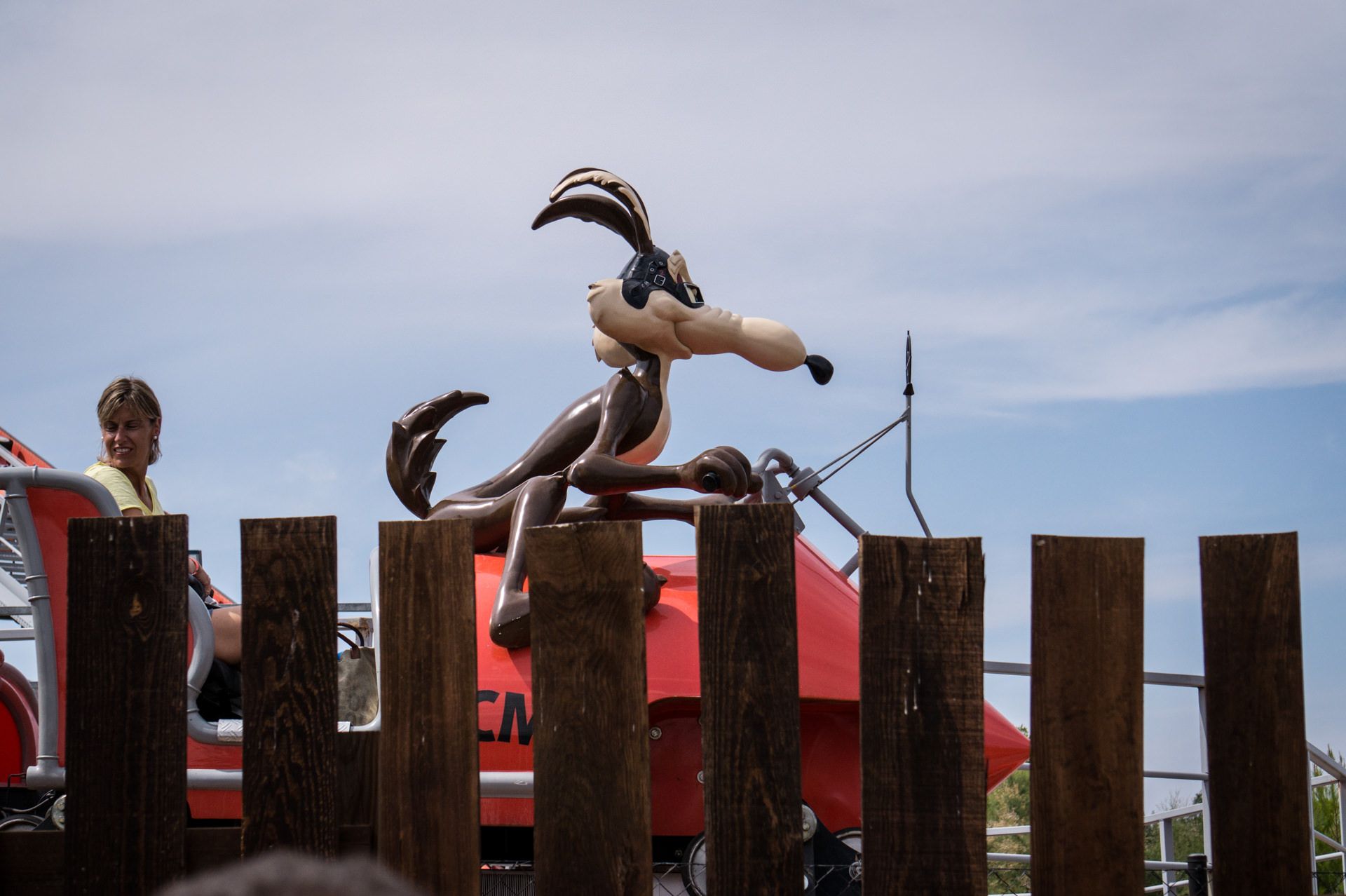
Correcaminos Bip, Bip is a very elaborately designed ride, but also a very unlovingly staged roller coaster with a great layout and equally good ride characteristics. It’s a bit of a pity to see that the hunt for the Road Runner, i.e. Correcaminos, is hardly visible from the outside because of the high wooden fences with peepholes. It’s also a pity that the ride is a stand-alone attraction in a dead-end street. But all of this would not be so bad if Correcaminos would not get on the nerves of the waiting people at some point due to his pass for the queue, the Pase Correcaminos. Although the queue is manageable, it takes half an eternity until it is your turn. So somehow you can understand Wile E. Coyote. However, he only caught the Road Runner at Family Guy.

Rápidos Acme

An extraordinary ride for Europe can be found in the park with the Rápidos Acme. Even if you find it hard to believe, you will get wet on this ride. Now you could argue that River Quest from Phantasialand in Brühl often releases its passengers completely soaked from the ride, but not everyone is affected. The secret recipe of the Parque Warner Madrid is as simple as it gets, as the park does without unnecessary gadgets like waterfalls or wave pools and instead concentrates on creating as many rapids as possible on a very curvy route, which constantly splash into the boat, while always directing water jets into the boat from the outside. The whole action is nicely designed by the characters of the Looney Tunes, but to be honest, you can hardly concentrate on them during the ride. Unfortunately the effects had all been switched off towards the end of the ride, which is a pity, but it was probably a bit too cold for the Spanish.

La Aventura de Scooby-Doo

Right at the beginning of the Cartoon Village, coming from Main Street, is the interactive dark ride La Aventura de Scooby-Doo. This was designed in the comic style of the Hanna Barbara series Scooby-Doo Where are you! and features the typical elements of this series. This ride was produced by the Sally Corporation and can also be found in two Six Flags Parks and previously in each of the Paramount Parks, but now under the management of Cedar Fair as Boo Blasters on Boo Hill. The ride itself should be experienced directly after the opening of the ride or with a corresponding Pass Correcaminos, because the handling of this dark ride is more than just a bad joke. In addition, Scooby-Doo itself is very popular with the local children, which is why the crowds at the ride are always relatively high. The ride at least is nicely designed and can be fun, but it is one of the weaker rides made by the manufacturer.

Although the rush at the big roller coasters was always manageable and appropriate, the park was very well visited. In fact, during the visit it seemed as if the park was almost overcrowded, this was mainly due to the general preferences of the Spanish and so it should not surprise anyone that the waiting time before each show was over an hour. This is also the reason why we left the Scooby Doo musical and the Police Academy stunt show. One could think that this was a big mistake, as the shows in Spain are generally not as negligible as those of German amusement parks, but on the other hand we could not have managed the park completely in one day. In fact, the offer of these at Parque Warner Madrid is also significantly lower than at the amusement park Port Aventura near Salou, whose recipe for success is actually due to the big show theatres. Here, the park might add another theatre or at least show the shows more often.

Parque Warner Cinematic

However, this does not work for the evening show Parque Warner Cinematic, as it only really comes into effect after dark. This is a fountain show with projections of well-known Warner Bros. films and commercials for upcoming films of the studio. The show, which takes place on the lake in the Movie World Studios, is supported by fire and laser effects, as well as a quite appealing final fireworks display. The show was already worth seeing on the occasion of the 10th anniversary of the park and even now not much has changed. Definitely worth seeing, especially as it is a great ending of a great park day.

Pictures Parque Warner Madrid

Conclusion Parque Warner Madrid

Parque Warner Madrid is still a very great theme park and in my opinion still the best park in Spain. Compared to four years ago, the number of visitors has developed quite well, which unfortunately makes the Pase Correcaminos very annoying, especially since it can be used almost everywhere, unlike Port Aventura. Except for Batman, which features a one train operation, the handling was much quicker than before and in the case of the roller coaster Stuntfall even exemplary. At least for the time being one is on a good way that should be maintained. But if the rush should be as high on the next visit, I will definitely treat myself to a Pase Correcaminos.


What is your opinion about the spanish theme park Parque Warner Madrid? Just write it here below the report in the comment field or visit or our social media channels:


Leisure culture Vienna style

Wiener Prater

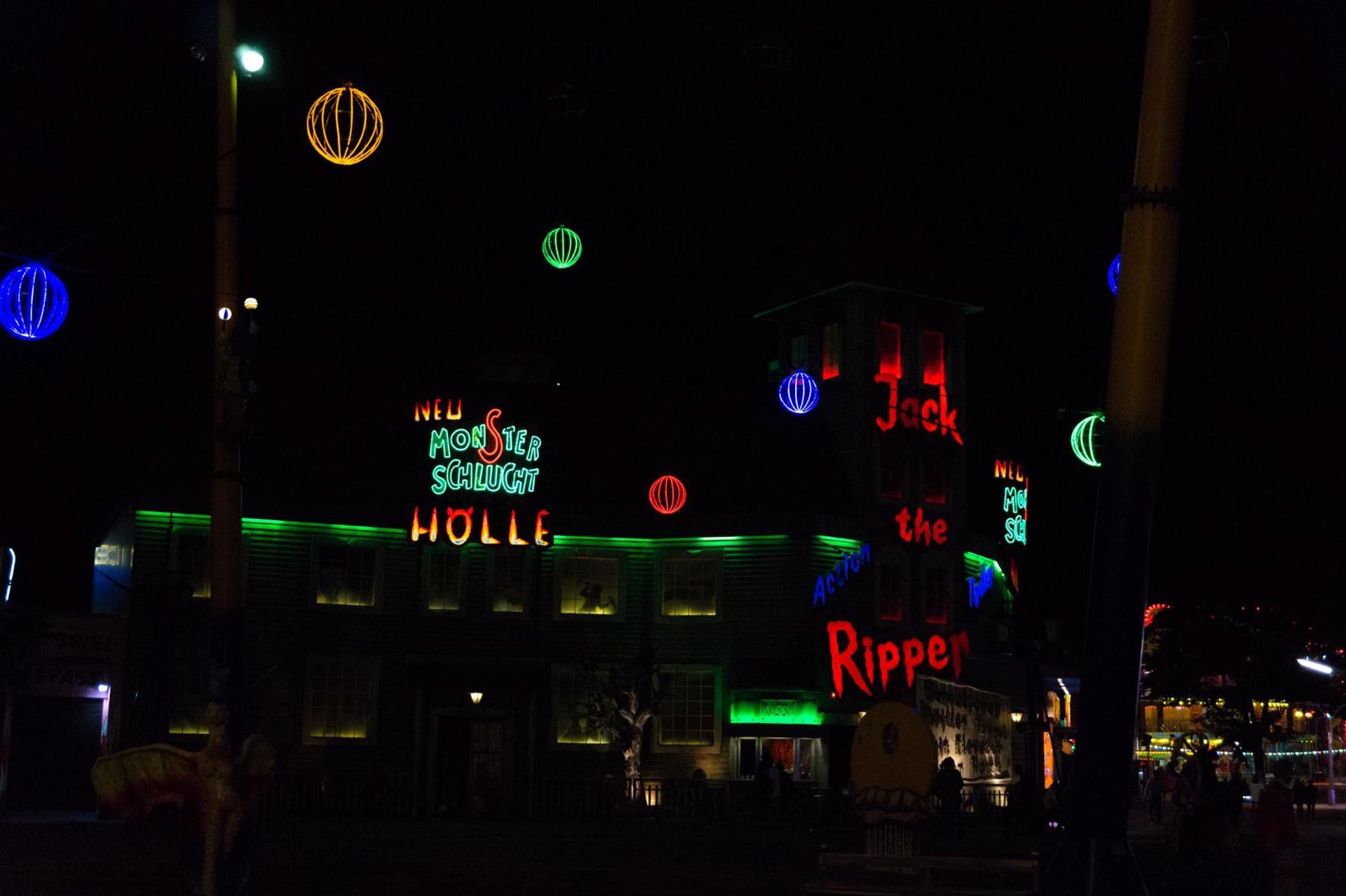
The Wiener Prater is a very spacious park area in the middle of the Austrian capital with a variety of sports facilities, a planetarium, the Liliputbahn and the amusement park Wurstelprater, which is typically called Prater. Similar to the Dyrehavsbakken on the outskirts of the Danish capital Copenhagen, the Prater is divided into plots and is fed by various showmen, so that the park itself partly resembles a folk festival. But on the other hand, the showmen are responsible for the design of the Prater themselves, so as a result, there were some very nice corners in the Prater.

Wiener Riesenrad

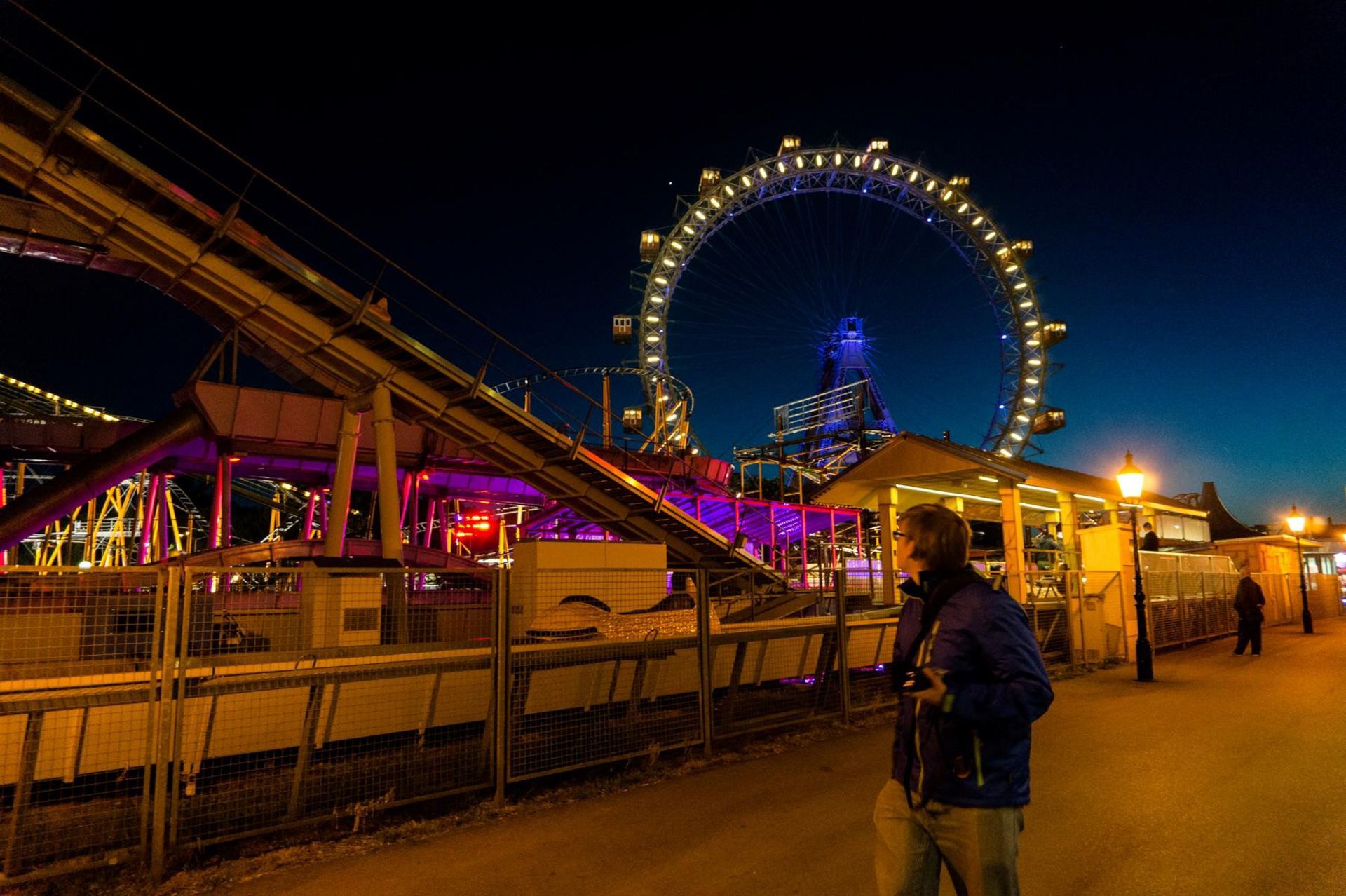
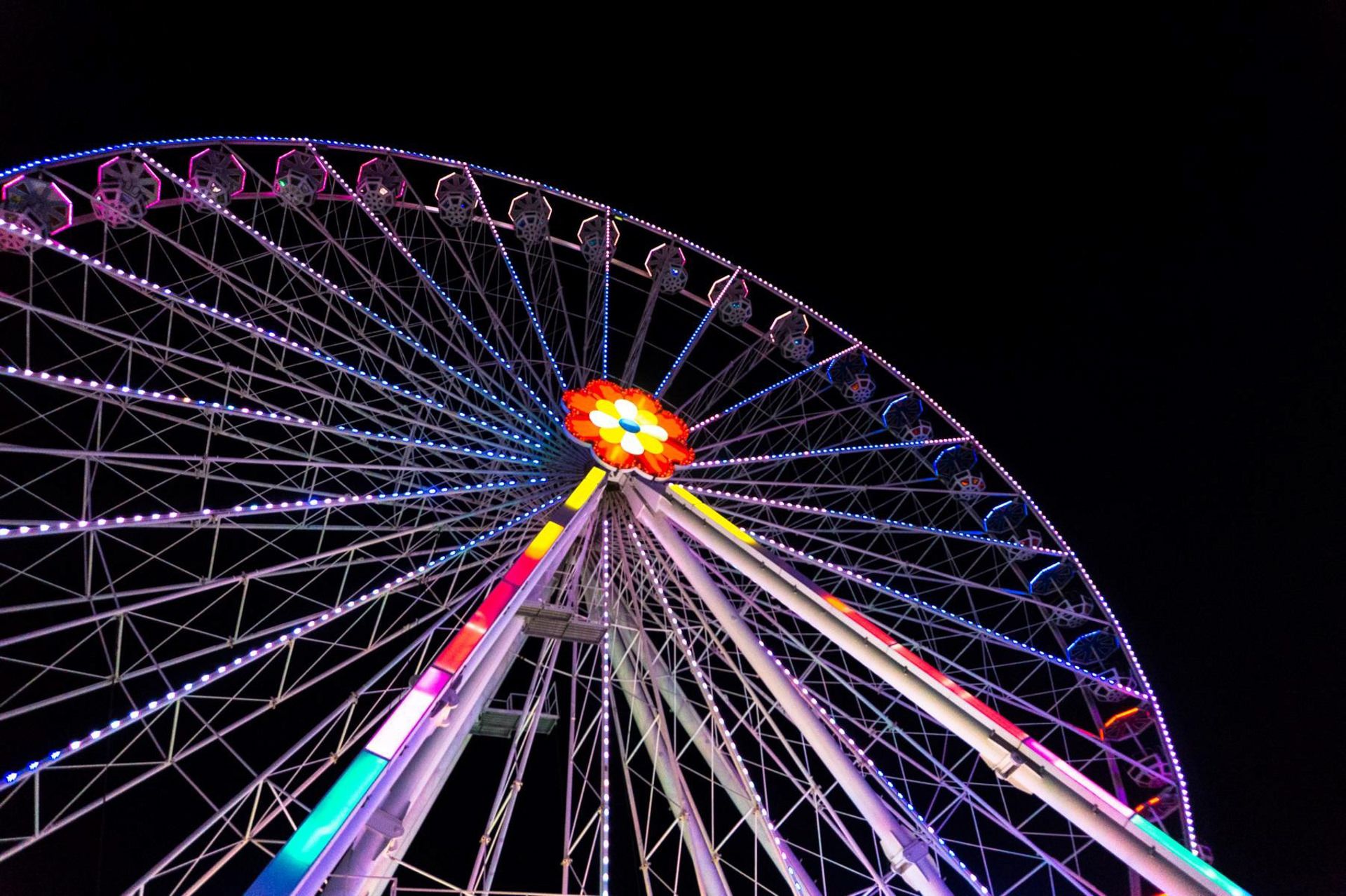
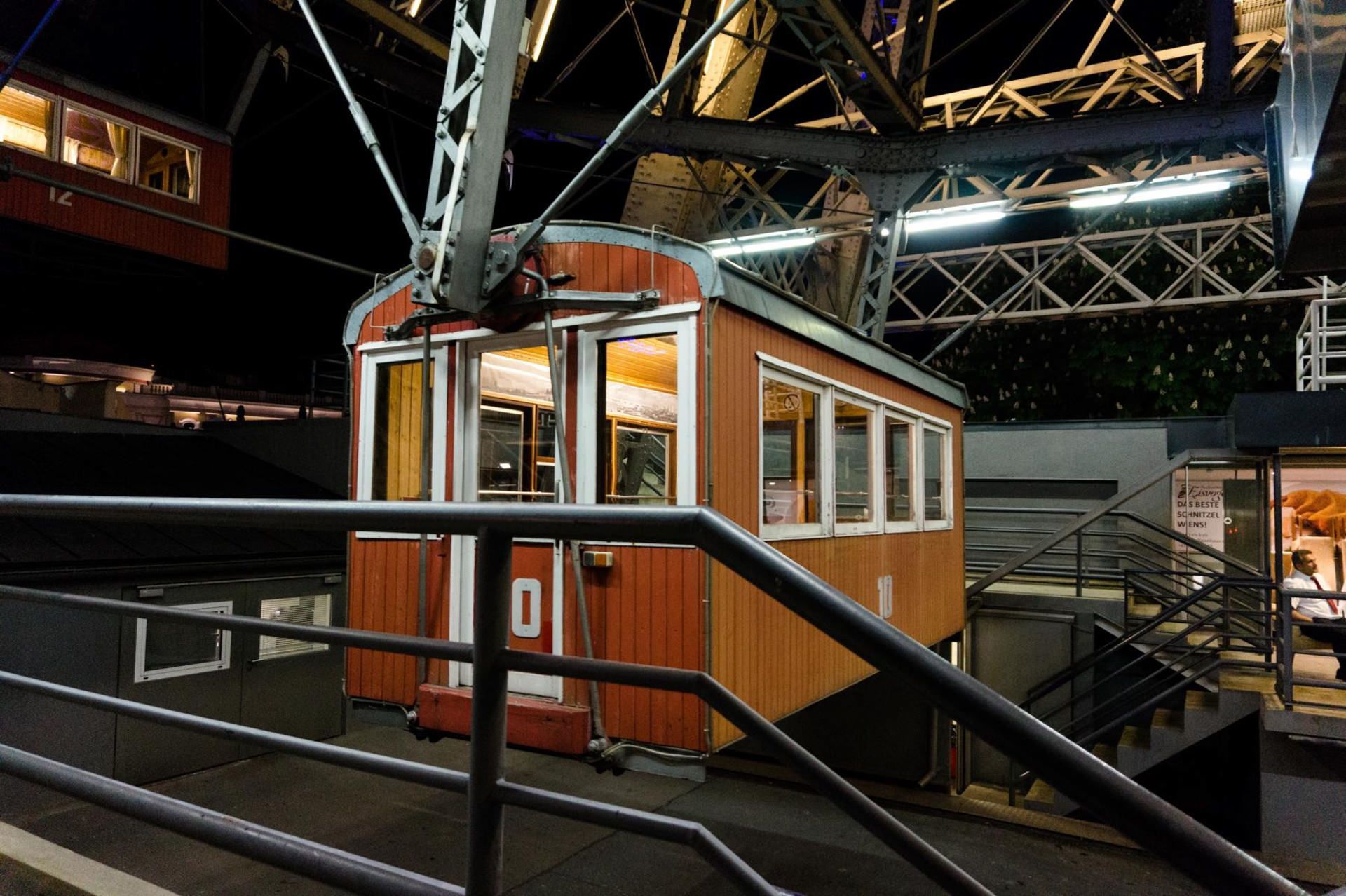
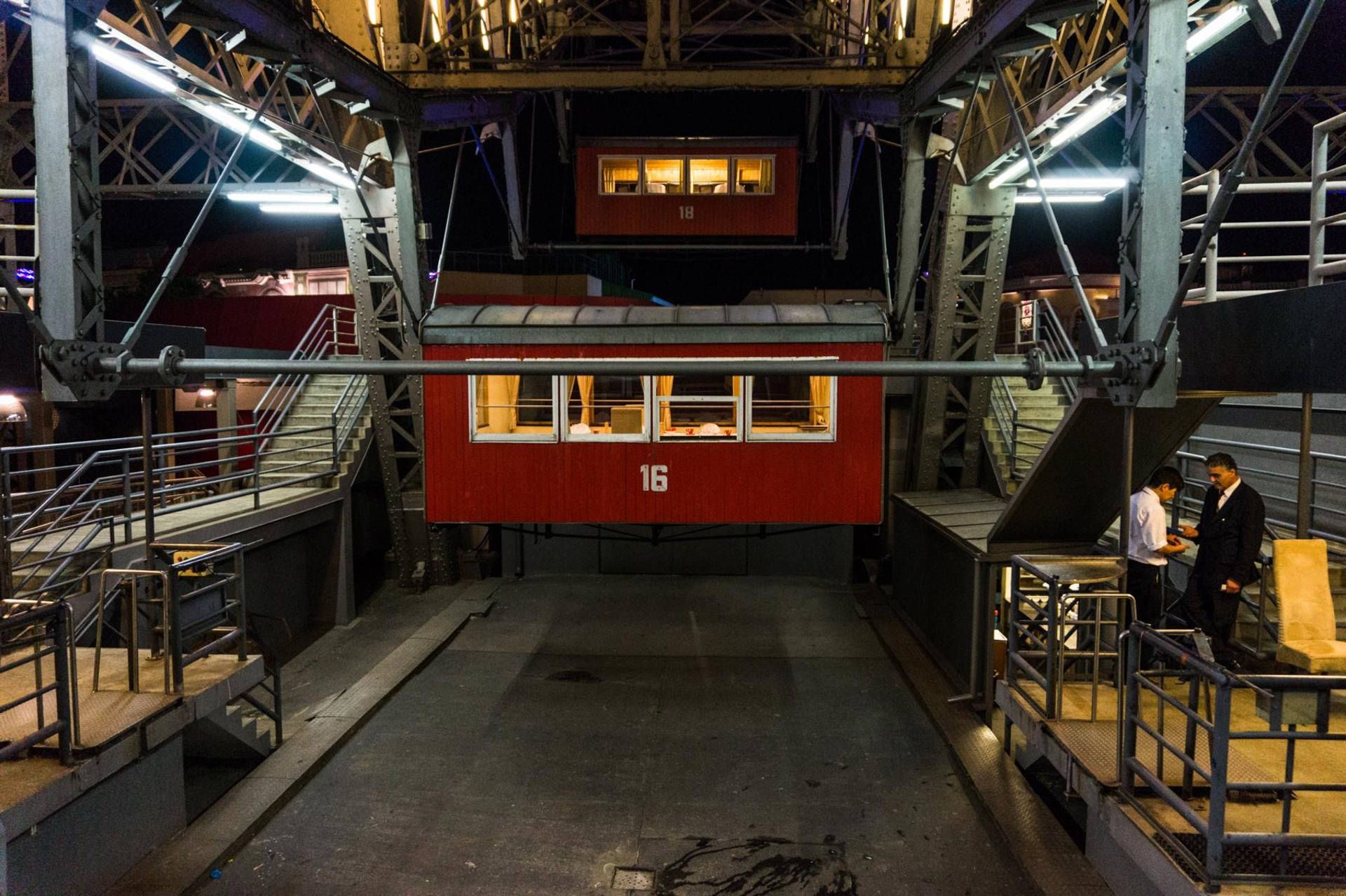
From the station Praterstern, it is only a few metres up to the Wiener Prater. One enters this place at the Riesenradplatz at the foot of the Wiener Riesenrad, the famous landmark of the city and the Prater. Built in the year 1897 to celebrate the 50th anniversary of the throne of Emperor Franz Joseph I, the approximately 65 m high wheel is the oldest Ferris wheel in the world and was the highest Ferris wheel in the world between 1920 and 1985.

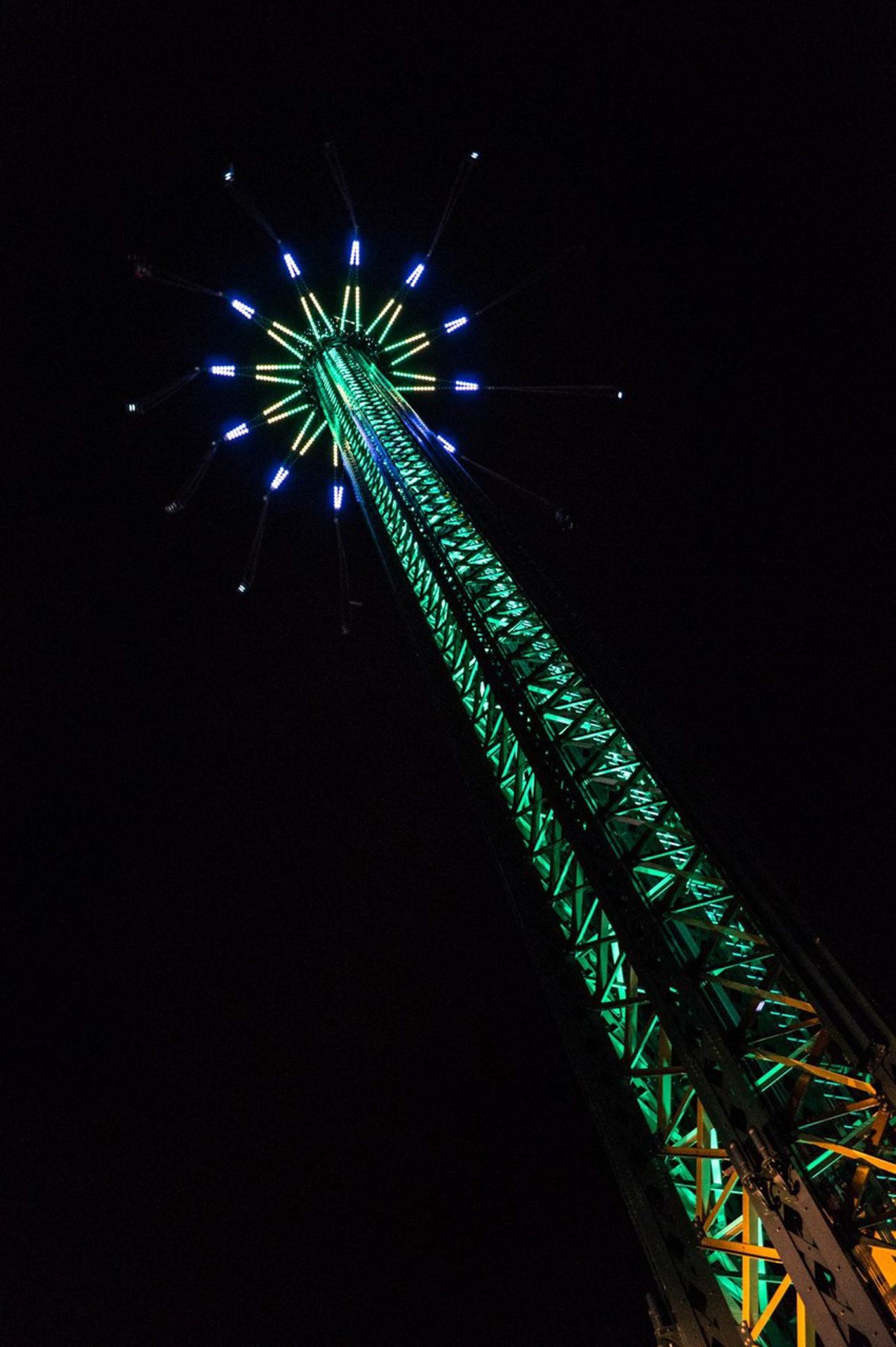
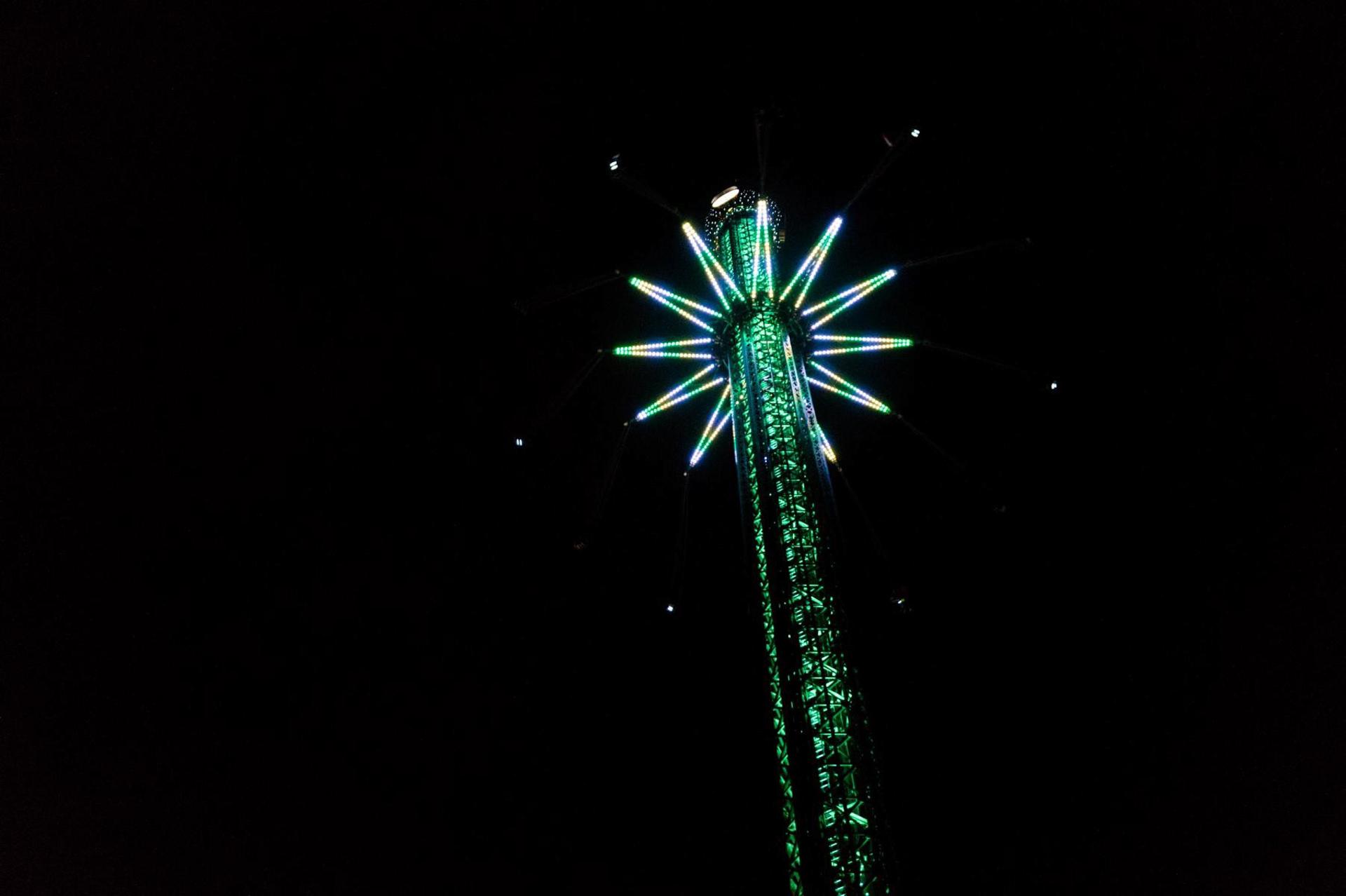
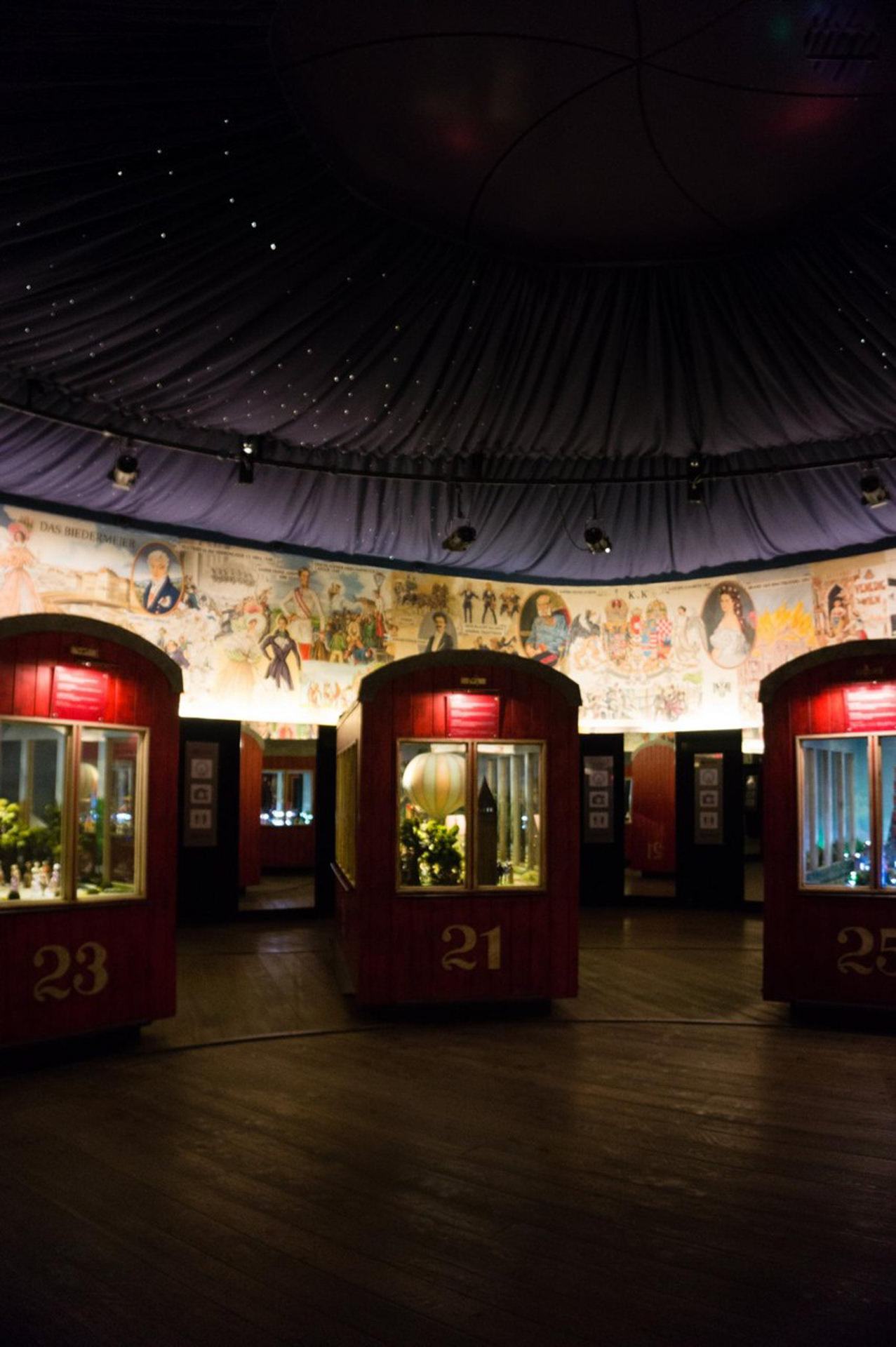
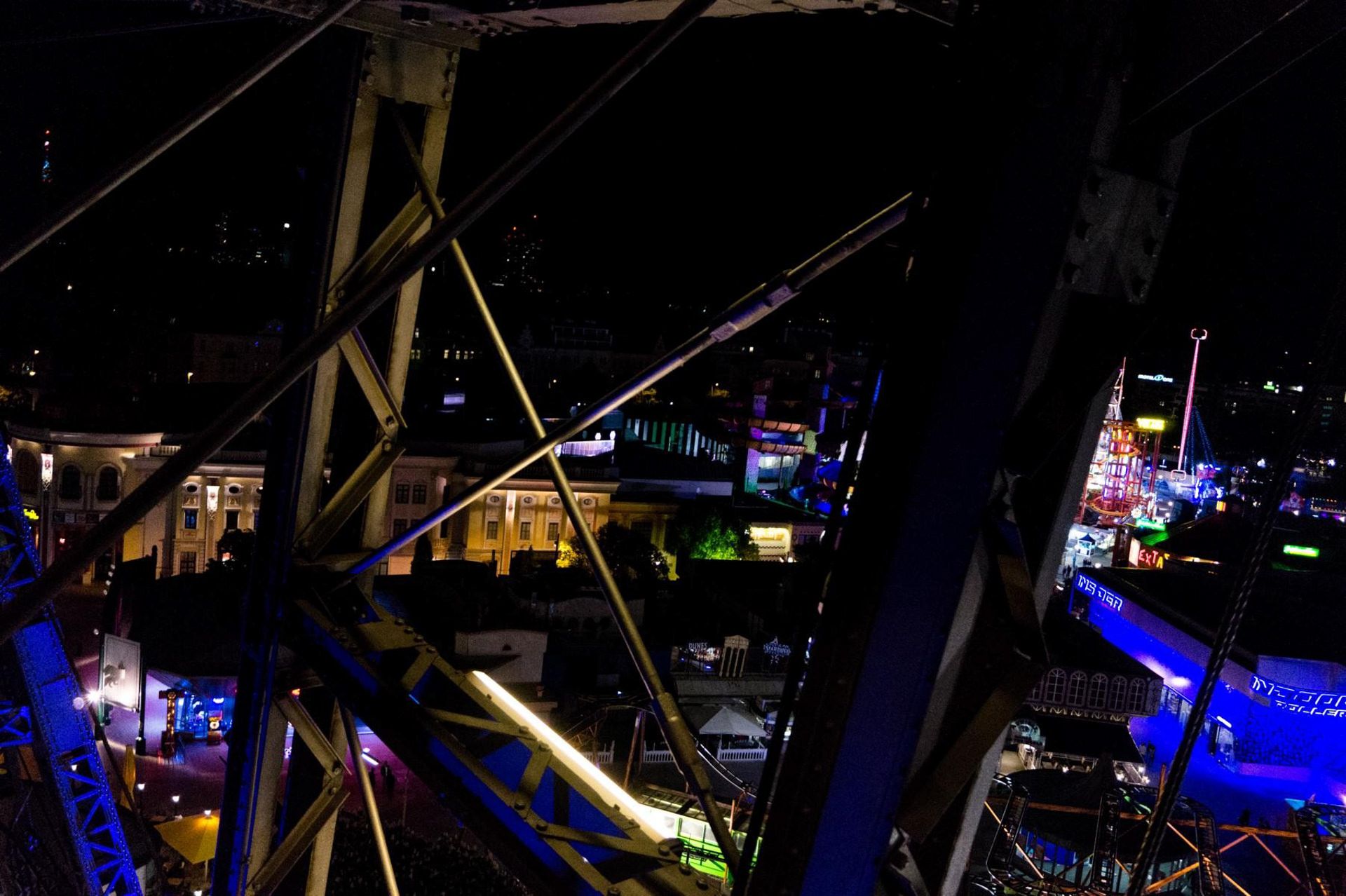
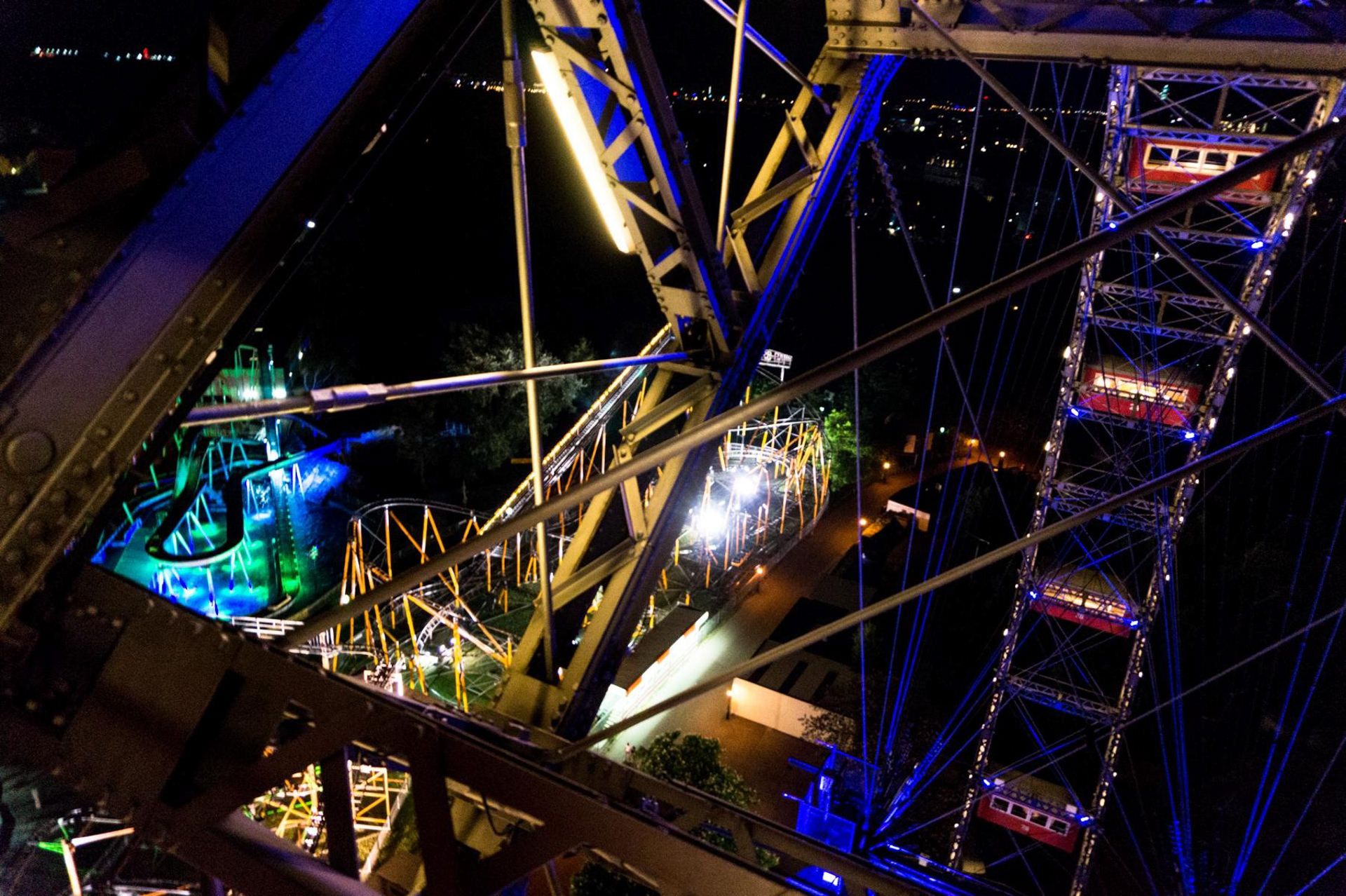
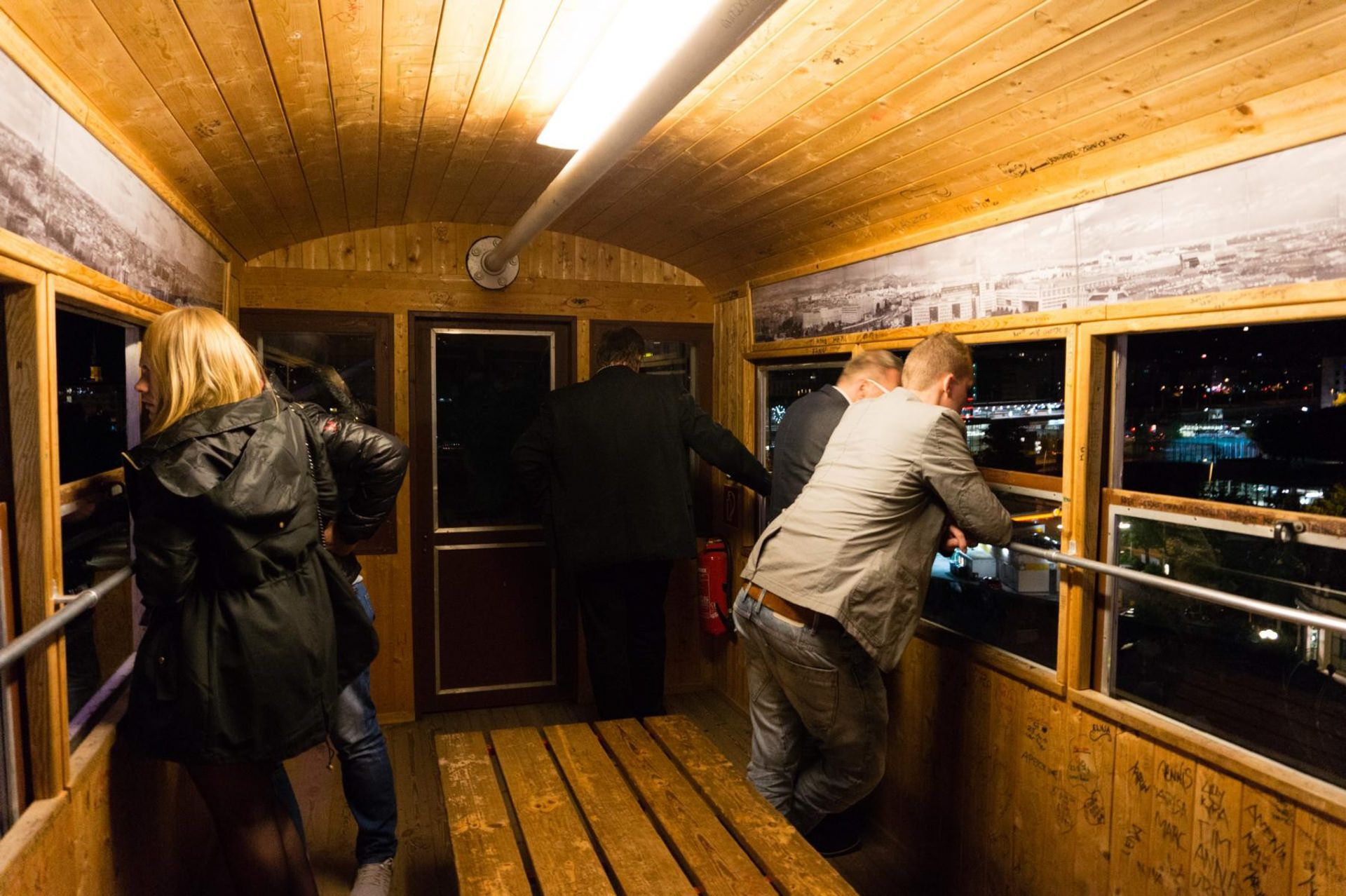
After paying the not exactly low entrance fee, we go to a small exhibition in which miniatures about the history of Vienna and the Prater are shown in reconstructed wagons. The mirrored walls are interesting, whereby the room seems to be endless. In the outer area of the complex, there is the stairway to the station. From here, one has a wonderful view to the framework structure of the Ferris wheel and to the engine of it. During the trip in the large capacity gondolas, one has a wonderful view to the wheel and the Prater itself, as also to the skyline of the city of Vienna.

Super 8er Bahn

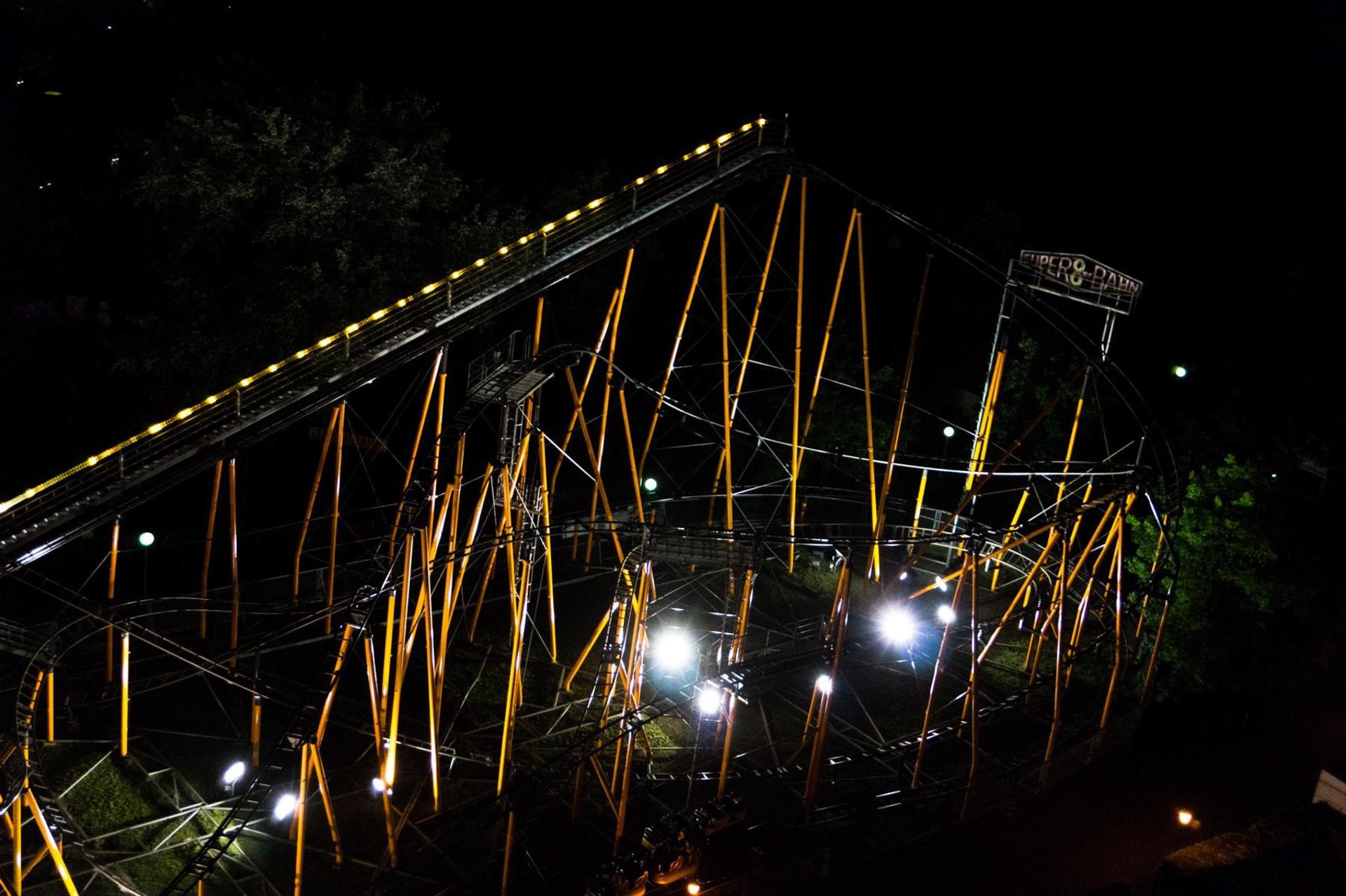
From the Ferris wheel you have a perfect view of the Aqua Gaudi white water ride, a new log flume from Reverchon, as well as the Prater’s largest roller coaster, the Super 8er Bahn, an FC80 built in 1997 by Pinfari.

After climbing the lifthill, the first descent is started uniformly, followed by an uphill turn to the left, whereupon our route remains somewhat airy. From here, we go downhill and uphill again at high speed for a short time, whereupon we pass a block brake. After another right-hand bend in Bavarian style the track goes steeply downhill. At full speed you now pass under the lift hill, which makes you realize very quickly why the catwalk at the lift was partly interrupted. After a small ascent, you immediately return to the ground in a downward helix. On a straight stretch you gain some height before turning left towards the ground. One turn later, you quickly pass a Bayernkurve just before the brakes start.

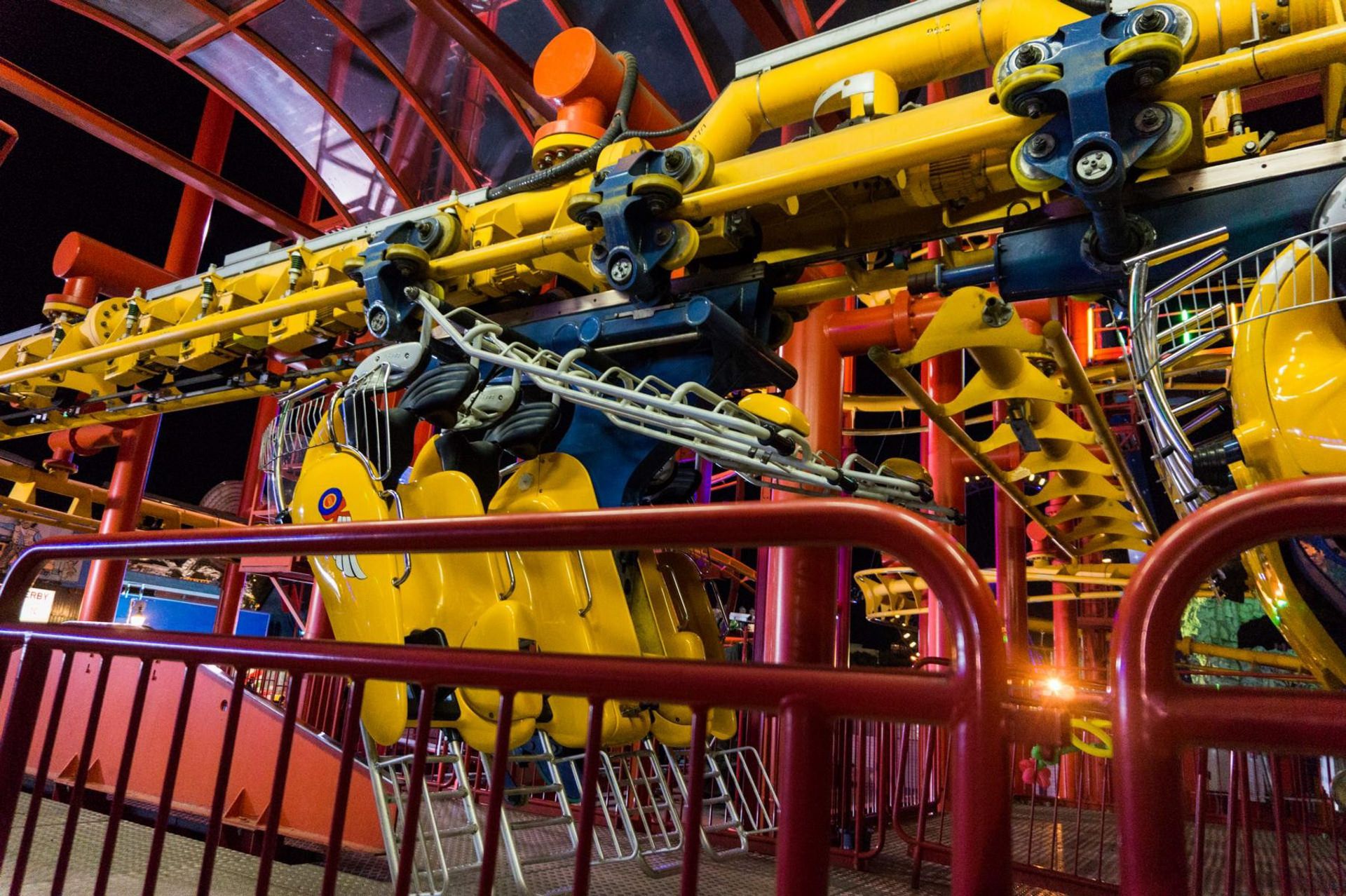
Fortunately, the Super 8 track does not have any cars with shoulder restraints, as they were often used on the manufacturer’s larger installations, hence the ride characteristics are quite good. Just like the Alpina train, which is a similarly compact layout, it has the urge to move its passengers a few centimetres back and forth in the car. In this respect, I don’t even want to imagine what an ordeal a ride in the RC70 must be, which has two loops in addition to the high speed and the compact design. Nevertheless, the Super 8er Bahn is a good roller coaster with a decent track length.

Dizzy Mouse

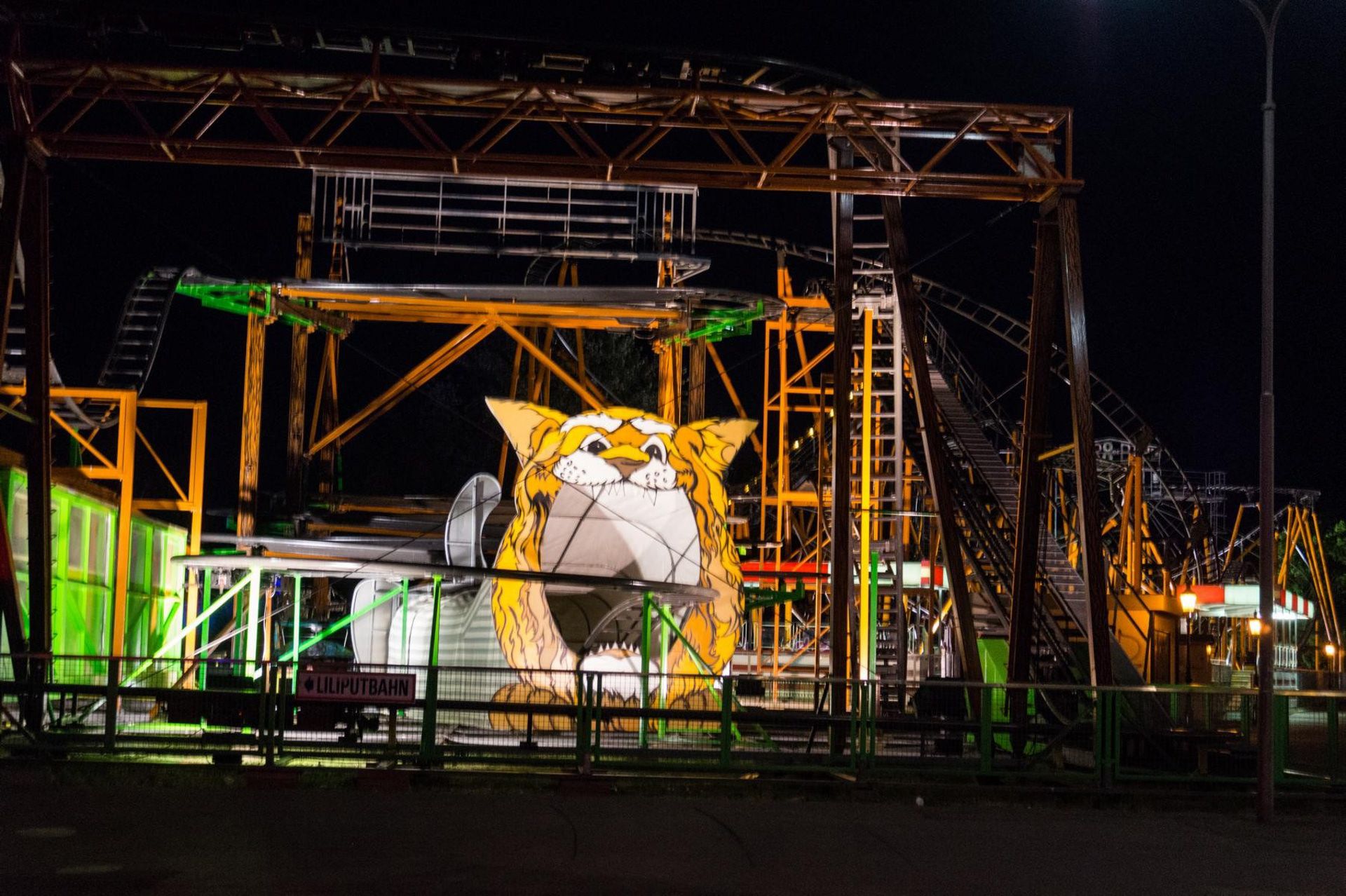
Belonging to the same operator, the Reverchon Spinning Coaster Dizzy Mouse is located in the immediate vicinity of the two larger rides and the Ferris wheel. In addition to the proven layout, the Reverchon Spinning Coaster Dizzy Mouse has a cat-shaped tunnel. As with all rides of this type, the rotation was quite present, although unfortunately somewhat expandable.

Insider

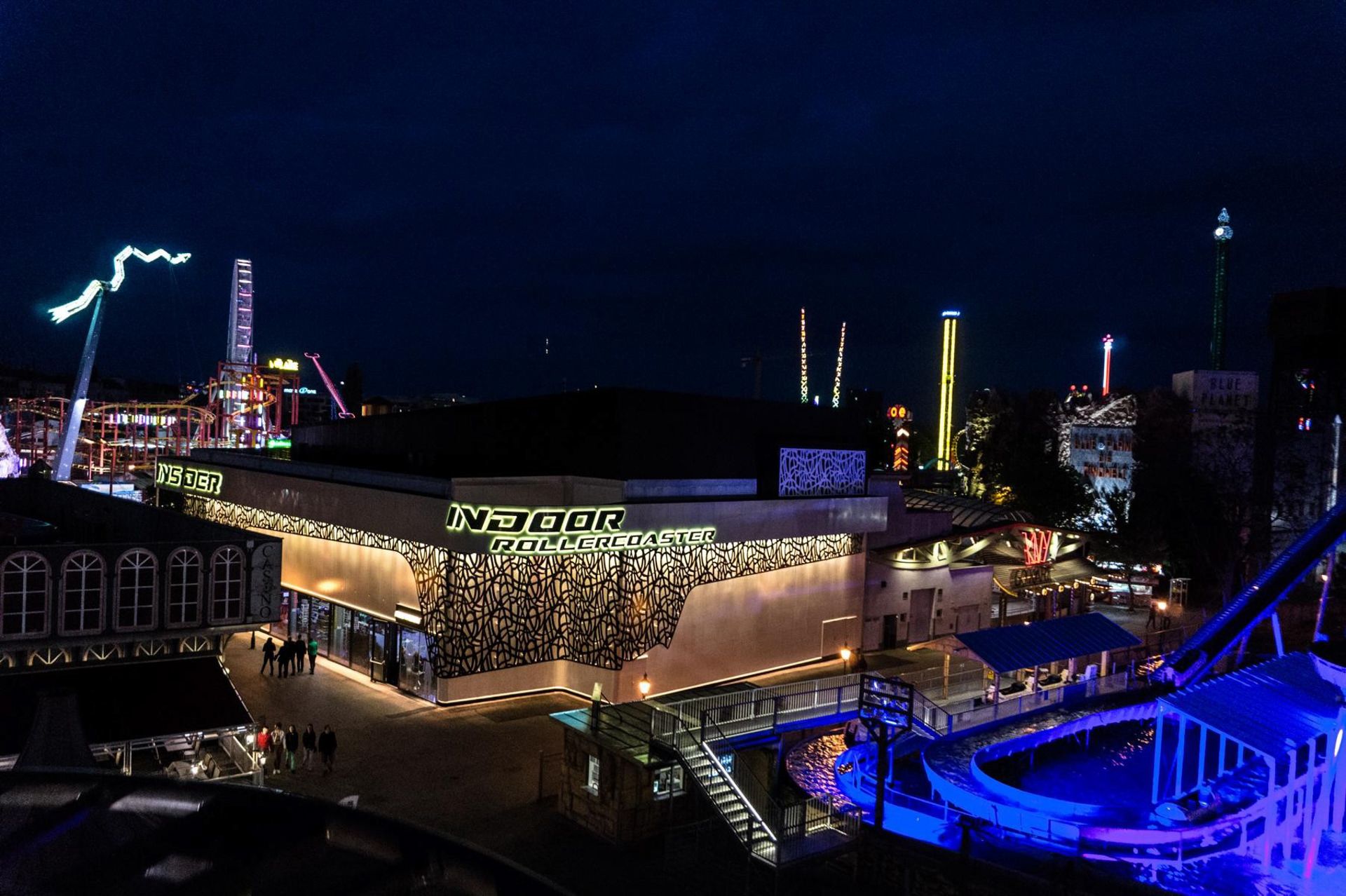
Interestingly enough, there is another spinning coaster in the immediate vicinity, but this time a Compact Spinning Coaster by Maurer Söhne. The layout of this roller coaster is often found as a copy in Chinese amusement parks, but also in Germany a layout was on tour as a spinning mouse in 2000. The one here in the Prater, however, came from the Japanese amusement park Tokyo Dome City. If you enter the Insider, you first have to find your way to the station, which here consists of a labyrinth and a laser game.

The layout of this roller coaster corresponds to the layout of a Wild Mouse from the same company, as you can find it here in the Prater with very good ride characteristics, only that the ride has a not such steep gradient. Due to the well lubricated cars, the first hairpin bend of this coaster will make you spin like never before on any spinning coaster. Combined with the music and the suitable background illuminations by lasers, the result is in the end a really successful ride, even if the entrance fee seems to be a little too high compared to the other installations in the Wiener Prater.

Maskerade

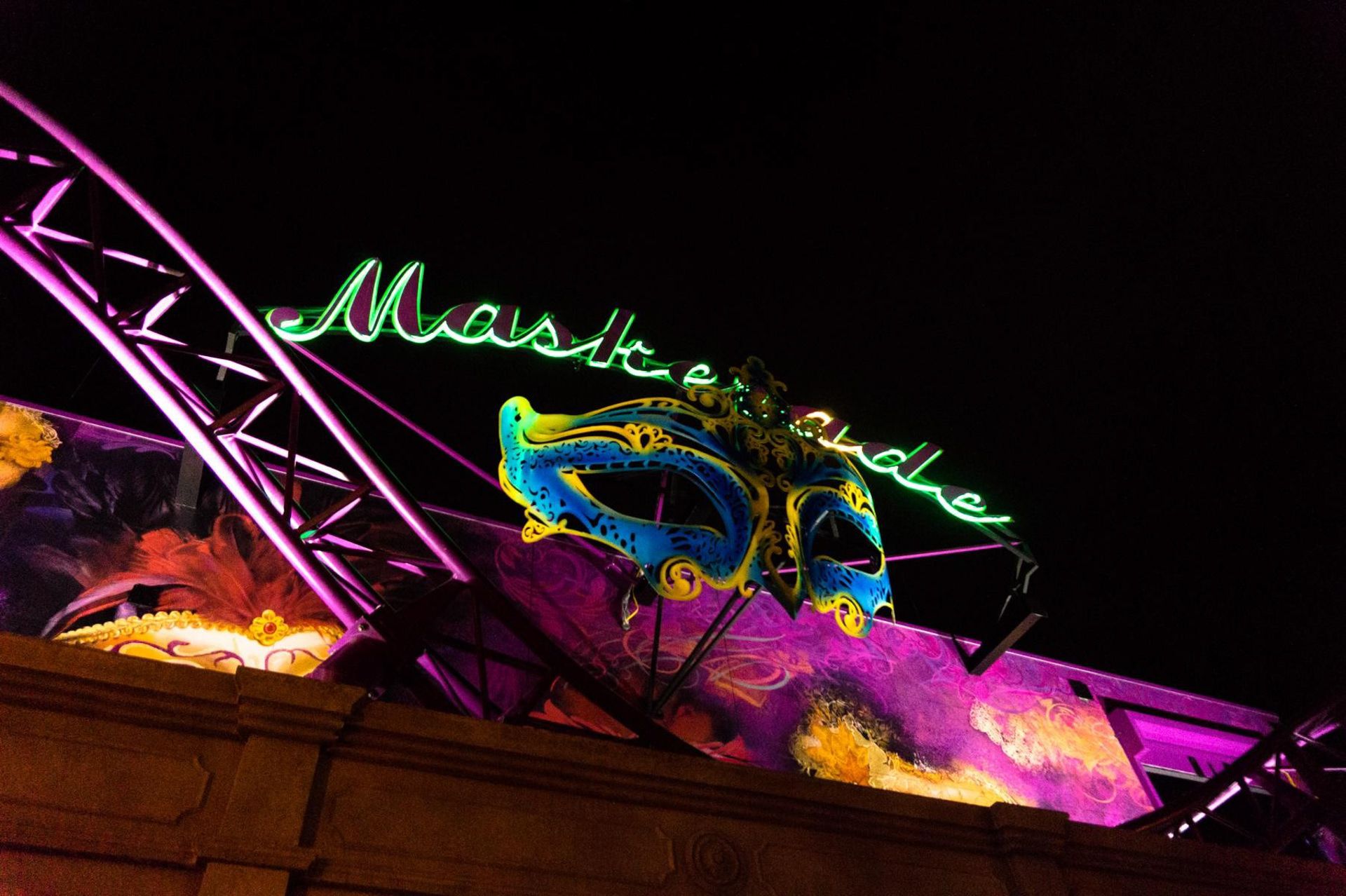
Since two spinning coasters are not enough, visitors can not only spin side by side and back to back sitting, but also with visual contact, as it is usual on a Gerstlauer Spinning Coaster. Maskerade is the name of the half-finished ride with vertical lift inside a hall. Besides this element, it can just about offer a drop with a trivial exit from the hall and a descending and ascending helix respectively.

Masquerade is scrap metal, nothing more than a waste of steel and therefore by far the worst installation ever built by Gerstlauer. Even with a bit of design in the interior, the ride would hardly be better, maybe just a bit more presentable; so the fare charged is just outrageous. As far as one does not need a ride, I recommend to avoid the installation and instead take a ride with the Prater Tower right in front of it, as there, the ascent alone takes as long as the whole ride on Maskerade and can offer a some added value with the view over Vienna.

Der Zug des Manitu

A special ride is Der Zug des Manitu from CAM Baby Kart, a small powered coaster, which first goes backwards for half a lap before the rest of the ride continues forwards. The track itself describes actually only two ovals laid over each other, but the responsible engineer must have had a good bend in the optics, because every supposed straight line turns out to be quite curvy. Due to the ride operator, the trip proved to be specially fun and hardly wanted to end. Thus, the best price-performance ratio at the Wiener Prater is definitely to be found here.

Volare

Often, the Wiener Prater is the first port of call for new concepts, mostly for flat rides, such as the prototypes of all Flying Coasters of the Italian manufacturer Zamperla called Volare. This type of roller coaster doesn’t have the best reputation among roller coaster lovers, but the ride still seems too tempting not to test.

The entrance is similar to a HUSS Fly Away, so you climb a ladder as far as you can, then lie on your belly, grab the handles in front of you and look straight ahead. When all passengers are in this position, the car moves forward and is closed by a mechanism, so you ride the roller coaster like the toppings on a sandwich. After a short straight line you turn into the spiral lift, where the car is picked up surprisingly gently. Very quickly the ride goes uphill, at the top you can enjoy the view and then there is a small downhill slope. With full momentum it goes now into a strongly banked hairpin bend where the passengers are shaken back and forth. A heart-line roll follows, where, due to the great game in the car, you take off strangely and land gently again. A hardly describable feeling, which is repeated one floor below in the other direction of travel. After another block you pass some gentle turns before you hit the brakes. Back at the station the car is opened from below and you can leave the car backwards.

Volare is a roller coaster that I really liked, except for the first hairpin bend. The smoothness of the cars was surprisingly pronounced for a Zamperla roller coaster; the ride feeling was ok, and because of the rolls, as well as the smoother turns in the course of the ride, it was somehow funny. If you think of Volare as a wild mouse among the Flying Coasters, the ride definitely has its reason for being and is by no means as bad as it is often said.

Tornado

Right next door is the Funtime Tornado, a thoroughly interesting ride, which attracts attention from far away due to its imposing structure. Suspended from the lightning are steel cables at the end of which a gondola has been attached. The strongly eccentrically designed lightning is now set in motion, the gondola starts to follow this movement due to its inertia and swings up some meters in altitude.  Even if this swinging movement is already quite interesting, there is still a motor at the gondola that makes it roll over as desired. Thereby, a rather funny way of riding is created, similar to the ride Rocket from the same company, only that in this case, the rollovers are not initiated laterally. It is really a pity that the Tornado was sometimes barely sold, as the ride is first class. The fare is, despite the low capacity, comparatively cheap and the total length of the ride consisted of two complete cycles.

Black Mamba

Another piece of jewellery from the Funtime company is the Chaos Pendulum Black Mamba, where simple shapes were obviously avoided as far as possible during construction. The curved arms are as striking as the construction of the boom. While the trajectory of the tornado still describes a simple 8, the driving sequence of the Black Mamba is less easy to describe. By turning the two arms, the driving sequence varies constantly between very intensive and quieter passages, so that a monotonous ride never occurs, as it often does on propellers from other manufacturers. Because of the fare, which is rather cheap, a ride is an absolute must; after all, there are not very many rides of this type and this motion sequence.

Extasy

The Extasy, an Energy Storm ride from the Italian manufacturer Soriani and Moser, is a little more monotonous. The ride is similar to a Tivoli Orbiter, except that the gondolas are not lifted up to the vertical, but even beyond it, which makes an overhead ride possible. In addition, the shoulder restraints make it a little bit variable, so that changes of direction and longer hanging phases can be realised. Everything is used properly, so that an exciting and varied ride is offered. Because of the noticeable lateral forces, which you actually only feel on the ground level, you can get a little nauseous. In addition to the rapid driving style, the ride is accompanied by suitable music and various light effects, so that here, there is always an outstanding atmosphere.

Boomerang

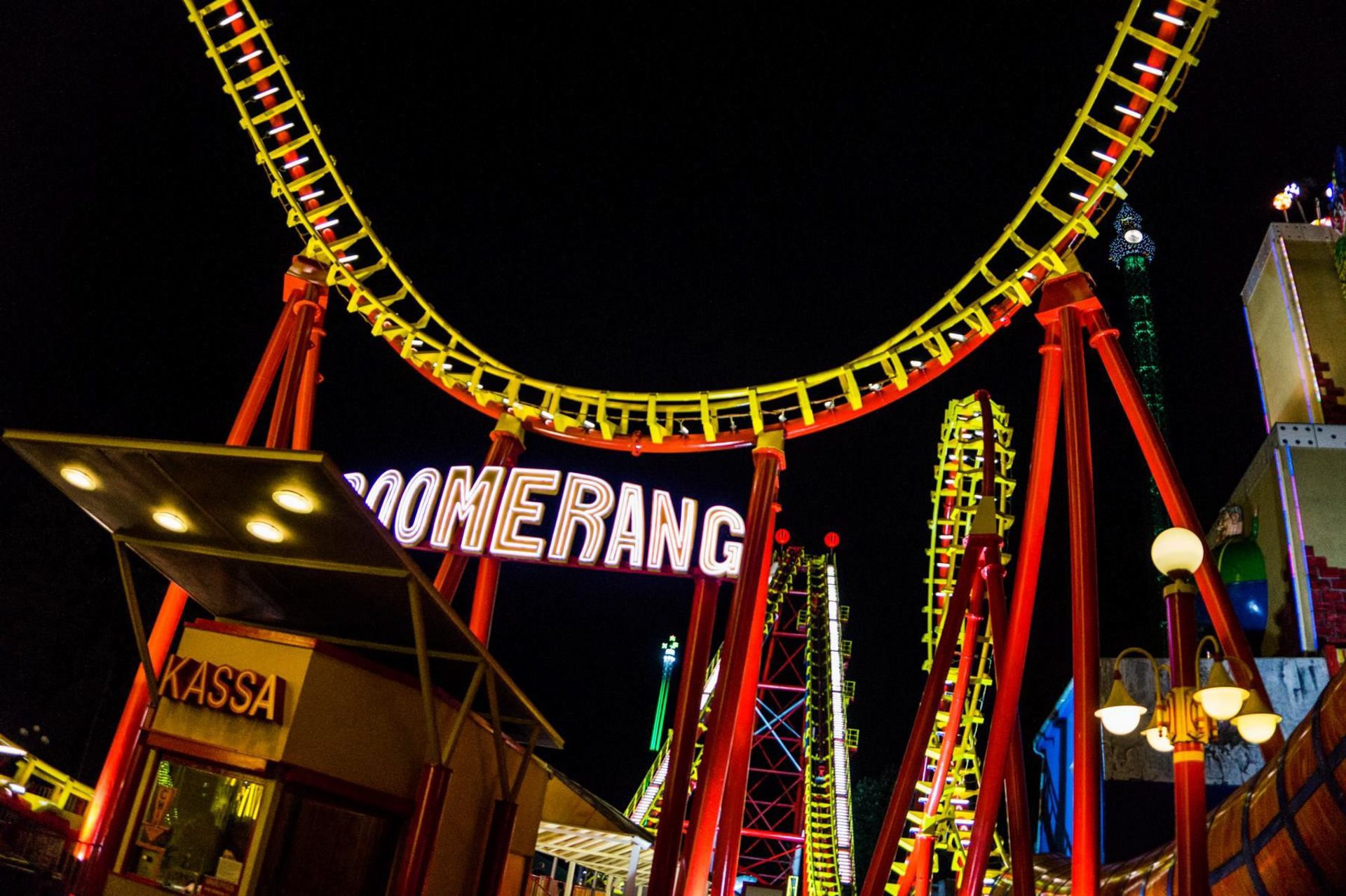
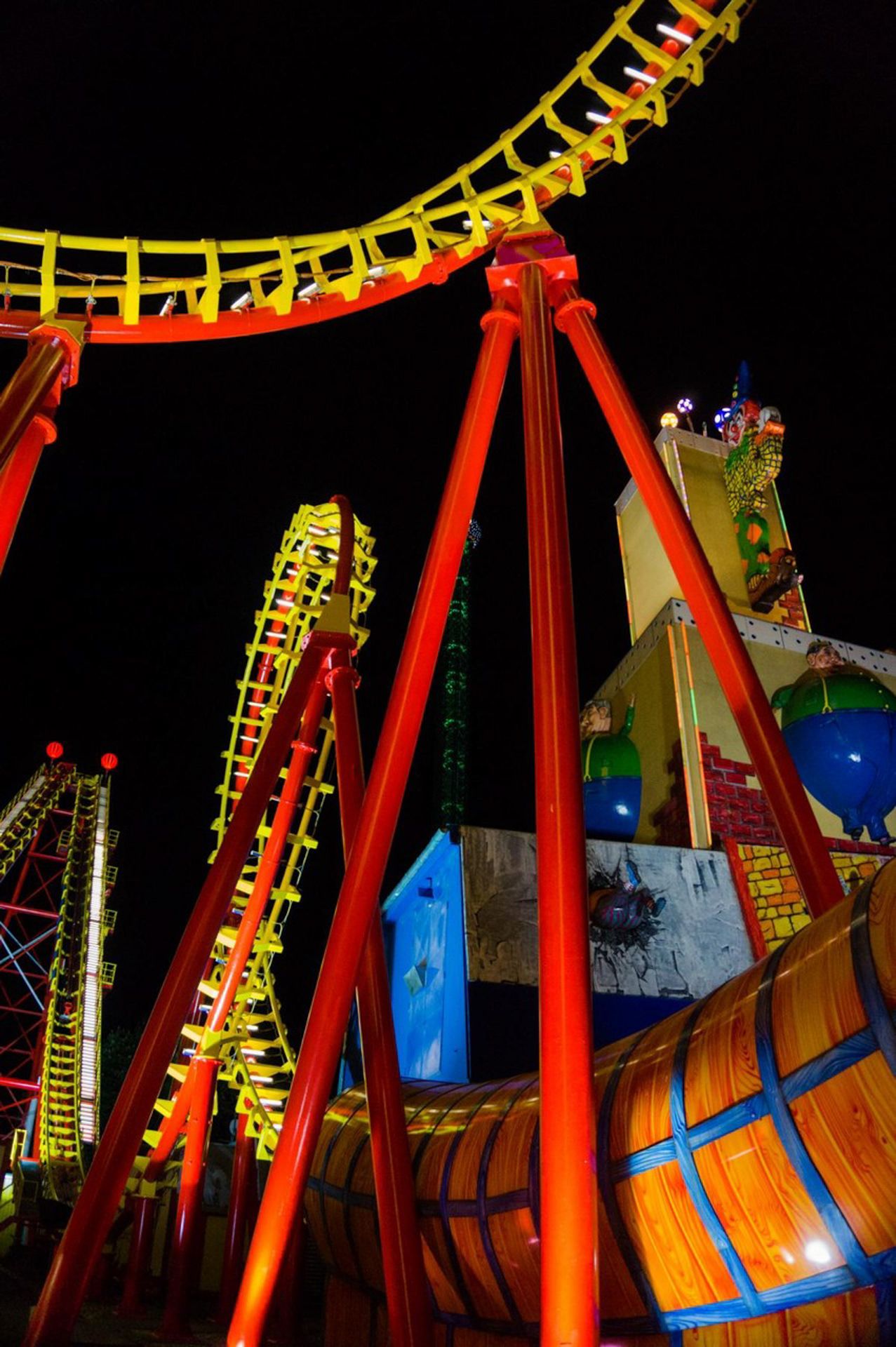
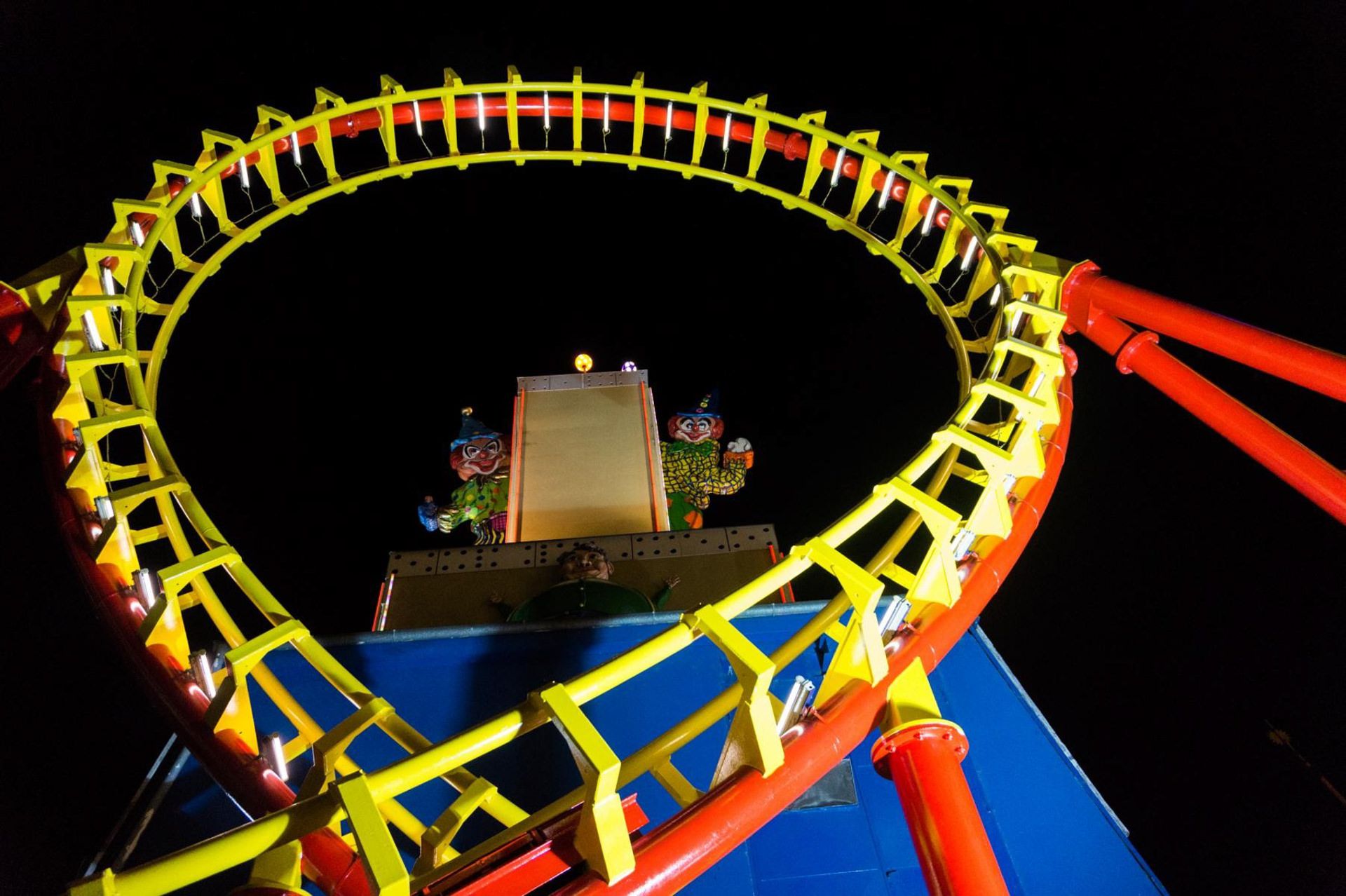
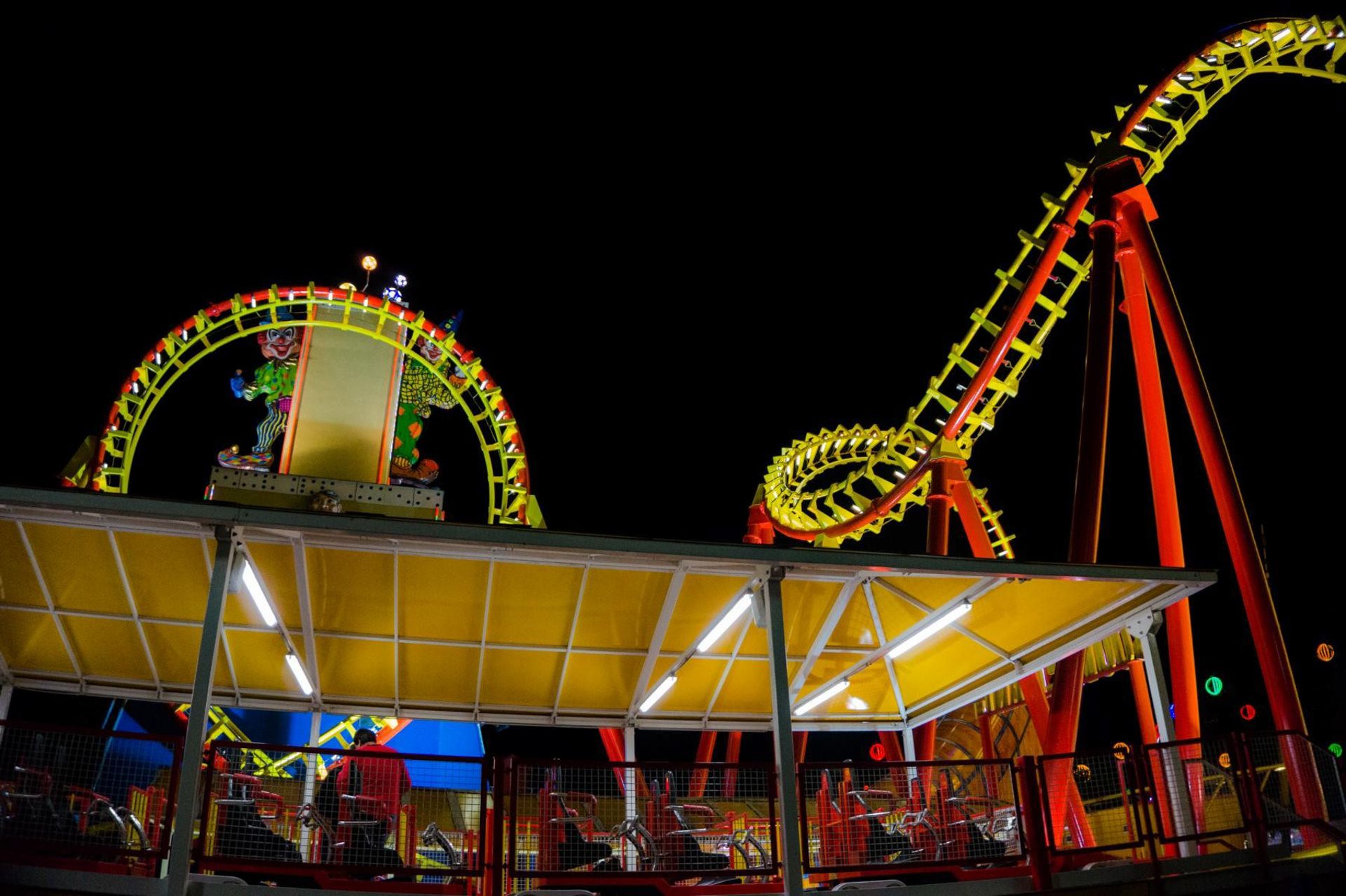
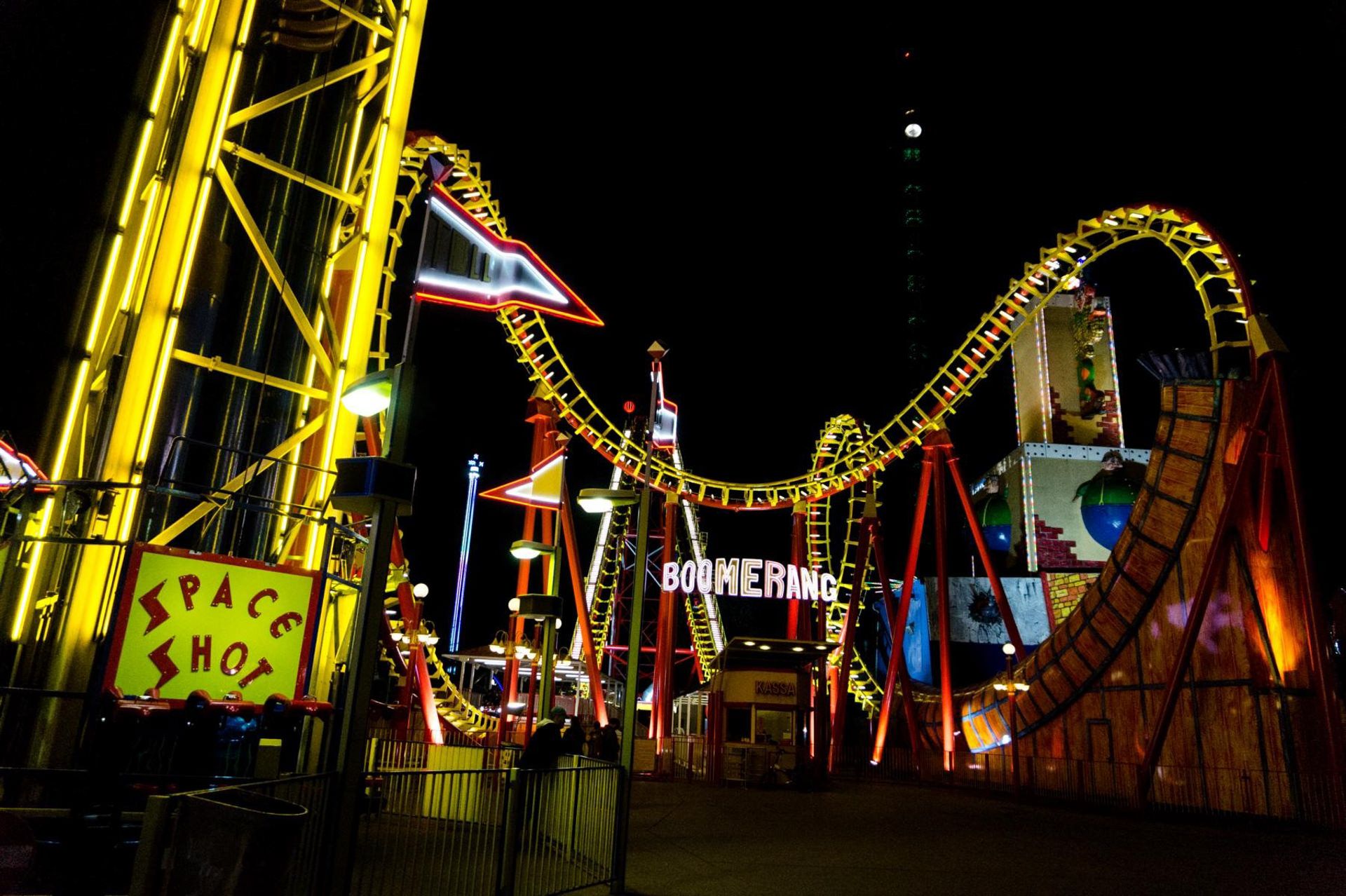
Friends of upside down rides without shoulder restraints will find what they are looking for at the Boomerang from Vekoma. In 2007 the old train, which now runs on the Speed Snake at Fort Fun Abenteuerland, was replaced by a much more open version of the SAT, resulting in a much freer riding experience. The comfort is also reflected in the entry and exit, which is still simple in contrast to the almost identical trains of the test track. The ride itself is extremely smooth and exciting due to the unusual freedom inside the Cobra Roll. A tunnel during the exit of the element or its re-entry completes the ride.

Megablitz

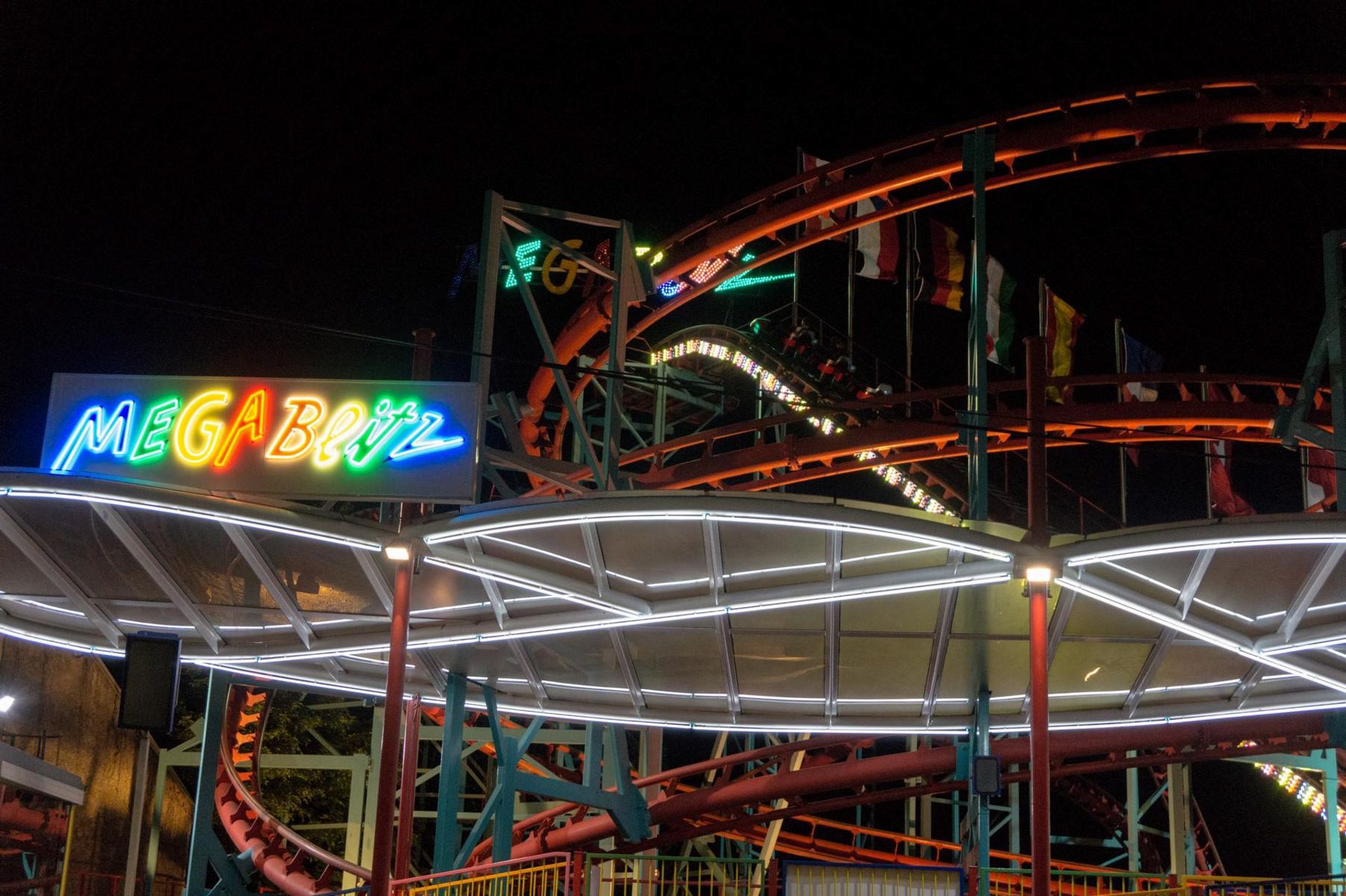
The Megablitz is another Vekoma installation in the Wiener Prater, one of the rare MK-700 installations, similar to Evolution from Bobbejaanland in Belgium and Halvar from Plopsa Coo. With its two-seater cars and the curvy layout the layout resembles a Jet Star from Schwarzkopf.

After a left-hand bend, the track immediately goes up the lifthill. At the top, you make a quick right turn at a lofty height before leaning slightly to the side, which leads to an almost straight and surprisingly steep descent. One now crosses the valley in a very powerful way, whereupon one quickly rises again towards the sky. Instead of taking a breather, you immediately get back into the bend and follow a steep downward helix until you reach ground level again. A change of direction now leads you upwards in a wide left turn and you pass a block brake. With a proper momentum the train now races in a steep curve towards the ground and follows the helix already completed in the opposite direction of travel to a higher level. On a slightly downhill straight, you pick up speed again just before you drive towards the final brake in a wide downward helix, which tapers further and further and changes into an upward helix after reaching the ground level. If you feel like doing another lap, you can simply sit down for a reduced price, the rest of the group gets out.

The Megablitz is definitely and without any objections the best roller coaster of the Wiener Prater. What Vekoma has designed here is an absolute fun machine without equal and one of the best coasters of the manufacturer. Although the ride’s footprint is not necessarily huge, the ride seems to be almost endless, which is further supported by the heavily used clearance gauge. The built up speed allows great forces with a good pressure within the curves and valleys of the layout. Accordingly, a ride is an absolute must here as well.

Miscellaneous

Although we were in Vienna for two days, we unfortunately did not manage to visit the Wiener Prater during daytime, whereby the Hochschaubahn, which we simply did not find in the first evening due to its hidden location a little aside from the actual hustle and bustle at the back of the roller coaster Maskerade, had closed. Also the children’s roller coaster The Race was closed, like most of the children’s rides already closed, as well as the Autobergbahn, which is not a roller coaster at best.

Pictures Wiener Prater

Conclusion Wiener Prater

The Wiener Prater is a really great park that partly resembles the amusement park Pleasure Beach Blackpool due to its narrow arrangement. The mix of old and new businesses and its design is as much charming as the English seaside park. Unfortunately, a visit to the Prater quickly costs a lot of money, although the fare of most of the rides is generally cheaper than on a German funfair, as there are much too many interesting attractions, among which there are still a lot of interesting walkthroughs, dark rides, ghost trains, bumper cars (pardon Autodrome) and go-kart tracks. It’s just an incredibly great mix, which you should let affect you more often.


What is your opinion about the Wiener Prater?  Just write it in the comment field below the report or visit our social media channels: