The Pulsing Waters of Walibi Belgium

Preface

It is rare that a concept where you always ask yourself how it actually works is put into action. It is even rarer if this is done by a park, which has already gained quite negative experiences. Well the Doppelmayr cable car coaster Vertigo, which was put into Walibi Belgium 9 years ago, is said to be quite fun on the few open days back in May of 2008; This was nevertheless a disaster on both sides. This time, however, the ride comes from the traditional roller coaster company Mack Rides. Therefore, the chances for another debacle were rather low with Pulsar. The Power Splash can be roughly described as a shuttle coaster, i.e. a roller coaster without a closed circuit, with a watering towards the end of the journey. What should go wrong, especially when the park knows a lot about shuttle roller coasters? Nothing!

Pulsar

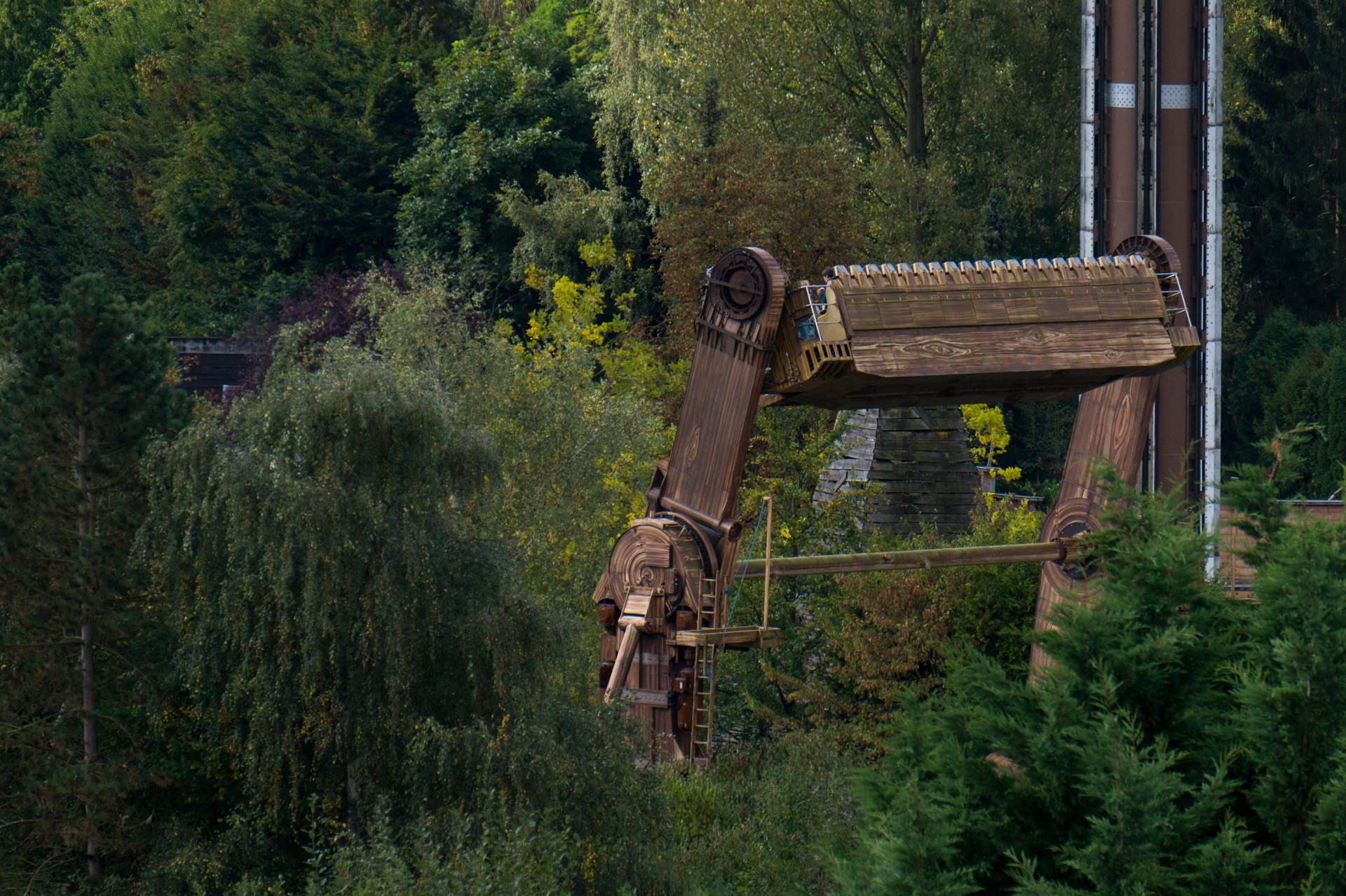
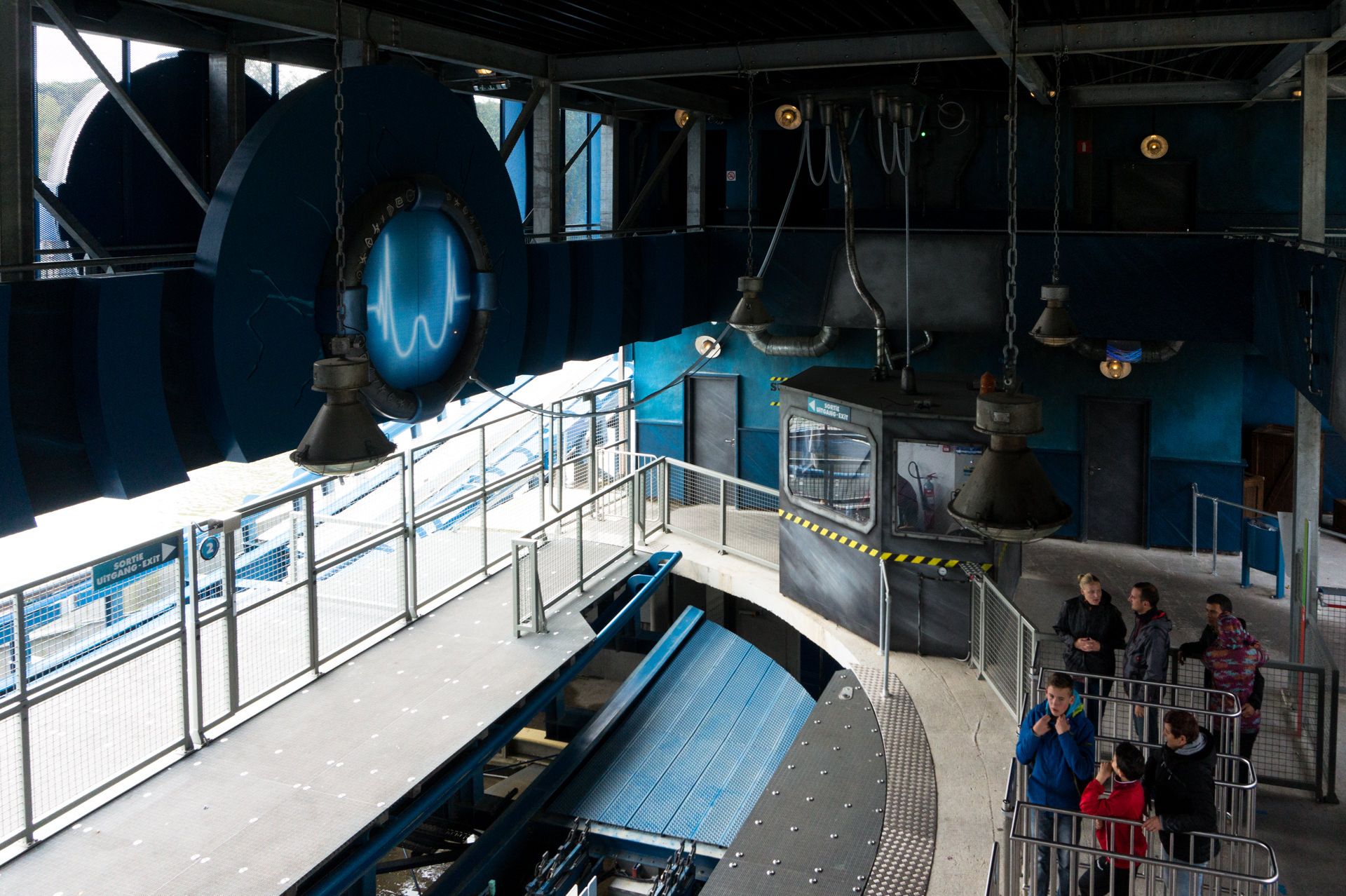
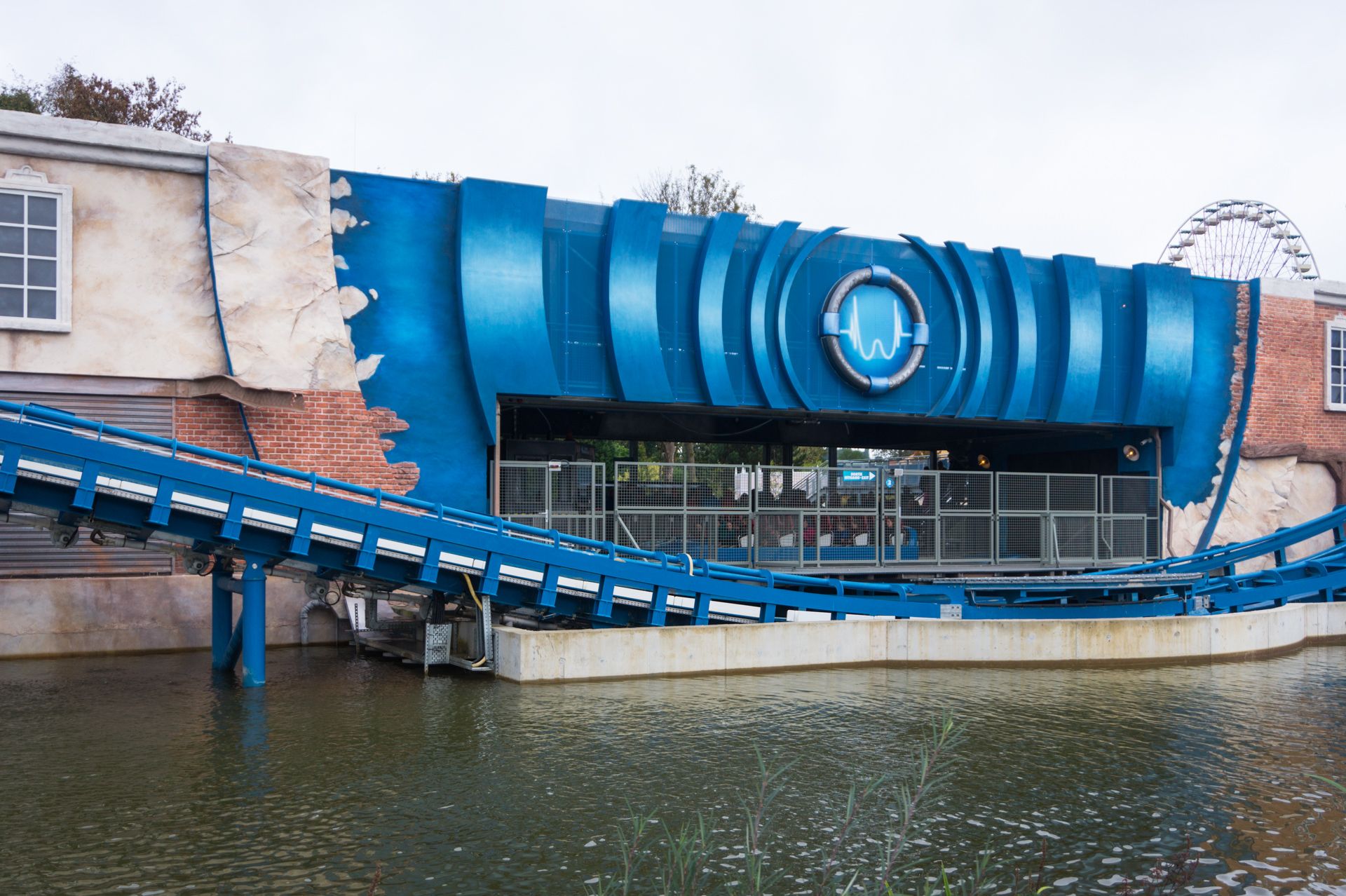
Thematically Pulsar represents a machine (in the form of a beating heart), whose destructive energy is derived via a roller coaster at regular intervals. The nice thing is that the visitors are the missing component to make all of that possible. The story plays in the same universe that was created to restructure Walibi Belgium in 2011; So no “F*ck Slow, #Hard Gaan”, as in the Dutch sister park. In general, the audience in Walibi Belgium is now very pleasant; but it may also be that unwanted crowds of visitors (I remember times when the cashier was regularly insulted as “fils de pute”) fail to comply with the additional security measures all around in Belgium.

After walking through the queue on the upper floor (or as a Single rider just a few meters till the turnstiles) you are already divided into one of the five rows. You store your luggage in the shelves on the right side of the station and wait for the next arriving boat. The boarding is done very quickly thanks to automatically closing lapbars, so that only a few moments pass before the 20-passenger boat – accompanied by the heartbeats of the machine – is rotated towards the actual track.

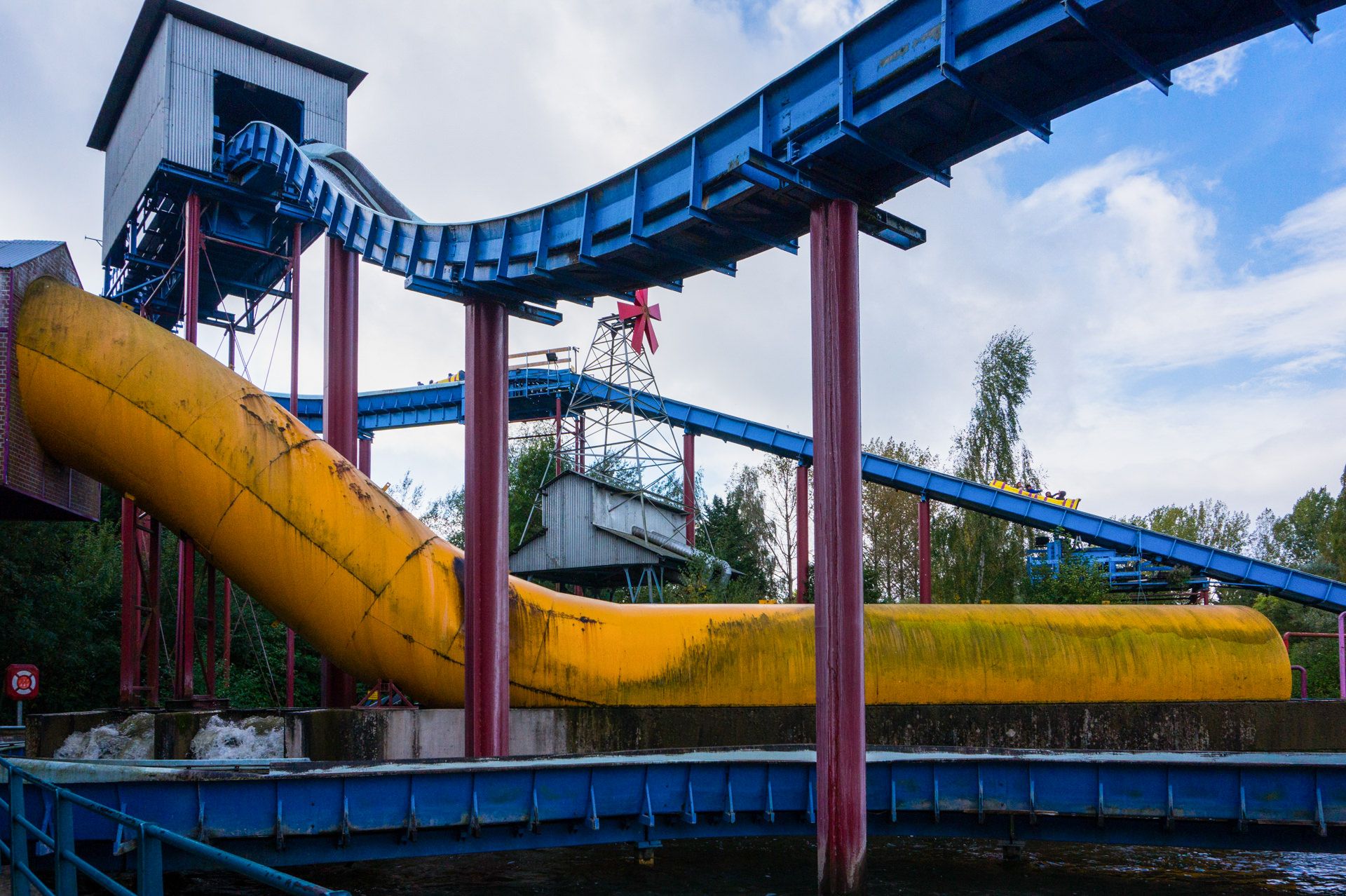
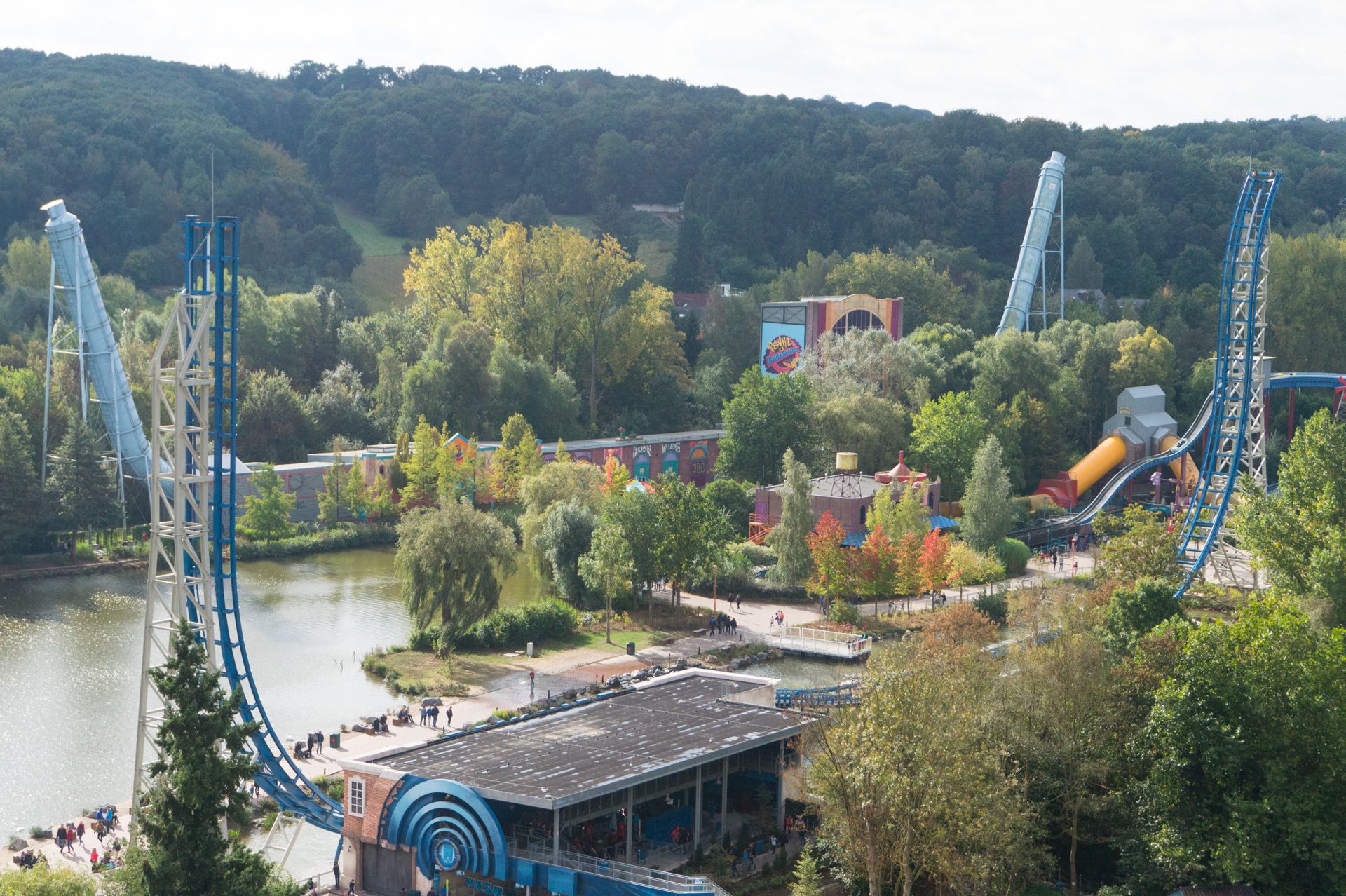
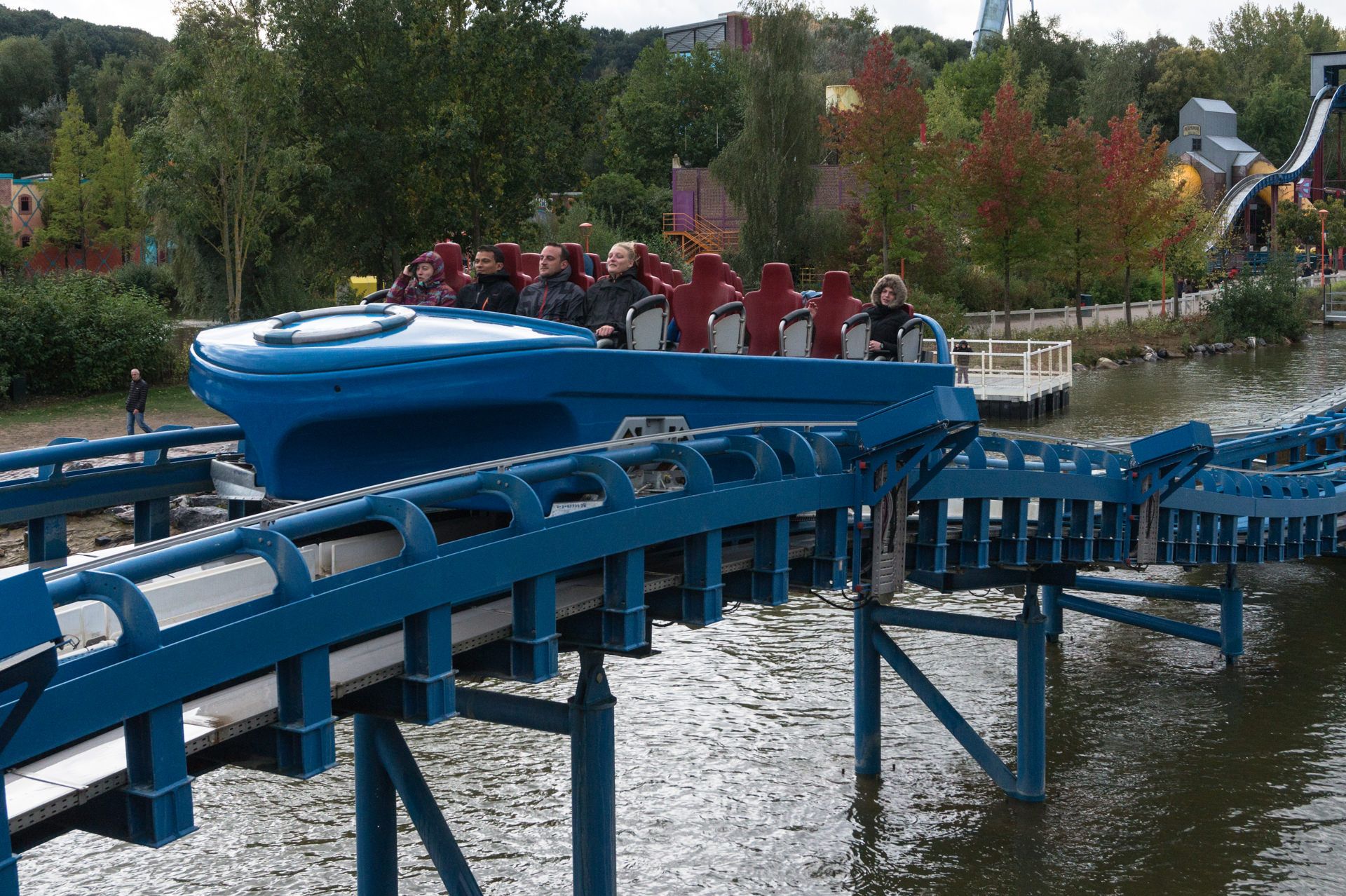
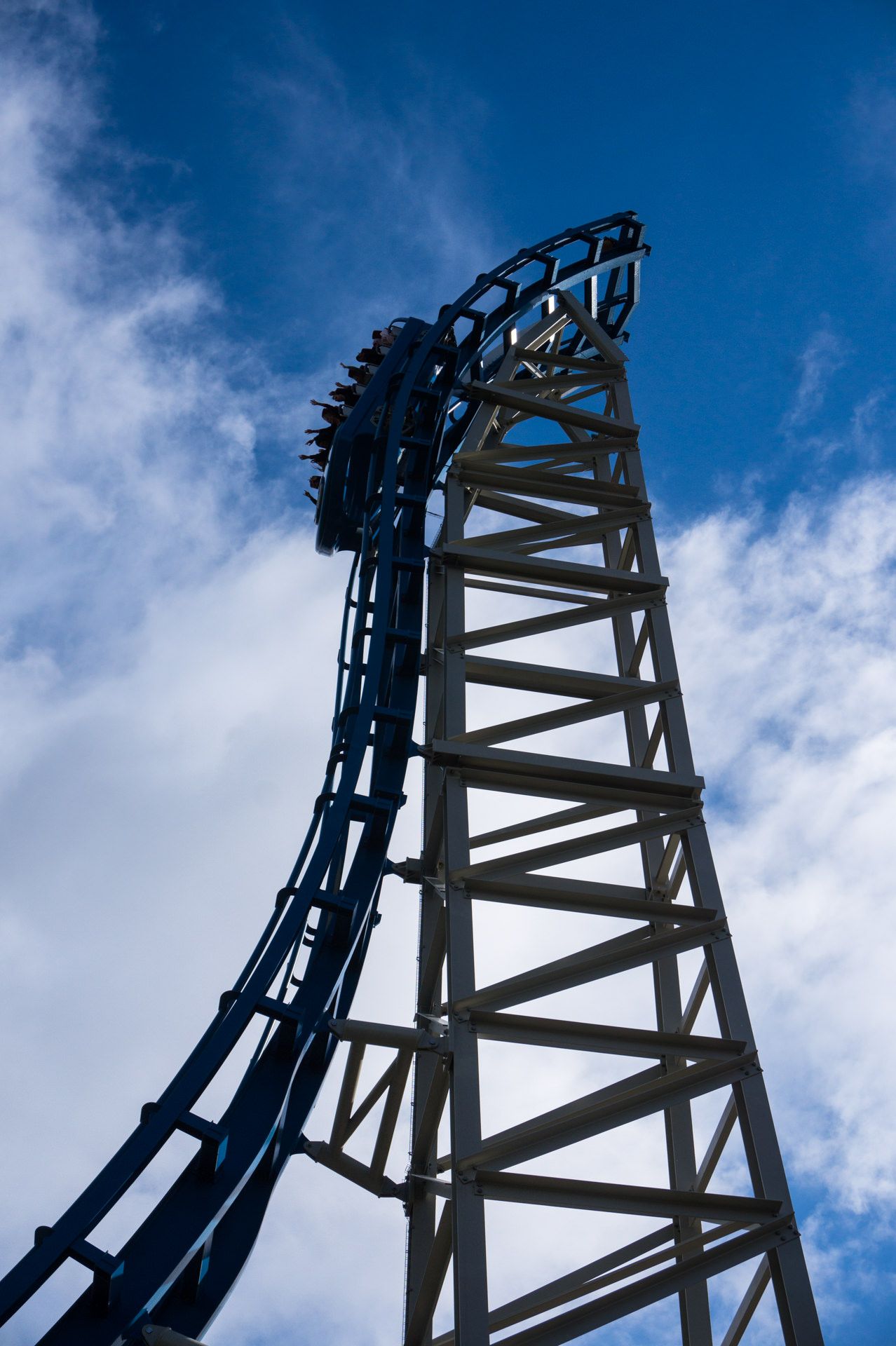
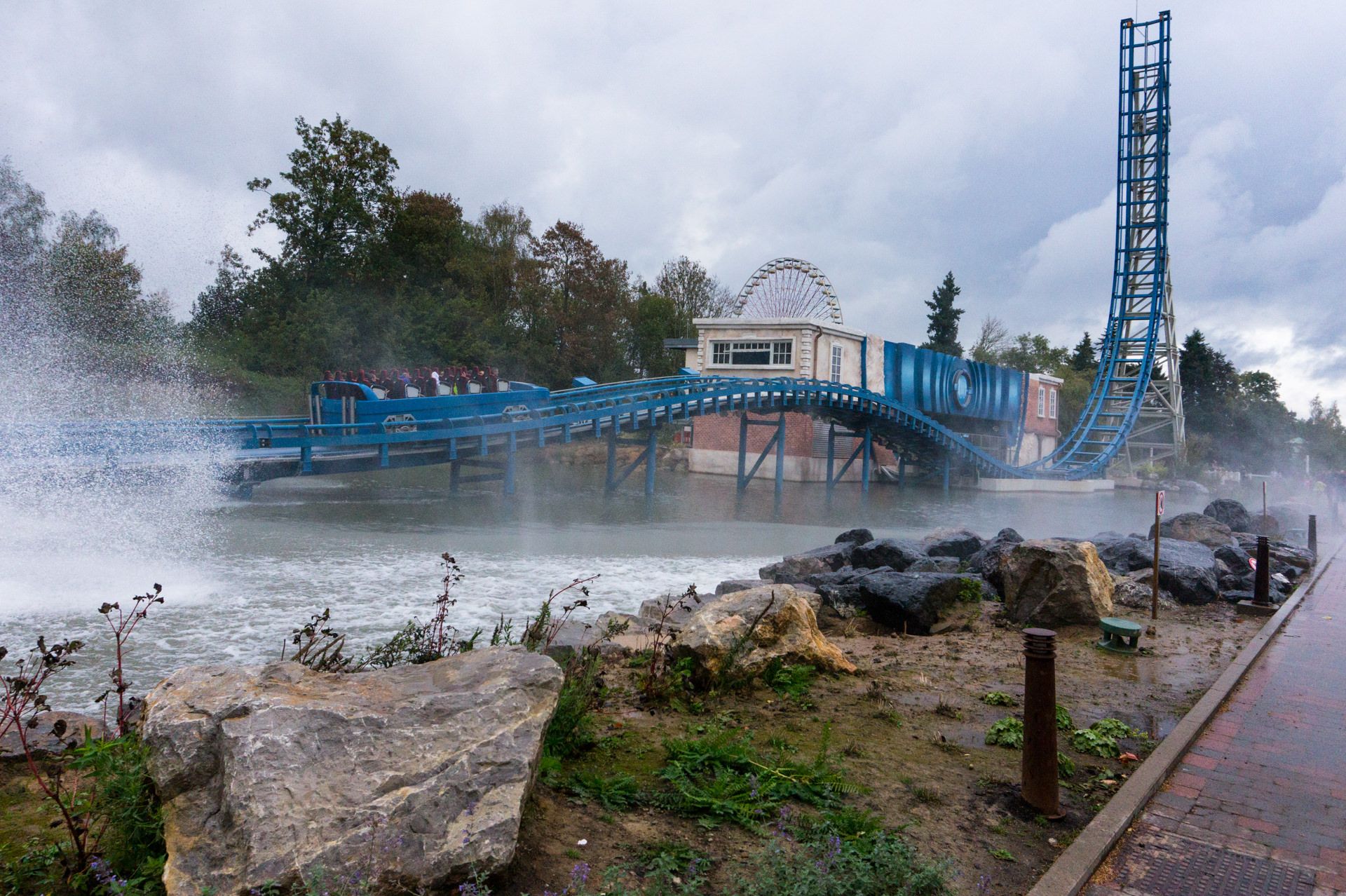
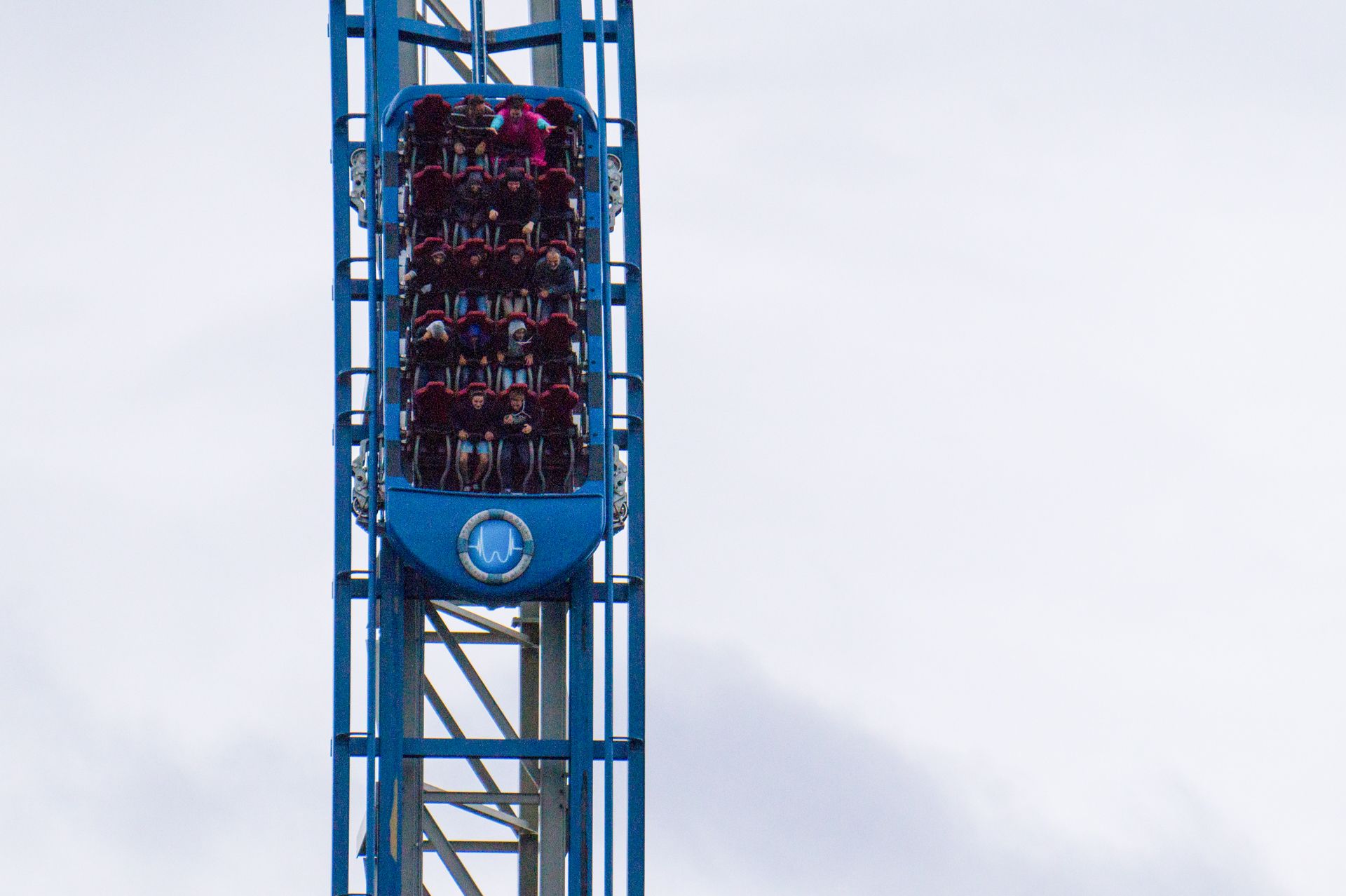
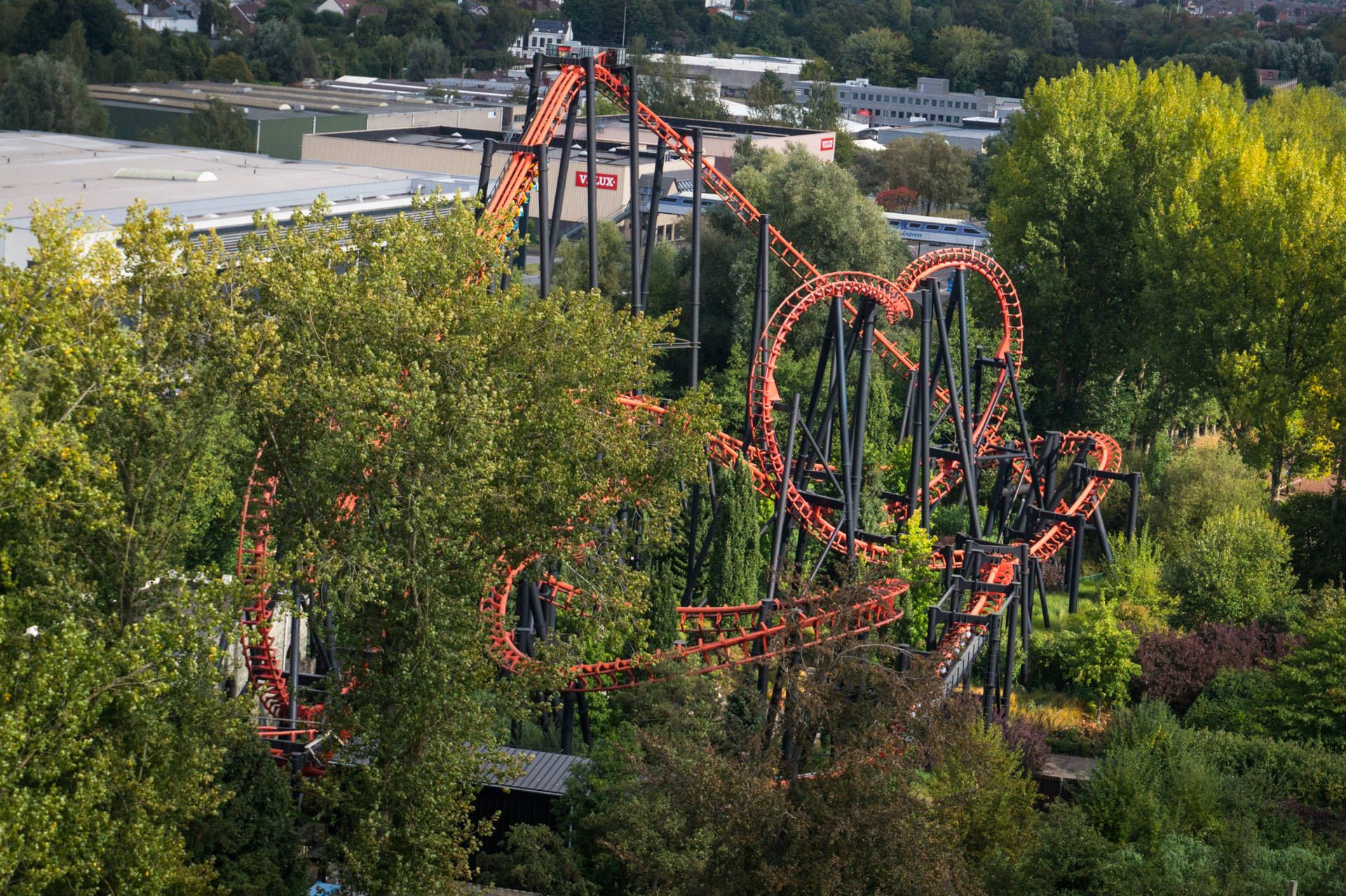
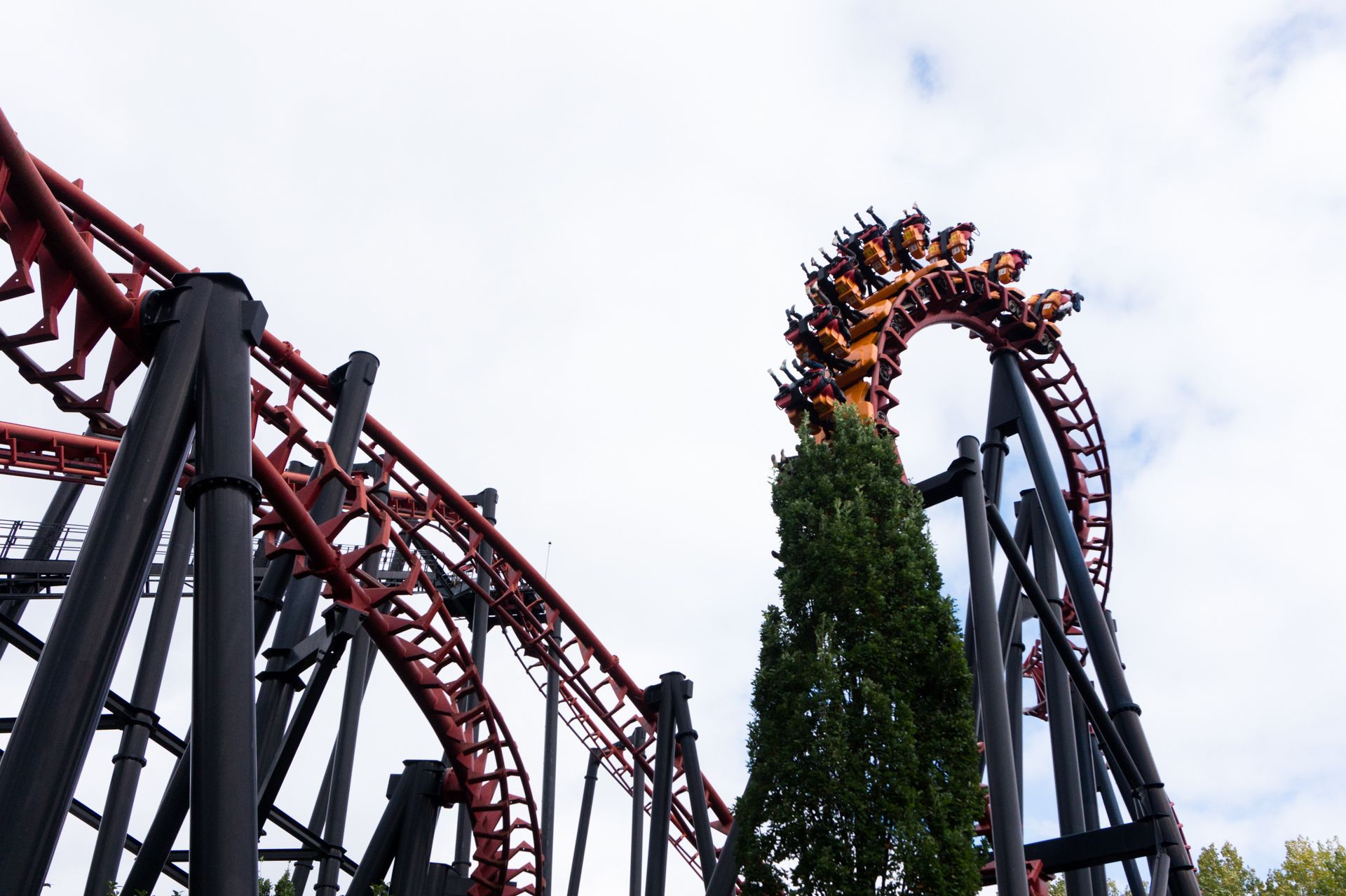
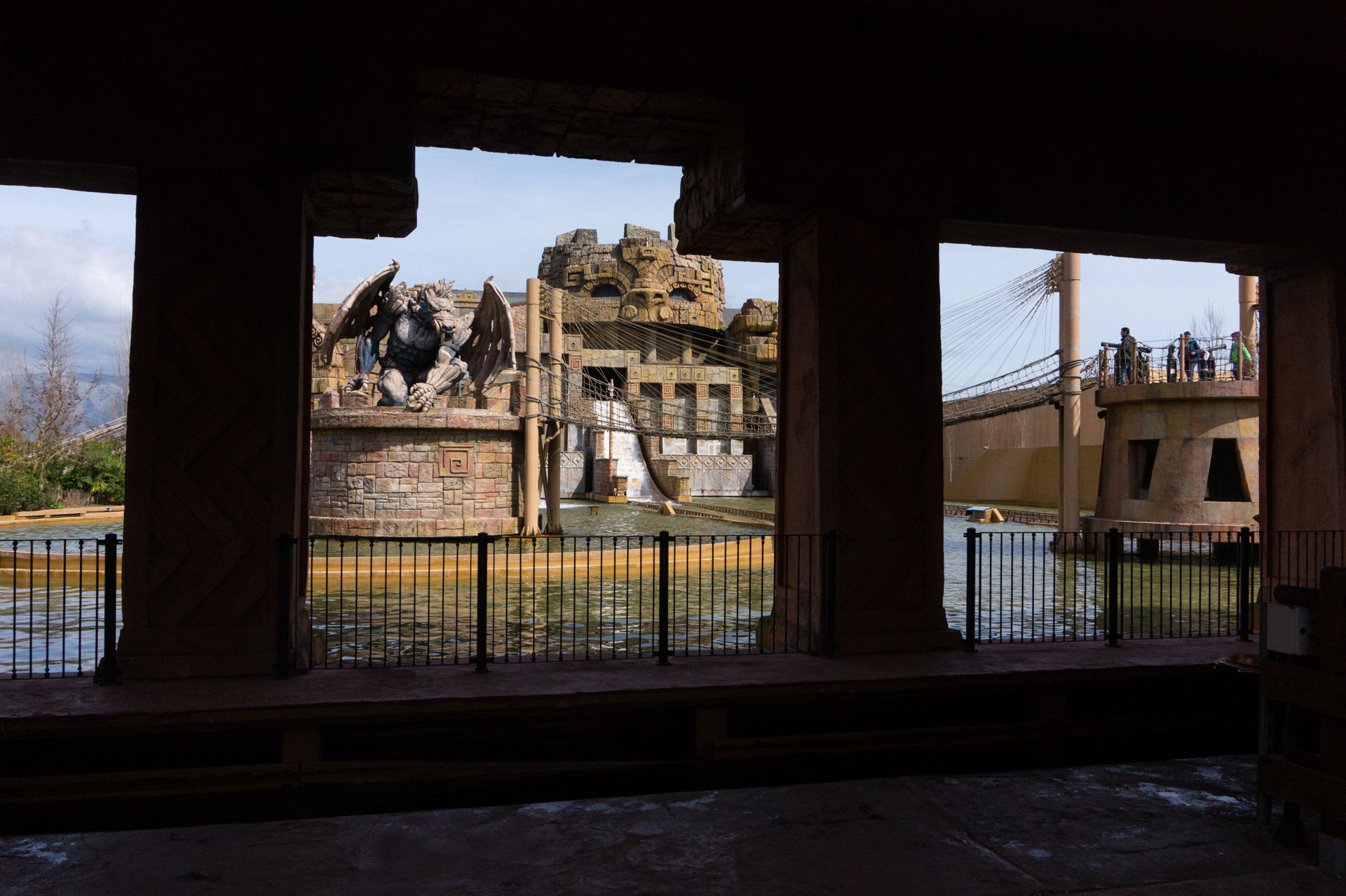
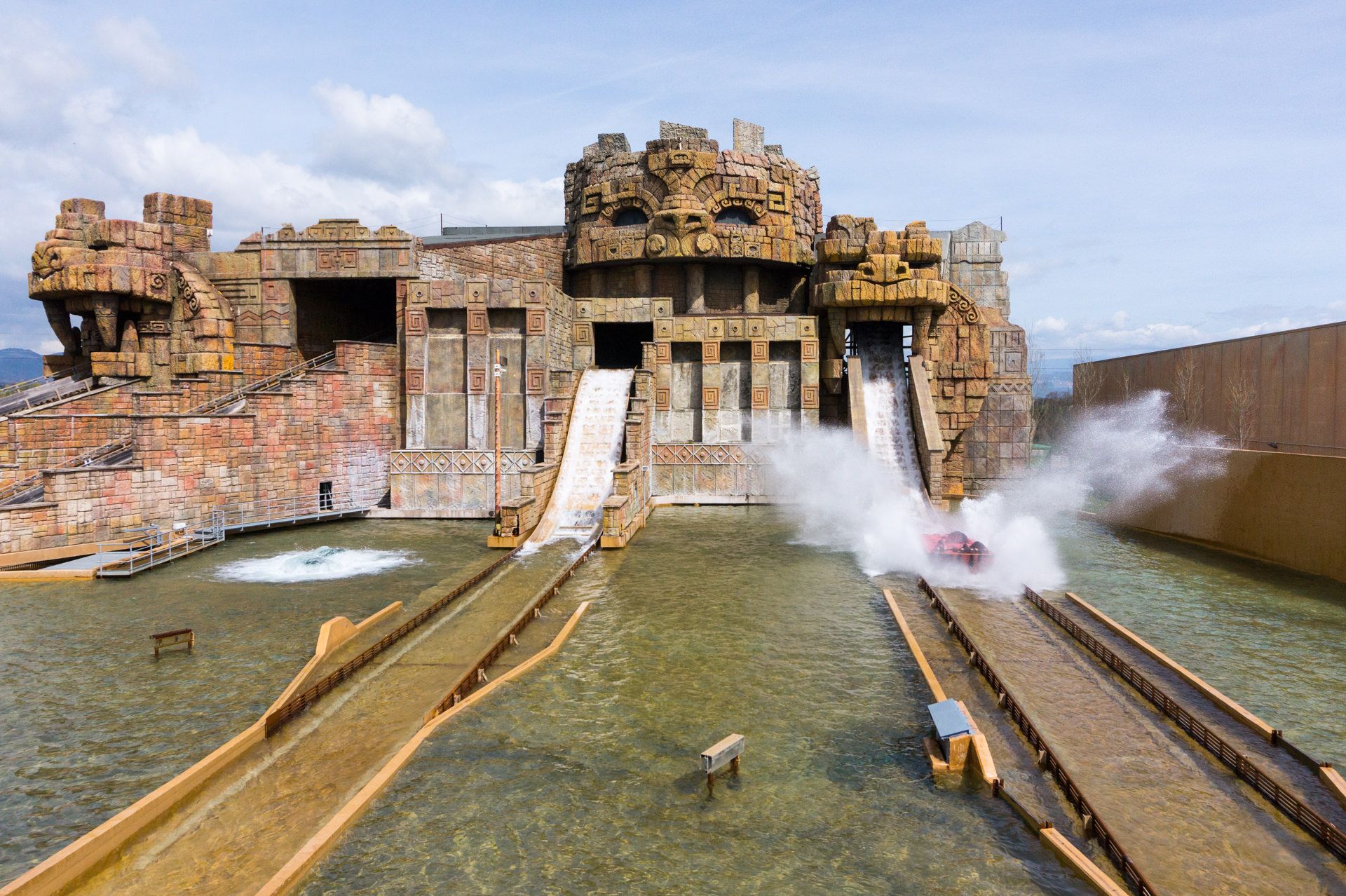
Once in position, the boat is immediately accelerated backwards over a hill. The initial scepticism about the (still) quite shallow acceleration is soon to be forgotten, as you fly over the hill. Now you pass the still unflooded water water basin and climb the vertical spike on the rear end of the ride about half of its height. At about the same speed, the return leads to the station, where you are now noticeably accelerated on the hill and neatly lifted from the seat. Now you climb the front spike of the ride up to its end. With noticeably fast speed, you cross the acceleration hill for a third time, which now tries to eject you from the ride. Back in the rear section of the ride, you climb the spike till its (slightly flattened) top. During this manoeuvre the water level in the basin is raised by 30 cm. In the meantime, the upcoming splash quickly moves back into the memory of the passengers, whereby the previously accumulated joy suddenly passes into a respectful panic. At 100 km/h, the boat now dives into the pool, which leads to a visually very impressive wave. However, this rewards the front rows of seats only with a little mist, while it can thoroughly soak the rear of the boat. Shortly thereafter you pass the hill for the last time and are slowed down to walking pace, whereupon you stop in the next valley. The turntable then turns you back to the station and the bar opens.

Pulsar is an all-round successful attraction, where you always like to get on again. The ride is just terrific and can absolutely convince just by its unusual acceleration phases over the hill. The watering is optically more impressive than it is while riding; However, it is definitely scary! Especially if you suddenly get soaked after the first rather dry ride. Hopefully more copies of this truly enhanced water ride will follow.

Pictures

Closing Words

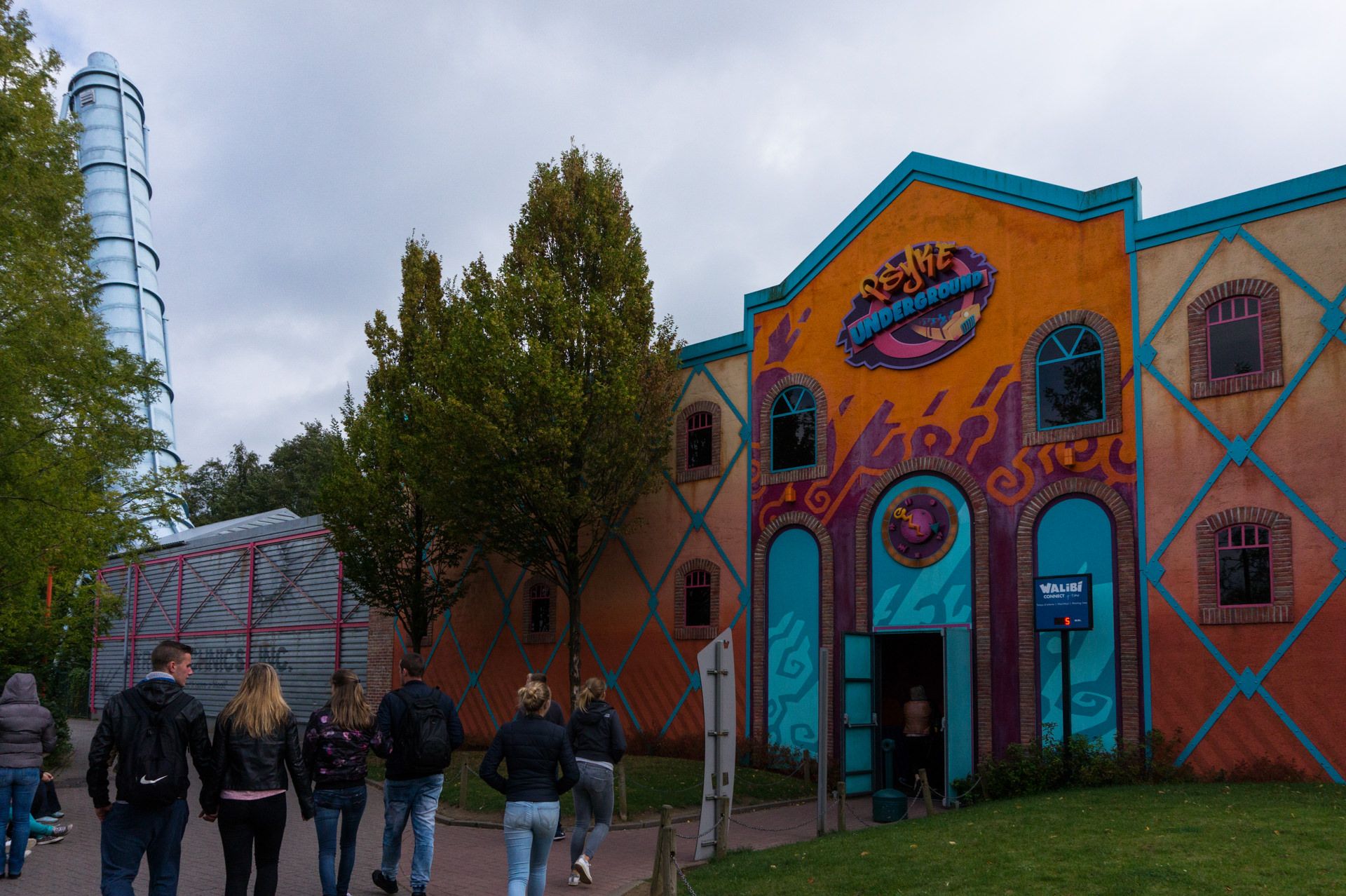
Due to the location within Walibi Belgium, the paths in the park are now slightly optimised so that you can commute on the fastest routes between the main attractions Flashback, Psyké Underground, Pulsar and Loup Garou. Interestingly, the probability to suddenly meet an old friend of yours in the park is reduced. However, whilst waiting for another round on Pulsar I suddenly got a call from my friend David. He was in a group waiting in the normal queue and I just got on as a Single Rider. After the ride, I finally realised him in the queue, so I took another round via the single rider to actually sit with him in the same row. My plans to leave Walibi for another visit of Plopsa Coo or Plopsa Indoor Hasselt were discarded. The times to leave Walibi Belgium early are now a thing of the past. Thanks Pulsar!


What is your opinion about the Mack Rides Power Splash Pulsar?  Just write it in the comment field below the report or visit our social media channels:


Full speed ahead on Karacho

Preface

Erlebnispark Tripsdrill is not a good theme park. Although my reports always reflect a very differentiated and well-considered opinion, it makes sense for once to anticipate a judgement and play with open cards. I don’t like this park and I will probably never like it. The fact that I visited the park for a second time after 2009 was only because of the rather new launch coaster Karacho and even for this one I would never want to visit the park again, but more about that later. In general, the Erlebnispark Tripsdrill is overpriced, has an inferior gastronomy and demands a small contribution at every corner to be able to use the full offer. The wildlife park that belongs to the park is, as also the parking, included in the entrance fee, but is probably not really visited by many visitors; after all, the only reasonable connection to it is your own car.

History of the Theme Park

It all began in 1929 with the construction of the Altweibermühle zu Tripsdrill. Eugen Fischer, the owner of an inn in Treffentrill, took the idea of building the Weibermühle von Tripsdrill from the singspiel by Georg Anton Bredelin after some hikers in the region had explicitly asked for the mill. The allegedly rejuvenating cure of the wild slide was soon on everyone’s lips and thus Tripsdrill steadily developed into a popular excursion destination in the region. In 1957 the first zoo in the immediate vicinity of the mill followed and from the 1960s on the first rides.

Tour of the park
The rides of the front area

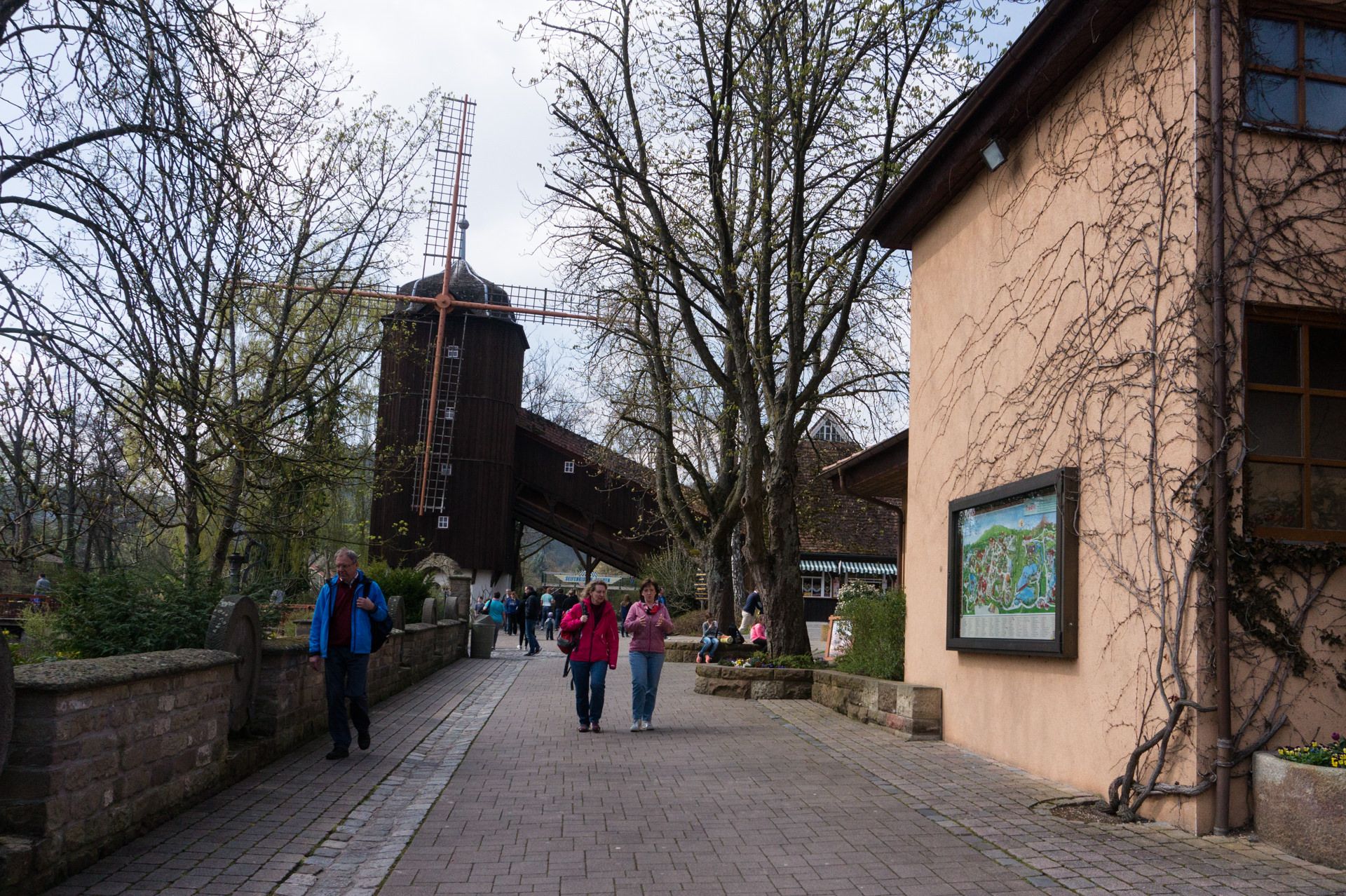
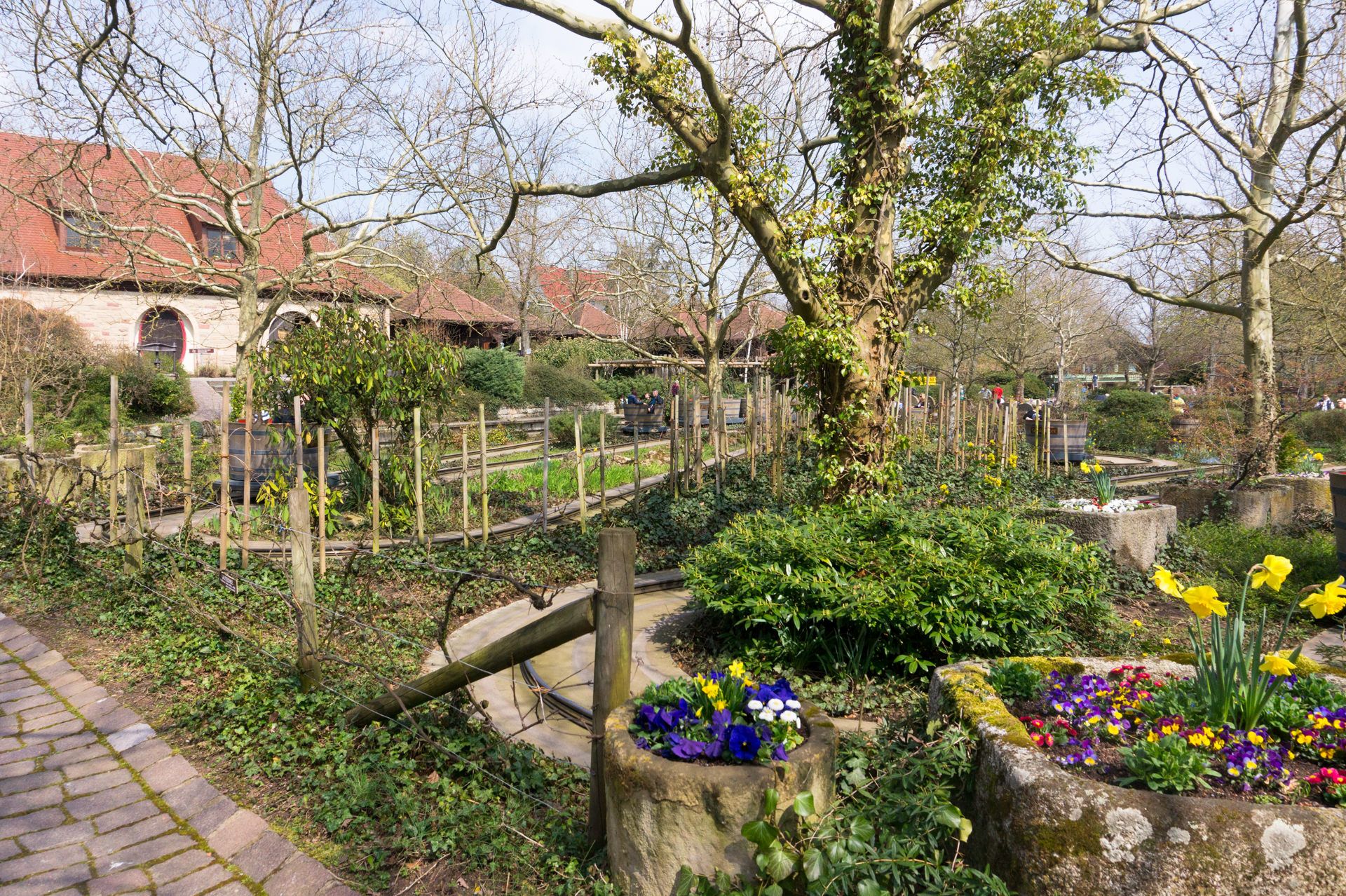
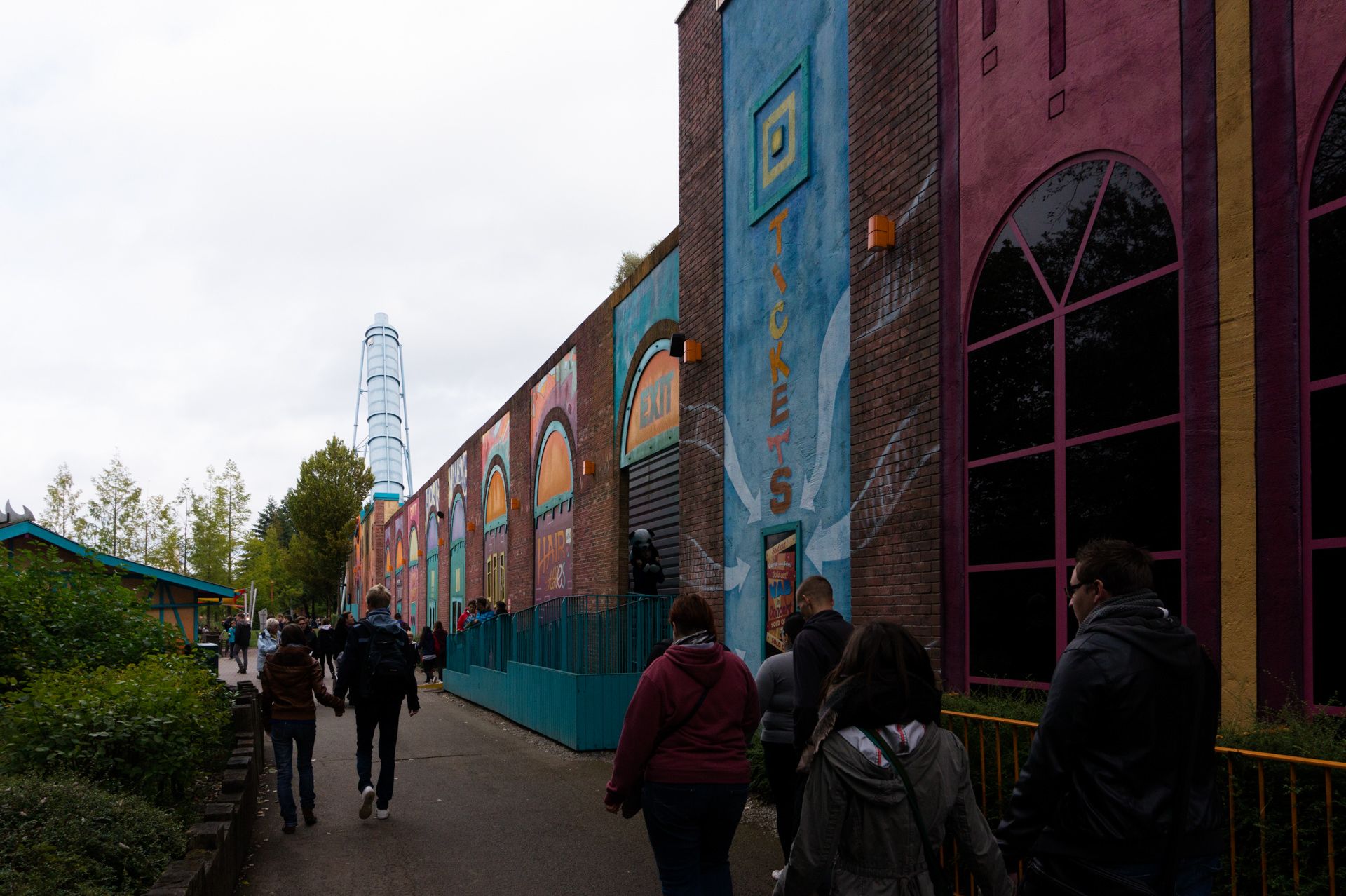
When you enter the park, you will immediately find yourself on the nicely designed village street, where you will find the pleasant panoramic Maibaum ride next to the Gaudi quarter, a covered children’s playground featuring a free fall. Here you can also buy the tickets for the crossing to the Wildparadies.

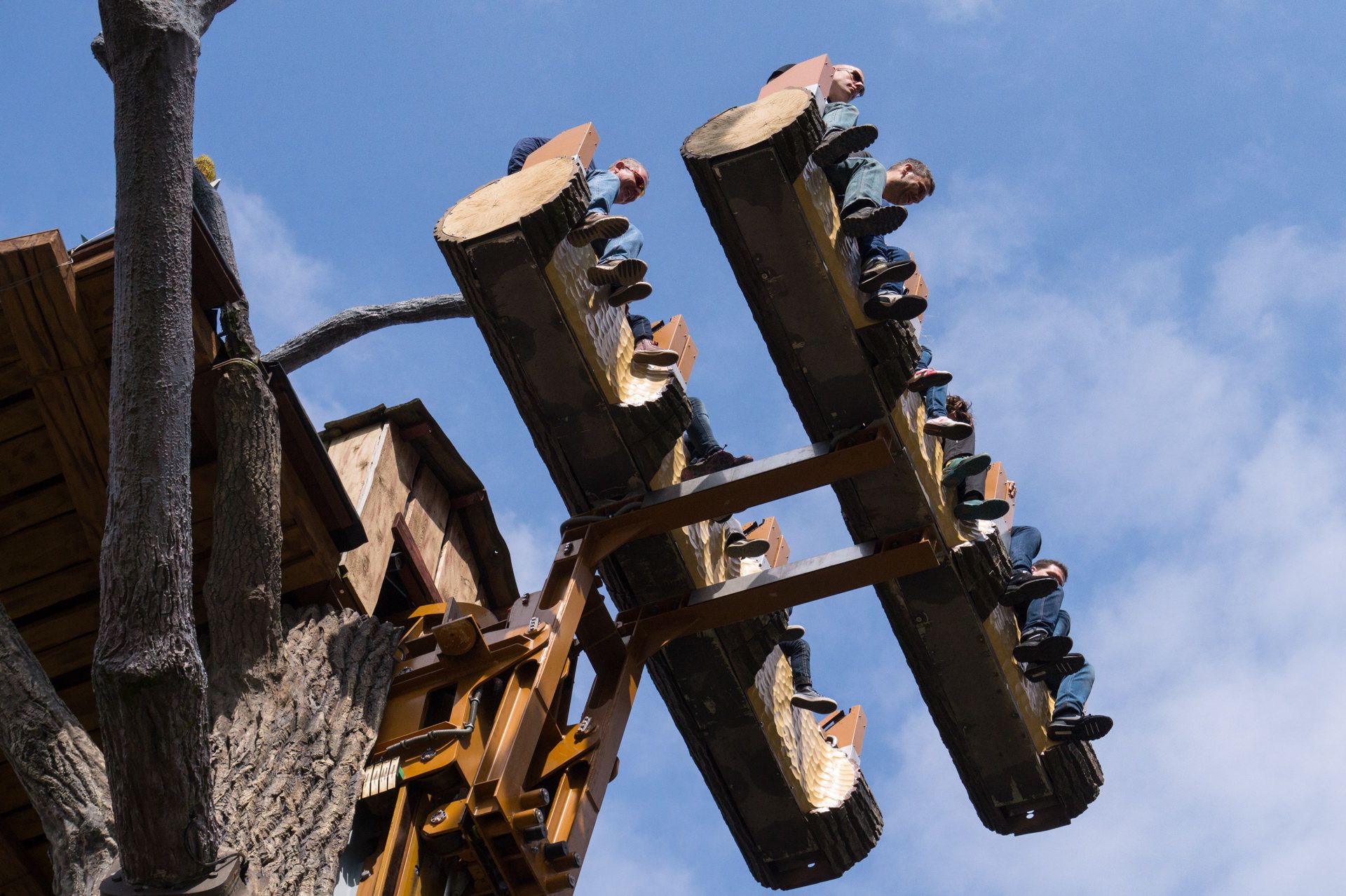
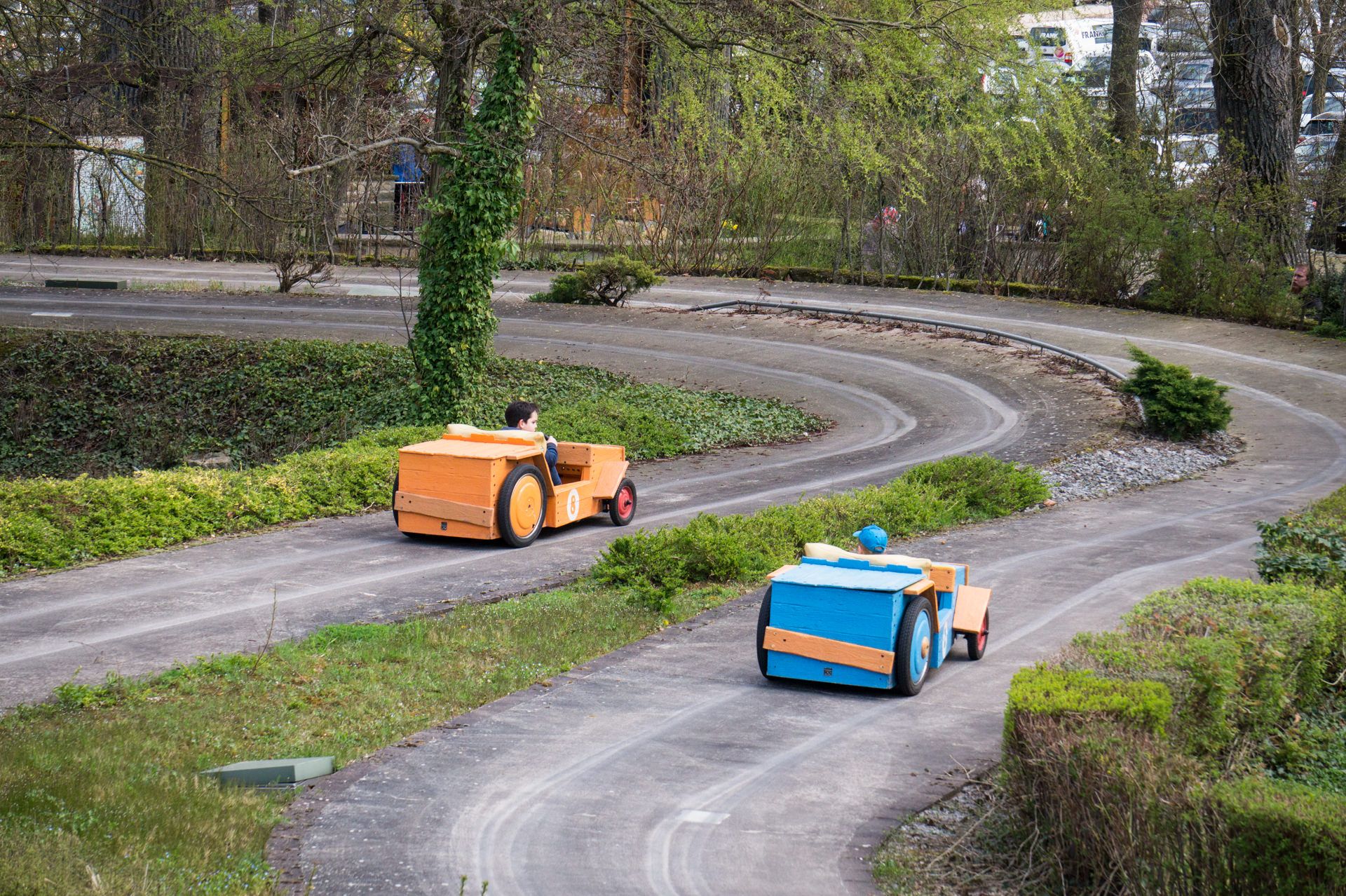
The Mühlental with the famous Altweibermühle is located next to it. To prevent the men from idly assisting the women’s rejuvenation there is also the Altmännermühle, a mechanical open-air obstacle course of an older construction. The Doppelte Donnerbalken, a more than modest vertical ride with a strange inclination effect, the leisurely boat ride Spirtztour der Seefahrer, the children’s log flume Mühlbach-Fahrt, as well as the unique Seifenkistenrennen round off this area.

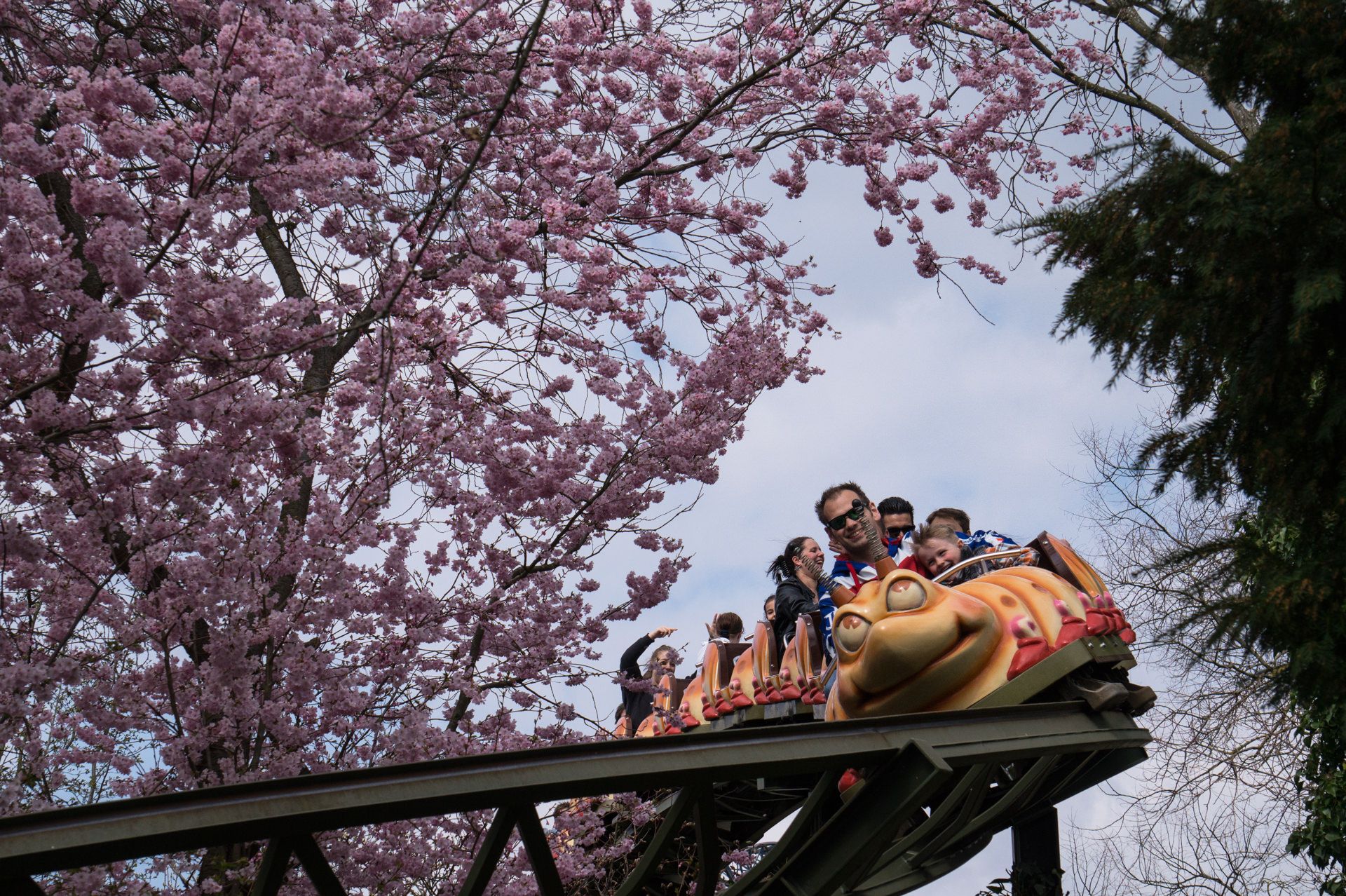
Friends of overlong leisurely rides will find what they are looking for at the wedding market. Here you will find three of these attractions: the vintage car and horse-drawn Hochzeitsreise, the Schmetterlingsflug and the Wiegen-Hochbahn. Since marriages nowadays tend to be of shorter duration, a trip on the wine bucket ride Weinkübelfahrt is recommendable, before you try your hand at the soup bowl ride Suppenschüsselfahrt through the individual soups in a similar way. With the coffee cup ride, the spinning game could continue, but unfortunately the park runs all flat rides on a low flame, so that even the prototype of this popular classic is not convincing. But this only really gets worse with the Gugelhupf-Gaudi-Tour, the first and only modern waltz ride from Münsterhausen, which, with the best will in the world, has nothing in common with its predecessor. The three other rides, Wäschekorb-Rundflug, Schlappen-Tour and the Wellenflieger Wirbelpilz, are, outside of their design, accordingly worth no mention. After all, the big Tivoli roller coaster Rasender Tausendfüßler by the manufacturer Zierer still manages to entertain the passengers well.
Up to the present time of the report, the front theme areas of the theme park have been covered because they more or less form a unit and are connected to the rear area only by a rather narrow path along the outer park boundary. So there is no direct connection to the quite dominant roller coaster Karacho, which means that you can get lost mercilessly if you don’t know the place.  The peeps of the notorious computer game Roller Coaster Tycoon would have complained loudly about not being able to find attraction XY, especially since the signage is not optimal. In fact, I don’t know of any other amusement park in Europe that is as badly constructed as Tripsdrill, although it can’t be that difficult to build an overpass or underpass and create a second access route, which should also benefit the general distribution of guests.

Waschzuber-Rafting

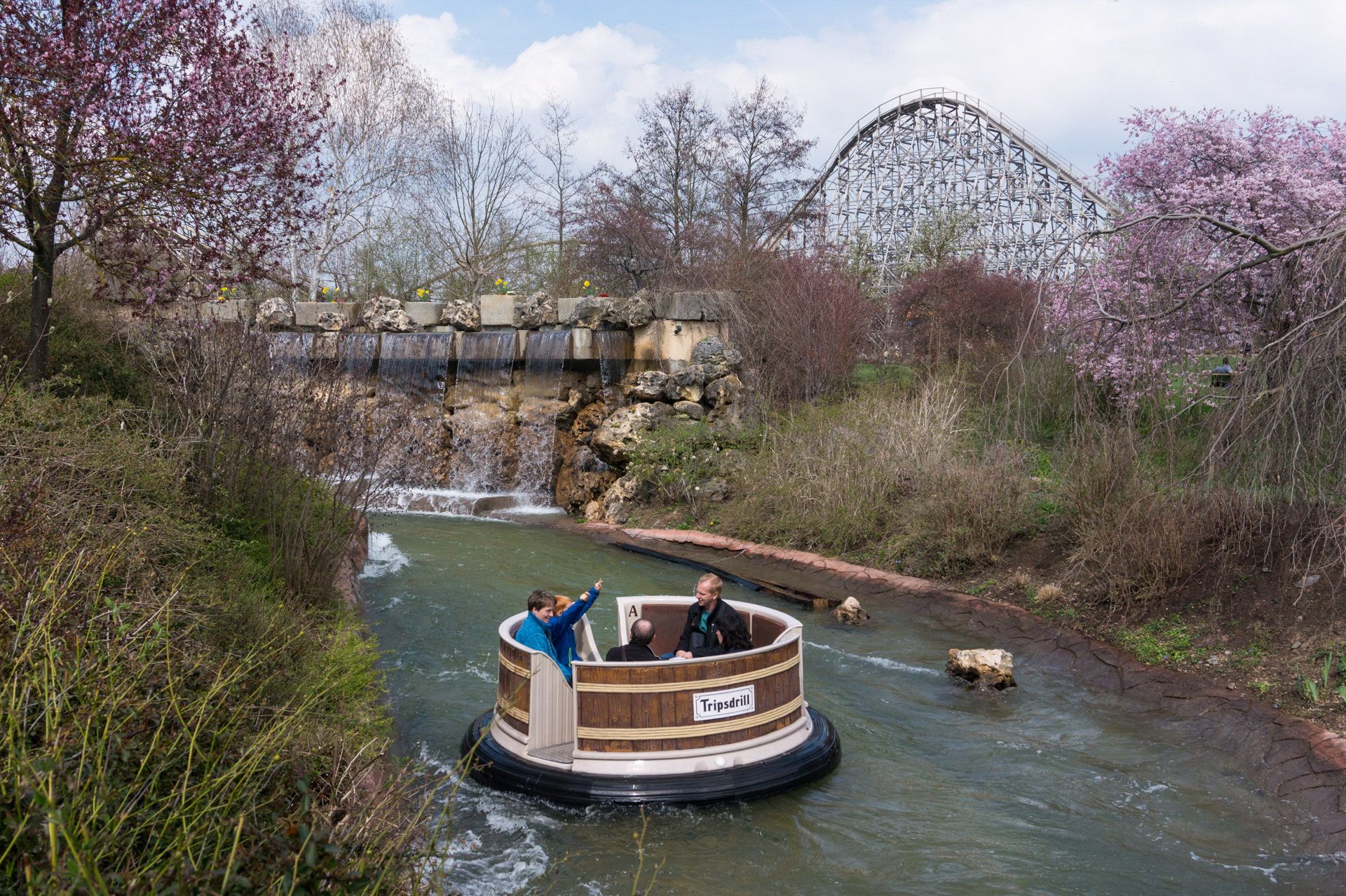
But if one should have made it to the back area, one immediately comes across to the first big attraction of the park, the Waschzuber-Rafting. This stylish Hafema ride is completely dedicated to the topic of doing the laundry and has some interesting exhibits in its queue that reminds of a museum. The ride through the winding road is not particularly wet, nor fast, but nice and really well embedded into the landscape.

Badewannen-Fahrt zum Jungbrunnen

Behind the round boat rafting, the facade of the Rauhe Klinge Castle attracts all eyes, after all, this beautifully designed concrete block on one side houses two larger rides, which complement each other extremely well. The log flume Badewannen-Fahrt zum Jungbrunnen (Bathtub Ride to the Fountain of Youth) is quite unusual, its name says it all and surprises some, let’s say rather prudish, passengers a little bit.

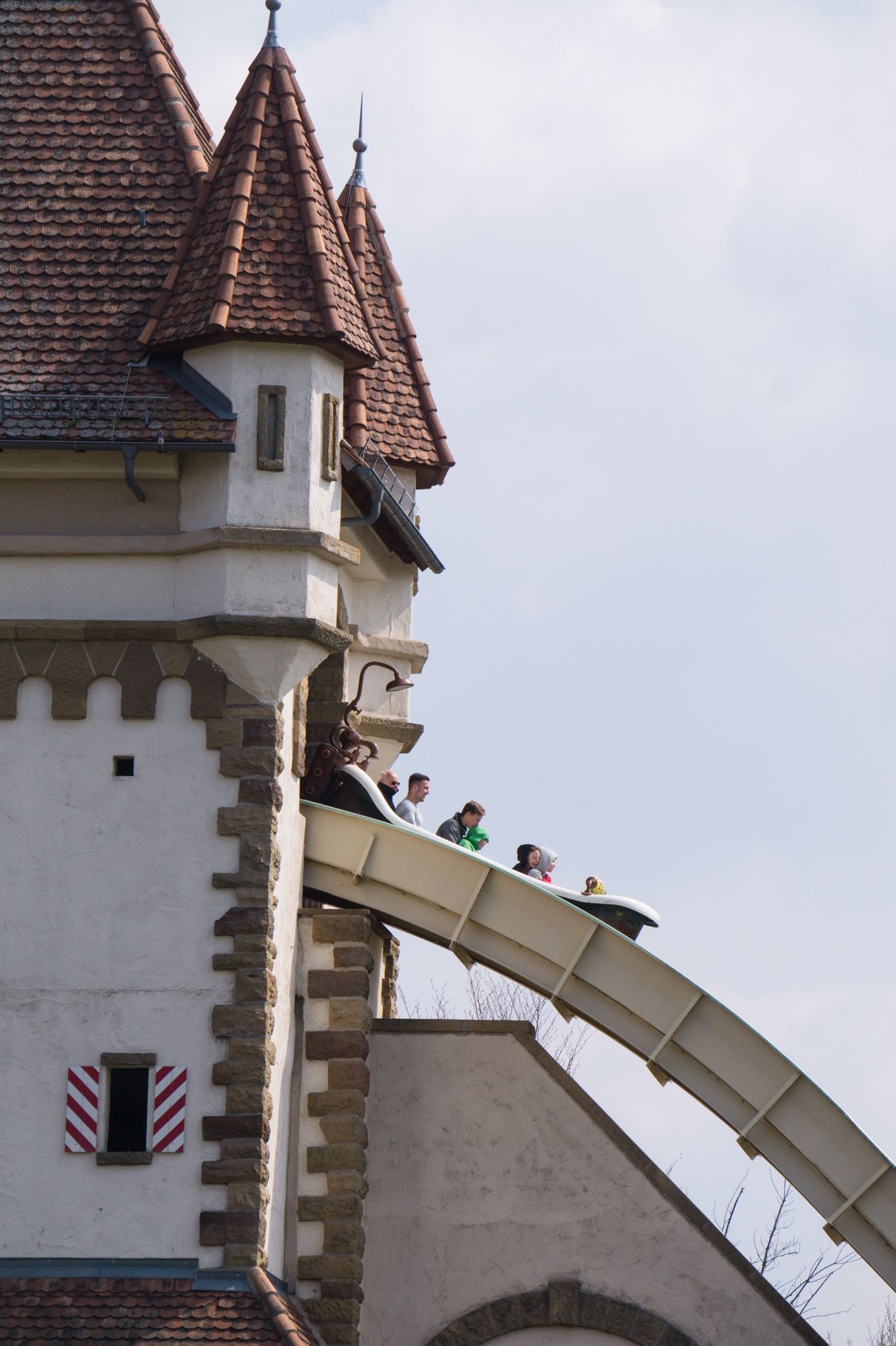
After one has left the, once again museum-like, queue behind him and got into his tub, the trip can start immediately. As soon as the boat swims freely in the canal, one dumbles a little towards the castle Rauhe Klinge. Parallel to the walls, the first lift takes the boat up for a short time before it goes down a short shot. In a right bend the canal leads you into the building, whereupon you have found the fountain of youth and indeed the old women seem to taper off into young, crisp and well-built women. But the view is only short and so the second lift leads up quickly. This is also where the first turntable is waiting for you, whereupon you take the second, medium sized downhill run backwards. At the back of the castle you now make a turn including the second turntable. Thereupon another lift hill leads you up one last time. At the top you can have a last look at the surrounding landscape before you turn left and enter the upper floor of the castle. After a shorter straight section the big and final shot of the lift takes place, whereupon contact with the wet element is inevitable. The spray is refreshing, so after returning to the station you will be very happy to get out of the tub.

G’sengte Sau

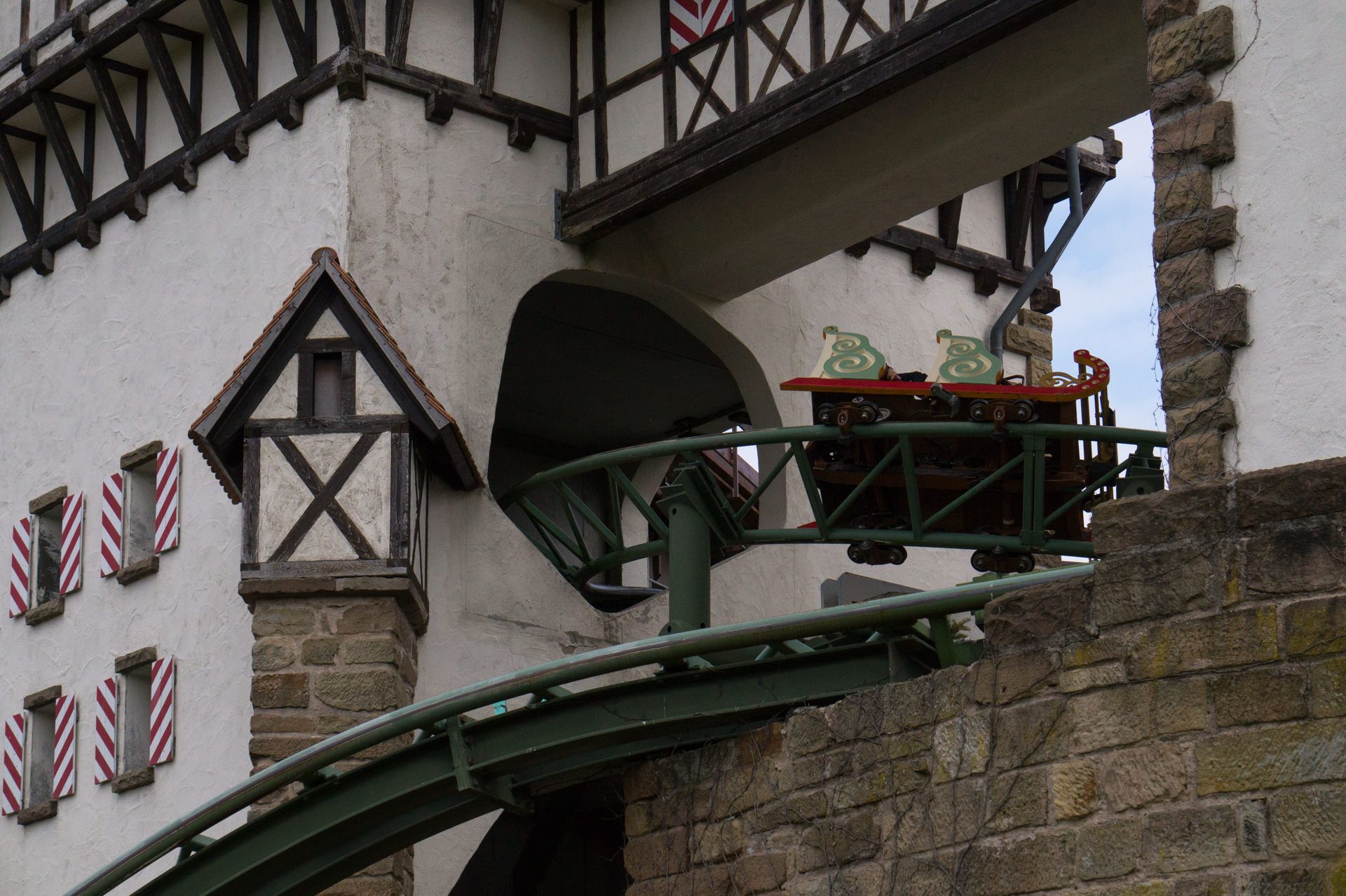
The second ride of the Rauhe Klinge Castle is the 1998 built bobsled coaster G’sengte Sau by the Münsterhausen manufacturer Gerstlauer and its sign the first new roller coaster from the former factories of the legendary roller coaster smithy Schwarzkopf. After the brisk lift hill, the ride starts with a very steep right-hand downward curve, whereupon an outward helix is completed in the same direction of rotation. This is followed by four powerful, contiguous serpentines, which are perfect for exerting some pressure on the person sitting next to you, before the ride, still introduced by the “Wetten, Dass…?”-sign of the famous bet of extreme sportsman Dirk Auer in 2001, goes into a rapid helix combination. The following camelbacks are quickly driven through and can lift you a little bit out of the car before it goes into a final helix-combination. After that the final braking section is reached immediately and shortly after that the station.

The G’sengte Sau offers all kinds of riding fun on the wild ride through the naked concrete world of the Rauhe Klinge castle. Beautiful is certainly different, which is shown above all by the identical Thor’s Hammer ride from the Danish amusement park Djurs Sommerland, but the ride is also incredibly cult, especially because of the banner of the family show “Wetten, Dass…?”, which was cancelled almost two years ago.

Mammut

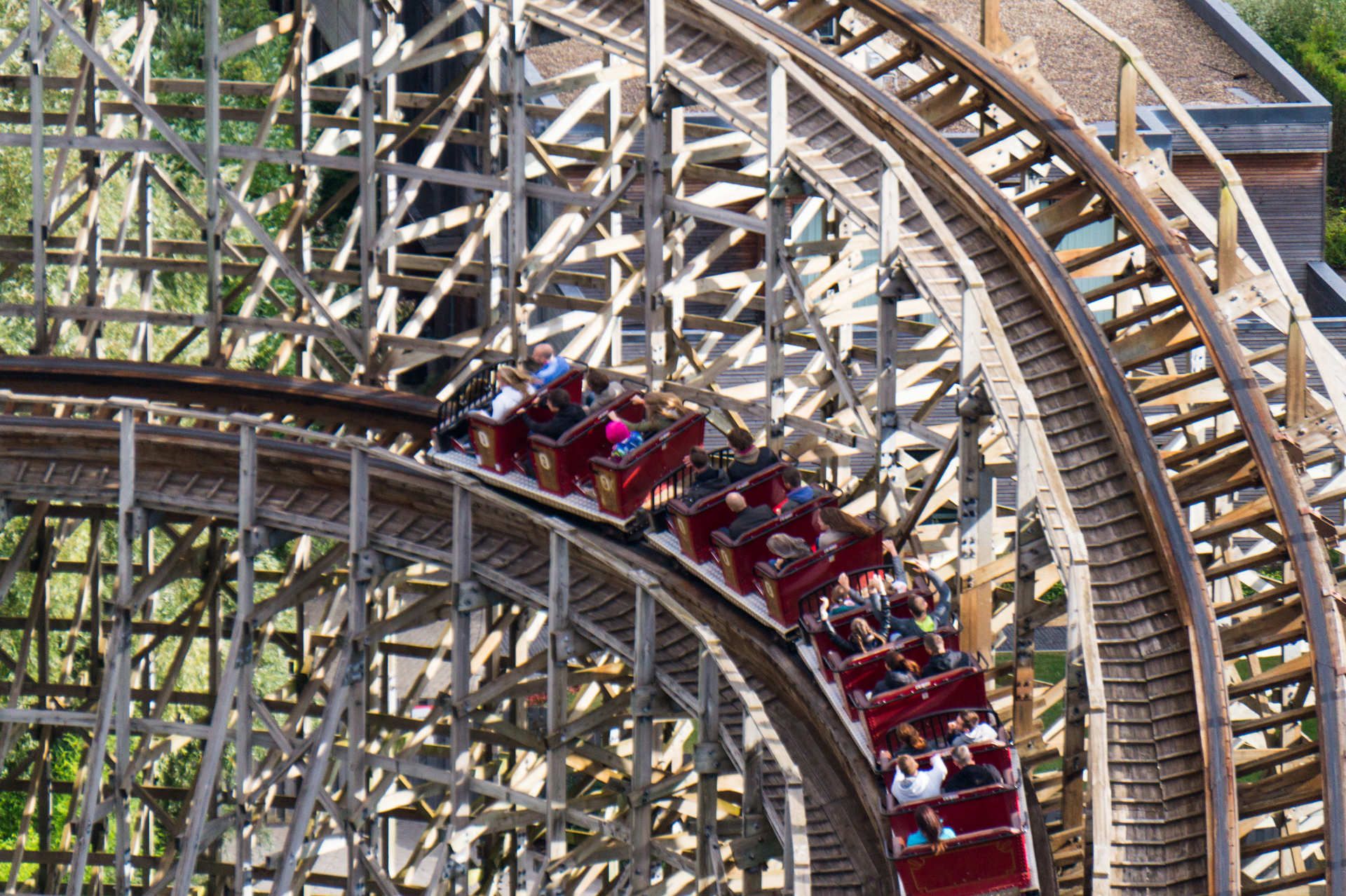
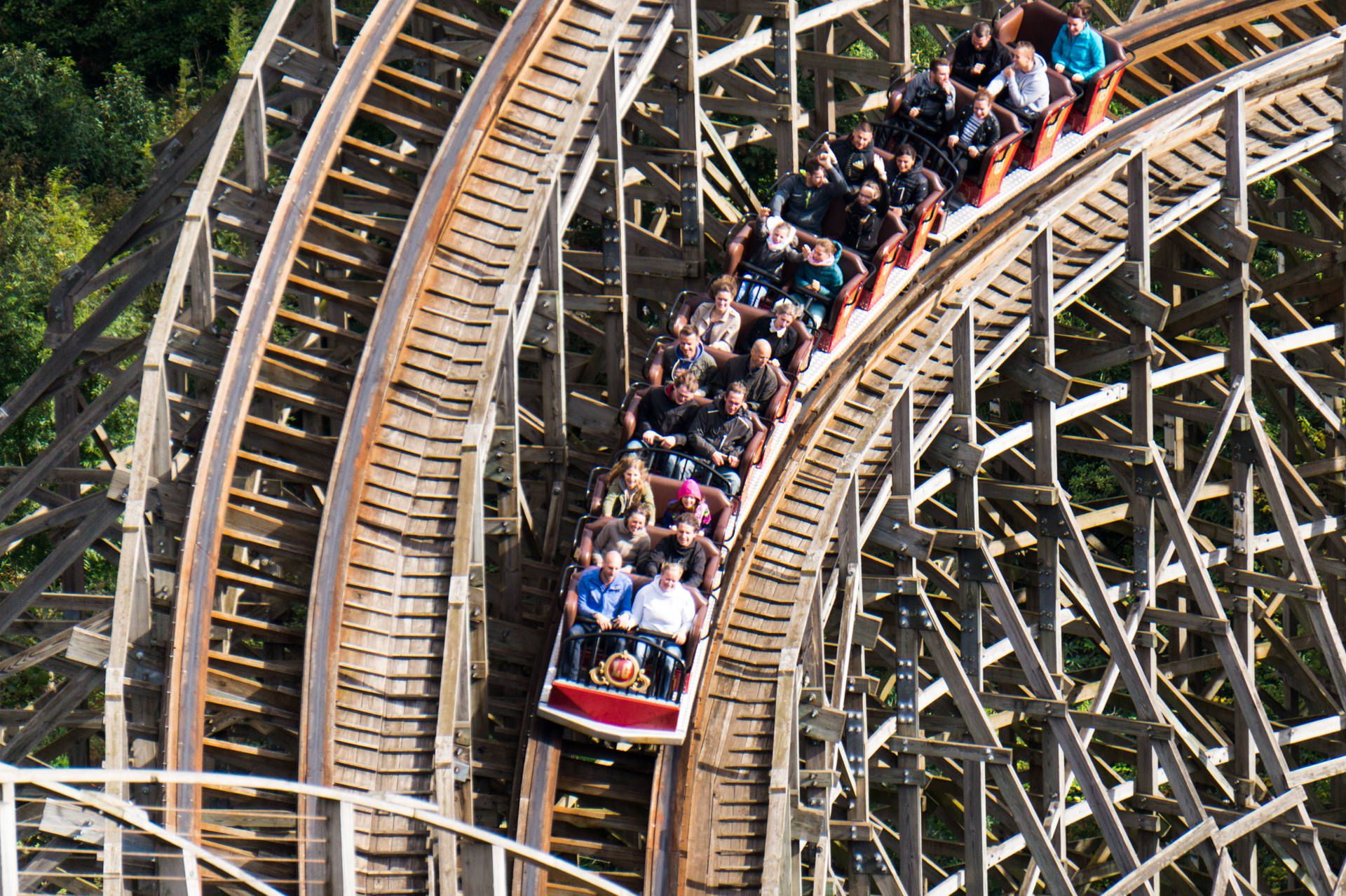
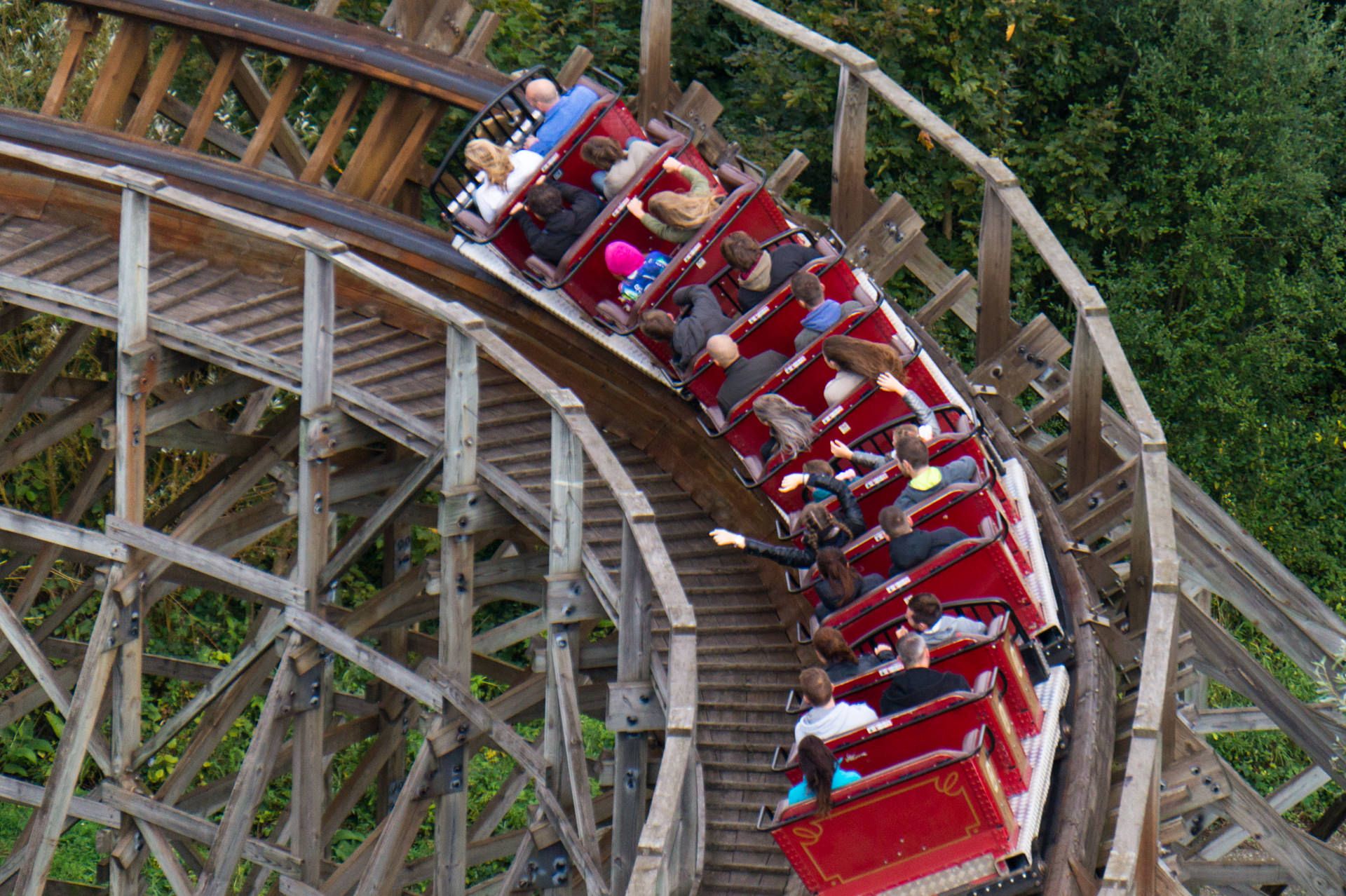
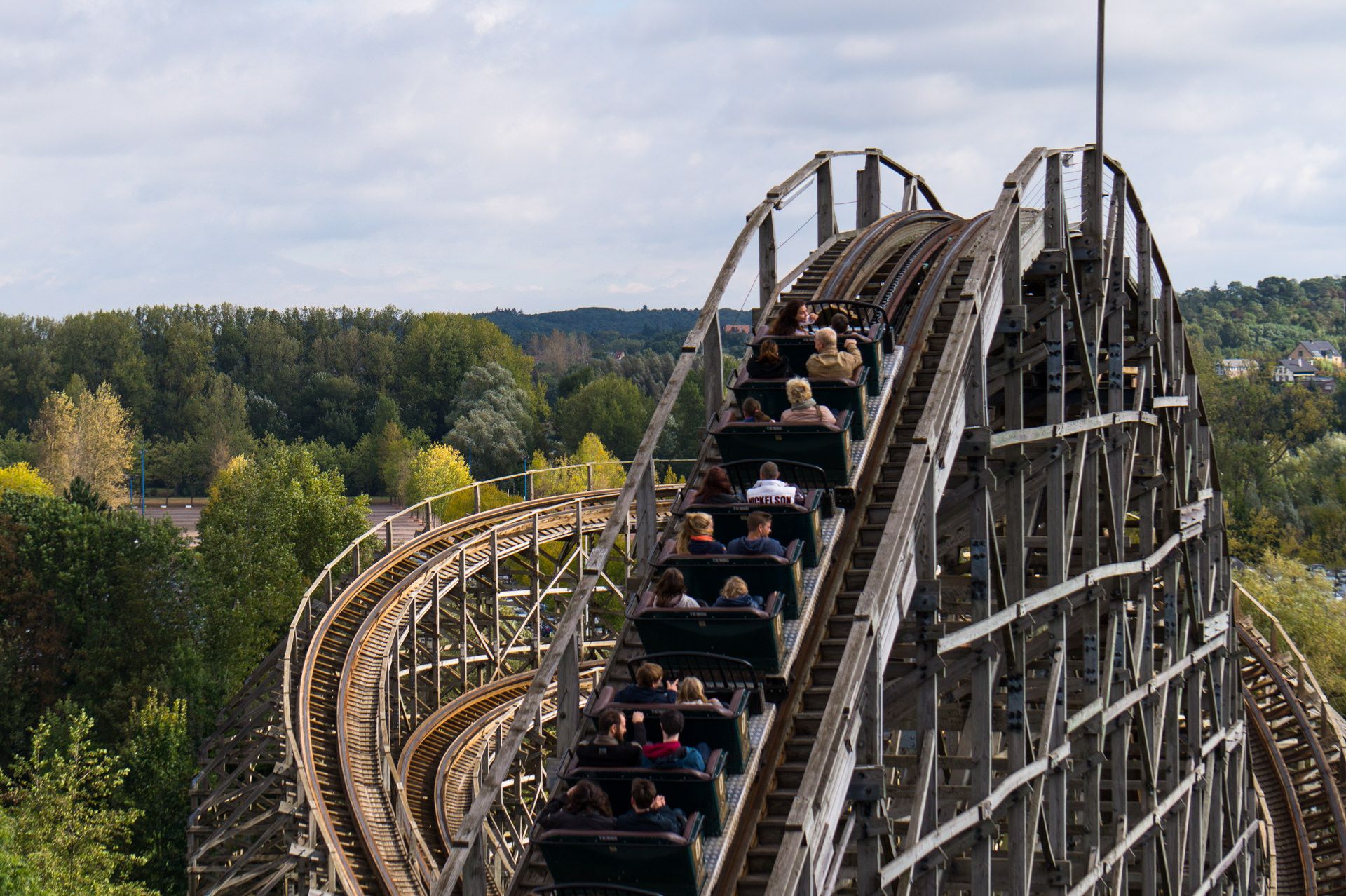
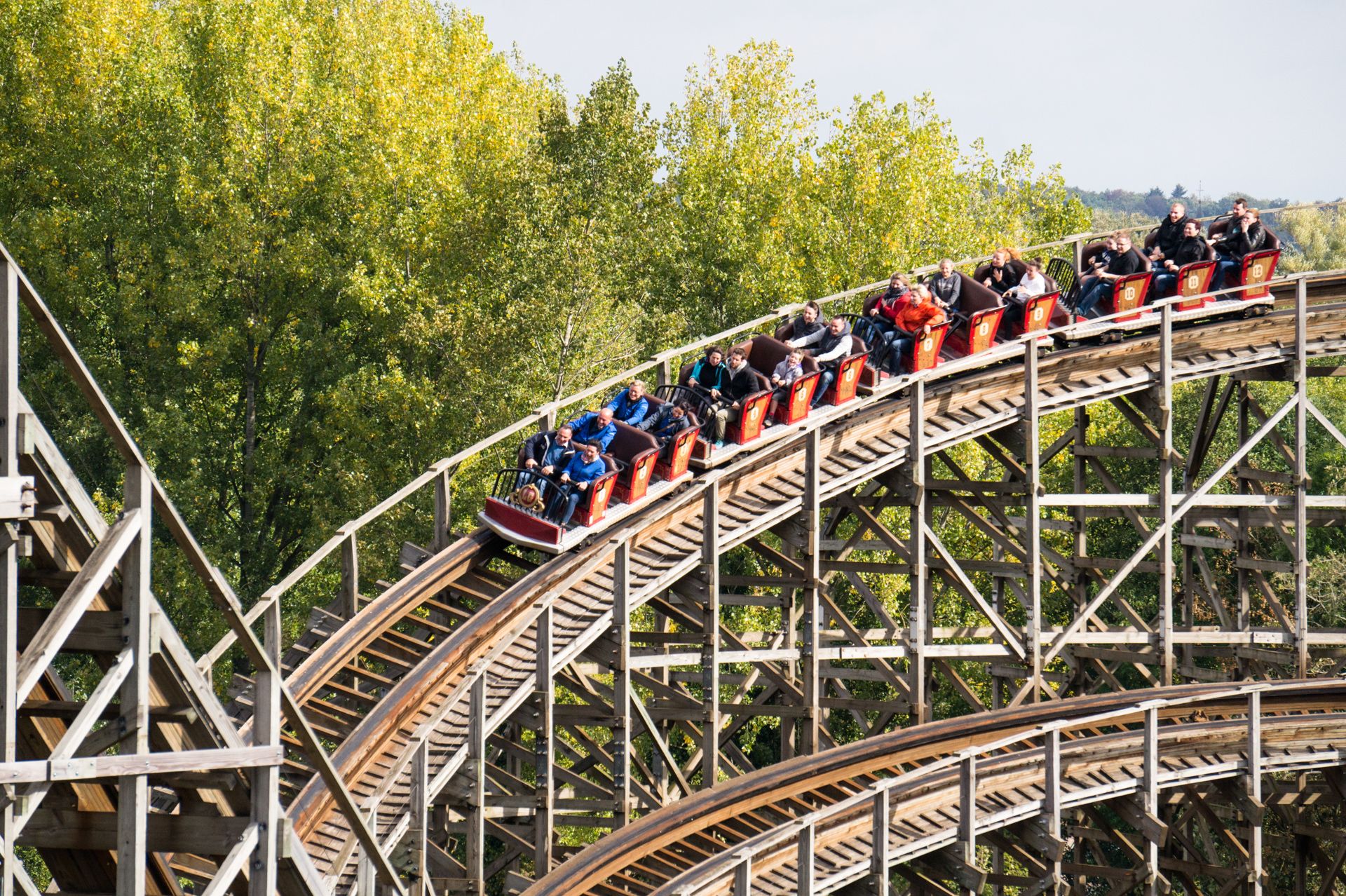
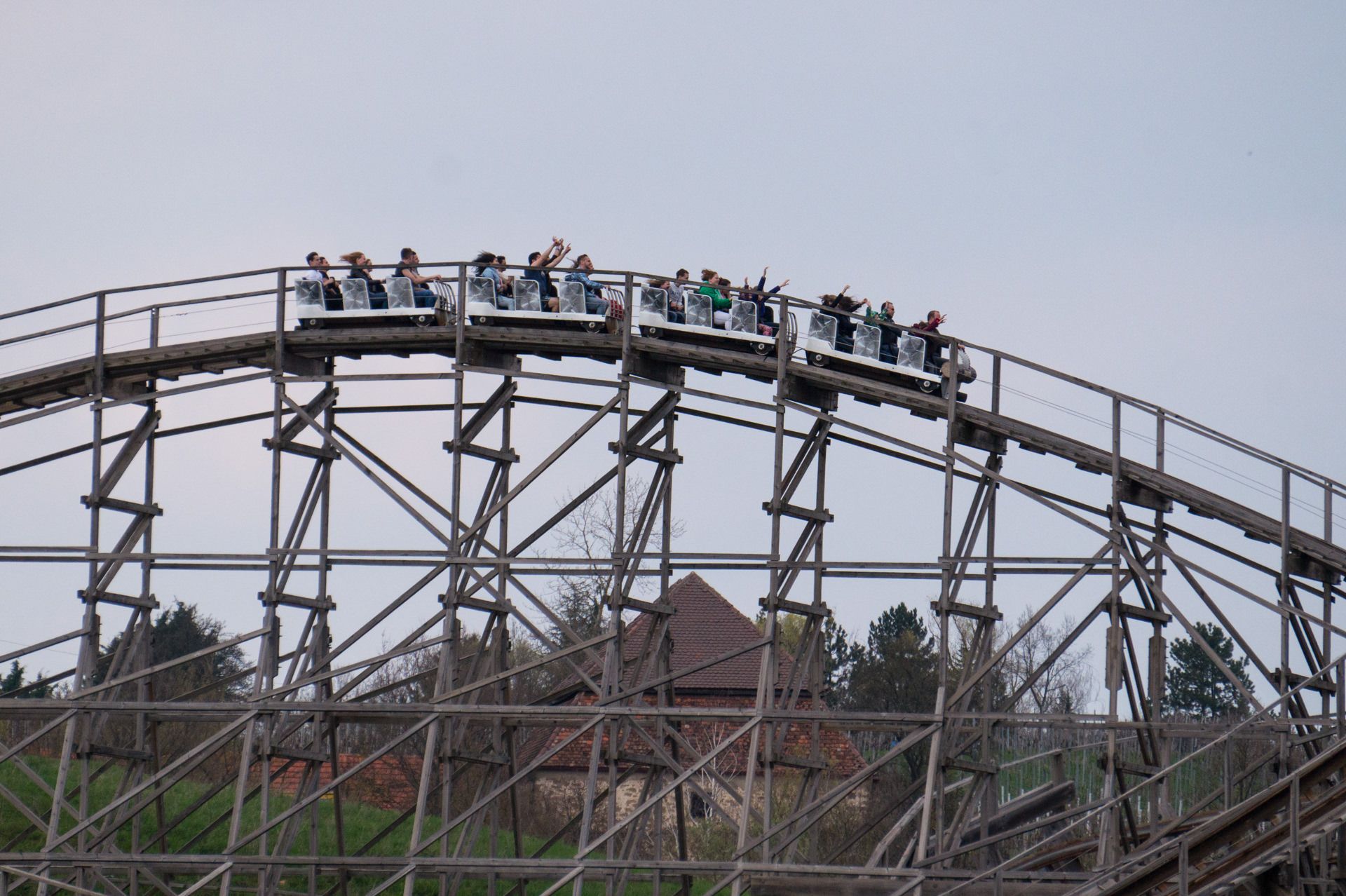
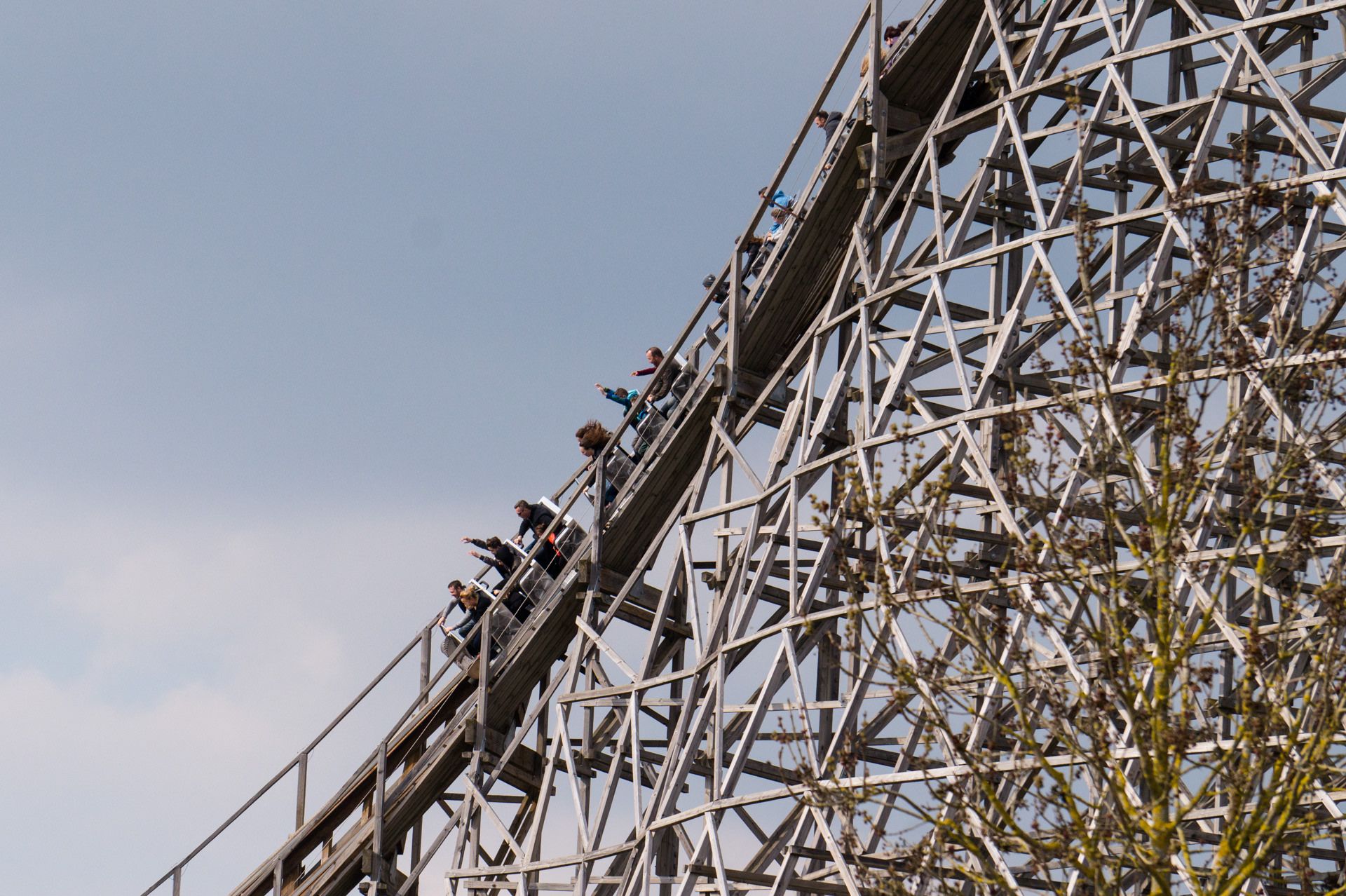
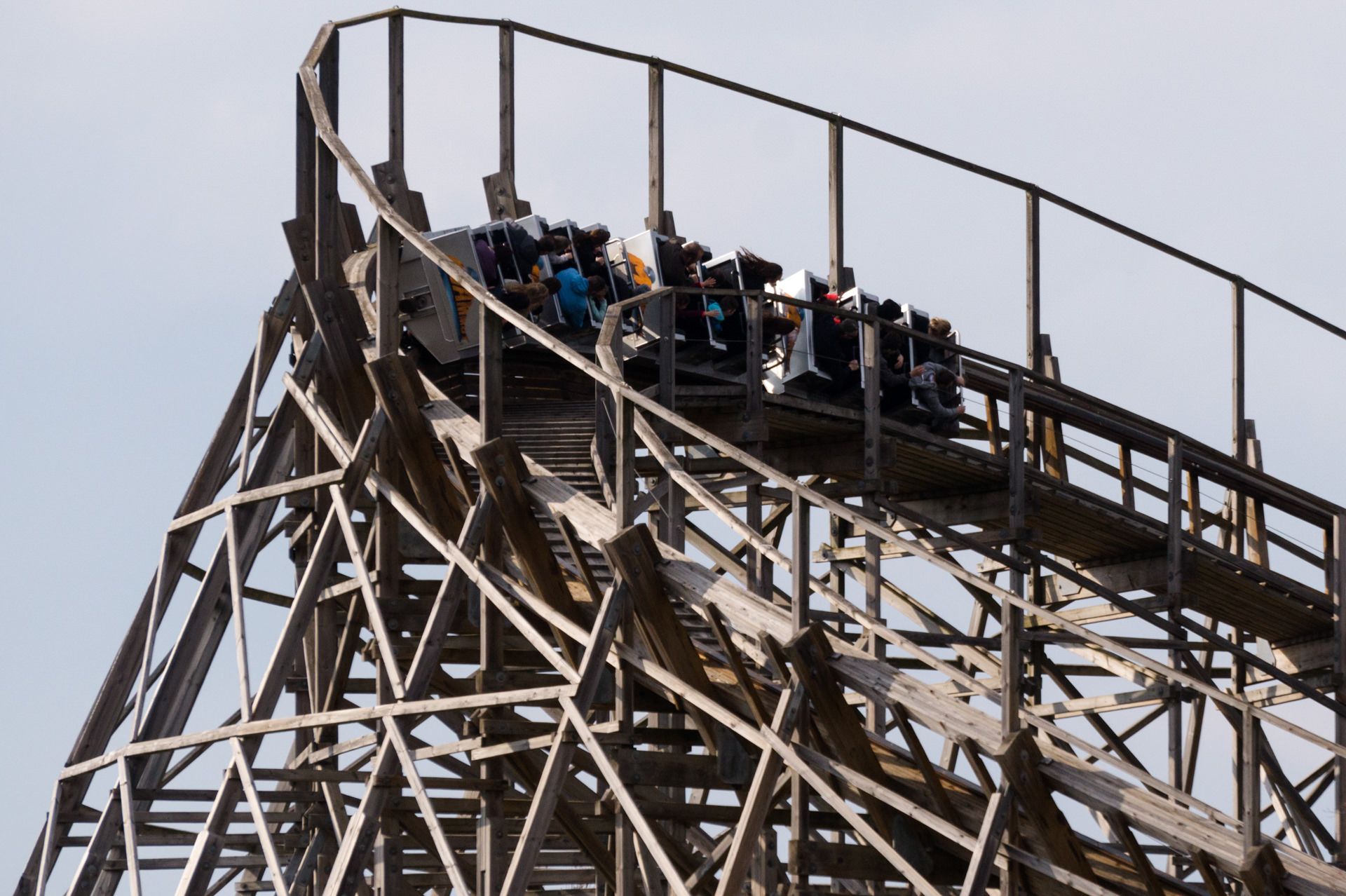
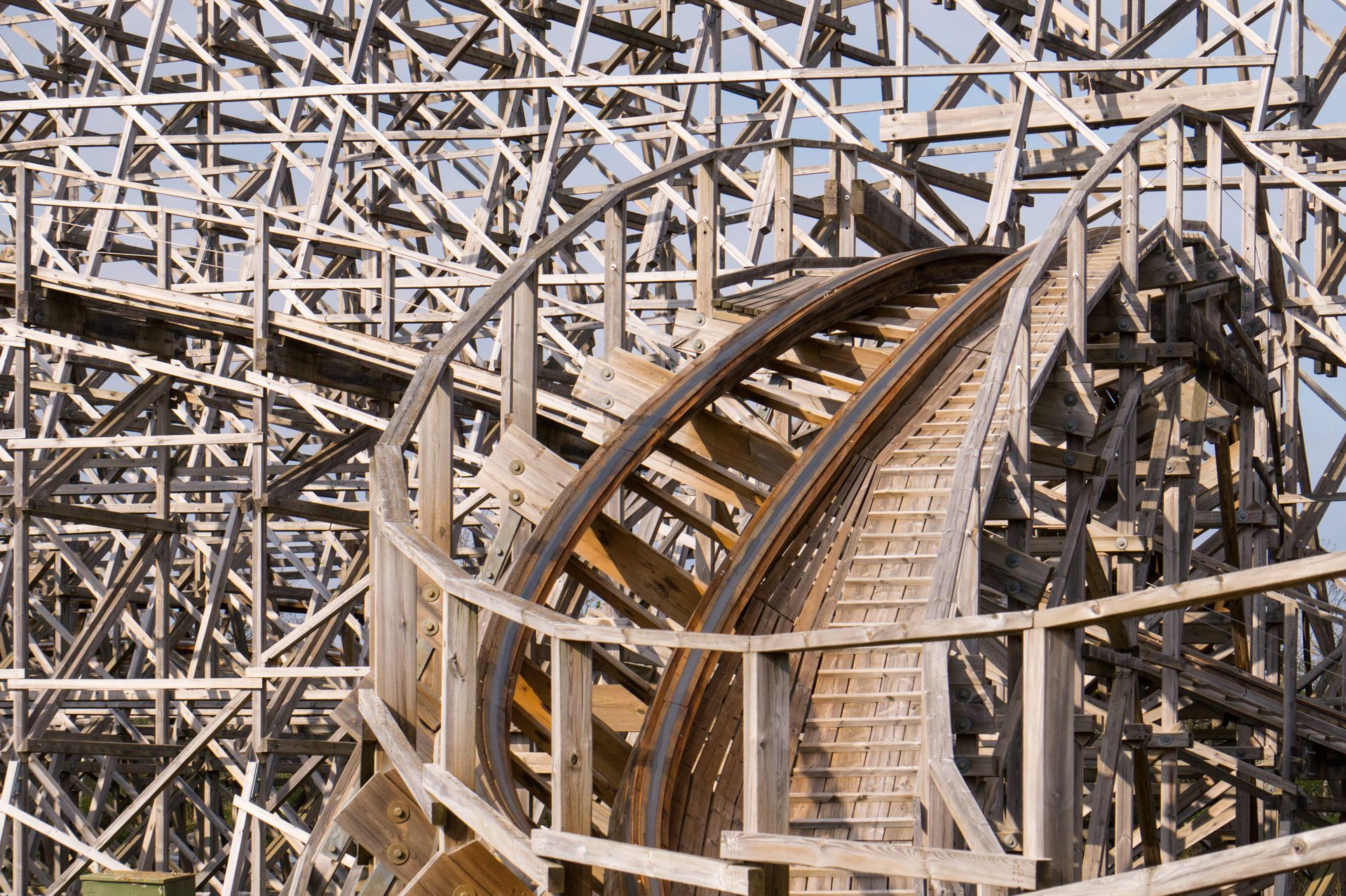
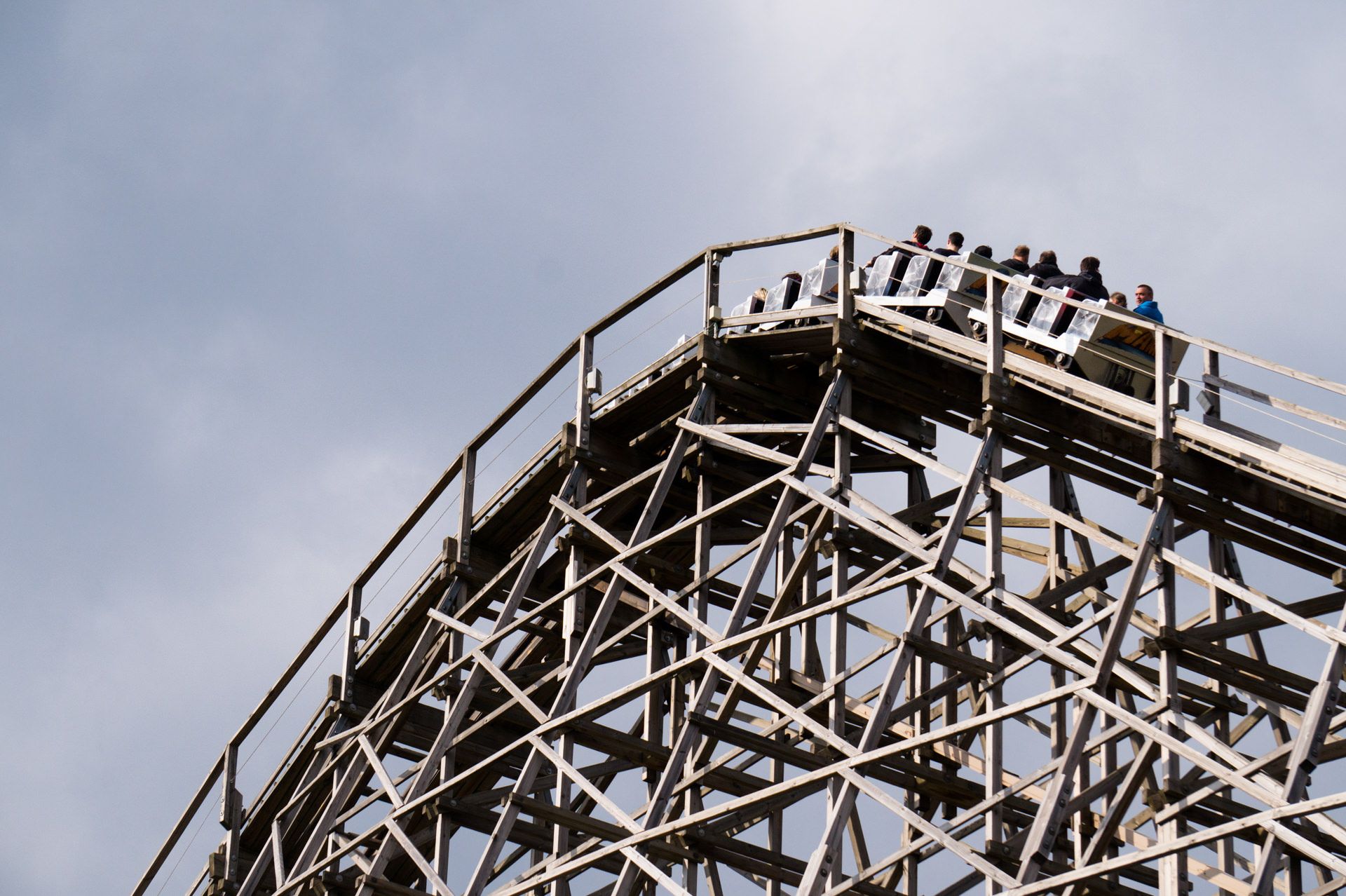
If you follow the circular route, the next big attraction of the park is the wooden roller coaster Mammut. The roller coaster opened in 2008 and was designed and built by the company Holzbau Cordes, but the trains used are from Gerstlauer. The perfectly joined track and the trains with their sprung axles made for a much too smooth ride, especially in the first years, so that a wooden roller coaster feeling did not exist. A circumstance that made me call Mammut a rather bad wooden roller coaster, but the ride has aged nicely!

The journey begins with a short left turn out of the station and into an unsuitably designed disco sawmill. A small dip and the train hooks into the chain, whereupon it is brought to a starting height of 30m. The first descent is a steep left turn down to ground level. Here one passes a powerful valley before it immediately goes along a high turn with a good speed. A high camelback follows, where you are lifted out of your seat. This is again followed by a turning curve, but this one leads into a steep curve to the left, whereupon the train dives into a small ditch. A clearly low camelback now repeats the game of weightlessness of the passengers, whereupon a fast Bavarian curve is made. Now the track leads through the framework of the lift hill and along the back of the layout. Over a short zigzag track some shake & roll – attributes of a really great wooden roller coaster – takes place, before the train dives into a tunnel after a left turn and a short change of direction. Here, the wonderfully dynamic zigzag course is repeated one more time, whereupon the braking section is already reached.
Mammut is fun! In fact, so much so that, with the best will in the world, you wouldn’t expect it if you’d only seen it in 2009. It’s the best roller coaster of the park, which is why it’s even more a shame that it was on n one train operation during the visit, although there was quite a rush.

Karacho

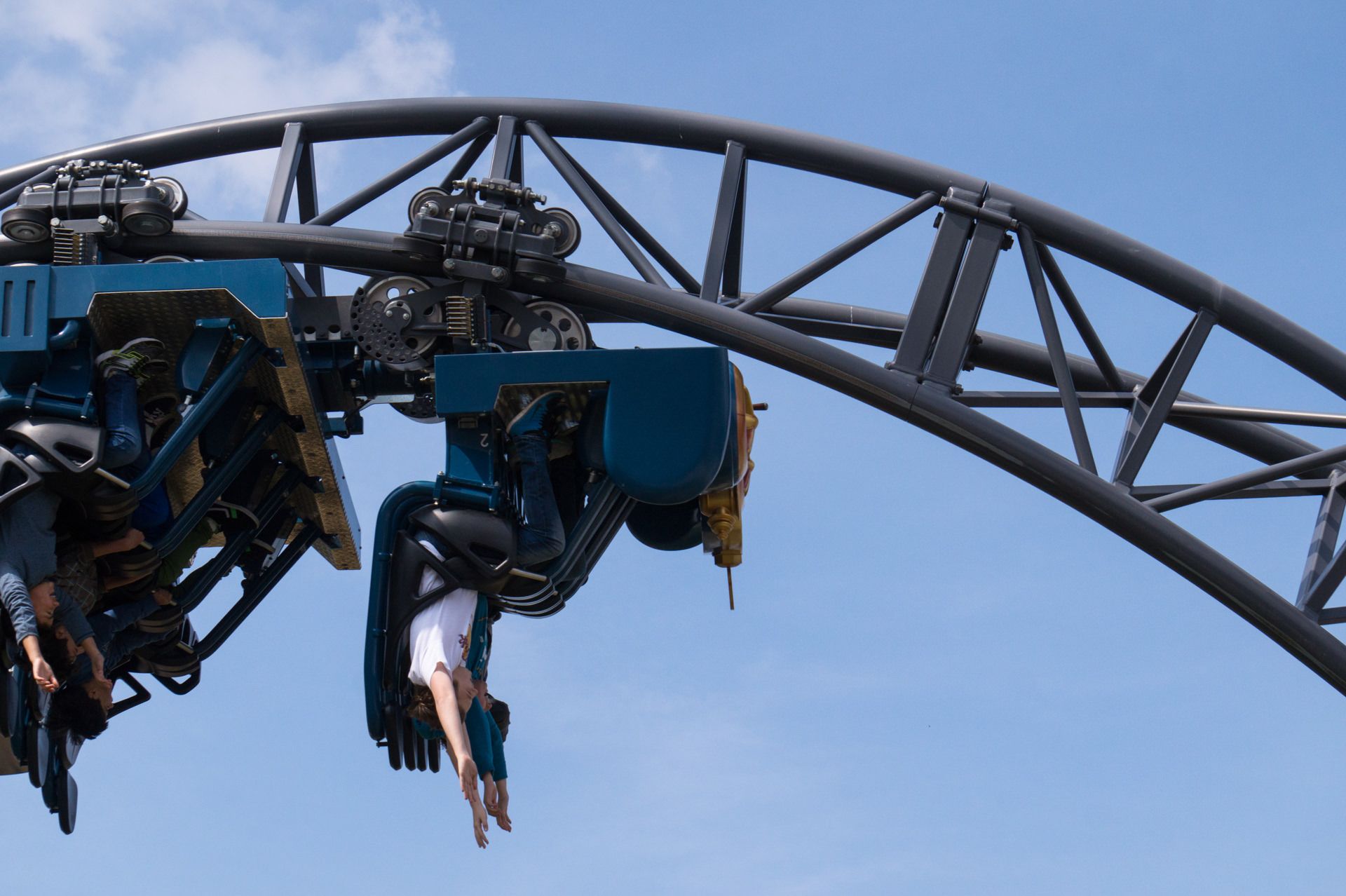
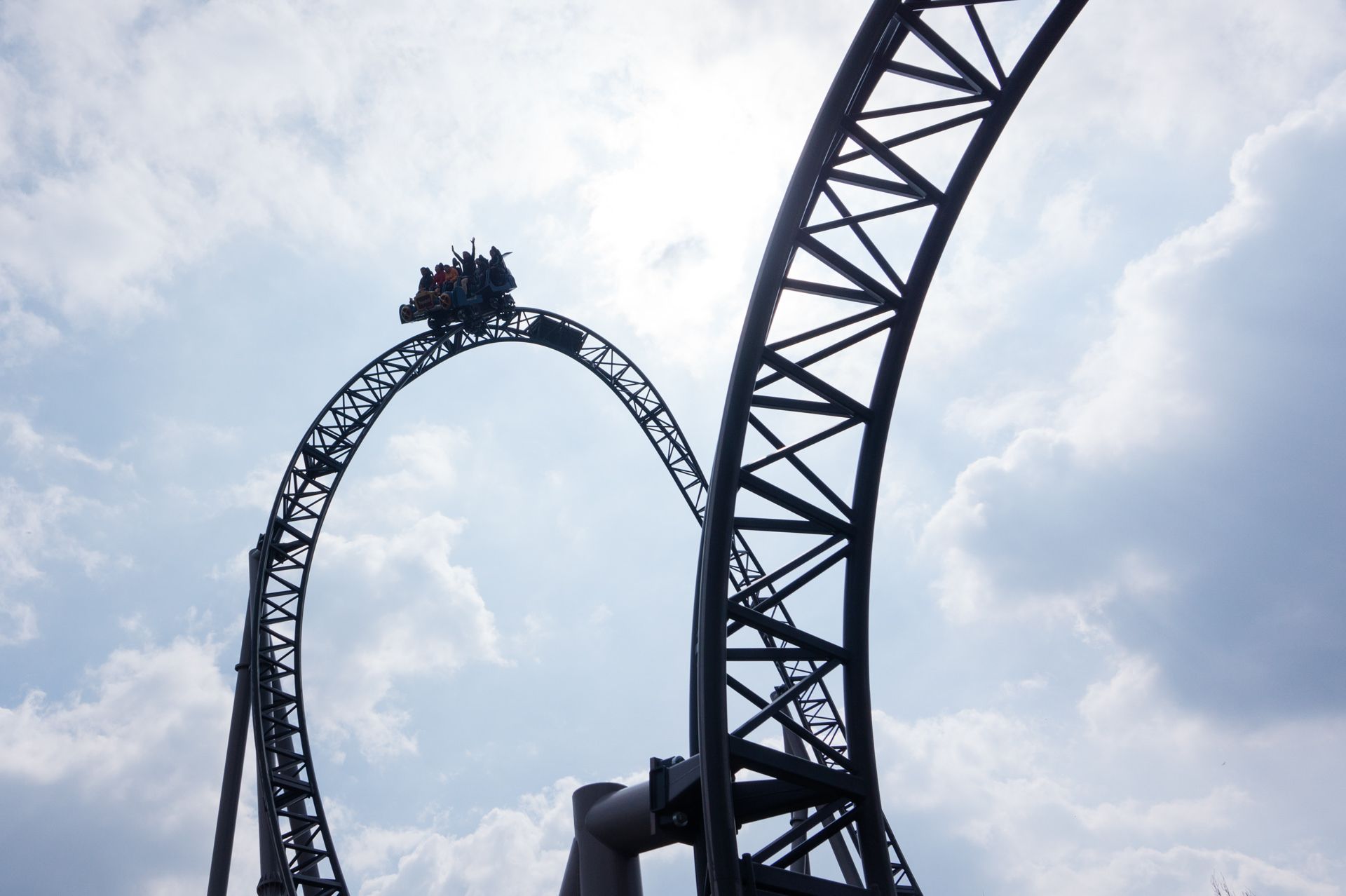
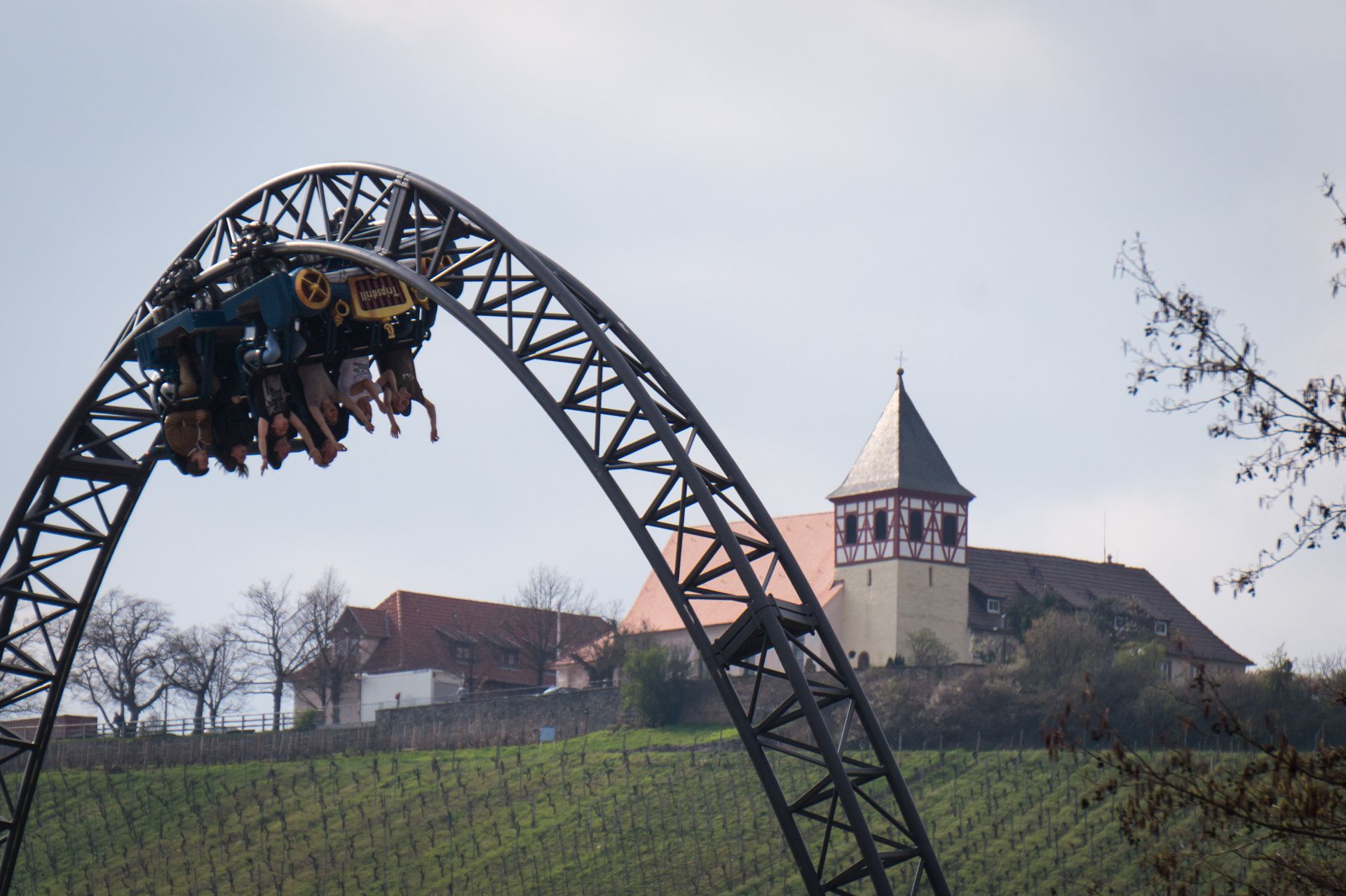
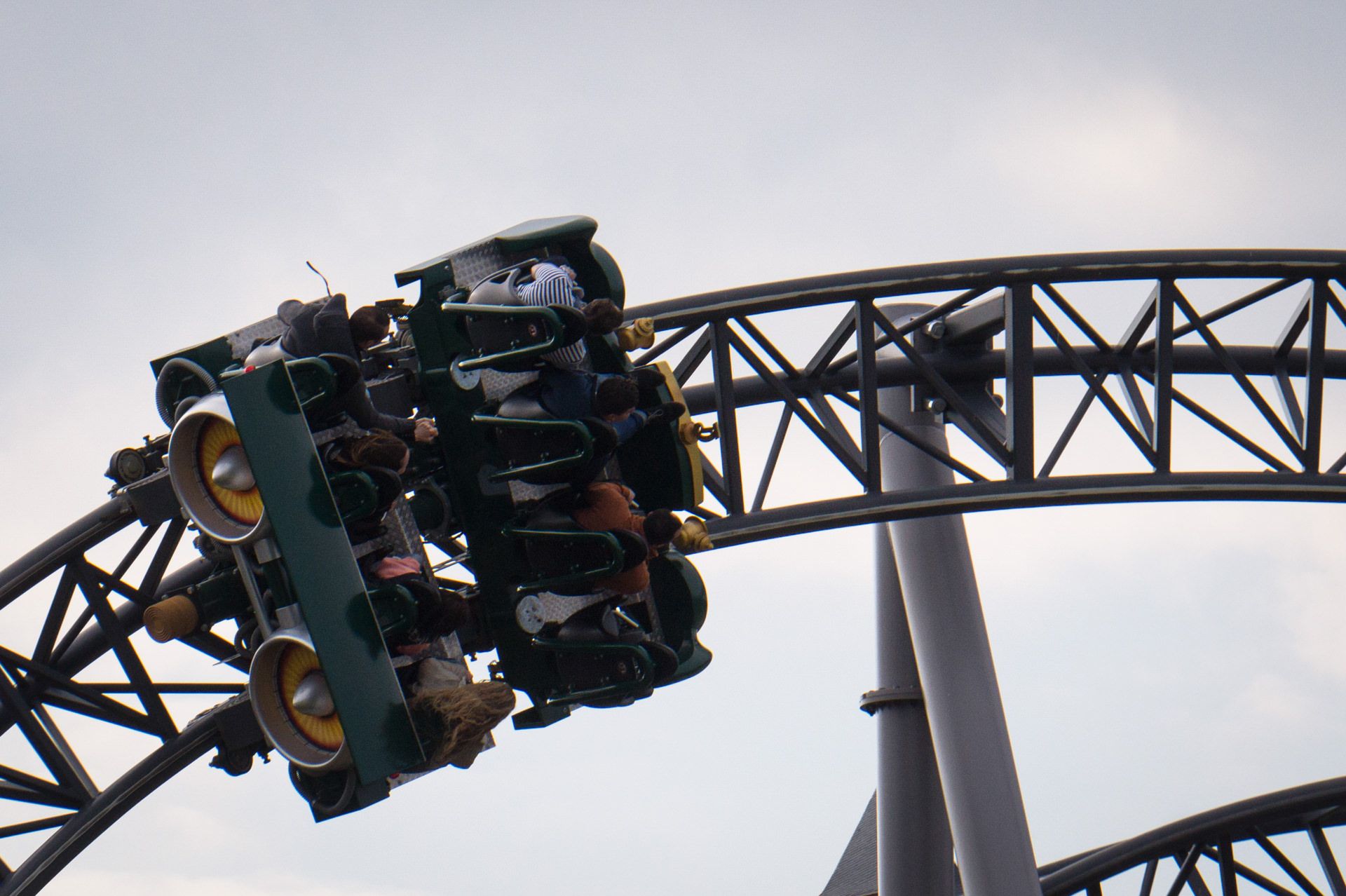
Let’s get to the last and newest roller coaster of the park, the launch roller coaster Karacho. The expectations were quite high, because if there’s one thing Gerstlauer can do, it’s to launch a roller coaster onto a ride offering a very funny track, and indeed Karacho has both. But the layout couldn’t convince after getting on the train, as these trains are really uncomfortable and the operating personnel additionally pushes the bars down so far that the legs are literally squeezed between the bars and the edge of the seat. Ouch! Kärnan from Hansa Park, a theme park in northern Germany, shows how it’s done differently, but until the trains were delivered two years later there were certainly some changes to them.

The ride on Karacho begins with a slow right turn out of the station. After a short and relatively steep dip, a heartline roll is initiated on a straight line. This happens rather clumsy in my opinion, as the dynamics seem to be missing during this roll; an example how to do it better can be found at the English amusement park Thorpe Park on Saw – The Ride, where the roll is passed after a short bend. Then you pass the first block brake and shortly after that another, in my opinion much too small, dip. With Karacho you are now accelerated to a speed of 90 km/h, whereupon you shoot up a top hat element. Without taking a breather, the car crashes towards the ground, passes the following valley with full force and daringly shoots an oversized corkscrew towards it. Here you are turned upside down for a second time before the train is longing for the ground again. Very restless and quick-witted, the car now takes you over a hill that is strongly inclined to the side, just before you screw up to the block brake in a steep curve. Here you are slowed down to walking speed, whereupon the following part of Karacho is driven through very leisurely. A short gradient changes into a short and uneventful camelback, whereupon you stay in a right turn for a very long time. But then the car takes momentum again and turns the passengers upside down once more while going down in a diveloop. Another corkscrew joins in and at the same time leads into the braking section, whereupon the station of the roller coaster Karacho is reached soon.

Karacho is not only uncomfortable, it also lacks the bite. The ride would be just ok if you could ride it without pain, i.e. with the classic roller coaster trains of the manufacturer, but it wouldn’t be anymore either. Especially the part with the dive loop is done without the insane force of earlier coasters and therefore hardly gives an impression; not to mention the absolutely nonsensical ride part before. Karacho certainly does justice to the target audience.

Pictures Erlebnispark Tripsdrill

Conclusion Erlebnispark Tripsdrill

The Hansa Park of the South is not a good park; it is a nice park, but simply not a good one.  I have tried to understand and comprehend the whole adulation of various roller coaster and amusement park fans in different forums, but I just can’t. It’s a fact that even among Swabians (at least the one I met during my time in Stuttgart) it’s more of a toddler park. There’s simply nothing here that justifies the high entrance fee. Let’s see if the novelties after Karacho can change my opinion…


What is your opinion about the roller coaster Karacho? Just write it in the comment field below the report or on our social media channels:


Under Shock in the Rainbow Magicland
Rainbow Magicland

The Rainbow Magicland is once again one of those theme parks designed on the drawing board, where the initially expected visitor numbers cannot be linked to reality and will probably never come together in the future. The operating company Alfa Park probably had similar experiences with Miragica, which opened two years earlier, so that some projects were probably saved from realisation. In 2011 the theme park, which is based on children’s series by the Italian animation studio Rainbow, opened and what looked very promising from the vastness of the Internet already turned out to be untenable by visitor reviews in the second year of operation of the park.

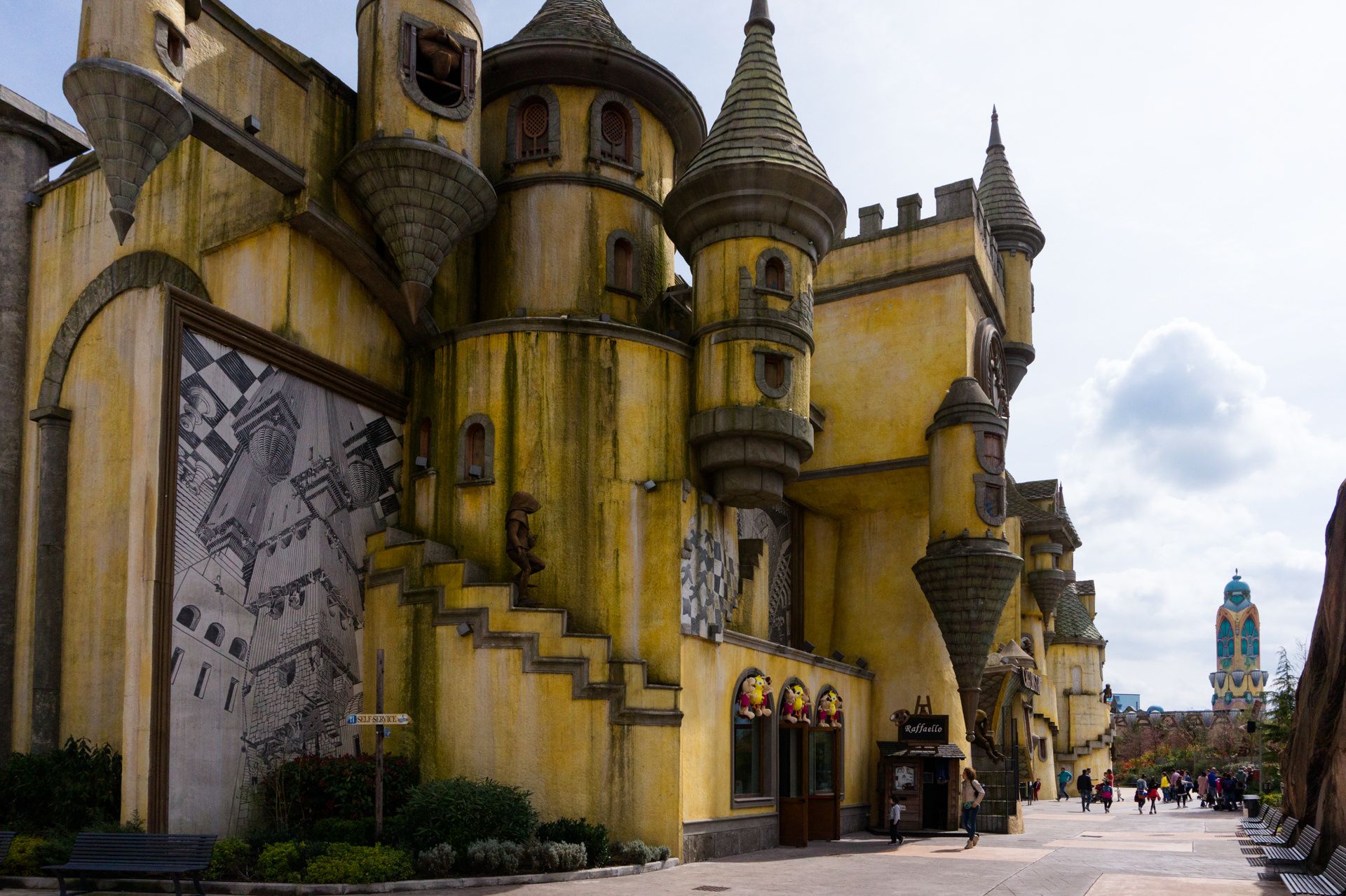
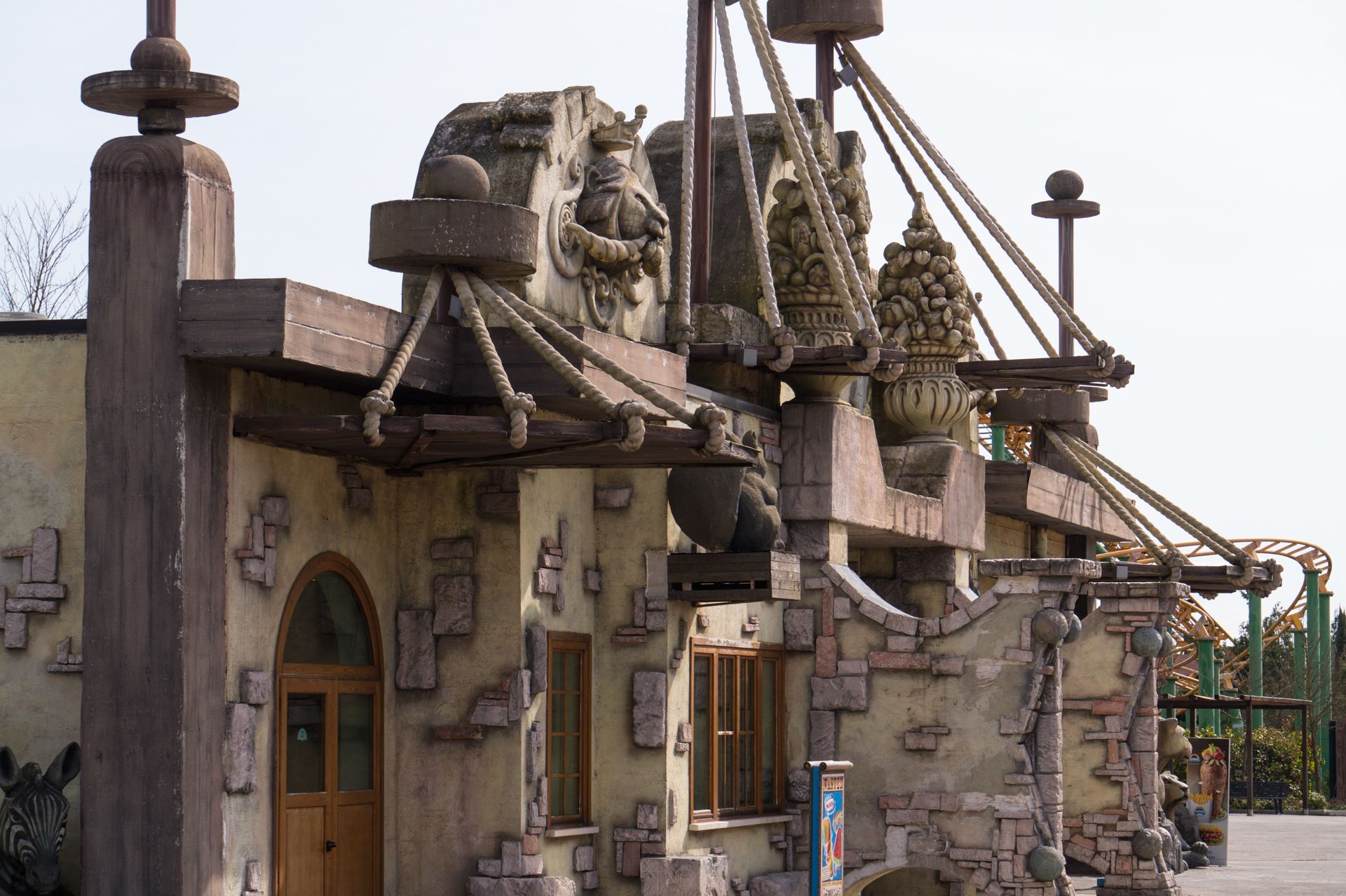
I don’t like to hide the fact that Rainbow Magicland lives up to its bad reputation; after all, we expected nothing less. As soon as we enter the car park, the previously consolidated picture is confirmed, as a large part of it has been taken over by nature in the meantime. But that doesn’t matter, because you can’t expect visitors here anyway, so without hesitation we went into the park to let the playful, meanwhile very run-down decoration take effect on us. While the Cinecittà World has been built with quality in mind right from the start and the park looks as if it had only opened yesterday, Rainbow Magicland looks like a fairytale park opened in 1970; only with the one, but very fundamental difference that in an old fairytale park there is often a very high level of attention to detail.

Shock

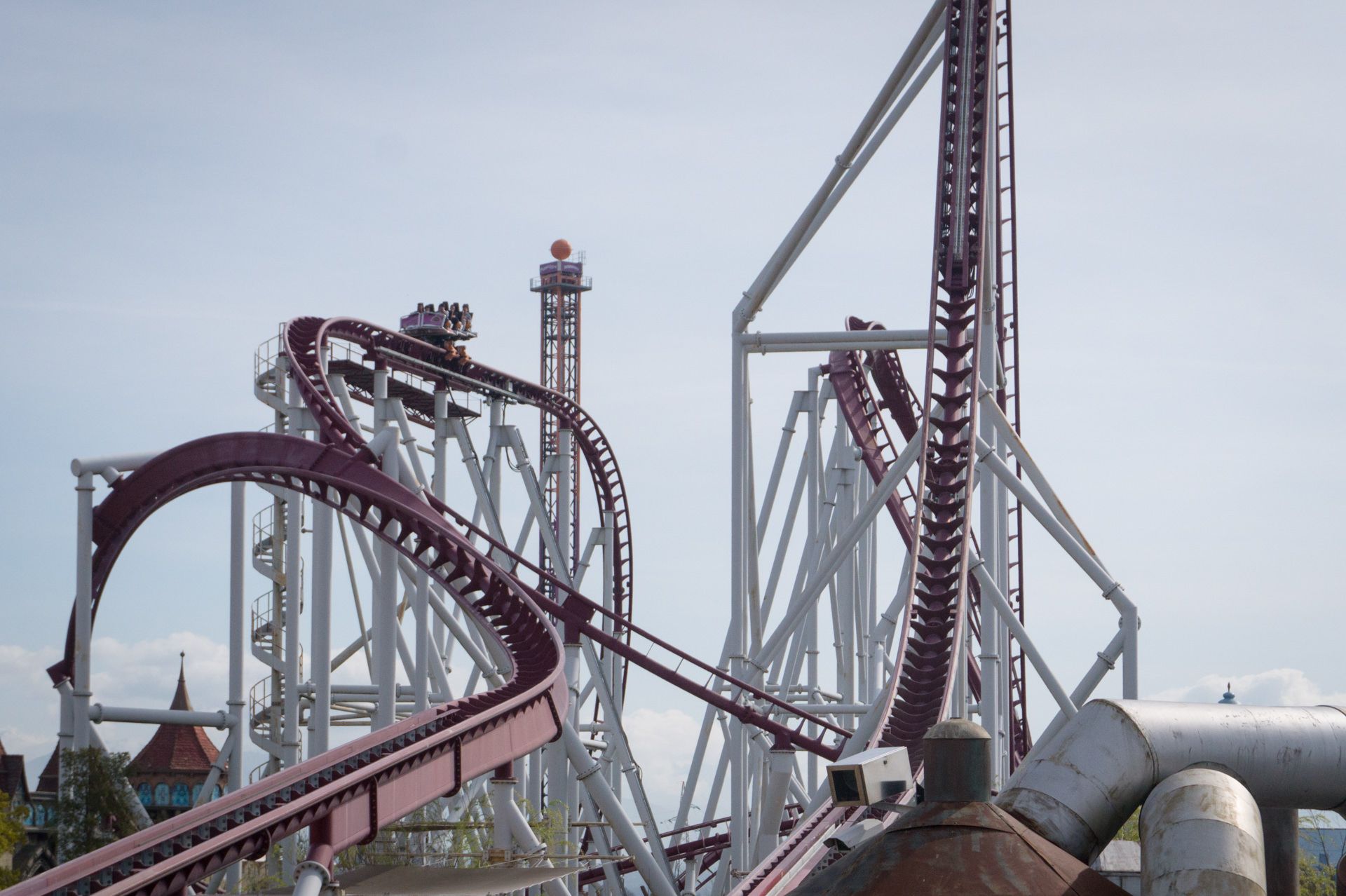
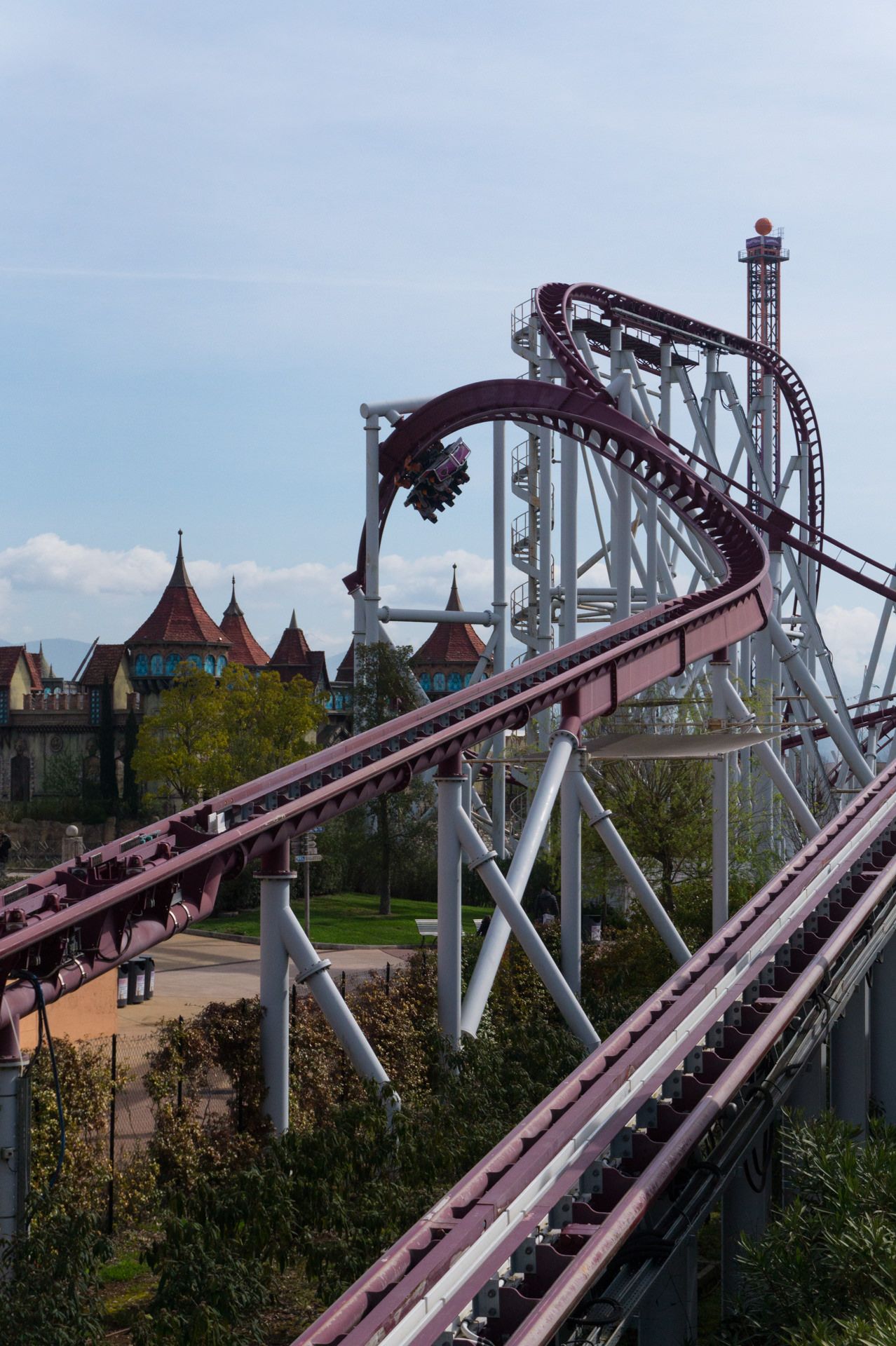
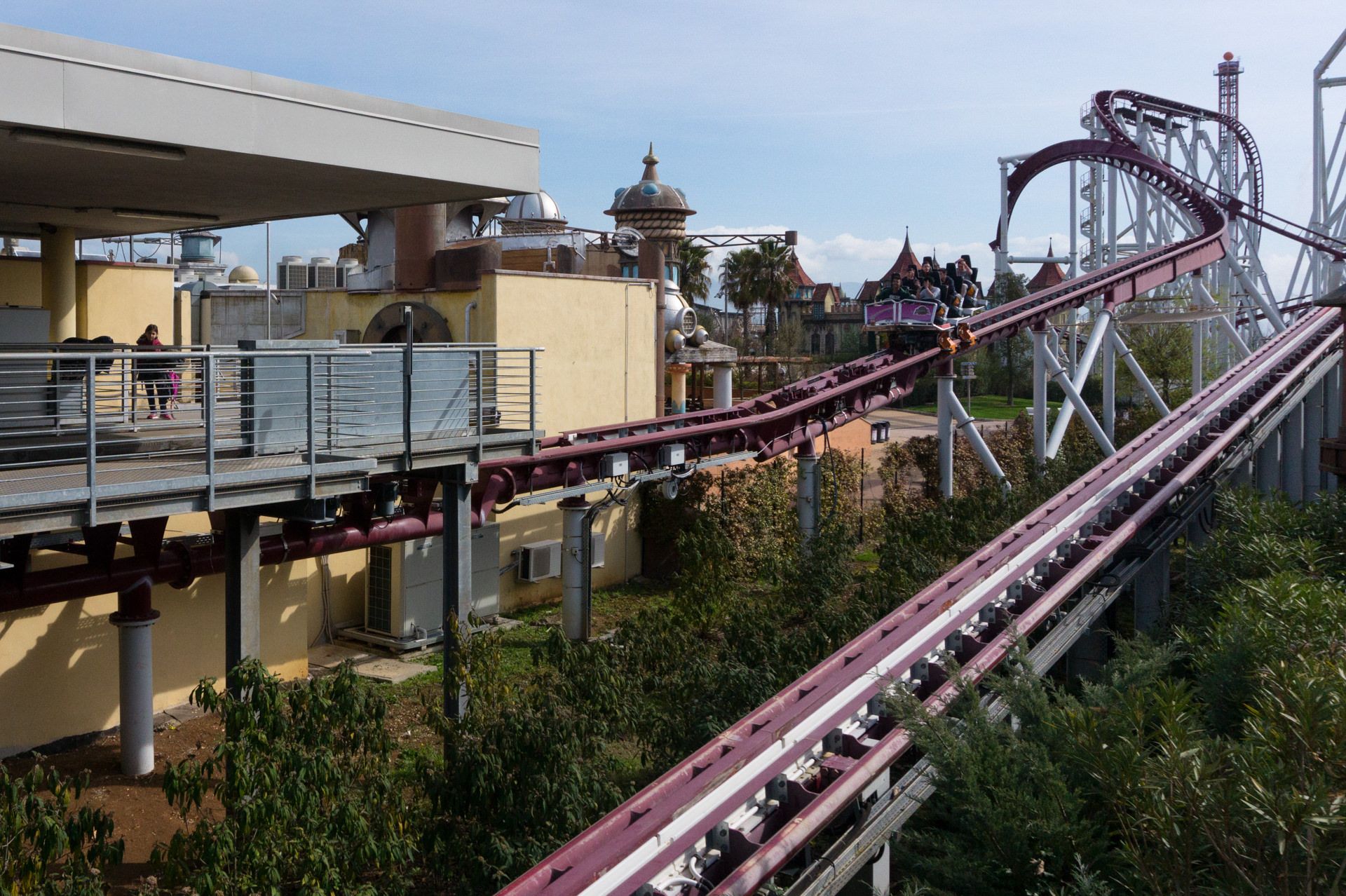
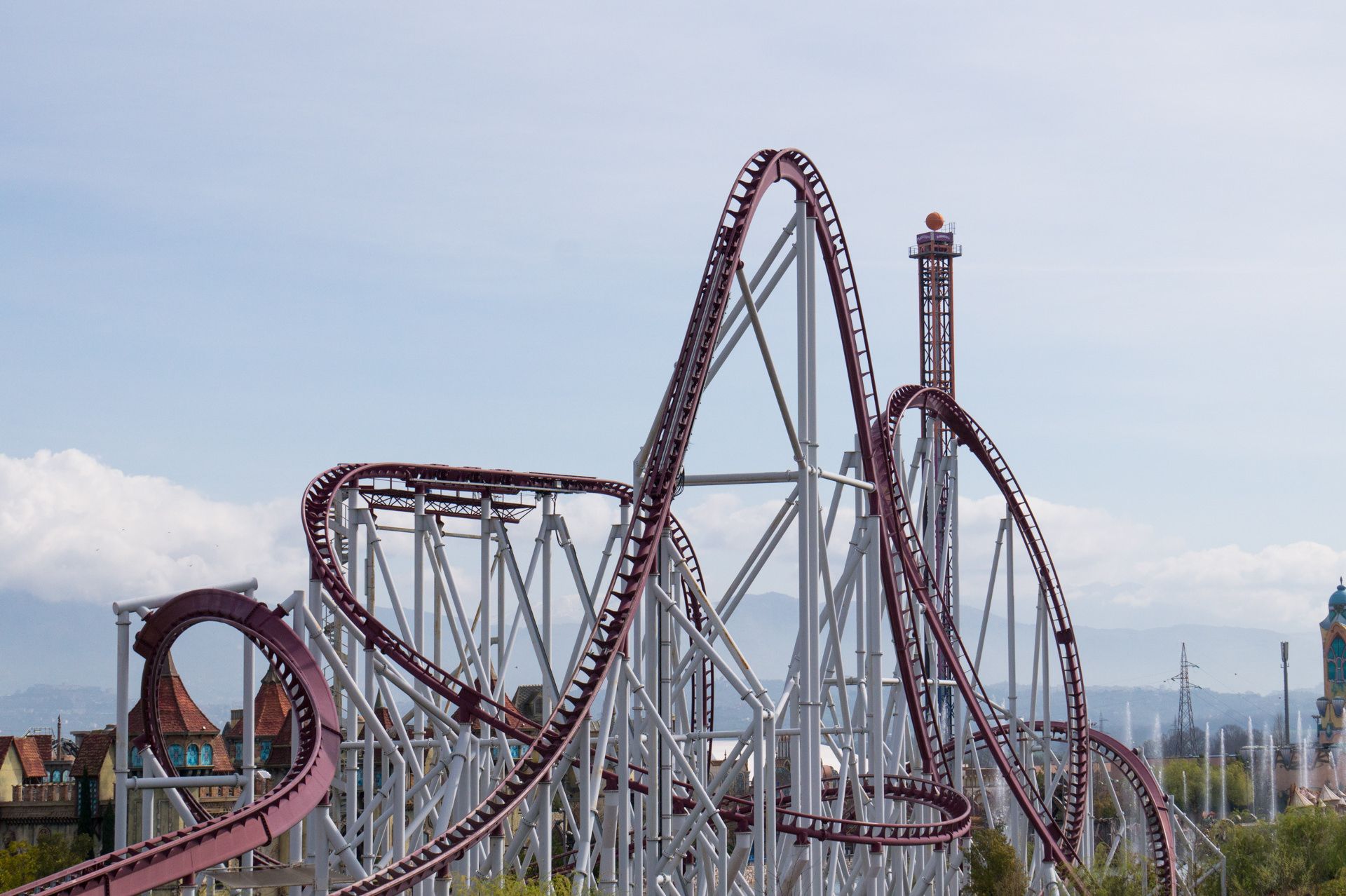
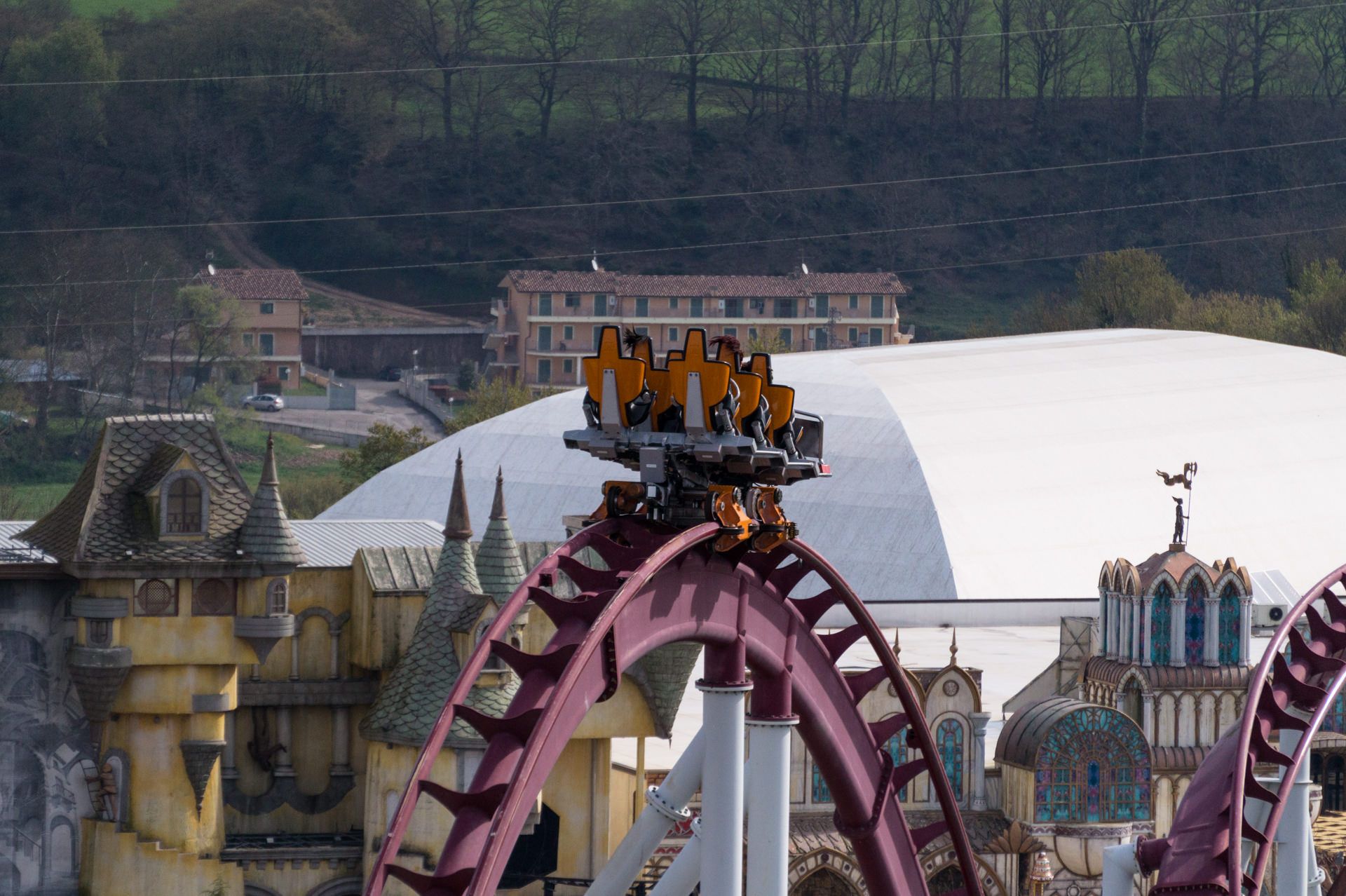
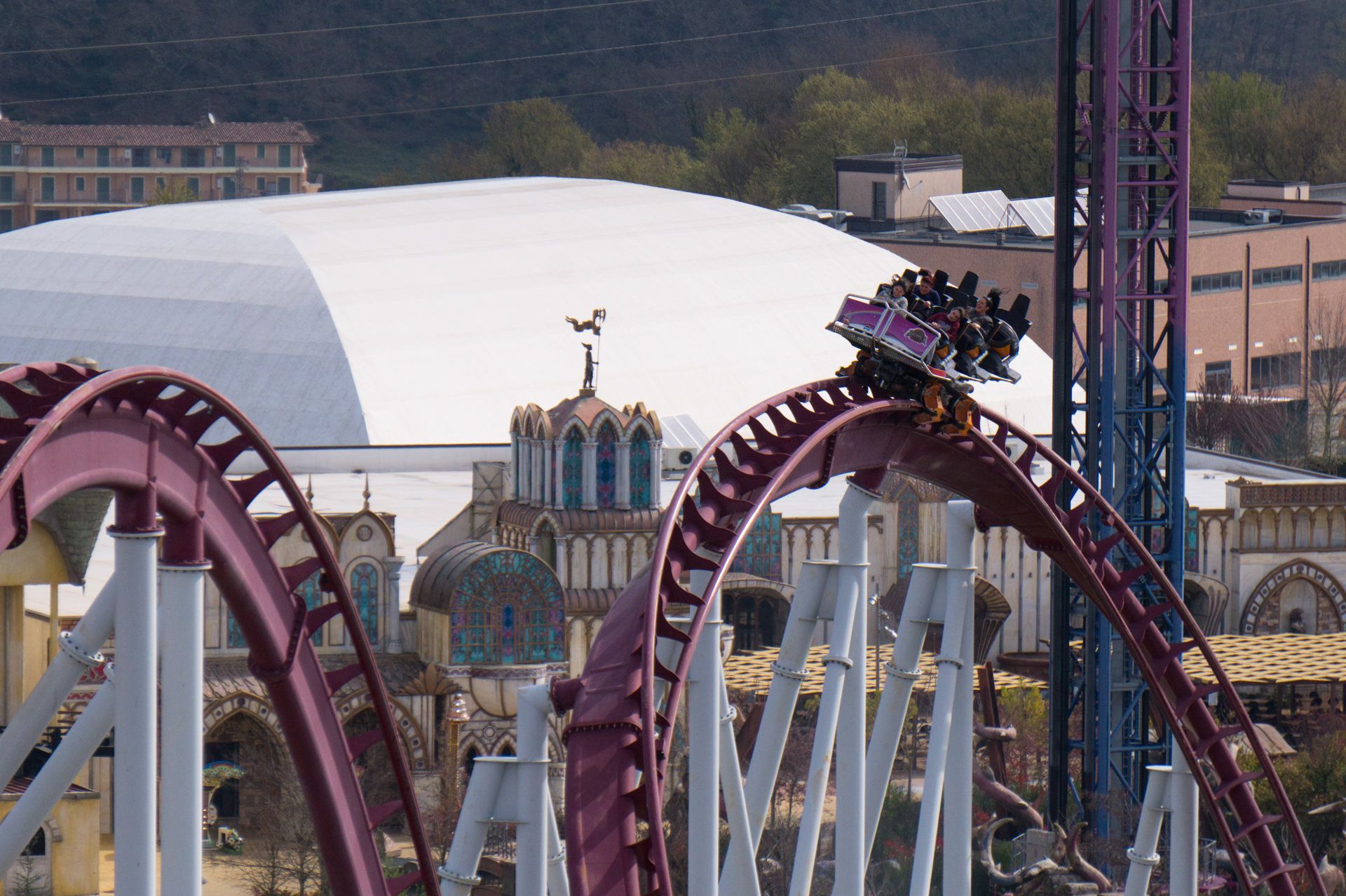
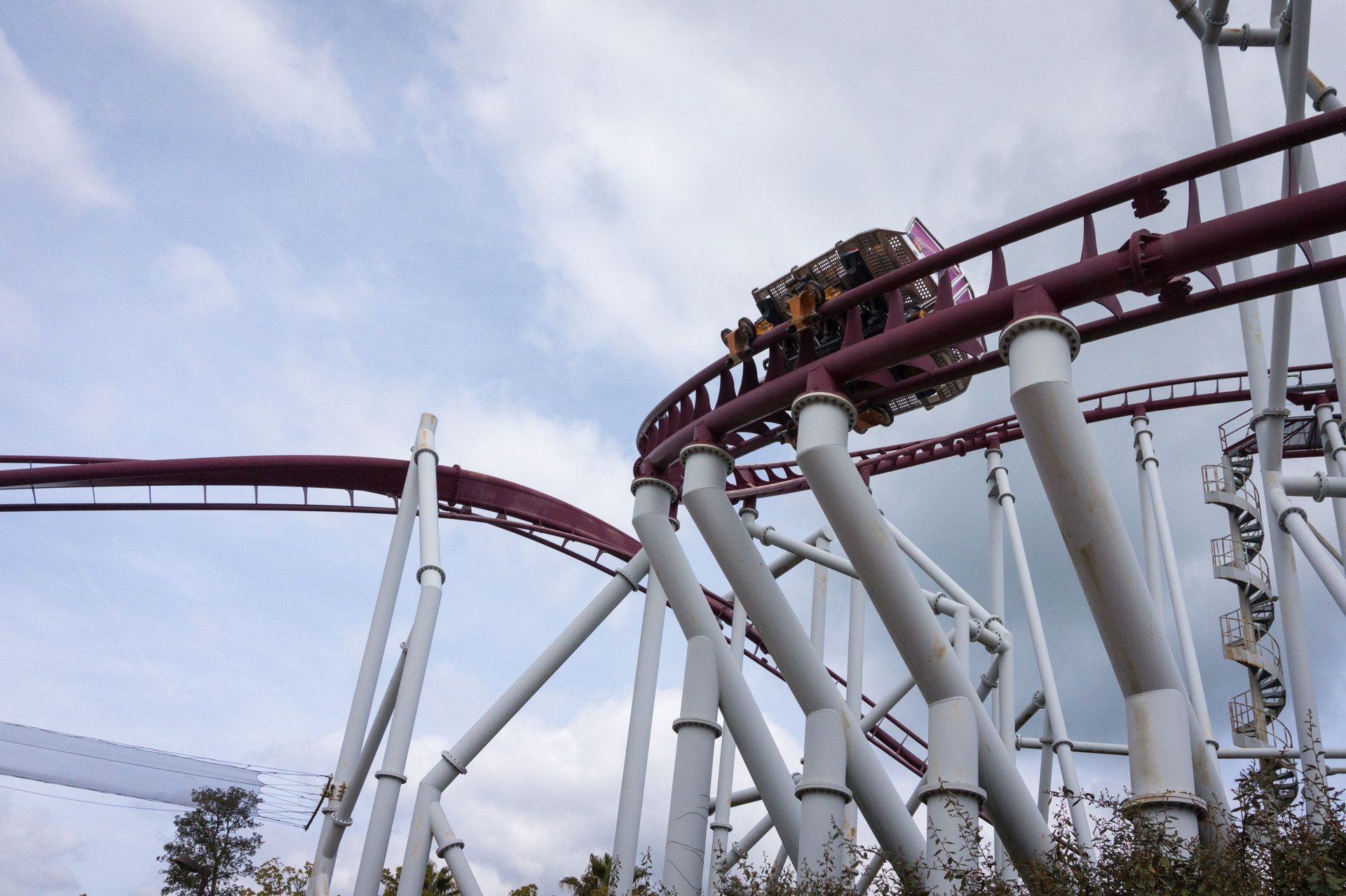
But what the park hardly lacks is an extensive range of rides and so we headed straight for the launch coaster Shock, built by Maurer. With its unparalleled forest of pillars and the very present location directly at the central lake of the Rainbow Magicland, the ride is an extraordinary eye-catcher, which in combination with the very impressive water spectacle forms a harmonious ensemble.

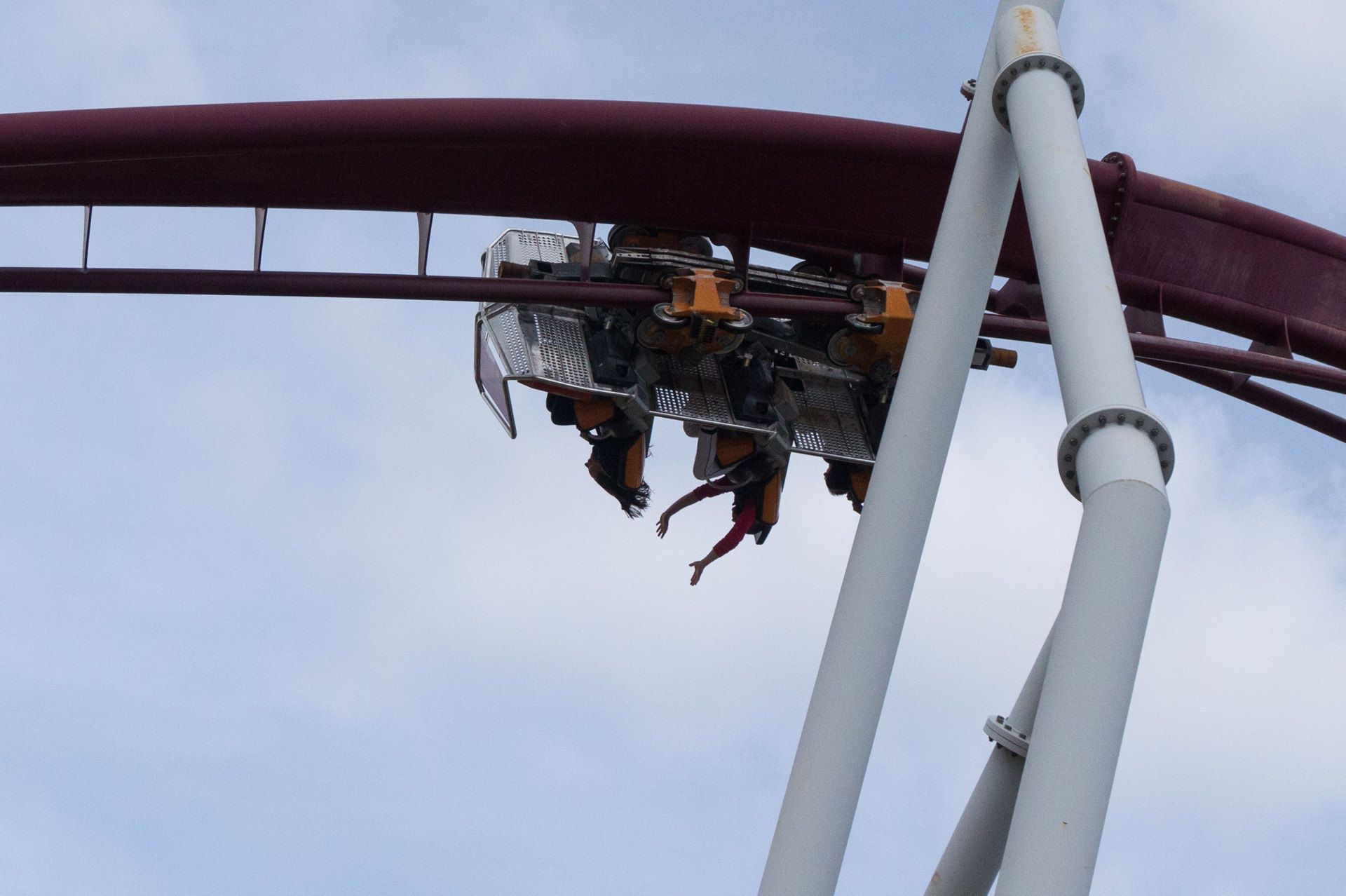
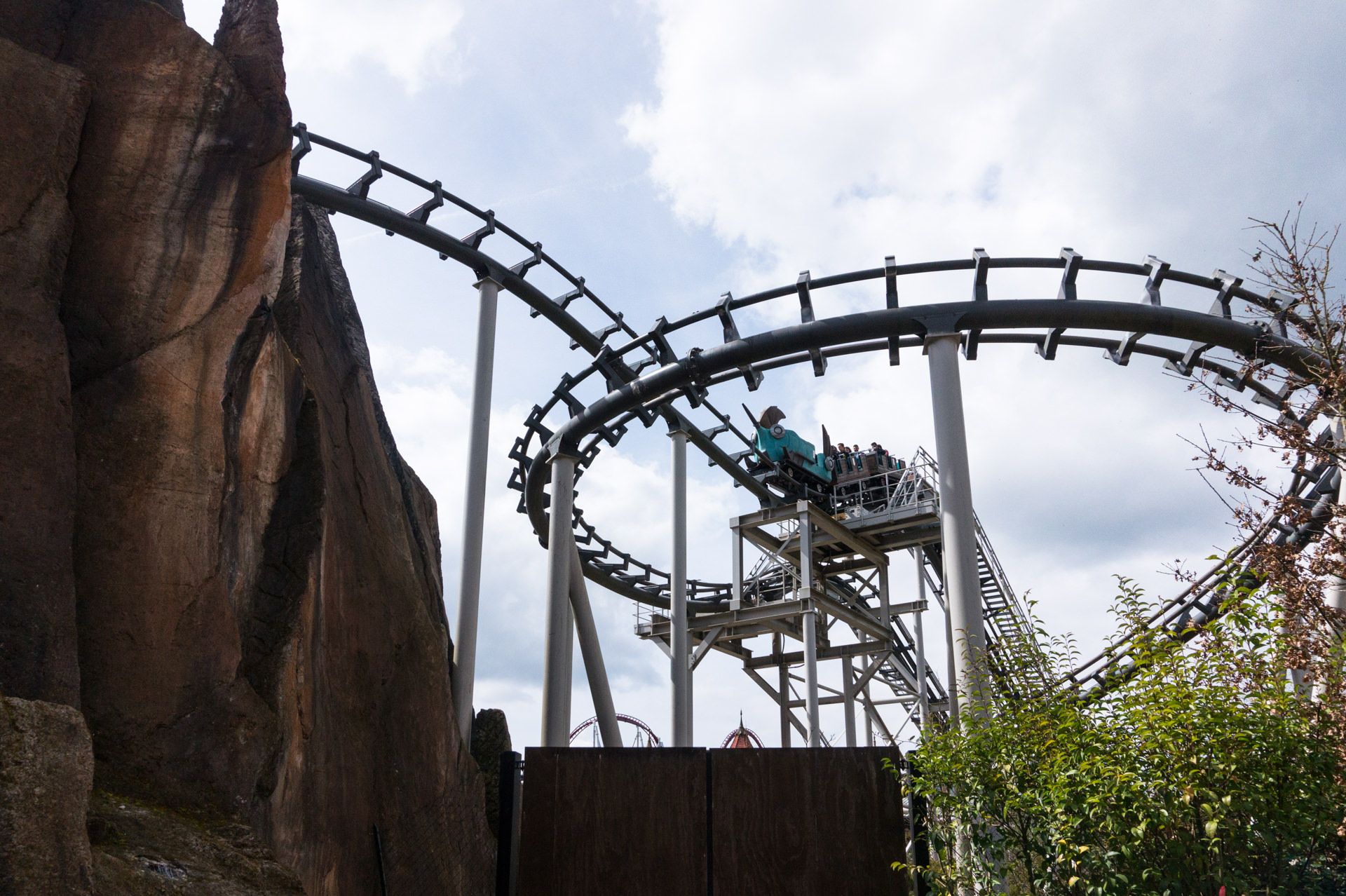
The trip begins with a short dip out of the station. This is followed by several ascents and descents in a slight serpentine movement, which are all interrupted by a short block brake section in between, probably simulating the darkride part of the ride. After having passed this unharmonious curve, the car falls down another slope and is accelerated in the following launch section. The car then goes over a hill in which it takes off quite well before it hits the ground for the first time from a lofty height. Very powerful and with a breakneck speed you cross the following valley. The main element of the ride is the non-inverted loop, where you shoot up a loop, but without standing upside down. On the top of the hill you experience another airtime moment of the very first order, just before the car bends to the left again and plunges into the depths. At the lowest point of the ride you experience once again an exemplary power play, which is soon topped by a brilliant steep curve. After a curvy ascent you reach a block brake and lose some energy, so that the next curvy shot is quite comfortable. In a light Bayernkurve a long corkscrew is introduced, where you are allowed to hang in the bar a little bit before the braking distance is reached.

Shock surprised! Especially in comparison with the other X-Car Coasters the ride is convincing all along the line. Here, the bar does not pull on the body unpleasantly during the ride and exceptionally allows a very free ride without the urge to leave the ride on the fastest way. The curve radii are also very wide, so that the massive car hardly feels the need to bump over the track. The strong forces and distinct airtime make this ride the best roller coaster of Rainbow Magicland and one of the better ones of the country.

Isola Volante

In the immediate vicinity, the Vekoma Sky Shuttle Isola Volante transports its passengers towards the sky, while the view of the park, car park and the nearby designer outlet Valmontone is not very exciting; however, the technology itself is worth experiencing, above all because of the easier implementation compared to the competing product.

Planeta Winx

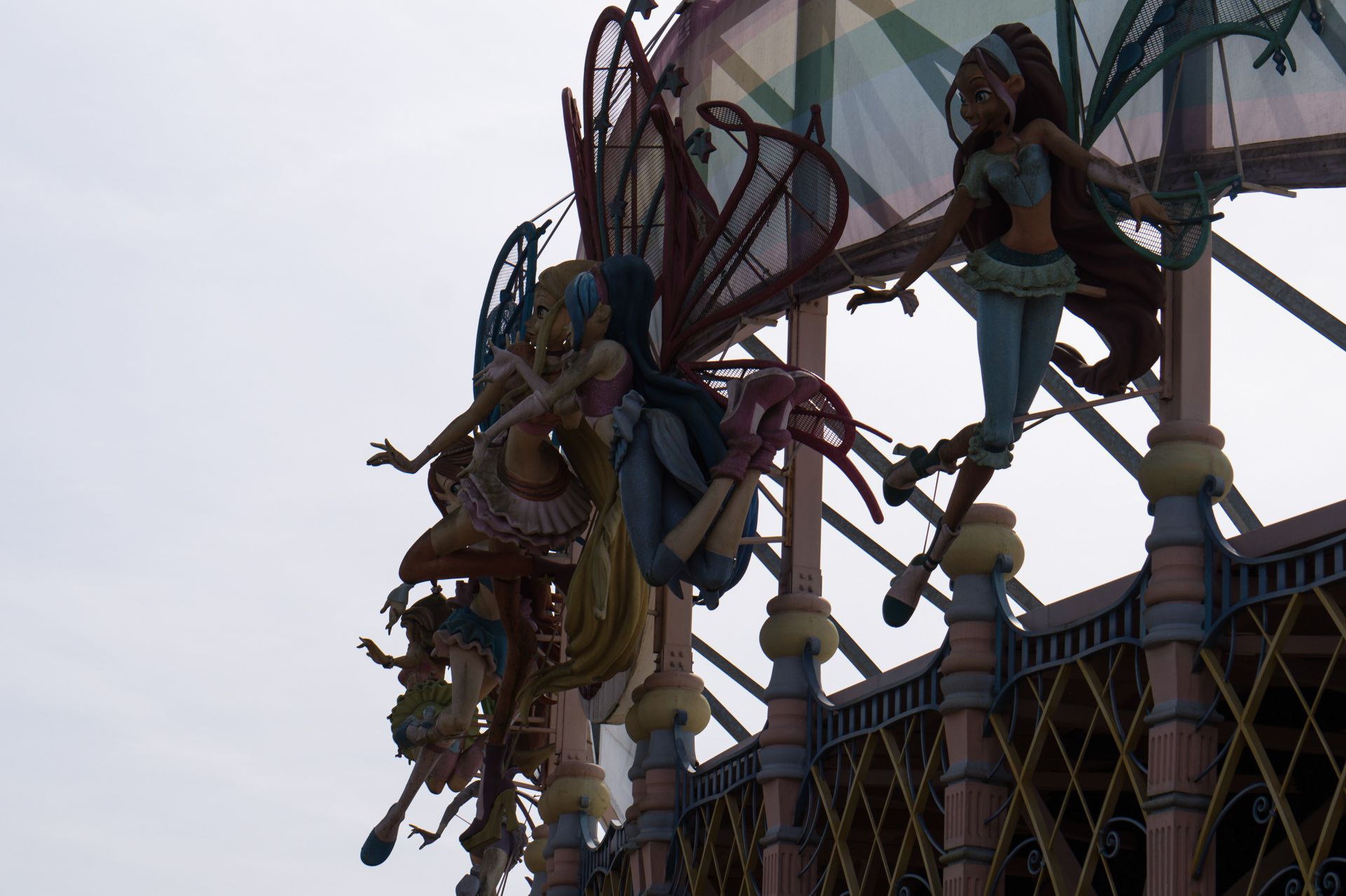
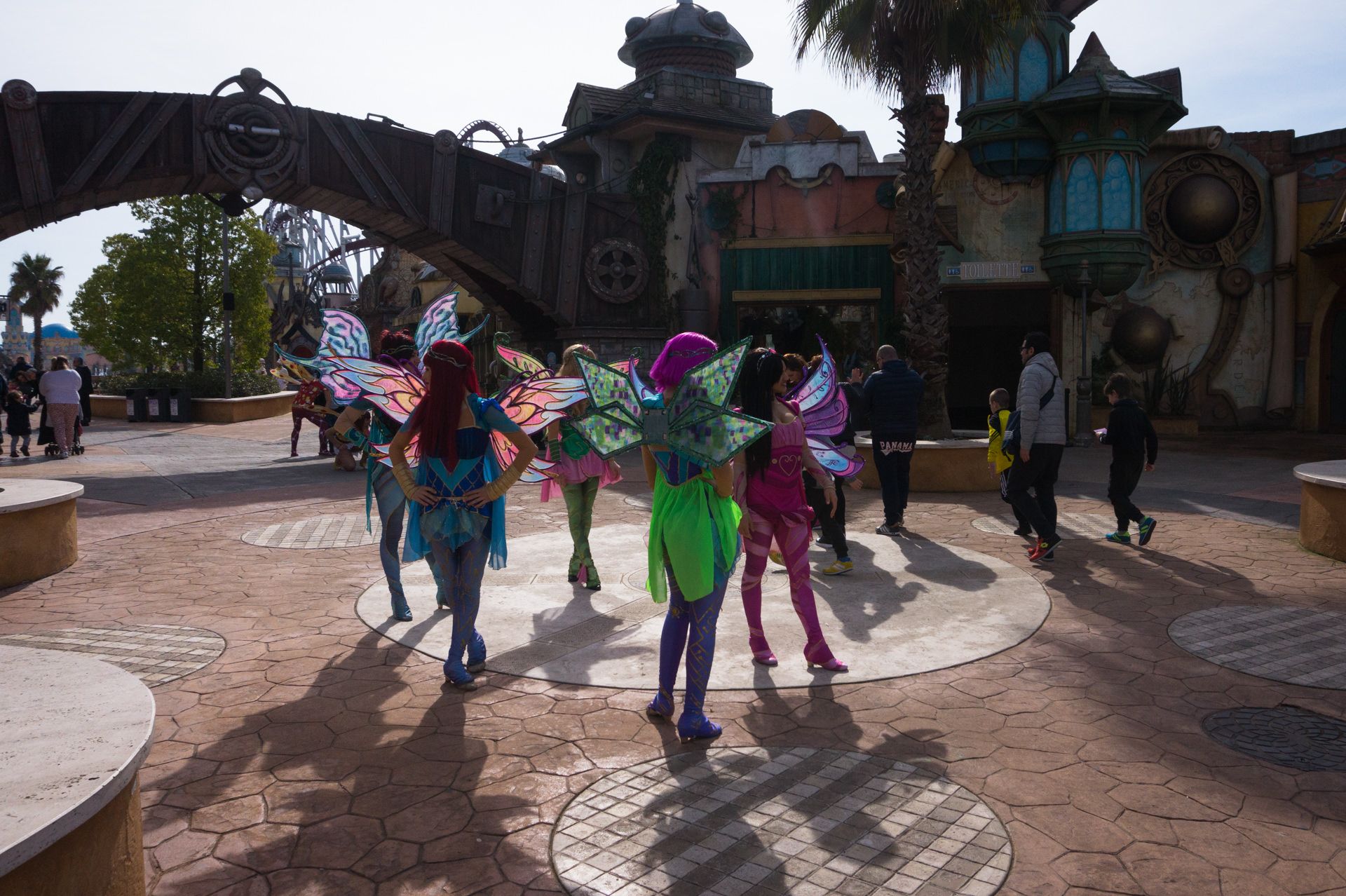
Rainbow’s most famous children’s series is probably by far the Winx Club, which was primarily designed for little girls and even has its own magazine on the magazine shelves here in Germany. Although the Castello du Alfea, a large building complex with a 4D cinema, is dedicated to the series, halfway to the artificial castle is the dark ride Planeta Winx. Similar to the Disneyland classic Peter Pan, you fly through the series’ sceneries. The ride itself is nicely designed and from time to time you will meet the main actors of the series, who always introduce the scenes from their element.

Bombo

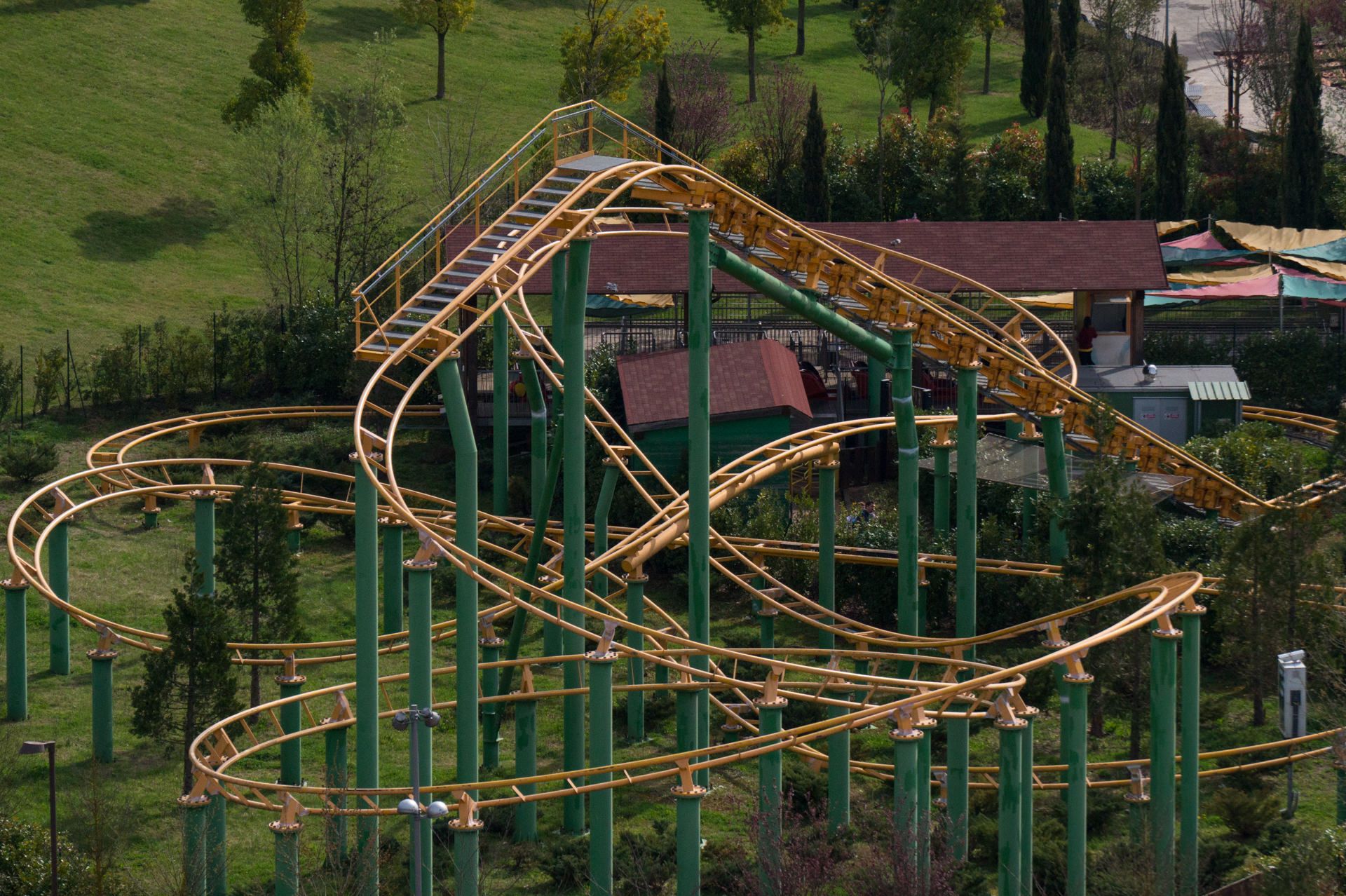
Directly opposite is the roller skater Bombo, part of the series Monster Allergy, a co-production with ZDF, which runs on the Kinderkanal and has no special drawing style; accordingly, the standard model from Vekoma fits in quite well. After a short bend and the following lift hill, you immediately take a steep bend with a subsequent upward helix to the left, complete a short valley and then go through a wide right bend near the station. Over a hill you cross the course of the track that has just been cleared, whereupon you descend a little in another helix. A left turn follows, whereupon the braking section is waiting for you. After one lap the ride is already over. Despite the modern train, the driving characteristics are not the best.

Maison Houdini

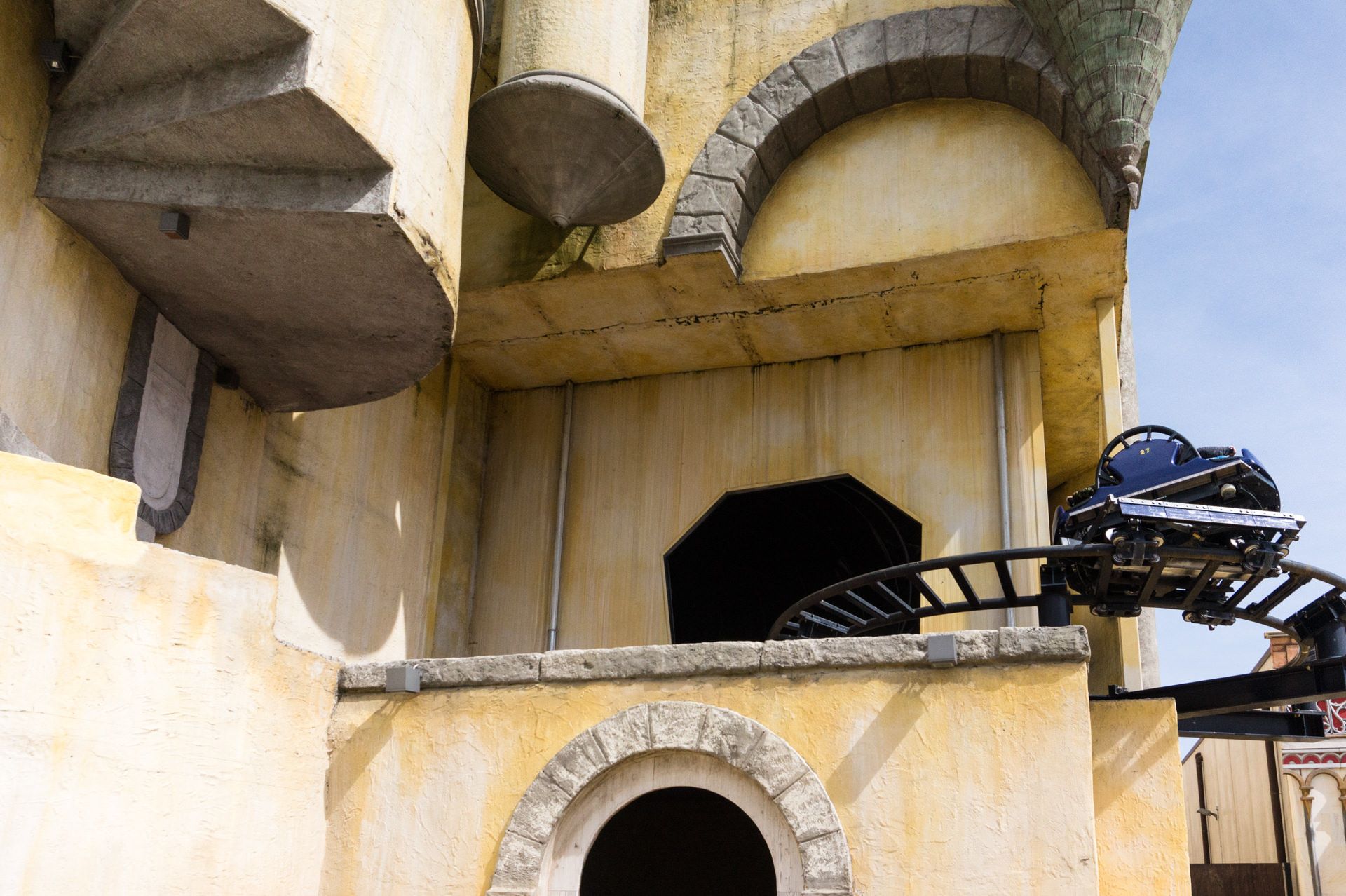
If you follow the tour, after a few metres you will come across the Maison Houdini, a modern witches’ swing from Vekoma, which, for whatever reason, was built underground. The main building, as it appears, contains only the preshows of the ride and the lift that takes passengers downstairs. A few meters further on, there is a second building in a similar style, which contains the lift, which transports the passengers back up. In between there is a square with skylights and ventilation shafts, under which the actual ride is located. Since the ride opened quite late we could not test the Mad House; the idea of the underground attraction is great, but the implementation is space consuming and probably also quite cost-intensive, the gained space also defies any logic and aesthetics.

Amerigo

Adjacent to this is the children’s area of Rainbow Magicland, which belongs to the second type of modern children’s paradise in amusement parks. Compared to the nicely designed areas in Gardaland or Port Aventura, everything here stands quite naked on a concrete slab. In doing so, an attractive overall design as well as any vegetation was avoided. Unfortunately, the local Big Apple Amerigo was not supposed to open until late afternoon, so that we had to do without a ride in order not to throw the rest of the day overboard. I don’t really know why this simple children’s roller coaster is the only ride in the park that opens so late.

Mystika

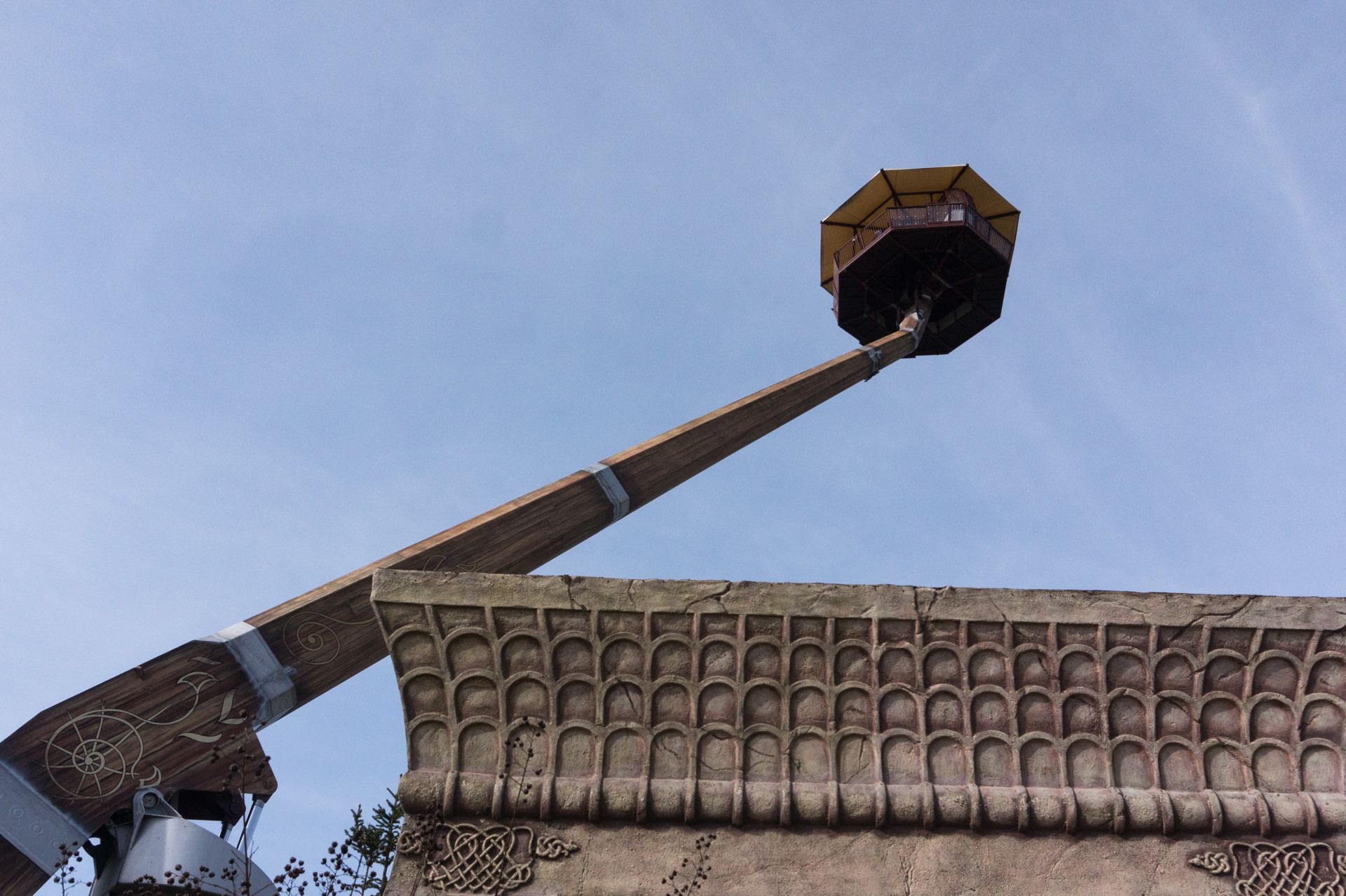
Past the Battaglia Navale, the nicely designed Splash Battle by Preston & Barbieri we went to the freefall tower Mystika by SBF Visa. This Italian manufacturer is known for its toddler roller coasters and lots of junk, which is mostly ordered by park managers without any experience; the best example is the Ankapark (Wonderland Eurasia) currently under construction near the Turkish capital Ankara. Also in Rainbow Magicland they probably wanted to offer a big freefall tower, but at the same moment it was not allowed to cost anything. Otherwise the tower with a total height of 70m, of which at least 50m already serve as braking distance, cannot be explained. The drop itself is bad, in addition there is a very unpleasant restraint system installed.

Cagliostro

With the right seat you have at least a view of the two neighbouring roller coasters, whereby the entrance to the spinning coaster Cagliostro is closer. Admittedly, you can’t see much from the spinning coaster outside the abstractly designed hall. Inside, too, you’re really only looking at darkness, although all efforts in this respect were ruined by the outside turn.

After the lift hill and the already mentioned detour out into the daylight there is a steep curve towards the hall floor after a gently descending straight section. Hereupon the car shoots up an Immelmann turn, whereupon the following valley and the ascent to the block brake is made in a wonderfully sweeping S-curve. After the block area, however, not much happens. Over wide curves you cross the whole hall and then approach the ground. In pure zigzag manner a straight section is taken, whereupon you are again at the front end of the hall. After another short curve you reach the second and larger lift hill of the ride, which brings you back to the station level.

Cagliostro is a nice spinning coaster, at least in the first part of the ride, but then it loses all inspiration and comes crawling towards the end of the ride like no other coaster of this type. Probably a more elaborate design with larger scenes was intended here, because there is still enough space in the hall, but without all this the ride with this layout is quite senseless and not very exciting.

Huntik 5D

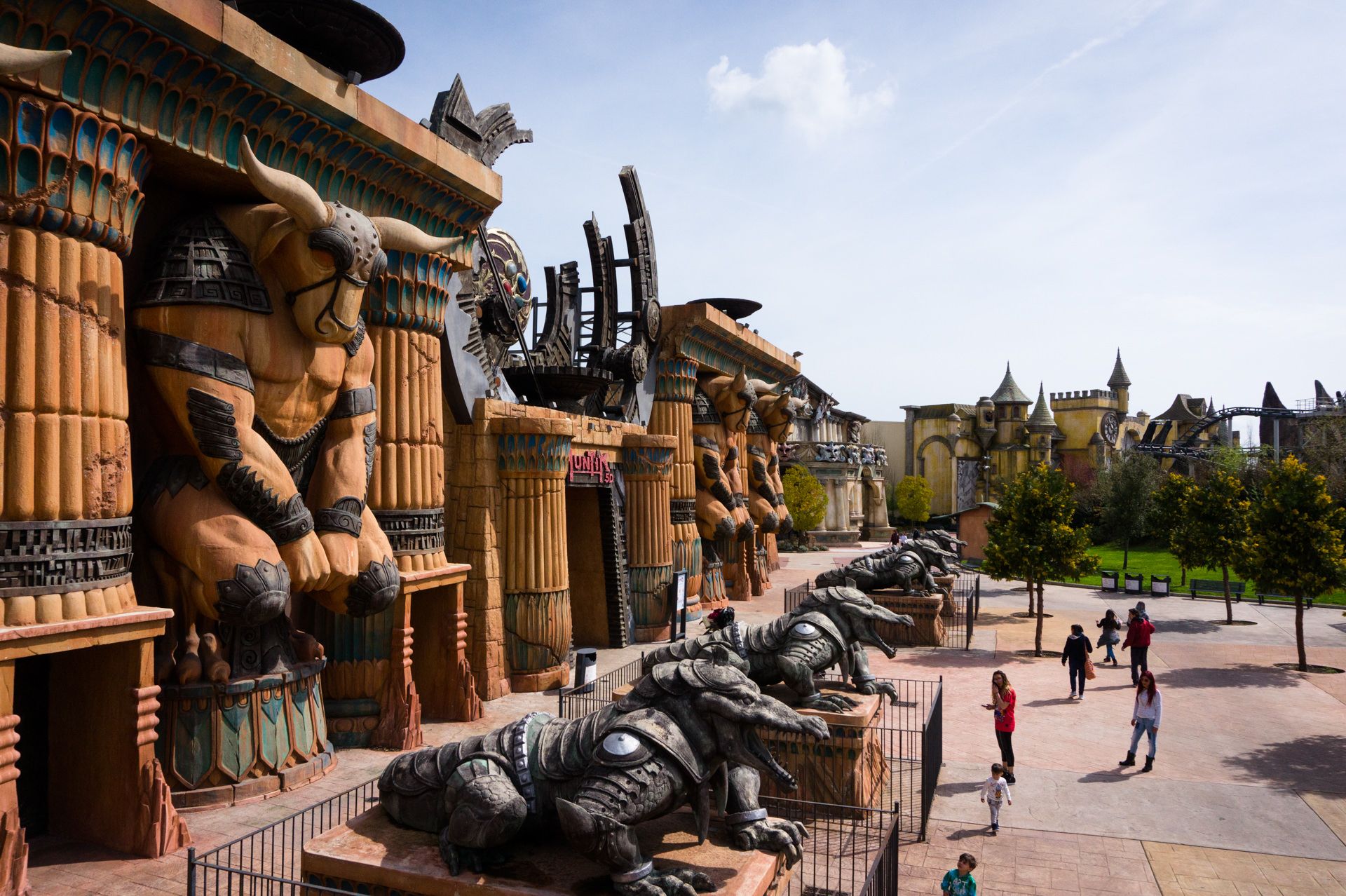
Right next to the Gran Teatro, where the musical Romeo & Juliet by Gérard Presgurvic is shown in a 35-minute performance, is the dark ride Huntik 5D, based on the series of the same name. As seekers, we join the team around Dante, Lok, Sophie and Zhalia to fight against the organisation. For this we use guns to shoot our way through elaborately designed scenes with successful animatronics and well embedded screens through hordes of titans. What is confusing, however, is that our team also uses titans and these appear on the screens at the end. If you are not familiar with this series, this is rather unnecessary, as it spoils the otherwise perfect impression. The series reference is very well done, but you don’t have to know the series to enjoy this great shooting darkride from Alterface. Huntik is definitely the best ride of the Rainbow Magicland and one of the best dark rides of this kind in Europe.

Yucatan and Le Rapide

At least from the outer facade, the Spillwater Yucatan presents itself to its passengers on an equal level. With its two shots, the water ride is one of the driest rides of its kind in Europe; however, there is something for the eyes, especially during the second turn. If you want to get wet, however, you are in good hands at the neighbouring Rapid River Le Rapide. Here too, the design is impressive, which is why the ride is one of the best of its kind in Europe.

L’Olandese Volante

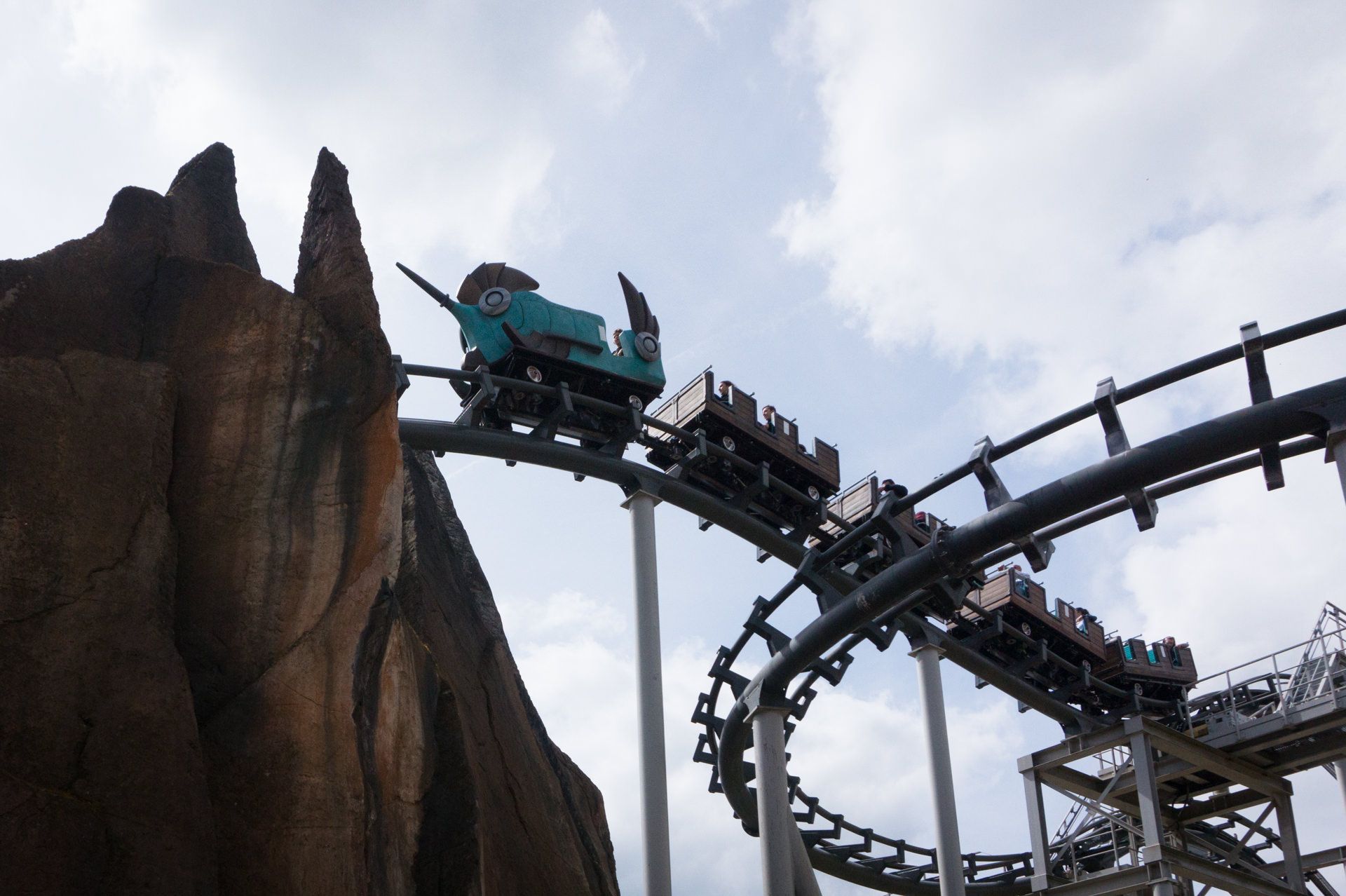
The last remaining roller coaster is the L’Olandese Volante, i.e. the Flying Dutchman; appropriately built by the Dutch roller coaster specialists Vekoma. The ghost ship flies noticeably and now even with VR glasses over the track of the standard model based on the prototype Calamity Mine of the Belgian amusement park Walibi Belgium.

The ride begins with a right turn and the following lift hill, which unfortunately takes you up in a very straight line, just like in Gardaland; nothing remains of the accentuated cross slopes of the original in this version. At the top, the train immediately throws itself into a left helix and alternately into three 180° curves before reaching the first intermediate brake and the second lift hill. This hill is also passed just as trivially as the first one. At the highest point of the track you cross a short hill and immediately approach the ground again in a wide right helix. In a left-hand helix you build up again in metres of altitude before you take it down again in another downhill helix. After a further left turn, you immediately reach the braking distance and shortly after that the station.

When Rainbow Magicland and Vekoma were looking for a way to square the circle on this ride, they succeeded. There is simply no other way to explain this bumpiness – unusual even for the manufacturer – which the train reproduces to its passengers over the entire track length. Well, even Mammut in Gardaland was not really smooth, but L’Olandese Volante simply tops everything in this respect. I have rarely ridden such an unpleasant roller coaster, which is why I really have to advise against a ride on this coaster.

Pictures Rainbow Magicland

Conclusion Rainbow Magicland

The Rainbow Magicland blinds like no other park with its opulent, but already quite disintegrating facades, but it can also show some rays of hope. Apart from the dark ride Huntik 5D and the roller coaster Shock, Rainbow Magicland lacks some highlights that encourage you to take more than one ride. With the extremely ugly children’s land and the Big Apple, which was closed until late afternoon, the park also offered a low light par excellence. It is no wonder that the park is the way it is.


What are your thoughts about the theme park Rainbow Magicland? Just write it here below the report in the comment field or visit our social media channels:


Click here for the next report of the Il Viaggio dei due Runner Tour