The Pulsing Waters of Walibi Belgium

Preface

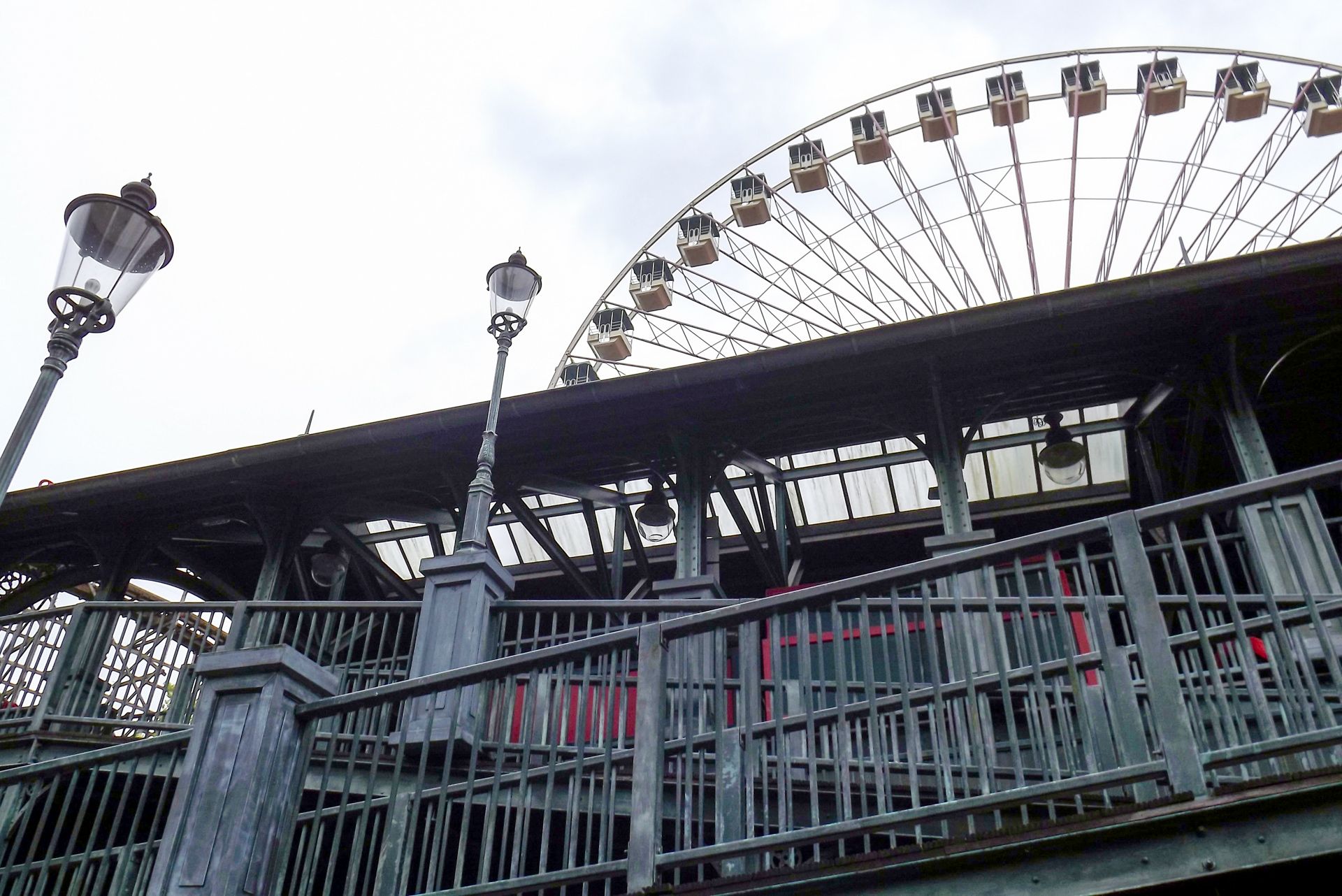
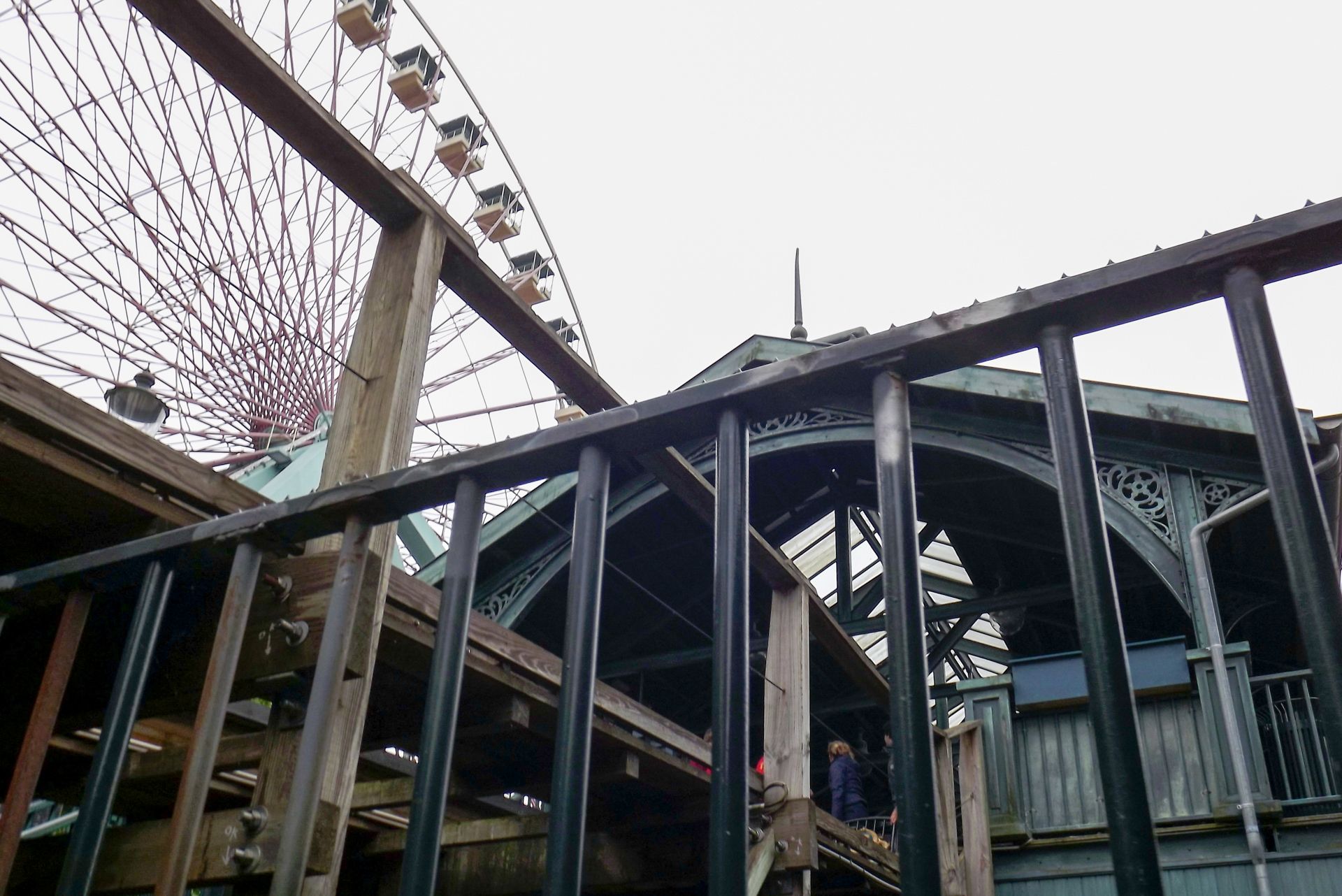
It is rare that a concept where you always ask yourself how it actually works is put into action. It is even rarer if this is done by a park, which has already gained quite negative experiences. Well the Doppelmayr cable car coaster Vertigo, which was put into Walibi Belgium 9 years ago, is said to be quite fun on the few open days back in May of 2008; This was nevertheless a disaster on both sides. This time, however, the ride comes from the traditional roller coaster company Mack Rides. Therefore, the chances for another debacle were rather low with Pulsar. The Power Splash can be roughly described as a shuttle coaster, i.e. a roller coaster without a closed circuit, with a watering towards the end of the journey. What should go wrong, especially when the park knows a lot about shuttle roller coasters? Nothing!

Pulsar

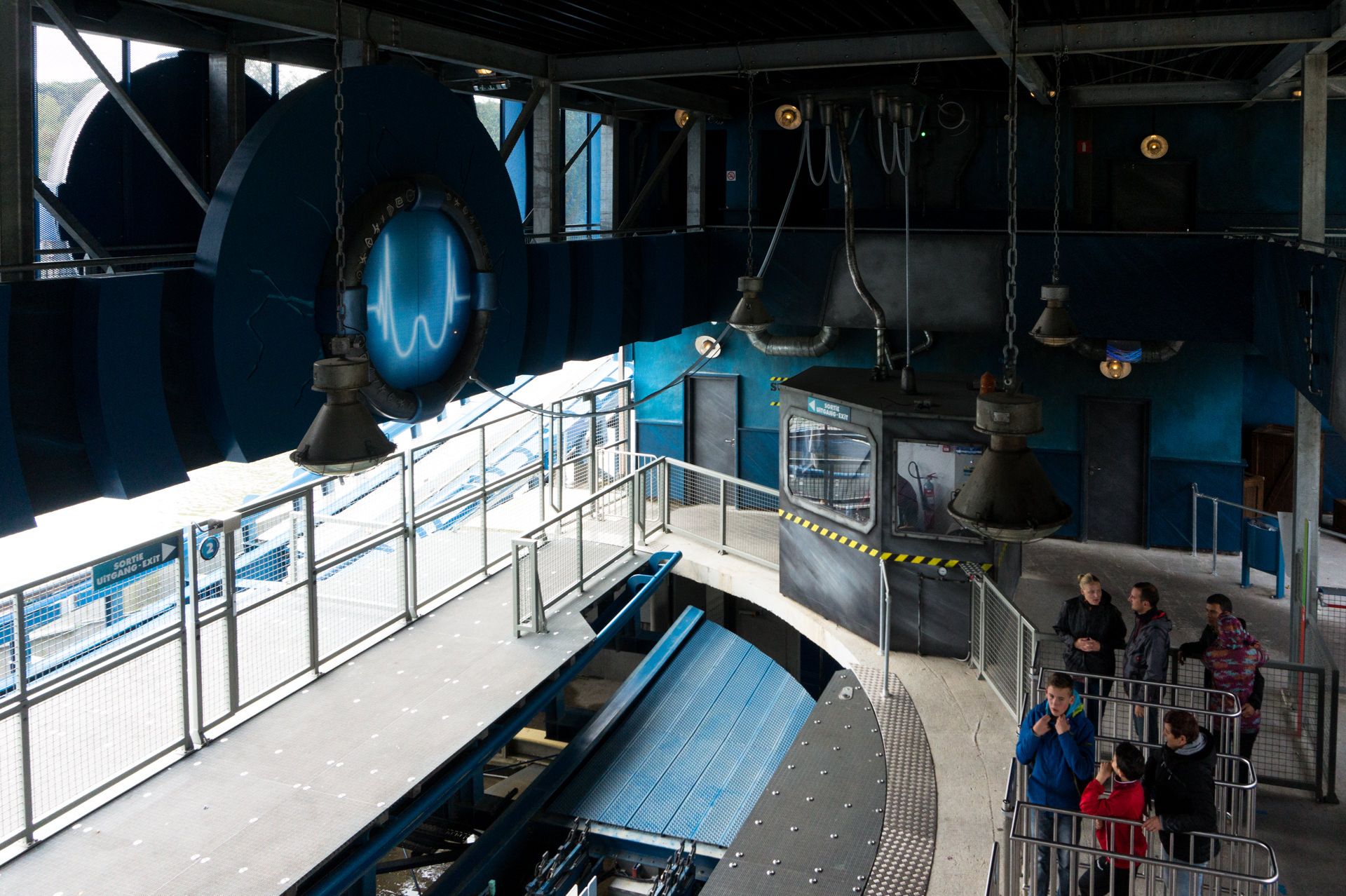
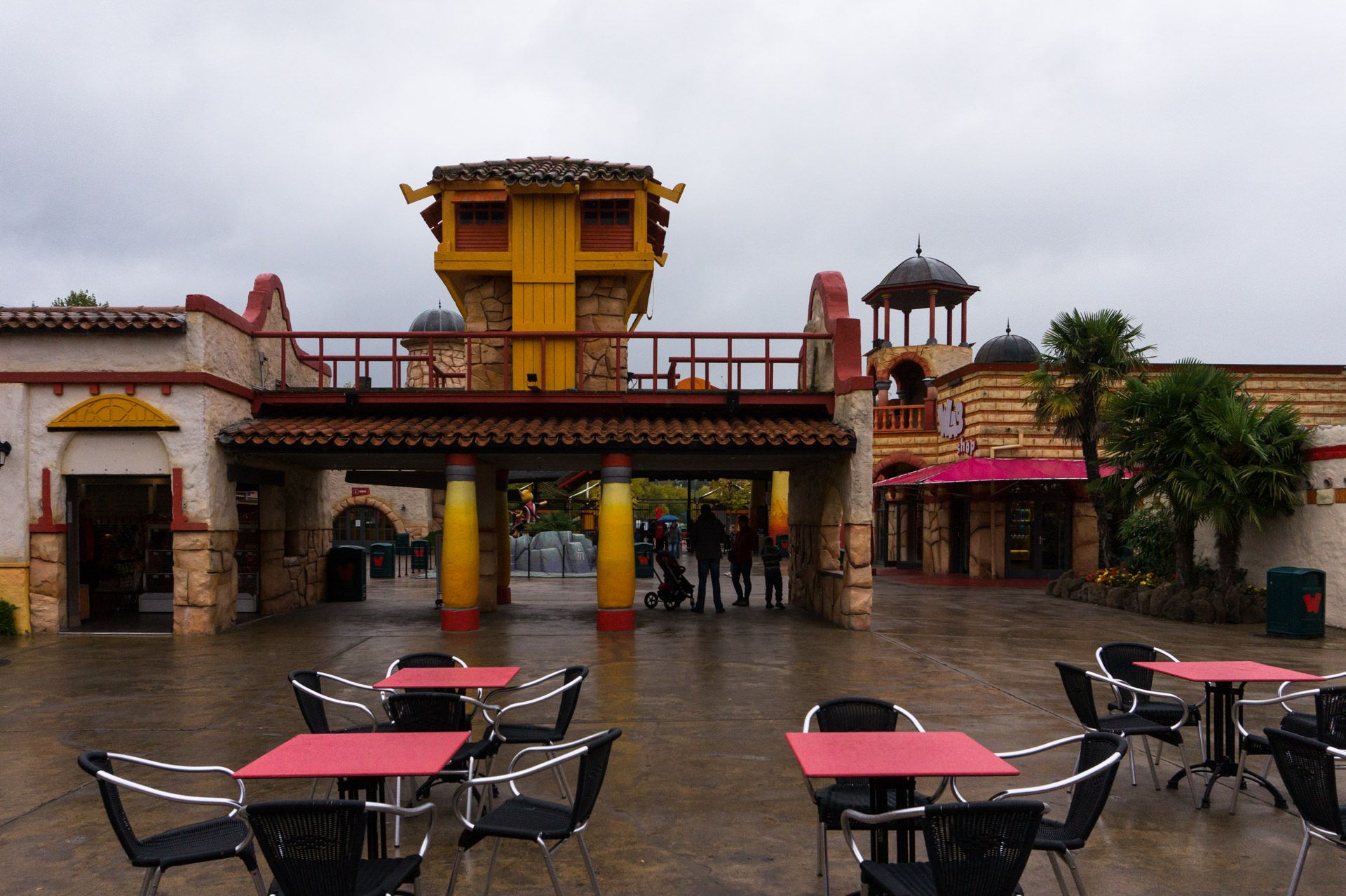
Thematically Pulsar represents a machine (in the form of a beating heart), whose destructive energy is derived via a roller coaster at regular intervals. The nice thing is that the visitors are the missing component to make all of that possible. The story plays in the same universe that was created to restructure Walibi Belgium in 2011; So no “F*ck Slow, #Hard Gaan”, as in the Dutch sister park. In general, the audience in Walibi Belgium is now very pleasant; but it may also be that unwanted crowds of visitors (I remember times when the cashier was regularly insulted as “fils de pute”) fail to comply with the additional security measures all around in Belgium.

After walking through the queue on the upper floor (or as a Single rider just a few meters till the turnstiles) you are already divided into one of the five rows. You store your luggage in the shelves on the right side of the station and wait for the next arriving boat. The boarding is done very quickly thanks to automatically closing lapbars, so that only a few moments pass before the 20-passenger boat – accompanied by the heartbeats of the machine – is rotated towards the actual track.

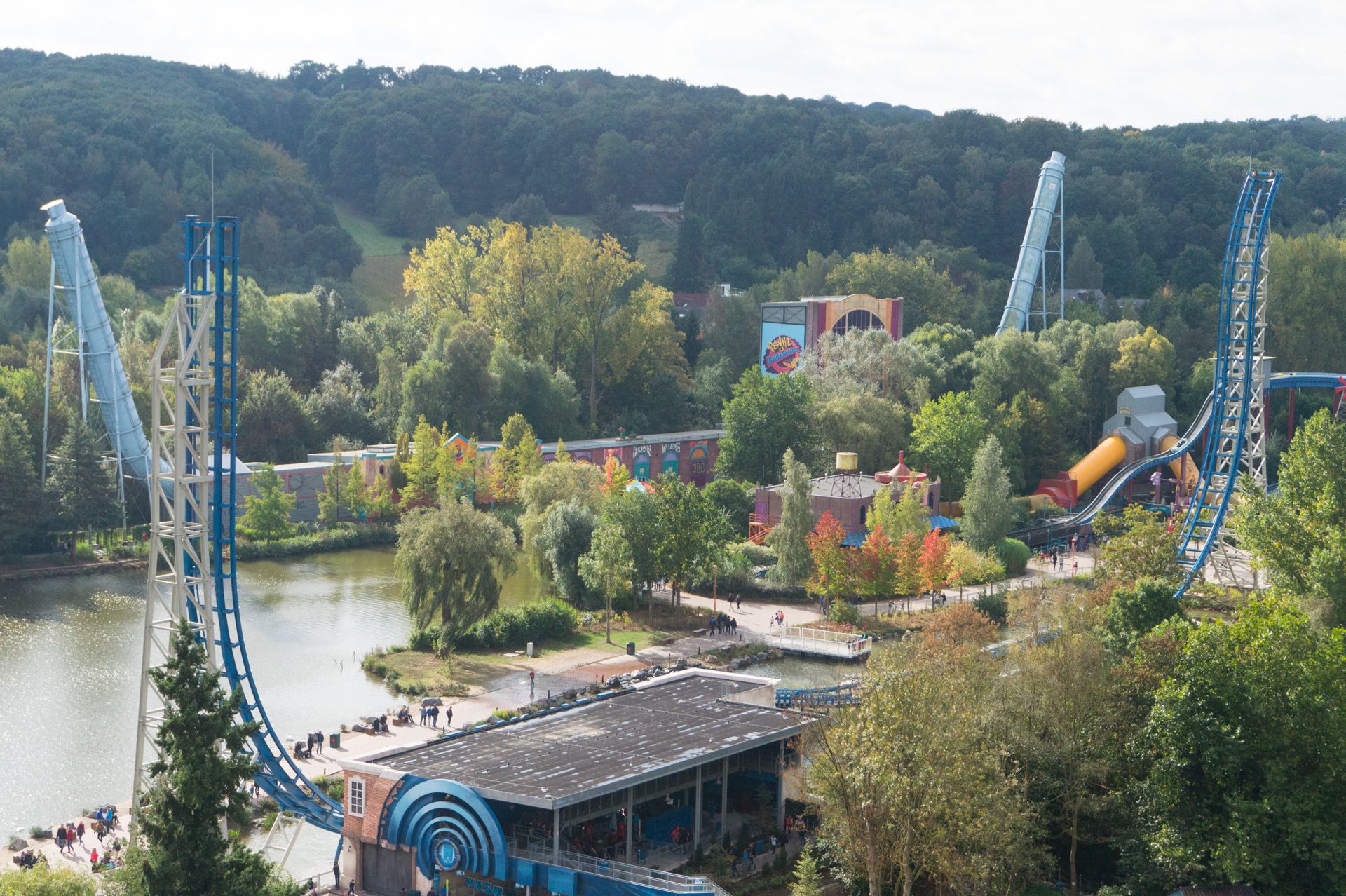
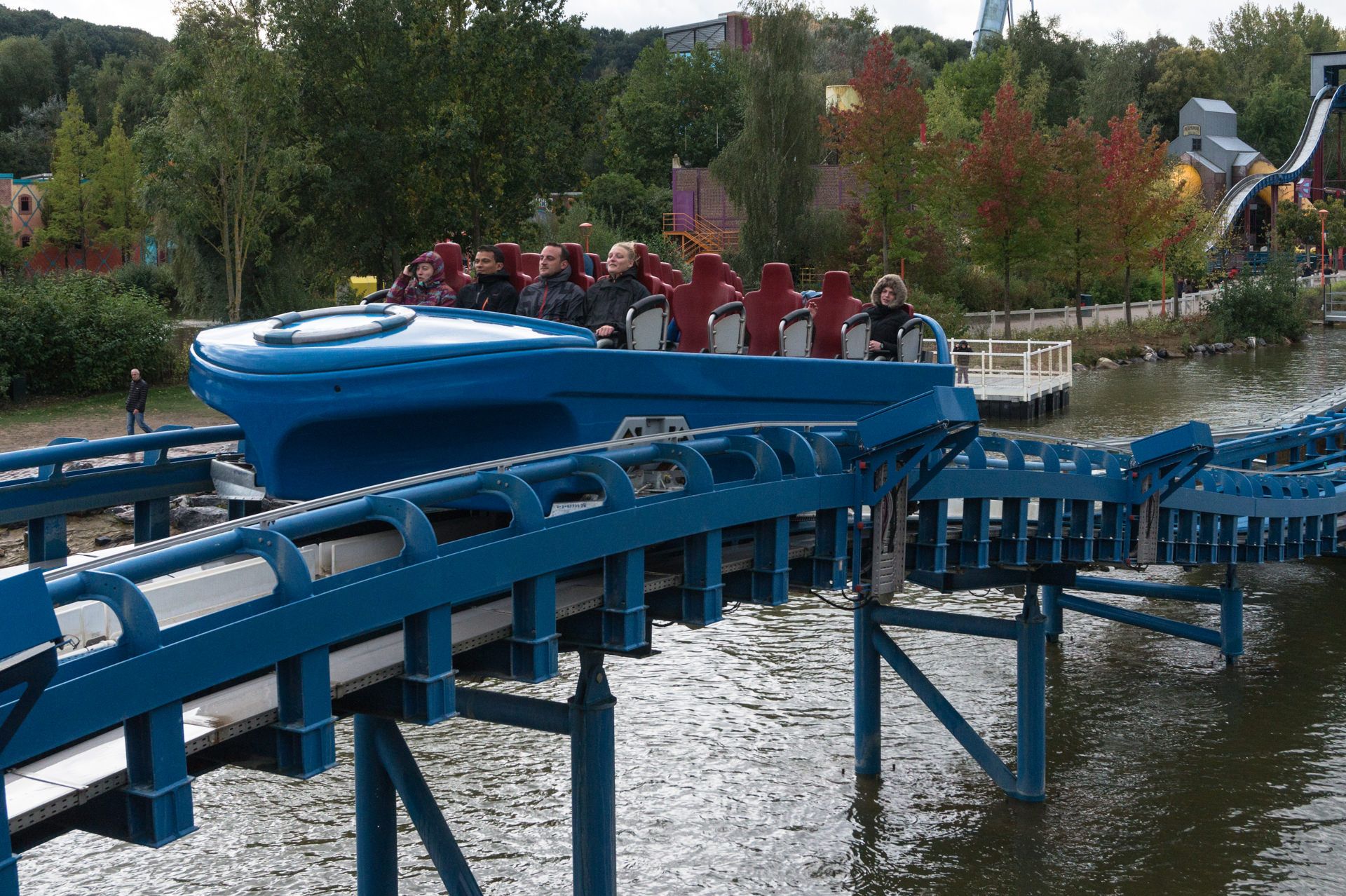
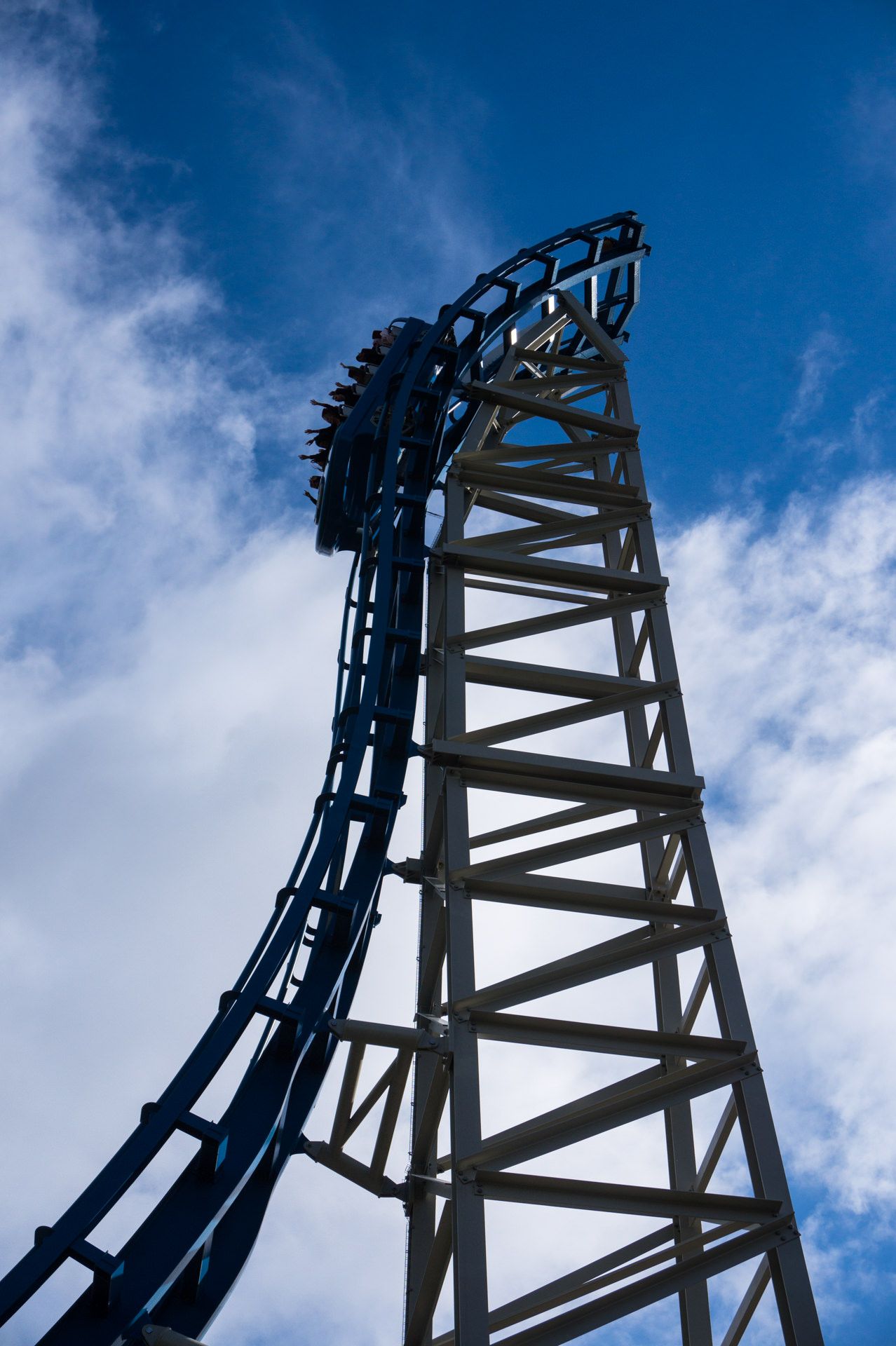
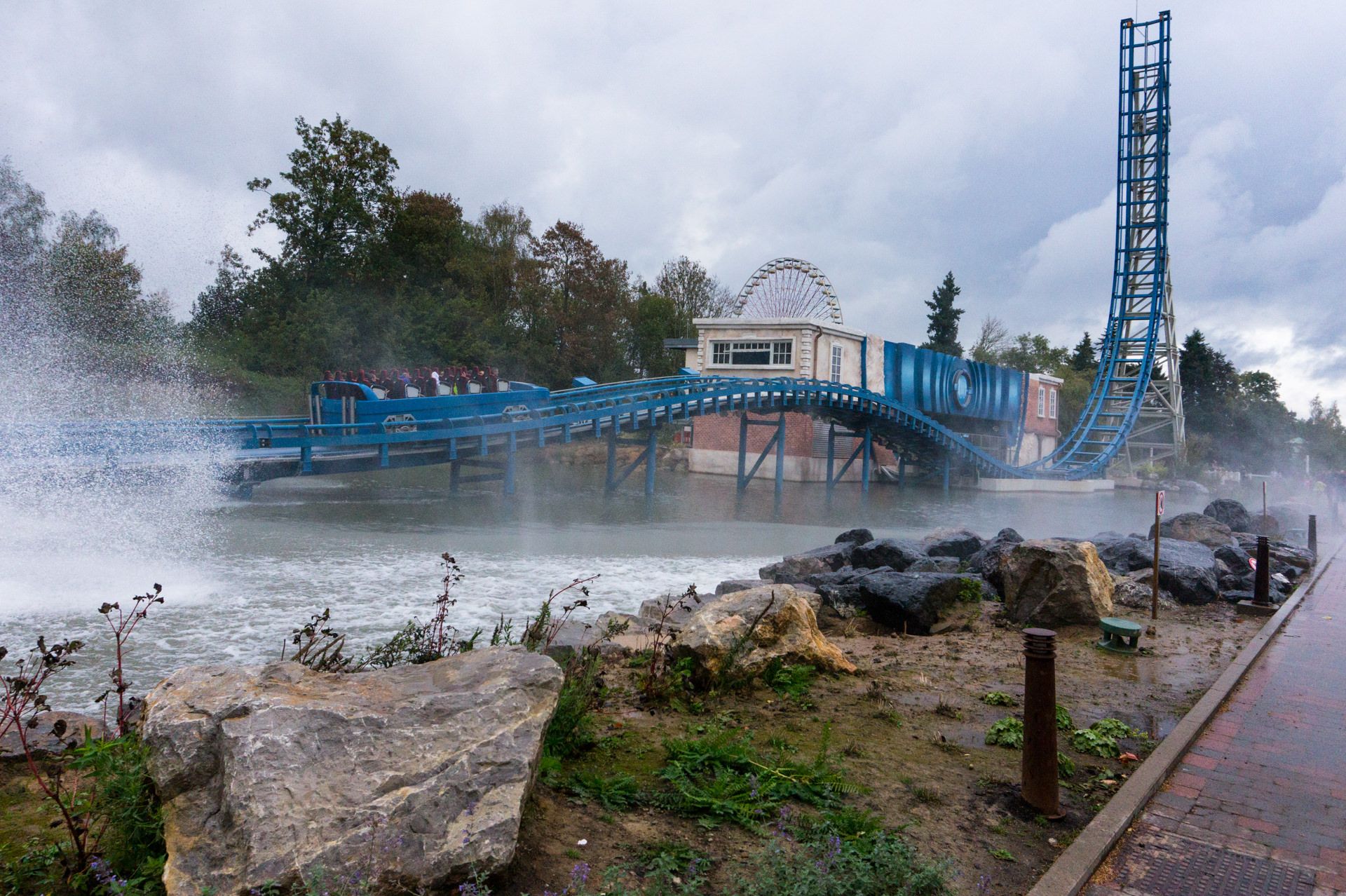
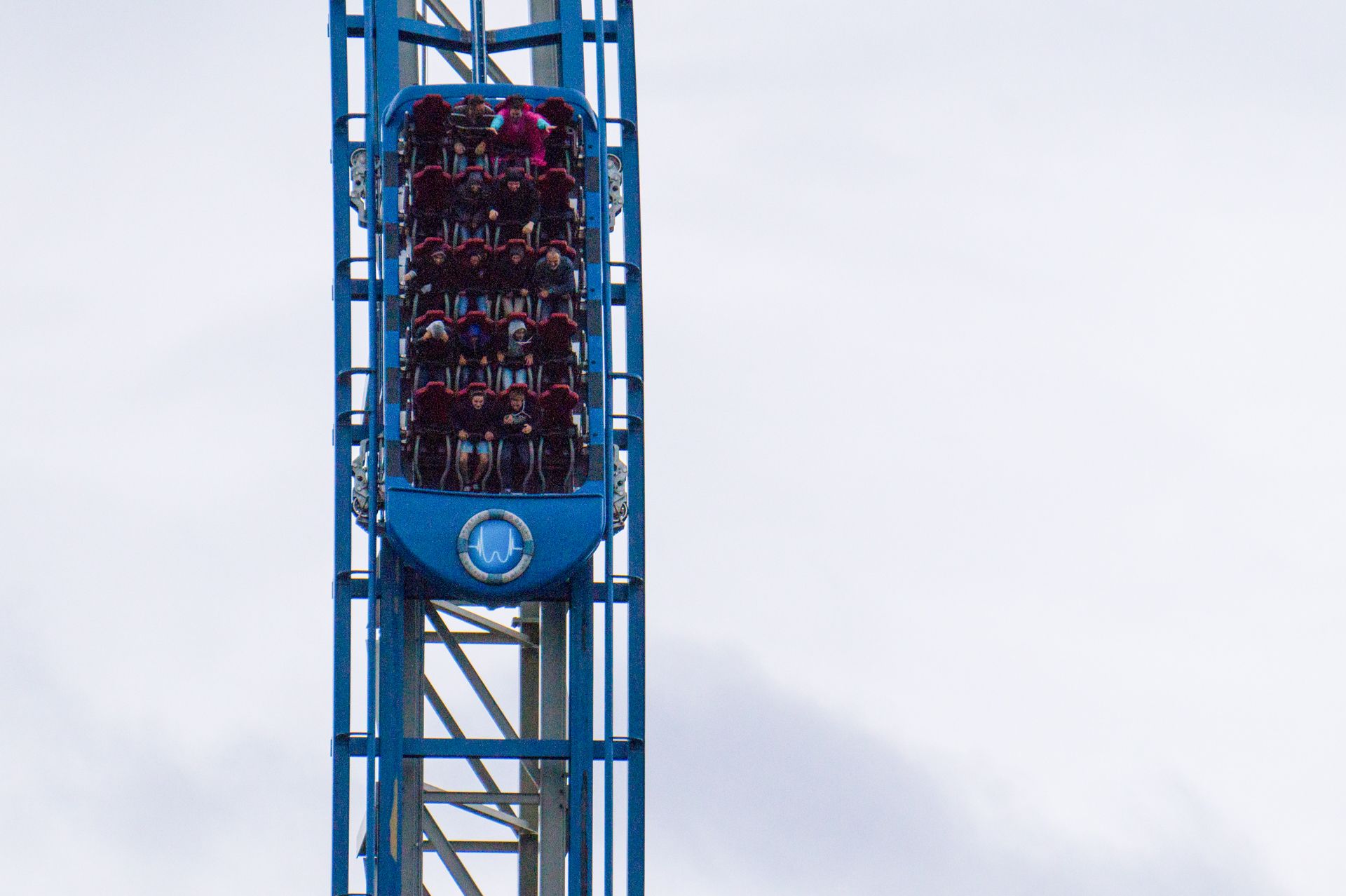
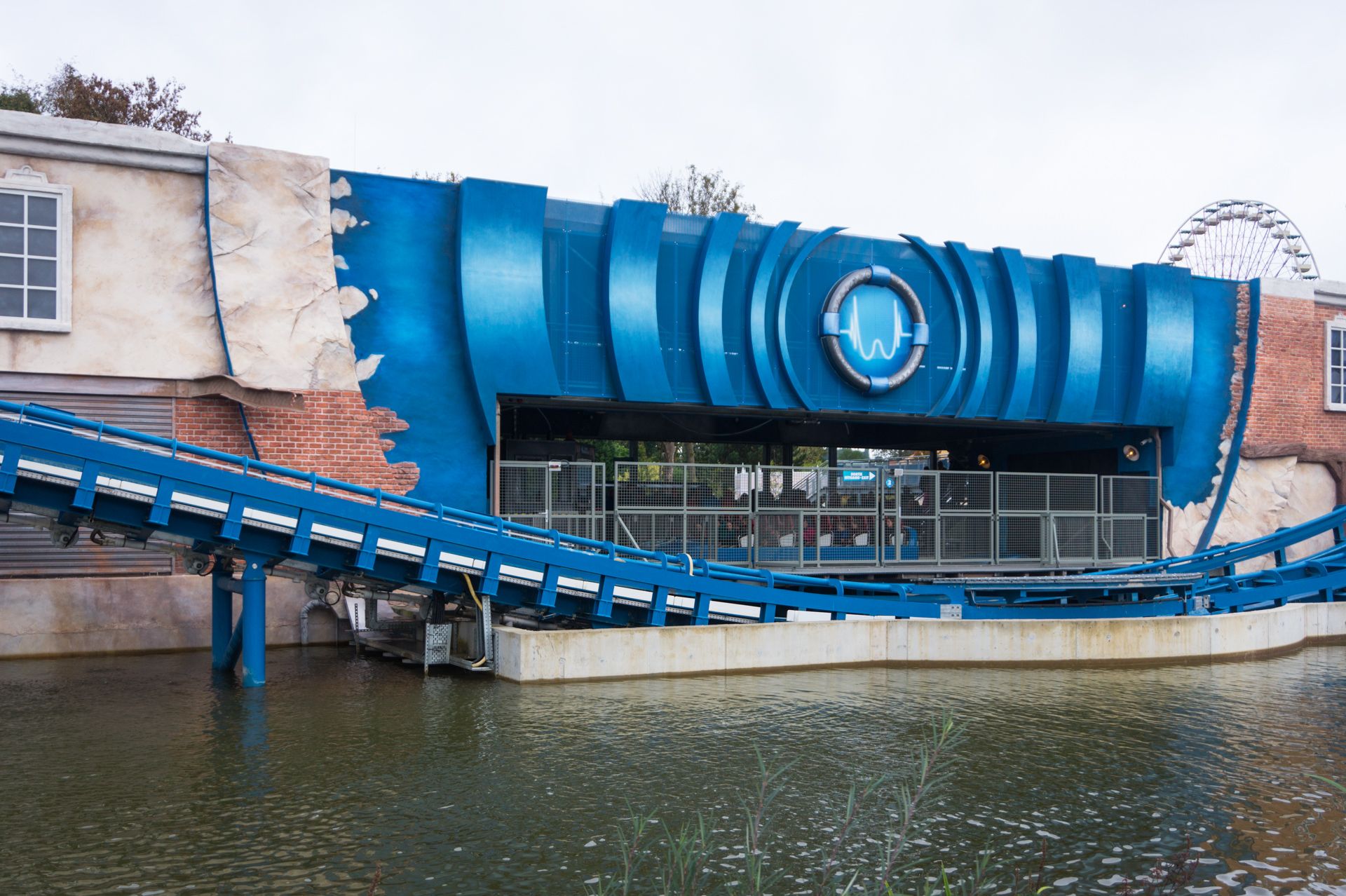
Once in position, the boat is immediately accelerated backwards over a hill. The initial scepticism about the (still) quite shallow acceleration is soon to be forgotten, as you fly over the hill. Now you pass the still unflooded water water basin and climb the vertical spike on the rear end of the ride about half of its height. At about the same speed, the return leads to the station, where you are now noticeably accelerated on the hill and neatly lifted from the seat. Now you climb the front spike of the ride up to its end. With noticeably fast speed, you cross the acceleration hill for a third time, which now tries to eject you from the ride. Back in the rear section of the ride, you climb the spike till its (slightly flattened) top. During this manoeuvre the water level in the basin is raised by 30 cm. In the meantime, the upcoming splash quickly moves back into the memory of the passengers, whereby the previously accumulated joy suddenly passes into a respectful panic. At 100 km/h, the boat now dives into the pool, which leads to a visually very impressive wave. However, this rewards the front rows of seats only with a little mist, while it can thoroughly soak the rear of the boat. Shortly thereafter you pass the hill for the last time and are slowed down to walking pace, whereupon you stop in the next valley. The turntable then turns you back to the station and the bar opens.

Pulsar is an all-round successful attraction, where you always like to get on again. The ride is just terrific and can absolutely convince just by its unusual acceleration phases over the hill. The watering is optically more impressive than it is while riding; However, it is definitely scary! Especially if you suddenly get soaked after the first rather dry ride. Hopefully more copies of this truly enhanced water ride will follow.

Pictures

Closing Words

Due to the location within Walibi Belgium, the paths in the park are now slightly optimised so that you can commute on the fastest routes between the main attractions Flashback, Psyké Underground, Pulsar and Loup Garou. Interestingly, the probability to suddenly meet an old friend of yours in the park is reduced. However, whilst waiting for another round on Pulsar I suddenly got a call from my friend David. He was in a group waiting in the normal queue and I just got on as a Single Rider. After the ride, I finally realised him in the queue, so I took another round via the single rider to actually sit with him in the same row. My plans to leave Walibi for another visit of Plopsa Coo or Plopsa Indoor Hasselt were discarded. The times to leave Walibi Belgium early are now a thing of the past. Thanks Pulsar!


What is your opinion about the Mack Rides Power Splash Pulsar?  Just write it in the comment field below the report or visit our social media channels:


Bavaria’s strongest piece of leisure

Preface

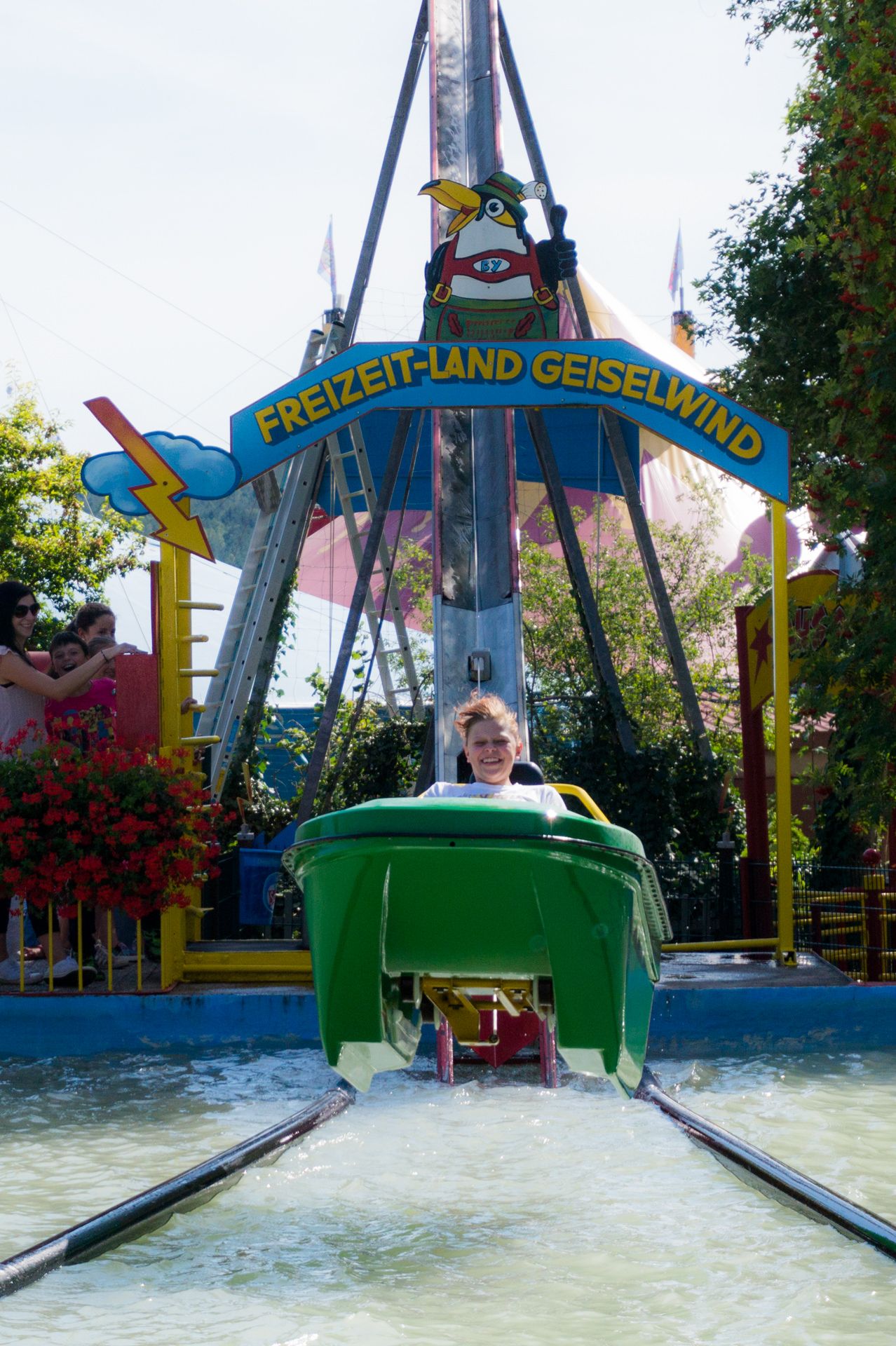
On my way to Munich, I have already passed Bavaria’s strongest piece of leisure twice; the first time ignorant of the existence of the amusement park as a child, the second time out of respect for my passenger, who had promised to visit the park to another person for years, and a rather strict daily schedule. Since I accompanied my father on a bicycle tour along the Tauber river to the Main river, starting in Rothenburg ob der Tauber, the 30km long detour off the A7 motorway to the Freizeit-Land Geiselwind was finally tackled.

Freizeit-Land Geiselwind

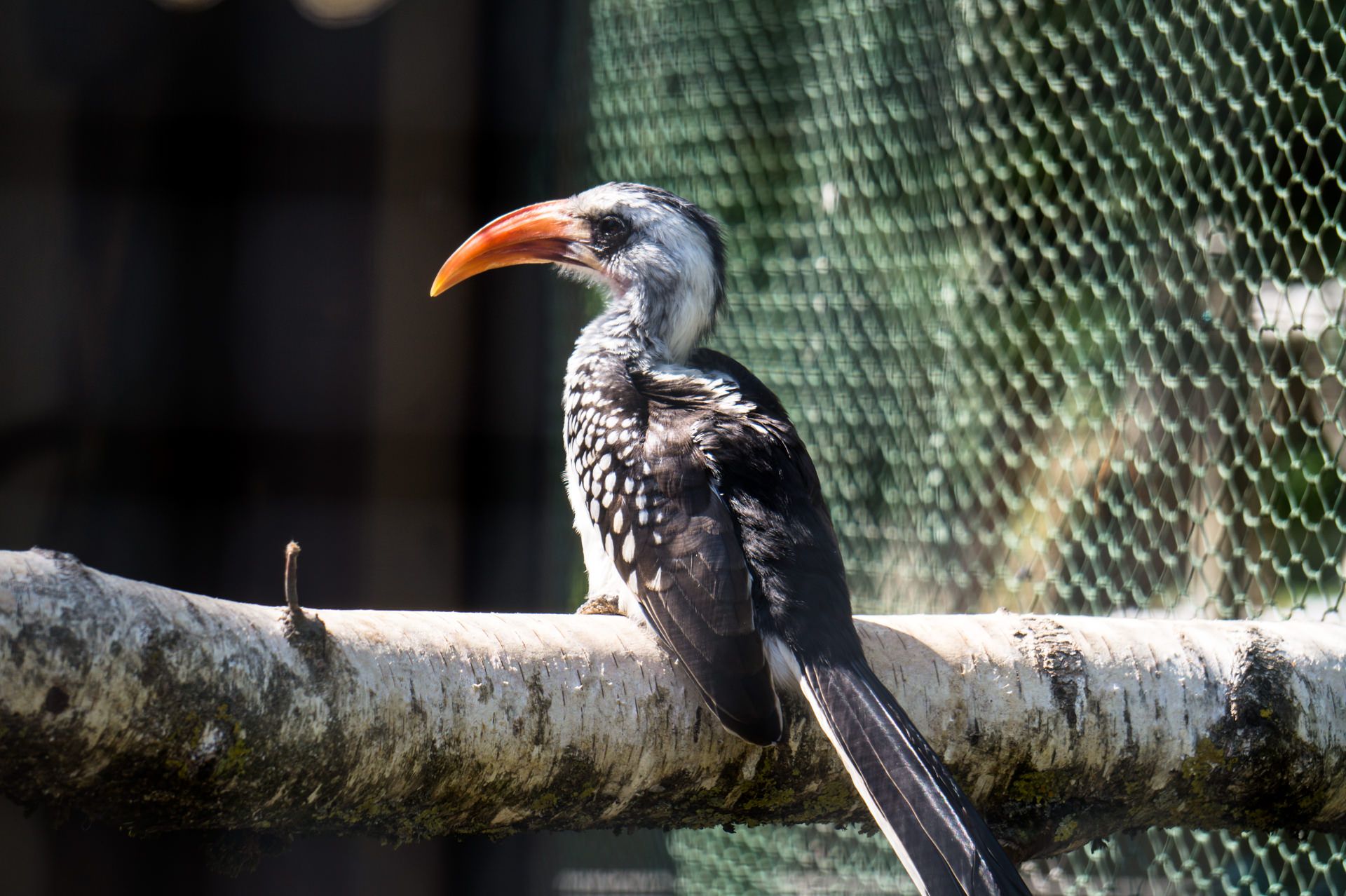
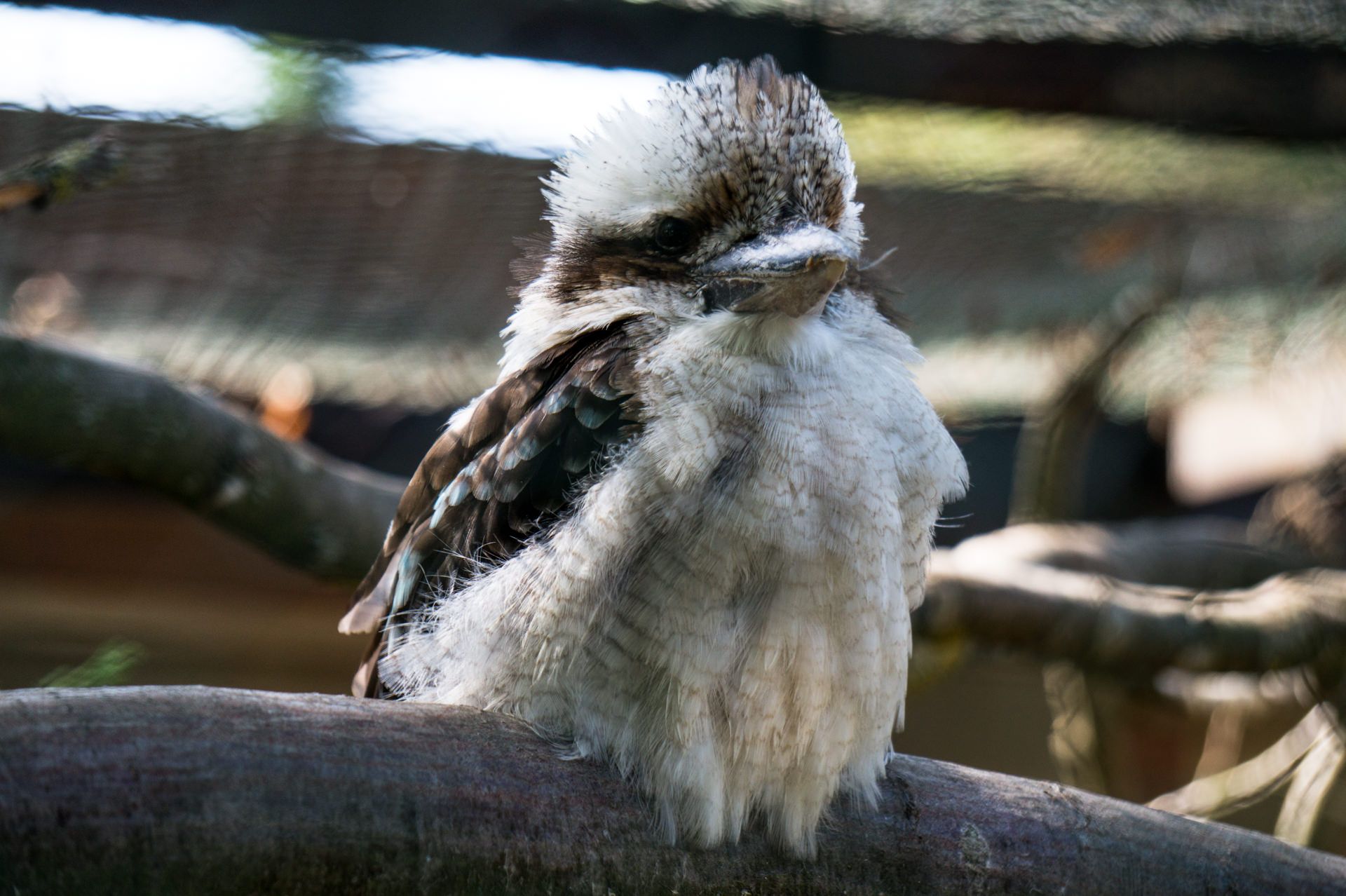
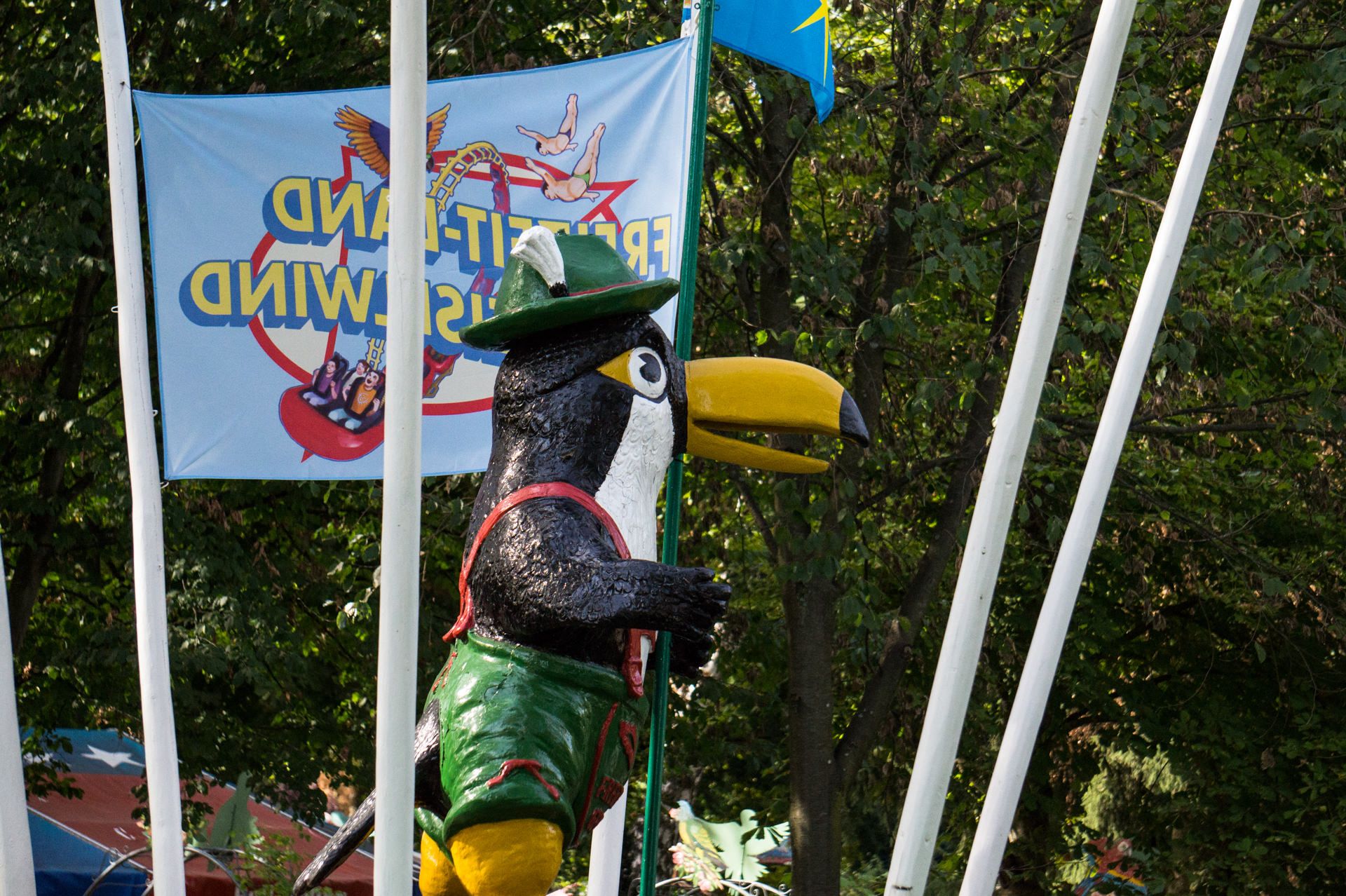
The amusement park, which opened in 1969, has its origins as a bird and pony fairy tale park, a mixture that was already extraordinary back then. Although remains of the fairy tale park have been preserved, the animal enclosures dominate the amusement park, which has also featured an increasing number of rides since the 1980s. Since then, these rides have generated the greatest interest. At the same time the zoo is quite respectable and, similar to Weltvogelpark in Walsrode in Lower Saxony, it can boast a great variety of species in sufficiently large aviaries and enclosures.

T-Rex World

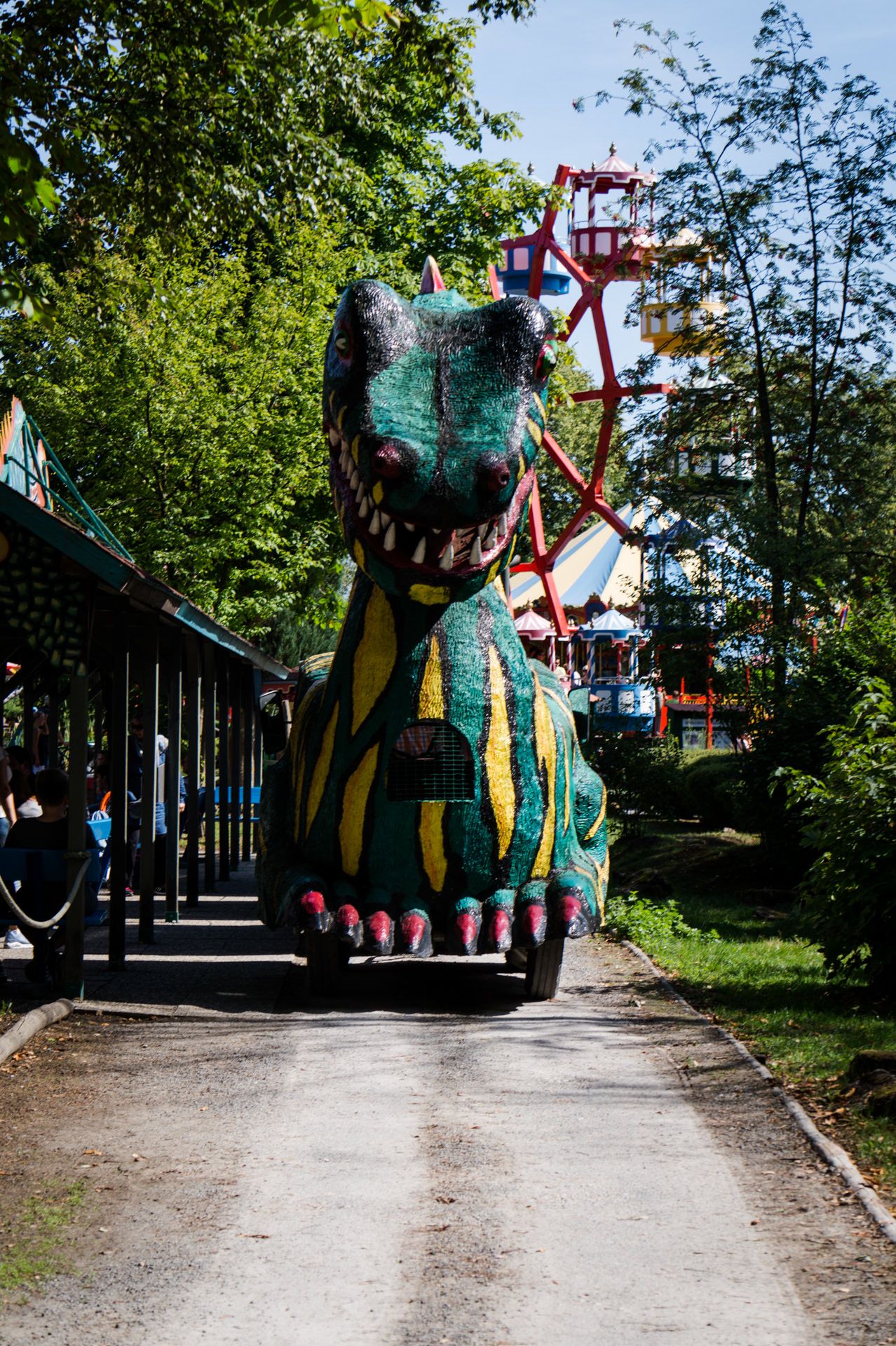
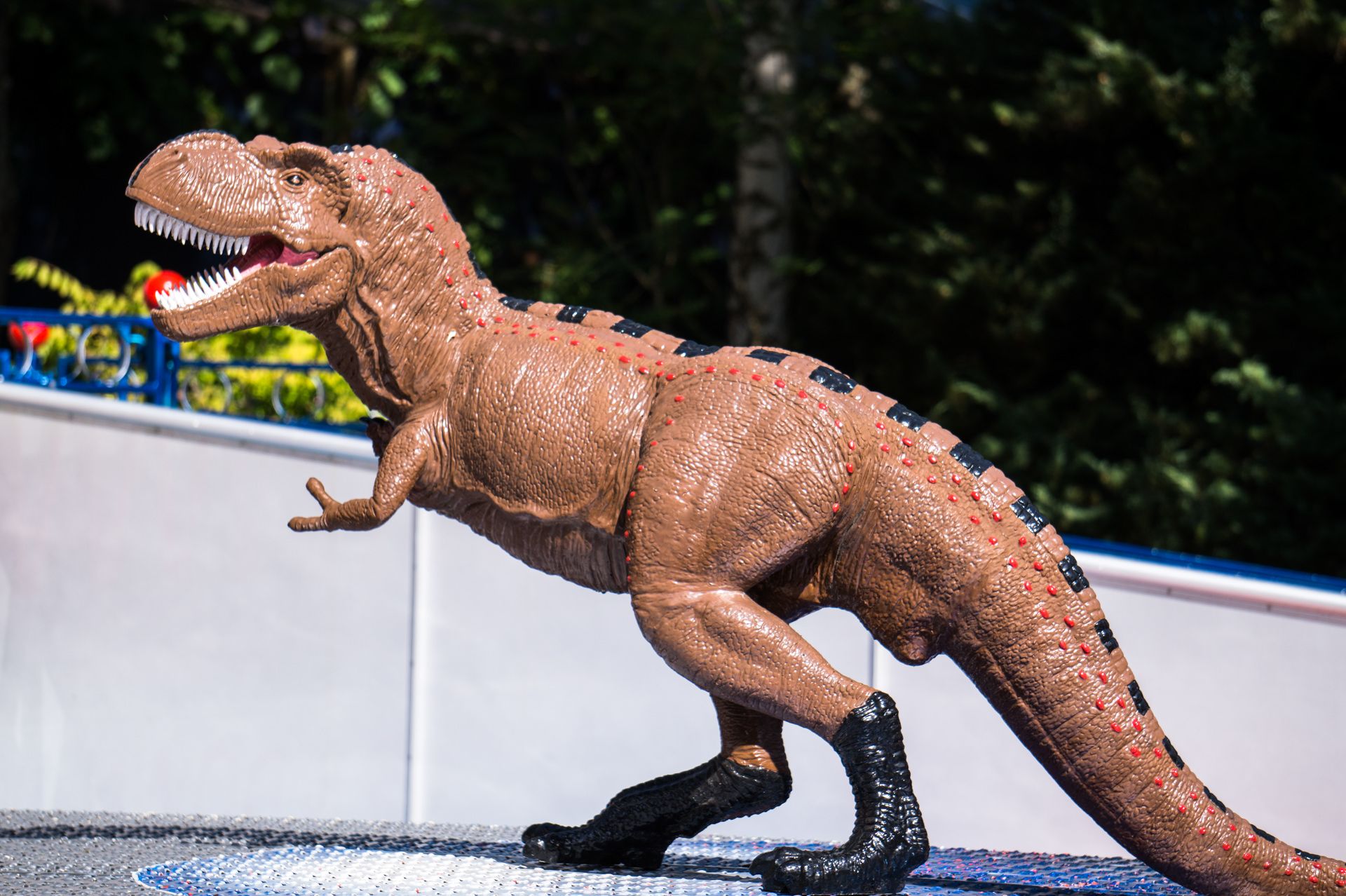
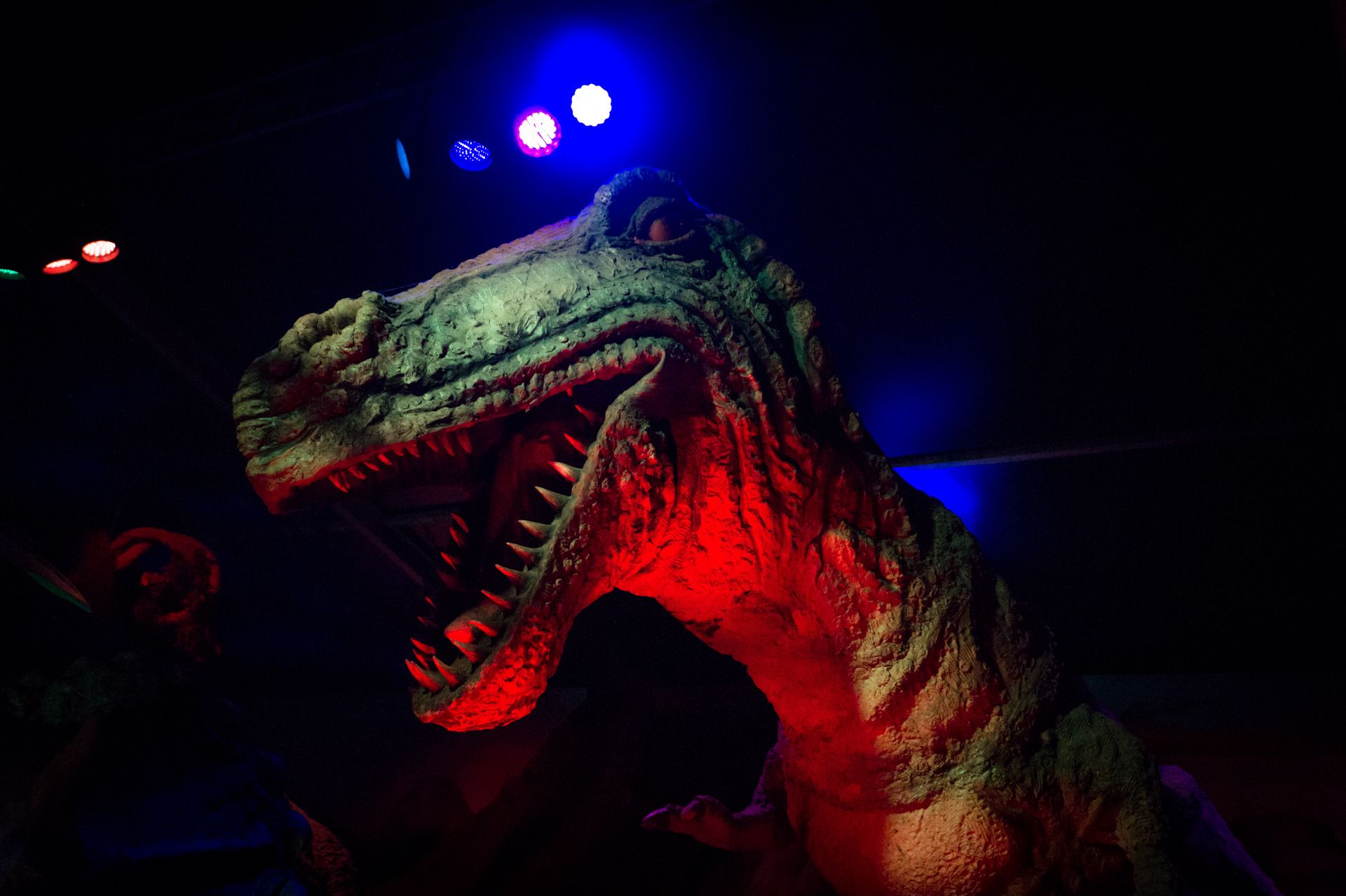
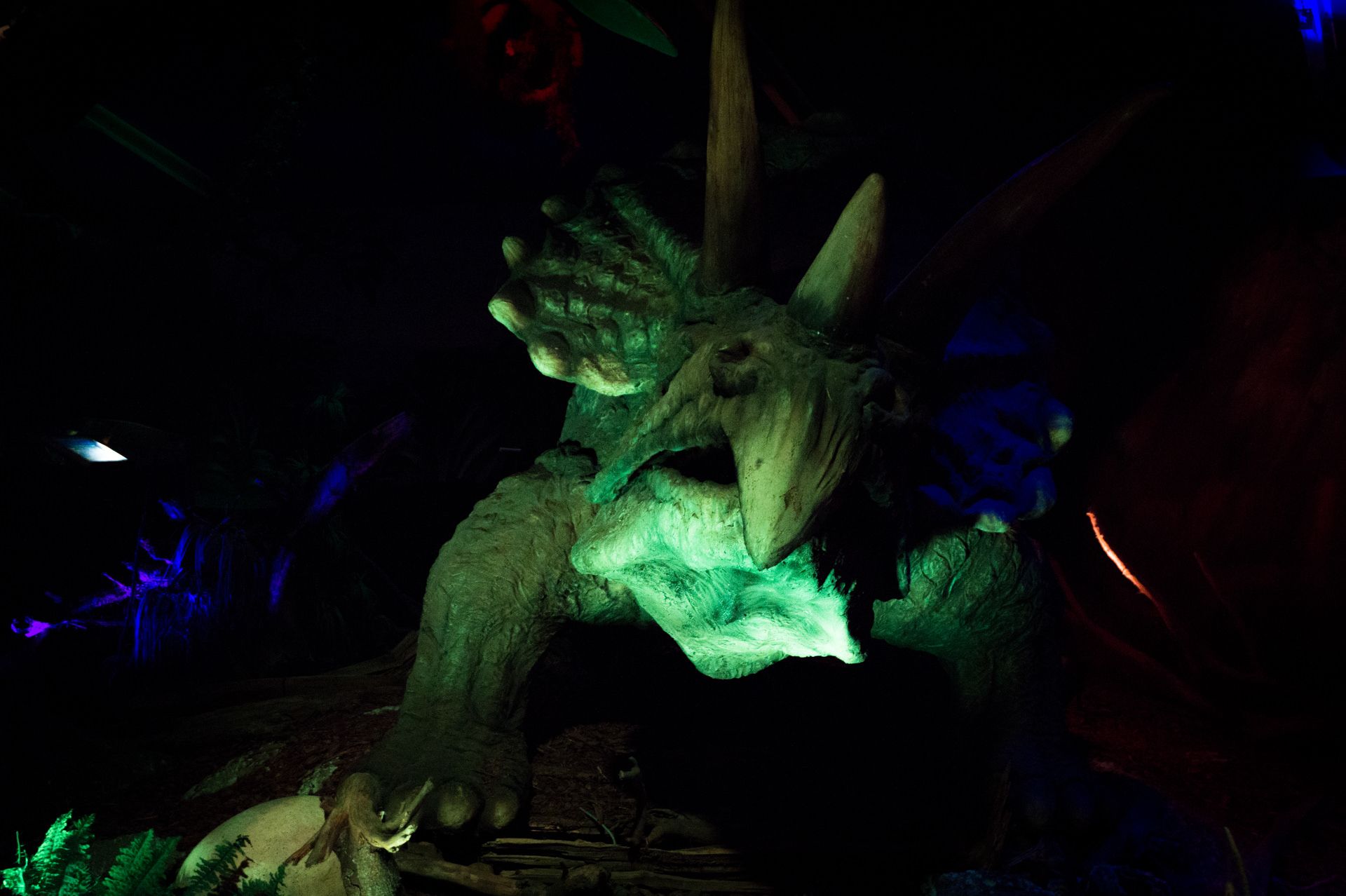
In terms of design, however, the Freizeit-Land Geiselwind is dominated by extinct creatures. In addition to a railway in dinosaur look and numerous figures, the dinosaurs are particularly popular in T-Rex World. This is a small exhibition worth seeing with animatronics, which were skillfully staged. Interestingly, the exhibition here convinced me more than the guided exhibition of newer Era T-Rex in the Portuguese amusement park Zoomarine, despite the much smaller size.

T-Rex Tower

In front of the hall is the T-Rex Tower, a Shot ‘n’ Drop by the manufacturer HUSS, a vertical ride that has become extinct at least at German fairs. While Robrahn’s Countdown travels through France under Fleur and Goetzke’s Freefall was sold to the Australian amusement and water park Adventure World near Perth, Roies Shot ‘n’ Drop is the only ride remaining in Germany. Like the towers mentioned above, the T-Rex Tower delivers a solid ride with a very nice shot up and drop down. Despite the lack of negative acceleration compared to the manufacturer S&S Sansei, the ride is always a little more fun due to the beautiful launch, although the end of the ride is reached after just one cycle.

The HUSS Corner

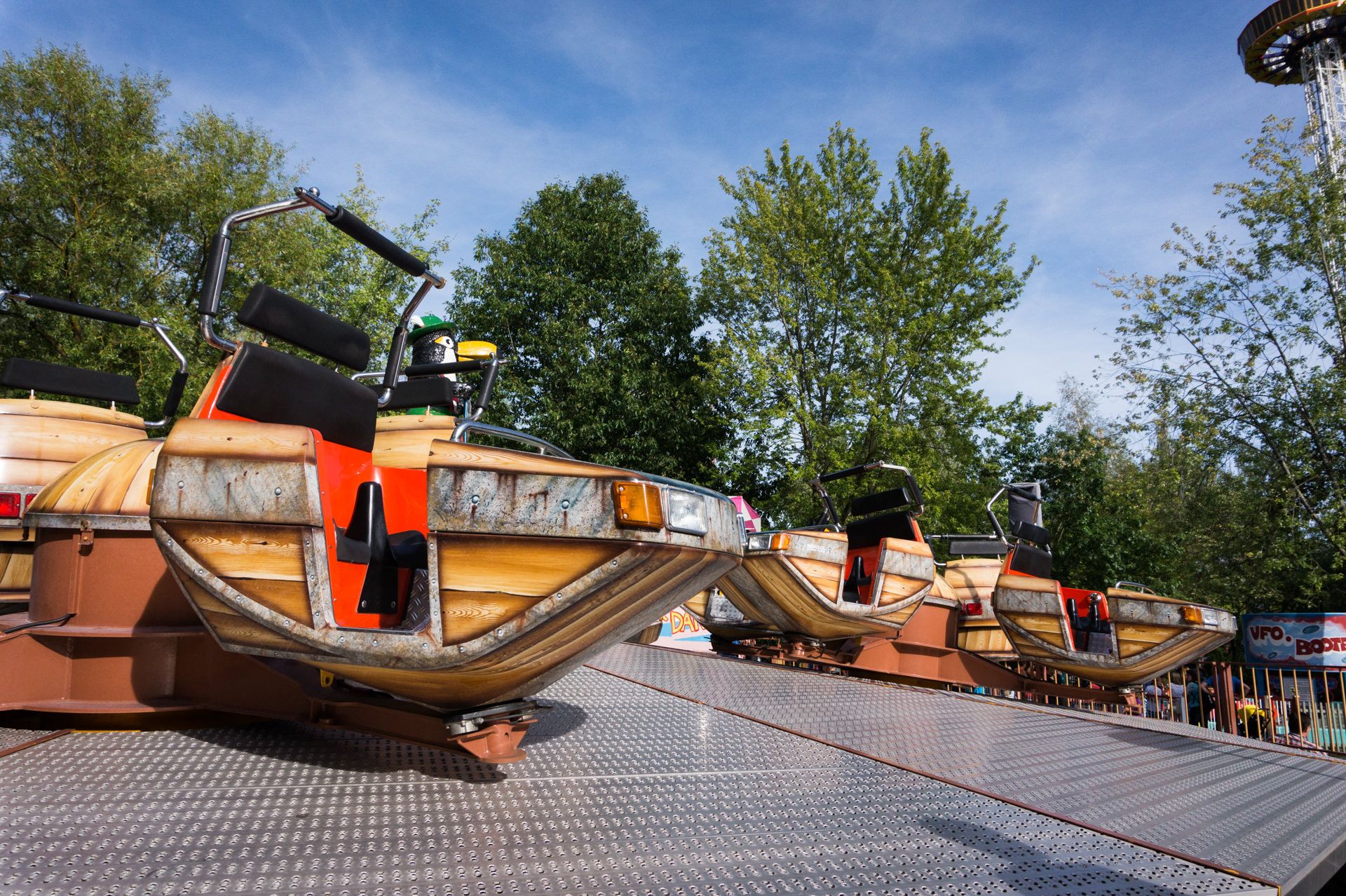
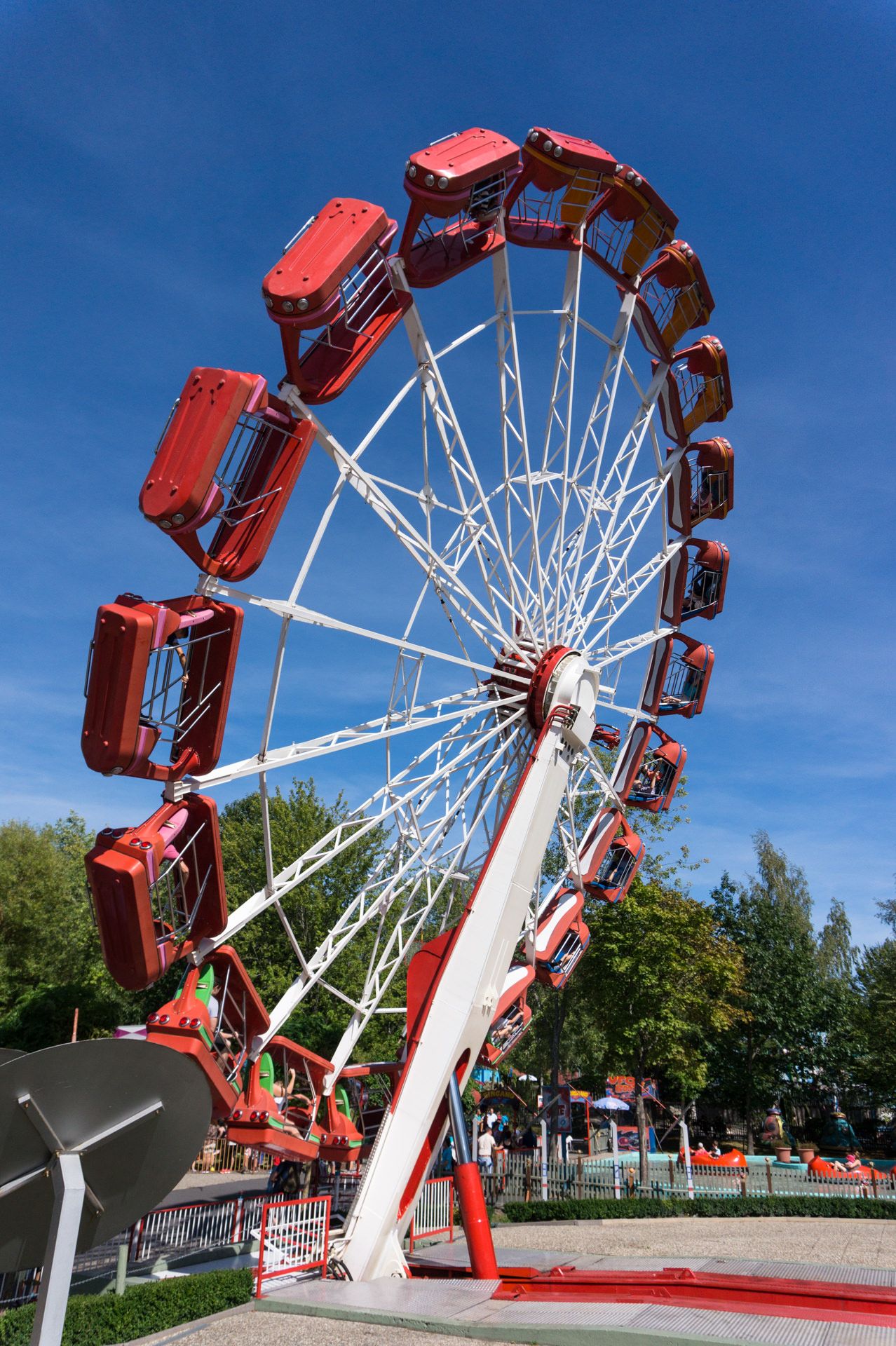
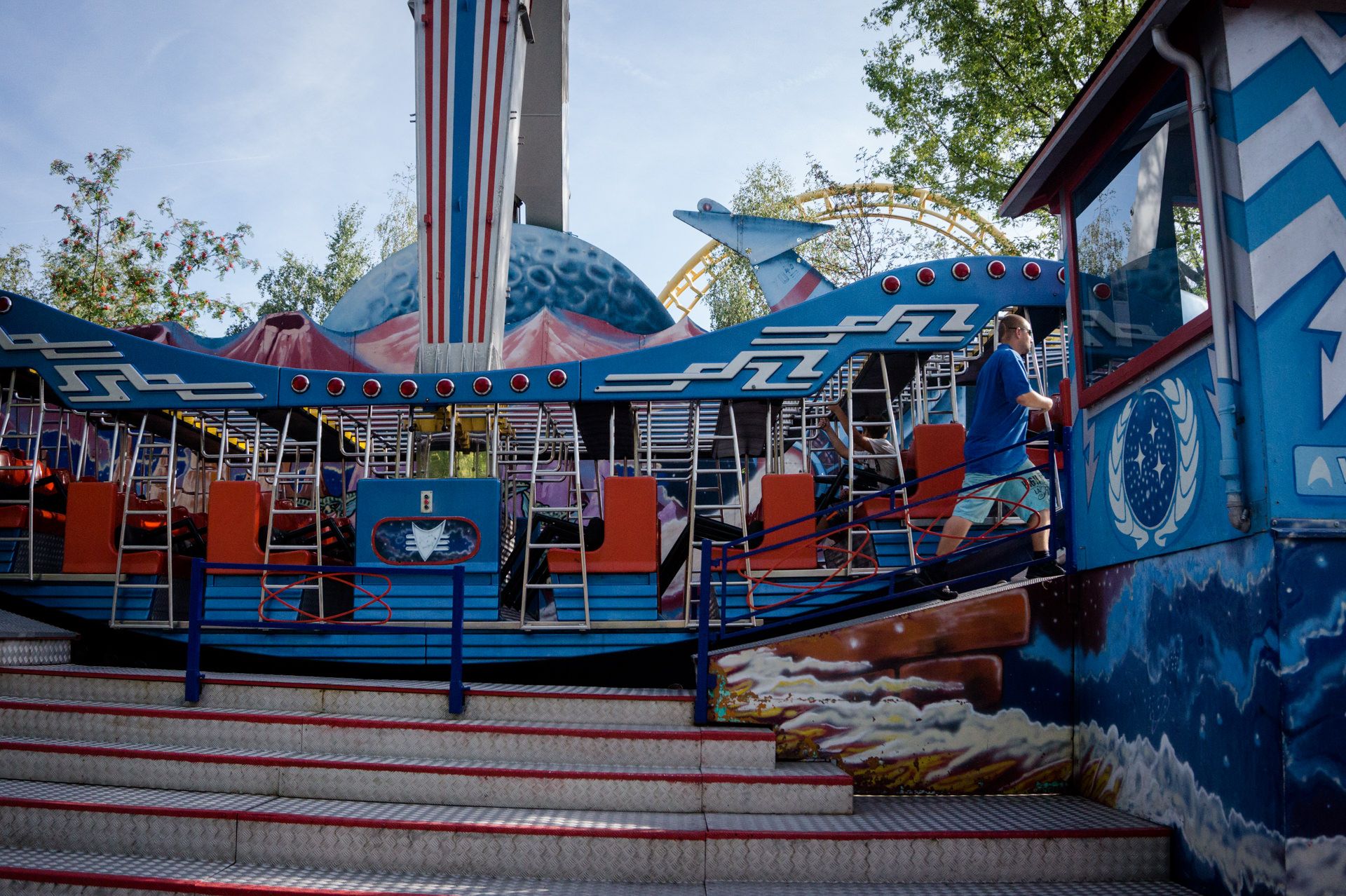
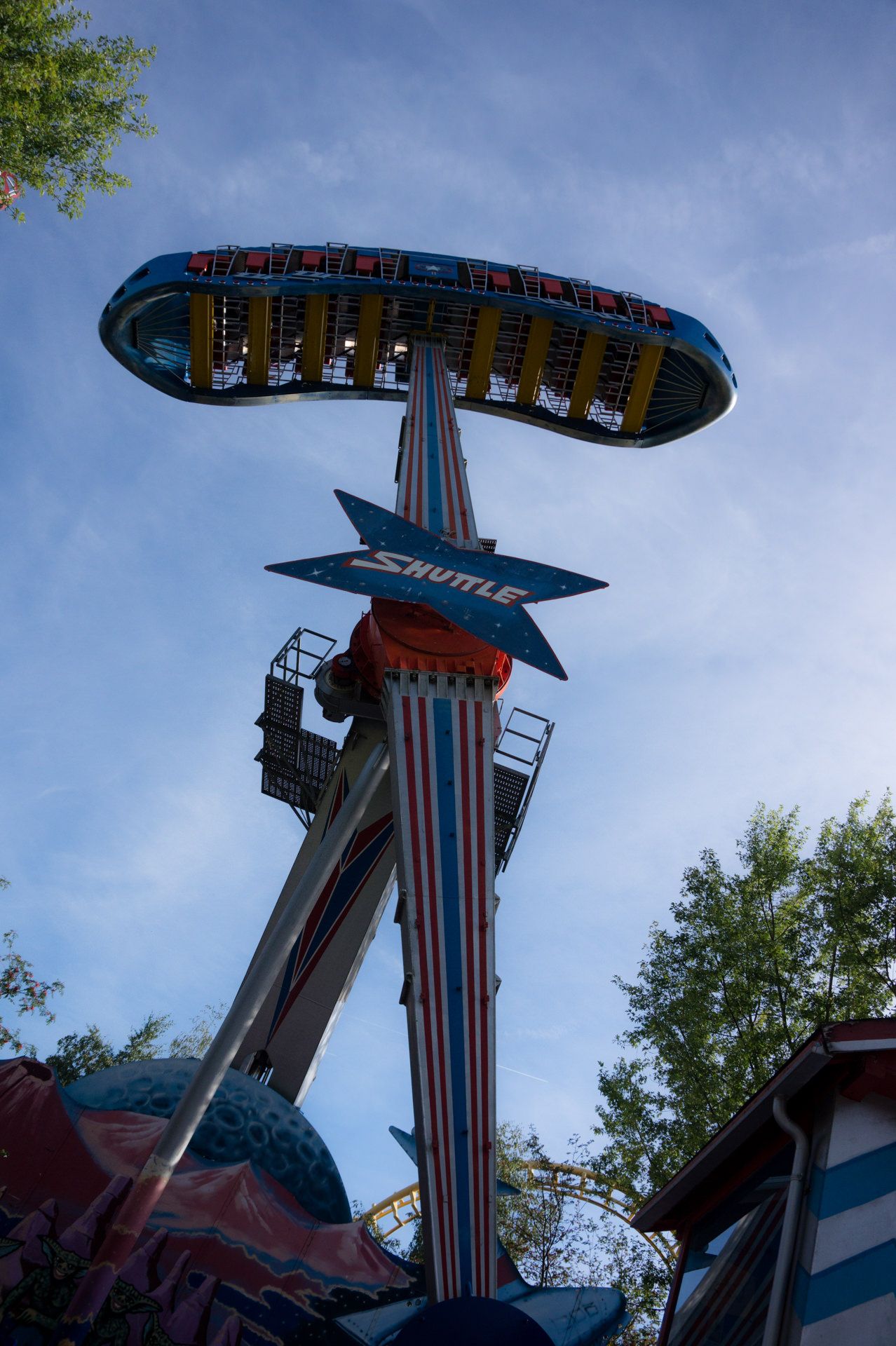
Next to two water basins with Nautic Jets and water roundabouts, which always had the longest waiting time, there is a corner exclusively consisting of rides from HUSS, as could be experienced before, in a similar constellation, in the Lower Saxony amusement parks Heide Park and Serengeti Park. Besides a stylish condor called Ikarus and a Ranger called Shuttle, you can ride an Enterprise, as well as a Break Dance. All rides offer a long ride with more or less balanced programs. I found the acceleration phases of the Ranger interesting and at the same time a bit disturbing, because it always decelerated in the valley, which was never the case with the identical Fliegender Hai ride in Hansa Park.

Wildwasserbahn

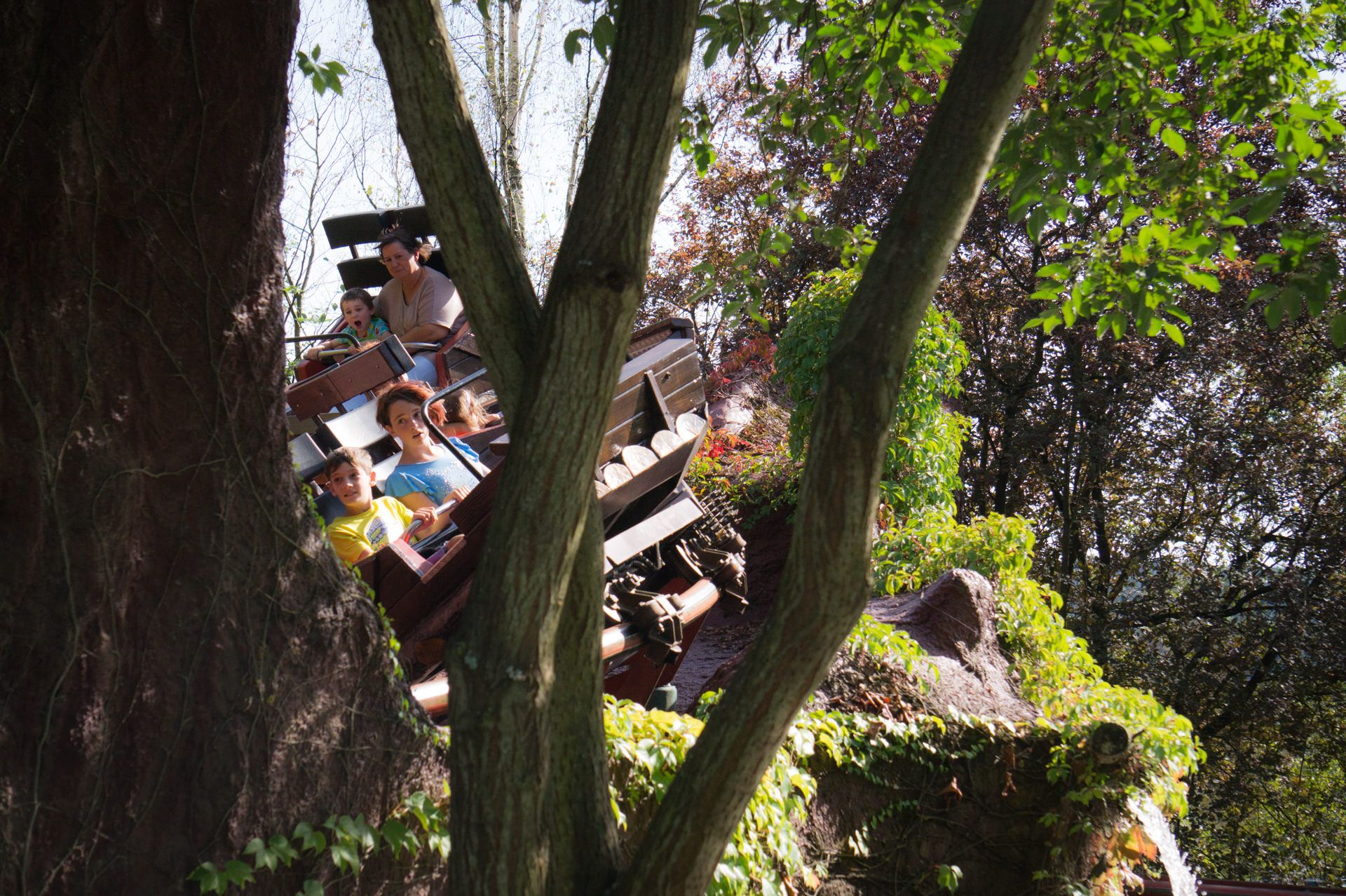
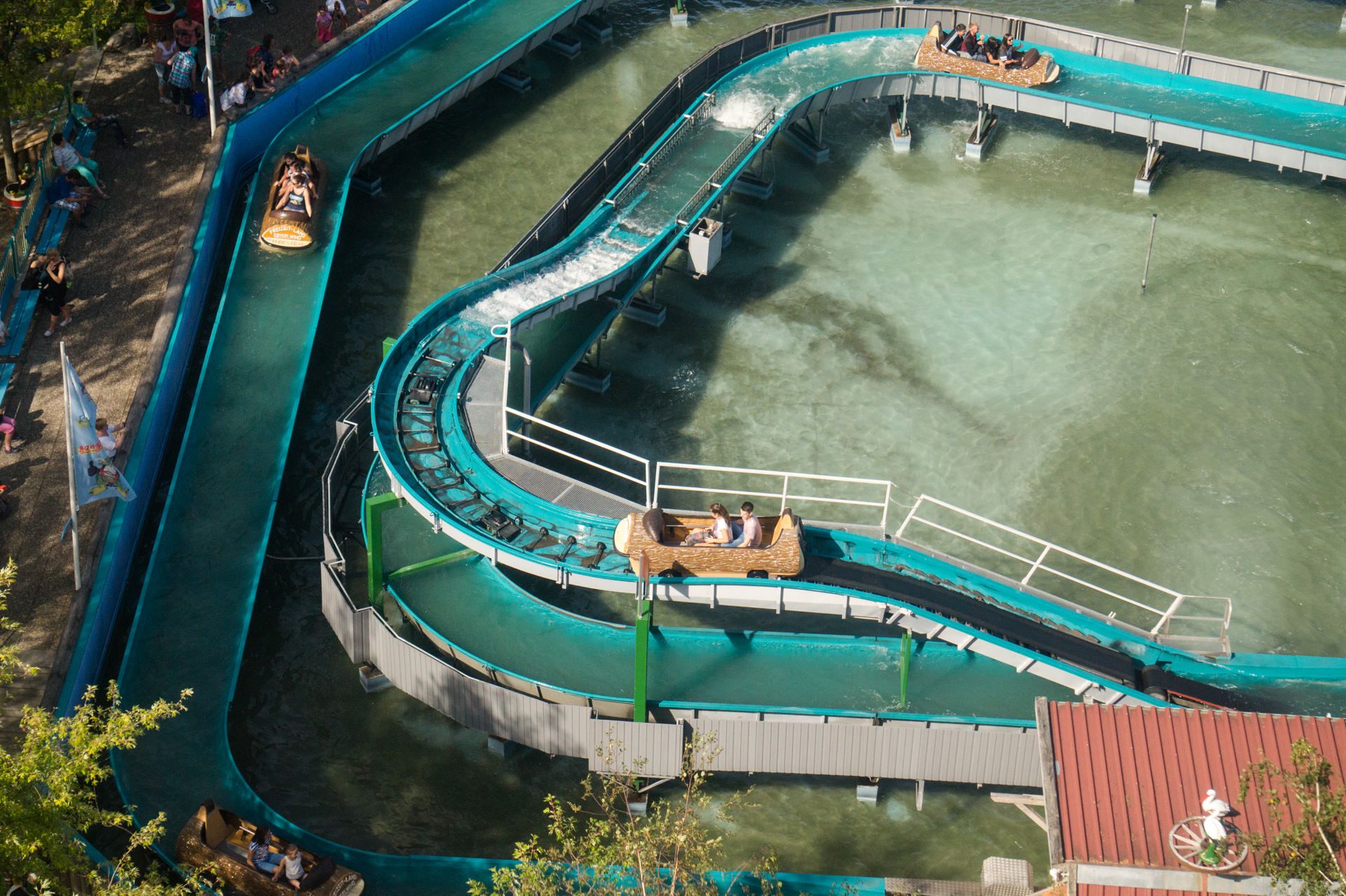
If you follow the paths further on you will come across the big log flume Wildwasserbahn with its three shots. This is a slightly modified version of the standard model of the French manufacturer Reverchon, which has been supplemented by a further downhill run. Although the ride reminds of a funfair of the past due to its large back wall, the general design of the ride, especially the nicely designed waiting area, is successful.

After the boat has left the station, one rumbles a little through the channel along the maintenance hall of the Freizeit-Land Geiselwind before taking the first lift. At the top you make a small curve behind the back wall on rollers until a friction wheel pushes the boat into the first shot. This is designed as a double gradient and releases you a little wet into the further course. One S-curve later it goes up again and a small right curve follows. Now the smallest descent of the ride follows and as fast as this one came, as fast the end of the run-out distance is already reached and you rapidly make another right turn. After a slightly longer straight, the boat accumulates for the last time in altitude. Arriving at the top, the game repeats itself and a high shot follows without any interruptions. Arrived at the bottom you get properly moistened just before you continue the rest of the way towards the station. By ingenious technology, which I actually noticed for the first time at the ride, the boats are stopped briefly before they are gently put on the conveyor belt of the station without crashing against the other boats.

Top of the World

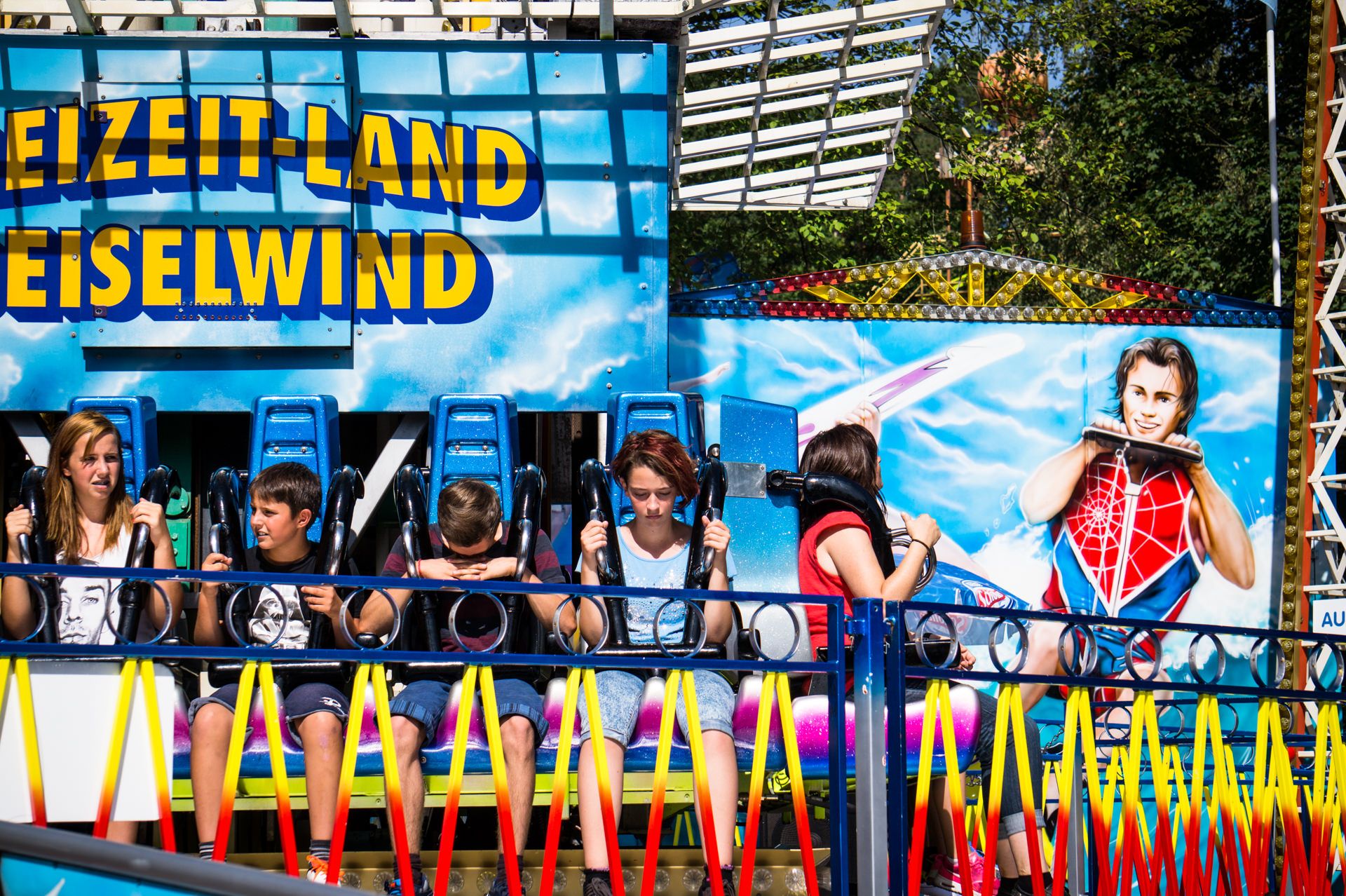
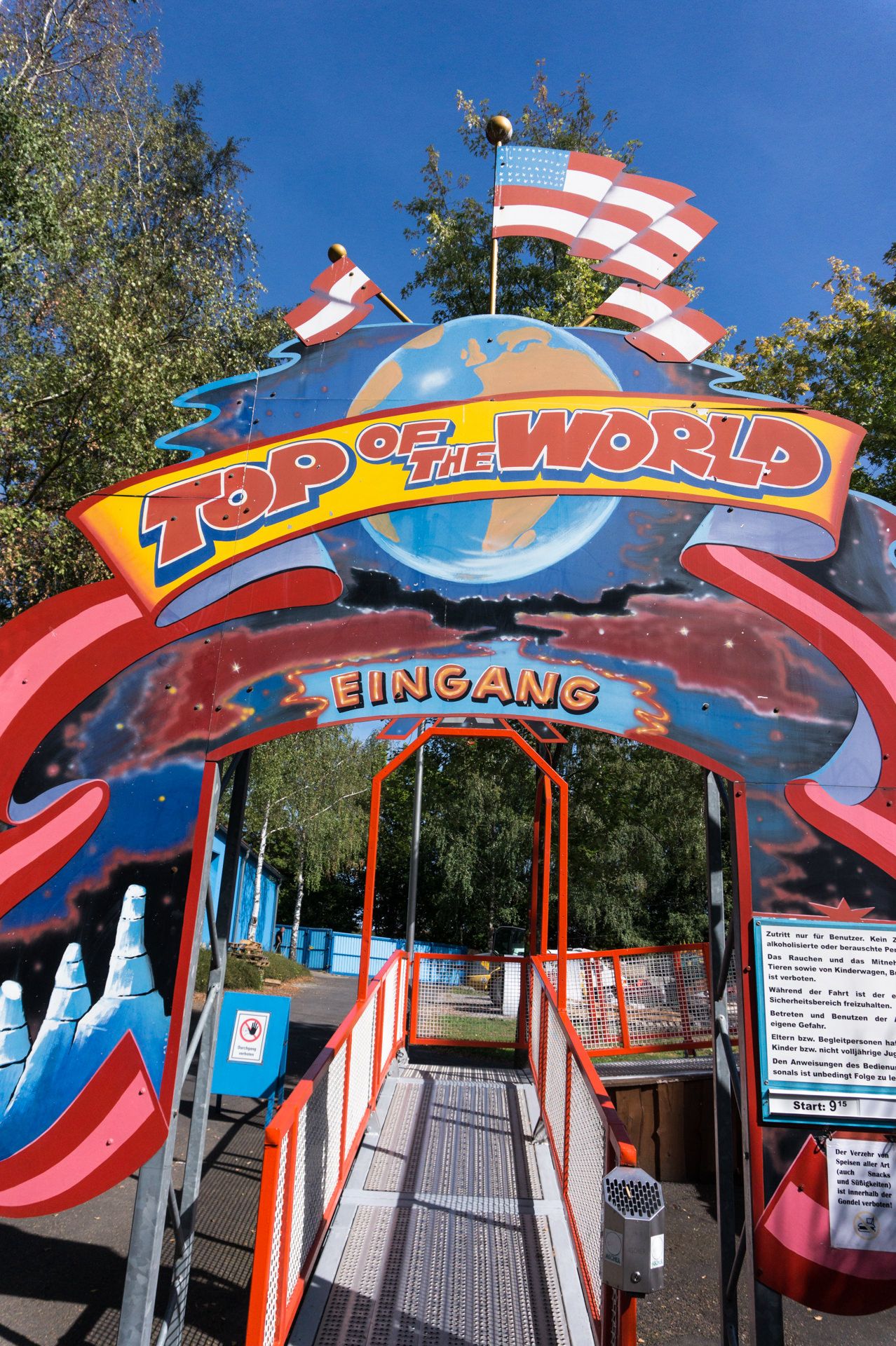
Similarly interesting from a technical point of view, but on a much larger scale, is the Top of the World observation tower, which can be briefly described as a monster with a capacity of 132 people. The formerly largest transportable ride in the world measures a total height of 95 m, with a ride height of 72 m. The ride was built in the mid-90s by Nauta Bussink for the Bremen showman Finnendahl, who operated the 270-tonne structure until 1998. Compared to the modern free-fall towers of the manufacturer Funtime, the ride is very massive, which is already noticeable by the four outriggers. The tower itself is relatively wide, which certainly did not make transport easy. The technology of the nacelle, however, is very simple and is driven by two steel cables that are rolled up and down and thus lift and lower the counterweight and thereby influence the position of the nacelle. After the gondola has been lifted a little, a power rail ensures the supply of the motors for the rotation of the gondola. The ride itself, however, is relatively slow in both movements and thus offers a good view of the amusement park. Thereby, also the air-conditioned gondola is a very special, as most of the seats are designed as standing places and are arranged in two rows. Moreover, the view from the windows is surprisingly clear, as there are no traces of scratches and other wear and tear.

Drehgondelbahn

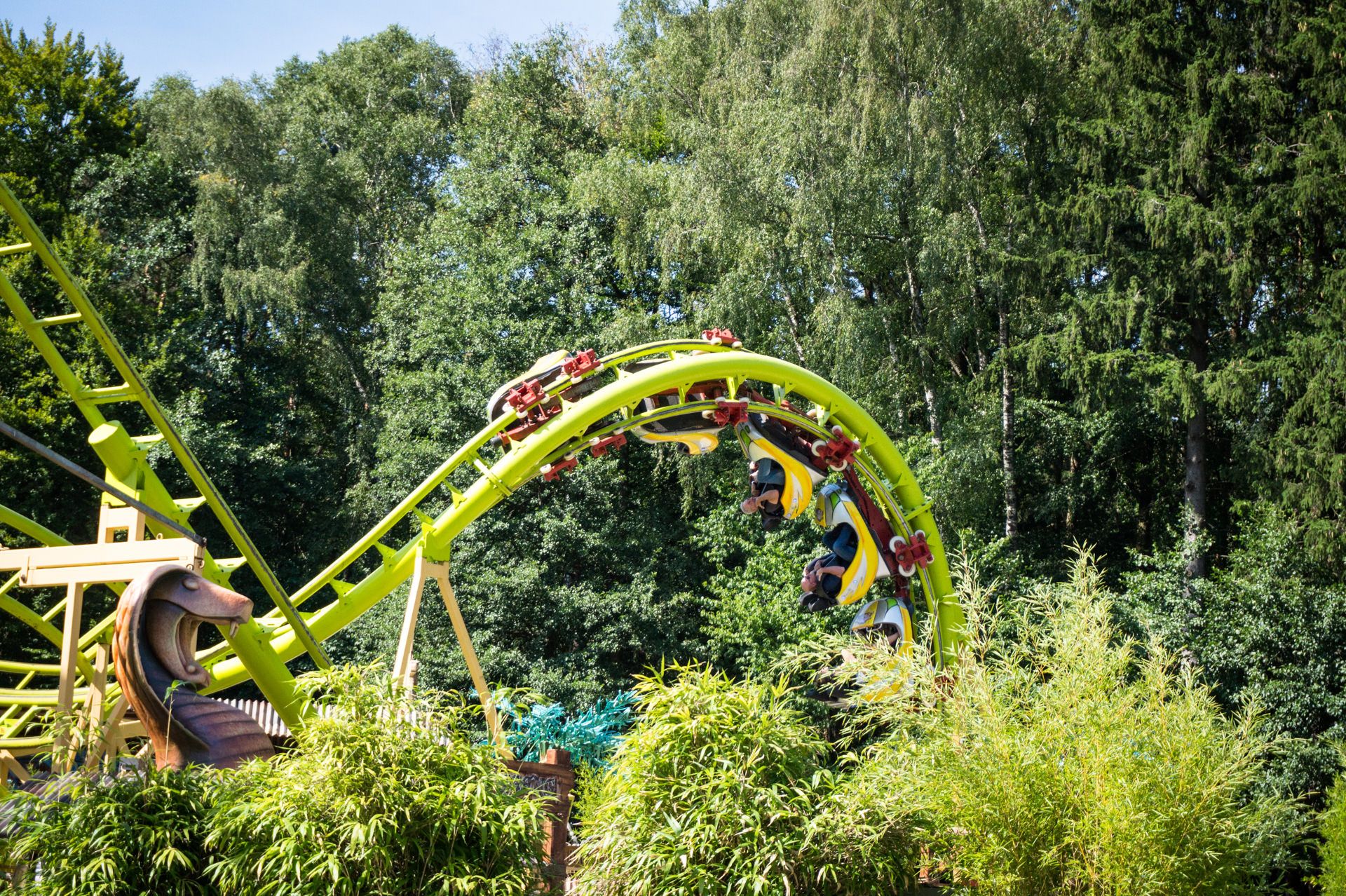
Quite inconspicuous and easily overlooked even from above is the Drehgondelbahn, a truly unique roller coaster at Freizeit-Land Geiselwind. This is the only spinning coaster of the company Zierer, which has been making its rounds in the park since 1994. This fact alone is more exciting than the actual layout of the ride, as there is only a simple oval with a descending helix in the middle. As simple as the track seems to be, as good it makes the gondolas turn, so that a thoroughly amusing ride emerges. For three rounds, one makes the way through the course before the gondolas are automatically aligned in the station.

It’s strange to find only one roller coaster of this kind from Zierer, because the potential to be a box office hit today is shown by the compact spinning coasters from SBF Visa with their even simpler layout. Especially for smaller amusement parks a ride like the Drehgondelbahn would be more than ideal, so a new edition of this classic ride would certainly not be the worst idea.

Boomerang

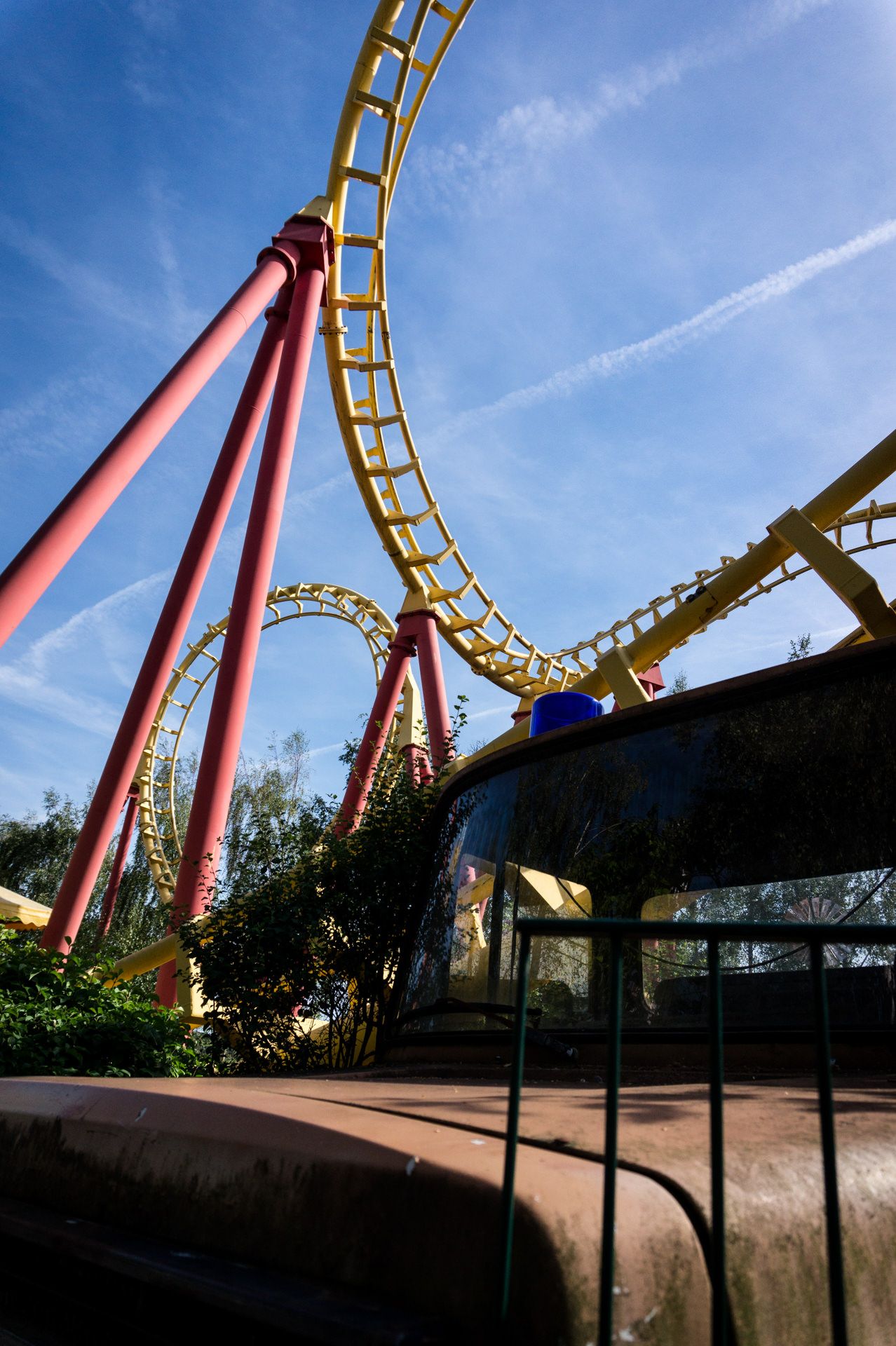
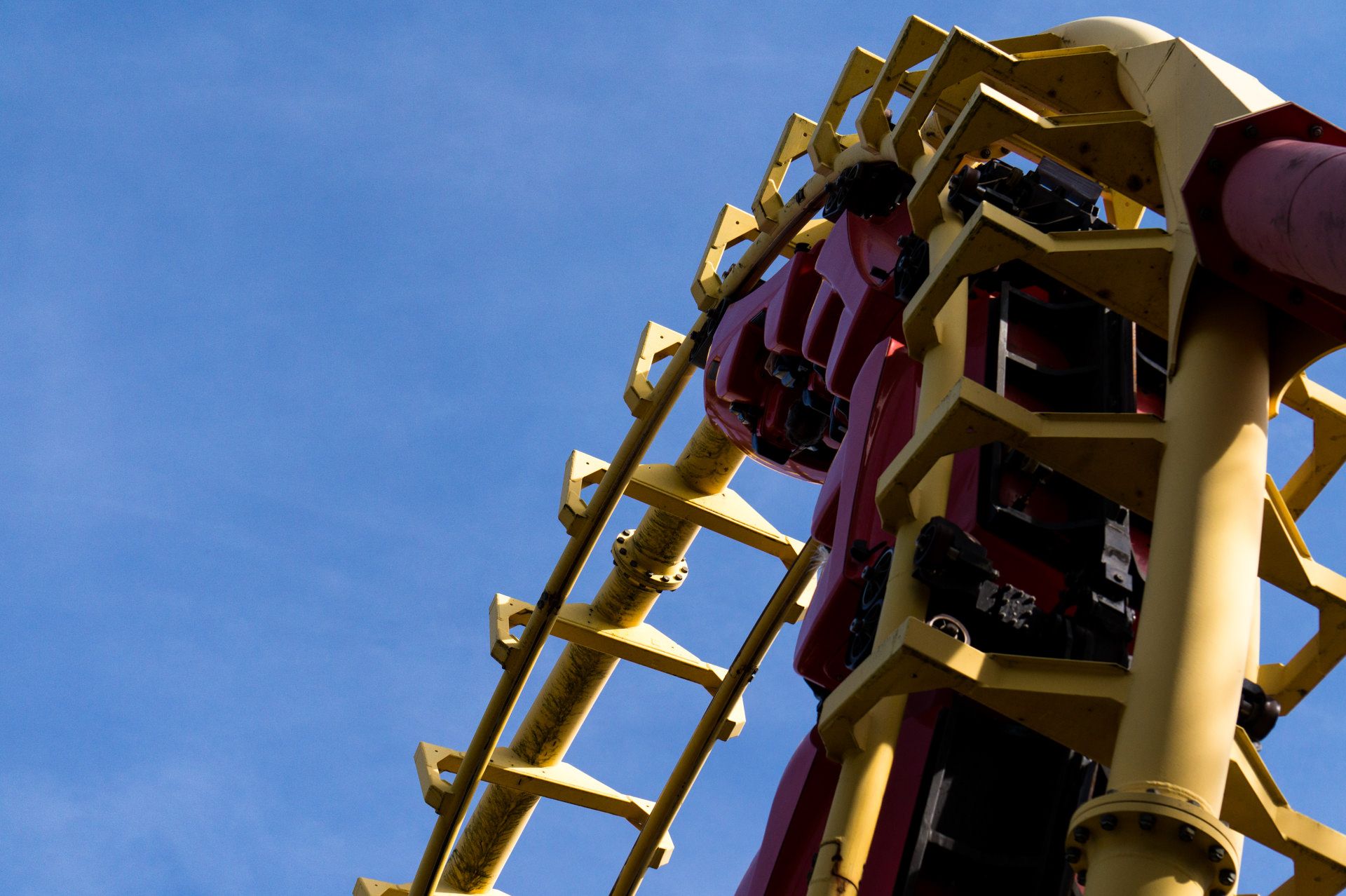
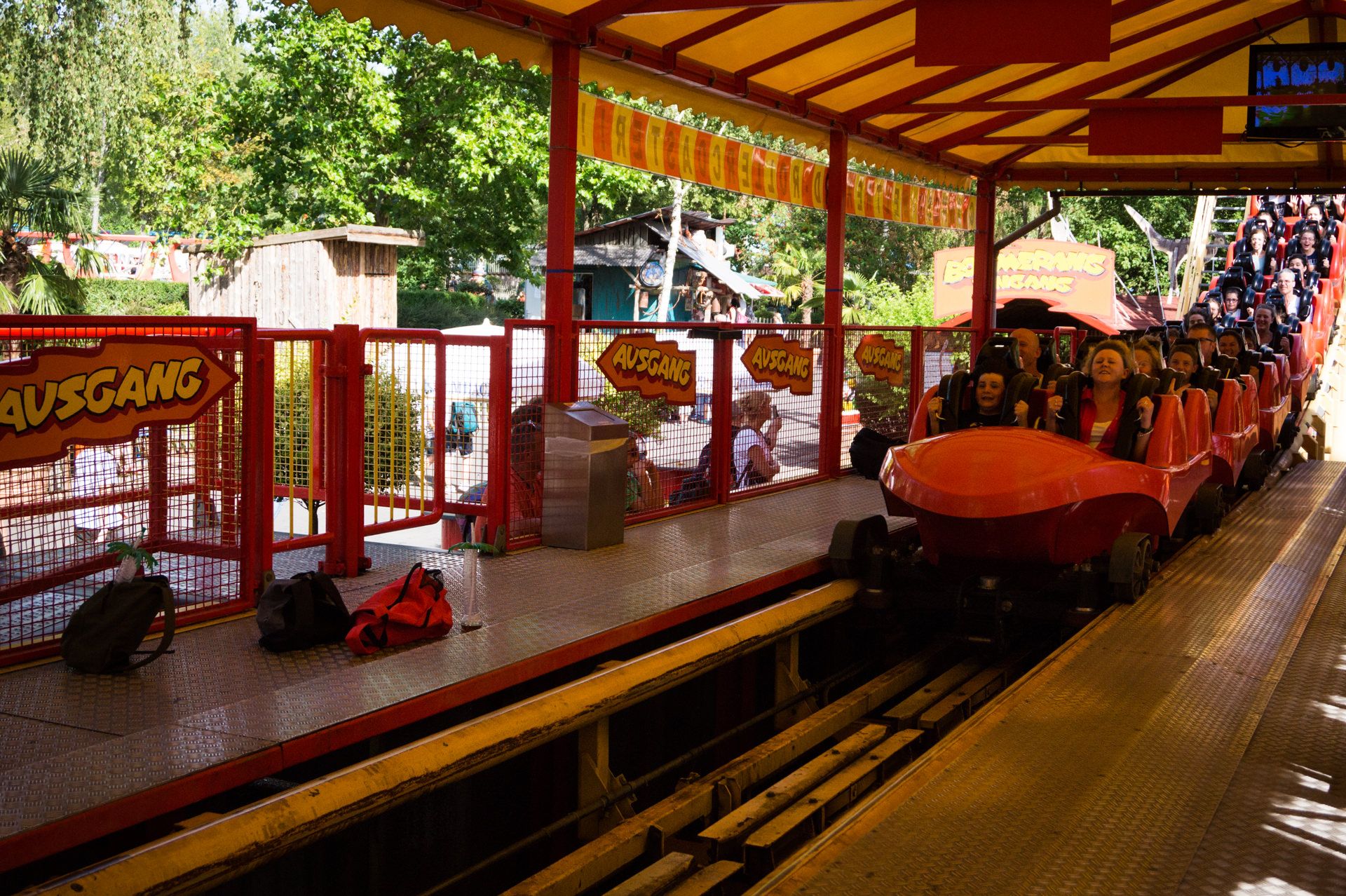
In an alignment with the Top of the World observation tower and the Drehgondelbahn, there is the biggest roller coaster of Geiselwind, a Vekoma Boomerang. Although it looks relatively normal from the outside it is an elaborately designed ride in Australian style, including the eponymous throwing weapon. Access to this ride is around the engine room, whereupon you are directly inside the station. Compared to similar rides, this one hardly vibrates when the train passes through, which is why, interestingly enough, televisions adorn the station.

After the driver has gripped the train, it is slowly pulled up the first ramp. At the top of the ramp it automatically disengages, whereupon the train descends and crosses the station at top speed. The train then shoots up the first manoeuvre and stands upside down for the first time, before it goes overhead again in the second half of the Cobra Roll. A classic looping, which is powerfully passed through forwards, is added. In its exit, the first brakes are applied and thus reduce the speed just before the train engages a lift chain. This in return brings the train back to its maximum height before a mechanism lowers it and thus releases the train. Now it goes backwards down the second ramp and at top speed into the loop, which has now noticeably gained pressure. The Cobra Roll, on the other hand, will pass through a little slower before the train enters the station once more and the brakes engage. The riding characteristics are, similar to the ones from the Belgian amusement parks Bellewaerde and Walibi Belgium, extremely good and invite to several rides.

Cobra

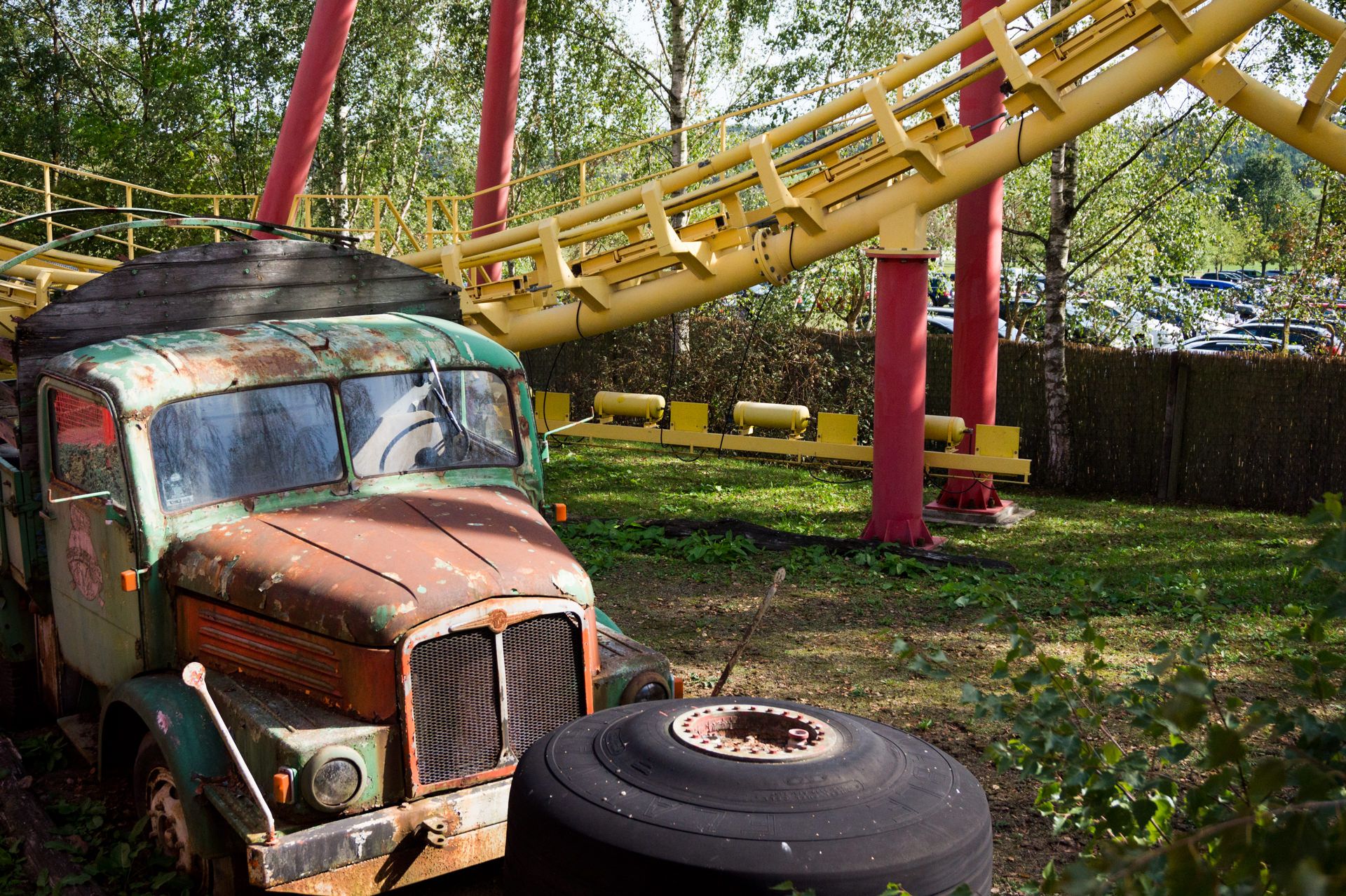
On the site of the former roller coaster Marienkäferbahn, which left Freizeit-Land Geiselwind for reasons of cost and age, this year’ s roller coaster Cobra by showman Agtsch is located. In the years before, the place was already occupied by two Wild Mice, the indoor roller coaster Black Hole and a ghost train, which is understandable on the one hand, but on the other hand is not really needed due to the already large offer of rides. Because of the barriers along the ride this place doesn’t look very nice, a non-temporary attraction would surely be an advantage here in the future.

Blauer Enzian

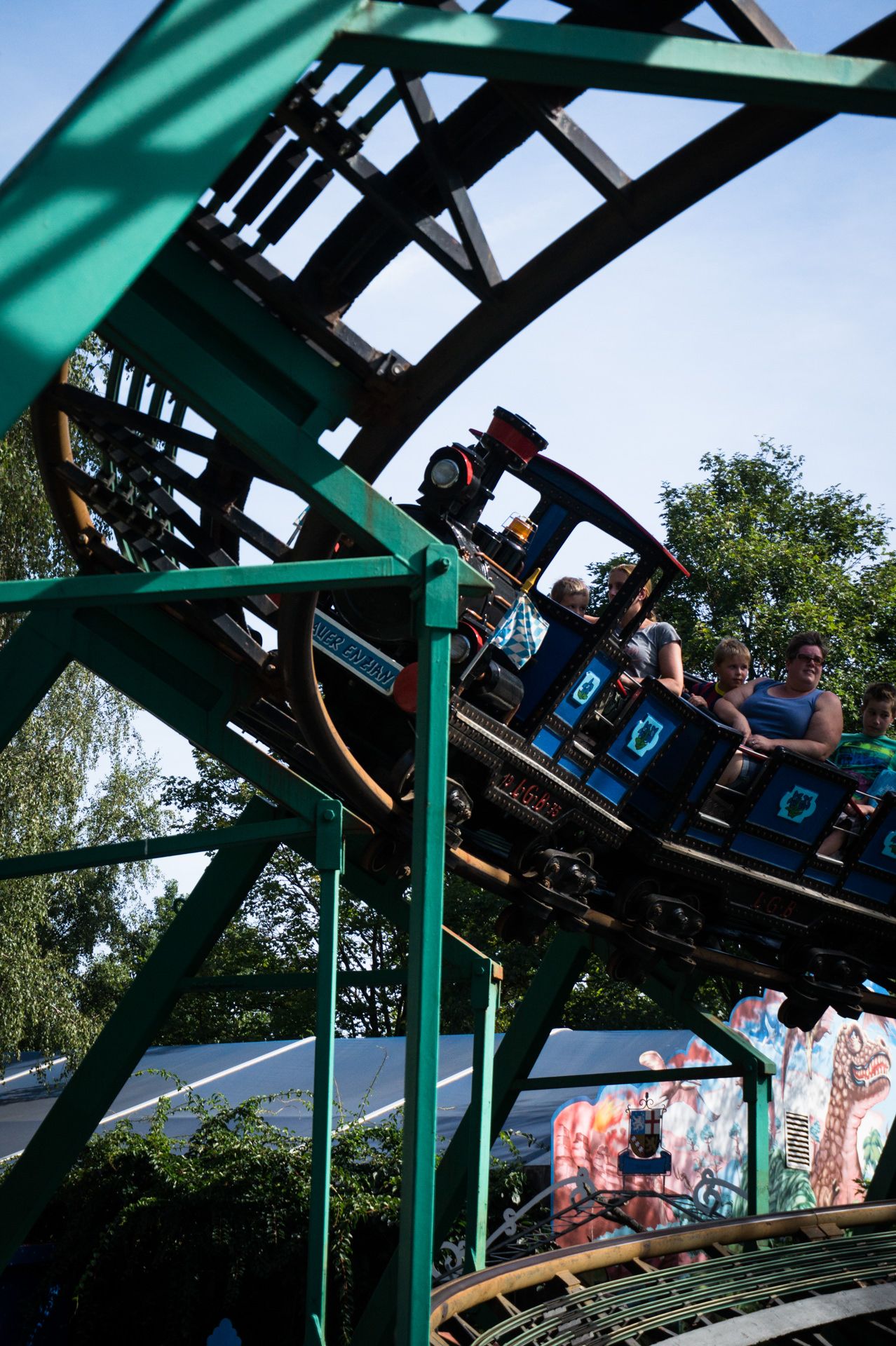
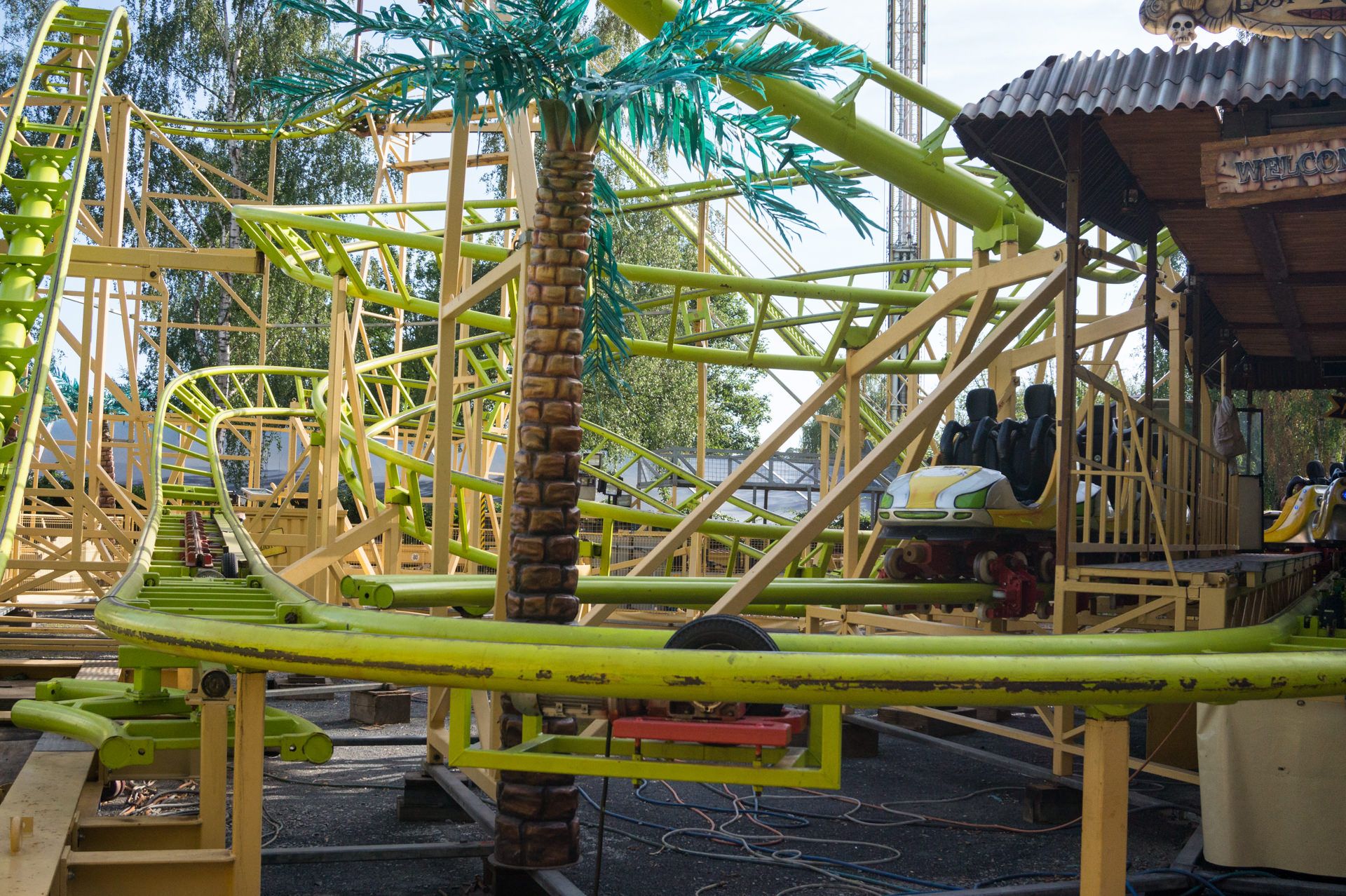
Right next door is a Blauer Enzian roller coaster of the same name from Mack. Like many rides at Freizeit-Land Geiselwind, this is a former travelling ride, which can be seen by the two water basins that make the sole of the ride heavy. Since the bridge above the station was not built, the exit happens on the same side as the entrance. Therefore, one side of the train was closed off.

The ride begins with a wide left turn, followed by a leisurely climb. Once at the top, the train makes a downward helix to the left before climbing up a steeper straight. Now the train makes a wide downward right-hand bend, crosses under the track just passed and surrounds the first downward helix in another left-hand bend. With much more momentum, the car now crosses the station and then lap by lap the course. Except for the abrupt second change of direction, it’s a nice ride.

Fränkische Weinfahrt

In addition to a 4D cinema, which is currently showing a film in the style of Jurassic Park, the Freizeit-Land Geiselwind also offers a number of flat trips, all of which have been well designed. However, only the Fränkische Weinfahrt (Franconian Wine Ride), a teacup ride, shows the regional reference of the park. Everything else is bavarian, which also keeps the gastronomy prices in a good range.

Pictures Freizeit-Land Geiselwind

Conclusion Freizeit-Land Geiselwind

The Freizeit-Land Geiselwind is a rather neat amusement park. The rides are all in a very good condition and generally appear to be very well maintained, as are the gardens. Despite the parcel-like division of the rides, the routing does not remind of the computer game Roller Coaster Tycoon, a state of affairs that can be experienced for example in the rear part of the Erse Park in Uetze, so that a harmonious overall impression is created. Although the origin of many of the rides cannot be denied, the impression of a permanent funfair is by no means created by the nice integration of the rides. At least, the Freizeit-Land Geiselwind easily manages to entertain its visitors for a few hours and offers a good price-performance ratio, which is why I would like to call the park Bavaria’s strongest piece of leisure, which makes the park’s slogan more accurate (but the competition in this federal state is very manageable).


What is your opinion about the amusement park Freizeit-Land Geiselwind? Just write them in the comment field below the report or in our social media channels:



What a flashback on Psyké Underground

Preface

Although I have described Walibi Belgium as a ghetto amusement park in my last report, I was always curious about new development of the park. Since my last visit in 2009 a lot has happened in Wavre. Starting with the Mise en état of the Intamin Rapid Ride Radja River and the associated reactivation of the long-forgotten water effects in 2010, the overhaul gradually moved through the rest of the park and the swimming pool Aqualibi. The whole park just got back to its former glory, a condition which only a few are likely to know. Accordingly, I’ve been wanting to revisit the park for over a year just to convince myself of the status quo, but a promising and long-awaited novelty kept me waiting until the end of this season: The roller coaster Psyké Underground.
Tour of the park

Vampire

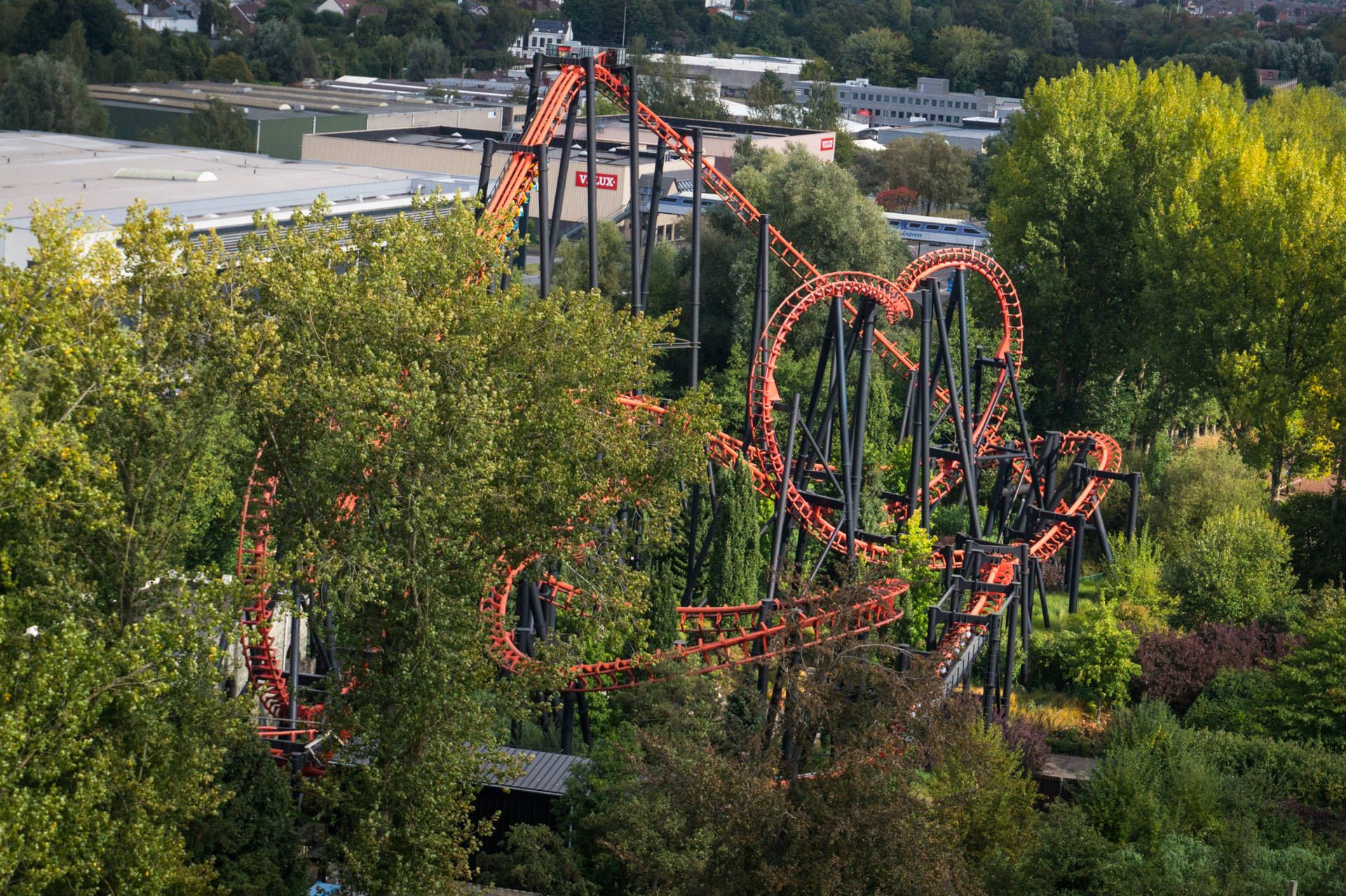
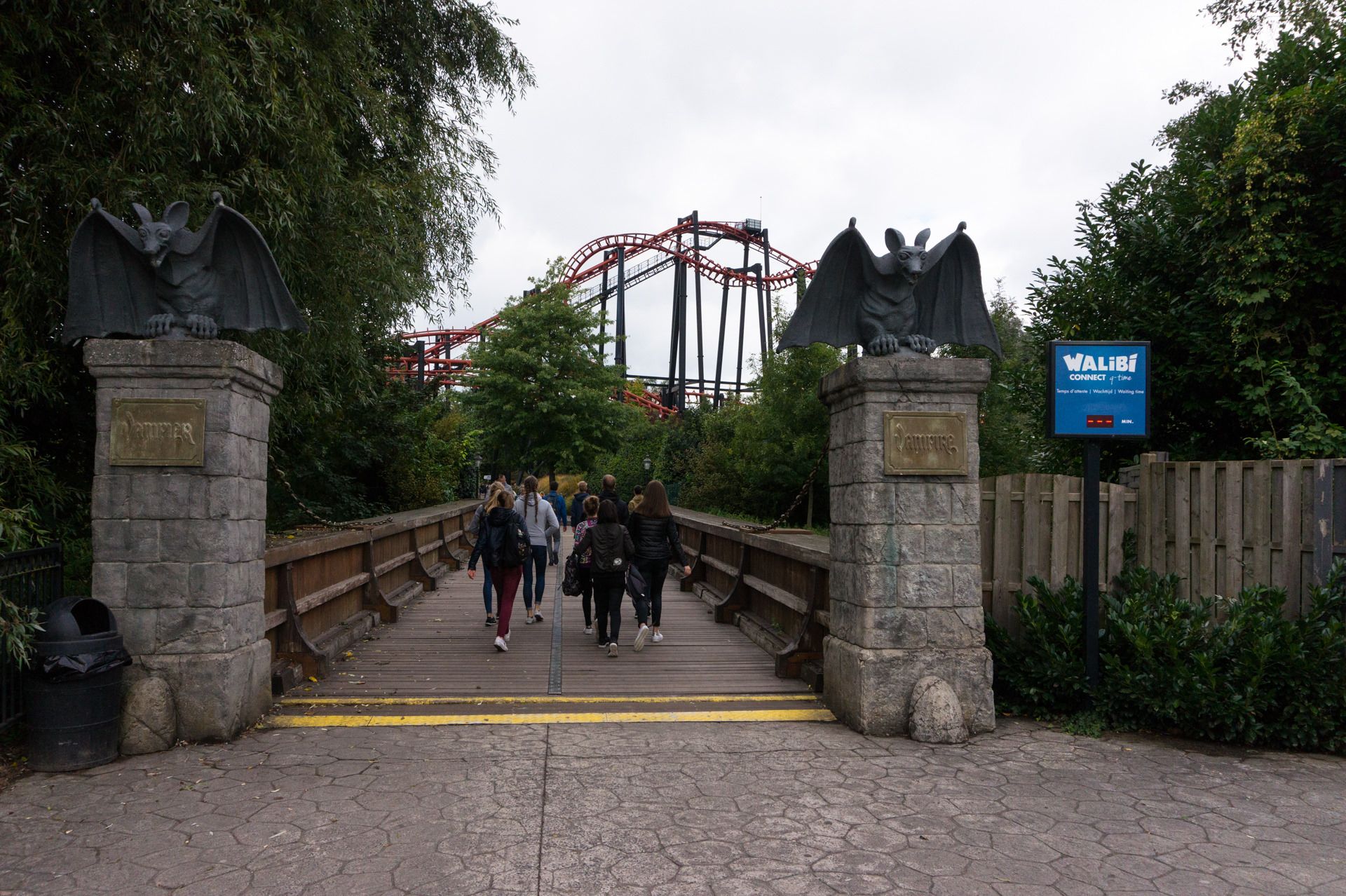
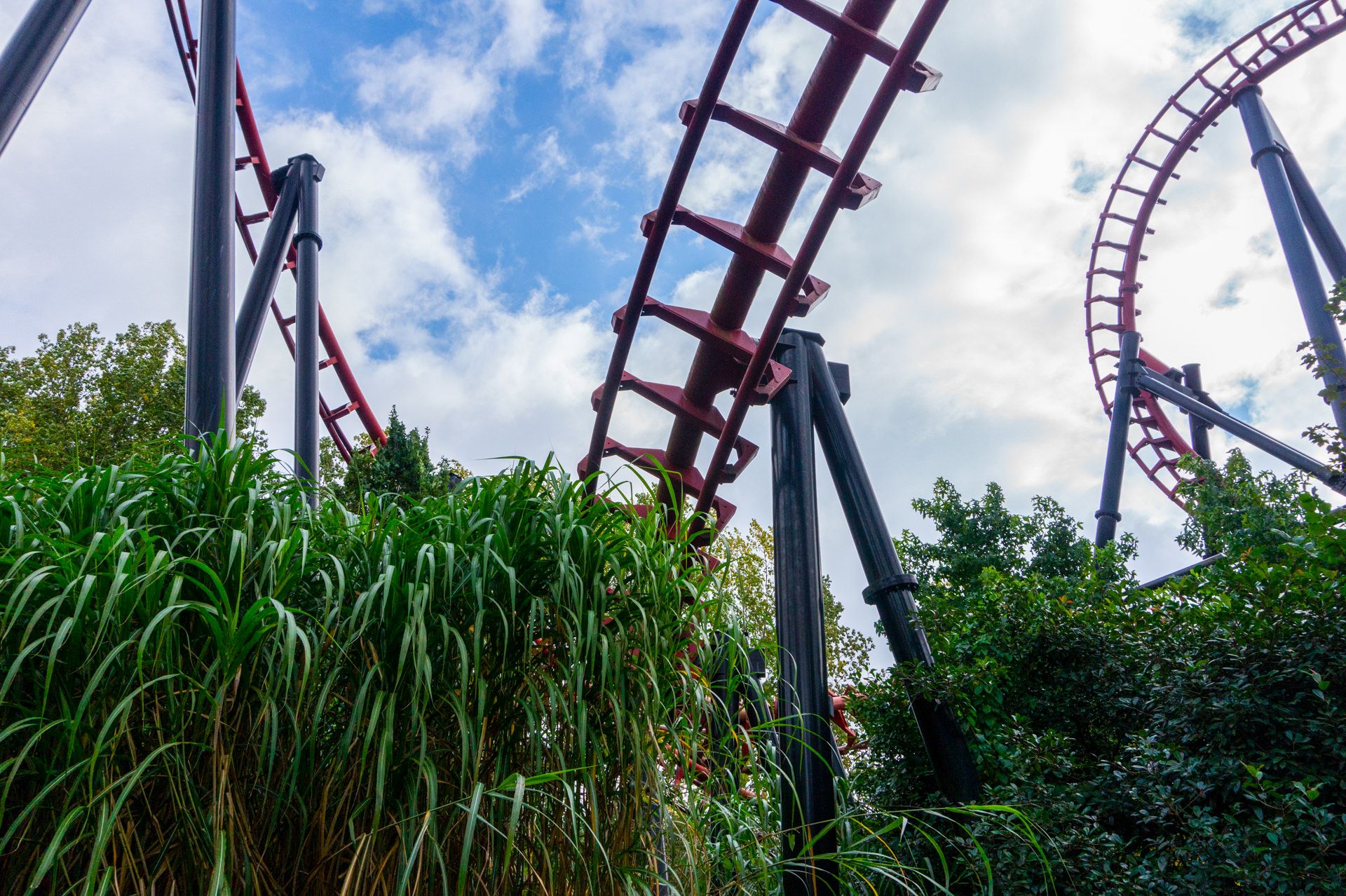
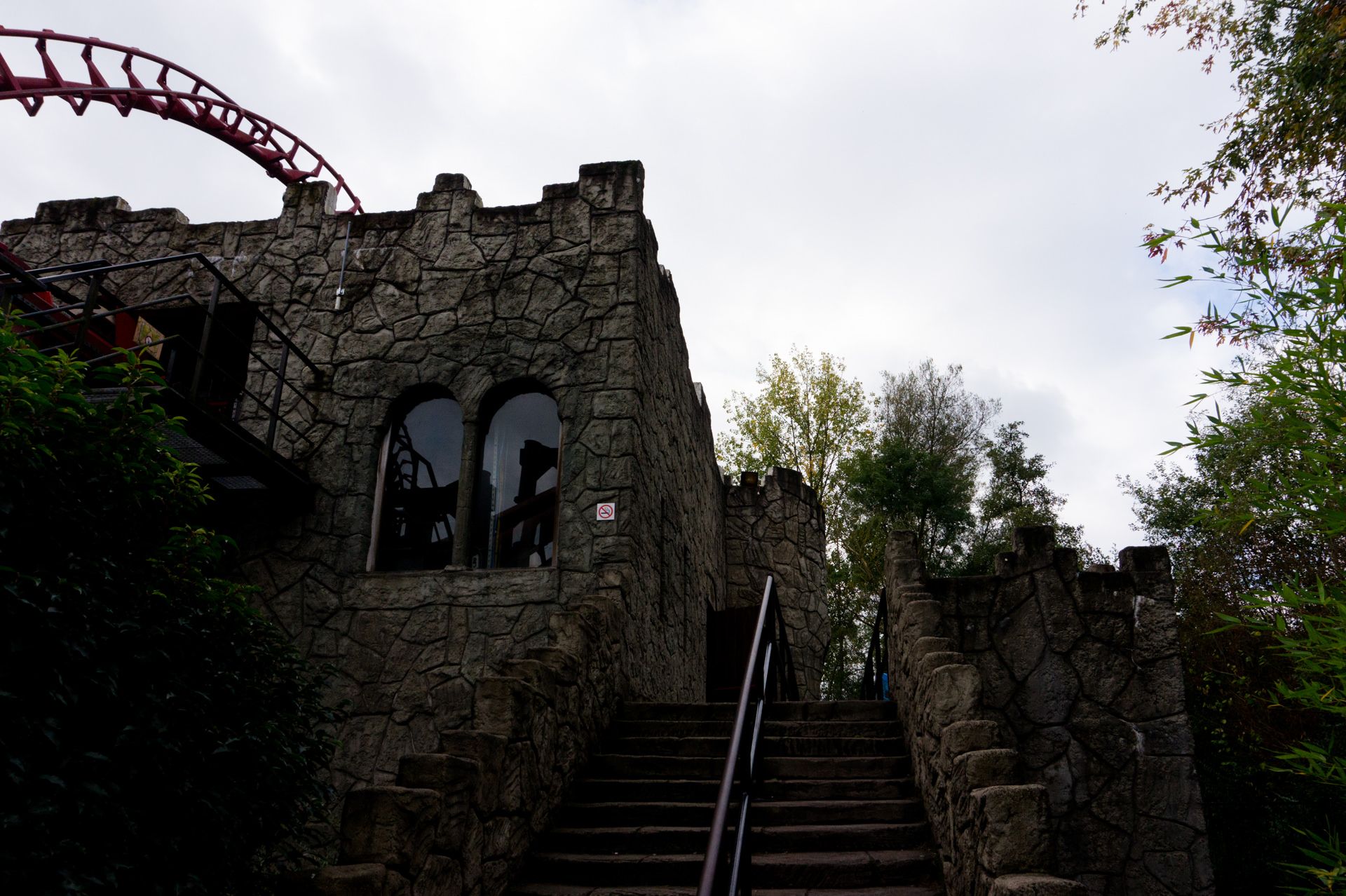
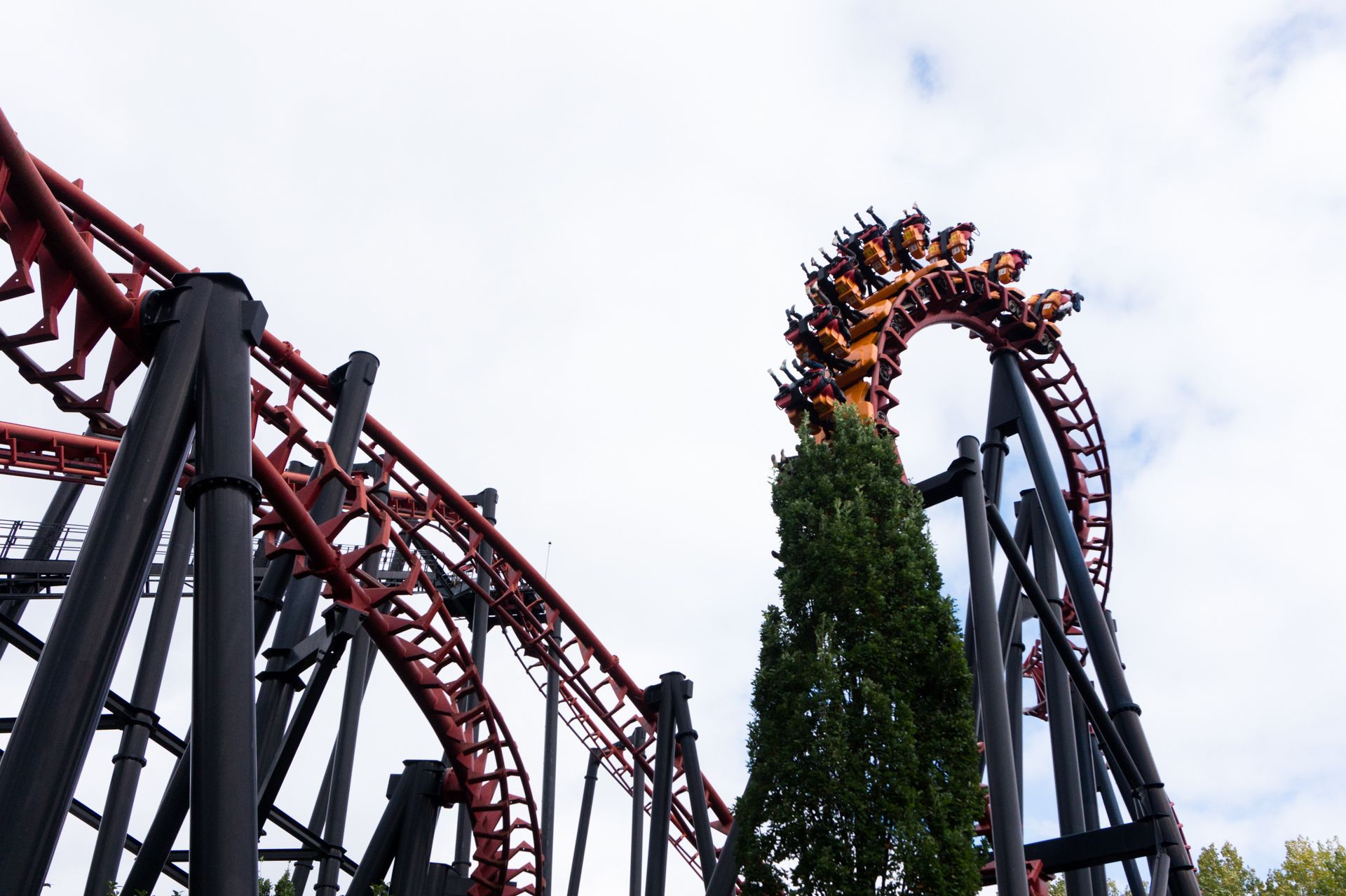
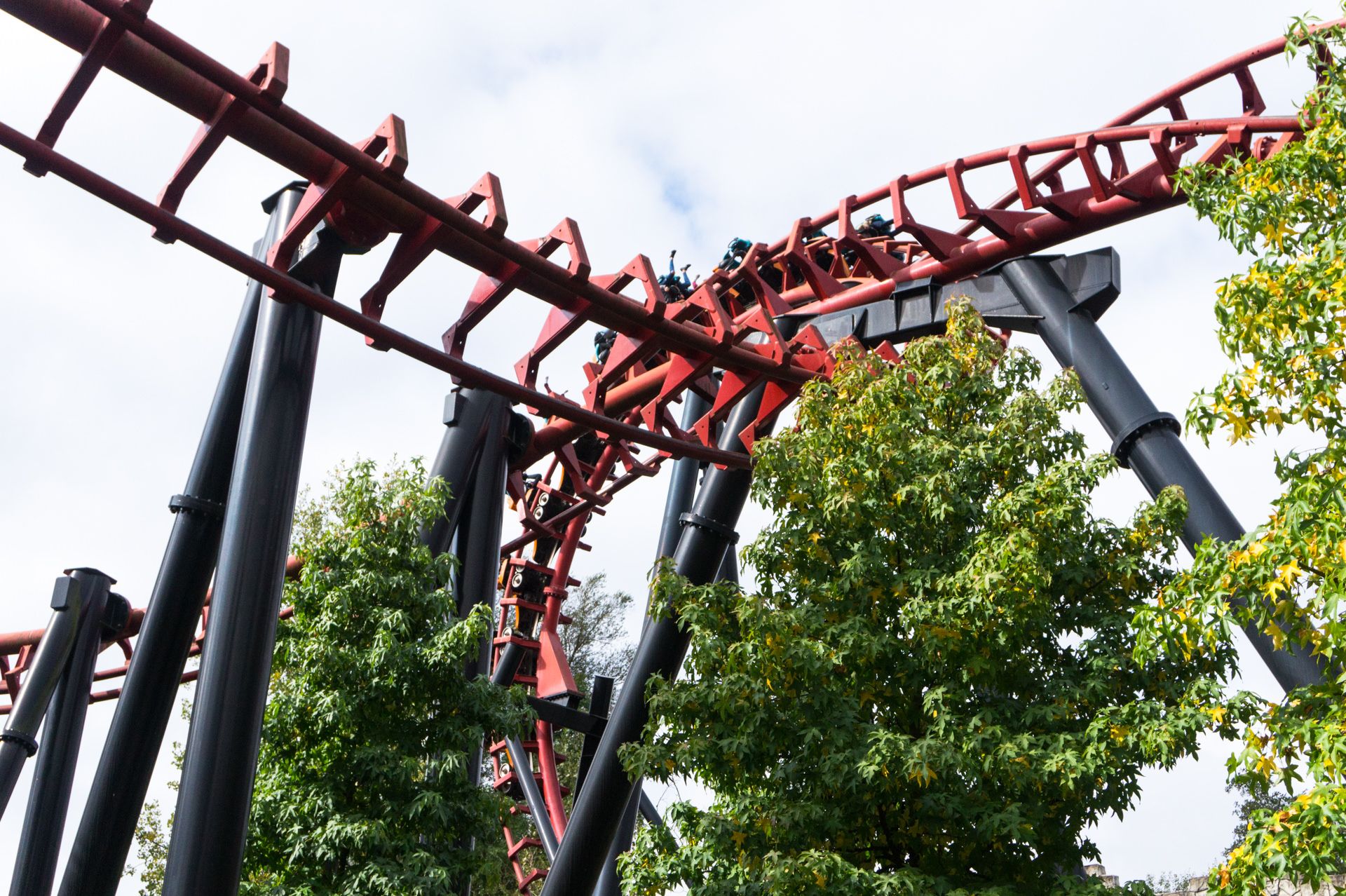
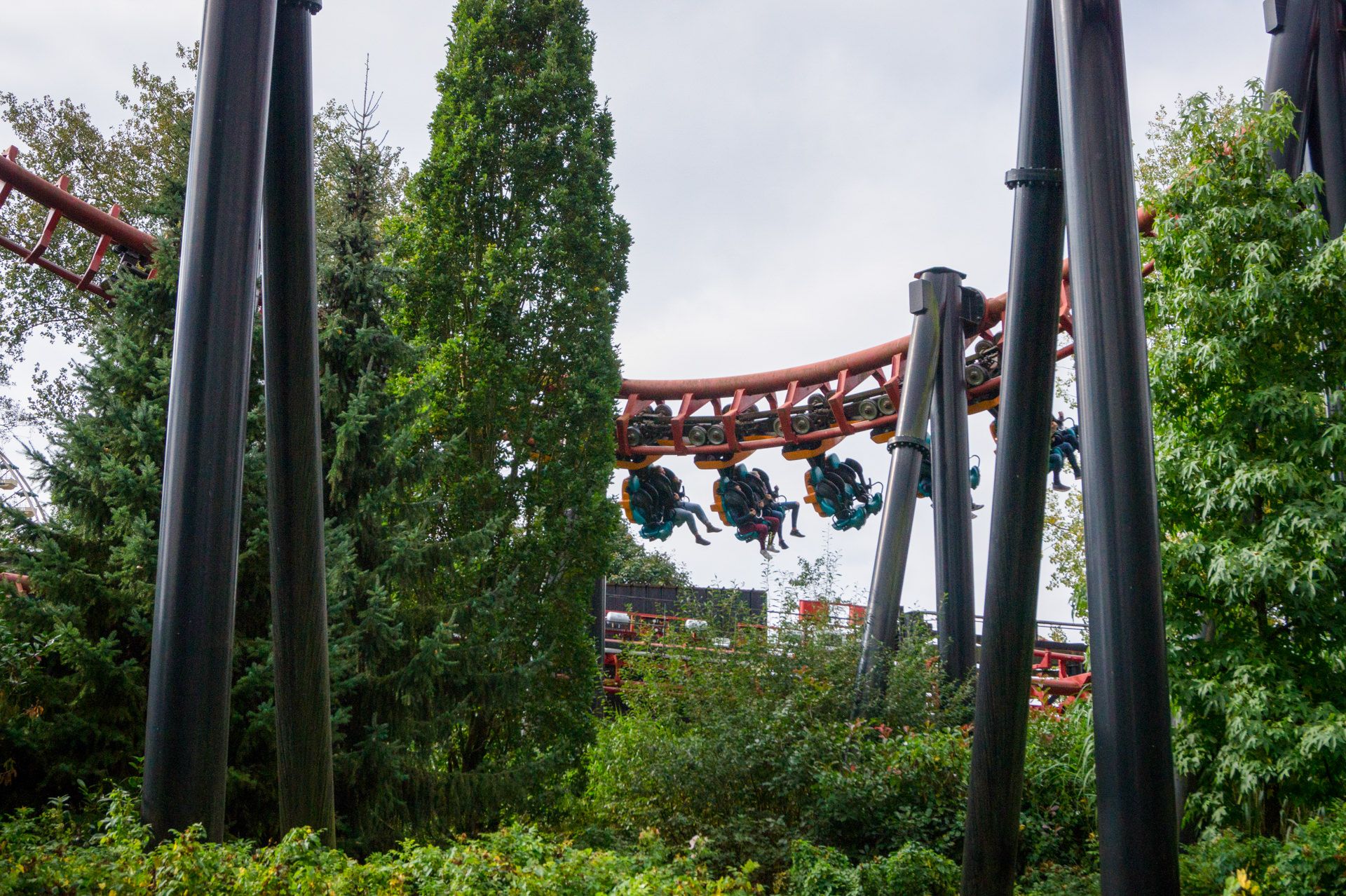
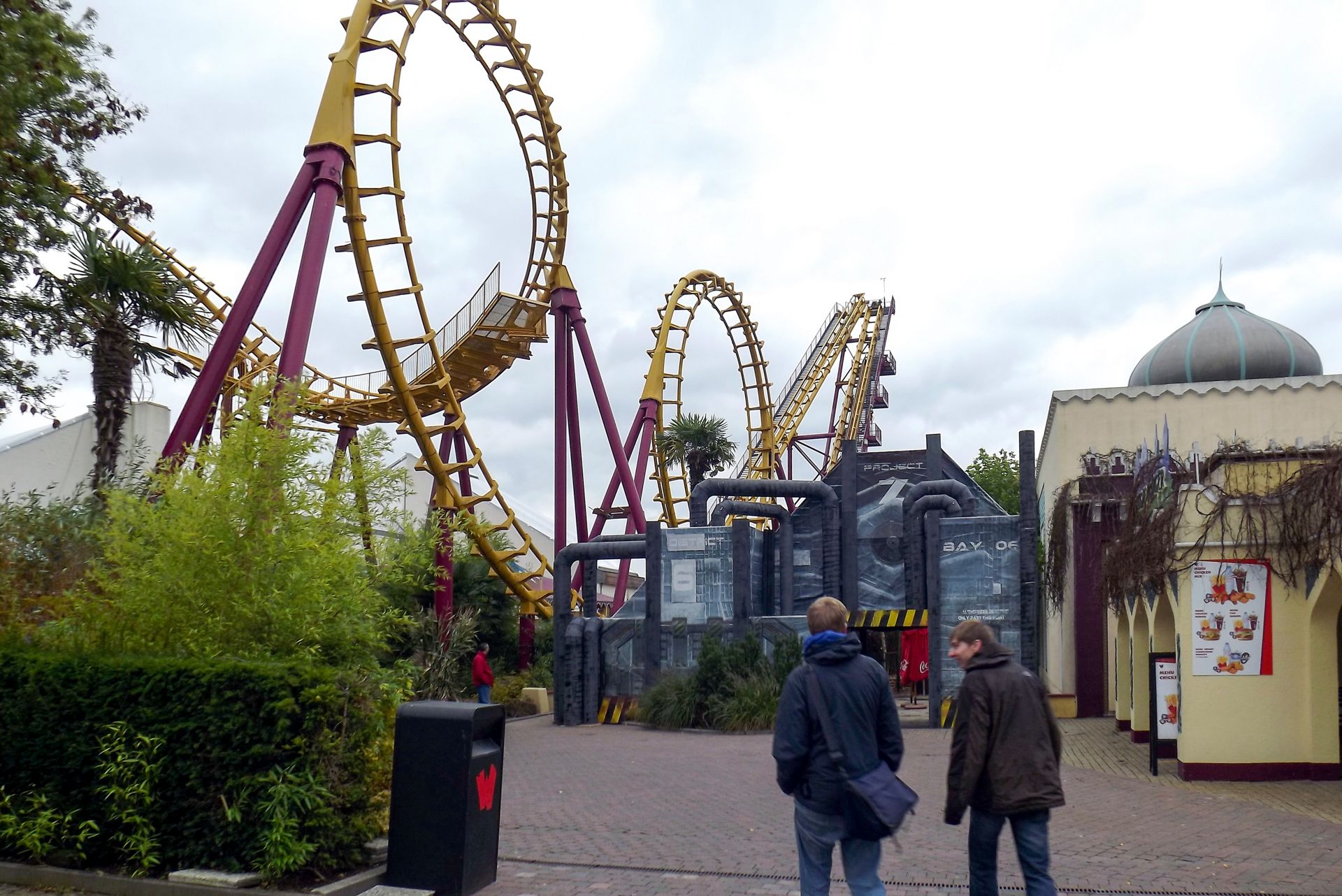
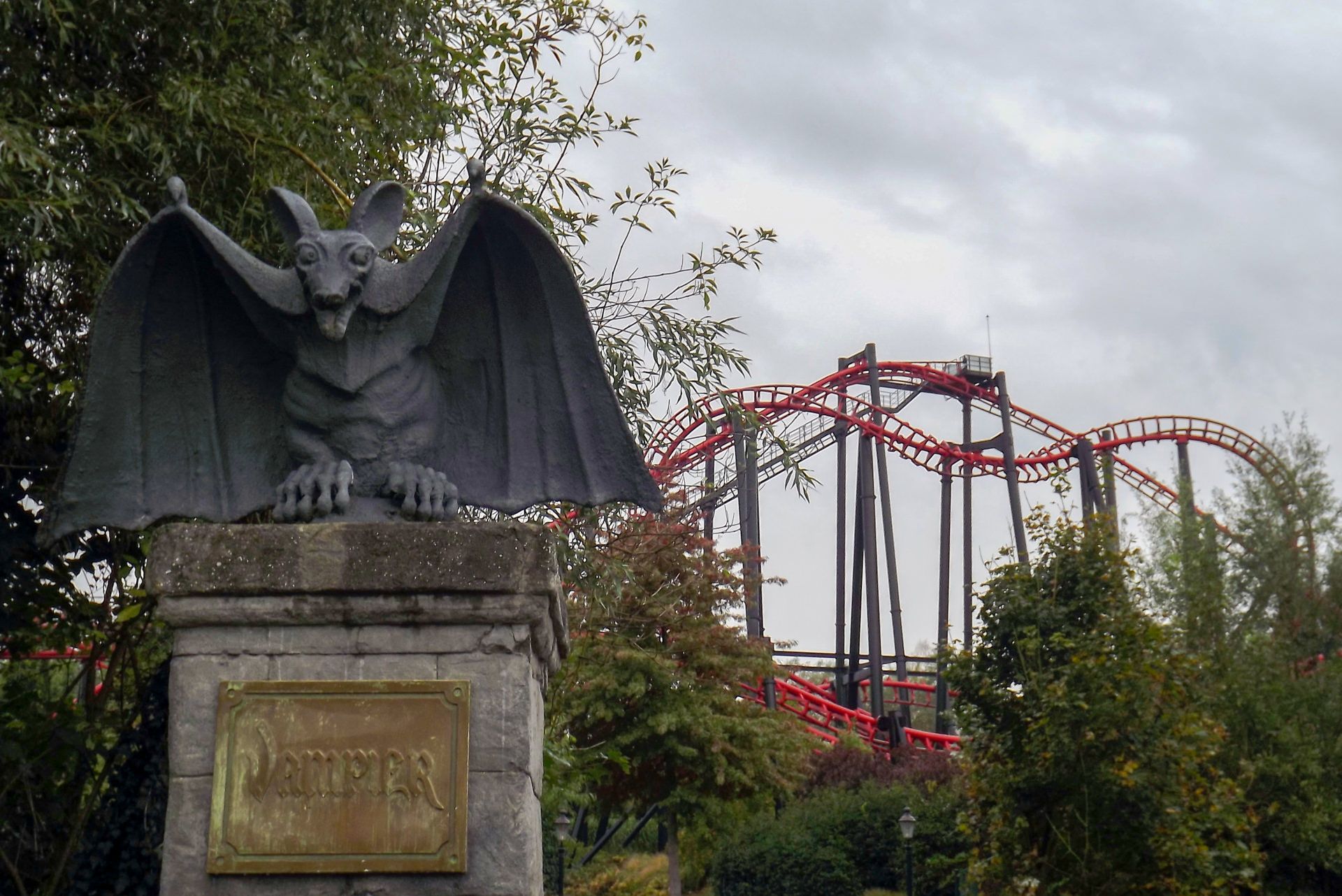
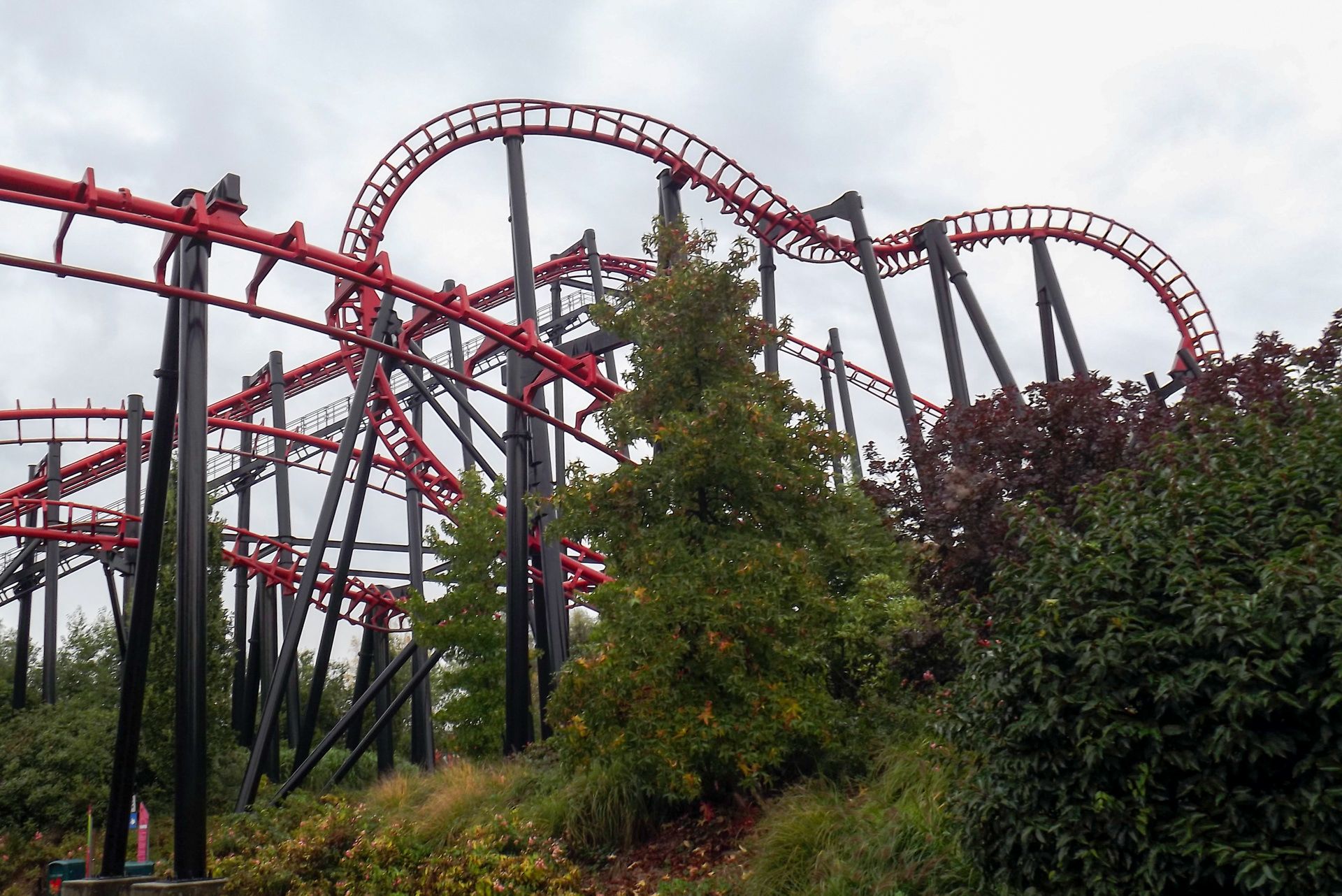
After redeeming our Fort Fun season ticket coupons in the service centre, we went straight through the newly designed entrance area and directly followed the paths to our right in the direction of the roller coaster Vampire. Now in black and red, the coaster lost its typical Six Flags colour scheme. Although I have no negative attitude towards Vekoma Suspended Looping Coasters, the last ride on Vampire was just way too slow and the incompetent staff made the experience even worse.

Even Jan and Julian were not particularly euphoric about the upcoming ride. Interestingly, our expectations were absolutely wrong. Compared to other rides of this type, the Vampire is not only a good ride, but an absolutely smooth one too. You can’t even imagine how bluffed we were, when we finally hit the brake run. There is simply no major contact with the restraints, which is quite surprising, especially with the rather sturdy Vekoma over the shoulder restraint construction. However without all the flaws of a typical SLC, the ride is rather boring despite the very good layout. Even through the ride was smooth, the desire for further confirmation of our freshly gained experience was rather limited. Nevertheless, what ever Walibi Belgium did with the ride, it was the right decision.

Cobra and Palais du Génie

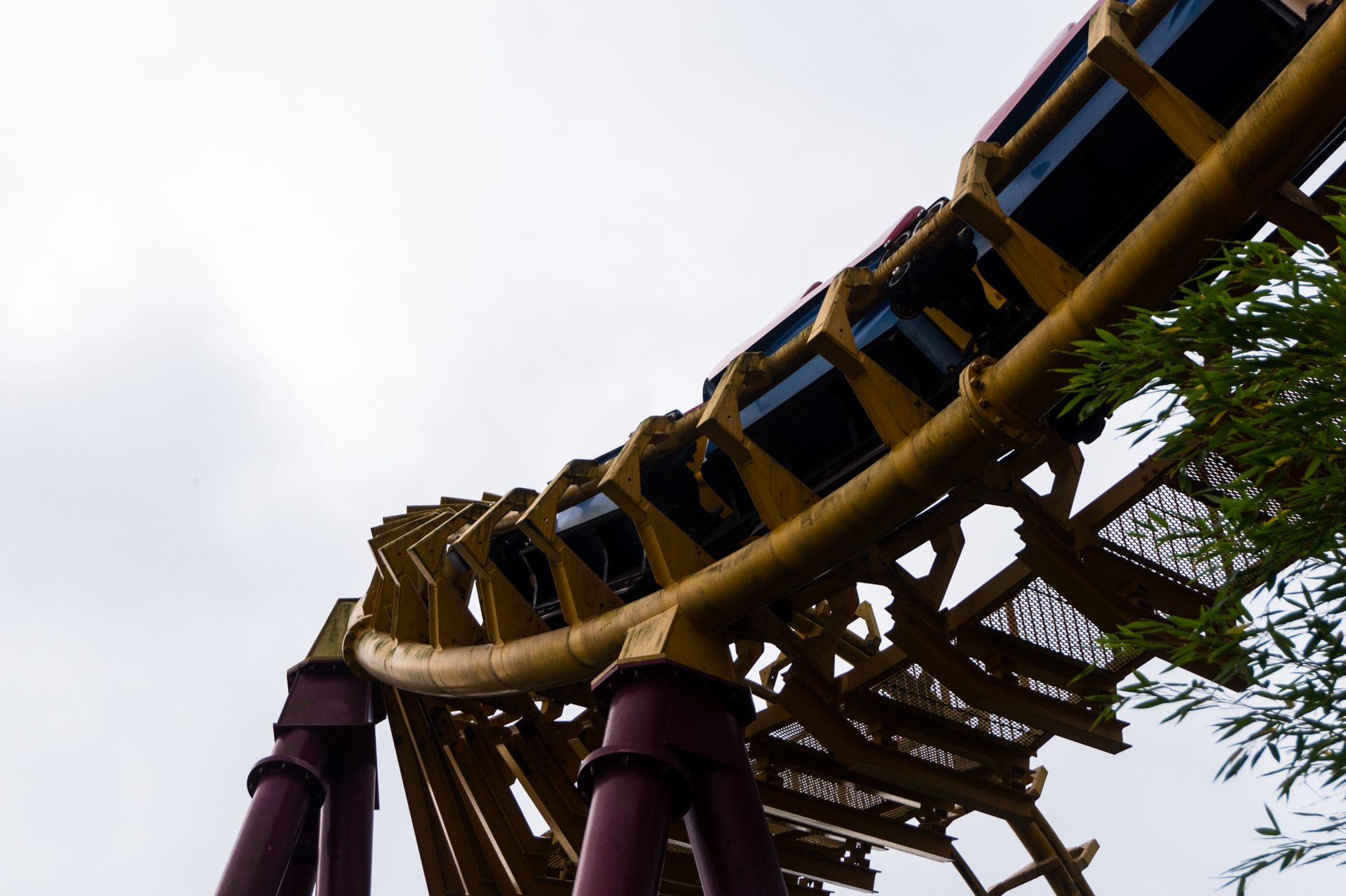
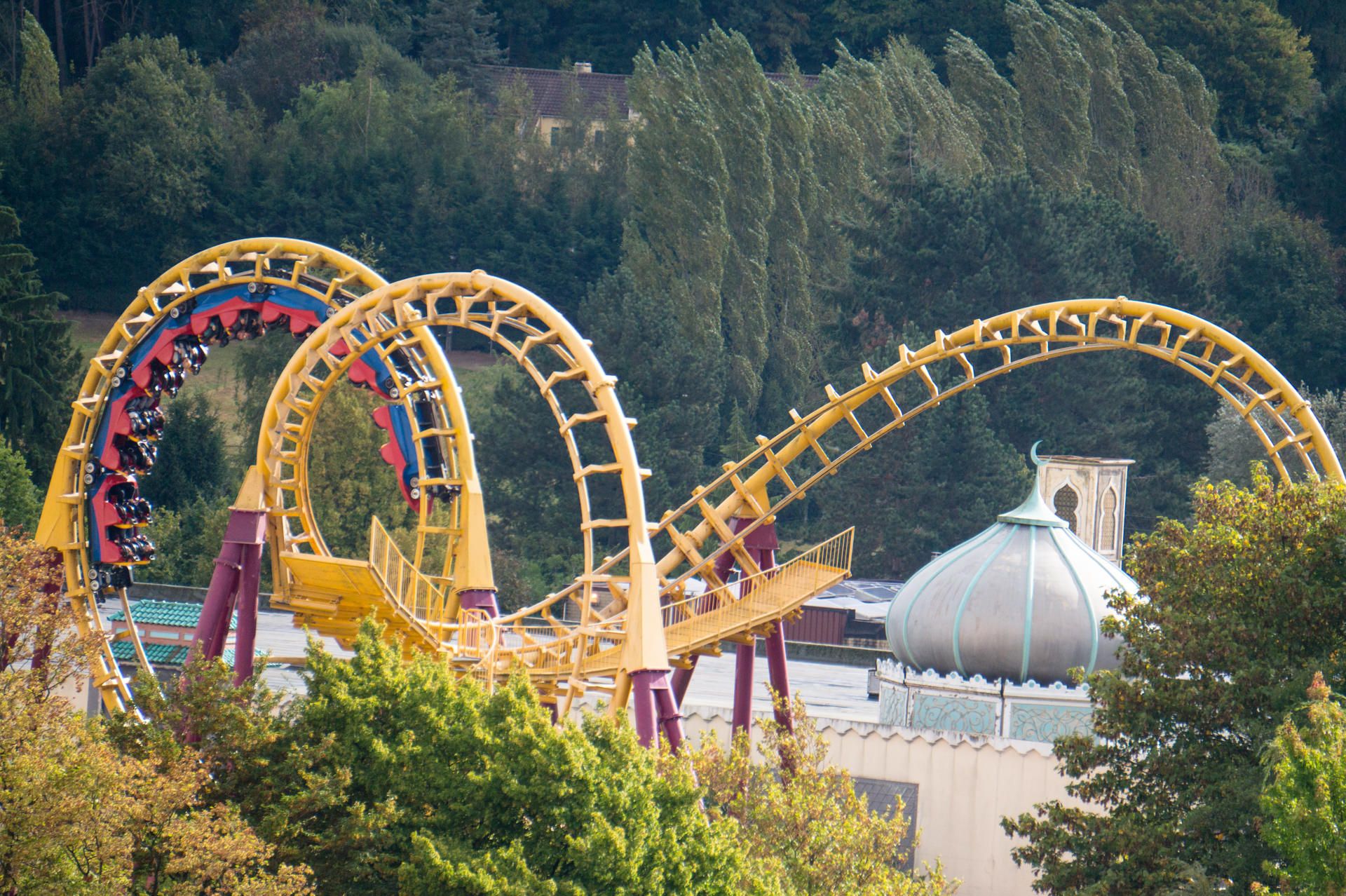
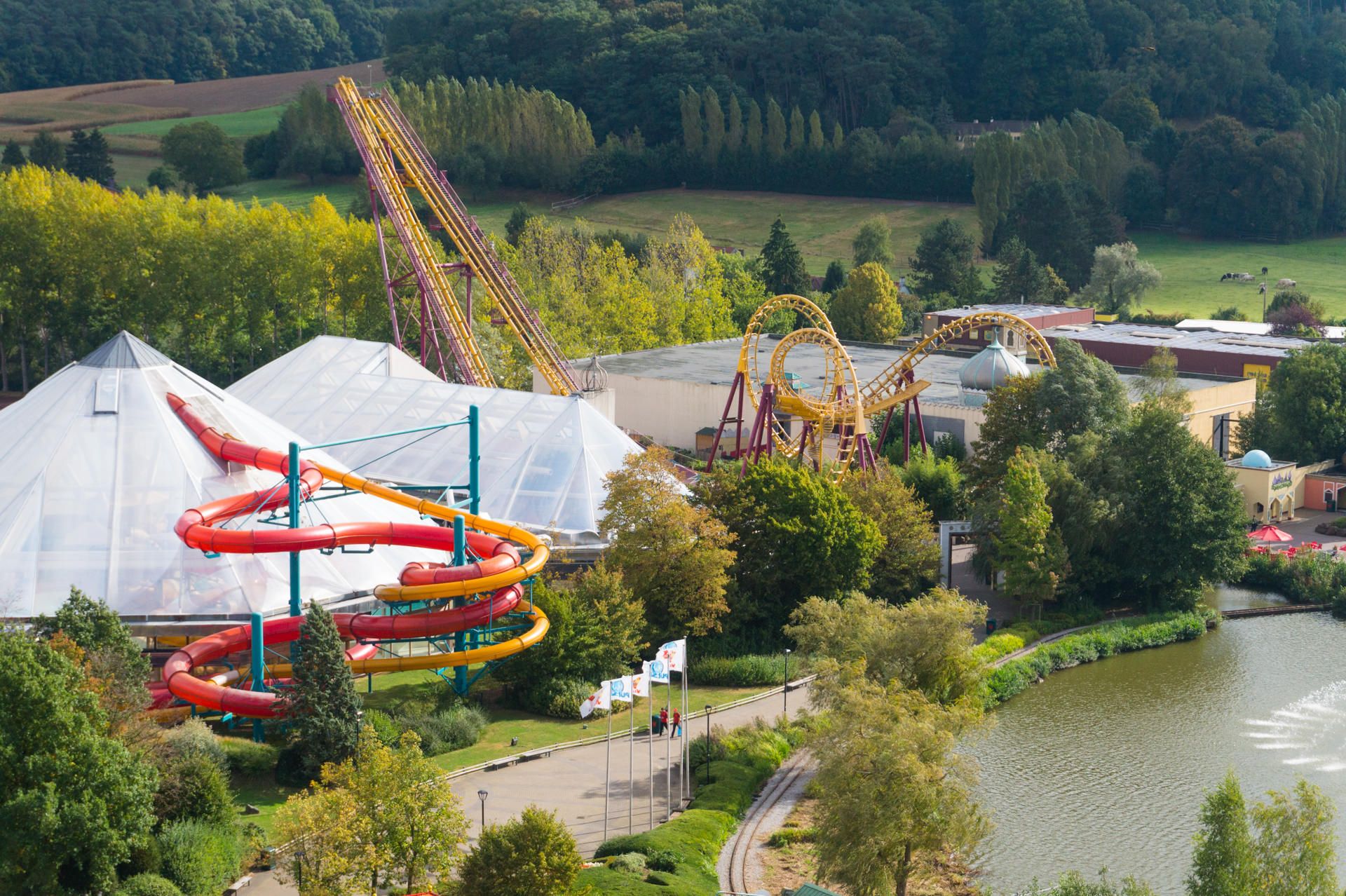
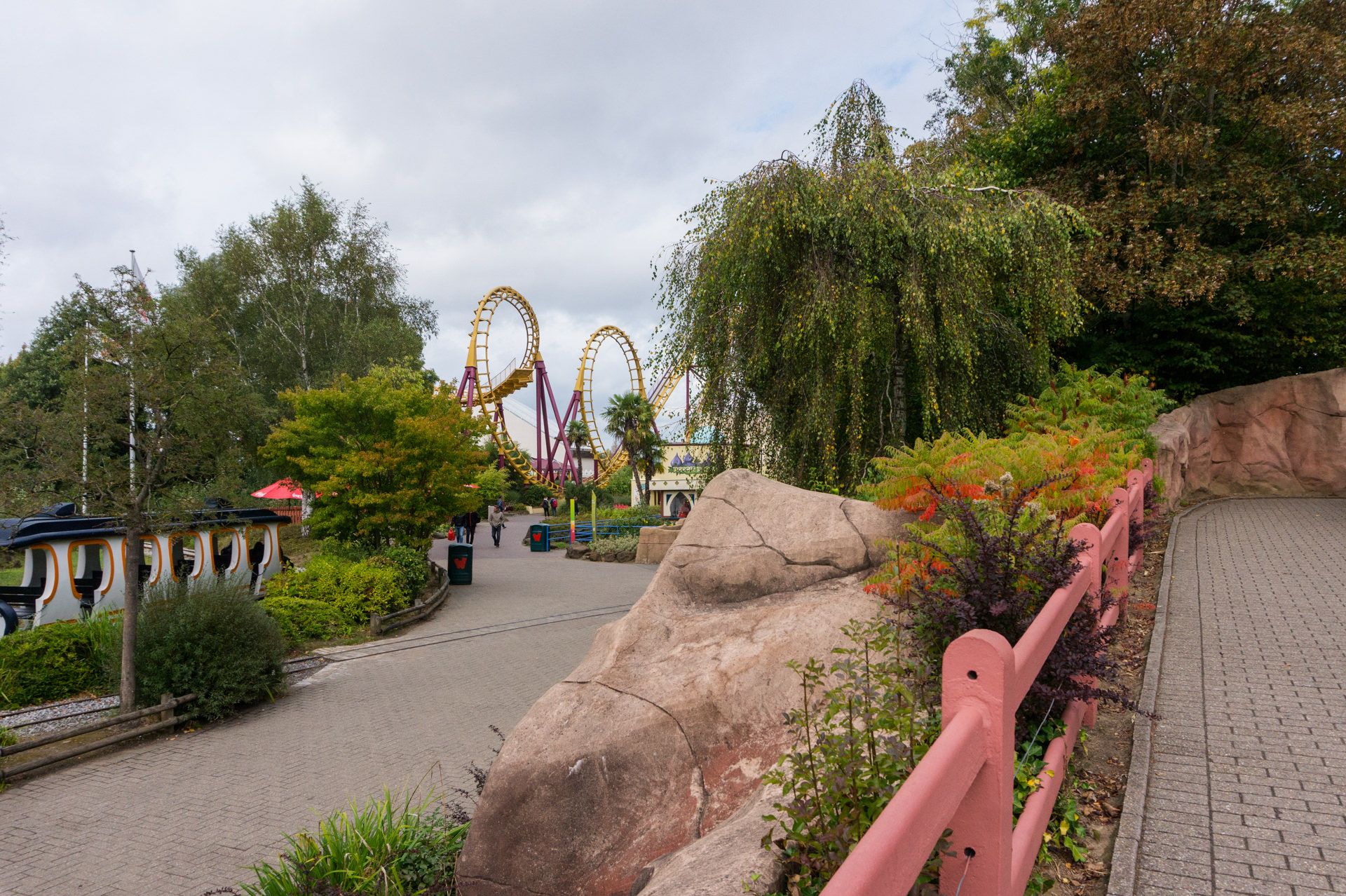
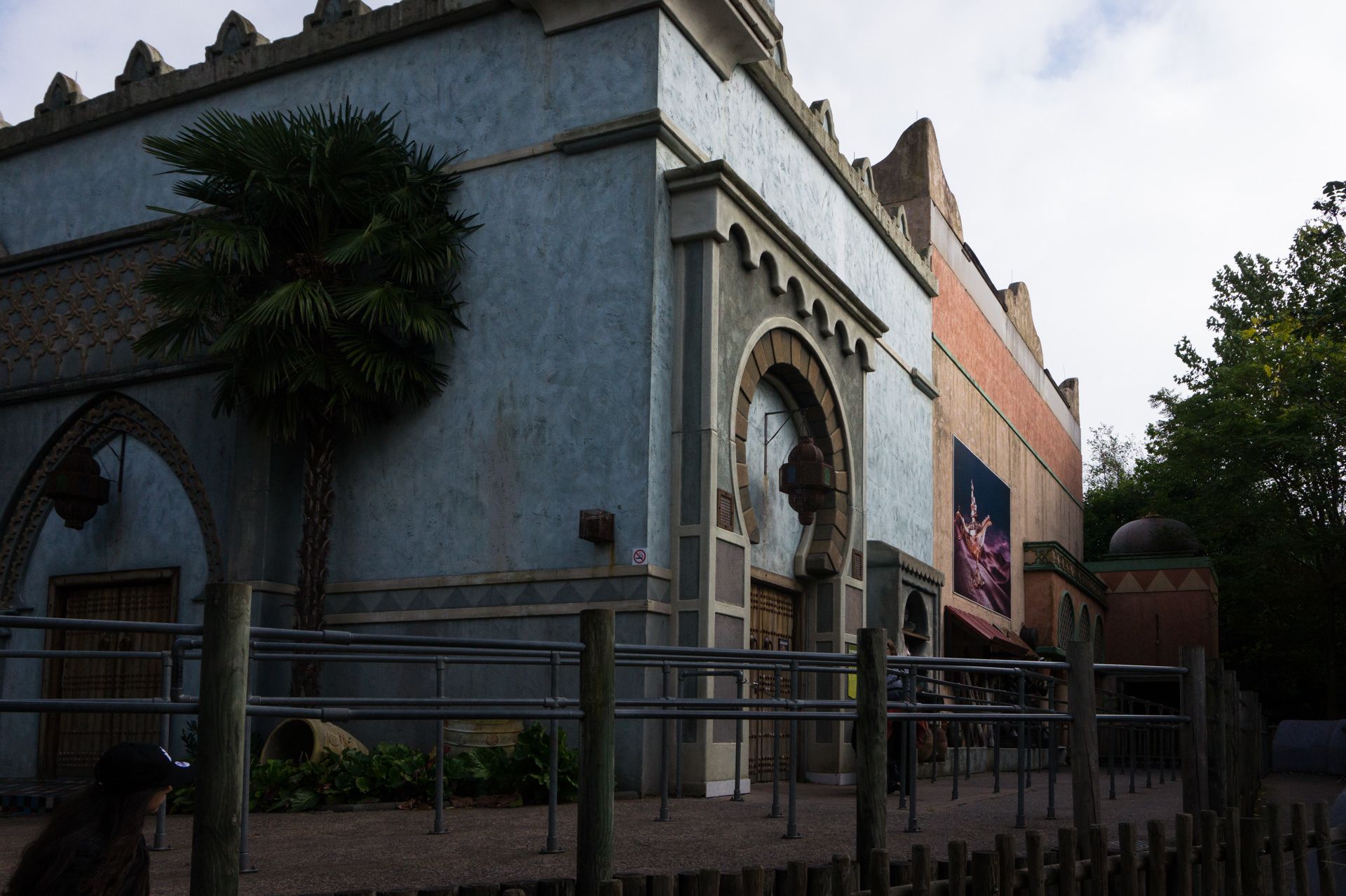
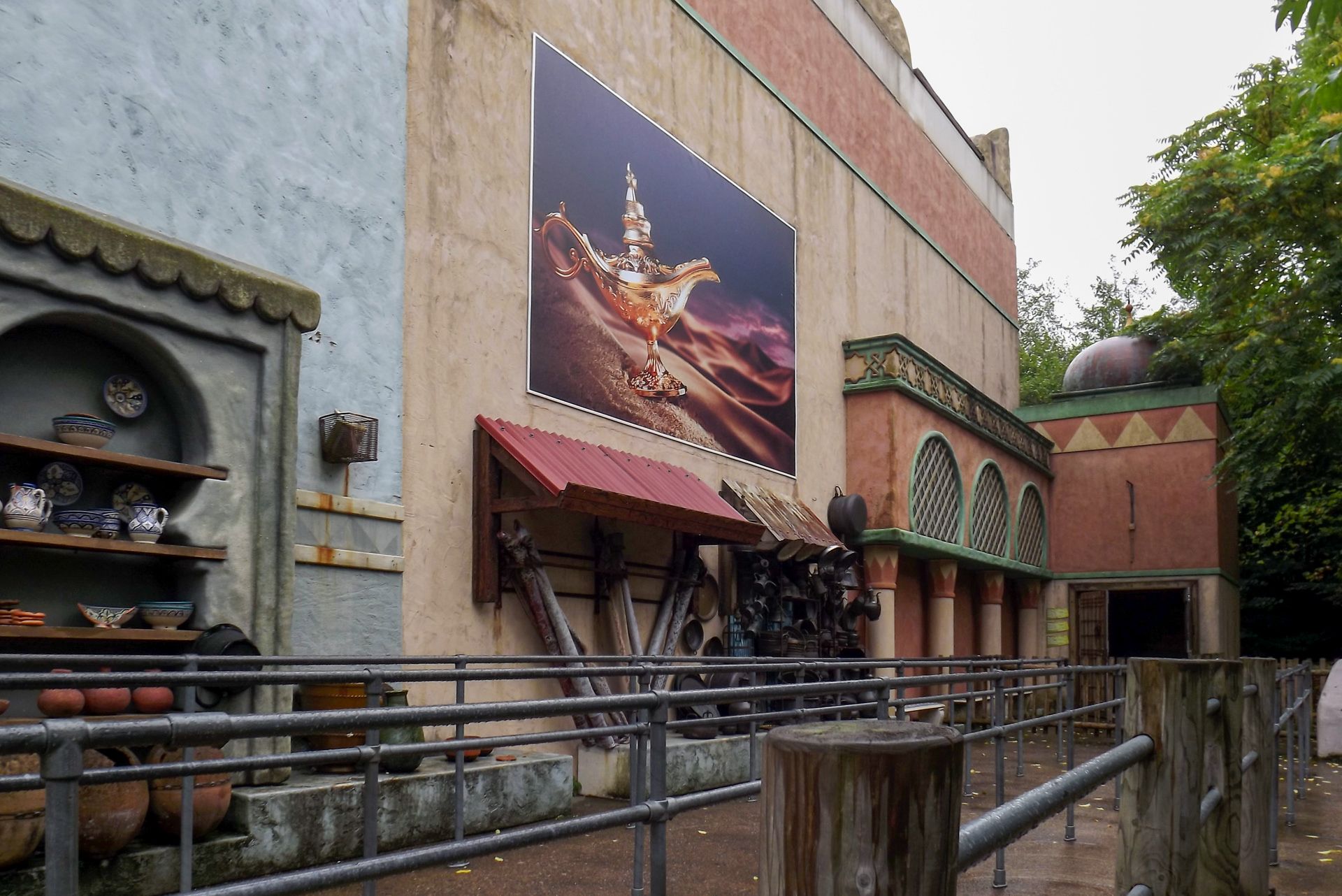
Starting with a ride on the Boomerang Cobra –which typically runs much quieter than most other roller coasters out there –, we now followed the paths clockwise around the lake towards the Palais du Génie, a mad house by the Dutch manufacturer Vekoma. As the music was barely audible and all the other sounds made it seem as if the ride was about to collapse, my last experience on this ride was not that good. This time, however, I was very satisfied. The story of the djinn transforming the house into a merry-go-round is effectively told. Considering this background story Le Palais du Génie is one of the better representatives of this very beautiful attraction, at least if you understand Dutch or French.

Loup Garou

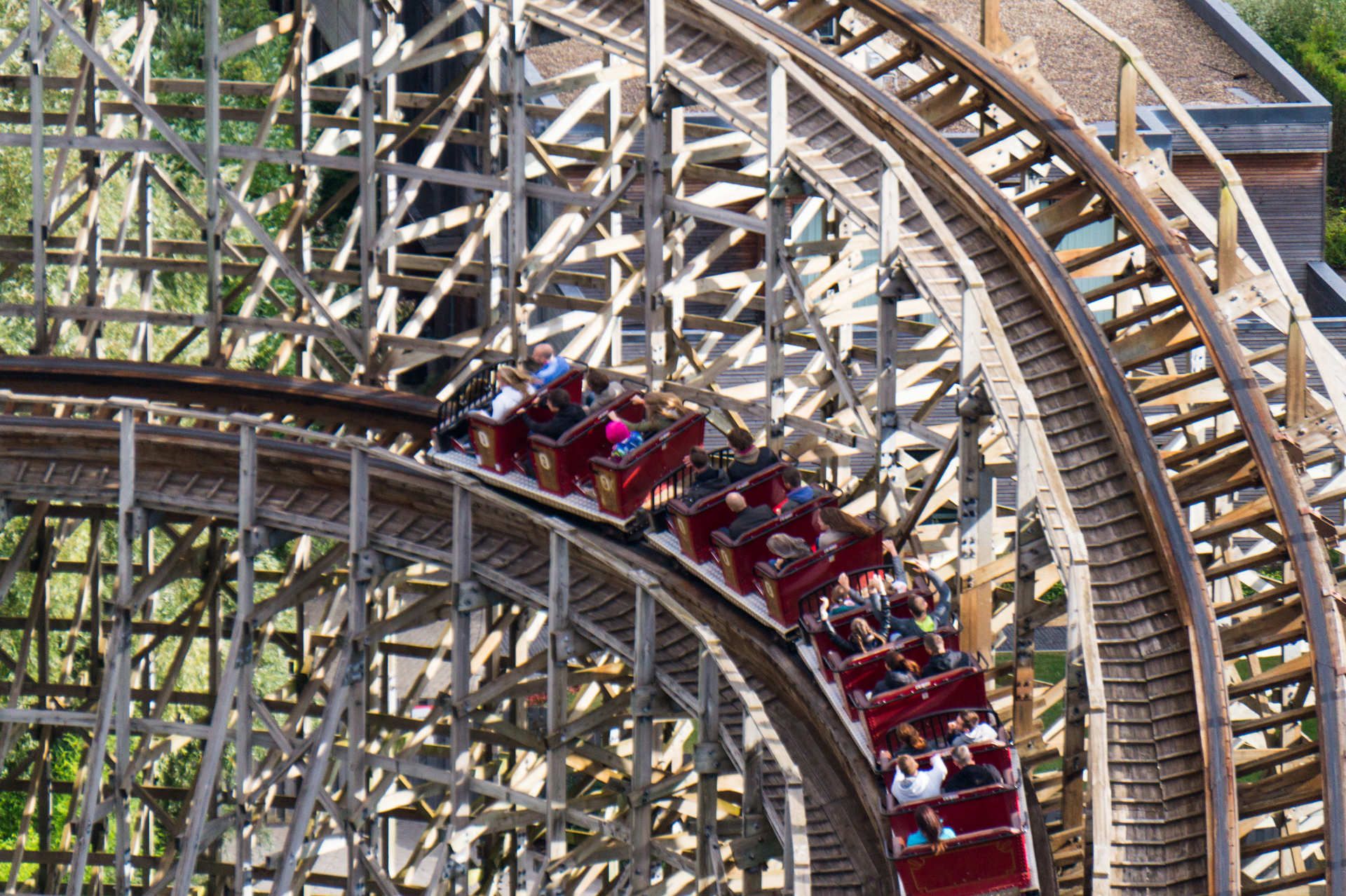
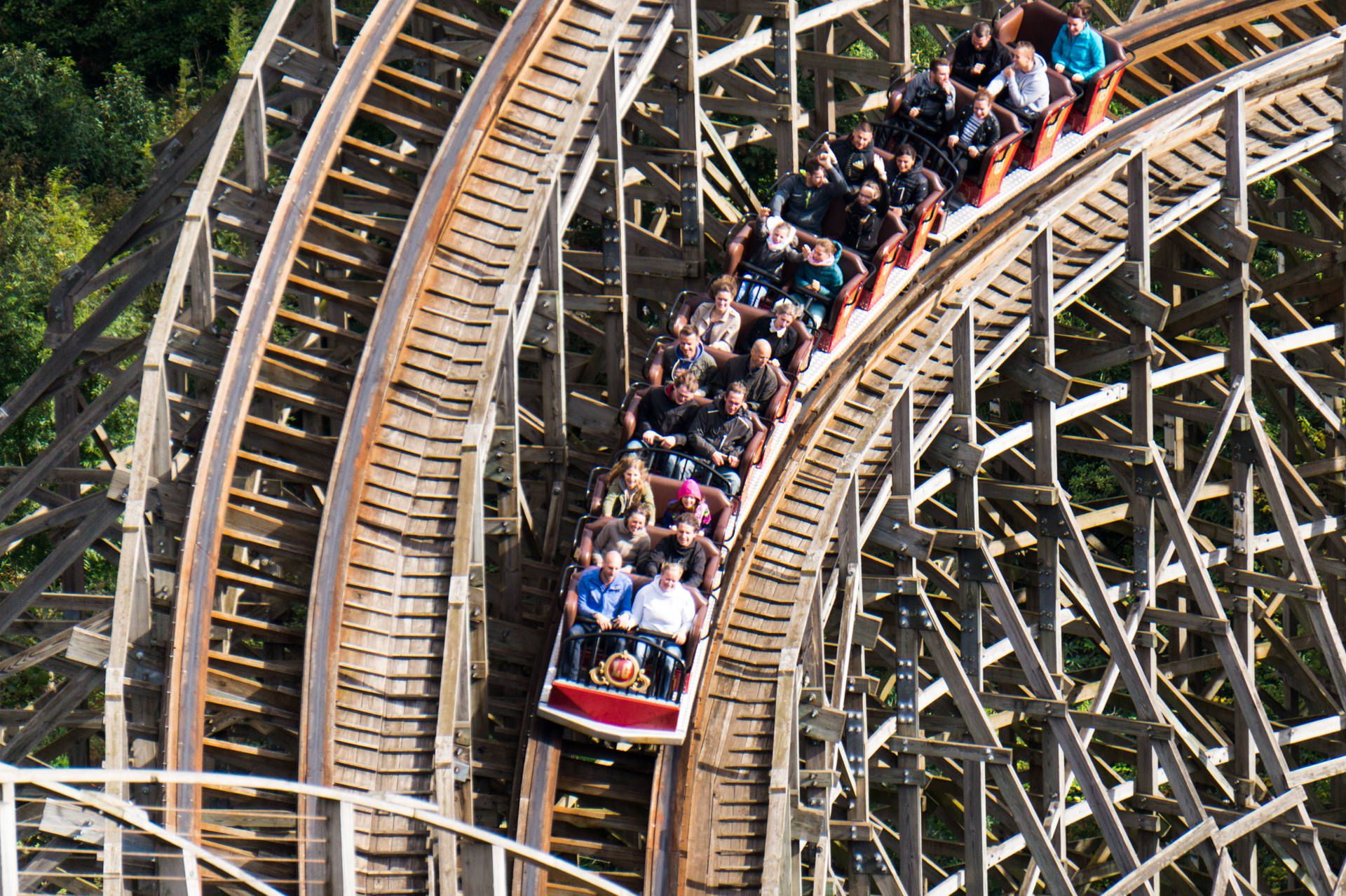
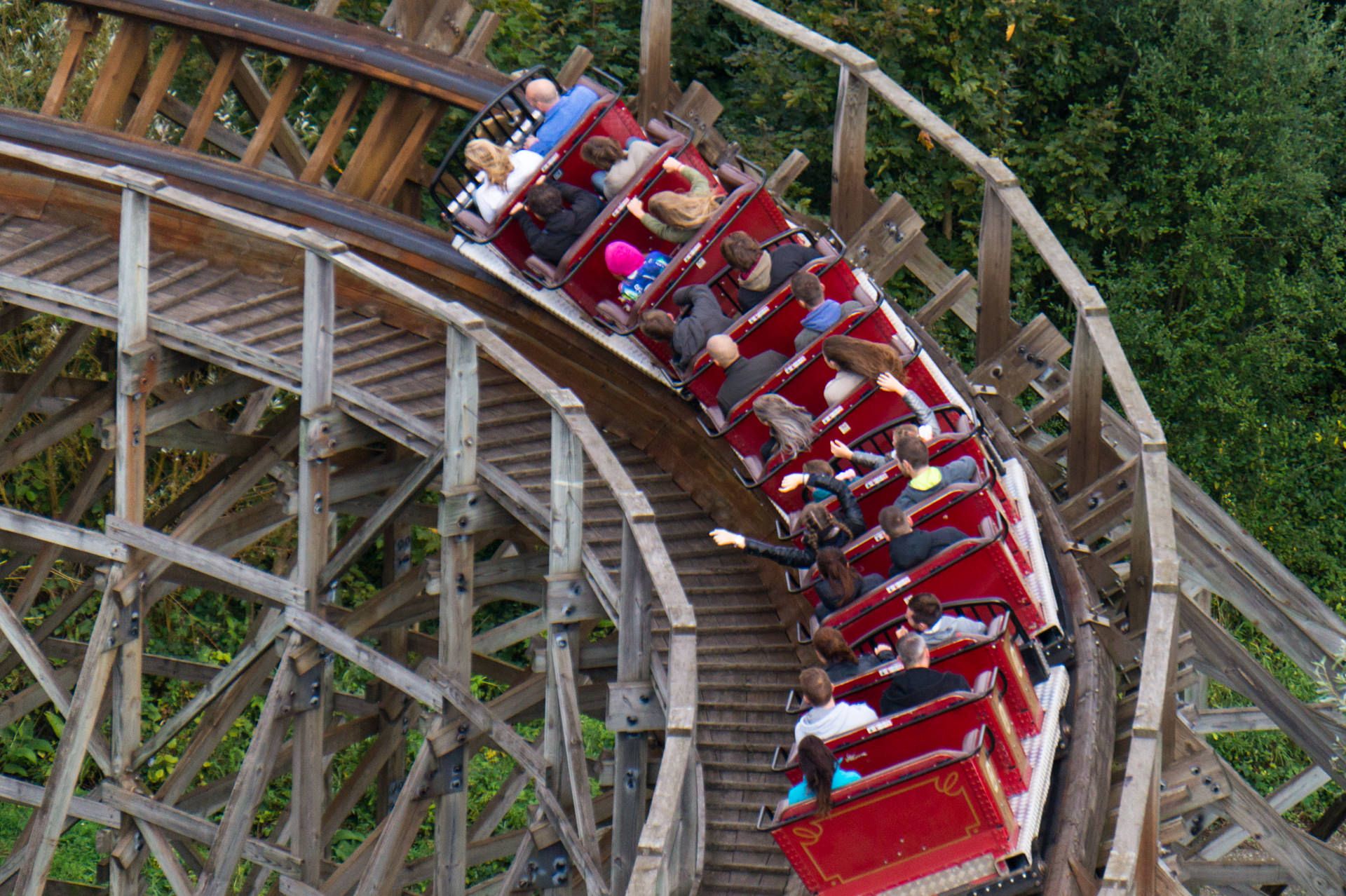
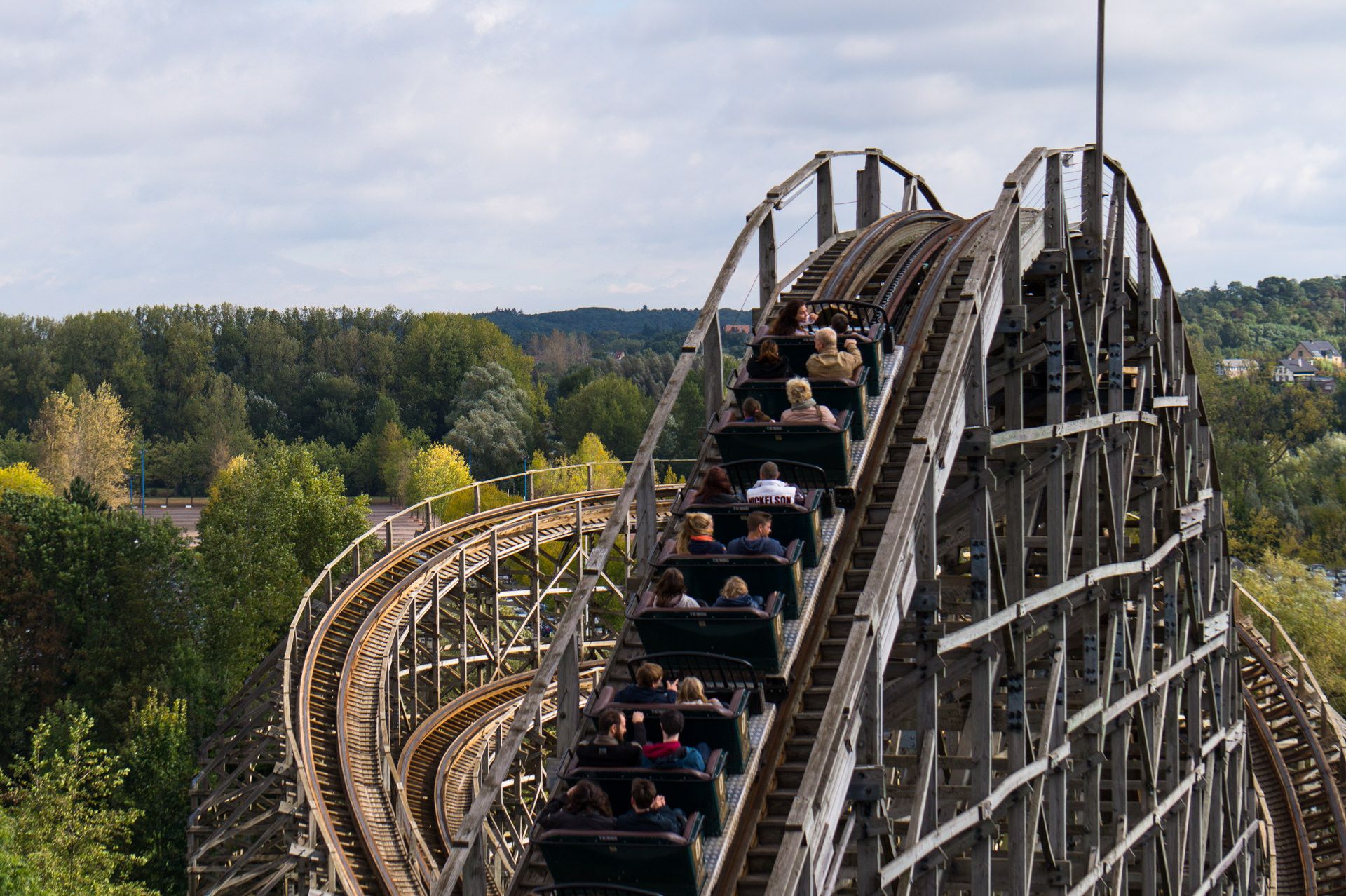
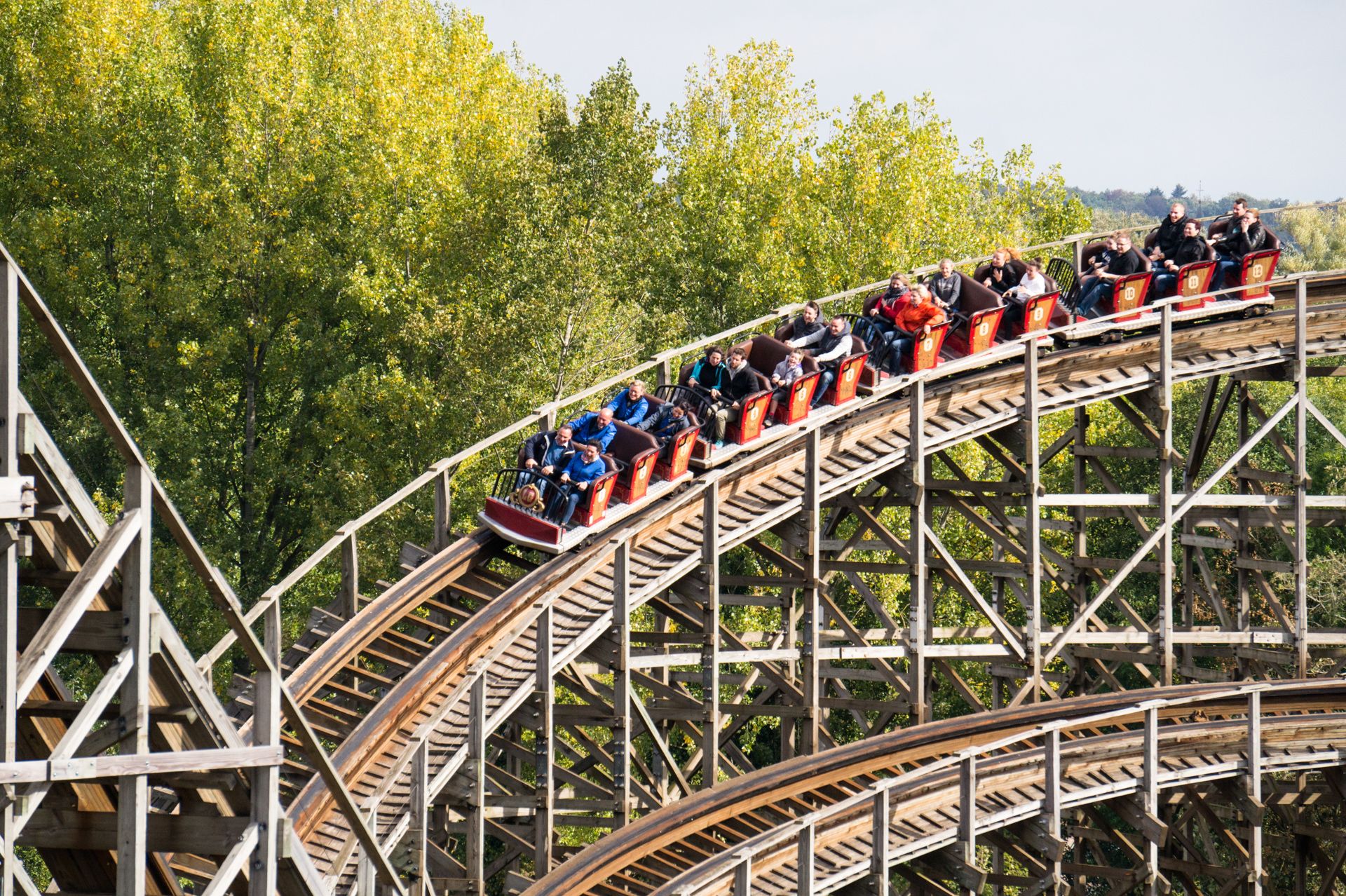
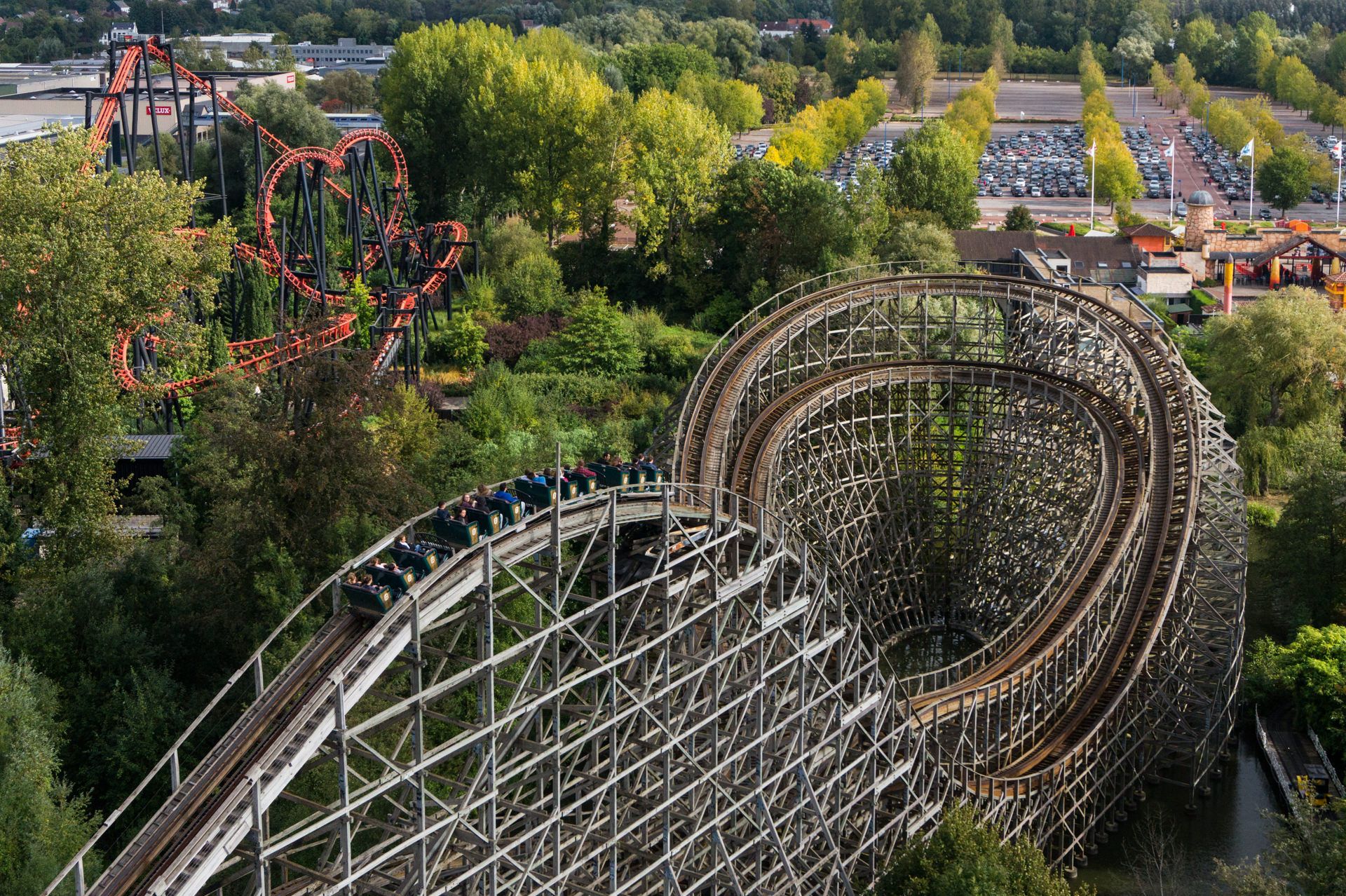
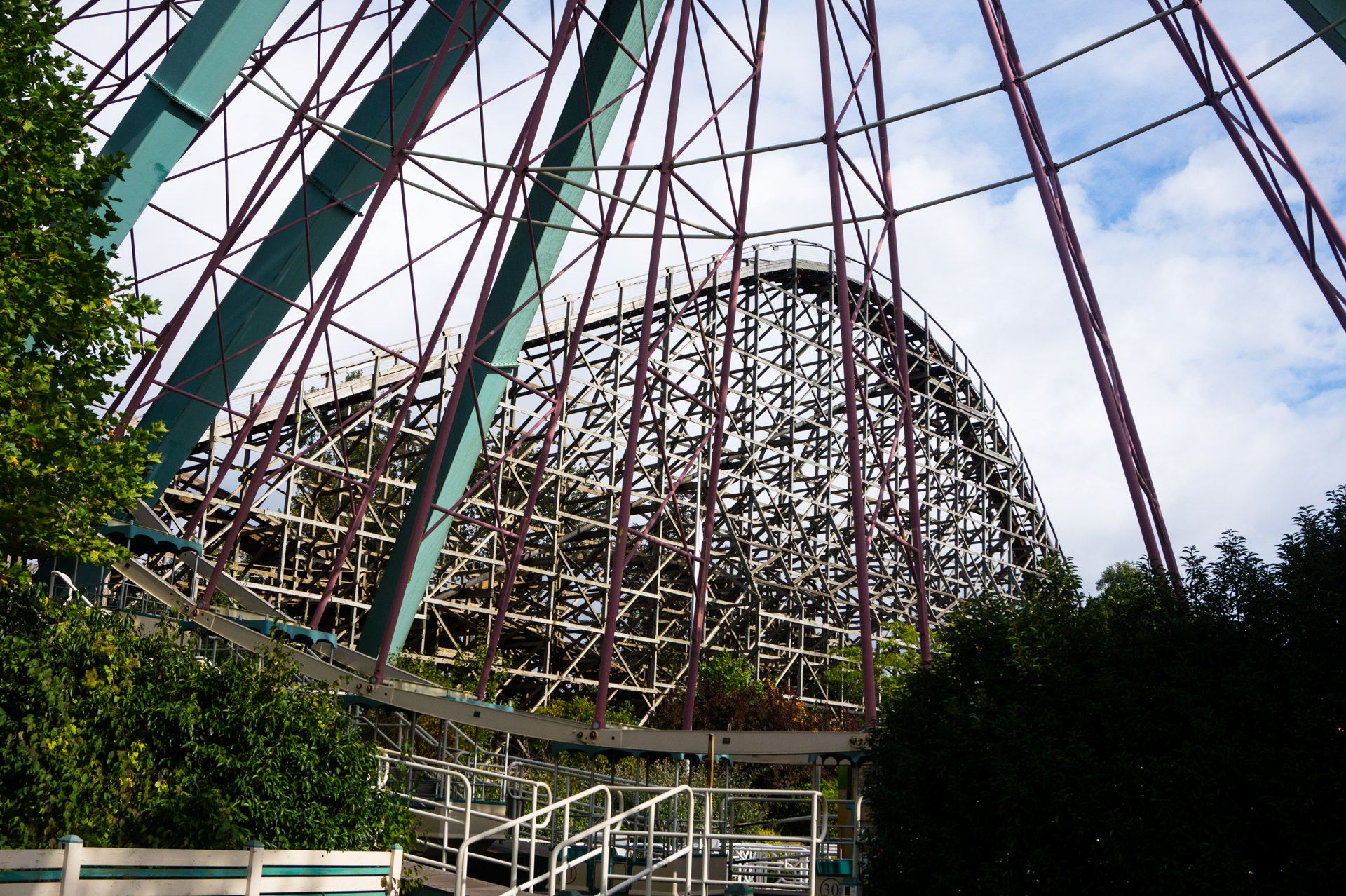
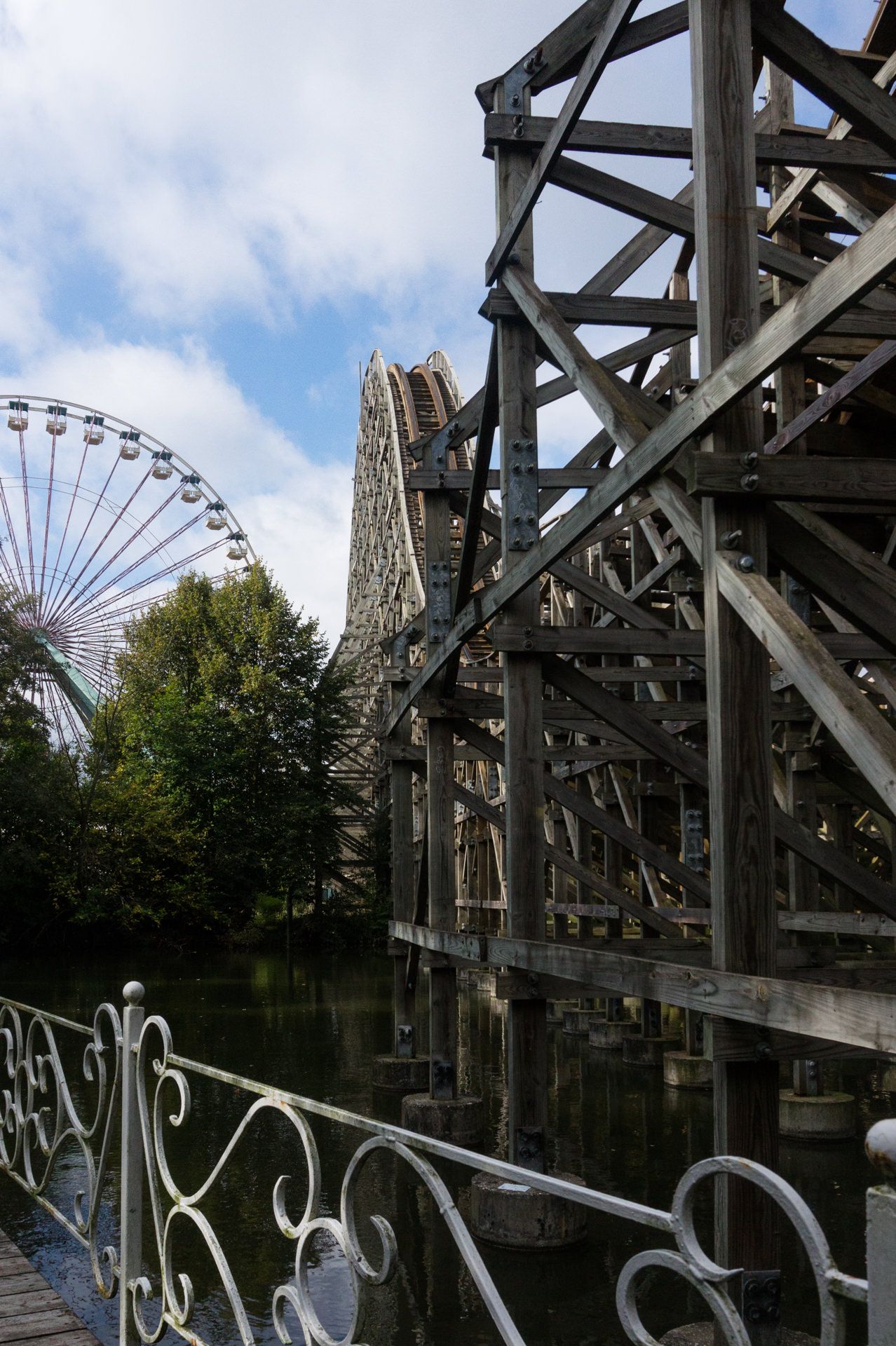
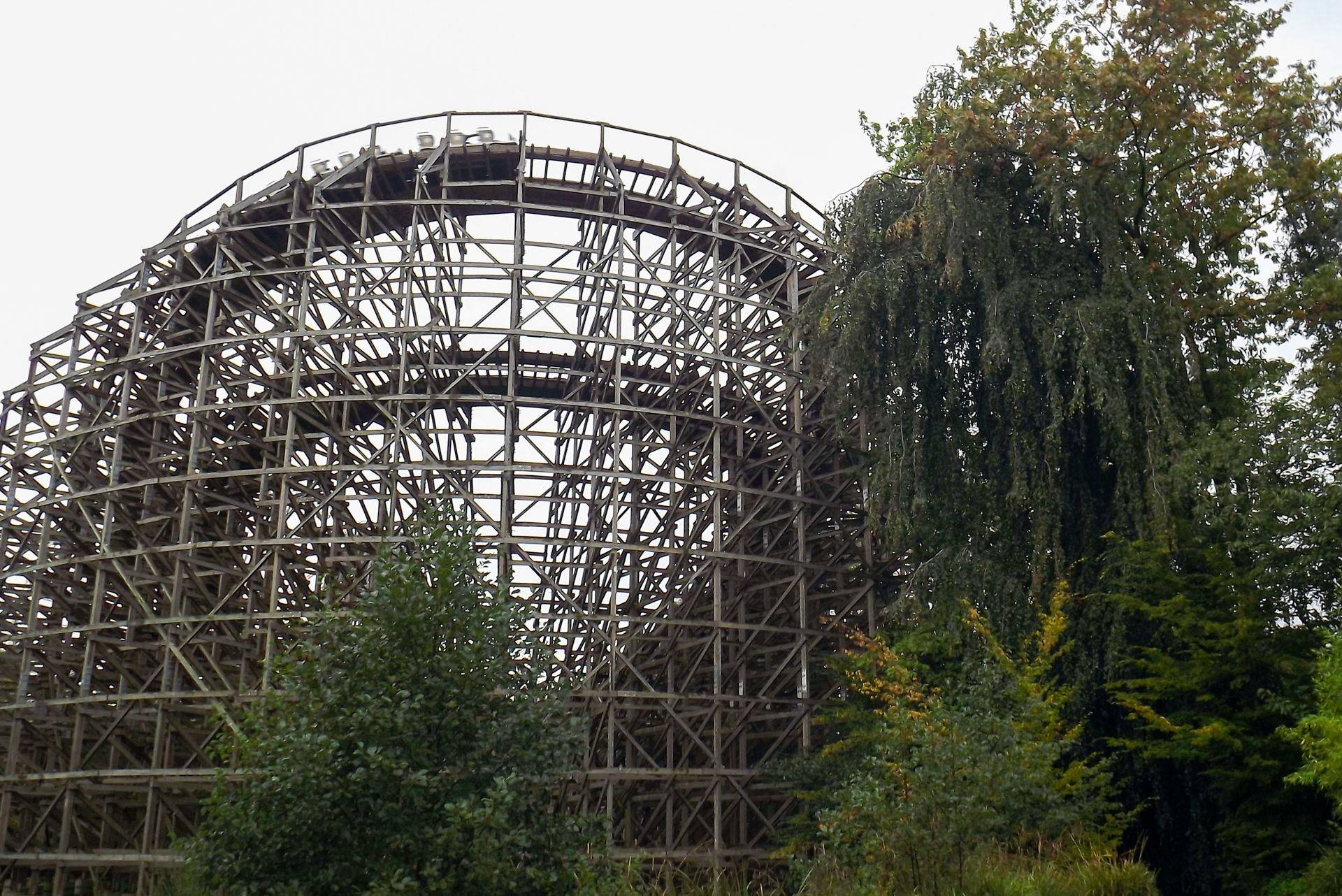
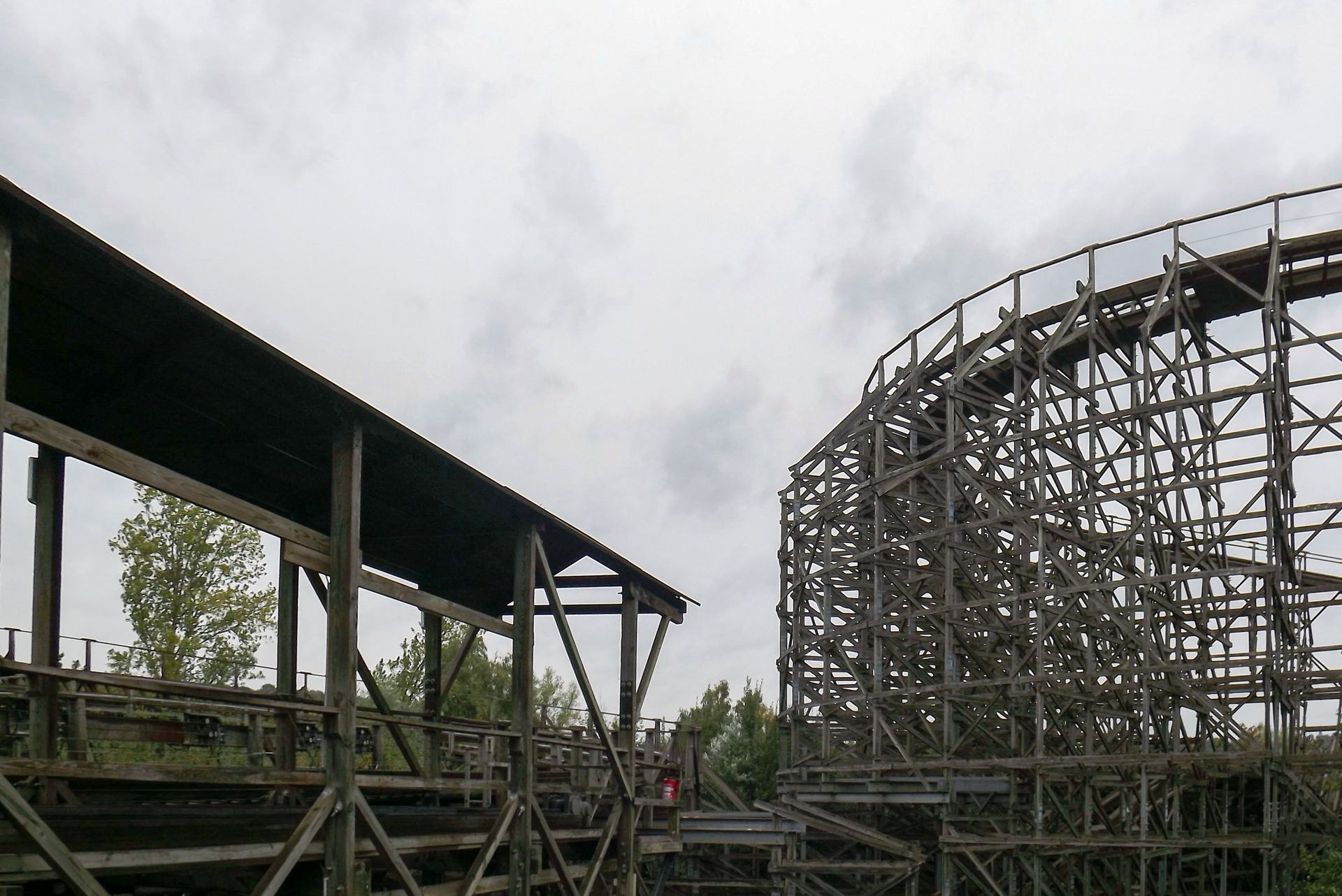
Driven off our intentional path, which was mainly due to the search of something edible for breakfast, we now entered the queue for the wooden roller coaster Loup Garou. As many rides within Walibi Belgium this roller coaster is made by Vekoma and as long as you are no idiotic roller coaster enthusiast, who believes that everything coming from Vekoma is bad, you will love this ride! Like the sister rides in Tusenfryd and Walibi Holland, Loup Garou can be considered as one of Europe’s best wooden roller coasters.

Where in the old days the sparks flew around the curvy sections of track and the track fluctuated visibly a few centimetres back and worth during braking, the Weerwolf seems rather tame these days. The ride which still uses its original Vekoma trains turns out to be a very pleasant experience. Due to the well designed layout, the ride offers a lot of fun and a very high re-rideability. Especially on an empty day, you could easily do 50 laps in a row.

Rokken Roll

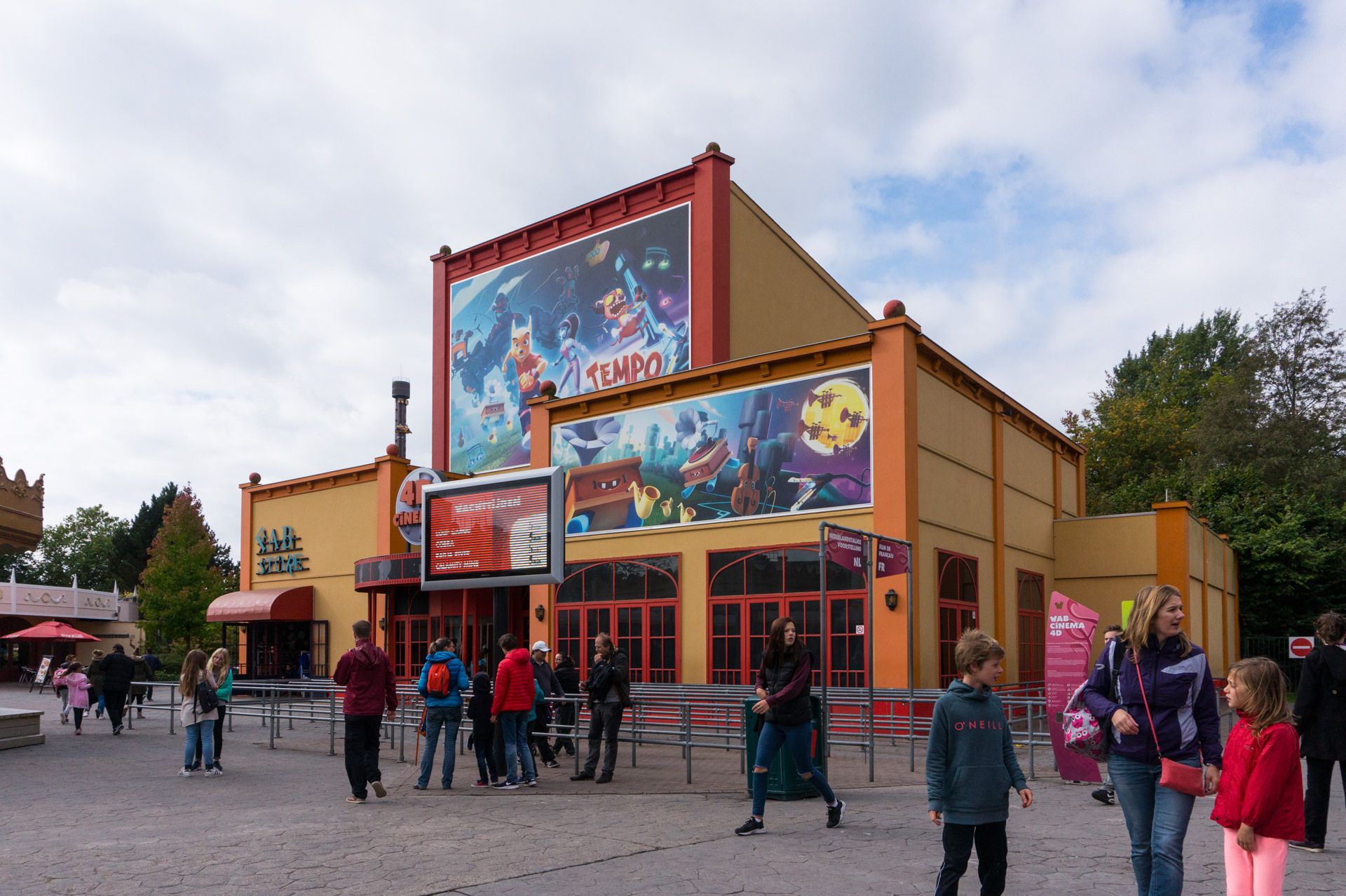
One of the more interesting things for me was a visit to the 4D cinema next door, where Walibi Belgium now runs a self-produced movie. The story is based on the excellent Walibi comics by Morvan, L’Hermenier and Wuye – which can also be bought in the parks or could be read online – and carries on the events on Shimeria a little further. If you understand French or Dutch, you’ll have a blast of a time, as the movie and its animation are absolutely fantastic!

Calamity Mine

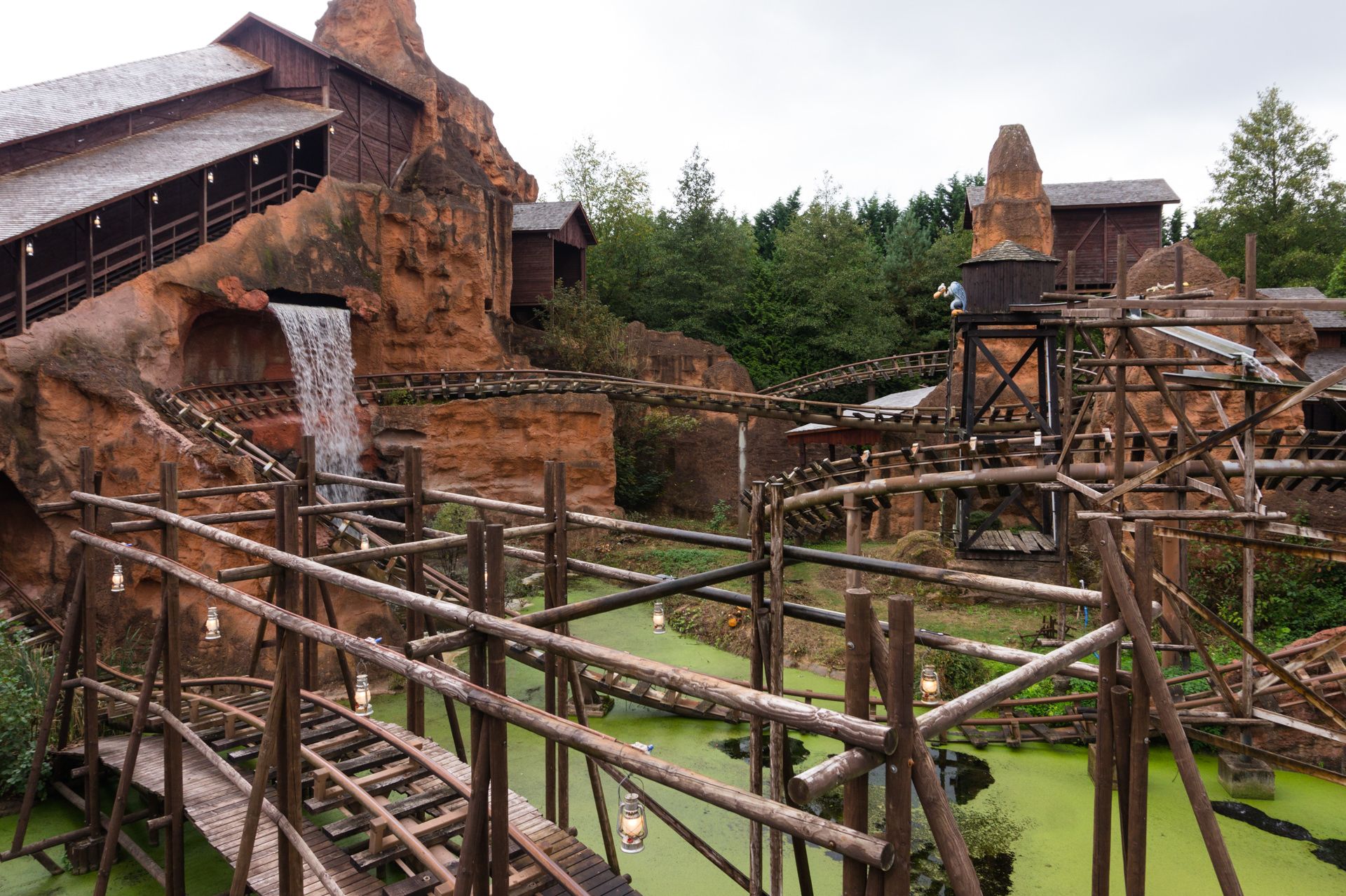
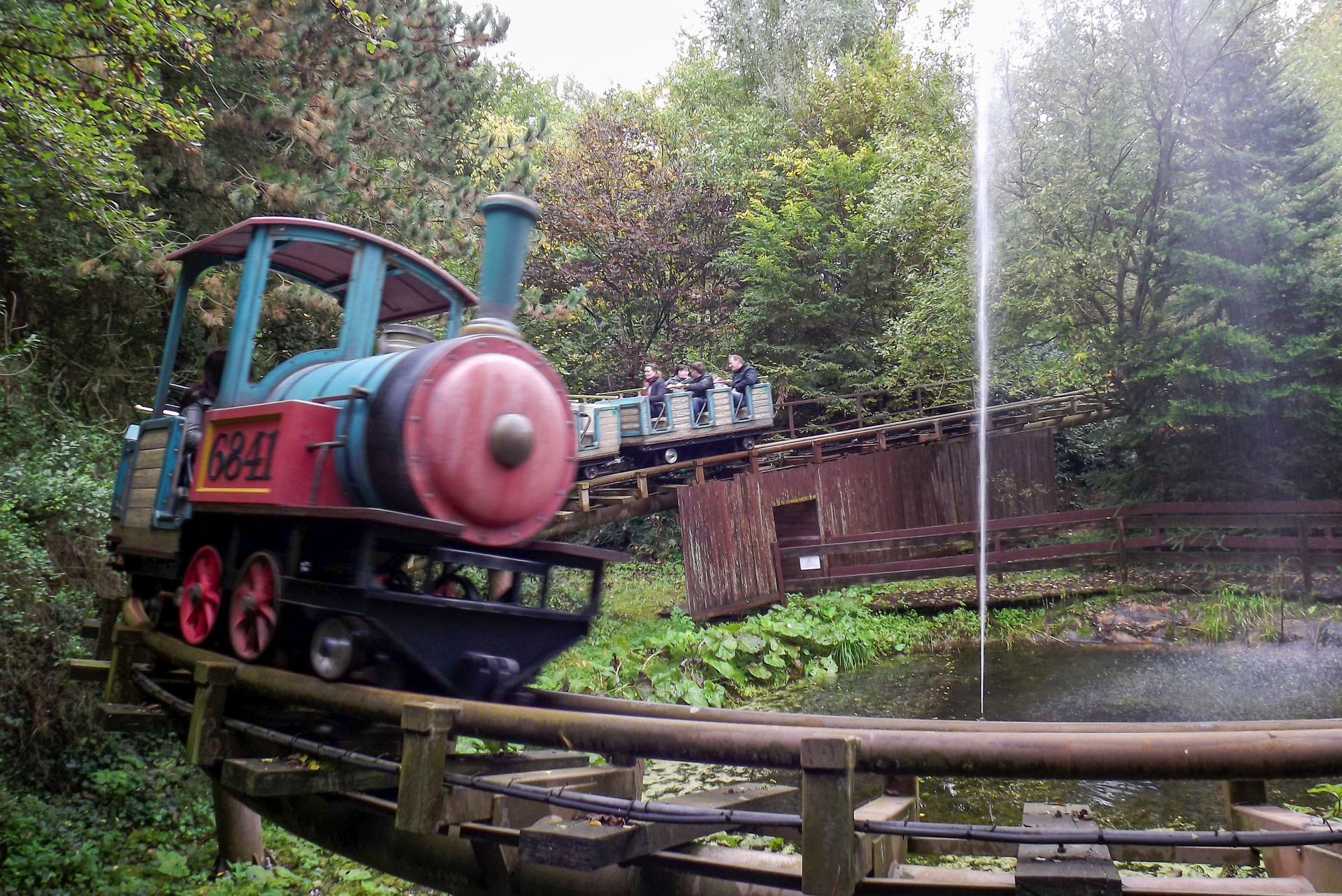
Past the second novelty of this year, the Fanta Play House and through one of the two children’s area, we headed towards the Calamity Mine Train, a solid Vekoma mine train roller coaster. The layout of this ride was unfortunately copied over and over again, as it serves as the default layout by the manufacturer. Calamity Mine Train however was the first of its kind. With all of the effects working, the ride offers some great family fun.

La Coccinelle

Along the unfortunately closed boat ride we headed towards the roller coaster with the guaranteed longest waiting time for adults, the tivoli coaster La Coccinelle. During my visit in 2008 I was very happy to have taken my cousin to the park, after all a strict rule only allowed adults to ride with their children. Nowadays, the train can run with up to two adults per ride. This is particularly annoying when only a small queue exists, as for children who can not ride without an attendant or childless adults, this creates a fairly long queue. In the mean time, they are constantly overhauled by older children.

Octopus

As I watched Jan and Julian standing but not moving, I decided to take a ride on the Chance Wipeout Octopus (a variant of their old trabant rides, quite similar to a Hully Gully by the manufacturer Mack). Since this ride was always broken during my previous visits, I was very curious about a ride. This turned out to be quite fast in the early stages and was able to convince me with higher lateral forces than a Musik Express. With the inclination of the arm, the ride resembled more and more the well-known feeling of a Hully Gully.

Flashback and Psyké Underground

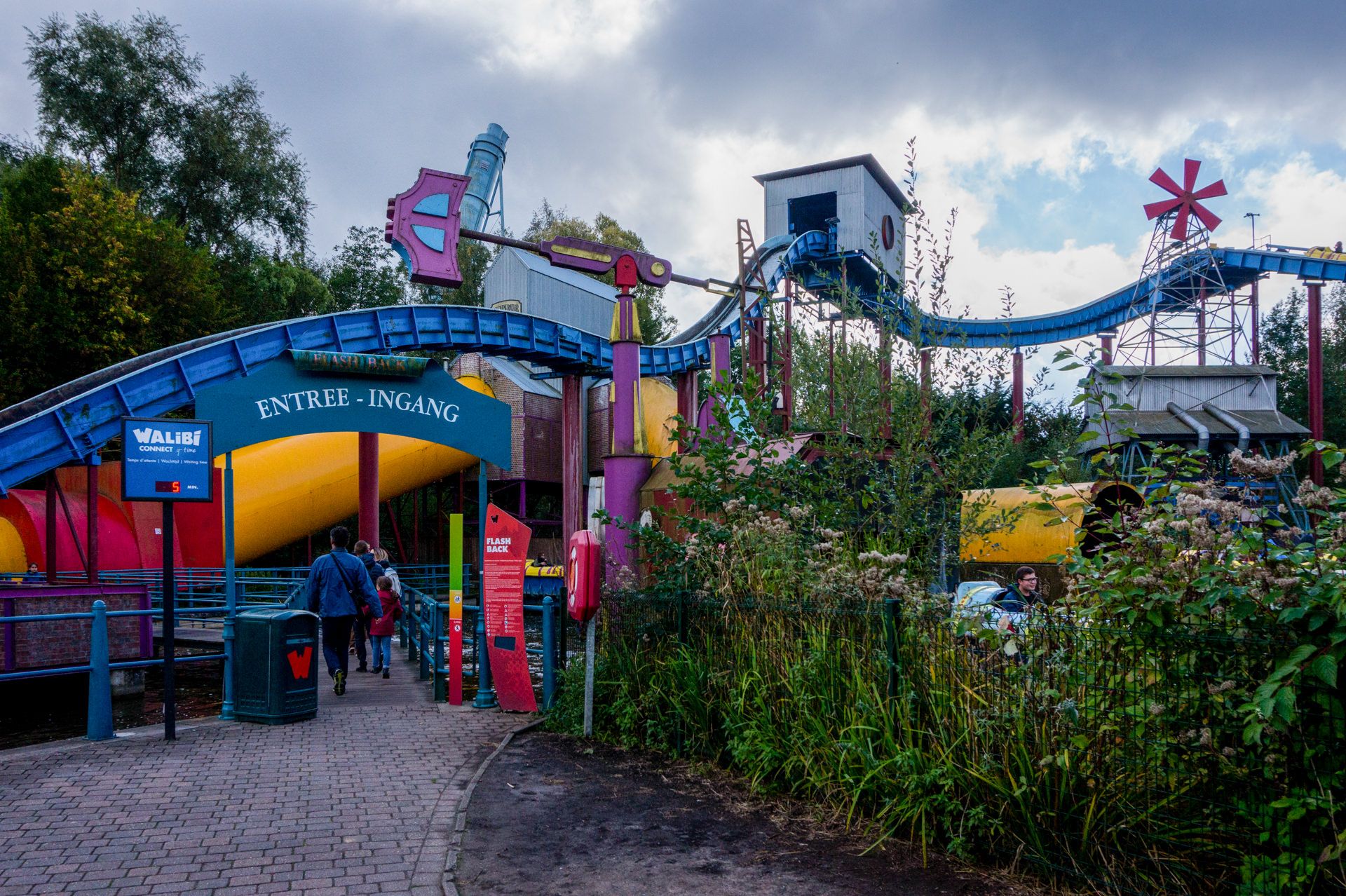
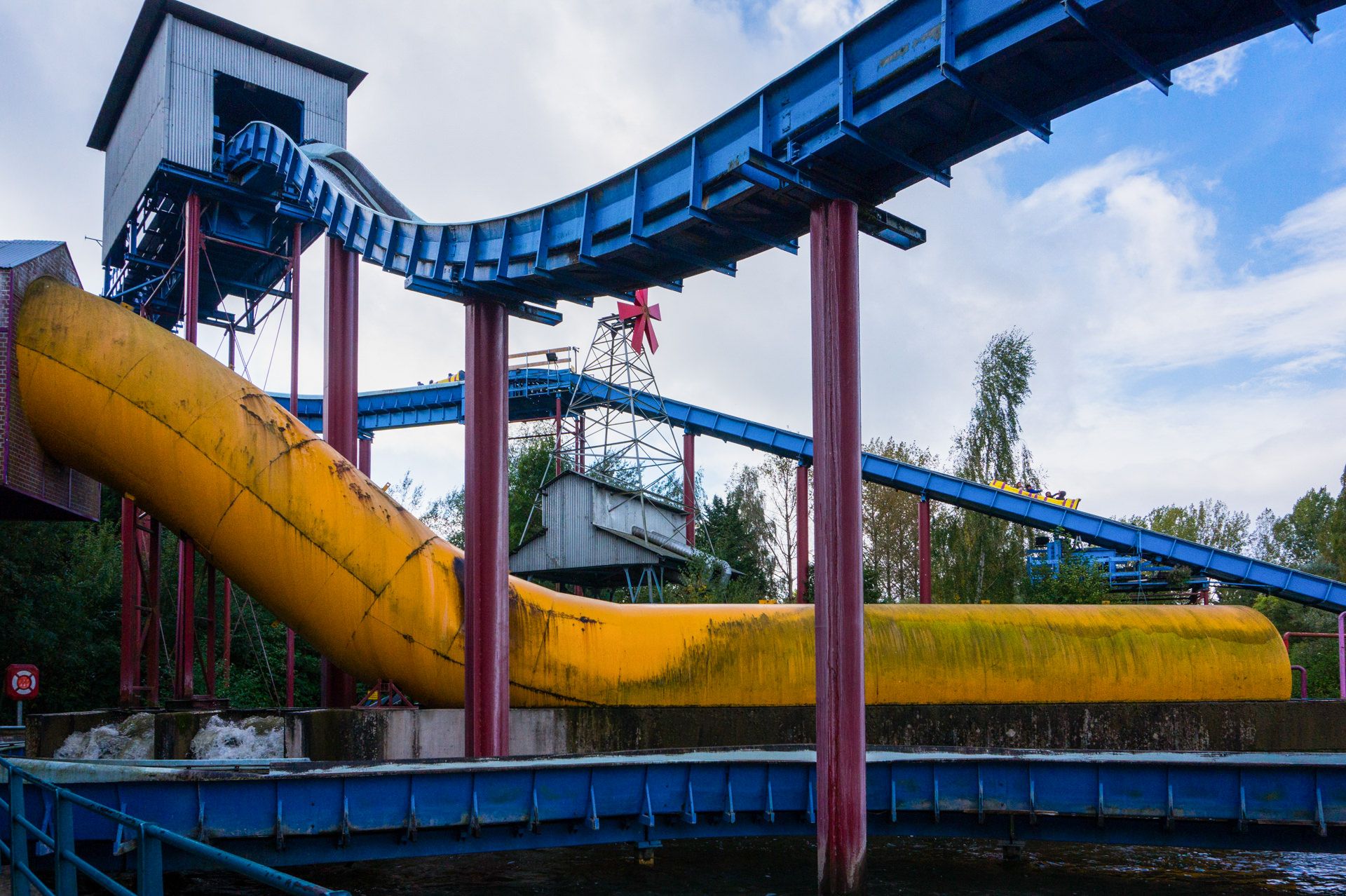
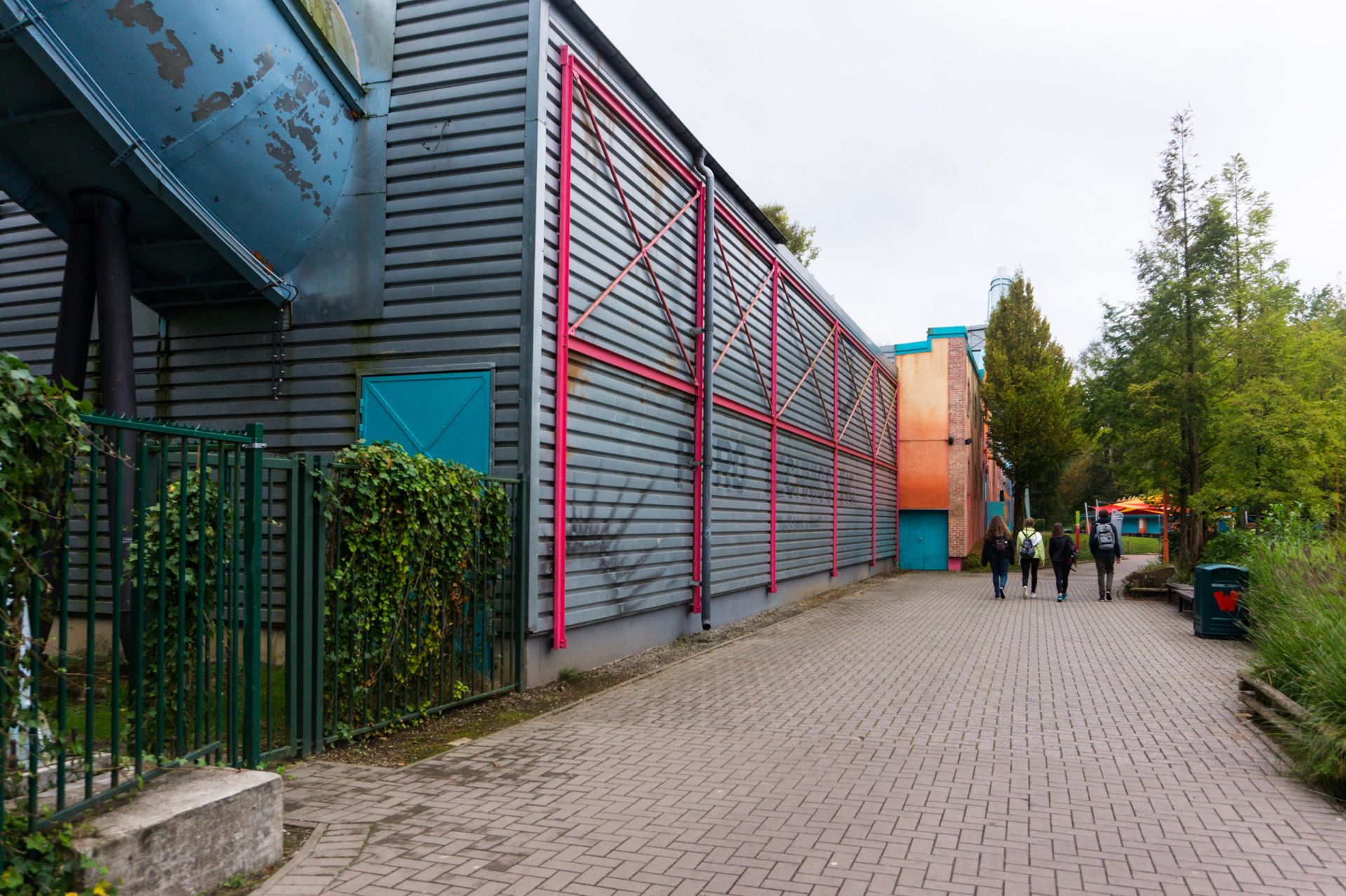
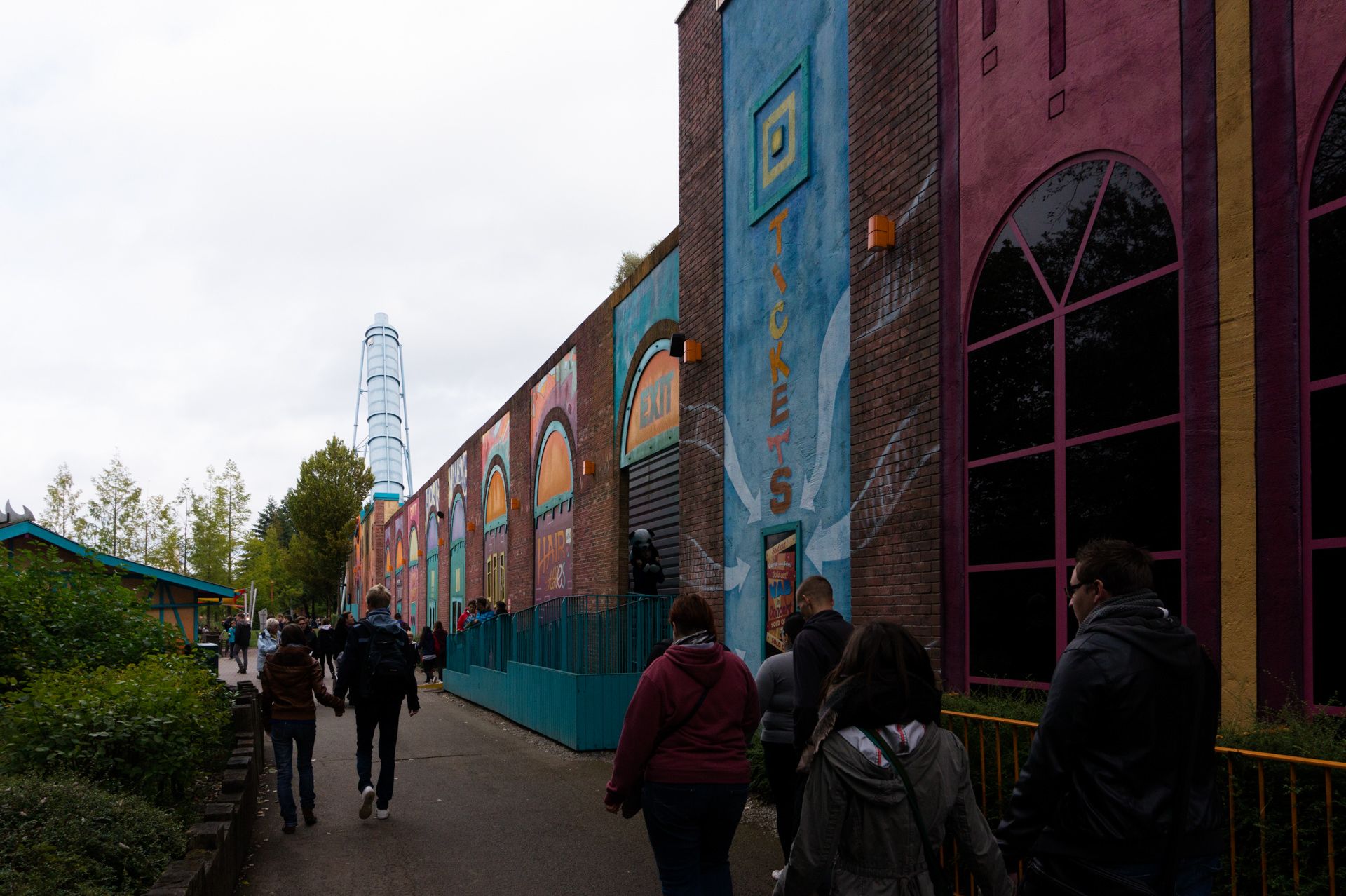
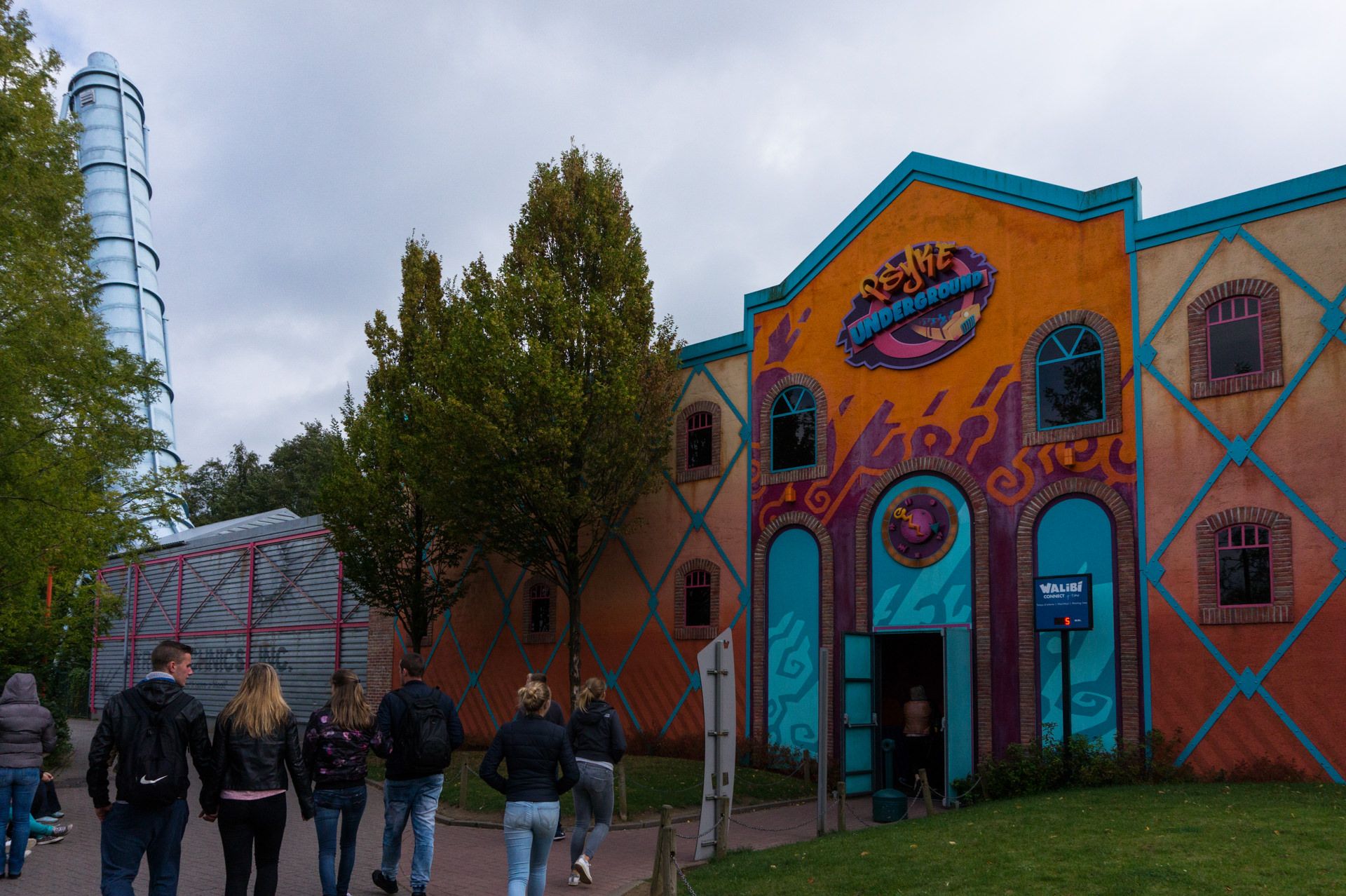
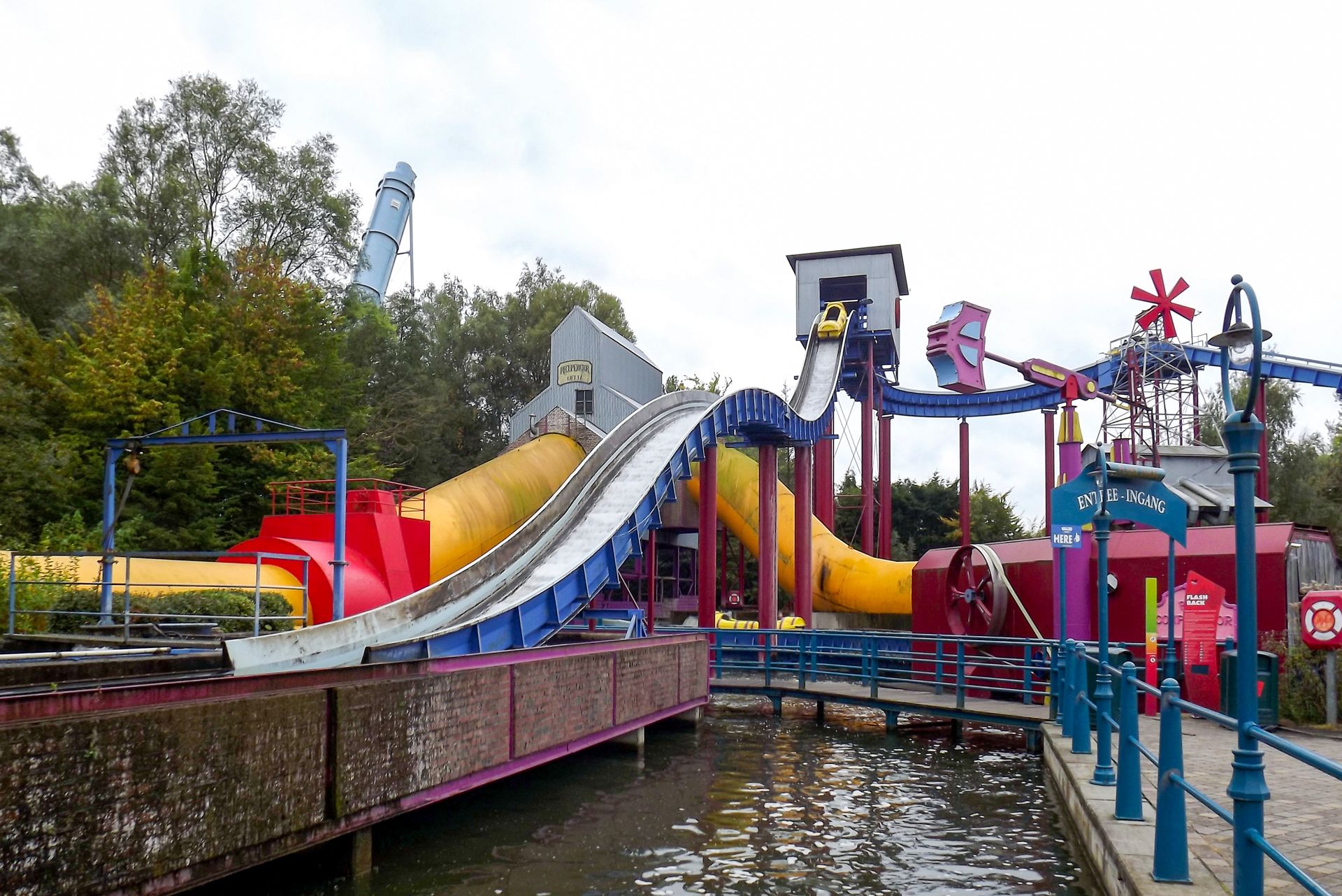
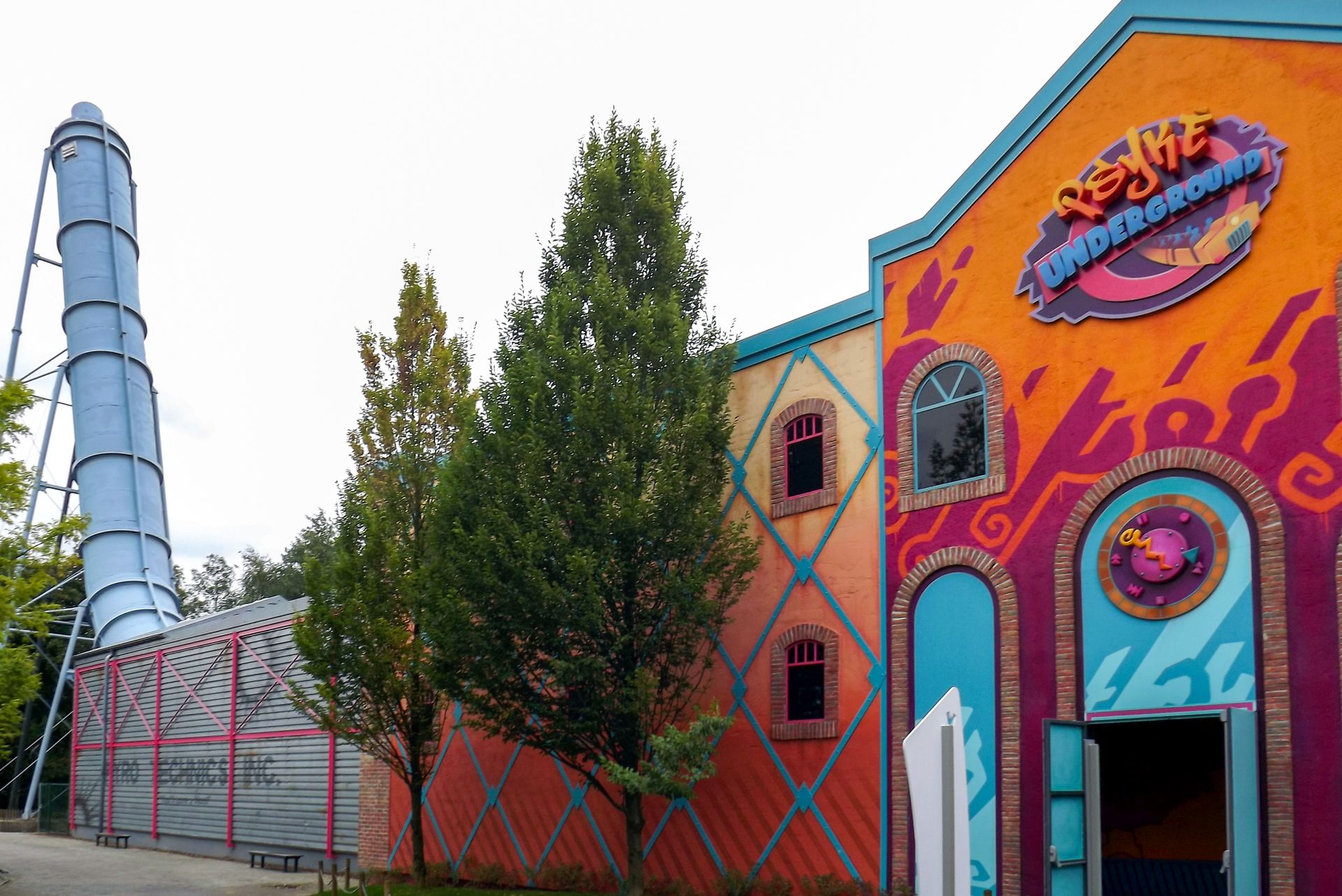
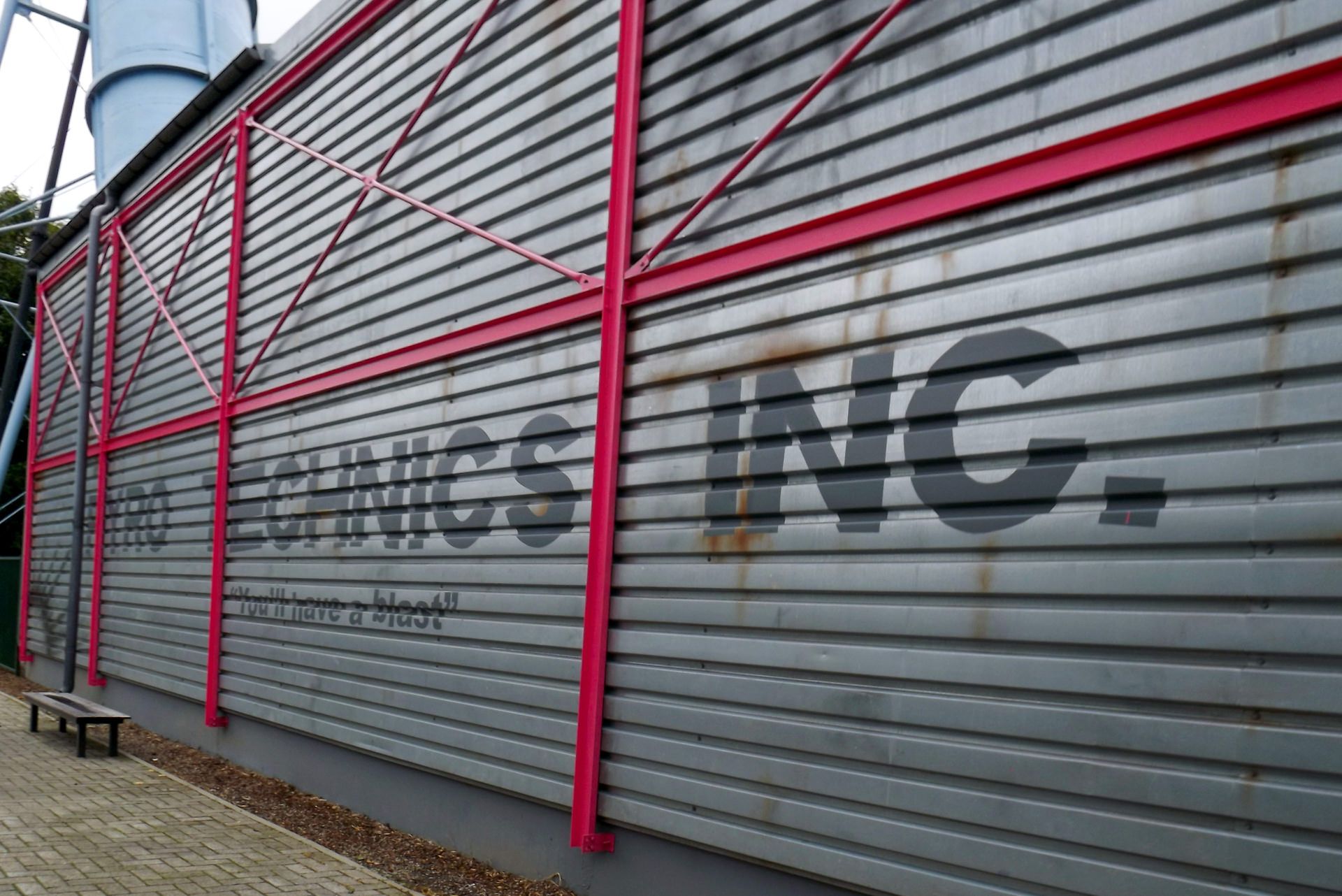
Although many adjustments were needed, Walibi Belgium was not right in every step of the reinterpretation. Where previously the color olive green outweighed the industrial looking theme area with its time travelling log flume Flashback and the magnificent shuttle loop Turbine, it is now drenched in colours. While the log flume currently adjust itself to the old state without giving up all the benefits of the overhaul, the sight of Psyké Underground is just uncommon and needs a lot of time to get used to.

The front on the covered shuttle loop Psyké Underground is the only negative aspect of the brillant renovation of this classic roller coaster. As soon as you enter the queue the positive impressions dominates. The queue now leads you to the ride’s former flywheel, which could not be removed due to construction-related reasons. By the music of the awesome soundtrack, the path unfortunately leads you outdoors, where you queue in a half enclosed waiting area. Back in 2008 you waited in this area for ages, as the ride was only operated every 5 minutes due to its ageing ride system.

In the station of Psyké Underground you are greeted by a new train built by Gerstlauer, the Münsterhausen based manufacturer and therefore true successor of Schwarzkopf. The comfort is very similar, but the trains offers additional supports which automatically bring you into the correct ride posture. Since the launch drive changed from a flywheel to a linear motor, the launch does not happen directly from a standstill.

When the ride spent its last season as the Turbine in 2008, the lights turned off the train was sent under the use of loud electronic music and strobe lights on the journey towards the looping. Nowaday a suitable and well-made video is played before the train leaves the station of Psyké Underground driven by friction wheels. In order to get the same velocity as the old system on a shorter launch distance, the ride now accelerates with a punch (which also explains the high power consumption of the ride). The adjacent looping pushes you mercilessly into the seat. Within the tubed spike you slowly lose your speed. With the gained potential energy, you now change direction. The looping is now approached backwards and turns you world once again upside down. But don’t be fooled after ¾ of the way, as the looping is not yet over. Surprised and thrilled, you enter the station once again. Slightly braked, we enter the rear peak about halfway up, before we come to a stop in the station.

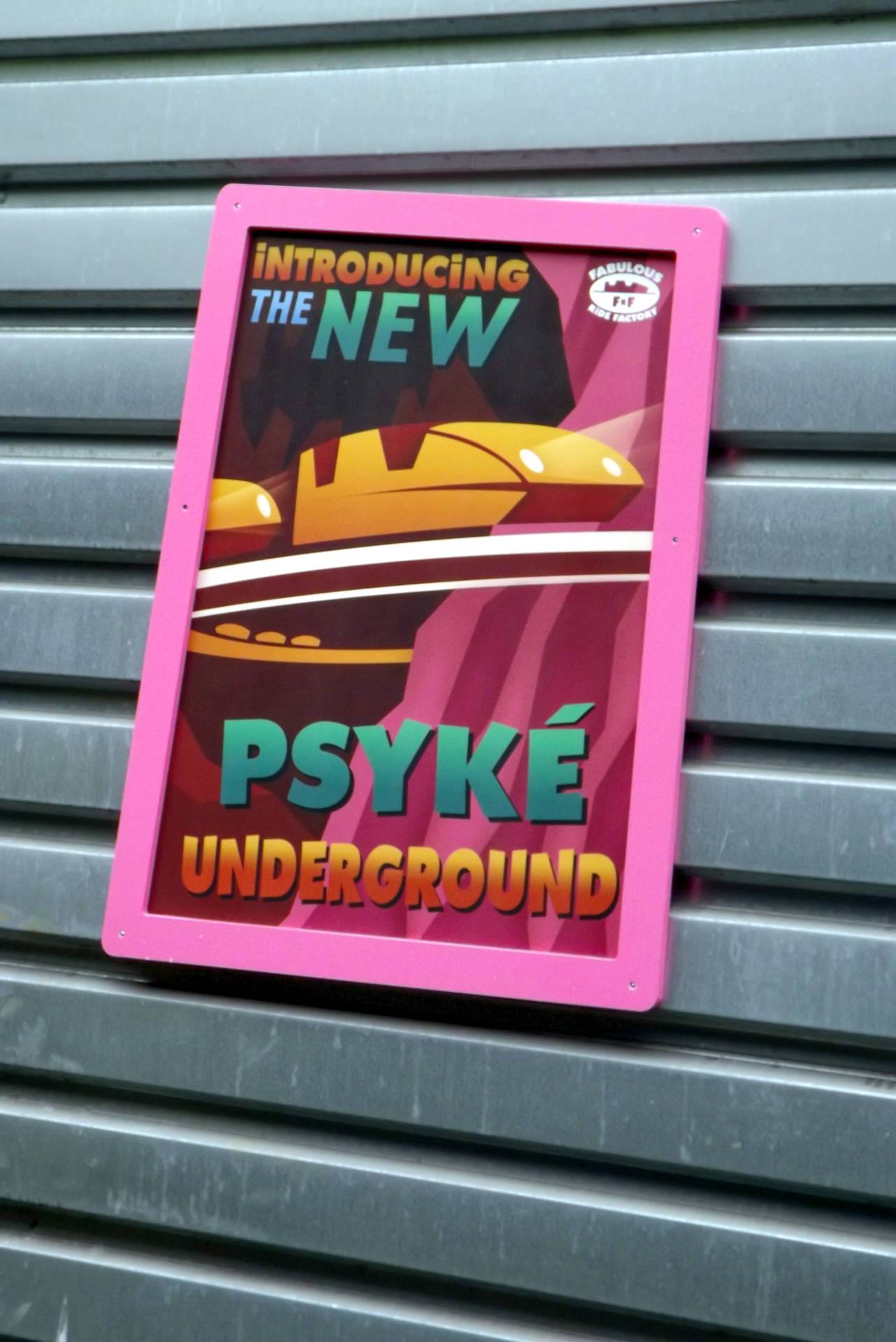
Psyké Underground was a surprise beyond compare. Although the drive is now a new one, the ride lost nothing of its old glory and actually even got better. The higher number of launched per hour, the much more intense launch and the still surprisingly powerful looping ensure that this ride has found its way into my favorites once again. The overall theme of the ride is great and fits the Belgian roller coaster legend very well.

Pictures

Closing Words

Walibi Belgium has indeed changed to good in recent years. The Compagnie des Alpes has done a fantastic job in all of the Walibi parks. Every change was done with the right intension, although it has certainly cost quite a lot of money. The park developed from a former ghetto like park with an anti-social audience, to one of the best family parks in Europe. Walibi, please don’t stop :-).


What is your opinion about the shuttle loop roller coaster Psyké Underground?  Just write it in the comment field below the report or visit our social media channels: