Preface
After our day’s start in Fiabilandia we reached the car park of the amusement park Mirabilandia at late noon. Although our visiting day fell on Easter Sunday, the general rush of visitors was limited, but not the waiting times and the eagerness of the tourists/residents to jump the queue. Yes, it was not a pleasant visit to Mirabilandia, although the attractions are first class, but more about that later.
The History of Mirabilandia
We start the review with a look at the history of the amusement park, which opened in 1992. The park was founded as a project of a group of investors consisting of Situr-Finbrescia (46%), San Paolo Finance (44%) and Publitalia 80 (10%) who, with the simple formula “tourist resort + amusement park = cash cow”, completely failed in their exaggerated expectations and were unable to attract even a third of the two million visitors they had hoped for. As the operating company was on the verge of bankruptcy in 1996, they sold the park in late autumn of the year to the Löffelhardt-Casoli Group, a joint venture between Phantasialand co-founder Gottlieb Löffelhardt and Giancarlo Casoli, one of the owners of the former Italian amusement ride manufacturer S.D.C., who massively expanded the park in the following years. As a result, the number of visitors also grew to over 1.5 million. After a few years Löffelhardt withdrew from the business and Casoli took over the patronage, before Mirabilandia was sold to the Spanish group Parques Reunidos in 2006.
Tour of the park
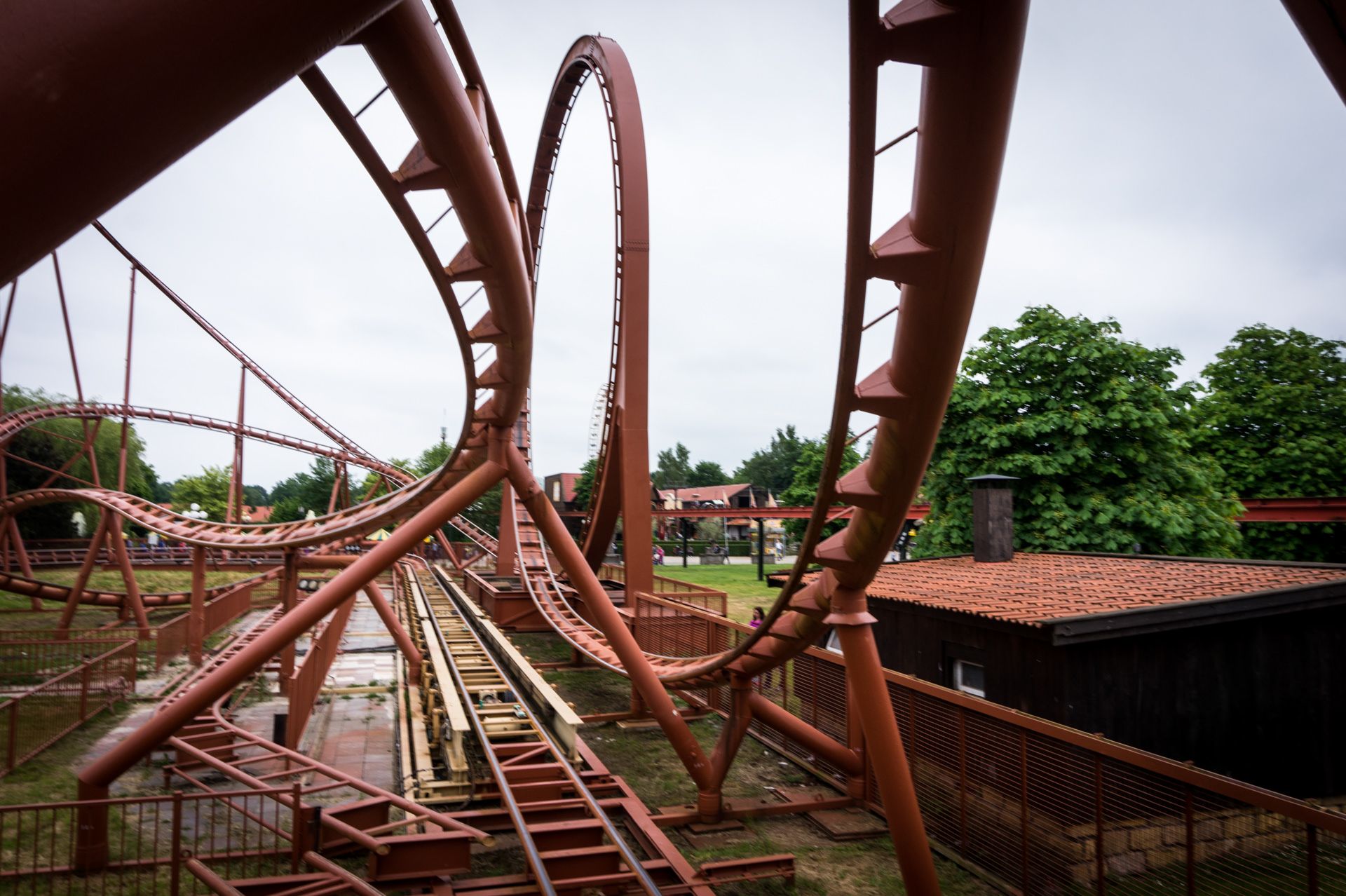
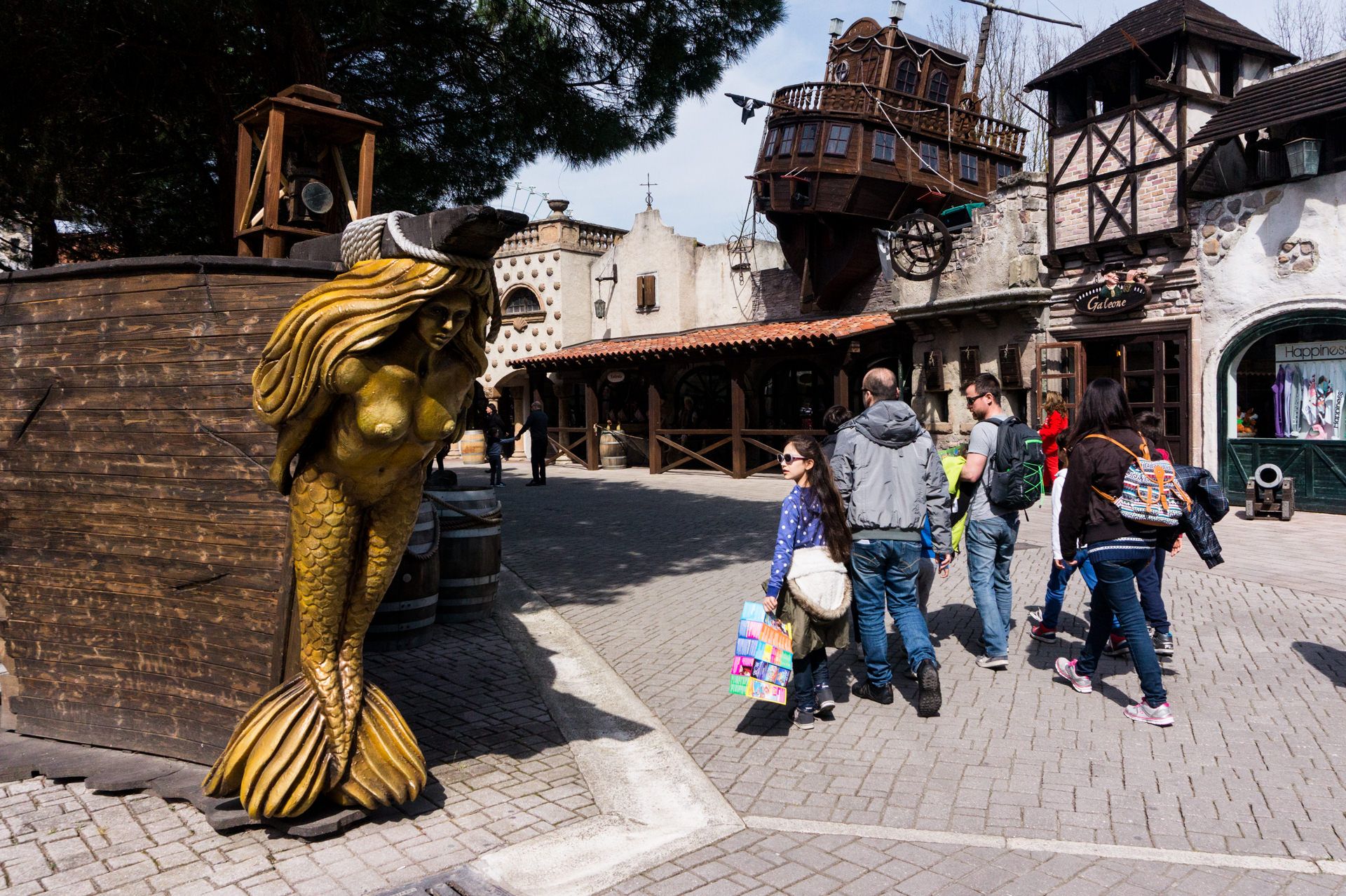
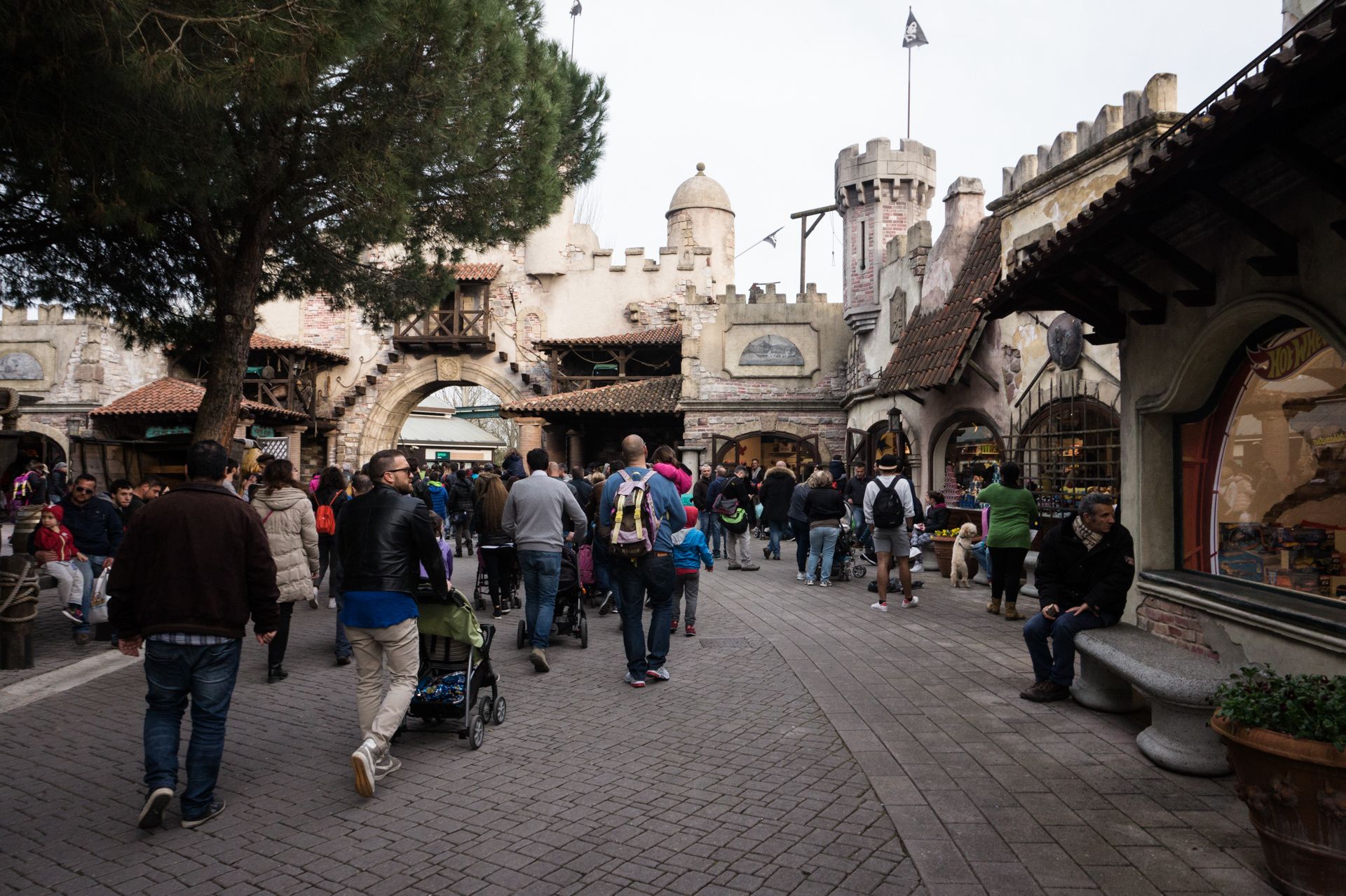
After leaving the ticket offices behind, you enter the park over a bridge, similar to the English amusement park Thorpe Park near London. The skyline here is discreetly restrained, but with the perfectly placed Cobra Roll of the inverter Katun to the right of the bridge it is already very impressive. From here there is a path leading into the Far West Valley, which was still largely under construction, and the actual entrance area of Mirabilandia. This turns out to be a pirate’s nest full of details and accommodates some shops, where you can get fast passes, which were almost a necessary treat to be able to ride anything in this park.
To my own confusion, Mirabilandia had arbitrary opening and closing times of the rides, which meant that many attractions didn’t open until noon or even later, or closed much earlier. This in turn resulted in long waiting times throughout the park. On the one hand, I can understand that some smaller parks only gradually put their rides into operation or sometimes even open certain themed areas after a certain time, but I have never seen such a measure in a large amusement park before. It also explains why Gardaland, in return, advertises to close the queue of rides at the end of its opening hours.
Divertical
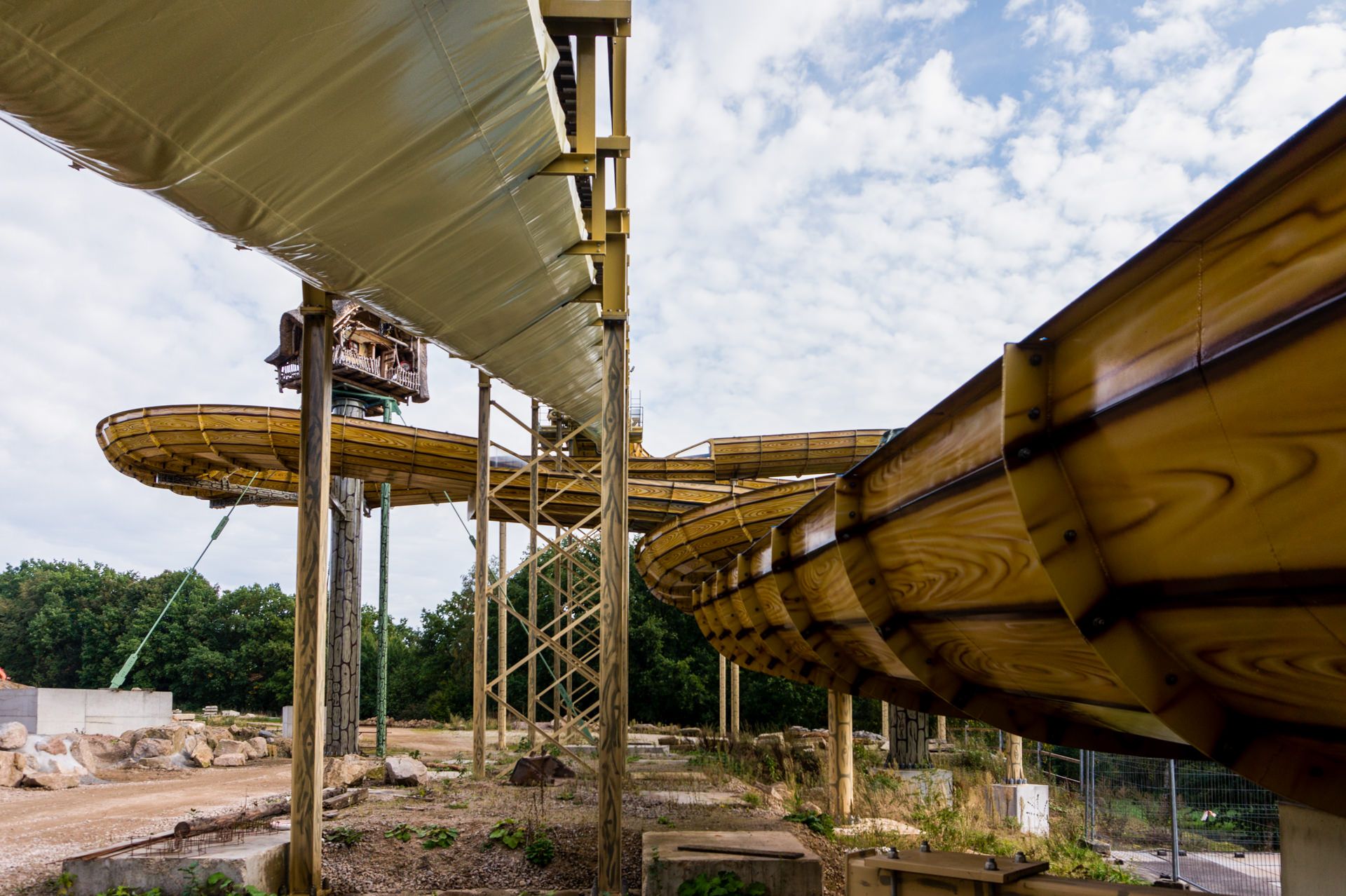
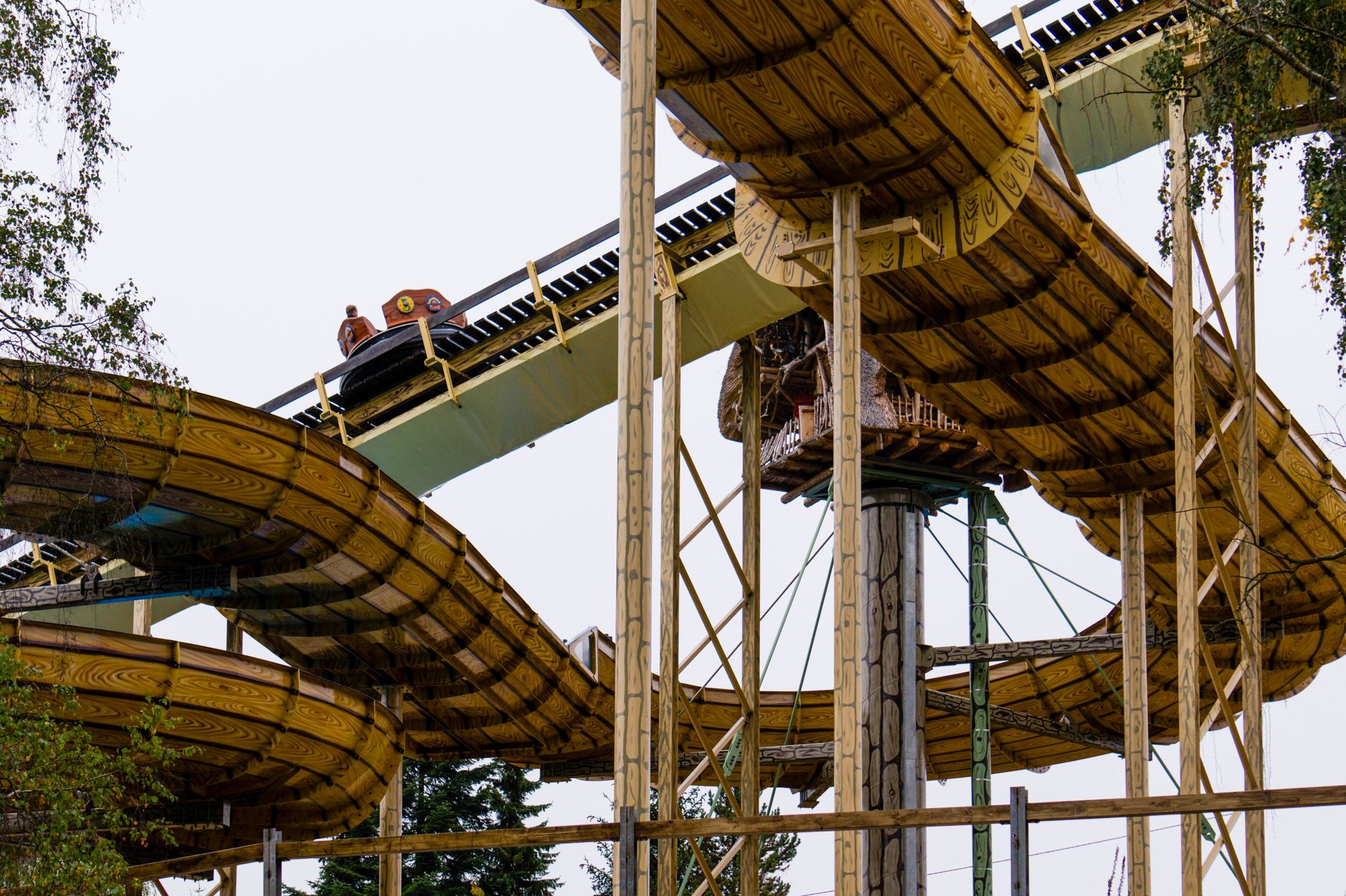
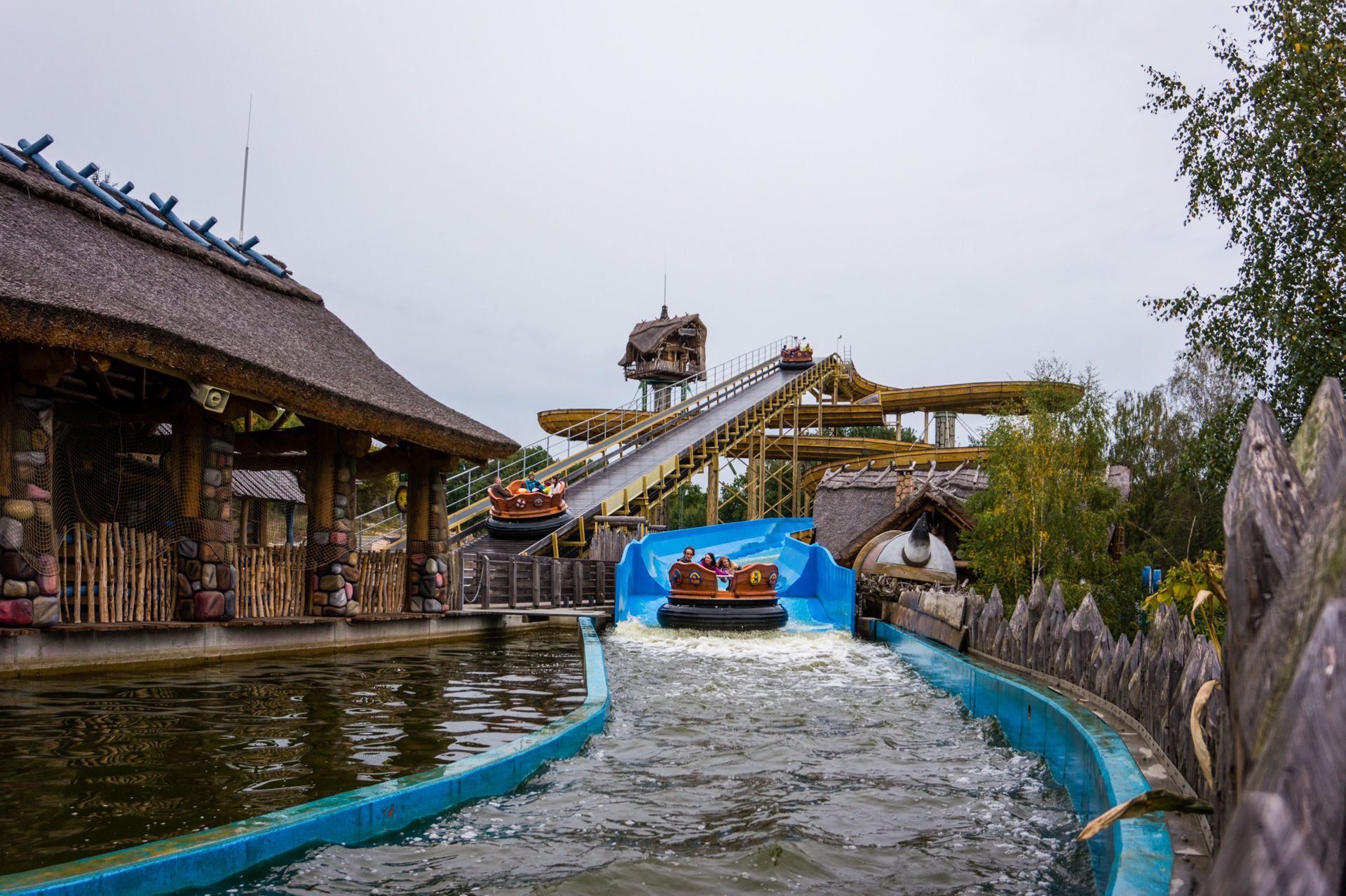
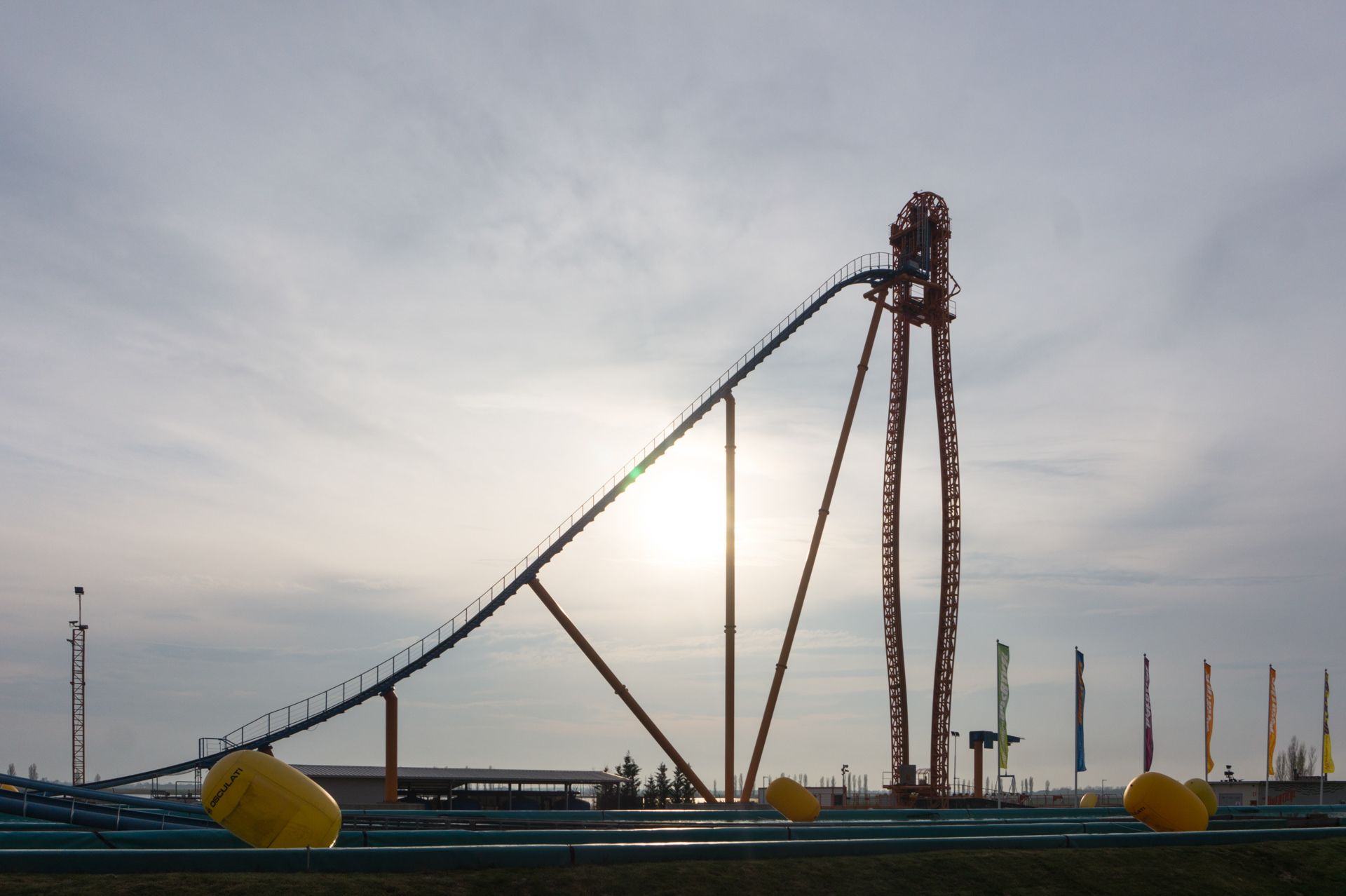
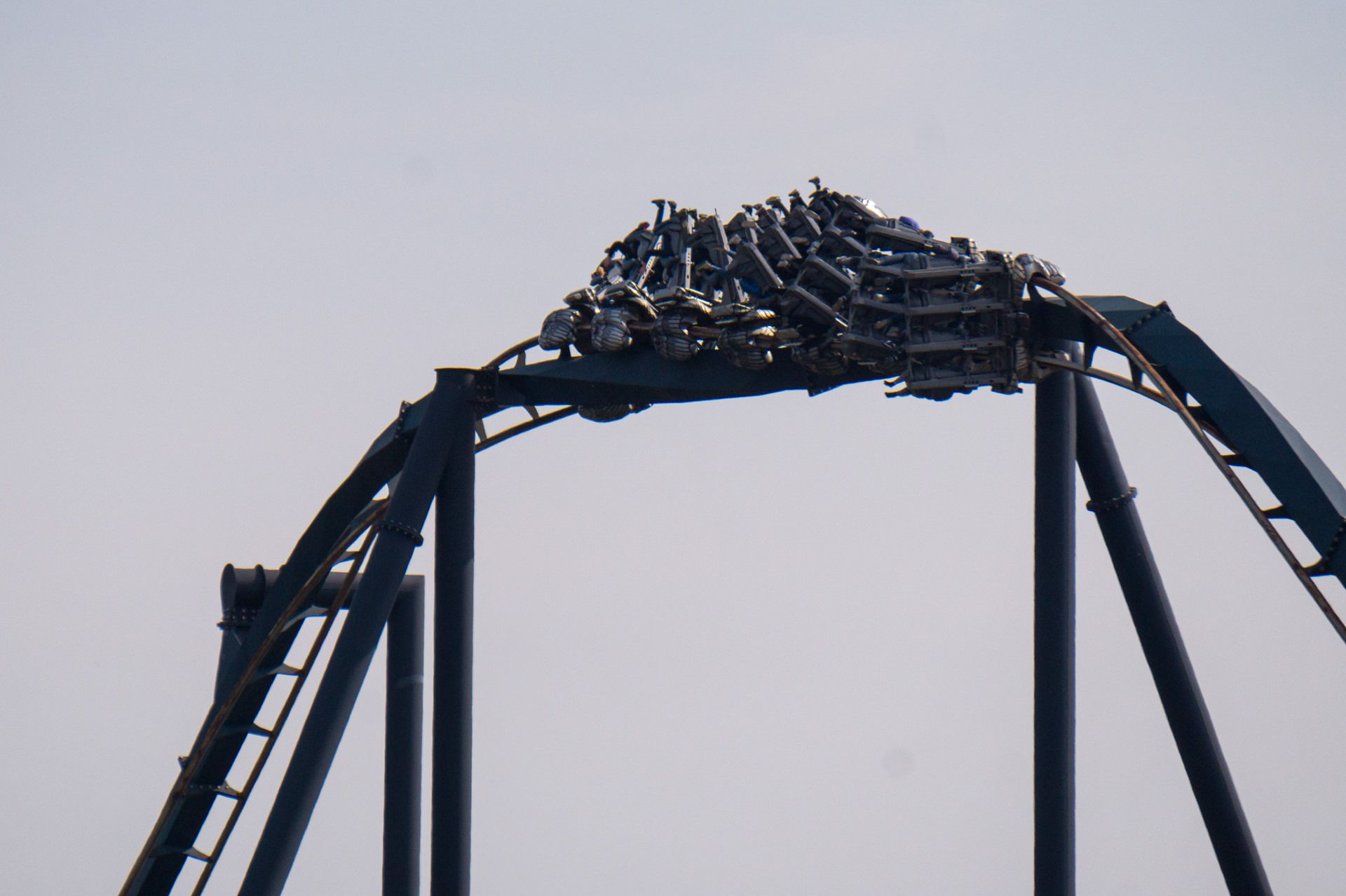
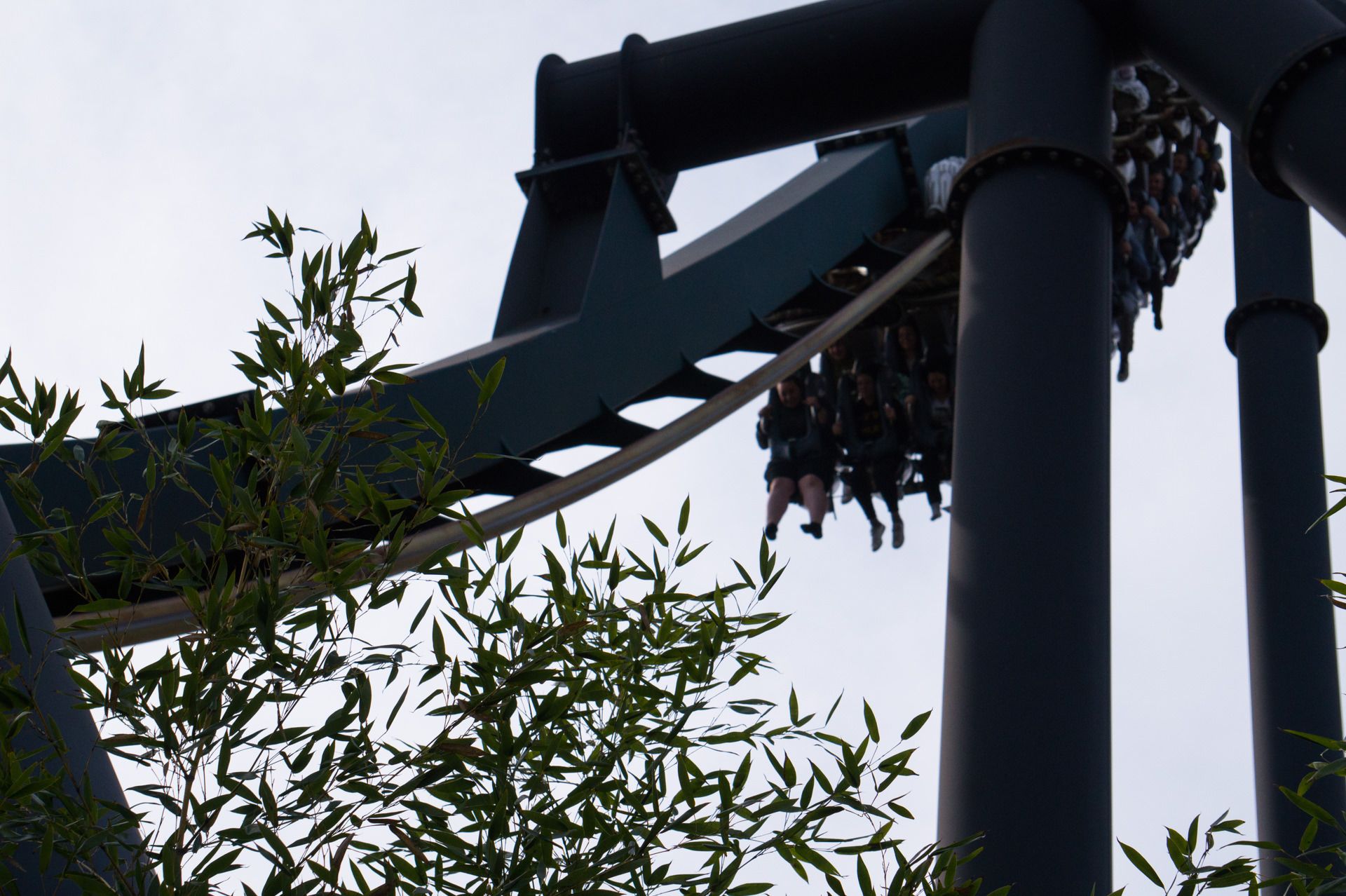
Passing the Pepsi Theatre, where, how could it be otherwise, a magic show is shown, and the musical stage in front of it, we head towards the Divertical water coaster, which already looks very striking from afar. By now at the latest, one becomes aware of how high the ride is and how wasteful it is with the space it has been placed on; however, this does not make the ride look aesthetic at all, which is mainly due to the sparingly placed decoration. On the other hand, the rear part of the ride adorns the insanely long access path to the completely out of place interactive dark ride Reset, which is quite positive and probably attracts more people than ever before to this corner of Mirabilandia.
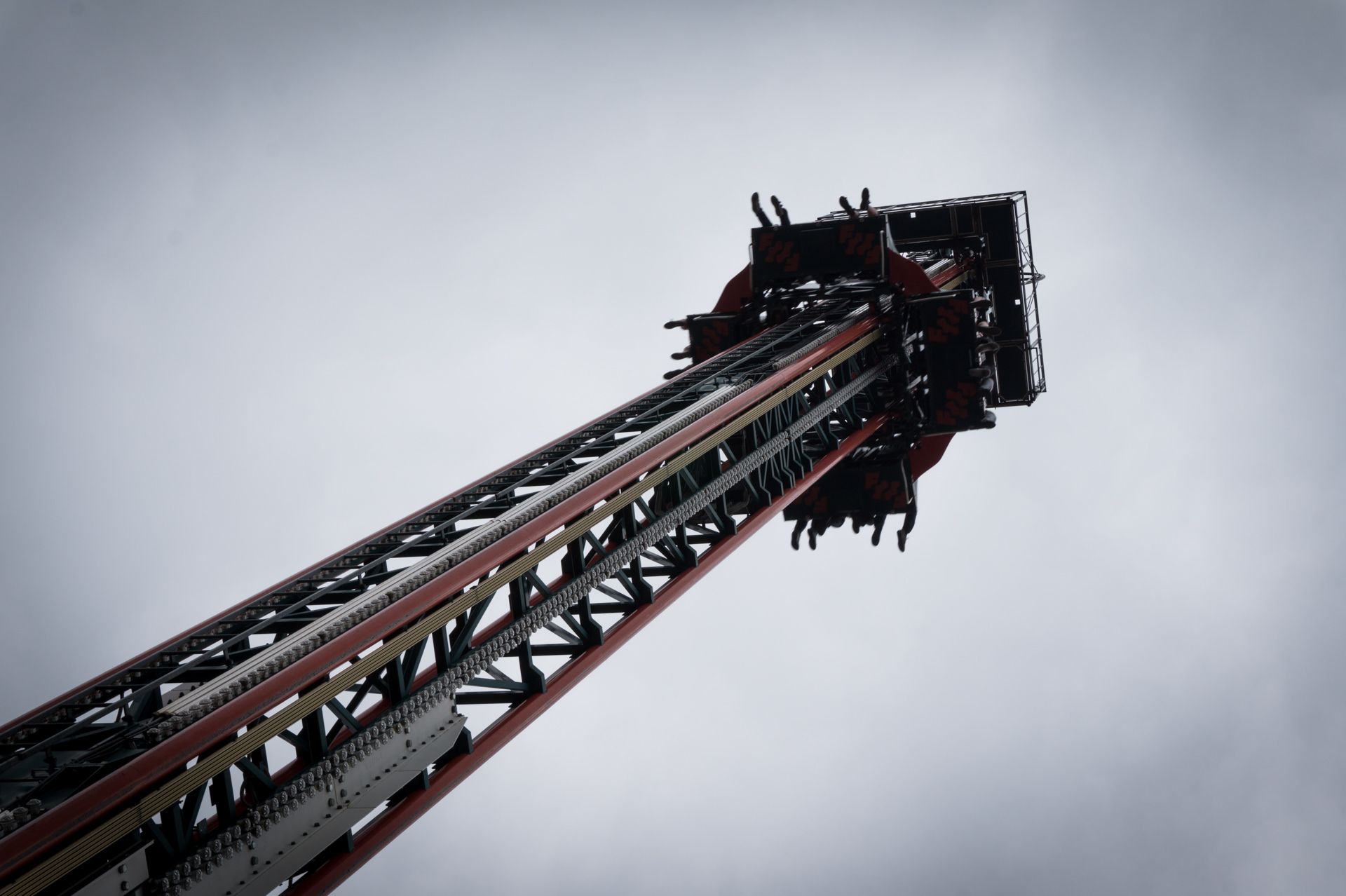
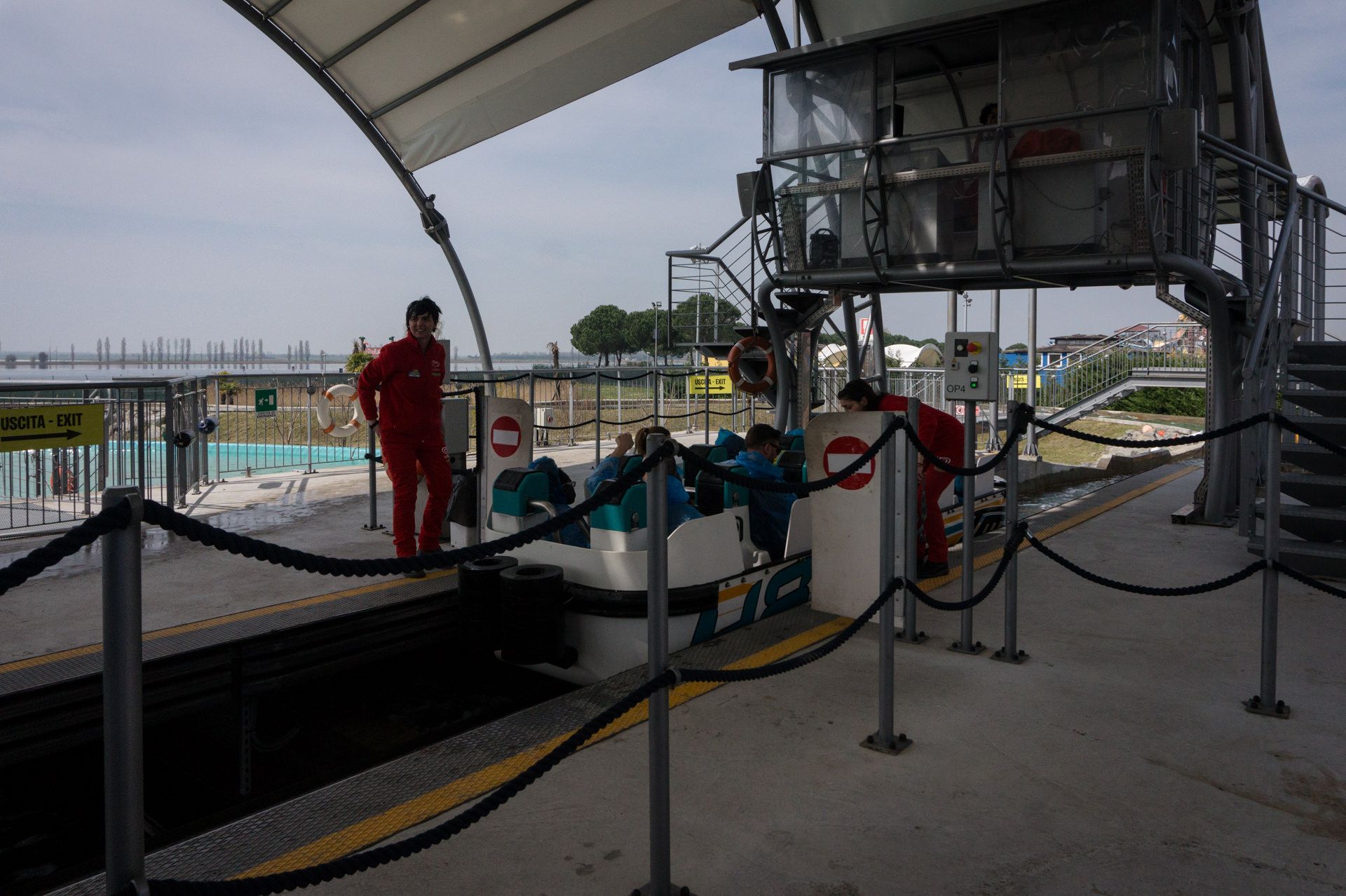
After you have been asked to come up to the station and get into the speedboat, the trip on Divertical can start immediately. As the vertical lift of the ride is still a long way off, you bob a bit through the canal, which interestingly enough creates a good whitewater feeling. After all, the waves almost hit the boat again and again and make you jump away by the whirled up water drops. As soon as the lift is reached, you quickly rise to the starting height of 60m, whereby the curvature of the lift is interestingly hardly noticeable at all. As the view from up here is not very interesting, you are soon pushed over the top of the hill. On the following 45° slope you have enough time to notice how fast this ride actually is. The spray refreshes you and soon after you race through the first pool only to drive over a hill without slowing down. Here you take off a little bit before you throw yourself into a brisk curve. Hoping to slow down a little bit by the following block area, you drive through it without any braking effect and are then released into a right turn. A quick downward helix follows. However, it then goes over into a hill, which initiates the final shot of the ride. Well soaked, you are released back into the channel and reach the station shortly afterwards.
Contrary to my expectations, Divertical is a really awesome water coaster, which gives a feeling of speed like no other ride before. The ride is just fast, which I personally only noticed while crossing the first pool. Considering the starting height of the world’s largest water roller coaster, this is actually in the nature of the ride; at least I have rarely experienced such a speed rush. Moreover, the ride is made with a perfect finish, which means that the friction losses are not really significant, which in turn benefits the speed.
iSpeed
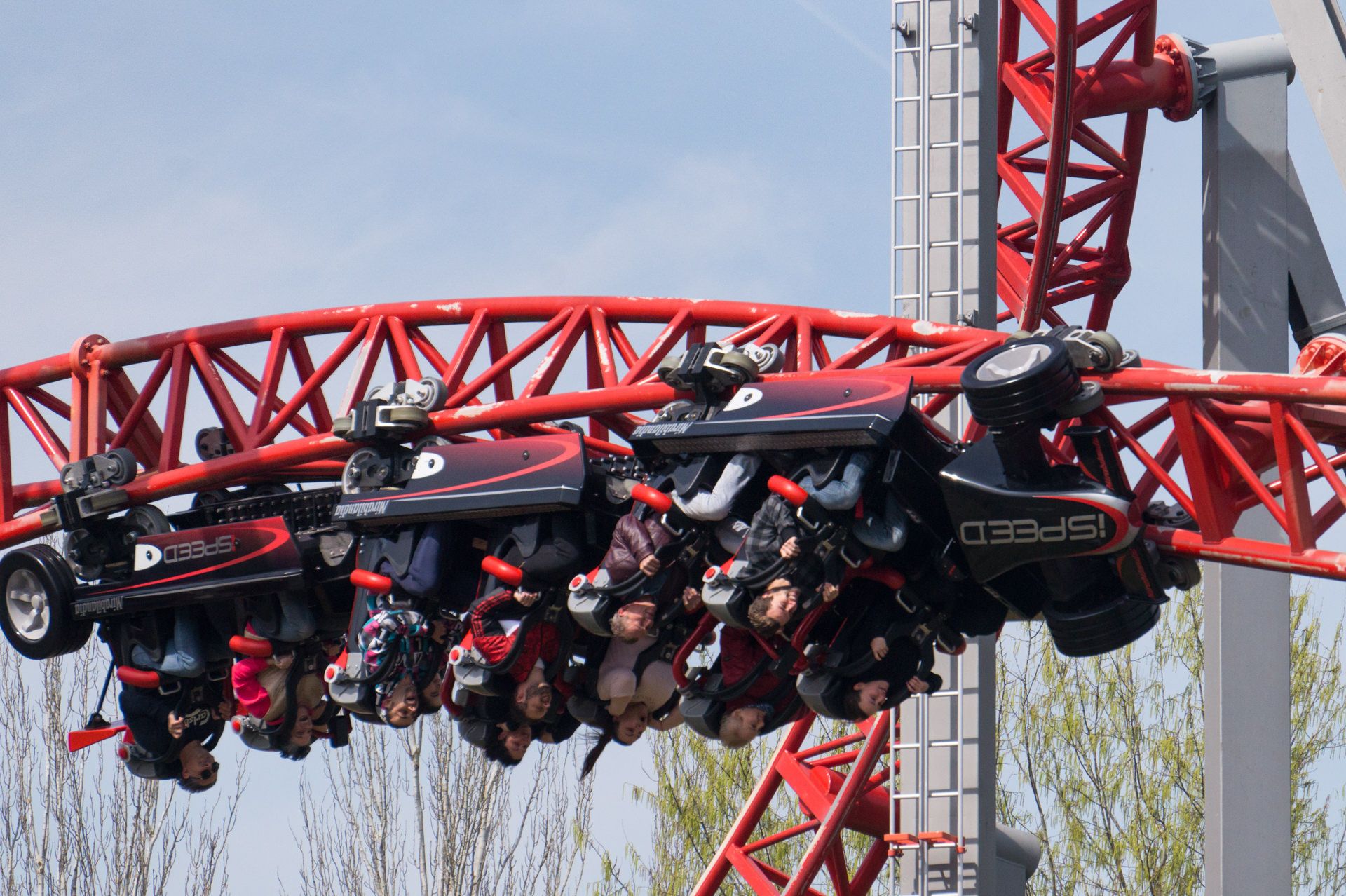
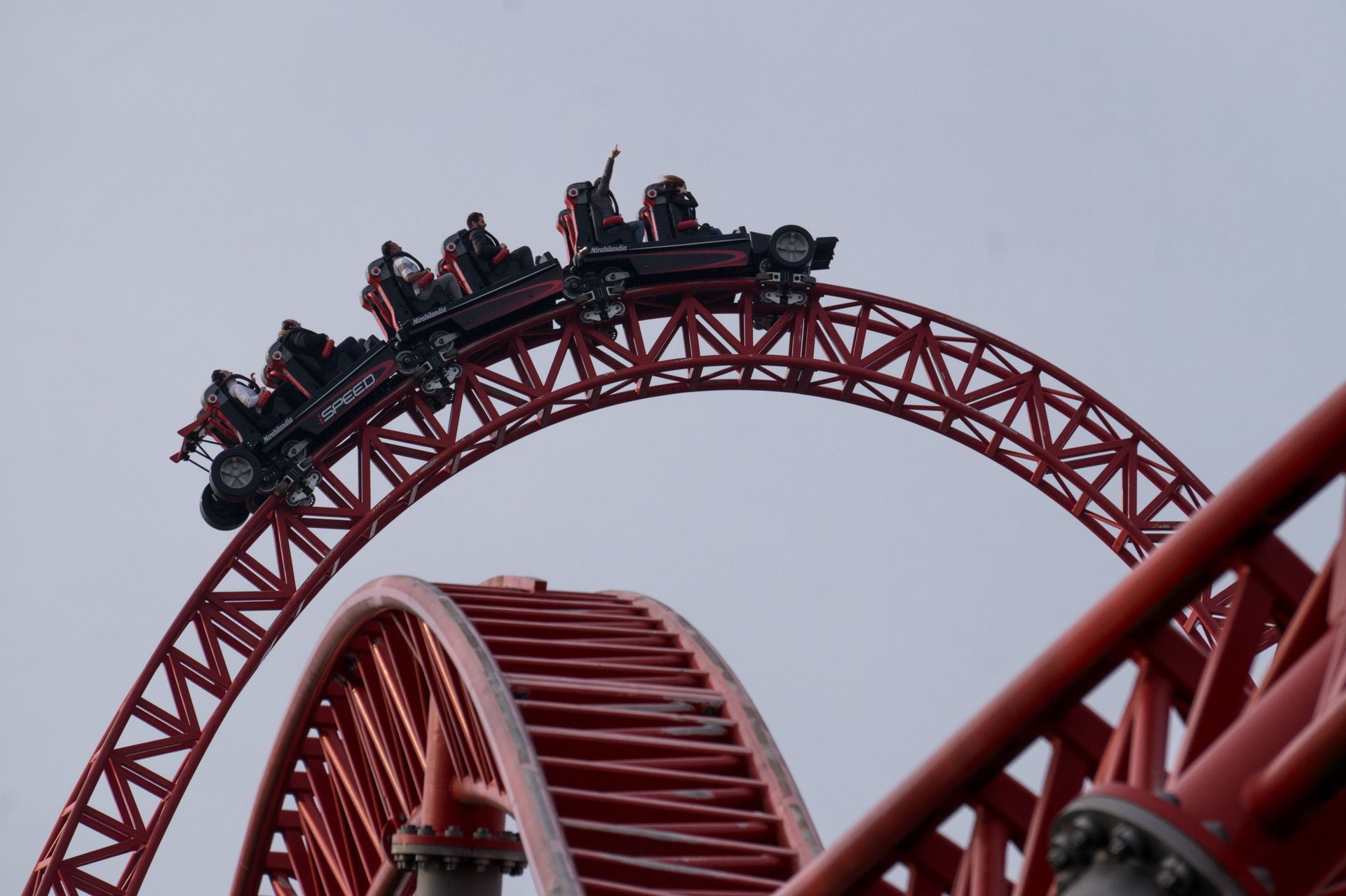
Also addressing the central theme of speed is the Blitz Coaster iSpeed from Intamin, a catapult launch coaster with LSM modules, which replaces the aging wooden coaster Sierra Tonante. The Spanish company’s first project was the self-titled “Il Rollercoaster #1”, a thoroughly fast roller coaster with a more than modest capacity.
Whilst at Divertical we had to queue for a short time, our less wasteful and self-horny lifestyle took revenge by not buying a fast pass. Now we were allowed to wait here for more than an hour in the desolate waiting area of the roller coaster, only to be constantly passed over by some brats of the thoroughly anti-social tourists of the Italian Adriatic. While in the other Italian parks nobody pushed in front of us and even let one of us pass by voluntarily to keep groups together, here it was simply a plague without equal. If you want to be reasonable in Mirabilandia, you better practice becoming a narcissist in advance by creating selfies en masse and treat yourself to a fast pass! In theory it’s not that expensive anyway, especially if you have bought an annual ticket for one of the other Parques Reunidos parks (e.g. Movie Park Germany, Attractiepark Slagharen, …) and didn’t pay any entrance fee anyway; at least you save yourself the wait with the disgustingly anti-social tourists, while in other parks you become a disgustingly anti-social tourist just by buying a fast pass.
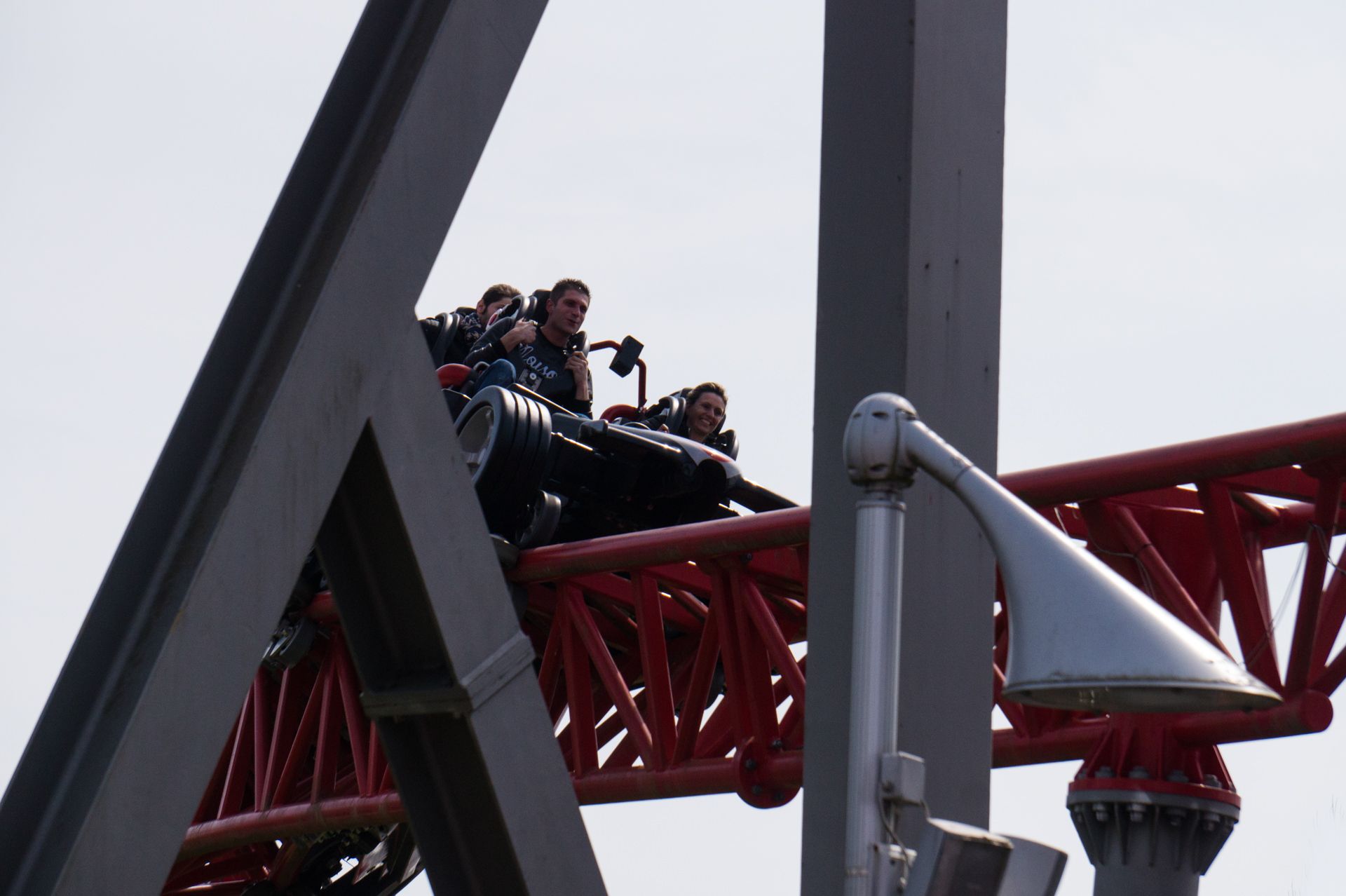
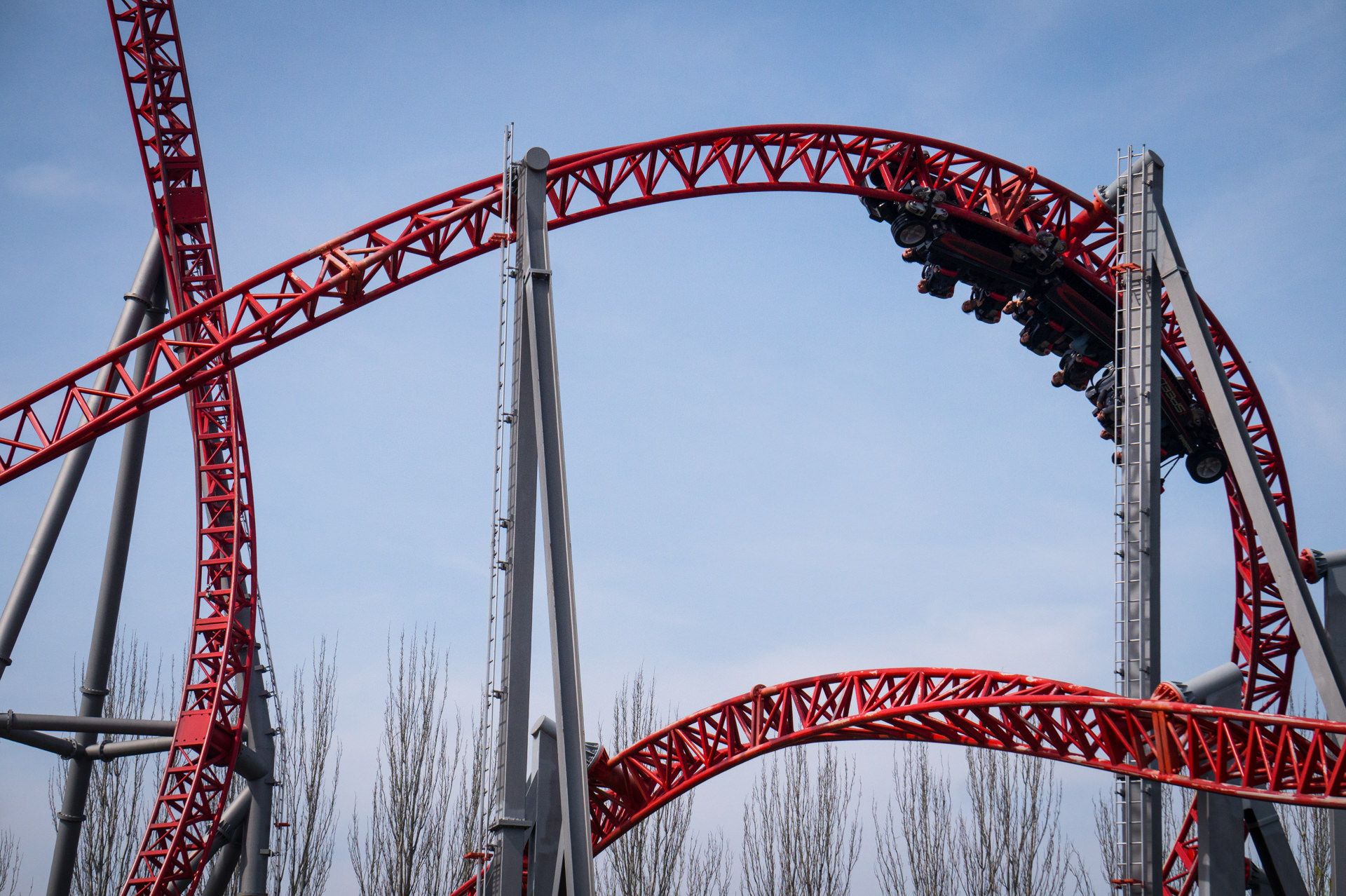
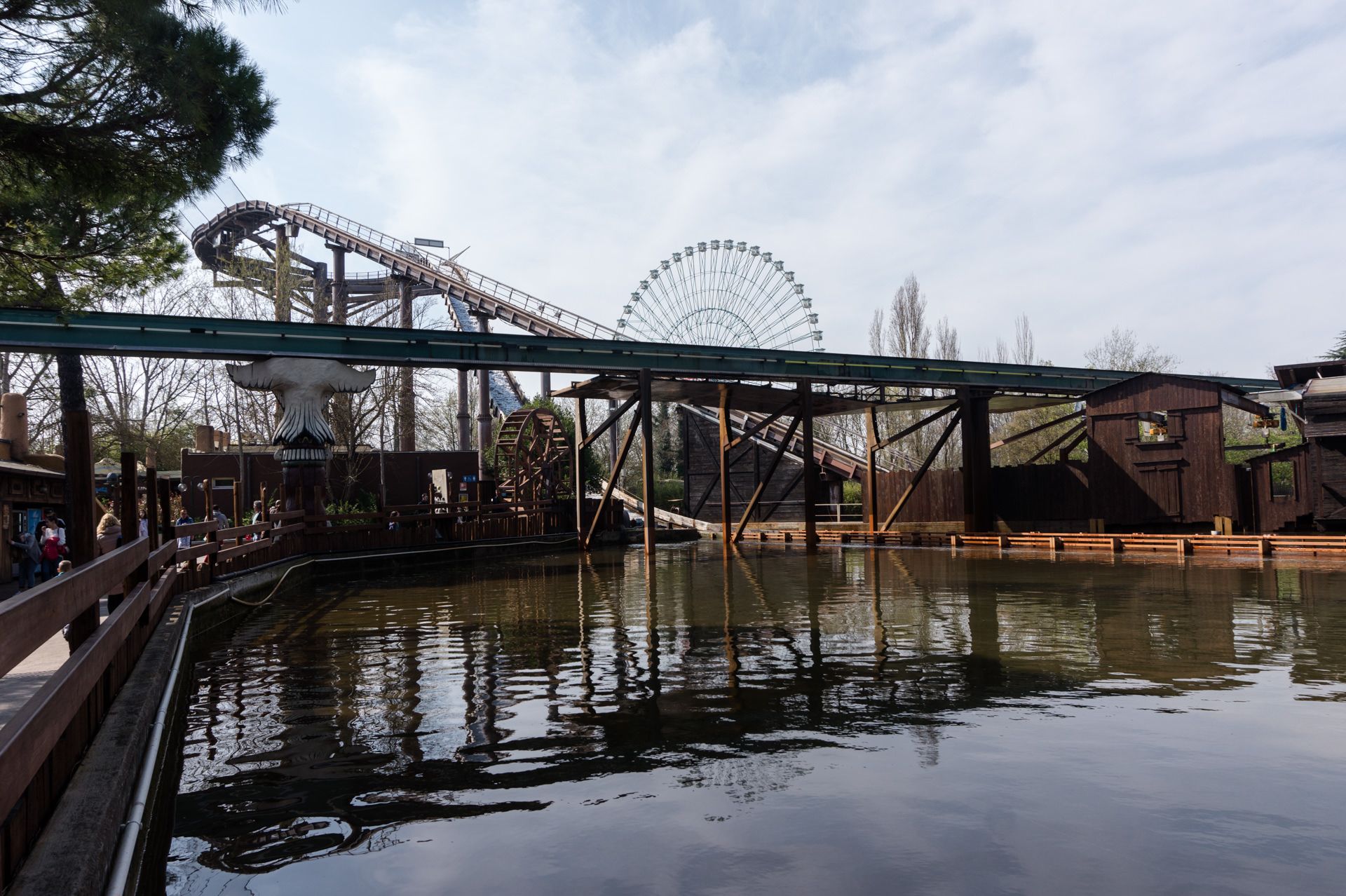
But now let’s get to the ride description of the LSM roller coaster iSpeed, because as soon as you finally reach the stairs to the station it’s going quite fast. Once you sit down in the train and close the safety bars, the train is pushed forward slightly before the impulse is taken up and the train accelerates more and more. Now the train climbs up the top hat vertically before you cross it with a great view of the log flume Autosplash. Now you plunge vertically towards the ground, make a short turn to the right and pass the first valley with a lot of pressure. Parallel to the station you cross a hill, where you are lifted out of your seat. Another S-curve is now made with a lot of momentum, which merges into a tight right turn. On the following hill a leisurely turn follows, which releases you into a slight left turn above the station. All of a sudden a corkscrew is introduced, which throws you around with an incredible intensity. On a further hill you cross the launch track, whereupon you can take a deep breath again in the following steep turn. Rather leisurely the train shoots through a wide right turn, which shortly afterwards changes into the heartline roll, which can be seen from the outside. After another steep turn follows a short block brake. You leave it in an equally steep left turn, followed by a small hill and the final left turn towards the station.
Even though the initial acceleration of the launch is rather lax and hardly comparable to the manufacturer’s hydraulic and friction wheel drives, the ride offers a hodgepodge of exciting elements paired with really high pressure and speed. Especially the corkscrew, which can hardly be seen from the outside, simply surprised me during the ride and also the part of the track after the block brake, which always seemed insignificant on videos, has its moments and fits perfectly into the overall experience of the ride. The roller coaster itself, on the other hand, is unfortunately not as convincing as the actual ride itself, thanks to its lean design and low capacity.
Leprotto Express
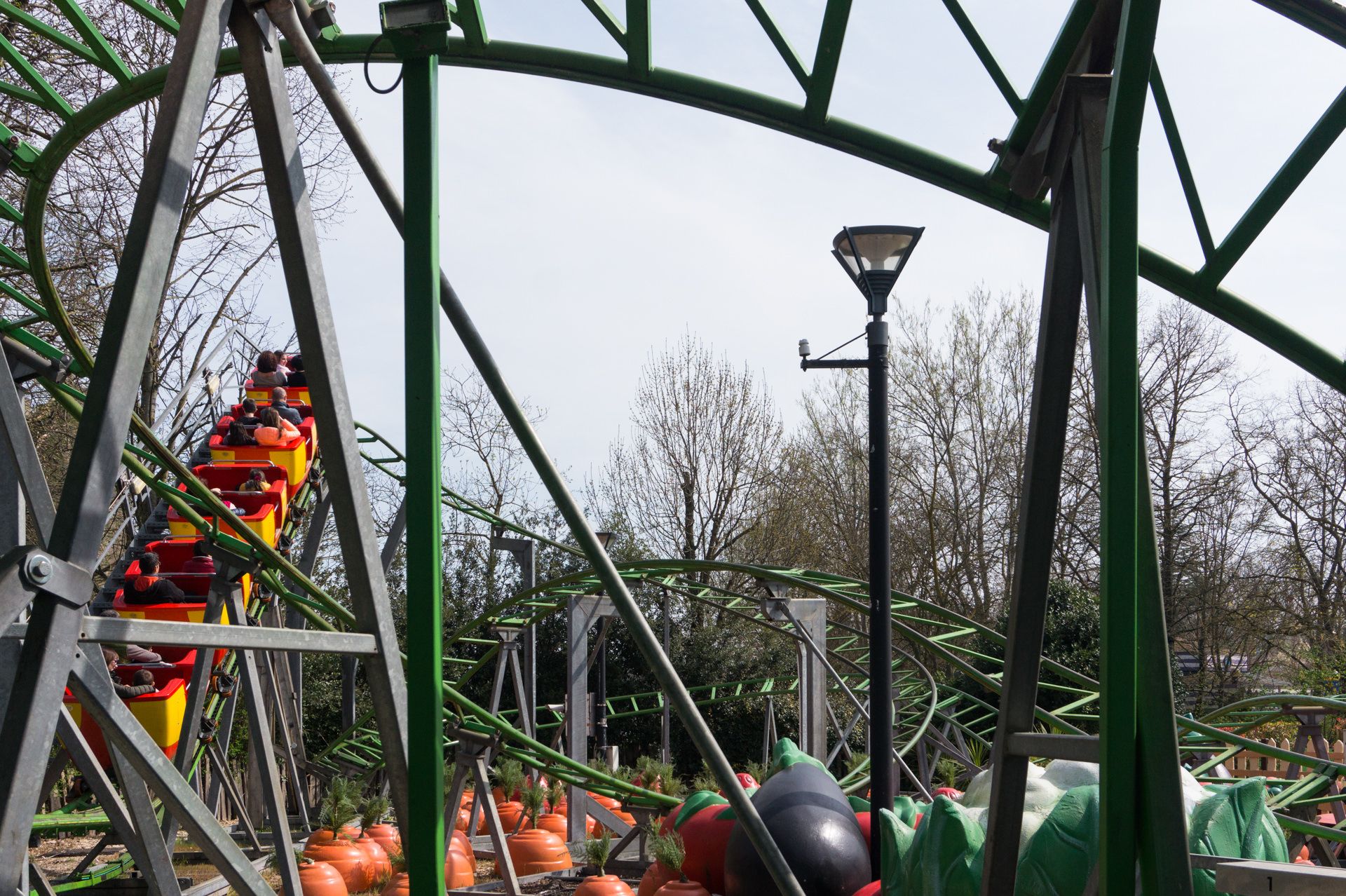
Directly opposite, in the children’s land of Bimbopoli, you will find Mirabilandia’s next roller coaster, the Leprotto Express. This is a simple children’s roller coaster by the manufacturer L&T Systems, whose layout describes a simple figure eight in a constant alternation of up and down movements. Due to the crowd, the ride only went one lap.
Rexplorer
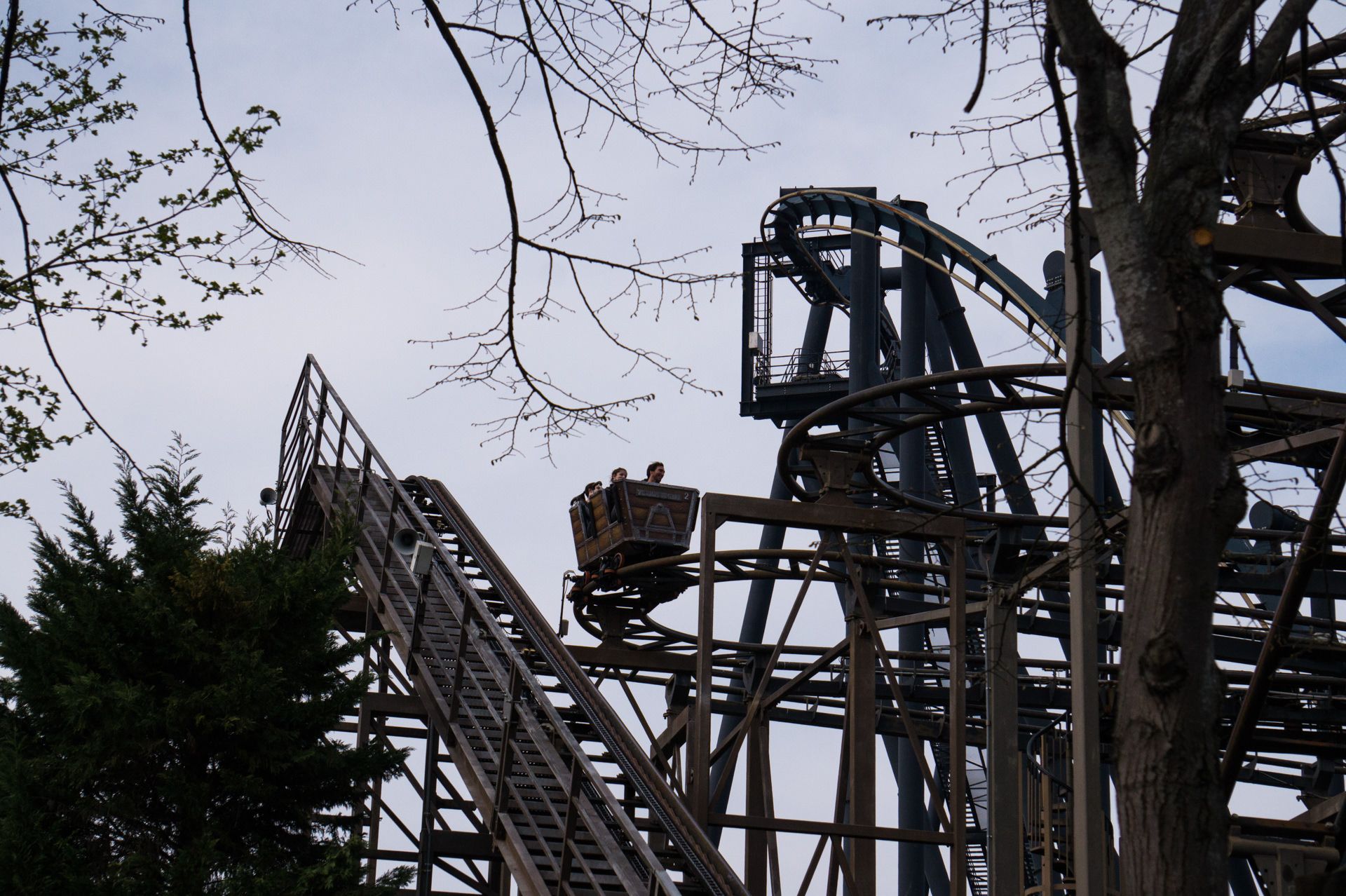
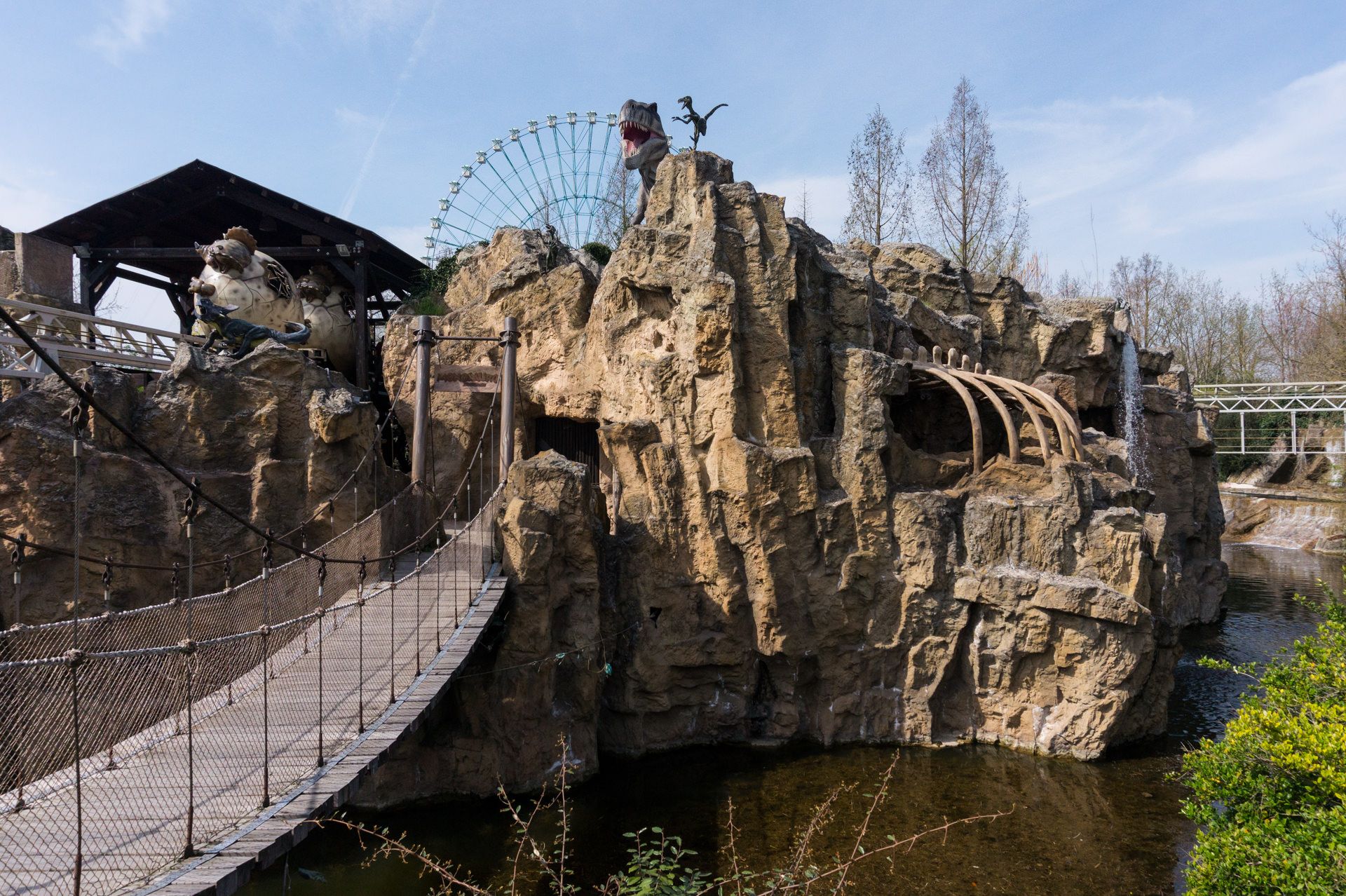
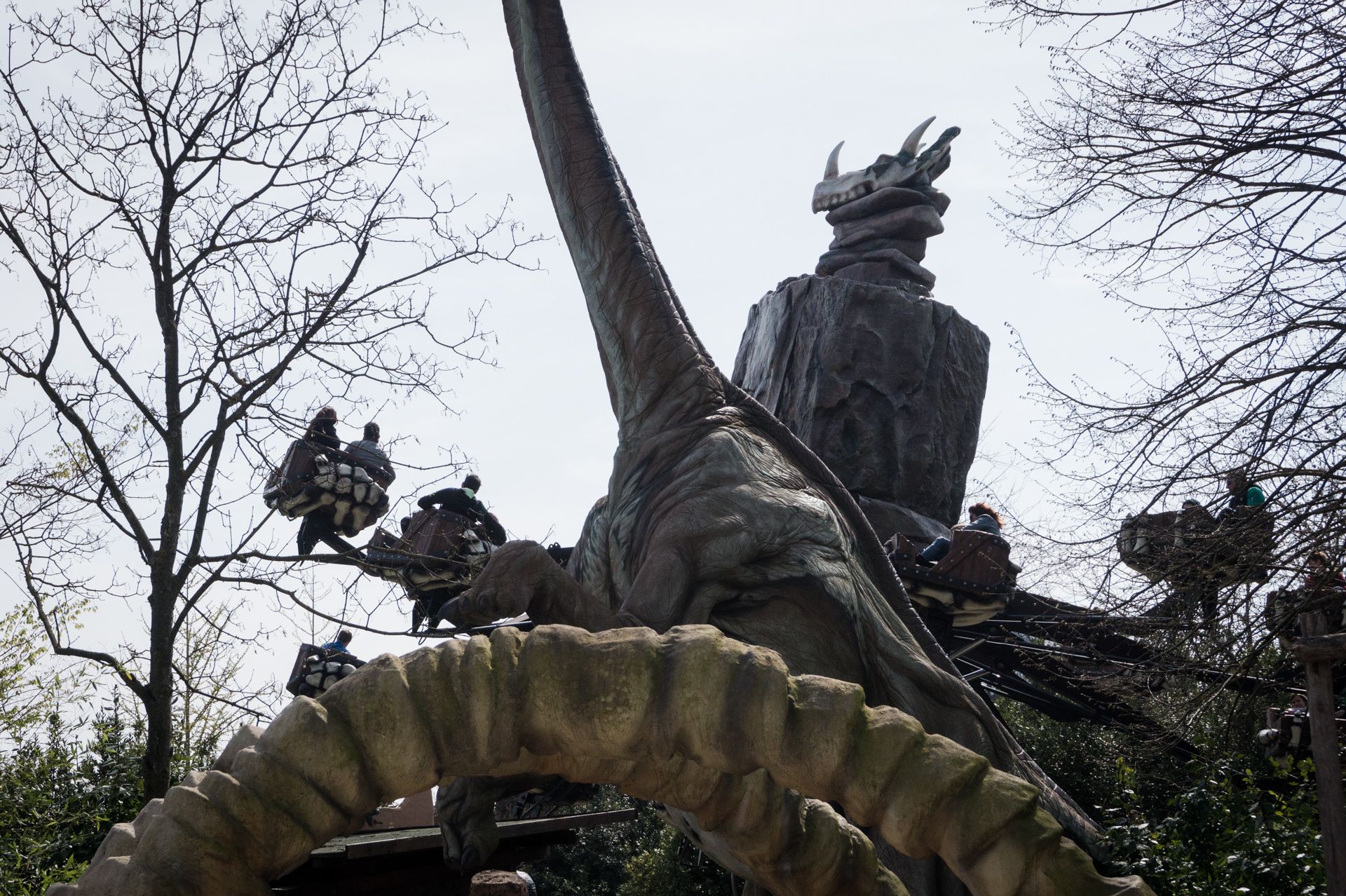
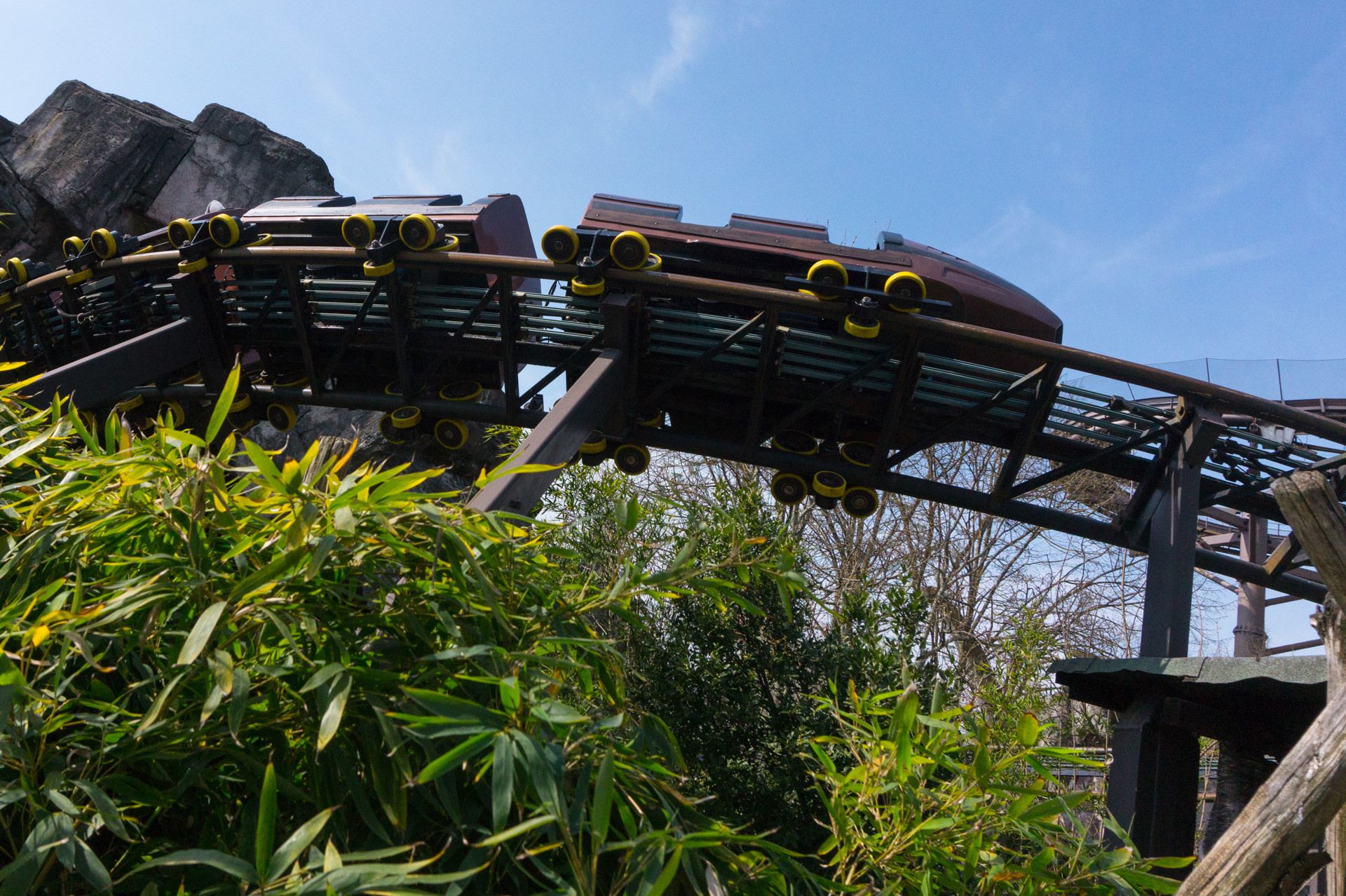
Via the island with the Acapulco cliff divers show you reach the Dinoland area, which was redesigned in 2014. Apart from the transformation of existing rides, e.g. the telecombat ride featuring an inclined ride or the popular children’s monorail, a money printing machine, I meaning a children’s driving school, and a Magic Bike by Zamperla also found their way into the themed area. But the most important destination for us was the oldest roller coaster of Mirabilandia, the Powered Coaster Rexplorer.
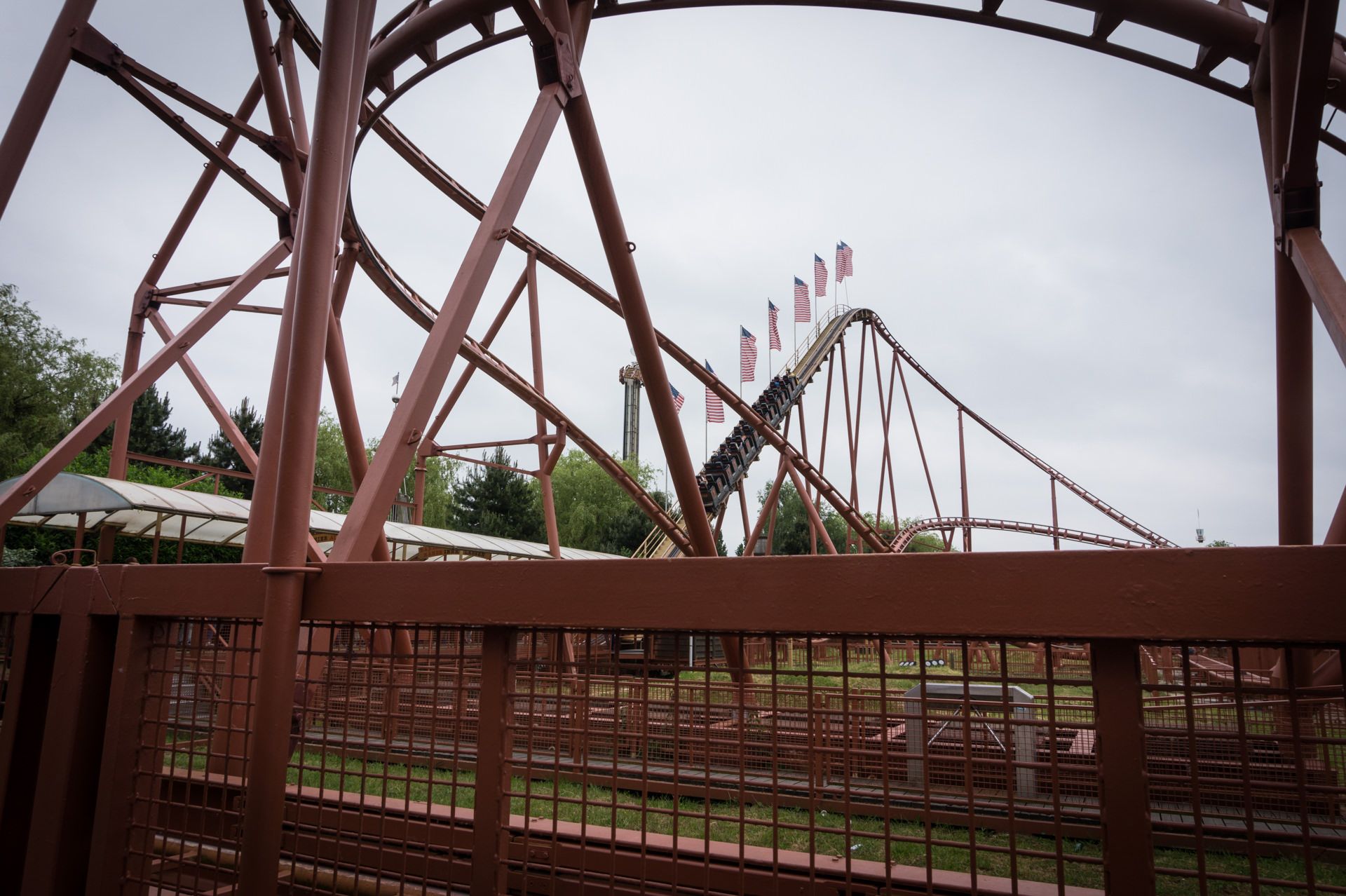
The journey begins with a wide bend to the left, followed by a leisurely climb past some artificial rocks. At the top, the train goes through a downward helix through the rock formation before climbing up a steeper straight. Now the train goes through a wide downward right-hand bend, passes under the track it has just passed and surrounds the first downward helix in a left-hand bend. With much more momentum you cross the station and complete another lap through the course.
Theoretically, the ride on the Rexplorer would have been quickly dealt with, because unlike many other rides at Mirabilandia, this ride has a slightly higher capacity by nature and the queue itself was manageable. However, Mirabilandia would not be Mirabilandia if they did not mess up this ride as well. The dispatching was a mess and was further protracted by the lack of numerical knowledge of the staff. After waiting until all passengers of the newly arrived train had left the station area, about half of the train was filled with Fast Pass people, but they all had to be counted and checked individually. Of course, the staff constantly miscounted, which was particularly noticeable after a change of staff. Only after each of the Fast Pass owners had taken their seat the normal waiting people were let in. The checking of the restraints and the ride itself, on the other hand, was quickly completed. However, the one-man operation at the ride almost always took 5 or more minutes during loading for one cycle.
El Dorado Falls and Gold Digger
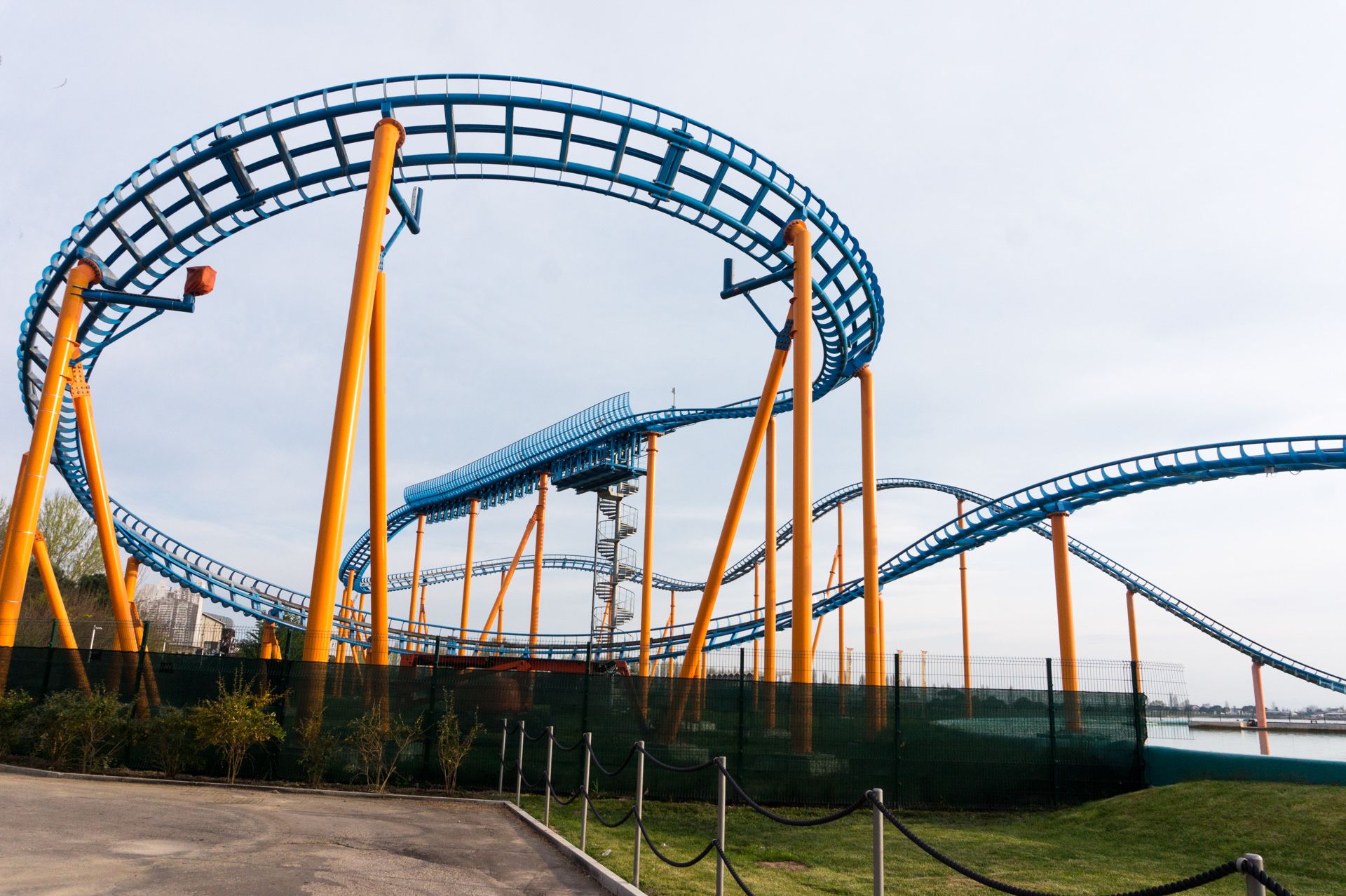
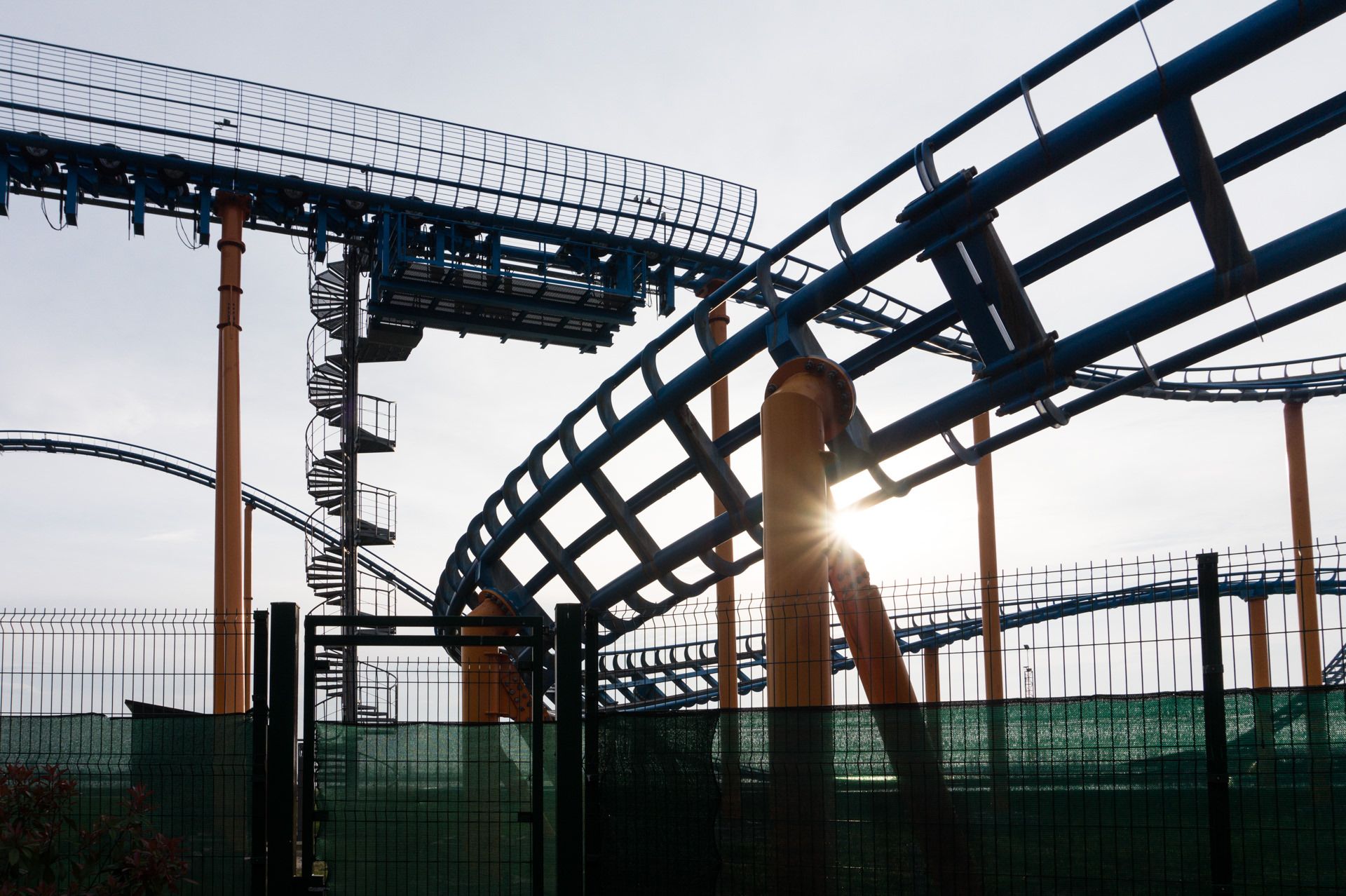
As the construction work in Mirabilandia’s new themed area Far West Valley was still in full swing during the visit, the only remaining attractions in operation were the Spillwater El Dorado Falls of the water rides pioneer O.D. Hopkins – which, however, struggled with constant failures and did not make good form due to the one-boat operation – and the Wild Mouse Gold Digger, formerly known as Pakal. Since 50% of the cars were also equipped with Fast Passers, we unfortunately had enough time to experience every corner of the small, quite desolate, queue and thus invested almost an hour for the Italian-style Wild Mouse.
The ride is actually quite entertaining, because after you have made the hairpin bends in the upper level, seven in all, you go down one level, where a big drop is followed by another serpentine curve. This is also followed by a steeper gradient and a hairpin bend. As is well known, the two successive slopes are the most fun for wild mice and therefore we will not do without them here either. A last narrow bend and a small dip follow before you are led back to the station.
Katun
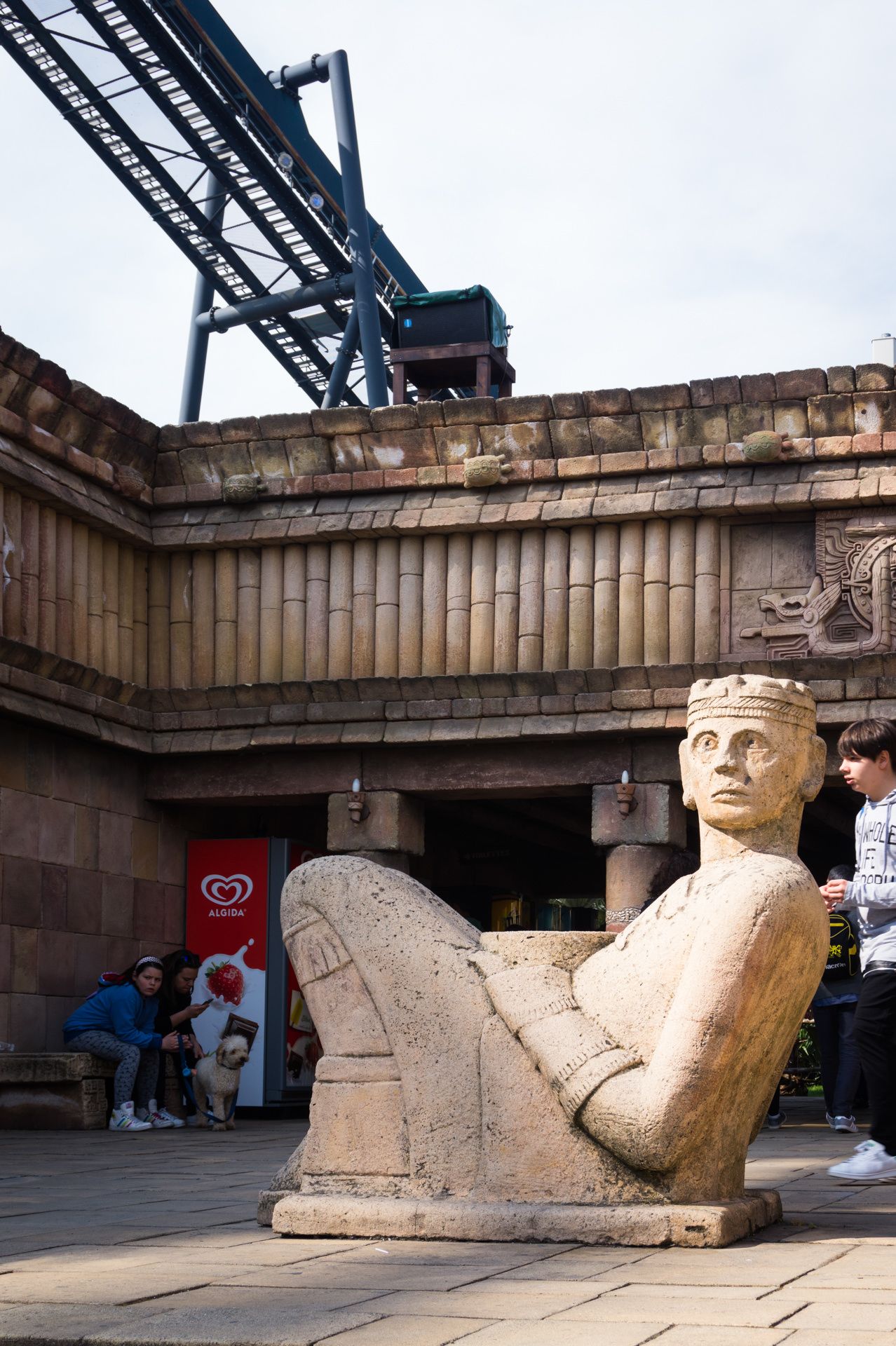
Through a spacious temple complex you can reach the Inverted Coaster Katun, which has been turning its passengers upside down several times since the millennium. With a height of 50m and a length of 1200m Katun has always been the largest ride of its kind in Europe and is fortunately scary enough to keep the waiting time low despite the one-train operation. Interestingly enough, the second train was actually sent on its way towards the end of the day, but probably only to finish on time.
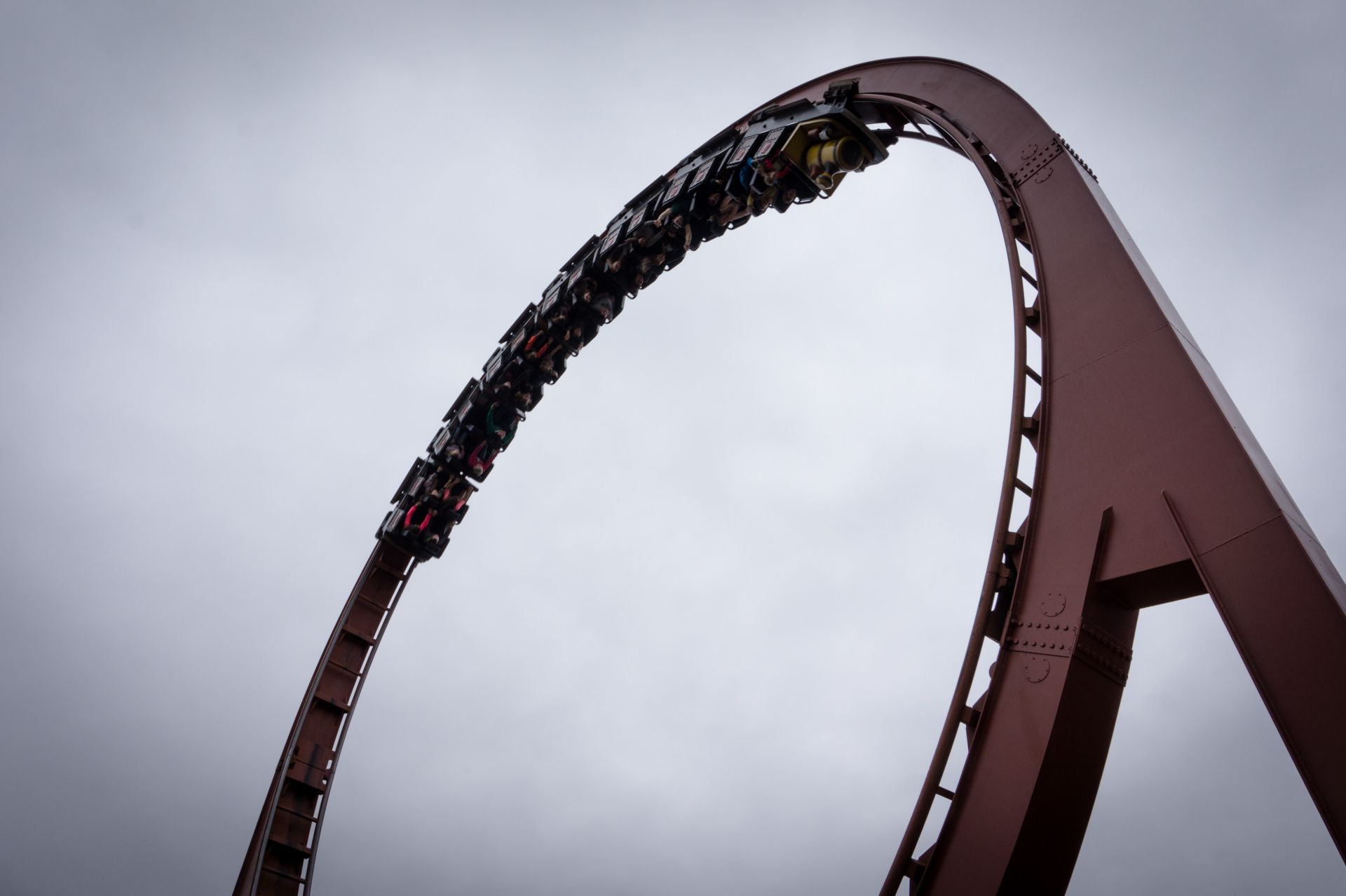
The ride begins with a short left turn out of the station and into the ride’s lift. As soon as the train has reached its initial height, it turns to the left and at the same time makes a rather steep descent. You cross the first valley with a lot of pressure before you are turned upside down for the first time in the huge loop. Once back on ground level, the train shoots up again and turns on its own axis in a zero-g roll. To enable the ingenious placement of the Cobra Roll at the lake on the right side of the entrance, there are now a few meters of track missing, which were solved by a steep curve close to the ground and leading to the right. In the following inversion figure you shoot up half a loop, then turn to the side and do the same again in reverse order. Of course with extremely positive centrifugal forces, which should not be underestimated in the following valley. Also with a lot of pressure one turns a round in a wide upward helix at the end of which the block brake of the ride is reached. This is passed without any reduction of the momentary speed, which leads to an immediate plunge into the abyss. Almost straight ahead the first corkscrew is introduced, which whirls you with full force to the right into a tunnel. You then leave this tunnel into another corkscrew, but this time in the opposite direction. A short hill releases you into the final downward helix of the ride, whereupon the station is reached immediately.
Katun is a great Inverted Coaster of the bigger type, which plays many huge and well coordinated inversion figures in a layout worth experiencing, at a decent speed. The play of forces should not be underestimated yet it is still quite smooth compared to the smaller European versions of this roller coaster type.
Max Adventures Master Thai, Eurowheel and Hot Wheels Stunt Show
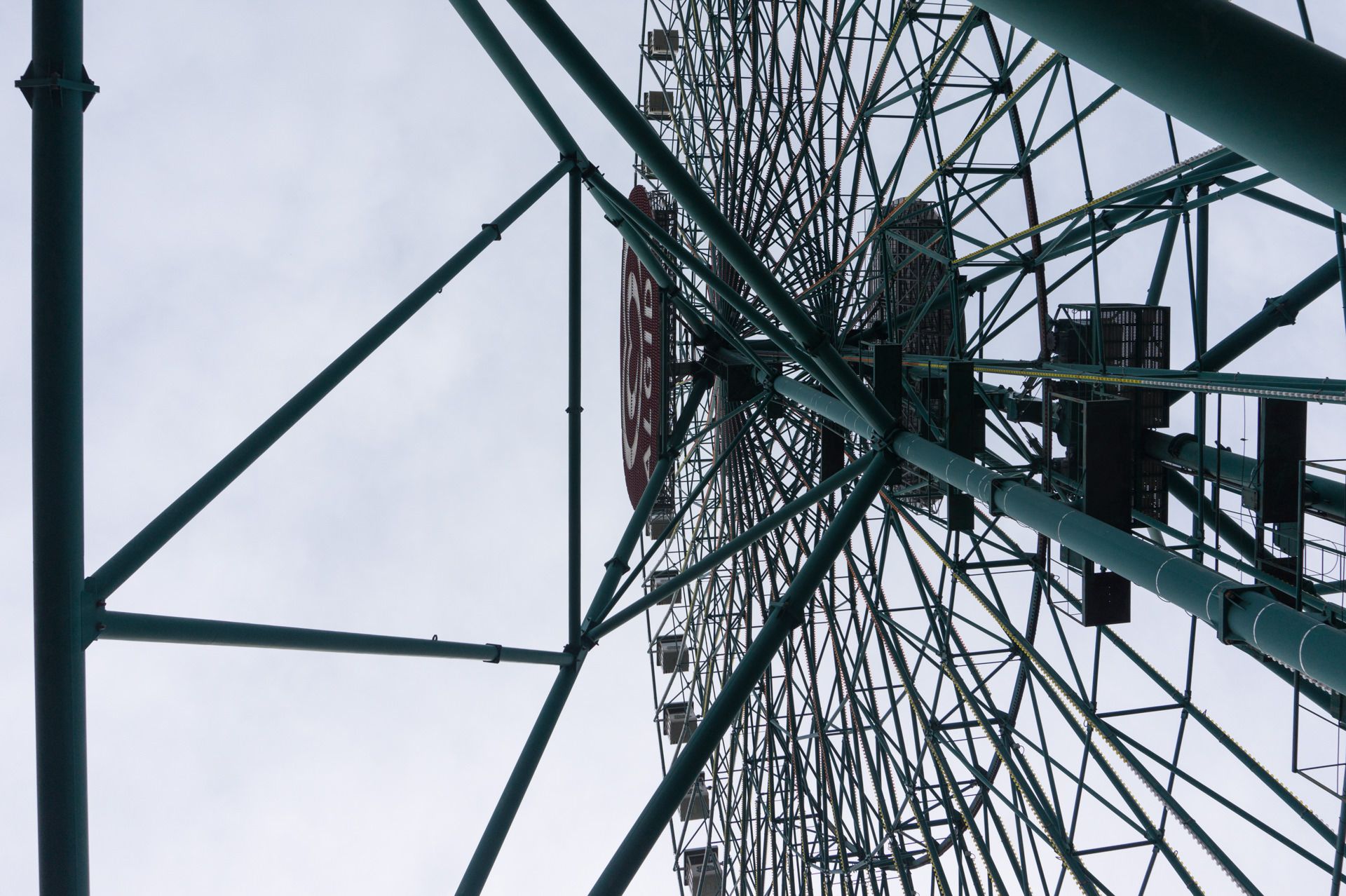
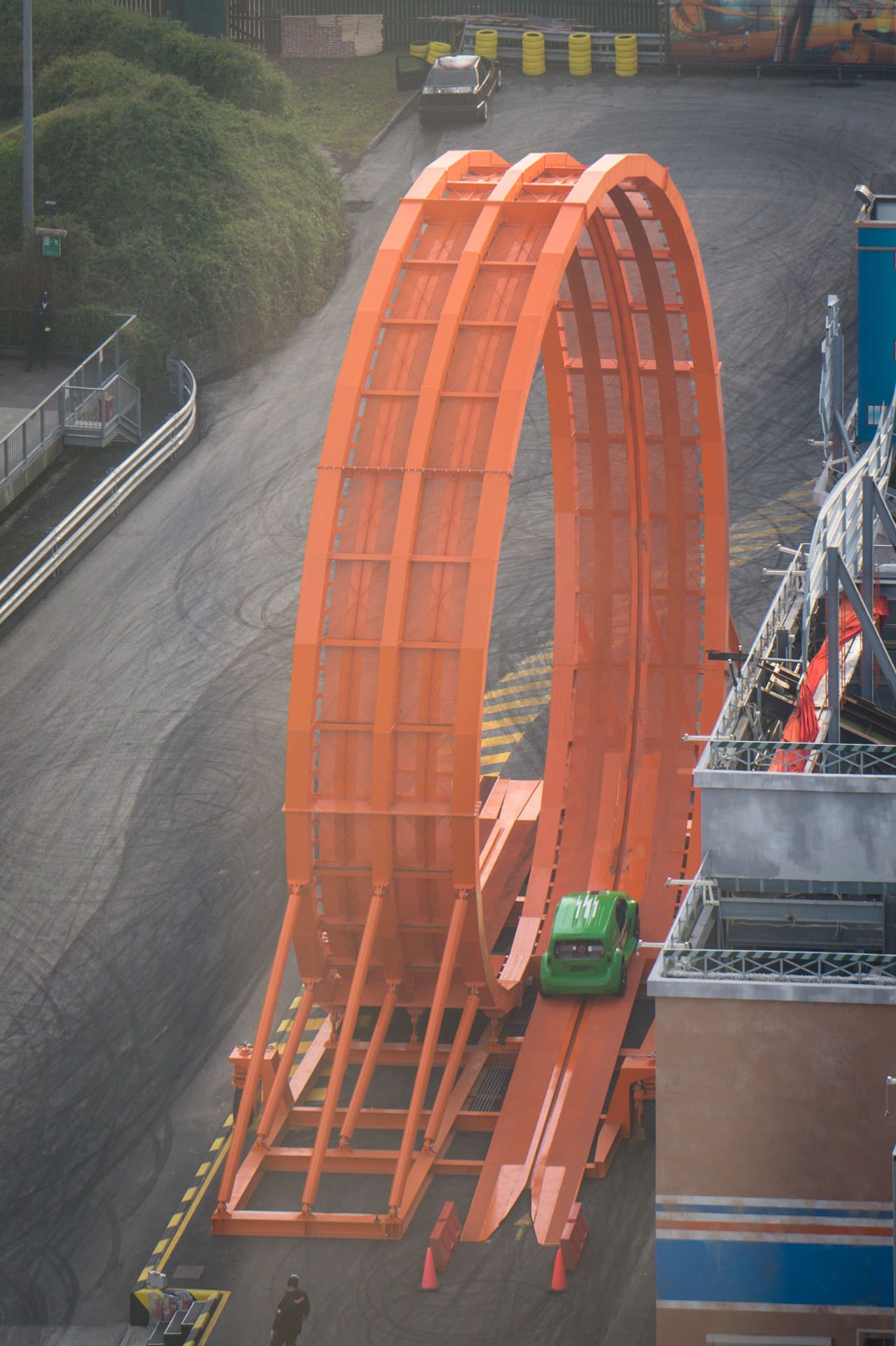
While waiting in the queue of the Katun roller coaster we could already observe that the neighbouring Max Adventures Master Thai roller coaster had a technical defect and was evacuated accordingly. Even one hour later there was no sign of a reopening of the ride, so we headed towards the prominent landmark of Mirabilandia. Also at the 90m high Eurowheel a long and tough queue was waiting for us. But we didn’t want to miss a ride on what used to be the highest Ferris wheel in Europe because we were so tired of waiting somewhere else. As expected, only half of the gondolas of the Ferris Wheel were equipped, which gave us plenty of time to take a closer look at the unconventional supporting structure of the Ferris Wheel. During the ride we could watch the Hot Wheels Stunt Show from above, the finale of which was the passage of a huge looping.
Pictures Mirabilandia











Closing Words
Also from above we could watch some test rides on Max Adventures Master Thai, so we immediately walked back to the ride, only to find the doors closed again. We still had half an hour left, so we decided to go on another ride on Katun. We couldn’t foresee that we wouldn’t be able to go on another ride after that, so we could only ride six of the seven roller coasters and the Ferris wheel. A disgrace beyond compare, which made the actually brilliant amusement park Mirabilandia the last flop. It is obvious why Gardaland is the most successful amusement park in Italy and why Parques Reunidos should reconsider their strategy.
What is your opinion about the theme park Mirabilandia? Just write it here below the report in the comment field or visit our social media channels:
Click here for the next report of the Il Viaggio dei due Runner Tour