A not so great visit

Preface

After our day’s start in Fiabilandia we reached the car park of the amusement park Mirabilandia at late noon. Although our visiting day fell on Easter Sunday, the general rush of visitors was limited, but not the waiting times and the eagerness of the tourists/residents to jump the queue. Yes, it was not a pleasant visit to Mirabilandia, although the attractions are first class, but more about that later.

The History of Mirabilandia

We start the review with a look at the history of the amusement park, which opened in 1992. The park was founded as a project of a group of investors consisting of Situr-Finbrescia (46%), San Paolo Finance (44%) and Publitalia 80 (10%) who, with the simple formula “tourist resort + amusement park = cash cow”, completely failed in their exaggerated expectations and were unable to attract even a third of the two million visitors they had hoped for. As the operating company was on the verge of bankruptcy in 1996, they sold the park in late autumn of the year to the Löffelhardt-Casoli Group, a joint venture between Phantasialand co-founder Gottlieb Löffelhardt and Giancarlo Casoli, one of the owners of the former Italian amusement ride manufacturer S.D.C., who massively expanded the park in the following years. As a result, the number of visitors also grew to over 1.5 million. After a few years Löffelhardt withdrew from the business and Casoli took over the patronage, before Mirabilandia was sold to the Spanish group Parques Reunidos in 2006.

Tour of the park

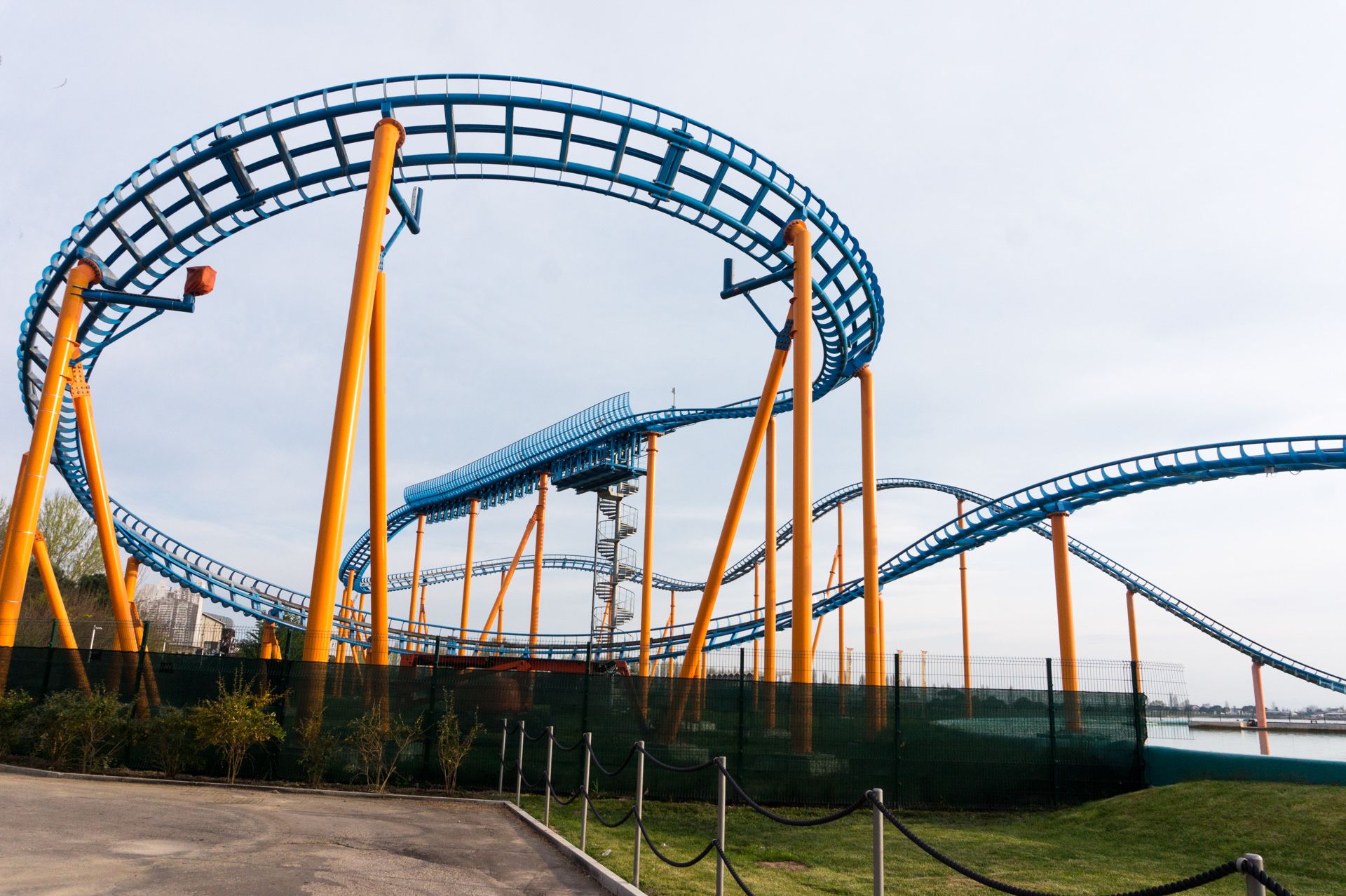
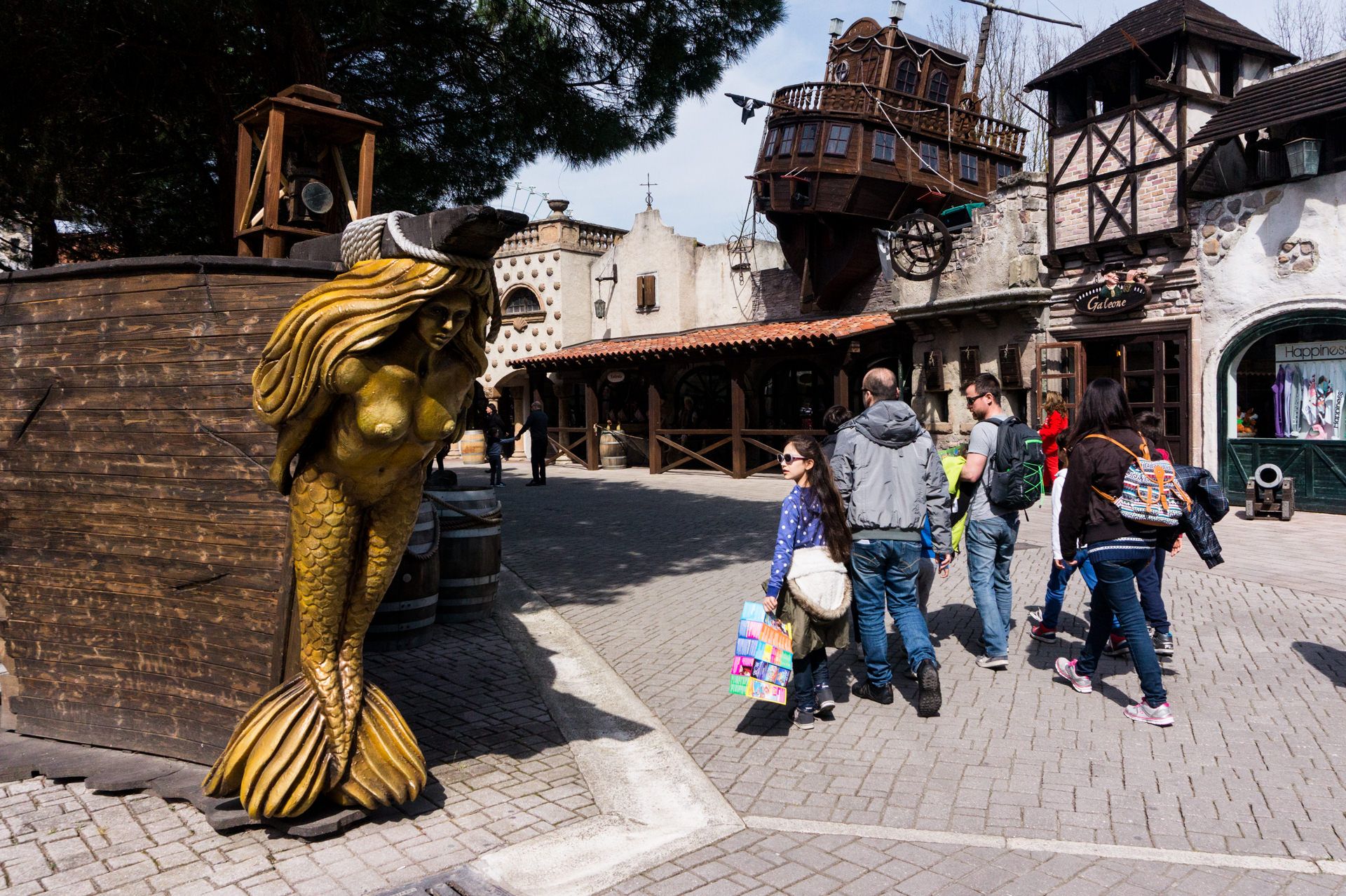
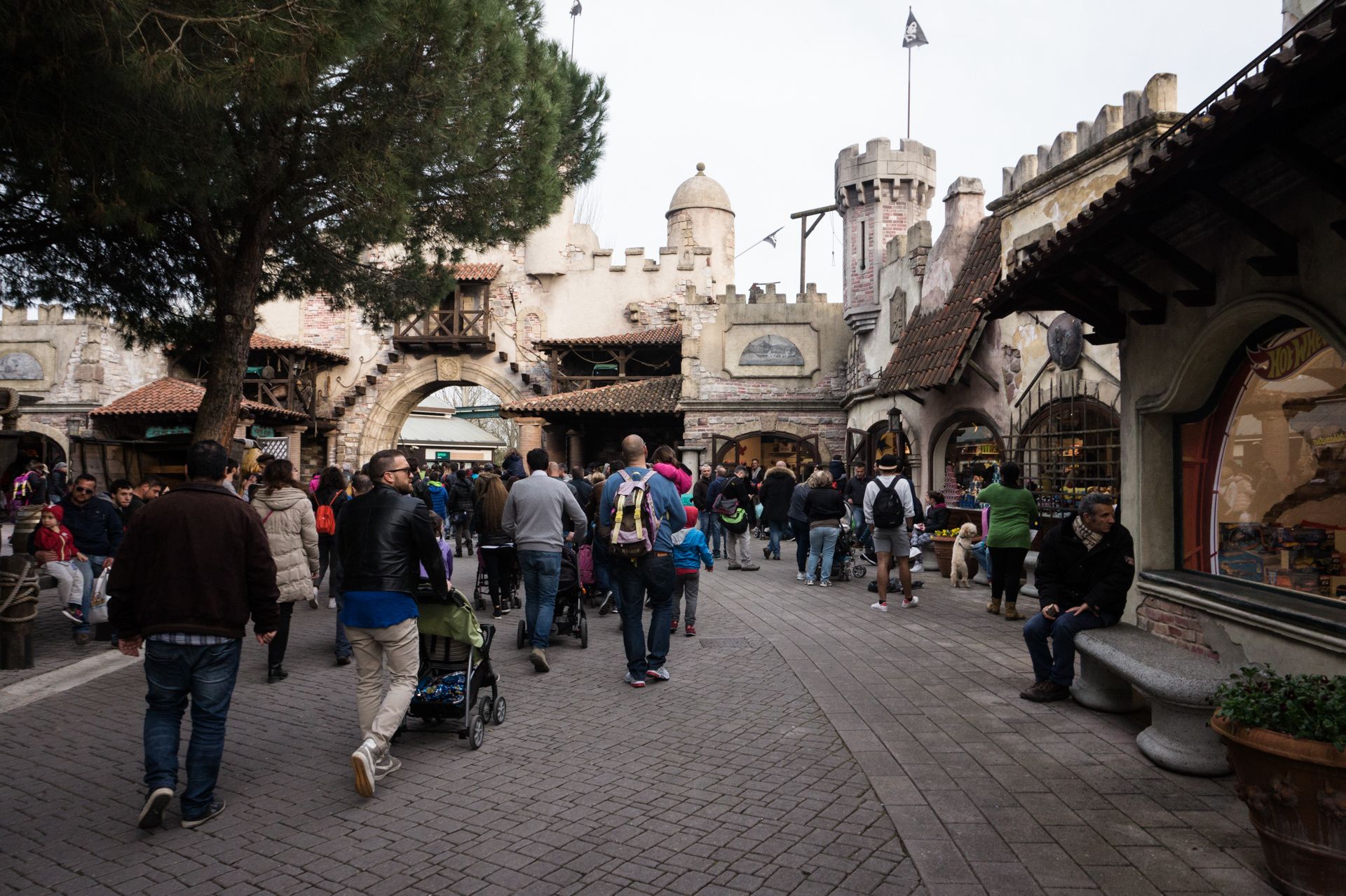
After leaving the ticket offices behind, you enter the park over a bridge, similar to the English amusement park Thorpe Park near London. The skyline here is discreetly restrained, but with the perfectly placed Cobra Roll of the inverter Katun to the right of the bridge it is already very impressive. From here there is a path leading into the Far West Valley, which was still largely under construction, and the actual entrance area of Mirabilandia. This turns out to be a pirate’s nest full of details and accommodates some shops, where you can get fast passes, which were almost a necessary treat to be able to ride anything in this park.

To my own confusion, Mirabilandia had arbitrary opening and closing times of the rides, which meant that many attractions didn’t open until noon or even later, or closed much earlier. This in turn resulted in long waiting times throughout the park. On the one hand, I can understand that some smaller parks only gradually put their rides into operation or sometimes even open certain themed areas after a certain time, but I have never seen such a measure in a large amusement park before. It also explains why Gardaland, in return, advertises to close the queue of rides at the end of its opening hours.

Divertical

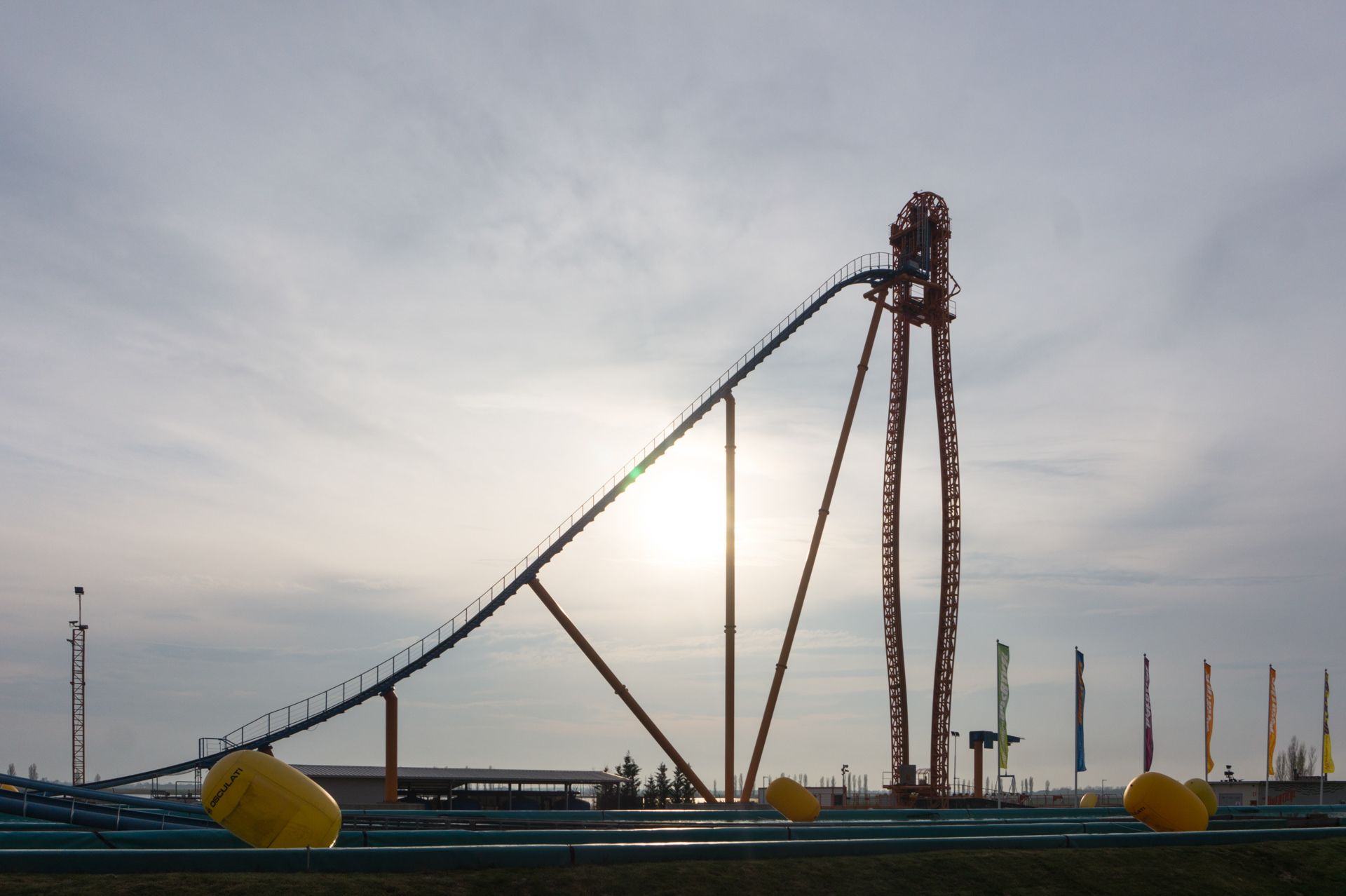
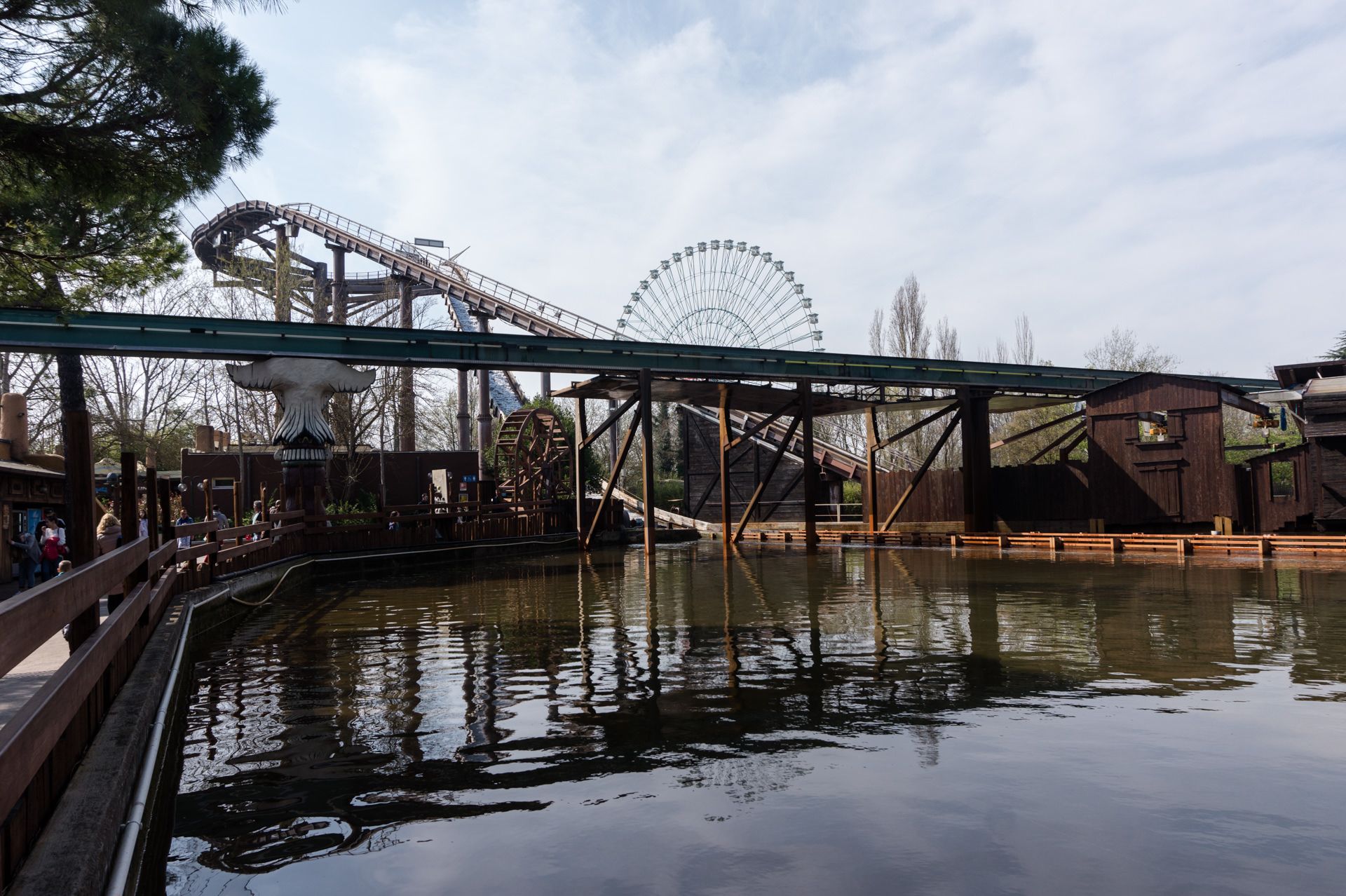
Passing the Pepsi Theatre, where, how could it be otherwise, a magic show is shown, and the musical stage in front of it, we head towards the Divertical water coaster, which already looks very striking from afar. By now at the latest, one becomes aware of how high the ride is and how wasteful it is with the space it has been placed on; however, this does not make the ride look aesthetic at all, which is mainly due to the sparingly placed decoration. On the other hand, the rear part of the ride adorns the insanely long access path to the completely out of place interactive dark ride Reset, which is quite positive and probably attracts more people than ever before to this corner of Mirabilandia.

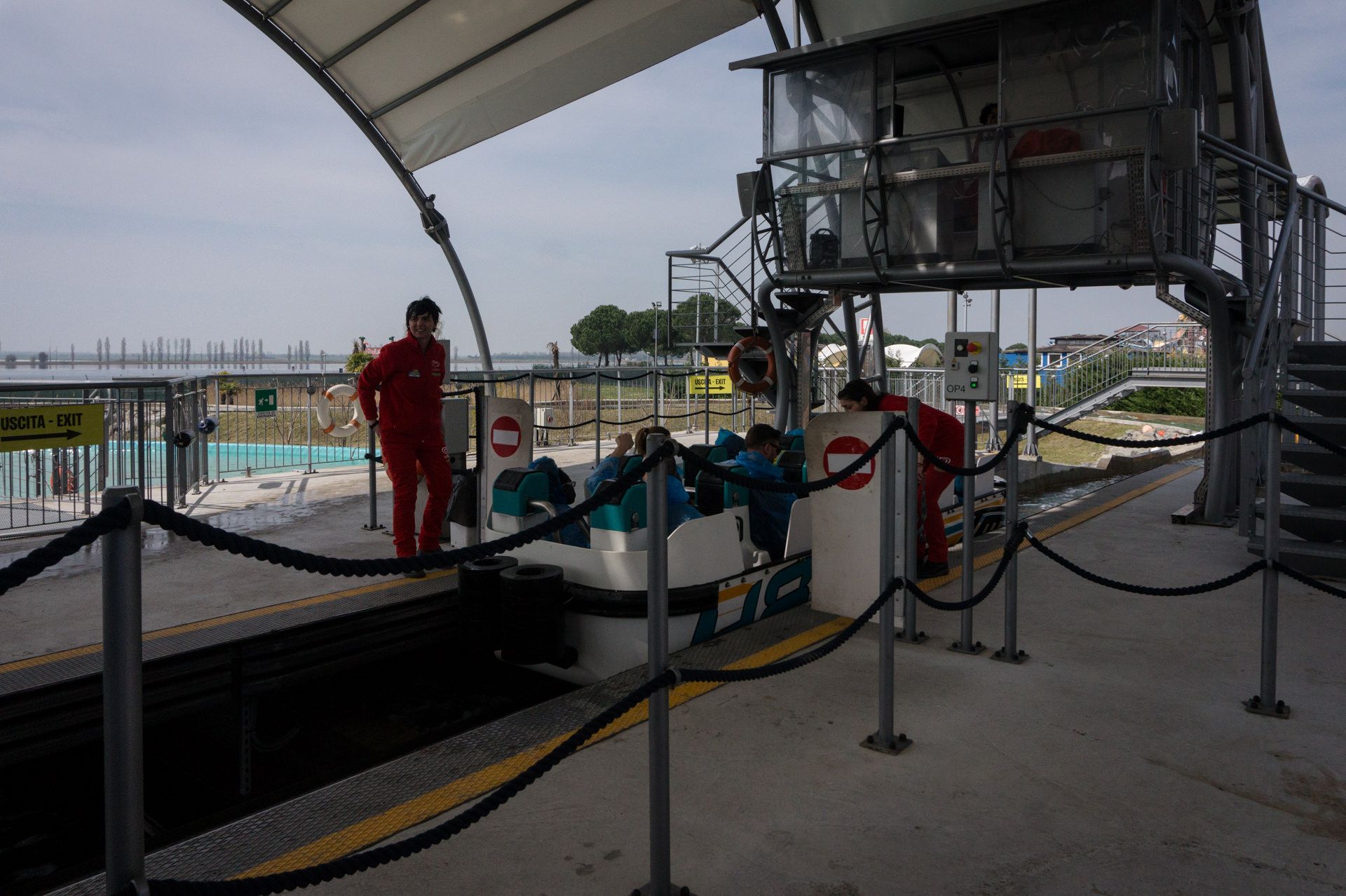
After you have been asked to come up to the station and get into the speedboat, the trip on Divertical can start immediately. As the vertical lift of the ride is still a long way off, you bob a bit through the canal, which interestingly enough creates a good whitewater feeling. After all, the waves almost hit the boat again and again and make you jump away by the whirled up water drops. As soon as the lift is reached, you quickly rise to the starting height of 60m, whereby the curvature of the lift is interestingly hardly noticeable at all. As the view from up here is not very interesting, you are soon pushed over the top of the hill. On the following 45° slope you have enough time to notice how fast this ride actually is. The spray refreshes you and soon after you race through the first pool only to drive over a hill without slowing down. Here you take off a little bit before you throw yourself into a brisk curve. Hoping to slow down a little bit by the following block area, you drive through it without any braking effect and are then released into a right turn. A quick downward helix follows. However, it then goes over into a hill, which initiates the final shot of the ride. Well soaked, you are released back into the channel and reach the station shortly afterwards.

Contrary to my expectations, Divertical is a really awesome water coaster, which gives a feeling of speed like no other ride before. The ride is just fast, which I personally only noticed while crossing the first pool. Considering the starting height of the world’s largest water roller coaster, this is actually in the nature of the ride; at least I have rarely experienced such a speed rush. Moreover, the ride is made with a perfect finish, which means that the friction losses are not really significant, which in turn benefits the speed.

iSpeed

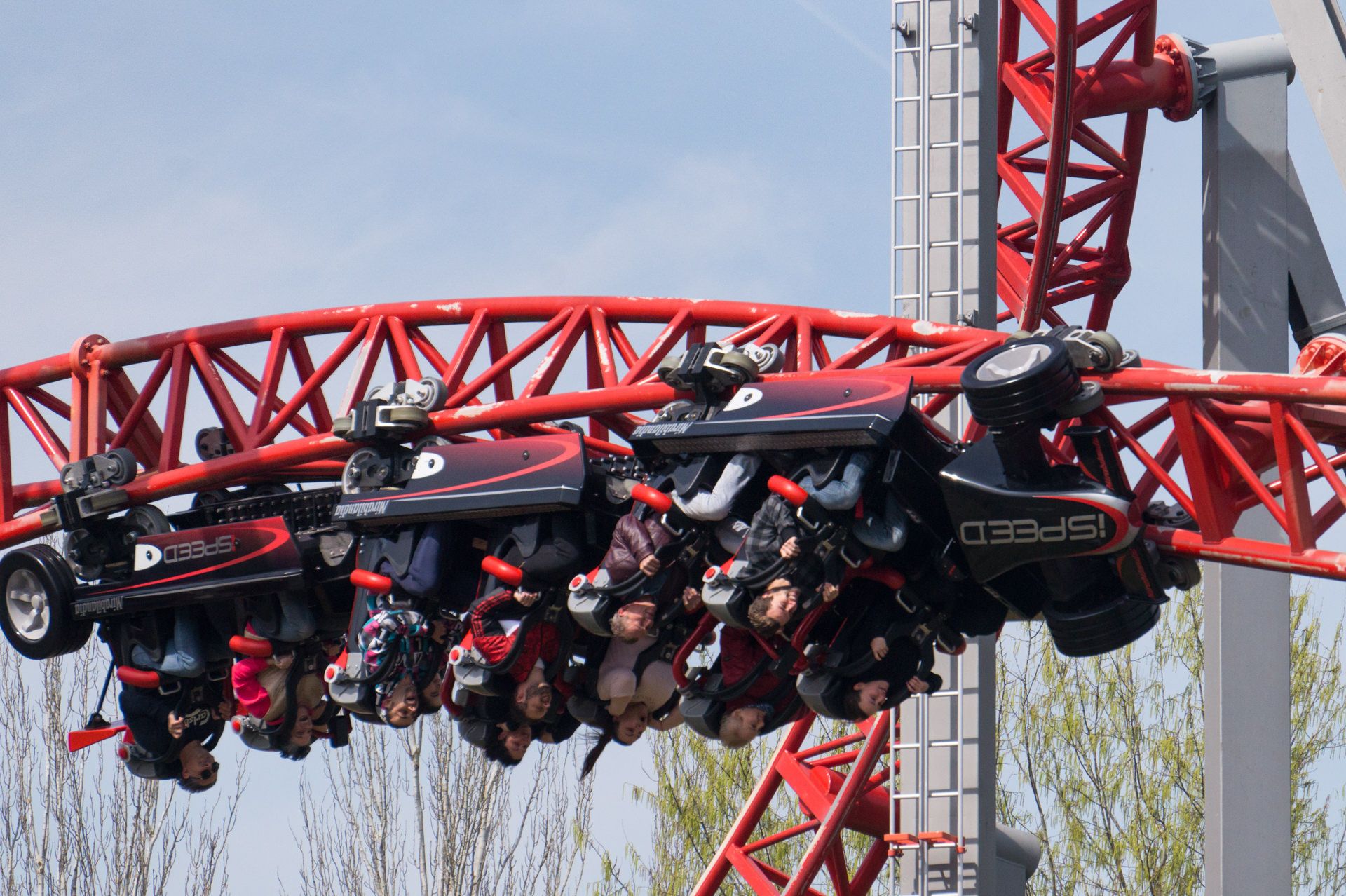
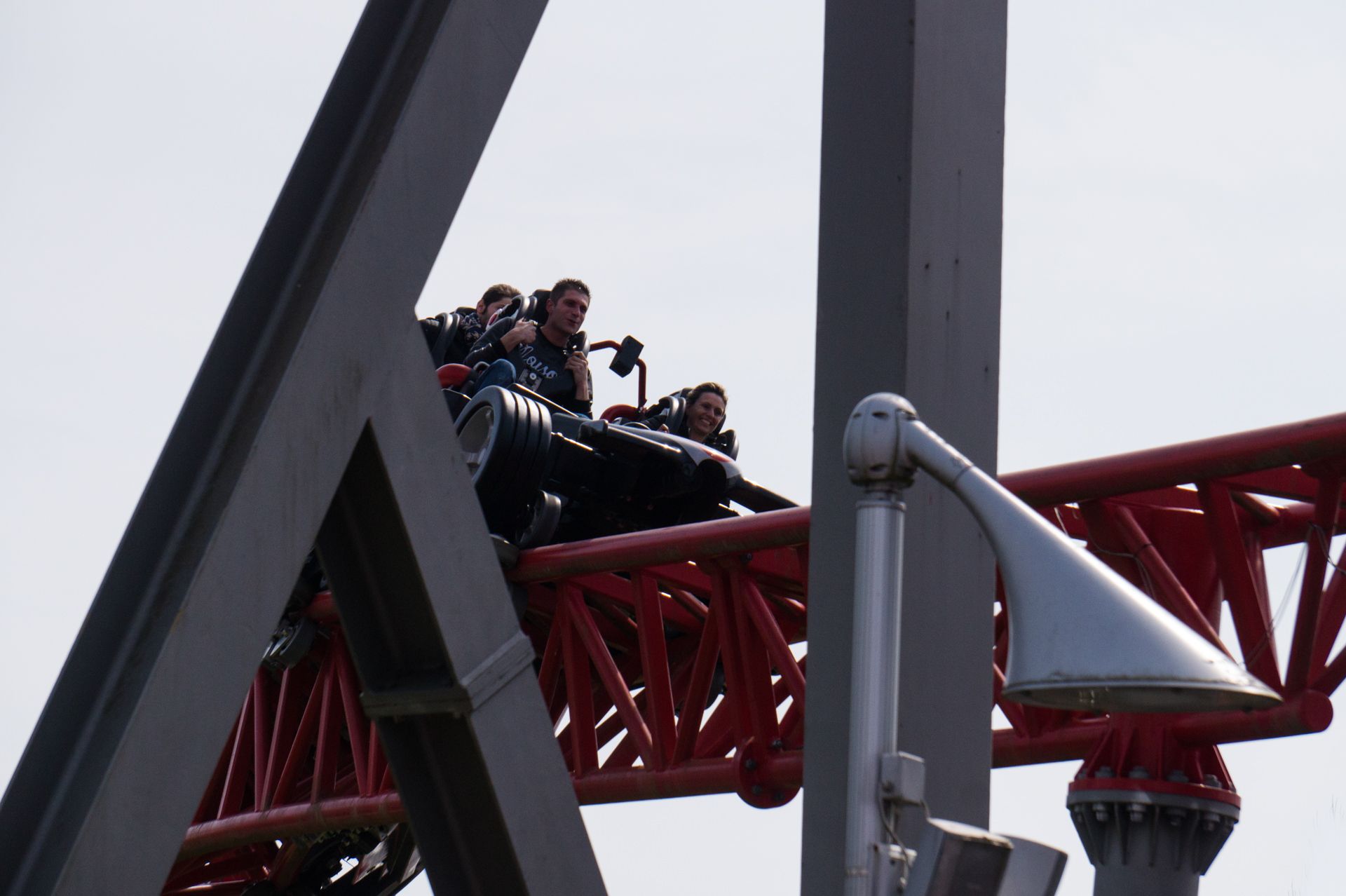
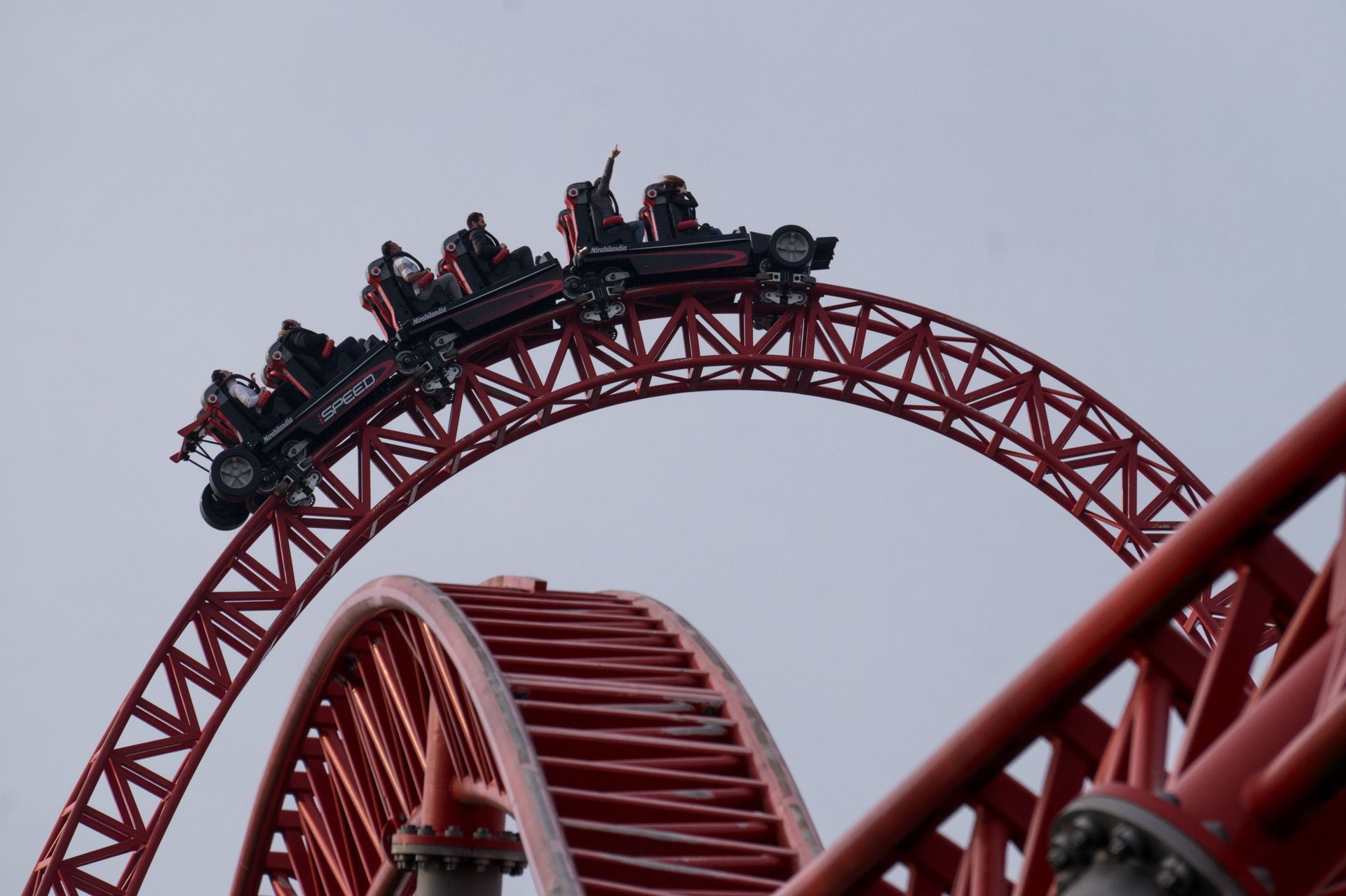
Also addressing the central theme of speed is the Blitz Coaster iSpeed from Intamin, a catapult launch coaster with LSM modules, which replaces the aging wooden coaster Sierra Tonante. The Spanish company’s first project was the self-titled “Il Rollercoaster #1”, a thoroughly fast roller coaster with a more than modest capacity.

Whilst at Divertical we had to queue for a short time, our less wasteful and self-horny lifestyle took revenge by not buying a fast pass. Now we were allowed to wait here for more than an hour in the desolate waiting area of the roller coaster, only to be constantly passed over by some brats of the thoroughly anti-social tourists of the Italian Adriatic. While in the other Italian parks nobody pushed in front of us and even let one of us pass by voluntarily to keep groups together, here it was simply a plague without equal. If you want to be reasonable in Mirabilandia, you better practice becoming a narcissist in advance by creating selfies en masse and treat yourself to a fast pass! In theory it’s not that expensive anyway, especially if you have bought an annual ticket for one of the other Parques Reunidos parks (e.g. Movie Park Germany, Attractiepark Slagharen, …) and didn’t pay any entrance fee anyway; at least you save yourself the wait with the disgustingly anti-social tourists, while in other parks you become a disgustingly anti-social tourist just by buying a fast pass.

But now let’s get to the ride description of the LSM roller coaster iSpeed, because as soon as you finally reach the stairs to the station it’s going quite fast. Once you sit down in the train and close the safety bars, the train is pushed forward slightly before the impulse is taken up and the train accelerates more and more. Now the train climbs up the top hat vertically before you cross it with a great view of the log flume Autosplash. Now you plunge vertically towards the ground, make a short turn to the right and pass the first valley with a lot of pressure. Parallel to the station you cross a hill, where you are lifted out of your seat. Another S-curve is now made with a lot of momentum, which merges into a tight right turn. On the following hill a leisurely turn follows, which releases you into a slight left turn above the station. All of a sudden a corkscrew is introduced, which throws you around with an incredible intensity. On a further hill you cross the launch track, whereupon you can take a deep breath again in the following steep turn. Rather leisurely the train shoots through a wide right turn, which shortly afterwards changes into the heartline roll, which can be seen from the outside. After another steep turn follows a short block brake. You leave it in an equally steep left turn, followed by a small hill and the final left turn towards the station.

Even though the initial acceleration of the launch is rather lax and hardly comparable to the manufacturer’s hydraulic and friction wheel drives, the ride offers a hodgepodge of exciting elements paired with really high pressure and speed. Especially the corkscrew, which can hardly be seen from the outside, simply surprised me during the ride and also the part of the track after the block brake, which always seemed insignificant on videos, has its moments and fits perfectly into the overall experience of the ride. The roller coaster itself, on the other hand, is unfortunately not as convincing as the actual ride itself, thanks to its lean design and low capacity.

Leprotto Express

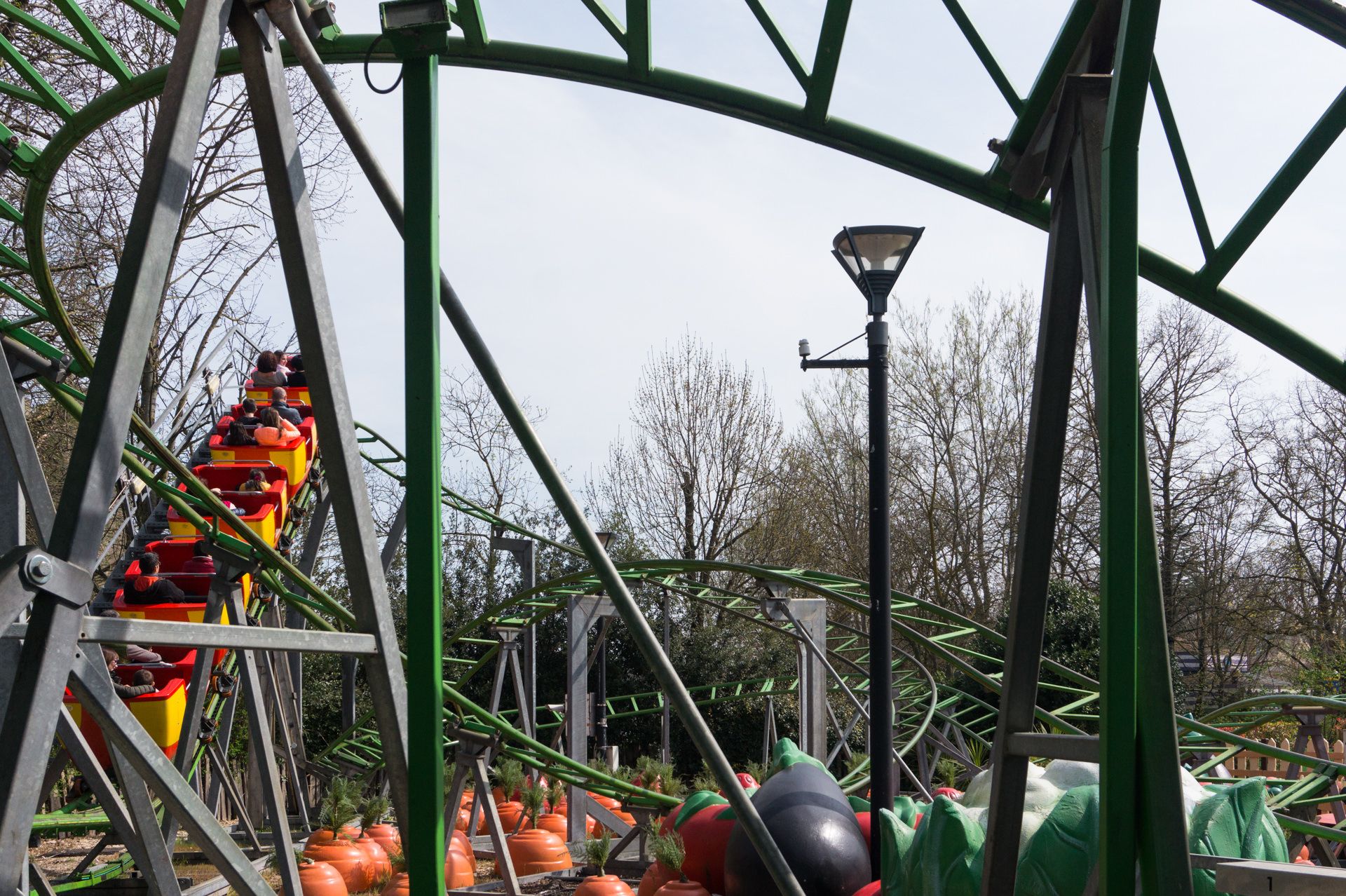
Directly opposite, in the children’s land of Bimbopoli, you will find Mirabilandia’s next roller coaster, the Leprotto Express. This is a simple children’s roller coaster by the manufacturer L&T Systems, whose layout describes a simple figure eight in a constant alternation of up and down movements. Due to the crowd, the ride only went one lap.

Rexplorer

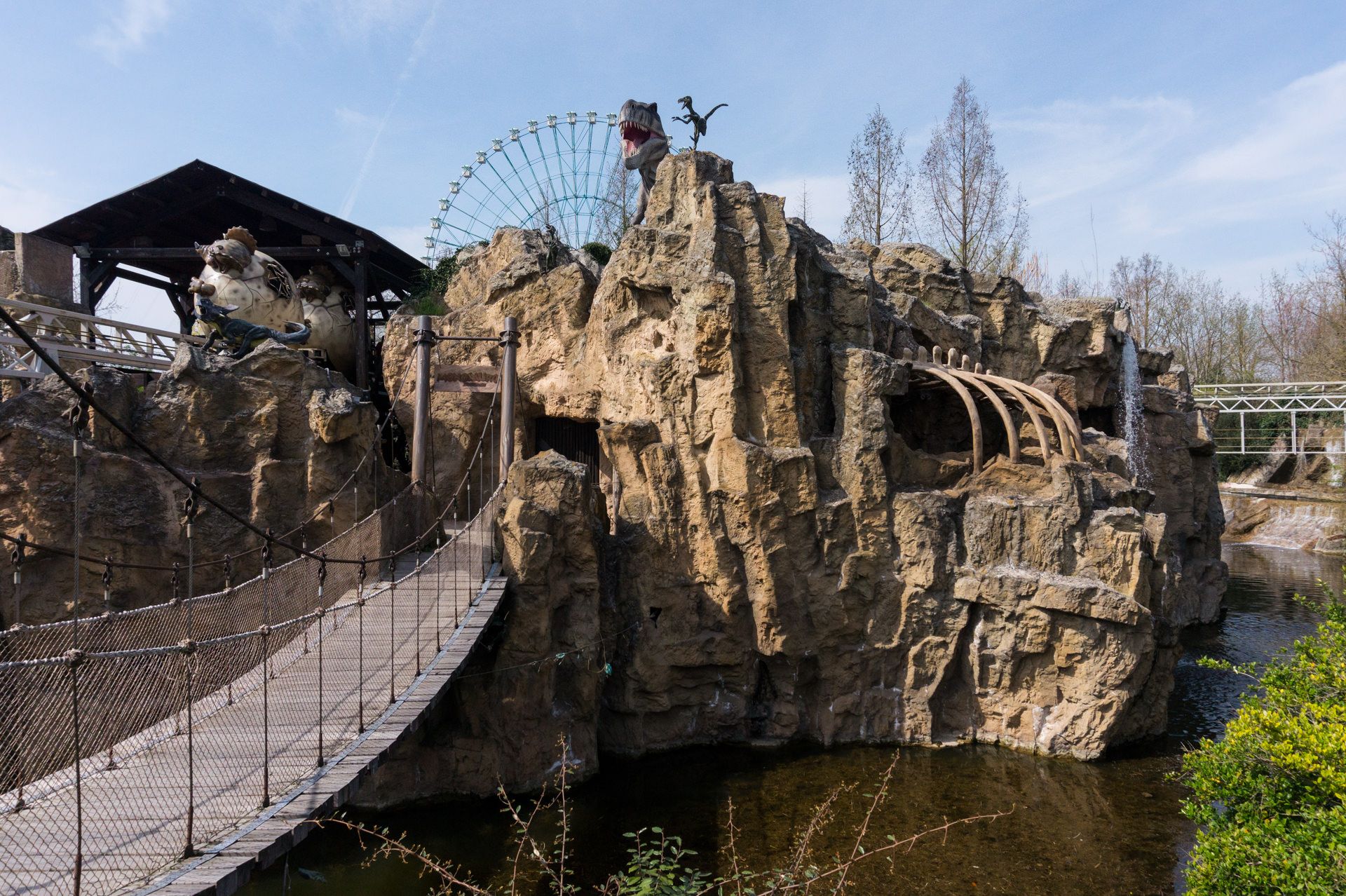
Via the island with the Acapulco cliff divers show you reach the Dinoland area, which was redesigned in 2014. Apart from the transformation of existing rides, e.g. the telecombat ride featuring an inclined ride or the popular children’s monorail, a money printing machine, I meaning a children’s driving school, and a Magic Bike by Zamperla also found their way into the themed area. But the most important destination for us was the oldest roller coaster of Mirabilandia, the Powered Coaster Rexplorer.

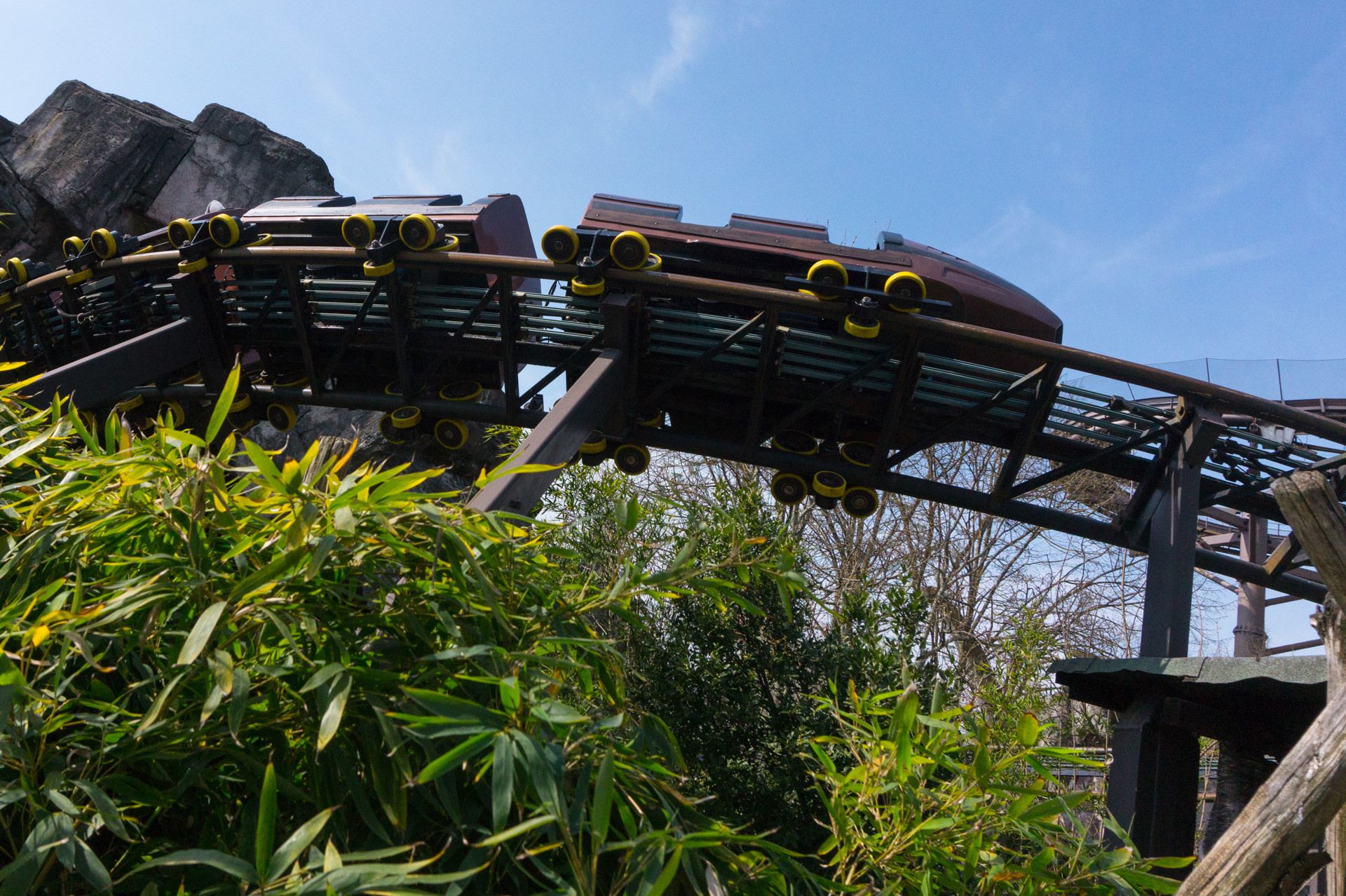
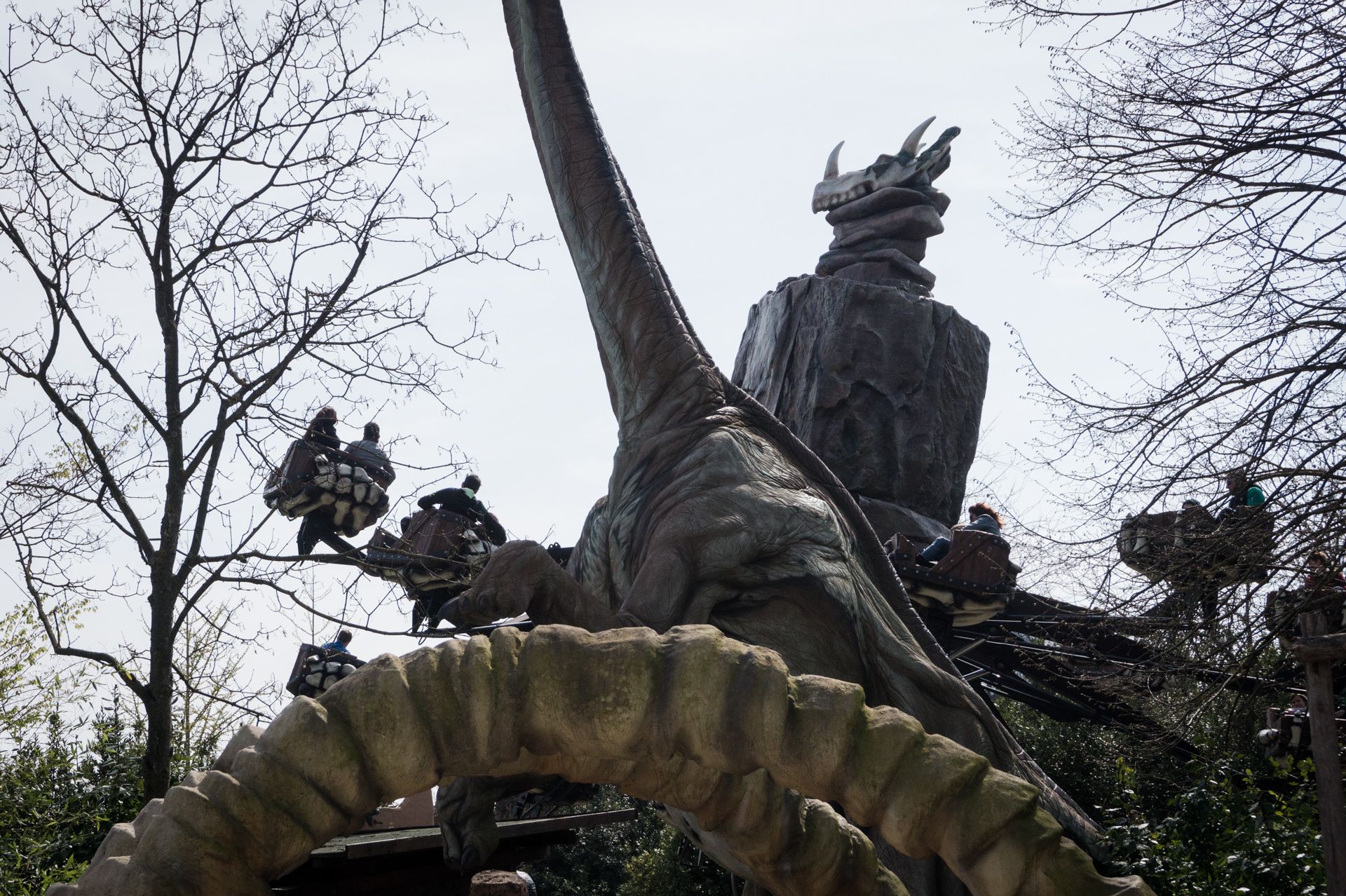
The journey begins with a wide bend to the left, followed by a leisurely climb past some artificial rocks. At the top, the train goes through a downward helix through the rock formation before climbing up a steeper straight. Now the train goes through a wide downward right-hand bend, passes under the track it has just passed and surrounds the first downward helix in a left-hand bend. With much more momentum you cross the station and complete another lap through the course.

Theoretically, the ride on the Rexplorer would have been quickly dealt with, because unlike many other rides at Mirabilandia, this ride has a slightly higher capacity by nature and the queue itself was manageable. However, Mirabilandia would not be Mirabilandia if they did not mess up this ride as well. The dispatching was a mess and was further protracted by the lack of numerical knowledge of the staff. After waiting until all passengers of the newly arrived train had left the station area, about half of the train was filled with Fast Pass people, but they all had to be counted and checked individually. Of course, the staff constantly miscounted, which was particularly noticeable after a change of staff. Only after each of the Fast Pass owners had taken their seat the normal waiting people were let in. The checking of the restraints and the ride itself, on the other hand, was quickly completed. However, the one-man operation at the ride almost always took 5 or more minutes during loading for one cycle.

El Dorado Falls and Gold Digger

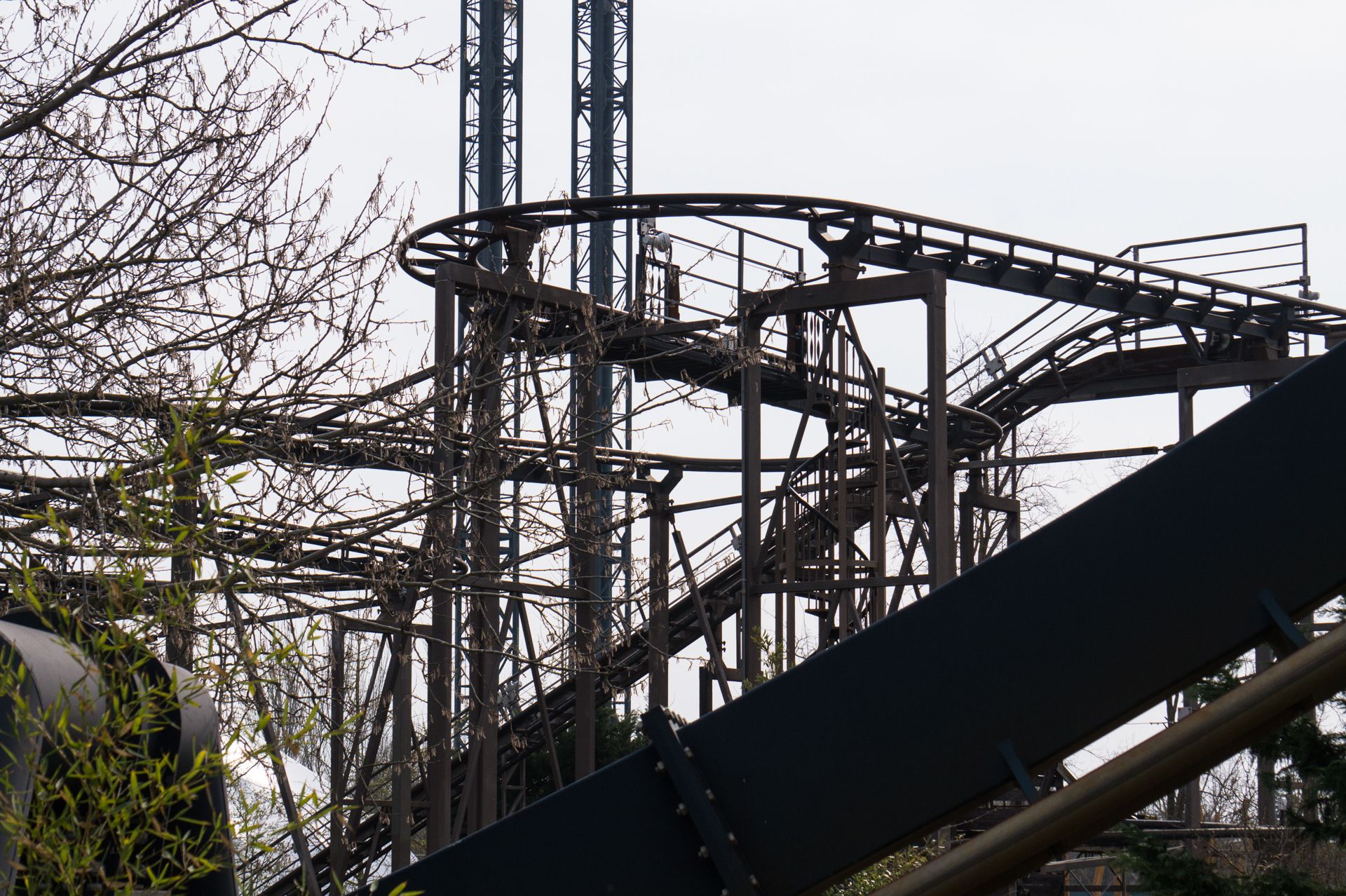
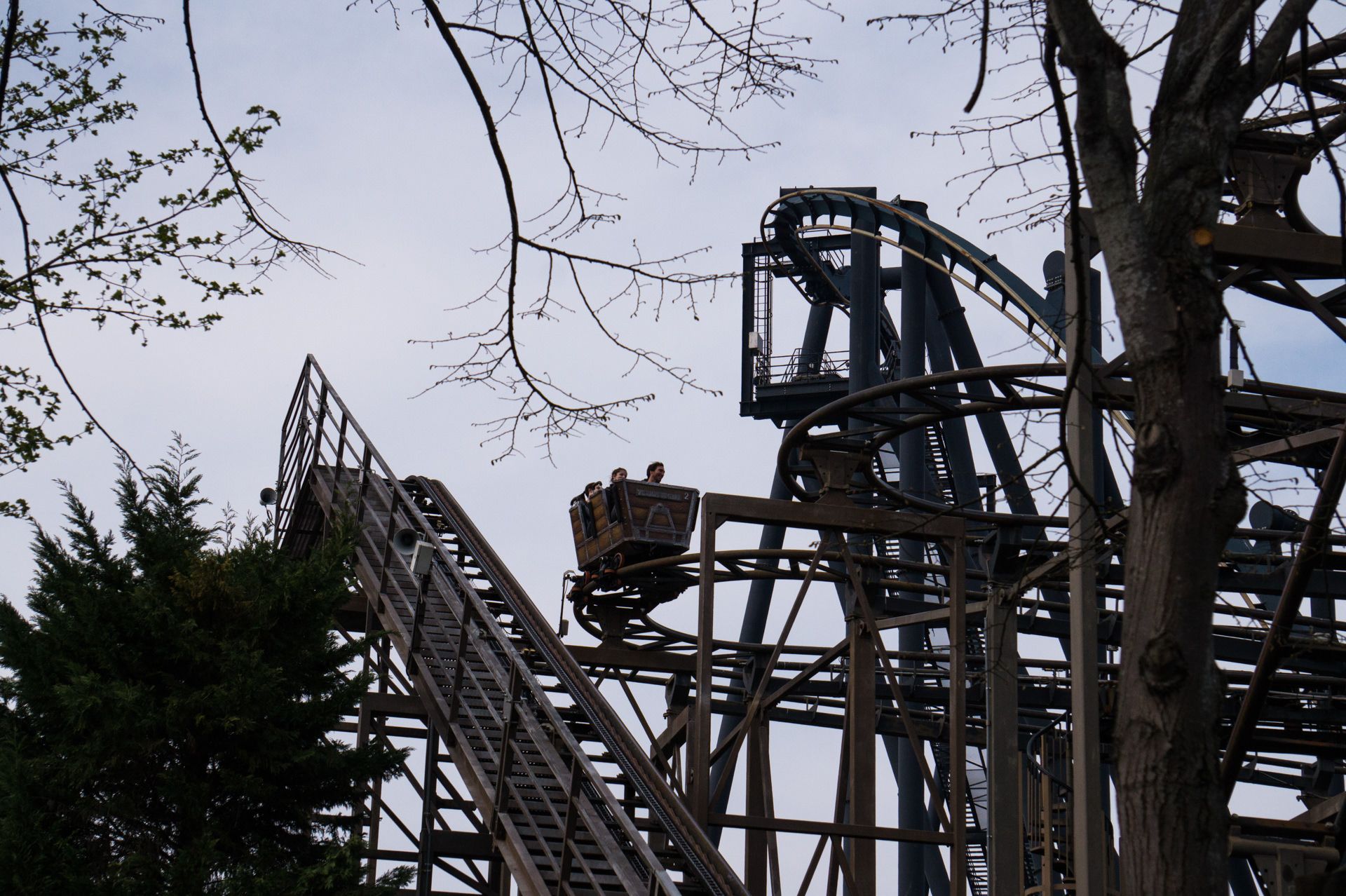
As the construction work in Mirabilandia’s new themed area Far West Valley was still in full swing during the visit, the only remaining attractions in operation were the Spillwater El Dorado Falls of the water rides pioneer O.D. Hopkins – which, however, struggled with constant failures and did not make good form due to the one-boat operation – and the Wild Mouse Gold Digger, formerly known as Pakal. Since 50% of the cars were also equipped with Fast Passers, we unfortunately had enough time to experience every corner of the small, quite desolate, queue and thus invested almost an hour for the Italian-style Wild Mouse.

The ride is actually quite entertaining, because after you have made the hairpin bends in the upper level, seven in all, you go down one level, where a big drop is followed by another serpentine curve. This is also followed by a steeper gradient and a hairpin bend. As is well known, the two successive slopes are the most fun for wild mice and therefore we will not do without them here either. A last narrow bend and a small dip follow before you are led back to the station.

Katun

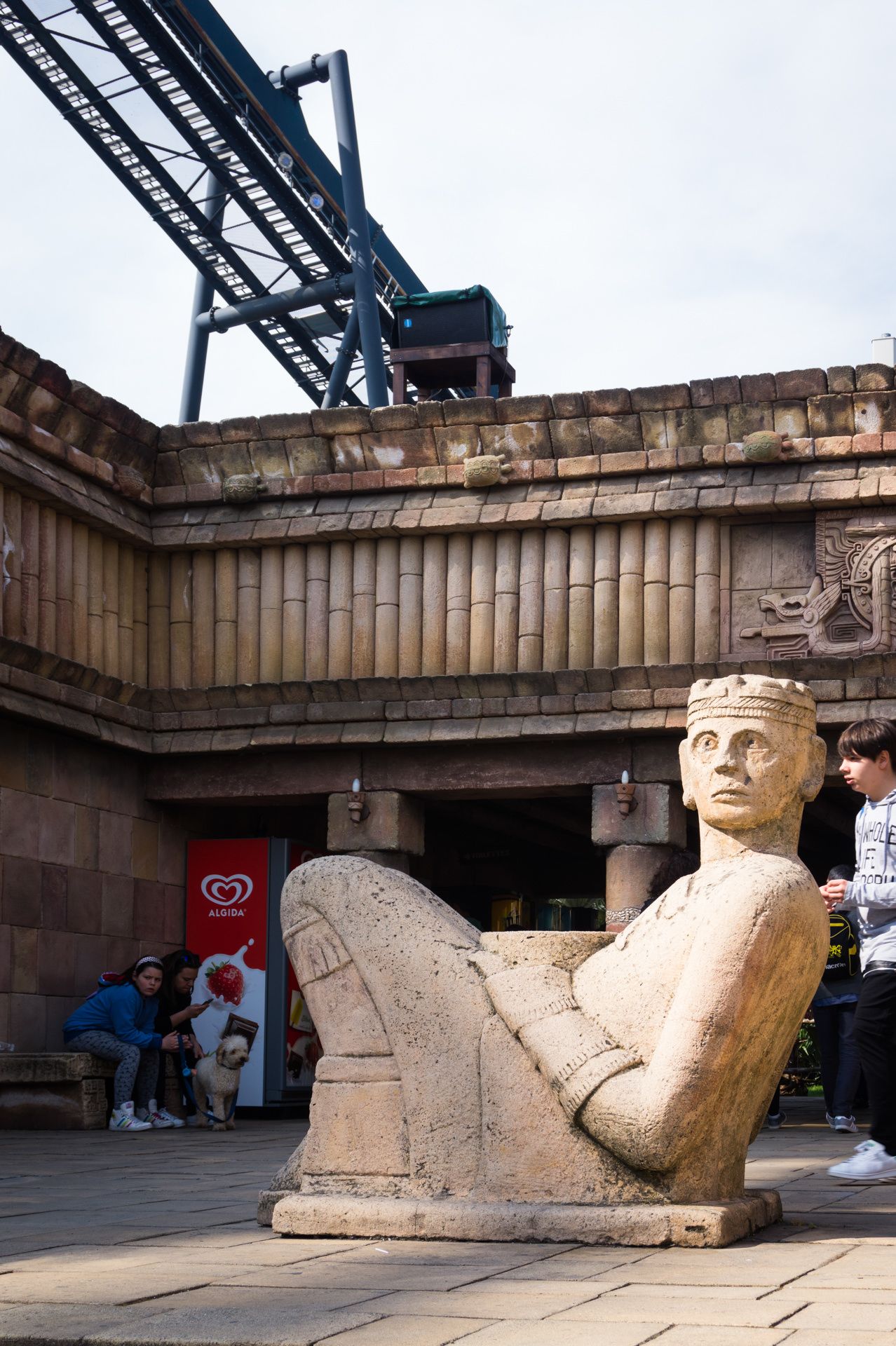
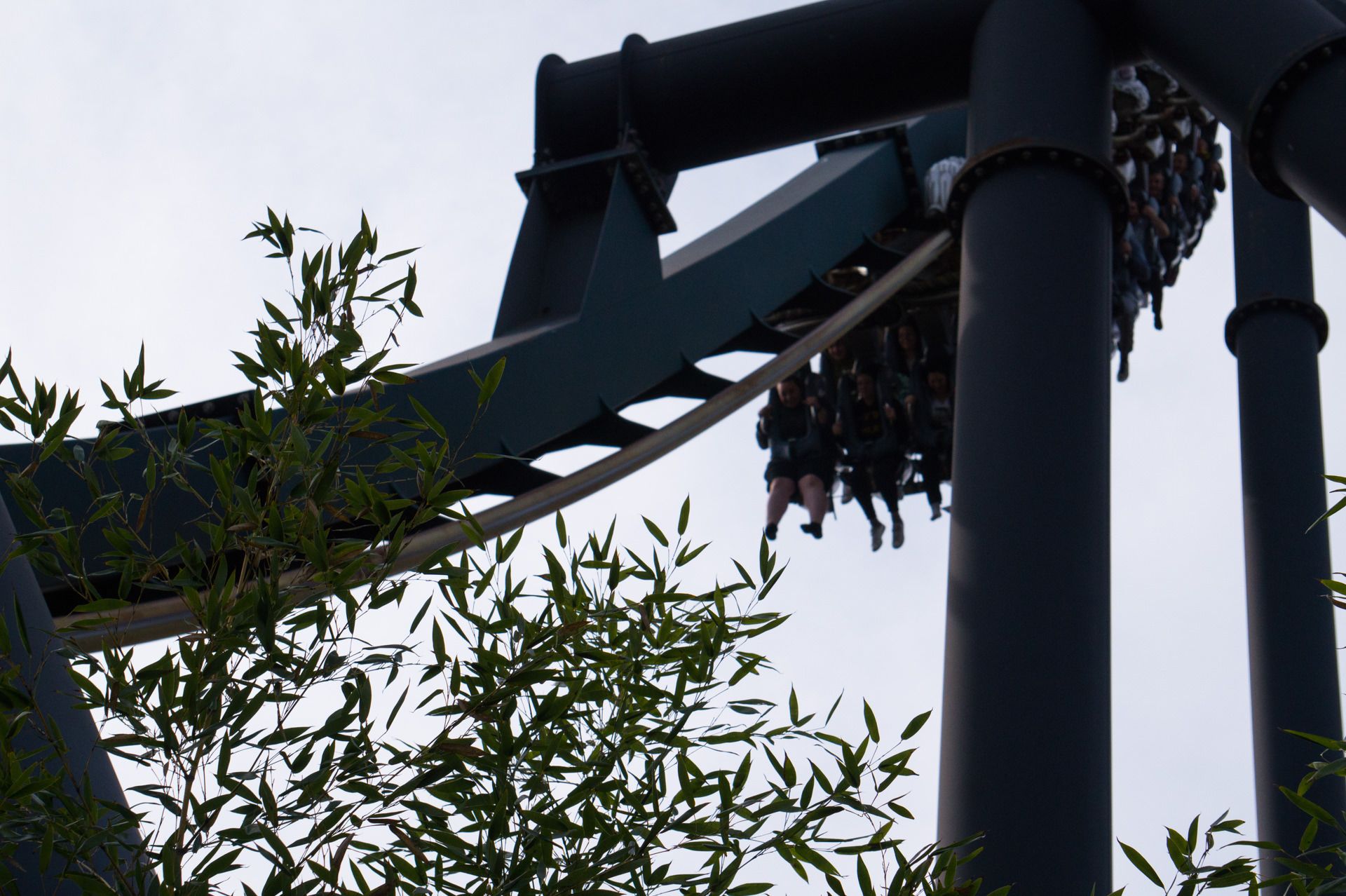
Through a spacious temple complex you can reach the Inverted Coaster Katun, which has been turning its passengers upside down several times since the millennium. With a height of 50m and a length of 1200m Katun has always been the largest ride of its kind in Europe and is fortunately scary enough to keep the waiting time low despite the one-train operation. Interestingly enough, the second train was actually sent on its way towards the end of the day, but probably only to finish on time.

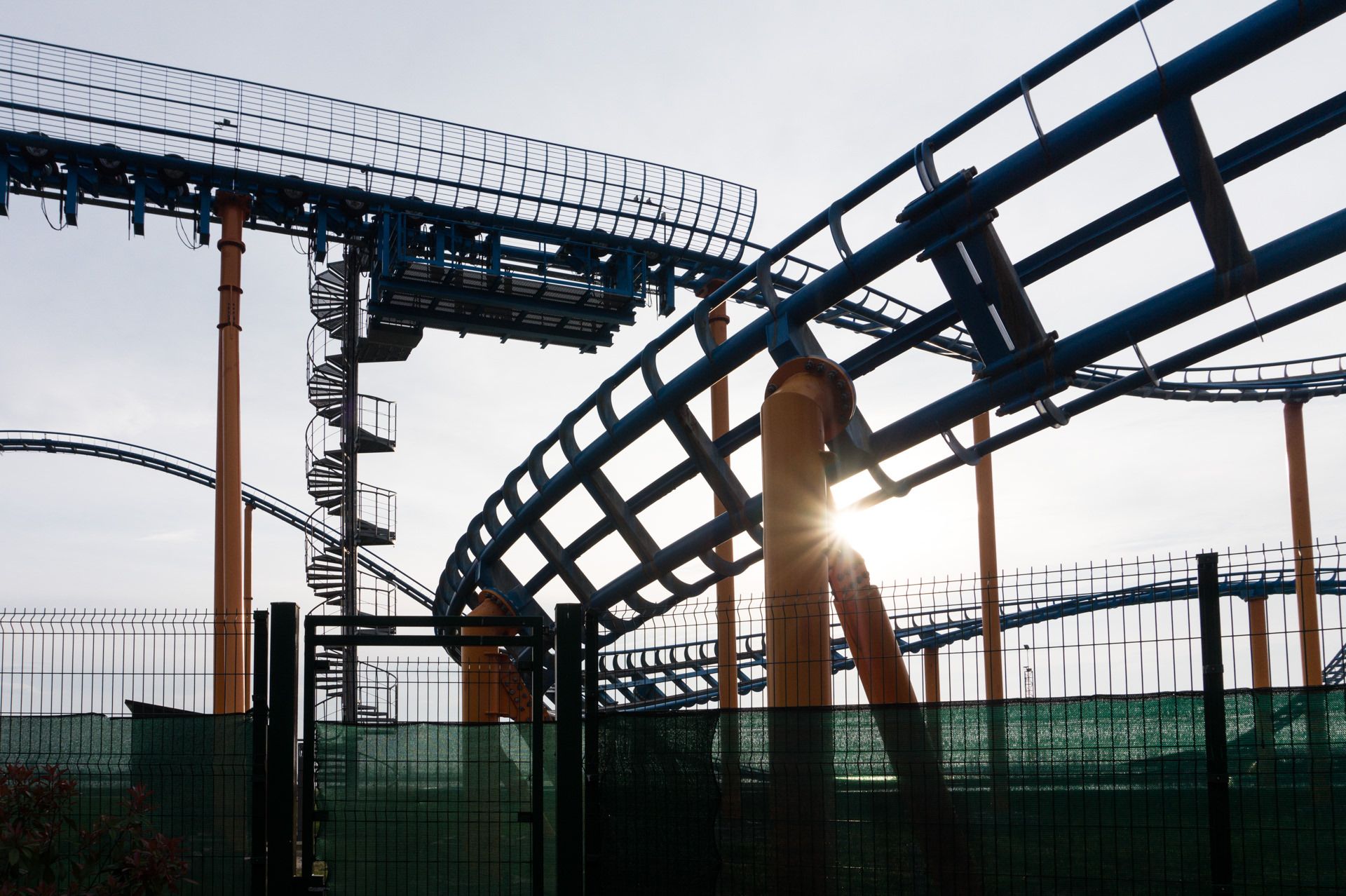
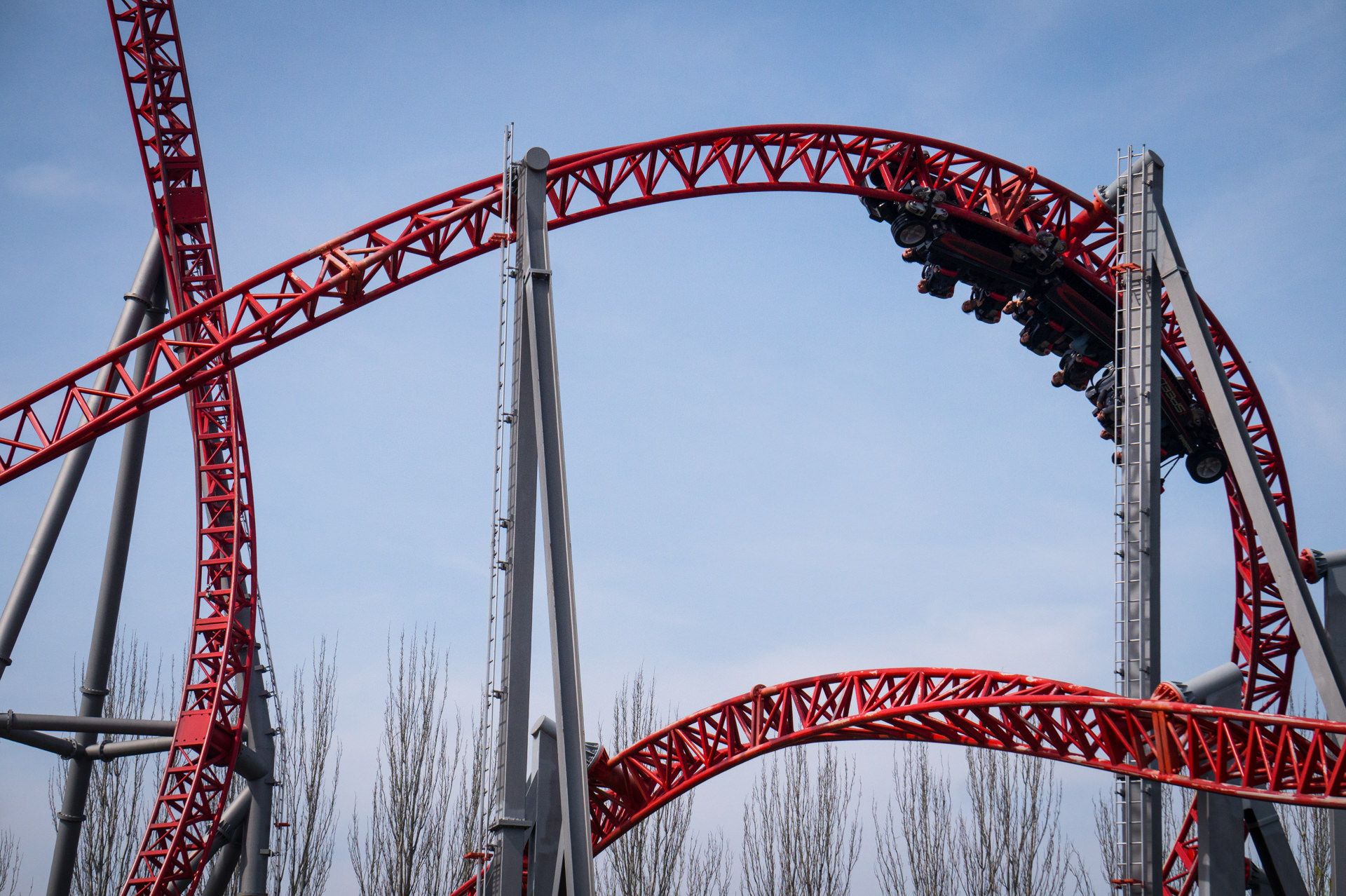
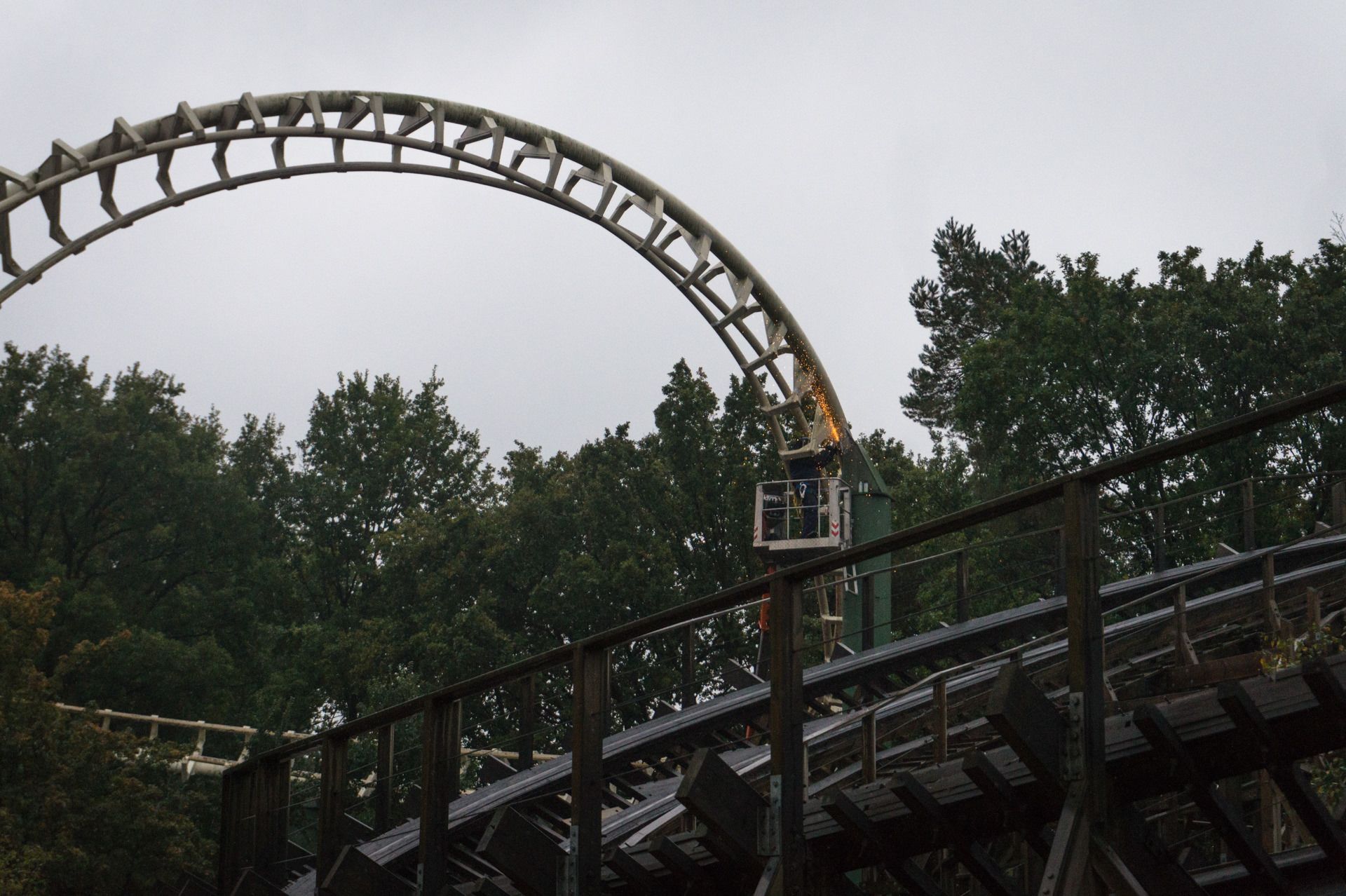
The ride begins with a short left turn out of the station and into the ride’s lift. As soon as the train has reached its initial height, it turns to the left and at the same time makes a rather steep descent. You cross the first valley with a lot of pressure before you are turned upside down for the first time in the huge loop. Once back on ground level, the train shoots up again and turns on its own axis in a zero-g roll. To enable the ingenious placement of the Cobra Roll at the lake on the right side of the entrance, there are now a few meters of track missing, which were solved by a steep curve close to the ground and leading to the right. In the following inversion figure you shoot up half a loop, then turn to the side and do the same again in reverse order. Of course with extremely positive centrifugal forces, which should not be underestimated in the following valley. Also with a lot of pressure one turns a round in a wide upward helix at the end of which the block brake of the ride is reached. This is passed without any reduction of the momentary speed, which leads to an immediate plunge into the abyss. Almost straight ahead the first corkscrew is introduced, which whirls you with full force to the right into a tunnel. You then leave this tunnel into another corkscrew, but this time in the opposite direction. A short hill releases you into the final downward helix of the ride, whereupon the station is reached immediately.

Katun is a great Inverted Coaster of the bigger type, which plays many huge and well coordinated inversion figures in a layout worth experiencing, at a decent speed. The play of forces should not be underestimated yet it is still quite smooth compared to the smaller European versions of this roller coaster type.

Max Adventures Master Thai, Eurowheel and Hot Wheels Stunt Show

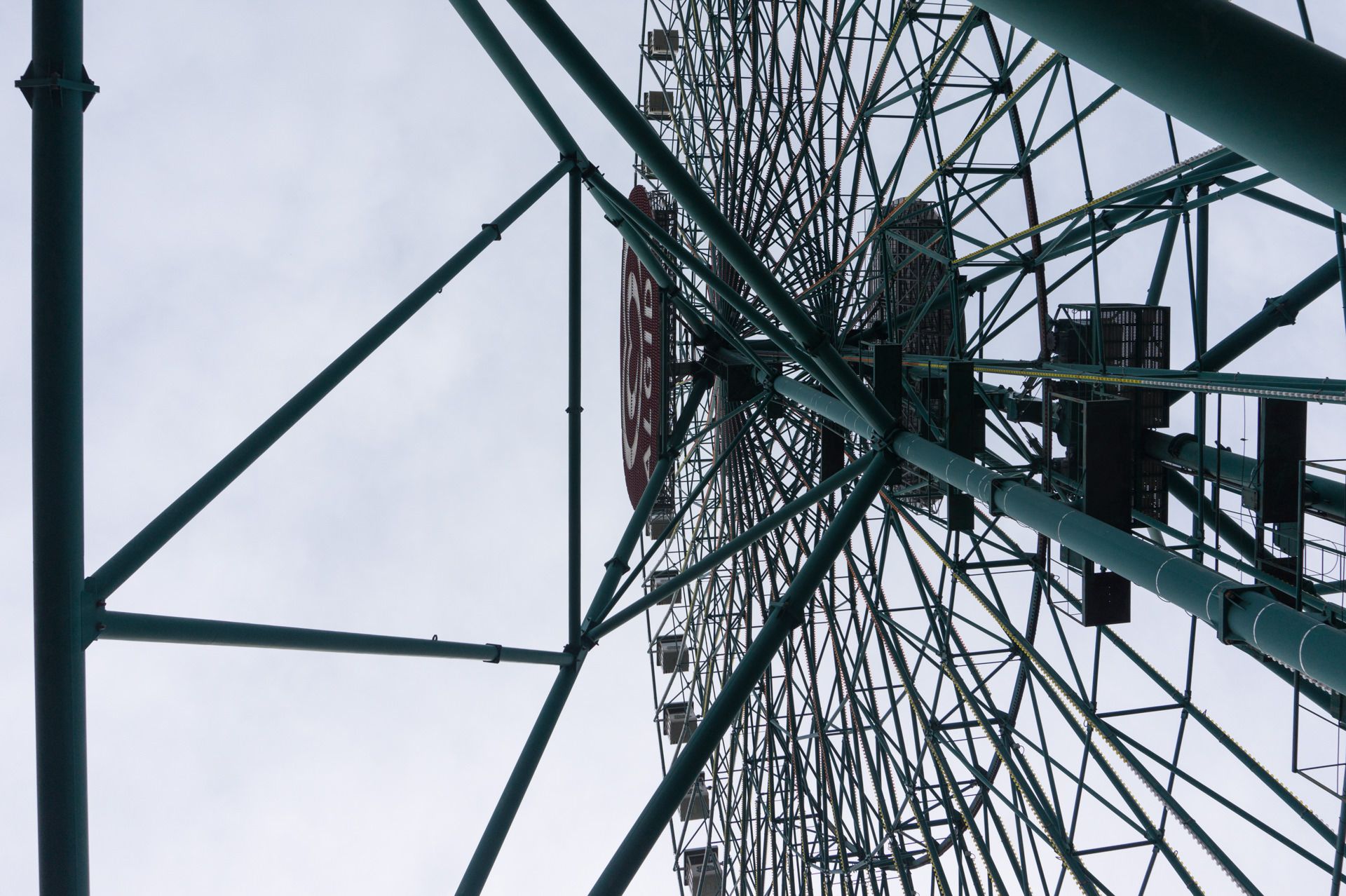
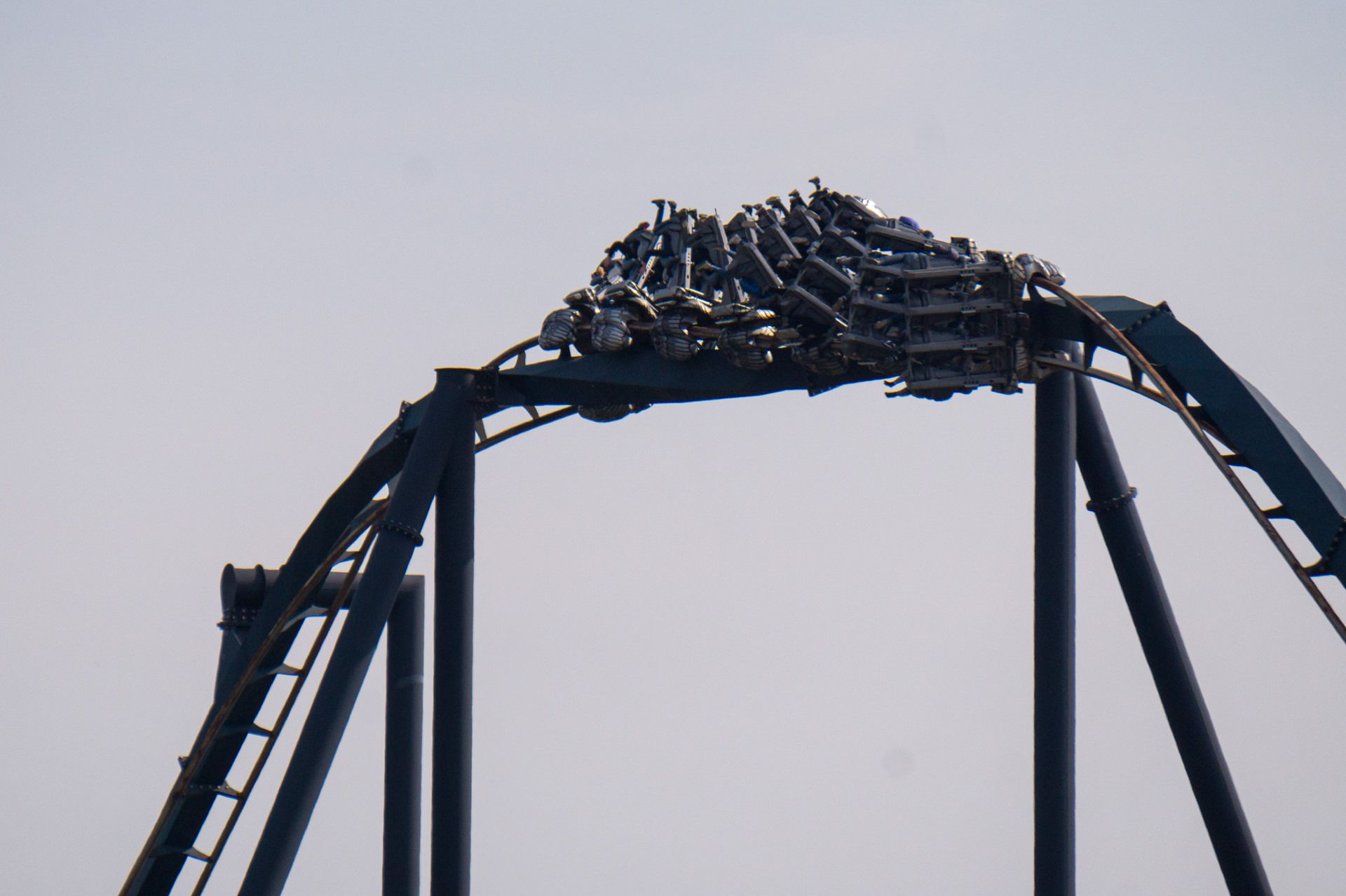
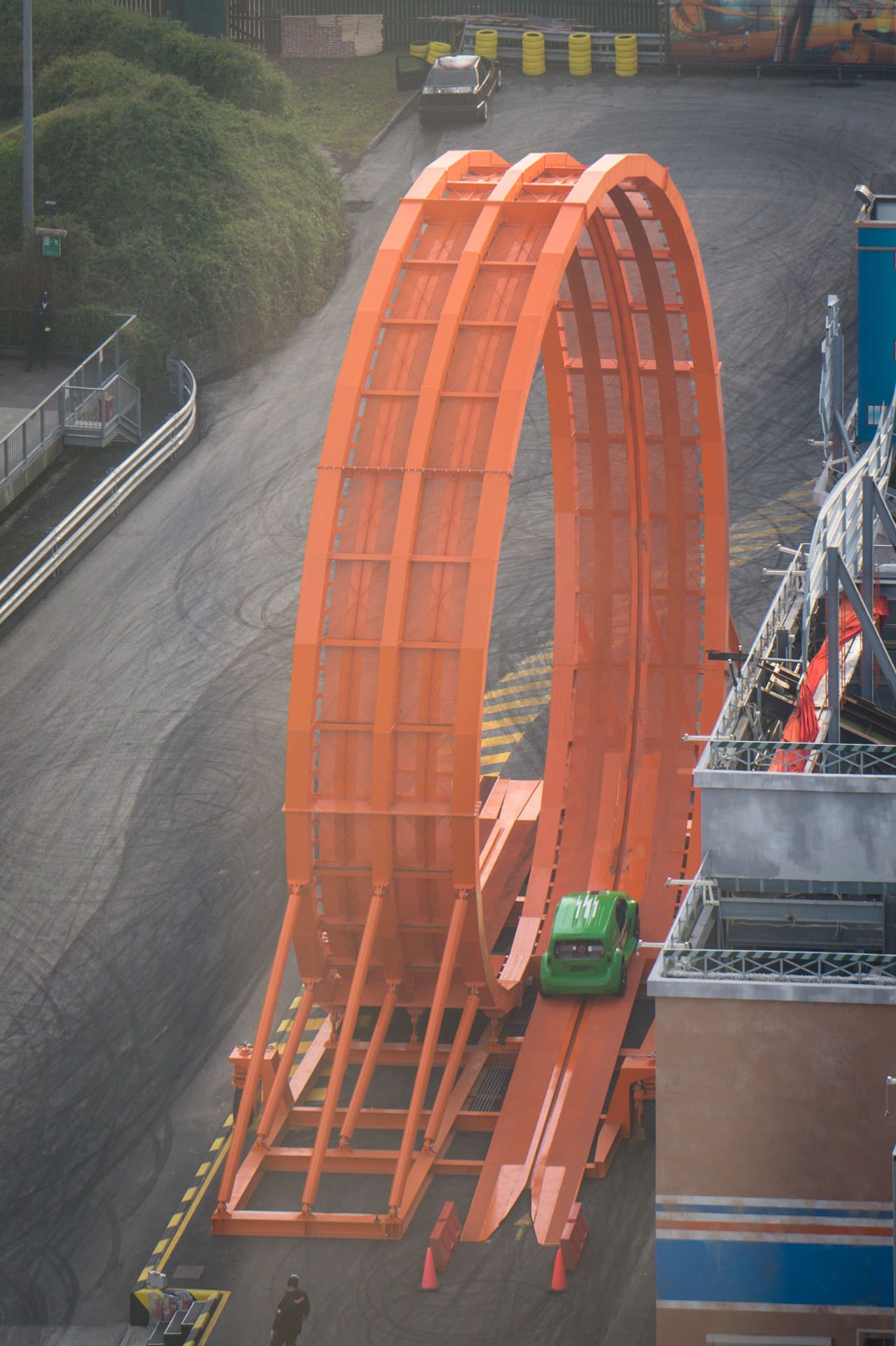
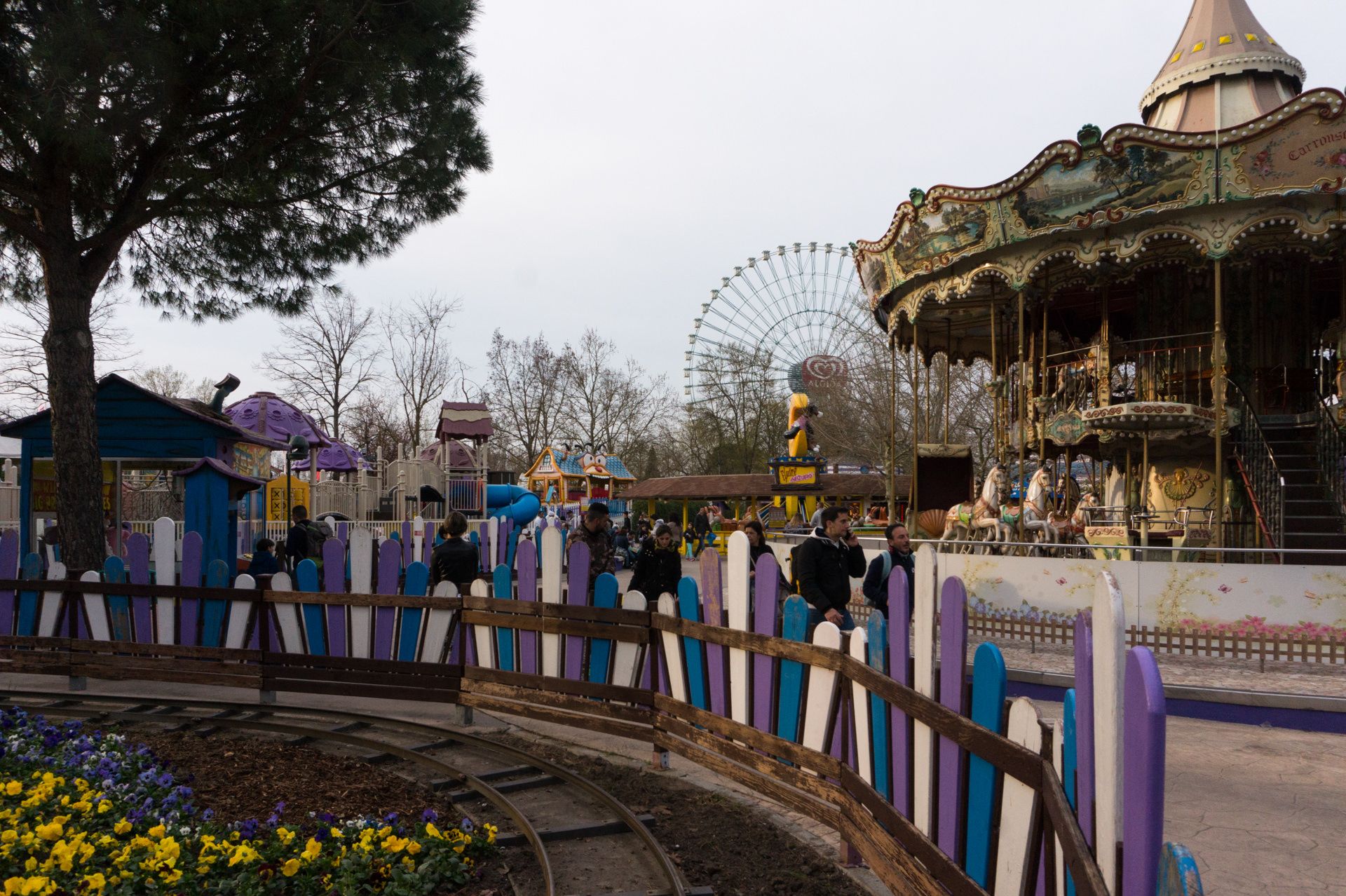
While waiting in the queue of the Katun roller coaster we could already observe that the neighbouring Max Adventures Master Thai roller coaster had a technical defect and was evacuated accordingly. Even one hour later there was no sign of a reopening of the ride, so we headed towards the prominent landmark of Mirabilandia. Also at the 90m high Eurowheel a long and tough queue was waiting for us. But we didn’t want to miss a ride on what used to be the highest Ferris wheel in Europe because we were so tired of waiting somewhere else. As expected, only half of the gondolas of the Ferris Wheel were equipped, which gave us plenty of time to take a closer look at the unconventional supporting structure of the Ferris Wheel. During the ride we could watch the Hot Wheels Stunt Show from above, the finale of which was the passage of a huge looping.

Pictures Mirabilandia
Closing Words

Also from above we could watch some test rides on Max Adventures Master Thai, so we immediately walked back to the ride, only to find the doors closed again. We still had half an hour left, so we decided to go on another ride on Katun. We couldn’t foresee that we wouldn’t be able to go on another ride after that, so we could only ride six of the seven roller coasters and the Ferris wheel. A disgrace beyond compare, which made the actually brilliant amusement park Mirabilandia the last flop. It is obvious why Gardaland is the most successful amusement park in Italy and why Parques Reunidos should reconsider their strategy.

What is your opinion about the theme park Mirabilandia? Just write it here below the report in the comment field or visit our social media channels:


Click here for the next report of the Il Viaggio dei due Runner Tour
Baron Hooghmoed, Prime comes before the fall!

Preface

No other amusement park made it so easy this year to visit the park as easy as Efteling. In order to promote his new roller coaster Baron 1898, the park gave me, as many other people, a free ticket out of the blue. Therefore, in the middle of October – shortly before the ticket expired – on a very rainy day, I took a trip to the Dutch village of Kaatsheuvel.

Efteling

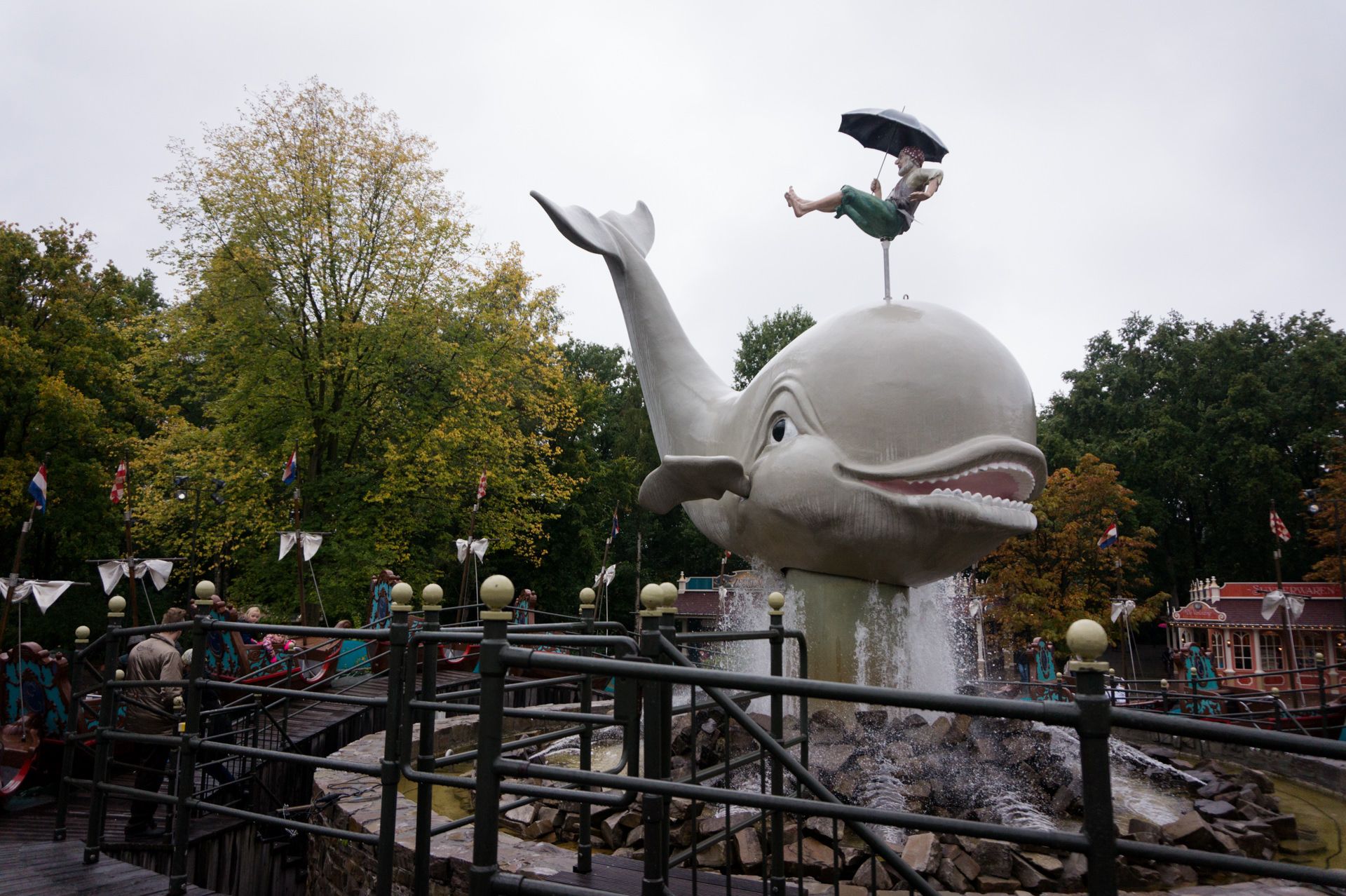
The Efteling amusement park originated as a fairytale forest in 1952, but originally as a nature park in the 1930s, where a total of 10 fairy tales were told. Under the direction of the artist Anton Pieck, after whom the central square with a few smaller carousels in the Marerijk area is named, the fairy tale forest grew steadily and – unlike most other theme parks – never lost its importance. Beside the talking tree Sprookjesboom, which tells the children the fairy tales of Sprookjesbos in Dutch, you will find some bizarre and very interesting things, such as the Indian water lilies or the flying fakir. Especially with smaller children you can easily spend most of the time in the park in this area.

Droomvlucht

However, the most popular and most visited attraction in the Efteling since 1993 has been the Droomvlucht dark ride, which takes you past larger scenes of fairies, elves, trolls and other fairy-tale creatures in suspended gondolas. Although the dream flight, as the English name suggests, could hardly be more cheesy and superimposed, the ride through the dream scenes is definitely fun and the descent taking place in a 1080° helix is truly unusual.

Villa Volta

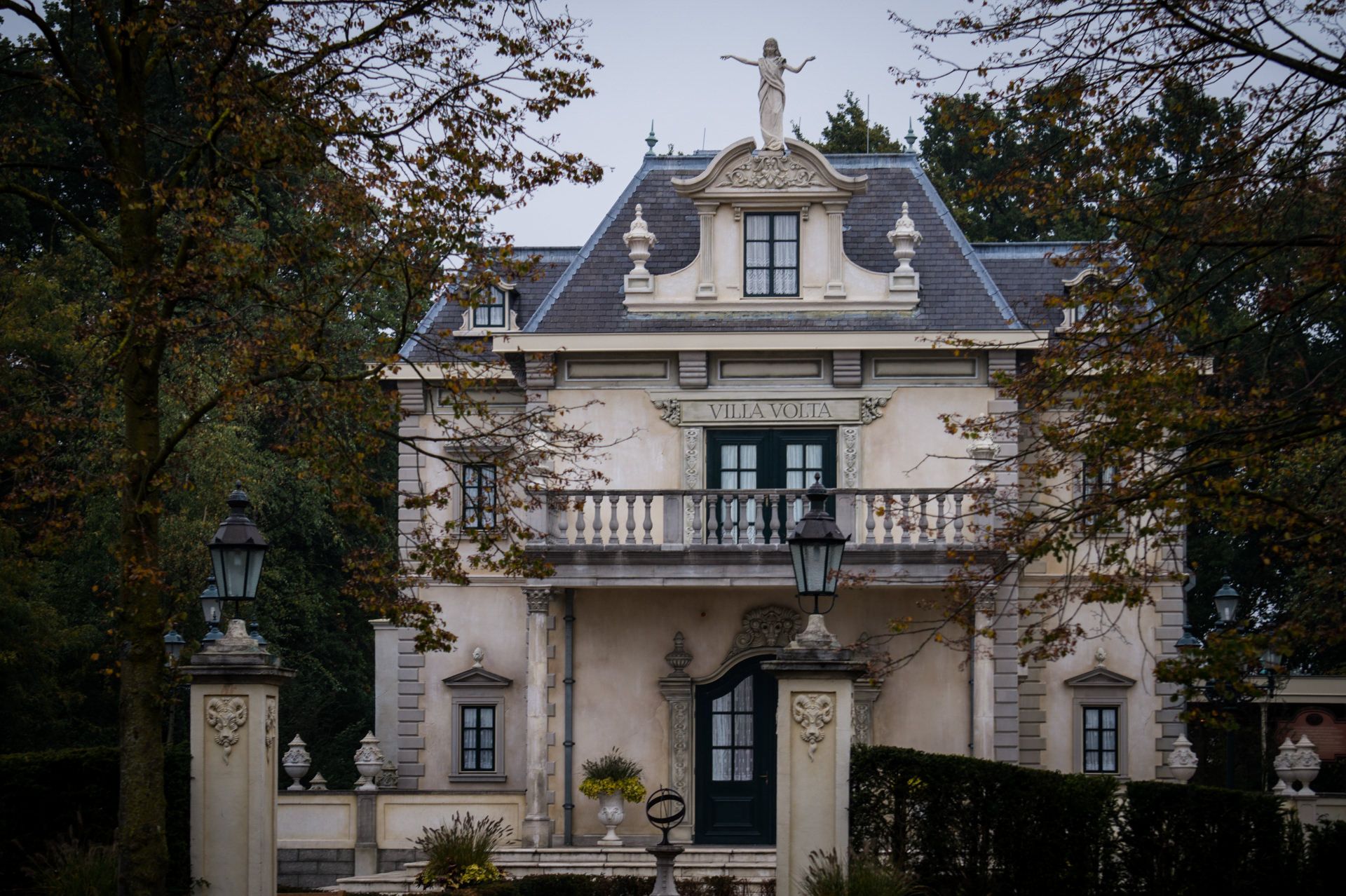
Next to the Ravelijn show, for which translations are available, there is the prototype of all modern Mad House attractions, the Villa Volta. The story of the Bokkenrijders, a band of robbers from the 18th century, is presented. Hugo van den Loosche Duynen is the aged landlord of the villa, who robbed a deserted, but richly stocked abbey with his gang and was cursed by a suddenly appearing woman and since then cannot find his peace anywhere. Only a person with a clear conscience can release his spell, which is why Hugo invited volunteers to his house.

A Mad House is a ride in which a gondola, with two rows opposite each other, in a rotating drum is swivelled about 30° to both sides. The rotating, highly decorated drum gives the impression of turning upside down in a room, the pivoting of the passenger carrier underlines this by the generated accelerations. The event is accompanied by suitable music and lighting, and if necessary by various other effects. The Villa Volta is not only the pioneer of this type of attraction, but also one of its best examples.

Volk van Laaf

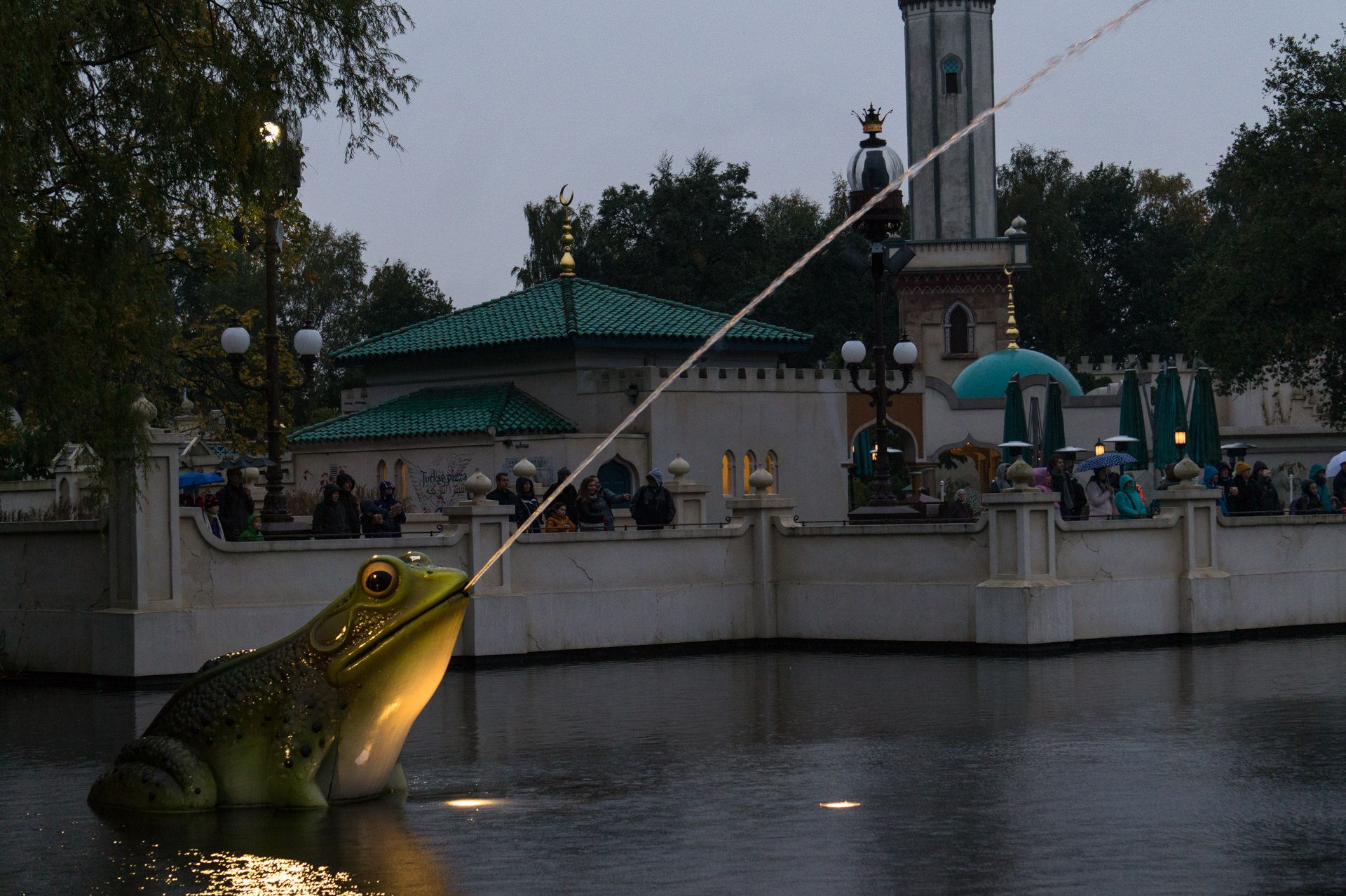
In the village of the people of Laaf you can watch the Laaf during their daily life or take a monorail tour through the colonnades of the houses. The people of Laaf are reminiscent of Holle Bolle Gijs, who can be found throughout the park. These are talking garbage cans that say “paper here!” and encourage the little guests of the park to throw their garbage into the gullets of the never-full inhabitants of the park.
Monsieur Cannibale
Monsieur Cannibale also likes to eat one with pleasure, although it is only a teacup ride in which you sit in some bigger cooking pots instead of cups. The ride is not so interesting because of the heavy to turn gondolas, but the catchy tune of the song of the same name by Sacha Distel certainly contributes to it.
Carnaval Festival

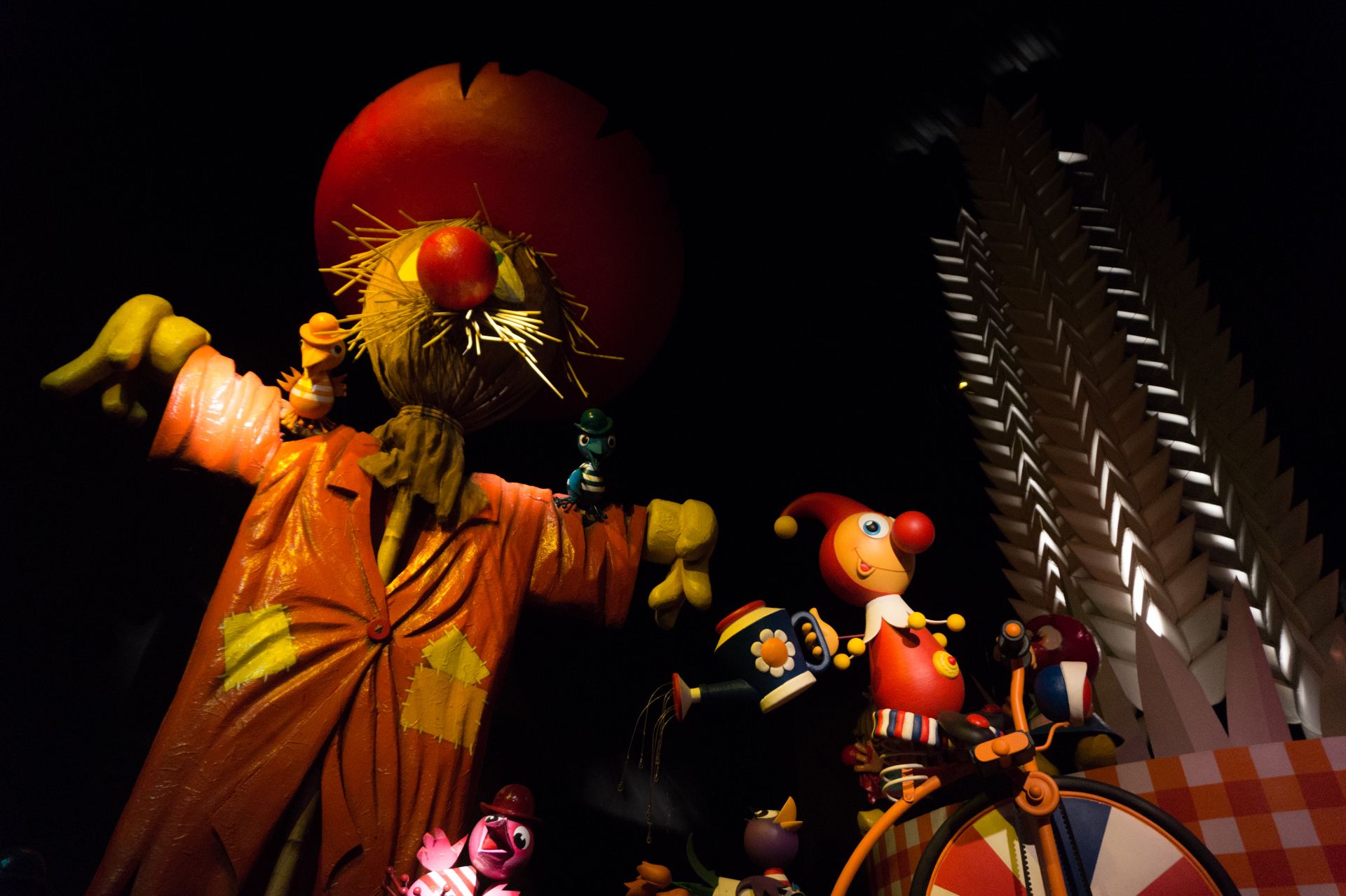
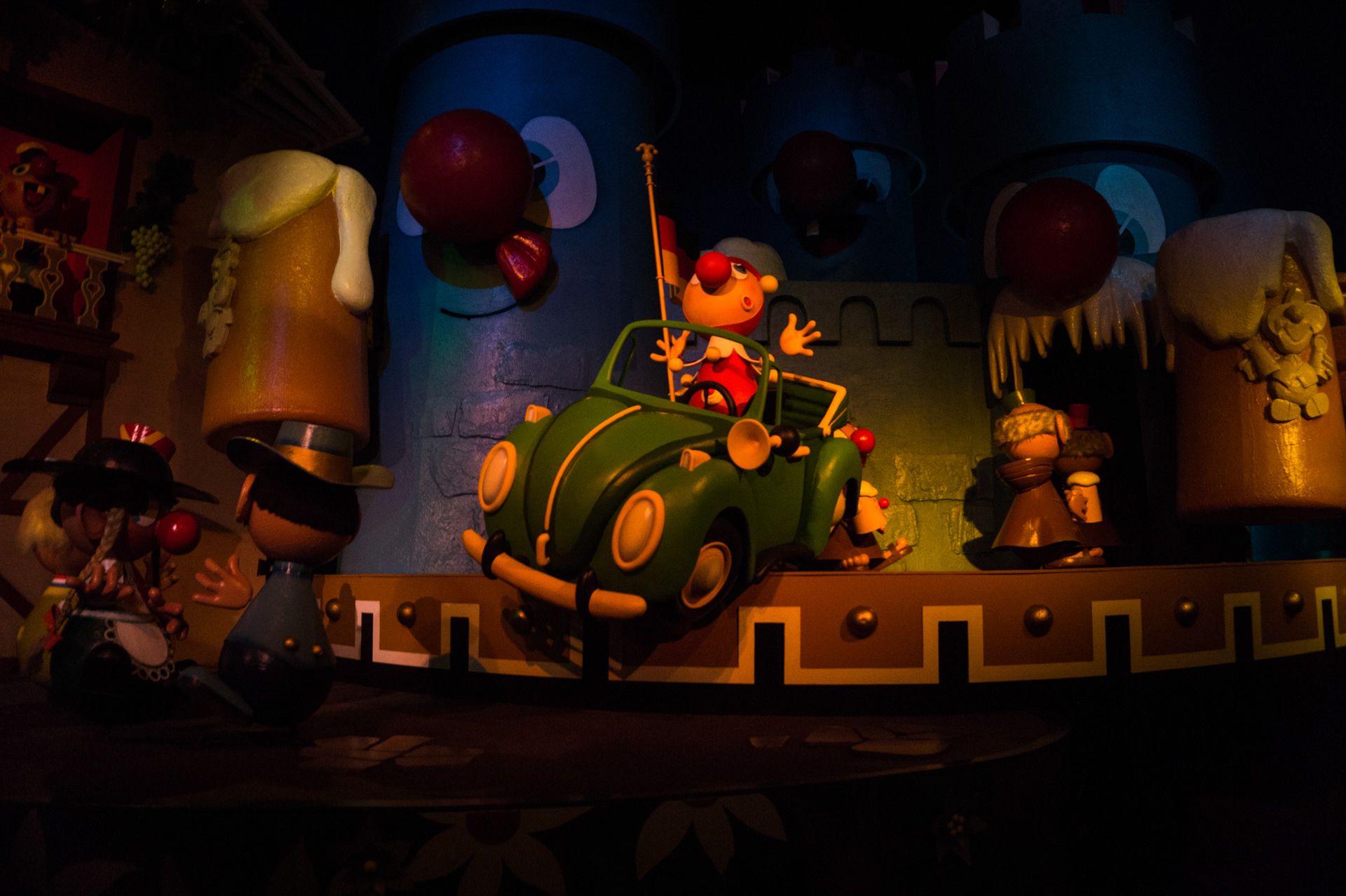
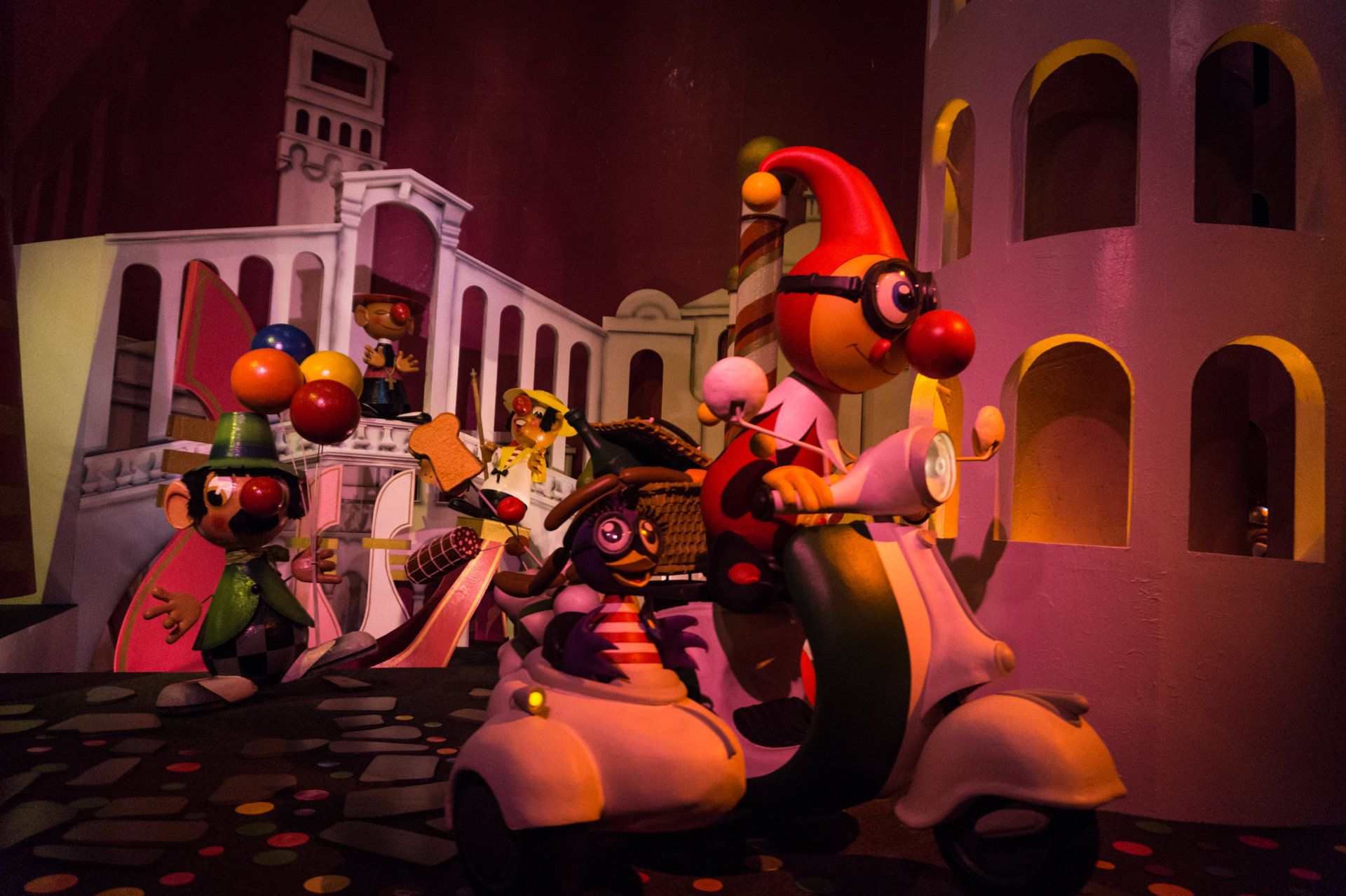
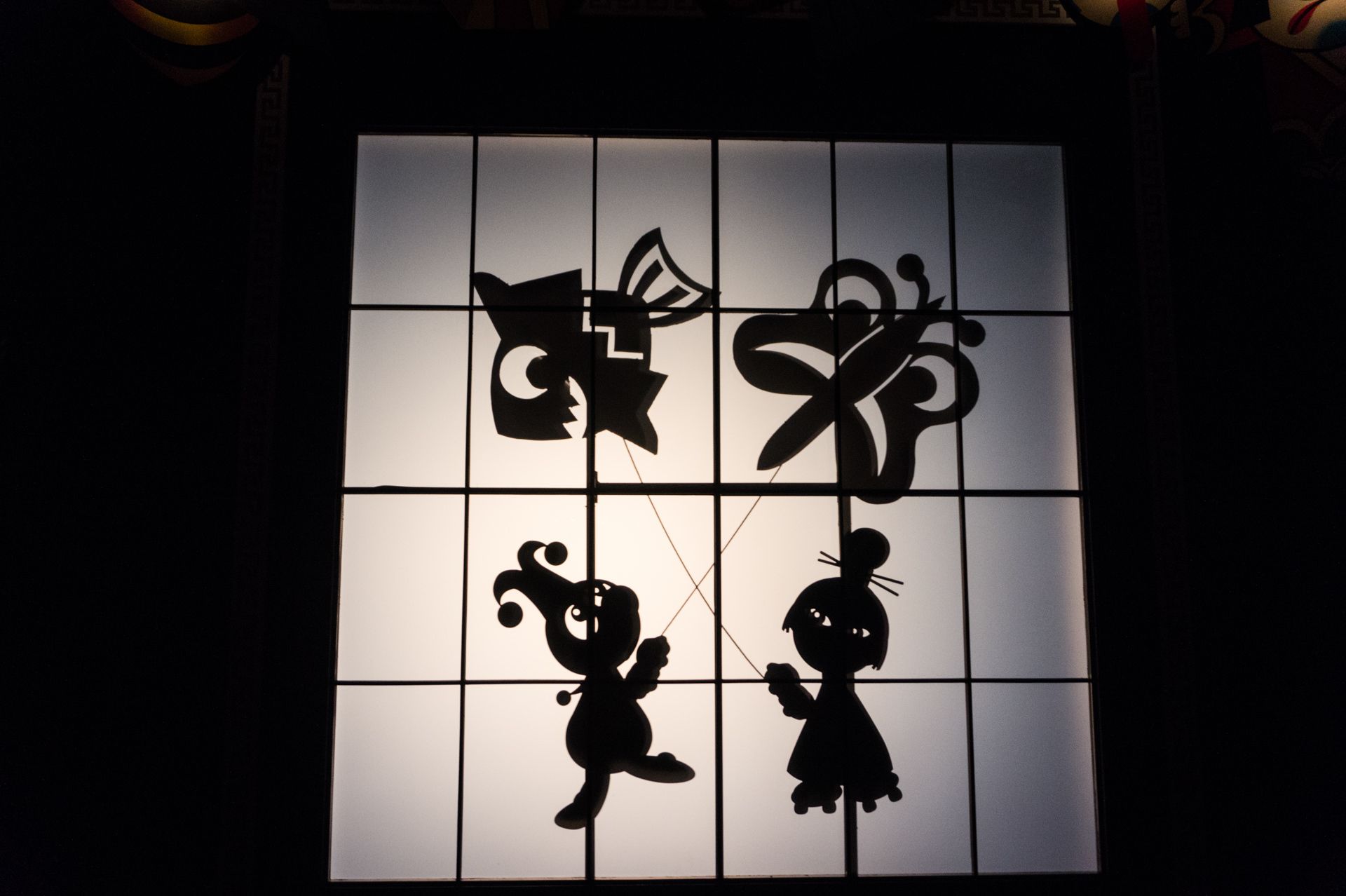
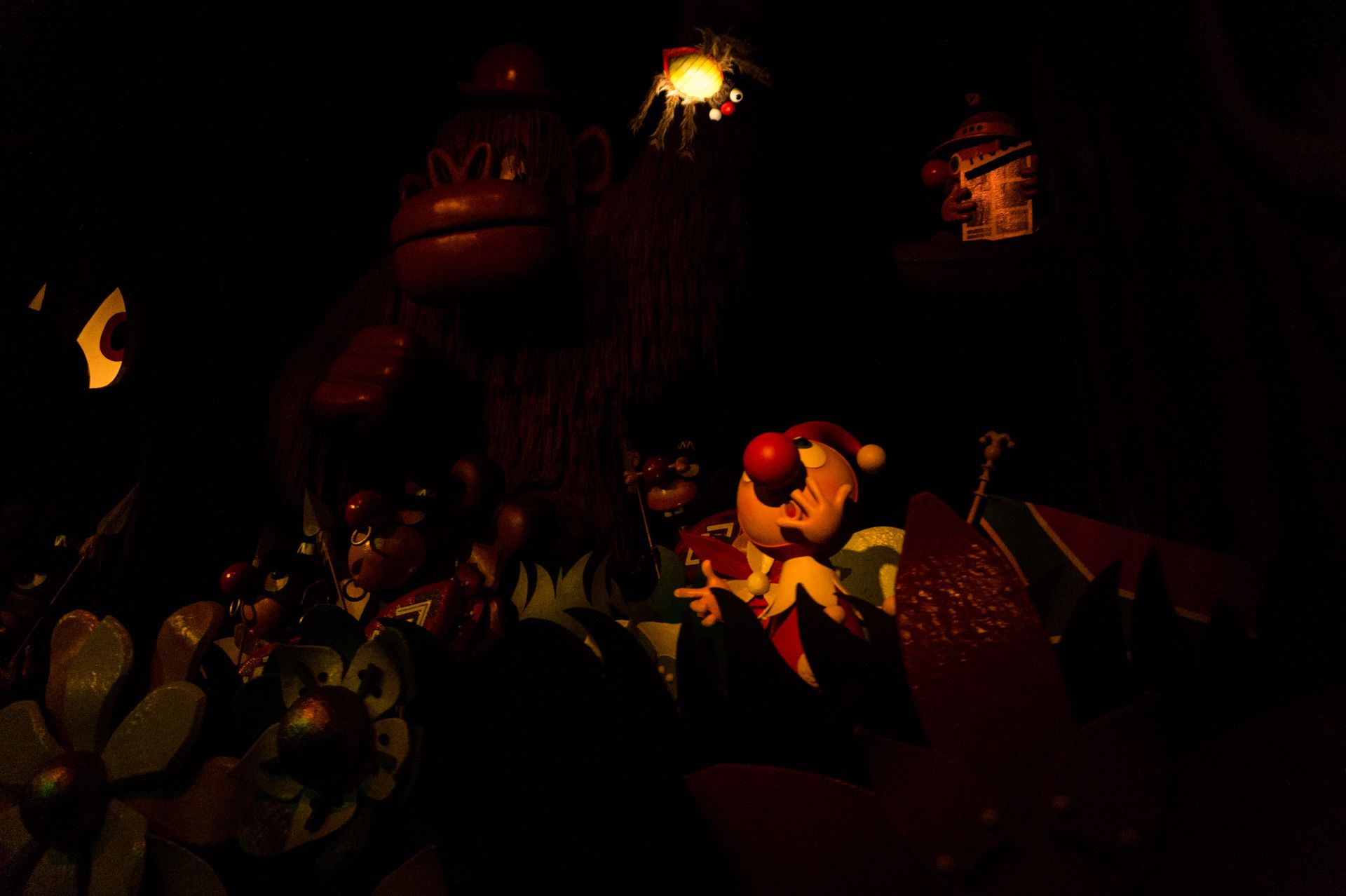
The best you can do in the Reizenrijk is to travel, therefore a ride in the cars of the Carnaval Festival dark ride should not be missed. Accompanied by a merciless catchy tune, you accompany the jester Jokie on his always cheerful journey around the world, whereby the clichés of the corresponding countries were excellently staged. Carnaval Festival does not need to shy from the comparison with Disneyland Parks’ role model It’s a small World, as the ride offers everything a good dark ride needs to offer and in my opinion is even a bit better, as it is much less annoying.

Vogel Rok

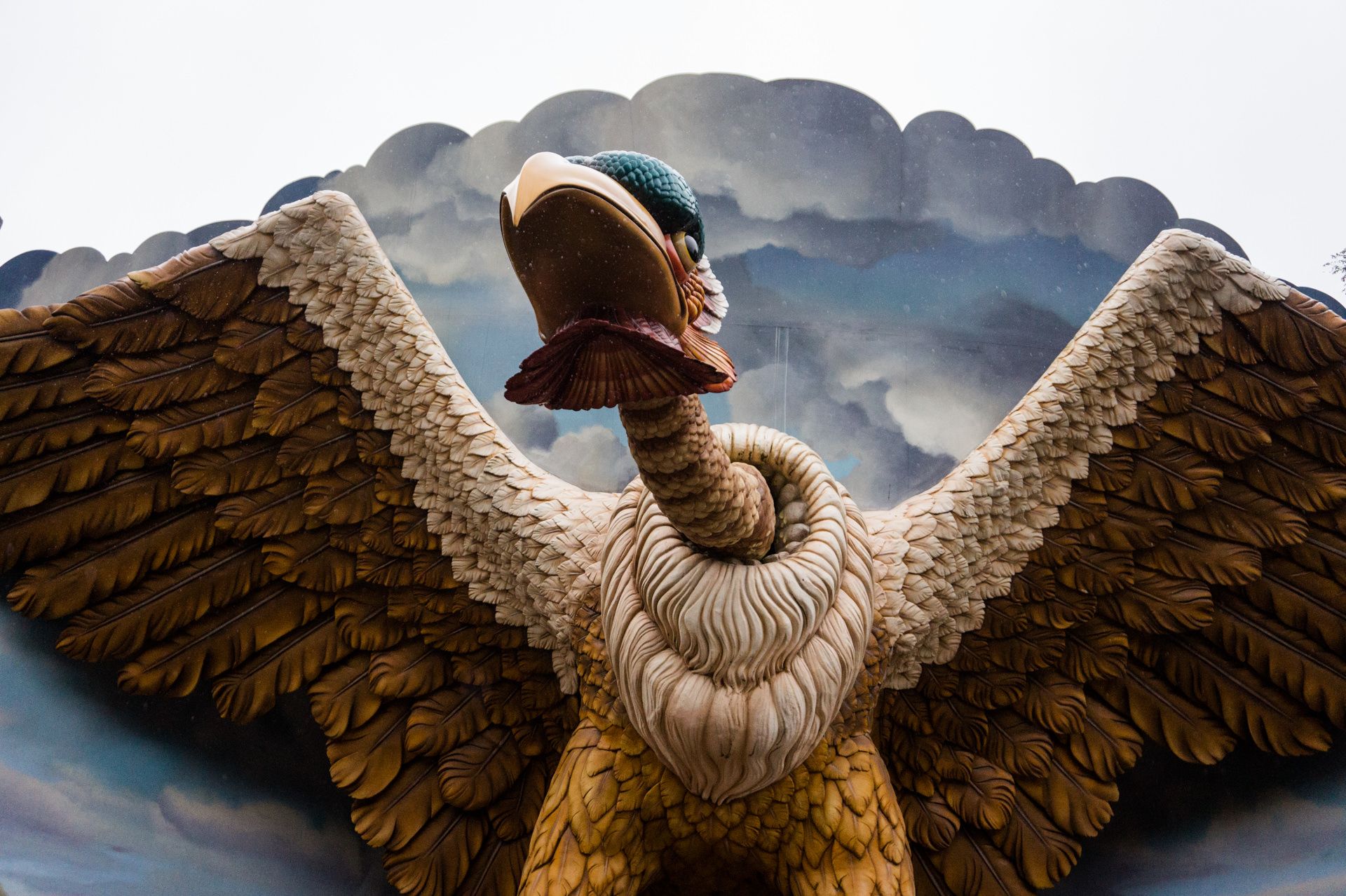
Located next door is the dark roller coaster Vogel Rok, which immerses you in the world of the stories of 1001 Nights, at least in the stories of Sindbad the Seafarer. After the train has left the station it passes a short gradient within a right turn, whereupon the lifthill of the ride follows. Accompanied by laser effects we climb to the top of the lift and then immediately enter the main drop of the ride. With a slope of 55°, the train now races towards the ground in a left-hand bend. The height difference of 21m results in a speed of 67 km/h, which is kept constant in a very wide left turn close to the ground. Shortly thereafter the train shoots up and approaches the ground again in a slightly smaller radius. In the following valley we change direction. A curvy hill, past one of the name-giving birds, later we pass through an uphill helix, at the end of which we are eaten by a snake. Then, we pass a block brake before racing towards the ground in a left turn. The track then increases in height before the radius of the curve narrows down into a downward helix. The train now moves off the ground one last time and dives into a tunnel of lights. After that the brakes are reached and immediately after another right turn there is the station, which is usually approached with the loud music of the onboard sound system.

Vogel Rok is a great roller coaster of the type MK-900 by the Dutch manufacturer Vekoma, which delivers a short but thoroughly thrilling yet always harmonious ride. It is amazing how fast you can accumulate your laps on this coaster, if you stay a while when the park is less busy.

Gondoletta and Pagode

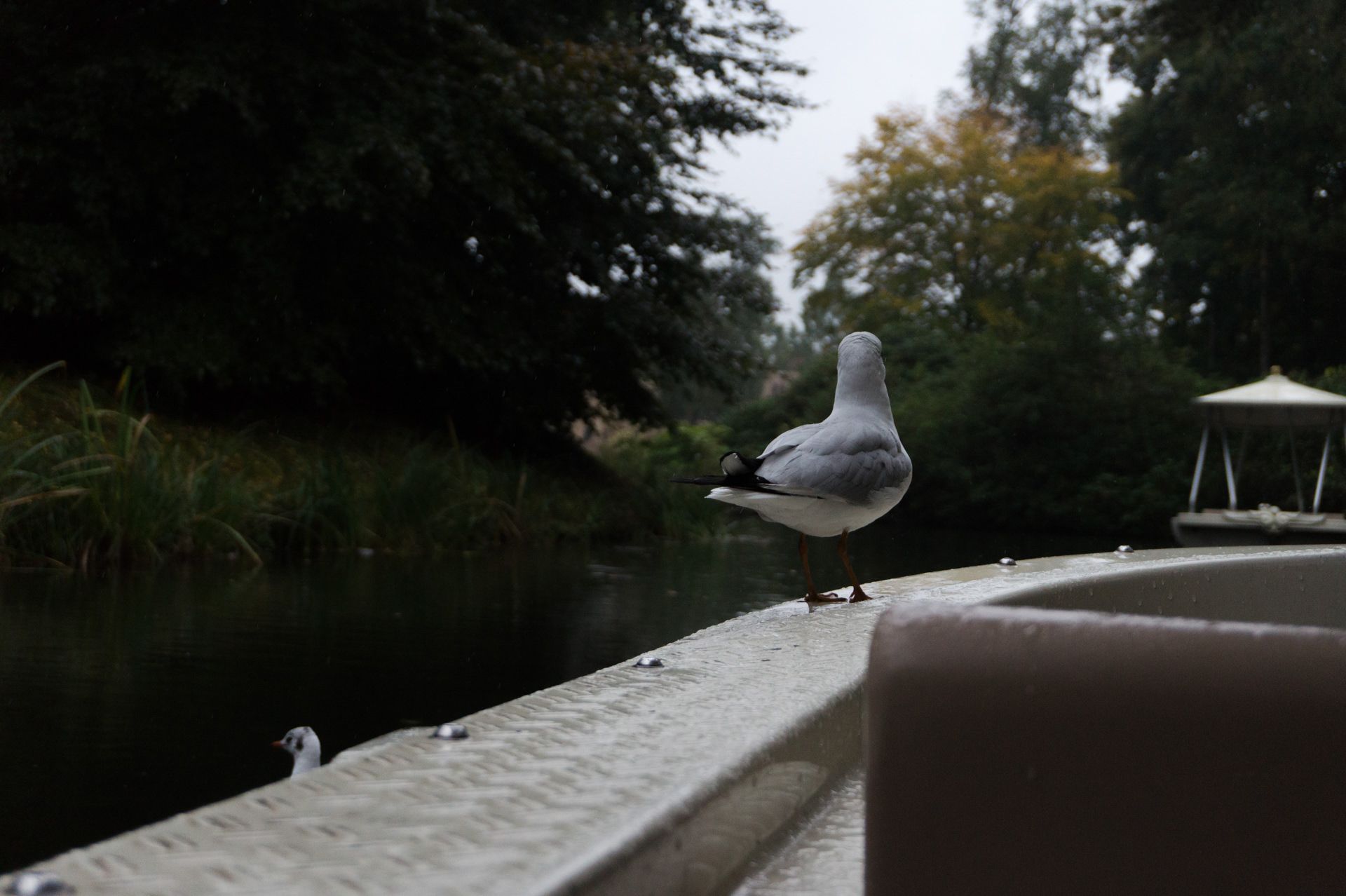
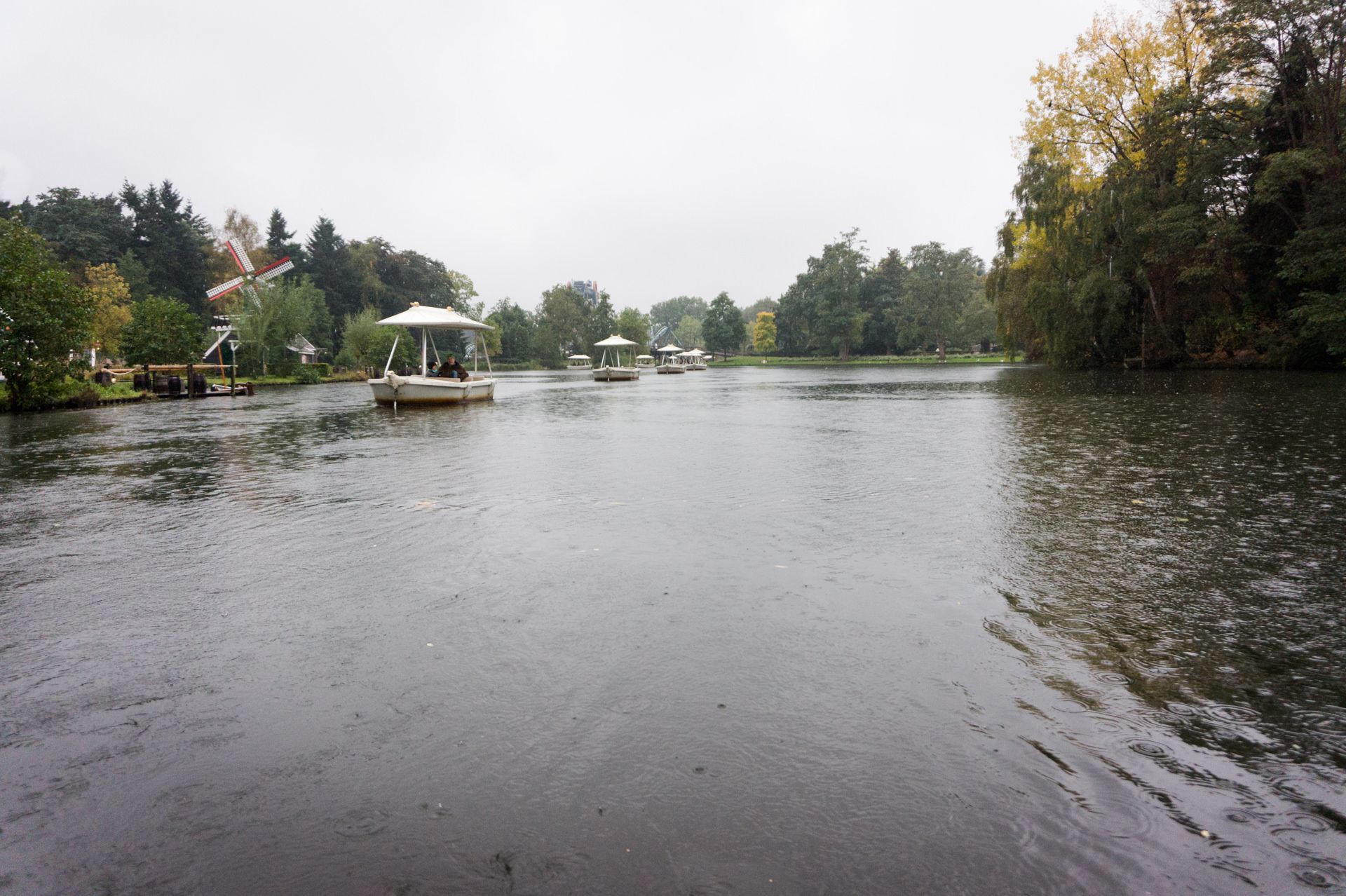
For those who like it a little more relaxed, the boat trip Gondoletta is the perfect choice. For 20 minutes the extra long Tow-Boat Ride of the company Intamin takes you across the entire lake and it is quite big. Since this year, in addition to the obligatory feeding of birds and the resulting siege of countless water birds, you have a really great view of the roller coaster Baron 1898. A similarly interesting view is guaranteed from the observation ride Pagode, a Flying Island also from the manufacturer Intamin, which brings you to a height of 45m without any tower structure. This happens basically by an oversized lever at whose end the passenger gondola is suspended and at whose other end the oversized counterweight is located.

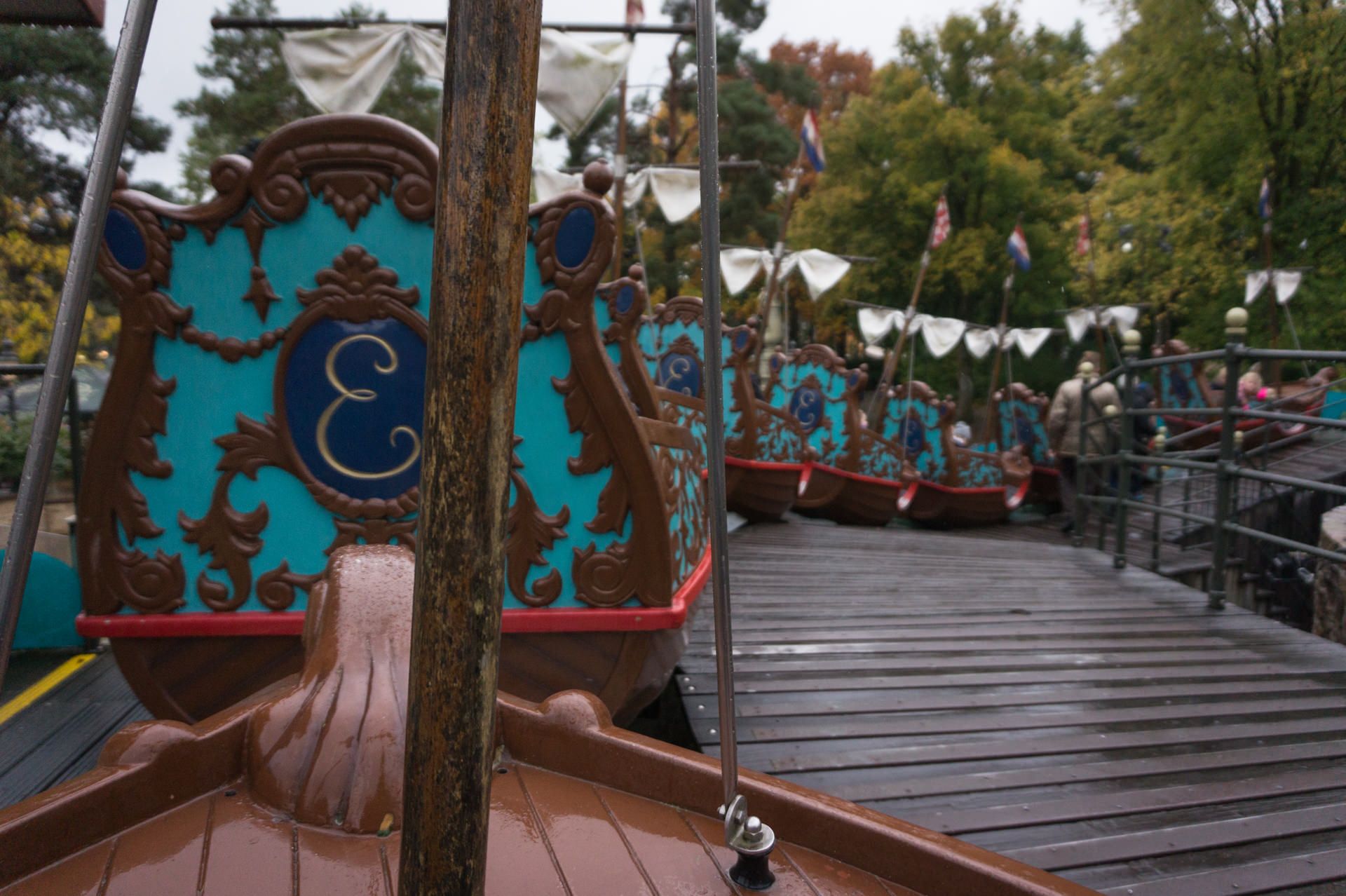
Halve Maen, D’Oude Tuffer and Polka Marina

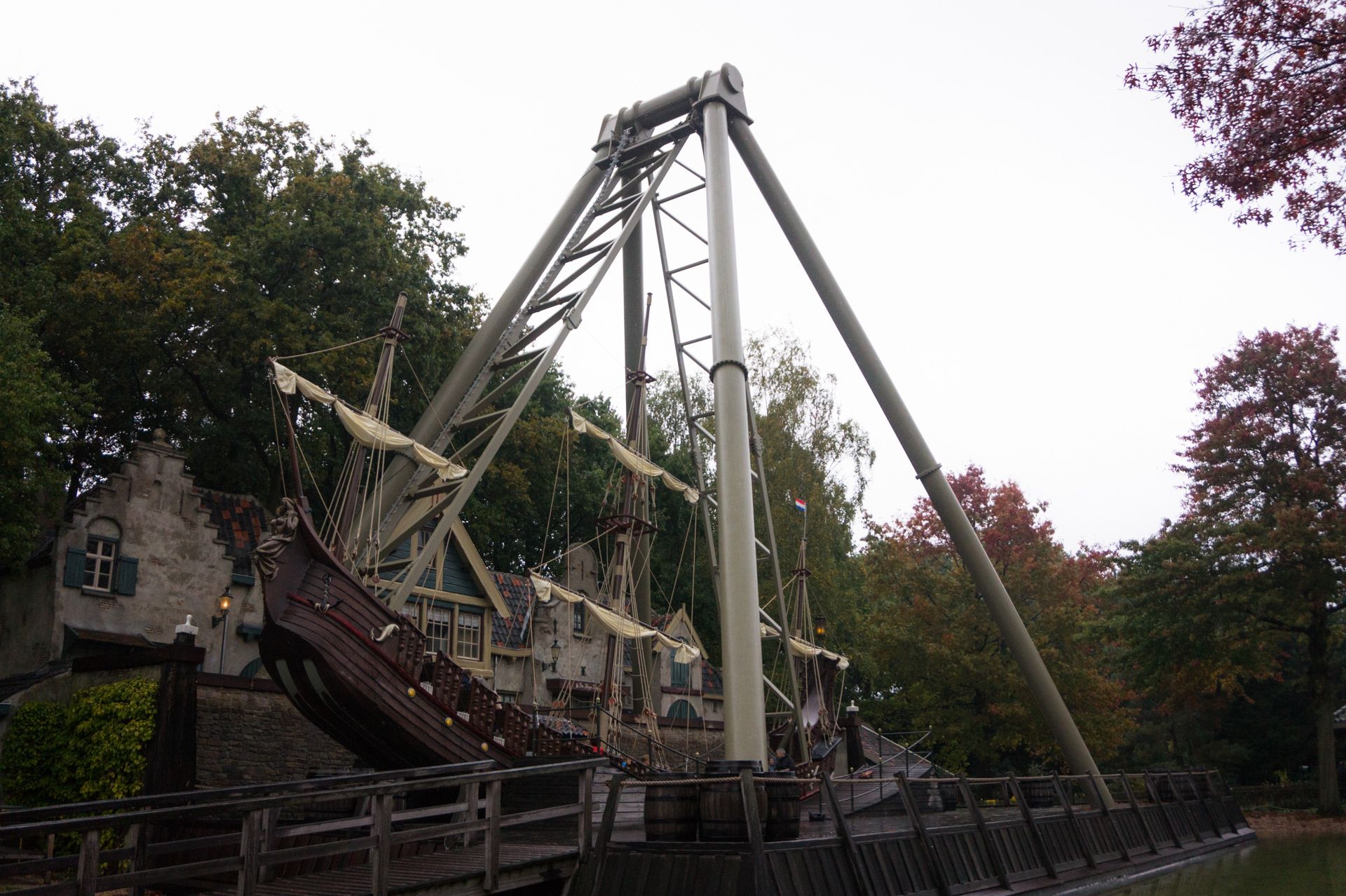
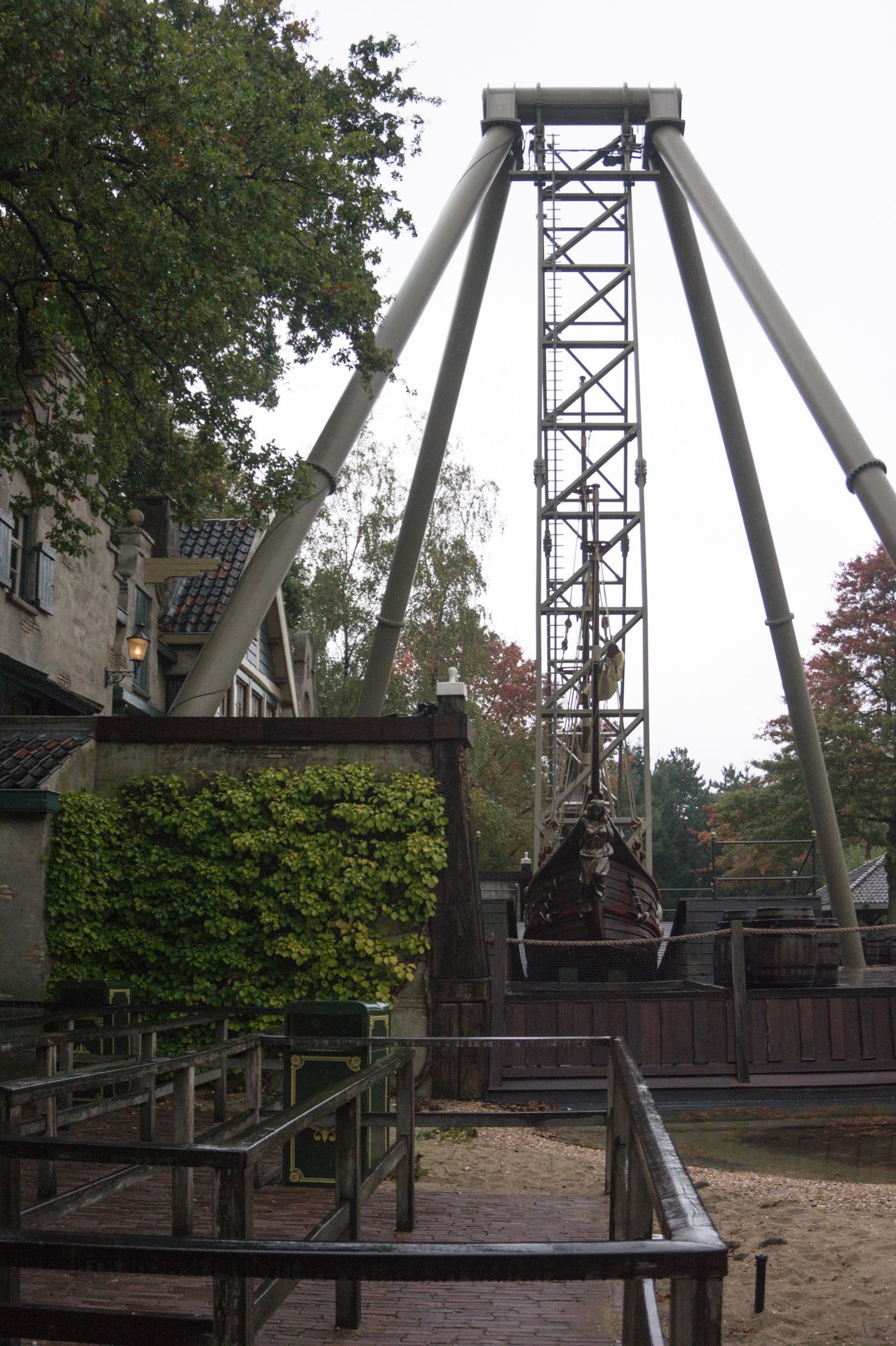
The swinging ship Halve Maen, which is currently the highest ship swing in Europe, can also be classified as a relaxing ride. Next to it you will find the vintage car ride D’oude Tuffer, which allows its cars to travel the long distance with rapid pace. Equally interesting, although only due to the outwardly inclined curves, is the Polka Marina ride by Vekoma, which always makes me smile.

Python

However, the things you are interested in in the Ruigrijk area are certainly not flat rides of the area, rather the roller coasters that reign this corner of the park. The first one was the Python steel roller coaster in 1981, which carried its passengers not only through one loop, but two consecutive loops. In fact Python was the highest steel roller coaster in Europe at that time and with its four inversions the most exciting roller coaster on the continent. Just as exciting as the coaster Carolina Cyclone of the American amusement park Carowinds, which was the first roller coaster worldwide to entertain its passengers with four turn-overs a year before. Efteling was therefore thinking big even back then!

The train leaves the station on a small gradient, followed by a left turn. Shortly after the train enters the lift chain, which brings it to 29m. A small slope and another 180° left turn follow before the train races down the main shot. Then the train passes through a powerful valley and enters the first loop, whereupon the game repeats itself in a second loop. On a straight incline the train gains some height and immediately throws itself into a curve. This leads the train to the starting position of the corkscrews, into which one enters at a remarkable angle. While the carriages screw their way through the corkscrews, the world is upside down two more times. After a small hill an upward spiral follows. Immediately afterwards the braking track is reached.

Python is a great roller coaster of an older design, which doesn’t have to hide itself due to its truly intense performance, especially in the evening. After the original Arrow trains, as well as the second train generation of the manufacturer Vekoma and trains of the manufacturer KumbaK had been used on the track, modern trains of the fourth train generation by Vekoma now enrich the the ride. Unfortunately I could not test them during the current visit, but the KumbaK trains gave a solid impression during a past visit.

Joris en de Draak

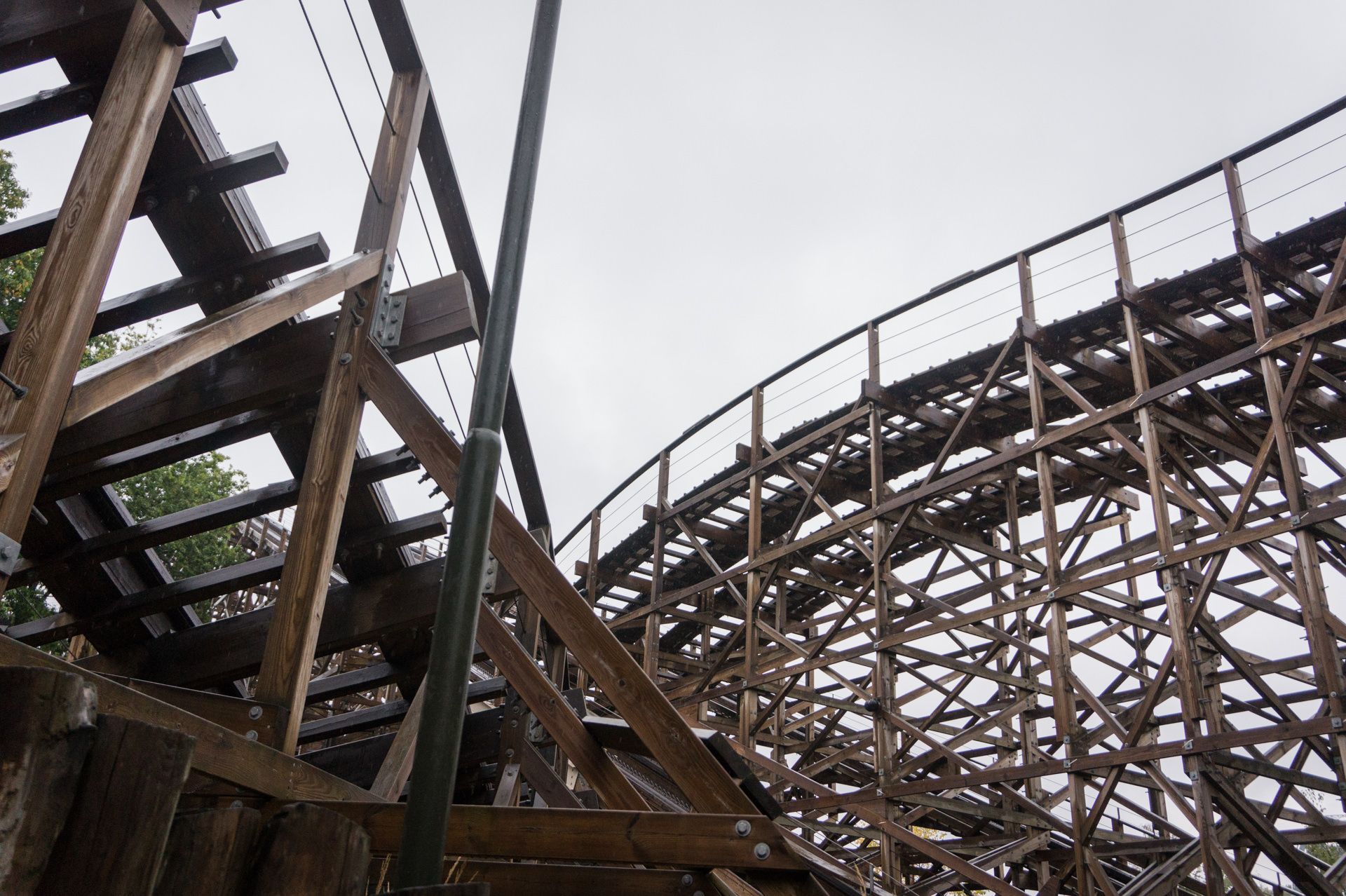
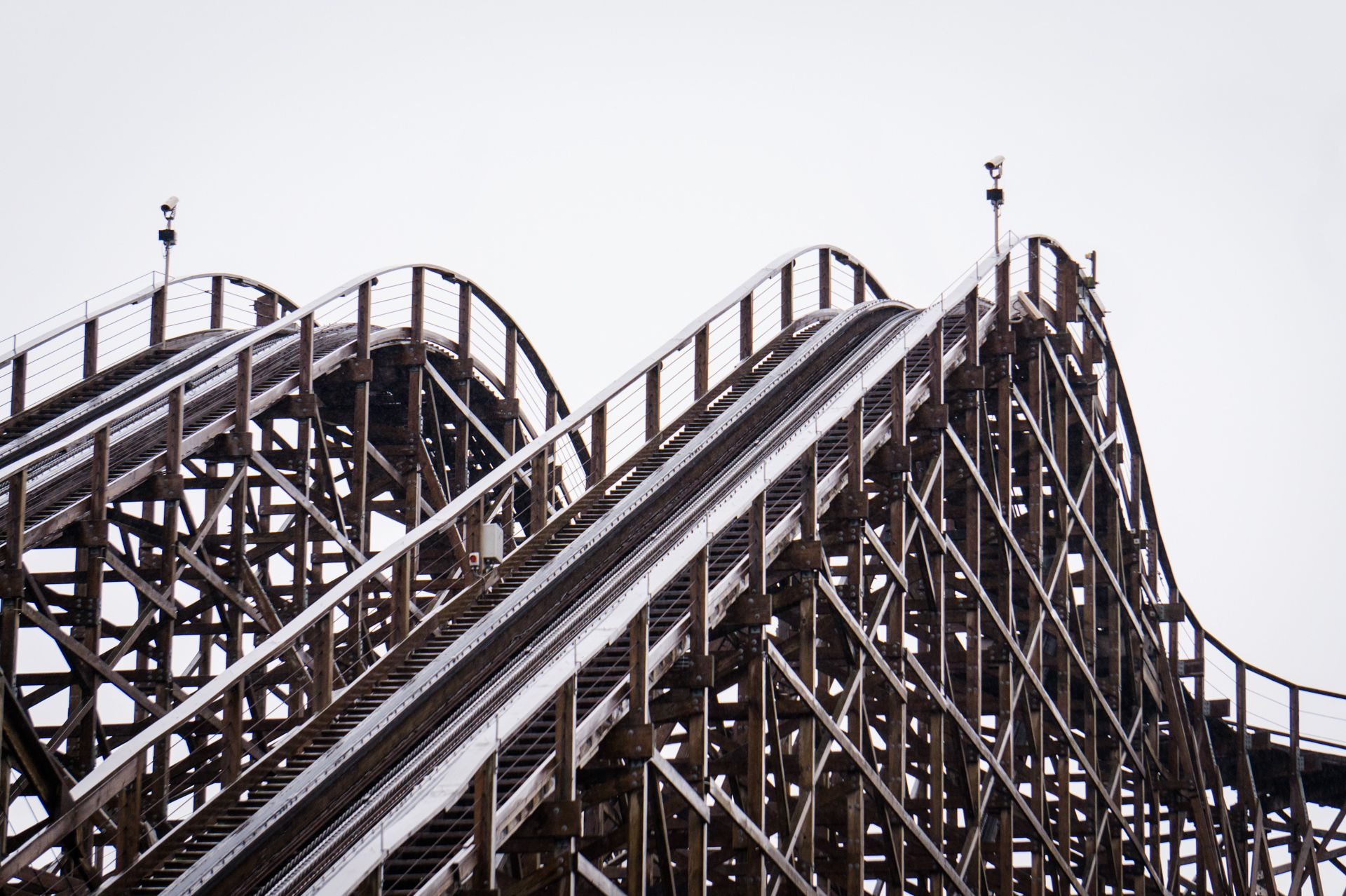
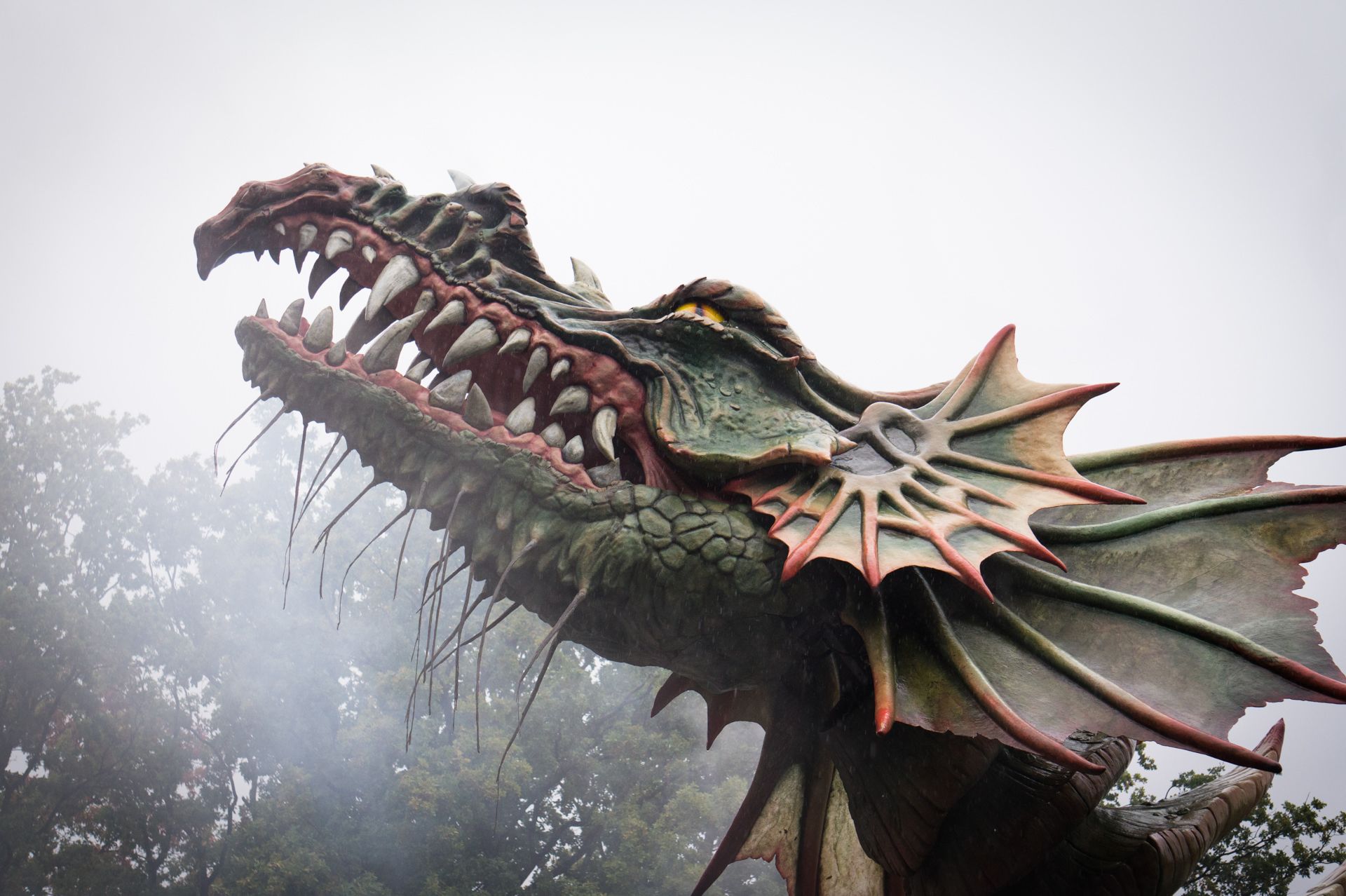
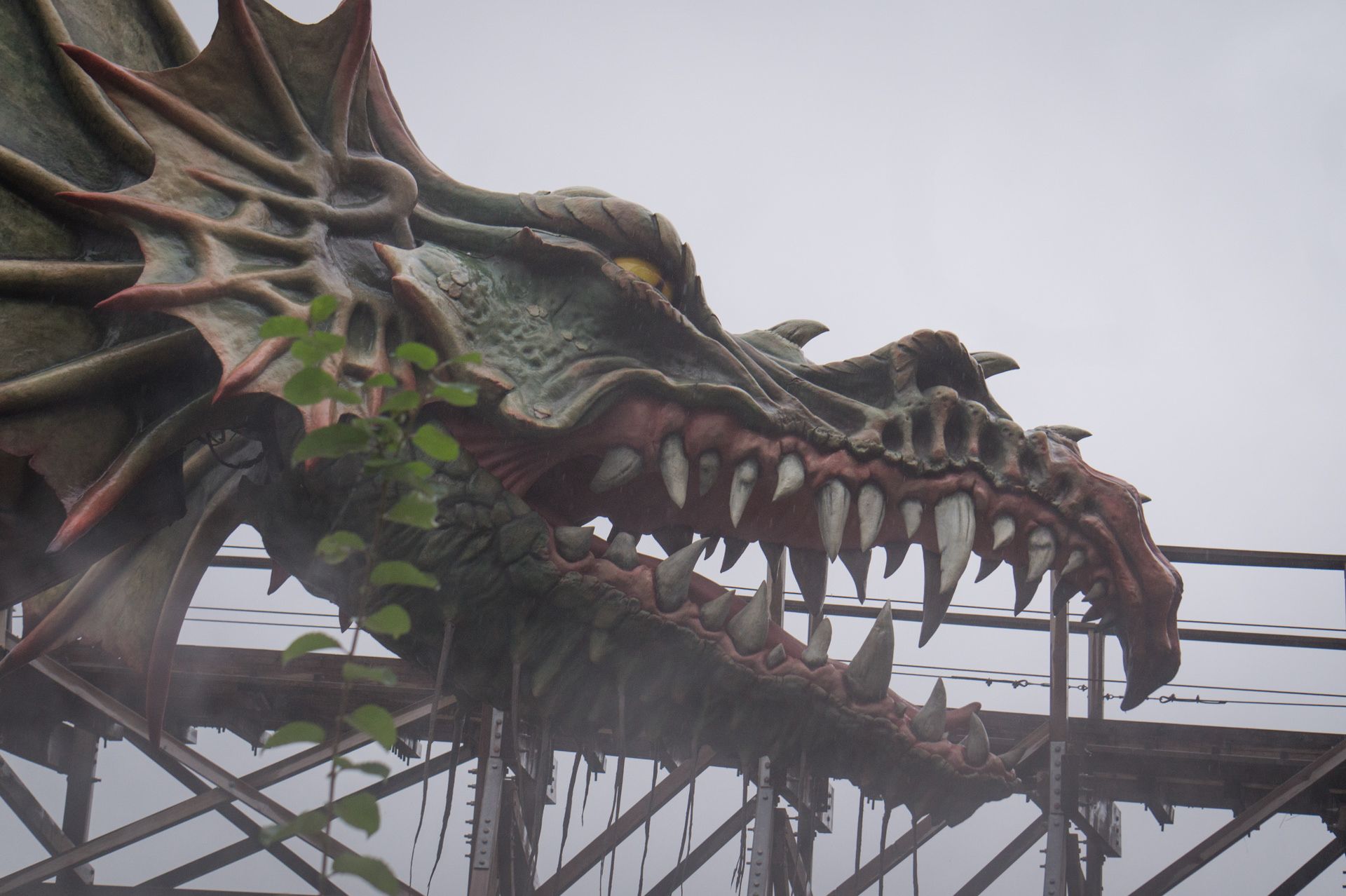
Wooden roller coasters have a long tradition in Efteling, dating back to 1991 when Pegasus, an absolutely boring and slowed down roller coaster for children, was built in the park. It was the first wooden roller coaster in the Netherlands. A year after its removal, Efteling build Joris en de Draak. This ride introduced two more wooden roller coasters of the popular manufacturer Great Coaster International (GCI) to the park. The background story is dedicated to the patron saint of the English, the dragon slaughterer Georg. The layout is divided into two tracks, Vuur and Water, both of which are duelling each other whilst showing different but somewhat balanced riding characteristics.

Both sides start parallel to each other, but a few meters apart, with a small gradient out of the station to which the lift hill is immediately added. Once at the top, both sides make an S-curve and a turn mirror-inverted to each other, so that the sides meet in the middle and thus deliver a race during the first drop. The trains then shoot through the first valley, which is immediately followed by a triple up, i.e. a triple combination of hills that always leads upwards. In the following right turn the sides lose each other.

With a double down, Water is showing its wild side right at the beginning of its independence. In a bumpy curve you fight your way to the right side of the course to cross more hills along the lake. In the same manner the train now makes a turn to the left.

Meanwhile Vuur also passes under its opponent in a double-down. In a flattened right bend you cross the truss of the lift hill whereupon a drop takes place immediately above the sidewalk. With a short look at the Vliegende Hollander a left turn is initiated. Over several hills one makes one’s way over the lake, whereby these are not so frequently present as on Water. A smooth right curve, which serves as a turn, follows. Thereupon both sides run next to each other again.

After a short straigth section, a smaller slope follows, to which a rather wild combination of right-left curves is attached, whereby both sides can show track sections inclined to the wrong direction. Soon the finish is reached and the winner of the race will be announced at the brake track. Afterwards you pass through the maintenance house and two left turns to the respective station, where you enter under fanfare or loud booing.

Joris en de Draak offers two good wooden roller coasters, but the rides are quite different and therefore not quite the same. Water offers the apparently wilder ride, because it is going over smaller hills and also the curves seem a little more daring, while Vuur is more careful with its gradients and therefore a little more efficient to tear his passengers back and forth. I can hardly explain why I preferred Water during my last visit in Efteling, as it was Vuur who convinced me more this time.

Vliegende Hollander

On the other side of the lake there is the Vliegende Hollander, a water roller coaster with a moving history. By this I don’t mean the problematic manufacturing process of the installation, where even another company was called in to solve the initial problems, but the story of Willem van der Decken, the captain of the Dutchman, a ship of the United East India Company. Due to his greed, the captain is more and more subject to piracy and even storms and holidays, when it was forbidden to set sail, didn’t stop him. “I will sail, storm or not, Easter or not. I will sail, even until Judgement Day,” said Willem, drawing a curse on him. Damned for eternity to sail the seven seas of the world, the Flying Dutchman races across the sea as a ghost ship with his black hull and burning sails.

The journey begins in a 17th century seaport. After leaving the station you can see in the first scene how your own boat sets sail. Fog is coming up and is getting denser, only a lamp at the bow gives some light. A storm comes up and with it the Flying Dutchman shows itself to the passengers. Through the hull one enters the interior of the ghost ship. A surprising drop follows and thereupon a rise, in which one is held immediately by a brake. Here Willem van der Decken shows his true face, whereupon the lift chain grabs and brings the boat to a height of about 22m. Immediately a steep turn follows out of the building towards the ground and through a fog-flooded building. A camelback is attached and shortly afterwards a horseshoe, i.e. an elevated turn, which you pass through with a considerable cross slope.  A short ascent leads to a block brake. This is followed by a small drop and a long bend, which then turns into a shot into the water basin. After the watering, the boat is transported back to the station by circulating chains.

The Vliegende Hollander offers an almost perfect mix of a dark ride and a water roller coaster, which was skillfully staged. The part in front of the lift hill is so atmospheric that you could almost skip the ending. But this one also does a good job, even if the finish could be wetter.

Baron 1898

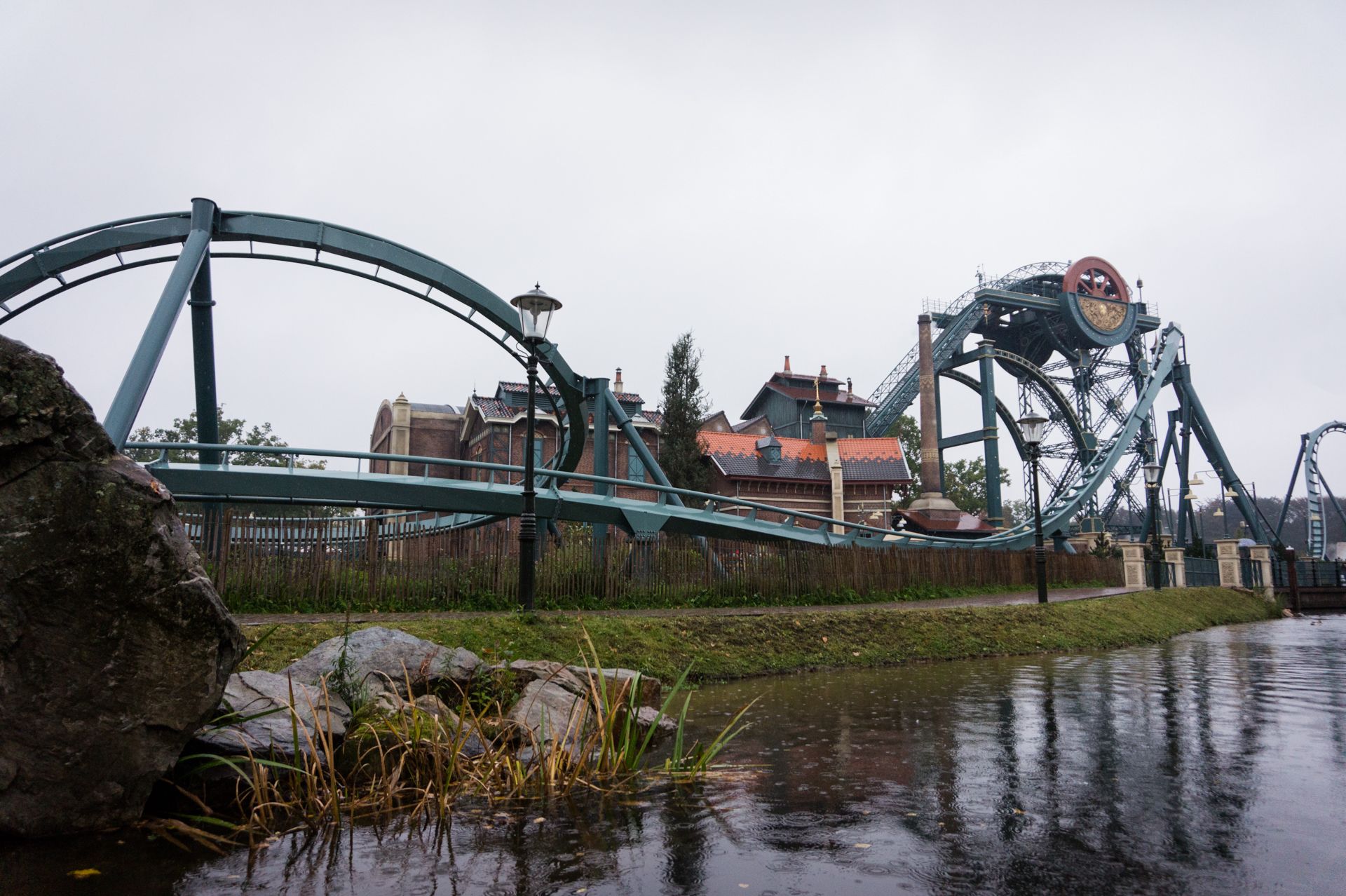
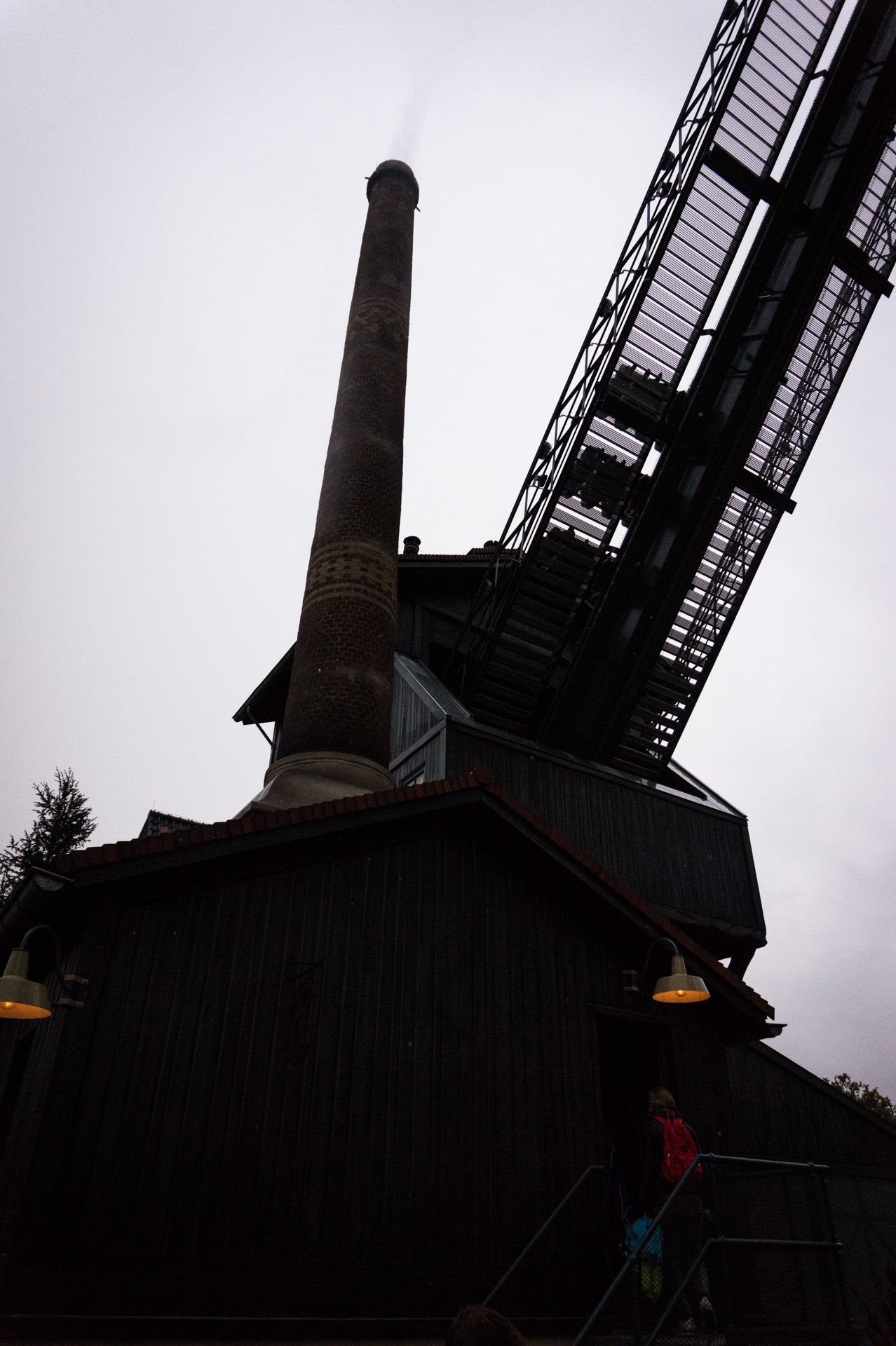
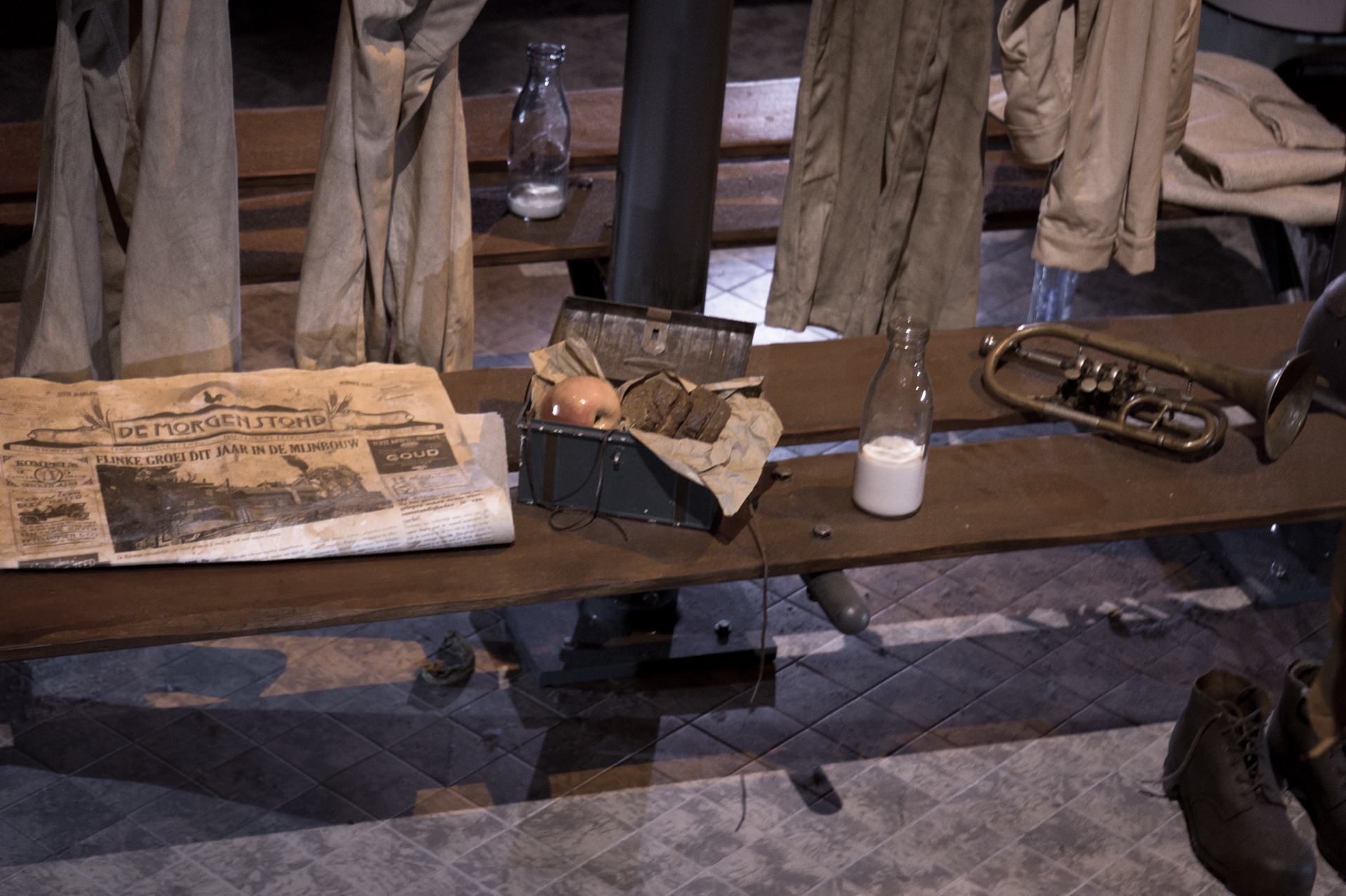
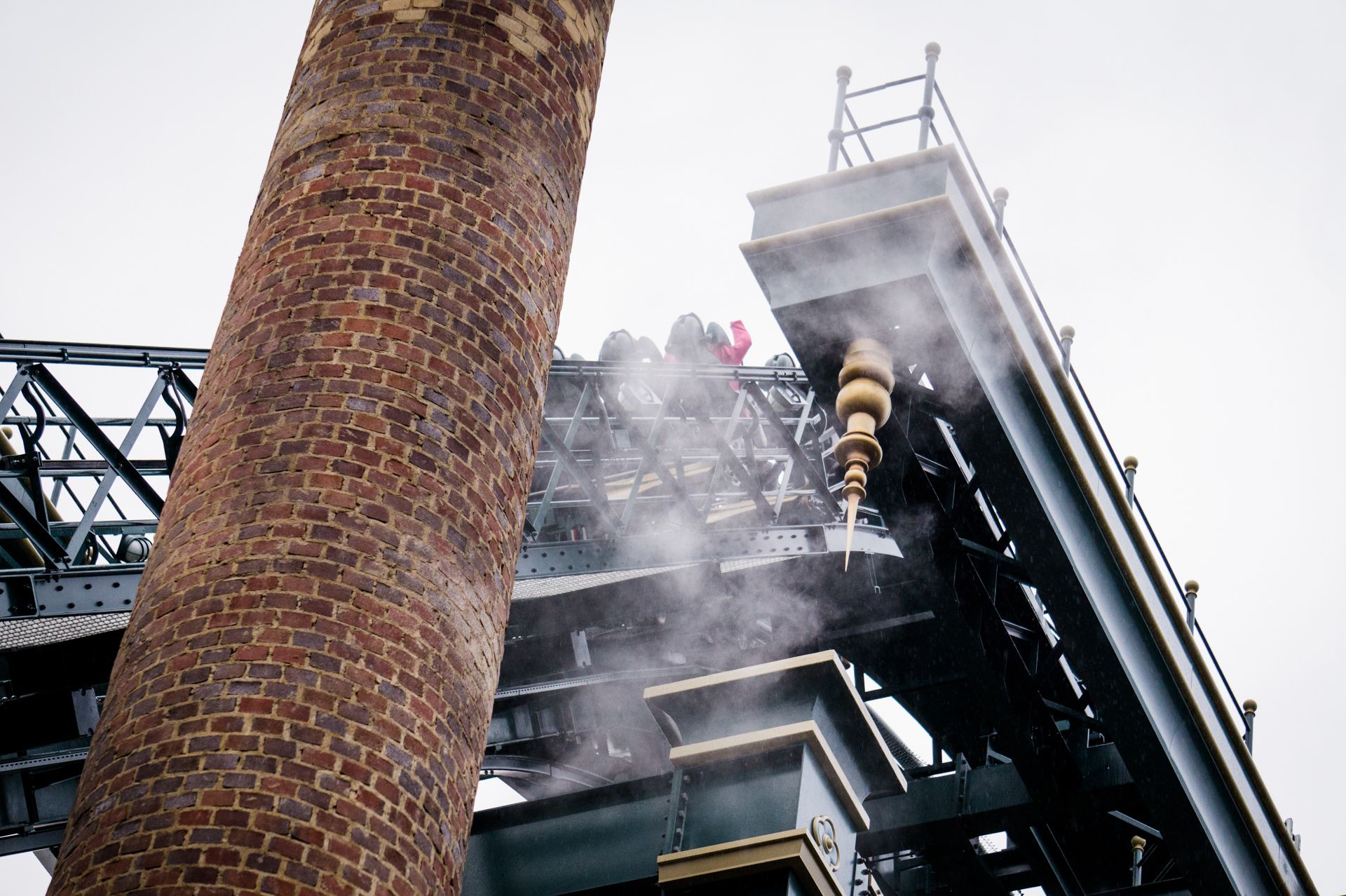
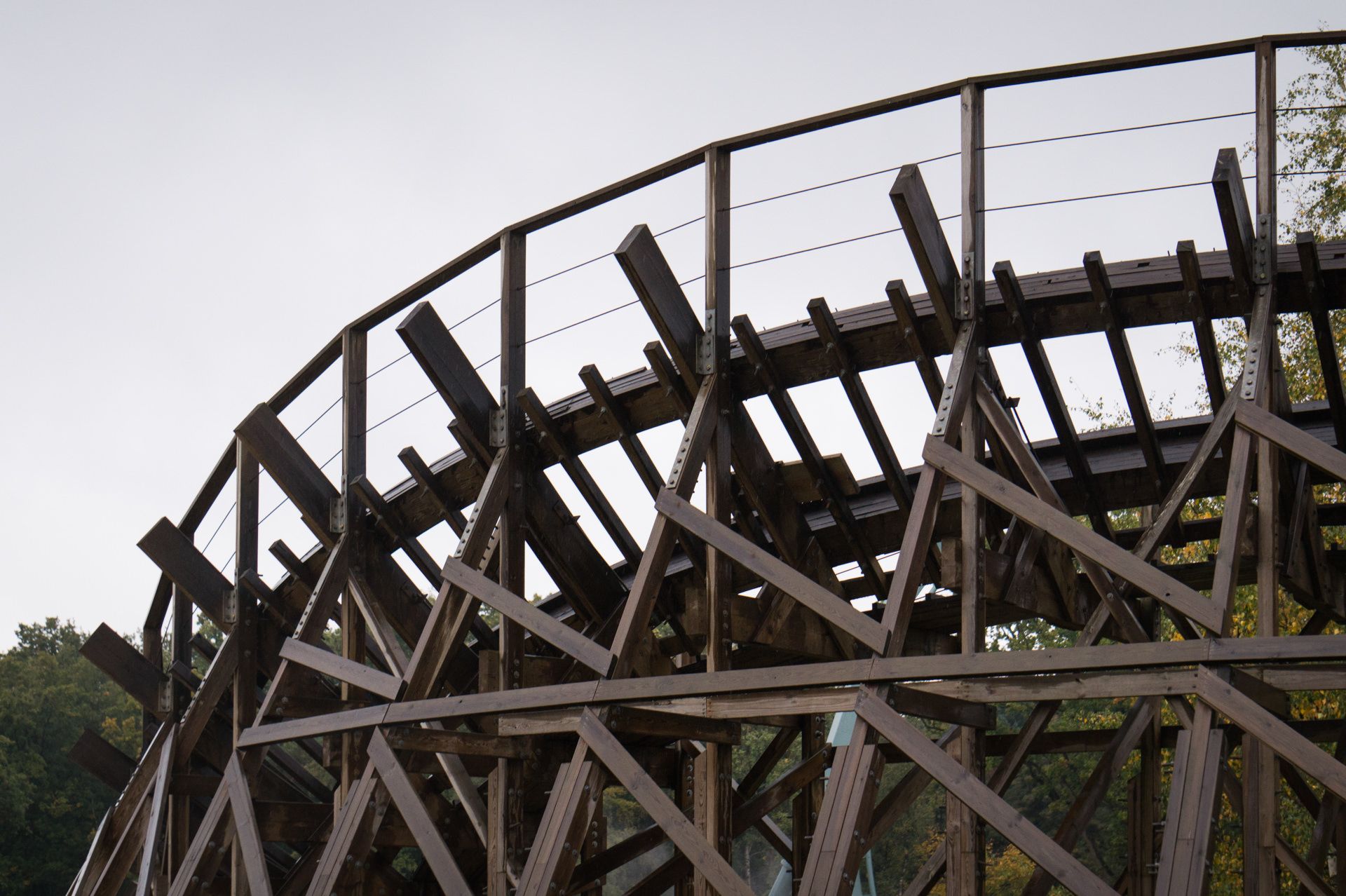
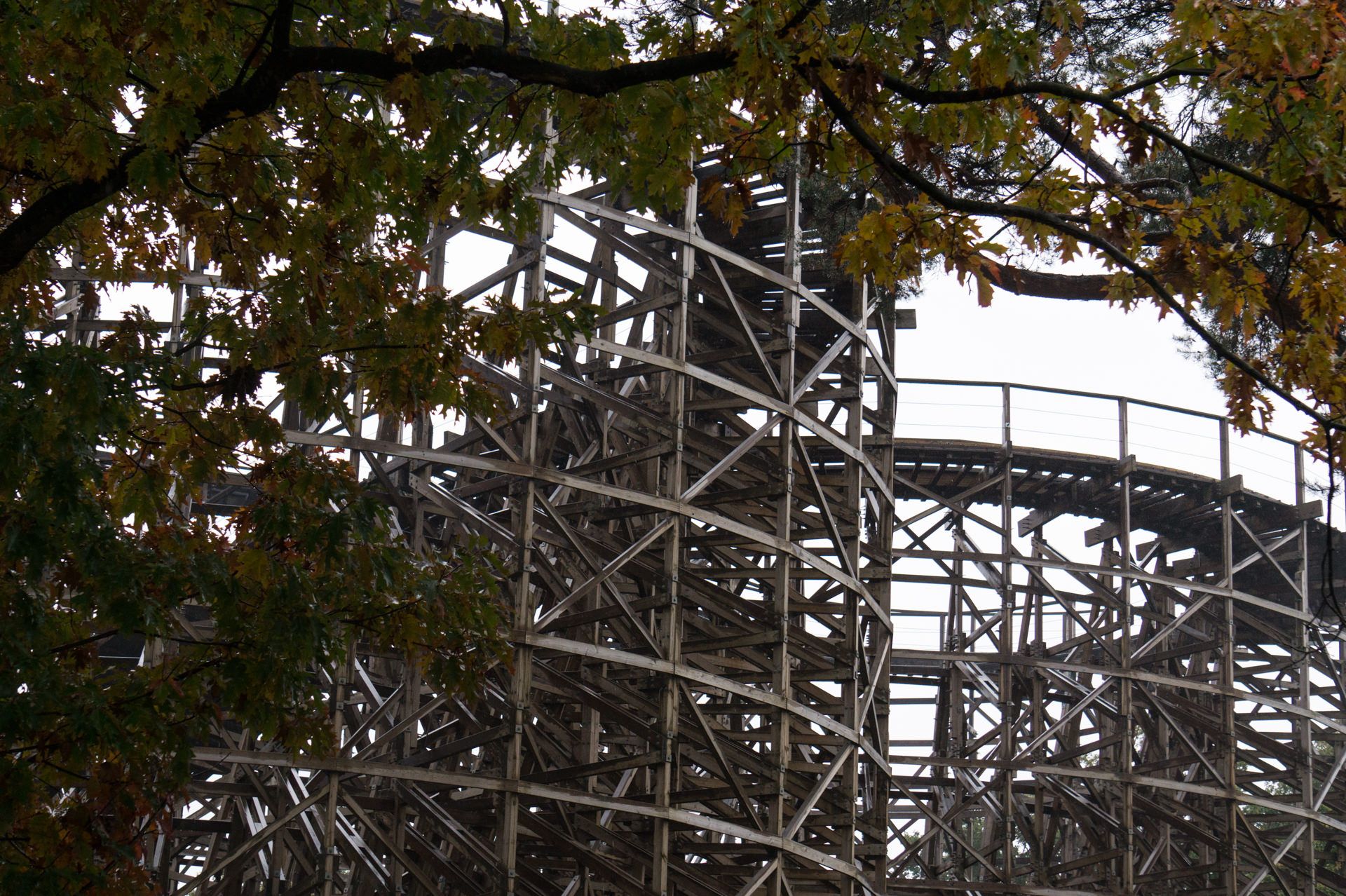
On a highly atmospheric path, which also provides some nice insights into the roller coaster part of the water coaster, you can walk to this year’s novelty, the Dive Coaster Baron 1898. Even from far away, the appearance is convincing by its industrial charm and the framework structure, which carries the lift, as well as the first drop. The Rijksmijn winding tower transports the miners down into the shaft, where they are to mine as much gold as possible on behalf of Baron Hooghmoed. But the Witte Wieven, white women in Dutch folklore, who watch over the gold, want to prevent this. Gustave Hooghmoed doesn’t listen to the warning, so he urges the miners to climb into the mine. With a fearless “Glück Auf!” he says goodbye to his workers.

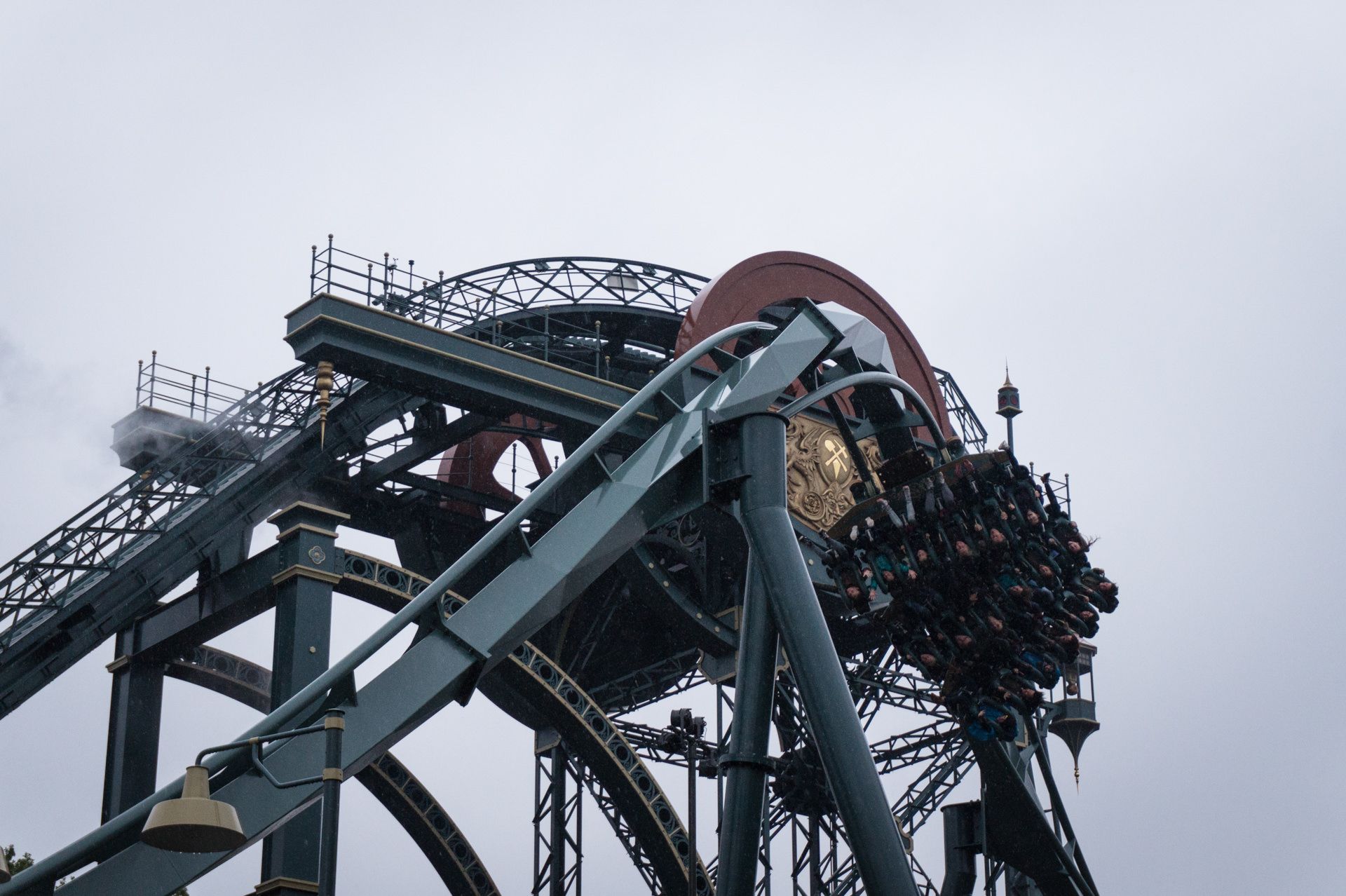
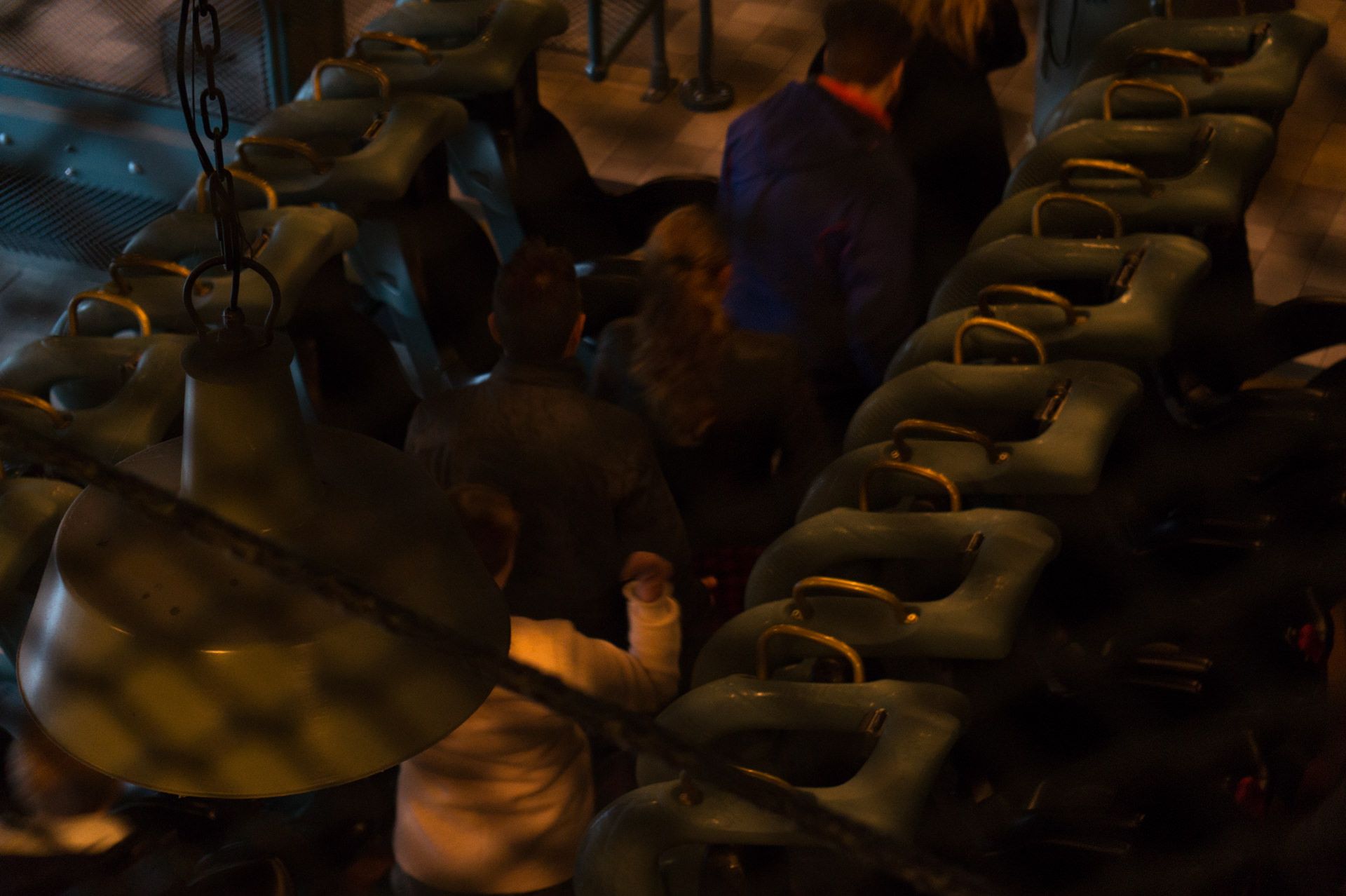
After boarding the train and lowering of the floor, the train starts moving towards the next room. In a musical way the Witte Wieven reappears. This time, it is not just a simple warning and they announce the sabotage of the descent, as pride comes before the fall. At a fast pace we climb the steep lift, which brings us to the starting height of 30m. Arrived at the top, a small section continues straight ahead whereupon we are pushed over the edge. Now we are held in this position for a few seconds until a bell rings and releases the train. From here we descend the vertical drop into a fog-flooded tunnel. The 37.5m difference in altitude produce a speed of about 90 km/h. At top speed we now enter the first inversion, an Immelmann with a relatively late rotation around its own axis. With a lot of power we pass through the following valley before we turn upside down in a Zero-G Roll. A short straight section later the train increases in height in a helix and immediately decreases in a small drop, whereby the transition takes place a little rough. After another hill we take a right turn, which releases us into the braking track. This is followed by the return to the station.

The exit from the station is via a gallery, which leads into a narrow corridor and, after a long staircase, releases the miner from the building. Funnily enough, an employee handed a CD with the Baron 1898 remix by DJ Hardwell as a personal souvenir. On the way back home the CD was heard almost continuously, although the connection to the Baron 1898 was not really clear. It’s just a nice song, which serves ideally as background music and an even nicer little gift from the amusement park.

The Baron 1898 is without exaggeration the best designed dive coaster in the world. Although it is only a compact version of this type of roller coaster, the ride in combination with the lush design and the worth seeing implementation of the storyline is a truly first-class roller coaster. The used baggage system, in connection with the tickets for the two shafts and the corresponding rows, works very well, so that from my point of view there is hardly any potential for improvement.

Piraña

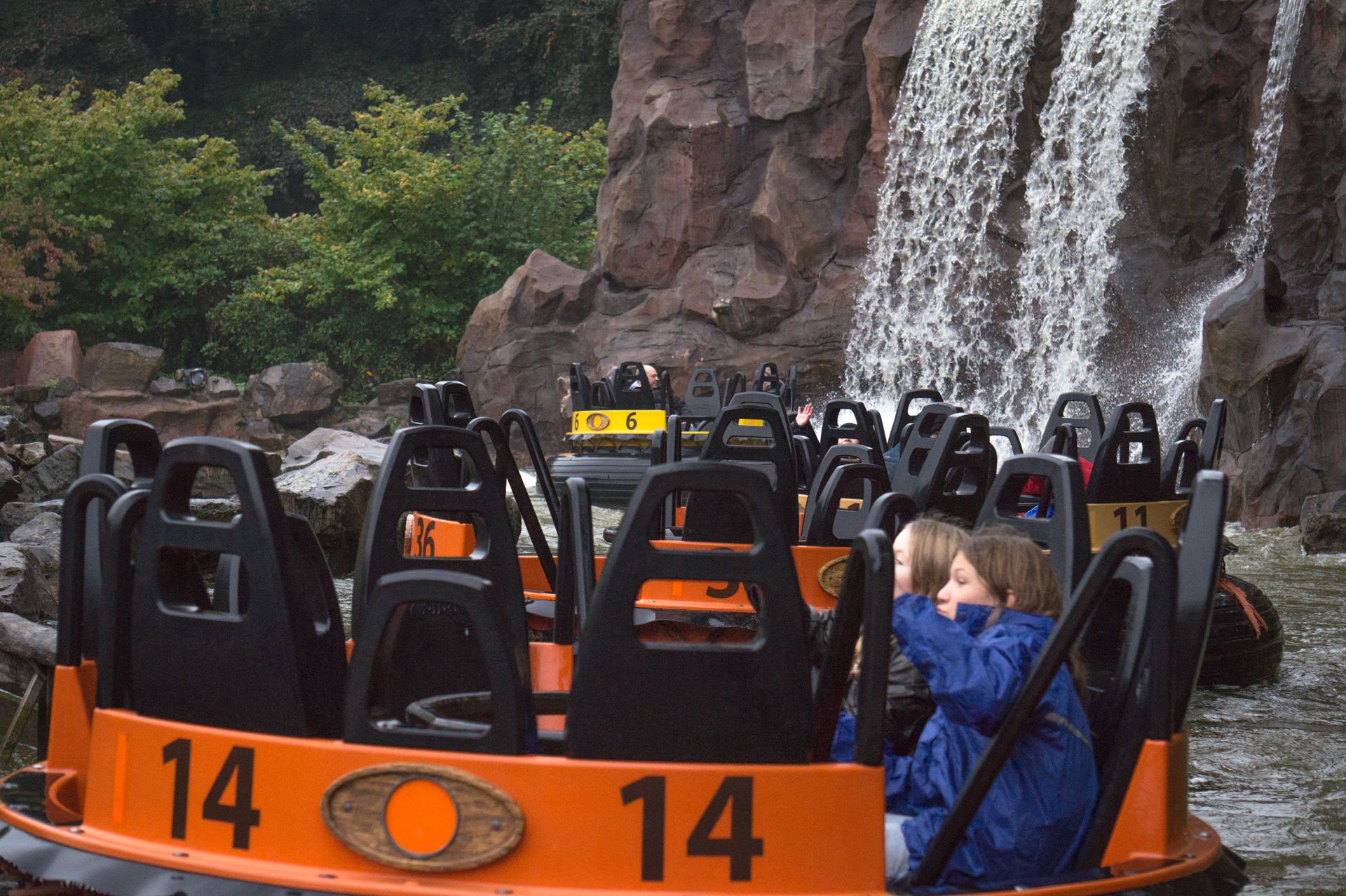
One of the first major attractions of the amusement park is the Rapid River Piraña, opened in 1983, which was also the first of its kind in Europe. The ride in the round-boats along the concrete canal, which has some rapids and other elements, is good and can easily get you wet. There is also a possibility to get the passangers wet from the outside of the ride that can be used free of charge, but which can soak you with a bit of bad luck.

Spookslot

The Spookslot is one of the most famous and oldest attractions of the Efteling amusement park, although you should not expect a classic ghost train when you enter the haunted castle, although the outward appearance and the design of the queue make you expect a dark ride. Instead, you will find yourself in a larger room with several standing rows and watch a show worth seeing with countless mechanical figures.

Panda Droom

The ancient 3D film Panda Vision at the 4D cinema Panda Droom in the immediate vicinity is not quite as worth seeing. Anyhow, the special effects are rather special and should not be missed. In contrast to the many other venues in which this film was shown, the film was created especially for the Efteling in cooperation with the WWF, which is why animal welfare is far more important here through a preshow and further information options in the exit area.

Bob

In 1984 a truly new roller coaster concept from Intamin opened in the USA and, as so often the case, found its way to the Efteling a year later. The idea of a roller coaster with gondolas running free in a canal instead of on rails is not new since the flying turns of the 30’s, but the gondolas of the Swiss Bobsleigh pass through steep ascents and descents.

The ride in the Bobbaan, better known as Bob, begins on a straight out of the station. After a left turn you reach the lifthill, which brings you to a height of 20m. A steep left turn takes you downhill. The following valley is driven through with an absurd force, with the first change of direction taking place immediately. A swinging S-curve combination leads you up into the first block brake. Once again we descend in a steep left turn and get stoked by the high forces in the next valley. After a right turn, a left turn leads into the next block brake and also here the change of direction takes place in a powerful way. Also this block brake is left in the usual way. As we already have experienced before, the next valley is passed with a lot of momentum before a simple right helix leads us upwards. The car now crosses the last block brake and crashes towards the ground one last time, however this time in a right turn. A last change of direction, but not so brute, follows. After this turn the brakes follow and shortly after we reach the station.

Bob is a unique roller coaster, at least in Europe, although the American models now also have an exotic status. In comparison to the bobsleigh runs of the manufacturer Mack, which are better known in this country, the Swiss Bob can distinguish itself above all through its smooth running and the more adventurous course with its brilliant dynamics. The ride is simply fun and produces a permanent grin in my face which is why I always like getting on Bob again and again.

Fata Morgana

In a similar way I am very satisfied with the dark ride Fata Morgana, which convinces or better said overwhelms me with its oriental design. Although the ride was put into operation in 1986, it seems very modern and timeless with its human-like mechanical figures. The individual scenes are well equipped and very detailed, whereby the journey does not become boring even after several times. In addition, there is a continuous storyline with single moments of tension.

Aquanura

Every evening Aquanura, one of the biggest water shows in the world, takes place directly at the lake. It picks up the songs and rides that were experienced during the day and processes them with water, light and fire effects. During the day this is quite impressive, but at night it is definitely better.

Pictures Efteling

Conclusion Efteling

Efteling has always been a great amusement park, but it’s funny how often I forget about it, otherwise I would have visited the park more often. The park has so much to offer and with Baron 1898 and Aquanura even more, which is why I would like to call Efteling the best amusement park in Europe and not just because the park gave me the admission and a CD out of the blue. Despite the terrible weather, the park managed to entertain us very well, although our ride in the first row of Baron 1898 was by no means pleasant. With this year’s novelty everything has been done right, so I am looking forward to future projects from the park.


What are your thoughts about the Dive Coaster Baron 1898 and the theme park Efteling?  Just write it in the comment box below the report or visit our social media channels:


The Water / Theme Park

Aquashow Park

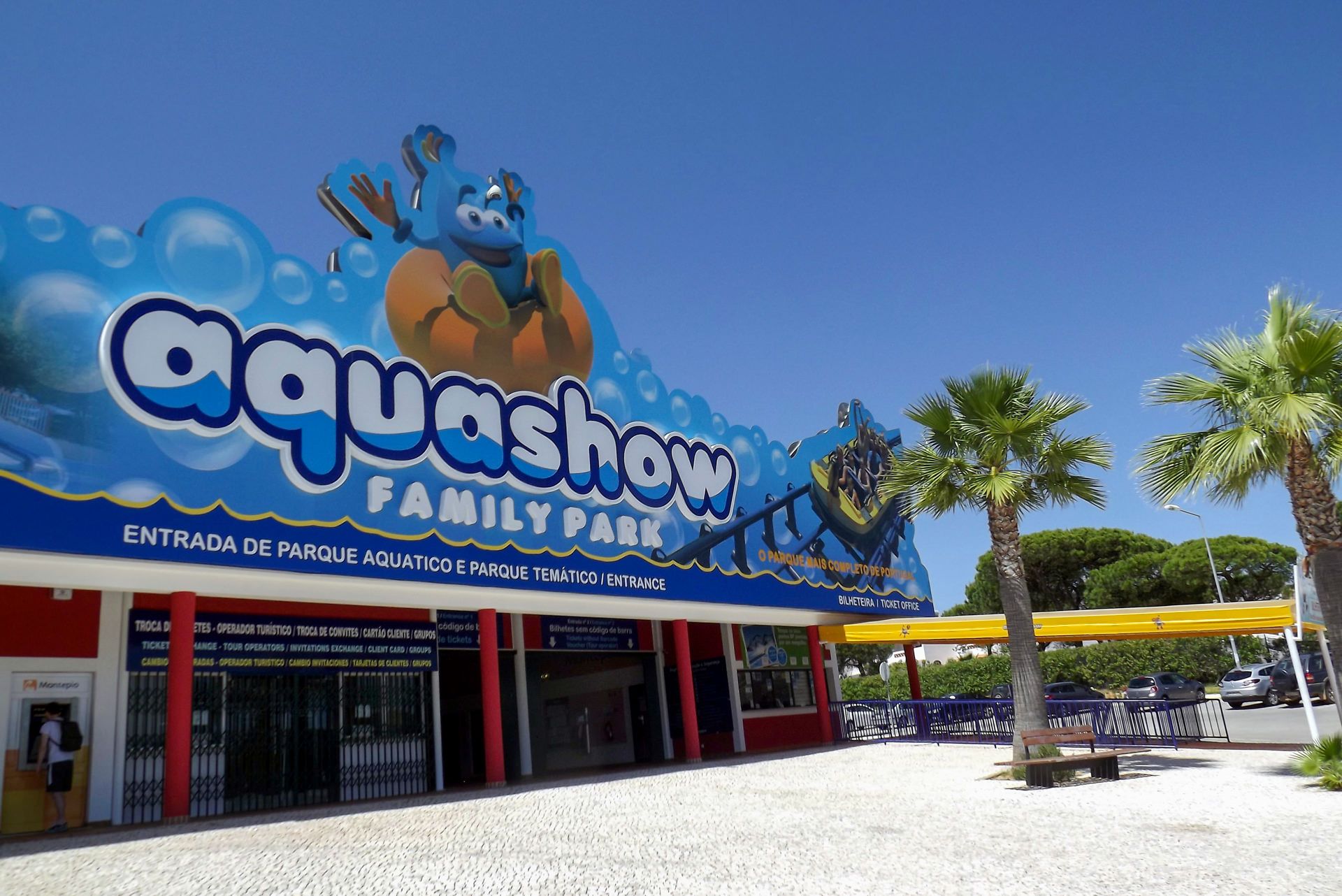
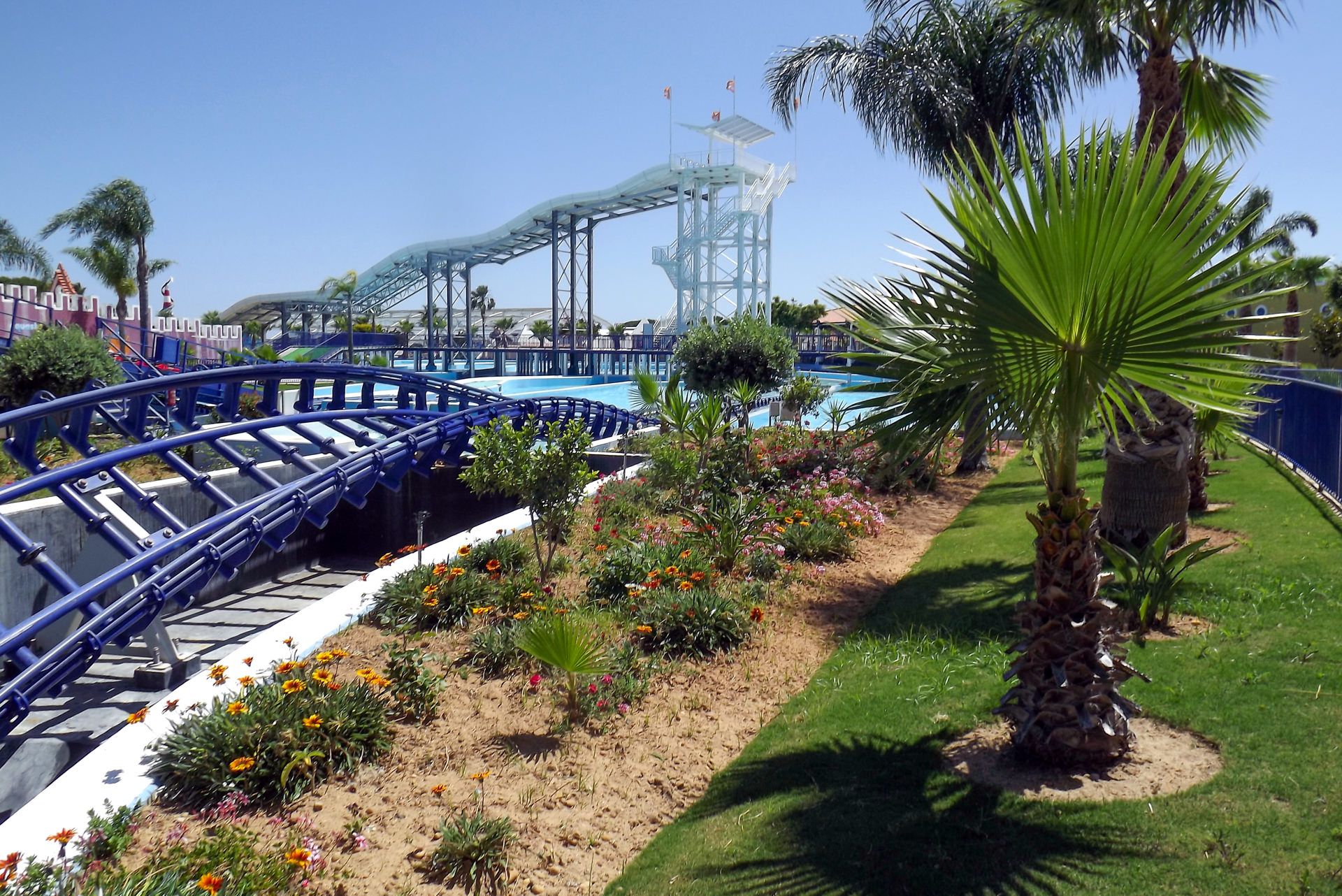
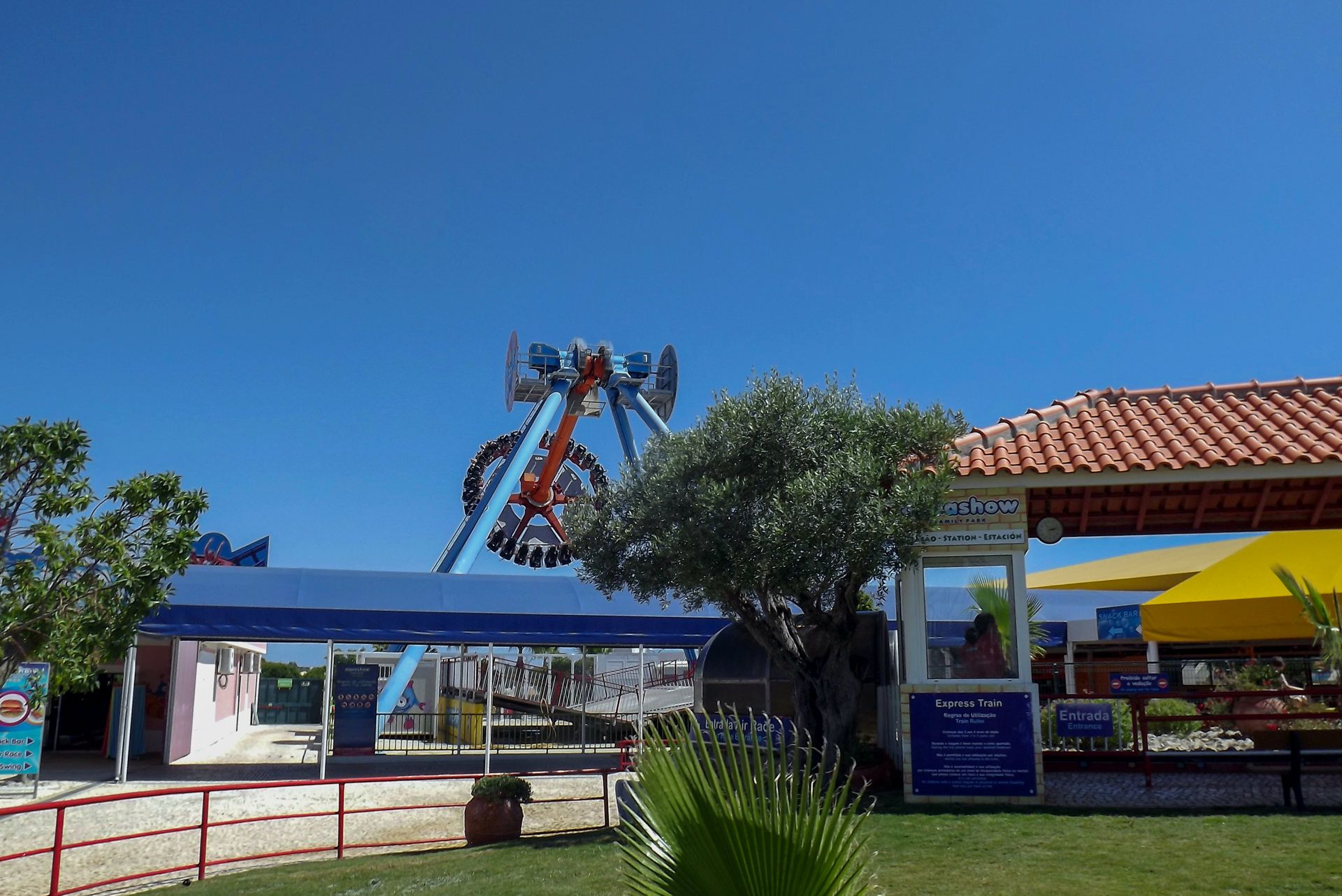
The amusement park or better said water park Aquashow Park is located in Quarteira near the city of Faro and is the largest park in the country and at least theoretically divided into the two components that describe it. When you enter the park you first enter the amusement park area of the park, through a separate entrance in the middle of the park you can then enter the water park. At least that was the idea at one time, but more about that later. In addition, the park offers a lot of extra activities, like a space centre, a museum about Portuguese history or a skating rink, which are not included in the entrance fee.

Top Swing

Directly at the entrance the Fabbri Top Swing swings into the air, and my expectations were justifiably high; after all, the identical model at the Flamingo Land zoo and amusement park in England has clearly proven that you can overdo it a bit with airtime. Unfortunately the ride was quite short and not very varied, so that my enthusiasm was limited. Although the desired ride characteristics were offered, the airtime orgy was simply not the same.

Air Race

Directly opposite, the first European Air Race has been running for some years by now. This ride was the one that put the Aquashow Park on my list of amusement parks to visit; even though a much closer ride has been installed at the Copenhagen amusement park Tivoli Gardens last year. Overall, this type of ride is becoming more and more common in amusement parks all over the world.

As soon as the ride has started, the passenger carrier slowly swings up and creates a very bizarre hang time, which you are bound to enjoy a little longer. Once the ride has started, the passenger carriers roll over at a very fast speed and by no means powerless. In the interim, the direction of travel is reversed, so that as time goes by, a few rollovers in both directions add up, making for a very interesting and varied ride.

Aquafly

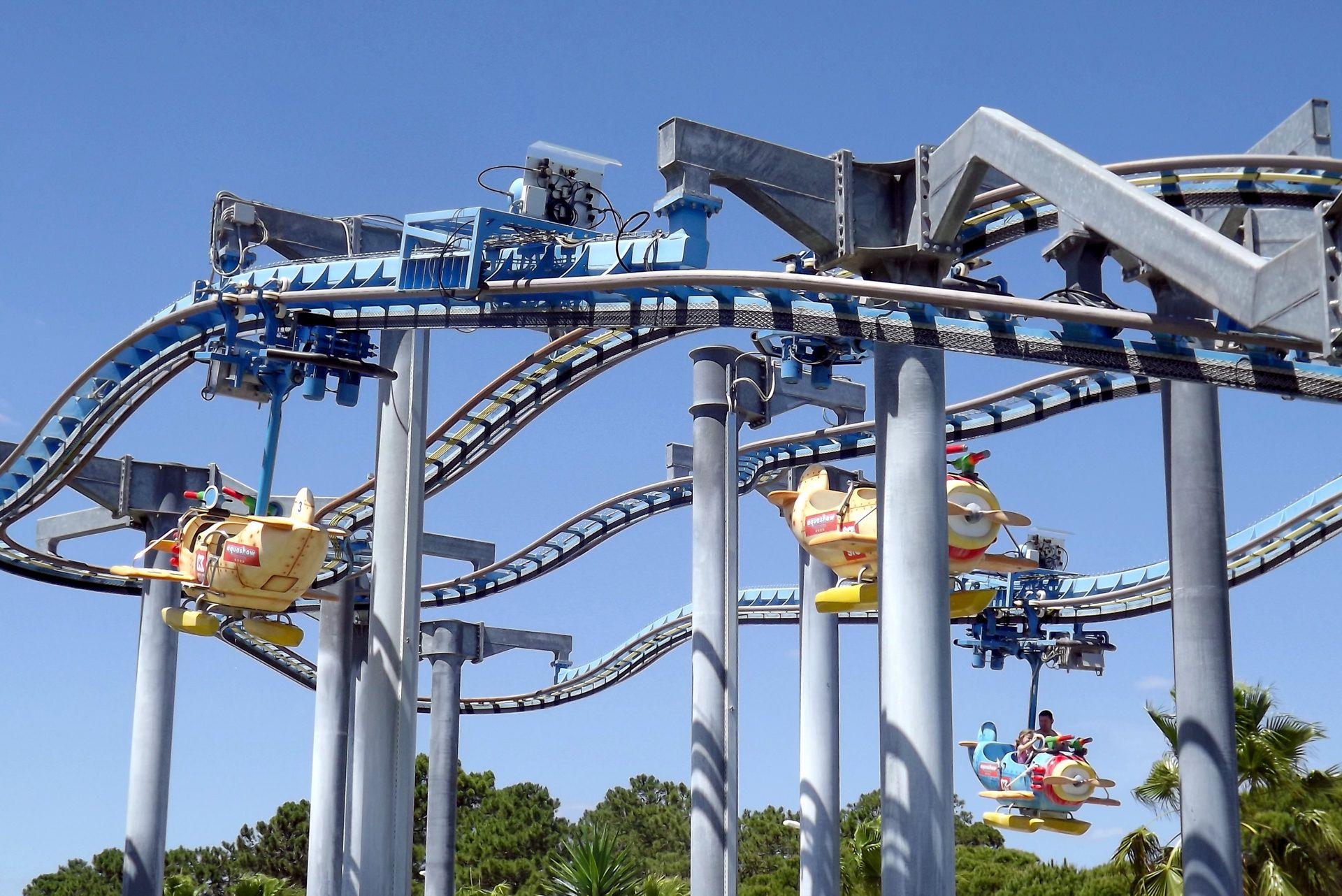
On the way to the park’s big roller coaster, the Montanha Russa, you inevitably walk along the Aquafly, which at least in theory is supposed to be a splash battle at lofty heights. In order to have enough water in the tank, the cars, which are designed as seaplanes, stop in a water basin and then follow the track at constant speed, similar to a gondola ride. As there was nobody else on the ride, the ride was not very convincing, also the guns were difficult to handle and therefore hardly usable.

Montanha Russa

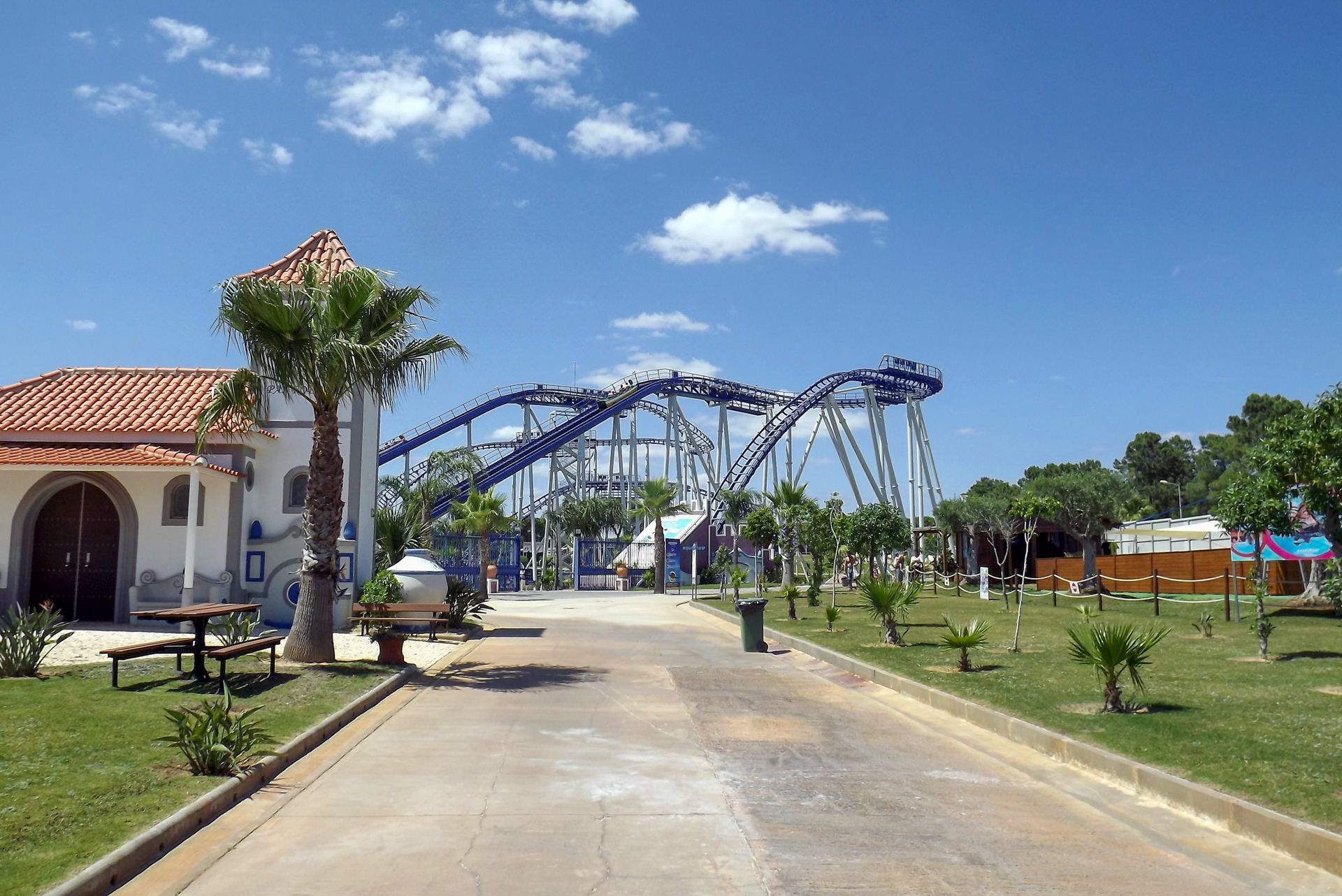
Let’s now turn to – if you want to believe the park flyer – Europe’s only and largest water coaster: Montanha Russa. Of course, those who know Poseidon from Europa Park and Skatteøen from Djurs Sommerland in Denmark will hardly agree with this, but it reflects the humour of the park and is a clever, albeit mendacious advertisement. The design of the ride is exceptionally minimalist, but that’s not all that makes it stand out.

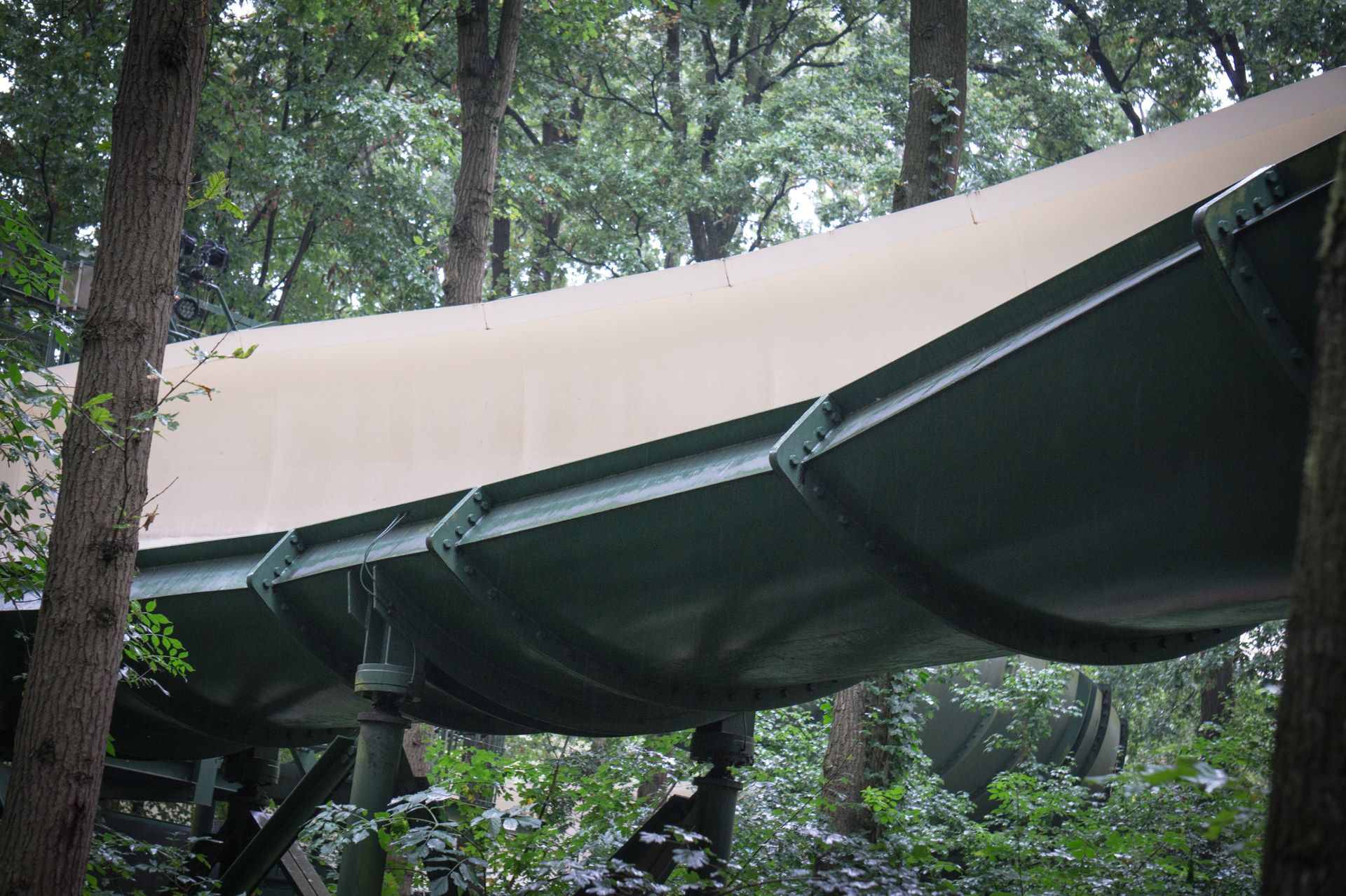
Once you’ve walked through the whole ride and finally found the entrance area, you’ll be off on the next best boat. The course of the ride is identical with Poseidon and so the boat bobs around the maintenance hall of the ride a little bit. Shortly after that the boat hacks into the chain with a strong jerk and climbs up the lifthill. At the top there is a small 180° turn and shortly after that the notorious highlight of this circuit follows, where normally even raising hands can be a test of courage. It would be wrong to say that the ride is smooth, however, Aquashow Park is the best place to ride this section that all water coasters of this type in Europe have in common; regardless the super modern production on the newest model. The following shot ride is known for its sweeping ride and the degree of wetness is at a surprisingly high level.

Full of anticipation for the next stroke while hacking into the lift, which did not happen, the Portuguese sun dries you a little. A panoramic view from a lofty height follows until the second shot is initiated. Thanks to the shape of the downhill run, you are torn out of your seat a little bit until you are racing over the bunnyhop at full speed to get a good shower shortly afterwards. This is unfortunately not due to the wave generated by the boat, but rather to the conveniently placed bridge over the splash area, where the water is broken and falls down onto the boat, while the passers-by on the bridge, interestingly enough, remain completely dry.

Speed Race

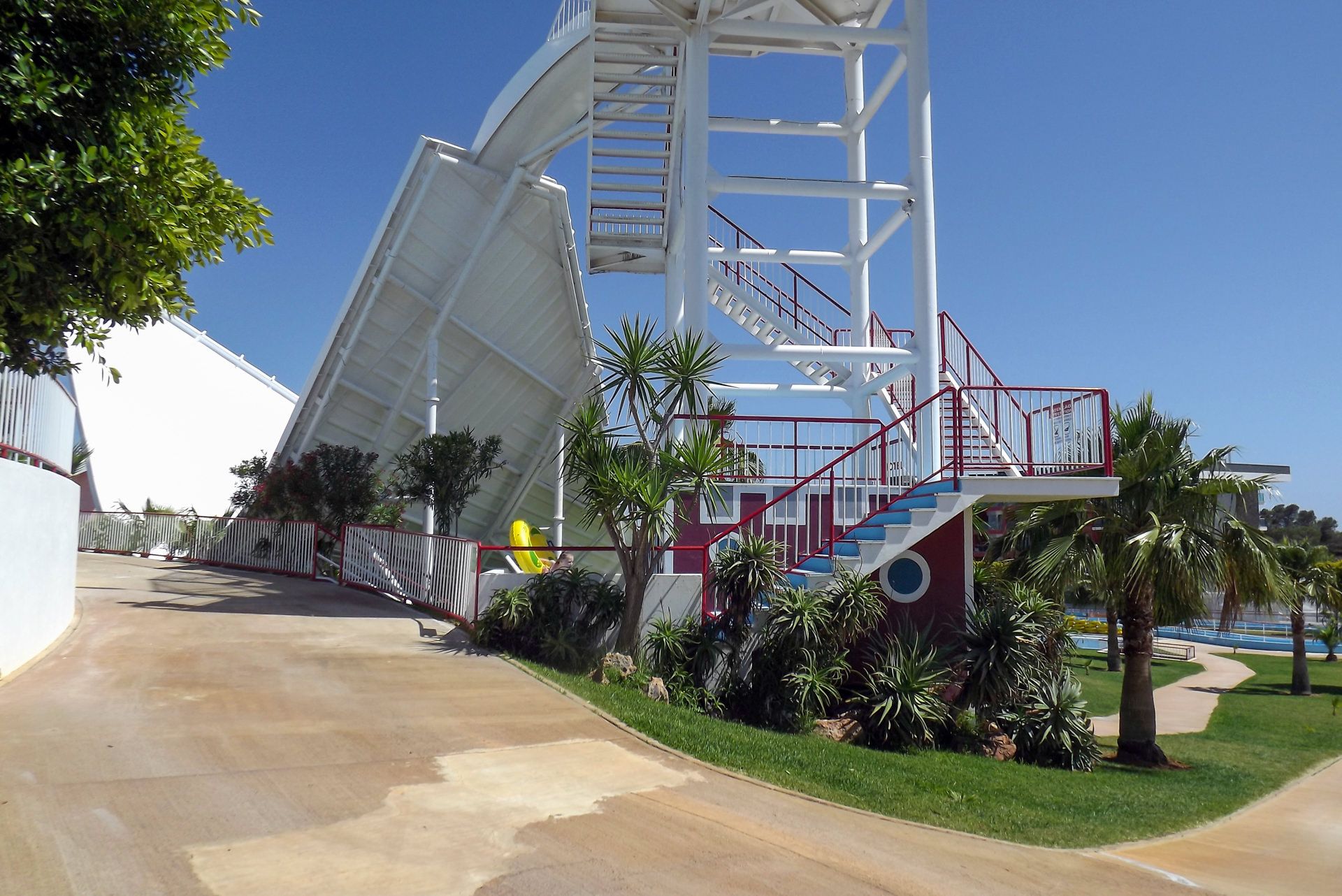
From this bridge starts the ascent to this year’s novelty of Aquashow Park and at the same time the reason why the separation of water and leisure park can no longer be taken seriously. This is a simple, but by no means small, mat slide called Speed Race. The interesting thing about it is that the end of the slide is built on a base and you leave the pool via a steel platform. While the mat slide in Slide & Splash had already proved to be very funny, here you miss the water pool at the end of the ride, which makes the braking not at all pleasant, at least not for men. Nevertheless, the experience is great enough to make the long way back to the starting point.

Piscina Tropical and the Slow Slides

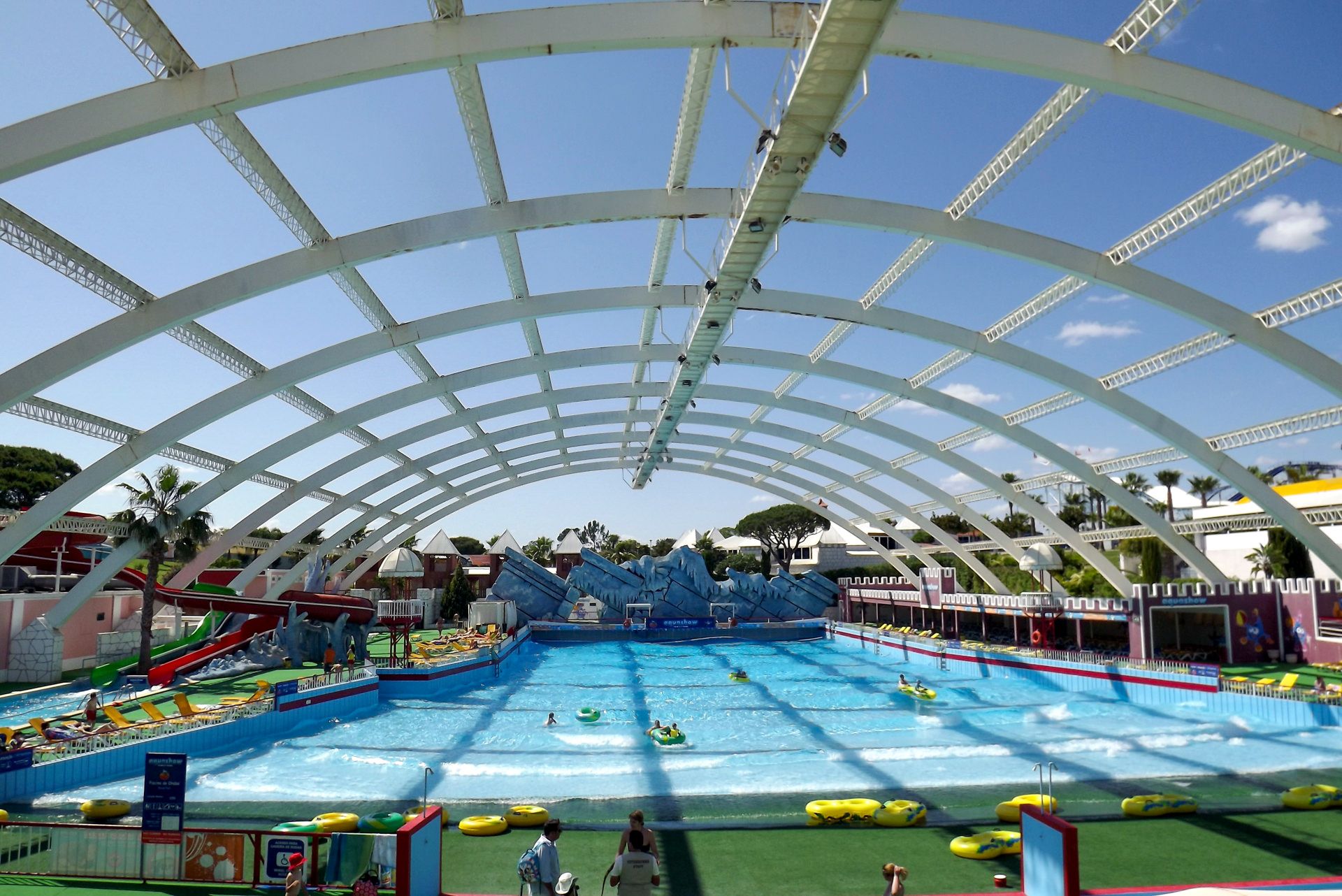
Through a turnstile you enter the water park, where under a peculiar construction there is the large wave pool Piscina Tropical and an immense number of sunbeds, which are free to use. Four of the so-called Slow Slides also end in this area, whose individual names rather reflect what they actually offer. It’s a bit strange to call your much too fast and airtime-rich body slides slow – but it’s no wonder if at some point you realize that the park doesn’t take itself quite so seriously. Here you will find a variety of wonderful slides, all of which not only have a fast course with a good water flow in common, but unfortunately also a rather long way back to the starting position.

Pistas Foam, Lazy River and Wild Snake

Passing the wide slide Pistas Foam, well-known from the Slide & Splash water park nearby, we now head towards the park’s own hotel, where the trivial and not really attractive Lazy River is located. However, as there is a slide featuring an endless helix, which ends in it, the Lazy River was also tested. Visually, the Wildsnake slide takes a lot of getting used to and is also rather boring from the ride in this tyre slide.

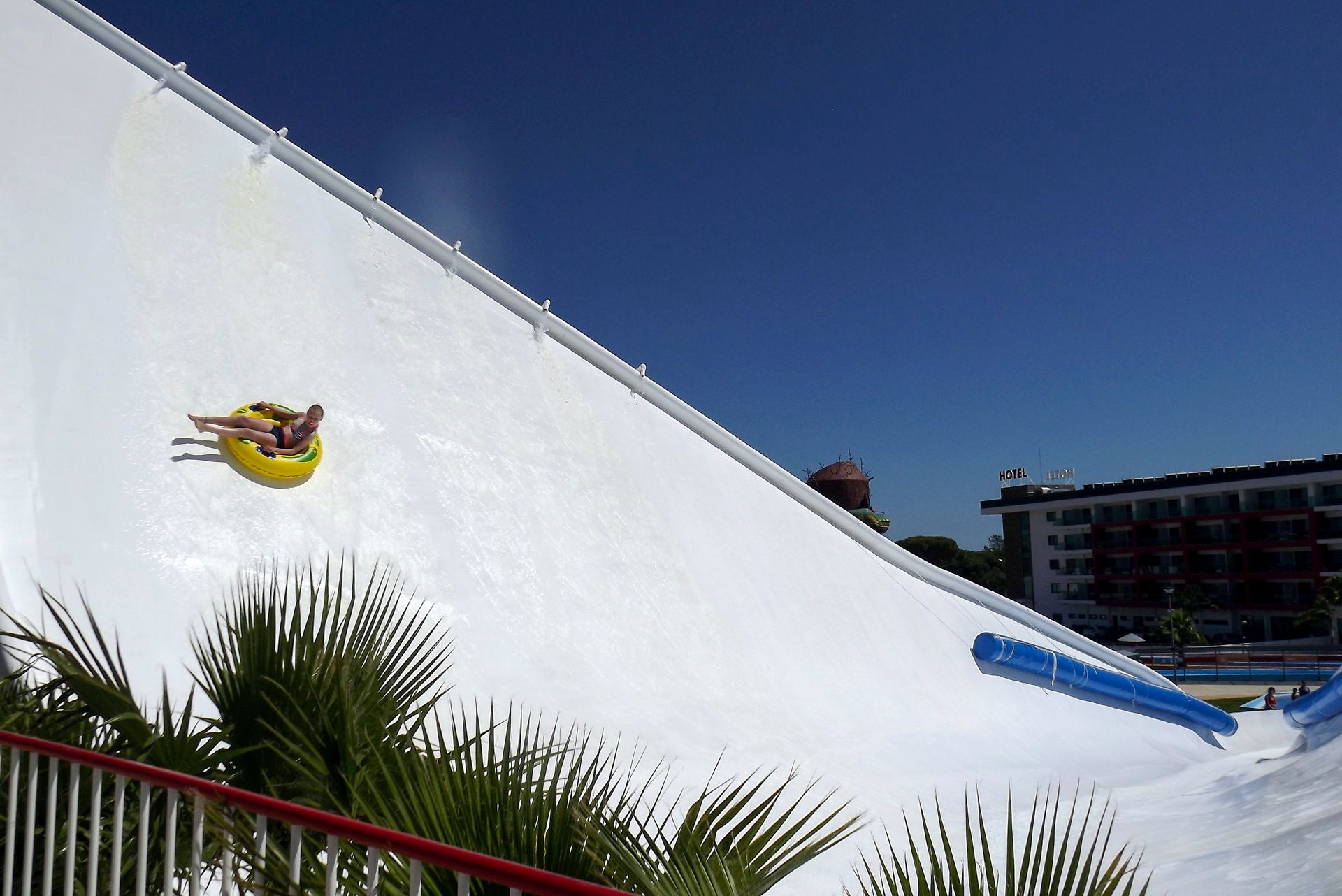
White Fall

After what felt like an eternity, we finally reach the end of the flow channel and climb up the mountain with a different tyre towards the biggest slide in the park. White Fall is a fully-grown version of the Tsunami slide from Polin, which, like the ride in Djurs Sommerland, can generate one or the other Adrealin thrust. In contrast to the ride in Denmark, here you don’t just swing back and forth, but towards the end of the halfpipe-like section you are pushed into the next section by two big guiding rolls. There, you go over a few hills towards the pool at the end of the hill.

Pictures Aquashow Park

Conclusion Aquashow Park

Aquashow Park is a decent water park with some attractions that you can find in some theme parks. In general the park offers more than it should and so a space centre for example seems to be completely out of place, also the skating rink is a place to argue about and if you have to offer the shows on top of that. that all other parks in the Algarve seem to offer. Aquashow Park is therefore a bit of everything and does what it does quite well. At least it’s no wonder why the Aquashow Park is Portugal’s most popular theme park.


What is your opinion about Aquashow Park? Just write it here below the report in the comment field or visit our social media channels: